

Umrah Guide
Muslim Travel Guide Mecca: Masjid al-Haram, Umrah Map, Makkah Hotels and Jeddah Airport Food
Articles • yusuf908 posted the article • 0 comments • 234 views • 2026-05-22 23:36
Reposted from the web
Summary: This Muslim travel guide to Mecca explains Saudi e-visa basics, ihram rules, routes from Jeddah and Madinah, hotels near Masjid al-Haram, namaz logistics, pilgrimage routes, Makkah landmarks, Jabal al-Nour, Jeddah Airport food, and practical Umrah notes.
Map of Mecca is presented here as a firsthand travel account in clear English, beginning with this scene: My article was deleted for no reason, so I am reposting it after some edits. The account keeps its focus on Mosque Travel, Islamic Heritage, Muslim Travel while preserving the names, places, food, and historical details from the Chinese source.
My article was deleted for no reason, so I am reposting it after some edits.
Friendly reminder: please follow local laws and regulations. Do not do anything against the rules, or you will be responsible for the consequences.
You can apply for a Saudi tourist visa online at this website.
The Saudi tourist e-visa is approved instantly. Once you pay, you get the visa. It costs 488 Saudi Riyals, which is about 930 RMB. It is valid for one year, allows multiple entries, and you can stay for up to 90 days each time.
Before you leave, it is best to prepare a credit card with a chip. You can use it abroad just like mobile payments by tapping it on the merchant's POS machine. Many merchants cannot accept cards that only have a magnetic stripe.
Before heading to Makkah, you need to plan where you will enter the sacred boundary. If you enter Makkah from Jeddah, you must enter the state of ihram before your plane lands in Jeddah, because Jeddah is over 70 kilometers from Makkah and is already past the boundary. If you enter Makkah from Madinah (which also has an airport), you can enter ihram anywhere in Madinah. Madinah is over 400 kilometers from Makkah, so you can enter ihram at your accommodation in Madinah and then take the light rail to Makkah.
Men must wear ihram garments, which are two pieces of white cloth wrapped around the upper and lower body. Do not wear anything underneath. Like a newborn, you wrap your body in the cloth. You can use a belt to keep the garments from slipping. We bought our ihram garments in Madinah. They are sold everywhere on the street, and prices range from 30 to 70 Riyals. If you fly directly from China to Jeddah and then go to Makkah, you need to buy your ihram garments in China. You must change into them at least 30 minutes before the plane lands, or you will have to sacrifice an animal as a penalty for entering the sacred boundary.
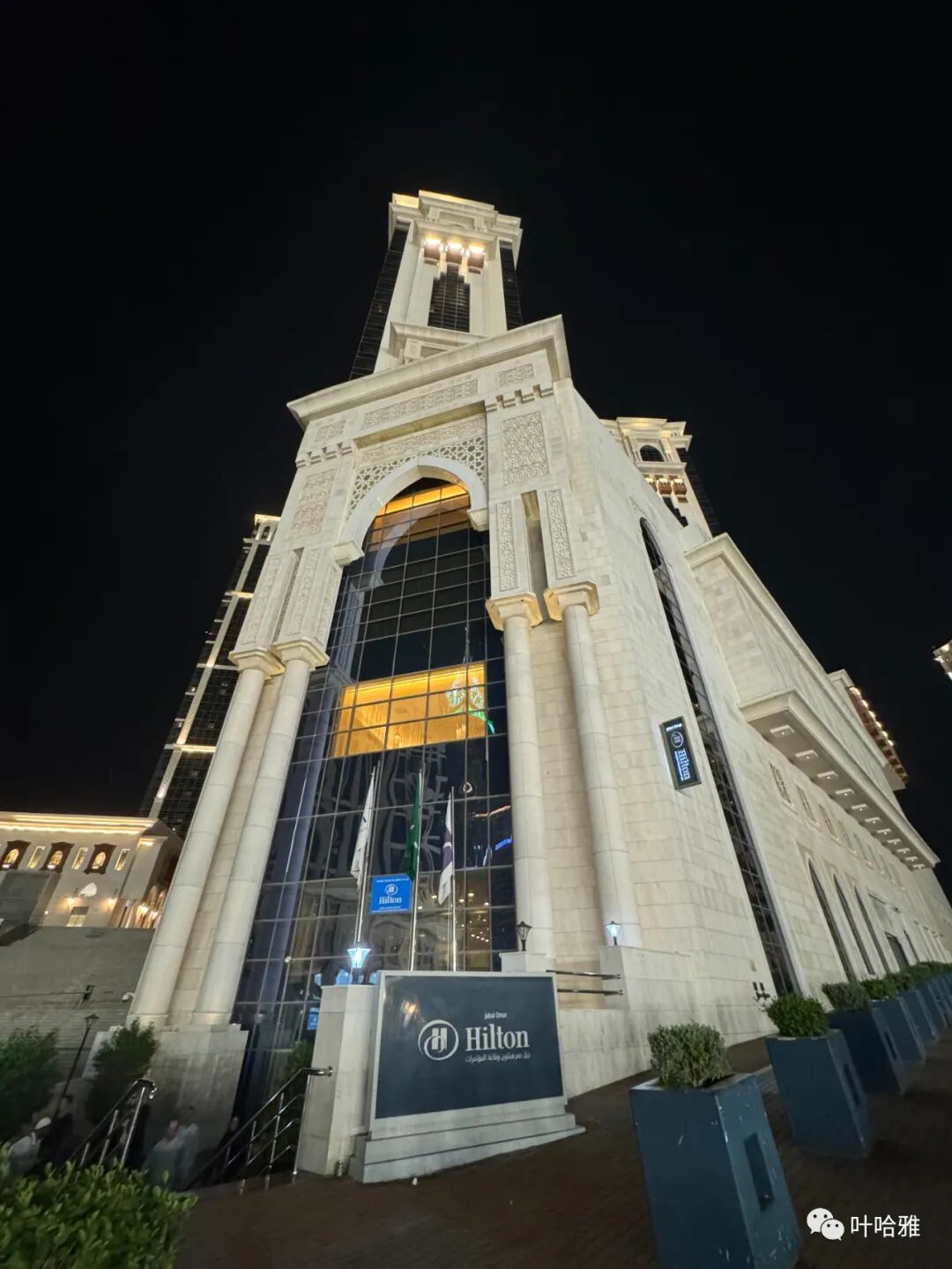
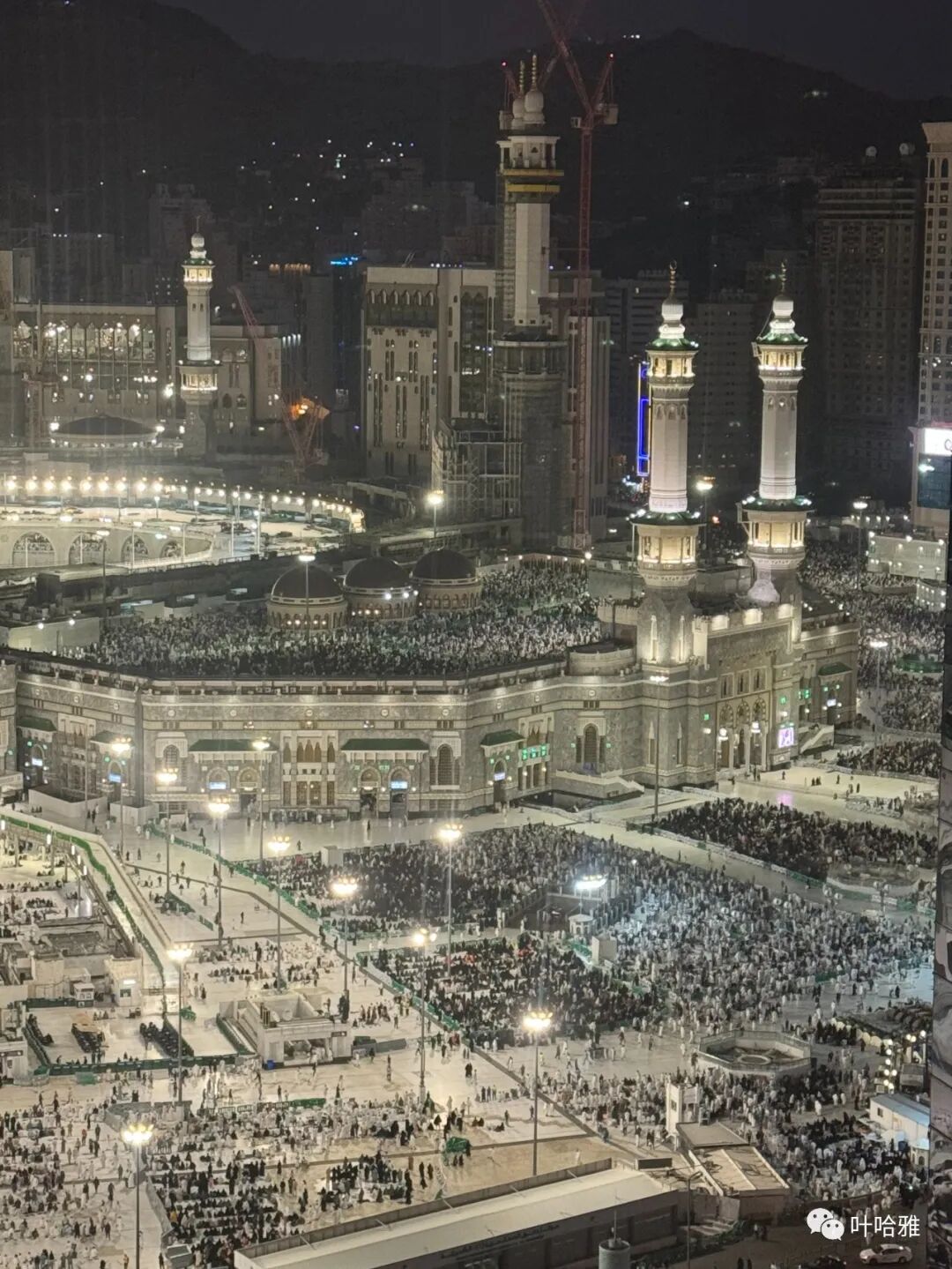
We chose to stay at the Hilton, which is a 400-meter walk from the Sacred Mosque (Masjid al-Haram). Our room had a view of the mosque. In December, hotel rooms with views near the Sacred Mosque in Makkah and the Prophet's Mosque (Masjid an-Nabawi) in Madinah cost over 2,000 RMB per night. The Sacred Mosque is unimaginably large. If you walk back and forth between your hotel and the mosque for every namaz, you will walk at least 10 kilometers a day.
Uber does not work well around the Sacred Mosque because the area is a no-parking zone and drivers cannot accept requests. During prayer times, roads leading to the mosque are closed to traffic. This is why I recommend staying as close to the mosque as possible; older people really cannot handle walking 10 kilometers every day.
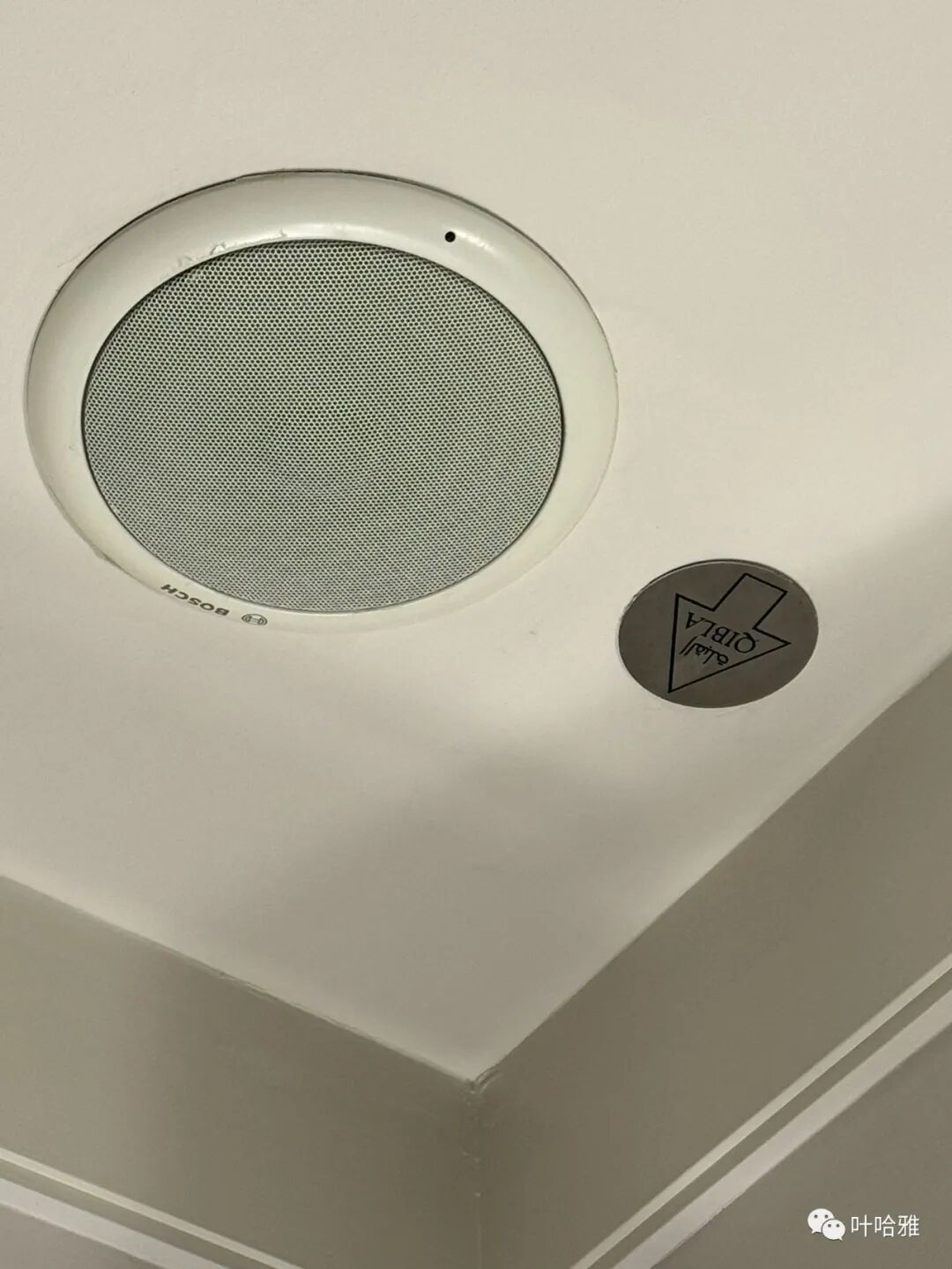
It is standard for hotel rooms in Arab countries to have a marker showing the direction of the Kaaba. The Hilton in Mecca goes further by installing speakers in the rooms. You can hear the call to prayer (adhan) for every namaz at the Sacred Mosque (Masjid al-Haram) clearly from inside. No guests complain about the noise here because only Muslims are allowed to enter Mecca.
The hotel uses agarwood (oud). Arab people really love using incense.
There is a tunnel on the basement level of the hotel that leads directly to the Sacred Mosque, passing by a Quran exhibition hosted by the Hilton.
Sacred Mosque (Masjid al-Haram)
You cannot see the Kaaba from the first floor of the Sacred Mosque, but there are lines marked on the floor. You can just follow these lines to face the right direction for namaz.
Praying at the Sacred Mosque is different from other mosques. You are allowed to walk in front of people who are praying because the rows of worshippers form circles. If you do not walk in front of them, you would have no way to get through.
Wearing the pilgrim garment (ihram), I entered through the main gate of the Sacred Mosque and followed the crowd inside. Near the entrance to the Kaaba, guards stand watch. Only men wearing the ihram can walk into the Kaaba area, and women are not allowed to cover their faces.
In other mosques, it is encouraged to perform two rak'ahs of prayer as a greeting (tahiyat al-masjid) as a sunnah. It is different at the Sacred Mosque; the way to greet the mosque upon arrival is to perform the circumambulation (tawaf) of the Kaaba, not to pray.
Starting from the corner of the Black Stone (Hajar al-Aswad) on the Kaaba, men must uncover their right shoulder and circle the Kaaba seven times. I pushed a stroller with Fahim and completed the seven laps. Some people push to the very front to kiss the Black Stone. This is a sunnah, but nothing more, and there is no extra reward for it. It is also very dangerous when it is crowded, so there is no problem if you do not do it. I saw people inside the circle clinging to the wall of the Kaaba, refusing to leave just to fight for the Black Stone, which is truly unseemly.
Even in December, the daytime temperature in Mecca reaches 30 degrees Celsius. The sun is strong, and walking barefoot to circle the Kaaba takes physical strength. It is a real test for older people, so it is better for young people to go as early as possible.
Men and women can perform the circumambulation together. There were even babies younger than Fahim in the crowd.
Station of Ibrahim (Maqam Ibrahim)
After praying two rak'ahs near the Station of Ibrahim, the ritual of circling the Kaaba is complete.
The area behind the station is spacious, so avoid praying in the middle of the crowd to keep from being stepped on.
Fahim watched cartoons in his stroller while circling the Kaaba, a unique sight that drew envious looks from many fellow believers (dosti).
After leaving the Kaaba, follow the crowd to find the Safa entrance. You must walk between Safa and Marwa seven times to follow the story of Hajar, the wife of Ibrahim, who searched for water for her son Ismail. This is how the Zamzam well was discovered.
The walk between the two hills covers about 700 meters. Saudi Arabia has built a large, air-conditioned hall between them, so pilgrims (hajjis) no longer have to worry about the wind or sun, making it easier to complete this duty.
Mount Safa
Walking from Safa to Marwa counts as one trip, and returning from Marwa to Safa counts as the second. You do this seven times. Volunteers provide wheelchairs for those with mobility issues. Men should jog in the area marked by green lights to follow the Sunnah.
Marwa
After leaving Marwa, use scissors or another tool you brought to cut a portion of your hair to signify the end of your state of ihram. You can also find someone at the entrance to shave your head. The entire process takes about two hours. If you booked through the Nusuk app, you will receive a certificate on the app now, but you can still go even if you did not book.
Hajj Certificate
I felt much lighter after finishing the duties, so we made the intention to go visit the historical sites of Mecca. Mecca has fewer historical sites than Medina. You can see them all in half a day, starting from the dawn prayer (fajr) and finishing by the afternoon prayer (asr).
Mount Thawr (Sha'er Shan)
Mount Thawr (Sha'er Shan)
The mountain in the distance is Mount Thawr, located 4 kilometers from the Sacred Mosque (Masjid al-Haram). There is a cave on the mountain that only fits one person. The Prophet Muhammad once took refuge here. It takes an hour and a half to climb up to the cave.
Arafat
Arafat
Arafat is 22 kilometers from the Sacred Mosque. The name means 'to recognize,' as it is where the first humans, Adam and Eve (Hawa), recognized each other. It is also where the Archangel Gabriel (Jibril) taught the Prophet Ibrahim the rituals of Hajj. Arafat covers a large area of plains and hills. Staying at Arafat is one of the essential rituals of the Hajj.
Namirah Mosque
This mosque is located east of the foot of Mount Namirah in Arafat. The Prophet once stayed in a tent on Mount Namirah on the Day of Arafat. This mosque is not considered an ancient site and is usually closed, but you can pray two units of prayer (rak'ahs) at the entrance.
The site of Prophet Ibrahim's sacrifice
Sacrifice pavilion (zaishengting)
Located on a hill near Mina and close to the Jamarat, this site is fenced off and inaccessible. It is the place where the story of Eid al-Adha took place, where the Prophet Ibrahim offered his son to Allah, and Allah replaced him with a sheep.
Mina
Mina tents
Along the way, you can see large areas of tent camps. These are high-end tents equipped with air conditioning and hotel-like facilities. They are only open during Hajj, as the tents are just a symbolic form.
Jamarat
Jamarat
Take the small pebbles you collected on the plains of Arafat and throw them at the Jamarat. Stoning here is also a symbolic act; you can just toss them easily.
Cave of Hira
Cave of Hira
Located northeast of the Masjid al-Haram, it is also called Jabal al-Nour. There is a cave at the top of the mountain. Before the Prophet Muhammad became a prophet, he often climbed up to this cave alone to meditate. It was in this cave that the Prophet received the first revelation from the Archangel. It takes about an hour to walk up the mountain. The summit is crowded and can be dangerous, so you might choose not to go.
Mosque of the Jinn
Mosque of the Jinn
Jinn Mosque (Masjid al-Jinn) is east of the Sacred Mosque (Masjid al-Haram), next to the Ma'la Cemetery and beside a pedestrian bridge. This is where a group of jinn pledged their loyalty to the Prophet. It is usually closed except during prayer times. Across from Jinn Mosque is Tree Mosque (Masjid al-Shajarah). The Prophet once called out to a tree here, and it came to him. He asked it a few questions and told it to return to its place. People later built a mosque here. Jinn Mosque and Tree Mosque look exactly the same.
Aisha Mosque (Masjid Aisha).
Located 7.5 kilometers north of the Sacred Mosque, this is the closest boundary of the sacred area. Aisha entered into the state of ihram here during the Farewell Pilgrimage in the 9th year of the Hijri calendar. At that time, the Prophet's wife Aisha could not perform the circumambulation of the Kaaba due to her period. She completed all other pilgrimage rites. After her period ended, the Prophet asked her brother to accompany her to this place to enter ihram, and she later circumambulated the Kaaba.
Many pilgrims (hajjis) specifically choose to enter ihram here. The mosque can hold 150,000 people for namaz.
This covers the main historical sites in Mecca. Like in Medina, many places mentioned in books look completely different today. The main task for people coming to Mecca is to pray in the Sacred Mosque. One prayer there is worth 100,000 prayers elsewhere, so these renovated historical sites do not attract much interest.
Hilton breakfast restaurant.
We mostly ate our three meals at the hotel. The hotel restaurant has good food and a comfortable environment. It does not distinguish between family rooms, the price does not change with the room rate, and it offers great value.
This Hilton sandwich costs only about 30 yuan. We ate it almost every day. We got to know the server, and he even brought us juice. Once you arrive in the sacred land, you realize that besides going to the mosque for namaz, you do not want to go anywhere else to wander around.
Hilton Lebanese restaurant.
We ate at the Hilton's Lebanese restaurant. During our 18 days in the Middle East, we mostly ate Arabic food. We adapted well to this diet, and Lebanese food is the best among Arabic cuisines.
I only ate out twice. One time was for this camel pilaf (zhuafan). I had it in Medina and thought it was delicious, so my friend (dosti) insisted on having it again. Most restaurants in Mecca are in the city center, more than 10 kilometers away from the Sacred Mosque (Masjid al-Haram). The city center is where the locals live and where many wealthy Saudis gather.
Dining in a family room is a unique experience. You can sit anywhere in these restaurants, and no one checks if you are actually a family.
Eating kunafa dessert in this type of restaurant tastes better than anywhere else.
This portion of camel pilaf is only one-quarter of the full size, yet it was enough for 8 people and we still couldn't finish it.
The national dish of Saudi Arabia is mandi pilaf. We asked a local friend to recommend this place; it is spacious and you do not need a reservation.
Our friend specifically insisted we try their kunafa dessert, saying you cannot find it anywhere else. After tasting it, we all agreed it was delicious.
You can find kunafa in Syrian restaurants in Beijing, but those versions are modified. In reality, there are many different flavors.
Mandi pilaf comes in a huge platter filled with rich ingredients, and the lamb is cooked until it is soft and tender.
A signature Arab salad is called tabbouleh salad (tabouli), made with chopped parsley, mint, tomatoes, and bulgur wheat.
For the Arab-style grilled lamb, the meat here does not have a strong gamey smell. It is usually served with charred tomatoes and french fries. The tomatoes are intentionally charred to bring out their unique aroma.
One night at the Sacred Mosque, after we finished our night prayer (Isha), we planned to walk around the outside of the mosque. When we reached the new section, staff directed us into a line, which turned out to be a queue to receive a Quran.
This is an original Arabic version, and the stamp inside reads 'Property of Allah.' This is the third Quran I have received; the Hilton hotel is also giving them away to guests for free.
Property of Allah.
The view of the Kaaba from the second floor of the Sacred Mosque (Masjid al-Haram). After dark, the number of pilgrims (haji) circling the Kaaba surges. In Mecca and Medina, haji is the common term used between strangers.
People of various sects pray in the Sacred Mosque. An Iranian Shia believer once stood next to me; he did not fold his arms during prayer but kept them hanging at his sides. I also saw Uzbeks making dua with their hands pressed together like Buddhists. I greeted all of them.
The television programs are no different from those in our country; you can see the same shows in Mecca that you see abroad. People smoking are everywhere on the streets. Even in Mecca, smoking is not banned, and Arabs actually have quite a strong nicotine habit.
Jeddah Floating Mosque.
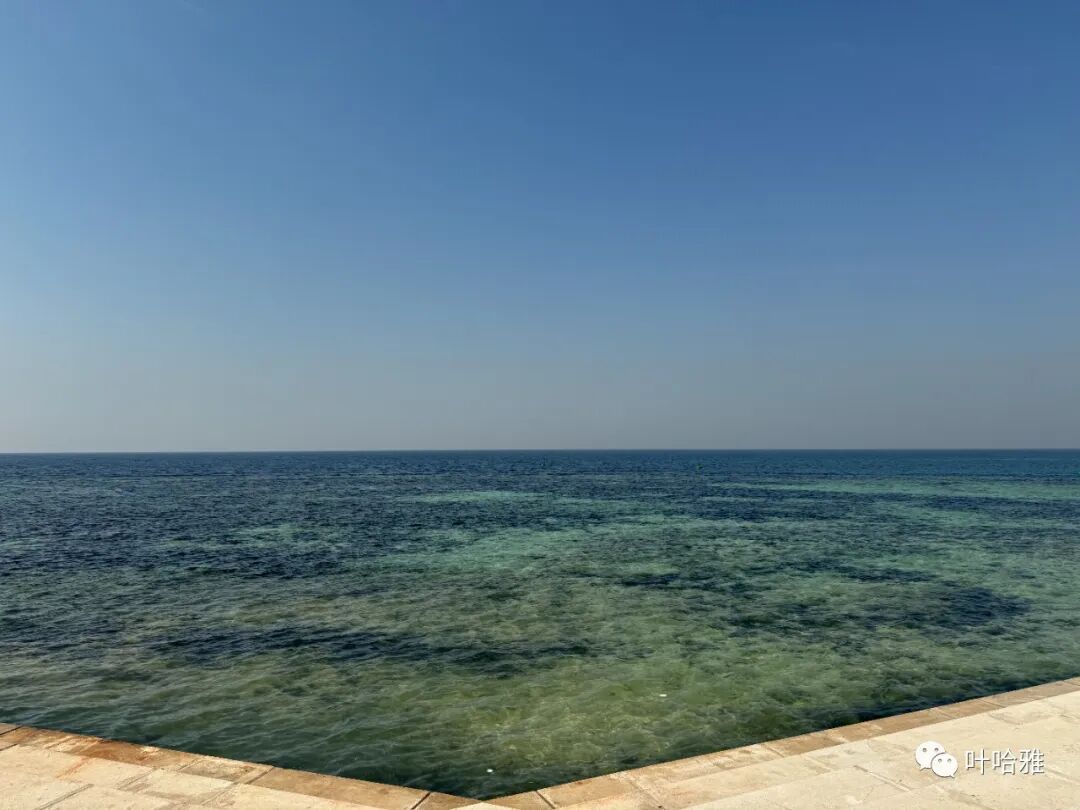
On your way back to Beijing from Jeddah, you can stop by the Jeddah Floating Mosque. It is a mosque built on the Red Sea with a very beautiful exterior.
This coastline gets very lively at night. During the day, the weather is hot and businesses are closed.
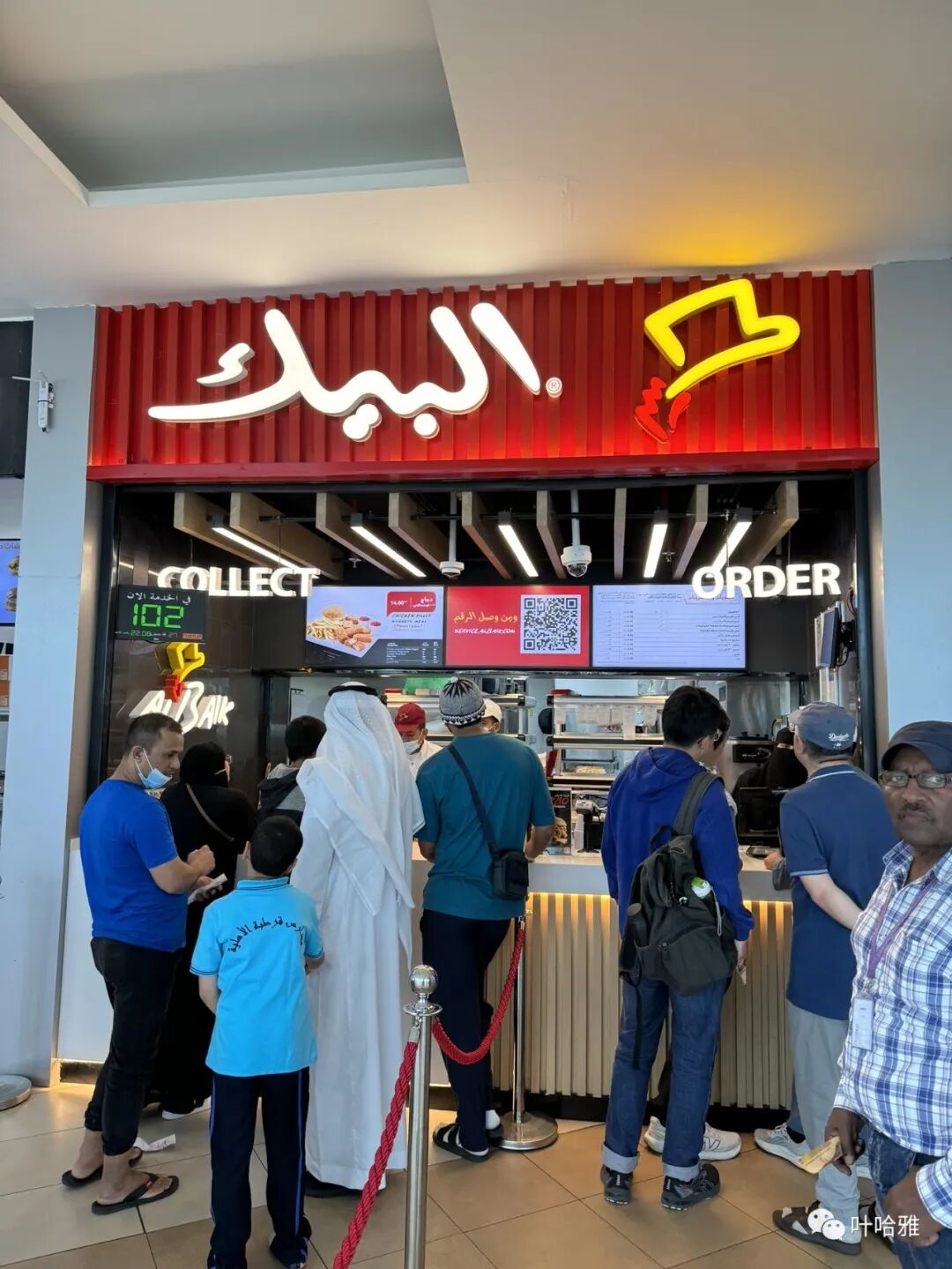
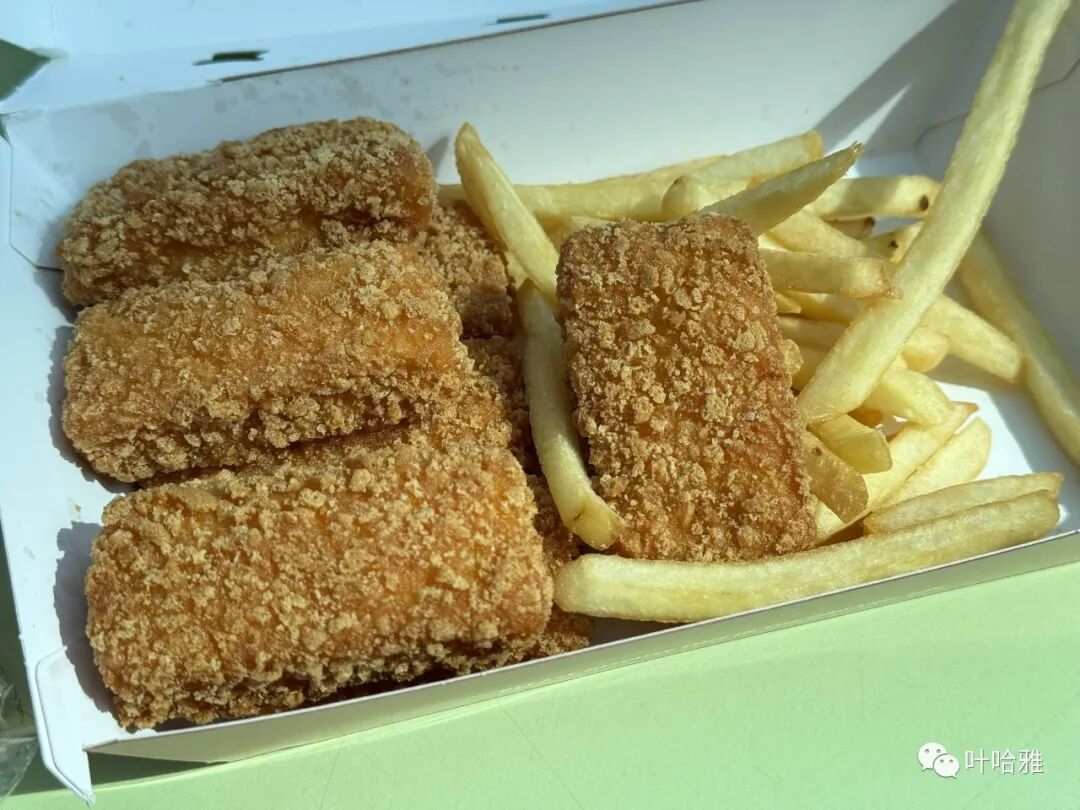
I ate at a very famous local fast-food place in a Jeddah shopping mall. It is like the Saudi version of KFC, but I felt it did not taste as good as Burger King.
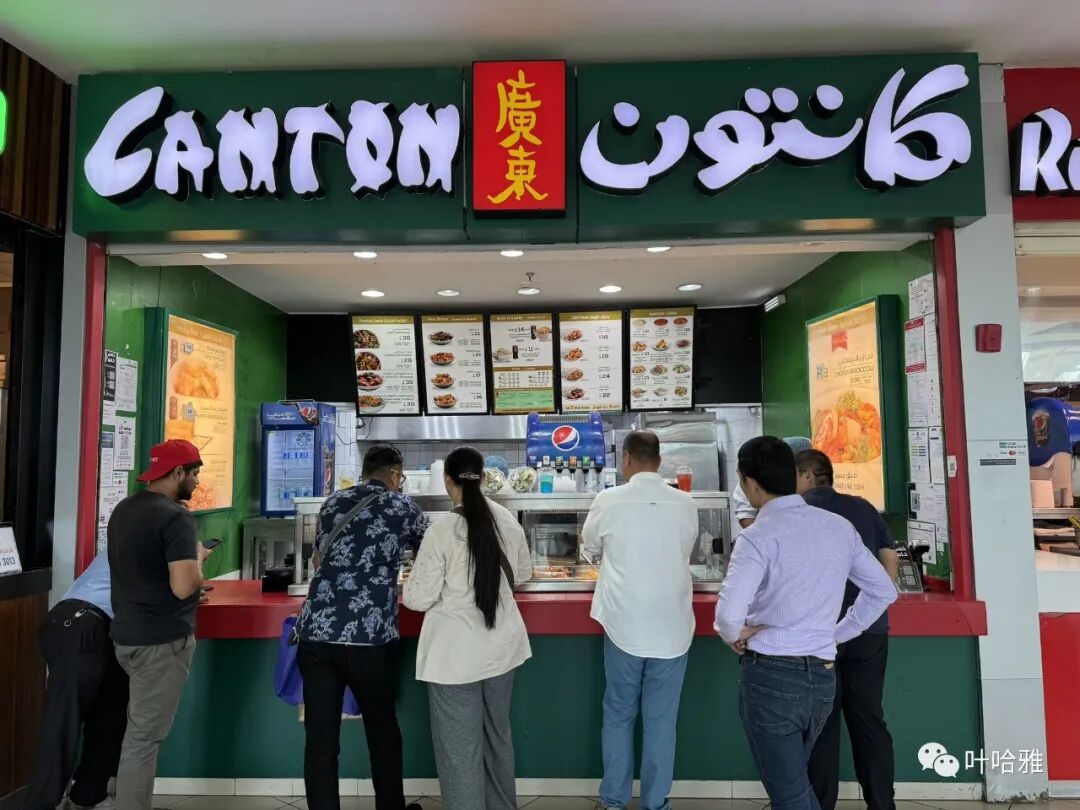
I saw Cantonese food in the mall. I thought it was Cantonese cuisine, but it was actually just rice and stir-fried dishes. I usually do not eat Chinese food when I go abroad. I feel that since I traveled so far, I should eat things I cannot get back home. Besides, Chinese food abroad is not authentic, and if it tastes bad, I feel like I wasted my money.
Restaurants in Saudi Arabia do not display halal signs because everything is halal. It is not easy to find non-halal food. This is why some Arabs, when they first come to China, walk into any restaurant to eat. In the environment where they grew up, there are no non-halal restaurants, so they have no awareness of needing to specifically look for a halal shop.
A MADO shop in the mall. MADO is a famous Turkish ice cream and dessert shop that is very popular in Saudi Arabia. In China, there is only one store in Guangzhou.
Fast food at Jeddah Airport.
The Hijaz fast-food restaurant in the post-security commercial area of Jeddah Airport is excellent. I had a chive and egg pie (jiucai jidan xianbing) and it wasn't enough, so I ordered another cheese and egg with flatbread (kaobing).
The flatbread is baked fresh. It is very soft, like naan, but even softer. It smells great, and I highly recommend it to anyone transferring at Jeddah Airport.
Jeddah is only 70 kilometers from Mecca. In Jeddah, you can see girls without headscarves everywhere, and even girls with bare legs, though I felt it was inappropriate to take photos.
The prayer room at Jeddah Airport has no full-time imam. Travelers organize themselves and choose someone to lead the namaz. In Saudi Arabia, prayer rooms are standard, just like public restrooms, and they are everywhere.
The multimedia system on Saudi Arabian Airlines has many religious programs.
There are dedicated prayer areas in the back and middle of the cabin. In terms of supporting services, they are ahead of other Arab countries.
This trip to Mecca is coming to an end. Rationally speaking, completing the pilgrimage is an obligation, but emotionally, the experience was not pleasant. The commercial atmosphere in the holy city is too strong, and it lacks a sense of holiness. Following the principle of not spreading bad news, I will not go into detail about some of what I saw and heard. But Allah sees what people do. All of this was described in the prophecies of the Prophet. Everyone will receive their due reward in the afterlife, so let us wait and see. view all
Summary: This Muslim travel guide to Mecca explains Saudi e-visa basics, ihram rules, routes from Jeddah and Madinah, hotels near Masjid al-Haram, namaz logistics, pilgrimage routes, Makkah landmarks, Jabal al-Nour, Jeddah Airport food, and practical Umrah notes.
Map of Mecca is presented here as a firsthand travel account in clear English, beginning with this scene: My article was deleted for no reason, so I am reposting it after some edits. The account keeps its focus on Mosque Travel, Islamic Heritage, Muslim Travel while preserving the names, places, food, and historical details from the Chinese source.
My article was deleted for no reason, so I am reposting it after some edits.
Friendly reminder: please follow local laws and regulations. Do not do anything against the rules, or you will be responsible for the consequences.
You can apply for a Saudi tourist visa online at this website.
The Saudi tourist e-visa is approved instantly. Once you pay, you get the visa. It costs 488 Saudi Riyals, which is about 930 RMB. It is valid for one year, allows multiple entries, and you can stay for up to 90 days each time.
Before you leave, it is best to prepare a credit card with a chip. You can use it abroad just like mobile payments by tapping it on the merchant's POS machine. Many merchants cannot accept cards that only have a magnetic stripe.
Before heading to Makkah, you need to plan where you will enter the sacred boundary. If you enter Makkah from Jeddah, you must enter the state of ihram before your plane lands in Jeddah, because Jeddah is over 70 kilometers from Makkah and is already past the boundary. If you enter Makkah from Madinah (which also has an airport), you can enter ihram anywhere in Madinah. Madinah is over 400 kilometers from Makkah, so you can enter ihram at your accommodation in Madinah and then take the light rail to Makkah.
Men must wear ihram garments, which are two pieces of white cloth wrapped around the upper and lower body. Do not wear anything underneath. Like a newborn, you wrap your body in the cloth. You can use a belt to keep the garments from slipping. We bought our ihram garments in Madinah. They are sold everywhere on the street, and prices range from 30 to 70 Riyals. If you fly directly from China to Jeddah and then go to Makkah, you need to buy your ihram garments in China. You must change into them at least 30 minutes before the plane lands, or you will have to sacrifice an animal as a penalty for entering the sacred boundary.
We chose to stay at the Hilton, which is a 400-meter walk from the Sacred Mosque (Masjid al-Haram). Our room had a view of the mosque. In December, hotel rooms with views near the Sacred Mosque in Makkah and the Prophet's Mosque (Masjid an-Nabawi) in Madinah cost over 2,000 RMB per night. The Sacred Mosque is unimaginably large. If you walk back and forth between your hotel and the mosque for every namaz, you will walk at least 10 kilometers a day.
Uber does not work well around the Sacred Mosque because the area is a no-parking zone and drivers cannot accept requests. During prayer times, roads leading to the mosque are closed to traffic. This is why I recommend staying as close to the mosque as possible; older people really cannot handle walking 10 kilometers every day.
It is standard for hotel rooms in Arab countries to have a marker showing the direction of the Kaaba. The Hilton in Mecca goes further by installing speakers in the rooms. You can hear the call to prayer (adhan) for every namaz at the Sacred Mosque (Masjid al-Haram) clearly from inside. No guests complain about the noise here because only Muslims are allowed to enter Mecca.
The hotel uses agarwood (oud). Arab people really love using incense.
There is a tunnel on the basement level of the hotel that leads directly to the Sacred Mosque, passing by a Quran exhibition hosted by the Hilton.
Sacred Mosque (Masjid al-Haram)
You cannot see the Kaaba from the first floor of the Sacred Mosque, but there are lines marked on the floor. You can just follow these lines to face the right direction for namaz.
Praying at the Sacred Mosque is different from other mosques. You are allowed to walk in front of people who are praying because the rows of worshippers form circles. If you do not walk in front of them, you would have no way to get through.
Wearing the pilgrim garment (ihram), I entered through the main gate of the Sacred Mosque and followed the crowd inside. Near the entrance to the Kaaba, guards stand watch. Only men wearing the ihram can walk into the Kaaba area, and women are not allowed to cover their faces.
In other mosques, it is encouraged to perform two rak'ahs of prayer as a greeting (tahiyat al-masjid) as a sunnah. It is different at the Sacred Mosque; the way to greet the mosque upon arrival is to perform the circumambulation (tawaf) of the Kaaba, not to pray.
Starting from the corner of the Black Stone (Hajar al-Aswad) on the Kaaba, men must uncover their right shoulder and circle the Kaaba seven times. I pushed a stroller with Fahim and completed the seven laps. Some people push to the very front to kiss the Black Stone. This is a sunnah, but nothing more, and there is no extra reward for it. It is also very dangerous when it is crowded, so there is no problem if you do not do it. I saw people inside the circle clinging to the wall of the Kaaba, refusing to leave just to fight for the Black Stone, which is truly unseemly.
Even in December, the daytime temperature in Mecca reaches 30 degrees Celsius. The sun is strong, and walking barefoot to circle the Kaaba takes physical strength. It is a real test for older people, so it is better for young people to go as early as possible.
Men and women can perform the circumambulation together. There were even babies younger than Fahim in the crowd.
Station of Ibrahim (Maqam Ibrahim)
After praying two rak'ahs near the Station of Ibrahim, the ritual of circling the Kaaba is complete.
The area behind the station is spacious, so avoid praying in the middle of the crowd to keep from being stepped on.
Fahim watched cartoons in his stroller while circling the Kaaba, a unique sight that drew envious looks from many fellow believers (dosti).
After leaving the Kaaba, follow the crowd to find the Safa entrance. You must walk between Safa and Marwa seven times to follow the story of Hajar, the wife of Ibrahim, who searched for water for her son Ismail. This is how the Zamzam well was discovered.
The walk between the two hills covers about 700 meters. Saudi Arabia has built a large, air-conditioned hall between them, so pilgrims (hajjis) no longer have to worry about the wind or sun, making it easier to complete this duty.
Mount Safa
Walking from Safa to Marwa counts as one trip, and returning from Marwa to Safa counts as the second. You do this seven times. Volunteers provide wheelchairs for those with mobility issues. Men should jog in the area marked by green lights to follow the Sunnah.
Marwa
After leaving Marwa, use scissors or another tool you brought to cut a portion of your hair to signify the end of your state of ihram. You can also find someone at the entrance to shave your head. The entire process takes about two hours. If you booked through the Nusuk app, you will receive a certificate on the app now, but you can still go even if you did not book.
Hajj Certificate
I felt much lighter after finishing the duties, so we made the intention to go visit the historical sites of Mecca. Mecca has fewer historical sites than Medina. You can see them all in half a day, starting from the dawn prayer (fajr) and finishing by the afternoon prayer (asr).
Mount Thawr (Sha'er Shan)
Mount Thawr (Sha'er Shan)
The mountain in the distance is Mount Thawr, located 4 kilometers from the Sacred Mosque (Masjid al-Haram). There is a cave on the mountain that only fits one person. The Prophet Muhammad once took refuge here. It takes an hour and a half to climb up to the cave.
Arafat
Arafat
Arafat is 22 kilometers from the Sacred Mosque. The name means 'to recognize,' as it is where the first humans, Adam and Eve (Hawa), recognized each other. It is also where the Archangel Gabriel (Jibril) taught the Prophet Ibrahim the rituals of Hajj. Arafat covers a large area of plains and hills. Staying at Arafat is one of the essential rituals of the Hajj.
Namirah Mosque
This mosque is located east of the foot of Mount Namirah in Arafat. The Prophet once stayed in a tent on Mount Namirah on the Day of Arafat. This mosque is not considered an ancient site and is usually closed, but you can pray two units of prayer (rak'ahs) at the entrance.
The site of Prophet Ibrahim's sacrifice
Sacrifice pavilion (zaishengting)
Located on a hill near Mina and close to the Jamarat, this site is fenced off and inaccessible. It is the place where the story of Eid al-Adha took place, where the Prophet Ibrahim offered his son to Allah, and Allah replaced him with a sheep.
Mina
Mina tents
Along the way, you can see large areas of tent camps. These are high-end tents equipped with air conditioning and hotel-like facilities. They are only open during Hajj, as the tents are just a symbolic form.
Jamarat
Jamarat
Take the small pebbles you collected on the plains of Arafat and throw them at the Jamarat. Stoning here is also a symbolic act; you can just toss them easily.
Cave of Hira
Cave of Hira
Located northeast of the Masjid al-Haram, it is also called Jabal al-Nour. There is a cave at the top of the mountain. Before the Prophet Muhammad became a prophet, he often climbed up to this cave alone to meditate. It was in this cave that the Prophet received the first revelation from the Archangel. It takes about an hour to walk up the mountain. The summit is crowded and can be dangerous, so you might choose not to go.
Mosque of the Jinn
Mosque of the Jinn
Jinn Mosque (Masjid al-Jinn) is east of the Sacred Mosque (Masjid al-Haram), next to the Ma'la Cemetery and beside a pedestrian bridge. This is where a group of jinn pledged their loyalty to the Prophet. It is usually closed except during prayer times. Across from Jinn Mosque is Tree Mosque (Masjid al-Shajarah). The Prophet once called out to a tree here, and it came to him. He asked it a few questions and told it to return to its place. People later built a mosque here. Jinn Mosque and Tree Mosque look exactly the same.
Aisha Mosque (Masjid Aisha).
Located 7.5 kilometers north of the Sacred Mosque, this is the closest boundary of the sacred area. Aisha entered into the state of ihram here during the Farewell Pilgrimage in the 9th year of the Hijri calendar. At that time, the Prophet's wife Aisha could not perform the circumambulation of the Kaaba due to her period. She completed all other pilgrimage rites. After her period ended, the Prophet asked her brother to accompany her to this place to enter ihram, and she later circumambulated the Kaaba.
Many pilgrims (hajjis) specifically choose to enter ihram here. The mosque can hold 150,000 people for namaz.
This covers the main historical sites in Mecca. Like in Medina, many places mentioned in books look completely different today. The main task for people coming to Mecca is to pray in the Sacred Mosque. One prayer there is worth 100,000 prayers elsewhere, so these renovated historical sites do not attract much interest.
Hilton breakfast restaurant.
We mostly ate our three meals at the hotel. The hotel restaurant has good food and a comfortable environment. It does not distinguish between family rooms, the price does not change with the room rate, and it offers great value.
This Hilton sandwich costs only about 30 yuan. We ate it almost every day. We got to know the server, and he even brought us juice. Once you arrive in the sacred land, you realize that besides going to the mosque for namaz, you do not want to go anywhere else to wander around.
Hilton Lebanese restaurant.
We ate at the Hilton's Lebanese restaurant. During our 18 days in the Middle East, we mostly ate Arabic food. We adapted well to this diet, and Lebanese food is the best among Arabic cuisines.
I only ate out twice. One time was for this camel pilaf (zhuafan). I had it in Medina and thought it was delicious, so my friend (dosti) insisted on having it again. Most restaurants in Mecca are in the city center, more than 10 kilometers away from the Sacred Mosque (Masjid al-Haram). The city center is where the locals live and where many wealthy Saudis gather.
Dining in a family room is a unique experience. You can sit anywhere in these restaurants, and no one checks if you are actually a family.
Eating kunafa dessert in this type of restaurant tastes better than anywhere else.
This portion of camel pilaf is only one-quarter of the full size, yet it was enough for 8 people and we still couldn't finish it.
The national dish of Saudi Arabia is mandi pilaf. We asked a local friend to recommend this place; it is spacious and you do not need a reservation.
Our friend specifically insisted we try their kunafa dessert, saying you cannot find it anywhere else. After tasting it, we all agreed it was delicious.
You can find kunafa in Syrian restaurants in Beijing, but those versions are modified. In reality, there are many different flavors.
Mandi pilaf comes in a huge platter filled with rich ingredients, and the lamb is cooked until it is soft and tender.
A signature Arab salad is called tabbouleh salad (tabouli), made with chopped parsley, mint, tomatoes, and bulgur wheat.
For the Arab-style grilled lamb, the meat here does not have a strong gamey smell. It is usually served with charred tomatoes and french fries. The tomatoes are intentionally charred to bring out their unique aroma.
One night at the Sacred Mosque, after we finished our night prayer (Isha), we planned to walk around the outside of the mosque. When we reached the new section, staff directed us into a line, which turned out to be a queue to receive a Quran.
This is an original Arabic version, and the stamp inside reads 'Property of Allah.' This is the third Quran I have received; the Hilton hotel is also giving them away to guests for free.
Property of Allah.
The view of the Kaaba from the second floor of the Sacred Mosque (Masjid al-Haram). After dark, the number of pilgrims (haji) circling the Kaaba surges. In Mecca and Medina, haji is the common term used between strangers.
People of various sects pray in the Sacred Mosque. An Iranian Shia believer once stood next to me; he did not fold his arms during prayer but kept them hanging at his sides. I also saw Uzbeks making dua with their hands pressed together like Buddhists. I greeted all of them.
The television programs are no different from those in our country; you can see the same shows in Mecca that you see abroad. People smoking are everywhere on the streets. Even in Mecca, smoking is not banned, and Arabs actually have quite a strong nicotine habit.
Jeddah Floating Mosque.
On your way back to Beijing from Jeddah, you can stop by the Jeddah Floating Mosque. It is a mosque built on the Red Sea with a very beautiful exterior.
This coastline gets very lively at night. During the day, the weather is hot and businesses are closed.
I ate at a very famous local fast-food place in a Jeddah shopping mall. It is like the Saudi version of KFC, but I felt it did not taste as good as Burger King.
I saw Cantonese food in the mall. I thought it was Cantonese cuisine, but it was actually just rice and stir-fried dishes. I usually do not eat Chinese food when I go abroad. I feel that since I traveled so far, I should eat things I cannot get back home. Besides, Chinese food abroad is not authentic, and if it tastes bad, I feel like I wasted my money.
Restaurants in Saudi Arabia do not display halal signs because everything is halal. It is not easy to find non-halal food. This is why some Arabs, when they first come to China, walk into any restaurant to eat. In the environment where they grew up, there are no non-halal restaurants, so they have no awareness of needing to specifically look for a halal shop.
A MADO shop in the mall. MADO is a famous Turkish ice cream and dessert shop that is very popular in Saudi Arabia. In China, there is only one store in Guangzhou.
Fast food at Jeddah Airport.
The Hijaz fast-food restaurant in the post-security commercial area of Jeddah Airport is excellent. I had a chive and egg pie (jiucai jidan xianbing) and it wasn't enough, so I ordered another cheese and egg with flatbread (kaobing).
The flatbread is baked fresh. It is very soft, like naan, but even softer. It smells great, and I highly recommend it to anyone transferring at Jeddah Airport.
Jeddah is only 70 kilometers from Mecca. In Jeddah, you can see girls without headscarves everywhere, and even girls with bare legs, though I felt it was inappropriate to take photos.
The prayer room at Jeddah Airport has no full-time imam. Travelers organize themselves and choose someone to lead the namaz. In Saudi Arabia, prayer rooms are standard, just like public restrooms, and they are everywhere.
The multimedia system on Saudi Arabian Airlines has many religious programs.
There are dedicated prayer areas in the back and middle of the cabin. In terms of supporting services, they are ahead of other Arab countries.
This trip to Mecca is coming to an end. Rationally speaking, completing the pilgrimage is an obligation, but emotionally, the experience was not pleasant. The commercial atmosphere in the holy city is too strong, and it lacks a sense of holiness. Following the principle of not spreading bad news, I will not go into detail about some of what I saw and heard. But Allah sees what people do. All of this was described in the prophecies of the Prophet. Everyone will receive their due reward in the afterlife, so let us wait and see. view all
Reposted from the web
Summary: This Muslim travel guide to Mecca explains Saudi e-visa basics, ihram rules, routes from Jeddah and Madinah, hotels near Masjid al-Haram, namaz logistics, pilgrimage routes, Makkah landmarks, Jabal al-Nour, Jeddah Airport food, and practical Umrah notes.
Map of Mecca is presented here as a firsthand travel account in clear English, beginning with this scene: My article was deleted for no reason, so I am reposting it after some edits. The account keeps its focus on Mosque Travel, Islamic Heritage, Muslim Travel while preserving the names, places, food, and historical details from the Chinese source.
My article was deleted for no reason, so I am reposting it after some edits.
Friendly reminder: please follow local laws and regulations. Do not do anything against the rules, or you will be responsible for the consequences.
You can apply for a Saudi tourist visa online at this website.
The Saudi tourist e-visa is approved instantly. Once you pay, you get the visa. It costs 488 Saudi Riyals, which is about 930 RMB. It is valid for one year, allows multiple entries, and you can stay for up to 90 days each time.
Before you leave, it is best to prepare a credit card with a chip. You can use it abroad just like mobile payments by tapping it on the merchant's POS machine. Many merchants cannot accept cards that only have a magnetic stripe.
Before heading to Makkah, you need to plan where you will enter the sacred boundary. If you enter Makkah from Jeddah, you must enter the state of ihram before your plane lands in Jeddah, because Jeddah is over 70 kilometers from Makkah and is already past the boundary. If you enter Makkah from Madinah (which also has an airport), you can enter ihram anywhere in Madinah. Madinah is over 400 kilometers from Makkah, so you can enter ihram at your accommodation in Madinah and then take the light rail to Makkah.
Men must wear ihram garments, which are two pieces of white cloth wrapped around the upper and lower body. Do not wear anything underneath. Like a newborn, you wrap your body in the cloth. You can use a belt to keep the garments from slipping. We bought our ihram garments in Madinah. They are sold everywhere on the street, and prices range from 30 to 70 Riyals. If you fly directly from China to Jeddah and then go to Makkah, you need to buy your ihram garments in China. You must change into them at least 30 minutes before the plane lands, or you will have to sacrifice an animal as a penalty for entering the sacred boundary.
We chose to stay at the Hilton, which is a 400-meter walk from the Sacred Mosque (Masjid al-Haram). Our room had a view of the mosque. In December, hotel rooms with views near the Sacred Mosque in Makkah and the Prophet's Mosque (Masjid an-Nabawi) in Madinah cost over 2,000 RMB per night. The Sacred Mosque is unimaginably large. If you walk back and forth between your hotel and the mosque for every namaz, you will walk at least 10 kilometers a day.
Uber does not work well around the Sacred Mosque because the area is a no-parking zone and drivers cannot accept requests. During prayer times, roads leading to the mosque are closed to traffic. This is why I recommend staying as close to the mosque as possible; older people really cannot handle walking 10 kilometers every day.
It is standard for hotel rooms in Arab countries to have a marker showing the direction of the Kaaba. The Hilton in Mecca goes further by installing speakers in the rooms. You can hear the call to prayer (adhan) for every namaz at the Sacred Mosque (Masjid al-Haram) clearly from inside. No guests complain about the noise here because only Muslims are allowed to enter Mecca.
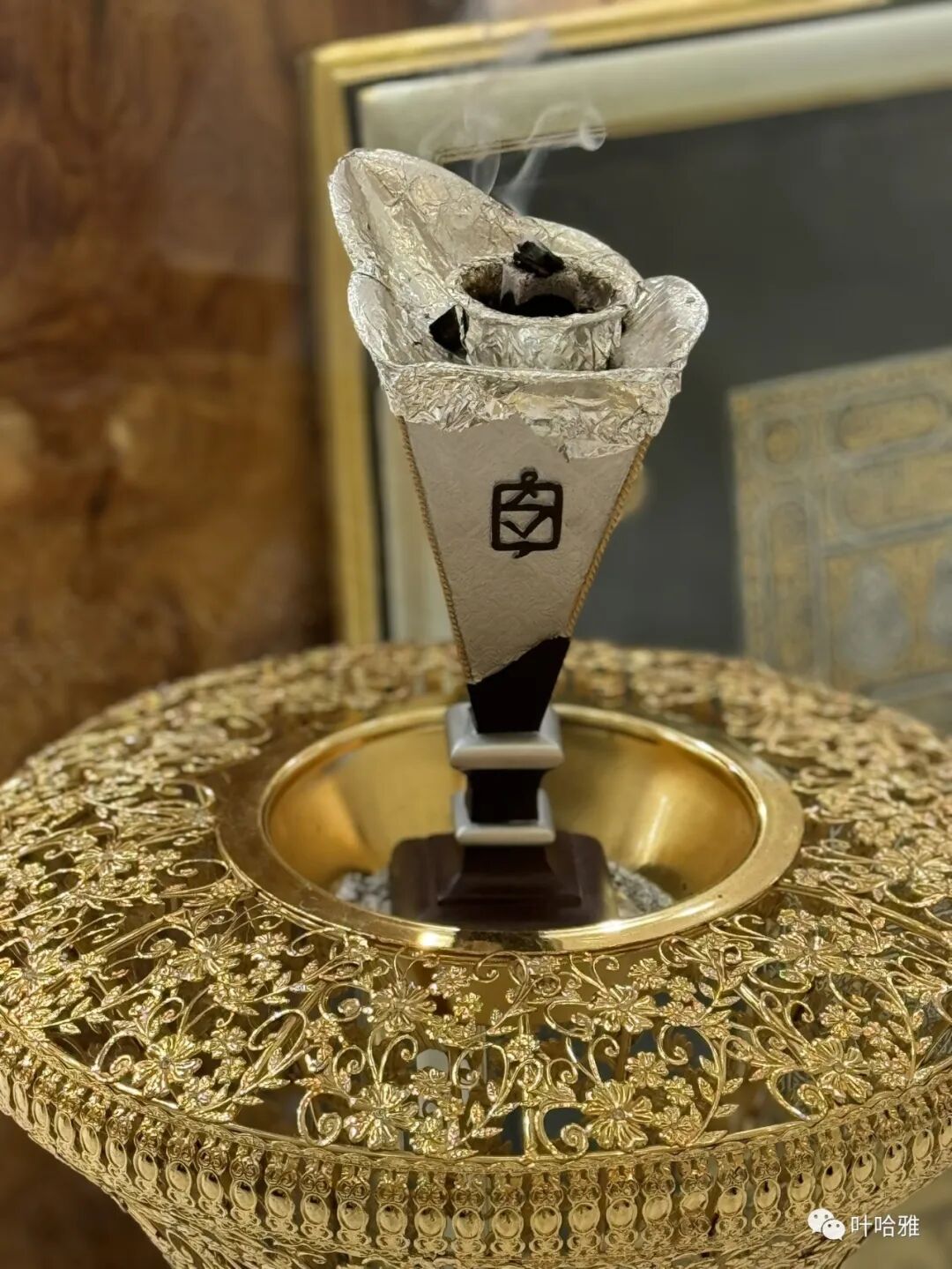
The hotel uses agarwood (oud). Arab people really love using incense.
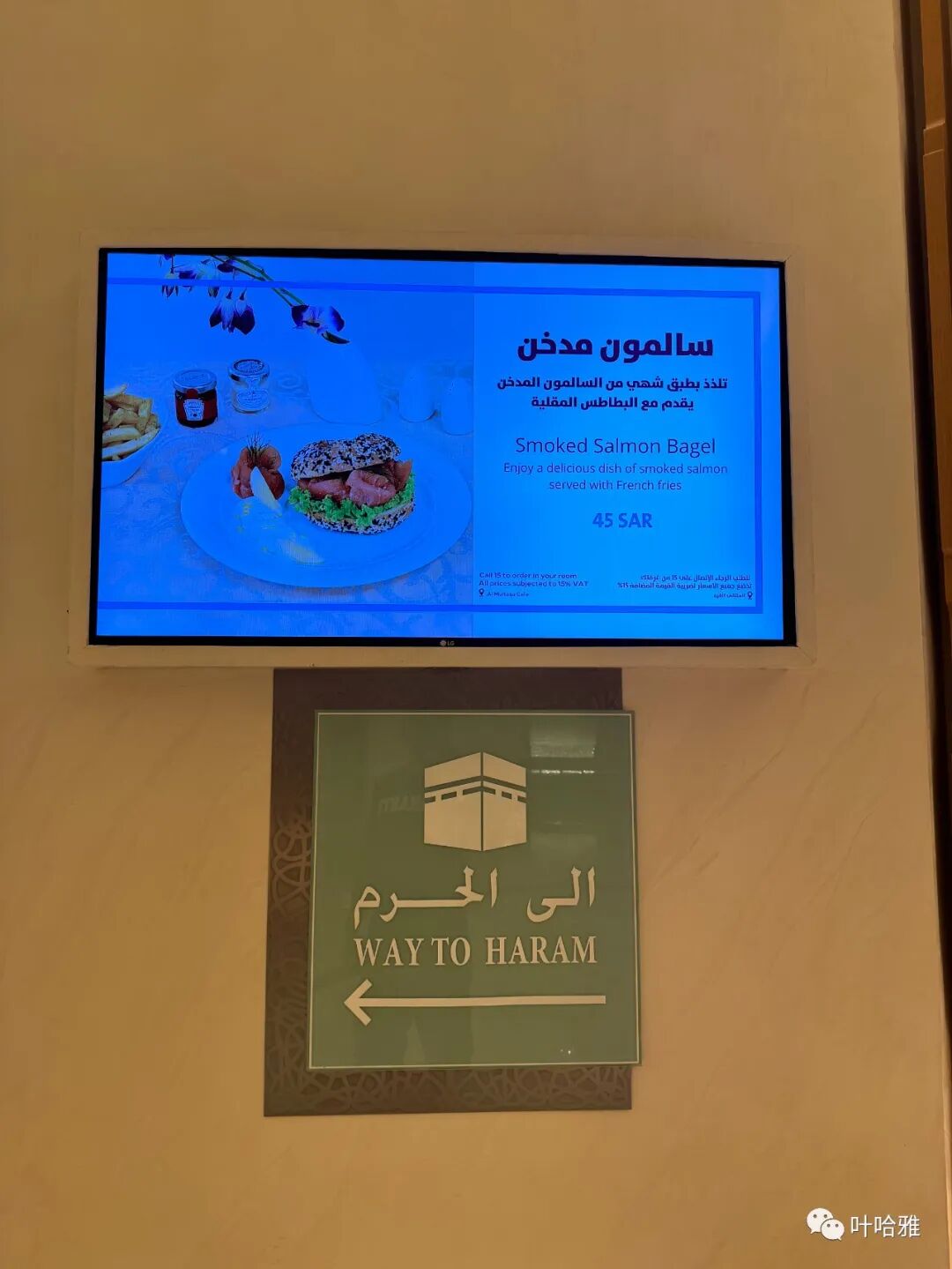
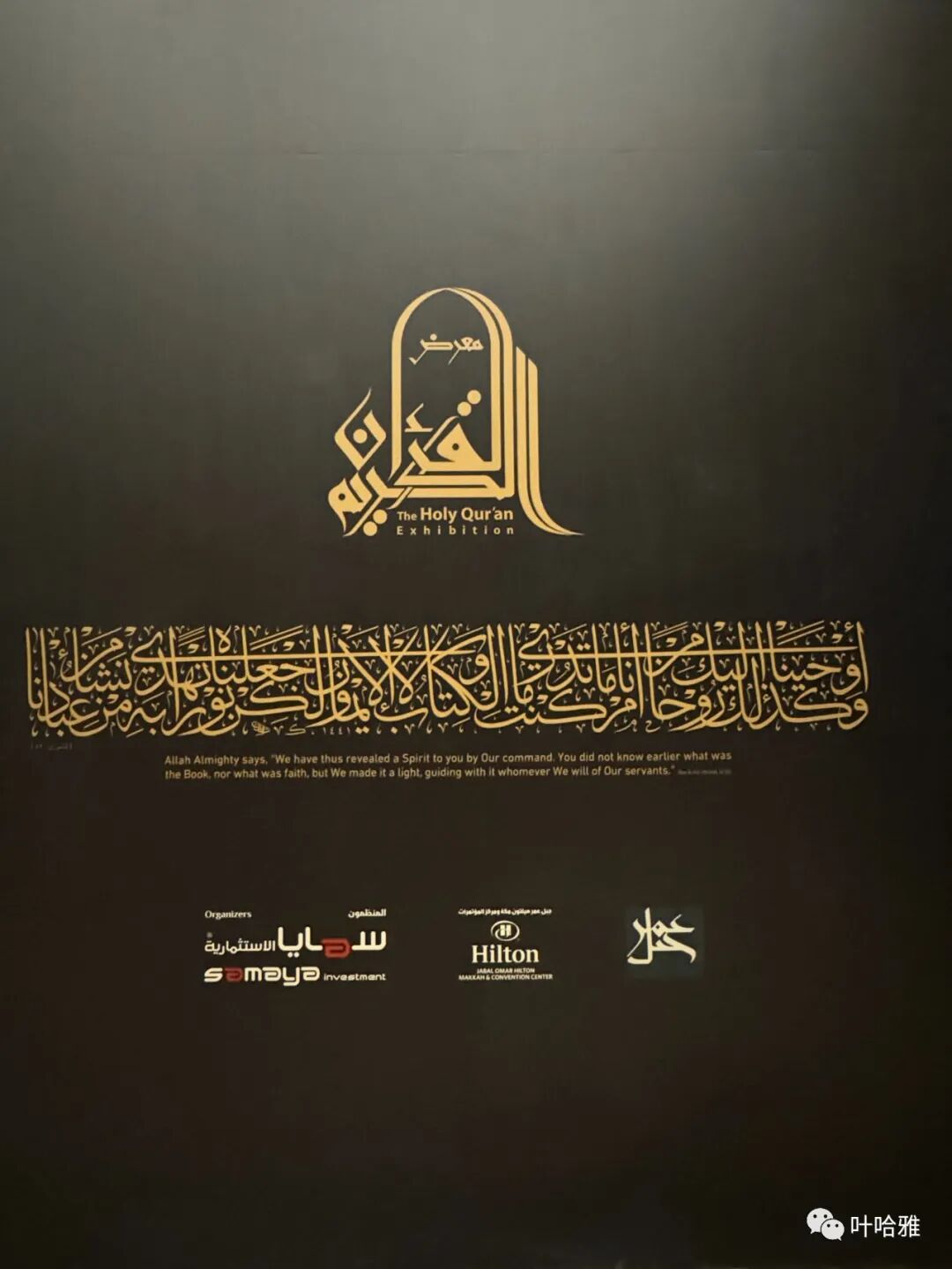
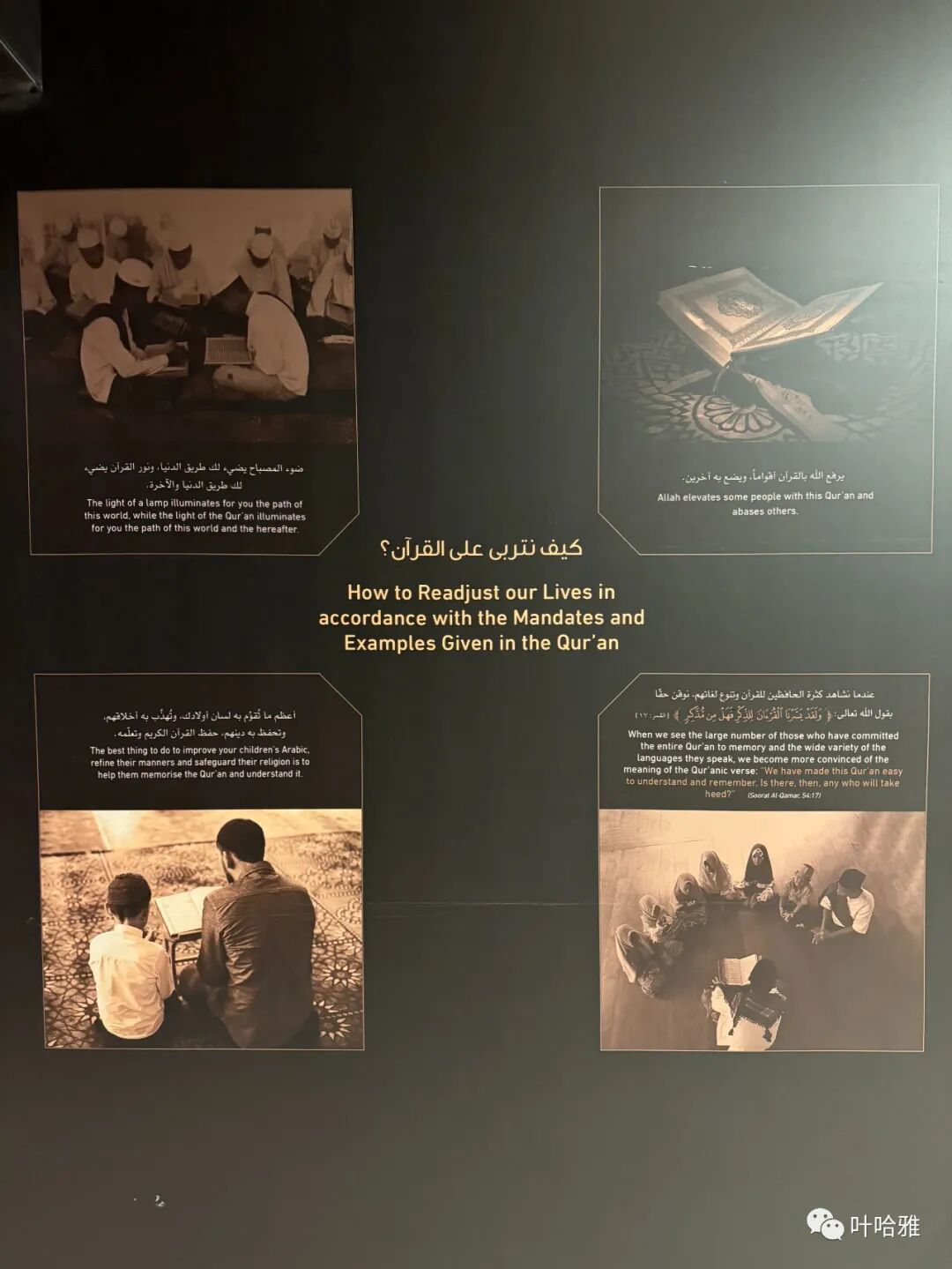
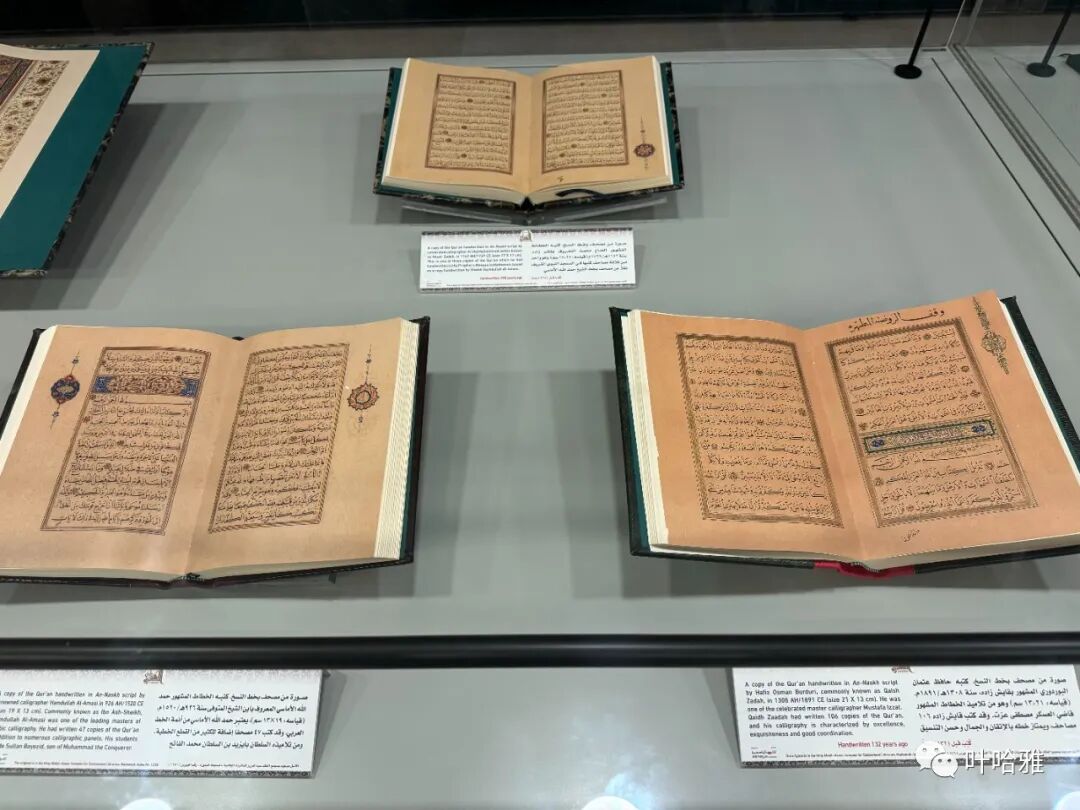
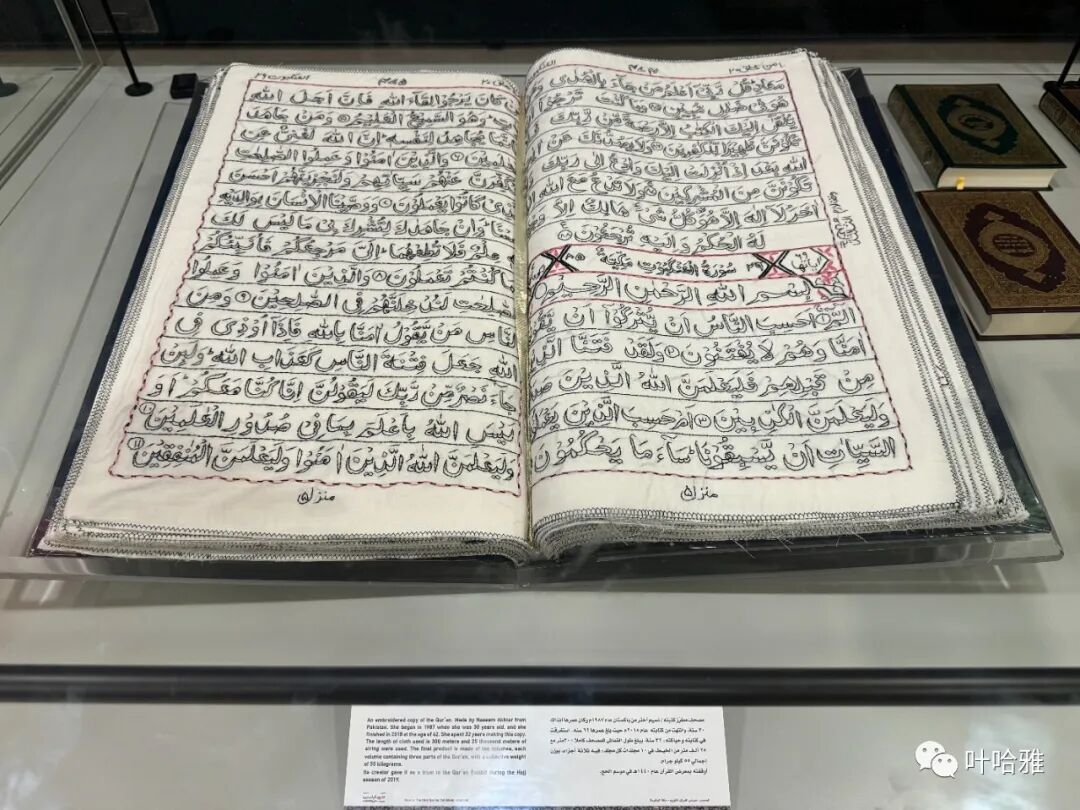
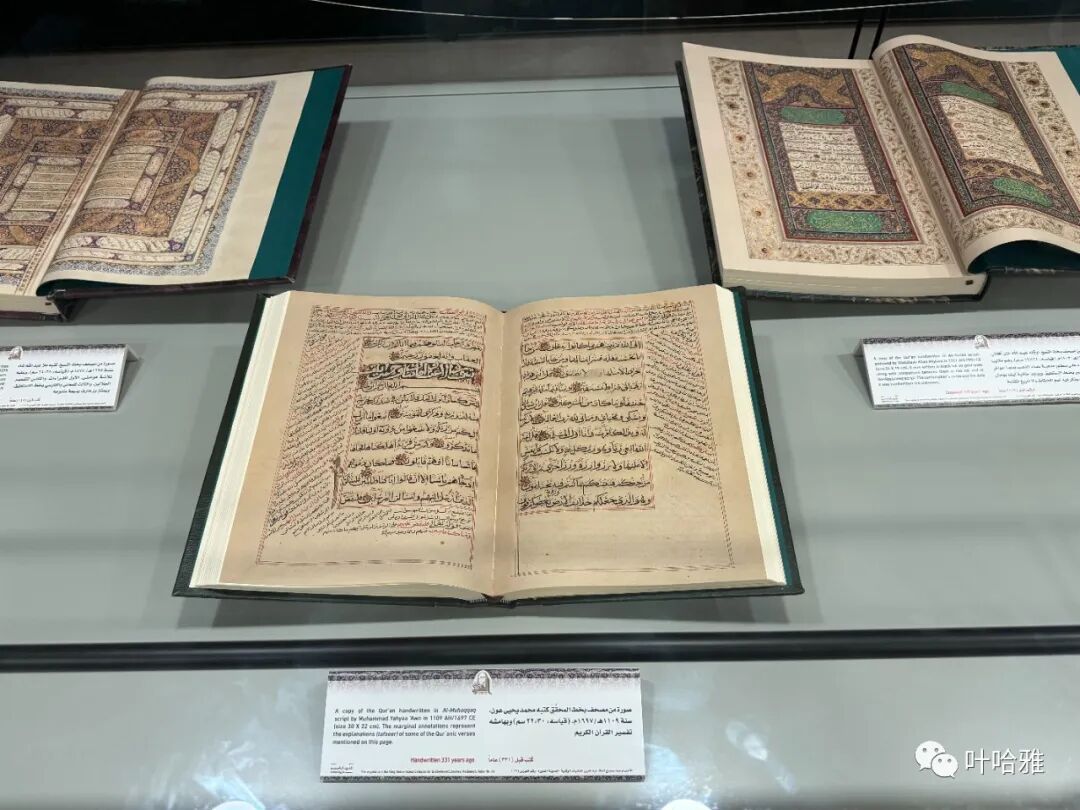
There is a tunnel on the basement level of the hotel that leads directly to the Sacred Mosque, passing by a Quran exhibition hosted by the Hilton.
Sacred Mosque (Masjid al-Haram)
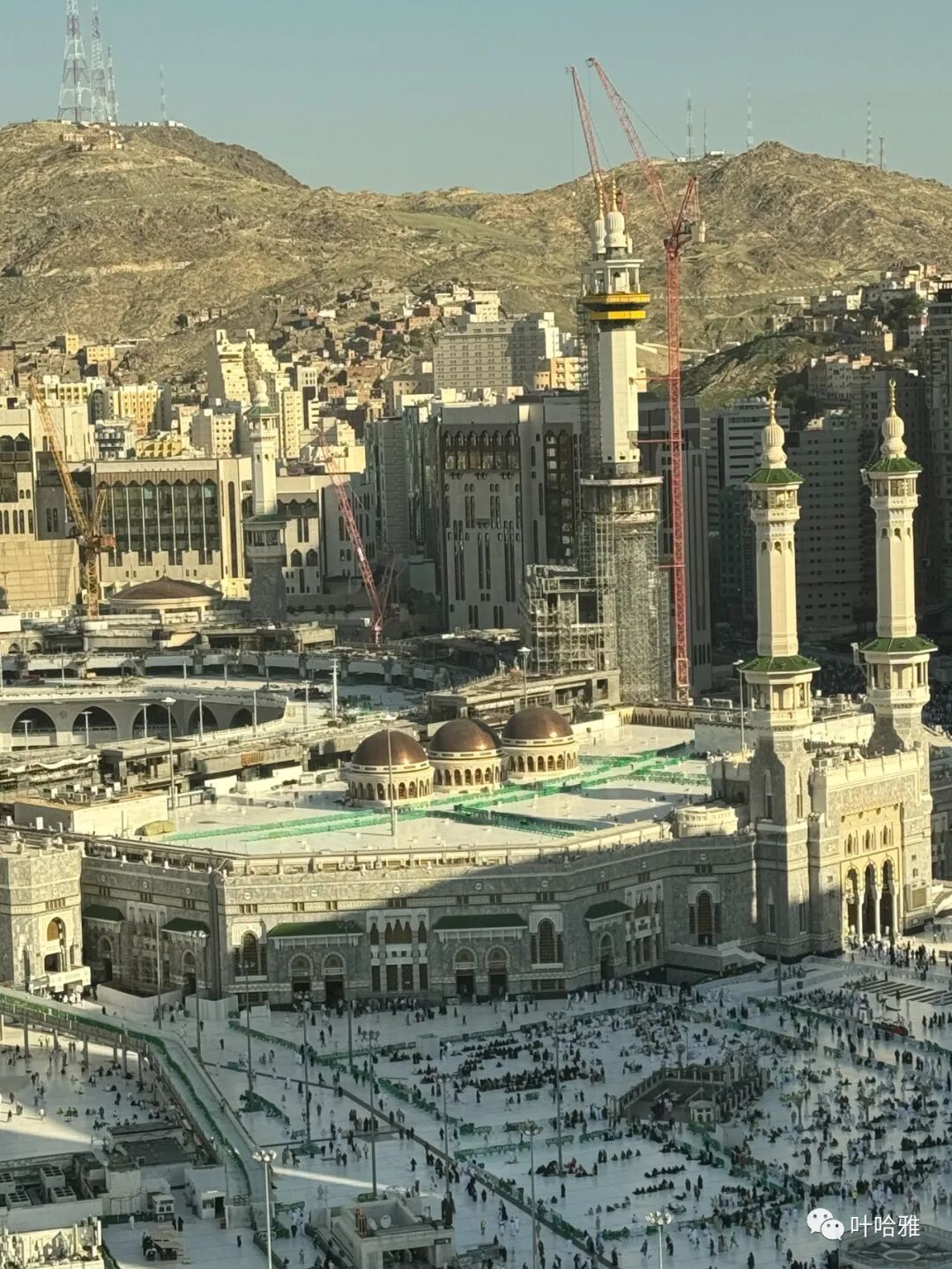
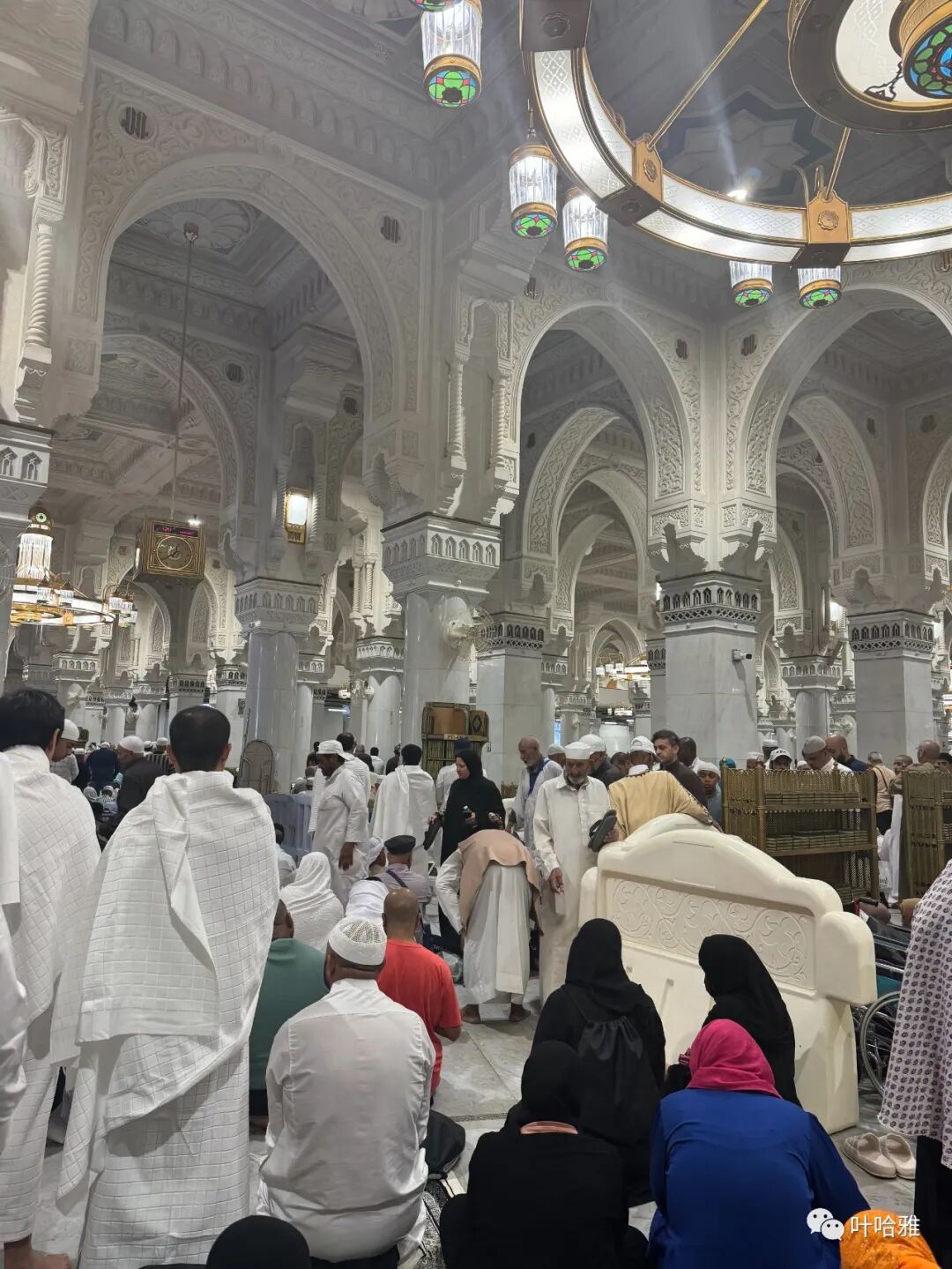
You cannot see the Kaaba from the first floor of the Sacred Mosque, but there are lines marked on the floor. You can just follow these lines to face the right direction for namaz.
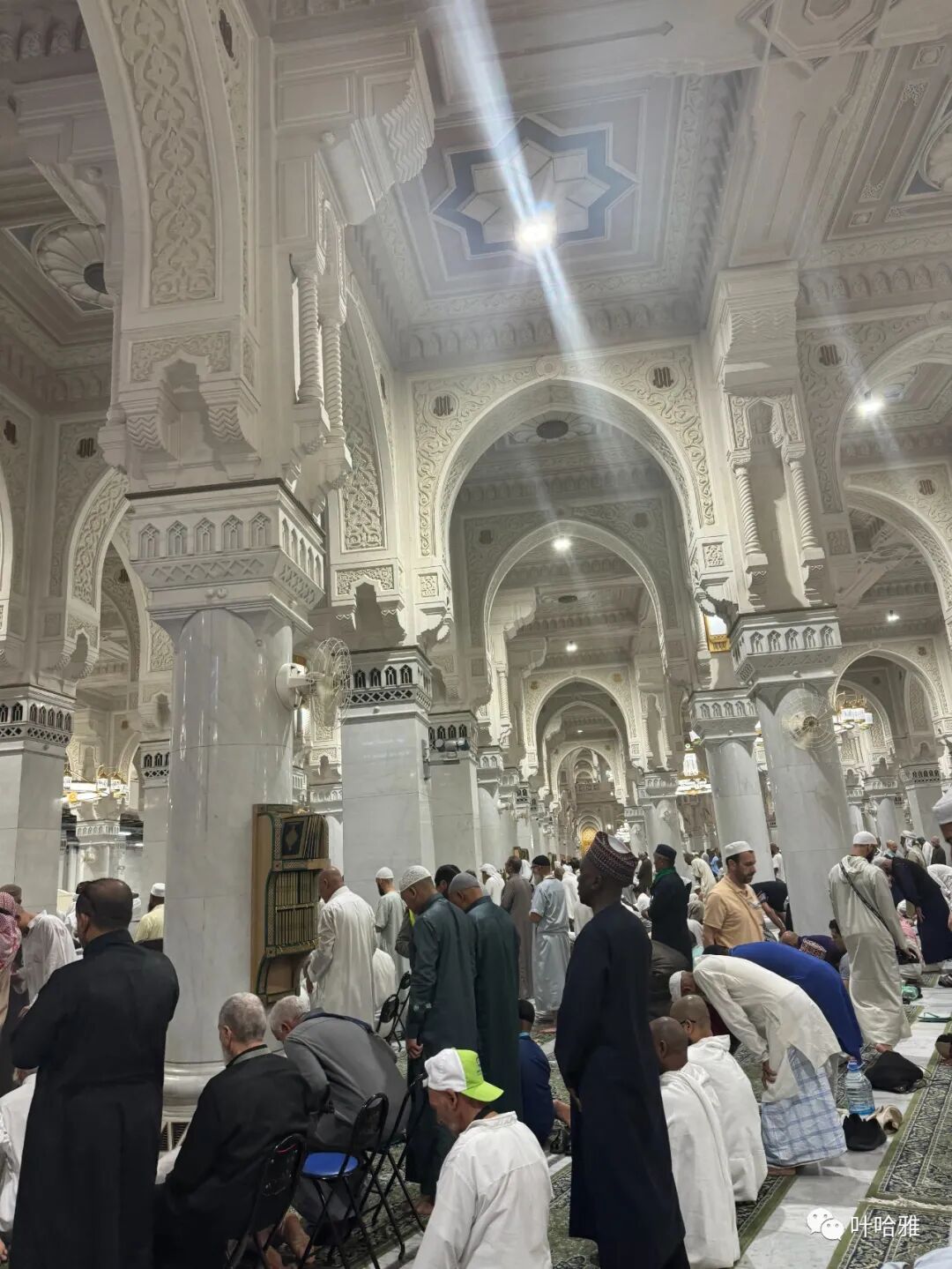
Praying at the Sacred Mosque is different from other mosques. You are allowed to walk in front of people who are praying because the rows of worshippers form circles. If you do not walk in front of them, you would have no way to get through.
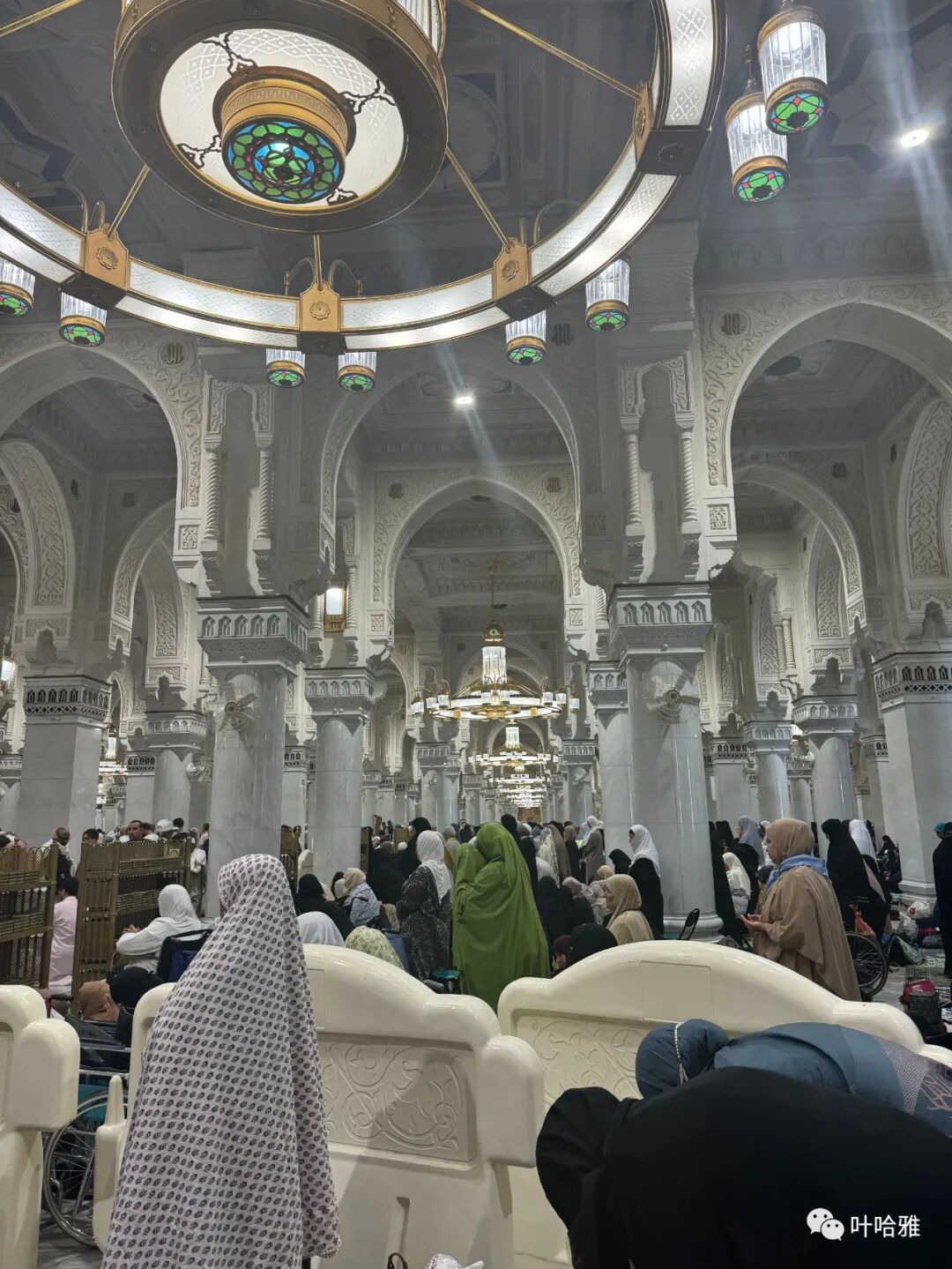
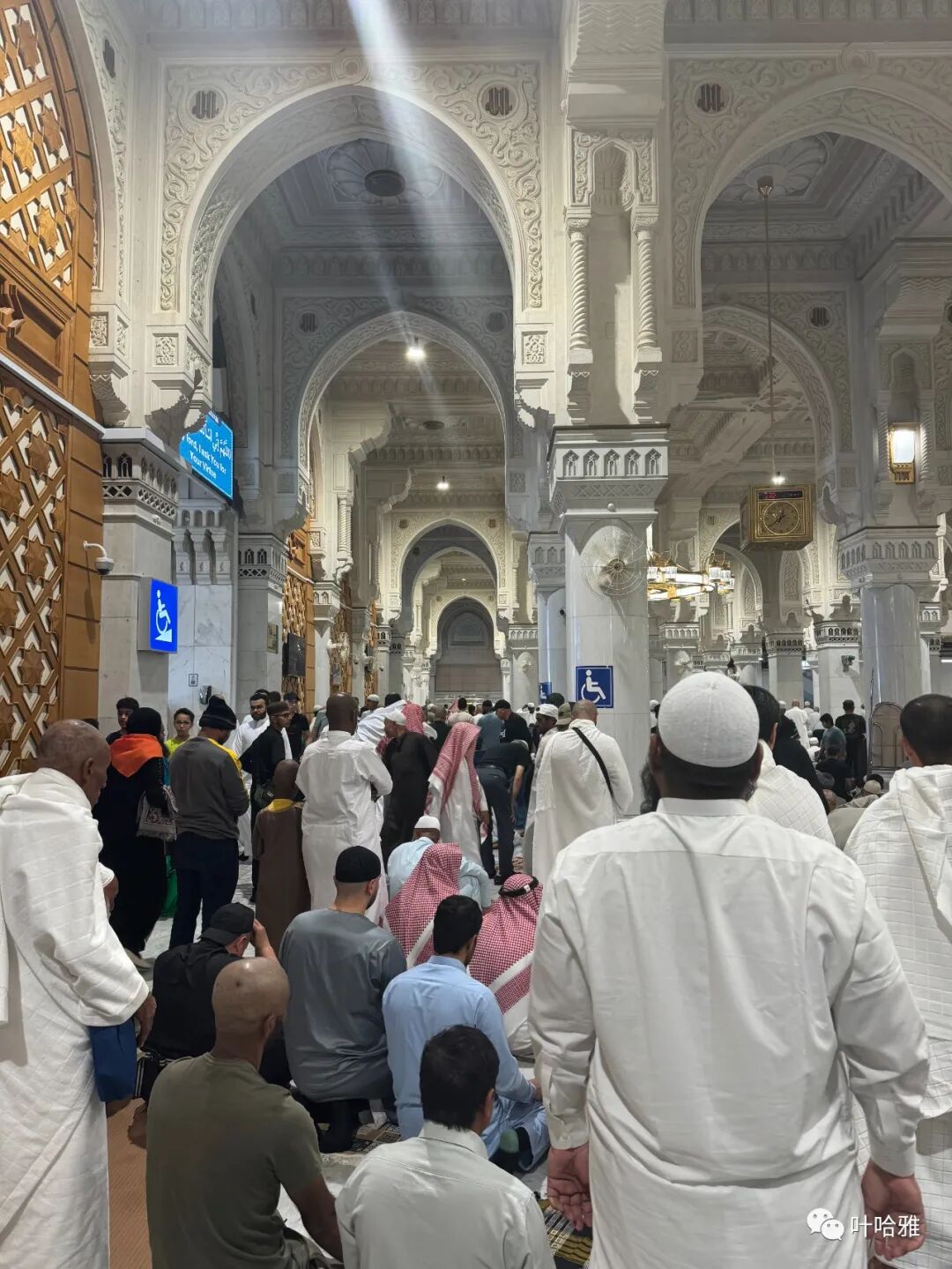
Wearing the pilgrim garment (ihram), I entered through the main gate of the Sacred Mosque and followed the crowd inside. Near the entrance to the Kaaba, guards stand watch. Only men wearing the ihram can walk into the Kaaba area, and women are not allowed to cover their faces.
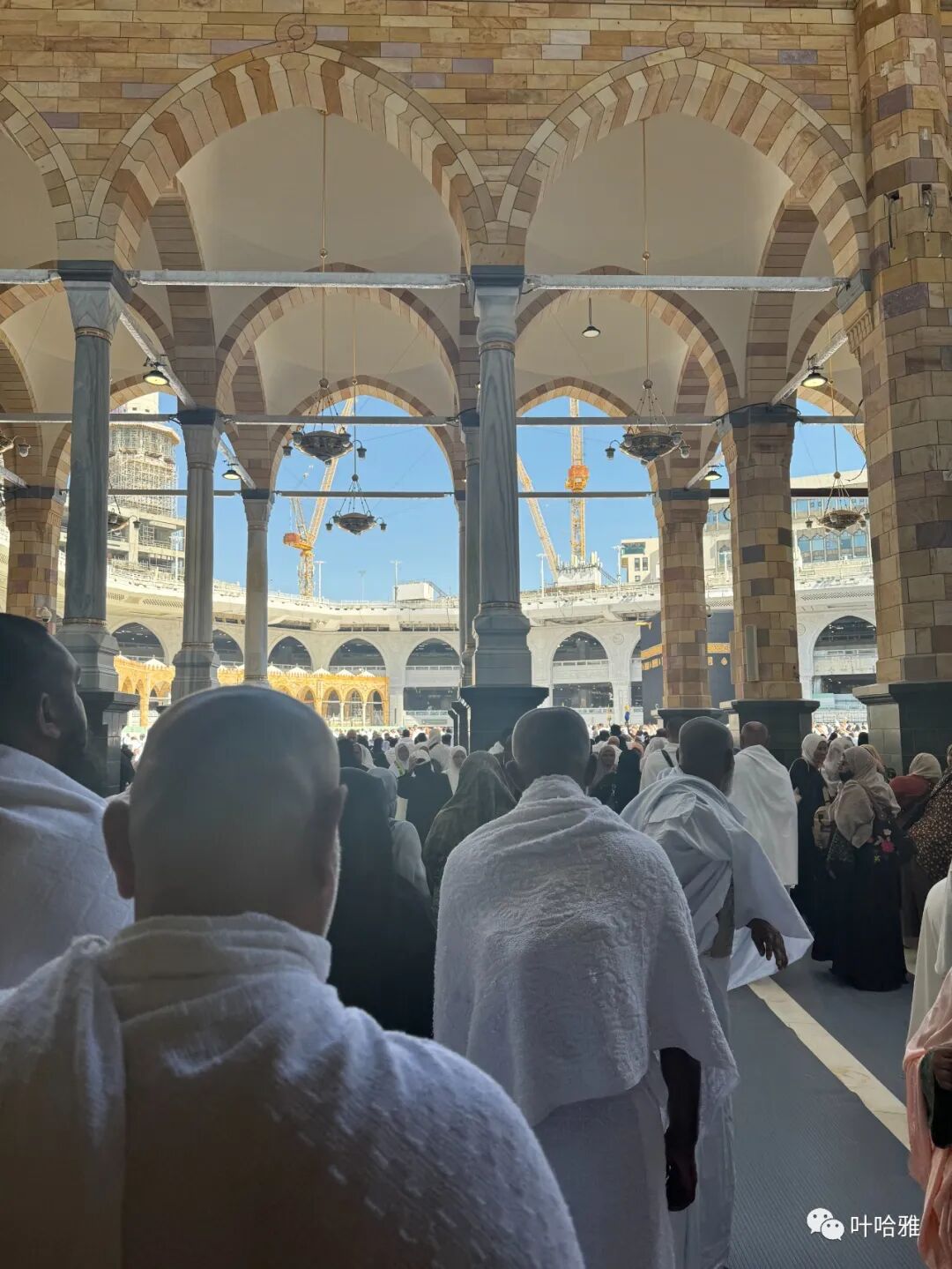
In other mosques, it is encouraged to perform two rak'ahs of prayer as a greeting (tahiyat al-masjid) as a sunnah. It is different at the Sacred Mosque; the way to greet the mosque upon arrival is to perform the circumambulation (tawaf) of the Kaaba, not to pray.
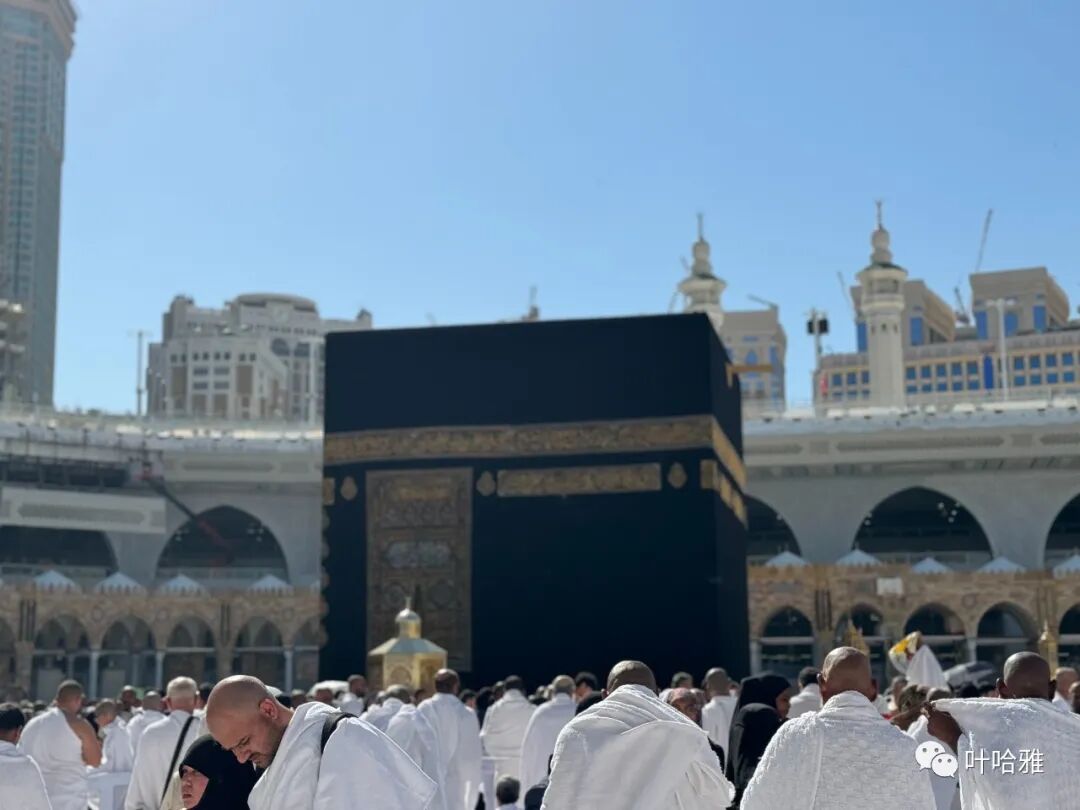
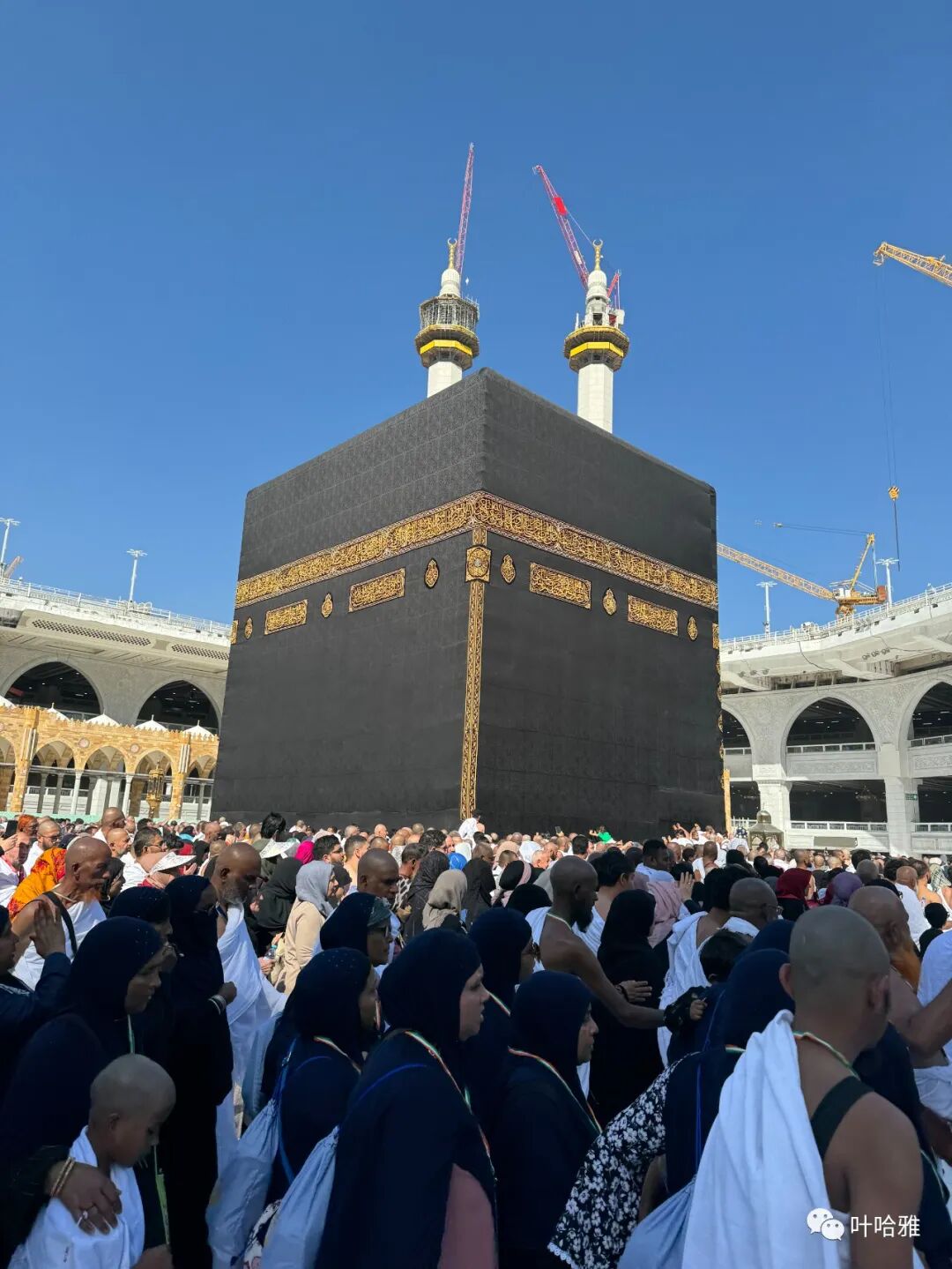
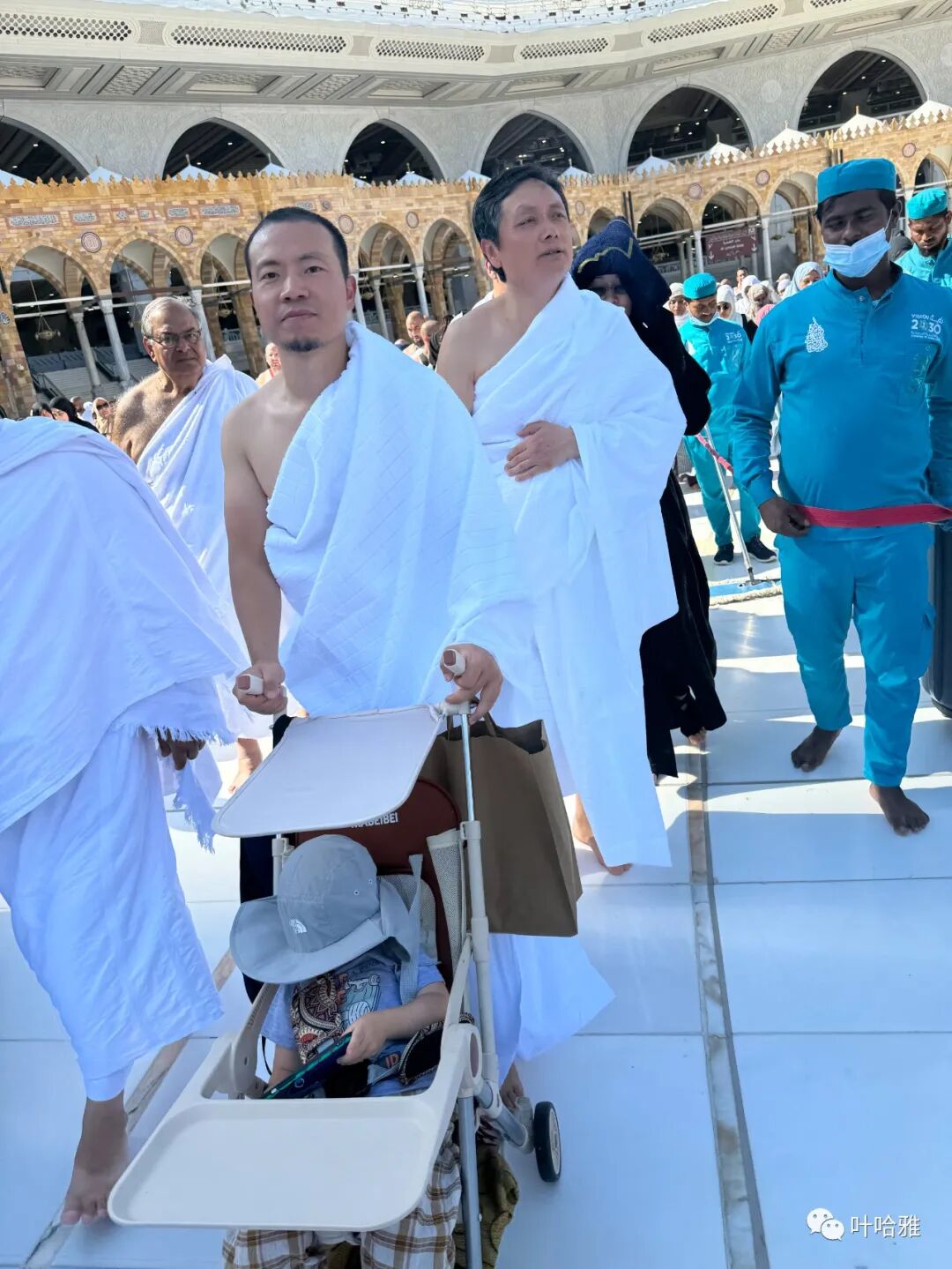
Starting from the corner of the Black Stone (Hajar al-Aswad) on the Kaaba, men must uncover their right shoulder and circle the Kaaba seven times. I pushed a stroller with Fahim and completed the seven laps. Some people push to the very front to kiss the Black Stone. This is a sunnah, but nothing more, and there is no extra reward for it. It is also very dangerous when it is crowded, so there is no problem if you do not do it. I saw people inside the circle clinging to the wall of the Kaaba, refusing to leave just to fight for the Black Stone, which is truly unseemly.
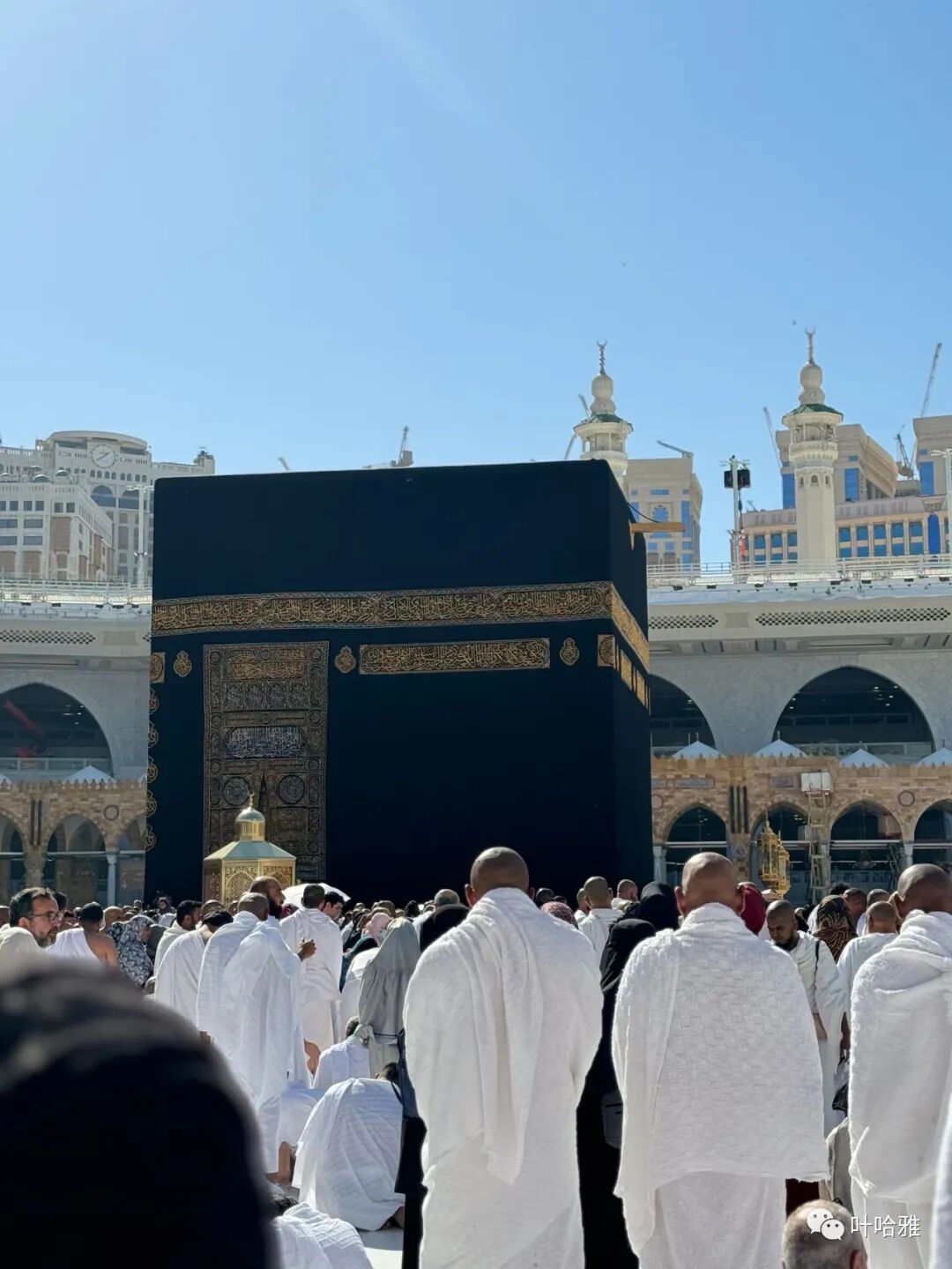
Even in December, the daytime temperature in Mecca reaches 30 degrees Celsius. The sun is strong, and walking barefoot to circle the Kaaba takes physical strength. It is a real test for older people, so it is better for young people to go as early as possible.
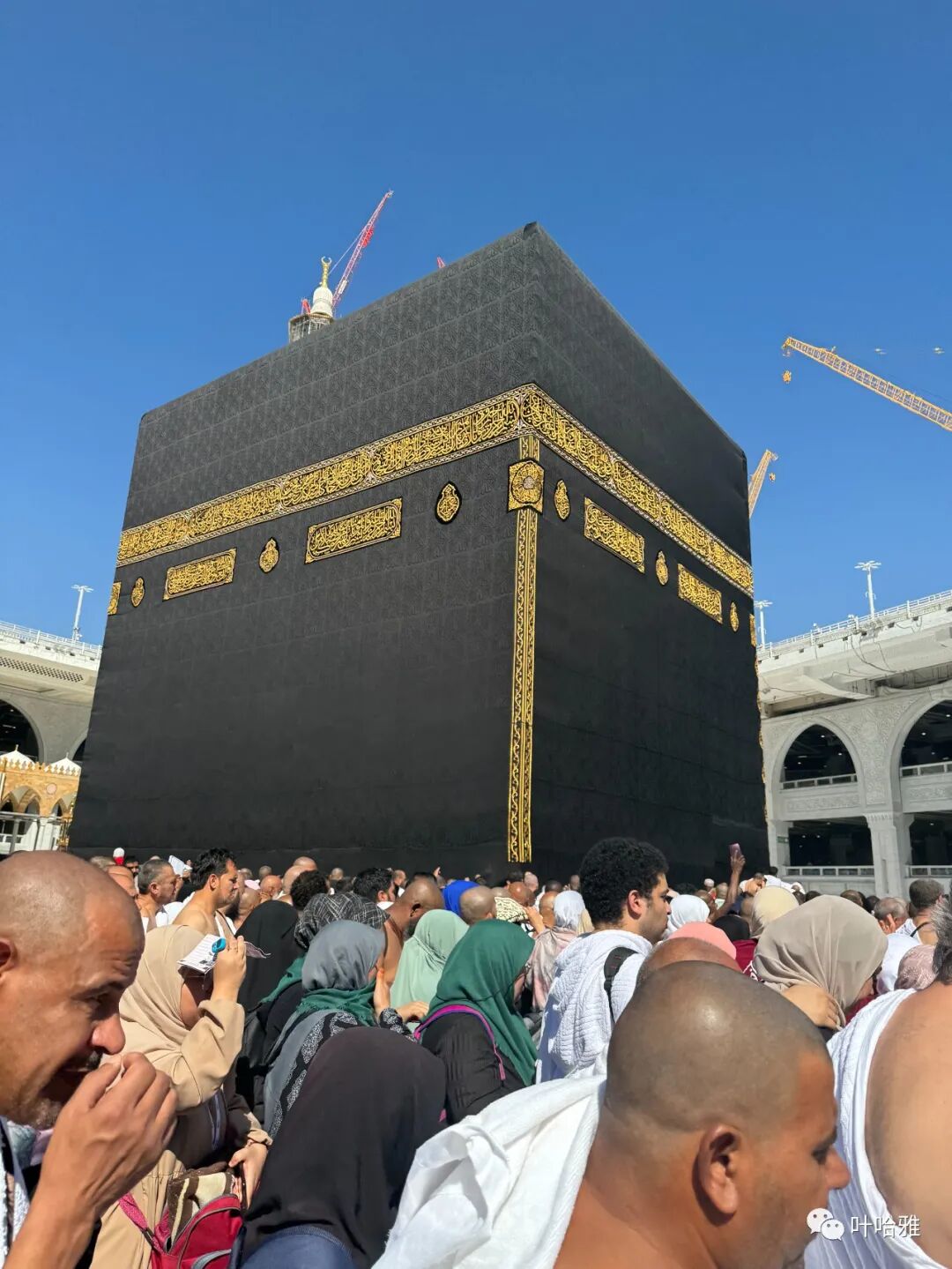
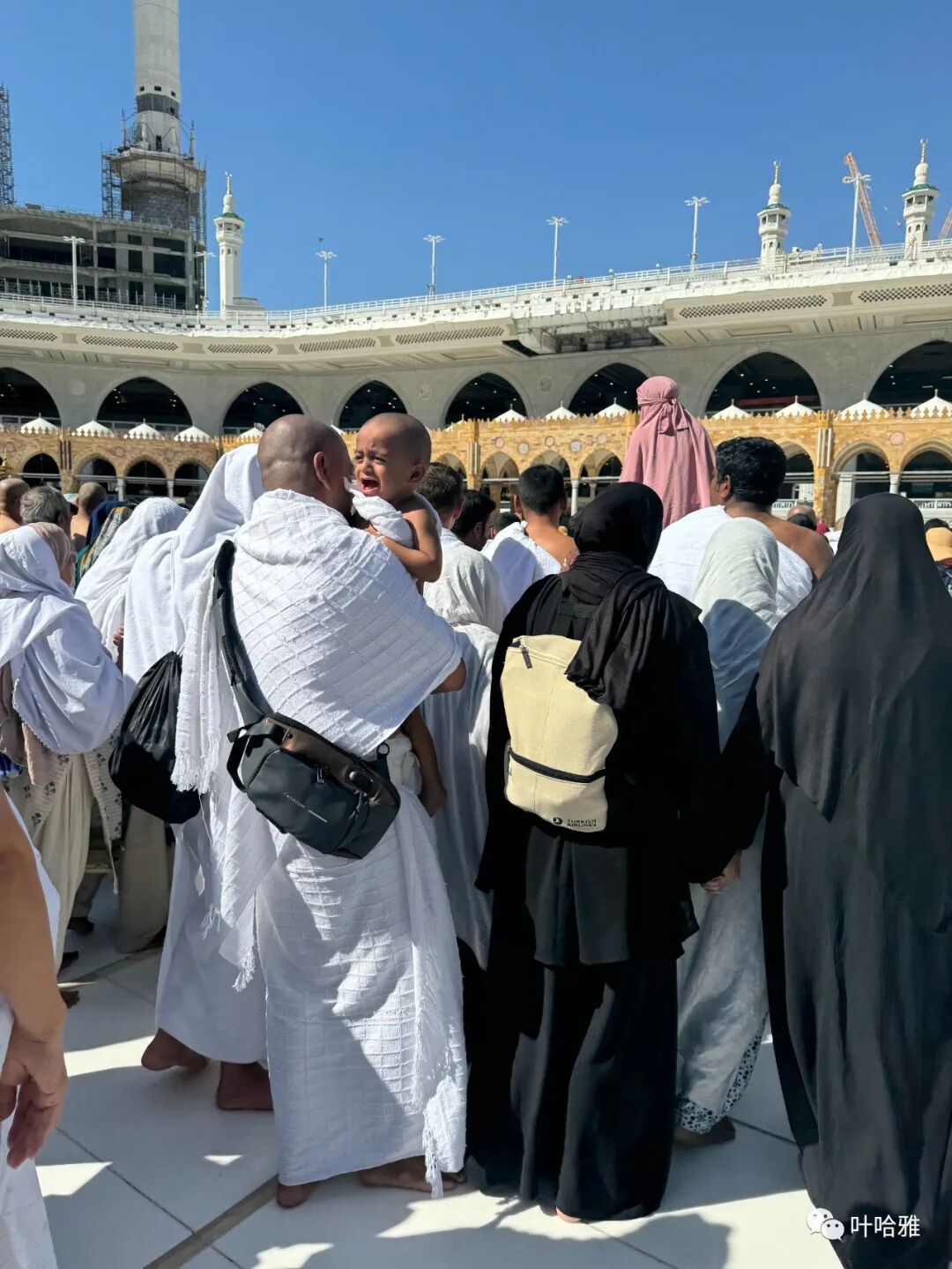
Men and women can perform the circumambulation together. There were even babies younger than Fahim in the crowd.
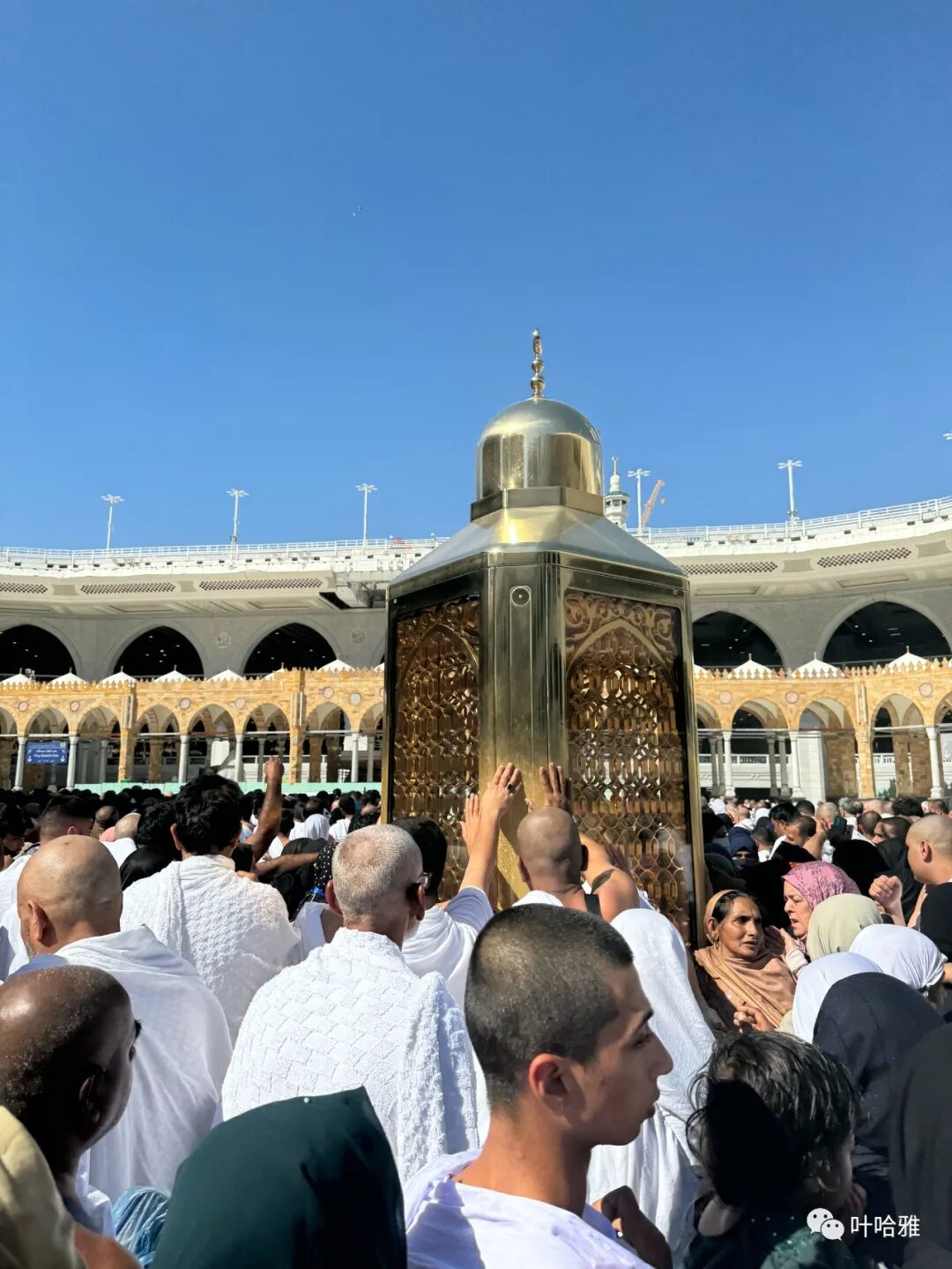
Station of Ibrahim (Maqam Ibrahim)
After praying two rak'ahs near the Station of Ibrahim, the ritual of circling the Kaaba is complete.
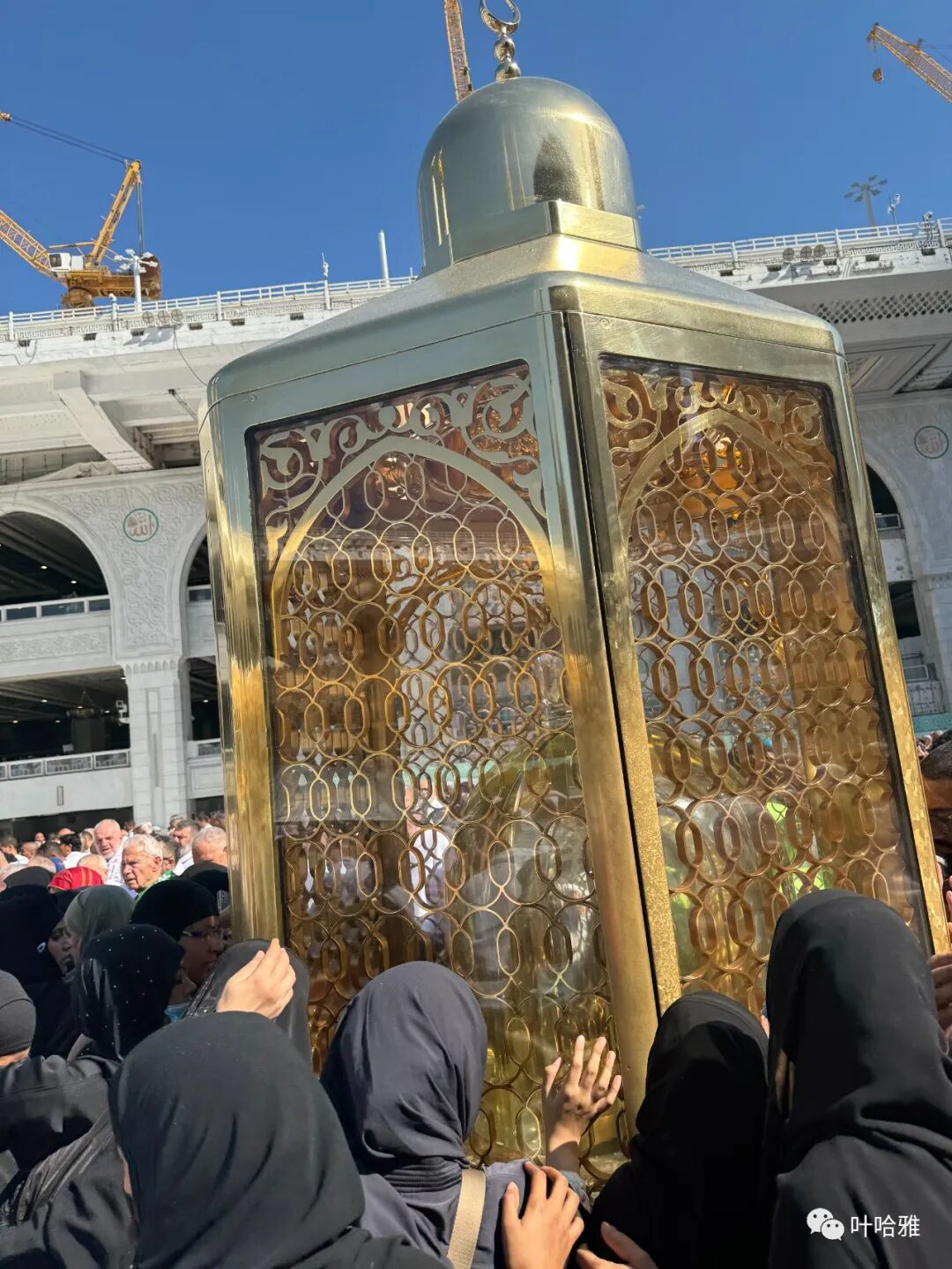
The area behind the station is spacious, so avoid praying in the middle of the crowd to keep from being stepped on.
Fahim watched cartoons in his stroller while circling the Kaaba, a unique sight that drew envious looks from many fellow believers (dosti).
After leaving the Kaaba, follow the crowd to find the Safa entrance. You must walk between Safa and Marwa seven times to follow the story of Hajar, the wife of Ibrahim, who searched for water for her son Ismail. This is how the Zamzam well was discovered.
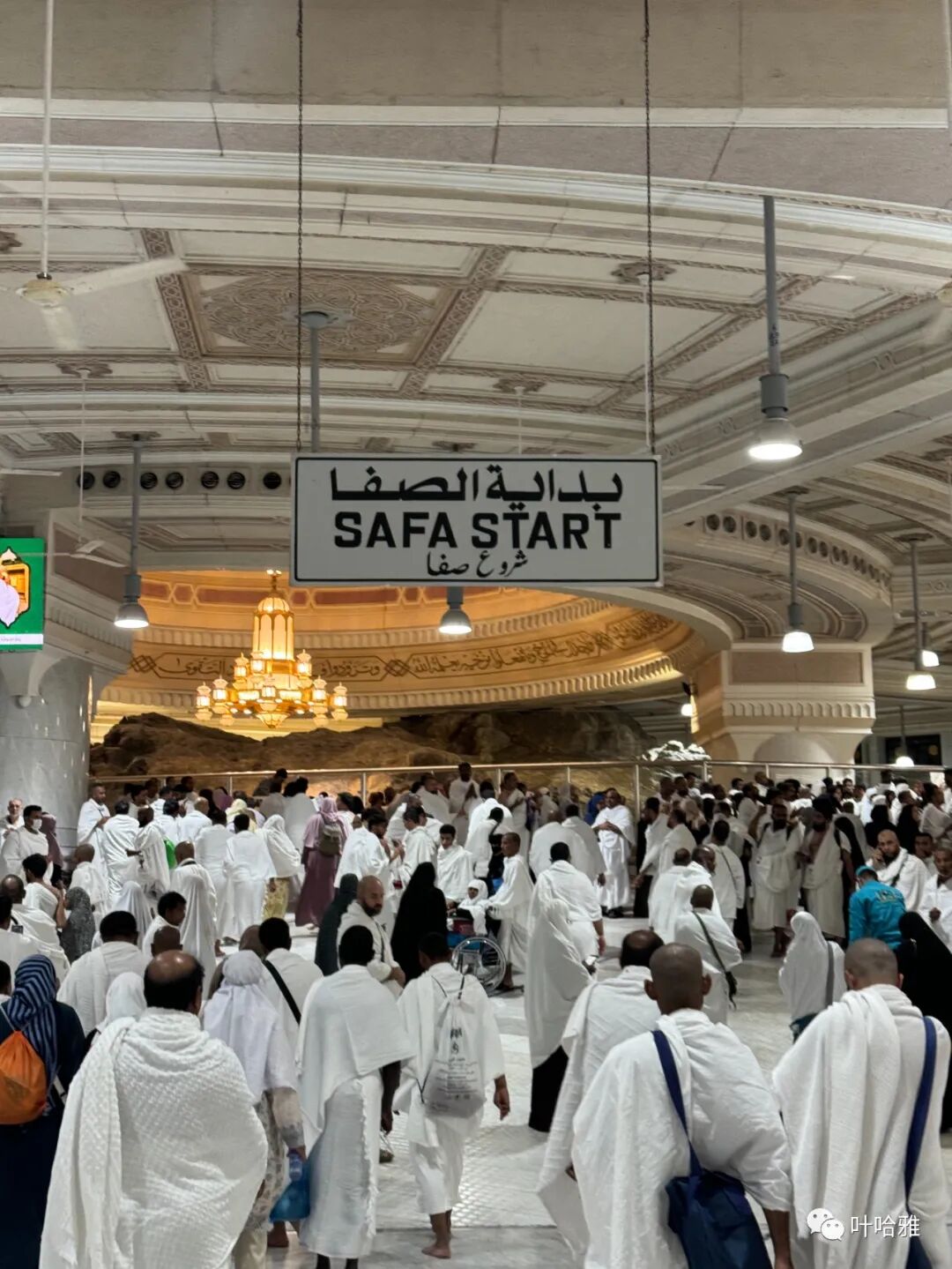
The walk between the two hills covers about 700 meters. Saudi Arabia has built a large, air-conditioned hall between them, so pilgrims (hajjis) no longer have to worry about the wind or sun, making it easier to complete this duty.
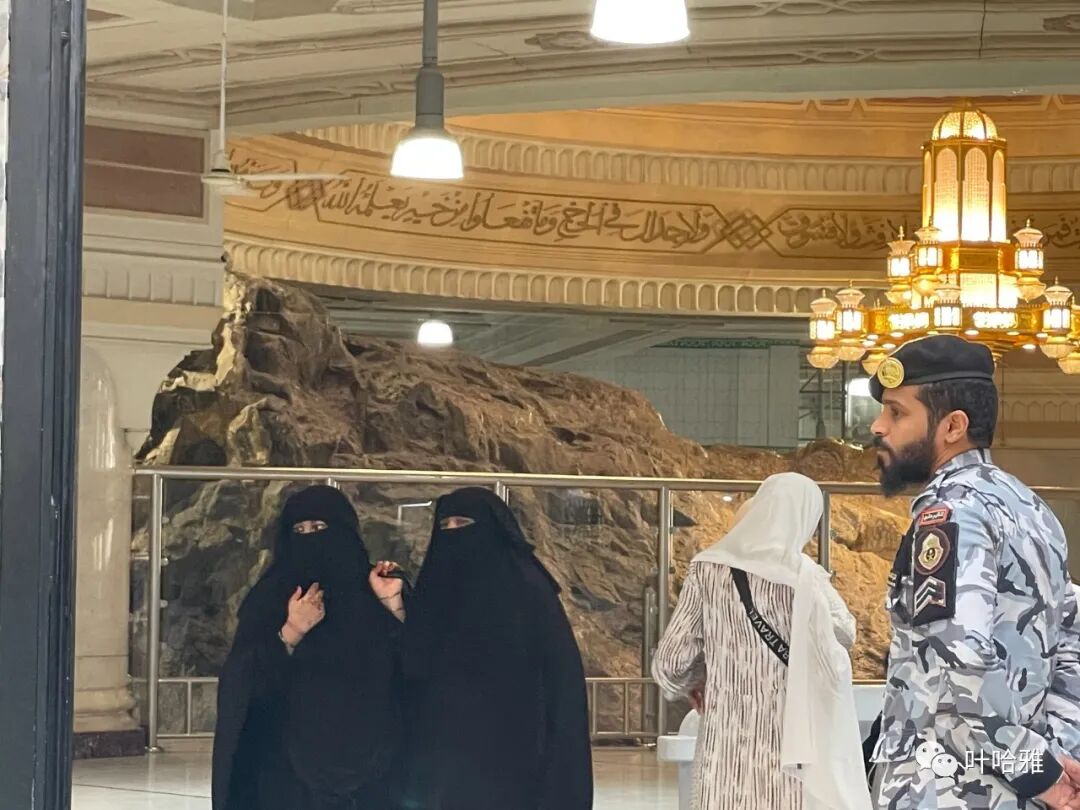
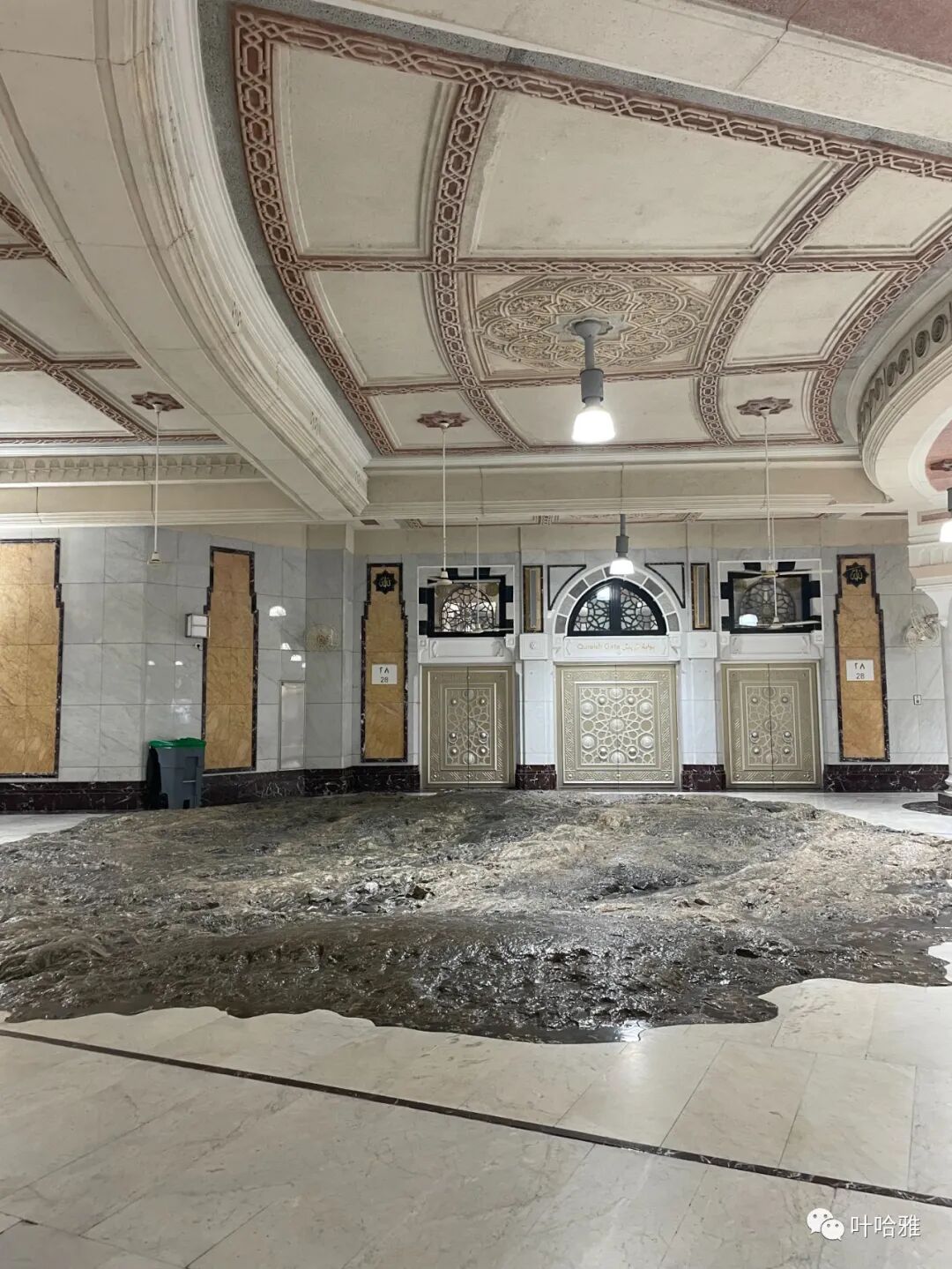
Mount Safa
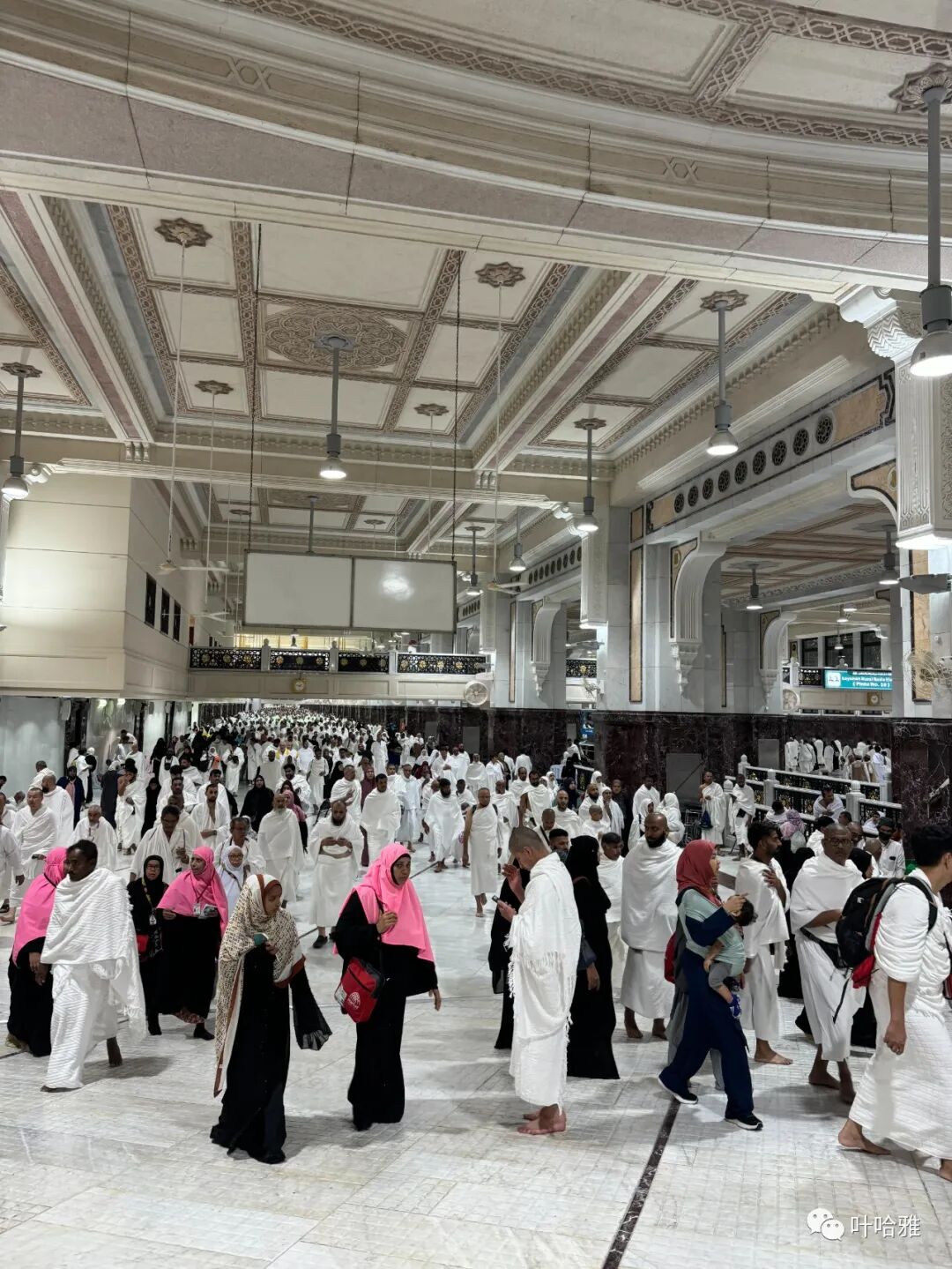
Walking from Safa to Marwa counts as one trip, and returning from Marwa to Safa counts as the second. You do this seven times. Volunteers provide wheelchairs for those with mobility issues. Men should jog in the area marked by green lights to follow the Sunnah.
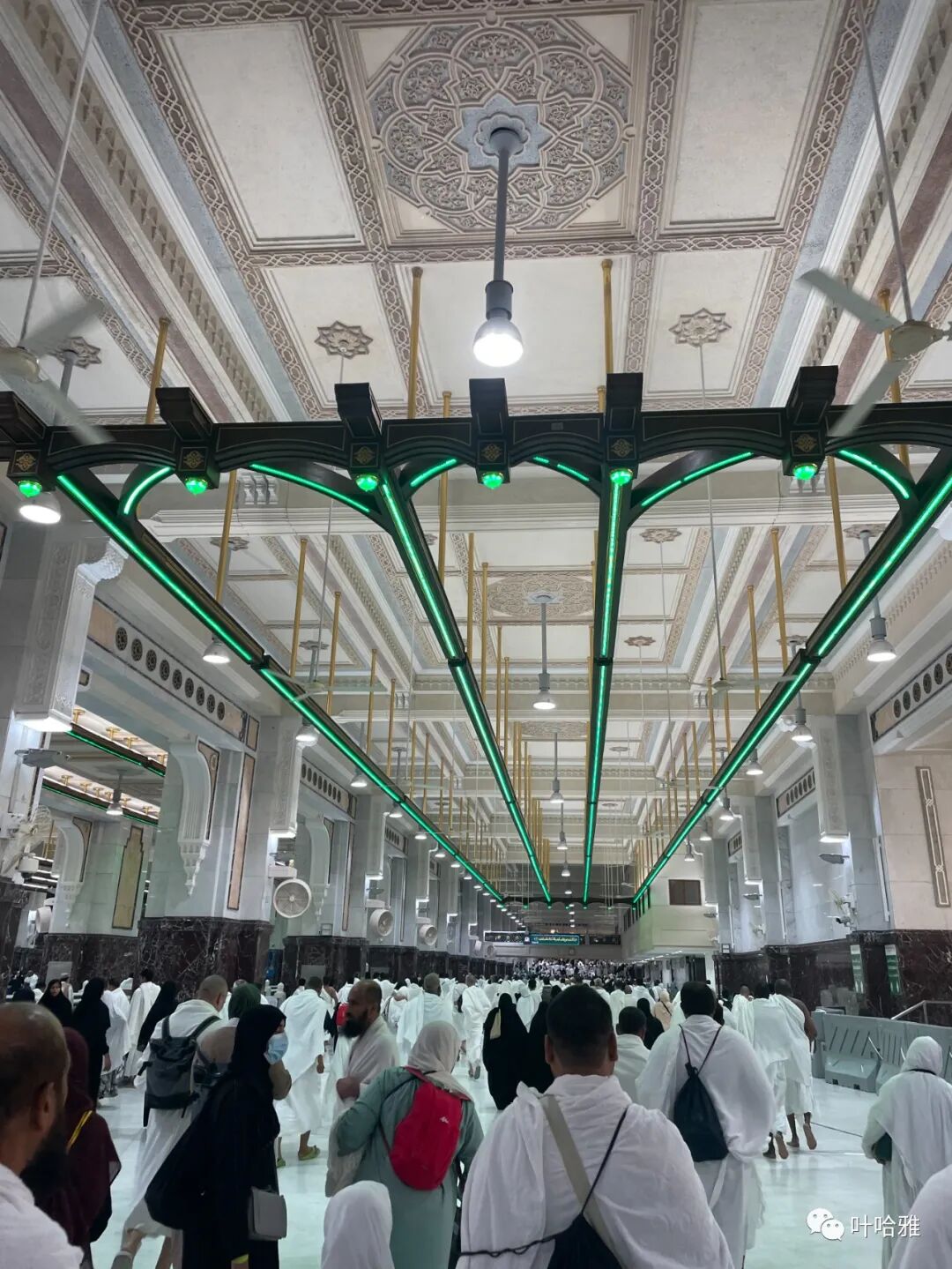
Marwa
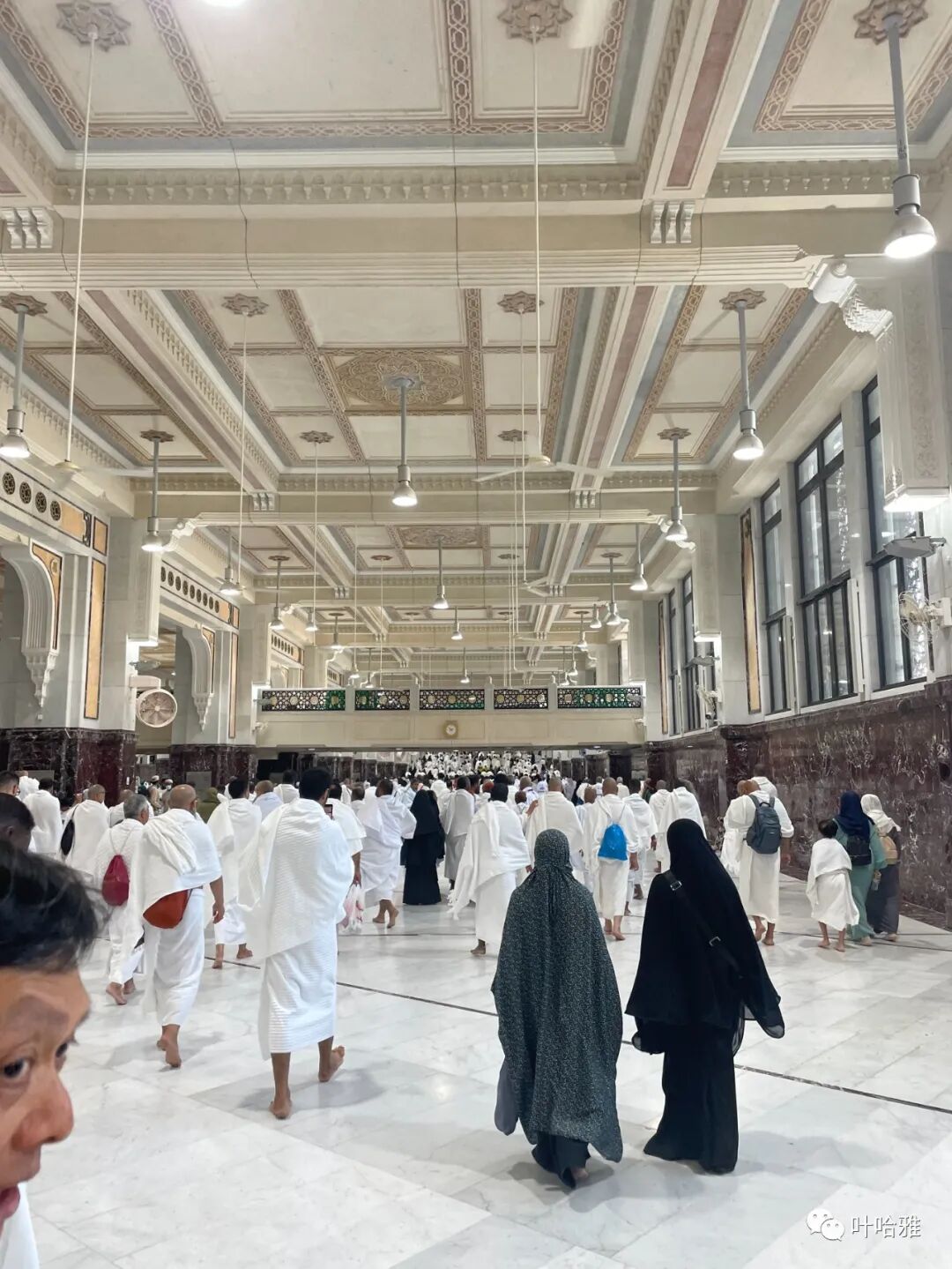
After leaving Marwa, use scissors or another tool you brought to cut a portion of your hair to signify the end of your state of ihram. You can also find someone at the entrance to shave your head. The entire process takes about two hours. If you booked through the Nusuk app, you will receive a certificate on the app now, but you can still go even if you did not book.
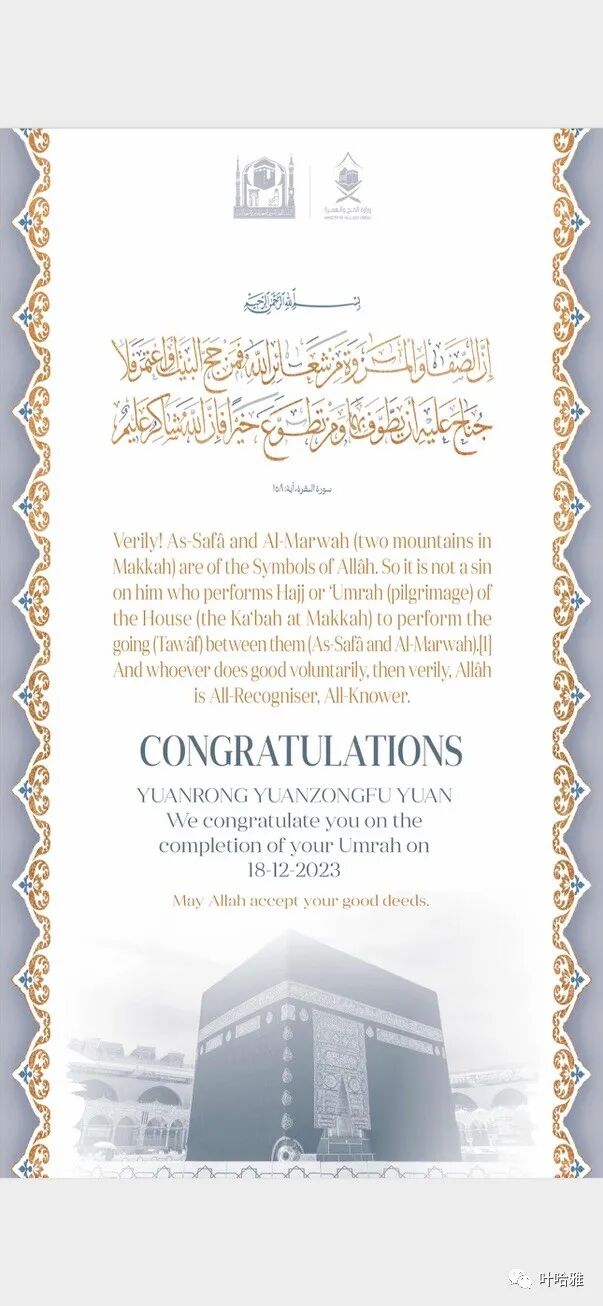
Hajj Certificate
I felt much lighter after finishing the duties, so we made the intention to go visit the historical sites of Mecca. Mecca has fewer historical sites than Medina. You can see them all in half a day, starting from the dawn prayer (fajr) and finishing by the afternoon prayer (asr).
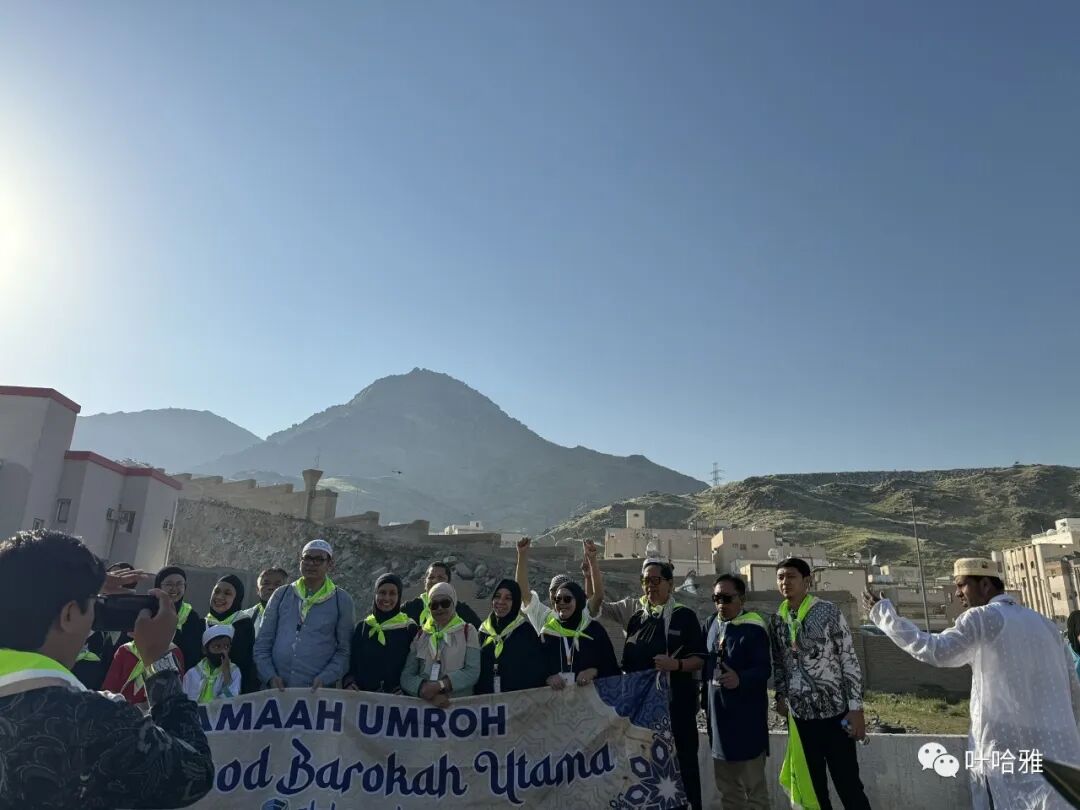
Mount Thawr (Sha'er Shan)
Mount Thawr (Sha'er Shan)
The mountain in the distance is Mount Thawr, located 4 kilometers from the Sacred Mosque (Masjid al-Haram). There is a cave on the mountain that only fits one person. The Prophet Muhammad once took refuge here. It takes an hour and a half to climb up to the cave.
Arafat
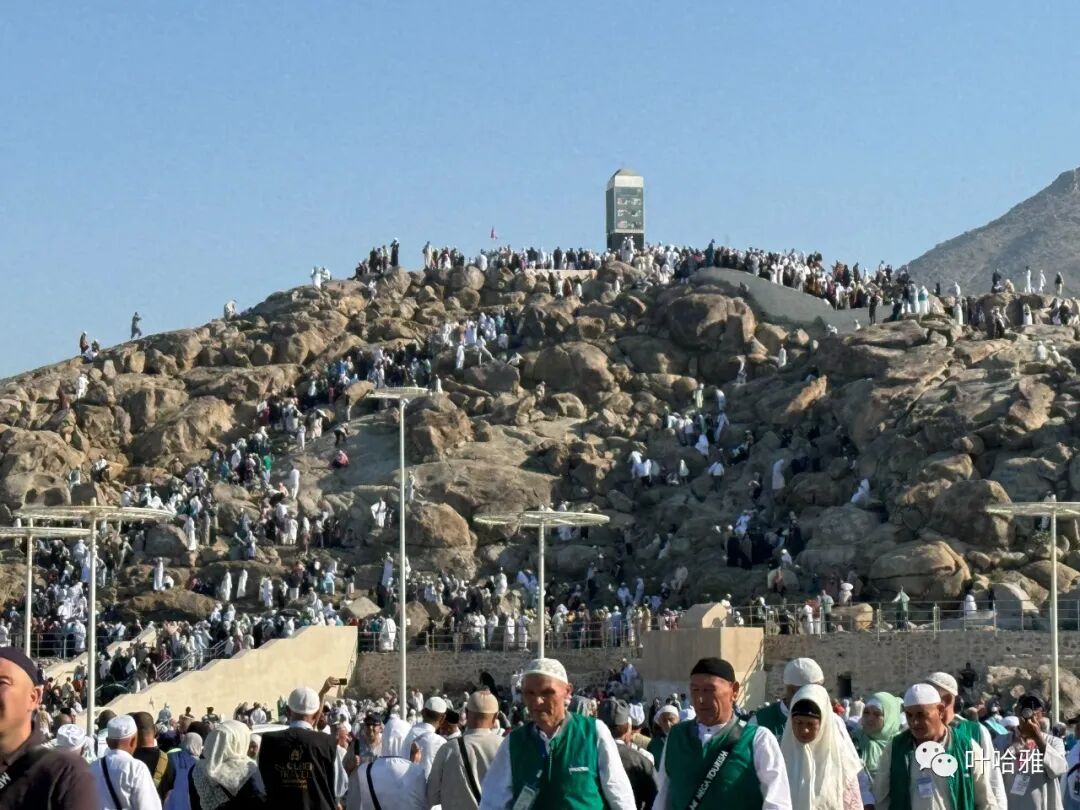
Arafat
Arafat is 22 kilometers from the Sacred Mosque. The name means 'to recognize,' as it is where the first humans, Adam and Eve (Hawa), recognized each other. It is also where the Archangel Gabriel (Jibril) taught the Prophet Ibrahim the rituals of Hajj. Arafat covers a large area of plains and hills. Staying at Arafat is one of the essential rituals of the Hajj.
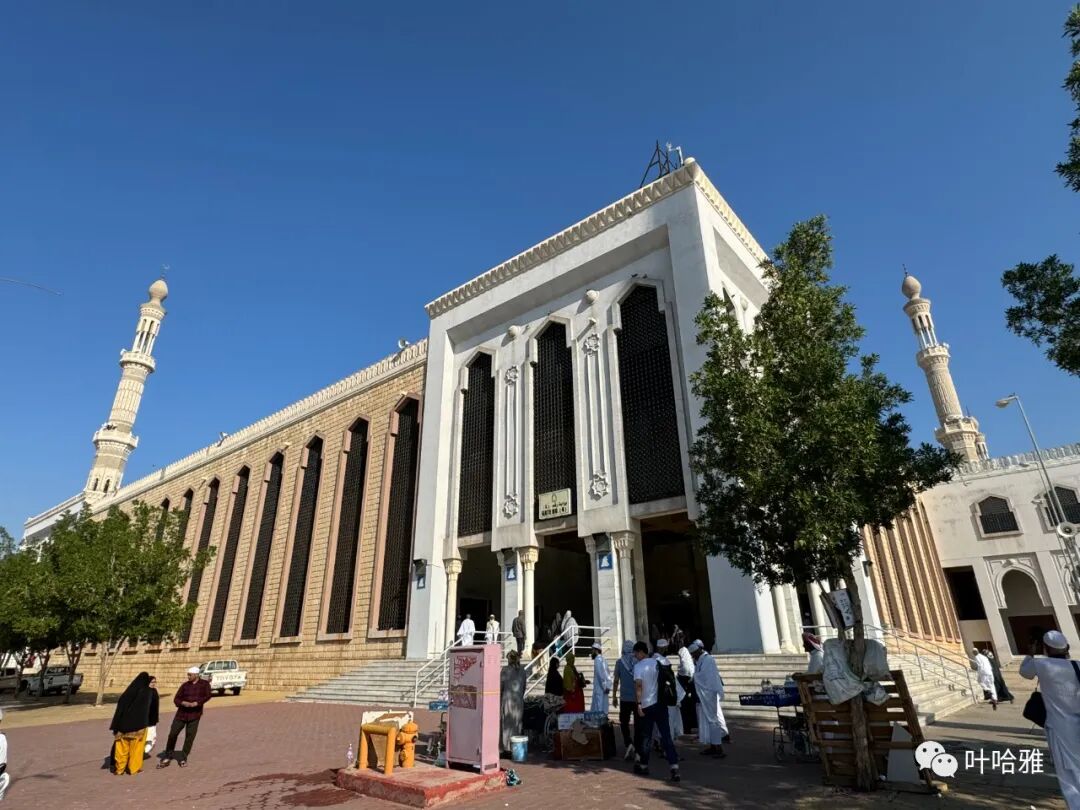
Namirah Mosque
This mosque is located east of the foot of Mount Namirah in Arafat. The Prophet once stayed in a tent on Mount Namirah on the Day of Arafat. This mosque is not considered an ancient site and is usually closed, but you can pray two units of prayer (rak'ahs) at the entrance.
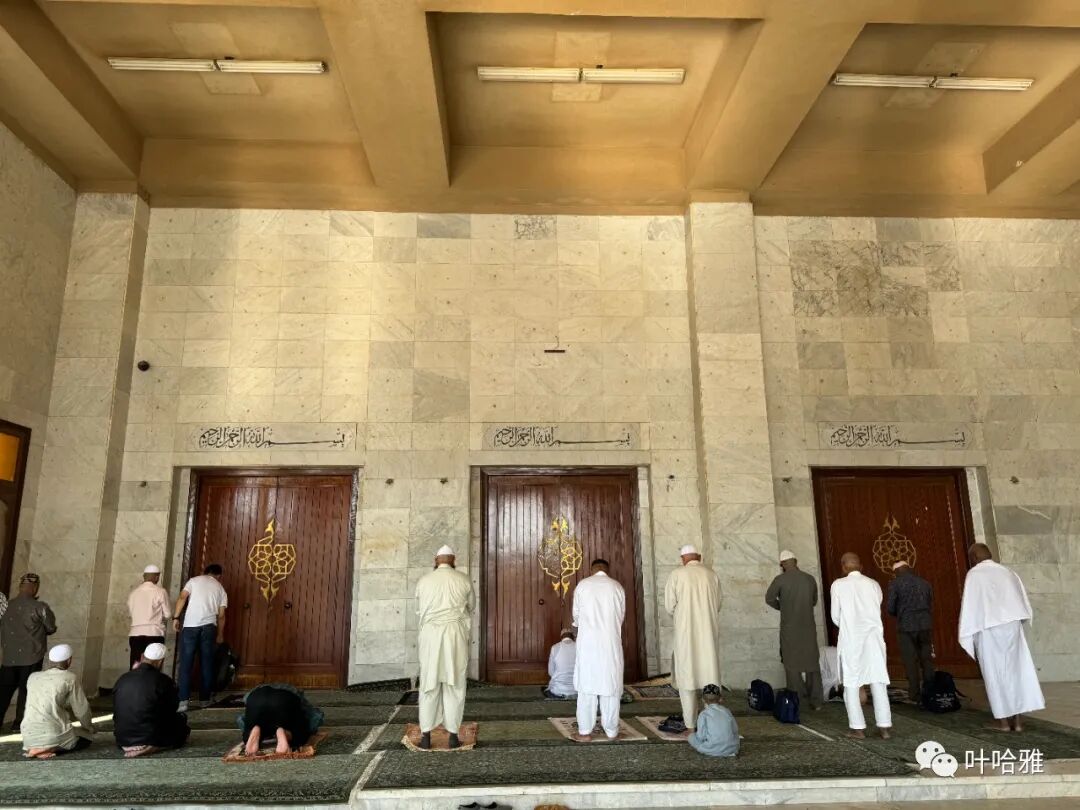
The site of Prophet Ibrahim's sacrifice
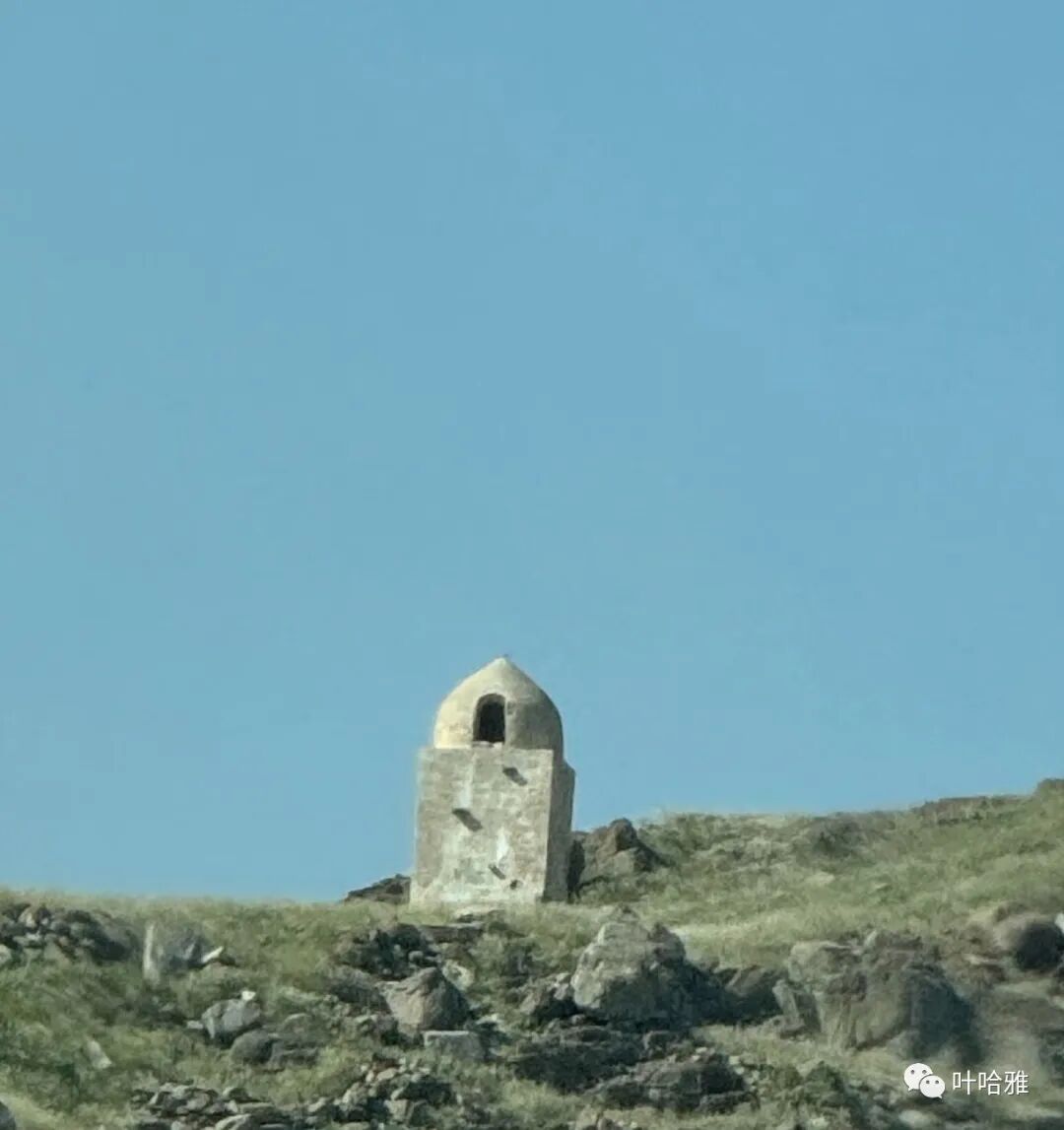
Sacrifice pavilion (zaishengting)
Located on a hill near Mina and close to the Jamarat, this site is fenced off and inaccessible. It is the place where the story of Eid al-Adha took place, where the Prophet Ibrahim offered his son to Allah, and Allah replaced him with a sheep.
Mina
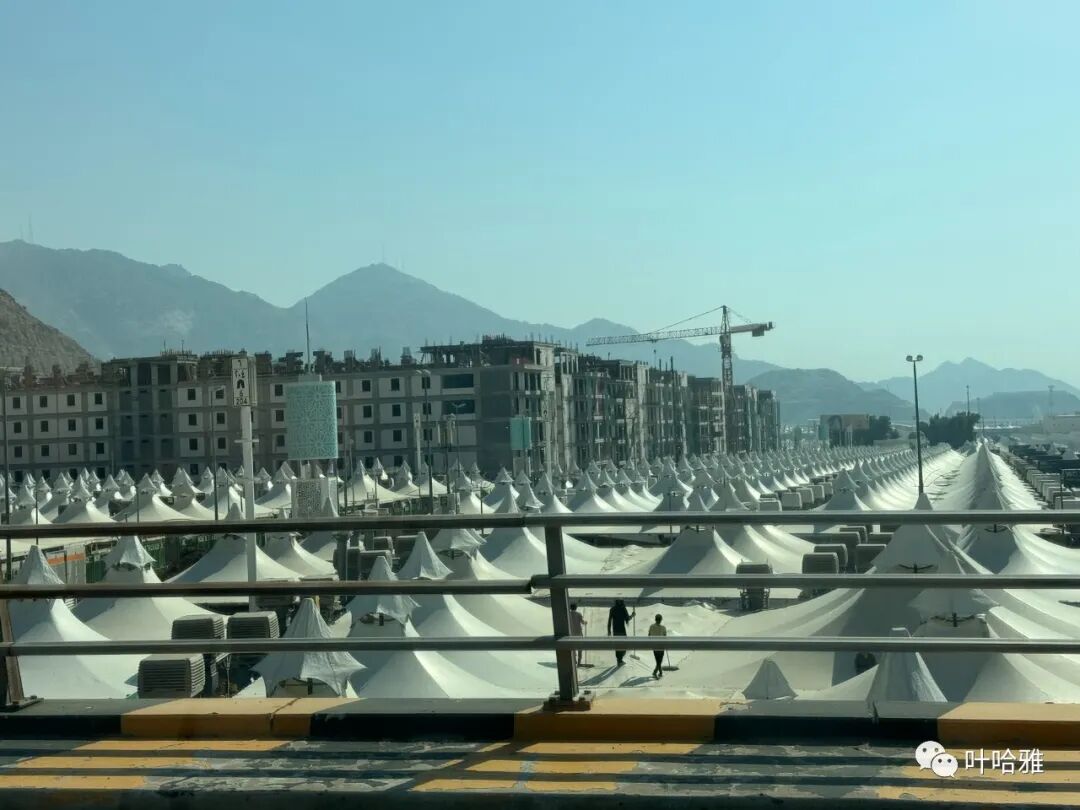
Mina tents
Along the way, you can see large areas of tent camps. These are high-end tents equipped with air conditioning and hotel-like facilities. They are only open during Hajj, as the tents are just a symbolic form.
Jamarat
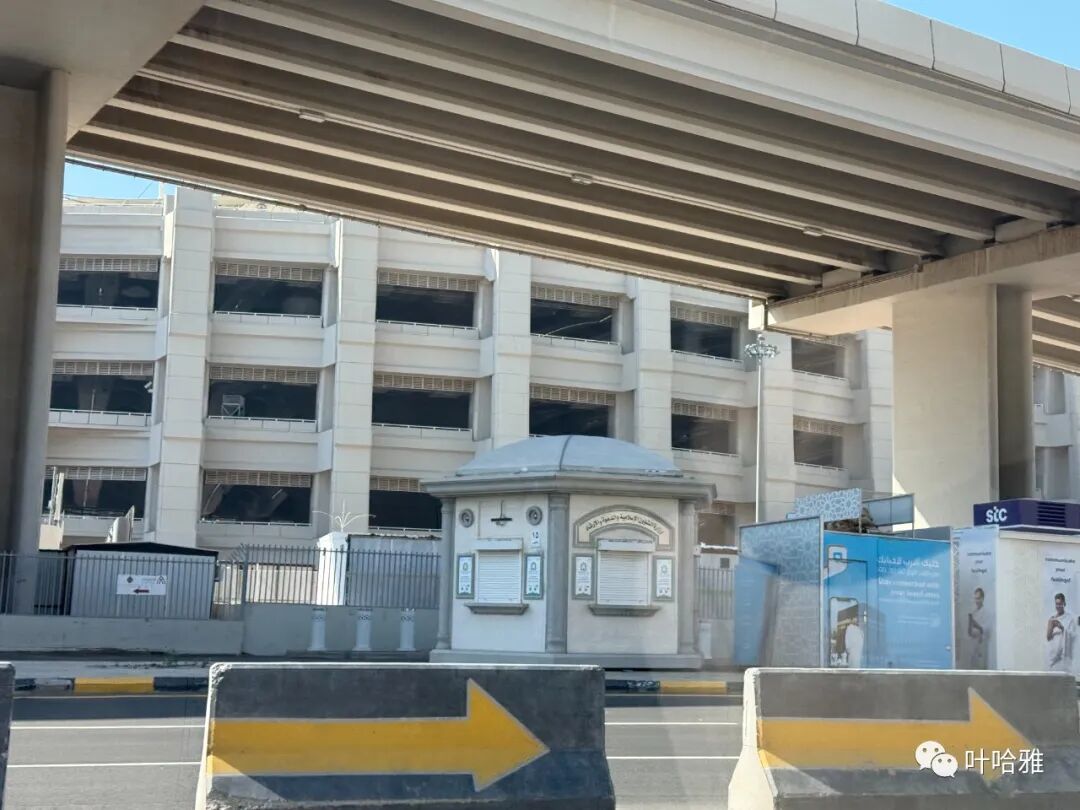
Jamarat
Take the small pebbles you collected on the plains of Arafat and throw them at the Jamarat. Stoning here is also a symbolic act; you can just toss them easily.
Cave of Hira
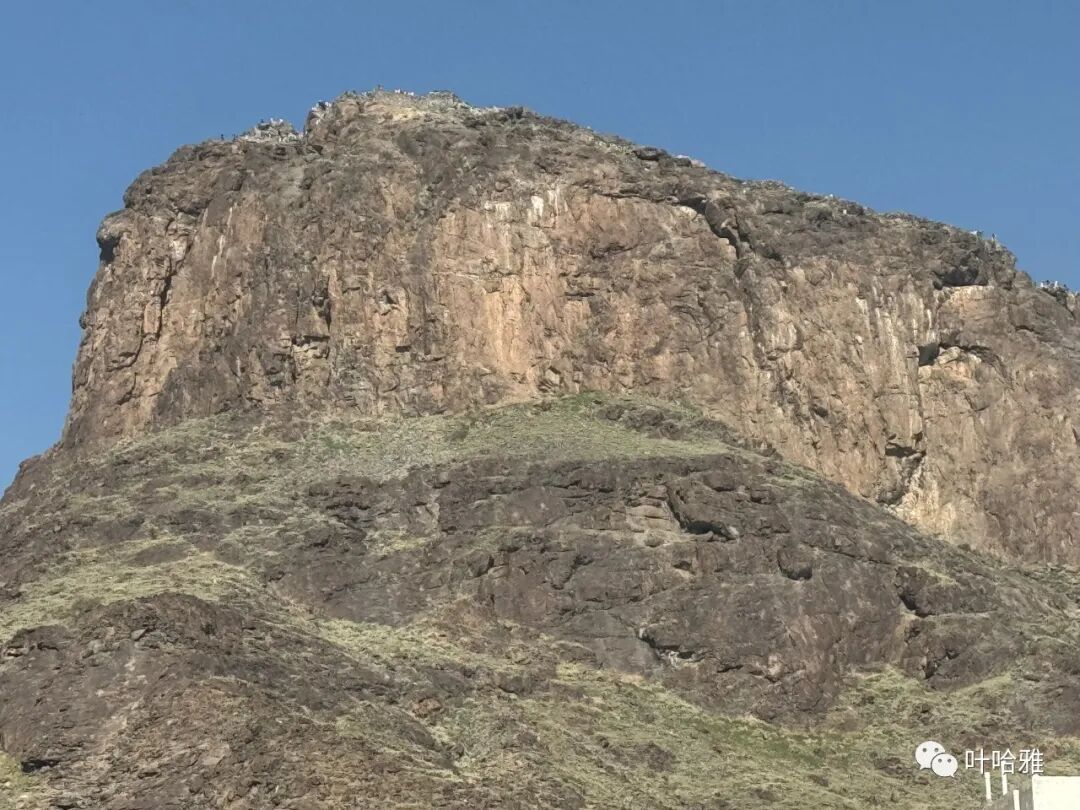
Cave of Hira
Located northeast of the Masjid al-Haram, it is also called Jabal al-Nour. There is a cave at the top of the mountain. Before the Prophet Muhammad became a prophet, he often climbed up to this cave alone to meditate. It was in this cave that the Prophet received the first revelation from the Archangel. It takes about an hour to walk up the mountain. The summit is crowded and can be dangerous, so you might choose not to go.
Mosque of the Jinn
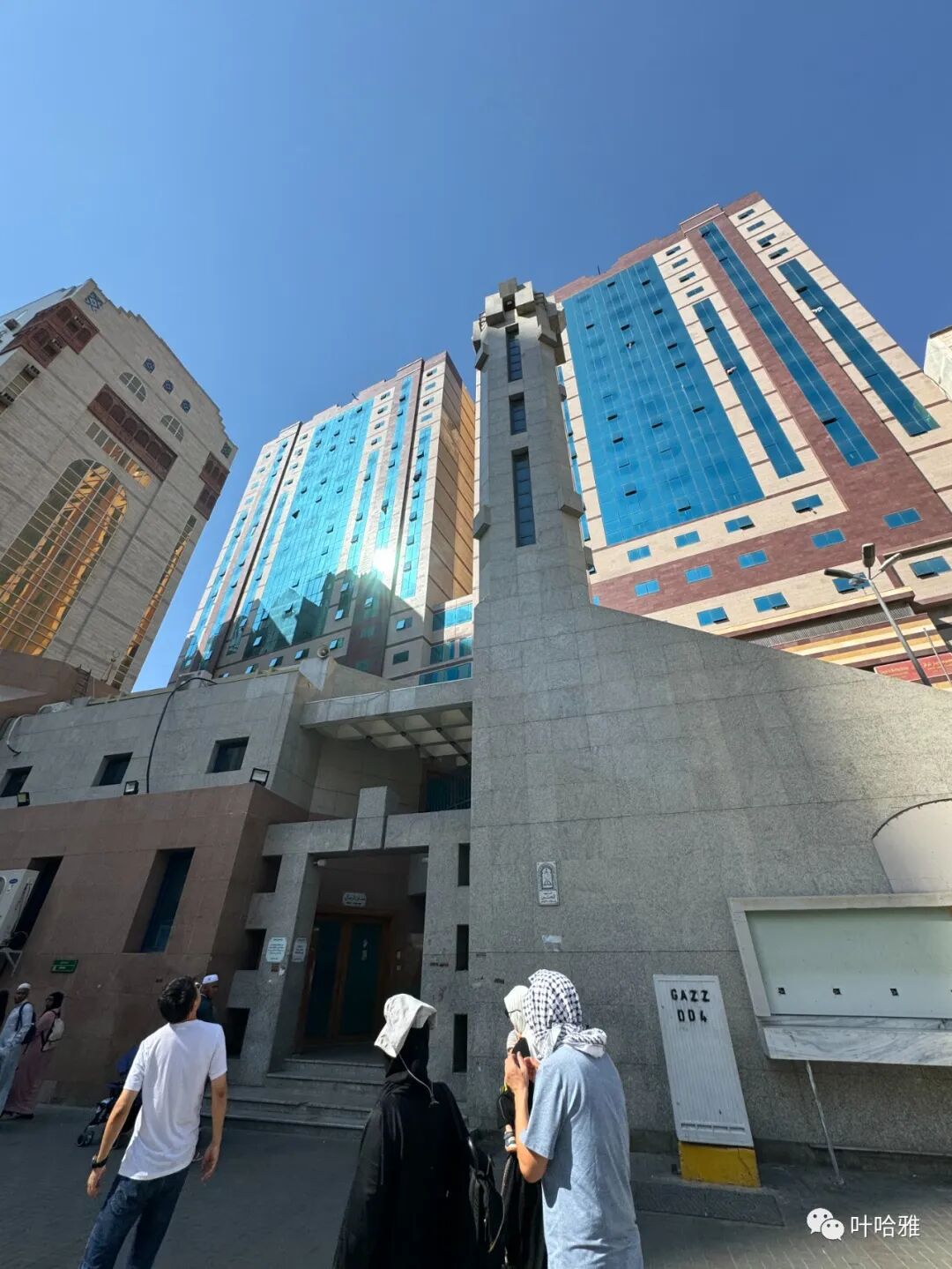
Mosque of the Jinn
Jinn Mosque (Masjid al-Jinn) is east of the Sacred Mosque (Masjid al-Haram), next to the Ma'la Cemetery and beside a pedestrian bridge. This is where a group of jinn pledged their loyalty to the Prophet. It is usually closed except during prayer times. Across from Jinn Mosque is Tree Mosque (Masjid al-Shajarah). The Prophet once called out to a tree here, and it came to him. He asked it a few questions and told it to return to its place. People later built a mosque here. Jinn Mosque and Tree Mosque look exactly the same.
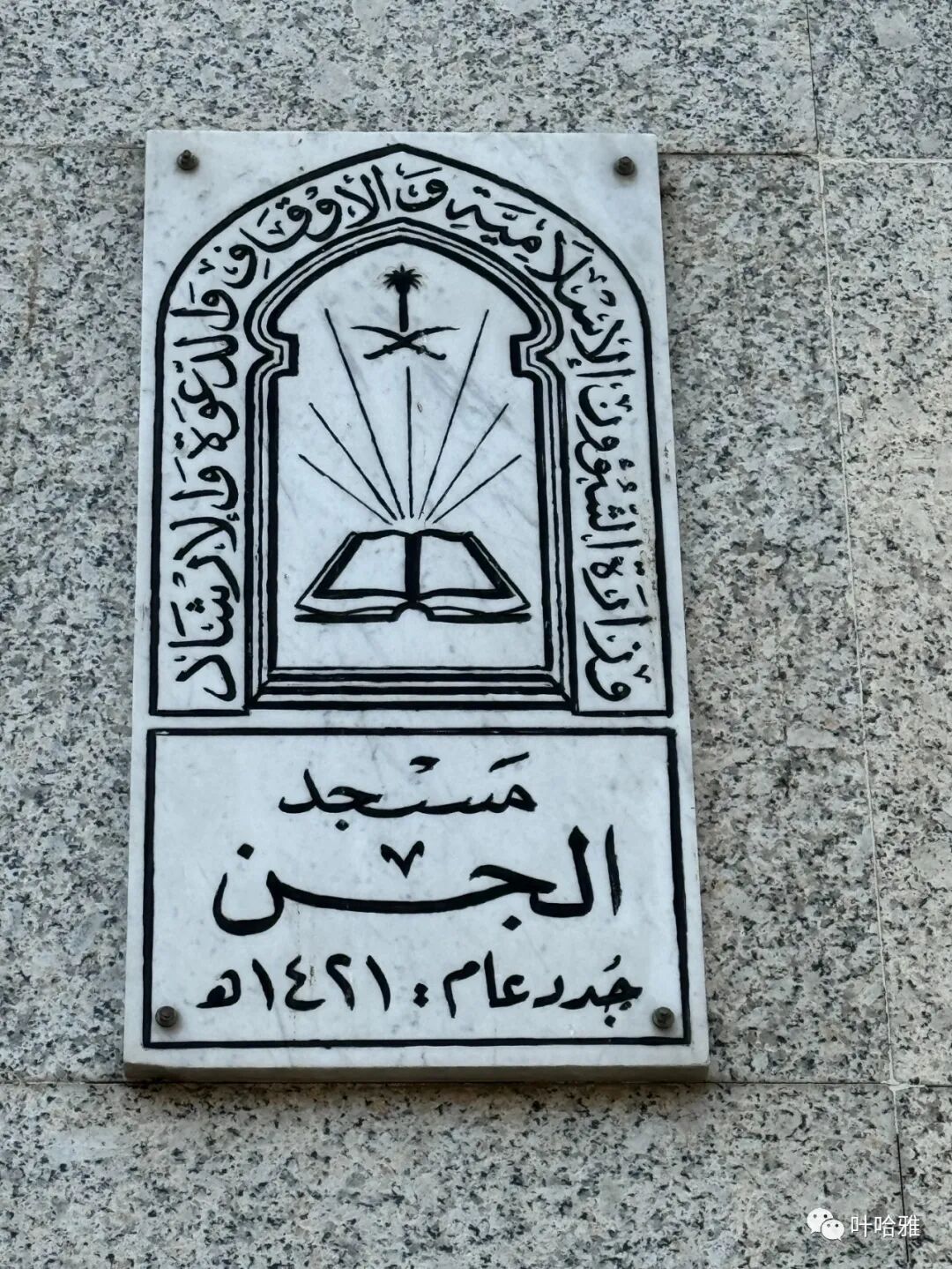
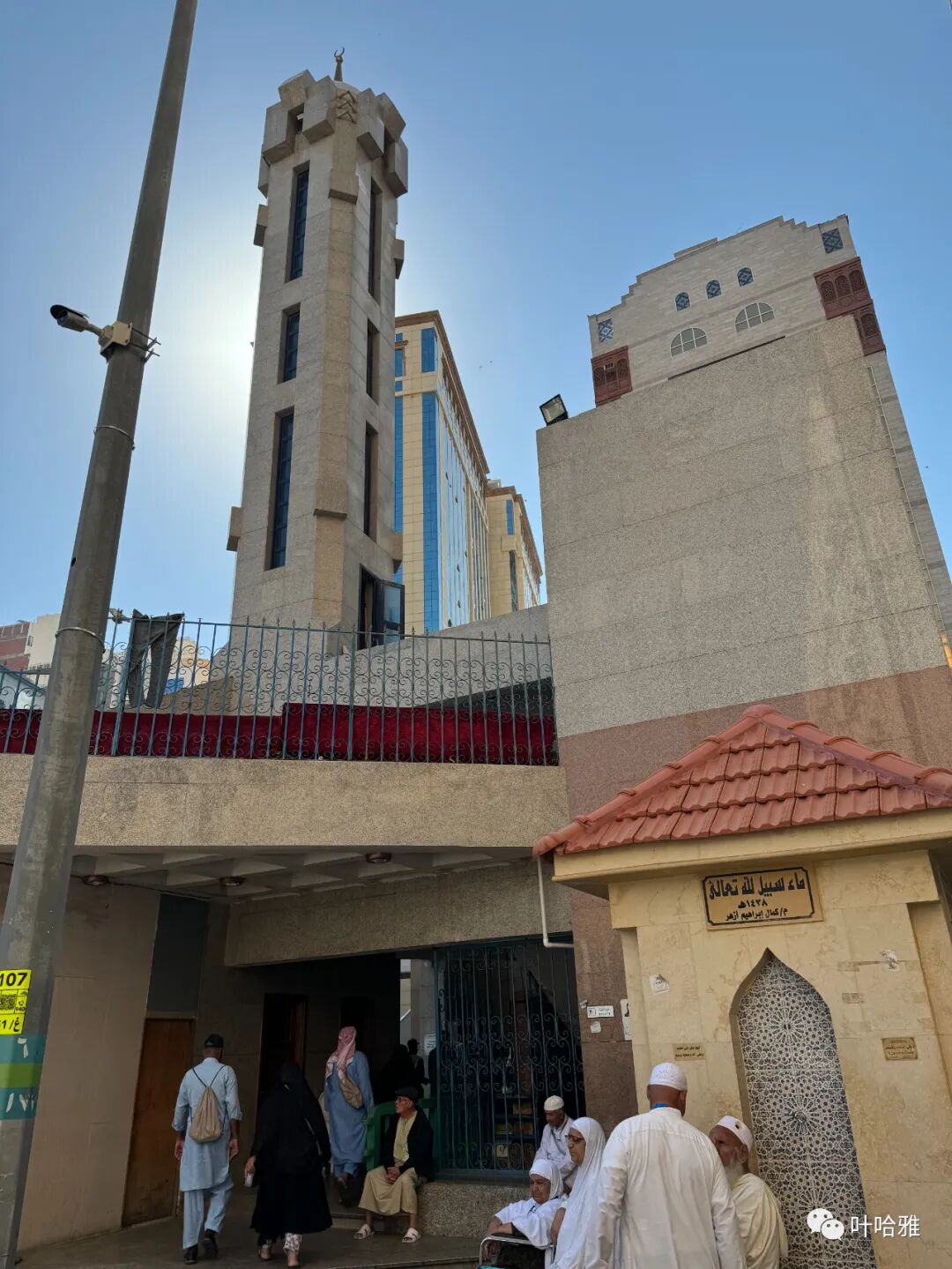
Aisha Mosque (Masjid Aisha).
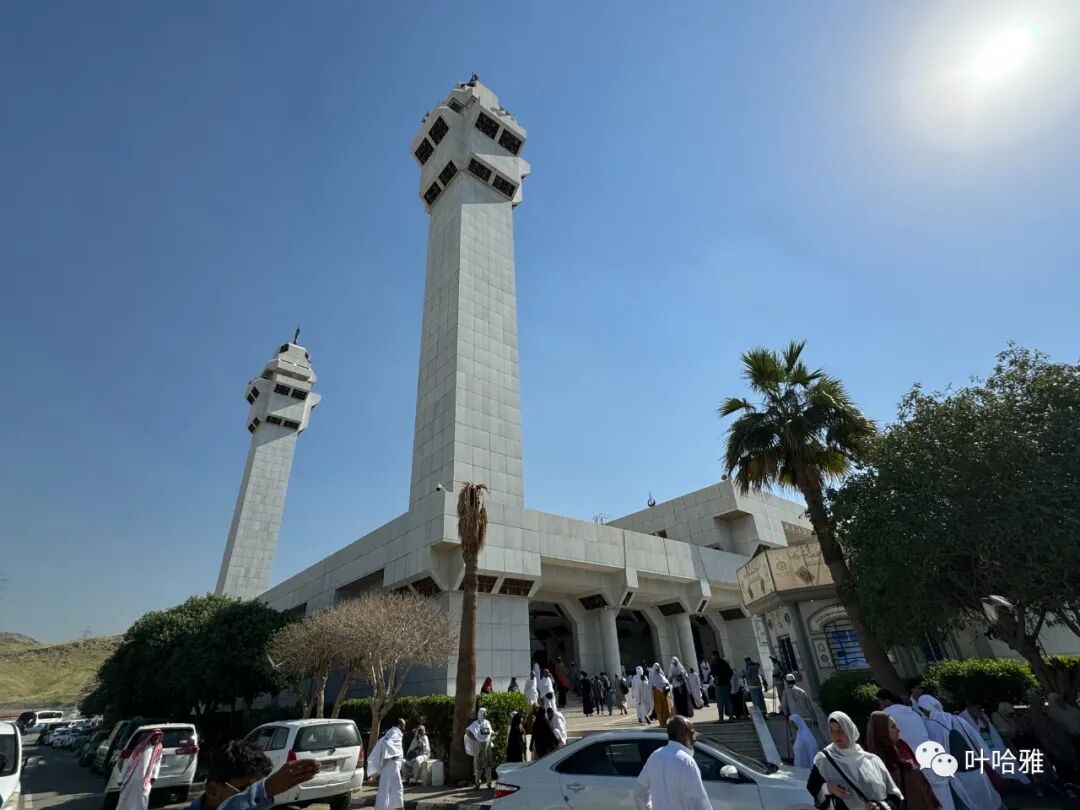
Located 7.5 kilometers north of the Sacred Mosque, this is the closest boundary of the sacred area. Aisha entered into the state of ihram here during the Farewell Pilgrimage in the 9th year of the Hijri calendar. At that time, the Prophet's wife Aisha could not perform the circumambulation of the Kaaba due to her period. She completed all other pilgrimage rites. After her period ended, the Prophet asked her brother to accompany her to this place to enter ihram, and she later circumambulated the Kaaba.
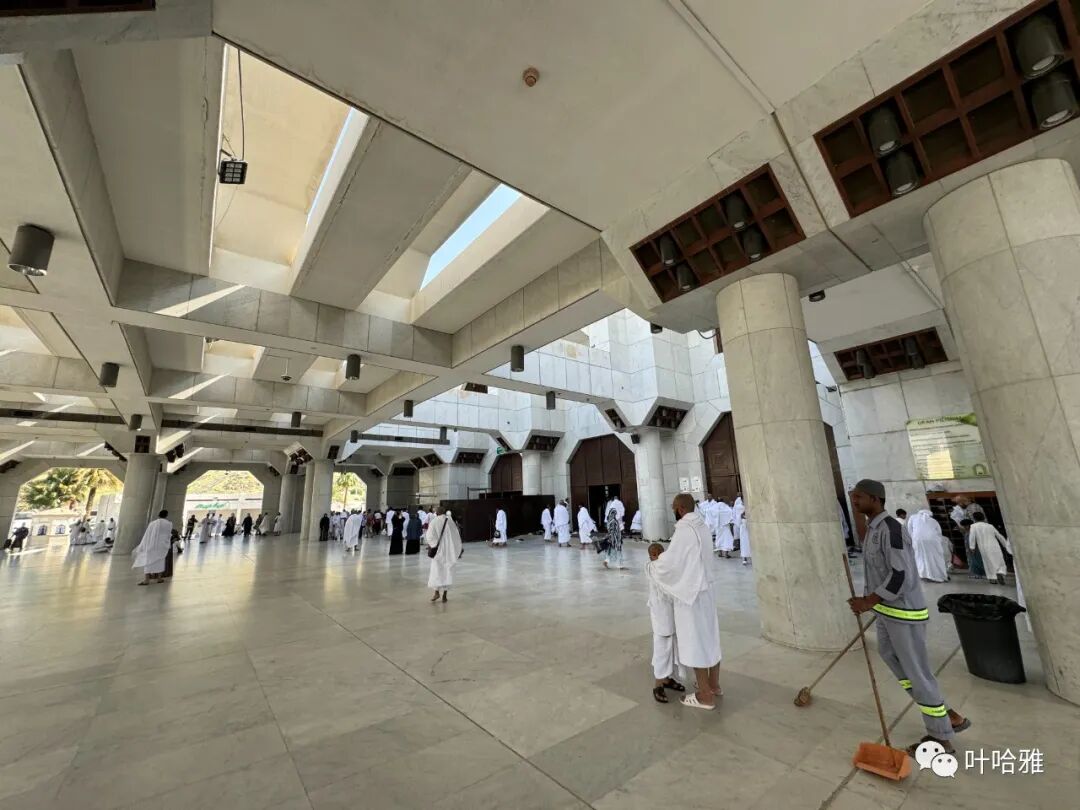
Many pilgrims (hajjis) specifically choose to enter ihram here. The mosque can hold 150,000 people for namaz.
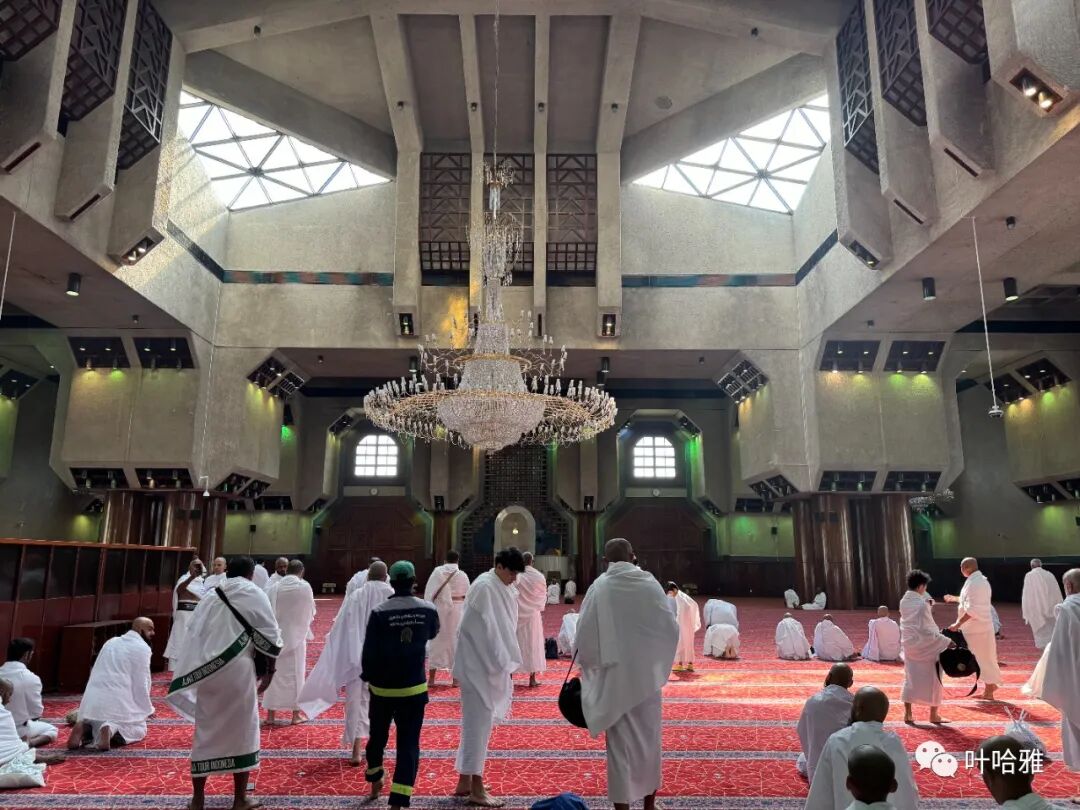
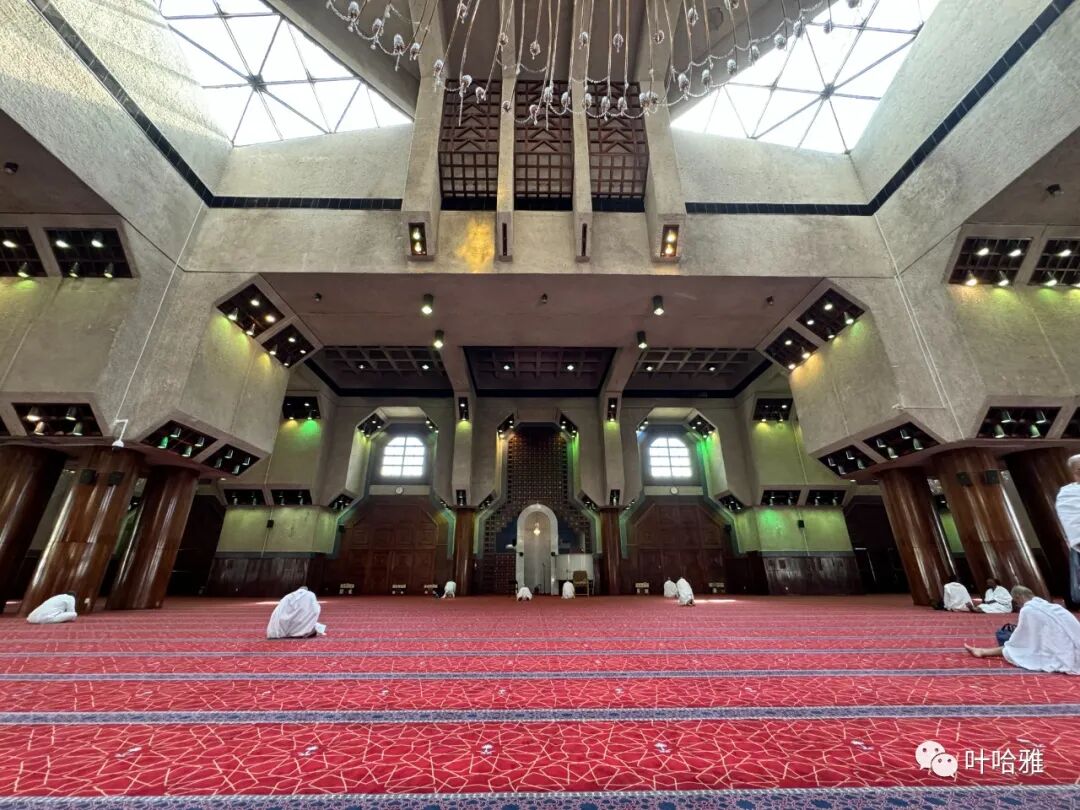
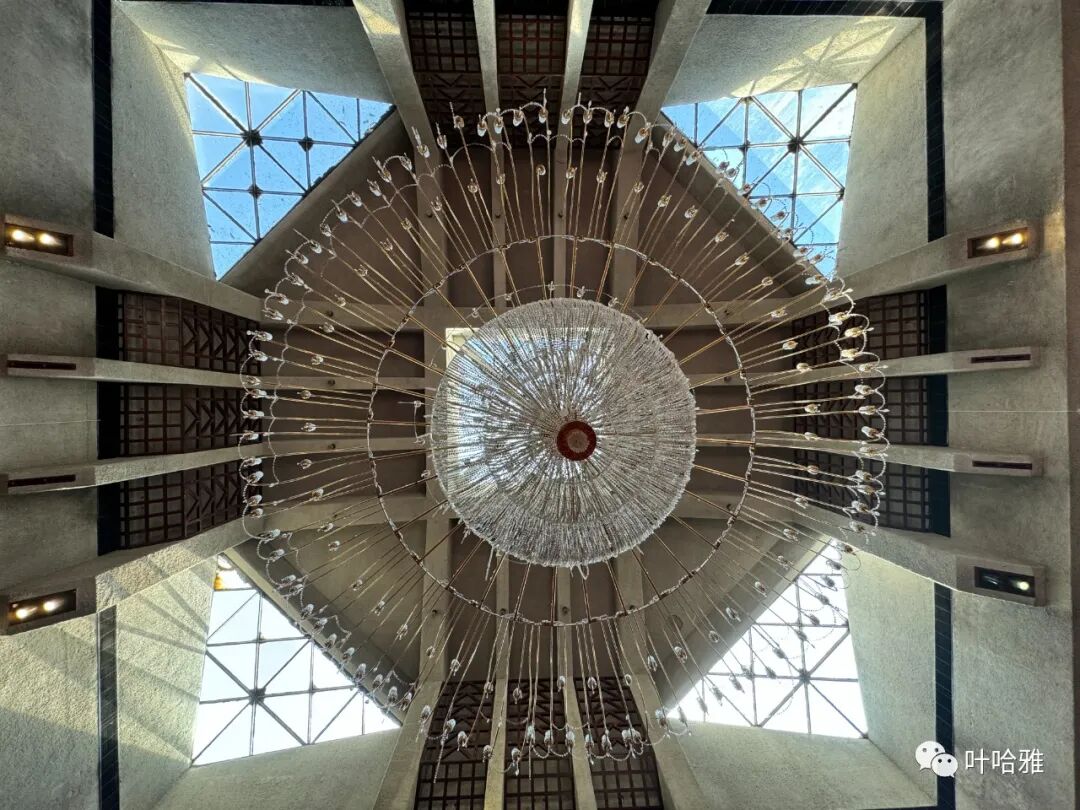
This covers the main historical sites in Mecca. Like in Medina, many places mentioned in books look completely different today. The main task for people coming to Mecca is to pray in the Sacred Mosque. One prayer there is worth 100,000 prayers elsewhere, so these renovated historical sites do not attract much interest.
Hilton breakfast restaurant.
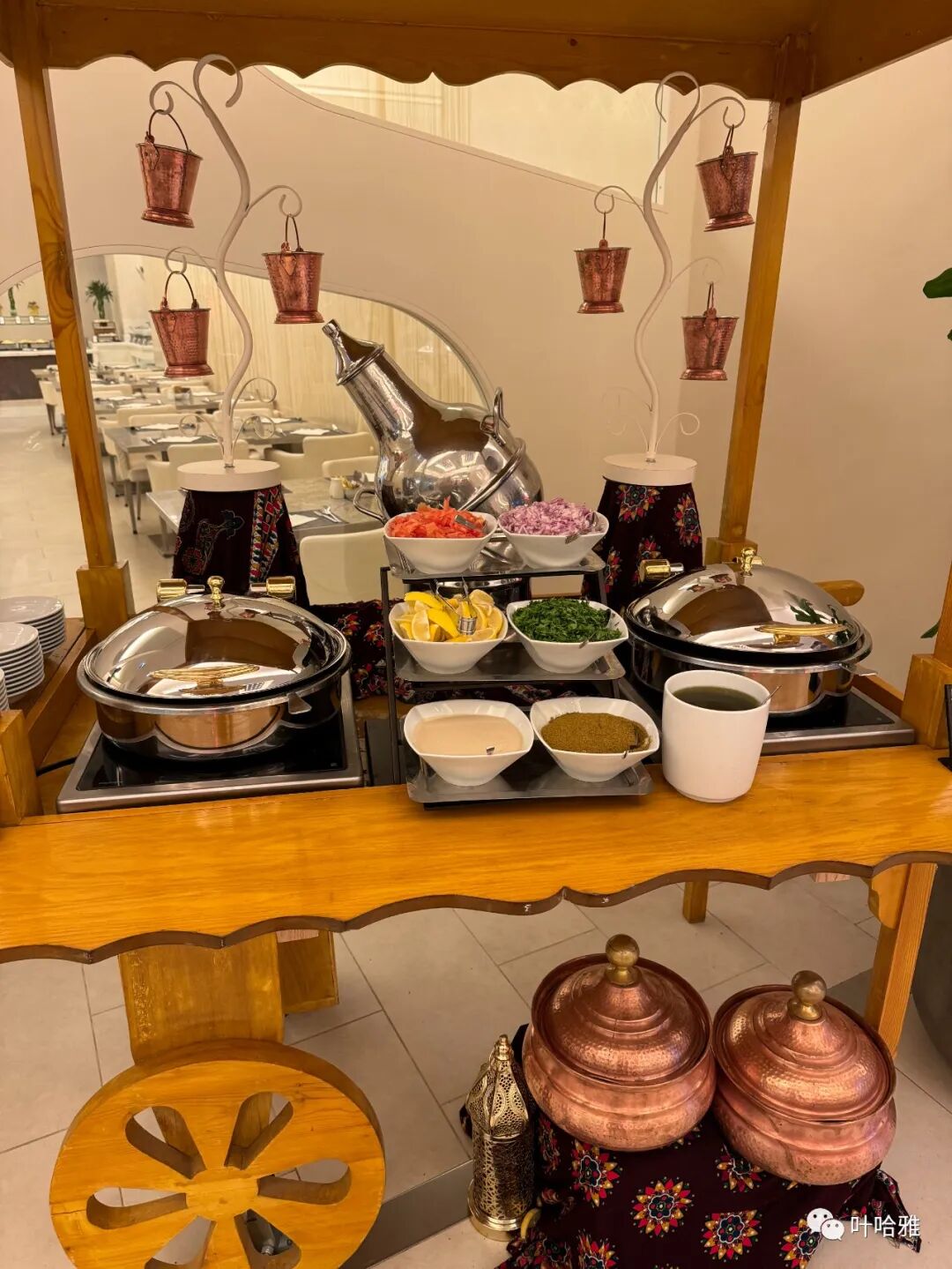
We mostly ate our three meals at the hotel. The hotel restaurant has good food and a comfortable environment. It does not distinguish between family rooms, the price does not change with the room rate, and it offers great value.
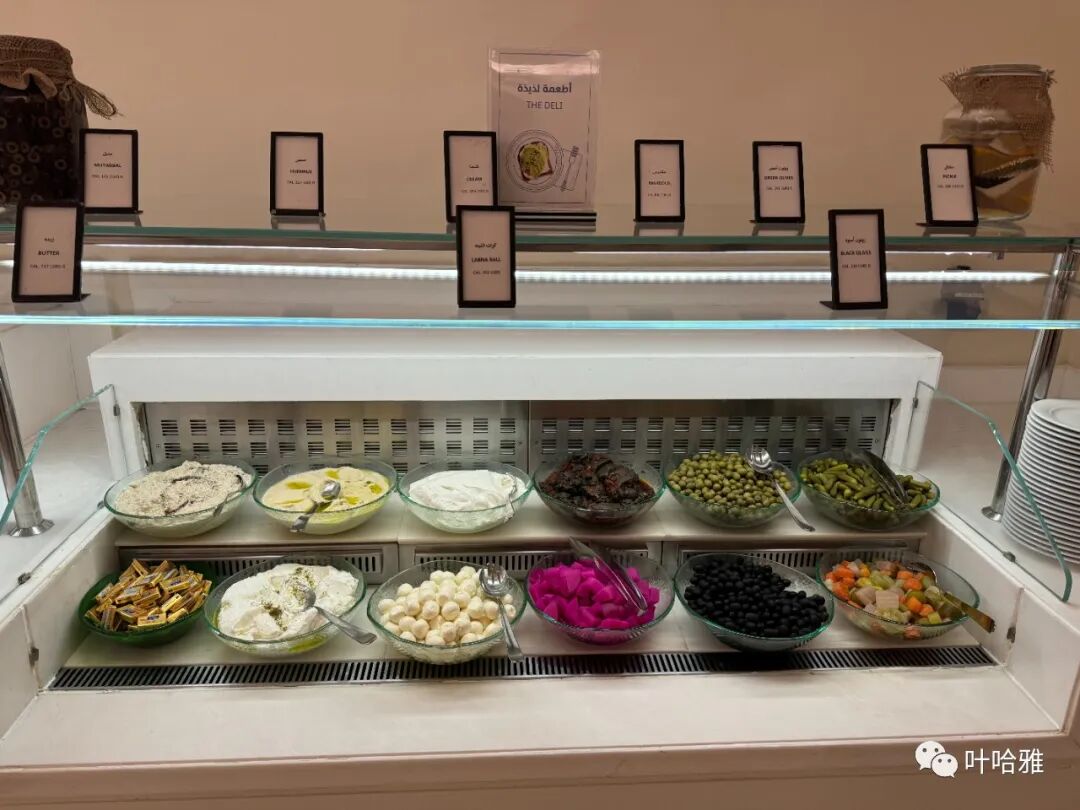
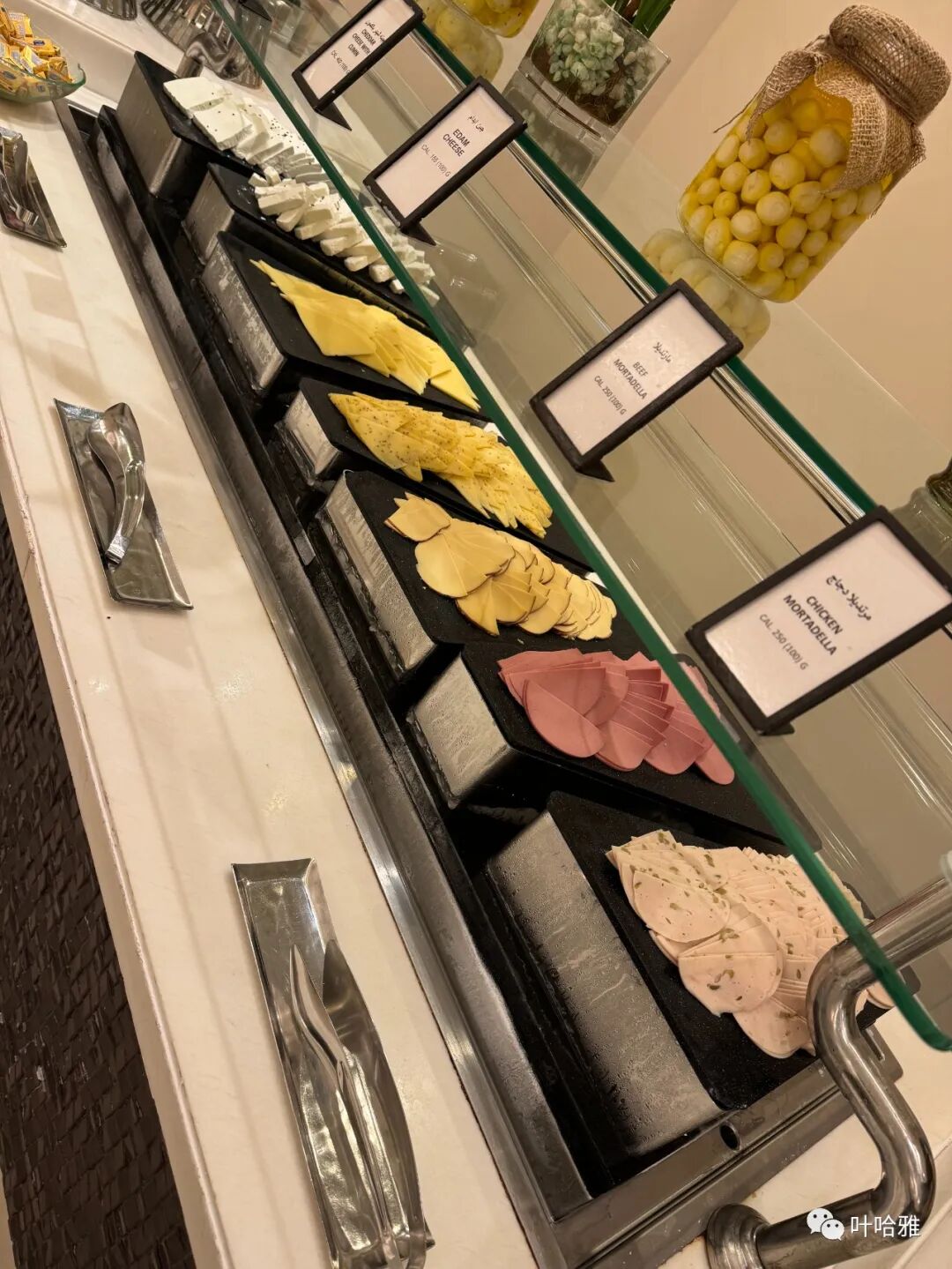
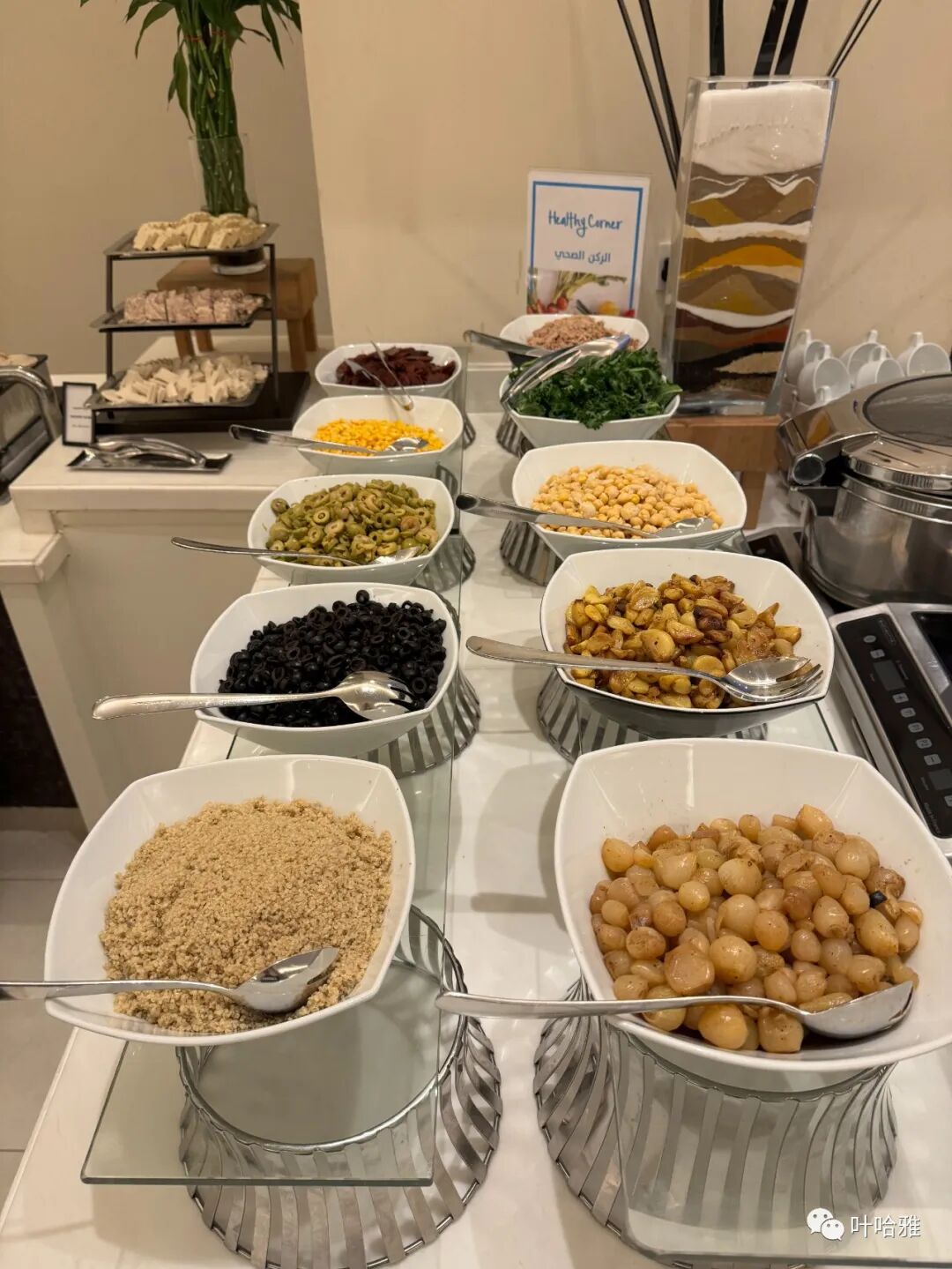
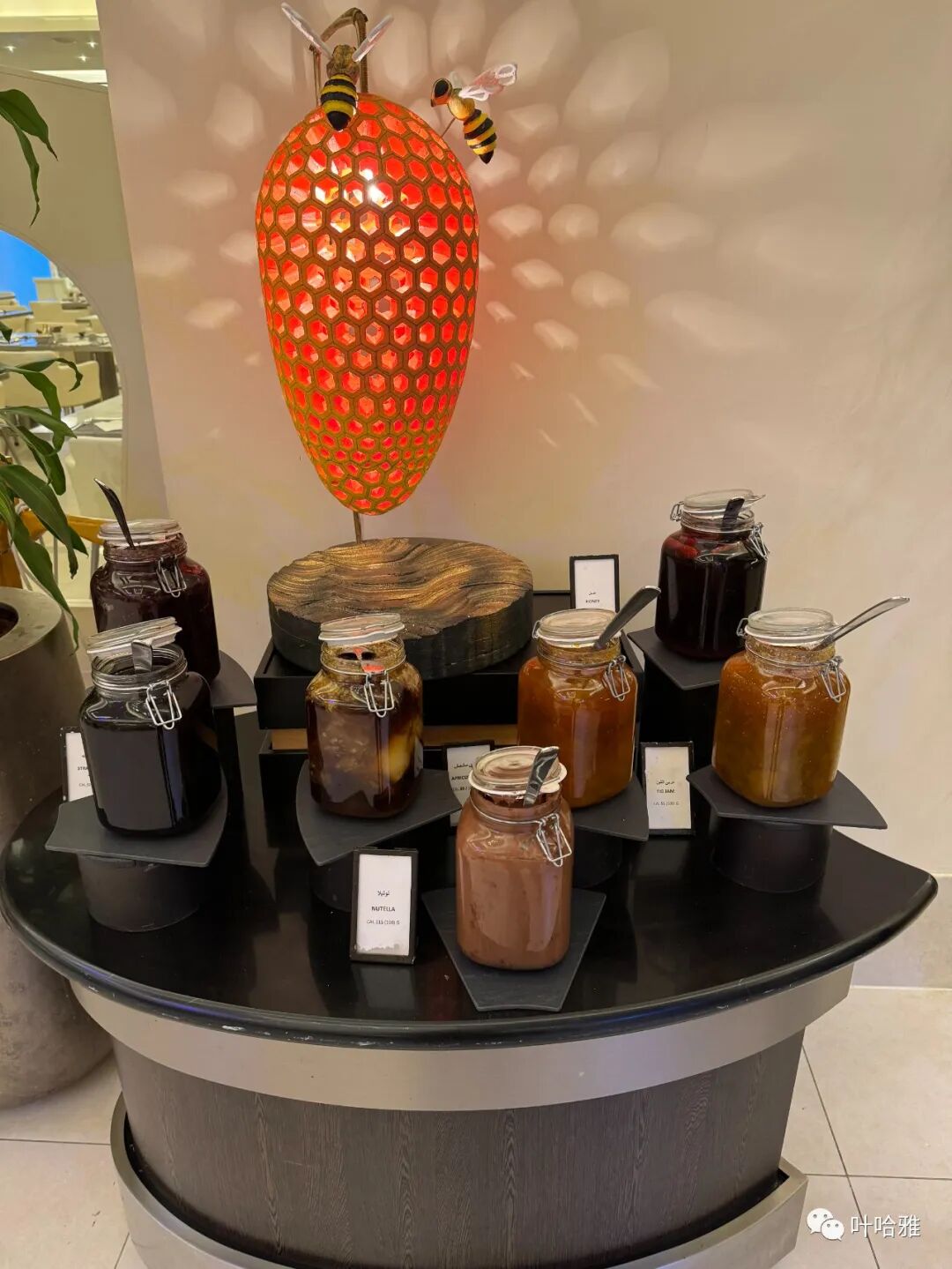
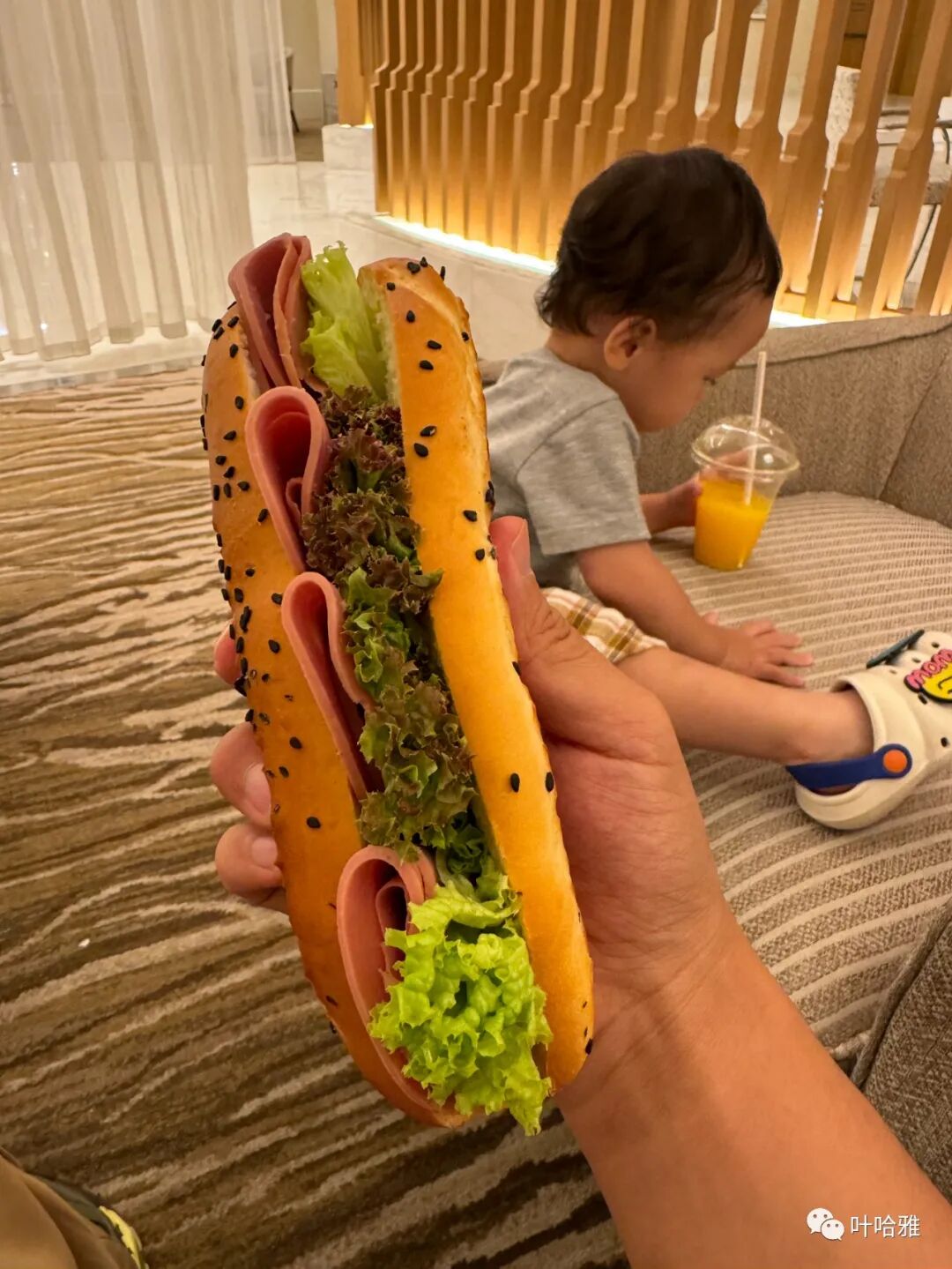
This Hilton sandwich costs only about 30 yuan. We ate it almost every day. We got to know the server, and he even brought us juice. Once you arrive in the sacred land, you realize that besides going to the mosque for namaz, you do not want to go anywhere else to wander around.
Hilton Lebanese restaurant.
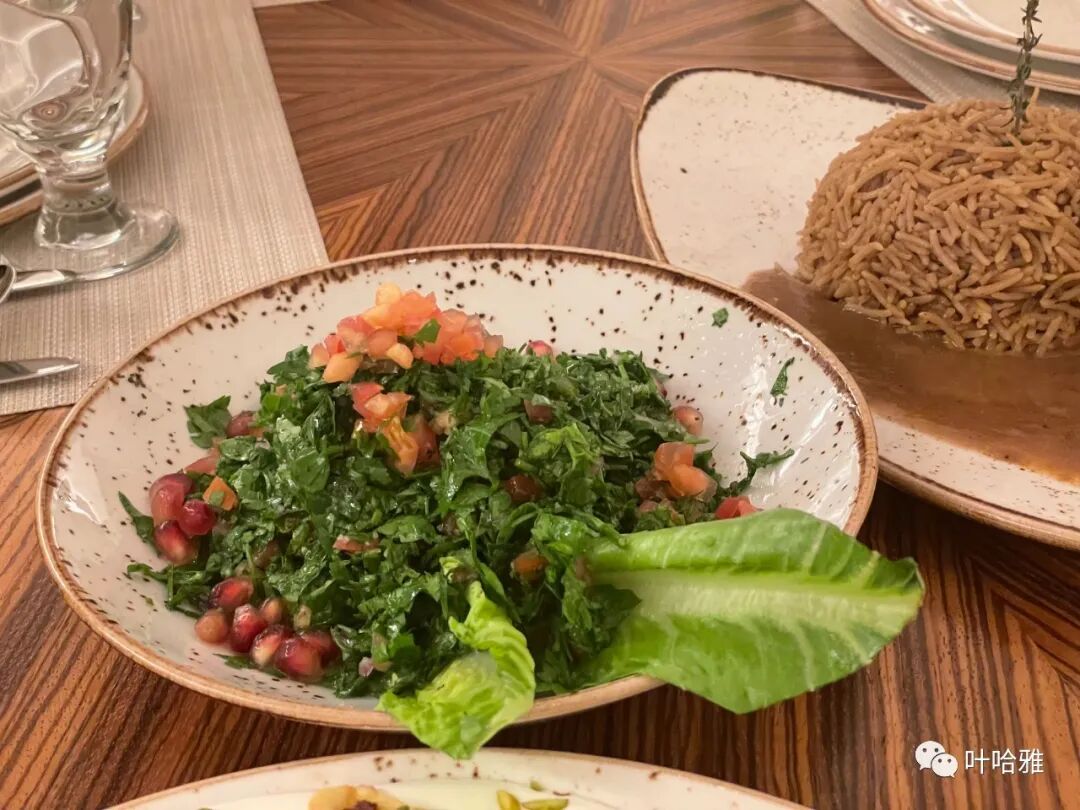
We ate at the Hilton's Lebanese restaurant. During our 18 days in the Middle East, we mostly ate Arabic food. We adapted well to this diet, and Lebanese food is the best among Arabic cuisines.
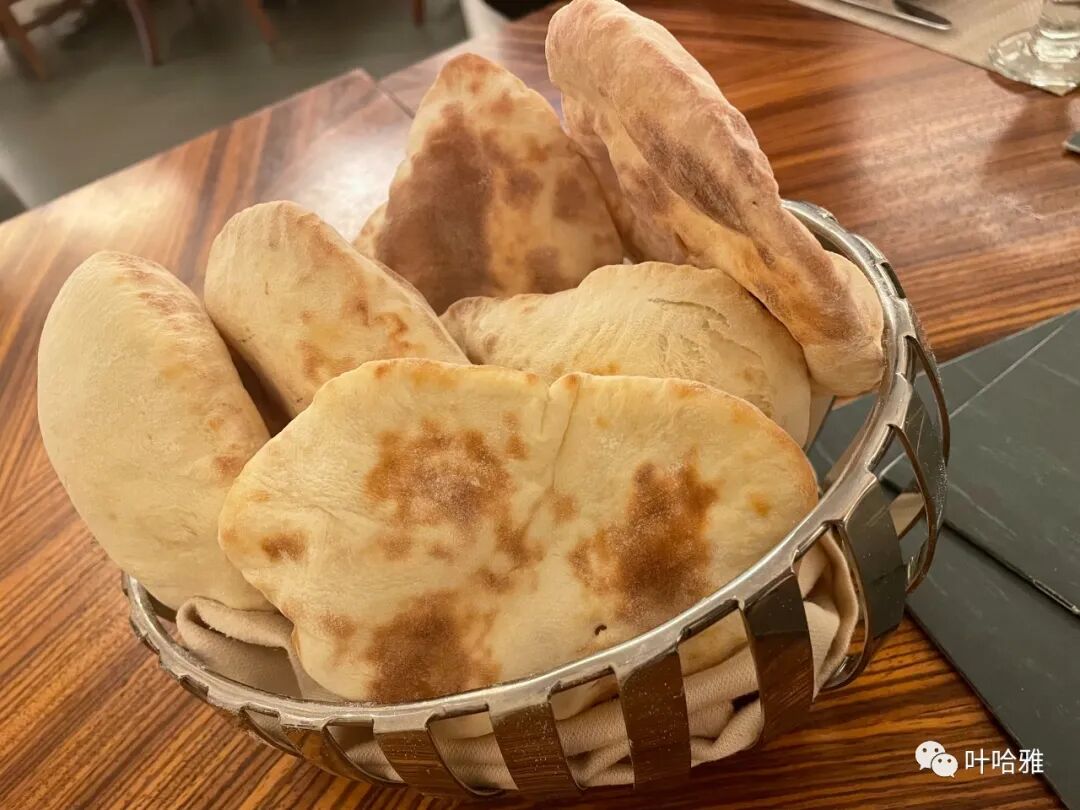
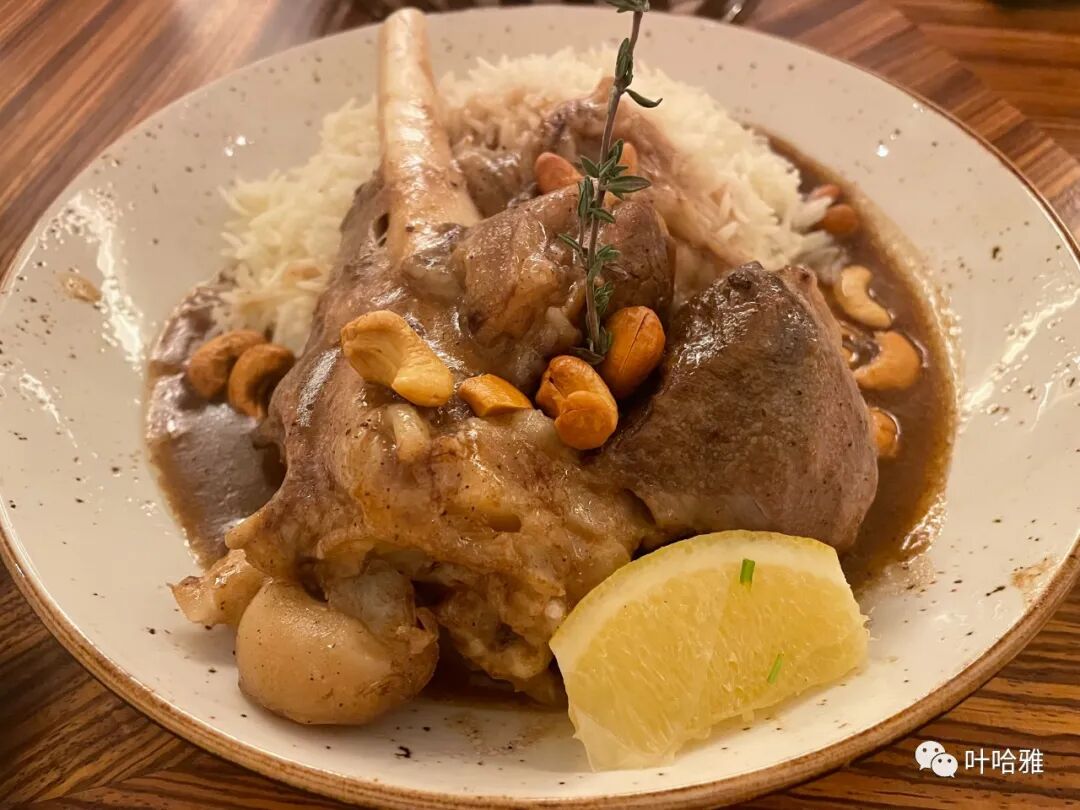
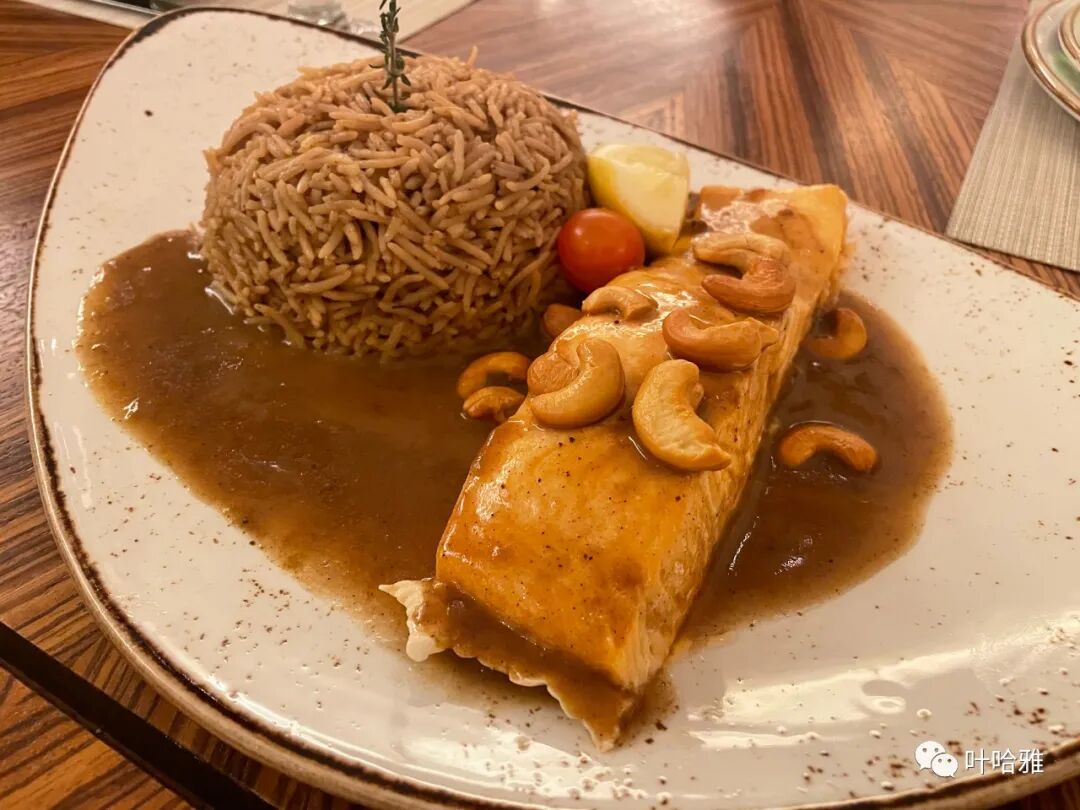
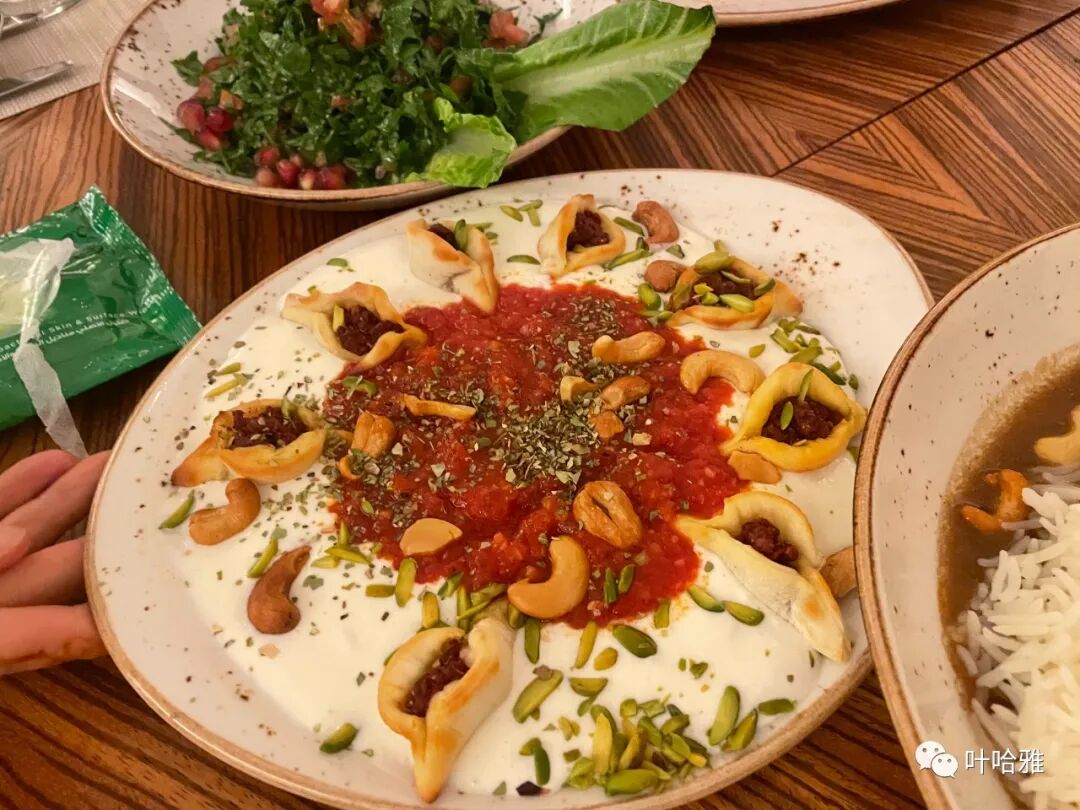
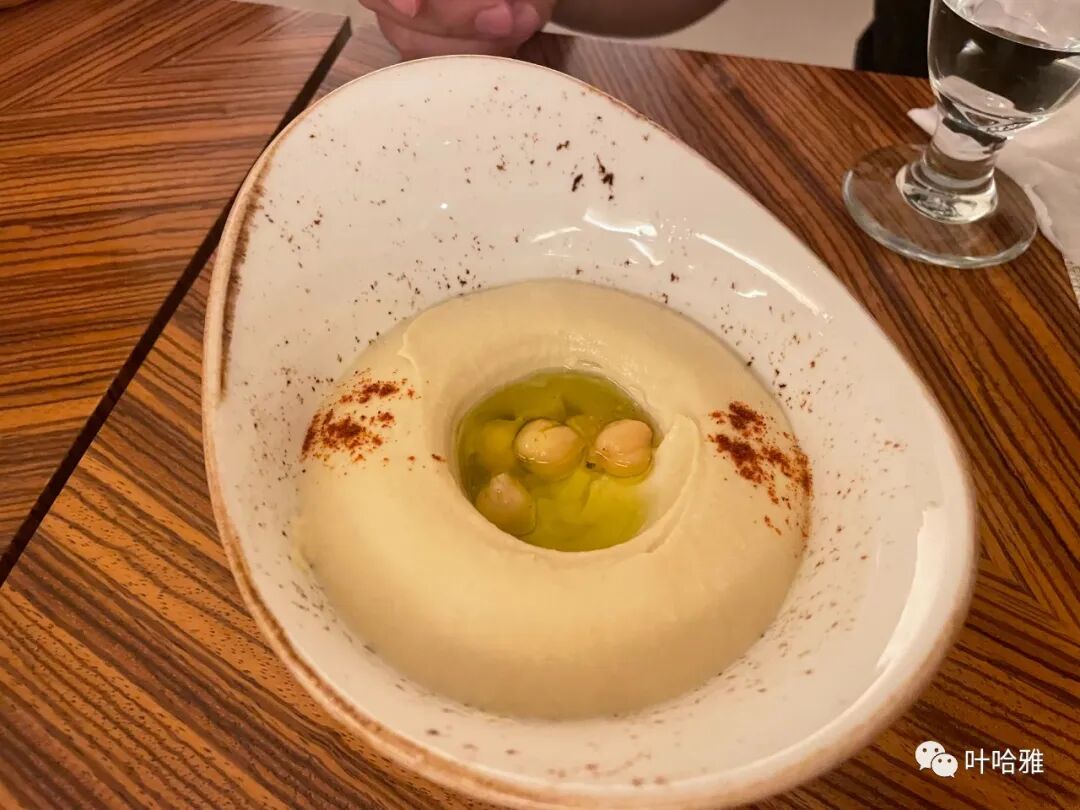
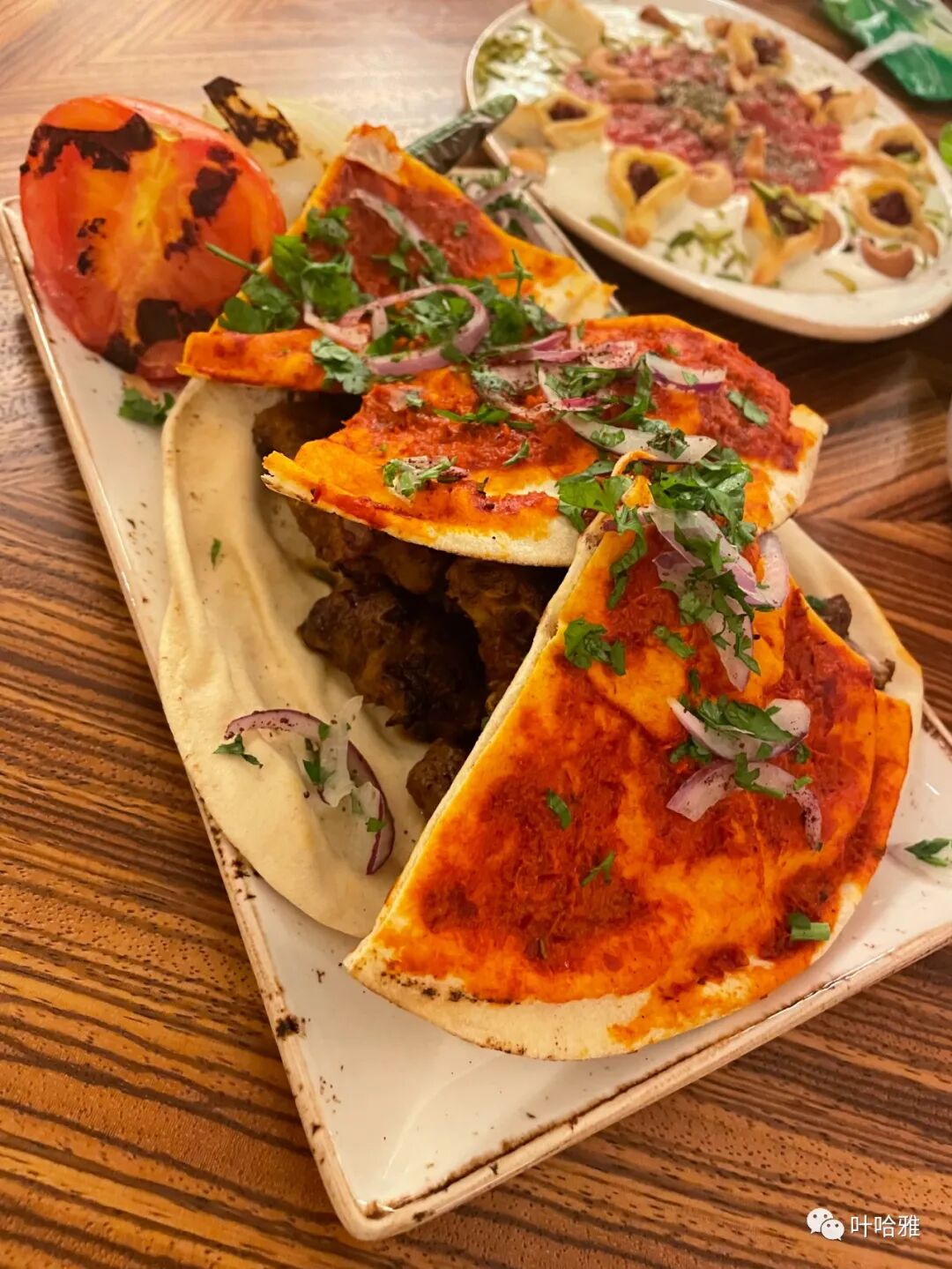
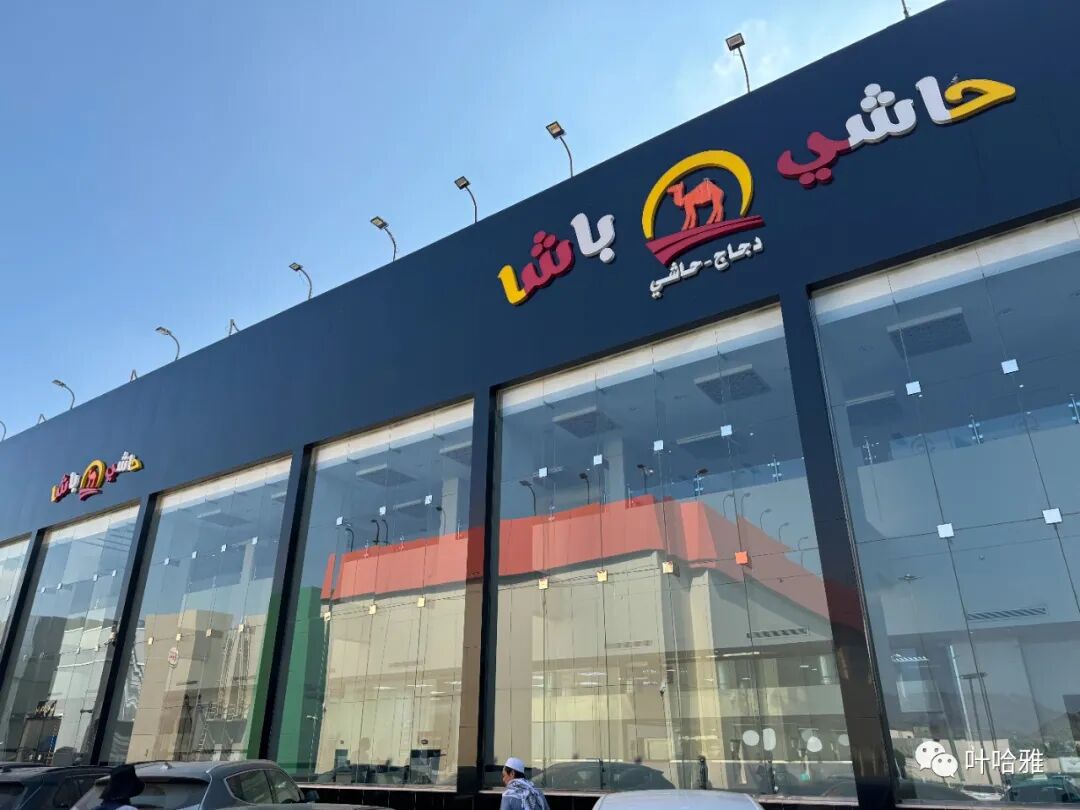
I only ate out twice. One time was for this camel pilaf (zhuafan). I had it in Medina and thought it was delicious, so my friend (dosti) insisted on having it again. Most restaurants in Mecca are in the city center, more than 10 kilometers away from the Sacred Mosque (Masjid al-Haram). The city center is where the locals live and where many wealthy Saudis gather.
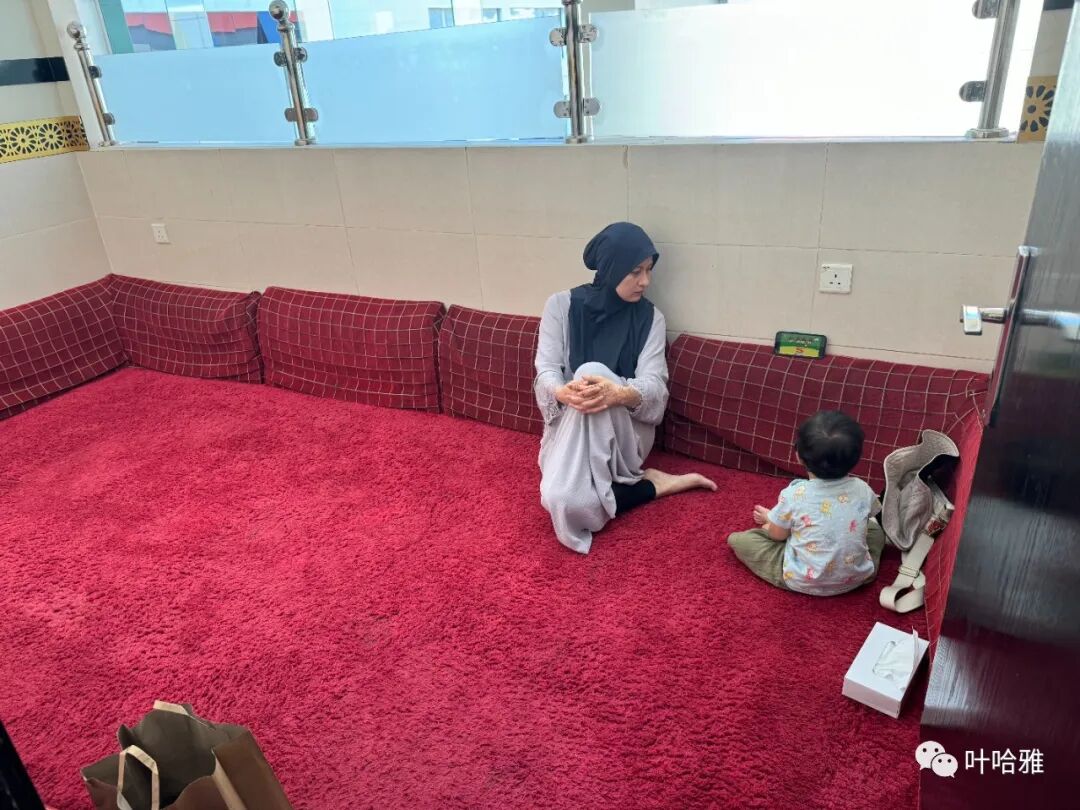
Dining in a family room is a unique experience. You can sit anywhere in these restaurants, and no one checks if you are actually a family.
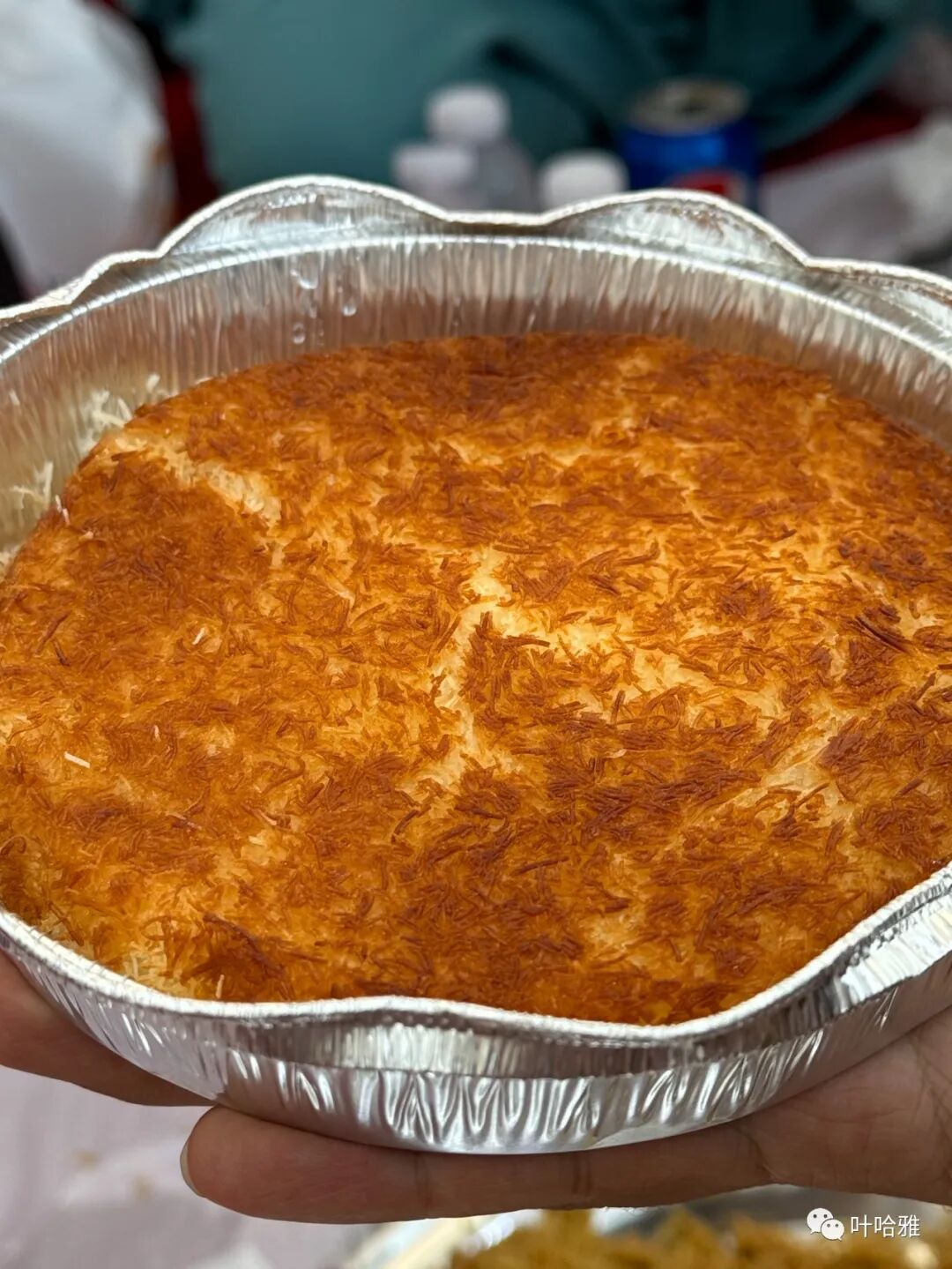
Eating kunafa dessert in this type of restaurant tastes better than anywhere else.
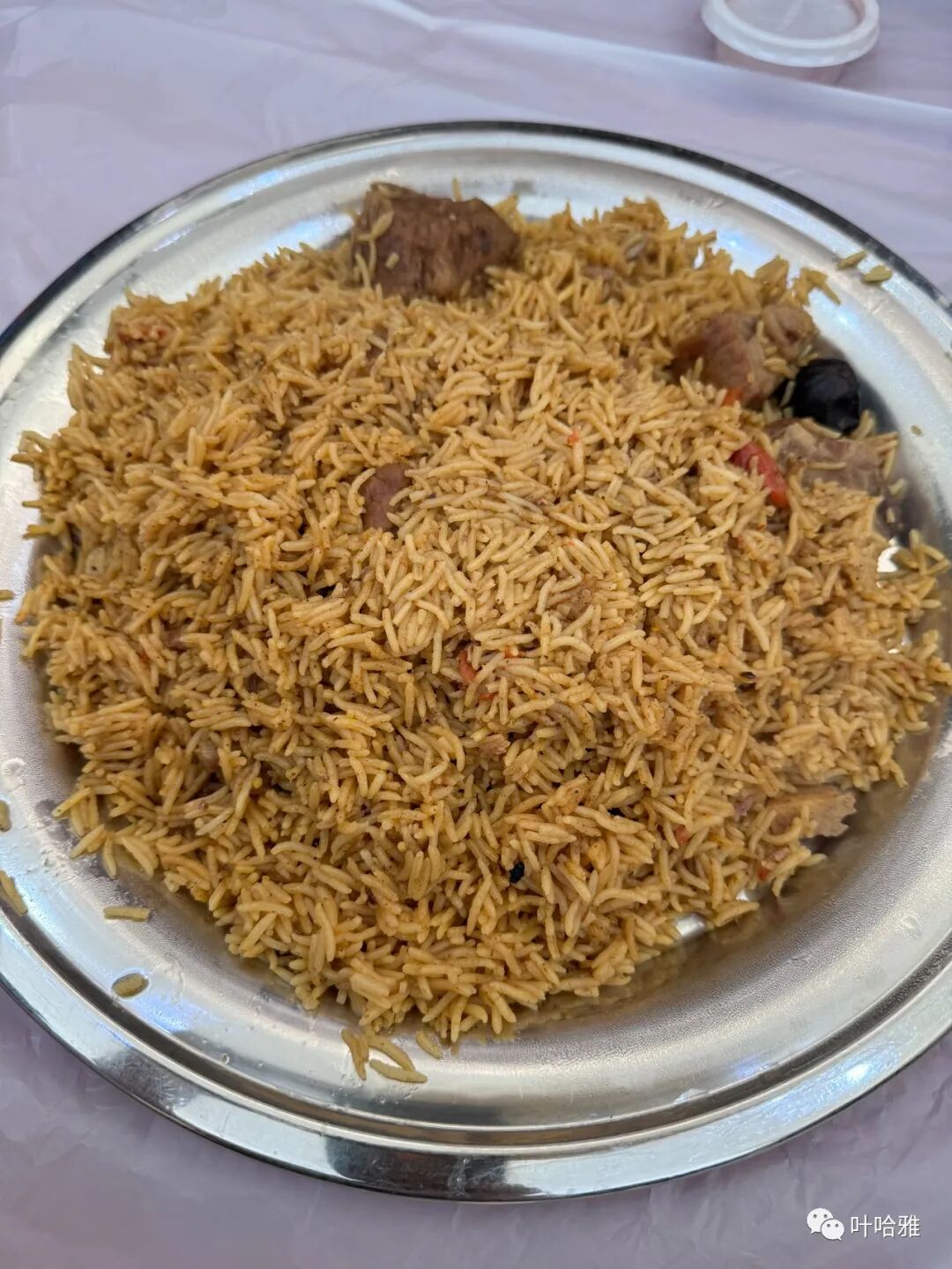
This portion of camel pilaf is only one-quarter of the full size, yet it was enough for 8 people and we still couldn't finish it.
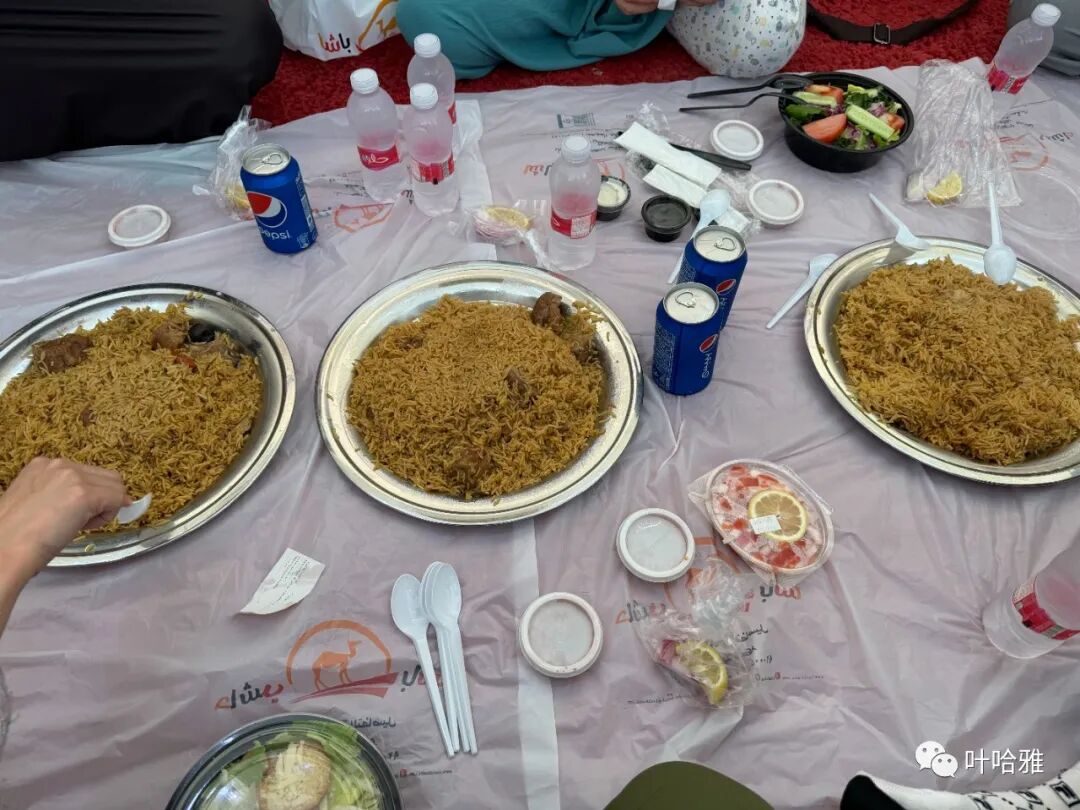
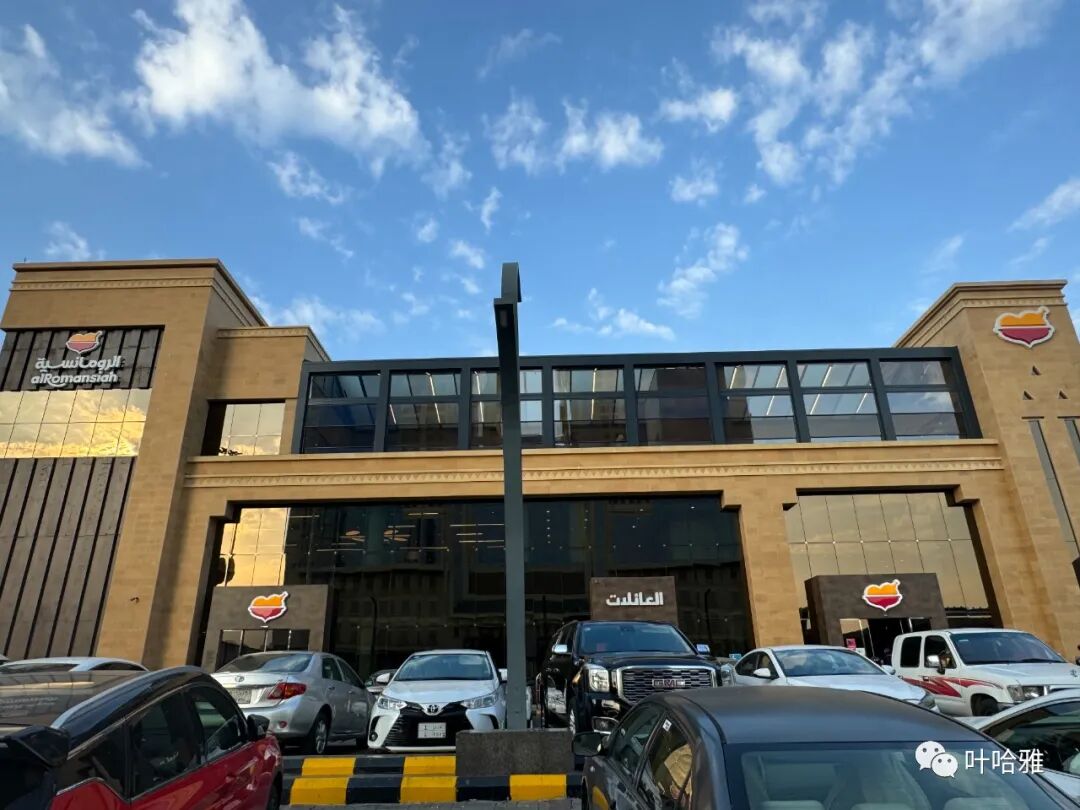
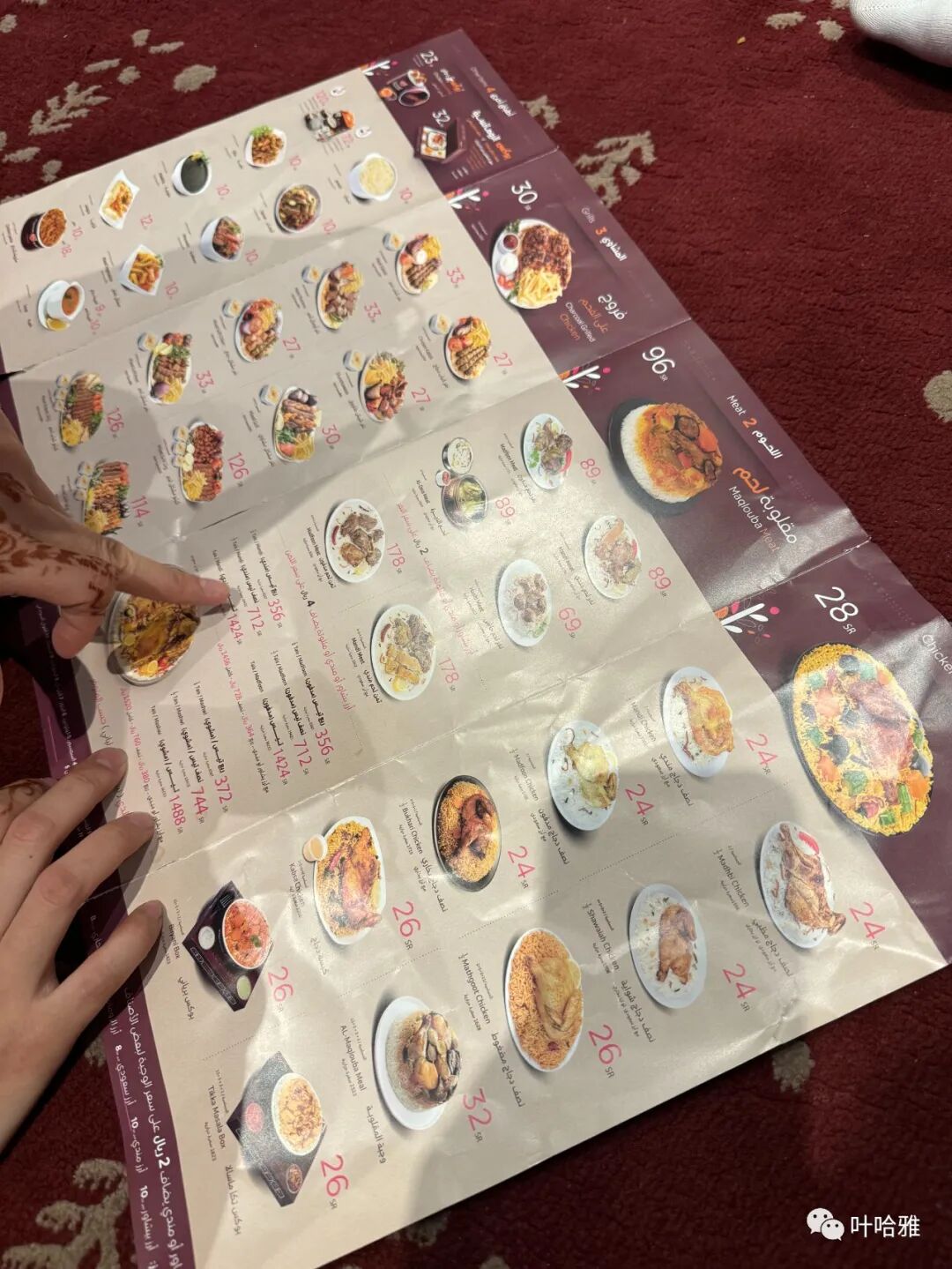
The national dish of Saudi Arabia is mandi pilaf. We asked a local friend to recommend this place; it is spacious and you do not need a reservation.
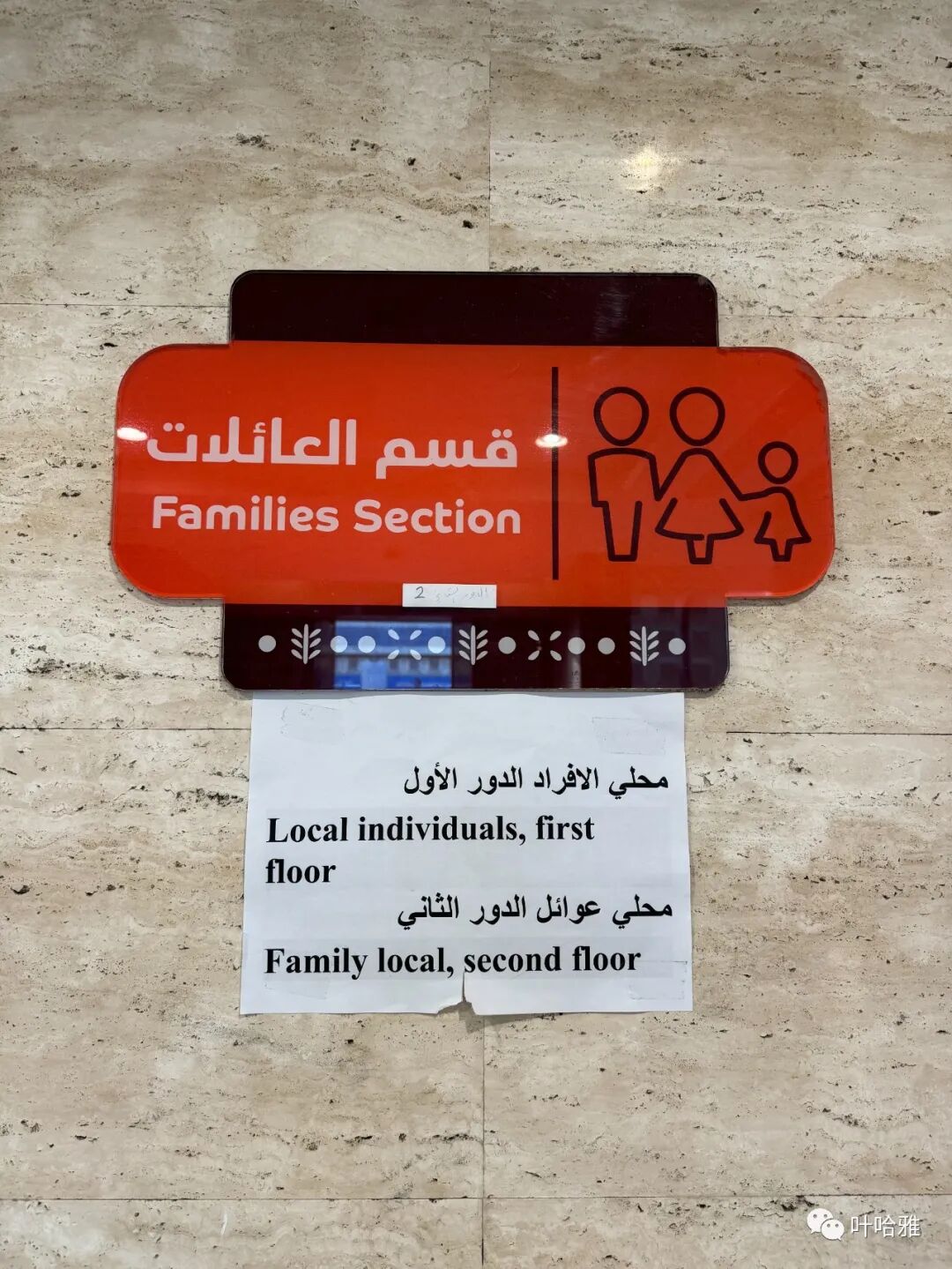
Our friend specifically insisted we try their kunafa dessert, saying you cannot find it anywhere else. After tasting it, we all agreed it was delicious.
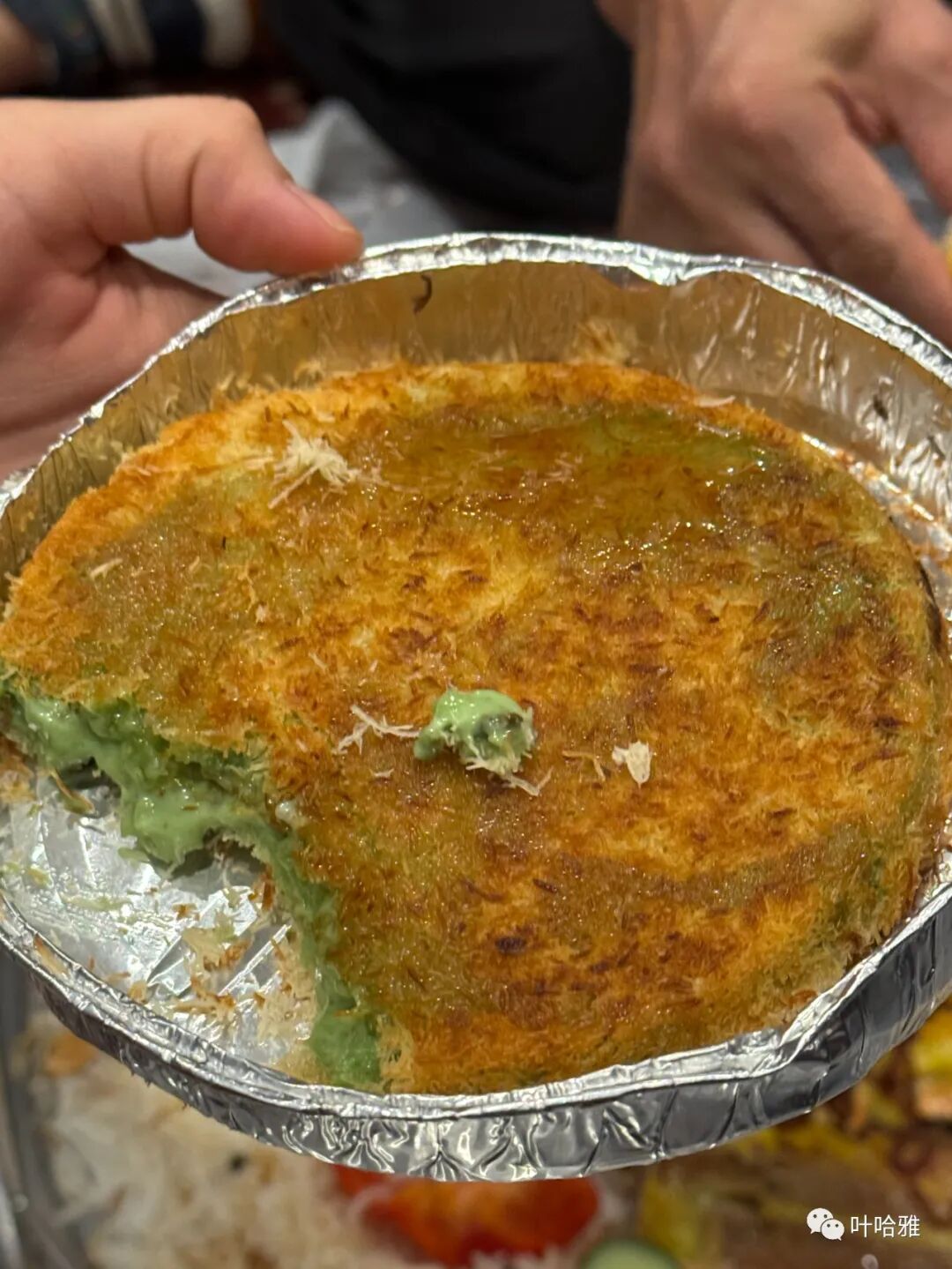
You can find kunafa in Syrian restaurants in Beijing, but those versions are modified. In reality, there are many different flavors.
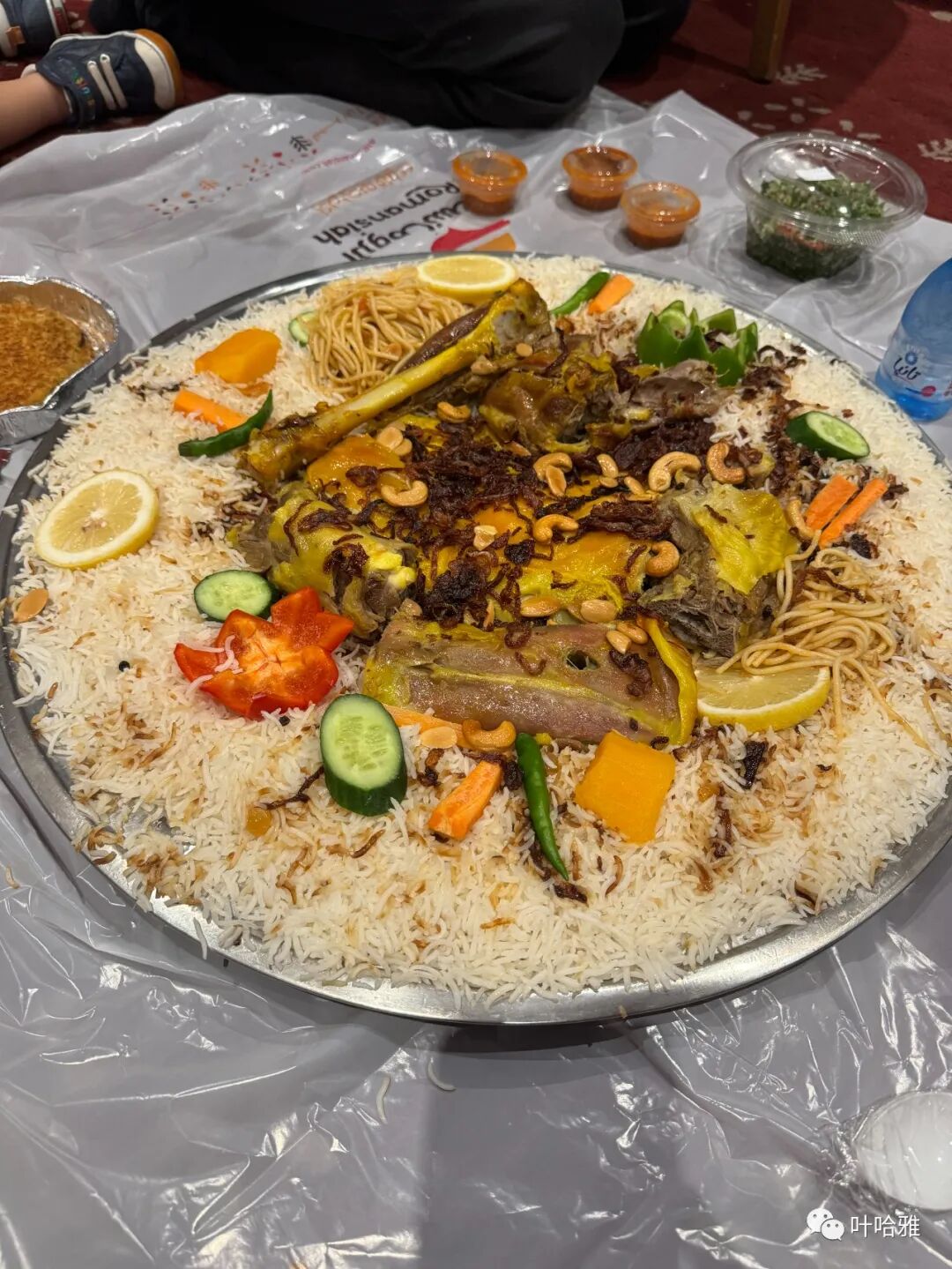
Mandi pilaf comes in a huge platter filled with rich ingredients, and the lamb is cooked until it is soft and tender.
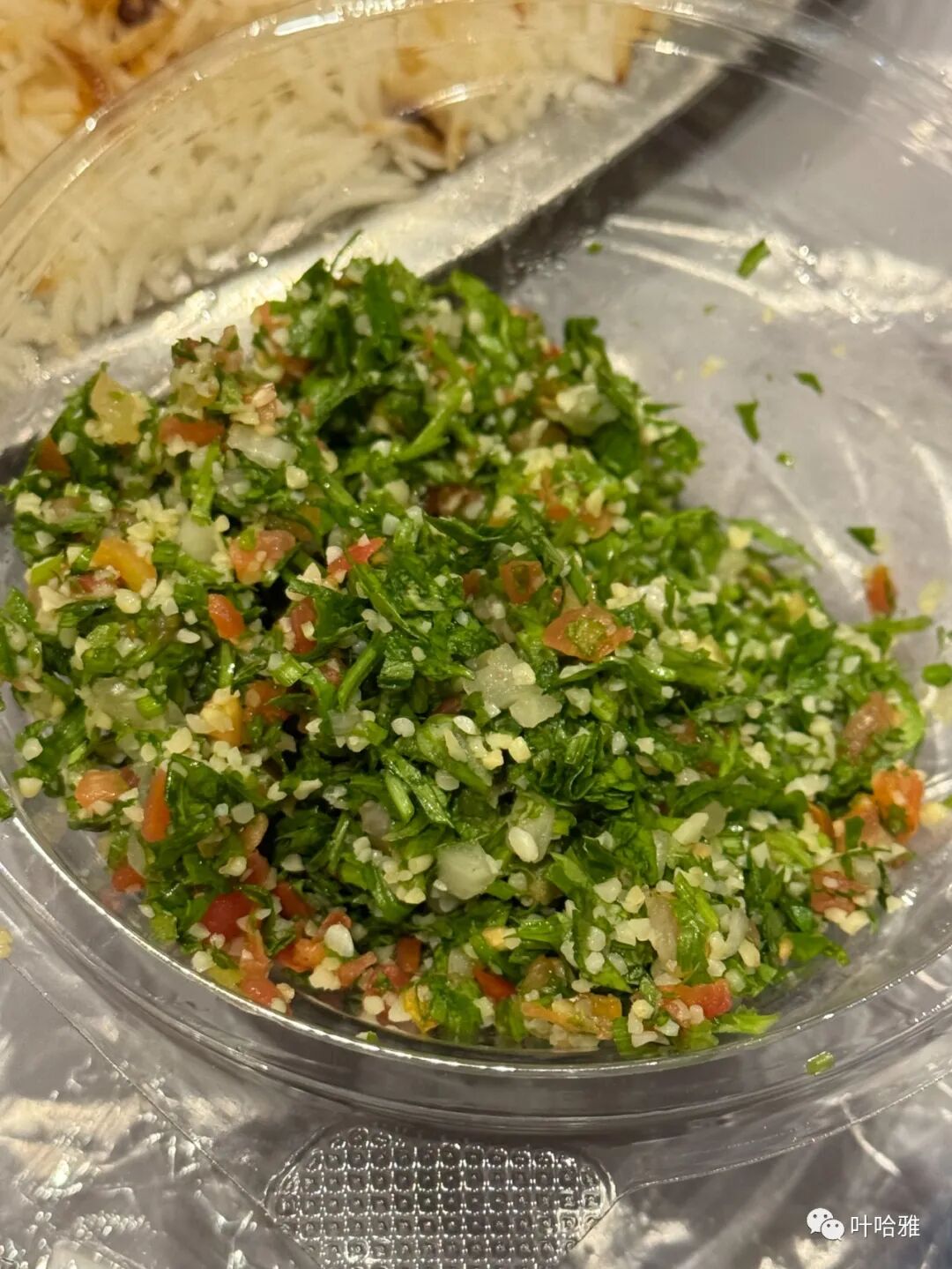
A signature Arab salad is called tabbouleh salad (tabouli), made with chopped parsley, mint, tomatoes, and bulgur wheat.
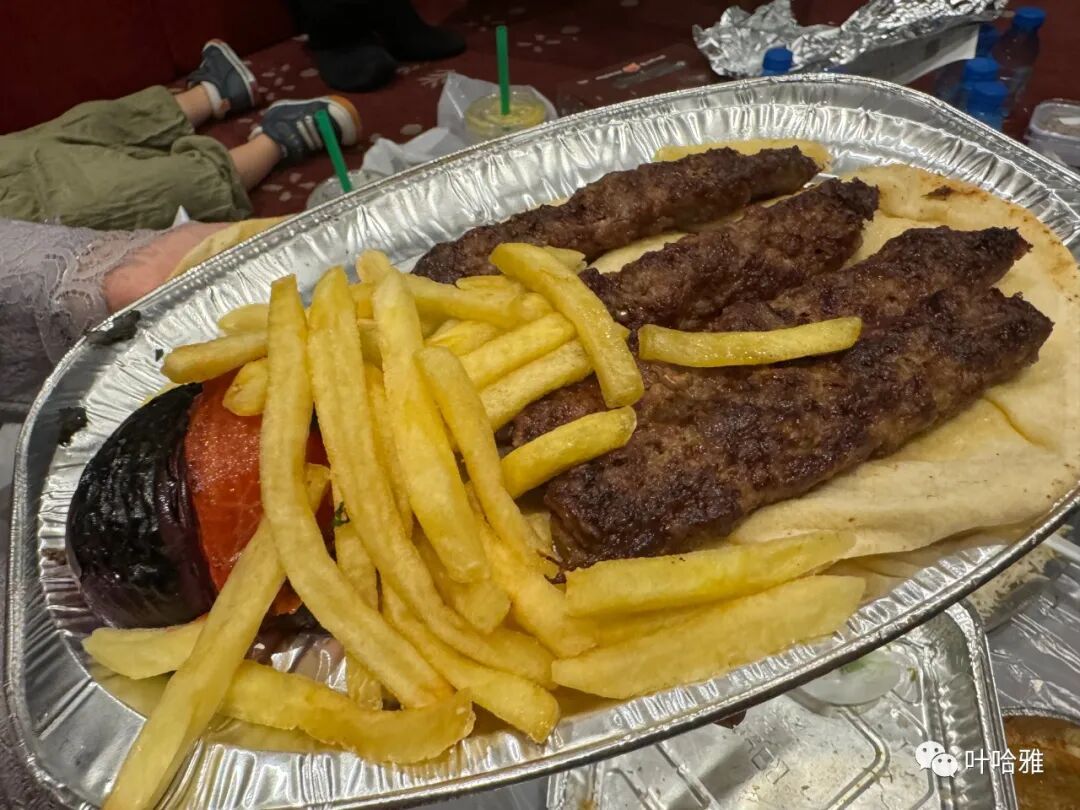
For the Arab-style grilled lamb, the meat here does not have a strong gamey smell. It is usually served with charred tomatoes and french fries. The tomatoes are intentionally charred to bring out their unique aroma.
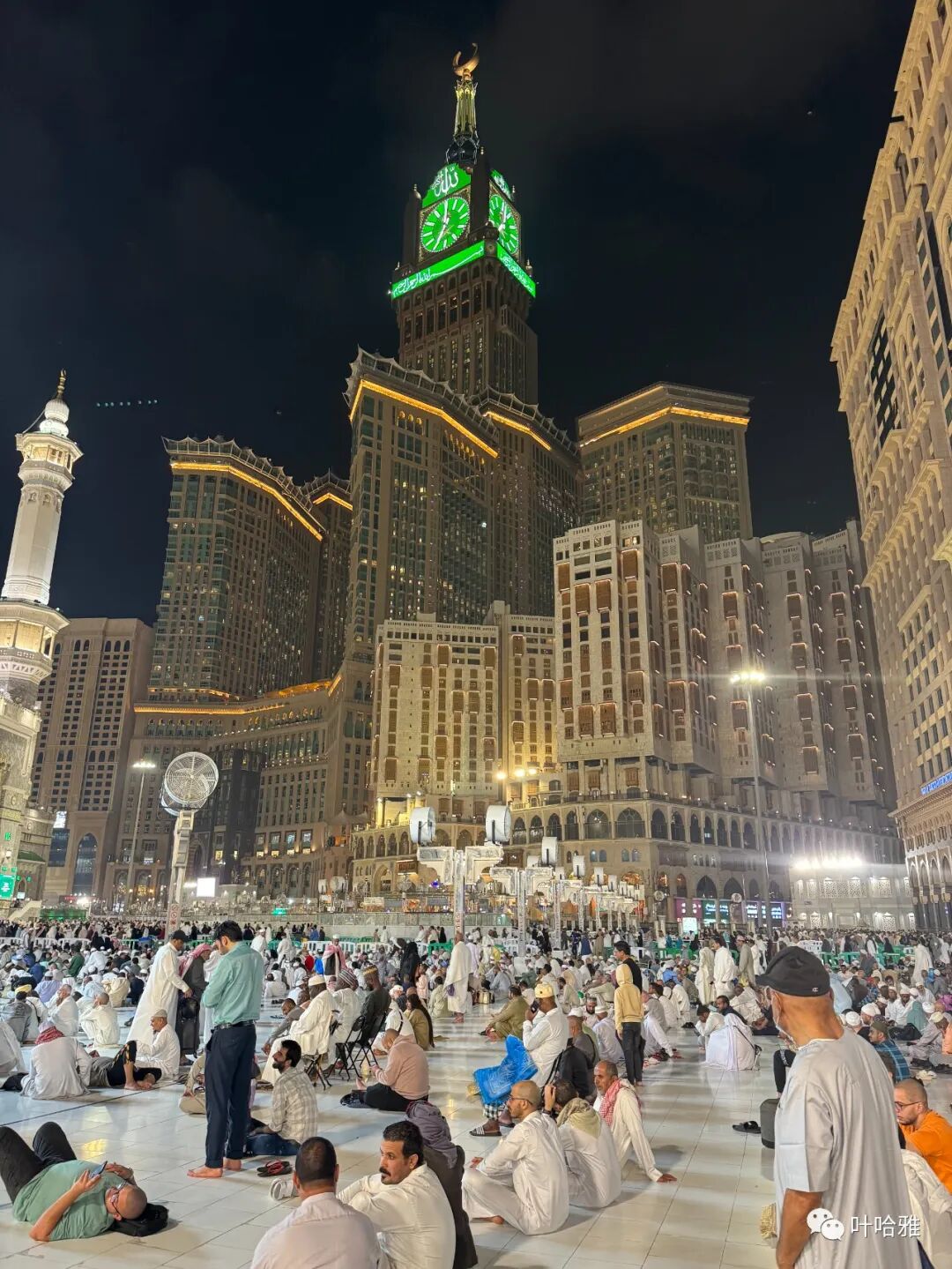
One night at the Sacred Mosque, after we finished our night prayer (Isha), we planned to walk around the outside of the mosque. When we reached the new section, staff directed us into a line, which turned out to be a queue to receive a Quran.
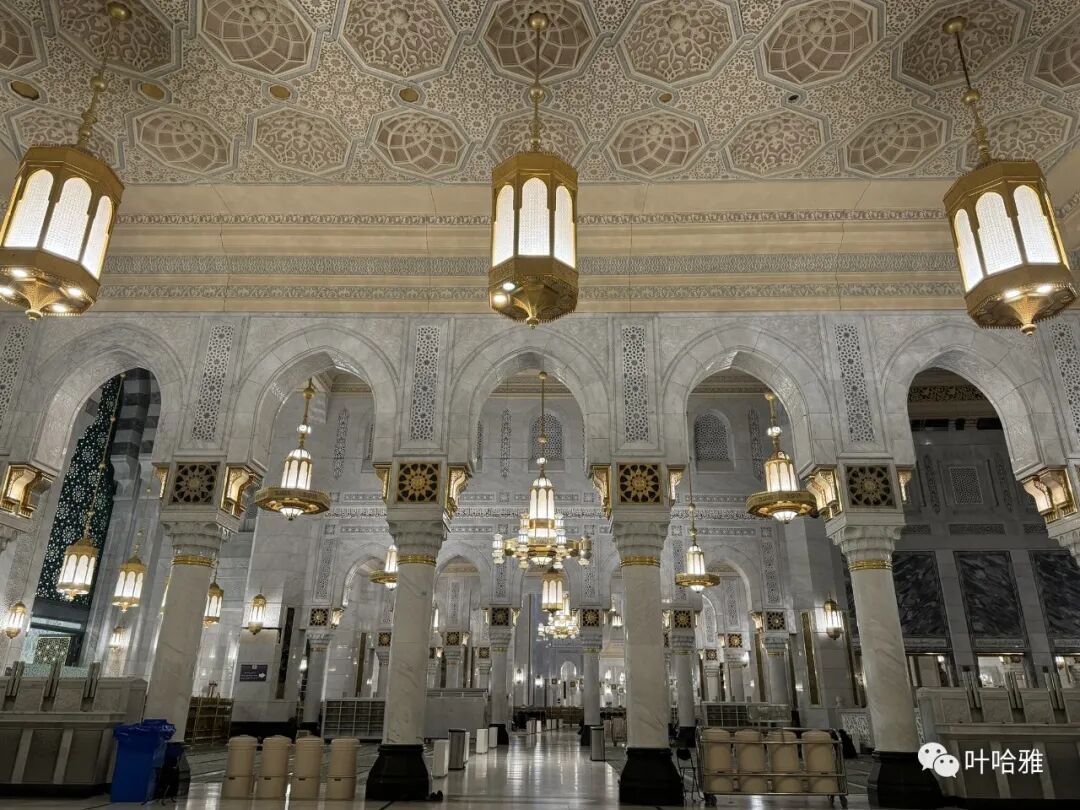
This is an original Arabic version, and the stamp inside reads 'Property of Allah.' This is the third Quran I have received; the Hilton hotel is also giving them away to guests for free.
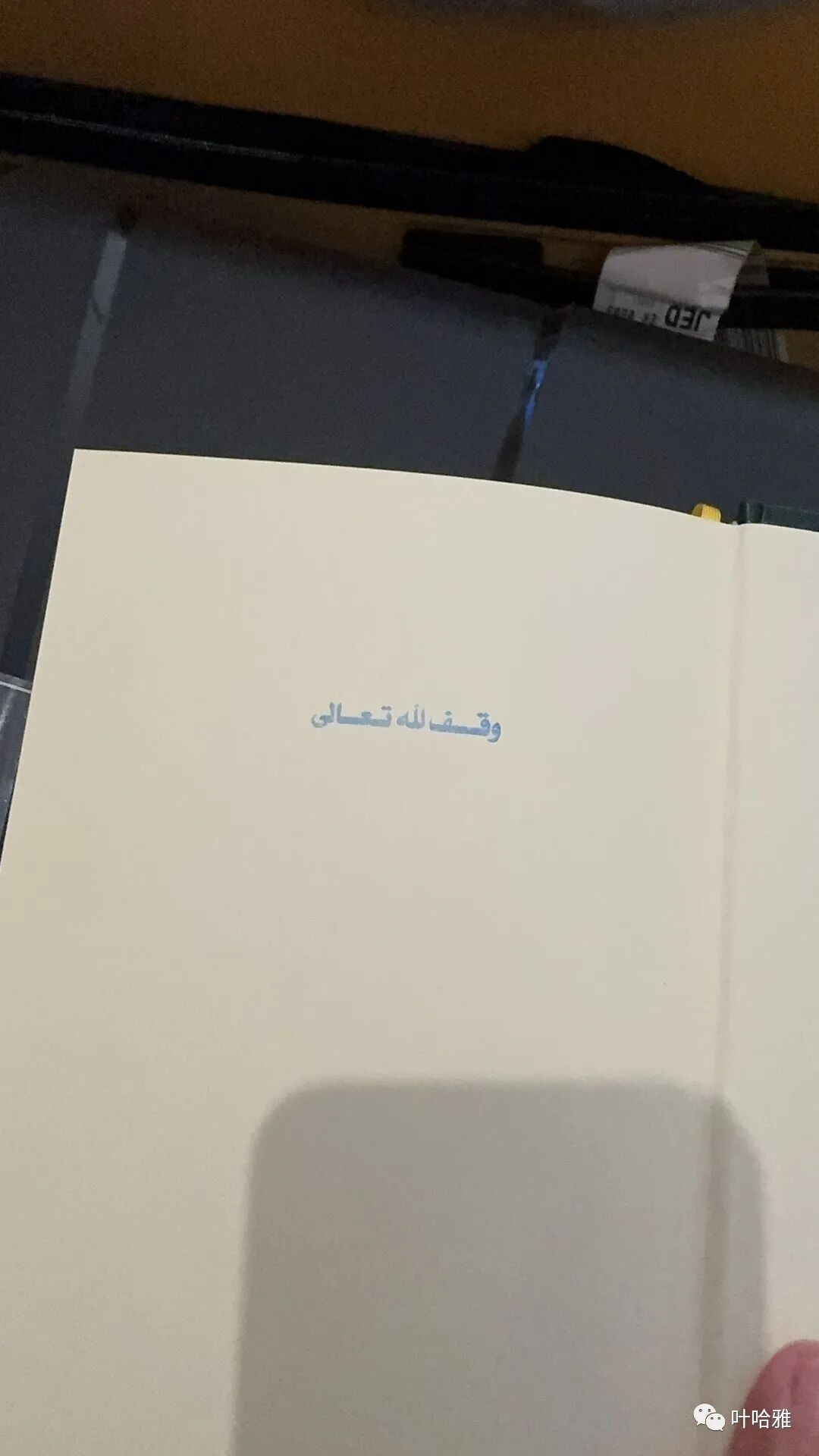
Property of Allah.
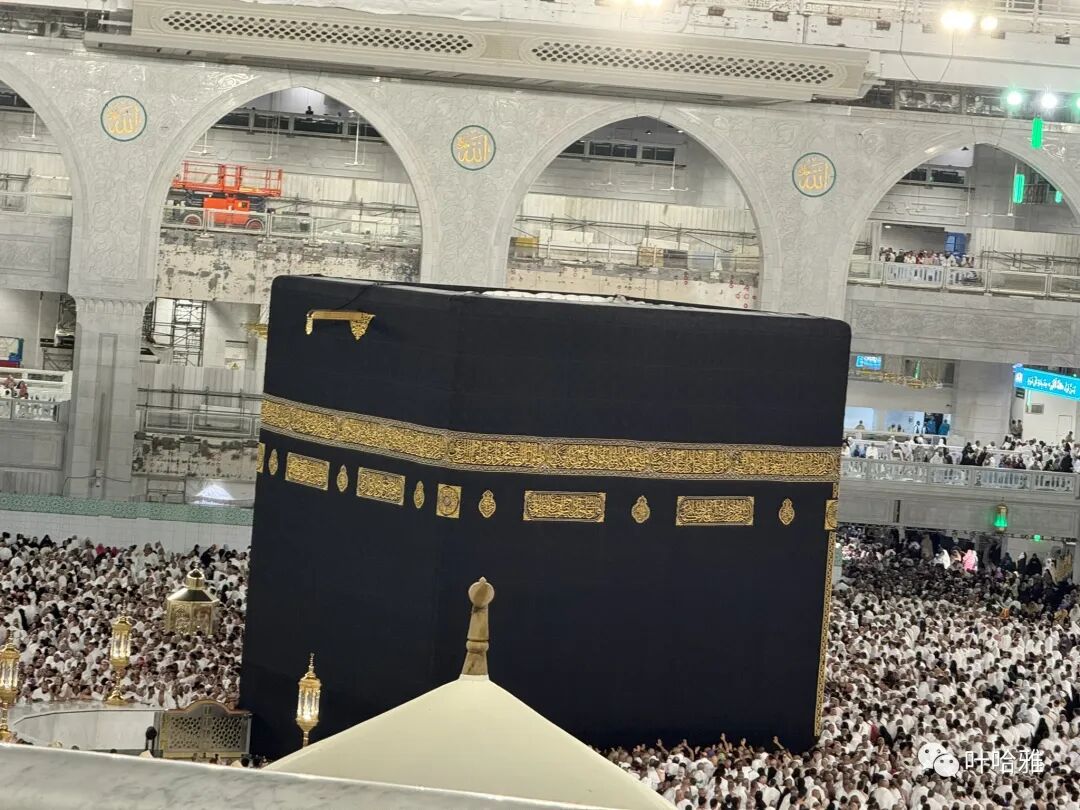
The view of the Kaaba from the second floor of the Sacred Mosque (Masjid al-Haram). After dark, the number of pilgrims (haji) circling the Kaaba surges. In Mecca and Medina, haji is the common term used between strangers.
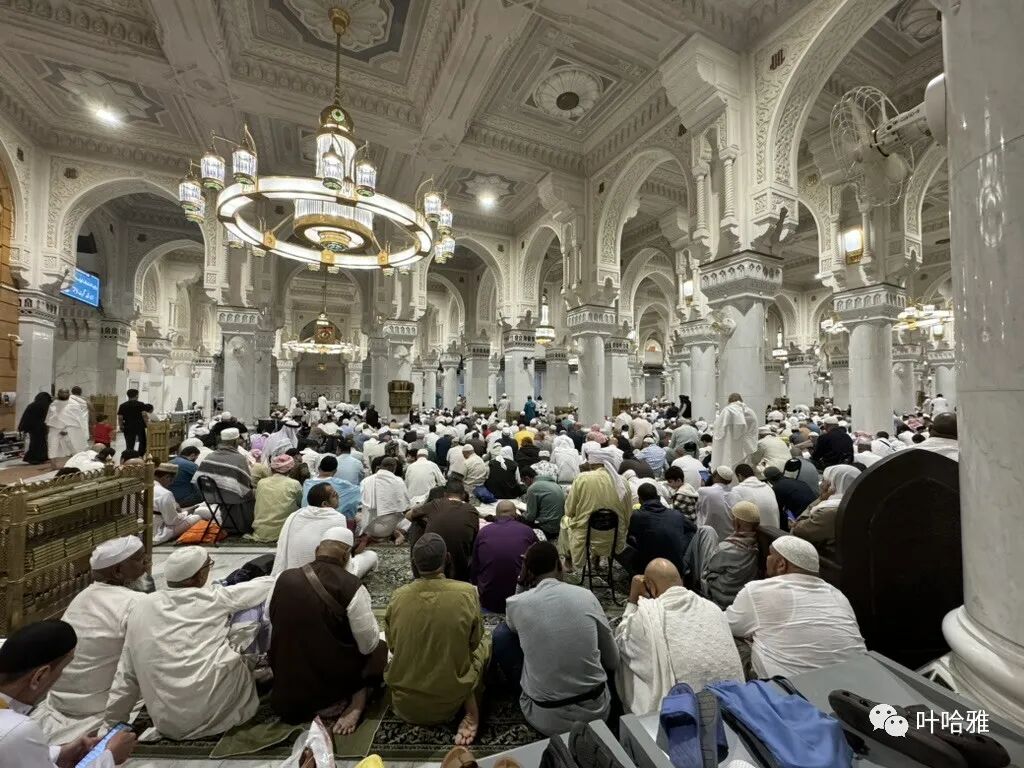
People of various sects pray in the Sacred Mosque. An Iranian Shia believer once stood next to me; he did not fold his arms during prayer but kept them hanging at his sides. I also saw Uzbeks making dua with their hands pressed together like Buddhists. I greeted all of them.
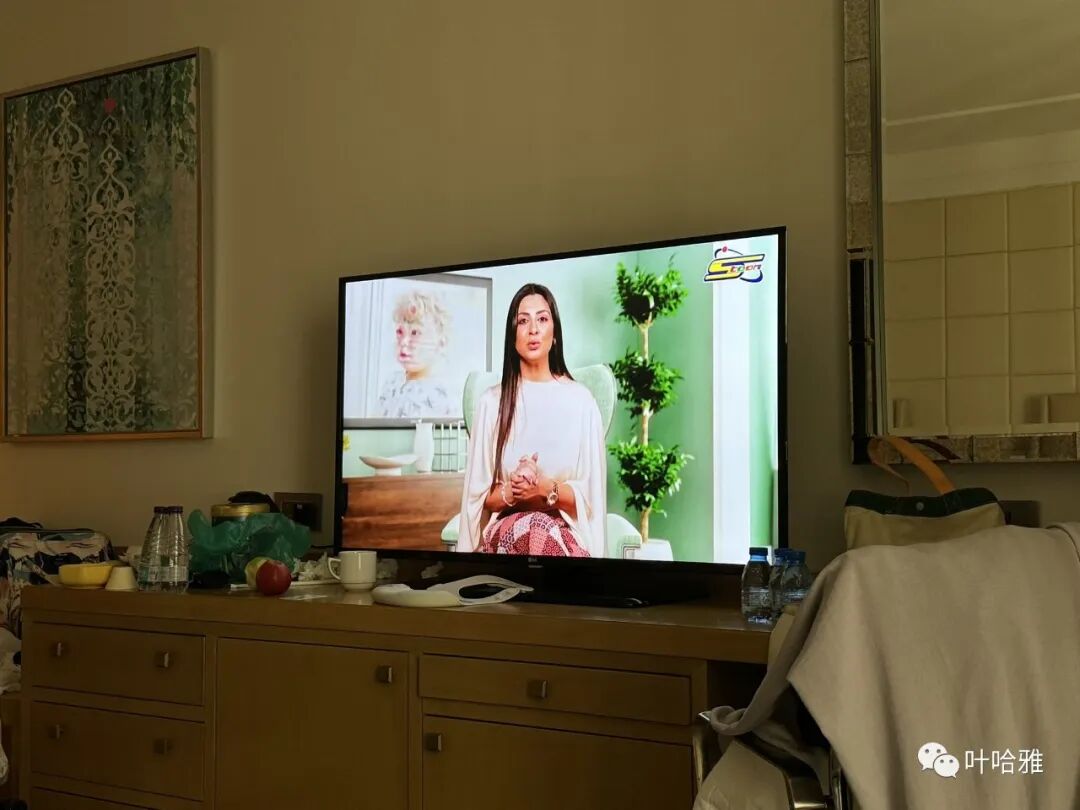
The television programs are no different from those in our country; you can see the same shows in Mecca that you see abroad. People smoking are everywhere on the streets. Even in Mecca, smoking is not banned, and Arabs actually have quite a strong nicotine habit.
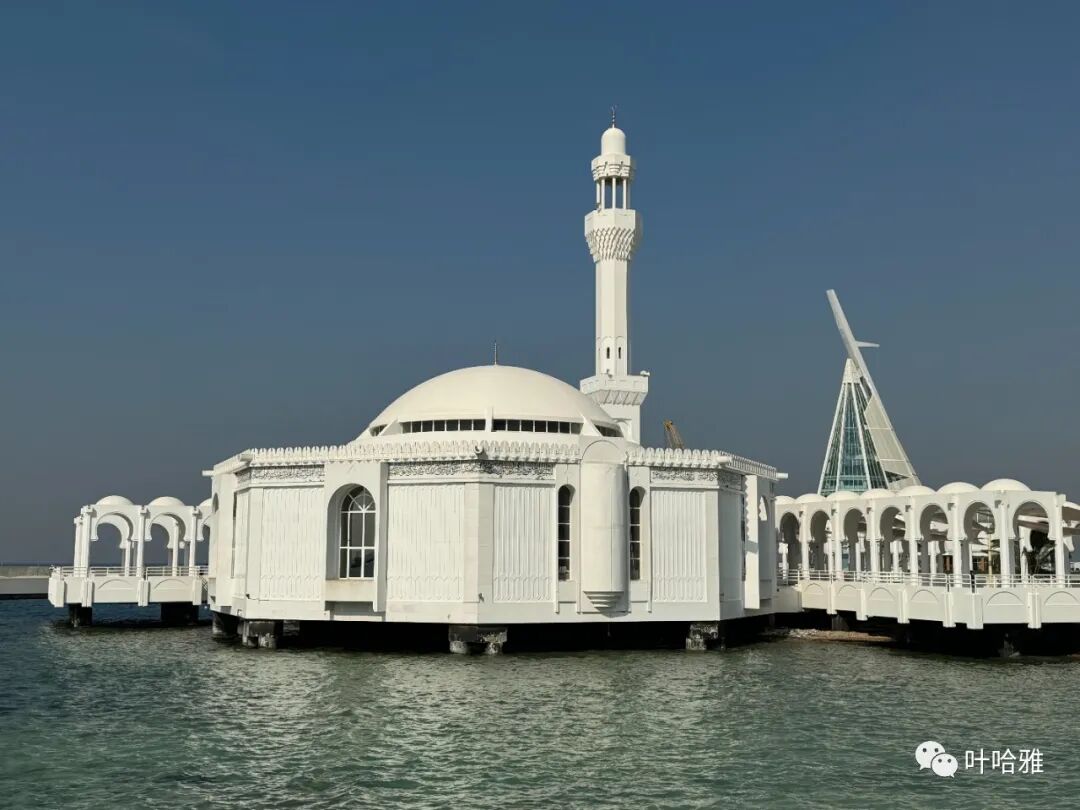
Jeddah Floating Mosque.
On your way back to Beijing from Jeddah, you can stop by the Jeddah Floating Mosque. It is a mosque built on the Red Sea with a very beautiful exterior.
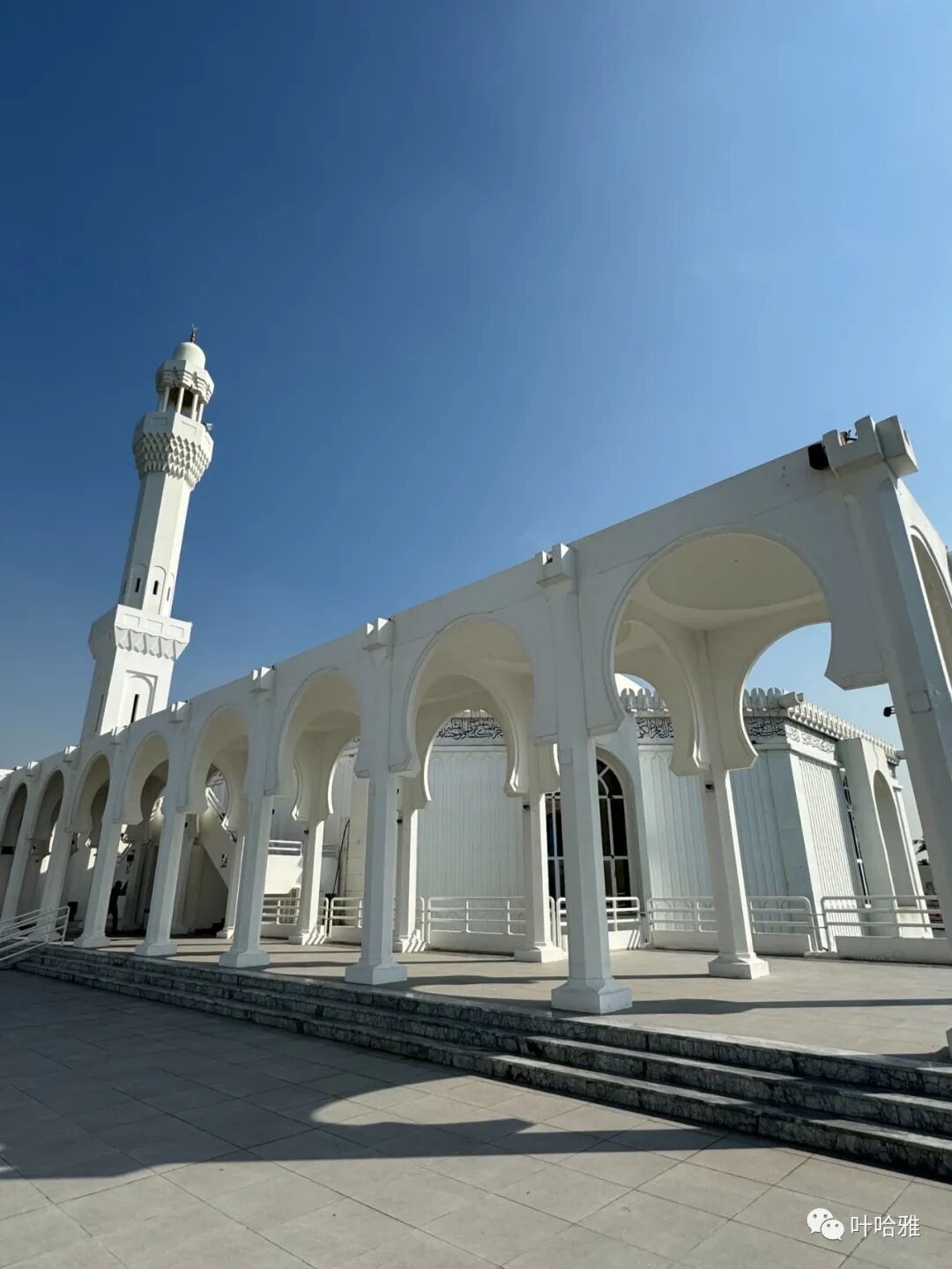
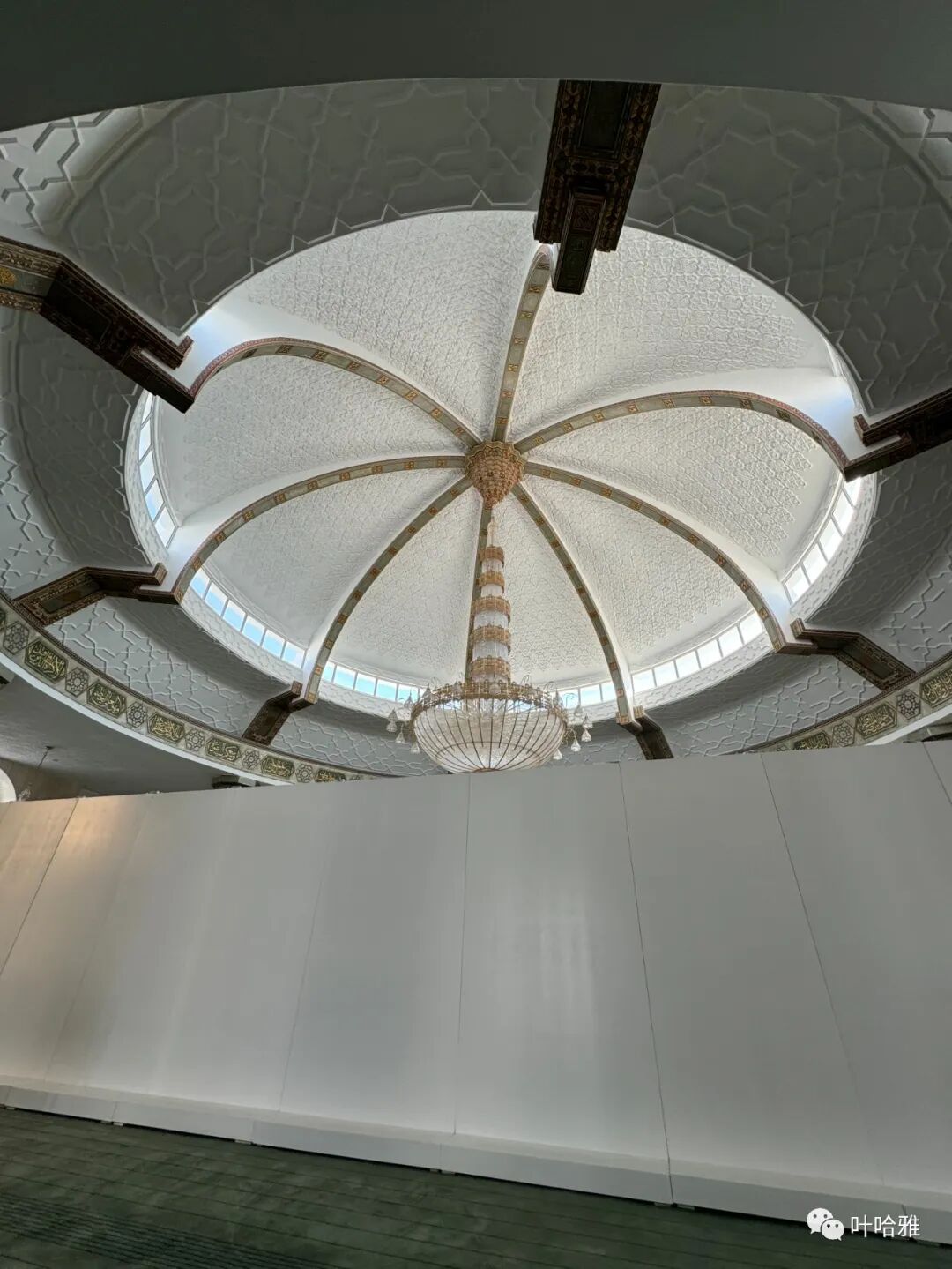
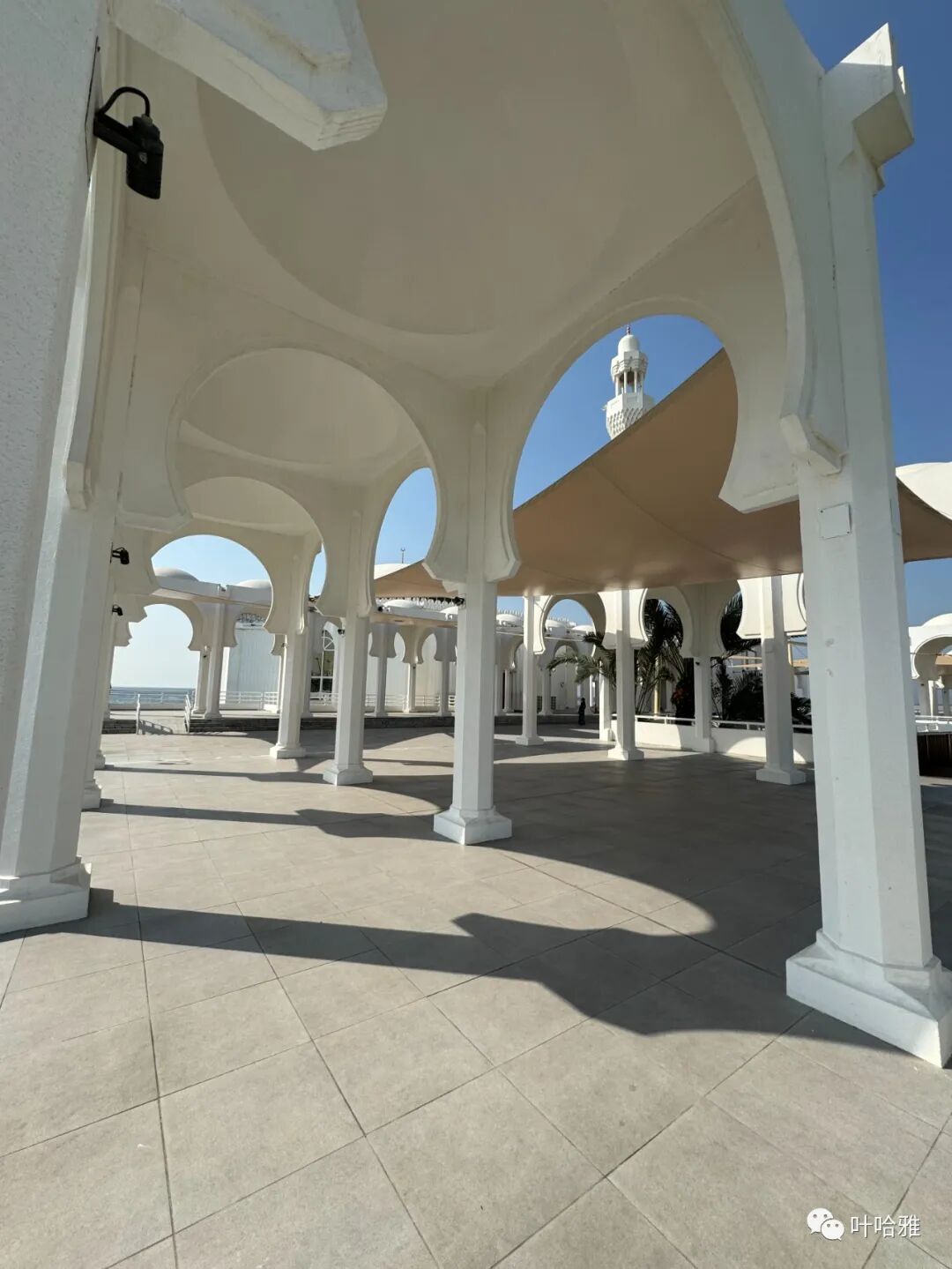
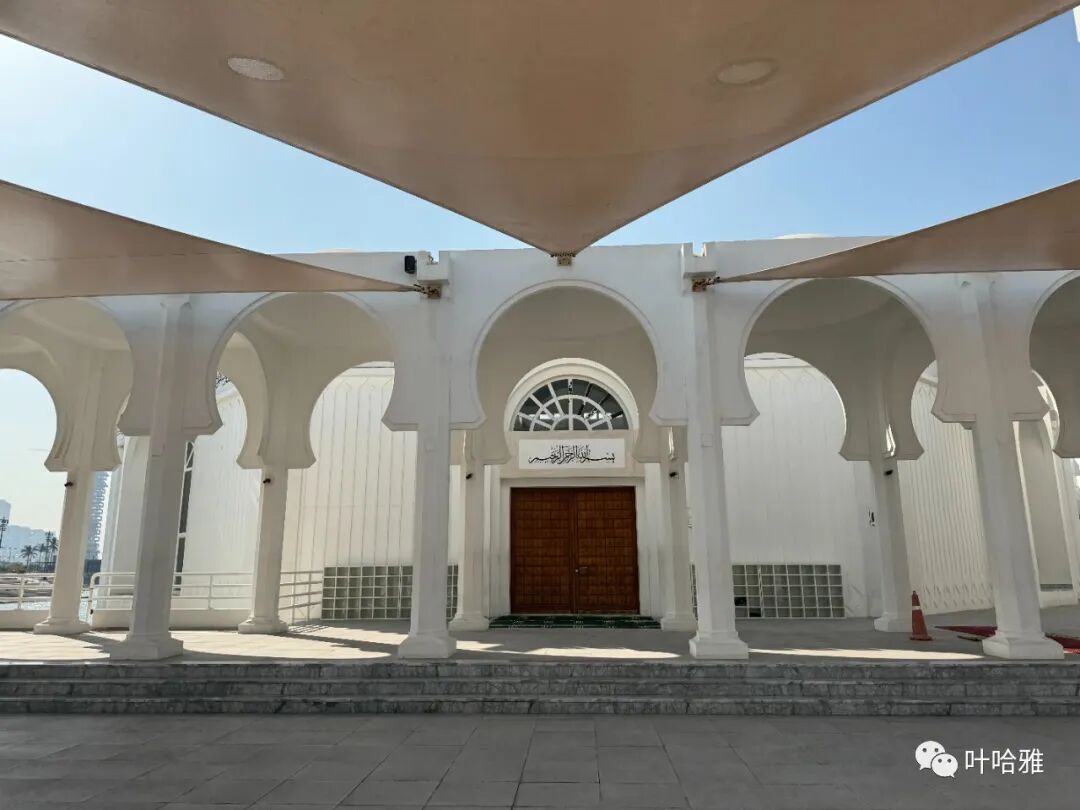
This coastline gets very lively at night. During the day, the weather is hot and businesses are closed.
I ate at a very famous local fast-food place in a Jeddah shopping mall. It is like the Saudi version of KFC, but I felt it did not taste as good as Burger King.
I saw Cantonese food in the mall. I thought it was Cantonese cuisine, but it was actually just rice and stir-fried dishes. I usually do not eat Chinese food when I go abroad. I feel that since I traveled so far, I should eat things I cannot get back home. Besides, Chinese food abroad is not authentic, and if it tastes bad, I feel like I wasted my money.
Restaurants in Saudi Arabia do not display halal signs because everything is halal. It is not easy to find non-halal food. This is why some Arabs, when they first come to China, walk into any restaurant to eat. In the environment where they grew up, there are no non-halal restaurants, so they have no awareness of needing to specifically look for a halal shop.
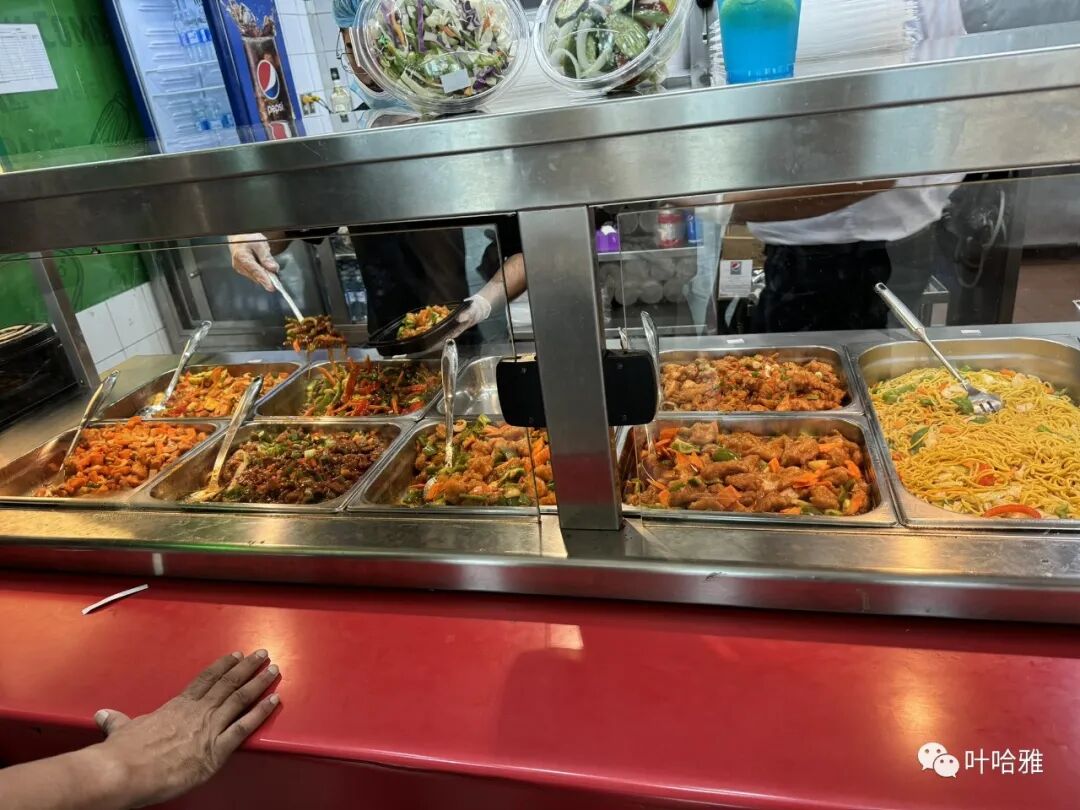
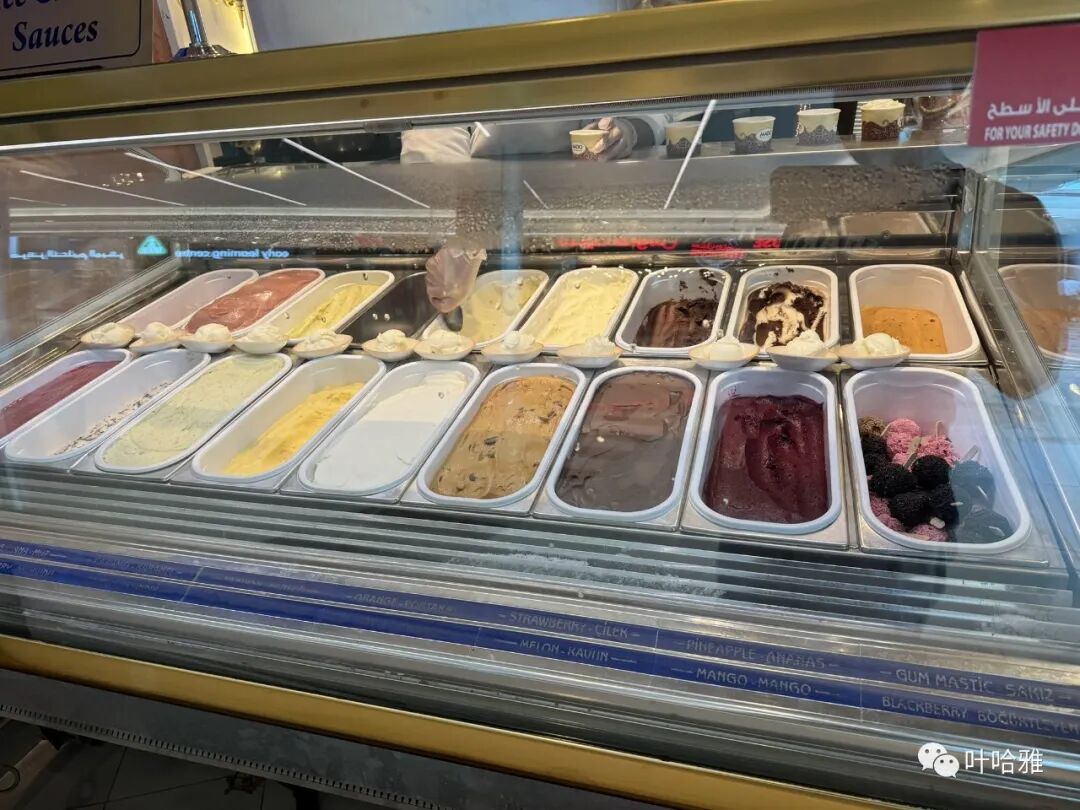
A MADO shop in the mall. MADO is a famous Turkish ice cream and dessert shop that is very popular in Saudi Arabia. In China, there is only one store in Guangzhou.
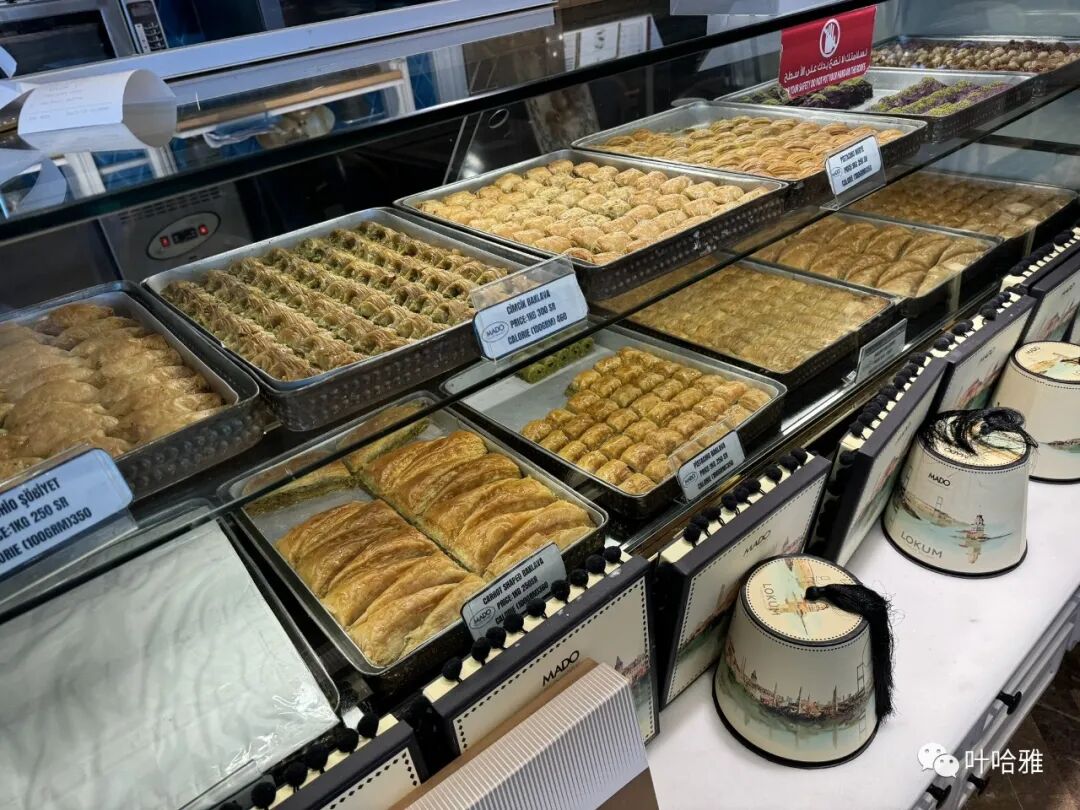
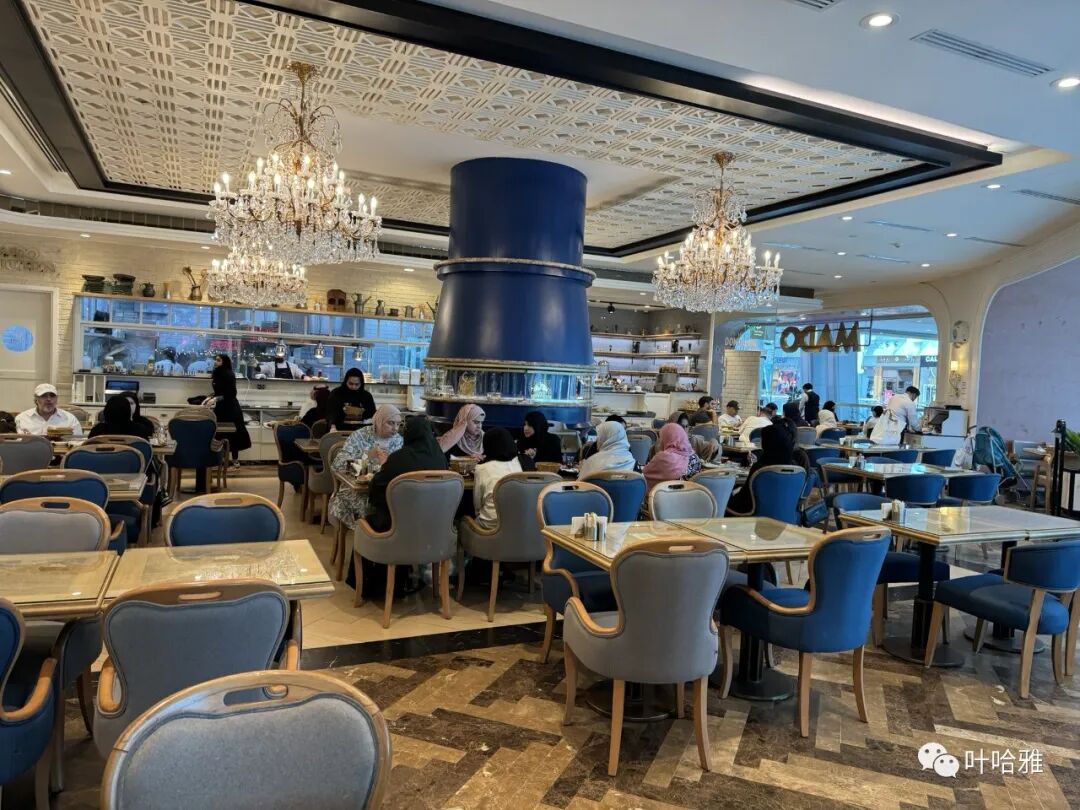
Fast food at Jeddah Airport.
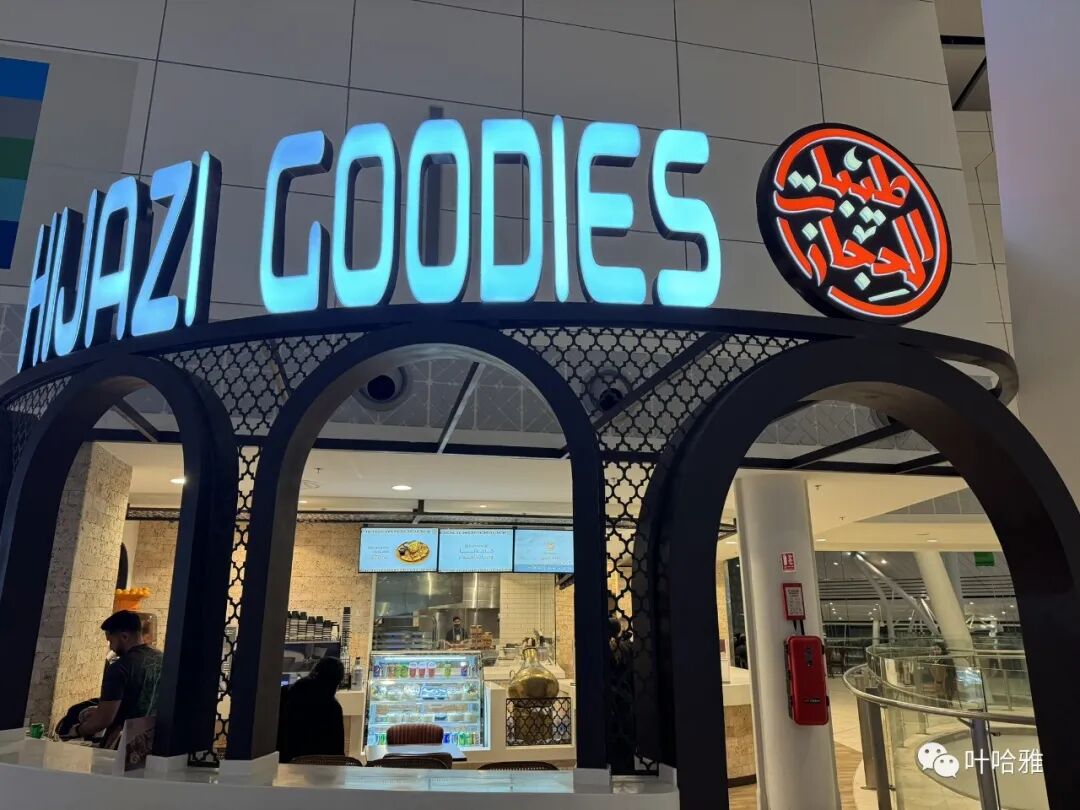
The Hijaz fast-food restaurant in the post-security commercial area of Jeddah Airport is excellent. I had a chive and egg pie (jiucai jidan xianbing) and it wasn't enough, so I ordered another cheese and egg with flatbread (kaobing).
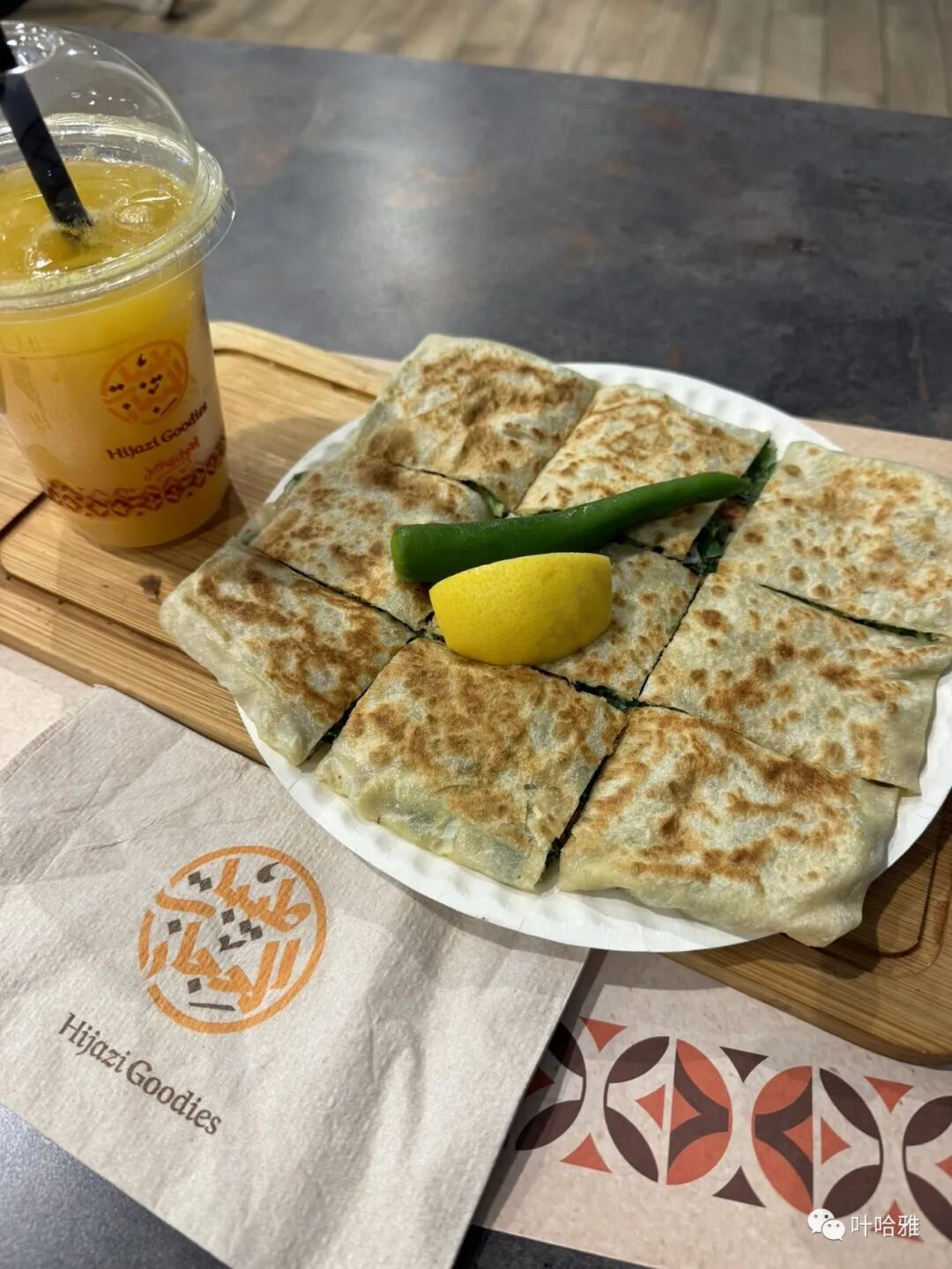
The flatbread is baked fresh. It is very soft, like naan, but even softer. It smells great, and I highly recommend it to anyone transferring at Jeddah Airport.
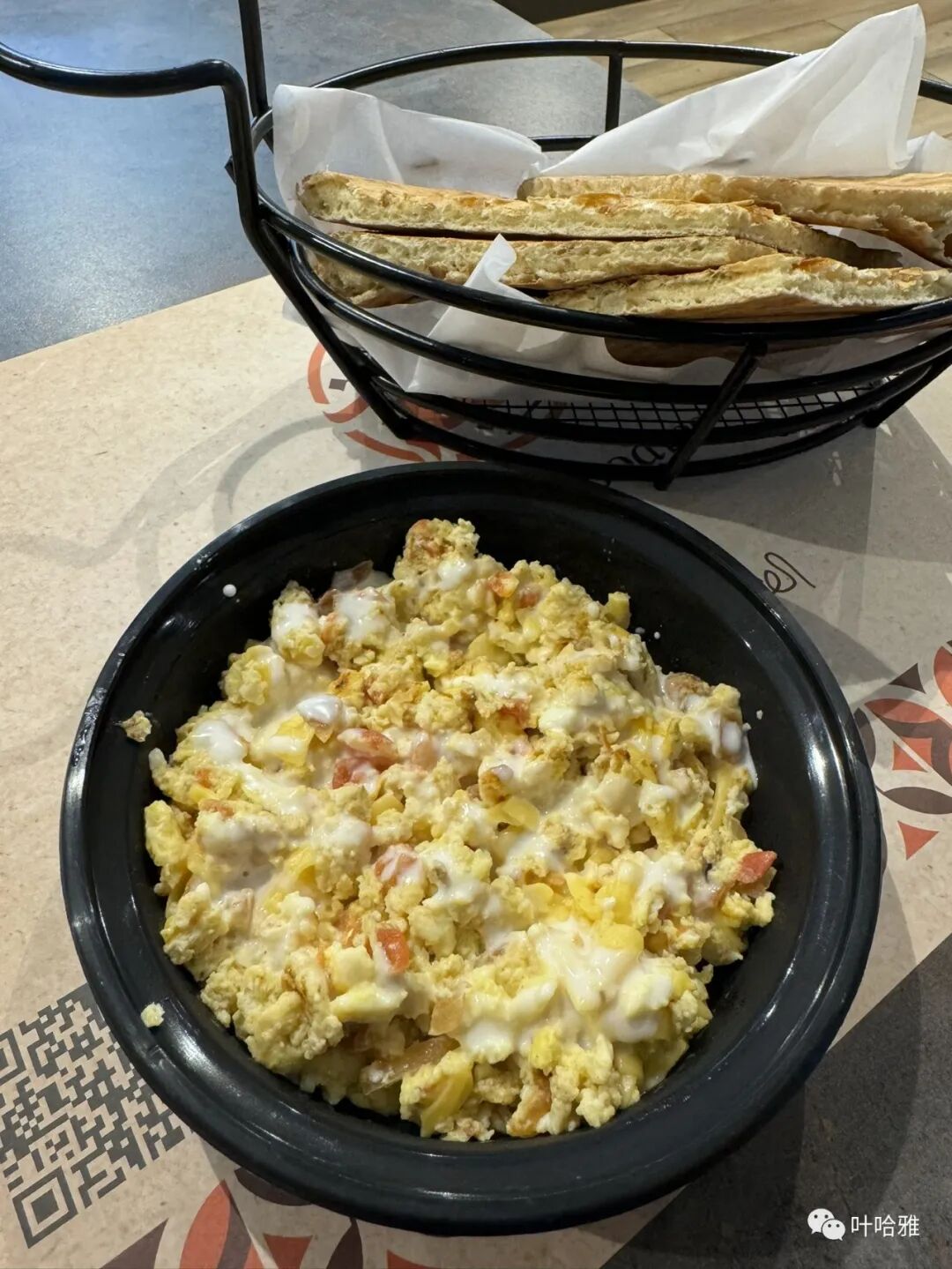
Jeddah is only 70 kilometers from Mecca. In Jeddah, you can see girls without headscarves everywhere, and even girls with bare legs, though I felt it was inappropriate to take photos.
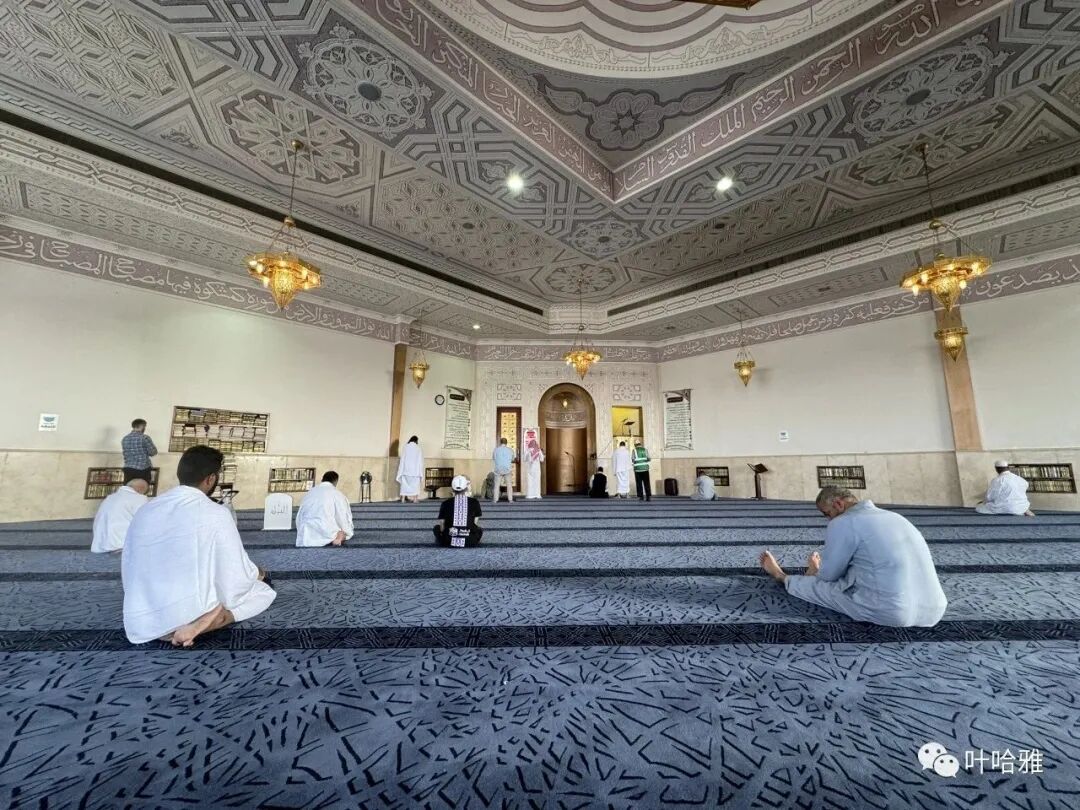
The prayer room at Jeddah Airport has no full-time imam. Travelers organize themselves and choose someone to lead the namaz. In Saudi Arabia, prayer rooms are standard, just like public restrooms, and they are everywhere.
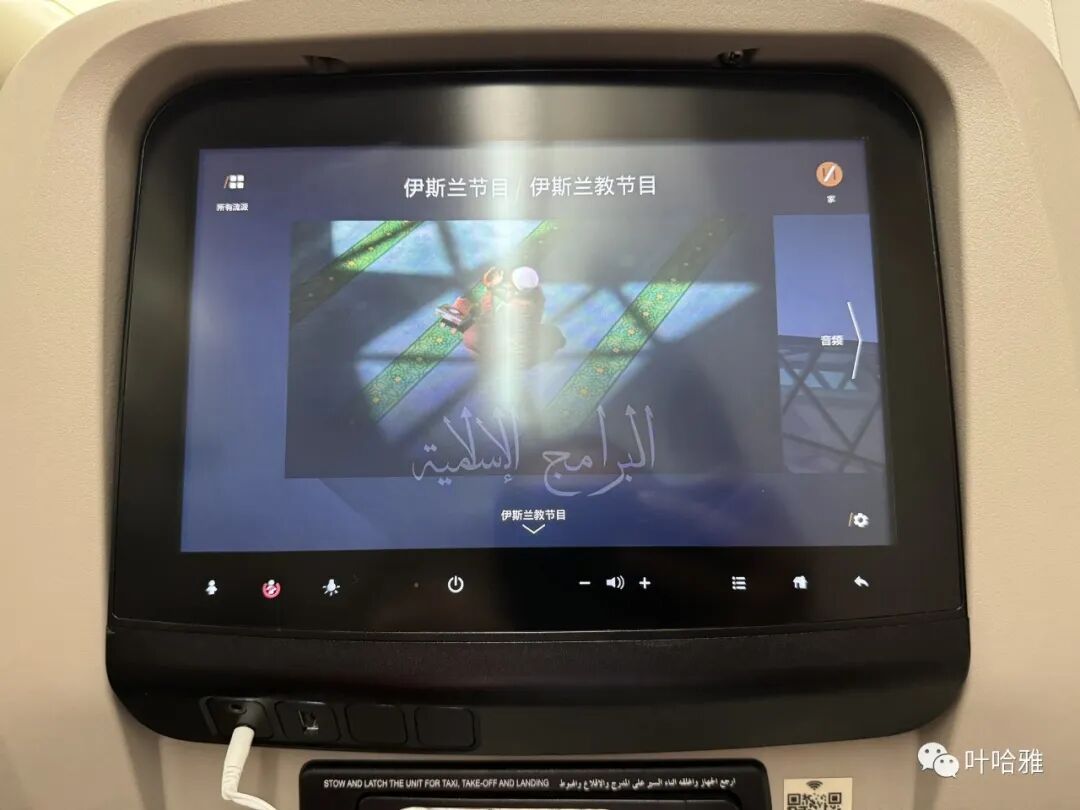
The multimedia system on Saudi Arabian Airlines has many religious programs.
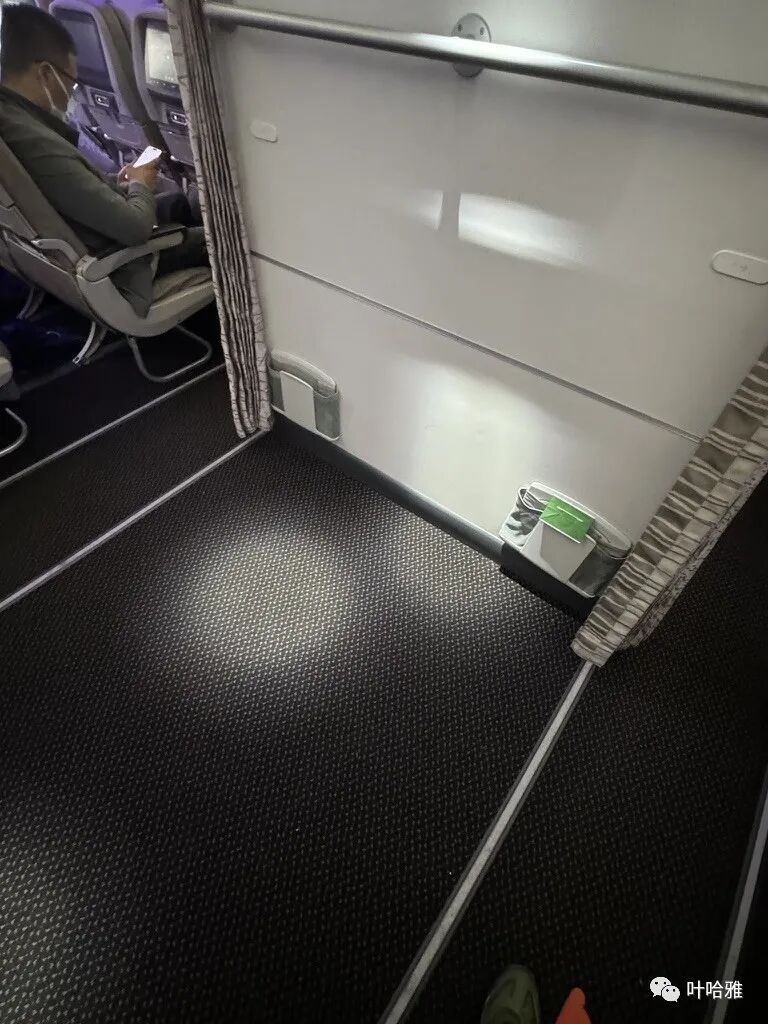
There are dedicated prayer areas in the back and middle of the cabin. In terms of supporting services, they are ahead of other Arab countries.
This trip to Mecca is coming to an end. Rationally speaking, completing the pilgrimage is an obligation, but emotionally, the experience was not pleasant. The commercial atmosphere in the holy city is too strong, and it lacks a sense of holiness. Following the principle of not spreading bad news, I will not go into detail about some of what I saw and heard. But Allah sees what people do. All of this was described in the prophecies of the Prophet. Everyone will receive their due reward in the afterlife, so let us wait and see.
Summary: This Muslim travel guide to Mecca explains Saudi e-visa basics, ihram rules, routes from Jeddah and Madinah, hotels near Masjid al-Haram, namaz logistics, pilgrimage routes, Makkah landmarks, Jabal al-Nour, Jeddah Airport food, and practical Umrah notes.
Map of Mecca is presented here as a firsthand travel account in clear English, beginning with this scene: My article was deleted for no reason, so I am reposting it after some edits. The account keeps its focus on Mosque Travel, Islamic Heritage, Muslim Travel while preserving the names, places, food, and historical details from the Chinese source.
My article was deleted for no reason, so I am reposting it after some edits.
Friendly reminder: please follow local laws and regulations. Do not do anything against the rules, or you will be responsible for the consequences.
You can apply for a Saudi tourist visa online at this website.
The Saudi tourist e-visa is approved instantly. Once you pay, you get the visa. It costs 488 Saudi Riyals, which is about 930 RMB. It is valid for one year, allows multiple entries, and you can stay for up to 90 days each time.
Before you leave, it is best to prepare a credit card with a chip. You can use it abroad just like mobile payments by tapping it on the merchant's POS machine. Many merchants cannot accept cards that only have a magnetic stripe.
Before heading to Makkah, you need to plan where you will enter the sacred boundary. If you enter Makkah from Jeddah, you must enter the state of ihram before your plane lands in Jeddah, because Jeddah is over 70 kilometers from Makkah and is already past the boundary. If you enter Makkah from Madinah (which also has an airport), you can enter ihram anywhere in Madinah. Madinah is over 400 kilometers from Makkah, so you can enter ihram at your accommodation in Madinah and then take the light rail to Makkah.
Men must wear ihram garments, which are two pieces of white cloth wrapped around the upper and lower body. Do not wear anything underneath. Like a newborn, you wrap your body in the cloth. You can use a belt to keep the garments from slipping. We bought our ihram garments in Madinah. They are sold everywhere on the street, and prices range from 30 to 70 Riyals. If you fly directly from China to Jeddah and then go to Makkah, you need to buy your ihram garments in China. You must change into them at least 30 minutes before the plane lands, or you will have to sacrifice an animal as a penalty for entering the sacred boundary.
We chose to stay at the Hilton, which is a 400-meter walk from the Sacred Mosque (Masjid al-Haram). Our room had a view of the mosque. In December, hotel rooms with views near the Sacred Mosque in Makkah and the Prophet's Mosque (Masjid an-Nabawi) in Madinah cost over 2,000 RMB per night. The Sacred Mosque is unimaginably large. If you walk back and forth between your hotel and the mosque for every namaz, you will walk at least 10 kilometers a day.
Uber does not work well around the Sacred Mosque because the area is a no-parking zone and drivers cannot accept requests. During prayer times, roads leading to the mosque are closed to traffic. This is why I recommend staying as close to the mosque as possible; older people really cannot handle walking 10 kilometers every day.
It is standard for hotel rooms in Arab countries to have a marker showing the direction of the Kaaba. The Hilton in Mecca goes further by installing speakers in the rooms. You can hear the call to prayer (adhan) for every namaz at the Sacred Mosque (Masjid al-Haram) clearly from inside. No guests complain about the noise here because only Muslims are allowed to enter Mecca.
The hotel uses agarwood (oud). Arab people really love using incense.
There is a tunnel on the basement level of the hotel that leads directly to the Sacred Mosque, passing by a Quran exhibition hosted by the Hilton.
Sacred Mosque (Masjid al-Haram)
You cannot see the Kaaba from the first floor of the Sacred Mosque, but there are lines marked on the floor. You can just follow these lines to face the right direction for namaz.
Praying at the Sacred Mosque is different from other mosques. You are allowed to walk in front of people who are praying because the rows of worshippers form circles. If you do not walk in front of them, you would have no way to get through.
Wearing the pilgrim garment (ihram), I entered through the main gate of the Sacred Mosque and followed the crowd inside. Near the entrance to the Kaaba, guards stand watch. Only men wearing the ihram can walk into the Kaaba area, and women are not allowed to cover their faces.
In other mosques, it is encouraged to perform two rak'ahs of prayer as a greeting (tahiyat al-masjid) as a sunnah. It is different at the Sacred Mosque; the way to greet the mosque upon arrival is to perform the circumambulation (tawaf) of the Kaaba, not to pray.
Starting from the corner of the Black Stone (Hajar al-Aswad) on the Kaaba, men must uncover their right shoulder and circle the Kaaba seven times. I pushed a stroller with Fahim and completed the seven laps. Some people push to the very front to kiss the Black Stone. This is a sunnah, but nothing more, and there is no extra reward for it. It is also very dangerous when it is crowded, so there is no problem if you do not do it. I saw people inside the circle clinging to the wall of the Kaaba, refusing to leave just to fight for the Black Stone, which is truly unseemly.
Even in December, the daytime temperature in Mecca reaches 30 degrees Celsius. The sun is strong, and walking barefoot to circle the Kaaba takes physical strength. It is a real test for older people, so it is better for young people to go as early as possible.
Men and women can perform the circumambulation together. There were even babies younger than Fahim in the crowd.
Station of Ibrahim (Maqam Ibrahim)
After praying two rak'ahs near the Station of Ibrahim, the ritual of circling the Kaaba is complete.
The area behind the station is spacious, so avoid praying in the middle of the crowd to keep from being stepped on.
Fahim watched cartoons in his stroller while circling the Kaaba, a unique sight that drew envious looks from many fellow believers (dosti).
After leaving the Kaaba, follow the crowd to find the Safa entrance. You must walk between Safa and Marwa seven times to follow the story of Hajar, the wife of Ibrahim, who searched for water for her son Ismail. This is how the Zamzam well was discovered.
The walk between the two hills covers about 700 meters. Saudi Arabia has built a large, air-conditioned hall between them, so pilgrims (hajjis) no longer have to worry about the wind or sun, making it easier to complete this duty.
Mount Safa
Walking from Safa to Marwa counts as one trip, and returning from Marwa to Safa counts as the second. You do this seven times. Volunteers provide wheelchairs for those with mobility issues. Men should jog in the area marked by green lights to follow the Sunnah.
Marwa
After leaving Marwa, use scissors or another tool you brought to cut a portion of your hair to signify the end of your state of ihram. You can also find someone at the entrance to shave your head. The entire process takes about two hours. If you booked through the Nusuk app, you will receive a certificate on the app now, but you can still go even if you did not book.
Hajj Certificate
I felt much lighter after finishing the duties, so we made the intention to go visit the historical sites of Mecca. Mecca has fewer historical sites than Medina. You can see them all in half a day, starting from the dawn prayer (fajr) and finishing by the afternoon prayer (asr).
Mount Thawr (Sha'er Shan)
Mount Thawr (Sha'er Shan)
The mountain in the distance is Mount Thawr, located 4 kilometers from the Sacred Mosque (Masjid al-Haram). There is a cave on the mountain that only fits one person. The Prophet Muhammad once took refuge here. It takes an hour and a half to climb up to the cave.
Arafat
Arafat
Arafat is 22 kilometers from the Sacred Mosque. The name means 'to recognize,' as it is where the first humans, Adam and Eve (Hawa), recognized each other. It is also where the Archangel Gabriel (Jibril) taught the Prophet Ibrahim the rituals of Hajj. Arafat covers a large area of plains and hills. Staying at Arafat is one of the essential rituals of the Hajj.
Namirah Mosque
This mosque is located east of the foot of Mount Namirah in Arafat. The Prophet once stayed in a tent on Mount Namirah on the Day of Arafat. This mosque is not considered an ancient site and is usually closed, but you can pray two units of prayer (rak'ahs) at the entrance.
The site of Prophet Ibrahim's sacrifice
Sacrifice pavilion (zaishengting)
Located on a hill near Mina and close to the Jamarat, this site is fenced off and inaccessible. It is the place where the story of Eid al-Adha took place, where the Prophet Ibrahim offered his son to Allah, and Allah replaced him with a sheep.
Mina
Mina tents
Along the way, you can see large areas of tent camps. These are high-end tents equipped with air conditioning and hotel-like facilities. They are only open during Hajj, as the tents are just a symbolic form.
Jamarat
Jamarat
Take the small pebbles you collected on the plains of Arafat and throw them at the Jamarat. Stoning here is also a symbolic act; you can just toss them easily.
Cave of Hira
Cave of Hira
Located northeast of the Masjid al-Haram, it is also called Jabal al-Nour. There is a cave at the top of the mountain. Before the Prophet Muhammad became a prophet, he often climbed up to this cave alone to meditate. It was in this cave that the Prophet received the first revelation from the Archangel. It takes about an hour to walk up the mountain. The summit is crowded and can be dangerous, so you might choose not to go.
Mosque of the Jinn
Mosque of the Jinn
Jinn Mosque (Masjid al-Jinn) is east of the Sacred Mosque (Masjid al-Haram), next to the Ma'la Cemetery and beside a pedestrian bridge. This is where a group of jinn pledged their loyalty to the Prophet. It is usually closed except during prayer times. Across from Jinn Mosque is Tree Mosque (Masjid al-Shajarah). The Prophet once called out to a tree here, and it came to him. He asked it a few questions and told it to return to its place. People later built a mosque here. Jinn Mosque and Tree Mosque look exactly the same.
Aisha Mosque (Masjid Aisha).
Located 7.5 kilometers north of the Sacred Mosque, this is the closest boundary of the sacred area. Aisha entered into the state of ihram here during the Farewell Pilgrimage in the 9th year of the Hijri calendar. At that time, the Prophet's wife Aisha could not perform the circumambulation of the Kaaba due to her period. She completed all other pilgrimage rites. After her period ended, the Prophet asked her brother to accompany her to this place to enter ihram, and she later circumambulated the Kaaba.
Many pilgrims (hajjis) specifically choose to enter ihram here. The mosque can hold 150,000 people for namaz.
This covers the main historical sites in Mecca. Like in Medina, many places mentioned in books look completely different today. The main task for people coming to Mecca is to pray in the Sacred Mosque. One prayer there is worth 100,000 prayers elsewhere, so these renovated historical sites do not attract much interest.
Hilton breakfast restaurant.
We mostly ate our three meals at the hotel. The hotel restaurant has good food and a comfortable environment. It does not distinguish between family rooms, the price does not change with the room rate, and it offers great value.
This Hilton sandwich costs only about 30 yuan. We ate it almost every day. We got to know the server, and he even brought us juice. Once you arrive in the sacred land, you realize that besides going to the mosque for namaz, you do not want to go anywhere else to wander around.
Hilton Lebanese restaurant.
We ate at the Hilton's Lebanese restaurant. During our 18 days in the Middle East, we mostly ate Arabic food. We adapted well to this diet, and Lebanese food is the best among Arabic cuisines.
I only ate out twice. One time was for this camel pilaf (zhuafan). I had it in Medina and thought it was delicious, so my friend (dosti) insisted on having it again. Most restaurants in Mecca are in the city center, more than 10 kilometers away from the Sacred Mosque (Masjid al-Haram). The city center is where the locals live and where many wealthy Saudis gather.
Dining in a family room is a unique experience. You can sit anywhere in these restaurants, and no one checks if you are actually a family.
Eating kunafa dessert in this type of restaurant tastes better than anywhere else.
This portion of camel pilaf is only one-quarter of the full size, yet it was enough for 8 people and we still couldn't finish it.
The national dish of Saudi Arabia is mandi pilaf. We asked a local friend to recommend this place; it is spacious and you do not need a reservation.
Our friend specifically insisted we try their kunafa dessert, saying you cannot find it anywhere else. After tasting it, we all agreed it was delicious.
You can find kunafa in Syrian restaurants in Beijing, but those versions are modified. In reality, there are many different flavors.
Mandi pilaf comes in a huge platter filled with rich ingredients, and the lamb is cooked until it is soft and tender.
A signature Arab salad is called tabbouleh salad (tabouli), made with chopped parsley, mint, tomatoes, and bulgur wheat.
For the Arab-style grilled lamb, the meat here does not have a strong gamey smell. It is usually served with charred tomatoes and french fries. The tomatoes are intentionally charred to bring out their unique aroma.
One night at the Sacred Mosque, after we finished our night prayer (Isha), we planned to walk around the outside of the mosque. When we reached the new section, staff directed us into a line, which turned out to be a queue to receive a Quran.
This is an original Arabic version, and the stamp inside reads 'Property of Allah.' This is the third Quran I have received; the Hilton hotel is also giving them away to guests for free.
Property of Allah.
The view of the Kaaba from the second floor of the Sacred Mosque (Masjid al-Haram). After dark, the number of pilgrims (haji) circling the Kaaba surges. In Mecca and Medina, haji is the common term used between strangers.
People of various sects pray in the Sacred Mosque. An Iranian Shia believer once stood next to me; he did not fold his arms during prayer but kept them hanging at his sides. I also saw Uzbeks making dua with their hands pressed together like Buddhists. I greeted all of them.
The television programs are no different from those in our country; you can see the same shows in Mecca that you see abroad. People smoking are everywhere on the streets. Even in Mecca, smoking is not banned, and Arabs actually have quite a strong nicotine habit.
Jeddah Floating Mosque.
On your way back to Beijing from Jeddah, you can stop by the Jeddah Floating Mosque. It is a mosque built on the Red Sea with a very beautiful exterior.
This coastline gets very lively at night. During the day, the weather is hot and businesses are closed.
I ate at a very famous local fast-food place in a Jeddah shopping mall. It is like the Saudi version of KFC, but I felt it did not taste as good as Burger King.
I saw Cantonese food in the mall. I thought it was Cantonese cuisine, but it was actually just rice and stir-fried dishes. I usually do not eat Chinese food when I go abroad. I feel that since I traveled so far, I should eat things I cannot get back home. Besides, Chinese food abroad is not authentic, and if it tastes bad, I feel like I wasted my money.
Restaurants in Saudi Arabia do not display halal signs because everything is halal. It is not easy to find non-halal food. This is why some Arabs, when they first come to China, walk into any restaurant to eat. In the environment where they grew up, there are no non-halal restaurants, so they have no awareness of needing to specifically look for a halal shop.
A MADO shop in the mall. MADO is a famous Turkish ice cream and dessert shop that is very popular in Saudi Arabia. In China, there is only one store in Guangzhou.
Fast food at Jeddah Airport.
The Hijaz fast-food restaurant in the post-security commercial area of Jeddah Airport is excellent. I had a chive and egg pie (jiucai jidan xianbing) and it wasn't enough, so I ordered another cheese and egg with flatbread (kaobing).
The flatbread is baked fresh. It is very soft, like naan, but even softer. It smells great, and I highly recommend it to anyone transferring at Jeddah Airport.
Jeddah is only 70 kilometers from Mecca. In Jeddah, you can see girls without headscarves everywhere, and even girls with bare legs, though I felt it was inappropriate to take photos.
The prayer room at Jeddah Airport has no full-time imam. Travelers organize themselves and choose someone to lead the namaz. In Saudi Arabia, prayer rooms are standard, just like public restrooms, and they are everywhere.
The multimedia system on Saudi Arabian Airlines has many religious programs.
There are dedicated prayer areas in the back and middle of the cabin. In terms of supporting services, they are ahead of other Arab countries.
This trip to Mecca is coming to an end. Rationally speaking, completing the pilgrimage is an obligation, but emotionally, the experience was not pleasant. The commercial atmosphere in the holy city is too strong, and it lacks a sense of holiness. Following the principle of not spreading bad news, I will not go into detail about some of what I saw and heard. But Allah sees what people do. All of this was described in the prophecies of the Prophet. Everyone will receive their due reward in the afterlife, so let us wait and see.
Muslim Travel Guide Mecca: Masjid al-Haram, Umrah Map, Makkah Hotels and Jeddah Airport Food
Articles • yusuf908 posted the article • 0 comments • 234 views • 2026-05-22 23:36
Reposted from the web
Summary: This Muslim travel guide to Mecca explains Saudi e-visa basics, ihram rules, routes from Jeddah and Madinah, hotels near Masjid al-Haram, namaz logistics, pilgrimage routes, Makkah landmarks, Jabal al-Nour, Jeddah Airport food, and practical Umrah notes.
Map of Mecca is presented here as a firsthand travel account in clear English, beginning with this scene: My article was deleted for no reason, so I am reposting it after some edits. The account keeps its focus on Mosque Travel, Islamic Heritage, Muslim Travel while preserving the names, places, food, and historical details from the Chinese source.
My article was deleted for no reason, so I am reposting it after some edits.
Friendly reminder: please follow local laws and regulations. Do not do anything against the rules, or you will be responsible for the consequences.
You can apply for a Saudi tourist visa online at this website.
The Saudi tourist e-visa is approved instantly. Once you pay, you get the visa. It costs 488 Saudi Riyals, which is about 930 RMB. It is valid for one year, allows multiple entries, and you can stay for up to 90 days each time.
Before you leave, it is best to prepare a credit card with a chip. You can use it abroad just like mobile payments by tapping it on the merchant's POS machine. Many merchants cannot accept cards that only have a magnetic stripe.
Before heading to Makkah, you need to plan where you will enter the sacred boundary. If you enter Makkah from Jeddah, you must enter the state of ihram before your plane lands in Jeddah, because Jeddah is over 70 kilometers from Makkah and is already past the boundary. If you enter Makkah from Madinah (which also has an airport), you can enter ihram anywhere in Madinah. Madinah is over 400 kilometers from Makkah, so you can enter ihram at your accommodation in Madinah and then take the light rail to Makkah.
Men must wear ihram garments, which are two pieces of white cloth wrapped around the upper and lower body. Do not wear anything underneath. Like a newborn, you wrap your body in the cloth. You can use a belt to keep the garments from slipping. We bought our ihram garments in Madinah. They are sold everywhere on the street, and prices range from 30 to 70 Riyals. If you fly directly from China to Jeddah and then go to Makkah, you need to buy your ihram garments in China. You must change into them at least 30 minutes before the plane lands, or you will have to sacrifice an animal as a penalty for entering the sacred boundary.
We chose to stay at the Hilton, which is a 400-meter walk from the Sacred Mosque (Masjid al-Haram). Our room had a view of the mosque. In December, hotel rooms with views near the Sacred Mosque in Makkah and the Prophet's Mosque (Masjid an-Nabawi) in Madinah cost over 2,000 RMB per night. The Sacred Mosque is unimaginably large. If you walk back and forth between your hotel and the mosque for every namaz, you will walk at least 10 kilometers a day.
Uber does not work well around the Sacred Mosque because the area is a no-parking zone and drivers cannot accept requests. During prayer times, roads leading to the mosque are closed to traffic. This is why I recommend staying as close to the mosque as possible; older people really cannot handle walking 10 kilometers every day.
It is standard for hotel rooms in Arab countries to have a marker showing the direction of the Kaaba. The Hilton in Mecca goes further by installing speakers in the rooms. You can hear the call to prayer (adhan) for every namaz at the Sacred Mosque (Masjid al-Haram) clearly from inside. No guests complain about the noise here because only Muslims are allowed to enter Mecca.
The hotel uses agarwood (oud). Arab people really love using incense.
There is a tunnel on the basement level of the hotel that leads directly to the Sacred Mosque, passing by a Quran exhibition hosted by the Hilton.
Sacred Mosque (Masjid al-Haram)
You cannot see the Kaaba from the first floor of the Sacred Mosque, but there are lines marked on the floor. You can just follow these lines to face the right direction for namaz.
Praying at the Sacred Mosque is different from other mosques. You are allowed to walk in front of people who are praying because the rows of worshippers form circles. If you do not walk in front of them, you would have no way to get through.
Wearing the pilgrim garment (ihram), I entered through the main gate of the Sacred Mosque and followed the crowd inside. Near the entrance to the Kaaba, guards stand watch. Only men wearing the ihram can walk into the Kaaba area, and women are not allowed to cover their faces.
In other mosques, it is encouraged to perform two rak'ahs of prayer as a greeting (tahiyat al-masjid) as a sunnah. It is different at the Sacred Mosque; the way to greet the mosque upon arrival is to perform the circumambulation (tawaf) of the Kaaba, not to pray.
Starting from the corner of the Black Stone (Hajar al-Aswad) on the Kaaba, men must uncover their right shoulder and circle the Kaaba seven times. I pushed a stroller with Fahim and completed the seven laps. Some people push to the very front to kiss the Black Stone. This is a sunnah, but nothing more, and there is no extra reward for it. It is also very dangerous when it is crowded, so there is no problem if you do not do it. I saw people inside the circle clinging to the wall of the Kaaba, refusing to leave just to fight for the Black Stone, which is truly unseemly.
Even in December, the daytime temperature in Mecca reaches 30 degrees Celsius. The sun is strong, and walking barefoot to circle the Kaaba takes physical strength. It is a real test for older people, so it is better for young people to go as early as possible.
Men and women can perform the circumambulation together. There were even babies younger than Fahim in the crowd.
Station of Ibrahim (Maqam Ibrahim)
After praying two rak'ahs near the Station of Ibrahim, the ritual of circling the Kaaba is complete.
The area behind the station is spacious, so avoid praying in the middle of the crowd to keep from being stepped on.
Fahim watched cartoons in his stroller while circling the Kaaba, a unique sight that drew envious looks from many fellow believers (dosti).
After leaving the Kaaba, follow the crowd to find the Safa entrance. You must walk between Safa and Marwa seven times to follow the story of Hajar, the wife of Ibrahim, who searched for water for her son Ismail. This is how the Zamzam well was discovered.
The walk between the two hills covers about 700 meters. Saudi Arabia has built a large, air-conditioned hall between them, so pilgrims (hajjis) no longer have to worry about the wind or sun, making it easier to complete this duty.
Mount Safa
Walking from Safa to Marwa counts as one trip, and returning from Marwa to Safa counts as the second. You do this seven times. Volunteers provide wheelchairs for those with mobility issues. Men should jog in the area marked by green lights to follow the Sunnah.
Marwa
After leaving Marwa, use scissors or another tool you brought to cut a portion of your hair to signify the end of your state of ihram. You can also find someone at the entrance to shave your head. The entire process takes about two hours. If you booked through the Nusuk app, you will receive a certificate on the app now, but you can still go even if you did not book.
Hajj Certificate
I felt much lighter after finishing the duties, so we made the intention to go visit the historical sites of Mecca. Mecca has fewer historical sites than Medina. You can see them all in half a day, starting from the dawn prayer (fajr) and finishing by the afternoon prayer (asr).
Mount Thawr (Sha'er Shan)
Mount Thawr (Sha'er Shan)
The mountain in the distance is Mount Thawr, located 4 kilometers from the Sacred Mosque (Masjid al-Haram). There is a cave on the mountain that only fits one person. The Prophet Muhammad once took refuge here. It takes an hour and a half to climb up to the cave.
Arafat
Arafat
Arafat is 22 kilometers from the Sacred Mosque. The name means 'to recognize,' as it is where the first humans, Adam and Eve (Hawa), recognized each other. It is also where the Archangel Gabriel (Jibril) taught the Prophet Ibrahim the rituals of Hajj. Arafat covers a large area of plains and hills. Staying at Arafat is one of the essential rituals of the Hajj.
Namirah Mosque
This mosque is located east of the foot of Mount Namirah in Arafat. The Prophet once stayed in a tent on Mount Namirah on the Day of Arafat. This mosque is not considered an ancient site and is usually closed, but you can pray two units of prayer (rak'ahs) at the entrance.
The site of Prophet Ibrahim's sacrifice
Sacrifice pavilion (zaishengting)
Located on a hill near Mina and close to the Jamarat, this site is fenced off and inaccessible. It is the place where the story of Eid al-Adha took place, where the Prophet Ibrahim offered his son to Allah, and Allah replaced him with a sheep.
Mina
Mina tents
Along the way, you can see large areas of tent camps. These are high-end tents equipped with air conditioning and hotel-like facilities. They are only open during Hajj, as the tents are just a symbolic form.
Jamarat
Jamarat
Take the small pebbles you collected on the plains of Arafat and throw them at the Jamarat. Stoning here is also a symbolic act; you can just toss them easily.
Cave of Hira
Cave of Hira
Located northeast of the Masjid al-Haram, it is also called Jabal al-Nour. There is a cave at the top of the mountain. Before the Prophet Muhammad became a prophet, he often climbed up to this cave alone to meditate. It was in this cave that the Prophet received the first revelation from the Archangel. It takes about an hour to walk up the mountain. The summit is crowded and can be dangerous, so you might choose not to go.
Mosque of the Jinn
Mosque of the Jinn
Jinn Mosque (Masjid al-Jinn) is east of the Sacred Mosque (Masjid al-Haram), next to the Ma'la Cemetery and beside a pedestrian bridge. This is where a group of jinn pledged their loyalty to the Prophet. It is usually closed except during prayer times. Across from Jinn Mosque is Tree Mosque (Masjid al-Shajarah). The Prophet once called out to a tree here, and it came to him. He asked it a few questions and told it to return to its place. People later built a mosque here. Jinn Mosque and Tree Mosque look exactly the same.
Aisha Mosque (Masjid Aisha).
Located 7.5 kilometers north of the Sacred Mosque, this is the closest boundary of the sacred area. Aisha entered into the state of ihram here during the Farewell Pilgrimage in the 9th year of the Hijri calendar. At that time, the Prophet's wife Aisha could not perform the circumambulation of the Kaaba due to her period. She completed all other pilgrimage rites. After her period ended, the Prophet asked her brother to accompany her to this place to enter ihram, and she later circumambulated the Kaaba.
Many pilgrims (hajjis) specifically choose to enter ihram here. The mosque can hold 150,000 people for namaz.
This covers the main historical sites in Mecca. Like in Medina, many places mentioned in books look completely different today. The main task for people coming to Mecca is to pray in the Sacred Mosque. One prayer there is worth 100,000 prayers elsewhere, so these renovated historical sites do not attract much interest.
Hilton breakfast restaurant.
We mostly ate our three meals at the hotel. The hotel restaurant has good food and a comfortable environment. It does not distinguish between family rooms, the price does not change with the room rate, and it offers great value.
This Hilton sandwich costs only about 30 yuan. We ate it almost every day. We got to know the server, and he even brought us juice. Once you arrive in the sacred land, you realize that besides going to the mosque for namaz, you do not want to go anywhere else to wander around.
Hilton Lebanese restaurant.
We ate at the Hilton's Lebanese restaurant. During our 18 days in the Middle East, we mostly ate Arabic food. We adapted well to this diet, and Lebanese food is the best among Arabic cuisines.
I only ate out twice. One time was for this camel pilaf (zhuafan). I had it in Medina and thought it was delicious, so my friend (dosti) insisted on having it again. Most restaurants in Mecca are in the city center, more than 10 kilometers away from the Sacred Mosque (Masjid al-Haram). The city center is where the locals live and where many wealthy Saudis gather.
Dining in a family room is a unique experience. You can sit anywhere in these restaurants, and no one checks if you are actually a family.
Eating kunafa dessert in this type of restaurant tastes better than anywhere else.
This portion of camel pilaf is only one-quarter of the full size, yet it was enough for 8 people and we still couldn't finish it.
The national dish of Saudi Arabia is mandi pilaf. We asked a local friend to recommend this place; it is spacious and you do not need a reservation.
Our friend specifically insisted we try their kunafa dessert, saying you cannot find it anywhere else. After tasting it, we all agreed it was delicious.
You can find kunafa in Syrian restaurants in Beijing, but those versions are modified. In reality, there are many different flavors.
Mandi pilaf comes in a huge platter filled with rich ingredients, and the lamb is cooked until it is soft and tender.
A signature Arab salad is called tabbouleh salad (tabouli), made with chopped parsley, mint, tomatoes, and bulgur wheat.
For the Arab-style grilled lamb, the meat here does not have a strong gamey smell. It is usually served with charred tomatoes and french fries. The tomatoes are intentionally charred to bring out their unique aroma.
One night at the Sacred Mosque, after we finished our night prayer (Isha), we planned to walk around the outside of the mosque. When we reached the new section, staff directed us into a line, which turned out to be a queue to receive a Quran.
This is an original Arabic version, and the stamp inside reads 'Property of Allah.' This is the third Quran I have received; the Hilton hotel is also giving them away to guests for free.
Property of Allah.
The view of the Kaaba from the second floor of the Sacred Mosque (Masjid al-Haram). After dark, the number of pilgrims (haji) circling the Kaaba surges. In Mecca and Medina, haji is the common term used between strangers.
People of various sects pray in the Sacred Mosque. An Iranian Shia believer once stood next to me; he did not fold his arms during prayer but kept them hanging at his sides. I also saw Uzbeks making dua with their hands pressed together like Buddhists. I greeted all of them.
The television programs are no different from those in our country; you can see the same shows in Mecca that you see abroad. People smoking are everywhere on the streets. Even in Mecca, smoking is not banned, and Arabs actually have quite a strong nicotine habit.
Jeddah Floating Mosque.
On your way back to Beijing from Jeddah, you can stop by the Jeddah Floating Mosque. It is a mosque built on the Red Sea with a very beautiful exterior.
This coastline gets very lively at night. During the day, the weather is hot and businesses are closed.
I ate at a very famous local fast-food place in a Jeddah shopping mall. It is like the Saudi version of KFC, but I felt it did not taste as good as Burger King.
I saw Cantonese food in the mall. I thought it was Cantonese cuisine, but it was actually just rice and stir-fried dishes. I usually do not eat Chinese food when I go abroad. I feel that since I traveled so far, I should eat things I cannot get back home. Besides, Chinese food abroad is not authentic, and if it tastes bad, I feel like I wasted my money.
Restaurants in Saudi Arabia do not display halal signs because everything is halal. It is not easy to find non-halal food. This is why some Arabs, when they first come to China, walk into any restaurant to eat. In the environment where they grew up, there are no non-halal restaurants, so they have no awareness of needing to specifically look for a halal shop.
A MADO shop in the mall. MADO is a famous Turkish ice cream and dessert shop that is very popular in Saudi Arabia. In China, there is only one store in Guangzhou.
Fast food at Jeddah Airport.
The Hijaz fast-food restaurant in the post-security commercial area of Jeddah Airport is excellent. I had a chive and egg pie (jiucai jidan xianbing) and it wasn't enough, so I ordered another cheese and egg with flatbread (kaobing).
The flatbread is baked fresh. It is very soft, like naan, but even softer. It smells great, and I highly recommend it to anyone transferring at Jeddah Airport.
Jeddah is only 70 kilometers from Mecca. In Jeddah, you can see girls without headscarves everywhere, and even girls with bare legs, though I felt it was inappropriate to take photos.
The prayer room at Jeddah Airport has no full-time imam. Travelers organize themselves and choose someone to lead the namaz. In Saudi Arabia, prayer rooms are standard, just like public restrooms, and they are everywhere.
The multimedia system on Saudi Arabian Airlines has many religious programs.
There are dedicated prayer areas in the back and middle of the cabin. In terms of supporting services, they are ahead of other Arab countries.
This trip to Mecca is coming to an end. Rationally speaking, completing the pilgrimage is an obligation, but emotionally, the experience was not pleasant. The commercial atmosphere in the holy city is too strong, and it lacks a sense of holiness. Following the principle of not spreading bad news, I will not go into detail about some of what I saw and heard. But Allah sees what people do. All of this was described in the prophecies of the Prophet. Everyone will receive their due reward in the afterlife, so let us wait and see. view all
Summary: This Muslim travel guide to Mecca explains Saudi e-visa basics, ihram rules, routes from Jeddah and Madinah, hotels near Masjid al-Haram, namaz logistics, pilgrimage routes, Makkah landmarks, Jabal al-Nour, Jeddah Airport food, and practical Umrah notes.
Map of Mecca is presented here as a firsthand travel account in clear English, beginning with this scene: My article was deleted for no reason, so I am reposting it after some edits. The account keeps its focus on Mosque Travel, Islamic Heritage, Muslim Travel while preserving the names, places, food, and historical details from the Chinese source.
My article was deleted for no reason, so I am reposting it after some edits.
Friendly reminder: please follow local laws and regulations. Do not do anything against the rules, or you will be responsible for the consequences.
You can apply for a Saudi tourist visa online at this website.
The Saudi tourist e-visa is approved instantly. Once you pay, you get the visa. It costs 488 Saudi Riyals, which is about 930 RMB. It is valid for one year, allows multiple entries, and you can stay for up to 90 days each time.
Before you leave, it is best to prepare a credit card with a chip. You can use it abroad just like mobile payments by tapping it on the merchant's POS machine. Many merchants cannot accept cards that only have a magnetic stripe.
Before heading to Makkah, you need to plan where you will enter the sacred boundary. If you enter Makkah from Jeddah, you must enter the state of ihram before your plane lands in Jeddah, because Jeddah is over 70 kilometers from Makkah and is already past the boundary. If you enter Makkah from Madinah (which also has an airport), you can enter ihram anywhere in Madinah. Madinah is over 400 kilometers from Makkah, so you can enter ihram at your accommodation in Madinah and then take the light rail to Makkah.
Men must wear ihram garments, which are two pieces of white cloth wrapped around the upper and lower body. Do not wear anything underneath. Like a newborn, you wrap your body in the cloth. You can use a belt to keep the garments from slipping. We bought our ihram garments in Madinah. They are sold everywhere on the street, and prices range from 30 to 70 Riyals. If you fly directly from China to Jeddah and then go to Makkah, you need to buy your ihram garments in China. You must change into them at least 30 minutes before the plane lands, or you will have to sacrifice an animal as a penalty for entering the sacred boundary.
We chose to stay at the Hilton, which is a 400-meter walk from the Sacred Mosque (Masjid al-Haram). Our room had a view of the mosque. In December, hotel rooms with views near the Sacred Mosque in Makkah and the Prophet's Mosque (Masjid an-Nabawi) in Madinah cost over 2,000 RMB per night. The Sacred Mosque is unimaginably large. If you walk back and forth between your hotel and the mosque for every namaz, you will walk at least 10 kilometers a day.
Uber does not work well around the Sacred Mosque because the area is a no-parking zone and drivers cannot accept requests. During prayer times, roads leading to the mosque are closed to traffic. This is why I recommend staying as close to the mosque as possible; older people really cannot handle walking 10 kilometers every day.
It is standard for hotel rooms in Arab countries to have a marker showing the direction of the Kaaba. The Hilton in Mecca goes further by installing speakers in the rooms. You can hear the call to prayer (adhan) for every namaz at the Sacred Mosque (Masjid al-Haram) clearly from inside. No guests complain about the noise here because only Muslims are allowed to enter Mecca.
The hotel uses agarwood (oud). Arab people really love using incense.
There is a tunnel on the basement level of the hotel that leads directly to the Sacred Mosque, passing by a Quran exhibition hosted by the Hilton.
Sacred Mosque (Masjid al-Haram)
You cannot see the Kaaba from the first floor of the Sacred Mosque, but there are lines marked on the floor. You can just follow these lines to face the right direction for namaz.
Praying at the Sacred Mosque is different from other mosques. You are allowed to walk in front of people who are praying because the rows of worshippers form circles. If you do not walk in front of them, you would have no way to get through.
Wearing the pilgrim garment (ihram), I entered through the main gate of the Sacred Mosque and followed the crowd inside. Near the entrance to the Kaaba, guards stand watch. Only men wearing the ihram can walk into the Kaaba area, and women are not allowed to cover their faces.
In other mosques, it is encouraged to perform two rak'ahs of prayer as a greeting (tahiyat al-masjid) as a sunnah. It is different at the Sacred Mosque; the way to greet the mosque upon arrival is to perform the circumambulation (tawaf) of the Kaaba, not to pray.
Starting from the corner of the Black Stone (Hajar al-Aswad) on the Kaaba, men must uncover their right shoulder and circle the Kaaba seven times. I pushed a stroller with Fahim and completed the seven laps. Some people push to the very front to kiss the Black Stone. This is a sunnah, but nothing more, and there is no extra reward for it. It is also very dangerous when it is crowded, so there is no problem if you do not do it. I saw people inside the circle clinging to the wall of the Kaaba, refusing to leave just to fight for the Black Stone, which is truly unseemly.
Even in December, the daytime temperature in Mecca reaches 30 degrees Celsius. The sun is strong, and walking barefoot to circle the Kaaba takes physical strength. It is a real test for older people, so it is better for young people to go as early as possible.
Men and women can perform the circumambulation together. There were even babies younger than Fahim in the crowd.
Station of Ibrahim (Maqam Ibrahim)
After praying two rak'ahs near the Station of Ibrahim, the ritual of circling the Kaaba is complete.
The area behind the station is spacious, so avoid praying in the middle of the crowd to keep from being stepped on.
Fahim watched cartoons in his stroller while circling the Kaaba, a unique sight that drew envious looks from many fellow believers (dosti).
After leaving the Kaaba, follow the crowd to find the Safa entrance. You must walk between Safa and Marwa seven times to follow the story of Hajar, the wife of Ibrahim, who searched for water for her son Ismail. This is how the Zamzam well was discovered.
The walk between the two hills covers about 700 meters. Saudi Arabia has built a large, air-conditioned hall between them, so pilgrims (hajjis) no longer have to worry about the wind or sun, making it easier to complete this duty.
Mount Safa
Walking from Safa to Marwa counts as one trip, and returning from Marwa to Safa counts as the second. You do this seven times. Volunteers provide wheelchairs for those with mobility issues. Men should jog in the area marked by green lights to follow the Sunnah.
Marwa
After leaving Marwa, use scissors or another tool you brought to cut a portion of your hair to signify the end of your state of ihram. You can also find someone at the entrance to shave your head. The entire process takes about two hours. If you booked through the Nusuk app, you will receive a certificate on the app now, but you can still go even if you did not book.
Hajj Certificate
I felt much lighter after finishing the duties, so we made the intention to go visit the historical sites of Mecca. Mecca has fewer historical sites than Medina. You can see them all in half a day, starting from the dawn prayer (fajr) and finishing by the afternoon prayer (asr).
Mount Thawr (Sha'er Shan)
Mount Thawr (Sha'er Shan)
The mountain in the distance is Mount Thawr, located 4 kilometers from the Sacred Mosque (Masjid al-Haram). There is a cave on the mountain that only fits one person. The Prophet Muhammad once took refuge here. It takes an hour and a half to climb up to the cave.
Arafat
Arafat
Arafat is 22 kilometers from the Sacred Mosque. The name means 'to recognize,' as it is where the first humans, Adam and Eve (Hawa), recognized each other. It is also where the Archangel Gabriel (Jibril) taught the Prophet Ibrahim the rituals of Hajj. Arafat covers a large area of plains and hills. Staying at Arafat is one of the essential rituals of the Hajj.
Namirah Mosque
This mosque is located east of the foot of Mount Namirah in Arafat. The Prophet once stayed in a tent on Mount Namirah on the Day of Arafat. This mosque is not considered an ancient site and is usually closed, but you can pray two units of prayer (rak'ahs) at the entrance.
The site of Prophet Ibrahim's sacrifice
Sacrifice pavilion (zaishengting)
Located on a hill near Mina and close to the Jamarat, this site is fenced off and inaccessible. It is the place where the story of Eid al-Adha took place, where the Prophet Ibrahim offered his son to Allah, and Allah replaced him with a sheep.
Mina
Mina tents
Along the way, you can see large areas of tent camps. These are high-end tents equipped with air conditioning and hotel-like facilities. They are only open during Hajj, as the tents are just a symbolic form.
Jamarat
Jamarat
Take the small pebbles you collected on the plains of Arafat and throw them at the Jamarat. Stoning here is also a symbolic act; you can just toss them easily.
Cave of Hira
Cave of Hira
Located northeast of the Masjid al-Haram, it is also called Jabal al-Nour. There is a cave at the top of the mountain. Before the Prophet Muhammad became a prophet, he often climbed up to this cave alone to meditate. It was in this cave that the Prophet received the first revelation from the Archangel. It takes about an hour to walk up the mountain. The summit is crowded and can be dangerous, so you might choose not to go.
Mosque of the Jinn
Mosque of the Jinn
Jinn Mosque (Masjid al-Jinn) is east of the Sacred Mosque (Masjid al-Haram), next to the Ma'la Cemetery and beside a pedestrian bridge. This is where a group of jinn pledged their loyalty to the Prophet. It is usually closed except during prayer times. Across from Jinn Mosque is Tree Mosque (Masjid al-Shajarah). The Prophet once called out to a tree here, and it came to him. He asked it a few questions and told it to return to its place. People later built a mosque here. Jinn Mosque and Tree Mosque look exactly the same.
Aisha Mosque (Masjid Aisha).
Located 7.5 kilometers north of the Sacred Mosque, this is the closest boundary of the sacred area. Aisha entered into the state of ihram here during the Farewell Pilgrimage in the 9th year of the Hijri calendar. At that time, the Prophet's wife Aisha could not perform the circumambulation of the Kaaba due to her period. She completed all other pilgrimage rites. After her period ended, the Prophet asked her brother to accompany her to this place to enter ihram, and she later circumambulated the Kaaba.
Many pilgrims (hajjis) specifically choose to enter ihram here. The mosque can hold 150,000 people for namaz.
This covers the main historical sites in Mecca. Like in Medina, many places mentioned in books look completely different today. The main task for people coming to Mecca is to pray in the Sacred Mosque. One prayer there is worth 100,000 prayers elsewhere, so these renovated historical sites do not attract much interest.
Hilton breakfast restaurant.
We mostly ate our three meals at the hotel. The hotel restaurant has good food and a comfortable environment. It does not distinguish between family rooms, the price does not change with the room rate, and it offers great value.
This Hilton sandwich costs only about 30 yuan. We ate it almost every day. We got to know the server, and he even brought us juice. Once you arrive in the sacred land, you realize that besides going to the mosque for namaz, you do not want to go anywhere else to wander around.
Hilton Lebanese restaurant.
We ate at the Hilton's Lebanese restaurant. During our 18 days in the Middle East, we mostly ate Arabic food. We adapted well to this diet, and Lebanese food is the best among Arabic cuisines.
I only ate out twice. One time was for this camel pilaf (zhuafan). I had it in Medina and thought it was delicious, so my friend (dosti) insisted on having it again. Most restaurants in Mecca are in the city center, more than 10 kilometers away from the Sacred Mosque (Masjid al-Haram). The city center is where the locals live and where many wealthy Saudis gather.
Dining in a family room is a unique experience. You can sit anywhere in these restaurants, and no one checks if you are actually a family.
Eating kunafa dessert in this type of restaurant tastes better than anywhere else.
This portion of camel pilaf is only one-quarter of the full size, yet it was enough for 8 people and we still couldn't finish it.
The national dish of Saudi Arabia is mandi pilaf. We asked a local friend to recommend this place; it is spacious and you do not need a reservation.
Our friend specifically insisted we try their kunafa dessert, saying you cannot find it anywhere else. After tasting it, we all agreed it was delicious.
You can find kunafa in Syrian restaurants in Beijing, but those versions are modified. In reality, there are many different flavors.
Mandi pilaf comes in a huge platter filled with rich ingredients, and the lamb is cooked until it is soft and tender.
A signature Arab salad is called tabbouleh salad (tabouli), made with chopped parsley, mint, tomatoes, and bulgur wheat.
For the Arab-style grilled lamb, the meat here does not have a strong gamey smell. It is usually served with charred tomatoes and french fries. The tomatoes are intentionally charred to bring out their unique aroma.
One night at the Sacred Mosque, after we finished our night prayer (Isha), we planned to walk around the outside of the mosque. When we reached the new section, staff directed us into a line, which turned out to be a queue to receive a Quran.
This is an original Arabic version, and the stamp inside reads 'Property of Allah.' This is the third Quran I have received; the Hilton hotel is also giving them away to guests for free.
Property of Allah.
The view of the Kaaba from the second floor of the Sacred Mosque (Masjid al-Haram). After dark, the number of pilgrims (haji) circling the Kaaba surges. In Mecca and Medina, haji is the common term used between strangers.
People of various sects pray in the Sacred Mosque. An Iranian Shia believer once stood next to me; he did not fold his arms during prayer but kept them hanging at his sides. I also saw Uzbeks making dua with their hands pressed together like Buddhists. I greeted all of them.
The television programs are no different from those in our country; you can see the same shows in Mecca that you see abroad. People smoking are everywhere on the streets. Even in Mecca, smoking is not banned, and Arabs actually have quite a strong nicotine habit.
Jeddah Floating Mosque.
On your way back to Beijing from Jeddah, you can stop by the Jeddah Floating Mosque. It is a mosque built on the Red Sea with a very beautiful exterior.
This coastline gets very lively at night. During the day, the weather is hot and businesses are closed.
I ate at a very famous local fast-food place in a Jeddah shopping mall. It is like the Saudi version of KFC, but I felt it did not taste as good as Burger King.
I saw Cantonese food in the mall. I thought it was Cantonese cuisine, but it was actually just rice and stir-fried dishes. I usually do not eat Chinese food when I go abroad. I feel that since I traveled so far, I should eat things I cannot get back home. Besides, Chinese food abroad is not authentic, and if it tastes bad, I feel like I wasted my money.
Restaurants in Saudi Arabia do not display halal signs because everything is halal. It is not easy to find non-halal food. This is why some Arabs, when they first come to China, walk into any restaurant to eat. In the environment where they grew up, there are no non-halal restaurants, so they have no awareness of needing to specifically look for a halal shop.
A MADO shop in the mall. MADO is a famous Turkish ice cream and dessert shop that is very popular in Saudi Arabia. In China, there is only one store in Guangzhou.
Fast food at Jeddah Airport.
The Hijaz fast-food restaurant in the post-security commercial area of Jeddah Airport is excellent. I had a chive and egg pie (jiucai jidan xianbing) and it wasn't enough, so I ordered another cheese and egg with flatbread (kaobing).
The flatbread is baked fresh. It is very soft, like naan, but even softer. It smells great, and I highly recommend it to anyone transferring at Jeddah Airport.
Jeddah is only 70 kilometers from Mecca. In Jeddah, you can see girls without headscarves everywhere, and even girls with bare legs, though I felt it was inappropriate to take photos.
The prayer room at Jeddah Airport has no full-time imam. Travelers organize themselves and choose someone to lead the namaz. In Saudi Arabia, prayer rooms are standard, just like public restrooms, and they are everywhere.
The multimedia system on Saudi Arabian Airlines has many religious programs.
There are dedicated prayer areas in the back and middle of the cabin. In terms of supporting services, they are ahead of other Arab countries.
This trip to Mecca is coming to an end. Rationally speaking, completing the pilgrimage is an obligation, but emotionally, the experience was not pleasant. The commercial atmosphere in the holy city is too strong, and it lacks a sense of holiness. Following the principle of not spreading bad news, I will not go into detail about some of what I saw and heard. But Allah sees what people do. All of this was described in the prophecies of the Prophet. Everyone will receive their due reward in the afterlife, so let us wait and see. view all
Reposted from the web
Summary: This Muslim travel guide to Mecca explains Saudi e-visa basics, ihram rules, routes from Jeddah and Madinah, hotels near Masjid al-Haram, namaz logistics, pilgrimage routes, Makkah landmarks, Jabal al-Nour, Jeddah Airport food, and practical Umrah notes.
Map of Mecca is presented here as a firsthand travel account in clear English, beginning with this scene: My article was deleted for no reason, so I am reposting it after some edits. The account keeps its focus on Mosque Travel, Islamic Heritage, Muslim Travel while preserving the names, places, food, and historical details from the Chinese source.
My article was deleted for no reason, so I am reposting it after some edits.
Friendly reminder: please follow local laws and regulations. Do not do anything against the rules, or you will be responsible for the consequences.
You can apply for a Saudi tourist visa online at this website.
The Saudi tourist e-visa is approved instantly. Once you pay, you get the visa. It costs 488 Saudi Riyals, which is about 930 RMB. It is valid for one year, allows multiple entries, and you can stay for up to 90 days each time.
Before you leave, it is best to prepare a credit card with a chip. You can use it abroad just like mobile payments by tapping it on the merchant's POS machine. Many merchants cannot accept cards that only have a magnetic stripe.
Before heading to Makkah, you need to plan where you will enter the sacred boundary. If you enter Makkah from Jeddah, you must enter the state of ihram before your plane lands in Jeddah, because Jeddah is over 70 kilometers from Makkah and is already past the boundary. If you enter Makkah from Madinah (which also has an airport), you can enter ihram anywhere in Madinah. Madinah is over 400 kilometers from Makkah, so you can enter ihram at your accommodation in Madinah and then take the light rail to Makkah.
Men must wear ihram garments, which are two pieces of white cloth wrapped around the upper and lower body. Do not wear anything underneath. Like a newborn, you wrap your body in the cloth. You can use a belt to keep the garments from slipping. We bought our ihram garments in Madinah. They are sold everywhere on the street, and prices range from 30 to 70 Riyals. If you fly directly from China to Jeddah and then go to Makkah, you need to buy your ihram garments in China. You must change into them at least 30 minutes before the plane lands, or you will have to sacrifice an animal as a penalty for entering the sacred boundary.
We chose to stay at the Hilton, which is a 400-meter walk from the Sacred Mosque (Masjid al-Haram). Our room had a view of the mosque. In December, hotel rooms with views near the Sacred Mosque in Makkah and the Prophet's Mosque (Masjid an-Nabawi) in Madinah cost over 2,000 RMB per night. The Sacred Mosque is unimaginably large. If you walk back and forth between your hotel and the mosque for every namaz, you will walk at least 10 kilometers a day.
Uber does not work well around the Sacred Mosque because the area is a no-parking zone and drivers cannot accept requests. During prayer times, roads leading to the mosque are closed to traffic. This is why I recommend staying as close to the mosque as possible; older people really cannot handle walking 10 kilometers every day.
It is standard for hotel rooms in Arab countries to have a marker showing the direction of the Kaaba. The Hilton in Mecca goes further by installing speakers in the rooms. You can hear the call to prayer (adhan) for every namaz at the Sacred Mosque (Masjid al-Haram) clearly from inside. No guests complain about the noise here because only Muslims are allowed to enter Mecca.
The hotel uses agarwood (oud). Arab people really love using incense.
There is a tunnel on the basement level of the hotel that leads directly to the Sacred Mosque, passing by a Quran exhibition hosted by the Hilton.
Sacred Mosque (Masjid al-Haram)
You cannot see the Kaaba from the first floor of the Sacred Mosque, but there are lines marked on the floor. You can just follow these lines to face the right direction for namaz.
Praying at the Sacred Mosque is different from other mosques. You are allowed to walk in front of people who are praying because the rows of worshippers form circles. If you do not walk in front of them, you would have no way to get through.
Wearing the pilgrim garment (ihram), I entered through the main gate of the Sacred Mosque and followed the crowd inside. Near the entrance to the Kaaba, guards stand watch. Only men wearing the ihram can walk into the Kaaba area, and women are not allowed to cover their faces.
In other mosques, it is encouraged to perform two rak'ahs of prayer as a greeting (tahiyat al-masjid) as a sunnah. It is different at the Sacred Mosque; the way to greet the mosque upon arrival is to perform the circumambulation (tawaf) of the Kaaba, not to pray.
Starting from the corner of the Black Stone (Hajar al-Aswad) on the Kaaba, men must uncover their right shoulder and circle the Kaaba seven times. I pushed a stroller with Fahim and completed the seven laps. Some people push to the very front to kiss the Black Stone. This is a sunnah, but nothing more, and there is no extra reward for it. It is also very dangerous when it is crowded, so there is no problem if you do not do it. I saw people inside the circle clinging to the wall of the Kaaba, refusing to leave just to fight for the Black Stone, which is truly unseemly.
Even in December, the daytime temperature in Mecca reaches 30 degrees Celsius. The sun is strong, and walking barefoot to circle the Kaaba takes physical strength. It is a real test for older people, so it is better for young people to go as early as possible.
Men and women can perform the circumambulation together. There were even babies younger than Fahim in the crowd.
Station of Ibrahim (Maqam Ibrahim)
After praying two rak'ahs near the Station of Ibrahim, the ritual of circling the Kaaba is complete.
The area behind the station is spacious, so avoid praying in the middle of the crowd to keep from being stepped on.
Fahim watched cartoons in his stroller while circling the Kaaba, a unique sight that drew envious looks from many fellow believers (dosti).
After leaving the Kaaba, follow the crowd to find the Safa entrance. You must walk between Safa and Marwa seven times to follow the story of Hajar, the wife of Ibrahim, who searched for water for her son Ismail. This is how the Zamzam well was discovered.
The walk between the two hills covers about 700 meters. Saudi Arabia has built a large, air-conditioned hall between them, so pilgrims (hajjis) no longer have to worry about the wind or sun, making it easier to complete this duty.
Mount Safa
Walking from Safa to Marwa counts as one trip, and returning from Marwa to Safa counts as the second. You do this seven times. Volunteers provide wheelchairs for those with mobility issues. Men should jog in the area marked by green lights to follow the Sunnah.
Marwa
After leaving Marwa, use scissors or another tool you brought to cut a portion of your hair to signify the end of your state of ihram. You can also find someone at the entrance to shave your head. The entire process takes about two hours. If you booked through the Nusuk app, you will receive a certificate on the app now, but you can still go even if you did not book.
Hajj Certificate
I felt much lighter after finishing the duties, so we made the intention to go visit the historical sites of Mecca. Mecca has fewer historical sites than Medina. You can see them all in half a day, starting from the dawn prayer (fajr) and finishing by the afternoon prayer (asr).
Mount Thawr (Sha'er Shan)
Mount Thawr (Sha'er Shan)
The mountain in the distance is Mount Thawr, located 4 kilometers from the Sacred Mosque (Masjid al-Haram). There is a cave on the mountain that only fits one person. The Prophet Muhammad once took refuge here. It takes an hour and a half to climb up to the cave.
Arafat
Arafat
Arafat is 22 kilometers from the Sacred Mosque. The name means 'to recognize,' as it is where the first humans, Adam and Eve (Hawa), recognized each other. It is also where the Archangel Gabriel (Jibril) taught the Prophet Ibrahim the rituals of Hajj. Arafat covers a large area of plains and hills. Staying at Arafat is one of the essential rituals of the Hajj.
Namirah Mosque
This mosque is located east of the foot of Mount Namirah in Arafat. The Prophet once stayed in a tent on Mount Namirah on the Day of Arafat. This mosque is not considered an ancient site and is usually closed, but you can pray two units of prayer (rak'ahs) at the entrance.
The site of Prophet Ibrahim's sacrifice
Sacrifice pavilion (zaishengting)
Located on a hill near Mina and close to the Jamarat, this site is fenced off and inaccessible. It is the place where the story of Eid al-Adha took place, where the Prophet Ibrahim offered his son to Allah, and Allah replaced him with a sheep.
Mina
Mina tents
Along the way, you can see large areas of tent camps. These are high-end tents equipped with air conditioning and hotel-like facilities. They are only open during Hajj, as the tents are just a symbolic form.
Jamarat
Jamarat
Take the small pebbles you collected on the plains of Arafat and throw them at the Jamarat. Stoning here is also a symbolic act; you can just toss them easily.
Cave of Hira
Cave of Hira
Located northeast of the Masjid al-Haram, it is also called Jabal al-Nour. There is a cave at the top of the mountain. Before the Prophet Muhammad became a prophet, he often climbed up to this cave alone to meditate. It was in this cave that the Prophet received the first revelation from the Archangel. It takes about an hour to walk up the mountain. The summit is crowded and can be dangerous, so you might choose not to go.
Mosque of the Jinn
Mosque of the Jinn
Jinn Mosque (Masjid al-Jinn) is east of the Sacred Mosque (Masjid al-Haram), next to the Ma'la Cemetery and beside a pedestrian bridge. This is where a group of jinn pledged their loyalty to the Prophet. It is usually closed except during prayer times. Across from Jinn Mosque is Tree Mosque (Masjid al-Shajarah). The Prophet once called out to a tree here, and it came to him. He asked it a few questions and told it to return to its place. People later built a mosque here. Jinn Mosque and Tree Mosque look exactly the same.
Aisha Mosque (Masjid Aisha).
Located 7.5 kilometers north of the Sacred Mosque, this is the closest boundary of the sacred area. Aisha entered into the state of ihram here during the Farewell Pilgrimage in the 9th year of the Hijri calendar. At that time, the Prophet's wife Aisha could not perform the circumambulation of the Kaaba due to her period. She completed all other pilgrimage rites. After her period ended, the Prophet asked her brother to accompany her to this place to enter ihram, and she later circumambulated the Kaaba.
Many pilgrims (hajjis) specifically choose to enter ihram here. The mosque can hold 150,000 people for namaz.
This covers the main historical sites in Mecca. Like in Medina, many places mentioned in books look completely different today. The main task for people coming to Mecca is to pray in the Sacred Mosque. One prayer there is worth 100,000 prayers elsewhere, so these renovated historical sites do not attract much interest.
Hilton breakfast restaurant.
We mostly ate our three meals at the hotel. The hotel restaurant has good food and a comfortable environment. It does not distinguish between family rooms, the price does not change with the room rate, and it offers great value.
This Hilton sandwich costs only about 30 yuan. We ate it almost every day. We got to know the server, and he even brought us juice. Once you arrive in the sacred land, you realize that besides going to the mosque for namaz, you do not want to go anywhere else to wander around.
Hilton Lebanese restaurant.
We ate at the Hilton's Lebanese restaurant. During our 18 days in the Middle East, we mostly ate Arabic food. We adapted well to this diet, and Lebanese food is the best among Arabic cuisines.
I only ate out twice. One time was for this camel pilaf (zhuafan). I had it in Medina and thought it was delicious, so my friend (dosti) insisted on having it again. Most restaurants in Mecca are in the city center, more than 10 kilometers away from the Sacred Mosque (Masjid al-Haram). The city center is where the locals live and where many wealthy Saudis gather.
Dining in a family room is a unique experience. You can sit anywhere in these restaurants, and no one checks if you are actually a family.
Eating kunafa dessert in this type of restaurant tastes better than anywhere else.
This portion of camel pilaf is only one-quarter of the full size, yet it was enough for 8 people and we still couldn't finish it.
The national dish of Saudi Arabia is mandi pilaf. We asked a local friend to recommend this place; it is spacious and you do not need a reservation.
Our friend specifically insisted we try their kunafa dessert, saying you cannot find it anywhere else. After tasting it, we all agreed it was delicious.
You can find kunafa in Syrian restaurants in Beijing, but those versions are modified. In reality, there are many different flavors.
Mandi pilaf comes in a huge platter filled with rich ingredients, and the lamb is cooked until it is soft and tender.
A signature Arab salad is called tabbouleh salad (tabouli), made with chopped parsley, mint, tomatoes, and bulgur wheat.
For the Arab-style grilled lamb, the meat here does not have a strong gamey smell. It is usually served with charred tomatoes and french fries. The tomatoes are intentionally charred to bring out their unique aroma.
One night at the Sacred Mosque, after we finished our night prayer (Isha), we planned to walk around the outside of the mosque. When we reached the new section, staff directed us into a line, which turned out to be a queue to receive a Quran.
This is an original Arabic version, and the stamp inside reads 'Property of Allah.' This is the third Quran I have received; the Hilton hotel is also giving them away to guests for free.
Property of Allah.
The view of the Kaaba from the second floor of the Sacred Mosque (Masjid al-Haram). After dark, the number of pilgrims (haji) circling the Kaaba surges. In Mecca and Medina, haji is the common term used between strangers.
People of various sects pray in the Sacred Mosque. An Iranian Shia believer once stood next to me; he did not fold his arms during prayer but kept them hanging at his sides. I also saw Uzbeks making dua with their hands pressed together like Buddhists. I greeted all of them.
The television programs are no different from those in our country; you can see the same shows in Mecca that you see abroad. People smoking are everywhere on the streets. Even in Mecca, smoking is not banned, and Arabs actually have quite a strong nicotine habit.
Jeddah Floating Mosque.
On your way back to Beijing from Jeddah, you can stop by the Jeddah Floating Mosque. It is a mosque built on the Red Sea with a very beautiful exterior.
This coastline gets very lively at night. During the day, the weather is hot and businesses are closed.
I ate at a very famous local fast-food place in a Jeddah shopping mall. It is like the Saudi version of KFC, but I felt it did not taste as good as Burger King.
I saw Cantonese food in the mall. I thought it was Cantonese cuisine, but it was actually just rice and stir-fried dishes. I usually do not eat Chinese food when I go abroad. I feel that since I traveled so far, I should eat things I cannot get back home. Besides, Chinese food abroad is not authentic, and if it tastes bad, I feel like I wasted my money.
Restaurants in Saudi Arabia do not display halal signs because everything is halal. It is not easy to find non-halal food. This is why some Arabs, when they first come to China, walk into any restaurant to eat. In the environment where they grew up, there are no non-halal restaurants, so they have no awareness of needing to specifically look for a halal shop.
A MADO shop in the mall. MADO is a famous Turkish ice cream and dessert shop that is very popular in Saudi Arabia. In China, there is only one store in Guangzhou.
Fast food at Jeddah Airport.
The Hijaz fast-food restaurant in the post-security commercial area of Jeddah Airport is excellent. I had a chive and egg pie (jiucai jidan xianbing) and it wasn't enough, so I ordered another cheese and egg with flatbread (kaobing).
The flatbread is baked fresh. It is very soft, like naan, but even softer. It smells great, and I highly recommend it to anyone transferring at Jeddah Airport.
Jeddah is only 70 kilometers from Mecca. In Jeddah, you can see girls without headscarves everywhere, and even girls with bare legs, though I felt it was inappropriate to take photos.
The prayer room at Jeddah Airport has no full-time imam. Travelers organize themselves and choose someone to lead the namaz. In Saudi Arabia, prayer rooms are standard, just like public restrooms, and they are everywhere.
The multimedia system on Saudi Arabian Airlines has many religious programs.
There are dedicated prayer areas in the back and middle of the cabin. In terms of supporting services, they are ahead of other Arab countries.
This trip to Mecca is coming to an end. Rationally speaking, completing the pilgrimage is an obligation, but emotionally, the experience was not pleasant. The commercial atmosphere in the holy city is too strong, and it lacks a sense of holiness. Following the principle of not spreading bad news, I will not go into detail about some of what I saw and heard. But Allah sees what people do. All of this was described in the prophecies of the Prophet. Everyone will receive their due reward in the afterlife, so let us wait and see.
Summary: This Muslim travel guide to Mecca explains Saudi e-visa basics, ihram rules, routes from Jeddah and Madinah, hotels near Masjid al-Haram, namaz logistics, pilgrimage routes, Makkah landmarks, Jabal al-Nour, Jeddah Airport food, and practical Umrah notes.
Map of Mecca is presented here as a firsthand travel account in clear English, beginning with this scene: My article was deleted for no reason, so I am reposting it after some edits. The account keeps its focus on Mosque Travel, Islamic Heritage, Muslim Travel while preserving the names, places, food, and historical details from the Chinese source.
My article was deleted for no reason, so I am reposting it after some edits.
Friendly reminder: please follow local laws and regulations. Do not do anything against the rules, or you will be responsible for the consequences.
You can apply for a Saudi tourist visa online at this website.
The Saudi tourist e-visa is approved instantly. Once you pay, you get the visa. It costs 488 Saudi Riyals, which is about 930 RMB. It is valid for one year, allows multiple entries, and you can stay for up to 90 days each time.
Before you leave, it is best to prepare a credit card with a chip. You can use it abroad just like mobile payments by tapping it on the merchant's POS machine. Many merchants cannot accept cards that only have a magnetic stripe.
Before heading to Makkah, you need to plan where you will enter the sacred boundary. If you enter Makkah from Jeddah, you must enter the state of ihram before your plane lands in Jeddah, because Jeddah is over 70 kilometers from Makkah and is already past the boundary. If you enter Makkah from Madinah (which also has an airport), you can enter ihram anywhere in Madinah. Madinah is over 400 kilometers from Makkah, so you can enter ihram at your accommodation in Madinah and then take the light rail to Makkah.
Men must wear ihram garments, which are two pieces of white cloth wrapped around the upper and lower body. Do not wear anything underneath. Like a newborn, you wrap your body in the cloth. You can use a belt to keep the garments from slipping. We bought our ihram garments in Madinah. They are sold everywhere on the street, and prices range from 30 to 70 Riyals. If you fly directly from China to Jeddah and then go to Makkah, you need to buy your ihram garments in China. You must change into them at least 30 minutes before the plane lands, or you will have to sacrifice an animal as a penalty for entering the sacred boundary.
We chose to stay at the Hilton, which is a 400-meter walk from the Sacred Mosque (Masjid al-Haram). Our room had a view of the mosque. In December, hotel rooms with views near the Sacred Mosque in Makkah and the Prophet's Mosque (Masjid an-Nabawi) in Madinah cost over 2,000 RMB per night. The Sacred Mosque is unimaginably large. If you walk back and forth between your hotel and the mosque for every namaz, you will walk at least 10 kilometers a day.
Uber does not work well around the Sacred Mosque because the area is a no-parking zone and drivers cannot accept requests. During prayer times, roads leading to the mosque are closed to traffic. This is why I recommend staying as close to the mosque as possible; older people really cannot handle walking 10 kilometers every day.
It is standard for hotel rooms in Arab countries to have a marker showing the direction of the Kaaba. The Hilton in Mecca goes further by installing speakers in the rooms. You can hear the call to prayer (adhan) for every namaz at the Sacred Mosque (Masjid al-Haram) clearly from inside. No guests complain about the noise here because only Muslims are allowed to enter Mecca.
The hotel uses agarwood (oud). Arab people really love using incense.
There is a tunnel on the basement level of the hotel that leads directly to the Sacred Mosque, passing by a Quran exhibition hosted by the Hilton.
Sacred Mosque (Masjid al-Haram)
You cannot see the Kaaba from the first floor of the Sacred Mosque, but there are lines marked on the floor. You can just follow these lines to face the right direction for namaz.
Praying at the Sacred Mosque is different from other mosques. You are allowed to walk in front of people who are praying because the rows of worshippers form circles. If you do not walk in front of them, you would have no way to get through.
Wearing the pilgrim garment (ihram), I entered through the main gate of the Sacred Mosque and followed the crowd inside. Near the entrance to the Kaaba, guards stand watch. Only men wearing the ihram can walk into the Kaaba area, and women are not allowed to cover their faces.
In other mosques, it is encouraged to perform two rak'ahs of prayer as a greeting (tahiyat al-masjid) as a sunnah. It is different at the Sacred Mosque; the way to greet the mosque upon arrival is to perform the circumambulation (tawaf) of the Kaaba, not to pray.
Starting from the corner of the Black Stone (Hajar al-Aswad) on the Kaaba, men must uncover their right shoulder and circle the Kaaba seven times. I pushed a stroller with Fahim and completed the seven laps. Some people push to the very front to kiss the Black Stone. This is a sunnah, but nothing more, and there is no extra reward for it. It is also very dangerous when it is crowded, so there is no problem if you do not do it. I saw people inside the circle clinging to the wall of the Kaaba, refusing to leave just to fight for the Black Stone, which is truly unseemly.
Even in December, the daytime temperature in Mecca reaches 30 degrees Celsius. The sun is strong, and walking barefoot to circle the Kaaba takes physical strength. It is a real test for older people, so it is better for young people to go as early as possible.
Men and women can perform the circumambulation together. There were even babies younger than Fahim in the crowd.
Station of Ibrahim (Maqam Ibrahim)
After praying two rak'ahs near the Station of Ibrahim, the ritual of circling the Kaaba is complete.
The area behind the station is spacious, so avoid praying in the middle of the crowd to keep from being stepped on.
Fahim watched cartoons in his stroller while circling the Kaaba, a unique sight that drew envious looks from many fellow believers (dosti).
After leaving the Kaaba, follow the crowd to find the Safa entrance. You must walk between Safa and Marwa seven times to follow the story of Hajar, the wife of Ibrahim, who searched for water for her son Ismail. This is how the Zamzam well was discovered.
The walk between the two hills covers about 700 meters. Saudi Arabia has built a large, air-conditioned hall between them, so pilgrims (hajjis) no longer have to worry about the wind or sun, making it easier to complete this duty.
Mount Safa
Walking from Safa to Marwa counts as one trip, and returning from Marwa to Safa counts as the second. You do this seven times. Volunteers provide wheelchairs for those with mobility issues. Men should jog in the area marked by green lights to follow the Sunnah.
Marwa
After leaving Marwa, use scissors or another tool you brought to cut a portion of your hair to signify the end of your state of ihram. You can also find someone at the entrance to shave your head. The entire process takes about two hours. If you booked through the Nusuk app, you will receive a certificate on the app now, but you can still go even if you did not book.
Hajj Certificate
I felt much lighter after finishing the duties, so we made the intention to go visit the historical sites of Mecca. Mecca has fewer historical sites than Medina. You can see them all in half a day, starting from the dawn prayer (fajr) and finishing by the afternoon prayer (asr).
Mount Thawr (Sha'er Shan)
Mount Thawr (Sha'er Shan)
The mountain in the distance is Mount Thawr, located 4 kilometers from the Sacred Mosque (Masjid al-Haram). There is a cave on the mountain that only fits one person. The Prophet Muhammad once took refuge here. It takes an hour and a half to climb up to the cave.
Arafat
Arafat
Arafat is 22 kilometers from the Sacred Mosque. The name means 'to recognize,' as it is where the first humans, Adam and Eve (Hawa), recognized each other. It is also where the Archangel Gabriel (Jibril) taught the Prophet Ibrahim the rituals of Hajj. Arafat covers a large area of plains and hills. Staying at Arafat is one of the essential rituals of the Hajj.
Namirah Mosque
This mosque is located east of the foot of Mount Namirah in Arafat. The Prophet once stayed in a tent on Mount Namirah on the Day of Arafat. This mosque is not considered an ancient site and is usually closed, but you can pray two units of prayer (rak'ahs) at the entrance.
The site of Prophet Ibrahim's sacrifice
Sacrifice pavilion (zaishengting)
Located on a hill near Mina and close to the Jamarat, this site is fenced off and inaccessible. It is the place where the story of Eid al-Adha took place, where the Prophet Ibrahim offered his son to Allah, and Allah replaced him with a sheep.
Mina
Mina tents
Along the way, you can see large areas of tent camps. These are high-end tents equipped with air conditioning and hotel-like facilities. They are only open during Hajj, as the tents are just a symbolic form.
Jamarat
Jamarat
Take the small pebbles you collected on the plains of Arafat and throw them at the Jamarat. Stoning here is also a symbolic act; you can just toss them easily.
Cave of Hira
Cave of Hira
Located northeast of the Masjid al-Haram, it is also called Jabal al-Nour. There is a cave at the top of the mountain. Before the Prophet Muhammad became a prophet, he often climbed up to this cave alone to meditate. It was in this cave that the Prophet received the first revelation from the Archangel. It takes about an hour to walk up the mountain. The summit is crowded and can be dangerous, so you might choose not to go.
Mosque of the Jinn
Mosque of the Jinn
Jinn Mosque (Masjid al-Jinn) is east of the Sacred Mosque (Masjid al-Haram), next to the Ma'la Cemetery and beside a pedestrian bridge. This is where a group of jinn pledged their loyalty to the Prophet. It is usually closed except during prayer times. Across from Jinn Mosque is Tree Mosque (Masjid al-Shajarah). The Prophet once called out to a tree here, and it came to him. He asked it a few questions and told it to return to its place. People later built a mosque here. Jinn Mosque and Tree Mosque look exactly the same.
Aisha Mosque (Masjid Aisha).
Located 7.5 kilometers north of the Sacred Mosque, this is the closest boundary of the sacred area. Aisha entered into the state of ihram here during the Farewell Pilgrimage in the 9th year of the Hijri calendar. At that time, the Prophet's wife Aisha could not perform the circumambulation of the Kaaba due to her period. She completed all other pilgrimage rites. After her period ended, the Prophet asked her brother to accompany her to this place to enter ihram, and she later circumambulated the Kaaba.
Many pilgrims (hajjis) specifically choose to enter ihram here. The mosque can hold 150,000 people for namaz.
This covers the main historical sites in Mecca. Like in Medina, many places mentioned in books look completely different today. The main task for people coming to Mecca is to pray in the Sacred Mosque. One prayer there is worth 100,000 prayers elsewhere, so these renovated historical sites do not attract much interest.
Hilton breakfast restaurant.
We mostly ate our three meals at the hotel. The hotel restaurant has good food and a comfortable environment. It does not distinguish between family rooms, the price does not change with the room rate, and it offers great value.
This Hilton sandwich costs only about 30 yuan. We ate it almost every day. We got to know the server, and he even brought us juice. Once you arrive in the sacred land, you realize that besides going to the mosque for namaz, you do not want to go anywhere else to wander around.
Hilton Lebanese restaurant.
We ate at the Hilton's Lebanese restaurant. During our 18 days in the Middle East, we mostly ate Arabic food. We adapted well to this diet, and Lebanese food is the best among Arabic cuisines.
I only ate out twice. One time was for this camel pilaf (zhuafan). I had it in Medina and thought it was delicious, so my friend (dosti) insisted on having it again. Most restaurants in Mecca are in the city center, more than 10 kilometers away from the Sacred Mosque (Masjid al-Haram). The city center is where the locals live and where many wealthy Saudis gather.
Dining in a family room is a unique experience. You can sit anywhere in these restaurants, and no one checks if you are actually a family.
Eating kunafa dessert in this type of restaurant tastes better than anywhere else.
This portion of camel pilaf is only one-quarter of the full size, yet it was enough for 8 people and we still couldn't finish it.
The national dish of Saudi Arabia is mandi pilaf. We asked a local friend to recommend this place; it is spacious and you do not need a reservation.
Our friend specifically insisted we try their kunafa dessert, saying you cannot find it anywhere else. After tasting it, we all agreed it was delicious.
You can find kunafa in Syrian restaurants in Beijing, but those versions are modified. In reality, there are many different flavors.
Mandi pilaf comes in a huge platter filled with rich ingredients, and the lamb is cooked until it is soft and tender.
A signature Arab salad is called tabbouleh salad (tabouli), made with chopped parsley, mint, tomatoes, and bulgur wheat.
For the Arab-style grilled lamb, the meat here does not have a strong gamey smell. It is usually served with charred tomatoes and french fries. The tomatoes are intentionally charred to bring out their unique aroma.
One night at the Sacred Mosque, after we finished our night prayer (Isha), we planned to walk around the outside of the mosque. When we reached the new section, staff directed us into a line, which turned out to be a queue to receive a Quran.
This is an original Arabic version, and the stamp inside reads 'Property of Allah.' This is the third Quran I have received; the Hilton hotel is also giving them away to guests for free.
Property of Allah.
The view of the Kaaba from the second floor of the Sacred Mosque (Masjid al-Haram). After dark, the number of pilgrims (haji) circling the Kaaba surges. In Mecca and Medina, haji is the common term used between strangers.
People of various sects pray in the Sacred Mosque. An Iranian Shia believer once stood next to me; he did not fold his arms during prayer but kept them hanging at his sides. I also saw Uzbeks making dua with their hands pressed together like Buddhists. I greeted all of them.
The television programs are no different from those in our country; you can see the same shows in Mecca that you see abroad. People smoking are everywhere on the streets. Even in Mecca, smoking is not banned, and Arabs actually have quite a strong nicotine habit.
Jeddah Floating Mosque.
On your way back to Beijing from Jeddah, you can stop by the Jeddah Floating Mosque. It is a mosque built on the Red Sea with a very beautiful exterior.
This coastline gets very lively at night. During the day, the weather is hot and businesses are closed.
I ate at a very famous local fast-food place in a Jeddah shopping mall. It is like the Saudi version of KFC, but I felt it did not taste as good as Burger King.
I saw Cantonese food in the mall. I thought it was Cantonese cuisine, but it was actually just rice and stir-fried dishes. I usually do not eat Chinese food when I go abroad. I feel that since I traveled so far, I should eat things I cannot get back home. Besides, Chinese food abroad is not authentic, and if it tastes bad, I feel like I wasted my money.
Restaurants in Saudi Arabia do not display halal signs because everything is halal. It is not easy to find non-halal food. This is why some Arabs, when they first come to China, walk into any restaurant to eat. In the environment where they grew up, there are no non-halal restaurants, so they have no awareness of needing to specifically look for a halal shop.
A MADO shop in the mall. MADO is a famous Turkish ice cream and dessert shop that is very popular in Saudi Arabia. In China, there is only one store in Guangzhou.
Fast food at Jeddah Airport.
The Hijaz fast-food restaurant in the post-security commercial area of Jeddah Airport is excellent. I had a chive and egg pie (jiucai jidan xianbing) and it wasn't enough, so I ordered another cheese and egg with flatbread (kaobing).
The flatbread is baked fresh. It is very soft, like naan, but even softer. It smells great, and I highly recommend it to anyone transferring at Jeddah Airport.
Jeddah is only 70 kilometers from Mecca. In Jeddah, you can see girls without headscarves everywhere, and even girls with bare legs, though I felt it was inappropriate to take photos.
The prayer room at Jeddah Airport has no full-time imam. Travelers organize themselves and choose someone to lead the namaz. In Saudi Arabia, prayer rooms are standard, just like public restrooms, and they are everywhere.
The multimedia system on Saudi Arabian Airlines has many religious programs.
There are dedicated prayer areas in the back and middle of the cabin. In terms of supporting services, they are ahead of other Arab countries.
This trip to Mecca is coming to an end. Rationally speaking, completing the pilgrimage is an obligation, but emotionally, the experience was not pleasant. The commercial atmosphere in the holy city is too strong, and it lacks a sense of holiness. Following the principle of not spreading bad news, I will not go into detail about some of what I saw and heard. But Allah sees what people do. All of this was described in the prophecies of the Prophet. Everyone will receive their due reward in the afterlife, so let us wait and see.