

Uzbek Food
Halal Travel Guide: Tashkent — Old City Food, Mosques and Uzbek Heritage
Articles • ali2007fr posted the article • 0 comments • 138 views • 2026-05-18 06:54
Reposted from the web
Summary: Tashkent — Old City Food, Mosques and Uzbek Heritage is presented here as a firsthand travel account in clear English, beginning with this scene: On February 5, 2019, the first day of the Lunar New Year, I flew directly from Beijing to Tashkent on Uzbekistan Airways to start my food and travel tour of Uzbekistan and Tajikistan. The account keeps its focus on Tashkent Travel, Uzbek Food, Muslim Heritage while preserving the names, places, food, and historical details from the Chinese source.
On February 5, 2019, the first day of the Lunar New Year, I flew directly from Beijing to Tashkent on Uzbekistan Airways to start my food and travel tour of Uzbekistan and Tajikistan.
I stayed at Gulnara Guesthouse, which I booked on Booking.com and is recommended by Lonely Planet. It is located in the center of the old city, very close to Chorsu Bazaar, and the owner speaks great English.
The breakfast is simple, but it is enough.
The room where we eat breakfast.
In the evening, I spent time hanging out with the staff, drinking tea and chatting.
The bread the staff eats with their tea.
After checking in, I headed out to explore the bazaar!
My place is less than 500 meters from the bazaar.
Chorsu Bazaar.
Chorsu Bazaar is in the heart of the old city (Eski Shakhar) in Tashkent and is the busiest spot in the old town. The words Chorsu and Bazaar both come from Persian and mean market at the crossroads. In winter, Chorsu Bazaar opens around 10 a.m. and stays open until dark, selling all kinds of goods.
The entrance to the bazaar is packed with all sorts of cars.
Baby cribs.
Various tourist souvenirs.
Fruit seller
Naan bread seller
1. Snack area
The snack area is on the east side of Chorsu Bazaar. In winter, it is open daily from morning until around four or five in the afternoon. You can eat all kinds of Uzbek snacks there.
Rice sausage seller
Rice sausage seller
Naryn
Served with meat broth and naan bread
A person selling grilled meat (kaorou).
The grilled meat is super delicious.
There is also someone selling chickpea soup.
2. Fruit and vegetable section.
Fruits and vegetables take up most of the domed market. I visited in winter, so there was not much to buy. If you come in summer, you should be able to eat more delicious fruits.
I personally think pomegranate juice in Uzbekistan tastes a bit worse than in Xinjiang, but it is better than in Azerbaijan and Turkey.
The uncle is wearing a casual-style robe (chapan).
When eating and shopping at an Uzbek bazaar, the first sentence you need to learn is "Necha pul" (how much). The uncle's answer is "Besh ming som" (five thousand som).
Melon
Various dried fruits
3. Clothing section
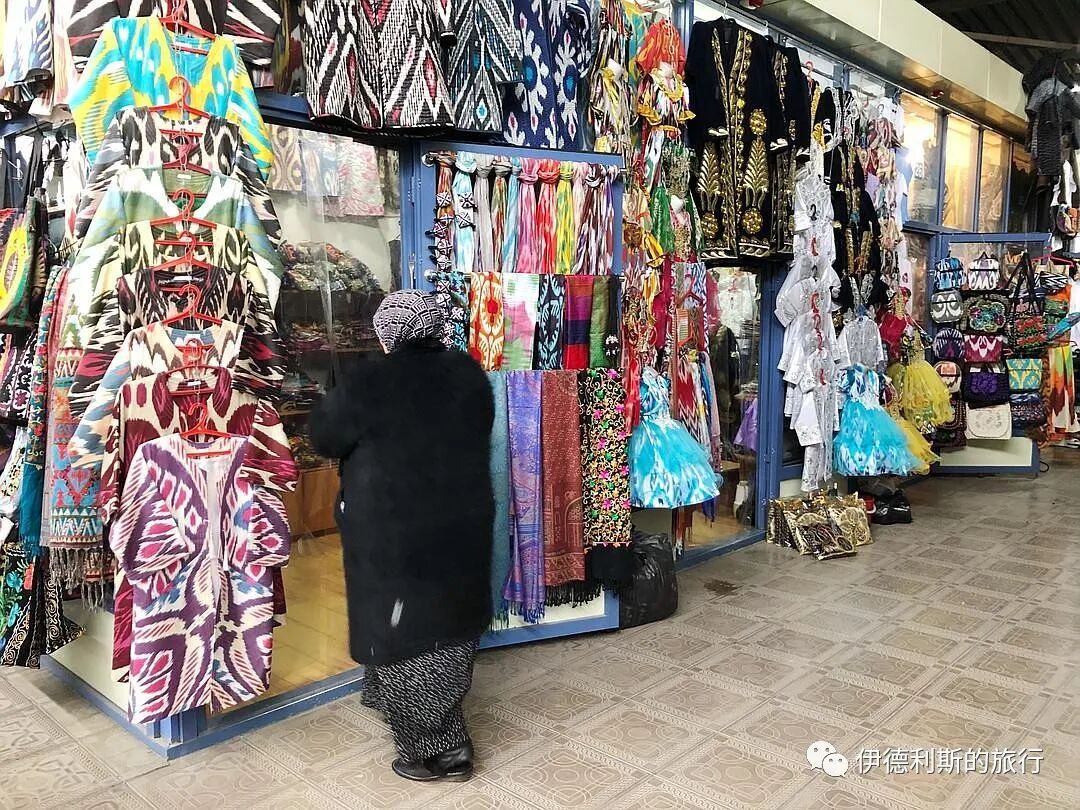
The area selling traditional clothing is at the far south end of the bazaar. You can buy traditional robes (chapan), embroidered cushions (kurpacha), and caps (doppi).
I really wanted to buy a robe, but I couldn't fit that much in my luggage, so I bought a few classic caps instead.
A classic traditional robe (chapan)
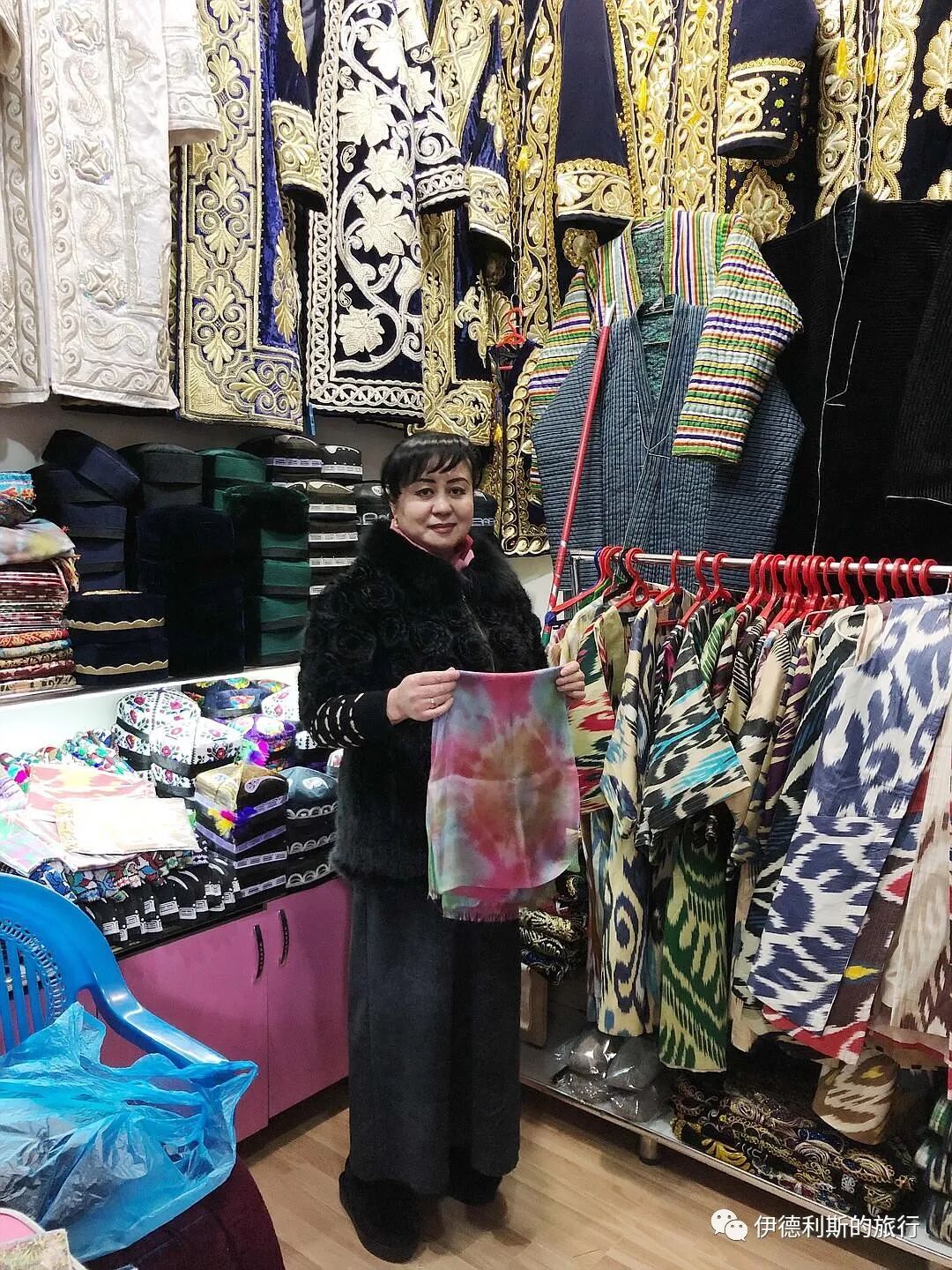
I bought two everyday almond-pattern caps (badam doppa) at the first shop. The almond-pattern cap is a style shared by Uyghur, Uzbek, and Tajik people. In Uzbekistan, it is called a Chust do‘ppisi. Chust is a handicraft center in the Fergana Valley, famous for making skullcaps (doppa). The almond-patterned skullcap (badam doppa) likely started in the 19th century. It spread quickly among Uzbeks, lowland Tajiks, and Uyghurs from the late 1800s to the early 1900s, becoming very popular.
I bought a colorful skullcap (doppa) at the second shop. You do not see these on the street often now, as people mostly wear them for festivals.
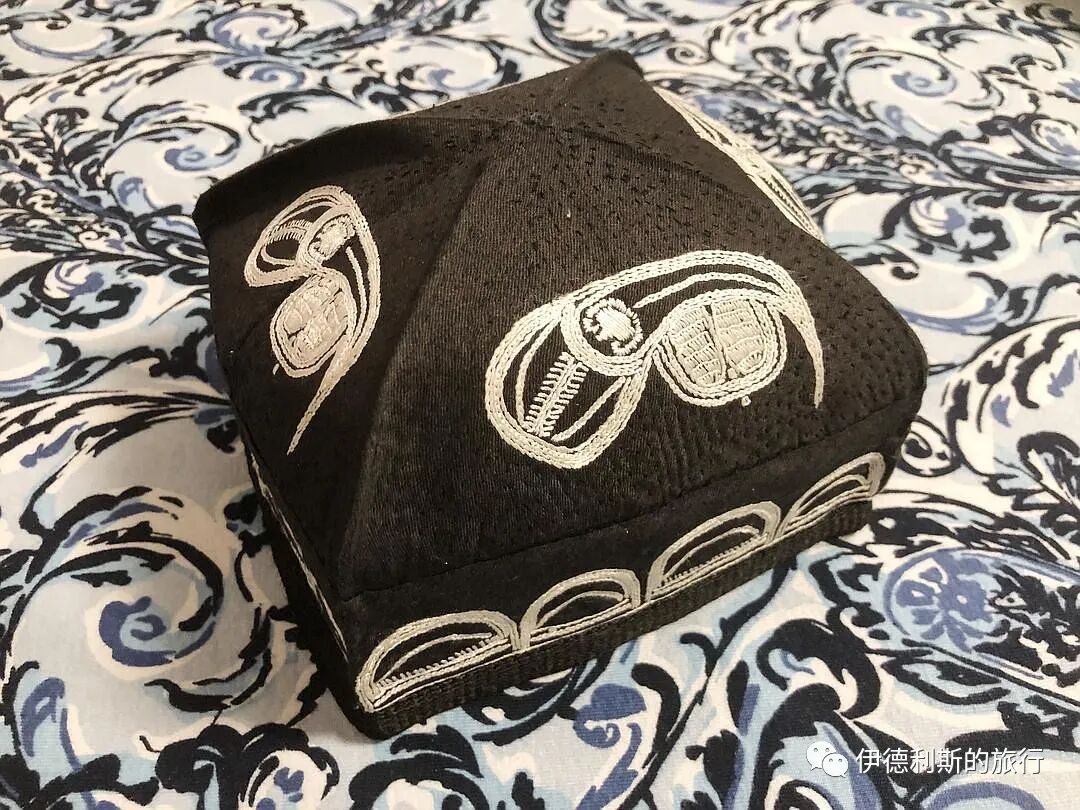
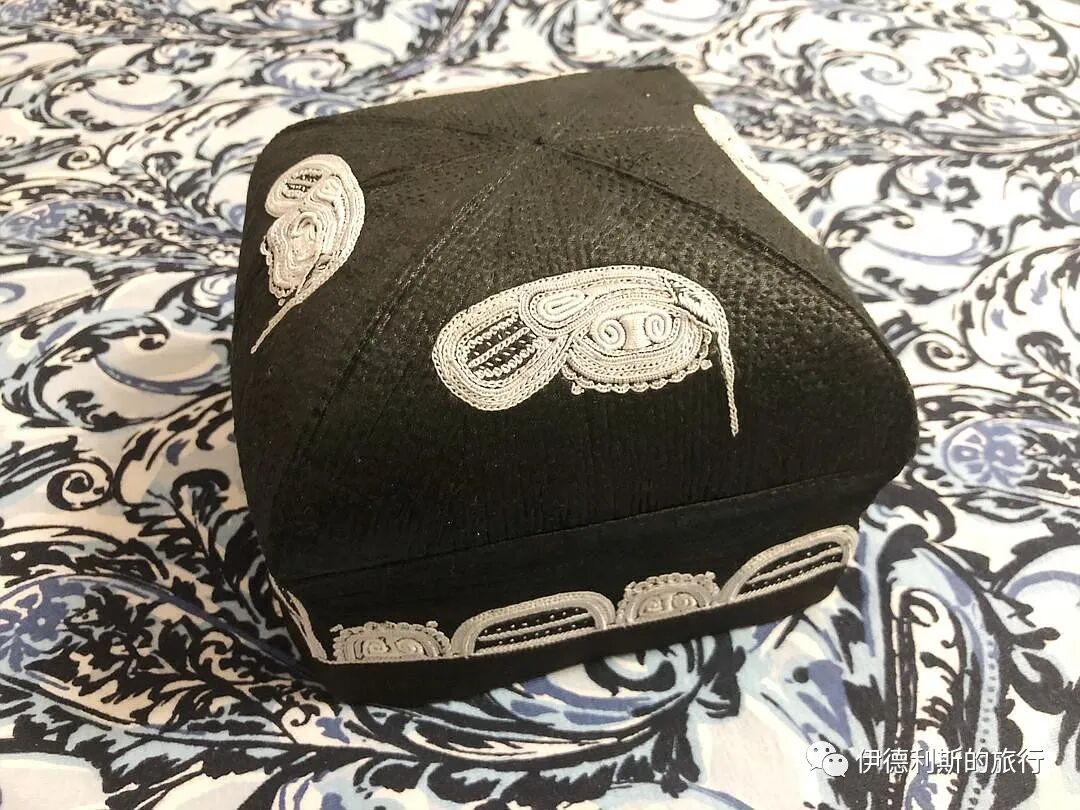
I bought this black felt hat at the third shop. This was my first time seeing this kind of black felt hat. I have seen similar white versions in Azerbaijan and Kyrgyzstan. These black felt hats are very common on the streets of Tashkent and are a local specialty.
Tashkent Food
1. Lagman House
The grandmother where we stayed highly recommended this noodle shop called Lagman House. It is not far from our place or the Chorsu Bazaar. The shop is very clean. We ordered mixed noodles (lagman), a rice, beef, and potato soup called Mastava, and a type of grilled meat called jaz. The meat in the mixed noodles was tasty, but the noodles were a bit thin. The grilled meat was super tender and really amazing.
2. Plov Centre
The Plov Centre is known as a must-visit restaurant in Tashkent. There are two Plov Centres, a new one and an old one, and they are not far apart. The new one is right under the TV tower; you will see the tower when you arrive. The Plov Centre only serves lunch every day, so watch the time because it runs out if you come too late.
The super-sized plov pots are a real visual spectacle.
There are also small pots.
Slicing the beef, the beef is super delicious.
Slicing the horse meat.
Tashkent pilaf (plov).
The menu is in Cyrillic, with three types of pilaf. You can order a large portion or extra meat. There are also small cold dishes of horse meat and tea to drink.
I took the subway to the pilaf center. The Tashkent Metro opened in 1977, but photography was only allowed starting in 2018, so I made sure to take a few photos.
Station entrance.
3, Plov-samsa.uz
I ate at a restaurant called Plov-Samsa.uz near Amir Timur Square in Tashkent with a friend. Plov means rice pilaf (plov) and Samsa means baked bun (samsa). I highly recommend their baked buns, they are delicious! They have a flaky crust and the portions are quite large.
This was my first time eating a baked bun in this shape.
The rice pilaf (plov) is topped with horse meat and quail eggs.
Meat soup (sho'rva).
I took a photo with a young man wearing a traditional robe (chapan) and a skullcap (doppa).
Maidie.
Near the old town of Tashkent, there is a large shopping mall called Samarqand Darvoza. It is one of the busier malls in the city and even has a KFC inside. I found a chain music store inside and bought two discs.
One is a traditional music group called Tashkent that plays drums and the suona horn. They formed in 1998. The combination of suona horns and drums stretches from inland China and Xinjiang through Central Asia all the way to Turkey. I have bought albums of this music in both Xinjiang and Turkey.
This is an album featuring the rawap.
You can walk south from Chorsu Bazaar to reach Samarqand Darvoza. On the way, you will pass through a neighborhood with a very Soviet feel.
Leaving.
After finishing my tour of Tashkent, I am getting ready to fly to Bukhara. I took a Yandex ride from my place to the airport. The driver and I chatted the whole way in elementary-level English, and he told me it was his first time talking to a foreigner. It is always fun to talk with people who are not good at English because you do not feel shy if you do not understand something.
At Tashkent Airport, I met a girl who goes to college in Guangzhou. She was doing a survey for her graduation thesis, so I helped her fill it out. view all
Summary: Tashkent — Old City Food, Mosques and Uzbek Heritage is presented here as a firsthand travel account in clear English, beginning with this scene: On February 5, 2019, the first day of the Lunar New Year, I flew directly from Beijing to Tashkent on Uzbekistan Airways to start my food and travel tour of Uzbekistan and Tajikistan. The account keeps its focus on Tashkent Travel, Uzbek Food, Muslim Heritage while preserving the names, places, food, and historical details from the Chinese source.
On February 5, 2019, the first day of the Lunar New Year, I flew directly from Beijing to Tashkent on Uzbekistan Airways to start my food and travel tour of Uzbekistan and Tajikistan.
I stayed at Gulnara Guesthouse, which I booked on Booking.com and is recommended by Lonely Planet. It is located in the center of the old city, very close to Chorsu Bazaar, and the owner speaks great English.
The breakfast is simple, but it is enough.
The room where we eat breakfast.
In the evening, I spent time hanging out with the staff, drinking tea and chatting.
The bread the staff eats with their tea.
After checking in, I headed out to explore the bazaar!
My place is less than 500 meters from the bazaar.
Chorsu Bazaar.
Chorsu Bazaar is in the heart of the old city (Eski Shakhar) in Tashkent and is the busiest spot in the old town. The words Chorsu and Bazaar both come from Persian and mean market at the crossroads. In winter, Chorsu Bazaar opens around 10 a.m. and stays open until dark, selling all kinds of goods.
The entrance to the bazaar is packed with all sorts of cars.
Baby cribs.
Various tourist souvenirs.
Fruit seller
Naan bread seller
1. Snack area
The snack area is on the east side of Chorsu Bazaar. In winter, it is open daily from morning until around four or five in the afternoon. You can eat all kinds of Uzbek snacks there.
Rice sausage seller
Rice sausage seller
Naryn
Served with meat broth and naan bread
A person selling grilled meat (kaorou).
The grilled meat is super delicious.
There is also someone selling chickpea soup.
2. Fruit and vegetable section.
Fruits and vegetables take up most of the domed market. I visited in winter, so there was not much to buy. If you come in summer, you should be able to eat more delicious fruits.
I personally think pomegranate juice in Uzbekistan tastes a bit worse than in Xinjiang, but it is better than in Azerbaijan and Turkey.
The uncle is wearing a casual-style robe (chapan).
When eating and shopping at an Uzbek bazaar, the first sentence you need to learn is "Necha pul" (how much). The uncle's answer is "Besh ming som" (five thousand som).
Melon
Various dried fruits
3. Clothing section
The area selling traditional clothing is at the far south end of the bazaar. You can buy traditional robes (chapan), embroidered cushions (kurpacha), and caps (doppi).
I really wanted to buy a robe, but I couldn't fit that much in my luggage, so I bought a few classic caps instead.
A classic traditional robe (chapan)
I bought two everyday almond-pattern caps (badam doppa) at the first shop. The almond-pattern cap is a style shared by Uyghur, Uzbek, and Tajik people. In Uzbekistan, it is called a Chust do‘ppisi. Chust is a handicraft center in the Fergana Valley, famous for making skullcaps (doppa). The almond-patterned skullcap (badam doppa) likely started in the 19th century. It spread quickly among Uzbeks, lowland Tajiks, and Uyghurs from the late 1800s to the early 1900s, becoming very popular.
I bought a colorful skullcap (doppa) at the second shop. You do not see these on the street often now, as people mostly wear them for festivals.
I bought this black felt hat at the third shop. This was my first time seeing this kind of black felt hat. I have seen similar white versions in Azerbaijan and Kyrgyzstan. These black felt hats are very common on the streets of Tashkent and are a local specialty.
Tashkent Food
1. Lagman House
The grandmother where we stayed highly recommended this noodle shop called Lagman House. It is not far from our place or the Chorsu Bazaar. The shop is very clean. We ordered mixed noodles (lagman), a rice, beef, and potato soup called Mastava, and a type of grilled meat called jaz. The meat in the mixed noodles was tasty, but the noodles were a bit thin. The grilled meat was super tender and really amazing.
2. Plov Centre
The Plov Centre is known as a must-visit restaurant in Tashkent. There are two Plov Centres, a new one and an old one, and they are not far apart. The new one is right under the TV tower; you will see the tower when you arrive. The Plov Centre only serves lunch every day, so watch the time because it runs out if you come too late.
The super-sized plov pots are a real visual spectacle.
There are also small pots.
Slicing the beef, the beef is super delicious.
Slicing the horse meat.
Tashkent pilaf (plov).
The menu is in Cyrillic, with three types of pilaf. You can order a large portion or extra meat. There are also small cold dishes of horse meat and tea to drink.
I took the subway to the pilaf center. The Tashkent Metro opened in 1977, but photography was only allowed starting in 2018, so I made sure to take a few photos.
Station entrance.
3, Plov-samsa.uz
I ate at a restaurant called Plov-Samsa.uz near Amir Timur Square in Tashkent with a friend. Plov means rice pilaf (plov) and Samsa means baked bun (samsa). I highly recommend their baked buns, they are delicious! They have a flaky crust and the portions are quite large.
This was my first time eating a baked bun in this shape.
The rice pilaf (plov) is topped with horse meat and quail eggs.
Meat soup (sho'rva).
I took a photo with a young man wearing a traditional robe (chapan) and a skullcap (doppa).
Maidie.
Near the old town of Tashkent, there is a large shopping mall called Samarqand Darvoza. It is one of the busier malls in the city and even has a KFC inside. I found a chain music store inside and bought two discs.
One is a traditional music group called Tashkent that plays drums and the suona horn. They formed in 1998. The combination of suona horns and drums stretches from inland China and Xinjiang through Central Asia all the way to Turkey. I have bought albums of this music in both Xinjiang and Turkey.
This is an album featuring the rawap.
You can walk south from Chorsu Bazaar to reach Samarqand Darvoza. On the way, you will pass through a neighborhood with a very Soviet feel.
Leaving.
After finishing my tour of Tashkent, I am getting ready to fly to Bukhara. I took a Yandex ride from my place to the airport. The driver and I chatted the whole way in elementary-level English, and he told me it was his first time talking to a foreigner. It is always fun to talk with people who are not good at English because you do not feel shy if you do not understand something.
At Tashkent Airport, I met a girl who goes to college in Guangzhou. She was doing a survey for her graduation thesis, so I helped her fill it out. view all
Reposted from the web
Summary: Tashkent — Old City Food, Mosques and Uzbek Heritage is presented here as a firsthand travel account in clear English, beginning with this scene: On February 5, 2019, the first day of the Lunar New Year, I flew directly from Beijing to Tashkent on Uzbekistan Airways to start my food and travel tour of Uzbekistan and Tajikistan. The account keeps its focus on Tashkent Travel, Uzbek Food, Muslim Heritage while preserving the names, places, food, and historical details from the Chinese source.
On February 5, 2019, the first day of the Lunar New Year, I flew directly from Beijing to Tashkent on Uzbekistan Airways to start my food and travel tour of Uzbekistan and Tajikistan.
I stayed at Gulnara Guesthouse, which I booked on Booking.com and is recommended by Lonely Planet. It is located in the center of the old city, very close to Chorsu Bazaar, and the owner speaks great English.
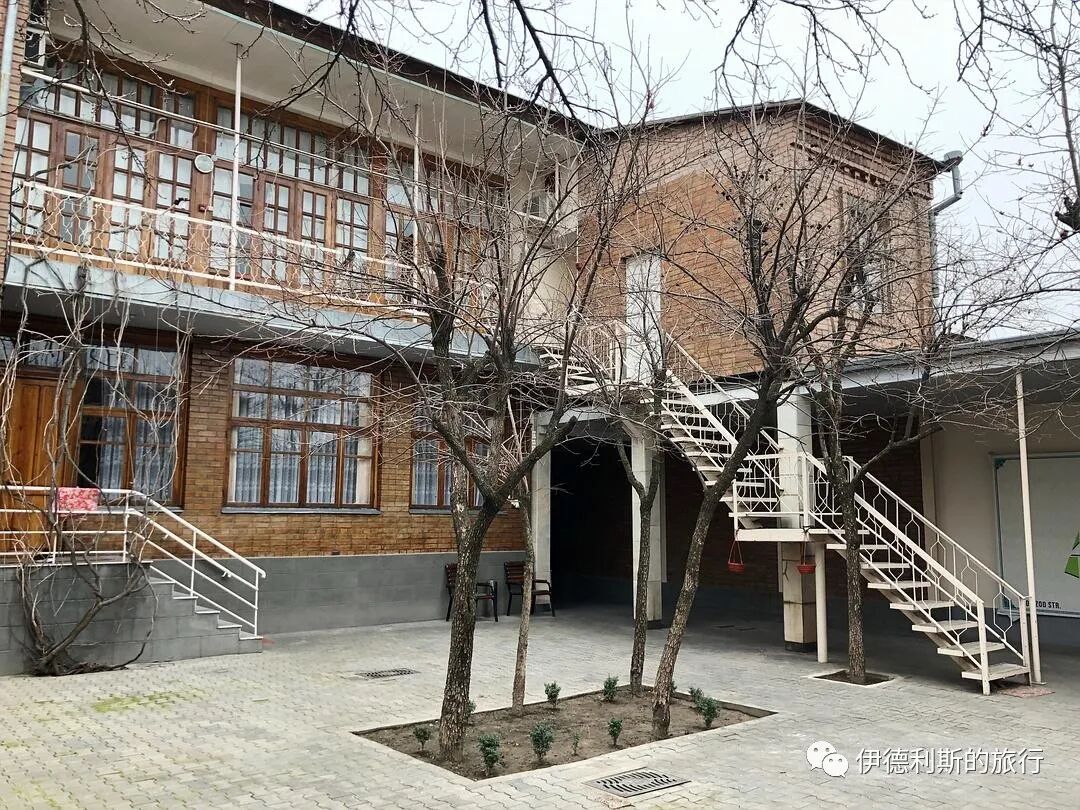
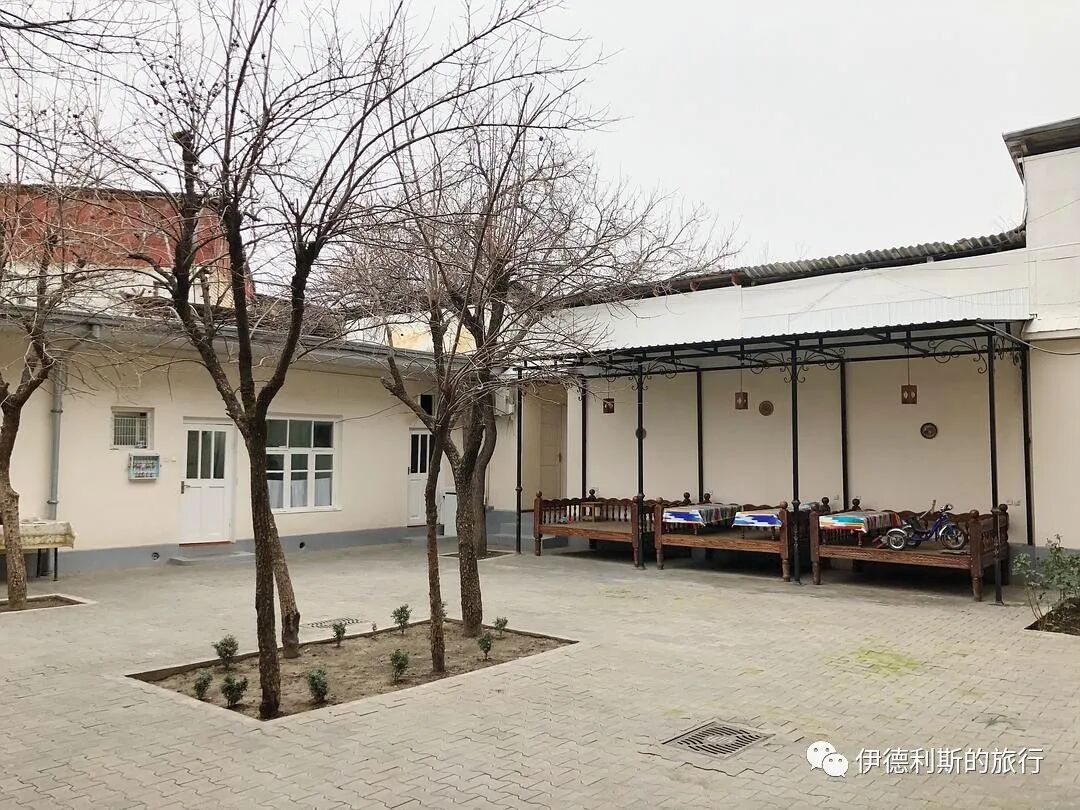
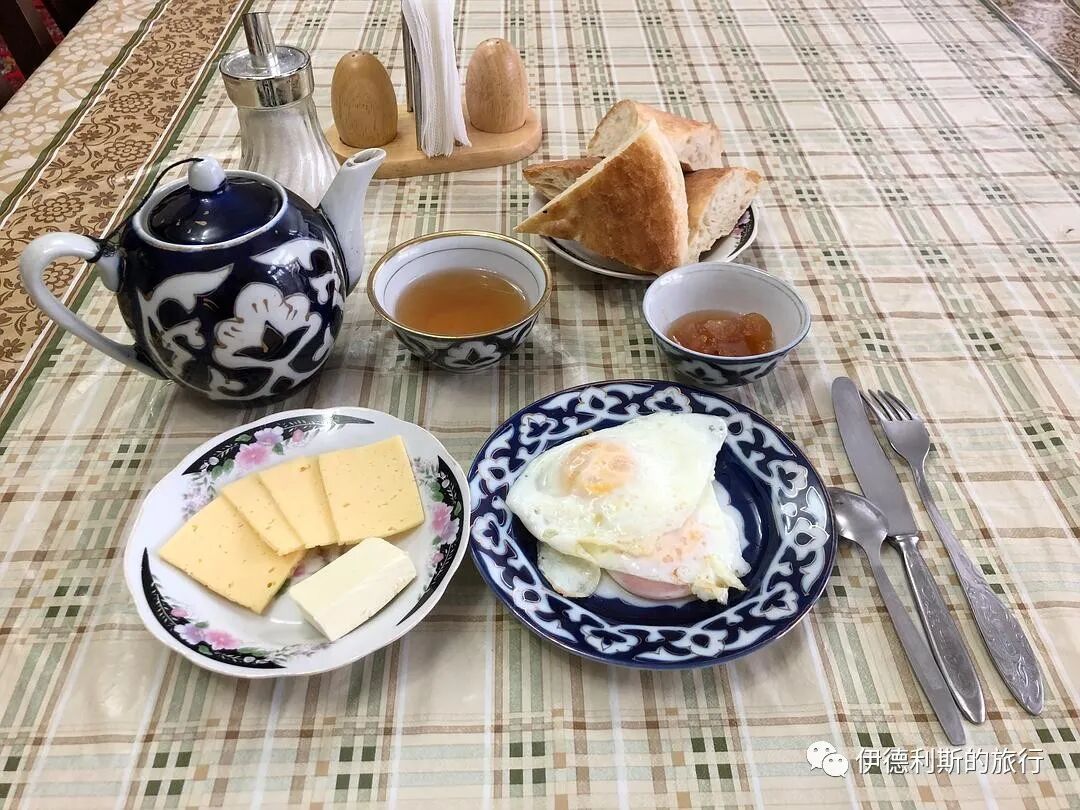
The breakfast is simple, but it is enough.
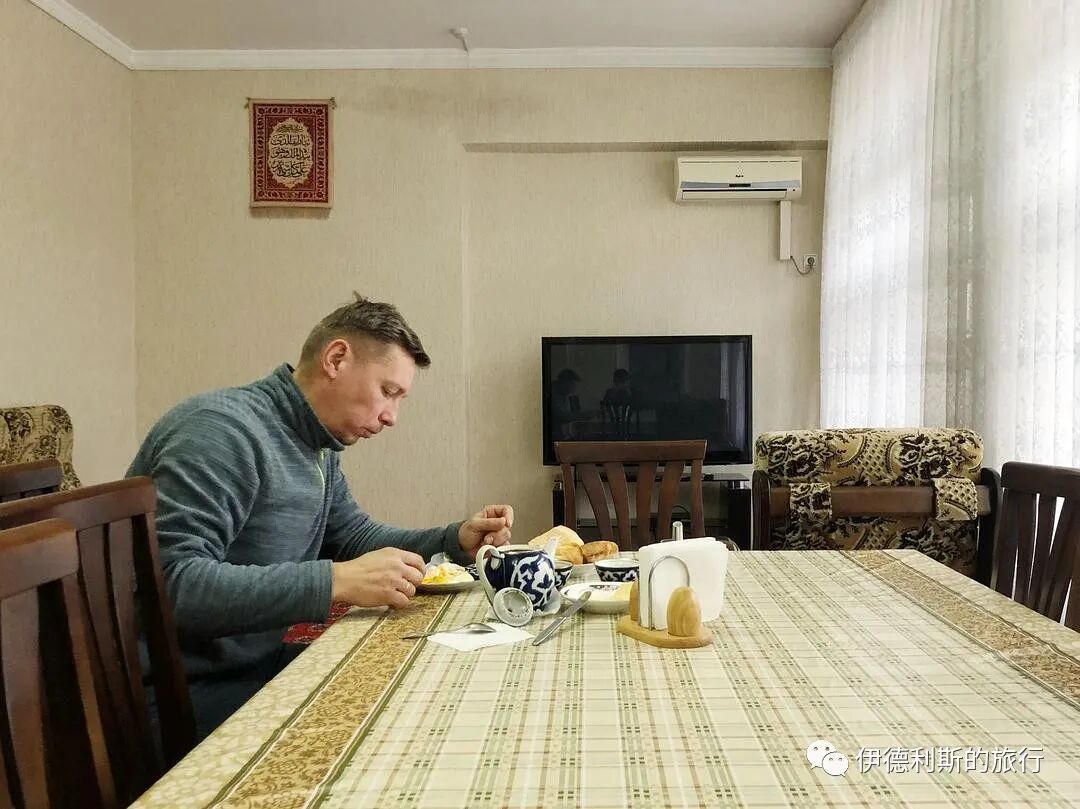
The room where we eat breakfast.
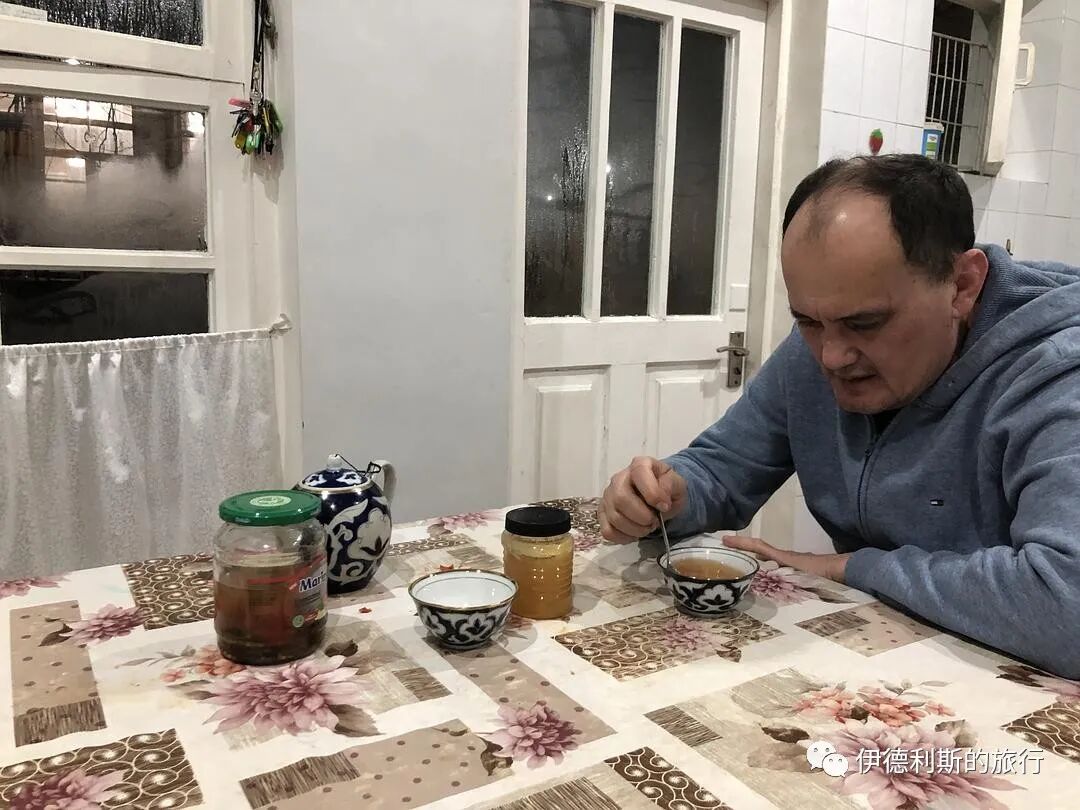
In the evening, I spent time hanging out with the staff, drinking tea and chatting.
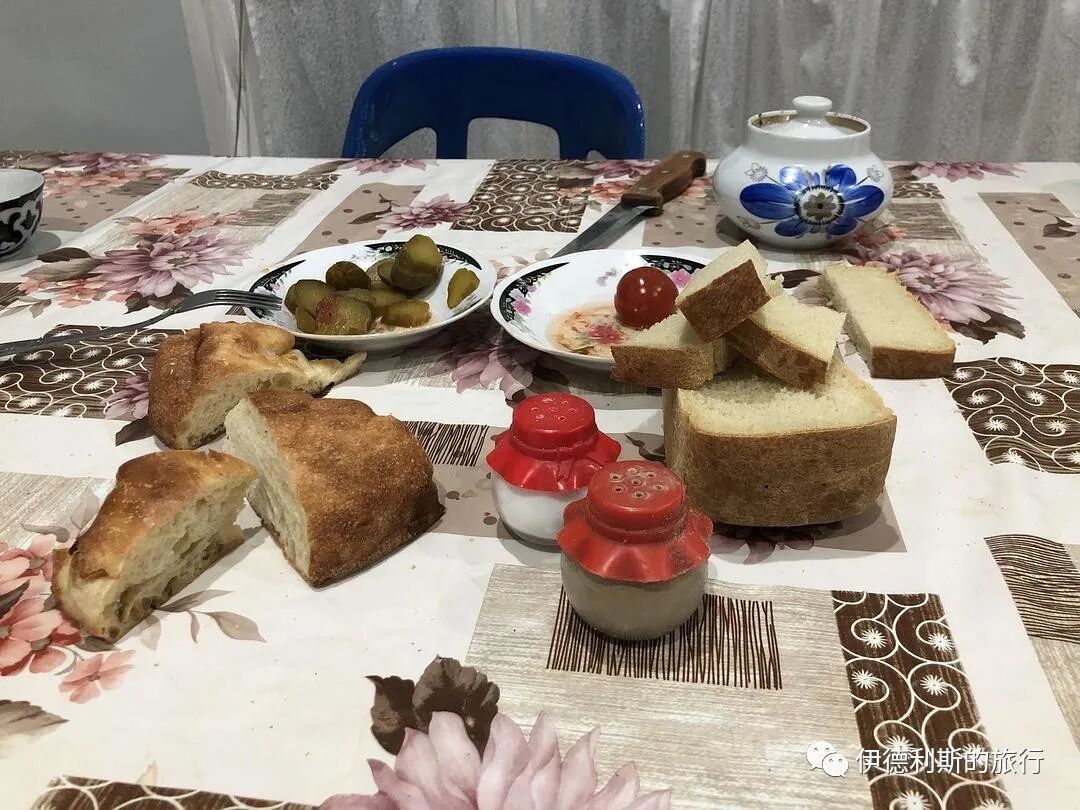
The bread the staff eats with their tea.
After checking in, I headed out to explore the bazaar!
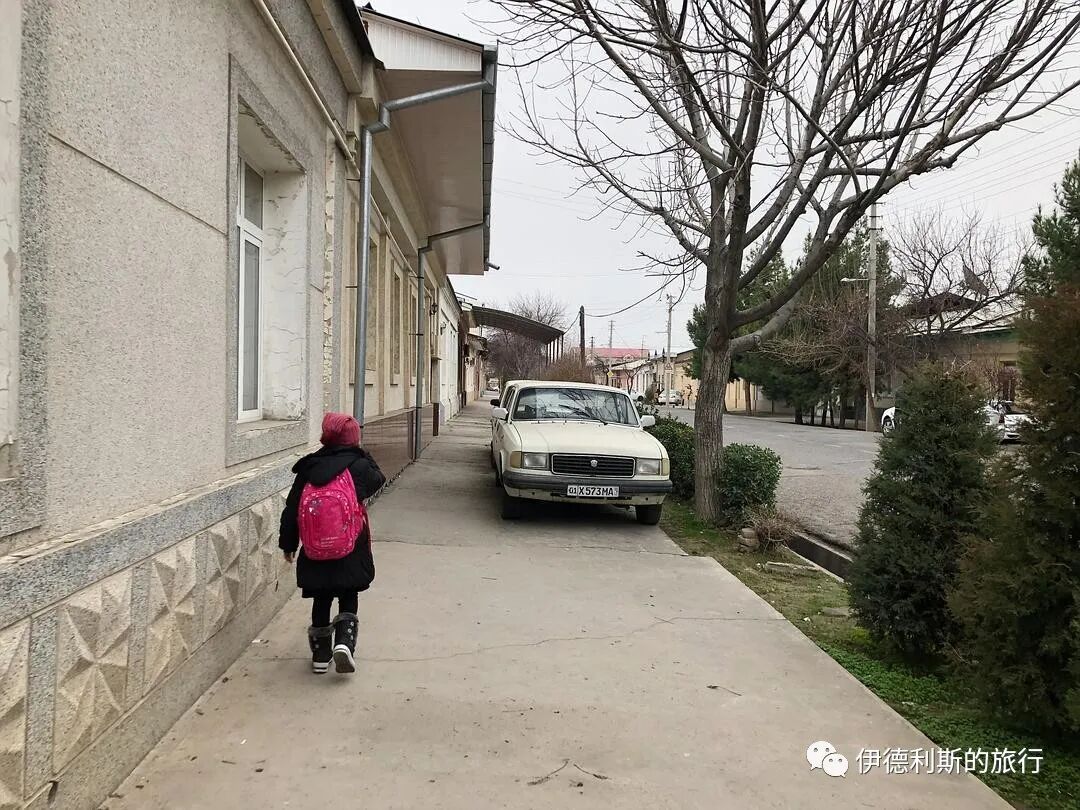
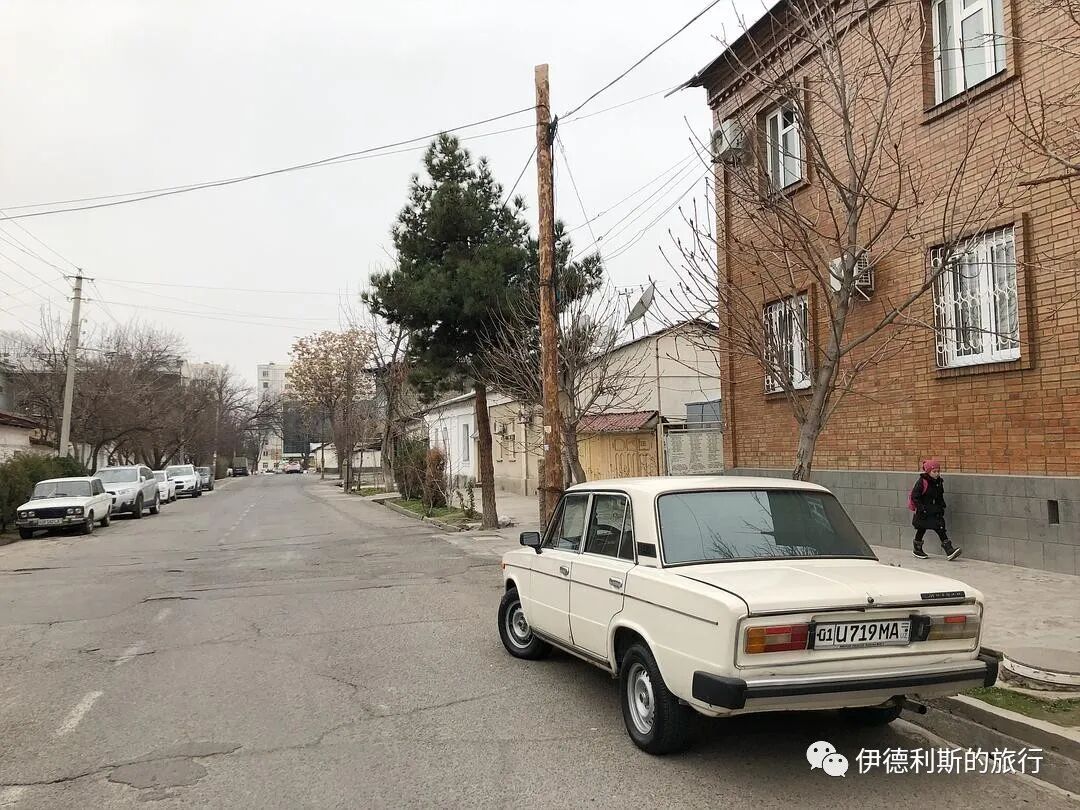
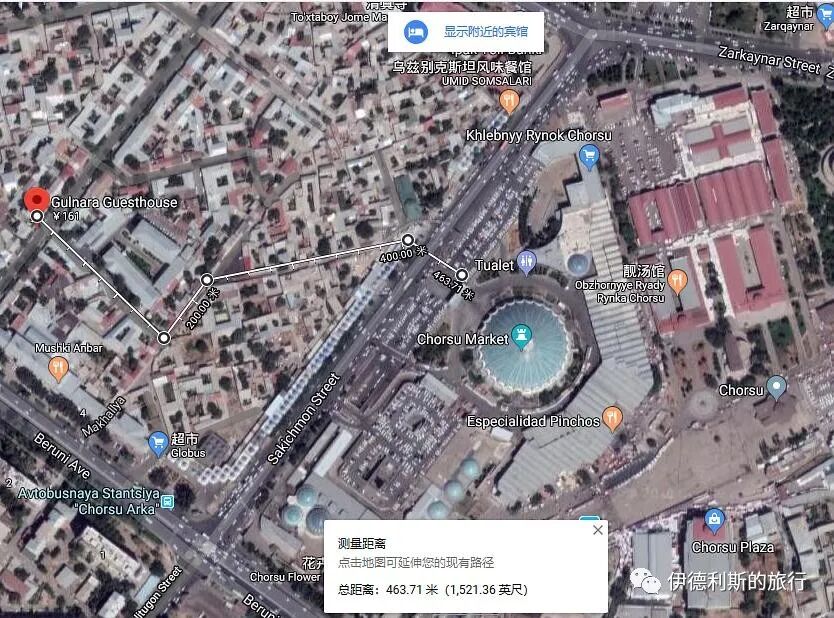
My place is less than 500 meters from the bazaar.
Chorsu Bazaar.
Chorsu Bazaar is in the heart of the old city (Eski Shakhar) in Tashkent and is the busiest spot in the old town. The words Chorsu and Bazaar both come from Persian and mean market at the crossroads. In winter, Chorsu Bazaar opens around 10 a.m. and stays open until dark, selling all kinds of goods.
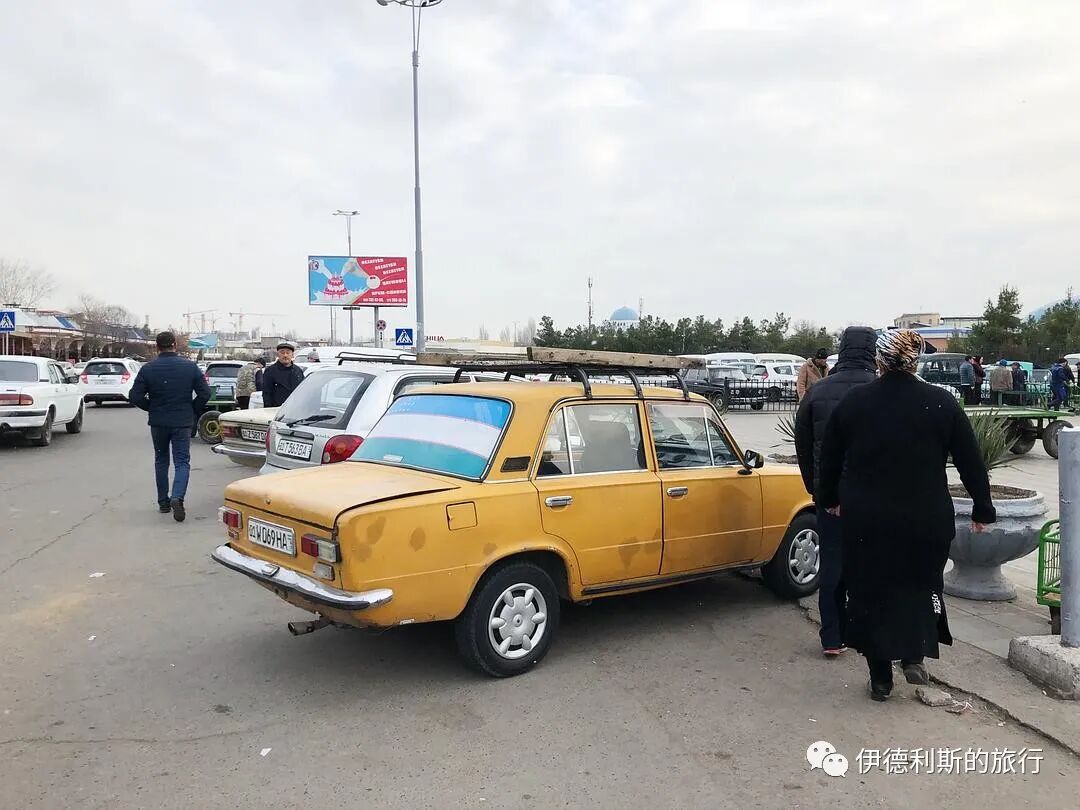
The entrance to the bazaar is packed with all sorts of cars.
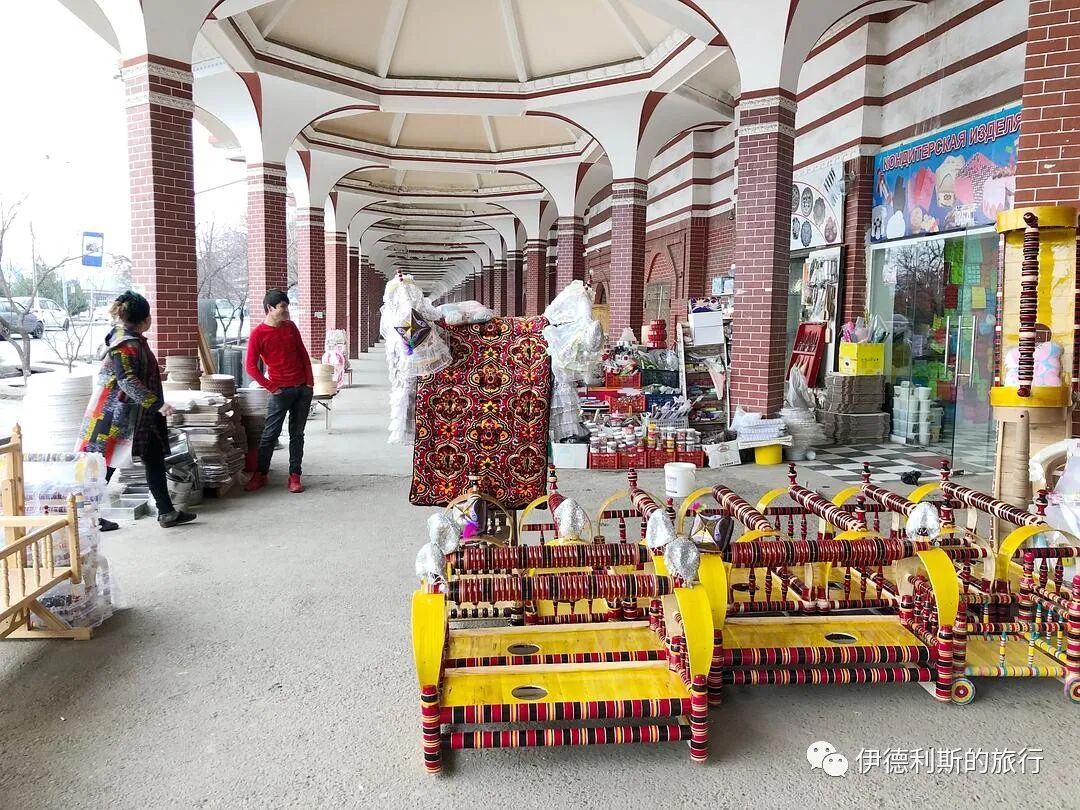
Baby cribs.
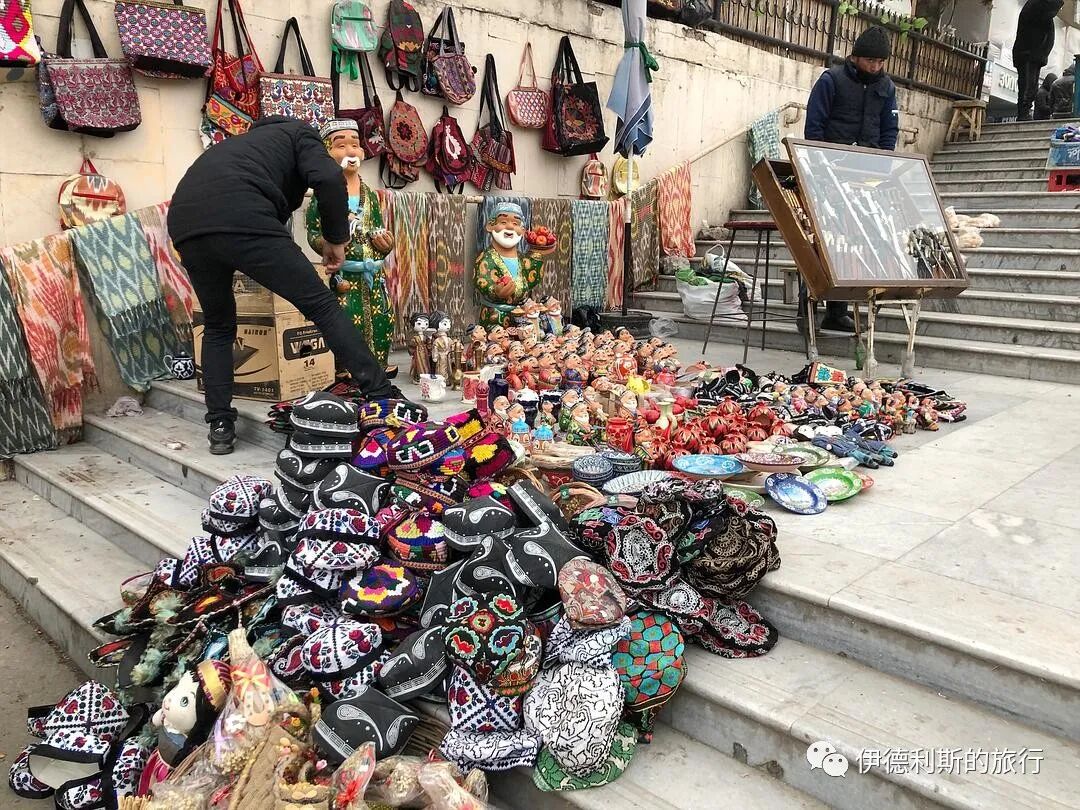
Various tourist souvenirs.
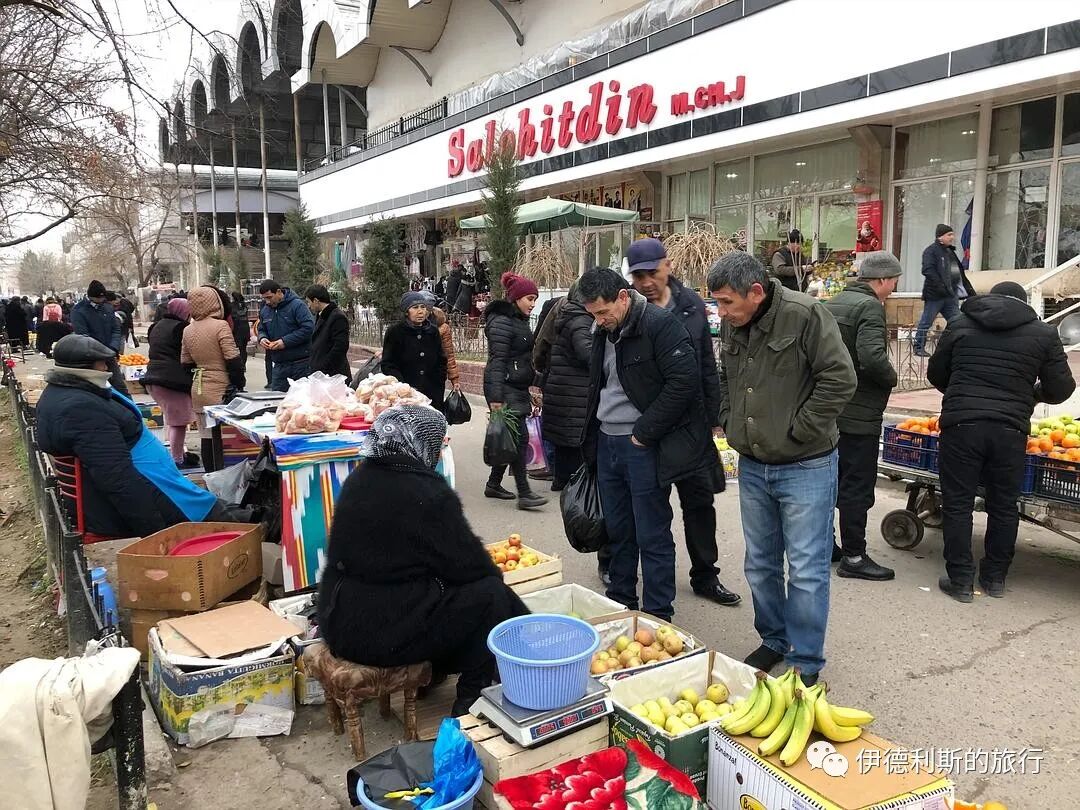
Fruit seller
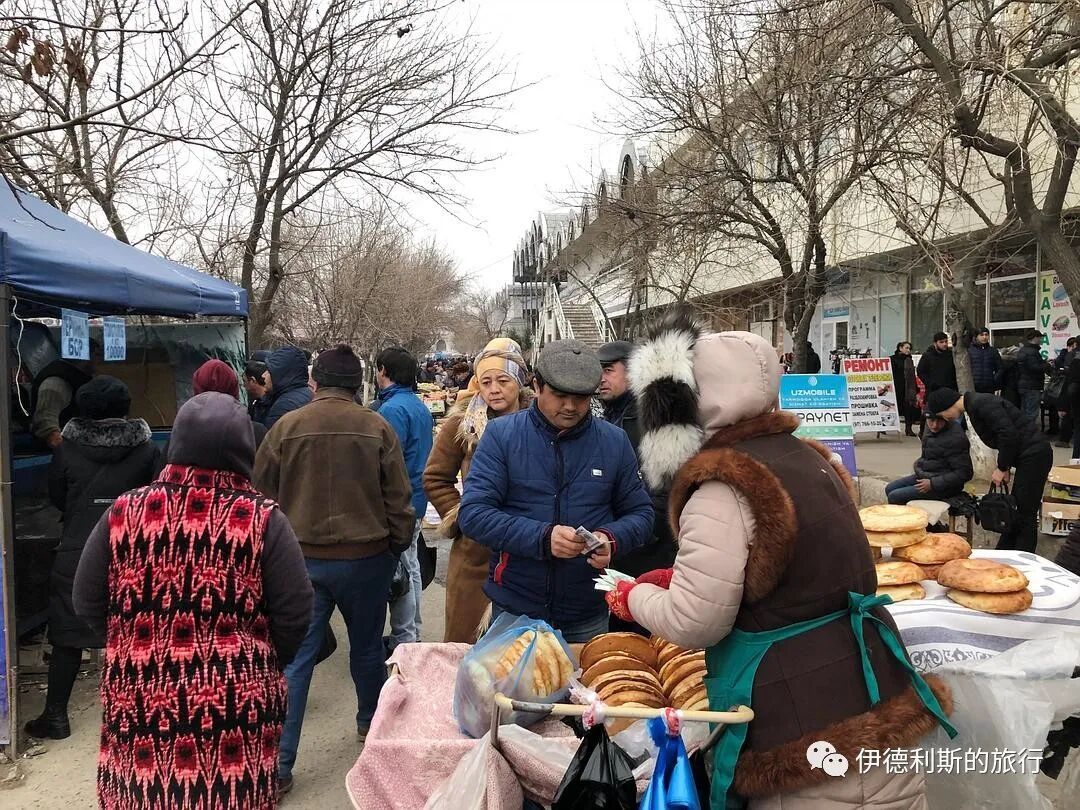
Naan bread seller
1. Snack area
The snack area is on the east side of Chorsu Bazaar. In winter, it is open daily from morning until around four or five in the afternoon. You can eat all kinds of Uzbek snacks there.
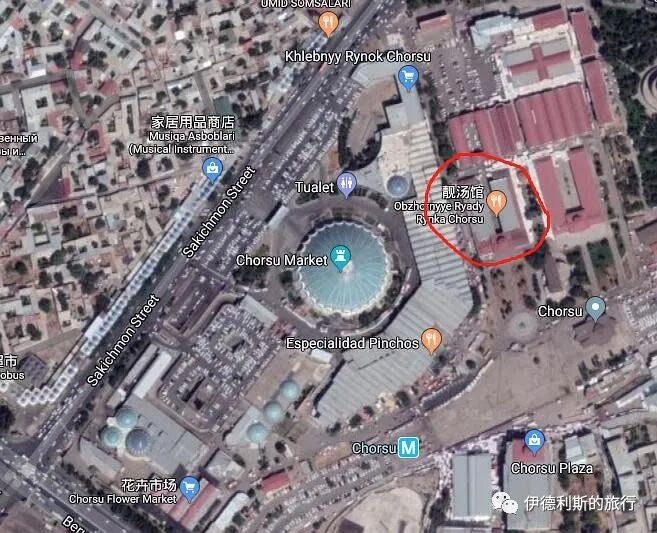
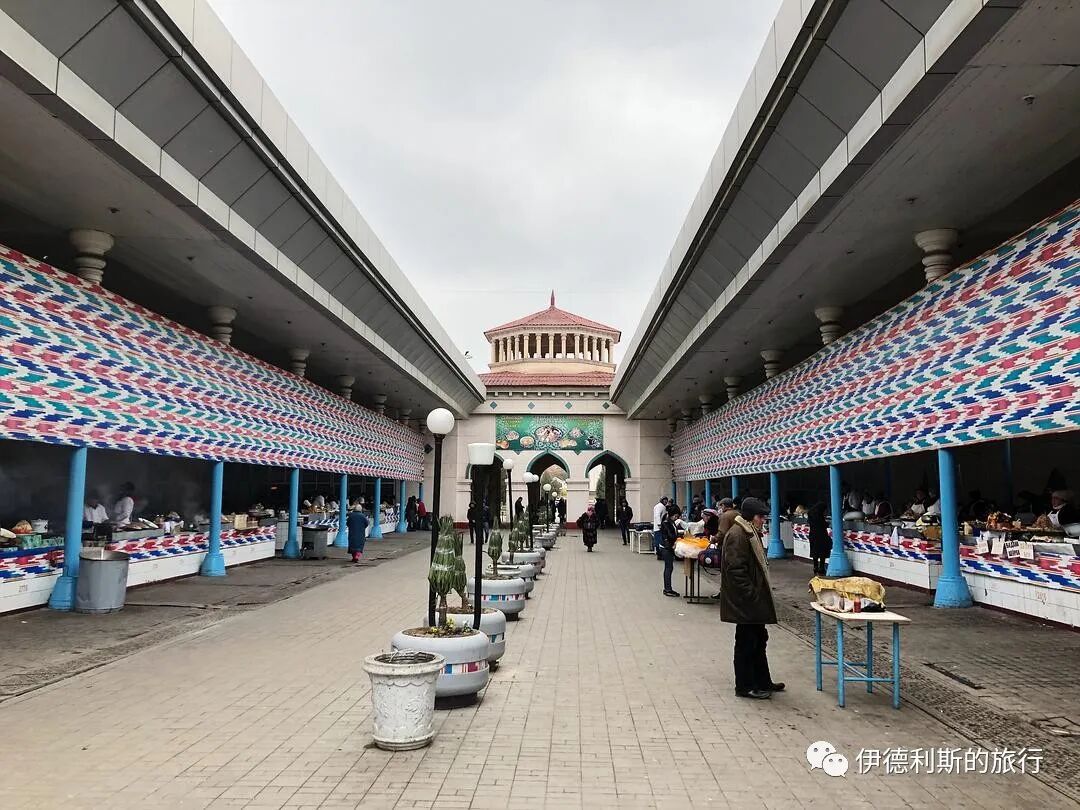
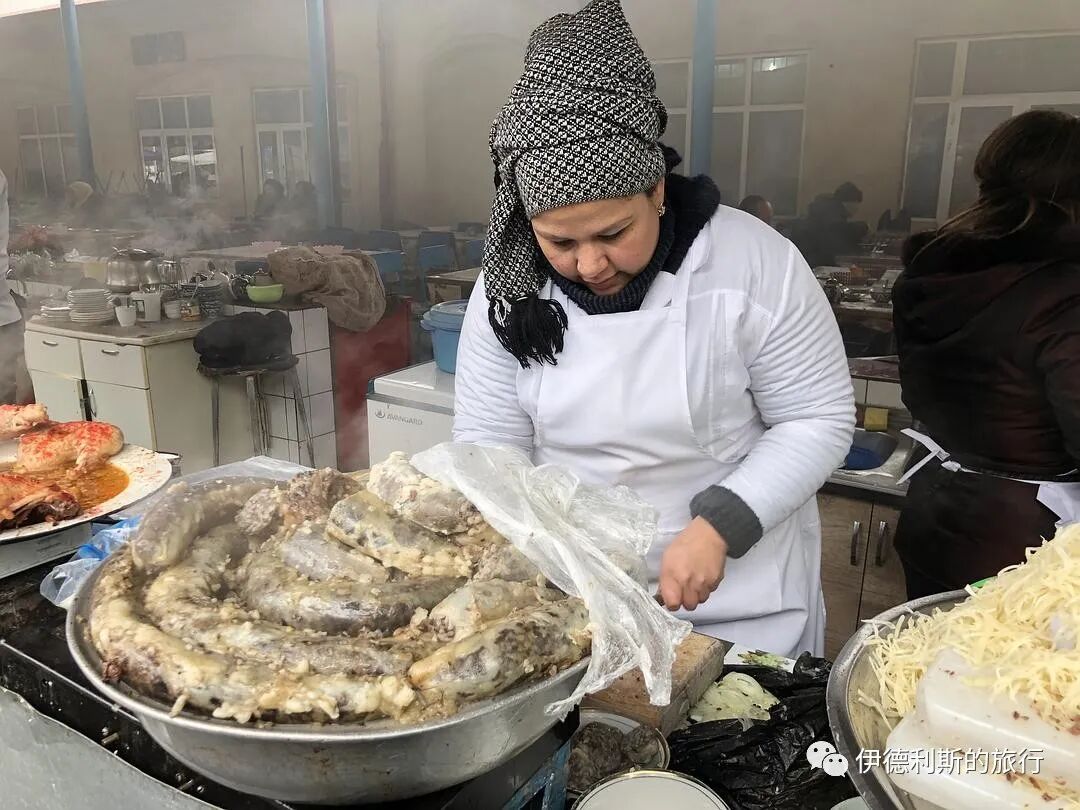
Rice sausage seller
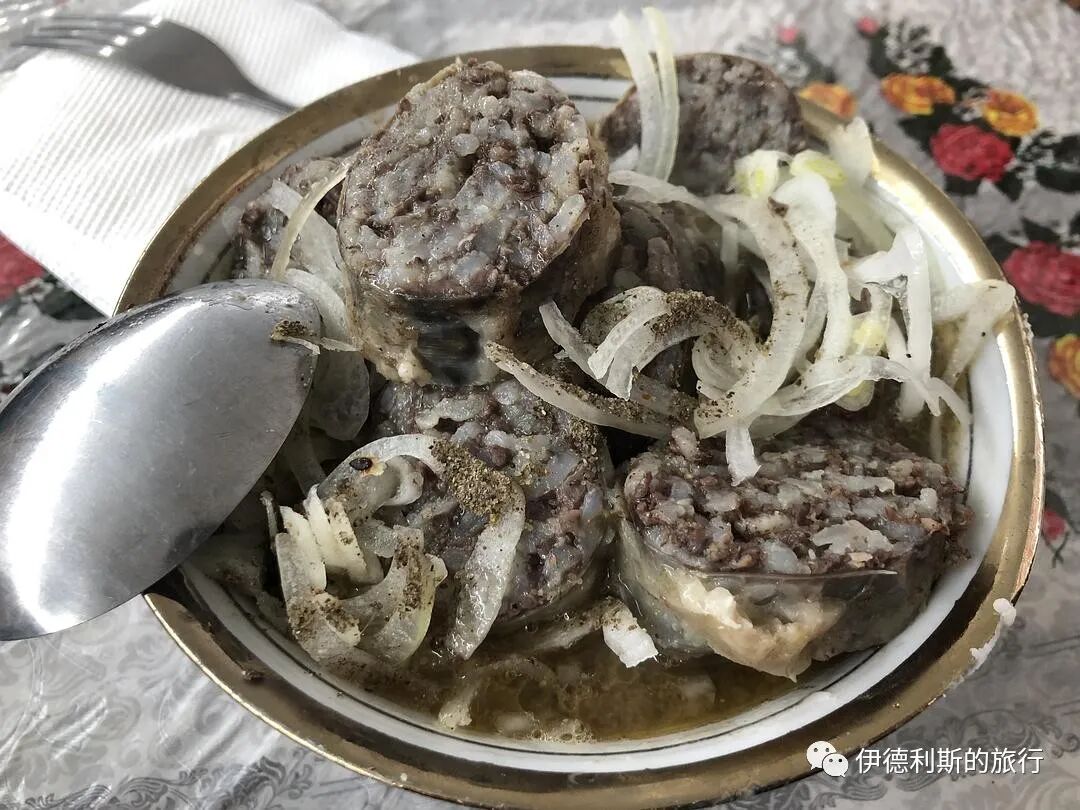
Rice sausage seller
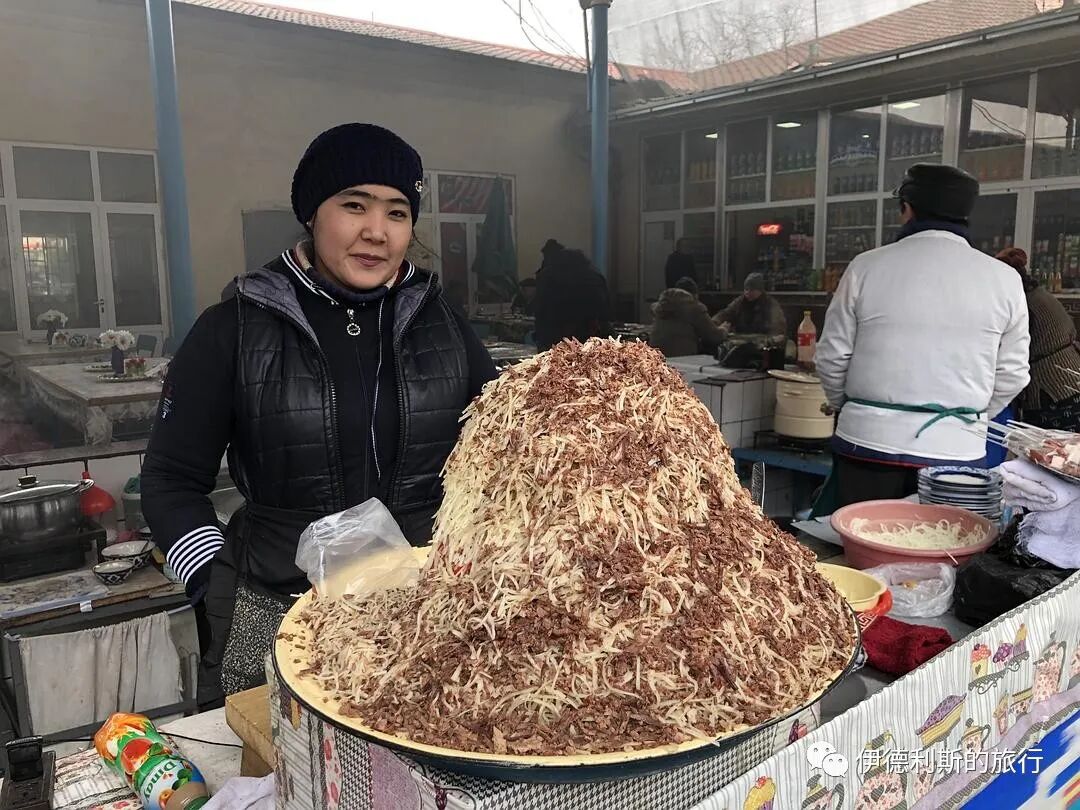
Naryn
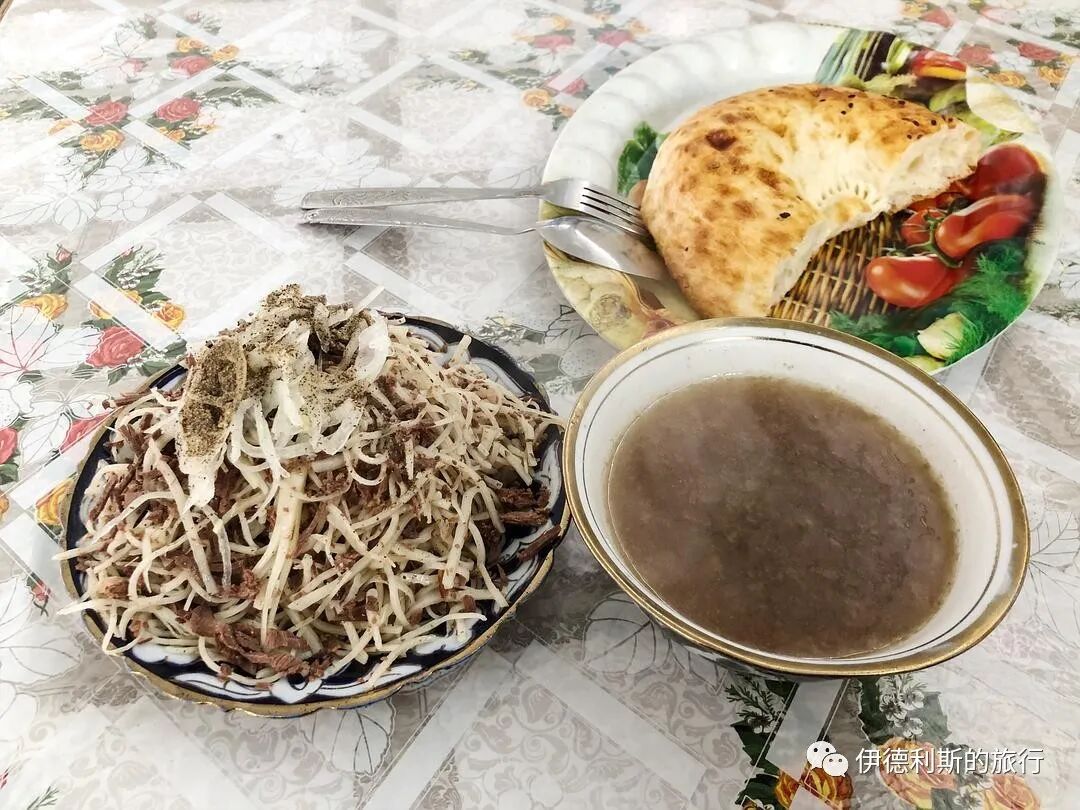
Served with meat broth and naan bread
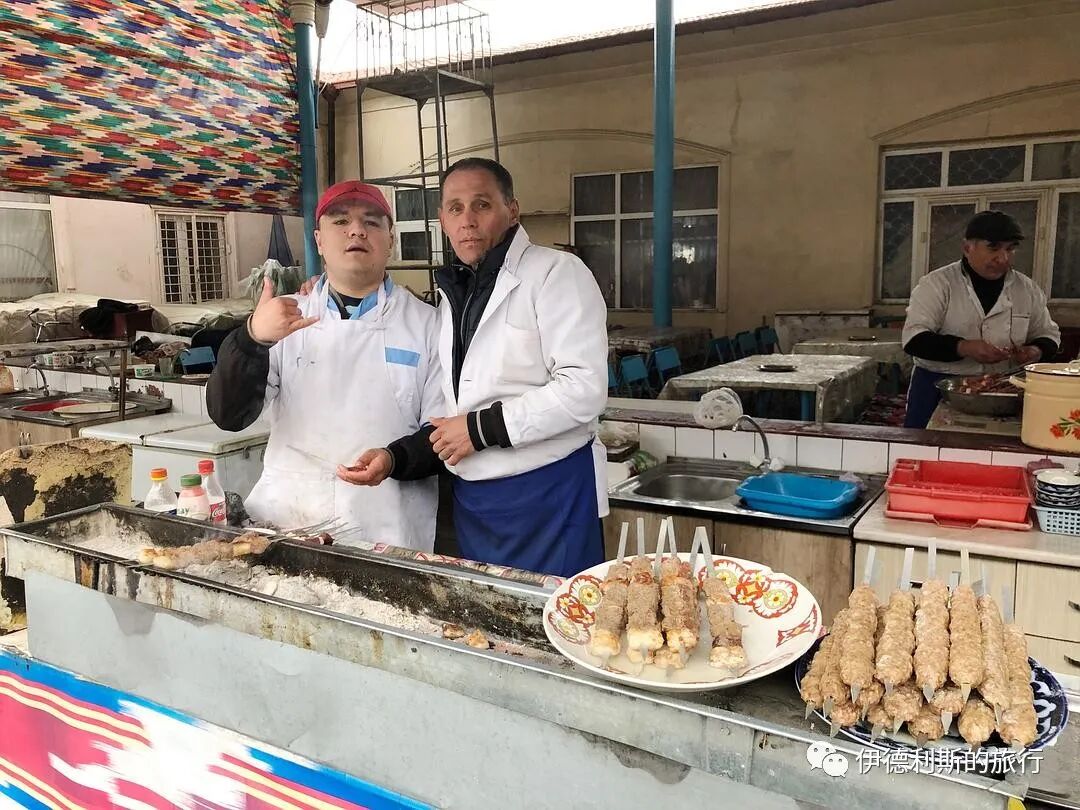
A person selling grilled meat (kaorou).
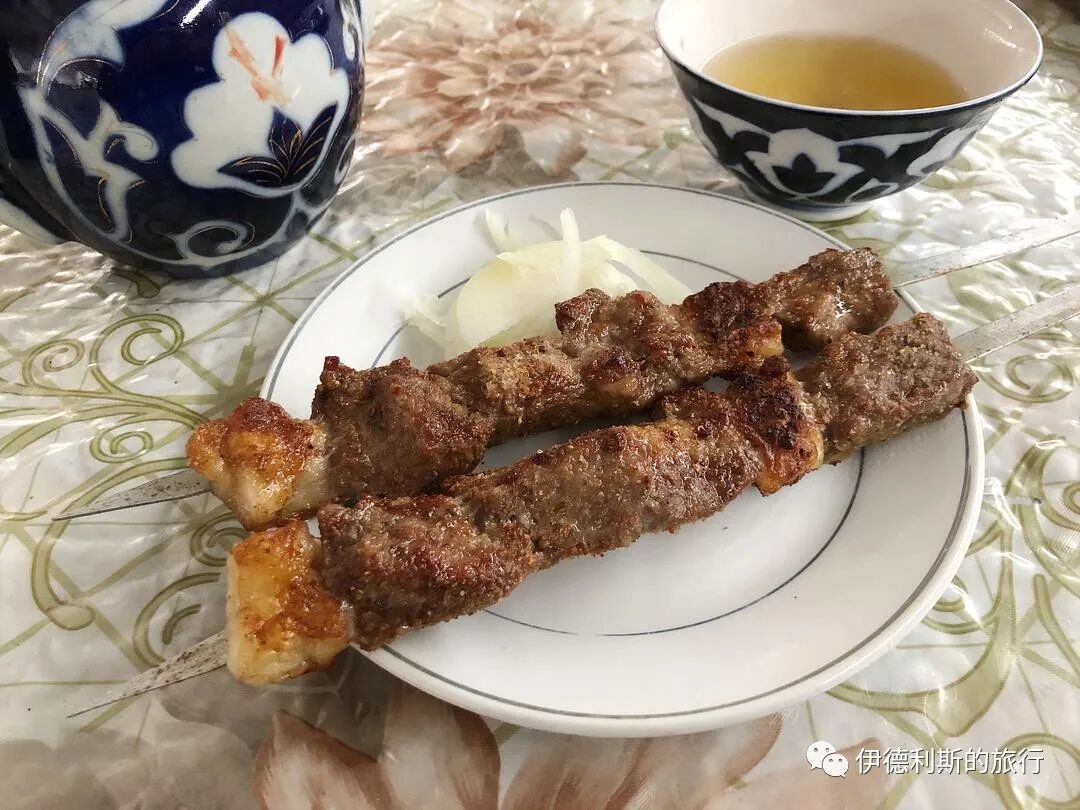
The grilled meat is super delicious.
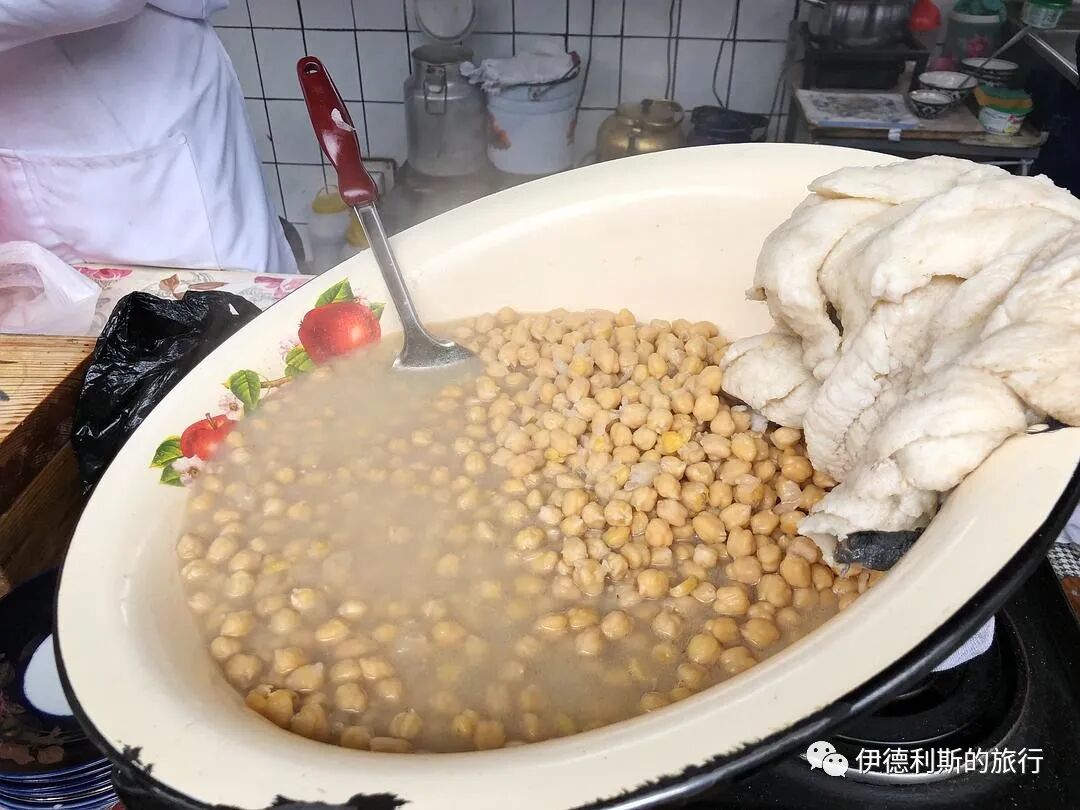
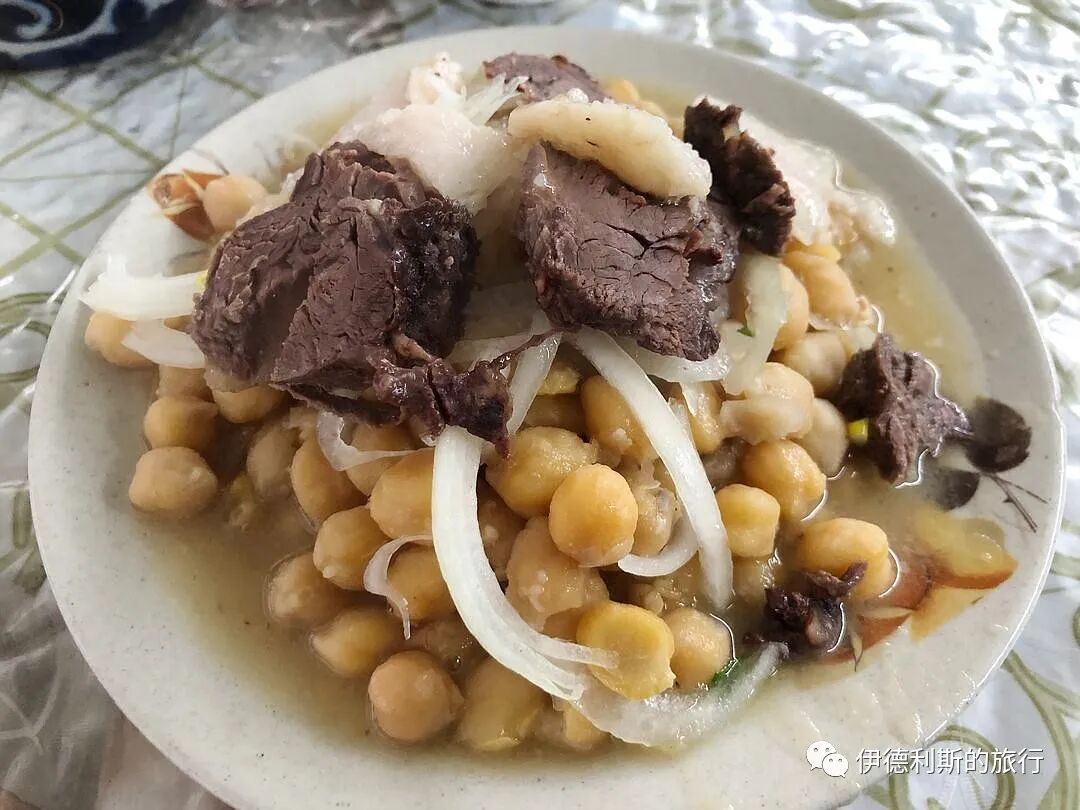
There is also someone selling chickpea soup.
2. Fruit and vegetable section.
Fruits and vegetables take up most of the domed market. I visited in winter, so there was not much to buy. If you come in summer, you should be able to eat more delicious fruits.
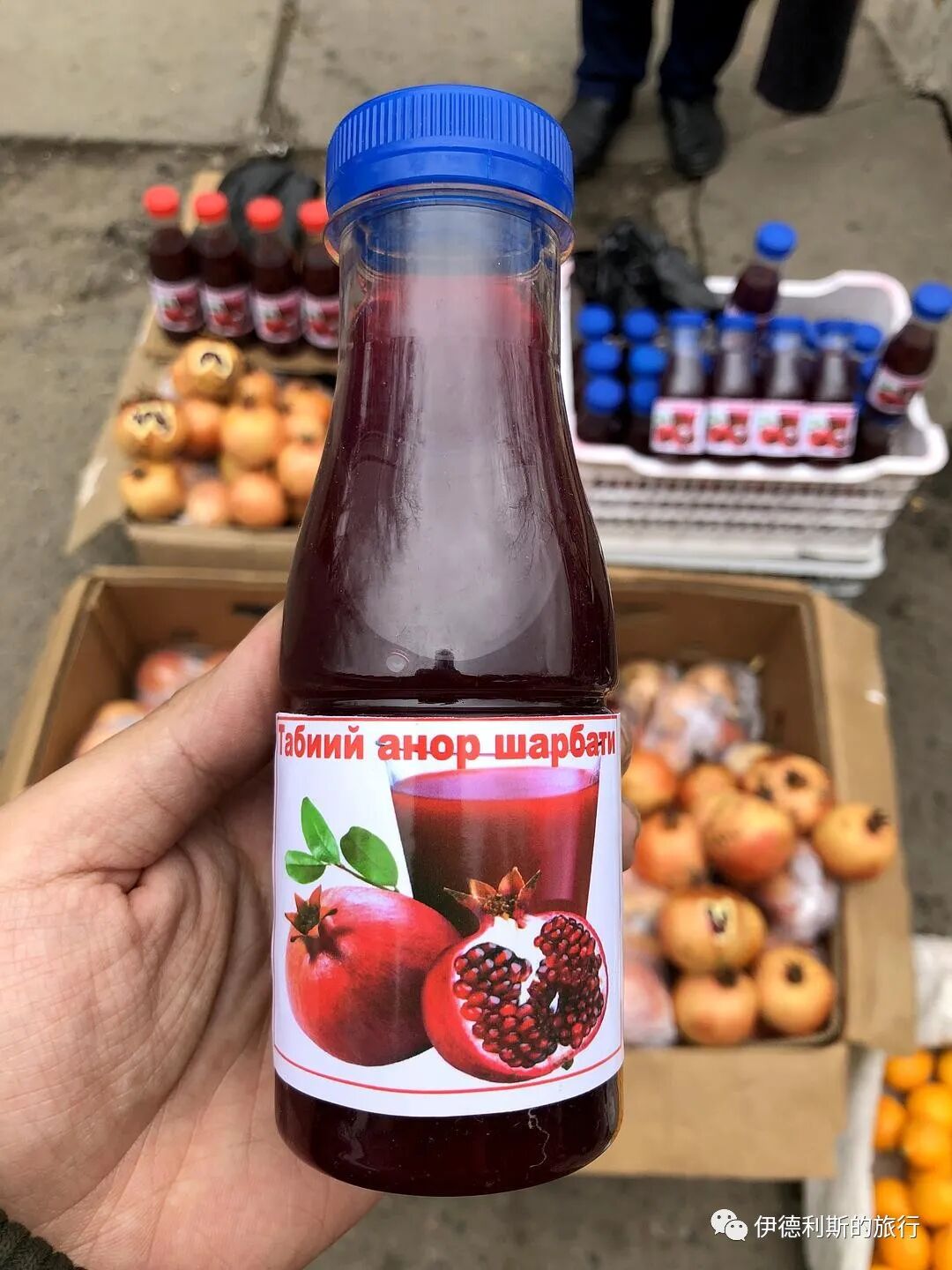
I personally think pomegranate juice in Uzbekistan tastes a bit worse than in Xinjiang, but it is better than in Azerbaijan and Turkey.
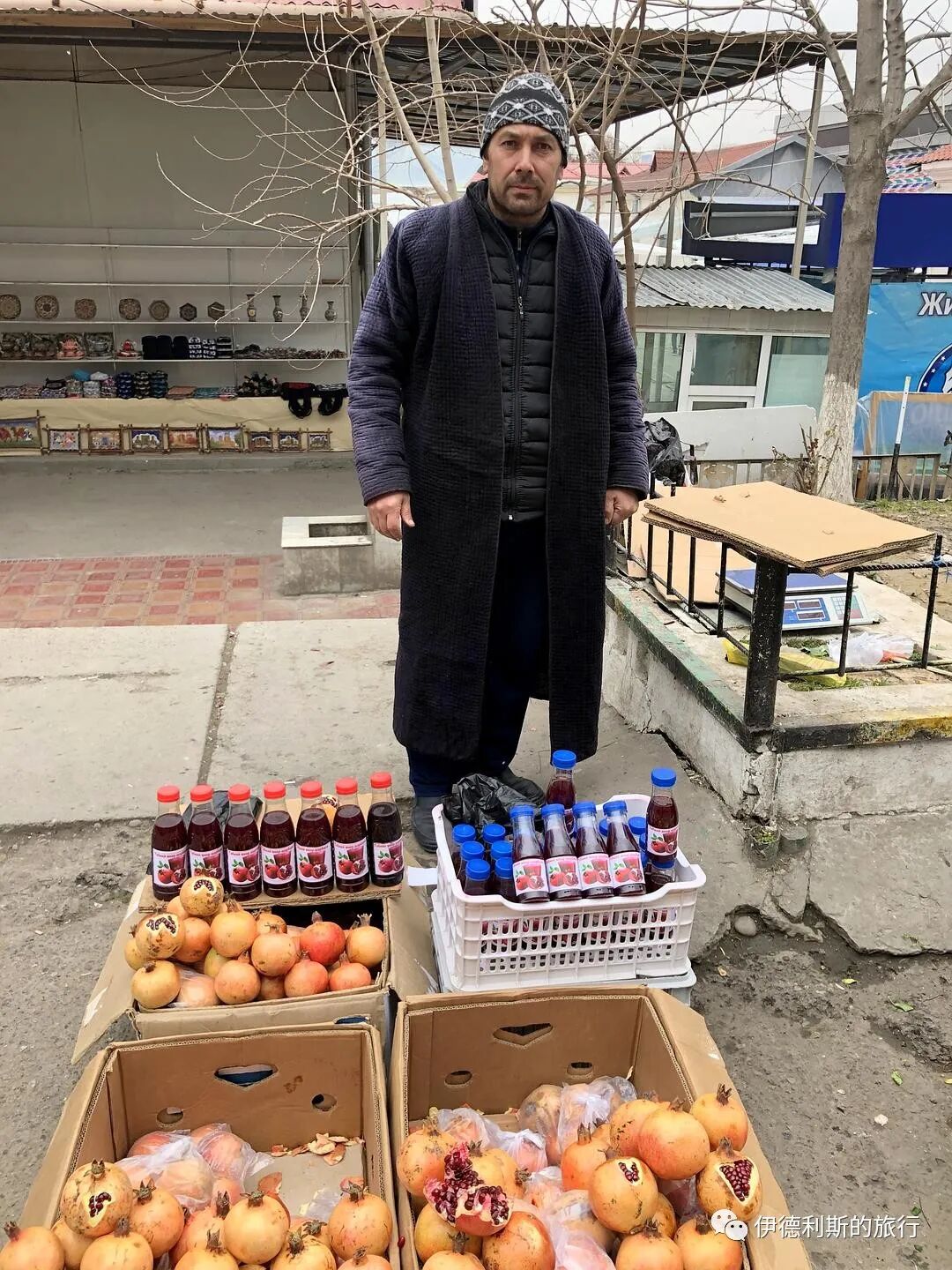
The uncle is wearing a casual-style robe (chapan).
When eating and shopping at an Uzbek bazaar, the first sentence you need to learn is "Necha pul" (how much). The uncle's answer is "Besh ming som" (five thousand som).
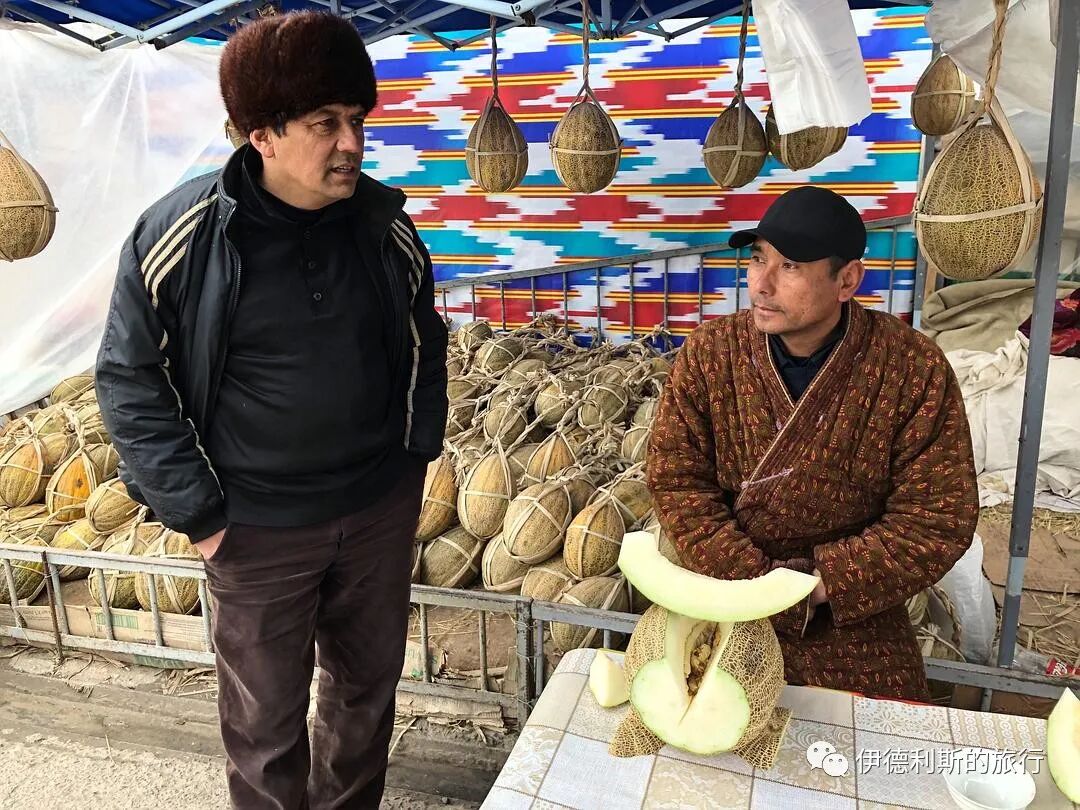
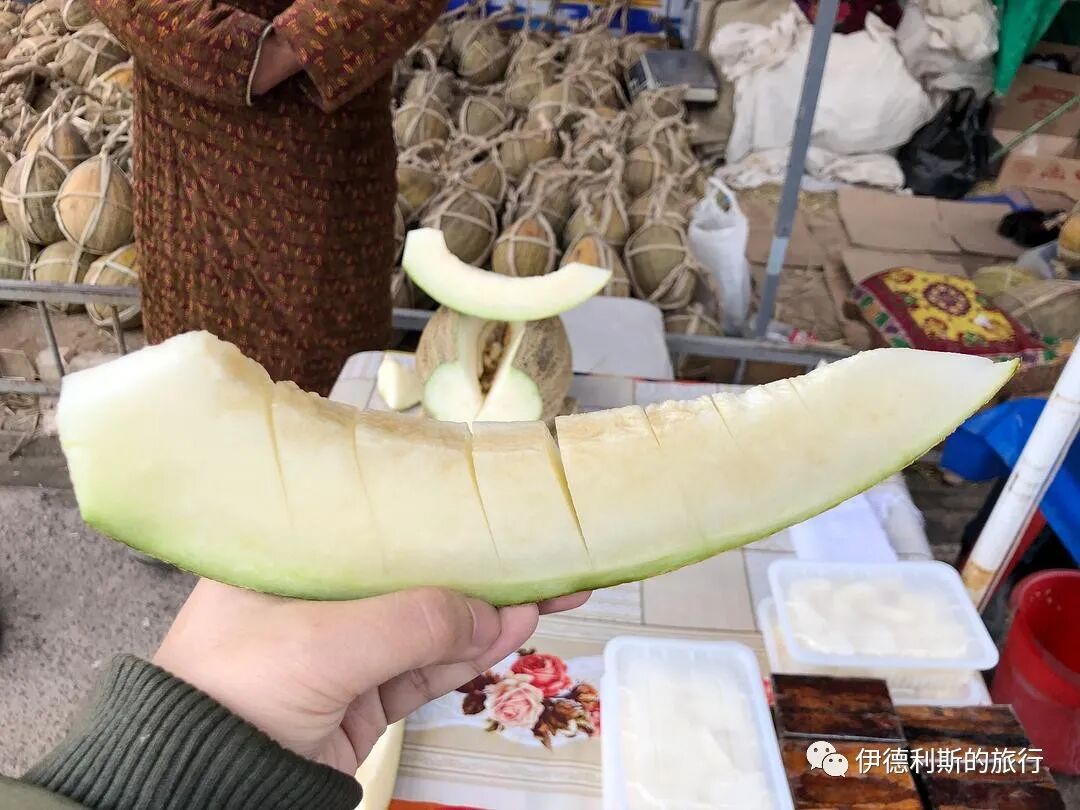
Melon
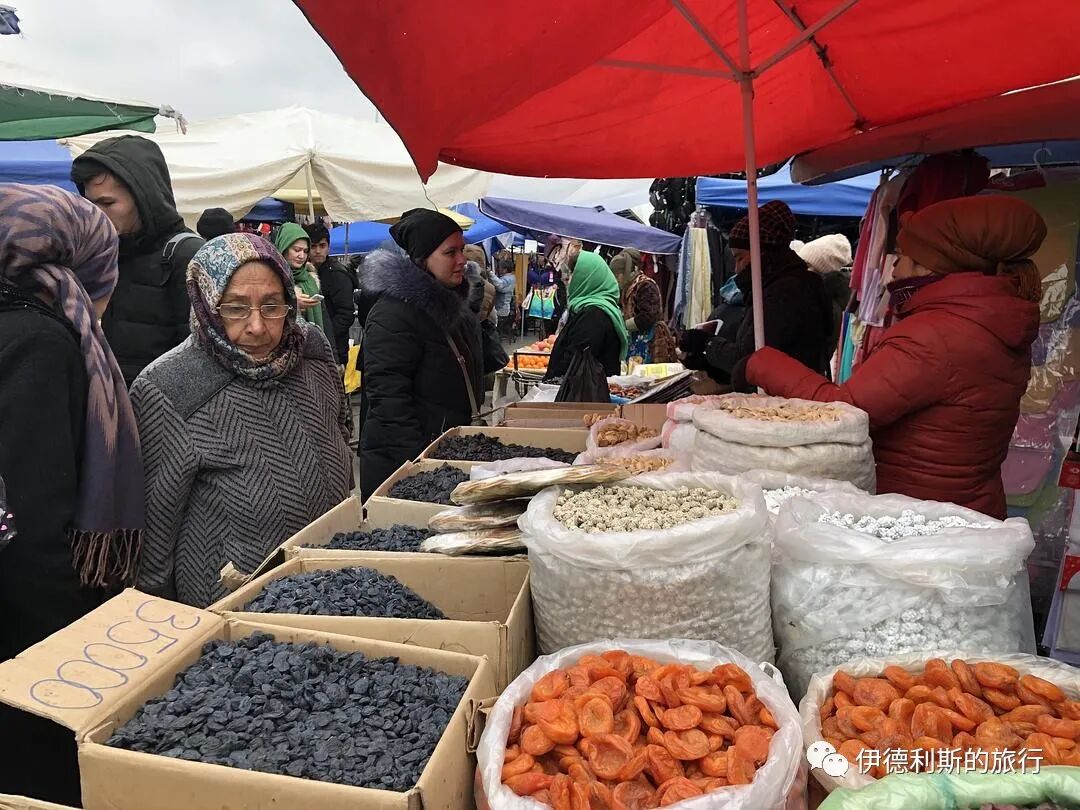
Various dried fruits
3. Clothing section
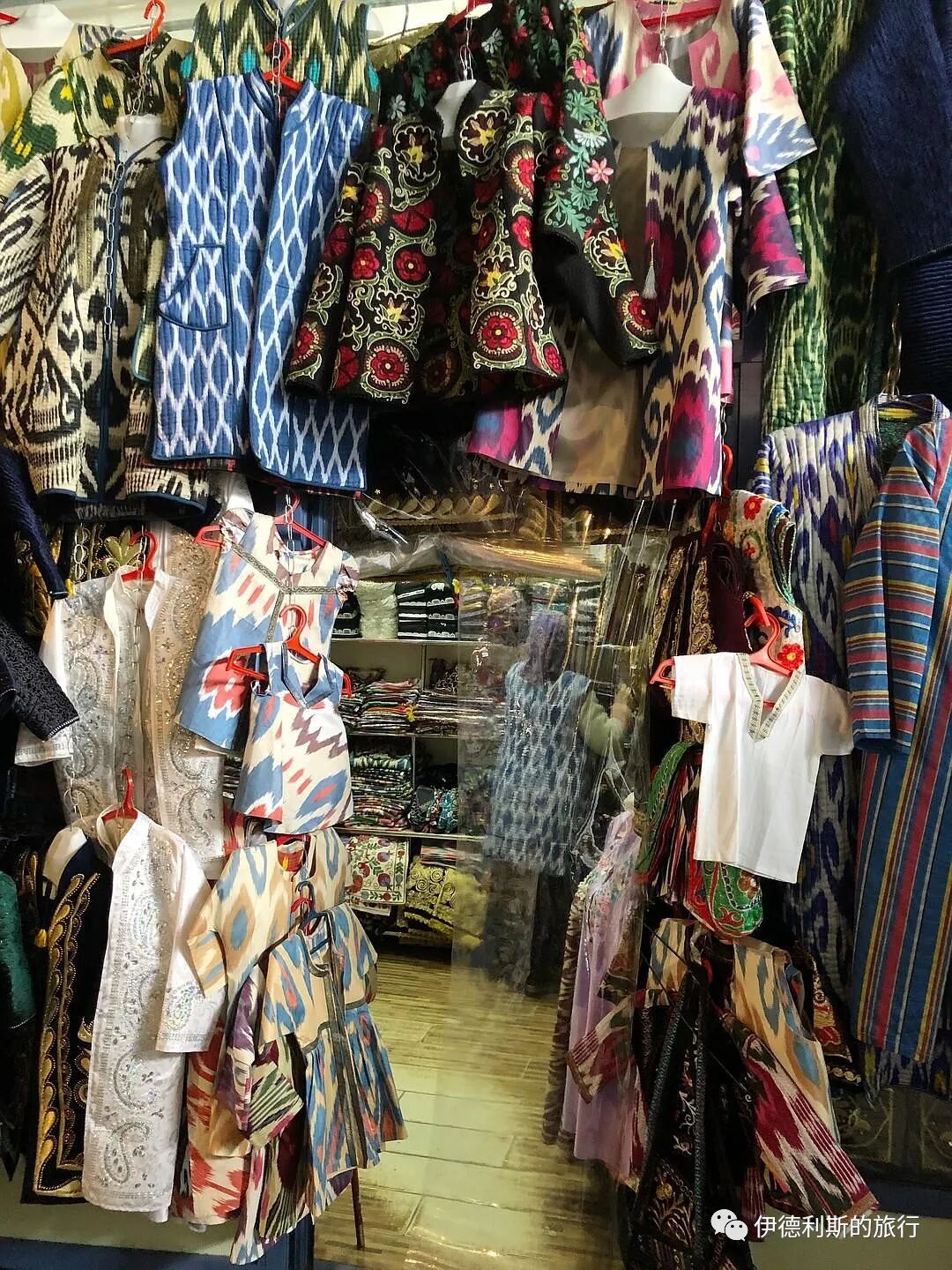
The area selling traditional clothing is at the far south end of the bazaar. You can buy traditional robes (chapan), embroidered cushions (kurpacha), and caps (doppi).
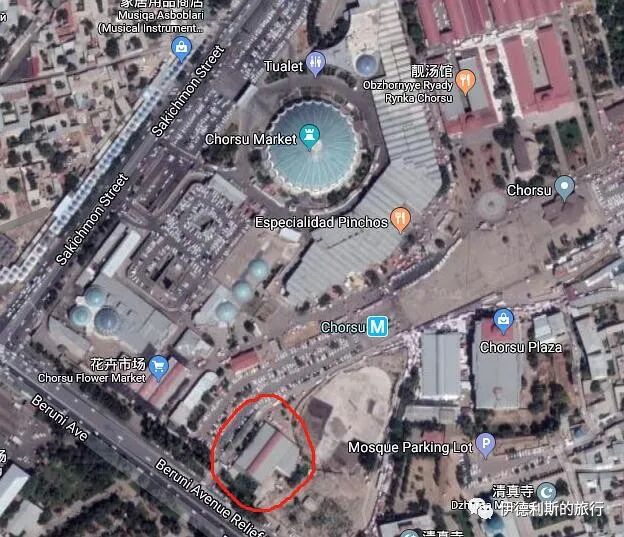
I really wanted to buy a robe, but I couldn't fit that much in my luggage, so I bought a few classic caps instead.
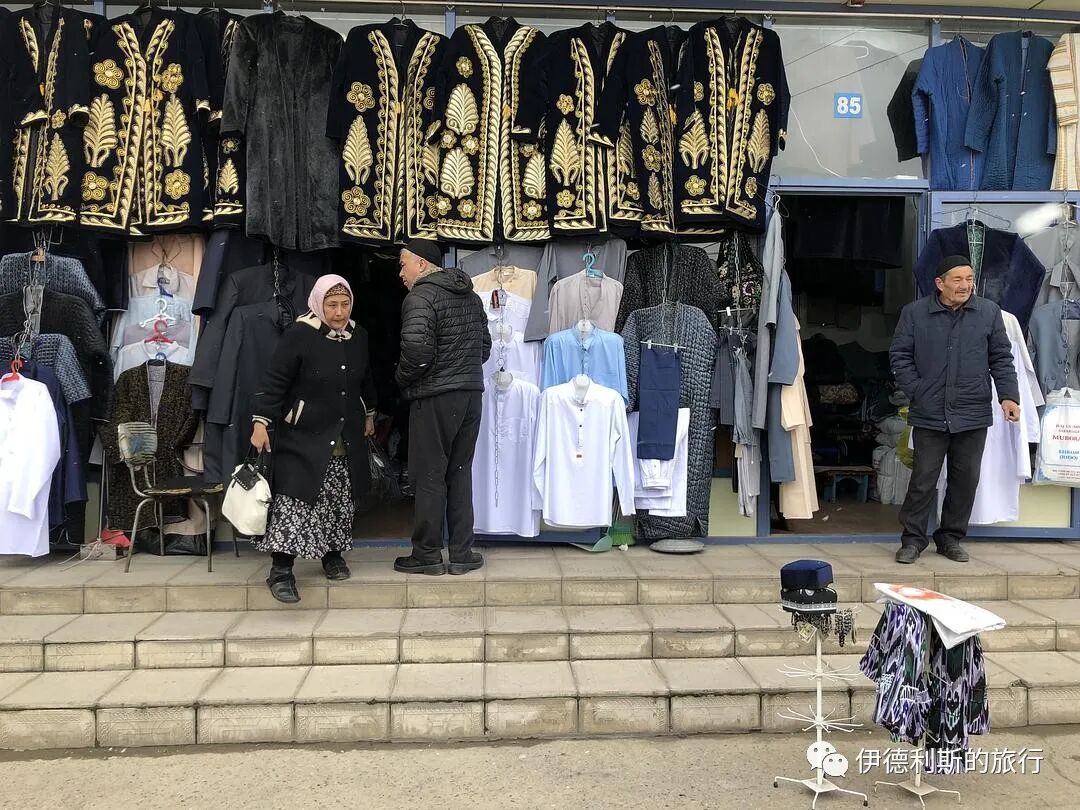
A classic traditional robe (chapan)
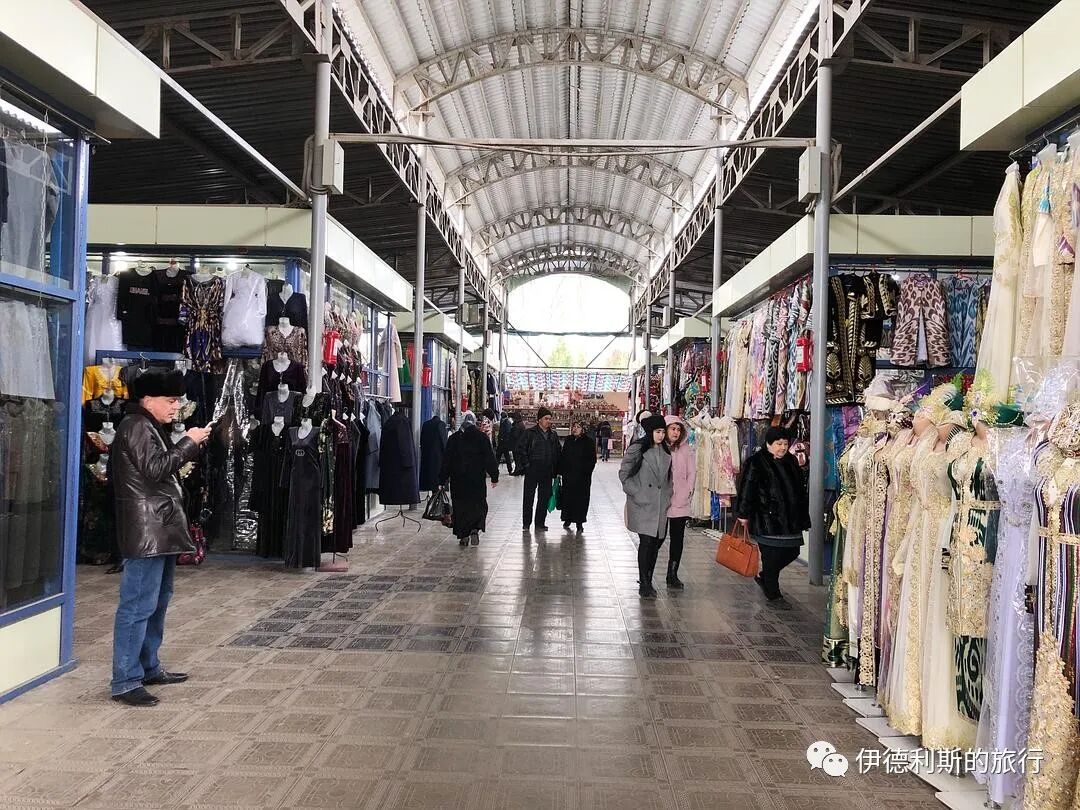
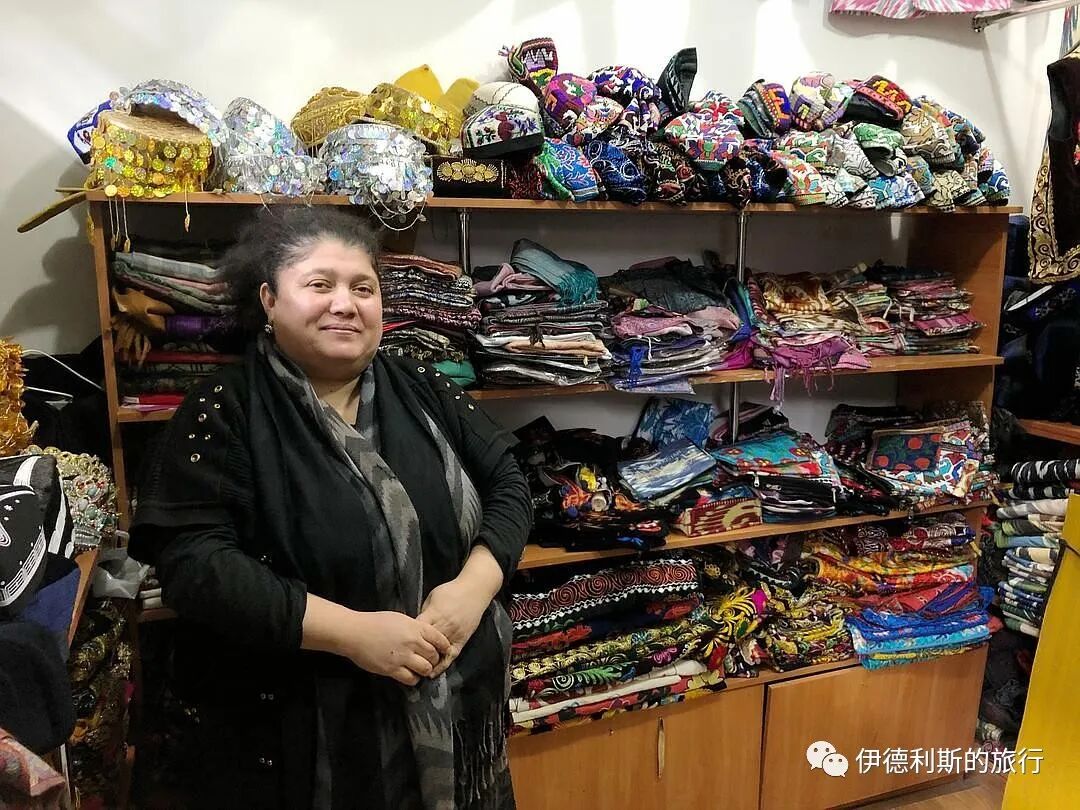
I bought two everyday almond-pattern caps (badam doppa) at the first shop. The almond-pattern cap is a style shared by Uyghur, Uzbek, and Tajik people. In Uzbekistan, it is called a Chust do‘ppisi. Chust is a handicraft center in the Fergana Valley, famous for making skullcaps (doppa). The almond-patterned skullcap (badam doppa) likely started in the 19th century. It spread quickly among Uzbeks, lowland Tajiks, and Uyghurs from the late 1800s to the early 1900s, becoming very popular.
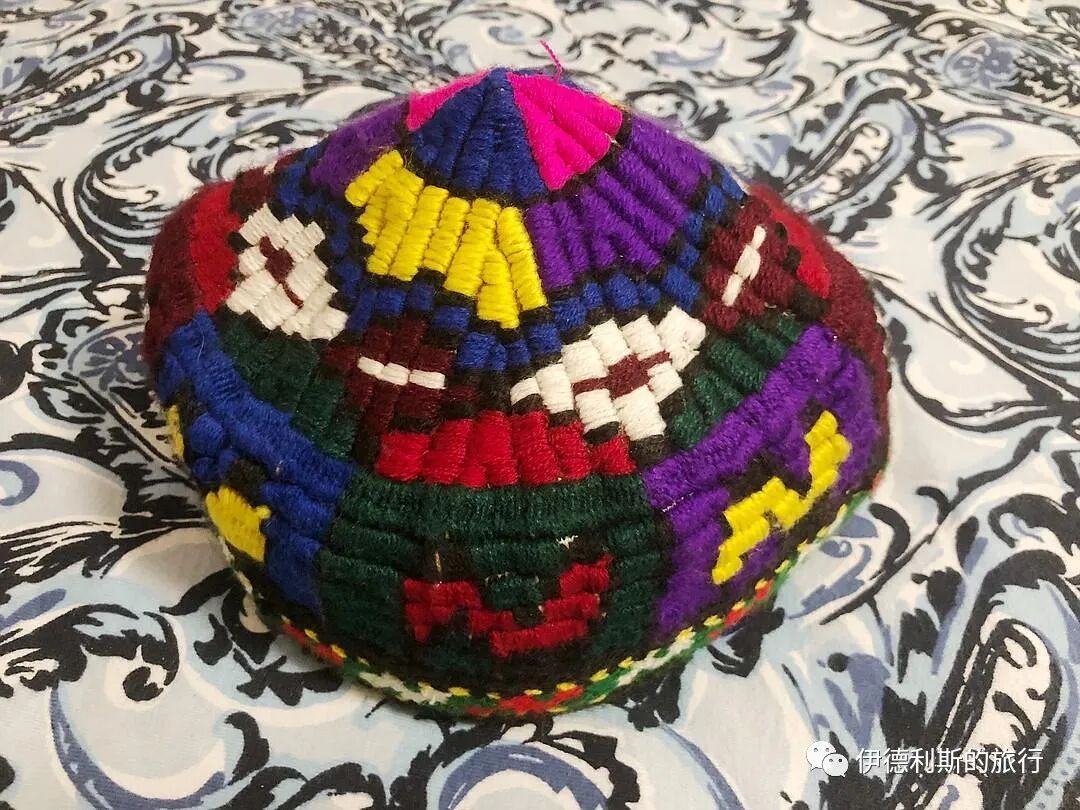
I bought a colorful skullcap (doppa) at the second shop. You do not see these on the street often now, as people mostly wear them for festivals.
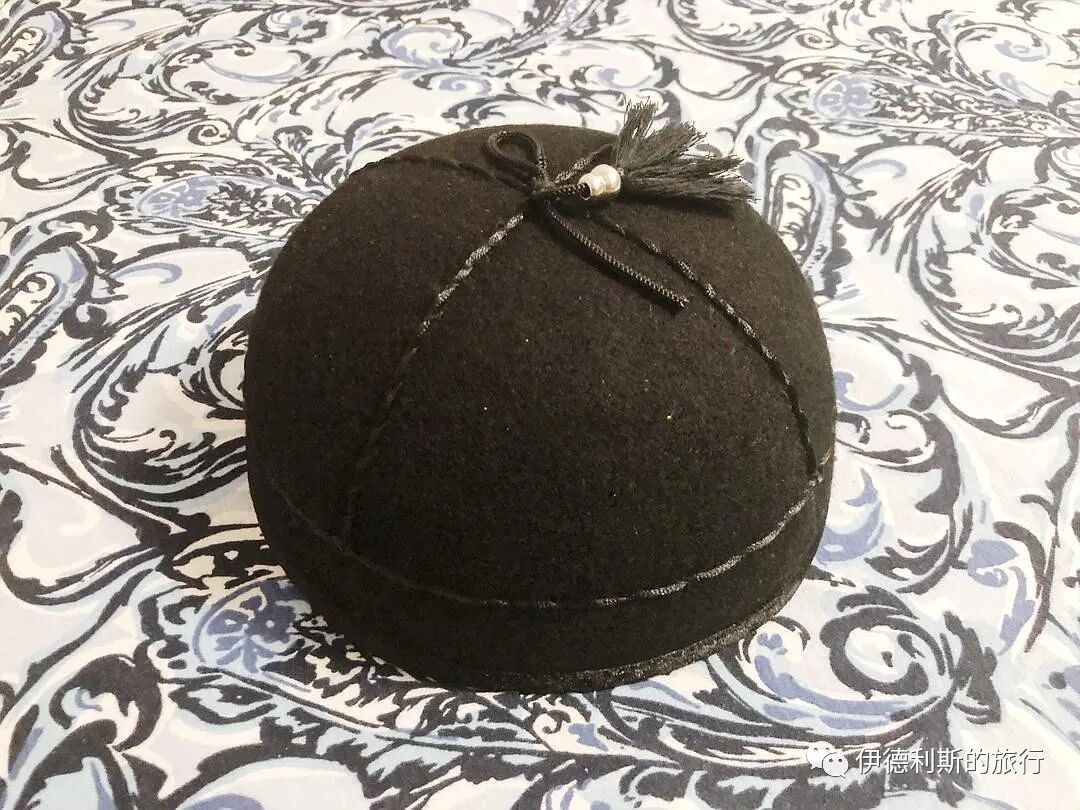
I bought this black felt hat at the third shop. This was my first time seeing this kind of black felt hat. I have seen similar white versions in Azerbaijan and Kyrgyzstan. These black felt hats are very common on the streets of Tashkent and are a local specialty.
Tashkent Food
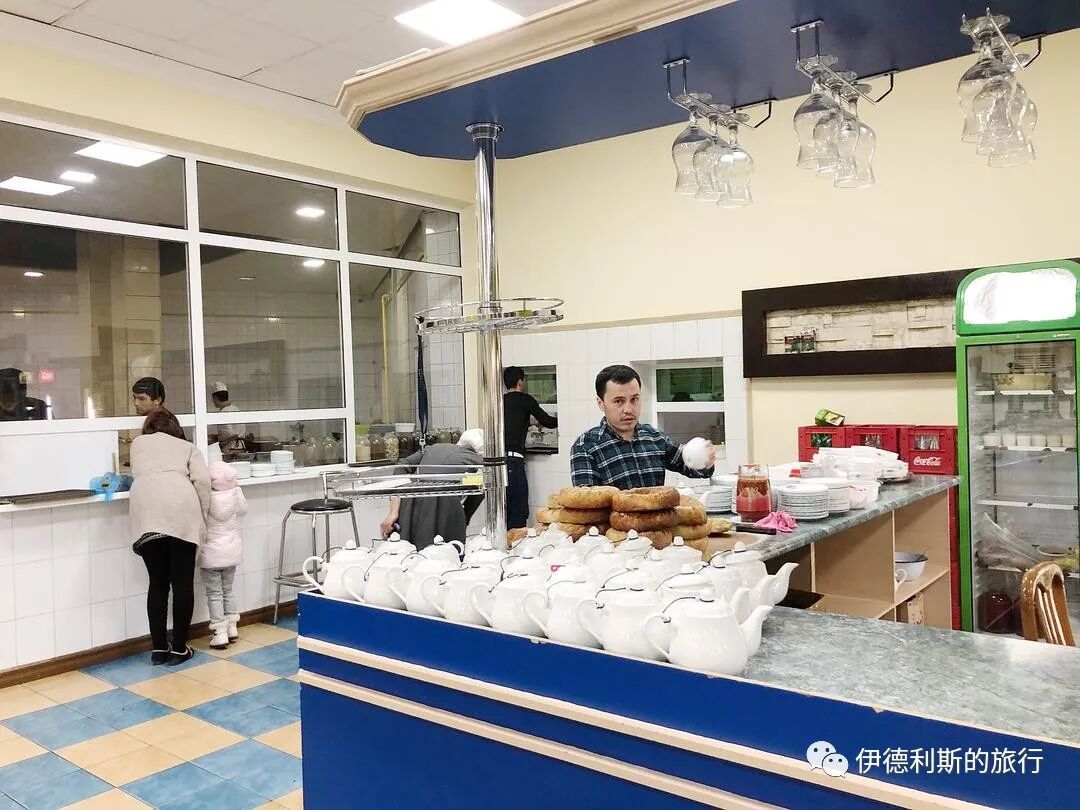
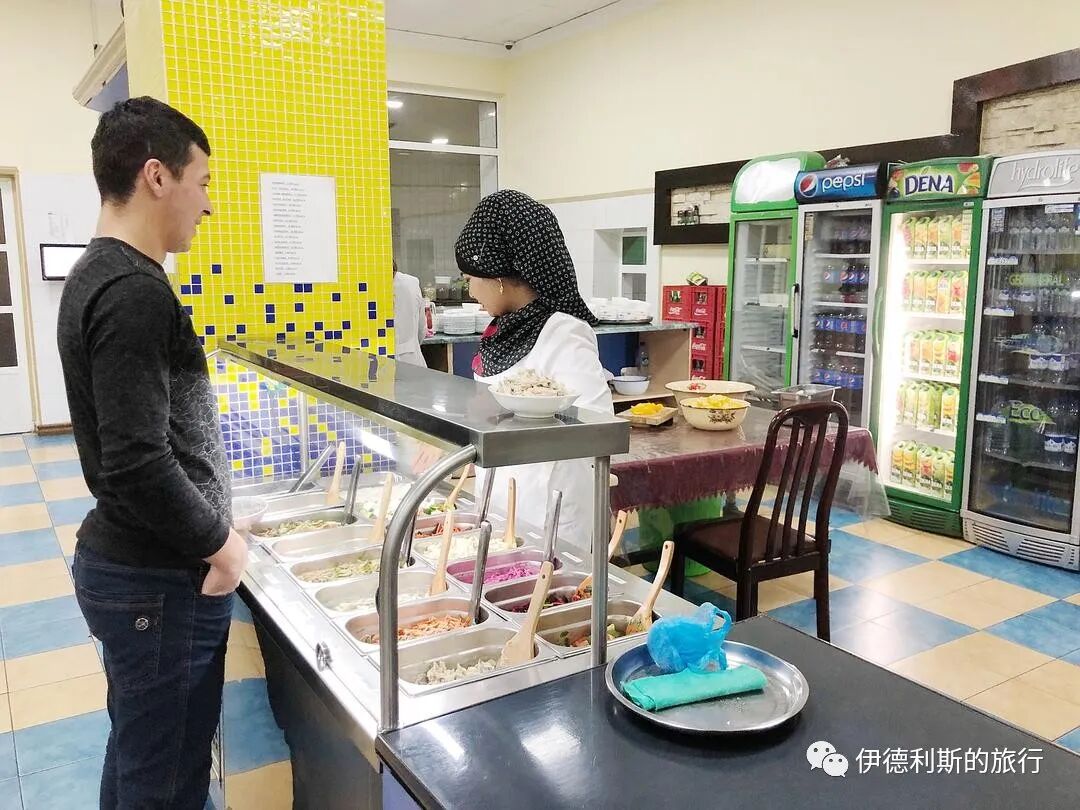
1. Lagman House
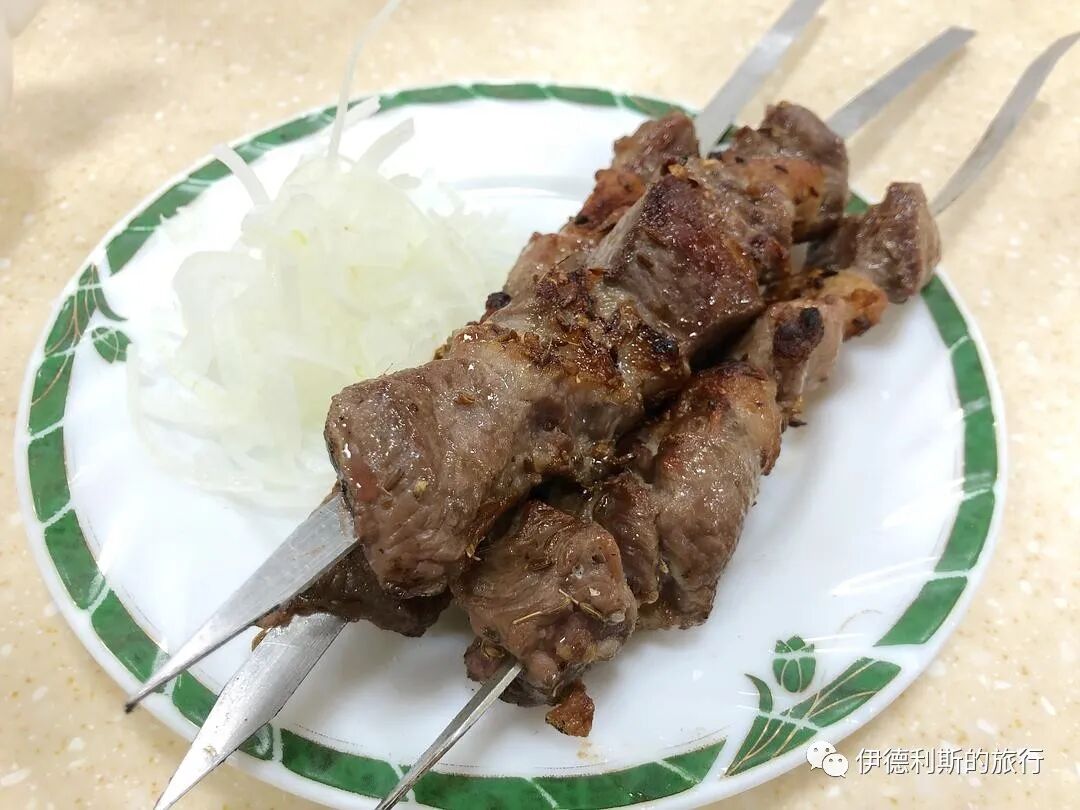
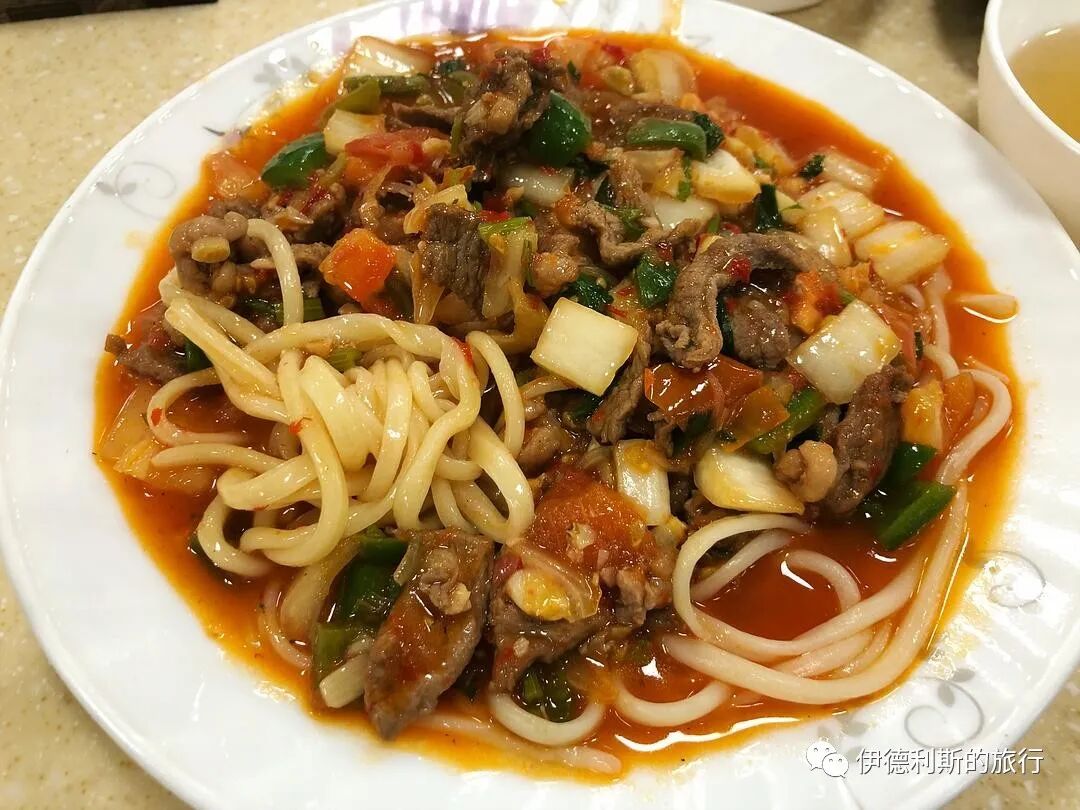
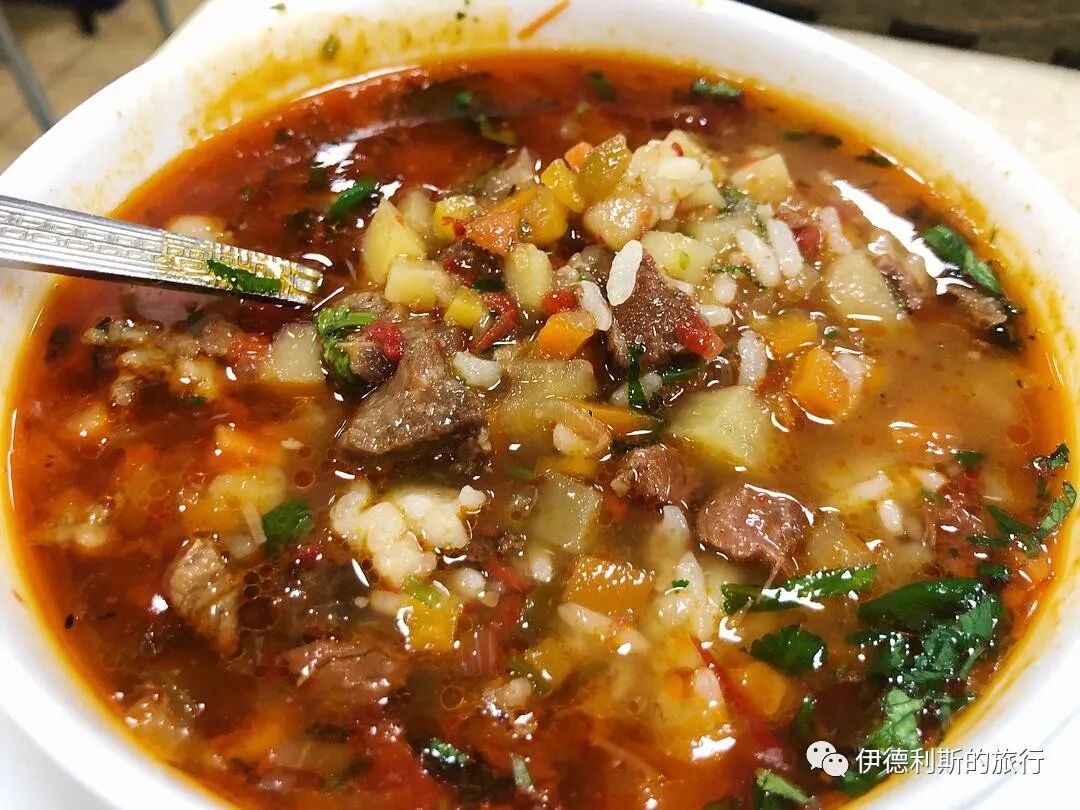
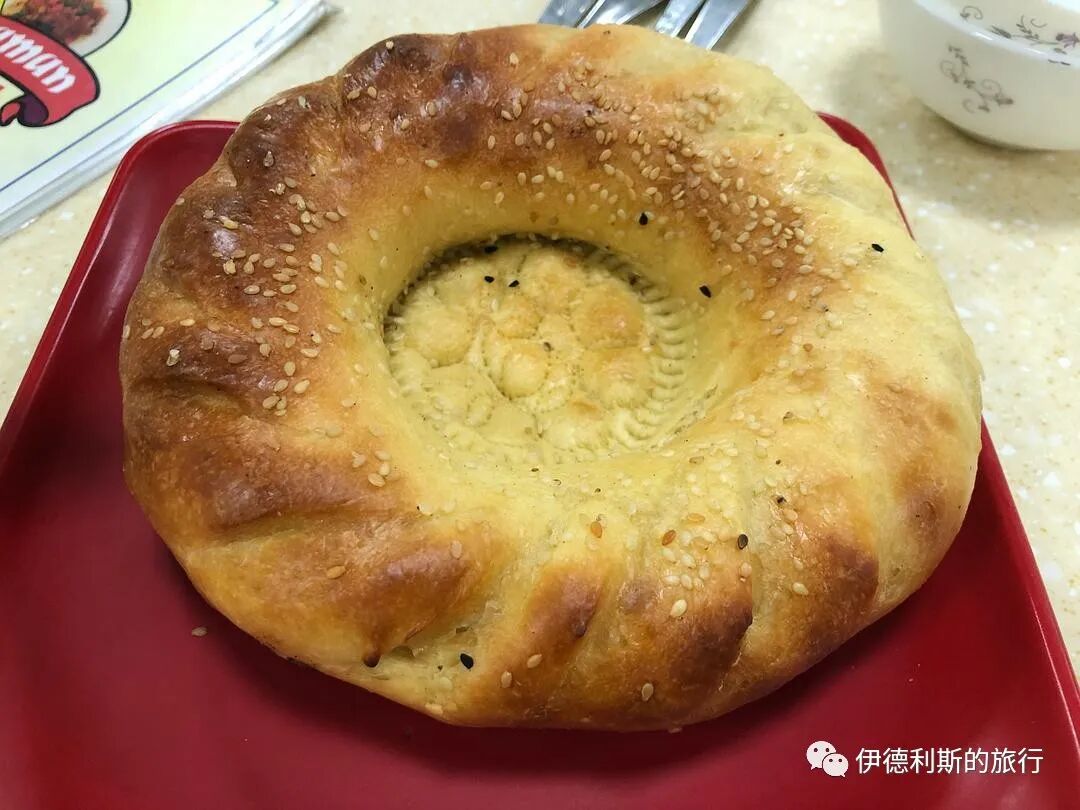
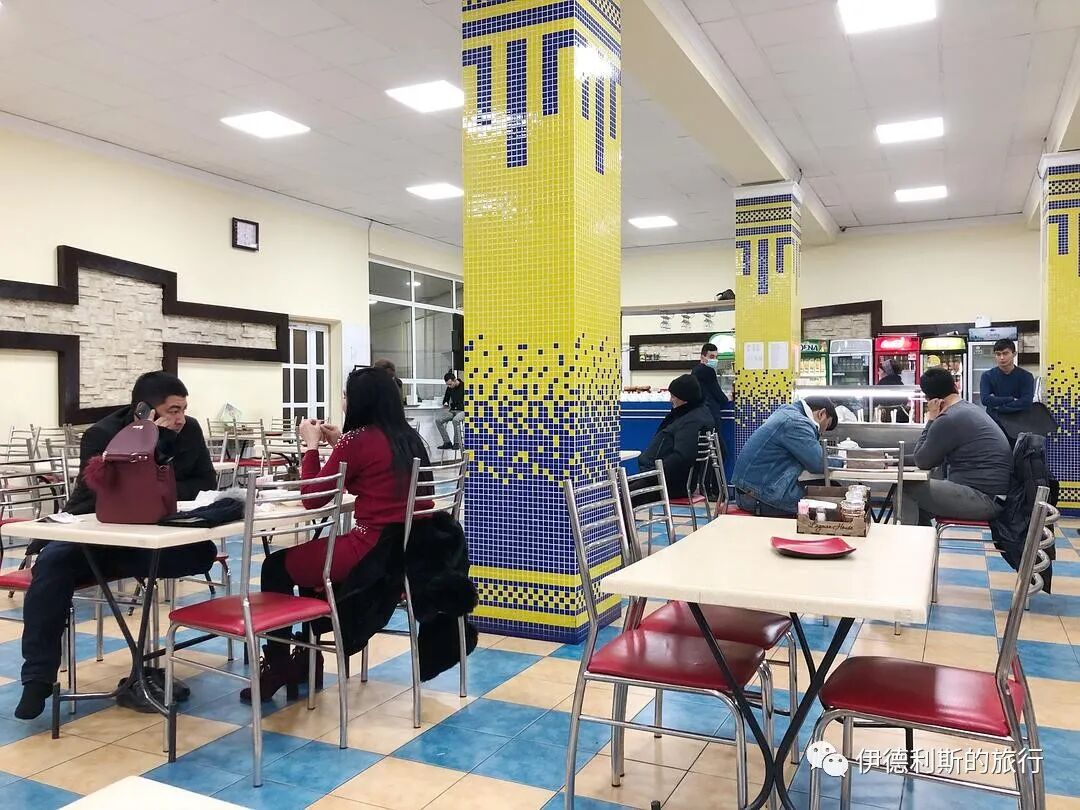
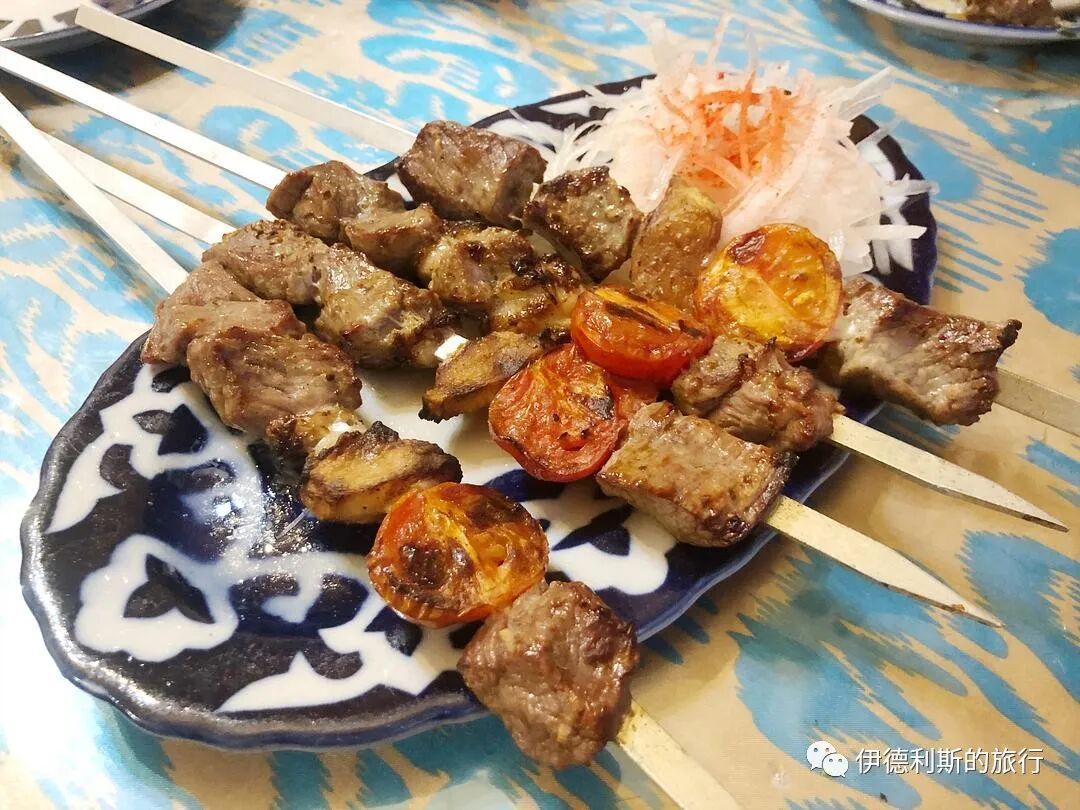
The grandmother where we stayed highly recommended this noodle shop called Lagman House. It is not far from our place or the Chorsu Bazaar. The shop is very clean. We ordered mixed noodles (lagman), a rice, beef, and potato soup called Mastava, and a type of grilled meat called jaz. The meat in the mixed noodles was tasty, but the noodles were a bit thin. The grilled meat was super tender and really amazing.
2. Plov Centre
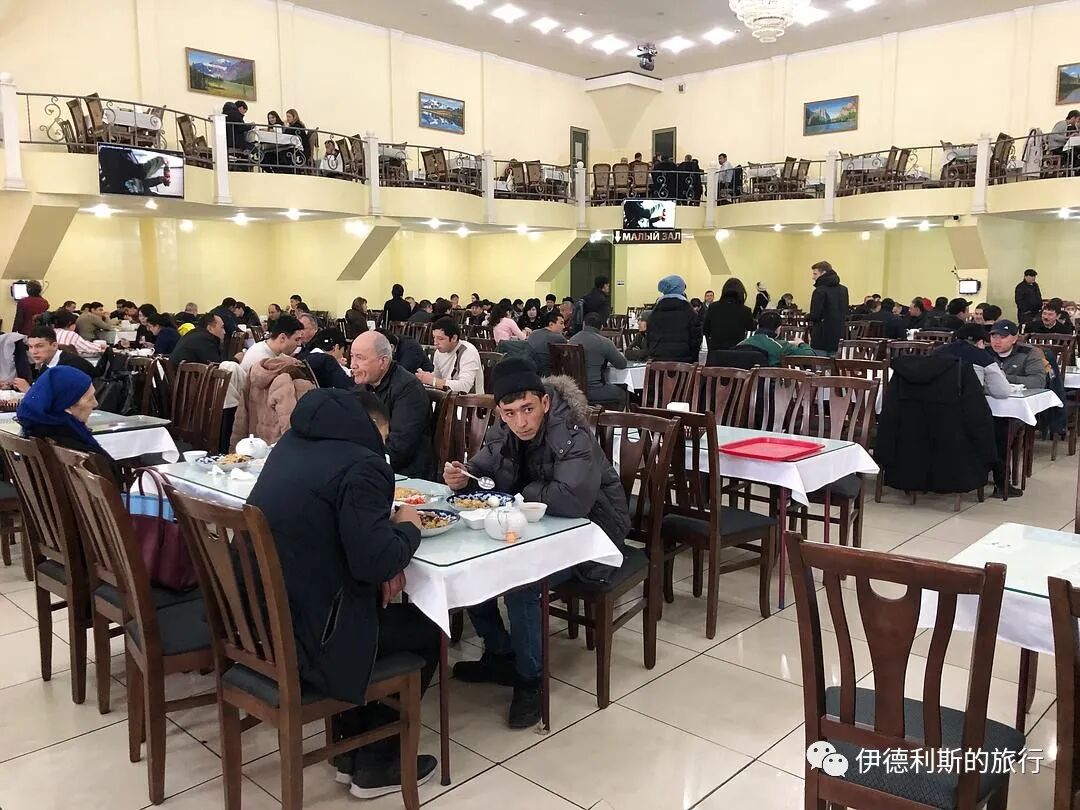
The Plov Centre is known as a must-visit restaurant in Tashkent. There are two Plov Centres, a new one and an old one, and they are not far apart. The new one is right under the TV tower; you will see the tower when you arrive. The Plov Centre only serves lunch every day, so watch the time because it runs out if you come too late.
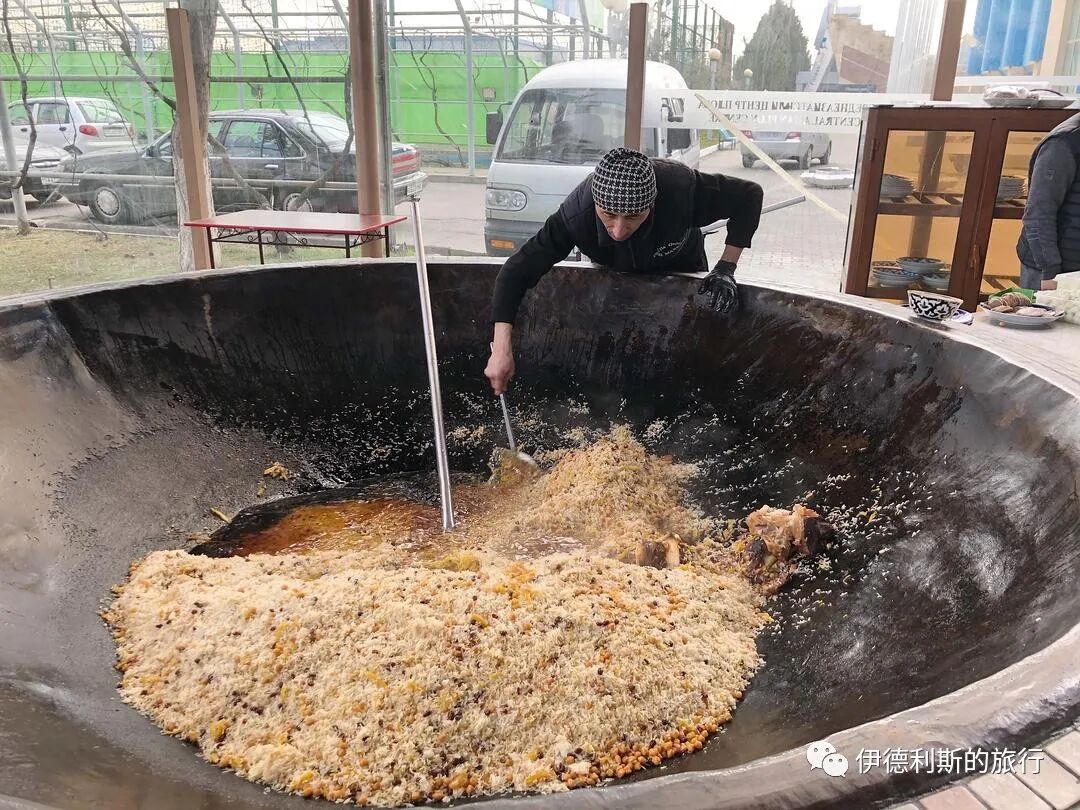
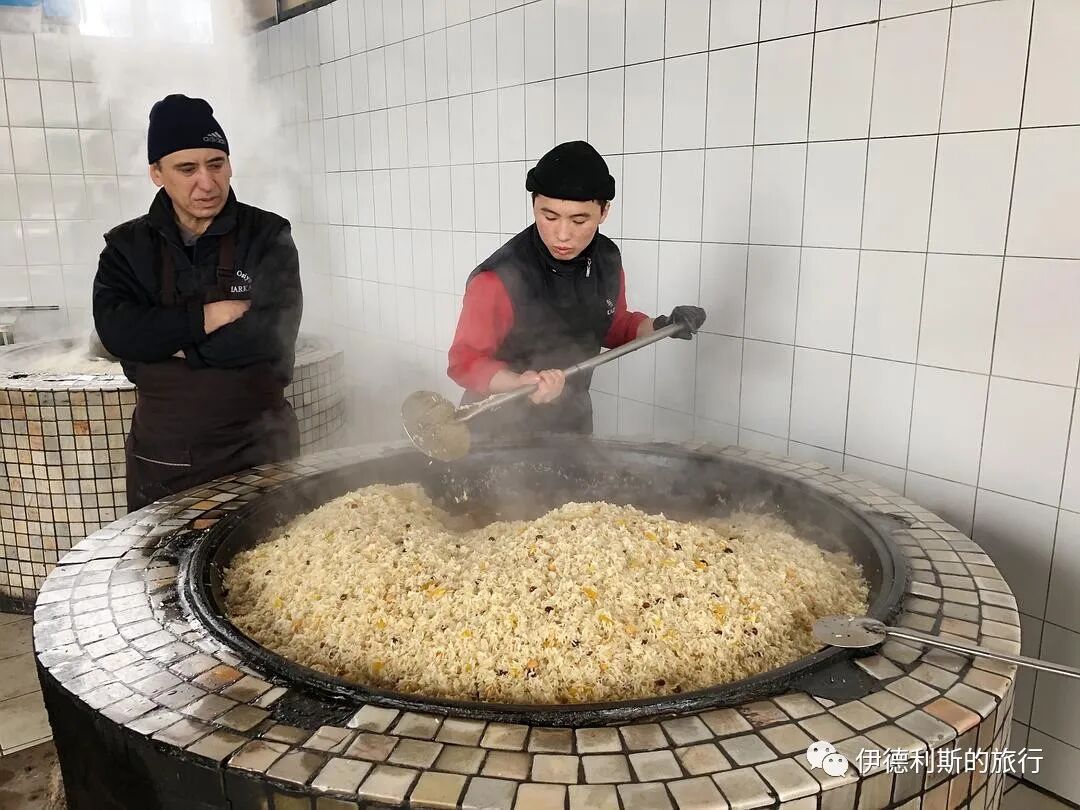
The super-sized plov pots are a real visual spectacle.
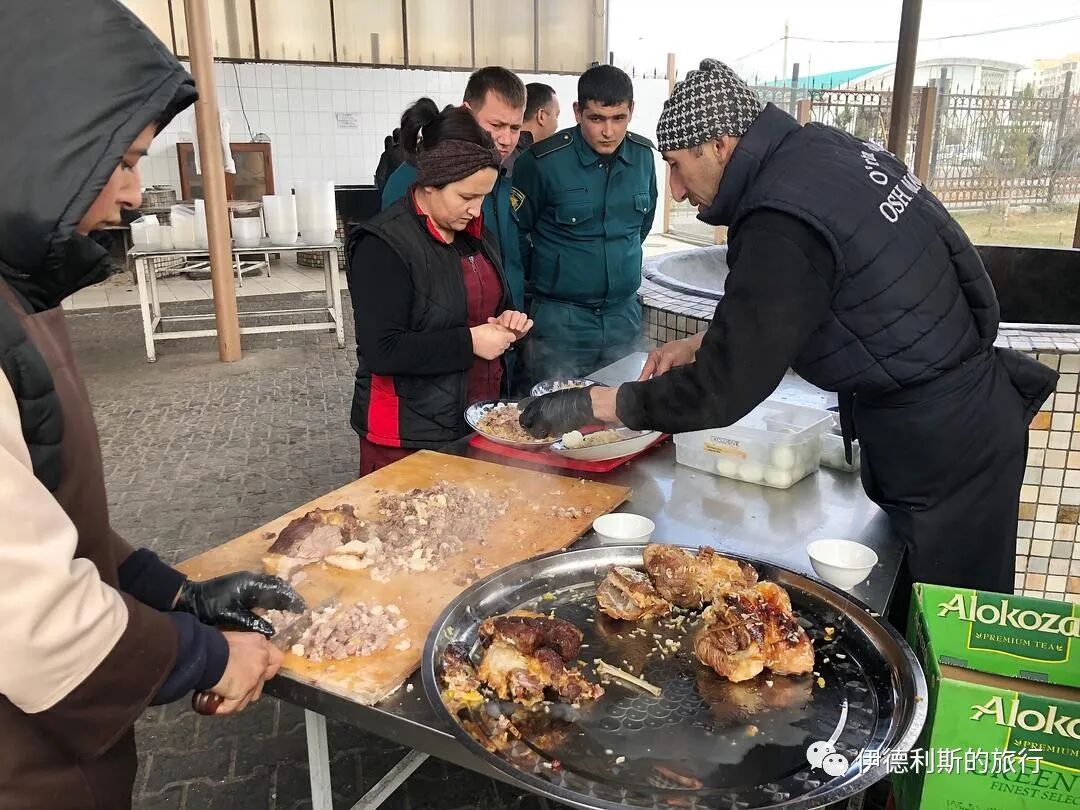
There are also small pots.
Slicing the beef, the beef is super delicious.
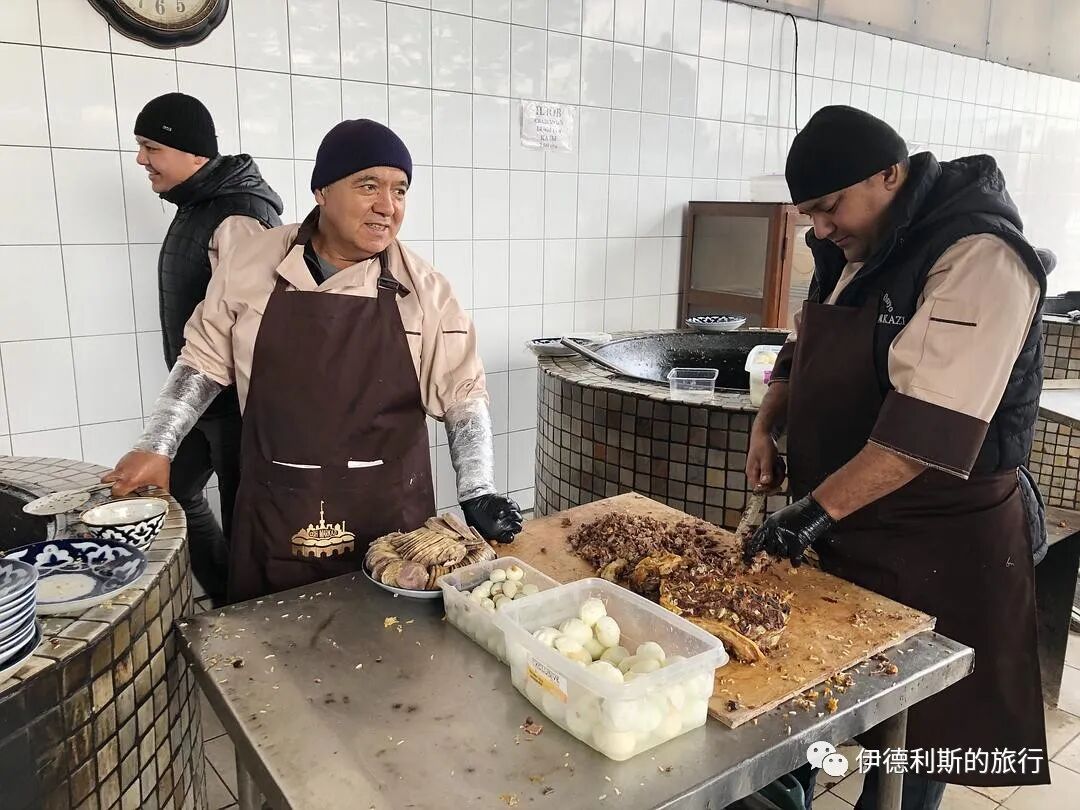
Slicing the horse meat.
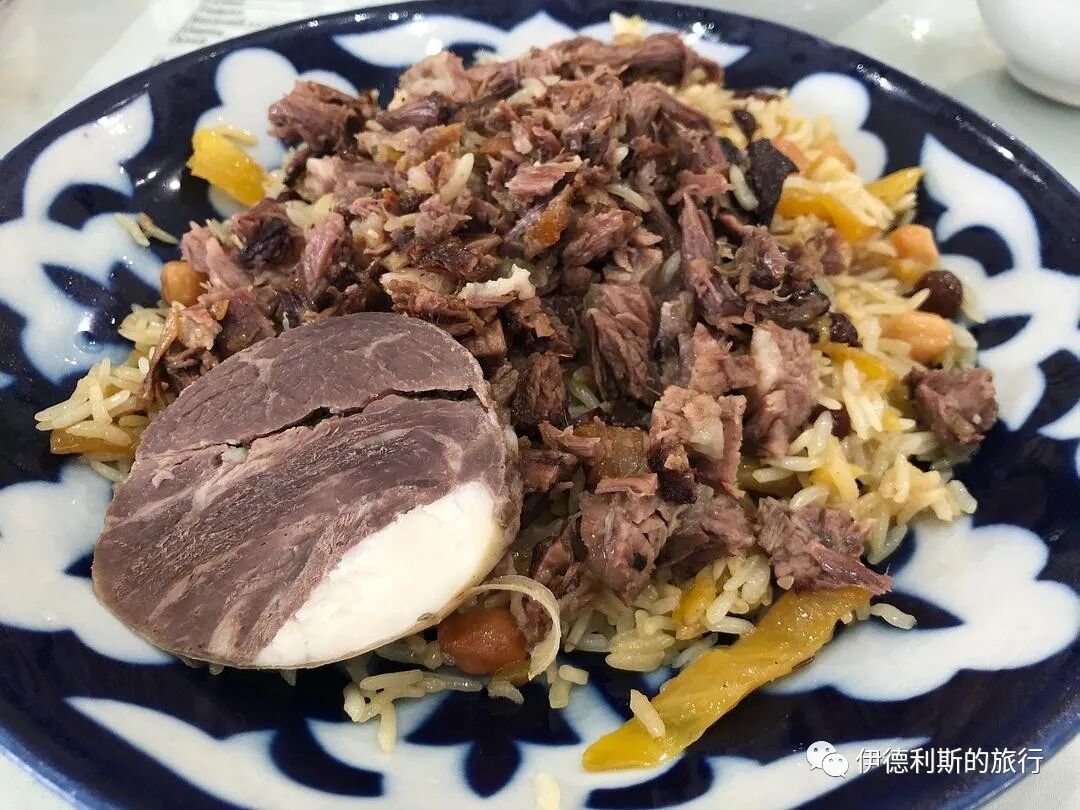
Tashkent pilaf (plov).
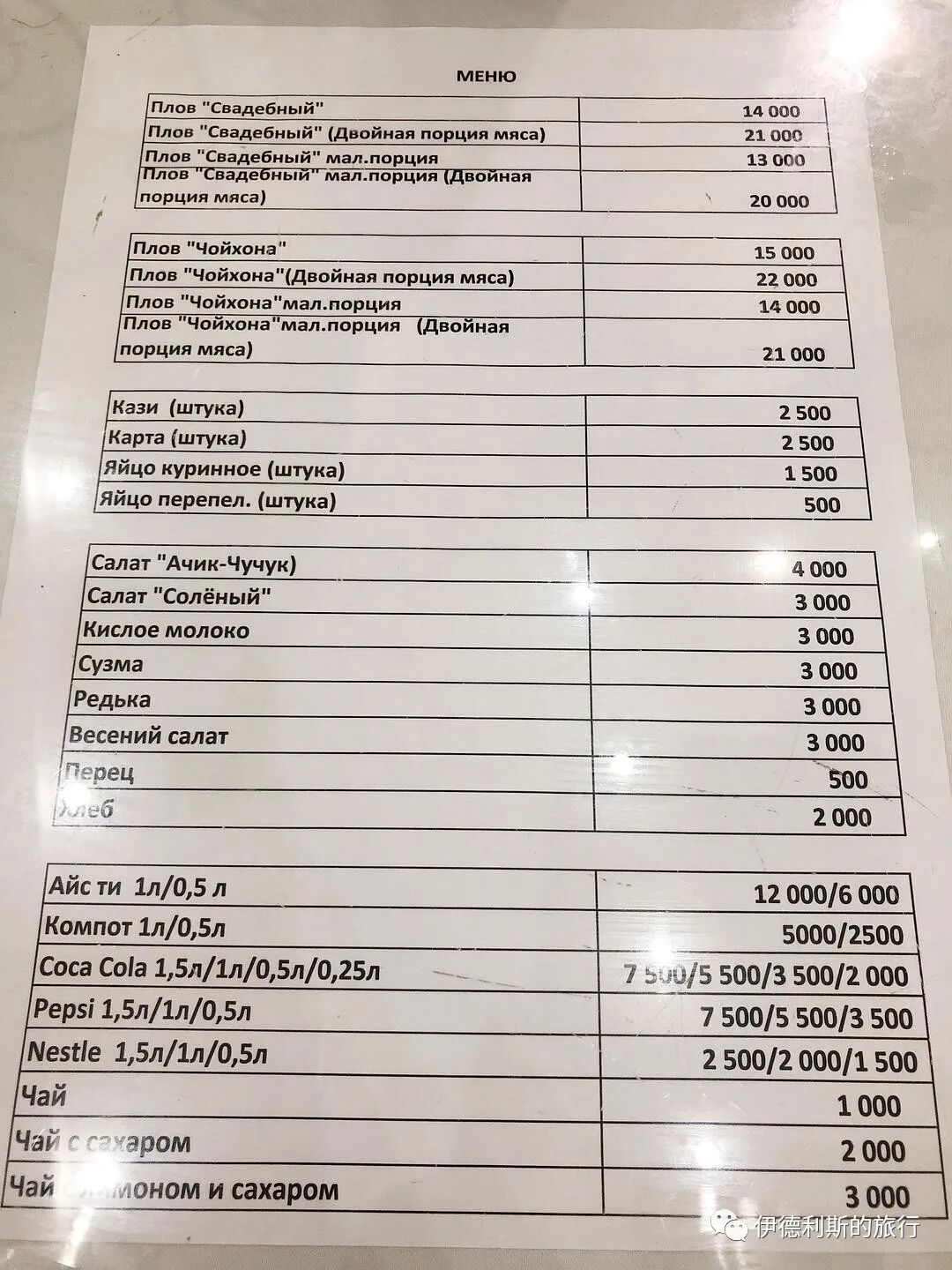
The menu is in Cyrillic, with three types of pilaf. You can order a large portion or extra meat. There are also small cold dishes of horse meat and tea to drink.
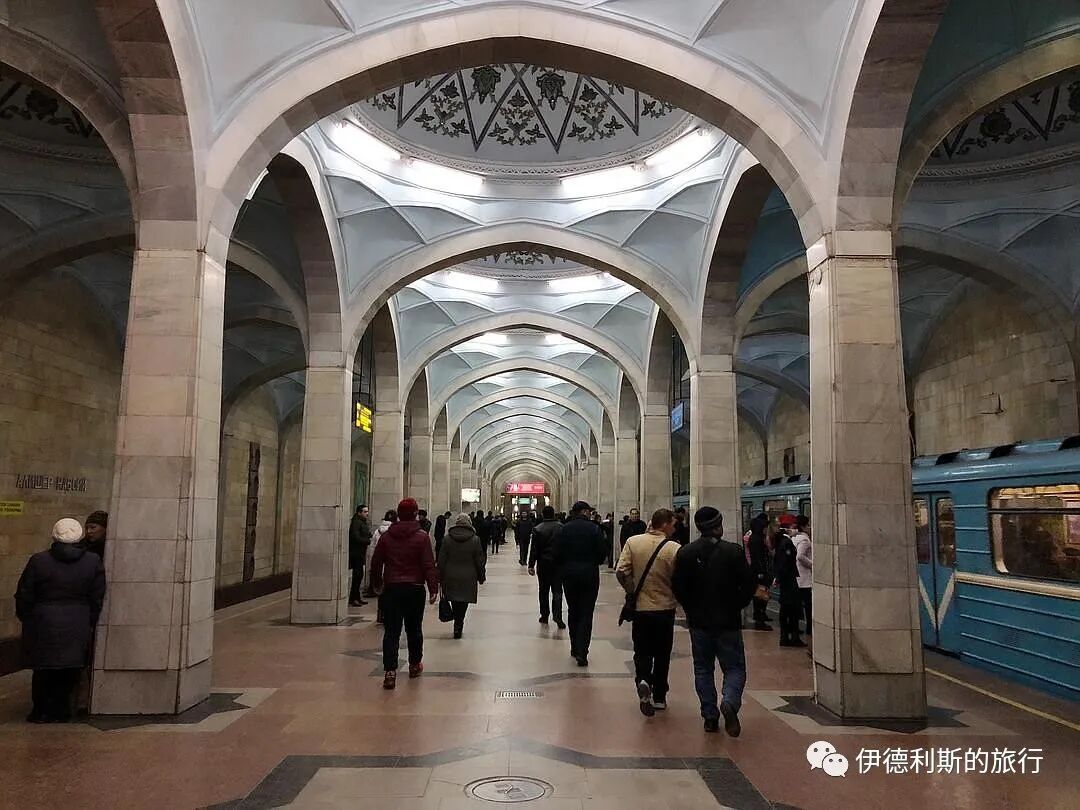
I took the subway to the pilaf center. The Tashkent Metro opened in 1977, but photography was only allowed starting in 2018, so I made sure to take a few photos.
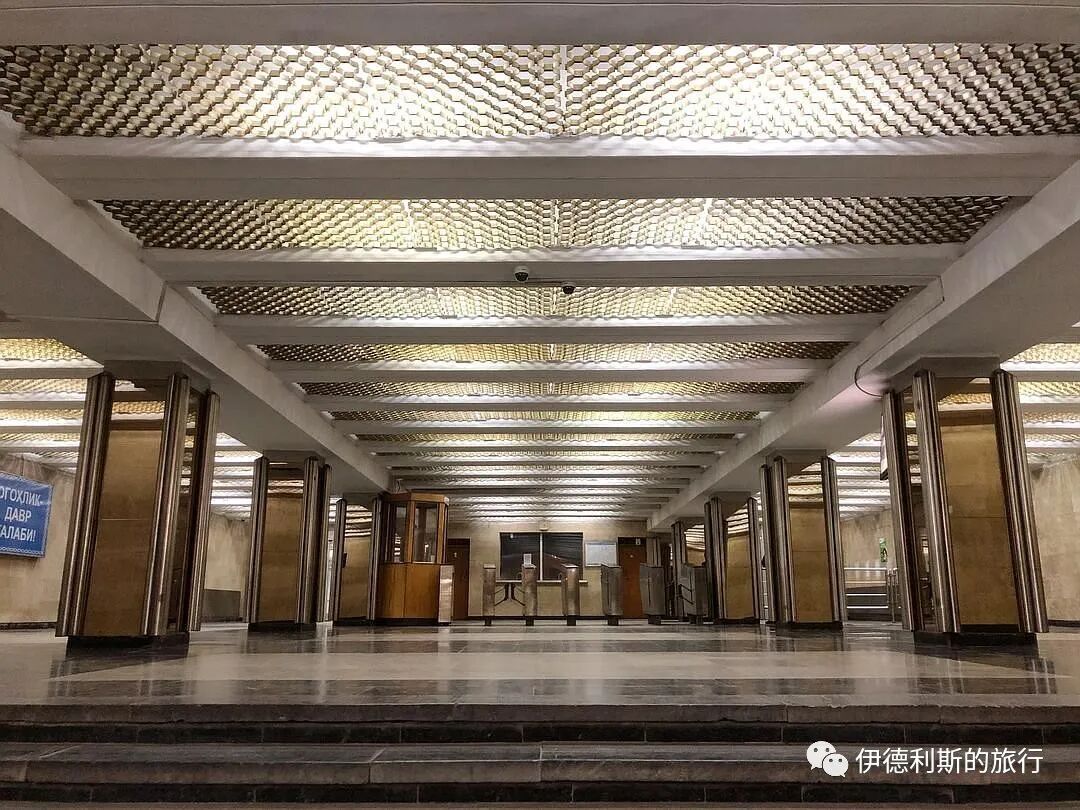
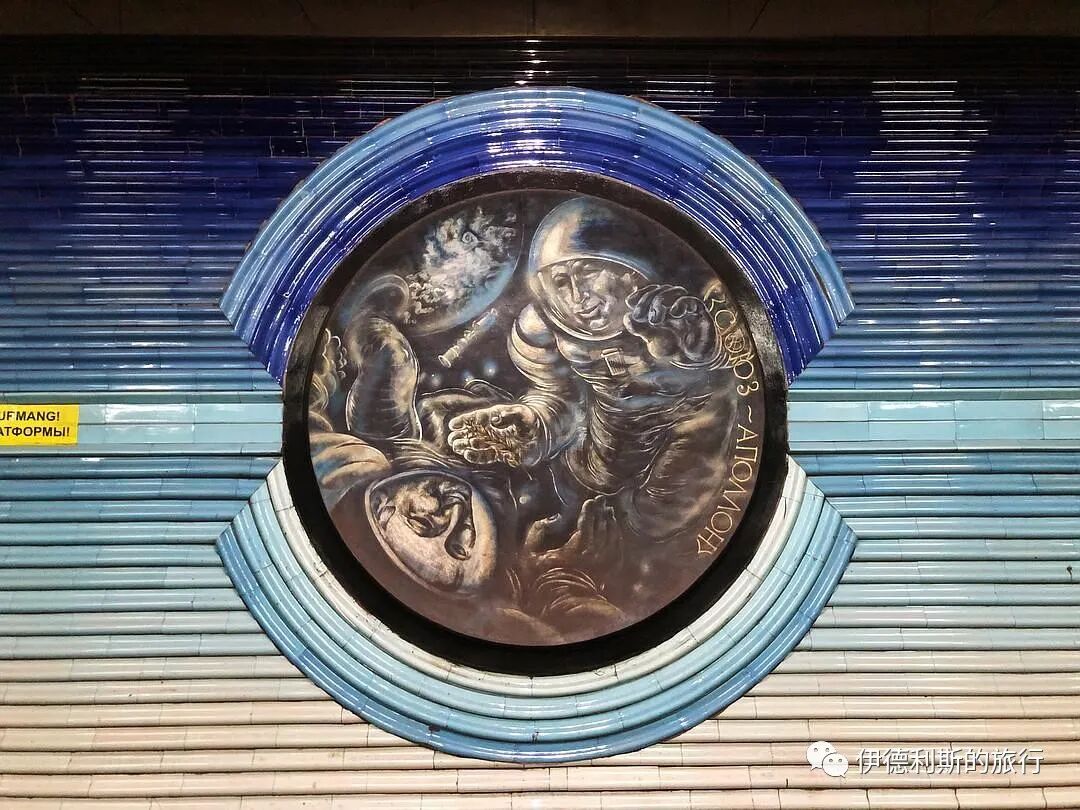
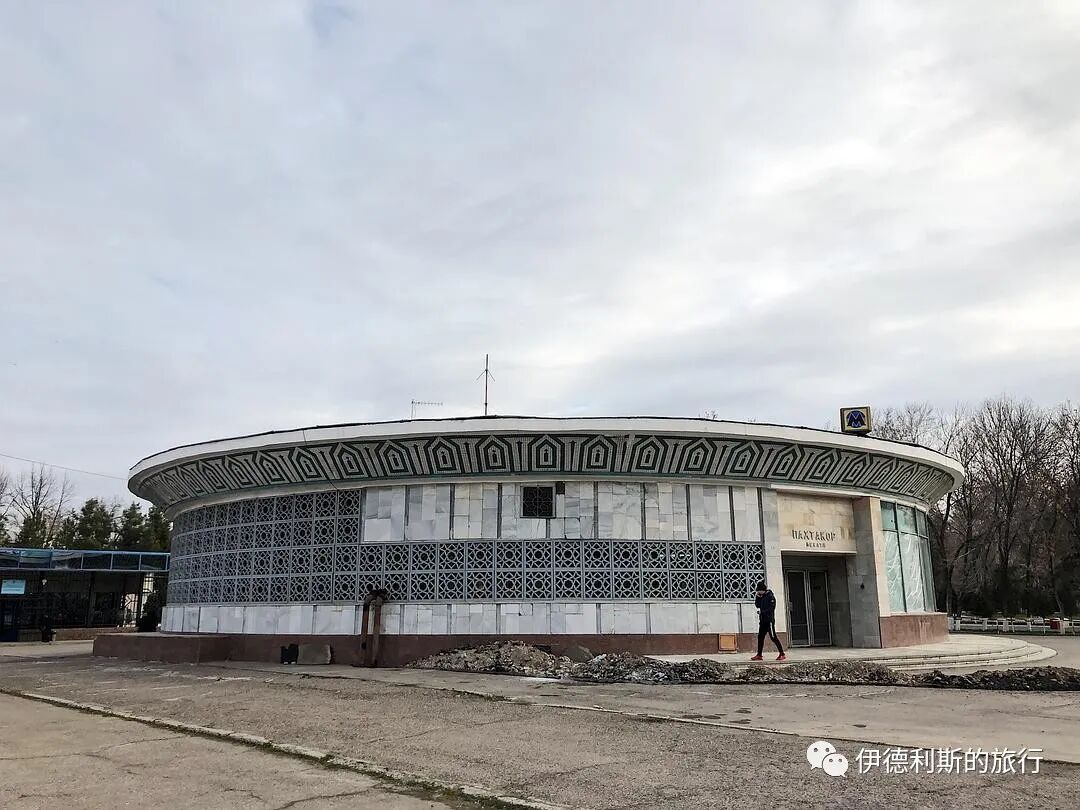
Station entrance.
3, Plov-samsa.uz
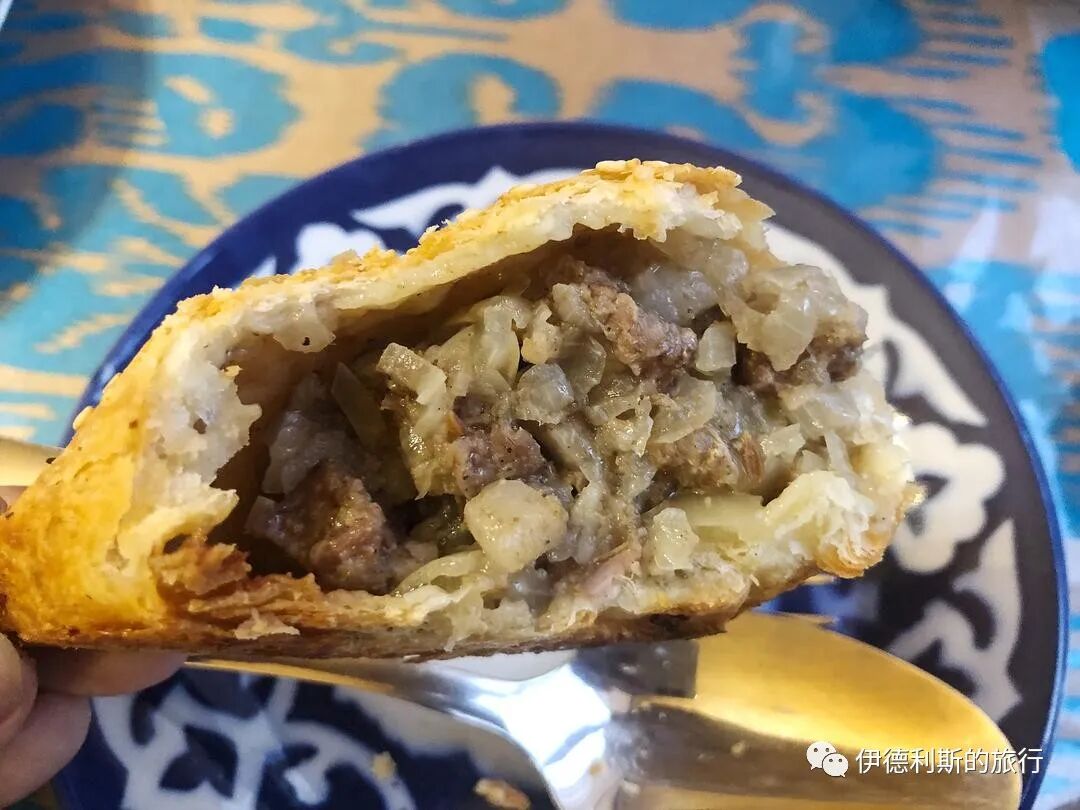
I ate at a restaurant called Plov-Samsa.uz near Amir Timur Square in Tashkent with a friend. Plov means rice pilaf (plov) and Samsa means baked bun (samsa). I highly recommend their baked buns, they are delicious! They have a flaky crust and the portions are quite large.
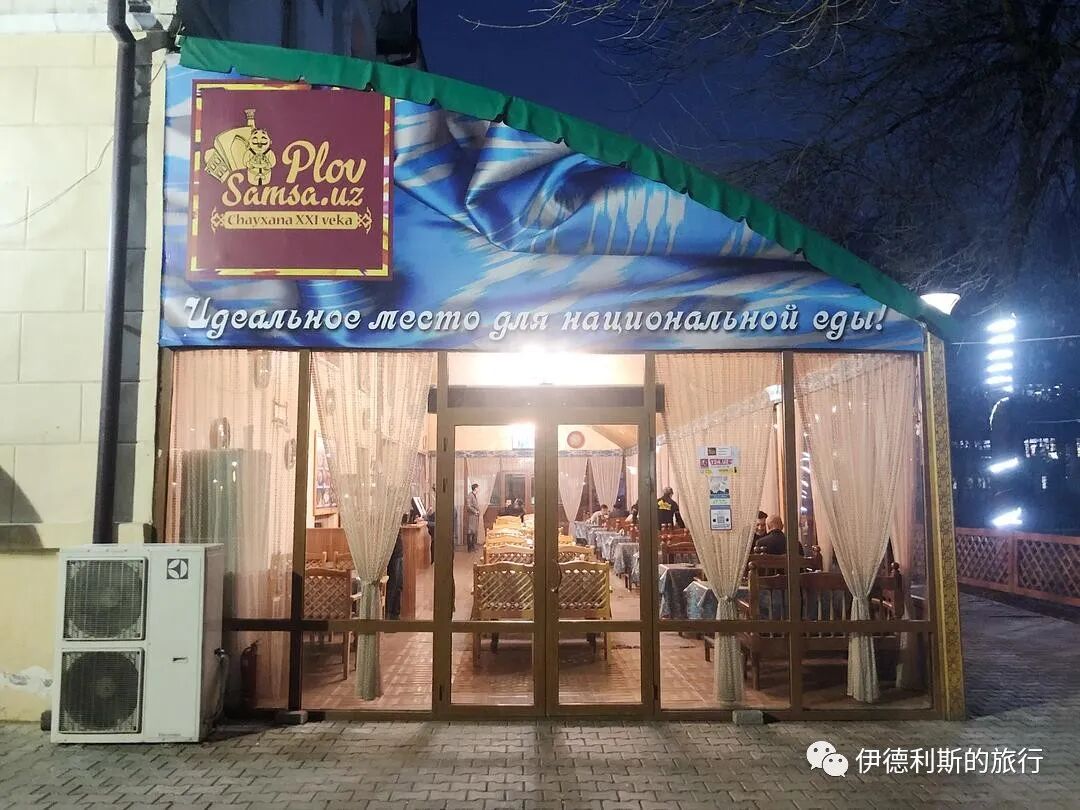
This was my first time eating a baked bun in this shape.
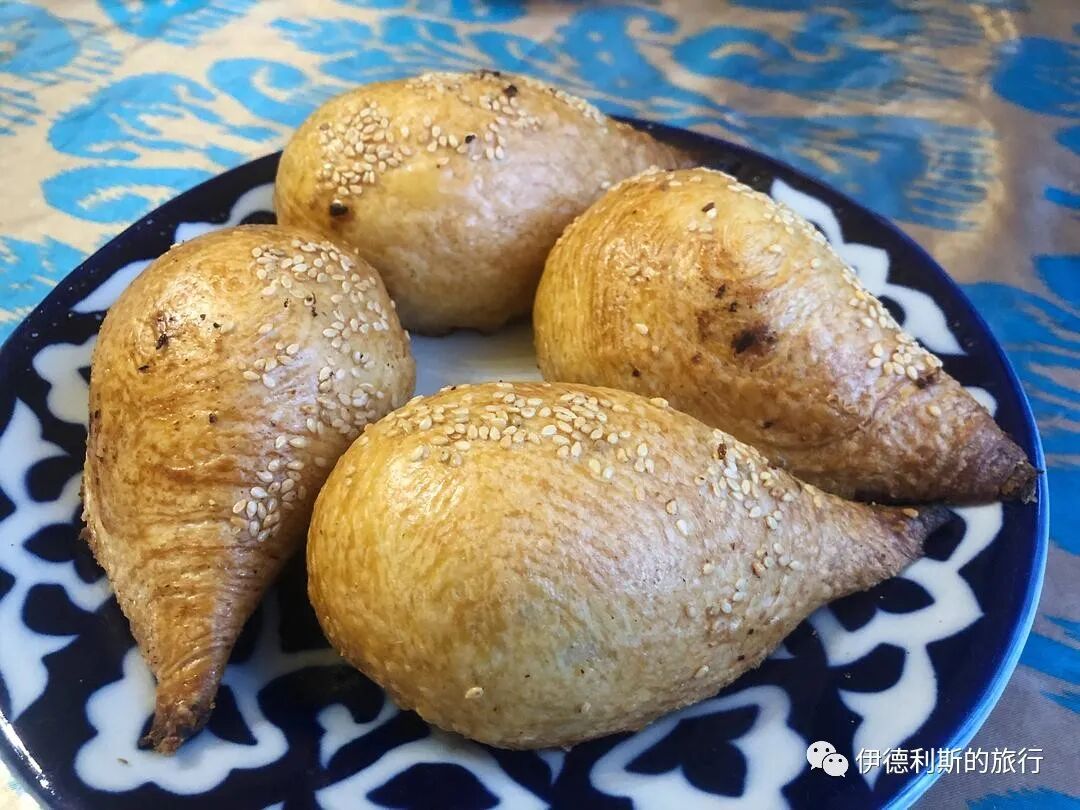
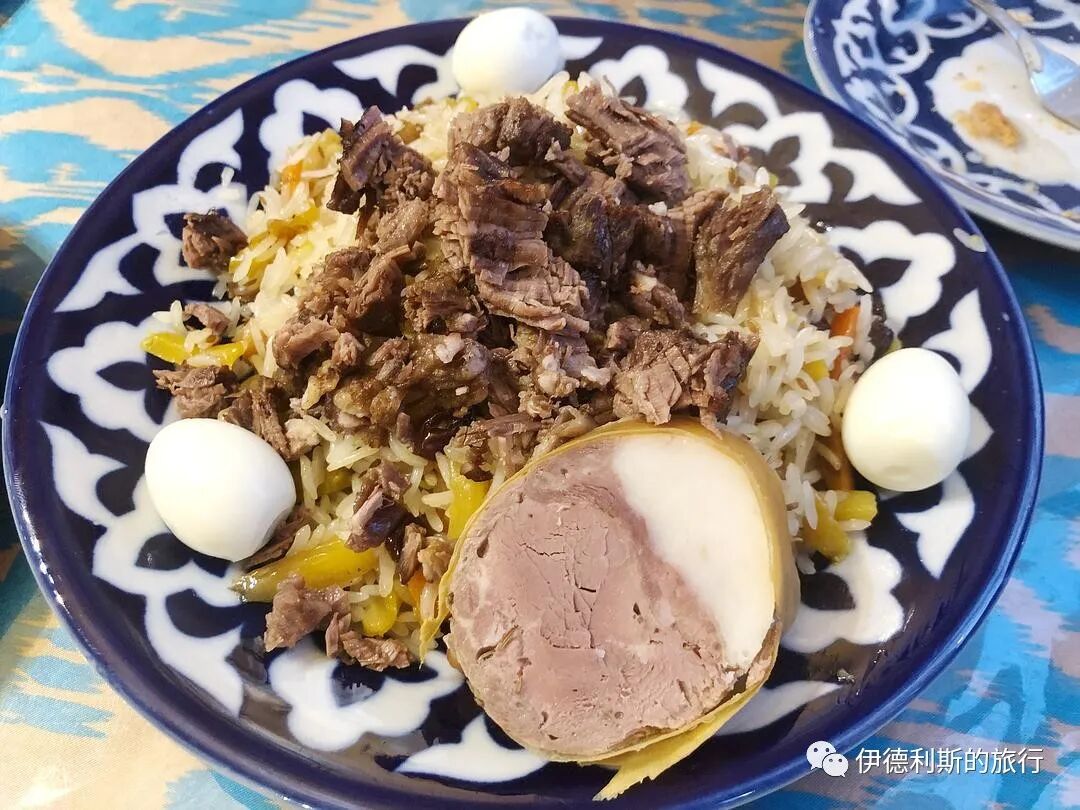
The rice pilaf (plov) is topped with horse meat and quail eggs.
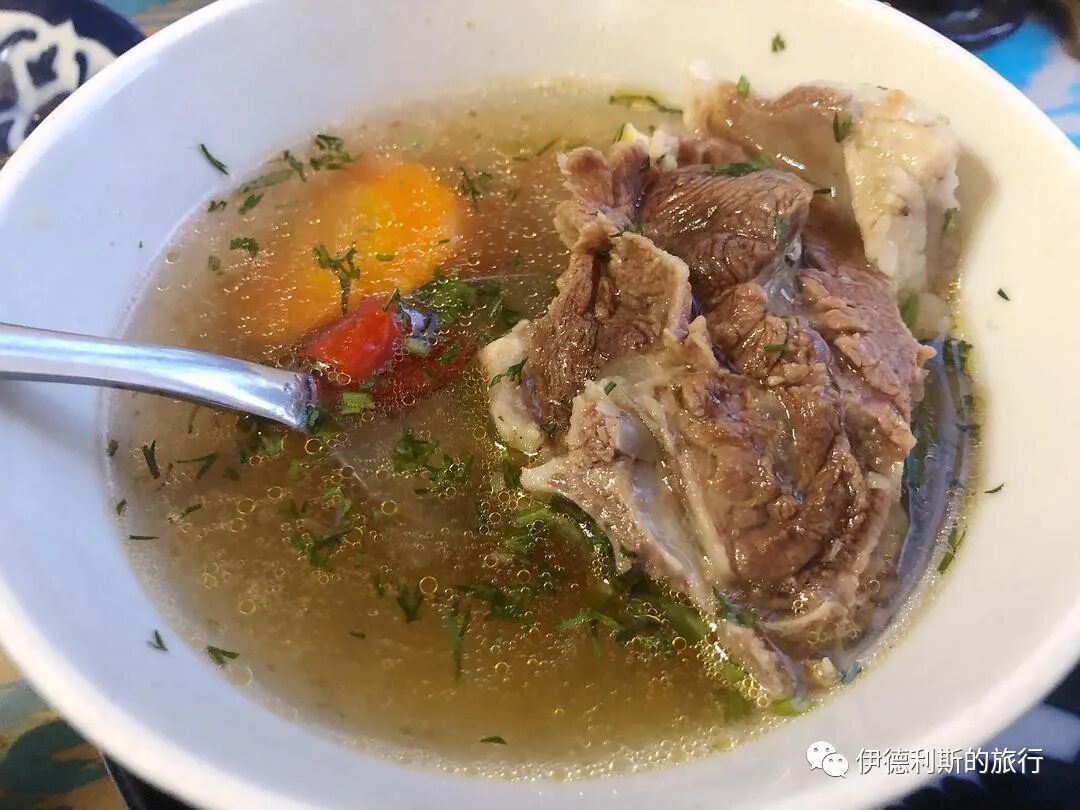
Meat soup (sho'rva).
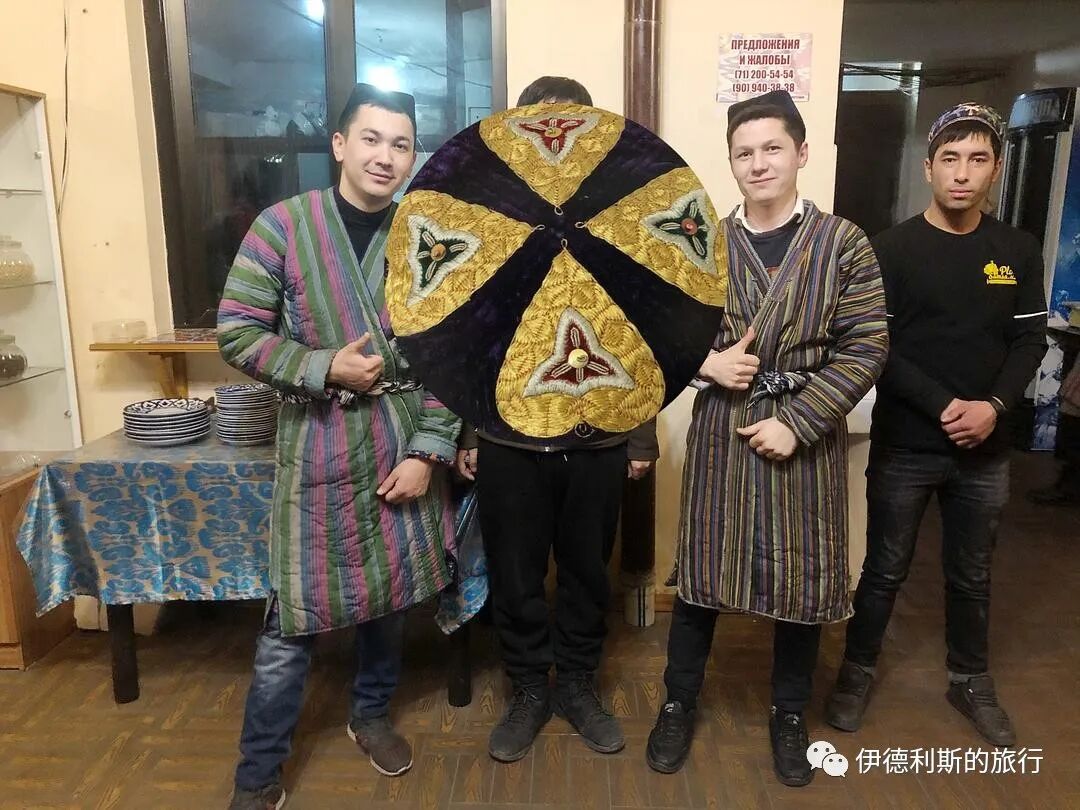
I took a photo with a young man wearing a traditional robe (chapan) and a skullcap (doppa).
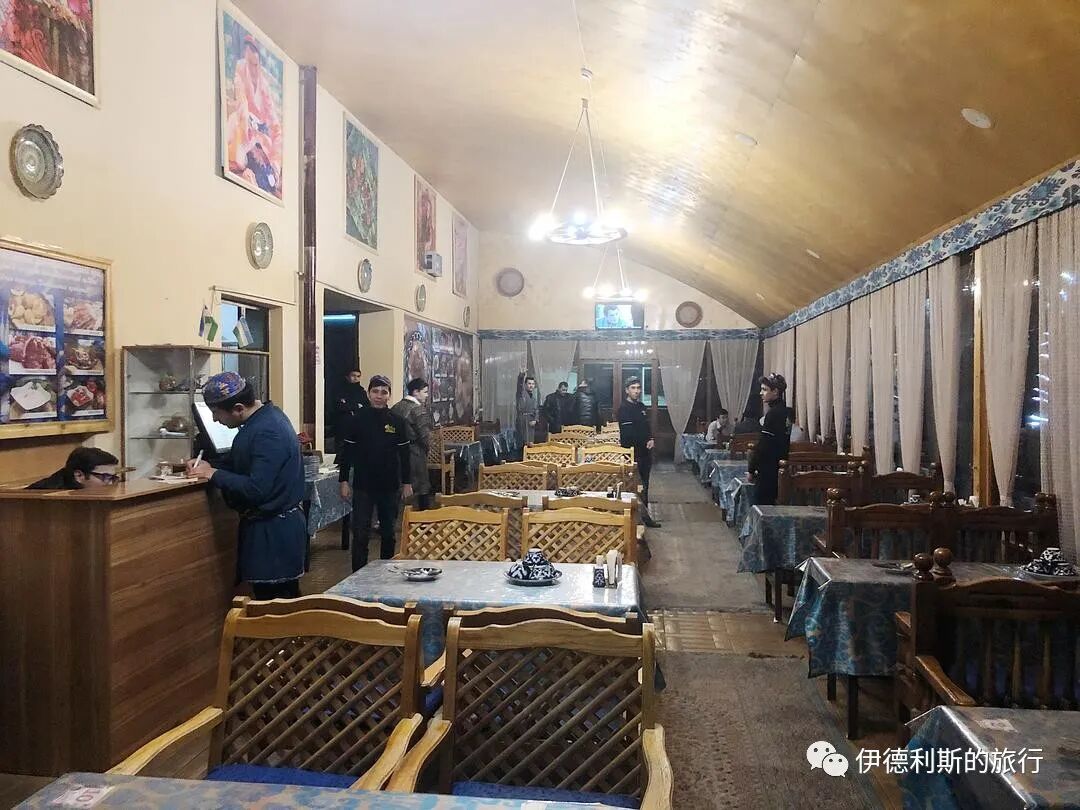
Maidie.
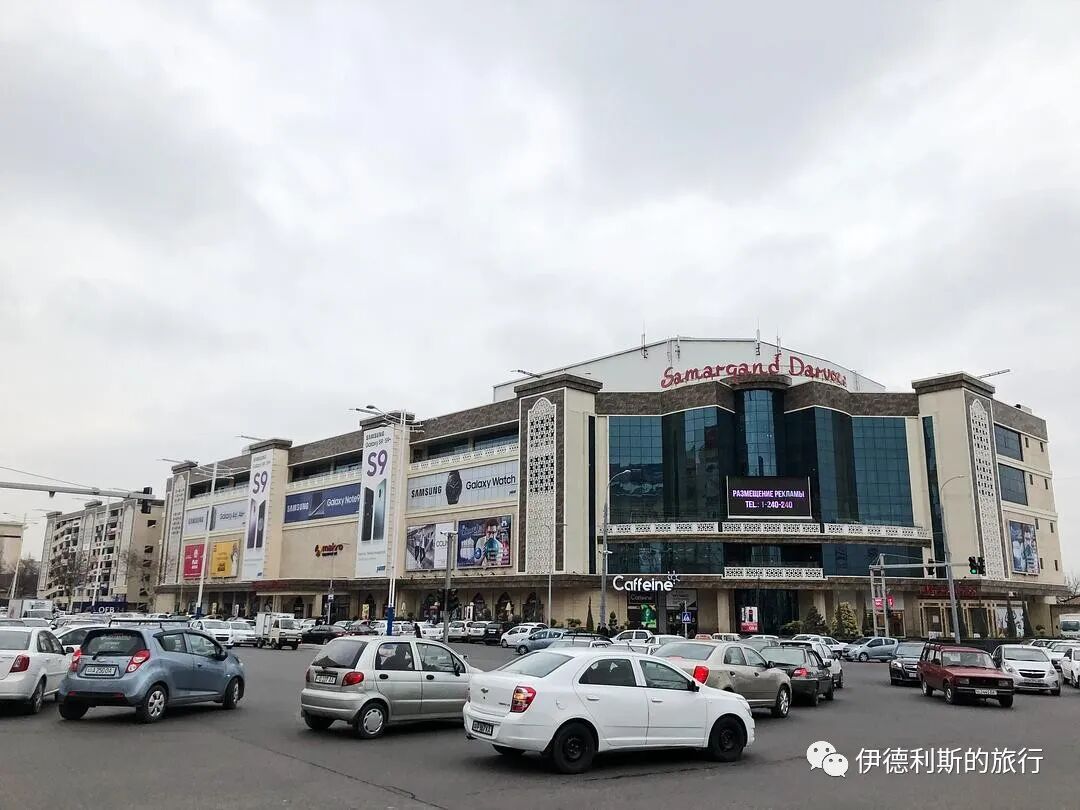
Near the old town of Tashkent, there is a large shopping mall called Samarqand Darvoza. It is one of the busier malls in the city and even has a KFC inside. I found a chain music store inside and bought two discs.
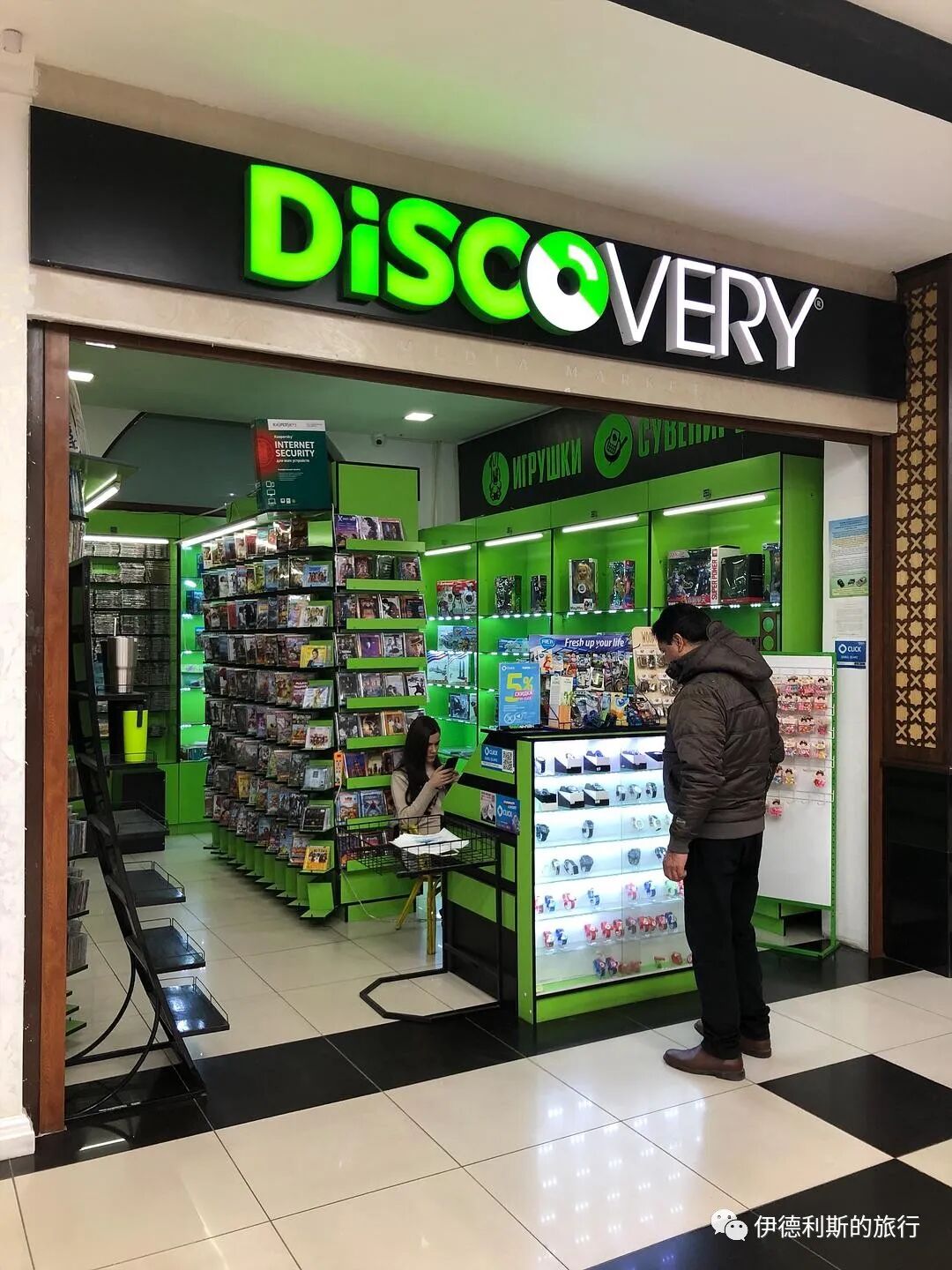
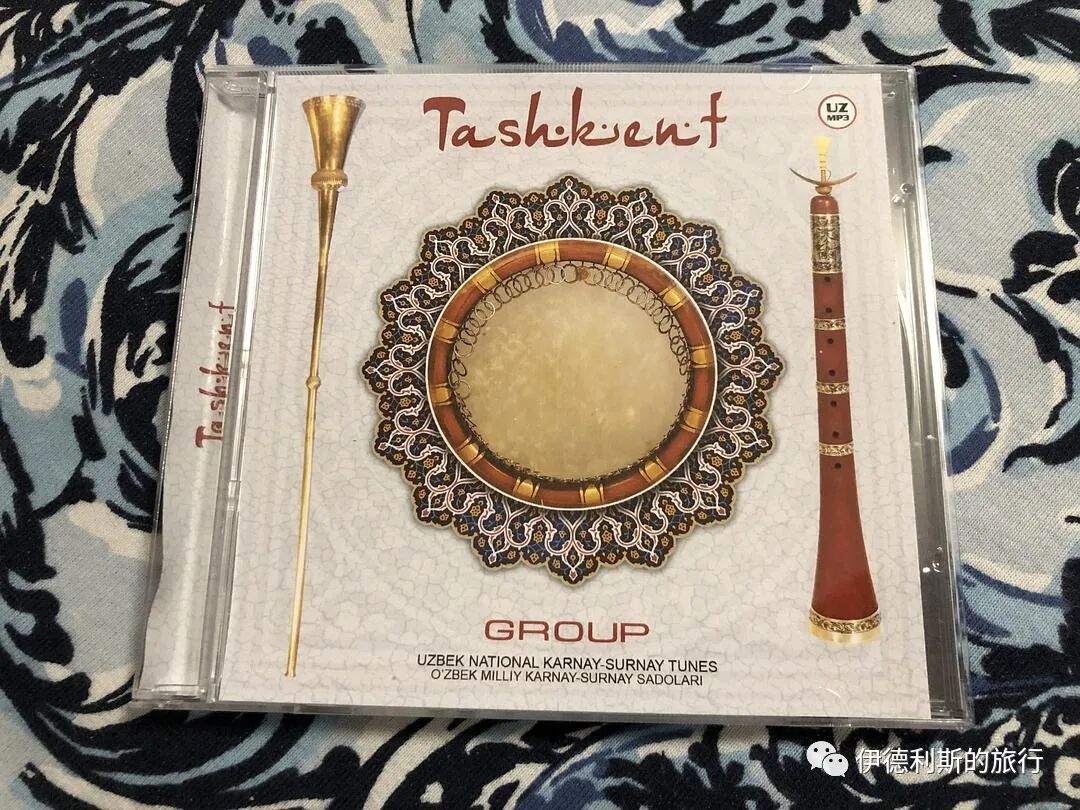
One is a traditional music group called Tashkent that plays drums and the suona horn. They formed in 1998. The combination of suona horns and drums stretches from inland China and Xinjiang through Central Asia all the way to Turkey. I have bought albums of this music in both Xinjiang and Turkey.
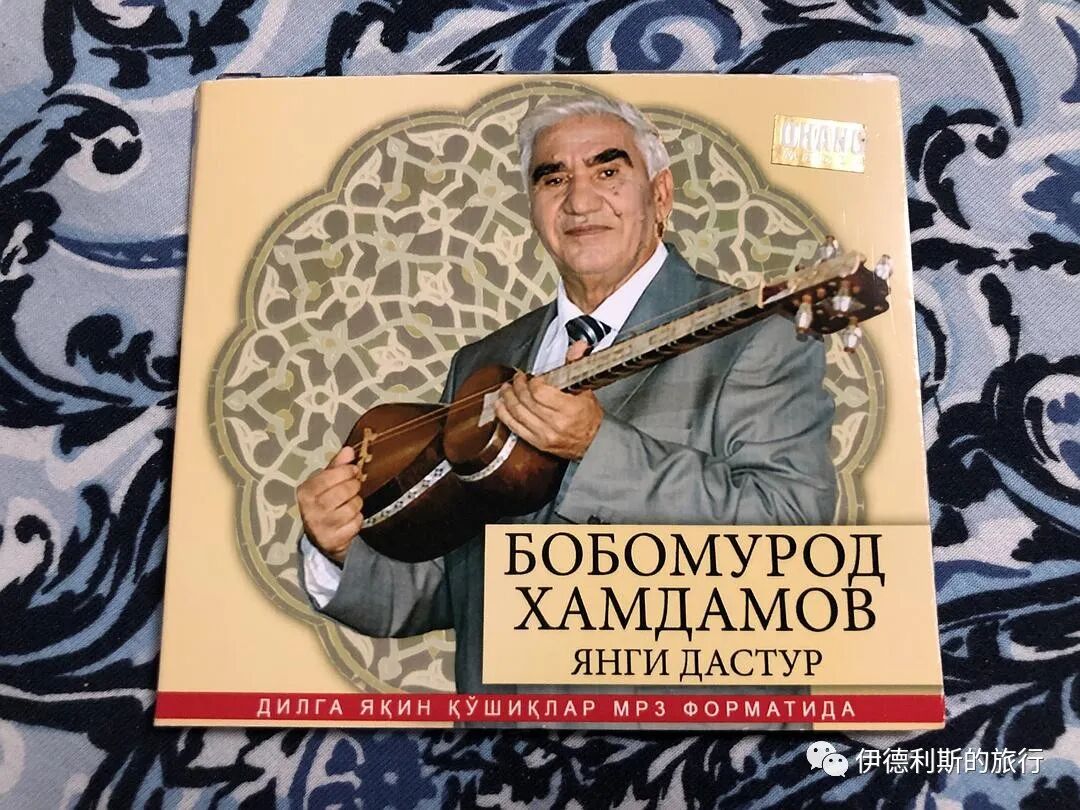
This is an album featuring the rawap.
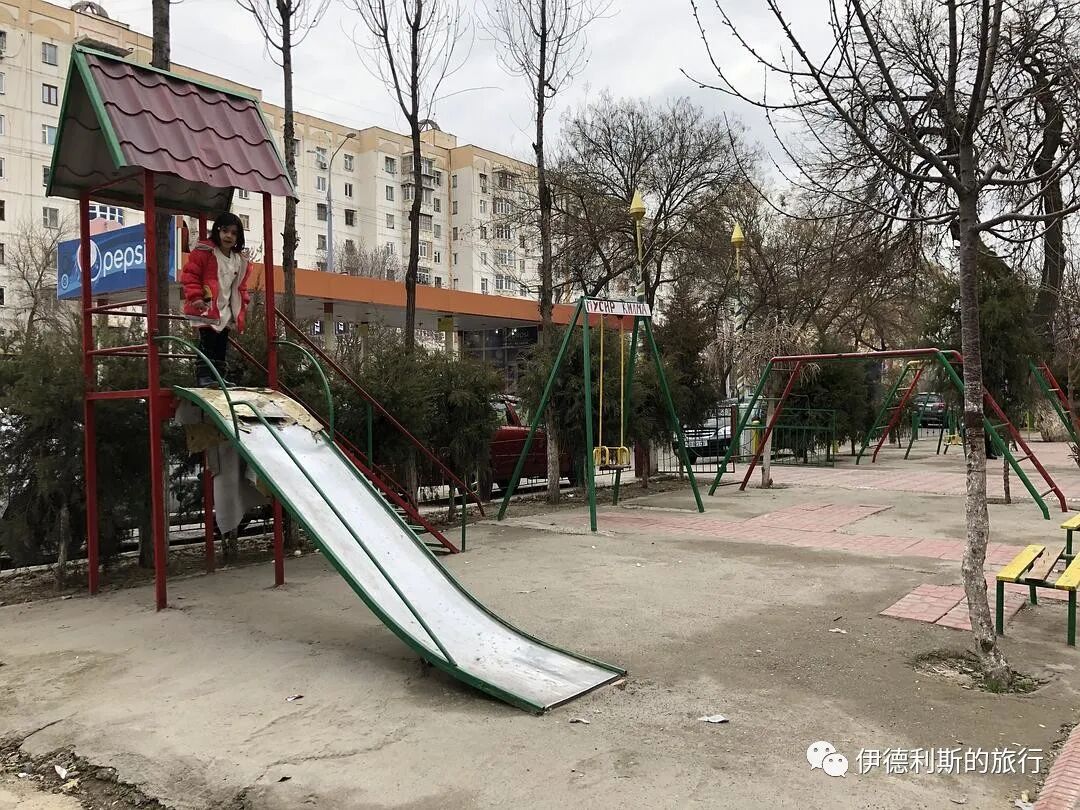
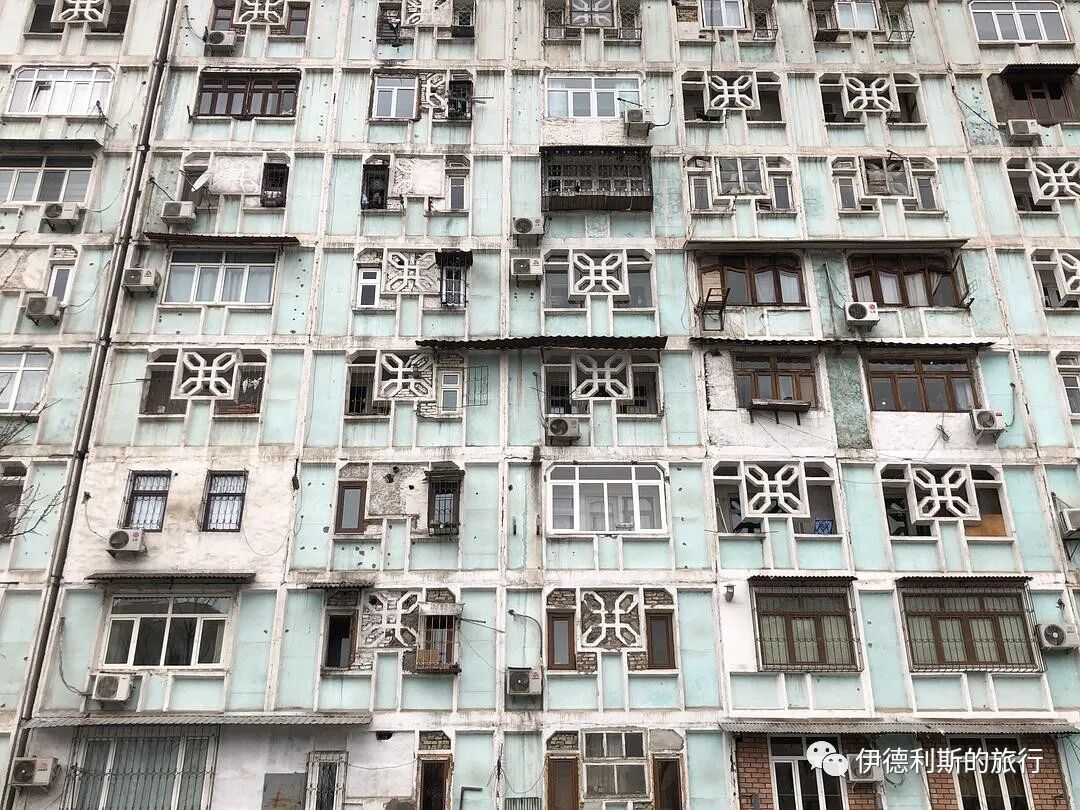
You can walk south from Chorsu Bazaar to reach Samarqand Darvoza. On the way, you will pass through a neighborhood with a very Soviet feel.
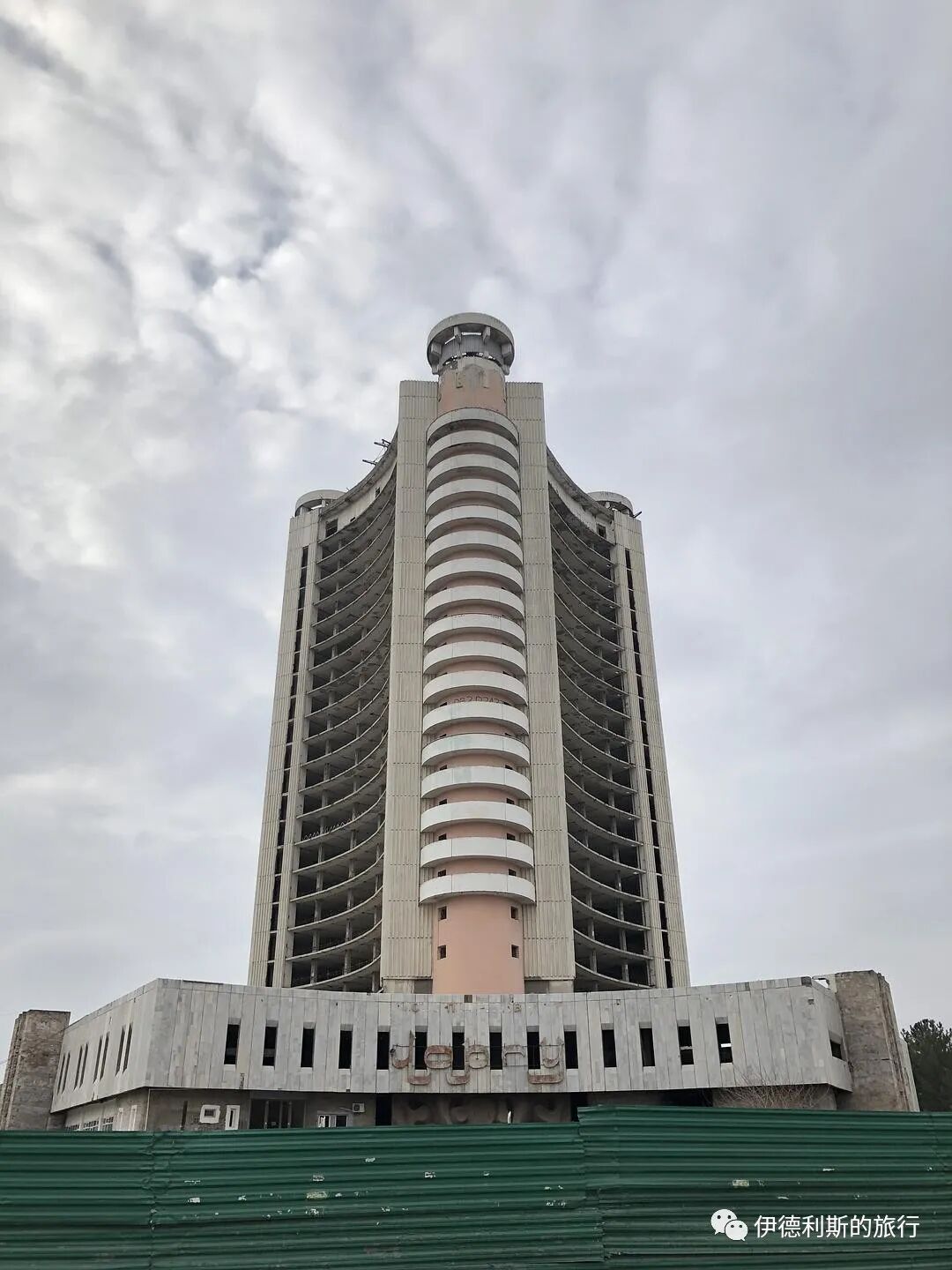
Leaving.
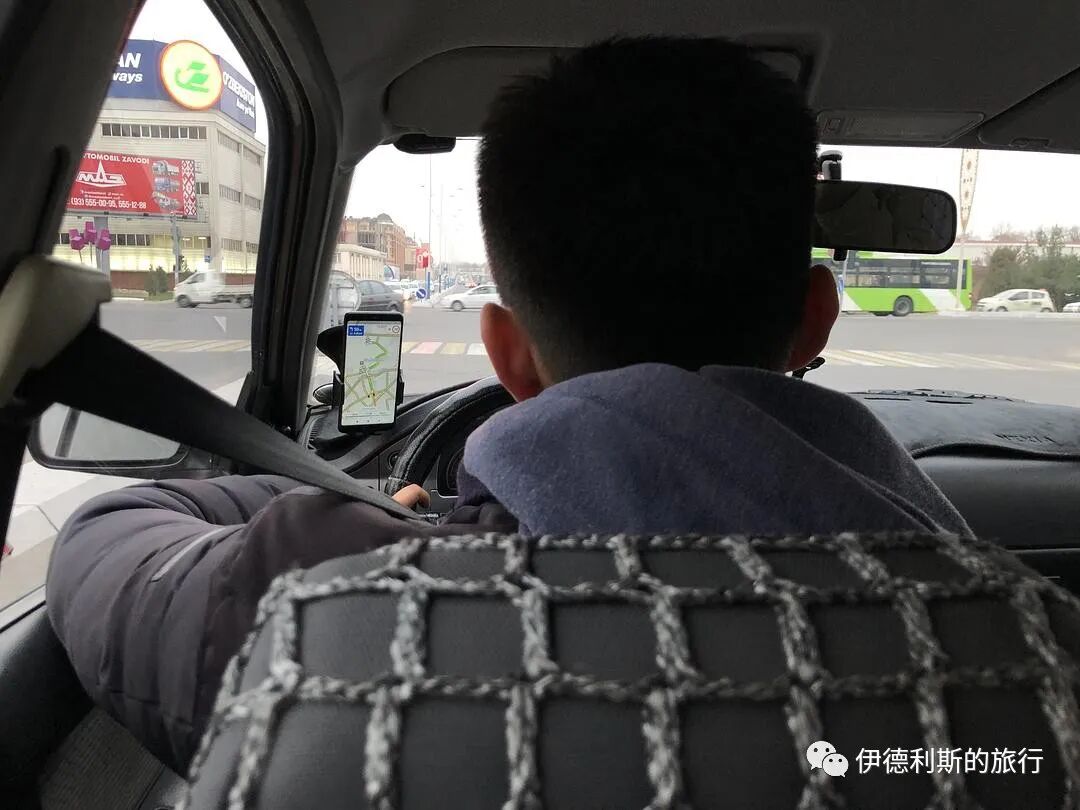
After finishing my tour of Tashkent, I am getting ready to fly to Bukhara. I took a Yandex ride from my place to the airport. The driver and I chatted the whole way in elementary-level English, and he told me it was his first time talking to a foreigner. It is always fun to talk with people who are not good at English because you do not feel shy if you do not understand something.
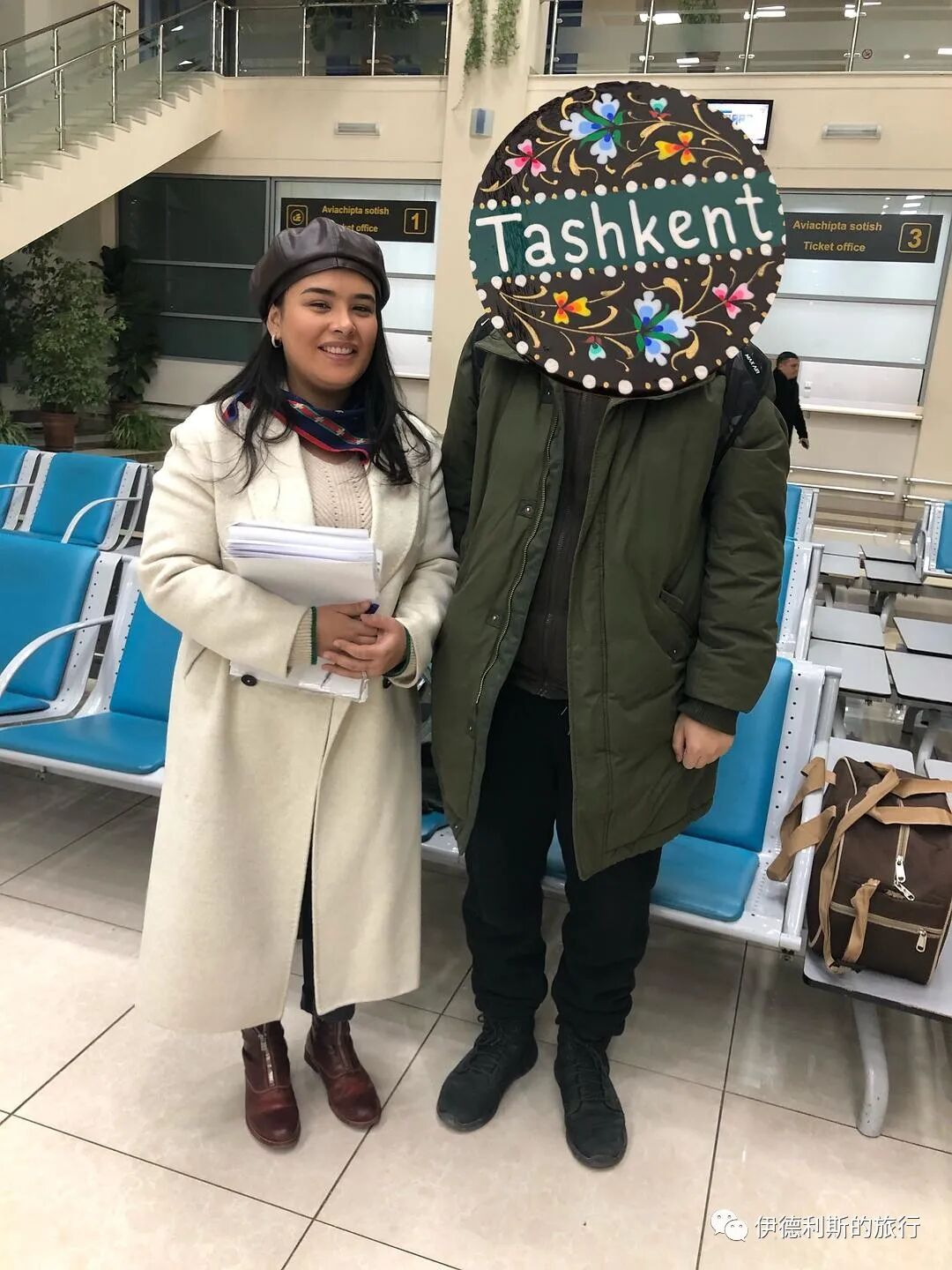
At Tashkent Airport, I met a girl who goes to college in Guangzhou. She was doing a survey for her graduation thesis, so I helped her fill it out.
Summary: Tashkent — Old City Food, Mosques and Uzbek Heritage is presented here as a firsthand travel account in clear English, beginning with this scene: On February 5, 2019, the first day of the Lunar New Year, I flew directly from Beijing to Tashkent on Uzbekistan Airways to start my food and travel tour of Uzbekistan and Tajikistan. The account keeps its focus on Tashkent Travel, Uzbek Food, Muslim Heritage while preserving the names, places, food, and historical details from the Chinese source.
On February 5, 2019, the first day of the Lunar New Year, I flew directly from Beijing to Tashkent on Uzbekistan Airways to start my food and travel tour of Uzbekistan and Tajikistan.
I stayed at Gulnara Guesthouse, which I booked on Booking.com and is recommended by Lonely Planet. It is located in the center of the old city, very close to Chorsu Bazaar, and the owner speaks great English.
The breakfast is simple, but it is enough.
The room where we eat breakfast.
In the evening, I spent time hanging out with the staff, drinking tea and chatting.
The bread the staff eats with their tea.
After checking in, I headed out to explore the bazaar!
My place is less than 500 meters from the bazaar.
Chorsu Bazaar.
Chorsu Bazaar is in the heart of the old city (Eski Shakhar) in Tashkent and is the busiest spot in the old town. The words Chorsu and Bazaar both come from Persian and mean market at the crossroads. In winter, Chorsu Bazaar opens around 10 a.m. and stays open until dark, selling all kinds of goods.
The entrance to the bazaar is packed with all sorts of cars.
Baby cribs.
Various tourist souvenirs.
Fruit seller
Naan bread seller
1. Snack area
The snack area is on the east side of Chorsu Bazaar. In winter, it is open daily from morning until around four or five in the afternoon. You can eat all kinds of Uzbek snacks there.
Rice sausage seller
Rice sausage seller
Naryn
Served with meat broth and naan bread
A person selling grilled meat (kaorou).
The grilled meat is super delicious.
There is also someone selling chickpea soup.
2. Fruit and vegetable section.
Fruits and vegetables take up most of the domed market. I visited in winter, so there was not much to buy. If you come in summer, you should be able to eat more delicious fruits.
I personally think pomegranate juice in Uzbekistan tastes a bit worse than in Xinjiang, but it is better than in Azerbaijan and Turkey.
The uncle is wearing a casual-style robe (chapan).
When eating and shopping at an Uzbek bazaar, the first sentence you need to learn is "Necha pul" (how much). The uncle's answer is "Besh ming som" (five thousand som).
Melon
Various dried fruits
3. Clothing section
The area selling traditional clothing is at the far south end of the bazaar. You can buy traditional robes (chapan), embroidered cushions (kurpacha), and caps (doppi).
I really wanted to buy a robe, but I couldn't fit that much in my luggage, so I bought a few classic caps instead.
A classic traditional robe (chapan)
I bought two everyday almond-pattern caps (badam doppa) at the first shop. The almond-pattern cap is a style shared by Uyghur, Uzbek, and Tajik people. In Uzbekistan, it is called a Chust do‘ppisi. Chust is a handicraft center in the Fergana Valley, famous for making skullcaps (doppa). The almond-patterned skullcap (badam doppa) likely started in the 19th century. It spread quickly among Uzbeks, lowland Tajiks, and Uyghurs from the late 1800s to the early 1900s, becoming very popular.
I bought a colorful skullcap (doppa) at the second shop. You do not see these on the street often now, as people mostly wear them for festivals.
I bought this black felt hat at the third shop. This was my first time seeing this kind of black felt hat. I have seen similar white versions in Azerbaijan and Kyrgyzstan. These black felt hats are very common on the streets of Tashkent and are a local specialty.
Tashkent Food
1. Lagman House
The grandmother where we stayed highly recommended this noodle shop called Lagman House. It is not far from our place or the Chorsu Bazaar. The shop is very clean. We ordered mixed noodles (lagman), a rice, beef, and potato soup called Mastava, and a type of grilled meat called jaz. The meat in the mixed noodles was tasty, but the noodles were a bit thin. The grilled meat was super tender and really amazing.
2. Plov Centre
The Plov Centre is known as a must-visit restaurant in Tashkent. There are two Plov Centres, a new one and an old one, and they are not far apart. The new one is right under the TV tower; you will see the tower when you arrive. The Plov Centre only serves lunch every day, so watch the time because it runs out if you come too late.
The super-sized plov pots are a real visual spectacle.
There are also small pots.
Slicing the beef, the beef is super delicious.
Slicing the horse meat.
Tashkent pilaf (plov).
The menu is in Cyrillic, with three types of pilaf. You can order a large portion or extra meat. There are also small cold dishes of horse meat and tea to drink.
I took the subway to the pilaf center. The Tashkent Metro opened in 1977, but photography was only allowed starting in 2018, so I made sure to take a few photos.
Station entrance.
3, Plov-samsa.uz
I ate at a restaurant called Plov-Samsa.uz near Amir Timur Square in Tashkent with a friend. Plov means rice pilaf (plov) and Samsa means baked bun (samsa). I highly recommend their baked buns, they are delicious! They have a flaky crust and the portions are quite large.
This was my first time eating a baked bun in this shape.
The rice pilaf (plov) is topped with horse meat and quail eggs.
Meat soup (sho'rva).
I took a photo with a young man wearing a traditional robe (chapan) and a skullcap (doppa).
Maidie.
Near the old town of Tashkent, there is a large shopping mall called Samarqand Darvoza. It is one of the busier malls in the city and even has a KFC inside. I found a chain music store inside and bought two discs.
One is a traditional music group called Tashkent that plays drums and the suona horn. They formed in 1998. The combination of suona horns and drums stretches from inland China and Xinjiang through Central Asia all the way to Turkey. I have bought albums of this music in both Xinjiang and Turkey.
This is an album featuring the rawap.
You can walk south from Chorsu Bazaar to reach Samarqand Darvoza. On the way, you will pass through a neighborhood with a very Soviet feel.
Leaving.
After finishing my tour of Tashkent, I am getting ready to fly to Bukhara. I took a Yandex ride from my place to the airport. The driver and I chatted the whole way in elementary-level English, and he told me it was his first time talking to a foreigner. It is always fun to talk with people who are not good at English because you do not feel shy if you do not understand something.
At Tashkent Airport, I met a girl who goes to college in Guangzhou. She was doing a survey for her graduation thesis, so I helped her fill it out.
Halal Travel Guide: Samarkand — Old City Food, Mosques and Timurid Heritage
Articles • ali2007fr posted the article • 0 comments • 157 views • 2026-05-18 06:54
Reposted from the web
Summary: Samarkand — Old City Food, Mosques and Timurid Heritage is presented here as a firsthand travel account in clear English, beginning with this scene: I traveled to Uzbekistan and Tajikistan during the 2019 Spring Festival holiday. This post shares what I ate in Samarkand. The account keeps its focus on Samarkand Travel, Uzbek Food, Muslim Heritage while preserving the names, places, food, and historical details from the Chinese source.
I traveled to Uzbekistan and Tajikistan during the 2019 Spring Festival holiday. This post shares what I ate in Samarkand.
Grand Bazaar
The grand bazaar in the old city of Samarkand is called Siab Bazaar, located just north of the Bibi-Khanym Mosque.
The most common snack at the bazaar is the baked bun (samsa). Samarkand's baked buns have flaky crusts, which makes them different from the ones in Xinjiang.
There are far fewer fruits and melons in winter than in summer, but you can still drink pomegranate juice.
A Central Asian fast food specialty is shaurma, which is rotisserie meat served with yogurt.
Restaurants
I ate pilaf (zhua fan) and wheat porridge (halisa) at a restaurant next to the Bibi-Khanym Mosque. Halisa is made by simmering cracked wheat and meat for a long time, and it is often eaten during Eid al-Adha. Halisa is very popular across the Middle East, Central Asia, and South Asia, where it goes by different names like Keshkek, Hareesa, Halim, and Khichra.
I had pilaf and steamed meat dumplings (baozi) at a restaurant near Registan Square; after a few days of traveling, I can now read the menu perfectly.
Samarkand Restaurant is a classic banquet hall in Samarkand. We ate lamb shoulder, horse meat, mushroom soup, and various types of flatbread (nang), and we even caught the banquet where the groom's family welcomed the bride after a lively wedding.
Sheepskin calligraphy.
There are traditional music performances inside Registan in the summer, but unfortunately, there were none when we visited in the winter. However, we met a retired teacher writing calligraphy on parchment. I asked him to write my name and Allah is Kind (Yinshan Allah) for me.
Buying a hat
The street between Registan Square and Bibi-Khanym Mosque is full of souvenir shops. I bought a hat with a pomegranate pattern at one shop, and the sisters there even invited me to eat rice pilaf (zhua fan). view all
Summary: Samarkand — Old City Food, Mosques and Timurid Heritage is presented here as a firsthand travel account in clear English, beginning with this scene: I traveled to Uzbekistan and Tajikistan during the 2019 Spring Festival holiday. This post shares what I ate in Samarkand. The account keeps its focus on Samarkand Travel, Uzbek Food, Muslim Heritage while preserving the names, places, food, and historical details from the Chinese source.
I traveled to Uzbekistan and Tajikistan during the 2019 Spring Festival holiday. This post shares what I ate in Samarkand.
Grand Bazaar
The grand bazaar in the old city of Samarkand is called Siab Bazaar, located just north of the Bibi-Khanym Mosque.
The most common snack at the bazaar is the baked bun (samsa). Samarkand's baked buns have flaky crusts, which makes them different from the ones in Xinjiang.
There are far fewer fruits and melons in winter than in summer, but you can still drink pomegranate juice.
A Central Asian fast food specialty is shaurma, which is rotisserie meat served with yogurt.
Restaurants
I ate pilaf (zhua fan) and wheat porridge (halisa) at a restaurant next to the Bibi-Khanym Mosque. Halisa is made by simmering cracked wheat and meat for a long time, and it is often eaten during Eid al-Adha. Halisa is very popular across the Middle East, Central Asia, and South Asia, where it goes by different names like Keshkek, Hareesa, Halim, and Khichra.
I had pilaf and steamed meat dumplings (baozi) at a restaurant near Registan Square; after a few days of traveling, I can now read the menu perfectly.
Samarkand Restaurant is a classic banquet hall in Samarkand. We ate lamb shoulder, horse meat, mushroom soup, and various types of flatbread (nang), and we even caught the banquet where the groom's family welcomed the bride after a lively wedding.
Sheepskin calligraphy.
There are traditional music performances inside Registan in the summer, but unfortunately, there were none when we visited in the winter. However, we met a retired teacher writing calligraphy on parchment. I asked him to write my name and Allah is Kind (Yinshan Allah) for me.
Buying a hat
The street between Registan Square and Bibi-Khanym Mosque is full of souvenir shops. I bought a hat with a pomegranate pattern at one shop, and the sisters there even invited me to eat rice pilaf (zhua fan). view all
Reposted from the web
Summary: Samarkand — Old City Food, Mosques and Timurid Heritage is presented here as a firsthand travel account in clear English, beginning with this scene: I traveled to Uzbekistan and Tajikistan during the 2019 Spring Festival holiday. This post shares what I ate in Samarkand. The account keeps its focus on Samarkand Travel, Uzbek Food, Muslim Heritage while preserving the names, places, food, and historical details from the Chinese source.
I traveled to Uzbekistan and Tajikistan during the 2019 Spring Festival holiday. This post shares what I ate in Samarkand.
Grand Bazaar
The grand bazaar in the old city of Samarkand is called Siab Bazaar, located just north of the Bibi-Khanym Mosque.
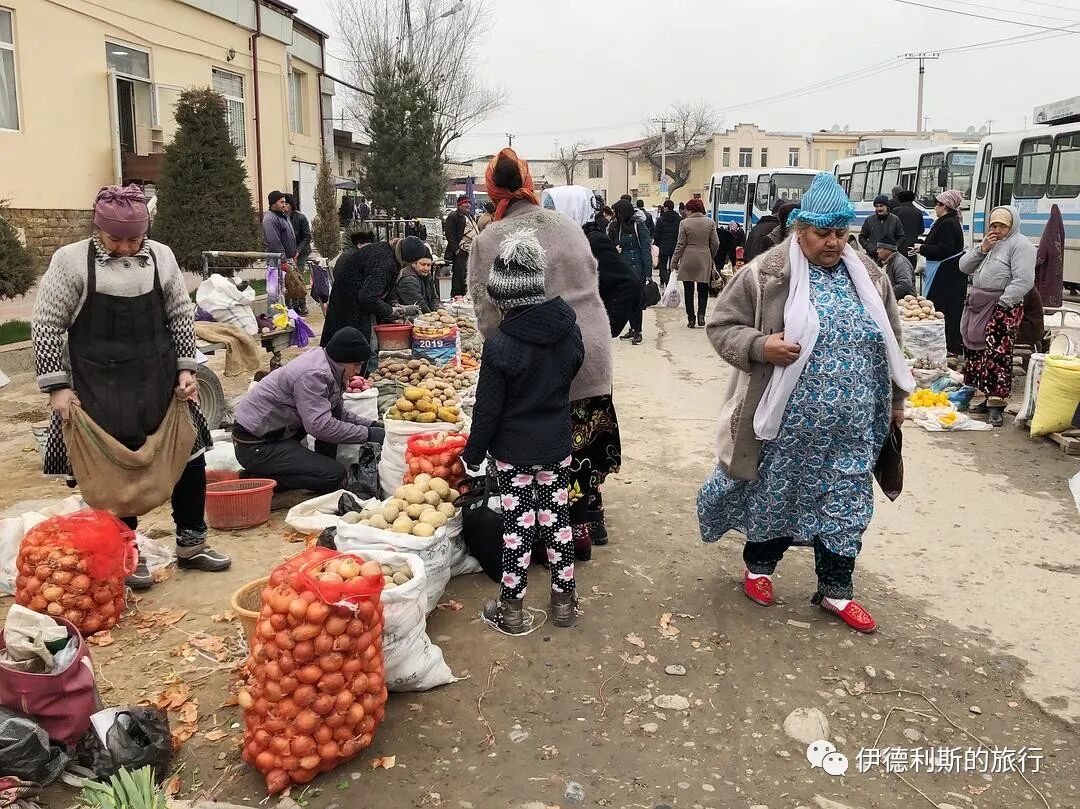
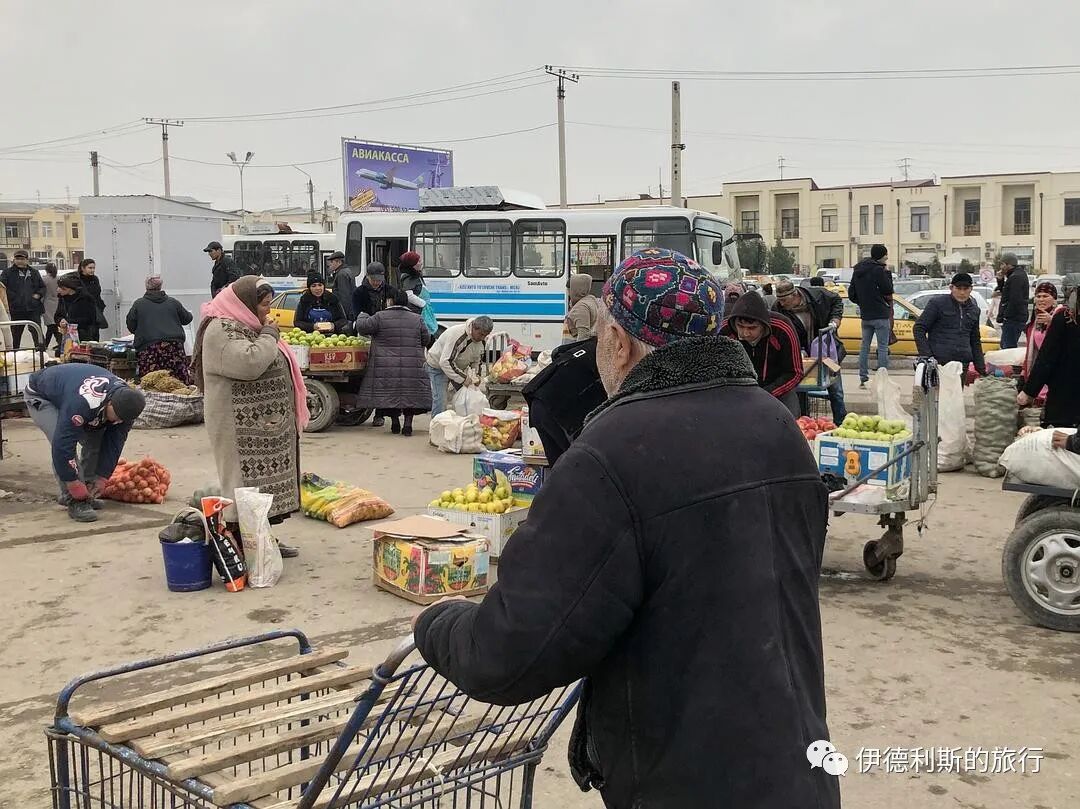
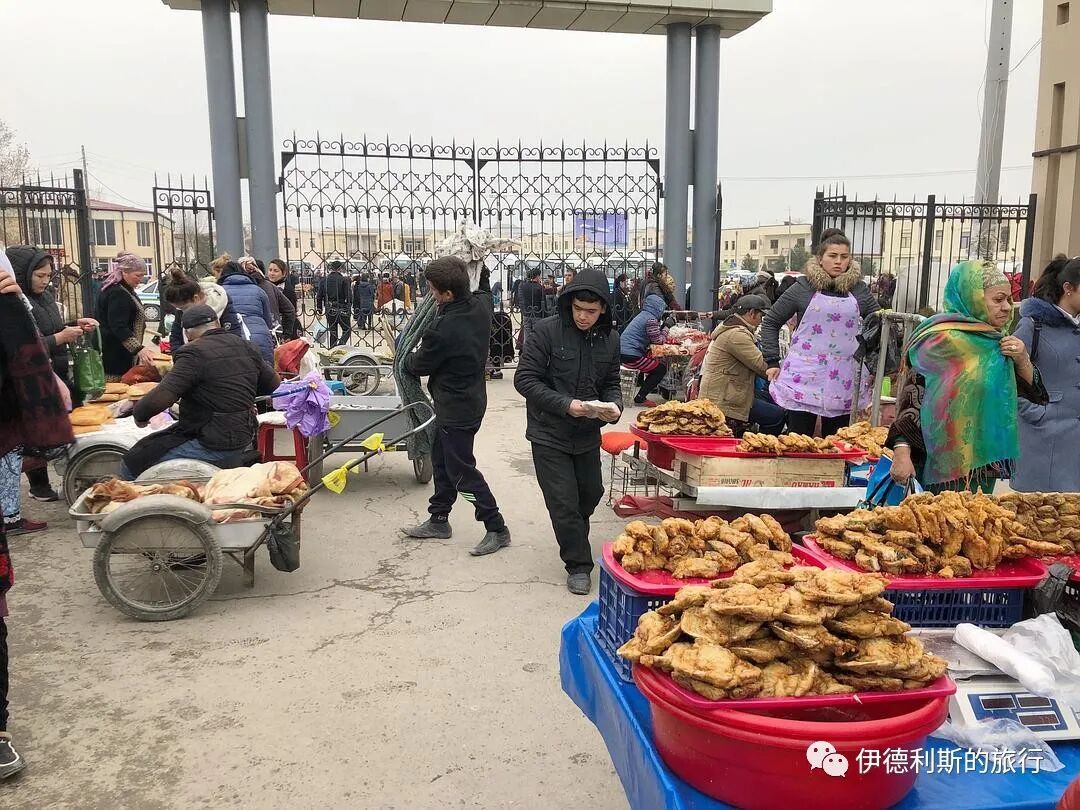
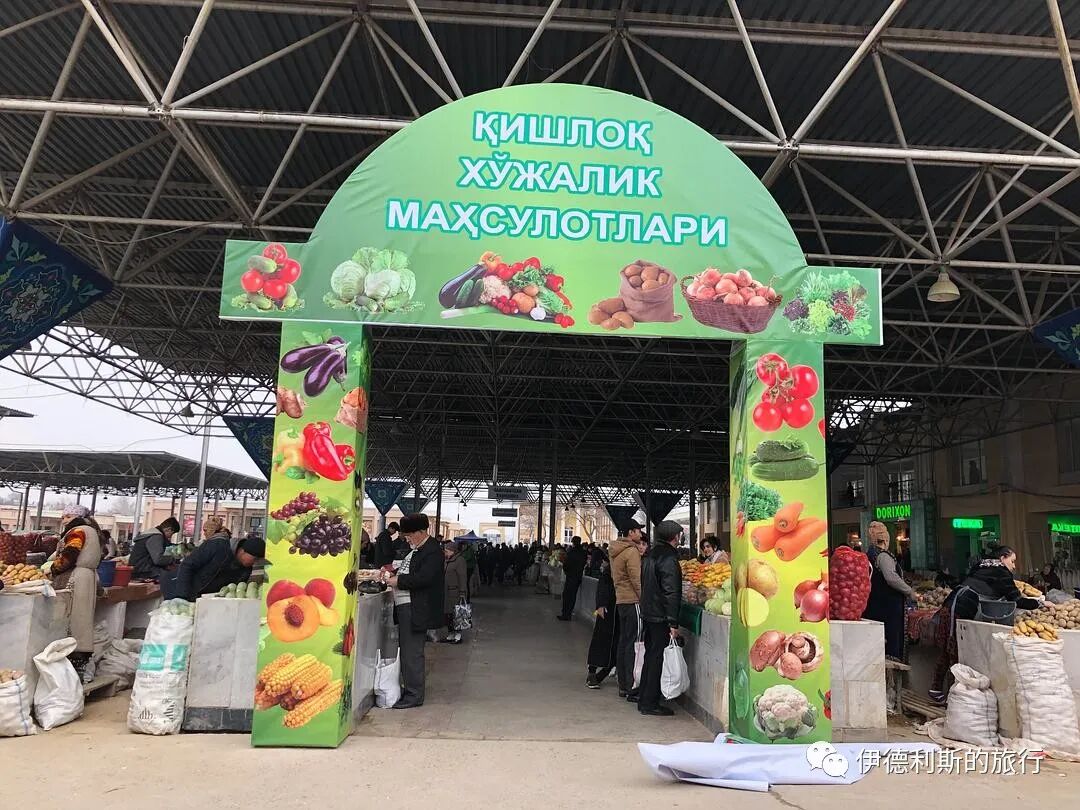
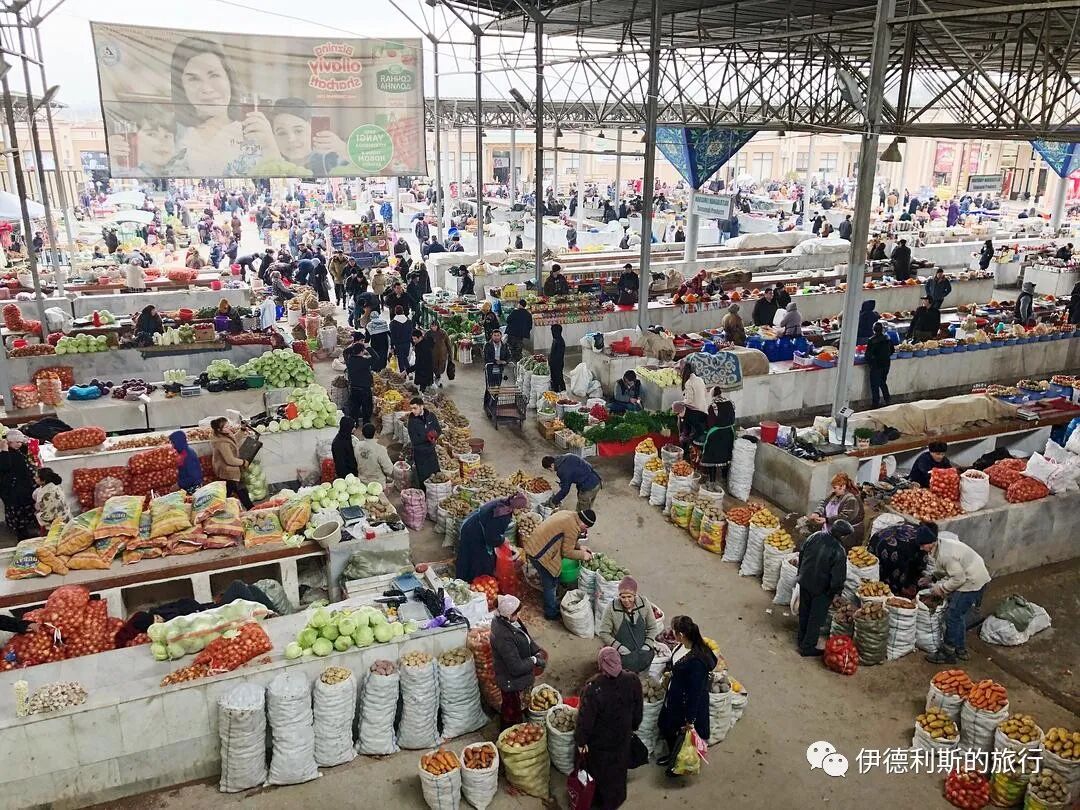
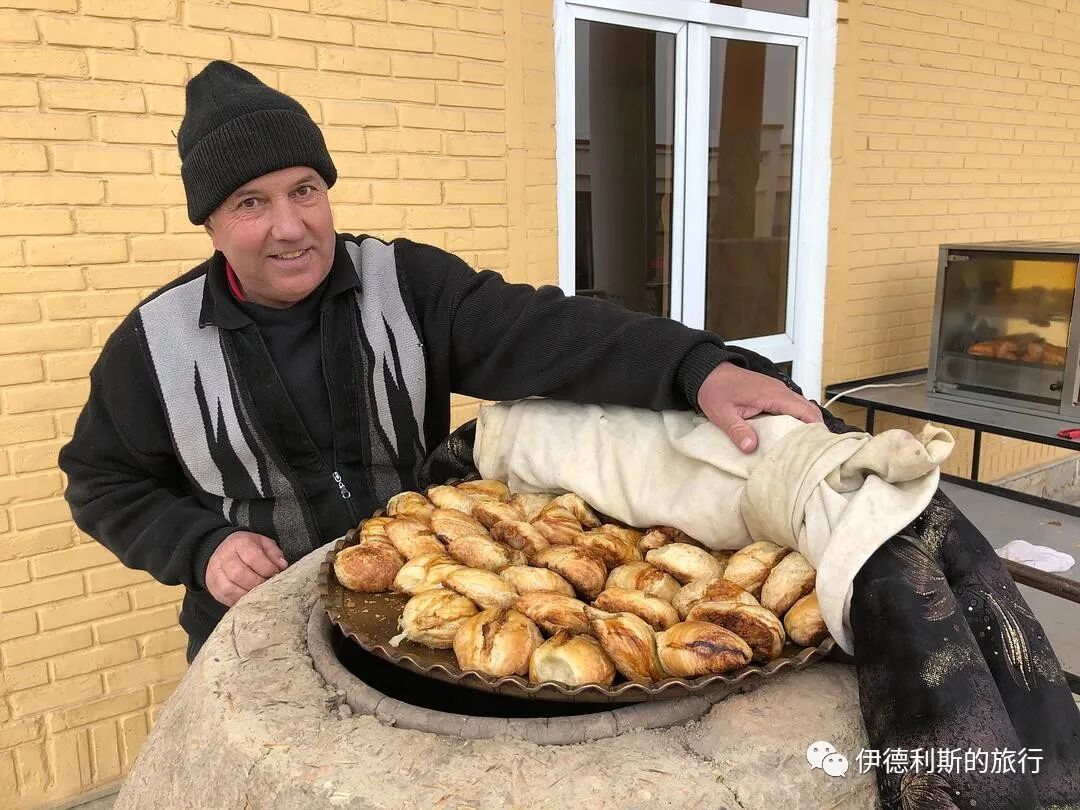
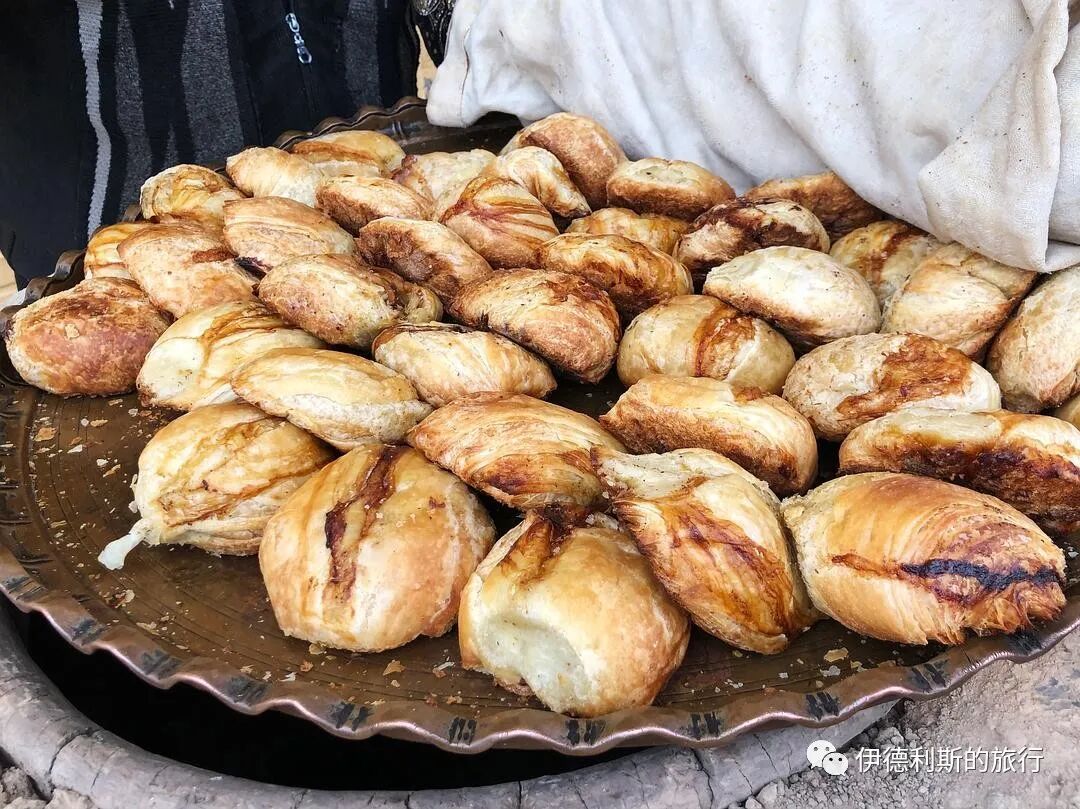
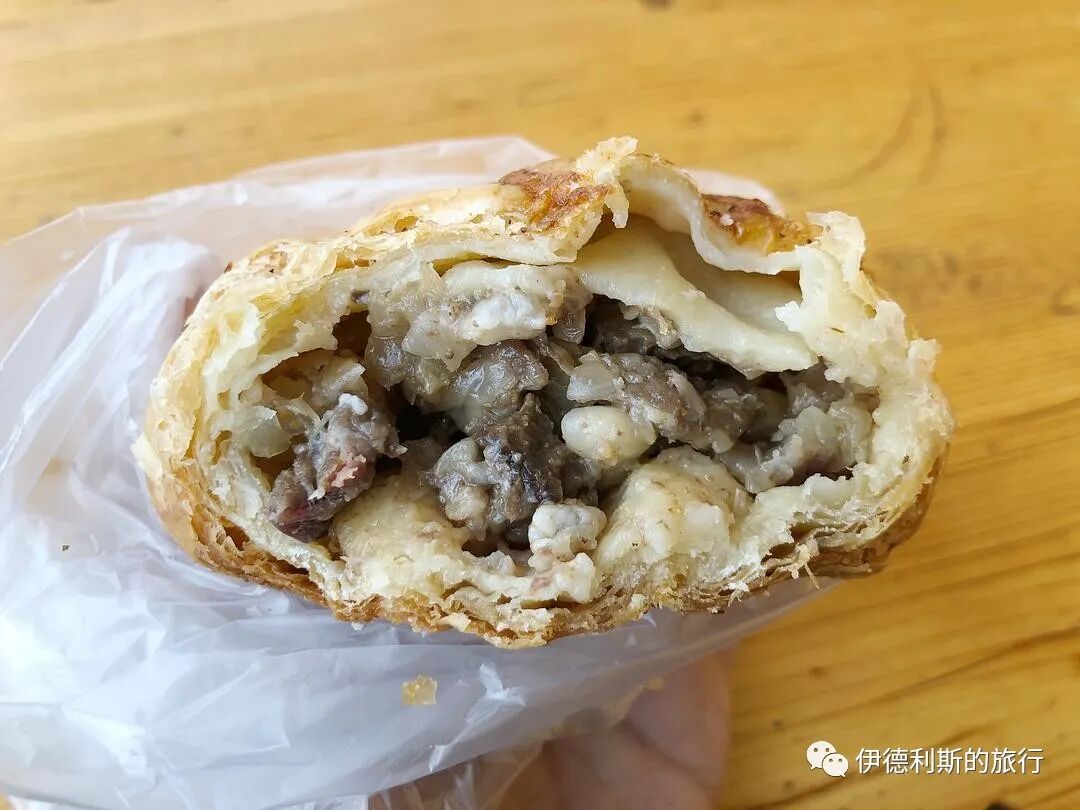
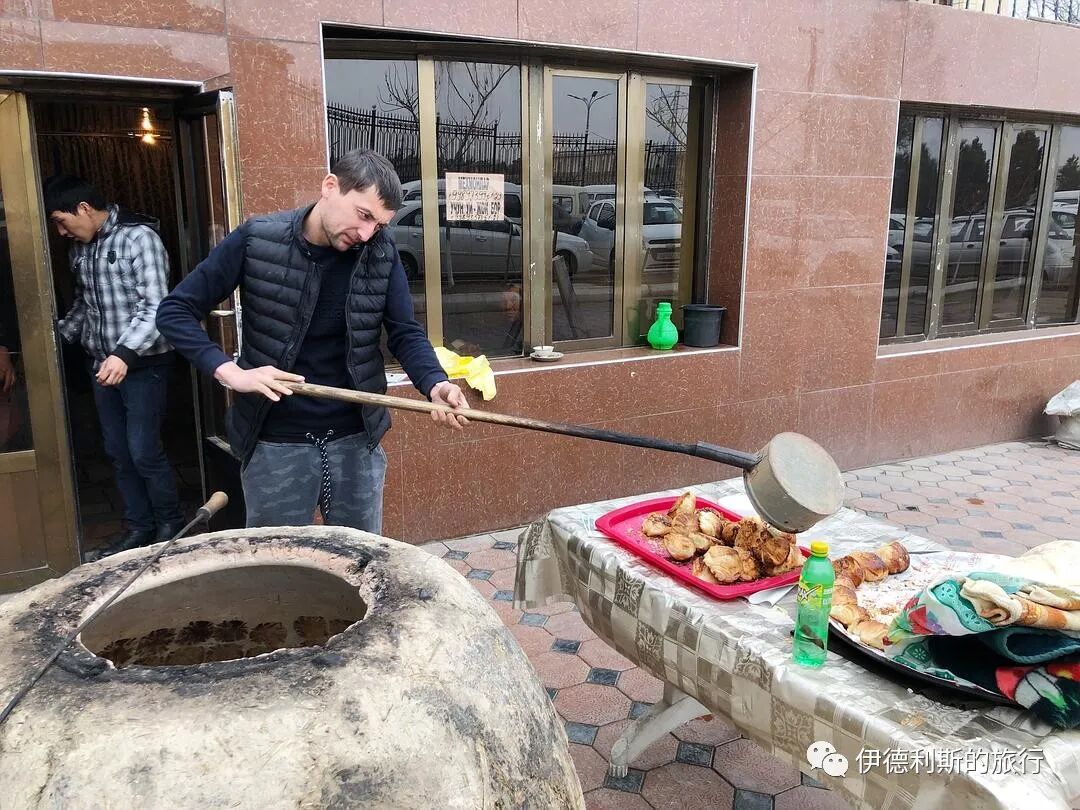
The most common snack at the bazaar is the baked bun (samsa). Samarkand's baked buns have flaky crusts, which makes them different from the ones in Xinjiang.
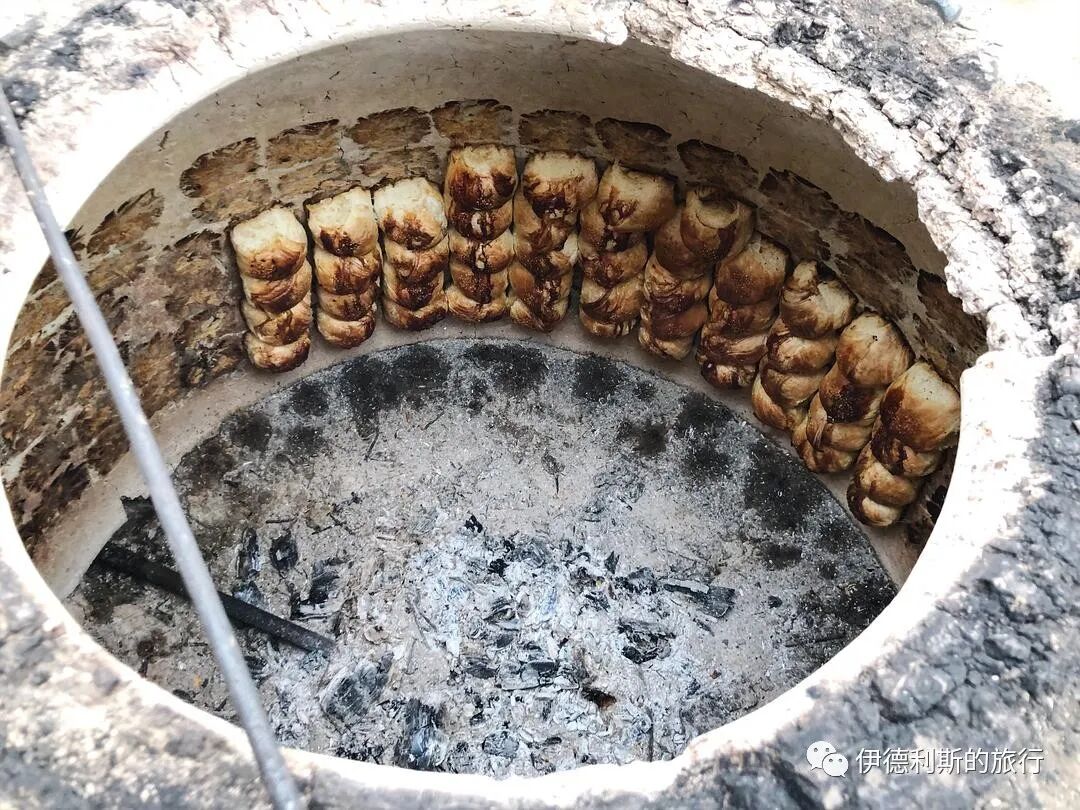
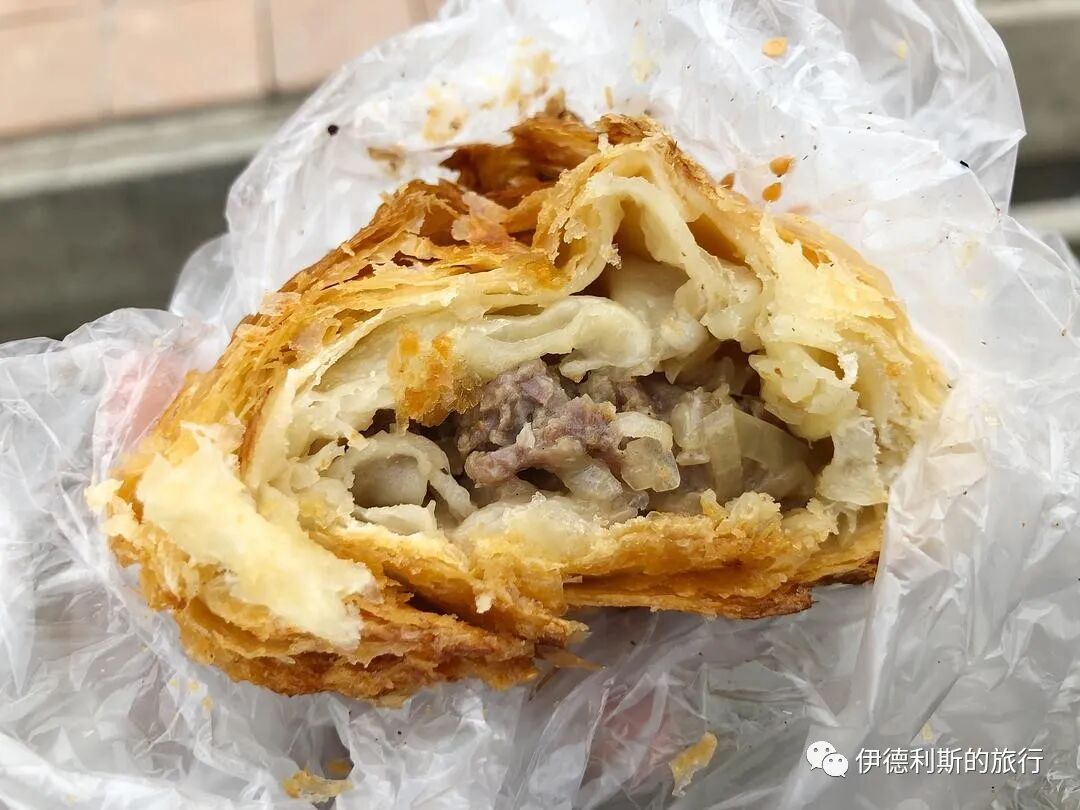
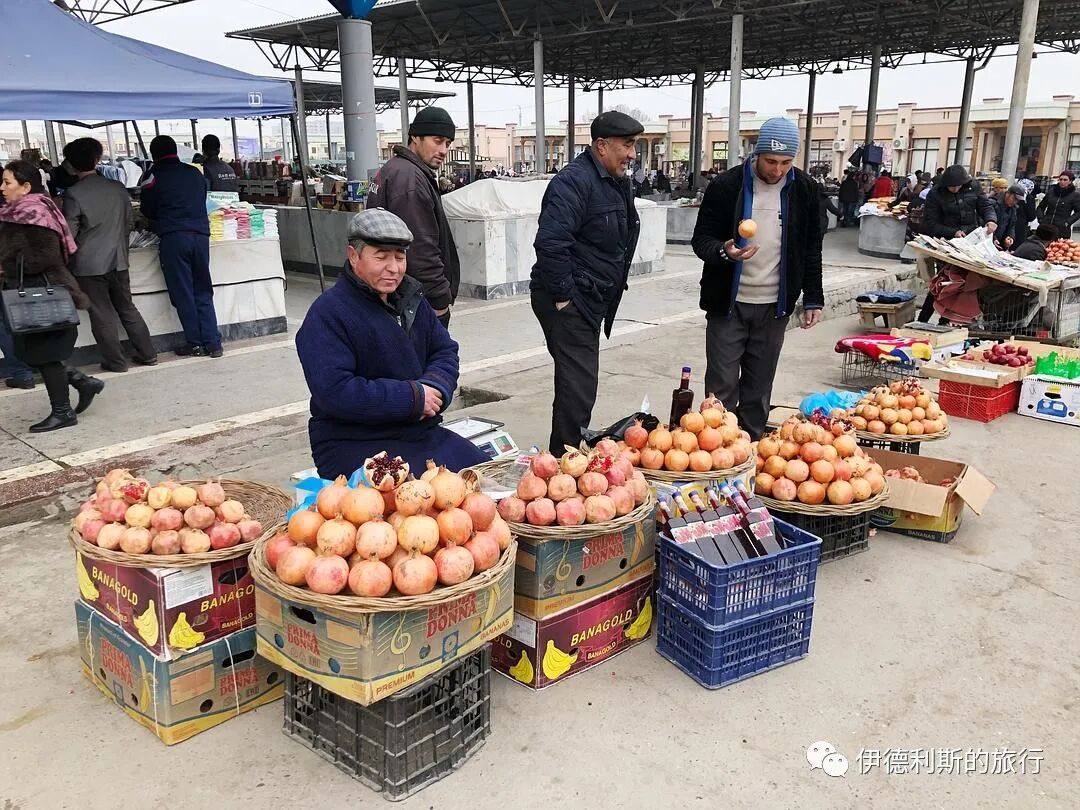
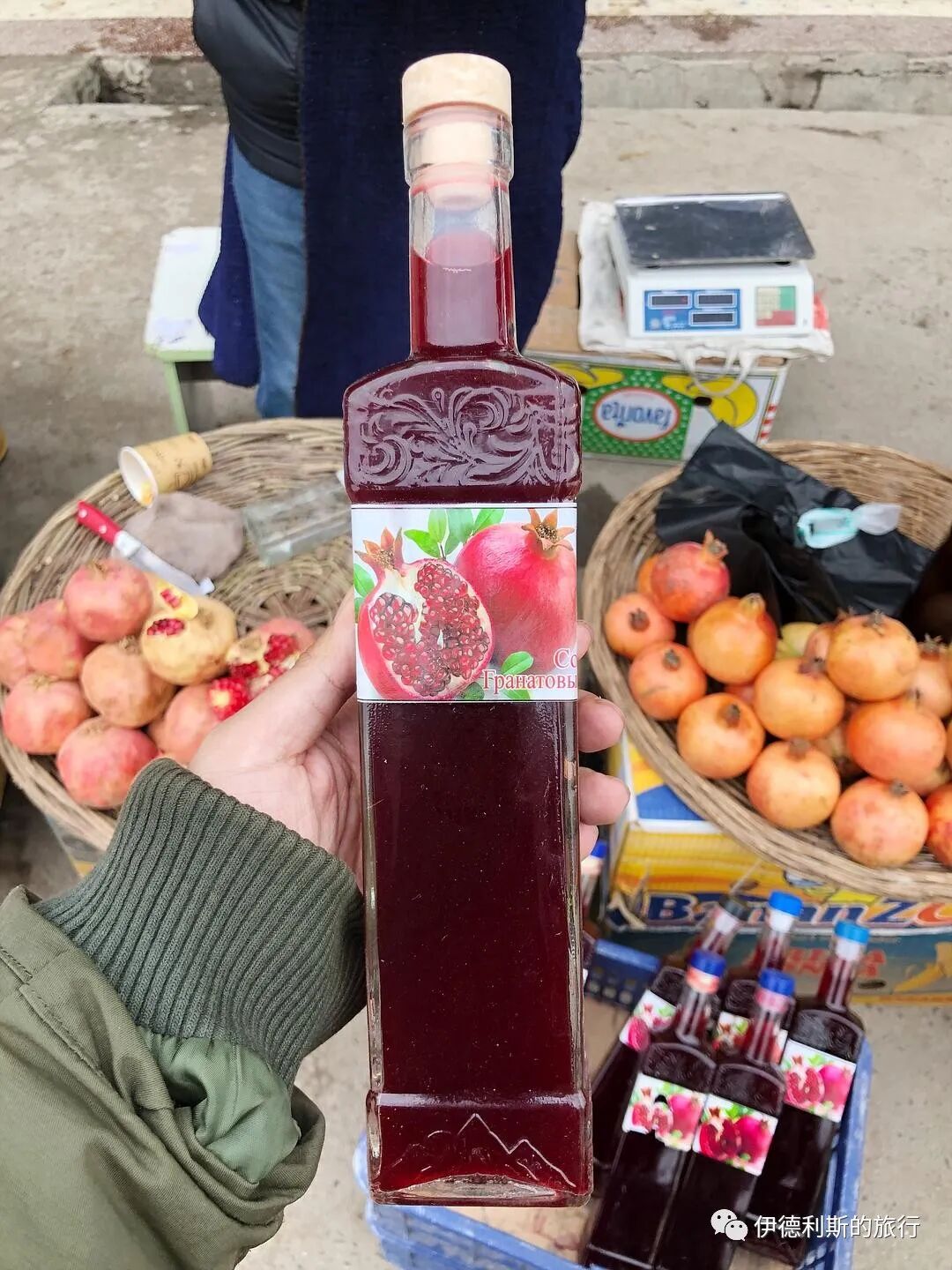
There are far fewer fruits and melons in winter than in summer, but you can still drink pomegranate juice.
A Central Asian fast food specialty is shaurma, which is rotisserie meat served with yogurt.
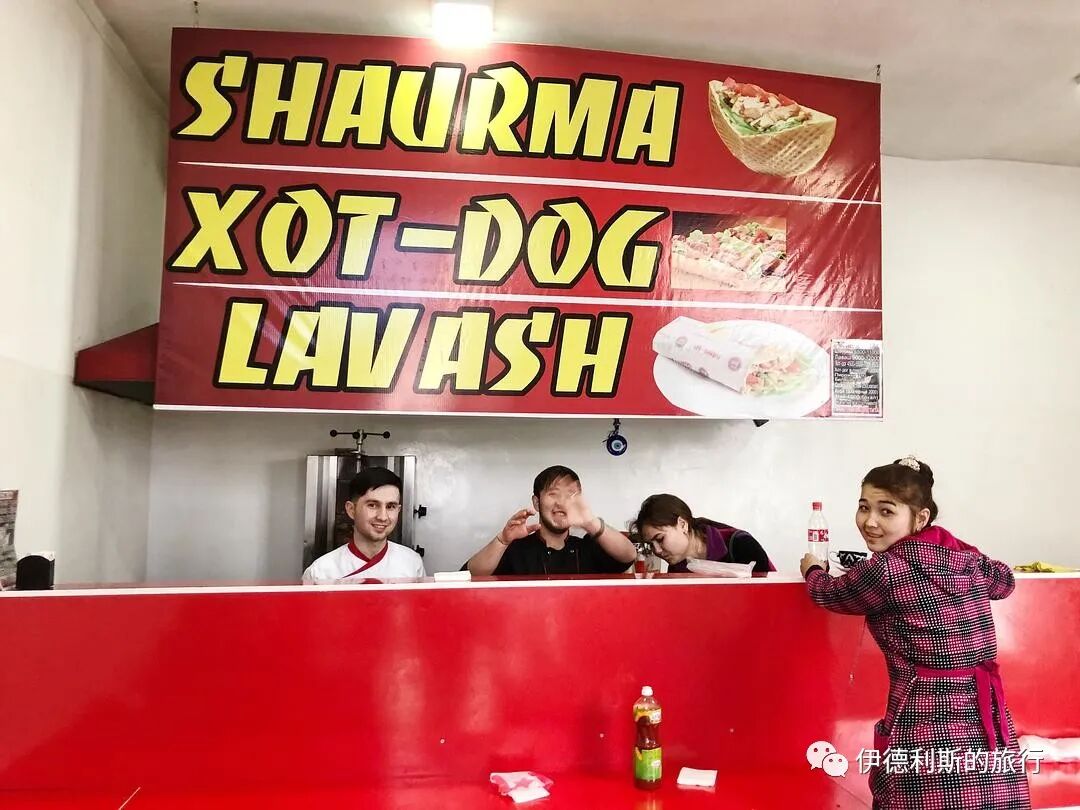
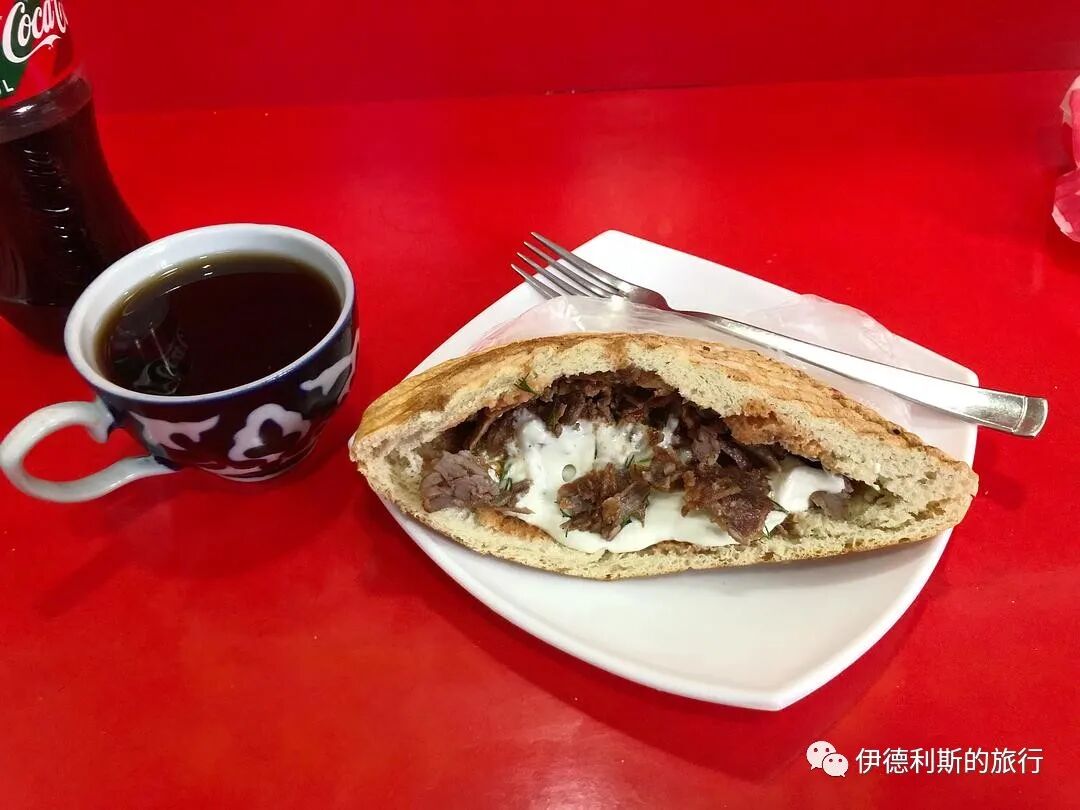
Restaurants
I ate pilaf (zhua fan) and wheat porridge (halisa) at a restaurant next to the Bibi-Khanym Mosque. Halisa is made by simmering cracked wheat and meat for a long time, and it is often eaten during Eid al-Adha. Halisa is very popular across the Middle East, Central Asia, and South Asia, where it goes by different names like Keshkek, Hareesa, Halim, and Khichra.
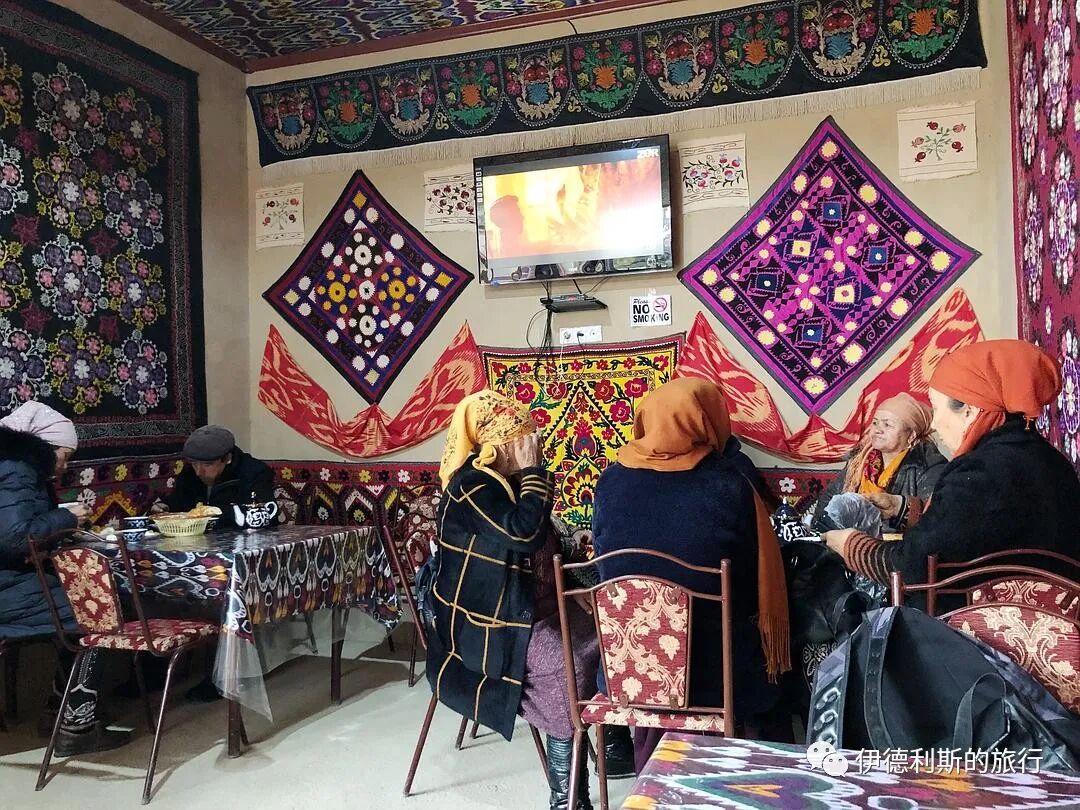
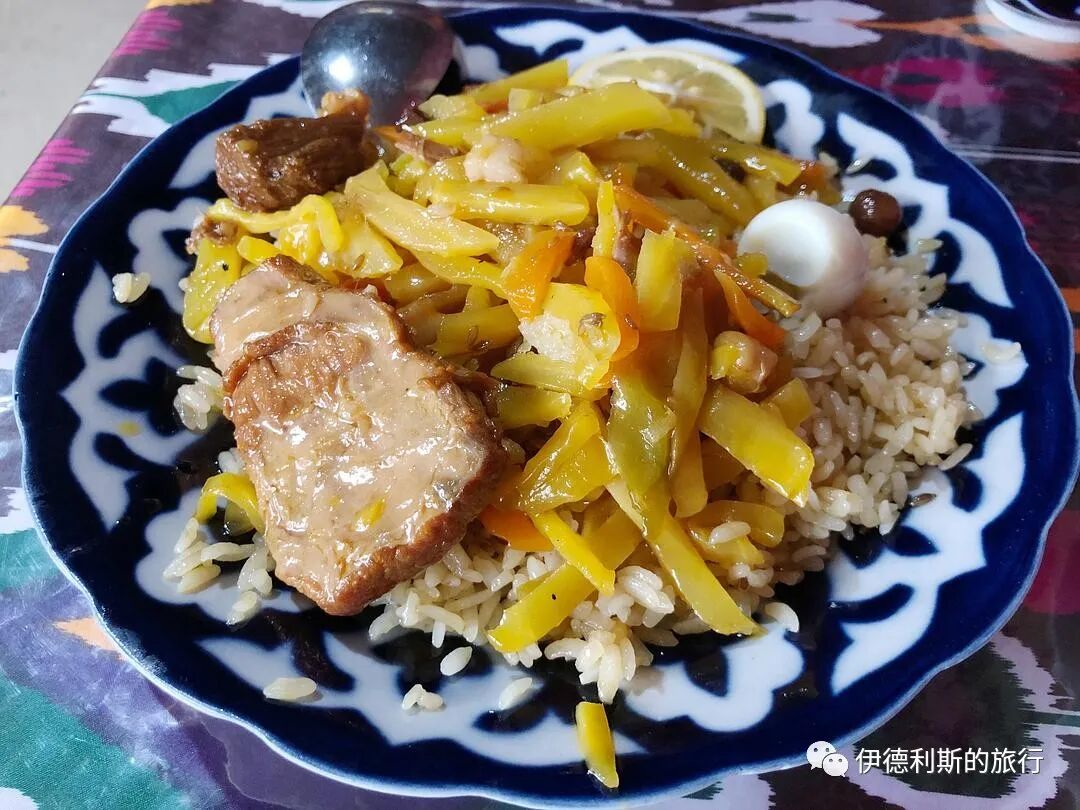
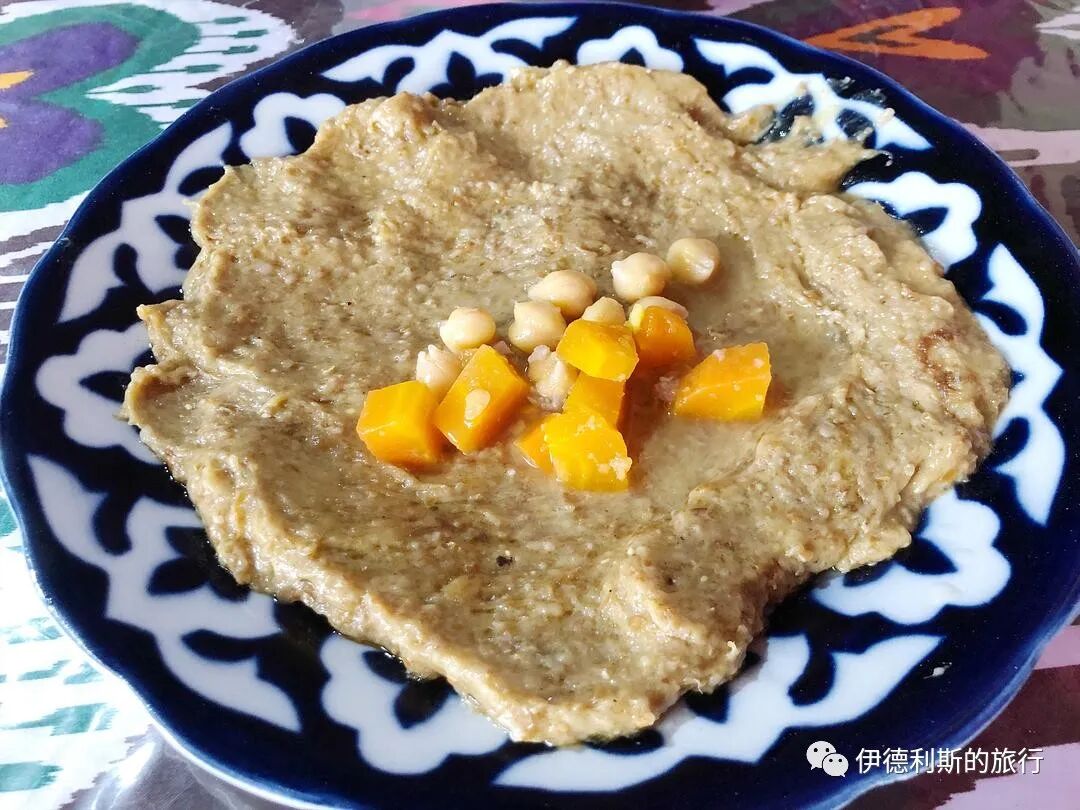
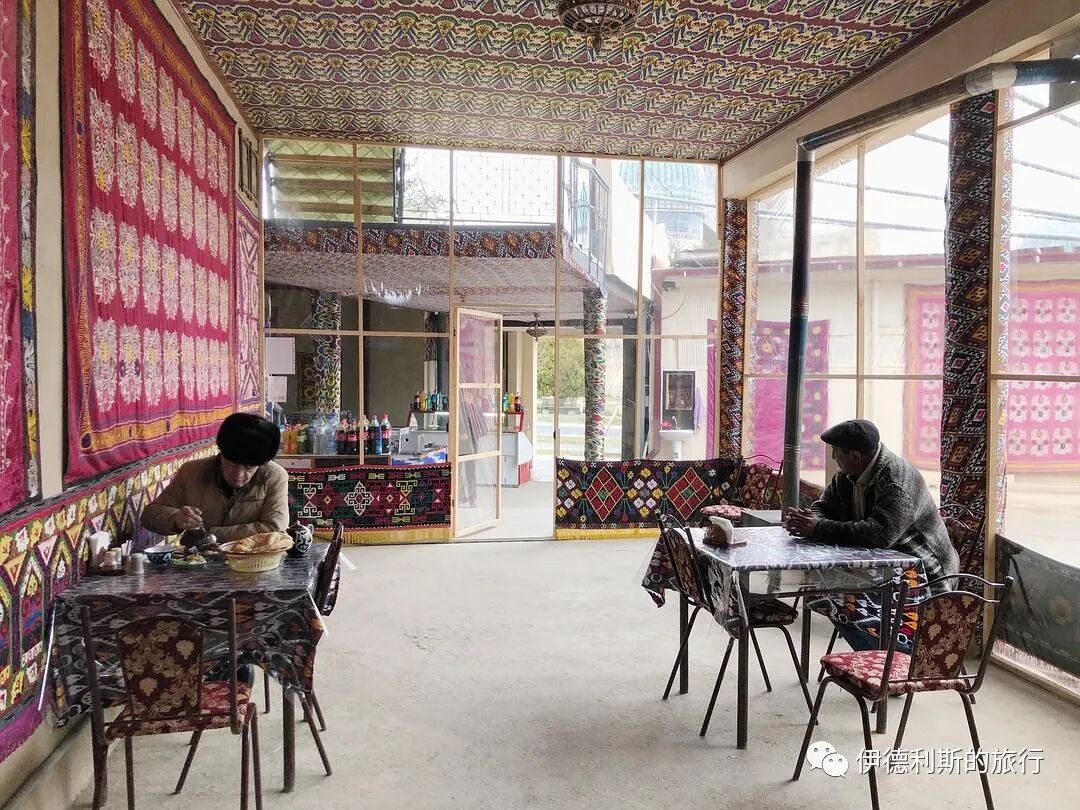
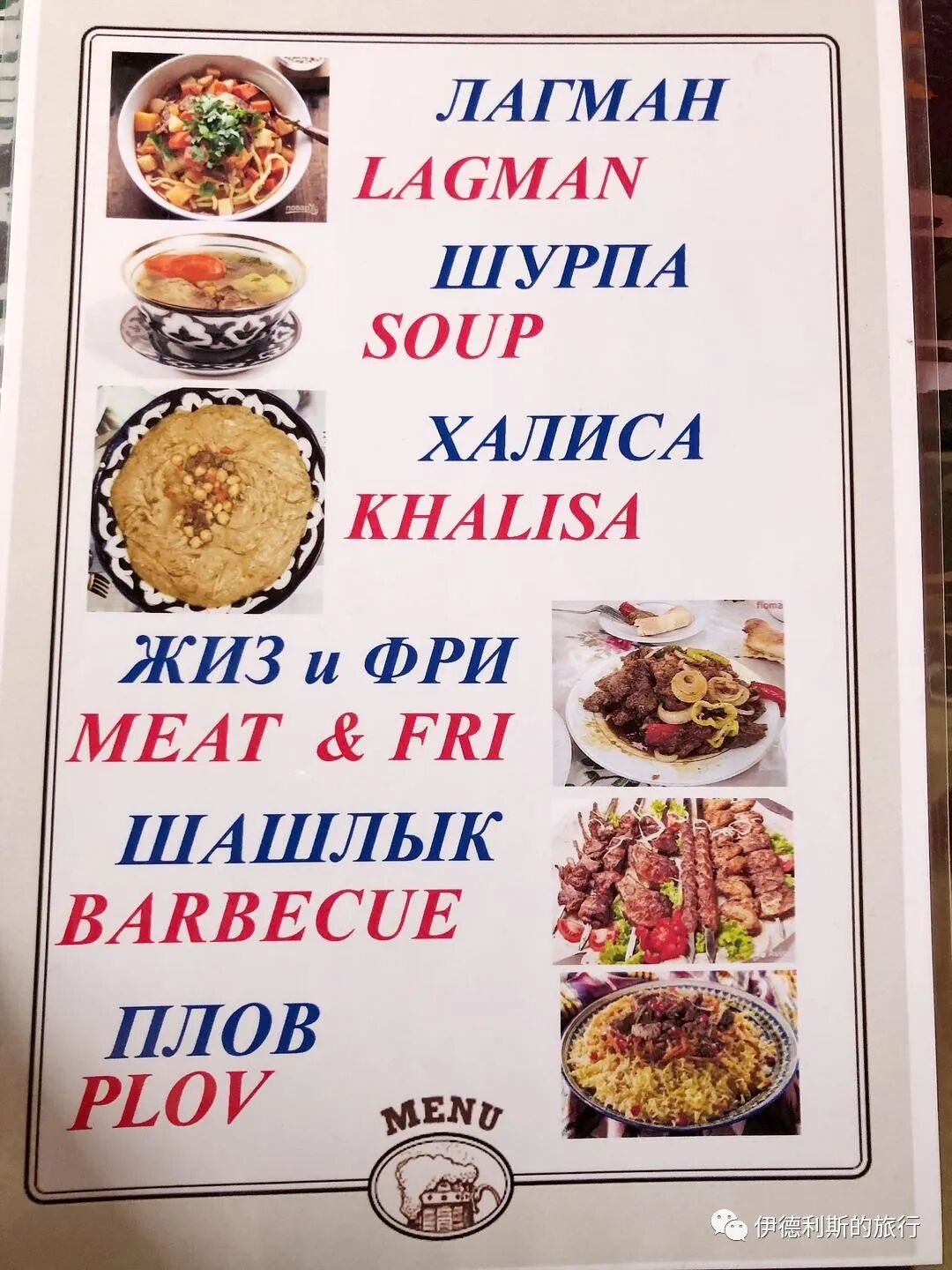
I had pilaf and steamed meat dumplings (baozi) at a restaurant near Registan Square; after a few days of traveling, I can now read the menu perfectly.
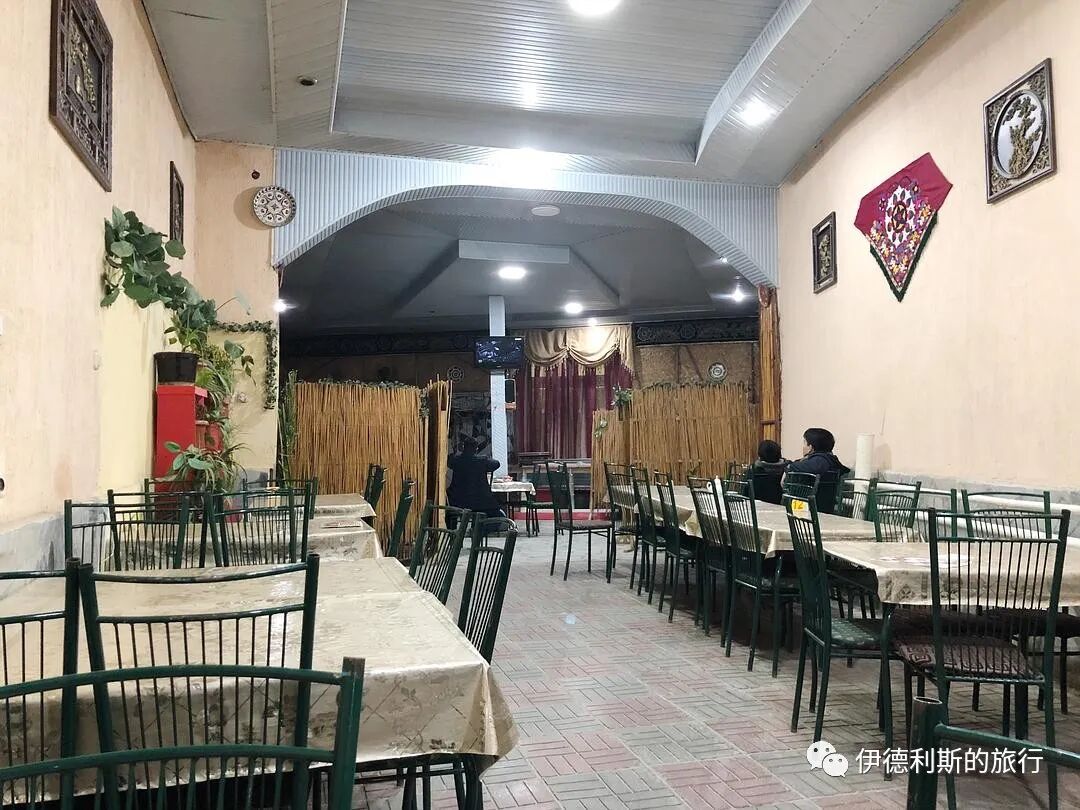
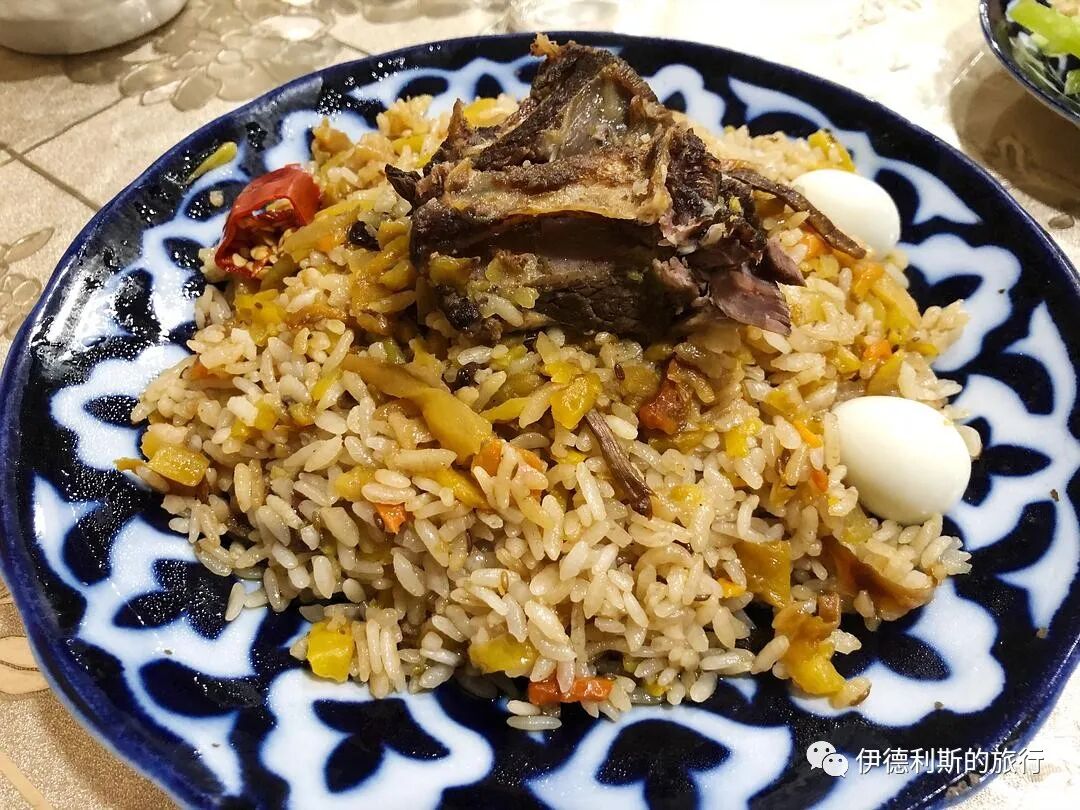
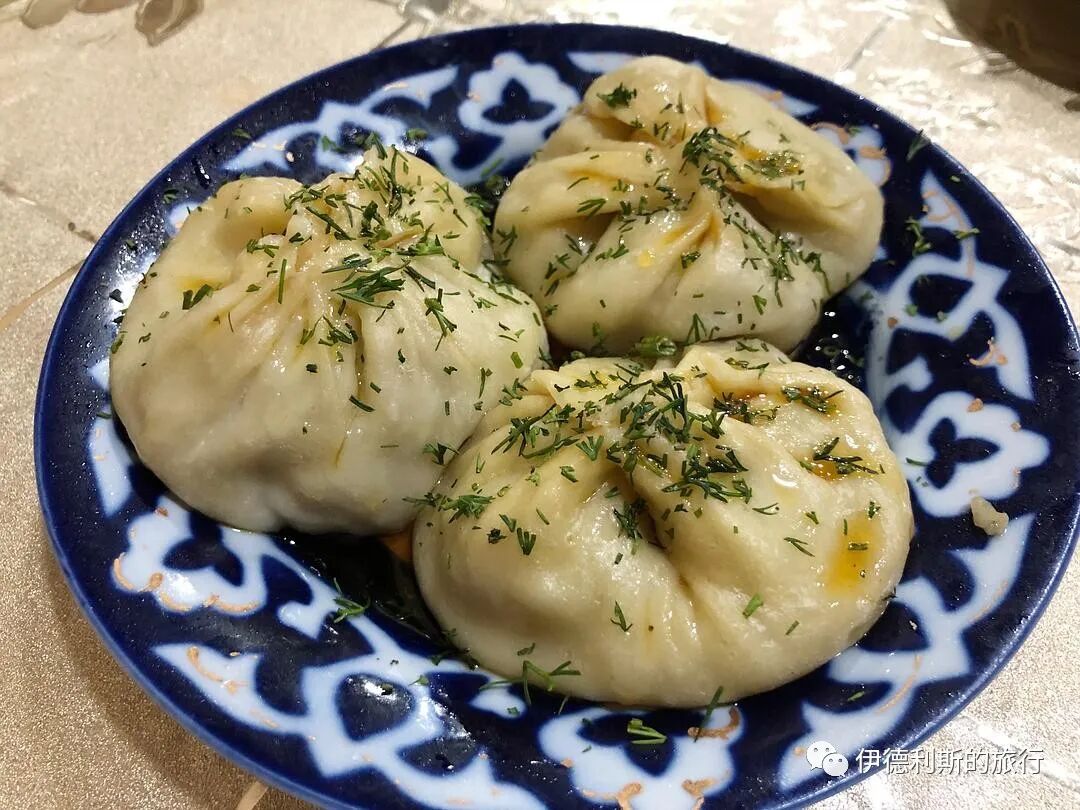
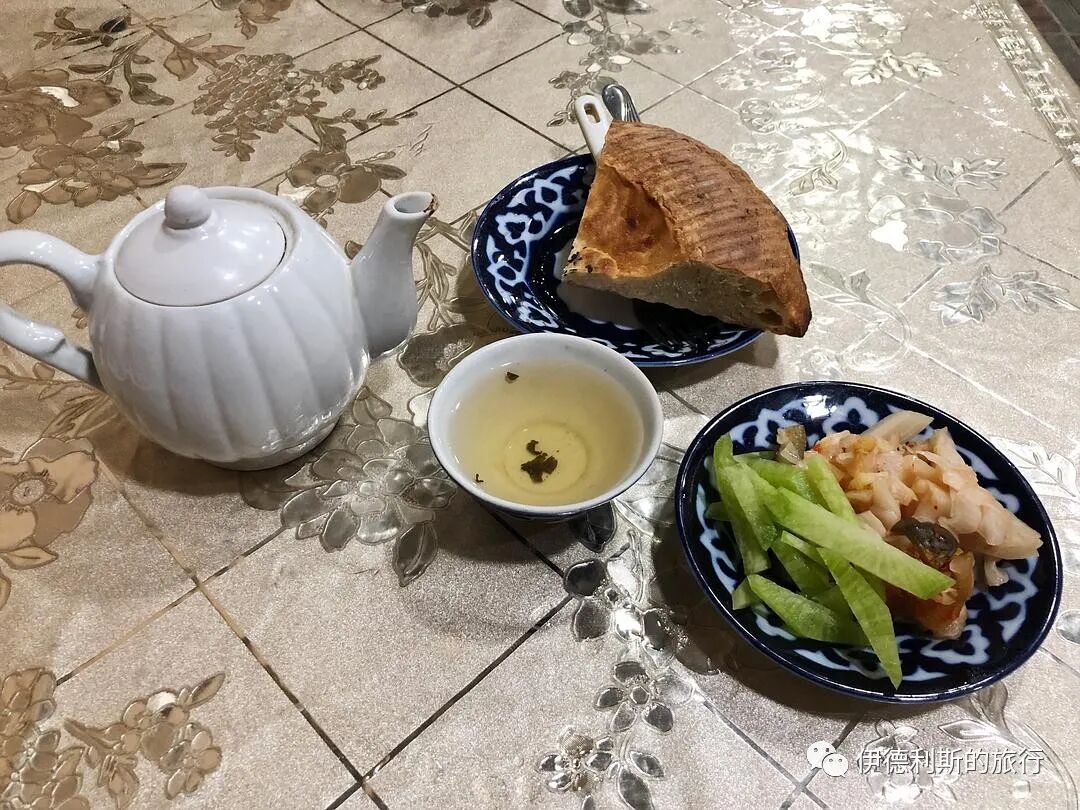
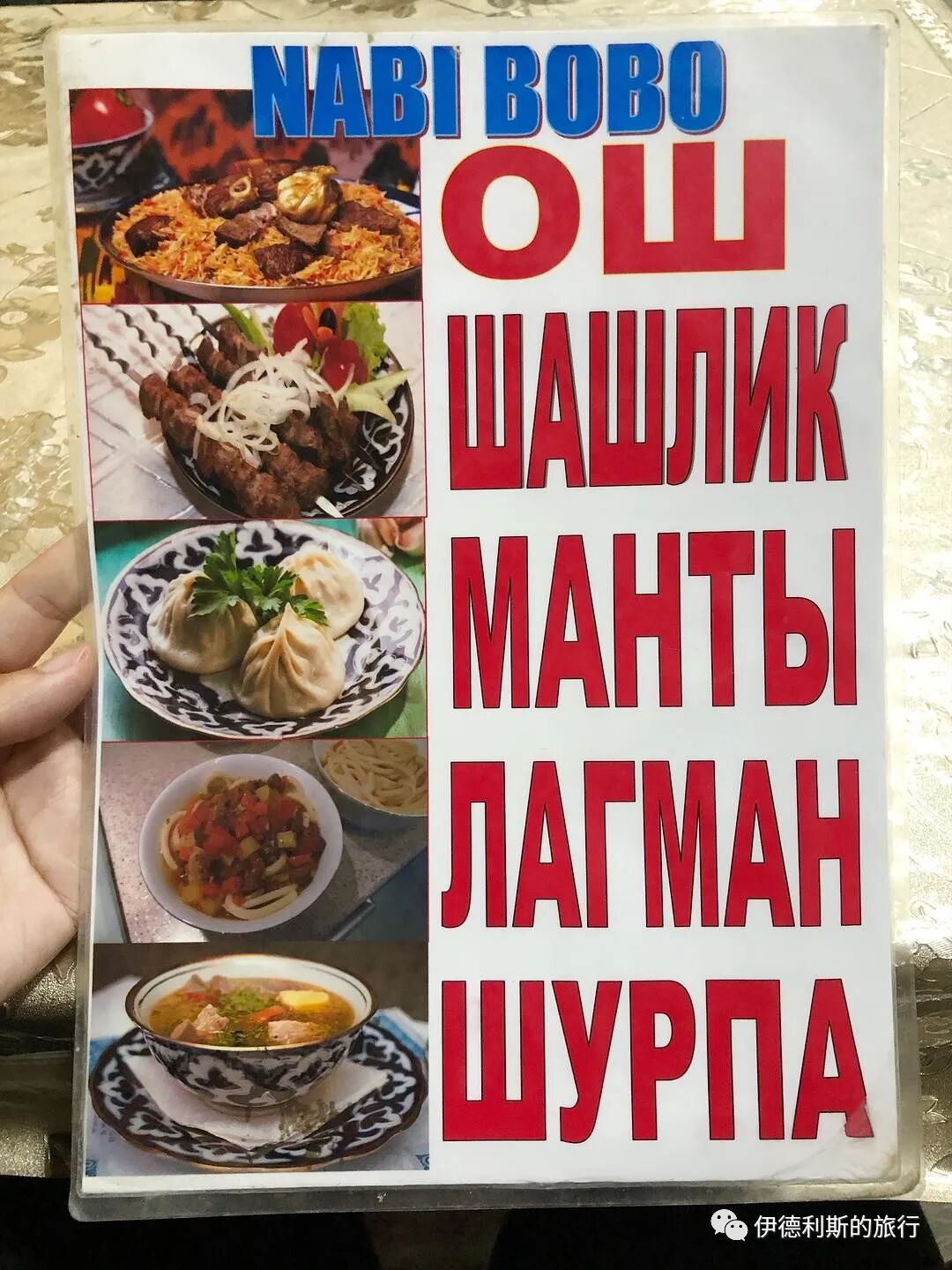
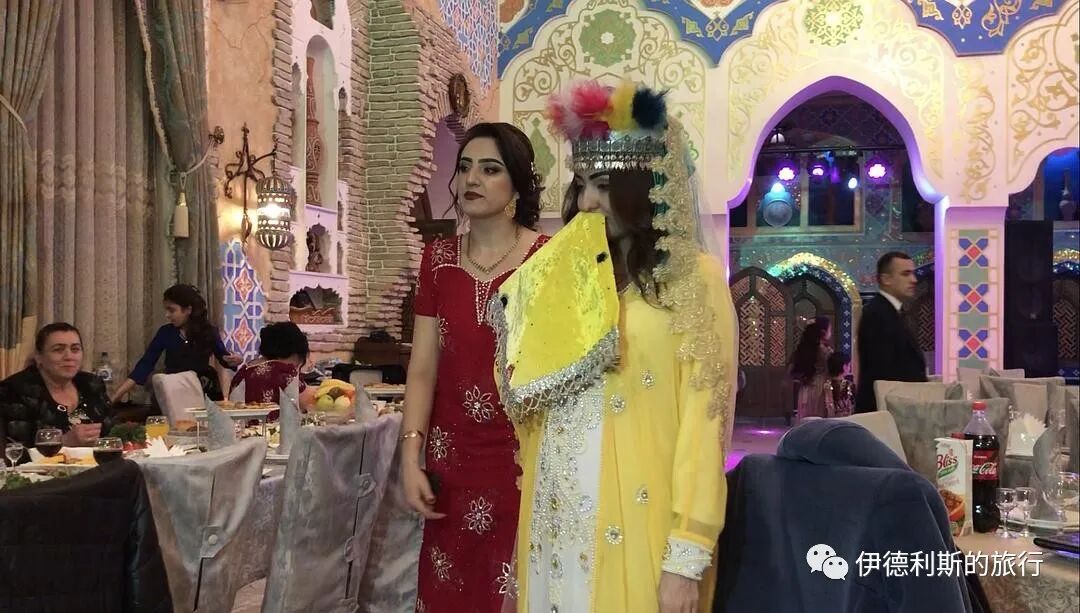
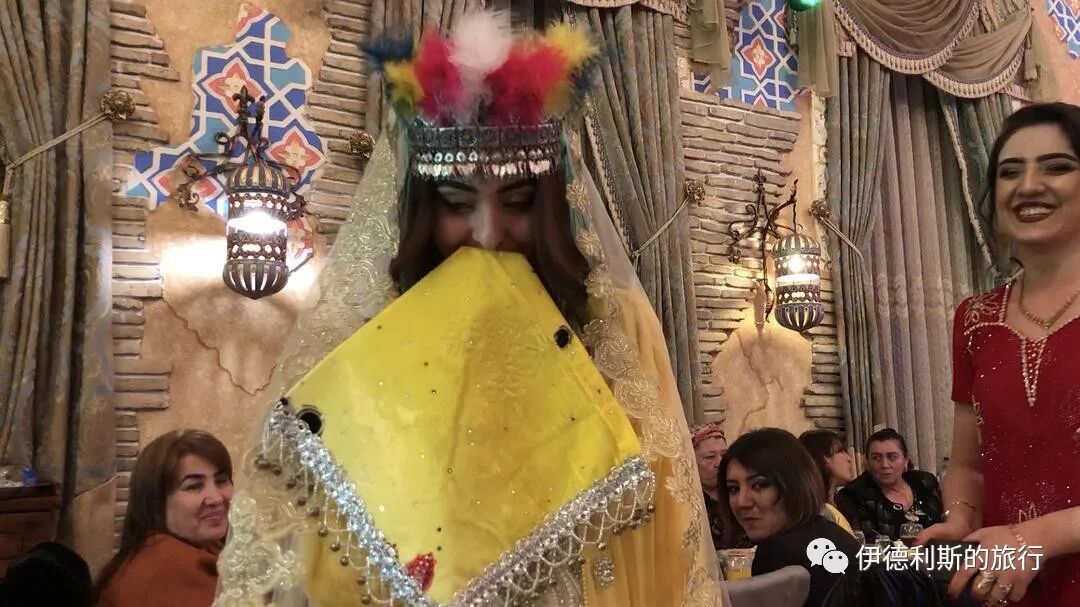
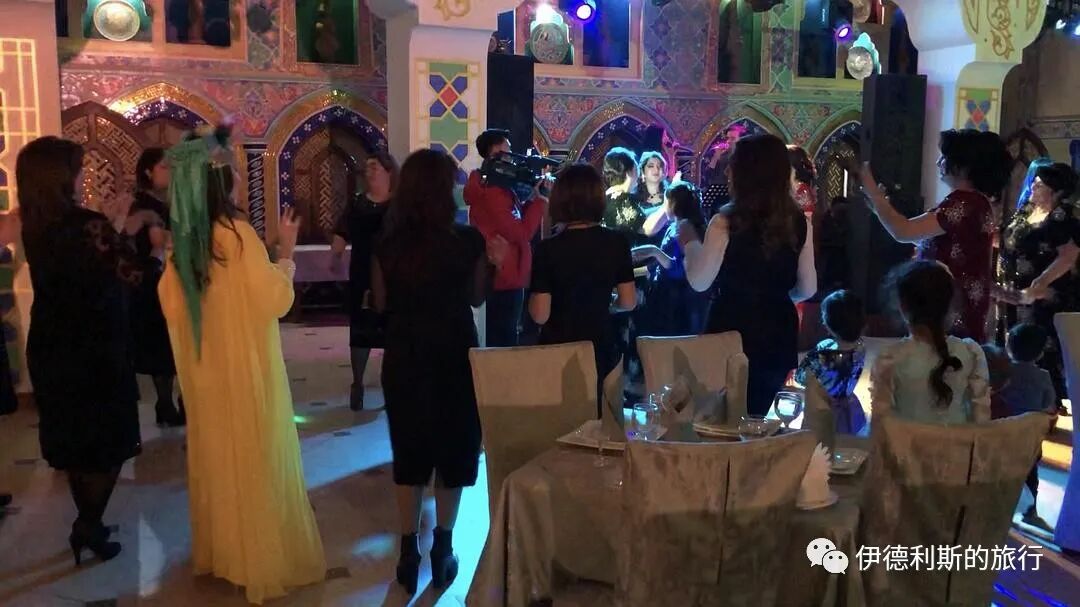
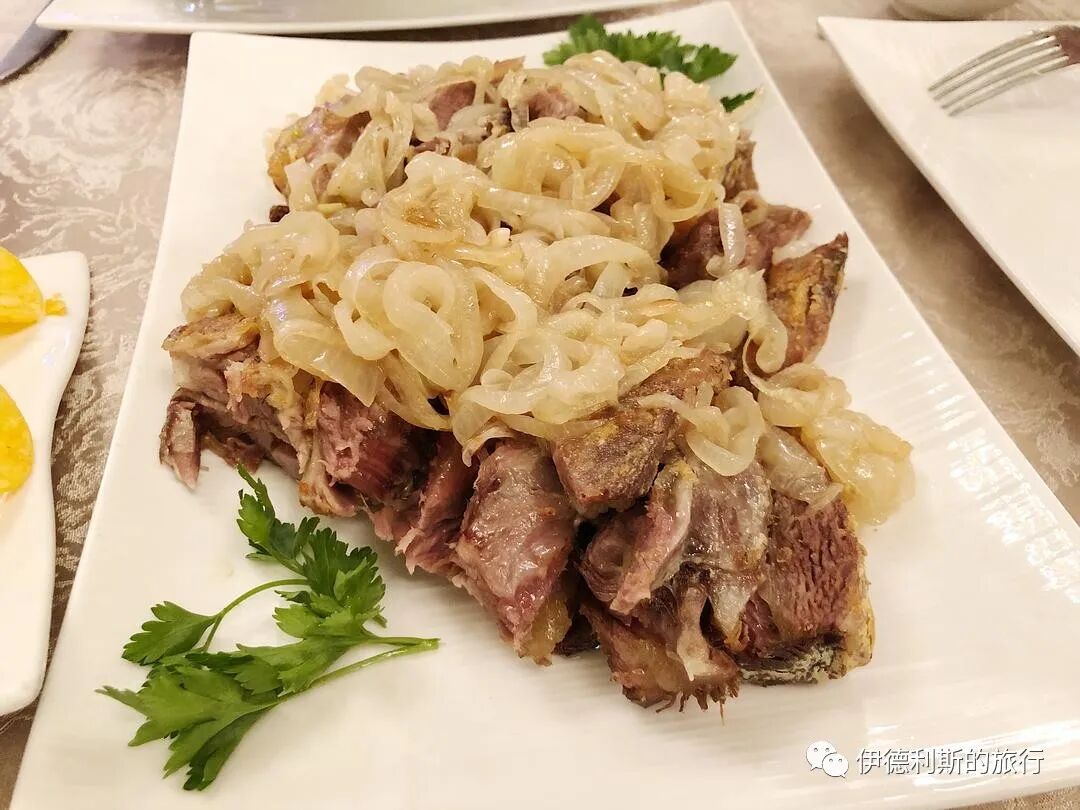
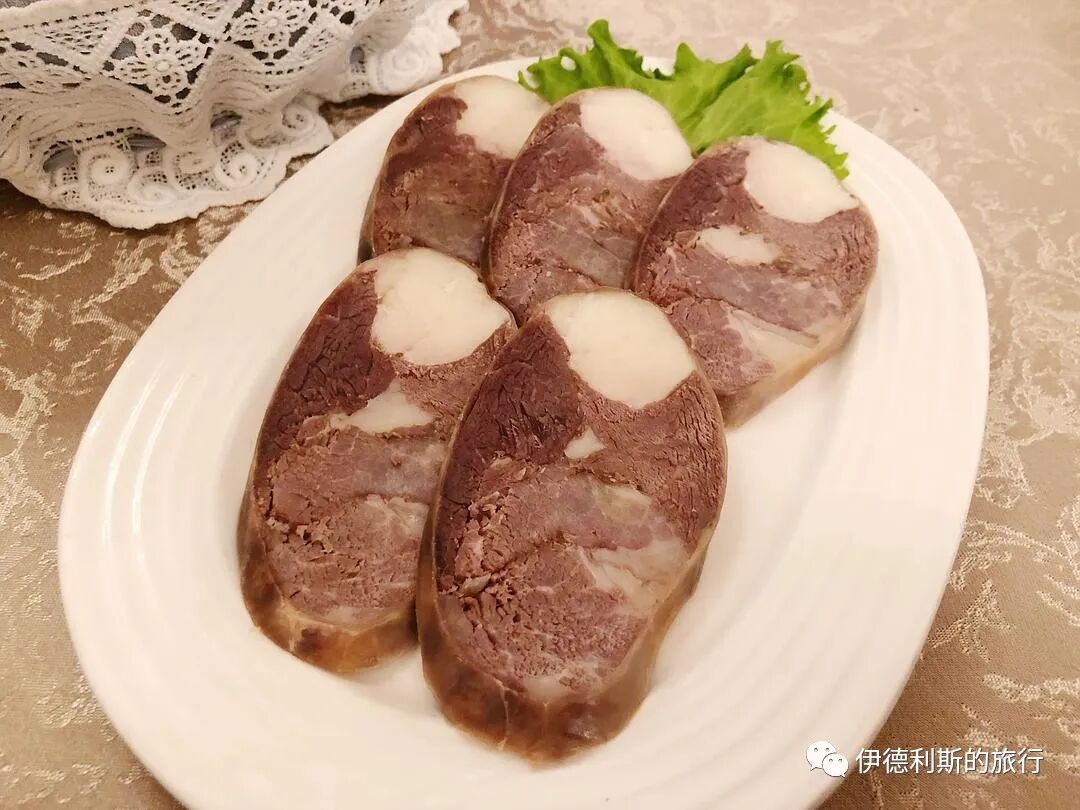
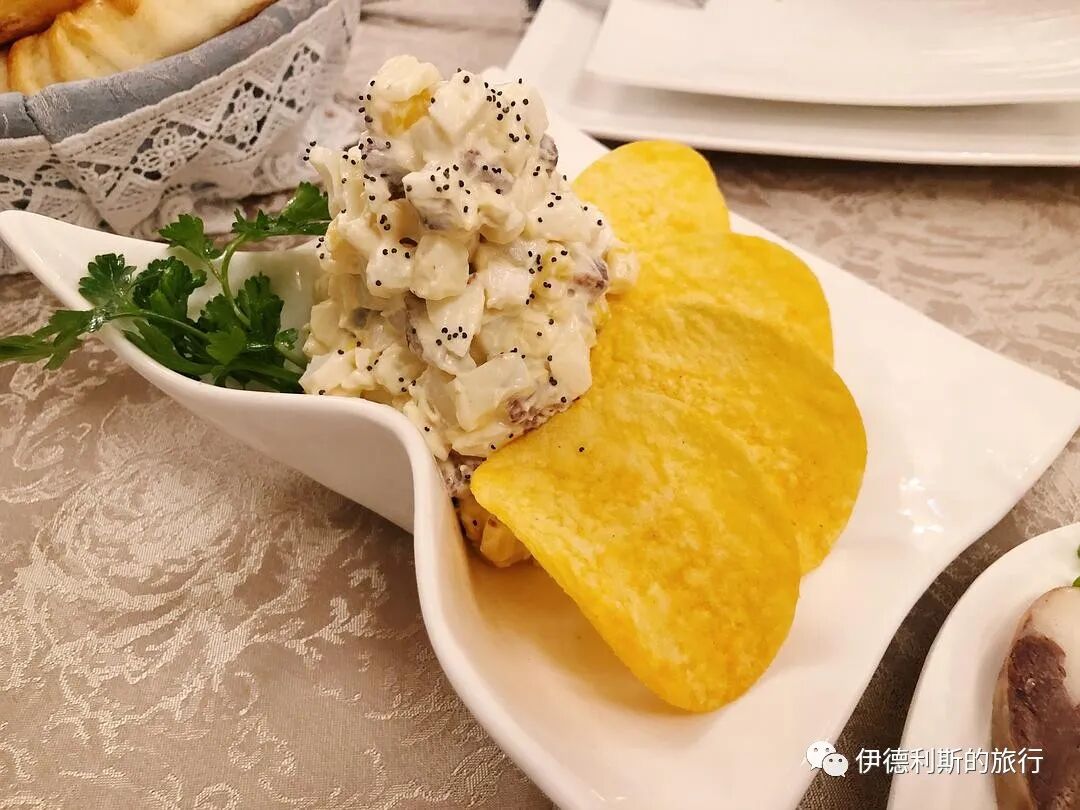
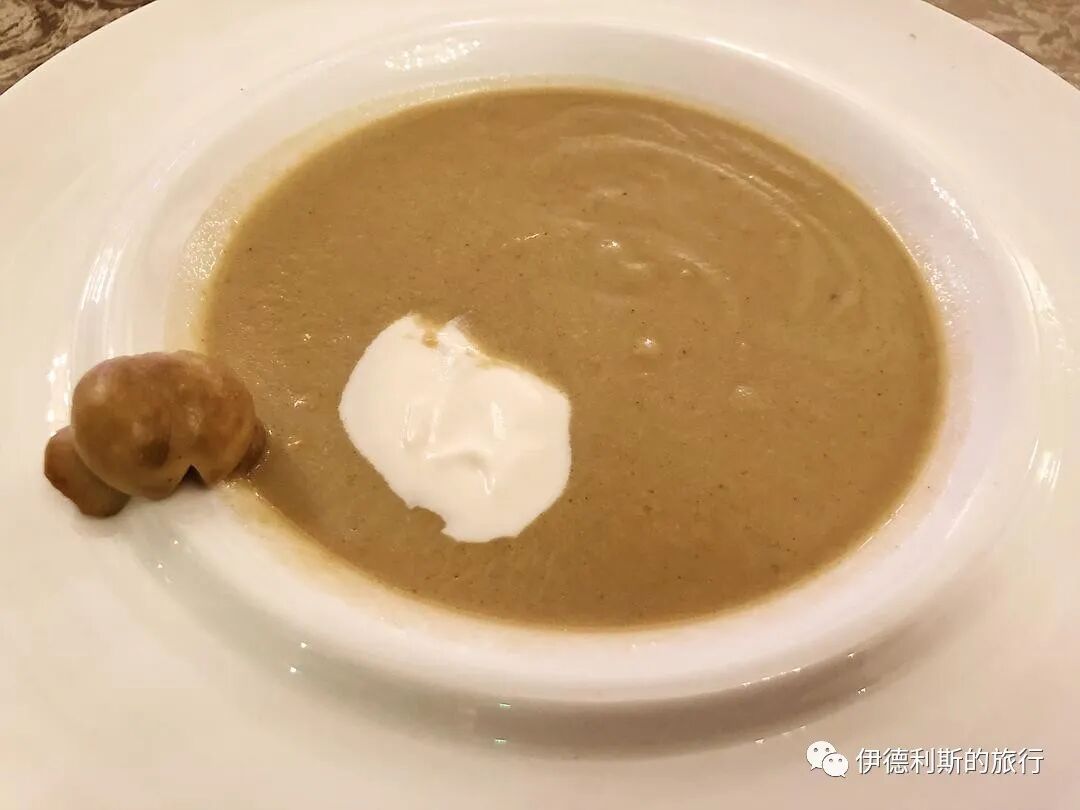
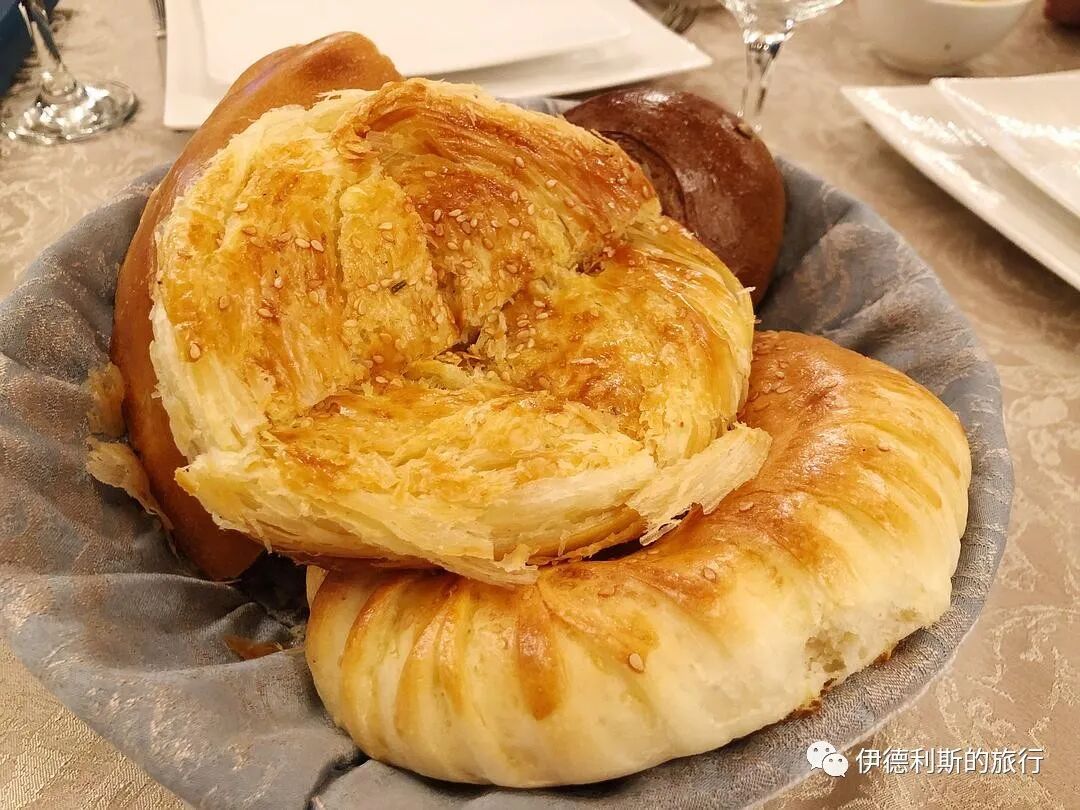
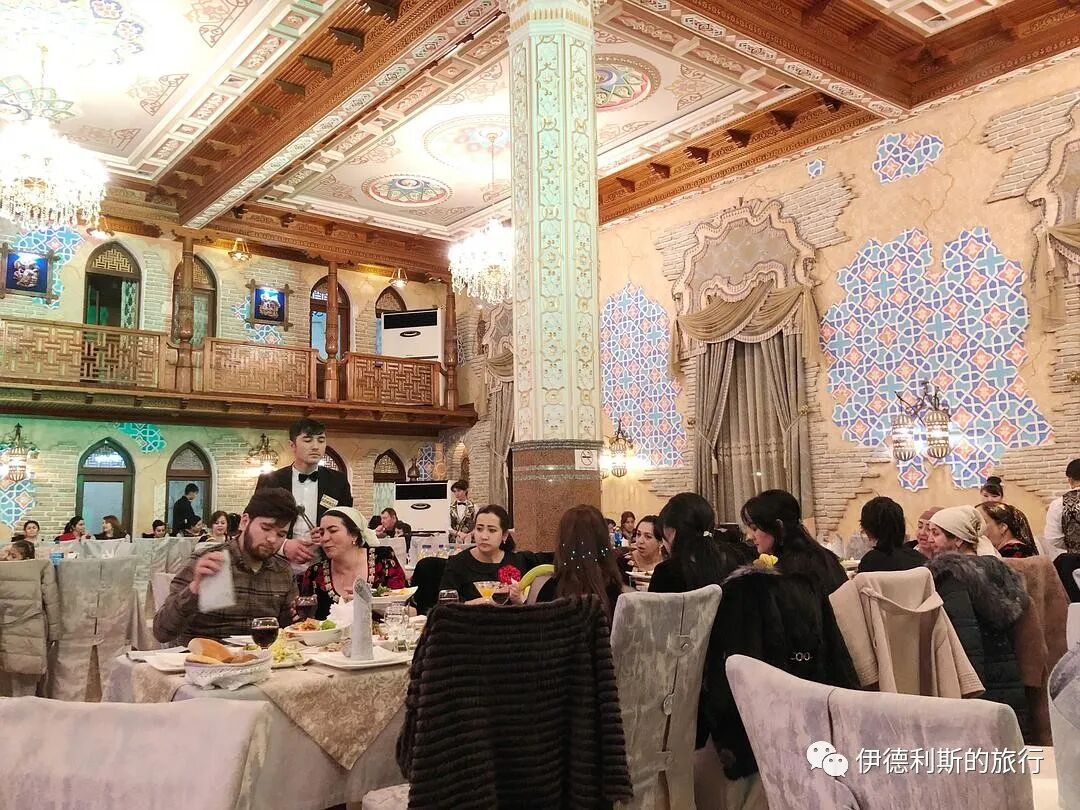
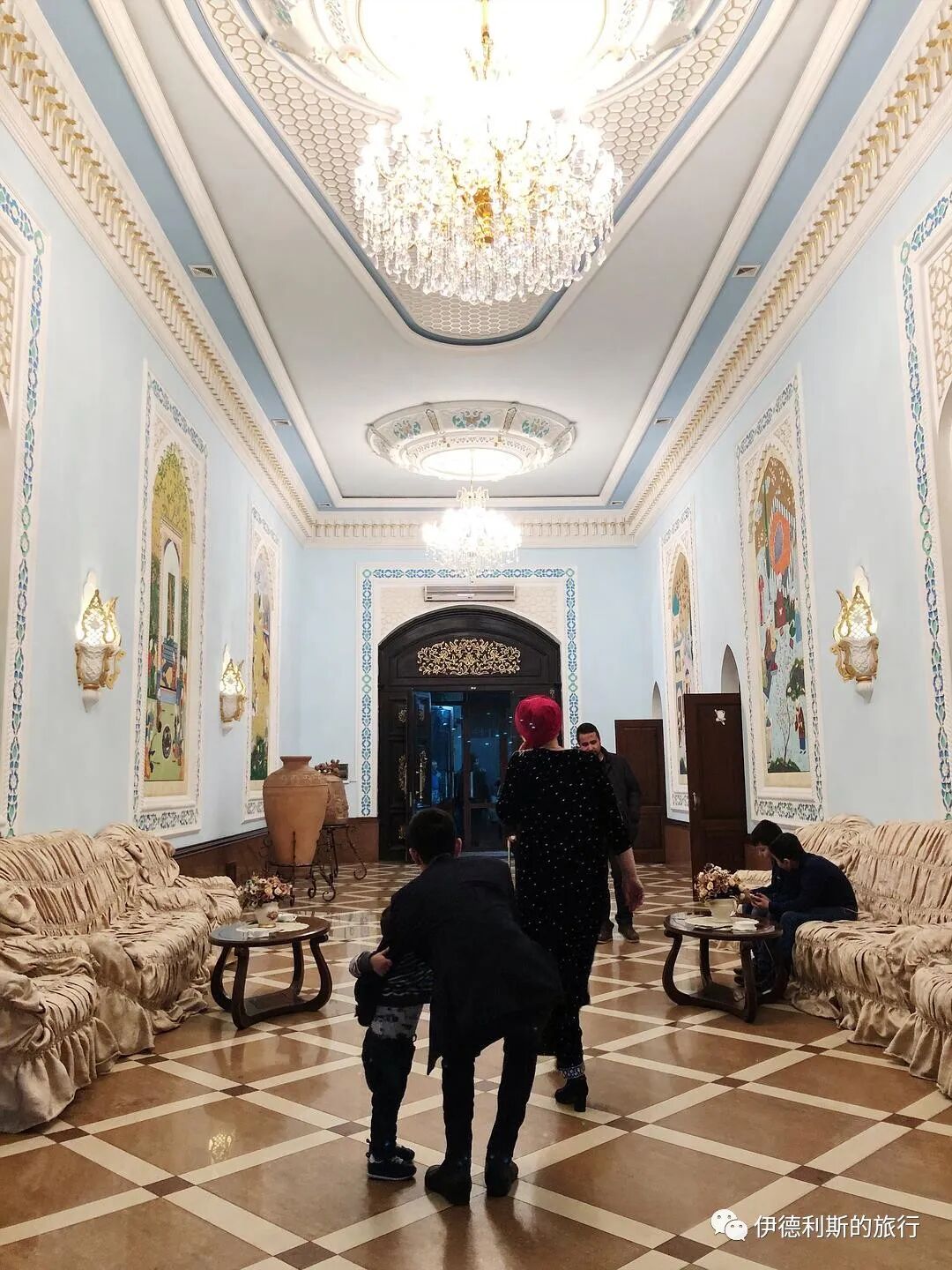
Samarkand Restaurant is a classic banquet hall in Samarkand. We ate lamb shoulder, horse meat, mushroom soup, and various types of flatbread (nang), and we even caught the banquet where the groom's family welcomed the bride after a lively wedding.
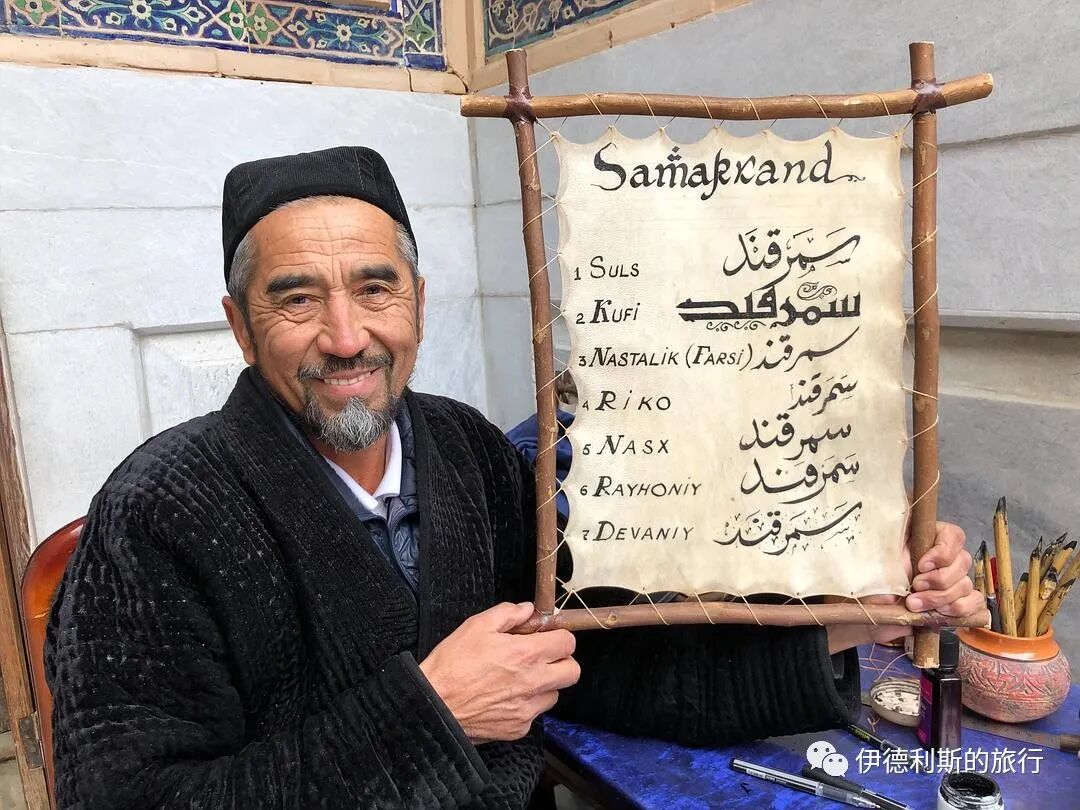
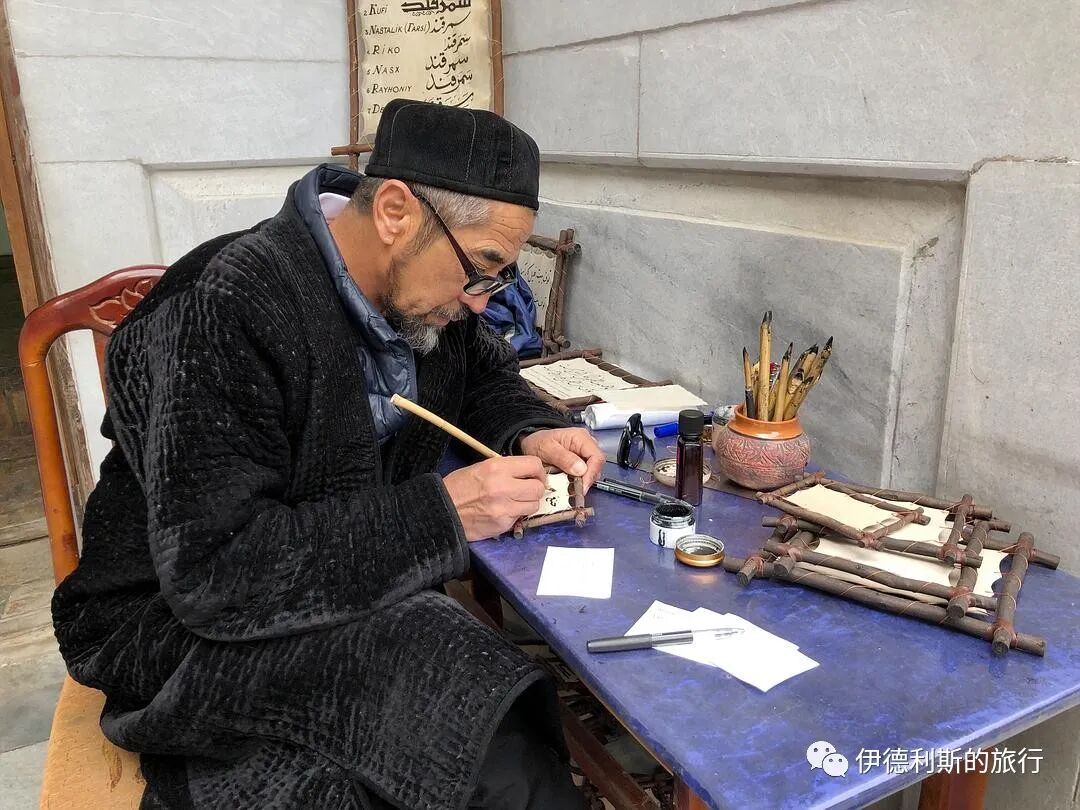
Sheepskin calligraphy.
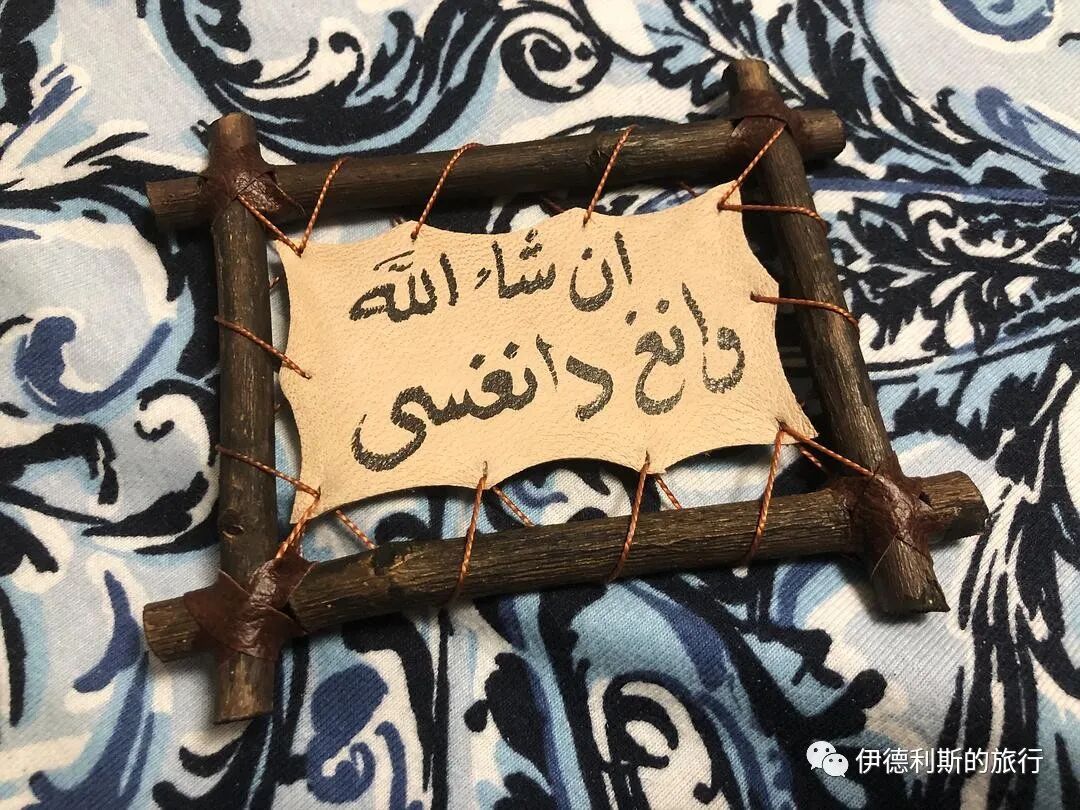
There are traditional music performances inside Registan in the summer, but unfortunately, there were none when we visited in the winter. However, we met a retired teacher writing calligraphy on parchment. I asked him to write my name and Allah is Kind (Yinshan Allah) for me.
Buying a hat
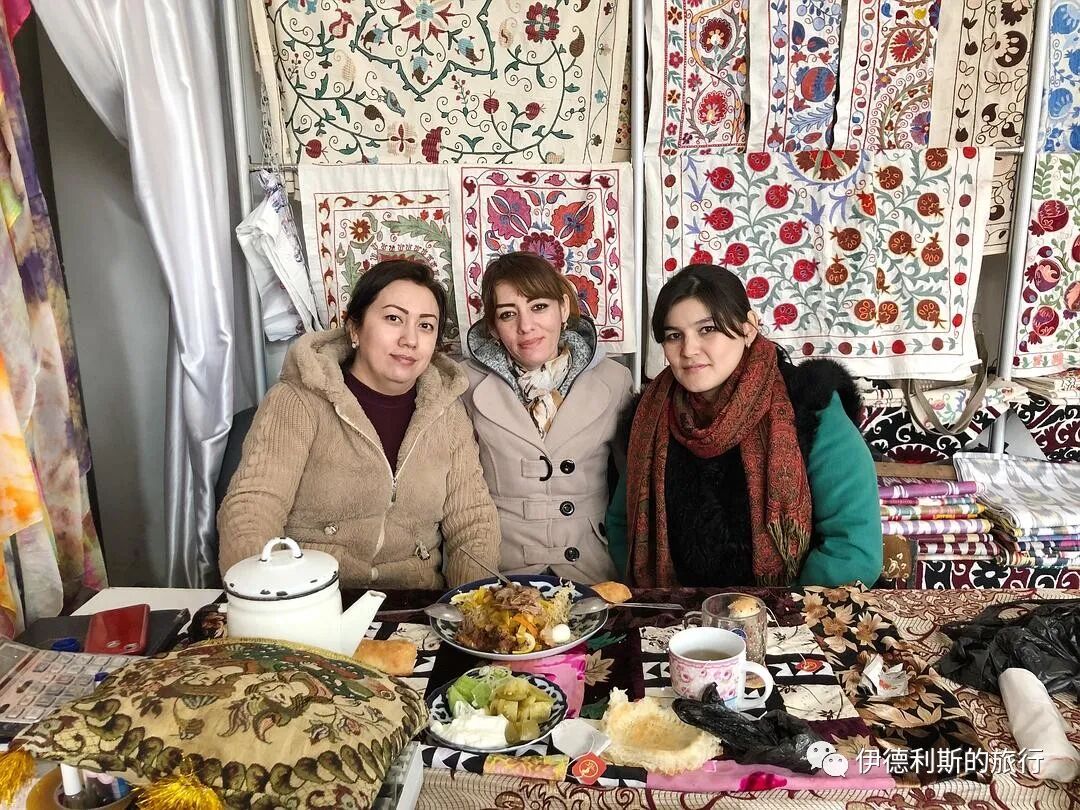
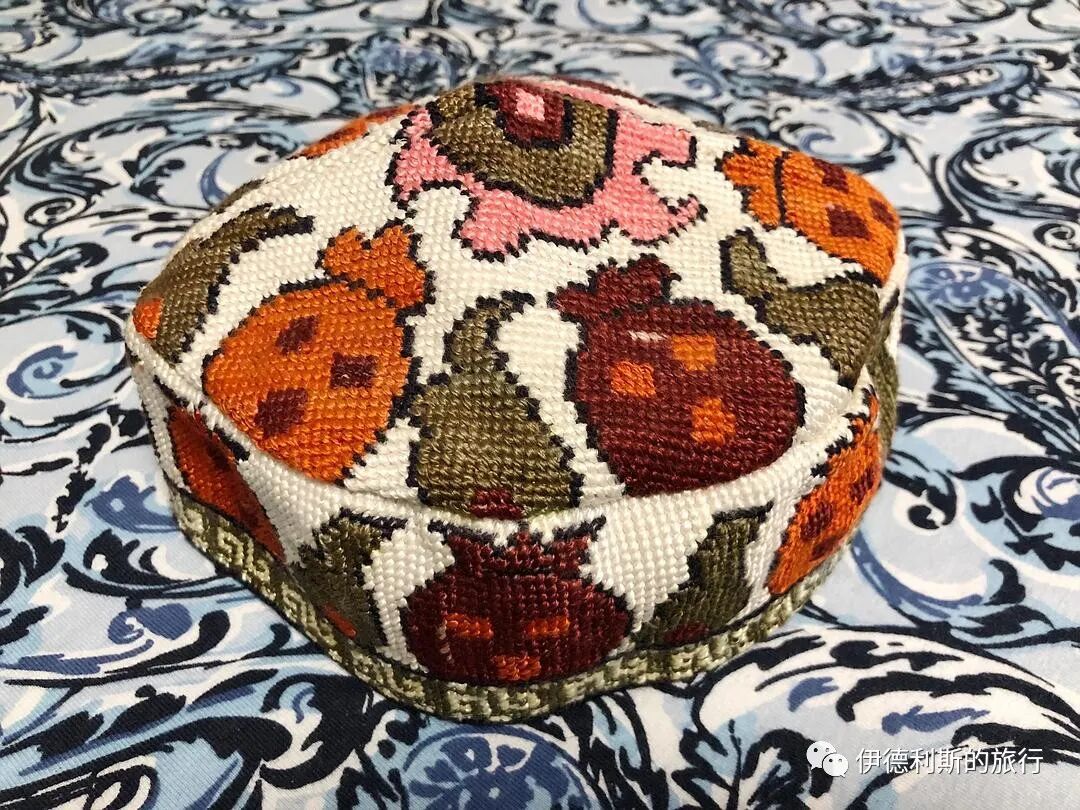
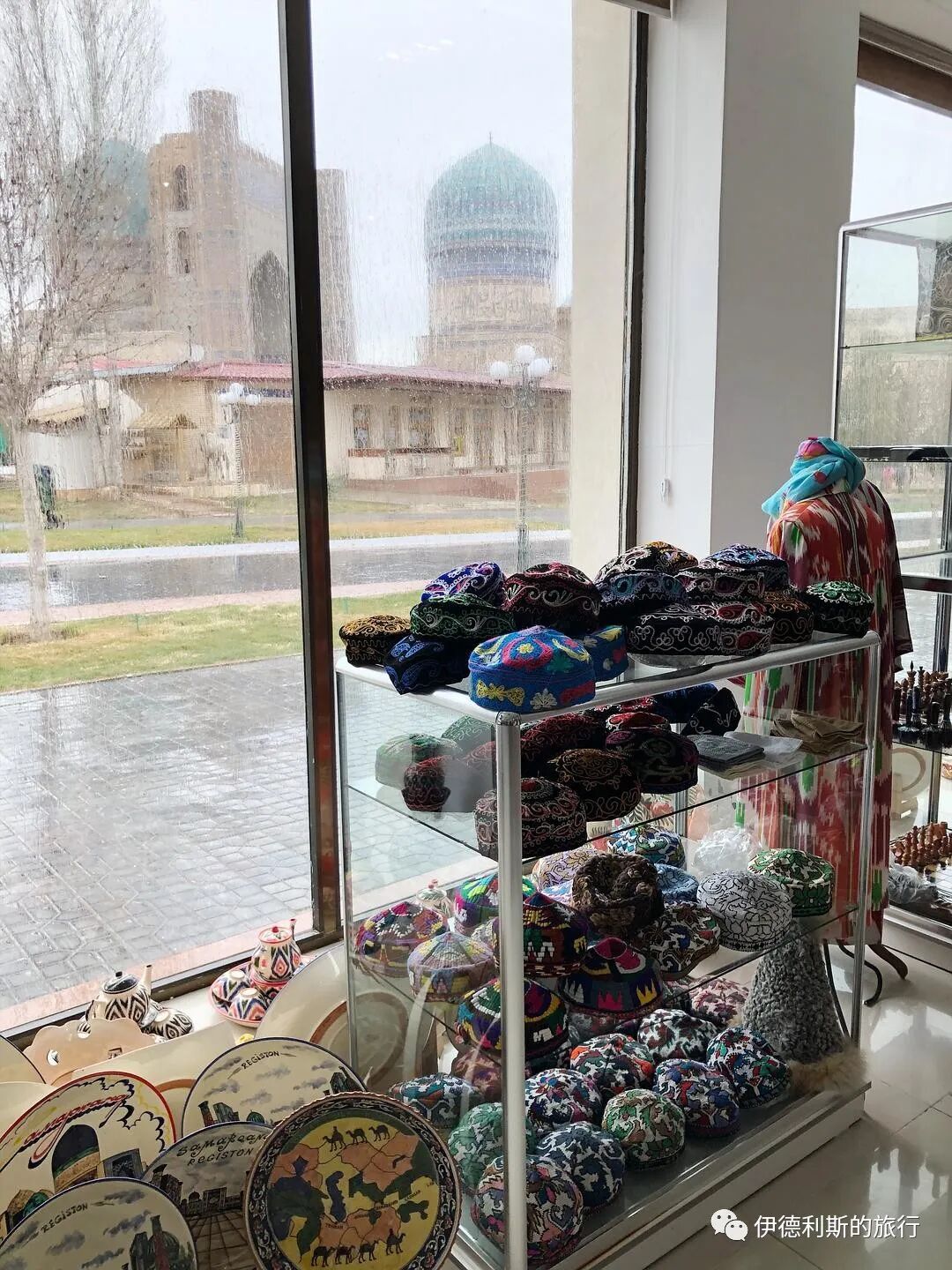
The street between Registan Square and Bibi-Khanym Mosque is full of souvenir shops. I bought a hat with a pomegranate pattern at one shop, and the sisters there even invited me to eat rice pilaf (zhua fan).
Summary: Samarkand — Old City Food, Mosques and Timurid Heritage is presented here as a firsthand travel account in clear English, beginning with this scene: I traveled to Uzbekistan and Tajikistan during the 2019 Spring Festival holiday. This post shares what I ate in Samarkand. The account keeps its focus on Samarkand Travel, Uzbek Food, Muslim Heritage while preserving the names, places, food, and historical details from the Chinese source.
I traveled to Uzbekistan and Tajikistan during the 2019 Spring Festival holiday. This post shares what I ate in Samarkand.
Grand Bazaar
The grand bazaar in the old city of Samarkand is called Siab Bazaar, located just north of the Bibi-Khanym Mosque.
The most common snack at the bazaar is the baked bun (samsa). Samarkand's baked buns have flaky crusts, which makes them different from the ones in Xinjiang.
There are far fewer fruits and melons in winter than in summer, but you can still drink pomegranate juice.
A Central Asian fast food specialty is shaurma, which is rotisserie meat served with yogurt.
Restaurants
I ate pilaf (zhua fan) and wheat porridge (halisa) at a restaurant next to the Bibi-Khanym Mosque. Halisa is made by simmering cracked wheat and meat for a long time, and it is often eaten during Eid al-Adha. Halisa is very popular across the Middle East, Central Asia, and South Asia, where it goes by different names like Keshkek, Hareesa, Halim, and Khichra.
I had pilaf and steamed meat dumplings (baozi) at a restaurant near Registan Square; after a few days of traveling, I can now read the menu perfectly.
Samarkand Restaurant is a classic banquet hall in Samarkand. We ate lamb shoulder, horse meat, mushroom soup, and various types of flatbread (nang), and we even caught the banquet where the groom's family welcomed the bride after a lively wedding.
Sheepskin calligraphy.
There are traditional music performances inside Registan in the summer, but unfortunately, there were none when we visited in the winter. However, we met a retired teacher writing calligraphy on parchment. I asked him to write my name and Allah is Kind (Yinshan Allah) for me.
Buying a hat
The street between Registan Square and Bibi-Khanym Mosque is full of souvenir shops. I bought a hat with a pomegranate pattern at one shop, and the sisters there even invited me to eat rice pilaf (zhua fan).
Halal Travel Guide: Tashkent — Old City Food, Mosques and Uzbek Heritage
Articles • ali2007fr posted the article • 0 comments • 138 views • 2026-05-18 06:54
Reposted from the web
Summary: Tashkent — Old City Food, Mosques and Uzbek Heritage is presented here as a firsthand travel account in clear English, beginning with this scene: On February 5, 2019, the first day of the Lunar New Year, I flew directly from Beijing to Tashkent on Uzbekistan Airways to start my food and travel tour of Uzbekistan and Tajikistan. The account keeps its focus on Tashkent Travel, Uzbek Food, Muslim Heritage while preserving the names, places, food, and historical details from the Chinese source.
On February 5, 2019, the first day of the Lunar New Year, I flew directly from Beijing to Tashkent on Uzbekistan Airways to start my food and travel tour of Uzbekistan and Tajikistan.
I stayed at Gulnara Guesthouse, which I booked on Booking.com and is recommended by Lonely Planet. It is located in the center of the old city, very close to Chorsu Bazaar, and the owner speaks great English.
The breakfast is simple, but it is enough.
The room where we eat breakfast.
In the evening, I spent time hanging out with the staff, drinking tea and chatting.
The bread the staff eats with their tea.
After checking in, I headed out to explore the bazaar!
My place is less than 500 meters from the bazaar.
Chorsu Bazaar.
Chorsu Bazaar is in the heart of the old city (Eski Shakhar) in Tashkent and is the busiest spot in the old town. The words Chorsu and Bazaar both come from Persian and mean market at the crossroads. In winter, Chorsu Bazaar opens around 10 a.m. and stays open until dark, selling all kinds of goods.
The entrance to the bazaar is packed with all sorts of cars.
Baby cribs.
Various tourist souvenirs.
Fruit seller
Naan bread seller
1. Snack area
The snack area is on the east side of Chorsu Bazaar. In winter, it is open daily from morning until around four or five in the afternoon. You can eat all kinds of Uzbek snacks there.
Rice sausage seller
Rice sausage seller
Naryn
Served with meat broth and naan bread
A person selling grilled meat (kaorou).
The grilled meat is super delicious.
There is also someone selling chickpea soup.
2. Fruit and vegetable section.
Fruits and vegetables take up most of the domed market. I visited in winter, so there was not much to buy. If you come in summer, you should be able to eat more delicious fruits.
I personally think pomegranate juice in Uzbekistan tastes a bit worse than in Xinjiang, but it is better than in Azerbaijan and Turkey.
The uncle is wearing a casual-style robe (chapan).
When eating and shopping at an Uzbek bazaar, the first sentence you need to learn is "Necha pul" (how much). The uncle's answer is "Besh ming som" (five thousand som).
Melon
Various dried fruits
3. Clothing section
The area selling traditional clothing is at the far south end of the bazaar. You can buy traditional robes (chapan), embroidered cushions (kurpacha), and caps (doppi).
I really wanted to buy a robe, but I couldn't fit that much in my luggage, so I bought a few classic caps instead.
A classic traditional robe (chapan)
I bought two everyday almond-pattern caps (badam doppa) at the first shop. The almond-pattern cap is a style shared by Uyghur, Uzbek, and Tajik people. In Uzbekistan, it is called a Chust do‘ppisi. Chust is a handicraft center in the Fergana Valley, famous for making skullcaps (doppa). The almond-patterned skullcap (badam doppa) likely started in the 19th century. It spread quickly among Uzbeks, lowland Tajiks, and Uyghurs from the late 1800s to the early 1900s, becoming very popular.
I bought a colorful skullcap (doppa) at the second shop. You do not see these on the street often now, as people mostly wear them for festivals.
I bought this black felt hat at the third shop. This was my first time seeing this kind of black felt hat. I have seen similar white versions in Azerbaijan and Kyrgyzstan. These black felt hats are very common on the streets of Tashkent and are a local specialty.
Tashkent Food
1. Lagman House
The grandmother where we stayed highly recommended this noodle shop called Lagman House. It is not far from our place or the Chorsu Bazaar. The shop is very clean. We ordered mixed noodles (lagman), a rice, beef, and potato soup called Mastava, and a type of grilled meat called jaz. The meat in the mixed noodles was tasty, but the noodles were a bit thin. The grilled meat was super tender and really amazing.
2. Plov Centre
The Plov Centre is known as a must-visit restaurant in Tashkent. There are two Plov Centres, a new one and an old one, and they are not far apart. The new one is right under the TV tower; you will see the tower when you arrive. The Plov Centre only serves lunch every day, so watch the time because it runs out if you come too late.
The super-sized plov pots are a real visual spectacle.
There are also small pots.
Slicing the beef, the beef is super delicious.
Slicing the horse meat.
Tashkent pilaf (plov).
The menu is in Cyrillic, with three types of pilaf. You can order a large portion or extra meat. There are also small cold dishes of horse meat and tea to drink.
I took the subway to the pilaf center. The Tashkent Metro opened in 1977, but photography was only allowed starting in 2018, so I made sure to take a few photos.
Station entrance.
3, Plov-samsa.uz
I ate at a restaurant called Plov-Samsa.uz near Amir Timur Square in Tashkent with a friend. Plov means rice pilaf (plov) and Samsa means baked bun (samsa). I highly recommend their baked buns, they are delicious! They have a flaky crust and the portions are quite large.
This was my first time eating a baked bun in this shape.
The rice pilaf (plov) is topped with horse meat and quail eggs.
Meat soup (sho'rva).
I took a photo with a young man wearing a traditional robe (chapan) and a skullcap (doppa).
Maidie.
Near the old town of Tashkent, there is a large shopping mall called Samarqand Darvoza. It is one of the busier malls in the city and even has a KFC inside. I found a chain music store inside and bought two discs.
One is a traditional music group called Tashkent that plays drums and the suona horn. They formed in 1998. The combination of suona horns and drums stretches from inland China and Xinjiang through Central Asia all the way to Turkey. I have bought albums of this music in both Xinjiang and Turkey.
This is an album featuring the rawap.
You can walk south from Chorsu Bazaar to reach Samarqand Darvoza. On the way, you will pass through a neighborhood with a very Soviet feel.
Leaving.
After finishing my tour of Tashkent, I am getting ready to fly to Bukhara. I took a Yandex ride from my place to the airport. The driver and I chatted the whole way in elementary-level English, and he told me it was his first time talking to a foreigner. It is always fun to talk with people who are not good at English because you do not feel shy if you do not understand something.
At Tashkent Airport, I met a girl who goes to college in Guangzhou. She was doing a survey for her graduation thesis, so I helped her fill it out. view all
Summary: Tashkent — Old City Food, Mosques and Uzbek Heritage is presented here as a firsthand travel account in clear English, beginning with this scene: On February 5, 2019, the first day of the Lunar New Year, I flew directly from Beijing to Tashkent on Uzbekistan Airways to start my food and travel tour of Uzbekistan and Tajikistan. The account keeps its focus on Tashkent Travel, Uzbek Food, Muslim Heritage while preserving the names, places, food, and historical details from the Chinese source.
On February 5, 2019, the first day of the Lunar New Year, I flew directly from Beijing to Tashkent on Uzbekistan Airways to start my food and travel tour of Uzbekistan and Tajikistan.
I stayed at Gulnara Guesthouse, which I booked on Booking.com and is recommended by Lonely Planet. It is located in the center of the old city, very close to Chorsu Bazaar, and the owner speaks great English.
The breakfast is simple, but it is enough.
The room where we eat breakfast.
In the evening, I spent time hanging out with the staff, drinking tea and chatting.
The bread the staff eats with their tea.
After checking in, I headed out to explore the bazaar!
My place is less than 500 meters from the bazaar.
Chorsu Bazaar.
Chorsu Bazaar is in the heart of the old city (Eski Shakhar) in Tashkent and is the busiest spot in the old town. The words Chorsu and Bazaar both come from Persian and mean market at the crossroads. In winter, Chorsu Bazaar opens around 10 a.m. and stays open until dark, selling all kinds of goods.
The entrance to the bazaar is packed with all sorts of cars.
Baby cribs.
Various tourist souvenirs.
Fruit seller
Naan bread seller
1. Snack area
The snack area is on the east side of Chorsu Bazaar. In winter, it is open daily from morning until around four or five in the afternoon. You can eat all kinds of Uzbek snacks there.
Rice sausage seller
Rice sausage seller
Naryn
Served with meat broth and naan bread
A person selling grilled meat (kaorou).
The grilled meat is super delicious.
There is also someone selling chickpea soup.
2. Fruit and vegetable section.
Fruits and vegetables take up most of the domed market. I visited in winter, so there was not much to buy. If you come in summer, you should be able to eat more delicious fruits.
I personally think pomegranate juice in Uzbekistan tastes a bit worse than in Xinjiang, but it is better than in Azerbaijan and Turkey.
The uncle is wearing a casual-style robe (chapan).
When eating and shopping at an Uzbek bazaar, the first sentence you need to learn is "Necha pul" (how much). The uncle's answer is "Besh ming som" (five thousand som).
Melon
Various dried fruits
3. Clothing section
The area selling traditional clothing is at the far south end of the bazaar. You can buy traditional robes (chapan), embroidered cushions (kurpacha), and caps (doppi).
I really wanted to buy a robe, but I couldn't fit that much in my luggage, so I bought a few classic caps instead.
A classic traditional robe (chapan)
I bought two everyday almond-pattern caps (badam doppa) at the first shop. The almond-pattern cap is a style shared by Uyghur, Uzbek, and Tajik people. In Uzbekistan, it is called a Chust do‘ppisi. Chust is a handicraft center in the Fergana Valley, famous for making skullcaps (doppa). The almond-patterned skullcap (badam doppa) likely started in the 19th century. It spread quickly among Uzbeks, lowland Tajiks, and Uyghurs from the late 1800s to the early 1900s, becoming very popular.
I bought a colorful skullcap (doppa) at the second shop. You do not see these on the street often now, as people mostly wear them for festivals.
I bought this black felt hat at the third shop. This was my first time seeing this kind of black felt hat. I have seen similar white versions in Azerbaijan and Kyrgyzstan. These black felt hats are very common on the streets of Tashkent and are a local specialty.
Tashkent Food
1. Lagman House
The grandmother where we stayed highly recommended this noodle shop called Lagman House. It is not far from our place or the Chorsu Bazaar. The shop is very clean. We ordered mixed noodles (lagman), a rice, beef, and potato soup called Mastava, and a type of grilled meat called jaz. The meat in the mixed noodles was tasty, but the noodles were a bit thin. The grilled meat was super tender and really amazing.
2. Plov Centre
The Plov Centre is known as a must-visit restaurant in Tashkent. There are two Plov Centres, a new one and an old one, and they are not far apart. The new one is right under the TV tower; you will see the tower when you arrive. The Plov Centre only serves lunch every day, so watch the time because it runs out if you come too late.
The super-sized plov pots are a real visual spectacle.
There are also small pots.
Slicing the beef, the beef is super delicious.
Slicing the horse meat.
Tashkent pilaf (plov).
The menu is in Cyrillic, with three types of pilaf. You can order a large portion or extra meat. There are also small cold dishes of horse meat and tea to drink.
I took the subway to the pilaf center. The Tashkent Metro opened in 1977, but photography was only allowed starting in 2018, so I made sure to take a few photos.
Station entrance.
3, Plov-samsa.uz
I ate at a restaurant called Plov-Samsa.uz near Amir Timur Square in Tashkent with a friend. Plov means rice pilaf (plov) and Samsa means baked bun (samsa). I highly recommend their baked buns, they are delicious! They have a flaky crust and the portions are quite large.
This was my first time eating a baked bun in this shape.
The rice pilaf (plov) is topped with horse meat and quail eggs.
Meat soup (sho'rva).
I took a photo with a young man wearing a traditional robe (chapan) and a skullcap (doppa).
Maidie.
Near the old town of Tashkent, there is a large shopping mall called Samarqand Darvoza. It is one of the busier malls in the city and even has a KFC inside. I found a chain music store inside and bought two discs.
One is a traditional music group called Tashkent that plays drums and the suona horn. They formed in 1998. The combination of suona horns and drums stretches from inland China and Xinjiang through Central Asia all the way to Turkey. I have bought albums of this music in both Xinjiang and Turkey.
This is an album featuring the rawap.
You can walk south from Chorsu Bazaar to reach Samarqand Darvoza. On the way, you will pass through a neighborhood with a very Soviet feel.
Leaving.
After finishing my tour of Tashkent, I am getting ready to fly to Bukhara. I took a Yandex ride from my place to the airport. The driver and I chatted the whole way in elementary-level English, and he told me it was his first time talking to a foreigner. It is always fun to talk with people who are not good at English because you do not feel shy if you do not understand something.
At Tashkent Airport, I met a girl who goes to college in Guangzhou. She was doing a survey for her graduation thesis, so I helped her fill it out. view all
Reposted from the web
Summary: Tashkent — Old City Food, Mosques and Uzbek Heritage is presented here as a firsthand travel account in clear English, beginning with this scene: On February 5, 2019, the first day of the Lunar New Year, I flew directly from Beijing to Tashkent on Uzbekistan Airways to start my food and travel tour of Uzbekistan and Tajikistan. The account keeps its focus on Tashkent Travel, Uzbek Food, Muslim Heritage while preserving the names, places, food, and historical details from the Chinese source.
On February 5, 2019, the first day of the Lunar New Year, I flew directly from Beijing to Tashkent on Uzbekistan Airways to start my food and travel tour of Uzbekistan and Tajikistan.
I stayed at Gulnara Guesthouse, which I booked on Booking.com and is recommended by Lonely Planet. It is located in the center of the old city, very close to Chorsu Bazaar, and the owner speaks great English.
The breakfast is simple, but it is enough.
The room where we eat breakfast.
In the evening, I spent time hanging out with the staff, drinking tea and chatting.
The bread the staff eats with their tea.
After checking in, I headed out to explore the bazaar!
My place is less than 500 meters from the bazaar.
Chorsu Bazaar.
Chorsu Bazaar is in the heart of the old city (Eski Shakhar) in Tashkent and is the busiest spot in the old town. The words Chorsu and Bazaar both come from Persian and mean market at the crossroads. In winter, Chorsu Bazaar opens around 10 a.m. and stays open until dark, selling all kinds of goods.
The entrance to the bazaar is packed with all sorts of cars.
Baby cribs.
Various tourist souvenirs.
Fruit seller
Naan bread seller
1. Snack area
The snack area is on the east side of Chorsu Bazaar. In winter, it is open daily from morning until around four or five in the afternoon. You can eat all kinds of Uzbek snacks there.
Rice sausage seller
Rice sausage seller
Naryn
Served with meat broth and naan bread
A person selling grilled meat (kaorou).
The grilled meat is super delicious.
There is also someone selling chickpea soup.
2. Fruit and vegetable section.
Fruits and vegetables take up most of the domed market. I visited in winter, so there was not much to buy. If you come in summer, you should be able to eat more delicious fruits.
I personally think pomegranate juice in Uzbekistan tastes a bit worse than in Xinjiang, but it is better than in Azerbaijan and Turkey.
The uncle is wearing a casual-style robe (chapan).
When eating and shopping at an Uzbek bazaar, the first sentence you need to learn is "Necha pul" (how much). The uncle's answer is "Besh ming som" (five thousand som).
Melon
Various dried fruits
3. Clothing section
The area selling traditional clothing is at the far south end of the bazaar. You can buy traditional robes (chapan), embroidered cushions (kurpacha), and caps (doppi).
I really wanted to buy a robe, but I couldn't fit that much in my luggage, so I bought a few classic caps instead.
A classic traditional robe (chapan)
I bought two everyday almond-pattern caps (badam doppa) at the first shop. The almond-pattern cap is a style shared by Uyghur, Uzbek, and Tajik people. In Uzbekistan, it is called a Chust do‘ppisi. Chust is a handicraft center in the Fergana Valley, famous for making skullcaps (doppa). The almond-patterned skullcap (badam doppa) likely started in the 19th century. It spread quickly among Uzbeks, lowland Tajiks, and Uyghurs from the late 1800s to the early 1900s, becoming very popular.
I bought a colorful skullcap (doppa) at the second shop. You do not see these on the street often now, as people mostly wear them for festivals.
I bought this black felt hat at the third shop. This was my first time seeing this kind of black felt hat. I have seen similar white versions in Azerbaijan and Kyrgyzstan. These black felt hats are very common on the streets of Tashkent and are a local specialty.
Tashkent Food
1. Lagman House
The grandmother where we stayed highly recommended this noodle shop called Lagman House. It is not far from our place or the Chorsu Bazaar. The shop is very clean. We ordered mixed noodles (lagman), a rice, beef, and potato soup called Mastava, and a type of grilled meat called jaz. The meat in the mixed noodles was tasty, but the noodles were a bit thin. The grilled meat was super tender and really amazing.
2. Plov Centre
The Plov Centre is known as a must-visit restaurant in Tashkent. There are two Plov Centres, a new one and an old one, and they are not far apart. The new one is right under the TV tower; you will see the tower when you arrive. The Plov Centre only serves lunch every day, so watch the time because it runs out if you come too late.
The super-sized plov pots are a real visual spectacle.
There are also small pots.
Slicing the beef, the beef is super delicious.
Slicing the horse meat.
Tashkent pilaf (plov).
The menu is in Cyrillic, with three types of pilaf. You can order a large portion or extra meat. There are also small cold dishes of horse meat and tea to drink.
I took the subway to the pilaf center. The Tashkent Metro opened in 1977, but photography was only allowed starting in 2018, so I made sure to take a few photos.
Station entrance.
3, Plov-samsa.uz
I ate at a restaurant called Plov-Samsa.uz near Amir Timur Square in Tashkent with a friend. Plov means rice pilaf (plov) and Samsa means baked bun (samsa). I highly recommend their baked buns, they are delicious! They have a flaky crust and the portions are quite large.
This was my first time eating a baked bun in this shape.
The rice pilaf (plov) is topped with horse meat and quail eggs.
Meat soup (sho'rva).
I took a photo with a young man wearing a traditional robe (chapan) and a skullcap (doppa).
Maidie.
Near the old town of Tashkent, there is a large shopping mall called Samarqand Darvoza. It is one of the busier malls in the city and even has a KFC inside. I found a chain music store inside and bought two discs.
One is a traditional music group called Tashkent that plays drums and the suona horn. They formed in 1998. The combination of suona horns and drums stretches from inland China and Xinjiang through Central Asia all the way to Turkey. I have bought albums of this music in both Xinjiang and Turkey.
This is an album featuring the rawap.
You can walk south from Chorsu Bazaar to reach Samarqand Darvoza. On the way, you will pass through a neighborhood with a very Soviet feel.
Leaving.
After finishing my tour of Tashkent, I am getting ready to fly to Bukhara. I took a Yandex ride from my place to the airport. The driver and I chatted the whole way in elementary-level English, and he told me it was his first time talking to a foreigner. It is always fun to talk with people who are not good at English because you do not feel shy if you do not understand something.
At Tashkent Airport, I met a girl who goes to college in Guangzhou. She was doing a survey for her graduation thesis, so I helped her fill it out.
Summary: Tashkent — Old City Food, Mosques and Uzbek Heritage is presented here as a firsthand travel account in clear English, beginning with this scene: On February 5, 2019, the first day of the Lunar New Year, I flew directly from Beijing to Tashkent on Uzbekistan Airways to start my food and travel tour of Uzbekistan and Tajikistan. The account keeps its focus on Tashkent Travel, Uzbek Food, Muslim Heritage while preserving the names, places, food, and historical details from the Chinese source.
On February 5, 2019, the first day of the Lunar New Year, I flew directly from Beijing to Tashkent on Uzbekistan Airways to start my food and travel tour of Uzbekistan and Tajikistan.
I stayed at Gulnara Guesthouse, which I booked on Booking.com and is recommended by Lonely Planet. It is located in the center of the old city, very close to Chorsu Bazaar, and the owner speaks great English.
The breakfast is simple, but it is enough.
The room where we eat breakfast.
In the evening, I spent time hanging out with the staff, drinking tea and chatting.
The bread the staff eats with their tea.
After checking in, I headed out to explore the bazaar!
My place is less than 500 meters from the bazaar.
Chorsu Bazaar.
Chorsu Bazaar is in the heart of the old city (Eski Shakhar) in Tashkent and is the busiest spot in the old town. The words Chorsu and Bazaar both come from Persian and mean market at the crossroads. In winter, Chorsu Bazaar opens around 10 a.m. and stays open until dark, selling all kinds of goods.
The entrance to the bazaar is packed with all sorts of cars.
Baby cribs.
Various tourist souvenirs.
Fruit seller
Naan bread seller
1. Snack area
The snack area is on the east side of Chorsu Bazaar. In winter, it is open daily from morning until around four or five in the afternoon. You can eat all kinds of Uzbek snacks there.
Rice sausage seller
Rice sausage seller
Naryn
Served with meat broth and naan bread
A person selling grilled meat (kaorou).
The grilled meat is super delicious.
There is also someone selling chickpea soup.
2. Fruit and vegetable section.
Fruits and vegetables take up most of the domed market. I visited in winter, so there was not much to buy. If you come in summer, you should be able to eat more delicious fruits.
I personally think pomegranate juice in Uzbekistan tastes a bit worse than in Xinjiang, but it is better than in Azerbaijan and Turkey.
The uncle is wearing a casual-style robe (chapan).
When eating and shopping at an Uzbek bazaar, the first sentence you need to learn is "Necha pul" (how much). The uncle's answer is "Besh ming som" (five thousand som).
Melon
Various dried fruits
3. Clothing section
The area selling traditional clothing is at the far south end of the bazaar. You can buy traditional robes (chapan), embroidered cushions (kurpacha), and caps (doppi).
I really wanted to buy a robe, but I couldn't fit that much in my luggage, so I bought a few classic caps instead.
A classic traditional robe (chapan)
I bought two everyday almond-pattern caps (badam doppa) at the first shop. The almond-pattern cap is a style shared by Uyghur, Uzbek, and Tajik people. In Uzbekistan, it is called a Chust do‘ppisi. Chust is a handicraft center in the Fergana Valley, famous for making skullcaps (doppa). The almond-patterned skullcap (badam doppa) likely started in the 19th century. It spread quickly among Uzbeks, lowland Tajiks, and Uyghurs from the late 1800s to the early 1900s, becoming very popular.
I bought a colorful skullcap (doppa) at the second shop. You do not see these on the street often now, as people mostly wear them for festivals.
I bought this black felt hat at the third shop. This was my first time seeing this kind of black felt hat. I have seen similar white versions in Azerbaijan and Kyrgyzstan. These black felt hats are very common on the streets of Tashkent and are a local specialty.
Tashkent Food
1. Lagman House
The grandmother where we stayed highly recommended this noodle shop called Lagman House. It is not far from our place or the Chorsu Bazaar. The shop is very clean. We ordered mixed noodles (lagman), a rice, beef, and potato soup called Mastava, and a type of grilled meat called jaz. The meat in the mixed noodles was tasty, but the noodles were a bit thin. The grilled meat was super tender and really amazing.
2. Plov Centre
The Plov Centre is known as a must-visit restaurant in Tashkent. There are two Plov Centres, a new one and an old one, and they are not far apart. The new one is right under the TV tower; you will see the tower when you arrive. The Plov Centre only serves lunch every day, so watch the time because it runs out if you come too late.
The super-sized plov pots are a real visual spectacle.
There are also small pots.
Slicing the beef, the beef is super delicious.
Slicing the horse meat.
Tashkent pilaf (plov).
The menu is in Cyrillic, with three types of pilaf. You can order a large portion or extra meat. There are also small cold dishes of horse meat and tea to drink.
I took the subway to the pilaf center. The Tashkent Metro opened in 1977, but photography was only allowed starting in 2018, so I made sure to take a few photos.
Station entrance.
3, Plov-samsa.uz
I ate at a restaurant called Plov-Samsa.uz near Amir Timur Square in Tashkent with a friend. Plov means rice pilaf (plov) and Samsa means baked bun (samsa). I highly recommend their baked buns, they are delicious! They have a flaky crust and the portions are quite large.
This was my first time eating a baked bun in this shape.
The rice pilaf (plov) is topped with horse meat and quail eggs.
Meat soup (sho'rva).
I took a photo with a young man wearing a traditional robe (chapan) and a skullcap (doppa).
Maidie.
Near the old town of Tashkent, there is a large shopping mall called Samarqand Darvoza. It is one of the busier malls in the city and even has a KFC inside. I found a chain music store inside and bought two discs.
One is a traditional music group called Tashkent that plays drums and the suona horn. They formed in 1998. The combination of suona horns and drums stretches from inland China and Xinjiang through Central Asia all the way to Turkey. I have bought albums of this music in both Xinjiang and Turkey.
This is an album featuring the rawap.
You can walk south from Chorsu Bazaar to reach Samarqand Darvoza. On the way, you will pass through a neighborhood with a very Soviet feel.
Leaving.
After finishing my tour of Tashkent, I am getting ready to fly to Bukhara. I took a Yandex ride from my place to the airport. The driver and I chatted the whole way in elementary-level English, and he told me it was his first time talking to a foreigner. It is always fun to talk with people who are not good at English because you do not feel shy if you do not understand something.
At Tashkent Airport, I met a girl who goes to college in Guangzhou. She was doing a survey for her graduation thesis, so I helped her fill it out.
Halal Travel Guide: Samarkand — Old City Food, Mosques and Timurid Heritage
Articles • ali2007fr posted the article • 0 comments • 157 views • 2026-05-18 06:54
Reposted from the web
Summary: Samarkand — Old City Food, Mosques and Timurid Heritage is presented here as a firsthand travel account in clear English, beginning with this scene: I traveled to Uzbekistan and Tajikistan during the 2019 Spring Festival holiday. This post shares what I ate in Samarkand. The account keeps its focus on Samarkand Travel, Uzbek Food, Muslim Heritage while preserving the names, places, food, and historical details from the Chinese source.
I traveled to Uzbekistan and Tajikistan during the 2019 Spring Festival holiday. This post shares what I ate in Samarkand.
Grand Bazaar
The grand bazaar in the old city of Samarkand is called Siab Bazaar, located just north of the Bibi-Khanym Mosque.
The most common snack at the bazaar is the baked bun (samsa). Samarkand's baked buns have flaky crusts, which makes them different from the ones in Xinjiang.
There are far fewer fruits and melons in winter than in summer, but you can still drink pomegranate juice.
A Central Asian fast food specialty is shaurma, which is rotisserie meat served with yogurt.
Restaurants
I ate pilaf (zhua fan) and wheat porridge (halisa) at a restaurant next to the Bibi-Khanym Mosque. Halisa is made by simmering cracked wheat and meat for a long time, and it is often eaten during Eid al-Adha. Halisa is very popular across the Middle East, Central Asia, and South Asia, where it goes by different names like Keshkek, Hareesa, Halim, and Khichra.
I had pilaf and steamed meat dumplings (baozi) at a restaurant near Registan Square; after a few days of traveling, I can now read the menu perfectly.
Samarkand Restaurant is a classic banquet hall in Samarkand. We ate lamb shoulder, horse meat, mushroom soup, and various types of flatbread (nang), and we even caught the banquet where the groom's family welcomed the bride after a lively wedding.
Sheepskin calligraphy.
There are traditional music performances inside Registan in the summer, but unfortunately, there were none when we visited in the winter. However, we met a retired teacher writing calligraphy on parchment. I asked him to write my name and Allah is Kind (Yinshan Allah) for me.
Buying a hat
The street between Registan Square and Bibi-Khanym Mosque is full of souvenir shops. I bought a hat with a pomegranate pattern at one shop, and the sisters there even invited me to eat rice pilaf (zhua fan). view all
Summary: Samarkand — Old City Food, Mosques and Timurid Heritage is presented here as a firsthand travel account in clear English, beginning with this scene: I traveled to Uzbekistan and Tajikistan during the 2019 Spring Festival holiday. This post shares what I ate in Samarkand. The account keeps its focus on Samarkand Travel, Uzbek Food, Muslim Heritage while preserving the names, places, food, and historical details from the Chinese source.
I traveled to Uzbekistan and Tajikistan during the 2019 Spring Festival holiday. This post shares what I ate in Samarkand.
Grand Bazaar
The grand bazaar in the old city of Samarkand is called Siab Bazaar, located just north of the Bibi-Khanym Mosque.
The most common snack at the bazaar is the baked bun (samsa). Samarkand's baked buns have flaky crusts, which makes them different from the ones in Xinjiang.
There are far fewer fruits and melons in winter than in summer, but you can still drink pomegranate juice.
A Central Asian fast food specialty is shaurma, which is rotisserie meat served with yogurt.
Restaurants
I ate pilaf (zhua fan) and wheat porridge (halisa) at a restaurant next to the Bibi-Khanym Mosque. Halisa is made by simmering cracked wheat and meat for a long time, and it is often eaten during Eid al-Adha. Halisa is very popular across the Middle East, Central Asia, and South Asia, where it goes by different names like Keshkek, Hareesa, Halim, and Khichra.
I had pilaf and steamed meat dumplings (baozi) at a restaurant near Registan Square; after a few days of traveling, I can now read the menu perfectly.
Samarkand Restaurant is a classic banquet hall in Samarkand. We ate lamb shoulder, horse meat, mushroom soup, and various types of flatbread (nang), and we even caught the banquet where the groom's family welcomed the bride after a lively wedding.
Sheepskin calligraphy.
There are traditional music performances inside Registan in the summer, but unfortunately, there were none when we visited in the winter. However, we met a retired teacher writing calligraphy on parchment. I asked him to write my name and Allah is Kind (Yinshan Allah) for me.
Buying a hat
The street between Registan Square and Bibi-Khanym Mosque is full of souvenir shops. I bought a hat with a pomegranate pattern at one shop, and the sisters there even invited me to eat rice pilaf (zhua fan). view all
Reposted from the web
Summary: Samarkand — Old City Food, Mosques and Timurid Heritage is presented here as a firsthand travel account in clear English, beginning with this scene: I traveled to Uzbekistan and Tajikistan during the 2019 Spring Festival holiday. This post shares what I ate in Samarkand. The account keeps its focus on Samarkand Travel, Uzbek Food, Muslim Heritage while preserving the names, places, food, and historical details from the Chinese source.
I traveled to Uzbekistan and Tajikistan during the 2019 Spring Festival holiday. This post shares what I ate in Samarkand.
Grand Bazaar
The grand bazaar in the old city of Samarkand is called Siab Bazaar, located just north of the Bibi-Khanym Mosque.
The most common snack at the bazaar is the baked bun (samsa). Samarkand's baked buns have flaky crusts, which makes them different from the ones in Xinjiang.
There are far fewer fruits and melons in winter than in summer, but you can still drink pomegranate juice.
A Central Asian fast food specialty is shaurma, which is rotisserie meat served with yogurt.
Restaurants
I ate pilaf (zhua fan) and wheat porridge (halisa) at a restaurant next to the Bibi-Khanym Mosque. Halisa is made by simmering cracked wheat and meat for a long time, and it is often eaten during Eid al-Adha. Halisa is very popular across the Middle East, Central Asia, and South Asia, where it goes by different names like Keshkek, Hareesa, Halim, and Khichra.
I had pilaf and steamed meat dumplings (baozi) at a restaurant near Registan Square; after a few days of traveling, I can now read the menu perfectly.
Samarkand Restaurant is a classic banquet hall in Samarkand. We ate lamb shoulder, horse meat, mushroom soup, and various types of flatbread (nang), and we even caught the banquet where the groom's family welcomed the bride after a lively wedding.
Sheepskin calligraphy.
There are traditional music performances inside Registan in the summer, but unfortunately, there were none when we visited in the winter. However, we met a retired teacher writing calligraphy on parchment. I asked him to write my name and Allah is Kind (Yinshan Allah) for me.
Buying a hat
The street between Registan Square and Bibi-Khanym Mosque is full of souvenir shops. I bought a hat with a pomegranate pattern at one shop, and the sisters there even invited me to eat rice pilaf (zhua fan).
Summary: Samarkand — Old City Food, Mosques and Timurid Heritage is presented here as a firsthand travel account in clear English, beginning with this scene: I traveled to Uzbekistan and Tajikistan during the 2019 Spring Festival holiday. This post shares what I ate in Samarkand. The account keeps its focus on Samarkand Travel, Uzbek Food, Muslim Heritage while preserving the names, places, food, and historical details from the Chinese source.
I traveled to Uzbekistan and Tajikistan during the 2019 Spring Festival holiday. This post shares what I ate in Samarkand.
Grand Bazaar
The grand bazaar in the old city of Samarkand is called Siab Bazaar, located just north of the Bibi-Khanym Mosque.
The most common snack at the bazaar is the baked bun (samsa). Samarkand's baked buns have flaky crusts, which makes them different from the ones in Xinjiang.
There are far fewer fruits and melons in winter than in summer, but you can still drink pomegranate juice.
A Central Asian fast food specialty is shaurma, which is rotisserie meat served with yogurt.
Restaurants
I ate pilaf (zhua fan) and wheat porridge (halisa) at a restaurant next to the Bibi-Khanym Mosque. Halisa is made by simmering cracked wheat and meat for a long time, and it is often eaten during Eid al-Adha. Halisa is very popular across the Middle East, Central Asia, and South Asia, where it goes by different names like Keshkek, Hareesa, Halim, and Khichra.
I had pilaf and steamed meat dumplings (baozi) at a restaurant near Registan Square; after a few days of traveling, I can now read the menu perfectly.
Samarkand Restaurant is a classic banquet hall in Samarkand. We ate lamb shoulder, horse meat, mushroom soup, and various types of flatbread (nang), and we even caught the banquet where the groom's family welcomed the bride after a lively wedding.
Sheepskin calligraphy.
There are traditional music performances inside Registan in the summer, but unfortunately, there were none when we visited in the winter. However, we met a retired teacher writing calligraphy on parchment. I asked him to write my name and Allah is Kind (Yinshan Allah) for me.
Buying a hat
The street between Registan Square and Bibi-Khanym Mosque is full of souvenir shops. I bought a hat with a pomegranate pattern at one shop, and the sisters there even invited me to eat rice pilaf (zhua fan).