

West Asia
Islamic Art Guide: China and West Asia Exchange at the Forbidden City
Articles • ali2007fr posted the article • 0 comments • 144 views • 2026-05-19 08:52
Reposted from the web
Summary: Islamic Art Guide: China and West Asia Exchange at the Forbidden City is presented here as a firsthand travel account in clear, natural English. The account focuses on West Asia, Forbidden City, Ancient Trade while preserving the names, places, food, photos, and historical details from the Chinese source.
From January 12 to April 11, 2024, the Exhibition of Ancient Civilizations of China and West Asia was held at the Meridian Gate of the Forbidden City. The Forbidden City displayed many rare artifacts not usually seen in regular exhibitions. The National Museum of Iran also provided many blue-and-white porcelains. You can view them alongside the Iranian artifact exhibition next door at the Meridian Gate (see "Exhibition Notes: Iranian Artifacts at the Forbidden City Meridian Gate").
Xinjiang textiles from the Qianlong period.
A blue-ground Hui-style gold and silver brocade (huihui zhijin yin jin) from the Qianlong period in the Forbidden City collection. Hui-style brocade (huihui jin) was sent to the imperial court as tribute from Xinjiang. Besides Xinjiang, it was also produced in Central Asia, West Asia, and North India under the Mughal Empire. Hui-style brocade was often woven with gold and silver threads, and its patterns reflect the artistic style of Central Asia and Persia.
A colorful Hotan silk (hetian chou) from the Qianlong period in the Forbidden City collection.
A colorful tree-bark pattern Hotan silk (hetian chou) from the Qianlong period in the Forbidden City collection, which is what we know as Atlas silk (aidelaisi chou).
A green Mashru fabric (mashlubu) from the Qianlong period in the Forbidden City collection, which was a type of pile fabric from the Xinjiang region during the Qing Dynasty.
Blue-and-white porcelain in the Forbidden City collection, fired in the shapes of West Asian and North African bronze ware.
A Ming Dynasty Yongle period blue-and-white gourd-shaped flask with ribbon handles and Islamic patterns in the Forbidden City collection. Behind it is a bronze vessel with the same shape that I photographed at the National Museum of Egyptian Civilization, dating back to the Mamluk Sultanate in the 14th century.
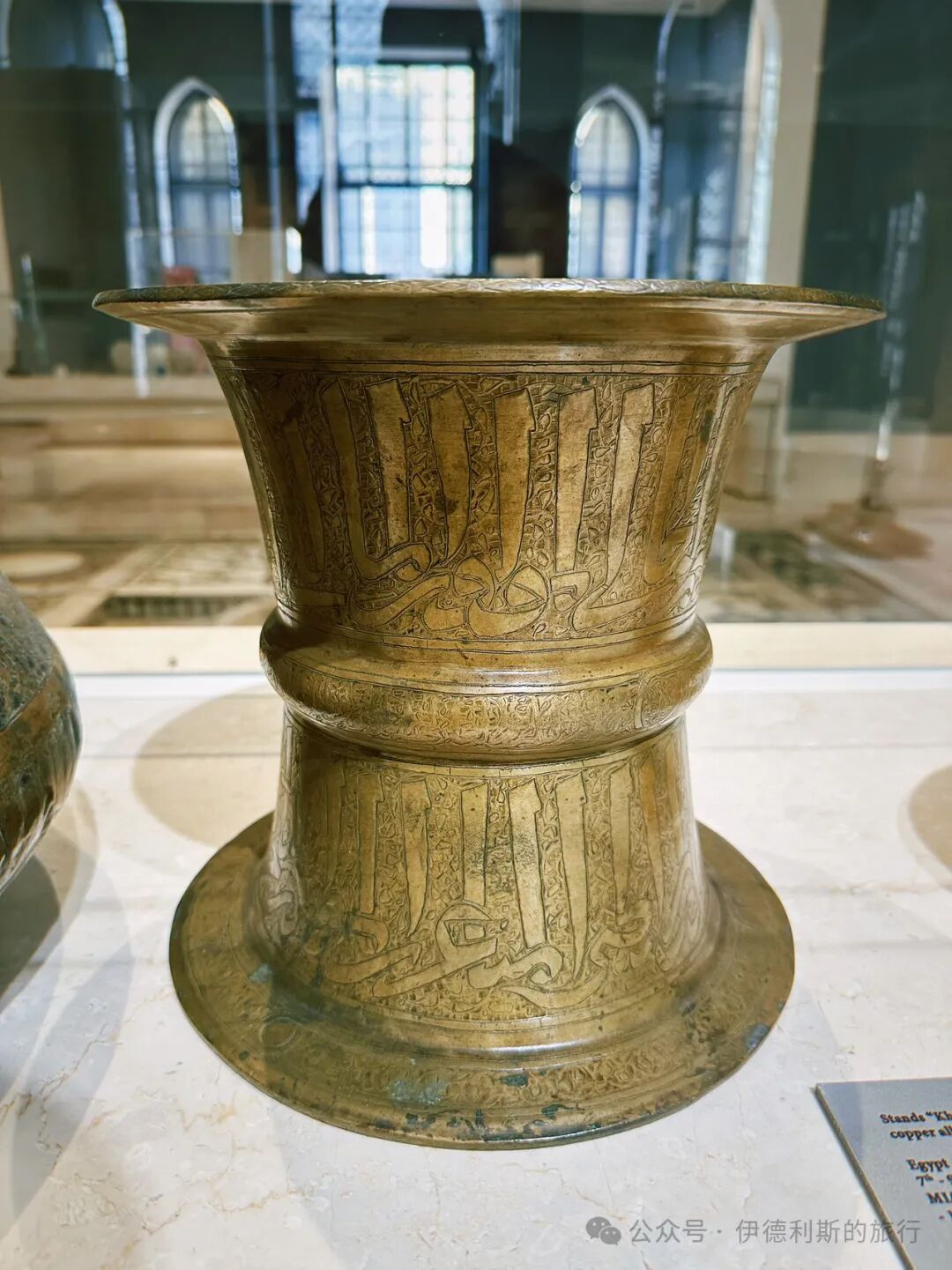
A Qing Dynasty Qianlong period blue-and-white vase without handles (wudang zun) featuring scrolling floral patterns and Arabic calligraphy in the Forbidden City collection. This is one of five such vases from the old Qing palace collection. One is currently on display at the Wuying Hall ceramics exhibition. This piece is an imitation and innovation of the Ming Dynasty vase. The Qianlong Emperor personally designed and modified the imperial poem cloisonné inner liner, allowing it to be used for flower arranging. Behind it is a bronze vessel with the same shape that I photographed at the Museum of Islamic Art in Cairo, dating back to the Mamluk Sultanate.
A Yuan Dynasty blue-and-white plate with a lotus pond and mandarin duck pattern and a rhombic flower-shaped rim in the Forbidden City collection. Yuan dynasty blue and white porcelain uses su-ma-li cobalt ore imported from the Kashan region of Iran. The petal-shaped rim (linghuakou) and dense decorative style of the plate are influenced by Islamic culture, while the mandarin duck and lotus pond in the center is a decorative theme popular in China since the late Tang and Five Dynasties periods. The following photo I took at the Iran exhibition at the Meridian Gate next door shows a petal-shaped geometric pattern copper basin from Rafsanjan in southeastern Iran, dating to the Seljuk Empire in the 11th to 12th centuries.
A Ming Xuande period blue and white flower-patterned water sprinkler (huajiao) from the Palace Museum collection. This style of water sprinkler was made in Jingdezhen during the Ming Yongle, Xuande, and Qing Yongzheng periods to imitate West Asian copperware. The exhibition also displays a copper pot of the same shape from the Metropolitan Museum of Art, which dates to early 16th-century Afghanistan.
Porcelain with Arabic script from the Palace Museum collection.
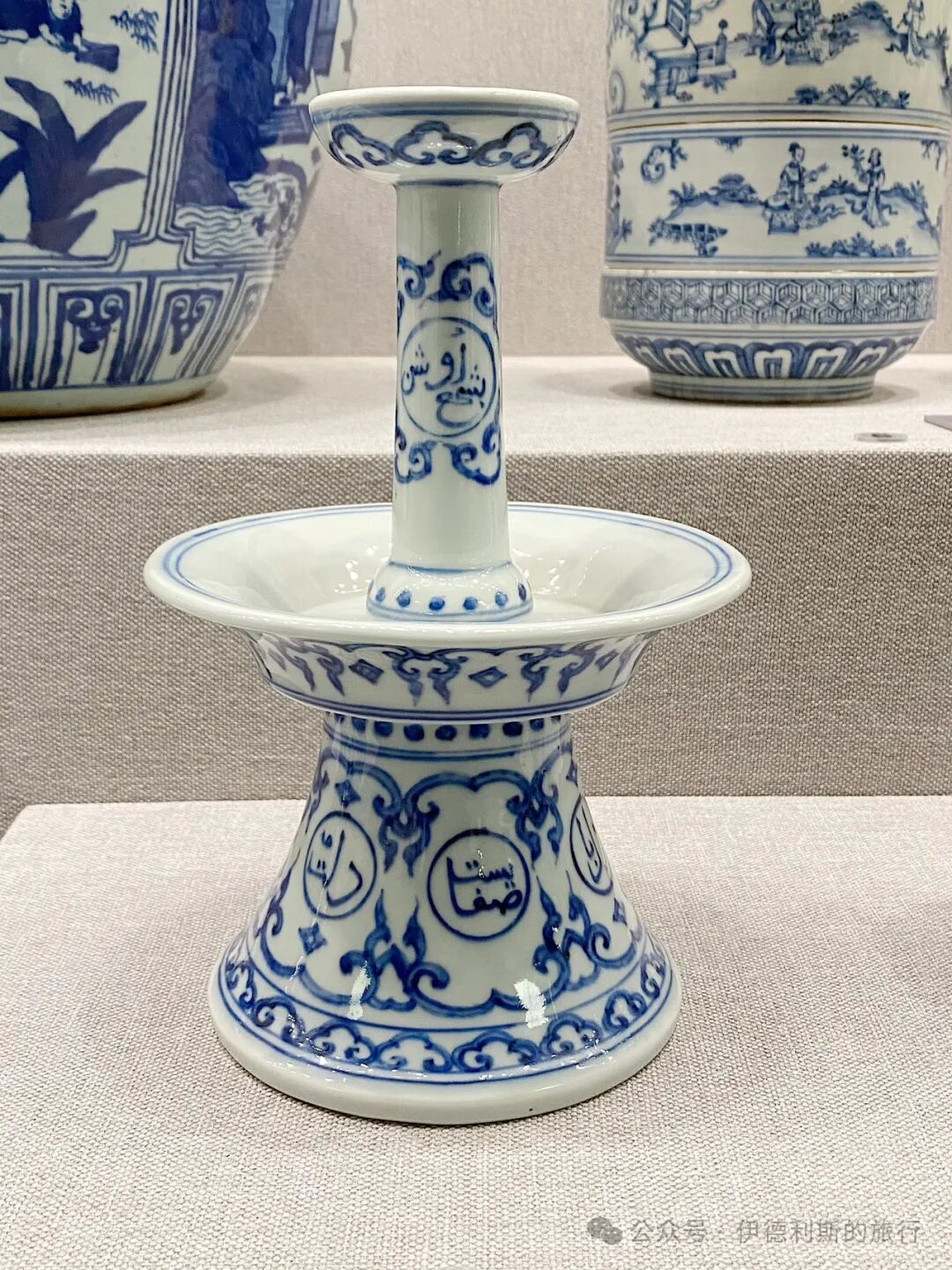
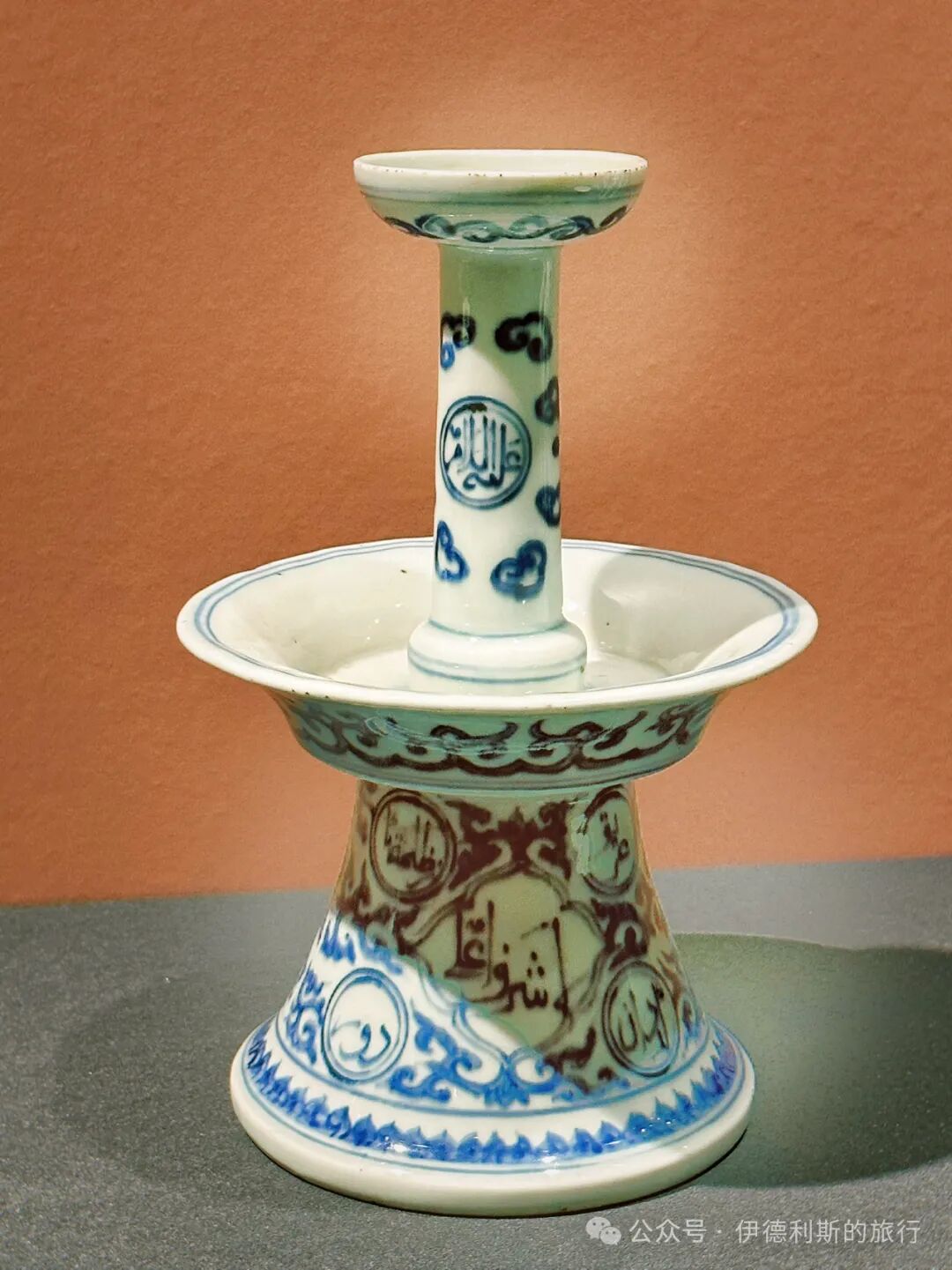
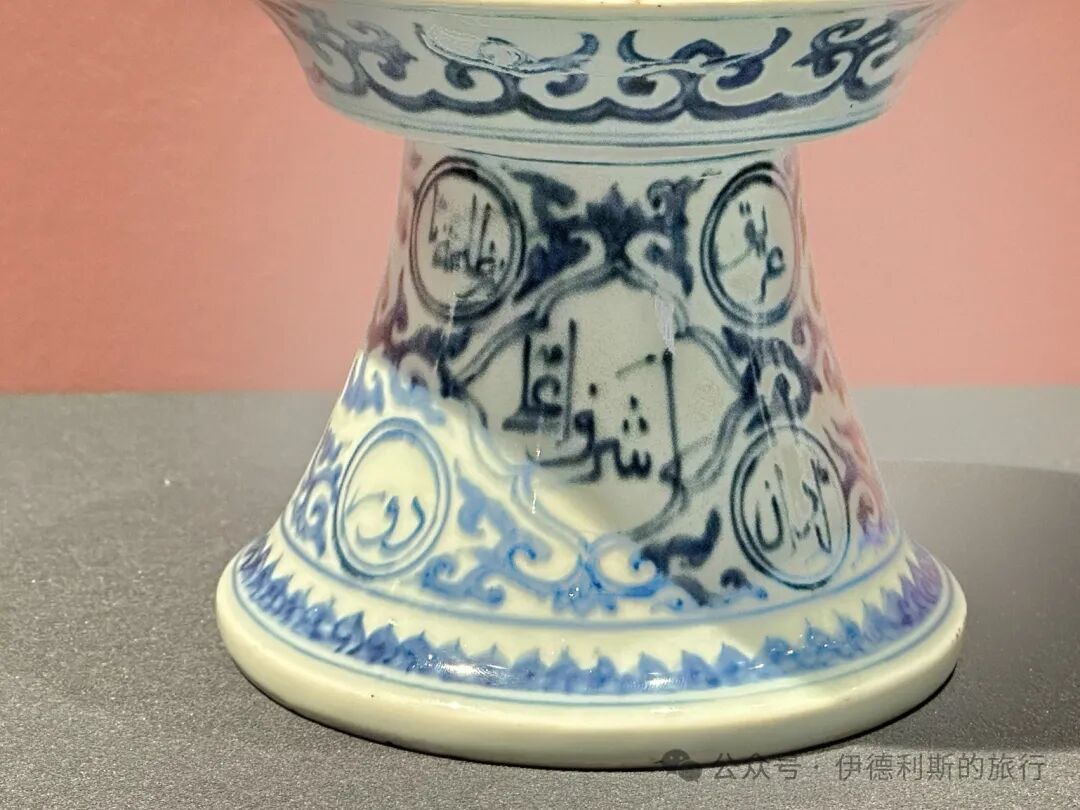
A Ming Zhengde period blue and white candlestick with Arabic script from the Palace Museum collection. The following is another Zhengde blue and white Arabic script candlestick on display at the Ceramics Gallery in the Hall of Martial Valor (Wuyingdian).
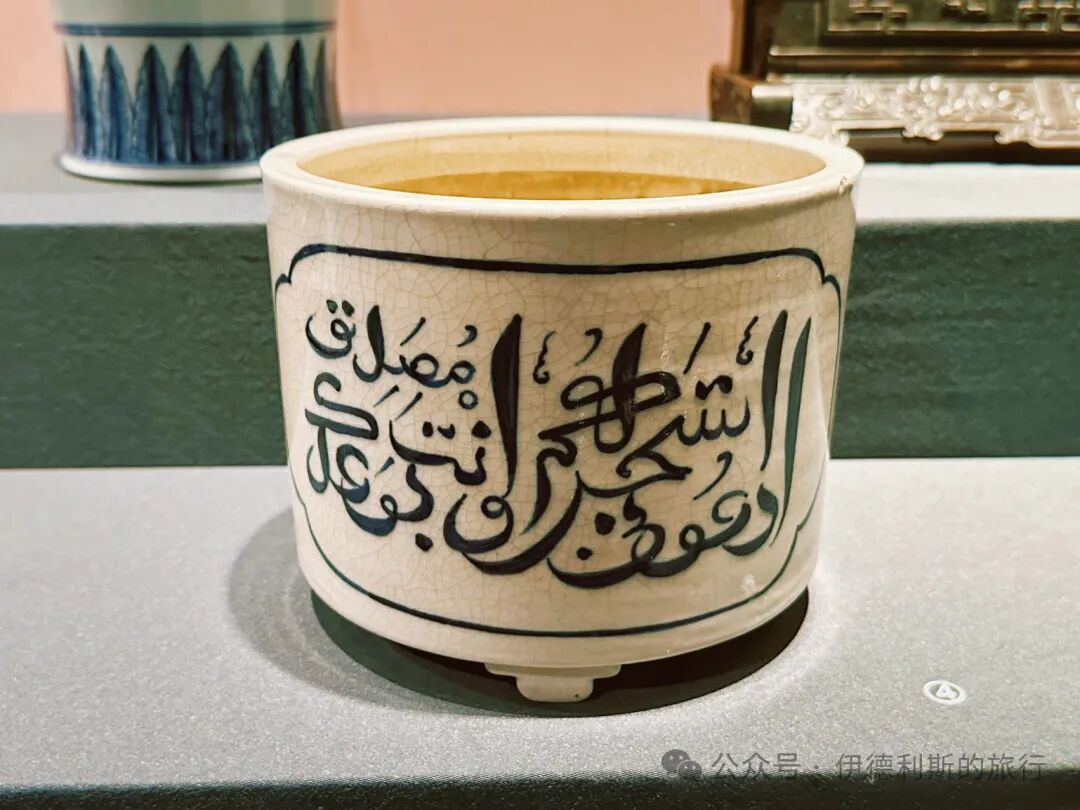
A Qing Kangxi period blue and white three-legged incense burner with Arabic script in panels from the Palace Museum collection.
Early Islamic glassware from the Famen Mosque and Palace Museum collections.
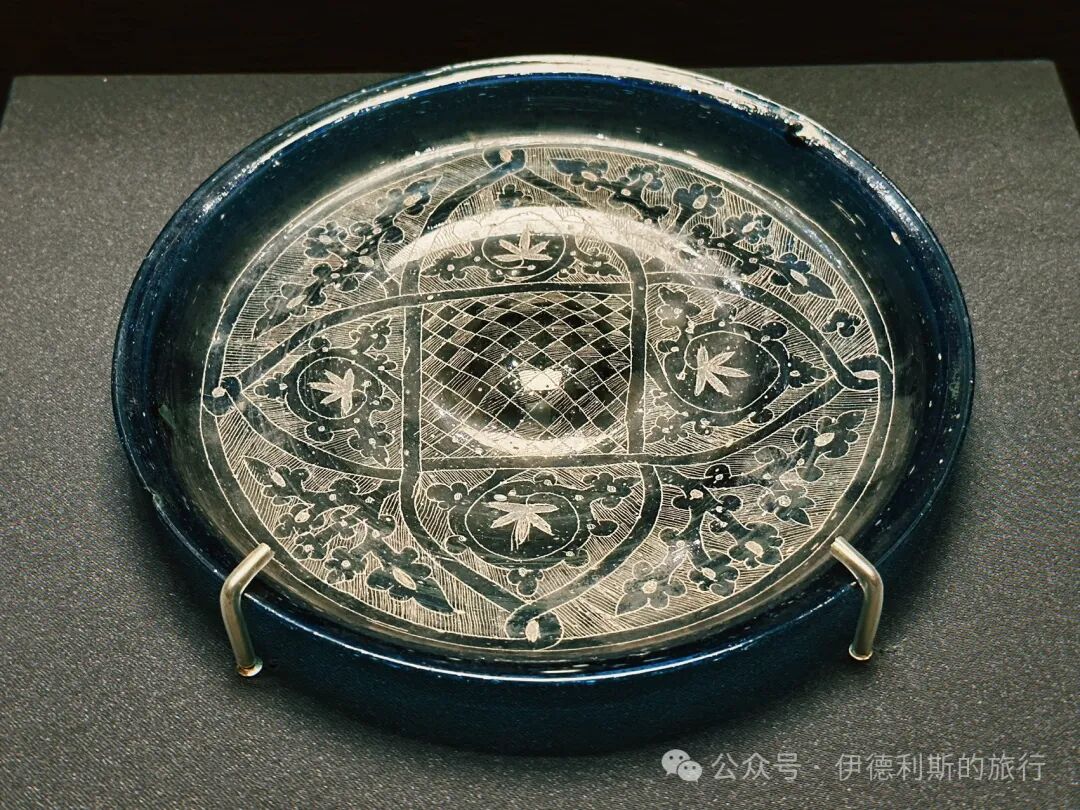
A Tang dynasty engraved glass plate from the Famen Mosque Museum, unearthed from the Famen Mosque underground palace in 1987. The four-lobed sections and the center form a mihrab decorative pattern unique to Islamic culture, making it a representative piece of early Islamic glassware unearthed in China. The Metropolitan Museum of Art holds a similar piece, unearthed in 1939 from the Tappeh Madreseh madrasa site in Nishapur, Iran, and estimated to date to the early 9th century. This madrasa is believed to have been built by the Tahirid ruler Abdallah ibn Tahir, who reigned from 828 to 845.
A Tang dynasty stamped straight-sided glass cup from the Famen Mosque Museum, unearthed from the Famen Mosque underground palace in 1987. This is a common type of early Islamic glass cup, popular in Egypt, Iraq, Iran, and Syria before the 11th century.
An 8th to 10th-century glass bottle from the Palace Museum collection. Its shape is the same as the perfume oil bottles popular in the Islamic world from the 9th to 11th centuries. Because the bottom looks like a molar tooth, it is called a molar flask.
An 8th to 10th-century glass bottle from the Palace Museum collection. This shape was popular in the early Islamic period and may have been used to hold spices or cosmetics. Similar items have been found in Nishapur, Iran, and Samarra and Ctesiphon in Iraq. After these glass bottles arrived in China, they were also used to hold Buddhist relics. They have been found in the underground palaces of the Jingzhi Mosque Pagoda in Dingzhou, Hebei, and the Miaotong Pagoda in Lianshui, Jiangsu.
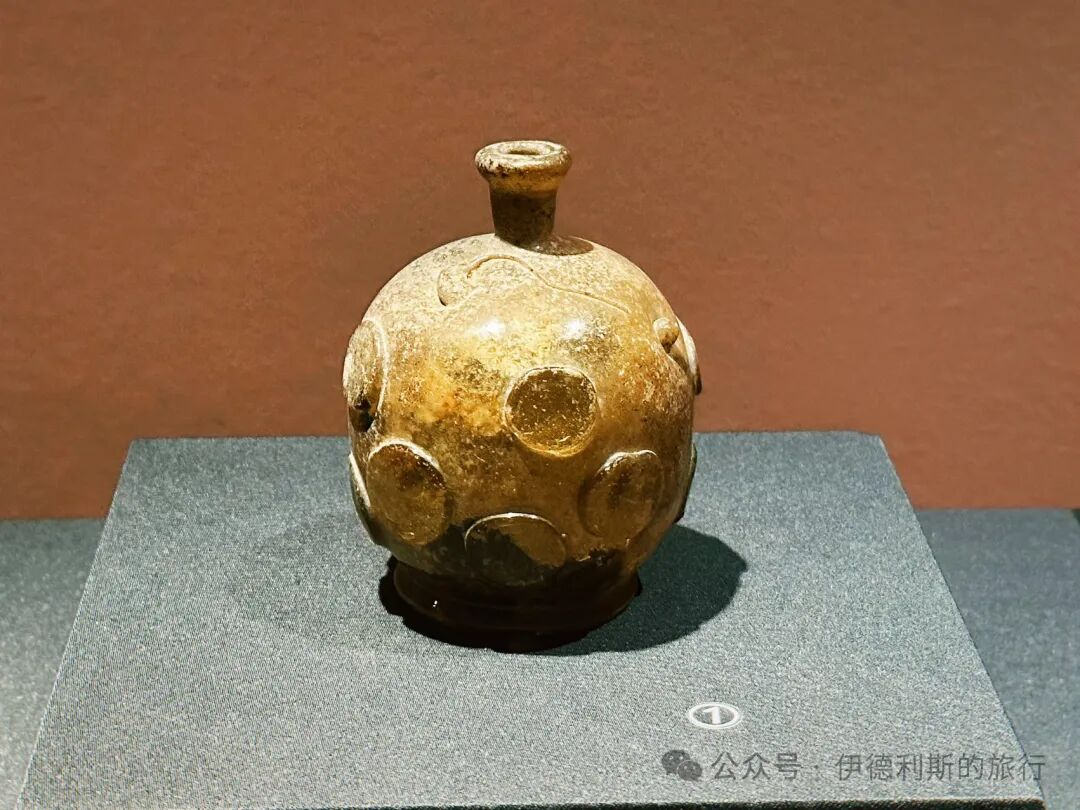
This 8th-10th century glass bottle in the Palace Museum collection features a design with small applied glass discs on the exterior, a style originating from Iran or Syria.
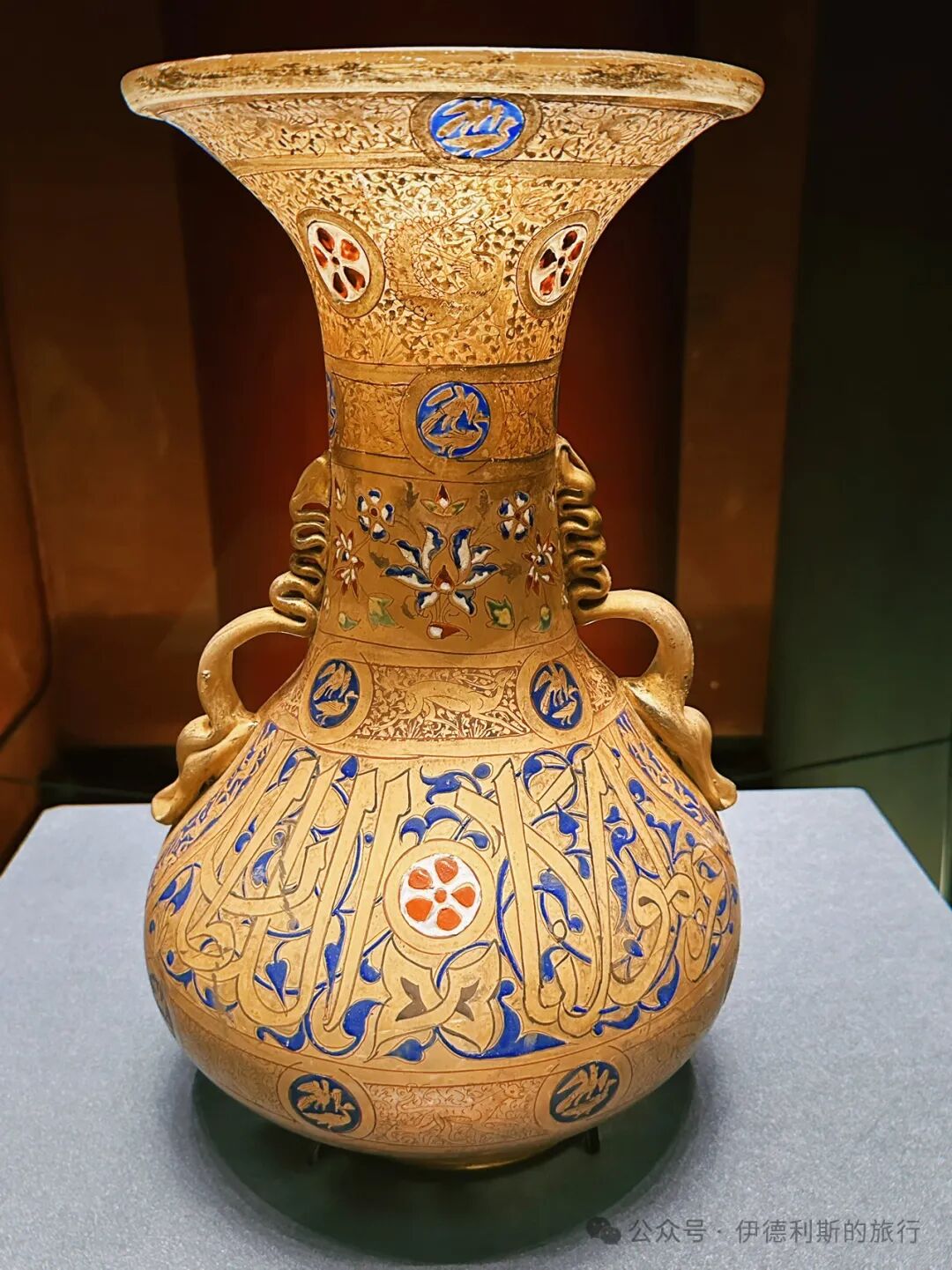
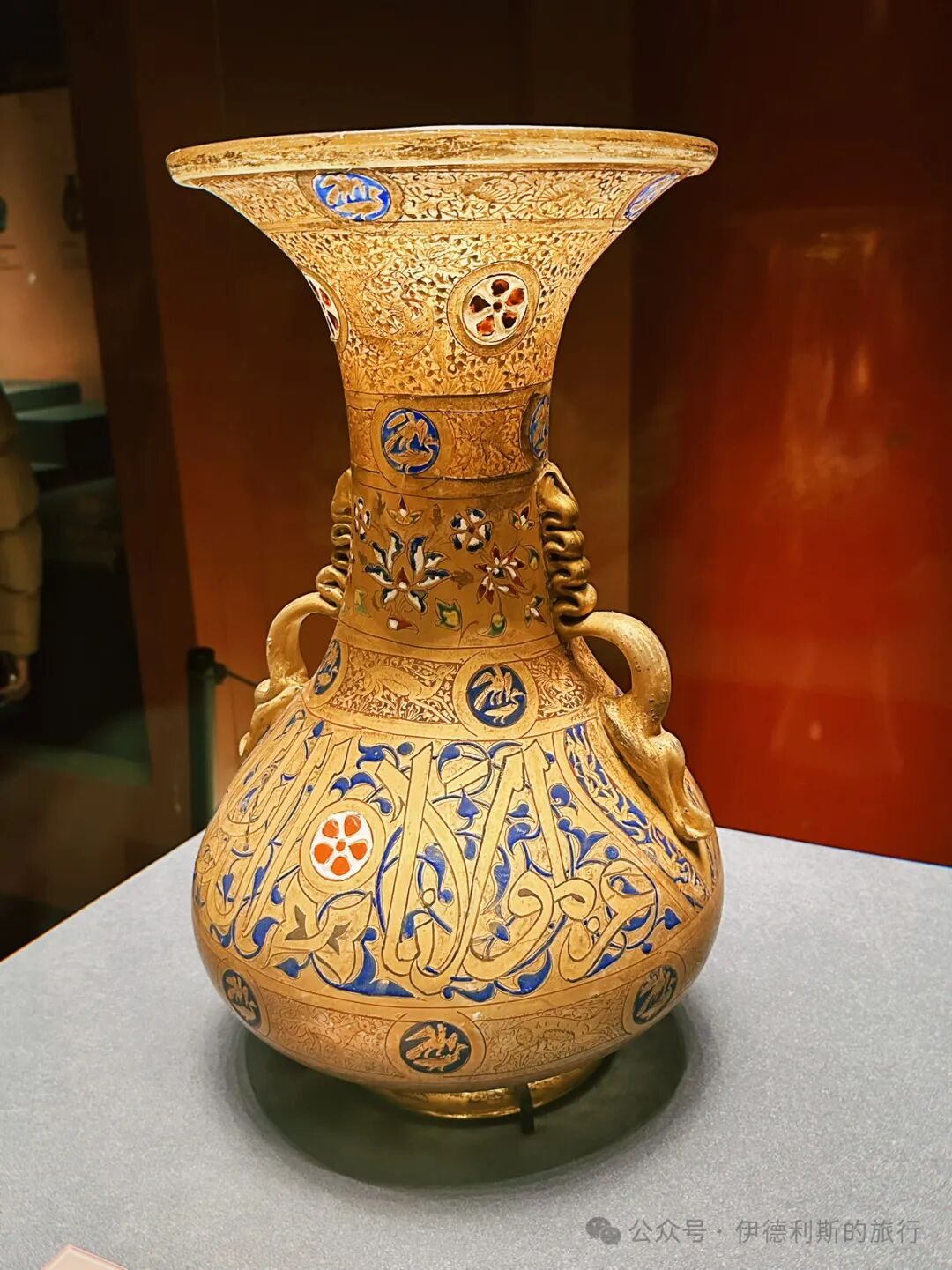
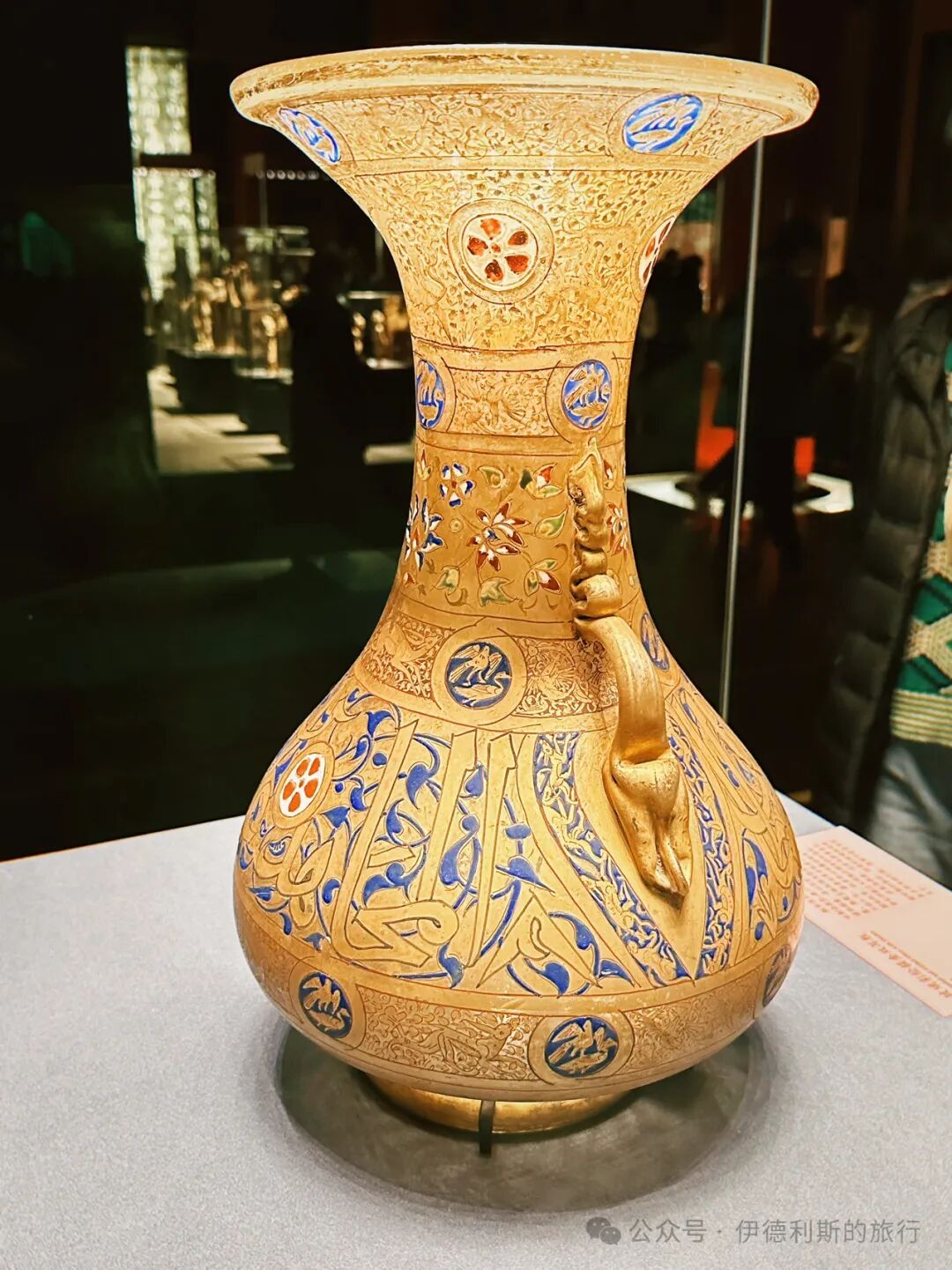
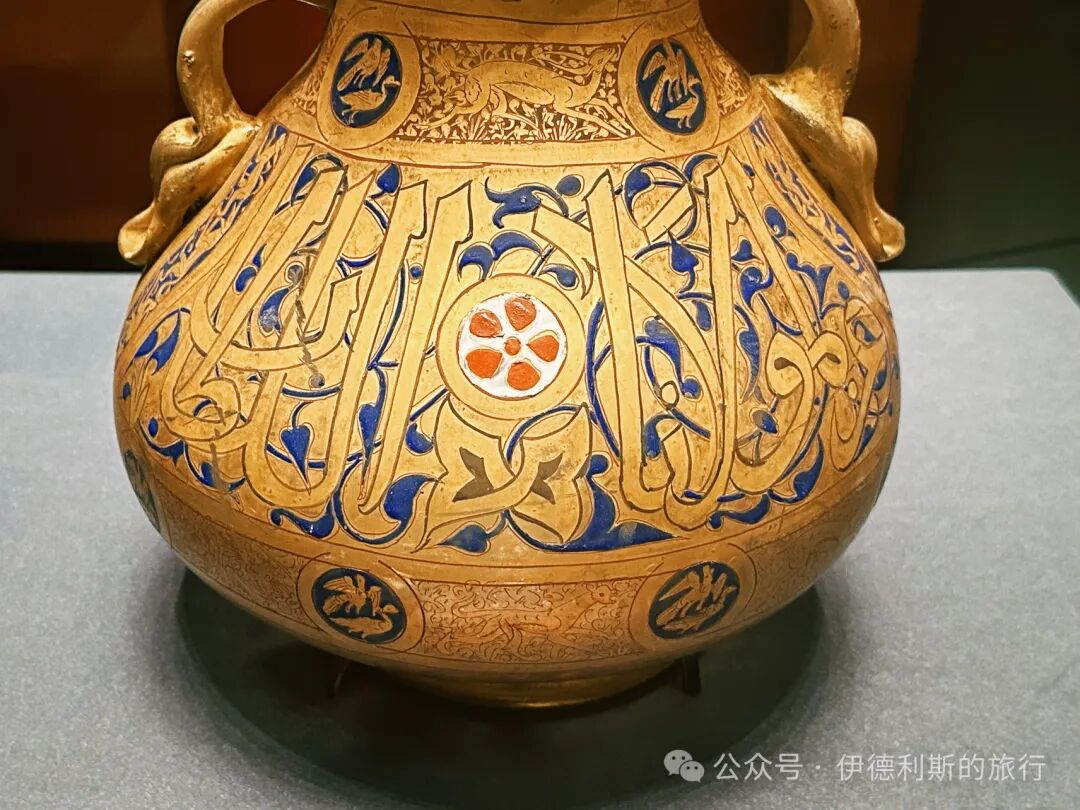
This 14th-century gold-painted glass twin-handled vase in the Palace Museum collection features Quranic verses on the belly, several blue-ground gold-painted circular emblems on the body, and a twin-bird pattern in the center. This type of vessel was often used as an oil lamp bottle in mosques or palaces during the Mamluk dynasty in Egypt.
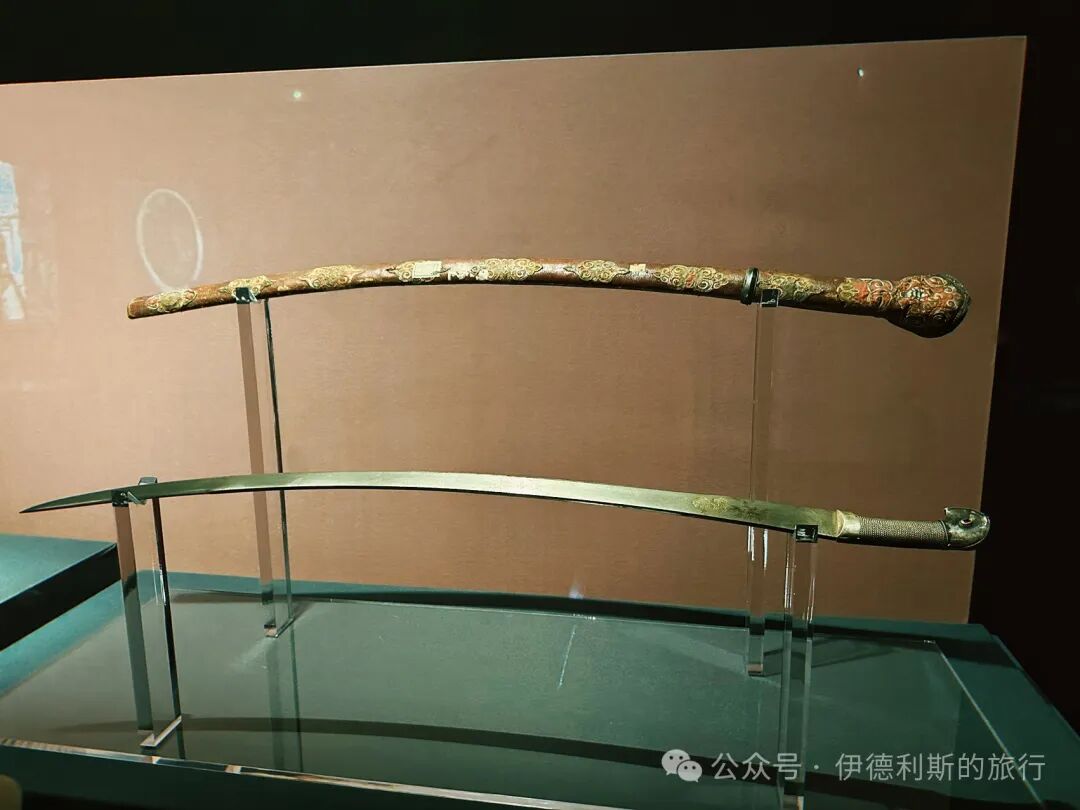
A Caucasian long sword from the Qing dynasty in the Palace Museum collection.
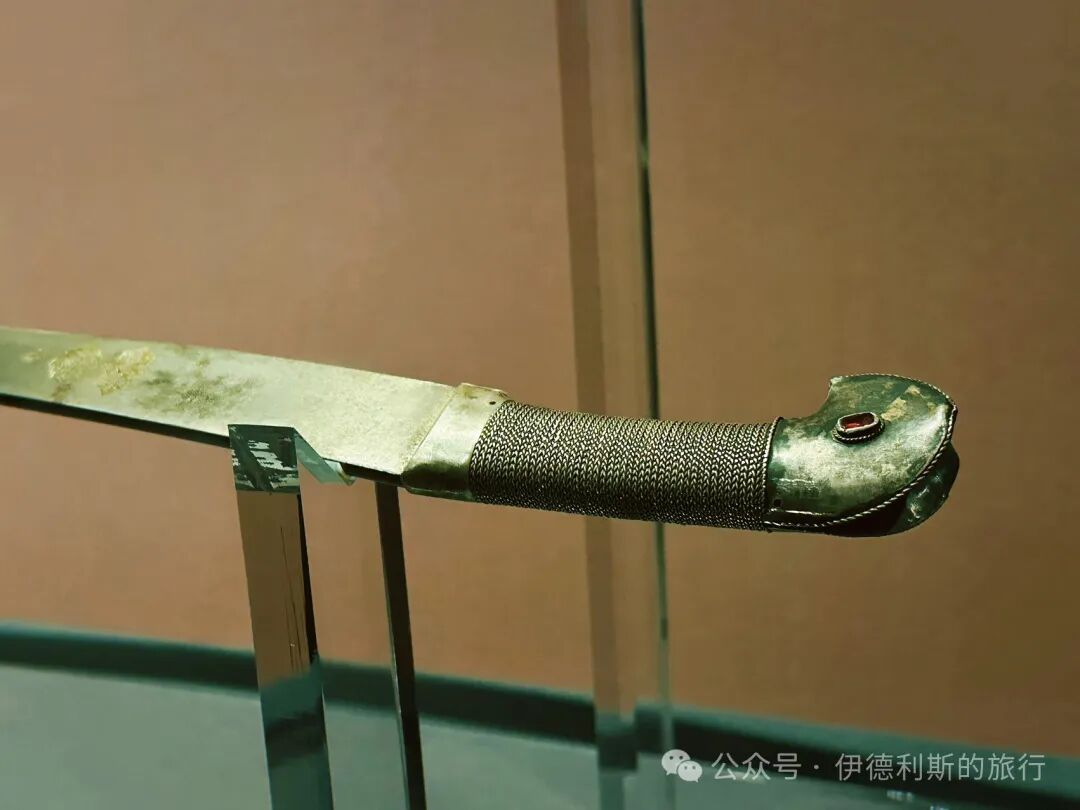
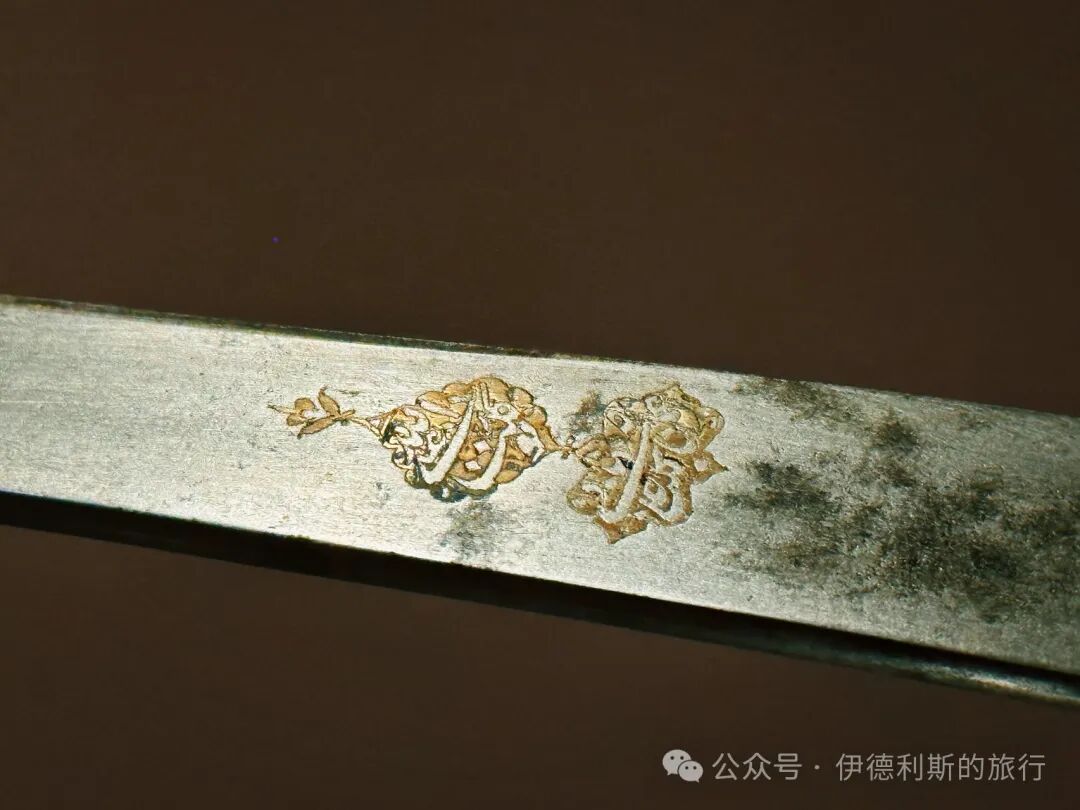
A Qing dynasty Caucasian Shashka long sword in the Palace Museum collection, engraved with Arabic inscriptions. The Shashka long sword was a weapon used by the Adyghe people (Circassians) living in the North Caucasus mountains, with the earliest records dating back to the late 17th century. The Shashka long sword is characterized by a hilt that fits entirely into the scabbard, making it look like a blade without a handle.
The Circassians converted to Islam in the 17th century under the influence of the Crimean Khanate and the Ottoman Empire. In the late 19th century, they suffered massacres and genocide during the Russian invasion. The surviving Adyghe people were taken in by the Ottoman Empire, and most now live in Turkey.
Ming dynasty blue and white porcelain from the Sheikh Safi al-Din gongbei in the National Museum of Iran.
Porcelain from the Sheikh Safi al-Din gongbei (Sheikh Safi al-Din Khānegāh and Shrine Ensemble) is held in the National Museum of Iran, and a large number of artifacts from the same site are also on display at the Iran exhibition next to the Meridian Gate.
Sheikh Safi al-Din (1252-1334) was a Kurdish Sufi master during the Ilkhanate period and the founder of the Safaviyya order. This order eventually established the Safavid dynasty in 1501. After the Safavid dynasty was established, they expanded the Sheikh Safi al-Din Shrine (gongbei) in Ardabil, northwestern Iran, on a large scale between the 16th and 18th centuries, turning it into a massive building complex. The Porcelain House, built in the 17th century, has a huge cross-shaped space. The small niches densely packed on the walls were once filled with Chinese porcelain. Today, most of these porcelains are kept in museums in Tehran.
Late 16th-century blue and white bowl with a floral and fruit branch pattern.
16th-century blue and white octagonal long-necked vase with a crane and deer pattern.
Early 15th-century blue and white porcelain plate with lotus bundle patterns.
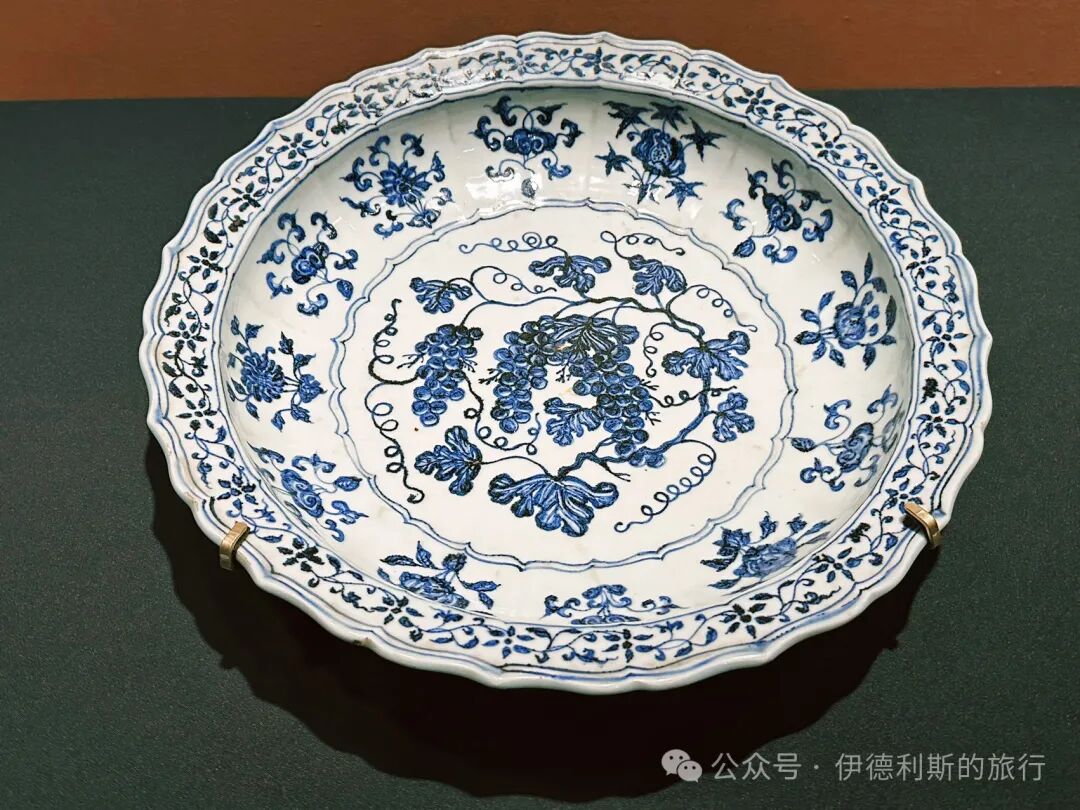
Early 15th-century blue and white porcelain plate with a foliated rim and grape branch patterns.
Early 15th-century blue and white porcelain celestial globe vase (tianqiuping) with white dragon and sea wave patterns.
14th-century blue and white porcelain plum vase (meiping) with scrolling peony patterns.
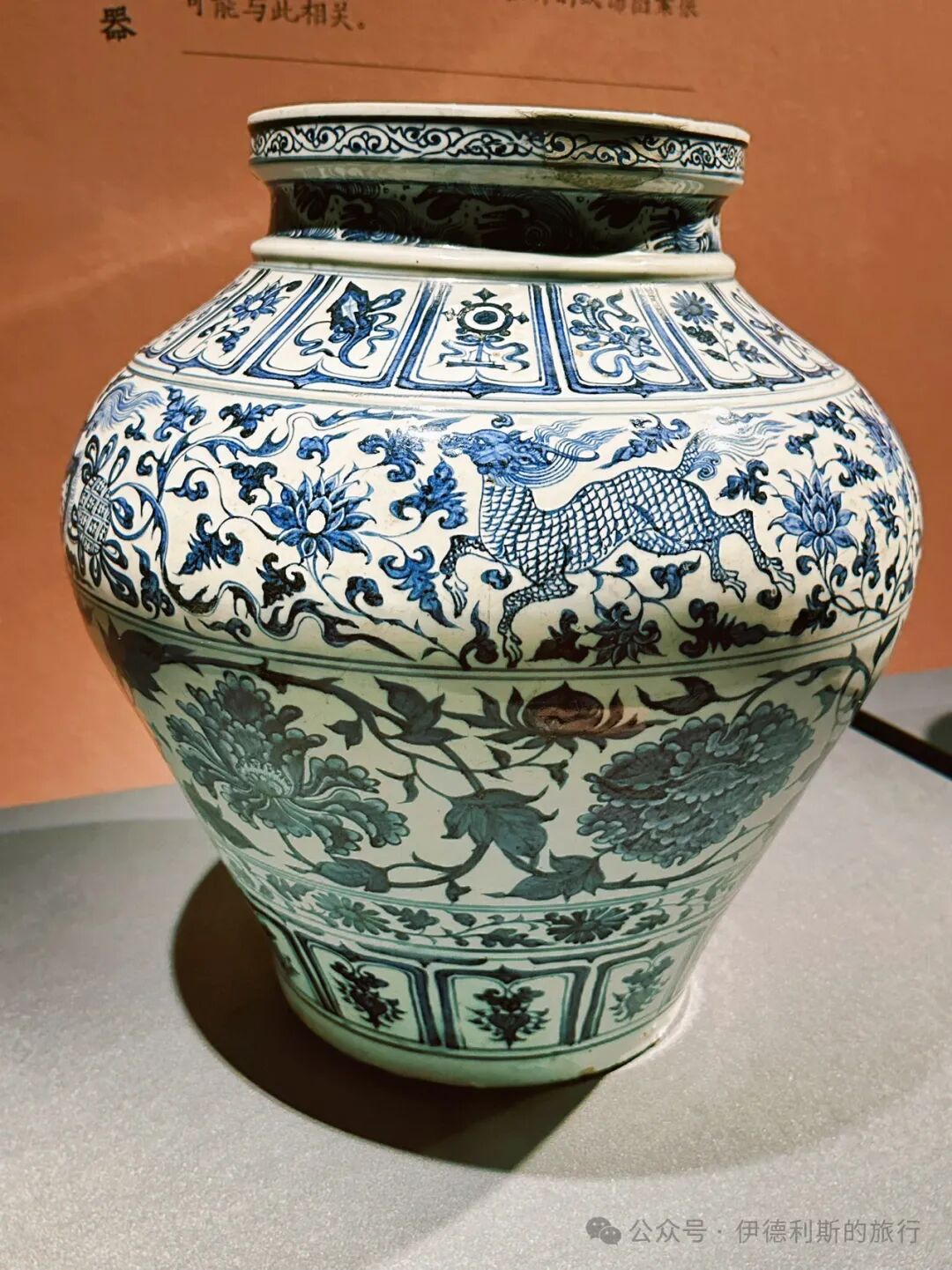
14th-century blue and white porcelain jar with mythical beast and scrolling peony patterns. view all
Summary: Islamic Art Guide: China and West Asia Exchange at the Forbidden City is presented here as a firsthand travel account in clear, natural English. The account focuses on West Asia, Forbidden City, Ancient Trade while preserving the names, places, food, photos, and historical details from the Chinese source.
From January 12 to April 11, 2024, the Exhibition of Ancient Civilizations of China and West Asia was held at the Meridian Gate of the Forbidden City. The Forbidden City displayed many rare artifacts not usually seen in regular exhibitions. The National Museum of Iran also provided many blue-and-white porcelains. You can view them alongside the Iranian artifact exhibition next door at the Meridian Gate (see "Exhibition Notes: Iranian Artifacts at the Forbidden City Meridian Gate").
Xinjiang textiles from the Qianlong period.
A blue-ground Hui-style gold and silver brocade (huihui zhijin yin jin) from the Qianlong period in the Forbidden City collection. Hui-style brocade (huihui jin) was sent to the imperial court as tribute from Xinjiang. Besides Xinjiang, it was also produced in Central Asia, West Asia, and North India under the Mughal Empire. Hui-style brocade was often woven with gold and silver threads, and its patterns reflect the artistic style of Central Asia and Persia.
A colorful Hotan silk (hetian chou) from the Qianlong period in the Forbidden City collection.
A colorful tree-bark pattern Hotan silk (hetian chou) from the Qianlong period in the Forbidden City collection, which is what we know as Atlas silk (aidelaisi chou).
A green Mashru fabric (mashlubu) from the Qianlong period in the Forbidden City collection, which was a type of pile fabric from the Xinjiang region during the Qing Dynasty.
Blue-and-white porcelain in the Forbidden City collection, fired in the shapes of West Asian and North African bronze ware.
A Ming Dynasty Yongle period blue-and-white gourd-shaped flask with ribbon handles and Islamic patterns in the Forbidden City collection. Behind it is a bronze vessel with the same shape that I photographed at the National Museum of Egyptian Civilization, dating back to the Mamluk Sultanate in the 14th century.
A Qing Dynasty Qianlong period blue-and-white vase without handles (wudang zun) featuring scrolling floral patterns and Arabic calligraphy in the Forbidden City collection. This is one of five such vases from the old Qing palace collection. One is currently on display at the Wuying Hall ceramics exhibition. This piece is an imitation and innovation of the Ming Dynasty vase. The Qianlong Emperor personally designed and modified the imperial poem cloisonné inner liner, allowing it to be used for flower arranging. Behind it is a bronze vessel with the same shape that I photographed at the Museum of Islamic Art in Cairo, dating back to the Mamluk Sultanate.
A Yuan Dynasty blue-and-white plate with a lotus pond and mandarin duck pattern and a rhombic flower-shaped rim in the Forbidden City collection. Yuan dynasty blue and white porcelain uses su-ma-li cobalt ore imported from the Kashan region of Iran. The petal-shaped rim (linghuakou) and dense decorative style of the plate are influenced by Islamic culture, while the mandarin duck and lotus pond in the center is a decorative theme popular in China since the late Tang and Five Dynasties periods. The following photo I took at the Iran exhibition at the Meridian Gate next door shows a petal-shaped geometric pattern copper basin from Rafsanjan in southeastern Iran, dating to the Seljuk Empire in the 11th to 12th centuries.
A Ming Xuande period blue and white flower-patterned water sprinkler (huajiao) from the Palace Museum collection. This style of water sprinkler was made in Jingdezhen during the Ming Yongle, Xuande, and Qing Yongzheng periods to imitate West Asian copperware. The exhibition also displays a copper pot of the same shape from the Metropolitan Museum of Art, which dates to early 16th-century Afghanistan.
Porcelain with Arabic script from the Palace Museum collection.
A Ming Zhengde period blue and white candlestick with Arabic script from the Palace Museum collection. The following is another Zhengde blue and white Arabic script candlestick on display at the Ceramics Gallery in the Hall of Martial Valor (Wuyingdian).
A Qing Kangxi period blue and white three-legged incense burner with Arabic script in panels from the Palace Museum collection.
Early Islamic glassware from the Famen Mosque and Palace Museum collections.
A Tang dynasty engraved glass plate from the Famen Mosque Museum, unearthed from the Famen Mosque underground palace in 1987. The four-lobed sections and the center form a mihrab decorative pattern unique to Islamic culture, making it a representative piece of early Islamic glassware unearthed in China. The Metropolitan Museum of Art holds a similar piece, unearthed in 1939 from the Tappeh Madreseh madrasa site in Nishapur, Iran, and estimated to date to the early 9th century. This madrasa is believed to have been built by the Tahirid ruler Abdallah ibn Tahir, who reigned from 828 to 845.
A Tang dynasty stamped straight-sided glass cup from the Famen Mosque Museum, unearthed from the Famen Mosque underground palace in 1987. This is a common type of early Islamic glass cup, popular in Egypt, Iraq, Iran, and Syria before the 11th century.
An 8th to 10th-century glass bottle from the Palace Museum collection. Its shape is the same as the perfume oil bottles popular in the Islamic world from the 9th to 11th centuries. Because the bottom looks like a molar tooth, it is called a molar flask.
An 8th to 10th-century glass bottle from the Palace Museum collection. This shape was popular in the early Islamic period and may have been used to hold spices or cosmetics. Similar items have been found in Nishapur, Iran, and Samarra and Ctesiphon in Iraq. After these glass bottles arrived in China, they were also used to hold Buddhist relics. They have been found in the underground palaces of the Jingzhi Mosque Pagoda in Dingzhou, Hebei, and the Miaotong Pagoda in Lianshui, Jiangsu.
This 8th-10th century glass bottle in the Palace Museum collection features a design with small applied glass discs on the exterior, a style originating from Iran or Syria.
This 14th-century gold-painted glass twin-handled vase in the Palace Museum collection features Quranic verses on the belly, several blue-ground gold-painted circular emblems on the body, and a twin-bird pattern in the center. This type of vessel was often used as an oil lamp bottle in mosques or palaces during the Mamluk dynasty in Egypt.
A Caucasian long sword from the Qing dynasty in the Palace Museum collection.
A Qing dynasty Caucasian Shashka long sword in the Palace Museum collection, engraved with Arabic inscriptions. The Shashka long sword was a weapon used by the Adyghe people (Circassians) living in the North Caucasus mountains, with the earliest records dating back to the late 17th century. The Shashka long sword is characterized by a hilt that fits entirely into the scabbard, making it look like a blade without a handle.
The Circassians converted to Islam in the 17th century under the influence of the Crimean Khanate and the Ottoman Empire. In the late 19th century, they suffered massacres and genocide during the Russian invasion. The surviving Adyghe people were taken in by the Ottoman Empire, and most now live in Turkey.
Ming dynasty blue and white porcelain from the Sheikh Safi al-Din gongbei in the National Museum of Iran.
Porcelain from the Sheikh Safi al-Din gongbei (Sheikh Safi al-Din Khānegāh and Shrine Ensemble) is held in the National Museum of Iran, and a large number of artifacts from the same site are also on display at the Iran exhibition next to the Meridian Gate.
Sheikh Safi al-Din (1252-1334) was a Kurdish Sufi master during the Ilkhanate period and the founder of the Safaviyya order. This order eventually established the Safavid dynasty in 1501. After the Safavid dynasty was established, they expanded the Sheikh Safi al-Din Shrine (gongbei) in Ardabil, northwestern Iran, on a large scale between the 16th and 18th centuries, turning it into a massive building complex. The Porcelain House, built in the 17th century, has a huge cross-shaped space. The small niches densely packed on the walls were once filled with Chinese porcelain. Today, most of these porcelains are kept in museums in Tehran.
Late 16th-century blue and white bowl with a floral and fruit branch pattern.
16th-century blue and white octagonal long-necked vase with a crane and deer pattern.
Early 15th-century blue and white porcelain plate with lotus bundle patterns.
Early 15th-century blue and white porcelain plate with a foliated rim and grape branch patterns.
Early 15th-century blue and white porcelain celestial globe vase (tianqiuping) with white dragon and sea wave patterns.
14th-century blue and white porcelain plum vase (meiping) with scrolling peony patterns.
14th-century blue and white porcelain jar with mythical beast and scrolling peony patterns. view all
Reposted from the web
Summary: Islamic Art Guide: China and West Asia Exchange at the Forbidden City is presented here as a firsthand travel account in clear, natural English. The account focuses on West Asia, Forbidden City, Ancient Trade while preserving the names, places, food, photos, and historical details from the Chinese source.
From January 12 to April 11, 2024, the Exhibition of Ancient Civilizations of China and West Asia was held at the Meridian Gate of the Forbidden City. The Forbidden City displayed many rare artifacts not usually seen in regular exhibitions. The National Museum of Iran also provided many blue-and-white porcelains. You can view them alongside the Iranian artifact exhibition next door at the Meridian Gate (see "Exhibition Notes: Iranian Artifacts at the Forbidden City Meridian Gate").
Xinjiang textiles from the Qianlong period.
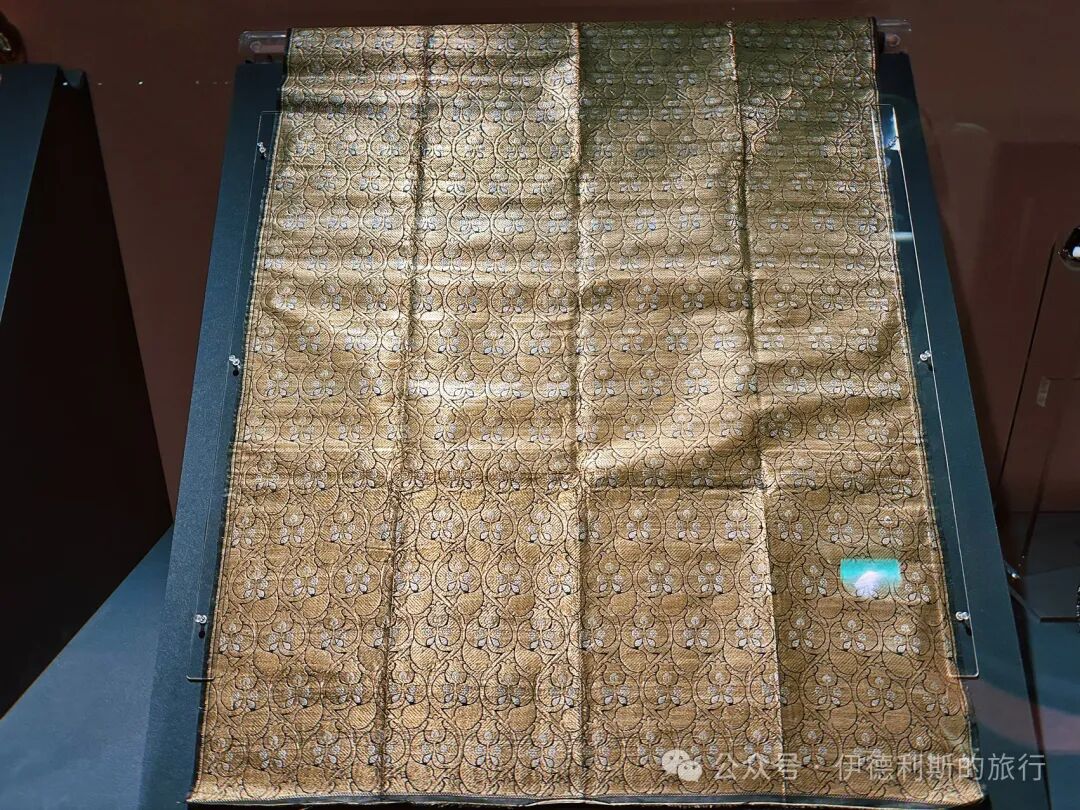
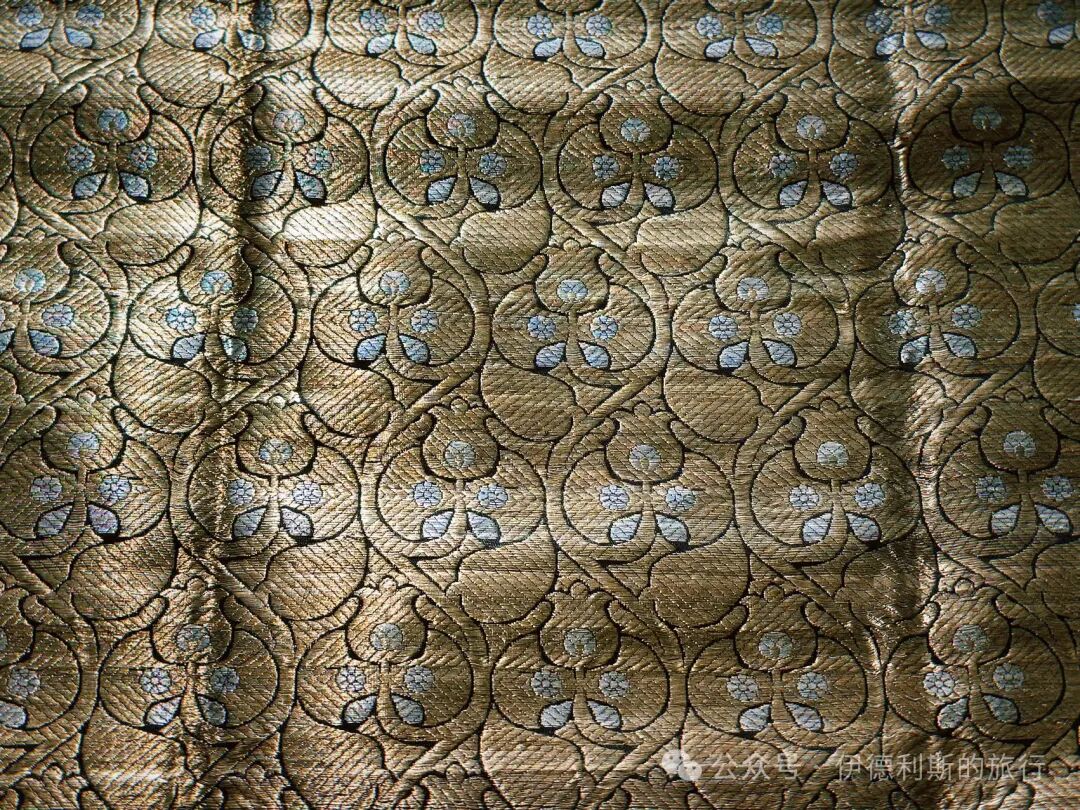
A blue-ground Hui-style gold and silver brocade (huihui zhijin yin jin) from the Qianlong period in the Forbidden City collection. Hui-style brocade (huihui jin) was sent to the imperial court as tribute from Xinjiang. Besides Xinjiang, it was also produced in Central Asia, West Asia, and North India under the Mughal Empire. Hui-style brocade was often woven with gold and silver threads, and its patterns reflect the artistic style of Central Asia and Persia.
A colorful Hotan silk (hetian chou) from the Qianlong period in the Forbidden City collection.
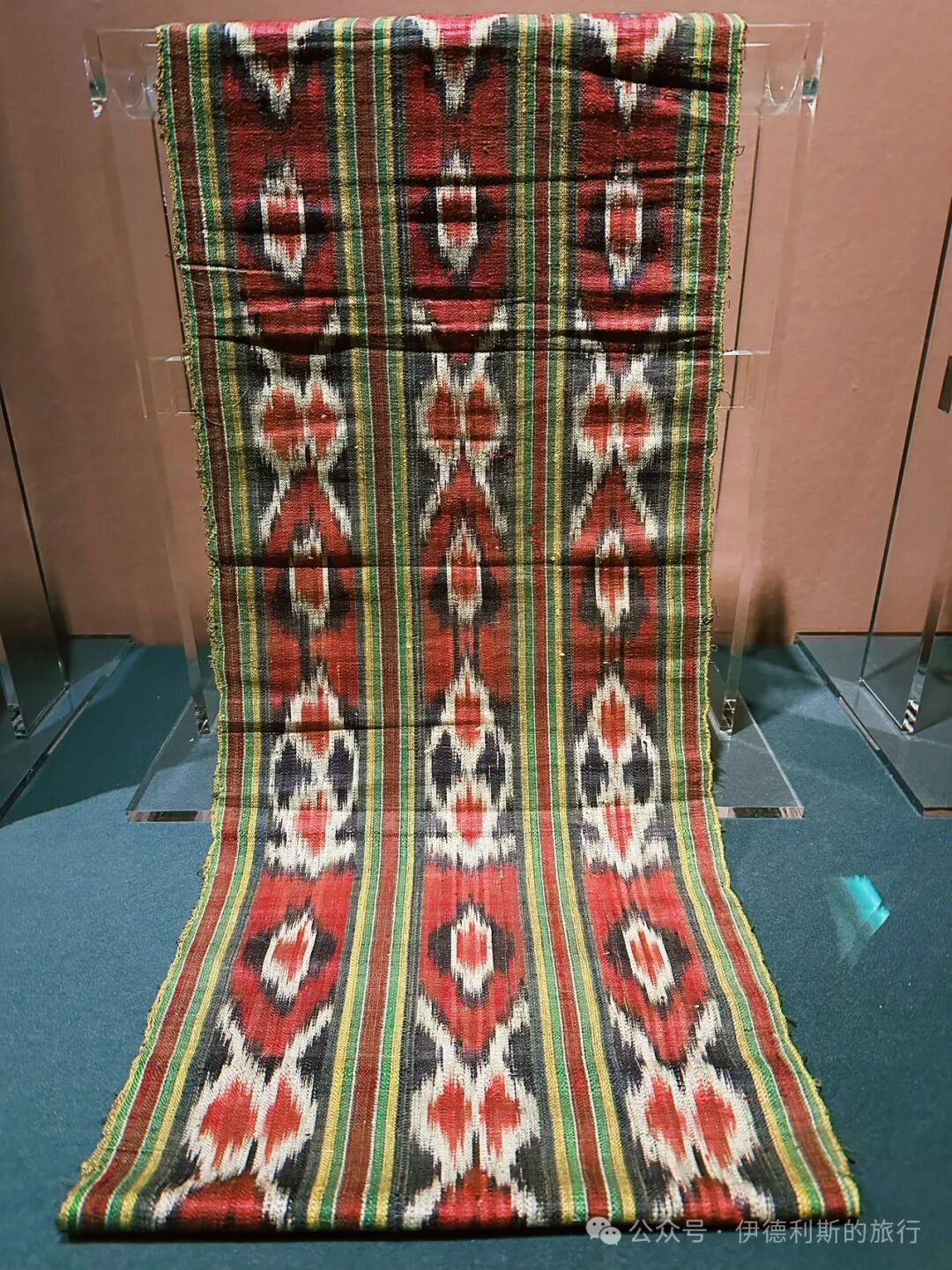
A colorful tree-bark pattern Hotan silk (hetian chou) from the Qianlong period in the Forbidden City collection, which is what we know as Atlas silk (aidelaisi chou).
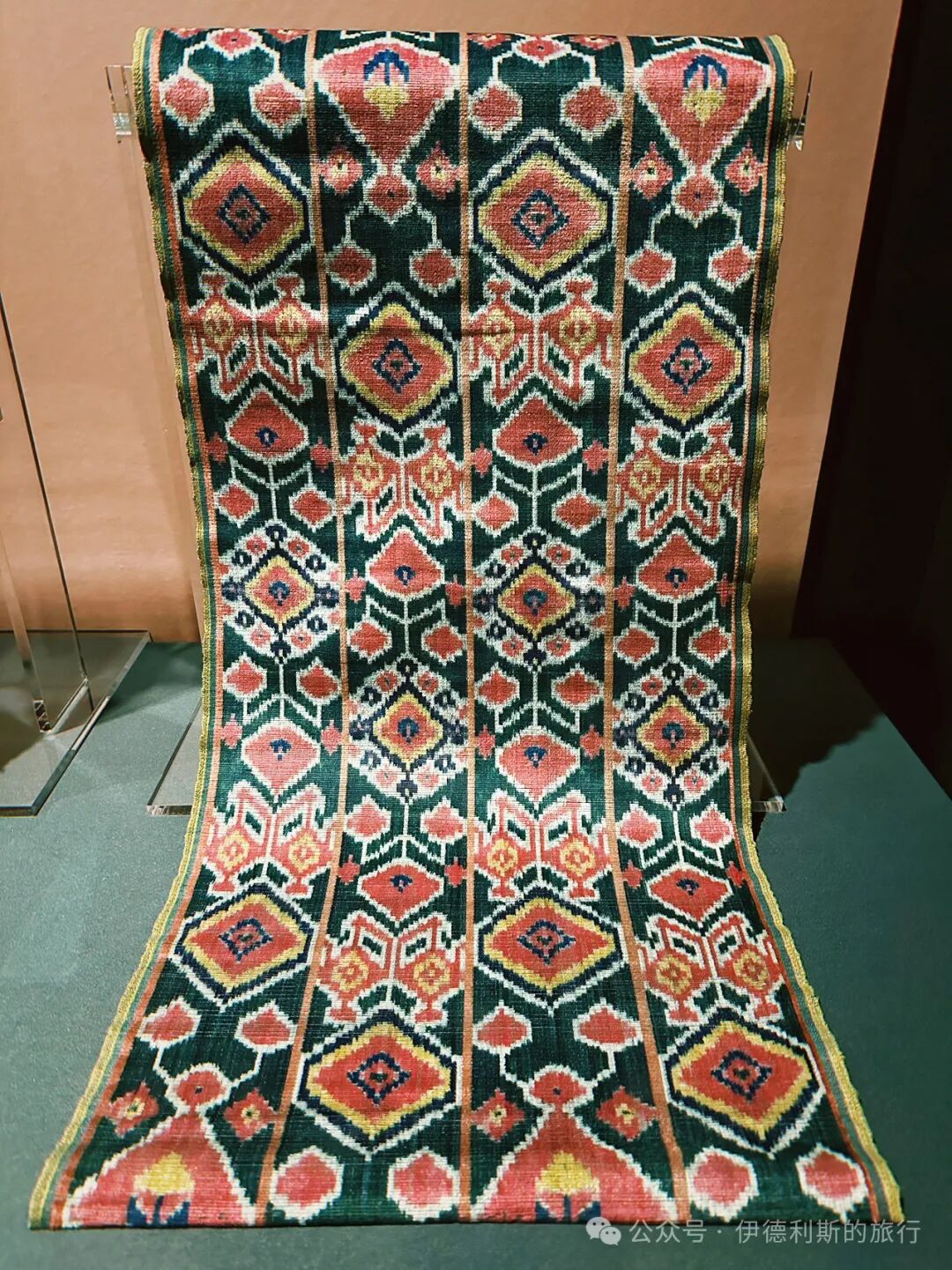
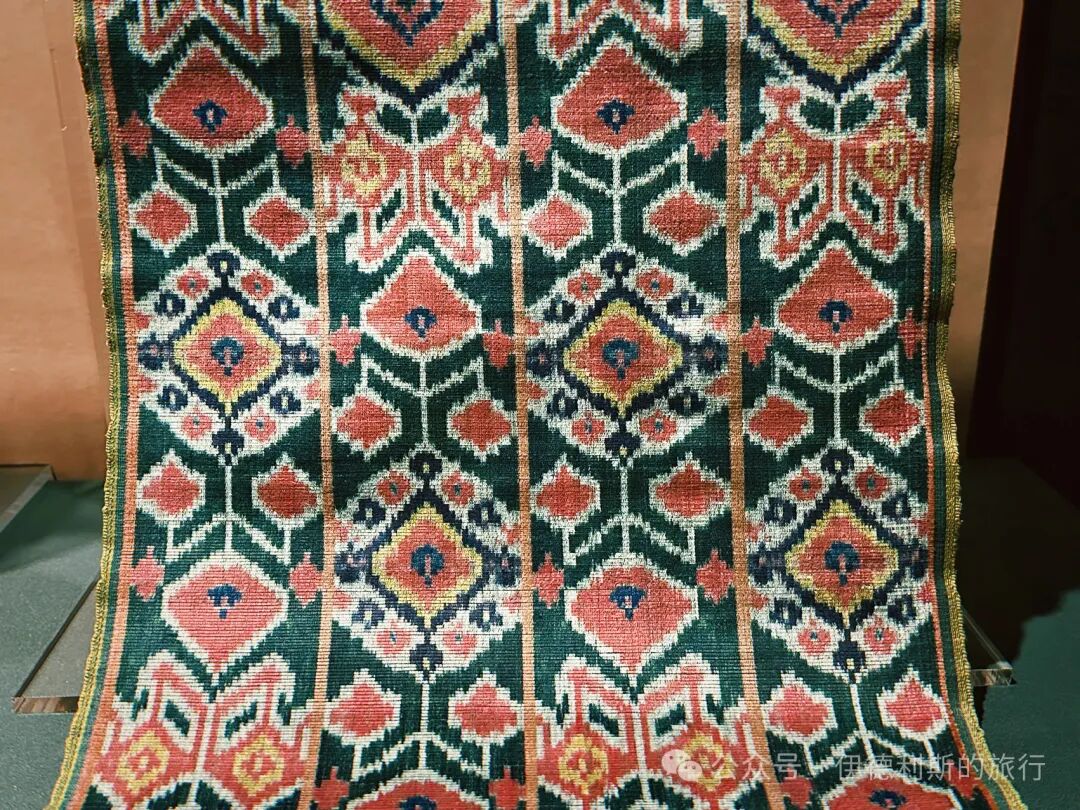
A green Mashru fabric (mashlubu) from the Qianlong period in the Forbidden City collection, which was a type of pile fabric from the Xinjiang region during the Qing Dynasty.
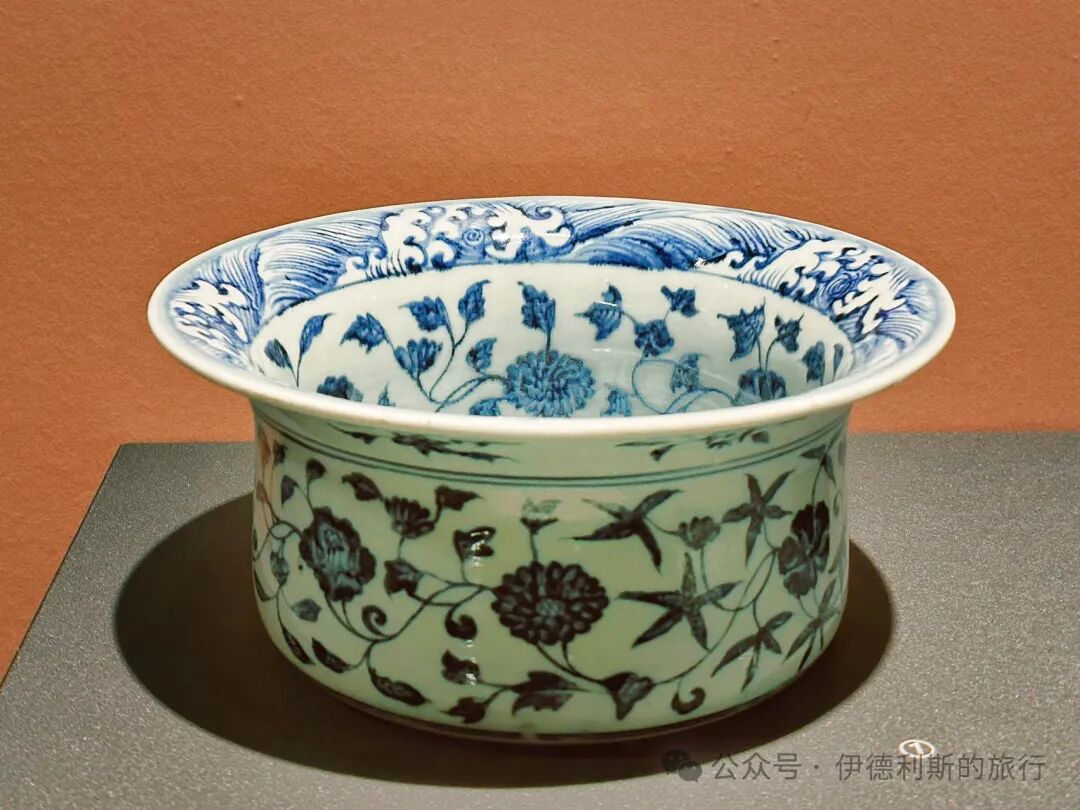
Blue-and-white porcelain in the Forbidden City collection, fired in the shapes of West Asian and North African bronze ware.
A Ming Dynasty Yongle period blue-and-white gourd-shaped flask with ribbon handles and Islamic patterns in the Forbidden City collection. Behind it is a bronze vessel with the same shape that I photographed at the National Museum of Egyptian Civilization, dating back to the Mamluk Sultanate in the 14th century.
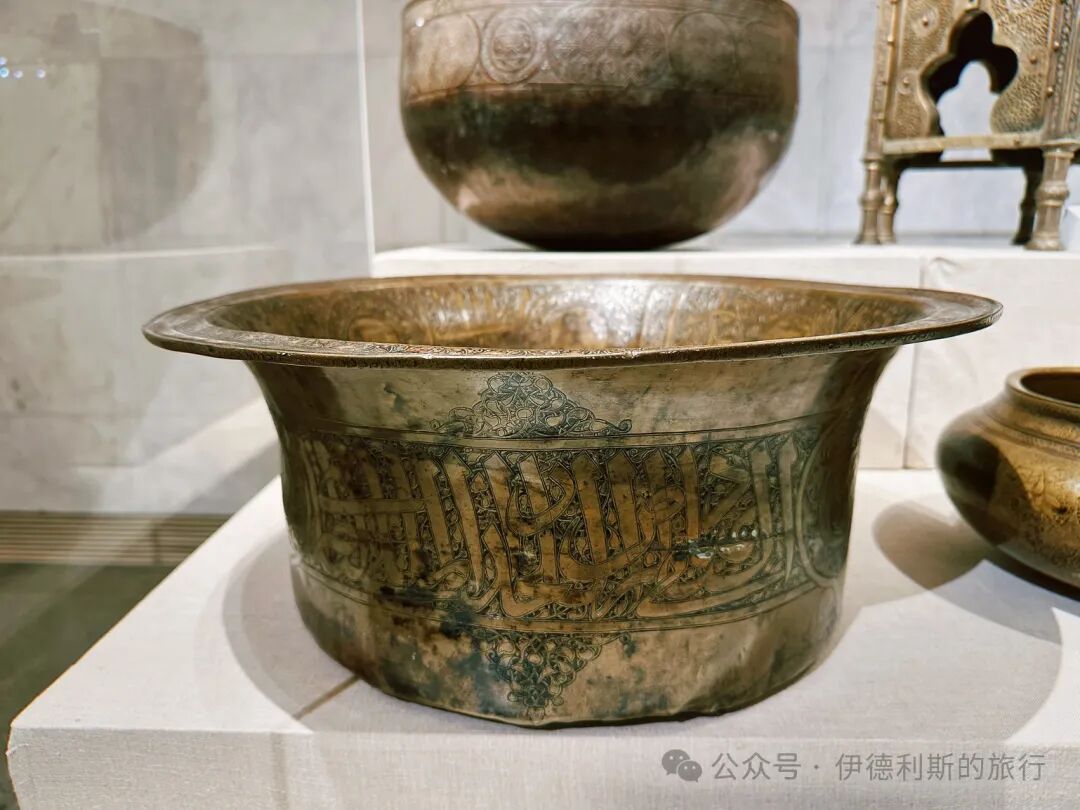
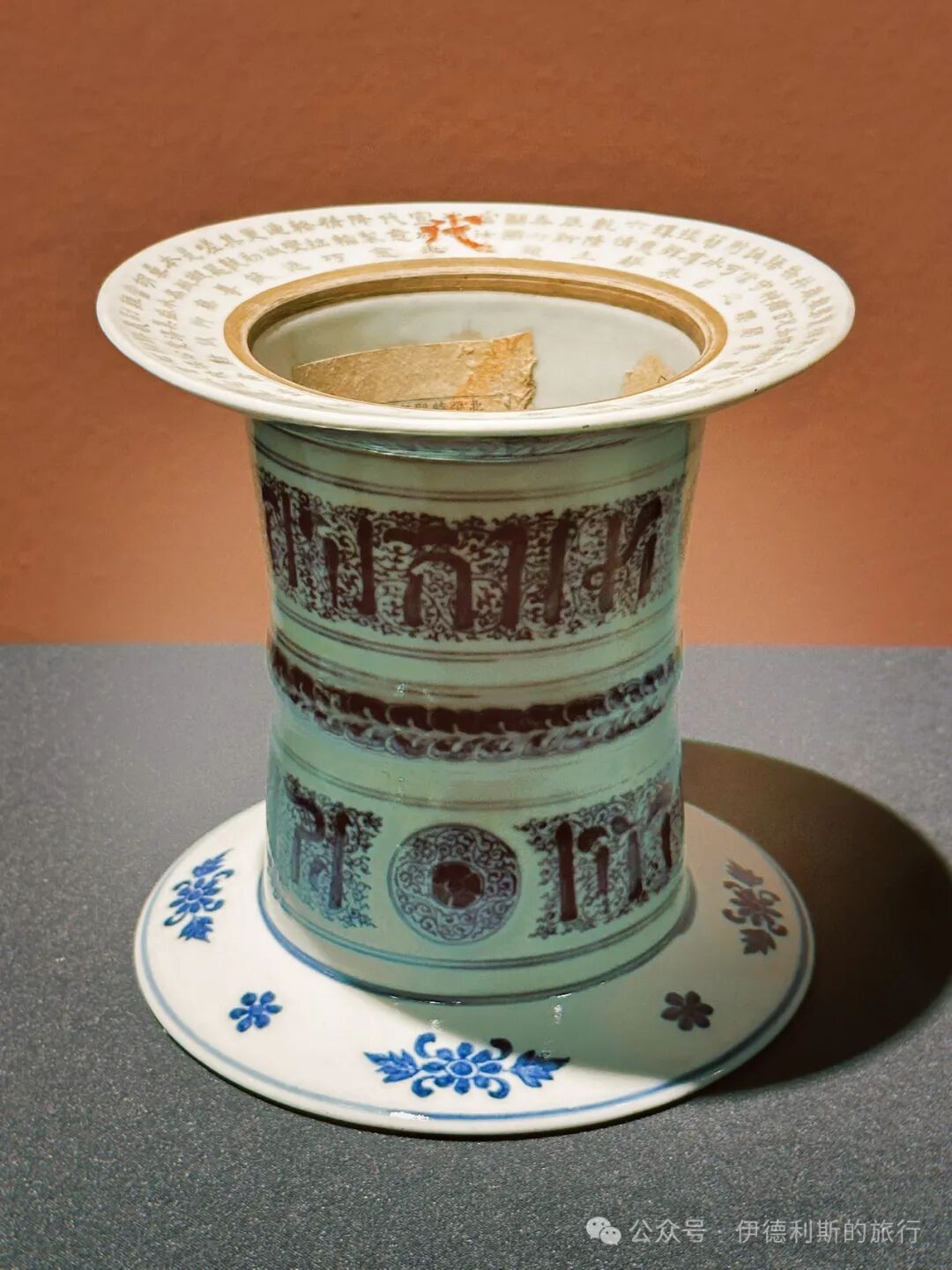
A Qing Dynasty Qianlong period blue-and-white vase without handles (wudang zun) featuring scrolling floral patterns and Arabic calligraphy in the Forbidden City collection. This is one of five such vases from the old Qing palace collection. One is currently on display at the Wuying Hall ceramics exhibition. This piece is an imitation and innovation of the Ming Dynasty vase. The Qianlong Emperor personally designed and modified the imperial poem cloisonné inner liner, allowing it to be used for flower arranging. Behind it is a bronze vessel with the same shape that I photographed at the Museum of Islamic Art in Cairo, dating back to the Mamluk Sultanate.
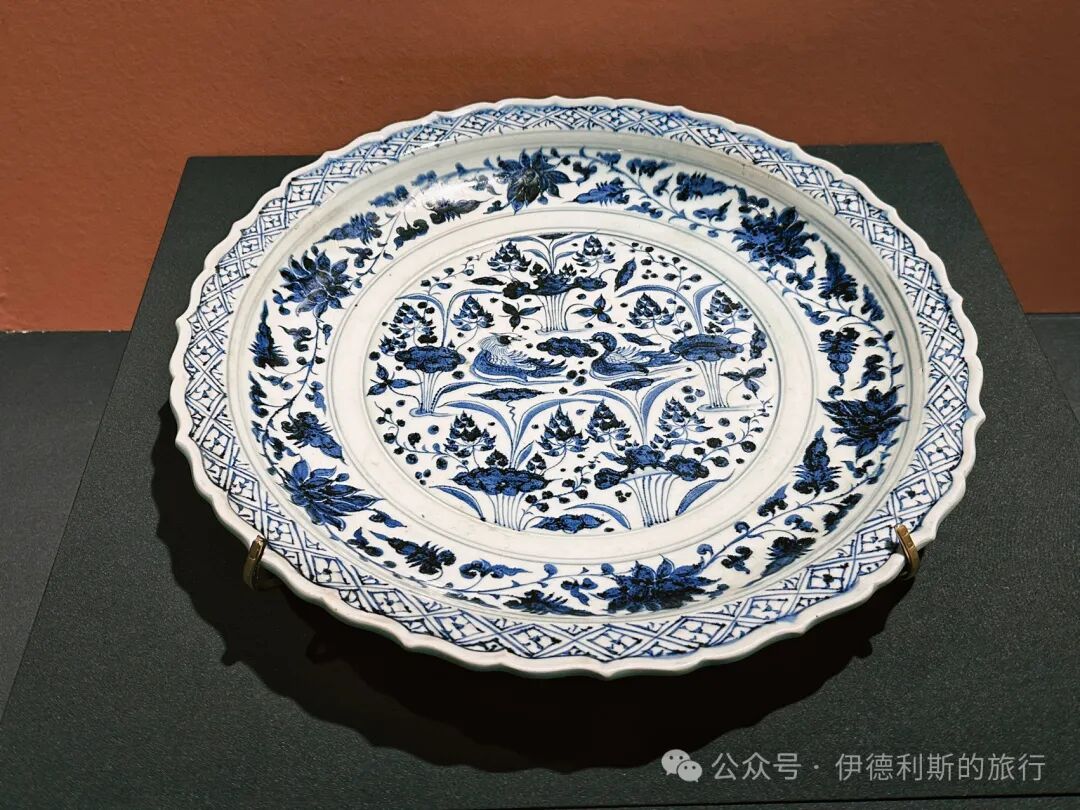
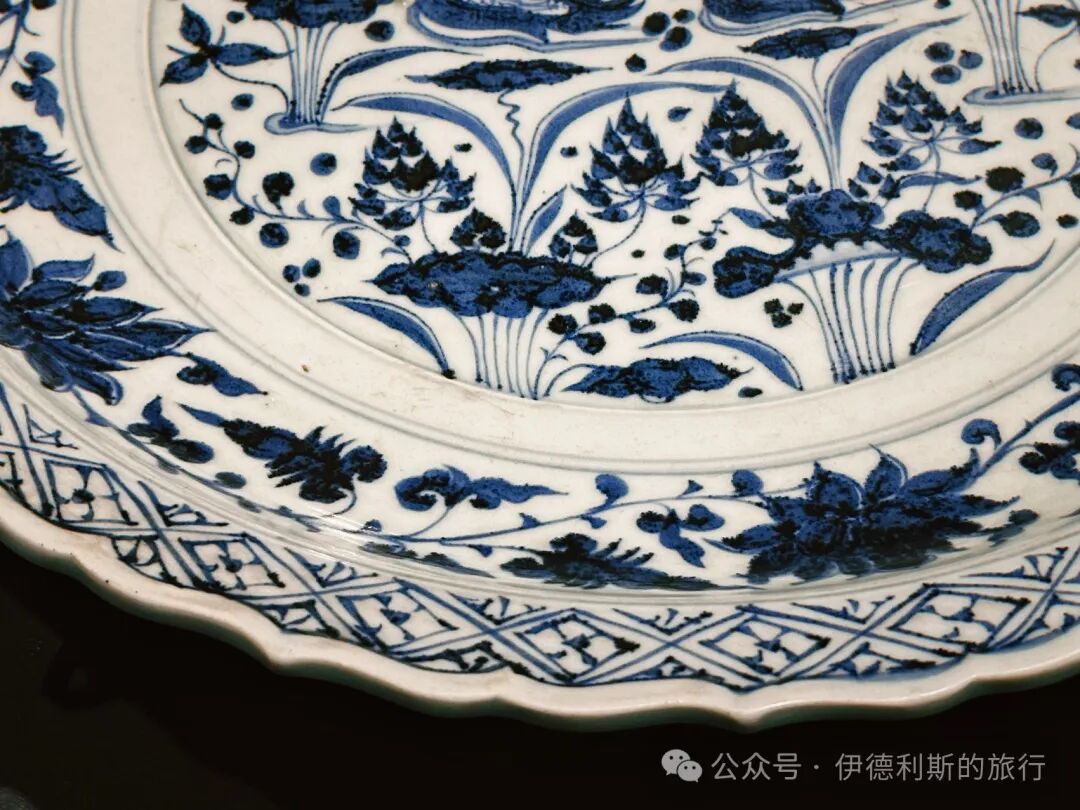
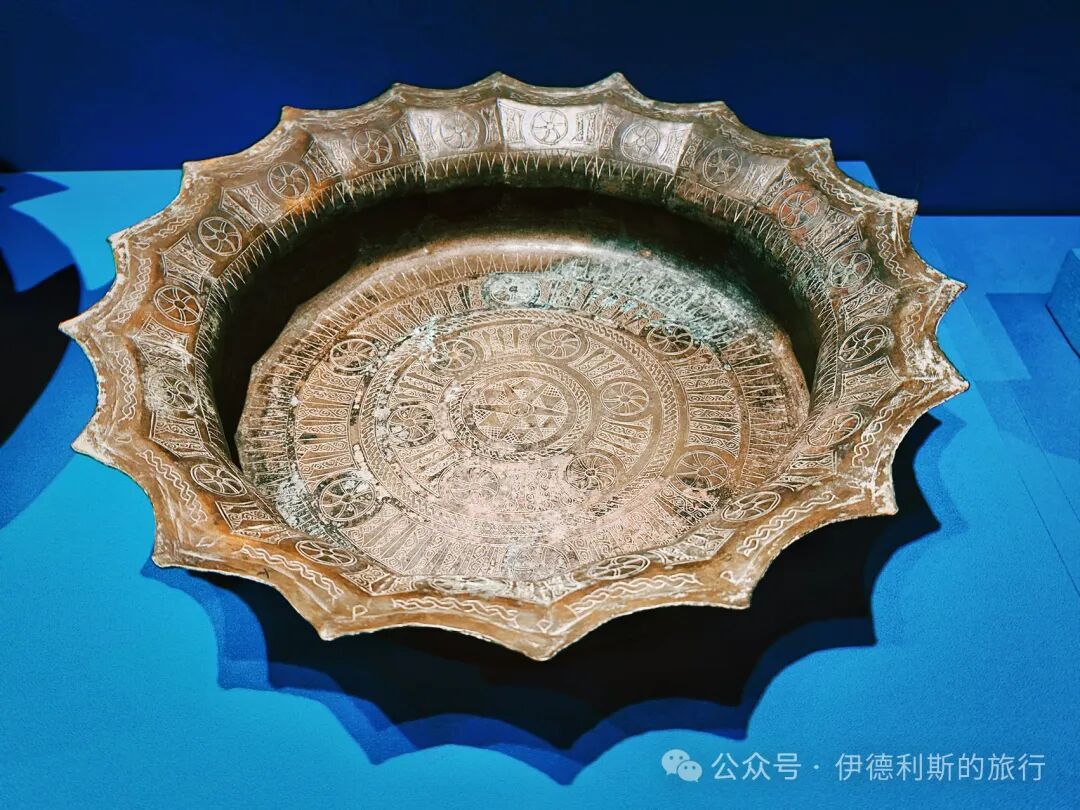
A Yuan Dynasty blue-and-white plate with a lotus pond and mandarin duck pattern and a rhombic flower-shaped rim in the Forbidden City collection. Yuan dynasty blue and white porcelain uses su-ma-li cobalt ore imported from the Kashan region of Iran. The petal-shaped rim (linghuakou) and dense decorative style of the plate are influenced by Islamic culture, while the mandarin duck and lotus pond in the center is a decorative theme popular in China since the late Tang and Five Dynasties periods. The following photo I took at the Iran exhibition at the Meridian Gate next door shows a petal-shaped geometric pattern copper basin from Rafsanjan in southeastern Iran, dating to the Seljuk Empire in the 11th to 12th centuries.
A Ming Xuande period blue and white flower-patterned water sprinkler (huajiao) from the Palace Museum collection. This style of water sprinkler was made in Jingdezhen during the Ming Yongle, Xuande, and Qing Yongzheng periods to imitate West Asian copperware. The exhibition also displays a copper pot of the same shape from the Metropolitan Museum of Art, which dates to early 16th-century Afghanistan.
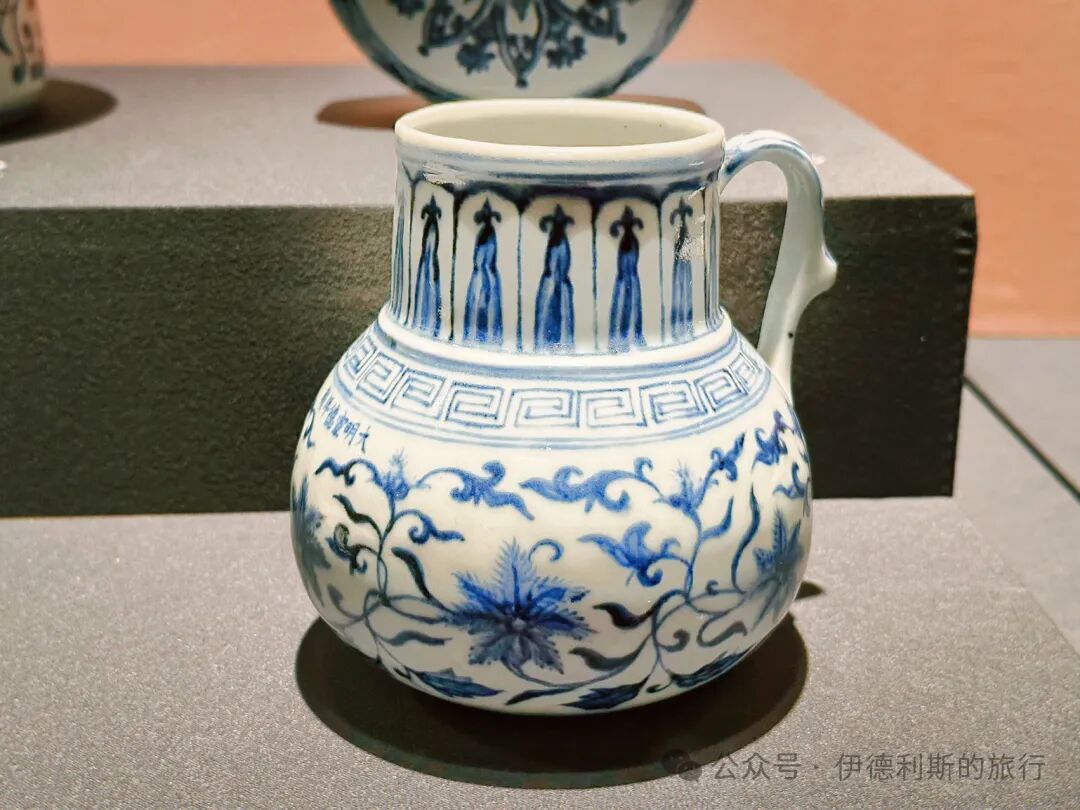
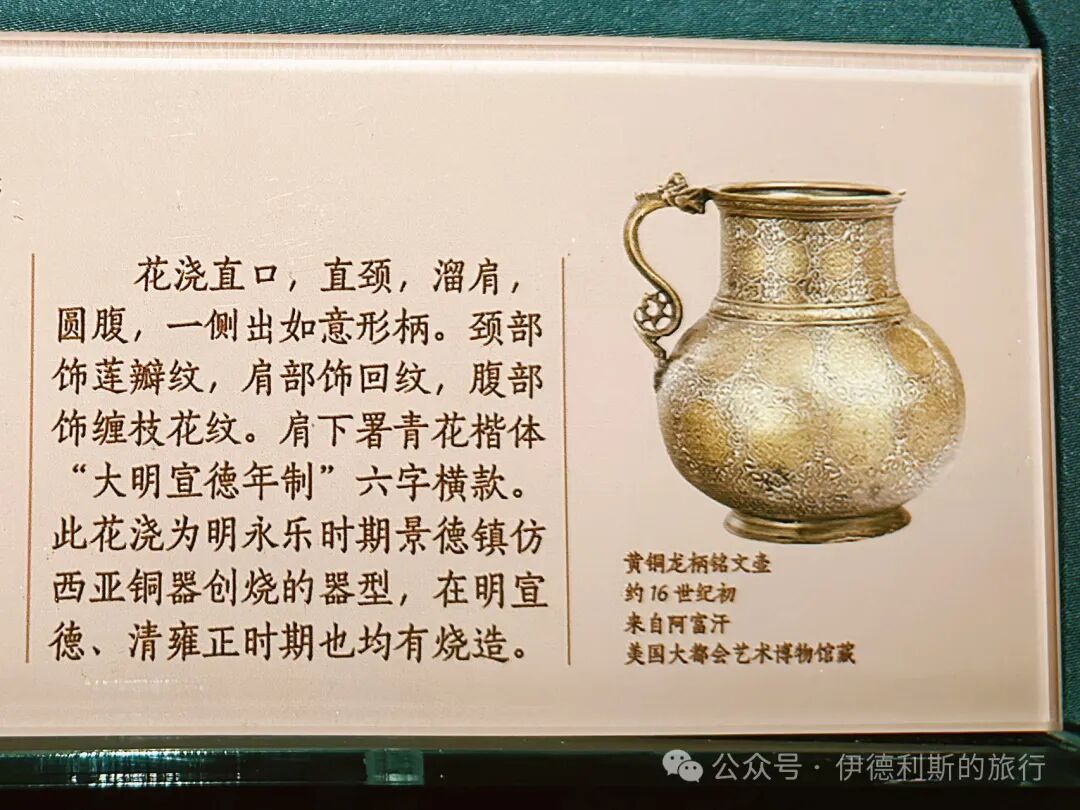
Porcelain with Arabic script from the Palace Museum collection.
A Ming Zhengde period blue and white candlestick with Arabic script from the Palace Museum collection. The following is another Zhengde blue and white Arabic script candlestick on display at the Ceramics Gallery in the Hall of Martial Valor (Wuyingdian).
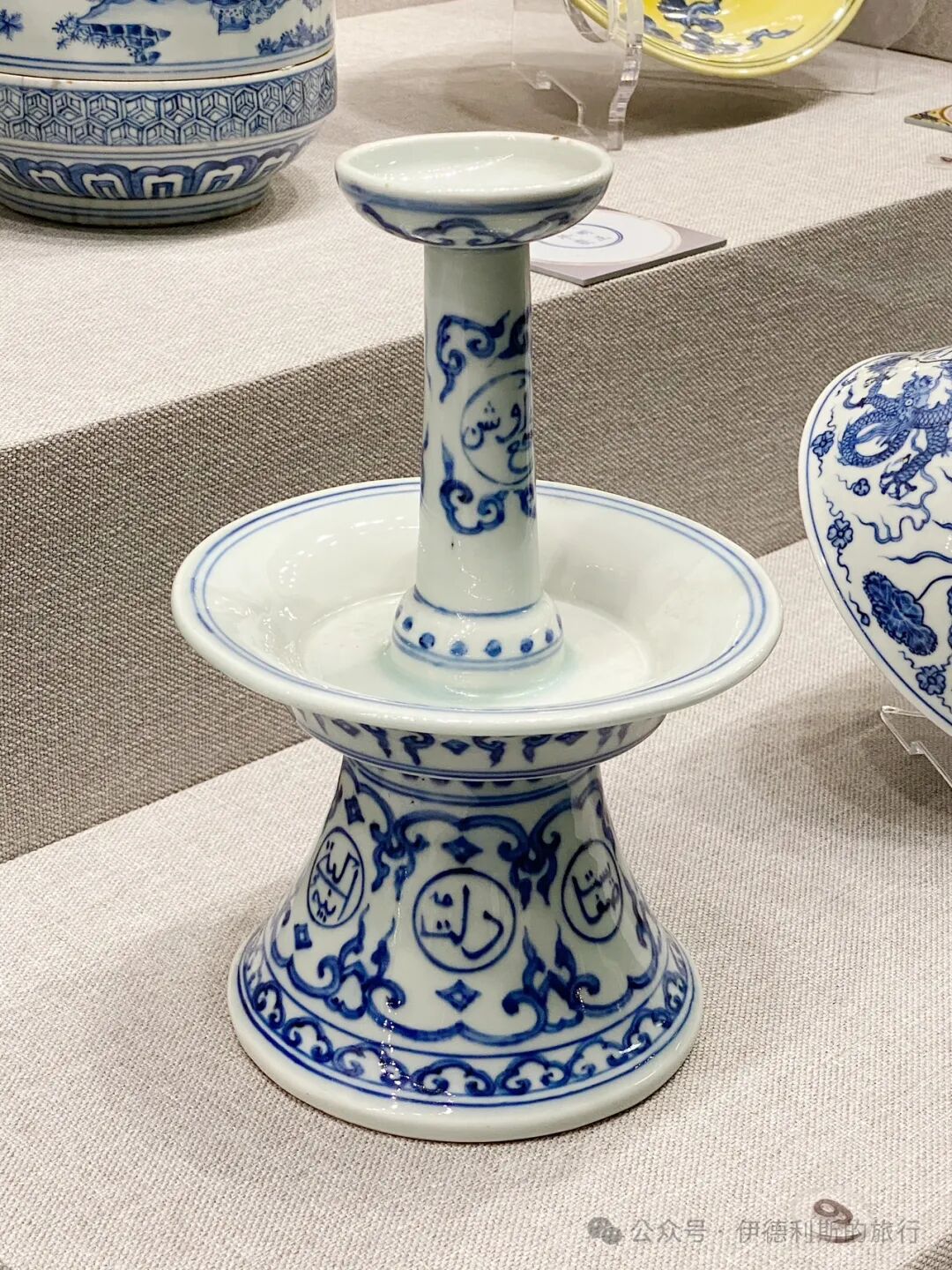
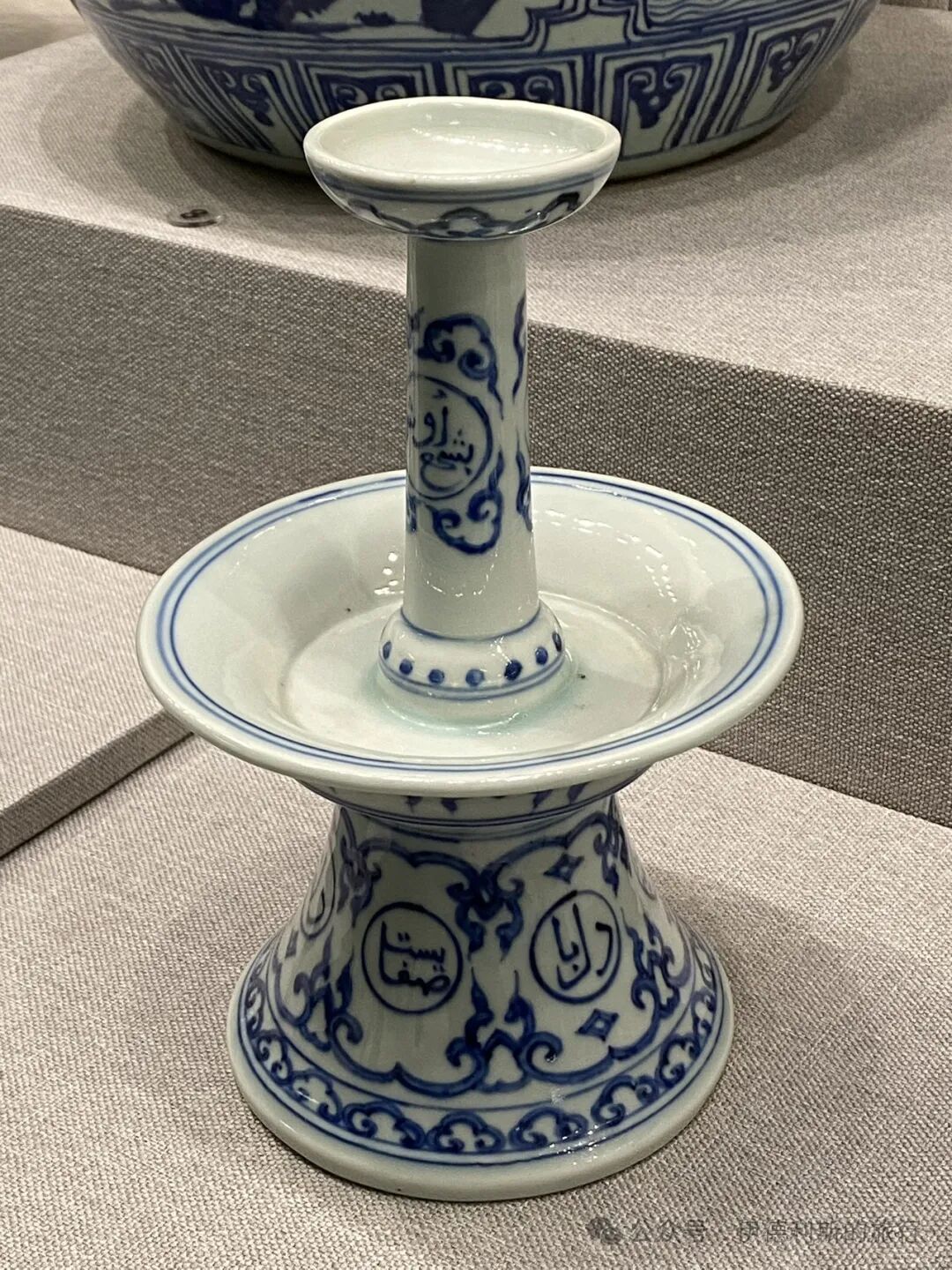
A Qing Kangxi period blue and white three-legged incense burner with Arabic script in panels from the Palace Museum collection.
Early Islamic glassware from the Famen Mosque and Palace Museum collections.
A Tang dynasty engraved glass plate from the Famen Mosque Museum, unearthed from the Famen Mosque underground palace in 1987. The four-lobed sections and the center form a mihrab decorative pattern unique to Islamic culture, making it a representative piece of early Islamic glassware unearthed in China. The Metropolitan Museum of Art holds a similar piece, unearthed in 1939 from the Tappeh Madreseh madrasa site in Nishapur, Iran, and estimated to date to the early 9th century. This madrasa is believed to have been built by the Tahirid ruler Abdallah ibn Tahir, who reigned from 828 to 845.
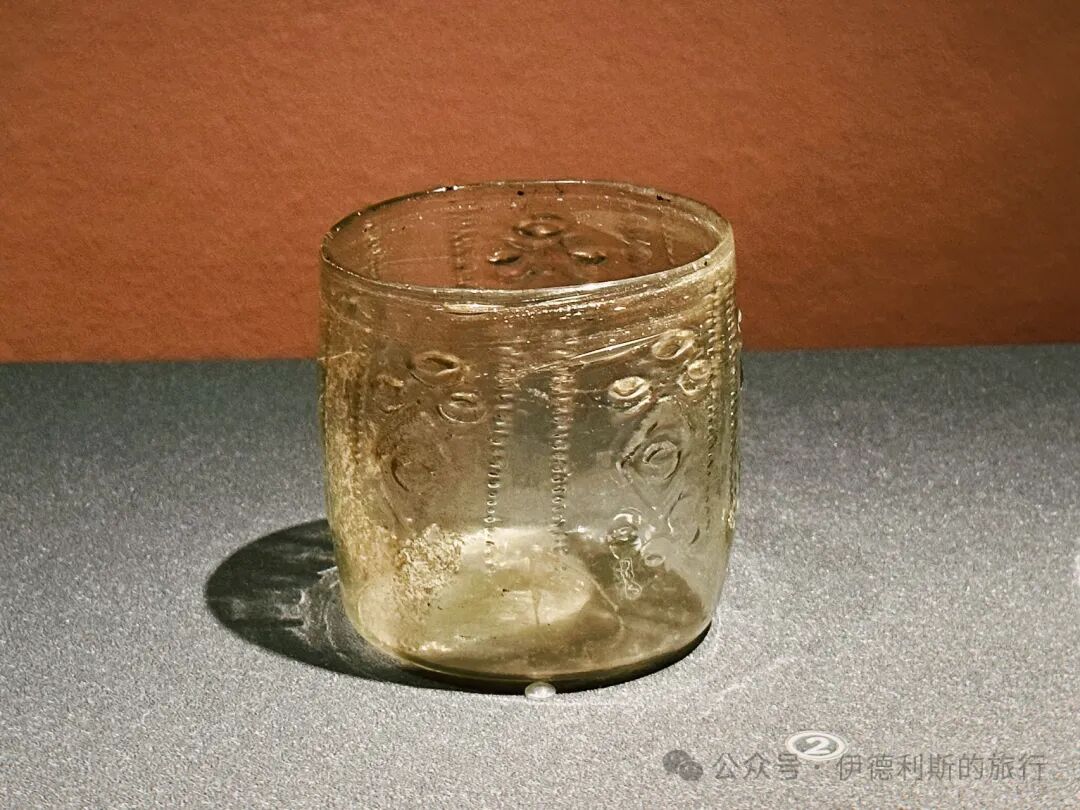
A Tang dynasty stamped straight-sided glass cup from the Famen Mosque Museum, unearthed from the Famen Mosque underground palace in 1987. This is a common type of early Islamic glass cup, popular in Egypt, Iraq, Iran, and Syria before the 11th century.
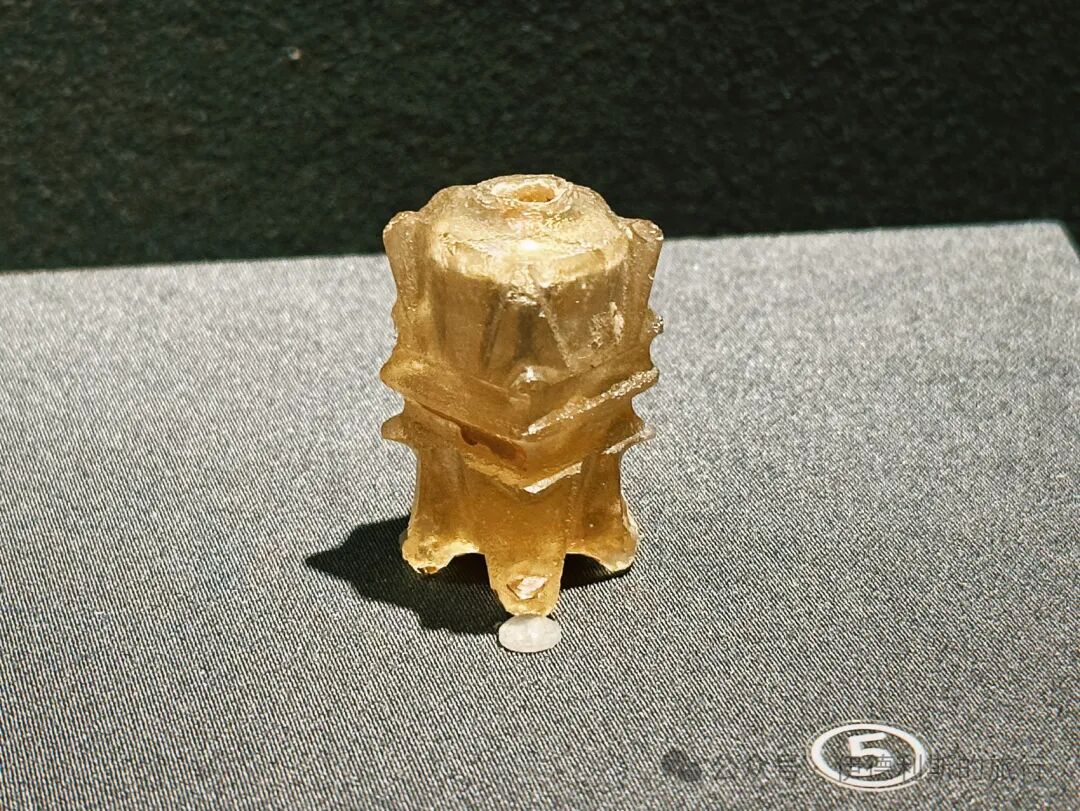
An 8th to 10th-century glass bottle from the Palace Museum collection. Its shape is the same as the perfume oil bottles popular in the Islamic world from the 9th to 11th centuries. Because the bottom looks like a molar tooth, it is called a molar flask.
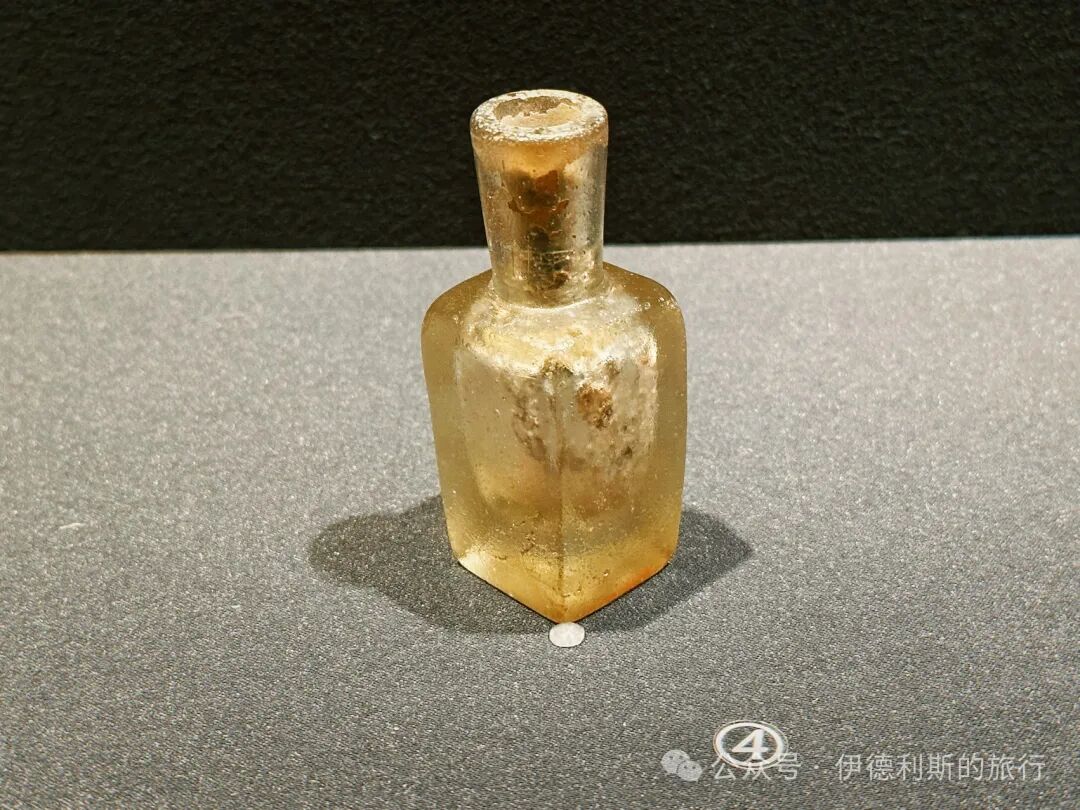
An 8th to 10th-century glass bottle from the Palace Museum collection. This shape was popular in the early Islamic period and may have been used to hold spices or cosmetics. Similar items have been found in Nishapur, Iran, and Samarra and Ctesiphon in Iraq. After these glass bottles arrived in China, they were also used to hold Buddhist relics. They have been found in the underground palaces of the Jingzhi Mosque Pagoda in Dingzhou, Hebei, and the Miaotong Pagoda in Lianshui, Jiangsu.
This 8th-10th century glass bottle in the Palace Museum collection features a design with small applied glass discs on the exterior, a style originating from Iran or Syria.
This 14th-century gold-painted glass twin-handled vase in the Palace Museum collection features Quranic verses on the belly, several blue-ground gold-painted circular emblems on the body, and a twin-bird pattern in the center. This type of vessel was often used as an oil lamp bottle in mosques or palaces during the Mamluk dynasty in Egypt.
A Caucasian long sword from the Qing dynasty in the Palace Museum collection.
A Qing dynasty Caucasian Shashka long sword in the Palace Museum collection, engraved with Arabic inscriptions. The Shashka long sword was a weapon used by the Adyghe people (Circassians) living in the North Caucasus mountains, with the earliest records dating back to the late 17th century. The Shashka long sword is characterized by a hilt that fits entirely into the scabbard, making it look like a blade without a handle.
The Circassians converted to Islam in the 17th century under the influence of the Crimean Khanate and the Ottoman Empire. In the late 19th century, they suffered massacres and genocide during the Russian invasion. The surviving Adyghe people were taken in by the Ottoman Empire, and most now live in Turkey.
Ming dynasty blue and white porcelain from the Sheikh Safi al-Din gongbei in the National Museum of Iran.
Porcelain from the Sheikh Safi al-Din gongbei (Sheikh Safi al-Din Khānegāh and Shrine Ensemble) is held in the National Museum of Iran, and a large number of artifacts from the same site are also on display at the Iran exhibition next to the Meridian Gate.
Sheikh Safi al-Din (1252-1334) was a Kurdish Sufi master during the Ilkhanate period and the founder of the Safaviyya order. This order eventually established the Safavid dynasty in 1501. After the Safavid dynasty was established, they expanded the Sheikh Safi al-Din Shrine (gongbei) in Ardabil, northwestern Iran, on a large scale between the 16th and 18th centuries, turning it into a massive building complex. The Porcelain House, built in the 17th century, has a huge cross-shaped space. The small niches densely packed on the walls were once filled with Chinese porcelain. Today, most of these porcelains are kept in museums in Tehran.
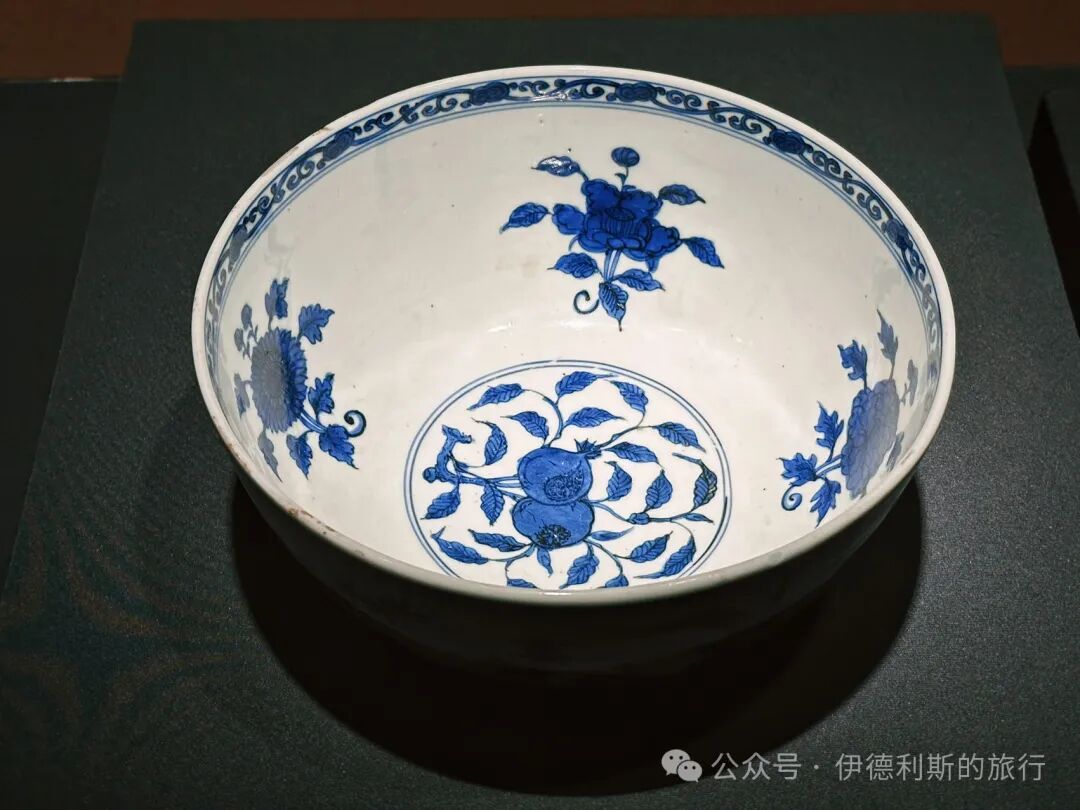
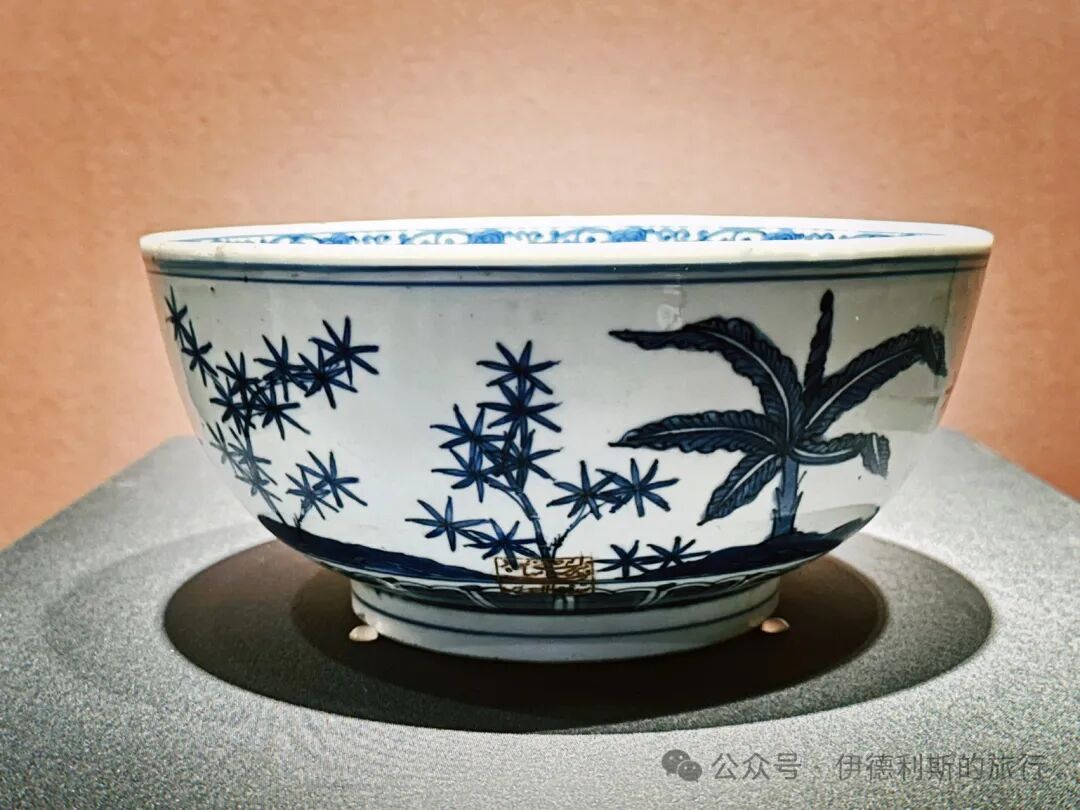
Late 16th-century blue and white bowl with a floral and fruit branch pattern.
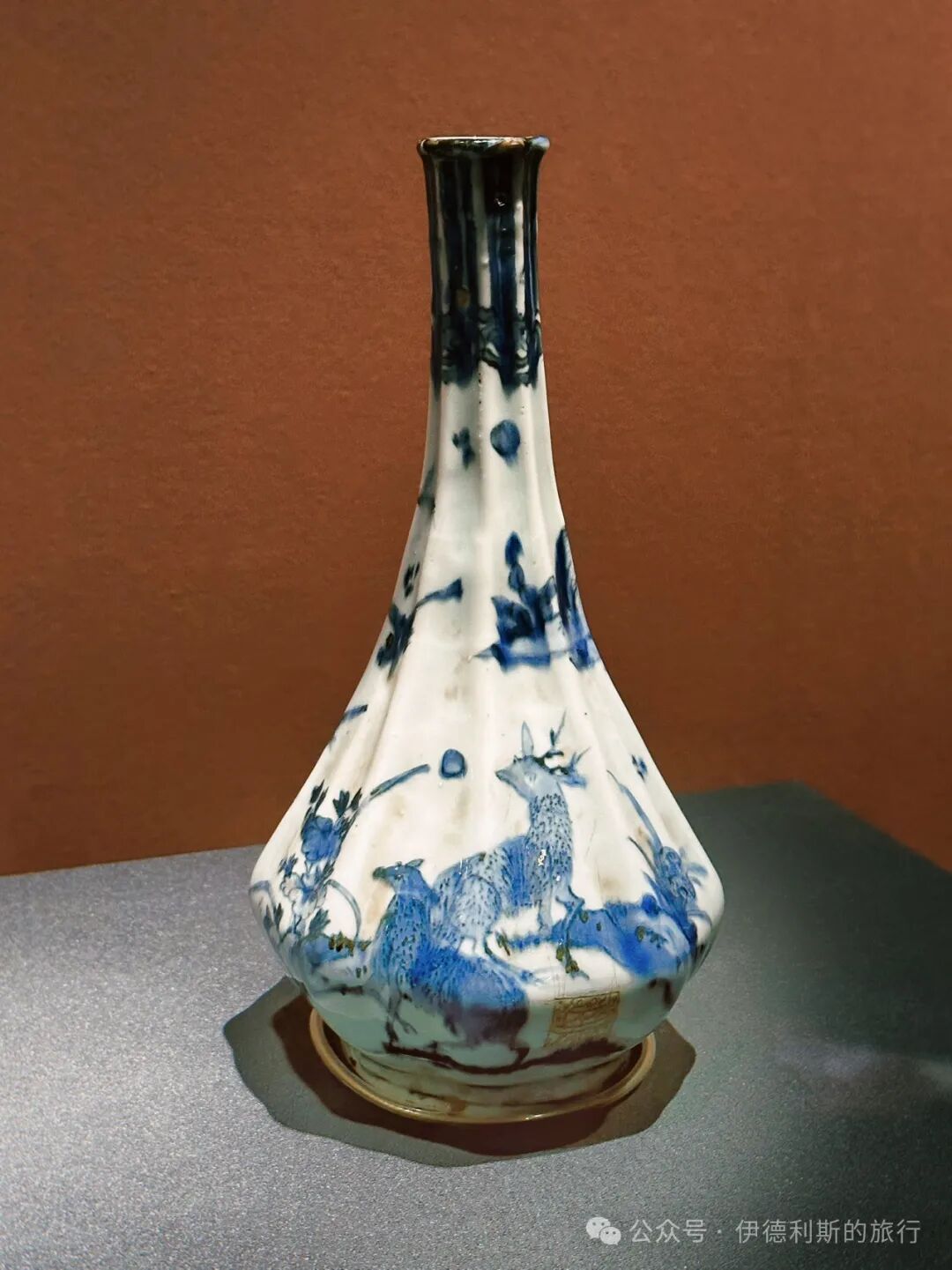
16th-century blue and white octagonal long-necked vase with a crane and deer pattern.
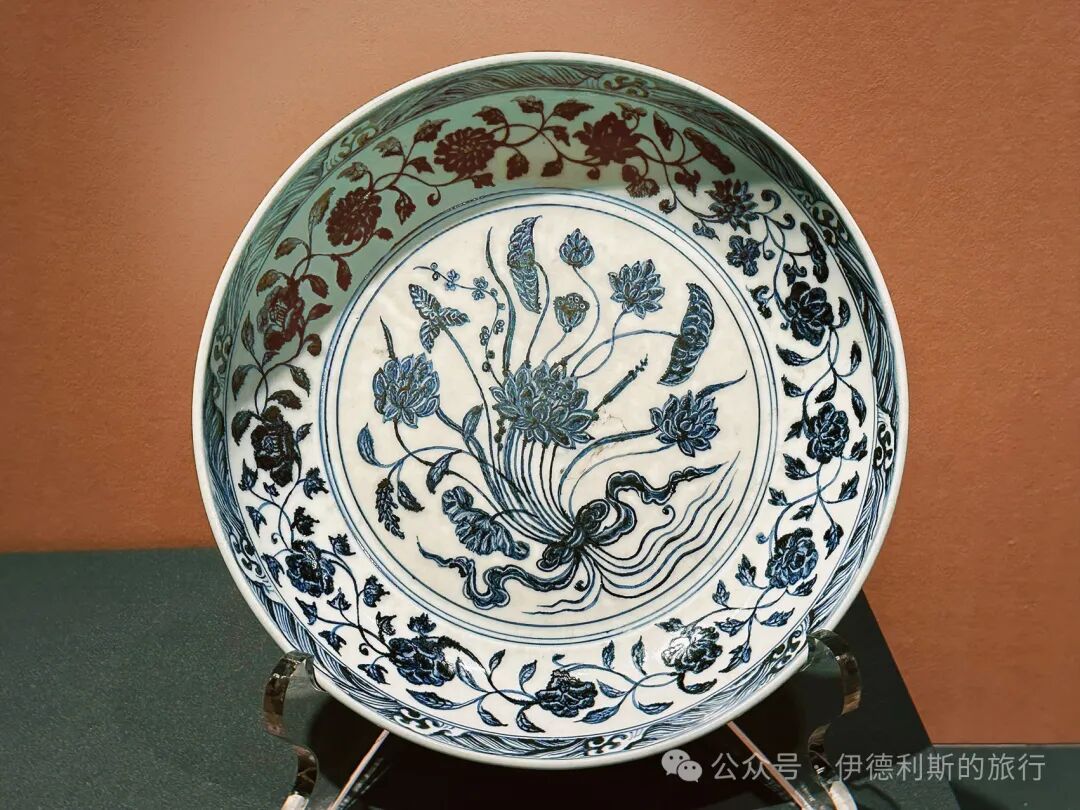
Early 15th-century blue and white porcelain plate with lotus bundle patterns.
Early 15th-century blue and white porcelain plate with a foliated rim and grape branch patterns.
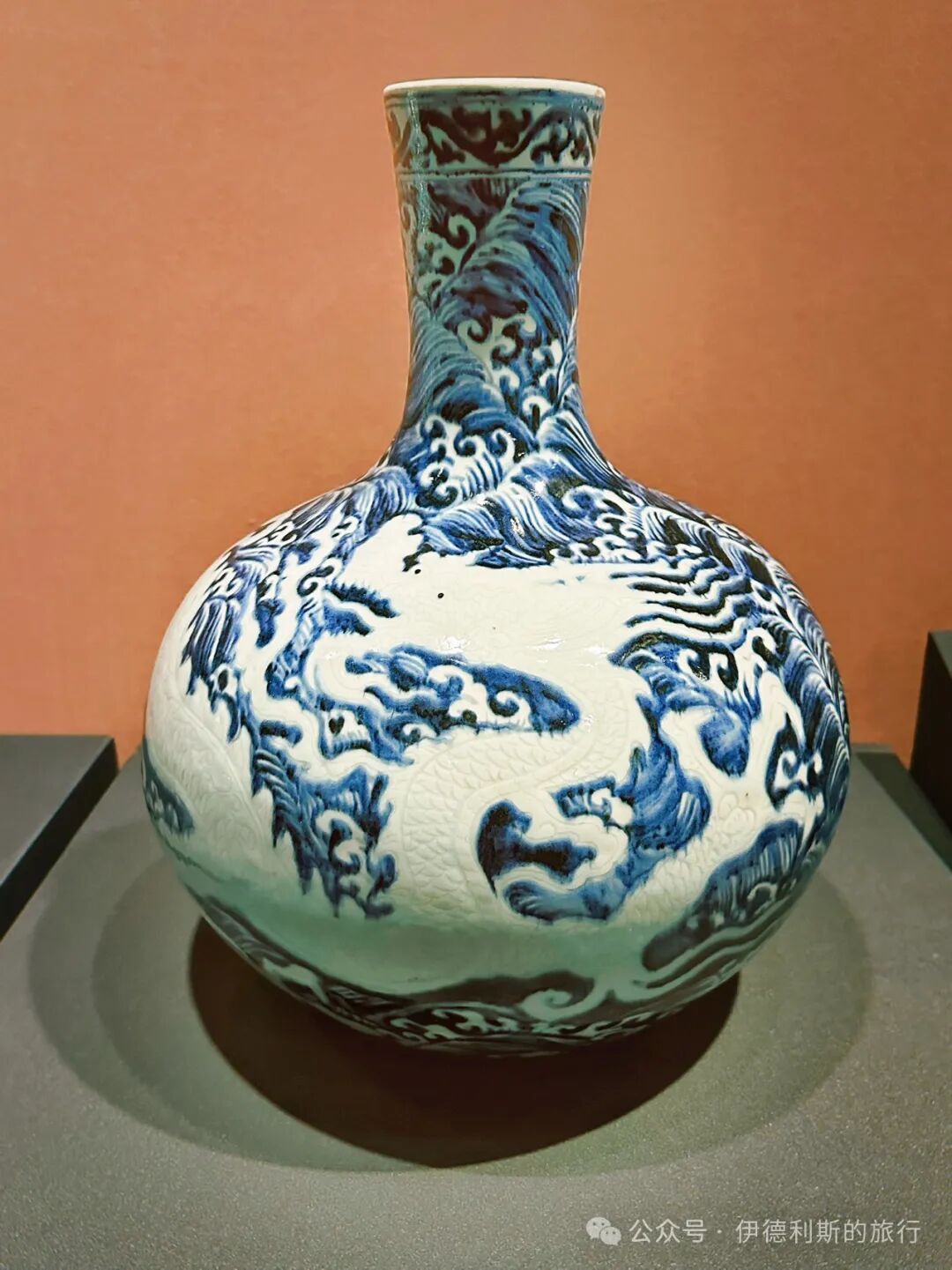
Early 15th-century blue and white porcelain celestial globe vase (tianqiuping) with white dragon and sea wave patterns.
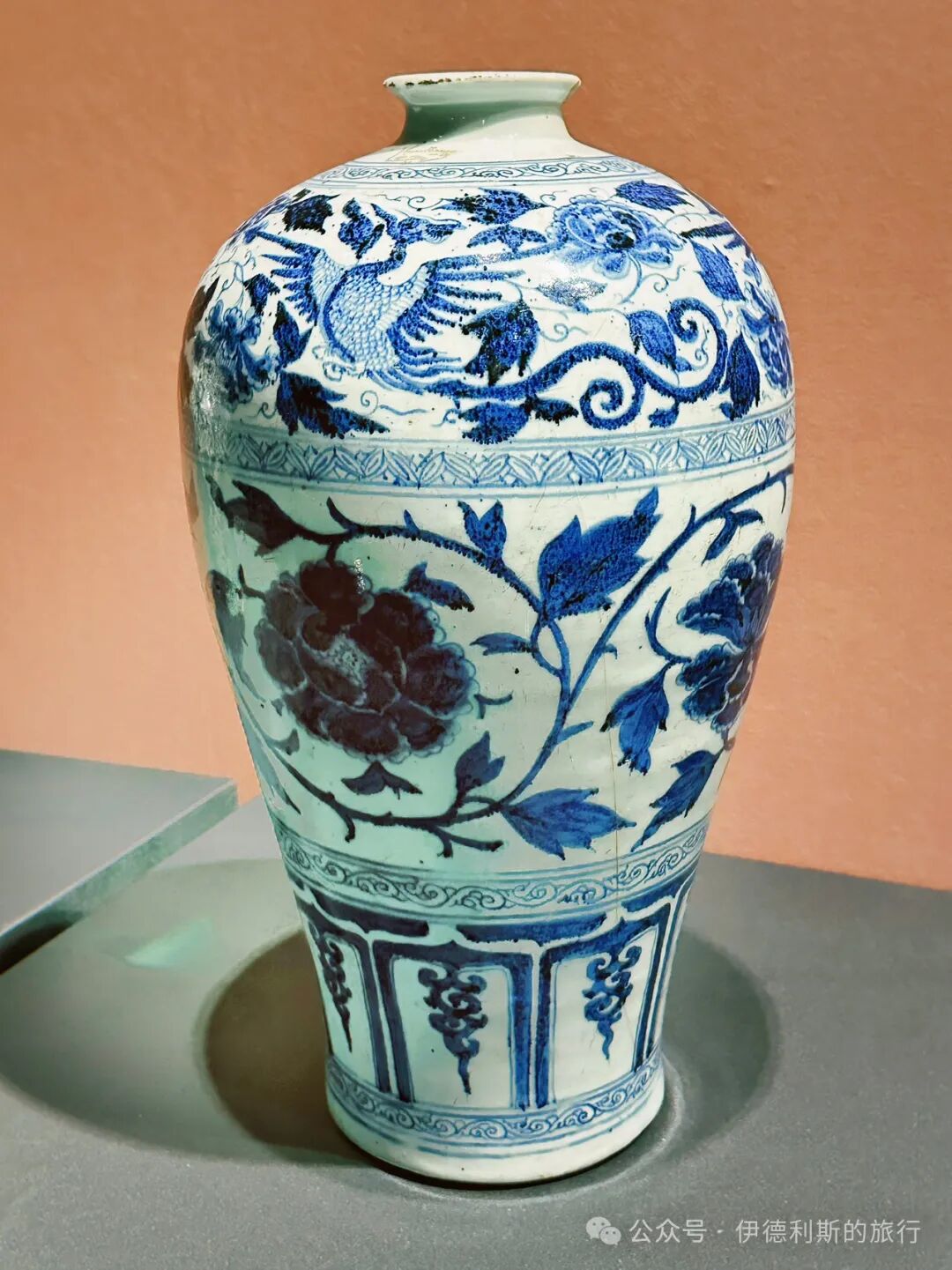
14th-century blue and white porcelain plum vase (meiping) with scrolling peony patterns.
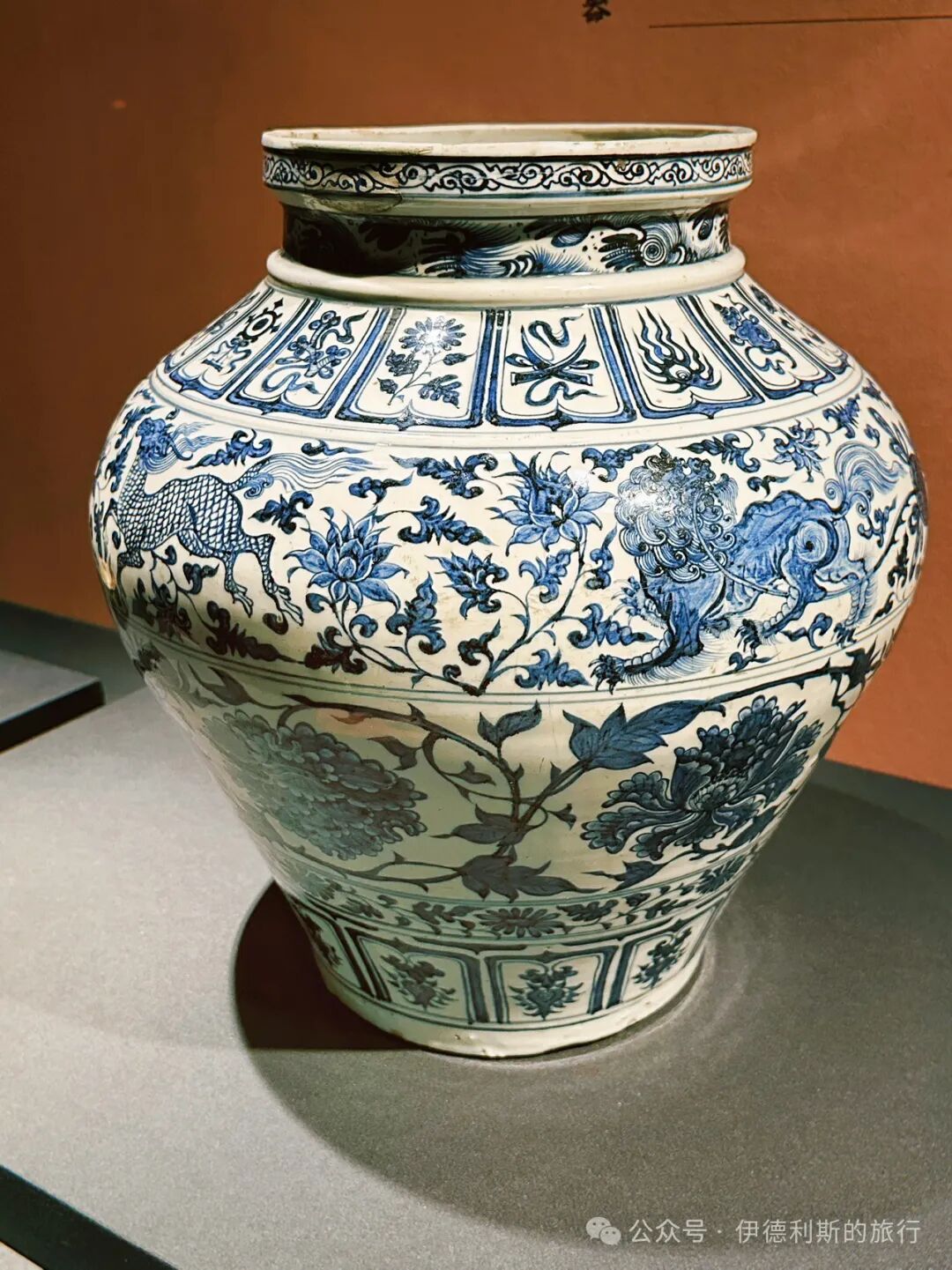
14th-century blue and white porcelain jar with mythical beast and scrolling peony patterns.
Summary: Islamic Art Guide: China and West Asia Exchange at the Forbidden City is presented here as a firsthand travel account in clear, natural English. The account focuses on West Asia, Forbidden City, Ancient Trade while preserving the names, places, food, photos, and historical details from the Chinese source.
From January 12 to April 11, 2024, the Exhibition of Ancient Civilizations of China and West Asia was held at the Meridian Gate of the Forbidden City. The Forbidden City displayed many rare artifacts not usually seen in regular exhibitions. The National Museum of Iran also provided many blue-and-white porcelains. You can view them alongside the Iranian artifact exhibition next door at the Meridian Gate (see "Exhibition Notes: Iranian Artifacts at the Forbidden City Meridian Gate").
Xinjiang textiles from the Qianlong period.
A blue-ground Hui-style gold and silver brocade (huihui zhijin yin jin) from the Qianlong period in the Forbidden City collection. Hui-style brocade (huihui jin) was sent to the imperial court as tribute from Xinjiang. Besides Xinjiang, it was also produced in Central Asia, West Asia, and North India under the Mughal Empire. Hui-style brocade was often woven with gold and silver threads, and its patterns reflect the artistic style of Central Asia and Persia.
A colorful Hotan silk (hetian chou) from the Qianlong period in the Forbidden City collection.
A colorful tree-bark pattern Hotan silk (hetian chou) from the Qianlong period in the Forbidden City collection, which is what we know as Atlas silk (aidelaisi chou).
A green Mashru fabric (mashlubu) from the Qianlong period in the Forbidden City collection, which was a type of pile fabric from the Xinjiang region during the Qing Dynasty.
Blue-and-white porcelain in the Forbidden City collection, fired in the shapes of West Asian and North African bronze ware.
A Ming Dynasty Yongle period blue-and-white gourd-shaped flask with ribbon handles and Islamic patterns in the Forbidden City collection. Behind it is a bronze vessel with the same shape that I photographed at the National Museum of Egyptian Civilization, dating back to the Mamluk Sultanate in the 14th century.
A Qing Dynasty Qianlong period blue-and-white vase without handles (wudang zun) featuring scrolling floral patterns and Arabic calligraphy in the Forbidden City collection. This is one of five such vases from the old Qing palace collection. One is currently on display at the Wuying Hall ceramics exhibition. This piece is an imitation and innovation of the Ming Dynasty vase. The Qianlong Emperor personally designed and modified the imperial poem cloisonné inner liner, allowing it to be used for flower arranging. Behind it is a bronze vessel with the same shape that I photographed at the Museum of Islamic Art in Cairo, dating back to the Mamluk Sultanate.
A Yuan Dynasty blue-and-white plate with a lotus pond and mandarin duck pattern and a rhombic flower-shaped rim in the Forbidden City collection. Yuan dynasty blue and white porcelain uses su-ma-li cobalt ore imported from the Kashan region of Iran. The petal-shaped rim (linghuakou) and dense decorative style of the plate are influenced by Islamic culture, while the mandarin duck and lotus pond in the center is a decorative theme popular in China since the late Tang and Five Dynasties periods. The following photo I took at the Iran exhibition at the Meridian Gate next door shows a petal-shaped geometric pattern copper basin from Rafsanjan in southeastern Iran, dating to the Seljuk Empire in the 11th to 12th centuries.
A Ming Xuande period blue and white flower-patterned water sprinkler (huajiao) from the Palace Museum collection. This style of water sprinkler was made in Jingdezhen during the Ming Yongle, Xuande, and Qing Yongzheng periods to imitate West Asian copperware. The exhibition also displays a copper pot of the same shape from the Metropolitan Museum of Art, which dates to early 16th-century Afghanistan.
Porcelain with Arabic script from the Palace Museum collection.
A Ming Zhengde period blue and white candlestick with Arabic script from the Palace Museum collection. The following is another Zhengde blue and white Arabic script candlestick on display at the Ceramics Gallery in the Hall of Martial Valor (Wuyingdian).
A Qing Kangxi period blue and white three-legged incense burner with Arabic script in panels from the Palace Museum collection.
Early Islamic glassware from the Famen Mosque and Palace Museum collections.
A Tang dynasty engraved glass plate from the Famen Mosque Museum, unearthed from the Famen Mosque underground palace in 1987. The four-lobed sections and the center form a mihrab decorative pattern unique to Islamic culture, making it a representative piece of early Islamic glassware unearthed in China. The Metropolitan Museum of Art holds a similar piece, unearthed in 1939 from the Tappeh Madreseh madrasa site in Nishapur, Iran, and estimated to date to the early 9th century. This madrasa is believed to have been built by the Tahirid ruler Abdallah ibn Tahir, who reigned from 828 to 845.
A Tang dynasty stamped straight-sided glass cup from the Famen Mosque Museum, unearthed from the Famen Mosque underground palace in 1987. This is a common type of early Islamic glass cup, popular in Egypt, Iraq, Iran, and Syria before the 11th century.
An 8th to 10th-century glass bottle from the Palace Museum collection. Its shape is the same as the perfume oil bottles popular in the Islamic world from the 9th to 11th centuries. Because the bottom looks like a molar tooth, it is called a molar flask.
An 8th to 10th-century glass bottle from the Palace Museum collection. This shape was popular in the early Islamic period and may have been used to hold spices or cosmetics. Similar items have been found in Nishapur, Iran, and Samarra and Ctesiphon in Iraq. After these glass bottles arrived in China, they were also used to hold Buddhist relics. They have been found in the underground palaces of the Jingzhi Mosque Pagoda in Dingzhou, Hebei, and the Miaotong Pagoda in Lianshui, Jiangsu.
This 8th-10th century glass bottle in the Palace Museum collection features a design with small applied glass discs on the exterior, a style originating from Iran or Syria.
This 14th-century gold-painted glass twin-handled vase in the Palace Museum collection features Quranic verses on the belly, several blue-ground gold-painted circular emblems on the body, and a twin-bird pattern in the center. This type of vessel was often used as an oil lamp bottle in mosques or palaces during the Mamluk dynasty in Egypt.
A Caucasian long sword from the Qing dynasty in the Palace Museum collection.
A Qing dynasty Caucasian Shashka long sword in the Palace Museum collection, engraved with Arabic inscriptions. The Shashka long sword was a weapon used by the Adyghe people (Circassians) living in the North Caucasus mountains, with the earliest records dating back to the late 17th century. The Shashka long sword is characterized by a hilt that fits entirely into the scabbard, making it look like a blade without a handle.
The Circassians converted to Islam in the 17th century under the influence of the Crimean Khanate and the Ottoman Empire. In the late 19th century, they suffered massacres and genocide during the Russian invasion. The surviving Adyghe people were taken in by the Ottoman Empire, and most now live in Turkey.
Ming dynasty blue and white porcelain from the Sheikh Safi al-Din gongbei in the National Museum of Iran.
Porcelain from the Sheikh Safi al-Din gongbei (Sheikh Safi al-Din Khānegāh and Shrine Ensemble) is held in the National Museum of Iran, and a large number of artifacts from the same site are also on display at the Iran exhibition next to the Meridian Gate.
Sheikh Safi al-Din (1252-1334) was a Kurdish Sufi master during the Ilkhanate period and the founder of the Safaviyya order. This order eventually established the Safavid dynasty in 1501. After the Safavid dynasty was established, they expanded the Sheikh Safi al-Din Shrine (gongbei) in Ardabil, northwestern Iran, on a large scale between the 16th and 18th centuries, turning it into a massive building complex. The Porcelain House, built in the 17th century, has a huge cross-shaped space. The small niches densely packed on the walls were once filled with Chinese porcelain. Today, most of these porcelains are kept in museums in Tehran.
Late 16th-century blue and white bowl with a floral and fruit branch pattern.
16th-century blue and white octagonal long-necked vase with a crane and deer pattern.
Early 15th-century blue and white porcelain plate with lotus bundle patterns.
Early 15th-century blue and white porcelain plate with a foliated rim and grape branch patterns.
Early 15th-century blue and white porcelain celestial globe vase (tianqiuping) with white dragon and sea wave patterns.
14th-century blue and white porcelain plum vase (meiping) with scrolling peony patterns.
14th-century blue and white porcelain jar with mythical beast and scrolling peony patterns.
Islamic Art Guide: China and West Asia Exchange at the Forbidden City
Articles • ali2007fr posted the article • 0 comments • 144 views • 2026-05-19 08:52
Reposted from the web
Summary: Islamic Art Guide: China and West Asia Exchange at the Forbidden City is presented here as a firsthand travel account in clear, natural English. The account focuses on West Asia, Forbidden City, Ancient Trade while preserving the names, places, food, photos, and historical details from the Chinese source.
From January 12 to April 11, 2024, the Exhibition of Ancient Civilizations of China and West Asia was held at the Meridian Gate of the Forbidden City. The Forbidden City displayed many rare artifacts not usually seen in regular exhibitions. The National Museum of Iran also provided many blue-and-white porcelains. You can view them alongside the Iranian artifact exhibition next door at the Meridian Gate (see "Exhibition Notes: Iranian Artifacts at the Forbidden City Meridian Gate").
Xinjiang textiles from the Qianlong period.
A blue-ground Hui-style gold and silver brocade (huihui zhijin yin jin) from the Qianlong period in the Forbidden City collection. Hui-style brocade (huihui jin) was sent to the imperial court as tribute from Xinjiang. Besides Xinjiang, it was also produced in Central Asia, West Asia, and North India under the Mughal Empire. Hui-style brocade was often woven with gold and silver threads, and its patterns reflect the artistic style of Central Asia and Persia.
A colorful Hotan silk (hetian chou) from the Qianlong period in the Forbidden City collection.
A colorful tree-bark pattern Hotan silk (hetian chou) from the Qianlong period in the Forbidden City collection, which is what we know as Atlas silk (aidelaisi chou).
A green Mashru fabric (mashlubu) from the Qianlong period in the Forbidden City collection, which was a type of pile fabric from the Xinjiang region during the Qing Dynasty.
Blue-and-white porcelain in the Forbidden City collection, fired in the shapes of West Asian and North African bronze ware.
A Ming Dynasty Yongle period blue-and-white gourd-shaped flask with ribbon handles and Islamic patterns in the Forbidden City collection. Behind it is a bronze vessel with the same shape that I photographed at the National Museum of Egyptian Civilization, dating back to the Mamluk Sultanate in the 14th century.
A Qing Dynasty Qianlong period blue-and-white vase without handles (wudang zun) featuring scrolling floral patterns and Arabic calligraphy in the Forbidden City collection. This is one of five such vases from the old Qing palace collection. One is currently on display at the Wuying Hall ceramics exhibition. This piece is an imitation and innovation of the Ming Dynasty vase. The Qianlong Emperor personally designed and modified the imperial poem cloisonné inner liner, allowing it to be used for flower arranging. Behind it is a bronze vessel with the same shape that I photographed at the Museum of Islamic Art in Cairo, dating back to the Mamluk Sultanate.
A Yuan Dynasty blue-and-white plate with a lotus pond and mandarin duck pattern and a rhombic flower-shaped rim in the Forbidden City collection. Yuan dynasty blue and white porcelain uses su-ma-li cobalt ore imported from the Kashan region of Iran. The petal-shaped rim (linghuakou) and dense decorative style of the plate are influenced by Islamic culture, while the mandarin duck and lotus pond in the center is a decorative theme popular in China since the late Tang and Five Dynasties periods. The following photo I took at the Iran exhibition at the Meridian Gate next door shows a petal-shaped geometric pattern copper basin from Rafsanjan in southeastern Iran, dating to the Seljuk Empire in the 11th to 12th centuries.
A Ming Xuande period blue and white flower-patterned water sprinkler (huajiao) from the Palace Museum collection. This style of water sprinkler was made in Jingdezhen during the Ming Yongle, Xuande, and Qing Yongzheng periods to imitate West Asian copperware. The exhibition also displays a copper pot of the same shape from the Metropolitan Museum of Art, which dates to early 16th-century Afghanistan.
Porcelain with Arabic script from the Palace Museum collection.
A Ming Zhengde period blue and white candlestick with Arabic script from the Palace Museum collection. The following is another Zhengde blue and white Arabic script candlestick on display at the Ceramics Gallery in the Hall of Martial Valor (Wuyingdian).
A Qing Kangxi period blue and white three-legged incense burner with Arabic script in panels from the Palace Museum collection.
Early Islamic glassware from the Famen Mosque and Palace Museum collections.
A Tang dynasty engraved glass plate from the Famen Mosque Museum, unearthed from the Famen Mosque underground palace in 1987. The four-lobed sections and the center form a mihrab decorative pattern unique to Islamic culture, making it a representative piece of early Islamic glassware unearthed in China. The Metropolitan Museum of Art holds a similar piece, unearthed in 1939 from the Tappeh Madreseh madrasa site in Nishapur, Iran, and estimated to date to the early 9th century. This madrasa is believed to have been built by the Tahirid ruler Abdallah ibn Tahir, who reigned from 828 to 845.
A Tang dynasty stamped straight-sided glass cup from the Famen Mosque Museum, unearthed from the Famen Mosque underground palace in 1987. This is a common type of early Islamic glass cup, popular in Egypt, Iraq, Iran, and Syria before the 11th century.
An 8th to 10th-century glass bottle from the Palace Museum collection. Its shape is the same as the perfume oil bottles popular in the Islamic world from the 9th to 11th centuries. Because the bottom looks like a molar tooth, it is called a molar flask.
An 8th to 10th-century glass bottle from the Palace Museum collection. This shape was popular in the early Islamic period and may have been used to hold spices or cosmetics. Similar items have been found in Nishapur, Iran, and Samarra and Ctesiphon in Iraq. After these glass bottles arrived in China, they were also used to hold Buddhist relics. They have been found in the underground palaces of the Jingzhi Mosque Pagoda in Dingzhou, Hebei, and the Miaotong Pagoda in Lianshui, Jiangsu.
This 8th-10th century glass bottle in the Palace Museum collection features a design with small applied glass discs on the exterior, a style originating from Iran or Syria.
This 14th-century gold-painted glass twin-handled vase in the Palace Museum collection features Quranic verses on the belly, several blue-ground gold-painted circular emblems on the body, and a twin-bird pattern in the center. This type of vessel was often used as an oil lamp bottle in mosques or palaces during the Mamluk dynasty in Egypt.
A Caucasian long sword from the Qing dynasty in the Palace Museum collection.
A Qing dynasty Caucasian Shashka long sword in the Palace Museum collection, engraved with Arabic inscriptions. The Shashka long sword was a weapon used by the Adyghe people (Circassians) living in the North Caucasus mountains, with the earliest records dating back to the late 17th century. The Shashka long sword is characterized by a hilt that fits entirely into the scabbard, making it look like a blade without a handle.
The Circassians converted to Islam in the 17th century under the influence of the Crimean Khanate and the Ottoman Empire. In the late 19th century, they suffered massacres and genocide during the Russian invasion. The surviving Adyghe people were taken in by the Ottoman Empire, and most now live in Turkey.
Ming dynasty blue and white porcelain from the Sheikh Safi al-Din gongbei in the National Museum of Iran.
Porcelain from the Sheikh Safi al-Din gongbei (Sheikh Safi al-Din Khānegāh and Shrine Ensemble) is held in the National Museum of Iran, and a large number of artifacts from the same site are also on display at the Iran exhibition next to the Meridian Gate.
Sheikh Safi al-Din (1252-1334) was a Kurdish Sufi master during the Ilkhanate period and the founder of the Safaviyya order. This order eventually established the Safavid dynasty in 1501. After the Safavid dynasty was established, they expanded the Sheikh Safi al-Din Shrine (gongbei) in Ardabil, northwestern Iran, on a large scale between the 16th and 18th centuries, turning it into a massive building complex. The Porcelain House, built in the 17th century, has a huge cross-shaped space. The small niches densely packed on the walls were once filled with Chinese porcelain. Today, most of these porcelains are kept in museums in Tehran.
Late 16th-century blue and white bowl with a floral and fruit branch pattern.
16th-century blue and white octagonal long-necked vase with a crane and deer pattern.
Early 15th-century blue and white porcelain plate with lotus bundle patterns.
Early 15th-century blue and white porcelain plate with a foliated rim and grape branch patterns.
Early 15th-century blue and white porcelain celestial globe vase (tianqiuping) with white dragon and sea wave patterns.
14th-century blue and white porcelain plum vase (meiping) with scrolling peony patterns.
14th-century blue and white porcelain jar with mythical beast and scrolling peony patterns. view all
Summary: Islamic Art Guide: China and West Asia Exchange at the Forbidden City is presented here as a firsthand travel account in clear, natural English. The account focuses on West Asia, Forbidden City, Ancient Trade while preserving the names, places, food, photos, and historical details from the Chinese source.
From January 12 to April 11, 2024, the Exhibition of Ancient Civilizations of China and West Asia was held at the Meridian Gate of the Forbidden City. The Forbidden City displayed many rare artifacts not usually seen in regular exhibitions. The National Museum of Iran also provided many blue-and-white porcelains. You can view them alongside the Iranian artifact exhibition next door at the Meridian Gate (see "Exhibition Notes: Iranian Artifacts at the Forbidden City Meridian Gate").
Xinjiang textiles from the Qianlong period.
A blue-ground Hui-style gold and silver brocade (huihui zhijin yin jin) from the Qianlong period in the Forbidden City collection. Hui-style brocade (huihui jin) was sent to the imperial court as tribute from Xinjiang. Besides Xinjiang, it was also produced in Central Asia, West Asia, and North India under the Mughal Empire. Hui-style brocade was often woven with gold and silver threads, and its patterns reflect the artistic style of Central Asia and Persia.
A colorful Hotan silk (hetian chou) from the Qianlong period in the Forbidden City collection.
A colorful tree-bark pattern Hotan silk (hetian chou) from the Qianlong period in the Forbidden City collection, which is what we know as Atlas silk (aidelaisi chou).
A green Mashru fabric (mashlubu) from the Qianlong period in the Forbidden City collection, which was a type of pile fabric from the Xinjiang region during the Qing Dynasty.
Blue-and-white porcelain in the Forbidden City collection, fired in the shapes of West Asian and North African bronze ware.
A Ming Dynasty Yongle period blue-and-white gourd-shaped flask with ribbon handles and Islamic patterns in the Forbidden City collection. Behind it is a bronze vessel with the same shape that I photographed at the National Museum of Egyptian Civilization, dating back to the Mamluk Sultanate in the 14th century.
A Qing Dynasty Qianlong period blue-and-white vase without handles (wudang zun) featuring scrolling floral patterns and Arabic calligraphy in the Forbidden City collection. This is one of five such vases from the old Qing palace collection. One is currently on display at the Wuying Hall ceramics exhibition. This piece is an imitation and innovation of the Ming Dynasty vase. The Qianlong Emperor personally designed and modified the imperial poem cloisonné inner liner, allowing it to be used for flower arranging. Behind it is a bronze vessel with the same shape that I photographed at the Museum of Islamic Art in Cairo, dating back to the Mamluk Sultanate.
A Yuan Dynasty blue-and-white plate with a lotus pond and mandarin duck pattern and a rhombic flower-shaped rim in the Forbidden City collection. Yuan dynasty blue and white porcelain uses su-ma-li cobalt ore imported from the Kashan region of Iran. The petal-shaped rim (linghuakou) and dense decorative style of the plate are influenced by Islamic culture, while the mandarin duck and lotus pond in the center is a decorative theme popular in China since the late Tang and Five Dynasties periods. The following photo I took at the Iran exhibition at the Meridian Gate next door shows a petal-shaped geometric pattern copper basin from Rafsanjan in southeastern Iran, dating to the Seljuk Empire in the 11th to 12th centuries.
A Ming Xuande period blue and white flower-patterned water sprinkler (huajiao) from the Palace Museum collection. This style of water sprinkler was made in Jingdezhen during the Ming Yongle, Xuande, and Qing Yongzheng periods to imitate West Asian copperware. The exhibition also displays a copper pot of the same shape from the Metropolitan Museum of Art, which dates to early 16th-century Afghanistan.
Porcelain with Arabic script from the Palace Museum collection.
A Ming Zhengde period blue and white candlestick with Arabic script from the Palace Museum collection. The following is another Zhengde blue and white Arabic script candlestick on display at the Ceramics Gallery in the Hall of Martial Valor (Wuyingdian).
A Qing Kangxi period blue and white three-legged incense burner with Arabic script in panels from the Palace Museum collection.
Early Islamic glassware from the Famen Mosque and Palace Museum collections.
A Tang dynasty engraved glass plate from the Famen Mosque Museum, unearthed from the Famen Mosque underground palace in 1987. The four-lobed sections and the center form a mihrab decorative pattern unique to Islamic culture, making it a representative piece of early Islamic glassware unearthed in China. The Metropolitan Museum of Art holds a similar piece, unearthed in 1939 from the Tappeh Madreseh madrasa site in Nishapur, Iran, and estimated to date to the early 9th century. This madrasa is believed to have been built by the Tahirid ruler Abdallah ibn Tahir, who reigned from 828 to 845.
A Tang dynasty stamped straight-sided glass cup from the Famen Mosque Museum, unearthed from the Famen Mosque underground palace in 1987. This is a common type of early Islamic glass cup, popular in Egypt, Iraq, Iran, and Syria before the 11th century.
An 8th to 10th-century glass bottle from the Palace Museum collection. Its shape is the same as the perfume oil bottles popular in the Islamic world from the 9th to 11th centuries. Because the bottom looks like a molar tooth, it is called a molar flask.
An 8th to 10th-century glass bottle from the Palace Museum collection. This shape was popular in the early Islamic period and may have been used to hold spices or cosmetics. Similar items have been found in Nishapur, Iran, and Samarra and Ctesiphon in Iraq. After these glass bottles arrived in China, they were also used to hold Buddhist relics. They have been found in the underground palaces of the Jingzhi Mosque Pagoda in Dingzhou, Hebei, and the Miaotong Pagoda in Lianshui, Jiangsu.
This 8th-10th century glass bottle in the Palace Museum collection features a design with small applied glass discs on the exterior, a style originating from Iran or Syria.
This 14th-century gold-painted glass twin-handled vase in the Palace Museum collection features Quranic verses on the belly, several blue-ground gold-painted circular emblems on the body, and a twin-bird pattern in the center. This type of vessel was often used as an oil lamp bottle in mosques or palaces during the Mamluk dynasty in Egypt.
A Caucasian long sword from the Qing dynasty in the Palace Museum collection.
A Qing dynasty Caucasian Shashka long sword in the Palace Museum collection, engraved with Arabic inscriptions. The Shashka long sword was a weapon used by the Adyghe people (Circassians) living in the North Caucasus mountains, with the earliest records dating back to the late 17th century. The Shashka long sword is characterized by a hilt that fits entirely into the scabbard, making it look like a blade without a handle.
The Circassians converted to Islam in the 17th century under the influence of the Crimean Khanate and the Ottoman Empire. In the late 19th century, they suffered massacres and genocide during the Russian invasion. The surviving Adyghe people were taken in by the Ottoman Empire, and most now live in Turkey.
Ming dynasty blue and white porcelain from the Sheikh Safi al-Din gongbei in the National Museum of Iran.
Porcelain from the Sheikh Safi al-Din gongbei (Sheikh Safi al-Din Khānegāh and Shrine Ensemble) is held in the National Museum of Iran, and a large number of artifacts from the same site are also on display at the Iran exhibition next to the Meridian Gate.
Sheikh Safi al-Din (1252-1334) was a Kurdish Sufi master during the Ilkhanate period and the founder of the Safaviyya order. This order eventually established the Safavid dynasty in 1501. After the Safavid dynasty was established, they expanded the Sheikh Safi al-Din Shrine (gongbei) in Ardabil, northwestern Iran, on a large scale between the 16th and 18th centuries, turning it into a massive building complex. The Porcelain House, built in the 17th century, has a huge cross-shaped space. The small niches densely packed on the walls were once filled with Chinese porcelain. Today, most of these porcelains are kept in museums in Tehran.
Late 16th-century blue and white bowl with a floral and fruit branch pattern.
16th-century blue and white octagonal long-necked vase with a crane and deer pattern.
Early 15th-century blue and white porcelain plate with lotus bundle patterns.
Early 15th-century blue and white porcelain plate with a foliated rim and grape branch patterns.
Early 15th-century blue and white porcelain celestial globe vase (tianqiuping) with white dragon and sea wave patterns.
14th-century blue and white porcelain plum vase (meiping) with scrolling peony patterns.
14th-century blue and white porcelain jar with mythical beast and scrolling peony patterns. view all
Reposted from the web
Summary: Islamic Art Guide: China and West Asia Exchange at the Forbidden City is presented here as a firsthand travel account in clear, natural English. The account focuses on West Asia, Forbidden City, Ancient Trade while preserving the names, places, food, photos, and historical details from the Chinese source.
From January 12 to April 11, 2024, the Exhibition of Ancient Civilizations of China and West Asia was held at the Meridian Gate of the Forbidden City. The Forbidden City displayed many rare artifacts not usually seen in regular exhibitions. The National Museum of Iran also provided many blue-and-white porcelains. You can view them alongside the Iranian artifact exhibition next door at the Meridian Gate (see "Exhibition Notes: Iranian Artifacts at the Forbidden City Meridian Gate").
Xinjiang textiles from the Qianlong period.
A blue-ground Hui-style gold and silver brocade (huihui zhijin yin jin) from the Qianlong period in the Forbidden City collection. Hui-style brocade (huihui jin) was sent to the imperial court as tribute from Xinjiang. Besides Xinjiang, it was also produced in Central Asia, West Asia, and North India under the Mughal Empire. Hui-style brocade was often woven with gold and silver threads, and its patterns reflect the artistic style of Central Asia and Persia.
A colorful Hotan silk (hetian chou) from the Qianlong period in the Forbidden City collection.
A colorful tree-bark pattern Hotan silk (hetian chou) from the Qianlong period in the Forbidden City collection, which is what we know as Atlas silk (aidelaisi chou).
A green Mashru fabric (mashlubu) from the Qianlong period in the Forbidden City collection, which was a type of pile fabric from the Xinjiang region during the Qing Dynasty.
Blue-and-white porcelain in the Forbidden City collection, fired in the shapes of West Asian and North African bronze ware.
A Ming Dynasty Yongle period blue-and-white gourd-shaped flask with ribbon handles and Islamic patterns in the Forbidden City collection. Behind it is a bronze vessel with the same shape that I photographed at the National Museum of Egyptian Civilization, dating back to the Mamluk Sultanate in the 14th century.
A Qing Dynasty Qianlong period blue-and-white vase without handles (wudang zun) featuring scrolling floral patterns and Arabic calligraphy in the Forbidden City collection. This is one of five such vases from the old Qing palace collection. One is currently on display at the Wuying Hall ceramics exhibition. This piece is an imitation and innovation of the Ming Dynasty vase. The Qianlong Emperor personally designed and modified the imperial poem cloisonné inner liner, allowing it to be used for flower arranging. Behind it is a bronze vessel with the same shape that I photographed at the Museum of Islamic Art in Cairo, dating back to the Mamluk Sultanate.
A Yuan Dynasty blue-and-white plate with a lotus pond and mandarin duck pattern and a rhombic flower-shaped rim in the Forbidden City collection. Yuan dynasty blue and white porcelain uses su-ma-li cobalt ore imported from the Kashan region of Iran. The petal-shaped rim (linghuakou) and dense decorative style of the plate are influenced by Islamic culture, while the mandarin duck and lotus pond in the center is a decorative theme popular in China since the late Tang and Five Dynasties periods. The following photo I took at the Iran exhibition at the Meridian Gate next door shows a petal-shaped geometric pattern copper basin from Rafsanjan in southeastern Iran, dating to the Seljuk Empire in the 11th to 12th centuries.
A Ming Xuande period blue and white flower-patterned water sprinkler (huajiao) from the Palace Museum collection. This style of water sprinkler was made in Jingdezhen during the Ming Yongle, Xuande, and Qing Yongzheng periods to imitate West Asian copperware. The exhibition also displays a copper pot of the same shape from the Metropolitan Museum of Art, which dates to early 16th-century Afghanistan.
Porcelain with Arabic script from the Palace Museum collection.
A Ming Zhengde period blue and white candlestick with Arabic script from the Palace Museum collection. The following is another Zhengde blue and white Arabic script candlestick on display at the Ceramics Gallery in the Hall of Martial Valor (Wuyingdian).
A Qing Kangxi period blue and white three-legged incense burner with Arabic script in panels from the Palace Museum collection.
Early Islamic glassware from the Famen Mosque and Palace Museum collections.
A Tang dynasty engraved glass plate from the Famen Mosque Museum, unearthed from the Famen Mosque underground palace in 1987. The four-lobed sections and the center form a mihrab decorative pattern unique to Islamic culture, making it a representative piece of early Islamic glassware unearthed in China. The Metropolitan Museum of Art holds a similar piece, unearthed in 1939 from the Tappeh Madreseh madrasa site in Nishapur, Iran, and estimated to date to the early 9th century. This madrasa is believed to have been built by the Tahirid ruler Abdallah ibn Tahir, who reigned from 828 to 845.
A Tang dynasty stamped straight-sided glass cup from the Famen Mosque Museum, unearthed from the Famen Mosque underground palace in 1987. This is a common type of early Islamic glass cup, popular in Egypt, Iraq, Iran, and Syria before the 11th century.
An 8th to 10th-century glass bottle from the Palace Museum collection. Its shape is the same as the perfume oil bottles popular in the Islamic world from the 9th to 11th centuries. Because the bottom looks like a molar tooth, it is called a molar flask.
An 8th to 10th-century glass bottle from the Palace Museum collection. This shape was popular in the early Islamic period and may have been used to hold spices or cosmetics. Similar items have been found in Nishapur, Iran, and Samarra and Ctesiphon in Iraq. After these glass bottles arrived in China, they were also used to hold Buddhist relics. They have been found in the underground palaces of the Jingzhi Mosque Pagoda in Dingzhou, Hebei, and the Miaotong Pagoda in Lianshui, Jiangsu.
This 8th-10th century glass bottle in the Palace Museum collection features a design with small applied glass discs on the exterior, a style originating from Iran or Syria.
This 14th-century gold-painted glass twin-handled vase in the Palace Museum collection features Quranic verses on the belly, several blue-ground gold-painted circular emblems on the body, and a twin-bird pattern in the center. This type of vessel was often used as an oil lamp bottle in mosques or palaces during the Mamluk dynasty in Egypt.
A Caucasian long sword from the Qing dynasty in the Palace Museum collection.
A Qing dynasty Caucasian Shashka long sword in the Palace Museum collection, engraved with Arabic inscriptions. The Shashka long sword was a weapon used by the Adyghe people (Circassians) living in the North Caucasus mountains, with the earliest records dating back to the late 17th century. The Shashka long sword is characterized by a hilt that fits entirely into the scabbard, making it look like a blade without a handle.
The Circassians converted to Islam in the 17th century under the influence of the Crimean Khanate and the Ottoman Empire. In the late 19th century, they suffered massacres and genocide during the Russian invasion. The surviving Adyghe people were taken in by the Ottoman Empire, and most now live in Turkey.
Ming dynasty blue and white porcelain from the Sheikh Safi al-Din gongbei in the National Museum of Iran.
Porcelain from the Sheikh Safi al-Din gongbei (Sheikh Safi al-Din Khānegāh and Shrine Ensemble) is held in the National Museum of Iran, and a large number of artifacts from the same site are also on display at the Iran exhibition next to the Meridian Gate.
Sheikh Safi al-Din (1252-1334) was a Kurdish Sufi master during the Ilkhanate period and the founder of the Safaviyya order. This order eventually established the Safavid dynasty in 1501. After the Safavid dynasty was established, they expanded the Sheikh Safi al-Din Shrine (gongbei) in Ardabil, northwestern Iran, on a large scale between the 16th and 18th centuries, turning it into a massive building complex. The Porcelain House, built in the 17th century, has a huge cross-shaped space. The small niches densely packed on the walls were once filled with Chinese porcelain. Today, most of these porcelains are kept in museums in Tehran.
Late 16th-century blue and white bowl with a floral and fruit branch pattern.
16th-century blue and white octagonal long-necked vase with a crane and deer pattern.
Early 15th-century blue and white porcelain plate with lotus bundle patterns.
Early 15th-century blue and white porcelain plate with a foliated rim and grape branch patterns.
Early 15th-century blue and white porcelain celestial globe vase (tianqiuping) with white dragon and sea wave patterns.
14th-century blue and white porcelain plum vase (meiping) with scrolling peony patterns.
14th-century blue and white porcelain jar with mythical beast and scrolling peony patterns.
Summary: Islamic Art Guide: China and West Asia Exchange at the Forbidden City is presented here as a firsthand travel account in clear, natural English. The account focuses on West Asia, Forbidden City, Ancient Trade while preserving the names, places, food, photos, and historical details from the Chinese source.
From January 12 to April 11, 2024, the Exhibition of Ancient Civilizations of China and West Asia was held at the Meridian Gate of the Forbidden City. The Forbidden City displayed many rare artifacts not usually seen in regular exhibitions. The National Museum of Iran also provided many blue-and-white porcelains. You can view them alongside the Iranian artifact exhibition next door at the Meridian Gate (see "Exhibition Notes: Iranian Artifacts at the Forbidden City Meridian Gate").
Xinjiang textiles from the Qianlong period.
A blue-ground Hui-style gold and silver brocade (huihui zhijin yin jin) from the Qianlong period in the Forbidden City collection. Hui-style brocade (huihui jin) was sent to the imperial court as tribute from Xinjiang. Besides Xinjiang, it was also produced in Central Asia, West Asia, and North India under the Mughal Empire. Hui-style brocade was often woven with gold and silver threads, and its patterns reflect the artistic style of Central Asia and Persia.
A colorful Hotan silk (hetian chou) from the Qianlong period in the Forbidden City collection.
A colorful tree-bark pattern Hotan silk (hetian chou) from the Qianlong period in the Forbidden City collection, which is what we know as Atlas silk (aidelaisi chou).
A green Mashru fabric (mashlubu) from the Qianlong period in the Forbidden City collection, which was a type of pile fabric from the Xinjiang region during the Qing Dynasty.
Blue-and-white porcelain in the Forbidden City collection, fired in the shapes of West Asian and North African bronze ware.
A Ming Dynasty Yongle period blue-and-white gourd-shaped flask with ribbon handles and Islamic patterns in the Forbidden City collection. Behind it is a bronze vessel with the same shape that I photographed at the National Museum of Egyptian Civilization, dating back to the Mamluk Sultanate in the 14th century.
A Qing Dynasty Qianlong period blue-and-white vase without handles (wudang zun) featuring scrolling floral patterns and Arabic calligraphy in the Forbidden City collection. This is one of five such vases from the old Qing palace collection. One is currently on display at the Wuying Hall ceramics exhibition. This piece is an imitation and innovation of the Ming Dynasty vase. The Qianlong Emperor personally designed and modified the imperial poem cloisonné inner liner, allowing it to be used for flower arranging. Behind it is a bronze vessel with the same shape that I photographed at the Museum of Islamic Art in Cairo, dating back to the Mamluk Sultanate.
A Yuan Dynasty blue-and-white plate with a lotus pond and mandarin duck pattern and a rhombic flower-shaped rim in the Forbidden City collection. Yuan dynasty blue and white porcelain uses su-ma-li cobalt ore imported from the Kashan region of Iran. The petal-shaped rim (linghuakou) and dense decorative style of the plate are influenced by Islamic culture, while the mandarin duck and lotus pond in the center is a decorative theme popular in China since the late Tang and Five Dynasties periods. The following photo I took at the Iran exhibition at the Meridian Gate next door shows a petal-shaped geometric pattern copper basin from Rafsanjan in southeastern Iran, dating to the Seljuk Empire in the 11th to 12th centuries.
A Ming Xuande period blue and white flower-patterned water sprinkler (huajiao) from the Palace Museum collection. This style of water sprinkler was made in Jingdezhen during the Ming Yongle, Xuande, and Qing Yongzheng periods to imitate West Asian copperware. The exhibition also displays a copper pot of the same shape from the Metropolitan Museum of Art, which dates to early 16th-century Afghanistan.
Porcelain with Arabic script from the Palace Museum collection.
A Ming Zhengde period blue and white candlestick with Arabic script from the Palace Museum collection. The following is another Zhengde blue and white Arabic script candlestick on display at the Ceramics Gallery in the Hall of Martial Valor (Wuyingdian).
A Qing Kangxi period blue and white three-legged incense burner with Arabic script in panels from the Palace Museum collection.
Early Islamic glassware from the Famen Mosque and Palace Museum collections.
A Tang dynasty engraved glass plate from the Famen Mosque Museum, unearthed from the Famen Mosque underground palace in 1987. The four-lobed sections and the center form a mihrab decorative pattern unique to Islamic culture, making it a representative piece of early Islamic glassware unearthed in China. The Metropolitan Museum of Art holds a similar piece, unearthed in 1939 from the Tappeh Madreseh madrasa site in Nishapur, Iran, and estimated to date to the early 9th century. This madrasa is believed to have been built by the Tahirid ruler Abdallah ibn Tahir, who reigned from 828 to 845.
A Tang dynasty stamped straight-sided glass cup from the Famen Mosque Museum, unearthed from the Famen Mosque underground palace in 1987. This is a common type of early Islamic glass cup, popular in Egypt, Iraq, Iran, and Syria before the 11th century.
An 8th to 10th-century glass bottle from the Palace Museum collection. Its shape is the same as the perfume oil bottles popular in the Islamic world from the 9th to 11th centuries. Because the bottom looks like a molar tooth, it is called a molar flask.
An 8th to 10th-century glass bottle from the Palace Museum collection. This shape was popular in the early Islamic period and may have been used to hold spices or cosmetics. Similar items have been found in Nishapur, Iran, and Samarra and Ctesiphon in Iraq. After these glass bottles arrived in China, they were also used to hold Buddhist relics. They have been found in the underground palaces of the Jingzhi Mosque Pagoda in Dingzhou, Hebei, and the Miaotong Pagoda in Lianshui, Jiangsu.
This 8th-10th century glass bottle in the Palace Museum collection features a design with small applied glass discs on the exterior, a style originating from Iran or Syria.
This 14th-century gold-painted glass twin-handled vase in the Palace Museum collection features Quranic verses on the belly, several blue-ground gold-painted circular emblems on the body, and a twin-bird pattern in the center. This type of vessel was often used as an oil lamp bottle in mosques or palaces during the Mamluk dynasty in Egypt.
A Caucasian long sword from the Qing dynasty in the Palace Museum collection.
A Qing dynasty Caucasian Shashka long sword in the Palace Museum collection, engraved with Arabic inscriptions. The Shashka long sword was a weapon used by the Adyghe people (Circassians) living in the North Caucasus mountains, with the earliest records dating back to the late 17th century. The Shashka long sword is characterized by a hilt that fits entirely into the scabbard, making it look like a blade without a handle.
The Circassians converted to Islam in the 17th century under the influence of the Crimean Khanate and the Ottoman Empire. In the late 19th century, they suffered massacres and genocide during the Russian invasion. The surviving Adyghe people were taken in by the Ottoman Empire, and most now live in Turkey.
Ming dynasty blue and white porcelain from the Sheikh Safi al-Din gongbei in the National Museum of Iran.
Porcelain from the Sheikh Safi al-Din gongbei (Sheikh Safi al-Din Khānegāh and Shrine Ensemble) is held in the National Museum of Iran, and a large number of artifacts from the same site are also on display at the Iran exhibition next to the Meridian Gate.
Sheikh Safi al-Din (1252-1334) was a Kurdish Sufi master during the Ilkhanate period and the founder of the Safaviyya order. This order eventually established the Safavid dynasty in 1501. After the Safavid dynasty was established, they expanded the Sheikh Safi al-Din Shrine (gongbei) in Ardabil, northwestern Iran, on a large scale between the 16th and 18th centuries, turning it into a massive building complex. The Porcelain House, built in the 17th century, has a huge cross-shaped space. The small niches densely packed on the walls were once filled with Chinese porcelain. Today, most of these porcelains are kept in museums in Tehran.
Late 16th-century blue and white bowl with a floral and fruit branch pattern.
16th-century blue and white octagonal long-necked vase with a crane and deer pattern.
Early 15th-century blue and white porcelain plate with lotus bundle patterns.
Early 15th-century blue and white porcelain plate with a foliated rim and grape branch patterns.
Early 15th-century blue and white porcelain celestial globe vase (tianqiuping) with white dragon and sea wave patterns.
14th-century blue and white porcelain plum vase (meiping) with scrolling peony patterns.
14th-century blue and white porcelain jar with mythical beast and scrolling peony patterns.