

Xiaguan Food
Halal Travel Guide: Dali Xiaguan — Century-Old Mosque Lane and Halal Food
Articles • ali2007fr posted the article • 0 comments • 178 views • 2026-05-18 20:36
Reposted from the web
Summary: Dali Xiaguan — Century-Old Mosque Lane and Halal Food is presented here as a firsthand travel account in clear English, beginning with this scene: On the afternoon of January 28, I took a train from Miyi County in Panzhihua, Sichuan, to Xiaguan in Dali, starting my third trip to Dali. The account keeps its focus on Dali Mosques, Xiaguan Food, Yunnan Muslims while preserving the names, places, food, and historical details from the Chinese source.
On the afternoon of January 28, I took a train from Miyi County in Panzhihua, Sichuan, to Xiaguan in Dali, starting my third trip to Dali. This time I visited Binju, Yangbi, Fengyi, and Weishan, where I visited mosques and tasted halal food. I also carefully explored the Hui Muslim neighborhood around Wenming Street and West Street in Xiaguan to learn about the history of the Xiaguan Mosque.
As a key town in western Yunnan, Xiaguan was once home to many Hui Muslims and had three ancient mosques: the Yidianhong Mosque (Upper Mosque), Yulong Mosque (Middle Mosque), and Caiyuan Mosque (Lower Mosque). However, after the hardships during the Tongzhi reign, the Hui Muslims of Xiaguan died or fled, and all three ancient mosques were destroyed.
It was not until the middle of the Guangxu reign that the Qing government's pacification policy encouraged some surviving Hui Muslims to return to Xiaguan. Later, more Hui Muslims came to Xiaguan for business and gradually settled in the Yulong Pass (Xiaguan) area and outside the pass.
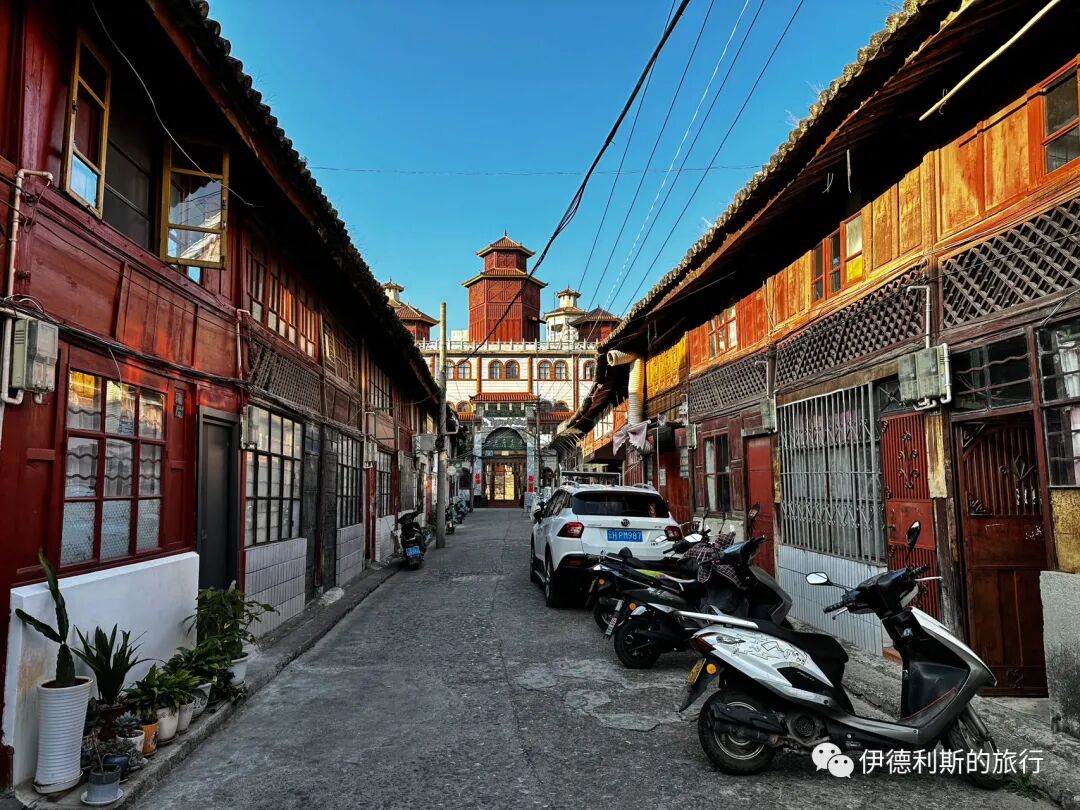
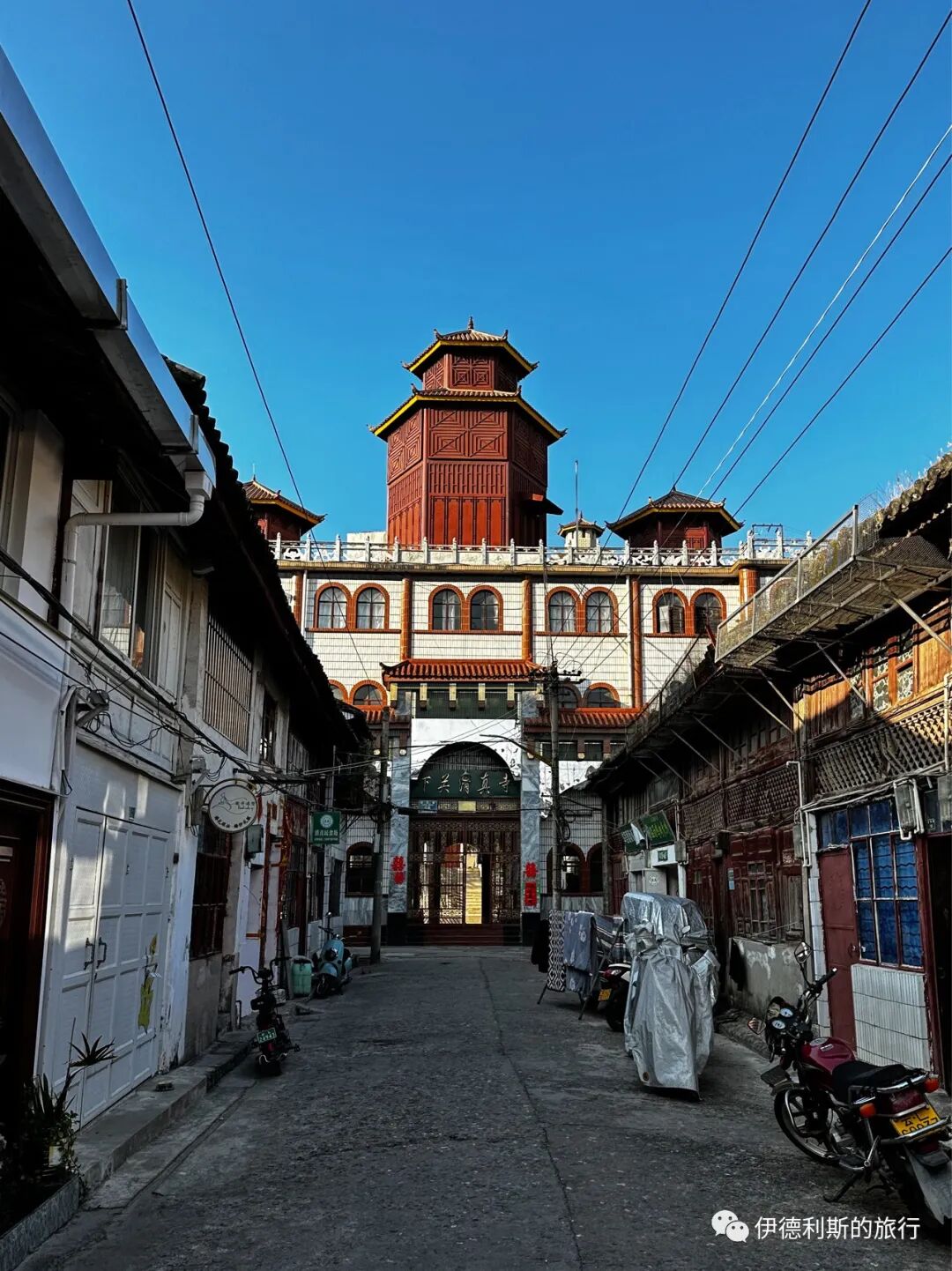
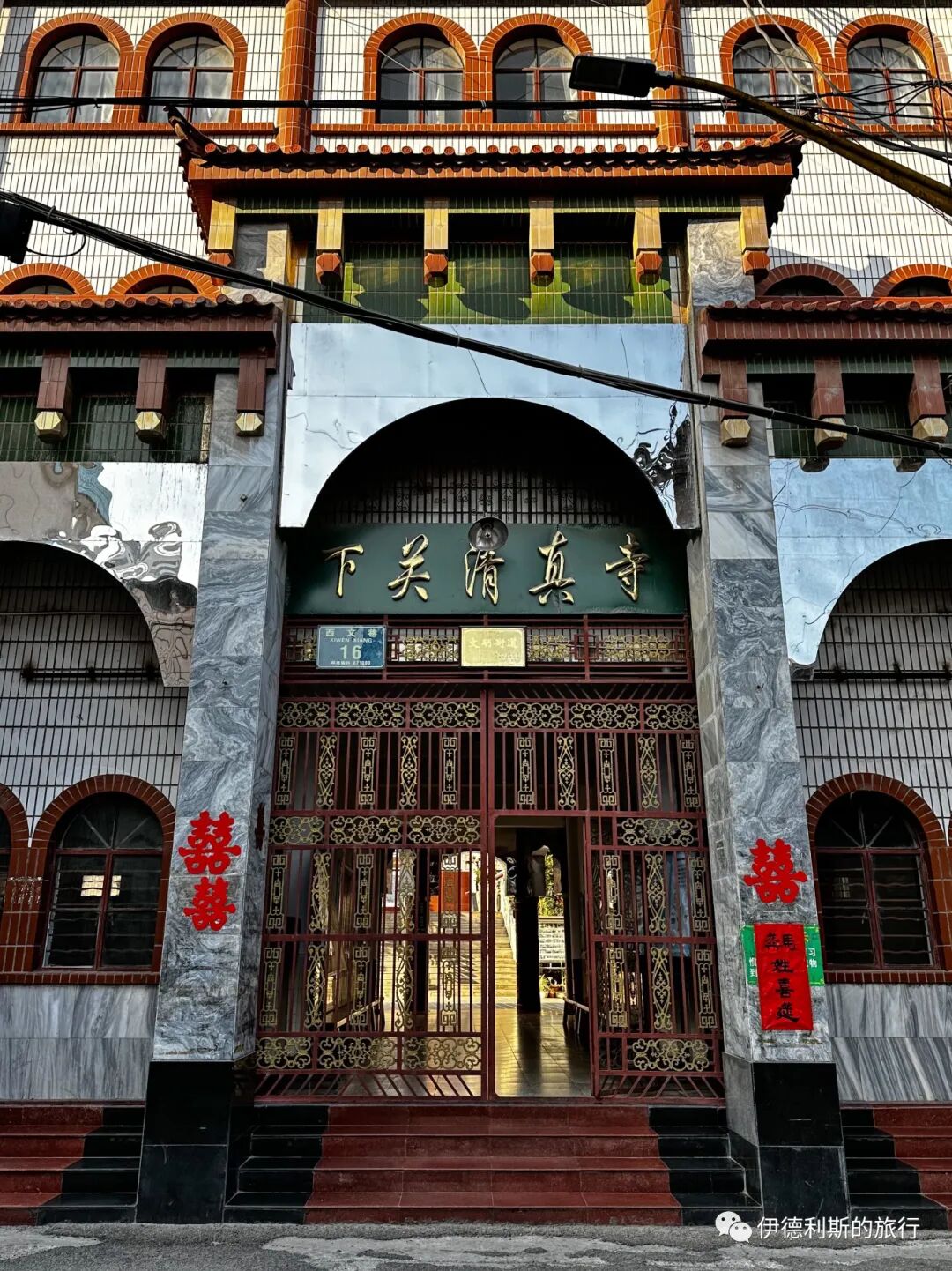
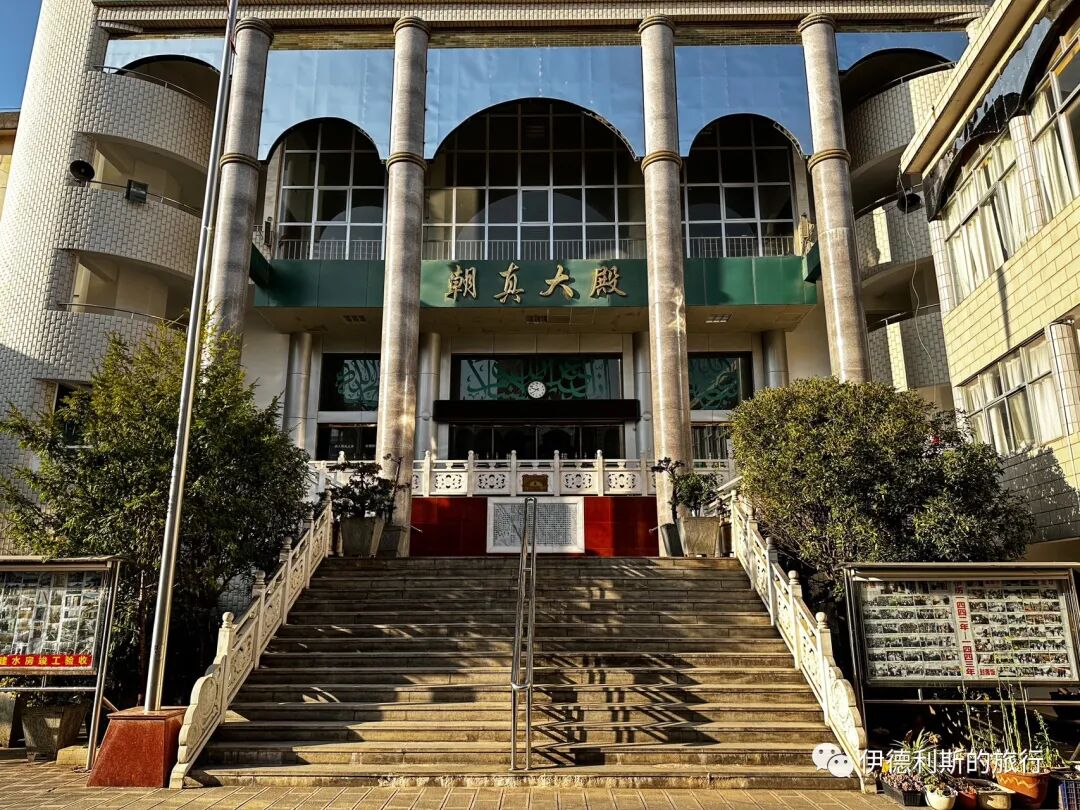
In 1915, led by Ma Yulong and over ten others, the Hui Muslims of Xiaguan worked together to build the current Xiaguan Mosque. They also built a new street in front of the mosque, commonly known as Hui Street, which is now Wenming Street. This established the layout of the Xiaguan mosque district.
The current Xiaguan Mosque was rebuilt in 2004. Many Hui Muslims still live in the surrounding Wenming Street and West Street areas, where there are many halal restaurants.
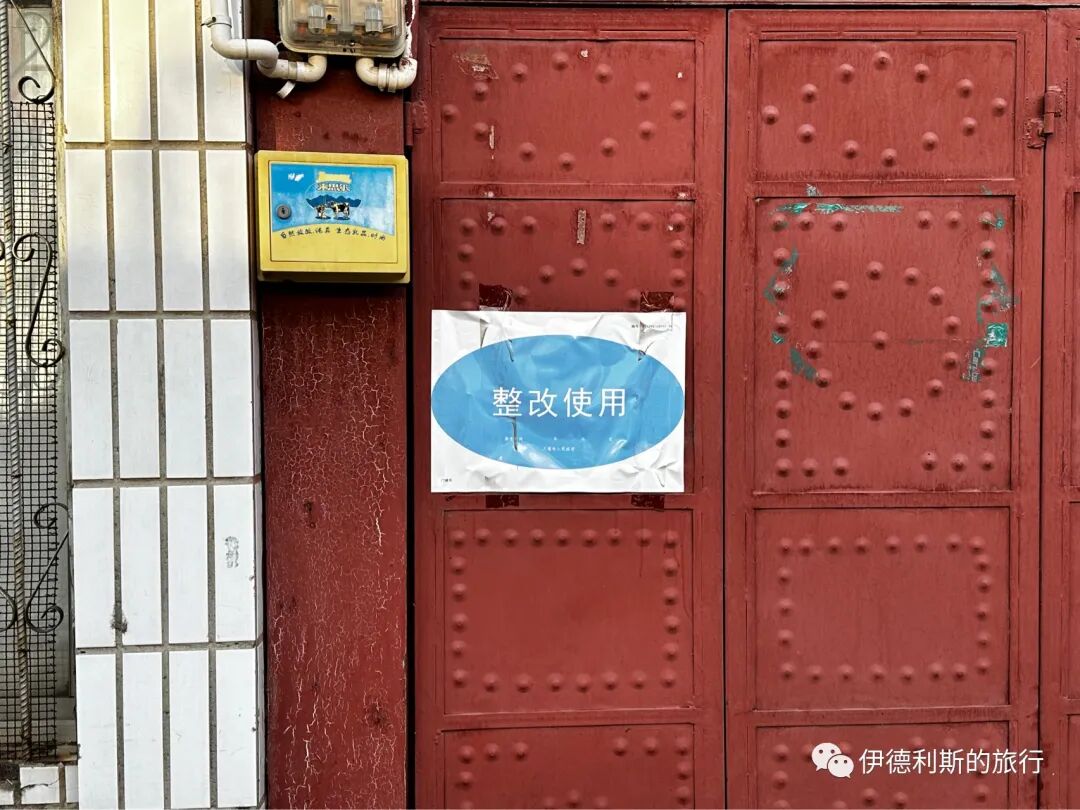
This year, I noticed signs on some shop walls saying "rectification in use," and I wonder if there is a new plan for this area.
For my 2020 Dali trip, see "Eating and Visiting Halal Spots in Dali Xiaguan and Weishan" and "The Twenty Traditional Mosques of Dali."
Sha Family Courtyard
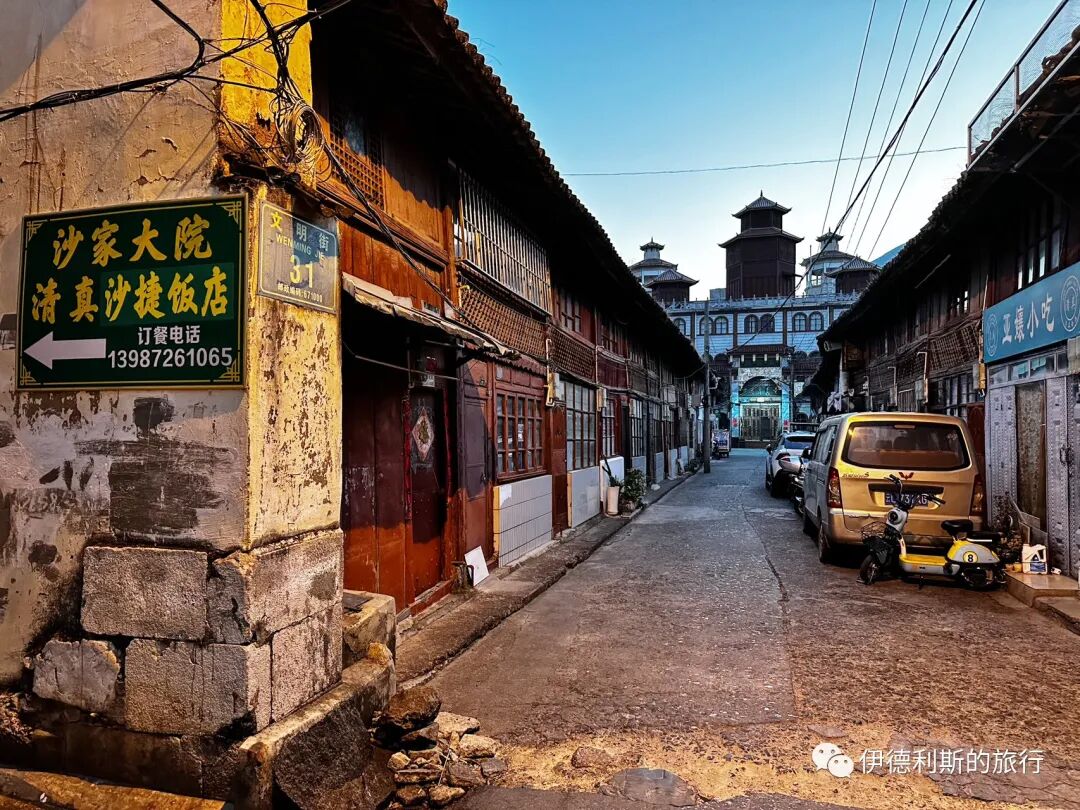
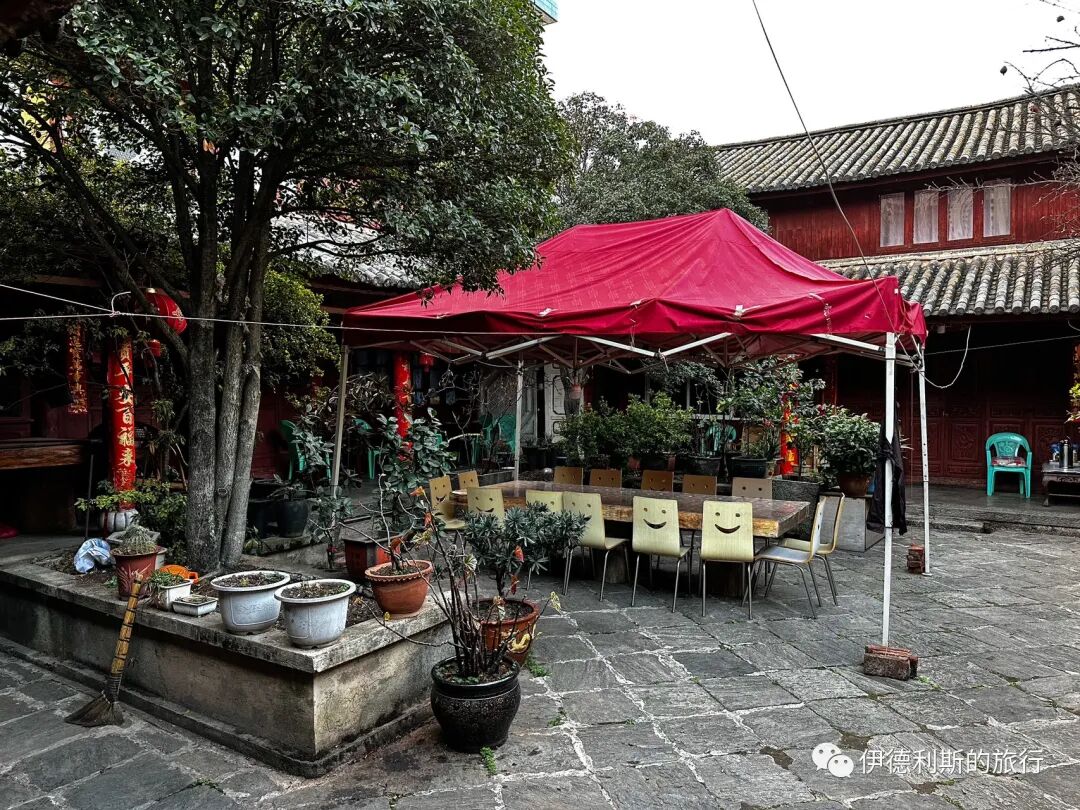
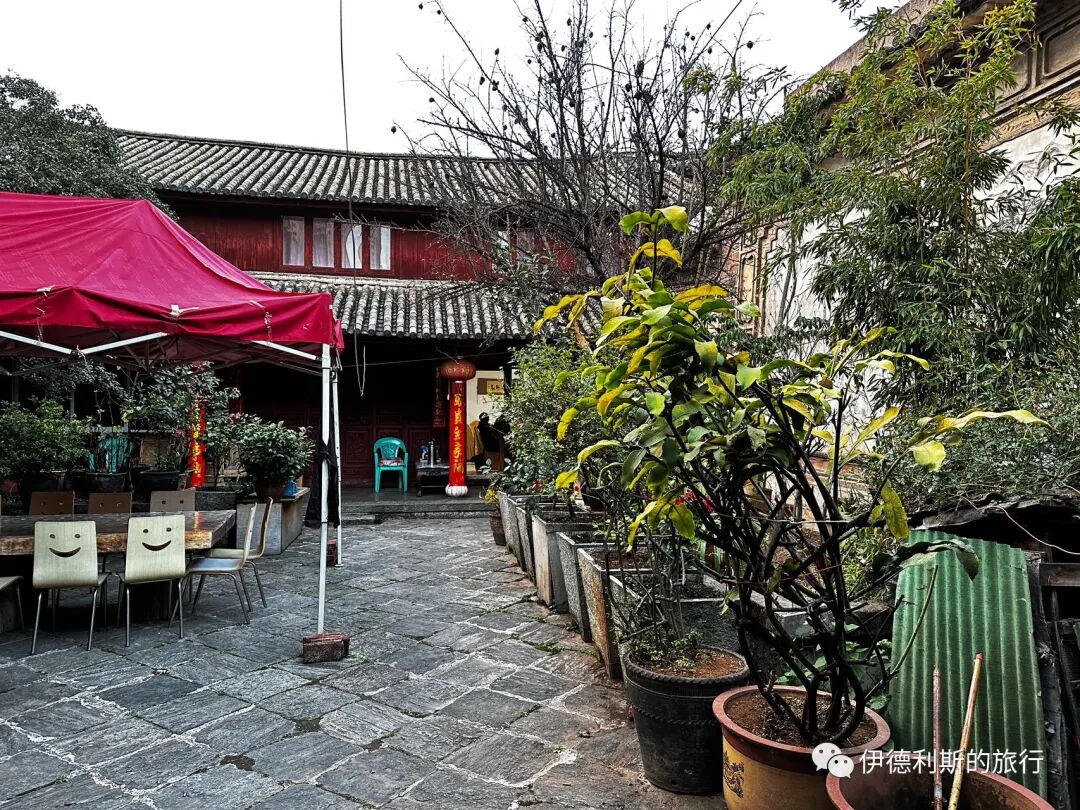
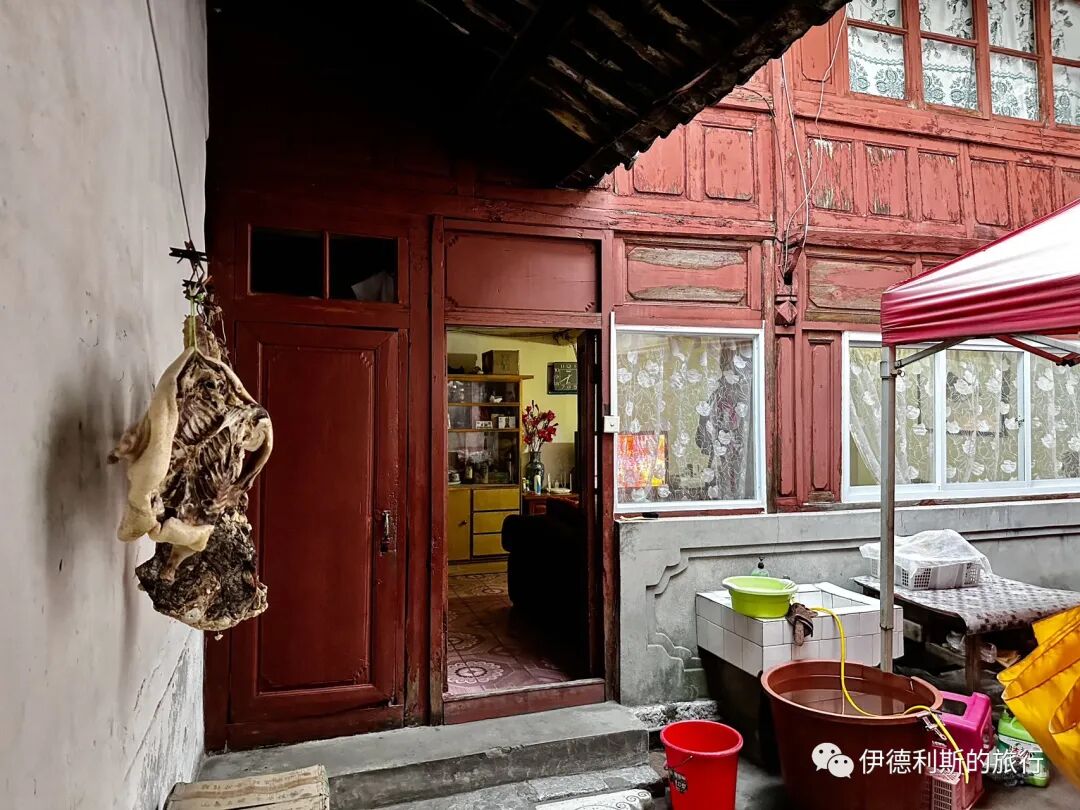
Today, many old Hui Muslim houses are still preserved around the Xiaguan Mosque, the most notable being the Sha Family Courtyard, which is over 110 years old. Fortunately, the descendants of the Sha family still live in the courtyard and run the Shajie Restaurant. You can enjoy a meal while experiencing the charm of this century-old Hui Muslim courtyard.
The Sha Family Courtyard follows the traditional Dali "three houses and one screen wall" (sanfang yizhaobi) layout, a style used by many local Bai, Han, and Hui Muslim families. The "three houses and one screen wall" layout means the main house and the east and west wing rooms are all two-story, three-room structures, with a large screen wall facing the main house.
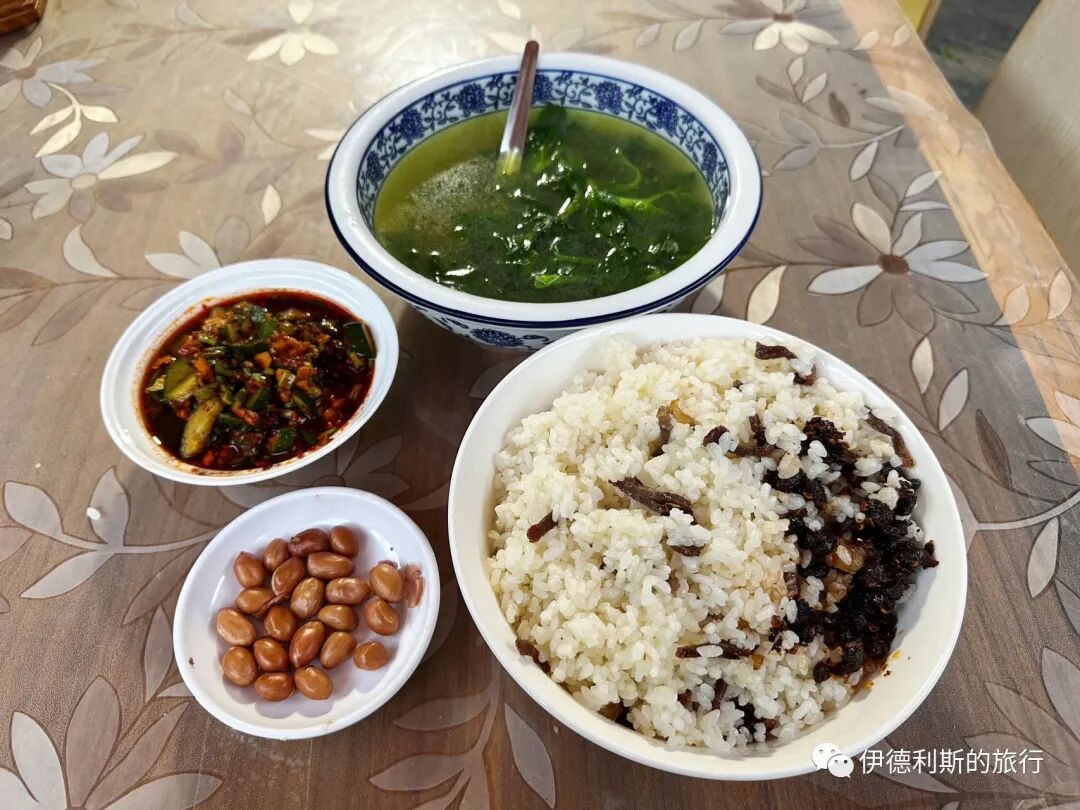
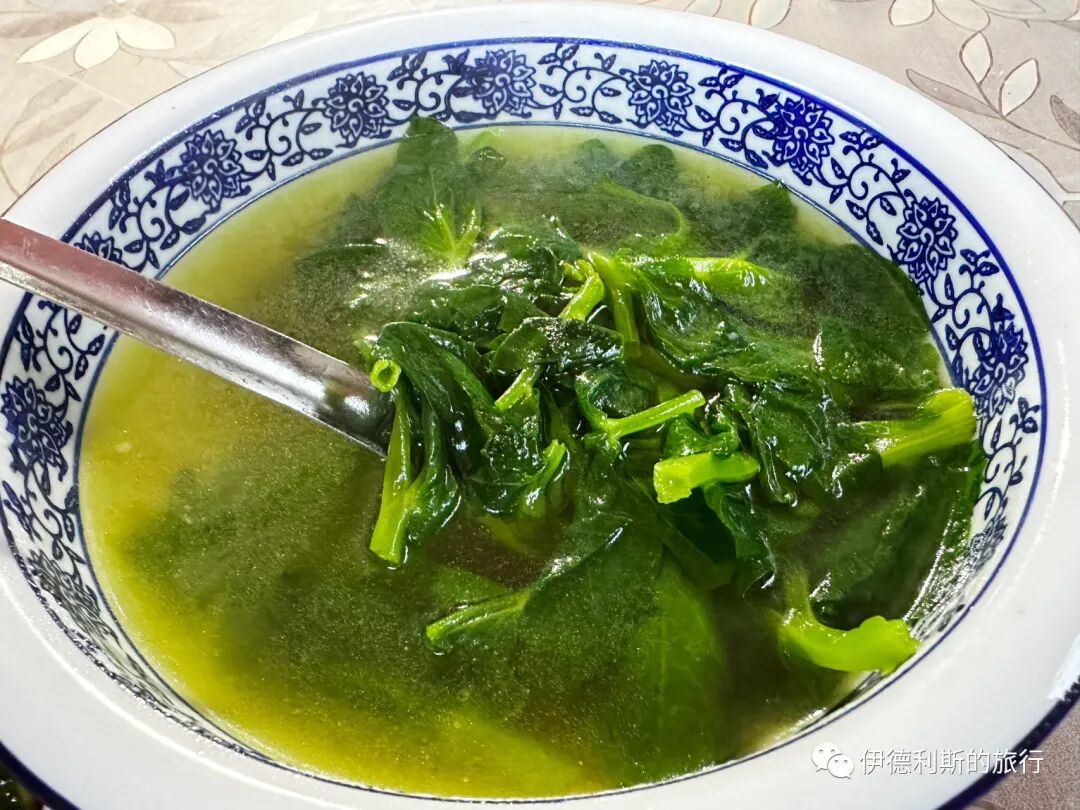
I ate the most home-style Yunnan Hui Muslim food here: beef jerky rice (niu ganba fan) and pea sprout soup with pickled cucumbers. The Sha family is very welcoming, and it really doesn't feel like a restaurant; it feels like stepping into the daily life of the Hui Muslims in Xiaguan.
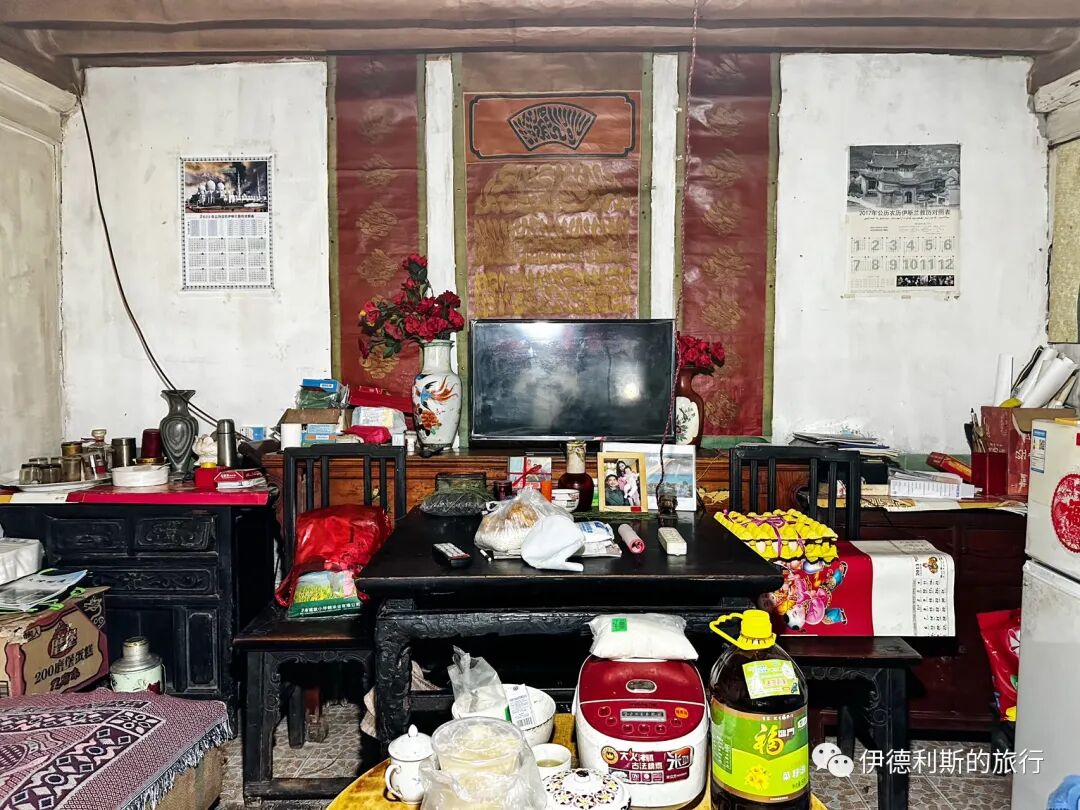
Inside the west wing of the Sha Family Courtyard, the middle room is a living room decorated with traditional calligraphy in the style of Weishan, Dali. The grandfather of the Sha family watches TV here in the evenings. On both sides are bedrooms, which have pictures of Mecca (tianfang tu) hanging inside.
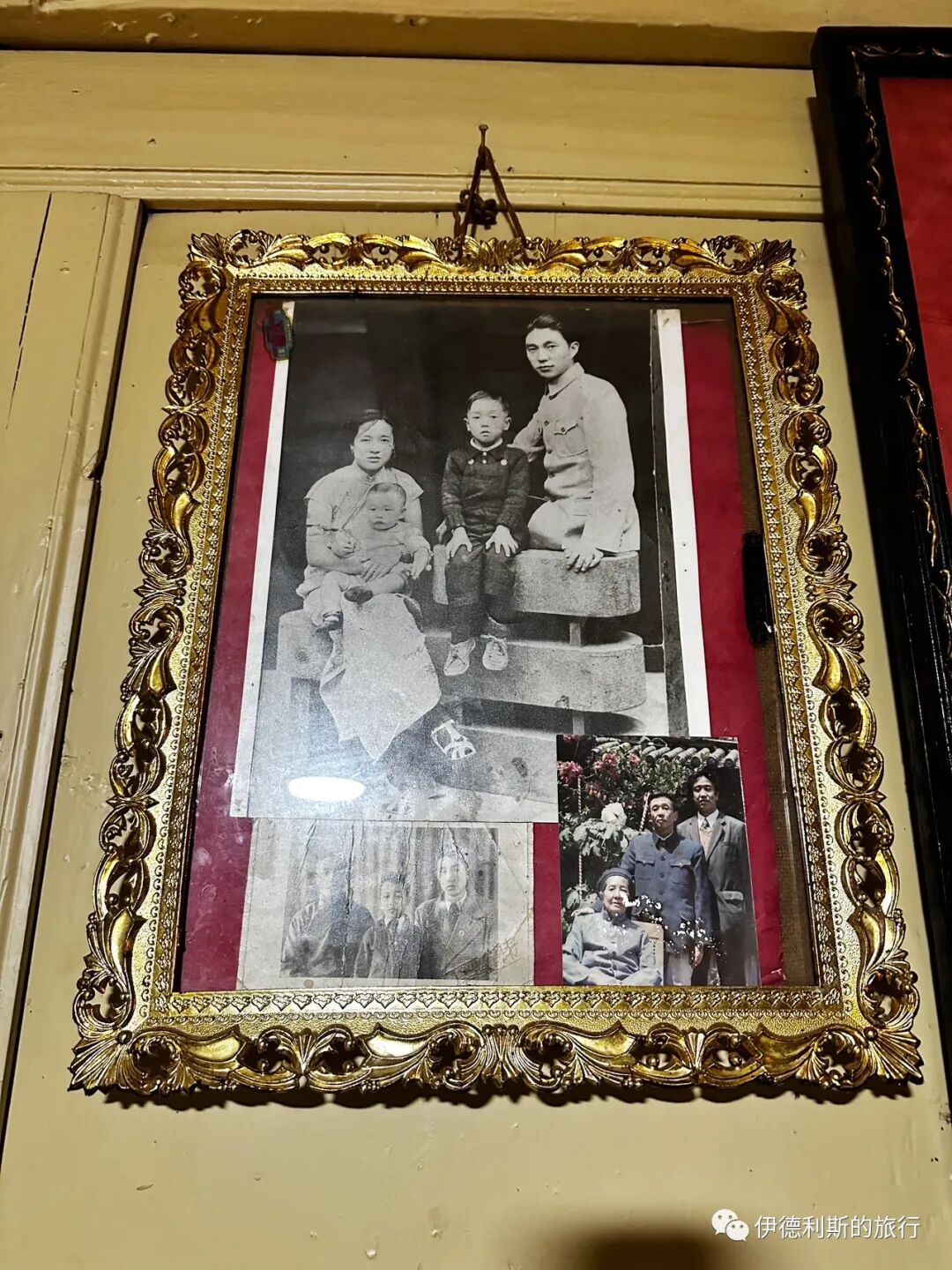
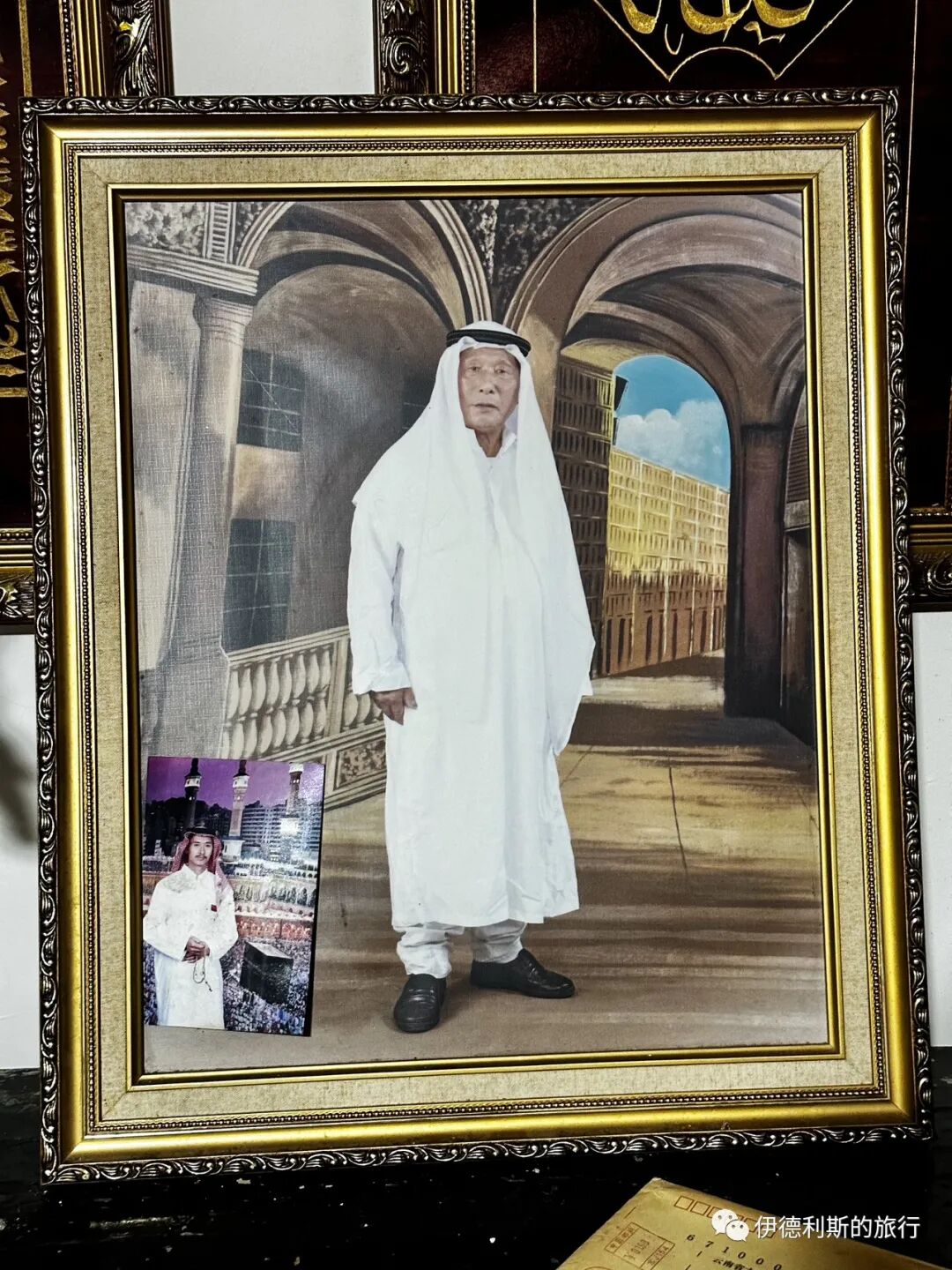
Inside the north room, besides the calligraphy, there are photos of the Sha family from different periods, as well as gifts from Mrs. Sha's 80th and 90th birthday celebrations.
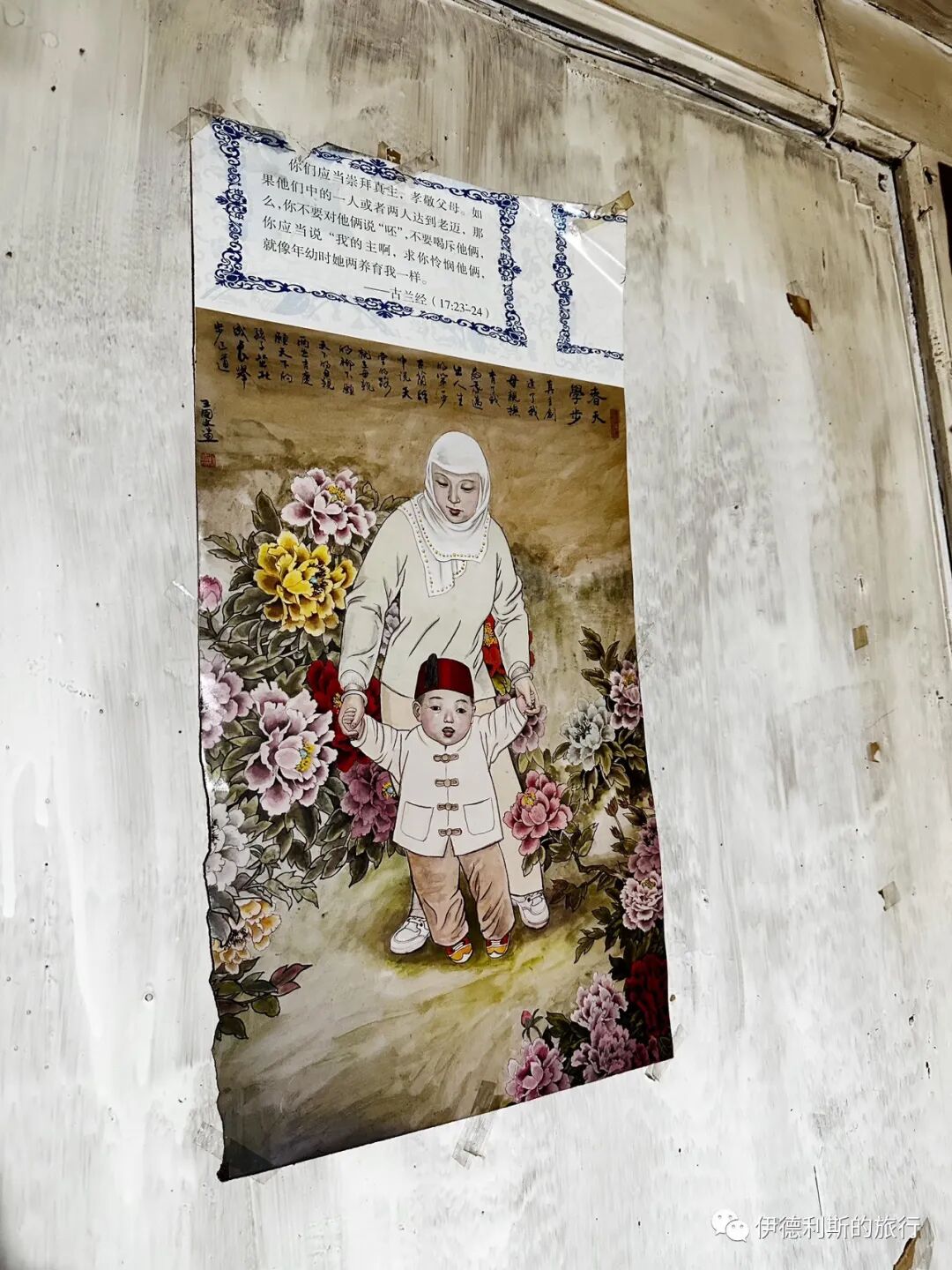
On the wall is a painting by the Yunnan Hui Muslim artist Wang Guowen Haji, featuring a little boy wearing an Ottoman fez hat. This is very interesting, and I suspect it relates to the Yunnan Islamic Progress Association organizing students to study at Al-Azhar University in Egypt after 1931. In 1829, the Ottoman Empire implemented a hat reform, ordering officials to stop wearing turbans and wear fez hats instead. The fez hat then became popular in Egypt under Ottoman rule.
Wenming Street
Wenming Street faces the Xiaguan Mosque, and there are many halal restaurants on the street.
In 2020, I ate braised meat rice noodles (menrou mixian) at this Renji shop.
Then I ate braised meat rice strips (menrou ersi) at this Baiweixuan shop; rice strips are firmer than rice noodles.
West Street
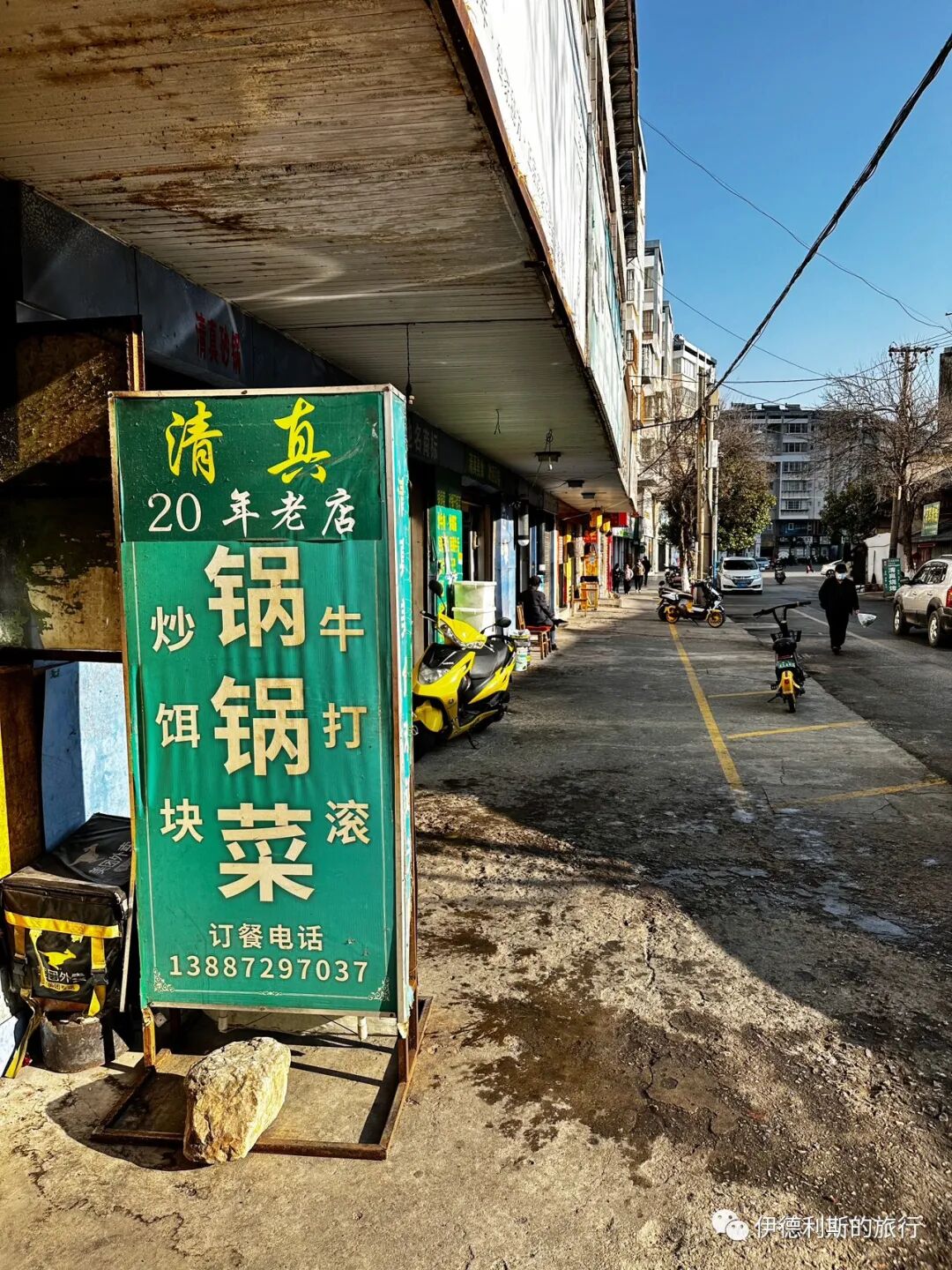
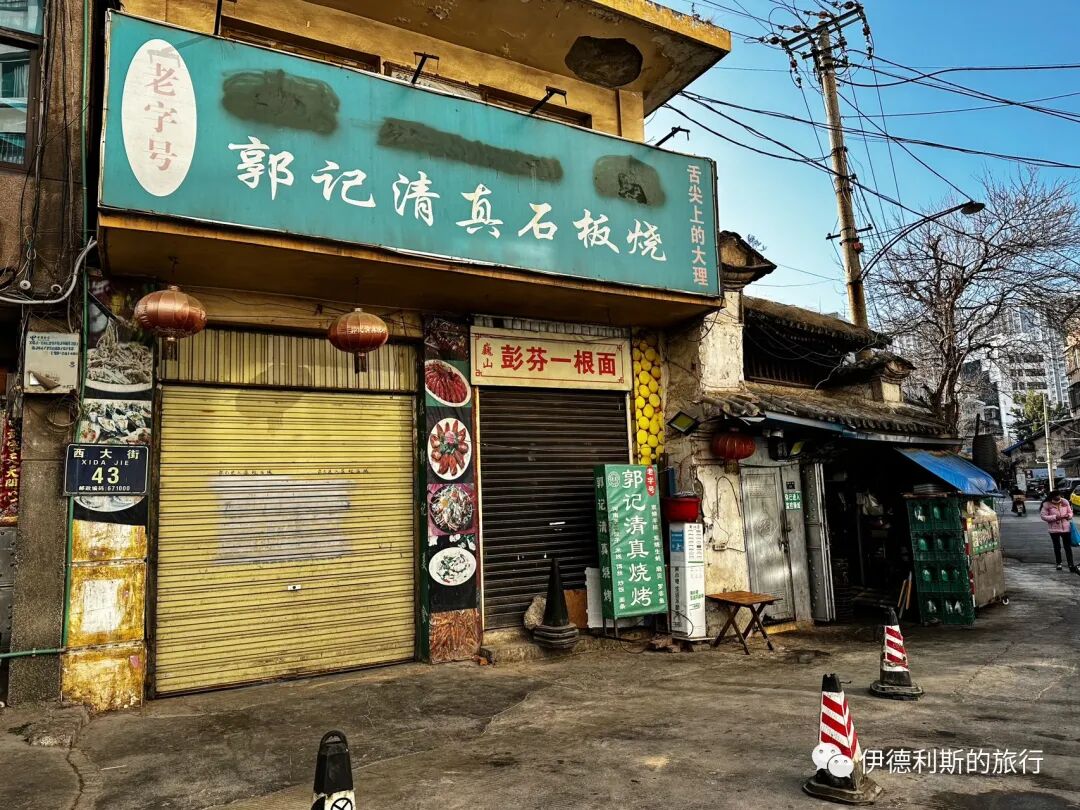
West Street is south of Wenming Street and also has many halal restaurants.
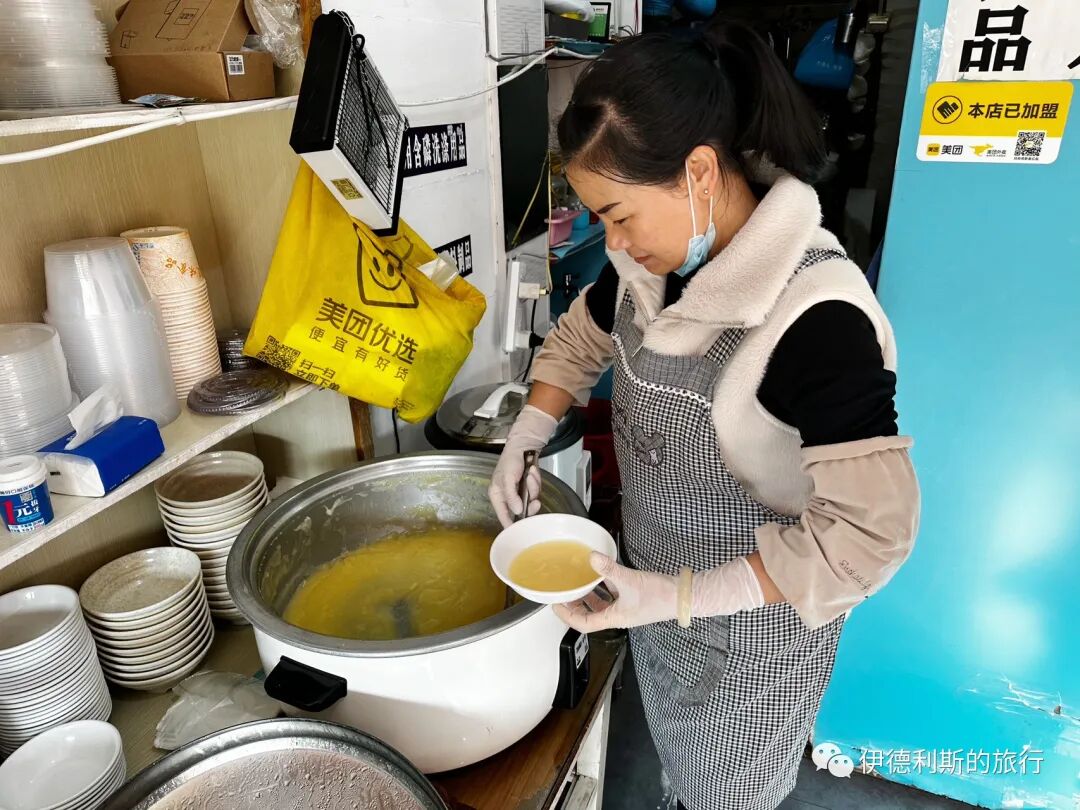
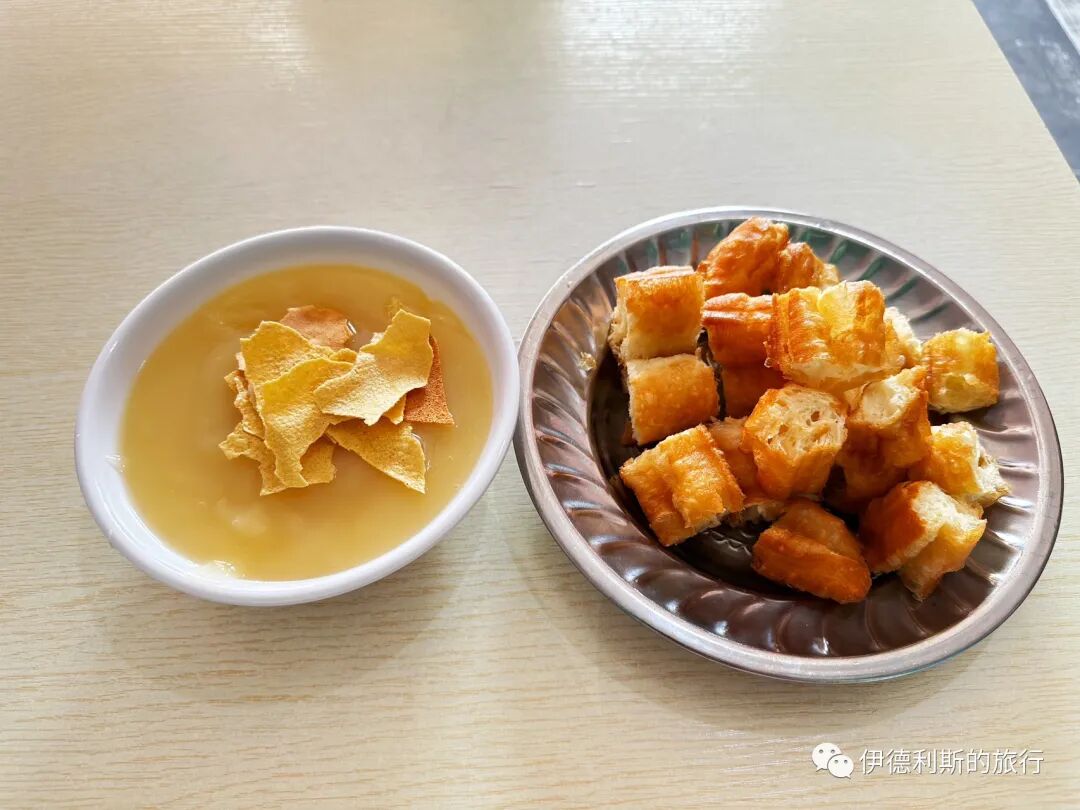
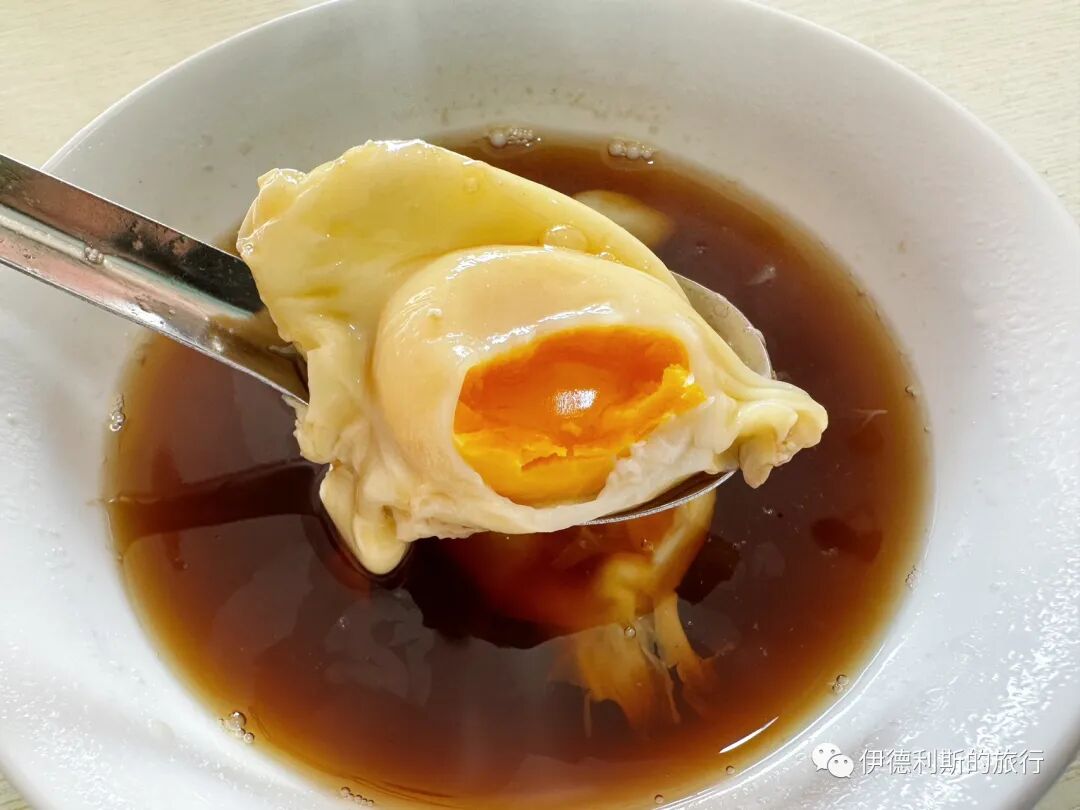
In the morning, I ate thick pea flour (xi doufen) with fried dough sticks (youtiao) and brown sugar boiled eggs at Ma Haibo's snack shop. Boss Ma is from Yongping County, Dali, which is the westernmost mountainous county in Dali, with the Lancang River just to the west.
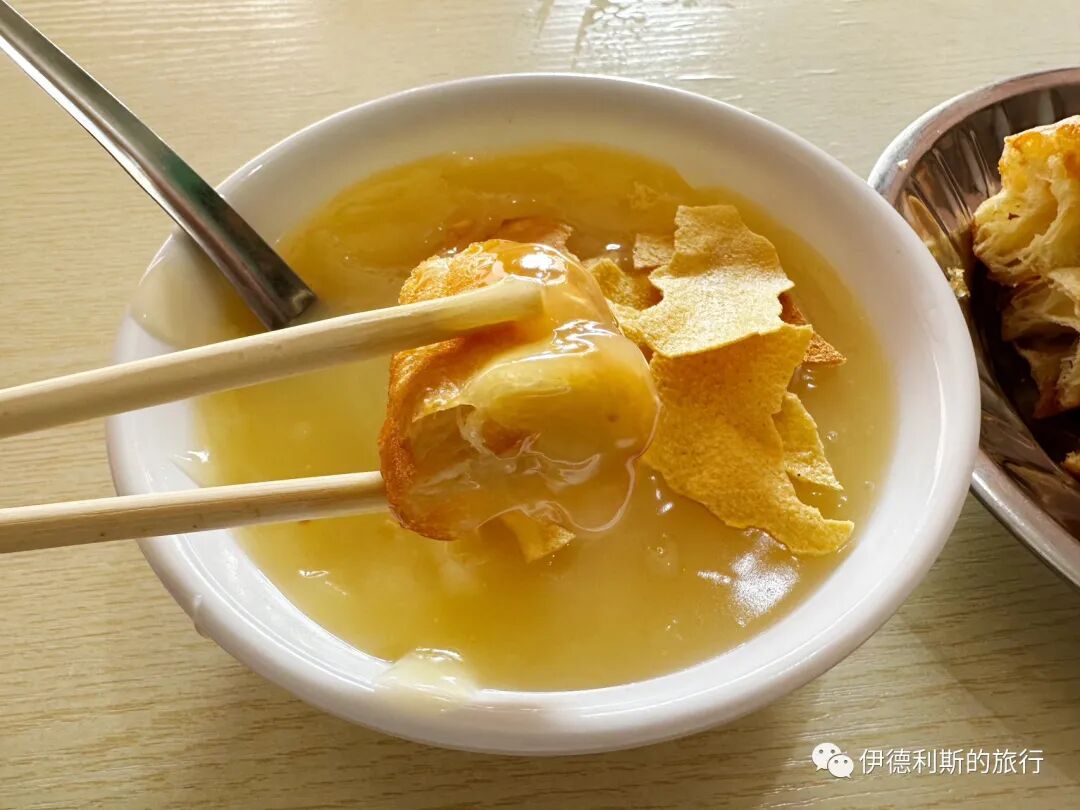
The freshly fried dough sticks are crispy, and they taste great when dipped in the thick pea flour. The brown sugar boiled eggs have a warming feeling, making them perfect for breakfast.
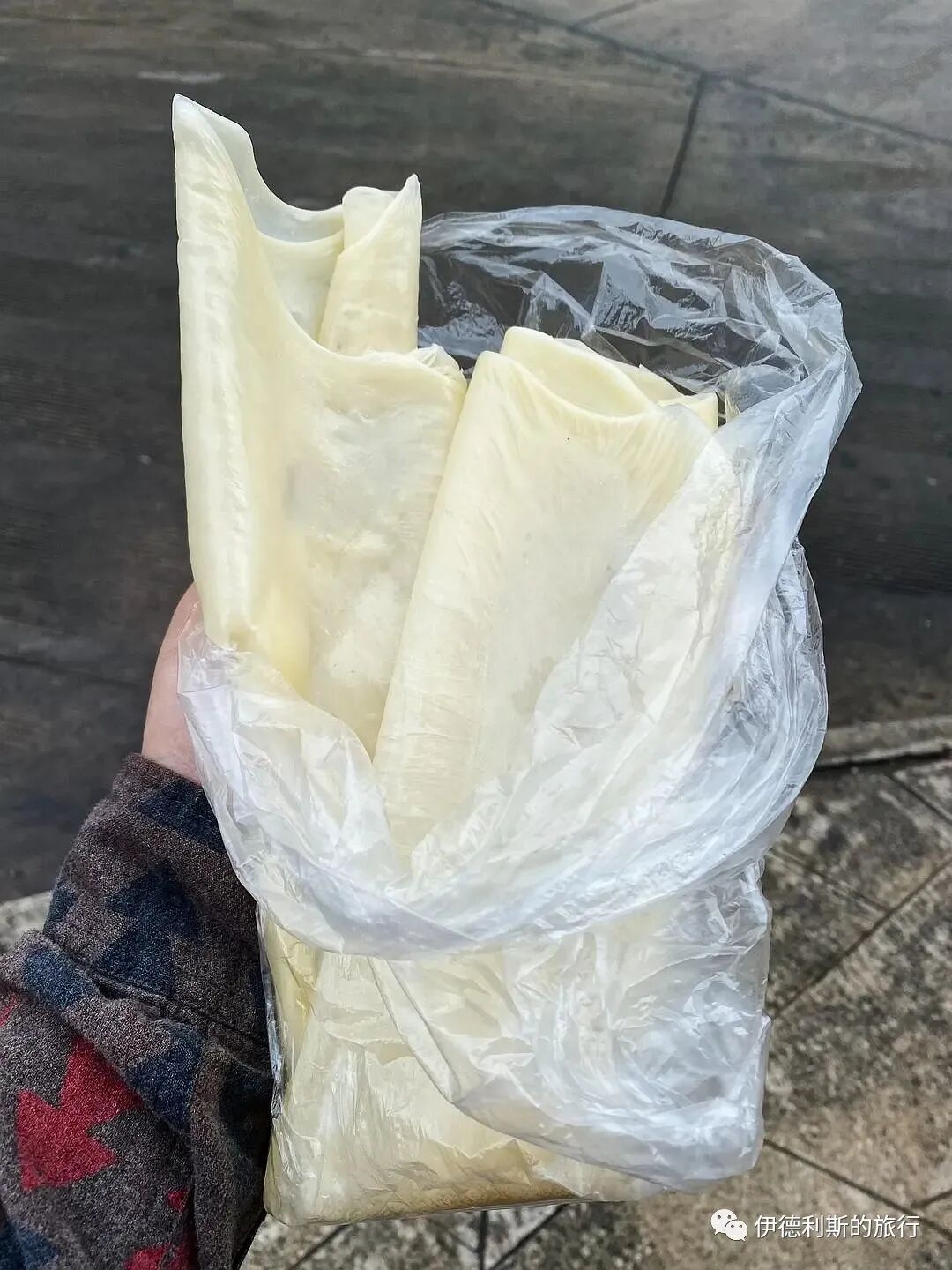
The beef sauce rice cakes (erkua) made by local Hui Muslims on West Street come with different sauces, so you can have them sweet or spicy. The neighborhood kids love them. It is also very convenient to pack some rice cakes (erkua) to eat on the road when you get hungry.
Zhengyang Times Square
Zhengyang Times Square is right across from Wenming Street. It has many halal restaurants and is especially lively at night.
At night, I ate beef-covered rice balls (niudagun) and savory bean-flour soup dumplings (ganba doumian xiantangyuan) at Du's Tangyuan shop in Zhengyang Times Square. Yunnan has a really rich variety of rice balls (tangyuan), both sweet and savory. Beef-covered rice balls (niudagun) are made by rolling the rice balls in roasted soybean flour and adding maltose or rose jam. Their shop stays open until night, and it is mostly locals who come to eat here.
At a street stall in Zhengyang Times Square, I had a pineapple-flavored Burmese flatbread (Palata). Palata comes from the Indian flatbread Paratha. After it reached Burma, sugar was added to make it a snack. Hui Muslim caravans from Yunnan brought this snack back to their hometown, where it became known as tossed flatbread (shuaishou baba).
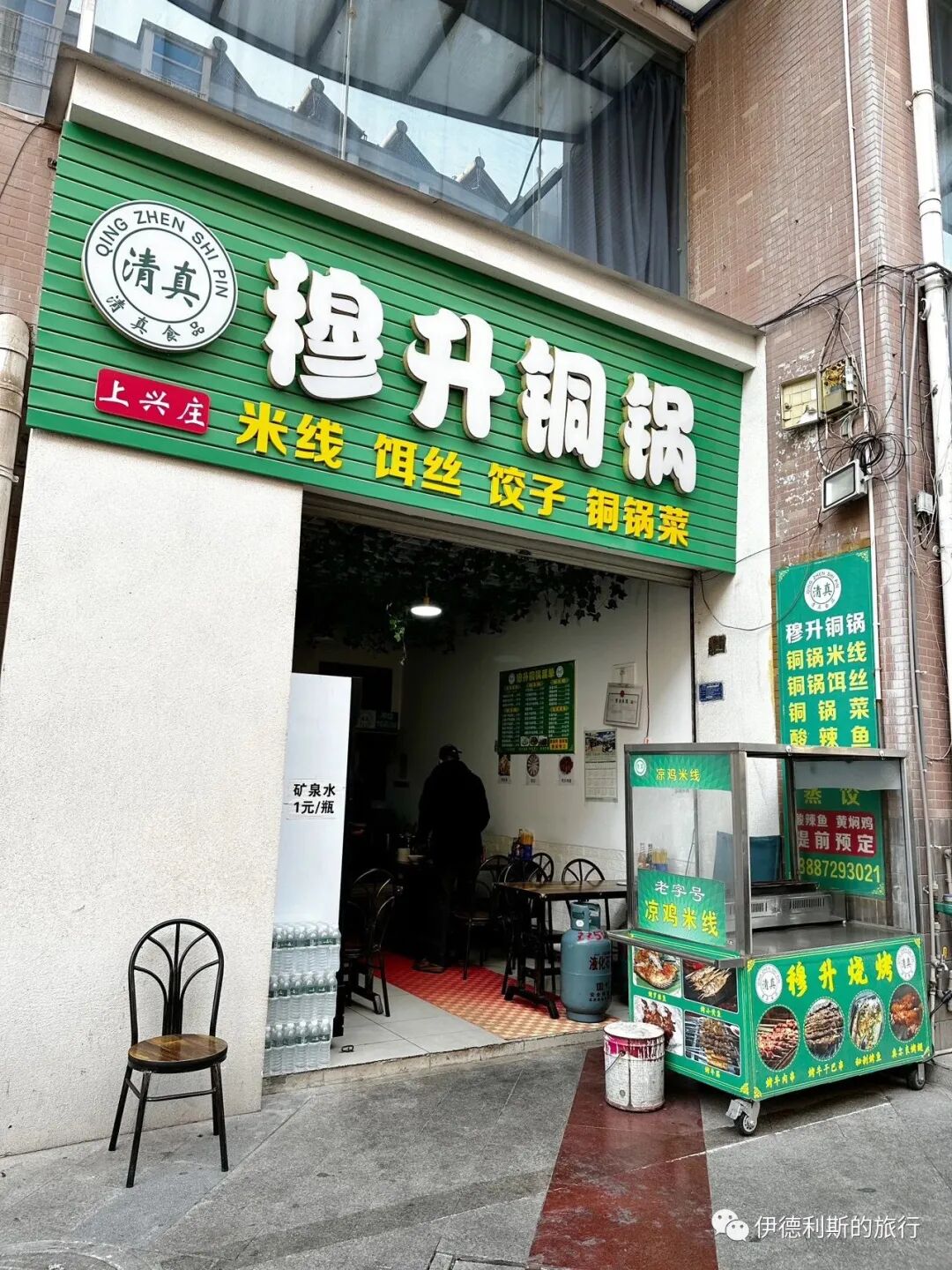
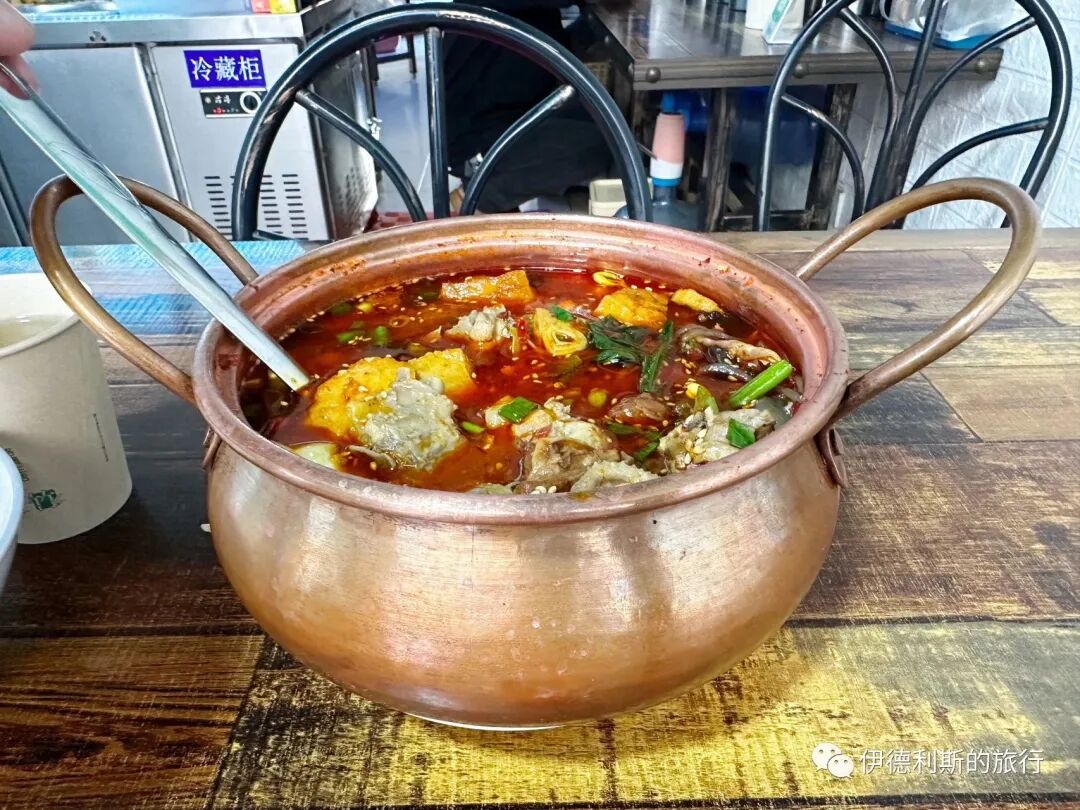
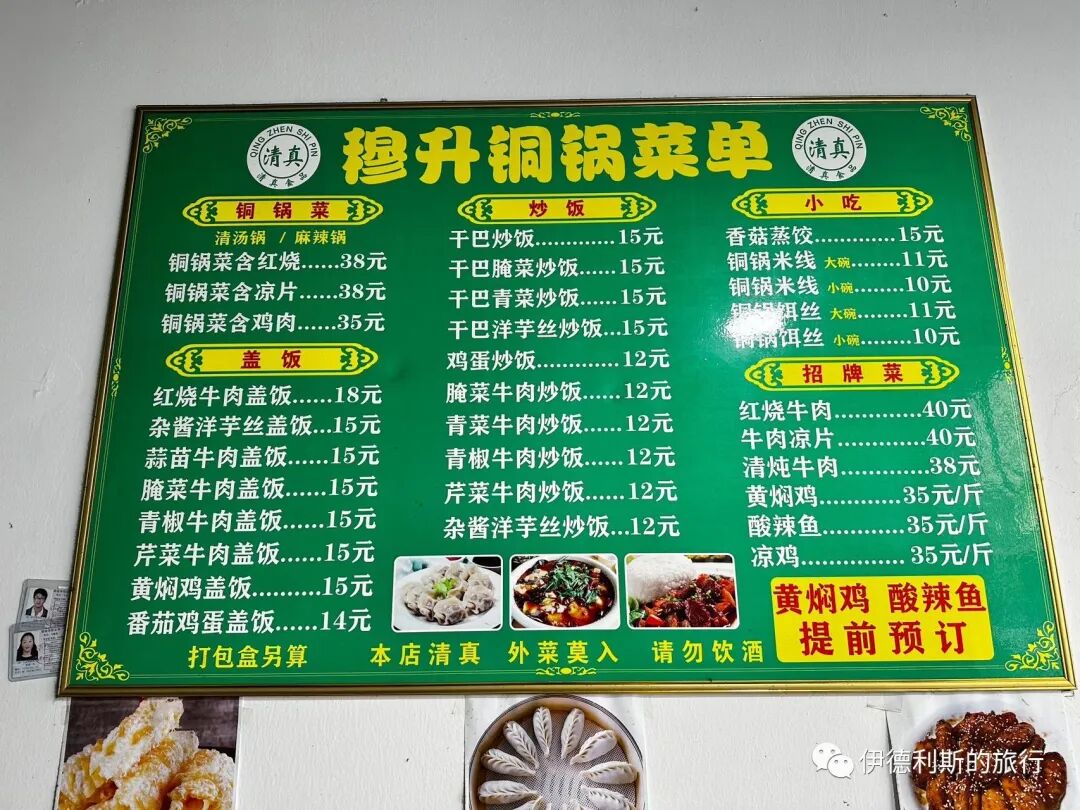
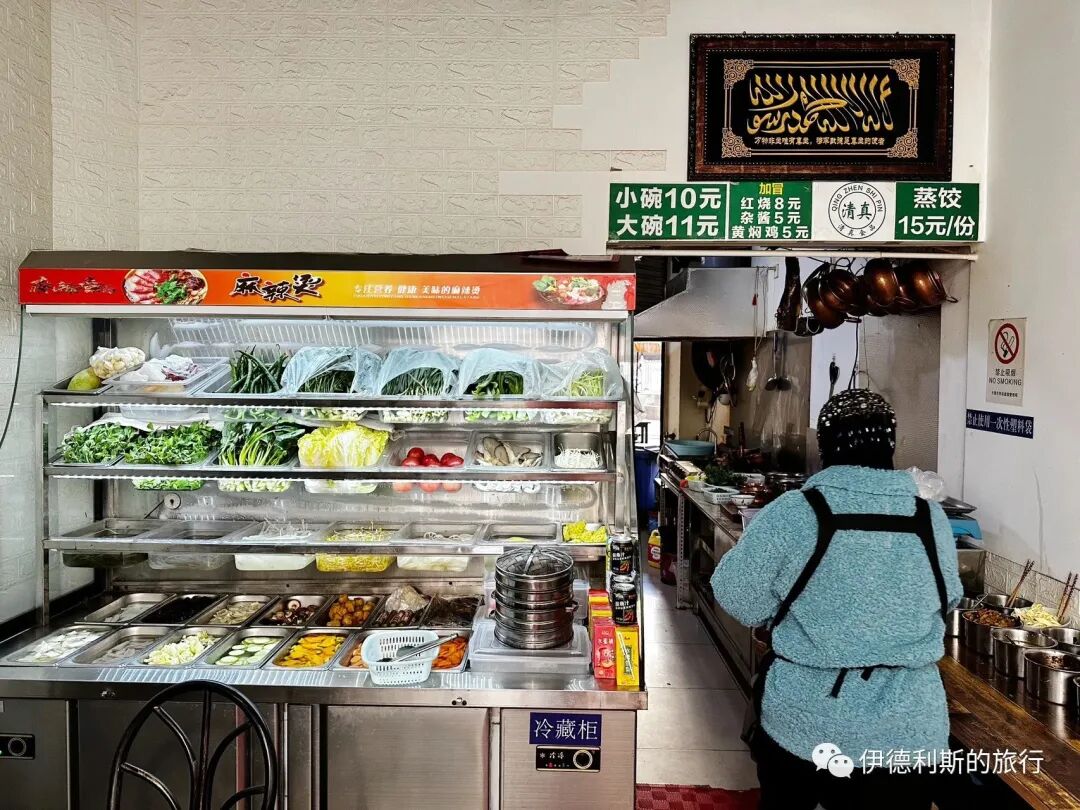
I had a copper pot stew (guoguocai) at Musheng Copper Pot. The owners are Hui Muslims from Xingzhuang in Xizhou Town, Dali. It is a beautiful Hui Muslim village located under Canglang Peak by Erhai Lake.
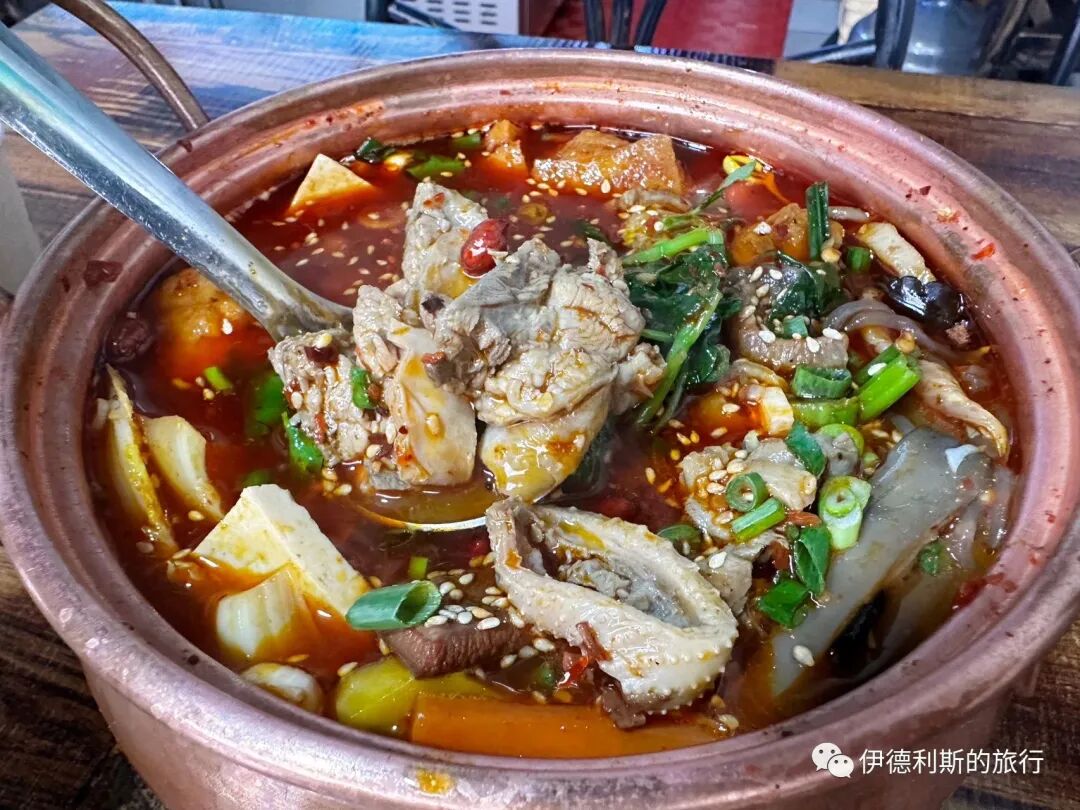
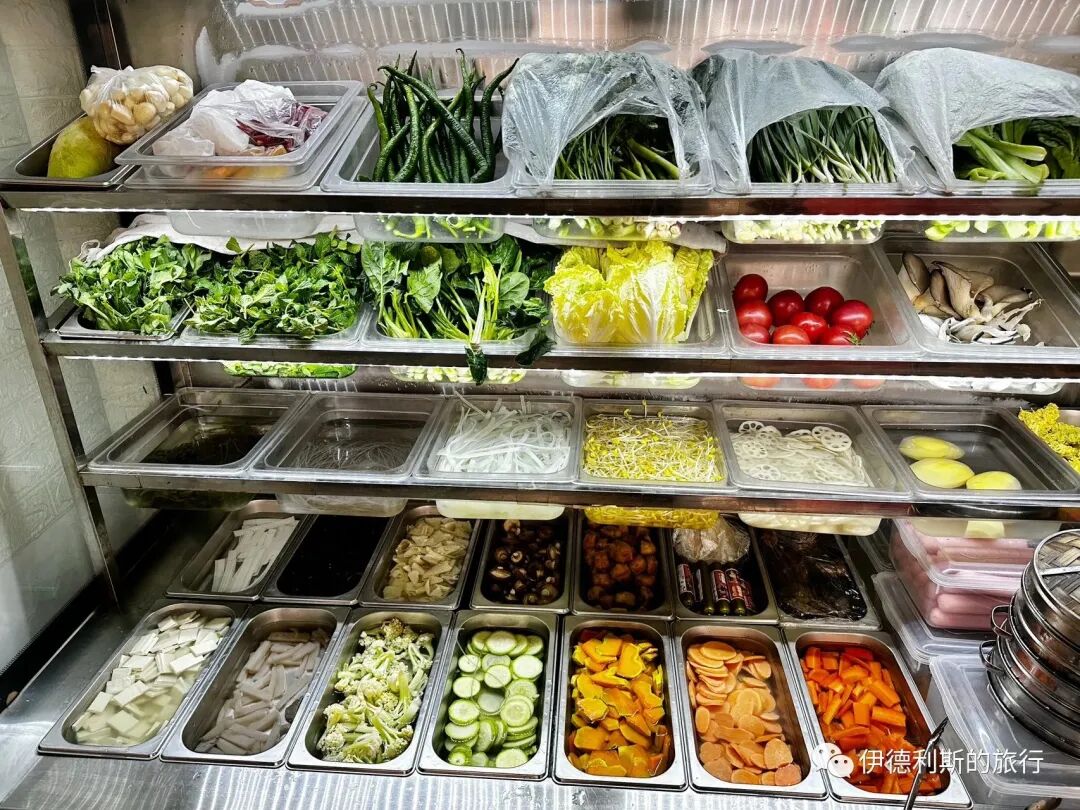
Copper pot stew (guoguocai) is similar to spicy hot pot (malatang) where you pick your own vegetables, but they do not weigh them. Unlike spicy hot pot (malatang), copper pot stew (guoguocai) is cooked in a small copper pot. You also add a topping of classic Yunnan Hui Muslim dishes like braised meat, cold-sliced meat, or yellow-braised chicken, and eat it with rice.
I ordered the mild spicy version, but it was on a completely different level than the mild spicy in Beijing. It made my nose run, my eyes water, and my lips feel like they were being electrocuted. Next time, I will honestly stick to the clear broth, but for those friends (dost) who love spicy food, I still recommend trying the spicy pot base!
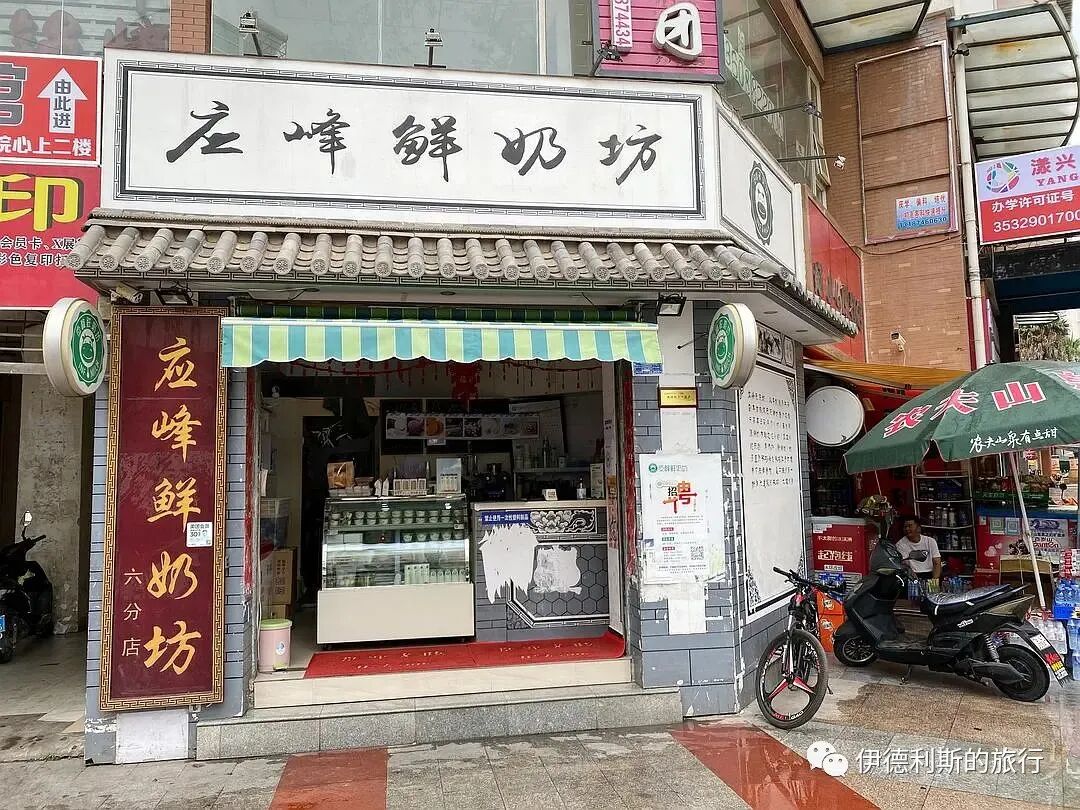
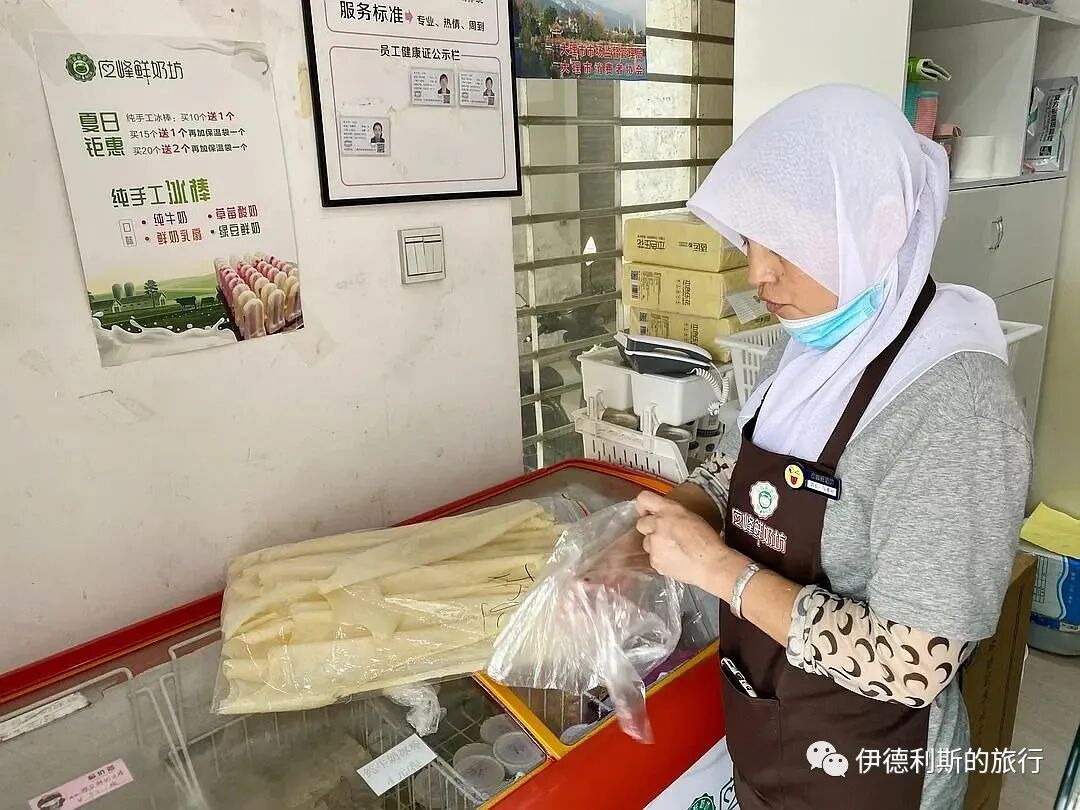
I bought some milk fans (rufan) at a fresh milk shop at the corner of Zhengyang Times Square in 2020.
Outside the Hui Muslim Street
Besides the Hui Muslim street around Xiaguan Mosque, there are many other halal restaurants in other parts of Xiaguan. I will share a few more here.
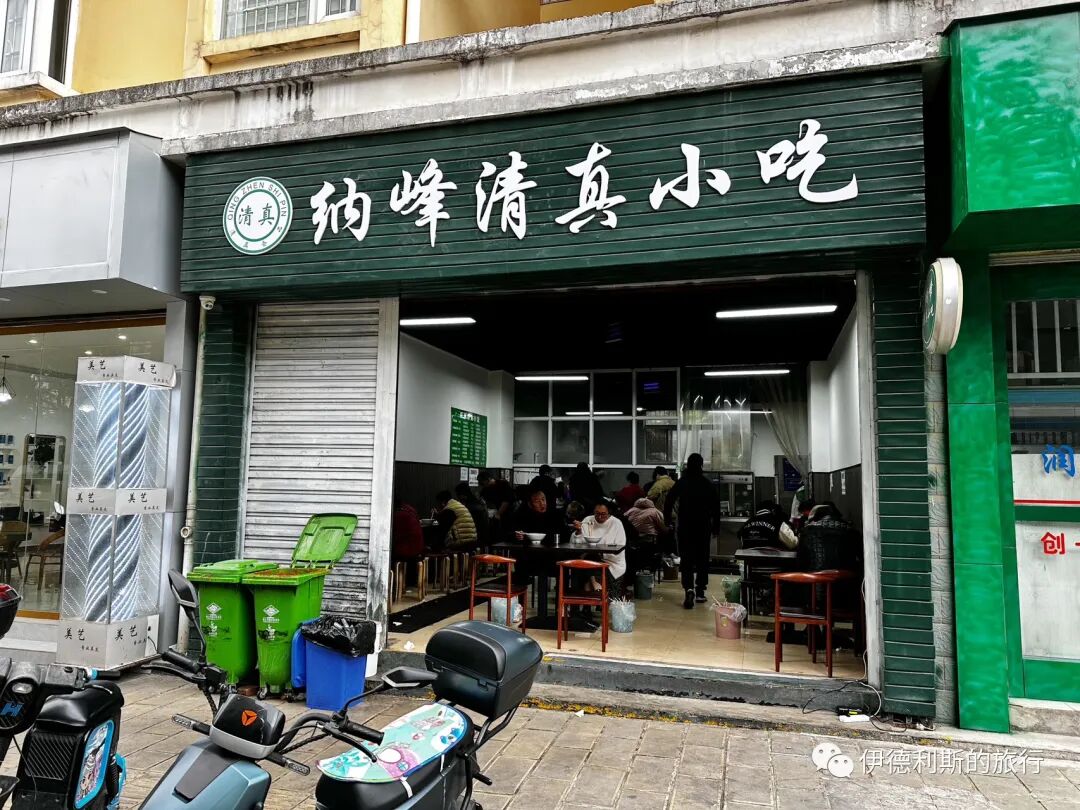
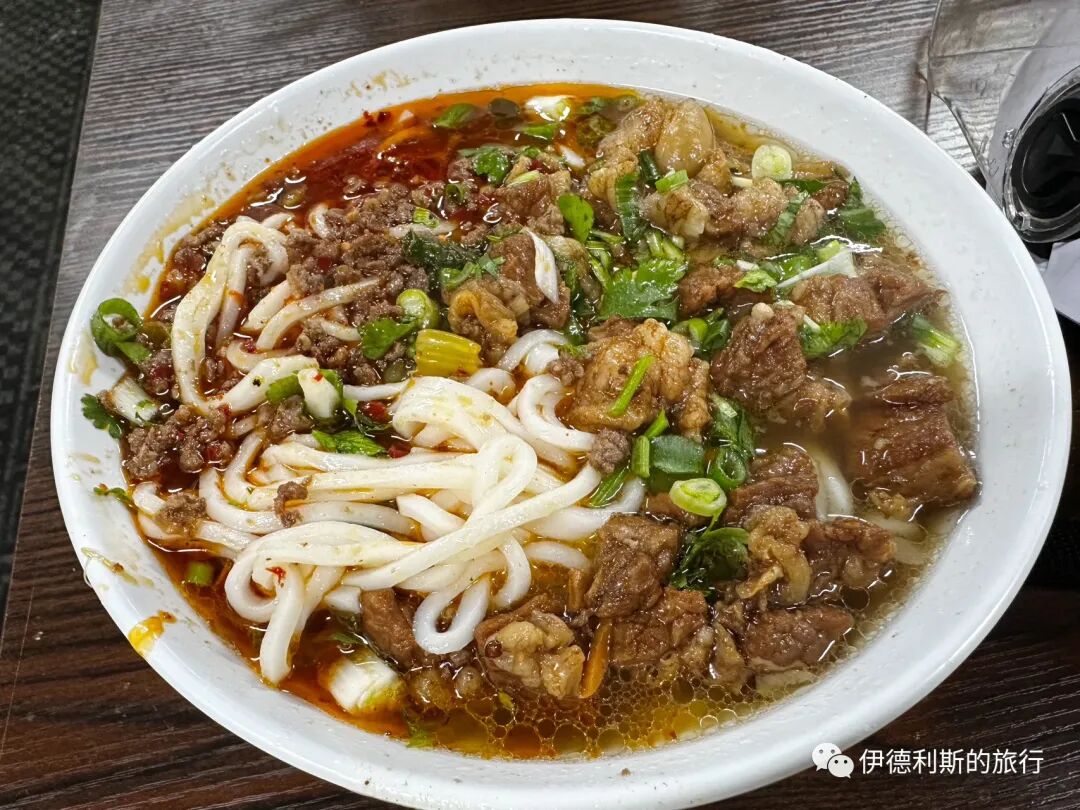
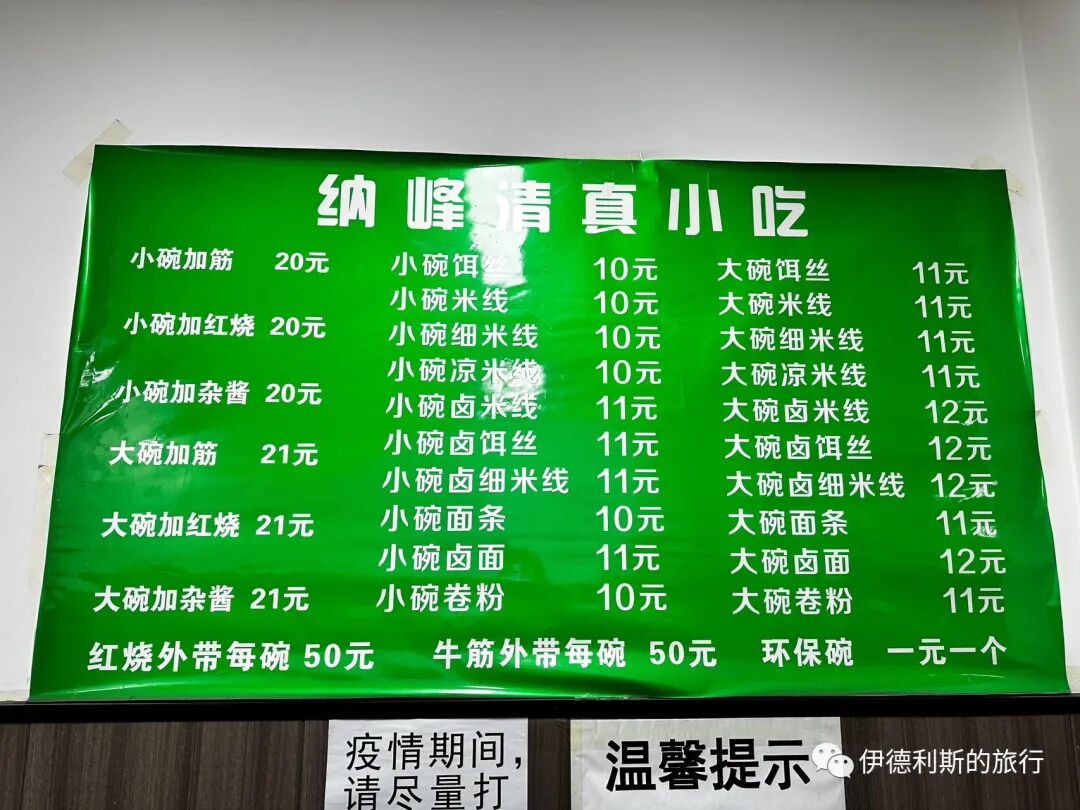
Nafeng Halal Snack Shop is an old place where locals eat. I ordered a bowl of minced meat rice noodles (ersi) with a braised meat topping. The texture of the rice noodles (ersi) is softer and not as chewy as rice noodles (mixian).
At night, I had a late-night snack at Plato Zhaotong Specialty Small Meat Skewers next to Dali Station.
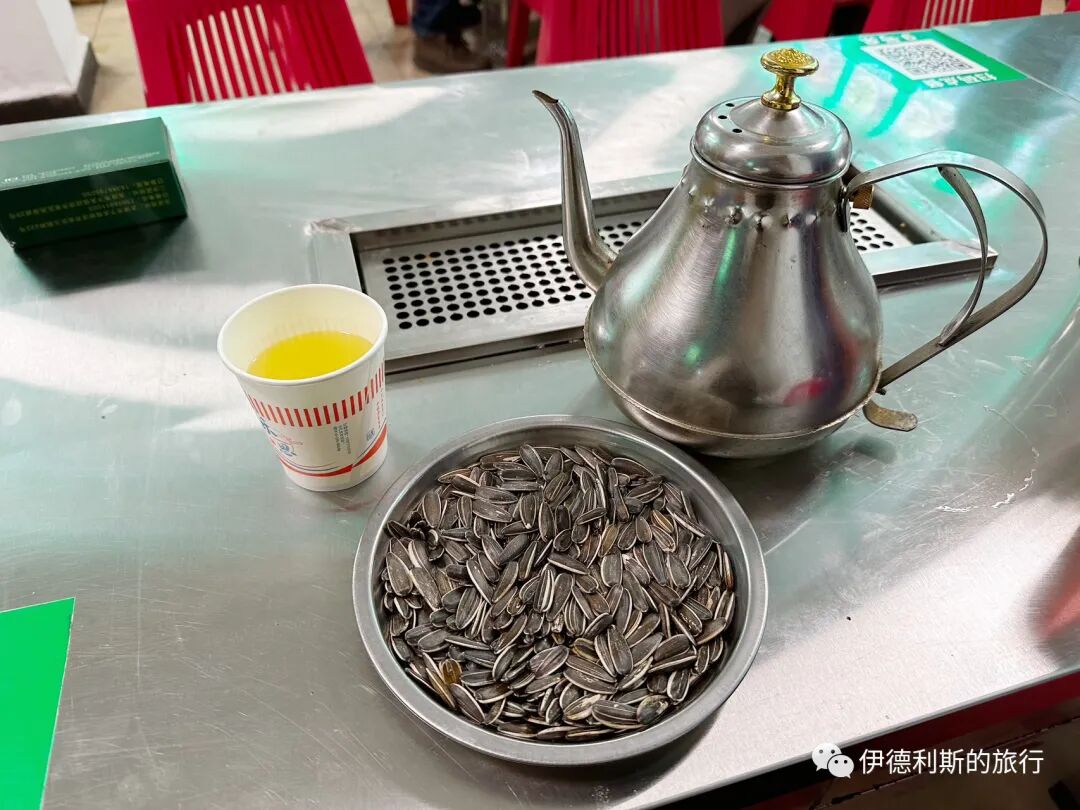
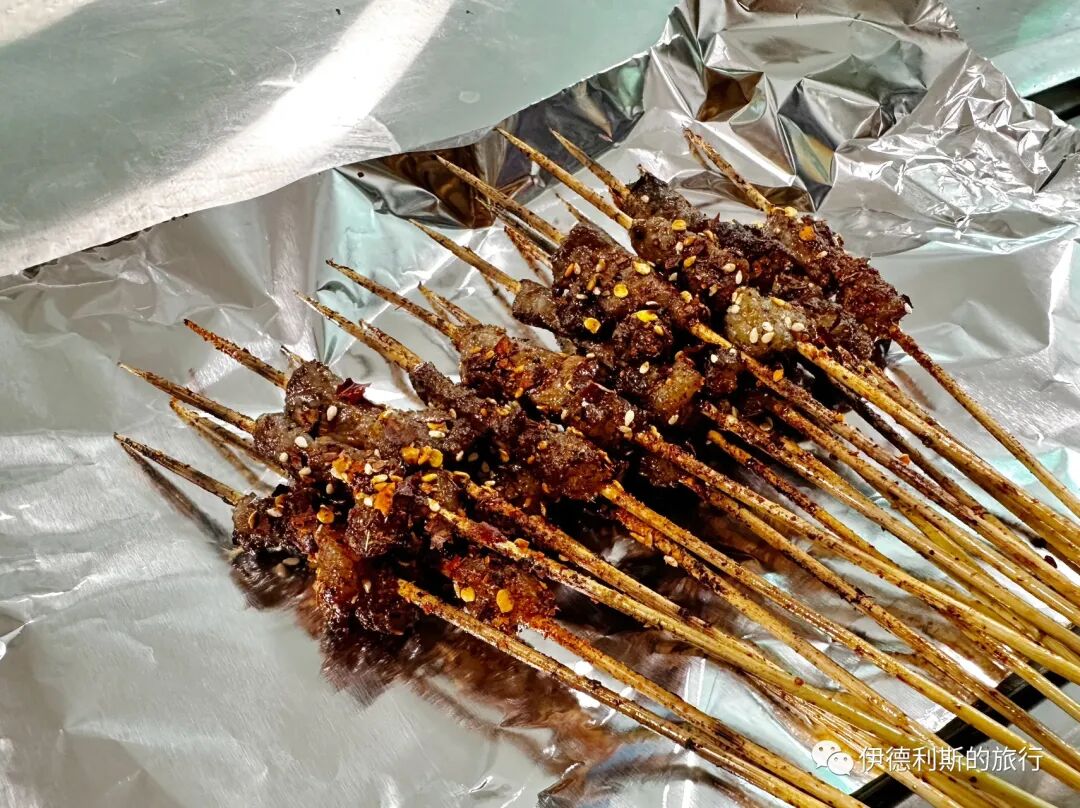
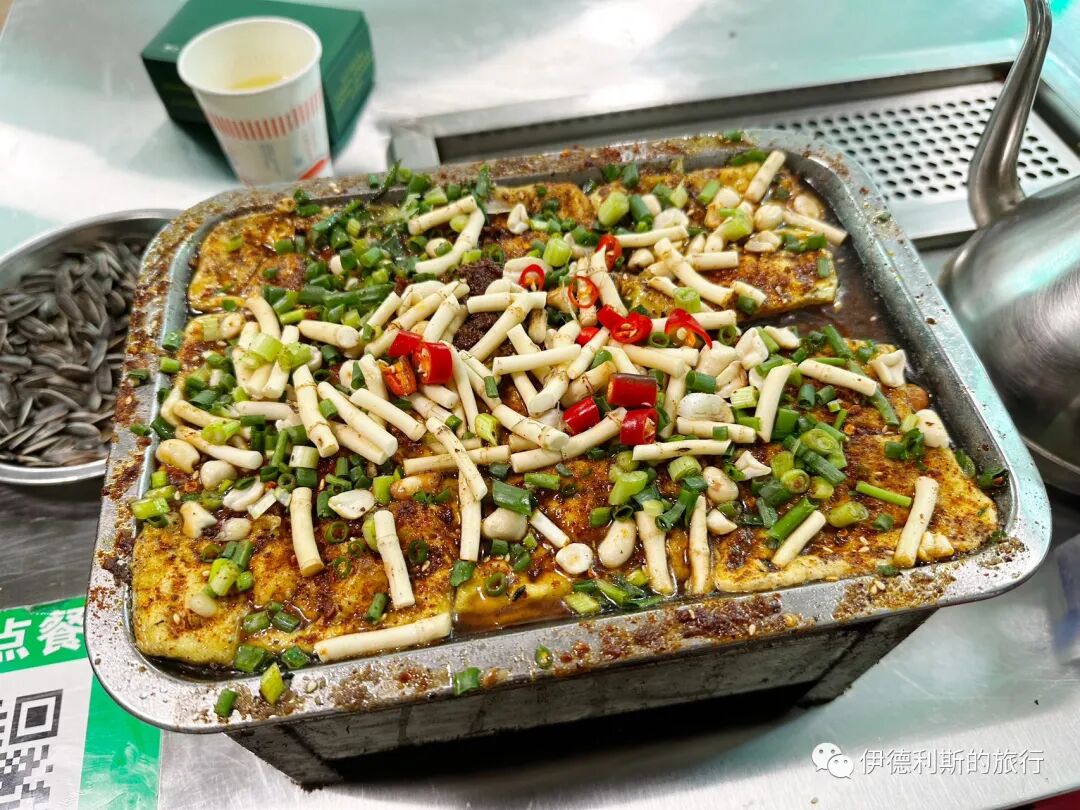
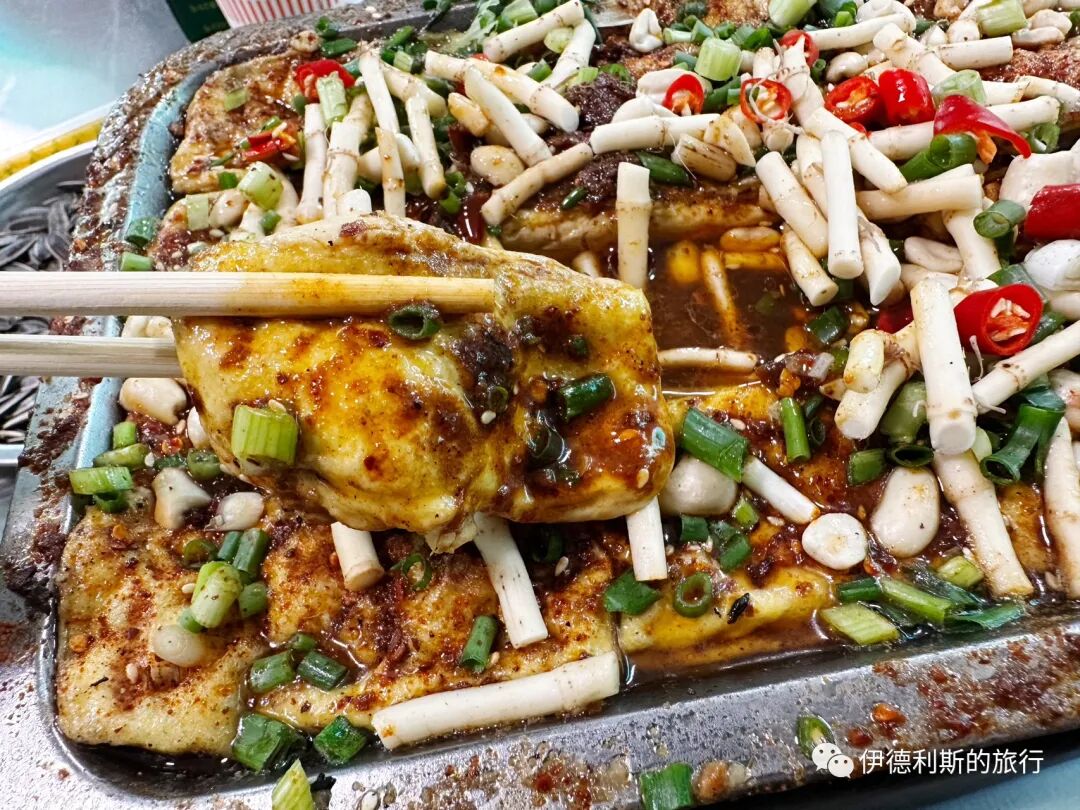
Their service is quite good; as soon as you sit down, they bring you tea and melon seeds. At first, I ordered Zhaotong small meat skewers, fermented tofu (baojiang doufu), and roasted potatoes. The Zhaotong small meat skewers are truly mini. Each skewer is just one bite, mostly to savor the flavor. The fermented tofu (baojiang doufu) is very tender. They added a lot of fish mint (zhe'ergen) to enhance the flavor, and there was charcoal fire underneath.
After eating these, I still wanted more. I checked their menu, which was really rich and quite bold, so with the encouragement of my friends (dostani) in the group, I ordered beef brain and roasted grasshoppers, which I had never eaten before. The texture of the brain is actually a bit like fermented tofu (baojiang doufu), and it tasted quite good. I had always wanted to try grasshoppers as a food mentioned in the teachings, and this time I finally did. It looked a bit hard to eat at first, but once I actually ate it, I felt it was acceptable. It was roasted very crispy and felt a bit like eating shrimp.
You can find halal restaurants from all over Dali in the Renmin South Road area west of Xingsheng Bus Station. In 2020, I bought braised dishes made by Hui Muslims from Weishan Huihuideng at the market on Renmin South Road.
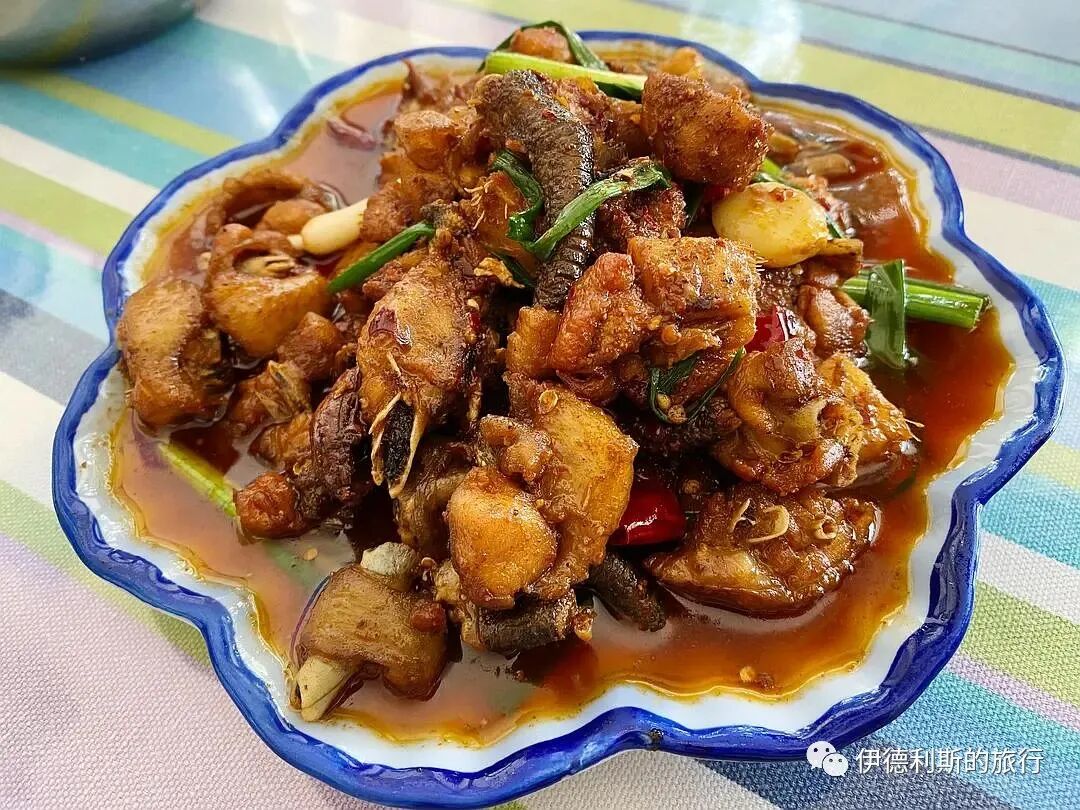
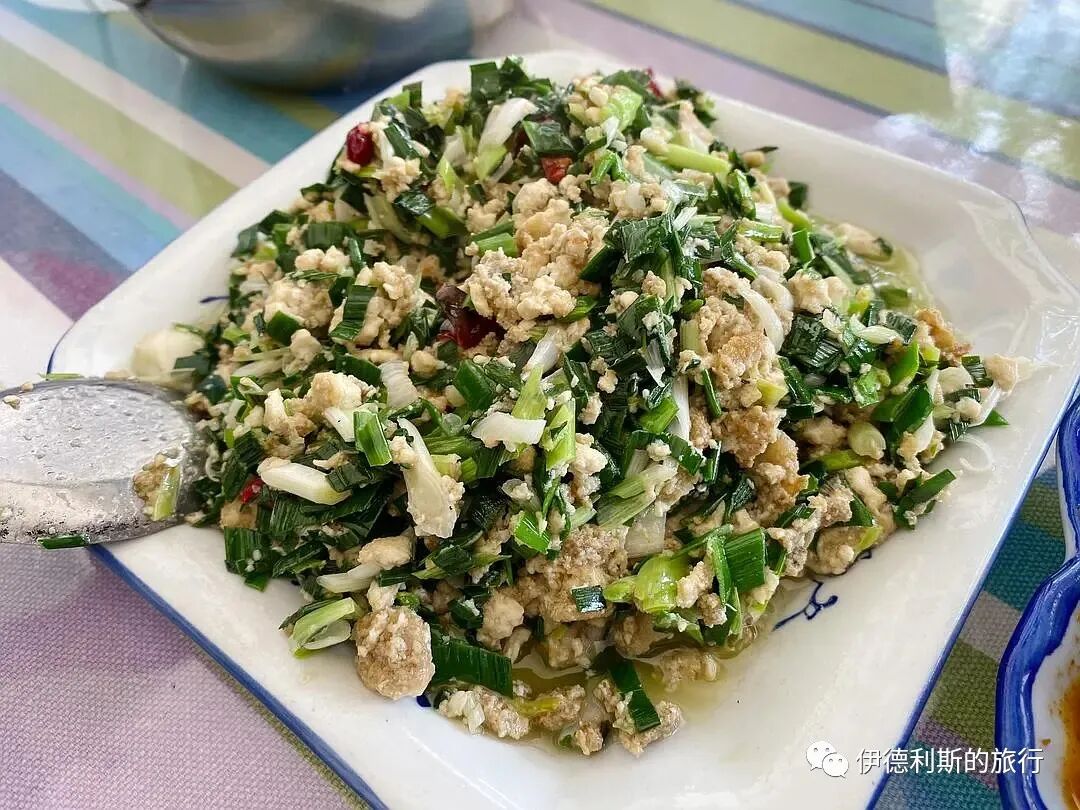
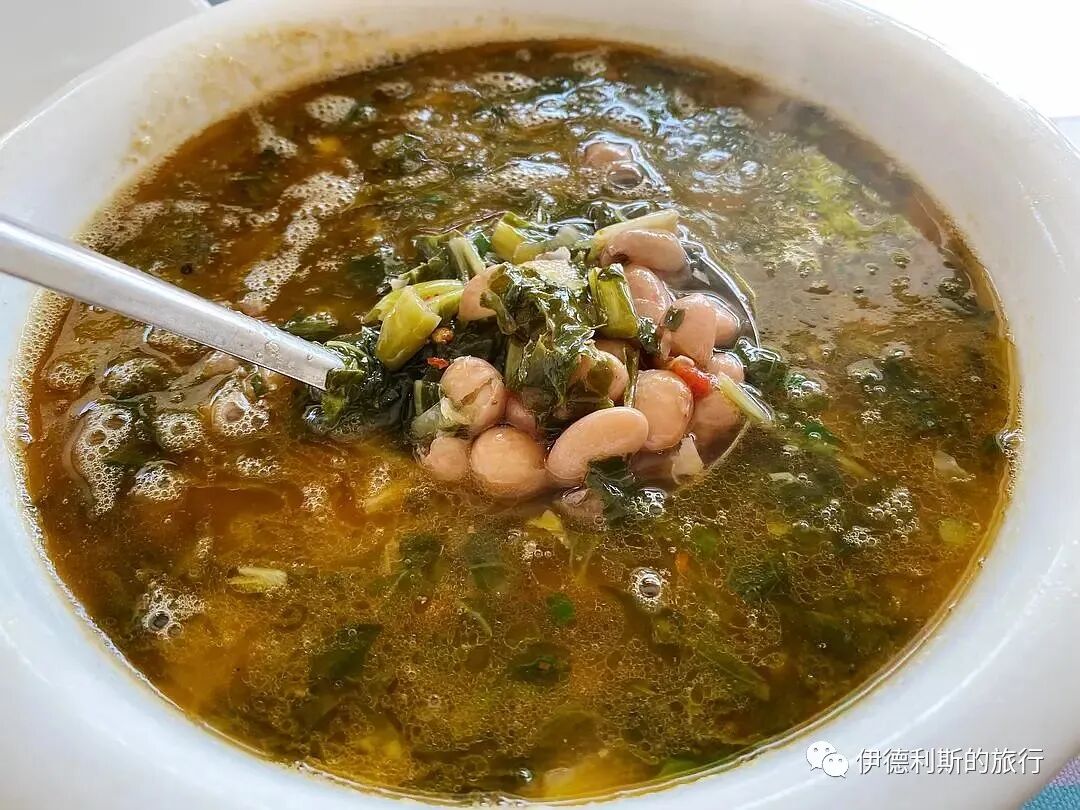
In 2020, I visited a restaurant on Renmin South Road run by Hui Muslims from Yongping County, Dali. I ate the local Yongping specialty, yellow-braised papaya chicken (huangmen mugua ji). The black-footed free-range chicken was excellent, and the papaya juice gave it a nice sour taste. I also had fermented bean curd (mei doufu) stir-fried with garlic sprouts and pickled vegetable red bean soup. These red beans were different from the kind we usually eat.
Spring travels in 2023:
On January 23, I left Macau and visited the Macau mosque known as the Moor Garden (Moluoyuan), where I ate delicious Indonesian Javanese food (see "Moor Garden and Indonesian Food in Macau"). On January 25, I arrived in Guangzhou, visited friends (dost), and ate various halal foods (see "Hui Muslim Oil Cakes and Yemeni Food in Guangzhou").
At noon, I performed namaz at the Huaisheng Mosque, then went to visit the Ancient Tombs of the Worthies (see "Huaisheng Mosque and the Ancient Tombs of the Worthies in Guangzhou").
In the afternoon, I prayed the afternoon prayer (asr) at Haopan Mosque and the sunset prayer (maghrib) at Xiaodongying Mosque (see "Visiting Haopan Mosque and Xiaodongying Mosque in Guangzhou").
On the morning of January 26, I took a train from Guangzhou to Zhaoqing, visited two mosques, and ate halal Cantonese food (see "Halal Roast Goose and Starfruit at the Mosque in Zhaoqing, Guangdong").
On the morning of January 27, I flew from Guangzhou to Xichang, Sichuan. I performed Jumu'ah at the Xichang city mosque, visited the West Mosque and the East Mosque, and ate Xichang rice noodles (see "Performing Jumu'ah and Eating Rice Noodles in Xichang, Sichuan").
On January 28, I took a high-speed train south to Miyi County in Panzhihua, Sichuan. I visited the beautiful Hui Muslim village of Tianba and performed namaz at the old Tianba mosque. I also enjoyed a delicious meal at a local farmhouse restaurant (see "The Beautiful Hui Village Deep in the Mountains—Tianba, Miyi, Sichuan"). view all
Summary: Dali Xiaguan — Century-Old Mosque Lane and Halal Food is presented here as a firsthand travel account in clear English, beginning with this scene: On the afternoon of January 28, I took a train from Miyi County in Panzhihua, Sichuan, to Xiaguan in Dali, starting my third trip to Dali. The account keeps its focus on Dali Mosques, Xiaguan Food, Yunnan Muslims while preserving the names, places, food, and historical details from the Chinese source.
On the afternoon of January 28, I took a train from Miyi County in Panzhihua, Sichuan, to Xiaguan in Dali, starting my third trip to Dali. This time I visited Binju, Yangbi, Fengyi, and Weishan, where I visited mosques and tasted halal food. I also carefully explored the Hui Muslim neighborhood around Wenming Street and West Street in Xiaguan to learn about the history of the Xiaguan Mosque.
As a key town in western Yunnan, Xiaguan was once home to many Hui Muslims and had three ancient mosques: the Yidianhong Mosque (Upper Mosque), Yulong Mosque (Middle Mosque), and Caiyuan Mosque (Lower Mosque). However, after the hardships during the Tongzhi reign, the Hui Muslims of Xiaguan died or fled, and all three ancient mosques were destroyed.
It was not until the middle of the Guangxu reign that the Qing government's pacification policy encouraged some surviving Hui Muslims to return to Xiaguan. Later, more Hui Muslims came to Xiaguan for business and gradually settled in the Yulong Pass (Xiaguan) area and outside the pass.
In 1915, led by Ma Yulong and over ten others, the Hui Muslims of Xiaguan worked together to build the current Xiaguan Mosque. They also built a new street in front of the mosque, commonly known as Hui Street, which is now Wenming Street. This established the layout of the Xiaguan mosque district.
The current Xiaguan Mosque was rebuilt in 2004. Many Hui Muslims still live in the surrounding Wenming Street and West Street areas, where there are many halal restaurants.
This year, I noticed signs on some shop walls saying "rectification in use," and I wonder if there is a new plan for this area.
For my 2020 Dali trip, see "Eating and Visiting Halal Spots in Dali Xiaguan and Weishan" and "The Twenty Traditional Mosques of Dali."
Sha Family Courtyard
Today, many old Hui Muslim houses are still preserved around the Xiaguan Mosque, the most notable being the Sha Family Courtyard, which is over 110 years old. Fortunately, the descendants of the Sha family still live in the courtyard and run the Shajie Restaurant. You can enjoy a meal while experiencing the charm of this century-old Hui Muslim courtyard.
The Sha Family Courtyard follows the traditional Dali "three houses and one screen wall" (sanfang yizhaobi) layout, a style used by many local Bai, Han, and Hui Muslim families. The "three houses and one screen wall" layout means the main house and the east and west wing rooms are all two-story, three-room structures, with a large screen wall facing the main house.
I ate the most home-style Yunnan Hui Muslim food here: beef jerky rice (niu ganba fan) and pea sprout soup with pickled cucumbers. The Sha family is very welcoming, and it really doesn't feel like a restaurant; it feels like stepping into the daily life of the Hui Muslims in Xiaguan.
Inside the west wing of the Sha Family Courtyard, the middle room is a living room decorated with traditional calligraphy in the style of Weishan, Dali. The grandfather of the Sha family watches TV here in the evenings. On both sides are bedrooms, which have pictures of Mecca (tianfang tu) hanging inside.
Inside the north room, besides the calligraphy, there are photos of the Sha family from different periods, as well as gifts from Mrs. Sha's 80th and 90th birthday celebrations.
On the wall is a painting by the Yunnan Hui Muslim artist Wang Guowen Haji, featuring a little boy wearing an Ottoman fez hat. This is very interesting, and I suspect it relates to the Yunnan Islamic Progress Association organizing students to study at Al-Azhar University in Egypt after 1931. In 1829, the Ottoman Empire implemented a hat reform, ordering officials to stop wearing turbans and wear fez hats instead. The fez hat then became popular in Egypt under Ottoman rule.
Wenming Street
Wenming Street faces the Xiaguan Mosque, and there are many halal restaurants on the street.
In 2020, I ate braised meat rice noodles (menrou mixian) at this Renji shop.
Then I ate braised meat rice strips (menrou ersi) at this Baiweixuan shop; rice strips are firmer than rice noodles.
West Street
West Street is south of Wenming Street and also has many halal restaurants.
In the morning, I ate thick pea flour (xi doufen) with fried dough sticks (youtiao) and brown sugar boiled eggs at Ma Haibo's snack shop. Boss Ma is from Yongping County, Dali, which is the westernmost mountainous county in Dali, with the Lancang River just to the west.
The freshly fried dough sticks are crispy, and they taste great when dipped in the thick pea flour. The brown sugar boiled eggs have a warming feeling, making them perfect for breakfast.
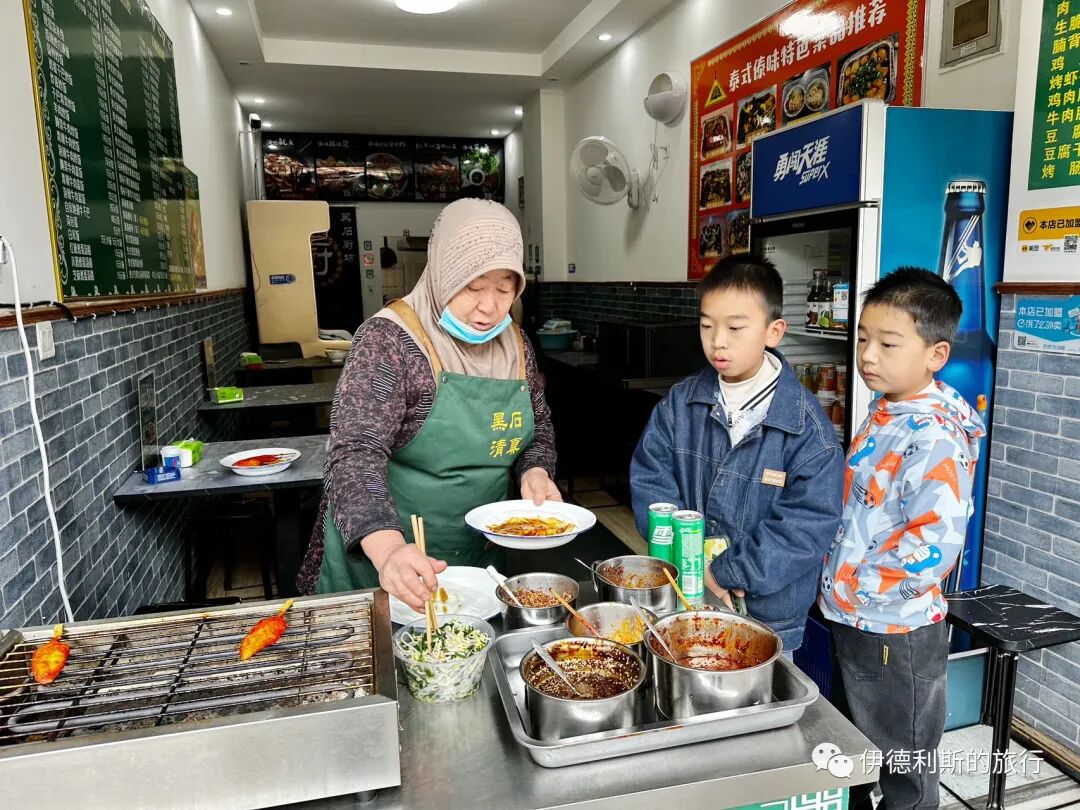
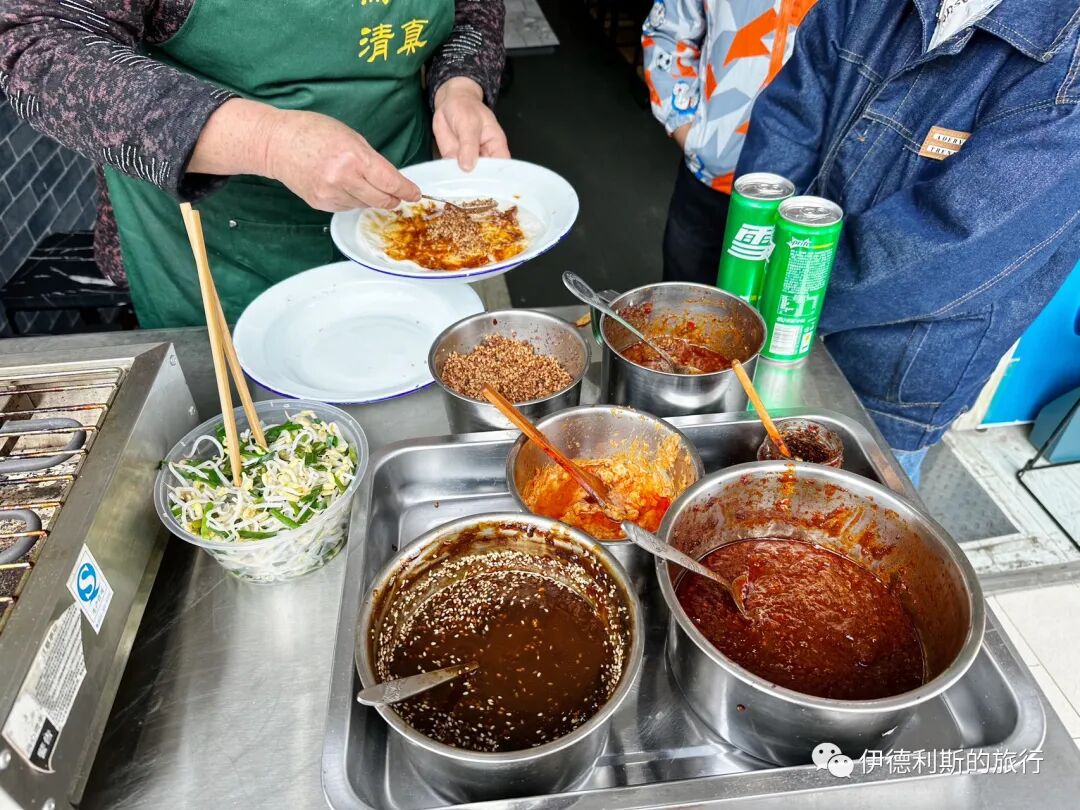
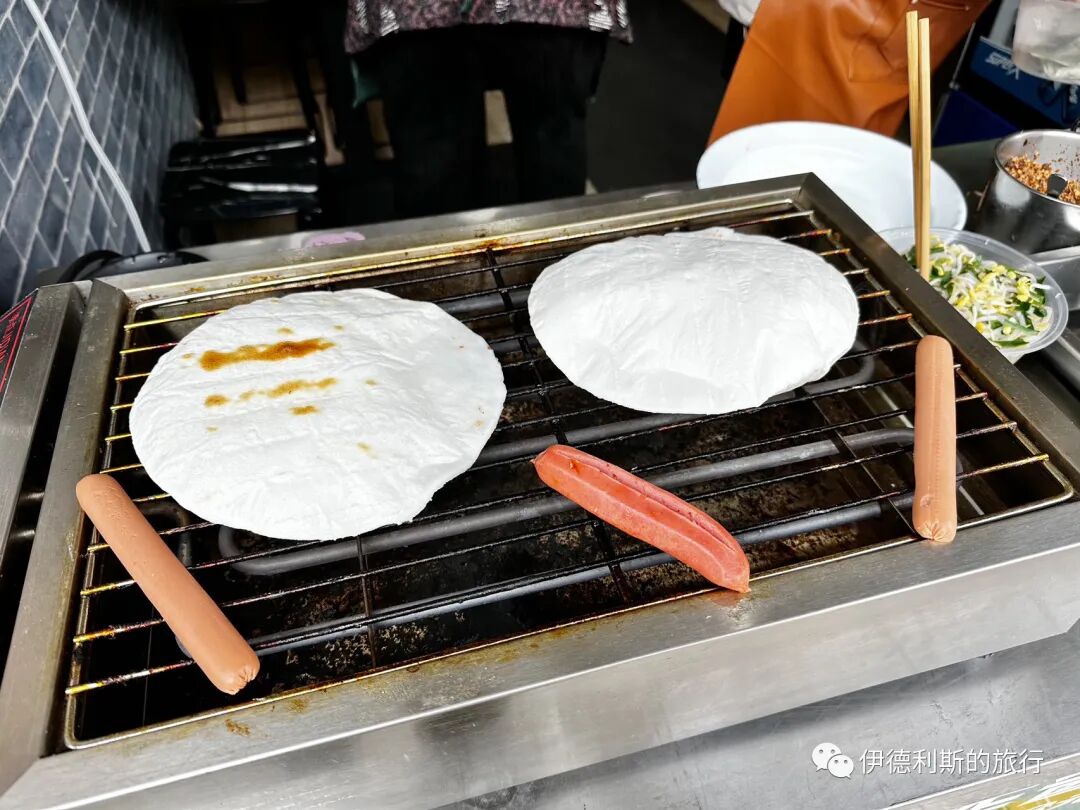
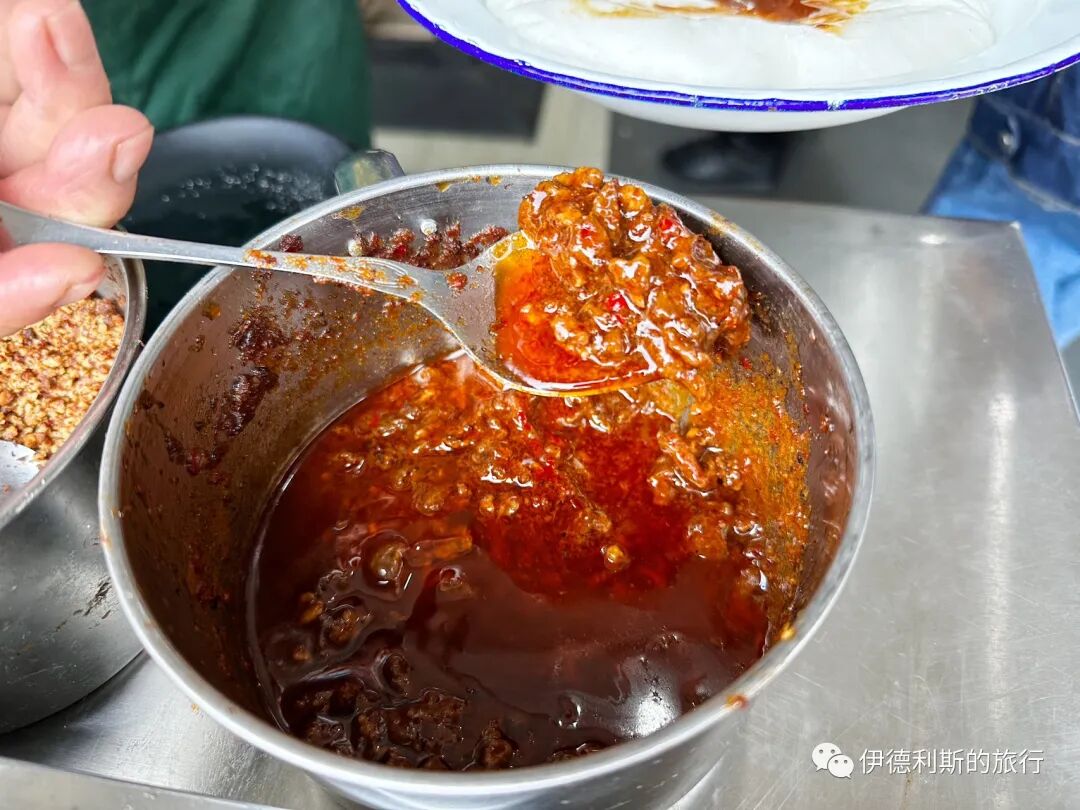
The beef sauce rice cakes (erkua) made by local Hui Muslims on West Street come with different sauces, so you can have them sweet or spicy. The neighborhood kids love them. It is also very convenient to pack some rice cakes (erkua) to eat on the road when you get hungry.
Zhengyang Times Square
Zhengyang Times Square is right across from Wenming Street. It has many halal restaurants and is especially lively at night.
At night, I ate beef-covered rice balls (niudagun) and savory bean-flour soup dumplings (ganba doumian xiantangyuan) at Du's Tangyuan shop in Zhengyang Times Square. Yunnan has a really rich variety of rice balls (tangyuan), both sweet and savory. Beef-covered rice balls (niudagun) are made by rolling the rice balls in roasted soybean flour and adding maltose or rose jam. Their shop stays open until night, and it is mostly locals who come to eat here.
At a street stall in Zhengyang Times Square, I had a pineapple-flavored Burmese flatbread (Palata). Palata comes from the Indian flatbread Paratha. After it reached Burma, sugar was added to make it a snack. Hui Muslim caravans from Yunnan brought this snack back to their hometown, where it became known as tossed flatbread (shuaishou baba).
I had a copper pot stew (guoguocai) at Musheng Copper Pot. The owners are Hui Muslims from Xingzhuang in Xizhou Town, Dali. It is a beautiful Hui Muslim village located under Canglang Peak by Erhai Lake.
Copper pot stew (guoguocai) is similar to spicy hot pot (malatang) where you pick your own vegetables, but they do not weigh them. Unlike spicy hot pot (malatang), copper pot stew (guoguocai) is cooked in a small copper pot. You also add a topping of classic Yunnan Hui Muslim dishes like braised meat, cold-sliced meat, or yellow-braised chicken, and eat it with rice.
I ordered the mild spicy version, but it was on a completely different level than the mild spicy in Beijing. It made my nose run, my eyes water, and my lips feel like they were being electrocuted. Next time, I will honestly stick to the clear broth, but for those friends (dost) who love spicy food, I still recommend trying the spicy pot base!
I bought some milk fans (rufan) at a fresh milk shop at the corner of Zhengyang Times Square in 2020.
Outside the Hui Muslim Street
Besides the Hui Muslim street around Xiaguan Mosque, there are many other halal restaurants in other parts of Xiaguan. I will share a few more here.
Nafeng Halal Snack Shop is an old place where locals eat. I ordered a bowl of minced meat rice noodles (ersi) with a braised meat topping. The texture of the rice noodles (ersi) is softer and not as chewy as rice noodles (mixian).
At night, I had a late-night snack at Plato Zhaotong Specialty Small Meat Skewers next to Dali Station.
Their service is quite good; as soon as you sit down, they bring you tea and melon seeds. At first, I ordered Zhaotong small meat skewers, fermented tofu (baojiang doufu), and roasted potatoes. The Zhaotong small meat skewers are truly mini. Each skewer is just one bite, mostly to savor the flavor. The fermented tofu (baojiang doufu) is very tender. They added a lot of fish mint (zhe'ergen) to enhance the flavor, and there was charcoal fire underneath.
After eating these, I still wanted more. I checked their menu, which was really rich and quite bold, so with the encouragement of my friends (dostani) in the group, I ordered beef brain and roasted grasshoppers, which I had never eaten before. The texture of the brain is actually a bit like fermented tofu (baojiang doufu), and it tasted quite good. I had always wanted to try grasshoppers as a food mentioned in the teachings, and this time I finally did. It looked a bit hard to eat at first, but once I actually ate it, I felt it was acceptable. It was roasted very crispy and felt a bit like eating shrimp.
You can find halal restaurants from all over Dali in the Renmin South Road area west of Xingsheng Bus Station. In 2020, I bought braised dishes made by Hui Muslims from Weishan Huihuideng at the market on Renmin South Road.
In 2020, I visited a restaurant on Renmin South Road run by Hui Muslims from Yongping County, Dali. I ate the local Yongping specialty, yellow-braised papaya chicken (huangmen mugua ji). The black-footed free-range chicken was excellent, and the papaya juice gave it a nice sour taste. I also had fermented bean curd (mei doufu) stir-fried with garlic sprouts and pickled vegetable red bean soup. These red beans were different from the kind we usually eat.
Spring travels in 2023:
On January 23, I left Macau and visited the Macau mosque known as the Moor Garden (Moluoyuan), where I ate delicious Indonesian Javanese food (see "Moor Garden and Indonesian Food in Macau"). On January 25, I arrived in Guangzhou, visited friends (dost), and ate various halal foods (see "Hui Muslim Oil Cakes and Yemeni Food in Guangzhou").
At noon, I performed namaz at the Huaisheng Mosque, then went to visit the Ancient Tombs of the Worthies (see "Huaisheng Mosque and the Ancient Tombs of the Worthies in Guangzhou").
In the afternoon, I prayed the afternoon prayer (asr) at Haopan Mosque and the sunset prayer (maghrib) at Xiaodongying Mosque (see "Visiting Haopan Mosque and Xiaodongying Mosque in Guangzhou").
On the morning of January 26, I took a train from Guangzhou to Zhaoqing, visited two mosques, and ate halal Cantonese food (see "Halal Roast Goose and Starfruit at the Mosque in Zhaoqing, Guangdong").
On the morning of January 27, I flew from Guangzhou to Xichang, Sichuan. I performed Jumu'ah at the Xichang city mosque, visited the West Mosque and the East Mosque, and ate Xichang rice noodles (see "Performing Jumu'ah and Eating Rice Noodles in Xichang, Sichuan").
On January 28, I took a high-speed train south to Miyi County in Panzhihua, Sichuan. I visited the beautiful Hui Muslim village of Tianba and performed namaz at the old Tianba mosque. I also enjoyed a delicious meal at a local farmhouse restaurant (see "The Beautiful Hui Village Deep in the Mountains—Tianba, Miyi, Sichuan"). view all
Reposted from the web
Summary: Dali Xiaguan — Century-Old Mosque Lane and Halal Food is presented here as a firsthand travel account in clear English, beginning with this scene: On the afternoon of January 28, I took a train from Miyi County in Panzhihua, Sichuan, to Xiaguan in Dali, starting my third trip to Dali. The account keeps its focus on Dali Mosques, Xiaguan Food, Yunnan Muslims while preserving the names, places, food, and historical details from the Chinese source.
On the afternoon of January 28, I took a train from Miyi County in Panzhihua, Sichuan, to Xiaguan in Dali, starting my third trip to Dali. This time I visited Binju, Yangbi, Fengyi, and Weishan, where I visited mosques and tasted halal food. I also carefully explored the Hui Muslim neighborhood around Wenming Street and West Street in Xiaguan to learn about the history of the Xiaguan Mosque.
As a key town in western Yunnan, Xiaguan was once home to many Hui Muslims and had three ancient mosques: the Yidianhong Mosque (Upper Mosque), Yulong Mosque (Middle Mosque), and Caiyuan Mosque (Lower Mosque). However, after the hardships during the Tongzhi reign, the Hui Muslims of Xiaguan died or fled, and all three ancient mosques were destroyed.
It was not until the middle of the Guangxu reign that the Qing government's pacification policy encouraged some surviving Hui Muslims to return to Xiaguan. Later, more Hui Muslims came to Xiaguan for business and gradually settled in the Yulong Pass (Xiaguan) area and outside the pass.
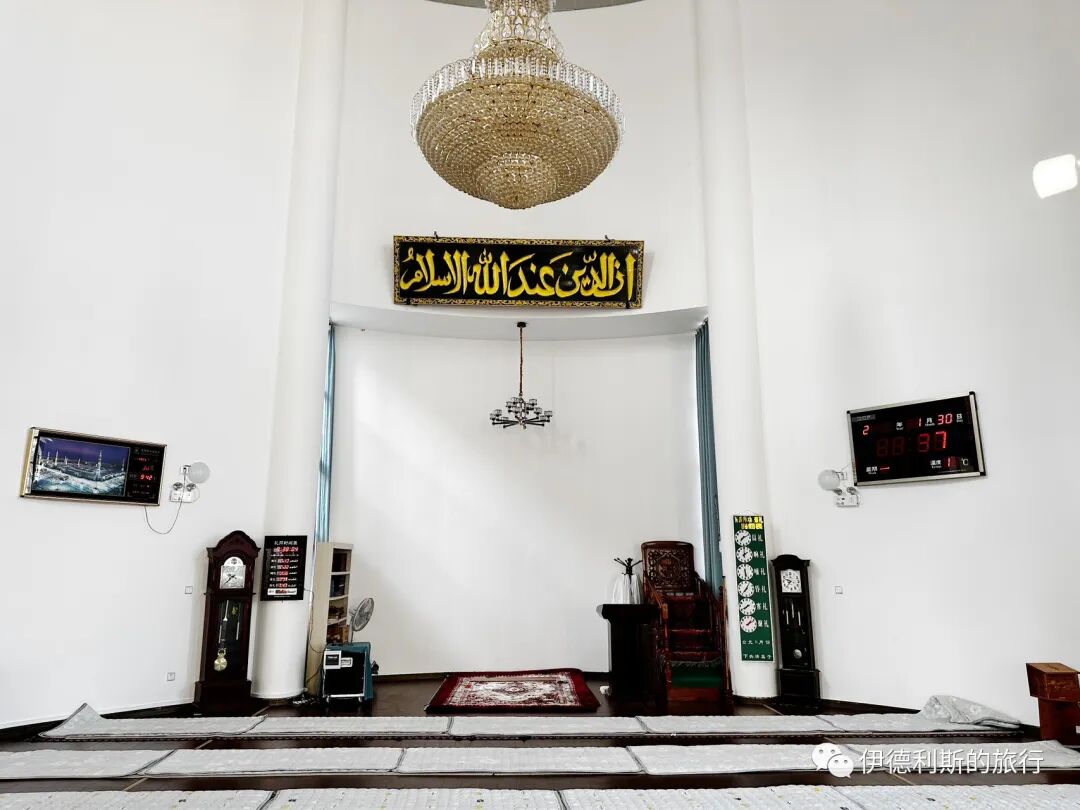
In 1915, led by Ma Yulong and over ten others, the Hui Muslims of Xiaguan worked together to build the current Xiaguan Mosque. They also built a new street in front of the mosque, commonly known as Hui Street, which is now Wenming Street. This established the layout of the Xiaguan mosque district.
The current Xiaguan Mosque was rebuilt in 2004. Many Hui Muslims still live in the surrounding Wenming Street and West Street areas, where there are many halal restaurants.
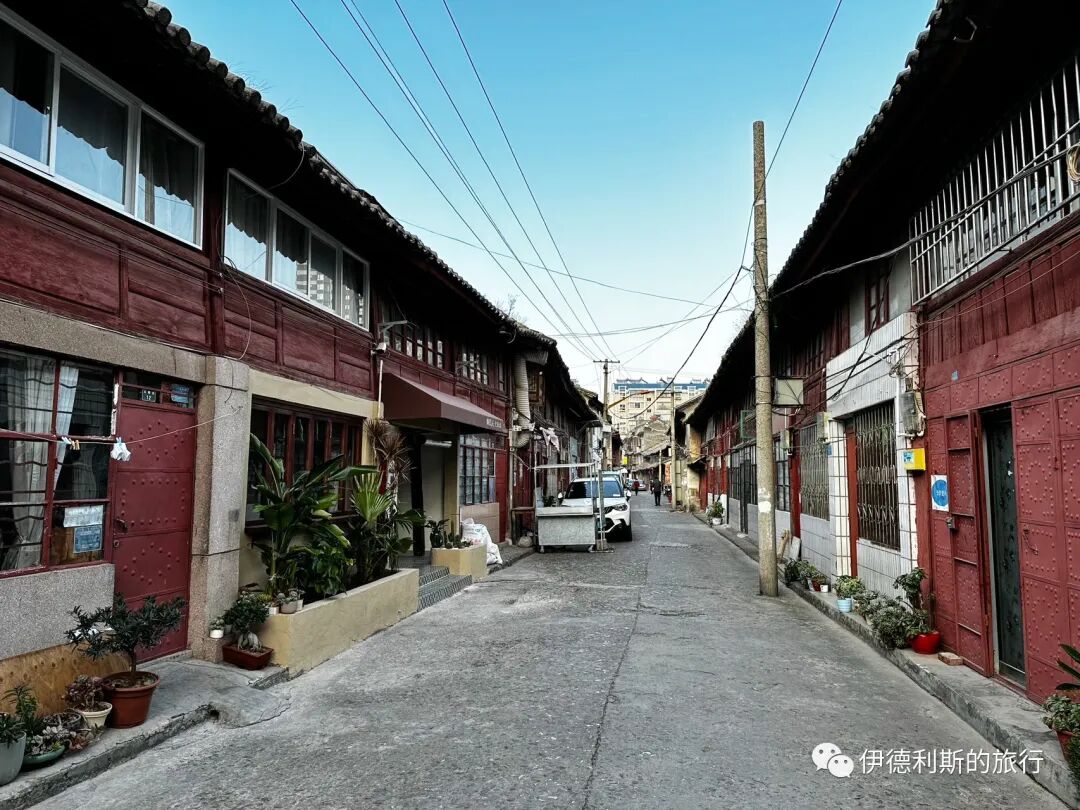
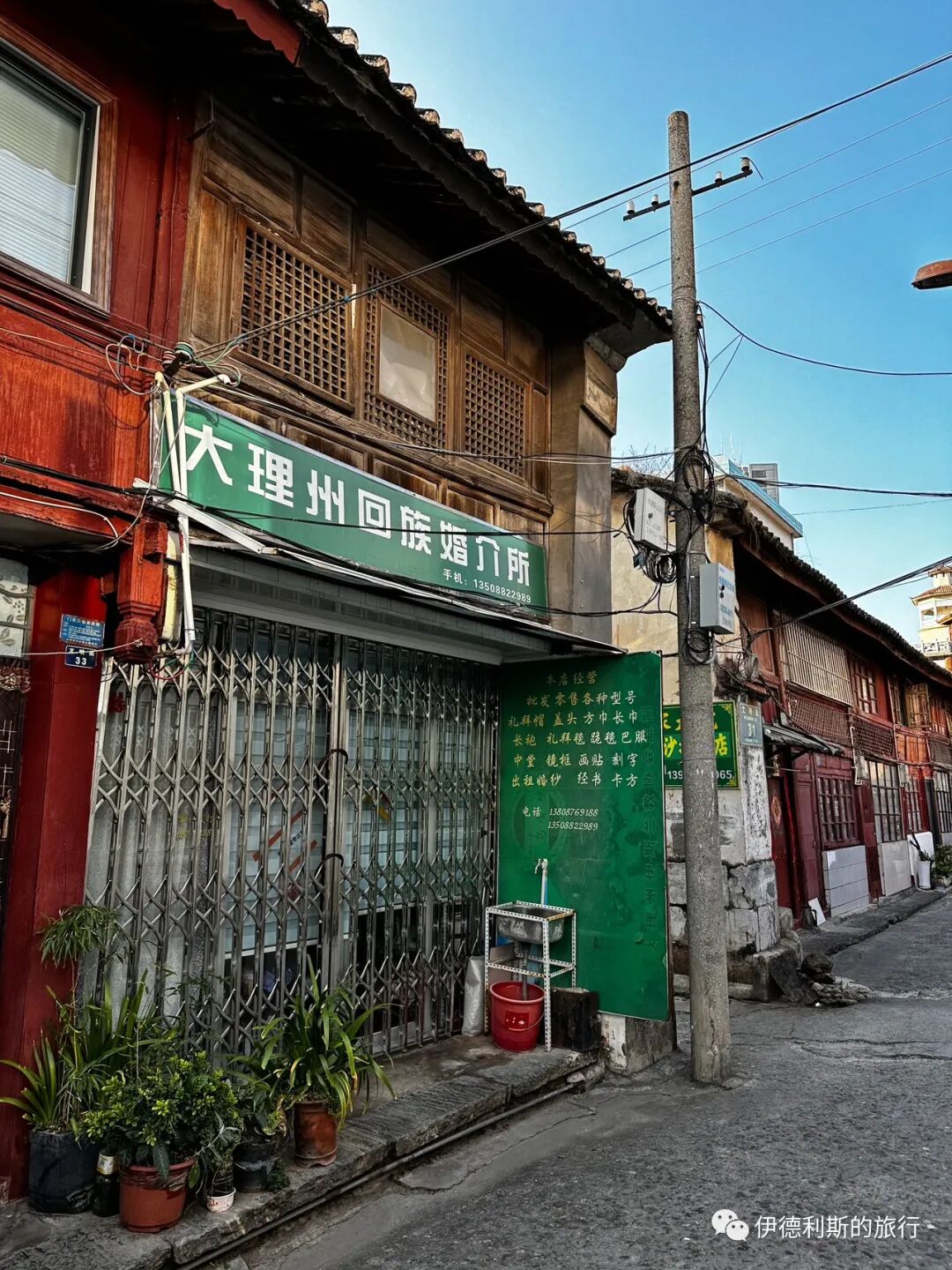
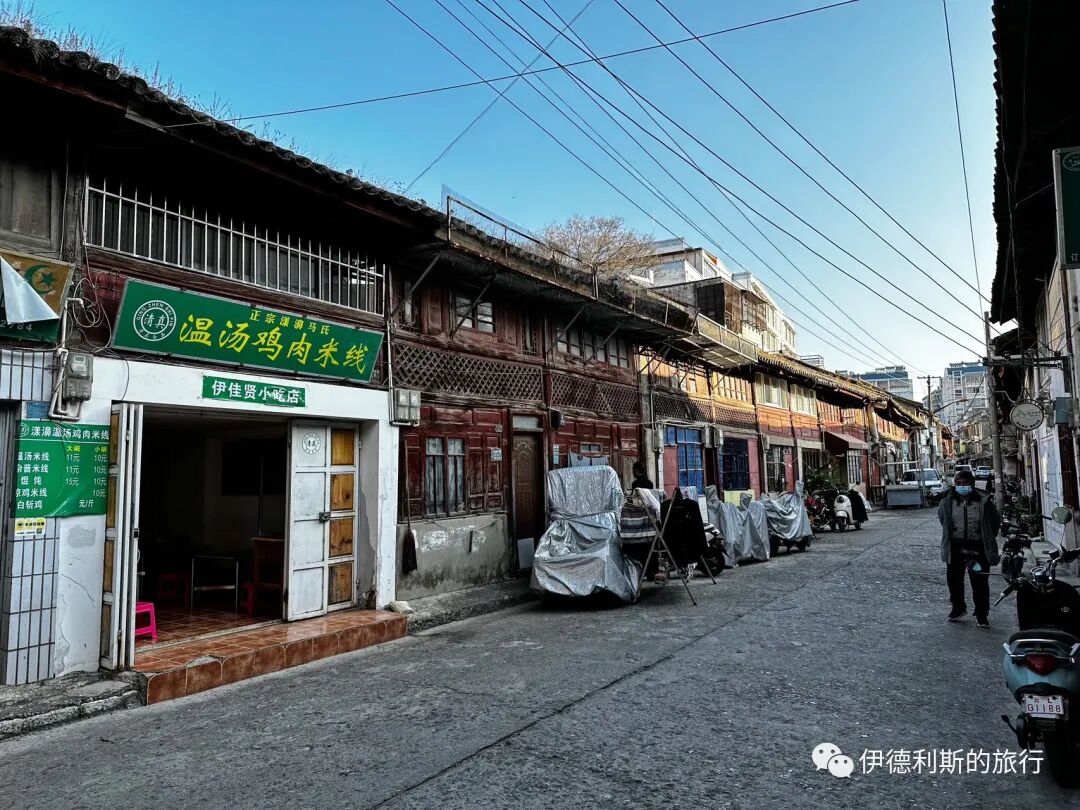
This year, I noticed signs on some shop walls saying "rectification in use," and I wonder if there is a new plan for this area.
For my 2020 Dali trip, see "Eating and Visiting Halal Spots in Dali Xiaguan and Weishan" and "The Twenty Traditional Mosques of Dali."
Sha Family Courtyard
Today, many old Hui Muslim houses are still preserved around the Xiaguan Mosque, the most notable being the Sha Family Courtyard, which is over 110 years old. Fortunately, the descendants of the Sha family still live in the courtyard and run the Shajie Restaurant. You can enjoy a meal while experiencing the charm of this century-old Hui Muslim courtyard.
The Sha Family Courtyard follows the traditional Dali "three houses and one screen wall" (sanfang yizhaobi) layout, a style used by many local Bai, Han, and Hui Muslim families. The "three houses and one screen wall" layout means the main house and the east and west wing rooms are all two-story, three-room structures, with a large screen wall facing the main house.
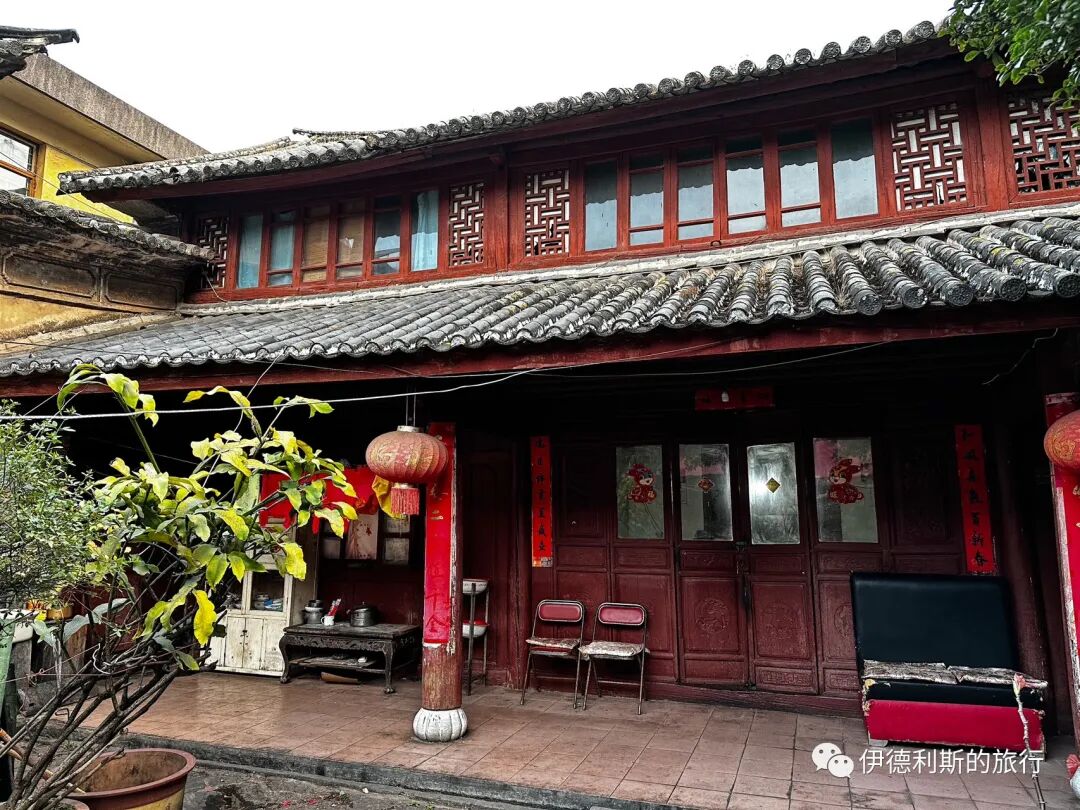
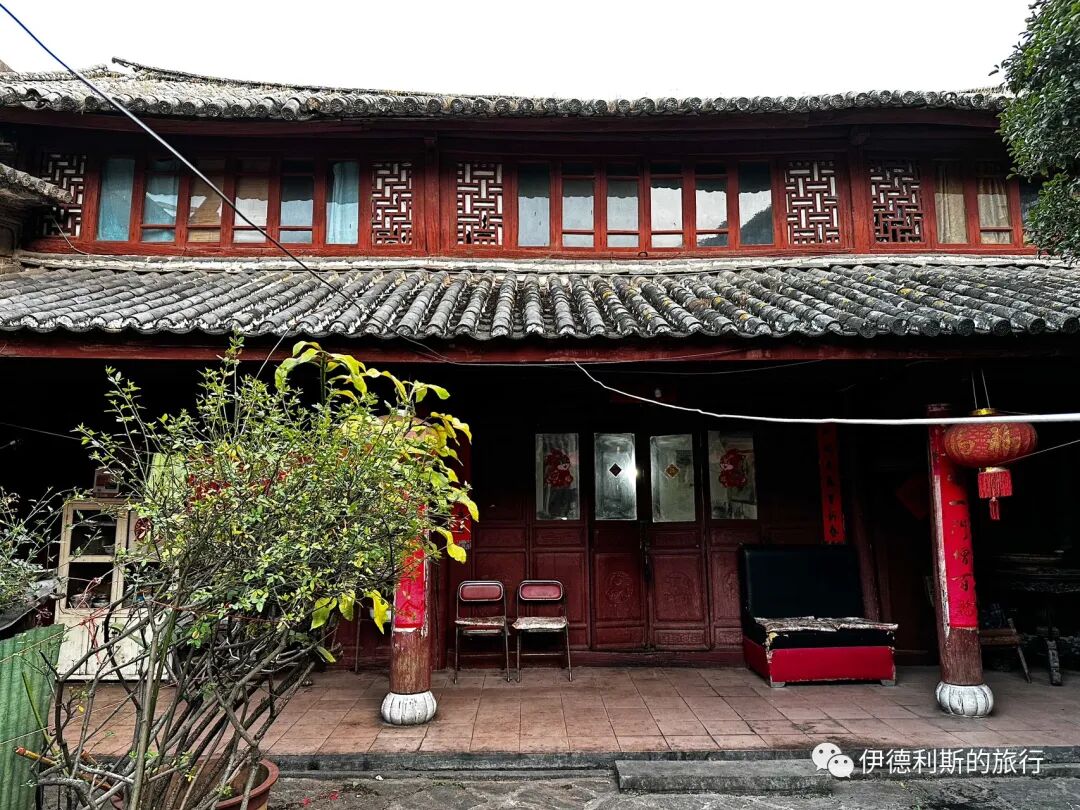
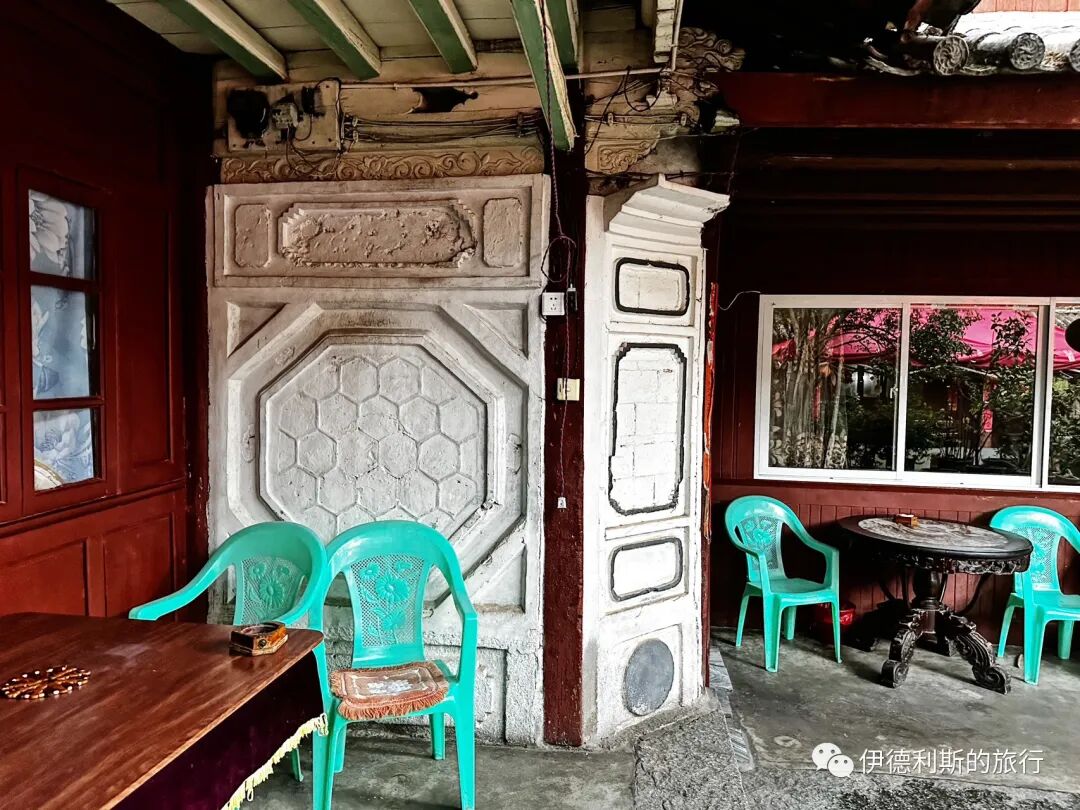
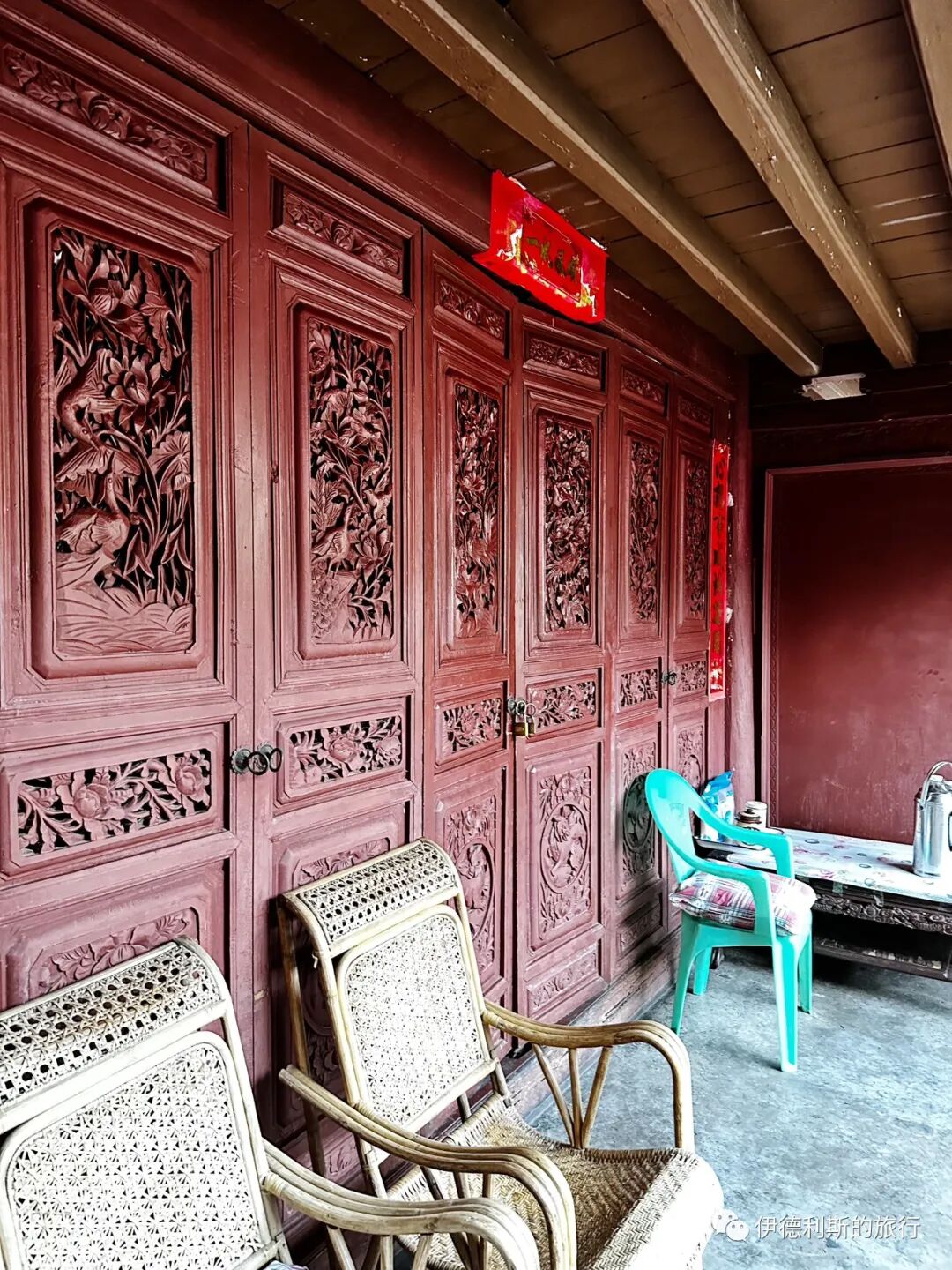
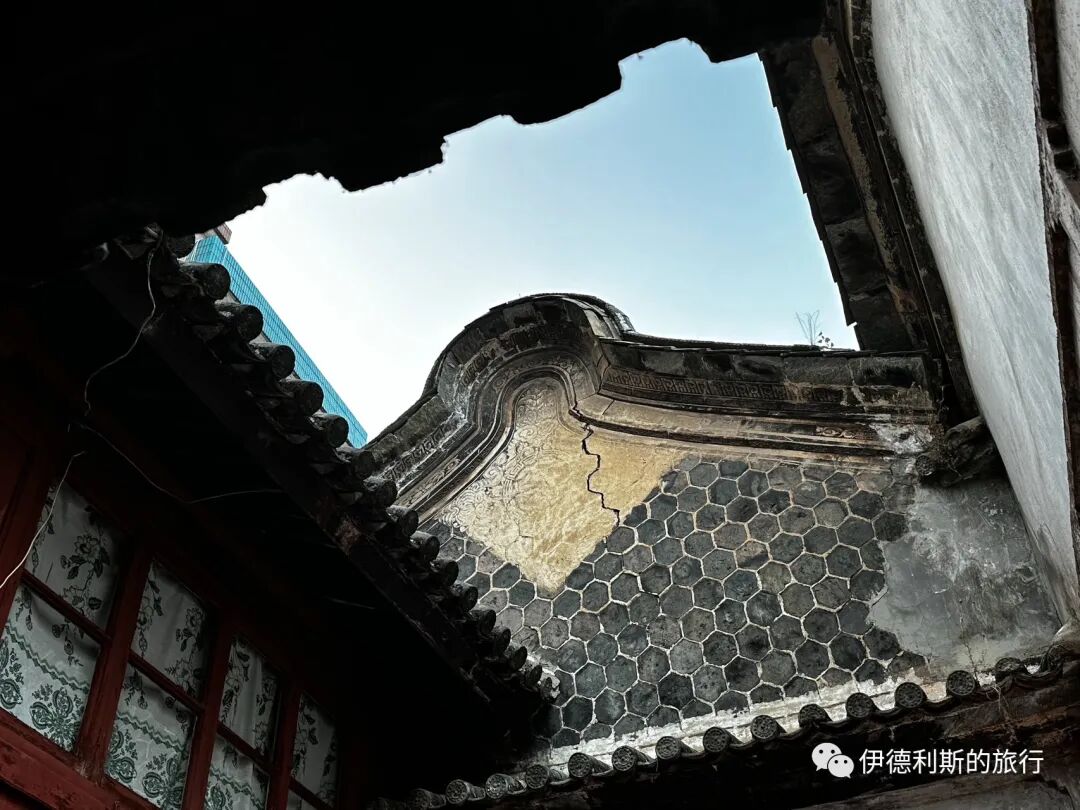
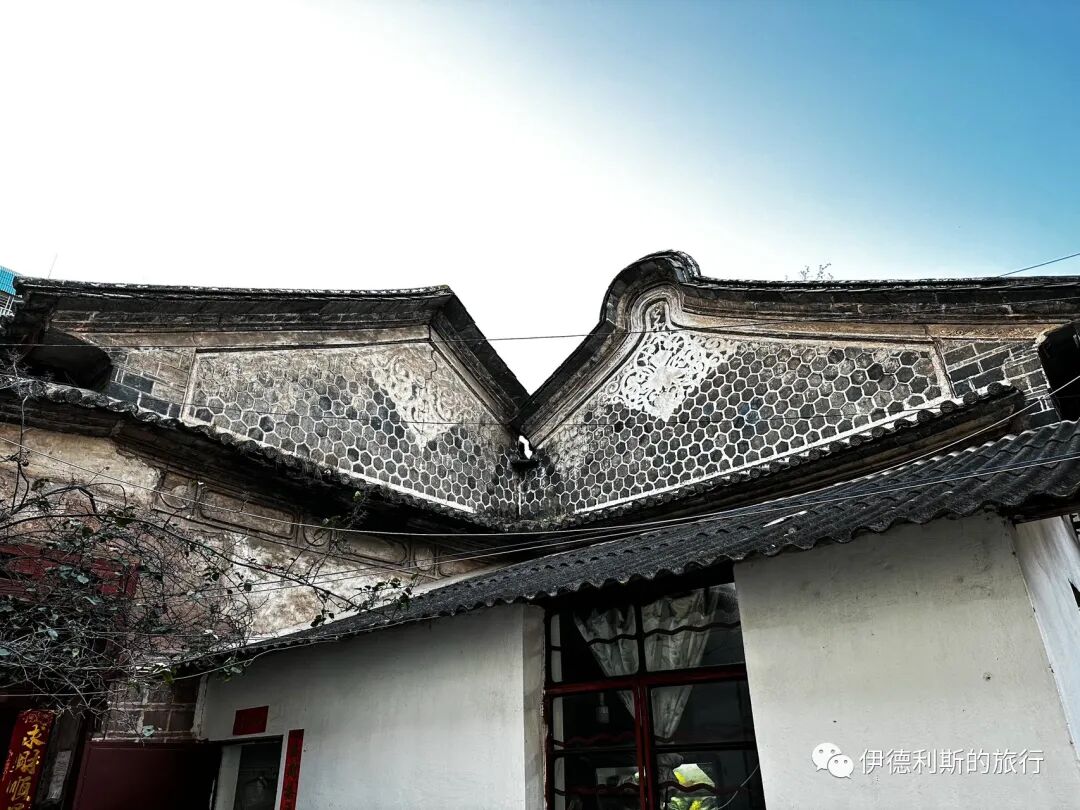
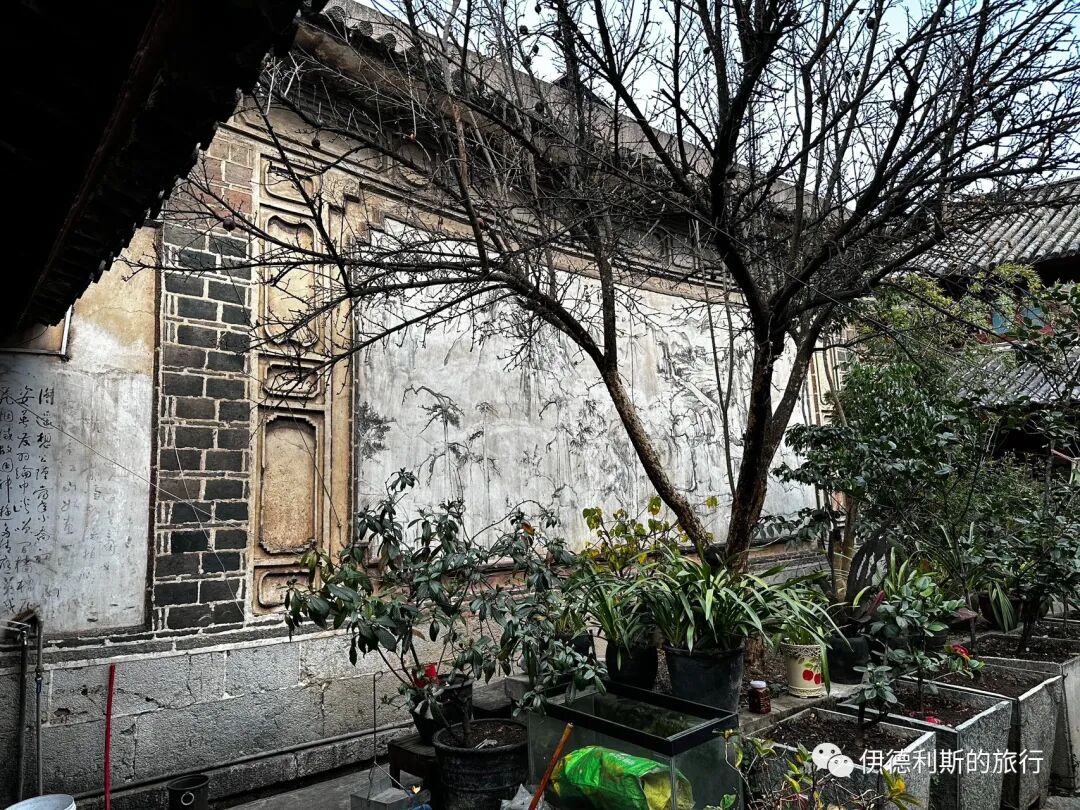
I ate the most home-style Yunnan Hui Muslim food here: beef jerky rice (niu ganba fan) and pea sprout soup with pickled cucumbers. The Sha family is very welcoming, and it really doesn't feel like a restaurant; it feels like stepping into the daily life of the Hui Muslims in Xiaguan.
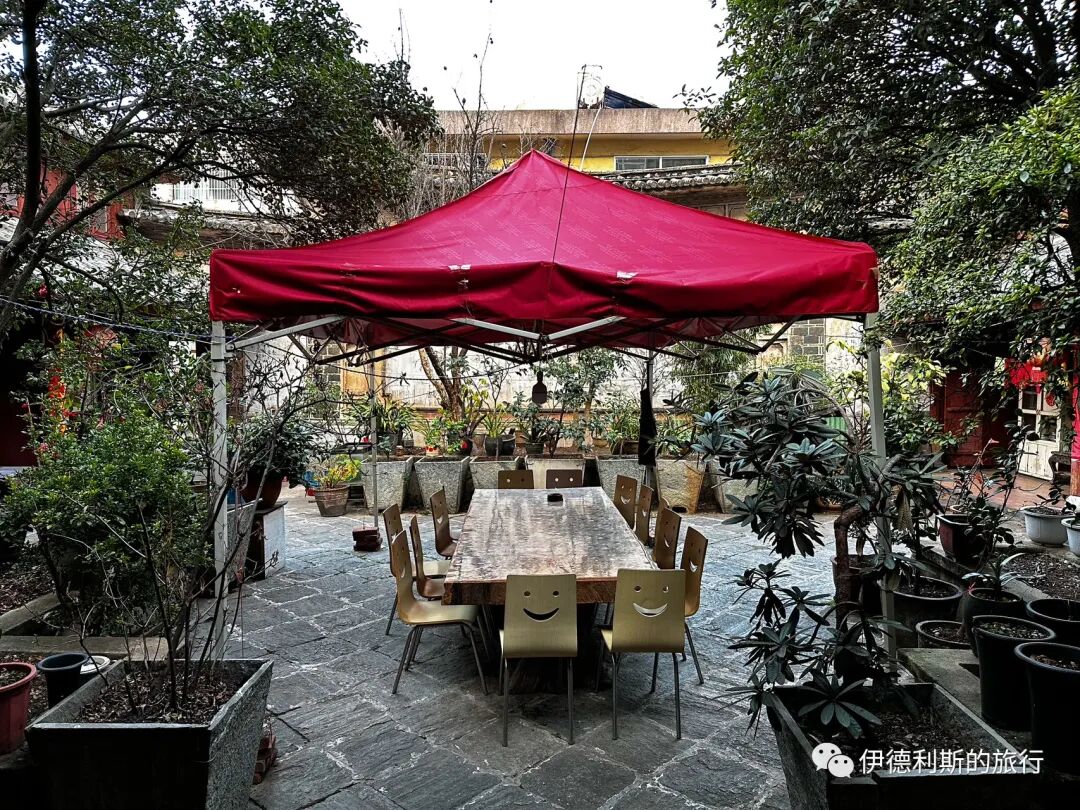
Inside the west wing of the Sha Family Courtyard, the middle room is a living room decorated with traditional calligraphy in the style of Weishan, Dali. The grandfather of the Sha family watches TV here in the evenings. On both sides are bedrooms, which have pictures of Mecca (tianfang tu) hanging inside.
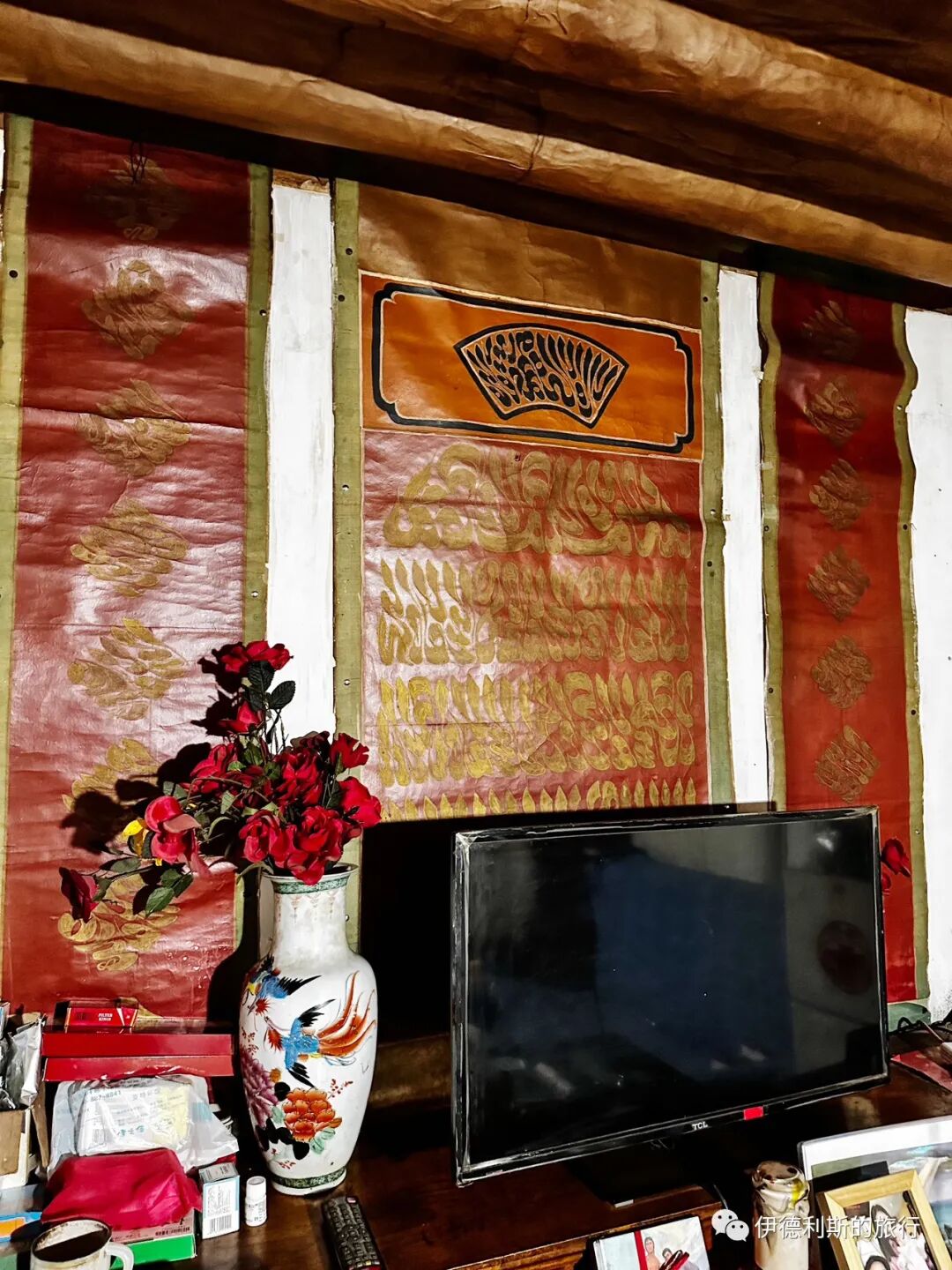
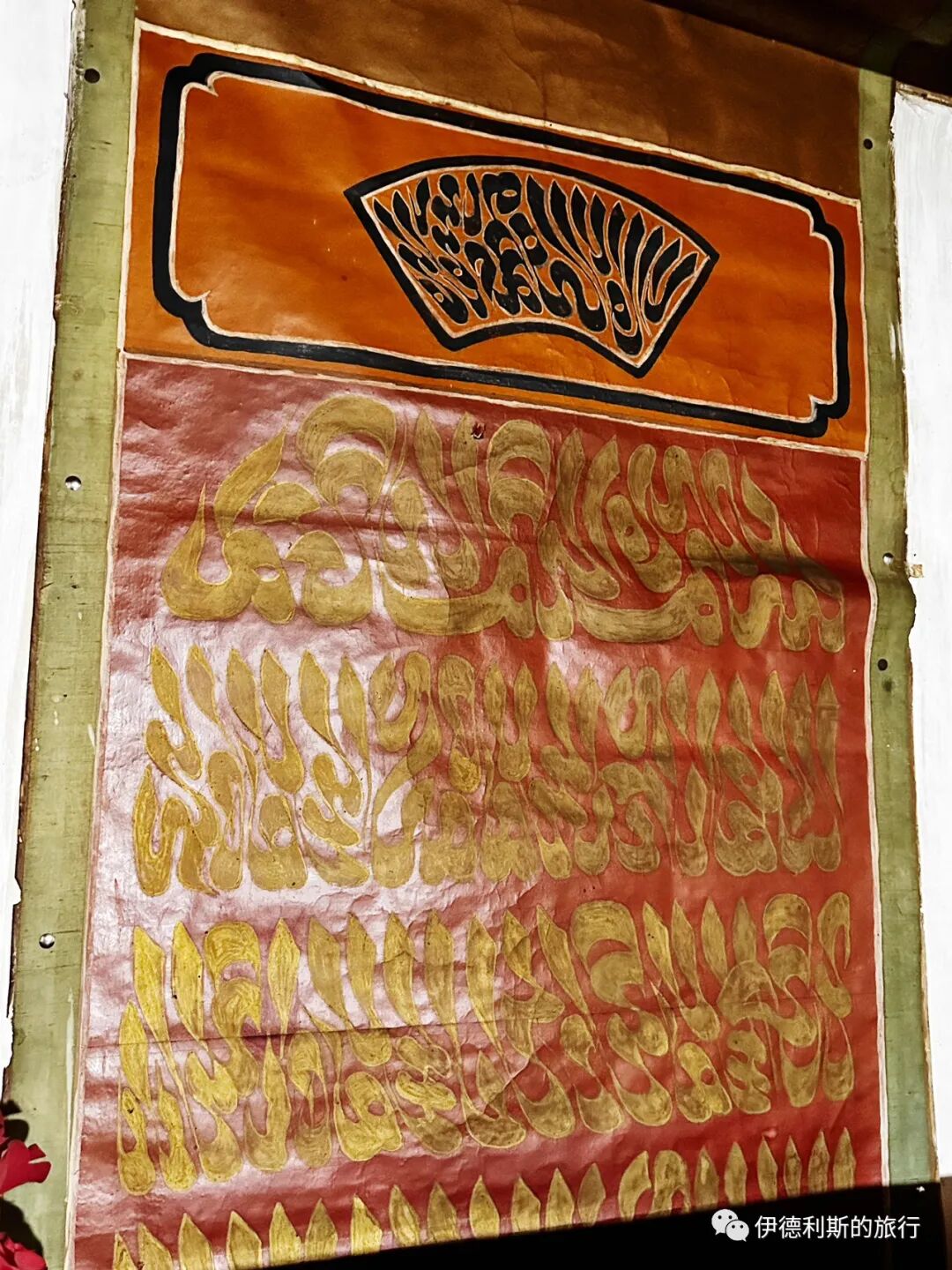
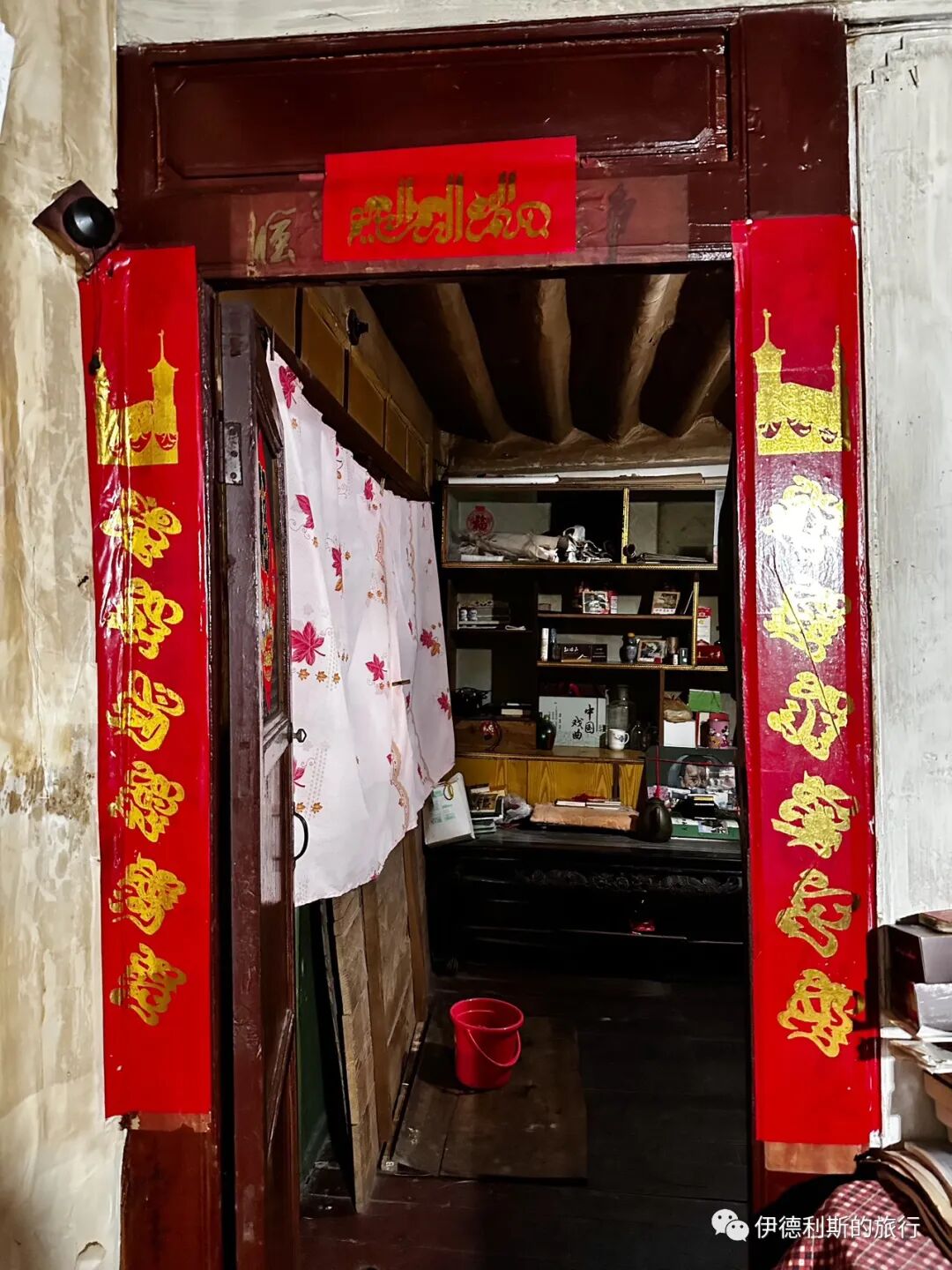
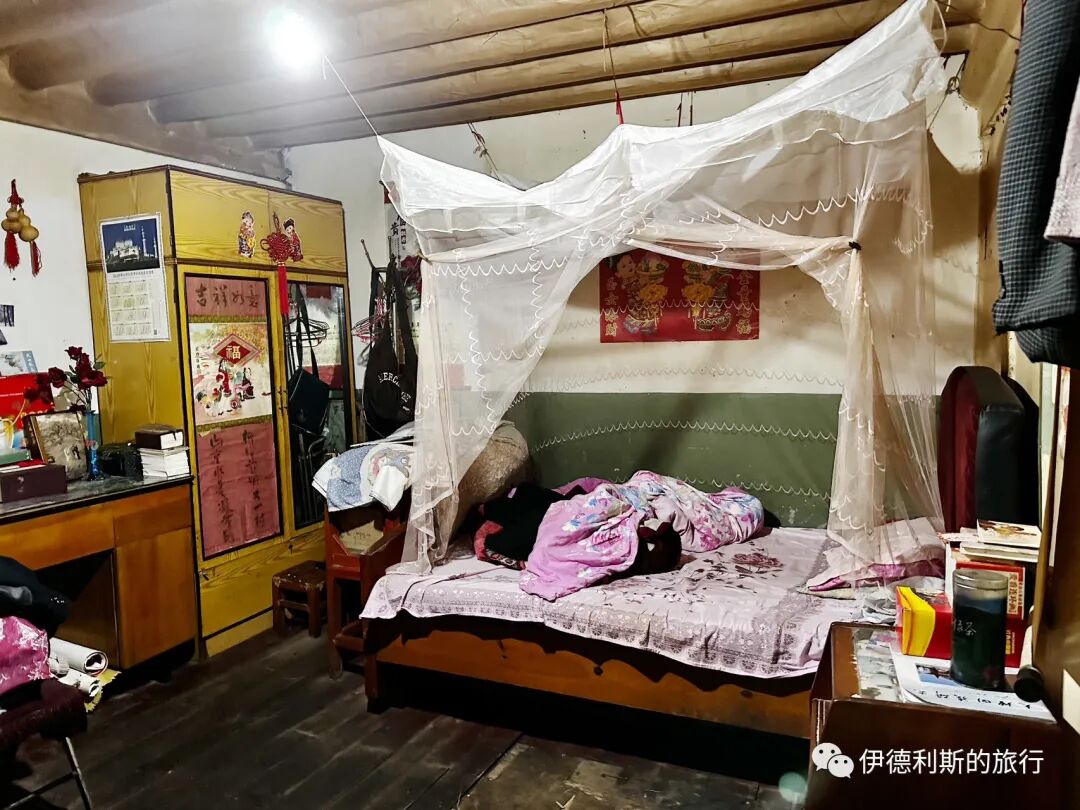
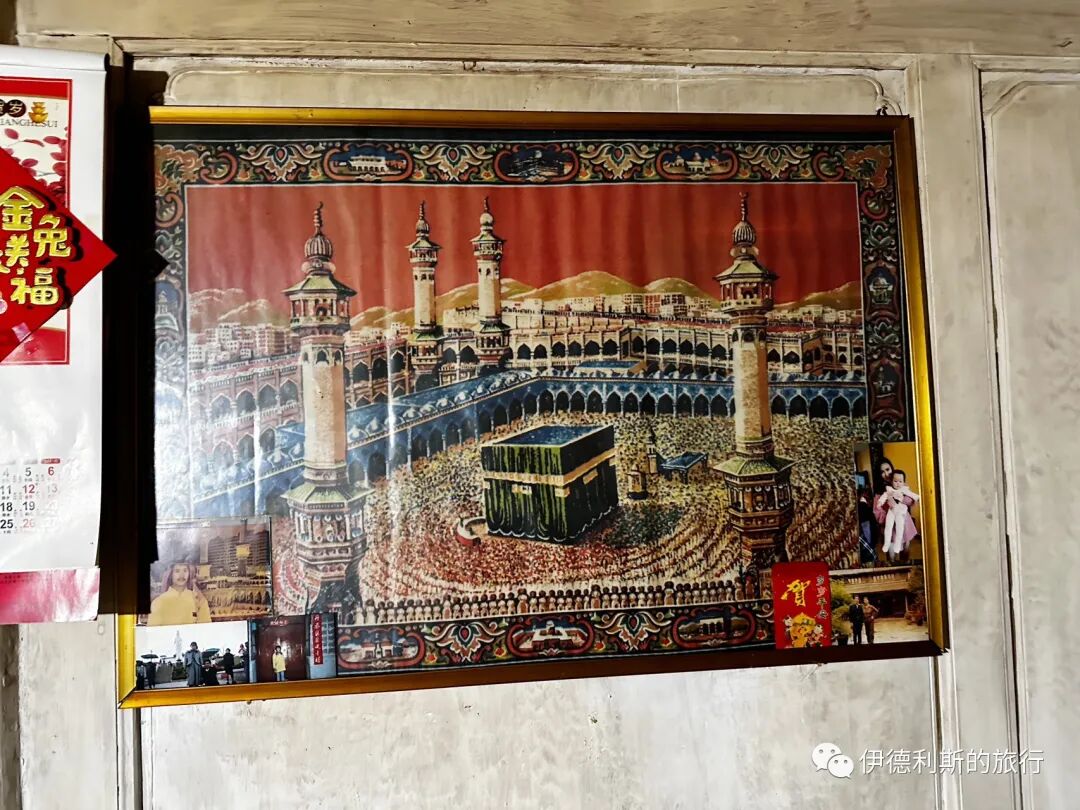
Inside the north room, besides the calligraphy, there are photos of the Sha family from different periods, as well as gifts from Mrs. Sha's 80th and 90th birthday celebrations.
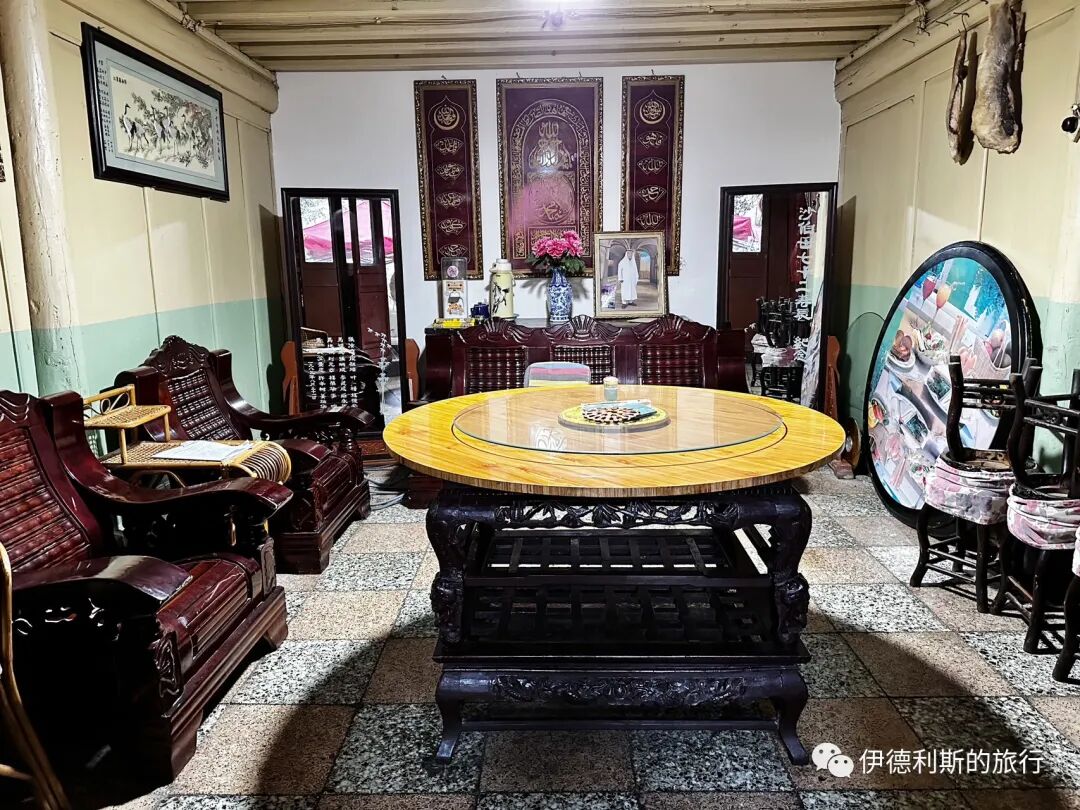
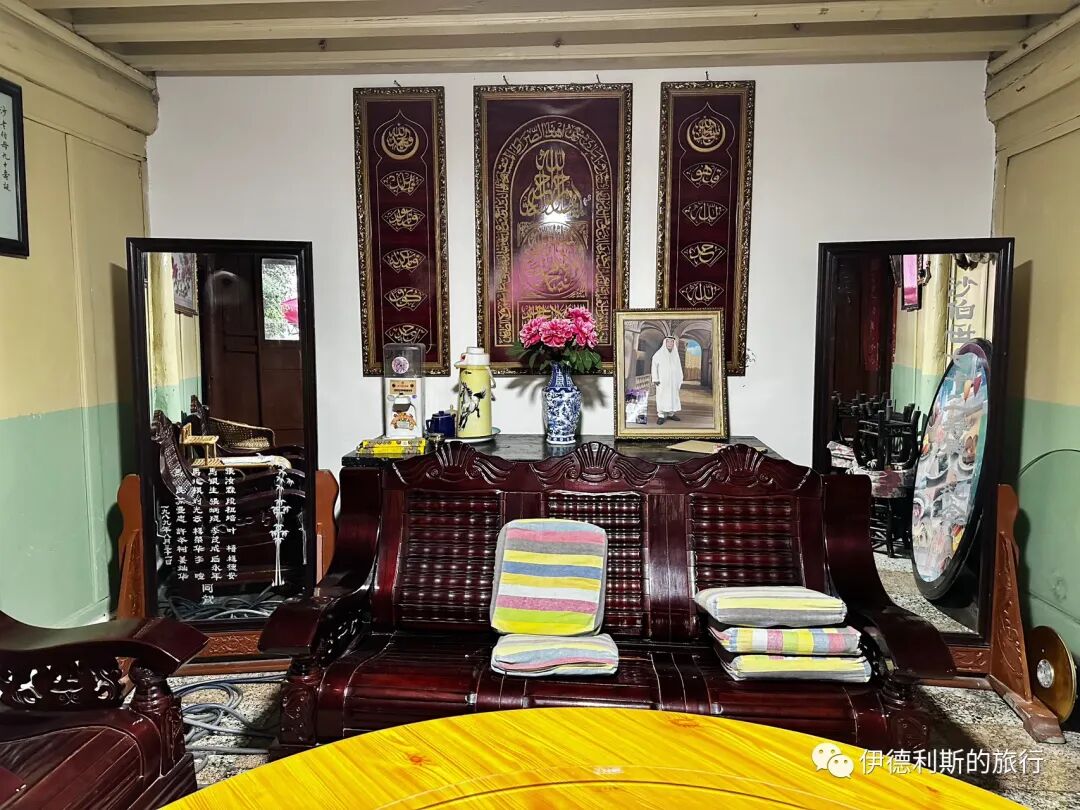
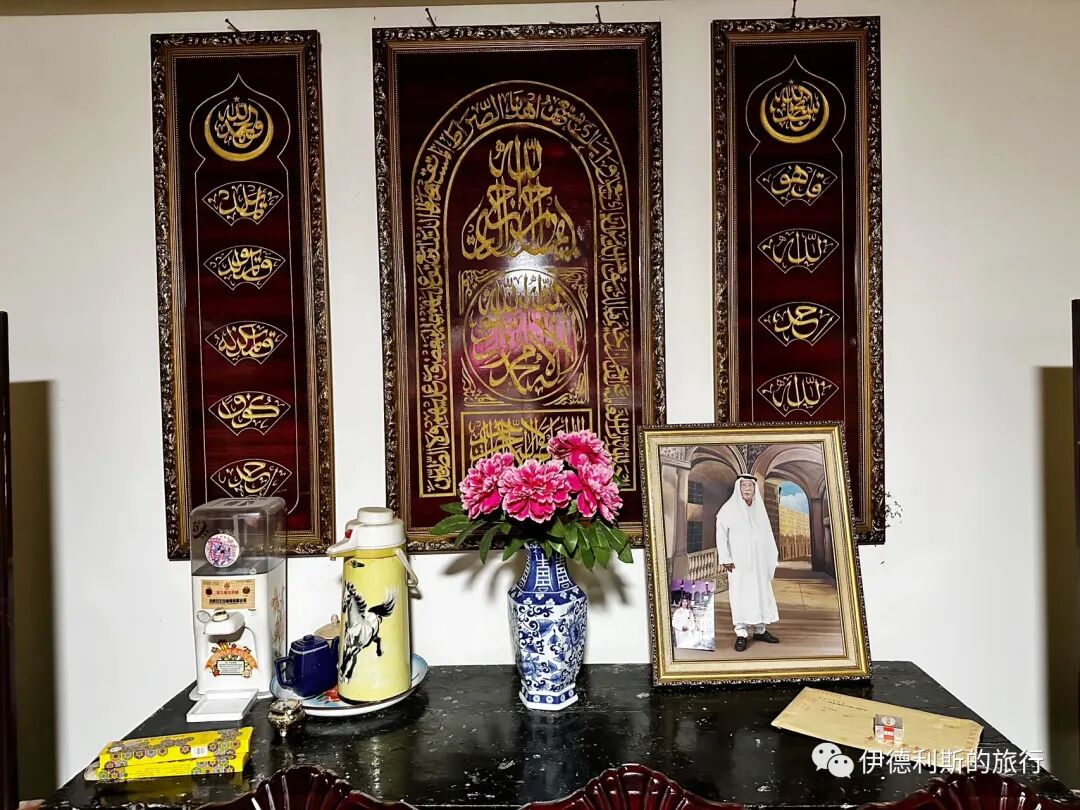
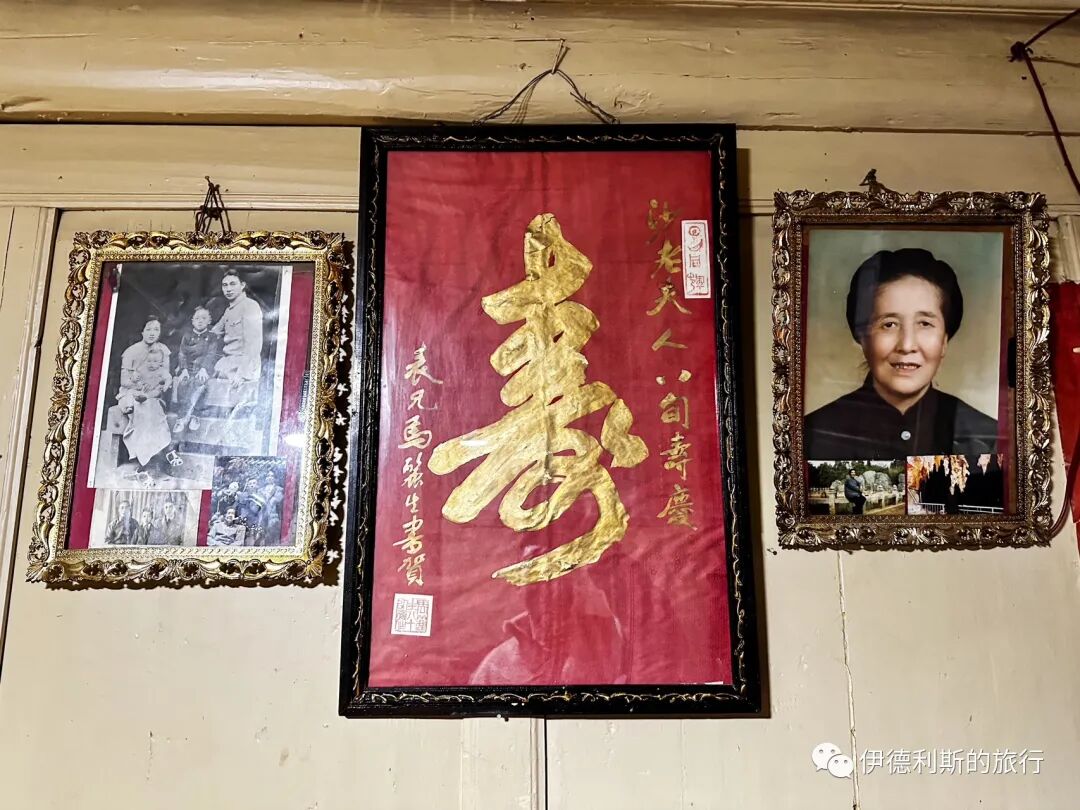
On the wall is a painting by the Yunnan Hui Muslim artist Wang Guowen Haji, featuring a little boy wearing an Ottoman fez hat. This is very interesting, and I suspect it relates to the Yunnan Islamic Progress Association organizing students to study at Al-Azhar University in Egypt after 1931. In 1829, the Ottoman Empire implemented a hat reform, ordering officials to stop wearing turbans and wear fez hats instead. The fez hat then became popular in Egypt under Ottoman rule.
Wenming Street
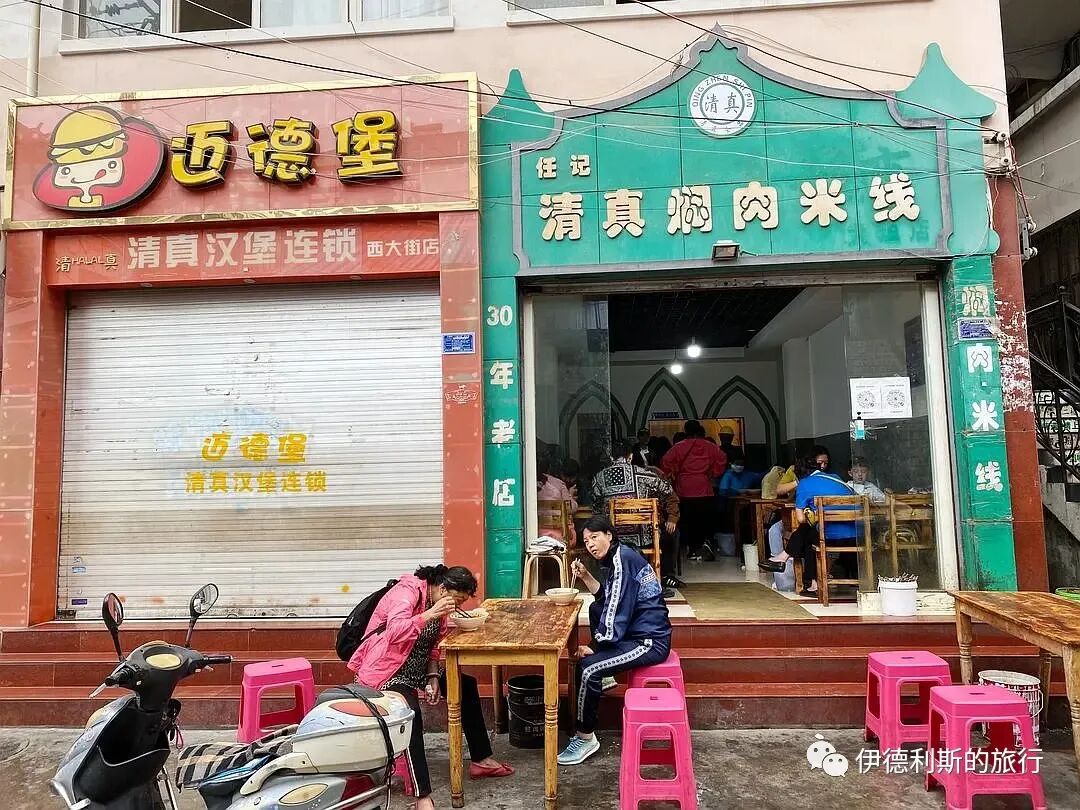
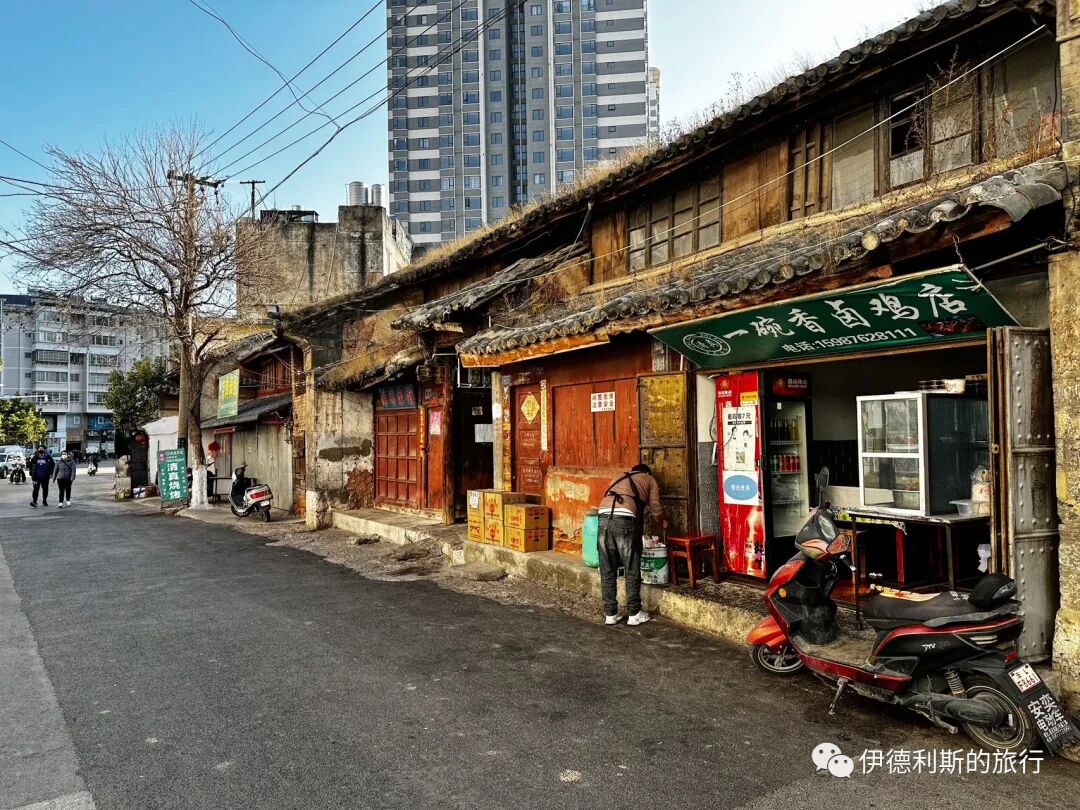
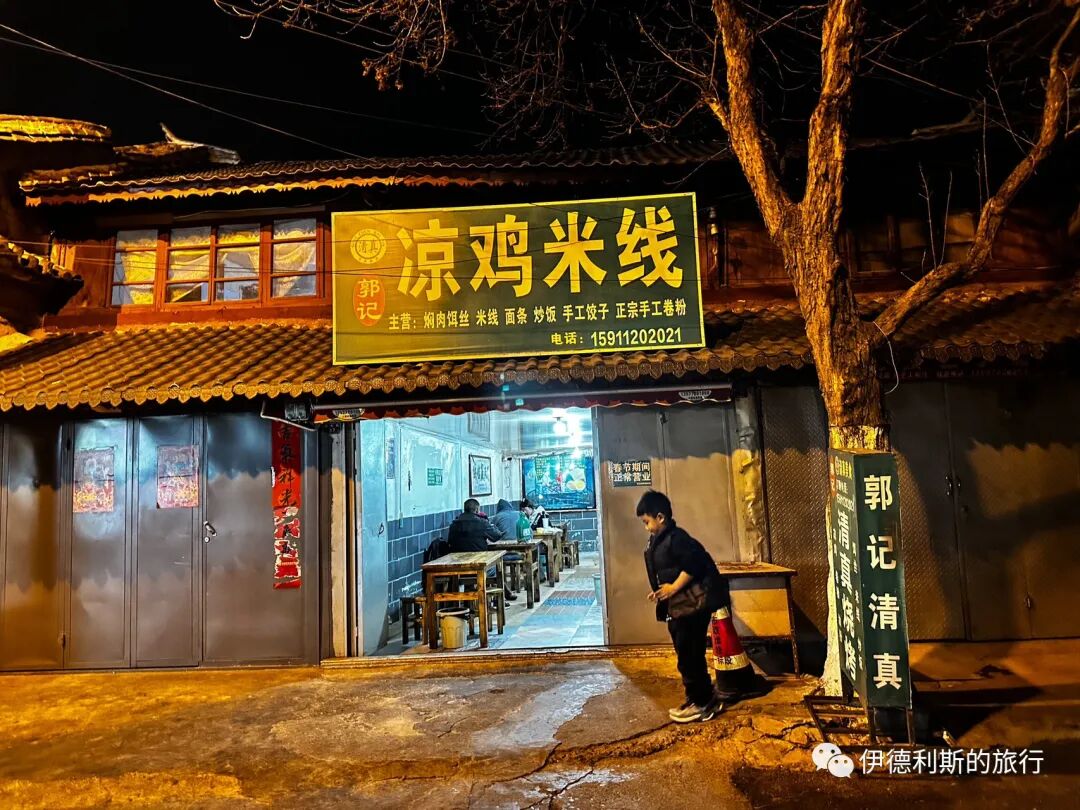
Wenming Street faces the Xiaguan Mosque, and there are many halal restaurants on the street.
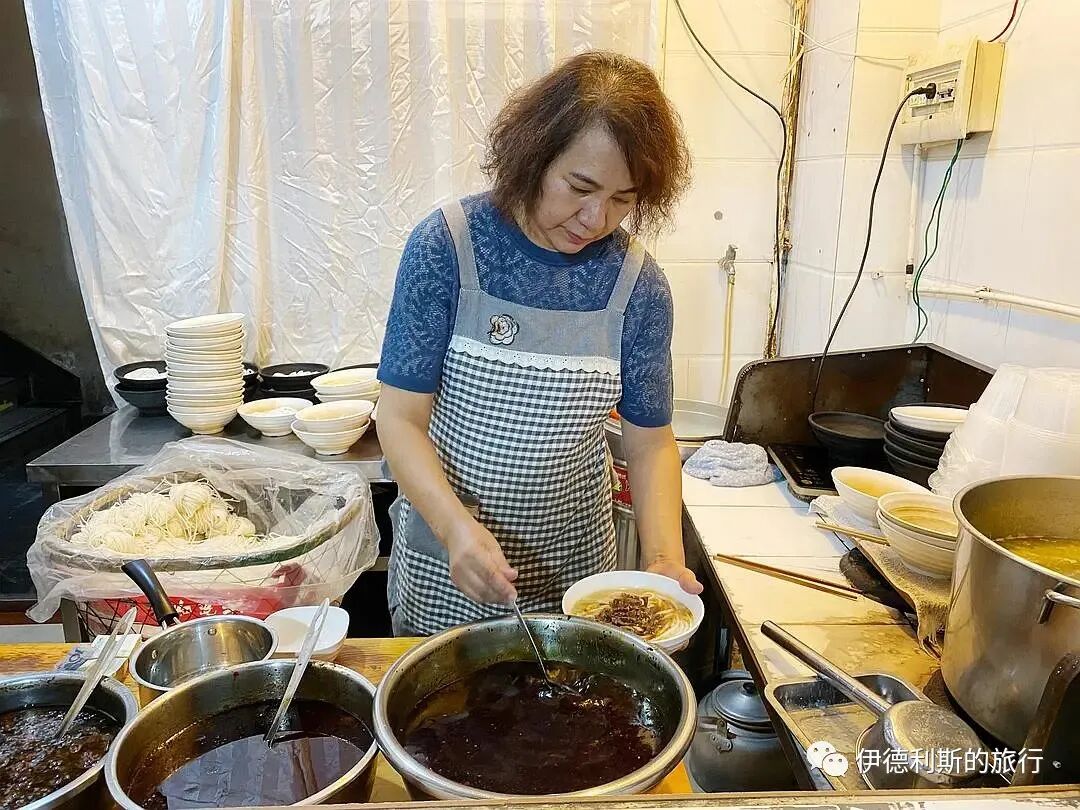
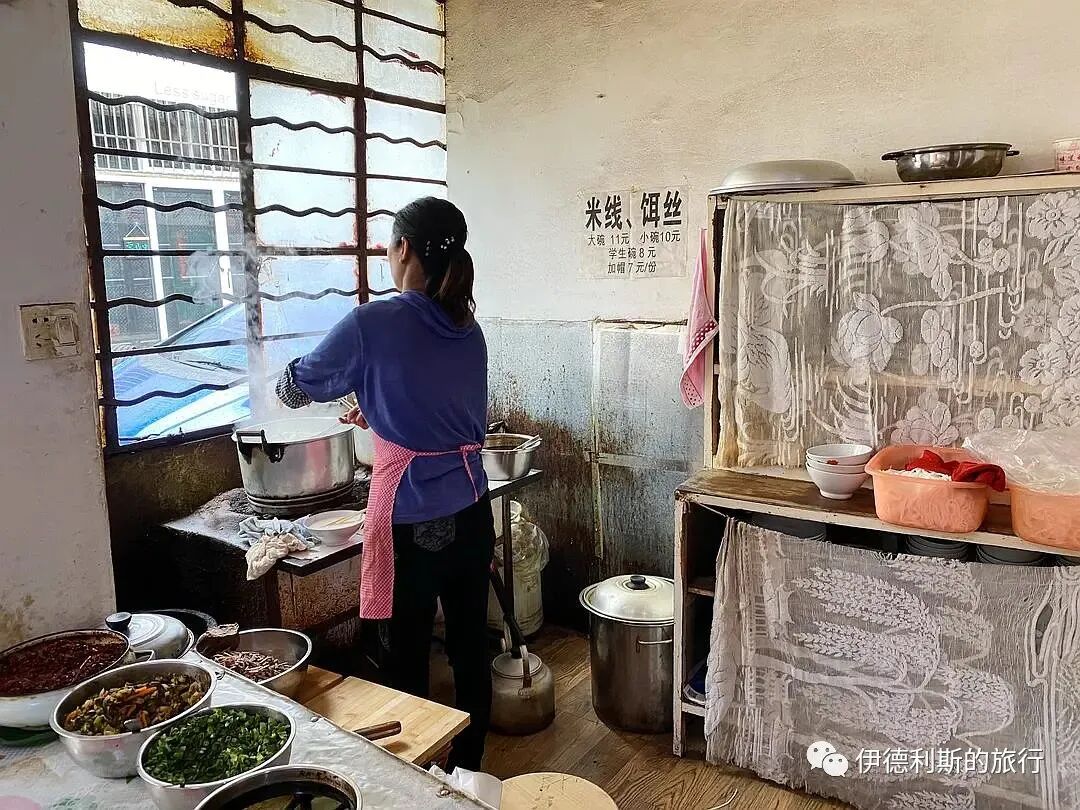
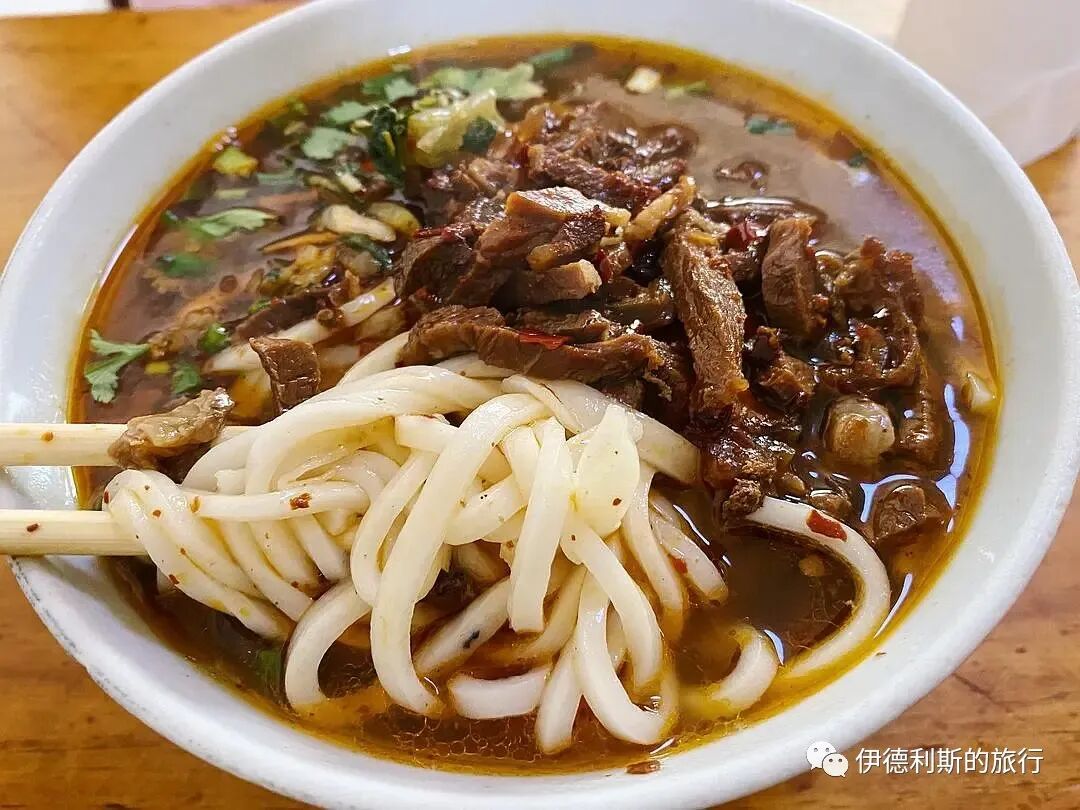
In 2020, I ate braised meat rice noodles (menrou mixian) at this Renji shop.
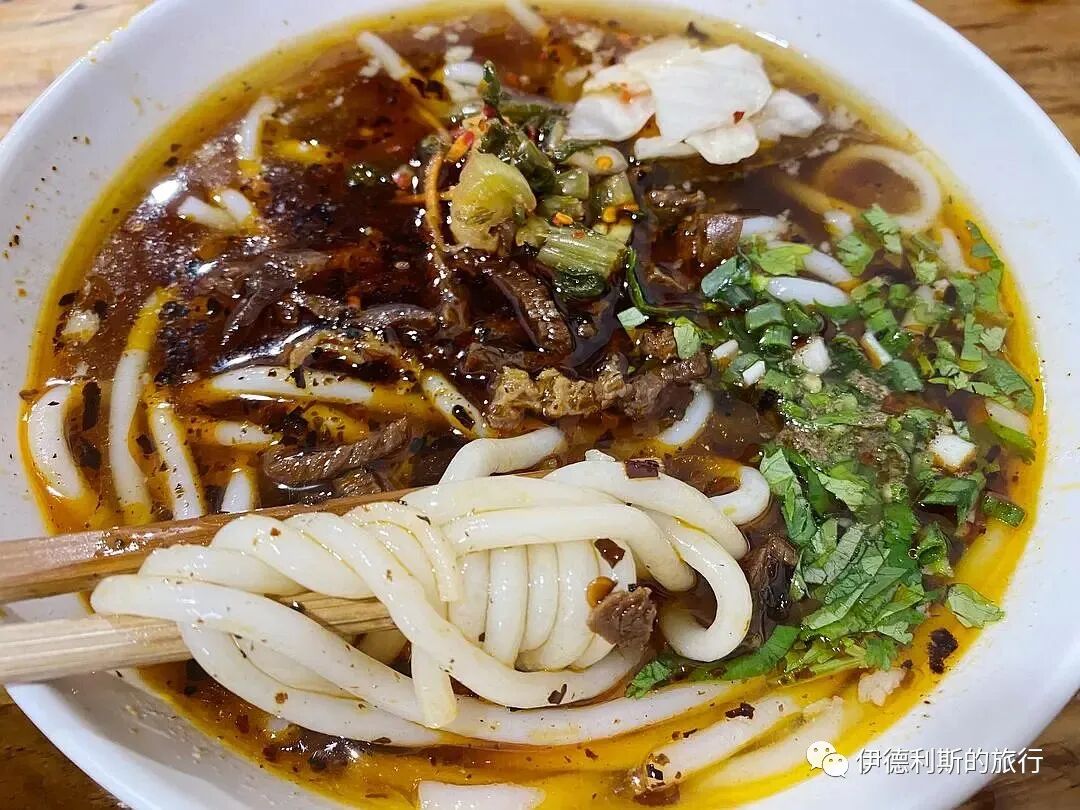
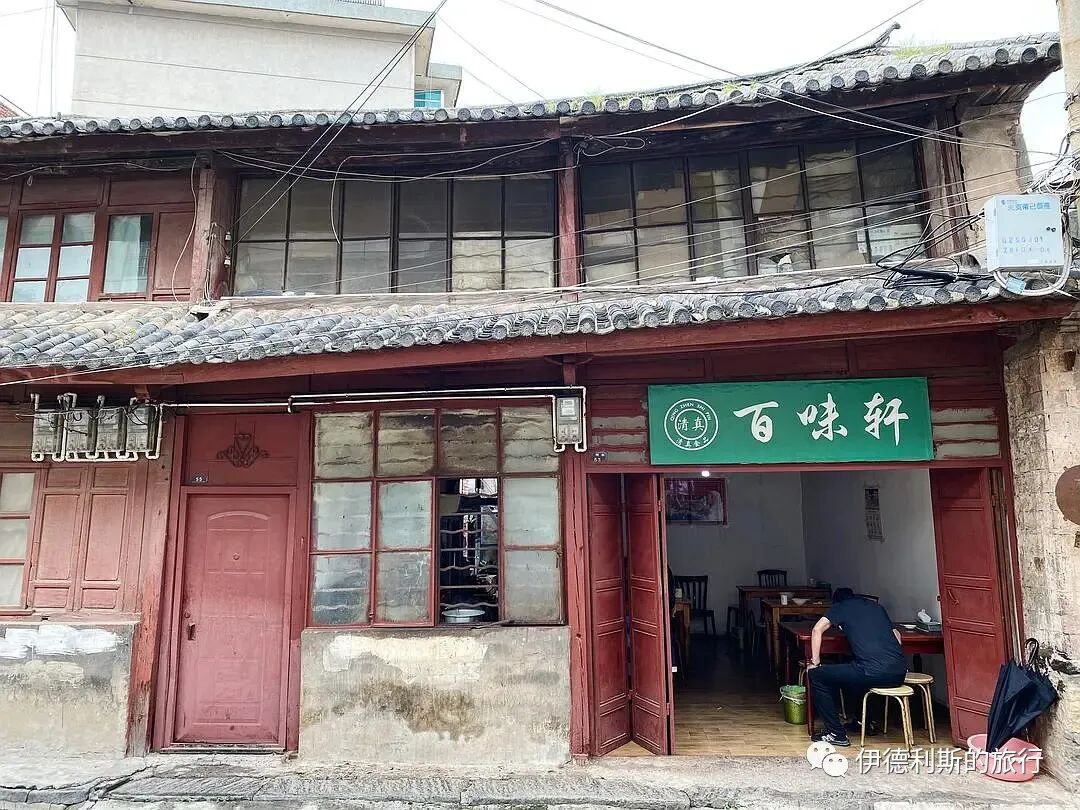
Then I ate braised meat rice strips (menrou ersi) at this Baiweixuan shop; rice strips are firmer than rice noodles.
West Street
West Street is south of Wenming Street and also has many halal restaurants.
In the morning, I ate thick pea flour (xi doufen) with fried dough sticks (youtiao) and brown sugar boiled eggs at Ma Haibo's snack shop. Boss Ma is from Yongping County, Dali, which is the westernmost mountainous county in Dali, with the Lancang River just to the west.
The freshly fried dough sticks are crispy, and they taste great when dipped in the thick pea flour. The brown sugar boiled eggs have a warming feeling, making them perfect for breakfast.
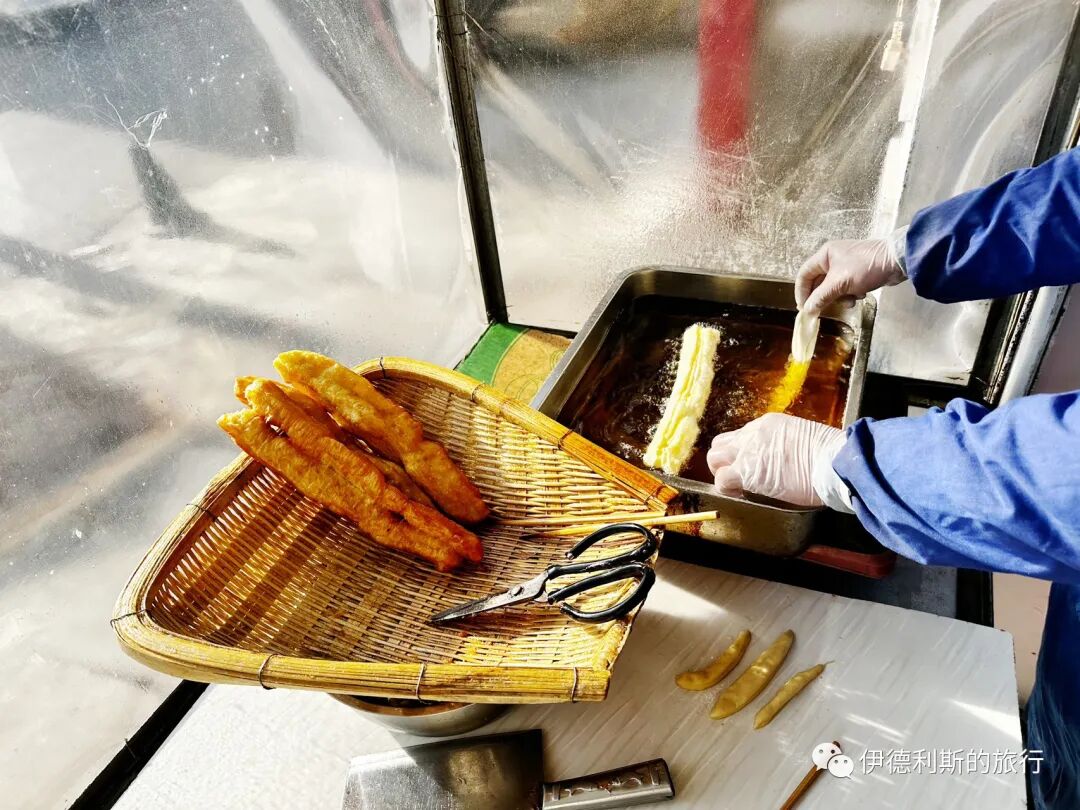
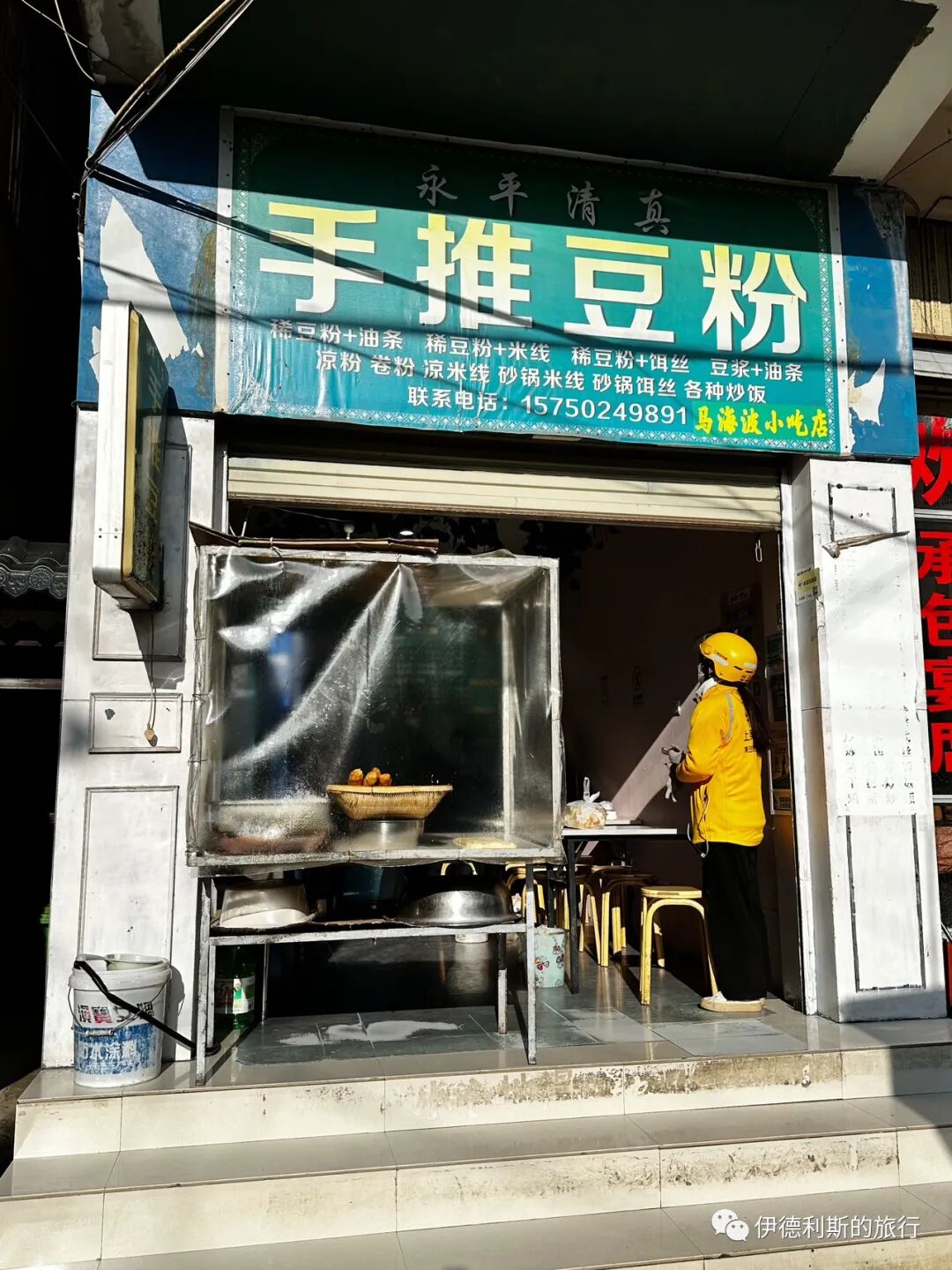
The beef sauce rice cakes (erkua) made by local Hui Muslims on West Street come with different sauces, so you can have them sweet or spicy. The neighborhood kids love them. It is also very convenient to pack some rice cakes (erkua) to eat on the road when you get hungry.
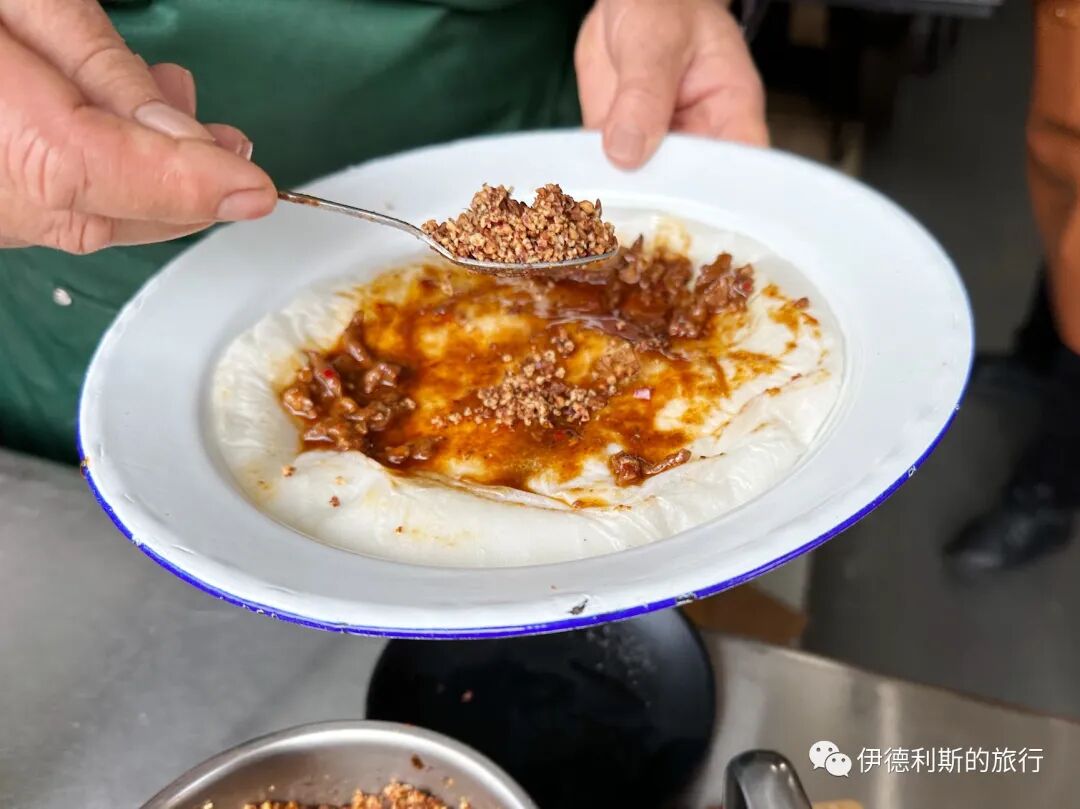
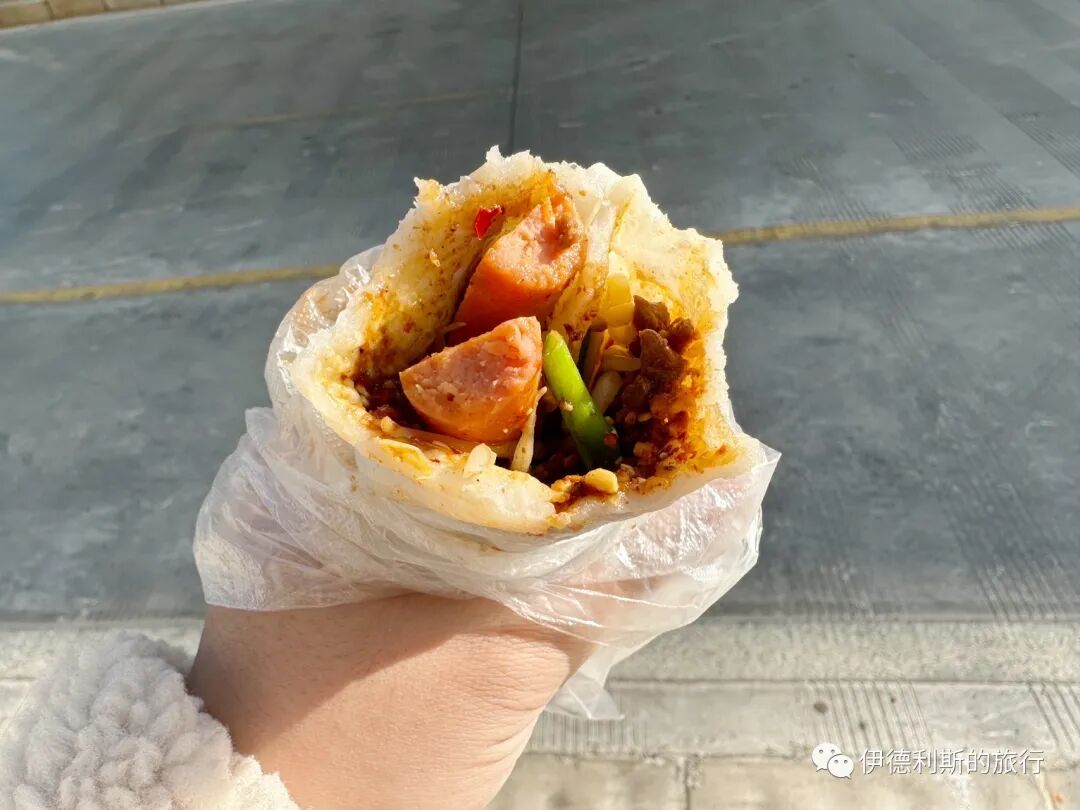
Zhengyang Times Square
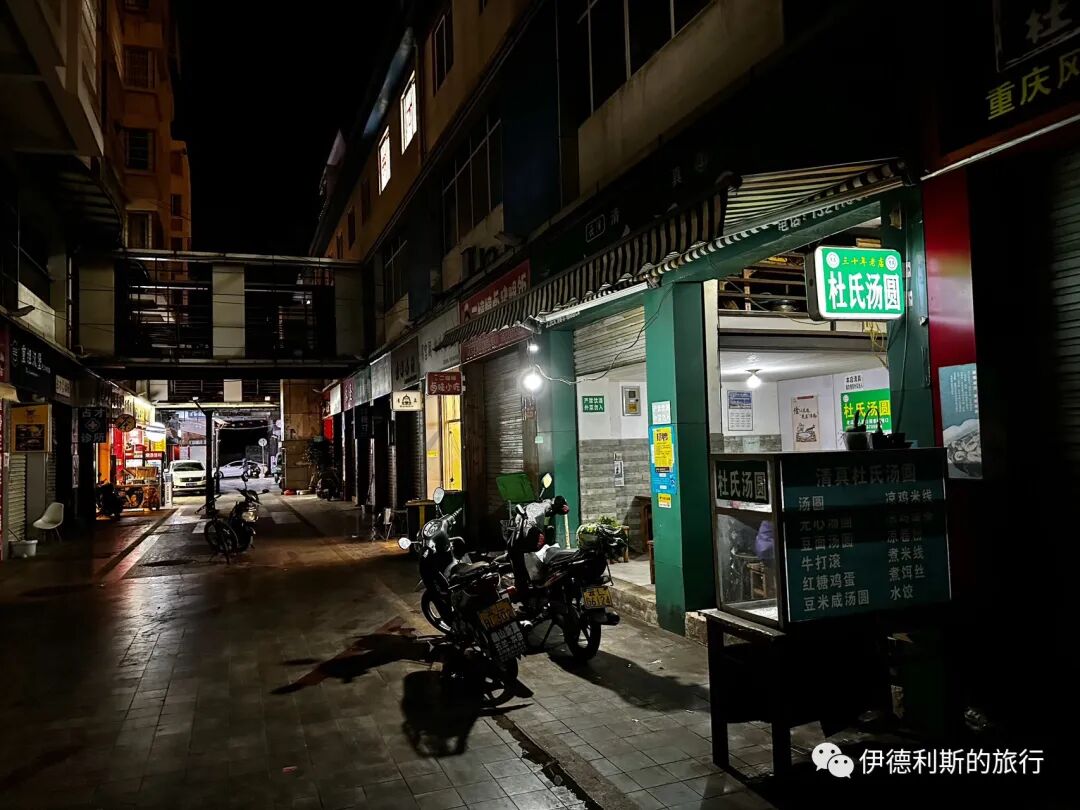
Zhengyang Times Square is right across from Wenming Street. It has many halal restaurants and is especially lively at night.
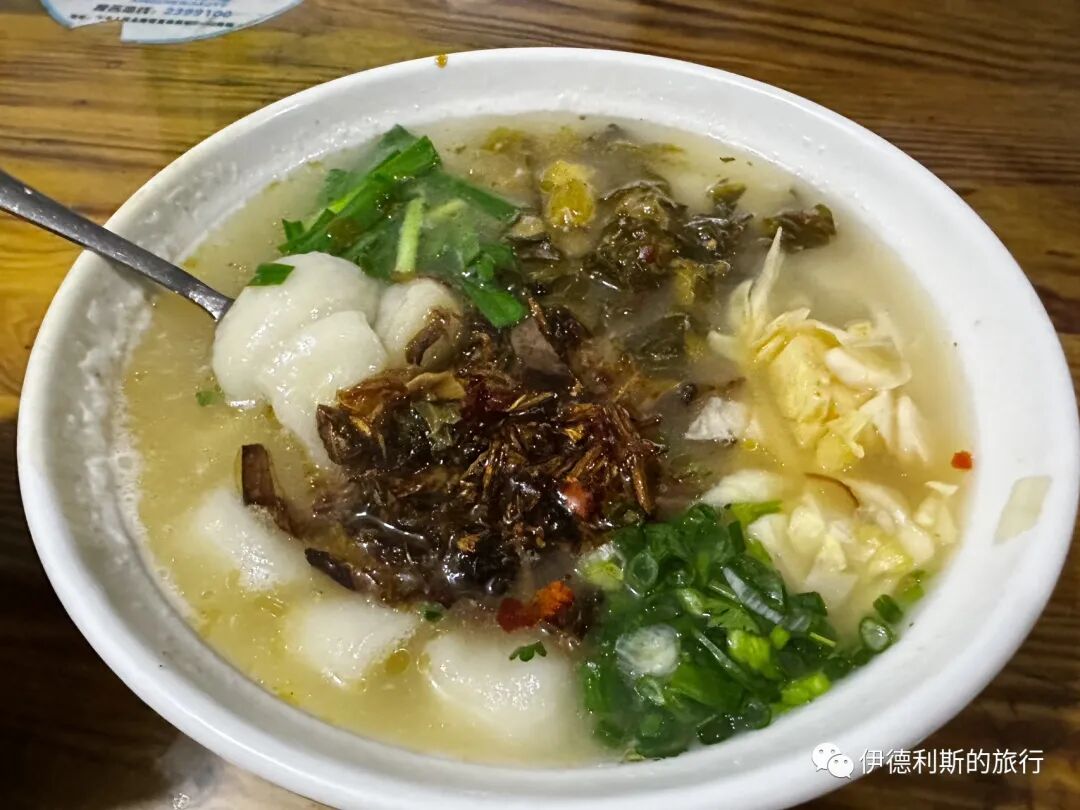
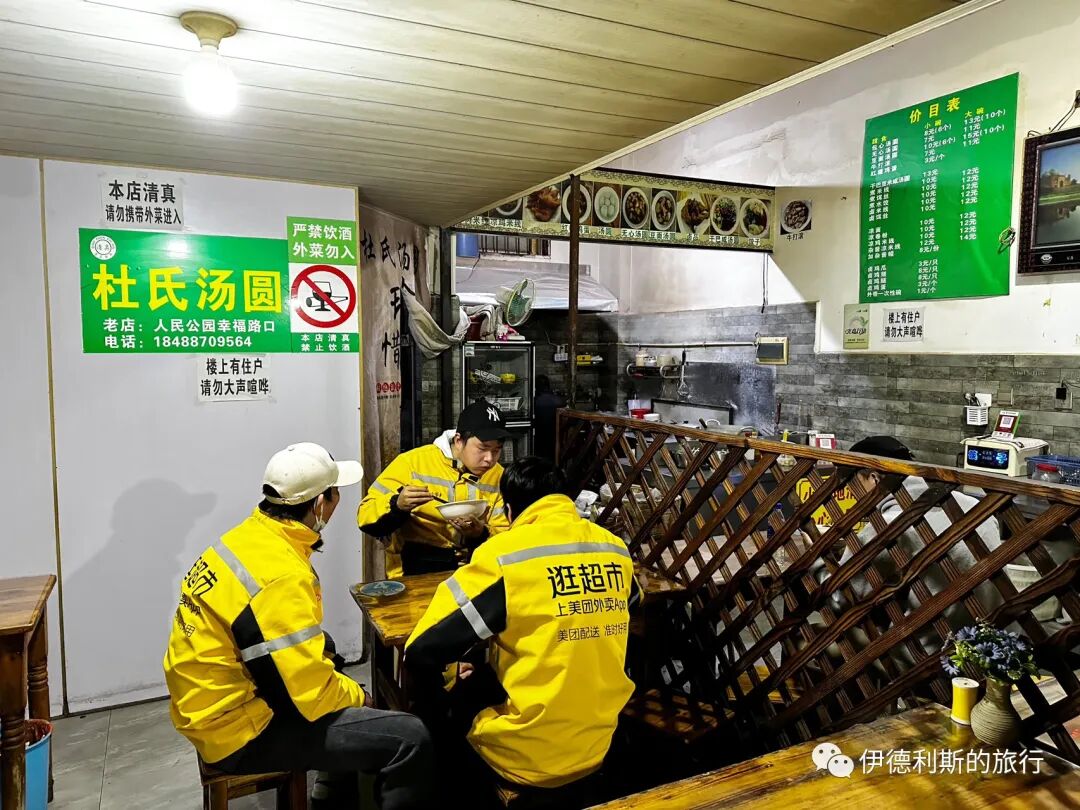
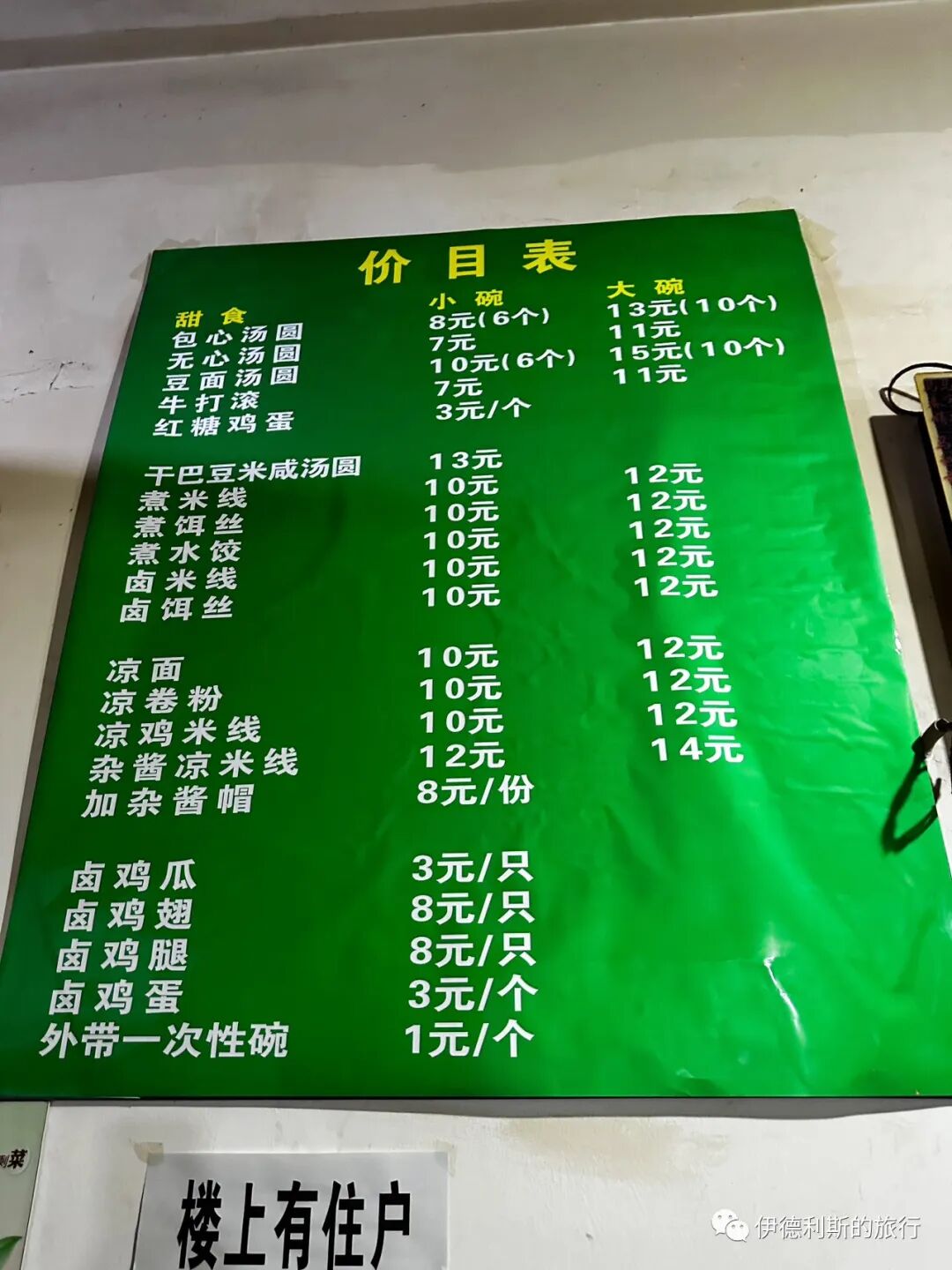
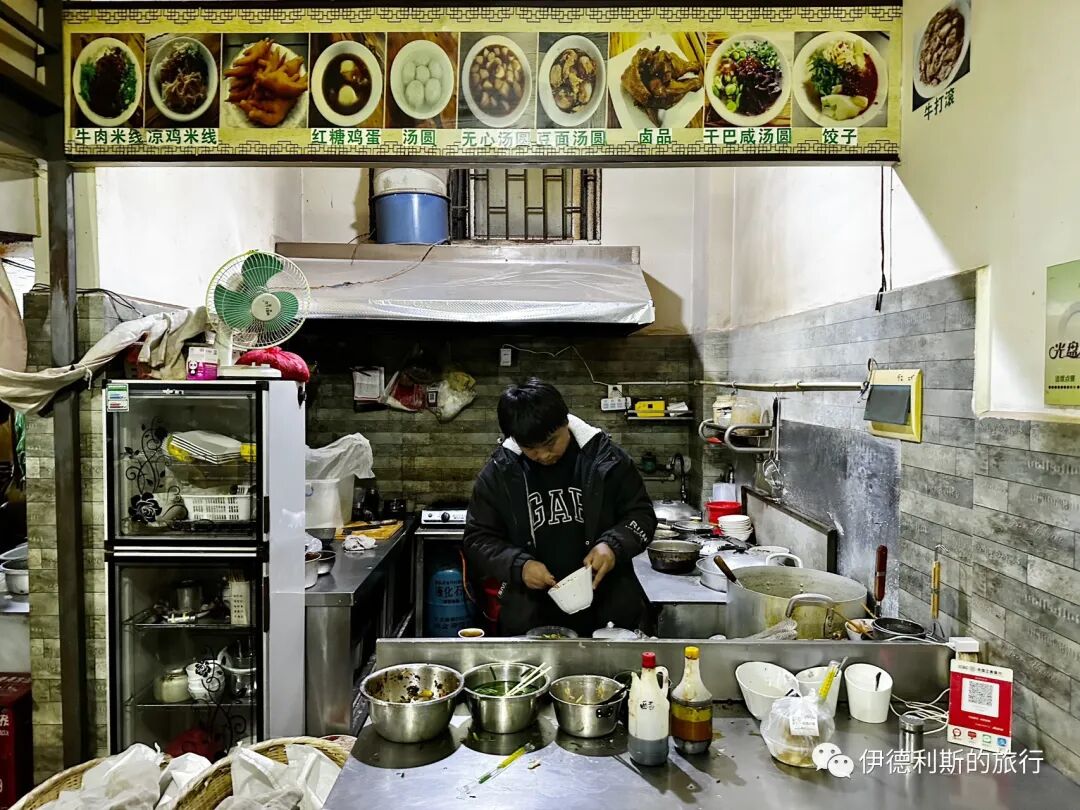
At night, I ate beef-covered rice balls (niudagun) and savory bean-flour soup dumplings (ganba doumian xiantangyuan) at Du's Tangyuan shop in Zhengyang Times Square. Yunnan has a really rich variety of rice balls (tangyuan), both sweet and savory. Beef-covered rice balls (niudagun) are made by rolling the rice balls in roasted soybean flour and adding maltose or rose jam. Their shop stays open until night, and it is mostly locals who come to eat here.
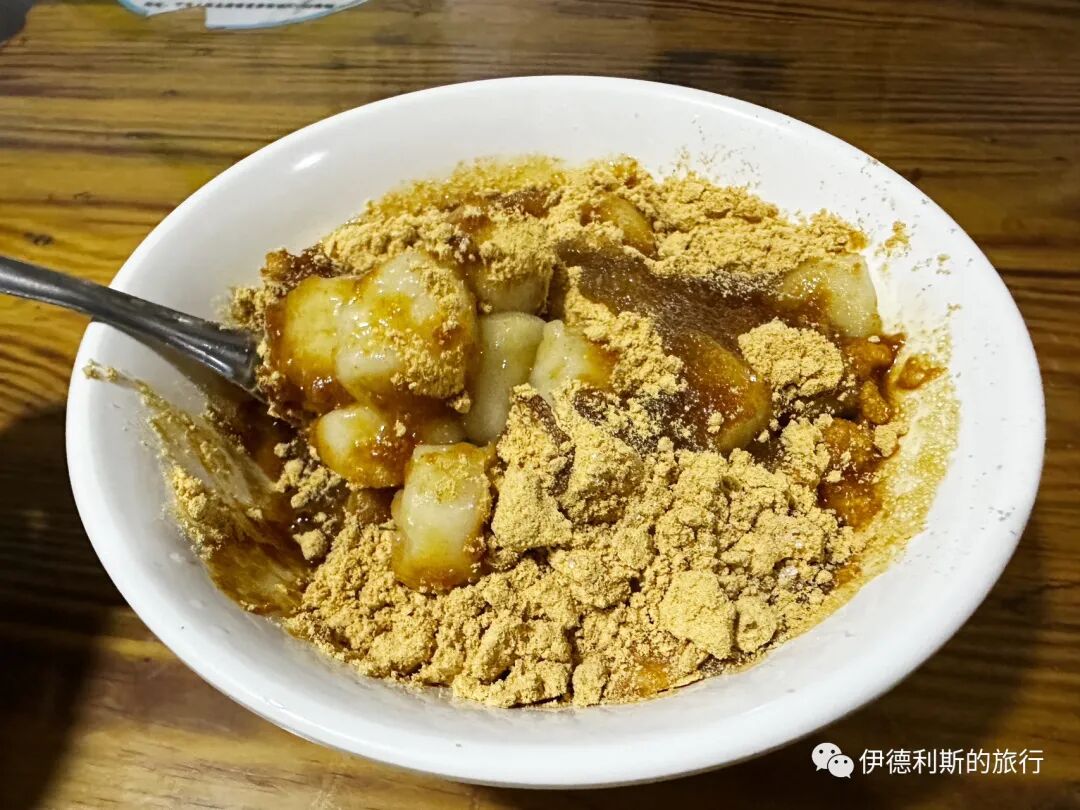
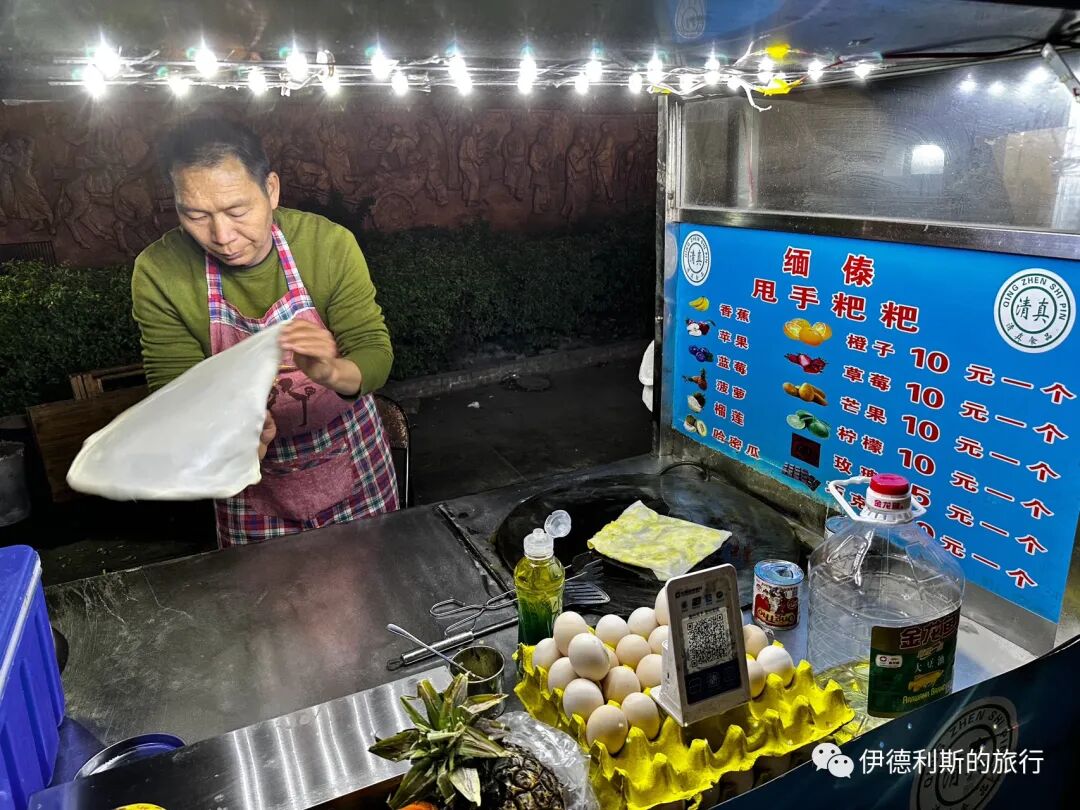
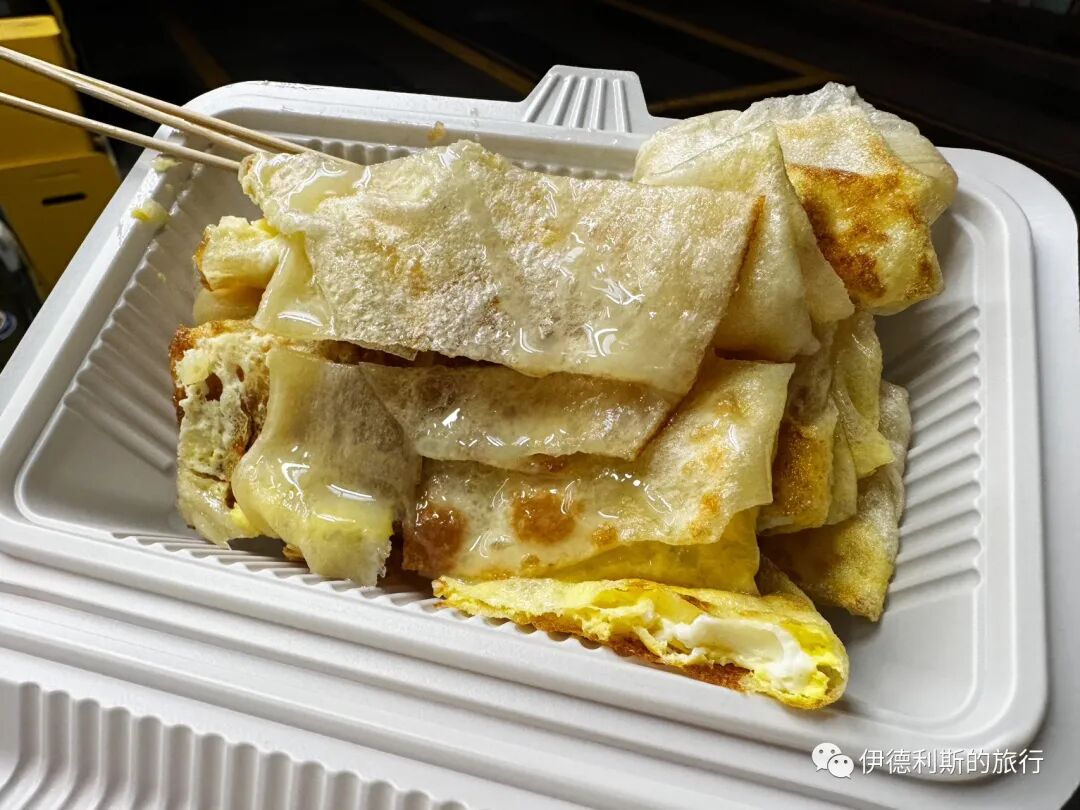
At a street stall in Zhengyang Times Square, I had a pineapple-flavored Burmese flatbread (Palata). Palata comes from the Indian flatbread Paratha. After it reached Burma, sugar was added to make it a snack. Hui Muslim caravans from Yunnan brought this snack back to their hometown, where it became known as tossed flatbread (shuaishou baba).
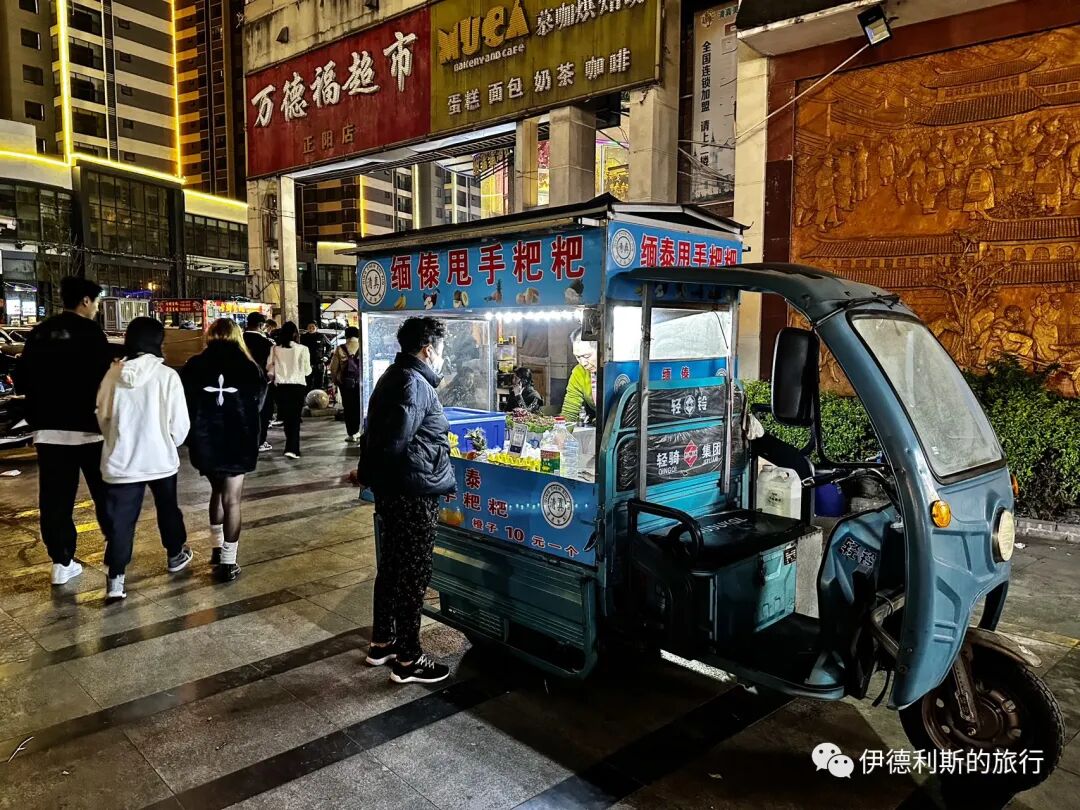
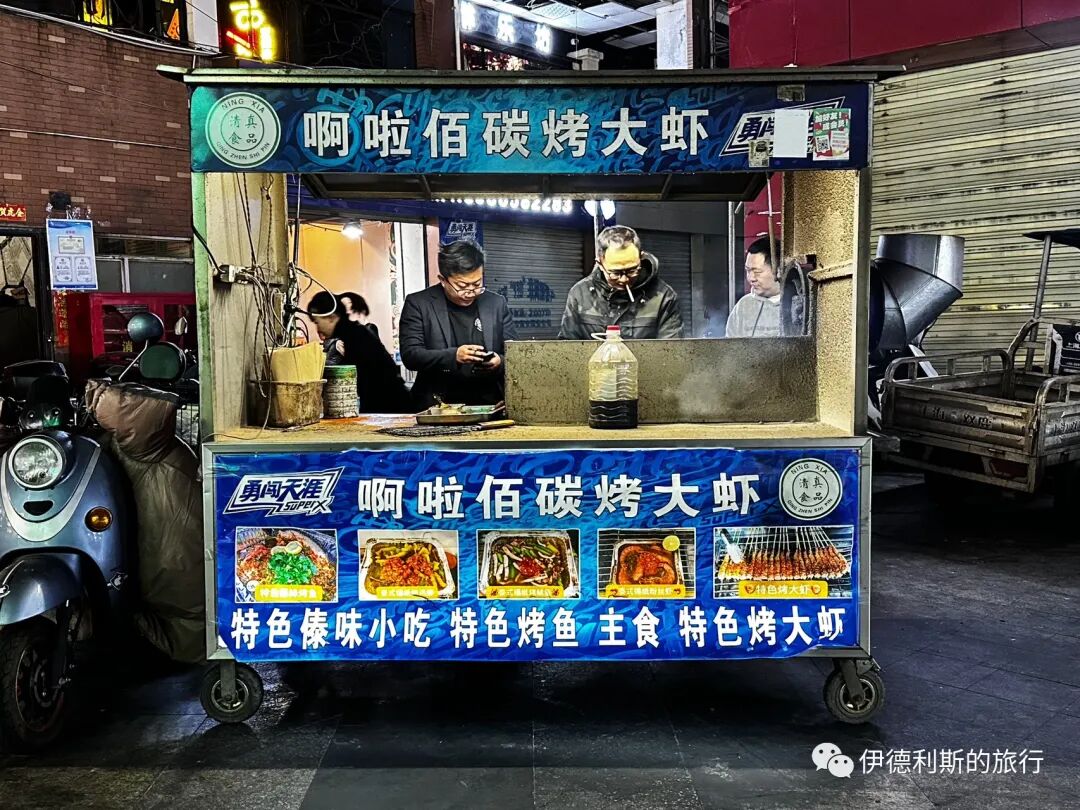
I had a copper pot stew (guoguocai) at Musheng Copper Pot. The owners are Hui Muslims from Xingzhuang in Xizhou Town, Dali. It is a beautiful Hui Muslim village located under Canglang Peak by Erhai Lake.
Copper pot stew (guoguocai) is similar to spicy hot pot (malatang) where you pick your own vegetables, but they do not weigh them. Unlike spicy hot pot (malatang), copper pot stew (guoguocai) is cooked in a small copper pot. You also add a topping of classic Yunnan Hui Muslim dishes like braised meat, cold-sliced meat, or yellow-braised chicken, and eat it with rice.
I ordered the mild spicy version, but it was on a completely different level than the mild spicy in Beijing. It made my nose run, my eyes water, and my lips feel like they were being electrocuted. Next time, I will honestly stick to the clear broth, but for those friends (dost) who love spicy food, I still recommend trying the spicy pot base!
I bought some milk fans (rufan) at a fresh milk shop at the corner of Zhengyang Times Square in 2020.
Outside the Hui Muslim Street
Besides the Hui Muslim street around Xiaguan Mosque, there are many other halal restaurants in other parts of Xiaguan. I will share a few more here.
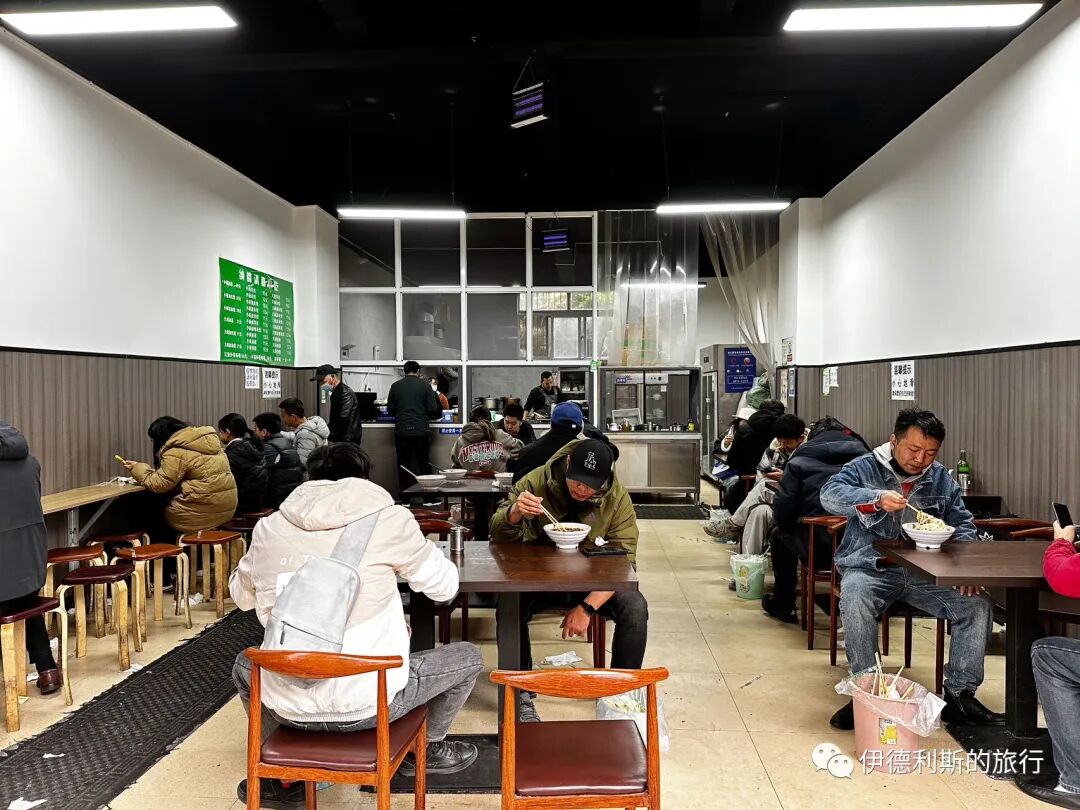
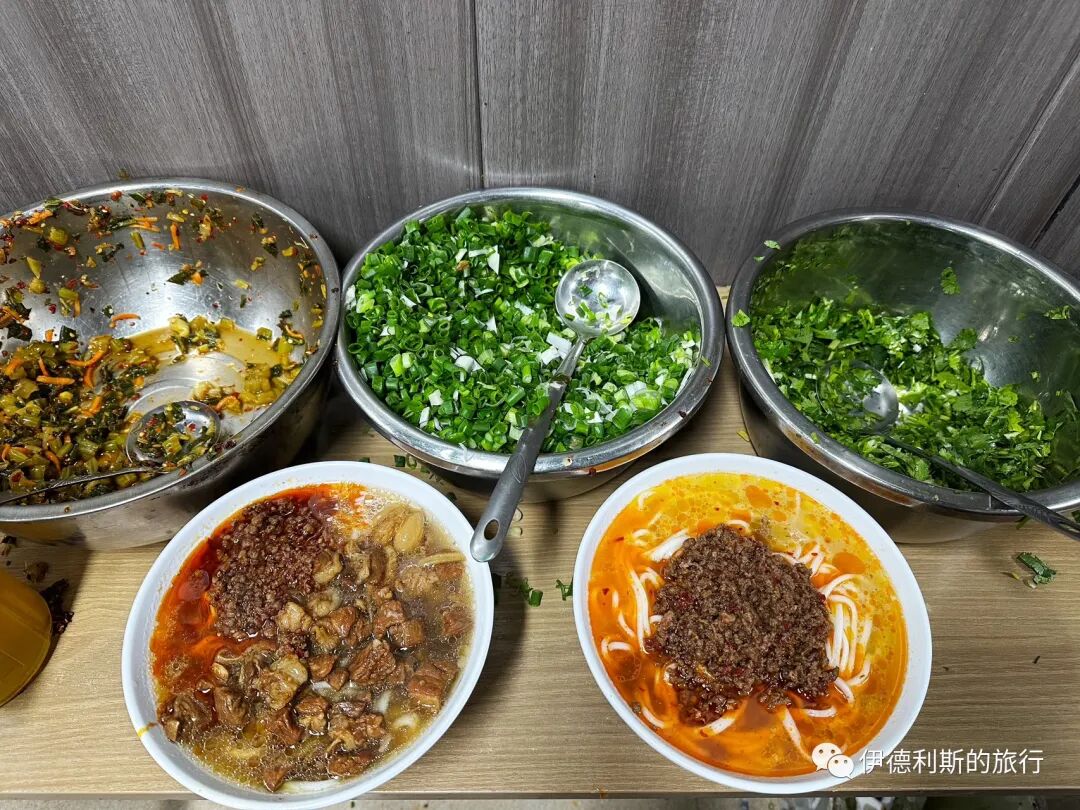
Nafeng Halal Snack Shop is an old place where locals eat. I ordered a bowl of minced meat rice noodles (ersi) with a braised meat topping. The texture of the rice noodles (ersi) is softer and not as chewy as rice noodles (mixian).
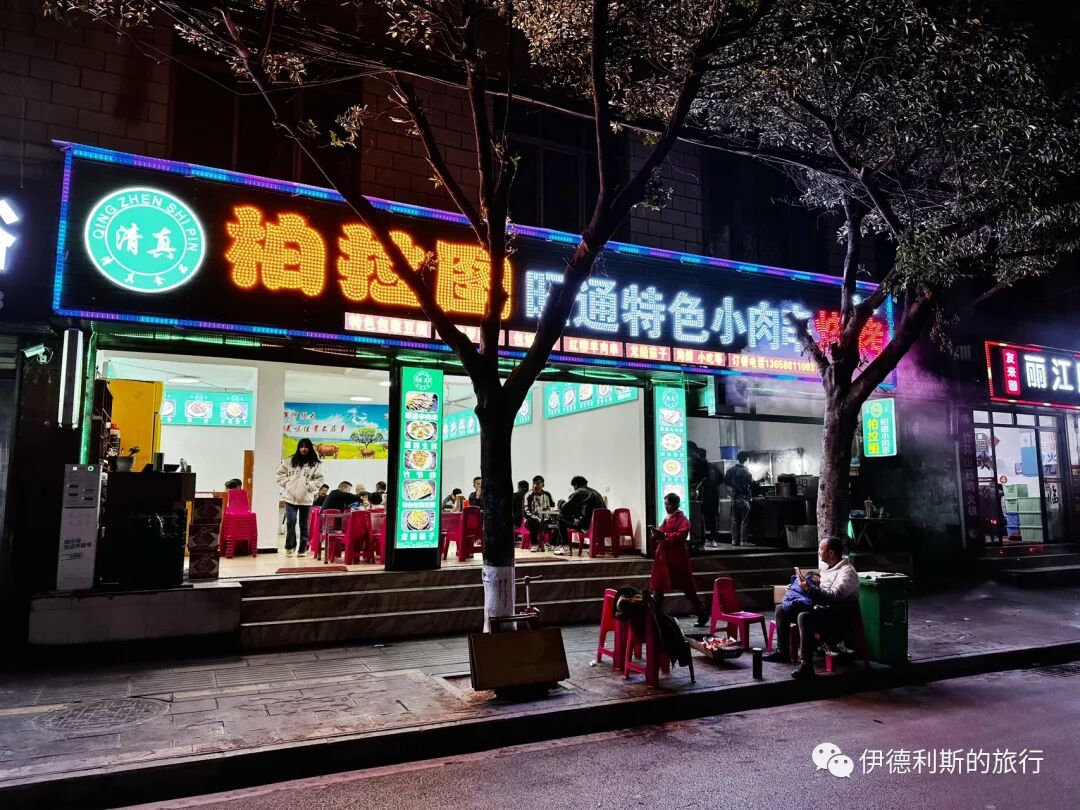
At night, I had a late-night snack at Plato Zhaotong Specialty Small Meat Skewers next to Dali Station.
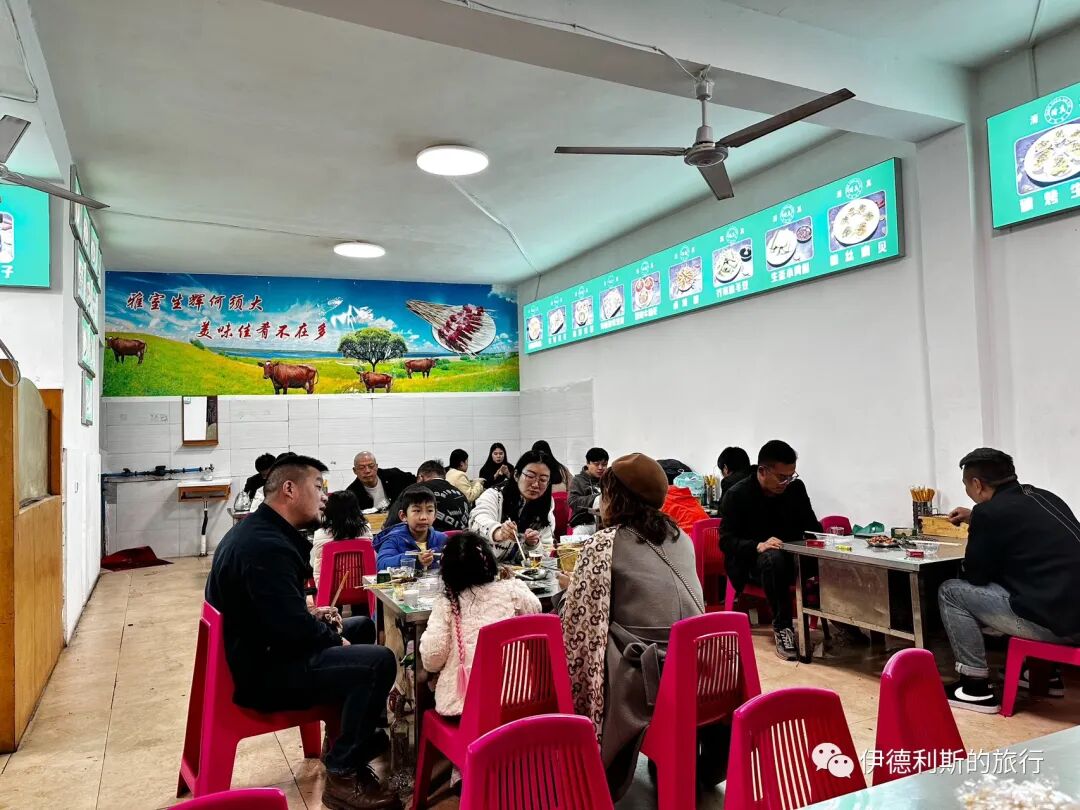
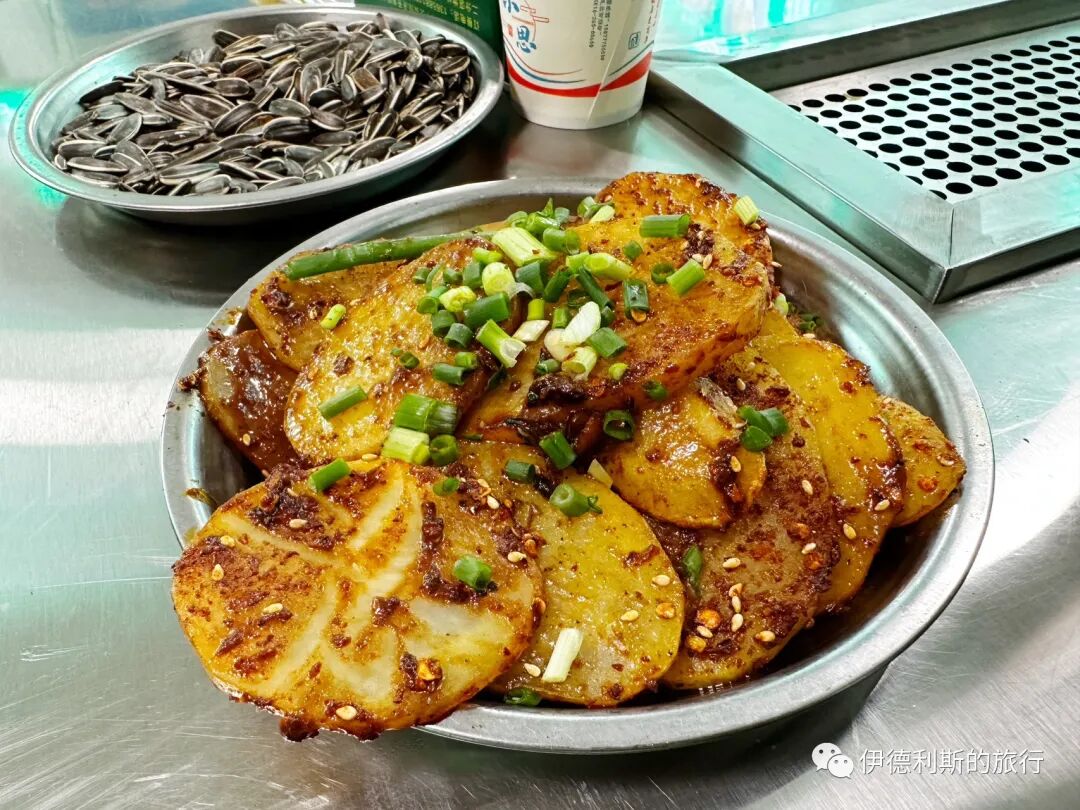
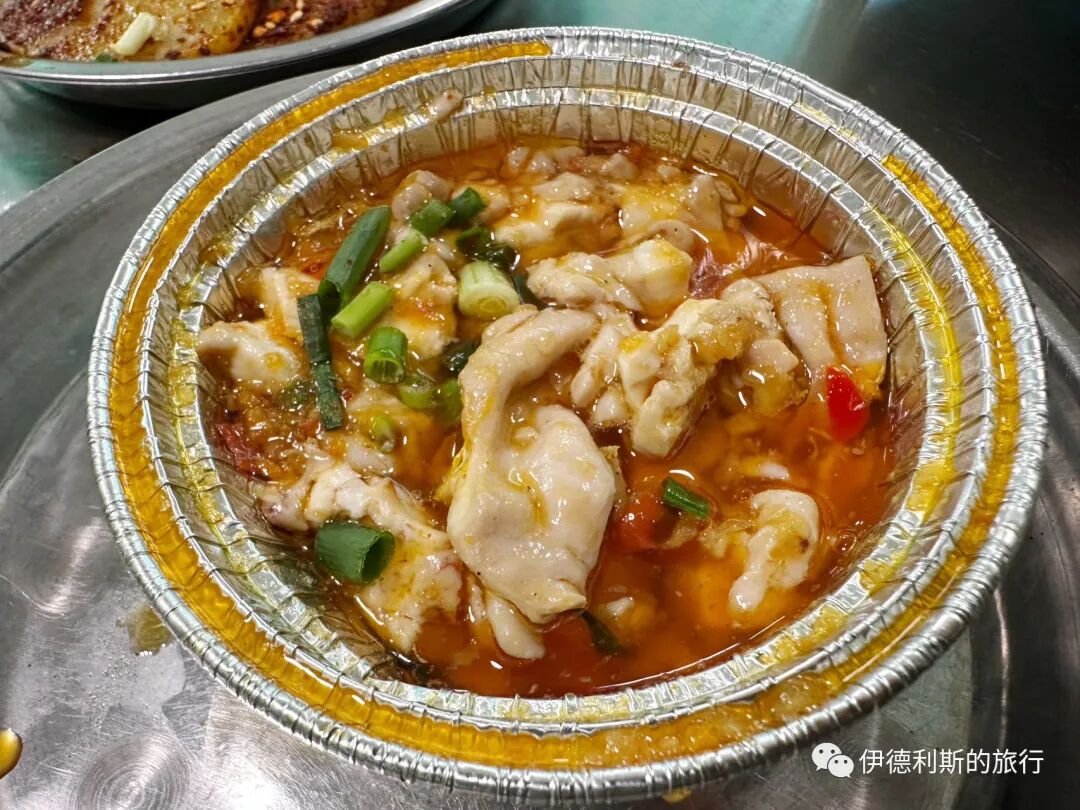
Their service is quite good; as soon as you sit down, they bring you tea and melon seeds. At first, I ordered Zhaotong small meat skewers, fermented tofu (baojiang doufu), and roasted potatoes. The Zhaotong small meat skewers are truly mini. Each skewer is just one bite, mostly to savor the flavor. The fermented tofu (baojiang doufu) is very tender. They added a lot of fish mint (zhe'ergen) to enhance the flavor, and there was charcoal fire underneath.
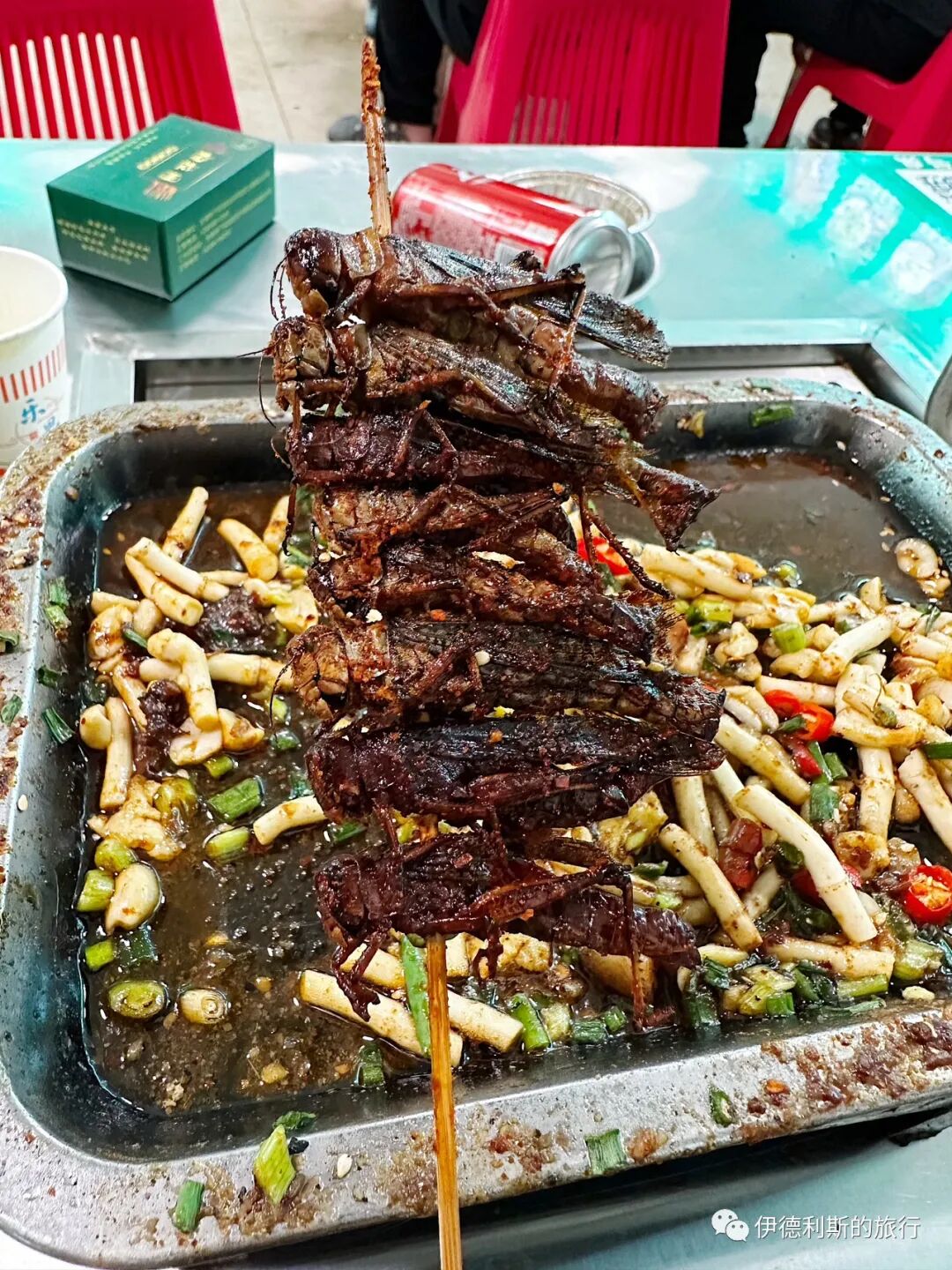
After eating these, I still wanted more. I checked their menu, which was really rich and quite bold, so with the encouragement of my friends (dostani) in the group, I ordered beef brain and roasted grasshoppers, which I had never eaten before. The texture of the brain is actually a bit like fermented tofu (baojiang doufu), and it tasted quite good. I had always wanted to try grasshoppers as a food mentioned in the teachings, and this time I finally did. It looked a bit hard to eat at first, but once I actually ate it, I felt it was acceptable. It was roasted very crispy and felt a bit like eating shrimp.
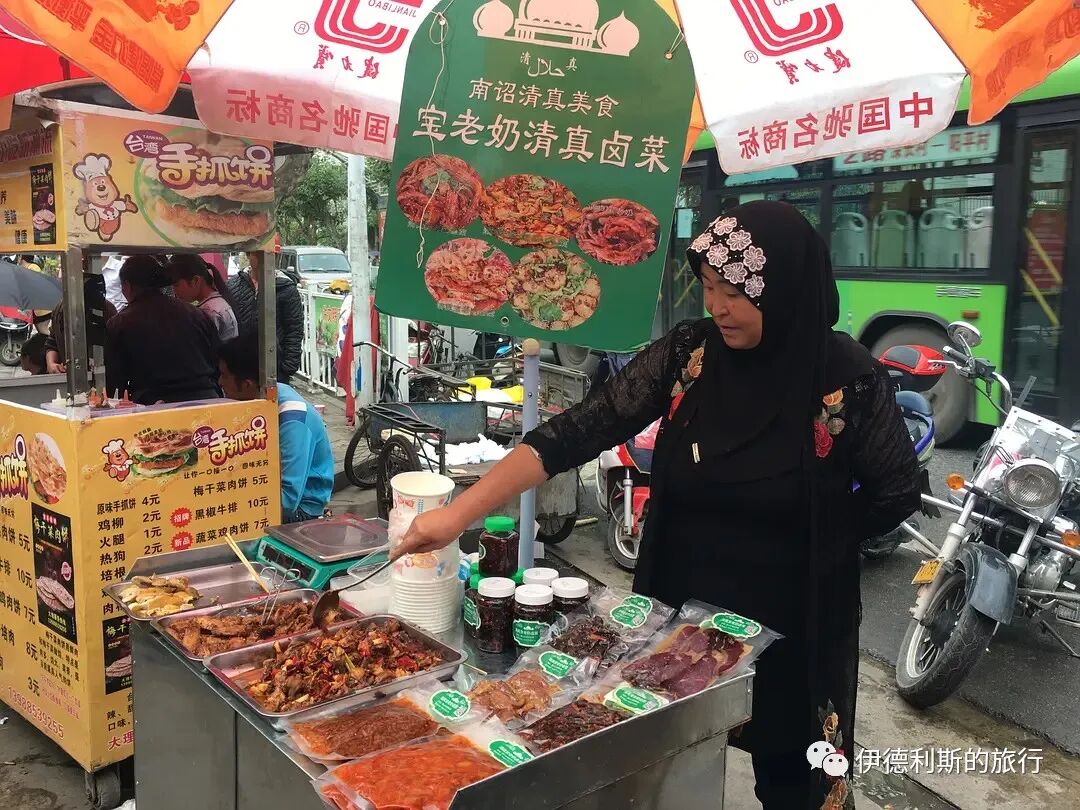
You can find halal restaurants from all over Dali in the Renmin South Road area west of Xingsheng Bus Station. In 2020, I bought braised dishes made by Hui Muslims from Weishan Huihuideng at the market on Renmin South Road.
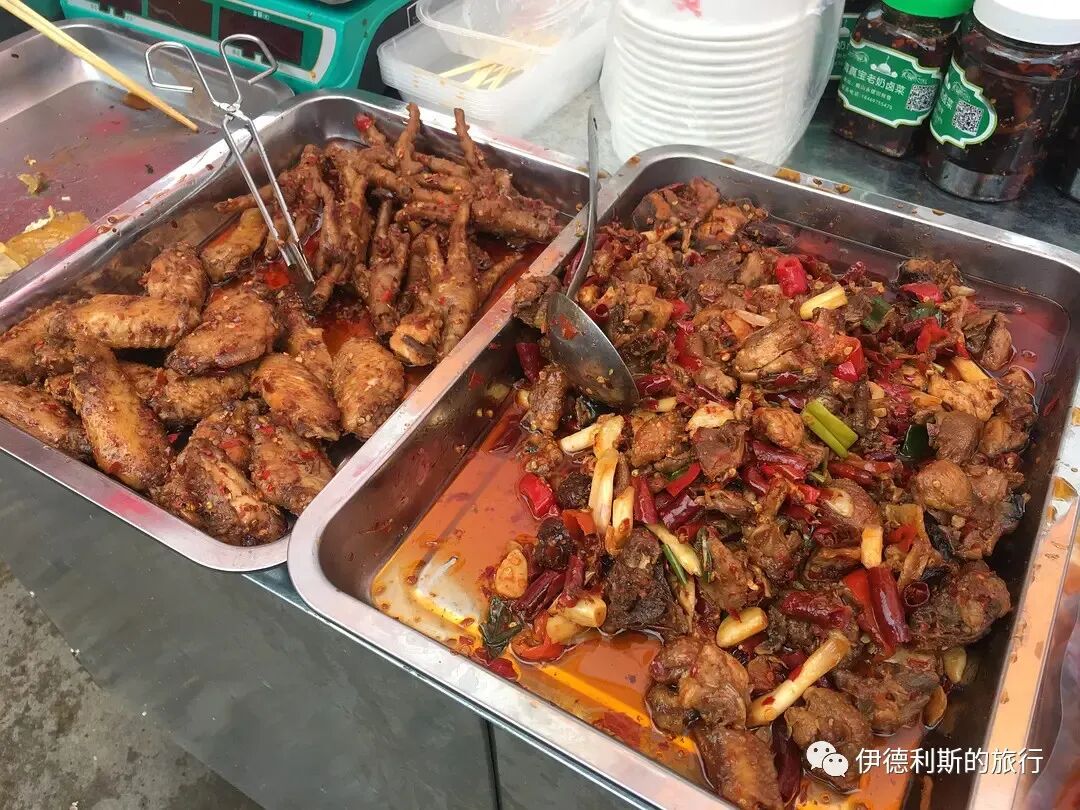
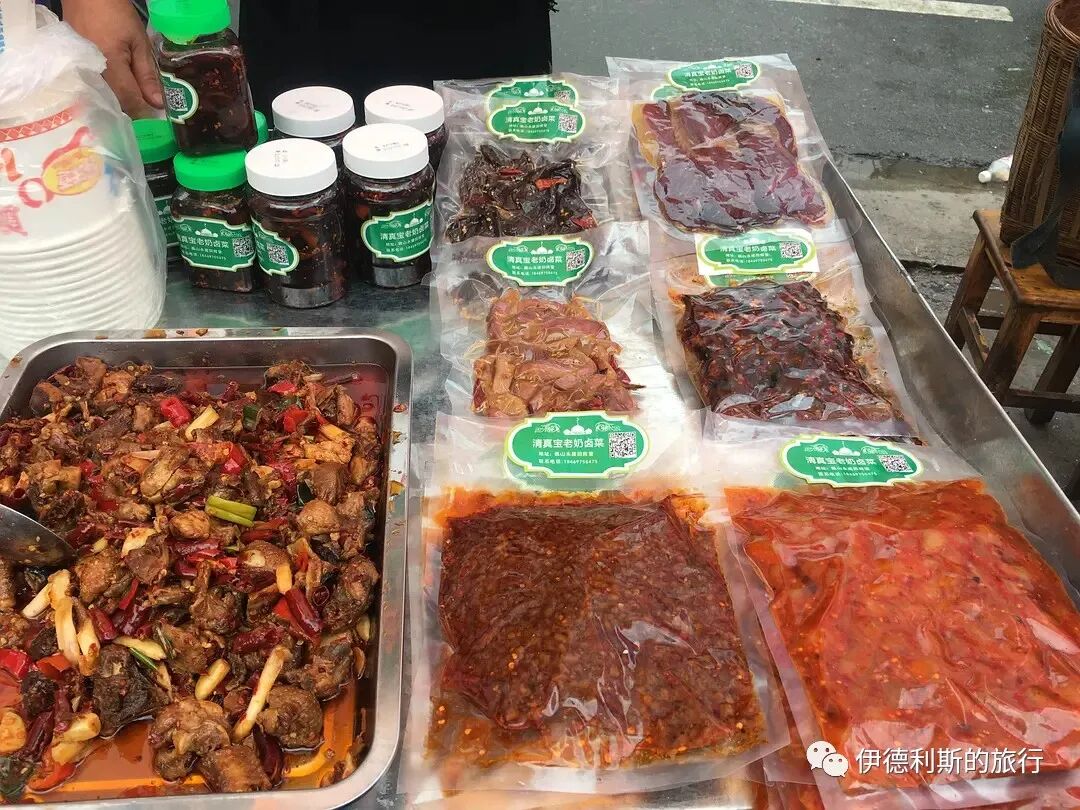
In 2020, I visited a restaurant on Renmin South Road run by Hui Muslims from Yongping County, Dali. I ate the local Yongping specialty, yellow-braised papaya chicken (huangmen mugua ji). The black-footed free-range chicken was excellent, and the papaya juice gave it a nice sour taste. I also had fermented bean curd (mei doufu) stir-fried with garlic sprouts and pickled vegetable red bean soup. These red beans were different from the kind we usually eat.
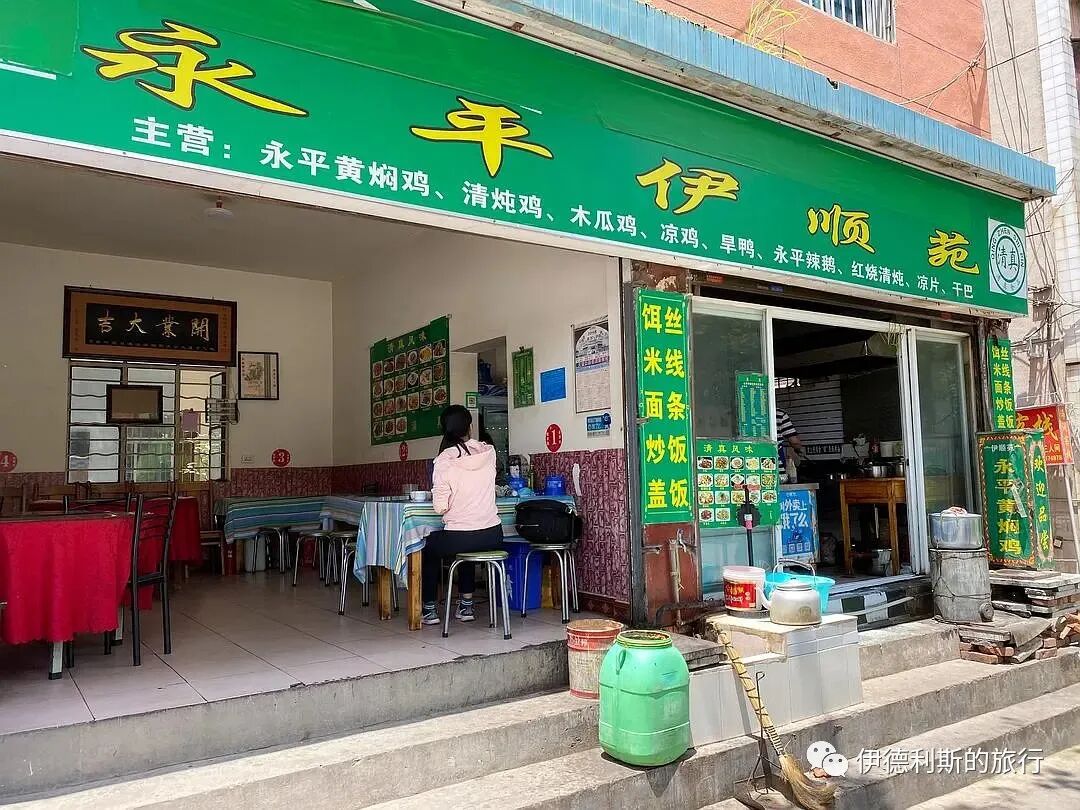
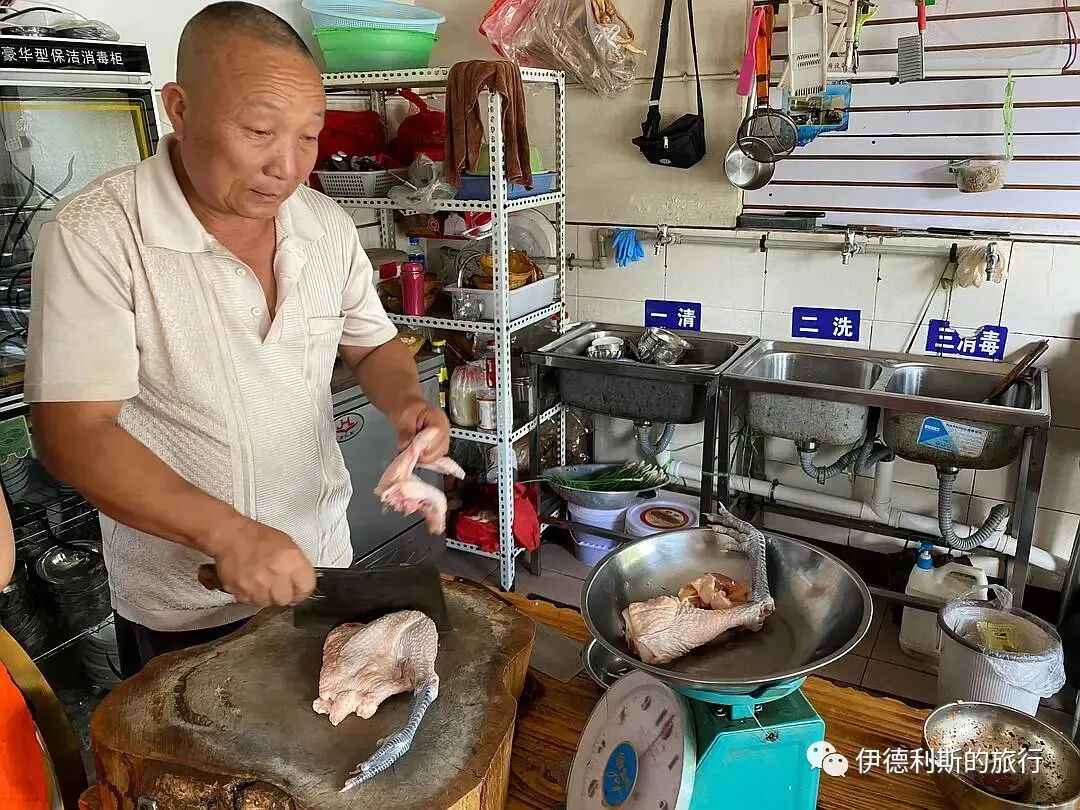
Spring travels in 2023:
On January 23, I left Macau and visited the Macau mosque known as the Moor Garden (Moluoyuan), where I ate delicious Indonesian Javanese food (see "Moor Garden and Indonesian Food in Macau"). On January 25, I arrived in Guangzhou, visited friends (dost), and ate various halal foods (see "Hui Muslim Oil Cakes and Yemeni Food in Guangzhou").
At noon, I performed namaz at the Huaisheng Mosque, then went to visit the Ancient Tombs of the Worthies (see "Huaisheng Mosque and the Ancient Tombs of the Worthies in Guangzhou").
In the afternoon, I prayed the afternoon prayer (asr) at Haopan Mosque and the sunset prayer (maghrib) at Xiaodongying Mosque (see "Visiting Haopan Mosque and Xiaodongying Mosque in Guangzhou").
On the morning of January 26, I took a train from Guangzhou to Zhaoqing, visited two mosques, and ate halal Cantonese food (see "Halal Roast Goose and Starfruit at the Mosque in Zhaoqing, Guangdong").
On the morning of January 27, I flew from Guangzhou to Xichang, Sichuan. I performed Jumu'ah at the Xichang city mosque, visited the West Mosque and the East Mosque, and ate Xichang rice noodles (see "Performing Jumu'ah and Eating Rice Noodles in Xichang, Sichuan").
On January 28, I took a high-speed train south to Miyi County in Panzhihua, Sichuan. I visited the beautiful Hui Muslim village of Tianba and performed namaz at the old Tianba mosque. I also enjoyed a delicious meal at a local farmhouse restaurant (see "The Beautiful Hui Village Deep in the Mountains—Tianba, Miyi, Sichuan").
Summary: Dali Xiaguan — Century-Old Mosque Lane and Halal Food is presented here as a firsthand travel account in clear English, beginning with this scene: On the afternoon of January 28, I took a train from Miyi County in Panzhihua, Sichuan, to Xiaguan in Dali, starting my third trip to Dali. The account keeps its focus on Dali Mosques, Xiaguan Food, Yunnan Muslims while preserving the names, places, food, and historical details from the Chinese source.
On the afternoon of January 28, I took a train from Miyi County in Panzhihua, Sichuan, to Xiaguan in Dali, starting my third trip to Dali. This time I visited Binju, Yangbi, Fengyi, and Weishan, where I visited mosques and tasted halal food. I also carefully explored the Hui Muslim neighborhood around Wenming Street and West Street in Xiaguan to learn about the history of the Xiaguan Mosque.
As a key town in western Yunnan, Xiaguan was once home to many Hui Muslims and had three ancient mosques: the Yidianhong Mosque (Upper Mosque), Yulong Mosque (Middle Mosque), and Caiyuan Mosque (Lower Mosque). However, after the hardships during the Tongzhi reign, the Hui Muslims of Xiaguan died or fled, and all three ancient mosques were destroyed.
It was not until the middle of the Guangxu reign that the Qing government's pacification policy encouraged some surviving Hui Muslims to return to Xiaguan. Later, more Hui Muslims came to Xiaguan for business and gradually settled in the Yulong Pass (Xiaguan) area and outside the pass.
In 1915, led by Ma Yulong and over ten others, the Hui Muslims of Xiaguan worked together to build the current Xiaguan Mosque. They also built a new street in front of the mosque, commonly known as Hui Street, which is now Wenming Street. This established the layout of the Xiaguan mosque district.
The current Xiaguan Mosque was rebuilt in 2004. Many Hui Muslims still live in the surrounding Wenming Street and West Street areas, where there are many halal restaurants.
This year, I noticed signs on some shop walls saying "rectification in use," and I wonder if there is a new plan for this area.
For my 2020 Dali trip, see "Eating and Visiting Halal Spots in Dali Xiaguan and Weishan" and "The Twenty Traditional Mosques of Dali."
Sha Family Courtyard
Today, many old Hui Muslim houses are still preserved around the Xiaguan Mosque, the most notable being the Sha Family Courtyard, which is over 110 years old. Fortunately, the descendants of the Sha family still live in the courtyard and run the Shajie Restaurant. You can enjoy a meal while experiencing the charm of this century-old Hui Muslim courtyard.
The Sha Family Courtyard follows the traditional Dali "three houses and one screen wall" (sanfang yizhaobi) layout, a style used by many local Bai, Han, and Hui Muslim families. The "three houses and one screen wall" layout means the main house and the east and west wing rooms are all two-story, three-room structures, with a large screen wall facing the main house.
I ate the most home-style Yunnan Hui Muslim food here: beef jerky rice (niu ganba fan) and pea sprout soup with pickled cucumbers. The Sha family is very welcoming, and it really doesn't feel like a restaurant; it feels like stepping into the daily life of the Hui Muslims in Xiaguan.
Inside the west wing of the Sha Family Courtyard, the middle room is a living room decorated with traditional calligraphy in the style of Weishan, Dali. The grandfather of the Sha family watches TV here in the evenings. On both sides are bedrooms, which have pictures of Mecca (tianfang tu) hanging inside.
Inside the north room, besides the calligraphy, there are photos of the Sha family from different periods, as well as gifts from Mrs. Sha's 80th and 90th birthday celebrations.
On the wall is a painting by the Yunnan Hui Muslim artist Wang Guowen Haji, featuring a little boy wearing an Ottoman fez hat. This is very interesting, and I suspect it relates to the Yunnan Islamic Progress Association organizing students to study at Al-Azhar University in Egypt after 1931. In 1829, the Ottoman Empire implemented a hat reform, ordering officials to stop wearing turbans and wear fez hats instead. The fez hat then became popular in Egypt under Ottoman rule.
Wenming Street
Wenming Street faces the Xiaguan Mosque, and there are many halal restaurants on the street.
In 2020, I ate braised meat rice noodles (menrou mixian) at this Renji shop.
Then I ate braised meat rice strips (menrou ersi) at this Baiweixuan shop; rice strips are firmer than rice noodles.
West Street
West Street is south of Wenming Street and also has many halal restaurants.
In the morning, I ate thick pea flour (xi doufen) with fried dough sticks (youtiao) and brown sugar boiled eggs at Ma Haibo's snack shop. Boss Ma is from Yongping County, Dali, which is the westernmost mountainous county in Dali, with the Lancang River just to the west.
The freshly fried dough sticks are crispy, and they taste great when dipped in the thick pea flour. The brown sugar boiled eggs have a warming feeling, making them perfect for breakfast.
The beef sauce rice cakes (erkua) made by local Hui Muslims on West Street come with different sauces, so you can have them sweet or spicy. The neighborhood kids love them. It is also very convenient to pack some rice cakes (erkua) to eat on the road when you get hungry.
Zhengyang Times Square
Zhengyang Times Square is right across from Wenming Street. It has many halal restaurants and is especially lively at night.
At night, I ate beef-covered rice balls (niudagun) and savory bean-flour soup dumplings (ganba doumian xiantangyuan) at Du's Tangyuan shop in Zhengyang Times Square. Yunnan has a really rich variety of rice balls (tangyuan), both sweet and savory. Beef-covered rice balls (niudagun) are made by rolling the rice balls in roasted soybean flour and adding maltose or rose jam. Their shop stays open until night, and it is mostly locals who come to eat here.
At a street stall in Zhengyang Times Square, I had a pineapple-flavored Burmese flatbread (Palata). Palata comes from the Indian flatbread Paratha. After it reached Burma, sugar was added to make it a snack. Hui Muslim caravans from Yunnan brought this snack back to their hometown, where it became known as tossed flatbread (shuaishou baba).
I had a copper pot stew (guoguocai) at Musheng Copper Pot. The owners are Hui Muslims from Xingzhuang in Xizhou Town, Dali. It is a beautiful Hui Muslim village located under Canglang Peak by Erhai Lake.
Copper pot stew (guoguocai) is similar to spicy hot pot (malatang) where you pick your own vegetables, but they do not weigh them. Unlike spicy hot pot (malatang), copper pot stew (guoguocai) is cooked in a small copper pot. You also add a topping of classic Yunnan Hui Muslim dishes like braised meat, cold-sliced meat, or yellow-braised chicken, and eat it with rice.
I ordered the mild spicy version, but it was on a completely different level than the mild spicy in Beijing. It made my nose run, my eyes water, and my lips feel like they were being electrocuted. Next time, I will honestly stick to the clear broth, but for those friends (dost) who love spicy food, I still recommend trying the spicy pot base!
I bought some milk fans (rufan) at a fresh milk shop at the corner of Zhengyang Times Square in 2020.
Outside the Hui Muslim Street
Besides the Hui Muslim street around Xiaguan Mosque, there are many other halal restaurants in other parts of Xiaguan. I will share a few more here.
Nafeng Halal Snack Shop is an old place where locals eat. I ordered a bowl of minced meat rice noodles (ersi) with a braised meat topping. The texture of the rice noodles (ersi) is softer and not as chewy as rice noodles (mixian).
At night, I had a late-night snack at Plato Zhaotong Specialty Small Meat Skewers next to Dali Station.
Their service is quite good; as soon as you sit down, they bring you tea and melon seeds. At first, I ordered Zhaotong small meat skewers, fermented tofu (baojiang doufu), and roasted potatoes. The Zhaotong small meat skewers are truly mini. Each skewer is just one bite, mostly to savor the flavor. The fermented tofu (baojiang doufu) is very tender. They added a lot of fish mint (zhe'ergen) to enhance the flavor, and there was charcoal fire underneath.
After eating these, I still wanted more. I checked their menu, which was really rich and quite bold, so with the encouragement of my friends (dostani) in the group, I ordered beef brain and roasted grasshoppers, which I had never eaten before. The texture of the brain is actually a bit like fermented tofu (baojiang doufu), and it tasted quite good. I had always wanted to try grasshoppers as a food mentioned in the teachings, and this time I finally did. It looked a bit hard to eat at first, but once I actually ate it, I felt it was acceptable. It was roasted very crispy and felt a bit like eating shrimp.
You can find halal restaurants from all over Dali in the Renmin South Road area west of Xingsheng Bus Station. In 2020, I bought braised dishes made by Hui Muslims from Weishan Huihuideng at the market on Renmin South Road.
In 2020, I visited a restaurant on Renmin South Road run by Hui Muslims from Yongping County, Dali. I ate the local Yongping specialty, yellow-braised papaya chicken (huangmen mugua ji). The black-footed free-range chicken was excellent, and the papaya juice gave it a nice sour taste. I also had fermented bean curd (mei doufu) stir-fried with garlic sprouts and pickled vegetable red bean soup. These red beans were different from the kind we usually eat.
Spring travels in 2023:
On January 23, I left Macau and visited the Macau mosque known as the Moor Garden (Moluoyuan), where I ate delicious Indonesian Javanese food (see "Moor Garden and Indonesian Food in Macau"). On January 25, I arrived in Guangzhou, visited friends (dost), and ate various halal foods (see "Hui Muslim Oil Cakes and Yemeni Food in Guangzhou").
At noon, I performed namaz at the Huaisheng Mosque, then went to visit the Ancient Tombs of the Worthies (see "Huaisheng Mosque and the Ancient Tombs of the Worthies in Guangzhou").
In the afternoon, I prayed the afternoon prayer (asr) at Haopan Mosque and the sunset prayer (maghrib) at Xiaodongying Mosque (see "Visiting Haopan Mosque and Xiaodongying Mosque in Guangzhou").
On the morning of January 26, I took a train from Guangzhou to Zhaoqing, visited two mosques, and ate halal Cantonese food (see "Halal Roast Goose and Starfruit at the Mosque in Zhaoqing, Guangdong").
On the morning of January 27, I flew from Guangzhou to Xichang, Sichuan. I performed Jumu'ah at the Xichang city mosque, visited the West Mosque and the East Mosque, and ate Xichang rice noodles (see "Performing Jumu'ah and Eating Rice Noodles in Xichang, Sichuan").
On January 28, I took a high-speed train south to Miyi County in Panzhihua, Sichuan. I visited the beautiful Hui Muslim village of Tianba and performed namaz at the old Tianba mosque. I also enjoyed a delicious meal at a local farmhouse restaurant (see "The Beautiful Hui Village Deep in the Mountains—Tianba, Miyi, Sichuan").
Halal Travel Guide: Dali Xiaguan — Century-Old Mosque Lane and Halal Food
Articles • ali2007fr posted the article • 0 comments • 178 views • 2026-05-18 20:36
Reposted from the web
Summary: Dali Xiaguan — Century-Old Mosque Lane and Halal Food is presented here as a firsthand travel account in clear English, beginning with this scene: On the afternoon of January 28, I took a train from Miyi County in Panzhihua, Sichuan, to Xiaguan in Dali, starting my third trip to Dali. The account keeps its focus on Dali Mosques, Xiaguan Food, Yunnan Muslims while preserving the names, places, food, and historical details from the Chinese source.
On the afternoon of January 28, I took a train from Miyi County in Panzhihua, Sichuan, to Xiaguan in Dali, starting my third trip to Dali. This time I visited Binju, Yangbi, Fengyi, and Weishan, where I visited mosques and tasted halal food. I also carefully explored the Hui Muslim neighborhood around Wenming Street and West Street in Xiaguan to learn about the history of the Xiaguan Mosque.
As a key town in western Yunnan, Xiaguan was once home to many Hui Muslims and had three ancient mosques: the Yidianhong Mosque (Upper Mosque), Yulong Mosque (Middle Mosque), and Caiyuan Mosque (Lower Mosque). However, after the hardships during the Tongzhi reign, the Hui Muslims of Xiaguan died or fled, and all three ancient mosques were destroyed.
It was not until the middle of the Guangxu reign that the Qing government's pacification policy encouraged some surviving Hui Muslims to return to Xiaguan. Later, more Hui Muslims came to Xiaguan for business and gradually settled in the Yulong Pass (Xiaguan) area and outside the pass.
In 1915, led by Ma Yulong and over ten others, the Hui Muslims of Xiaguan worked together to build the current Xiaguan Mosque. They also built a new street in front of the mosque, commonly known as Hui Street, which is now Wenming Street. This established the layout of the Xiaguan mosque district.
The current Xiaguan Mosque was rebuilt in 2004. Many Hui Muslims still live in the surrounding Wenming Street and West Street areas, where there are many halal restaurants.
This year, I noticed signs on some shop walls saying "rectification in use," and I wonder if there is a new plan for this area.
For my 2020 Dali trip, see "Eating and Visiting Halal Spots in Dali Xiaguan and Weishan" and "The Twenty Traditional Mosques of Dali."
Sha Family Courtyard
Today, many old Hui Muslim houses are still preserved around the Xiaguan Mosque, the most notable being the Sha Family Courtyard, which is over 110 years old. Fortunately, the descendants of the Sha family still live in the courtyard and run the Shajie Restaurant. You can enjoy a meal while experiencing the charm of this century-old Hui Muslim courtyard.
The Sha Family Courtyard follows the traditional Dali "three houses and one screen wall" (sanfang yizhaobi) layout, a style used by many local Bai, Han, and Hui Muslim families. The "three houses and one screen wall" layout means the main house and the east and west wing rooms are all two-story, three-room structures, with a large screen wall facing the main house.
I ate the most home-style Yunnan Hui Muslim food here: beef jerky rice (niu ganba fan) and pea sprout soup with pickled cucumbers. The Sha family is very welcoming, and it really doesn't feel like a restaurant; it feels like stepping into the daily life of the Hui Muslims in Xiaguan.
Inside the west wing of the Sha Family Courtyard, the middle room is a living room decorated with traditional calligraphy in the style of Weishan, Dali. The grandfather of the Sha family watches TV here in the evenings. On both sides are bedrooms, which have pictures of Mecca (tianfang tu) hanging inside.
Inside the north room, besides the calligraphy, there are photos of the Sha family from different periods, as well as gifts from Mrs. Sha's 80th and 90th birthday celebrations.
On the wall is a painting by the Yunnan Hui Muslim artist Wang Guowen Haji, featuring a little boy wearing an Ottoman fez hat. This is very interesting, and I suspect it relates to the Yunnan Islamic Progress Association organizing students to study at Al-Azhar University in Egypt after 1931. In 1829, the Ottoman Empire implemented a hat reform, ordering officials to stop wearing turbans and wear fez hats instead. The fez hat then became popular in Egypt under Ottoman rule.
Wenming Street
Wenming Street faces the Xiaguan Mosque, and there are many halal restaurants on the street.
In 2020, I ate braised meat rice noodles (menrou mixian) at this Renji shop.
Then I ate braised meat rice strips (menrou ersi) at this Baiweixuan shop; rice strips are firmer than rice noodles.
West Street
West Street is south of Wenming Street and also has many halal restaurants.
In the morning, I ate thick pea flour (xi doufen) with fried dough sticks (youtiao) and brown sugar boiled eggs at Ma Haibo's snack shop. Boss Ma is from Yongping County, Dali, which is the westernmost mountainous county in Dali, with the Lancang River just to the west.
The freshly fried dough sticks are crispy, and they taste great when dipped in the thick pea flour. The brown sugar boiled eggs have a warming feeling, making them perfect for breakfast.
The beef sauce rice cakes (erkua) made by local Hui Muslims on West Street come with different sauces, so you can have them sweet or spicy. The neighborhood kids love them. It is also very convenient to pack some rice cakes (erkua) to eat on the road when you get hungry.
Zhengyang Times Square
Zhengyang Times Square is right across from Wenming Street. It has many halal restaurants and is especially lively at night.
At night, I ate beef-covered rice balls (niudagun) and savory bean-flour soup dumplings (ganba doumian xiantangyuan) at Du's Tangyuan shop in Zhengyang Times Square. Yunnan has a really rich variety of rice balls (tangyuan), both sweet and savory. Beef-covered rice balls (niudagun) are made by rolling the rice balls in roasted soybean flour and adding maltose or rose jam. Their shop stays open until night, and it is mostly locals who come to eat here.
At a street stall in Zhengyang Times Square, I had a pineapple-flavored Burmese flatbread (Palata). Palata comes from the Indian flatbread Paratha. After it reached Burma, sugar was added to make it a snack. Hui Muslim caravans from Yunnan brought this snack back to their hometown, where it became known as tossed flatbread (shuaishou baba).
I had a copper pot stew (guoguocai) at Musheng Copper Pot. The owners are Hui Muslims from Xingzhuang in Xizhou Town, Dali. It is a beautiful Hui Muslim village located under Canglang Peak by Erhai Lake.
Copper pot stew (guoguocai) is similar to spicy hot pot (malatang) where you pick your own vegetables, but they do not weigh them. Unlike spicy hot pot (malatang), copper pot stew (guoguocai) is cooked in a small copper pot. You also add a topping of classic Yunnan Hui Muslim dishes like braised meat, cold-sliced meat, or yellow-braised chicken, and eat it with rice.
I ordered the mild spicy version, but it was on a completely different level than the mild spicy in Beijing. It made my nose run, my eyes water, and my lips feel like they were being electrocuted. Next time, I will honestly stick to the clear broth, but for those friends (dost) who love spicy food, I still recommend trying the spicy pot base!
I bought some milk fans (rufan) at a fresh milk shop at the corner of Zhengyang Times Square in 2020.
Outside the Hui Muslim Street
Besides the Hui Muslim street around Xiaguan Mosque, there are many other halal restaurants in other parts of Xiaguan. I will share a few more here.
Nafeng Halal Snack Shop is an old place where locals eat. I ordered a bowl of minced meat rice noodles (ersi) with a braised meat topping. The texture of the rice noodles (ersi) is softer and not as chewy as rice noodles (mixian).
At night, I had a late-night snack at Plato Zhaotong Specialty Small Meat Skewers next to Dali Station.
Their service is quite good; as soon as you sit down, they bring you tea and melon seeds. At first, I ordered Zhaotong small meat skewers, fermented tofu (baojiang doufu), and roasted potatoes. The Zhaotong small meat skewers are truly mini. Each skewer is just one bite, mostly to savor the flavor. The fermented tofu (baojiang doufu) is very tender. They added a lot of fish mint (zhe'ergen) to enhance the flavor, and there was charcoal fire underneath.
After eating these, I still wanted more. I checked their menu, which was really rich and quite bold, so with the encouragement of my friends (dostani) in the group, I ordered beef brain and roasted grasshoppers, which I had never eaten before. The texture of the brain is actually a bit like fermented tofu (baojiang doufu), and it tasted quite good. I had always wanted to try grasshoppers as a food mentioned in the teachings, and this time I finally did. It looked a bit hard to eat at first, but once I actually ate it, I felt it was acceptable. It was roasted very crispy and felt a bit like eating shrimp.
You can find halal restaurants from all over Dali in the Renmin South Road area west of Xingsheng Bus Station. In 2020, I bought braised dishes made by Hui Muslims from Weishan Huihuideng at the market on Renmin South Road.
In 2020, I visited a restaurant on Renmin South Road run by Hui Muslims from Yongping County, Dali. I ate the local Yongping specialty, yellow-braised papaya chicken (huangmen mugua ji). The black-footed free-range chicken was excellent, and the papaya juice gave it a nice sour taste. I also had fermented bean curd (mei doufu) stir-fried with garlic sprouts and pickled vegetable red bean soup. These red beans were different from the kind we usually eat.
Spring travels in 2023:
On January 23, I left Macau and visited the Macau mosque known as the Moor Garden (Moluoyuan), where I ate delicious Indonesian Javanese food (see "Moor Garden and Indonesian Food in Macau"). On January 25, I arrived in Guangzhou, visited friends (dost), and ate various halal foods (see "Hui Muslim Oil Cakes and Yemeni Food in Guangzhou").
At noon, I performed namaz at the Huaisheng Mosque, then went to visit the Ancient Tombs of the Worthies (see "Huaisheng Mosque and the Ancient Tombs of the Worthies in Guangzhou").
In the afternoon, I prayed the afternoon prayer (asr) at Haopan Mosque and the sunset prayer (maghrib) at Xiaodongying Mosque (see "Visiting Haopan Mosque and Xiaodongying Mosque in Guangzhou").
On the morning of January 26, I took a train from Guangzhou to Zhaoqing, visited two mosques, and ate halal Cantonese food (see "Halal Roast Goose and Starfruit at the Mosque in Zhaoqing, Guangdong").
On the morning of January 27, I flew from Guangzhou to Xichang, Sichuan. I performed Jumu'ah at the Xichang city mosque, visited the West Mosque and the East Mosque, and ate Xichang rice noodles (see "Performing Jumu'ah and Eating Rice Noodles in Xichang, Sichuan").
On January 28, I took a high-speed train south to Miyi County in Panzhihua, Sichuan. I visited the beautiful Hui Muslim village of Tianba and performed namaz at the old Tianba mosque. I also enjoyed a delicious meal at a local farmhouse restaurant (see "The Beautiful Hui Village Deep in the Mountains—Tianba, Miyi, Sichuan"). view all
Summary: Dali Xiaguan — Century-Old Mosque Lane and Halal Food is presented here as a firsthand travel account in clear English, beginning with this scene: On the afternoon of January 28, I took a train from Miyi County in Panzhihua, Sichuan, to Xiaguan in Dali, starting my third trip to Dali. The account keeps its focus on Dali Mosques, Xiaguan Food, Yunnan Muslims while preserving the names, places, food, and historical details from the Chinese source.
On the afternoon of January 28, I took a train from Miyi County in Panzhihua, Sichuan, to Xiaguan in Dali, starting my third trip to Dali. This time I visited Binju, Yangbi, Fengyi, and Weishan, where I visited mosques and tasted halal food. I also carefully explored the Hui Muslim neighborhood around Wenming Street and West Street in Xiaguan to learn about the history of the Xiaguan Mosque.
As a key town in western Yunnan, Xiaguan was once home to many Hui Muslims and had three ancient mosques: the Yidianhong Mosque (Upper Mosque), Yulong Mosque (Middle Mosque), and Caiyuan Mosque (Lower Mosque). However, after the hardships during the Tongzhi reign, the Hui Muslims of Xiaguan died or fled, and all three ancient mosques were destroyed.
It was not until the middle of the Guangxu reign that the Qing government's pacification policy encouraged some surviving Hui Muslims to return to Xiaguan. Later, more Hui Muslims came to Xiaguan for business and gradually settled in the Yulong Pass (Xiaguan) area and outside the pass.
In 1915, led by Ma Yulong and over ten others, the Hui Muslims of Xiaguan worked together to build the current Xiaguan Mosque. They also built a new street in front of the mosque, commonly known as Hui Street, which is now Wenming Street. This established the layout of the Xiaguan mosque district.
The current Xiaguan Mosque was rebuilt in 2004. Many Hui Muslims still live in the surrounding Wenming Street and West Street areas, where there are many halal restaurants.
This year, I noticed signs on some shop walls saying "rectification in use," and I wonder if there is a new plan for this area.
For my 2020 Dali trip, see "Eating and Visiting Halal Spots in Dali Xiaguan and Weishan" and "The Twenty Traditional Mosques of Dali."
Sha Family Courtyard
Today, many old Hui Muslim houses are still preserved around the Xiaguan Mosque, the most notable being the Sha Family Courtyard, which is over 110 years old. Fortunately, the descendants of the Sha family still live in the courtyard and run the Shajie Restaurant. You can enjoy a meal while experiencing the charm of this century-old Hui Muslim courtyard.
The Sha Family Courtyard follows the traditional Dali "three houses and one screen wall" (sanfang yizhaobi) layout, a style used by many local Bai, Han, and Hui Muslim families. The "three houses and one screen wall" layout means the main house and the east and west wing rooms are all two-story, three-room structures, with a large screen wall facing the main house.
I ate the most home-style Yunnan Hui Muslim food here: beef jerky rice (niu ganba fan) and pea sprout soup with pickled cucumbers. The Sha family is very welcoming, and it really doesn't feel like a restaurant; it feels like stepping into the daily life of the Hui Muslims in Xiaguan.
Inside the west wing of the Sha Family Courtyard, the middle room is a living room decorated with traditional calligraphy in the style of Weishan, Dali. The grandfather of the Sha family watches TV here in the evenings. On both sides are bedrooms, which have pictures of Mecca (tianfang tu) hanging inside.
Inside the north room, besides the calligraphy, there are photos of the Sha family from different periods, as well as gifts from Mrs. Sha's 80th and 90th birthday celebrations.
On the wall is a painting by the Yunnan Hui Muslim artist Wang Guowen Haji, featuring a little boy wearing an Ottoman fez hat. This is very interesting, and I suspect it relates to the Yunnan Islamic Progress Association organizing students to study at Al-Azhar University in Egypt after 1931. In 1829, the Ottoman Empire implemented a hat reform, ordering officials to stop wearing turbans and wear fez hats instead. The fez hat then became popular in Egypt under Ottoman rule.
Wenming Street
Wenming Street faces the Xiaguan Mosque, and there are many halal restaurants on the street.
In 2020, I ate braised meat rice noodles (menrou mixian) at this Renji shop.
Then I ate braised meat rice strips (menrou ersi) at this Baiweixuan shop; rice strips are firmer than rice noodles.
West Street
West Street is south of Wenming Street and also has many halal restaurants.
In the morning, I ate thick pea flour (xi doufen) with fried dough sticks (youtiao) and brown sugar boiled eggs at Ma Haibo's snack shop. Boss Ma is from Yongping County, Dali, which is the westernmost mountainous county in Dali, with the Lancang River just to the west.
The freshly fried dough sticks are crispy, and they taste great when dipped in the thick pea flour. The brown sugar boiled eggs have a warming feeling, making them perfect for breakfast.
The beef sauce rice cakes (erkua) made by local Hui Muslims on West Street come with different sauces, so you can have them sweet or spicy. The neighborhood kids love them. It is also very convenient to pack some rice cakes (erkua) to eat on the road when you get hungry.
Zhengyang Times Square
Zhengyang Times Square is right across from Wenming Street. It has many halal restaurants and is especially lively at night.
At night, I ate beef-covered rice balls (niudagun) and savory bean-flour soup dumplings (ganba doumian xiantangyuan) at Du's Tangyuan shop in Zhengyang Times Square. Yunnan has a really rich variety of rice balls (tangyuan), both sweet and savory. Beef-covered rice balls (niudagun) are made by rolling the rice balls in roasted soybean flour and adding maltose or rose jam. Their shop stays open until night, and it is mostly locals who come to eat here.
At a street stall in Zhengyang Times Square, I had a pineapple-flavored Burmese flatbread (Palata). Palata comes from the Indian flatbread Paratha. After it reached Burma, sugar was added to make it a snack. Hui Muslim caravans from Yunnan brought this snack back to their hometown, where it became known as tossed flatbread (shuaishou baba).
I had a copper pot stew (guoguocai) at Musheng Copper Pot. The owners are Hui Muslims from Xingzhuang in Xizhou Town, Dali. It is a beautiful Hui Muslim village located under Canglang Peak by Erhai Lake.
Copper pot stew (guoguocai) is similar to spicy hot pot (malatang) where you pick your own vegetables, but they do not weigh them. Unlike spicy hot pot (malatang), copper pot stew (guoguocai) is cooked in a small copper pot. You also add a topping of classic Yunnan Hui Muslim dishes like braised meat, cold-sliced meat, or yellow-braised chicken, and eat it with rice.
I ordered the mild spicy version, but it was on a completely different level than the mild spicy in Beijing. It made my nose run, my eyes water, and my lips feel like they were being electrocuted. Next time, I will honestly stick to the clear broth, but for those friends (dost) who love spicy food, I still recommend trying the spicy pot base!
I bought some milk fans (rufan) at a fresh milk shop at the corner of Zhengyang Times Square in 2020.
Outside the Hui Muslim Street
Besides the Hui Muslim street around Xiaguan Mosque, there are many other halal restaurants in other parts of Xiaguan. I will share a few more here.
Nafeng Halal Snack Shop is an old place where locals eat. I ordered a bowl of minced meat rice noodles (ersi) with a braised meat topping. The texture of the rice noodles (ersi) is softer and not as chewy as rice noodles (mixian).
At night, I had a late-night snack at Plato Zhaotong Specialty Small Meat Skewers next to Dali Station.
Their service is quite good; as soon as you sit down, they bring you tea and melon seeds. At first, I ordered Zhaotong small meat skewers, fermented tofu (baojiang doufu), and roasted potatoes. The Zhaotong small meat skewers are truly mini. Each skewer is just one bite, mostly to savor the flavor. The fermented tofu (baojiang doufu) is very tender. They added a lot of fish mint (zhe'ergen) to enhance the flavor, and there was charcoal fire underneath.
After eating these, I still wanted more. I checked their menu, which was really rich and quite bold, so with the encouragement of my friends (dostani) in the group, I ordered beef brain and roasted grasshoppers, which I had never eaten before. The texture of the brain is actually a bit like fermented tofu (baojiang doufu), and it tasted quite good. I had always wanted to try grasshoppers as a food mentioned in the teachings, and this time I finally did. It looked a bit hard to eat at first, but once I actually ate it, I felt it was acceptable. It was roasted very crispy and felt a bit like eating shrimp.
You can find halal restaurants from all over Dali in the Renmin South Road area west of Xingsheng Bus Station. In 2020, I bought braised dishes made by Hui Muslims from Weishan Huihuideng at the market on Renmin South Road.
In 2020, I visited a restaurant on Renmin South Road run by Hui Muslims from Yongping County, Dali. I ate the local Yongping specialty, yellow-braised papaya chicken (huangmen mugua ji). The black-footed free-range chicken was excellent, and the papaya juice gave it a nice sour taste. I also had fermented bean curd (mei doufu) stir-fried with garlic sprouts and pickled vegetable red bean soup. These red beans were different from the kind we usually eat.
Spring travels in 2023:
On January 23, I left Macau and visited the Macau mosque known as the Moor Garden (Moluoyuan), where I ate delicious Indonesian Javanese food (see "Moor Garden and Indonesian Food in Macau"). On January 25, I arrived in Guangzhou, visited friends (dost), and ate various halal foods (see "Hui Muslim Oil Cakes and Yemeni Food in Guangzhou").
At noon, I performed namaz at the Huaisheng Mosque, then went to visit the Ancient Tombs of the Worthies (see "Huaisheng Mosque and the Ancient Tombs of the Worthies in Guangzhou").
In the afternoon, I prayed the afternoon prayer (asr) at Haopan Mosque and the sunset prayer (maghrib) at Xiaodongying Mosque (see "Visiting Haopan Mosque and Xiaodongying Mosque in Guangzhou").
On the morning of January 26, I took a train from Guangzhou to Zhaoqing, visited two mosques, and ate halal Cantonese food (see "Halal Roast Goose and Starfruit at the Mosque in Zhaoqing, Guangdong").
On the morning of January 27, I flew from Guangzhou to Xichang, Sichuan. I performed Jumu'ah at the Xichang city mosque, visited the West Mosque and the East Mosque, and ate Xichang rice noodles (see "Performing Jumu'ah and Eating Rice Noodles in Xichang, Sichuan").
On January 28, I took a high-speed train south to Miyi County in Panzhihua, Sichuan. I visited the beautiful Hui Muslim village of Tianba and performed namaz at the old Tianba mosque. I also enjoyed a delicious meal at a local farmhouse restaurant (see "The Beautiful Hui Village Deep in the Mountains—Tianba, Miyi, Sichuan"). view all
Reposted from the web
Summary: Dali Xiaguan — Century-Old Mosque Lane and Halal Food is presented here as a firsthand travel account in clear English, beginning with this scene: On the afternoon of January 28, I took a train from Miyi County in Panzhihua, Sichuan, to Xiaguan in Dali, starting my third trip to Dali. The account keeps its focus on Dali Mosques, Xiaguan Food, Yunnan Muslims while preserving the names, places, food, and historical details from the Chinese source.
On the afternoon of January 28, I took a train from Miyi County in Panzhihua, Sichuan, to Xiaguan in Dali, starting my third trip to Dali. This time I visited Binju, Yangbi, Fengyi, and Weishan, where I visited mosques and tasted halal food. I also carefully explored the Hui Muslim neighborhood around Wenming Street and West Street in Xiaguan to learn about the history of the Xiaguan Mosque.
As a key town in western Yunnan, Xiaguan was once home to many Hui Muslims and had three ancient mosques: the Yidianhong Mosque (Upper Mosque), Yulong Mosque (Middle Mosque), and Caiyuan Mosque (Lower Mosque). However, after the hardships during the Tongzhi reign, the Hui Muslims of Xiaguan died or fled, and all three ancient mosques were destroyed.
It was not until the middle of the Guangxu reign that the Qing government's pacification policy encouraged some surviving Hui Muslims to return to Xiaguan. Later, more Hui Muslims came to Xiaguan for business and gradually settled in the Yulong Pass (Xiaguan) area and outside the pass.
In 1915, led by Ma Yulong and over ten others, the Hui Muslims of Xiaguan worked together to build the current Xiaguan Mosque. They also built a new street in front of the mosque, commonly known as Hui Street, which is now Wenming Street. This established the layout of the Xiaguan mosque district.
The current Xiaguan Mosque was rebuilt in 2004. Many Hui Muslims still live in the surrounding Wenming Street and West Street areas, where there are many halal restaurants.
This year, I noticed signs on some shop walls saying "rectification in use," and I wonder if there is a new plan for this area.
For my 2020 Dali trip, see "Eating and Visiting Halal Spots in Dali Xiaguan and Weishan" and "The Twenty Traditional Mosques of Dali."
Sha Family Courtyard
Today, many old Hui Muslim houses are still preserved around the Xiaguan Mosque, the most notable being the Sha Family Courtyard, which is over 110 years old. Fortunately, the descendants of the Sha family still live in the courtyard and run the Shajie Restaurant. You can enjoy a meal while experiencing the charm of this century-old Hui Muslim courtyard.
The Sha Family Courtyard follows the traditional Dali "three houses and one screen wall" (sanfang yizhaobi) layout, a style used by many local Bai, Han, and Hui Muslim families. The "three houses and one screen wall" layout means the main house and the east and west wing rooms are all two-story, three-room structures, with a large screen wall facing the main house.
I ate the most home-style Yunnan Hui Muslim food here: beef jerky rice (niu ganba fan) and pea sprout soup with pickled cucumbers. The Sha family is very welcoming, and it really doesn't feel like a restaurant; it feels like stepping into the daily life of the Hui Muslims in Xiaguan.
Inside the west wing of the Sha Family Courtyard, the middle room is a living room decorated with traditional calligraphy in the style of Weishan, Dali. The grandfather of the Sha family watches TV here in the evenings. On both sides are bedrooms, which have pictures of Mecca (tianfang tu) hanging inside.
Inside the north room, besides the calligraphy, there are photos of the Sha family from different periods, as well as gifts from Mrs. Sha's 80th and 90th birthday celebrations.
On the wall is a painting by the Yunnan Hui Muslim artist Wang Guowen Haji, featuring a little boy wearing an Ottoman fez hat. This is very interesting, and I suspect it relates to the Yunnan Islamic Progress Association organizing students to study at Al-Azhar University in Egypt after 1931. In 1829, the Ottoman Empire implemented a hat reform, ordering officials to stop wearing turbans and wear fez hats instead. The fez hat then became popular in Egypt under Ottoman rule.
Wenming Street
Wenming Street faces the Xiaguan Mosque, and there are many halal restaurants on the street.
In 2020, I ate braised meat rice noodles (menrou mixian) at this Renji shop.
Then I ate braised meat rice strips (menrou ersi) at this Baiweixuan shop; rice strips are firmer than rice noodles.
West Street
West Street is south of Wenming Street and also has many halal restaurants.
In the morning, I ate thick pea flour (xi doufen) with fried dough sticks (youtiao) and brown sugar boiled eggs at Ma Haibo's snack shop. Boss Ma is from Yongping County, Dali, which is the westernmost mountainous county in Dali, with the Lancang River just to the west.
The freshly fried dough sticks are crispy, and they taste great when dipped in the thick pea flour. The brown sugar boiled eggs have a warming feeling, making them perfect for breakfast.
The beef sauce rice cakes (erkua) made by local Hui Muslims on West Street come with different sauces, so you can have them sweet or spicy. The neighborhood kids love them. It is also very convenient to pack some rice cakes (erkua) to eat on the road when you get hungry.
Zhengyang Times Square
Zhengyang Times Square is right across from Wenming Street. It has many halal restaurants and is especially lively at night.
At night, I ate beef-covered rice balls (niudagun) and savory bean-flour soup dumplings (ganba doumian xiantangyuan) at Du's Tangyuan shop in Zhengyang Times Square. Yunnan has a really rich variety of rice balls (tangyuan), both sweet and savory. Beef-covered rice balls (niudagun) are made by rolling the rice balls in roasted soybean flour and adding maltose or rose jam. Their shop stays open until night, and it is mostly locals who come to eat here.
At a street stall in Zhengyang Times Square, I had a pineapple-flavored Burmese flatbread (Palata). Palata comes from the Indian flatbread Paratha. After it reached Burma, sugar was added to make it a snack. Hui Muslim caravans from Yunnan brought this snack back to their hometown, where it became known as tossed flatbread (shuaishou baba).
I had a copper pot stew (guoguocai) at Musheng Copper Pot. The owners are Hui Muslims from Xingzhuang in Xizhou Town, Dali. It is a beautiful Hui Muslim village located under Canglang Peak by Erhai Lake.
Copper pot stew (guoguocai) is similar to spicy hot pot (malatang) where you pick your own vegetables, but they do not weigh them. Unlike spicy hot pot (malatang), copper pot stew (guoguocai) is cooked in a small copper pot. You also add a topping of classic Yunnan Hui Muslim dishes like braised meat, cold-sliced meat, or yellow-braised chicken, and eat it with rice.
I ordered the mild spicy version, but it was on a completely different level than the mild spicy in Beijing. It made my nose run, my eyes water, and my lips feel like they were being electrocuted. Next time, I will honestly stick to the clear broth, but for those friends (dost) who love spicy food, I still recommend trying the spicy pot base!
I bought some milk fans (rufan) at a fresh milk shop at the corner of Zhengyang Times Square in 2020.
Outside the Hui Muslim Street
Besides the Hui Muslim street around Xiaguan Mosque, there are many other halal restaurants in other parts of Xiaguan. I will share a few more here.
Nafeng Halal Snack Shop is an old place where locals eat. I ordered a bowl of minced meat rice noodles (ersi) with a braised meat topping. The texture of the rice noodles (ersi) is softer and not as chewy as rice noodles (mixian).
At night, I had a late-night snack at Plato Zhaotong Specialty Small Meat Skewers next to Dali Station.
Their service is quite good; as soon as you sit down, they bring you tea and melon seeds. At first, I ordered Zhaotong small meat skewers, fermented tofu (baojiang doufu), and roasted potatoes. The Zhaotong small meat skewers are truly mini. Each skewer is just one bite, mostly to savor the flavor. The fermented tofu (baojiang doufu) is very tender. They added a lot of fish mint (zhe'ergen) to enhance the flavor, and there was charcoal fire underneath.
After eating these, I still wanted more. I checked their menu, which was really rich and quite bold, so with the encouragement of my friends (dostani) in the group, I ordered beef brain and roasted grasshoppers, which I had never eaten before. The texture of the brain is actually a bit like fermented tofu (baojiang doufu), and it tasted quite good. I had always wanted to try grasshoppers as a food mentioned in the teachings, and this time I finally did. It looked a bit hard to eat at first, but once I actually ate it, I felt it was acceptable. It was roasted very crispy and felt a bit like eating shrimp.
You can find halal restaurants from all over Dali in the Renmin South Road area west of Xingsheng Bus Station. In 2020, I bought braised dishes made by Hui Muslims from Weishan Huihuideng at the market on Renmin South Road.
In 2020, I visited a restaurant on Renmin South Road run by Hui Muslims from Yongping County, Dali. I ate the local Yongping specialty, yellow-braised papaya chicken (huangmen mugua ji). The black-footed free-range chicken was excellent, and the papaya juice gave it a nice sour taste. I also had fermented bean curd (mei doufu) stir-fried with garlic sprouts and pickled vegetable red bean soup. These red beans were different from the kind we usually eat.
Spring travels in 2023:
On January 23, I left Macau and visited the Macau mosque known as the Moor Garden (Moluoyuan), where I ate delicious Indonesian Javanese food (see "Moor Garden and Indonesian Food in Macau"). On January 25, I arrived in Guangzhou, visited friends (dost), and ate various halal foods (see "Hui Muslim Oil Cakes and Yemeni Food in Guangzhou").
At noon, I performed namaz at the Huaisheng Mosque, then went to visit the Ancient Tombs of the Worthies (see "Huaisheng Mosque and the Ancient Tombs of the Worthies in Guangzhou").
In the afternoon, I prayed the afternoon prayer (asr) at Haopan Mosque and the sunset prayer (maghrib) at Xiaodongying Mosque (see "Visiting Haopan Mosque and Xiaodongying Mosque in Guangzhou").
On the morning of January 26, I took a train from Guangzhou to Zhaoqing, visited two mosques, and ate halal Cantonese food (see "Halal Roast Goose and Starfruit at the Mosque in Zhaoqing, Guangdong").
On the morning of January 27, I flew from Guangzhou to Xichang, Sichuan. I performed Jumu'ah at the Xichang city mosque, visited the West Mosque and the East Mosque, and ate Xichang rice noodles (see "Performing Jumu'ah and Eating Rice Noodles in Xichang, Sichuan").
On January 28, I took a high-speed train south to Miyi County in Panzhihua, Sichuan. I visited the beautiful Hui Muslim village of Tianba and performed namaz at the old Tianba mosque. I also enjoyed a delicious meal at a local farmhouse restaurant (see "The Beautiful Hui Village Deep in the Mountains—Tianba, Miyi, Sichuan").
Summary: Dali Xiaguan — Century-Old Mosque Lane and Halal Food is presented here as a firsthand travel account in clear English, beginning with this scene: On the afternoon of January 28, I took a train from Miyi County in Panzhihua, Sichuan, to Xiaguan in Dali, starting my third trip to Dali. The account keeps its focus on Dali Mosques, Xiaguan Food, Yunnan Muslims while preserving the names, places, food, and historical details from the Chinese source.
On the afternoon of January 28, I took a train from Miyi County in Panzhihua, Sichuan, to Xiaguan in Dali, starting my third trip to Dali. This time I visited Binju, Yangbi, Fengyi, and Weishan, where I visited mosques and tasted halal food. I also carefully explored the Hui Muslim neighborhood around Wenming Street and West Street in Xiaguan to learn about the history of the Xiaguan Mosque.
As a key town in western Yunnan, Xiaguan was once home to many Hui Muslims and had three ancient mosques: the Yidianhong Mosque (Upper Mosque), Yulong Mosque (Middle Mosque), and Caiyuan Mosque (Lower Mosque). However, after the hardships during the Tongzhi reign, the Hui Muslims of Xiaguan died or fled, and all three ancient mosques were destroyed.
It was not until the middle of the Guangxu reign that the Qing government's pacification policy encouraged some surviving Hui Muslims to return to Xiaguan. Later, more Hui Muslims came to Xiaguan for business and gradually settled in the Yulong Pass (Xiaguan) area and outside the pass.
In 1915, led by Ma Yulong and over ten others, the Hui Muslims of Xiaguan worked together to build the current Xiaguan Mosque. They also built a new street in front of the mosque, commonly known as Hui Street, which is now Wenming Street. This established the layout of the Xiaguan mosque district.
The current Xiaguan Mosque was rebuilt in 2004. Many Hui Muslims still live in the surrounding Wenming Street and West Street areas, where there are many halal restaurants.
This year, I noticed signs on some shop walls saying "rectification in use," and I wonder if there is a new plan for this area.
For my 2020 Dali trip, see "Eating and Visiting Halal Spots in Dali Xiaguan and Weishan" and "The Twenty Traditional Mosques of Dali."
Sha Family Courtyard
Today, many old Hui Muslim houses are still preserved around the Xiaguan Mosque, the most notable being the Sha Family Courtyard, which is over 110 years old. Fortunately, the descendants of the Sha family still live in the courtyard and run the Shajie Restaurant. You can enjoy a meal while experiencing the charm of this century-old Hui Muslim courtyard.
The Sha Family Courtyard follows the traditional Dali "three houses and one screen wall" (sanfang yizhaobi) layout, a style used by many local Bai, Han, and Hui Muslim families. The "three houses and one screen wall" layout means the main house and the east and west wing rooms are all two-story, three-room structures, with a large screen wall facing the main house.
I ate the most home-style Yunnan Hui Muslim food here: beef jerky rice (niu ganba fan) and pea sprout soup with pickled cucumbers. The Sha family is very welcoming, and it really doesn't feel like a restaurant; it feels like stepping into the daily life of the Hui Muslims in Xiaguan.
Inside the west wing of the Sha Family Courtyard, the middle room is a living room decorated with traditional calligraphy in the style of Weishan, Dali. The grandfather of the Sha family watches TV here in the evenings. On both sides are bedrooms, which have pictures of Mecca (tianfang tu) hanging inside.
Inside the north room, besides the calligraphy, there are photos of the Sha family from different periods, as well as gifts from Mrs. Sha's 80th and 90th birthday celebrations.
On the wall is a painting by the Yunnan Hui Muslim artist Wang Guowen Haji, featuring a little boy wearing an Ottoman fez hat. This is very interesting, and I suspect it relates to the Yunnan Islamic Progress Association organizing students to study at Al-Azhar University in Egypt after 1931. In 1829, the Ottoman Empire implemented a hat reform, ordering officials to stop wearing turbans and wear fez hats instead. The fez hat then became popular in Egypt under Ottoman rule.
Wenming Street
Wenming Street faces the Xiaguan Mosque, and there are many halal restaurants on the street.
In 2020, I ate braised meat rice noodles (menrou mixian) at this Renji shop.
Then I ate braised meat rice strips (menrou ersi) at this Baiweixuan shop; rice strips are firmer than rice noodles.
West Street
West Street is south of Wenming Street and also has many halal restaurants.
In the morning, I ate thick pea flour (xi doufen) with fried dough sticks (youtiao) and brown sugar boiled eggs at Ma Haibo's snack shop. Boss Ma is from Yongping County, Dali, which is the westernmost mountainous county in Dali, with the Lancang River just to the west.
The freshly fried dough sticks are crispy, and they taste great when dipped in the thick pea flour. The brown sugar boiled eggs have a warming feeling, making them perfect for breakfast.
The beef sauce rice cakes (erkua) made by local Hui Muslims on West Street come with different sauces, so you can have them sweet or spicy. The neighborhood kids love them. It is also very convenient to pack some rice cakes (erkua) to eat on the road when you get hungry.
Zhengyang Times Square
Zhengyang Times Square is right across from Wenming Street. It has many halal restaurants and is especially lively at night.
At night, I ate beef-covered rice balls (niudagun) and savory bean-flour soup dumplings (ganba doumian xiantangyuan) at Du's Tangyuan shop in Zhengyang Times Square. Yunnan has a really rich variety of rice balls (tangyuan), both sweet and savory. Beef-covered rice balls (niudagun) are made by rolling the rice balls in roasted soybean flour and adding maltose or rose jam. Their shop stays open until night, and it is mostly locals who come to eat here.
At a street stall in Zhengyang Times Square, I had a pineapple-flavored Burmese flatbread (Palata). Palata comes from the Indian flatbread Paratha. After it reached Burma, sugar was added to make it a snack. Hui Muslim caravans from Yunnan brought this snack back to their hometown, where it became known as tossed flatbread (shuaishou baba).
I had a copper pot stew (guoguocai) at Musheng Copper Pot. The owners are Hui Muslims from Xingzhuang in Xizhou Town, Dali. It is a beautiful Hui Muslim village located under Canglang Peak by Erhai Lake.
Copper pot stew (guoguocai) is similar to spicy hot pot (malatang) where you pick your own vegetables, but they do not weigh them. Unlike spicy hot pot (malatang), copper pot stew (guoguocai) is cooked in a small copper pot. You also add a topping of classic Yunnan Hui Muslim dishes like braised meat, cold-sliced meat, or yellow-braised chicken, and eat it with rice.
I ordered the mild spicy version, but it was on a completely different level than the mild spicy in Beijing. It made my nose run, my eyes water, and my lips feel like they were being electrocuted. Next time, I will honestly stick to the clear broth, but for those friends (dost) who love spicy food, I still recommend trying the spicy pot base!
I bought some milk fans (rufan) at a fresh milk shop at the corner of Zhengyang Times Square in 2020.
Outside the Hui Muslim Street
Besides the Hui Muslim street around Xiaguan Mosque, there are many other halal restaurants in other parts of Xiaguan. I will share a few more here.
Nafeng Halal Snack Shop is an old place where locals eat. I ordered a bowl of minced meat rice noodles (ersi) with a braised meat topping. The texture of the rice noodles (ersi) is softer and not as chewy as rice noodles (mixian).
At night, I had a late-night snack at Plato Zhaotong Specialty Small Meat Skewers next to Dali Station.
Their service is quite good; as soon as you sit down, they bring you tea and melon seeds. At first, I ordered Zhaotong small meat skewers, fermented tofu (baojiang doufu), and roasted potatoes. The Zhaotong small meat skewers are truly mini. Each skewer is just one bite, mostly to savor the flavor. The fermented tofu (baojiang doufu) is very tender. They added a lot of fish mint (zhe'ergen) to enhance the flavor, and there was charcoal fire underneath.
After eating these, I still wanted more. I checked their menu, which was really rich and quite bold, so with the encouragement of my friends (dostani) in the group, I ordered beef brain and roasted grasshoppers, which I had never eaten before. The texture of the brain is actually a bit like fermented tofu (baojiang doufu), and it tasted quite good. I had always wanted to try grasshoppers as a food mentioned in the teachings, and this time I finally did. It looked a bit hard to eat at first, but once I actually ate it, I felt it was acceptable. It was roasted very crispy and felt a bit like eating shrimp.
You can find halal restaurants from all over Dali in the Renmin South Road area west of Xingsheng Bus Station. In 2020, I bought braised dishes made by Hui Muslims from Weishan Huihuideng at the market on Renmin South Road.
In 2020, I visited a restaurant on Renmin South Road run by Hui Muslims from Yongping County, Dali. I ate the local Yongping specialty, yellow-braised papaya chicken (huangmen mugua ji). The black-footed free-range chicken was excellent, and the papaya juice gave it a nice sour taste. I also had fermented bean curd (mei doufu) stir-fried with garlic sprouts and pickled vegetable red bean soup. These red beans were different from the kind we usually eat.
Spring travels in 2023:
On January 23, I left Macau and visited the Macau mosque known as the Moor Garden (Moluoyuan), where I ate delicious Indonesian Javanese food (see "Moor Garden and Indonesian Food in Macau"). On January 25, I arrived in Guangzhou, visited friends (dost), and ate various halal foods (see "Hui Muslim Oil Cakes and Yemeni Food in Guangzhou").
At noon, I performed namaz at the Huaisheng Mosque, then went to visit the Ancient Tombs of the Worthies (see "Huaisheng Mosque and the Ancient Tombs of the Worthies in Guangzhou").
In the afternoon, I prayed the afternoon prayer (asr) at Haopan Mosque and the sunset prayer (maghrib) at Xiaodongying Mosque (see "Visiting Haopan Mosque and Xiaodongying Mosque in Guangzhou").
On the morning of January 26, I took a train from Guangzhou to Zhaoqing, visited two mosques, and ate halal Cantonese food (see "Halal Roast Goose and Starfruit at the Mosque in Zhaoqing, Guangdong").
On the morning of January 27, I flew from Guangzhou to Xichang, Sichuan. I performed Jumu'ah at the Xichang city mosque, visited the West Mosque and the East Mosque, and ate Xichang rice noodles (see "Performing Jumu'ah and Eating Rice Noodles in Xichang, Sichuan").
On January 28, I took a high-speed train south to Miyi County in Panzhihua, Sichuan. I visited the beautiful Hui Muslim village of Tianba and performed namaz at the old Tianba mosque. I also enjoyed a delicious meal at a local farmhouse restaurant (see "The Beautiful Hui Village Deep in the Mountains—Tianba, Miyi, Sichuan").