

Xiang Cuisine
Halal Street Food China: Shaoyang Hunan Muslim Food, Xiang Cuisine and Local Mosques
Articles • yusuf908 posted the article • 0 comments • 322 views • 2026-05-21 20:44
Reposted from the web
Summary: Halal Street Food China: Shaoyang Hunan Muslim Food, Xiang Cuisine and Local Mosques is presented here as a clear English account for Muslim readers, beginning with this scene: — Hello, Travel —. The article keeps the original names, food details, mosque details, photographs, and cultural context while focusing on Shaoyang Halal Food, Xiang Cuisine, Muslim Travel.
— Hello, Travel —
Shaoyang is a city in Hunan with a large population of Hui Muslims. While Changde has more Hui Muslims, Shaoyang has a stronger religious community. Walking through the streets and alleys of Shaoyang, you see halal restaurants everywhere. Halal food is a major local specialty here. Shaoyang Hui-style rice noodles and wheat noodles (fenmian) are also quite famous in Hunan. These are just the rice noodles (mifen) and wheat noodles (miantiao) we often talk about, but they use the same soup base. Every city in Hunan has rice noodles, but the flavors vary slightly. Shaoyang rice noodles are unique, and the ones made by Hui Muslims are the most authentic.
This is my second visit to Shaoyang; the last time was in 2017. Both times, I stayed at the Ethnic Hotel (Minzu Binguan) owned by the Shaoyang South Mosque. The hotel is mosque property with basic facilities, and the room rate is less than 100 yuan per day. You can reach the main prayer hall just by going downstairs. The area is surrounded by halal restaurants, making transportation, dining, and shopping very convenient. A tip: if you arrive in Shaoyang by high-speed train, do not get off at Shaoyang North Station. You must get off at Shaoyang Station. When I first came to Shaoyang, I went to Shaoyang North Station and realized after arriving that it is an hour's drive from the city center. It is a very long journey and arguably the high-speed train station furthest from the city center in China.
Shaoyang currently has 23 open mosques. I only visited 7 of them. Here is the list of mosques in Shaoyang:
1. Shaoyang East Mosque
2. Shaoyang South Mosque
3. Shaoyang West Mosque
4. Shaoyang Sujiachong Mosque
5. Shaoyang Xuetangchong Mosque
6. Shaoyang Baihetan Mosque
7. Longhui County Taohuaping Mosque
8. Longhui County Ziyang Mosque
9. Longhui County Shanjie Hui Ethnic Township Ancient Mosque
10. Longhui County Shanjie Hui Ethnic Township East Mosque
11. Longhui County Shanjie Hui Ethnic Township South Mosque
12. West Mosque (Qingzhen Xisi) in Shanjie Hui Muslim Township, Longhui County
13. North Mosque (Qingzhen Beisi) in Shanjie Hui Muslim Township, Longhui County
14. Dashanchong Mosque in Beishan Town, Longhui County
15. Niejiaoting Mosque in Beishan Town, Longhui County
16. Luobai Mosque in Shanjie Hui Muslim Township, Longhui County
17. Shuijingtou Mosque in Shaodong County
18. Yangshandian Mosque in Shaodong County
19. Meitang Mosque in Shaodong County
20. Qingcao Mosque in Shaoyang County
21. Jiugongqiao Mosque in Shaoyang County
22. Yinxianqiao Mosque in Shaoyang County
23. Xiaqichong Mosque in Shaoyang County
Ethnic Hotel (Minzu Binguan)
When I first visited the Ethnic Hotel, I learned the young woman at the front desk was a Han Chinese Muslim. I wanted to visit her again this time, but I found out the hotel changed owners last year. It was a bit of a shame.
South Mosque (Qingzhen Nansi) in Shaoyang
The South Mosque was built in 1914 and is over a hundred years old. The main prayer hall has been renovated, so the main structure does not look new. What impressed me was the Nuhai boat built in the courtyard.
The nomination of the Halal Food Court at the Dama Food Center in Zhangjiajie caught my eye. Zhangjiajie is a famous scenic area in Hunan, and I must try the food there when I get the chance.
The Hui Muslim cemetery is right at the entrance of the Shaoyang South Mosque. The inscriptions on the tombstones show that most of the ancestors of the Hui Muslims in Shaoyang came from Nanjing and Beijing.
There are many small halal shops around the mosque selling pastries, rice noodles, wheat noodles, and some cooked snacks.
Five-kernel mooncake (wuren yuebing) bought from Sujing Hui Muslim Pastries.
There are many breakfast options in Shaoyang. This halal Hui Muslim restaurant across from the mosque sells rice noodles and wheat noodles. It is a traditional restaurant that has been operating locally for many years and has a good reputation.
Rice noodles with large beef slices.
Shaoyang rice noodles are thicker than those in Changsha and break more easily. The broth is very rich, topped with large slices of beef, which is a signature of Shaoyang noodle dishes. You can add as much green onion and cilantro as you like. This is the most authentic breakfast for Shaoyang locals. The taste is a little spicy, but I can handle it. If you don't want rice noodles, you can switch to wheat noodles. If you don't like spicy food, you can tell the owner to use less chili. The shop also has wontons. A snack cart outside sells steamed buns (baozi), deep-fried dough sticks (youtiao), and fried dough cakes (youbing). The fried dough cakes are sweet.
Beef wontons.
Shaoyang fried dough cakes are sweet.
Shaoyang East Mosque.
Shaoyang East Mosque is very close to the South Mosque and is within walking distance. It is located at Baoning First Lane in the Shuangqing District. The mosque was first built in the first year of the Hongwu reign (1368) and is the oldest mosque in Shaoyang. However, the original building collapsed, and the current structure is a new-style building.
A well-known scholar from this community was Ma Linyi, courtesy name Zhenwu. He was a provincial graduate (juren) in the Renyin year of the Guangxu reign (1902) and later studied in Japan. He served as the Minister of Education for the Republic of China government in the 12th and 13th years of the Republic (1923–1924). He wrote the book "Introduction to Islam" and once worked at Xiejin Middle School, a factory, and a girls' school in Shaoyang.
After visiting the two mosques in downtown Shaoyang, I contacted the local imam. I wanted to ask about the situation in Shanjie Hui Ethnic Township, which is under Shaoyang's jurisdiction, hoping to visit tomorrow. The imam said transportation to Shanjie is inconvenient, but he offered to drive us there himself. I am very grateful (shukr) for this, as it saved me a lot of trouble. We agreed to set off together for Shanjie Hui Ethnic Township after the Friday prayer (Jumu'ah).
Jiugongqiao Mosque
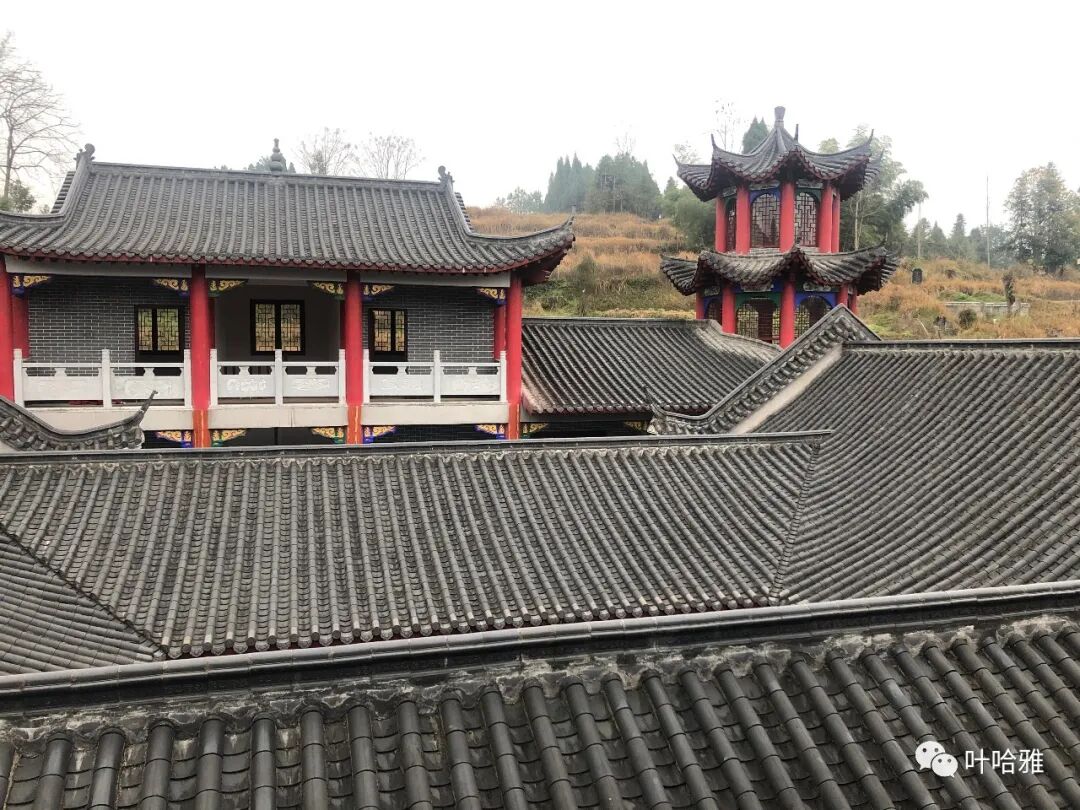
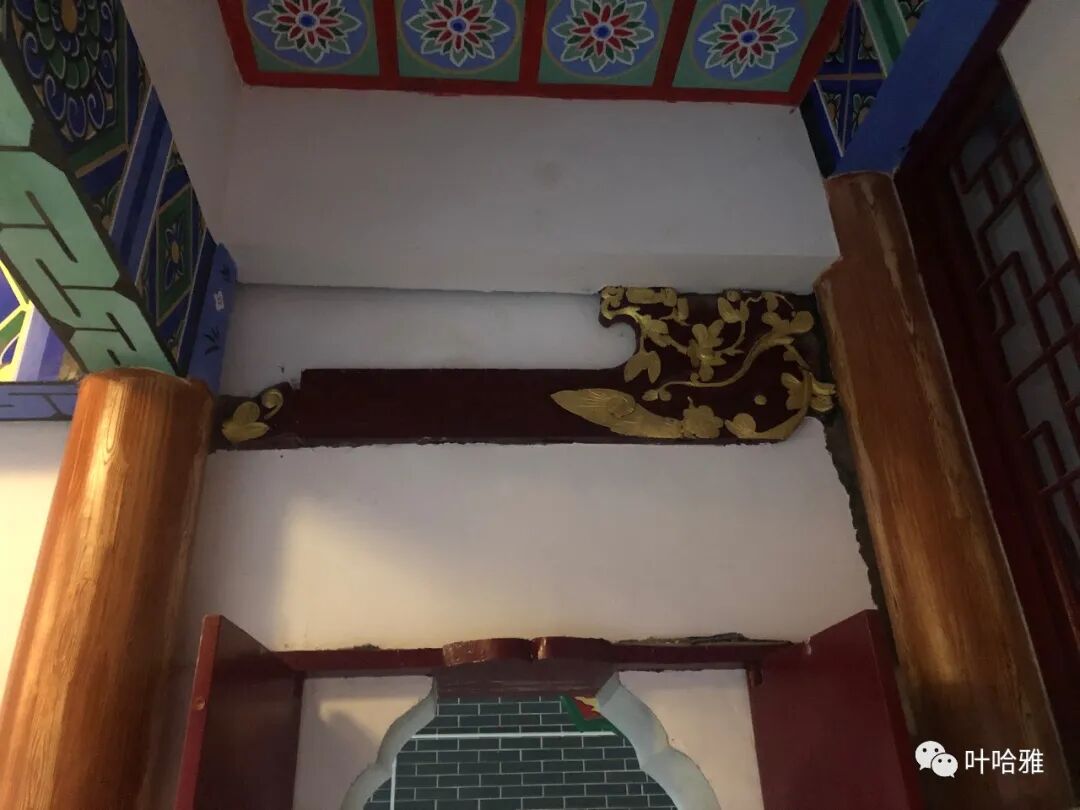
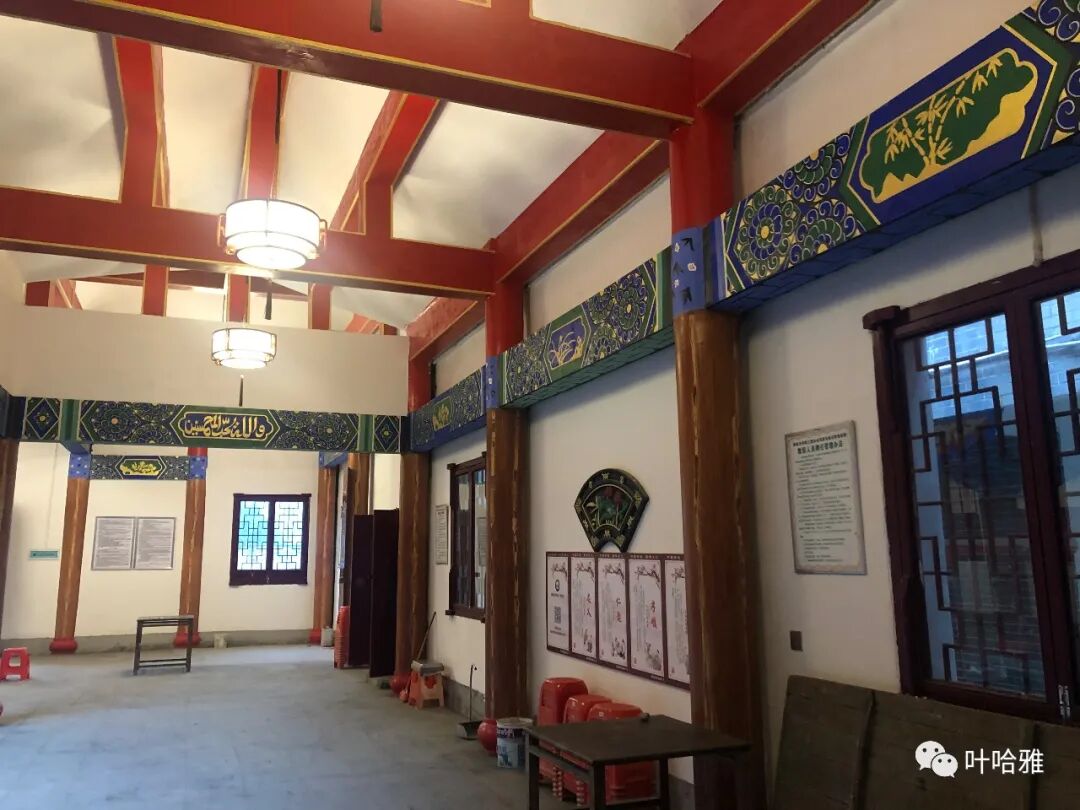
On the way to Shanjie, we passed through Jiugongqiao Town. Jiugongqiao Mosque is located in Sijiache Village, Jiugongqiao Town, Shaoyang County, Shaoyang City. Many Hui Muslims live in this village. The mosque was just completed and features a very local traditional style. It is the reddest mosque I have ever seen. Many locals even think it looks more like an ancestral hall than a mosque.
The main prayer hall is on the second floor. Since it was finished just last year, the smell of paint is still quite strong.
I have never seen an inscription like this on a plaque before: Love the Party, love the country, and love the faith. It is signed by Zhang Xiaolin, the president of the Shaoyang Islamic Association.
You can see the scenery in the distance from the second floor. At this time of year, Shaoyang is full of blooming rapeseed flowers.
Leaving Jiugongqiao Town, we drove to Qingcao Hui Muslim Village in Huangting Town, Shaoyang County. There is a Qingcao Mosque here. Almost all the villagers in this Hui Muslim village are Hui Muslims, and most of them have the surname Zhang.
On the village road leading to the mosque, we only saw some elderly people. After talking to them, we learned that the young people have all gone out to work. Some of the elders even greeted us with salaam.
Qingcao Mosque
It was first built in the tenth year of the Qianlong reign of the Qing Dynasty. It was flooded in 1996 and rebuilt in 1998. The new mosque follows the architectural style of the Qing Dynasty.
The writing above says the villagers' ancestor was Commander Pu Luode, who was ordered to station troops in Baoqing (now Shaoyang City, Hunan) in the early Ming Dynasty. In the twelfth year of the Wanli reign of the Ming Dynasty, their ancestor Zhang Huihui moved from Baoqing to Qingcao Village.
I performed two rak'ahs of prayer in the mosque to celebrate. I was moved to find such a devout Hui Muslim village in Hunan. Feeling comforted, I heard from the villagers that the faith is even stronger in nearby Shanjie, so we headed to our next destination without delay.
Soon we arrived at the location of Taohuaping Mosque in Longhui County. Longhui County is a settlement for Hui Muslims in Shaoyang, and the local Hui Muslims have lived here for hundreds of years. Taohuaping Mosque is built in a busy downtown area, surrounded by all kinds of halal snack shops. More Hui Muslims here wear headscarves.
Taohuaping Mosque was first built during the Jiaqing reign of the Qing Dynasty and rebuilt in 2017. The main part of the mosque is built in a traditional architectural style, blending in with the surrounding houses.
Qingzhen East Mosque in Shanjie Hui Muslim Township, Longhui County
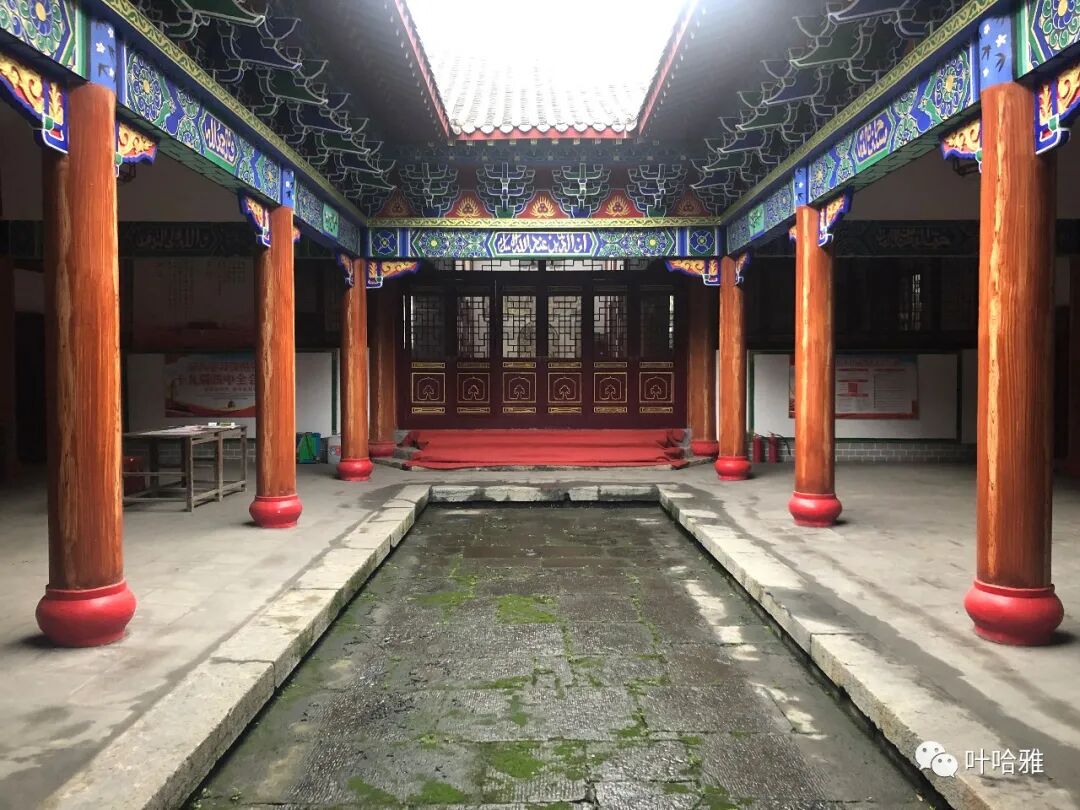
Qingzhen East Mosque was first built in the fifth year of the Yongzheng reign (1727). The gate archway is carved with a relief of five dragons surrounding a holy symbol. The Shanjie East Mosque is built in a courtyard style. The couplet on the gate reads 'Share the responsibility for our country and our people' on the right, and 'Revive the moral order with those of the same continent and race' on the left. It was written by Ma Linyi, a Hui Muslim who served as the Minister of Education during the Republic of China.
Shanjie Ancient Mosque in Longhui
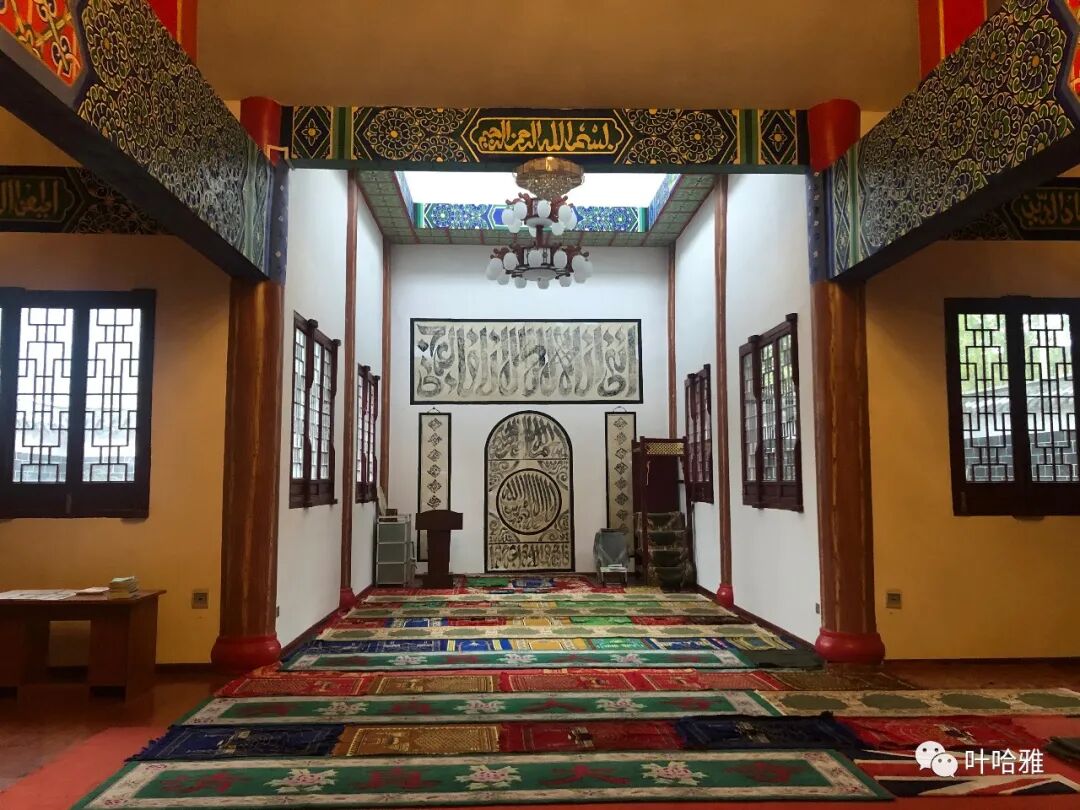
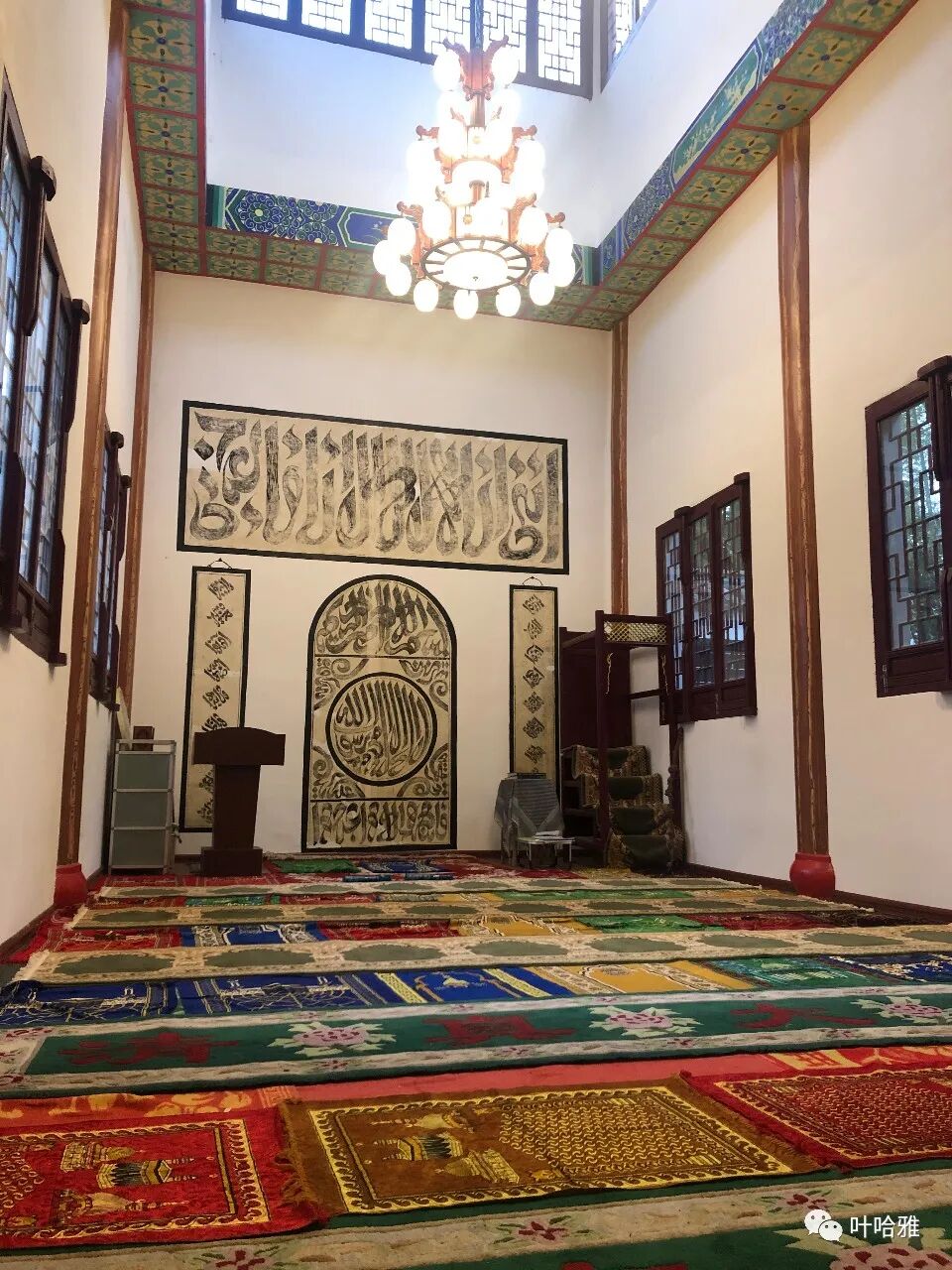
The Ancient Mosque in Shanjie Hui Muslim Township, Longhui, was first built in 1444 during the ninth year of the Zhengtong reign of the Ming Dynasty. It is the oldest mosque in Longhui County and is now a county-level cultural heritage site.
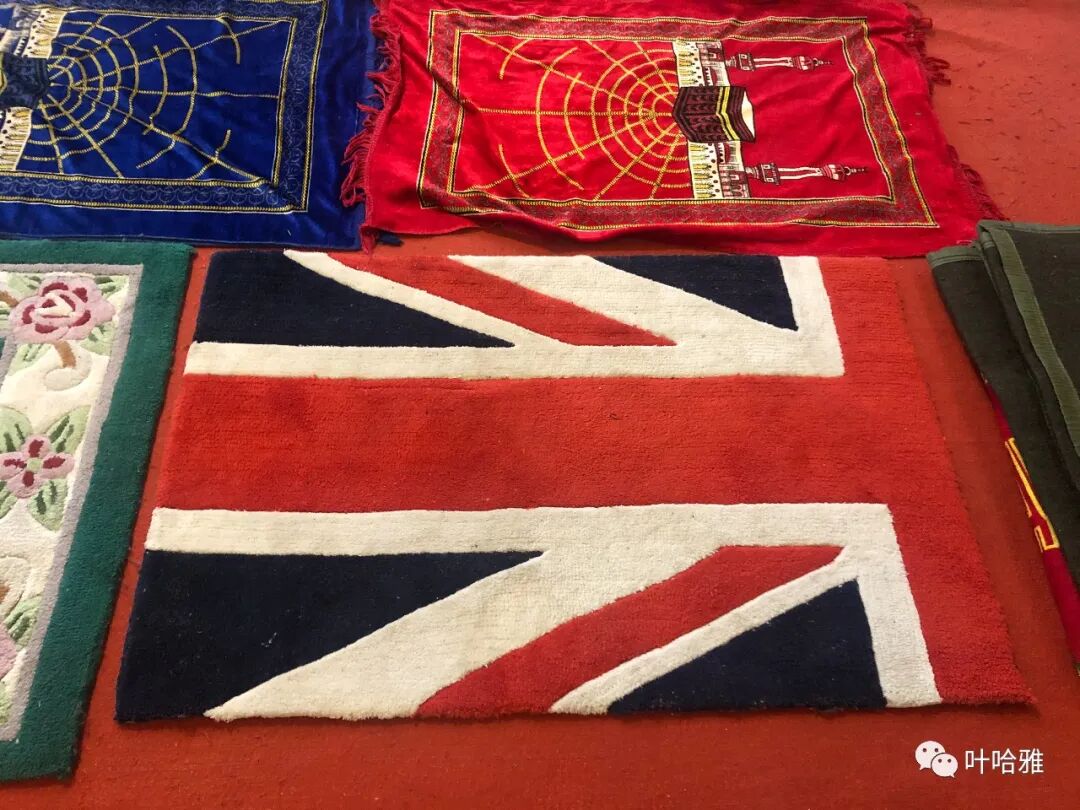
I am not sure where this piece of carpet was cut from.
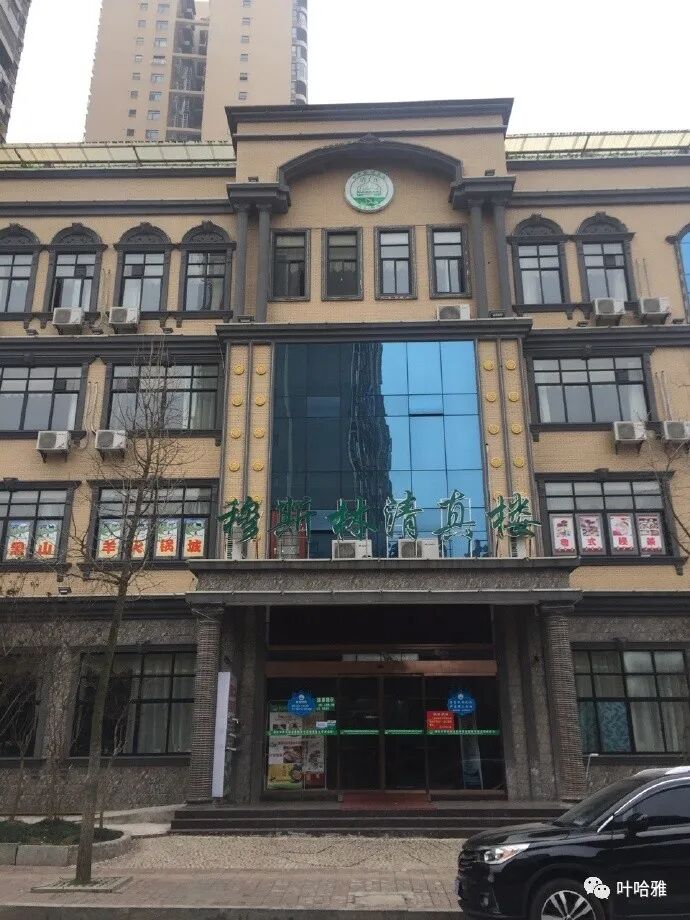
After visiting several representative mosques in Shaoyang, we returned to the city center to continue our halal food tour. There is so much halal food to eat in Shaoyang. Besides the Hui Muslim noodle shops scattered along the streets, there are also some larger halal restaurants that specialize in Hunan cuisine. When I visited in 2017, I went to a large restaurant called Muslim Halal Building (Musilin Qingzhen Lou). Unfortunately, I learned this time that the restaurant has changed owners and is no longer halal.
Old photo of the Muslim Halal Building in Shaoyang
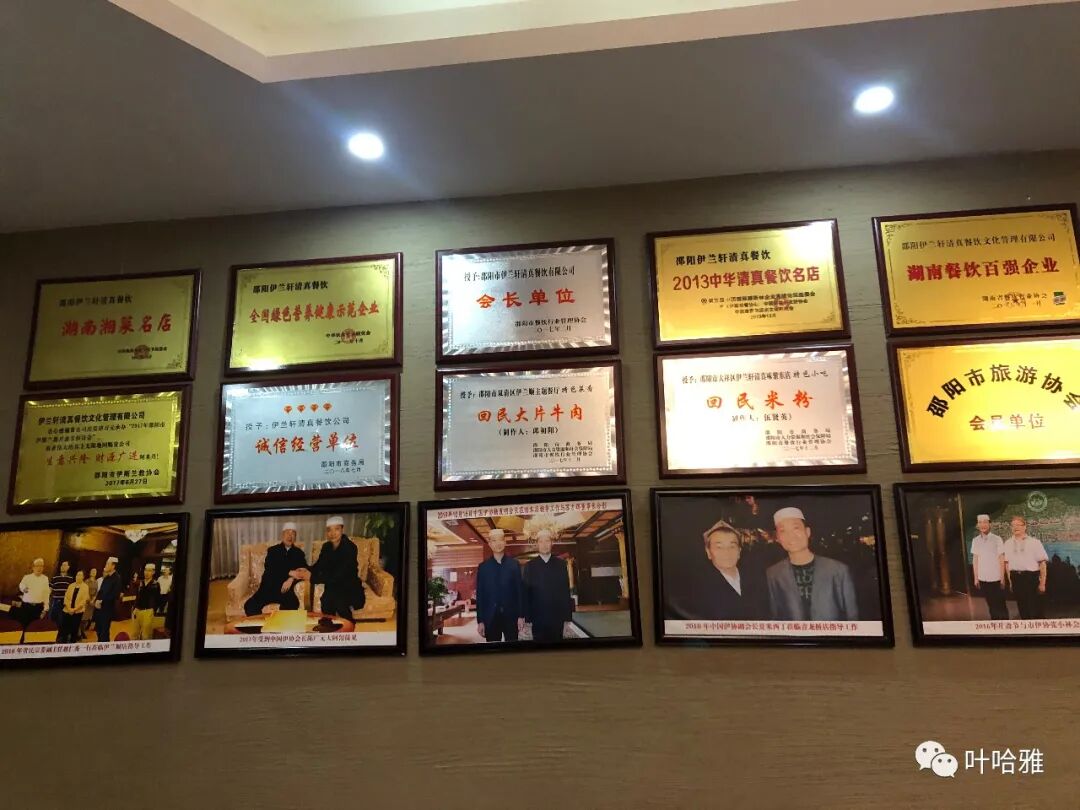
However, there are still many large halal restaurants to choose from in Shaoyang. The one introduced below, Yilanshun, is the largest halal restaurant in the city.
Yilanshun
Yilanshun belongs to the Yilanxuan Halal Catering Company. Yilanxuan owns three large halal restaurants. One of the other two branches is located at Zidong Mansion, and the other is near the train station.
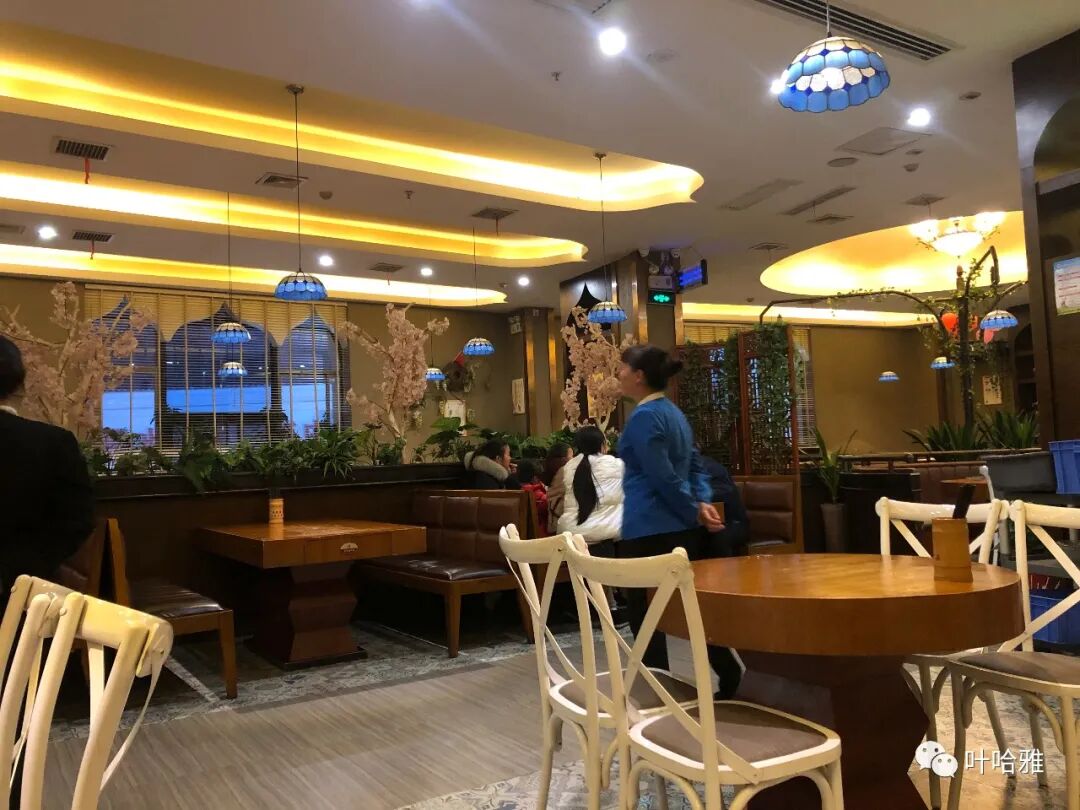
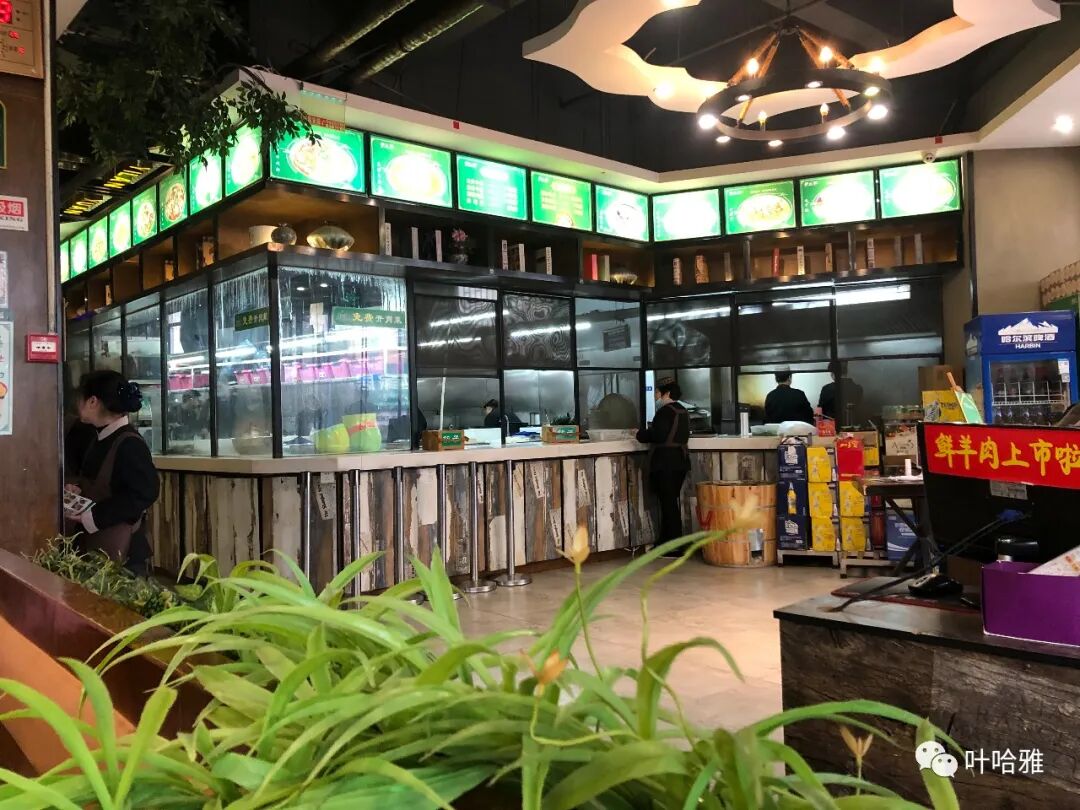
The restaurant is on the third floor of an office building. The space inside is very spacious. to the main dining hall, there are many private rooms. Hui Muslims in Shaoyang usually choose this place first for wedding banquets.
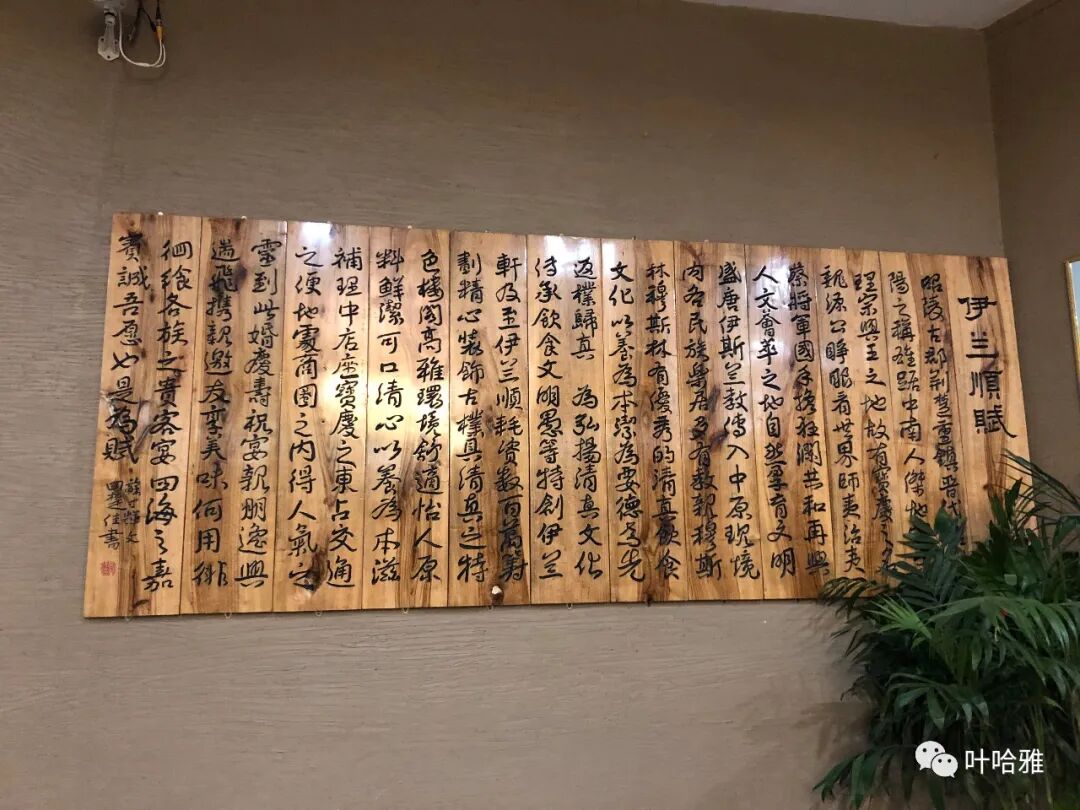
They specialize in Hunan cuisine, using beef and lamb as the main ingredients, along with chicken, duck, and seafood.
I really did not know until I came to Shaoyang that in a place like Hunan where there are very few Muslims, there is actually such a successful large local halal catering brand.
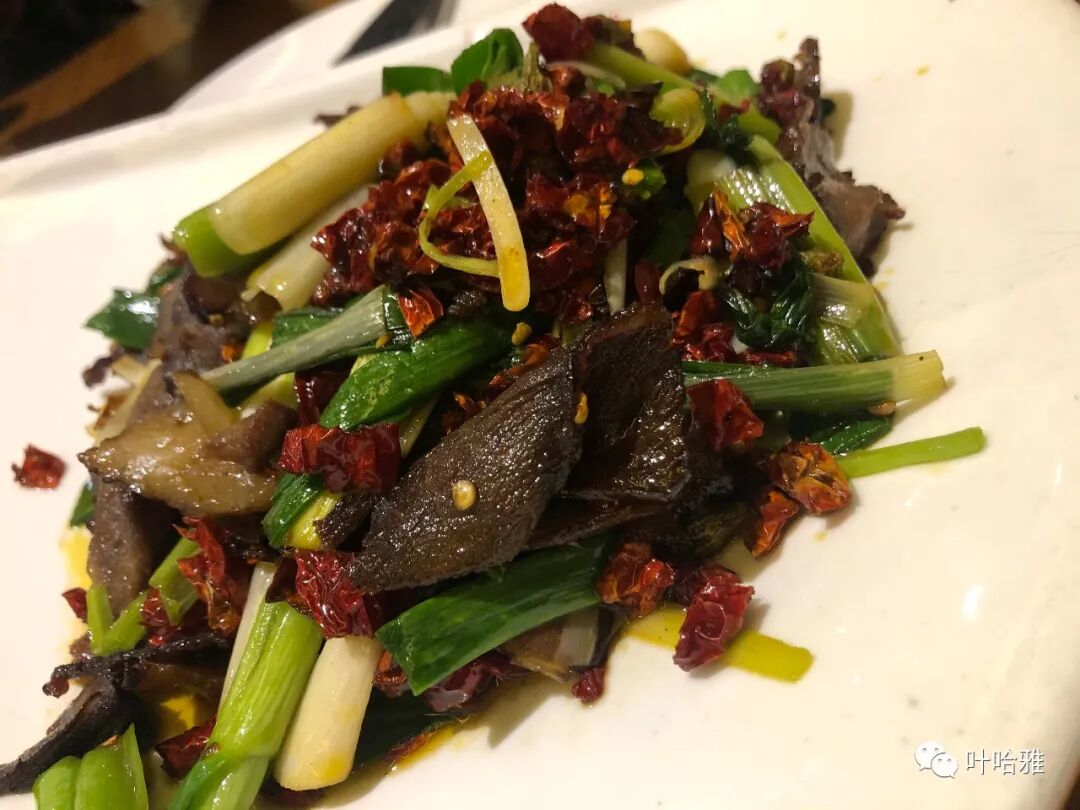
Hunan cured beef (la niurou)
A specialty of Hunan is cured meat (larou), but since Han Chinese eat pork, Hui Muslims naturally make cured beef. Eating beef here is the best choice. Cured beef is actually not spicy; it is chewy and is an excellent dish to eat with rice.
Golden sand tofu dregs (jinsha doufuzha)
Golden sand tofu dregs (jinsha doufuzha) is the signature dish here. It is wrapped in an egg skin with a tofu-based powder inside, mixed with chili. It has a soft, sticky texture and tastes great.
Chopped chili fish head (duojiao yutou)
The famous Hunan dish chopped chili fish head (duojiao yutou) is listed on the menu as fifth-generation fish head. Since the fish head is huge, you can order half if you cannot finish it. It comes with glass noodles (fensi) on the side. This dish is quite spicy, but it suits the local Hunan taste. It is rare to find halal chopped chili fish head, so it is worth a try. Hunan portions are generally large, so order carefully.
Yilanxuan South Station Branch
I visited both branches. They are both large, the food tastes about the same, and the menus are identical. The only difference is that Yilanshun does not serve breakfast, while the other two Yilanxuan locations do.
The restaurant is busy at lunch and dinner, even on non-holidays. This shows the brand has a good local reputation and can represent halal dining in Shaoyang.
I chose classic Hunan dishes. This stir-fried yellow beef (xiaochao huangniurou) is a famous home-style Hunan dish. It is mixed with small millet peppers. Although it is very spicy, it is satisfying. I feel that if you come to Hunan and do not try the spice, you are missing out. After all, it is hard to find authentic halal Hunan food once you leave. I first ate at a Hunan halal restaurant in Kunming, but I never had the chance to try it again until now.
Jumping fish fillets (tiaotiao yupian)
Another major feature of Hunan cuisine is its variety of river fish, as Hunan has plenty of water and frequent flooding. This jumping fish fillet (tiaotiao yupian) is delicious. It tastes like boiled fish (shuizhu yu) but is not as numbing. You must eat Hunan food with plenty of rice because the spice makes you want more. I usually only eat one bowl of rice at home, but in Hunan, I can eat a whole bucket.
Chef's tossed glass noodles (chuniang lao fensi)
The dish is called chef's tossed glass noodles (chuniang lao fensi). Dry-tossed glass noodles are another staple of Hunan cuisine. It takes great skill to stir-fry the noodles so they are neither sticky nor hard, but just right.
If you want to experience authentic Shaoyang noodle shops, besides the ones near the halal South Mosque (nansi), you can also try the Hui Muslim canteen on the first floor of the You'a Shopping Mall. The shop is newly renovated and quite clean.
Old Su's noodles are also very famous in Shaoyang. There are many Hui Muslims with the surname Su in Shaoyang.
Strolling through the streets of Shaoyang, you do not need to worry about finding halal restaurants, and they all serve local flavors. Ramen shops are rare here. A friend from Guangzhou once jokingly told me that the benchmark for future halal dining should look to Shaoyang. After this trip, I believe that is true.
The best meal I had in Shaoyang was the home-cooked food the imam's wife made for me before I left. There was chicken, duck, beef, and rabbit. Life is not easy for imams in the south because the number of local Muslims is small, and their salary only covers basic needs. It is much harder to do religious work here than in other places, but the reward in the hereafter is great. May Allah have mercy on those who strive for His cause. view all
Summary: Halal Street Food China: Shaoyang Hunan Muslim Food, Xiang Cuisine and Local Mosques is presented here as a clear English account for Muslim readers, beginning with this scene: — Hello, Travel —. The article keeps the original names, food details, mosque details, photographs, and cultural context while focusing on Shaoyang Halal Food, Xiang Cuisine, Muslim Travel.
— Hello, Travel —
Shaoyang is a city in Hunan with a large population of Hui Muslims. While Changde has more Hui Muslims, Shaoyang has a stronger religious community. Walking through the streets and alleys of Shaoyang, you see halal restaurants everywhere. Halal food is a major local specialty here. Shaoyang Hui-style rice noodles and wheat noodles (fenmian) are also quite famous in Hunan. These are just the rice noodles (mifen) and wheat noodles (miantiao) we often talk about, but they use the same soup base. Every city in Hunan has rice noodles, but the flavors vary slightly. Shaoyang rice noodles are unique, and the ones made by Hui Muslims are the most authentic.
This is my second visit to Shaoyang; the last time was in 2017. Both times, I stayed at the Ethnic Hotel (Minzu Binguan) owned by the Shaoyang South Mosque. The hotel is mosque property with basic facilities, and the room rate is less than 100 yuan per day. You can reach the main prayer hall just by going downstairs. The area is surrounded by halal restaurants, making transportation, dining, and shopping very convenient. A tip: if you arrive in Shaoyang by high-speed train, do not get off at Shaoyang North Station. You must get off at Shaoyang Station. When I first came to Shaoyang, I went to Shaoyang North Station and realized after arriving that it is an hour's drive from the city center. It is a very long journey and arguably the high-speed train station furthest from the city center in China.
Shaoyang currently has 23 open mosques. I only visited 7 of them. Here is the list of mosques in Shaoyang:
1. Shaoyang East Mosque
2. Shaoyang South Mosque
3. Shaoyang West Mosque
4. Shaoyang Sujiachong Mosque
5. Shaoyang Xuetangchong Mosque
6. Shaoyang Baihetan Mosque
7. Longhui County Taohuaping Mosque
8. Longhui County Ziyang Mosque
9. Longhui County Shanjie Hui Ethnic Township Ancient Mosque
10. Longhui County Shanjie Hui Ethnic Township East Mosque
11. Longhui County Shanjie Hui Ethnic Township South Mosque
12. West Mosque (Qingzhen Xisi) in Shanjie Hui Muslim Township, Longhui County
13. North Mosque (Qingzhen Beisi) in Shanjie Hui Muslim Township, Longhui County
14. Dashanchong Mosque in Beishan Town, Longhui County
15. Niejiaoting Mosque in Beishan Town, Longhui County
16. Luobai Mosque in Shanjie Hui Muslim Township, Longhui County
17. Shuijingtou Mosque in Shaodong County
18. Yangshandian Mosque in Shaodong County
19. Meitang Mosque in Shaodong County
20. Qingcao Mosque in Shaoyang County
21. Jiugongqiao Mosque in Shaoyang County
22. Yinxianqiao Mosque in Shaoyang County
23. Xiaqichong Mosque in Shaoyang County
Ethnic Hotel (Minzu Binguan)
When I first visited the Ethnic Hotel, I learned the young woman at the front desk was a Han Chinese Muslim. I wanted to visit her again this time, but I found out the hotel changed owners last year. It was a bit of a shame.
South Mosque (Qingzhen Nansi) in Shaoyang
The South Mosque was built in 1914 and is over a hundred years old. The main prayer hall has been renovated, so the main structure does not look new. What impressed me was the Nuhai boat built in the courtyard.
The nomination of the Halal Food Court at the Dama Food Center in Zhangjiajie caught my eye. Zhangjiajie is a famous scenic area in Hunan, and I must try the food there when I get the chance.
The Hui Muslim cemetery is right at the entrance of the Shaoyang South Mosque. The inscriptions on the tombstones show that most of the ancestors of the Hui Muslims in Shaoyang came from Nanjing and Beijing.
There are many small halal shops around the mosque selling pastries, rice noodles, wheat noodles, and some cooked snacks.
Five-kernel mooncake (wuren yuebing) bought from Sujing Hui Muslim Pastries.
There are many breakfast options in Shaoyang. This halal Hui Muslim restaurant across from the mosque sells rice noodles and wheat noodles. It is a traditional restaurant that has been operating locally for many years and has a good reputation.
Rice noodles with large beef slices.
Shaoyang rice noodles are thicker than those in Changsha and break more easily. The broth is very rich, topped with large slices of beef, which is a signature of Shaoyang noodle dishes. You can add as much green onion and cilantro as you like. This is the most authentic breakfast for Shaoyang locals. The taste is a little spicy, but I can handle it. If you don't want rice noodles, you can switch to wheat noodles. If you don't like spicy food, you can tell the owner to use less chili. The shop also has wontons. A snack cart outside sells steamed buns (baozi), deep-fried dough sticks (youtiao), and fried dough cakes (youbing). The fried dough cakes are sweet.
Beef wontons.
Shaoyang fried dough cakes are sweet.
Shaoyang East Mosque.
Shaoyang East Mosque is very close to the South Mosque and is within walking distance. It is located at Baoning First Lane in the Shuangqing District. The mosque was first built in the first year of the Hongwu reign (1368) and is the oldest mosque in Shaoyang. However, the original building collapsed, and the current structure is a new-style building.
A well-known scholar from this community was Ma Linyi, courtesy name Zhenwu. He was a provincial graduate (juren) in the Renyin year of the Guangxu reign (1902) and later studied in Japan. He served as the Minister of Education for the Republic of China government in the 12th and 13th years of the Republic (1923–1924). He wrote the book "Introduction to Islam" and once worked at Xiejin Middle School, a factory, and a girls' school in Shaoyang.
After visiting the two mosques in downtown Shaoyang, I contacted the local imam. I wanted to ask about the situation in Shanjie Hui Ethnic Township, which is under Shaoyang's jurisdiction, hoping to visit tomorrow. The imam said transportation to Shanjie is inconvenient, but he offered to drive us there himself. I am very grateful (shukr) for this, as it saved me a lot of trouble. We agreed to set off together for Shanjie Hui Ethnic Township after the Friday prayer (Jumu'ah).
Jiugongqiao Mosque
On the way to Shanjie, we passed through Jiugongqiao Town. Jiugongqiao Mosque is located in Sijiache Village, Jiugongqiao Town, Shaoyang County, Shaoyang City. Many Hui Muslims live in this village. The mosque was just completed and features a very local traditional style. It is the reddest mosque I have ever seen. Many locals even think it looks more like an ancestral hall than a mosque.
The main prayer hall is on the second floor. Since it was finished just last year, the smell of paint is still quite strong.
I have never seen an inscription like this on a plaque before: Love the Party, love the country, and love the faith. It is signed by Zhang Xiaolin, the president of the Shaoyang Islamic Association.
You can see the scenery in the distance from the second floor. At this time of year, Shaoyang is full of blooming rapeseed flowers.
Leaving Jiugongqiao Town, we drove to Qingcao Hui Muslim Village in Huangting Town, Shaoyang County. There is a Qingcao Mosque here. Almost all the villagers in this Hui Muslim village are Hui Muslims, and most of them have the surname Zhang.
On the village road leading to the mosque, we only saw some elderly people. After talking to them, we learned that the young people have all gone out to work. Some of the elders even greeted us with salaam.
Qingcao Mosque
It was first built in the tenth year of the Qianlong reign of the Qing Dynasty. It was flooded in 1996 and rebuilt in 1998. The new mosque follows the architectural style of the Qing Dynasty.
The writing above says the villagers' ancestor was Commander Pu Luode, who was ordered to station troops in Baoqing (now Shaoyang City, Hunan) in the early Ming Dynasty. In the twelfth year of the Wanli reign of the Ming Dynasty, their ancestor Zhang Huihui moved from Baoqing to Qingcao Village.
I performed two rak'ahs of prayer in the mosque to celebrate. I was moved to find such a devout Hui Muslim village in Hunan. Feeling comforted, I heard from the villagers that the faith is even stronger in nearby Shanjie, so we headed to our next destination without delay.
Soon we arrived at the location of Taohuaping Mosque in Longhui County. Longhui County is a settlement for Hui Muslims in Shaoyang, and the local Hui Muslims have lived here for hundreds of years. Taohuaping Mosque is built in a busy downtown area, surrounded by all kinds of halal snack shops. More Hui Muslims here wear headscarves.
Taohuaping Mosque was first built during the Jiaqing reign of the Qing Dynasty and rebuilt in 2017. The main part of the mosque is built in a traditional architectural style, blending in with the surrounding houses.
Qingzhen East Mosque in Shanjie Hui Muslim Township, Longhui County
Qingzhen East Mosque was first built in the fifth year of the Yongzheng reign (1727). The gate archway is carved with a relief of five dragons surrounding a holy symbol. The Shanjie East Mosque is built in a courtyard style. The couplet on the gate reads 'Share the responsibility for our country and our people' on the right, and 'Revive the moral order with those of the same continent and race' on the left. It was written by Ma Linyi, a Hui Muslim who served as the Minister of Education during the Republic of China.
Shanjie Ancient Mosque in Longhui
The Ancient Mosque in Shanjie Hui Muslim Township, Longhui, was first built in 1444 during the ninth year of the Zhengtong reign of the Ming Dynasty. It is the oldest mosque in Longhui County and is now a county-level cultural heritage site.
I am not sure where this piece of carpet was cut from.
After visiting several representative mosques in Shaoyang, we returned to the city center to continue our halal food tour. There is so much halal food to eat in Shaoyang. Besides the Hui Muslim noodle shops scattered along the streets, there are also some larger halal restaurants that specialize in Hunan cuisine. When I visited in 2017, I went to a large restaurant called Muslim Halal Building (Musilin Qingzhen Lou). Unfortunately, I learned this time that the restaurant has changed owners and is no longer halal.
Old photo of the Muslim Halal Building in Shaoyang
However, there are still many large halal restaurants to choose from in Shaoyang. The one introduced below, Yilanshun, is the largest halal restaurant in the city.
Yilanshun
Yilanshun belongs to the Yilanxuan Halal Catering Company. Yilanxuan owns three large halal restaurants. One of the other two branches is located at Zidong Mansion, and the other is near the train station.
The restaurant is on the third floor of an office building. The space inside is very spacious. to the main dining hall, there are many private rooms. Hui Muslims in Shaoyang usually choose this place first for wedding banquets.
They specialize in Hunan cuisine, using beef and lamb as the main ingredients, along with chicken, duck, and seafood.
I really did not know until I came to Shaoyang that in a place like Hunan where there are very few Muslims, there is actually such a successful large local halal catering brand.
Hunan cured beef (la niurou)
A specialty of Hunan is cured meat (larou), but since Han Chinese eat pork, Hui Muslims naturally make cured beef. Eating beef here is the best choice. Cured beef is actually not spicy; it is chewy and is an excellent dish to eat with rice.
Golden sand tofu dregs (jinsha doufuzha)
Golden sand tofu dregs (jinsha doufuzha) is the signature dish here. It is wrapped in an egg skin with a tofu-based powder inside, mixed with chili. It has a soft, sticky texture and tastes great.
Chopped chili fish head (duojiao yutou)
The famous Hunan dish chopped chili fish head (duojiao yutou) is listed on the menu as fifth-generation fish head. Since the fish head is huge, you can order half if you cannot finish it. It comes with glass noodles (fensi) on the side. This dish is quite spicy, but it suits the local Hunan taste. It is rare to find halal chopped chili fish head, so it is worth a try. Hunan portions are generally large, so order carefully.
Yilanxuan South Station Branch
I visited both branches. They are both large, the food tastes about the same, and the menus are identical. The only difference is that Yilanshun does not serve breakfast, while the other two Yilanxuan locations do.
The restaurant is busy at lunch and dinner, even on non-holidays. This shows the brand has a good local reputation and can represent halal dining in Shaoyang.
I chose classic Hunan dishes. This stir-fried yellow beef (xiaochao huangniurou) is a famous home-style Hunan dish. It is mixed with small millet peppers. Although it is very spicy, it is satisfying. I feel that if you come to Hunan and do not try the spice, you are missing out. After all, it is hard to find authentic halal Hunan food once you leave. I first ate at a Hunan halal restaurant in Kunming, but I never had the chance to try it again until now.
Jumping fish fillets (tiaotiao yupian)
Another major feature of Hunan cuisine is its variety of river fish, as Hunan has plenty of water and frequent flooding. This jumping fish fillet (tiaotiao yupian) is delicious. It tastes like boiled fish (shuizhu yu) but is not as numbing. You must eat Hunan food with plenty of rice because the spice makes you want more. I usually only eat one bowl of rice at home, but in Hunan, I can eat a whole bucket.
Chef's tossed glass noodles (chuniang lao fensi)
The dish is called chef's tossed glass noodles (chuniang lao fensi). Dry-tossed glass noodles are another staple of Hunan cuisine. It takes great skill to stir-fry the noodles so they are neither sticky nor hard, but just right.
If you want to experience authentic Shaoyang noodle shops, besides the ones near the halal South Mosque (nansi), you can also try the Hui Muslim canteen on the first floor of the You'a Shopping Mall. The shop is newly renovated and quite clean.
Old Su's noodles are also very famous in Shaoyang. There are many Hui Muslims with the surname Su in Shaoyang.
Strolling through the streets of Shaoyang, you do not need to worry about finding halal restaurants, and they all serve local flavors. Ramen shops are rare here. A friend from Guangzhou once jokingly told me that the benchmark for future halal dining should look to Shaoyang. After this trip, I believe that is true.
The best meal I had in Shaoyang was the home-cooked food the imam's wife made for me before I left. There was chicken, duck, beef, and rabbit. Life is not easy for imams in the south because the number of local Muslims is small, and their salary only covers basic needs. It is much harder to do religious work here than in other places, but the reward in the hereafter is great. May Allah have mercy on those who strive for His cause. view all
Reposted from the web
Summary: Halal Street Food China: Shaoyang Hunan Muslim Food, Xiang Cuisine and Local Mosques is presented here as a clear English account for Muslim readers, beginning with this scene: — Hello, Travel —. The article keeps the original names, food details, mosque details, photographs, and cultural context while focusing on Shaoyang Halal Food, Xiang Cuisine, Muslim Travel.
— Hello, Travel —
Shaoyang is a city in Hunan with a large population of Hui Muslims. While Changde has more Hui Muslims, Shaoyang has a stronger religious community. Walking through the streets and alleys of Shaoyang, you see halal restaurants everywhere. Halal food is a major local specialty here. Shaoyang Hui-style rice noodles and wheat noodles (fenmian) are also quite famous in Hunan. These are just the rice noodles (mifen) and wheat noodles (miantiao) we often talk about, but they use the same soup base. Every city in Hunan has rice noodles, but the flavors vary slightly. Shaoyang rice noodles are unique, and the ones made by Hui Muslims are the most authentic.
This is my second visit to Shaoyang; the last time was in 2017. Both times, I stayed at the Ethnic Hotel (Minzu Binguan) owned by the Shaoyang South Mosque. The hotel is mosque property with basic facilities, and the room rate is less than 100 yuan per day. You can reach the main prayer hall just by going downstairs. The area is surrounded by halal restaurants, making transportation, dining, and shopping very convenient. A tip: if you arrive in Shaoyang by high-speed train, do not get off at Shaoyang North Station. You must get off at Shaoyang Station. When I first came to Shaoyang, I went to Shaoyang North Station and realized after arriving that it is an hour's drive from the city center. It is a very long journey and arguably the high-speed train station furthest from the city center in China.
Shaoyang currently has 23 open mosques. I only visited 7 of them. Here is the list of mosques in Shaoyang:
1. Shaoyang East Mosque
2. Shaoyang South Mosque
3. Shaoyang West Mosque
4. Shaoyang Sujiachong Mosque
5. Shaoyang Xuetangchong Mosque
6. Shaoyang Baihetan Mosque
7. Longhui County Taohuaping Mosque
8. Longhui County Ziyang Mosque
9. Longhui County Shanjie Hui Ethnic Township Ancient Mosque
10. Longhui County Shanjie Hui Ethnic Township East Mosque
11. Longhui County Shanjie Hui Ethnic Township South Mosque
12. West Mosque (Qingzhen Xisi) in Shanjie Hui Muslim Township, Longhui County
13. North Mosque (Qingzhen Beisi) in Shanjie Hui Muslim Township, Longhui County
14. Dashanchong Mosque in Beishan Town, Longhui County
15. Niejiaoting Mosque in Beishan Town, Longhui County
16. Luobai Mosque in Shanjie Hui Muslim Township, Longhui County
17. Shuijingtou Mosque in Shaodong County
18. Yangshandian Mosque in Shaodong County
19. Meitang Mosque in Shaodong County
20. Qingcao Mosque in Shaoyang County
21. Jiugongqiao Mosque in Shaoyang County
22. Yinxianqiao Mosque in Shaoyang County
23. Xiaqichong Mosque in Shaoyang County
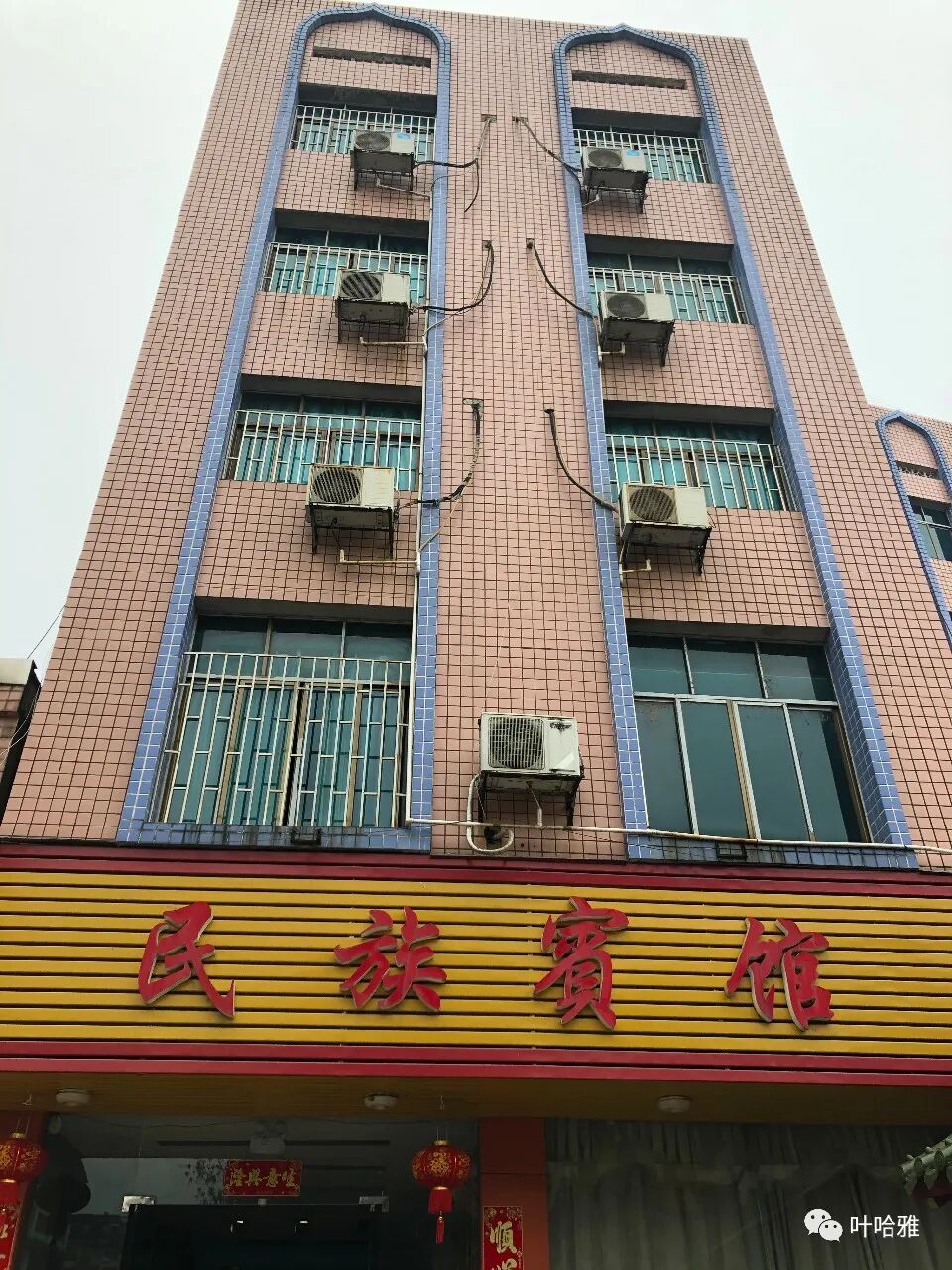
Ethnic Hotel (Minzu Binguan)
When I first visited the Ethnic Hotel, I learned the young woman at the front desk was a Han Chinese Muslim. I wanted to visit her again this time, but I found out the hotel changed owners last year. It was a bit of a shame.
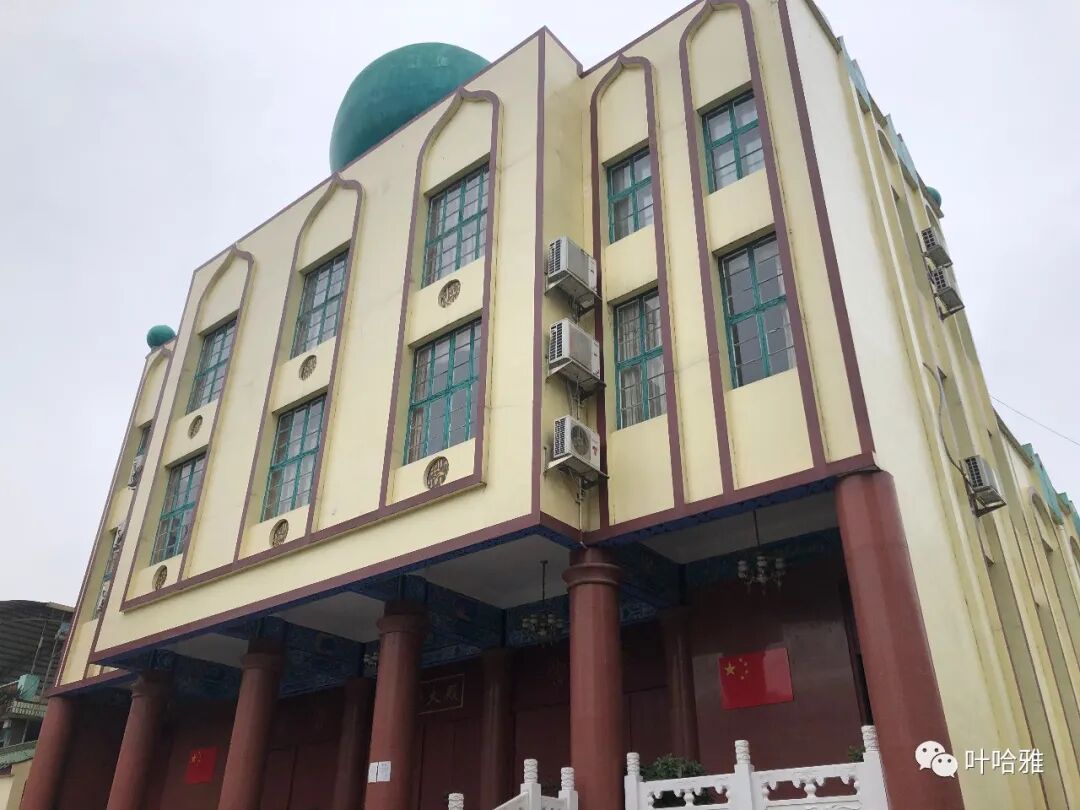
South Mosque (Qingzhen Nansi) in Shaoyang
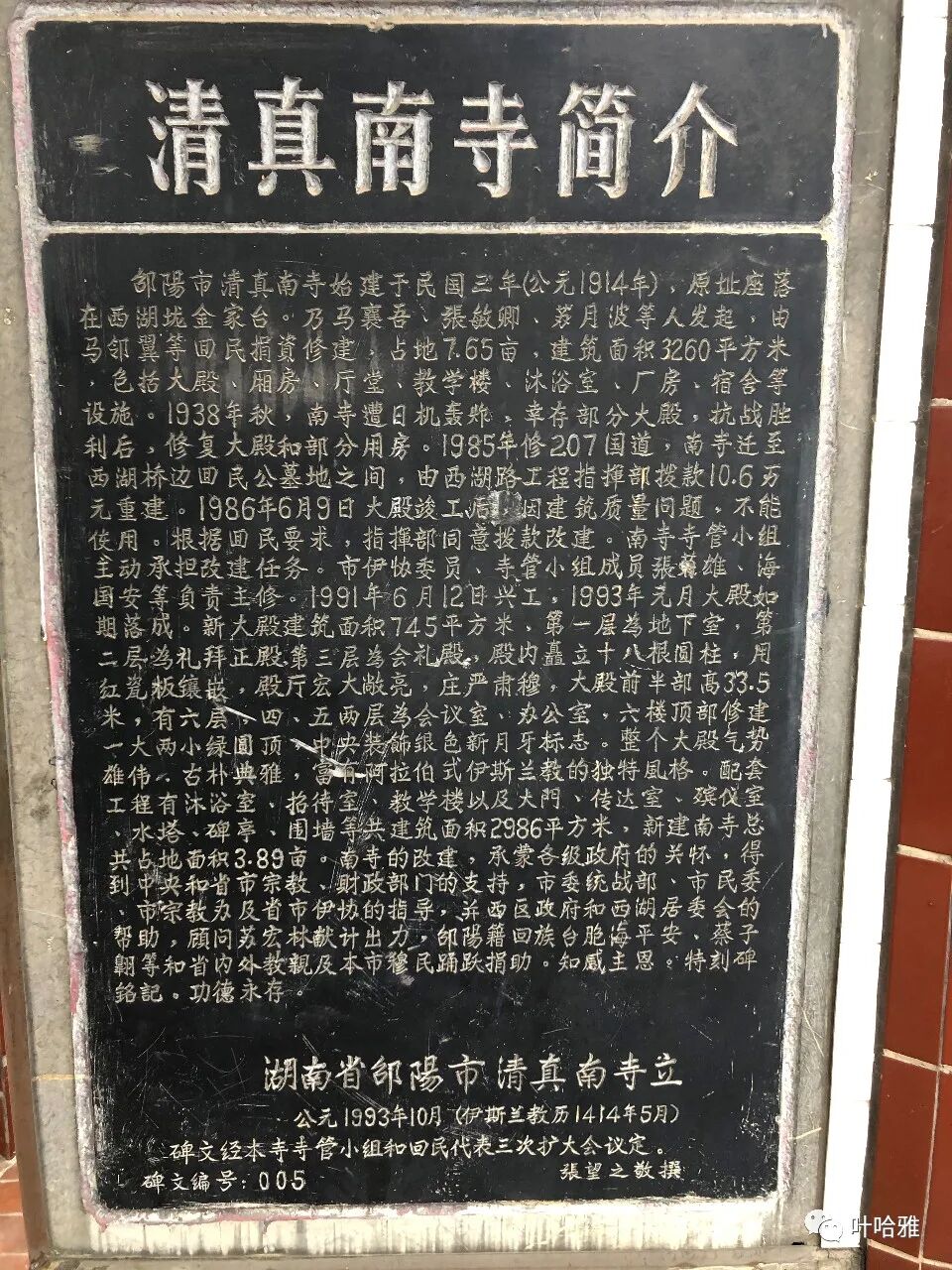
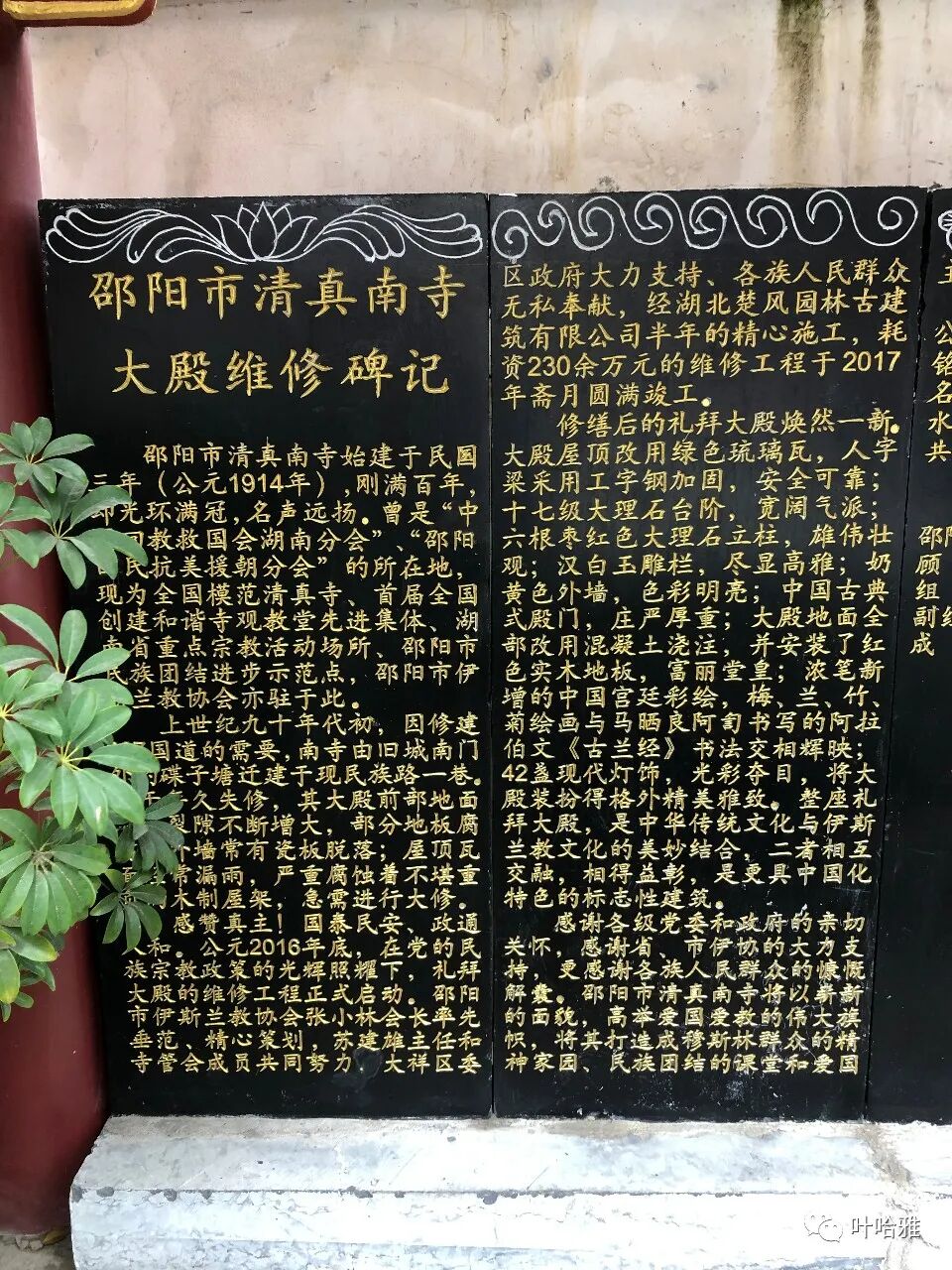
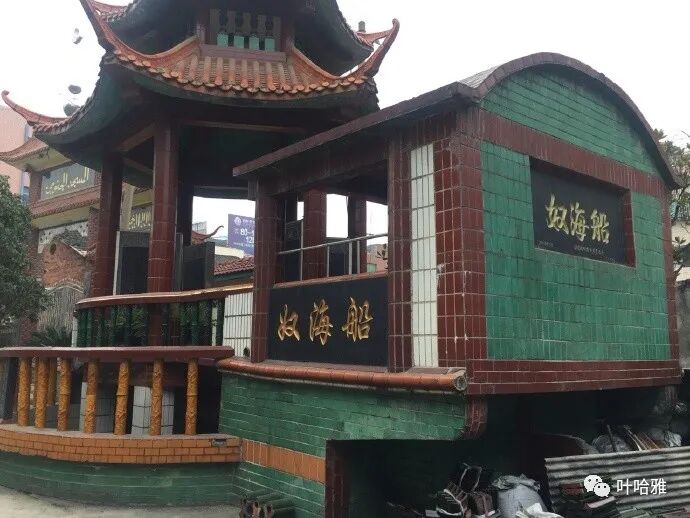
The South Mosque was built in 1914 and is over a hundred years old. The main prayer hall has been renovated, so the main structure does not look new. What impressed me was the Nuhai boat built in the courtyard.
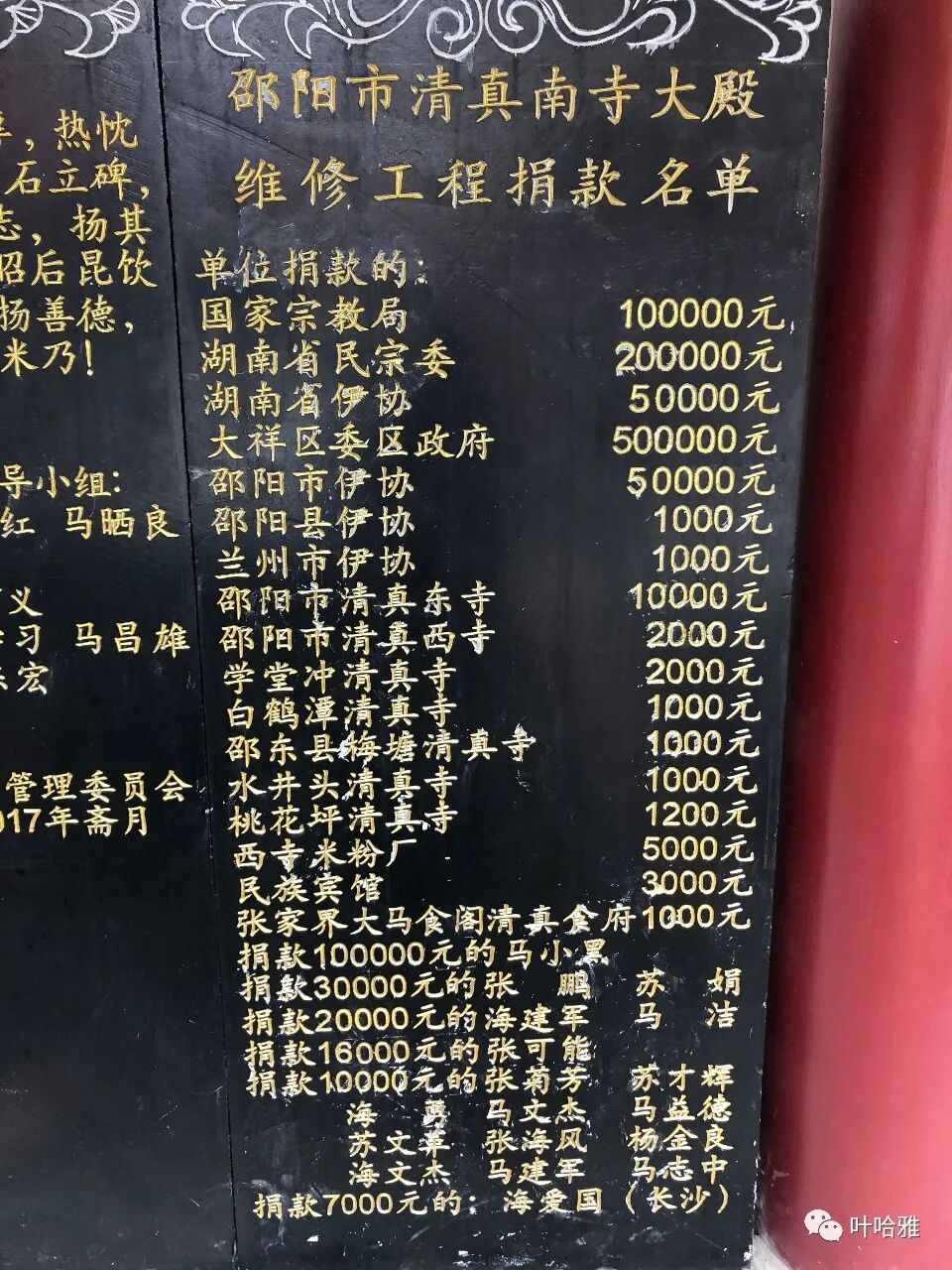
The nomination of the Halal Food Court at the Dama Food Center in Zhangjiajie caught my eye. Zhangjiajie is a famous scenic area in Hunan, and I must try the food there when I get the chance.
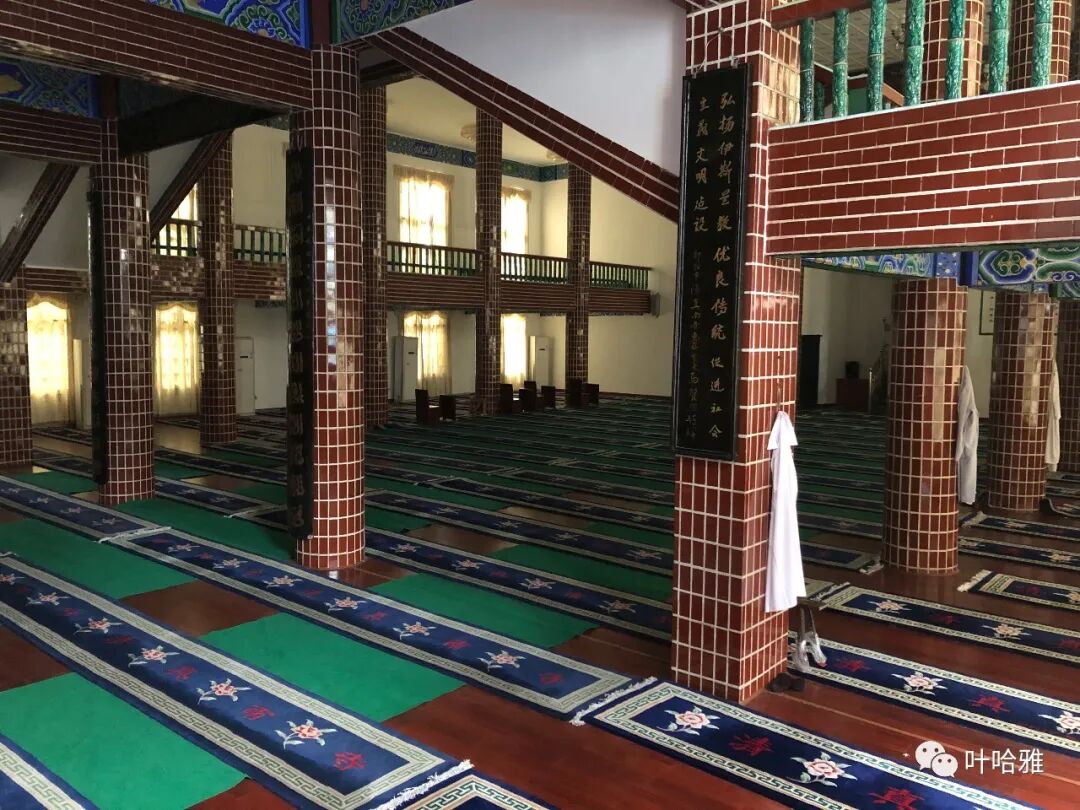
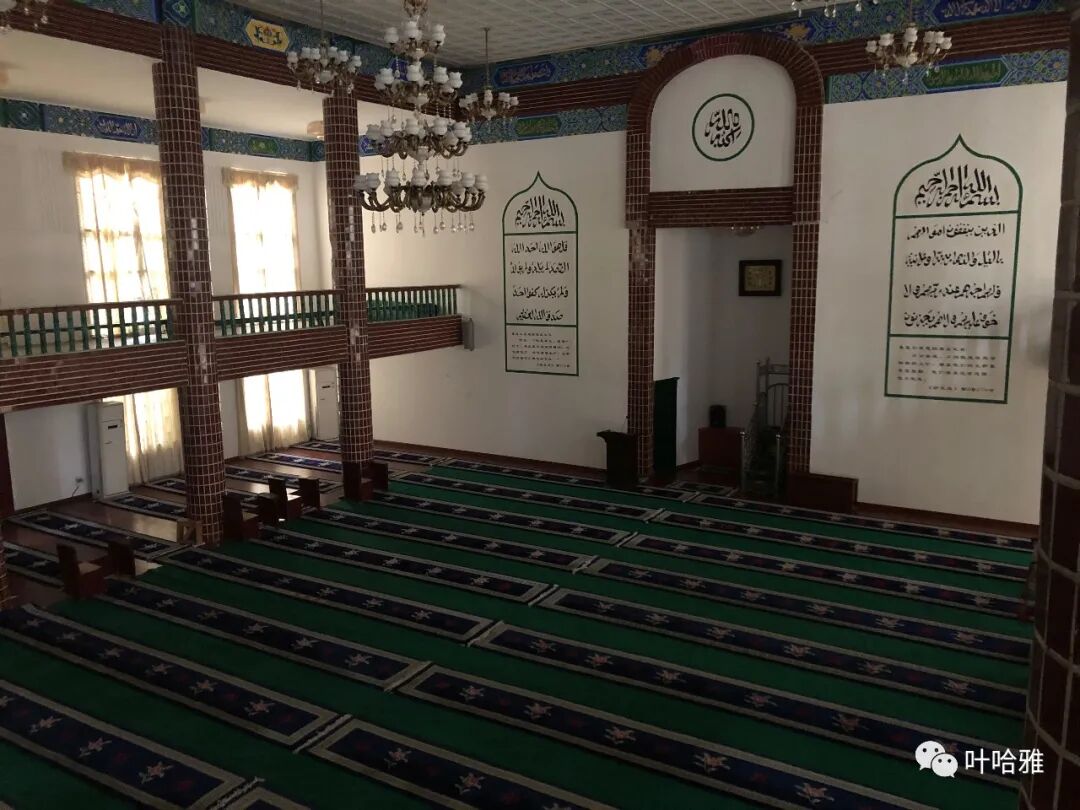
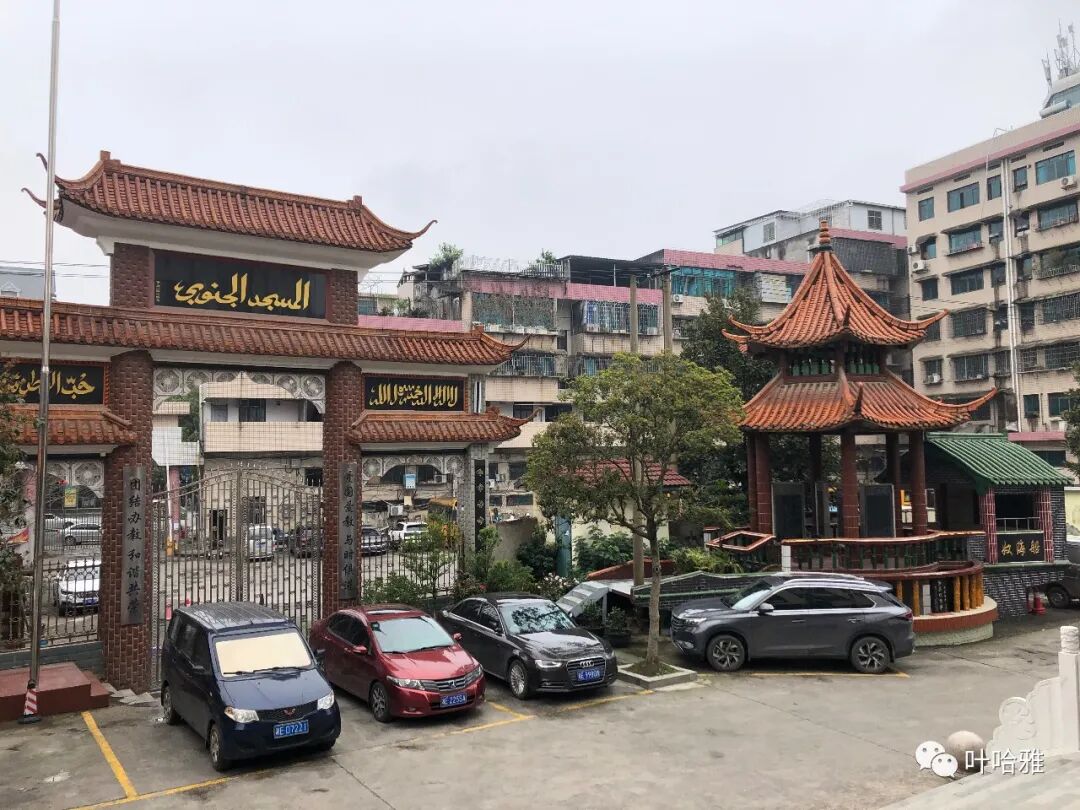
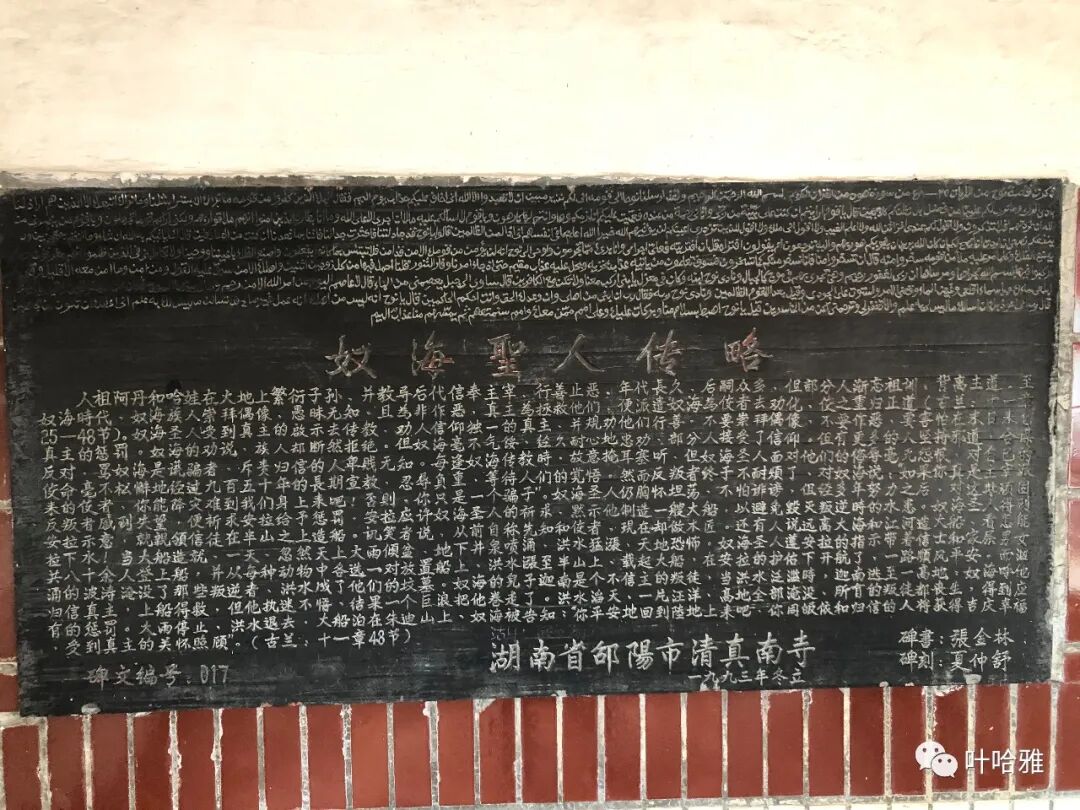
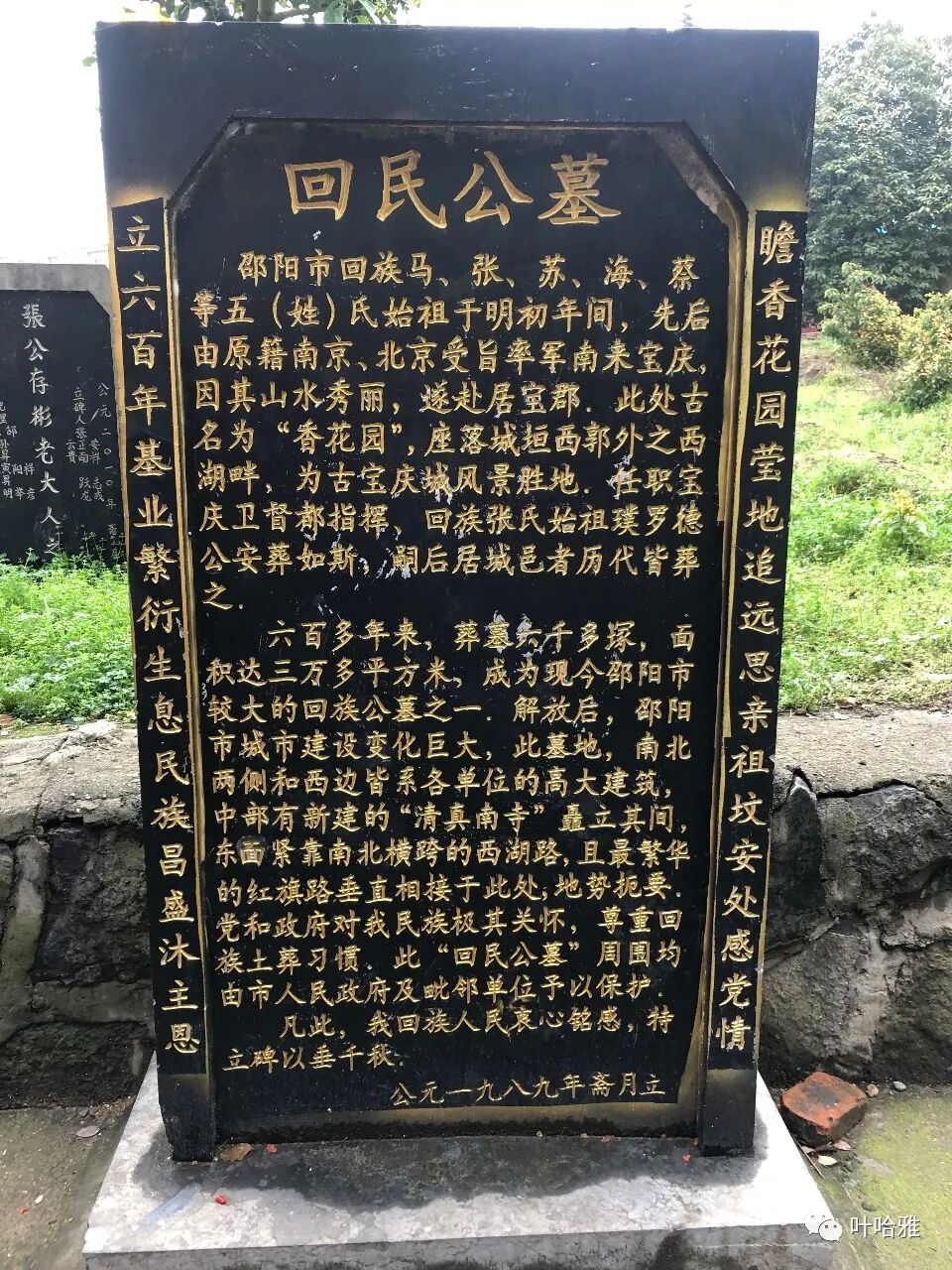
The Hui Muslim cemetery is right at the entrance of the Shaoyang South Mosque. The inscriptions on the tombstones show that most of the ancestors of the Hui Muslims in Shaoyang came from Nanjing and Beijing.
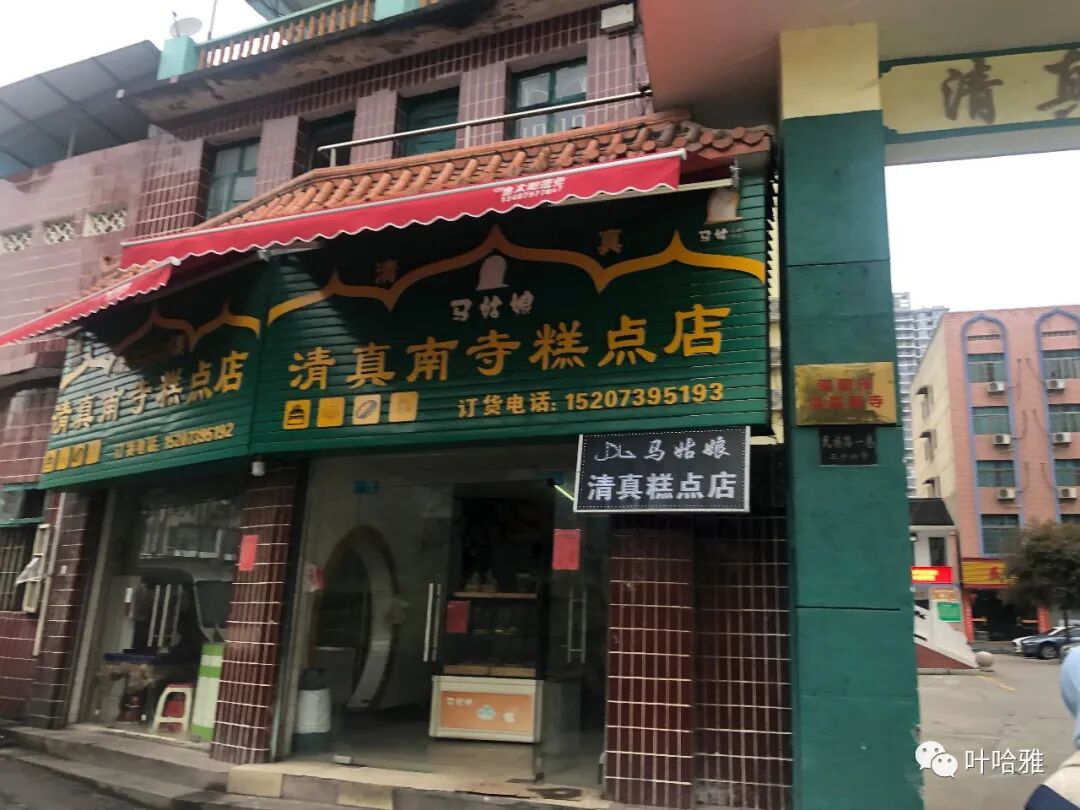
There are many small halal shops around the mosque selling pastries, rice noodles, wheat noodles, and some cooked snacks.
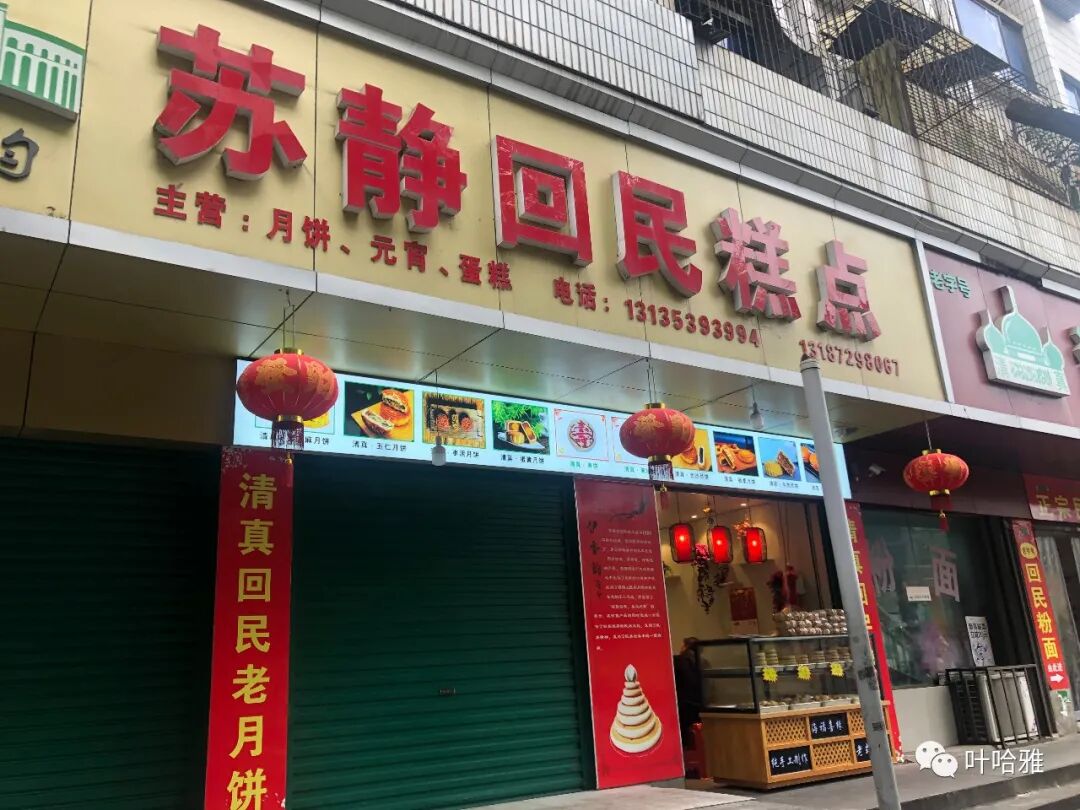
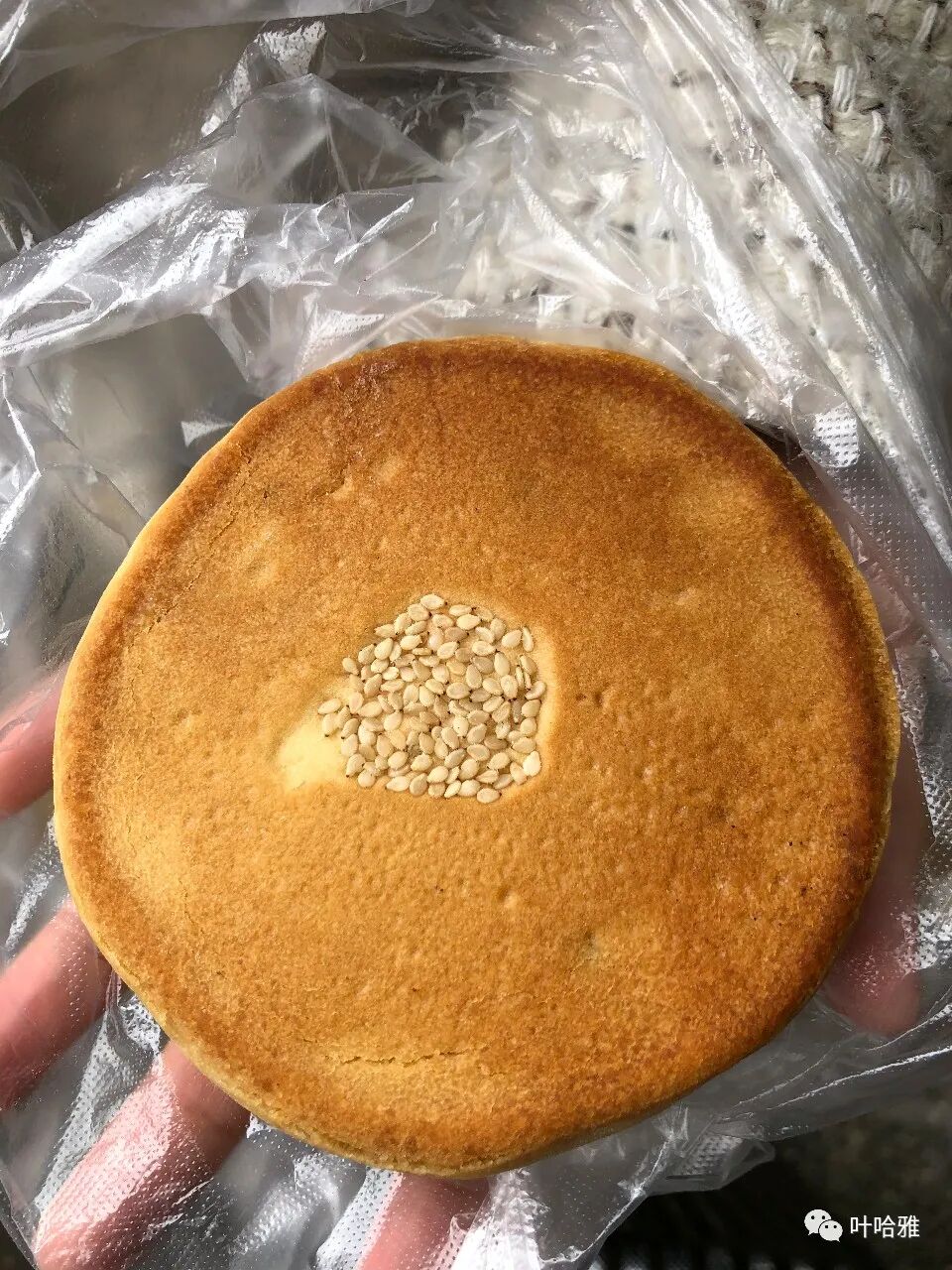
Five-kernel mooncake (wuren yuebing) bought from Sujing Hui Muslim Pastries.
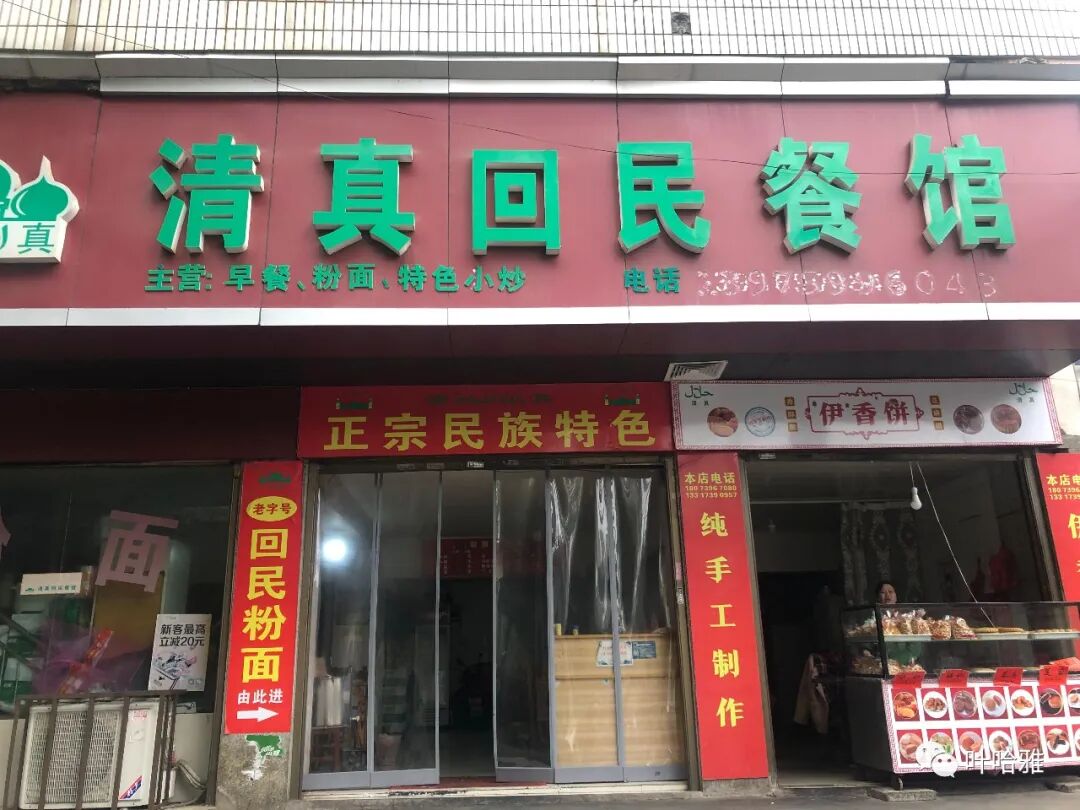
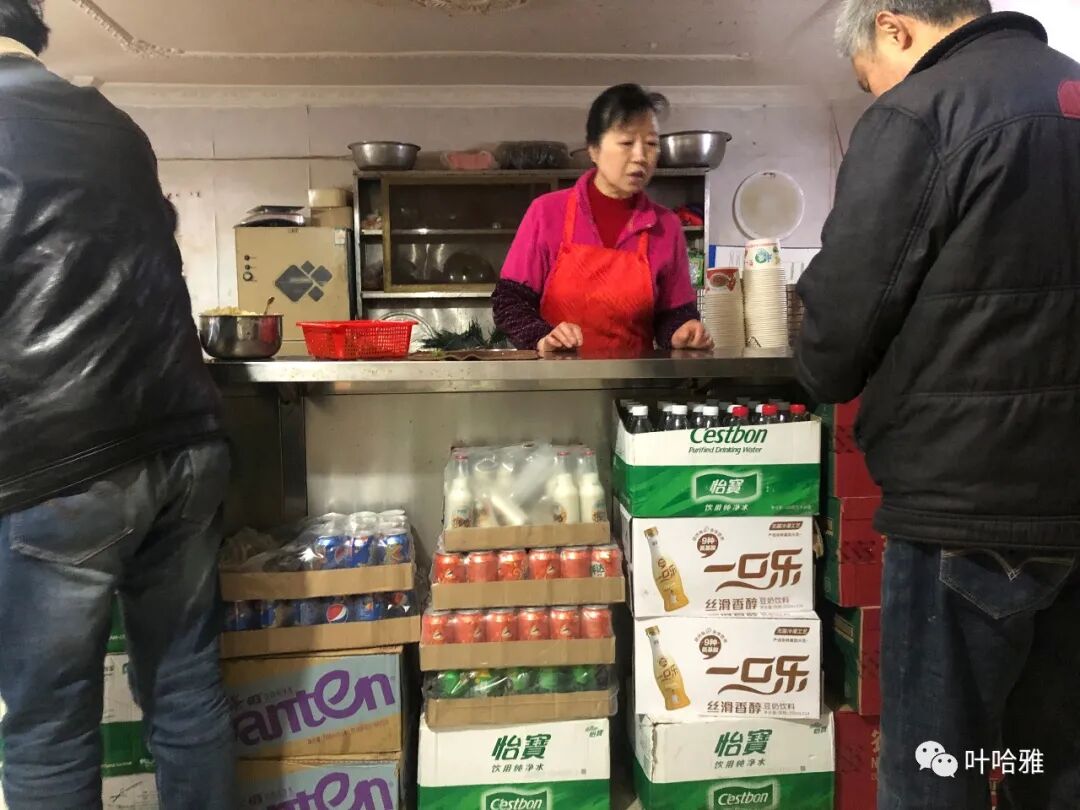
There are many breakfast options in Shaoyang. This halal Hui Muslim restaurant across from the mosque sells rice noodles and wheat noodles. It is a traditional restaurant that has been operating locally for many years and has a good reputation.
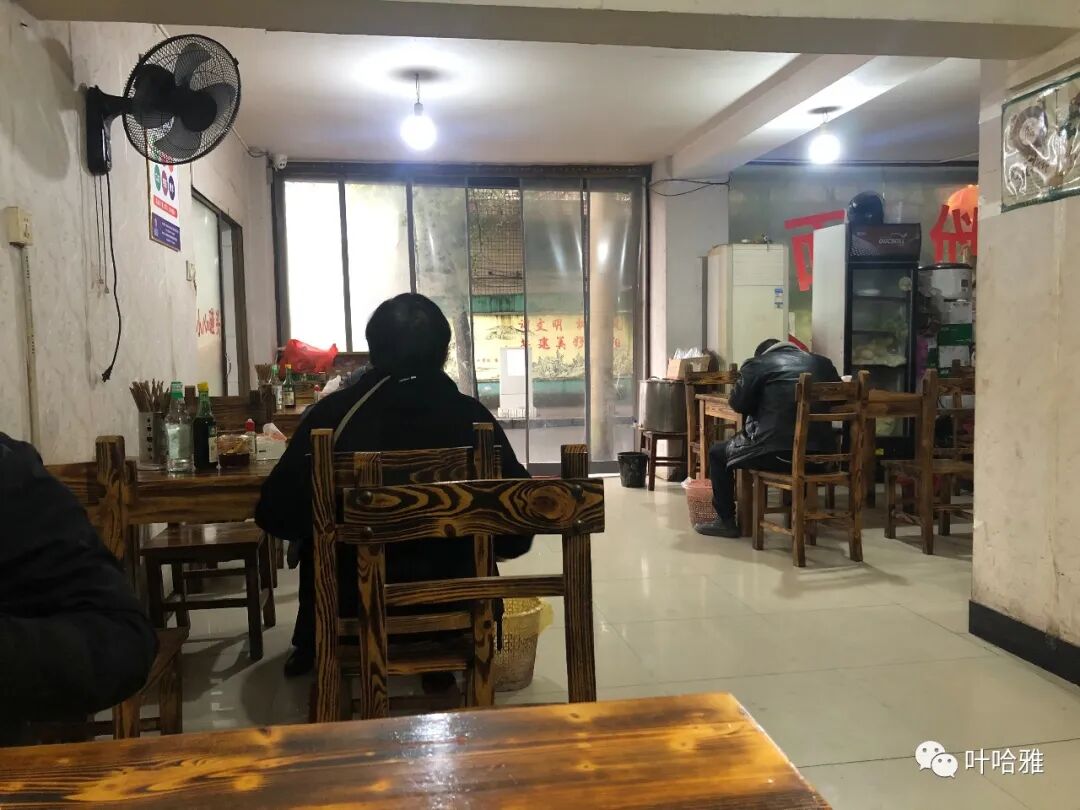
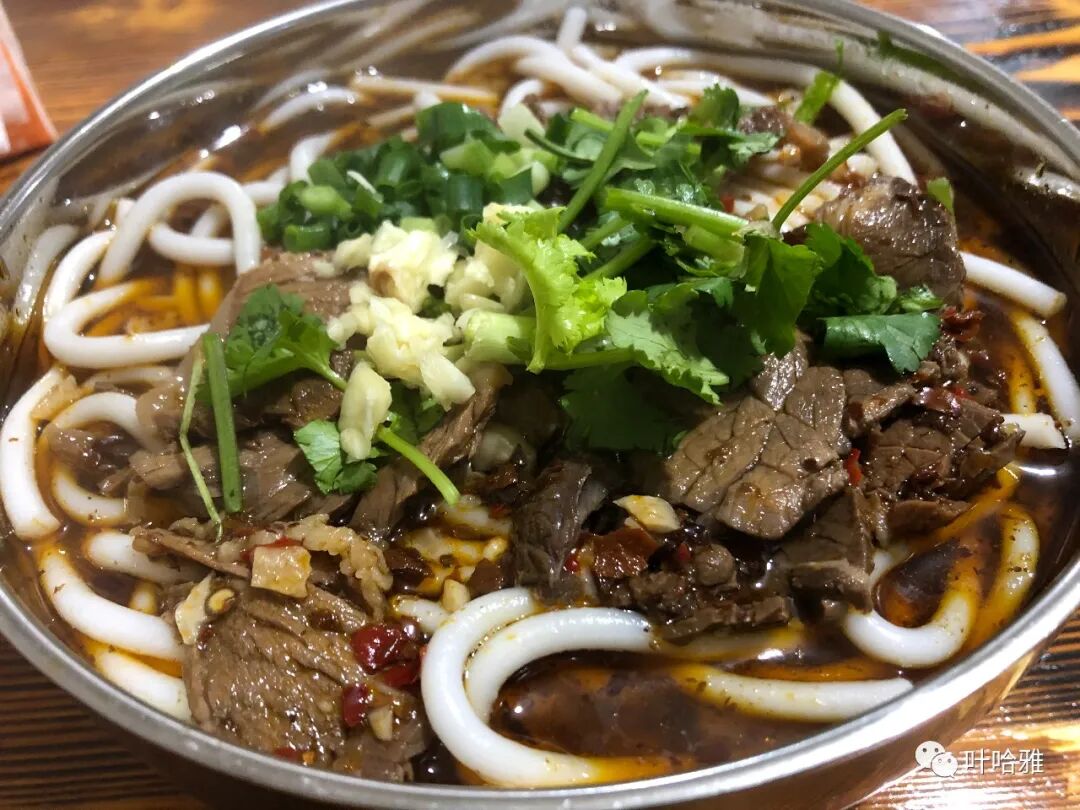
Rice noodles with large beef slices.
Shaoyang rice noodles are thicker than those in Changsha and break more easily. The broth is very rich, topped with large slices of beef, which is a signature of Shaoyang noodle dishes. You can add as much green onion and cilantro as you like. This is the most authentic breakfast for Shaoyang locals. The taste is a little spicy, but I can handle it. If you don't want rice noodles, you can switch to wheat noodles. If you don't like spicy food, you can tell the owner to use less chili. The shop also has wontons. A snack cart outside sells steamed buns (baozi), deep-fried dough sticks (youtiao), and fried dough cakes (youbing). The fried dough cakes are sweet.
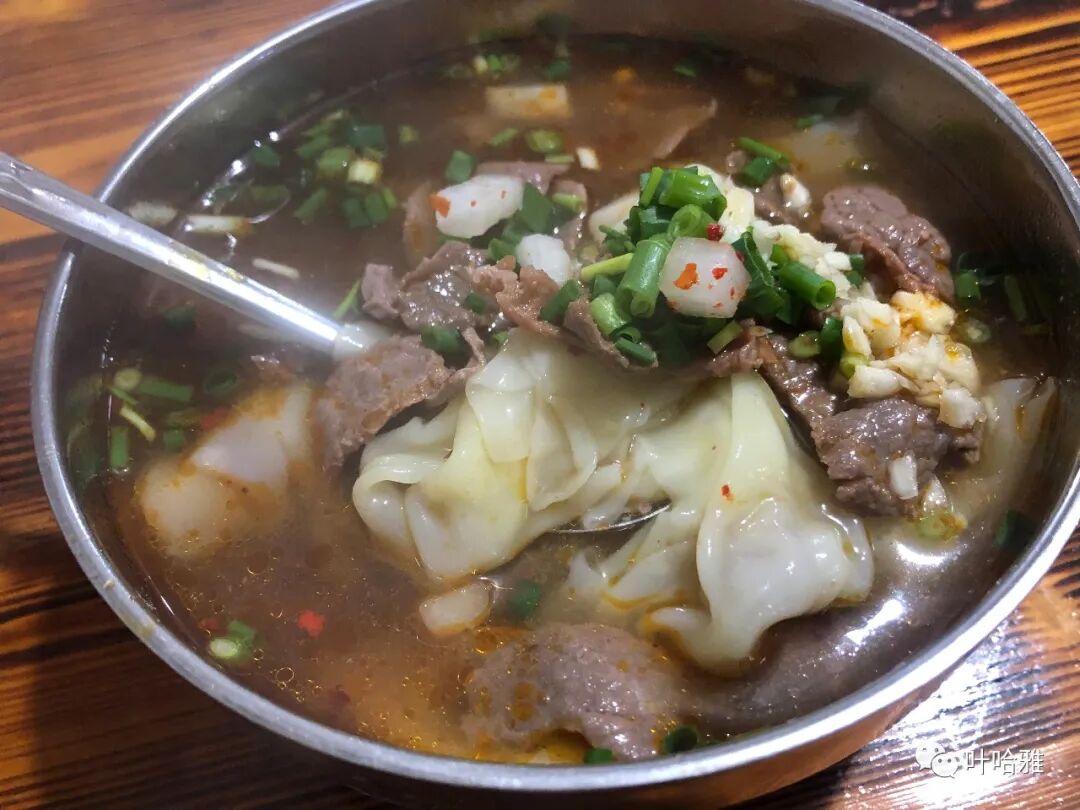
Beef wontons.
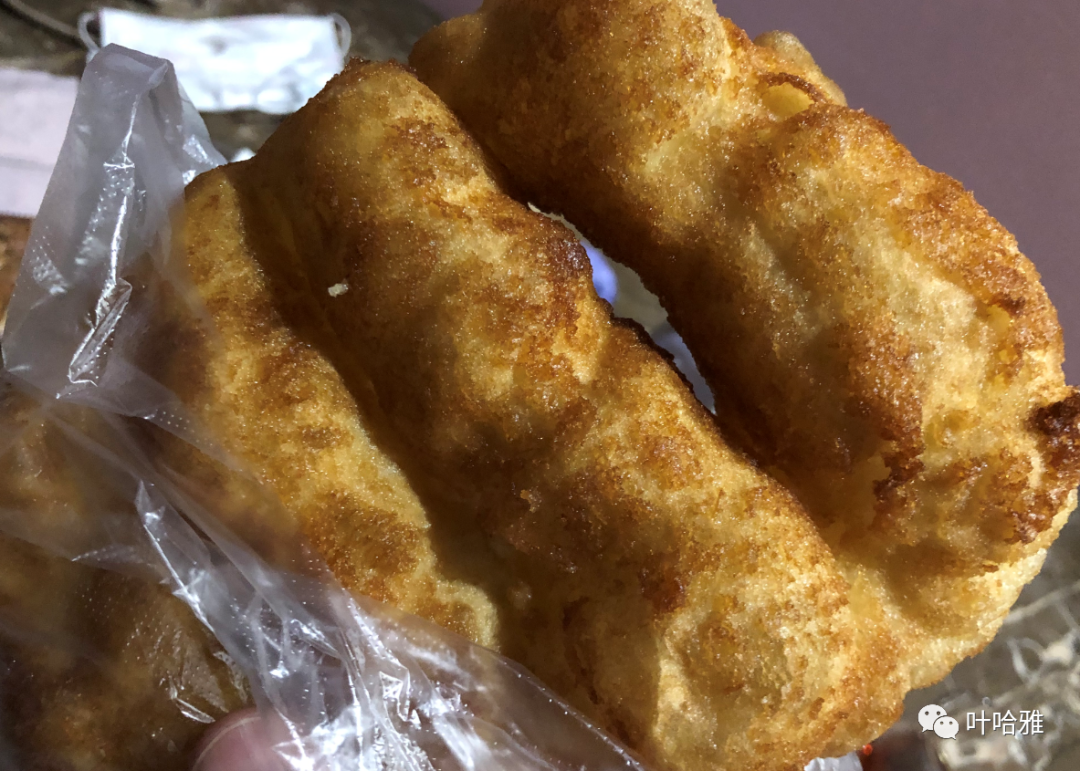
Shaoyang fried dough cakes are sweet.
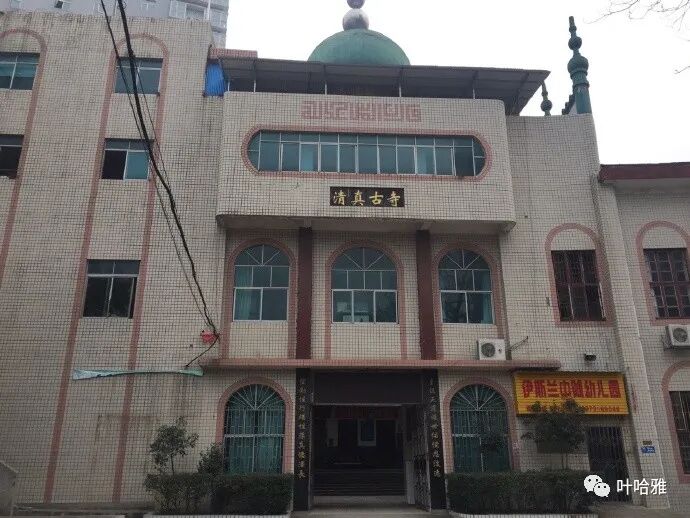
Shaoyang East Mosque.
Shaoyang East Mosque is very close to the South Mosque and is within walking distance. It is located at Baoning First Lane in the Shuangqing District. The mosque was first built in the first year of the Hongwu reign (1368) and is the oldest mosque in Shaoyang. However, the original building collapsed, and the current structure is a new-style building.
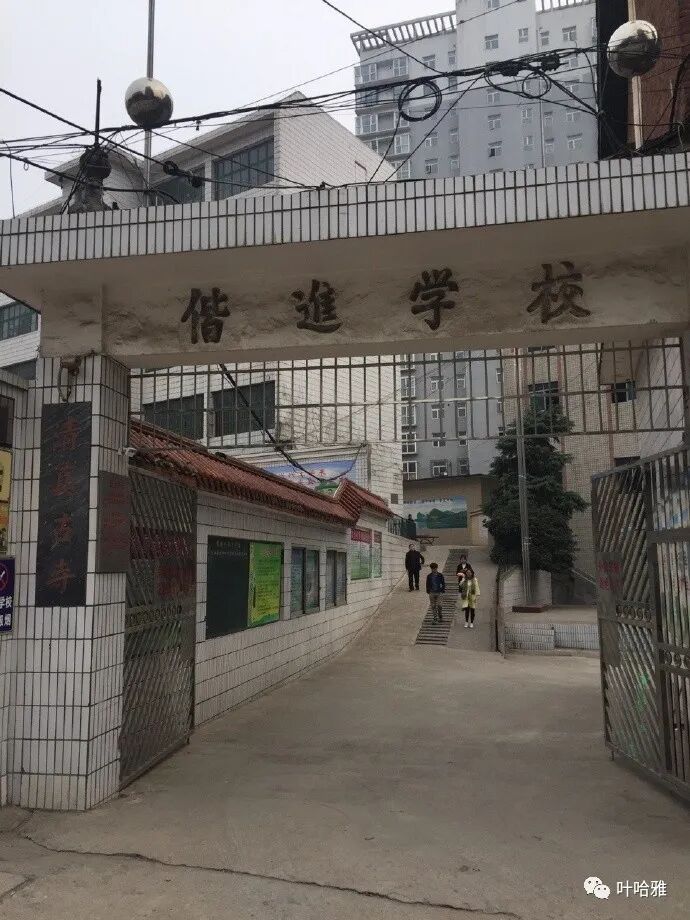
A well-known scholar from this community was Ma Linyi, courtesy name Zhenwu. He was a provincial graduate (juren) in the Renyin year of the Guangxu reign (1902) and later studied in Japan. He served as the Minister of Education for the Republic of China government in the 12th and 13th years of the Republic (1923–1924). He wrote the book "Introduction to Islam" and once worked at Xiejin Middle School, a factory, and a girls' school in Shaoyang.
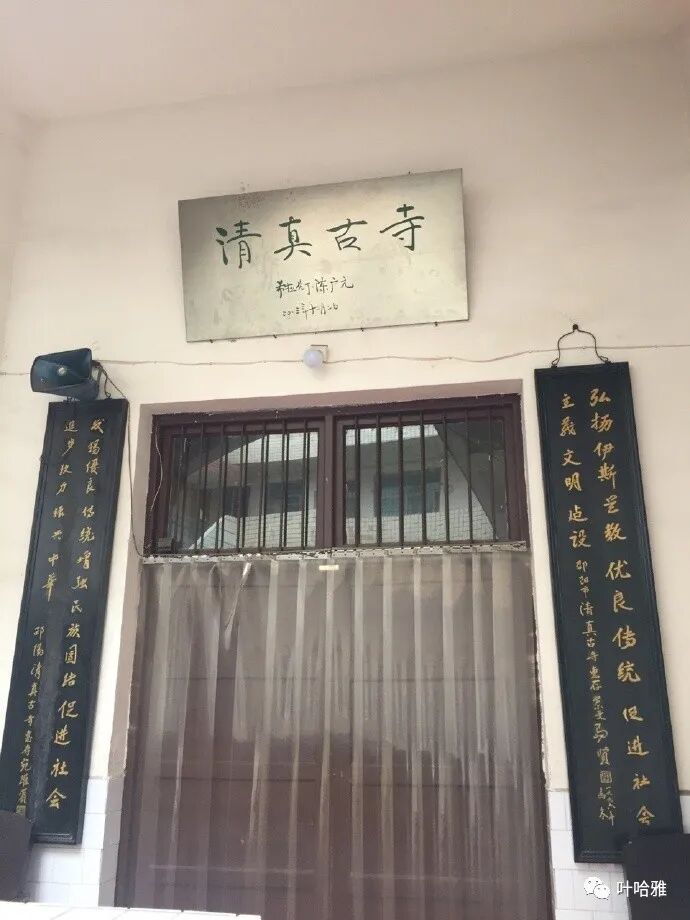
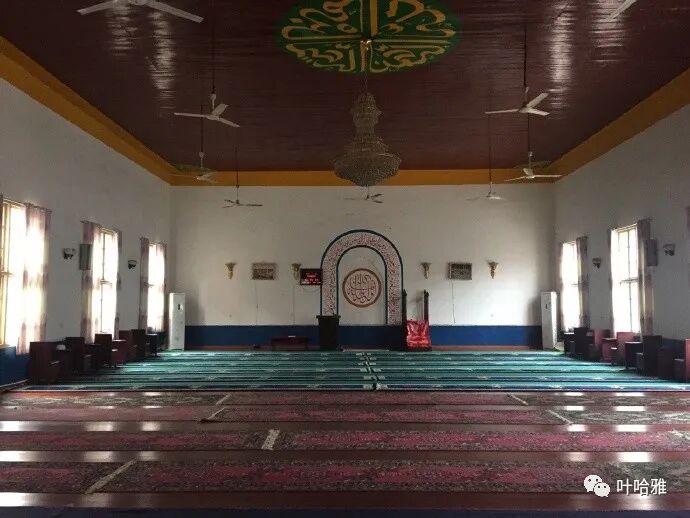
After visiting the two mosques in downtown Shaoyang, I contacted the local imam. I wanted to ask about the situation in Shanjie Hui Ethnic Township, which is under Shaoyang's jurisdiction, hoping to visit tomorrow. The imam said transportation to Shanjie is inconvenient, but he offered to drive us there himself. I am very grateful (shukr) for this, as it saved me a lot of trouble. We agreed to set off together for Shanjie Hui Ethnic Township after the Friday prayer (Jumu'ah).
Jiugongqiao Mosque
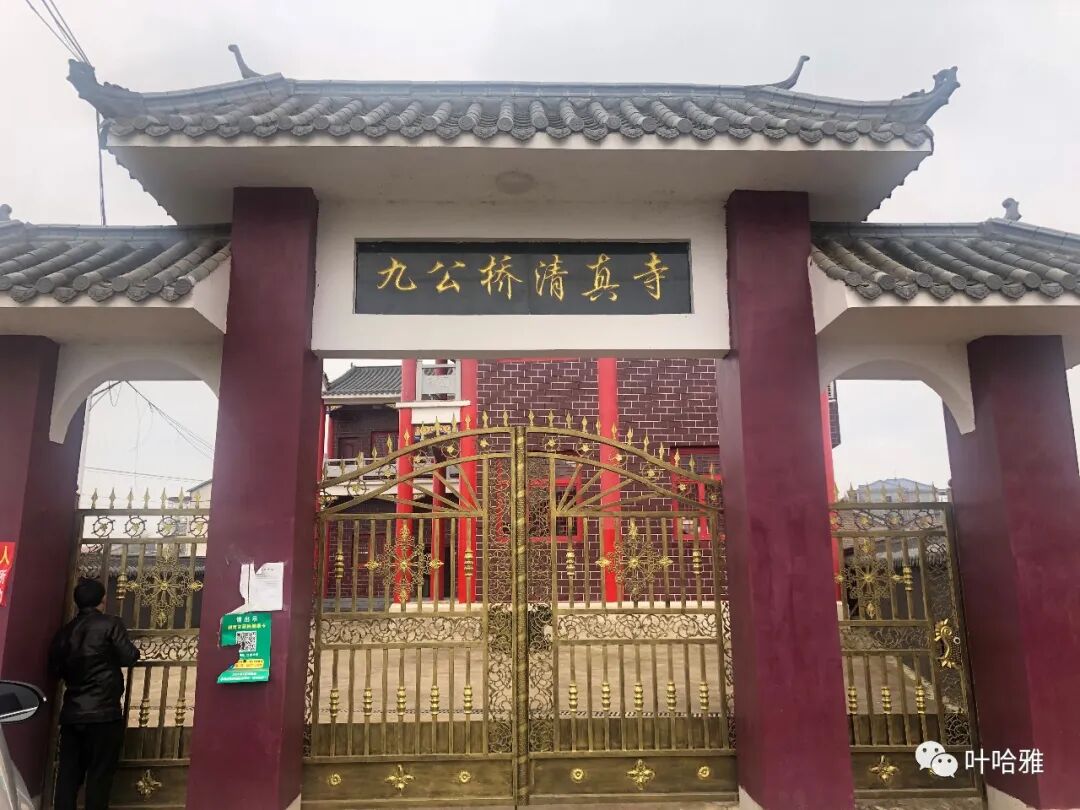
On the way to Shanjie, we passed through Jiugongqiao Town. Jiugongqiao Mosque is located in Sijiache Village, Jiugongqiao Town, Shaoyang County, Shaoyang City. Many Hui Muslims live in this village. The mosque was just completed and features a very local traditional style. It is the reddest mosque I have ever seen. Many locals even think it looks more like an ancestral hall than a mosque.
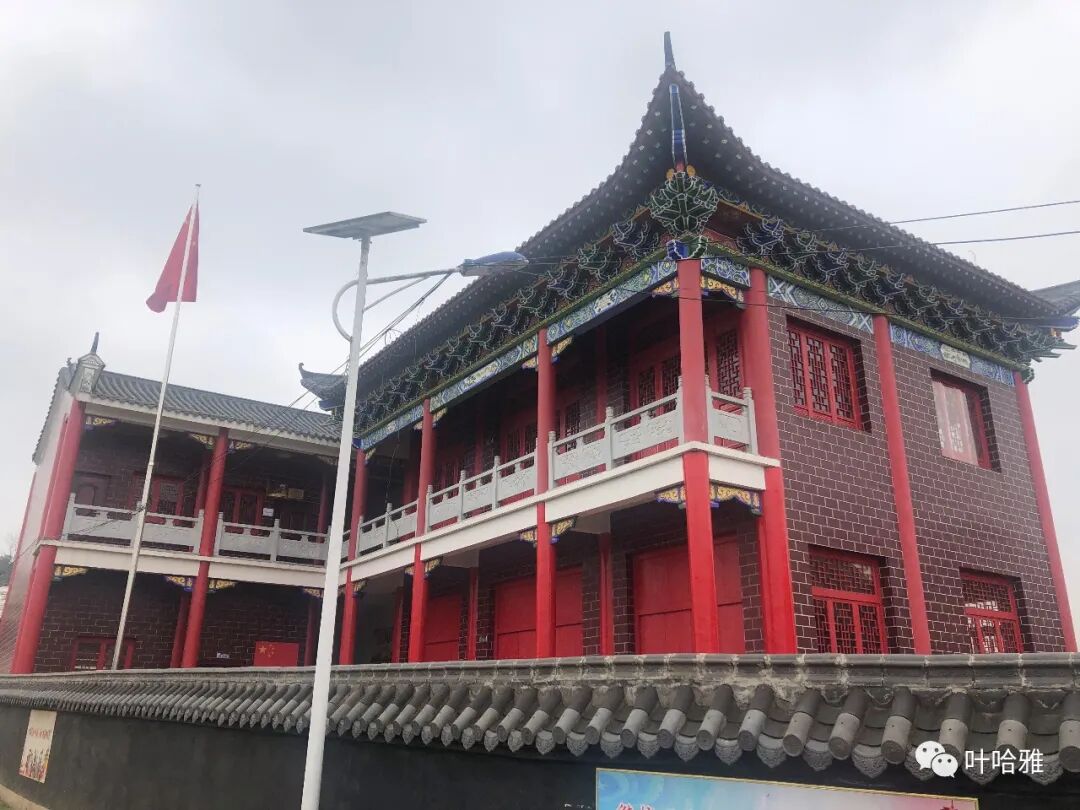
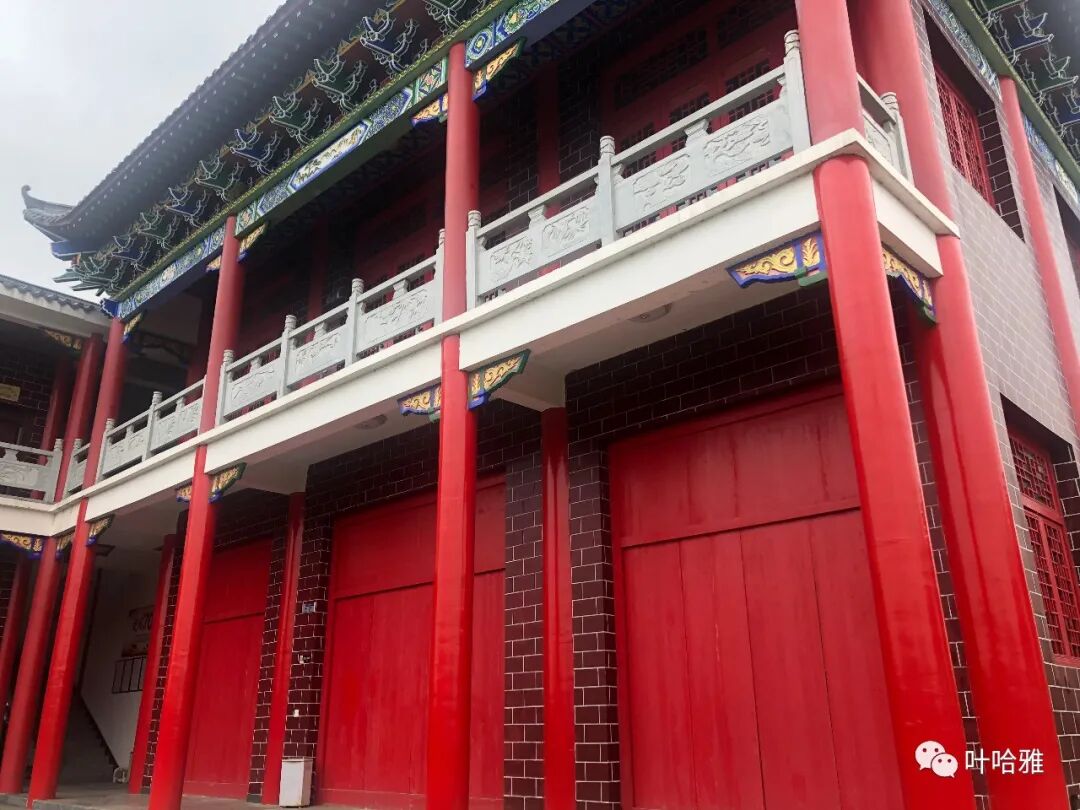
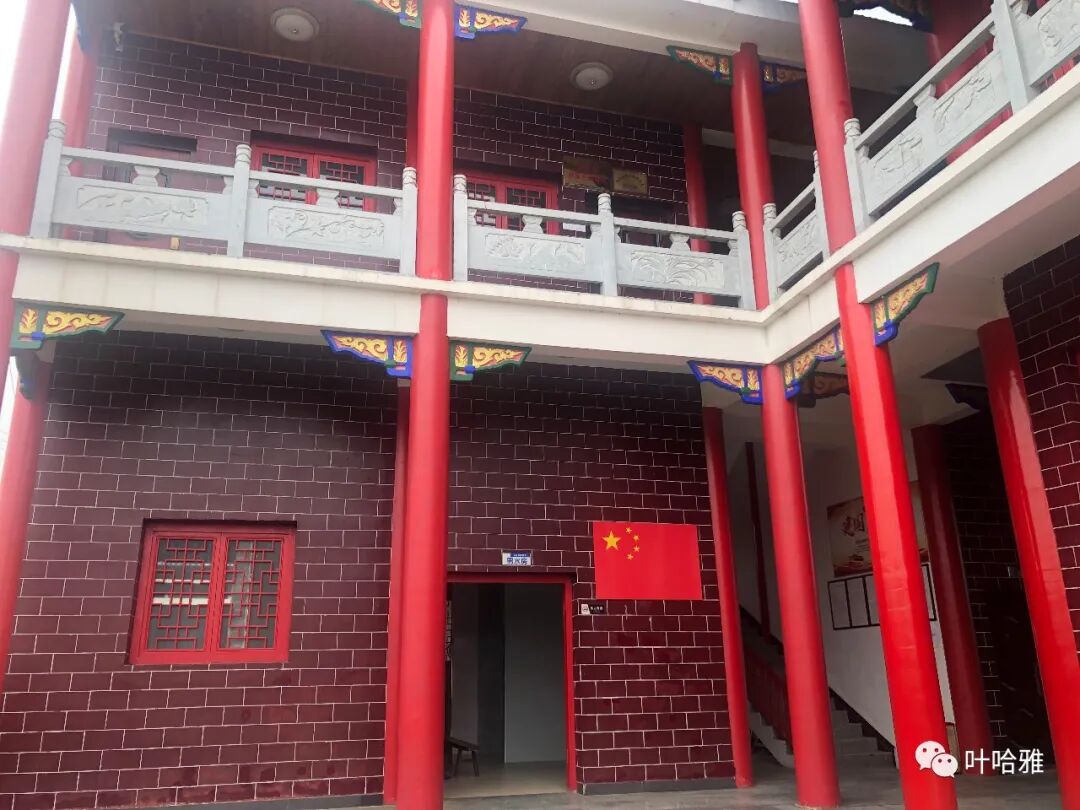
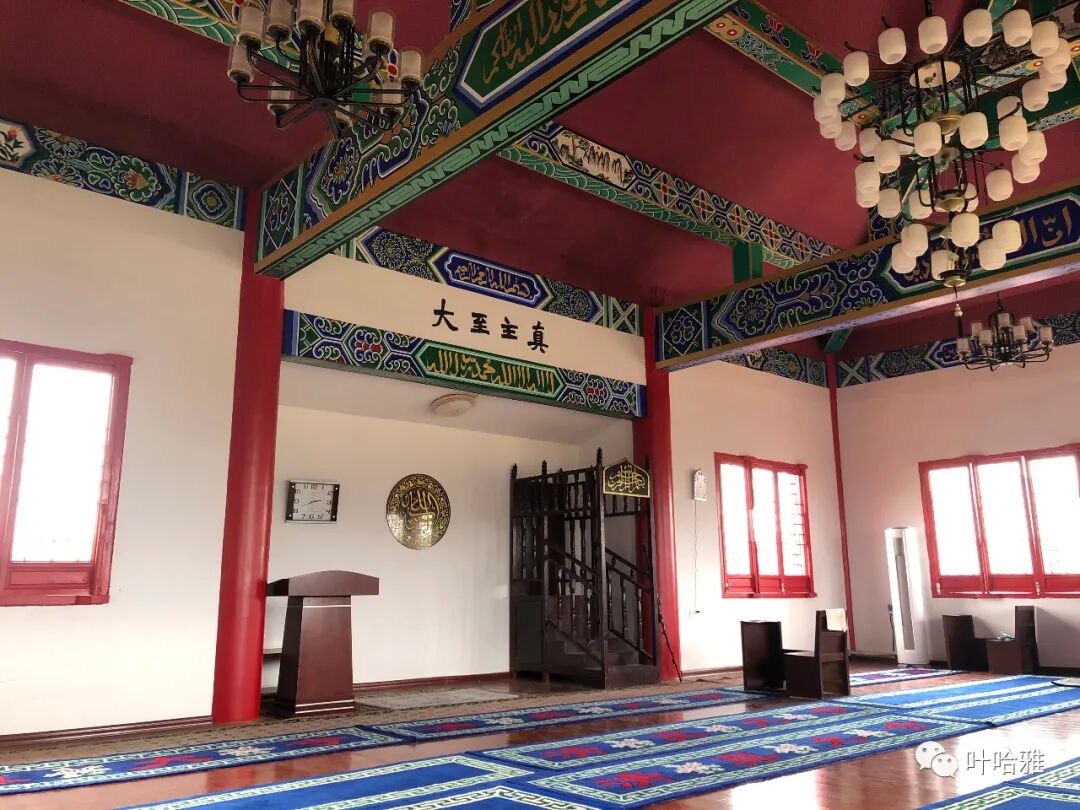
The main prayer hall is on the second floor. Since it was finished just last year, the smell of paint is still quite strong.
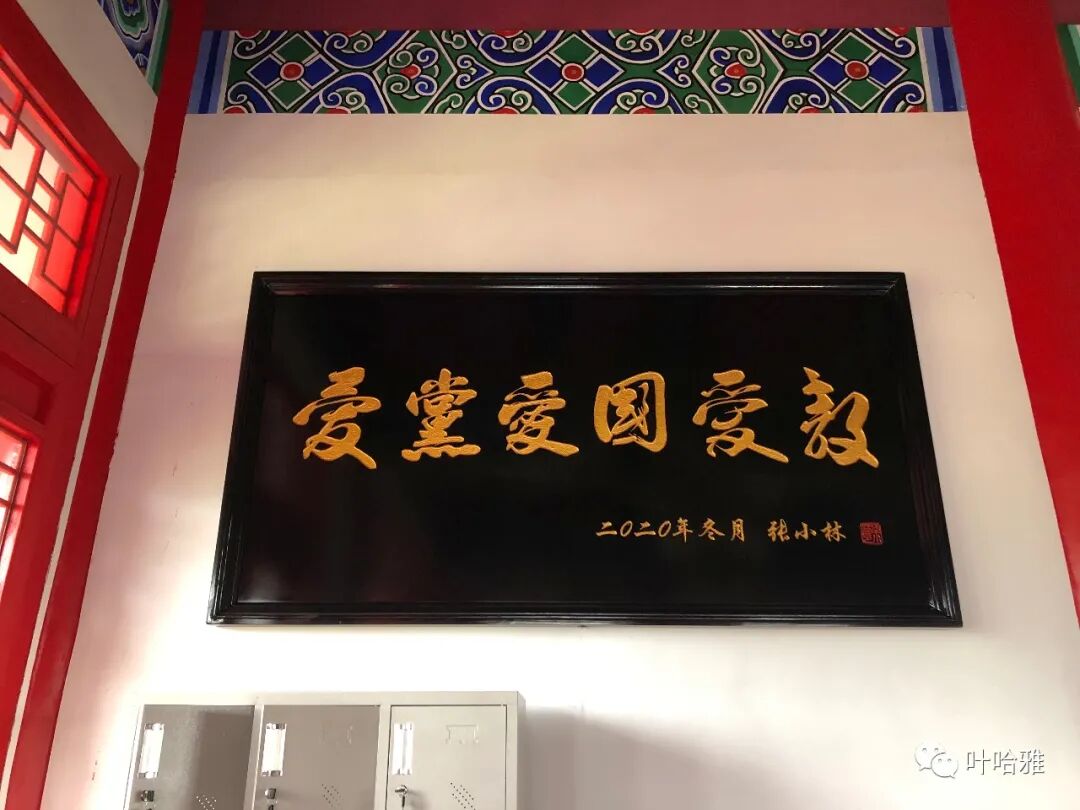
I have never seen an inscription like this on a plaque before: Love the Party, love the country, and love the faith. It is signed by Zhang Xiaolin, the president of the Shaoyang Islamic Association.
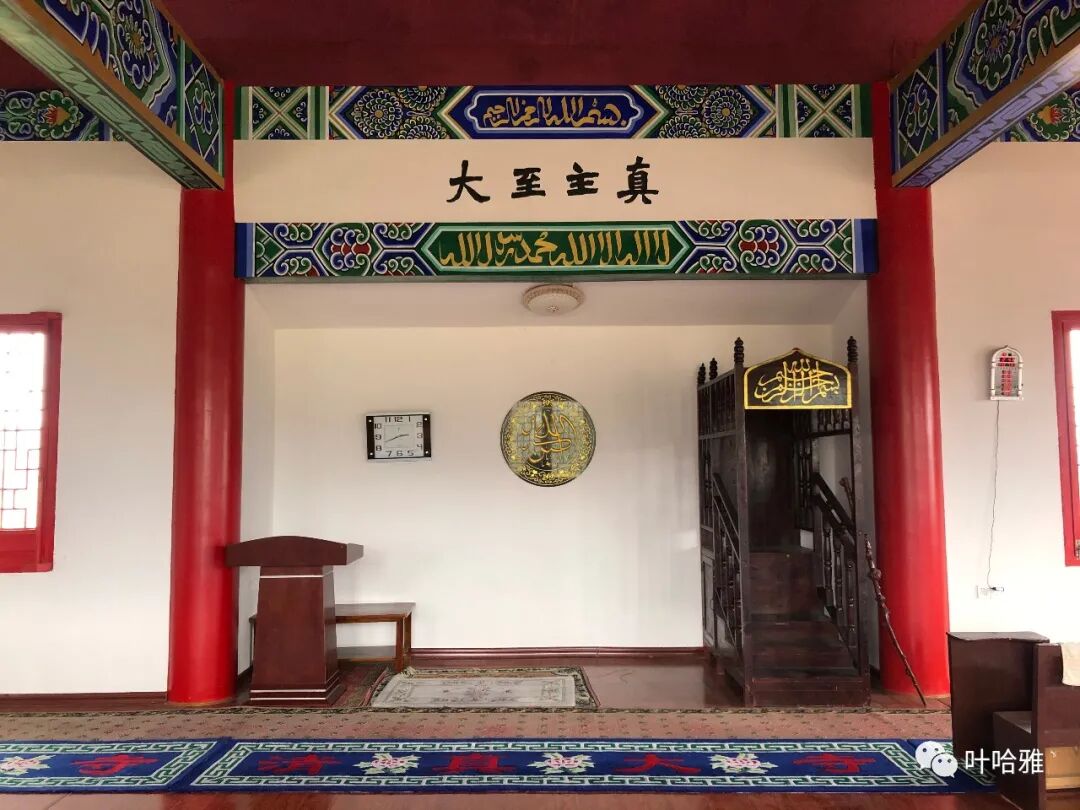
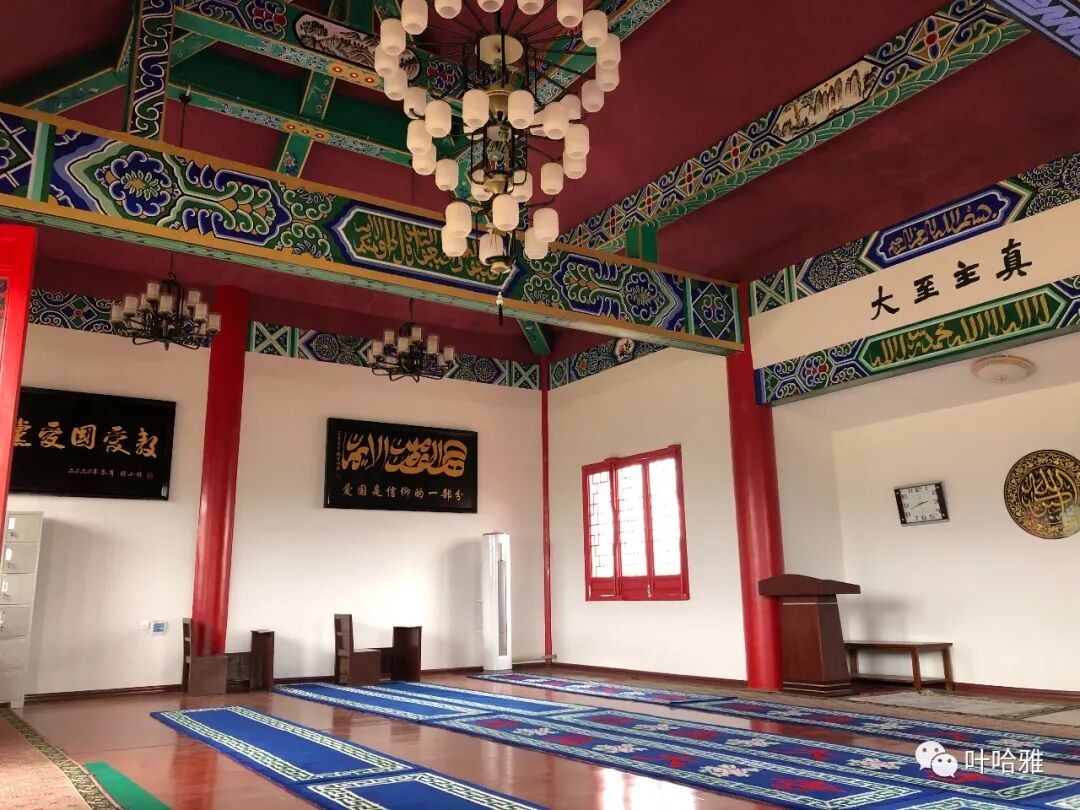
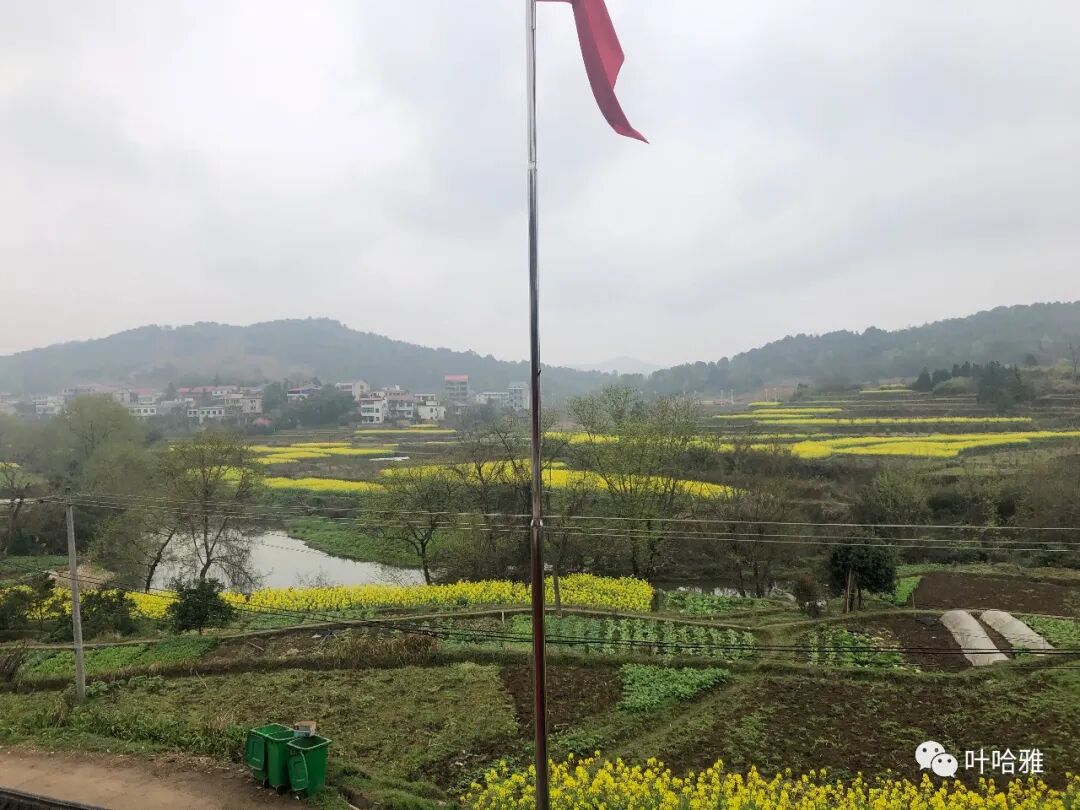
You can see the scenery in the distance from the second floor. At this time of year, Shaoyang is full of blooming rapeseed flowers.
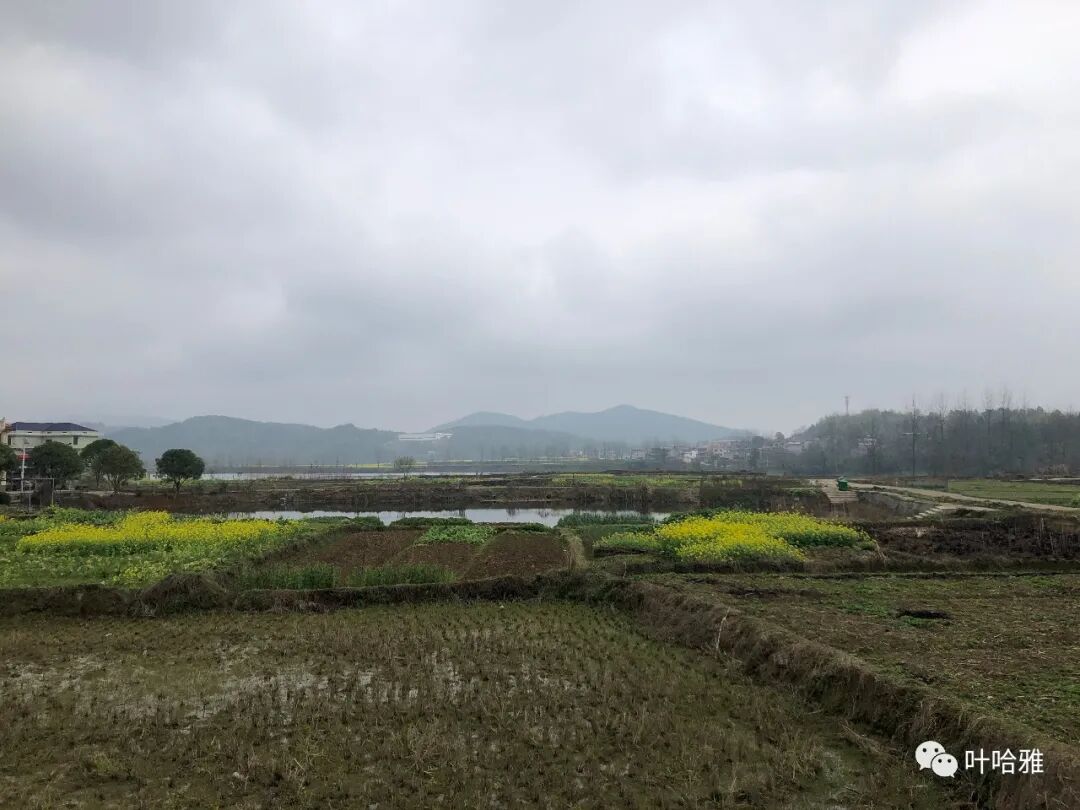
Leaving Jiugongqiao Town, we drove to Qingcao Hui Muslim Village in Huangting Town, Shaoyang County. There is a Qingcao Mosque here. Almost all the villagers in this Hui Muslim village are Hui Muslims, and most of them have the surname Zhang.
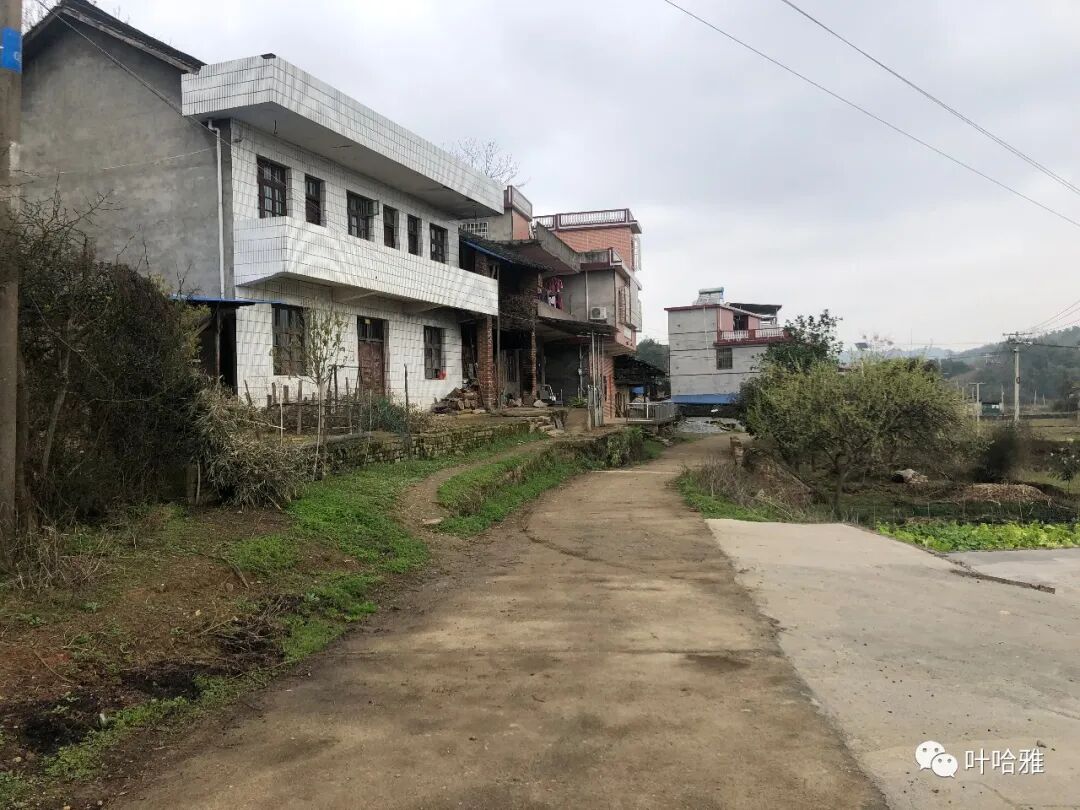
On the village road leading to the mosque, we only saw some elderly people. After talking to them, we learned that the young people have all gone out to work. Some of the elders even greeted us with salaam.
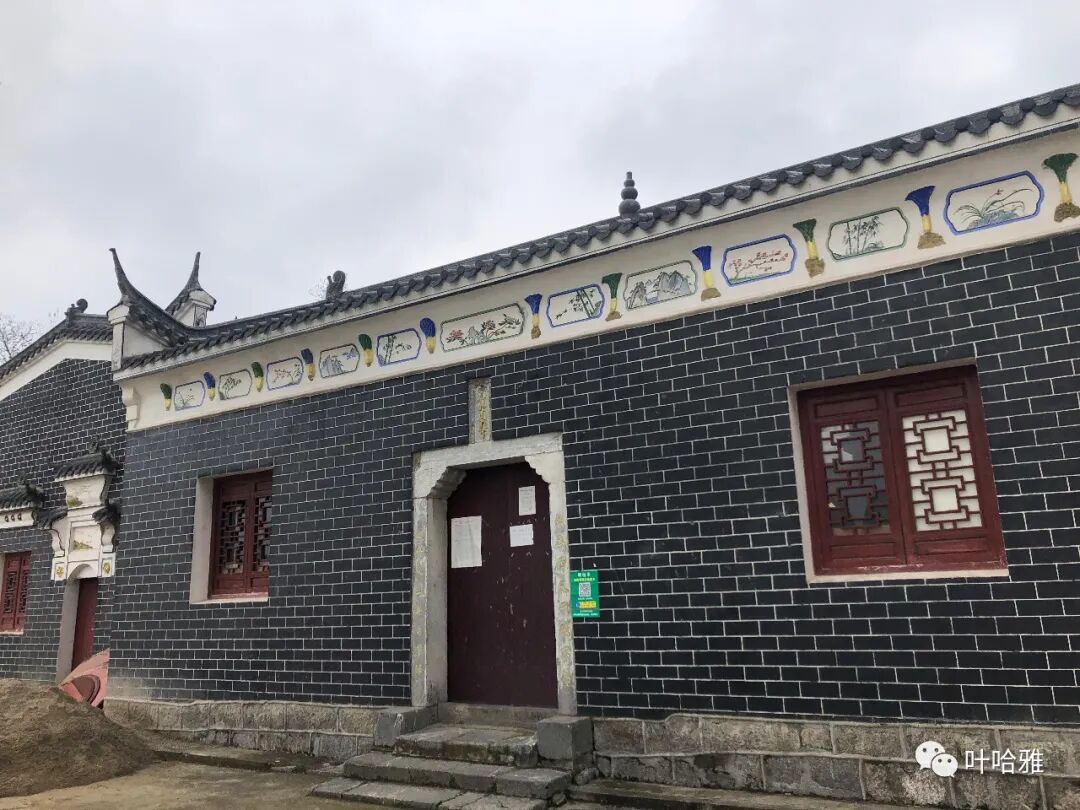
Qingcao Mosque
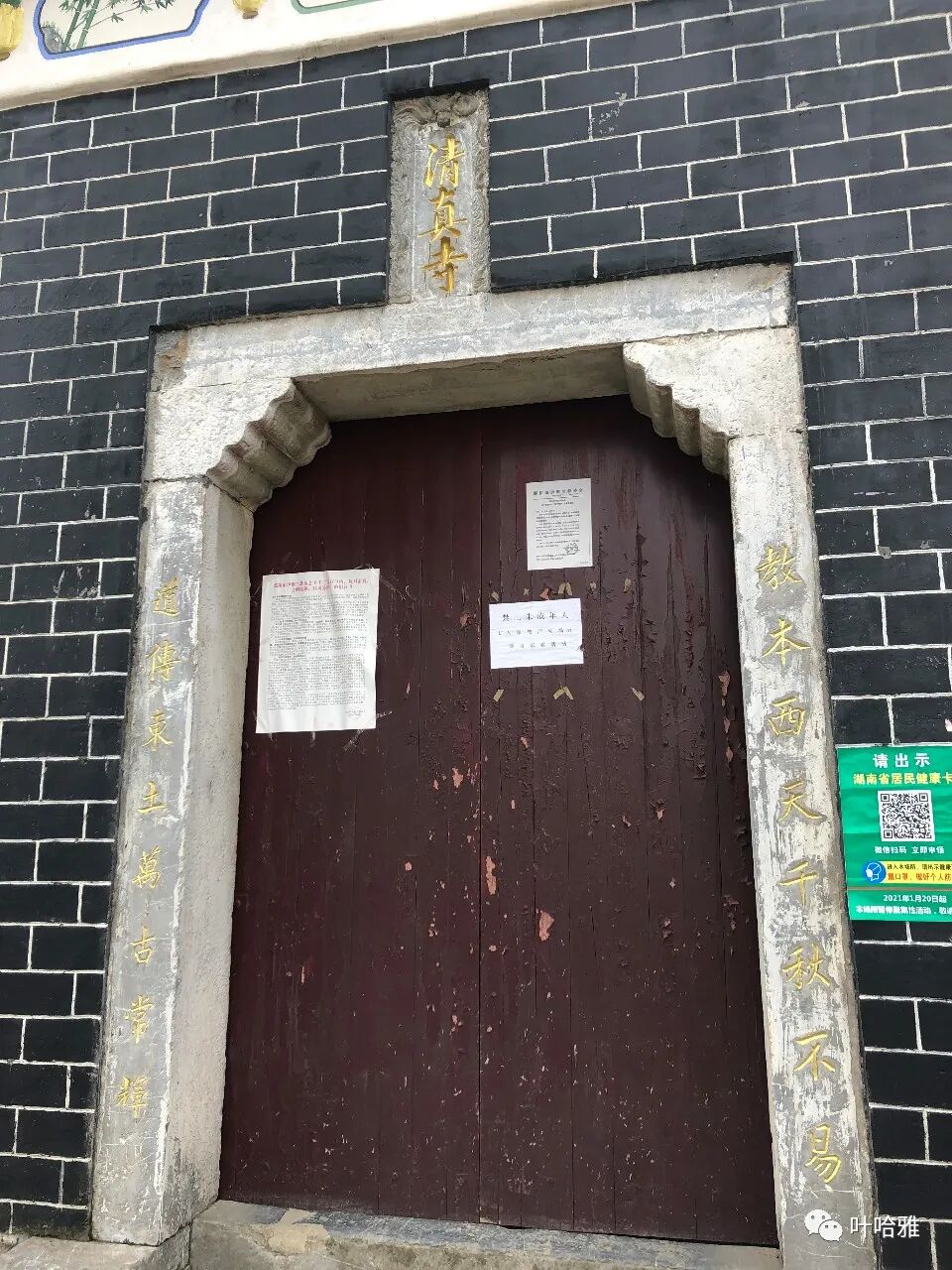
It was first built in the tenth year of the Qianlong reign of the Qing Dynasty. It was flooded in 1996 and rebuilt in 1998. The new mosque follows the architectural style of the Qing Dynasty.
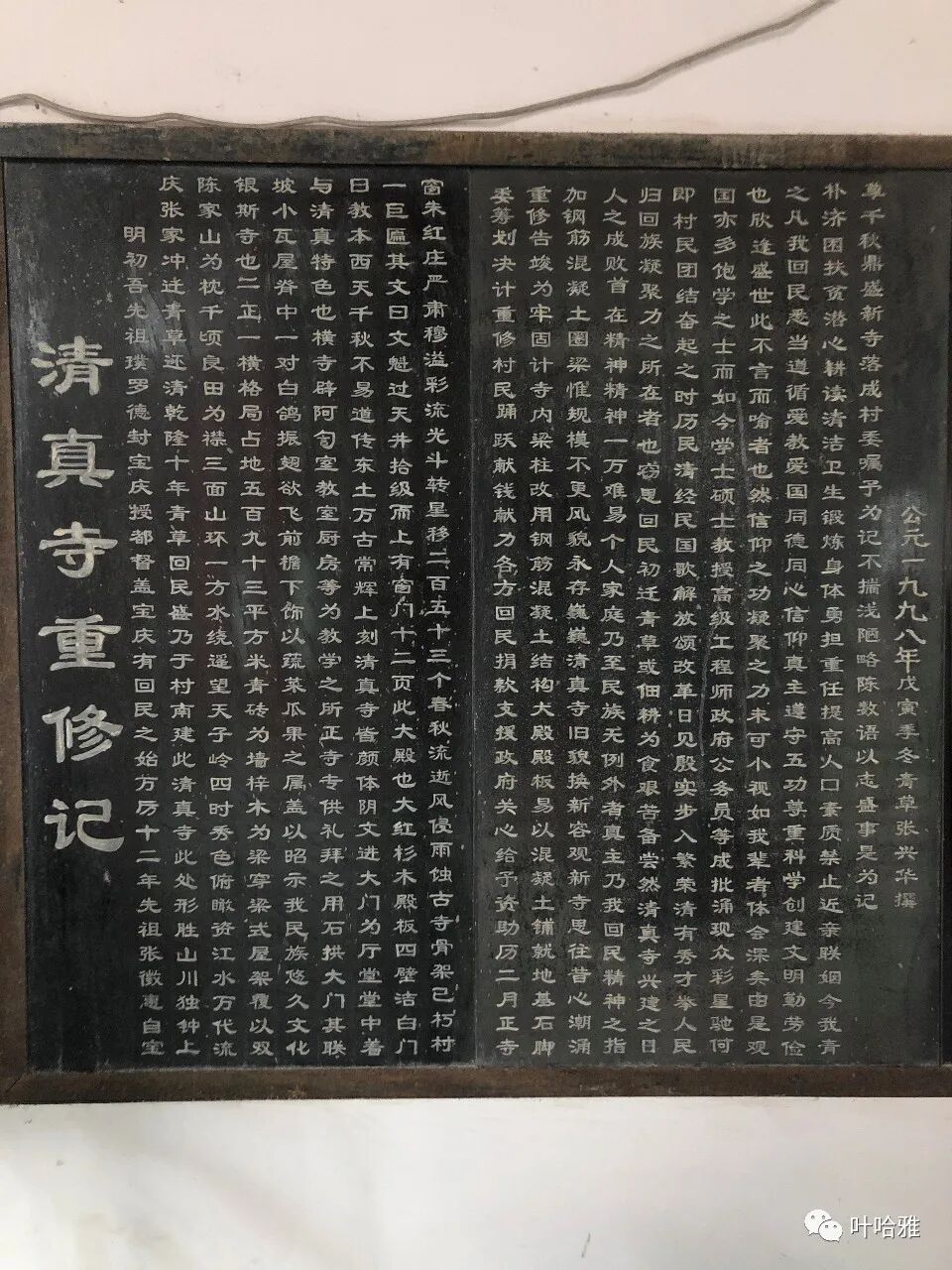
The writing above says the villagers' ancestor was Commander Pu Luode, who was ordered to station troops in Baoqing (now Shaoyang City, Hunan) in the early Ming Dynasty. In the twelfth year of the Wanli reign of the Ming Dynasty, their ancestor Zhang Huihui moved from Baoqing to Qingcao Village.
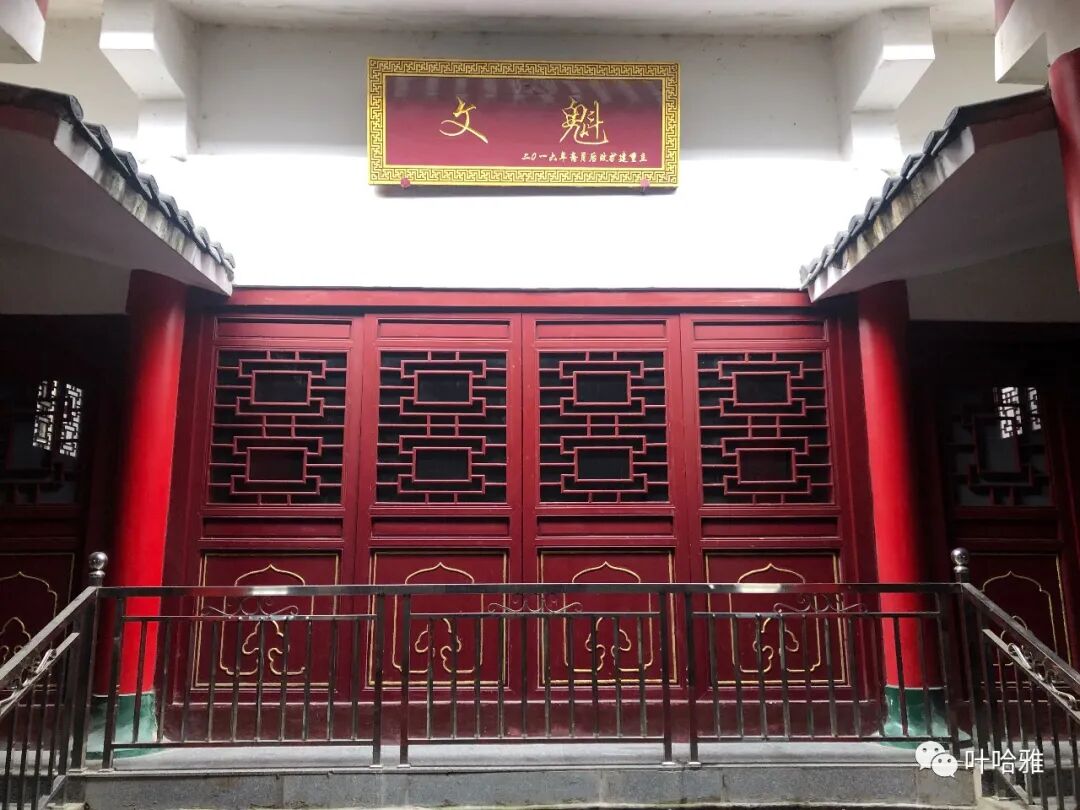
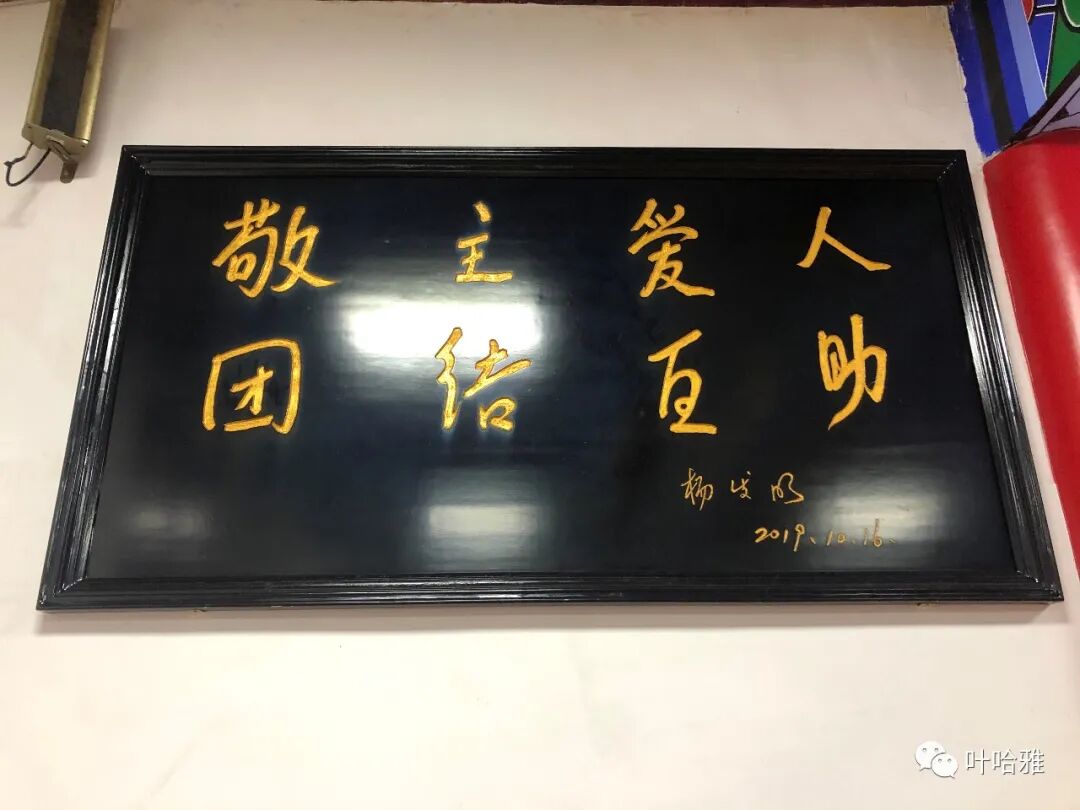
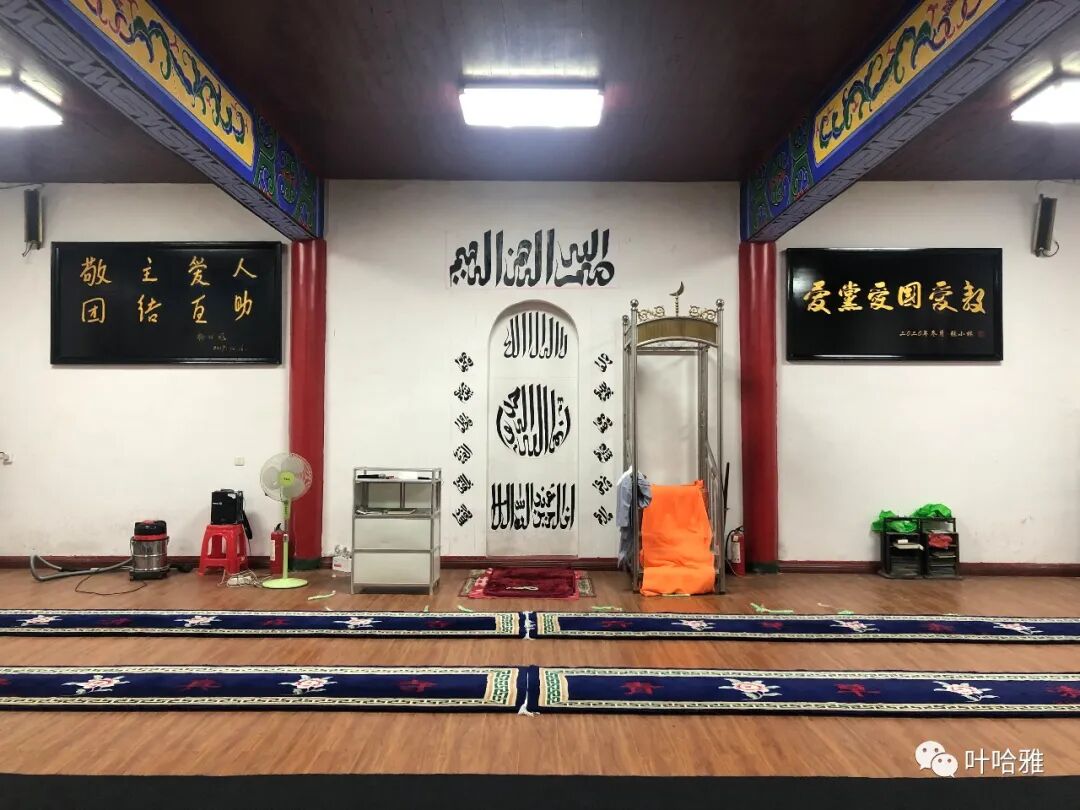
I performed two rak'ahs of prayer in the mosque to celebrate. I was moved to find such a devout Hui Muslim village in Hunan. Feeling comforted, I heard from the villagers that the faith is even stronger in nearby Shanjie, so we headed to our next destination without delay.
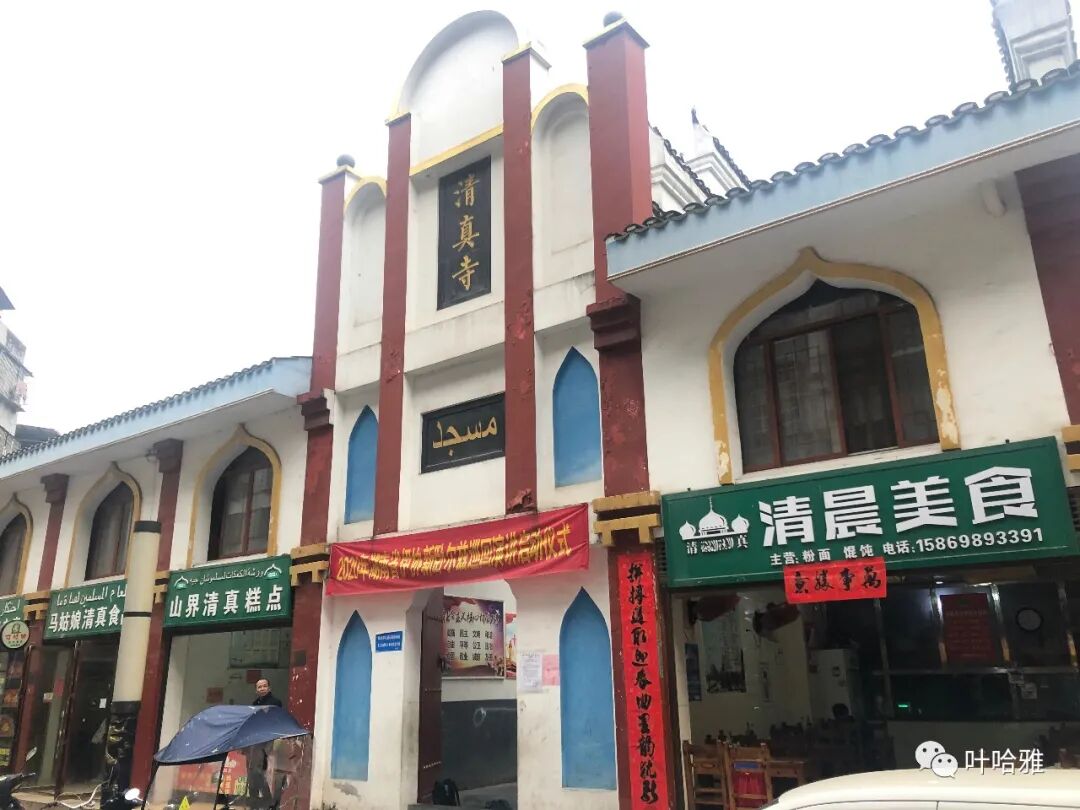
Soon we arrived at the location of Taohuaping Mosque in Longhui County. Longhui County is a settlement for Hui Muslims in Shaoyang, and the local Hui Muslims have lived here for hundreds of years. Taohuaping Mosque is built in a busy downtown area, surrounded by all kinds of halal snack shops. More Hui Muslims here wear headscarves.
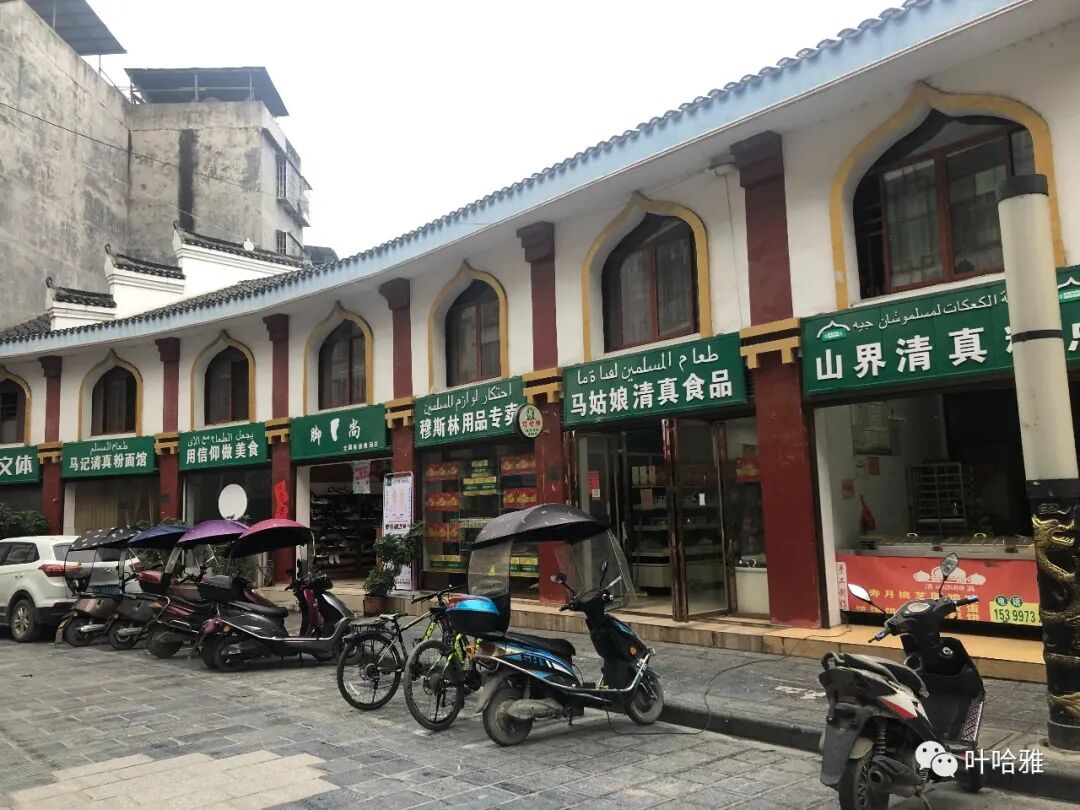
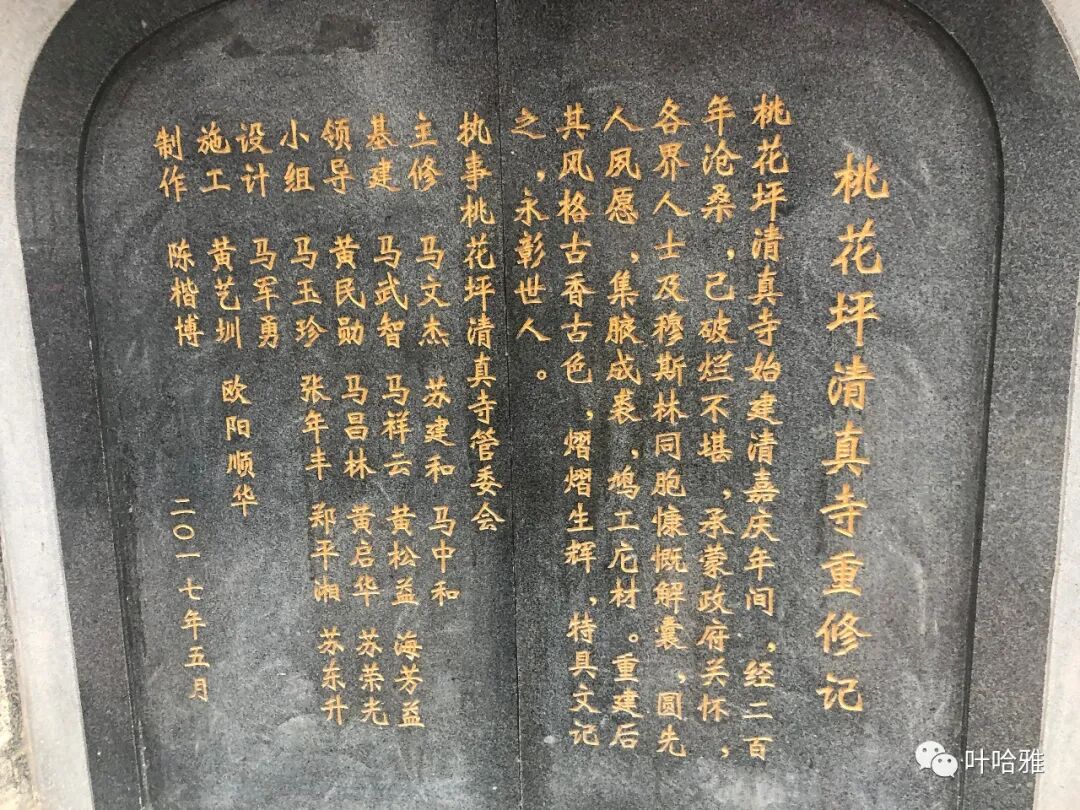
Taohuaping Mosque was first built during the Jiaqing reign of the Qing Dynasty and rebuilt in 2017. The main part of the mosque is built in a traditional architectural style, blending in with the surrounding houses.
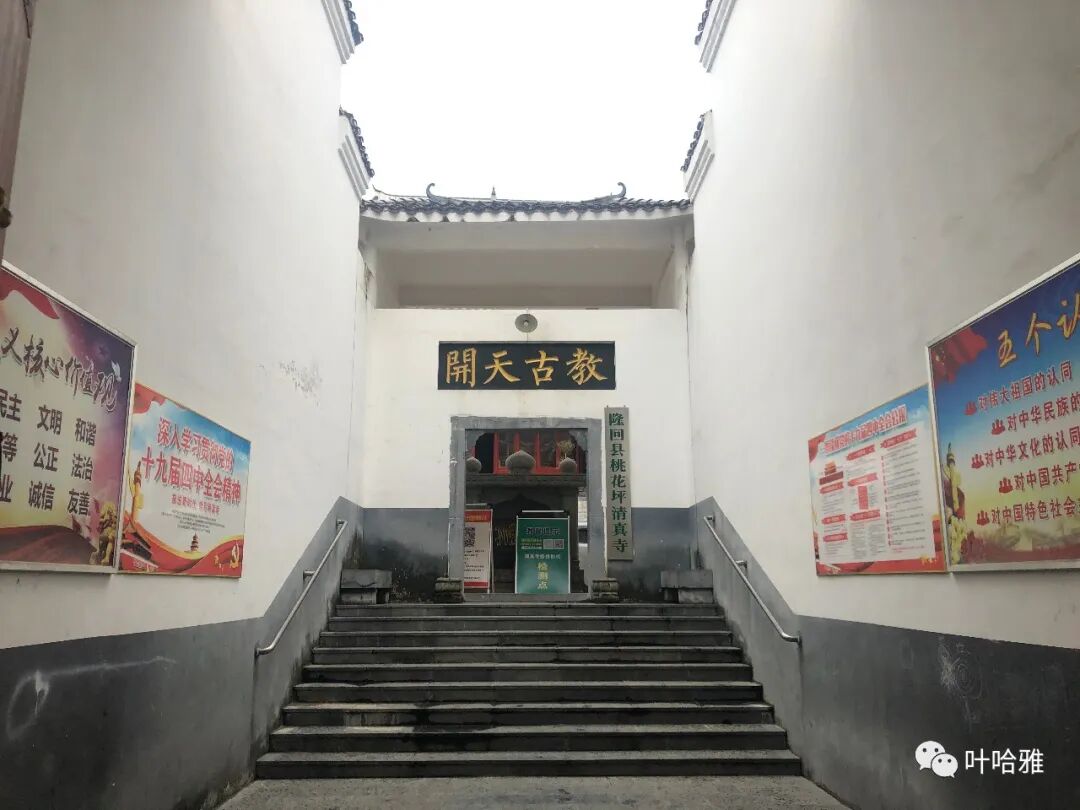
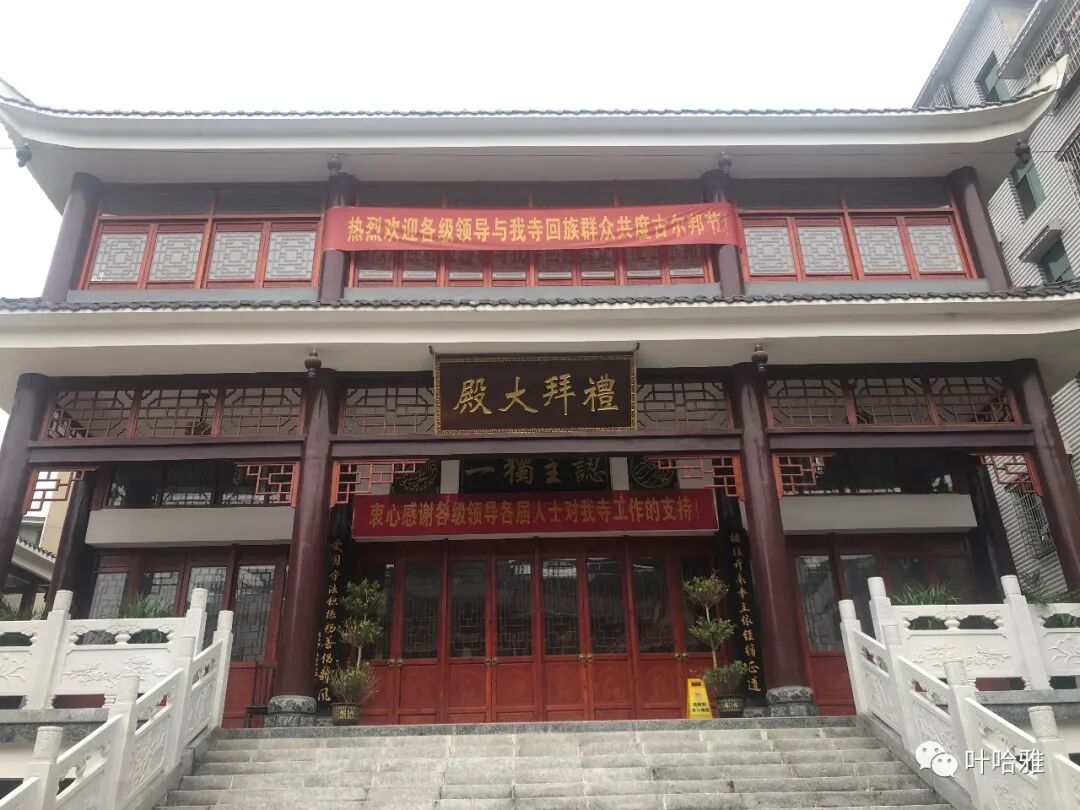
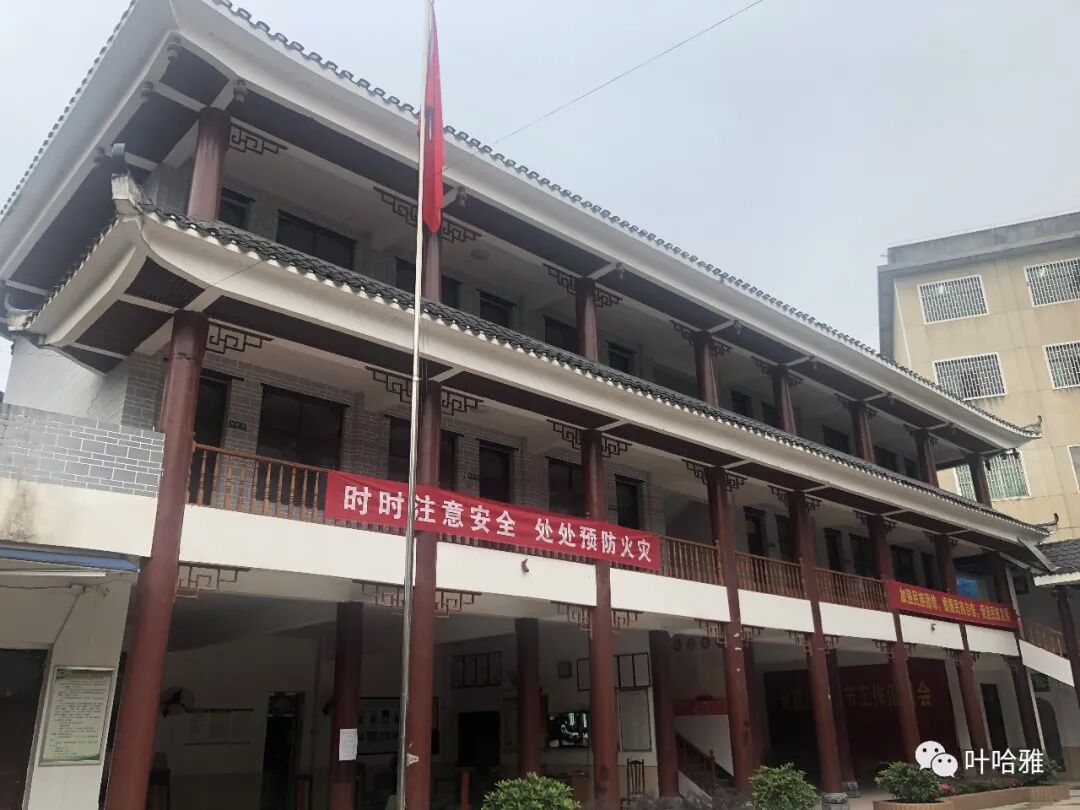
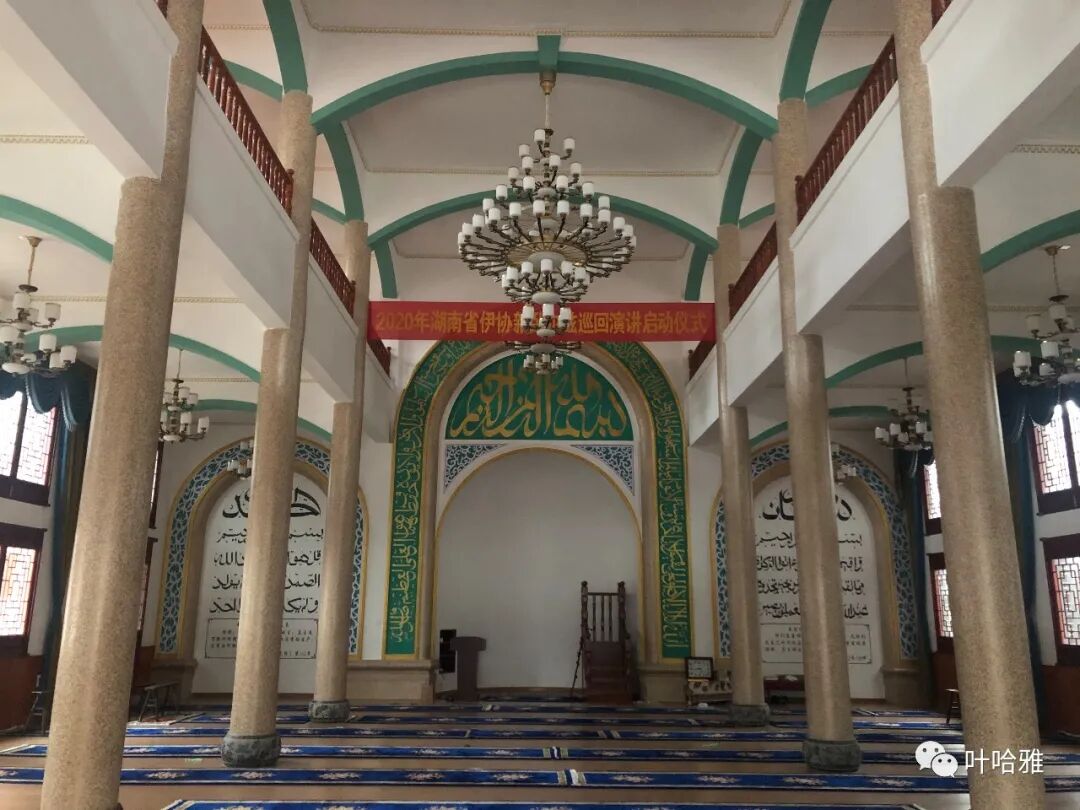
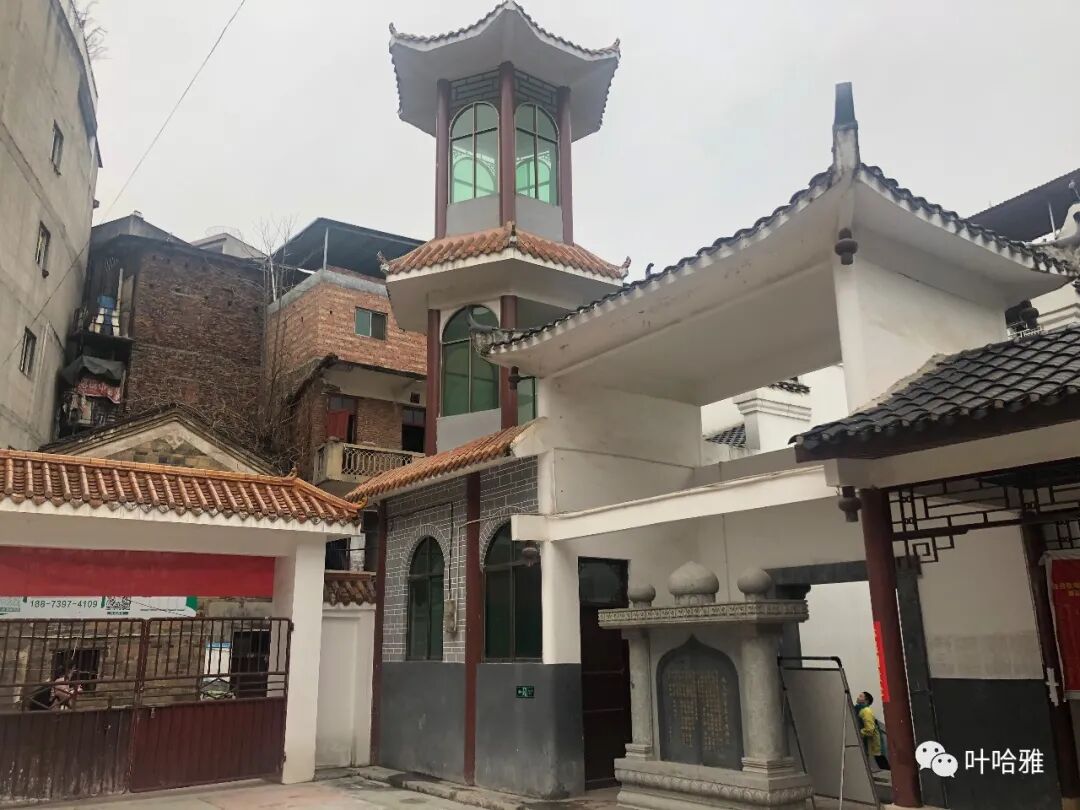
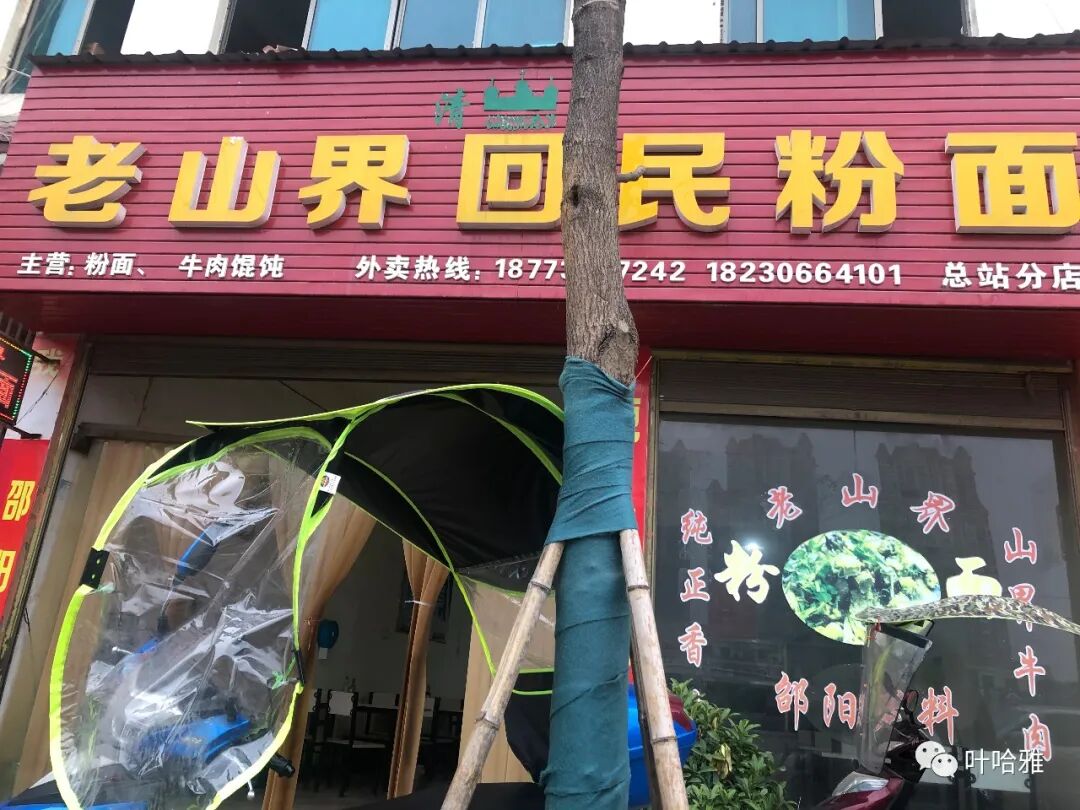
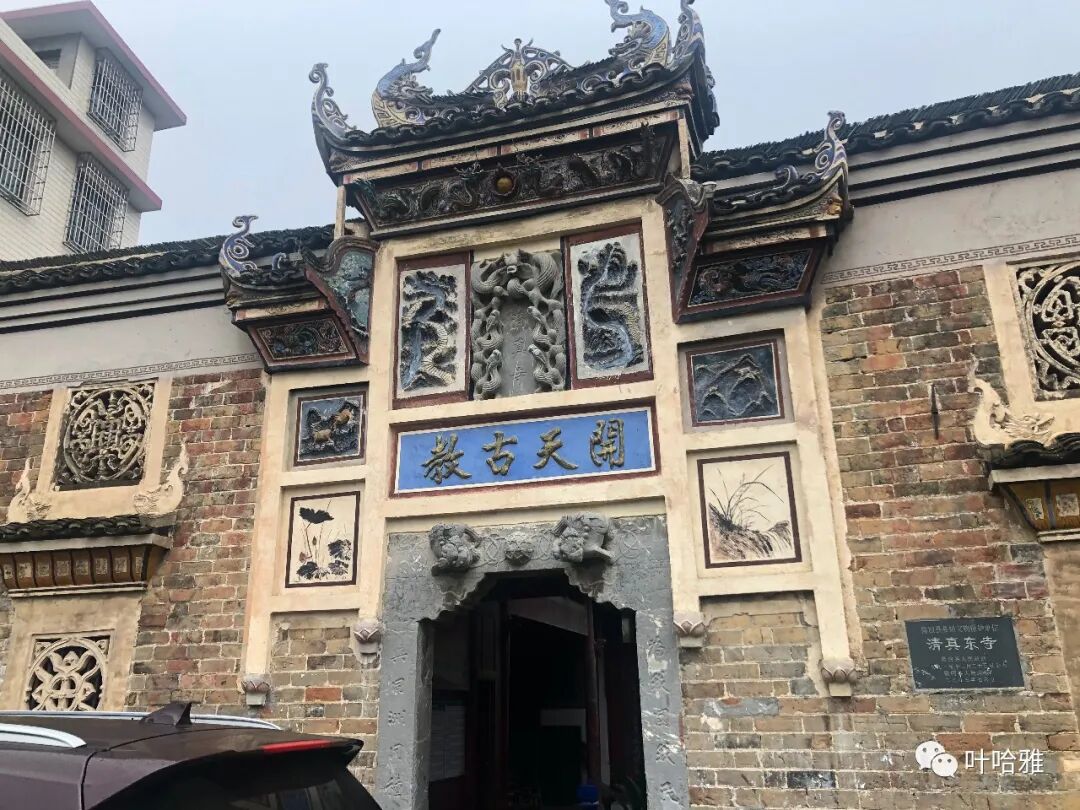
Qingzhen East Mosque in Shanjie Hui Muslim Township, Longhui County
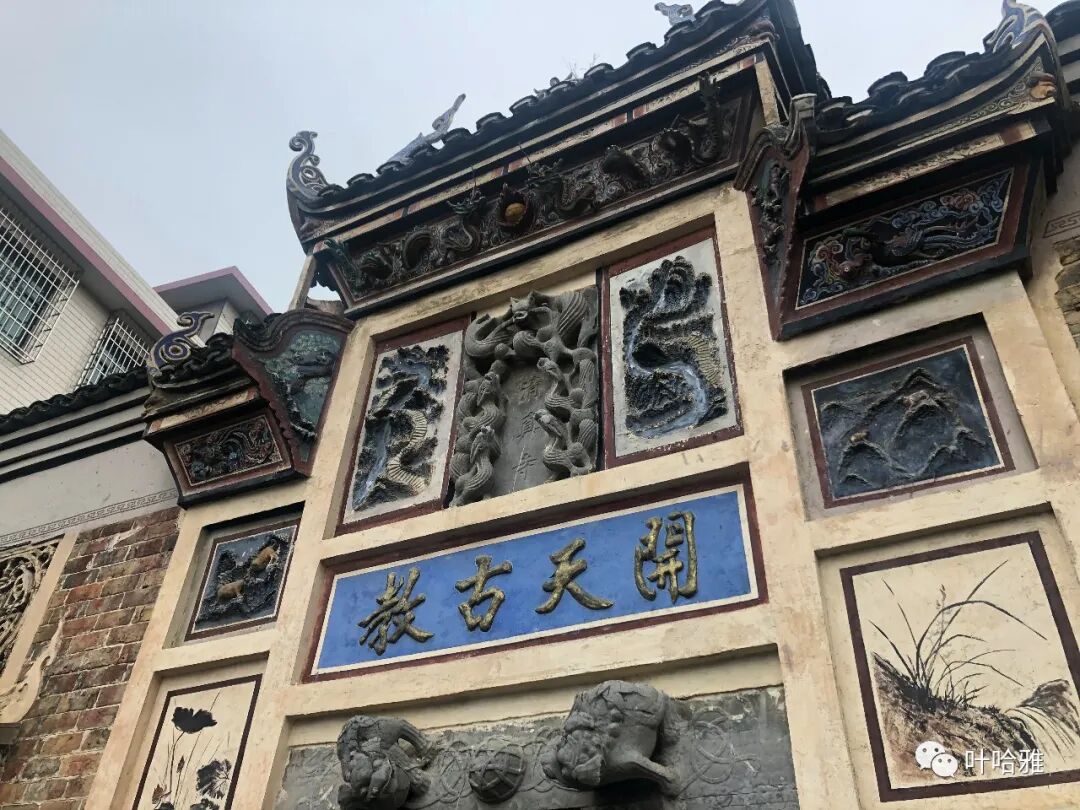
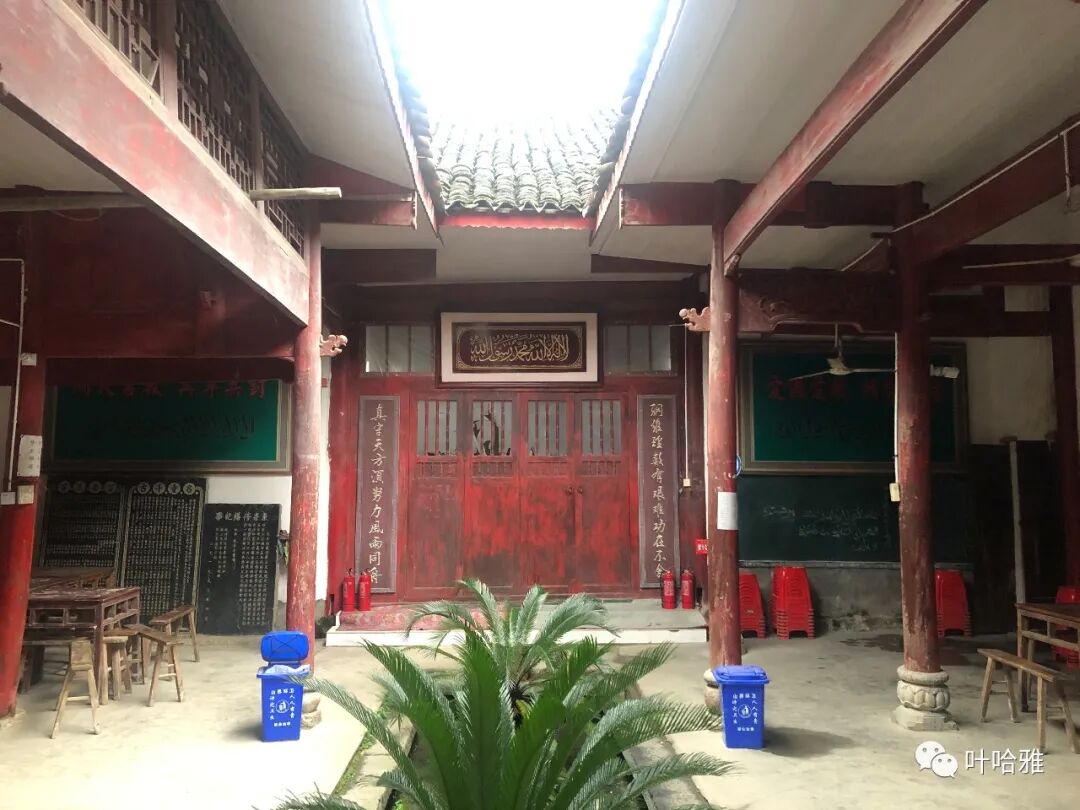
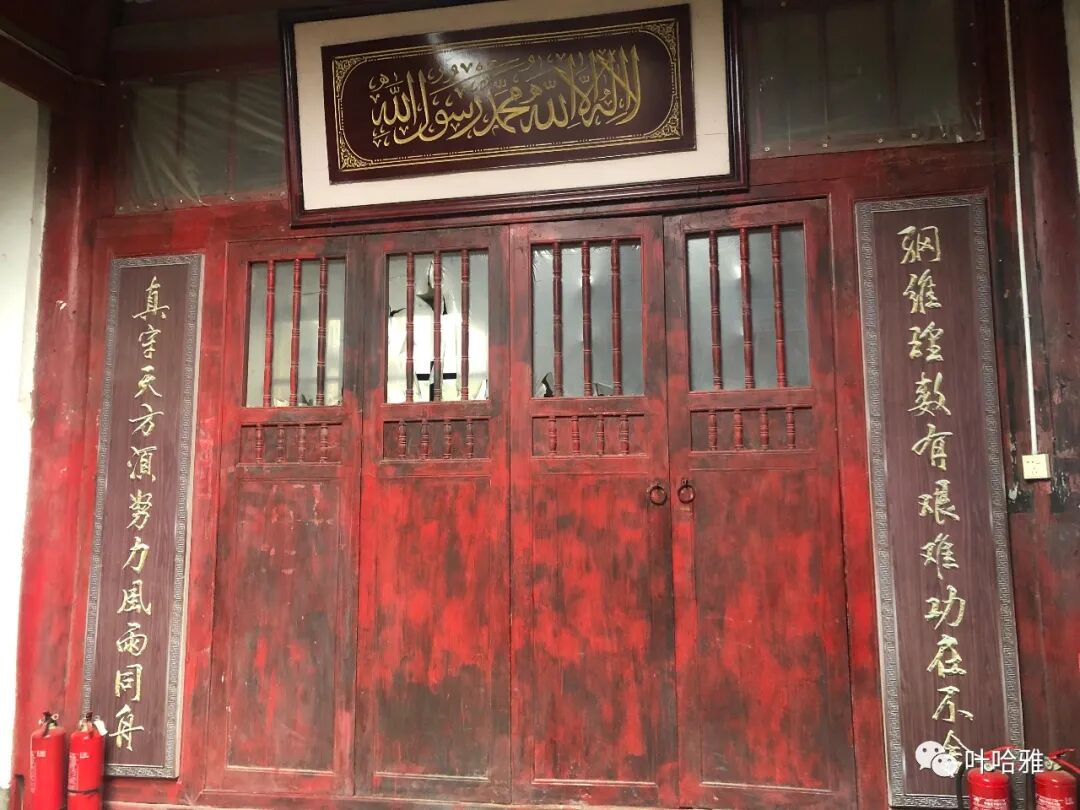
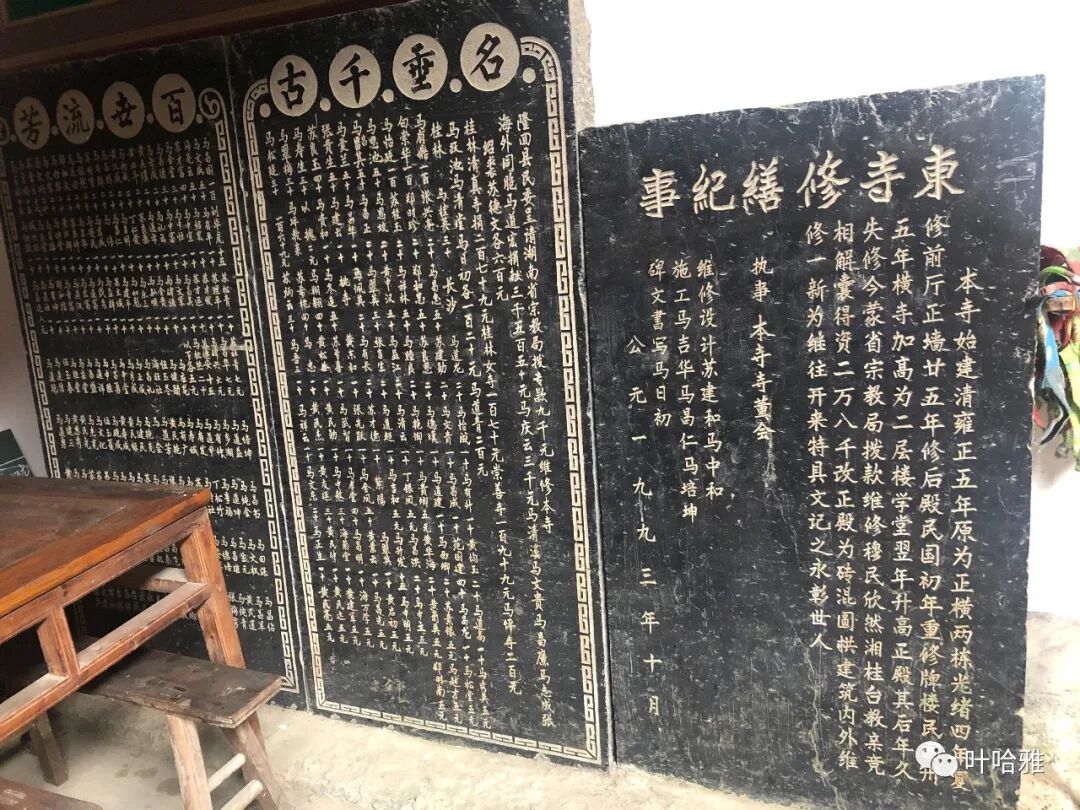
Qingzhen East Mosque was first built in the fifth year of the Yongzheng reign (1727). The gate archway is carved with a relief of five dragons surrounding a holy symbol. The Shanjie East Mosque is built in a courtyard style. The couplet on the gate reads 'Share the responsibility for our country and our people' on the right, and 'Revive the moral order with those of the same continent and race' on the left. It was written by Ma Linyi, a Hui Muslim who served as the Minister of Education during the Republic of China.
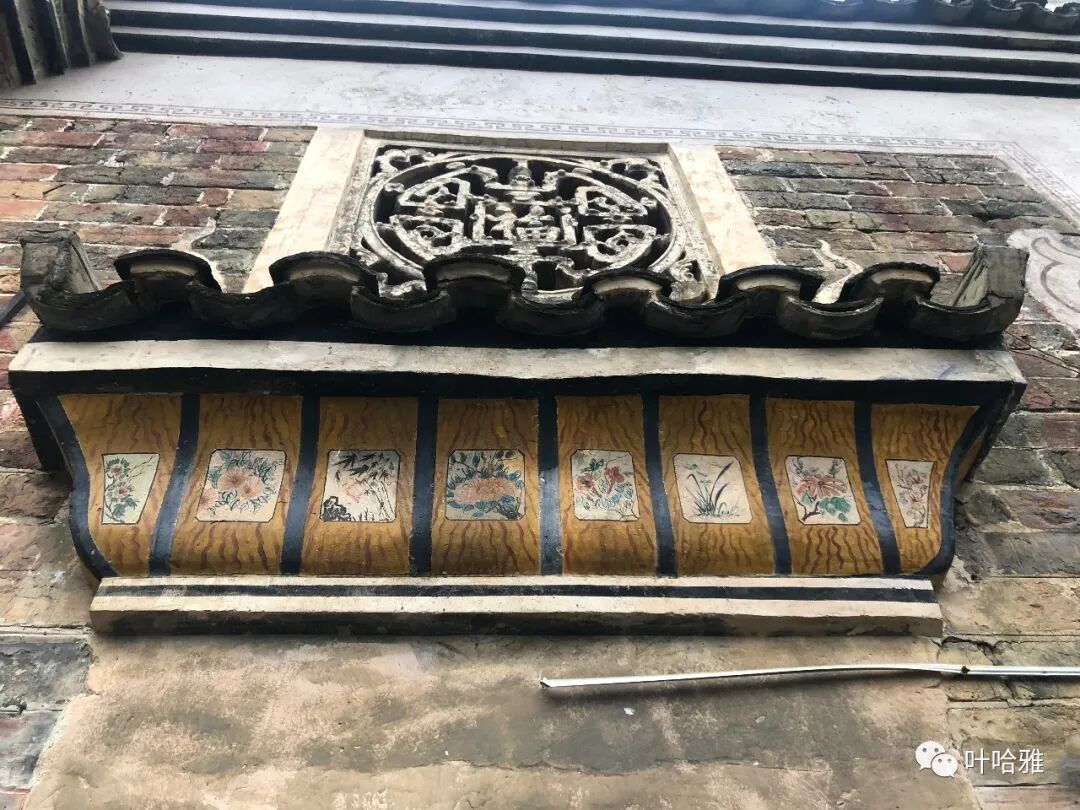
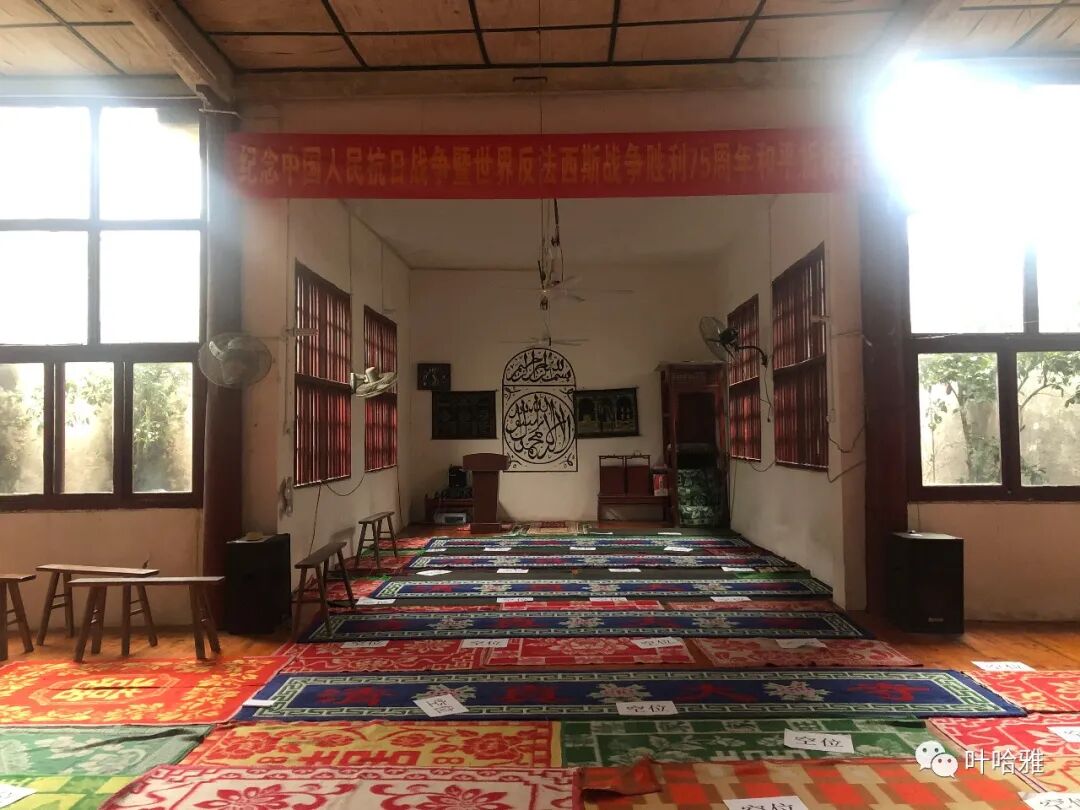
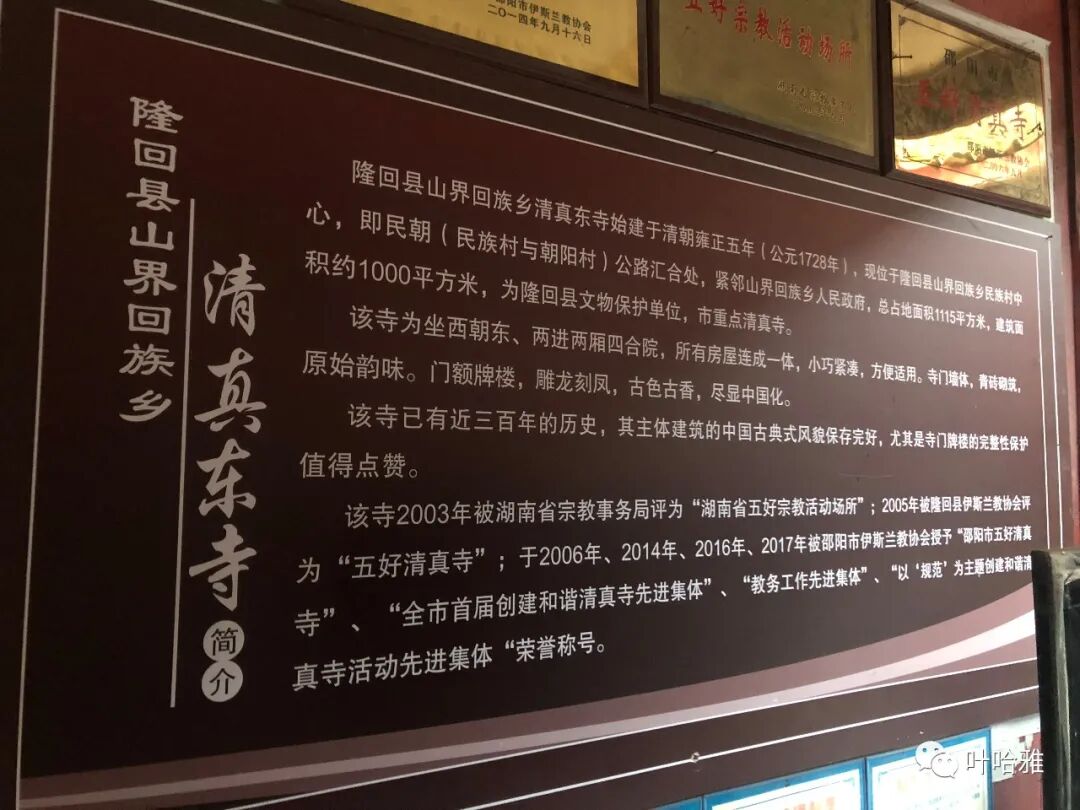
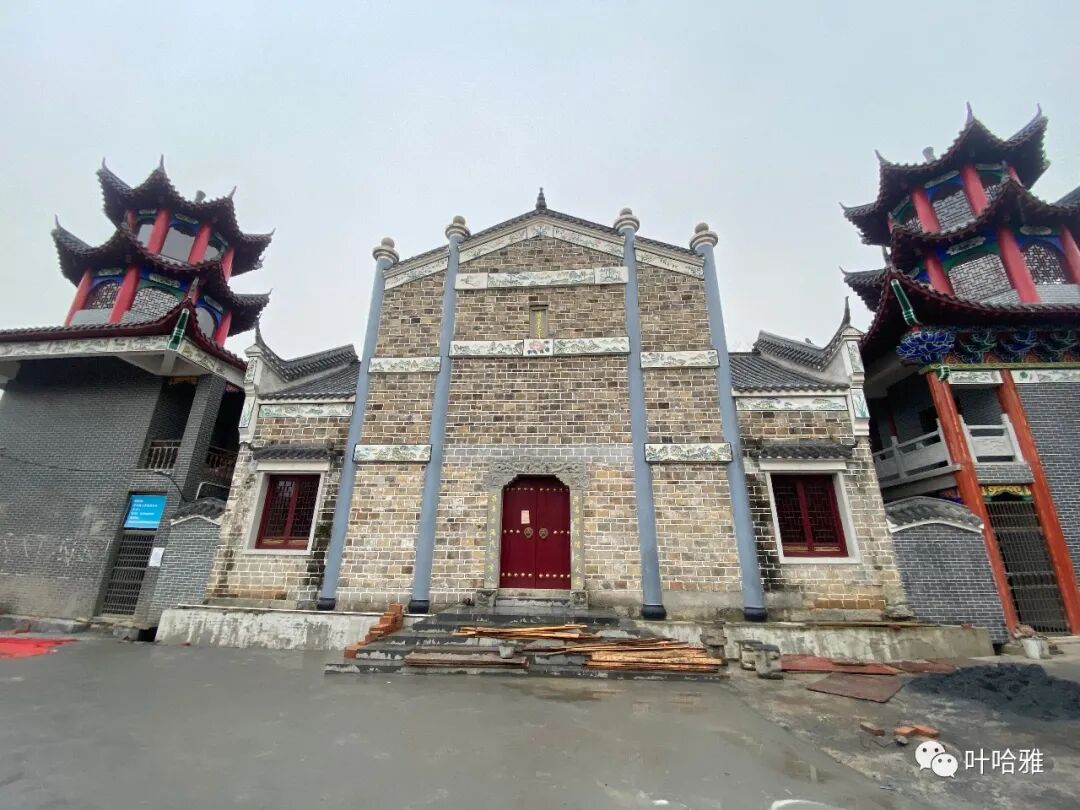
Shanjie Ancient Mosque in Longhui
The Ancient Mosque in Shanjie Hui Muslim Township, Longhui, was first built in 1444 during the ninth year of the Zhengtong reign of the Ming Dynasty. It is the oldest mosque in Longhui County and is now a county-level cultural heritage site.
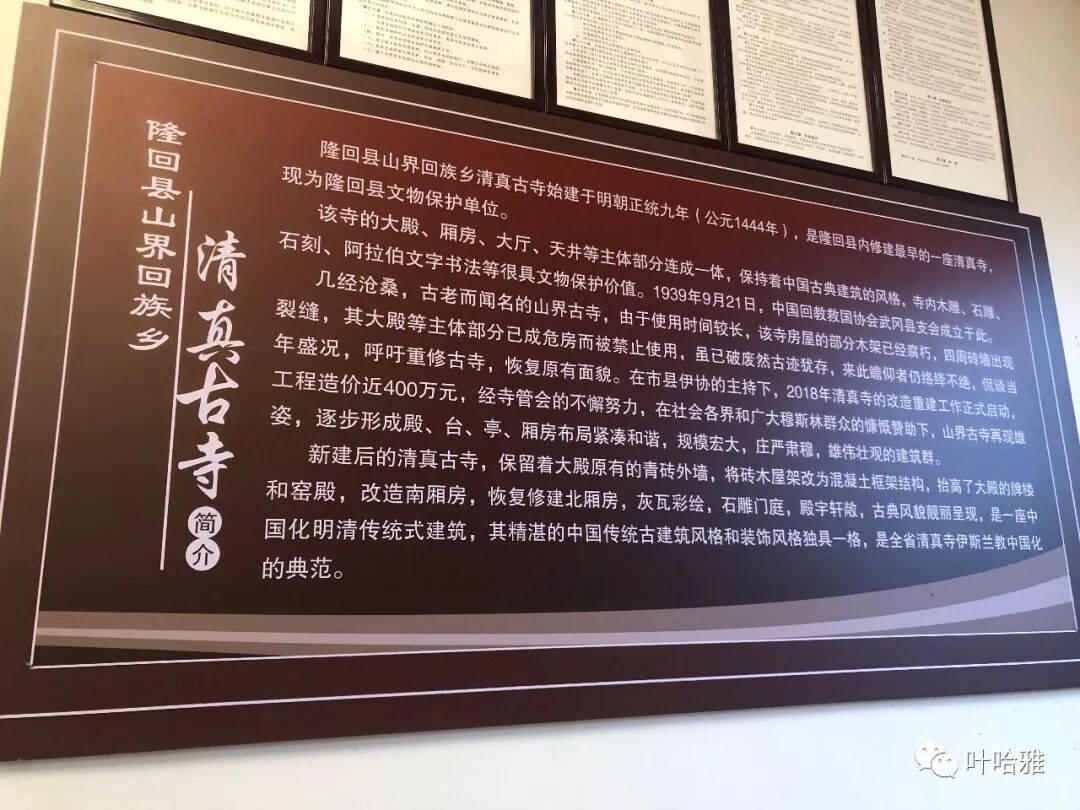
I am not sure where this piece of carpet was cut from.
After visiting several representative mosques in Shaoyang, we returned to the city center to continue our halal food tour. There is so much halal food to eat in Shaoyang. Besides the Hui Muslim noodle shops scattered along the streets, there are also some larger halal restaurants that specialize in Hunan cuisine. When I visited in 2017, I went to a large restaurant called Muslim Halal Building (Musilin Qingzhen Lou). Unfortunately, I learned this time that the restaurant has changed owners and is no longer halal.
Old photo of the Muslim Halal Building in Shaoyang
However, there are still many large halal restaurants to choose from in Shaoyang. The one introduced below, Yilanshun, is the largest halal restaurant in the city.
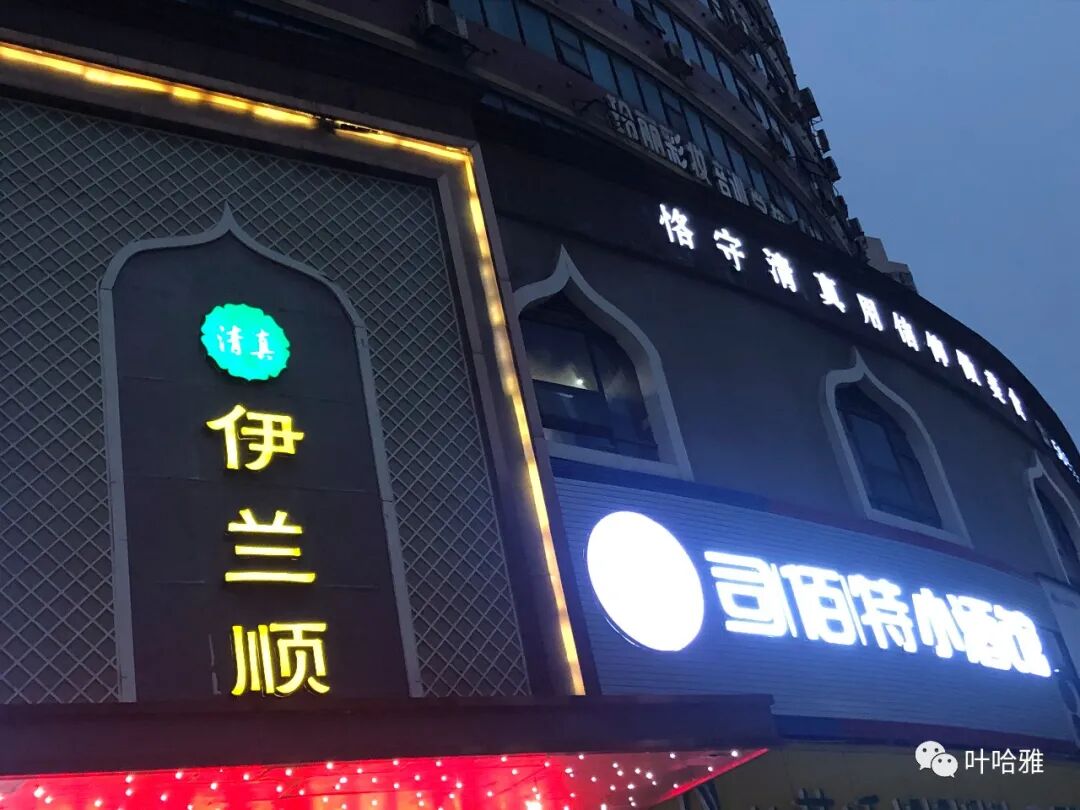
Yilanshun
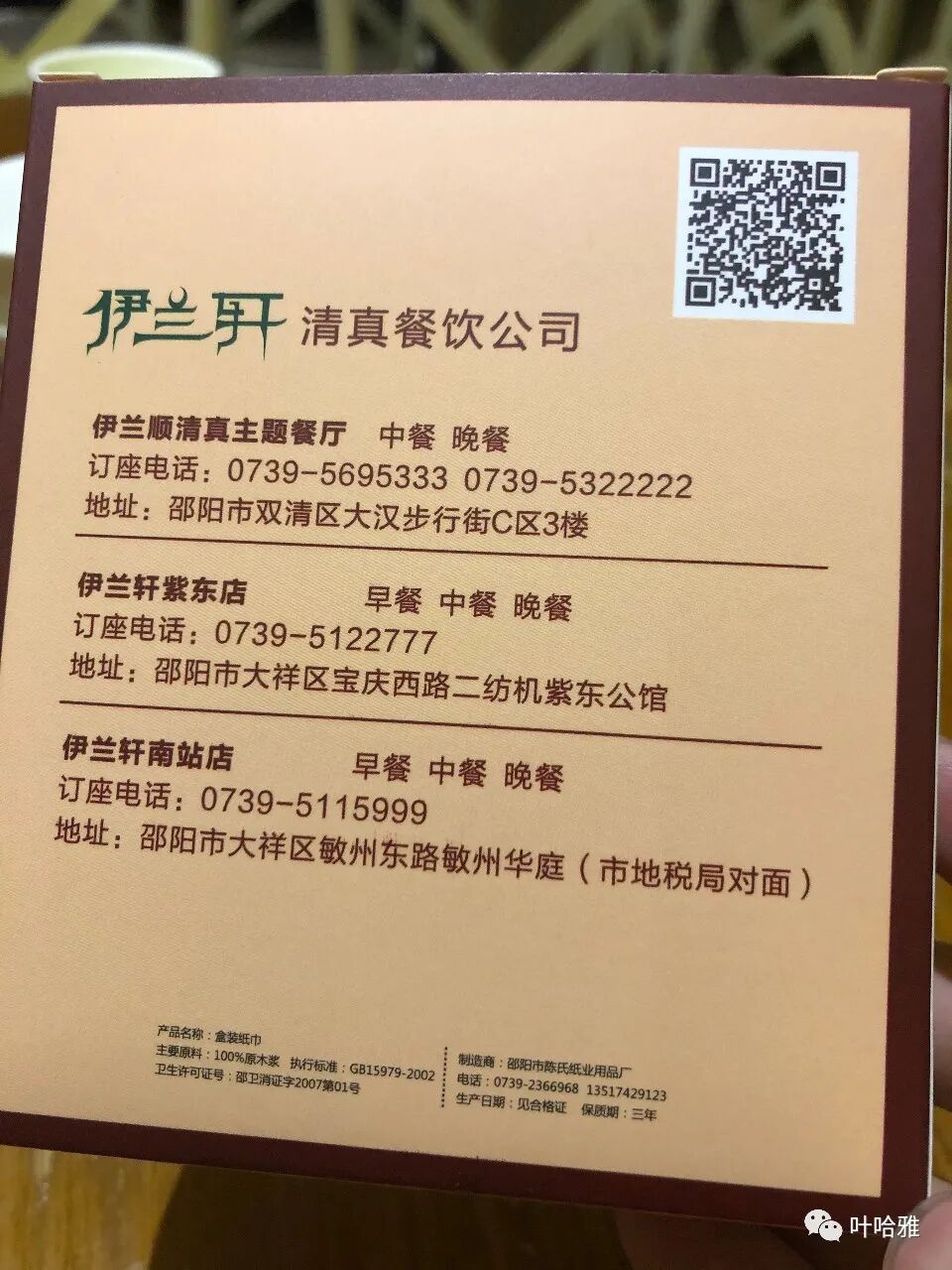
Yilanshun belongs to the Yilanxuan Halal Catering Company. Yilanxuan owns three large halal restaurants. One of the other two branches is located at Zidong Mansion, and the other is near the train station.
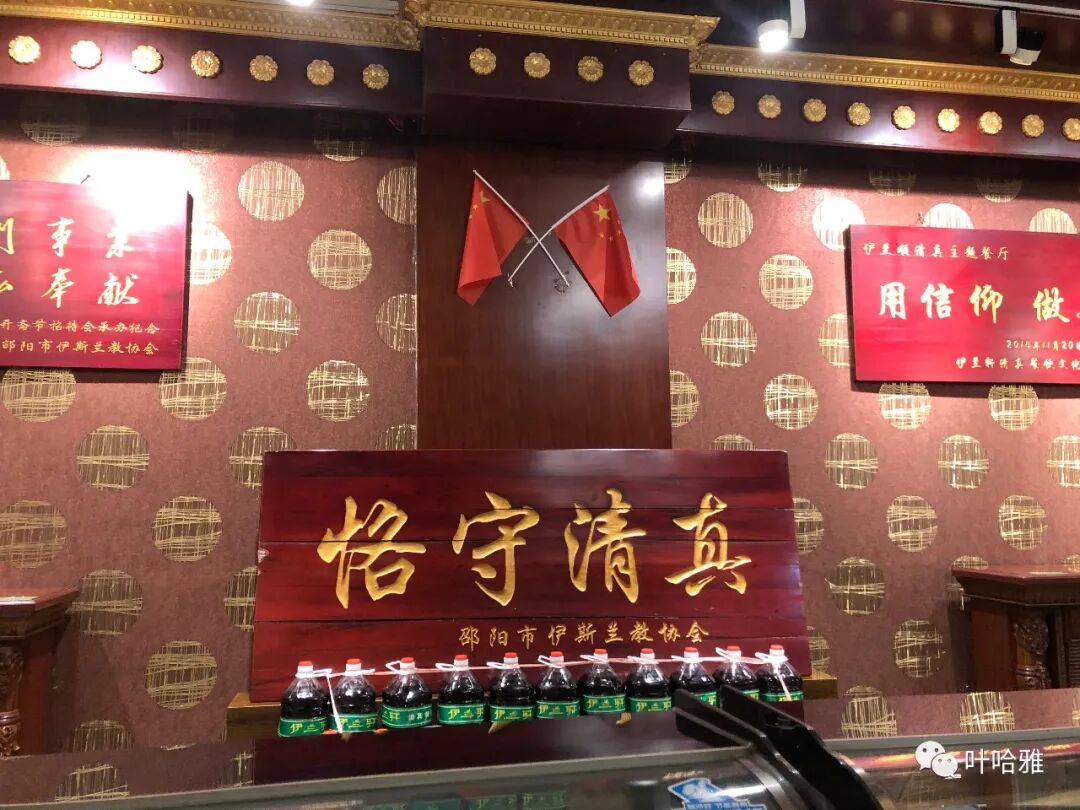
The restaurant is on the third floor of an office building. The space inside is very spacious. to the main dining hall, there are many private rooms. Hui Muslims in Shaoyang usually choose this place first for wedding banquets.
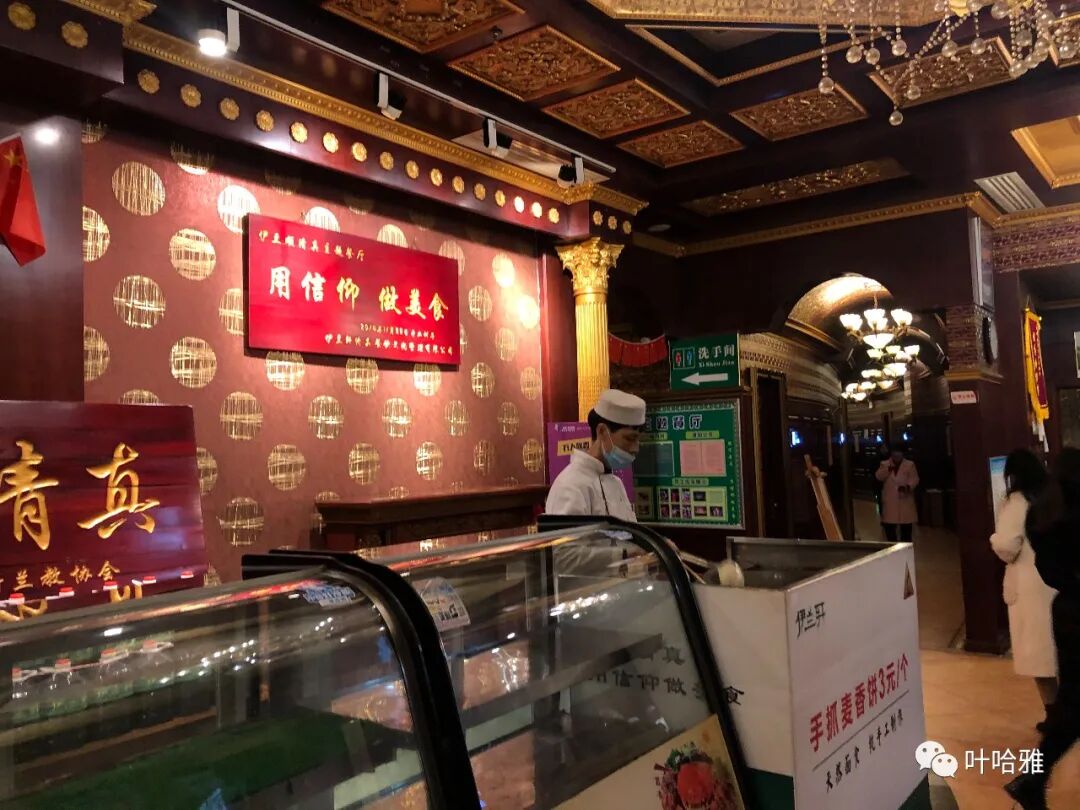
They specialize in Hunan cuisine, using beef and lamb as the main ingredients, along with chicken, duck, and seafood.
I really did not know until I came to Shaoyang that in a place like Hunan where there are very few Muslims, there is actually such a successful large local halal catering brand.
Hunan cured beef (la niurou)
A specialty of Hunan is cured meat (larou), but since Han Chinese eat pork, Hui Muslims naturally make cured beef. Eating beef here is the best choice. Cured beef is actually not spicy; it is chewy and is an excellent dish to eat with rice.
Golden sand tofu dregs (jinsha doufuzha)
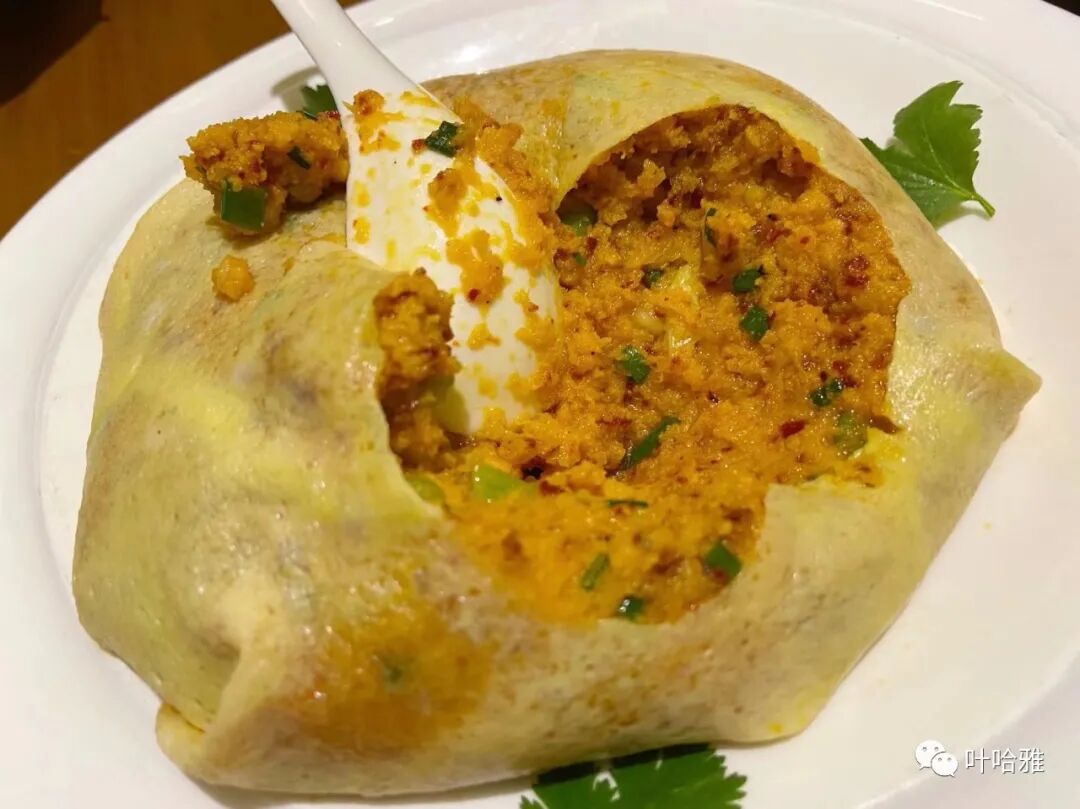
Golden sand tofu dregs (jinsha doufuzha) is the signature dish here. It is wrapped in an egg skin with a tofu-based powder inside, mixed with chili. It has a soft, sticky texture and tastes great.
Chopped chili fish head (duojiao yutou)
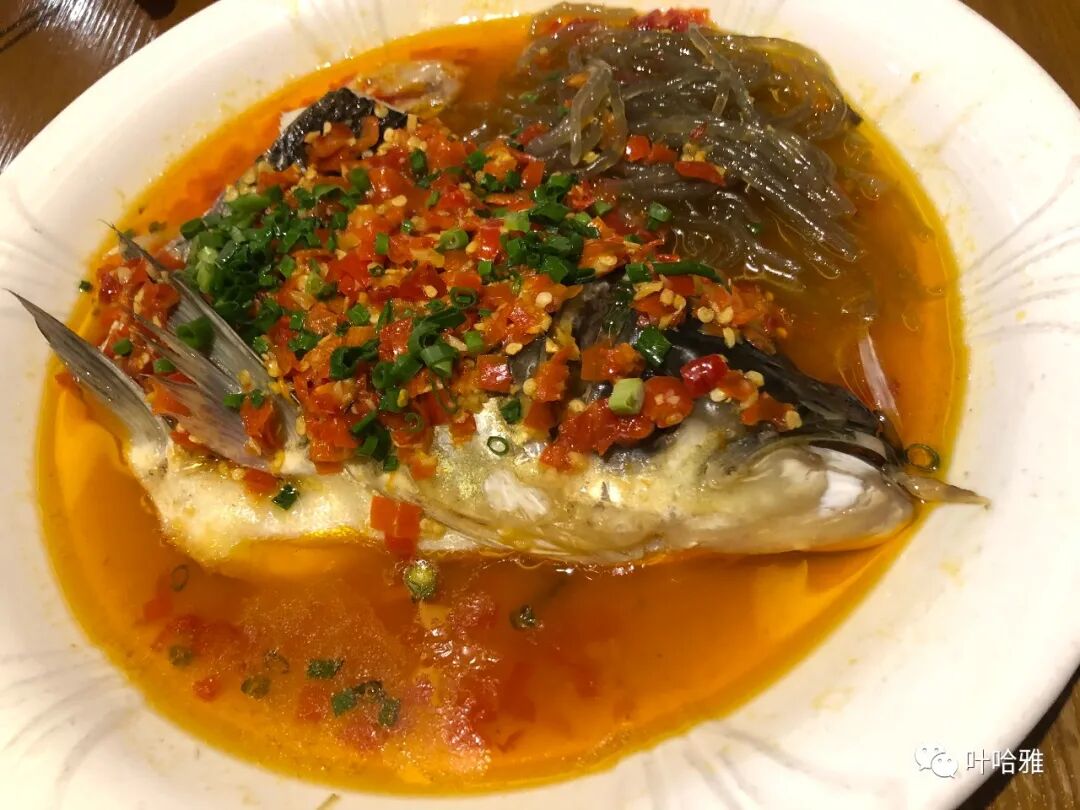
The famous Hunan dish chopped chili fish head (duojiao yutou) is listed on the menu as fifth-generation fish head. Since the fish head is huge, you can order half if you cannot finish it. It comes with glass noodles (fensi) on the side. This dish is quite spicy, but it suits the local Hunan taste. It is rare to find halal chopped chili fish head, so it is worth a try. Hunan portions are generally large, so order carefully.
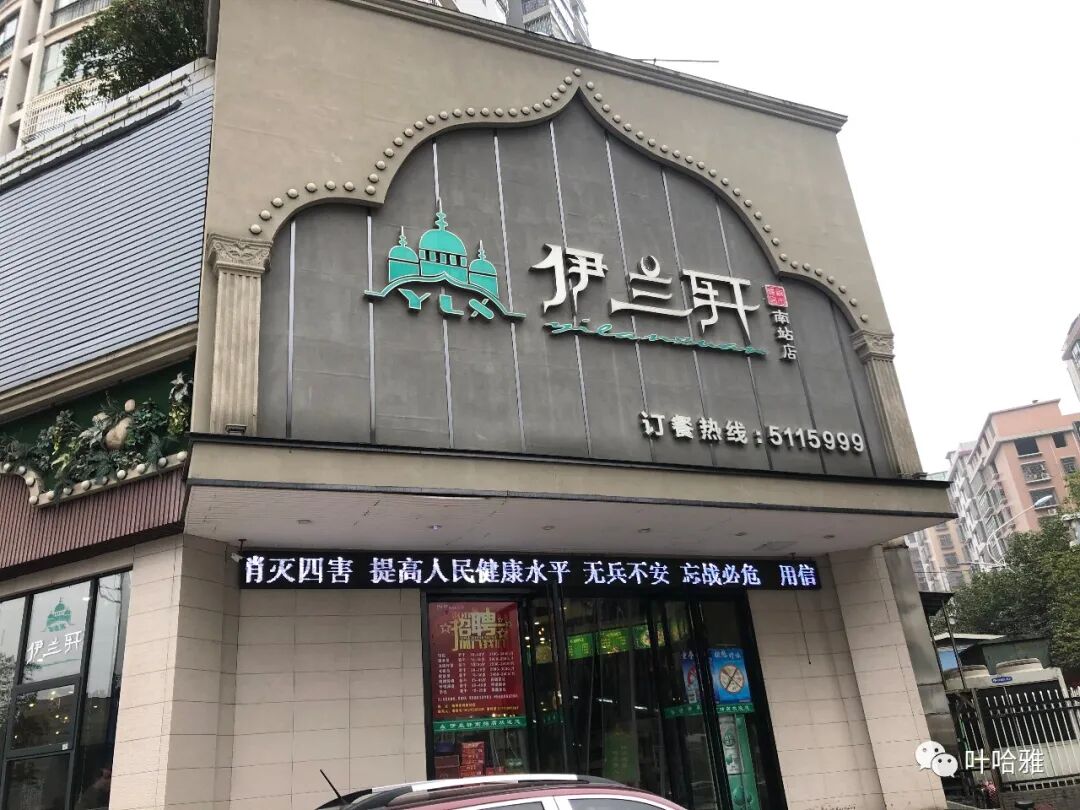
Yilanxuan South Station Branch
I visited both branches. They are both large, the food tastes about the same, and the menus are identical. The only difference is that Yilanshun does not serve breakfast, while the other two Yilanxuan locations do.
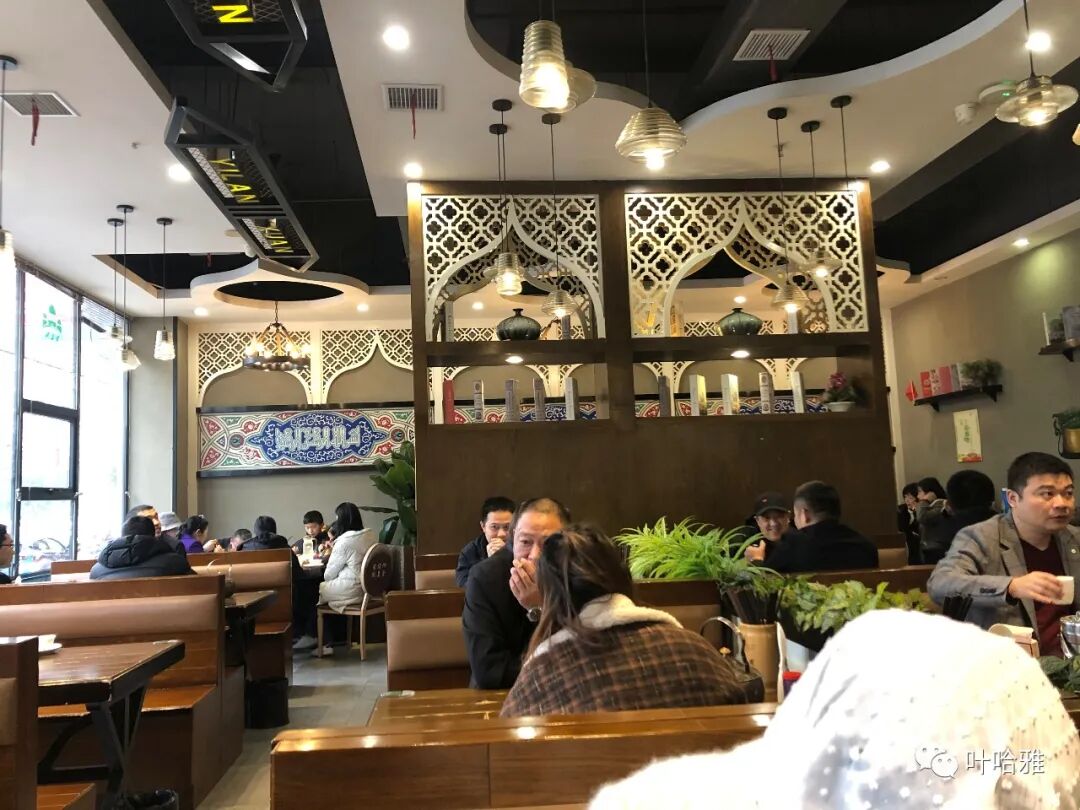
The restaurant is busy at lunch and dinner, even on non-holidays. This shows the brand has a good local reputation and can represent halal dining in Shaoyang.
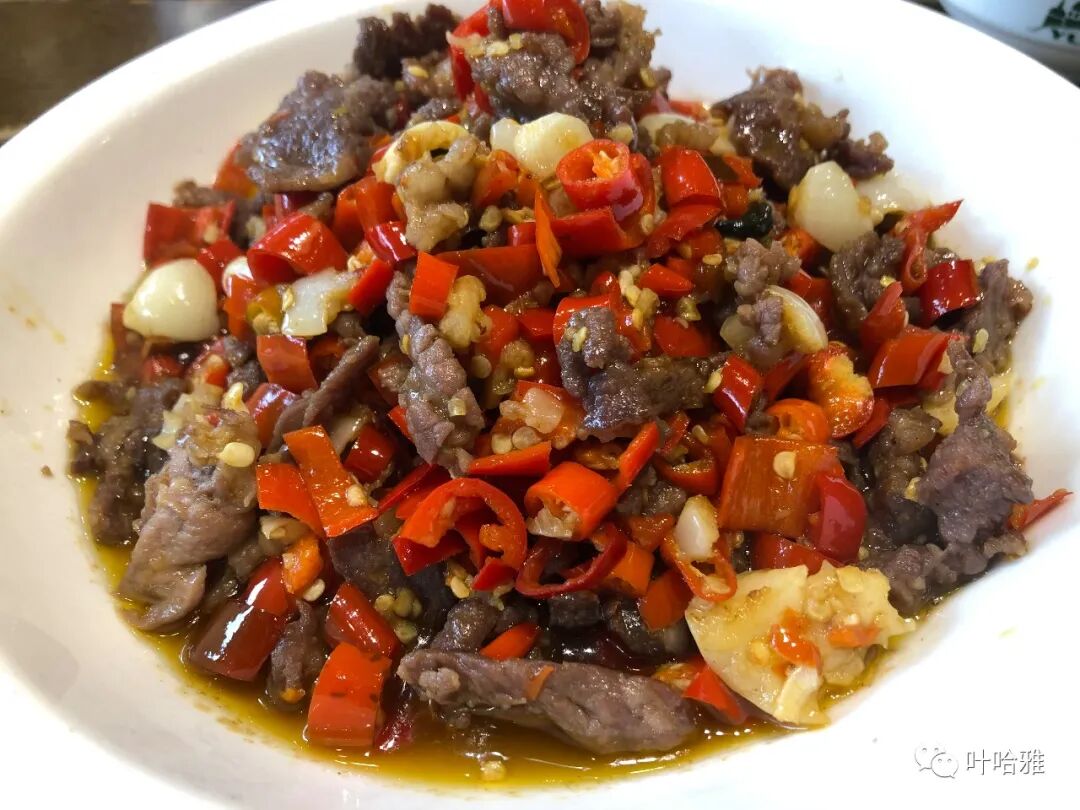
I chose classic Hunan dishes. This stir-fried yellow beef (xiaochao huangniurou) is a famous home-style Hunan dish. It is mixed with small millet peppers. Although it is very spicy, it is satisfying. I feel that if you come to Hunan and do not try the spice, you are missing out. After all, it is hard to find authentic halal Hunan food once you leave. I first ate at a Hunan halal restaurant in Kunming, but I never had the chance to try it again until now.
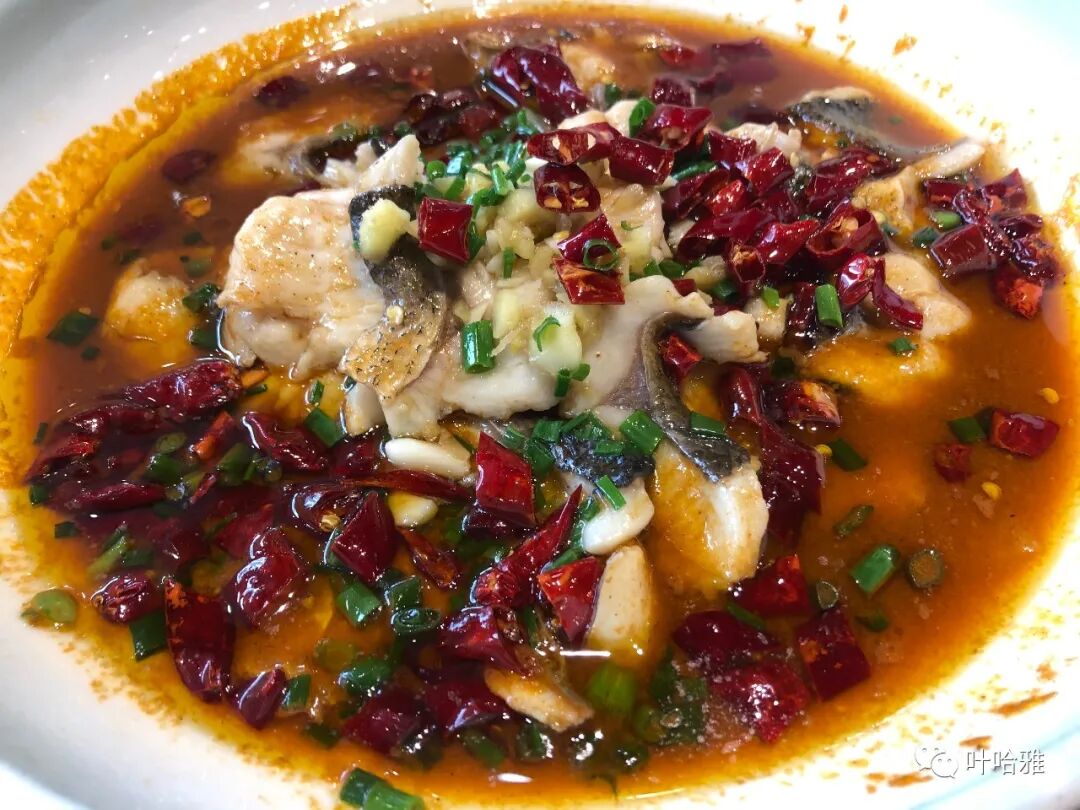
Jumping fish fillets (tiaotiao yupian)
Another major feature of Hunan cuisine is its variety of river fish, as Hunan has plenty of water and frequent flooding. This jumping fish fillet (tiaotiao yupian) is delicious. It tastes like boiled fish (shuizhu yu) but is not as numbing. You must eat Hunan food with plenty of rice because the spice makes you want more. I usually only eat one bowl of rice at home, but in Hunan, I can eat a whole bucket.
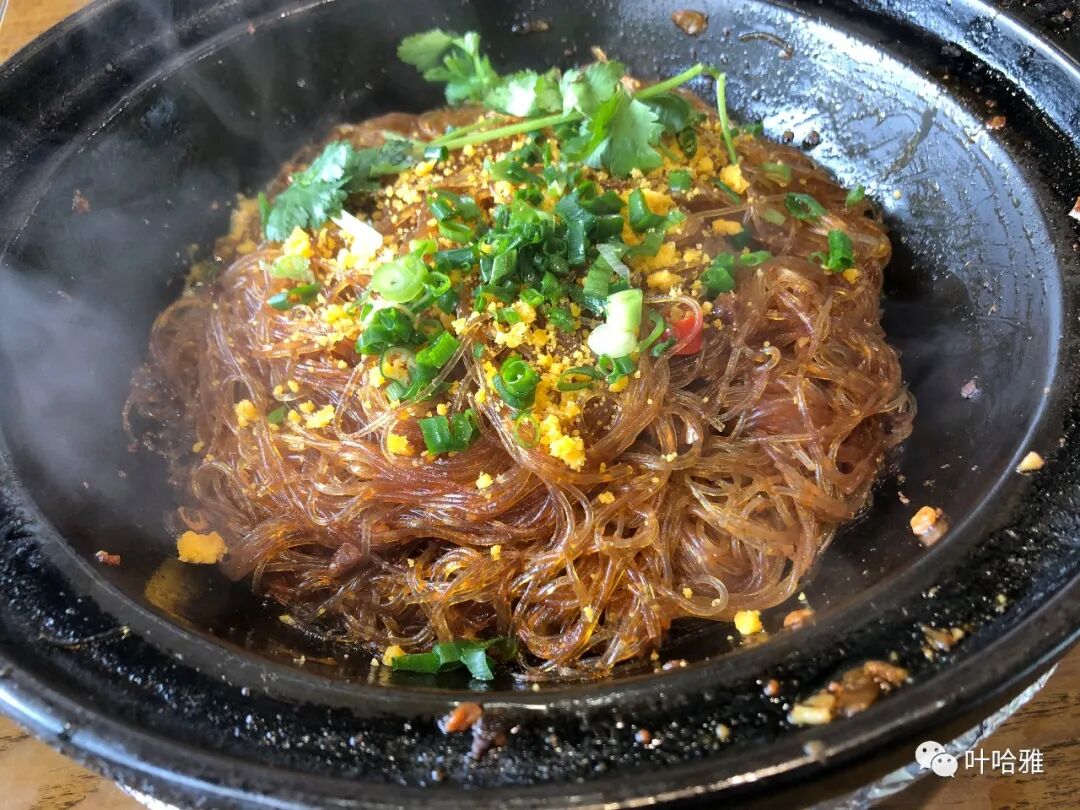
Chef's tossed glass noodles (chuniang lao fensi)
The dish is called chef's tossed glass noodles (chuniang lao fensi). Dry-tossed glass noodles are another staple of Hunan cuisine. It takes great skill to stir-fry the noodles so they are neither sticky nor hard, but just right.
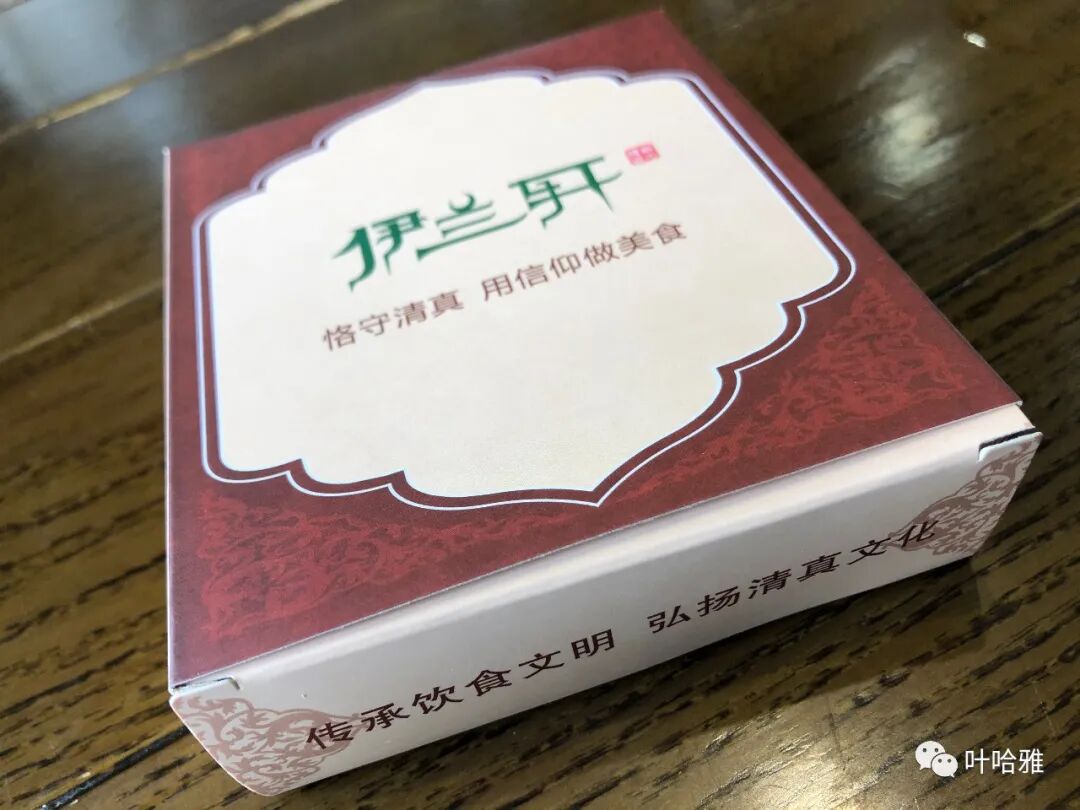
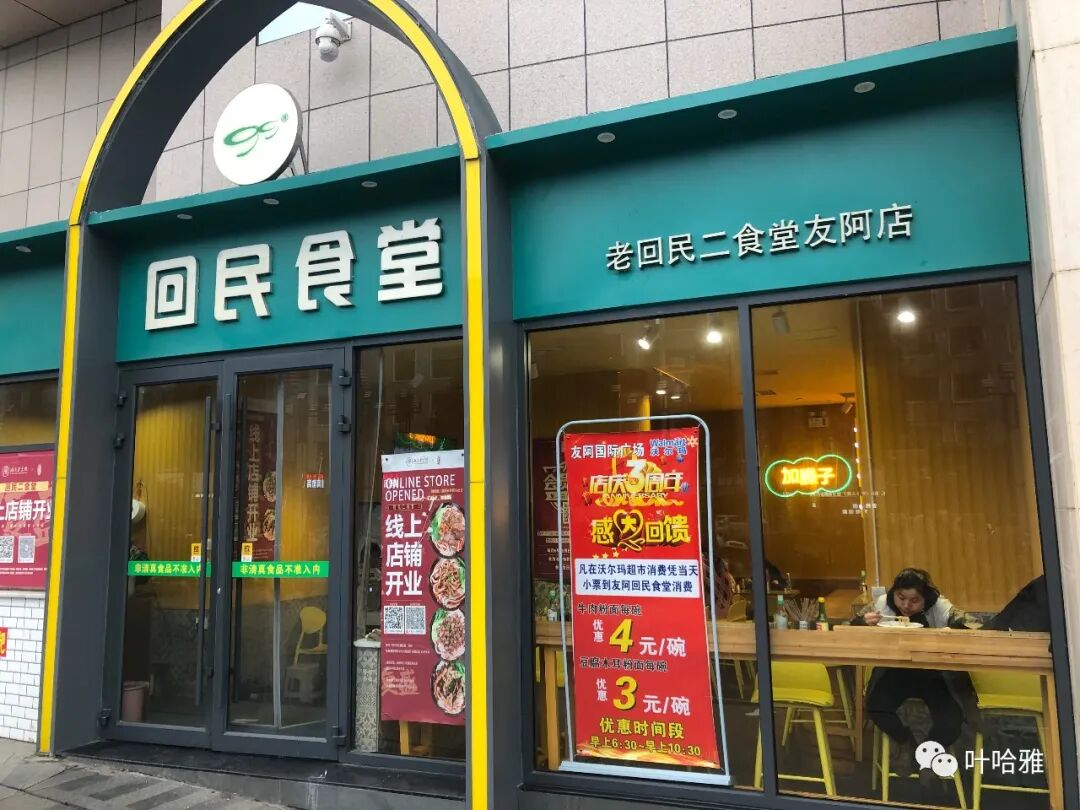
If you want to experience authentic Shaoyang noodle shops, besides the ones near the halal South Mosque (nansi), you can also try the Hui Muslim canteen on the first floor of the You'a Shopping Mall. The shop is newly renovated and quite clean.
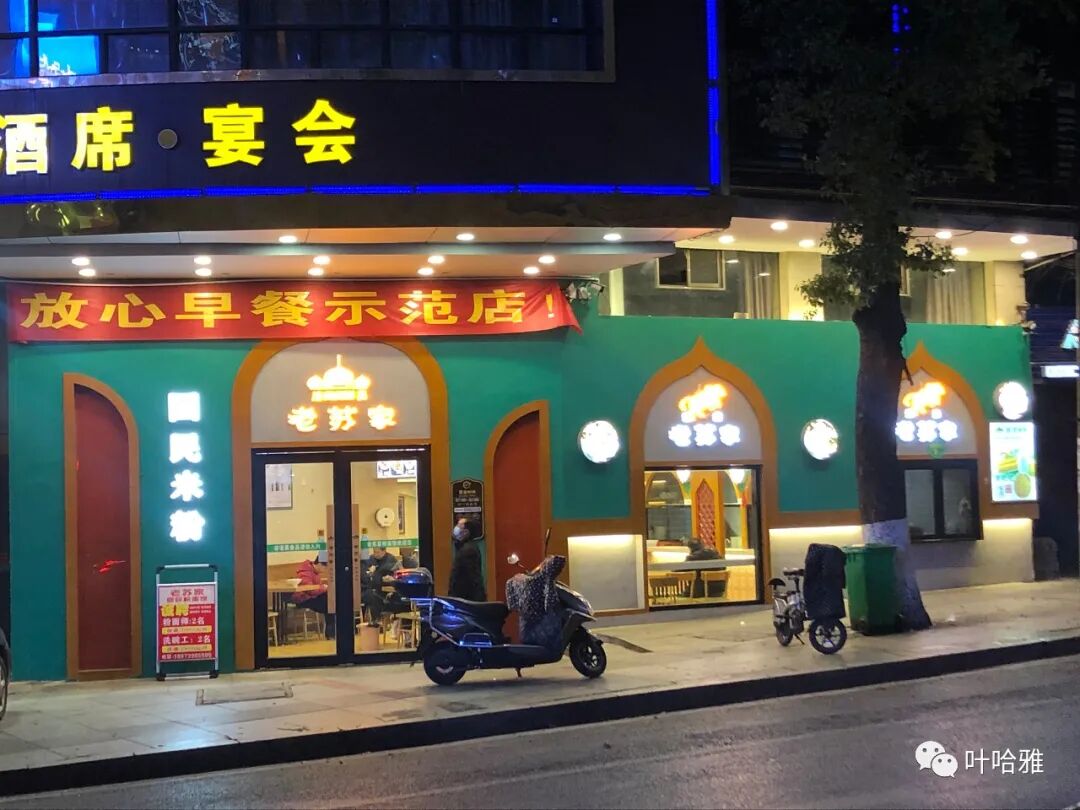
Old Su's noodles are also very famous in Shaoyang. There are many Hui Muslims with the surname Su in Shaoyang.
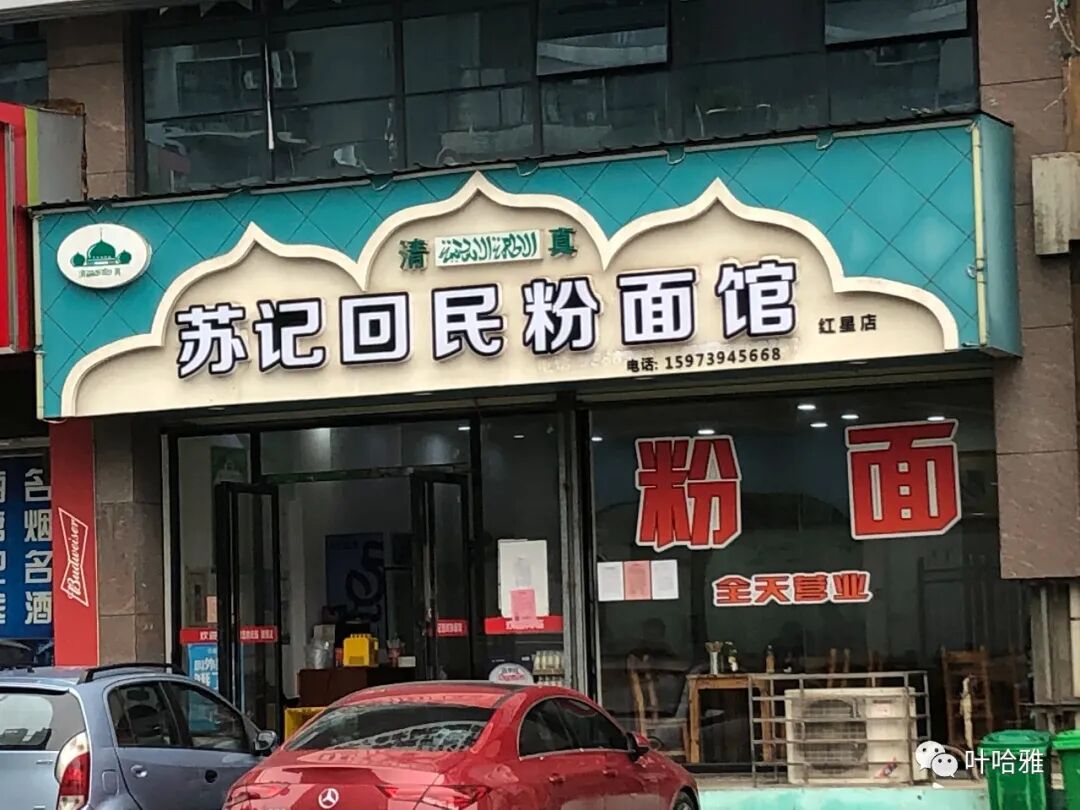
Strolling through the streets of Shaoyang, you do not need to worry about finding halal restaurants, and they all serve local flavors. Ramen shops are rare here. A friend from Guangzhou once jokingly told me that the benchmark for future halal dining should look to Shaoyang. After this trip, I believe that is true.
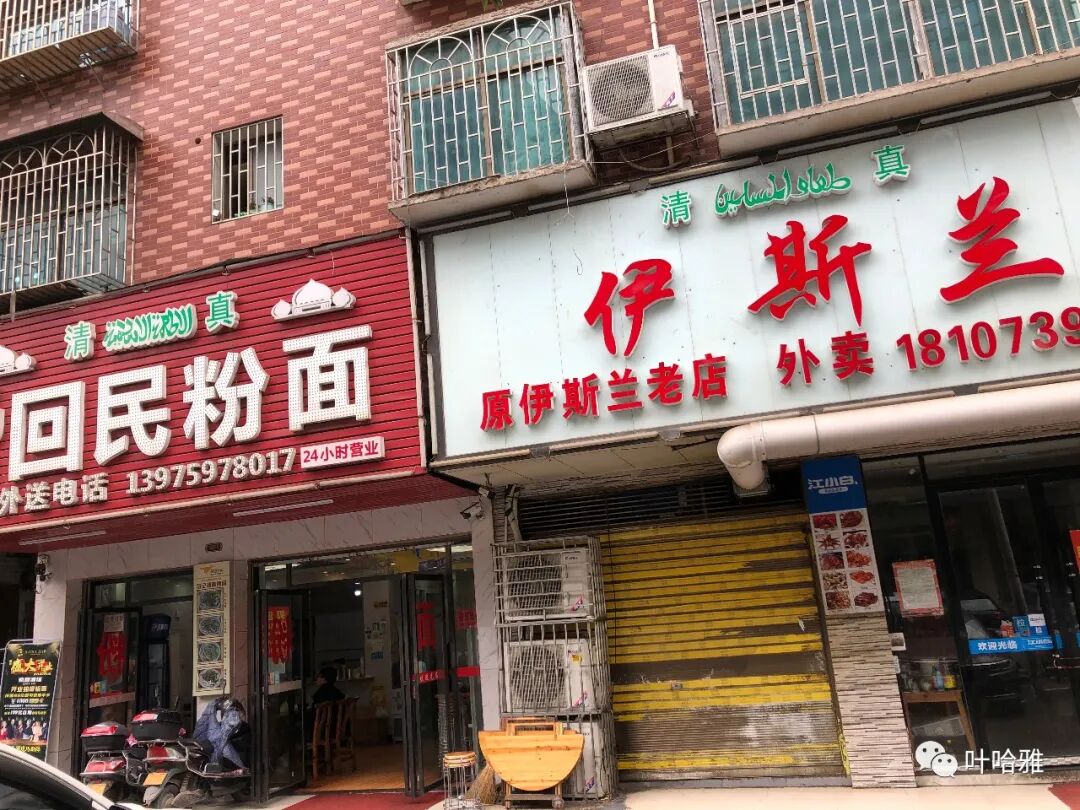
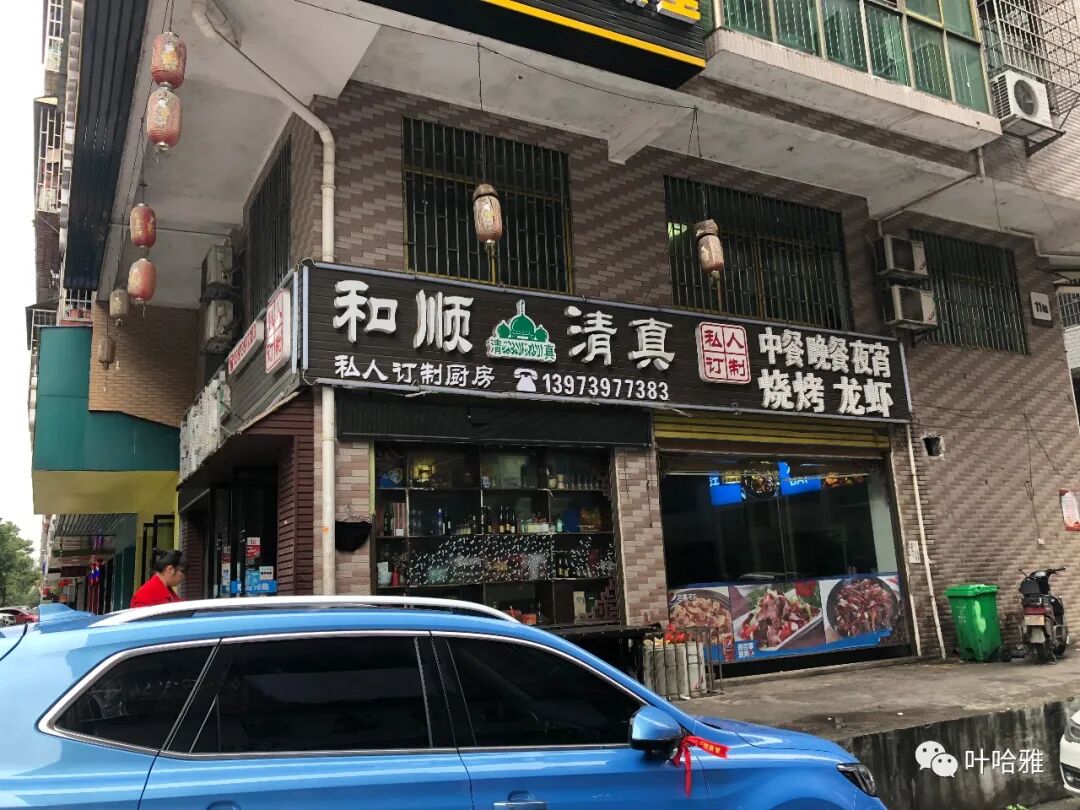
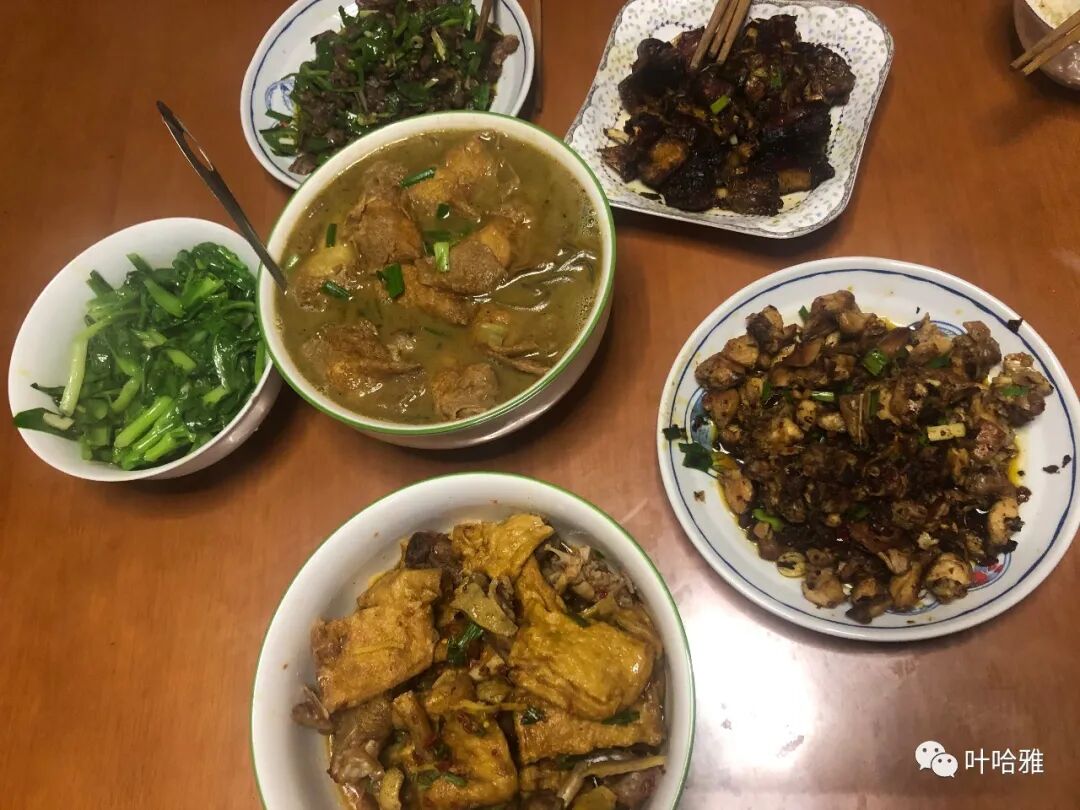
The best meal I had in Shaoyang was the home-cooked food the imam's wife made for me before I left. There was chicken, duck, beef, and rabbit. Life is not easy for imams in the south because the number of local Muslims is small, and their salary only covers basic needs. It is much harder to do religious work here than in other places, but the reward in the hereafter is great. May Allah have mercy on those who strive for His cause.
Summary: Halal Street Food China: Shaoyang Hunan Muslim Food, Xiang Cuisine and Local Mosques is presented here as a clear English account for Muslim readers, beginning with this scene: — Hello, Travel —. The article keeps the original names, food details, mosque details, photographs, and cultural context while focusing on Shaoyang Halal Food, Xiang Cuisine, Muslim Travel.
— Hello, Travel —
Shaoyang is a city in Hunan with a large population of Hui Muslims. While Changde has more Hui Muslims, Shaoyang has a stronger religious community. Walking through the streets and alleys of Shaoyang, you see halal restaurants everywhere. Halal food is a major local specialty here. Shaoyang Hui-style rice noodles and wheat noodles (fenmian) are also quite famous in Hunan. These are just the rice noodles (mifen) and wheat noodles (miantiao) we often talk about, but they use the same soup base. Every city in Hunan has rice noodles, but the flavors vary slightly. Shaoyang rice noodles are unique, and the ones made by Hui Muslims are the most authentic.
This is my second visit to Shaoyang; the last time was in 2017. Both times, I stayed at the Ethnic Hotel (Minzu Binguan) owned by the Shaoyang South Mosque. The hotel is mosque property with basic facilities, and the room rate is less than 100 yuan per day. You can reach the main prayer hall just by going downstairs. The area is surrounded by halal restaurants, making transportation, dining, and shopping very convenient. A tip: if you arrive in Shaoyang by high-speed train, do not get off at Shaoyang North Station. You must get off at Shaoyang Station. When I first came to Shaoyang, I went to Shaoyang North Station and realized after arriving that it is an hour's drive from the city center. It is a very long journey and arguably the high-speed train station furthest from the city center in China.
Shaoyang currently has 23 open mosques. I only visited 7 of them. Here is the list of mosques in Shaoyang:
1. Shaoyang East Mosque
2. Shaoyang South Mosque
3. Shaoyang West Mosque
4. Shaoyang Sujiachong Mosque
5. Shaoyang Xuetangchong Mosque
6. Shaoyang Baihetan Mosque
7. Longhui County Taohuaping Mosque
8. Longhui County Ziyang Mosque
9. Longhui County Shanjie Hui Ethnic Township Ancient Mosque
10. Longhui County Shanjie Hui Ethnic Township East Mosque
11. Longhui County Shanjie Hui Ethnic Township South Mosque
12. West Mosque (Qingzhen Xisi) in Shanjie Hui Muslim Township, Longhui County
13. North Mosque (Qingzhen Beisi) in Shanjie Hui Muslim Township, Longhui County
14. Dashanchong Mosque in Beishan Town, Longhui County
15. Niejiaoting Mosque in Beishan Town, Longhui County
16. Luobai Mosque in Shanjie Hui Muslim Township, Longhui County
17. Shuijingtou Mosque in Shaodong County
18. Yangshandian Mosque in Shaodong County
19. Meitang Mosque in Shaodong County
20. Qingcao Mosque in Shaoyang County
21. Jiugongqiao Mosque in Shaoyang County
22. Yinxianqiao Mosque in Shaoyang County
23. Xiaqichong Mosque in Shaoyang County
Ethnic Hotel (Minzu Binguan)
When I first visited the Ethnic Hotel, I learned the young woman at the front desk was a Han Chinese Muslim. I wanted to visit her again this time, but I found out the hotel changed owners last year. It was a bit of a shame.
South Mosque (Qingzhen Nansi) in Shaoyang
The South Mosque was built in 1914 and is over a hundred years old. The main prayer hall has been renovated, so the main structure does not look new. What impressed me was the Nuhai boat built in the courtyard.
The nomination of the Halal Food Court at the Dama Food Center in Zhangjiajie caught my eye. Zhangjiajie is a famous scenic area in Hunan, and I must try the food there when I get the chance.
The Hui Muslim cemetery is right at the entrance of the Shaoyang South Mosque. The inscriptions on the tombstones show that most of the ancestors of the Hui Muslims in Shaoyang came from Nanjing and Beijing.
There are many small halal shops around the mosque selling pastries, rice noodles, wheat noodles, and some cooked snacks.
Five-kernel mooncake (wuren yuebing) bought from Sujing Hui Muslim Pastries.
There are many breakfast options in Shaoyang. This halal Hui Muslim restaurant across from the mosque sells rice noodles and wheat noodles. It is a traditional restaurant that has been operating locally for many years and has a good reputation.
Rice noodles with large beef slices.
Shaoyang rice noodles are thicker than those in Changsha and break more easily. The broth is very rich, topped with large slices of beef, which is a signature of Shaoyang noodle dishes. You can add as much green onion and cilantro as you like. This is the most authentic breakfast for Shaoyang locals. The taste is a little spicy, but I can handle it. If you don't want rice noodles, you can switch to wheat noodles. If you don't like spicy food, you can tell the owner to use less chili. The shop also has wontons. A snack cart outside sells steamed buns (baozi), deep-fried dough sticks (youtiao), and fried dough cakes (youbing). The fried dough cakes are sweet.
Beef wontons.
Shaoyang fried dough cakes are sweet.
Shaoyang East Mosque.
Shaoyang East Mosque is very close to the South Mosque and is within walking distance. It is located at Baoning First Lane in the Shuangqing District. The mosque was first built in the first year of the Hongwu reign (1368) and is the oldest mosque in Shaoyang. However, the original building collapsed, and the current structure is a new-style building.
A well-known scholar from this community was Ma Linyi, courtesy name Zhenwu. He was a provincial graduate (juren) in the Renyin year of the Guangxu reign (1902) and later studied in Japan. He served as the Minister of Education for the Republic of China government in the 12th and 13th years of the Republic (1923–1924). He wrote the book "Introduction to Islam" and once worked at Xiejin Middle School, a factory, and a girls' school in Shaoyang.
After visiting the two mosques in downtown Shaoyang, I contacted the local imam. I wanted to ask about the situation in Shanjie Hui Ethnic Township, which is under Shaoyang's jurisdiction, hoping to visit tomorrow. The imam said transportation to Shanjie is inconvenient, but he offered to drive us there himself. I am very grateful (shukr) for this, as it saved me a lot of trouble. We agreed to set off together for Shanjie Hui Ethnic Township after the Friday prayer (Jumu'ah).
Jiugongqiao Mosque
On the way to Shanjie, we passed through Jiugongqiao Town. Jiugongqiao Mosque is located in Sijiache Village, Jiugongqiao Town, Shaoyang County, Shaoyang City. Many Hui Muslims live in this village. The mosque was just completed and features a very local traditional style. It is the reddest mosque I have ever seen. Many locals even think it looks more like an ancestral hall than a mosque.
The main prayer hall is on the second floor. Since it was finished just last year, the smell of paint is still quite strong.
I have never seen an inscription like this on a plaque before: Love the Party, love the country, and love the faith. It is signed by Zhang Xiaolin, the president of the Shaoyang Islamic Association.
You can see the scenery in the distance from the second floor. At this time of year, Shaoyang is full of blooming rapeseed flowers.
Leaving Jiugongqiao Town, we drove to Qingcao Hui Muslim Village in Huangting Town, Shaoyang County. There is a Qingcao Mosque here. Almost all the villagers in this Hui Muslim village are Hui Muslims, and most of them have the surname Zhang.
On the village road leading to the mosque, we only saw some elderly people. After talking to them, we learned that the young people have all gone out to work. Some of the elders even greeted us with salaam.
Qingcao Mosque
It was first built in the tenth year of the Qianlong reign of the Qing Dynasty. It was flooded in 1996 and rebuilt in 1998. The new mosque follows the architectural style of the Qing Dynasty.
The writing above says the villagers' ancestor was Commander Pu Luode, who was ordered to station troops in Baoqing (now Shaoyang City, Hunan) in the early Ming Dynasty. In the twelfth year of the Wanli reign of the Ming Dynasty, their ancestor Zhang Huihui moved from Baoqing to Qingcao Village.
I performed two rak'ahs of prayer in the mosque to celebrate. I was moved to find such a devout Hui Muslim village in Hunan. Feeling comforted, I heard from the villagers that the faith is even stronger in nearby Shanjie, so we headed to our next destination without delay.
Soon we arrived at the location of Taohuaping Mosque in Longhui County. Longhui County is a settlement for Hui Muslims in Shaoyang, and the local Hui Muslims have lived here for hundreds of years. Taohuaping Mosque is built in a busy downtown area, surrounded by all kinds of halal snack shops. More Hui Muslims here wear headscarves.
Taohuaping Mosque was first built during the Jiaqing reign of the Qing Dynasty and rebuilt in 2017. The main part of the mosque is built in a traditional architectural style, blending in with the surrounding houses.
Qingzhen East Mosque in Shanjie Hui Muslim Township, Longhui County
Qingzhen East Mosque was first built in the fifth year of the Yongzheng reign (1727). The gate archway is carved with a relief of five dragons surrounding a holy symbol. The Shanjie East Mosque is built in a courtyard style. The couplet on the gate reads 'Share the responsibility for our country and our people' on the right, and 'Revive the moral order with those of the same continent and race' on the left. It was written by Ma Linyi, a Hui Muslim who served as the Minister of Education during the Republic of China.
Shanjie Ancient Mosque in Longhui
The Ancient Mosque in Shanjie Hui Muslim Township, Longhui, was first built in 1444 during the ninth year of the Zhengtong reign of the Ming Dynasty. It is the oldest mosque in Longhui County and is now a county-level cultural heritage site.
I am not sure where this piece of carpet was cut from.
After visiting several representative mosques in Shaoyang, we returned to the city center to continue our halal food tour. There is so much halal food to eat in Shaoyang. Besides the Hui Muslim noodle shops scattered along the streets, there are also some larger halal restaurants that specialize in Hunan cuisine. When I visited in 2017, I went to a large restaurant called Muslim Halal Building (Musilin Qingzhen Lou). Unfortunately, I learned this time that the restaurant has changed owners and is no longer halal.
Old photo of the Muslim Halal Building in Shaoyang
However, there are still many large halal restaurants to choose from in Shaoyang. The one introduced below, Yilanshun, is the largest halal restaurant in the city.
Yilanshun
Yilanshun belongs to the Yilanxuan Halal Catering Company. Yilanxuan owns three large halal restaurants. One of the other two branches is located at Zidong Mansion, and the other is near the train station.
The restaurant is on the third floor of an office building. The space inside is very spacious. to the main dining hall, there are many private rooms. Hui Muslims in Shaoyang usually choose this place first for wedding banquets.
They specialize in Hunan cuisine, using beef and lamb as the main ingredients, along with chicken, duck, and seafood.
I really did not know until I came to Shaoyang that in a place like Hunan where there are very few Muslims, there is actually such a successful large local halal catering brand.
Hunan cured beef (la niurou)
A specialty of Hunan is cured meat (larou), but since Han Chinese eat pork, Hui Muslims naturally make cured beef. Eating beef here is the best choice. Cured beef is actually not spicy; it is chewy and is an excellent dish to eat with rice.
Golden sand tofu dregs (jinsha doufuzha)
Golden sand tofu dregs (jinsha doufuzha) is the signature dish here. It is wrapped in an egg skin with a tofu-based powder inside, mixed with chili. It has a soft, sticky texture and tastes great.
Chopped chili fish head (duojiao yutou)
The famous Hunan dish chopped chili fish head (duojiao yutou) is listed on the menu as fifth-generation fish head. Since the fish head is huge, you can order half if you cannot finish it. It comes with glass noodles (fensi) on the side. This dish is quite spicy, but it suits the local Hunan taste. It is rare to find halal chopped chili fish head, so it is worth a try. Hunan portions are generally large, so order carefully.
Yilanxuan South Station Branch
I visited both branches. They are both large, the food tastes about the same, and the menus are identical. The only difference is that Yilanshun does not serve breakfast, while the other two Yilanxuan locations do.
The restaurant is busy at lunch and dinner, even on non-holidays. This shows the brand has a good local reputation and can represent halal dining in Shaoyang.
I chose classic Hunan dishes. This stir-fried yellow beef (xiaochao huangniurou) is a famous home-style Hunan dish. It is mixed with small millet peppers. Although it is very spicy, it is satisfying. I feel that if you come to Hunan and do not try the spice, you are missing out. After all, it is hard to find authentic halal Hunan food once you leave. I first ate at a Hunan halal restaurant in Kunming, but I never had the chance to try it again until now.
Jumping fish fillets (tiaotiao yupian)
Another major feature of Hunan cuisine is its variety of river fish, as Hunan has plenty of water and frequent flooding. This jumping fish fillet (tiaotiao yupian) is delicious. It tastes like boiled fish (shuizhu yu) but is not as numbing. You must eat Hunan food with plenty of rice because the spice makes you want more. I usually only eat one bowl of rice at home, but in Hunan, I can eat a whole bucket.
Chef's tossed glass noodles (chuniang lao fensi)
The dish is called chef's tossed glass noodles (chuniang lao fensi). Dry-tossed glass noodles are another staple of Hunan cuisine. It takes great skill to stir-fry the noodles so they are neither sticky nor hard, but just right.
If you want to experience authentic Shaoyang noodle shops, besides the ones near the halal South Mosque (nansi), you can also try the Hui Muslim canteen on the first floor of the You'a Shopping Mall. The shop is newly renovated and quite clean.
Old Su's noodles are also very famous in Shaoyang. There are many Hui Muslims with the surname Su in Shaoyang.
Strolling through the streets of Shaoyang, you do not need to worry about finding halal restaurants, and they all serve local flavors. Ramen shops are rare here. A friend from Guangzhou once jokingly told me that the benchmark for future halal dining should look to Shaoyang. After this trip, I believe that is true.
The best meal I had in Shaoyang was the home-cooked food the imam's wife made for me before I left. There was chicken, duck, beef, and rabbit. Life is not easy for imams in the south because the number of local Muslims is small, and their salary only covers basic needs. It is much harder to do religious work here than in other places, but the reward in the hereafter is great. May Allah have mercy on those who strive for His cause.
Halal Street Food China: Shaoyang Hunan Muslim Food, Xiang Cuisine and Local Mosques
Articles • yusuf908 posted the article • 0 comments • 322 views • 2026-05-21 20:44
Reposted from the web
Summary: Halal Street Food China: Shaoyang Hunan Muslim Food, Xiang Cuisine and Local Mosques is presented here as a clear English account for Muslim readers, beginning with this scene: — Hello, Travel —. The article keeps the original names, food details, mosque details, photographs, and cultural context while focusing on Shaoyang Halal Food, Xiang Cuisine, Muslim Travel.
— Hello, Travel —
Shaoyang is a city in Hunan with a large population of Hui Muslims. While Changde has more Hui Muslims, Shaoyang has a stronger religious community. Walking through the streets and alleys of Shaoyang, you see halal restaurants everywhere. Halal food is a major local specialty here. Shaoyang Hui-style rice noodles and wheat noodles (fenmian) are also quite famous in Hunan. These are just the rice noodles (mifen) and wheat noodles (miantiao) we often talk about, but they use the same soup base. Every city in Hunan has rice noodles, but the flavors vary slightly. Shaoyang rice noodles are unique, and the ones made by Hui Muslims are the most authentic.
This is my second visit to Shaoyang; the last time was in 2017. Both times, I stayed at the Ethnic Hotel (Minzu Binguan) owned by the Shaoyang South Mosque. The hotel is mosque property with basic facilities, and the room rate is less than 100 yuan per day. You can reach the main prayer hall just by going downstairs. The area is surrounded by halal restaurants, making transportation, dining, and shopping very convenient. A tip: if you arrive in Shaoyang by high-speed train, do not get off at Shaoyang North Station. You must get off at Shaoyang Station. When I first came to Shaoyang, I went to Shaoyang North Station and realized after arriving that it is an hour's drive from the city center. It is a very long journey and arguably the high-speed train station furthest from the city center in China.
Shaoyang currently has 23 open mosques. I only visited 7 of them. Here is the list of mosques in Shaoyang:
1. Shaoyang East Mosque
2. Shaoyang South Mosque
3. Shaoyang West Mosque
4. Shaoyang Sujiachong Mosque
5. Shaoyang Xuetangchong Mosque
6. Shaoyang Baihetan Mosque
7. Longhui County Taohuaping Mosque
8. Longhui County Ziyang Mosque
9. Longhui County Shanjie Hui Ethnic Township Ancient Mosque
10. Longhui County Shanjie Hui Ethnic Township East Mosque
11. Longhui County Shanjie Hui Ethnic Township South Mosque
12. West Mosque (Qingzhen Xisi) in Shanjie Hui Muslim Township, Longhui County
13. North Mosque (Qingzhen Beisi) in Shanjie Hui Muslim Township, Longhui County
14. Dashanchong Mosque in Beishan Town, Longhui County
15. Niejiaoting Mosque in Beishan Town, Longhui County
16. Luobai Mosque in Shanjie Hui Muslim Township, Longhui County
17. Shuijingtou Mosque in Shaodong County
18. Yangshandian Mosque in Shaodong County
19. Meitang Mosque in Shaodong County
20. Qingcao Mosque in Shaoyang County
21. Jiugongqiao Mosque in Shaoyang County
22. Yinxianqiao Mosque in Shaoyang County
23. Xiaqichong Mosque in Shaoyang County
Ethnic Hotel (Minzu Binguan)
When I first visited the Ethnic Hotel, I learned the young woman at the front desk was a Han Chinese Muslim. I wanted to visit her again this time, but I found out the hotel changed owners last year. It was a bit of a shame.
South Mosque (Qingzhen Nansi) in Shaoyang
The South Mosque was built in 1914 and is over a hundred years old. The main prayer hall has been renovated, so the main structure does not look new. What impressed me was the Nuhai boat built in the courtyard.
The nomination of the Halal Food Court at the Dama Food Center in Zhangjiajie caught my eye. Zhangjiajie is a famous scenic area in Hunan, and I must try the food there when I get the chance.
The Hui Muslim cemetery is right at the entrance of the Shaoyang South Mosque. The inscriptions on the tombstones show that most of the ancestors of the Hui Muslims in Shaoyang came from Nanjing and Beijing.
There are many small halal shops around the mosque selling pastries, rice noodles, wheat noodles, and some cooked snacks.
Five-kernel mooncake (wuren yuebing) bought from Sujing Hui Muslim Pastries.
There are many breakfast options in Shaoyang. This halal Hui Muslim restaurant across from the mosque sells rice noodles and wheat noodles. It is a traditional restaurant that has been operating locally for many years and has a good reputation.
Rice noodles with large beef slices.
Shaoyang rice noodles are thicker than those in Changsha and break more easily. The broth is very rich, topped with large slices of beef, which is a signature of Shaoyang noodle dishes. You can add as much green onion and cilantro as you like. This is the most authentic breakfast for Shaoyang locals. The taste is a little spicy, but I can handle it. If you don't want rice noodles, you can switch to wheat noodles. If you don't like spicy food, you can tell the owner to use less chili. The shop also has wontons. A snack cart outside sells steamed buns (baozi), deep-fried dough sticks (youtiao), and fried dough cakes (youbing). The fried dough cakes are sweet.
Beef wontons.
Shaoyang fried dough cakes are sweet.
Shaoyang East Mosque.
Shaoyang East Mosque is very close to the South Mosque and is within walking distance. It is located at Baoning First Lane in the Shuangqing District. The mosque was first built in the first year of the Hongwu reign (1368) and is the oldest mosque in Shaoyang. However, the original building collapsed, and the current structure is a new-style building.
A well-known scholar from this community was Ma Linyi, courtesy name Zhenwu. He was a provincial graduate (juren) in the Renyin year of the Guangxu reign (1902) and later studied in Japan. He served as the Minister of Education for the Republic of China government in the 12th and 13th years of the Republic (1923–1924). He wrote the book "Introduction to Islam" and once worked at Xiejin Middle School, a factory, and a girls' school in Shaoyang.
After visiting the two mosques in downtown Shaoyang, I contacted the local imam. I wanted to ask about the situation in Shanjie Hui Ethnic Township, which is under Shaoyang's jurisdiction, hoping to visit tomorrow. The imam said transportation to Shanjie is inconvenient, but he offered to drive us there himself. I am very grateful (shukr) for this, as it saved me a lot of trouble. We agreed to set off together for Shanjie Hui Ethnic Township after the Friday prayer (Jumu'ah).
Jiugongqiao Mosque
On the way to Shanjie, we passed through Jiugongqiao Town. Jiugongqiao Mosque is located in Sijiache Village, Jiugongqiao Town, Shaoyang County, Shaoyang City. Many Hui Muslims live in this village. The mosque was just completed and features a very local traditional style. It is the reddest mosque I have ever seen. Many locals even think it looks more like an ancestral hall than a mosque.
The main prayer hall is on the second floor. Since it was finished just last year, the smell of paint is still quite strong.
I have never seen an inscription like this on a plaque before: Love the Party, love the country, and love the faith. It is signed by Zhang Xiaolin, the president of the Shaoyang Islamic Association.
You can see the scenery in the distance from the second floor. At this time of year, Shaoyang is full of blooming rapeseed flowers.
Leaving Jiugongqiao Town, we drove to Qingcao Hui Muslim Village in Huangting Town, Shaoyang County. There is a Qingcao Mosque here. Almost all the villagers in this Hui Muslim village are Hui Muslims, and most of them have the surname Zhang.
On the village road leading to the mosque, we only saw some elderly people. After talking to them, we learned that the young people have all gone out to work. Some of the elders even greeted us with salaam.
Qingcao Mosque
It was first built in the tenth year of the Qianlong reign of the Qing Dynasty. It was flooded in 1996 and rebuilt in 1998. The new mosque follows the architectural style of the Qing Dynasty.
The writing above says the villagers' ancestor was Commander Pu Luode, who was ordered to station troops in Baoqing (now Shaoyang City, Hunan) in the early Ming Dynasty. In the twelfth year of the Wanli reign of the Ming Dynasty, their ancestor Zhang Huihui moved from Baoqing to Qingcao Village.
I performed two rak'ahs of prayer in the mosque to celebrate. I was moved to find such a devout Hui Muslim village in Hunan. Feeling comforted, I heard from the villagers that the faith is even stronger in nearby Shanjie, so we headed to our next destination without delay.
Soon we arrived at the location of Taohuaping Mosque in Longhui County. Longhui County is a settlement for Hui Muslims in Shaoyang, and the local Hui Muslims have lived here for hundreds of years. Taohuaping Mosque is built in a busy downtown area, surrounded by all kinds of halal snack shops. More Hui Muslims here wear headscarves.
Taohuaping Mosque was first built during the Jiaqing reign of the Qing Dynasty and rebuilt in 2017. The main part of the mosque is built in a traditional architectural style, blending in with the surrounding houses.
Qingzhen East Mosque in Shanjie Hui Muslim Township, Longhui County
Qingzhen East Mosque was first built in the fifth year of the Yongzheng reign (1727). The gate archway is carved with a relief of five dragons surrounding a holy symbol. The Shanjie East Mosque is built in a courtyard style. The couplet on the gate reads 'Share the responsibility for our country and our people' on the right, and 'Revive the moral order with those of the same continent and race' on the left. It was written by Ma Linyi, a Hui Muslim who served as the Minister of Education during the Republic of China.
Shanjie Ancient Mosque in Longhui
The Ancient Mosque in Shanjie Hui Muslim Township, Longhui, was first built in 1444 during the ninth year of the Zhengtong reign of the Ming Dynasty. It is the oldest mosque in Longhui County and is now a county-level cultural heritage site.
I am not sure where this piece of carpet was cut from.
After visiting several representative mosques in Shaoyang, we returned to the city center to continue our halal food tour. There is so much halal food to eat in Shaoyang. Besides the Hui Muslim noodle shops scattered along the streets, there are also some larger halal restaurants that specialize in Hunan cuisine. When I visited in 2017, I went to a large restaurant called Muslim Halal Building (Musilin Qingzhen Lou). Unfortunately, I learned this time that the restaurant has changed owners and is no longer halal.
Old photo of the Muslim Halal Building in Shaoyang
However, there are still many large halal restaurants to choose from in Shaoyang. The one introduced below, Yilanshun, is the largest halal restaurant in the city.
Yilanshun
Yilanshun belongs to the Yilanxuan Halal Catering Company. Yilanxuan owns three large halal restaurants. One of the other two branches is located at Zidong Mansion, and the other is near the train station.
The restaurant is on the third floor of an office building. The space inside is very spacious. to the main dining hall, there are many private rooms. Hui Muslims in Shaoyang usually choose this place first for wedding banquets.
They specialize in Hunan cuisine, using beef and lamb as the main ingredients, along with chicken, duck, and seafood.
I really did not know until I came to Shaoyang that in a place like Hunan where there are very few Muslims, there is actually such a successful large local halal catering brand.
Hunan cured beef (la niurou)
A specialty of Hunan is cured meat (larou), but since Han Chinese eat pork, Hui Muslims naturally make cured beef. Eating beef here is the best choice. Cured beef is actually not spicy; it is chewy and is an excellent dish to eat with rice.
Golden sand tofu dregs (jinsha doufuzha)
Golden sand tofu dregs (jinsha doufuzha) is the signature dish here. It is wrapped in an egg skin with a tofu-based powder inside, mixed with chili. It has a soft, sticky texture and tastes great.
Chopped chili fish head (duojiao yutou)
The famous Hunan dish chopped chili fish head (duojiao yutou) is listed on the menu as fifth-generation fish head. Since the fish head is huge, you can order half if you cannot finish it. It comes with glass noodles (fensi) on the side. This dish is quite spicy, but it suits the local Hunan taste. It is rare to find halal chopped chili fish head, so it is worth a try. Hunan portions are generally large, so order carefully.
Yilanxuan South Station Branch
I visited both branches. They are both large, the food tastes about the same, and the menus are identical. The only difference is that Yilanshun does not serve breakfast, while the other two Yilanxuan locations do.
The restaurant is busy at lunch and dinner, even on non-holidays. This shows the brand has a good local reputation and can represent halal dining in Shaoyang.
I chose classic Hunan dishes. This stir-fried yellow beef (xiaochao huangniurou) is a famous home-style Hunan dish. It is mixed with small millet peppers. Although it is very spicy, it is satisfying. I feel that if you come to Hunan and do not try the spice, you are missing out. After all, it is hard to find authentic halal Hunan food once you leave. I first ate at a Hunan halal restaurant in Kunming, but I never had the chance to try it again until now.
Jumping fish fillets (tiaotiao yupian)
Another major feature of Hunan cuisine is its variety of river fish, as Hunan has plenty of water and frequent flooding. This jumping fish fillet (tiaotiao yupian) is delicious. It tastes like boiled fish (shuizhu yu) but is not as numbing. You must eat Hunan food with plenty of rice because the spice makes you want more. I usually only eat one bowl of rice at home, but in Hunan, I can eat a whole bucket.
Chef's tossed glass noodles (chuniang lao fensi)
The dish is called chef's tossed glass noodles (chuniang lao fensi). Dry-tossed glass noodles are another staple of Hunan cuisine. It takes great skill to stir-fry the noodles so they are neither sticky nor hard, but just right.
If you want to experience authentic Shaoyang noodle shops, besides the ones near the halal South Mosque (nansi), you can also try the Hui Muslim canteen on the first floor of the You'a Shopping Mall. The shop is newly renovated and quite clean.
Old Su's noodles are also very famous in Shaoyang. There are many Hui Muslims with the surname Su in Shaoyang.
Strolling through the streets of Shaoyang, you do not need to worry about finding halal restaurants, and they all serve local flavors. Ramen shops are rare here. A friend from Guangzhou once jokingly told me that the benchmark for future halal dining should look to Shaoyang. After this trip, I believe that is true.
The best meal I had in Shaoyang was the home-cooked food the imam's wife made for me before I left. There was chicken, duck, beef, and rabbit. Life is not easy for imams in the south because the number of local Muslims is small, and their salary only covers basic needs. It is much harder to do religious work here than in other places, but the reward in the hereafter is great. May Allah have mercy on those who strive for His cause. view all
Summary: Halal Street Food China: Shaoyang Hunan Muslim Food, Xiang Cuisine and Local Mosques is presented here as a clear English account for Muslim readers, beginning with this scene: — Hello, Travel —. The article keeps the original names, food details, mosque details, photographs, and cultural context while focusing on Shaoyang Halal Food, Xiang Cuisine, Muslim Travel.
— Hello, Travel —
Shaoyang is a city in Hunan with a large population of Hui Muslims. While Changde has more Hui Muslims, Shaoyang has a stronger religious community. Walking through the streets and alleys of Shaoyang, you see halal restaurants everywhere. Halal food is a major local specialty here. Shaoyang Hui-style rice noodles and wheat noodles (fenmian) are also quite famous in Hunan. These are just the rice noodles (mifen) and wheat noodles (miantiao) we often talk about, but they use the same soup base. Every city in Hunan has rice noodles, but the flavors vary slightly. Shaoyang rice noodles are unique, and the ones made by Hui Muslims are the most authentic.
This is my second visit to Shaoyang; the last time was in 2017. Both times, I stayed at the Ethnic Hotel (Minzu Binguan) owned by the Shaoyang South Mosque. The hotel is mosque property with basic facilities, and the room rate is less than 100 yuan per day. You can reach the main prayer hall just by going downstairs. The area is surrounded by halal restaurants, making transportation, dining, and shopping very convenient. A tip: if you arrive in Shaoyang by high-speed train, do not get off at Shaoyang North Station. You must get off at Shaoyang Station. When I first came to Shaoyang, I went to Shaoyang North Station and realized after arriving that it is an hour's drive from the city center. It is a very long journey and arguably the high-speed train station furthest from the city center in China.
Shaoyang currently has 23 open mosques. I only visited 7 of them. Here is the list of mosques in Shaoyang:
1. Shaoyang East Mosque
2. Shaoyang South Mosque
3. Shaoyang West Mosque
4. Shaoyang Sujiachong Mosque
5. Shaoyang Xuetangchong Mosque
6. Shaoyang Baihetan Mosque
7. Longhui County Taohuaping Mosque
8. Longhui County Ziyang Mosque
9. Longhui County Shanjie Hui Ethnic Township Ancient Mosque
10. Longhui County Shanjie Hui Ethnic Township East Mosque
11. Longhui County Shanjie Hui Ethnic Township South Mosque
12. West Mosque (Qingzhen Xisi) in Shanjie Hui Muslim Township, Longhui County
13. North Mosque (Qingzhen Beisi) in Shanjie Hui Muslim Township, Longhui County
14. Dashanchong Mosque in Beishan Town, Longhui County
15. Niejiaoting Mosque in Beishan Town, Longhui County
16. Luobai Mosque in Shanjie Hui Muslim Township, Longhui County
17. Shuijingtou Mosque in Shaodong County
18. Yangshandian Mosque in Shaodong County
19. Meitang Mosque in Shaodong County
20. Qingcao Mosque in Shaoyang County
21. Jiugongqiao Mosque in Shaoyang County
22. Yinxianqiao Mosque in Shaoyang County
23. Xiaqichong Mosque in Shaoyang County
Ethnic Hotel (Minzu Binguan)
When I first visited the Ethnic Hotel, I learned the young woman at the front desk was a Han Chinese Muslim. I wanted to visit her again this time, but I found out the hotel changed owners last year. It was a bit of a shame.
South Mosque (Qingzhen Nansi) in Shaoyang
The South Mosque was built in 1914 and is over a hundred years old. The main prayer hall has been renovated, so the main structure does not look new. What impressed me was the Nuhai boat built in the courtyard.
The nomination of the Halal Food Court at the Dama Food Center in Zhangjiajie caught my eye. Zhangjiajie is a famous scenic area in Hunan, and I must try the food there when I get the chance.
The Hui Muslim cemetery is right at the entrance of the Shaoyang South Mosque. The inscriptions on the tombstones show that most of the ancestors of the Hui Muslims in Shaoyang came from Nanjing and Beijing.
There are many small halal shops around the mosque selling pastries, rice noodles, wheat noodles, and some cooked snacks.
Five-kernel mooncake (wuren yuebing) bought from Sujing Hui Muslim Pastries.
There are many breakfast options in Shaoyang. This halal Hui Muslim restaurant across from the mosque sells rice noodles and wheat noodles. It is a traditional restaurant that has been operating locally for many years and has a good reputation.
Rice noodles with large beef slices.
Shaoyang rice noodles are thicker than those in Changsha and break more easily. The broth is very rich, topped with large slices of beef, which is a signature of Shaoyang noodle dishes. You can add as much green onion and cilantro as you like. This is the most authentic breakfast for Shaoyang locals. The taste is a little spicy, but I can handle it. If you don't want rice noodles, you can switch to wheat noodles. If you don't like spicy food, you can tell the owner to use less chili. The shop also has wontons. A snack cart outside sells steamed buns (baozi), deep-fried dough sticks (youtiao), and fried dough cakes (youbing). The fried dough cakes are sweet.
Beef wontons.
Shaoyang fried dough cakes are sweet.
Shaoyang East Mosque.
Shaoyang East Mosque is very close to the South Mosque and is within walking distance. It is located at Baoning First Lane in the Shuangqing District. The mosque was first built in the first year of the Hongwu reign (1368) and is the oldest mosque in Shaoyang. However, the original building collapsed, and the current structure is a new-style building.
A well-known scholar from this community was Ma Linyi, courtesy name Zhenwu. He was a provincial graduate (juren) in the Renyin year of the Guangxu reign (1902) and later studied in Japan. He served as the Minister of Education for the Republic of China government in the 12th and 13th years of the Republic (1923–1924). He wrote the book "Introduction to Islam" and once worked at Xiejin Middle School, a factory, and a girls' school in Shaoyang.
After visiting the two mosques in downtown Shaoyang, I contacted the local imam. I wanted to ask about the situation in Shanjie Hui Ethnic Township, which is under Shaoyang's jurisdiction, hoping to visit tomorrow. The imam said transportation to Shanjie is inconvenient, but he offered to drive us there himself. I am very grateful (shukr) for this, as it saved me a lot of trouble. We agreed to set off together for Shanjie Hui Ethnic Township after the Friday prayer (Jumu'ah).
Jiugongqiao Mosque
On the way to Shanjie, we passed through Jiugongqiao Town. Jiugongqiao Mosque is located in Sijiache Village, Jiugongqiao Town, Shaoyang County, Shaoyang City. Many Hui Muslims live in this village. The mosque was just completed and features a very local traditional style. It is the reddest mosque I have ever seen. Many locals even think it looks more like an ancestral hall than a mosque.
The main prayer hall is on the second floor. Since it was finished just last year, the smell of paint is still quite strong.
I have never seen an inscription like this on a plaque before: Love the Party, love the country, and love the faith. It is signed by Zhang Xiaolin, the president of the Shaoyang Islamic Association.
You can see the scenery in the distance from the second floor. At this time of year, Shaoyang is full of blooming rapeseed flowers.
Leaving Jiugongqiao Town, we drove to Qingcao Hui Muslim Village in Huangting Town, Shaoyang County. There is a Qingcao Mosque here. Almost all the villagers in this Hui Muslim village are Hui Muslims, and most of them have the surname Zhang.
On the village road leading to the mosque, we only saw some elderly people. After talking to them, we learned that the young people have all gone out to work. Some of the elders even greeted us with salaam.
Qingcao Mosque
It was first built in the tenth year of the Qianlong reign of the Qing Dynasty. It was flooded in 1996 and rebuilt in 1998. The new mosque follows the architectural style of the Qing Dynasty.
The writing above says the villagers' ancestor was Commander Pu Luode, who was ordered to station troops in Baoqing (now Shaoyang City, Hunan) in the early Ming Dynasty. In the twelfth year of the Wanli reign of the Ming Dynasty, their ancestor Zhang Huihui moved from Baoqing to Qingcao Village.
I performed two rak'ahs of prayer in the mosque to celebrate. I was moved to find such a devout Hui Muslim village in Hunan. Feeling comforted, I heard from the villagers that the faith is even stronger in nearby Shanjie, so we headed to our next destination without delay.
Soon we arrived at the location of Taohuaping Mosque in Longhui County. Longhui County is a settlement for Hui Muslims in Shaoyang, and the local Hui Muslims have lived here for hundreds of years. Taohuaping Mosque is built in a busy downtown area, surrounded by all kinds of halal snack shops. More Hui Muslims here wear headscarves.
Taohuaping Mosque was first built during the Jiaqing reign of the Qing Dynasty and rebuilt in 2017. The main part of the mosque is built in a traditional architectural style, blending in with the surrounding houses.
Qingzhen East Mosque in Shanjie Hui Muslim Township, Longhui County
Qingzhen East Mosque was first built in the fifth year of the Yongzheng reign (1727). The gate archway is carved with a relief of five dragons surrounding a holy symbol. The Shanjie East Mosque is built in a courtyard style. The couplet on the gate reads 'Share the responsibility for our country and our people' on the right, and 'Revive the moral order with those of the same continent and race' on the left. It was written by Ma Linyi, a Hui Muslim who served as the Minister of Education during the Republic of China.
Shanjie Ancient Mosque in Longhui
The Ancient Mosque in Shanjie Hui Muslim Township, Longhui, was first built in 1444 during the ninth year of the Zhengtong reign of the Ming Dynasty. It is the oldest mosque in Longhui County and is now a county-level cultural heritage site.
I am not sure where this piece of carpet was cut from.
After visiting several representative mosques in Shaoyang, we returned to the city center to continue our halal food tour. There is so much halal food to eat in Shaoyang. Besides the Hui Muslim noodle shops scattered along the streets, there are also some larger halal restaurants that specialize in Hunan cuisine. When I visited in 2017, I went to a large restaurant called Muslim Halal Building (Musilin Qingzhen Lou). Unfortunately, I learned this time that the restaurant has changed owners and is no longer halal.
Old photo of the Muslim Halal Building in Shaoyang
However, there are still many large halal restaurants to choose from in Shaoyang. The one introduced below, Yilanshun, is the largest halal restaurant in the city.
Yilanshun
Yilanshun belongs to the Yilanxuan Halal Catering Company. Yilanxuan owns three large halal restaurants. One of the other two branches is located at Zidong Mansion, and the other is near the train station.
The restaurant is on the third floor of an office building. The space inside is very spacious. to the main dining hall, there are many private rooms. Hui Muslims in Shaoyang usually choose this place first for wedding banquets.
They specialize in Hunan cuisine, using beef and lamb as the main ingredients, along with chicken, duck, and seafood.
I really did not know until I came to Shaoyang that in a place like Hunan where there are very few Muslims, there is actually such a successful large local halal catering brand.
Hunan cured beef (la niurou)
A specialty of Hunan is cured meat (larou), but since Han Chinese eat pork, Hui Muslims naturally make cured beef. Eating beef here is the best choice. Cured beef is actually not spicy; it is chewy and is an excellent dish to eat with rice.
Golden sand tofu dregs (jinsha doufuzha)
Golden sand tofu dregs (jinsha doufuzha) is the signature dish here. It is wrapped in an egg skin with a tofu-based powder inside, mixed with chili. It has a soft, sticky texture and tastes great.
Chopped chili fish head (duojiao yutou)
The famous Hunan dish chopped chili fish head (duojiao yutou) is listed on the menu as fifth-generation fish head. Since the fish head is huge, you can order half if you cannot finish it. It comes with glass noodles (fensi) on the side. This dish is quite spicy, but it suits the local Hunan taste. It is rare to find halal chopped chili fish head, so it is worth a try. Hunan portions are generally large, so order carefully.
Yilanxuan South Station Branch
I visited both branches. They are both large, the food tastes about the same, and the menus are identical. The only difference is that Yilanshun does not serve breakfast, while the other two Yilanxuan locations do.
The restaurant is busy at lunch and dinner, even on non-holidays. This shows the brand has a good local reputation and can represent halal dining in Shaoyang.
I chose classic Hunan dishes. This stir-fried yellow beef (xiaochao huangniurou) is a famous home-style Hunan dish. It is mixed with small millet peppers. Although it is very spicy, it is satisfying. I feel that if you come to Hunan and do not try the spice, you are missing out. After all, it is hard to find authentic halal Hunan food once you leave. I first ate at a Hunan halal restaurant in Kunming, but I never had the chance to try it again until now.
Jumping fish fillets (tiaotiao yupian)
Another major feature of Hunan cuisine is its variety of river fish, as Hunan has plenty of water and frequent flooding. This jumping fish fillet (tiaotiao yupian) is delicious. It tastes like boiled fish (shuizhu yu) but is not as numbing. You must eat Hunan food with plenty of rice because the spice makes you want more. I usually only eat one bowl of rice at home, but in Hunan, I can eat a whole bucket.
Chef's tossed glass noodles (chuniang lao fensi)
The dish is called chef's tossed glass noodles (chuniang lao fensi). Dry-tossed glass noodles are another staple of Hunan cuisine. It takes great skill to stir-fry the noodles so they are neither sticky nor hard, but just right.
If you want to experience authentic Shaoyang noodle shops, besides the ones near the halal South Mosque (nansi), you can also try the Hui Muslim canteen on the first floor of the You'a Shopping Mall. The shop is newly renovated and quite clean.
Old Su's noodles are also very famous in Shaoyang. There are many Hui Muslims with the surname Su in Shaoyang.
Strolling through the streets of Shaoyang, you do not need to worry about finding halal restaurants, and they all serve local flavors. Ramen shops are rare here. A friend from Guangzhou once jokingly told me that the benchmark for future halal dining should look to Shaoyang. After this trip, I believe that is true.
The best meal I had in Shaoyang was the home-cooked food the imam's wife made for me before I left. There was chicken, duck, beef, and rabbit. Life is not easy for imams in the south because the number of local Muslims is small, and their salary only covers basic needs. It is much harder to do religious work here than in other places, but the reward in the hereafter is great. May Allah have mercy on those who strive for His cause. view all
Reposted from the web
Summary: Halal Street Food China: Shaoyang Hunan Muslim Food, Xiang Cuisine and Local Mosques is presented here as a clear English account for Muslim readers, beginning with this scene: — Hello, Travel —. The article keeps the original names, food details, mosque details, photographs, and cultural context while focusing on Shaoyang Halal Food, Xiang Cuisine, Muslim Travel.
— Hello, Travel —
Shaoyang is a city in Hunan with a large population of Hui Muslims. While Changde has more Hui Muslims, Shaoyang has a stronger religious community. Walking through the streets and alleys of Shaoyang, you see halal restaurants everywhere. Halal food is a major local specialty here. Shaoyang Hui-style rice noodles and wheat noodles (fenmian) are also quite famous in Hunan. These are just the rice noodles (mifen) and wheat noodles (miantiao) we often talk about, but they use the same soup base. Every city in Hunan has rice noodles, but the flavors vary slightly. Shaoyang rice noodles are unique, and the ones made by Hui Muslims are the most authentic.
This is my second visit to Shaoyang; the last time was in 2017. Both times, I stayed at the Ethnic Hotel (Minzu Binguan) owned by the Shaoyang South Mosque. The hotel is mosque property with basic facilities, and the room rate is less than 100 yuan per day. You can reach the main prayer hall just by going downstairs. The area is surrounded by halal restaurants, making transportation, dining, and shopping very convenient. A tip: if you arrive in Shaoyang by high-speed train, do not get off at Shaoyang North Station. You must get off at Shaoyang Station. When I first came to Shaoyang, I went to Shaoyang North Station and realized after arriving that it is an hour's drive from the city center. It is a very long journey and arguably the high-speed train station furthest from the city center in China.
Shaoyang currently has 23 open mosques. I only visited 7 of them. Here is the list of mosques in Shaoyang:
1. Shaoyang East Mosque
2. Shaoyang South Mosque
3. Shaoyang West Mosque
4. Shaoyang Sujiachong Mosque
5. Shaoyang Xuetangchong Mosque
6. Shaoyang Baihetan Mosque
7. Longhui County Taohuaping Mosque
8. Longhui County Ziyang Mosque
9. Longhui County Shanjie Hui Ethnic Township Ancient Mosque
10. Longhui County Shanjie Hui Ethnic Township East Mosque
11. Longhui County Shanjie Hui Ethnic Township South Mosque
12. West Mosque (Qingzhen Xisi) in Shanjie Hui Muslim Township, Longhui County
13. North Mosque (Qingzhen Beisi) in Shanjie Hui Muslim Township, Longhui County
14. Dashanchong Mosque in Beishan Town, Longhui County
15. Niejiaoting Mosque in Beishan Town, Longhui County
16. Luobai Mosque in Shanjie Hui Muslim Township, Longhui County
17. Shuijingtou Mosque in Shaodong County
18. Yangshandian Mosque in Shaodong County
19. Meitang Mosque in Shaodong County
20. Qingcao Mosque in Shaoyang County
21. Jiugongqiao Mosque in Shaoyang County
22. Yinxianqiao Mosque in Shaoyang County
23. Xiaqichong Mosque in Shaoyang County
Ethnic Hotel (Minzu Binguan)
When I first visited the Ethnic Hotel, I learned the young woman at the front desk was a Han Chinese Muslim. I wanted to visit her again this time, but I found out the hotel changed owners last year. It was a bit of a shame.
South Mosque (Qingzhen Nansi) in Shaoyang
The South Mosque was built in 1914 and is over a hundred years old. The main prayer hall has been renovated, so the main structure does not look new. What impressed me was the Nuhai boat built in the courtyard.
The nomination of the Halal Food Court at the Dama Food Center in Zhangjiajie caught my eye. Zhangjiajie is a famous scenic area in Hunan, and I must try the food there when I get the chance.
The Hui Muslim cemetery is right at the entrance of the Shaoyang South Mosque. The inscriptions on the tombstones show that most of the ancestors of the Hui Muslims in Shaoyang came from Nanjing and Beijing.
There are many small halal shops around the mosque selling pastries, rice noodles, wheat noodles, and some cooked snacks.
Five-kernel mooncake (wuren yuebing) bought from Sujing Hui Muslim Pastries.
There are many breakfast options in Shaoyang. This halal Hui Muslim restaurant across from the mosque sells rice noodles and wheat noodles. It is a traditional restaurant that has been operating locally for many years and has a good reputation.
Rice noodles with large beef slices.
Shaoyang rice noodles are thicker than those in Changsha and break more easily. The broth is very rich, topped with large slices of beef, which is a signature of Shaoyang noodle dishes. You can add as much green onion and cilantro as you like. This is the most authentic breakfast for Shaoyang locals. The taste is a little spicy, but I can handle it. If you don't want rice noodles, you can switch to wheat noodles. If you don't like spicy food, you can tell the owner to use less chili. The shop also has wontons. A snack cart outside sells steamed buns (baozi), deep-fried dough sticks (youtiao), and fried dough cakes (youbing). The fried dough cakes are sweet.
Beef wontons.
Shaoyang fried dough cakes are sweet.
Shaoyang East Mosque.
Shaoyang East Mosque is very close to the South Mosque and is within walking distance. It is located at Baoning First Lane in the Shuangqing District. The mosque was first built in the first year of the Hongwu reign (1368) and is the oldest mosque in Shaoyang. However, the original building collapsed, and the current structure is a new-style building.
A well-known scholar from this community was Ma Linyi, courtesy name Zhenwu. He was a provincial graduate (juren) in the Renyin year of the Guangxu reign (1902) and later studied in Japan. He served as the Minister of Education for the Republic of China government in the 12th and 13th years of the Republic (1923–1924). He wrote the book "Introduction to Islam" and once worked at Xiejin Middle School, a factory, and a girls' school in Shaoyang.
After visiting the two mosques in downtown Shaoyang, I contacted the local imam. I wanted to ask about the situation in Shanjie Hui Ethnic Township, which is under Shaoyang's jurisdiction, hoping to visit tomorrow. The imam said transportation to Shanjie is inconvenient, but he offered to drive us there himself. I am very grateful (shukr) for this, as it saved me a lot of trouble. We agreed to set off together for Shanjie Hui Ethnic Township after the Friday prayer (Jumu'ah).
Jiugongqiao Mosque
On the way to Shanjie, we passed through Jiugongqiao Town. Jiugongqiao Mosque is located in Sijiache Village, Jiugongqiao Town, Shaoyang County, Shaoyang City. Many Hui Muslims live in this village. The mosque was just completed and features a very local traditional style. It is the reddest mosque I have ever seen. Many locals even think it looks more like an ancestral hall than a mosque.
The main prayer hall is on the second floor. Since it was finished just last year, the smell of paint is still quite strong.
I have never seen an inscription like this on a plaque before: Love the Party, love the country, and love the faith. It is signed by Zhang Xiaolin, the president of the Shaoyang Islamic Association.
You can see the scenery in the distance from the second floor. At this time of year, Shaoyang is full of blooming rapeseed flowers.
Leaving Jiugongqiao Town, we drove to Qingcao Hui Muslim Village in Huangting Town, Shaoyang County. There is a Qingcao Mosque here. Almost all the villagers in this Hui Muslim village are Hui Muslims, and most of them have the surname Zhang.
On the village road leading to the mosque, we only saw some elderly people. After talking to them, we learned that the young people have all gone out to work. Some of the elders even greeted us with salaam.
Qingcao Mosque
It was first built in the tenth year of the Qianlong reign of the Qing Dynasty. It was flooded in 1996 and rebuilt in 1998. The new mosque follows the architectural style of the Qing Dynasty.
The writing above says the villagers' ancestor was Commander Pu Luode, who was ordered to station troops in Baoqing (now Shaoyang City, Hunan) in the early Ming Dynasty. In the twelfth year of the Wanli reign of the Ming Dynasty, their ancestor Zhang Huihui moved from Baoqing to Qingcao Village.
I performed two rak'ahs of prayer in the mosque to celebrate. I was moved to find such a devout Hui Muslim village in Hunan. Feeling comforted, I heard from the villagers that the faith is even stronger in nearby Shanjie, so we headed to our next destination without delay.
Soon we arrived at the location of Taohuaping Mosque in Longhui County. Longhui County is a settlement for Hui Muslims in Shaoyang, and the local Hui Muslims have lived here for hundreds of years. Taohuaping Mosque is built in a busy downtown area, surrounded by all kinds of halal snack shops. More Hui Muslims here wear headscarves.
Taohuaping Mosque was first built during the Jiaqing reign of the Qing Dynasty and rebuilt in 2017. The main part of the mosque is built in a traditional architectural style, blending in with the surrounding houses.
Qingzhen East Mosque in Shanjie Hui Muslim Township, Longhui County
Qingzhen East Mosque was first built in the fifth year of the Yongzheng reign (1727). The gate archway is carved with a relief of five dragons surrounding a holy symbol. The Shanjie East Mosque is built in a courtyard style. The couplet on the gate reads 'Share the responsibility for our country and our people' on the right, and 'Revive the moral order with those of the same continent and race' on the left. It was written by Ma Linyi, a Hui Muslim who served as the Minister of Education during the Republic of China.
Shanjie Ancient Mosque in Longhui
The Ancient Mosque in Shanjie Hui Muslim Township, Longhui, was first built in 1444 during the ninth year of the Zhengtong reign of the Ming Dynasty. It is the oldest mosque in Longhui County and is now a county-level cultural heritage site.
I am not sure where this piece of carpet was cut from.
After visiting several representative mosques in Shaoyang, we returned to the city center to continue our halal food tour. There is so much halal food to eat in Shaoyang. Besides the Hui Muslim noodle shops scattered along the streets, there are also some larger halal restaurants that specialize in Hunan cuisine. When I visited in 2017, I went to a large restaurant called Muslim Halal Building (Musilin Qingzhen Lou). Unfortunately, I learned this time that the restaurant has changed owners and is no longer halal.
Old photo of the Muslim Halal Building in Shaoyang
However, there are still many large halal restaurants to choose from in Shaoyang. The one introduced below, Yilanshun, is the largest halal restaurant in the city.
Yilanshun
Yilanshun belongs to the Yilanxuan Halal Catering Company. Yilanxuan owns three large halal restaurants. One of the other two branches is located at Zidong Mansion, and the other is near the train station.
The restaurant is on the third floor of an office building. The space inside is very spacious. to the main dining hall, there are many private rooms. Hui Muslims in Shaoyang usually choose this place first for wedding banquets.
They specialize in Hunan cuisine, using beef and lamb as the main ingredients, along with chicken, duck, and seafood.
I really did not know until I came to Shaoyang that in a place like Hunan where there are very few Muslims, there is actually such a successful large local halal catering brand.
Hunan cured beef (la niurou)
A specialty of Hunan is cured meat (larou), but since Han Chinese eat pork, Hui Muslims naturally make cured beef. Eating beef here is the best choice. Cured beef is actually not spicy; it is chewy and is an excellent dish to eat with rice.
Golden sand tofu dregs (jinsha doufuzha)
Golden sand tofu dregs (jinsha doufuzha) is the signature dish here. It is wrapped in an egg skin with a tofu-based powder inside, mixed with chili. It has a soft, sticky texture and tastes great.
Chopped chili fish head (duojiao yutou)
The famous Hunan dish chopped chili fish head (duojiao yutou) is listed on the menu as fifth-generation fish head. Since the fish head is huge, you can order half if you cannot finish it. It comes with glass noodles (fensi) on the side. This dish is quite spicy, but it suits the local Hunan taste. It is rare to find halal chopped chili fish head, so it is worth a try. Hunan portions are generally large, so order carefully.
Yilanxuan South Station Branch
I visited both branches. They are both large, the food tastes about the same, and the menus are identical. The only difference is that Yilanshun does not serve breakfast, while the other two Yilanxuan locations do.
The restaurant is busy at lunch and dinner, even on non-holidays. This shows the brand has a good local reputation and can represent halal dining in Shaoyang.
I chose classic Hunan dishes. This stir-fried yellow beef (xiaochao huangniurou) is a famous home-style Hunan dish. It is mixed with small millet peppers. Although it is very spicy, it is satisfying. I feel that if you come to Hunan and do not try the spice, you are missing out. After all, it is hard to find authentic halal Hunan food once you leave. I first ate at a Hunan halal restaurant in Kunming, but I never had the chance to try it again until now.
Jumping fish fillets (tiaotiao yupian)
Another major feature of Hunan cuisine is its variety of river fish, as Hunan has plenty of water and frequent flooding. This jumping fish fillet (tiaotiao yupian) is delicious. It tastes like boiled fish (shuizhu yu) but is not as numbing. You must eat Hunan food with plenty of rice because the spice makes you want more. I usually only eat one bowl of rice at home, but in Hunan, I can eat a whole bucket.
Chef's tossed glass noodles (chuniang lao fensi)
The dish is called chef's tossed glass noodles (chuniang lao fensi). Dry-tossed glass noodles are another staple of Hunan cuisine. It takes great skill to stir-fry the noodles so they are neither sticky nor hard, but just right.
If you want to experience authentic Shaoyang noodle shops, besides the ones near the halal South Mosque (nansi), you can also try the Hui Muslim canteen on the first floor of the You'a Shopping Mall. The shop is newly renovated and quite clean.
Old Su's noodles are also very famous in Shaoyang. There are many Hui Muslims with the surname Su in Shaoyang.
Strolling through the streets of Shaoyang, you do not need to worry about finding halal restaurants, and they all serve local flavors. Ramen shops are rare here. A friend from Guangzhou once jokingly told me that the benchmark for future halal dining should look to Shaoyang. After this trip, I believe that is true.
The best meal I had in Shaoyang was the home-cooked food the imam's wife made for me before I left. There was chicken, duck, beef, and rabbit. Life is not easy for imams in the south because the number of local Muslims is small, and their salary only covers basic needs. It is much harder to do religious work here than in other places, but the reward in the hereafter is great. May Allah have mercy on those who strive for His cause.
Summary: Halal Street Food China: Shaoyang Hunan Muslim Food, Xiang Cuisine and Local Mosques is presented here as a clear English account for Muslim readers, beginning with this scene: — Hello, Travel —. The article keeps the original names, food details, mosque details, photographs, and cultural context while focusing on Shaoyang Halal Food, Xiang Cuisine, Muslim Travel.
— Hello, Travel —
Shaoyang is a city in Hunan with a large population of Hui Muslims. While Changde has more Hui Muslims, Shaoyang has a stronger religious community. Walking through the streets and alleys of Shaoyang, you see halal restaurants everywhere. Halal food is a major local specialty here. Shaoyang Hui-style rice noodles and wheat noodles (fenmian) are also quite famous in Hunan. These are just the rice noodles (mifen) and wheat noodles (miantiao) we often talk about, but they use the same soup base. Every city in Hunan has rice noodles, but the flavors vary slightly. Shaoyang rice noodles are unique, and the ones made by Hui Muslims are the most authentic.
This is my second visit to Shaoyang; the last time was in 2017. Both times, I stayed at the Ethnic Hotel (Minzu Binguan) owned by the Shaoyang South Mosque. The hotel is mosque property with basic facilities, and the room rate is less than 100 yuan per day. You can reach the main prayer hall just by going downstairs. The area is surrounded by halal restaurants, making transportation, dining, and shopping very convenient. A tip: if you arrive in Shaoyang by high-speed train, do not get off at Shaoyang North Station. You must get off at Shaoyang Station. When I first came to Shaoyang, I went to Shaoyang North Station and realized after arriving that it is an hour's drive from the city center. It is a very long journey and arguably the high-speed train station furthest from the city center in China.
Shaoyang currently has 23 open mosques. I only visited 7 of them. Here is the list of mosques in Shaoyang:
1. Shaoyang East Mosque
2. Shaoyang South Mosque
3. Shaoyang West Mosque
4. Shaoyang Sujiachong Mosque
5. Shaoyang Xuetangchong Mosque
6. Shaoyang Baihetan Mosque
7. Longhui County Taohuaping Mosque
8. Longhui County Ziyang Mosque
9. Longhui County Shanjie Hui Ethnic Township Ancient Mosque
10. Longhui County Shanjie Hui Ethnic Township East Mosque
11. Longhui County Shanjie Hui Ethnic Township South Mosque
12. West Mosque (Qingzhen Xisi) in Shanjie Hui Muslim Township, Longhui County
13. North Mosque (Qingzhen Beisi) in Shanjie Hui Muslim Township, Longhui County
14. Dashanchong Mosque in Beishan Town, Longhui County
15. Niejiaoting Mosque in Beishan Town, Longhui County
16. Luobai Mosque in Shanjie Hui Muslim Township, Longhui County
17. Shuijingtou Mosque in Shaodong County
18. Yangshandian Mosque in Shaodong County
19. Meitang Mosque in Shaodong County
20. Qingcao Mosque in Shaoyang County
21. Jiugongqiao Mosque in Shaoyang County
22. Yinxianqiao Mosque in Shaoyang County
23. Xiaqichong Mosque in Shaoyang County
Ethnic Hotel (Minzu Binguan)
When I first visited the Ethnic Hotel, I learned the young woman at the front desk was a Han Chinese Muslim. I wanted to visit her again this time, but I found out the hotel changed owners last year. It was a bit of a shame.
South Mosque (Qingzhen Nansi) in Shaoyang
The South Mosque was built in 1914 and is over a hundred years old. The main prayer hall has been renovated, so the main structure does not look new. What impressed me was the Nuhai boat built in the courtyard.
The nomination of the Halal Food Court at the Dama Food Center in Zhangjiajie caught my eye. Zhangjiajie is a famous scenic area in Hunan, and I must try the food there when I get the chance.
The Hui Muslim cemetery is right at the entrance of the Shaoyang South Mosque. The inscriptions on the tombstones show that most of the ancestors of the Hui Muslims in Shaoyang came from Nanjing and Beijing.
There are many small halal shops around the mosque selling pastries, rice noodles, wheat noodles, and some cooked snacks.
Five-kernel mooncake (wuren yuebing) bought from Sujing Hui Muslim Pastries.
There are many breakfast options in Shaoyang. This halal Hui Muslim restaurant across from the mosque sells rice noodles and wheat noodles. It is a traditional restaurant that has been operating locally for many years and has a good reputation.
Rice noodles with large beef slices.
Shaoyang rice noodles are thicker than those in Changsha and break more easily. The broth is very rich, topped with large slices of beef, which is a signature of Shaoyang noodle dishes. You can add as much green onion and cilantro as you like. This is the most authentic breakfast for Shaoyang locals. The taste is a little spicy, but I can handle it. If you don't want rice noodles, you can switch to wheat noodles. If you don't like spicy food, you can tell the owner to use less chili. The shop also has wontons. A snack cart outside sells steamed buns (baozi), deep-fried dough sticks (youtiao), and fried dough cakes (youbing). The fried dough cakes are sweet.
Beef wontons.
Shaoyang fried dough cakes are sweet.
Shaoyang East Mosque.
Shaoyang East Mosque is very close to the South Mosque and is within walking distance. It is located at Baoning First Lane in the Shuangqing District. The mosque was first built in the first year of the Hongwu reign (1368) and is the oldest mosque in Shaoyang. However, the original building collapsed, and the current structure is a new-style building.
A well-known scholar from this community was Ma Linyi, courtesy name Zhenwu. He was a provincial graduate (juren) in the Renyin year of the Guangxu reign (1902) and later studied in Japan. He served as the Minister of Education for the Republic of China government in the 12th and 13th years of the Republic (1923–1924). He wrote the book "Introduction to Islam" and once worked at Xiejin Middle School, a factory, and a girls' school in Shaoyang.
After visiting the two mosques in downtown Shaoyang, I contacted the local imam. I wanted to ask about the situation in Shanjie Hui Ethnic Township, which is under Shaoyang's jurisdiction, hoping to visit tomorrow. The imam said transportation to Shanjie is inconvenient, but he offered to drive us there himself. I am very grateful (shukr) for this, as it saved me a lot of trouble. We agreed to set off together for Shanjie Hui Ethnic Township after the Friday prayer (Jumu'ah).
Jiugongqiao Mosque
On the way to Shanjie, we passed through Jiugongqiao Town. Jiugongqiao Mosque is located in Sijiache Village, Jiugongqiao Town, Shaoyang County, Shaoyang City. Many Hui Muslims live in this village. The mosque was just completed and features a very local traditional style. It is the reddest mosque I have ever seen. Many locals even think it looks more like an ancestral hall than a mosque.
The main prayer hall is on the second floor. Since it was finished just last year, the smell of paint is still quite strong.
I have never seen an inscription like this on a plaque before: Love the Party, love the country, and love the faith. It is signed by Zhang Xiaolin, the president of the Shaoyang Islamic Association.
You can see the scenery in the distance from the second floor. At this time of year, Shaoyang is full of blooming rapeseed flowers.
Leaving Jiugongqiao Town, we drove to Qingcao Hui Muslim Village in Huangting Town, Shaoyang County. There is a Qingcao Mosque here. Almost all the villagers in this Hui Muslim village are Hui Muslims, and most of them have the surname Zhang.
On the village road leading to the mosque, we only saw some elderly people. After talking to them, we learned that the young people have all gone out to work. Some of the elders even greeted us with salaam.
Qingcao Mosque
It was first built in the tenth year of the Qianlong reign of the Qing Dynasty. It was flooded in 1996 and rebuilt in 1998. The new mosque follows the architectural style of the Qing Dynasty.
The writing above says the villagers' ancestor was Commander Pu Luode, who was ordered to station troops in Baoqing (now Shaoyang City, Hunan) in the early Ming Dynasty. In the twelfth year of the Wanli reign of the Ming Dynasty, their ancestor Zhang Huihui moved from Baoqing to Qingcao Village.
I performed two rak'ahs of prayer in the mosque to celebrate. I was moved to find such a devout Hui Muslim village in Hunan. Feeling comforted, I heard from the villagers that the faith is even stronger in nearby Shanjie, so we headed to our next destination without delay.
Soon we arrived at the location of Taohuaping Mosque in Longhui County. Longhui County is a settlement for Hui Muslims in Shaoyang, and the local Hui Muslims have lived here for hundreds of years. Taohuaping Mosque is built in a busy downtown area, surrounded by all kinds of halal snack shops. More Hui Muslims here wear headscarves.
Taohuaping Mosque was first built during the Jiaqing reign of the Qing Dynasty and rebuilt in 2017. The main part of the mosque is built in a traditional architectural style, blending in with the surrounding houses.
Qingzhen East Mosque in Shanjie Hui Muslim Township, Longhui County
Qingzhen East Mosque was first built in the fifth year of the Yongzheng reign (1727). The gate archway is carved with a relief of five dragons surrounding a holy symbol. The Shanjie East Mosque is built in a courtyard style. The couplet on the gate reads 'Share the responsibility for our country and our people' on the right, and 'Revive the moral order with those of the same continent and race' on the left. It was written by Ma Linyi, a Hui Muslim who served as the Minister of Education during the Republic of China.
Shanjie Ancient Mosque in Longhui
The Ancient Mosque in Shanjie Hui Muslim Township, Longhui, was first built in 1444 during the ninth year of the Zhengtong reign of the Ming Dynasty. It is the oldest mosque in Longhui County and is now a county-level cultural heritage site.
I am not sure where this piece of carpet was cut from.
After visiting several representative mosques in Shaoyang, we returned to the city center to continue our halal food tour. There is so much halal food to eat in Shaoyang. Besides the Hui Muslim noodle shops scattered along the streets, there are also some larger halal restaurants that specialize in Hunan cuisine. When I visited in 2017, I went to a large restaurant called Muslim Halal Building (Musilin Qingzhen Lou). Unfortunately, I learned this time that the restaurant has changed owners and is no longer halal.
Old photo of the Muslim Halal Building in Shaoyang
However, there are still many large halal restaurants to choose from in Shaoyang. The one introduced below, Yilanshun, is the largest halal restaurant in the city.
Yilanshun
Yilanshun belongs to the Yilanxuan Halal Catering Company. Yilanxuan owns three large halal restaurants. One of the other two branches is located at Zidong Mansion, and the other is near the train station.
The restaurant is on the third floor of an office building. The space inside is very spacious. to the main dining hall, there are many private rooms. Hui Muslims in Shaoyang usually choose this place first for wedding banquets.
They specialize in Hunan cuisine, using beef and lamb as the main ingredients, along with chicken, duck, and seafood.
I really did not know until I came to Shaoyang that in a place like Hunan where there are very few Muslims, there is actually such a successful large local halal catering brand.
Hunan cured beef (la niurou)
A specialty of Hunan is cured meat (larou), but since Han Chinese eat pork, Hui Muslims naturally make cured beef. Eating beef here is the best choice. Cured beef is actually not spicy; it is chewy and is an excellent dish to eat with rice.
Golden sand tofu dregs (jinsha doufuzha)
Golden sand tofu dregs (jinsha doufuzha) is the signature dish here. It is wrapped in an egg skin with a tofu-based powder inside, mixed with chili. It has a soft, sticky texture and tastes great.
Chopped chili fish head (duojiao yutou)
The famous Hunan dish chopped chili fish head (duojiao yutou) is listed on the menu as fifth-generation fish head. Since the fish head is huge, you can order half if you cannot finish it. It comes with glass noodles (fensi) on the side. This dish is quite spicy, but it suits the local Hunan taste. It is rare to find halal chopped chili fish head, so it is worth a try. Hunan portions are generally large, so order carefully.
Yilanxuan South Station Branch
I visited both branches. They are both large, the food tastes about the same, and the menus are identical. The only difference is that Yilanshun does not serve breakfast, while the other two Yilanxuan locations do.
The restaurant is busy at lunch and dinner, even on non-holidays. This shows the brand has a good local reputation and can represent halal dining in Shaoyang.
I chose classic Hunan dishes. This stir-fried yellow beef (xiaochao huangniurou) is a famous home-style Hunan dish. It is mixed with small millet peppers. Although it is very spicy, it is satisfying. I feel that if you come to Hunan and do not try the spice, you are missing out. After all, it is hard to find authentic halal Hunan food once you leave. I first ate at a Hunan halal restaurant in Kunming, but I never had the chance to try it again until now.
Jumping fish fillets (tiaotiao yupian)
Another major feature of Hunan cuisine is its variety of river fish, as Hunan has plenty of water and frequent flooding. This jumping fish fillet (tiaotiao yupian) is delicious. It tastes like boiled fish (shuizhu yu) but is not as numbing. You must eat Hunan food with plenty of rice because the spice makes you want more. I usually only eat one bowl of rice at home, but in Hunan, I can eat a whole bucket.
Chef's tossed glass noodles (chuniang lao fensi)
The dish is called chef's tossed glass noodles (chuniang lao fensi). Dry-tossed glass noodles are another staple of Hunan cuisine. It takes great skill to stir-fry the noodles so they are neither sticky nor hard, but just right.
If you want to experience authentic Shaoyang noodle shops, besides the ones near the halal South Mosque (nansi), you can also try the Hui Muslim canteen on the first floor of the You'a Shopping Mall. The shop is newly renovated and quite clean.
Old Su's noodles are also very famous in Shaoyang. There are many Hui Muslims with the surname Su in Shaoyang.
Strolling through the streets of Shaoyang, you do not need to worry about finding halal restaurants, and they all serve local flavors. Ramen shops are rare here. A friend from Guangzhou once jokingly told me that the benchmark for future halal dining should look to Shaoyang. After this trip, I believe that is true.
The best meal I had in Shaoyang was the home-cooked food the imam's wife made for me before I left. There was chicken, duck, beef, and rabbit. Life is not easy for imams in the south because the number of local Muslims is small, and their salary only covers basic needs. It is much harder to do religious work here than in other places, but the reward in the hereafter is great. May Allah have mercy on those who strive for His cause.