

Xichang Travel
Halal Travel Guide: Xichang — Jumu'ah Prayer and Rice Noodles (Part 1)
Articles • ali2007fr posted the article • 0 comments • 136 views • 2026-05-18 20:36
Reposted from the web
Summary: Xichang — Jumu'ah Prayer and Rice Noodles is presented here as a firsthand travel account in clear English, beginning with this scene: On January 23, 2023, I left Macau to visit the Macau mosque known as Moro Garden (Moro Yuan) and enjoyed delicious Indonesian Javanese food (see "Moro Garden and Indonesian Food in Macau"). The account keeps its focus on Xichang Travel, Jumu'ah Prayer, Halal Food while preserving the names, places, food, and historical details from the Chinese source.
On January 23, 2023, I left Macau to visit the Macau mosque known as Moro Garden (Moro Yuan) and enjoyed delicious Indonesian Javanese food (see "Moro Garden and Indonesian Food in Macau"). On January 25, I arrived in Guangzhou, visited friends (dost), and ate various halal foods (see "Hui Muslim Oil Cakes and Yemeni Food in Guangzhou"). At noon, I prayed the noon prayer (dhuhr) at a Guangzhou mosque, then went to visit the Ancient Tomb of the Worthies (see "Huaisheng Mosque and the Ancient Tomb of the Worthies in Guangzhou"). In the afternoon, I prayed the afternoon prayer (asr) at Haopan Mosque and the sunset prayer (maghrib) at Xiaodongying Mosque (see "Visiting Haopan Mosque and Xiaodongying Mosque in Guangzhou").
On the morning of January 26, I took a train from Guangzhou to Zhaoqing, visited two mosques, and ate halal Cantonese food (see "Halal Roast Goose and Starfruit at the Mosque in Zhaoqing, Guangdong").
On the morning of January 27, I flew from Guangzhou to Xichang, Sichuan, to begin visiting the local mosques and halal food spots.
Xichang Rice Noodles
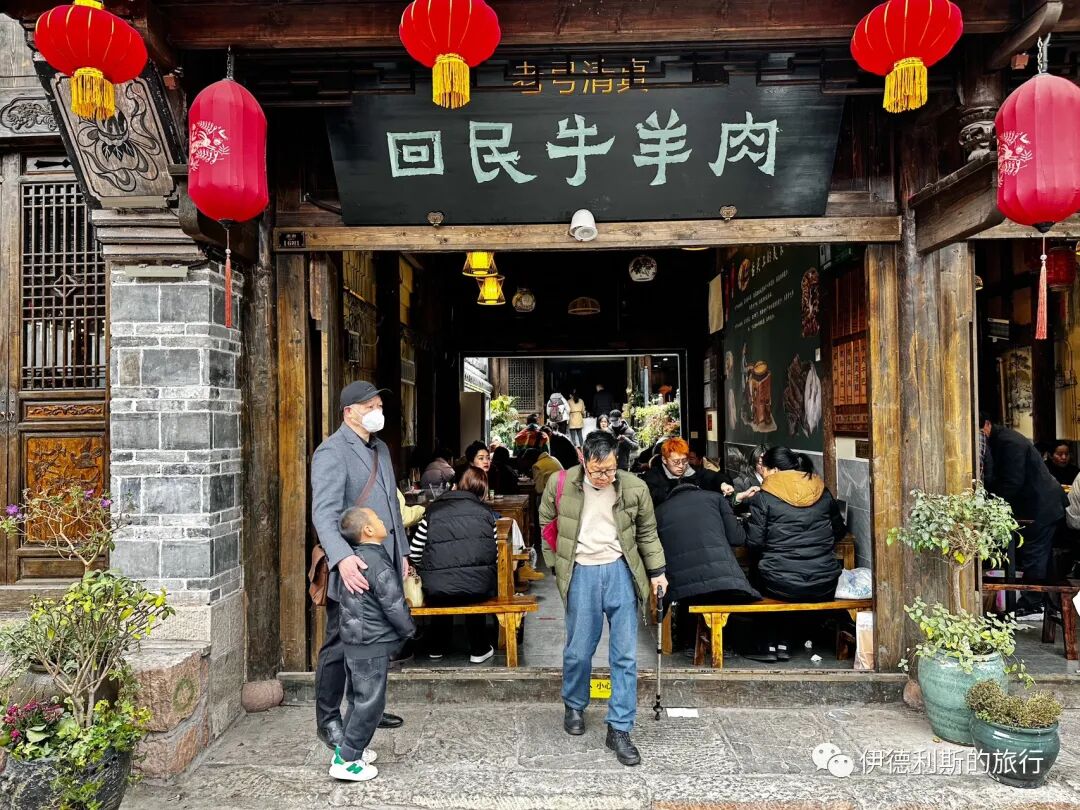
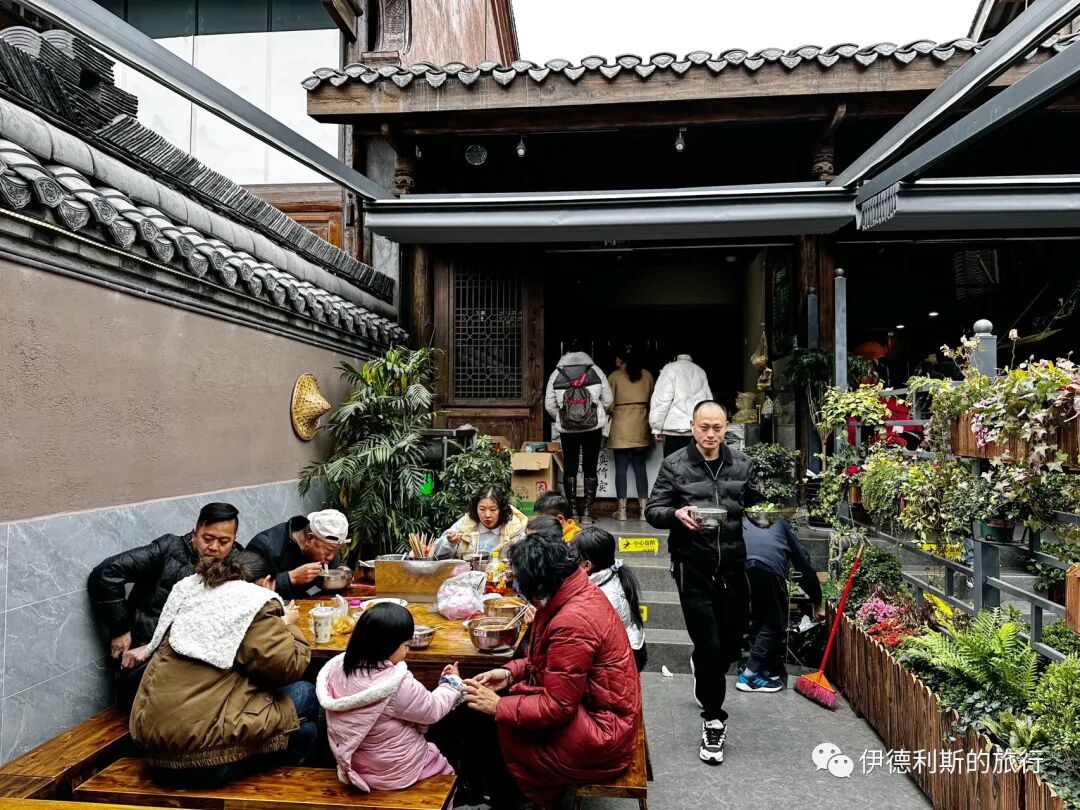
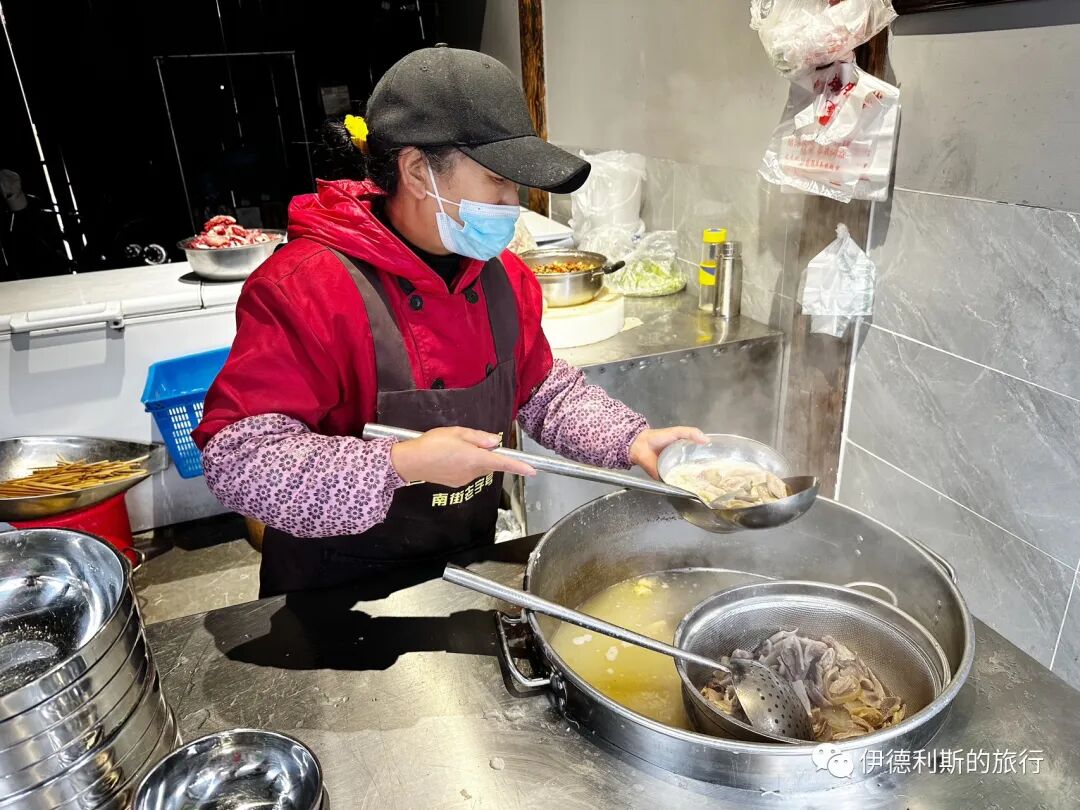
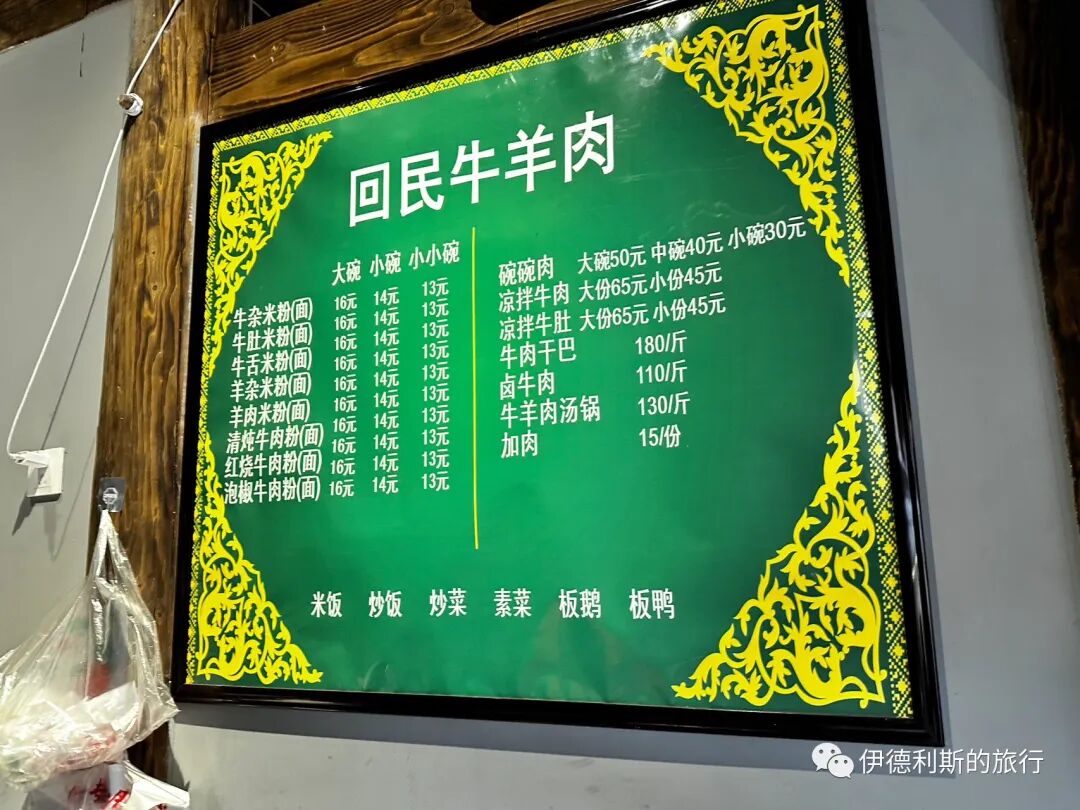
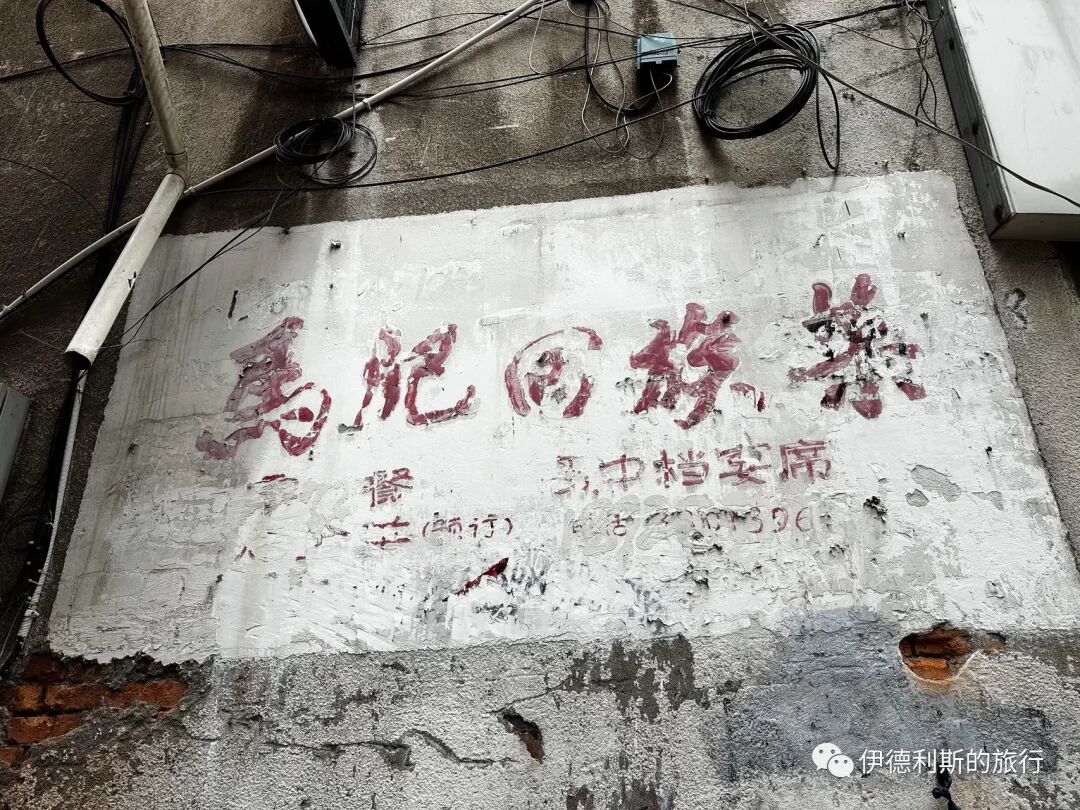
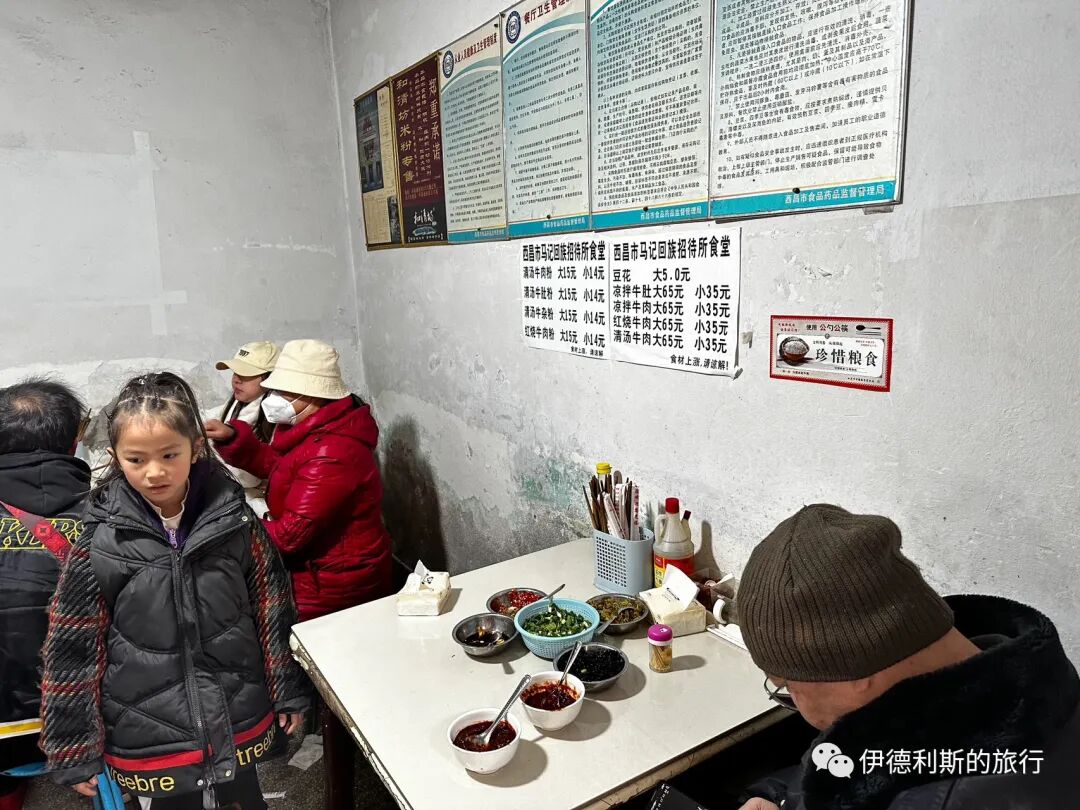
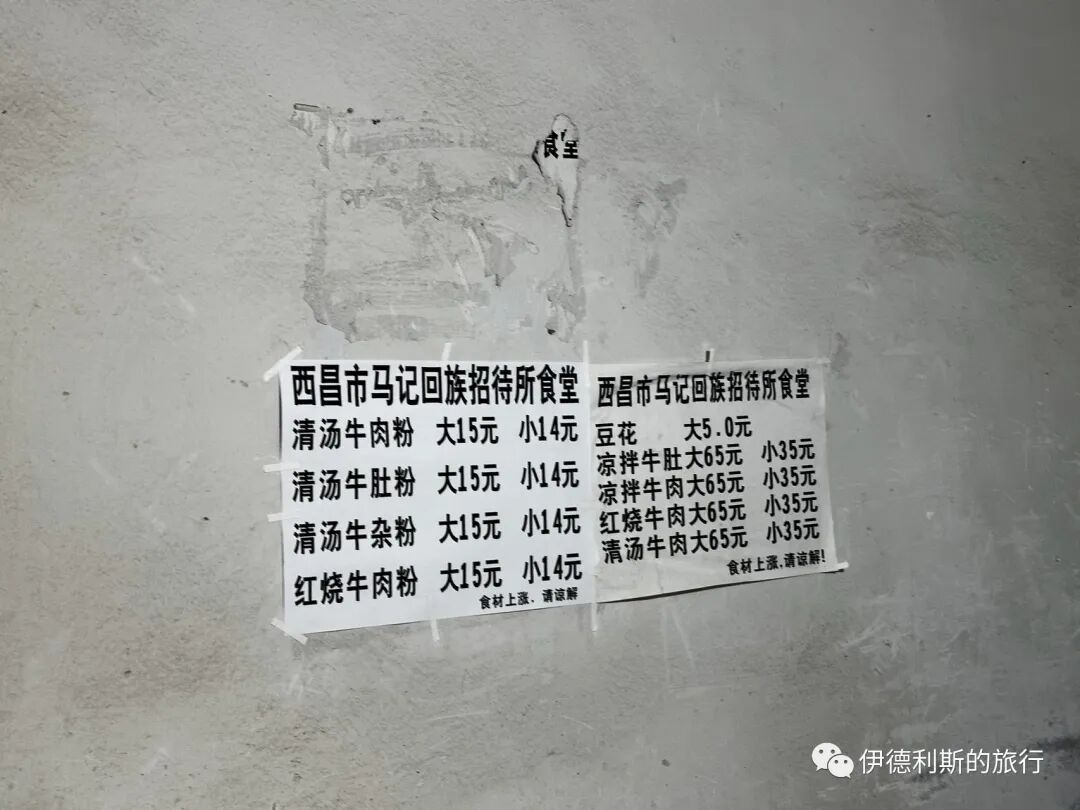
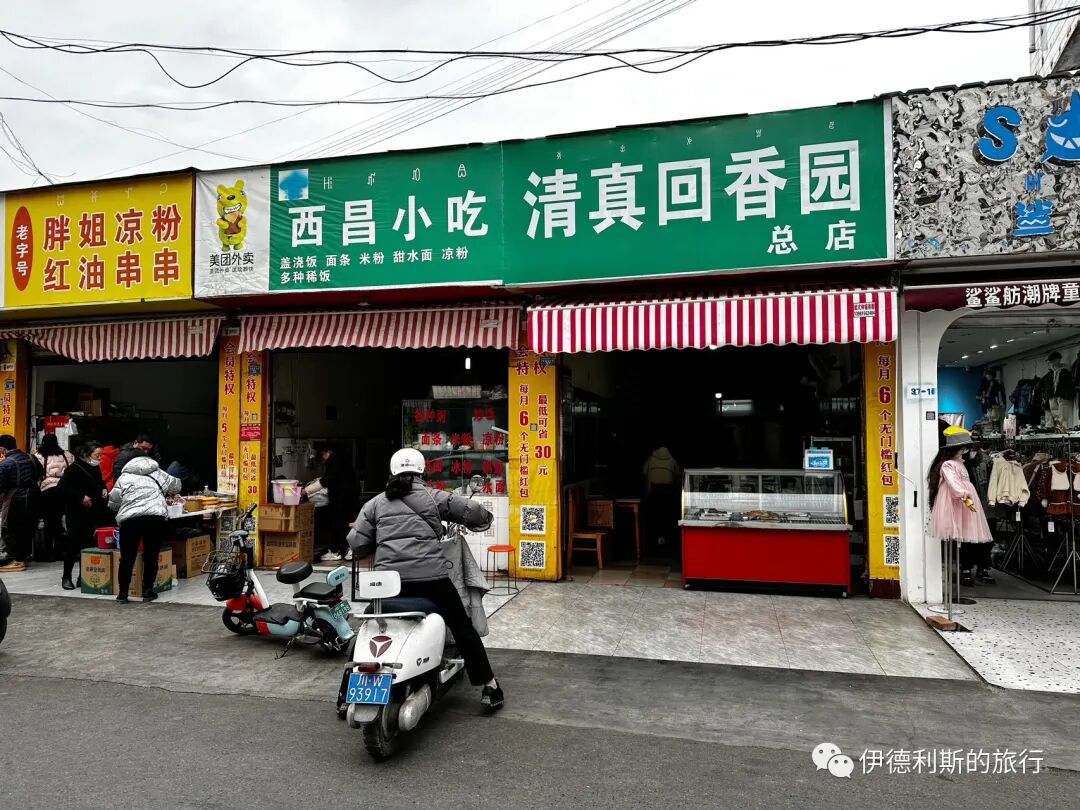
After arriving in Xichang, I first went to the Hui Muslim Beef and Mutton Restaurant on South Street in the Ancient City of Jianchang to eat Xichang rice noodles (mixian). According to Imam Sha from Dujiangyan, his family's restaurant was a famous halal spot in Xichang during the 1980s, originally serving traditional Sichuan Hui Muslim dishes like braised, stewed, steamed, stir-fried, and mixed cold dishes. Today, the Ancient City of Jianchang has been developed into a tourist area, and South Street has become a pedestrian street, so the Hui Muslim Beef and Mutton Restaurant now focuses mainly on selling Xichang rice noodles.
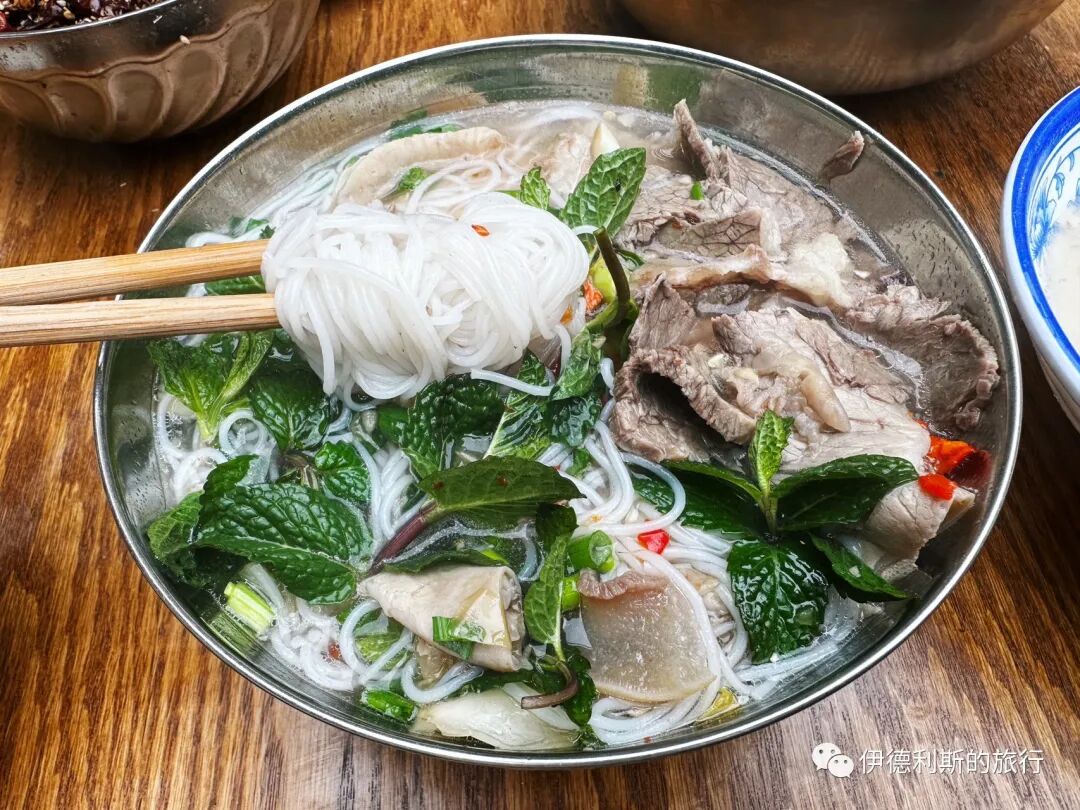
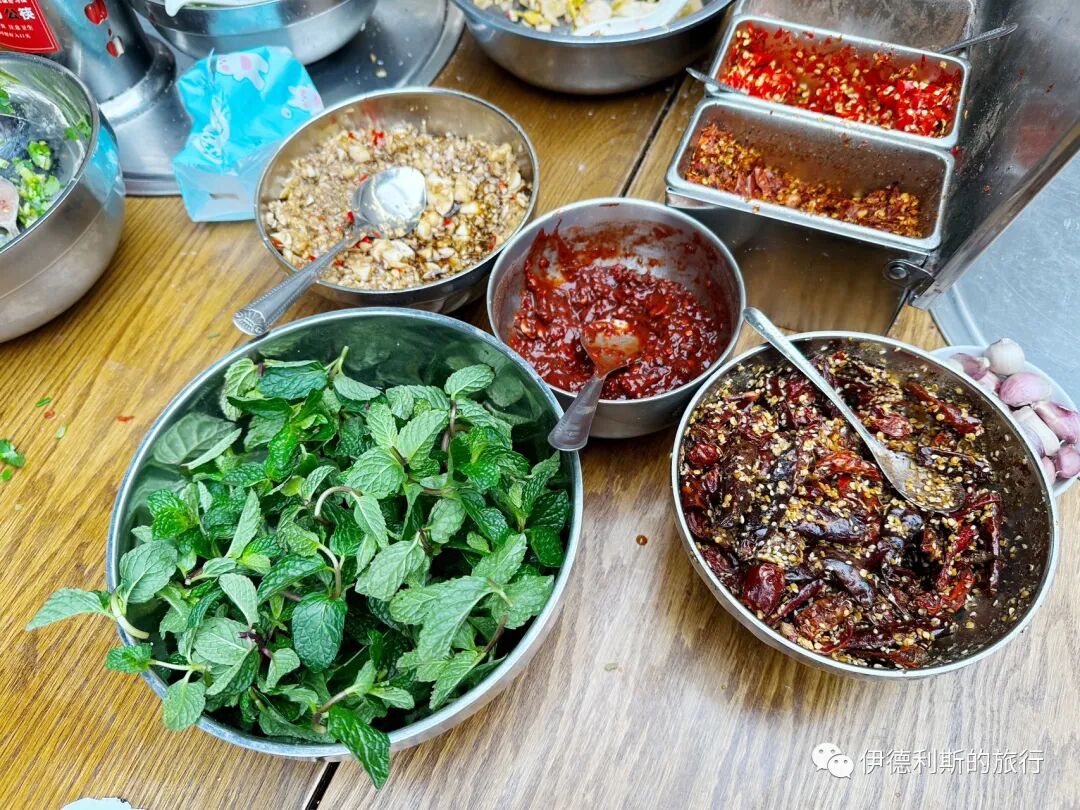
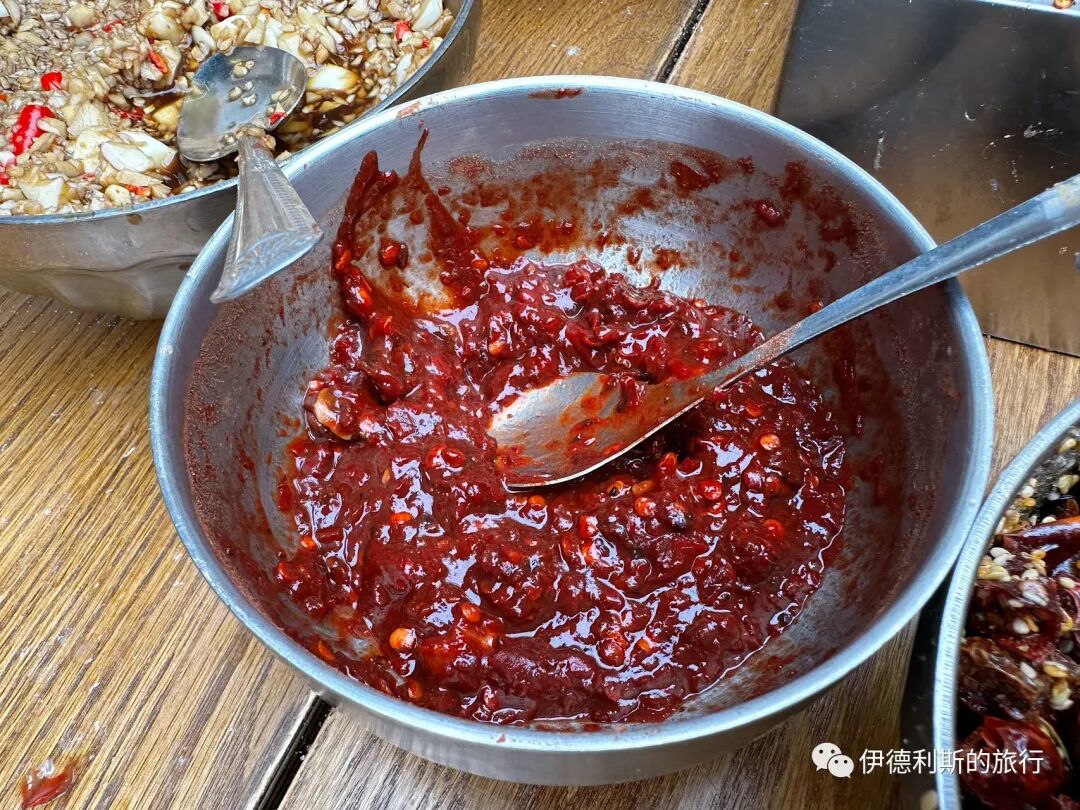
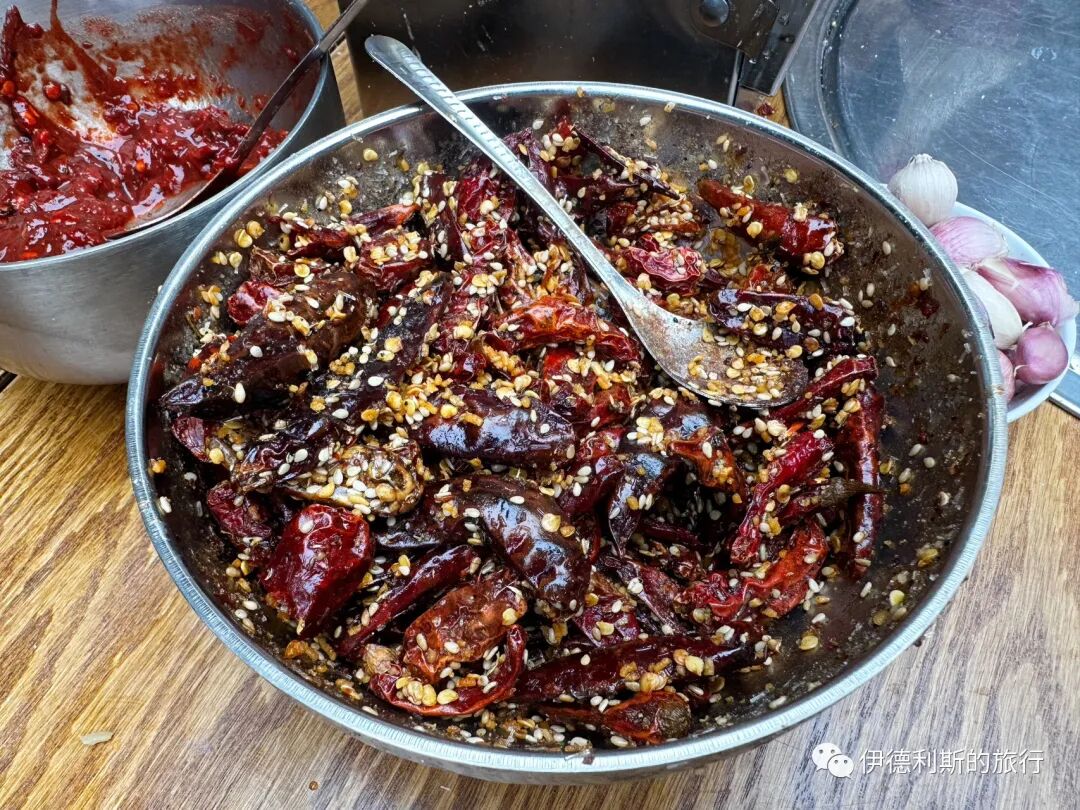
I felt the toppings for the Xichang rice noodles were very rich, with five or six different types of chili, and just like in Yunnan, you can add plenty of fresh mint. With a bone broth base, it was very comforting to eat. It is no wonder their place is crowded with people all day long.
Friday Prayer at Xichang City Mosque
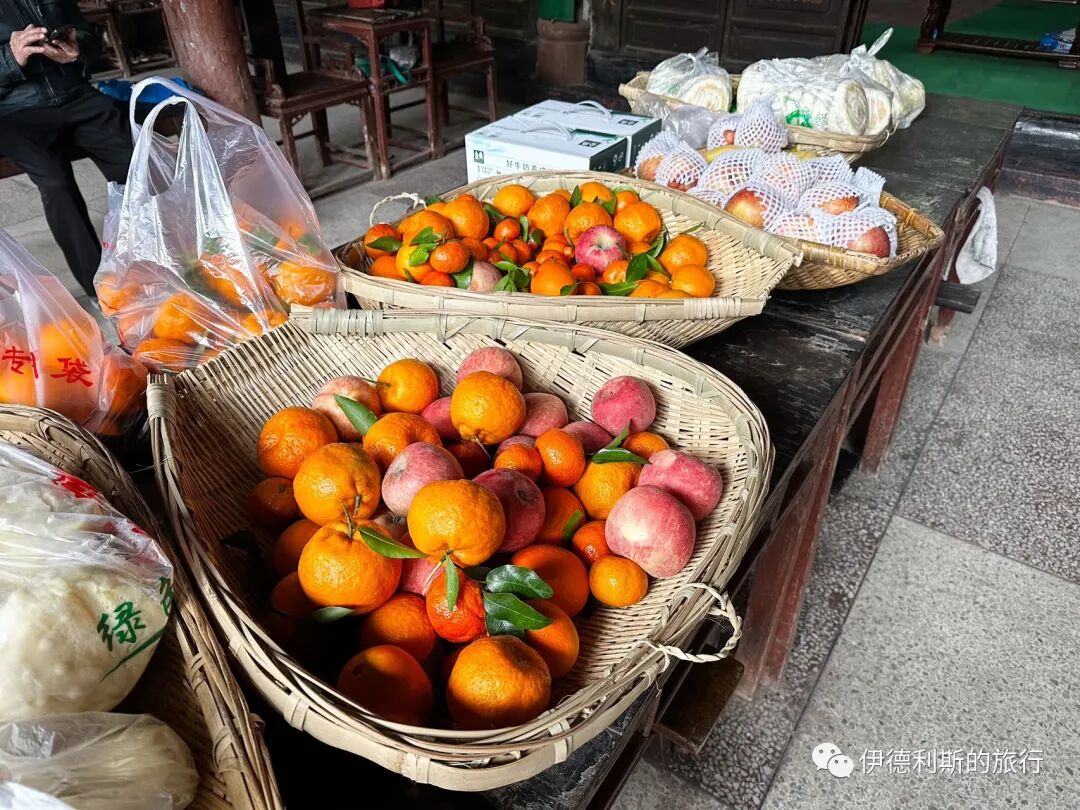
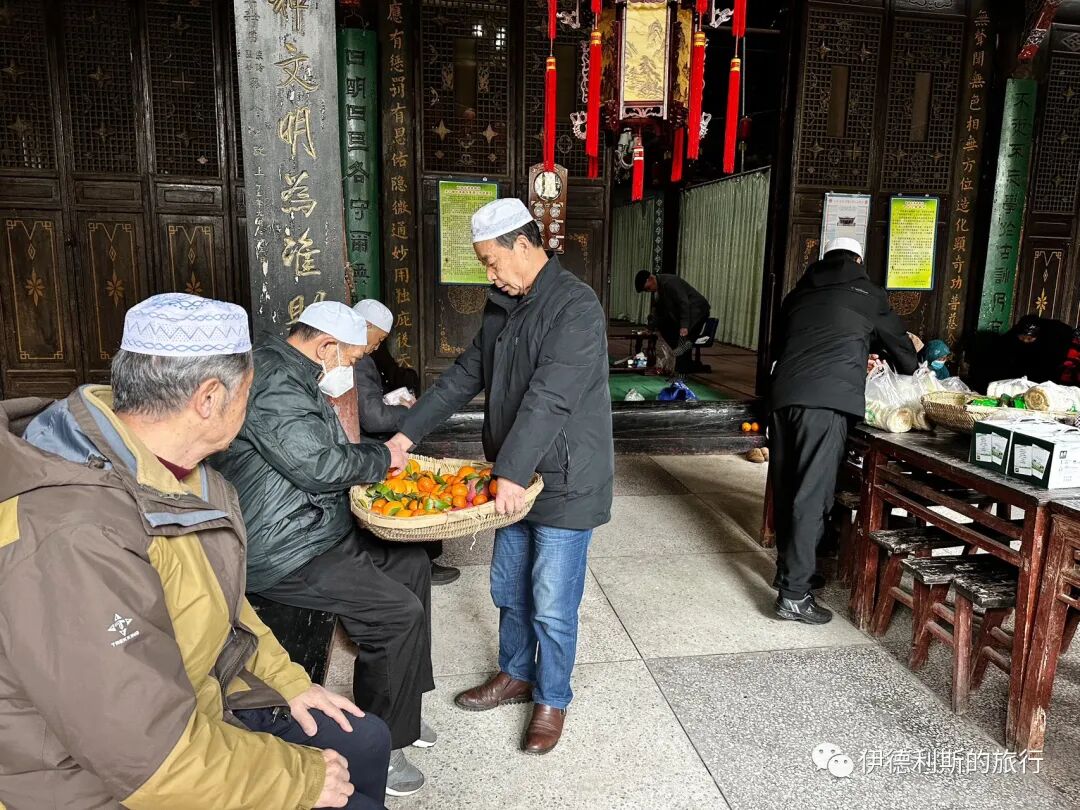
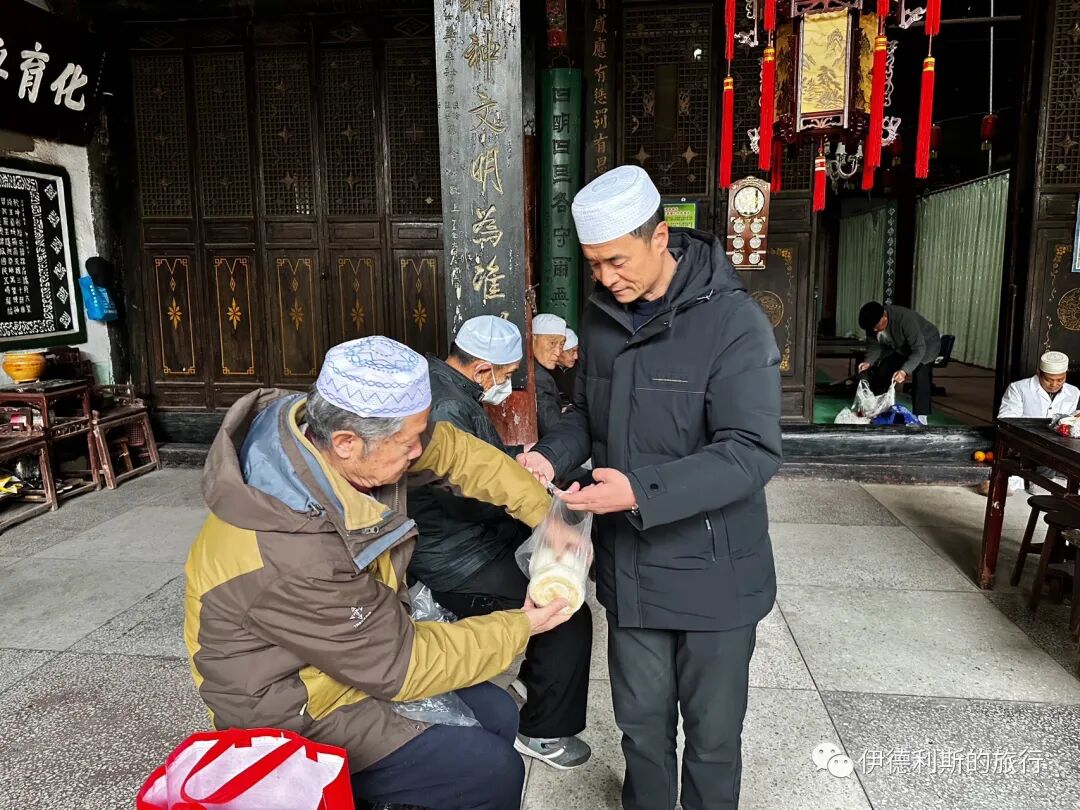
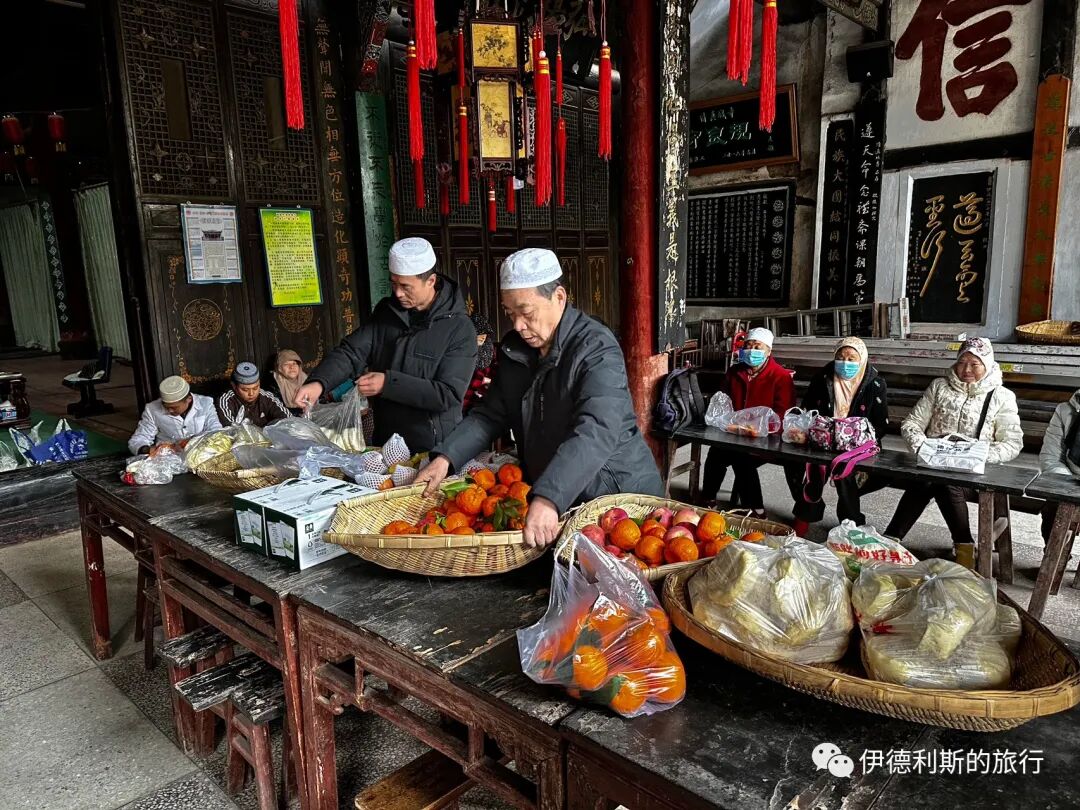
At noon, I prayed the Friday prayer (Jumu'ah) at Xichang City Mosque, and after the prayer, I caught the traditional tea-passing activity. On Friday mornings, community members (gaomu) arrive at the mosque one after another to deliver gifts (hadiya), which are daily items like steamed buns (momo), tangerines, buckwheat crispy treats (saqima), and milk, all placed in baskets (poluo) on the table in front of the main prayer hall. After the Friday prayer, everyone sits around the table and distributes the gifts bit by bit.
I feel this tea-passing tradition is excellent and really strengthens the unity of the mosque community. I have encountered this several times before while praying on Fridays in Yunnan; at Manluan Hui Mosque in Menghai, I received various tropical fruits, and at Tangzi Mosque in Xundian, I ate delicious pastries. This was my first time experiencing the tea-passing tradition in Sichuan. Imam Sha said that in Sichuan, this tradition only exists in Xichang, Miyi, and Panzhihua, which are close to Yunnan, and it takes place during Friday prayers and Ramadan.
The former director of the mosque management committee, Director Tuo, and Imam Ma.
Xichang City Mosque is located on Jiyang Lane within the Ancient City of Jianchang. It was built with funds raised by Muslims who came to Xichang for business during the Yuan Dynasty's Taiding era (1324-1328). It was relocated to its current site on Jiyang Lane in 1574 (the second year of the Ming Wanli era, though some say the Hongwu era) and rebuilt to its current form over six years starting in 1875 (the first year of the Qing Guangxi era), earning it the reputation as the premier mosque in Xichang.
During the Yuan Dynasty, Xichang belonged to the Jianchang Circuit of the Yunnan Province. Sumuding Wumoli, the fourth son of Sayyid Ajjal Shams al-Din, and his son Sheheiwusuman served successively as the administrators of the Jianchang Circuit. Another grandson of Sayyid Ajjal Shams al-Din, Yelu Timur, served as the Pingzhang Zhengshi (a high-ranking official) of the Jianchang Circuit at the end of the Yuan Dynasty. Today, descendants of Yelu Timur are among the Hui Muslims in Xichang.
According to the "History of Ming: Records of Sichuan Tusi," Yelu Timur submitted to the Ming Dynasty in 1382 (the 15th year of the Ming Hongwu era) and was appointed as the Jianchang Guard Commander. He rebelled again in 1392 (the 25th year of the Ming Hongwu era), led an army of over ten thousand to attack the city, but was defeated, fled to Baixing Prefecture (Yanyuan County, Liangshan Prefecture), and was eventually captured and executed. According to the genealogy of the Sha-surname Hui Muslims in Xichang, after Yelu Timur was killed, his descendants scattered. One branch fled to Huangcaoping in Miyi County, Panzhihua, hid their identity, and changed their name to Sha Shun. By the third generation, they moved to Heying Yantang Village in Xichang. Imam Sha from Dujiangyan is a descendant of Yelu Timur.
To suppress Yelu Timur, the Ming Dynasty dispatched 15,000 soldiers from the capital guards (the Jiangnan region) and the Shaanxi-Gansu region. Many Xichang Hui Muslims today are descendants of these Ming Dynasty garrison troops from Jiangnan and Shaanxi: Imperial Commander Ma Gang was from Suzhou Prefecture in Jiangnan, and his descendants became the Ma family of Shaguoying. Commander Ma Jun was from Suzhou Prefecture in Jiangnan, and his descendants became the Ma family of Hetao Village. Commander Ma Dengyi was from Dali, Yunnan, and his descendants became the Ma family of Yushitang. Deputy Commander Liu Yuanyuan was from Suzhou Prefecture in Jiangnan. His second generation married a Hui Muslim woman and converted to Islam, and his descendants settled in Xixi Dazi Camp.
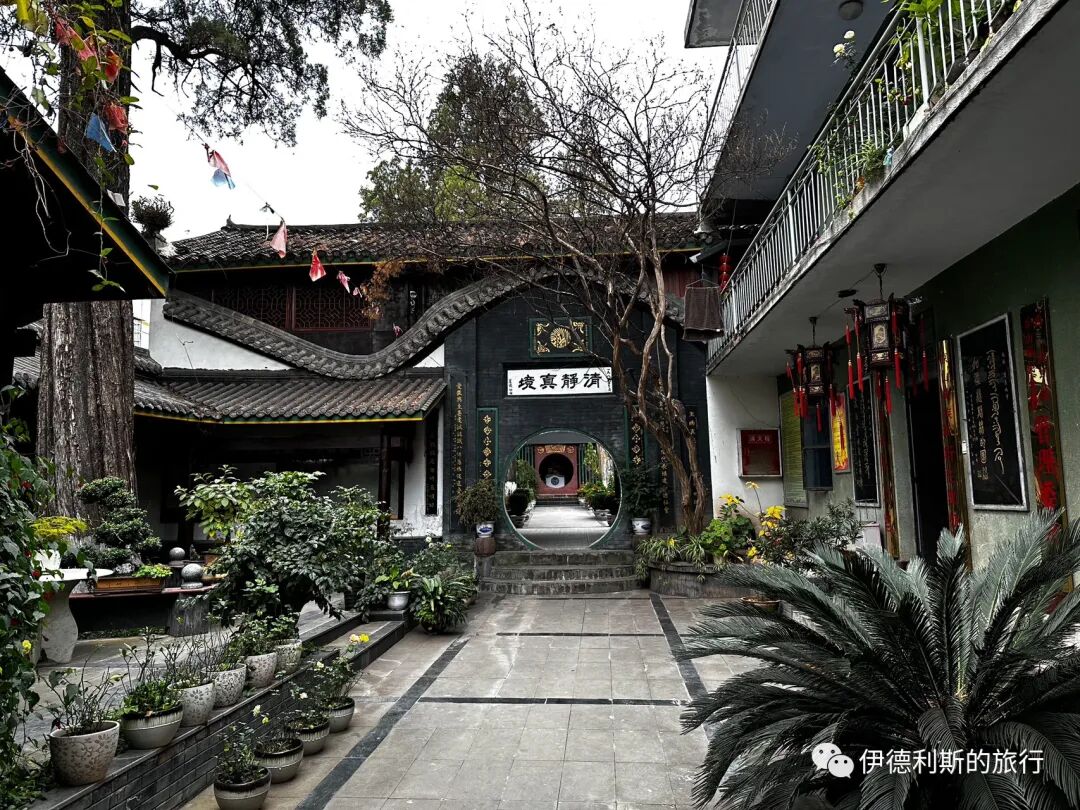
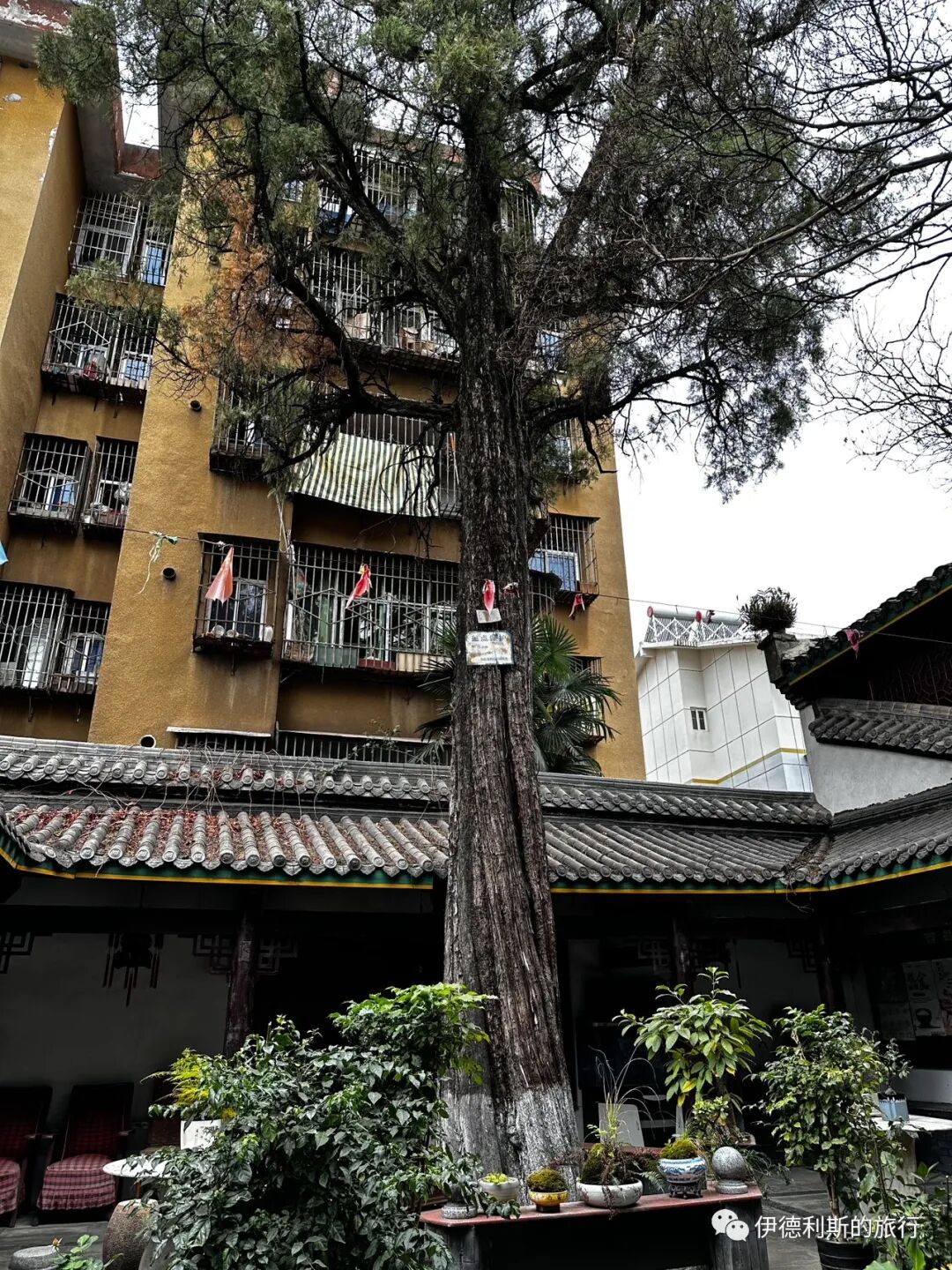
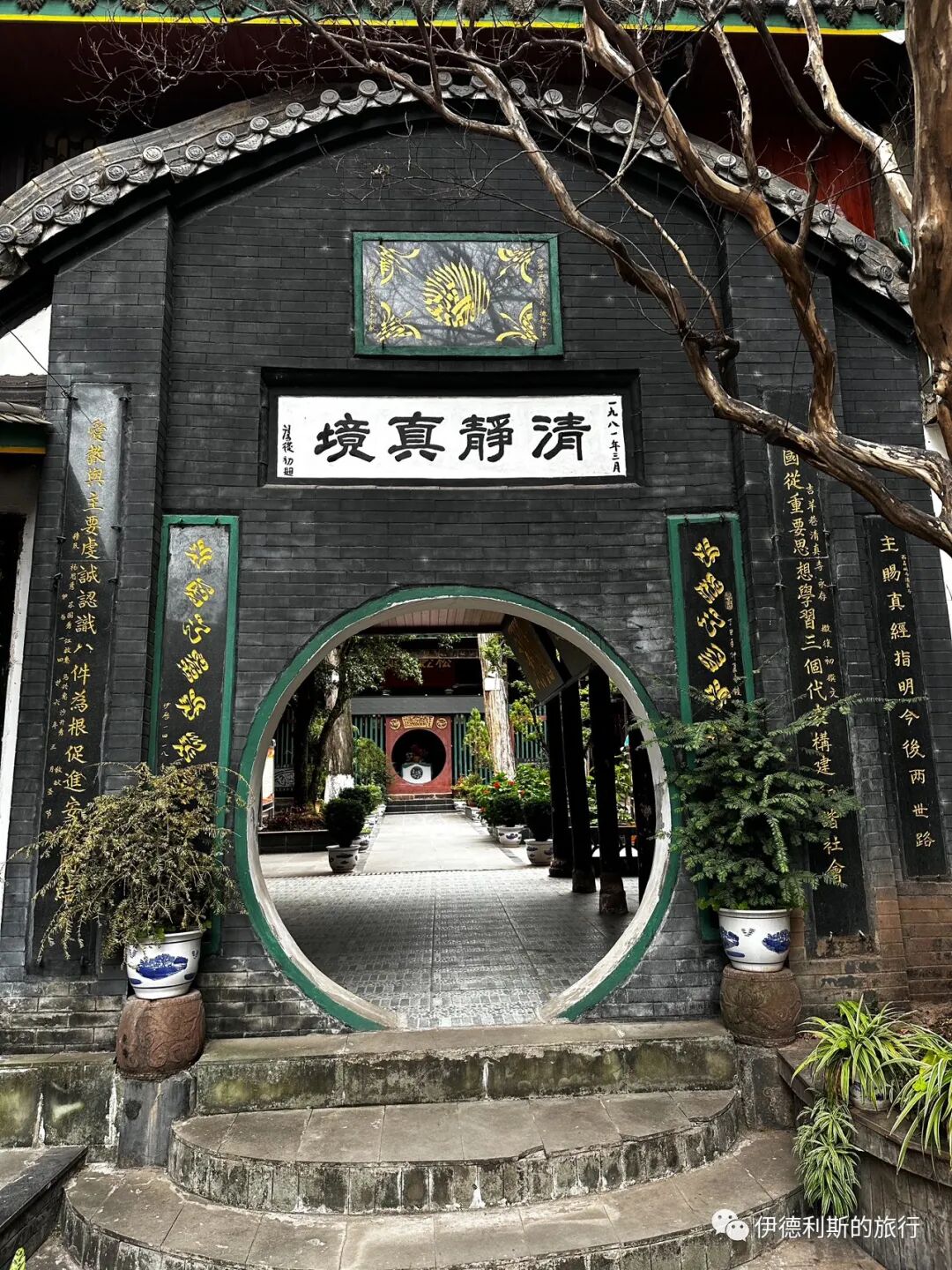
The mosque is divided into two courtyards. The right side of the front courtyard contains offices, living quarters, and a washroom, while the left side has an ancient cypress tree that reaches the sky. Entering the inner courtyard through an arched gate, you find the standard main prayer hall and north and south side rooms. There are also two ancient cypress trees in front of the main hall. According to the Republic of China's "Xichang County Annals": "In the fifth year of the Kangxi era, a fire on South Street spread to the mosque. A person in green clothes appeared on the mosque's cypress tree, pouring water from a clean pot to douse the flames, and the fire stopped."
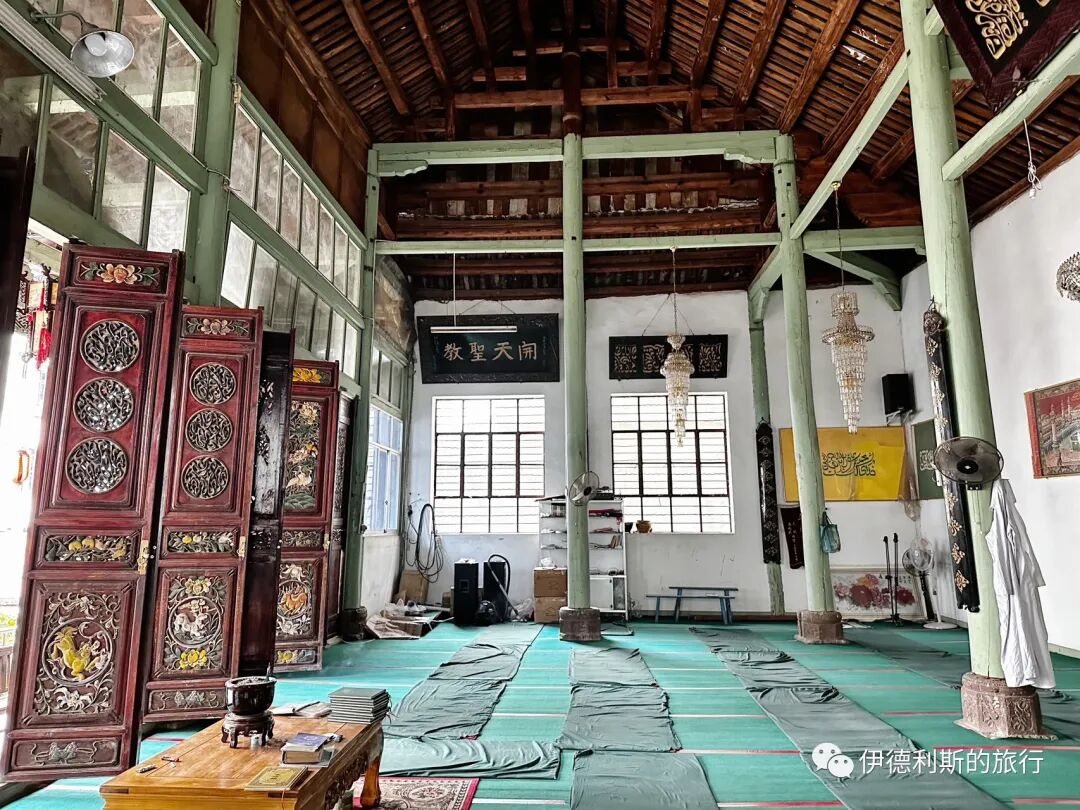
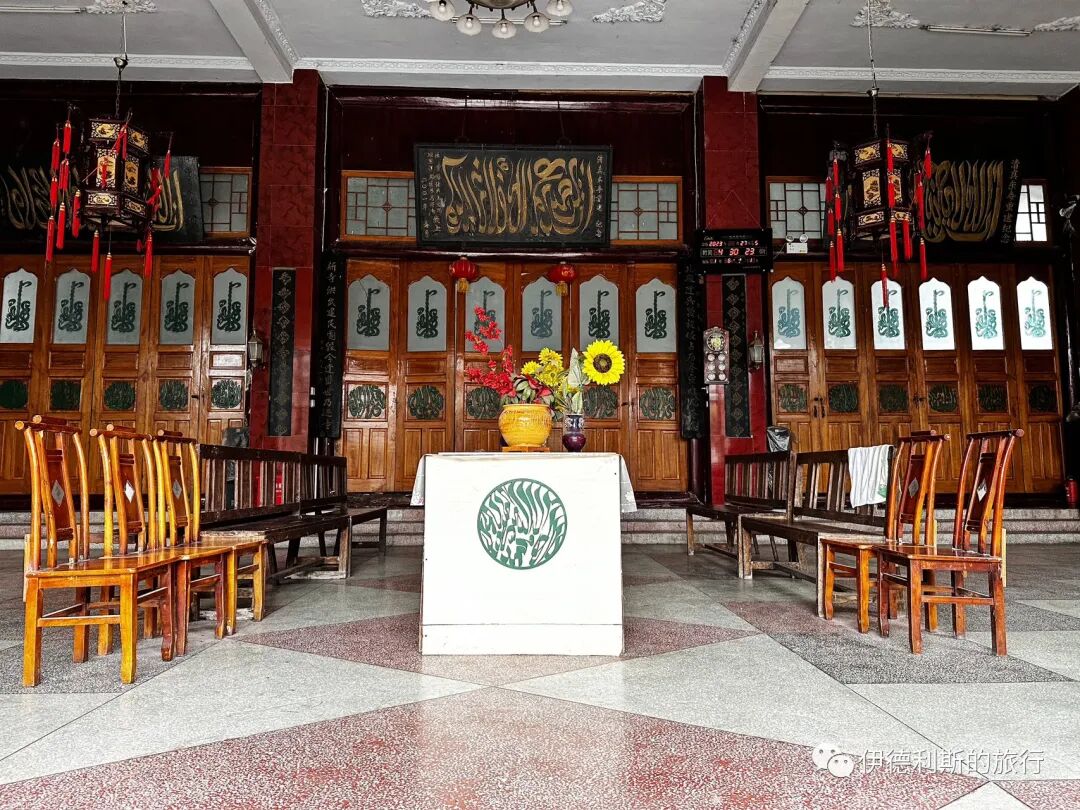
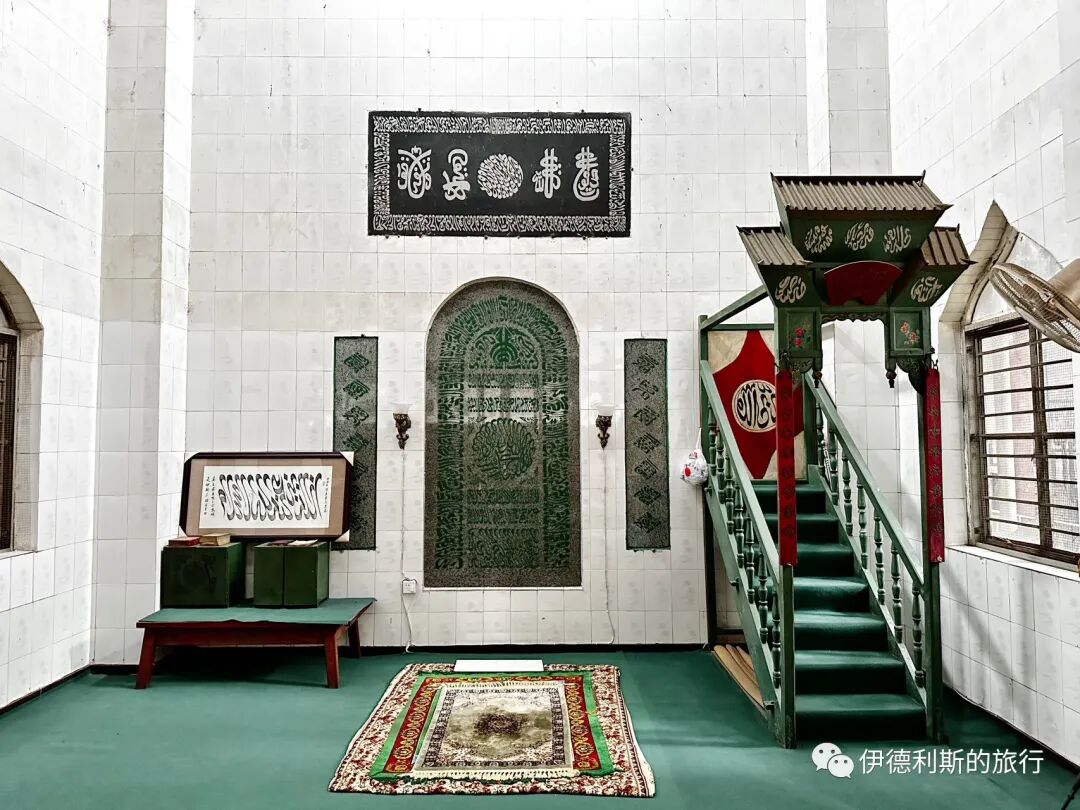
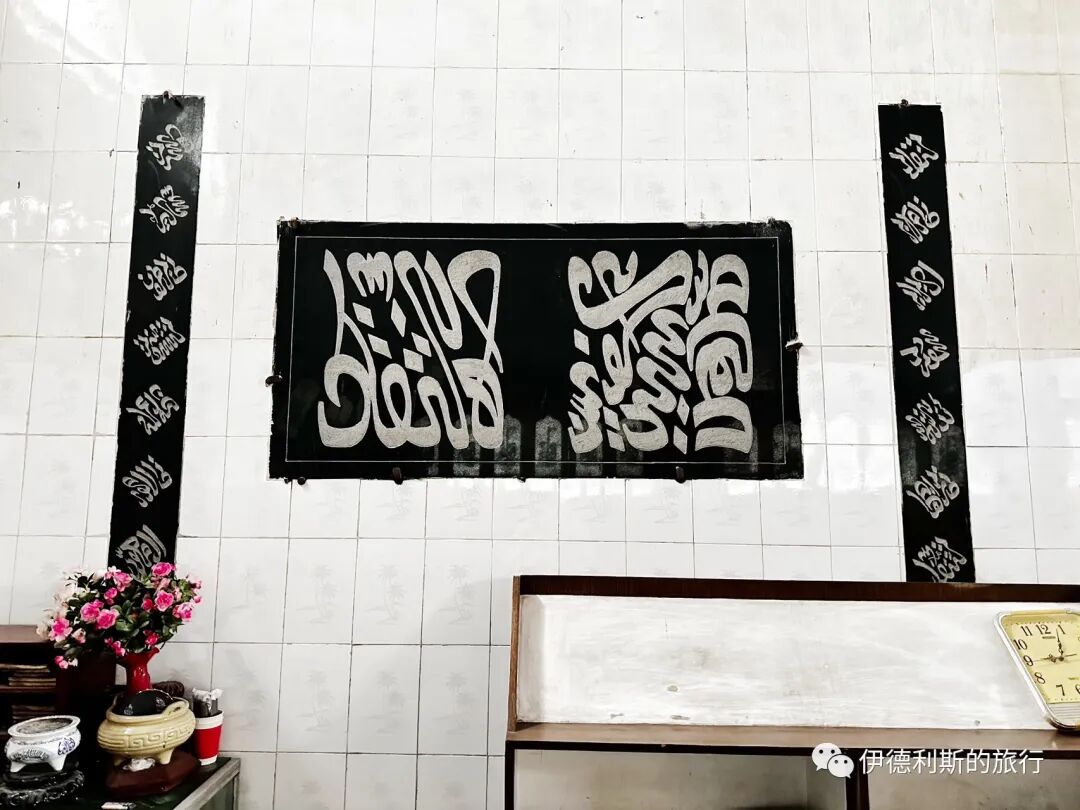
On the west side of the second courtyard is the entrance hall and the main prayer hall. After the 1960s, the entrance hall (baoting) and the two side rooms were taken over by a school, and the main prayer hall was closed off. They were not restored until after the 1980s. Today, the entrance hall and the main prayer hall are hung with various plaques and couplets in Chinese and Arabic, which are precious cultural heritage items of the mosque.
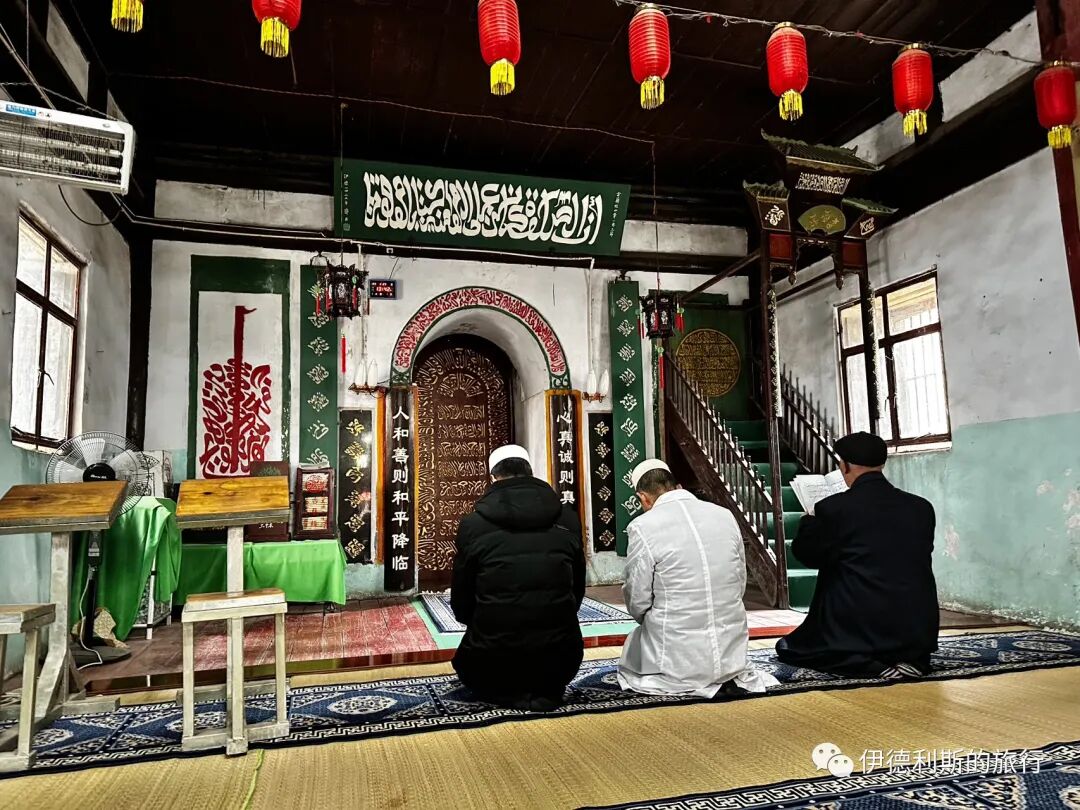
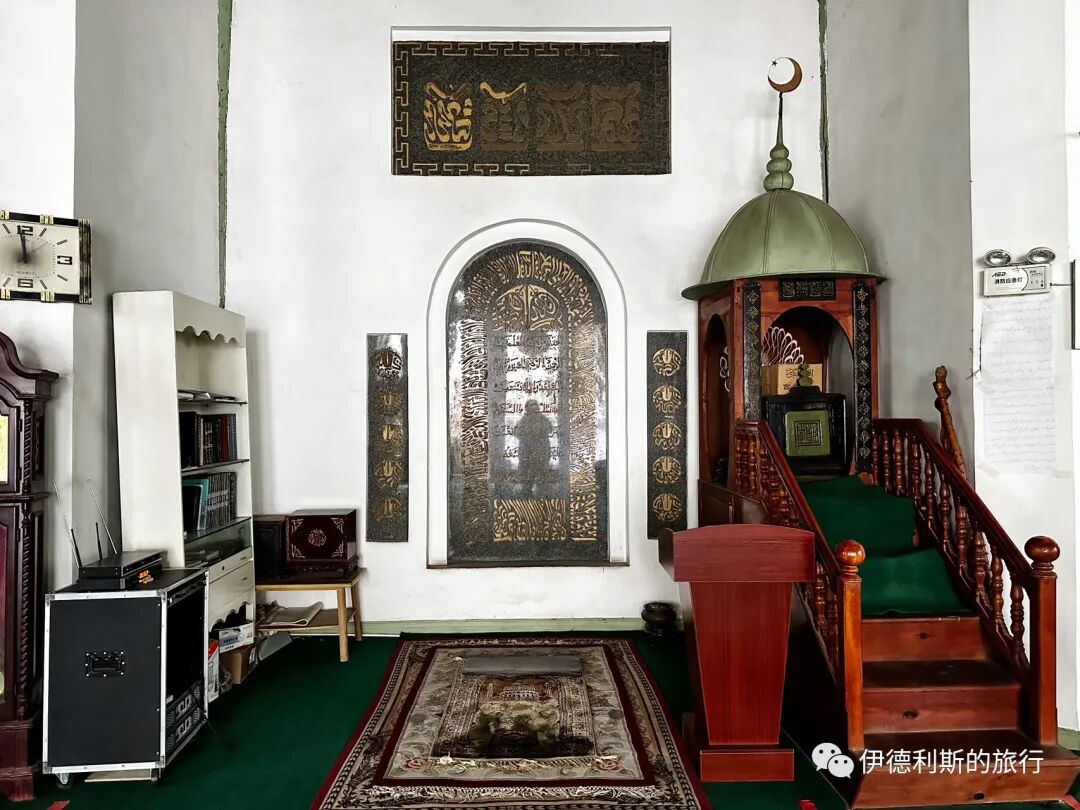
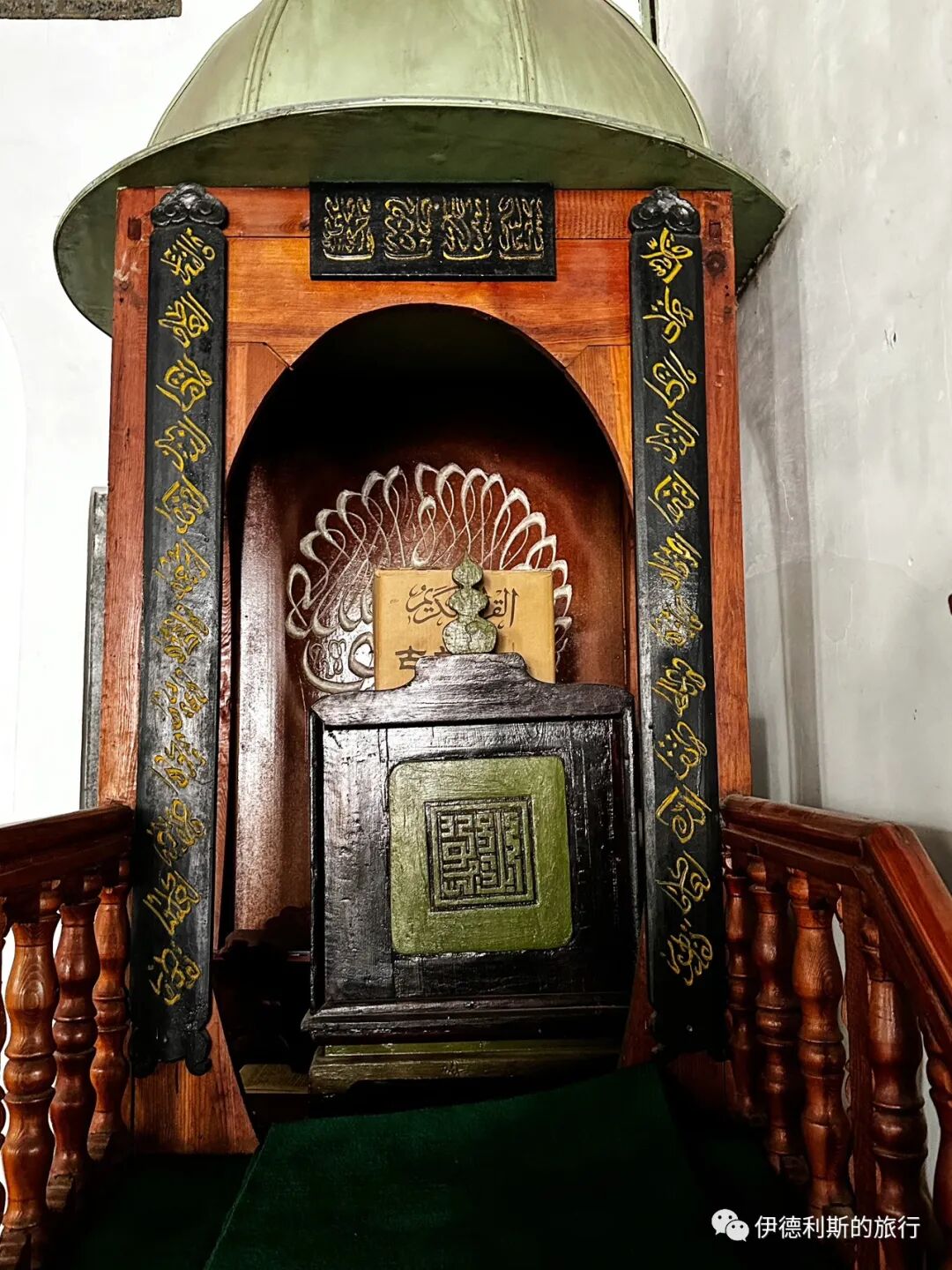
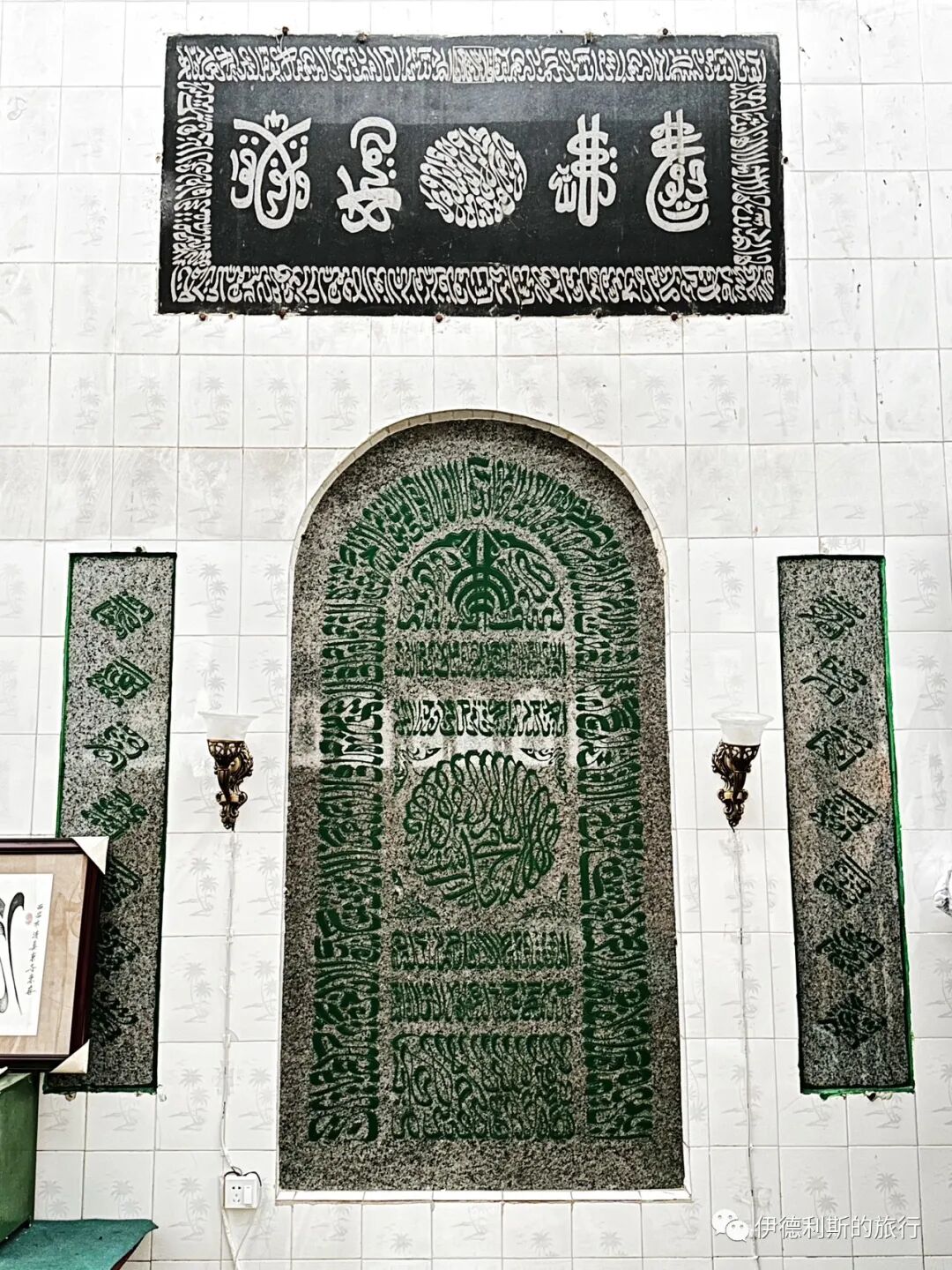
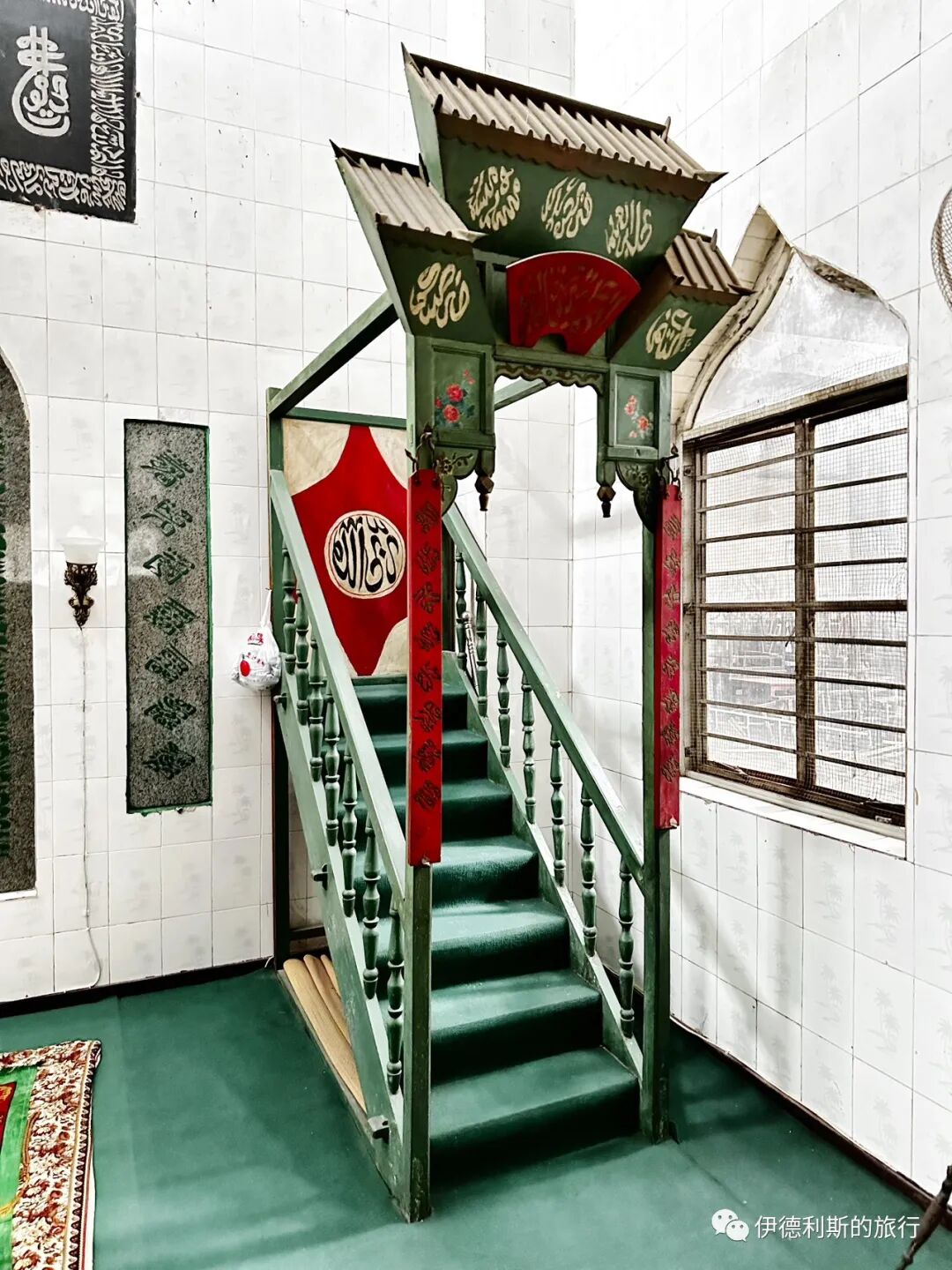
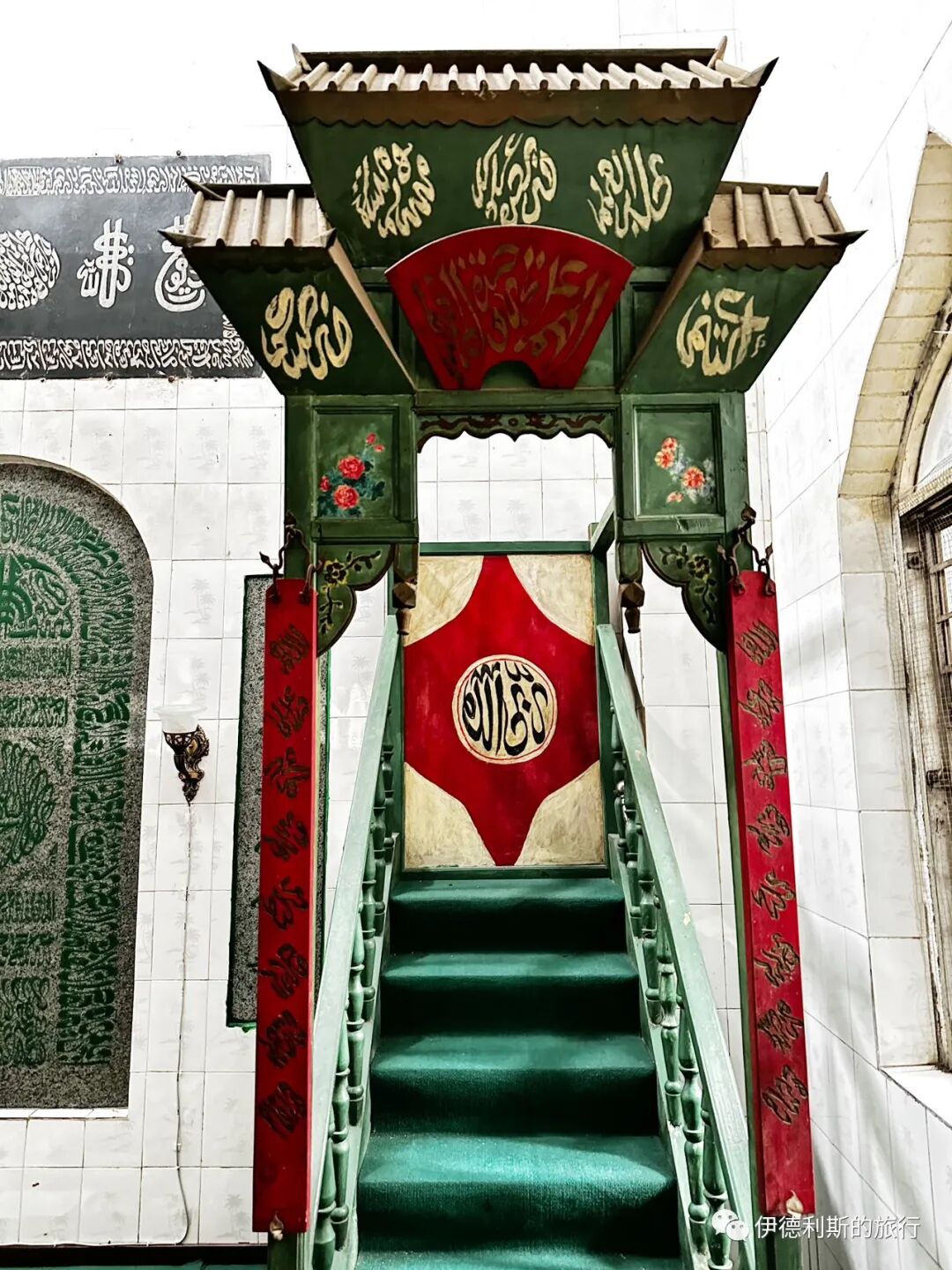
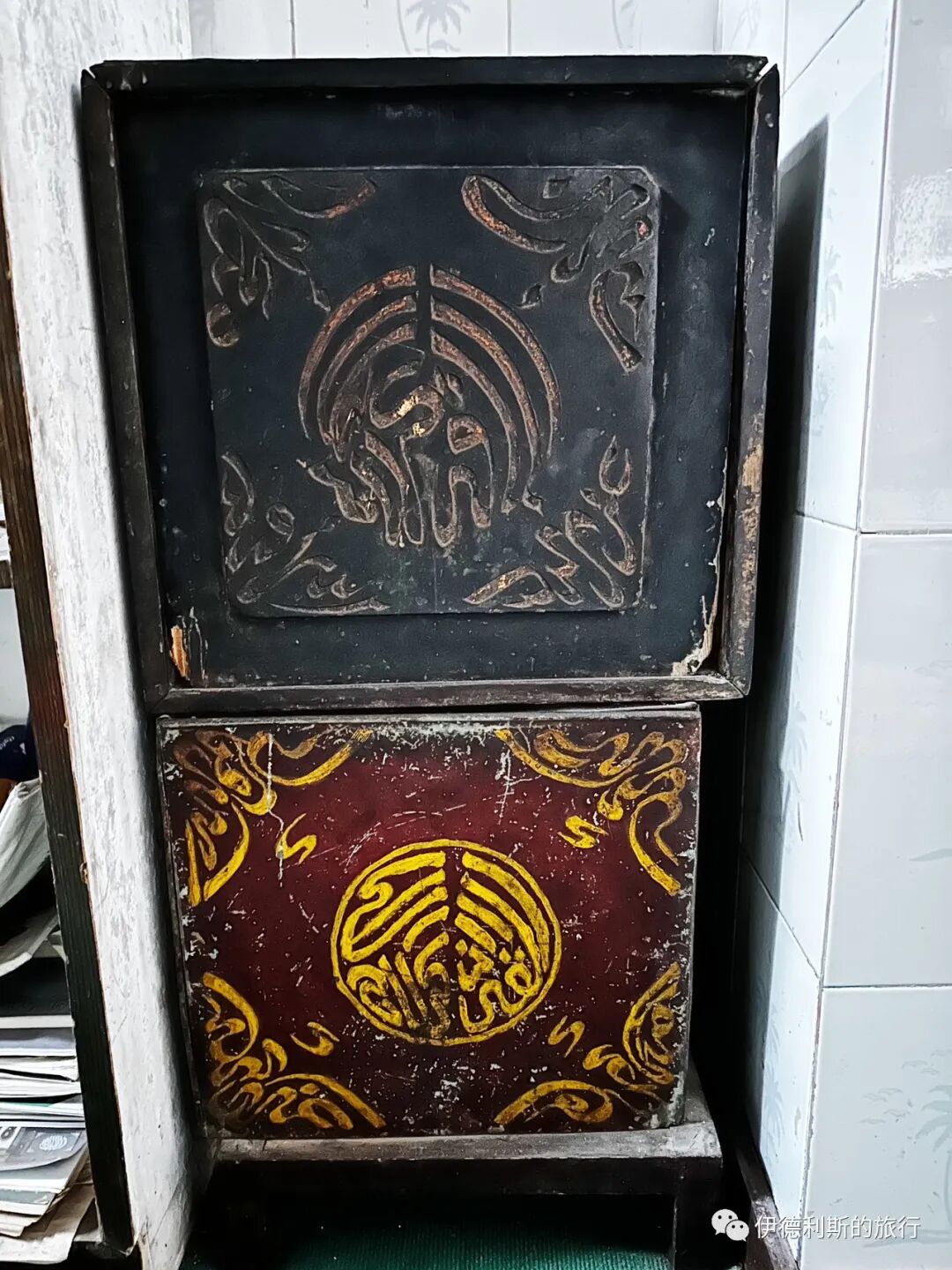
Inside the main prayer hall are the mihrab, minbar, scripture box, and various plaques and couplets.
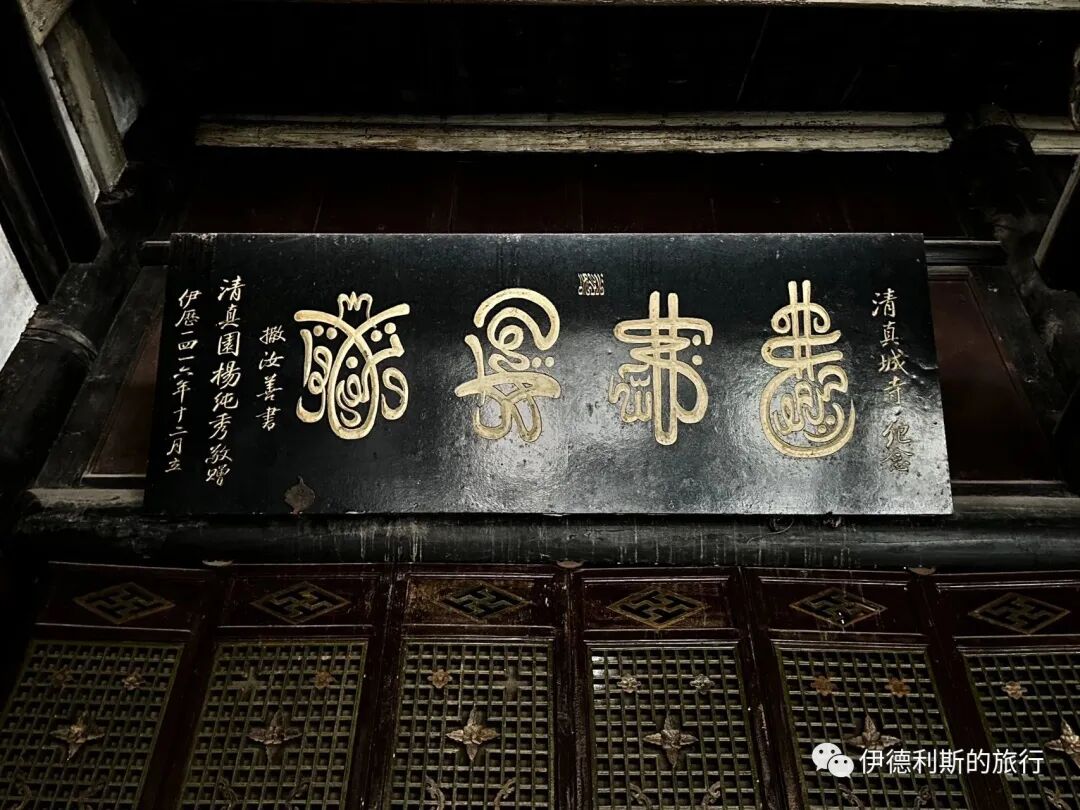
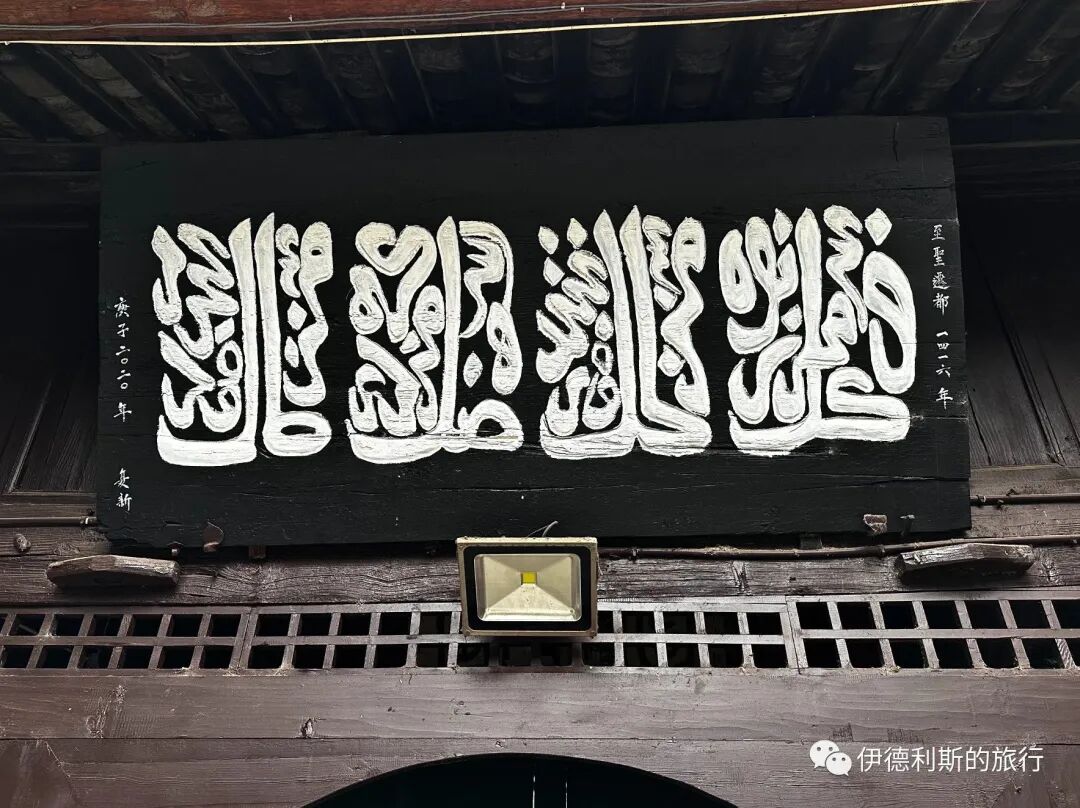
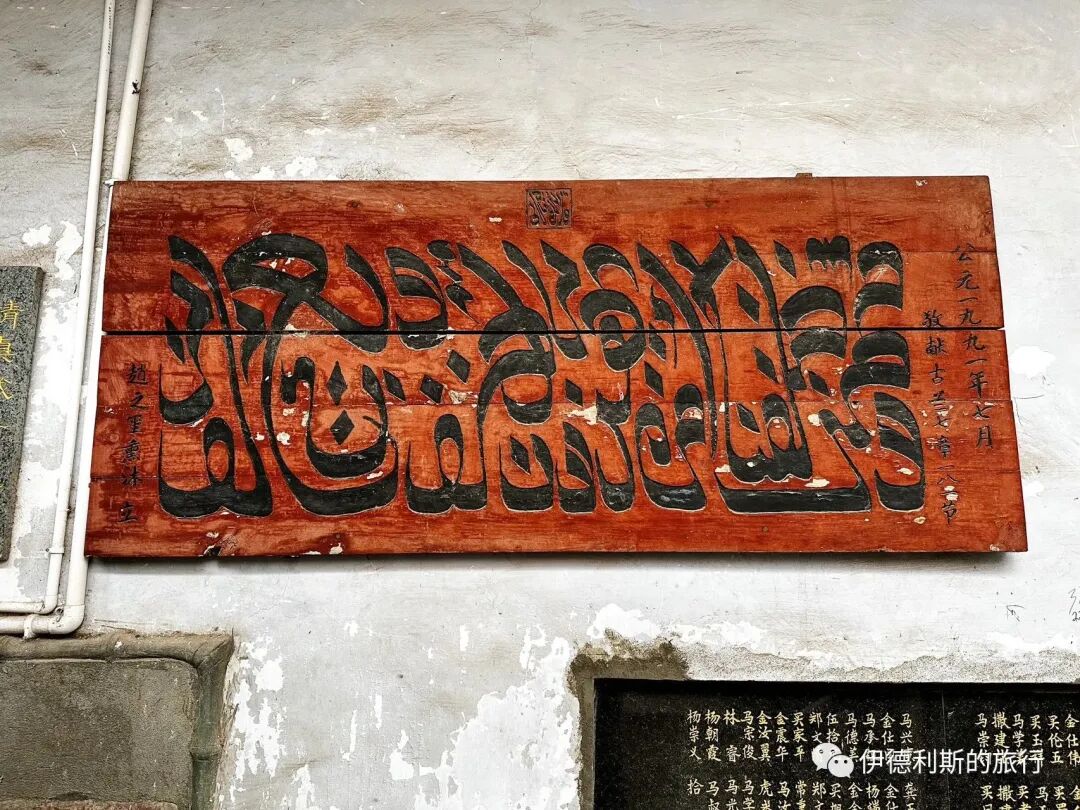
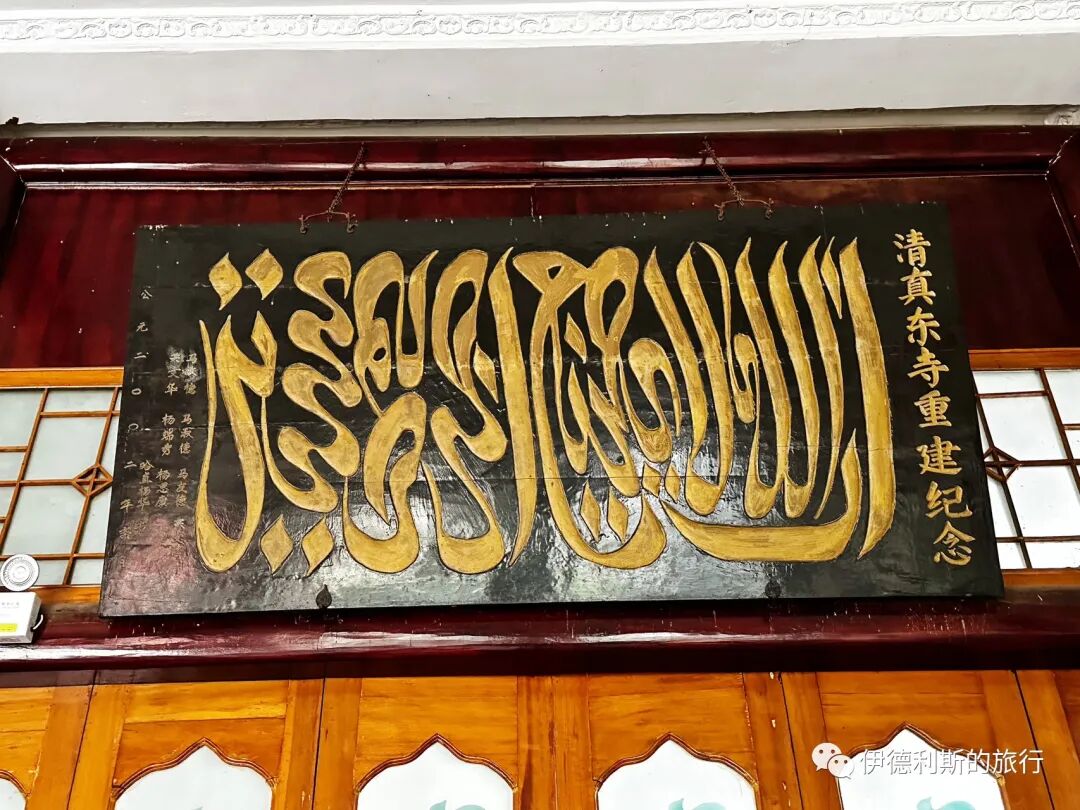
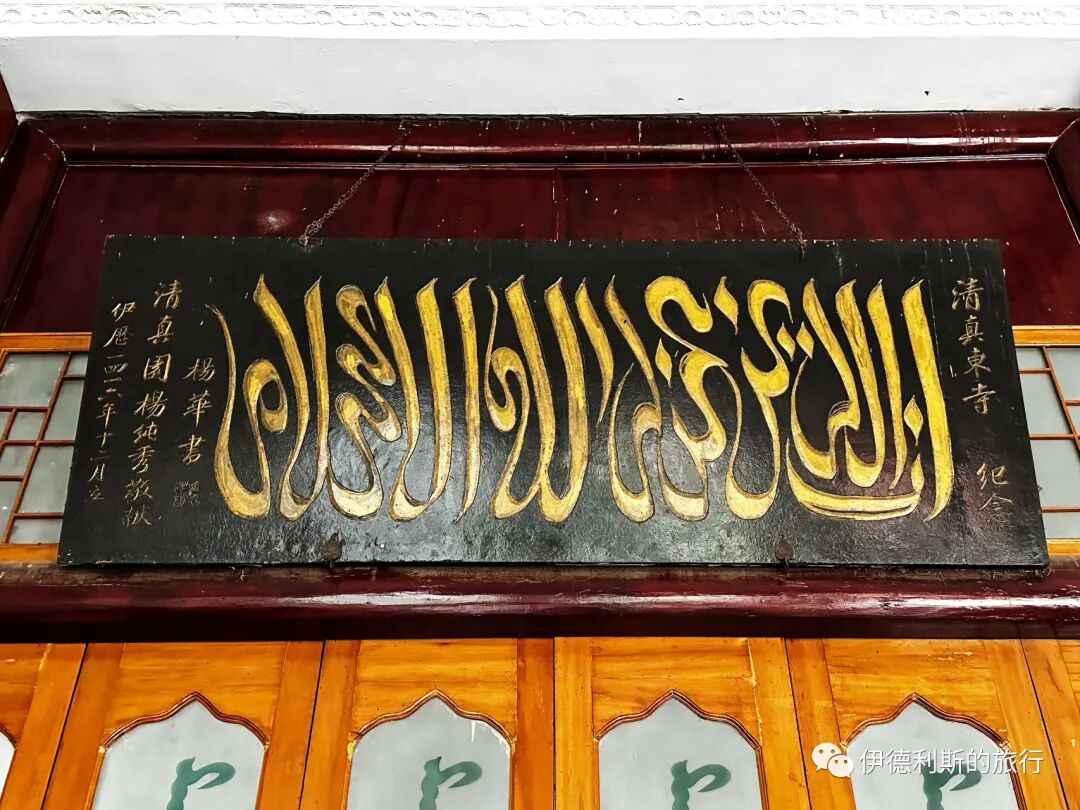
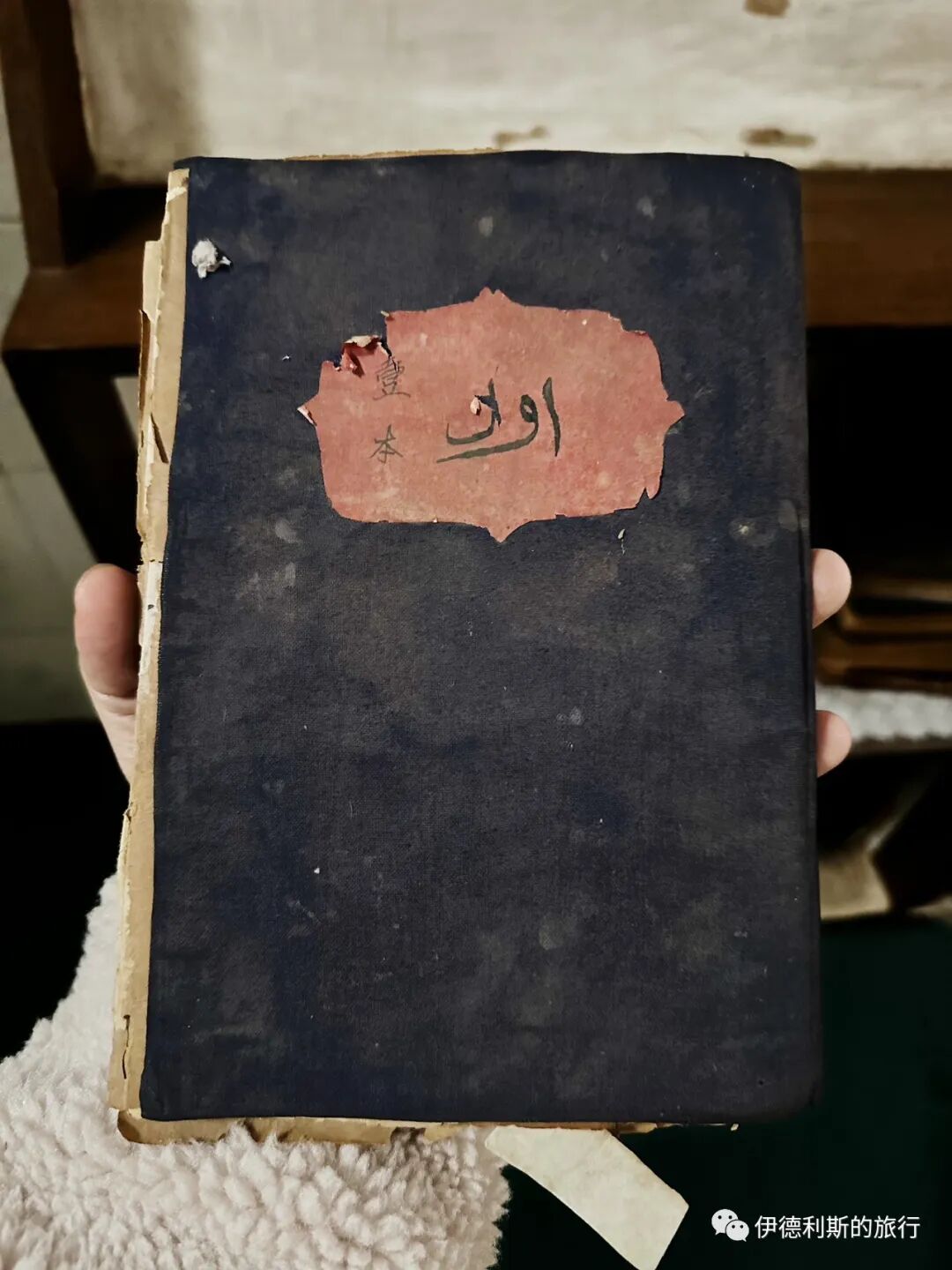
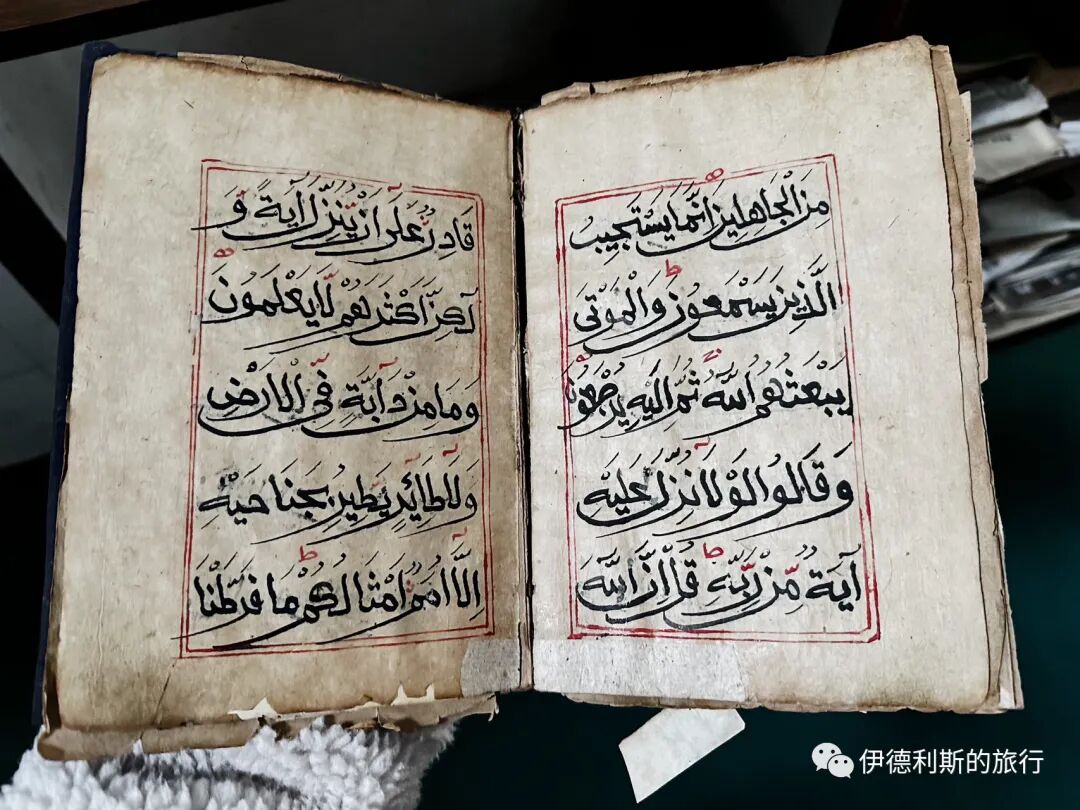
The mosque holds plaques from different periods, ranging from the Qing Dynasty and the Republic of China era to after the 1990s.
The plaque reading 'Qu Wang Xun Zhen' (Seeking Truth by Eliminating Falsehood) was replicated in 2005 from the original 1746 (11th year of Qianlong) version. The donor, Deputy General Mai Guoliang of the garrison, had ancestral roots in Fengxiang, Shaanxi. He settled in Xichang in 1738 (3rd year of Qianlong) due to military service, and his descendants are known as the Mai family of Shaanxi.
Imam Sa Fuchu was a famous Arabic calligrapher in Xichang.
Imam Sa passed away in 2014 at the age of 89.
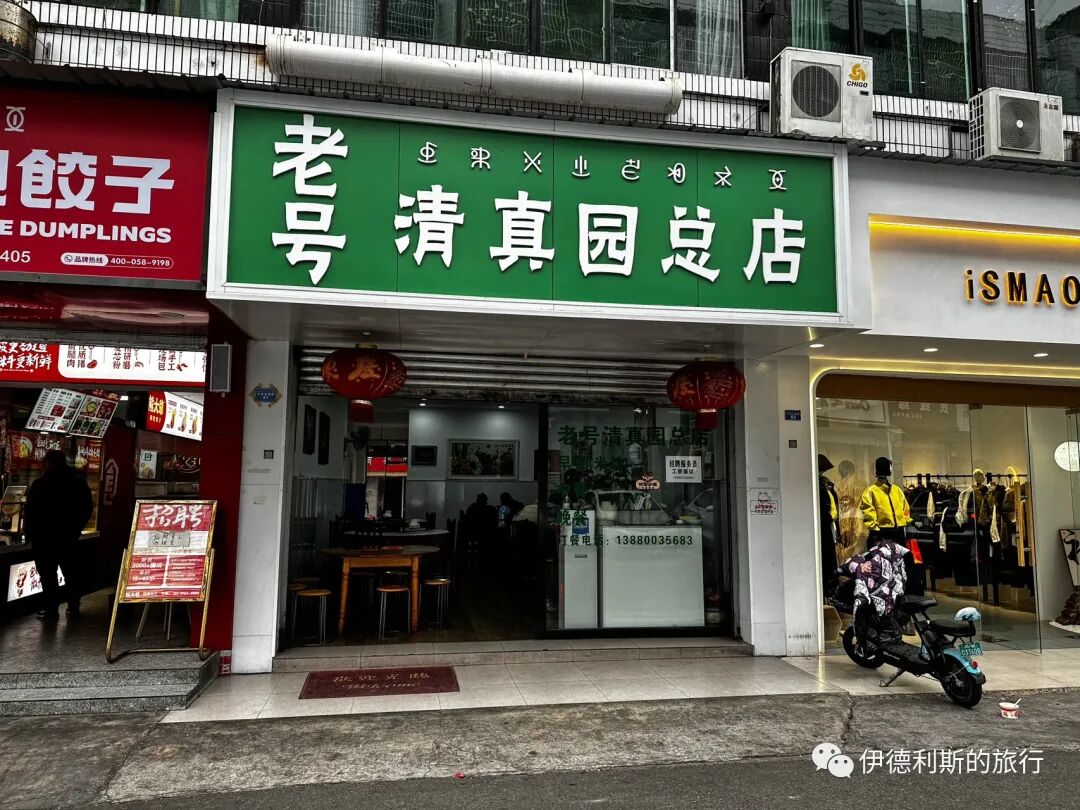
Lao Hao Qingzhen Yuan restaurant.
In the afternoon, I ate at the main branch of Lao Hao Qingzhen Yuan near the Xichang West Mosque. It is a restaurant serving traditional halal stir-fry dishes, and the owner is a member of the Yang family, who are community leaders (gaomu) of the Xichang West Mosque.
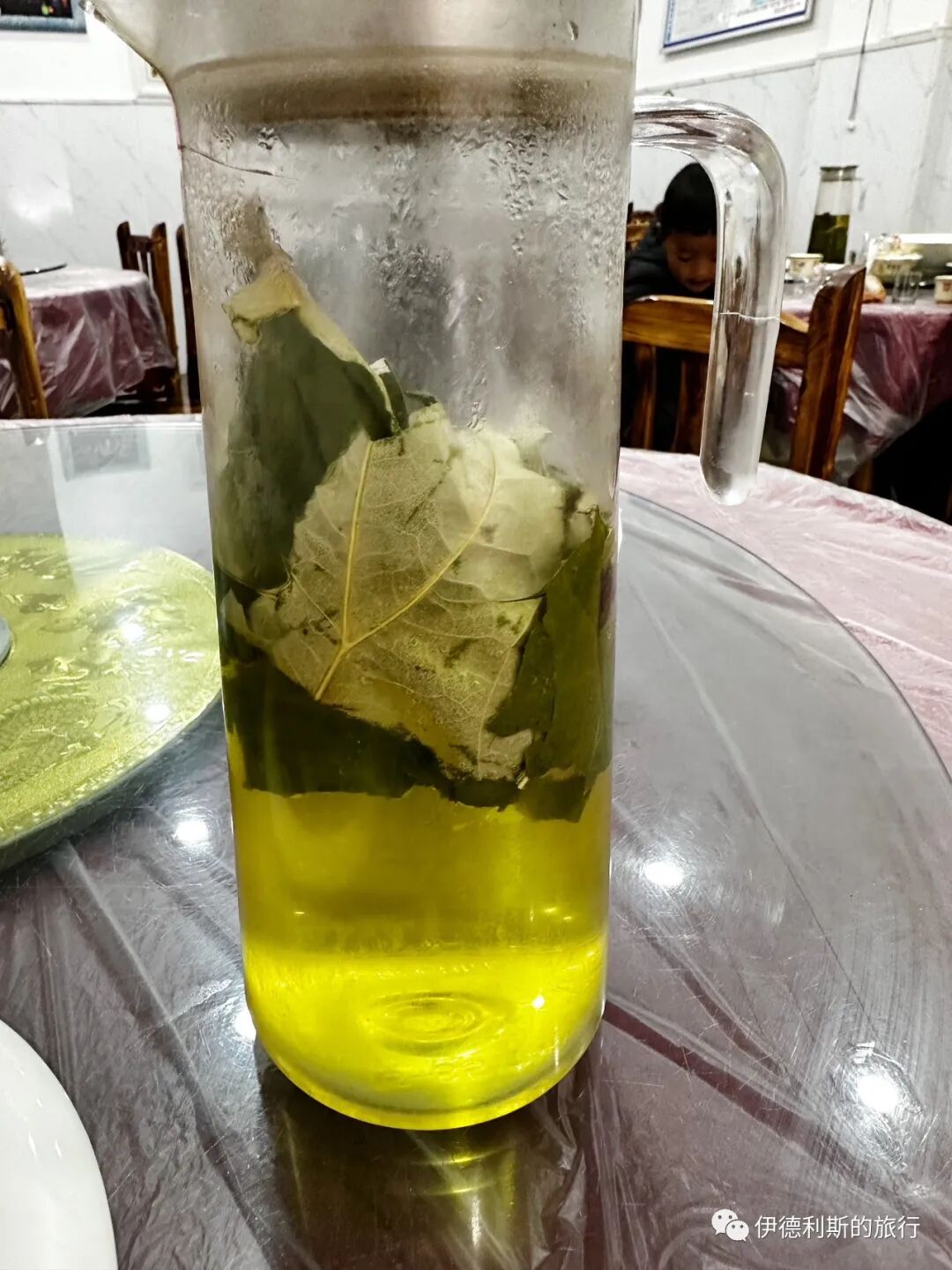
I ordered the small stir-fried meat (xiaochao rou) and bear paw tofu (xiongzhang doufu), and they also served me lotus leaf tea. It was my first time seeing a restaurant serve lotus leaf tea, and it smelled quite fragrant. The food arrived just five minutes after I ordered; they stir-fry really quickly! The small stir-fried meat is a classic, but it was my first time eating bear paw tofu. 'Bear paw' is actually what Sichuanese people call pan-fried tofu. It is a specialty Sichuan dish stir-fried with bean paste (doubanjiang) that is spicy and rich. It made my nose run and my eyes water, but Sichuan food is truly satisfying!
Xichang West Mosque.
Because the city bought up all the houses during the renovation of the Jianchang Ancient City, there are no longer community leaders (gaomu) living around the city mosque. Relatively speaking, the West Mosque outside the Jianchang Ancient City still maintains the layout of a traditional mosque neighborhood, and there are more halal restaurants nearby.
The Xichang West Mosque is also called the Mashuihe Mosque outside the city. Mashuihe Street has been a street for the Hui Muslim leather industry since the Qing Dynasty. The West Mosque was first built in 1801 (6th year of Jiaqing). When the Xichang earthquake hit in 1850 (30th year of Daoguang), the mosque buildings collapsed and were rebuilt with funding from the Wool Guild, a trade association of local leather workers. In 1935, to stop the Red Army from entering the city, the Chuan-Kang border defense forces burned down 28 streets and alleys outside Xichang for three consecutive days. The West Mosque was also destroyed and was rebuilt in 1948. After 1958, the West Mosque was occupied and severely damaged. It was gradually reclaimed after 1978 and rebuilt into its current form after 1999.
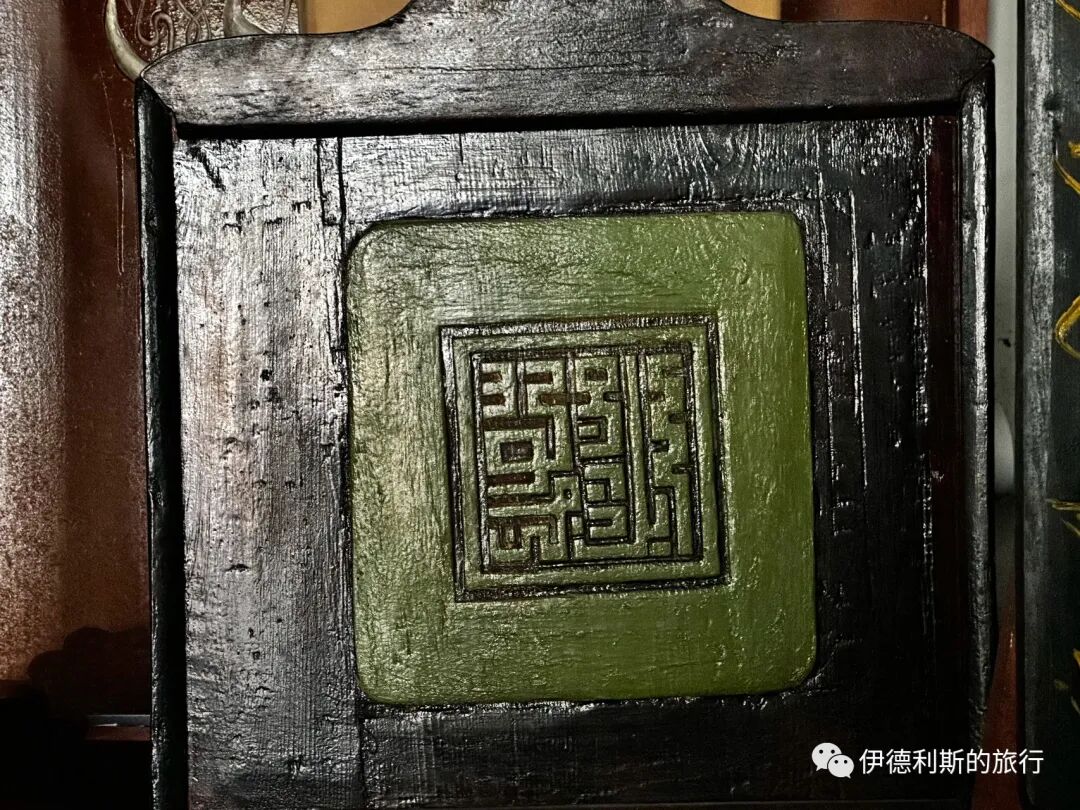
The calligraphy carvings on the minbar, scripture box, mihrab, door panels, and plaques of the West Mosque.
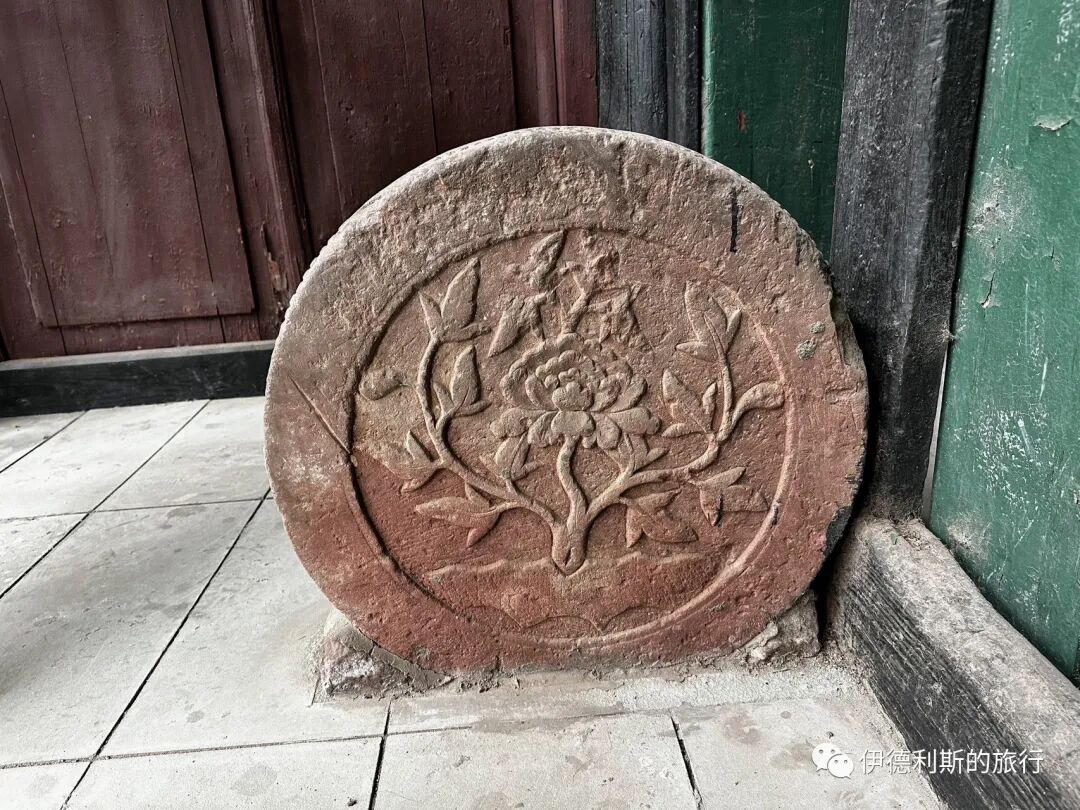
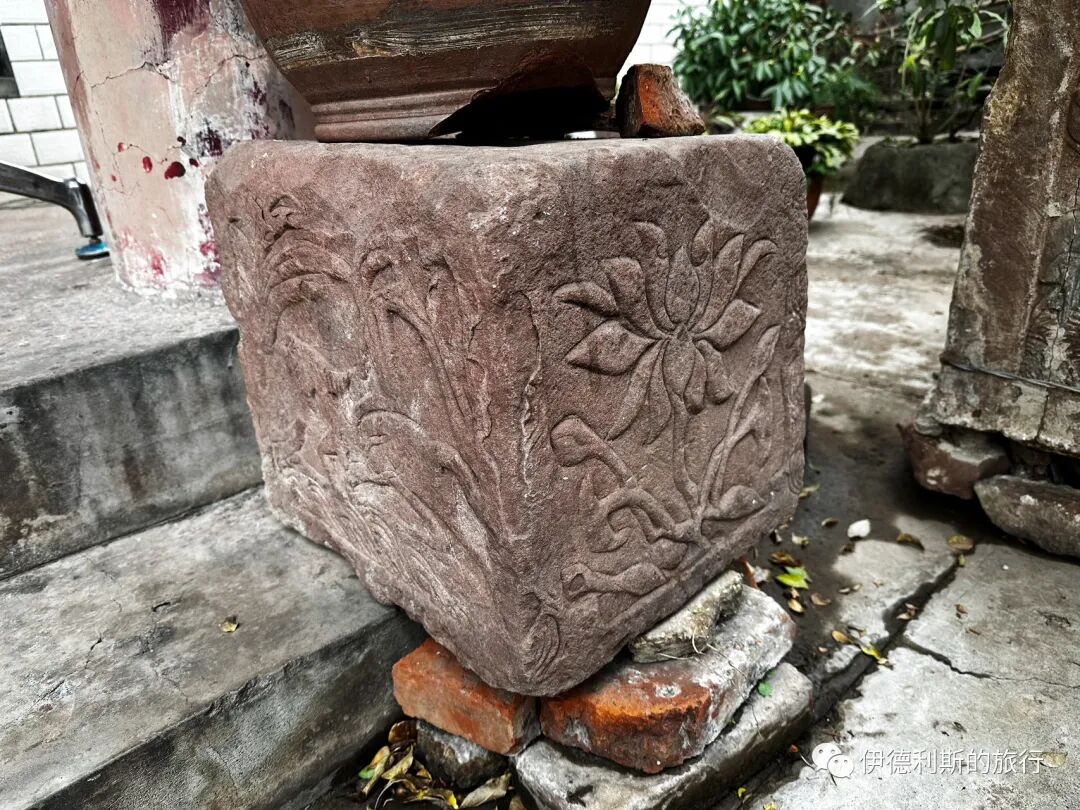
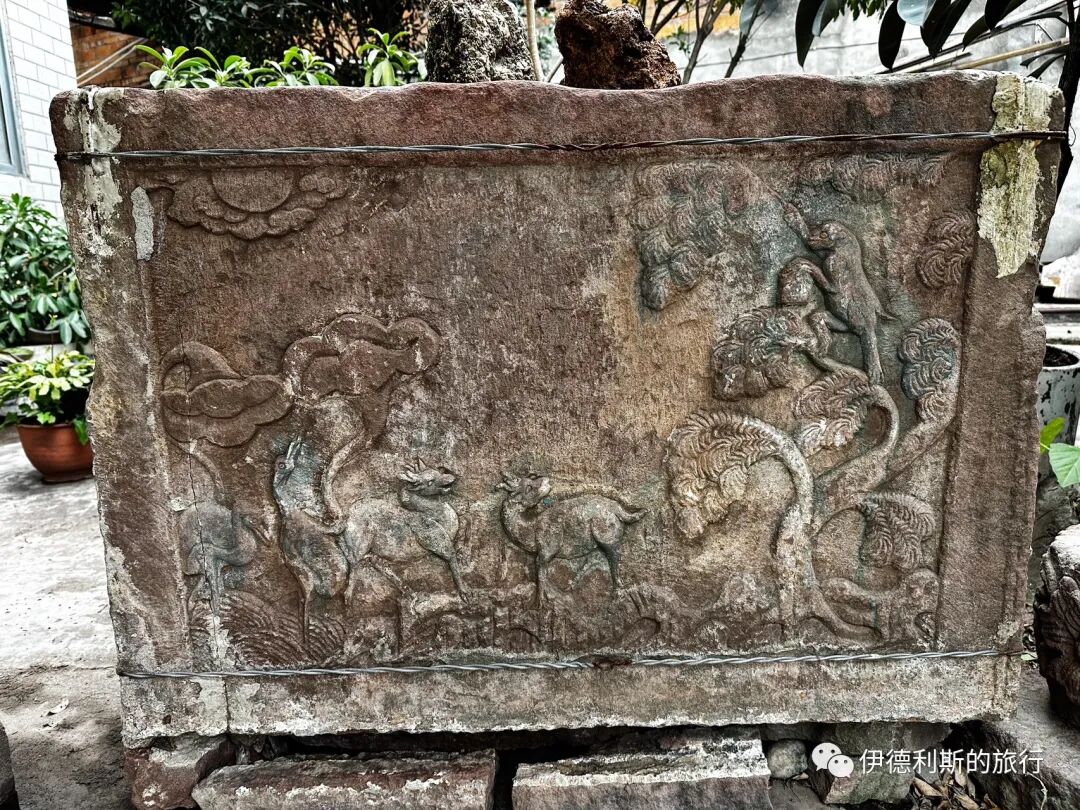
The West Mosque retains the column bases from the old Qing Dynasty main hall, which feature decorations adapted from the Taoist Eight Immortals. I have seen this before at the lower gongbei in Shangmazhuang, Bazanggou, Qinghai, which is a great example of cultural exchange between different religious traditions.
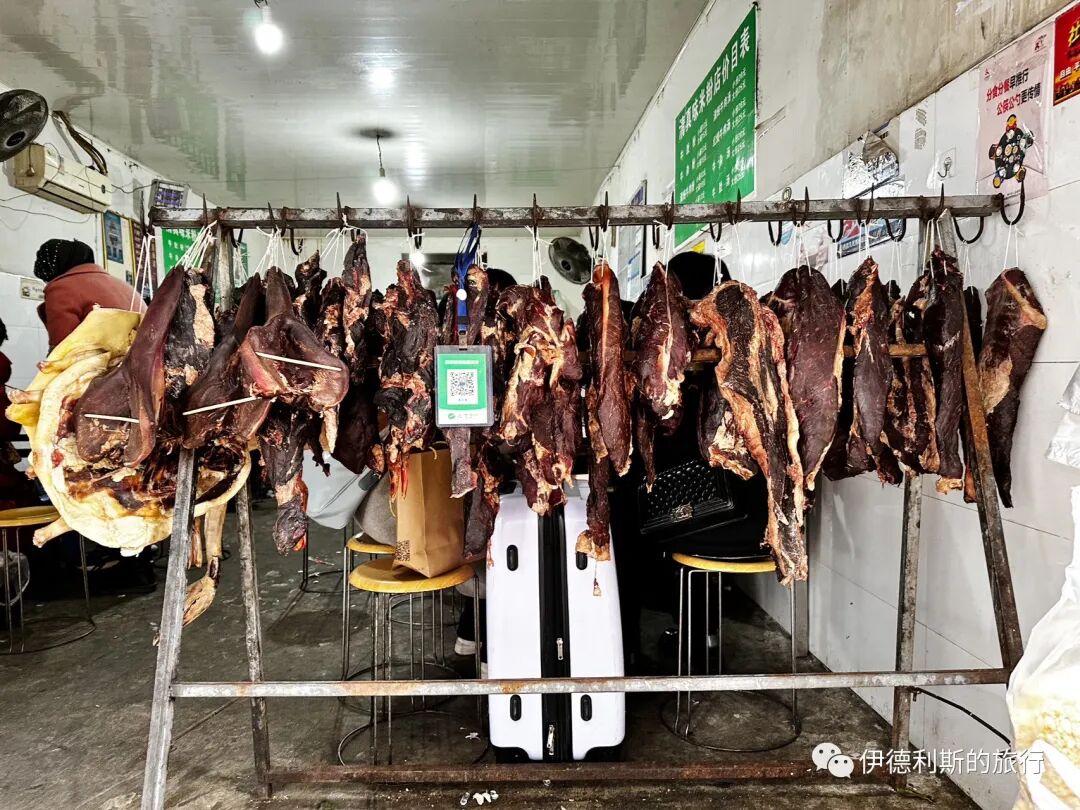
Additionally, there were sausages and pressed duck (banya) drying in the courtyard of the West Mosque, and bamboo baskets in front of the main hall held steamed buns (momo) used for tea after Friday prayers (jumu). These all added a lot of life to this ancient mosque.
The halal restaurants near the West Mosque mainly serve Xichang rice noodles, as well as stir-fried dishes and pastries. The rice noodle shops are packed from early morning until noon; they are very popular. The dried beef (niu ganba) and pressed duck (banya) placed at the entrances of the restaurants are also specialties.
Xichang East Mosque.
The Xichang East Mosque is also called the East Street Mosque outside the city. It was first built in 1578 (6th year of Wanli in the Ming Dynasty). Most of the community leaders (gaomu) moved here from Shaanxi and the Jiangnan region during the Ming and Qing dynasties, mainly working in fur processing, cattle and sheep slaughtering, and the food industry. In 1850 (30th year of Daoguang in the Qing Dynasty), the East Mosque was damaged in the Xichang earthquake and was rebuilt in 1861 (11th year of Xianfeng). According to the Republic of China era 'Xichang County Annals,' it was 'grand in scale, the best among all the mosques.' In 1935, to stop the Red Army from entering the city, the East Mosque was burned down by the Chuan-Kang border defense forces, just like the West Mosque. It was rebuilt as simple one-story houses in 1948, occupied by a fur factory after the 1950s, reclaimed in 1982, and rebuilt into its current form in 2001.
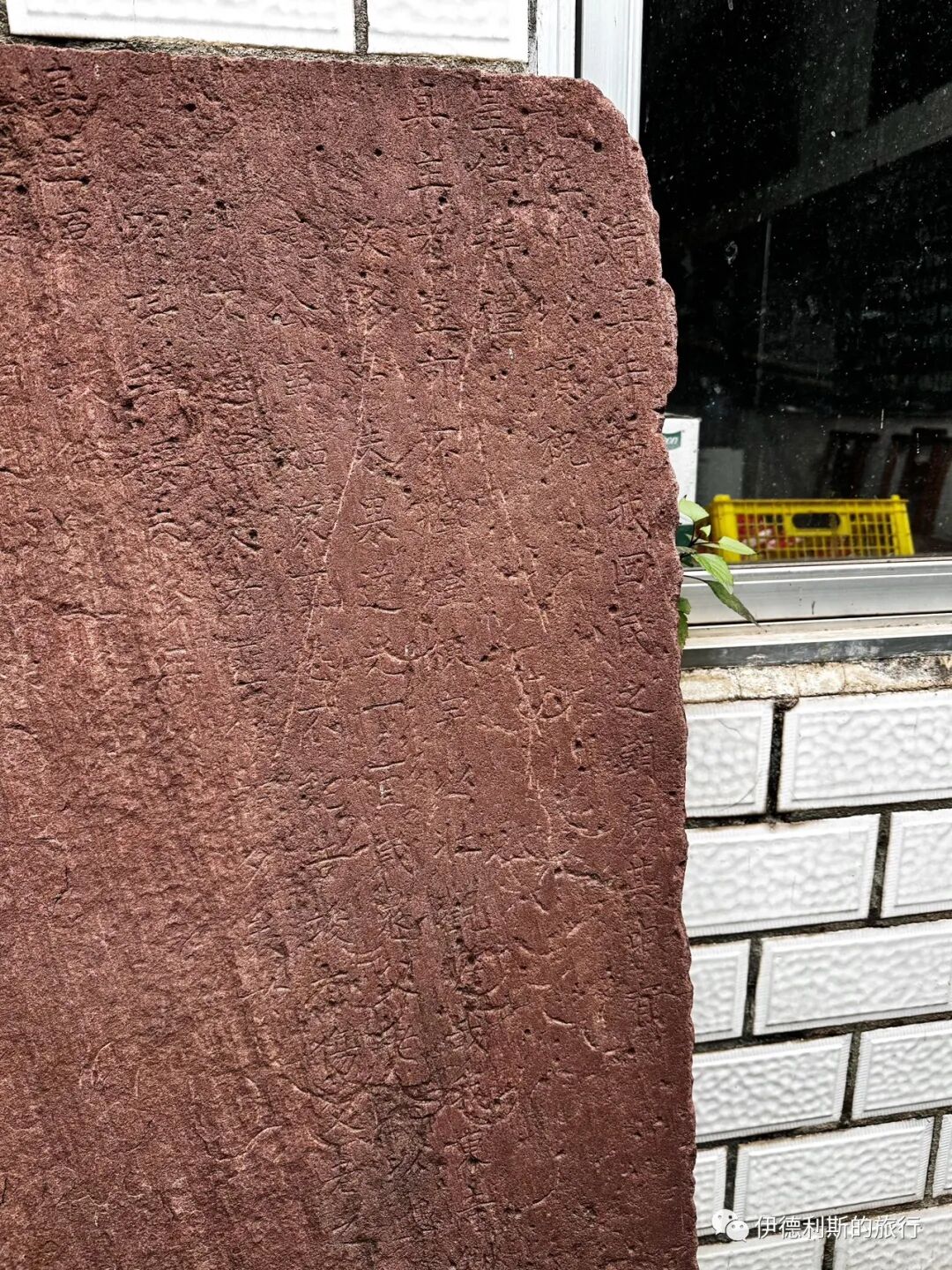
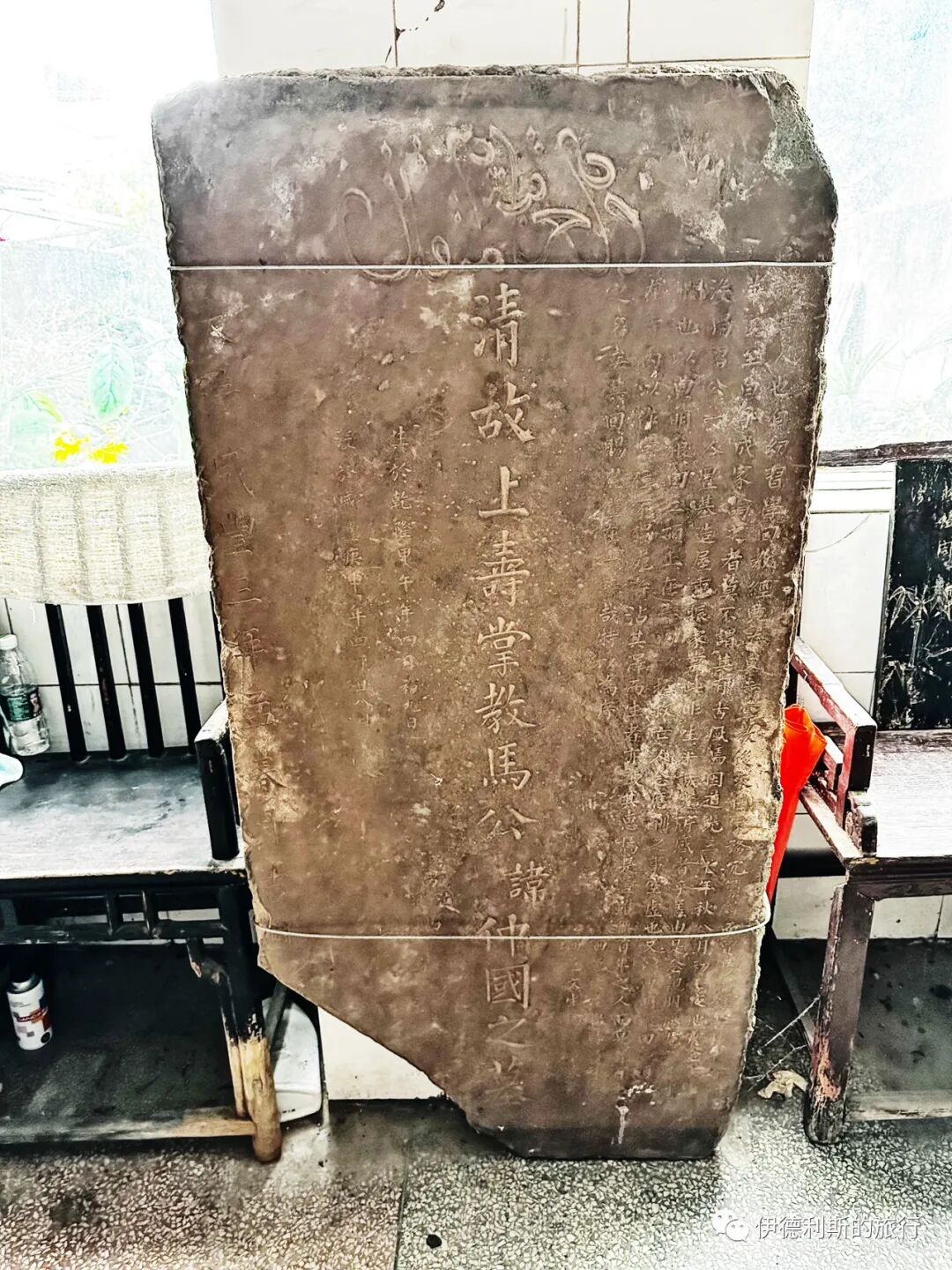
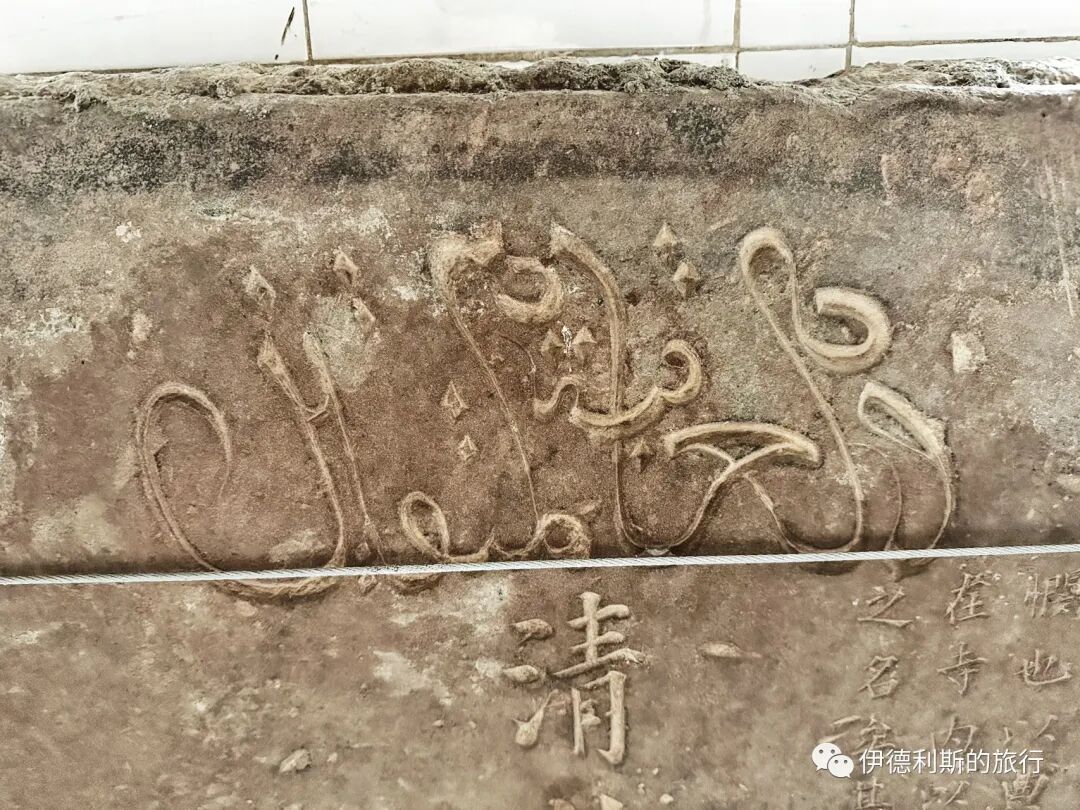
The East Mosque contains plaques and handwritten scriptures by the famous Sichuan scripture teacher Imam Yang Hua, as well as some stone inscriptions from the Qing Dynasty and the Republic of China era. Imam Yang Hua was a student of Imam Sha from Dujiangyan. His family roots were in Fengxiang Prefecture, Shaanxi, and he moved to Xichang during the Tongzhi reign after traveling through Songpan, Sichuan. Imam Yang Hua was born on Hedong Street in Xichang in 1922. He studied at the New Guest Mosque (Xinke Si) and the East Mosque (Dong Si), then taught at the Shaguoying Mosque for a long time. He taught over three hundred students and made a huge contribution to the development of the faith in Xichang.
Beef wontons (chaoshou)
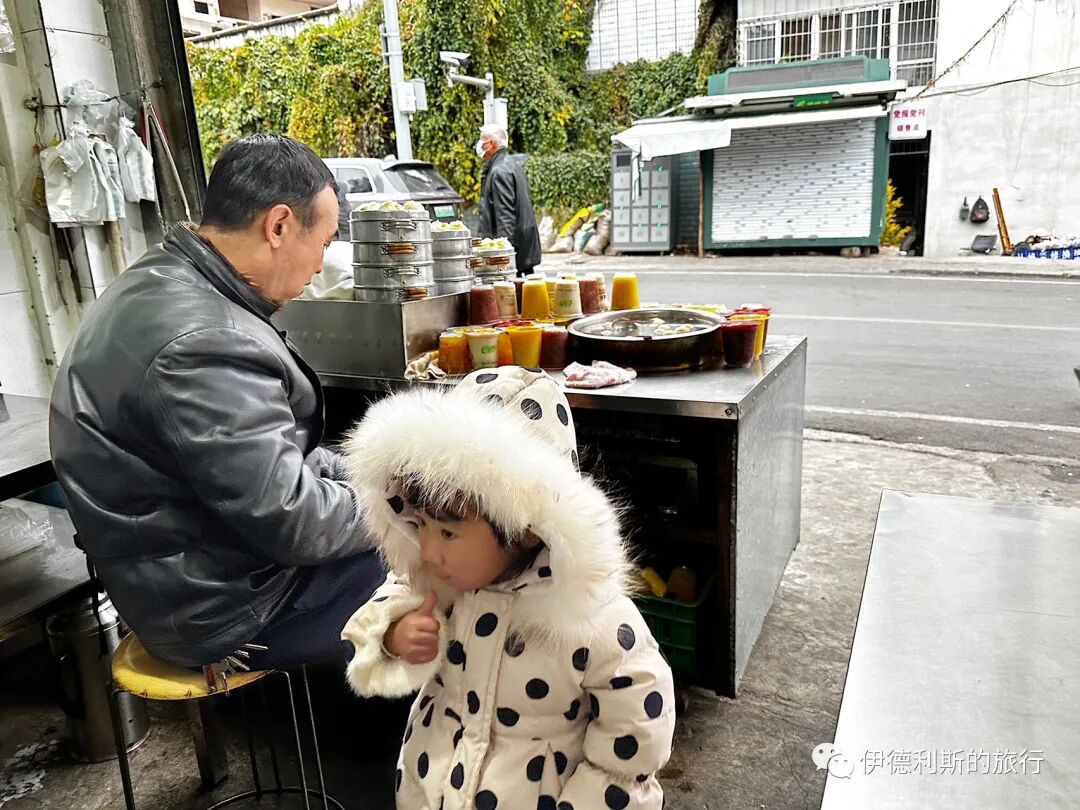
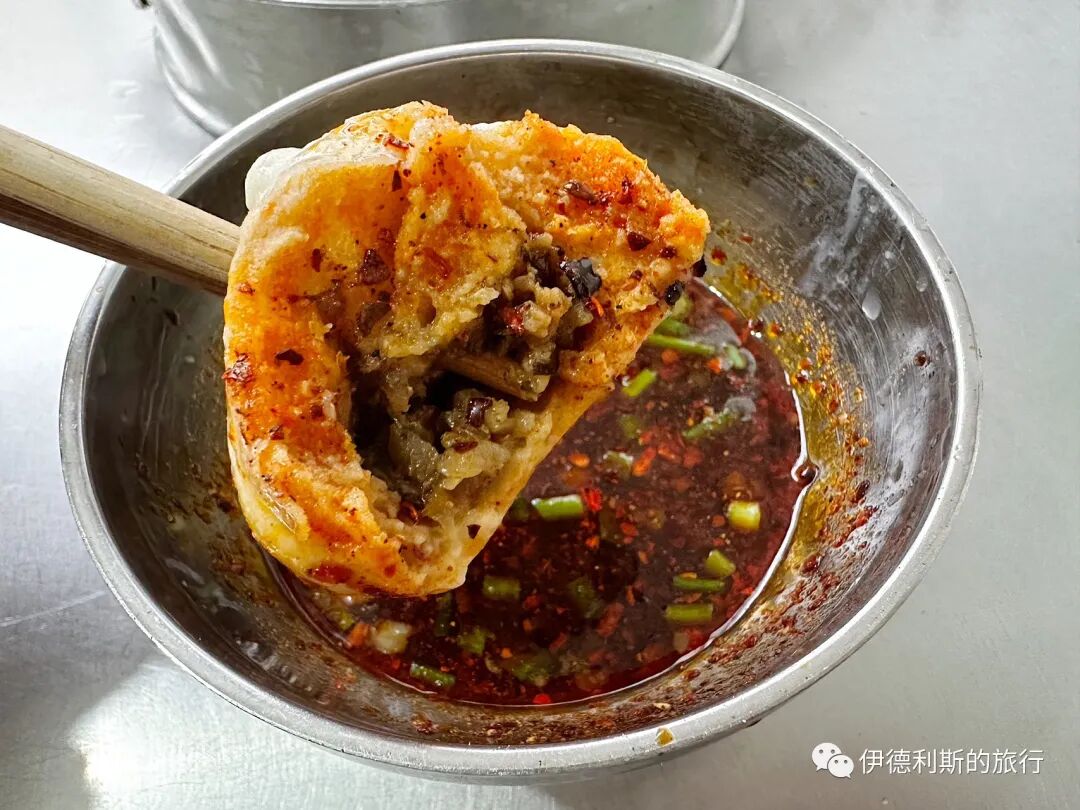
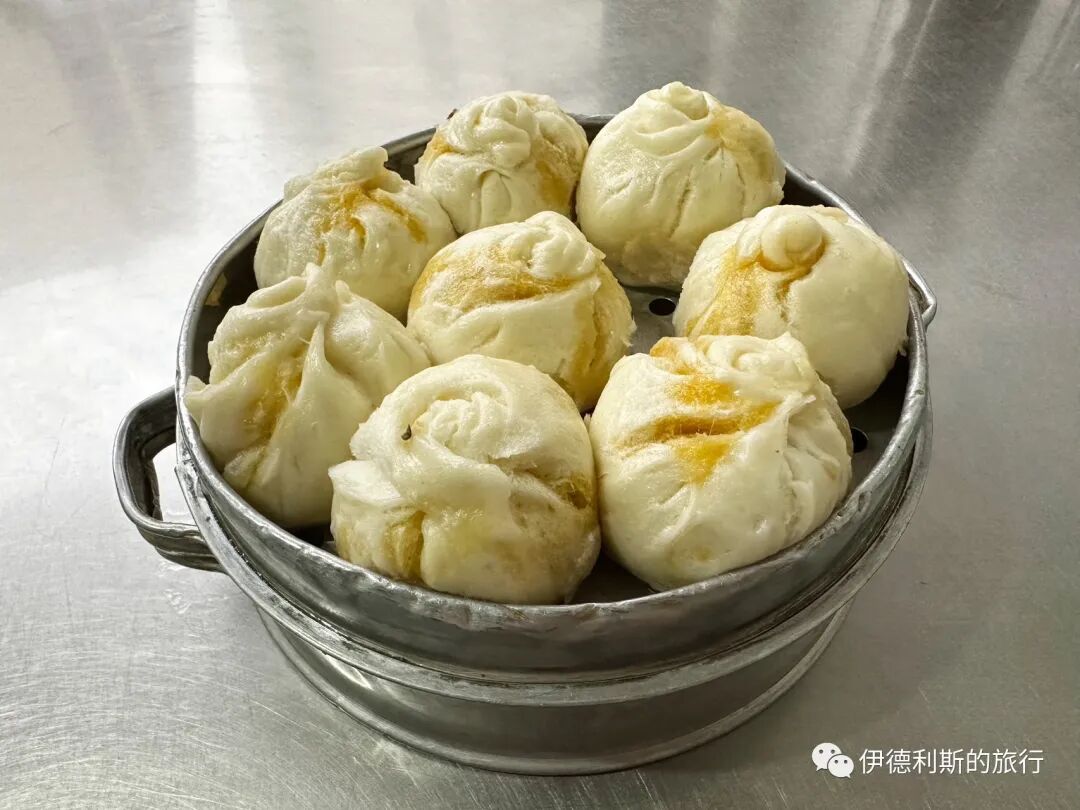
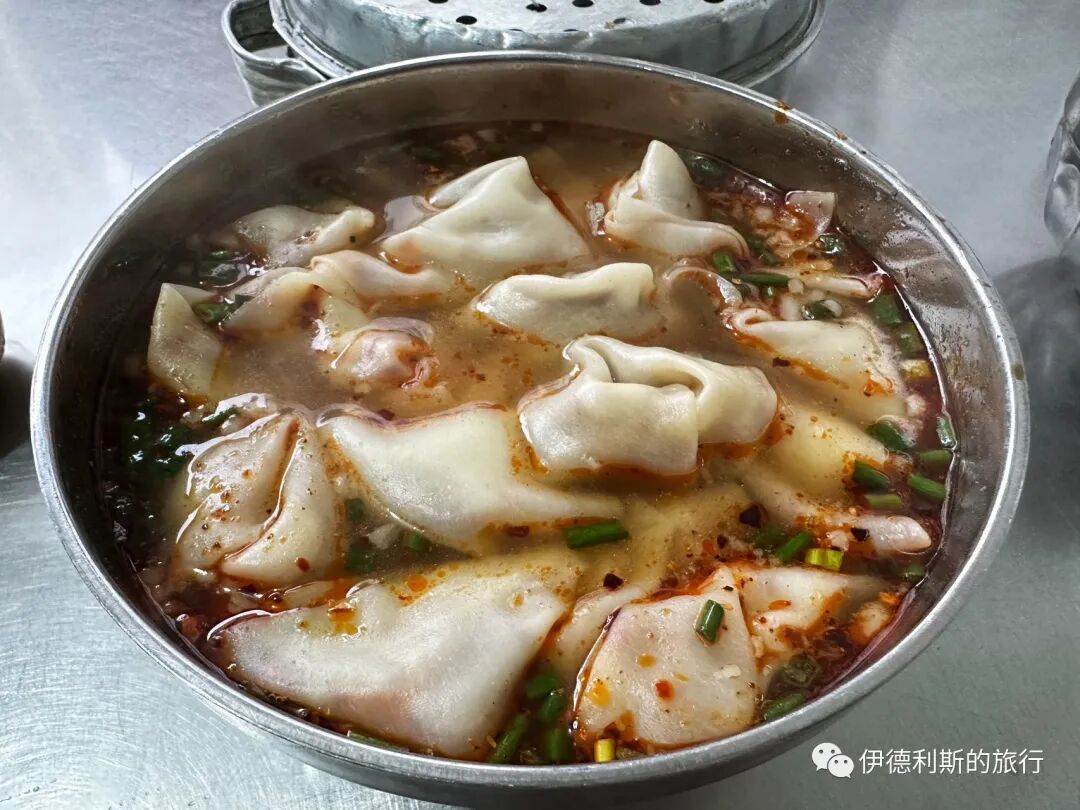
On the morning of January 28, I ate preserved vegetable and beef steamed buns (xiaolongbao) and beef wontons (chaoshou) next to the West Mosque (Xi Si) in Xichang. The owner is a local Hui Muslim named Ma.
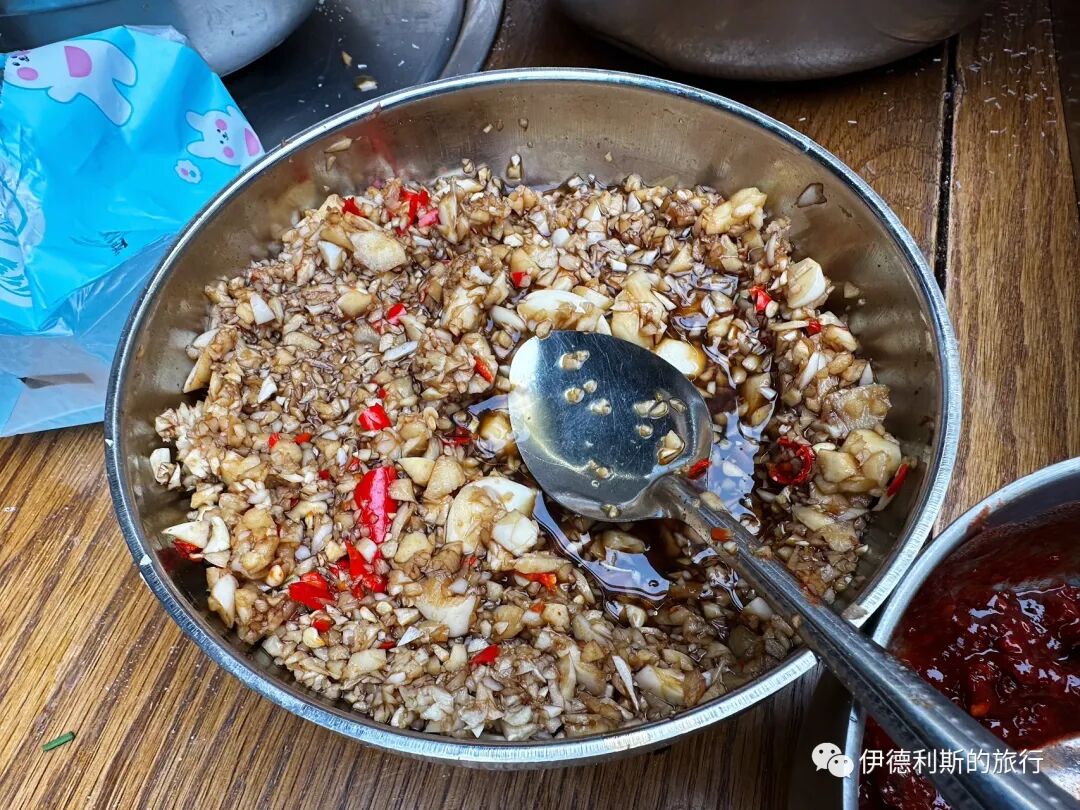
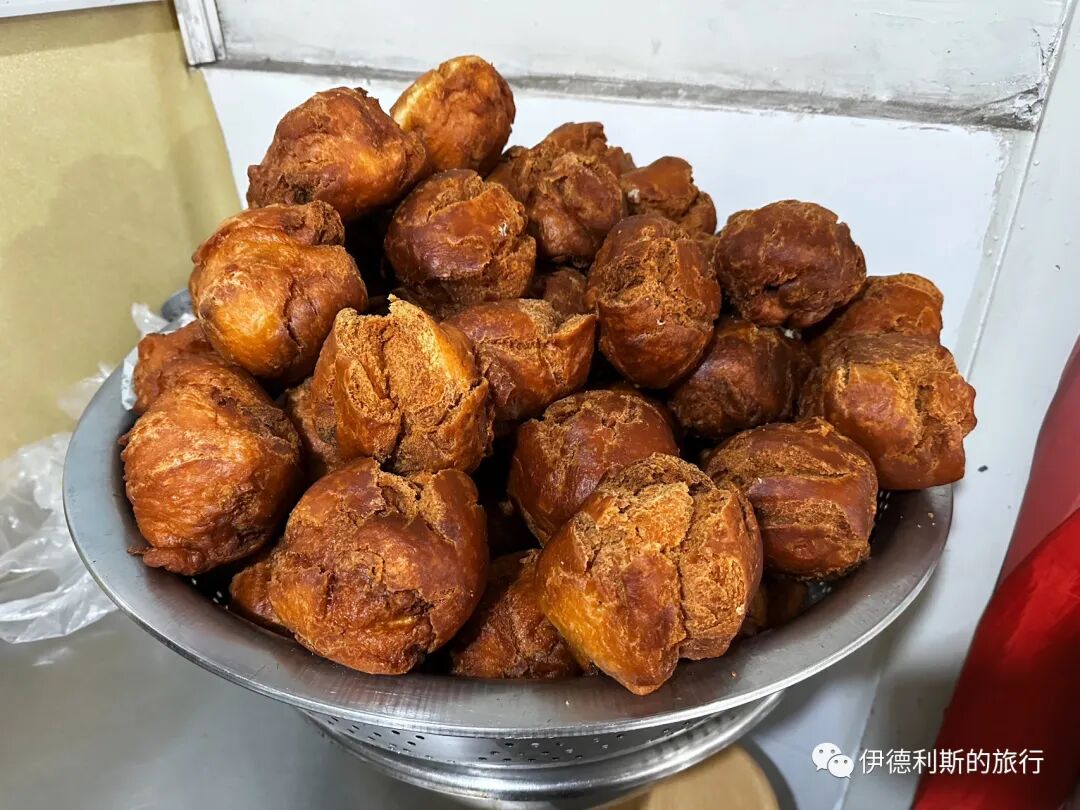
I really love the dipping sauces (zhanshui) in the Yunnan, Guizhou, and Sichuan regions. They add so much flavor to the buns! The wontons (chaoshou) didn't look very spicy with red oil, but they got spicier the more I ate. They have a real Sichuan flavor. I also saw some local fried dough (youxiang). It looked quite unique, and it was my first time seeing it.
While I was eating, many Yi ethnic aunties came to buy their buns. It seems they are really popular. The owner said that fewer people are making wheat-based foods here now. Many have switched to rice noodles because wheat-based foods take more time and effort. view all
Summary: Xichang — Jumu'ah Prayer and Rice Noodles is presented here as a firsthand travel account in clear English, beginning with this scene: On January 23, 2023, I left Macau to visit the Macau mosque known as Moro Garden (Moro Yuan) and enjoyed delicious Indonesian Javanese food (see "Moro Garden and Indonesian Food in Macau"). The account keeps its focus on Xichang Travel, Jumu'ah Prayer, Halal Food while preserving the names, places, food, and historical details from the Chinese source.
On January 23, 2023, I left Macau to visit the Macau mosque known as Moro Garden (Moro Yuan) and enjoyed delicious Indonesian Javanese food (see "Moro Garden and Indonesian Food in Macau"). On January 25, I arrived in Guangzhou, visited friends (dost), and ate various halal foods (see "Hui Muslim Oil Cakes and Yemeni Food in Guangzhou"). At noon, I prayed the noon prayer (dhuhr) at a Guangzhou mosque, then went to visit the Ancient Tomb of the Worthies (see "Huaisheng Mosque and the Ancient Tomb of the Worthies in Guangzhou"). In the afternoon, I prayed the afternoon prayer (asr) at Haopan Mosque and the sunset prayer (maghrib) at Xiaodongying Mosque (see "Visiting Haopan Mosque and Xiaodongying Mosque in Guangzhou").
On the morning of January 26, I took a train from Guangzhou to Zhaoqing, visited two mosques, and ate halal Cantonese food (see "Halal Roast Goose and Starfruit at the Mosque in Zhaoqing, Guangdong").
On the morning of January 27, I flew from Guangzhou to Xichang, Sichuan, to begin visiting the local mosques and halal food spots.
Xichang Rice Noodles
After arriving in Xichang, I first went to the Hui Muslim Beef and Mutton Restaurant on South Street in the Ancient City of Jianchang to eat Xichang rice noodles (mixian). According to Imam Sha from Dujiangyan, his family's restaurant was a famous halal spot in Xichang during the 1980s, originally serving traditional Sichuan Hui Muslim dishes like braised, stewed, steamed, stir-fried, and mixed cold dishes. Today, the Ancient City of Jianchang has been developed into a tourist area, and South Street has become a pedestrian street, so the Hui Muslim Beef and Mutton Restaurant now focuses mainly on selling Xichang rice noodles.
I felt the toppings for the Xichang rice noodles were very rich, with five or six different types of chili, and just like in Yunnan, you can add plenty of fresh mint. With a bone broth base, it was very comforting to eat. It is no wonder their place is crowded with people all day long.
Friday Prayer at Xichang City Mosque
At noon, I prayed the Friday prayer (Jumu'ah) at Xichang City Mosque, and after the prayer, I caught the traditional tea-passing activity. On Friday mornings, community members (gaomu) arrive at the mosque one after another to deliver gifts (hadiya), which are daily items like steamed buns (momo), tangerines, buckwheat crispy treats (saqima), and milk, all placed in baskets (poluo) on the table in front of the main prayer hall. After the Friday prayer, everyone sits around the table and distributes the gifts bit by bit.
I feel this tea-passing tradition is excellent and really strengthens the unity of the mosque community. I have encountered this several times before while praying on Fridays in Yunnan; at Manluan Hui Mosque in Menghai, I received various tropical fruits, and at Tangzi Mosque in Xundian, I ate delicious pastries. This was my first time experiencing the tea-passing tradition in Sichuan. Imam Sha said that in Sichuan, this tradition only exists in Xichang, Miyi, and Panzhihua, which are close to Yunnan, and it takes place during Friday prayers and Ramadan.
The former director of the mosque management committee, Director Tuo, and Imam Ma.
Xichang City Mosque is located on Jiyang Lane within the Ancient City of Jianchang. It was built with funds raised by Muslims who came to Xichang for business during the Yuan Dynasty's Taiding era (1324-1328). It was relocated to its current site on Jiyang Lane in 1574 (the second year of the Ming Wanli era, though some say the Hongwu era) and rebuilt to its current form over six years starting in 1875 (the first year of the Qing Guangxi era), earning it the reputation as the premier mosque in Xichang.
During the Yuan Dynasty, Xichang belonged to the Jianchang Circuit of the Yunnan Province. Sumuding Wumoli, the fourth son of Sayyid Ajjal Shams al-Din, and his son Sheheiwusuman served successively as the administrators of the Jianchang Circuit. Another grandson of Sayyid Ajjal Shams al-Din, Yelu Timur, served as the Pingzhang Zhengshi (a high-ranking official) of the Jianchang Circuit at the end of the Yuan Dynasty. Today, descendants of Yelu Timur are among the Hui Muslims in Xichang.
According to the "History of Ming: Records of Sichuan Tusi," Yelu Timur submitted to the Ming Dynasty in 1382 (the 15th year of the Ming Hongwu era) and was appointed as the Jianchang Guard Commander. He rebelled again in 1392 (the 25th year of the Ming Hongwu era), led an army of over ten thousand to attack the city, but was defeated, fled to Baixing Prefecture (Yanyuan County, Liangshan Prefecture), and was eventually captured and executed. According to the genealogy of the Sha-surname Hui Muslims in Xichang, after Yelu Timur was killed, his descendants scattered. One branch fled to Huangcaoping in Miyi County, Panzhihua, hid their identity, and changed their name to Sha Shun. By the third generation, they moved to Heying Yantang Village in Xichang. Imam Sha from Dujiangyan is a descendant of Yelu Timur.
To suppress Yelu Timur, the Ming Dynasty dispatched 15,000 soldiers from the capital guards (the Jiangnan region) and the Shaanxi-Gansu region. Many Xichang Hui Muslims today are descendants of these Ming Dynasty garrison troops from Jiangnan and Shaanxi: Imperial Commander Ma Gang was from Suzhou Prefecture in Jiangnan, and his descendants became the Ma family of Shaguoying. Commander Ma Jun was from Suzhou Prefecture in Jiangnan, and his descendants became the Ma family of Hetao Village. Commander Ma Dengyi was from Dali, Yunnan, and his descendants became the Ma family of Yushitang. Deputy Commander Liu Yuanyuan was from Suzhou Prefecture in Jiangnan. His second generation married a Hui Muslim woman and converted to Islam, and his descendants settled in Xixi Dazi Camp.
The mosque is divided into two courtyards. The right side of the front courtyard contains offices, living quarters, and a washroom, while the left side has an ancient cypress tree that reaches the sky. Entering the inner courtyard through an arched gate, you find the standard main prayer hall and north and south side rooms. There are also two ancient cypress trees in front of the main hall. According to the Republic of China's "Xichang County Annals": "In the fifth year of the Kangxi era, a fire on South Street spread to the mosque. A person in green clothes appeared on the mosque's cypress tree, pouring water from a clean pot to douse the flames, and the fire stopped."
On the west side of the second courtyard is the entrance hall and the main prayer hall. After the 1960s, the entrance hall (baoting) and the two side rooms were taken over by a school, and the main prayer hall was closed off. They were not restored until after the 1980s. Today, the entrance hall and the main prayer hall are hung with various plaques and couplets in Chinese and Arabic, which are precious cultural heritage items of the mosque.
Inside the main prayer hall are the mihrab, minbar, scripture box, and various plaques and couplets.
The mosque holds plaques from different periods, ranging from the Qing Dynasty and the Republic of China era to after the 1990s.
The plaque reading 'Qu Wang Xun Zhen' (Seeking Truth by Eliminating Falsehood) was replicated in 2005 from the original 1746 (11th year of Qianlong) version. The donor, Deputy General Mai Guoliang of the garrison, had ancestral roots in Fengxiang, Shaanxi. He settled in Xichang in 1738 (3rd year of Qianlong) due to military service, and his descendants are known as the Mai family of Shaanxi.
Imam Sa Fuchu was a famous Arabic calligrapher in Xichang.
Imam Sa passed away in 2014 at the age of 89.
Lao Hao Qingzhen Yuan restaurant.
In the afternoon, I ate at the main branch of Lao Hao Qingzhen Yuan near the Xichang West Mosque. It is a restaurant serving traditional halal stir-fry dishes, and the owner is a member of the Yang family, who are community leaders (gaomu) of the Xichang West Mosque.
I ordered the small stir-fried meat (xiaochao rou) and bear paw tofu (xiongzhang doufu), and they also served me lotus leaf tea. It was my first time seeing a restaurant serve lotus leaf tea, and it smelled quite fragrant. The food arrived just five minutes after I ordered; they stir-fry really quickly! The small stir-fried meat is a classic, but it was my first time eating bear paw tofu. 'Bear paw' is actually what Sichuanese people call pan-fried tofu. It is a specialty Sichuan dish stir-fried with bean paste (doubanjiang) that is spicy and rich. It made my nose run and my eyes water, but Sichuan food is truly satisfying!
Xichang West Mosque.
Because the city bought up all the houses during the renovation of the Jianchang Ancient City, there are no longer community leaders (gaomu) living around the city mosque. Relatively speaking, the West Mosque outside the Jianchang Ancient City still maintains the layout of a traditional mosque neighborhood, and there are more halal restaurants nearby.
The Xichang West Mosque is also called the Mashuihe Mosque outside the city. Mashuihe Street has been a street for the Hui Muslim leather industry since the Qing Dynasty. The West Mosque was first built in 1801 (6th year of Jiaqing). When the Xichang earthquake hit in 1850 (30th year of Daoguang), the mosque buildings collapsed and were rebuilt with funding from the Wool Guild, a trade association of local leather workers. In 1935, to stop the Red Army from entering the city, the Chuan-Kang border defense forces burned down 28 streets and alleys outside Xichang for three consecutive days. The West Mosque was also destroyed and was rebuilt in 1948. After 1958, the West Mosque was occupied and severely damaged. It was gradually reclaimed after 1978 and rebuilt into its current form after 1999.
The calligraphy carvings on the minbar, scripture box, mihrab, door panels, and plaques of the West Mosque.
The West Mosque retains the column bases from the old Qing Dynasty main hall, which feature decorations adapted from the Taoist Eight Immortals. I have seen this before at the lower gongbei in Shangmazhuang, Bazanggou, Qinghai, which is a great example of cultural exchange between different religious traditions.
Additionally, there were sausages and pressed duck (banya) drying in the courtyard of the West Mosque, and bamboo baskets in front of the main hall held steamed buns (momo) used for tea after Friday prayers (jumu). These all added a lot of life to this ancient mosque.
The halal restaurants near the West Mosque mainly serve Xichang rice noodles, as well as stir-fried dishes and pastries. The rice noodle shops are packed from early morning until noon; they are very popular. The dried beef (niu ganba) and pressed duck (banya) placed at the entrances of the restaurants are also specialties.
Xichang East Mosque.
The Xichang East Mosque is also called the East Street Mosque outside the city. It was first built in 1578 (6th year of Wanli in the Ming Dynasty). Most of the community leaders (gaomu) moved here from Shaanxi and the Jiangnan region during the Ming and Qing dynasties, mainly working in fur processing, cattle and sheep slaughtering, and the food industry. In 1850 (30th year of Daoguang in the Qing Dynasty), the East Mosque was damaged in the Xichang earthquake and was rebuilt in 1861 (11th year of Xianfeng). According to the Republic of China era 'Xichang County Annals,' it was 'grand in scale, the best among all the mosques.' In 1935, to stop the Red Army from entering the city, the East Mosque was burned down by the Chuan-Kang border defense forces, just like the West Mosque. It was rebuilt as simple one-story houses in 1948, occupied by a fur factory after the 1950s, reclaimed in 1982, and rebuilt into its current form in 2001.
The East Mosque contains plaques and handwritten scriptures by the famous Sichuan scripture teacher Imam Yang Hua, as well as some stone inscriptions from the Qing Dynasty and the Republic of China era. Imam Yang Hua was a student of Imam Sha from Dujiangyan. His family roots were in Fengxiang Prefecture, Shaanxi, and he moved to Xichang during the Tongzhi reign after traveling through Songpan, Sichuan. Imam Yang Hua was born on Hedong Street in Xichang in 1922. He studied at the New Guest Mosque (Xinke Si) and the East Mosque (Dong Si), then taught at the Shaguoying Mosque for a long time. He taught over three hundred students and made a huge contribution to the development of the faith in Xichang.
Beef wontons (chaoshou)
On the morning of January 28, I ate preserved vegetable and beef steamed buns (xiaolongbao) and beef wontons (chaoshou) next to the West Mosque (Xi Si) in Xichang. The owner is a local Hui Muslim named Ma.
I really love the dipping sauces (zhanshui) in the Yunnan, Guizhou, and Sichuan regions. They add so much flavor to the buns! The wontons (chaoshou) didn't look very spicy with red oil, but they got spicier the more I ate. They have a real Sichuan flavor. I also saw some local fried dough (youxiang). It looked quite unique, and it was my first time seeing it.
While I was eating, many Yi ethnic aunties came to buy their buns. It seems they are really popular. The owner said that fewer people are making wheat-based foods here now. Many have switched to rice noodles because wheat-based foods take more time and effort. view all
Reposted from the web
Summary: Xichang — Jumu'ah Prayer and Rice Noodles is presented here as a firsthand travel account in clear English, beginning with this scene: On January 23, 2023, I left Macau to visit the Macau mosque known as Moro Garden (Moro Yuan) and enjoyed delicious Indonesian Javanese food (see "Moro Garden and Indonesian Food in Macau"). The account keeps its focus on Xichang Travel, Jumu'ah Prayer, Halal Food while preserving the names, places, food, and historical details from the Chinese source.
On January 23, 2023, I left Macau to visit the Macau mosque known as Moro Garden (Moro Yuan) and enjoyed delicious Indonesian Javanese food (see "Moro Garden and Indonesian Food in Macau"). On January 25, I arrived in Guangzhou, visited friends (dost), and ate various halal foods (see "Hui Muslim Oil Cakes and Yemeni Food in Guangzhou"). At noon, I prayed the noon prayer (dhuhr) at a Guangzhou mosque, then went to visit the Ancient Tomb of the Worthies (see "Huaisheng Mosque and the Ancient Tomb of the Worthies in Guangzhou"). In the afternoon, I prayed the afternoon prayer (asr) at Haopan Mosque and the sunset prayer (maghrib) at Xiaodongying Mosque (see "Visiting Haopan Mosque and Xiaodongying Mosque in Guangzhou").
On the morning of January 26, I took a train from Guangzhou to Zhaoqing, visited two mosques, and ate halal Cantonese food (see "Halal Roast Goose and Starfruit at the Mosque in Zhaoqing, Guangdong").
On the morning of January 27, I flew from Guangzhou to Xichang, Sichuan, to begin visiting the local mosques and halal food spots.
Xichang Rice Noodles
After arriving in Xichang, I first went to the Hui Muslim Beef and Mutton Restaurant on South Street in the Ancient City of Jianchang to eat Xichang rice noodles (mixian). According to Imam Sha from Dujiangyan, his family's restaurant was a famous halal spot in Xichang during the 1980s, originally serving traditional Sichuan Hui Muslim dishes like braised, stewed, steamed, stir-fried, and mixed cold dishes. Today, the Ancient City of Jianchang has been developed into a tourist area, and South Street has become a pedestrian street, so the Hui Muslim Beef and Mutton Restaurant now focuses mainly on selling Xichang rice noodles.
I felt the toppings for the Xichang rice noodles were very rich, with five or six different types of chili, and just like in Yunnan, you can add plenty of fresh mint. With a bone broth base, it was very comforting to eat. It is no wonder their place is crowded with people all day long.
Friday Prayer at Xichang City Mosque
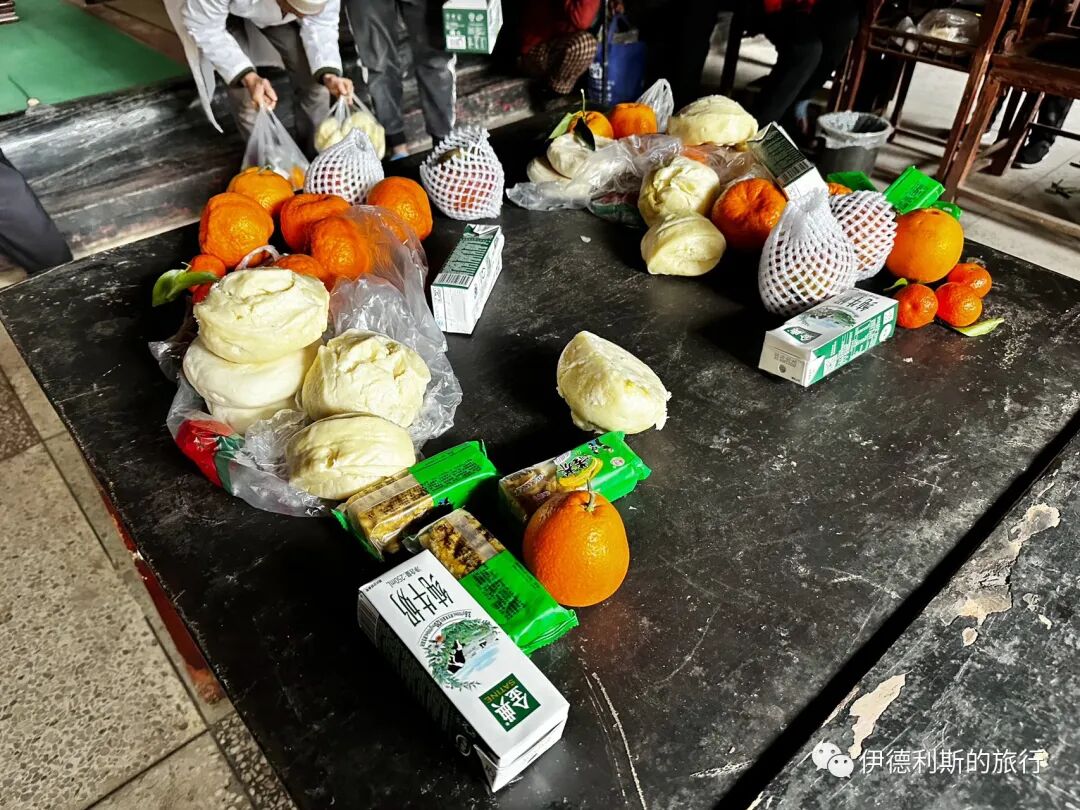
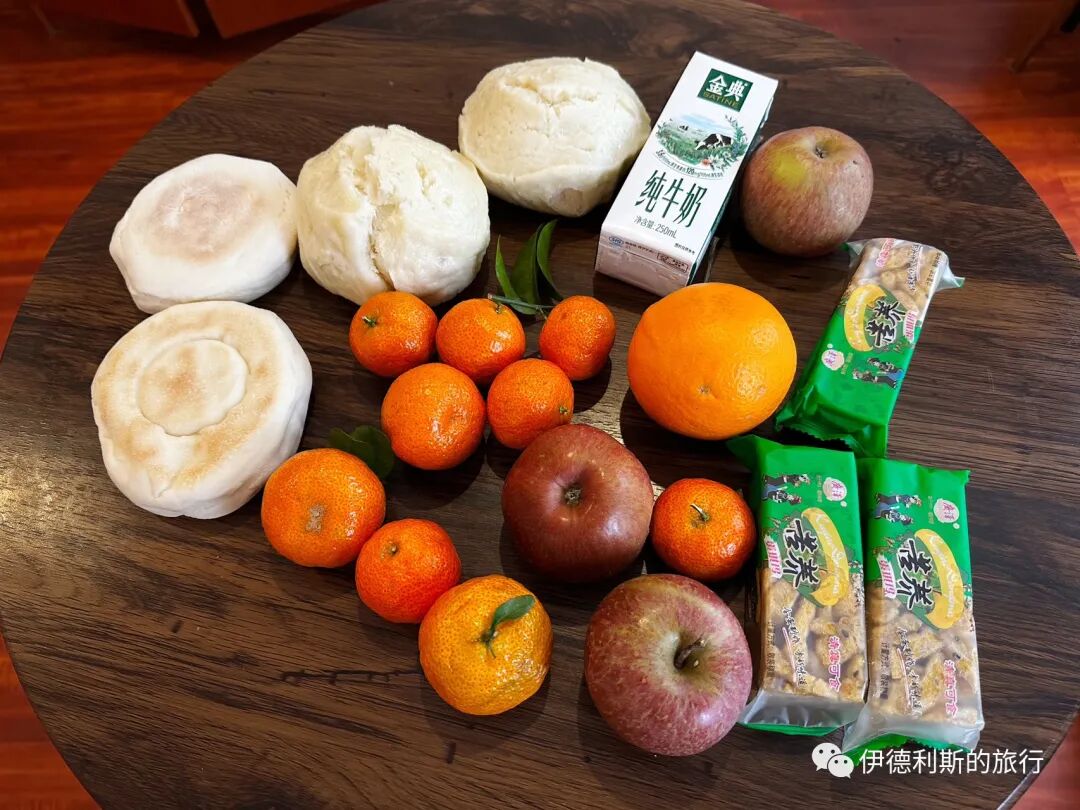
At noon, I prayed the Friday prayer (Jumu'ah) at Xichang City Mosque, and after the prayer, I caught the traditional tea-passing activity. On Friday mornings, community members (gaomu) arrive at the mosque one after another to deliver gifts (hadiya), which are daily items like steamed buns (momo), tangerines, buckwheat crispy treats (saqima), and milk, all placed in baskets (poluo) on the table in front of the main prayer hall. After the Friday prayer, everyone sits around the table and distributes the gifts bit by bit.
I feel this tea-passing tradition is excellent and really strengthens the unity of the mosque community. I have encountered this several times before while praying on Fridays in Yunnan; at Manluan Hui Mosque in Menghai, I received various tropical fruits, and at Tangzi Mosque in Xundian, I ate delicious pastries. This was my first time experiencing the tea-passing tradition in Sichuan. Imam Sha said that in Sichuan, this tradition only exists in Xichang, Miyi, and Panzhihua, which are close to Yunnan, and it takes place during Friday prayers and Ramadan.
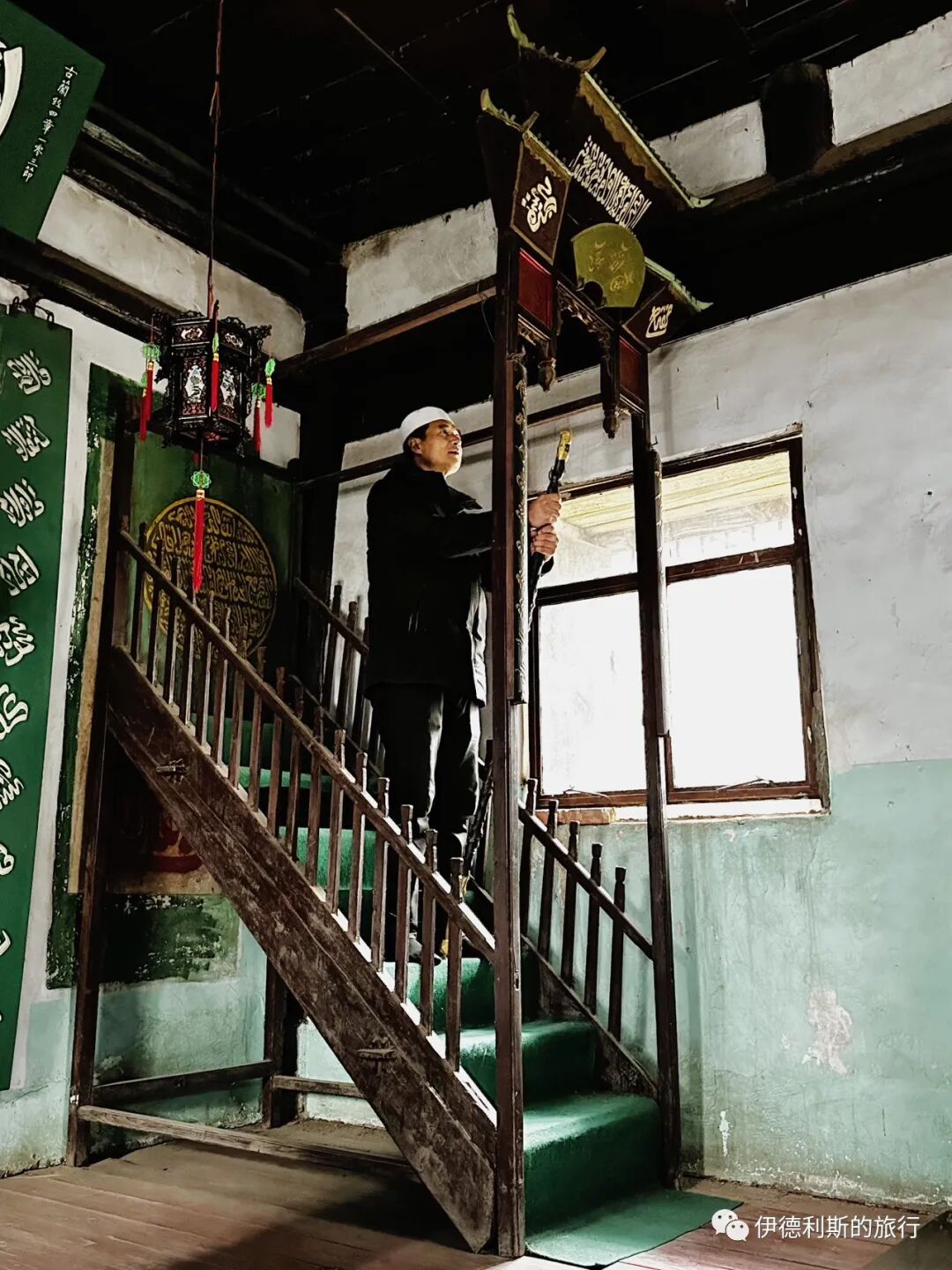
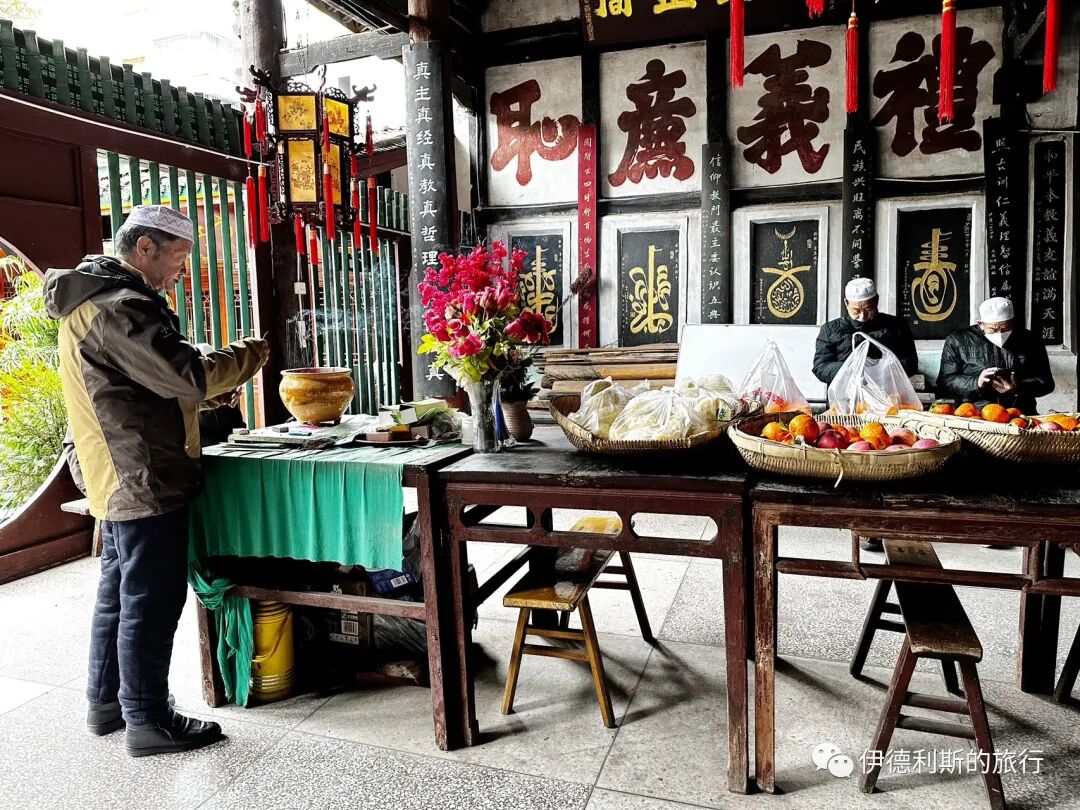
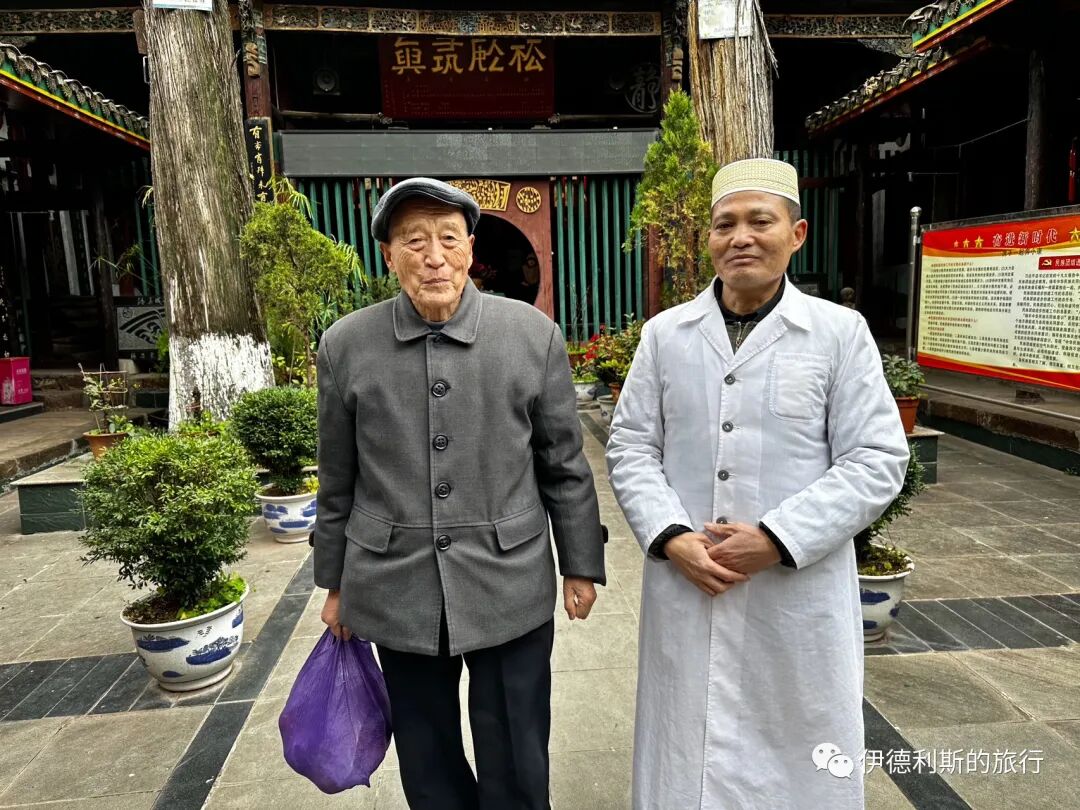
The former director of the mosque management committee, Director Tuo, and Imam Ma.
Xichang City Mosque is located on Jiyang Lane within the Ancient City of Jianchang. It was built with funds raised by Muslims who came to Xichang for business during the Yuan Dynasty's Taiding era (1324-1328). It was relocated to its current site on Jiyang Lane in 1574 (the second year of the Ming Wanli era, though some say the Hongwu era) and rebuilt to its current form over six years starting in 1875 (the first year of the Qing Guangxi era), earning it the reputation as the premier mosque in Xichang.
During the Yuan Dynasty, Xichang belonged to the Jianchang Circuit of the Yunnan Province. Sumuding Wumoli, the fourth son of Sayyid Ajjal Shams al-Din, and his son Sheheiwusuman served successively as the administrators of the Jianchang Circuit. Another grandson of Sayyid Ajjal Shams al-Din, Yelu Timur, served as the Pingzhang Zhengshi (a high-ranking official) of the Jianchang Circuit at the end of the Yuan Dynasty. Today, descendants of Yelu Timur are among the Hui Muslims in Xichang.
According to the "History of Ming: Records of Sichuan Tusi," Yelu Timur submitted to the Ming Dynasty in 1382 (the 15th year of the Ming Hongwu era) and was appointed as the Jianchang Guard Commander. He rebelled again in 1392 (the 25th year of the Ming Hongwu era), led an army of over ten thousand to attack the city, but was defeated, fled to Baixing Prefecture (Yanyuan County, Liangshan Prefecture), and was eventually captured and executed. According to the genealogy of the Sha-surname Hui Muslims in Xichang, after Yelu Timur was killed, his descendants scattered. One branch fled to Huangcaoping in Miyi County, Panzhihua, hid their identity, and changed their name to Sha Shun. By the third generation, they moved to Heying Yantang Village in Xichang. Imam Sha from Dujiangyan is a descendant of Yelu Timur.
To suppress Yelu Timur, the Ming Dynasty dispatched 15,000 soldiers from the capital guards (the Jiangnan region) and the Shaanxi-Gansu region. Many Xichang Hui Muslims today are descendants of these Ming Dynasty garrison troops from Jiangnan and Shaanxi: Imperial Commander Ma Gang was from Suzhou Prefecture in Jiangnan, and his descendants became the Ma family of Shaguoying. Commander Ma Jun was from Suzhou Prefecture in Jiangnan, and his descendants became the Ma family of Hetao Village. Commander Ma Dengyi was from Dali, Yunnan, and his descendants became the Ma family of Yushitang. Deputy Commander Liu Yuanyuan was from Suzhou Prefecture in Jiangnan. His second generation married a Hui Muslim woman and converted to Islam, and his descendants settled in Xixi Dazi Camp.
The mosque is divided into two courtyards. The right side of the front courtyard contains offices, living quarters, and a washroom, while the left side has an ancient cypress tree that reaches the sky. Entering the inner courtyard through an arched gate, you find the standard main prayer hall and north and south side rooms. There are also two ancient cypress trees in front of the main hall. According to the Republic of China's "Xichang County Annals": "In the fifth year of the Kangxi era, a fire on South Street spread to the mosque. A person in green clothes appeared on the mosque's cypress tree, pouring water from a clean pot to douse the flames, and the fire stopped."
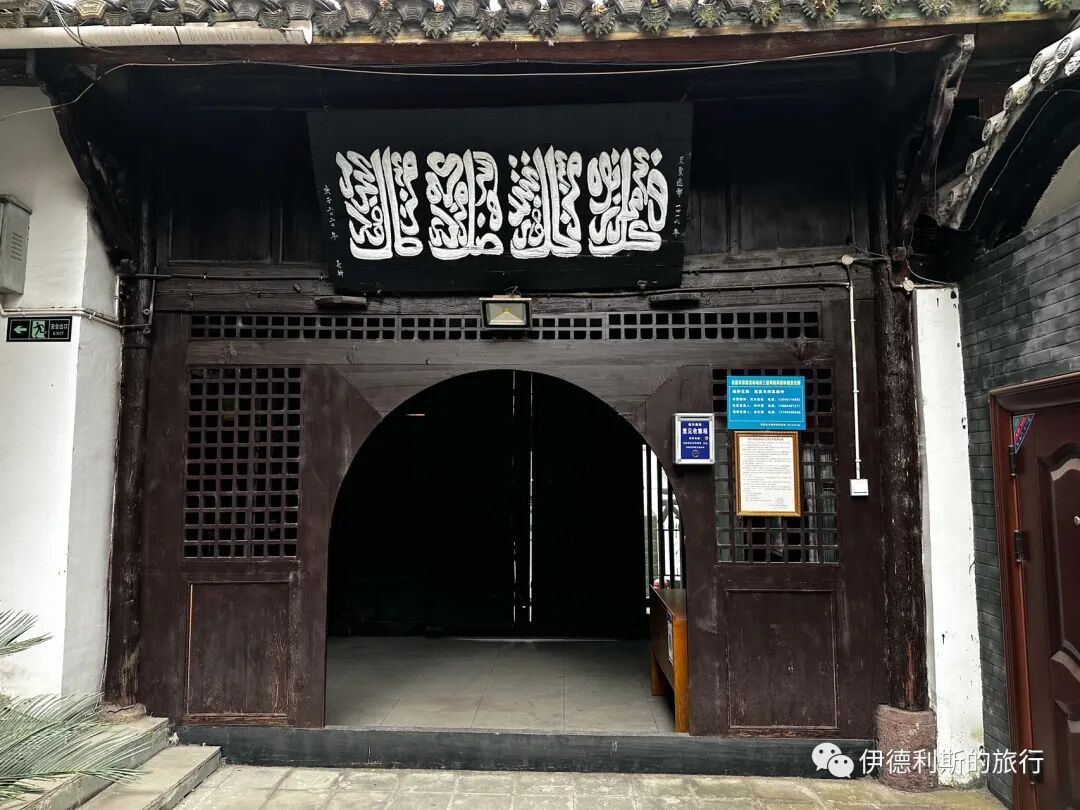
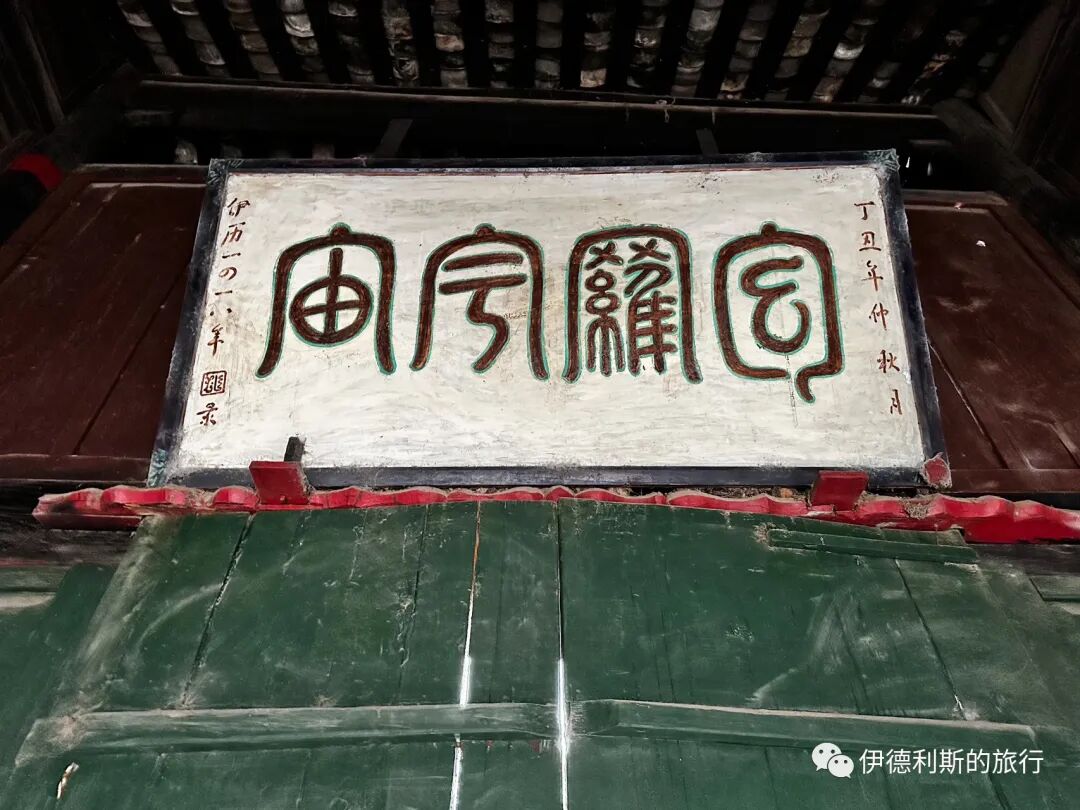
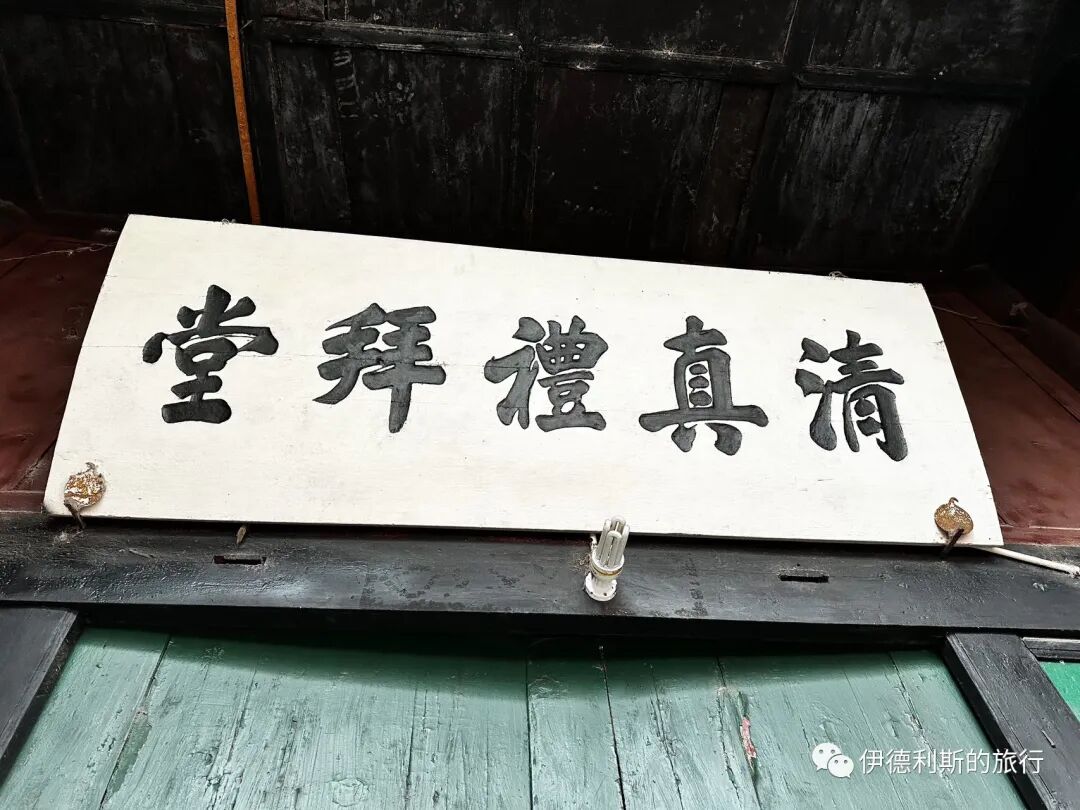
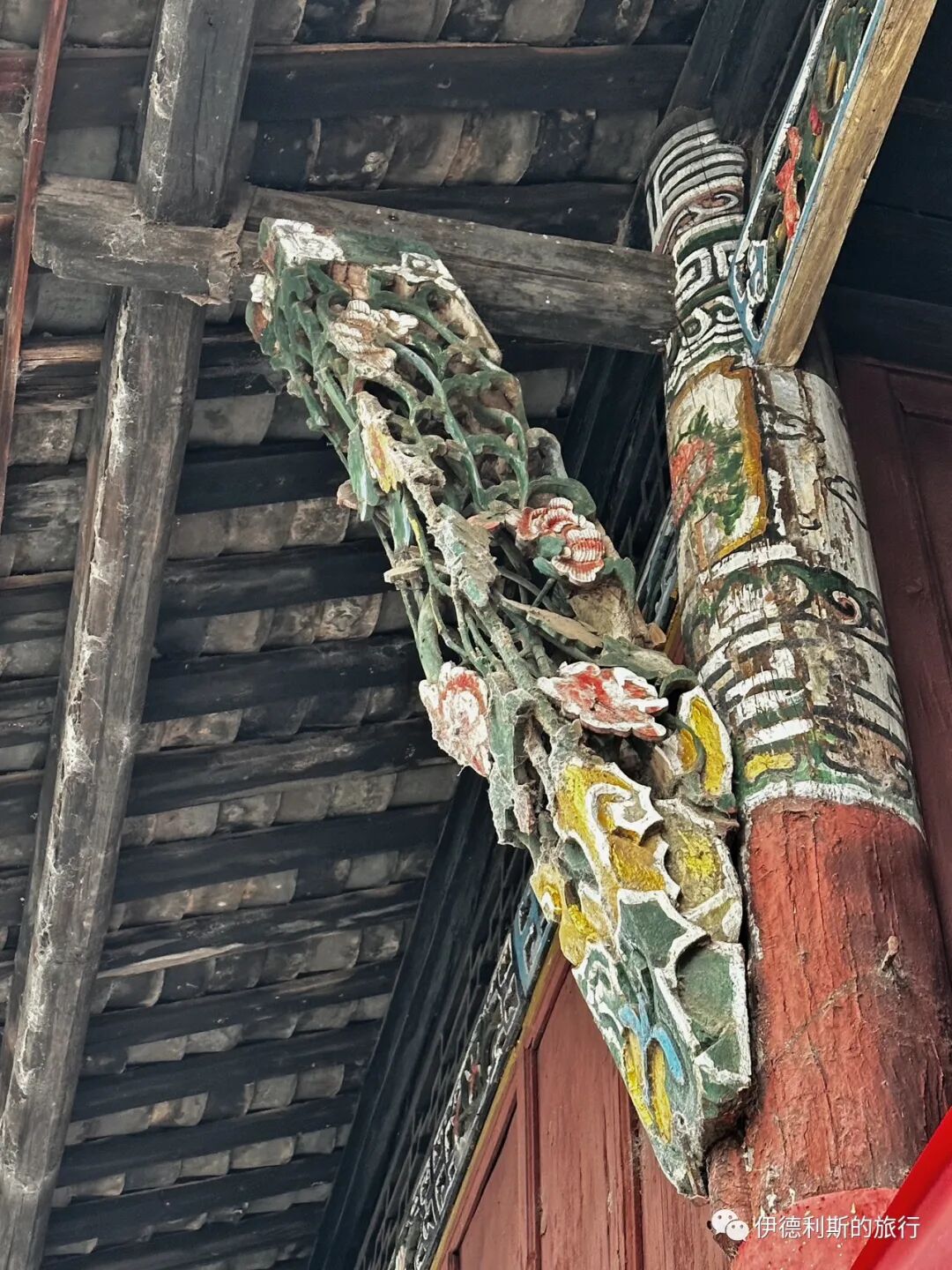
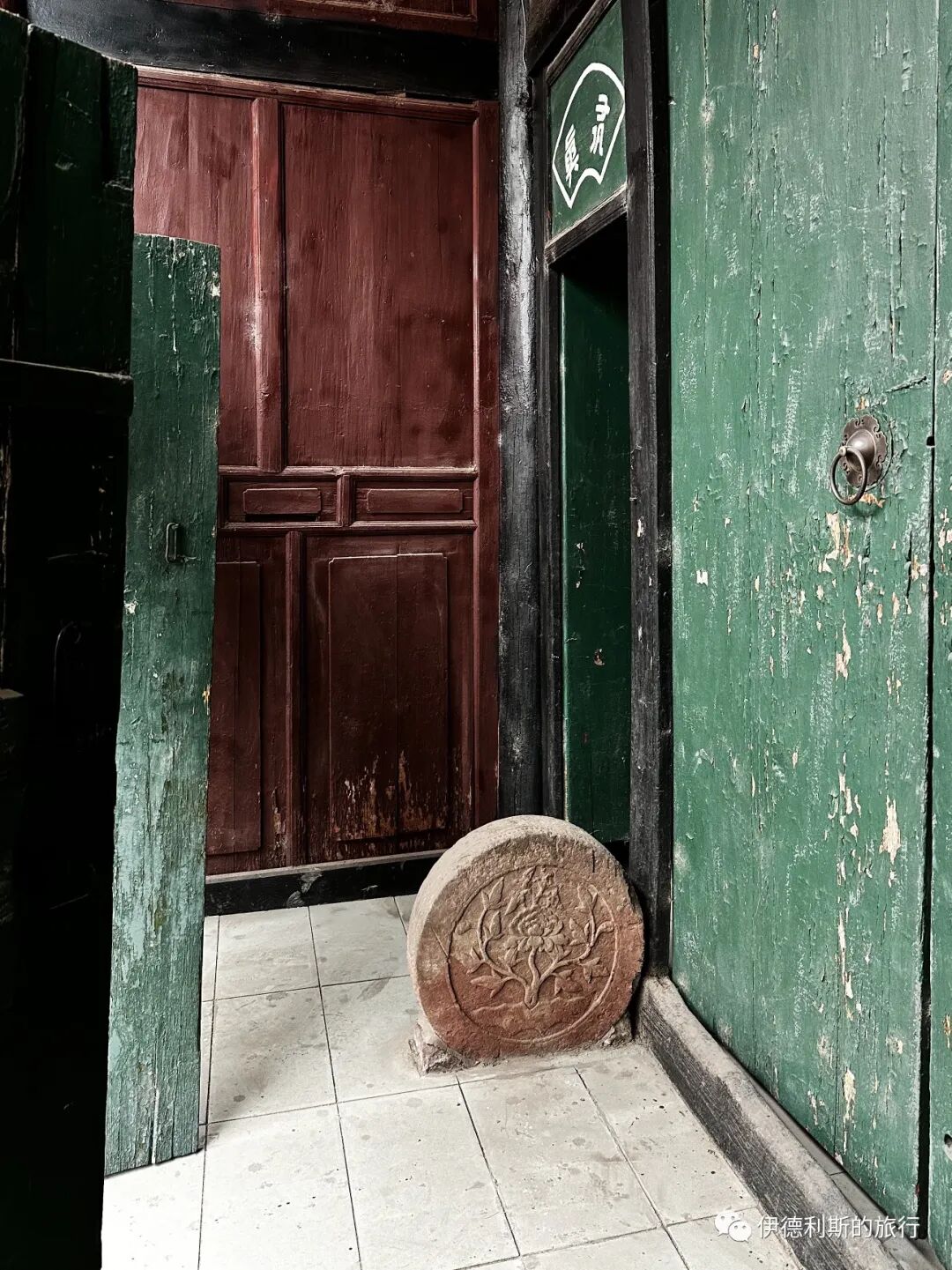
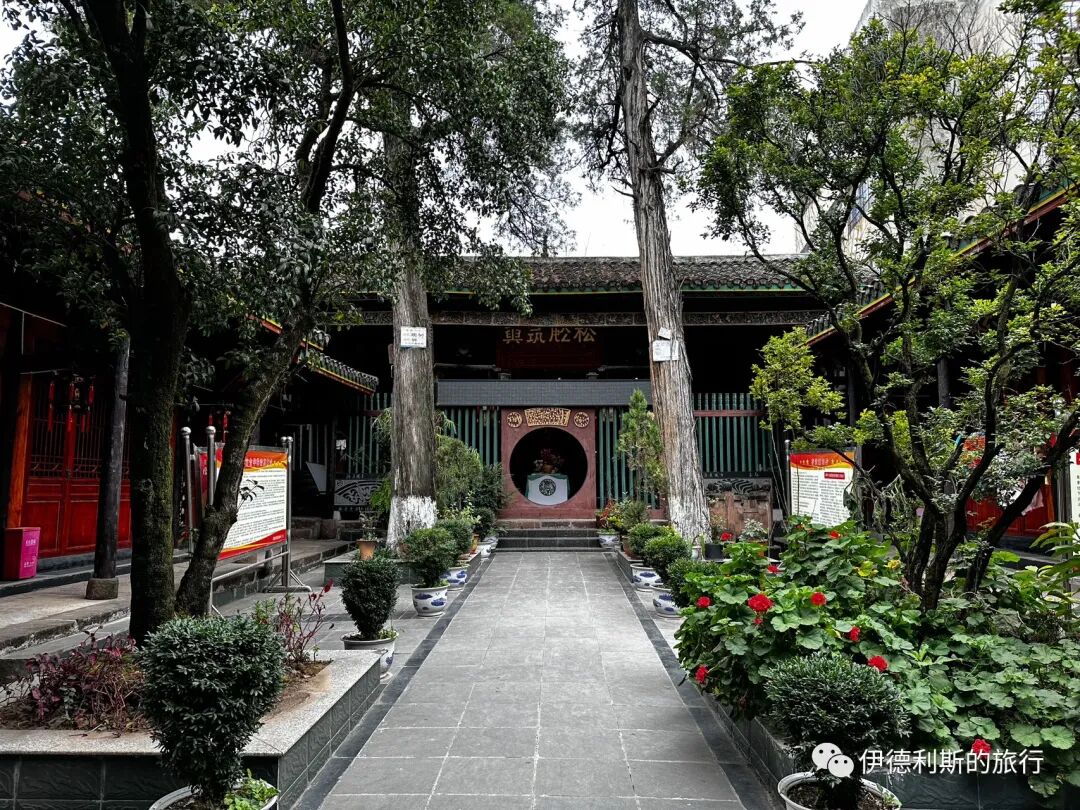
On the west side of the second courtyard is the entrance hall and the main prayer hall. After the 1960s, the entrance hall (baoting) and the two side rooms were taken over by a school, and the main prayer hall was closed off. They were not restored until after the 1980s. Today, the entrance hall and the main prayer hall are hung with various plaques and couplets in Chinese and Arabic, which are precious cultural heritage items of the mosque.
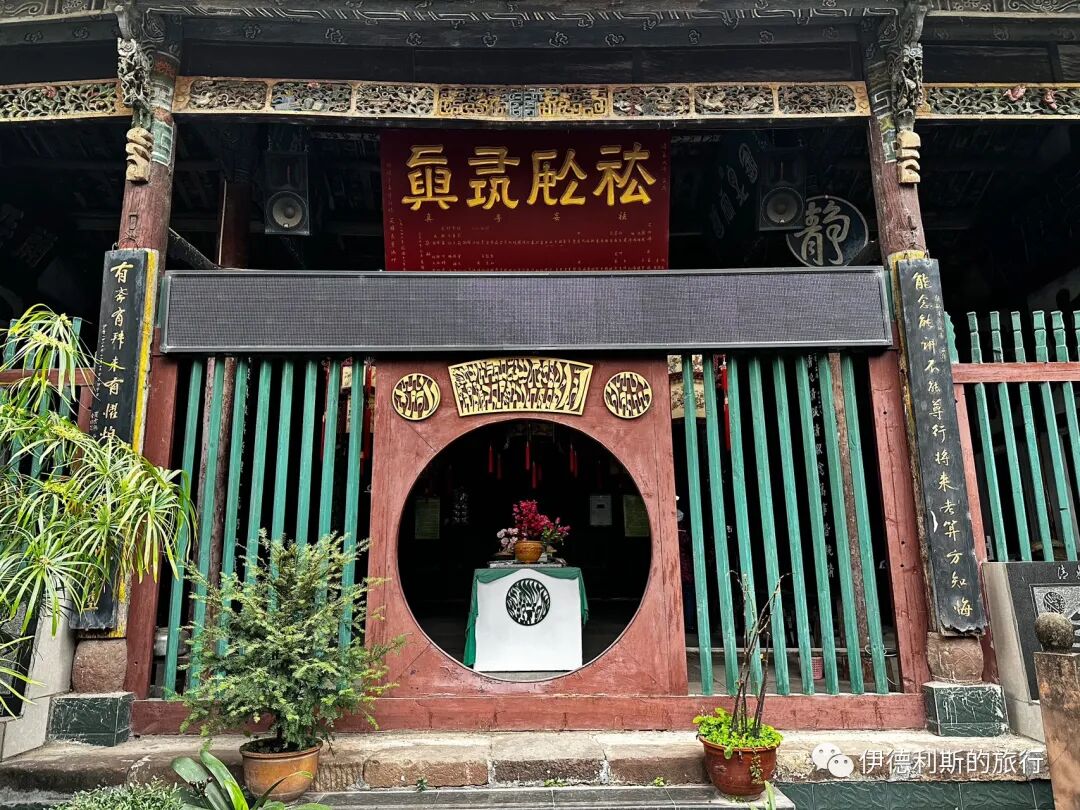
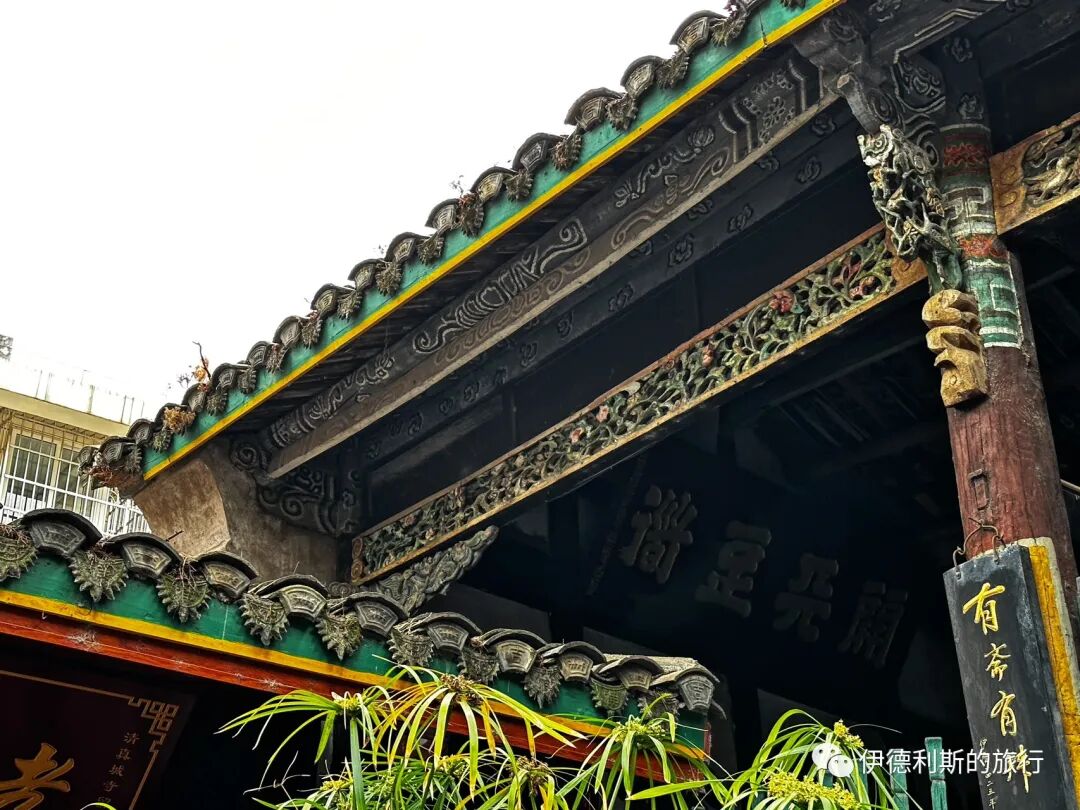
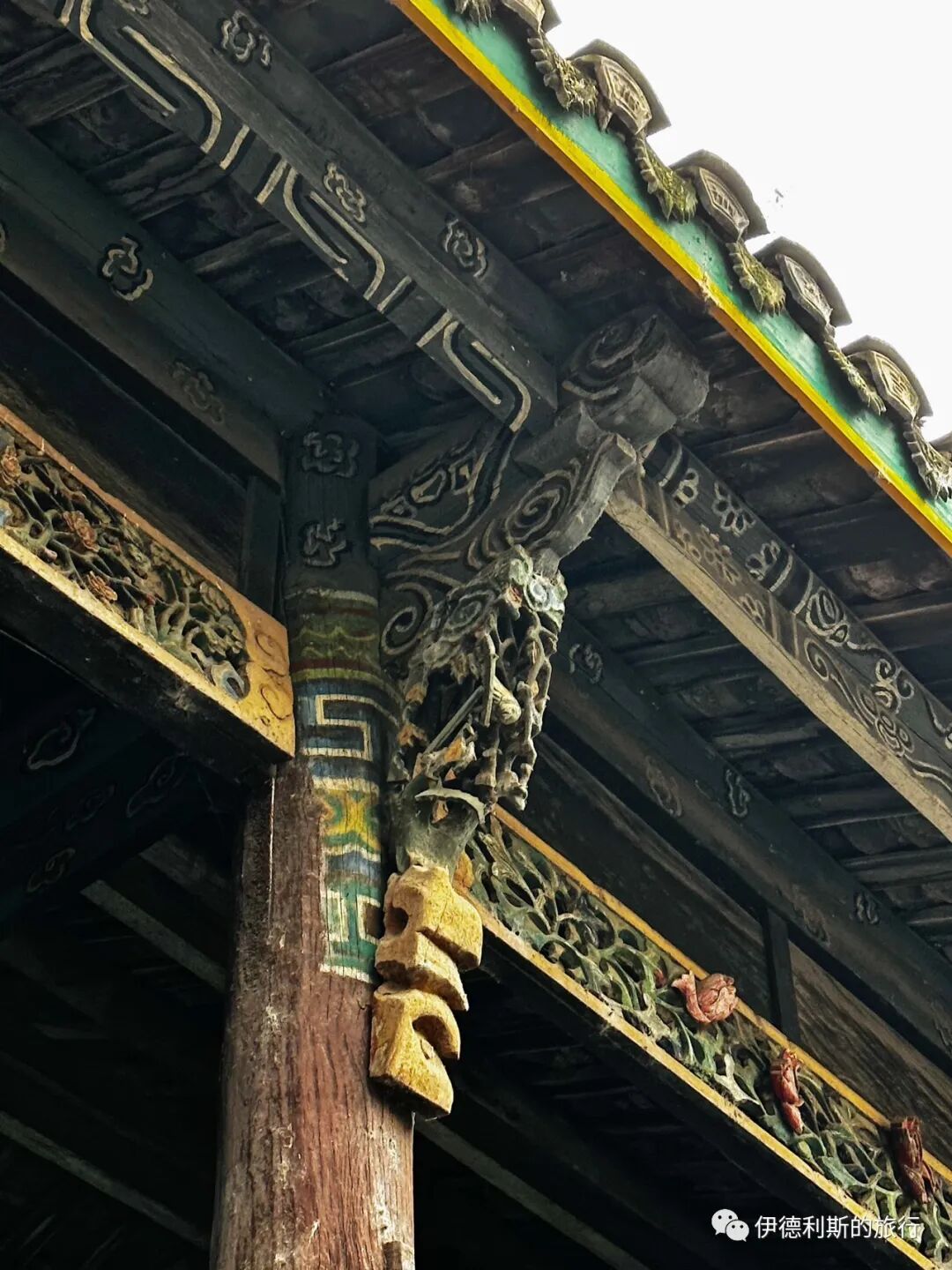
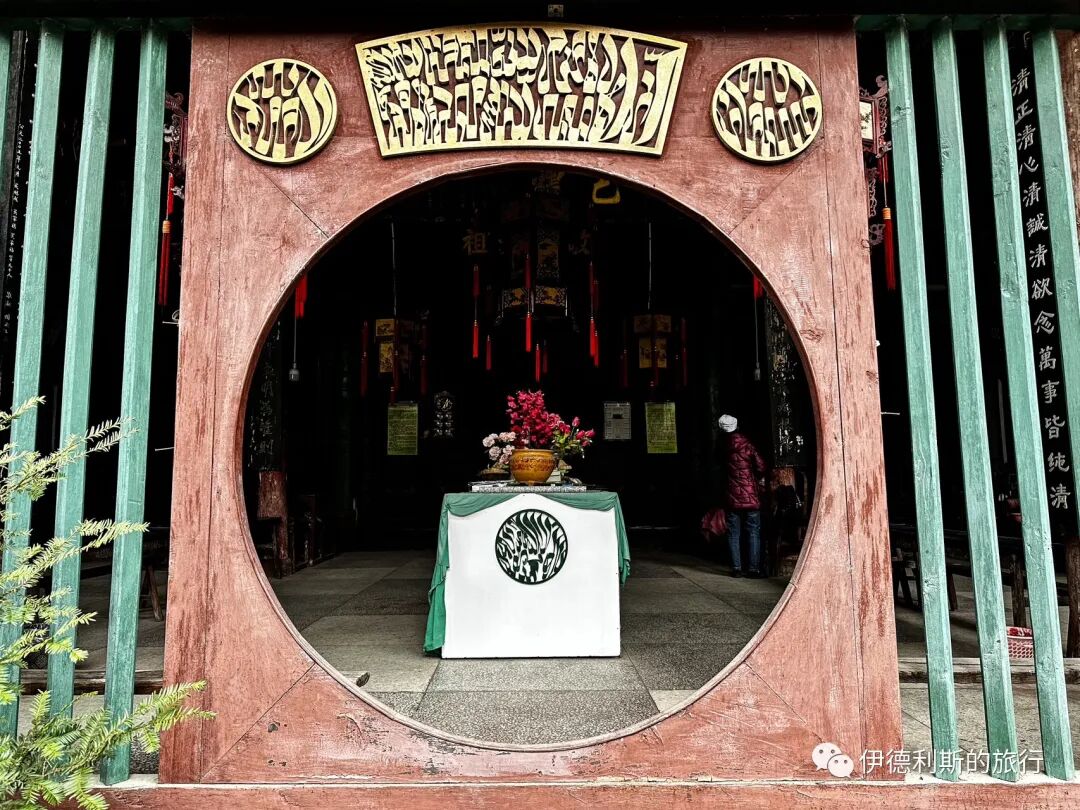
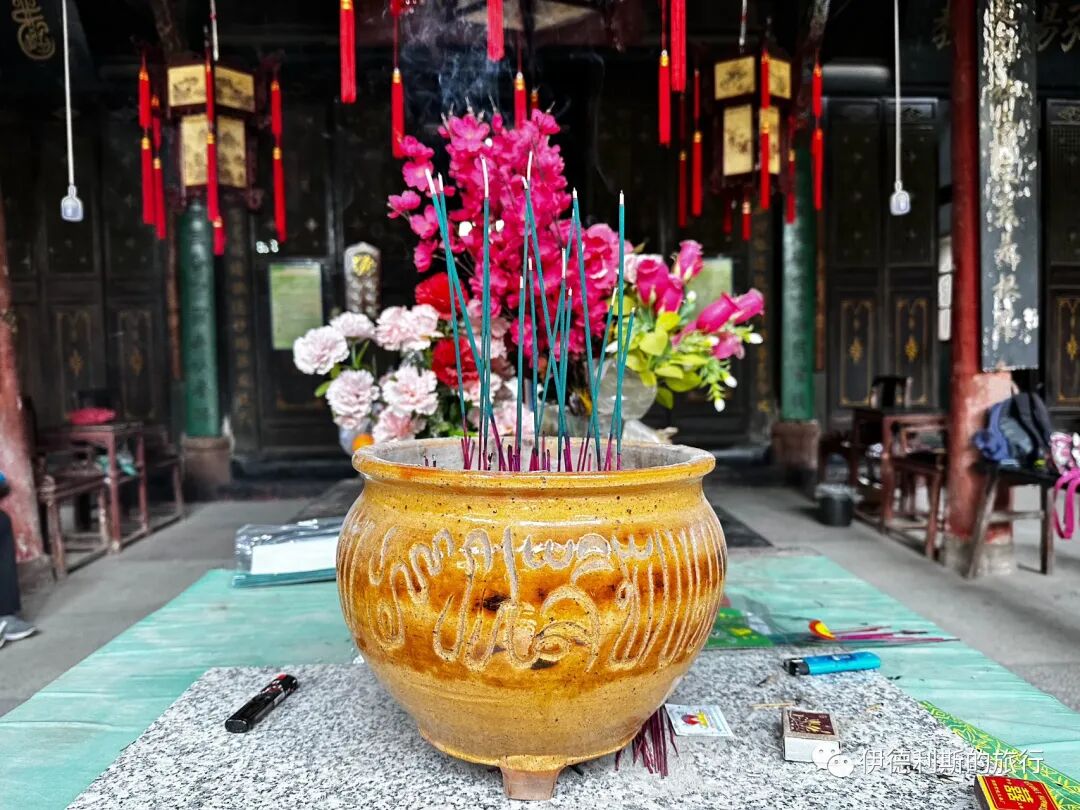
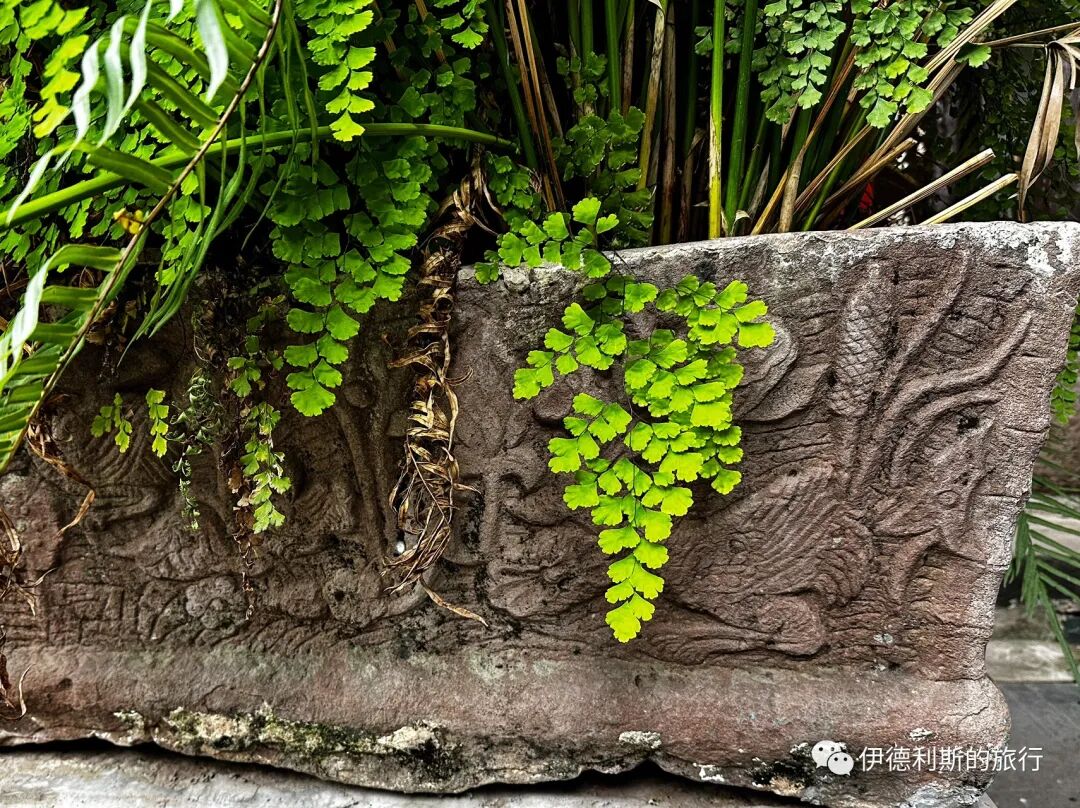
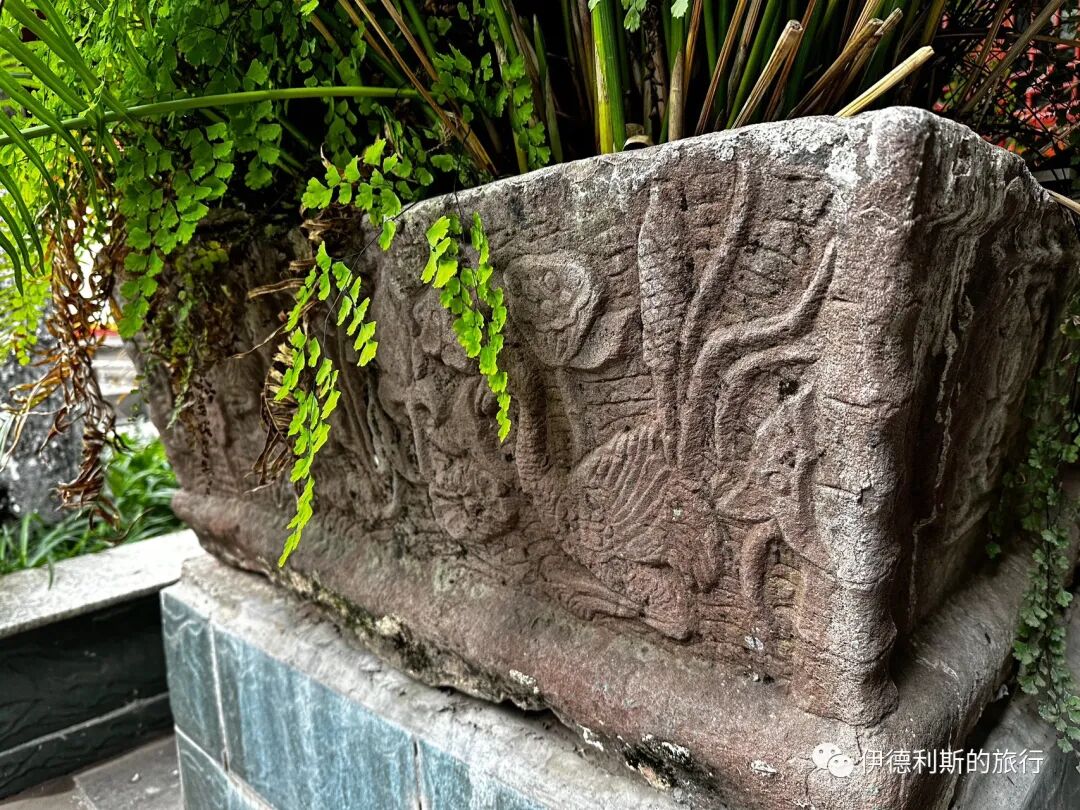
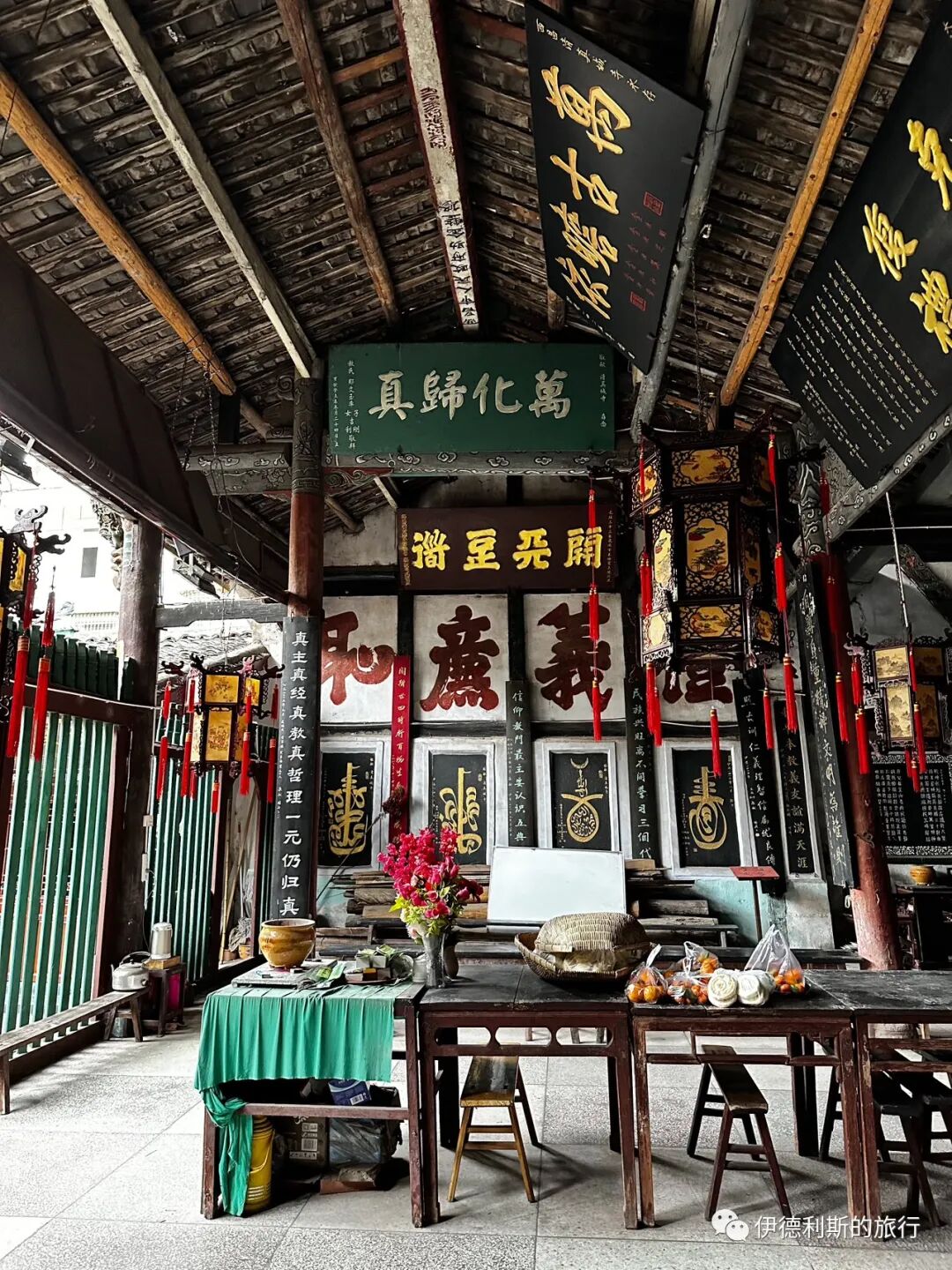
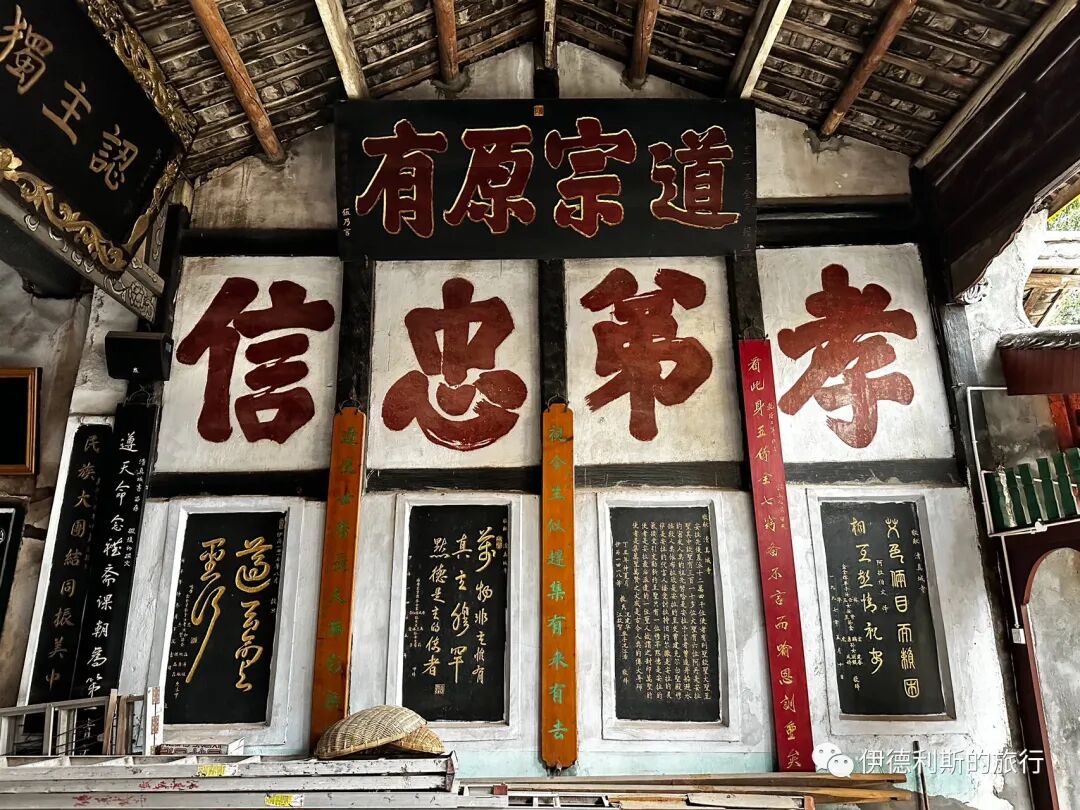
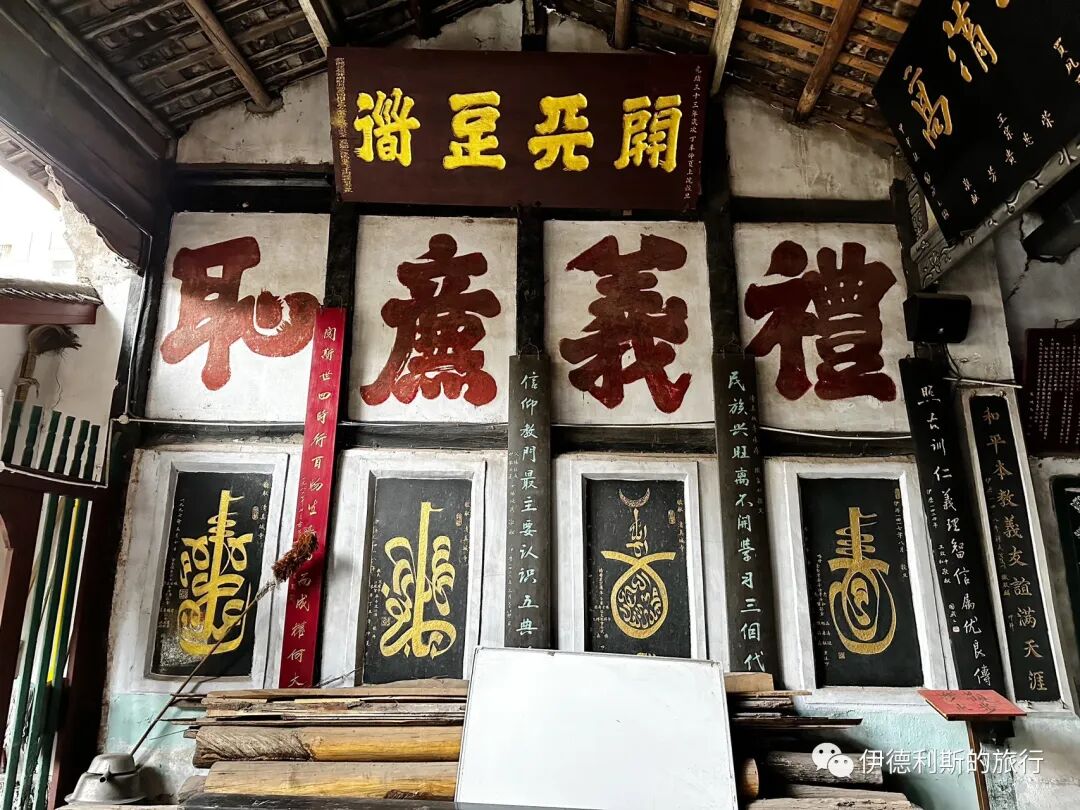
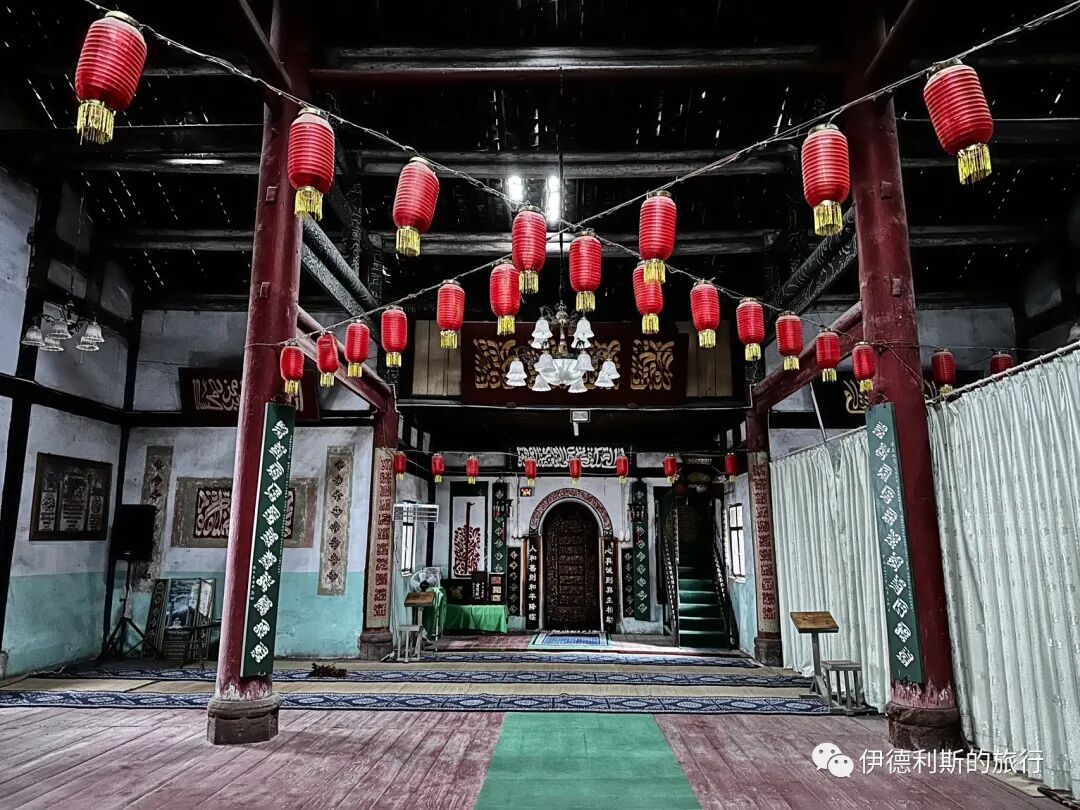
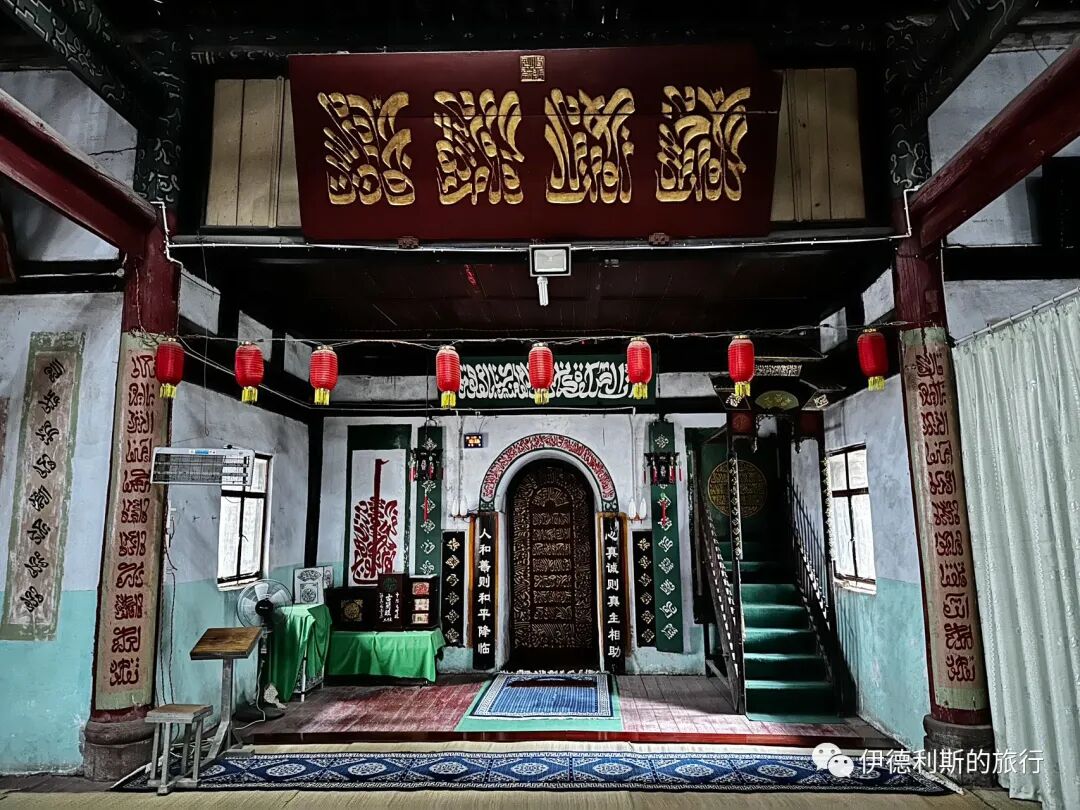
Inside the main prayer hall are the mihrab, minbar, scripture box, and various plaques and couplets.
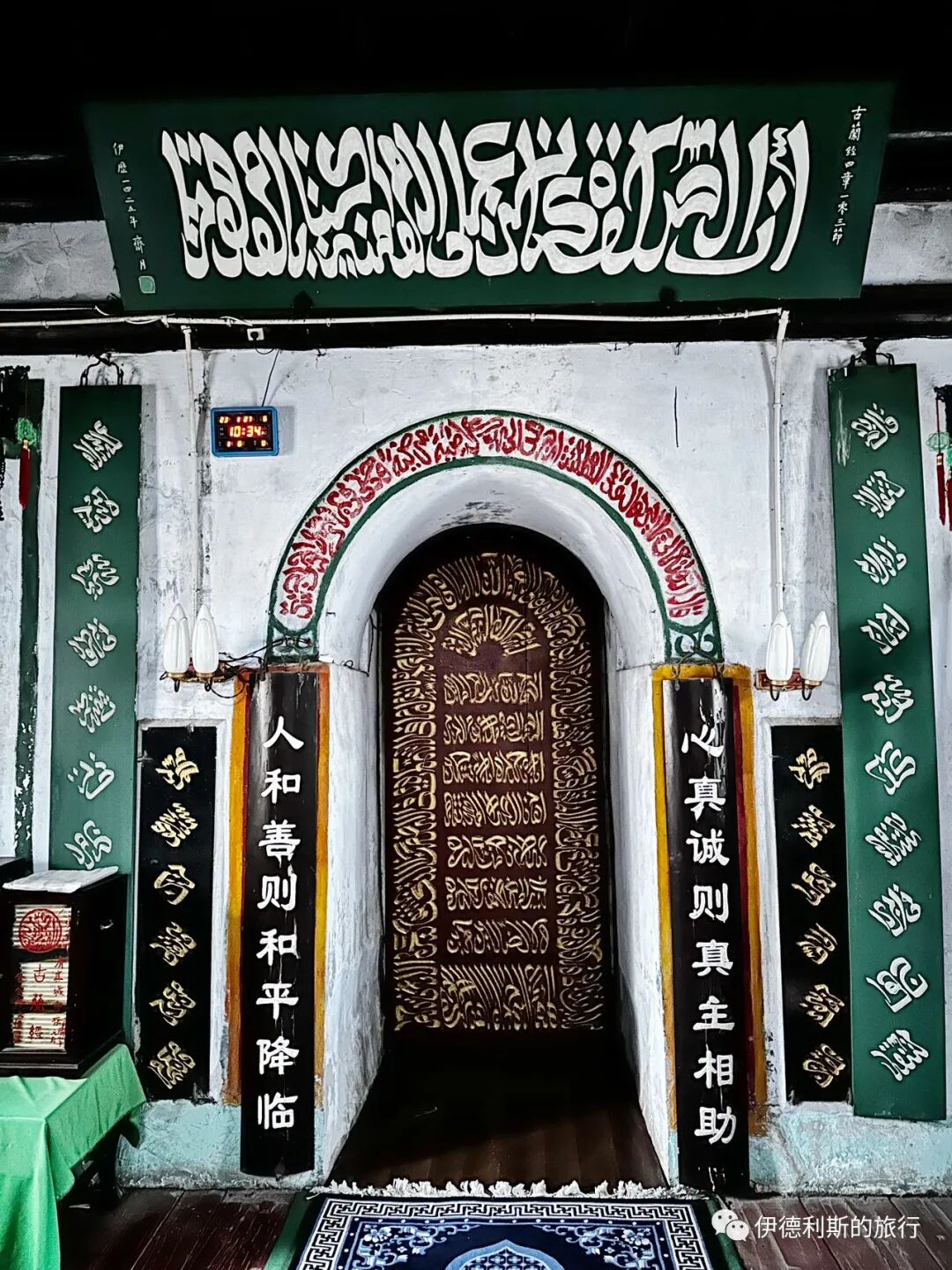
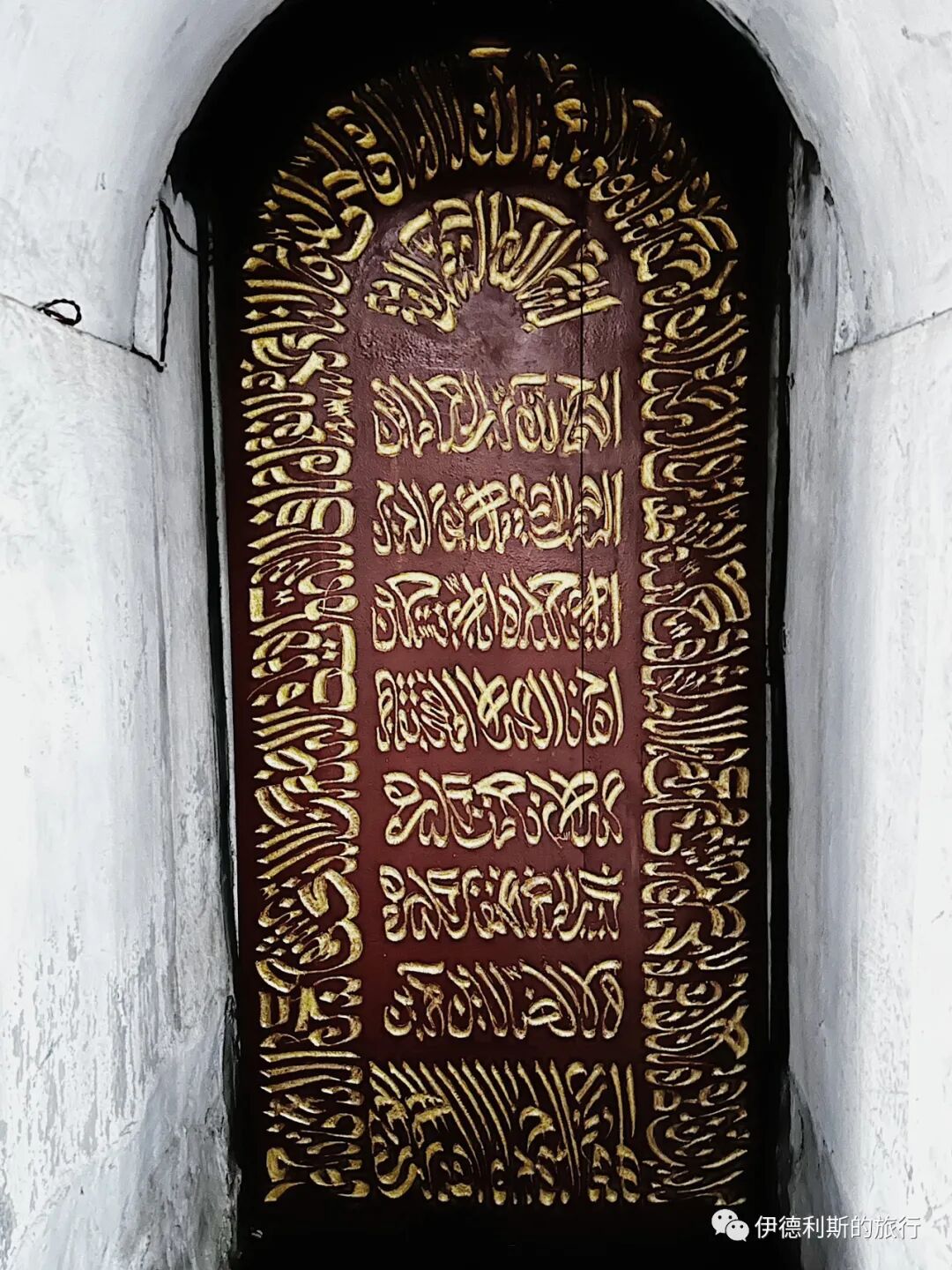
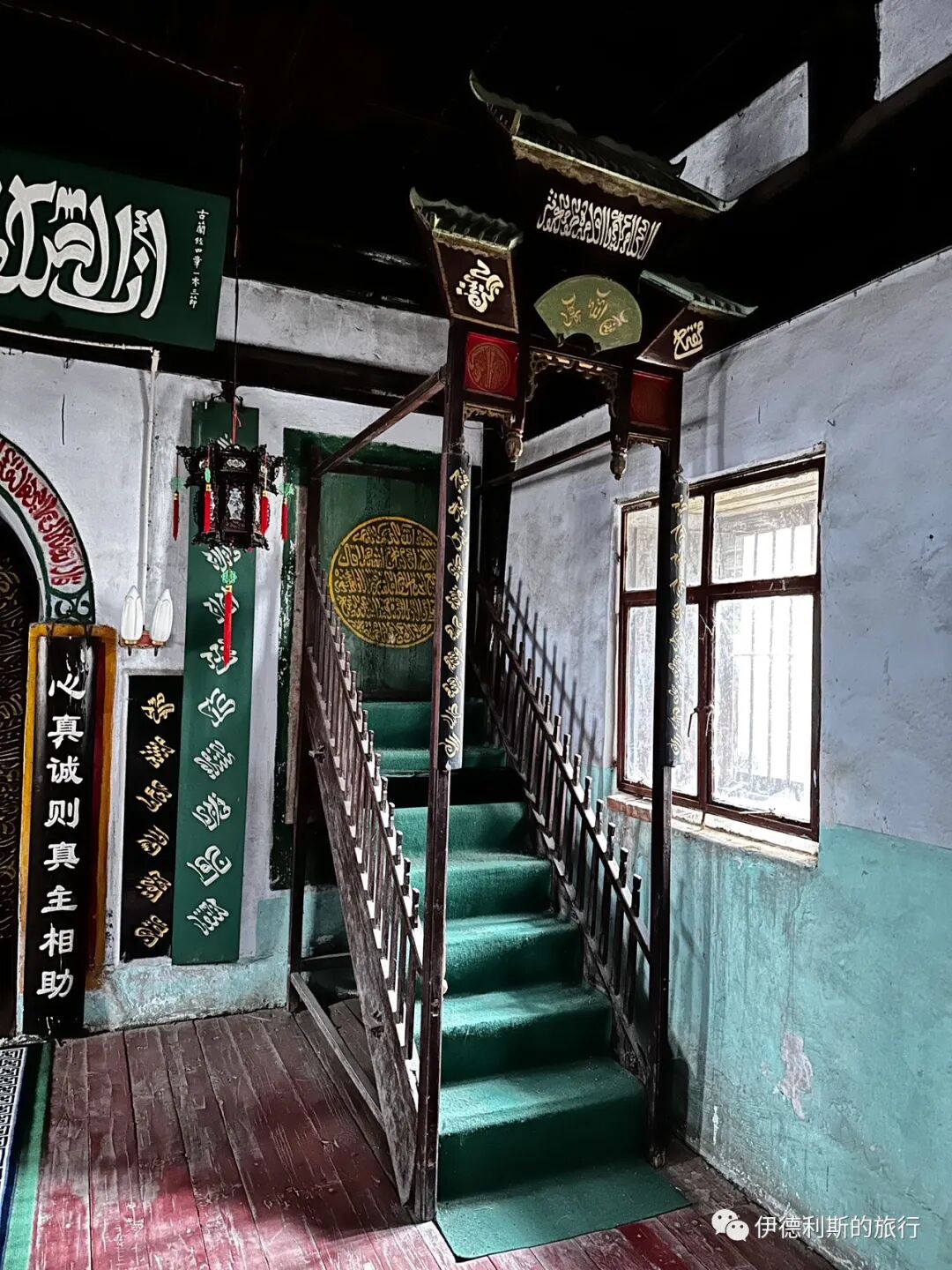
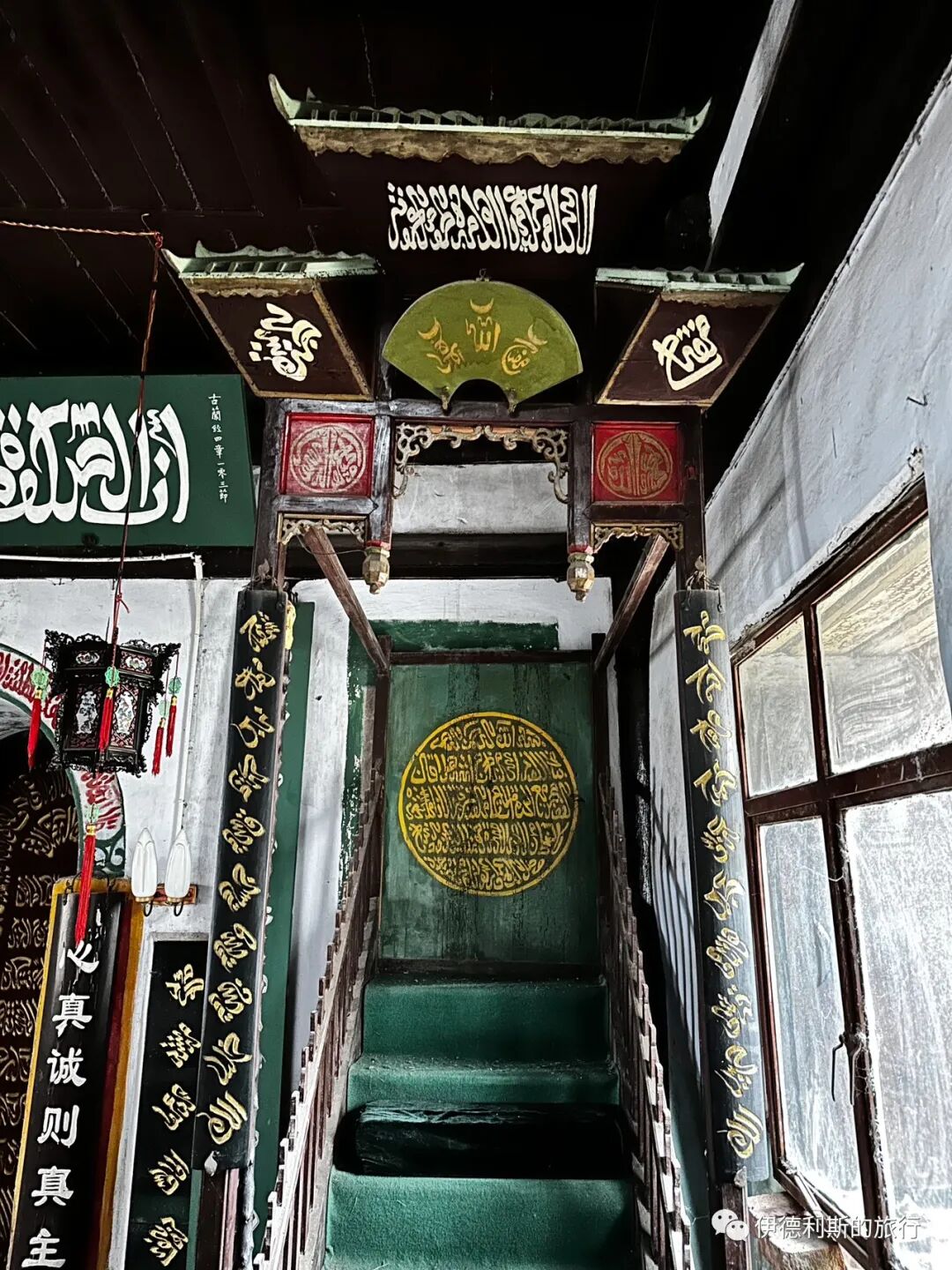
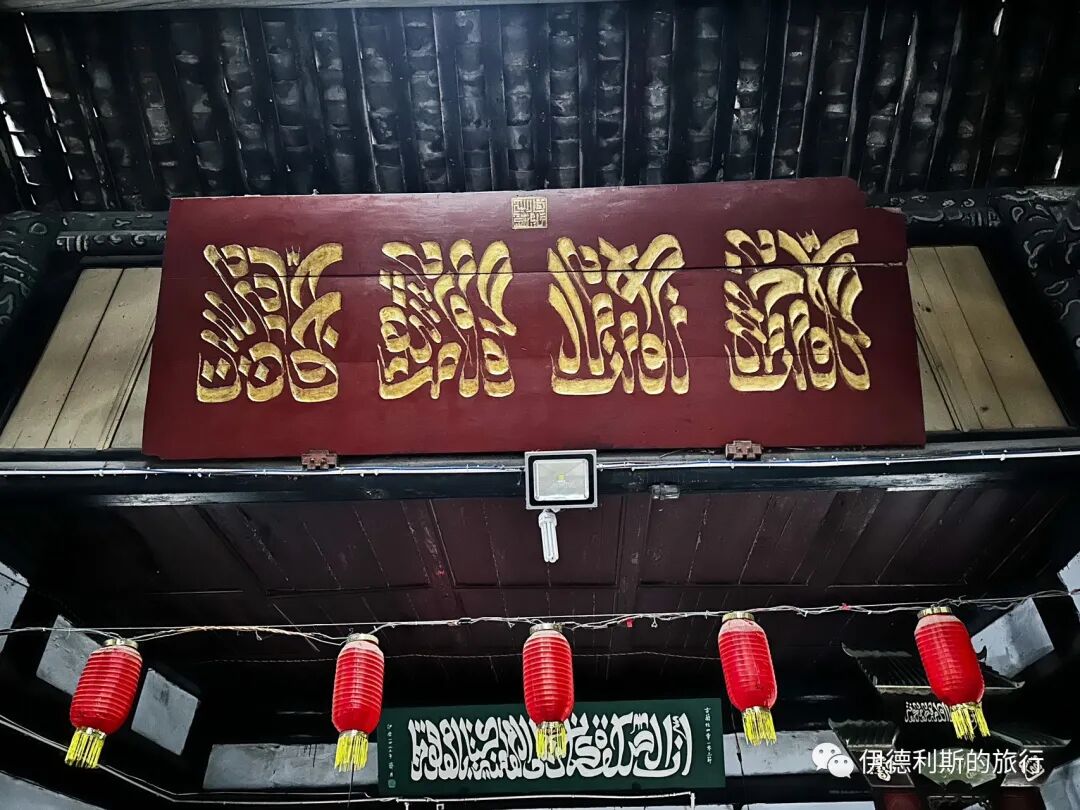
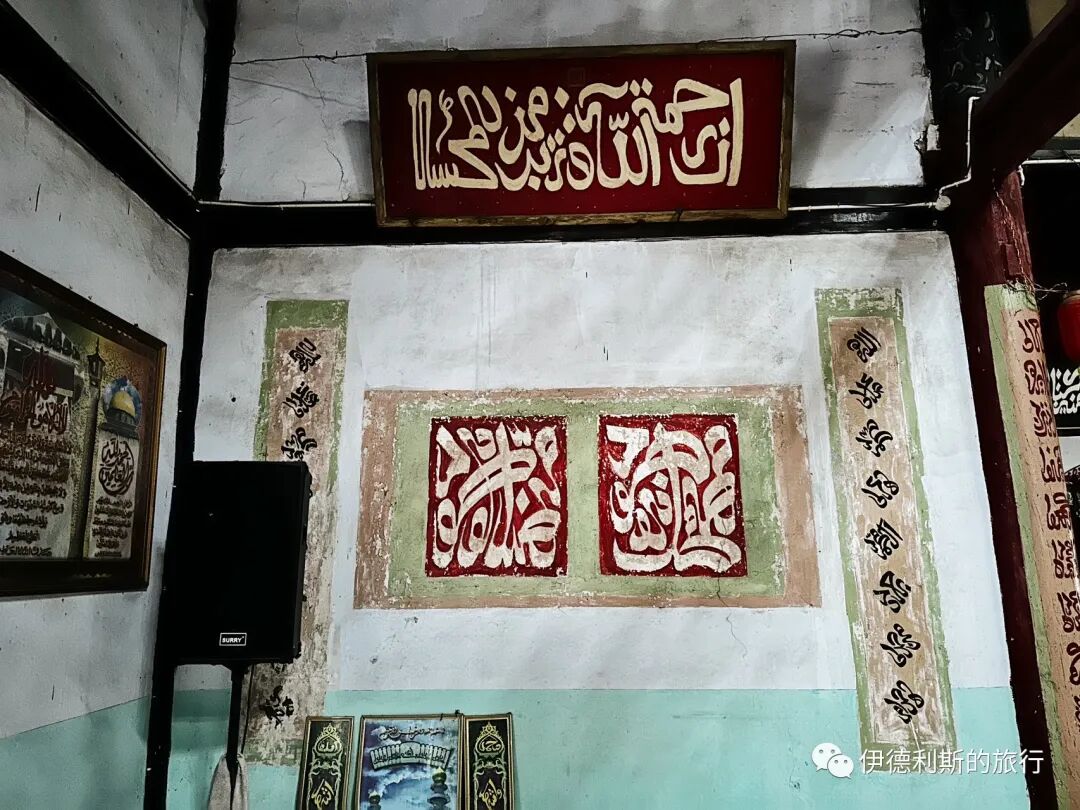
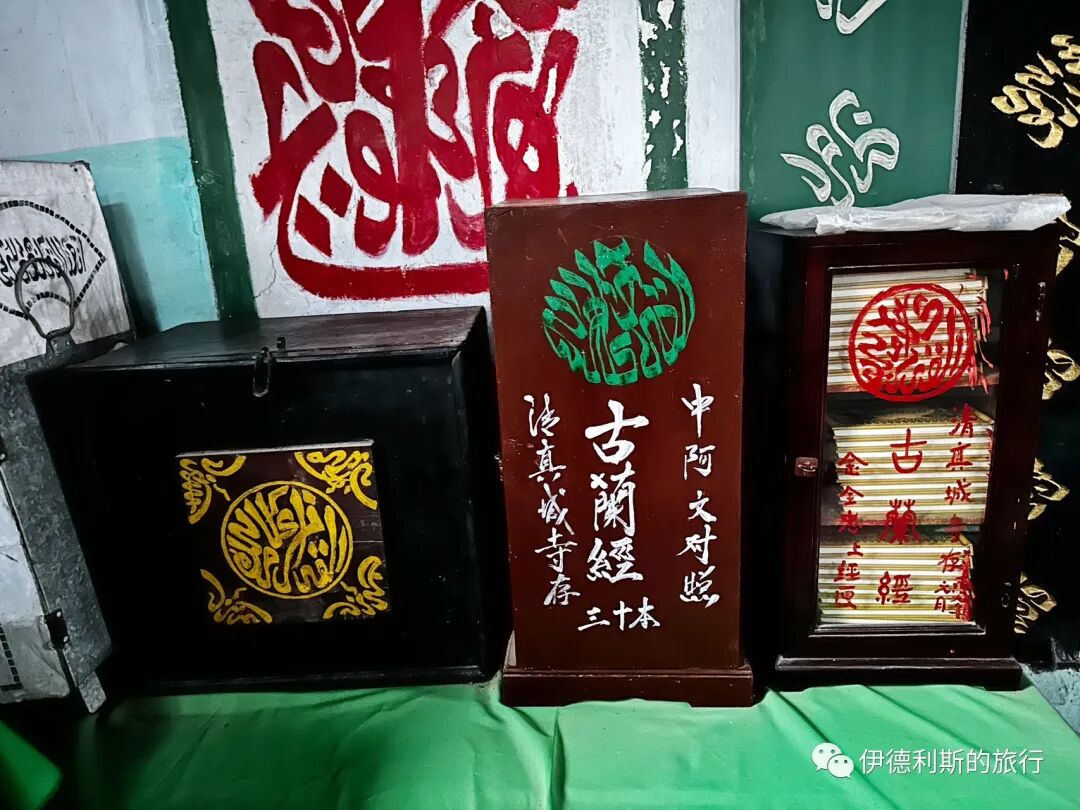
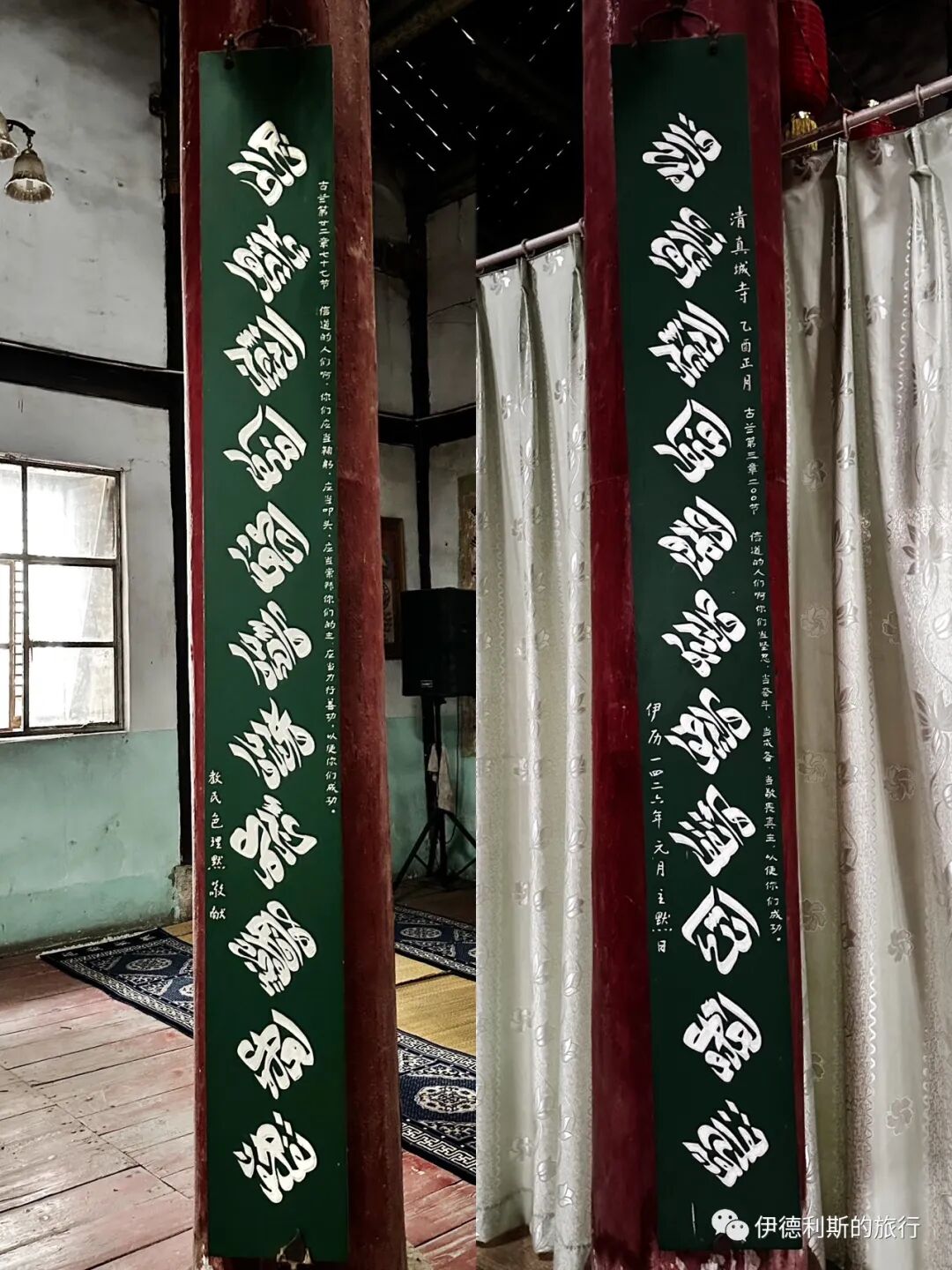
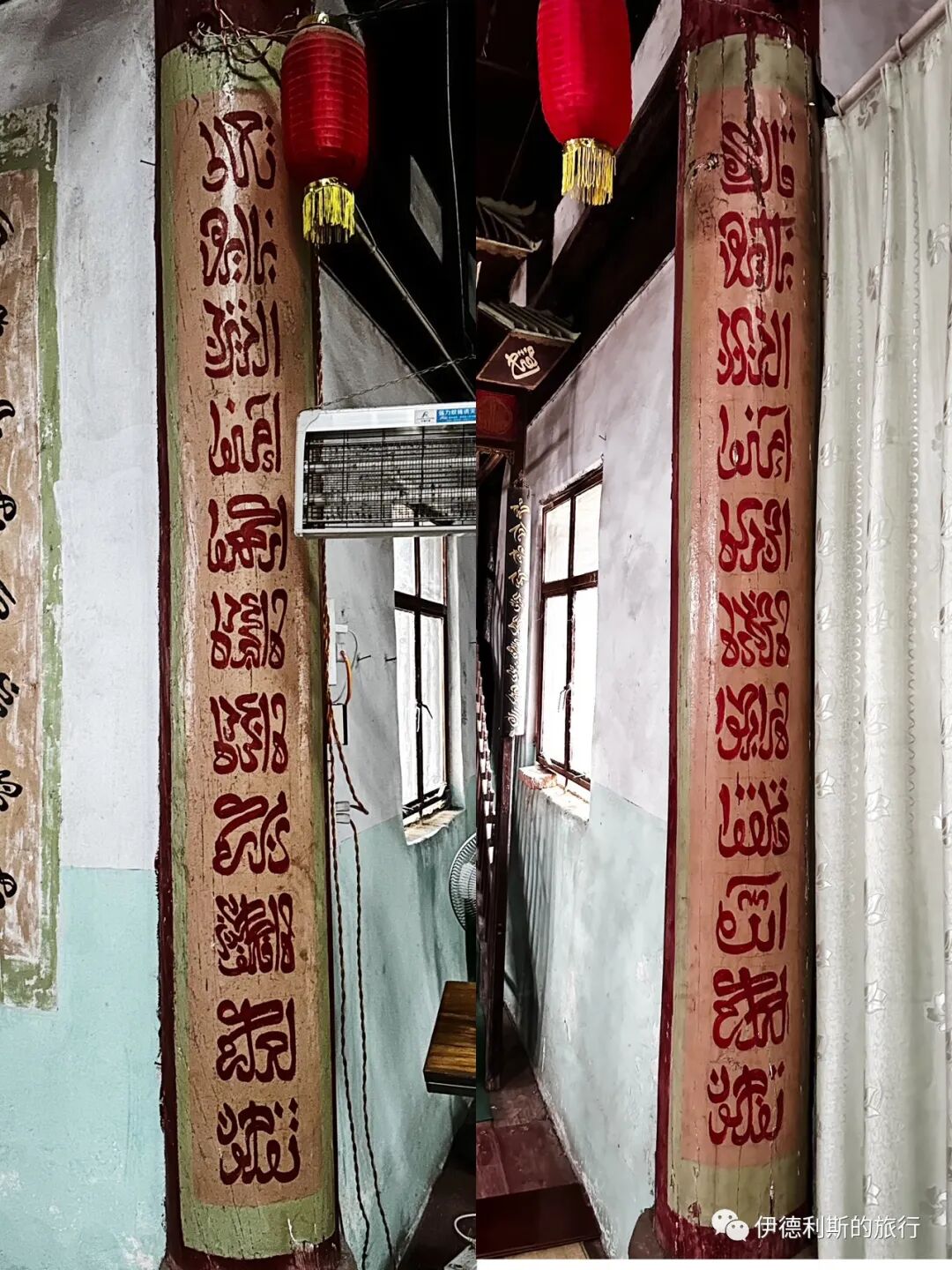
The mosque holds plaques from different periods, ranging from the Qing Dynasty and the Republic of China era to after the 1990s.
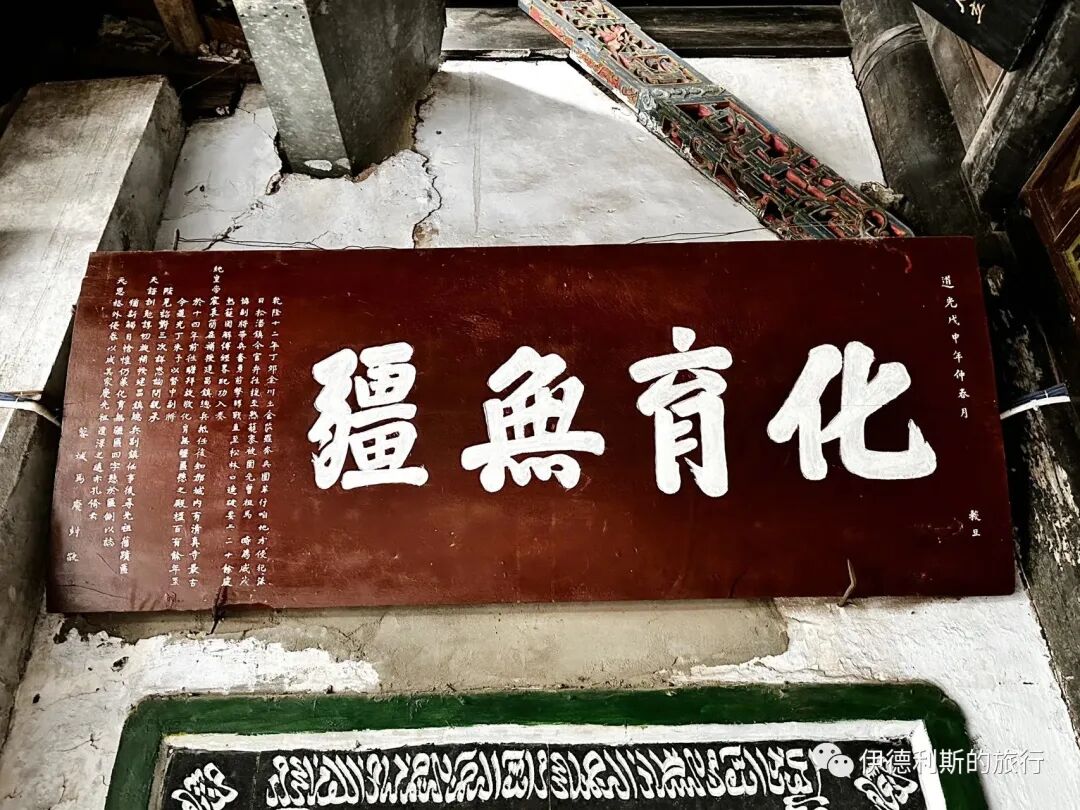
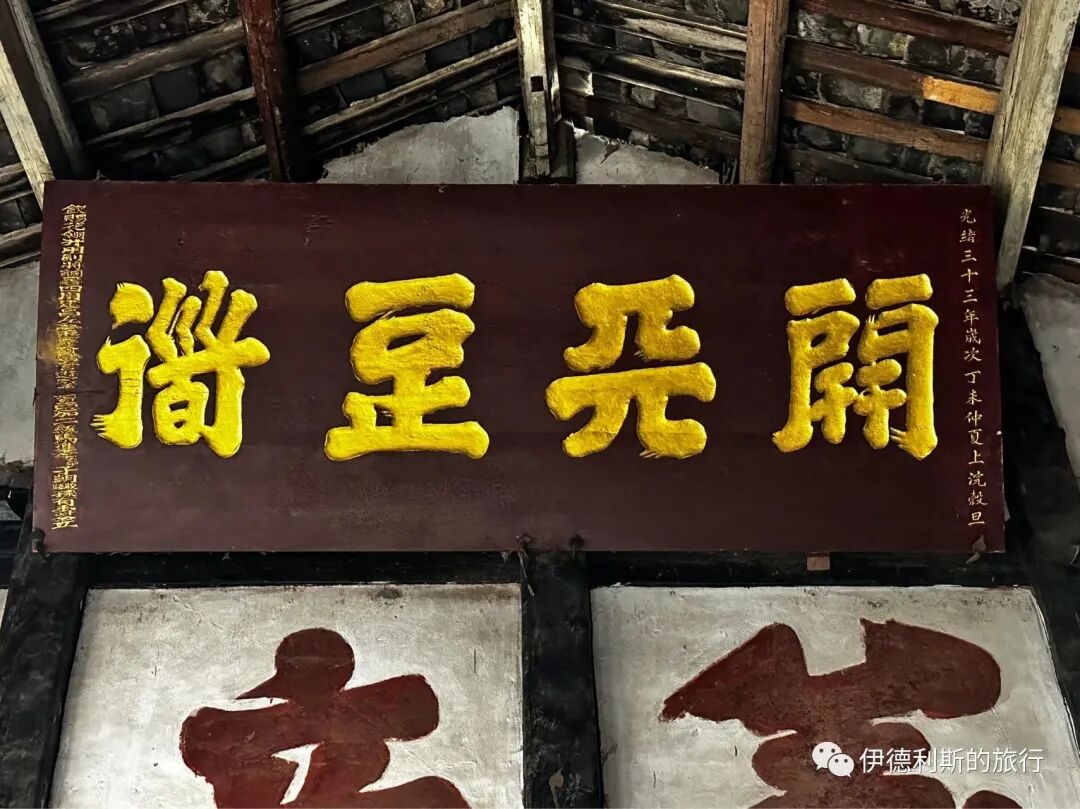
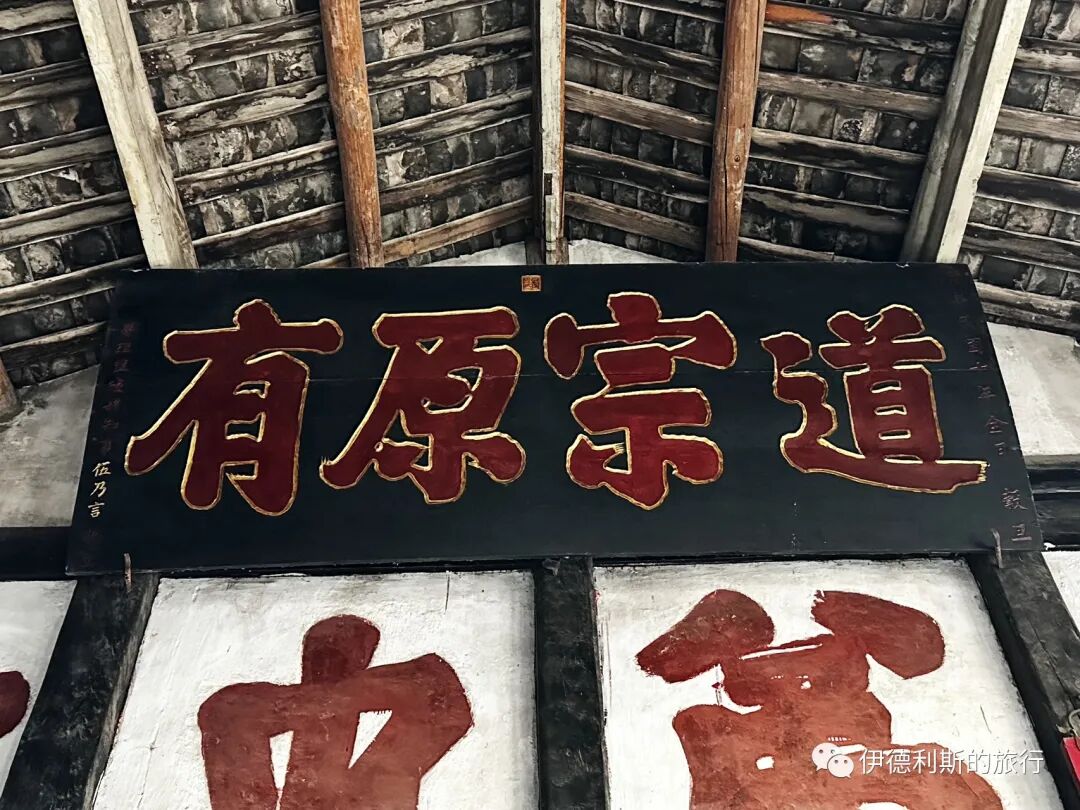
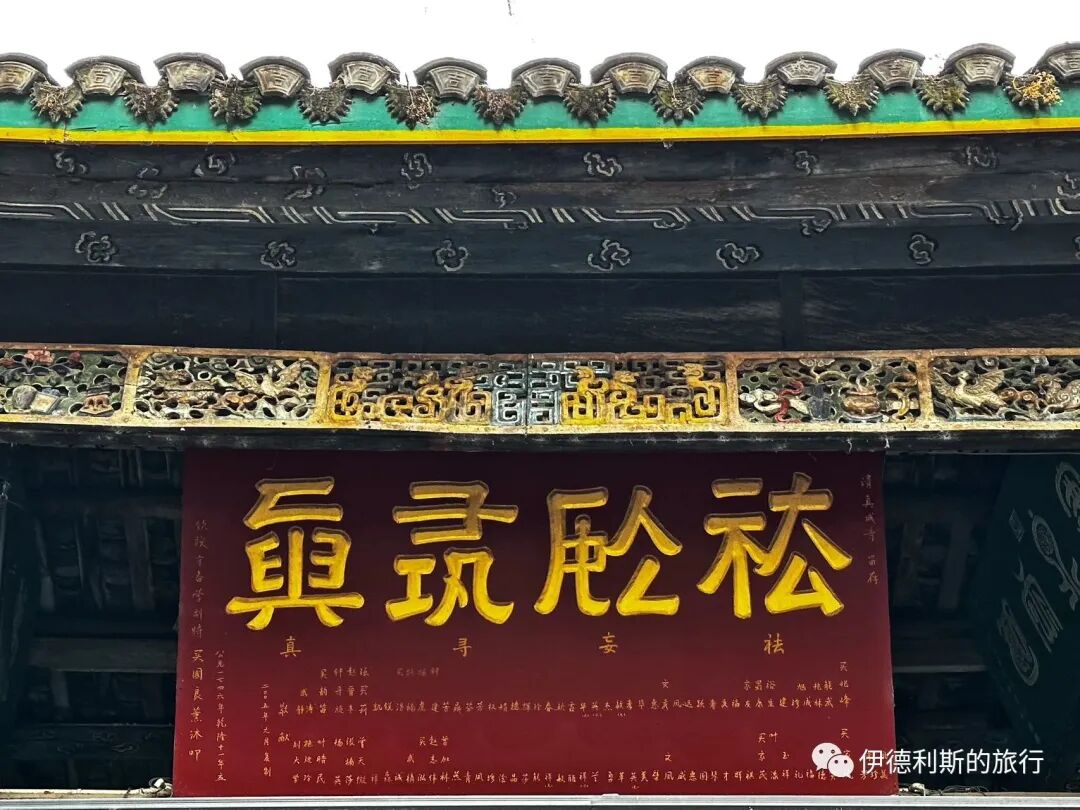
The plaque reading 'Qu Wang Xun Zhen' (Seeking Truth by Eliminating Falsehood) was replicated in 2005 from the original 1746 (11th year of Qianlong) version. The donor, Deputy General Mai Guoliang of the garrison, had ancestral roots in Fengxiang, Shaanxi. He settled in Xichang in 1738 (3rd year of Qianlong) due to military service, and his descendants are known as the Mai family of Shaanxi.
Imam Sa Fuchu was a famous Arabic calligrapher in Xichang.
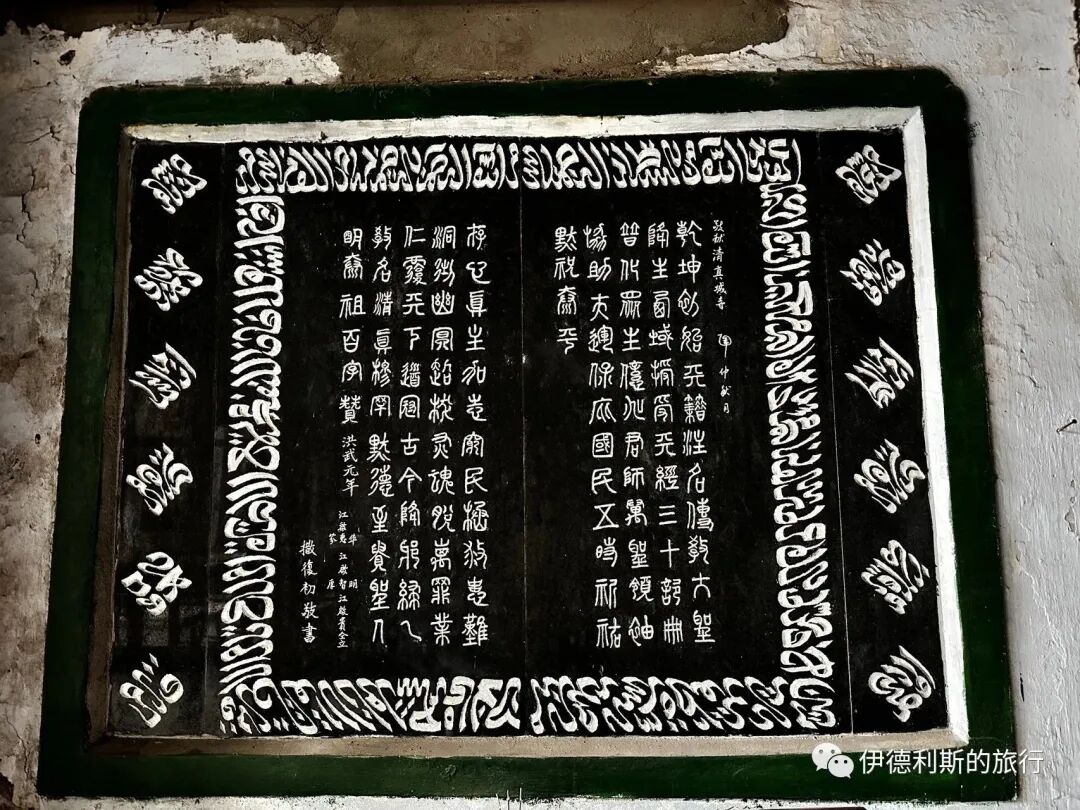
Imam Sa passed away in 2014 at the age of 89.
Lao Hao Qingzhen Yuan restaurant.
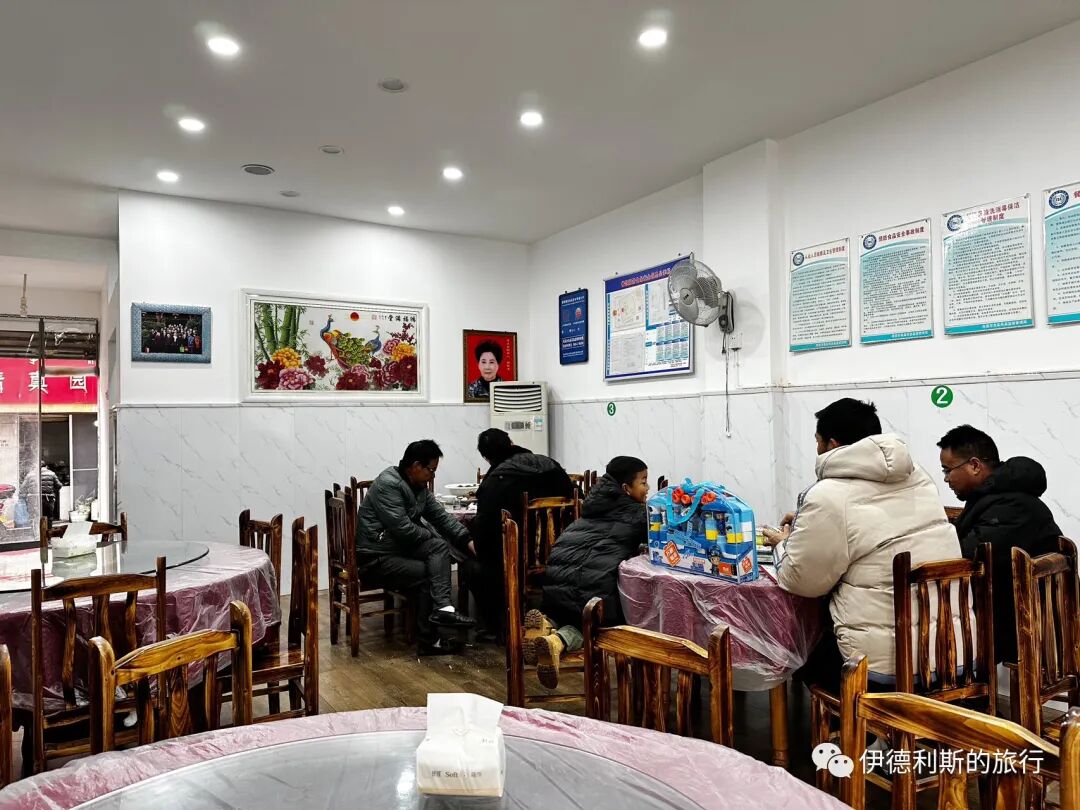
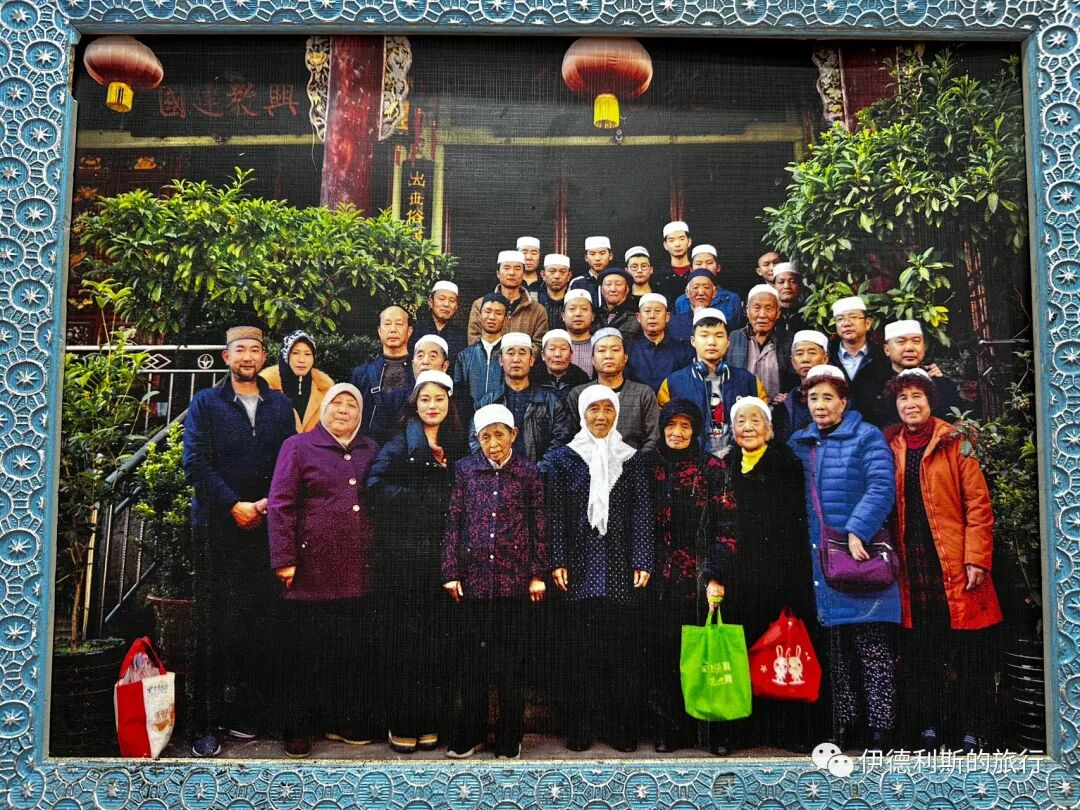
In the afternoon, I ate at the main branch of Lao Hao Qingzhen Yuan near the Xichang West Mosque. It is a restaurant serving traditional halal stir-fry dishes, and the owner is a member of the Yang family, who are community leaders (gaomu) of the Xichang West Mosque.
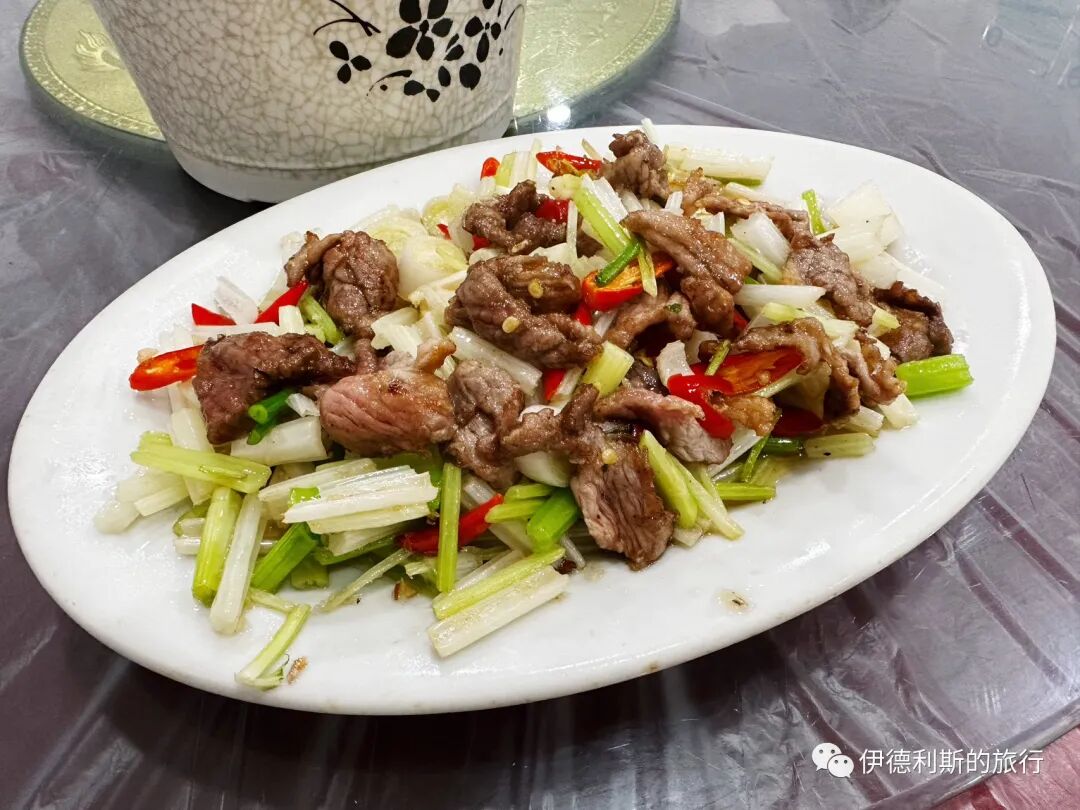
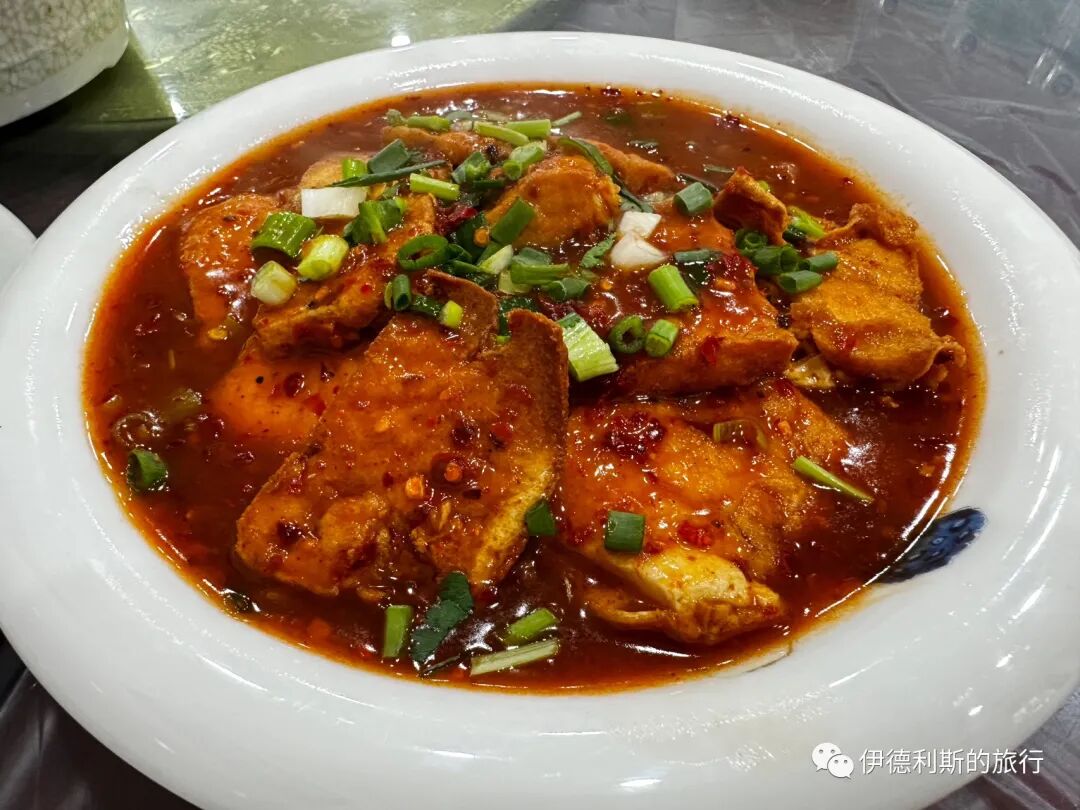
I ordered the small stir-fried meat (xiaochao rou) and bear paw tofu (xiongzhang doufu), and they also served me lotus leaf tea. It was my first time seeing a restaurant serve lotus leaf tea, and it smelled quite fragrant. The food arrived just five minutes after I ordered; they stir-fry really quickly! The small stir-fried meat is a classic, but it was my first time eating bear paw tofu. 'Bear paw' is actually what Sichuanese people call pan-fried tofu. It is a specialty Sichuan dish stir-fried with bean paste (doubanjiang) that is spicy and rich. It made my nose run and my eyes water, but Sichuan food is truly satisfying!
Xichang West Mosque.
Because the city bought up all the houses during the renovation of the Jianchang Ancient City, there are no longer community leaders (gaomu) living around the city mosque. Relatively speaking, the West Mosque outside the Jianchang Ancient City still maintains the layout of a traditional mosque neighborhood, and there are more halal restaurants nearby.
The Xichang West Mosque is also called the Mashuihe Mosque outside the city. Mashuihe Street has been a street for the Hui Muslim leather industry since the Qing Dynasty. The West Mosque was first built in 1801 (6th year of Jiaqing). When the Xichang earthquake hit in 1850 (30th year of Daoguang), the mosque buildings collapsed and were rebuilt with funding from the Wool Guild, a trade association of local leather workers. In 1935, to stop the Red Army from entering the city, the Chuan-Kang border defense forces burned down 28 streets and alleys outside Xichang for three consecutive days. The West Mosque was also destroyed and was rebuilt in 1948. After 1958, the West Mosque was occupied and severely damaged. It was gradually reclaimed after 1978 and rebuilt into its current form after 1999.
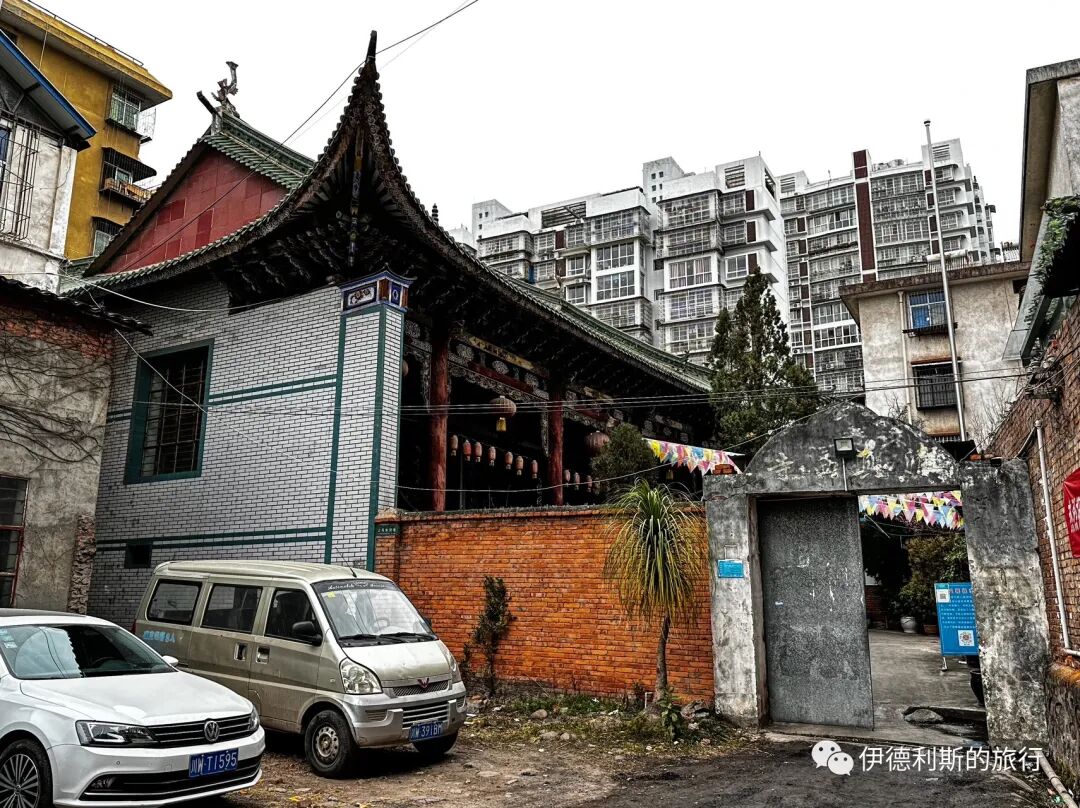
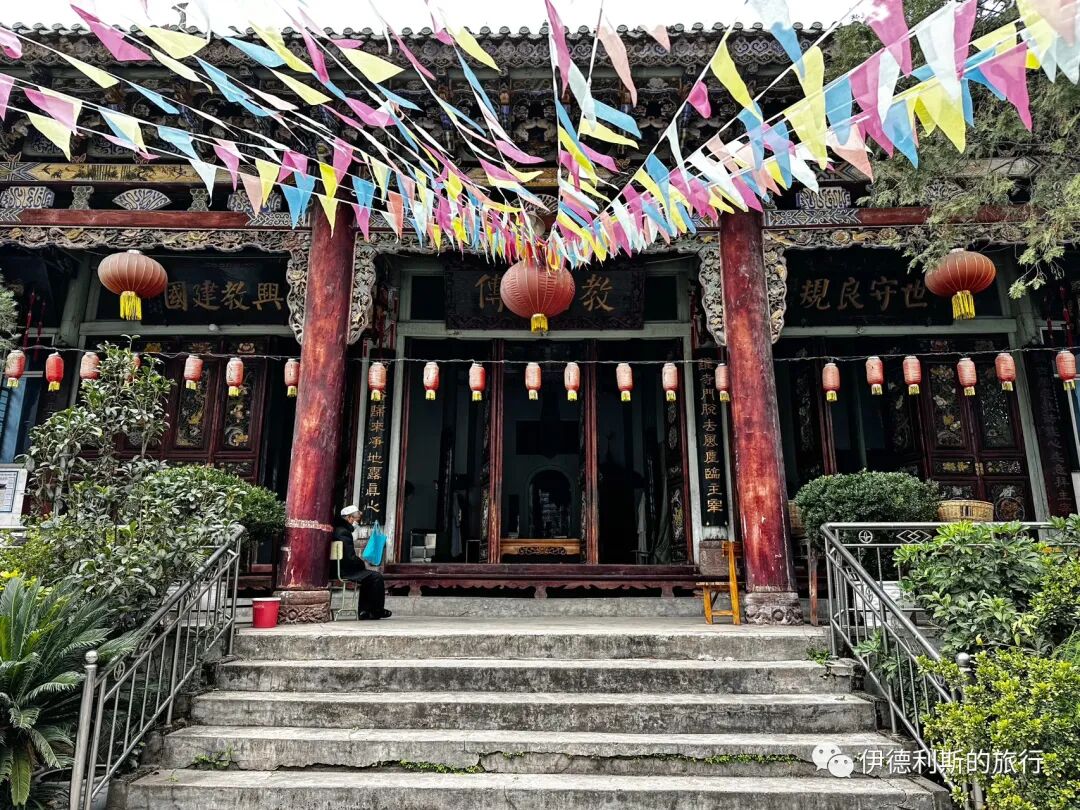
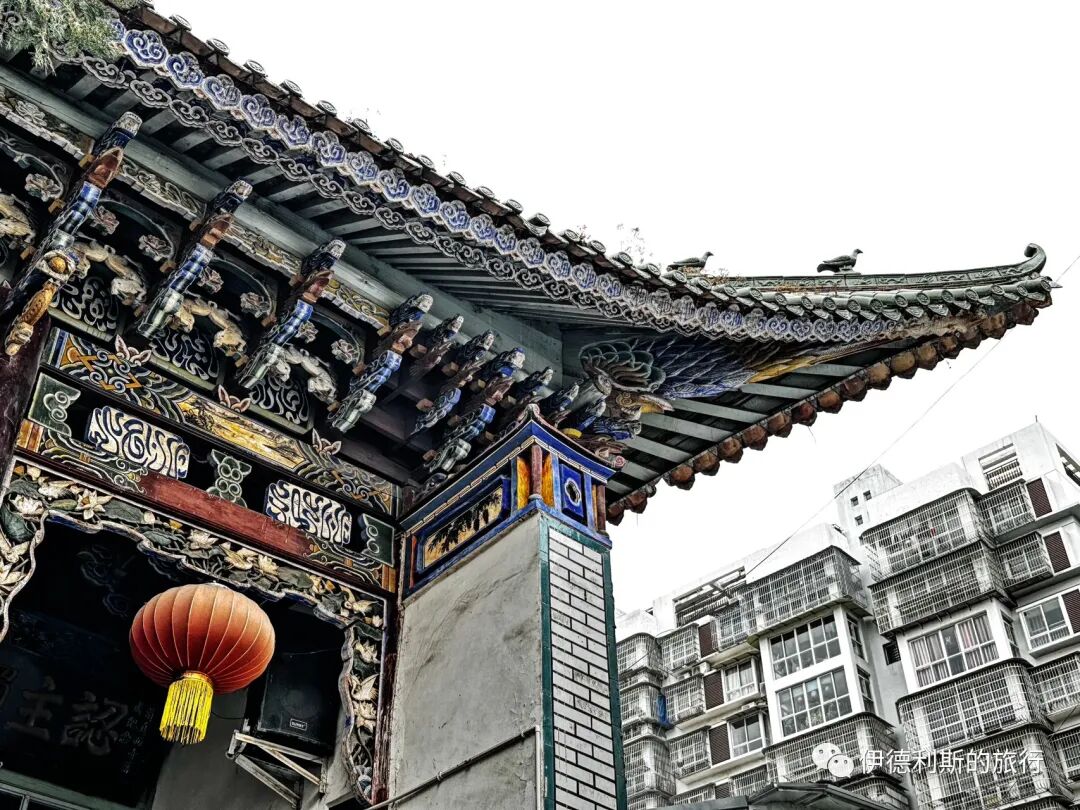
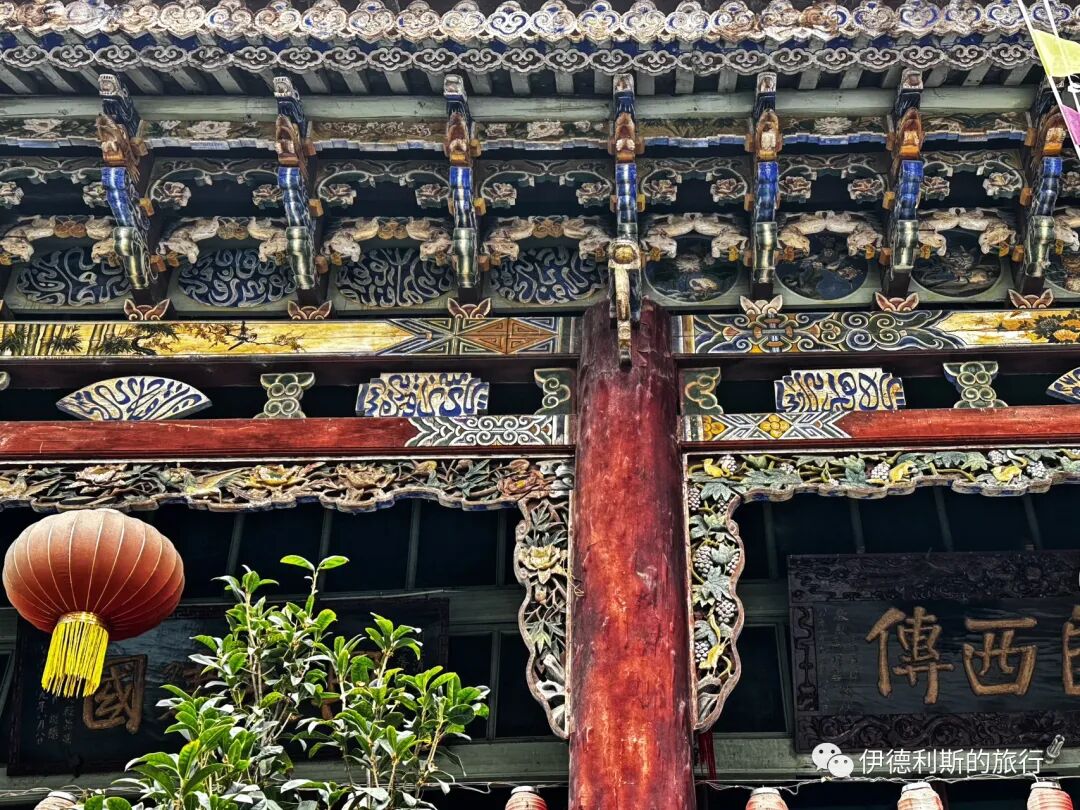
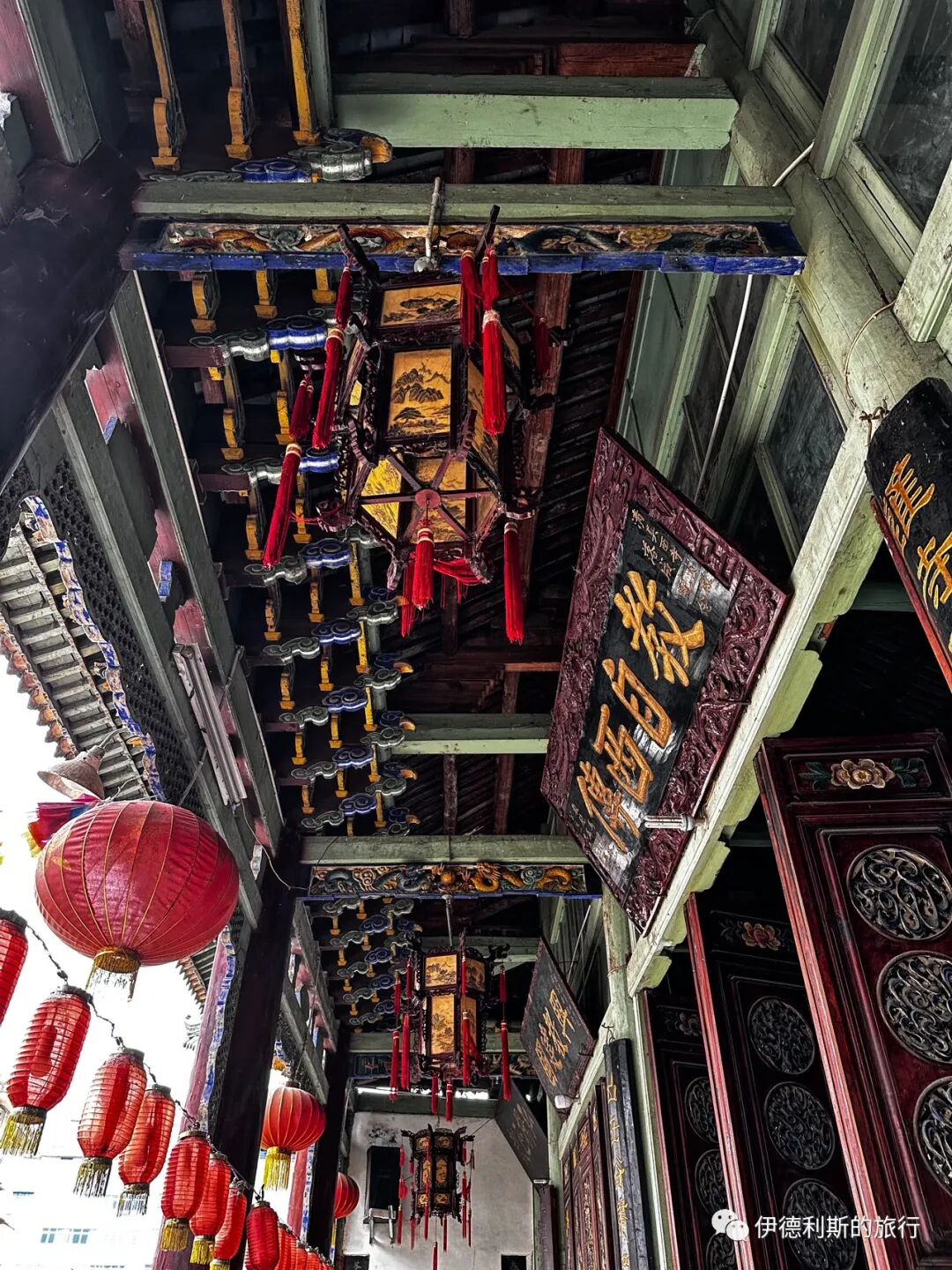
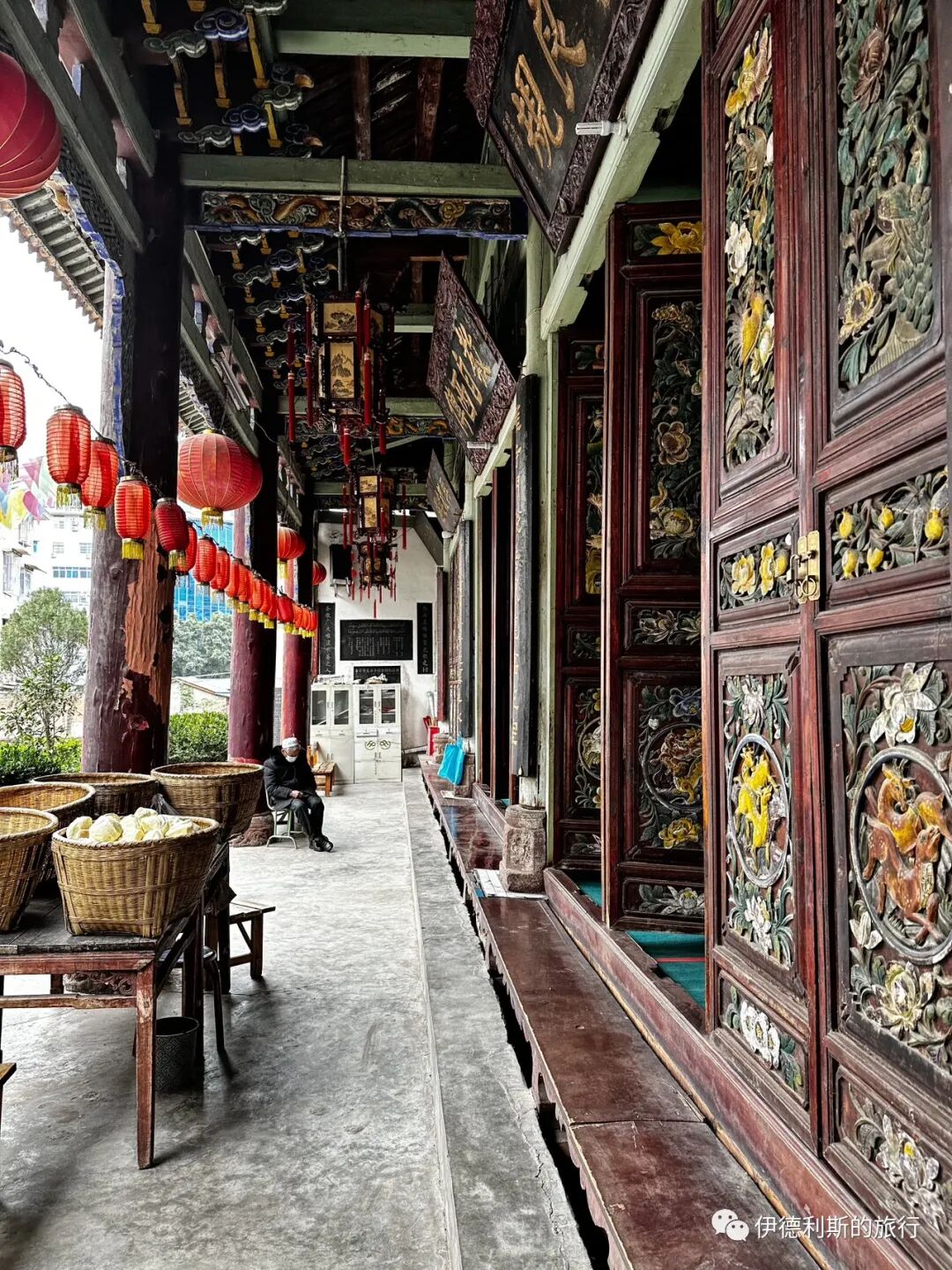
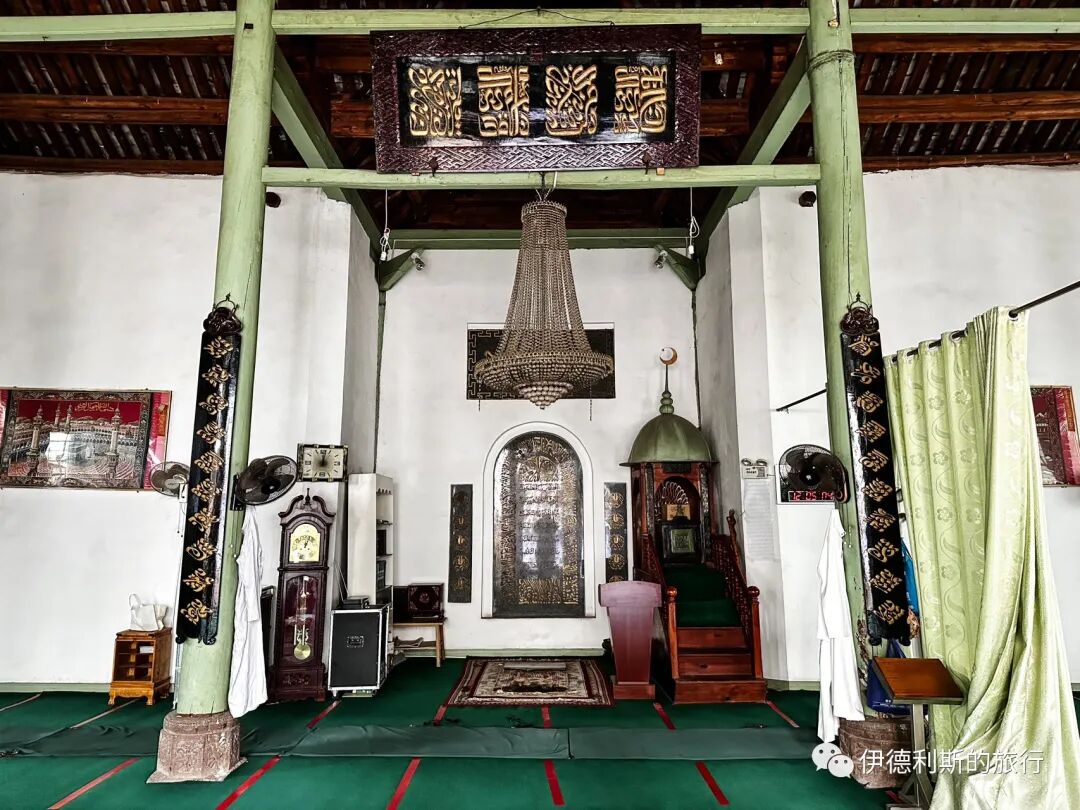
The calligraphy carvings on the minbar, scripture box, mihrab, door panels, and plaques of the West Mosque.
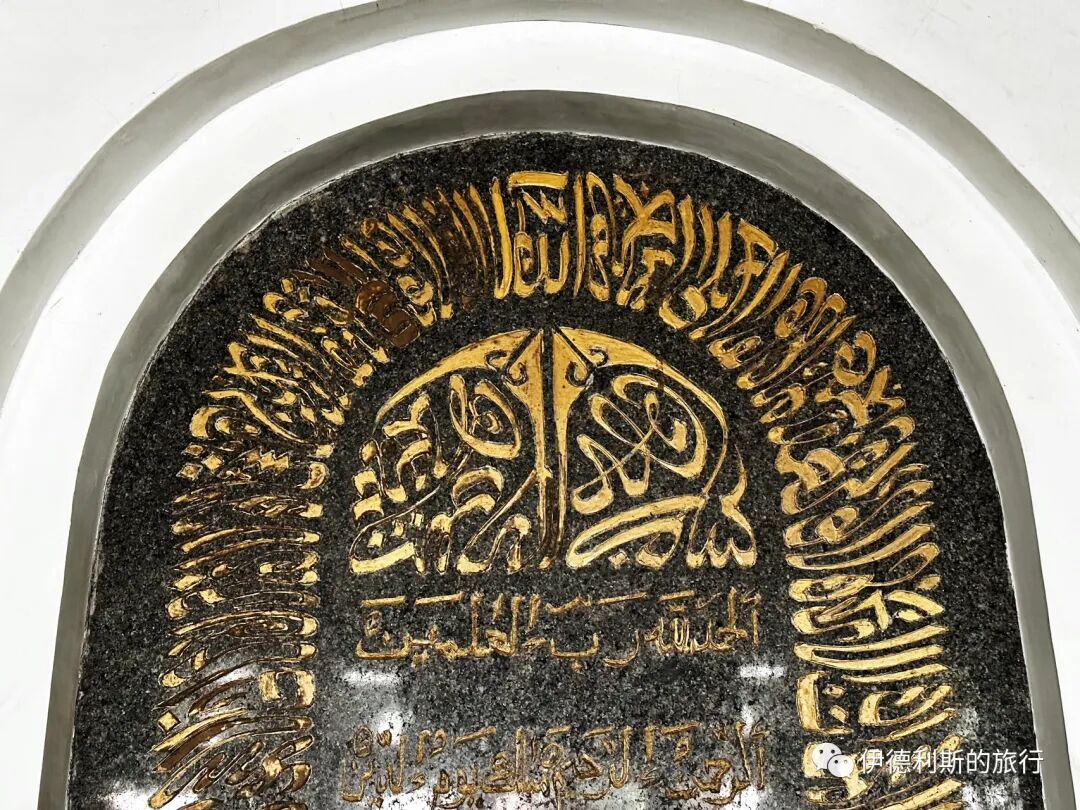
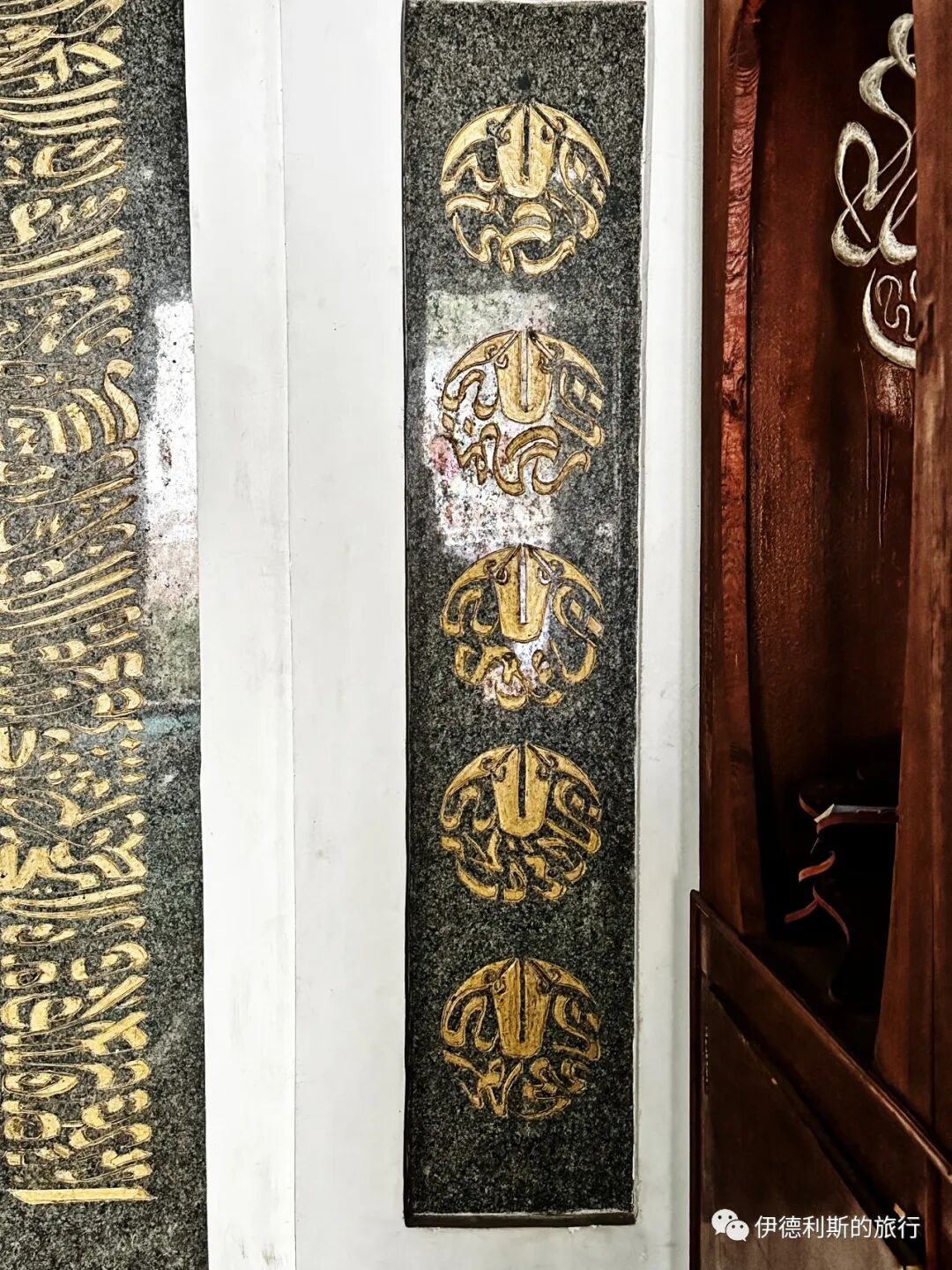
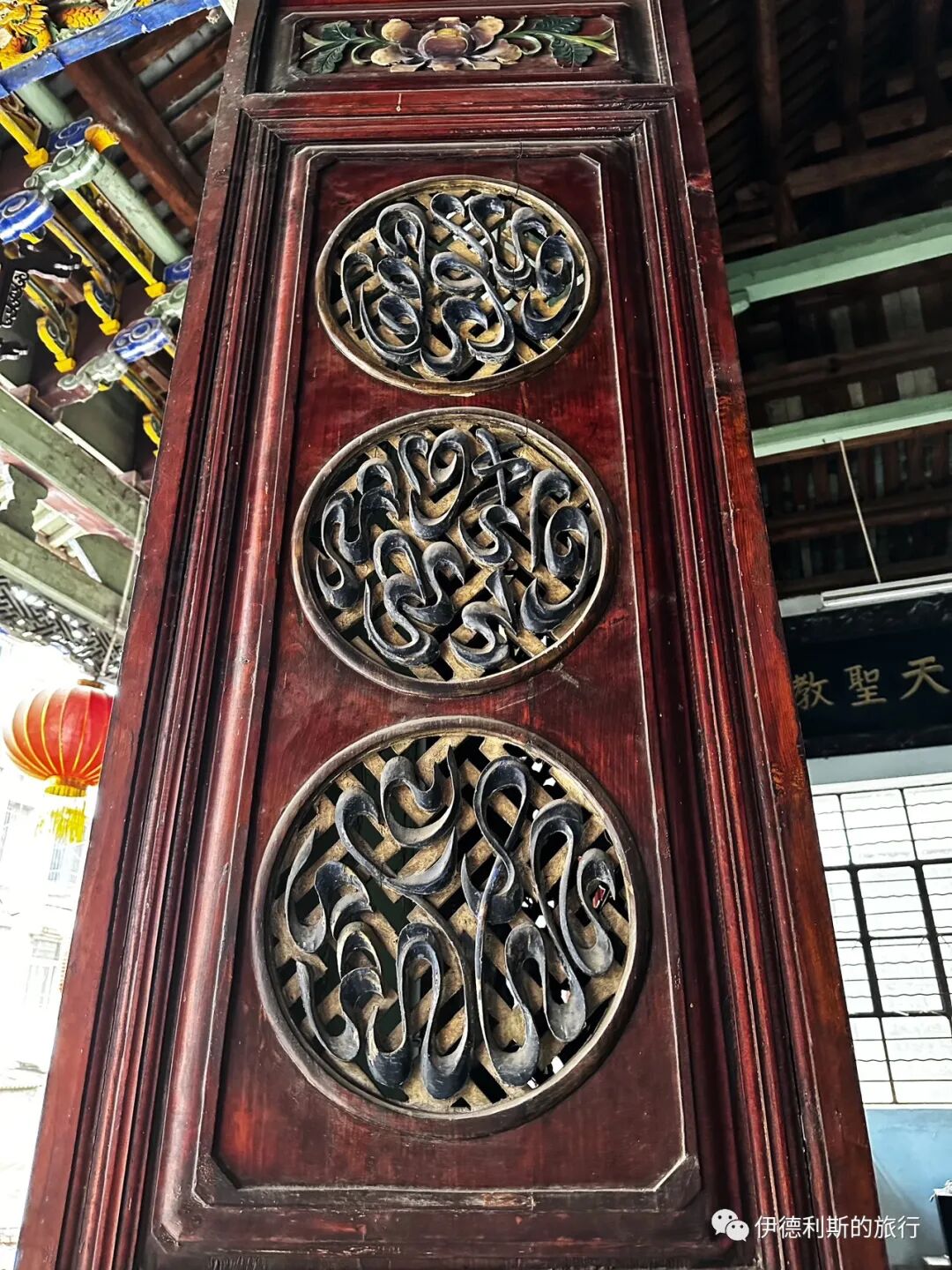
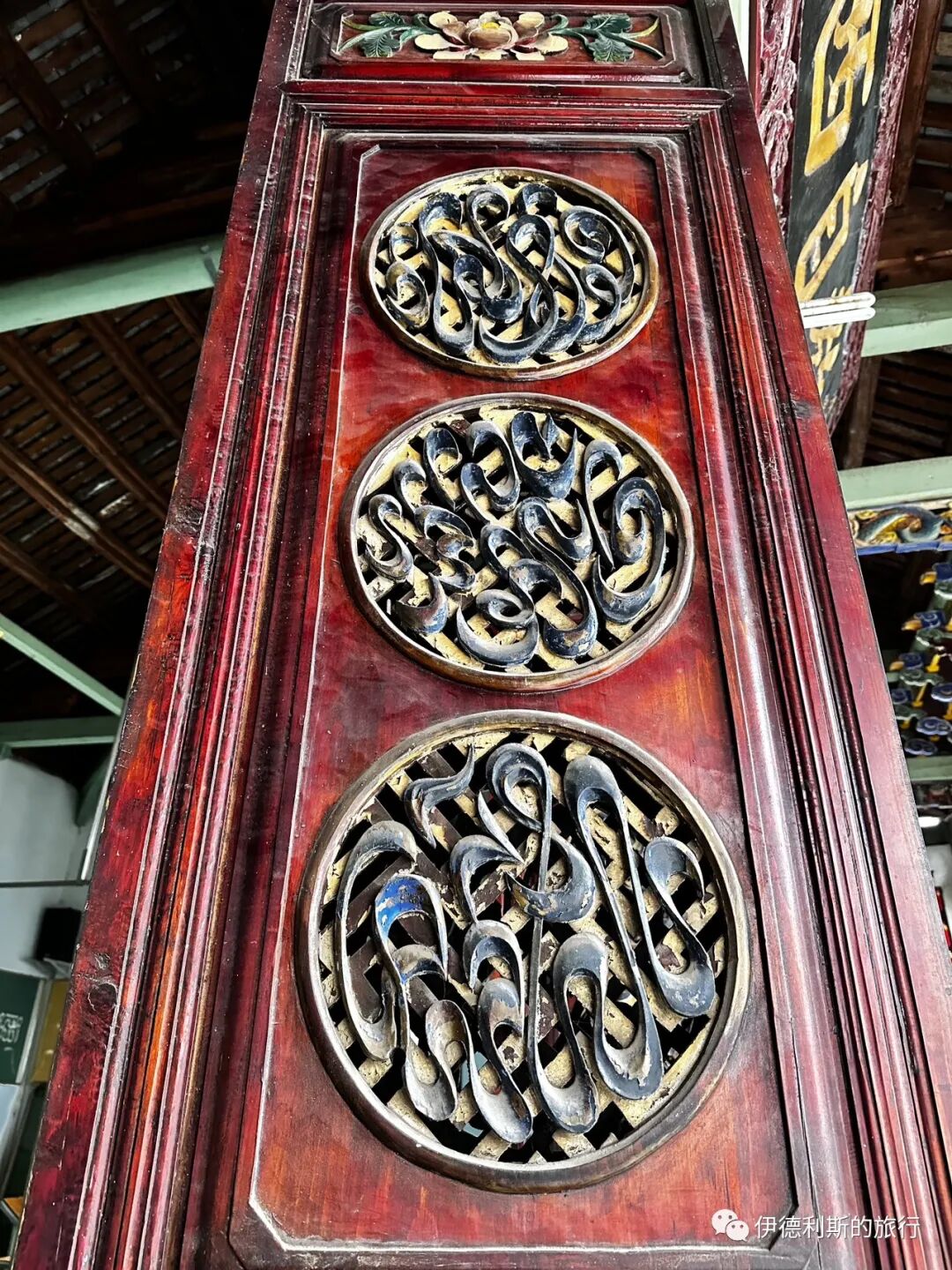
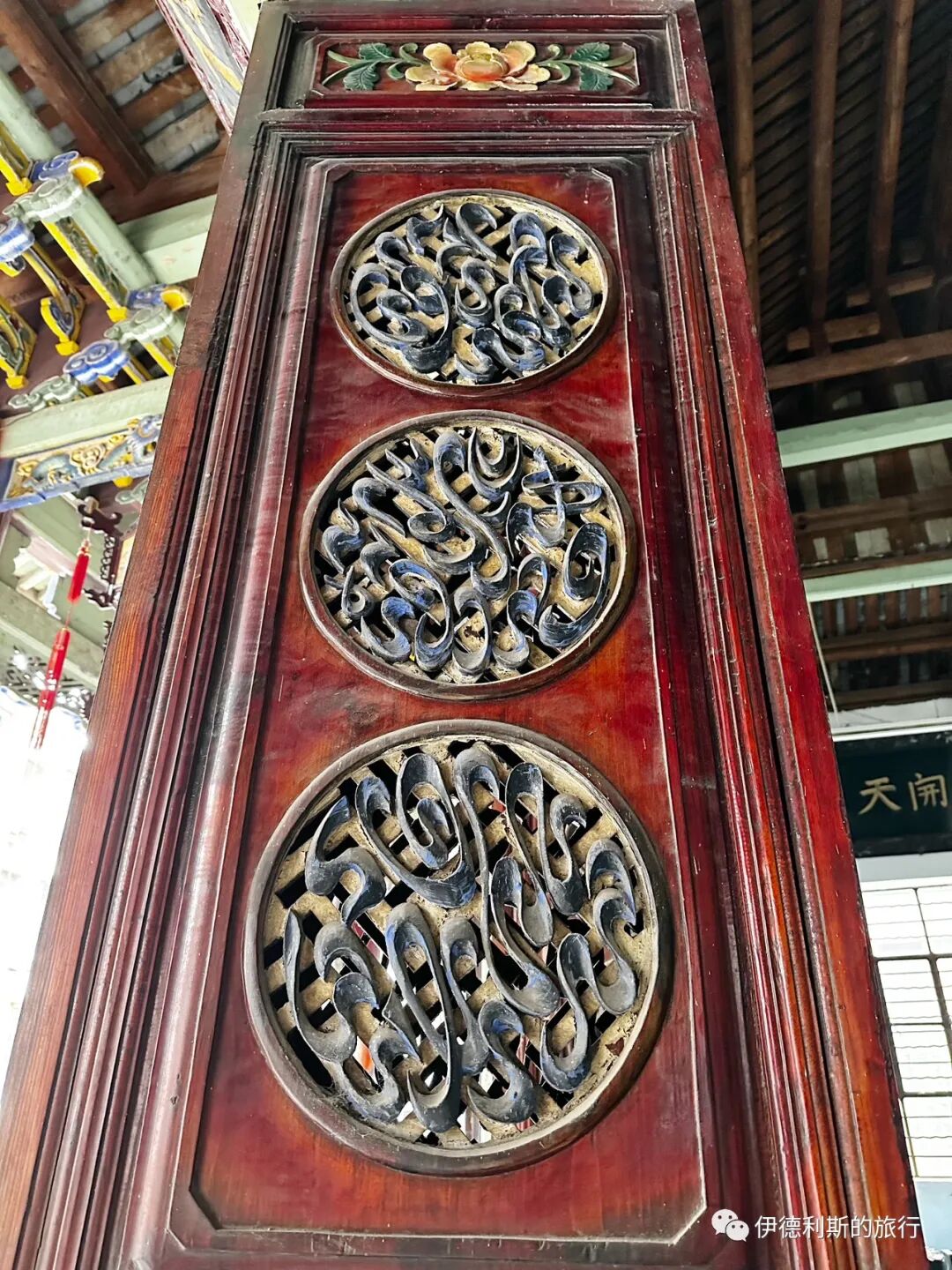
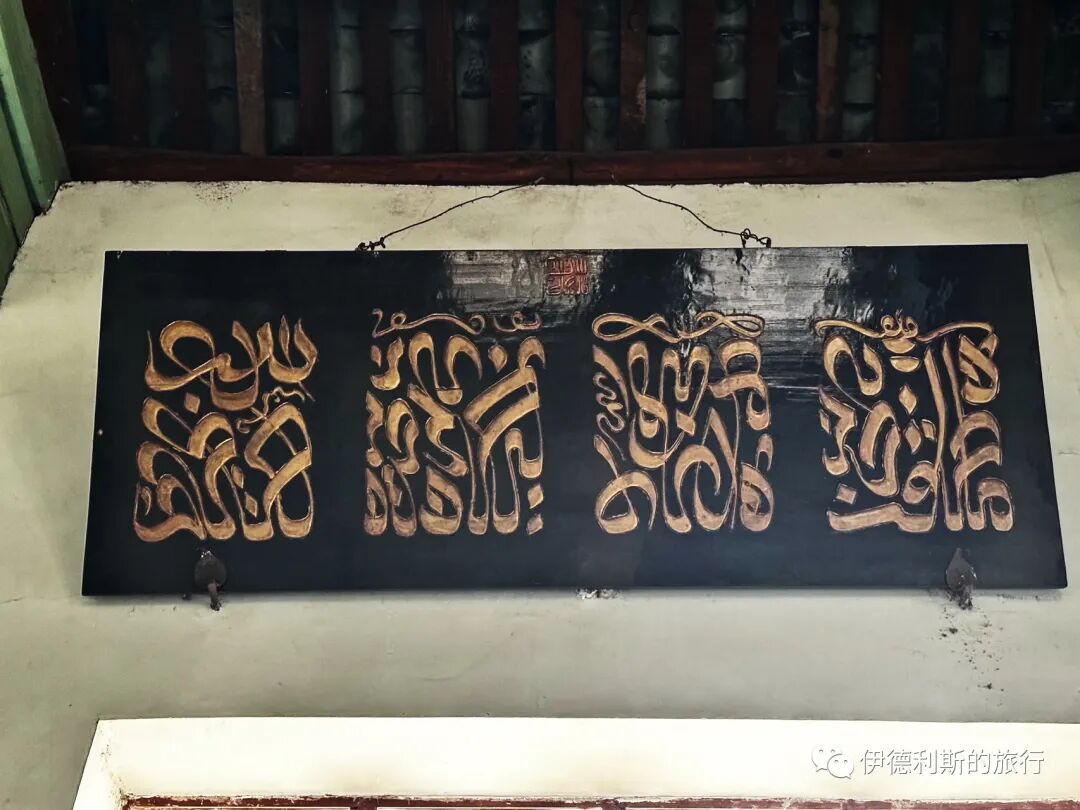
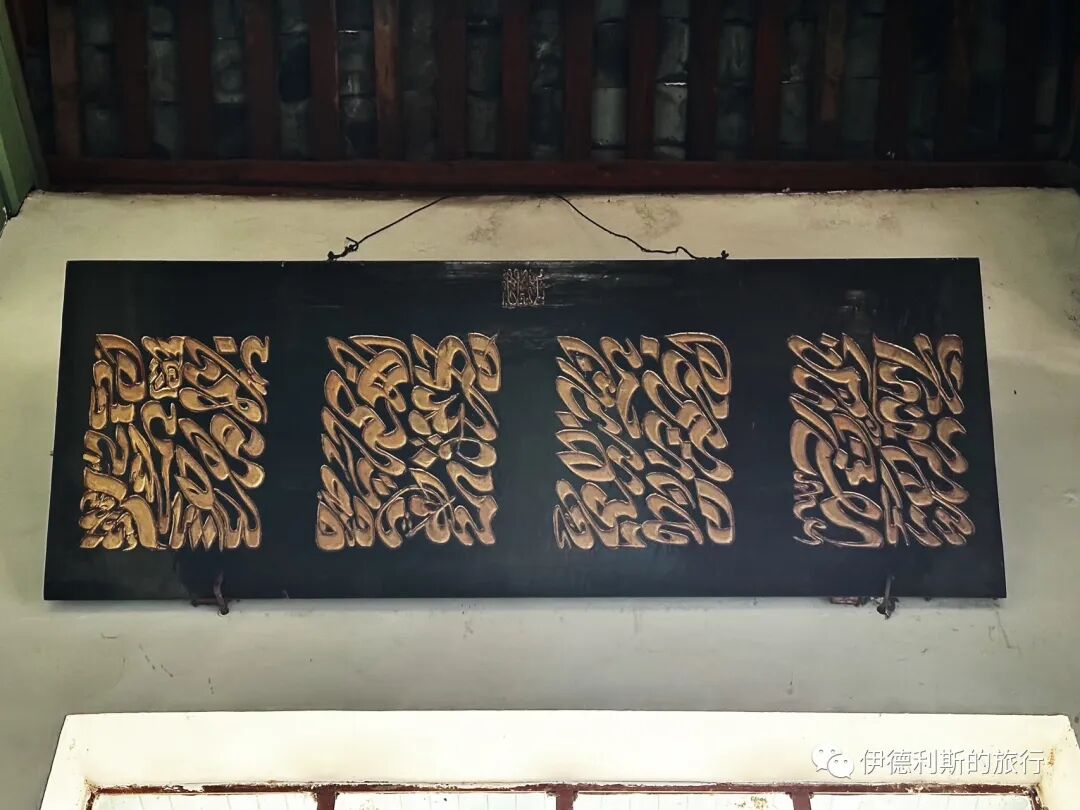
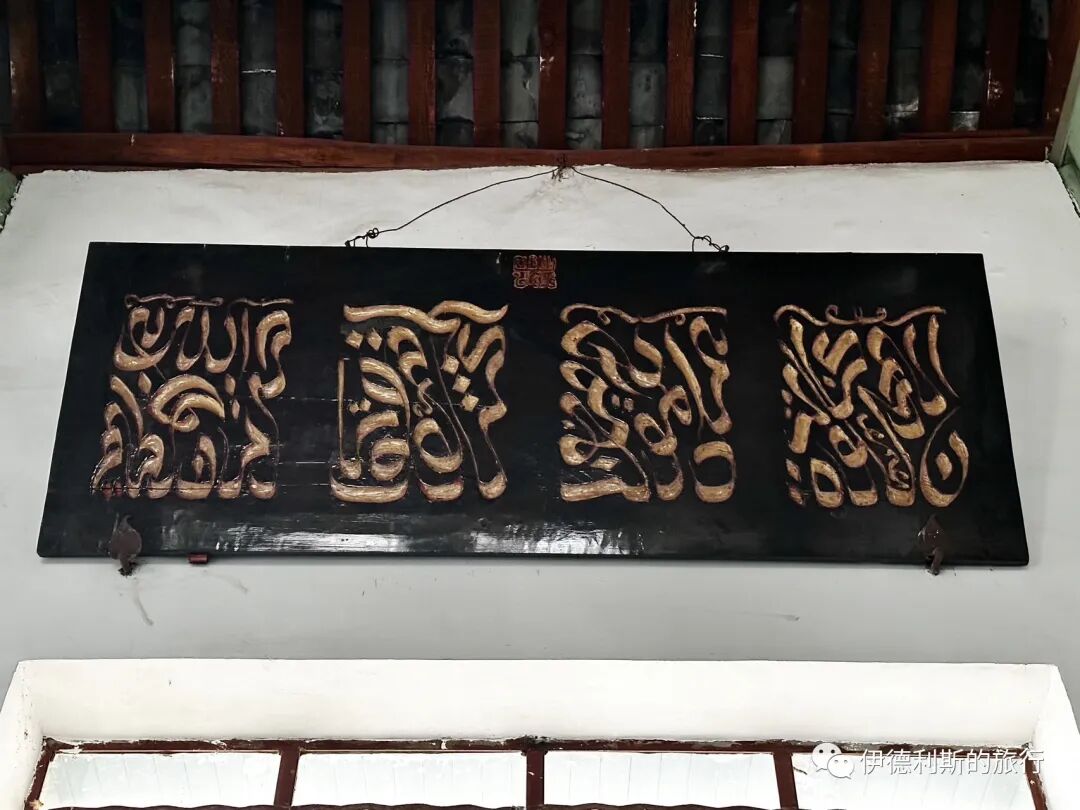
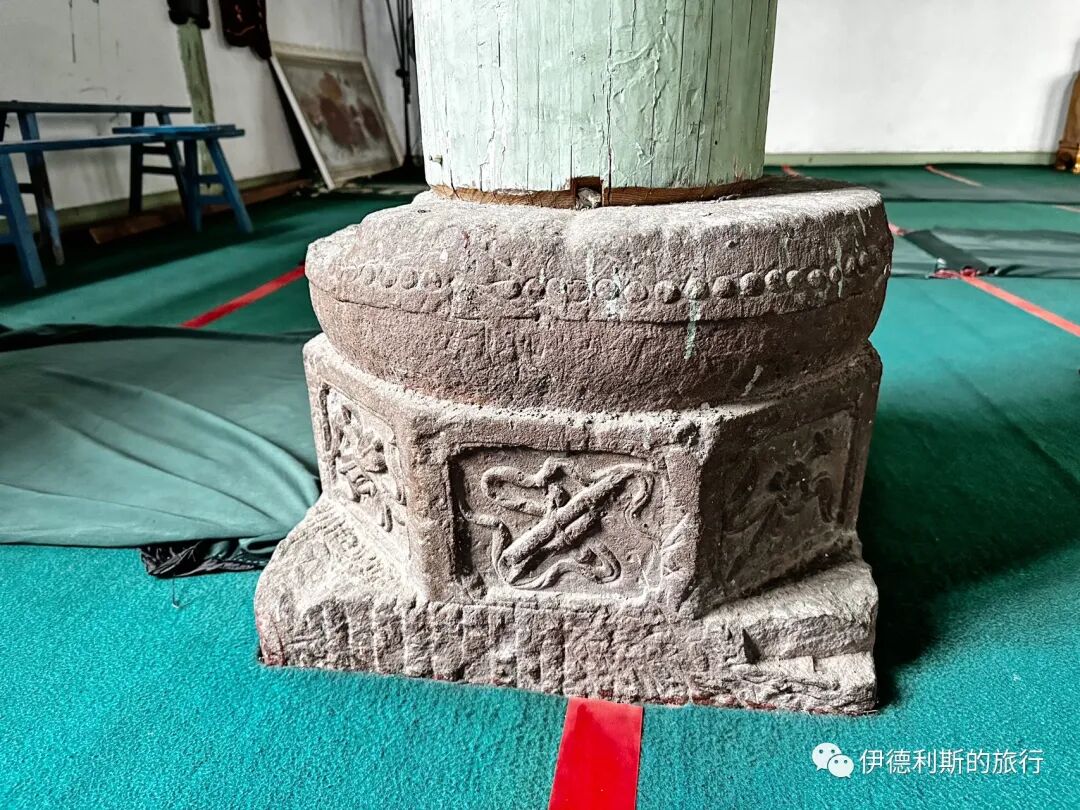
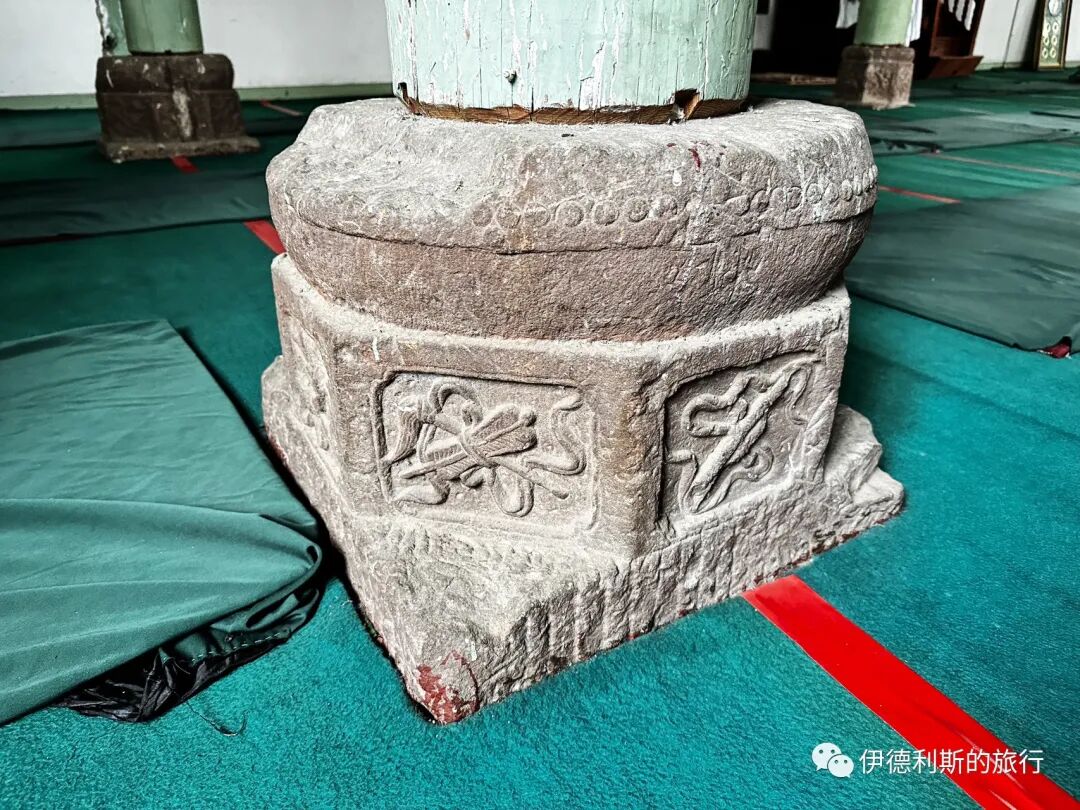
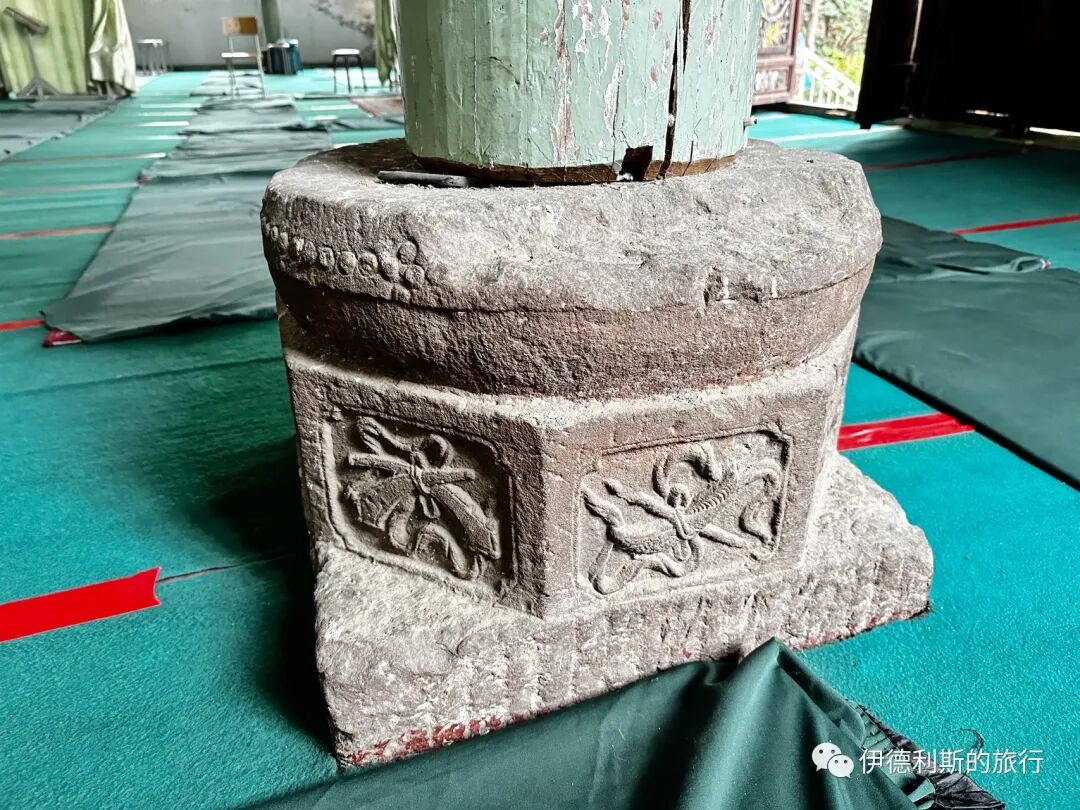
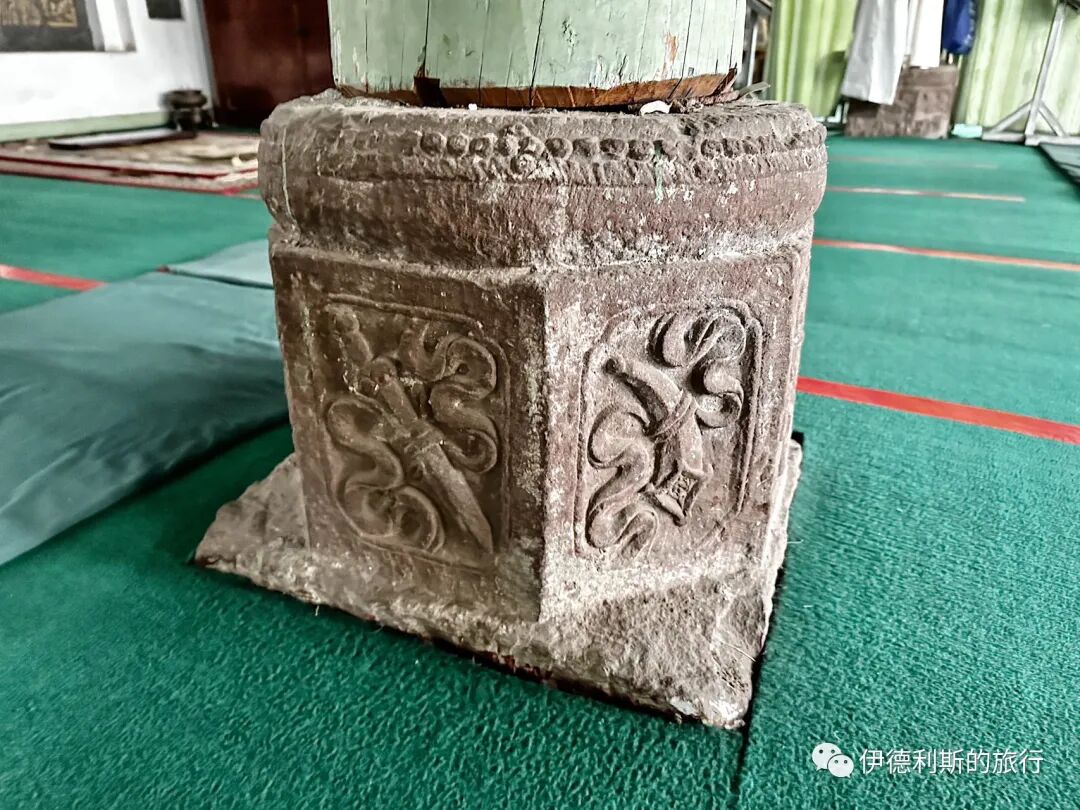
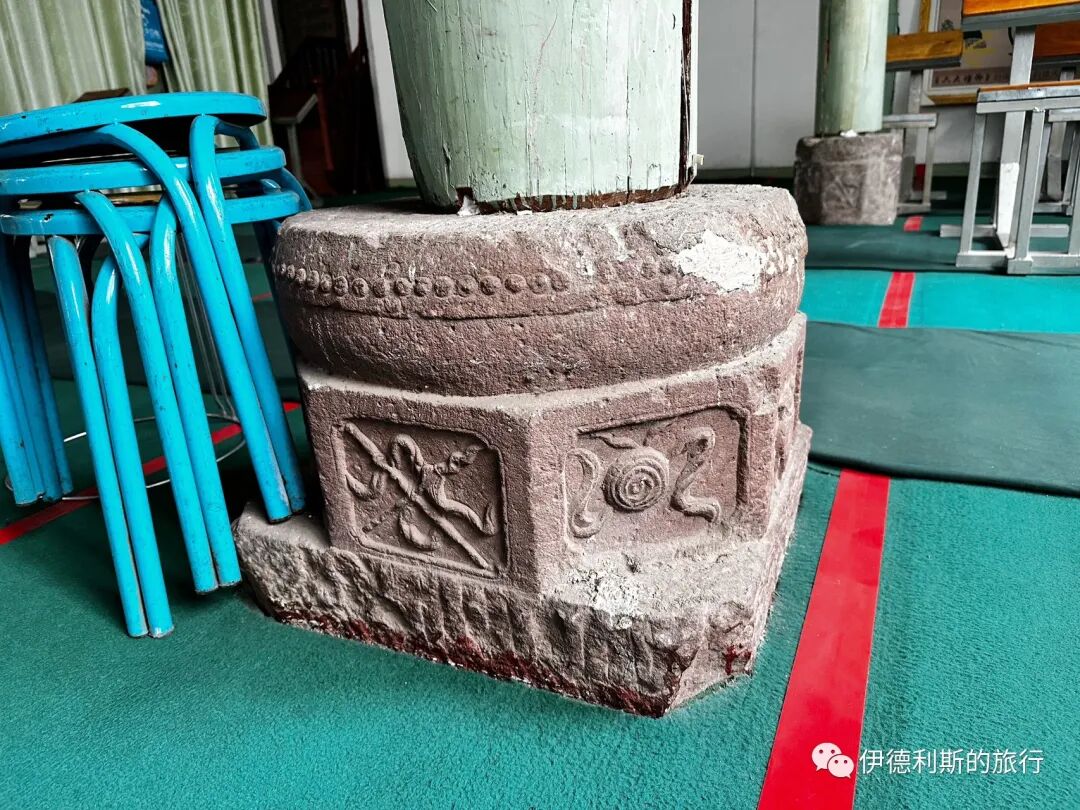
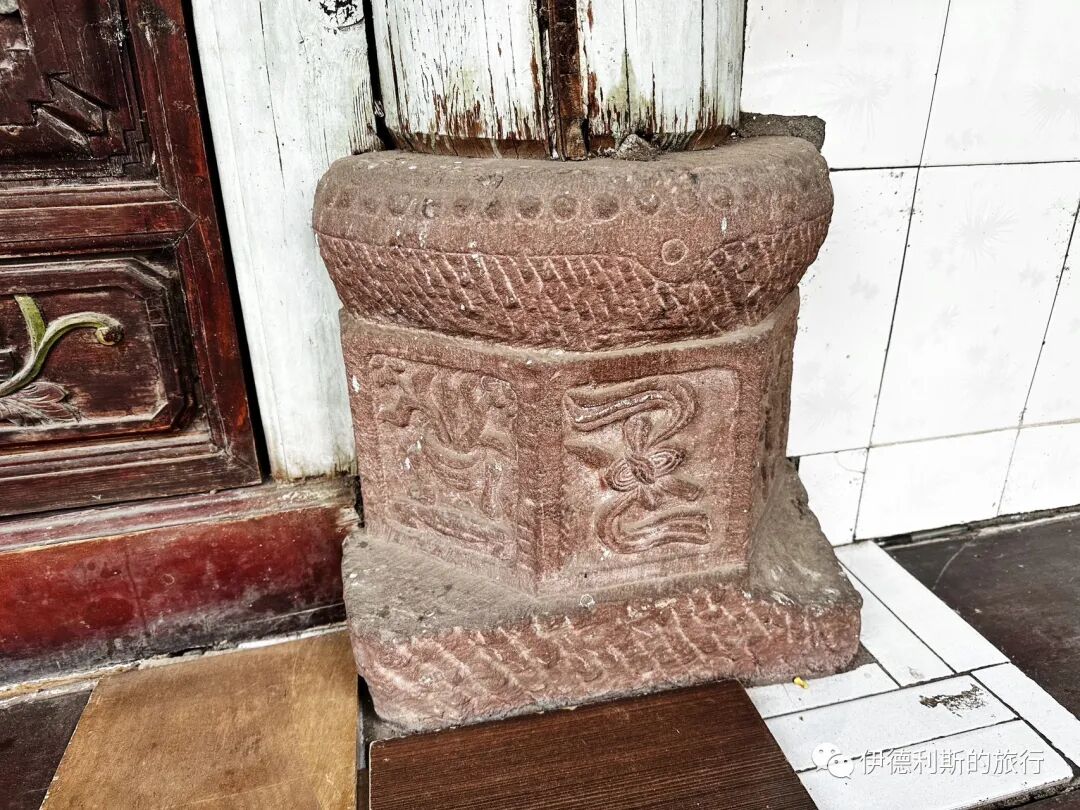
The West Mosque retains the column bases from the old Qing Dynasty main hall, which feature decorations adapted from the Taoist Eight Immortals. I have seen this before at the lower gongbei in Shangmazhuang, Bazanggou, Qinghai, which is a great example of cultural exchange between different religious traditions.
Additionally, there were sausages and pressed duck (banya) drying in the courtyard of the West Mosque, and bamboo baskets in front of the main hall held steamed buns (momo) used for tea after Friday prayers (jumu). These all added a lot of life to this ancient mosque.
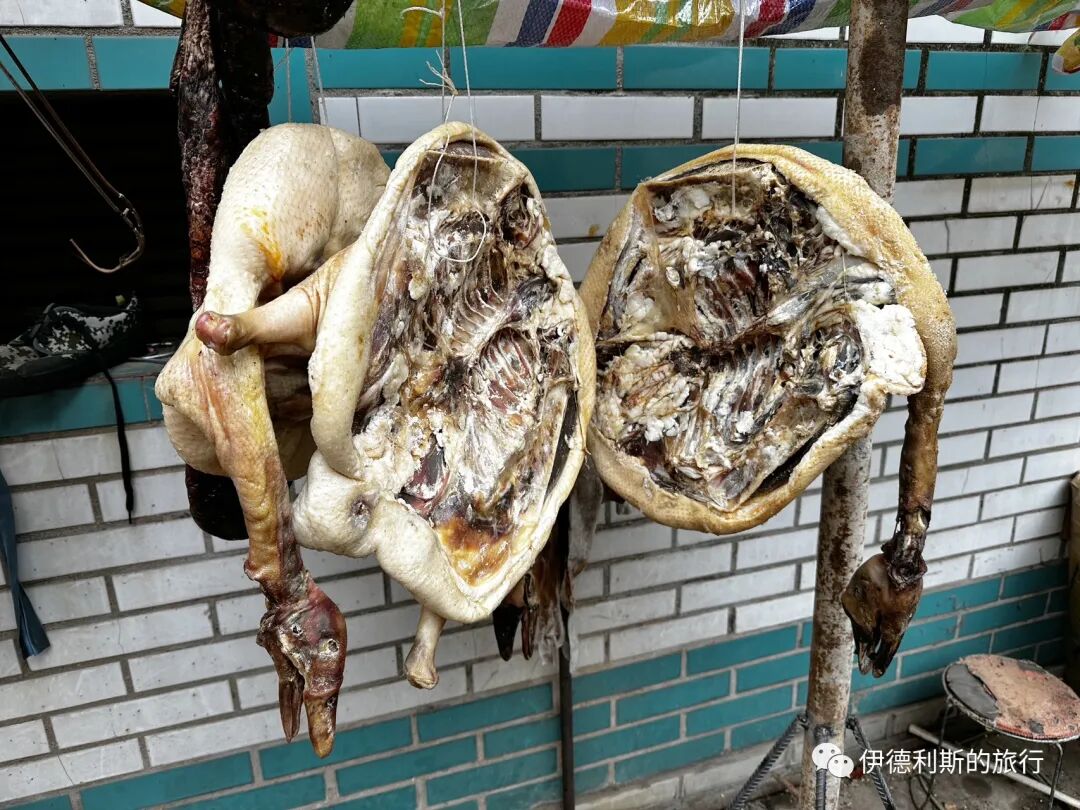
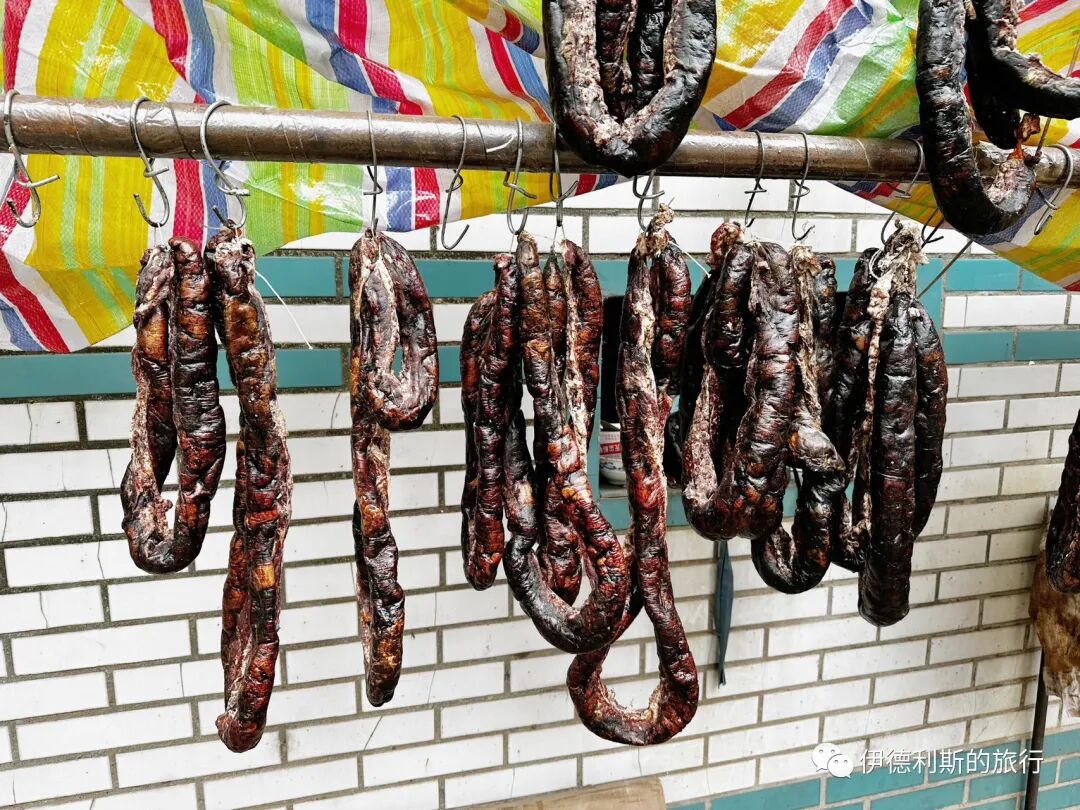
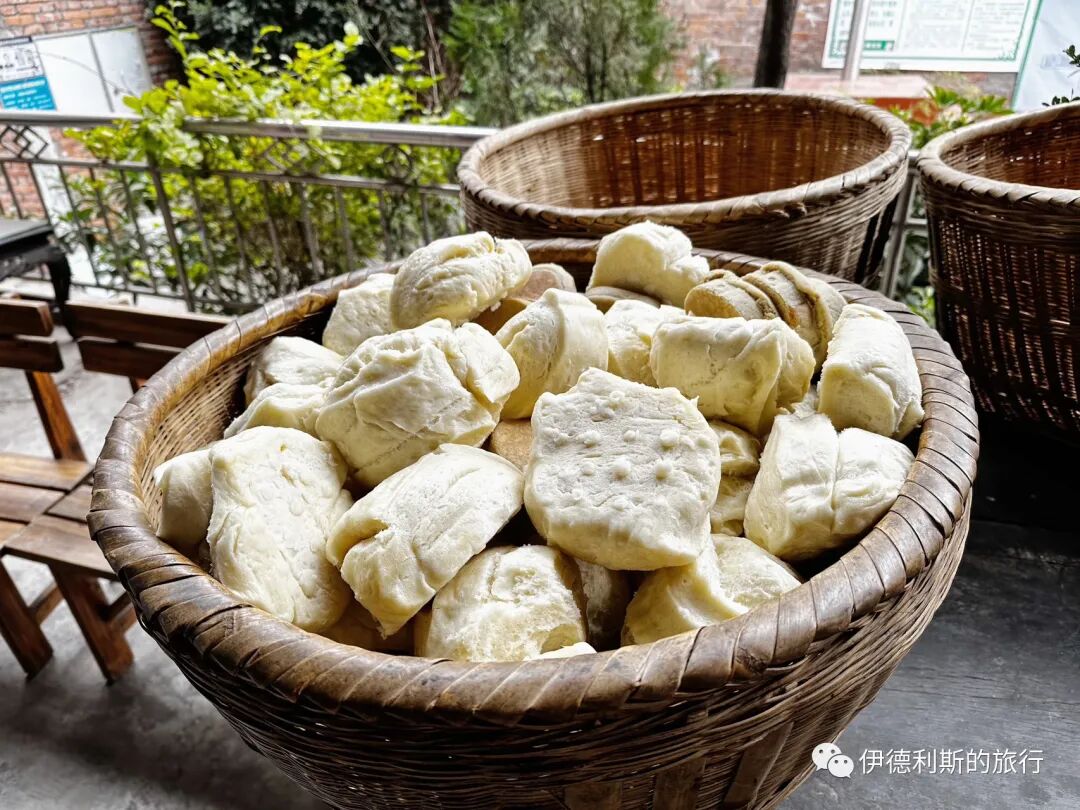
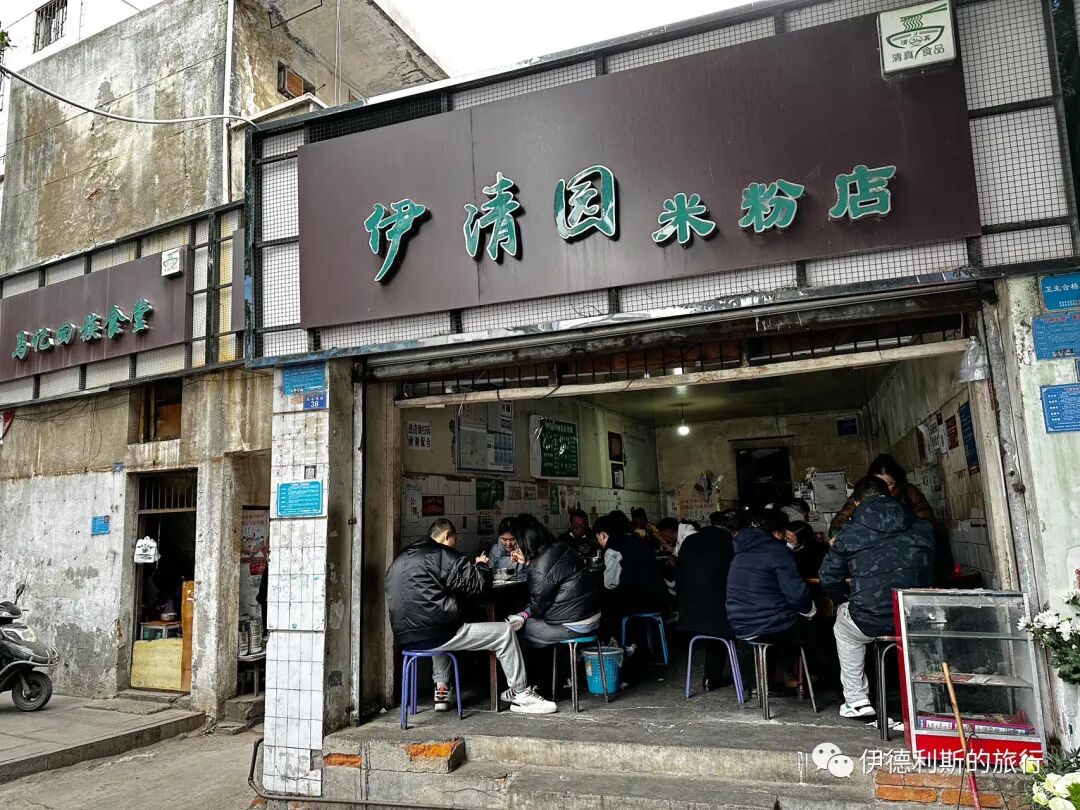
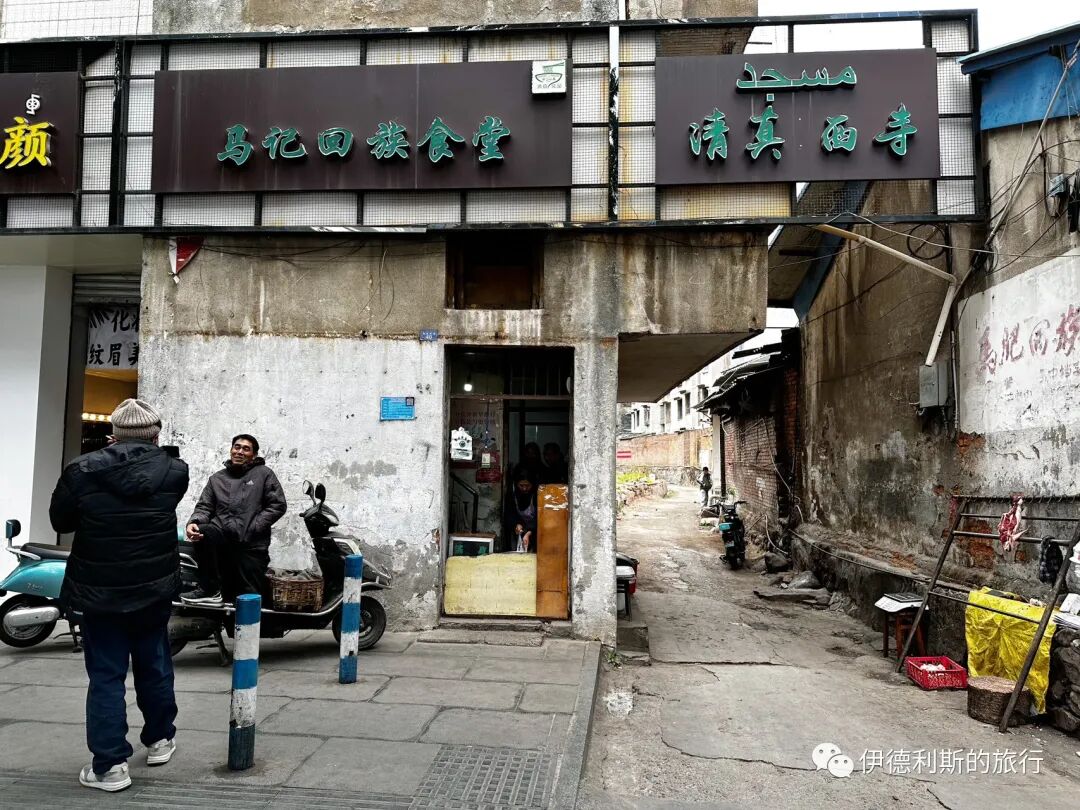
The halal restaurants near the West Mosque mainly serve Xichang rice noodles, as well as stir-fried dishes and pastries. The rice noodle shops are packed from early morning until noon; they are very popular. The dried beef (niu ganba) and pressed duck (banya) placed at the entrances of the restaurants are also specialties.
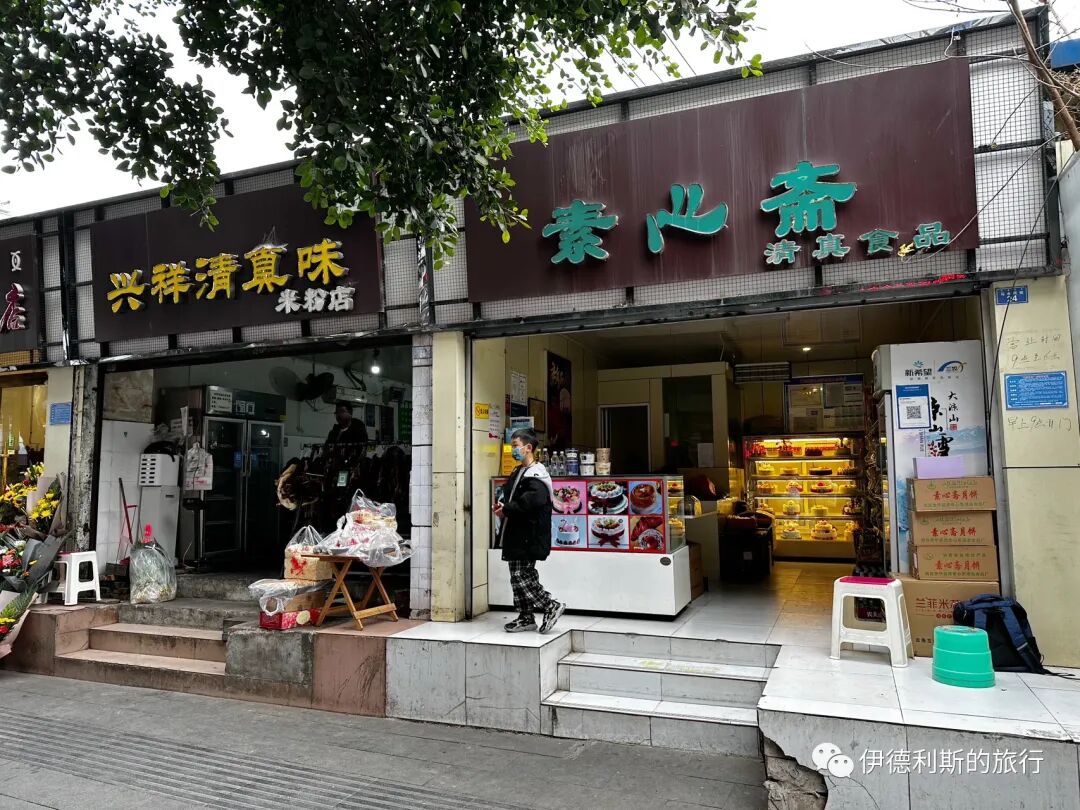
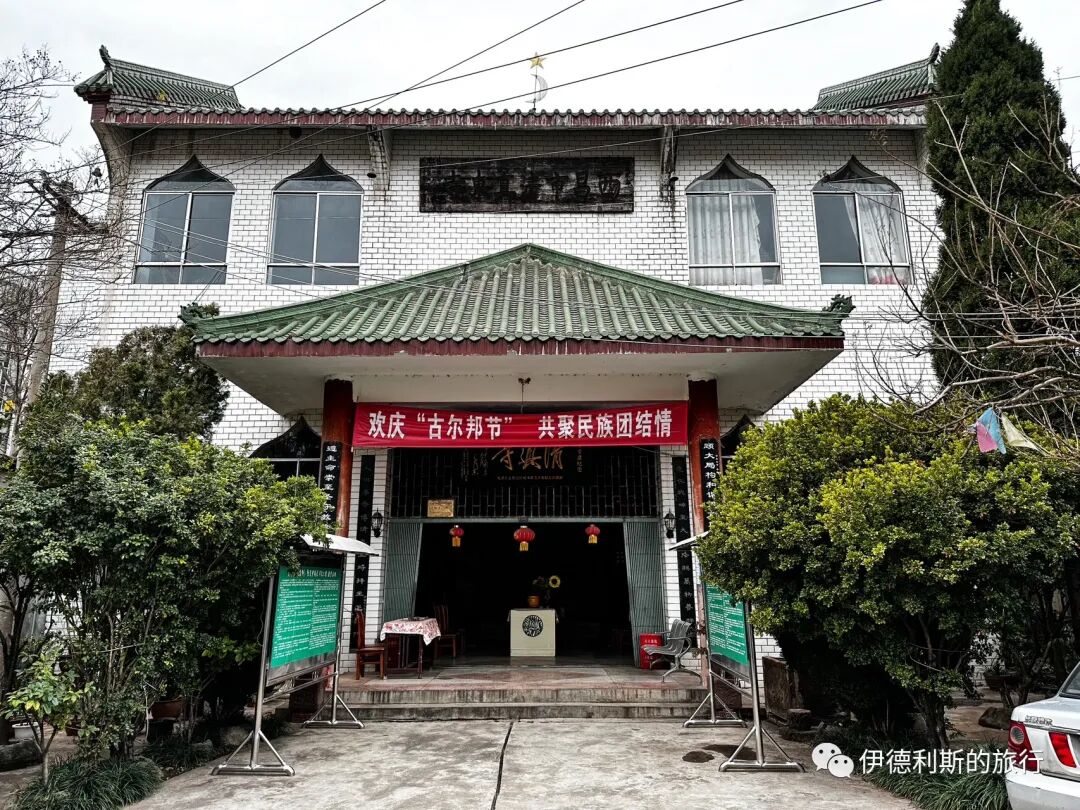
Xichang East Mosque.
The Xichang East Mosque is also called the East Street Mosque outside the city. It was first built in 1578 (6th year of Wanli in the Ming Dynasty). Most of the community leaders (gaomu) moved here from Shaanxi and the Jiangnan region during the Ming and Qing dynasties, mainly working in fur processing, cattle and sheep slaughtering, and the food industry. In 1850 (30th year of Daoguang in the Qing Dynasty), the East Mosque was damaged in the Xichang earthquake and was rebuilt in 1861 (11th year of Xianfeng). According to the Republic of China era 'Xichang County Annals,' it was 'grand in scale, the best among all the mosques.' In 1935, to stop the Red Army from entering the city, the East Mosque was burned down by the Chuan-Kang border defense forces, just like the West Mosque. It was rebuilt as simple one-story houses in 1948, occupied by a fur factory after the 1950s, reclaimed in 1982, and rebuilt into its current form in 2001.
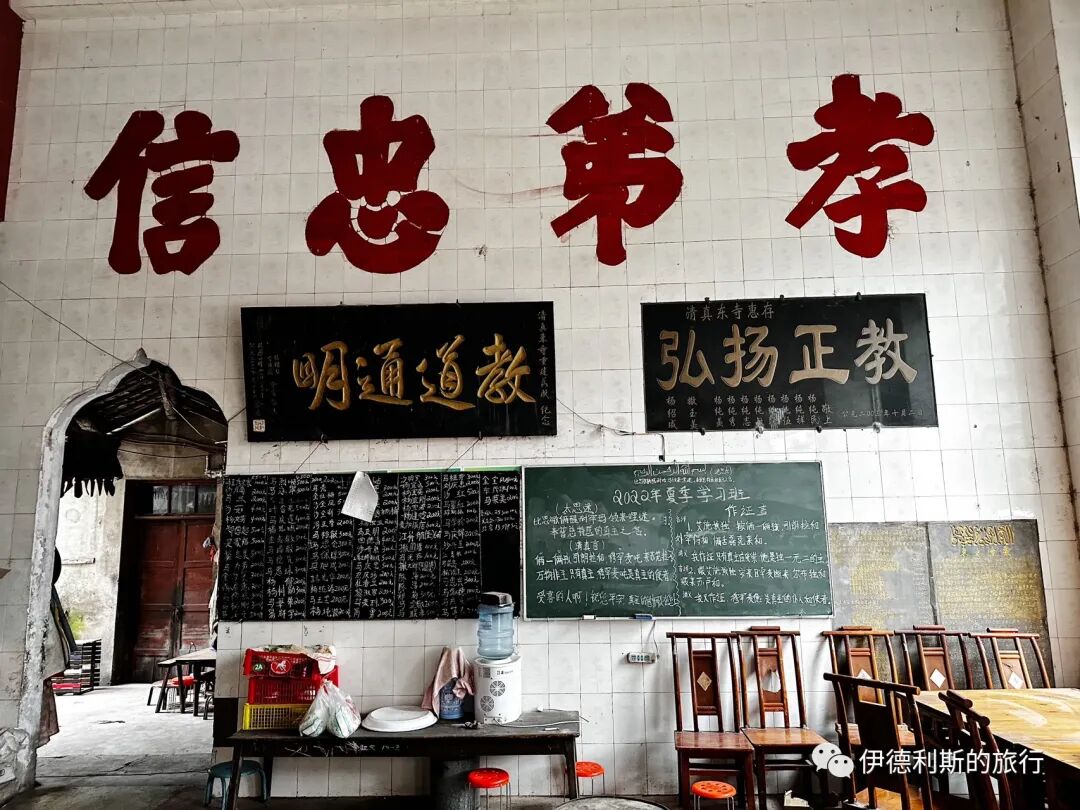
The East Mosque contains plaques and handwritten scriptures by the famous Sichuan scripture teacher Imam Yang Hua, as well as some stone inscriptions from the Qing Dynasty and the Republic of China era. Imam Yang Hua was a student of Imam Sha from Dujiangyan. His family roots were in Fengxiang Prefecture, Shaanxi, and he moved to Xichang during the Tongzhi reign after traveling through Songpan, Sichuan. Imam Yang Hua was born on Hedong Street in Xichang in 1922. He studied at the New Guest Mosque (Xinke Si) and the East Mosque (Dong Si), then taught at the Shaguoying Mosque for a long time. He taught over three hundred students and made a huge contribution to the development of the faith in Xichang.
Beef wontons (chaoshou)
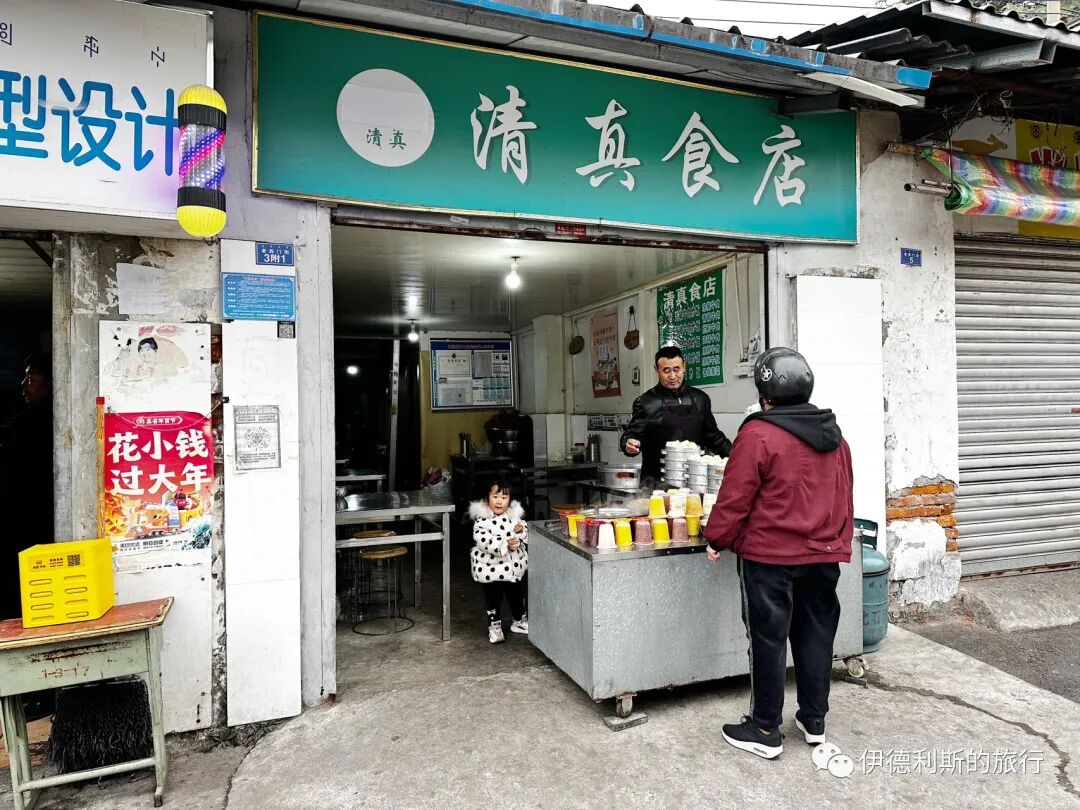
On the morning of January 28, I ate preserved vegetable and beef steamed buns (xiaolongbao) and beef wontons (chaoshou) next to the West Mosque (Xi Si) in Xichang. The owner is a local Hui Muslim named Ma.
I really love the dipping sauces (zhanshui) in the Yunnan, Guizhou, and Sichuan regions. They add so much flavor to the buns! The wontons (chaoshou) didn't look very spicy with red oil, but they got spicier the more I ate. They have a real Sichuan flavor. I also saw some local fried dough (youxiang). It looked quite unique, and it was my first time seeing it.
While I was eating, many Yi ethnic aunties came to buy their buns. It seems they are really popular. The owner said that fewer people are making wheat-based foods here now. Many have switched to rice noodles because wheat-based foods take more time and effort.
Summary: Xichang — Jumu'ah Prayer and Rice Noodles is presented here as a firsthand travel account in clear English, beginning with this scene: On January 23, 2023, I left Macau to visit the Macau mosque known as Moro Garden (Moro Yuan) and enjoyed delicious Indonesian Javanese food (see "Moro Garden and Indonesian Food in Macau"). The account keeps its focus on Xichang Travel, Jumu'ah Prayer, Halal Food while preserving the names, places, food, and historical details from the Chinese source.
On January 23, 2023, I left Macau to visit the Macau mosque known as Moro Garden (Moro Yuan) and enjoyed delicious Indonesian Javanese food (see "Moro Garden and Indonesian Food in Macau"). On January 25, I arrived in Guangzhou, visited friends (dost), and ate various halal foods (see "Hui Muslim Oil Cakes and Yemeni Food in Guangzhou"). At noon, I prayed the noon prayer (dhuhr) at a Guangzhou mosque, then went to visit the Ancient Tomb of the Worthies (see "Huaisheng Mosque and the Ancient Tomb of the Worthies in Guangzhou"). In the afternoon, I prayed the afternoon prayer (asr) at Haopan Mosque and the sunset prayer (maghrib) at Xiaodongying Mosque (see "Visiting Haopan Mosque and Xiaodongying Mosque in Guangzhou").
On the morning of January 26, I took a train from Guangzhou to Zhaoqing, visited two mosques, and ate halal Cantonese food (see "Halal Roast Goose and Starfruit at the Mosque in Zhaoqing, Guangdong").
On the morning of January 27, I flew from Guangzhou to Xichang, Sichuan, to begin visiting the local mosques and halal food spots.
Xichang Rice Noodles
After arriving in Xichang, I first went to the Hui Muslim Beef and Mutton Restaurant on South Street in the Ancient City of Jianchang to eat Xichang rice noodles (mixian). According to Imam Sha from Dujiangyan, his family's restaurant was a famous halal spot in Xichang during the 1980s, originally serving traditional Sichuan Hui Muslim dishes like braised, stewed, steamed, stir-fried, and mixed cold dishes. Today, the Ancient City of Jianchang has been developed into a tourist area, and South Street has become a pedestrian street, so the Hui Muslim Beef and Mutton Restaurant now focuses mainly on selling Xichang rice noodles.
I felt the toppings for the Xichang rice noodles were very rich, with five or six different types of chili, and just like in Yunnan, you can add plenty of fresh mint. With a bone broth base, it was very comforting to eat. It is no wonder their place is crowded with people all day long.
Friday Prayer at Xichang City Mosque
At noon, I prayed the Friday prayer (Jumu'ah) at Xichang City Mosque, and after the prayer, I caught the traditional tea-passing activity. On Friday mornings, community members (gaomu) arrive at the mosque one after another to deliver gifts (hadiya), which are daily items like steamed buns (momo), tangerines, buckwheat crispy treats (saqima), and milk, all placed in baskets (poluo) on the table in front of the main prayer hall. After the Friday prayer, everyone sits around the table and distributes the gifts bit by bit.
I feel this tea-passing tradition is excellent and really strengthens the unity of the mosque community. I have encountered this several times before while praying on Fridays in Yunnan; at Manluan Hui Mosque in Menghai, I received various tropical fruits, and at Tangzi Mosque in Xundian, I ate delicious pastries. This was my first time experiencing the tea-passing tradition in Sichuan. Imam Sha said that in Sichuan, this tradition only exists in Xichang, Miyi, and Panzhihua, which are close to Yunnan, and it takes place during Friday prayers and Ramadan.
The former director of the mosque management committee, Director Tuo, and Imam Ma.
Xichang City Mosque is located on Jiyang Lane within the Ancient City of Jianchang. It was built with funds raised by Muslims who came to Xichang for business during the Yuan Dynasty's Taiding era (1324-1328). It was relocated to its current site on Jiyang Lane in 1574 (the second year of the Ming Wanli era, though some say the Hongwu era) and rebuilt to its current form over six years starting in 1875 (the first year of the Qing Guangxi era), earning it the reputation as the premier mosque in Xichang.
During the Yuan Dynasty, Xichang belonged to the Jianchang Circuit of the Yunnan Province. Sumuding Wumoli, the fourth son of Sayyid Ajjal Shams al-Din, and his son Sheheiwusuman served successively as the administrators of the Jianchang Circuit. Another grandson of Sayyid Ajjal Shams al-Din, Yelu Timur, served as the Pingzhang Zhengshi (a high-ranking official) of the Jianchang Circuit at the end of the Yuan Dynasty. Today, descendants of Yelu Timur are among the Hui Muslims in Xichang.
According to the "History of Ming: Records of Sichuan Tusi," Yelu Timur submitted to the Ming Dynasty in 1382 (the 15th year of the Ming Hongwu era) and was appointed as the Jianchang Guard Commander. He rebelled again in 1392 (the 25th year of the Ming Hongwu era), led an army of over ten thousand to attack the city, but was defeated, fled to Baixing Prefecture (Yanyuan County, Liangshan Prefecture), and was eventually captured and executed. According to the genealogy of the Sha-surname Hui Muslims in Xichang, after Yelu Timur was killed, his descendants scattered. One branch fled to Huangcaoping in Miyi County, Panzhihua, hid their identity, and changed their name to Sha Shun. By the third generation, they moved to Heying Yantang Village in Xichang. Imam Sha from Dujiangyan is a descendant of Yelu Timur.
To suppress Yelu Timur, the Ming Dynasty dispatched 15,000 soldiers from the capital guards (the Jiangnan region) and the Shaanxi-Gansu region. Many Xichang Hui Muslims today are descendants of these Ming Dynasty garrison troops from Jiangnan and Shaanxi: Imperial Commander Ma Gang was from Suzhou Prefecture in Jiangnan, and his descendants became the Ma family of Shaguoying. Commander Ma Jun was from Suzhou Prefecture in Jiangnan, and his descendants became the Ma family of Hetao Village. Commander Ma Dengyi was from Dali, Yunnan, and his descendants became the Ma family of Yushitang. Deputy Commander Liu Yuanyuan was from Suzhou Prefecture in Jiangnan. His second generation married a Hui Muslim woman and converted to Islam, and his descendants settled in Xixi Dazi Camp.
The mosque is divided into two courtyards. The right side of the front courtyard contains offices, living quarters, and a washroom, while the left side has an ancient cypress tree that reaches the sky. Entering the inner courtyard through an arched gate, you find the standard main prayer hall and north and south side rooms. There are also two ancient cypress trees in front of the main hall. According to the Republic of China's "Xichang County Annals": "In the fifth year of the Kangxi era, a fire on South Street spread to the mosque. A person in green clothes appeared on the mosque's cypress tree, pouring water from a clean pot to douse the flames, and the fire stopped."
On the west side of the second courtyard is the entrance hall and the main prayer hall. After the 1960s, the entrance hall (baoting) and the two side rooms were taken over by a school, and the main prayer hall was closed off. They were not restored until after the 1980s. Today, the entrance hall and the main prayer hall are hung with various plaques and couplets in Chinese and Arabic, which are precious cultural heritage items of the mosque.
Inside the main prayer hall are the mihrab, minbar, scripture box, and various plaques and couplets.
The mosque holds plaques from different periods, ranging from the Qing Dynasty and the Republic of China era to after the 1990s.
The plaque reading 'Qu Wang Xun Zhen' (Seeking Truth by Eliminating Falsehood) was replicated in 2005 from the original 1746 (11th year of Qianlong) version. The donor, Deputy General Mai Guoliang of the garrison, had ancestral roots in Fengxiang, Shaanxi. He settled in Xichang in 1738 (3rd year of Qianlong) due to military service, and his descendants are known as the Mai family of Shaanxi.
Imam Sa Fuchu was a famous Arabic calligrapher in Xichang.
Imam Sa passed away in 2014 at the age of 89.
Lao Hao Qingzhen Yuan restaurant.
In the afternoon, I ate at the main branch of Lao Hao Qingzhen Yuan near the Xichang West Mosque. It is a restaurant serving traditional halal stir-fry dishes, and the owner is a member of the Yang family, who are community leaders (gaomu) of the Xichang West Mosque.
I ordered the small stir-fried meat (xiaochao rou) and bear paw tofu (xiongzhang doufu), and they also served me lotus leaf tea. It was my first time seeing a restaurant serve lotus leaf tea, and it smelled quite fragrant. The food arrived just five minutes after I ordered; they stir-fry really quickly! The small stir-fried meat is a classic, but it was my first time eating bear paw tofu. 'Bear paw' is actually what Sichuanese people call pan-fried tofu. It is a specialty Sichuan dish stir-fried with bean paste (doubanjiang) that is spicy and rich. It made my nose run and my eyes water, but Sichuan food is truly satisfying!
Xichang West Mosque.
Because the city bought up all the houses during the renovation of the Jianchang Ancient City, there are no longer community leaders (gaomu) living around the city mosque. Relatively speaking, the West Mosque outside the Jianchang Ancient City still maintains the layout of a traditional mosque neighborhood, and there are more halal restaurants nearby.
The Xichang West Mosque is also called the Mashuihe Mosque outside the city. Mashuihe Street has been a street for the Hui Muslim leather industry since the Qing Dynasty. The West Mosque was first built in 1801 (6th year of Jiaqing). When the Xichang earthquake hit in 1850 (30th year of Daoguang), the mosque buildings collapsed and were rebuilt with funding from the Wool Guild, a trade association of local leather workers. In 1935, to stop the Red Army from entering the city, the Chuan-Kang border defense forces burned down 28 streets and alleys outside Xichang for three consecutive days. The West Mosque was also destroyed and was rebuilt in 1948. After 1958, the West Mosque was occupied and severely damaged. It was gradually reclaimed after 1978 and rebuilt into its current form after 1999.
The calligraphy carvings on the minbar, scripture box, mihrab, door panels, and plaques of the West Mosque.
The West Mosque retains the column bases from the old Qing Dynasty main hall, which feature decorations adapted from the Taoist Eight Immortals. I have seen this before at the lower gongbei in Shangmazhuang, Bazanggou, Qinghai, which is a great example of cultural exchange between different religious traditions.
Additionally, there were sausages and pressed duck (banya) drying in the courtyard of the West Mosque, and bamboo baskets in front of the main hall held steamed buns (momo) used for tea after Friday prayers (jumu). These all added a lot of life to this ancient mosque.
The halal restaurants near the West Mosque mainly serve Xichang rice noodles, as well as stir-fried dishes and pastries. The rice noodle shops are packed from early morning until noon; they are very popular. The dried beef (niu ganba) and pressed duck (banya) placed at the entrances of the restaurants are also specialties.
Xichang East Mosque.
The Xichang East Mosque is also called the East Street Mosque outside the city. It was first built in 1578 (6th year of Wanli in the Ming Dynasty). Most of the community leaders (gaomu) moved here from Shaanxi and the Jiangnan region during the Ming and Qing dynasties, mainly working in fur processing, cattle and sheep slaughtering, and the food industry. In 1850 (30th year of Daoguang in the Qing Dynasty), the East Mosque was damaged in the Xichang earthquake and was rebuilt in 1861 (11th year of Xianfeng). According to the Republic of China era 'Xichang County Annals,' it was 'grand in scale, the best among all the mosques.' In 1935, to stop the Red Army from entering the city, the East Mosque was burned down by the Chuan-Kang border defense forces, just like the West Mosque. It was rebuilt as simple one-story houses in 1948, occupied by a fur factory after the 1950s, reclaimed in 1982, and rebuilt into its current form in 2001.
The East Mosque contains plaques and handwritten scriptures by the famous Sichuan scripture teacher Imam Yang Hua, as well as some stone inscriptions from the Qing Dynasty and the Republic of China era. Imam Yang Hua was a student of Imam Sha from Dujiangyan. His family roots were in Fengxiang Prefecture, Shaanxi, and he moved to Xichang during the Tongzhi reign after traveling through Songpan, Sichuan. Imam Yang Hua was born on Hedong Street in Xichang in 1922. He studied at the New Guest Mosque (Xinke Si) and the East Mosque (Dong Si), then taught at the Shaguoying Mosque for a long time. He taught over three hundred students and made a huge contribution to the development of the faith in Xichang.
Beef wontons (chaoshou)
On the morning of January 28, I ate preserved vegetable and beef steamed buns (xiaolongbao) and beef wontons (chaoshou) next to the West Mosque (Xi Si) in Xichang. The owner is a local Hui Muslim named Ma.
I really love the dipping sauces (zhanshui) in the Yunnan, Guizhou, and Sichuan regions. They add so much flavor to the buns! The wontons (chaoshou) didn't look very spicy with red oil, but they got spicier the more I ate. They have a real Sichuan flavor. I also saw some local fried dough (youxiang). It looked quite unique, and it was my first time seeing it.
While I was eating, many Yi ethnic aunties came to buy their buns. It seems they are really popular. The owner said that fewer people are making wheat-based foods here now. Many have switched to rice noodles because wheat-based foods take more time and effort.
Halal Travel Guide: Xichang — Jumu'ah Prayer and Rice Noodles (Part 2)
Articles • ali2007fr posted the article • 0 comments • 131 views • 2026-05-18 20:36
Reposted from the web
Summary: Xichang — Jumu'ah Prayer and Rice Noodles is presented here as a firsthand travel account in clear English, beginning with this scene: Next, I will take the high-speed train from Xichang West Station to Miyi. The next post will introduce the Hui Muslim village of Tianba in Miyi. The account keeps its focus on Xichang Travel, Jumu'ah Prayer, Halal Food while preserving the names, places, food, and historical details from the Chinese source.
Next, I will take the high-speed train from Xichang West Station to Miyi. The next post will introduce the Hui Muslim village of Tianba in Miyi.
For a detailed introduction to the Hui Muslims of Xichang, I recommend checking out the WeChat official account "Shuzhong Huihui":
Origins of the Sichuan Hui: A Brief Analysis of the Surname Structure of the Hui Muslims in Xichang City, Sichuan
Origins of the Sichuan Hui: A Muslim Family Thriving Since the Yuan Dynasty—The Sha Family of Hui Muslims in Xichang, Sichuan view all
Summary: Xichang — Jumu'ah Prayer and Rice Noodles is presented here as a firsthand travel account in clear English, beginning with this scene: Next, I will take the high-speed train from Xichang West Station to Miyi. The next post will introduce the Hui Muslim village of Tianba in Miyi. The account keeps its focus on Xichang Travel, Jumu'ah Prayer, Halal Food while preserving the names, places, food, and historical details from the Chinese source.
Next, I will take the high-speed train from Xichang West Station to Miyi. The next post will introduce the Hui Muslim village of Tianba in Miyi.
For a detailed introduction to the Hui Muslims of Xichang, I recommend checking out the WeChat official account "Shuzhong Huihui":
Origins of the Sichuan Hui: A Brief Analysis of the Surname Structure of the Hui Muslims in Xichang City, Sichuan
Origins of the Sichuan Hui: A Muslim Family Thriving Since the Yuan Dynasty—The Sha Family of Hui Muslims in Xichang, Sichuan view all
Reposted from the web
Summary: Xichang — Jumu'ah Prayer and Rice Noodles is presented here as a firsthand travel account in clear English, beginning with this scene: Next, I will take the high-speed train from Xichang West Station to Miyi. The next post will introduce the Hui Muslim village of Tianba in Miyi. The account keeps its focus on Xichang Travel, Jumu'ah Prayer, Halal Food while preserving the names, places, food, and historical details from the Chinese source.
Next, I will take the high-speed train from Xichang West Station to Miyi. The next post will introduce the Hui Muslim village of Tianba in Miyi.
For a detailed introduction to the Hui Muslims of Xichang, I recommend checking out the WeChat official account "Shuzhong Huihui":
Origins of the Sichuan Hui: A Brief Analysis of the Surname Structure of the Hui Muslims in Xichang City, Sichuan
Origins of the Sichuan Hui: A Muslim Family Thriving Since the Yuan Dynasty—The Sha Family of Hui Muslims in Xichang, Sichuan
Summary: Xichang — Jumu'ah Prayer and Rice Noodles is presented here as a firsthand travel account in clear English, beginning with this scene: Next, I will take the high-speed train from Xichang West Station to Miyi. The next post will introduce the Hui Muslim village of Tianba in Miyi. The account keeps its focus on Xichang Travel, Jumu'ah Prayer, Halal Food while preserving the names, places, food, and historical details from the Chinese source.
Next, I will take the high-speed train from Xichang West Station to Miyi. The next post will introduce the Hui Muslim village of Tianba in Miyi.
For a detailed introduction to the Hui Muslims of Xichang, I recommend checking out the WeChat official account "Shuzhong Huihui":
Origins of the Sichuan Hui: A Brief Analysis of the Surname Structure of the Hui Muslims in Xichang City, Sichuan
Origins of the Sichuan Hui: A Muslim Family Thriving Since the Yuan Dynasty—The Sha Family of Hui Muslims in Xichang, Sichuan
Halal Travel Guide: Xichang — Jumu'ah Prayer and Rice Noodles (Part 1)
Articles • ali2007fr posted the article • 0 comments • 136 views • 2026-05-18 20:36
Reposted from the web
Summary: Xichang — Jumu'ah Prayer and Rice Noodles is presented here as a firsthand travel account in clear English, beginning with this scene: On January 23, 2023, I left Macau to visit the Macau mosque known as Moro Garden (Moro Yuan) and enjoyed delicious Indonesian Javanese food (see "Moro Garden and Indonesian Food in Macau"). The account keeps its focus on Xichang Travel, Jumu'ah Prayer, Halal Food while preserving the names, places, food, and historical details from the Chinese source.
On January 23, 2023, I left Macau to visit the Macau mosque known as Moro Garden (Moro Yuan) and enjoyed delicious Indonesian Javanese food (see "Moro Garden and Indonesian Food in Macau"). On January 25, I arrived in Guangzhou, visited friends (dost), and ate various halal foods (see "Hui Muslim Oil Cakes and Yemeni Food in Guangzhou"). At noon, I prayed the noon prayer (dhuhr) at a Guangzhou mosque, then went to visit the Ancient Tomb of the Worthies (see "Huaisheng Mosque and the Ancient Tomb of the Worthies in Guangzhou"). In the afternoon, I prayed the afternoon prayer (asr) at Haopan Mosque and the sunset prayer (maghrib) at Xiaodongying Mosque (see "Visiting Haopan Mosque and Xiaodongying Mosque in Guangzhou").
On the morning of January 26, I took a train from Guangzhou to Zhaoqing, visited two mosques, and ate halal Cantonese food (see "Halal Roast Goose and Starfruit at the Mosque in Zhaoqing, Guangdong").
On the morning of January 27, I flew from Guangzhou to Xichang, Sichuan, to begin visiting the local mosques and halal food spots.
Xichang Rice Noodles
After arriving in Xichang, I first went to the Hui Muslim Beef and Mutton Restaurant on South Street in the Ancient City of Jianchang to eat Xichang rice noodles (mixian). According to Imam Sha from Dujiangyan, his family's restaurant was a famous halal spot in Xichang during the 1980s, originally serving traditional Sichuan Hui Muslim dishes like braised, stewed, steamed, stir-fried, and mixed cold dishes. Today, the Ancient City of Jianchang has been developed into a tourist area, and South Street has become a pedestrian street, so the Hui Muslim Beef and Mutton Restaurant now focuses mainly on selling Xichang rice noodles.
I felt the toppings for the Xichang rice noodles were very rich, with five or six different types of chili, and just like in Yunnan, you can add plenty of fresh mint. With a bone broth base, it was very comforting to eat. It is no wonder their place is crowded with people all day long.
Friday Prayer at Xichang City Mosque
At noon, I prayed the Friday prayer (Jumu'ah) at Xichang City Mosque, and after the prayer, I caught the traditional tea-passing activity. On Friday mornings, community members (gaomu) arrive at the mosque one after another to deliver gifts (hadiya), which are daily items like steamed buns (momo), tangerines, buckwheat crispy treats (saqima), and milk, all placed in baskets (poluo) on the table in front of the main prayer hall. After the Friday prayer, everyone sits around the table and distributes the gifts bit by bit.
I feel this tea-passing tradition is excellent and really strengthens the unity of the mosque community. I have encountered this several times before while praying on Fridays in Yunnan; at Manluan Hui Mosque in Menghai, I received various tropical fruits, and at Tangzi Mosque in Xundian, I ate delicious pastries. This was my first time experiencing the tea-passing tradition in Sichuan. Imam Sha said that in Sichuan, this tradition only exists in Xichang, Miyi, and Panzhihua, which are close to Yunnan, and it takes place during Friday prayers and Ramadan.
The former director of the mosque management committee, Director Tuo, and Imam Ma.
Xichang City Mosque is located on Jiyang Lane within the Ancient City of Jianchang. It was built with funds raised by Muslims who came to Xichang for business during the Yuan Dynasty's Taiding era (1324-1328). It was relocated to its current site on Jiyang Lane in 1574 (the second year of the Ming Wanli era, though some say the Hongwu era) and rebuilt to its current form over six years starting in 1875 (the first year of the Qing Guangxi era), earning it the reputation as the premier mosque in Xichang.
During the Yuan Dynasty, Xichang belonged to the Jianchang Circuit of the Yunnan Province. Sumuding Wumoli, the fourth son of Sayyid Ajjal Shams al-Din, and his son Sheheiwusuman served successively as the administrators of the Jianchang Circuit. Another grandson of Sayyid Ajjal Shams al-Din, Yelu Timur, served as the Pingzhang Zhengshi (a high-ranking official) of the Jianchang Circuit at the end of the Yuan Dynasty. Today, descendants of Yelu Timur are among the Hui Muslims in Xichang.
According to the "History of Ming: Records of Sichuan Tusi," Yelu Timur submitted to the Ming Dynasty in 1382 (the 15th year of the Ming Hongwu era) and was appointed as the Jianchang Guard Commander. He rebelled again in 1392 (the 25th year of the Ming Hongwu era), led an army of over ten thousand to attack the city, but was defeated, fled to Baixing Prefecture (Yanyuan County, Liangshan Prefecture), and was eventually captured and executed. According to the genealogy of the Sha-surname Hui Muslims in Xichang, after Yelu Timur was killed, his descendants scattered. One branch fled to Huangcaoping in Miyi County, Panzhihua, hid their identity, and changed their name to Sha Shun. By the third generation, they moved to Heying Yantang Village in Xichang. Imam Sha from Dujiangyan is a descendant of Yelu Timur.
To suppress Yelu Timur, the Ming Dynasty dispatched 15,000 soldiers from the capital guards (the Jiangnan region) and the Shaanxi-Gansu region. Many Xichang Hui Muslims today are descendants of these Ming Dynasty garrison troops from Jiangnan and Shaanxi: Imperial Commander Ma Gang was from Suzhou Prefecture in Jiangnan, and his descendants became the Ma family of Shaguoying. Commander Ma Jun was from Suzhou Prefecture in Jiangnan, and his descendants became the Ma family of Hetao Village. Commander Ma Dengyi was from Dali, Yunnan, and his descendants became the Ma family of Yushitang. Deputy Commander Liu Yuanyuan was from Suzhou Prefecture in Jiangnan. His second generation married a Hui Muslim woman and converted to Islam, and his descendants settled in Xixi Dazi Camp.
The mosque is divided into two courtyards. The right side of the front courtyard contains offices, living quarters, and a washroom, while the left side has an ancient cypress tree that reaches the sky. Entering the inner courtyard through an arched gate, you find the standard main prayer hall and north and south side rooms. There are also two ancient cypress trees in front of the main hall. According to the Republic of China's "Xichang County Annals": "In the fifth year of the Kangxi era, a fire on South Street spread to the mosque. A person in green clothes appeared on the mosque's cypress tree, pouring water from a clean pot to douse the flames, and the fire stopped."
On the west side of the second courtyard is the entrance hall and the main prayer hall. After the 1960s, the entrance hall (baoting) and the two side rooms were taken over by a school, and the main prayer hall was closed off. They were not restored until after the 1980s. Today, the entrance hall and the main prayer hall are hung with various plaques and couplets in Chinese and Arabic, which are precious cultural heritage items of the mosque.
Inside the main prayer hall are the mihrab, minbar, scripture box, and various plaques and couplets.
The mosque holds plaques from different periods, ranging from the Qing Dynasty and the Republic of China era to after the 1990s.
The plaque reading 'Qu Wang Xun Zhen' (Seeking Truth by Eliminating Falsehood) was replicated in 2005 from the original 1746 (11th year of Qianlong) version. The donor, Deputy General Mai Guoliang of the garrison, had ancestral roots in Fengxiang, Shaanxi. He settled in Xichang in 1738 (3rd year of Qianlong) due to military service, and his descendants are known as the Mai family of Shaanxi.
Imam Sa Fuchu was a famous Arabic calligrapher in Xichang.
Imam Sa passed away in 2014 at the age of 89.
Lao Hao Qingzhen Yuan restaurant.
In the afternoon, I ate at the main branch of Lao Hao Qingzhen Yuan near the Xichang West Mosque. It is a restaurant serving traditional halal stir-fry dishes, and the owner is a member of the Yang family, who are community leaders (gaomu) of the Xichang West Mosque.
I ordered the small stir-fried meat (xiaochao rou) and bear paw tofu (xiongzhang doufu), and they also served me lotus leaf tea. It was my first time seeing a restaurant serve lotus leaf tea, and it smelled quite fragrant. The food arrived just five minutes after I ordered; they stir-fry really quickly! The small stir-fried meat is a classic, but it was my first time eating bear paw tofu. 'Bear paw' is actually what Sichuanese people call pan-fried tofu. It is a specialty Sichuan dish stir-fried with bean paste (doubanjiang) that is spicy and rich. It made my nose run and my eyes water, but Sichuan food is truly satisfying!
Xichang West Mosque.
Because the city bought up all the houses during the renovation of the Jianchang Ancient City, there are no longer community leaders (gaomu) living around the city mosque. Relatively speaking, the West Mosque outside the Jianchang Ancient City still maintains the layout of a traditional mosque neighborhood, and there are more halal restaurants nearby.
The Xichang West Mosque is also called the Mashuihe Mosque outside the city. Mashuihe Street has been a street for the Hui Muslim leather industry since the Qing Dynasty. The West Mosque was first built in 1801 (6th year of Jiaqing). When the Xichang earthquake hit in 1850 (30th year of Daoguang), the mosque buildings collapsed and were rebuilt with funding from the Wool Guild, a trade association of local leather workers. In 1935, to stop the Red Army from entering the city, the Chuan-Kang border defense forces burned down 28 streets and alleys outside Xichang for three consecutive days. The West Mosque was also destroyed and was rebuilt in 1948. After 1958, the West Mosque was occupied and severely damaged. It was gradually reclaimed after 1978 and rebuilt into its current form after 1999.
The calligraphy carvings on the minbar, scripture box, mihrab, door panels, and plaques of the West Mosque.
The West Mosque retains the column bases from the old Qing Dynasty main hall, which feature decorations adapted from the Taoist Eight Immortals. I have seen this before at the lower gongbei in Shangmazhuang, Bazanggou, Qinghai, which is a great example of cultural exchange between different religious traditions.
Additionally, there were sausages and pressed duck (banya) drying in the courtyard of the West Mosque, and bamboo baskets in front of the main hall held steamed buns (momo) used for tea after Friday prayers (jumu). These all added a lot of life to this ancient mosque.
The halal restaurants near the West Mosque mainly serve Xichang rice noodles, as well as stir-fried dishes and pastries. The rice noodle shops are packed from early morning until noon; they are very popular. The dried beef (niu ganba) and pressed duck (banya) placed at the entrances of the restaurants are also specialties.
Xichang East Mosque.
The Xichang East Mosque is also called the East Street Mosque outside the city. It was first built in 1578 (6th year of Wanli in the Ming Dynasty). Most of the community leaders (gaomu) moved here from Shaanxi and the Jiangnan region during the Ming and Qing dynasties, mainly working in fur processing, cattle and sheep slaughtering, and the food industry. In 1850 (30th year of Daoguang in the Qing Dynasty), the East Mosque was damaged in the Xichang earthquake and was rebuilt in 1861 (11th year of Xianfeng). According to the Republic of China era 'Xichang County Annals,' it was 'grand in scale, the best among all the mosques.' In 1935, to stop the Red Army from entering the city, the East Mosque was burned down by the Chuan-Kang border defense forces, just like the West Mosque. It was rebuilt as simple one-story houses in 1948, occupied by a fur factory after the 1950s, reclaimed in 1982, and rebuilt into its current form in 2001.
The East Mosque contains plaques and handwritten scriptures by the famous Sichuan scripture teacher Imam Yang Hua, as well as some stone inscriptions from the Qing Dynasty and the Republic of China era. Imam Yang Hua was a student of Imam Sha from Dujiangyan. His family roots were in Fengxiang Prefecture, Shaanxi, and he moved to Xichang during the Tongzhi reign after traveling through Songpan, Sichuan. Imam Yang Hua was born on Hedong Street in Xichang in 1922. He studied at the New Guest Mosque (Xinke Si) and the East Mosque (Dong Si), then taught at the Shaguoying Mosque for a long time. He taught over three hundred students and made a huge contribution to the development of the faith in Xichang.
Beef wontons (chaoshou)
On the morning of January 28, I ate preserved vegetable and beef steamed buns (xiaolongbao) and beef wontons (chaoshou) next to the West Mosque (Xi Si) in Xichang. The owner is a local Hui Muslim named Ma.
I really love the dipping sauces (zhanshui) in the Yunnan, Guizhou, and Sichuan regions. They add so much flavor to the buns! The wontons (chaoshou) didn't look very spicy with red oil, but they got spicier the more I ate. They have a real Sichuan flavor. I also saw some local fried dough (youxiang). It looked quite unique, and it was my first time seeing it.
While I was eating, many Yi ethnic aunties came to buy their buns. It seems they are really popular. The owner said that fewer people are making wheat-based foods here now. Many have switched to rice noodles because wheat-based foods take more time and effort. view all
Summary: Xichang — Jumu'ah Prayer and Rice Noodles is presented here as a firsthand travel account in clear English, beginning with this scene: On January 23, 2023, I left Macau to visit the Macau mosque known as Moro Garden (Moro Yuan) and enjoyed delicious Indonesian Javanese food (see "Moro Garden and Indonesian Food in Macau"). The account keeps its focus on Xichang Travel, Jumu'ah Prayer, Halal Food while preserving the names, places, food, and historical details from the Chinese source.
On January 23, 2023, I left Macau to visit the Macau mosque known as Moro Garden (Moro Yuan) and enjoyed delicious Indonesian Javanese food (see "Moro Garden and Indonesian Food in Macau"). On January 25, I arrived in Guangzhou, visited friends (dost), and ate various halal foods (see "Hui Muslim Oil Cakes and Yemeni Food in Guangzhou"). At noon, I prayed the noon prayer (dhuhr) at a Guangzhou mosque, then went to visit the Ancient Tomb of the Worthies (see "Huaisheng Mosque and the Ancient Tomb of the Worthies in Guangzhou"). In the afternoon, I prayed the afternoon prayer (asr) at Haopan Mosque and the sunset prayer (maghrib) at Xiaodongying Mosque (see "Visiting Haopan Mosque and Xiaodongying Mosque in Guangzhou").
On the morning of January 26, I took a train from Guangzhou to Zhaoqing, visited two mosques, and ate halal Cantonese food (see "Halal Roast Goose and Starfruit at the Mosque in Zhaoqing, Guangdong").
On the morning of January 27, I flew from Guangzhou to Xichang, Sichuan, to begin visiting the local mosques and halal food spots.
Xichang Rice Noodles
After arriving in Xichang, I first went to the Hui Muslim Beef and Mutton Restaurant on South Street in the Ancient City of Jianchang to eat Xichang rice noodles (mixian). According to Imam Sha from Dujiangyan, his family's restaurant was a famous halal spot in Xichang during the 1980s, originally serving traditional Sichuan Hui Muslim dishes like braised, stewed, steamed, stir-fried, and mixed cold dishes. Today, the Ancient City of Jianchang has been developed into a tourist area, and South Street has become a pedestrian street, so the Hui Muslim Beef and Mutton Restaurant now focuses mainly on selling Xichang rice noodles.
I felt the toppings for the Xichang rice noodles were very rich, with five or six different types of chili, and just like in Yunnan, you can add plenty of fresh mint. With a bone broth base, it was very comforting to eat. It is no wonder their place is crowded with people all day long.
Friday Prayer at Xichang City Mosque
At noon, I prayed the Friday prayer (Jumu'ah) at Xichang City Mosque, and after the prayer, I caught the traditional tea-passing activity. On Friday mornings, community members (gaomu) arrive at the mosque one after another to deliver gifts (hadiya), which are daily items like steamed buns (momo), tangerines, buckwheat crispy treats (saqima), and milk, all placed in baskets (poluo) on the table in front of the main prayer hall. After the Friday prayer, everyone sits around the table and distributes the gifts bit by bit.
I feel this tea-passing tradition is excellent and really strengthens the unity of the mosque community. I have encountered this several times before while praying on Fridays in Yunnan; at Manluan Hui Mosque in Menghai, I received various tropical fruits, and at Tangzi Mosque in Xundian, I ate delicious pastries. This was my first time experiencing the tea-passing tradition in Sichuan. Imam Sha said that in Sichuan, this tradition only exists in Xichang, Miyi, and Panzhihua, which are close to Yunnan, and it takes place during Friday prayers and Ramadan.
The former director of the mosque management committee, Director Tuo, and Imam Ma.
Xichang City Mosque is located on Jiyang Lane within the Ancient City of Jianchang. It was built with funds raised by Muslims who came to Xichang for business during the Yuan Dynasty's Taiding era (1324-1328). It was relocated to its current site on Jiyang Lane in 1574 (the second year of the Ming Wanli era, though some say the Hongwu era) and rebuilt to its current form over six years starting in 1875 (the first year of the Qing Guangxi era), earning it the reputation as the premier mosque in Xichang.
During the Yuan Dynasty, Xichang belonged to the Jianchang Circuit of the Yunnan Province. Sumuding Wumoli, the fourth son of Sayyid Ajjal Shams al-Din, and his son Sheheiwusuman served successively as the administrators of the Jianchang Circuit. Another grandson of Sayyid Ajjal Shams al-Din, Yelu Timur, served as the Pingzhang Zhengshi (a high-ranking official) of the Jianchang Circuit at the end of the Yuan Dynasty. Today, descendants of Yelu Timur are among the Hui Muslims in Xichang.
According to the "History of Ming: Records of Sichuan Tusi," Yelu Timur submitted to the Ming Dynasty in 1382 (the 15th year of the Ming Hongwu era) and was appointed as the Jianchang Guard Commander. He rebelled again in 1392 (the 25th year of the Ming Hongwu era), led an army of over ten thousand to attack the city, but was defeated, fled to Baixing Prefecture (Yanyuan County, Liangshan Prefecture), and was eventually captured and executed. According to the genealogy of the Sha-surname Hui Muslims in Xichang, after Yelu Timur was killed, his descendants scattered. One branch fled to Huangcaoping in Miyi County, Panzhihua, hid their identity, and changed their name to Sha Shun. By the third generation, they moved to Heying Yantang Village in Xichang. Imam Sha from Dujiangyan is a descendant of Yelu Timur.
To suppress Yelu Timur, the Ming Dynasty dispatched 15,000 soldiers from the capital guards (the Jiangnan region) and the Shaanxi-Gansu region. Many Xichang Hui Muslims today are descendants of these Ming Dynasty garrison troops from Jiangnan and Shaanxi: Imperial Commander Ma Gang was from Suzhou Prefecture in Jiangnan, and his descendants became the Ma family of Shaguoying. Commander Ma Jun was from Suzhou Prefecture in Jiangnan, and his descendants became the Ma family of Hetao Village. Commander Ma Dengyi was from Dali, Yunnan, and his descendants became the Ma family of Yushitang. Deputy Commander Liu Yuanyuan was from Suzhou Prefecture in Jiangnan. His second generation married a Hui Muslim woman and converted to Islam, and his descendants settled in Xixi Dazi Camp.
The mosque is divided into two courtyards. The right side of the front courtyard contains offices, living quarters, and a washroom, while the left side has an ancient cypress tree that reaches the sky. Entering the inner courtyard through an arched gate, you find the standard main prayer hall and north and south side rooms. There are also two ancient cypress trees in front of the main hall. According to the Republic of China's "Xichang County Annals": "In the fifth year of the Kangxi era, a fire on South Street spread to the mosque. A person in green clothes appeared on the mosque's cypress tree, pouring water from a clean pot to douse the flames, and the fire stopped."
On the west side of the second courtyard is the entrance hall and the main prayer hall. After the 1960s, the entrance hall (baoting) and the two side rooms were taken over by a school, and the main prayer hall was closed off. They were not restored until after the 1980s. Today, the entrance hall and the main prayer hall are hung with various plaques and couplets in Chinese and Arabic, which are precious cultural heritage items of the mosque.
Inside the main prayer hall are the mihrab, minbar, scripture box, and various plaques and couplets.
The mosque holds plaques from different periods, ranging from the Qing Dynasty and the Republic of China era to after the 1990s.
The plaque reading 'Qu Wang Xun Zhen' (Seeking Truth by Eliminating Falsehood) was replicated in 2005 from the original 1746 (11th year of Qianlong) version. The donor, Deputy General Mai Guoliang of the garrison, had ancestral roots in Fengxiang, Shaanxi. He settled in Xichang in 1738 (3rd year of Qianlong) due to military service, and his descendants are known as the Mai family of Shaanxi.
Imam Sa Fuchu was a famous Arabic calligrapher in Xichang.
Imam Sa passed away in 2014 at the age of 89.
Lao Hao Qingzhen Yuan restaurant.
In the afternoon, I ate at the main branch of Lao Hao Qingzhen Yuan near the Xichang West Mosque. It is a restaurant serving traditional halal stir-fry dishes, and the owner is a member of the Yang family, who are community leaders (gaomu) of the Xichang West Mosque.
I ordered the small stir-fried meat (xiaochao rou) and bear paw tofu (xiongzhang doufu), and they also served me lotus leaf tea. It was my first time seeing a restaurant serve lotus leaf tea, and it smelled quite fragrant. The food arrived just five minutes after I ordered; they stir-fry really quickly! The small stir-fried meat is a classic, but it was my first time eating bear paw tofu. 'Bear paw' is actually what Sichuanese people call pan-fried tofu. It is a specialty Sichuan dish stir-fried with bean paste (doubanjiang) that is spicy and rich. It made my nose run and my eyes water, but Sichuan food is truly satisfying!
Xichang West Mosque.
Because the city bought up all the houses during the renovation of the Jianchang Ancient City, there are no longer community leaders (gaomu) living around the city mosque. Relatively speaking, the West Mosque outside the Jianchang Ancient City still maintains the layout of a traditional mosque neighborhood, and there are more halal restaurants nearby.
The Xichang West Mosque is also called the Mashuihe Mosque outside the city. Mashuihe Street has been a street for the Hui Muslim leather industry since the Qing Dynasty. The West Mosque was first built in 1801 (6th year of Jiaqing). When the Xichang earthquake hit in 1850 (30th year of Daoguang), the mosque buildings collapsed and were rebuilt with funding from the Wool Guild, a trade association of local leather workers. In 1935, to stop the Red Army from entering the city, the Chuan-Kang border defense forces burned down 28 streets and alleys outside Xichang for three consecutive days. The West Mosque was also destroyed and was rebuilt in 1948. After 1958, the West Mosque was occupied and severely damaged. It was gradually reclaimed after 1978 and rebuilt into its current form after 1999.
The calligraphy carvings on the minbar, scripture box, mihrab, door panels, and plaques of the West Mosque.
The West Mosque retains the column bases from the old Qing Dynasty main hall, which feature decorations adapted from the Taoist Eight Immortals. I have seen this before at the lower gongbei in Shangmazhuang, Bazanggou, Qinghai, which is a great example of cultural exchange between different religious traditions.
Additionally, there were sausages and pressed duck (banya) drying in the courtyard of the West Mosque, and bamboo baskets in front of the main hall held steamed buns (momo) used for tea after Friday prayers (jumu). These all added a lot of life to this ancient mosque.
The halal restaurants near the West Mosque mainly serve Xichang rice noodles, as well as stir-fried dishes and pastries. The rice noodle shops are packed from early morning until noon; they are very popular. The dried beef (niu ganba) and pressed duck (banya) placed at the entrances of the restaurants are also specialties.
Xichang East Mosque.
The Xichang East Mosque is also called the East Street Mosque outside the city. It was first built in 1578 (6th year of Wanli in the Ming Dynasty). Most of the community leaders (gaomu) moved here from Shaanxi and the Jiangnan region during the Ming and Qing dynasties, mainly working in fur processing, cattle and sheep slaughtering, and the food industry. In 1850 (30th year of Daoguang in the Qing Dynasty), the East Mosque was damaged in the Xichang earthquake and was rebuilt in 1861 (11th year of Xianfeng). According to the Republic of China era 'Xichang County Annals,' it was 'grand in scale, the best among all the mosques.' In 1935, to stop the Red Army from entering the city, the East Mosque was burned down by the Chuan-Kang border defense forces, just like the West Mosque. It was rebuilt as simple one-story houses in 1948, occupied by a fur factory after the 1950s, reclaimed in 1982, and rebuilt into its current form in 2001.
The East Mosque contains plaques and handwritten scriptures by the famous Sichuan scripture teacher Imam Yang Hua, as well as some stone inscriptions from the Qing Dynasty and the Republic of China era. Imam Yang Hua was a student of Imam Sha from Dujiangyan. His family roots were in Fengxiang Prefecture, Shaanxi, and he moved to Xichang during the Tongzhi reign after traveling through Songpan, Sichuan. Imam Yang Hua was born on Hedong Street in Xichang in 1922. He studied at the New Guest Mosque (Xinke Si) and the East Mosque (Dong Si), then taught at the Shaguoying Mosque for a long time. He taught over three hundred students and made a huge contribution to the development of the faith in Xichang.
Beef wontons (chaoshou)
On the morning of January 28, I ate preserved vegetable and beef steamed buns (xiaolongbao) and beef wontons (chaoshou) next to the West Mosque (Xi Si) in Xichang. The owner is a local Hui Muslim named Ma.
I really love the dipping sauces (zhanshui) in the Yunnan, Guizhou, and Sichuan regions. They add so much flavor to the buns! The wontons (chaoshou) didn't look very spicy with red oil, but they got spicier the more I ate. They have a real Sichuan flavor. I also saw some local fried dough (youxiang). It looked quite unique, and it was my first time seeing it.
While I was eating, many Yi ethnic aunties came to buy their buns. It seems they are really popular. The owner said that fewer people are making wheat-based foods here now. Many have switched to rice noodles because wheat-based foods take more time and effort. view all
Reposted from the web
Summary: Xichang — Jumu'ah Prayer and Rice Noodles is presented here as a firsthand travel account in clear English, beginning with this scene: On January 23, 2023, I left Macau to visit the Macau mosque known as Moro Garden (Moro Yuan) and enjoyed delicious Indonesian Javanese food (see "Moro Garden and Indonesian Food in Macau"). The account keeps its focus on Xichang Travel, Jumu'ah Prayer, Halal Food while preserving the names, places, food, and historical details from the Chinese source.
On January 23, 2023, I left Macau to visit the Macau mosque known as Moro Garden (Moro Yuan) and enjoyed delicious Indonesian Javanese food (see "Moro Garden and Indonesian Food in Macau"). On January 25, I arrived in Guangzhou, visited friends (dost), and ate various halal foods (see "Hui Muslim Oil Cakes and Yemeni Food in Guangzhou"). At noon, I prayed the noon prayer (dhuhr) at a Guangzhou mosque, then went to visit the Ancient Tomb of the Worthies (see "Huaisheng Mosque and the Ancient Tomb of the Worthies in Guangzhou"). In the afternoon, I prayed the afternoon prayer (asr) at Haopan Mosque and the sunset prayer (maghrib) at Xiaodongying Mosque (see "Visiting Haopan Mosque and Xiaodongying Mosque in Guangzhou").
On the morning of January 26, I took a train from Guangzhou to Zhaoqing, visited two mosques, and ate halal Cantonese food (see "Halal Roast Goose and Starfruit at the Mosque in Zhaoqing, Guangdong").
On the morning of January 27, I flew from Guangzhou to Xichang, Sichuan, to begin visiting the local mosques and halal food spots.
Xichang Rice Noodles
After arriving in Xichang, I first went to the Hui Muslim Beef and Mutton Restaurant on South Street in the Ancient City of Jianchang to eat Xichang rice noodles (mixian). According to Imam Sha from Dujiangyan, his family's restaurant was a famous halal spot in Xichang during the 1980s, originally serving traditional Sichuan Hui Muslim dishes like braised, stewed, steamed, stir-fried, and mixed cold dishes. Today, the Ancient City of Jianchang has been developed into a tourist area, and South Street has become a pedestrian street, so the Hui Muslim Beef and Mutton Restaurant now focuses mainly on selling Xichang rice noodles.
I felt the toppings for the Xichang rice noodles were very rich, with five or six different types of chili, and just like in Yunnan, you can add plenty of fresh mint. With a bone broth base, it was very comforting to eat. It is no wonder their place is crowded with people all day long.
Friday Prayer at Xichang City Mosque
At noon, I prayed the Friday prayer (Jumu'ah) at Xichang City Mosque, and after the prayer, I caught the traditional tea-passing activity. On Friday mornings, community members (gaomu) arrive at the mosque one after another to deliver gifts (hadiya), which are daily items like steamed buns (momo), tangerines, buckwheat crispy treats (saqima), and milk, all placed in baskets (poluo) on the table in front of the main prayer hall. After the Friday prayer, everyone sits around the table and distributes the gifts bit by bit.
I feel this tea-passing tradition is excellent and really strengthens the unity of the mosque community. I have encountered this several times before while praying on Fridays in Yunnan; at Manluan Hui Mosque in Menghai, I received various tropical fruits, and at Tangzi Mosque in Xundian, I ate delicious pastries. This was my first time experiencing the tea-passing tradition in Sichuan. Imam Sha said that in Sichuan, this tradition only exists in Xichang, Miyi, and Panzhihua, which are close to Yunnan, and it takes place during Friday prayers and Ramadan.
The former director of the mosque management committee, Director Tuo, and Imam Ma.
Xichang City Mosque is located on Jiyang Lane within the Ancient City of Jianchang. It was built with funds raised by Muslims who came to Xichang for business during the Yuan Dynasty's Taiding era (1324-1328). It was relocated to its current site on Jiyang Lane in 1574 (the second year of the Ming Wanli era, though some say the Hongwu era) and rebuilt to its current form over six years starting in 1875 (the first year of the Qing Guangxi era), earning it the reputation as the premier mosque in Xichang.
During the Yuan Dynasty, Xichang belonged to the Jianchang Circuit of the Yunnan Province. Sumuding Wumoli, the fourth son of Sayyid Ajjal Shams al-Din, and his son Sheheiwusuman served successively as the administrators of the Jianchang Circuit. Another grandson of Sayyid Ajjal Shams al-Din, Yelu Timur, served as the Pingzhang Zhengshi (a high-ranking official) of the Jianchang Circuit at the end of the Yuan Dynasty. Today, descendants of Yelu Timur are among the Hui Muslims in Xichang.
According to the "History of Ming: Records of Sichuan Tusi," Yelu Timur submitted to the Ming Dynasty in 1382 (the 15th year of the Ming Hongwu era) and was appointed as the Jianchang Guard Commander. He rebelled again in 1392 (the 25th year of the Ming Hongwu era), led an army of over ten thousand to attack the city, but was defeated, fled to Baixing Prefecture (Yanyuan County, Liangshan Prefecture), and was eventually captured and executed. According to the genealogy of the Sha-surname Hui Muslims in Xichang, after Yelu Timur was killed, his descendants scattered. One branch fled to Huangcaoping in Miyi County, Panzhihua, hid their identity, and changed their name to Sha Shun. By the third generation, they moved to Heying Yantang Village in Xichang. Imam Sha from Dujiangyan is a descendant of Yelu Timur.
To suppress Yelu Timur, the Ming Dynasty dispatched 15,000 soldiers from the capital guards (the Jiangnan region) and the Shaanxi-Gansu region. Many Xichang Hui Muslims today are descendants of these Ming Dynasty garrison troops from Jiangnan and Shaanxi: Imperial Commander Ma Gang was from Suzhou Prefecture in Jiangnan, and his descendants became the Ma family of Shaguoying. Commander Ma Jun was from Suzhou Prefecture in Jiangnan, and his descendants became the Ma family of Hetao Village. Commander Ma Dengyi was from Dali, Yunnan, and his descendants became the Ma family of Yushitang. Deputy Commander Liu Yuanyuan was from Suzhou Prefecture in Jiangnan. His second generation married a Hui Muslim woman and converted to Islam, and his descendants settled in Xixi Dazi Camp.
The mosque is divided into two courtyards. The right side of the front courtyard contains offices, living quarters, and a washroom, while the left side has an ancient cypress tree that reaches the sky. Entering the inner courtyard through an arched gate, you find the standard main prayer hall and north and south side rooms. There are also two ancient cypress trees in front of the main hall. According to the Republic of China's "Xichang County Annals": "In the fifth year of the Kangxi era, a fire on South Street spread to the mosque. A person in green clothes appeared on the mosque's cypress tree, pouring water from a clean pot to douse the flames, and the fire stopped."
On the west side of the second courtyard is the entrance hall and the main prayer hall. After the 1960s, the entrance hall (baoting) and the two side rooms were taken over by a school, and the main prayer hall was closed off. They were not restored until after the 1980s. Today, the entrance hall and the main prayer hall are hung with various plaques and couplets in Chinese and Arabic, which are precious cultural heritage items of the mosque.
Inside the main prayer hall are the mihrab, minbar, scripture box, and various plaques and couplets.
The mosque holds plaques from different periods, ranging from the Qing Dynasty and the Republic of China era to after the 1990s.
The plaque reading 'Qu Wang Xun Zhen' (Seeking Truth by Eliminating Falsehood) was replicated in 2005 from the original 1746 (11th year of Qianlong) version. The donor, Deputy General Mai Guoliang of the garrison, had ancestral roots in Fengxiang, Shaanxi. He settled in Xichang in 1738 (3rd year of Qianlong) due to military service, and his descendants are known as the Mai family of Shaanxi.
Imam Sa Fuchu was a famous Arabic calligrapher in Xichang.
Imam Sa passed away in 2014 at the age of 89.
Lao Hao Qingzhen Yuan restaurant.
In the afternoon, I ate at the main branch of Lao Hao Qingzhen Yuan near the Xichang West Mosque. It is a restaurant serving traditional halal stir-fry dishes, and the owner is a member of the Yang family, who are community leaders (gaomu) of the Xichang West Mosque.
I ordered the small stir-fried meat (xiaochao rou) and bear paw tofu (xiongzhang doufu), and they also served me lotus leaf tea. It was my first time seeing a restaurant serve lotus leaf tea, and it smelled quite fragrant. The food arrived just five minutes after I ordered; they stir-fry really quickly! The small stir-fried meat is a classic, but it was my first time eating bear paw tofu. 'Bear paw' is actually what Sichuanese people call pan-fried tofu. It is a specialty Sichuan dish stir-fried with bean paste (doubanjiang) that is spicy and rich. It made my nose run and my eyes water, but Sichuan food is truly satisfying!
Xichang West Mosque.
Because the city bought up all the houses during the renovation of the Jianchang Ancient City, there are no longer community leaders (gaomu) living around the city mosque. Relatively speaking, the West Mosque outside the Jianchang Ancient City still maintains the layout of a traditional mosque neighborhood, and there are more halal restaurants nearby.
The Xichang West Mosque is also called the Mashuihe Mosque outside the city. Mashuihe Street has been a street for the Hui Muslim leather industry since the Qing Dynasty. The West Mosque was first built in 1801 (6th year of Jiaqing). When the Xichang earthquake hit in 1850 (30th year of Daoguang), the mosque buildings collapsed and were rebuilt with funding from the Wool Guild, a trade association of local leather workers. In 1935, to stop the Red Army from entering the city, the Chuan-Kang border defense forces burned down 28 streets and alleys outside Xichang for three consecutive days. The West Mosque was also destroyed and was rebuilt in 1948. After 1958, the West Mosque was occupied and severely damaged. It was gradually reclaimed after 1978 and rebuilt into its current form after 1999.
The calligraphy carvings on the minbar, scripture box, mihrab, door panels, and plaques of the West Mosque.
The West Mosque retains the column bases from the old Qing Dynasty main hall, which feature decorations adapted from the Taoist Eight Immortals. I have seen this before at the lower gongbei in Shangmazhuang, Bazanggou, Qinghai, which is a great example of cultural exchange between different religious traditions.
Additionally, there were sausages and pressed duck (banya) drying in the courtyard of the West Mosque, and bamboo baskets in front of the main hall held steamed buns (momo) used for tea after Friday prayers (jumu). These all added a lot of life to this ancient mosque.
The halal restaurants near the West Mosque mainly serve Xichang rice noodles, as well as stir-fried dishes and pastries. The rice noodle shops are packed from early morning until noon; they are very popular. The dried beef (niu ganba) and pressed duck (banya) placed at the entrances of the restaurants are also specialties.
Xichang East Mosque.
The Xichang East Mosque is also called the East Street Mosque outside the city. It was first built in 1578 (6th year of Wanli in the Ming Dynasty). Most of the community leaders (gaomu) moved here from Shaanxi and the Jiangnan region during the Ming and Qing dynasties, mainly working in fur processing, cattle and sheep slaughtering, and the food industry. In 1850 (30th year of Daoguang in the Qing Dynasty), the East Mosque was damaged in the Xichang earthquake and was rebuilt in 1861 (11th year of Xianfeng). According to the Republic of China era 'Xichang County Annals,' it was 'grand in scale, the best among all the mosques.' In 1935, to stop the Red Army from entering the city, the East Mosque was burned down by the Chuan-Kang border defense forces, just like the West Mosque. It was rebuilt as simple one-story houses in 1948, occupied by a fur factory after the 1950s, reclaimed in 1982, and rebuilt into its current form in 2001.
The East Mosque contains plaques and handwritten scriptures by the famous Sichuan scripture teacher Imam Yang Hua, as well as some stone inscriptions from the Qing Dynasty and the Republic of China era. Imam Yang Hua was a student of Imam Sha from Dujiangyan. His family roots were in Fengxiang Prefecture, Shaanxi, and he moved to Xichang during the Tongzhi reign after traveling through Songpan, Sichuan. Imam Yang Hua was born on Hedong Street in Xichang in 1922. He studied at the New Guest Mosque (Xinke Si) and the East Mosque (Dong Si), then taught at the Shaguoying Mosque for a long time. He taught over three hundred students and made a huge contribution to the development of the faith in Xichang.
Beef wontons (chaoshou)
On the morning of January 28, I ate preserved vegetable and beef steamed buns (xiaolongbao) and beef wontons (chaoshou) next to the West Mosque (Xi Si) in Xichang. The owner is a local Hui Muslim named Ma.
I really love the dipping sauces (zhanshui) in the Yunnan, Guizhou, and Sichuan regions. They add so much flavor to the buns! The wontons (chaoshou) didn't look very spicy with red oil, but they got spicier the more I ate. They have a real Sichuan flavor. I also saw some local fried dough (youxiang). It looked quite unique, and it was my first time seeing it.
While I was eating, many Yi ethnic aunties came to buy their buns. It seems they are really popular. The owner said that fewer people are making wheat-based foods here now. Many have switched to rice noodles because wheat-based foods take more time and effort.
Summary: Xichang — Jumu'ah Prayer and Rice Noodles is presented here as a firsthand travel account in clear English, beginning with this scene: On January 23, 2023, I left Macau to visit the Macau mosque known as Moro Garden (Moro Yuan) and enjoyed delicious Indonesian Javanese food (see "Moro Garden and Indonesian Food in Macau"). The account keeps its focus on Xichang Travel, Jumu'ah Prayer, Halal Food while preserving the names, places, food, and historical details from the Chinese source.
On January 23, 2023, I left Macau to visit the Macau mosque known as Moro Garden (Moro Yuan) and enjoyed delicious Indonesian Javanese food (see "Moro Garden and Indonesian Food in Macau"). On January 25, I arrived in Guangzhou, visited friends (dost), and ate various halal foods (see "Hui Muslim Oil Cakes and Yemeni Food in Guangzhou"). At noon, I prayed the noon prayer (dhuhr) at a Guangzhou mosque, then went to visit the Ancient Tomb of the Worthies (see "Huaisheng Mosque and the Ancient Tomb of the Worthies in Guangzhou"). In the afternoon, I prayed the afternoon prayer (asr) at Haopan Mosque and the sunset prayer (maghrib) at Xiaodongying Mosque (see "Visiting Haopan Mosque and Xiaodongying Mosque in Guangzhou").
On the morning of January 26, I took a train from Guangzhou to Zhaoqing, visited two mosques, and ate halal Cantonese food (see "Halal Roast Goose and Starfruit at the Mosque in Zhaoqing, Guangdong").
On the morning of January 27, I flew from Guangzhou to Xichang, Sichuan, to begin visiting the local mosques and halal food spots.
Xichang Rice Noodles
After arriving in Xichang, I first went to the Hui Muslim Beef and Mutton Restaurant on South Street in the Ancient City of Jianchang to eat Xichang rice noodles (mixian). According to Imam Sha from Dujiangyan, his family's restaurant was a famous halal spot in Xichang during the 1980s, originally serving traditional Sichuan Hui Muslim dishes like braised, stewed, steamed, stir-fried, and mixed cold dishes. Today, the Ancient City of Jianchang has been developed into a tourist area, and South Street has become a pedestrian street, so the Hui Muslim Beef and Mutton Restaurant now focuses mainly on selling Xichang rice noodles.
I felt the toppings for the Xichang rice noodles were very rich, with five or six different types of chili, and just like in Yunnan, you can add plenty of fresh mint. With a bone broth base, it was very comforting to eat. It is no wonder their place is crowded with people all day long.
Friday Prayer at Xichang City Mosque
At noon, I prayed the Friday prayer (Jumu'ah) at Xichang City Mosque, and after the prayer, I caught the traditional tea-passing activity. On Friday mornings, community members (gaomu) arrive at the mosque one after another to deliver gifts (hadiya), which are daily items like steamed buns (momo), tangerines, buckwheat crispy treats (saqima), and milk, all placed in baskets (poluo) on the table in front of the main prayer hall. After the Friday prayer, everyone sits around the table and distributes the gifts bit by bit.
I feel this tea-passing tradition is excellent and really strengthens the unity of the mosque community. I have encountered this several times before while praying on Fridays in Yunnan; at Manluan Hui Mosque in Menghai, I received various tropical fruits, and at Tangzi Mosque in Xundian, I ate delicious pastries. This was my first time experiencing the tea-passing tradition in Sichuan. Imam Sha said that in Sichuan, this tradition only exists in Xichang, Miyi, and Panzhihua, which are close to Yunnan, and it takes place during Friday prayers and Ramadan.
The former director of the mosque management committee, Director Tuo, and Imam Ma.
Xichang City Mosque is located on Jiyang Lane within the Ancient City of Jianchang. It was built with funds raised by Muslims who came to Xichang for business during the Yuan Dynasty's Taiding era (1324-1328). It was relocated to its current site on Jiyang Lane in 1574 (the second year of the Ming Wanli era, though some say the Hongwu era) and rebuilt to its current form over six years starting in 1875 (the first year of the Qing Guangxi era), earning it the reputation as the premier mosque in Xichang.
During the Yuan Dynasty, Xichang belonged to the Jianchang Circuit of the Yunnan Province. Sumuding Wumoli, the fourth son of Sayyid Ajjal Shams al-Din, and his son Sheheiwusuman served successively as the administrators of the Jianchang Circuit. Another grandson of Sayyid Ajjal Shams al-Din, Yelu Timur, served as the Pingzhang Zhengshi (a high-ranking official) of the Jianchang Circuit at the end of the Yuan Dynasty. Today, descendants of Yelu Timur are among the Hui Muslims in Xichang.
According to the "History of Ming: Records of Sichuan Tusi," Yelu Timur submitted to the Ming Dynasty in 1382 (the 15th year of the Ming Hongwu era) and was appointed as the Jianchang Guard Commander. He rebelled again in 1392 (the 25th year of the Ming Hongwu era), led an army of over ten thousand to attack the city, but was defeated, fled to Baixing Prefecture (Yanyuan County, Liangshan Prefecture), and was eventually captured and executed. According to the genealogy of the Sha-surname Hui Muslims in Xichang, after Yelu Timur was killed, his descendants scattered. One branch fled to Huangcaoping in Miyi County, Panzhihua, hid their identity, and changed their name to Sha Shun. By the third generation, they moved to Heying Yantang Village in Xichang. Imam Sha from Dujiangyan is a descendant of Yelu Timur.
To suppress Yelu Timur, the Ming Dynasty dispatched 15,000 soldiers from the capital guards (the Jiangnan region) and the Shaanxi-Gansu region. Many Xichang Hui Muslims today are descendants of these Ming Dynasty garrison troops from Jiangnan and Shaanxi: Imperial Commander Ma Gang was from Suzhou Prefecture in Jiangnan, and his descendants became the Ma family of Shaguoying. Commander Ma Jun was from Suzhou Prefecture in Jiangnan, and his descendants became the Ma family of Hetao Village. Commander Ma Dengyi was from Dali, Yunnan, and his descendants became the Ma family of Yushitang. Deputy Commander Liu Yuanyuan was from Suzhou Prefecture in Jiangnan. His second generation married a Hui Muslim woman and converted to Islam, and his descendants settled in Xixi Dazi Camp.
The mosque is divided into two courtyards. The right side of the front courtyard contains offices, living quarters, and a washroom, while the left side has an ancient cypress tree that reaches the sky. Entering the inner courtyard through an arched gate, you find the standard main prayer hall and north and south side rooms. There are also two ancient cypress trees in front of the main hall. According to the Republic of China's "Xichang County Annals": "In the fifth year of the Kangxi era, a fire on South Street spread to the mosque. A person in green clothes appeared on the mosque's cypress tree, pouring water from a clean pot to douse the flames, and the fire stopped."
On the west side of the second courtyard is the entrance hall and the main prayer hall. After the 1960s, the entrance hall (baoting) and the two side rooms were taken over by a school, and the main prayer hall was closed off. They were not restored until after the 1980s. Today, the entrance hall and the main prayer hall are hung with various plaques and couplets in Chinese and Arabic, which are precious cultural heritage items of the mosque.
Inside the main prayer hall are the mihrab, minbar, scripture box, and various plaques and couplets.
The mosque holds plaques from different periods, ranging from the Qing Dynasty and the Republic of China era to after the 1990s.
The plaque reading 'Qu Wang Xun Zhen' (Seeking Truth by Eliminating Falsehood) was replicated in 2005 from the original 1746 (11th year of Qianlong) version. The donor, Deputy General Mai Guoliang of the garrison, had ancestral roots in Fengxiang, Shaanxi. He settled in Xichang in 1738 (3rd year of Qianlong) due to military service, and his descendants are known as the Mai family of Shaanxi.
Imam Sa Fuchu was a famous Arabic calligrapher in Xichang.
Imam Sa passed away in 2014 at the age of 89.
Lao Hao Qingzhen Yuan restaurant.
In the afternoon, I ate at the main branch of Lao Hao Qingzhen Yuan near the Xichang West Mosque. It is a restaurant serving traditional halal stir-fry dishes, and the owner is a member of the Yang family, who are community leaders (gaomu) of the Xichang West Mosque.
I ordered the small stir-fried meat (xiaochao rou) and bear paw tofu (xiongzhang doufu), and they also served me lotus leaf tea. It was my first time seeing a restaurant serve lotus leaf tea, and it smelled quite fragrant. The food arrived just five minutes after I ordered; they stir-fry really quickly! The small stir-fried meat is a classic, but it was my first time eating bear paw tofu. 'Bear paw' is actually what Sichuanese people call pan-fried tofu. It is a specialty Sichuan dish stir-fried with bean paste (doubanjiang) that is spicy and rich. It made my nose run and my eyes water, but Sichuan food is truly satisfying!
Xichang West Mosque.
Because the city bought up all the houses during the renovation of the Jianchang Ancient City, there are no longer community leaders (gaomu) living around the city mosque. Relatively speaking, the West Mosque outside the Jianchang Ancient City still maintains the layout of a traditional mosque neighborhood, and there are more halal restaurants nearby.
The Xichang West Mosque is also called the Mashuihe Mosque outside the city. Mashuihe Street has been a street for the Hui Muslim leather industry since the Qing Dynasty. The West Mosque was first built in 1801 (6th year of Jiaqing). When the Xichang earthquake hit in 1850 (30th year of Daoguang), the mosque buildings collapsed and were rebuilt with funding from the Wool Guild, a trade association of local leather workers. In 1935, to stop the Red Army from entering the city, the Chuan-Kang border defense forces burned down 28 streets and alleys outside Xichang for three consecutive days. The West Mosque was also destroyed and was rebuilt in 1948. After 1958, the West Mosque was occupied and severely damaged. It was gradually reclaimed after 1978 and rebuilt into its current form after 1999.
The calligraphy carvings on the minbar, scripture box, mihrab, door panels, and plaques of the West Mosque.
The West Mosque retains the column bases from the old Qing Dynasty main hall, which feature decorations adapted from the Taoist Eight Immortals. I have seen this before at the lower gongbei in Shangmazhuang, Bazanggou, Qinghai, which is a great example of cultural exchange between different religious traditions.
Additionally, there were sausages and pressed duck (banya) drying in the courtyard of the West Mosque, and bamboo baskets in front of the main hall held steamed buns (momo) used for tea after Friday prayers (jumu). These all added a lot of life to this ancient mosque.
The halal restaurants near the West Mosque mainly serve Xichang rice noodles, as well as stir-fried dishes and pastries. The rice noodle shops are packed from early morning until noon; they are very popular. The dried beef (niu ganba) and pressed duck (banya) placed at the entrances of the restaurants are also specialties.
Xichang East Mosque.
The Xichang East Mosque is also called the East Street Mosque outside the city. It was first built in 1578 (6th year of Wanli in the Ming Dynasty). Most of the community leaders (gaomu) moved here from Shaanxi and the Jiangnan region during the Ming and Qing dynasties, mainly working in fur processing, cattle and sheep slaughtering, and the food industry. In 1850 (30th year of Daoguang in the Qing Dynasty), the East Mosque was damaged in the Xichang earthquake and was rebuilt in 1861 (11th year of Xianfeng). According to the Republic of China era 'Xichang County Annals,' it was 'grand in scale, the best among all the mosques.' In 1935, to stop the Red Army from entering the city, the East Mosque was burned down by the Chuan-Kang border defense forces, just like the West Mosque. It was rebuilt as simple one-story houses in 1948, occupied by a fur factory after the 1950s, reclaimed in 1982, and rebuilt into its current form in 2001.
The East Mosque contains plaques and handwritten scriptures by the famous Sichuan scripture teacher Imam Yang Hua, as well as some stone inscriptions from the Qing Dynasty and the Republic of China era. Imam Yang Hua was a student of Imam Sha from Dujiangyan. His family roots were in Fengxiang Prefecture, Shaanxi, and he moved to Xichang during the Tongzhi reign after traveling through Songpan, Sichuan. Imam Yang Hua was born on Hedong Street in Xichang in 1922. He studied at the New Guest Mosque (Xinke Si) and the East Mosque (Dong Si), then taught at the Shaguoying Mosque for a long time. He taught over three hundred students and made a huge contribution to the development of the faith in Xichang.
Beef wontons (chaoshou)
On the morning of January 28, I ate preserved vegetable and beef steamed buns (xiaolongbao) and beef wontons (chaoshou) next to the West Mosque (Xi Si) in Xichang. The owner is a local Hui Muslim named Ma.
I really love the dipping sauces (zhanshui) in the Yunnan, Guizhou, and Sichuan regions. They add so much flavor to the buns! The wontons (chaoshou) didn't look very spicy with red oil, but they got spicier the more I ate. They have a real Sichuan flavor. I also saw some local fried dough (youxiang). It looked quite unique, and it was my first time seeing it.
While I was eating, many Yi ethnic aunties came to buy their buns. It seems they are really popular. The owner said that fewer people are making wheat-based foods here now. Many have switched to rice noodles because wheat-based foods take more time and effort.
Halal Travel Guide: Xichang — Jumu'ah Prayer and Rice Noodles (Part 2)
Articles • ali2007fr posted the article • 0 comments • 131 views • 2026-05-18 20:36
Reposted from the web
Summary: Xichang — Jumu'ah Prayer and Rice Noodles is presented here as a firsthand travel account in clear English, beginning with this scene: Next, I will take the high-speed train from Xichang West Station to Miyi. The next post will introduce the Hui Muslim village of Tianba in Miyi. The account keeps its focus on Xichang Travel, Jumu'ah Prayer, Halal Food while preserving the names, places, food, and historical details from the Chinese source.
Next, I will take the high-speed train from Xichang West Station to Miyi. The next post will introduce the Hui Muslim village of Tianba in Miyi.
For a detailed introduction to the Hui Muslims of Xichang, I recommend checking out the WeChat official account "Shuzhong Huihui":
Origins of the Sichuan Hui: A Brief Analysis of the Surname Structure of the Hui Muslims in Xichang City, Sichuan
Origins of the Sichuan Hui: A Muslim Family Thriving Since the Yuan Dynasty—The Sha Family of Hui Muslims in Xichang, Sichuan view all
Summary: Xichang — Jumu'ah Prayer and Rice Noodles is presented here as a firsthand travel account in clear English, beginning with this scene: Next, I will take the high-speed train from Xichang West Station to Miyi. The next post will introduce the Hui Muslim village of Tianba in Miyi. The account keeps its focus on Xichang Travel, Jumu'ah Prayer, Halal Food while preserving the names, places, food, and historical details from the Chinese source.
Next, I will take the high-speed train from Xichang West Station to Miyi. The next post will introduce the Hui Muslim village of Tianba in Miyi.
For a detailed introduction to the Hui Muslims of Xichang, I recommend checking out the WeChat official account "Shuzhong Huihui":
Origins of the Sichuan Hui: A Brief Analysis of the Surname Structure of the Hui Muslims in Xichang City, Sichuan
Origins of the Sichuan Hui: A Muslim Family Thriving Since the Yuan Dynasty—The Sha Family of Hui Muslims in Xichang, Sichuan view all
Reposted from the web
Summary: Xichang — Jumu'ah Prayer and Rice Noodles is presented here as a firsthand travel account in clear English, beginning with this scene: Next, I will take the high-speed train from Xichang West Station to Miyi. The next post will introduce the Hui Muslim village of Tianba in Miyi. The account keeps its focus on Xichang Travel, Jumu'ah Prayer, Halal Food while preserving the names, places, food, and historical details from the Chinese source.
Next, I will take the high-speed train from Xichang West Station to Miyi. The next post will introduce the Hui Muslim village of Tianba in Miyi.
For a detailed introduction to the Hui Muslims of Xichang, I recommend checking out the WeChat official account "Shuzhong Huihui":
Origins of the Sichuan Hui: A Brief Analysis of the Surname Structure of the Hui Muslims in Xichang City, Sichuan
Origins of the Sichuan Hui: A Muslim Family Thriving Since the Yuan Dynasty—The Sha Family of Hui Muslims in Xichang, Sichuan
Summary: Xichang — Jumu'ah Prayer and Rice Noodles is presented here as a firsthand travel account in clear English, beginning with this scene: Next, I will take the high-speed train from Xichang West Station to Miyi. The next post will introduce the Hui Muslim village of Tianba in Miyi. The account keeps its focus on Xichang Travel, Jumu'ah Prayer, Halal Food while preserving the names, places, food, and historical details from the Chinese source.
Next, I will take the high-speed train from Xichang West Station to Miyi. The next post will introduce the Hui Muslim village of Tianba in Miyi.
For a detailed introduction to the Hui Muslims of Xichang, I recommend checking out the WeChat official account "Shuzhong Huihui":
Origins of the Sichuan Hui: A Brief Analysis of the Surname Structure of the Hui Muslims in Xichang City, Sichuan
Origins of the Sichuan Hui: A Muslim Family Thriving Since the Yuan Dynasty—The Sha Family of Hui Muslims in Xichang, Sichuan