

Xiguan Mosque
Xiguan Mosque in Lanzhou: A Photographic Documentary of Architectural Change and Urban History
Articles • Hasan09 posted the article • 0 comments • 9 views • 3 hours ago
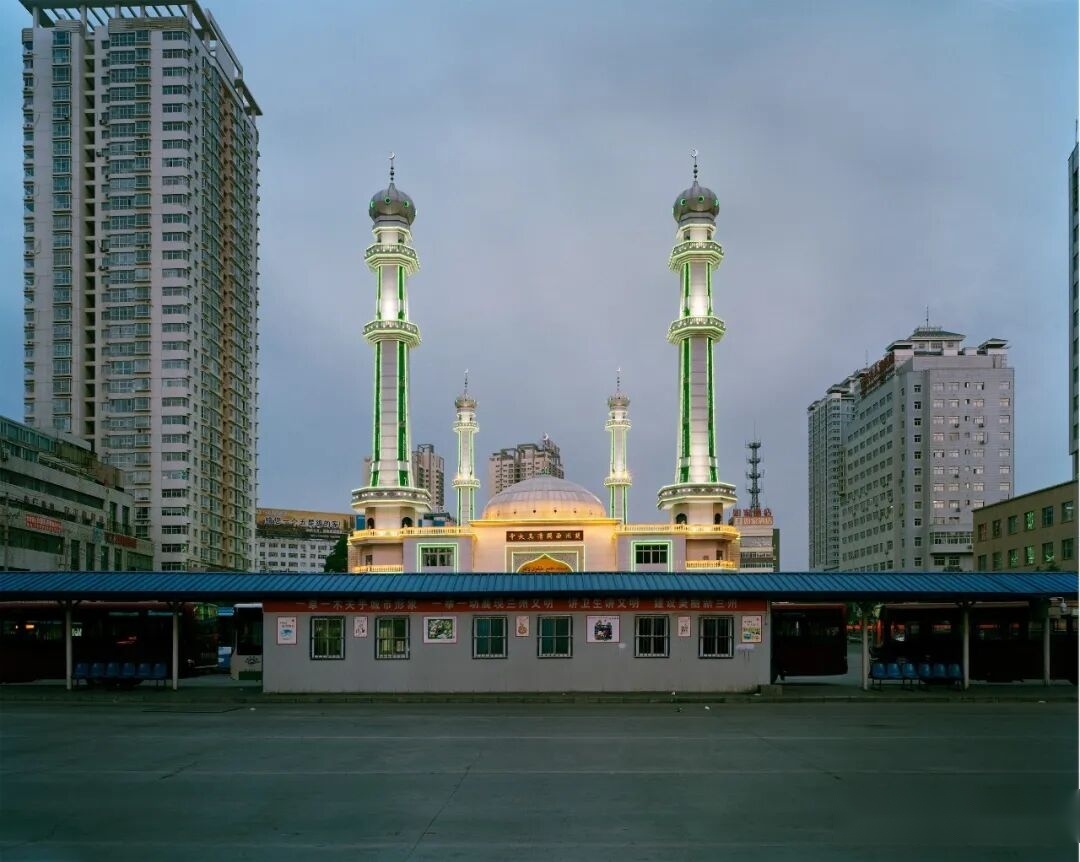
This is the opening piece of the documentary photography series 'The Vanishing Spires,' focusing on the Xiguan Mosque in Lanzhou. By comparing field footage taken seven years apart, in 2016 and 2023, this project meticulously documents the profound changes in the exterior of the main prayer hall, the worship space, and the surrounding streetscape, preserving a significant and valuable visual archive of this Northwest city.
The exterior lights of the Xiguan Mosque have gone out. The pale orange glow that once illuminated the white, keyboard-like decorative elements has faded, replaced by the cold clarity of natural morning light. The structure consists of a matrix of layered vertical pillars that spiral upward with a rhythmic sense of motion. It was originally a building complex featuring a central circular dome and four towering Arabic minarets surrounding it. The dome is the mosque's core—the prayer hall—while the four high towers served as symbols of the masjid, like four sharp swords piercing the sky. Now, those swords have been severed; their height was reduced, with two-thirds dismantled, leaving only the base visible above the podium. They stand just slightly taller than the prayer hall, encased in these white 'keyboard' bars, looking less like part of the structure and more like industrial air-conditioning cooling towers left on a rooftop, albeit dressed up in white to look a bit more pleasing.
I. Lanzhou Xiguan
The Xiguan Mosque in Lanzhou, May 2016.
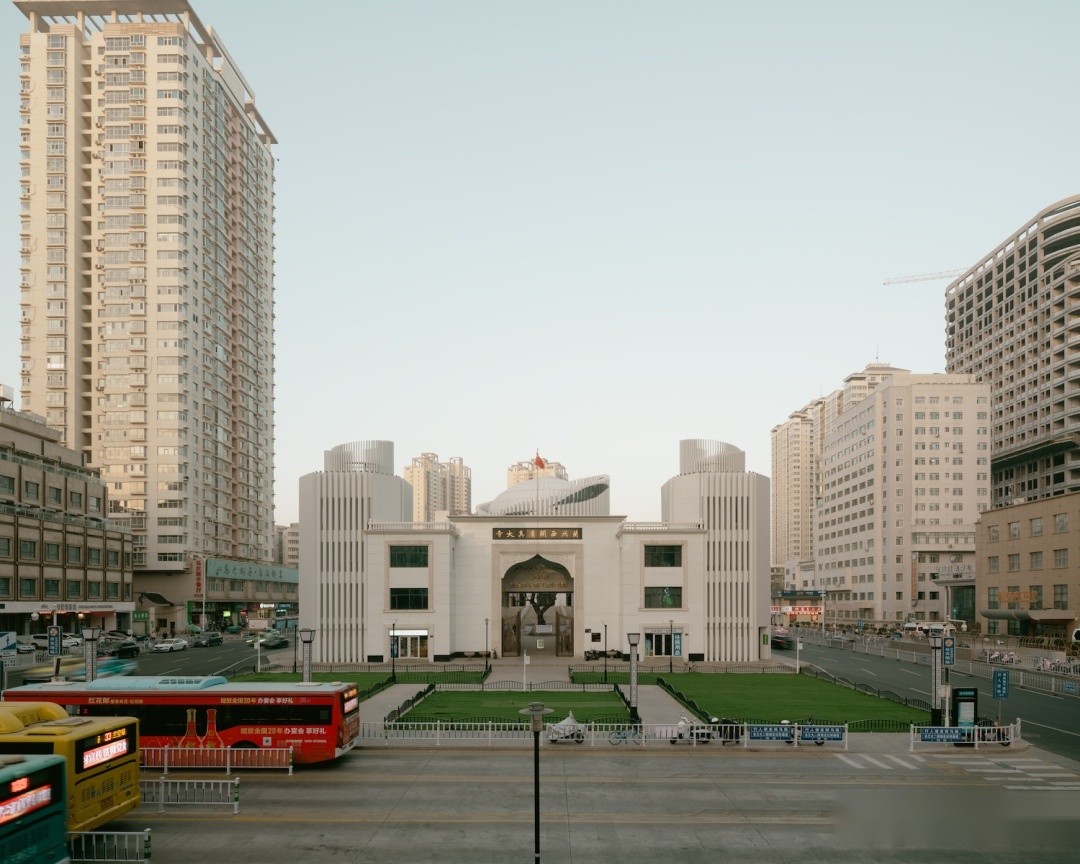
The Xiguan Mosque in Lanzhou, November 2023.
1
The sky was just beginning to lighten, and the air was bitingly cold. Lanzhou in winter wakes up early to the heavy, labored breathing of city buses. Looking out the hotel window, headlights streaked across Zhangye Road, and shadows of people hurried past on the sidewalk. I went downstairs at 7:00 sharp to wait for Zhang Yi. Twenty minutes later, he finally emerged from the elevator, his first words being, 'Didn't we agree on 7:30?' sounding almost defensive.
We walked north out of the alleyway, just a few dozen steps to Zhangye Road, and a little further west was the intersection of Jiuquan Road. The pedestrian crosswalk was completely blocked off by iron barricades, making it impossible to cross legally. I had to step off the sidewalk into the street ahead of time to weave through traffic—it was a necessary evil. As we crossed against the red light in front of the Provincial Government building, the guard at the gate looked at us with weary eyes. The red lanterns under the carved beams glowed faintly, looking somewhat eerie in the cool morning light. The gate of the Gansu Provincial Government has always been like this—a traditional Chinese-style facade, ancient and out of place. It looked this way when I first saw it in the 80s, and it appeared the same in photographs by Mannerheim and Carter Holton a hundred years ago. Perhaps it has sat there in this weary, stoic posture in Xiguan for hundreds of years.
Zhang Yi was grumbling, still annoyed that I had jaywalked through traffic. I told him not to act so upright and to just relax; I had already done it yesterday afternoon. Indeed, just the previous day, under the warm afternoon sun, three stylish young women had walked by, crossed the street, and sashayed into the government gate under the guard's very eyes. I was the one who followed right behind them.
I tucked my tripod under my arm and shoved my hands into my pockets. This posture not only kept my hands warm but was the most efficient way to carry my photography bag and tripod. Zhang Yi was beside me, holding a Sony video camera, filming as we walked. Occasionally, he slowed his pace, aiming the lens at my moving feet.
On the last day of May 2015, that early morning rush to the Xiguan Mosque was much the same—the sky was still dark, and I had a tripod tucked under my arm. The afternoon before that, I had wandered around the bus plaza outside the east gate of the mosque, looking for a way to photograph the building with its four Arabic-style towers and massive round dome. After hesitating for a long time, I decided to come back the next morning. Only then would the buses and pedestrians in the square subside, potentially offering a rare, clear scene. Throughout the rest of the day, it was almost impossible to meet my shooting requirements. For this mosque located in a bustling downtown area, the key to outdoor photography was simply finding a time with few people and cars.
The Eurasia Plaza at the northeast corner of Xiguan Cross was struggling, its business failing and foot traffic sparse. There was a time when this was a commercial landmark of Lanzhou—back in the distant 80s and 90s, an era when the country was opening up and re-invoking the 'Silk Road Eurasia Land Bridge.' Another symbol of that era's glory was the Yaxiya Shopping Center in Zhengzhou, which has also withered away into the annals of time.
Going back even further, the Zhongshan Road intersection at Xiguan Cross was the true west gate of the inner city of Lanzhou during the Qing Dynasty. Within the city, the three lanes and seven alleys were arranged in a tidy, grid-like fashion, with buildings extending layer upon layer outside the city walls. Clearly, this ancient Ming Dynasty city could no longer contain the daily needs of the government and the marketplace. Xiguan was the main street outside the West Gate, a transition zone between the inner and outer cities.
On a morning in March 1781 (the 36th year of the Qianlong reign), the West Gate was bolted shut. A few guards huddled behind the massive stone battlements, occasionally peeking down at the crowd below. A large group of white-capped Jahriyya (a Sufi order) followers had gathered outside the gate. They had rushed from Xunhua and Hezhou to rescue their leader, Ma Mingxin. Previously, the Jahriyya disciple and Salar ahong Su Forty-Three had escalated a conflict over religious resources between the Jahriyya and the Huasi (another Sufi order) into a bloody confrontation. Ultimately, they turned their anger toward the Lanzhou officials who had favored the Huasi. Su Forty-Three’s uprising began with the religious strife; after capturing the poorly defended city of Hezhou, thousands of Jahriyya followers marched toward Lanzhou.
The equally poorly defended Lanzhou government panicked. On one hand, they urgently called for reinforcements; on the other, they sent men to Dingxi to capture the Jahriyya leader Ma Mingxin to use as a hostage. The siege by the Jahriyya followers arrived just at this critical moment.
On the 26th of March, the number of white-capped men outside the West Gate grew. The Commander-in-Chief, Wang Tingzan, worried about the situation worsening, invited the leader to the city tower to convince his followers to withdraw. The crowd below was agitated, with wailing and crying echoing back and forth. The leader, Ma, 'leaned toward the city below and spoke a few words in a foreign language (Persian/Arabic), his expression stern, then suddenly pulled the turban from his head and threw it down.' The disciples scrambled to grab the 'tastale' (the white cloth of the turban), tearing it into pieces to keep as souvenirs. Ma’s foreign words left the officials panicked and fearful. Shortly after, the leader was secretly killed. Su Forty-Three led the uprising, occupying Hualin Mountain for several months before eventually being defeated and martyred.
What exactly Ma said in that foreign tongue remains unknown to this day. I lean toward the theory that he was trying to persuade his followers to retreat—to assess the situation and endure—he didn’t seem like an extremist. Under pressure from other sects and the harsh crackdown of the government, the Jahriyya were pushed out of the Hehuang Valley, surviving only in Jinjipu (Ningxia), Zhangjiachuan (Tianshui), and Yunnan. This 'New Sect' followed the path guided by the spirit of 'Shahid' (meaning martyrdom), struggling for centuries over the murder of their first leader. Other sects called them the 'Blood-Neck Sect.'
During the two minutes it took to walk through the Zhongshan Road underpass, I told Zhang Yi the story of what happened 250 years ago, right above our heads. Xiguan Cross was indeed the site of the old West Gate. However, during the 'Destroy the Four Olds' campaign, the Lanzhou city walls and local history were scattered like smoke and dust, leaving only rumors and fragments in the folk memory. For the common people, whether Han or Hui Muslims, the bloodshed from two centuries ago seems as if it never happened.
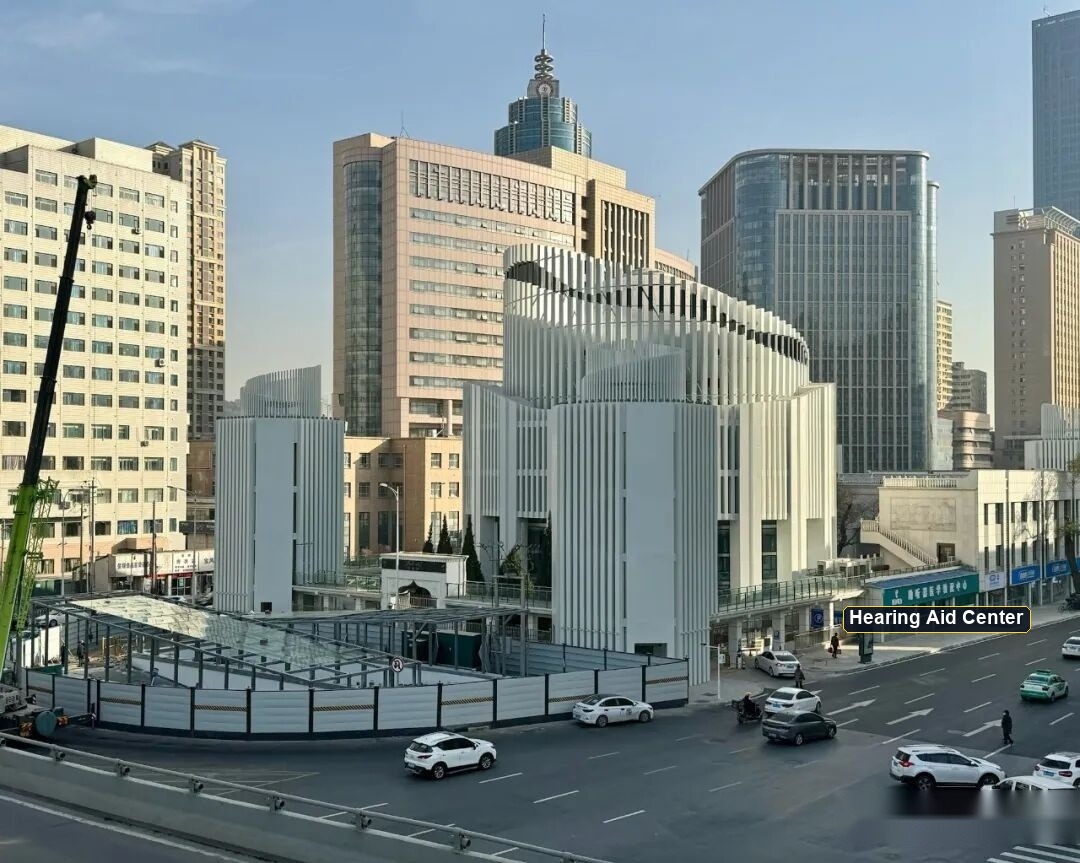
The Xiguan Mosque in Lanzhou, November 2023.
2
The sky slowly shifted from a heavy grayish-blue to a bright silvery-blue. The glare of car headlights and taillights was no longer harsh. The city was lowering its dark curtain, and the warm streetlights had not yet completely turned off. The orange glow grew smaller as more of the space was overtaken by the deep, blue-gray of the morning.
The exterior lights of the Xiguan Mosque were turned off. The pale orange glow that had been on the white, keyboard-like decorative elements faded away, leaving only the cold, clear light of morning. A series of matrix-like, vertically aligned pillars formed a rhythmic, spiraling shape. It was a complex originally consisting of a central circular dome building and four towering Arabic minarets. The dome was the heart of the mosque—the prayer hall—while the four towers were its symbols, like swords piercing the sky. Now, the swords have been cut off, their height reduced by two-thirds, leaving only the base projecting from the podium. They stand just a bit higher than the prayer hall, enclosed by the white 'keyboard' structure. It looks like an architectural component, or perhaps like massive air-conditioning cooling towers left on the roof, just dressed in white to look a bit better. The central circular dome could not be dismantled; the onion-shaped white dome is connected to the main structure. If the onion top were removed, the prayer hall would cease to exist, effectively destroying the mosque. This was the biggest challenge in the renovation. In the summer, someone asked me if the Xiguan Mosque was special and if it might resist the changes happening to other mosques. I disagreed, explaining that they were likely still studying the renovation plan because the mosque's structure is so unique that simply slapping a 'Chinese-style hat' on it wouldn't be easy.
The onion dome has finally been enveloped by these spiraling white pillars, creating a light and rhythmic appearance. The building’s new facade has a strong sculptural quality, making the mosque look like a modern concert hall. Before I arrived, Liu Sheng from Lanzhou sent me a photo, telling me, 'The mosque renovation is finished, it looks just like a modern museum.'
'Why did the lights go out? I wanted to get a shot with the lighting,' Zhang Yi said, caught off guard. Clearly, we hadn't reached the best shooting spot yet, and I hadn't expected the landscape lights to be turned off so early. In my ideal photo, the mosque would still have its lights on, just like when I shot here in 2016 during the early morning. Back then, the towers and dome were outlined in blue and green light, and the morning sun was just beginning to cast a warm glow on the tall office buildings nearby, creating a charming contrast between the cool and warm light. Now, before the beautiful purple-pink light could hit the high-rises in the morning, the mosque's landscape lighting had already been killed. Seven years ago, it was a May morning; now it was winter, and the timing of the lighting was different. To me, the lights that burned all night seemed to have gone to waste—weren't they meant for me to capture this photo? I am one of the few people who cares about the shifting beauty of this building.
Approaching the mosque, we had to cross the street. This time, I obediently followed Zhang Yi into the underpass, navigated the complex paths to cross the road, and climbed out from the stairwell near the bus stop in front of the mosque's main entrance. A crowd of people waiting for the bus had already gathered. Across the four lanes of the parking area was the bus dispatch station. This two-story building, constructed just last year, blocked the spot where I used to shoot. Even if I stood exactly where I had eight years ago, I couldn't see the mosque; for blocking a view, two stories are more than enough.
Yesterday afternoon, when I was scouting the location alone, I couldn't find a good alternative spot. I eventually set my sights on a window on the second floor of that small building. I walked in with trepidation, trying to force a friendly smile at the people coming out, terrified of being yelled at or rejected. The first middle-aged man in a thick down jacket didn't even acknowledge me; he just brushed past without a look.
Once inside, I took a look around. There was no guard or lazy security officer as I had imagined. I projected my best 'friendly' expression toward a woman heading my way. She was carrying a thermos, clearly a driver or attendant who had just filled it with hot water, and her uniform bore the 'Lanzhou Bus' logo.
My proactive approach made her stop. I told her I was a photographer from Beijing and needed to take a photo of the mosque from the second-floor window. I emphasized 'from Beijing' because it might increase my chances—coming from the capital, traveling such a long distance, and during the off-season winter, it made me sound more professional and my work feel more 'important.' I hoped they would mistake my intent and find it hard to refuse. I wanted to complete my work in those dozen minutes before they could even fully process who I was.
However, for these bus staff, my thoughts were a bit too complicated. To them, it was no big deal. 'If you want to take pictures, just go upstairs,' she said, pointing to the stairs.
On the second-floor hallway, there were three sets of windows. The one near the main office was the best for shooting, and it could be opened completely. Through the viewfinder, I could capture the full frame of the mosque. The angle wasn't perfectly on the central axis—it was off by a meter or two—but I didn't want to disturb the few women chatting excitedly in the office. They were bus dispatchers, talking about gossip while shelling sunflower seeds. The office had windows on three sides, and the afternoon sun brought warmth in from both the west and the south. The sound of cracking seeds mixed with their laughter, filling the room with the familiar, laid-back atmosphere of an old state-run unit.
I checked their office hours for the next morning and confirmed I could come back to take my photo. They briefly asked who I was and where I was from. This time, my 'Beijing photographer' pitch worked exactly as expected; they didn't object, and I took that as a warm welcome.
Liu Sheng from Lanzhou was already waiting at the door of the two-story building early that morning. I hadn't wanted to trouble him to join me, but he said he lived right nearby. I had only met him once at the Lishui Photography Festival half a month ago. When he heard I was coming to Lanzhou to photograph this mosque, he took a special interest. A week before I left, he even sent me a photo of the Xiguan Mosque taken from a high-rise to the northeast, clearly showing the newly renovated, rhythmic structure. He told me excitedly that the renovation was complete. I told him I would be there the following week. I had already seen similar pictures and info online, so his news was a bit late.
The shoot took place by the second-floor hallway window. My domestic carbon-fiber tripod, equipped with a Manfrotto three-way head, was incredibly reliable—one leg splayed out of the open window while the other two were wedged against the indoor radiator pipes. After leveling the head, I put the new Fujifilm camera Zhang Yi had brought for me to work.
Zhang Yi kept filming me as I worked, recording the process. Sometimes I would talk to myself, recalling details from eight years ago, trying to recapture the feeling of that previous shoot. In reality, the biggest difficulty on-site was waiting for a moment when both people and cars were sparse in the frame. However, the foreground was a three-lane bus terminal. In the half-hour of shooting, I never got a moment when three buses moved out at once. The purple-pink glow was already appearing on the high-rise nearby, the sky was getting brighter, and the contrast was increasing. I packed up my camera and finished. Before leaving, I poked my head into the office to say goodbye to the women. They seemed to have forgotten I was coming to take photos this morning, pausing for a moment before nodding in response. When I closed the door behind me, their new gossip for the day had yet to begin.
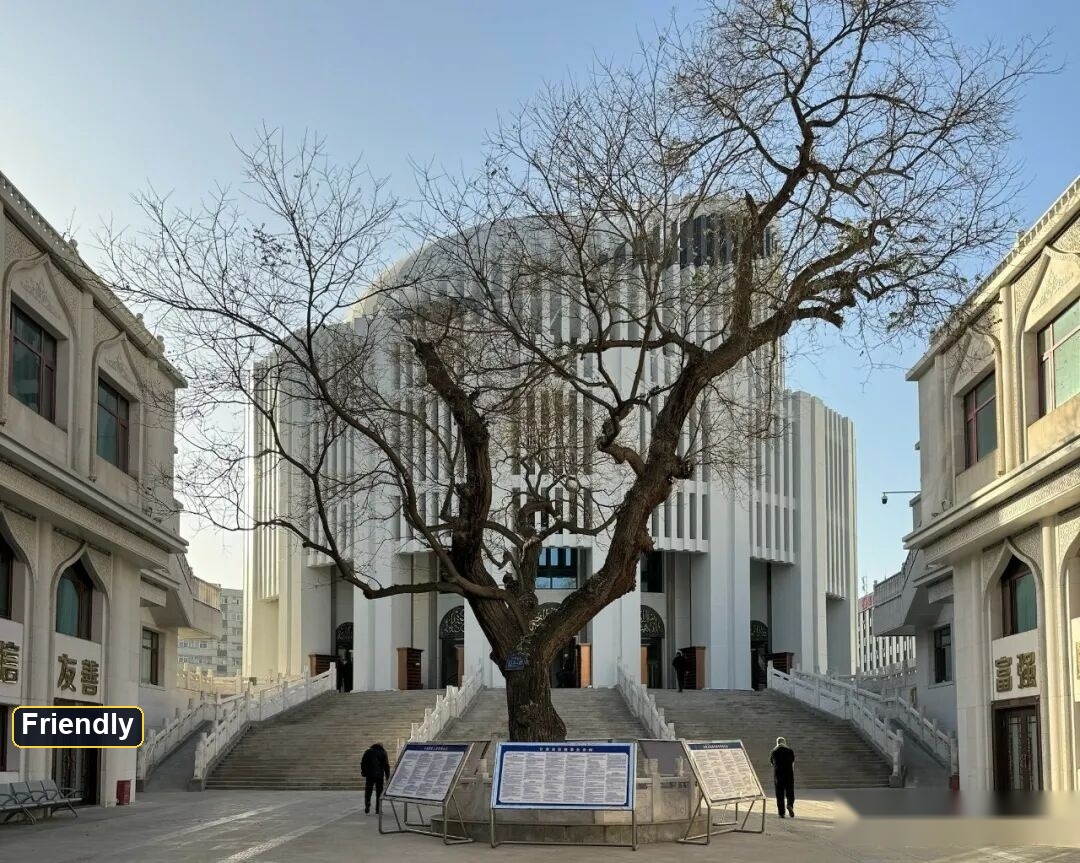
The large locust tree in the courtyard of Xiguan Mosque, November 2023.
3
The Jiefangmen bus stop, about half a mile away behind the mosque, offers a completely different angle for photos. When we walked past the main gate of the mosque, I insisted that we all go inside to take a look, though Zhang Yi seemed a bit hesitant.
Put your faith aside and come inside with me; you're here to work, and it has nothing to do with religion, I said, leading him into the most significant mosque for the Ikhwani order in Gansu province.
A black marble plaque set into the porch gives a brief history of the mosque. It says the mosque originated in the Ming Dynasty, though there aren't many historical records to back that up. What we do have documented is that it was rebuilt and renovated during the Kangxi and Yongzheng eras of the Qing Dynasty. If that's the case, at the very least, Ma Mingxin could have looked out from the West Gate city wall and seen this mosque less than a mile away. Back then, it belonged to the Gedimu (the traditional 'Old Teaching' order), which existed alongside the newer Huasi (Flowery Mosque) order. In the early spring of the 36th year of the Qianlong Emperor’s reign, Su Sishisan and his followers besieged the area outside the West Gate, right where the Xiguan Mosque stands today. A man as bloodthirsty as Su Sishisan would never have let a Huasi mosque survive.
The sect leader stood on the city wall looking west, with his devout followers prostrate and weeping at his feet. Not far away stood the Xiguan Mosque, a sprawling complex of traditional Chinese architecture. I have seen photos of it taken by foreigners in the late Qing Dynasty.
When we entered the mosque, the first daily prayer had already finished, and the courtyard was empty. I wanted to find someone to say hello to, which would clear up any potential misunderstandings, but besides the imprisoned-looking old pagoda tree in the center of the courtyard, I didn't see a single Ikhwani believer in a white cap. It’s an ancient tree, over a hundred years old, growing out of a massive pit in the ground. The pit looks like a well, with the roots sitting four or five meters below street level. Only then did I realize that this lower depth was actually the original ground level of the mosque.
At the top of the steps leading into the prayer hall, a pair of shoes lay at the edge of the carpet; someone was inside making up their missed prayers. I signaled to Liu Sheng and Zhang Yi to take off their shoes and go in with their socks on. Zhang Yi never ended up coming in, but Liu Sheng followed me into the main hall. He kept whispering, asking if it was okay to take photos—I think it was his first time ever stepping into the spiritual heart of the Islamic world.
The circular design of this prayer hall is a brilliant touch. In the hundreds of mosques I’ve visited, this one stands out for its cleverness. By using a circle—a shape that doesn't have a rigid north-south or east-west orientation—it solved the conflict between the street layout and the requirement to face Mecca for prayer. In reality, many urban mosques have to fit into whatever plots of land or street grid they’re given, and city planners never consider their orientation toward Mecca. Since Muslims are a minority, mainstream urban planning rarely accounts for their needs, often resulting in awkward layouts where the main gate and the mihrab (the niche that points toward Mecca where the Imam leads prayers) aren't even on the same axis. For a solemn house of prayer to have a layout that lacks symmetry just feels a bit wrong.
To the left of the main hall, a glass partition creates a separate space of about ten to twenty square meters, also covered with prayer rugs. This space wasn't here before. I don't know if it's designated for female worshippers, but if so, it shows that the Ikhwani, who traditionally didn't encourage women to go out to the mosque for prayers, have made significant progress.
I immediately sent a message to Liu Jinxun, who is now in Yinchuan, to ask him about the purpose of this small room. He’s a devout Ikhwani who spent decades attending prayers at this very mosque before leaving Lanzhou, so I knew he’d have the answer.
Within just a few minutes, Jinxun replied.
The women's section of the Xiguan Mosque, which also serves as an Arabic language class, has always been on the first floor. The Ikhwani—at least at the main Xiguan Mosque—don't actually oppose collective prayer for women. As for that small partitioned area, it's for people who arrive late to prayer so they don't disrupt the flow for those who are already inside.
I miss Jinxun. When I was filming in Lanzhou in 2016, he accompanied me the whole time and helped me out quite a bit. Around 2020, he moved to Yinchuan, even transferring his residency, and I’ve only seen him a couple of times since.
Leaving the mosque and crossing the street, I found myself facing the massive inpatient building of the Lanzhou University Second Hospital. It was bustling and crowded; the northern hospitals are always at their busiest in early winter. I imagine the best vantage point to view the Xiguan Mosque from above is likely from one of the windows on the eighth or tenth floor of that building.
The mosque sits right in the middle of the green belt on Linxia Road, effectively splitting this street—which has a very Islamic-sounding name—into two sections. Whether you see that as an act of dominance or a humble presence really depends on your own perspective of the mosque's place in the city.
It’s just across the road: the mosque on one side and the hospital on the other. Look, you see people in white caps walking in and out of both buildings. Both places serve a life-saving purpose—one for the soul, the other for the body—yet they are actually the same in that way, I told Zhang Yi as we left.
Interior of the Xiguan Mosque prayer hall, photographed in 2016.
A comparison photo between 2016 and 2023, taken from the direction of Jiefangmen.
(To be continued) view all
This is the opening piece of the documentary photography series 'The Vanishing Spires,' focusing on the Xiguan Mosque in Lanzhou. By comparing field footage taken seven years apart, in 2016 and 2023, this project meticulously documents the profound changes in the exterior of the main prayer hall, the worship space, and the surrounding streetscape, preserving a significant and valuable visual archive of this Northwest city.
The exterior lights of the Xiguan Mosque have gone out. The pale orange glow that once illuminated the white, keyboard-like decorative elements has faded, replaced by the cold clarity of natural morning light. The structure consists of a matrix of layered vertical pillars that spiral upward with a rhythmic sense of motion. It was originally a building complex featuring a central circular dome and four towering Arabic minarets surrounding it. The dome is the mosque's core—the prayer hall—while the four high towers served as symbols of the masjid, like four sharp swords piercing the sky. Now, those swords have been severed; their height was reduced, with two-thirds dismantled, leaving only the base visible above the podium. They stand just slightly taller than the prayer hall, encased in these white 'keyboard' bars, looking less like part of the structure and more like industrial air-conditioning cooling towers left on a rooftop, albeit dressed up in white to look a bit more pleasing.
I. Lanzhou Xiguan
The Xiguan Mosque in Lanzhou, May 2016.
The Xiguan Mosque in Lanzhou, November 2023.
1
The sky was just beginning to lighten, and the air was bitingly cold. Lanzhou in winter wakes up early to the heavy, labored breathing of city buses. Looking out the hotel window, headlights streaked across Zhangye Road, and shadows of people hurried past on the sidewalk. I went downstairs at 7:00 sharp to wait for Zhang Yi. Twenty minutes later, he finally emerged from the elevator, his first words being, 'Didn't we agree on 7:30?' sounding almost defensive.
We walked north out of the alleyway, just a few dozen steps to Zhangye Road, and a little further west was the intersection of Jiuquan Road. The pedestrian crosswalk was completely blocked off by iron barricades, making it impossible to cross legally. I had to step off the sidewalk into the street ahead of time to weave through traffic—it was a necessary evil. As we crossed against the red light in front of the Provincial Government building, the guard at the gate looked at us with weary eyes. The red lanterns under the carved beams glowed faintly, looking somewhat eerie in the cool morning light. The gate of the Gansu Provincial Government has always been like this—a traditional Chinese-style facade, ancient and out of place. It looked this way when I first saw it in the 80s, and it appeared the same in photographs by Mannerheim and Carter Holton a hundred years ago. Perhaps it has sat there in this weary, stoic posture in Xiguan for hundreds of years.
Zhang Yi was grumbling, still annoyed that I had jaywalked through traffic. I told him not to act so upright and to just relax; I had already done it yesterday afternoon. Indeed, just the previous day, under the warm afternoon sun, three stylish young women had walked by, crossed the street, and sashayed into the government gate under the guard's very eyes. I was the one who followed right behind them.
I tucked my tripod under my arm and shoved my hands into my pockets. This posture not only kept my hands warm but was the most efficient way to carry my photography bag and tripod. Zhang Yi was beside me, holding a Sony video camera, filming as we walked. Occasionally, he slowed his pace, aiming the lens at my moving feet.
On the last day of May 2015, that early morning rush to the Xiguan Mosque was much the same—the sky was still dark, and I had a tripod tucked under my arm. The afternoon before that, I had wandered around the bus plaza outside the east gate of the mosque, looking for a way to photograph the building with its four Arabic-style towers and massive round dome. After hesitating for a long time, I decided to come back the next morning. Only then would the buses and pedestrians in the square subside, potentially offering a rare, clear scene. Throughout the rest of the day, it was almost impossible to meet my shooting requirements. For this mosque located in a bustling downtown area, the key to outdoor photography was simply finding a time with few people and cars.
The Eurasia Plaza at the northeast corner of Xiguan Cross was struggling, its business failing and foot traffic sparse. There was a time when this was a commercial landmark of Lanzhou—back in the distant 80s and 90s, an era when the country was opening up and re-invoking the 'Silk Road Eurasia Land Bridge.' Another symbol of that era's glory was the Yaxiya Shopping Center in Zhengzhou, which has also withered away into the annals of time.
Going back even further, the Zhongshan Road intersection at Xiguan Cross was the true west gate of the inner city of Lanzhou during the Qing Dynasty. Within the city, the three lanes and seven alleys were arranged in a tidy, grid-like fashion, with buildings extending layer upon layer outside the city walls. Clearly, this ancient Ming Dynasty city could no longer contain the daily needs of the government and the marketplace. Xiguan was the main street outside the West Gate, a transition zone between the inner and outer cities.
On a morning in March 1781 (the 36th year of the Qianlong reign), the West Gate was bolted shut. A few guards huddled behind the massive stone battlements, occasionally peeking down at the crowd below. A large group of white-capped Jahriyya (a Sufi order) followers had gathered outside the gate. They had rushed from Xunhua and Hezhou to rescue their leader, Ma Mingxin. Previously, the Jahriyya disciple and Salar ahong Su Forty-Three had escalated a conflict over religious resources between the Jahriyya and the Huasi (another Sufi order) into a bloody confrontation. Ultimately, they turned their anger toward the Lanzhou officials who had favored the Huasi. Su Forty-Three’s uprising began with the religious strife; after capturing the poorly defended city of Hezhou, thousands of Jahriyya followers marched toward Lanzhou.
The equally poorly defended Lanzhou government panicked. On one hand, they urgently called for reinforcements; on the other, they sent men to Dingxi to capture the Jahriyya leader Ma Mingxin to use as a hostage. The siege by the Jahriyya followers arrived just at this critical moment.
On the 26th of March, the number of white-capped men outside the West Gate grew. The Commander-in-Chief, Wang Tingzan, worried about the situation worsening, invited the leader to the city tower to convince his followers to withdraw. The crowd below was agitated, with wailing and crying echoing back and forth. The leader, Ma, 'leaned toward the city below and spoke a few words in a foreign language (Persian/Arabic), his expression stern, then suddenly pulled the turban from his head and threw it down.' The disciples scrambled to grab the 'tastale' (the white cloth of the turban), tearing it into pieces to keep as souvenirs. Ma’s foreign words left the officials panicked and fearful. Shortly after, the leader was secretly killed. Su Forty-Three led the uprising, occupying Hualin Mountain for several months before eventually being defeated and martyred.
What exactly Ma said in that foreign tongue remains unknown to this day. I lean toward the theory that he was trying to persuade his followers to retreat—to assess the situation and endure—he didn’t seem like an extremist. Under pressure from other sects and the harsh crackdown of the government, the Jahriyya were pushed out of the Hehuang Valley, surviving only in Jinjipu (Ningxia), Zhangjiachuan (Tianshui), and Yunnan. This 'New Sect' followed the path guided by the spirit of 'Shahid' (meaning martyrdom), struggling for centuries over the murder of their first leader. Other sects called them the 'Blood-Neck Sect.'
During the two minutes it took to walk through the Zhongshan Road underpass, I told Zhang Yi the story of what happened 250 years ago, right above our heads. Xiguan Cross was indeed the site of the old West Gate. However, during the 'Destroy the Four Olds' campaign, the Lanzhou city walls and local history were scattered like smoke and dust, leaving only rumors and fragments in the folk memory. For the common people, whether Han or Hui Muslims, the bloodshed from two centuries ago seems as if it never happened.
The Xiguan Mosque in Lanzhou, November 2023.
2
The sky slowly shifted from a heavy grayish-blue to a bright silvery-blue. The glare of car headlights and taillights was no longer harsh. The city was lowering its dark curtain, and the warm streetlights had not yet completely turned off. The orange glow grew smaller as more of the space was overtaken by the deep, blue-gray of the morning.
The exterior lights of the Xiguan Mosque were turned off. The pale orange glow that had been on the white, keyboard-like decorative elements faded away, leaving only the cold, clear light of morning. A series of matrix-like, vertically aligned pillars formed a rhythmic, spiraling shape. It was a complex originally consisting of a central circular dome building and four towering Arabic minarets. The dome was the heart of the mosque—the prayer hall—while the four towers were its symbols, like swords piercing the sky. Now, the swords have been cut off, their height reduced by two-thirds, leaving only the base projecting from the podium. They stand just a bit higher than the prayer hall, enclosed by the white 'keyboard' structure. It looks like an architectural component, or perhaps like massive air-conditioning cooling towers left on the roof, just dressed in white to look a bit better. The central circular dome could not be dismantled; the onion-shaped white dome is connected to the main structure. If the onion top were removed, the prayer hall would cease to exist, effectively destroying the mosque. This was the biggest challenge in the renovation. In the summer, someone asked me if the Xiguan Mosque was special and if it might resist the changes happening to other mosques. I disagreed, explaining that they were likely still studying the renovation plan because the mosque's structure is so unique that simply slapping a 'Chinese-style hat' on it wouldn't be easy.
The onion dome has finally been enveloped by these spiraling white pillars, creating a light and rhythmic appearance. The building’s new facade has a strong sculptural quality, making the mosque look like a modern concert hall. Before I arrived, Liu Sheng from Lanzhou sent me a photo, telling me, 'The mosque renovation is finished, it looks just like a modern museum.'
'Why did the lights go out? I wanted to get a shot with the lighting,' Zhang Yi said, caught off guard. Clearly, we hadn't reached the best shooting spot yet, and I hadn't expected the landscape lights to be turned off so early. In my ideal photo, the mosque would still have its lights on, just like when I shot here in 2016 during the early morning. Back then, the towers and dome were outlined in blue and green light, and the morning sun was just beginning to cast a warm glow on the tall office buildings nearby, creating a charming contrast between the cool and warm light. Now, before the beautiful purple-pink light could hit the high-rises in the morning, the mosque's landscape lighting had already been killed. Seven years ago, it was a May morning; now it was winter, and the timing of the lighting was different. To me, the lights that burned all night seemed to have gone to waste—weren't they meant for me to capture this photo? I am one of the few people who cares about the shifting beauty of this building.
Approaching the mosque, we had to cross the street. This time, I obediently followed Zhang Yi into the underpass, navigated the complex paths to cross the road, and climbed out from the stairwell near the bus stop in front of the mosque's main entrance. A crowd of people waiting for the bus had already gathered. Across the four lanes of the parking area was the bus dispatch station. This two-story building, constructed just last year, blocked the spot where I used to shoot. Even if I stood exactly where I had eight years ago, I couldn't see the mosque; for blocking a view, two stories are more than enough.
Yesterday afternoon, when I was scouting the location alone, I couldn't find a good alternative spot. I eventually set my sights on a window on the second floor of that small building. I walked in with trepidation, trying to force a friendly smile at the people coming out, terrified of being yelled at or rejected. The first middle-aged man in a thick down jacket didn't even acknowledge me; he just brushed past without a look.
Once inside, I took a look around. There was no guard or lazy security officer as I had imagined. I projected my best 'friendly' expression toward a woman heading my way. She was carrying a thermos, clearly a driver or attendant who had just filled it with hot water, and her uniform bore the 'Lanzhou Bus' logo.
My proactive approach made her stop. I told her I was a photographer from Beijing and needed to take a photo of the mosque from the second-floor window. I emphasized 'from Beijing' because it might increase my chances—coming from the capital, traveling such a long distance, and during the off-season winter, it made me sound more professional and my work feel more 'important.' I hoped they would mistake my intent and find it hard to refuse. I wanted to complete my work in those dozen minutes before they could even fully process who I was.
However, for these bus staff, my thoughts were a bit too complicated. To them, it was no big deal. 'If you want to take pictures, just go upstairs,' she said, pointing to the stairs.
On the second-floor hallway, there were three sets of windows. The one near the main office was the best for shooting, and it could be opened completely. Through the viewfinder, I could capture the full frame of the mosque. The angle wasn't perfectly on the central axis—it was off by a meter or two—but I didn't want to disturb the few women chatting excitedly in the office. They were bus dispatchers, talking about gossip while shelling sunflower seeds. The office had windows on three sides, and the afternoon sun brought warmth in from both the west and the south. The sound of cracking seeds mixed with their laughter, filling the room with the familiar, laid-back atmosphere of an old state-run unit.
I checked their office hours for the next morning and confirmed I could come back to take my photo. They briefly asked who I was and where I was from. This time, my 'Beijing photographer' pitch worked exactly as expected; they didn't object, and I took that as a warm welcome.
Liu Sheng from Lanzhou was already waiting at the door of the two-story building early that morning. I hadn't wanted to trouble him to join me, but he said he lived right nearby. I had only met him once at the Lishui Photography Festival half a month ago. When he heard I was coming to Lanzhou to photograph this mosque, he took a special interest. A week before I left, he even sent me a photo of the Xiguan Mosque taken from a high-rise to the northeast, clearly showing the newly renovated, rhythmic structure. He told me excitedly that the renovation was complete. I told him I would be there the following week. I had already seen similar pictures and info online, so his news was a bit late.
The shoot took place by the second-floor hallway window. My domestic carbon-fiber tripod, equipped with a Manfrotto three-way head, was incredibly reliable—one leg splayed out of the open window while the other two were wedged against the indoor radiator pipes. After leveling the head, I put the new Fujifilm camera Zhang Yi had brought for me to work.
Zhang Yi kept filming me as I worked, recording the process. Sometimes I would talk to myself, recalling details from eight years ago, trying to recapture the feeling of that previous shoot. In reality, the biggest difficulty on-site was waiting for a moment when both people and cars were sparse in the frame. However, the foreground was a three-lane bus terminal. In the half-hour of shooting, I never got a moment when three buses moved out at once. The purple-pink glow was already appearing on the high-rise nearby, the sky was getting brighter, and the contrast was increasing. I packed up my camera and finished. Before leaving, I poked my head into the office to say goodbye to the women. They seemed to have forgotten I was coming to take photos this morning, pausing for a moment before nodding in response. When I closed the door behind me, their new gossip for the day had yet to begin.
The large locust tree in the courtyard of Xiguan Mosque, November 2023.
3
The Jiefangmen bus stop, about half a mile away behind the mosque, offers a completely different angle for photos. When we walked past the main gate of the mosque, I insisted that we all go inside to take a look, though Zhang Yi seemed a bit hesitant.
Put your faith aside and come inside with me; you're here to work, and it has nothing to do with religion, I said, leading him into the most significant mosque for the Ikhwani order in Gansu province.
A black marble plaque set into the porch gives a brief history of the mosque. It says the mosque originated in the Ming Dynasty, though there aren't many historical records to back that up. What we do have documented is that it was rebuilt and renovated during the Kangxi and Yongzheng eras of the Qing Dynasty. If that's the case, at the very least, Ma Mingxin could have looked out from the West Gate city wall and seen this mosque less than a mile away. Back then, it belonged to the Gedimu (the traditional 'Old Teaching' order), which existed alongside the newer Huasi (Flowery Mosque) order. In the early spring of the 36th year of the Qianlong Emperor’s reign, Su Sishisan and his followers besieged the area outside the West Gate, right where the Xiguan Mosque stands today. A man as bloodthirsty as Su Sishisan would never have let a Huasi mosque survive.
The sect leader stood on the city wall looking west, with his devout followers prostrate and weeping at his feet. Not far away stood the Xiguan Mosque, a sprawling complex of traditional Chinese architecture. I have seen photos of it taken by foreigners in the late Qing Dynasty.
When we entered the mosque, the first daily prayer had already finished, and the courtyard was empty. I wanted to find someone to say hello to, which would clear up any potential misunderstandings, but besides the imprisoned-looking old pagoda tree in the center of the courtyard, I didn't see a single Ikhwani believer in a white cap. It’s an ancient tree, over a hundred years old, growing out of a massive pit in the ground. The pit looks like a well, with the roots sitting four or five meters below street level. Only then did I realize that this lower depth was actually the original ground level of the mosque.
At the top of the steps leading into the prayer hall, a pair of shoes lay at the edge of the carpet; someone was inside making up their missed prayers. I signaled to Liu Sheng and Zhang Yi to take off their shoes and go in with their socks on. Zhang Yi never ended up coming in, but Liu Sheng followed me into the main hall. He kept whispering, asking if it was okay to take photos—I think it was his first time ever stepping into the spiritual heart of the Islamic world.
The circular design of this prayer hall is a brilliant touch. In the hundreds of mosques I’ve visited, this one stands out for its cleverness. By using a circle—a shape that doesn't have a rigid north-south or east-west orientation—it solved the conflict between the street layout and the requirement to face Mecca for prayer. In reality, many urban mosques have to fit into whatever plots of land or street grid they’re given, and city planners never consider their orientation toward Mecca. Since Muslims are a minority, mainstream urban planning rarely accounts for their needs, often resulting in awkward layouts where the main gate and the mihrab (the niche that points toward Mecca where the Imam leads prayers) aren't even on the same axis. For a solemn house of prayer to have a layout that lacks symmetry just feels a bit wrong.
To the left of the main hall, a glass partition creates a separate space of about ten to twenty square meters, also covered with prayer rugs. This space wasn't here before. I don't know if it's designated for female worshippers, but if so, it shows that the Ikhwani, who traditionally didn't encourage women to go out to the mosque for prayers, have made significant progress.
I immediately sent a message to Liu Jinxun, who is now in Yinchuan, to ask him about the purpose of this small room. He’s a devout Ikhwani who spent decades attending prayers at this very mosque before leaving Lanzhou, so I knew he’d have the answer.
Within just a few minutes, Jinxun replied.
The women's section of the Xiguan Mosque, which also serves as an Arabic language class, has always been on the first floor. The Ikhwani—at least at the main Xiguan Mosque—don't actually oppose collective prayer for women. As for that small partitioned area, it's for people who arrive late to prayer so they don't disrupt the flow for those who are already inside.
I miss Jinxun. When I was filming in Lanzhou in 2016, he accompanied me the whole time and helped me out quite a bit. Around 2020, he moved to Yinchuan, even transferring his residency, and I’ve only seen him a couple of times since.
Leaving the mosque and crossing the street, I found myself facing the massive inpatient building of the Lanzhou University Second Hospital. It was bustling and crowded; the northern hospitals are always at their busiest in early winter. I imagine the best vantage point to view the Xiguan Mosque from above is likely from one of the windows on the eighth or tenth floor of that building.
The mosque sits right in the middle of the green belt on Linxia Road, effectively splitting this street—which has a very Islamic-sounding name—into two sections. Whether you see that as an act of dominance or a humble presence really depends on your own perspective of the mosque's place in the city.
It’s just across the road: the mosque on one side and the hospital on the other. Look, you see people in white caps walking in and out of both buildings. Both places serve a life-saving purpose—one for the soul, the other for the body—yet they are actually the same in that way, I told Zhang Yi as we left.
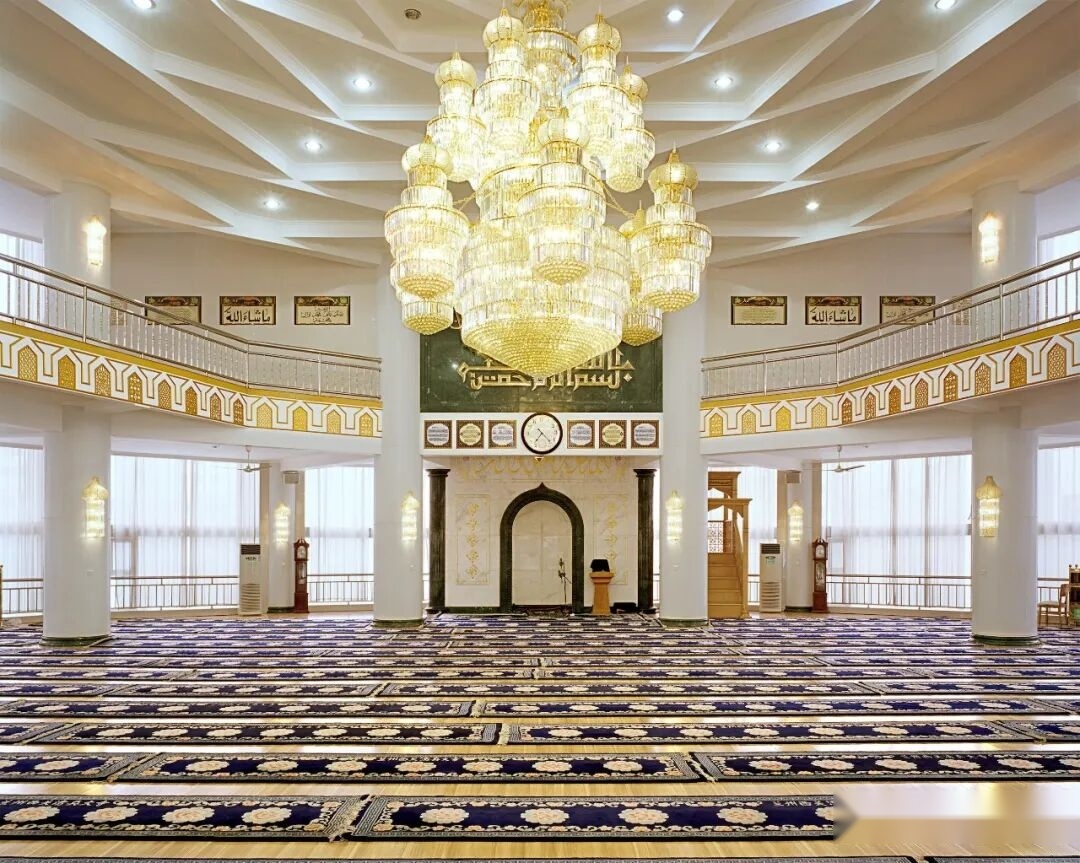
Interior of the Xiguan Mosque prayer hall, photographed in 2016.
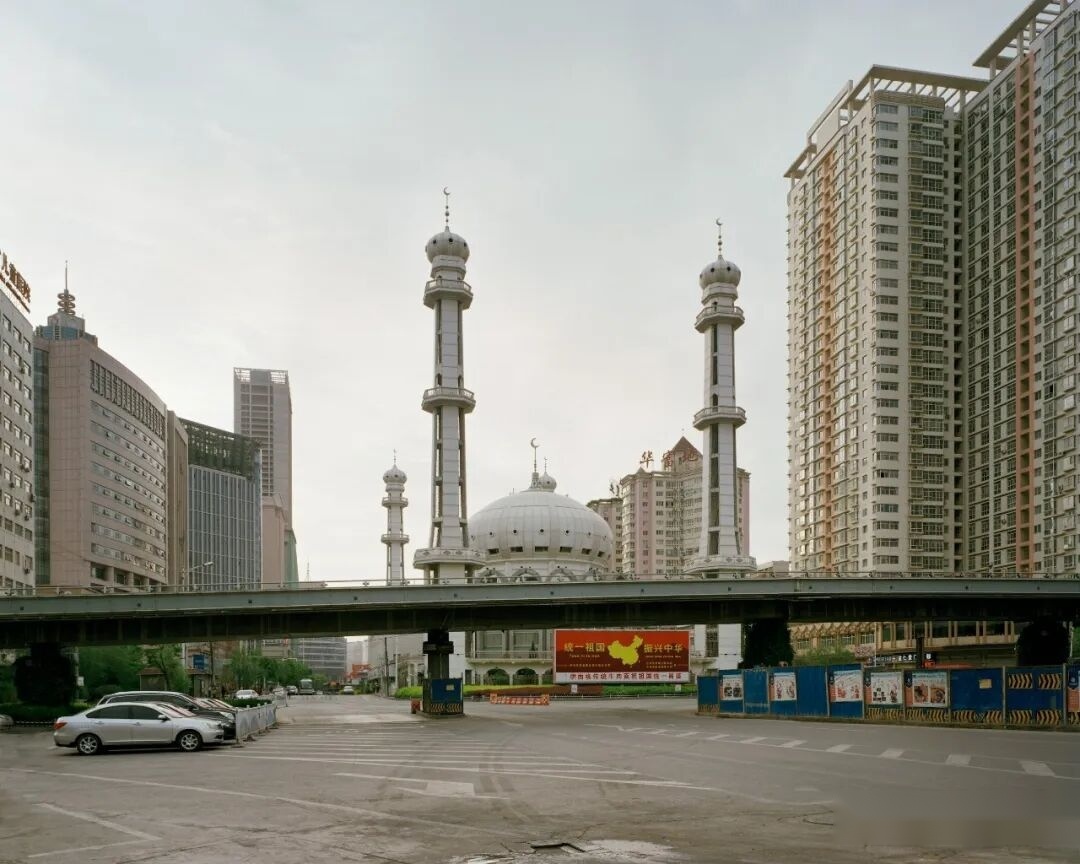
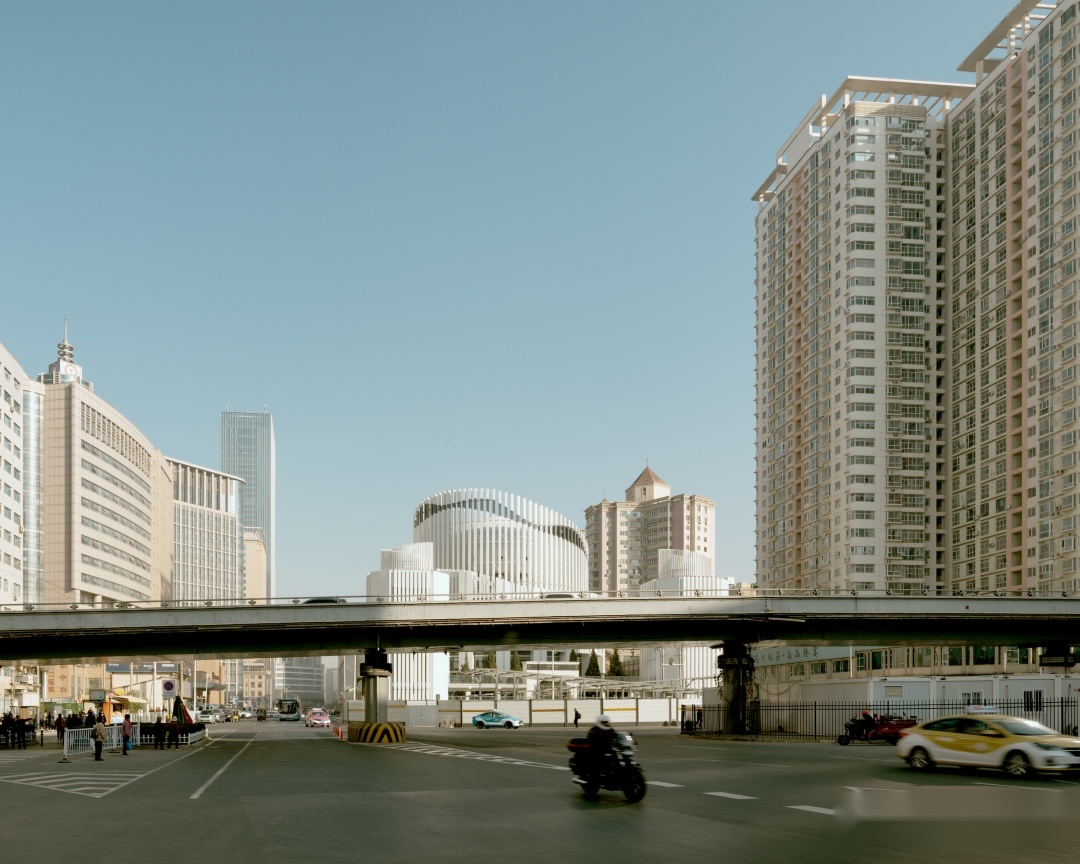
A comparison photo between 2016 and 2023, taken from the direction of Jiefangmen.
(To be continued)
The exterior lights of the Xiguan Mosque have gone out. The pale orange glow that once illuminated the white, keyboard-like decorative elements has faded, replaced by the cold clarity of natural morning light. The structure consists of a matrix of layered vertical pillars that spiral upward with a rhythmic sense of motion. It was originally a building complex featuring a central circular dome and four towering Arabic minarets surrounding it. The dome is the mosque's core—the prayer hall—while the four high towers served as symbols of the masjid, like four sharp swords piercing the sky. Now, those swords have been severed; their height was reduced, with two-thirds dismantled, leaving only the base visible above the podium. They stand just slightly taller than the prayer hall, encased in these white 'keyboard' bars, looking less like part of the structure and more like industrial air-conditioning cooling towers left on a rooftop, albeit dressed up in white to look a bit more pleasing.
I. Lanzhou Xiguan
The Xiguan Mosque in Lanzhou, May 2016.
The Xiguan Mosque in Lanzhou, November 2023.
1
The sky was just beginning to lighten, and the air was bitingly cold. Lanzhou in winter wakes up early to the heavy, labored breathing of city buses. Looking out the hotel window, headlights streaked across Zhangye Road, and shadows of people hurried past on the sidewalk. I went downstairs at 7:00 sharp to wait for Zhang Yi. Twenty minutes later, he finally emerged from the elevator, his first words being, 'Didn't we agree on 7:30?' sounding almost defensive.
We walked north out of the alleyway, just a few dozen steps to Zhangye Road, and a little further west was the intersection of Jiuquan Road. The pedestrian crosswalk was completely blocked off by iron barricades, making it impossible to cross legally. I had to step off the sidewalk into the street ahead of time to weave through traffic—it was a necessary evil. As we crossed against the red light in front of the Provincial Government building, the guard at the gate looked at us with weary eyes. The red lanterns under the carved beams glowed faintly, looking somewhat eerie in the cool morning light. The gate of the Gansu Provincial Government has always been like this—a traditional Chinese-style facade, ancient and out of place. It looked this way when I first saw it in the 80s, and it appeared the same in photographs by Mannerheim and Carter Holton a hundred years ago. Perhaps it has sat there in this weary, stoic posture in Xiguan for hundreds of years.
Zhang Yi was grumbling, still annoyed that I had jaywalked through traffic. I told him not to act so upright and to just relax; I had already done it yesterday afternoon. Indeed, just the previous day, under the warm afternoon sun, three stylish young women had walked by, crossed the street, and sashayed into the government gate under the guard's very eyes. I was the one who followed right behind them.
I tucked my tripod under my arm and shoved my hands into my pockets. This posture not only kept my hands warm but was the most efficient way to carry my photography bag and tripod. Zhang Yi was beside me, holding a Sony video camera, filming as we walked. Occasionally, he slowed his pace, aiming the lens at my moving feet.
On the last day of May 2015, that early morning rush to the Xiguan Mosque was much the same—the sky was still dark, and I had a tripod tucked under my arm. The afternoon before that, I had wandered around the bus plaza outside the east gate of the mosque, looking for a way to photograph the building with its four Arabic-style towers and massive round dome. After hesitating for a long time, I decided to come back the next morning. Only then would the buses and pedestrians in the square subside, potentially offering a rare, clear scene. Throughout the rest of the day, it was almost impossible to meet my shooting requirements. For this mosque located in a bustling downtown area, the key to outdoor photography was simply finding a time with few people and cars.
The Eurasia Plaza at the northeast corner of Xiguan Cross was struggling, its business failing and foot traffic sparse. There was a time when this was a commercial landmark of Lanzhou—back in the distant 80s and 90s, an era when the country was opening up and re-invoking the 'Silk Road Eurasia Land Bridge.' Another symbol of that era's glory was the Yaxiya Shopping Center in Zhengzhou, which has also withered away into the annals of time.
Going back even further, the Zhongshan Road intersection at Xiguan Cross was the true west gate of the inner city of Lanzhou during the Qing Dynasty. Within the city, the three lanes and seven alleys were arranged in a tidy, grid-like fashion, with buildings extending layer upon layer outside the city walls. Clearly, this ancient Ming Dynasty city could no longer contain the daily needs of the government and the marketplace. Xiguan was the main street outside the West Gate, a transition zone between the inner and outer cities.
On a morning in March 1781 (the 36th year of the Qianlong reign), the West Gate was bolted shut. A few guards huddled behind the massive stone battlements, occasionally peeking down at the crowd below. A large group of white-capped Jahriyya (a Sufi order) followers had gathered outside the gate. They had rushed from Xunhua and Hezhou to rescue their leader, Ma Mingxin. Previously, the Jahriyya disciple and Salar ahong Su Forty-Three had escalated a conflict over religious resources between the Jahriyya and the Huasi (another Sufi order) into a bloody confrontation. Ultimately, they turned their anger toward the Lanzhou officials who had favored the Huasi. Su Forty-Three’s uprising began with the religious strife; after capturing the poorly defended city of Hezhou, thousands of Jahriyya followers marched toward Lanzhou.
The equally poorly defended Lanzhou government panicked. On one hand, they urgently called for reinforcements; on the other, they sent men to Dingxi to capture the Jahriyya leader Ma Mingxin to use as a hostage. The siege by the Jahriyya followers arrived just at this critical moment.
On the 26th of March, the number of white-capped men outside the West Gate grew. The Commander-in-Chief, Wang Tingzan, worried about the situation worsening, invited the leader to the city tower to convince his followers to withdraw. The crowd below was agitated, with wailing and crying echoing back and forth. The leader, Ma, 'leaned toward the city below and spoke a few words in a foreign language (Persian/Arabic), his expression stern, then suddenly pulled the turban from his head and threw it down.' The disciples scrambled to grab the 'tastale' (the white cloth of the turban), tearing it into pieces to keep as souvenirs. Ma’s foreign words left the officials panicked and fearful. Shortly after, the leader was secretly killed. Su Forty-Three led the uprising, occupying Hualin Mountain for several months before eventually being defeated and martyred.
What exactly Ma said in that foreign tongue remains unknown to this day. I lean toward the theory that he was trying to persuade his followers to retreat—to assess the situation and endure—he didn’t seem like an extremist. Under pressure from other sects and the harsh crackdown of the government, the Jahriyya were pushed out of the Hehuang Valley, surviving only in Jinjipu (Ningxia), Zhangjiachuan (Tianshui), and Yunnan. This 'New Sect' followed the path guided by the spirit of 'Shahid' (meaning martyrdom), struggling for centuries over the murder of their first leader. Other sects called them the 'Blood-Neck Sect.'
During the two minutes it took to walk through the Zhongshan Road underpass, I told Zhang Yi the story of what happened 250 years ago, right above our heads. Xiguan Cross was indeed the site of the old West Gate. However, during the 'Destroy the Four Olds' campaign, the Lanzhou city walls and local history were scattered like smoke and dust, leaving only rumors and fragments in the folk memory. For the common people, whether Han or Hui Muslims, the bloodshed from two centuries ago seems as if it never happened.
The Xiguan Mosque in Lanzhou, November 2023.
2
The sky slowly shifted from a heavy grayish-blue to a bright silvery-blue. The glare of car headlights and taillights was no longer harsh. The city was lowering its dark curtain, and the warm streetlights had not yet completely turned off. The orange glow grew smaller as more of the space was overtaken by the deep, blue-gray of the morning.
The exterior lights of the Xiguan Mosque were turned off. The pale orange glow that had been on the white, keyboard-like decorative elements faded away, leaving only the cold, clear light of morning. A series of matrix-like, vertically aligned pillars formed a rhythmic, spiraling shape. It was a complex originally consisting of a central circular dome building and four towering Arabic minarets. The dome was the heart of the mosque—the prayer hall—while the four towers were its symbols, like swords piercing the sky. Now, the swords have been cut off, their height reduced by two-thirds, leaving only the base projecting from the podium. They stand just a bit higher than the prayer hall, enclosed by the white 'keyboard' structure. It looks like an architectural component, or perhaps like massive air-conditioning cooling towers left on the roof, just dressed in white to look a bit better. The central circular dome could not be dismantled; the onion-shaped white dome is connected to the main structure. If the onion top were removed, the prayer hall would cease to exist, effectively destroying the mosque. This was the biggest challenge in the renovation. In the summer, someone asked me if the Xiguan Mosque was special and if it might resist the changes happening to other mosques. I disagreed, explaining that they were likely still studying the renovation plan because the mosque's structure is so unique that simply slapping a 'Chinese-style hat' on it wouldn't be easy.
The onion dome has finally been enveloped by these spiraling white pillars, creating a light and rhythmic appearance. The building’s new facade has a strong sculptural quality, making the mosque look like a modern concert hall. Before I arrived, Liu Sheng from Lanzhou sent me a photo, telling me, 'The mosque renovation is finished, it looks just like a modern museum.'
'Why did the lights go out? I wanted to get a shot with the lighting,' Zhang Yi said, caught off guard. Clearly, we hadn't reached the best shooting spot yet, and I hadn't expected the landscape lights to be turned off so early. In my ideal photo, the mosque would still have its lights on, just like when I shot here in 2016 during the early morning. Back then, the towers and dome were outlined in blue and green light, and the morning sun was just beginning to cast a warm glow on the tall office buildings nearby, creating a charming contrast between the cool and warm light. Now, before the beautiful purple-pink light could hit the high-rises in the morning, the mosque's landscape lighting had already been killed. Seven years ago, it was a May morning; now it was winter, and the timing of the lighting was different. To me, the lights that burned all night seemed to have gone to waste—weren't they meant for me to capture this photo? I am one of the few people who cares about the shifting beauty of this building.
Approaching the mosque, we had to cross the street. This time, I obediently followed Zhang Yi into the underpass, navigated the complex paths to cross the road, and climbed out from the stairwell near the bus stop in front of the mosque's main entrance. A crowd of people waiting for the bus had already gathered. Across the four lanes of the parking area was the bus dispatch station. This two-story building, constructed just last year, blocked the spot where I used to shoot. Even if I stood exactly where I had eight years ago, I couldn't see the mosque; for blocking a view, two stories are more than enough.
Yesterday afternoon, when I was scouting the location alone, I couldn't find a good alternative spot. I eventually set my sights on a window on the second floor of that small building. I walked in with trepidation, trying to force a friendly smile at the people coming out, terrified of being yelled at or rejected. The first middle-aged man in a thick down jacket didn't even acknowledge me; he just brushed past without a look.
Once inside, I took a look around. There was no guard or lazy security officer as I had imagined. I projected my best 'friendly' expression toward a woman heading my way. She was carrying a thermos, clearly a driver or attendant who had just filled it with hot water, and her uniform bore the 'Lanzhou Bus' logo.
My proactive approach made her stop. I told her I was a photographer from Beijing and needed to take a photo of the mosque from the second-floor window. I emphasized 'from Beijing' because it might increase my chances—coming from the capital, traveling such a long distance, and during the off-season winter, it made me sound more professional and my work feel more 'important.' I hoped they would mistake my intent and find it hard to refuse. I wanted to complete my work in those dozen minutes before they could even fully process who I was.
However, for these bus staff, my thoughts were a bit too complicated. To them, it was no big deal. 'If you want to take pictures, just go upstairs,' she said, pointing to the stairs.
On the second-floor hallway, there were three sets of windows. The one near the main office was the best for shooting, and it could be opened completely. Through the viewfinder, I could capture the full frame of the mosque. The angle wasn't perfectly on the central axis—it was off by a meter or two—but I didn't want to disturb the few women chatting excitedly in the office. They were bus dispatchers, talking about gossip while shelling sunflower seeds. The office had windows on three sides, and the afternoon sun brought warmth in from both the west and the south. The sound of cracking seeds mixed with their laughter, filling the room with the familiar, laid-back atmosphere of an old state-run unit.
I checked their office hours for the next morning and confirmed I could come back to take my photo. They briefly asked who I was and where I was from. This time, my 'Beijing photographer' pitch worked exactly as expected; they didn't object, and I took that as a warm welcome.
Liu Sheng from Lanzhou was already waiting at the door of the two-story building early that morning. I hadn't wanted to trouble him to join me, but he said he lived right nearby. I had only met him once at the Lishui Photography Festival half a month ago. When he heard I was coming to Lanzhou to photograph this mosque, he took a special interest. A week before I left, he even sent me a photo of the Xiguan Mosque taken from a high-rise to the northeast, clearly showing the newly renovated, rhythmic structure. He told me excitedly that the renovation was complete. I told him I would be there the following week. I had already seen similar pictures and info online, so his news was a bit late.
The shoot took place by the second-floor hallway window. My domestic carbon-fiber tripod, equipped with a Manfrotto three-way head, was incredibly reliable—one leg splayed out of the open window while the other two were wedged against the indoor radiator pipes. After leveling the head, I put the new Fujifilm camera Zhang Yi had brought for me to work.
Zhang Yi kept filming me as I worked, recording the process. Sometimes I would talk to myself, recalling details from eight years ago, trying to recapture the feeling of that previous shoot. In reality, the biggest difficulty on-site was waiting for a moment when both people and cars were sparse in the frame. However, the foreground was a three-lane bus terminal. In the half-hour of shooting, I never got a moment when three buses moved out at once. The purple-pink glow was already appearing on the high-rise nearby, the sky was getting brighter, and the contrast was increasing. I packed up my camera and finished. Before leaving, I poked my head into the office to say goodbye to the women. They seemed to have forgotten I was coming to take photos this morning, pausing for a moment before nodding in response. When I closed the door behind me, their new gossip for the day had yet to begin.
The large locust tree in the courtyard of Xiguan Mosque, November 2023.
3
The Jiefangmen bus stop, about half a mile away behind the mosque, offers a completely different angle for photos. When we walked past the main gate of the mosque, I insisted that we all go inside to take a look, though Zhang Yi seemed a bit hesitant.
Put your faith aside and come inside with me; you're here to work, and it has nothing to do with religion, I said, leading him into the most significant mosque for the Ikhwani order in Gansu province.
A black marble plaque set into the porch gives a brief history of the mosque. It says the mosque originated in the Ming Dynasty, though there aren't many historical records to back that up. What we do have documented is that it was rebuilt and renovated during the Kangxi and Yongzheng eras of the Qing Dynasty. If that's the case, at the very least, Ma Mingxin could have looked out from the West Gate city wall and seen this mosque less than a mile away. Back then, it belonged to the Gedimu (the traditional 'Old Teaching' order), which existed alongside the newer Huasi (Flowery Mosque) order. In the early spring of the 36th year of the Qianlong Emperor’s reign, Su Sishisan and his followers besieged the area outside the West Gate, right where the Xiguan Mosque stands today. A man as bloodthirsty as Su Sishisan would never have let a Huasi mosque survive.
The sect leader stood on the city wall looking west, with his devout followers prostrate and weeping at his feet. Not far away stood the Xiguan Mosque, a sprawling complex of traditional Chinese architecture. I have seen photos of it taken by foreigners in the late Qing Dynasty.
When we entered the mosque, the first daily prayer had already finished, and the courtyard was empty. I wanted to find someone to say hello to, which would clear up any potential misunderstandings, but besides the imprisoned-looking old pagoda tree in the center of the courtyard, I didn't see a single Ikhwani believer in a white cap. It’s an ancient tree, over a hundred years old, growing out of a massive pit in the ground. The pit looks like a well, with the roots sitting four or five meters below street level. Only then did I realize that this lower depth was actually the original ground level of the mosque.
At the top of the steps leading into the prayer hall, a pair of shoes lay at the edge of the carpet; someone was inside making up their missed prayers. I signaled to Liu Sheng and Zhang Yi to take off their shoes and go in with their socks on. Zhang Yi never ended up coming in, but Liu Sheng followed me into the main hall. He kept whispering, asking if it was okay to take photos—I think it was his first time ever stepping into the spiritual heart of the Islamic world.
The circular design of this prayer hall is a brilliant touch. In the hundreds of mosques I’ve visited, this one stands out for its cleverness. By using a circle—a shape that doesn't have a rigid north-south or east-west orientation—it solved the conflict between the street layout and the requirement to face Mecca for prayer. In reality, many urban mosques have to fit into whatever plots of land or street grid they’re given, and city planners never consider their orientation toward Mecca. Since Muslims are a minority, mainstream urban planning rarely accounts for their needs, often resulting in awkward layouts where the main gate and the mihrab (the niche that points toward Mecca where the Imam leads prayers) aren't even on the same axis. For a solemn house of prayer to have a layout that lacks symmetry just feels a bit wrong.
To the left of the main hall, a glass partition creates a separate space of about ten to twenty square meters, also covered with prayer rugs. This space wasn't here before. I don't know if it's designated for female worshippers, but if so, it shows that the Ikhwani, who traditionally didn't encourage women to go out to the mosque for prayers, have made significant progress.
I immediately sent a message to Liu Jinxun, who is now in Yinchuan, to ask him about the purpose of this small room. He’s a devout Ikhwani who spent decades attending prayers at this very mosque before leaving Lanzhou, so I knew he’d have the answer.
Within just a few minutes, Jinxun replied.
The women's section of the Xiguan Mosque, which also serves as an Arabic language class, has always been on the first floor. The Ikhwani—at least at the main Xiguan Mosque—don't actually oppose collective prayer for women. As for that small partitioned area, it's for people who arrive late to prayer so they don't disrupt the flow for those who are already inside.
I miss Jinxun. When I was filming in Lanzhou in 2016, he accompanied me the whole time and helped me out quite a bit. Around 2020, he moved to Yinchuan, even transferring his residency, and I’ve only seen him a couple of times since.
Leaving the mosque and crossing the street, I found myself facing the massive inpatient building of the Lanzhou University Second Hospital. It was bustling and crowded; the northern hospitals are always at their busiest in early winter. I imagine the best vantage point to view the Xiguan Mosque from above is likely from one of the windows on the eighth or tenth floor of that building.
The mosque sits right in the middle of the green belt on Linxia Road, effectively splitting this street—which has a very Islamic-sounding name—into two sections. Whether you see that as an act of dominance or a humble presence really depends on your own perspective of the mosque's place in the city.
It’s just across the road: the mosque on one side and the hospital on the other. Look, you see people in white caps walking in and out of both buildings. Both places serve a life-saving purpose—one for the soul, the other for the body—yet they are actually the same in that way, I told Zhang Yi as we left.
Interior of the Xiguan Mosque prayer hall, photographed in 2016.
A comparison photo between 2016 and 2023, taken from the direction of Jiefangmen.
(To be continued)
Muslim Culture Guide: Beijing Tongzhou Xiguan Mosque - Shenghui Gathering
Articles • ali2007fr posted the article • 0 comments • 189 views • 2026-05-19 21:22
Reposted from the web
Summary: Beijing Tongzhou Xiguan Mosque - Shenghui Gathering is presented as a clear English travel account for readers interested in Muslim life, halal food, mosques, and local history. The article keeps the original names, food details, photographs, and cultural context while focusing on Tongzhou, Xiguan Mosque, Shenghui.
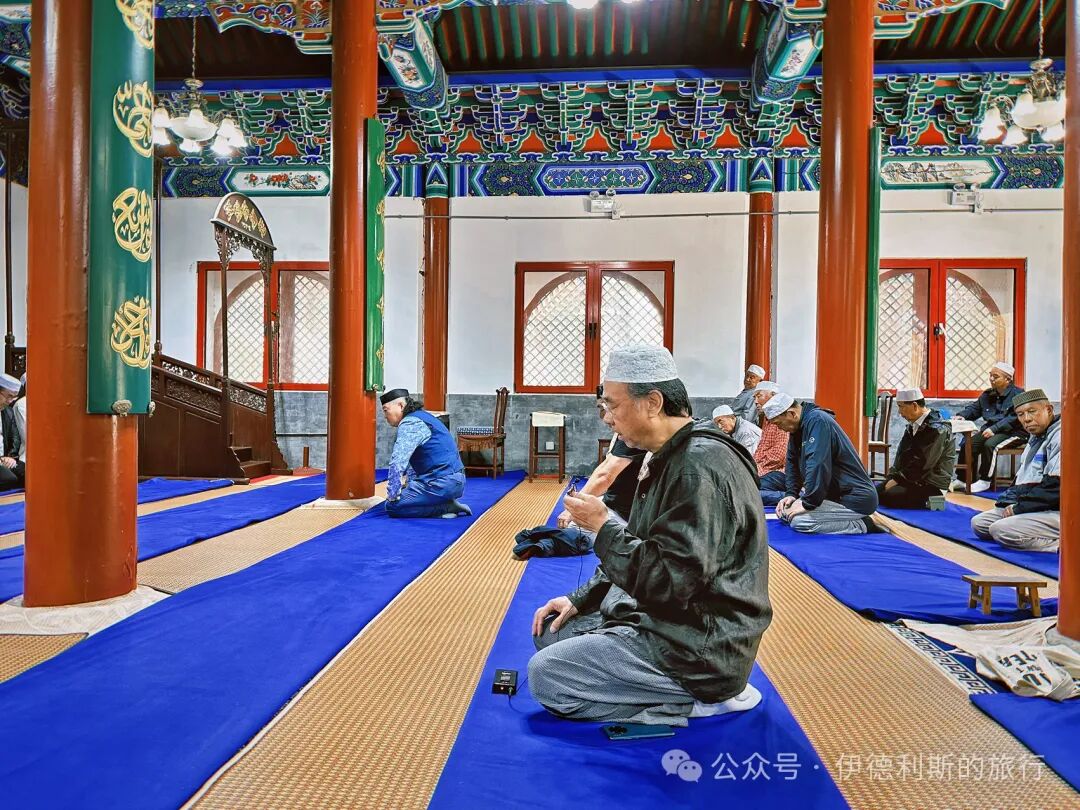
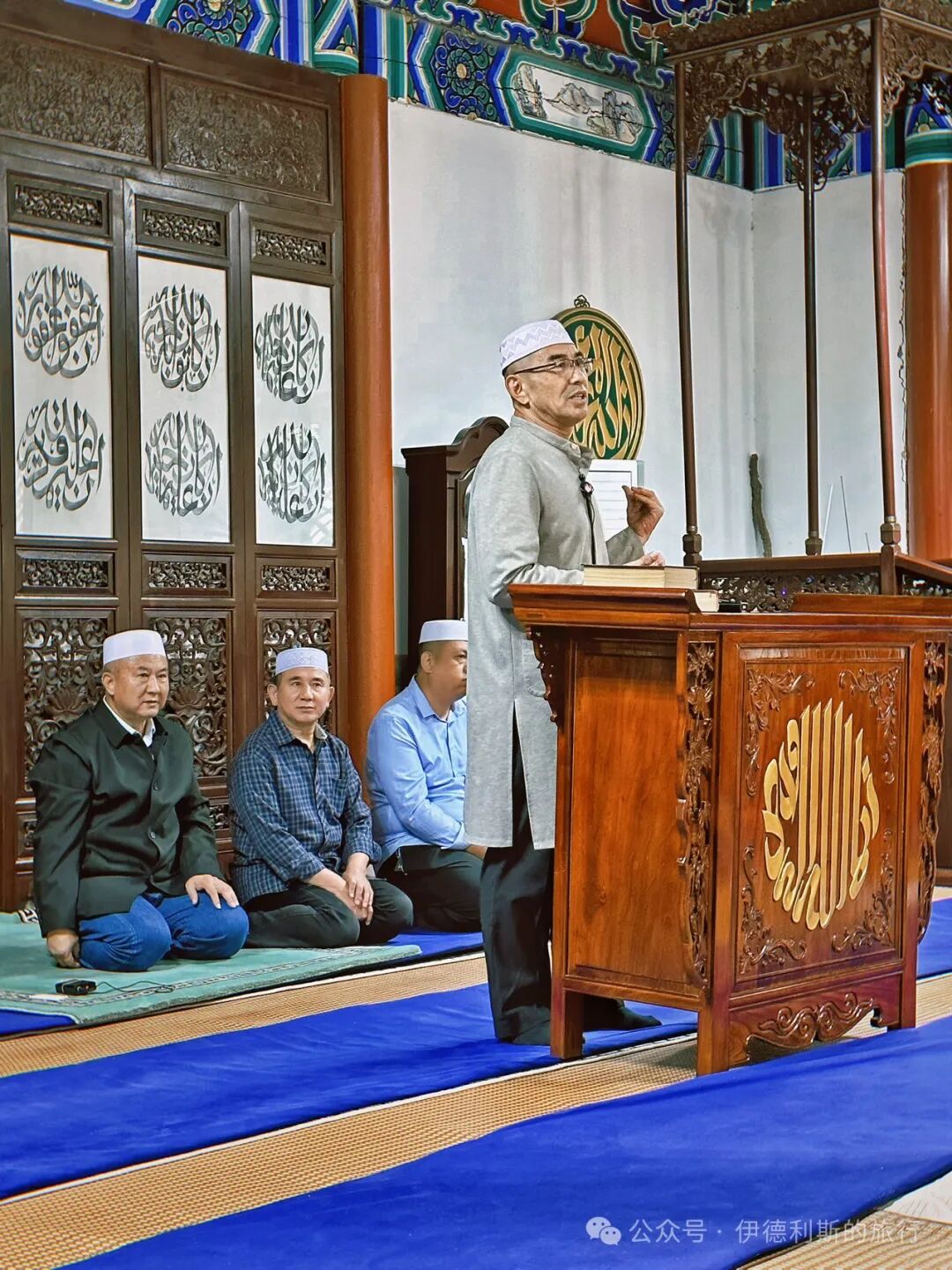
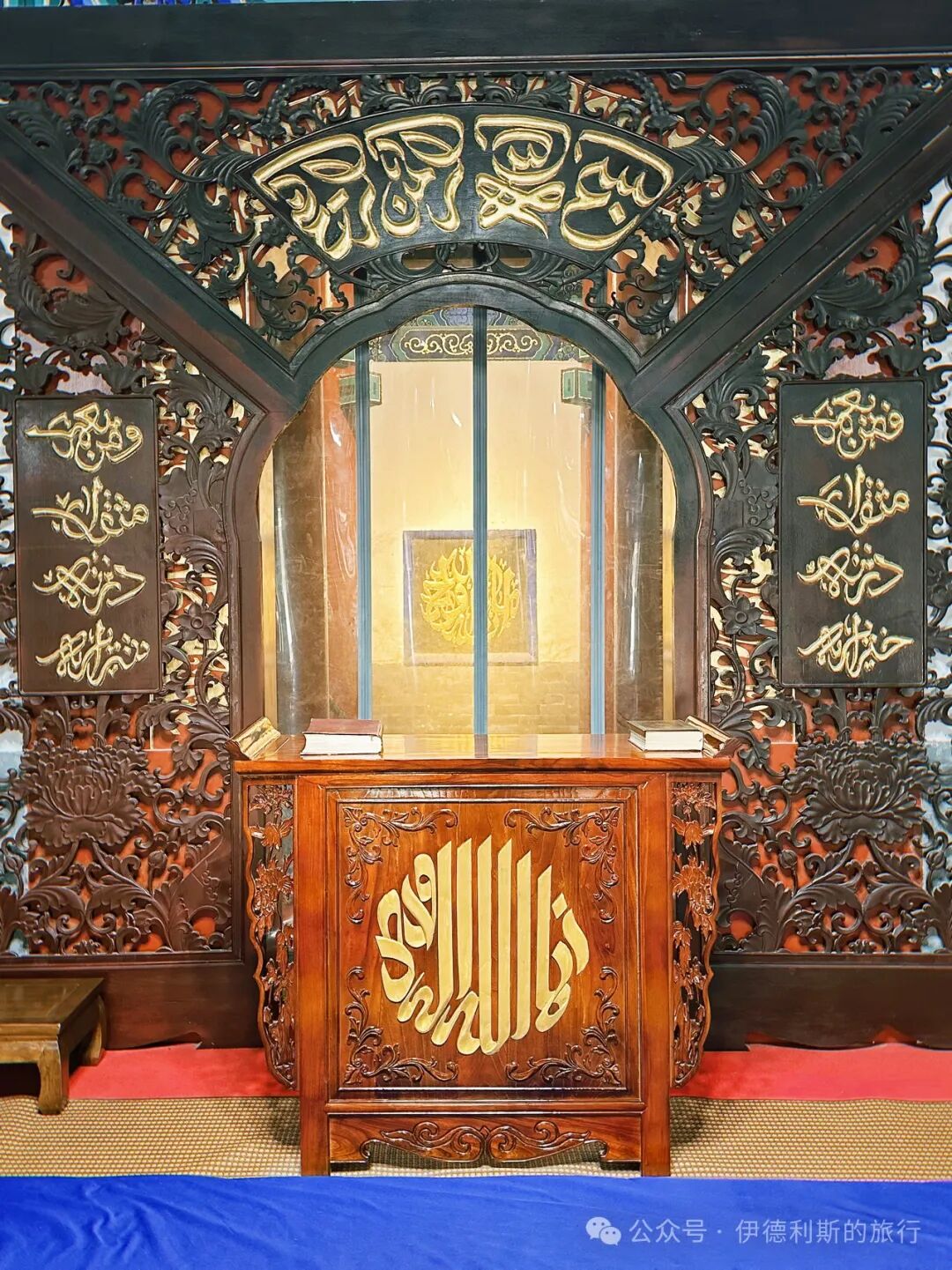
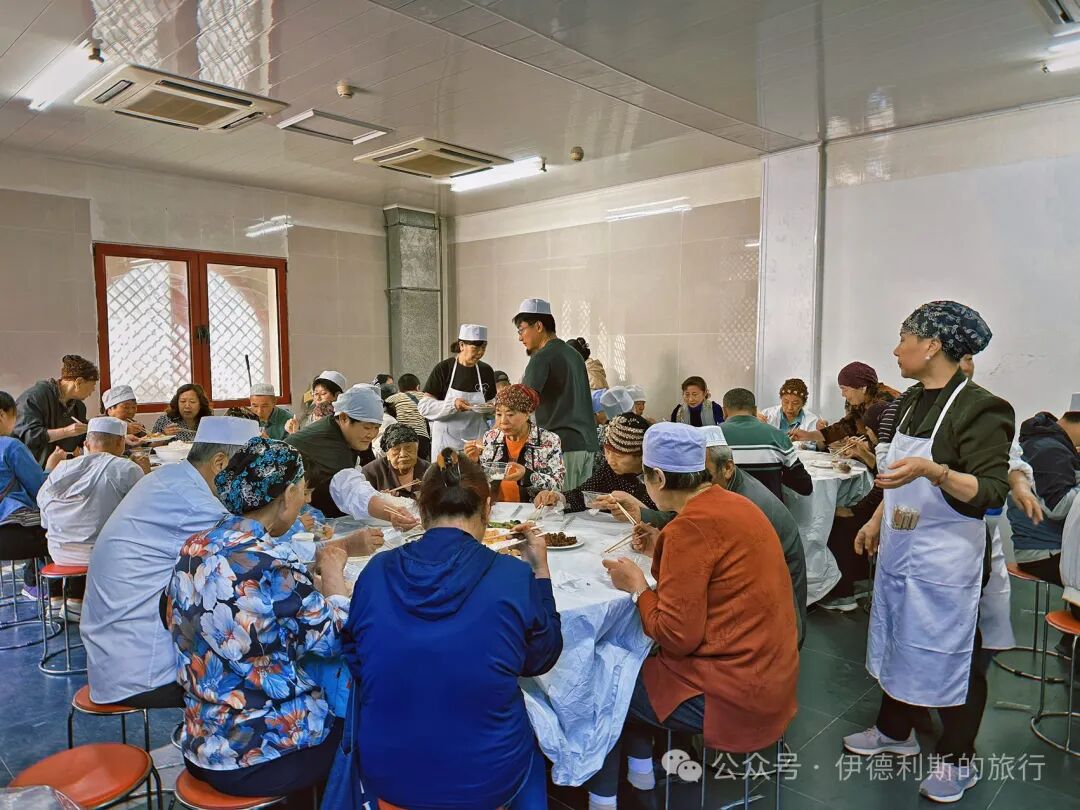
The month of Rabi' al-Awwal is halfway over, and today we went to the Xiguan Mosque in Tongzhou to attend the Mawlid celebration. In the morning, we first had meat porridge (rouzhou), then went into the prayer hall to complete the scripture reading and listen to the imam give a sermon (wa'z) about the life of the Prophet.
The 12th day of the third month of the Islamic calendar is believed to be the birthday of the Prophet. Around this time every year, Muslims all over the world hold events to commemorate the Prophet, known as Mawlid or Eid-e-Milad an-Nabi, which are called Shengji, Sheng-hui, or Shengdan in China.
Mawlid activities can be traced back to the time of the followers of the Prophet's companions (Tabi'un), though they were mostly private events in the early days. Large-scale commemorative events can be traced back to 12th-century Egypt during the Fatimid Caliphate. In 1207, Saladin's brother-in-law Gökböri first established Mawlid as a public holiday, which helped the celebration spread among Muslim communities. The Ottoman Empire declared Mawlid a legal holiday in 1588, calling it Mevlid Kandili, which means the candle festival of the Prophet's birthday.
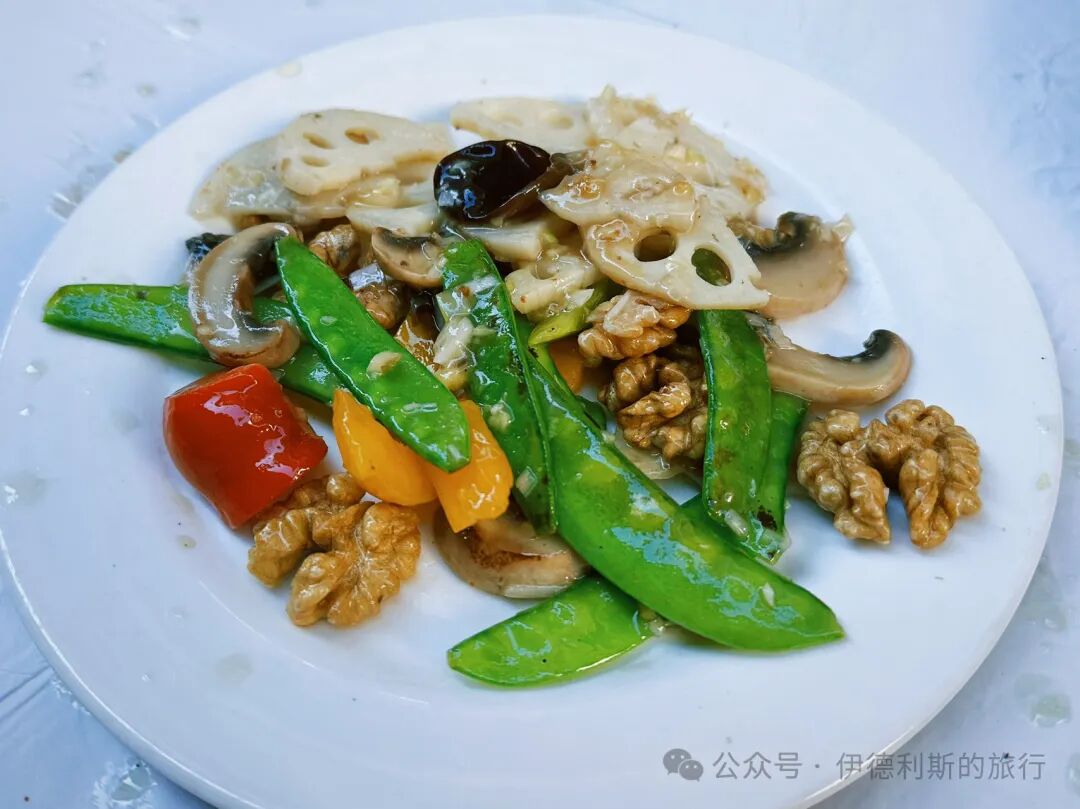
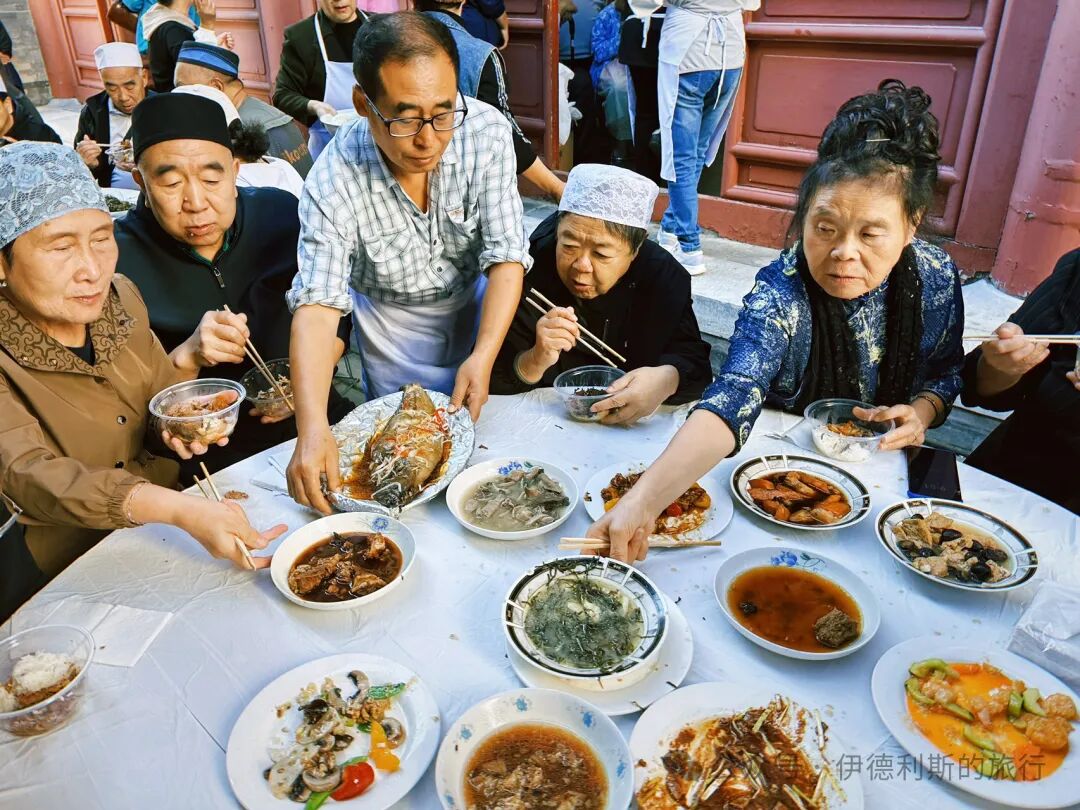
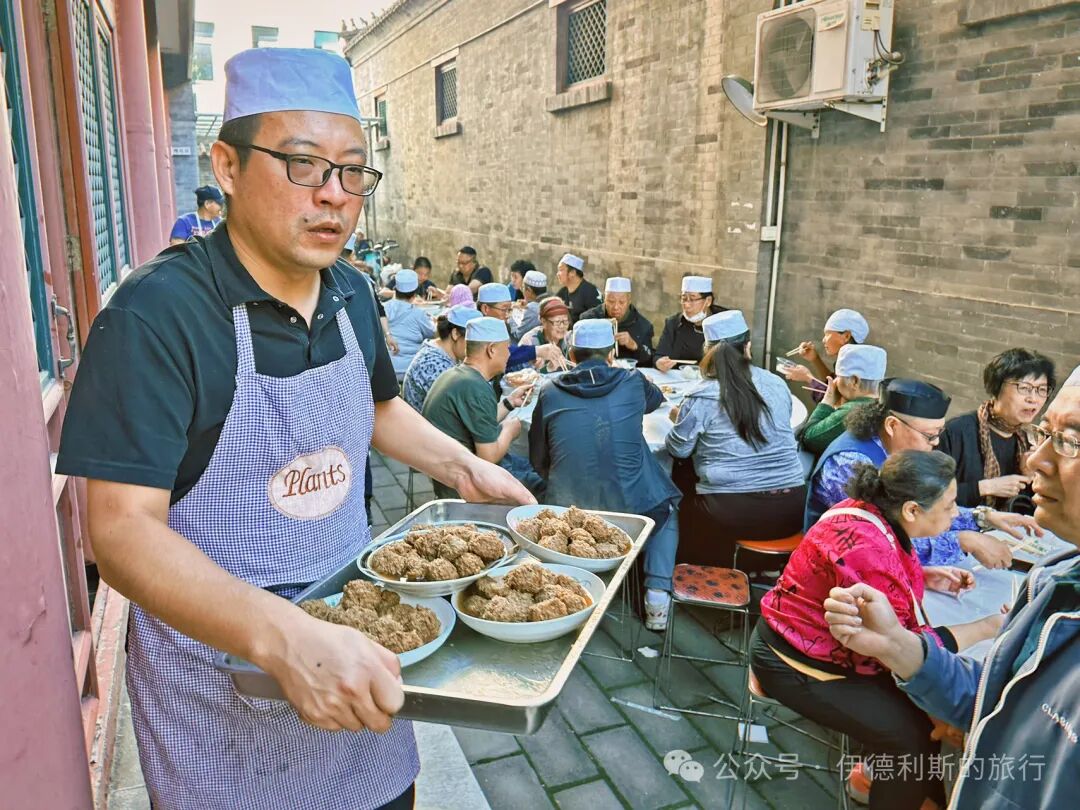
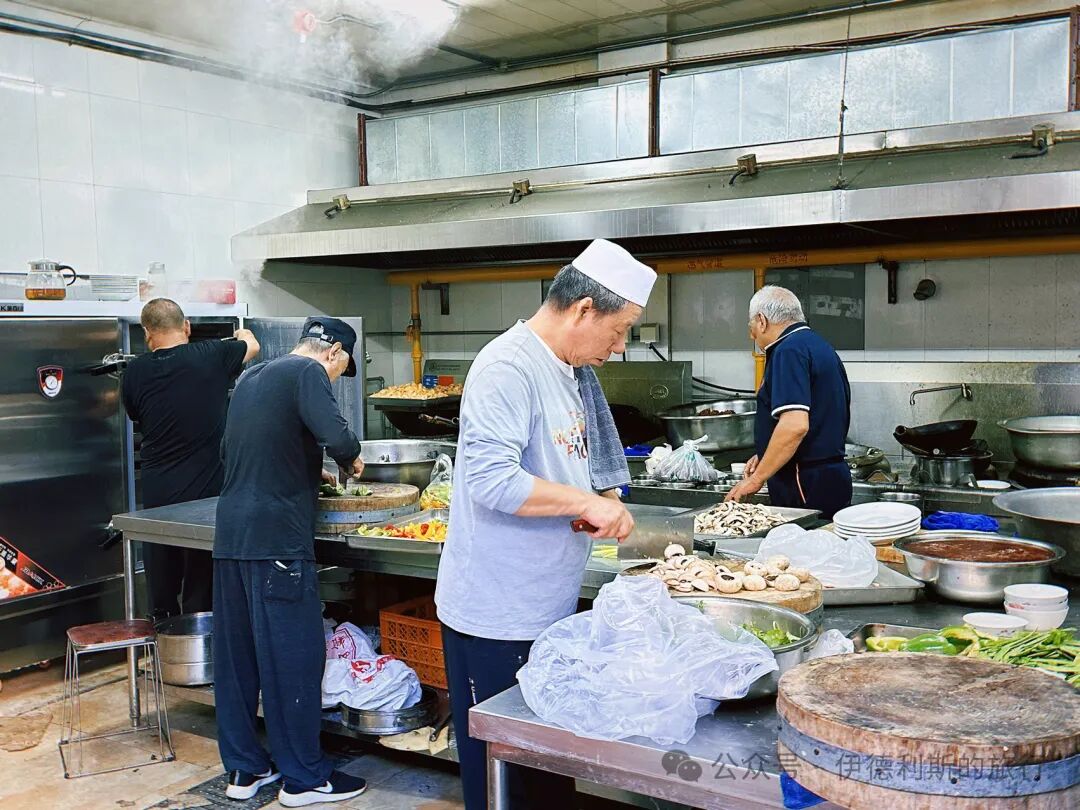
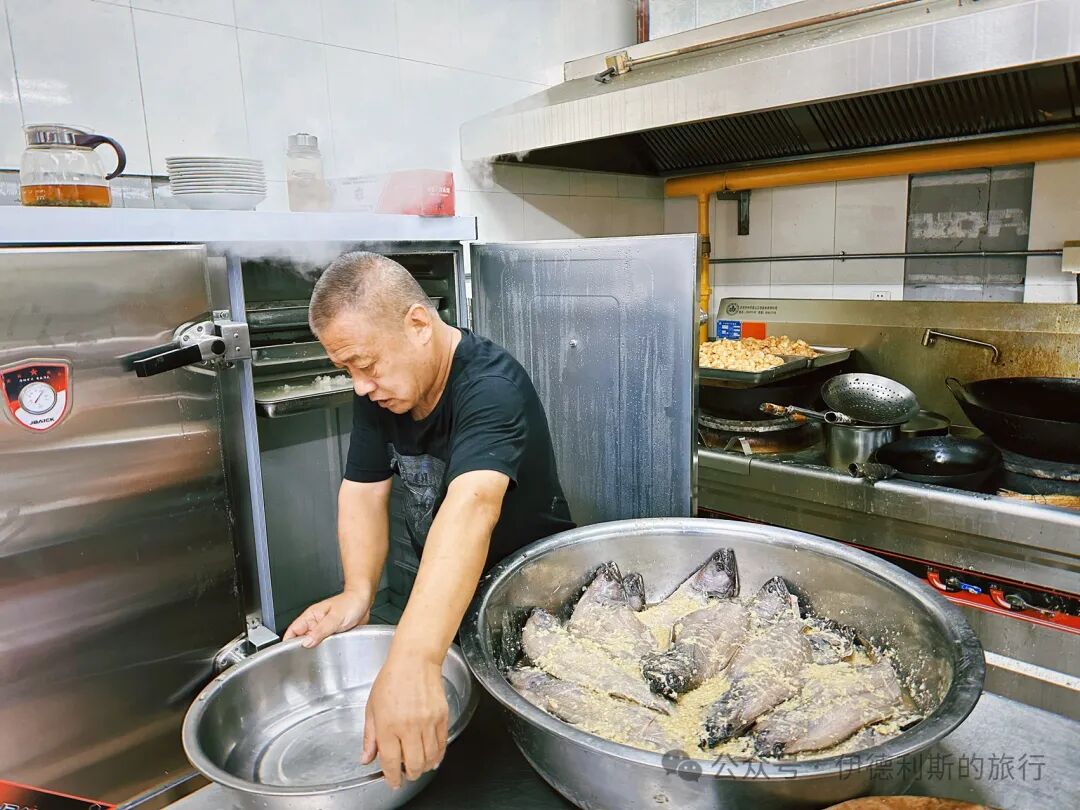
After sitting down in the lower hall, we were served the traditional North China Hui Muslims' Eight Great Bowls (badawan): stewed meat, braised pork (kourou), crispy meat (songrou), meatballs, kelp, fried tofu puffs (doupao), radish, and lamb offal (yangza). There were also four stir-fried dishes: sautéed lamb liver, stir-fried shrimp, stir-fried diced chicken, and sesame lamb, followed by steamed fish to finish—it was a very rich meal!
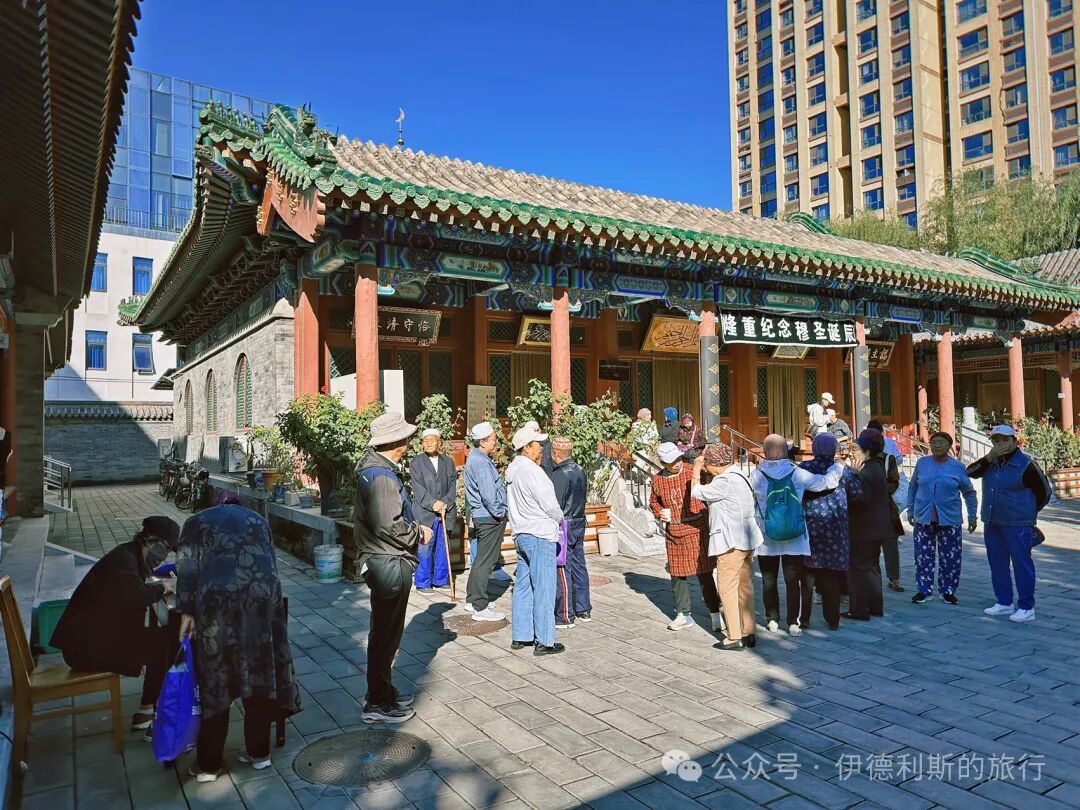
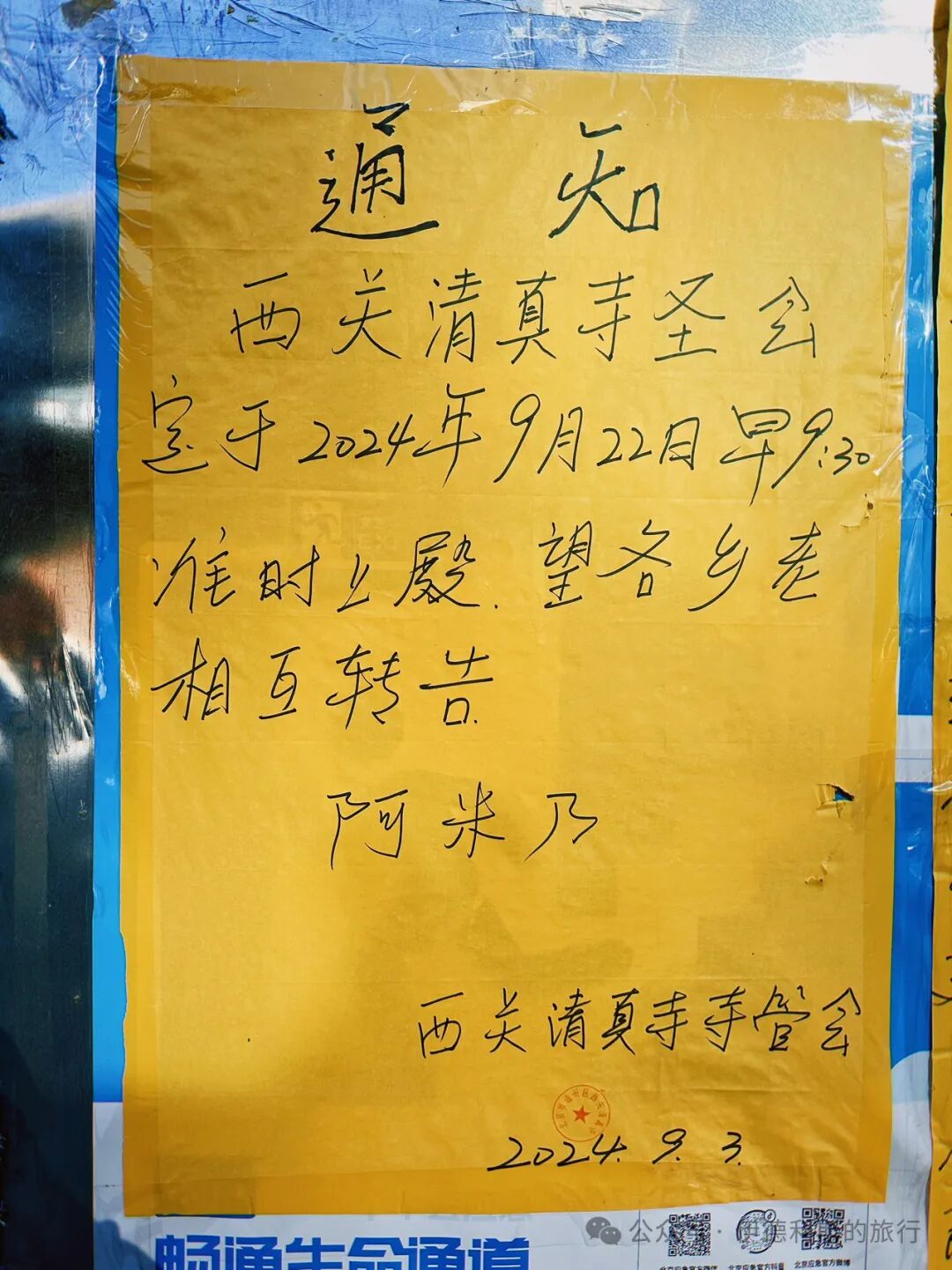
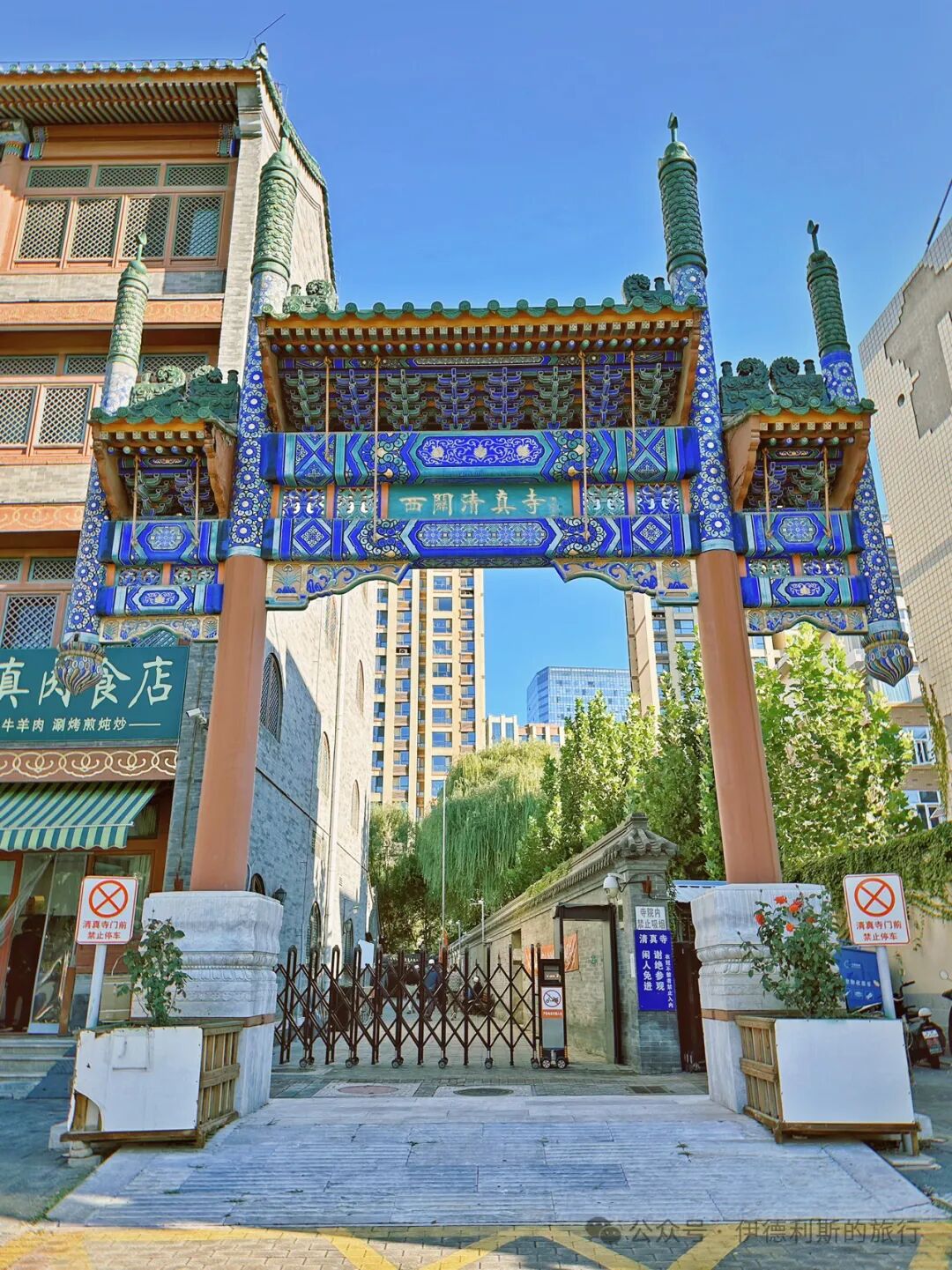
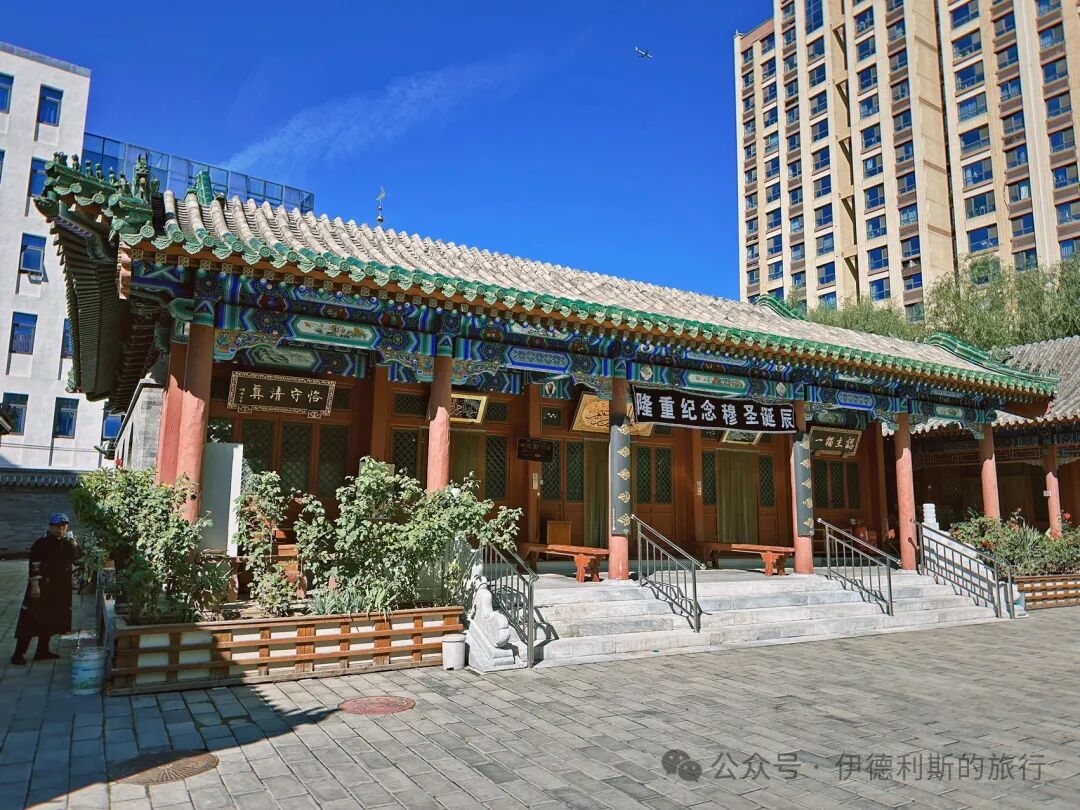
Tongzhou Xiguan Mosque was first built in 1766 (the 31st year of the Qianlong reign). The original building was torn down in 1980, rebuilt and reopened for worship in 1999, and moved to its current location in 2012.
Sharing an article about the religious gathering I attended before:
Celebrating the Prophet's birthday (Sheng Hui) at Heying Mosque in Beijing
Spend the weekend in Beijing for the holy gathering (shenghui) view all
Reposted from the web
Summary: Beijing Tongzhou Xiguan Mosque - Shenghui Gathering is presented as a clear English travel account for readers interested in Muslim life, halal food, mosques, and local history. The article keeps the original names, food details, photographs, and cultural context while focusing on Tongzhou, Xiguan Mosque, Shenghui.
The month of Rabi' al-Awwal is halfway over, and today we went to the Xiguan Mosque in Tongzhou to attend the Mawlid celebration. In the morning, we first had meat porridge (rouzhou), then went into the prayer hall to complete the scripture reading and listen to the imam give a sermon (wa'z) about the life of the Prophet.
The 12th day of the third month of the Islamic calendar is believed to be the birthday of the Prophet. Around this time every year, Muslims all over the world hold events to commemorate the Prophet, known as Mawlid or Eid-e-Milad an-Nabi, which are called Shengji, Sheng-hui, or Shengdan in China.
Mawlid activities can be traced back to the time of the followers of the Prophet's companions (Tabi'un), though they were mostly private events in the early days. Large-scale commemorative events can be traced back to 12th-century Egypt during the Fatimid Caliphate. In 1207, Saladin's brother-in-law Gökböri first established Mawlid as a public holiday, which helped the celebration spread among Muslim communities. The Ottoman Empire declared Mawlid a legal holiday in 1588, calling it Mevlid Kandili, which means the candle festival of the Prophet's birthday.
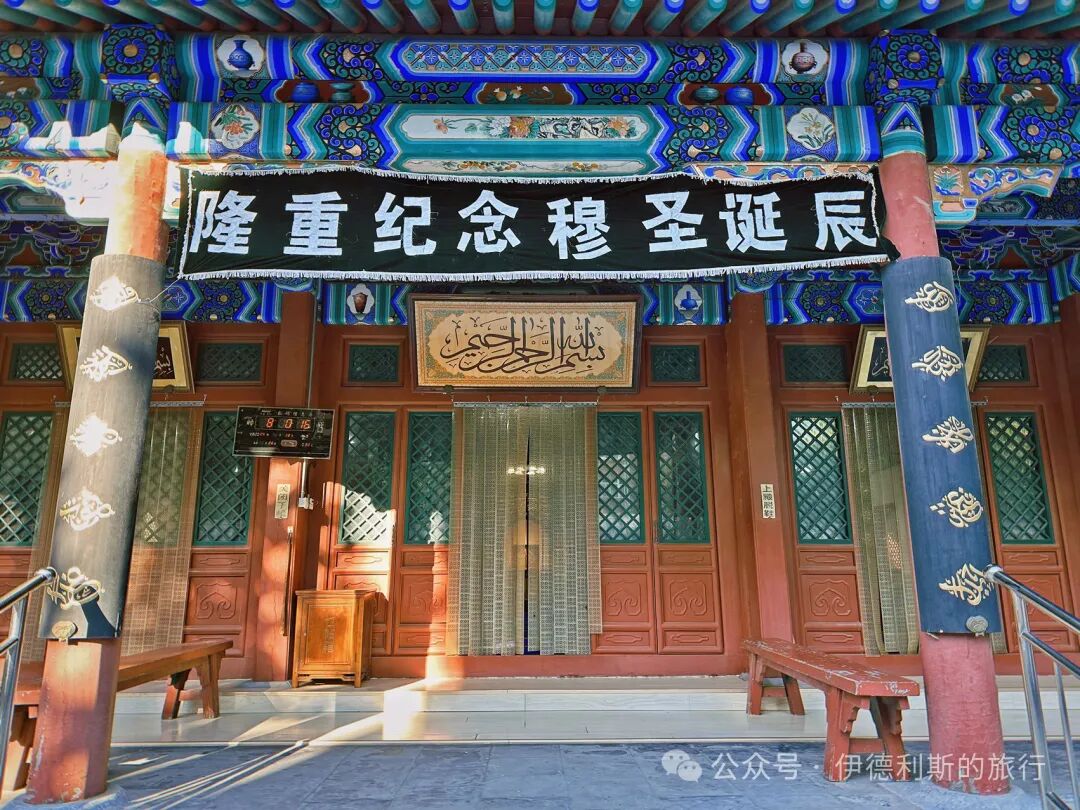
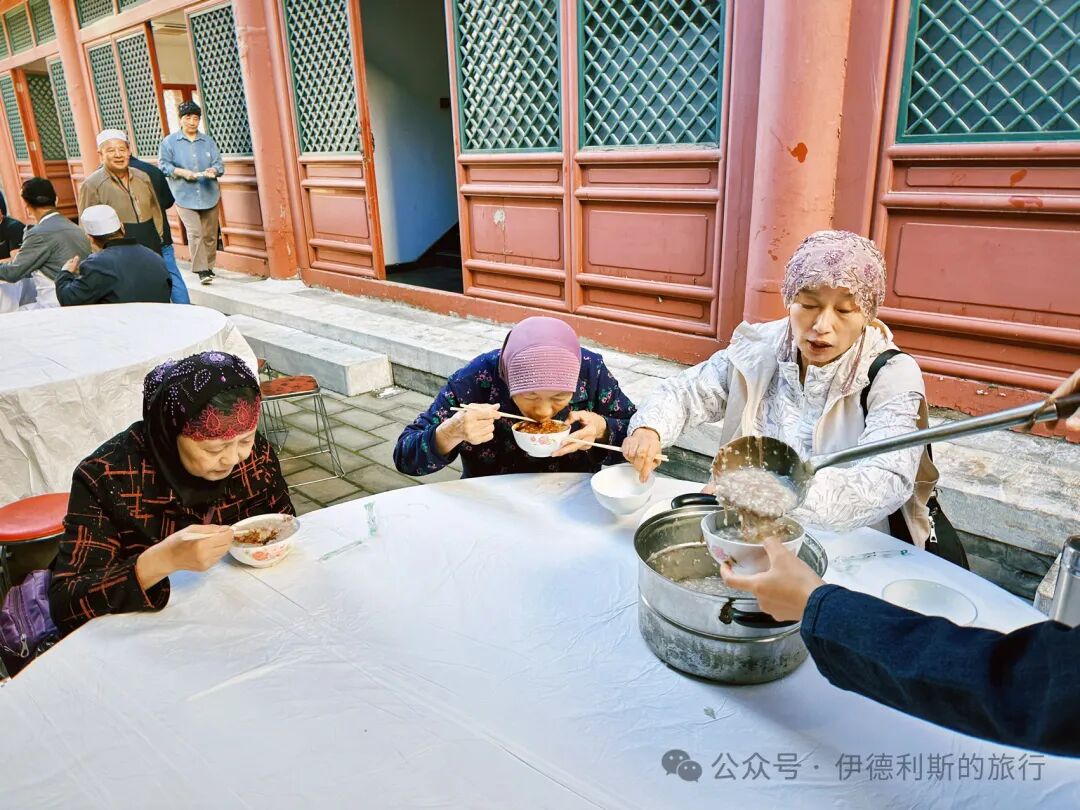
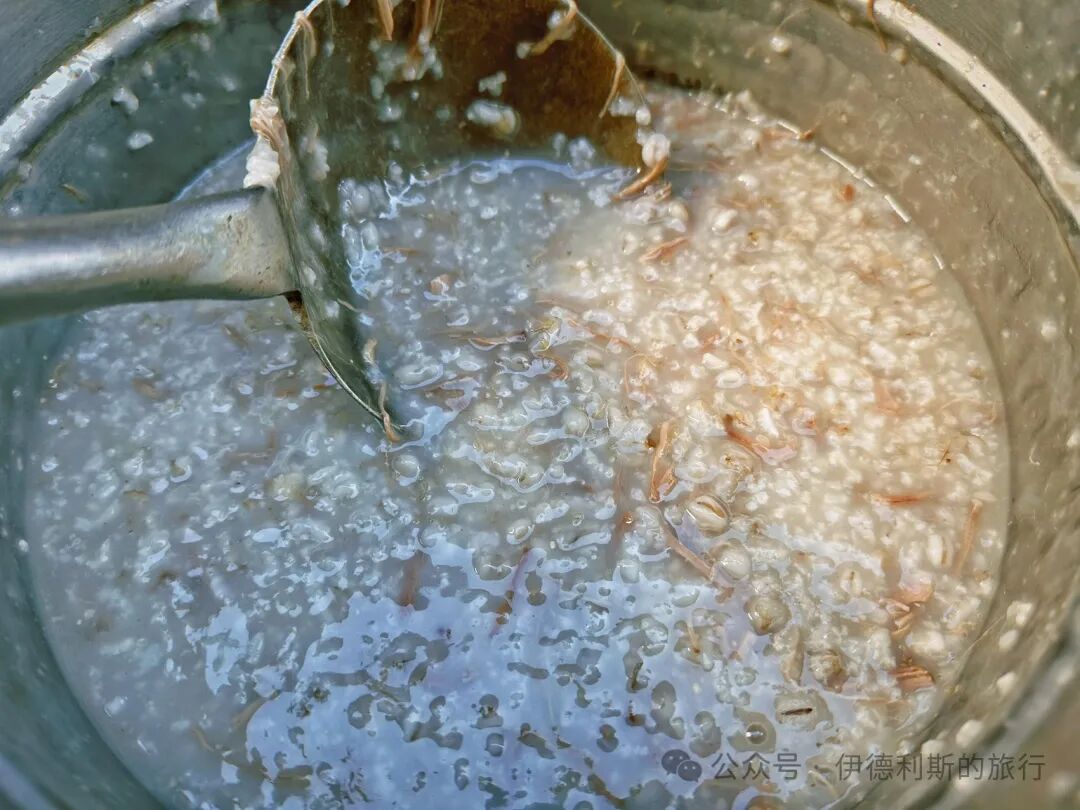
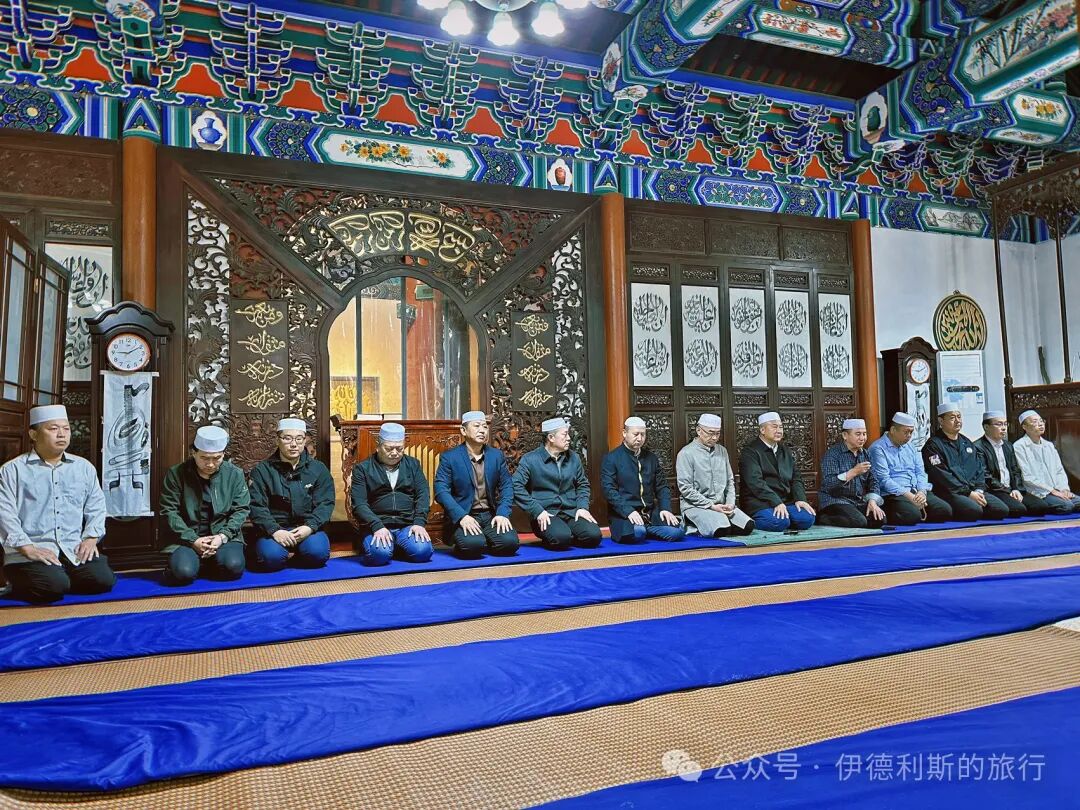
After sitting down in the lower hall, we were served the traditional North China Hui Muslims' Eight Great Bowls (badawan): stewed meat, braised pork (kourou), crispy meat (songrou), meatballs, kelp, fried tofu puffs (doupao), radish, and lamb offal (yangza). There were also four stir-fried dishes: sautéed lamb liver, stir-fried shrimp, stir-fried diced chicken, and sesame lamb, followed by steamed fish to finish—it was a very rich meal!
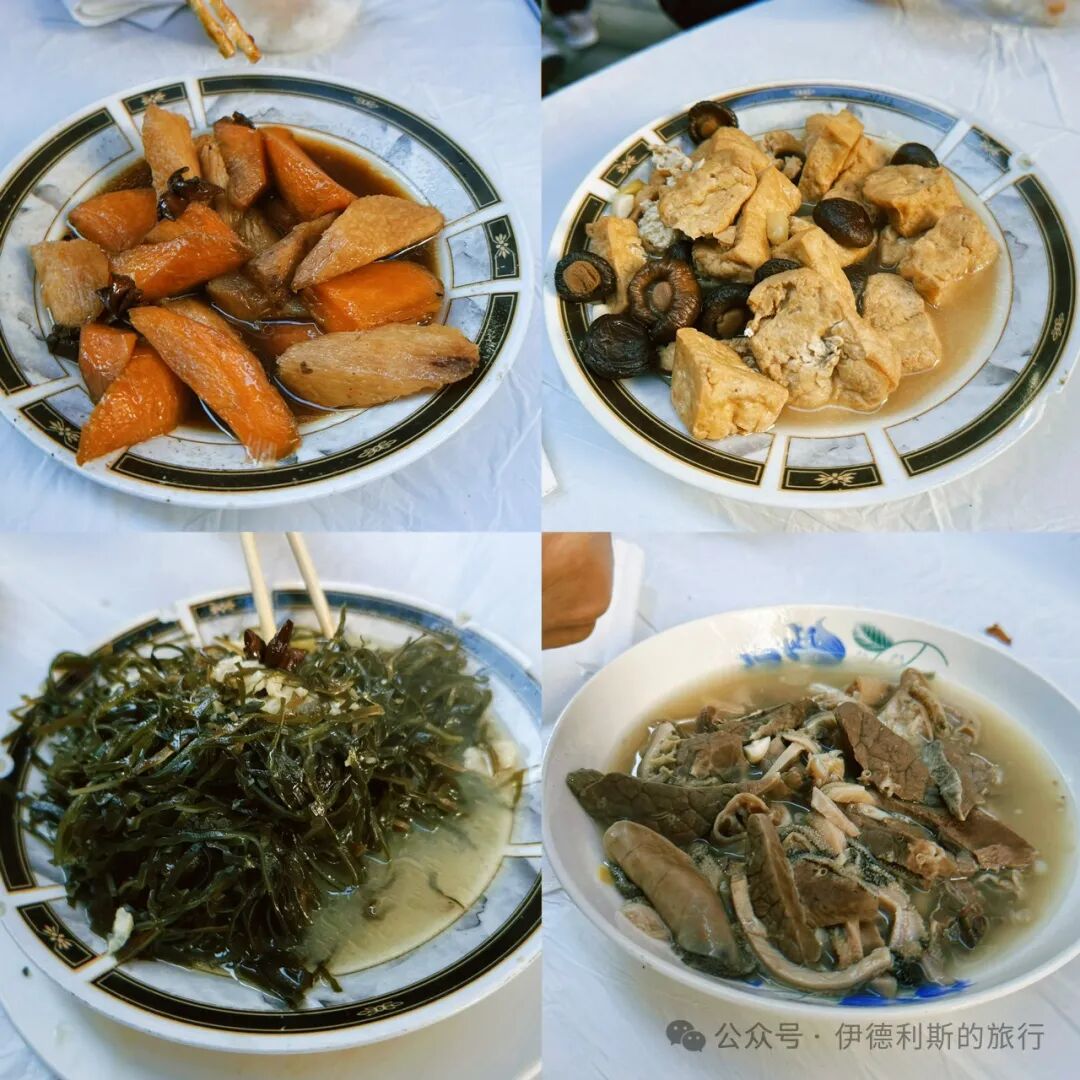
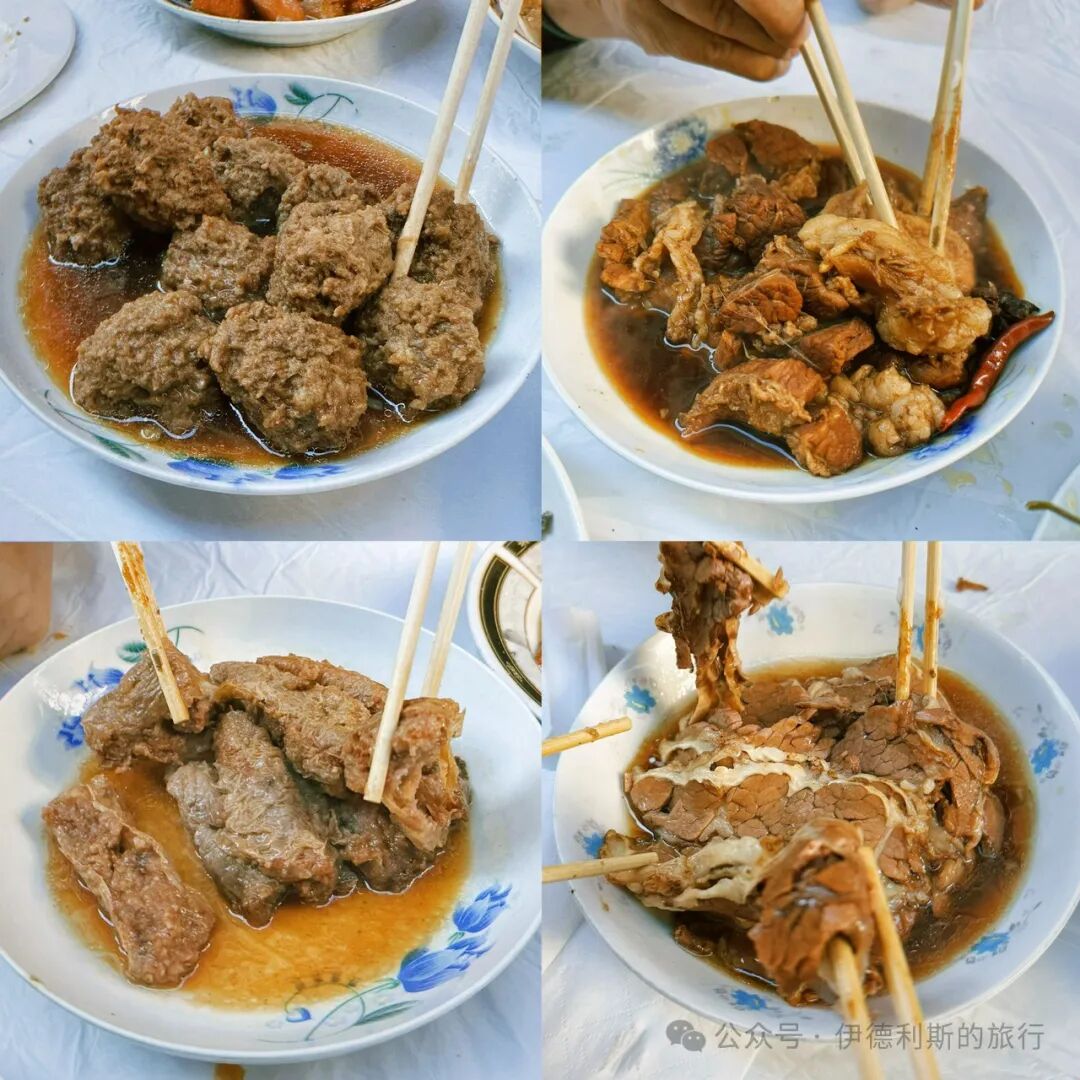
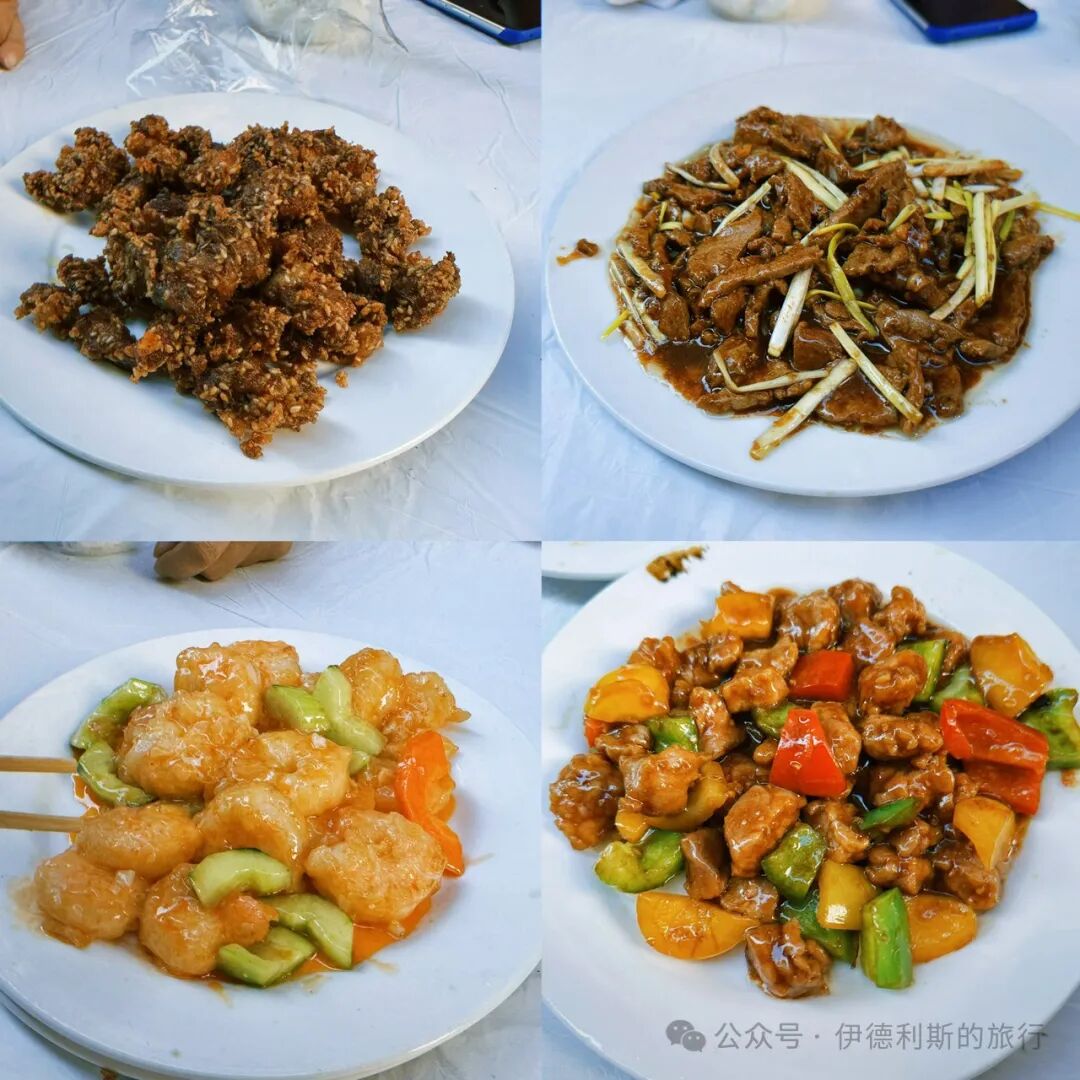
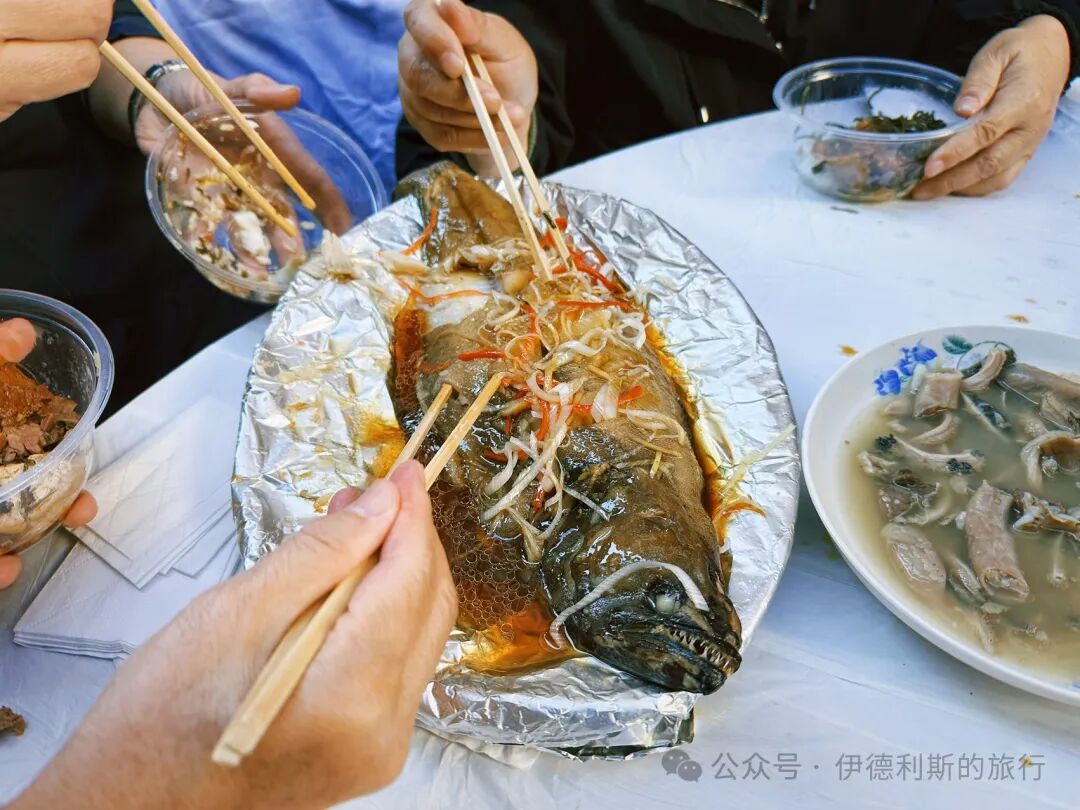
Tongzhou Xiguan Mosque was first built in 1766 (the 31st year of the Qianlong reign). The original building was torn down in 1980, rebuilt and reopened for worship in 1999, and moved to its current location in 2012.
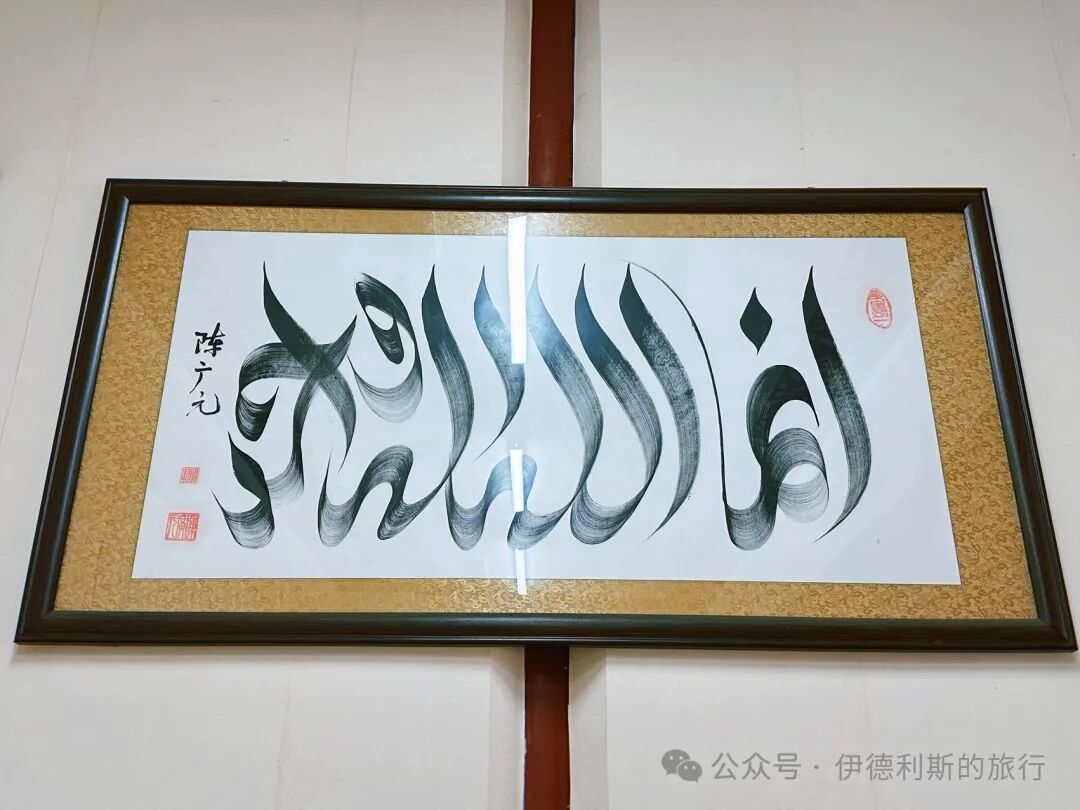
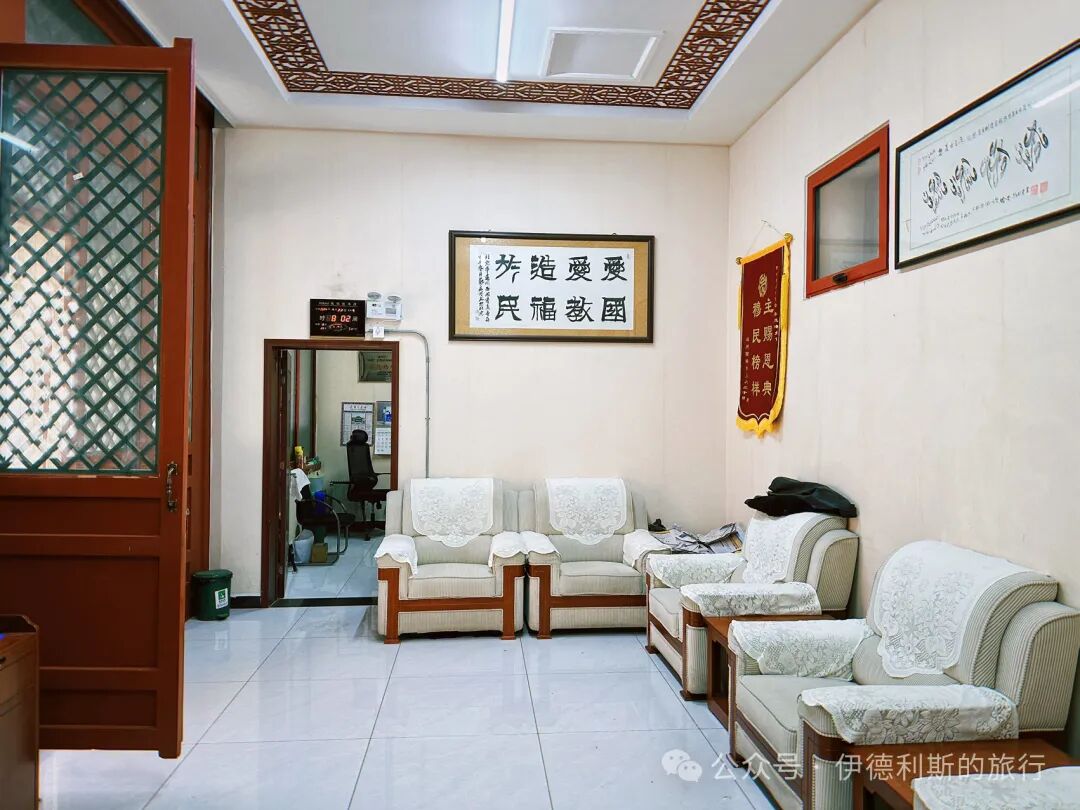
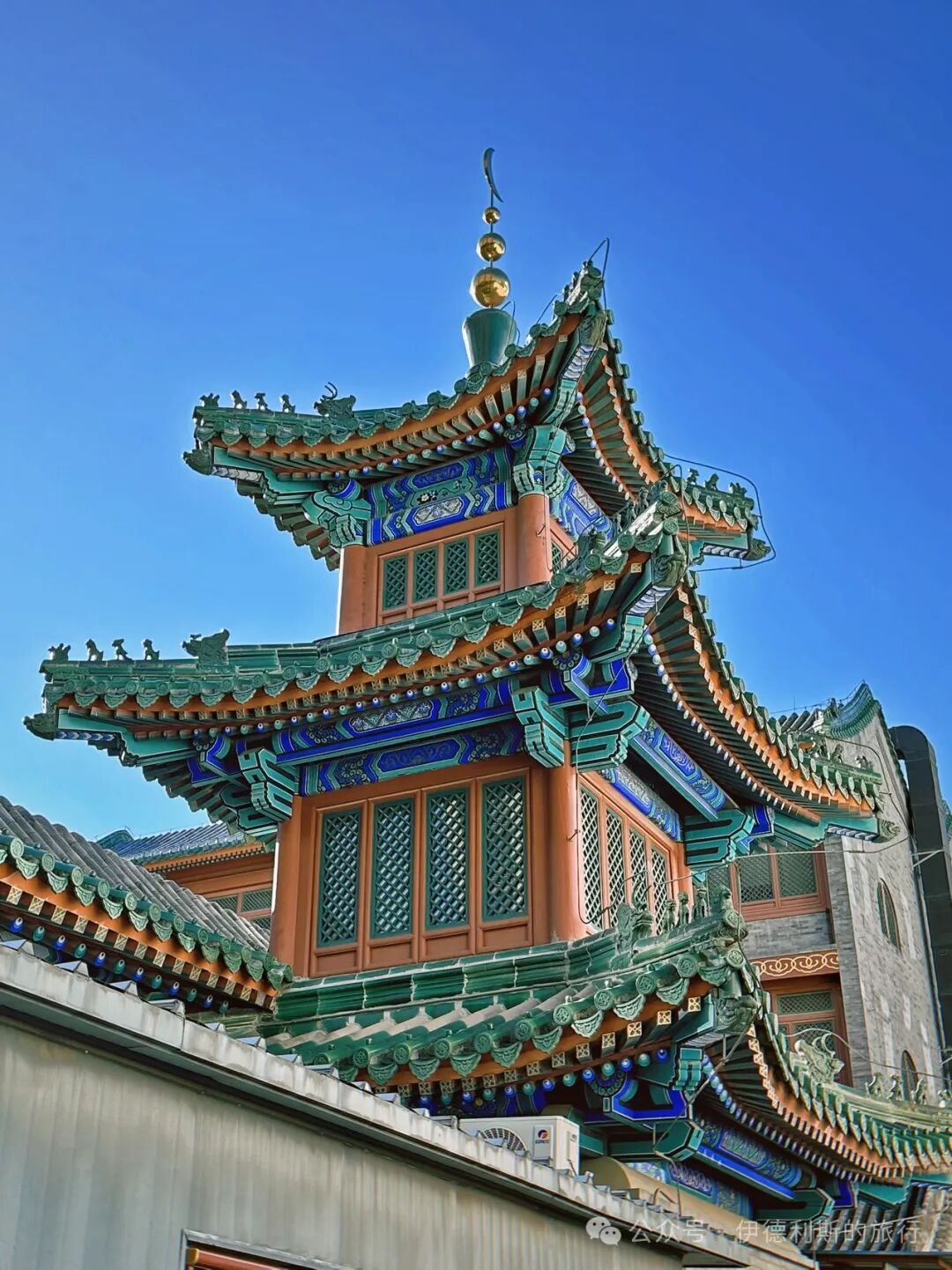
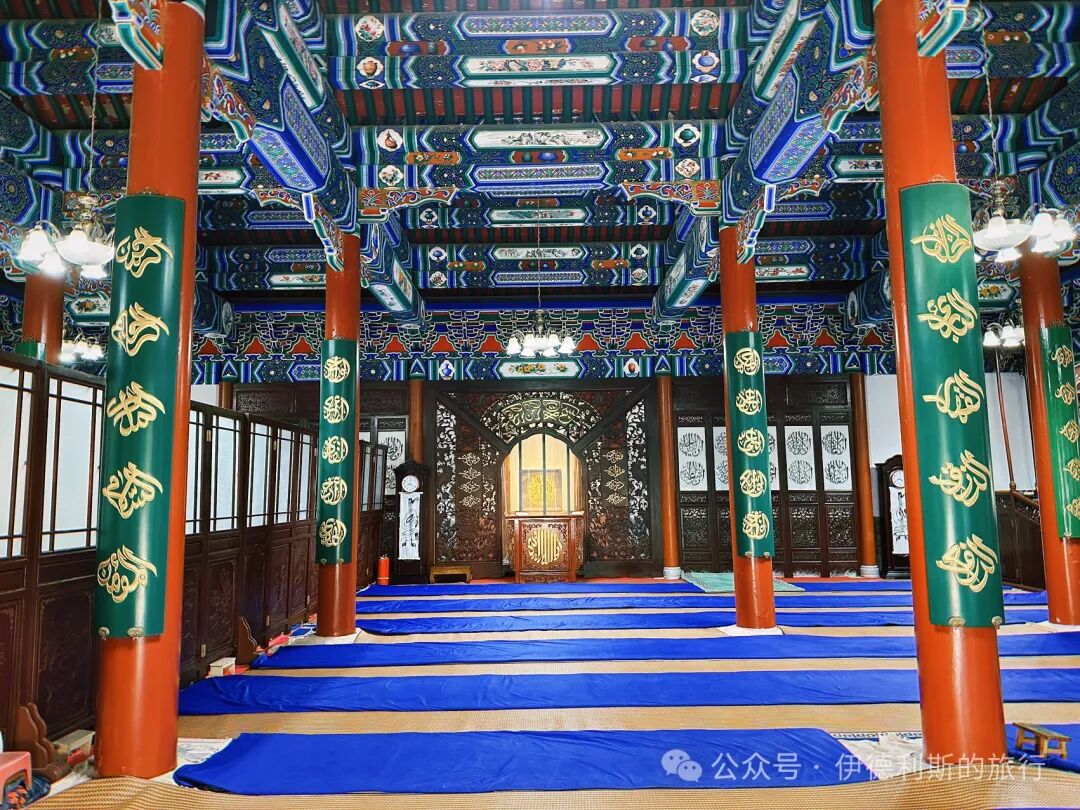
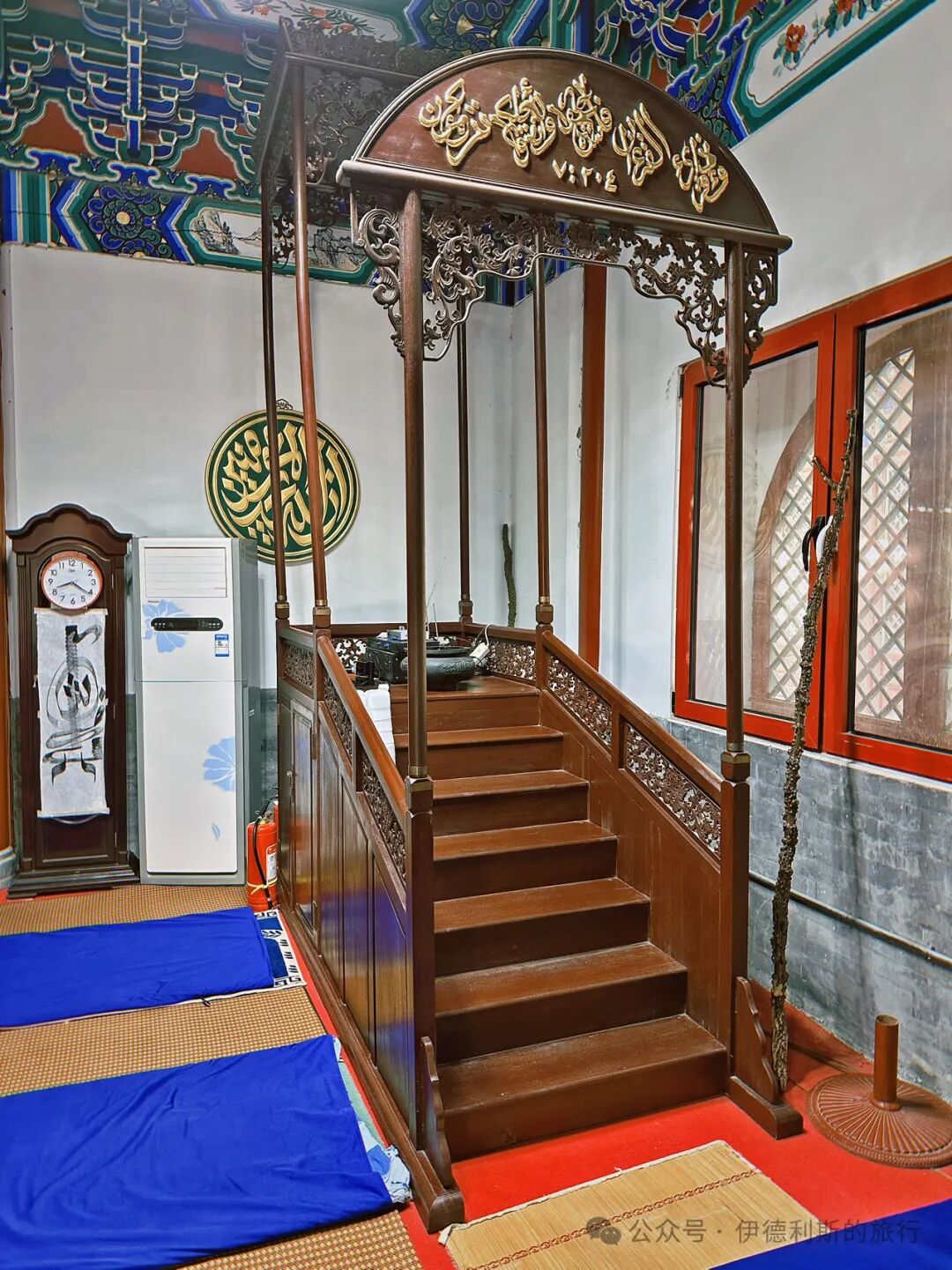
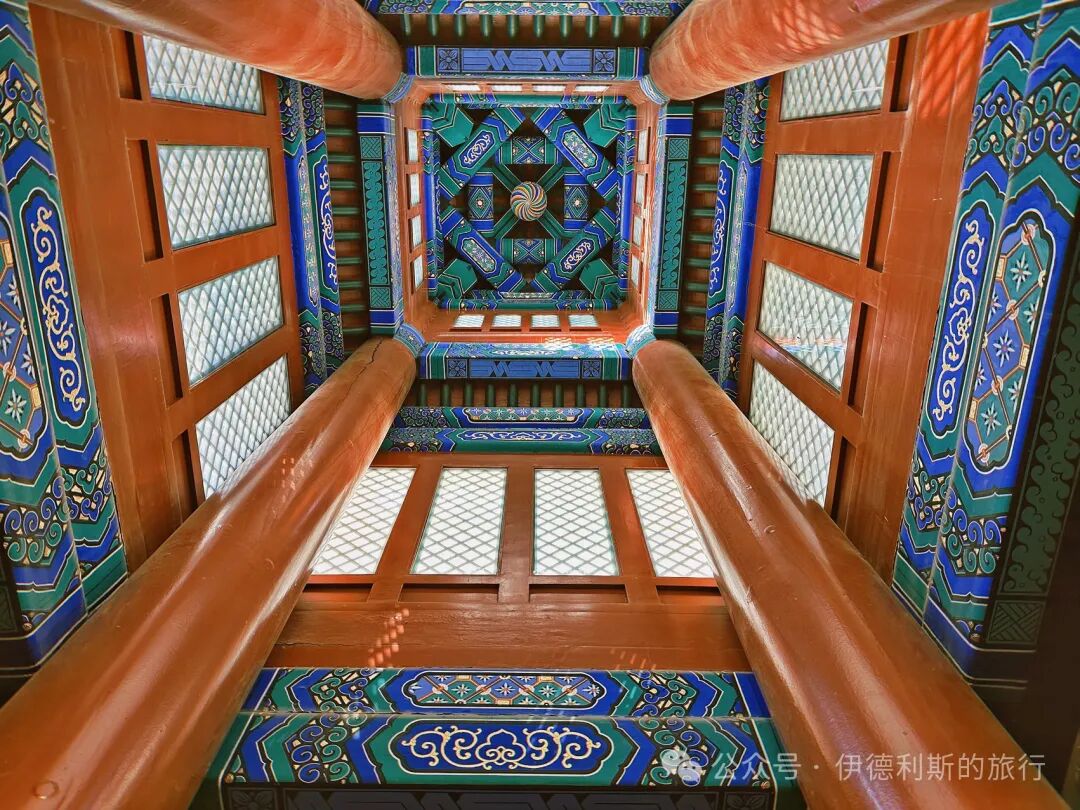
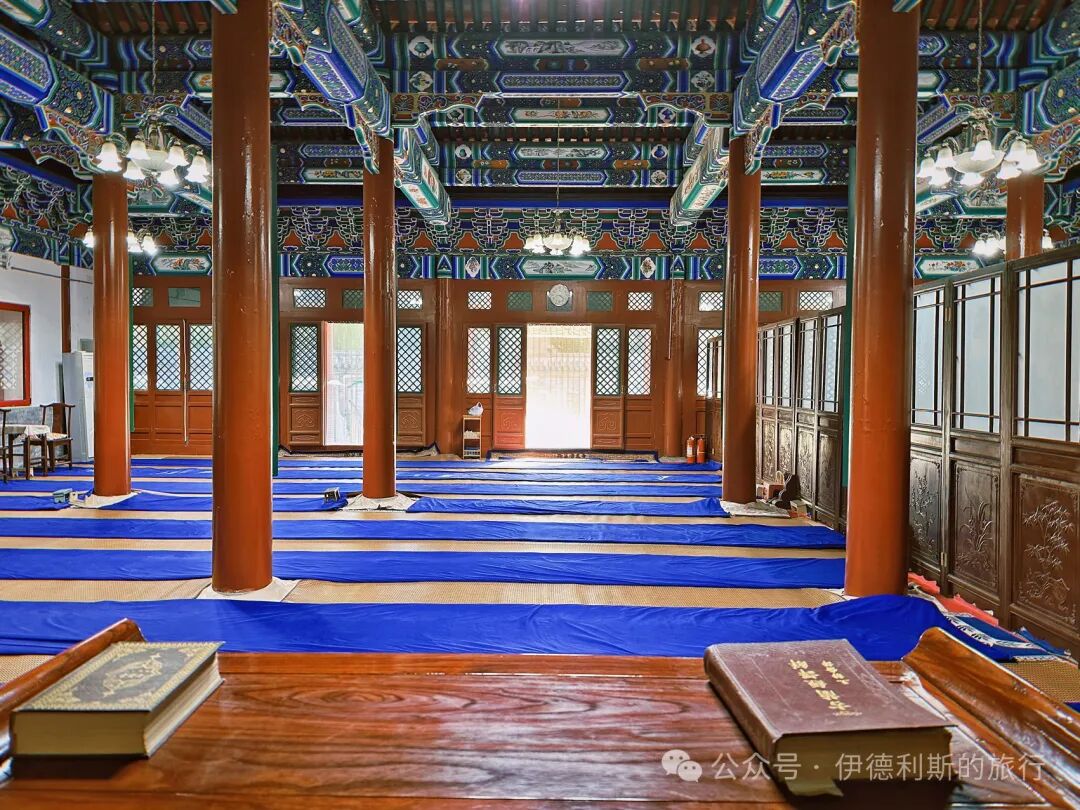
Sharing an article about the religious gathering I attended before:
Celebrating the Prophet's birthday (Sheng Hui) at Heying Mosque in Beijing
Spend the weekend in Beijing for the holy gathering (shenghui)
Summary: Beijing Tongzhou Xiguan Mosque - Shenghui Gathering is presented as a clear English travel account for readers interested in Muslim life, halal food, mosques, and local history. The article keeps the original names, food details, photographs, and cultural context while focusing on Tongzhou, Xiguan Mosque, Shenghui.
The month of Rabi' al-Awwal is halfway over, and today we went to the Xiguan Mosque in Tongzhou to attend the Mawlid celebration. In the morning, we first had meat porridge (rouzhou), then went into the prayer hall to complete the scripture reading and listen to the imam give a sermon (wa'z) about the life of the Prophet.
The 12th day of the third month of the Islamic calendar is believed to be the birthday of the Prophet. Around this time every year, Muslims all over the world hold events to commemorate the Prophet, known as Mawlid or Eid-e-Milad an-Nabi, which are called Shengji, Sheng-hui, or Shengdan in China.
Mawlid activities can be traced back to the time of the followers of the Prophet's companions (Tabi'un), though they were mostly private events in the early days. Large-scale commemorative events can be traced back to 12th-century Egypt during the Fatimid Caliphate. In 1207, Saladin's brother-in-law Gökböri first established Mawlid as a public holiday, which helped the celebration spread among Muslim communities. The Ottoman Empire declared Mawlid a legal holiday in 1588, calling it Mevlid Kandili, which means the candle festival of the Prophet's birthday.
After sitting down in the lower hall, we were served the traditional North China Hui Muslims' Eight Great Bowls (badawan): stewed meat, braised pork (kourou), crispy meat (songrou), meatballs, kelp, fried tofu puffs (doupao), radish, and lamb offal (yangza). There were also four stir-fried dishes: sautéed lamb liver, stir-fried shrimp, stir-fried diced chicken, and sesame lamb, followed by steamed fish to finish—it was a very rich meal!
Tongzhou Xiguan Mosque was first built in 1766 (the 31st year of the Qianlong reign). The original building was torn down in 1980, rebuilt and reopened for worship in 1999, and moved to its current location in 2012.
Sharing an article about the religious gathering I attended before:
Celebrating the Prophet's birthday (Sheng Hui) at Heying Mosque in Beijing
Spend the weekend in Beijing for the holy gathering (shenghui)
Xiguan Mosque in Lanzhou: A Photographic Documentary of Architectural Change and Urban History
Articles • Hasan09 posted the article • 0 comments • 9 views • 3 hours ago
This is the opening piece of the documentary photography series 'The Vanishing Spires,' focusing on the Xiguan Mosque in Lanzhou. By comparing field footage taken seven years apart, in 2016 and 2023, this project meticulously documents the profound changes in the exterior of the main prayer hall, the worship space, and the surrounding streetscape, preserving a significant and valuable visual archive of this Northwest city.
The exterior lights of the Xiguan Mosque have gone out. The pale orange glow that once illuminated the white, keyboard-like decorative elements has faded, replaced by the cold clarity of natural morning light. The structure consists of a matrix of layered vertical pillars that spiral upward with a rhythmic sense of motion. It was originally a building complex featuring a central circular dome and four towering Arabic minarets surrounding it. The dome is the mosque's core—the prayer hall—while the four high towers served as symbols of the masjid, like four sharp swords piercing the sky. Now, those swords have been severed; their height was reduced, with two-thirds dismantled, leaving only the base visible above the podium. They stand just slightly taller than the prayer hall, encased in these white 'keyboard' bars, looking less like part of the structure and more like industrial air-conditioning cooling towers left on a rooftop, albeit dressed up in white to look a bit more pleasing.
I. Lanzhou Xiguan
The Xiguan Mosque in Lanzhou, May 2016.
The Xiguan Mosque in Lanzhou, November 2023.
1
The sky was just beginning to lighten, and the air was bitingly cold. Lanzhou in winter wakes up early to the heavy, labored breathing of city buses. Looking out the hotel window, headlights streaked across Zhangye Road, and shadows of people hurried past on the sidewalk. I went downstairs at 7:00 sharp to wait for Zhang Yi. Twenty minutes later, he finally emerged from the elevator, his first words being, 'Didn't we agree on 7:30?' sounding almost defensive.
We walked north out of the alleyway, just a few dozen steps to Zhangye Road, and a little further west was the intersection of Jiuquan Road. The pedestrian crosswalk was completely blocked off by iron barricades, making it impossible to cross legally. I had to step off the sidewalk into the street ahead of time to weave through traffic—it was a necessary evil. As we crossed against the red light in front of the Provincial Government building, the guard at the gate looked at us with weary eyes. The red lanterns under the carved beams glowed faintly, looking somewhat eerie in the cool morning light. The gate of the Gansu Provincial Government has always been like this—a traditional Chinese-style facade, ancient and out of place. It looked this way when I first saw it in the 80s, and it appeared the same in photographs by Mannerheim and Carter Holton a hundred years ago. Perhaps it has sat there in this weary, stoic posture in Xiguan for hundreds of years.
Zhang Yi was grumbling, still annoyed that I had jaywalked through traffic. I told him not to act so upright and to just relax; I had already done it yesterday afternoon. Indeed, just the previous day, under the warm afternoon sun, three stylish young women had walked by, crossed the street, and sashayed into the government gate under the guard's very eyes. I was the one who followed right behind them.
I tucked my tripod under my arm and shoved my hands into my pockets. This posture not only kept my hands warm but was the most efficient way to carry my photography bag and tripod. Zhang Yi was beside me, holding a Sony video camera, filming as we walked. Occasionally, he slowed his pace, aiming the lens at my moving feet.
On the last day of May 2015, that early morning rush to the Xiguan Mosque was much the same—the sky was still dark, and I had a tripod tucked under my arm. The afternoon before that, I had wandered around the bus plaza outside the east gate of the mosque, looking for a way to photograph the building with its four Arabic-style towers and massive round dome. After hesitating for a long time, I decided to come back the next morning. Only then would the buses and pedestrians in the square subside, potentially offering a rare, clear scene. Throughout the rest of the day, it was almost impossible to meet my shooting requirements. For this mosque located in a bustling downtown area, the key to outdoor photography was simply finding a time with few people and cars.
The Eurasia Plaza at the northeast corner of Xiguan Cross was struggling, its business failing and foot traffic sparse. There was a time when this was a commercial landmark of Lanzhou—back in the distant 80s and 90s, an era when the country was opening up and re-invoking the 'Silk Road Eurasia Land Bridge.' Another symbol of that era's glory was the Yaxiya Shopping Center in Zhengzhou, which has also withered away into the annals of time.
Going back even further, the Zhongshan Road intersection at Xiguan Cross was the true west gate of the inner city of Lanzhou during the Qing Dynasty. Within the city, the three lanes and seven alleys were arranged in a tidy, grid-like fashion, with buildings extending layer upon layer outside the city walls. Clearly, this ancient Ming Dynasty city could no longer contain the daily needs of the government and the marketplace. Xiguan was the main street outside the West Gate, a transition zone between the inner and outer cities.
On a morning in March 1781 (the 36th year of the Qianlong reign), the West Gate was bolted shut. A few guards huddled behind the massive stone battlements, occasionally peeking down at the crowd below. A large group of white-capped Jahriyya (a Sufi order) followers had gathered outside the gate. They had rushed from Xunhua and Hezhou to rescue their leader, Ma Mingxin. Previously, the Jahriyya disciple and Salar ahong Su Forty-Three had escalated a conflict over religious resources between the Jahriyya and the Huasi (another Sufi order) into a bloody confrontation. Ultimately, they turned their anger toward the Lanzhou officials who had favored the Huasi. Su Forty-Three’s uprising began with the religious strife; after capturing the poorly defended city of Hezhou, thousands of Jahriyya followers marched toward Lanzhou.
The equally poorly defended Lanzhou government panicked. On one hand, they urgently called for reinforcements; on the other, they sent men to Dingxi to capture the Jahriyya leader Ma Mingxin to use as a hostage. The siege by the Jahriyya followers arrived just at this critical moment.
On the 26th of March, the number of white-capped men outside the West Gate grew. The Commander-in-Chief, Wang Tingzan, worried about the situation worsening, invited the leader to the city tower to convince his followers to withdraw. The crowd below was agitated, with wailing and crying echoing back and forth. The leader, Ma, 'leaned toward the city below and spoke a few words in a foreign language (Persian/Arabic), his expression stern, then suddenly pulled the turban from his head and threw it down.' The disciples scrambled to grab the 'tastale' (the white cloth of the turban), tearing it into pieces to keep as souvenirs. Ma’s foreign words left the officials panicked and fearful. Shortly after, the leader was secretly killed. Su Forty-Three led the uprising, occupying Hualin Mountain for several months before eventually being defeated and martyred.
What exactly Ma said in that foreign tongue remains unknown to this day. I lean toward the theory that he was trying to persuade his followers to retreat—to assess the situation and endure—he didn’t seem like an extremist. Under pressure from other sects and the harsh crackdown of the government, the Jahriyya were pushed out of the Hehuang Valley, surviving only in Jinjipu (Ningxia), Zhangjiachuan (Tianshui), and Yunnan. This 'New Sect' followed the path guided by the spirit of 'Shahid' (meaning martyrdom), struggling for centuries over the murder of their first leader. Other sects called them the 'Blood-Neck Sect.'
During the two minutes it took to walk through the Zhongshan Road underpass, I told Zhang Yi the story of what happened 250 years ago, right above our heads. Xiguan Cross was indeed the site of the old West Gate. However, during the 'Destroy the Four Olds' campaign, the Lanzhou city walls and local history were scattered like smoke and dust, leaving only rumors and fragments in the folk memory. For the common people, whether Han or Hui Muslims, the bloodshed from two centuries ago seems as if it never happened.
The Xiguan Mosque in Lanzhou, November 2023.
2
The sky slowly shifted from a heavy grayish-blue to a bright silvery-blue. The glare of car headlights and taillights was no longer harsh. The city was lowering its dark curtain, and the warm streetlights had not yet completely turned off. The orange glow grew smaller as more of the space was overtaken by the deep, blue-gray of the morning.
The exterior lights of the Xiguan Mosque were turned off. The pale orange glow that had been on the white, keyboard-like decorative elements faded away, leaving only the cold, clear light of morning. A series of matrix-like, vertically aligned pillars formed a rhythmic, spiraling shape. It was a complex originally consisting of a central circular dome building and four towering Arabic minarets. The dome was the heart of the mosque—the prayer hall—while the four towers were its symbols, like swords piercing the sky. Now, the swords have been cut off, their height reduced by two-thirds, leaving only the base projecting from the podium. They stand just a bit higher than the prayer hall, enclosed by the white 'keyboard' structure. It looks like an architectural component, or perhaps like massive air-conditioning cooling towers left on the roof, just dressed in white to look a bit better. The central circular dome could not be dismantled; the onion-shaped white dome is connected to the main structure. If the onion top were removed, the prayer hall would cease to exist, effectively destroying the mosque. This was the biggest challenge in the renovation. In the summer, someone asked me if the Xiguan Mosque was special and if it might resist the changes happening to other mosques. I disagreed, explaining that they were likely still studying the renovation plan because the mosque's structure is so unique that simply slapping a 'Chinese-style hat' on it wouldn't be easy.
The onion dome has finally been enveloped by these spiraling white pillars, creating a light and rhythmic appearance. The building’s new facade has a strong sculptural quality, making the mosque look like a modern concert hall. Before I arrived, Liu Sheng from Lanzhou sent me a photo, telling me, 'The mosque renovation is finished, it looks just like a modern museum.'
'Why did the lights go out? I wanted to get a shot with the lighting,' Zhang Yi said, caught off guard. Clearly, we hadn't reached the best shooting spot yet, and I hadn't expected the landscape lights to be turned off so early. In my ideal photo, the mosque would still have its lights on, just like when I shot here in 2016 during the early morning. Back then, the towers and dome were outlined in blue and green light, and the morning sun was just beginning to cast a warm glow on the tall office buildings nearby, creating a charming contrast between the cool and warm light. Now, before the beautiful purple-pink light could hit the high-rises in the morning, the mosque's landscape lighting had already been killed. Seven years ago, it was a May morning; now it was winter, and the timing of the lighting was different. To me, the lights that burned all night seemed to have gone to waste—weren't they meant for me to capture this photo? I am one of the few people who cares about the shifting beauty of this building.
Approaching the mosque, we had to cross the street. This time, I obediently followed Zhang Yi into the underpass, navigated the complex paths to cross the road, and climbed out from the stairwell near the bus stop in front of the mosque's main entrance. A crowd of people waiting for the bus had already gathered. Across the four lanes of the parking area was the bus dispatch station. This two-story building, constructed just last year, blocked the spot where I used to shoot. Even if I stood exactly where I had eight years ago, I couldn't see the mosque; for blocking a view, two stories are more than enough.
Yesterday afternoon, when I was scouting the location alone, I couldn't find a good alternative spot. I eventually set my sights on a window on the second floor of that small building. I walked in with trepidation, trying to force a friendly smile at the people coming out, terrified of being yelled at or rejected. The first middle-aged man in a thick down jacket didn't even acknowledge me; he just brushed past without a look.
Once inside, I took a look around. There was no guard or lazy security officer as I had imagined. I projected my best 'friendly' expression toward a woman heading my way. She was carrying a thermos, clearly a driver or attendant who had just filled it with hot water, and her uniform bore the 'Lanzhou Bus' logo.
My proactive approach made her stop. I told her I was a photographer from Beijing and needed to take a photo of the mosque from the second-floor window. I emphasized 'from Beijing' because it might increase my chances—coming from the capital, traveling such a long distance, and during the off-season winter, it made me sound more professional and my work feel more 'important.' I hoped they would mistake my intent and find it hard to refuse. I wanted to complete my work in those dozen minutes before they could even fully process who I was.
However, for these bus staff, my thoughts were a bit too complicated. To them, it was no big deal. 'If you want to take pictures, just go upstairs,' she said, pointing to the stairs.
On the second-floor hallway, there were three sets of windows. The one near the main office was the best for shooting, and it could be opened completely. Through the viewfinder, I could capture the full frame of the mosque. The angle wasn't perfectly on the central axis—it was off by a meter or two—but I didn't want to disturb the few women chatting excitedly in the office. They were bus dispatchers, talking about gossip while shelling sunflower seeds. The office had windows on three sides, and the afternoon sun brought warmth in from both the west and the south. The sound of cracking seeds mixed with their laughter, filling the room with the familiar, laid-back atmosphere of an old state-run unit.
I checked their office hours for the next morning and confirmed I could come back to take my photo. They briefly asked who I was and where I was from. This time, my 'Beijing photographer' pitch worked exactly as expected; they didn't object, and I took that as a warm welcome.
Liu Sheng from Lanzhou was already waiting at the door of the two-story building early that morning. I hadn't wanted to trouble him to join me, but he said he lived right nearby. I had only met him once at the Lishui Photography Festival half a month ago. When he heard I was coming to Lanzhou to photograph this mosque, he took a special interest. A week before I left, he even sent me a photo of the Xiguan Mosque taken from a high-rise to the northeast, clearly showing the newly renovated, rhythmic structure. He told me excitedly that the renovation was complete. I told him I would be there the following week. I had already seen similar pictures and info online, so his news was a bit late.
The shoot took place by the second-floor hallway window. My domestic carbon-fiber tripod, equipped with a Manfrotto three-way head, was incredibly reliable—one leg splayed out of the open window while the other two were wedged against the indoor radiator pipes. After leveling the head, I put the new Fujifilm camera Zhang Yi had brought for me to work.
Zhang Yi kept filming me as I worked, recording the process. Sometimes I would talk to myself, recalling details from eight years ago, trying to recapture the feeling of that previous shoot. In reality, the biggest difficulty on-site was waiting for a moment when both people and cars were sparse in the frame. However, the foreground was a three-lane bus terminal. In the half-hour of shooting, I never got a moment when three buses moved out at once. The purple-pink glow was already appearing on the high-rise nearby, the sky was getting brighter, and the contrast was increasing. I packed up my camera and finished. Before leaving, I poked my head into the office to say goodbye to the women. They seemed to have forgotten I was coming to take photos this morning, pausing for a moment before nodding in response. When I closed the door behind me, their new gossip for the day had yet to begin.
The large locust tree in the courtyard of Xiguan Mosque, November 2023.
3
The Jiefangmen bus stop, about half a mile away behind the mosque, offers a completely different angle for photos. When we walked past the main gate of the mosque, I insisted that we all go inside to take a look, though Zhang Yi seemed a bit hesitant.
Put your faith aside and come inside with me; you're here to work, and it has nothing to do with religion, I said, leading him into the most significant mosque for the Ikhwani order in Gansu province.
A black marble plaque set into the porch gives a brief history of the mosque. It says the mosque originated in the Ming Dynasty, though there aren't many historical records to back that up. What we do have documented is that it was rebuilt and renovated during the Kangxi and Yongzheng eras of the Qing Dynasty. If that's the case, at the very least, Ma Mingxin could have looked out from the West Gate city wall and seen this mosque less than a mile away. Back then, it belonged to the Gedimu (the traditional 'Old Teaching' order), which existed alongside the newer Huasi (Flowery Mosque) order. In the early spring of the 36th year of the Qianlong Emperor’s reign, Su Sishisan and his followers besieged the area outside the West Gate, right where the Xiguan Mosque stands today. A man as bloodthirsty as Su Sishisan would never have let a Huasi mosque survive.
The sect leader stood on the city wall looking west, with his devout followers prostrate and weeping at his feet. Not far away stood the Xiguan Mosque, a sprawling complex of traditional Chinese architecture. I have seen photos of it taken by foreigners in the late Qing Dynasty.
When we entered the mosque, the first daily prayer had already finished, and the courtyard was empty. I wanted to find someone to say hello to, which would clear up any potential misunderstandings, but besides the imprisoned-looking old pagoda tree in the center of the courtyard, I didn't see a single Ikhwani believer in a white cap. It’s an ancient tree, over a hundred years old, growing out of a massive pit in the ground. The pit looks like a well, with the roots sitting four or five meters below street level. Only then did I realize that this lower depth was actually the original ground level of the mosque.
At the top of the steps leading into the prayer hall, a pair of shoes lay at the edge of the carpet; someone was inside making up their missed prayers. I signaled to Liu Sheng and Zhang Yi to take off their shoes and go in with their socks on. Zhang Yi never ended up coming in, but Liu Sheng followed me into the main hall. He kept whispering, asking if it was okay to take photos—I think it was his first time ever stepping into the spiritual heart of the Islamic world.
The circular design of this prayer hall is a brilliant touch. In the hundreds of mosques I’ve visited, this one stands out for its cleverness. By using a circle—a shape that doesn't have a rigid north-south or east-west orientation—it solved the conflict between the street layout and the requirement to face Mecca for prayer. In reality, many urban mosques have to fit into whatever plots of land or street grid they’re given, and city planners never consider their orientation toward Mecca. Since Muslims are a minority, mainstream urban planning rarely accounts for their needs, often resulting in awkward layouts where the main gate and the mihrab (the niche that points toward Mecca where the Imam leads prayers) aren't even on the same axis. For a solemn house of prayer to have a layout that lacks symmetry just feels a bit wrong.
To the left of the main hall, a glass partition creates a separate space of about ten to twenty square meters, also covered with prayer rugs. This space wasn't here before. I don't know if it's designated for female worshippers, but if so, it shows that the Ikhwani, who traditionally didn't encourage women to go out to the mosque for prayers, have made significant progress.
I immediately sent a message to Liu Jinxun, who is now in Yinchuan, to ask him about the purpose of this small room. He’s a devout Ikhwani who spent decades attending prayers at this very mosque before leaving Lanzhou, so I knew he’d have the answer.
Within just a few minutes, Jinxun replied.
The women's section of the Xiguan Mosque, which also serves as an Arabic language class, has always been on the first floor. The Ikhwani—at least at the main Xiguan Mosque—don't actually oppose collective prayer for women. As for that small partitioned area, it's for people who arrive late to prayer so they don't disrupt the flow for those who are already inside.
I miss Jinxun. When I was filming in Lanzhou in 2016, he accompanied me the whole time and helped me out quite a bit. Around 2020, he moved to Yinchuan, even transferring his residency, and I’ve only seen him a couple of times since.
Leaving the mosque and crossing the street, I found myself facing the massive inpatient building of the Lanzhou University Second Hospital. It was bustling and crowded; the northern hospitals are always at their busiest in early winter. I imagine the best vantage point to view the Xiguan Mosque from above is likely from one of the windows on the eighth or tenth floor of that building.
The mosque sits right in the middle of the green belt on Linxia Road, effectively splitting this street—which has a very Islamic-sounding name—into two sections. Whether you see that as an act of dominance or a humble presence really depends on your own perspective of the mosque's place in the city.
It’s just across the road: the mosque on one side and the hospital on the other. Look, you see people in white caps walking in and out of both buildings. Both places serve a life-saving purpose—one for the soul, the other for the body—yet they are actually the same in that way, I told Zhang Yi as we left.
Interior of the Xiguan Mosque prayer hall, photographed in 2016.
A comparison photo between 2016 and 2023, taken from the direction of Jiefangmen.
(To be continued) view all
The exterior lights of the Xiguan Mosque have gone out. The pale orange glow that once illuminated the white, keyboard-like decorative elements has faded, replaced by the cold clarity of natural morning light. The structure consists of a matrix of layered vertical pillars that spiral upward with a rhythmic sense of motion. It was originally a building complex featuring a central circular dome and four towering Arabic minarets surrounding it. The dome is the mosque's core—the prayer hall—while the four high towers served as symbols of the masjid, like four sharp swords piercing the sky. Now, those swords have been severed; their height was reduced, with two-thirds dismantled, leaving only the base visible above the podium. They stand just slightly taller than the prayer hall, encased in these white 'keyboard' bars, looking less like part of the structure and more like industrial air-conditioning cooling towers left on a rooftop, albeit dressed up in white to look a bit more pleasing.
I. Lanzhou Xiguan
The Xiguan Mosque in Lanzhou, May 2016.
The Xiguan Mosque in Lanzhou, November 2023.
1
The sky was just beginning to lighten, and the air was bitingly cold. Lanzhou in winter wakes up early to the heavy, labored breathing of city buses. Looking out the hotel window, headlights streaked across Zhangye Road, and shadows of people hurried past on the sidewalk. I went downstairs at 7:00 sharp to wait for Zhang Yi. Twenty minutes later, he finally emerged from the elevator, his first words being, 'Didn't we agree on 7:30?' sounding almost defensive.
We walked north out of the alleyway, just a few dozen steps to Zhangye Road, and a little further west was the intersection of Jiuquan Road. The pedestrian crosswalk was completely blocked off by iron barricades, making it impossible to cross legally. I had to step off the sidewalk into the street ahead of time to weave through traffic—it was a necessary evil. As we crossed against the red light in front of the Provincial Government building, the guard at the gate looked at us with weary eyes. The red lanterns under the carved beams glowed faintly, looking somewhat eerie in the cool morning light. The gate of the Gansu Provincial Government has always been like this—a traditional Chinese-style facade, ancient and out of place. It looked this way when I first saw it in the 80s, and it appeared the same in photographs by Mannerheim and Carter Holton a hundred years ago. Perhaps it has sat there in this weary, stoic posture in Xiguan for hundreds of years.
Zhang Yi was grumbling, still annoyed that I had jaywalked through traffic. I told him not to act so upright and to just relax; I had already done it yesterday afternoon. Indeed, just the previous day, under the warm afternoon sun, three stylish young women had walked by, crossed the street, and sashayed into the government gate under the guard's very eyes. I was the one who followed right behind them.
I tucked my tripod under my arm and shoved my hands into my pockets. This posture not only kept my hands warm but was the most efficient way to carry my photography bag and tripod. Zhang Yi was beside me, holding a Sony video camera, filming as we walked. Occasionally, he slowed his pace, aiming the lens at my moving feet.
On the last day of May 2015, that early morning rush to the Xiguan Mosque was much the same—the sky was still dark, and I had a tripod tucked under my arm. The afternoon before that, I had wandered around the bus plaza outside the east gate of the mosque, looking for a way to photograph the building with its four Arabic-style towers and massive round dome. After hesitating for a long time, I decided to come back the next morning. Only then would the buses and pedestrians in the square subside, potentially offering a rare, clear scene. Throughout the rest of the day, it was almost impossible to meet my shooting requirements. For this mosque located in a bustling downtown area, the key to outdoor photography was simply finding a time with few people and cars.
The Eurasia Plaza at the northeast corner of Xiguan Cross was struggling, its business failing and foot traffic sparse. There was a time when this was a commercial landmark of Lanzhou—back in the distant 80s and 90s, an era when the country was opening up and re-invoking the 'Silk Road Eurasia Land Bridge.' Another symbol of that era's glory was the Yaxiya Shopping Center in Zhengzhou, which has also withered away into the annals of time.
Going back even further, the Zhongshan Road intersection at Xiguan Cross was the true west gate of the inner city of Lanzhou during the Qing Dynasty. Within the city, the three lanes and seven alleys were arranged in a tidy, grid-like fashion, with buildings extending layer upon layer outside the city walls. Clearly, this ancient Ming Dynasty city could no longer contain the daily needs of the government and the marketplace. Xiguan was the main street outside the West Gate, a transition zone between the inner and outer cities.
On a morning in March 1781 (the 36th year of the Qianlong reign), the West Gate was bolted shut. A few guards huddled behind the massive stone battlements, occasionally peeking down at the crowd below. A large group of white-capped Jahriyya (a Sufi order) followers had gathered outside the gate. They had rushed from Xunhua and Hezhou to rescue their leader, Ma Mingxin. Previously, the Jahriyya disciple and Salar ahong Su Forty-Three had escalated a conflict over religious resources between the Jahriyya and the Huasi (another Sufi order) into a bloody confrontation. Ultimately, they turned their anger toward the Lanzhou officials who had favored the Huasi. Su Forty-Three’s uprising began with the religious strife; after capturing the poorly defended city of Hezhou, thousands of Jahriyya followers marched toward Lanzhou.
The equally poorly defended Lanzhou government panicked. On one hand, they urgently called for reinforcements; on the other, they sent men to Dingxi to capture the Jahriyya leader Ma Mingxin to use as a hostage. The siege by the Jahriyya followers arrived just at this critical moment.
On the 26th of March, the number of white-capped men outside the West Gate grew. The Commander-in-Chief, Wang Tingzan, worried about the situation worsening, invited the leader to the city tower to convince his followers to withdraw. The crowd below was agitated, with wailing and crying echoing back and forth. The leader, Ma, 'leaned toward the city below and spoke a few words in a foreign language (Persian/Arabic), his expression stern, then suddenly pulled the turban from his head and threw it down.' The disciples scrambled to grab the 'tastale' (the white cloth of the turban), tearing it into pieces to keep as souvenirs. Ma’s foreign words left the officials panicked and fearful. Shortly after, the leader was secretly killed. Su Forty-Three led the uprising, occupying Hualin Mountain for several months before eventually being defeated and martyred.
What exactly Ma said in that foreign tongue remains unknown to this day. I lean toward the theory that he was trying to persuade his followers to retreat—to assess the situation and endure—he didn’t seem like an extremist. Under pressure from other sects and the harsh crackdown of the government, the Jahriyya were pushed out of the Hehuang Valley, surviving only in Jinjipu (Ningxia), Zhangjiachuan (Tianshui), and Yunnan. This 'New Sect' followed the path guided by the spirit of 'Shahid' (meaning martyrdom), struggling for centuries over the murder of their first leader. Other sects called them the 'Blood-Neck Sect.'
During the two minutes it took to walk through the Zhongshan Road underpass, I told Zhang Yi the story of what happened 250 years ago, right above our heads. Xiguan Cross was indeed the site of the old West Gate. However, during the 'Destroy the Four Olds' campaign, the Lanzhou city walls and local history were scattered like smoke and dust, leaving only rumors and fragments in the folk memory. For the common people, whether Han or Hui Muslims, the bloodshed from two centuries ago seems as if it never happened.
The Xiguan Mosque in Lanzhou, November 2023.
2
The sky slowly shifted from a heavy grayish-blue to a bright silvery-blue. The glare of car headlights and taillights was no longer harsh. The city was lowering its dark curtain, and the warm streetlights had not yet completely turned off. The orange glow grew smaller as more of the space was overtaken by the deep, blue-gray of the morning.
The exterior lights of the Xiguan Mosque were turned off. The pale orange glow that had been on the white, keyboard-like decorative elements faded away, leaving only the cold, clear light of morning. A series of matrix-like, vertically aligned pillars formed a rhythmic, spiraling shape. It was a complex originally consisting of a central circular dome building and four towering Arabic minarets. The dome was the heart of the mosque—the prayer hall—while the four towers were its symbols, like swords piercing the sky. Now, the swords have been cut off, their height reduced by two-thirds, leaving only the base projecting from the podium. They stand just a bit higher than the prayer hall, enclosed by the white 'keyboard' structure. It looks like an architectural component, or perhaps like massive air-conditioning cooling towers left on the roof, just dressed in white to look a bit better. The central circular dome could not be dismantled; the onion-shaped white dome is connected to the main structure. If the onion top were removed, the prayer hall would cease to exist, effectively destroying the mosque. This was the biggest challenge in the renovation. In the summer, someone asked me if the Xiguan Mosque was special and if it might resist the changes happening to other mosques. I disagreed, explaining that they were likely still studying the renovation plan because the mosque's structure is so unique that simply slapping a 'Chinese-style hat' on it wouldn't be easy.
The onion dome has finally been enveloped by these spiraling white pillars, creating a light and rhythmic appearance. The building’s new facade has a strong sculptural quality, making the mosque look like a modern concert hall. Before I arrived, Liu Sheng from Lanzhou sent me a photo, telling me, 'The mosque renovation is finished, it looks just like a modern museum.'
'Why did the lights go out? I wanted to get a shot with the lighting,' Zhang Yi said, caught off guard. Clearly, we hadn't reached the best shooting spot yet, and I hadn't expected the landscape lights to be turned off so early. In my ideal photo, the mosque would still have its lights on, just like when I shot here in 2016 during the early morning. Back then, the towers and dome were outlined in blue and green light, and the morning sun was just beginning to cast a warm glow on the tall office buildings nearby, creating a charming contrast between the cool and warm light. Now, before the beautiful purple-pink light could hit the high-rises in the morning, the mosque's landscape lighting had already been killed. Seven years ago, it was a May morning; now it was winter, and the timing of the lighting was different. To me, the lights that burned all night seemed to have gone to waste—weren't they meant for me to capture this photo? I am one of the few people who cares about the shifting beauty of this building.
Approaching the mosque, we had to cross the street. This time, I obediently followed Zhang Yi into the underpass, navigated the complex paths to cross the road, and climbed out from the stairwell near the bus stop in front of the mosque's main entrance. A crowd of people waiting for the bus had already gathered. Across the four lanes of the parking area was the bus dispatch station. This two-story building, constructed just last year, blocked the spot where I used to shoot. Even if I stood exactly where I had eight years ago, I couldn't see the mosque; for blocking a view, two stories are more than enough.
Yesterday afternoon, when I was scouting the location alone, I couldn't find a good alternative spot. I eventually set my sights on a window on the second floor of that small building. I walked in with trepidation, trying to force a friendly smile at the people coming out, terrified of being yelled at or rejected. The first middle-aged man in a thick down jacket didn't even acknowledge me; he just brushed past without a look.
Once inside, I took a look around. There was no guard or lazy security officer as I had imagined. I projected my best 'friendly' expression toward a woman heading my way. She was carrying a thermos, clearly a driver or attendant who had just filled it with hot water, and her uniform bore the 'Lanzhou Bus' logo.
My proactive approach made her stop. I told her I was a photographer from Beijing and needed to take a photo of the mosque from the second-floor window. I emphasized 'from Beijing' because it might increase my chances—coming from the capital, traveling such a long distance, and during the off-season winter, it made me sound more professional and my work feel more 'important.' I hoped they would mistake my intent and find it hard to refuse. I wanted to complete my work in those dozen minutes before they could even fully process who I was.
However, for these bus staff, my thoughts were a bit too complicated. To them, it was no big deal. 'If you want to take pictures, just go upstairs,' she said, pointing to the stairs.
On the second-floor hallway, there were three sets of windows. The one near the main office was the best for shooting, and it could be opened completely. Through the viewfinder, I could capture the full frame of the mosque. The angle wasn't perfectly on the central axis—it was off by a meter or two—but I didn't want to disturb the few women chatting excitedly in the office. They were bus dispatchers, talking about gossip while shelling sunflower seeds. The office had windows on three sides, and the afternoon sun brought warmth in from both the west and the south. The sound of cracking seeds mixed with their laughter, filling the room with the familiar, laid-back atmosphere of an old state-run unit.
I checked their office hours for the next morning and confirmed I could come back to take my photo. They briefly asked who I was and where I was from. This time, my 'Beijing photographer' pitch worked exactly as expected; they didn't object, and I took that as a warm welcome.
Liu Sheng from Lanzhou was already waiting at the door of the two-story building early that morning. I hadn't wanted to trouble him to join me, but he said he lived right nearby. I had only met him once at the Lishui Photography Festival half a month ago. When he heard I was coming to Lanzhou to photograph this mosque, he took a special interest. A week before I left, he even sent me a photo of the Xiguan Mosque taken from a high-rise to the northeast, clearly showing the newly renovated, rhythmic structure. He told me excitedly that the renovation was complete. I told him I would be there the following week. I had already seen similar pictures and info online, so his news was a bit late.
The shoot took place by the second-floor hallway window. My domestic carbon-fiber tripod, equipped with a Manfrotto three-way head, was incredibly reliable—one leg splayed out of the open window while the other two were wedged against the indoor radiator pipes. After leveling the head, I put the new Fujifilm camera Zhang Yi had brought for me to work.
Zhang Yi kept filming me as I worked, recording the process. Sometimes I would talk to myself, recalling details from eight years ago, trying to recapture the feeling of that previous shoot. In reality, the biggest difficulty on-site was waiting for a moment when both people and cars were sparse in the frame. However, the foreground was a three-lane bus terminal. In the half-hour of shooting, I never got a moment when three buses moved out at once. The purple-pink glow was already appearing on the high-rise nearby, the sky was getting brighter, and the contrast was increasing. I packed up my camera and finished. Before leaving, I poked my head into the office to say goodbye to the women. They seemed to have forgotten I was coming to take photos this morning, pausing for a moment before nodding in response. When I closed the door behind me, their new gossip for the day had yet to begin.
The large locust tree in the courtyard of Xiguan Mosque, November 2023.
3
The Jiefangmen bus stop, about half a mile away behind the mosque, offers a completely different angle for photos. When we walked past the main gate of the mosque, I insisted that we all go inside to take a look, though Zhang Yi seemed a bit hesitant.
Put your faith aside and come inside with me; you're here to work, and it has nothing to do with religion, I said, leading him into the most significant mosque for the Ikhwani order in Gansu province.
A black marble plaque set into the porch gives a brief history of the mosque. It says the mosque originated in the Ming Dynasty, though there aren't many historical records to back that up. What we do have documented is that it was rebuilt and renovated during the Kangxi and Yongzheng eras of the Qing Dynasty. If that's the case, at the very least, Ma Mingxin could have looked out from the West Gate city wall and seen this mosque less than a mile away. Back then, it belonged to the Gedimu (the traditional 'Old Teaching' order), which existed alongside the newer Huasi (Flowery Mosque) order. In the early spring of the 36th year of the Qianlong Emperor’s reign, Su Sishisan and his followers besieged the area outside the West Gate, right where the Xiguan Mosque stands today. A man as bloodthirsty as Su Sishisan would never have let a Huasi mosque survive.
The sect leader stood on the city wall looking west, with his devout followers prostrate and weeping at his feet. Not far away stood the Xiguan Mosque, a sprawling complex of traditional Chinese architecture. I have seen photos of it taken by foreigners in the late Qing Dynasty.
When we entered the mosque, the first daily prayer had already finished, and the courtyard was empty. I wanted to find someone to say hello to, which would clear up any potential misunderstandings, but besides the imprisoned-looking old pagoda tree in the center of the courtyard, I didn't see a single Ikhwani believer in a white cap. It’s an ancient tree, over a hundred years old, growing out of a massive pit in the ground. The pit looks like a well, with the roots sitting four or five meters below street level. Only then did I realize that this lower depth was actually the original ground level of the mosque.
At the top of the steps leading into the prayer hall, a pair of shoes lay at the edge of the carpet; someone was inside making up their missed prayers. I signaled to Liu Sheng and Zhang Yi to take off their shoes and go in with their socks on. Zhang Yi never ended up coming in, but Liu Sheng followed me into the main hall. He kept whispering, asking if it was okay to take photos—I think it was his first time ever stepping into the spiritual heart of the Islamic world.
The circular design of this prayer hall is a brilliant touch. In the hundreds of mosques I’ve visited, this one stands out for its cleverness. By using a circle—a shape that doesn't have a rigid north-south or east-west orientation—it solved the conflict between the street layout and the requirement to face Mecca for prayer. In reality, many urban mosques have to fit into whatever plots of land or street grid they’re given, and city planners never consider their orientation toward Mecca. Since Muslims are a minority, mainstream urban planning rarely accounts for their needs, often resulting in awkward layouts where the main gate and the mihrab (the niche that points toward Mecca where the Imam leads prayers) aren't even on the same axis. For a solemn house of prayer to have a layout that lacks symmetry just feels a bit wrong.
To the left of the main hall, a glass partition creates a separate space of about ten to twenty square meters, also covered with prayer rugs. This space wasn't here before. I don't know if it's designated for female worshippers, but if so, it shows that the Ikhwani, who traditionally didn't encourage women to go out to the mosque for prayers, have made significant progress.
I immediately sent a message to Liu Jinxun, who is now in Yinchuan, to ask him about the purpose of this small room. He’s a devout Ikhwani who spent decades attending prayers at this very mosque before leaving Lanzhou, so I knew he’d have the answer.
Within just a few minutes, Jinxun replied.
The women's section of the Xiguan Mosque, which also serves as an Arabic language class, has always been on the first floor. The Ikhwani—at least at the main Xiguan Mosque—don't actually oppose collective prayer for women. As for that small partitioned area, it's for people who arrive late to prayer so they don't disrupt the flow for those who are already inside.
I miss Jinxun. When I was filming in Lanzhou in 2016, he accompanied me the whole time and helped me out quite a bit. Around 2020, he moved to Yinchuan, even transferring his residency, and I’ve only seen him a couple of times since.
Leaving the mosque and crossing the street, I found myself facing the massive inpatient building of the Lanzhou University Second Hospital. It was bustling and crowded; the northern hospitals are always at their busiest in early winter. I imagine the best vantage point to view the Xiguan Mosque from above is likely from one of the windows on the eighth or tenth floor of that building.
The mosque sits right in the middle of the green belt on Linxia Road, effectively splitting this street—which has a very Islamic-sounding name—into two sections. Whether you see that as an act of dominance or a humble presence really depends on your own perspective of the mosque's place in the city.
It’s just across the road: the mosque on one side and the hospital on the other. Look, you see people in white caps walking in and out of both buildings. Both places serve a life-saving purpose—one for the soul, the other for the body—yet they are actually the same in that way, I told Zhang Yi as we left.
Interior of the Xiguan Mosque prayer hall, photographed in 2016.
A comparison photo between 2016 and 2023, taken from the direction of Jiefangmen.
(To be continued) view all
This is the opening piece of the documentary photography series 'The Vanishing Spires,' focusing on the Xiguan Mosque in Lanzhou. By comparing field footage taken seven years apart, in 2016 and 2023, this project meticulously documents the profound changes in the exterior of the main prayer hall, the worship space, and the surrounding streetscape, preserving a significant and valuable visual archive of this Northwest city.
The exterior lights of the Xiguan Mosque have gone out. The pale orange glow that once illuminated the white, keyboard-like decorative elements has faded, replaced by the cold clarity of natural morning light. The structure consists of a matrix of layered vertical pillars that spiral upward with a rhythmic sense of motion. It was originally a building complex featuring a central circular dome and four towering Arabic minarets surrounding it. The dome is the mosque's core—the prayer hall—while the four high towers served as symbols of the masjid, like four sharp swords piercing the sky. Now, those swords have been severed; their height was reduced, with two-thirds dismantled, leaving only the base visible above the podium. They stand just slightly taller than the prayer hall, encased in these white 'keyboard' bars, looking less like part of the structure and more like industrial air-conditioning cooling towers left on a rooftop, albeit dressed up in white to look a bit more pleasing.
I. Lanzhou Xiguan
The Xiguan Mosque in Lanzhou, May 2016.
The Xiguan Mosque in Lanzhou, November 2023.
1
The sky was just beginning to lighten, and the air was bitingly cold. Lanzhou in winter wakes up early to the heavy, labored breathing of city buses. Looking out the hotel window, headlights streaked across Zhangye Road, and shadows of people hurried past on the sidewalk. I went downstairs at 7:00 sharp to wait for Zhang Yi. Twenty minutes later, he finally emerged from the elevator, his first words being, 'Didn't we agree on 7:30?' sounding almost defensive.
We walked north out of the alleyway, just a few dozen steps to Zhangye Road, and a little further west was the intersection of Jiuquan Road. The pedestrian crosswalk was completely blocked off by iron barricades, making it impossible to cross legally. I had to step off the sidewalk into the street ahead of time to weave through traffic—it was a necessary evil. As we crossed against the red light in front of the Provincial Government building, the guard at the gate looked at us with weary eyes. The red lanterns under the carved beams glowed faintly, looking somewhat eerie in the cool morning light. The gate of the Gansu Provincial Government has always been like this—a traditional Chinese-style facade, ancient and out of place. It looked this way when I first saw it in the 80s, and it appeared the same in photographs by Mannerheim and Carter Holton a hundred years ago. Perhaps it has sat there in this weary, stoic posture in Xiguan for hundreds of years.
Zhang Yi was grumbling, still annoyed that I had jaywalked through traffic. I told him not to act so upright and to just relax; I had already done it yesterday afternoon. Indeed, just the previous day, under the warm afternoon sun, three stylish young women had walked by, crossed the street, and sashayed into the government gate under the guard's very eyes. I was the one who followed right behind them.
I tucked my tripod under my arm and shoved my hands into my pockets. This posture not only kept my hands warm but was the most efficient way to carry my photography bag and tripod. Zhang Yi was beside me, holding a Sony video camera, filming as we walked. Occasionally, he slowed his pace, aiming the lens at my moving feet.
On the last day of May 2015, that early morning rush to the Xiguan Mosque was much the same—the sky was still dark, and I had a tripod tucked under my arm. The afternoon before that, I had wandered around the bus plaza outside the east gate of the mosque, looking for a way to photograph the building with its four Arabic-style towers and massive round dome. After hesitating for a long time, I decided to come back the next morning. Only then would the buses and pedestrians in the square subside, potentially offering a rare, clear scene. Throughout the rest of the day, it was almost impossible to meet my shooting requirements. For this mosque located in a bustling downtown area, the key to outdoor photography was simply finding a time with few people and cars.
The Eurasia Plaza at the northeast corner of Xiguan Cross was struggling, its business failing and foot traffic sparse. There was a time when this was a commercial landmark of Lanzhou—back in the distant 80s and 90s, an era when the country was opening up and re-invoking the 'Silk Road Eurasia Land Bridge.' Another symbol of that era's glory was the Yaxiya Shopping Center in Zhengzhou, which has also withered away into the annals of time.
Going back even further, the Zhongshan Road intersection at Xiguan Cross was the true west gate of the inner city of Lanzhou during the Qing Dynasty. Within the city, the three lanes and seven alleys were arranged in a tidy, grid-like fashion, with buildings extending layer upon layer outside the city walls. Clearly, this ancient Ming Dynasty city could no longer contain the daily needs of the government and the marketplace. Xiguan was the main street outside the West Gate, a transition zone between the inner and outer cities.
On a morning in March 1781 (the 36th year of the Qianlong reign), the West Gate was bolted shut. A few guards huddled behind the massive stone battlements, occasionally peeking down at the crowd below. A large group of white-capped Jahriyya (a Sufi order) followers had gathered outside the gate. They had rushed from Xunhua and Hezhou to rescue their leader, Ma Mingxin. Previously, the Jahriyya disciple and Salar ahong Su Forty-Three had escalated a conflict over religious resources between the Jahriyya and the Huasi (another Sufi order) into a bloody confrontation. Ultimately, they turned their anger toward the Lanzhou officials who had favored the Huasi. Su Forty-Three’s uprising began with the religious strife; after capturing the poorly defended city of Hezhou, thousands of Jahriyya followers marched toward Lanzhou.
The equally poorly defended Lanzhou government panicked. On one hand, they urgently called for reinforcements; on the other, they sent men to Dingxi to capture the Jahriyya leader Ma Mingxin to use as a hostage. The siege by the Jahriyya followers arrived just at this critical moment.
On the 26th of March, the number of white-capped men outside the West Gate grew. The Commander-in-Chief, Wang Tingzan, worried about the situation worsening, invited the leader to the city tower to convince his followers to withdraw. The crowd below was agitated, with wailing and crying echoing back and forth. The leader, Ma, 'leaned toward the city below and spoke a few words in a foreign language (Persian/Arabic), his expression stern, then suddenly pulled the turban from his head and threw it down.' The disciples scrambled to grab the 'tastale' (the white cloth of the turban), tearing it into pieces to keep as souvenirs. Ma’s foreign words left the officials panicked and fearful. Shortly after, the leader was secretly killed. Su Forty-Three led the uprising, occupying Hualin Mountain for several months before eventually being defeated and martyred.
What exactly Ma said in that foreign tongue remains unknown to this day. I lean toward the theory that he was trying to persuade his followers to retreat—to assess the situation and endure—he didn’t seem like an extremist. Under pressure from other sects and the harsh crackdown of the government, the Jahriyya were pushed out of the Hehuang Valley, surviving only in Jinjipu (Ningxia), Zhangjiachuan (Tianshui), and Yunnan. This 'New Sect' followed the path guided by the spirit of 'Shahid' (meaning martyrdom), struggling for centuries over the murder of their first leader. Other sects called them the 'Blood-Neck Sect.'
During the two minutes it took to walk through the Zhongshan Road underpass, I told Zhang Yi the story of what happened 250 years ago, right above our heads. Xiguan Cross was indeed the site of the old West Gate. However, during the 'Destroy the Four Olds' campaign, the Lanzhou city walls and local history were scattered like smoke and dust, leaving only rumors and fragments in the folk memory. For the common people, whether Han or Hui Muslims, the bloodshed from two centuries ago seems as if it never happened.
The Xiguan Mosque in Lanzhou, November 2023.
2
The sky slowly shifted from a heavy grayish-blue to a bright silvery-blue. The glare of car headlights and taillights was no longer harsh. The city was lowering its dark curtain, and the warm streetlights had not yet completely turned off. The orange glow grew smaller as more of the space was overtaken by the deep, blue-gray of the morning.
The exterior lights of the Xiguan Mosque were turned off. The pale orange glow that had been on the white, keyboard-like decorative elements faded away, leaving only the cold, clear light of morning. A series of matrix-like, vertically aligned pillars formed a rhythmic, spiraling shape. It was a complex originally consisting of a central circular dome building and four towering Arabic minarets. The dome was the heart of the mosque—the prayer hall—while the four towers were its symbols, like swords piercing the sky. Now, the swords have been cut off, their height reduced by two-thirds, leaving only the base projecting from the podium. They stand just a bit higher than the prayer hall, enclosed by the white 'keyboard' structure. It looks like an architectural component, or perhaps like massive air-conditioning cooling towers left on the roof, just dressed in white to look a bit better. The central circular dome could not be dismantled; the onion-shaped white dome is connected to the main structure. If the onion top were removed, the prayer hall would cease to exist, effectively destroying the mosque. This was the biggest challenge in the renovation. In the summer, someone asked me if the Xiguan Mosque was special and if it might resist the changes happening to other mosques. I disagreed, explaining that they were likely still studying the renovation plan because the mosque's structure is so unique that simply slapping a 'Chinese-style hat' on it wouldn't be easy.
The onion dome has finally been enveloped by these spiraling white pillars, creating a light and rhythmic appearance. The building’s new facade has a strong sculptural quality, making the mosque look like a modern concert hall. Before I arrived, Liu Sheng from Lanzhou sent me a photo, telling me, 'The mosque renovation is finished, it looks just like a modern museum.'
'Why did the lights go out? I wanted to get a shot with the lighting,' Zhang Yi said, caught off guard. Clearly, we hadn't reached the best shooting spot yet, and I hadn't expected the landscape lights to be turned off so early. In my ideal photo, the mosque would still have its lights on, just like when I shot here in 2016 during the early morning. Back then, the towers and dome were outlined in blue and green light, and the morning sun was just beginning to cast a warm glow on the tall office buildings nearby, creating a charming contrast between the cool and warm light. Now, before the beautiful purple-pink light could hit the high-rises in the morning, the mosque's landscape lighting had already been killed. Seven years ago, it was a May morning; now it was winter, and the timing of the lighting was different. To me, the lights that burned all night seemed to have gone to waste—weren't they meant for me to capture this photo? I am one of the few people who cares about the shifting beauty of this building.
Approaching the mosque, we had to cross the street. This time, I obediently followed Zhang Yi into the underpass, navigated the complex paths to cross the road, and climbed out from the stairwell near the bus stop in front of the mosque's main entrance. A crowd of people waiting for the bus had already gathered. Across the four lanes of the parking area was the bus dispatch station. This two-story building, constructed just last year, blocked the spot where I used to shoot. Even if I stood exactly where I had eight years ago, I couldn't see the mosque; for blocking a view, two stories are more than enough.
Yesterday afternoon, when I was scouting the location alone, I couldn't find a good alternative spot. I eventually set my sights on a window on the second floor of that small building. I walked in with trepidation, trying to force a friendly smile at the people coming out, terrified of being yelled at or rejected. The first middle-aged man in a thick down jacket didn't even acknowledge me; he just brushed past without a look.
Once inside, I took a look around. There was no guard or lazy security officer as I had imagined. I projected my best 'friendly' expression toward a woman heading my way. She was carrying a thermos, clearly a driver or attendant who had just filled it with hot water, and her uniform bore the 'Lanzhou Bus' logo.
My proactive approach made her stop. I told her I was a photographer from Beijing and needed to take a photo of the mosque from the second-floor window. I emphasized 'from Beijing' because it might increase my chances—coming from the capital, traveling such a long distance, and during the off-season winter, it made me sound more professional and my work feel more 'important.' I hoped they would mistake my intent and find it hard to refuse. I wanted to complete my work in those dozen minutes before they could even fully process who I was.
However, for these bus staff, my thoughts were a bit too complicated. To them, it was no big deal. 'If you want to take pictures, just go upstairs,' she said, pointing to the stairs.
On the second-floor hallway, there were three sets of windows. The one near the main office was the best for shooting, and it could be opened completely. Through the viewfinder, I could capture the full frame of the mosque. The angle wasn't perfectly on the central axis—it was off by a meter or two—but I didn't want to disturb the few women chatting excitedly in the office. They were bus dispatchers, talking about gossip while shelling sunflower seeds. The office had windows on three sides, and the afternoon sun brought warmth in from both the west and the south. The sound of cracking seeds mixed with their laughter, filling the room with the familiar, laid-back atmosphere of an old state-run unit.
I checked their office hours for the next morning and confirmed I could come back to take my photo. They briefly asked who I was and where I was from. This time, my 'Beijing photographer' pitch worked exactly as expected; they didn't object, and I took that as a warm welcome.
Liu Sheng from Lanzhou was already waiting at the door of the two-story building early that morning. I hadn't wanted to trouble him to join me, but he said he lived right nearby. I had only met him once at the Lishui Photography Festival half a month ago. When he heard I was coming to Lanzhou to photograph this mosque, he took a special interest. A week before I left, he even sent me a photo of the Xiguan Mosque taken from a high-rise to the northeast, clearly showing the newly renovated, rhythmic structure. He told me excitedly that the renovation was complete. I told him I would be there the following week. I had already seen similar pictures and info online, so his news was a bit late.
The shoot took place by the second-floor hallway window. My domestic carbon-fiber tripod, equipped with a Manfrotto three-way head, was incredibly reliable—one leg splayed out of the open window while the other two were wedged against the indoor radiator pipes. After leveling the head, I put the new Fujifilm camera Zhang Yi had brought for me to work.
Zhang Yi kept filming me as I worked, recording the process. Sometimes I would talk to myself, recalling details from eight years ago, trying to recapture the feeling of that previous shoot. In reality, the biggest difficulty on-site was waiting for a moment when both people and cars were sparse in the frame. However, the foreground was a three-lane bus terminal. In the half-hour of shooting, I never got a moment when three buses moved out at once. The purple-pink glow was already appearing on the high-rise nearby, the sky was getting brighter, and the contrast was increasing. I packed up my camera and finished. Before leaving, I poked my head into the office to say goodbye to the women. They seemed to have forgotten I was coming to take photos this morning, pausing for a moment before nodding in response. When I closed the door behind me, their new gossip for the day had yet to begin.
The large locust tree in the courtyard of Xiguan Mosque, November 2023.
3
The Jiefangmen bus stop, about half a mile away behind the mosque, offers a completely different angle for photos. When we walked past the main gate of the mosque, I insisted that we all go inside to take a look, though Zhang Yi seemed a bit hesitant.
Put your faith aside and come inside with me; you're here to work, and it has nothing to do with religion, I said, leading him into the most significant mosque for the Ikhwani order in Gansu province.
A black marble plaque set into the porch gives a brief history of the mosque. It says the mosque originated in the Ming Dynasty, though there aren't many historical records to back that up. What we do have documented is that it was rebuilt and renovated during the Kangxi and Yongzheng eras of the Qing Dynasty. If that's the case, at the very least, Ma Mingxin could have looked out from the West Gate city wall and seen this mosque less than a mile away. Back then, it belonged to the Gedimu (the traditional 'Old Teaching' order), which existed alongside the newer Huasi (Flowery Mosque) order. In the early spring of the 36th year of the Qianlong Emperor’s reign, Su Sishisan and his followers besieged the area outside the West Gate, right where the Xiguan Mosque stands today. A man as bloodthirsty as Su Sishisan would never have let a Huasi mosque survive.
The sect leader stood on the city wall looking west, with his devout followers prostrate and weeping at his feet. Not far away stood the Xiguan Mosque, a sprawling complex of traditional Chinese architecture. I have seen photos of it taken by foreigners in the late Qing Dynasty.
When we entered the mosque, the first daily prayer had already finished, and the courtyard was empty. I wanted to find someone to say hello to, which would clear up any potential misunderstandings, but besides the imprisoned-looking old pagoda tree in the center of the courtyard, I didn't see a single Ikhwani believer in a white cap. It’s an ancient tree, over a hundred years old, growing out of a massive pit in the ground. The pit looks like a well, with the roots sitting four or five meters below street level. Only then did I realize that this lower depth was actually the original ground level of the mosque.
At the top of the steps leading into the prayer hall, a pair of shoes lay at the edge of the carpet; someone was inside making up their missed prayers. I signaled to Liu Sheng and Zhang Yi to take off their shoes and go in with their socks on. Zhang Yi never ended up coming in, but Liu Sheng followed me into the main hall. He kept whispering, asking if it was okay to take photos—I think it was his first time ever stepping into the spiritual heart of the Islamic world.
The circular design of this prayer hall is a brilliant touch. In the hundreds of mosques I’ve visited, this one stands out for its cleverness. By using a circle—a shape that doesn't have a rigid north-south or east-west orientation—it solved the conflict between the street layout and the requirement to face Mecca for prayer. In reality, many urban mosques have to fit into whatever plots of land or street grid they’re given, and city planners never consider their orientation toward Mecca. Since Muslims are a minority, mainstream urban planning rarely accounts for their needs, often resulting in awkward layouts where the main gate and the mihrab (the niche that points toward Mecca where the Imam leads prayers) aren't even on the same axis. For a solemn house of prayer to have a layout that lacks symmetry just feels a bit wrong.
To the left of the main hall, a glass partition creates a separate space of about ten to twenty square meters, also covered with prayer rugs. This space wasn't here before. I don't know if it's designated for female worshippers, but if so, it shows that the Ikhwani, who traditionally didn't encourage women to go out to the mosque for prayers, have made significant progress.
I immediately sent a message to Liu Jinxun, who is now in Yinchuan, to ask him about the purpose of this small room. He’s a devout Ikhwani who spent decades attending prayers at this very mosque before leaving Lanzhou, so I knew he’d have the answer.
Within just a few minutes, Jinxun replied.
The women's section of the Xiguan Mosque, which also serves as an Arabic language class, has always been on the first floor. The Ikhwani—at least at the main Xiguan Mosque—don't actually oppose collective prayer for women. As for that small partitioned area, it's for people who arrive late to prayer so they don't disrupt the flow for those who are already inside.
I miss Jinxun. When I was filming in Lanzhou in 2016, he accompanied me the whole time and helped me out quite a bit. Around 2020, he moved to Yinchuan, even transferring his residency, and I’ve only seen him a couple of times since.
Leaving the mosque and crossing the street, I found myself facing the massive inpatient building of the Lanzhou University Second Hospital. It was bustling and crowded; the northern hospitals are always at their busiest in early winter. I imagine the best vantage point to view the Xiguan Mosque from above is likely from one of the windows on the eighth or tenth floor of that building.
The mosque sits right in the middle of the green belt on Linxia Road, effectively splitting this street—which has a very Islamic-sounding name—into two sections. Whether you see that as an act of dominance or a humble presence really depends on your own perspective of the mosque's place in the city.
It’s just across the road: the mosque on one side and the hospital on the other. Look, you see people in white caps walking in and out of both buildings. Both places serve a life-saving purpose—one for the soul, the other for the body—yet they are actually the same in that way, I told Zhang Yi as we left.
Interior of the Xiguan Mosque prayer hall, photographed in 2016.
A comparison photo between 2016 and 2023, taken from the direction of Jiefangmen.
(To be continued)
Muslim Culture Guide: Beijing Tongzhou Xiguan Mosque - Shenghui Gathering
Articles • ali2007fr posted the article • 0 comments • 189 views • 2026-05-19 21:22
Reposted from the web
Summary: Beijing Tongzhou Xiguan Mosque - Shenghui Gathering is presented as a clear English travel account for readers interested in Muslim life, halal food, mosques, and local history. The article keeps the original names, food details, photographs, and cultural context while focusing on Tongzhou, Xiguan Mosque, Shenghui.
The month of Rabi' al-Awwal is halfway over, and today we went to the Xiguan Mosque in Tongzhou to attend the Mawlid celebration. In the morning, we first had meat porridge (rouzhou), then went into the prayer hall to complete the scripture reading and listen to the imam give a sermon (wa'z) about the life of the Prophet.
The 12th day of the third month of the Islamic calendar is believed to be the birthday of the Prophet. Around this time every year, Muslims all over the world hold events to commemorate the Prophet, known as Mawlid or Eid-e-Milad an-Nabi, which are called Shengji, Sheng-hui, or Shengdan in China.
Mawlid activities can be traced back to the time of the followers of the Prophet's companions (Tabi'un), though they were mostly private events in the early days. Large-scale commemorative events can be traced back to 12th-century Egypt during the Fatimid Caliphate. In 1207, Saladin's brother-in-law Gökböri first established Mawlid as a public holiday, which helped the celebration spread among Muslim communities. The Ottoman Empire declared Mawlid a legal holiday in 1588, calling it Mevlid Kandili, which means the candle festival of the Prophet's birthday.
After sitting down in the lower hall, we were served the traditional North China Hui Muslims' Eight Great Bowls (badawan): stewed meat, braised pork (kourou), crispy meat (songrou), meatballs, kelp, fried tofu puffs (doupao), radish, and lamb offal (yangza). There were also four stir-fried dishes: sautéed lamb liver, stir-fried shrimp, stir-fried diced chicken, and sesame lamb, followed by steamed fish to finish—it was a very rich meal!
Tongzhou Xiguan Mosque was first built in 1766 (the 31st year of the Qianlong reign). The original building was torn down in 1980, rebuilt and reopened for worship in 1999, and moved to its current location in 2012.
Sharing an article about the religious gathering I attended before:
Celebrating the Prophet's birthday (Sheng Hui) at Heying Mosque in Beijing
Spend the weekend in Beijing for the holy gathering (shenghui) view all
Summary: Beijing Tongzhou Xiguan Mosque - Shenghui Gathering is presented as a clear English travel account for readers interested in Muslim life, halal food, mosques, and local history. The article keeps the original names, food details, photographs, and cultural context while focusing on Tongzhou, Xiguan Mosque, Shenghui.
The month of Rabi' al-Awwal is halfway over, and today we went to the Xiguan Mosque in Tongzhou to attend the Mawlid celebration. In the morning, we first had meat porridge (rouzhou), then went into the prayer hall to complete the scripture reading and listen to the imam give a sermon (wa'z) about the life of the Prophet.
The 12th day of the third month of the Islamic calendar is believed to be the birthday of the Prophet. Around this time every year, Muslims all over the world hold events to commemorate the Prophet, known as Mawlid or Eid-e-Milad an-Nabi, which are called Shengji, Sheng-hui, or Shengdan in China.
Mawlid activities can be traced back to the time of the followers of the Prophet's companions (Tabi'un), though they were mostly private events in the early days. Large-scale commemorative events can be traced back to 12th-century Egypt during the Fatimid Caliphate. In 1207, Saladin's brother-in-law Gökböri first established Mawlid as a public holiday, which helped the celebration spread among Muslim communities. The Ottoman Empire declared Mawlid a legal holiday in 1588, calling it Mevlid Kandili, which means the candle festival of the Prophet's birthday.
After sitting down in the lower hall, we were served the traditional North China Hui Muslims' Eight Great Bowls (badawan): stewed meat, braised pork (kourou), crispy meat (songrou), meatballs, kelp, fried tofu puffs (doupao), radish, and lamb offal (yangza). There were also four stir-fried dishes: sautéed lamb liver, stir-fried shrimp, stir-fried diced chicken, and sesame lamb, followed by steamed fish to finish—it was a very rich meal!
Tongzhou Xiguan Mosque was first built in 1766 (the 31st year of the Qianlong reign). The original building was torn down in 1980, rebuilt and reopened for worship in 1999, and moved to its current location in 2012.
Sharing an article about the religious gathering I attended before:
Celebrating the Prophet's birthday (Sheng Hui) at Heying Mosque in Beijing
Spend the weekend in Beijing for the holy gathering (shenghui) view all
Reposted from the web
Summary: Beijing Tongzhou Xiguan Mosque - Shenghui Gathering is presented as a clear English travel account for readers interested in Muslim life, halal food, mosques, and local history. The article keeps the original names, food details, photographs, and cultural context while focusing on Tongzhou, Xiguan Mosque, Shenghui.
The month of Rabi' al-Awwal is halfway over, and today we went to the Xiguan Mosque in Tongzhou to attend the Mawlid celebration. In the morning, we first had meat porridge (rouzhou), then went into the prayer hall to complete the scripture reading and listen to the imam give a sermon (wa'z) about the life of the Prophet.
The 12th day of the third month of the Islamic calendar is believed to be the birthday of the Prophet. Around this time every year, Muslims all over the world hold events to commemorate the Prophet, known as Mawlid or Eid-e-Milad an-Nabi, which are called Shengji, Sheng-hui, or Shengdan in China.
Mawlid activities can be traced back to the time of the followers of the Prophet's companions (Tabi'un), though they were mostly private events in the early days. Large-scale commemorative events can be traced back to 12th-century Egypt during the Fatimid Caliphate. In 1207, Saladin's brother-in-law Gökböri first established Mawlid as a public holiday, which helped the celebration spread among Muslim communities. The Ottoman Empire declared Mawlid a legal holiday in 1588, calling it Mevlid Kandili, which means the candle festival of the Prophet's birthday.
After sitting down in the lower hall, we were served the traditional North China Hui Muslims' Eight Great Bowls (badawan): stewed meat, braised pork (kourou), crispy meat (songrou), meatballs, kelp, fried tofu puffs (doupao), radish, and lamb offal (yangza). There were also four stir-fried dishes: sautéed lamb liver, stir-fried shrimp, stir-fried diced chicken, and sesame lamb, followed by steamed fish to finish—it was a very rich meal!
Tongzhou Xiguan Mosque was first built in 1766 (the 31st year of the Qianlong reign). The original building was torn down in 1980, rebuilt and reopened for worship in 1999, and moved to its current location in 2012.
Sharing an article about the religious gathering I attended before:
Celebrating the Prophet's birthday (Sheng Hui) at Heying Mosque in Beijing
Spend the weekend in Beijing for the holy gathering (shenghui)