

Xinjiang Restaurant
Best Halal Food Beijing: Authentic Xinjiang Restaurants, Tanyang Lamb and Grilled Pigeon
Articles • yusuf908 posted the article • 0 comments • 162 views • 2026-05-22 20:52
Reposted from the web
Summary: This Beijing halal food guide maps issue 31 of the author restaurant series, featuring Xinjiang restaurants, Tanyang lamb, grilled pigeon, roasted goose egg, soup noodles, milk beer, and practical notes for Muslim diners.
Beijing Halal Food Map (31) is presented here as a firsthand travel account in clear English, beginning with this scene: The restaurants I have saved on my phone that I still need to visit are basically just Northwest and Xinjiang spots now. The account keeps its focus on Beijing Halal Food, Muslim Travel, Middle Eastern Food while preserving the names, places, food, and historical details from the Chinese source.
The restaurants I have saved on my phone that I still need to visit are basically just Northwest and Xinjiang spots now. There are not many new specialty restaurants lately, but there are really quite a few new Xinjiang restaurants. After things opened up this year, I plan to start traveling abroad since I have basically been everywhere I can go in China. I have already arranged a trip to Hong Kong and Macau at the end of this month, and I will spend a long time in Malaysia in March to visit my grandmother and aunt whom I have never met before.
1. Tanyang Puzi North and South Xinjiang Specialties
This Xinjiang restaurant started in Mentougou and has several branches in the Beijing suburbs. Just seeing the words 'Tanyang' (salt-lake sheep) might make you think it is a Ningxia restaurant, but it is actually a Xinjiang restaurant with a full range of dishes from both North and South Xinjiang. They just use Tanyang from Ningxia as their main ingredient.
At the Mentougou main store, the hot pot and stir-fry sections are separate and have different entrances. The restaurant is spacious and has private rooms and booths.
Napaliyong
Napaliyong is a Xinjiang dessert. It is actually a transliteration of Napoleon, which is the same thing as a French mille-feuille. You can choose a dual-flavor option here, with both chocolate and milk.
The portion of pilaf (zhuafan) is large and affordable, and they give you plenty of meat, but the flavor is a bit bland and the lamb leg is not well-seasoned.
The barbecue is quite popular. The grilled lamb liver and grilled lamb trotters are both excellent. Tanyang meat has thick fat, which makes it perfect for grilling.
Grilled pigeon
Grilled pigeon is a Xinjiang specialty. The grilled pigeon at Tanyang Puzi is delicious, with crispy skin and tender meat.
Roasted goose egg
Roasted goose egg is a special Xinjiang barbecue dish you rarely see in other restaurants. Goose eggs are much bigger than chicken eggs. You have to boil them before roasting, or they will explode. Eat them with a dipping sauce made of cumin and crushed peanuts.
Xinjiang soup noodles (tangfan)
Soup noodles are hand-torn dough pieces. They are filling enough to be a main meal. The portions are huge, but the flavor is a bit mild. Their hot dishes generally have a light taste.
Milk beer (naipi) is a special Xinjiang drink. The label says it is a non-alcoholic fermented beverage. Some people worry it might contain trace amounts of alcohol. I once discussed what foods are not halal according to Islamic teachings. According to international halal food certification standards, trace amounts of alcohol produced by natural fermentation do not affect the halal status of food. This happens everywhere in daily life. It is not realistic to carry an alcohol tester to check every food you eat, including fruit. Milk beer does not make you drunk, and it certainly will not cause you to fail a drunk driving test.
There is a Xinjiang dance performance around 7:00 PM. My son loves watching the young ladies in colorful outfits dance. Overall, Tanyang Shop wins on value. The cost per person is under 100 yuan. They have a full range of Xinjiang dishes, but the taste is only average.
2. Xiefeng Steamed Bun Shop
Just looking at the name of this bun shop, you can tell how much the owner suffered, waiting three years to finally open.
This is a Huaiyang snack shop from Henan. From 7:00 AM to 10:00 AM, they serve spicy soup (hulatang) and steamed buns. These are large steamed buns, not pan-fried buns.
The skin of the large steamed bun is a bit thick. I personally prefer pan-fried buns, but unfortunately, they do not have them here.
The spicy pepper soup (hulatang) in Huaiyang is lighter and less spicy than the one in Zhengzhou. Since it is called spicy pepper soup, it tastes better with that signature spicy kick.
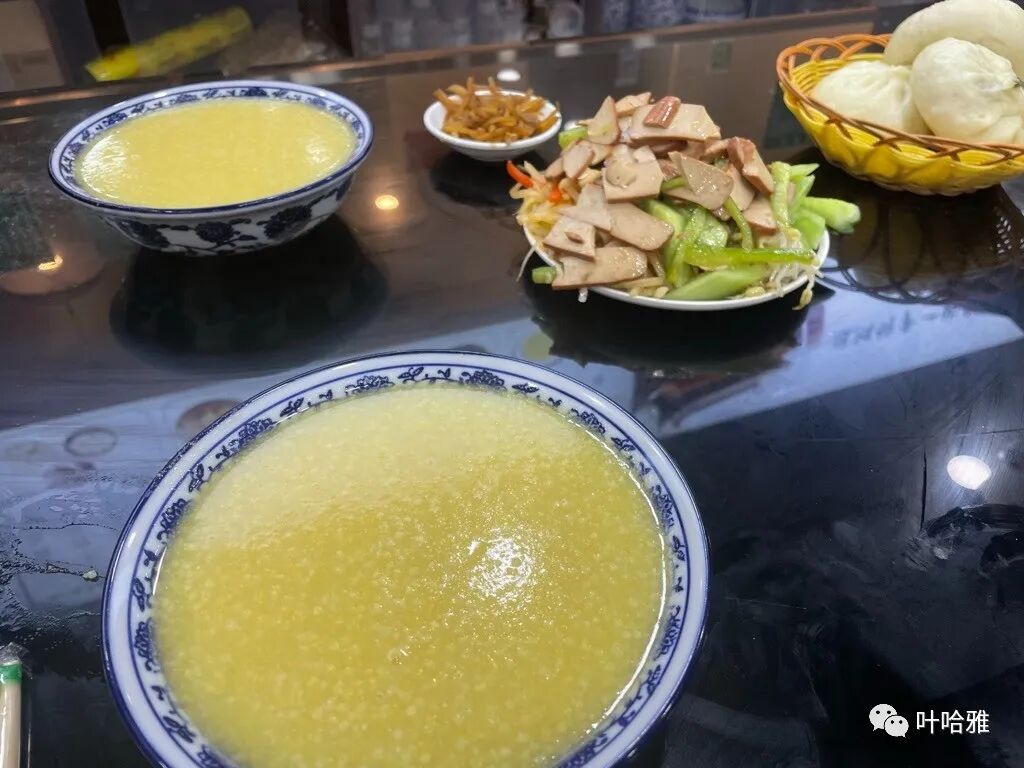
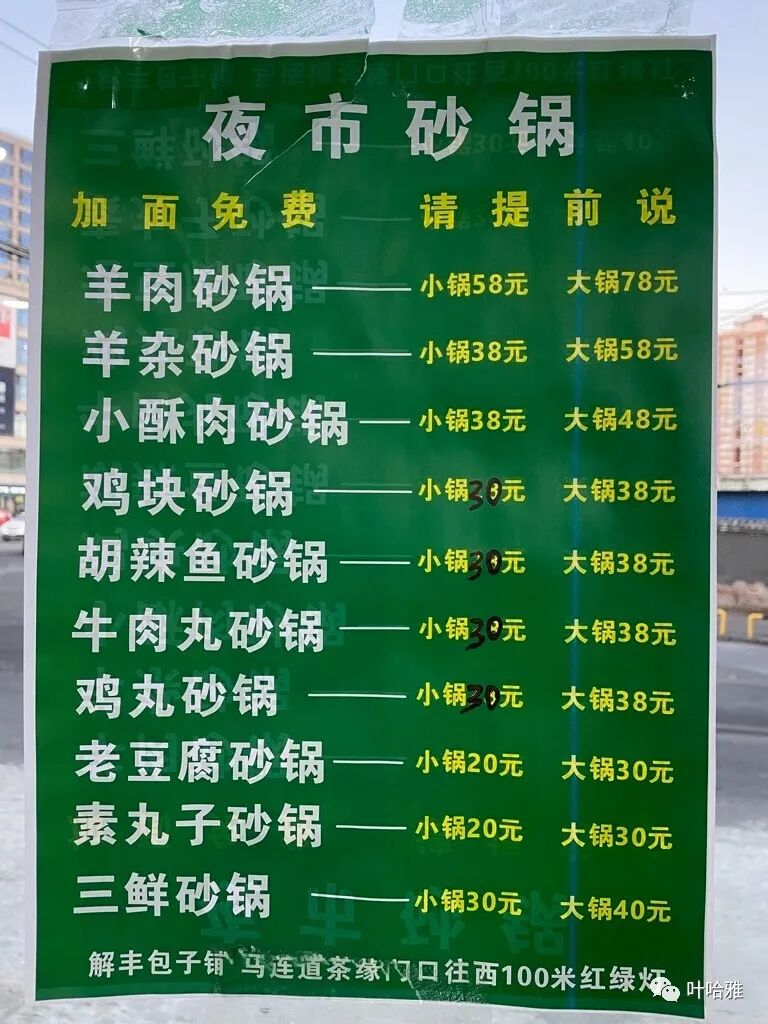
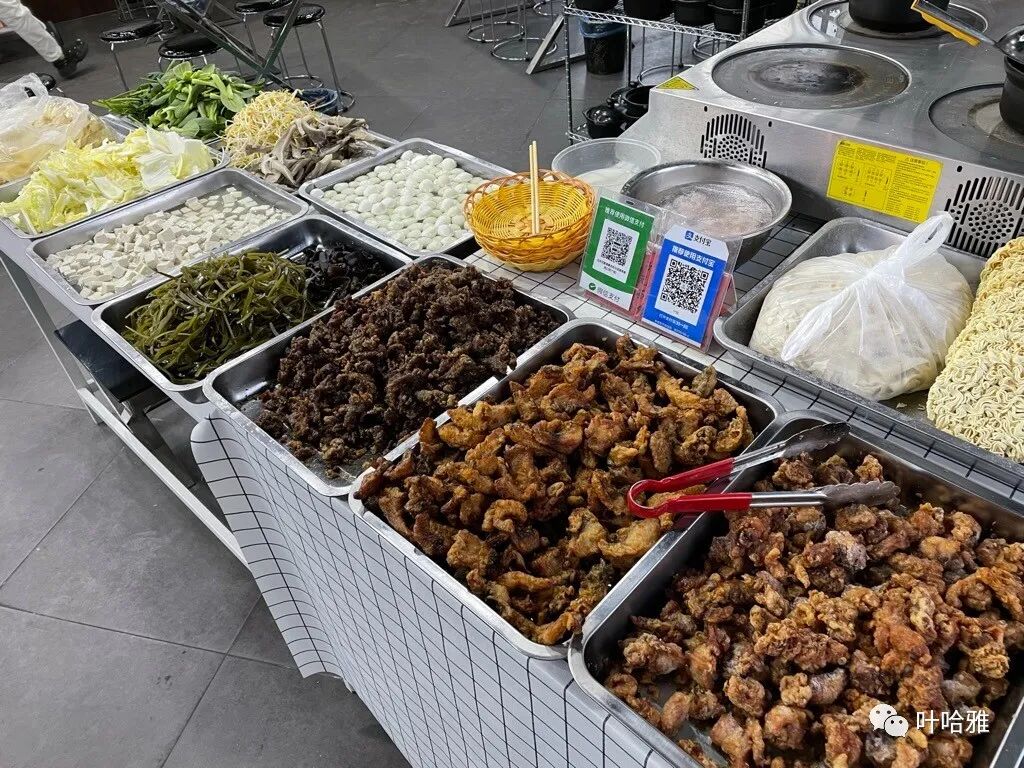
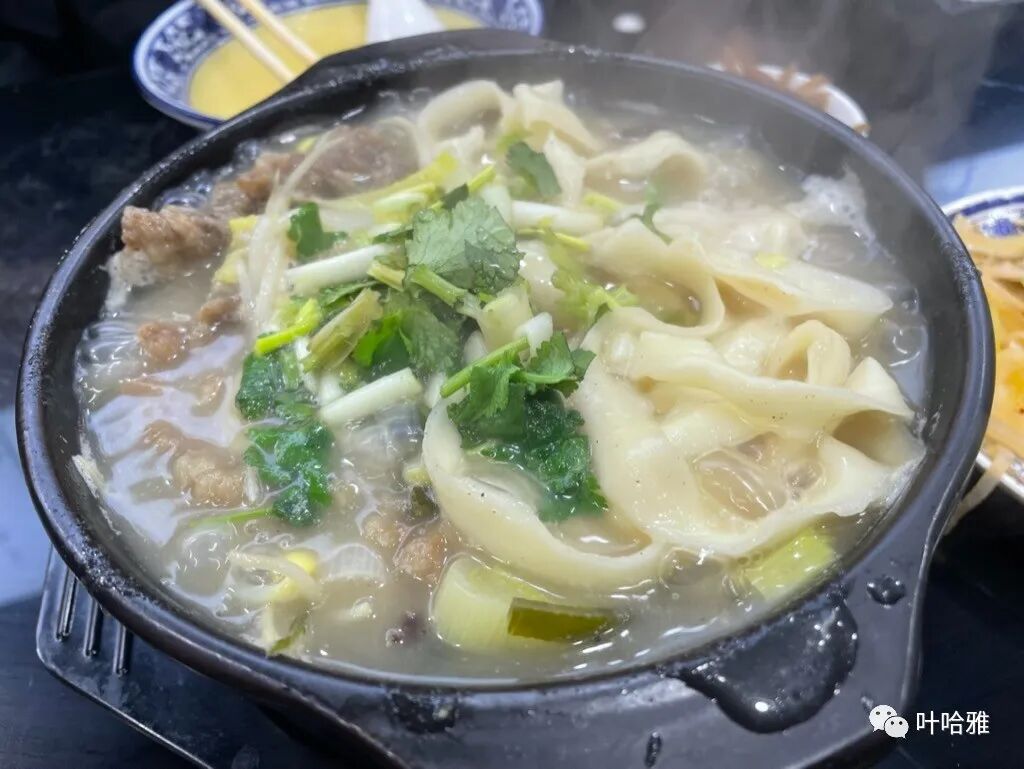
I think their clay pot dishes (shaguo) are the best. You can choose from many side dishes. I recommend the crispy pork clay pot (xiaosurou shaguo) and adding a side of noodles. It is delicious, and crispy pork (xiaosurou) is a classic Henan snack.
3. AIIB Executive Dining Room
I had the set meal at the AIIB main cafeteria last time, and I promised myself I would come back to try a proper meal at the executive dining room. Just to be clear, the AIIB restaurant is not open to the public. Why mention it then? I think you should apply for a job at the AIIB. You can live a lifestyle that balances your faith and your work here, and you can even get praised by your boss for taking paid time for namaz.
The executive dining room is not a halal restaurant, but they do prepare halal ingredients separately if you book in advance. Many AIIB executives and staff come from Muslim countries, so you do not need to worry about the food. The servers said all their meat is imported from Arab countries.
Teriyaki chicken leg burger
The executive dining room is a fusion restaurant that brings together food from many different countries, so we picked a specialty dish from each one.
Avocado sauce embroidered shrimp balls
The avocado sauce embroidered shrimp balls are a Mexican-style dish because avocado sauce is a Mexican specialty.
Japanese eel rice (unagi don)
The eel rice is topped with bonito flakes (muyuhua), which is a seasoning made from shaved dried skipjack tuna.
Coconut curry fish
Curry fish is a South Asian dish, and there are many people from India and Pakistan at the Asian Infrastructure Investment Bank.
Vietnamese beef noodle soup (pho)
I have eaten halal rice noodles in Vietnam, but I never saw halal Vietnamese food back home until I finally found it here at the Asian Infrastructure Investment Bank.
Angus tomahawk steak
It is rare to find a halal tomahawk steak. The server will ask how you want it cooked. I suggest medium-well. If you order it well-done, the beef juices dry out and you lose some of the fresh flavor.
4. One Thousand and One Nights Restaurant
I visited the One Thousand and One Nights branch in Solana many years ago. After it closed, I never came to the Sanlitun location, but the Sanlitun shop is actually decorated with a very exotic style.
Next door to this shop are an Iranian restaurant and a Turkish Mom restaurant. Both are long-standing businesses, and their customers are mostly foreigners.
Cream of mushroom soup
One Thousand and One Nights is an Egyptian-themed Arabic restaurant. According to the rules, you drink soup before your meal.
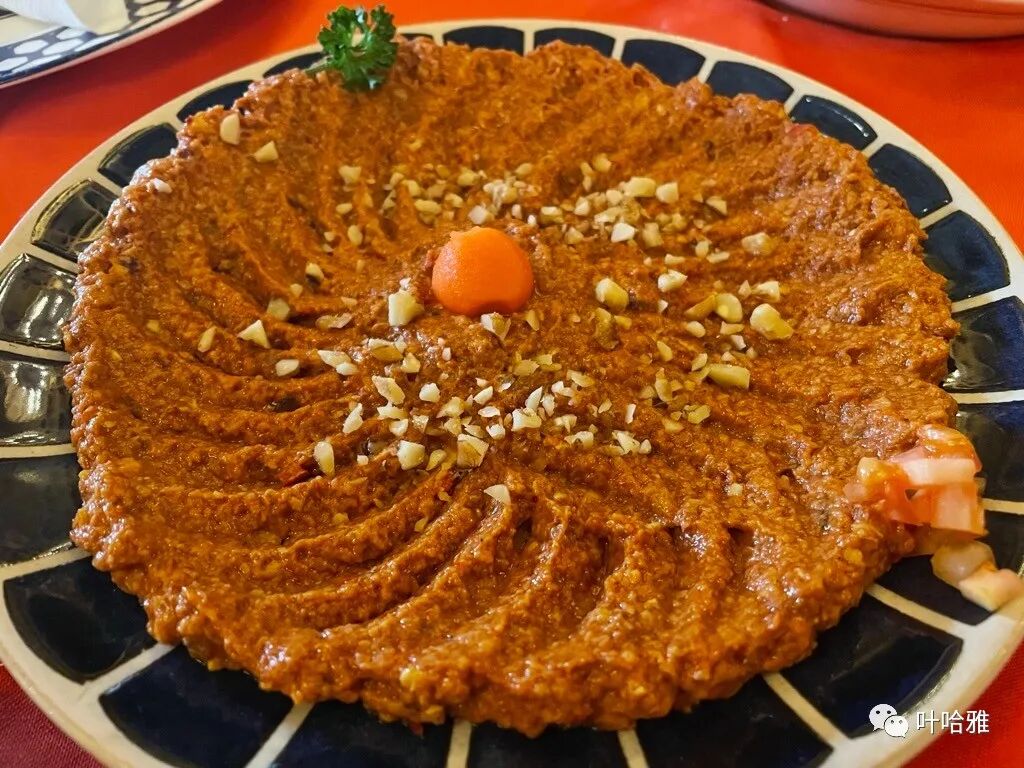
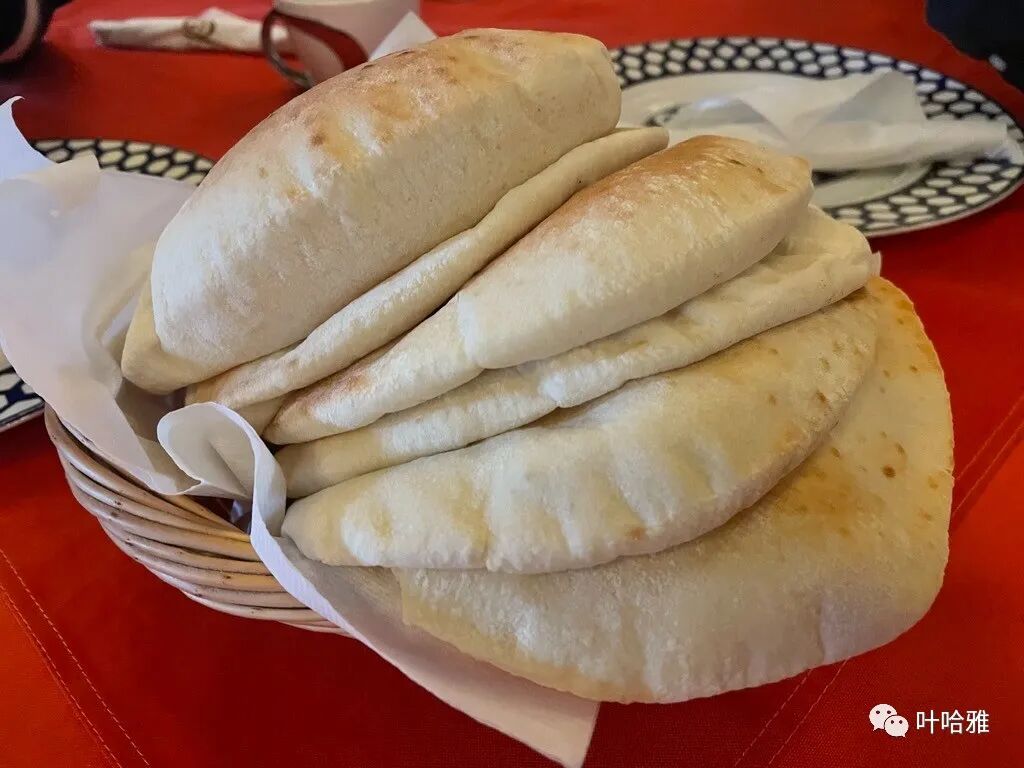
Hummus and spicy sesame sauce. Both are dips for cedar bread (xuesongbing). One is salty and savory, and the other is salty and spicy.
Cedar bread (xuesongbing)
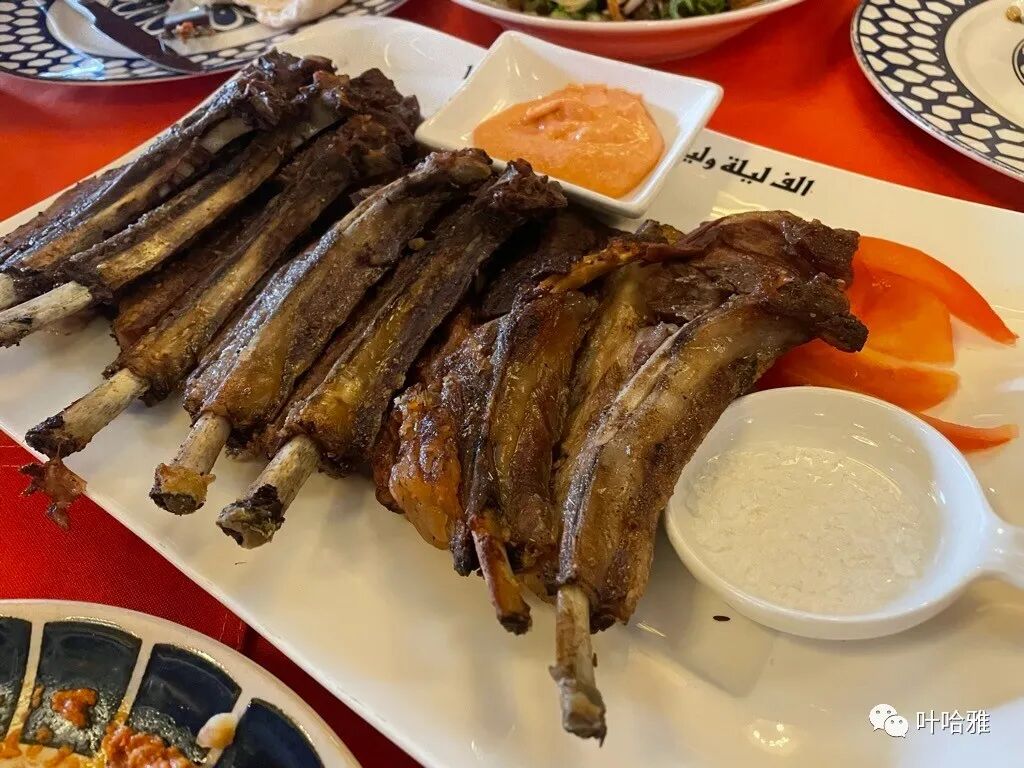
Roasted lamb chops (kaoyangpai)
The roasted lamb chops and mixed grill at One Thousand and One Nights taste great. The lamb is fresh and tender with no gamey smell, keeping the natural flavor of the meat. The dipping sauce is simple, just salt and lemon juice, served with a small side of salad dressing. I think the meat tastes perfect on its own.
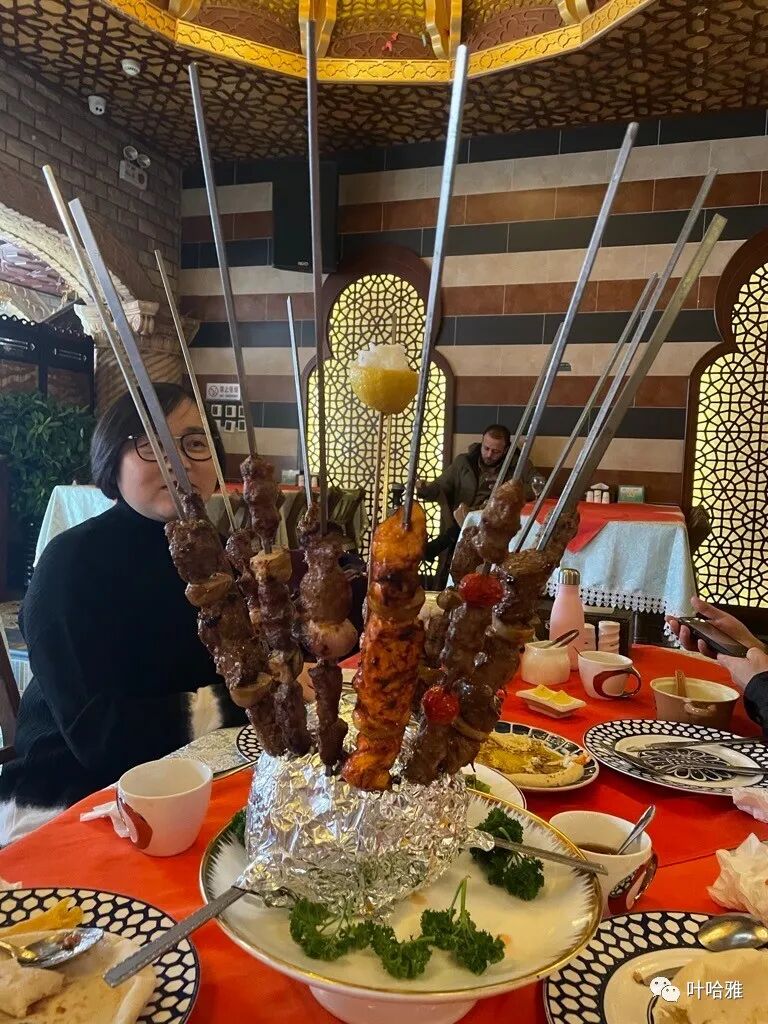
Mixed grill (zonghe shaokao)
The mixed grill is a combination of lamb, chicken, and beef skewers. Each skewer has even more meat than the red willow skewers (hongliu kaorou).
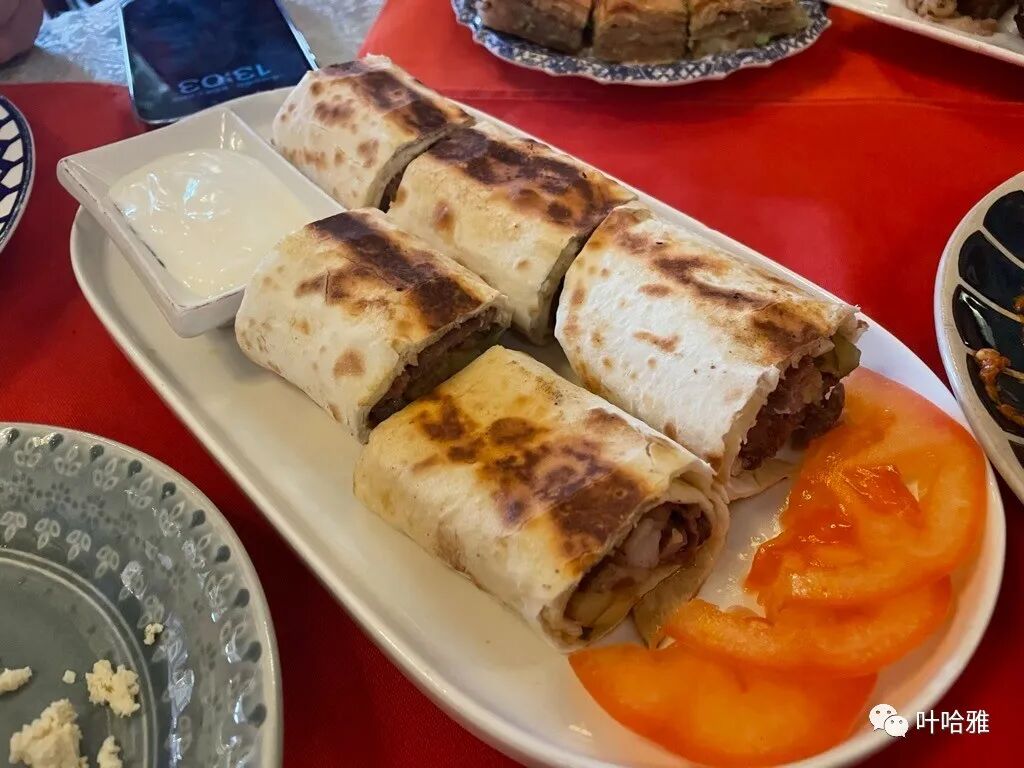
Shawarma
Shawarma can also be called a sandwich. It is a very popular Middle Eastern specialty, famous even in Western countries, much like the popularity of meat burgers (roujiamo) in our country.
Halawa
There are two unique Middle Eastern desserts: halawa and baklawa. Halawa is a peanut brittle with a mildly sweet taste. Baklawa is a honey cashew pastry with a sweetness level of over five plus signs.
Baklawa
One Thousand and One Nights has Egyptian belly dancing performances at night. These shows were paused for three years due to the pandemic, but they have now resumed.
5. Jianglai
Jianglai is a chain restaurant, and this is their flagship store in Wangjing. It is very spacious, but it gets packed at lunch and you will need to wait for a table. There is a paid parking lot next door, but parking in Wangjing is very expensive.
Jianglai is a bit like a localized version of Bayi Laoye, but the food is slightly inferior to Bayi Laoye.
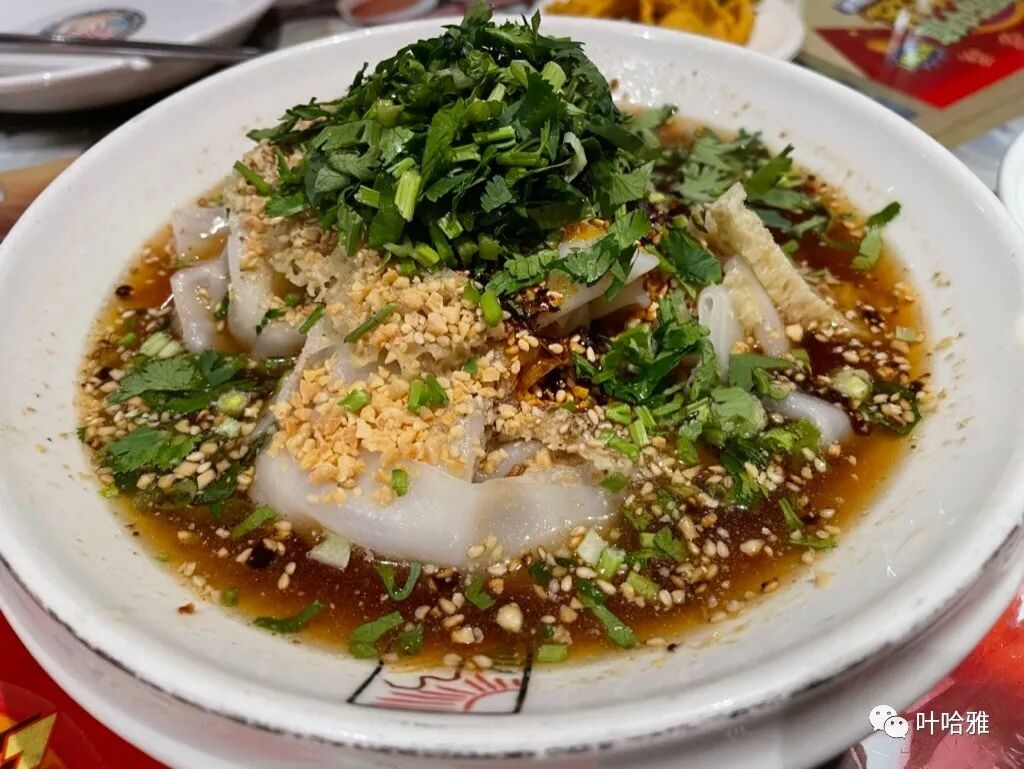
Overall, their Xinjiang food has no major flaws, but it is not very surprising either. The flavors are quite mild.
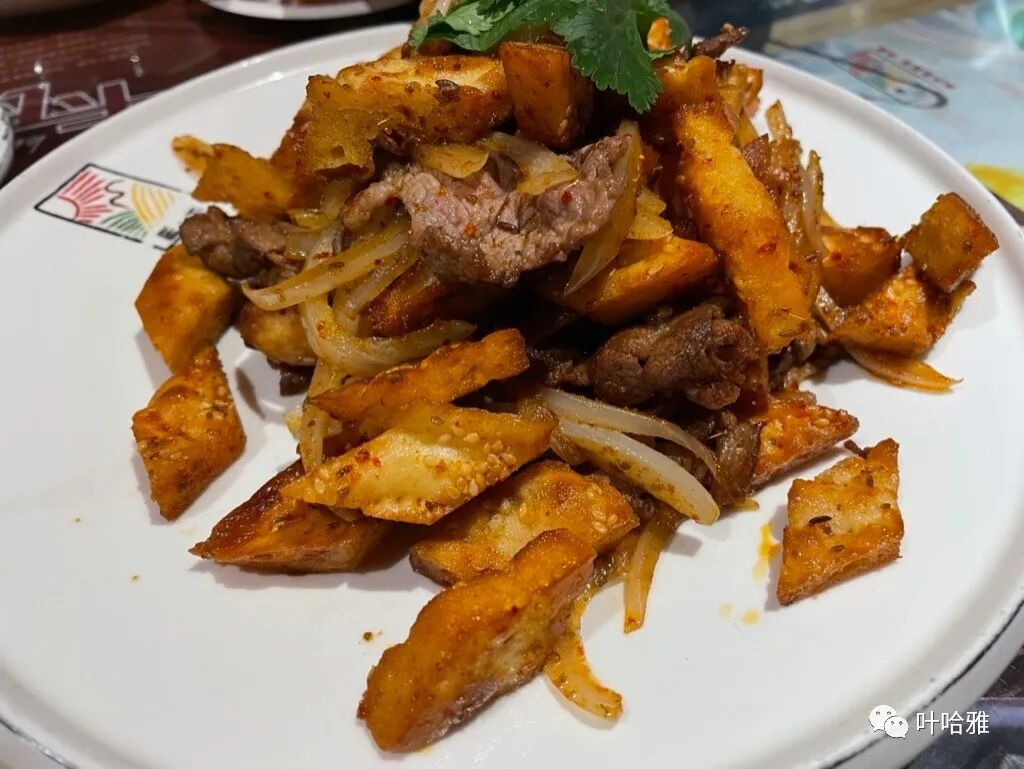
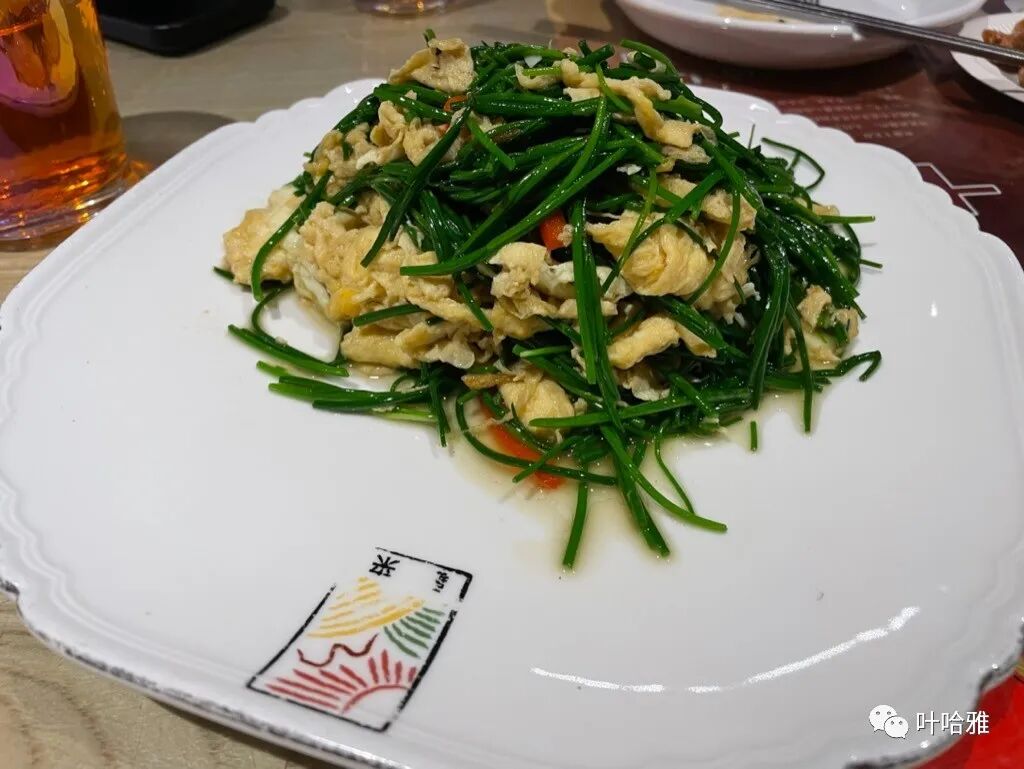
The combo of big plate chicken (dapanji) and spicy chicken (laziji) is creative. It lets you eat two hearty dishes at once and saves you the cost of an extra dish.
6. Xi'an lamb pita bread in soup (yangrou paomo)
Qin Laoda Paomo Restaurant has been open in Beijing for 16 years. I vaguely remember eating here a few years ago. It is a standard paomo shop. Unfortunately, you cannot break the bread yourself, which is a big part of the fun for people from Xi'an.
Cold skin noodles (liangpi) with wheat gluten (mianjin) topped with chili oil is a sour and spicy dish perfect for summer.
The meat burger (roujiamo) tastes good. The crust is very crispy and they give you plenty of meat.
To get the full experience when eating Xi'an paomo, you have to drink a local Xi'an Bingfeng soda.
Although paomo is famous for the lamb version, locals in Xi'an mostly eat beef paomo, which I also prefer. Qin Laoda's paomo is decent, but it is definitely not as authentic as what you get in the Muslim Quarter (Huifang) in Xi'an.
7. Lianghuo Lanzhou twisted fried dough and skewers (fanhua kaochuan)
A new Lanzhou-style skewer shop just opened in Baiziwan. It does not have a halal sign because, while the owner is not a Hui Muslim, all the staff are. The staff says all their ingredients are sourced from halal suppliers.
The kitchen staff all wear prayer caps (libaimao). If you have eaten at Lianshou Barbecue in Baiziwan, this shop has a very similar style.
Lianghuo is a Lanzhou dialect word that means to praise someone. The wall also explains a few other Lanzhou dialect phrases.
To me, flower-style skewers (fanhua shaokao) are just meat with fat in the middle. This shop offers two ways to grill: dry or wet, with wet meaning they brush on a sauce.
A Lanzhou-style barbecue shop must have Lanzhou snacks. You can have sweet fermented oat drink (tianbeizi) served hot, and once heated, you cannot smell the alcohol in it.
A must-order Lanzhou delicacy is the flowing sauce wide noodles (liuzhi kuanfen). They are smooth, chewy, and the sour and spicy broth is great for opening your appetite.
Milk egg fermented rice (niunai jidan laozao) is a nutritious hot drink. However, they did not beat the eggs well enough, so they were clumpy. It would be better if they were more spread out.
The sour and spicy lamb tripe (suanla xiaoyangdu) is a delicious skewer. The sour and spicy flavor is very unique to the region, as you do not usually find this taste in northern-style barbecue.
The grilled lamb kidney (kao yangyao) is also worth recommending. The small kidneys are not big, but they are grilled until crispy on the outside while staying tender inside.
This is a bundle of lamb flower skewers (yang jiahua), which are just lamb skewers. One bundle has 20 small skewers, and one person can easily eat 40 or 50 in a sitting. I tested it myself, and these lamb flower skewers are better than the beef tendon. We ended up ordering another bundle.
For the grilled vegetable platter, the best items are the grilled potato slices and grilled mushrooms. The crispy texture of the grilled mushrooms makes them taste just like meat.
The Lanzhou grilled flatbread (lanzhou kaobing) was the main dish I was looking forward to most. I had tried this flatbread stuffed with skewers at Lianshou before, and it is delicious. The flatbread is about the same size as a sesame flatbread (shaobing), with a crispy crust and a soft center, perfect for stuffing with anything. Overall, it is about the same as Lianshou, and the prices are similar too. The small skewers are not cheap, with an average cost of about 100 per person.
8. Liang's Skewer Shop (Liang de chuandian)
The owner's name is Liang, and he is from Hebei. He named his shop Liang's Skewer Shop.
The shop is on the second floor and is very spacious. One side has large floor-to-ceiling windows, making it very pleasant to eat barbecue by the window.
They serve seafood, barbecue, and hot pot. We came specifically for the seafood and barbecue.
The grilled beef tendon, lamb heart tube, and lamb cartilage were all quite tasty. The chili was not very spicy, the saltiness was just right, and there were no extra flavors.
A handful of small lamb skewers shows that their lamb quality is very good; it is neither gamey nor tough.
Grilled stone egg (kaoshidan)
We also tried some skewers we had never eaten before, like this grilled stone egg. It tasted like a grilled century egg (songhuadan).
The crispy potato chunks (guoba tudou) were sprinkled with salt and pepper. The potatoes were soft inside, and the skin felt like it had been fried, similar to eating french fries.
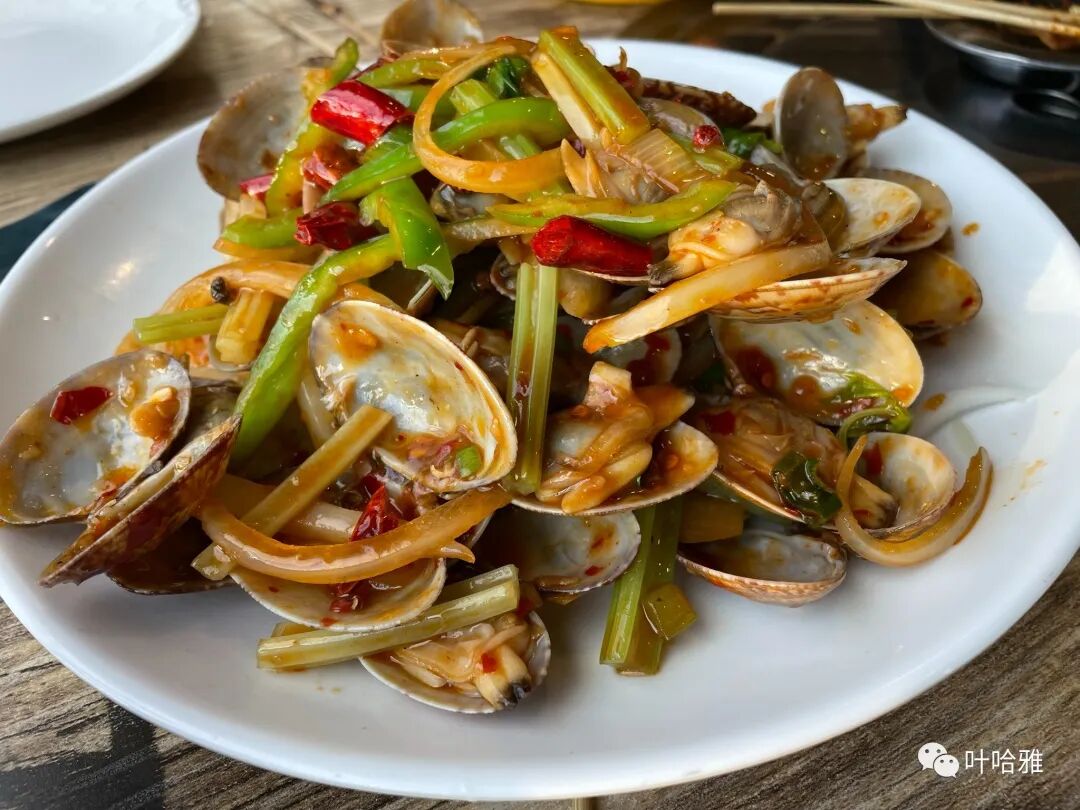
The grilled oysters, grilled scallops, and spicy stir-fried clams were generally not as good as the meat skewers, but you could tell the ingredients were fresh. The oysters and scallops were both 12 yuan each.
Baby cabbage in foil (xizhi wawacai)
seaweed and egg drop soup (zicai danhua tang)
I found their seaweed and egg drop soup (zicai danhua tang) to be a great value because they pack it with ingredients, filling the whole bowl with fluffy egg ribbons. The average cost is about 80 yuan per person.
That is all for this collection. The text and photos are original, and you may not repost them without permission. view all
Summary: This Beijing halal food guide maps issue 31 of the author restaurant series, featuring Xinjiang restaurants, Tanyang lamb, grilled pigeon, roasted goose egg, soup noodles, milk beer, and practical notes for Muslim diners.
Beijing Halal Food Map (31) is presented here as a firsthand travel account in clear English, beginning with this scene: The restaurants I have saved on my phone that I still need to visit are basically just Northwest and Xinjiang spots now. The account keeps its focus on Beijing Halal Food, Muslim Travel, Middle Eastern Food while preserving the names, places, food, and historical details from the Chinese source.
The restaurants I have saved on my phone that I still need to visit are basically just Northwest and Xinjiang spots now. There are not many new specialty restaurants lately, but there are really quite a few new Xinjiang restaurants. After things opened up this year, I plan to start traveling abroad since I have basically been everywhere I can go in China. I have already arranged a trip to Hong Kong and Macau at the end of this month, and I will spend a long time in Malaysia in March to visit my grandmother and aunt whom I have never met before.
1. Tanyang Puzi North and South Xinjiang Specialties
This Xinjiang restaurant started in Mentougou and has several branches in the Beijing suburbs. Just seeing the words 'Tanyang' (salt-lake sheep) might make you think it is a Ningxia restaurant, but it is actually a Xinjiang restaurant with a full range of dishes from both North and South Xinjiang. They just use Tanyang from Ningxia as their main ingredient.
At the Mentougou main store, the hot pot and stir-fry sections are separate and have different entrances. The restaurant is spacious and has private rooms and booths.
Napaliyong
Napaliyong is a Xinjiang dessert. It is actually a transliteration of Napoleon, which is the same thing as a French mille-feuille. You can choose a dual-flavor option here, with both chocolate and milk.
The portion of pilaf (zhuafan) is large and affordable, and they give you plenty of meat, but the flavor is a bit bland and the lamb leg is not well-seasoned.
The barbecue is quite popular. The grilled lamb liver and grilled lamb trotters are both excellent. Tanyang meat has thick fat, which makes it perfect for grilling.
Grilled pigeon
Grilled pigeon is a Xinjiang specialty. The grilled pigeon at Tanyang Puzi is delicious, with crispy skin and tender meat.
Roasted goose egg
Roasted goose egg is a special Xinjiang barbecue dish you rarely see in other restaurants. Goose eggs are much bigger than chicken eggs. You have to boil them before roasting, or they will explode. Eat them with a dipping sauce made of cumin and crushed peanuts.
Xinjiang soup noodles (tangfan)
Soup noodles are hand-torn dough pieces. They are filling enough to be a main meal. The portions are huge, but the flavor is a bit mild. Their hot dishes generally have a light taste.
Milk beer (naipi) is a special Xinjiang drink. The label says it is a non-alcoholic fermented beverage. Some people worry it might contain trace amounts of alcohol. I once discussed what foods are not halal according to Islamic teachings. According to international halal food certification standards, trace amounts of alcohol produced by natural fermentation do not affect the halal status of food. This happens everywhere in daily life. It is not realistic to carry an alcohol tester to check every food you eat, including fruit. Milk beer does not make you drunk, and it certainly will not cause you to fail a drunk driving test.
There is a Xinjiang dance performance around 7:00 PM. My son loves watching the young ladies in colorful outfits dance. Overall, Tanyang Shop wins on value. The cost per person is under 100 yuan. They have a full range of Xinjiang dishes, but the taste is only average.
2. Xiefeng Steamed Bun Shop
Just looking at the name of this bun shop, you can tell how much the owner suffered, waiting three years to finally open.
This is a Huaiyang snack shop from Henan. From 7:00 AM to 10:00 AM, they serve spicy soup (hulatang) and steamed buns. These are large steamed buns, not pan-fried buns.
The skin of the large steamed bun is a bit thick. I personally prefer pan-fried buns, but unfortunately, they do not have them here.
The spicy pepper soup (hulatang) in Huaiyang is lighter and less spicy than the one in Zhengzhou. Since it is called spicy pepper soup, it tastes better with that signature spicy kick.
I think their clay pot dishes (shaguo) are the best. You can choose from many side dishes. I recommend the crispy pork clay pot (xiaosurou shaguo) and adding a side of noodles. It is delicious, and crispy pork (xiaosurou) is a classic Henan snack.
3. AIIB Executive Dining Room
I had the set meal at the AIIB main cafeteria last time, and I promised myself I would come back to try a proper meal at the executive dining room. Just to be clear, the AIIB restaurant is not open to the public. Why mention it then? I think you should apply for a job at the AIIB. You can live a lifestyle that balances your faith and your work here, and you can even get praised by your boss for taking paid time for namaz.
The executive dining room is not a halal restaurant, but they do prepare halal ingredients separately if you book in advance. Many AIIB executives and staff come from Muslim countries, so you do not need to worry about the food. The servers said all their meat is imported from Arab countries.
Teriyaki chicken leg burger
The executive dining room is a fusion restaurant that brings together food from many different countries, so we picked a specialty dish from each one.
Avocado sauce embroidered shrimp balls
The avocado sauce embroidered shrimp balls are a Mexican-style dish because avocado sauce is a Mexican specialty.
Japanese eel rice (unagi don)
The eel rice is topped with bonito flakes (muyuhua), which is a seasoning made from shaved dried skipjack tuna.
Coconut curry fish
Curry fish is a South Asian dish, and there are many people from India and Pakistan at the Asian Infrastructure Investment Bank.
Vietnamese beef noodle soup (pho)
I have eaten halal rice noodles in Vietnam, but I never saw halal Vietnamese food back home until I finally found it here at the Asian Infrastructure Investment Bank.
Angus tomahawk steak
It is rare to find a halal tomahawk steak. The server will ask how you want it cooked. I suggest medium-well. If you order it well-done, the beef juices dry out and you lose some of the fresh flavor.
4. One Thousand and One Nights Restaurant
I visited the One Thousand and One Nights branch in Solana many years ago. After it closed, I never came to the Sanlitun location, but the Sanlitun shop is actually decorated with a very exotic style.
Next door to this shop are an Iranian restaurant and a Turkish Mom restaurant. Both are long-standing businesses, and their customers are mostly foreigners.
Cream of mushroom soup
One Thousand and One Nights is an Egyptian-themed Arabic restaurant. According to the rules, you drink soup before your meal.
Hummus and spicy sesame sauce. Both are dips for cedar bread (xuesongbing). One is salty and savory, and the other is salty and spicy.
Cedar bread (xuesongbing)
Roasted lamb chops (kaoyangpai)
The roasted lamb chops and mixed grill at One Thousand and One Nights taste great. The lamb is fresh and tender with no gamey smell, keeping the natural flavor of the meat. The dipping sauce is simple, just salt and lemon juice, served with a small side of salad dressing. I think the meat tastes perfect on its own.
Mixed grill (zonghe shaokao)
The mixed grill is a combination of lamb, chicken, and beef skewers. Each skewer has even more meat than the red willow skewers (hongliu kaorou).
Shawarma
Shawarma can also be called a sandwich. It is a very popular Middle Eastern specialty, famous even in Western countries, much like the popularity of meat burgers (roujiamo) in our country.
Halawa
There are two unique Middle Eastern desserts: halawa and baklawa. Halawa is a peanut brittle with a mildly sweet taste. Baklawa is a honey cashew pastry with a sweetness level of over five plus signs.
Baklawa
One Thousand and One Nights has Egyptian belly dancing performances at night. These shows were paused for three years due to the pandemic, but they have now resumed.
5. Jianglai
Jianglai is a chain restaurant, and this is their flagship store in Wangjing. It is very spacious, but it gets packed at lunch and you will need to wait for a table. There is a paid parking lot next door, but parking in Wangjing is very expensive.
Jianglai is a bit like a localized version of Bayi Laoye, but the food is slightly inferior to Bayi Laoye.
Overall, their Xinjiang food has no major flaws, but it is not very surprising either. The flavors are quite mild.
The combo of big plate chicken (dapanji) and spicy chicken (laziji) is creative. It lets you eat two hearty dishes at once and saves you the cost of an extra dish.
6. Xi'an lamb pita bread in soup (yangrou paomo)
Qin Laoda Paomo Restaurant has been open in Beijing for 16 years. I vaguely remember eating here a few years ago. It is a standard paomo shop. Unfortunately, you cannot break the bread yourself, which is a big part of the fun for people from Xi'an.
Cold skin noodles (liangpi) with wheat gluten (mianjin) topped with chili oil is a sour and spicy dish perfect for summer.
The meat burger (roujiamo) tastes good. The crust is very crispy and they give you plenty of meat.
To get the full experience when eating Xi'an paomo, you have to drink a local Xi'an Bingfeng soda.
Although paomo is famous for the lamb version, locals in Xi'an mostly eat beef paomo, which I also prefer. Qin Laoda's paomo is decent, but it is definitely not as authentic as what you get in the Muslim Quarter (Huifang) in Xi'an.
7. Lianghuo Lanzhou twisted fried dough and skewers (fanhua kaochuan)
A new Lanzhou-style skewer shop just opened in Baiziwan. It does not have a halal sign because, while the owner is not a Hui Muslim, all the staff are. The staff says all their ingredients are sourced from halal suppliers.
The kitchen staff all wear prayer caps (libaimao). If you have eaten at Lianshou Barbecue in Baiziwan, this shop has a very similar style.
Lianghuo is a Lanzhou dialect word that means to praise someone. The wall also explains a few other Lanzhou dialect phrases.
To me, flower-style skewers (fanhua shaokao) are just meat with fat in the middle. This shop offers two ways to grill: dry or wet, with wet meaning they brush on a sauce.
A Lanzhou-style barbecue shop must have Lanzhou snacks. You can have sweet fermented oat drink (tianbeizi) served hot, and once heated, you cannot smell the alcohol in it.
A must-order Lanzhou delicacy is the flowing sauce wide noodles (liuzhi kuanfen). They are smooth, chewy, and the sour and spicy broth is great for opening your appetite.
Milk egg fermented rice (niunai jidan laozao) is a nutritious hot drink. However, they did not beat the eggs well enough, so they were clumpy. It would be better if they were more spread out.
The sour and spicy lamb tripe (suanla xiaoyangdu) is a delicious skewer. The sour and spicy flavor is very unique to the region, as you do not usually find this taste in northern-style barbecue.
The grilled lamb kidney (kao yangyao) is also worth recommending. The small kidneys are not big, but they are grilled until crispy on the outside while staying tender inside.
This is a bundle of lamb flower skewers (yang jiahua), which are just lamb skewers. One bundle has 20 small skewers, and one person can easily eat 40 or 50 in a sitting. I tested it myself, and these lamb flower skewers are better than the beef tendon. We ended up ordering another bundle.
For the grilled vegetable platter, the best items are the grilled potato slices and grilled mushrooms. The crispy texture of the grilled mushrooms makes them taste just like meat.
The Lanzhou grilled flatbread (lanzhou kaobing) was the main dish I was looking forward to most. I had tried this flatbread stuffed with skewers at Lianshou before, and it is delicious. The flatbread is about the same size as a sesame flatbread (shaobing), with a crispy crust and a soft center, perfect for stuffing with anything. Overall, it is about the same as Lianshou, and the prices are similar too. The small skewers are not cheap, with an average cost of about 100 per person.
8. Liang's Skewer Shop (Liang de chuandian)
The owner's name is Liang, and he is from Hebei. He named his shop Liang's Skewer Shop.
The shop is on the second floor and is very spacious. One side has large floor-to-ceiling windows, making it very pleasant to eat barbecue by the window.
They serve seafood, barbecue, and hot pot. We came specifically for the seafood and barbecue.
The grilled beef tendon, lamb heart tube, and lamb cartilage were all quite tasty. The chili was not very spicy, the saltiness was just right, and there were no extra flavors.
A handful of small lamb skewers shows that their lamb quality is very good; it is neither gamey nor tough.
Grilled stone egg (kaoshidan)
We also tried some skewers we had never eaten before, like this grilled stone egg. It tasted like a grilled century egg (songhuadan).
The crispy potato chunks (guoba tudou) were sprinkled with salt and pepper. The potatoes were soft inside, and the skin felt like it had been fried, similar to eating french fries.
The grilled oysters, grilled scallops, and spicy stir-fried clams were generally not as good as the meat skewers, but you could tell the ingredients were fresh. The oysters and scallops were both 12 yuan each.
Baby cabbage in foil (xizhi wawacai)
seaweed and egg drop soup (zicai danhua tang)
I found their seaweed and egg drop soup (zicai danhua tang) to be a great value because they pack it with ingredients, filling the whole bowl with fluffy egg ribbons. The average cost is about 80 yuan per person.
That is all for this collection. The text and photos are original, and you may not repost them without permission. view all
Reposted from the web
Summary: This Beijing halal food guide maps issue 31 of the author restaurant series, featuring Xinjiang restaurants, Tanyang lamb, grilled pigeon, roasted goose egg, soup noodles, milk beer, and practical notes for Muslim diners.
Beijing Halal Food Map (31) is presented here as a firsthand travel account in clear English, beginning with this scene: The restaurants I have saved on my phone that I still need to visit are basically just Northwest and Xinjiang spots now. The account keeps its focus on Beijing Halal Food, Muslim Travel, Middle Eastern Food while preserving the names, places, food, and historical details from the Chinese source.
The restaurants I have saved on my phone that I still need to visit are basically just Northwest and Xinjiang spots now. There are not many new specialty restaurants lately, but there are really quite a few new Xinjiang restaurants. After things opened up this year, I plan to start traveling abroad since I have basically been everywhere I can go in China. I have already arranged a trip to Hong Kong and Macau at the end of this month, and I will spend a long time in Malaysia in March to visit my grandmother and aunt whom I have never met before.
1. Tanyang Puzi North and South Xinjiang Specialties
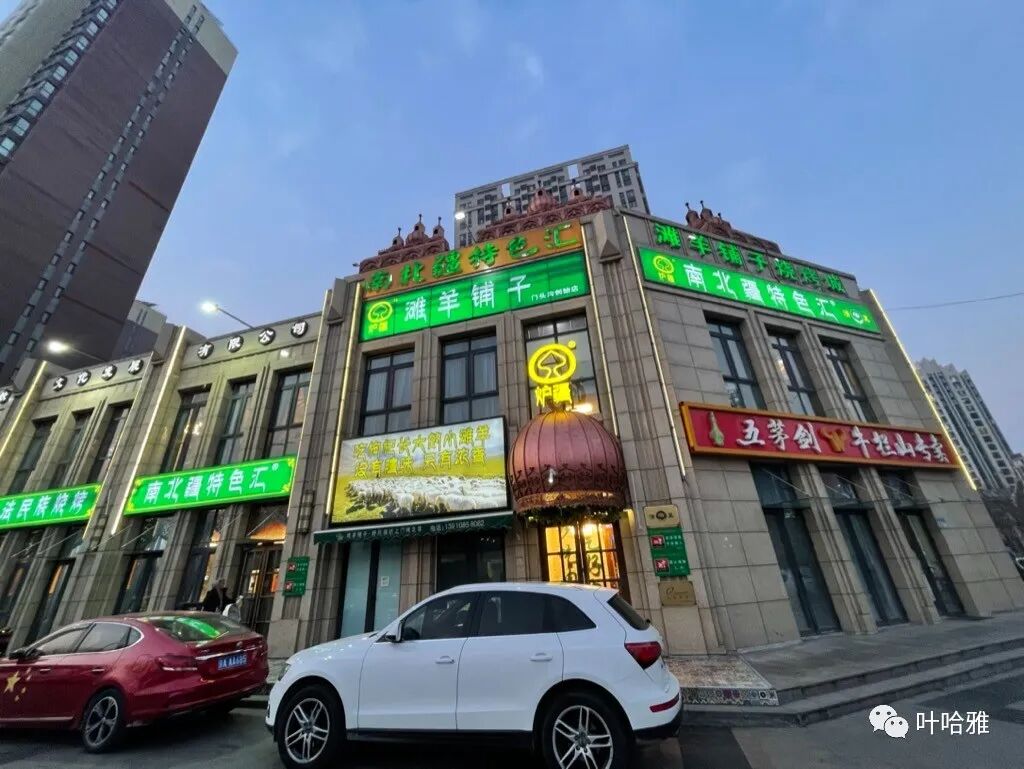
This Xinjiang restaurant started in Mentougou and has several branches in the Beijing suburbs. Just seeing the words 'Tanyang' (salt-lake sheep) might make you think it is a Ningxia restaurant, but it is actually a Xinjiang restaurant with a full range of dishes from both North and South Xinjiang. They just use Tanyang from Ningxia as their main ingredient.
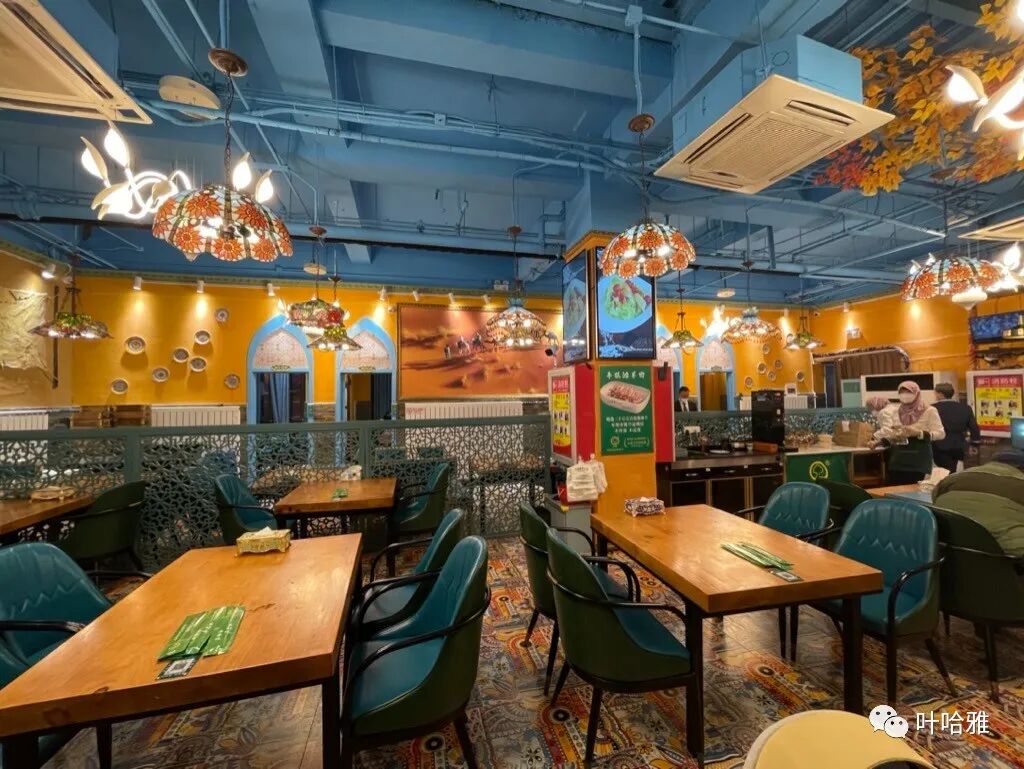
At the Mentougou main store, the hot pot and stir-fry sections are separate and have different entrances. The restaurant is spacious and has private rooms and booths.
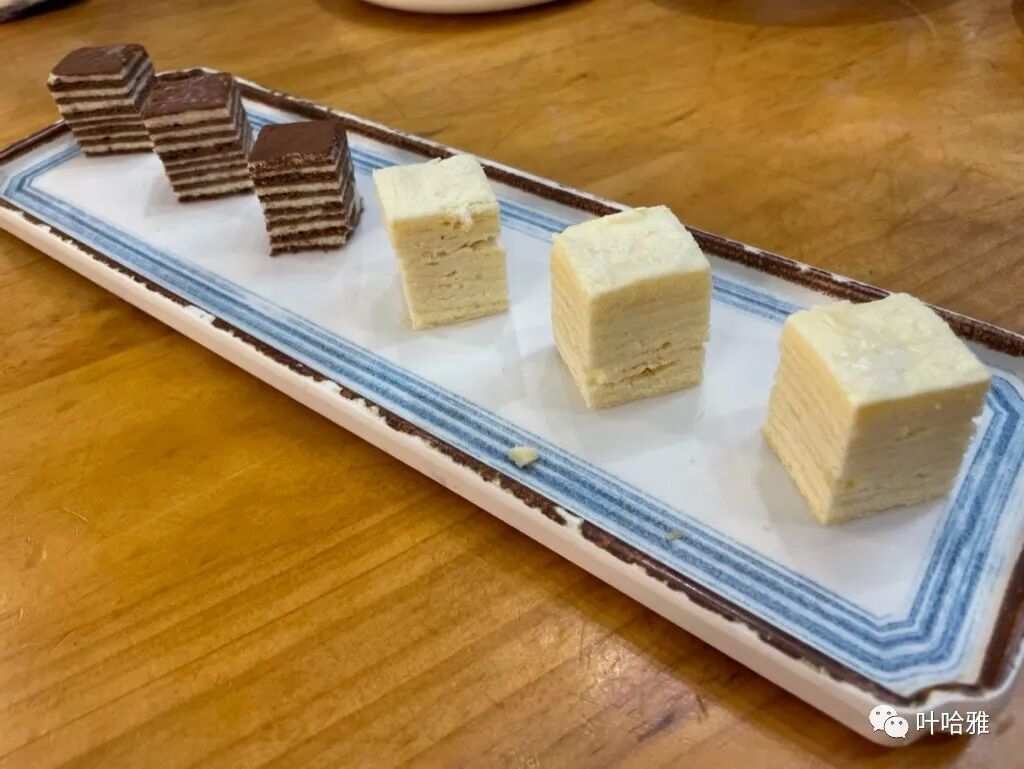
Napaliyong
Napaliyong is a Xinjiang dessert. It is actually a transliteration of Napoleon, which is the same thing as a French mille-feuille. You can choose a dual-flavor option here, with both chocolate and milk.
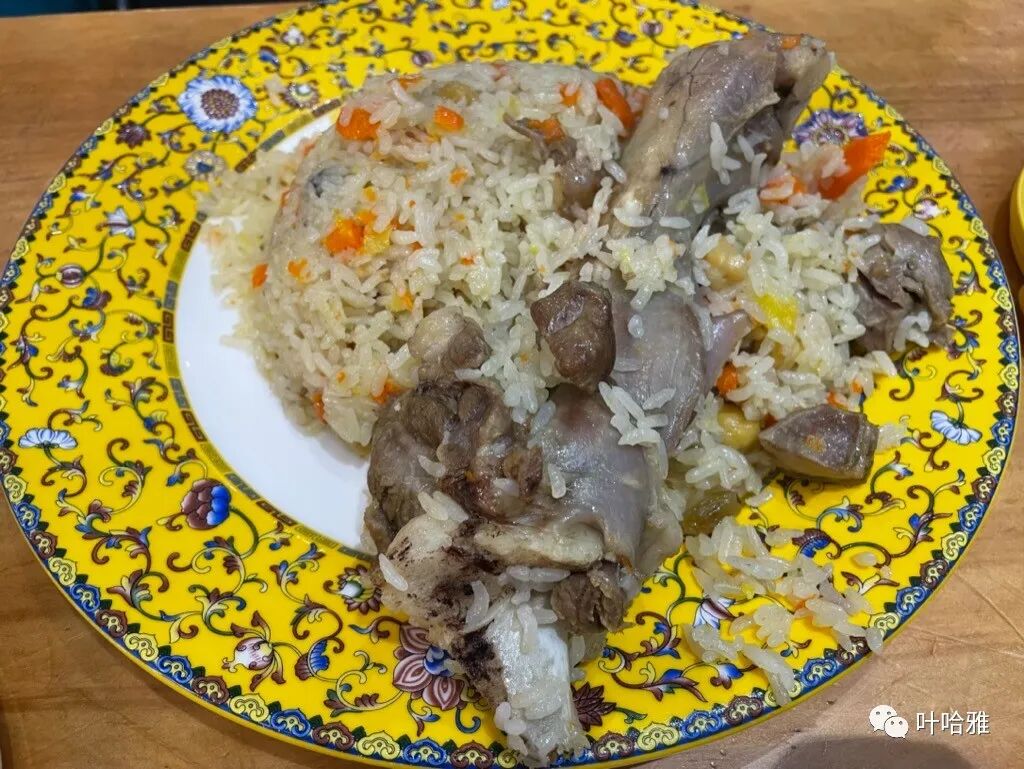
The portion of pilaf (zhuafan) is large and affordable, and they give you plenty of meat, but the flavor is a bit bland and the lamb leg is not well-seasoned.
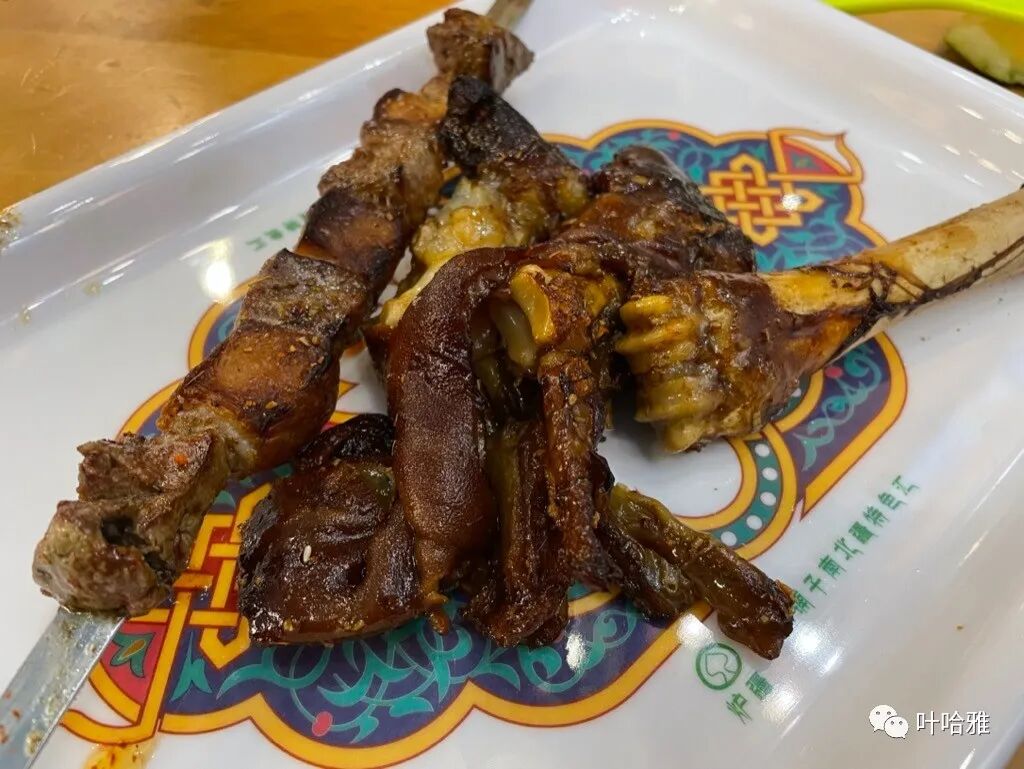
The barbecue is quite popular. The grilled lamb liver and grilled lamb trotters are both excellent. Tanyang meat has thick fat, which makes it perfect for grilling.
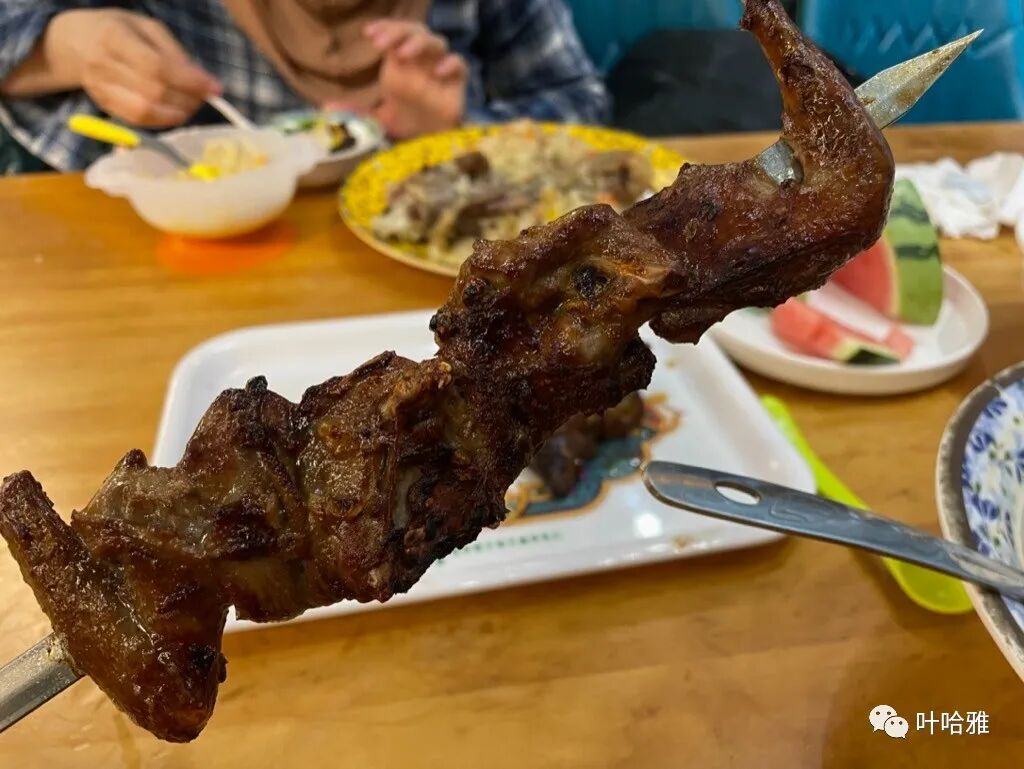
Grilled pigeon
Grilled pigeon is a Xinjiang specialty. The grilled pigeon at Tanyang Puzi is delicious, with crispy skin and tender meat.
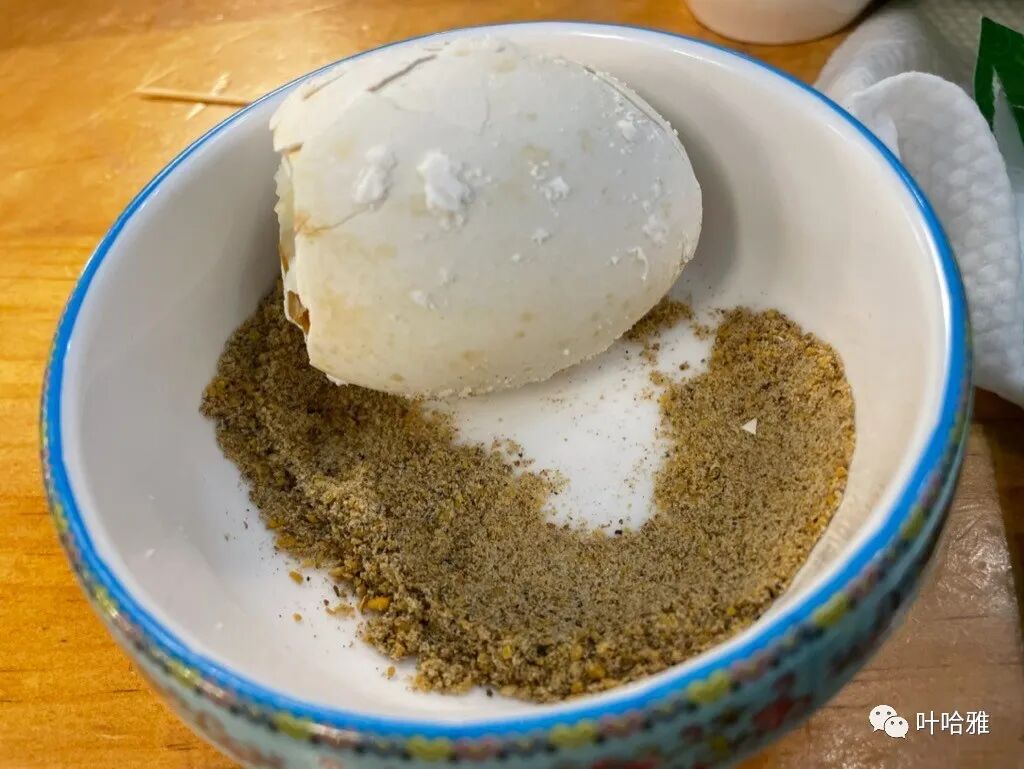
Roasted goose egg
Roasted goose egg is a special Xinjiang barbecue dish you rarely see in other restaurants. Goose eggs are much bigger than chicken eggs. You have to boil them before roasting, or they will explode. Eat them with a dipping sauce made of cumin and crushed peanuts.
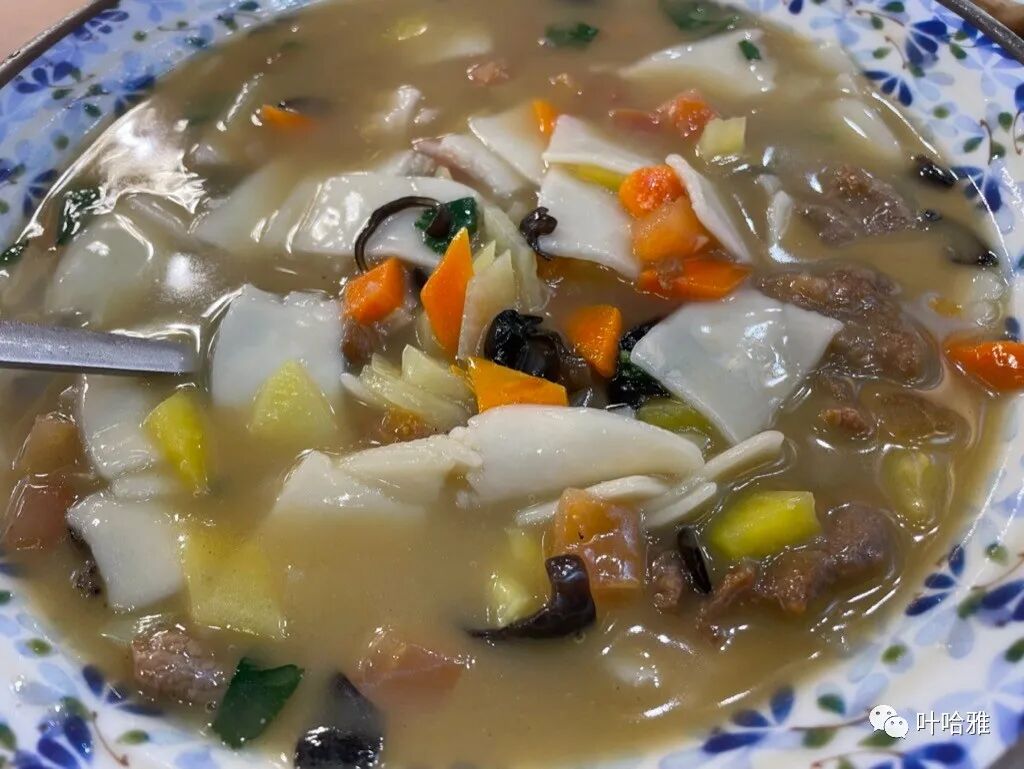
Xinjiang soup noodles (tangfan)
Soup noodles are hand-torn dough pieces. They are filling enough to be a main meal. The portions are huge, but the flavor is a bit mild. Their hot dishes generally have a light taste.
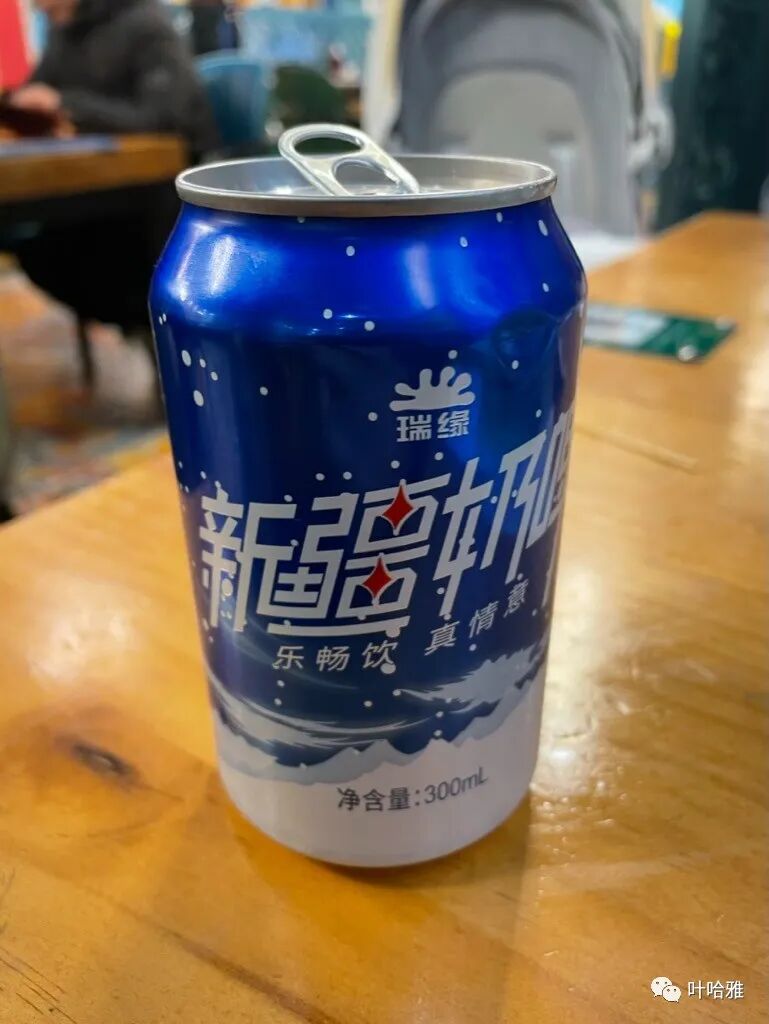
Milk beer (naipi) is a special Xinjiang drink. The label says it is a non-alcoholic fermented beverage. Some people worry it might contain trace amounts of alcohol. I once discussed what foods are not halal according to Islamic teachings. According to international halal food certification standards, trace amounts of alcohol produced by natural fermentation do not affect the halal status of food. This happens everywhere in daily life. It is not realistic to carry an alcohol tester to check every food you eat, including fruit. Milk beer does not make you drunk, and it certainly will not cause you to fail a drunk driving test.

There is a Xinjiang dance performance around 7:00 PM. My son loves watching the young ladies in colorful outfits dance. Overall, Tanyang Shop wins on value. The cost per person is under 100 yuan. They have a full range of Xinjiang dishes, but the taste is only average.
2. Xiefeng Steamed Bun Shop
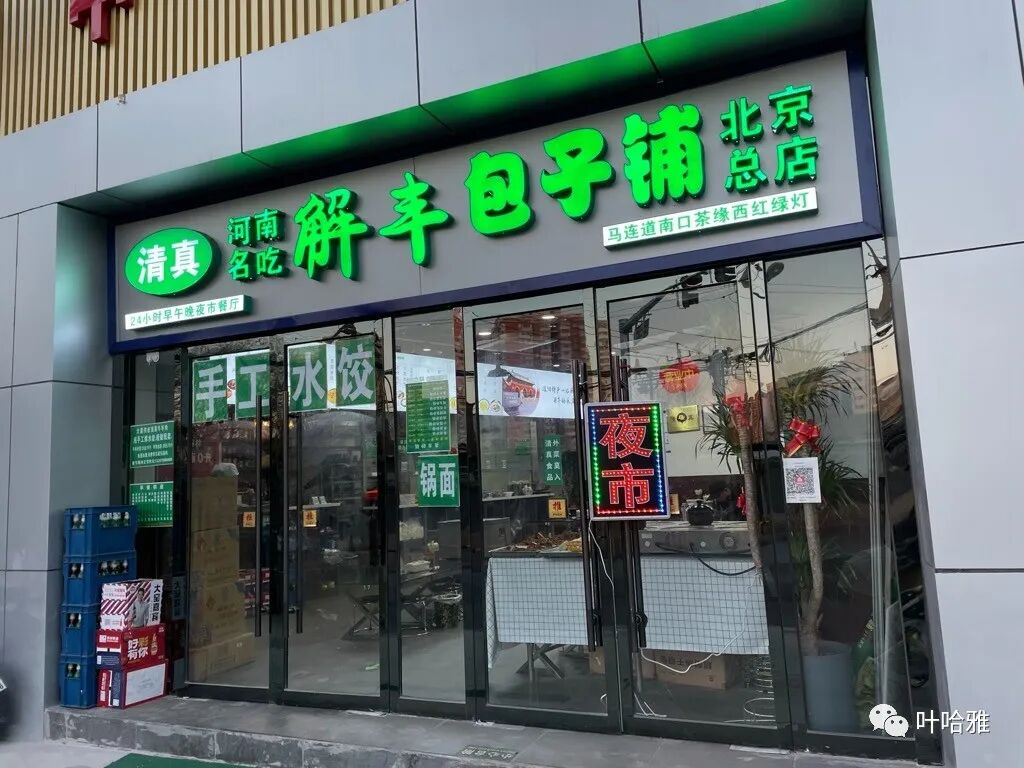
Just looking at the name of this bun shop, you can tell how much the owner suffered, waiting three years to finally open.
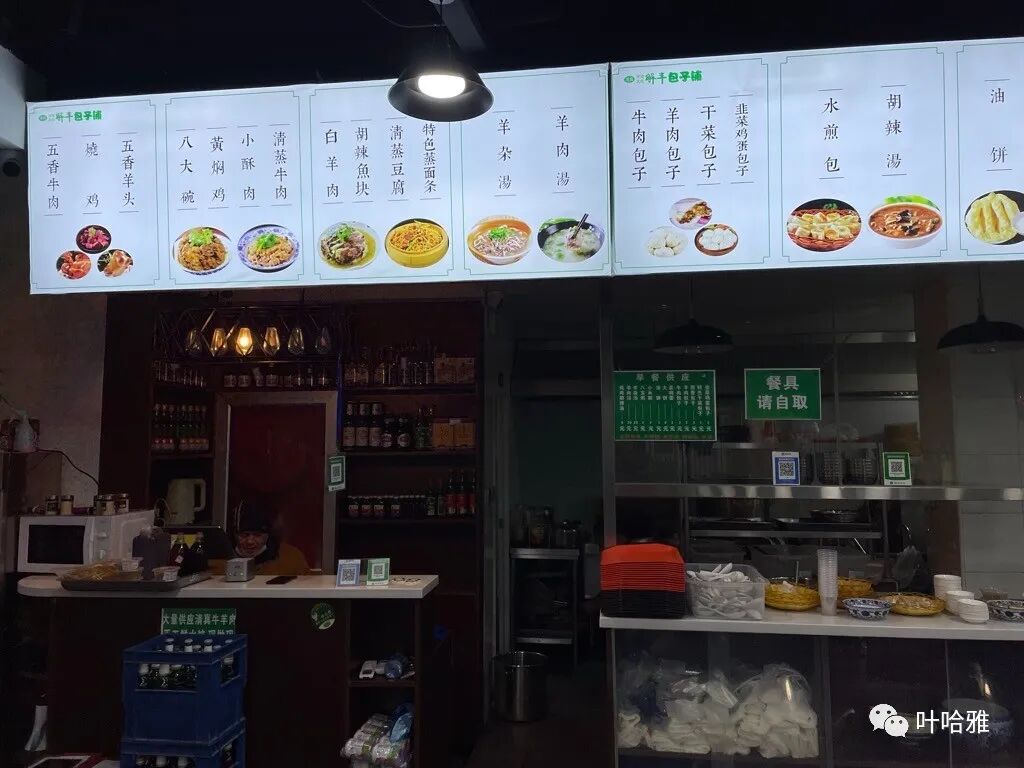
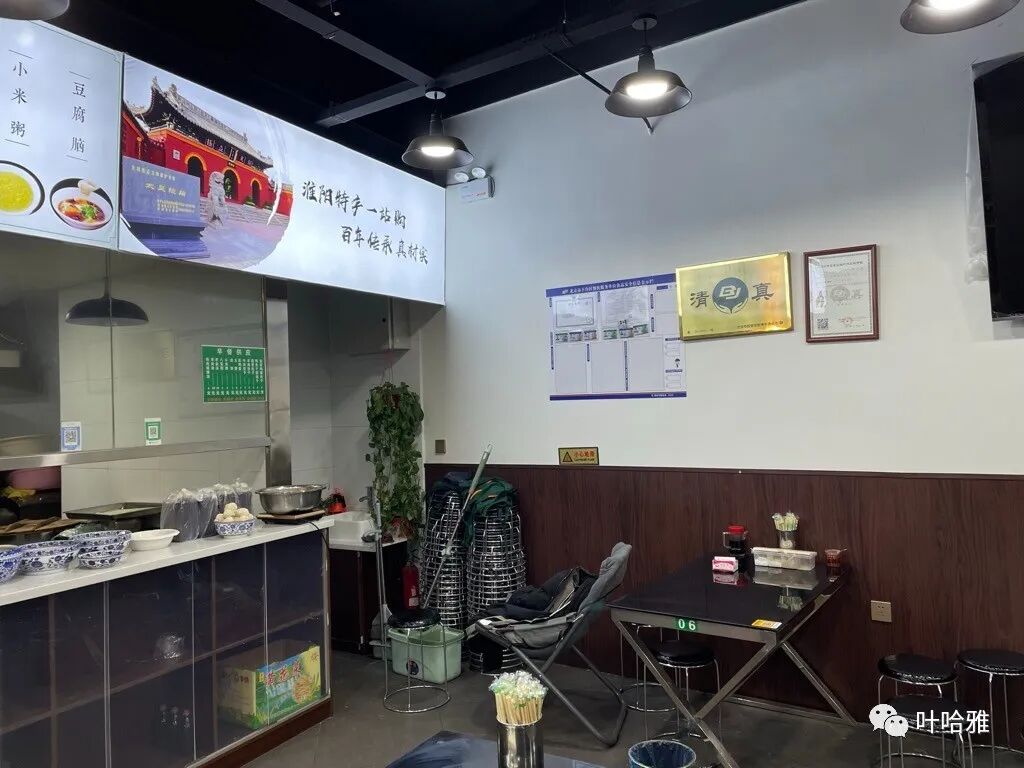
This is a Huaiyang snack shop from Henan. From 7:00 AM to 10:00 AM, they serve spicy soup (hulatang) and steamed buns. These are large steamed buns, not pan-fried buns.
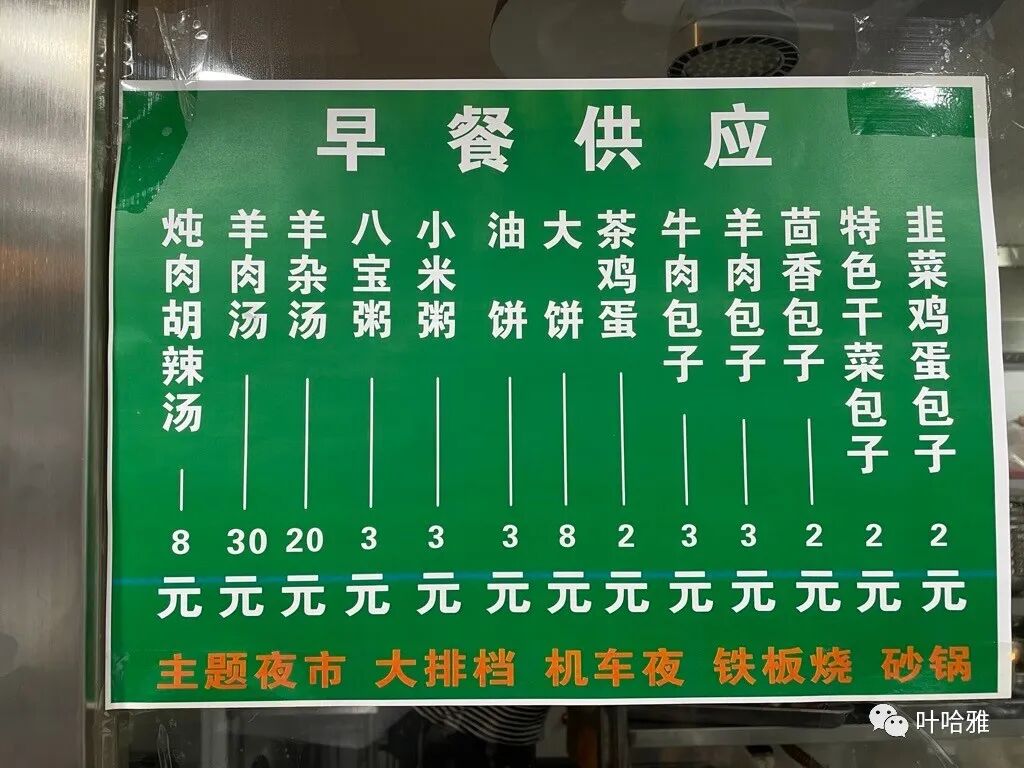
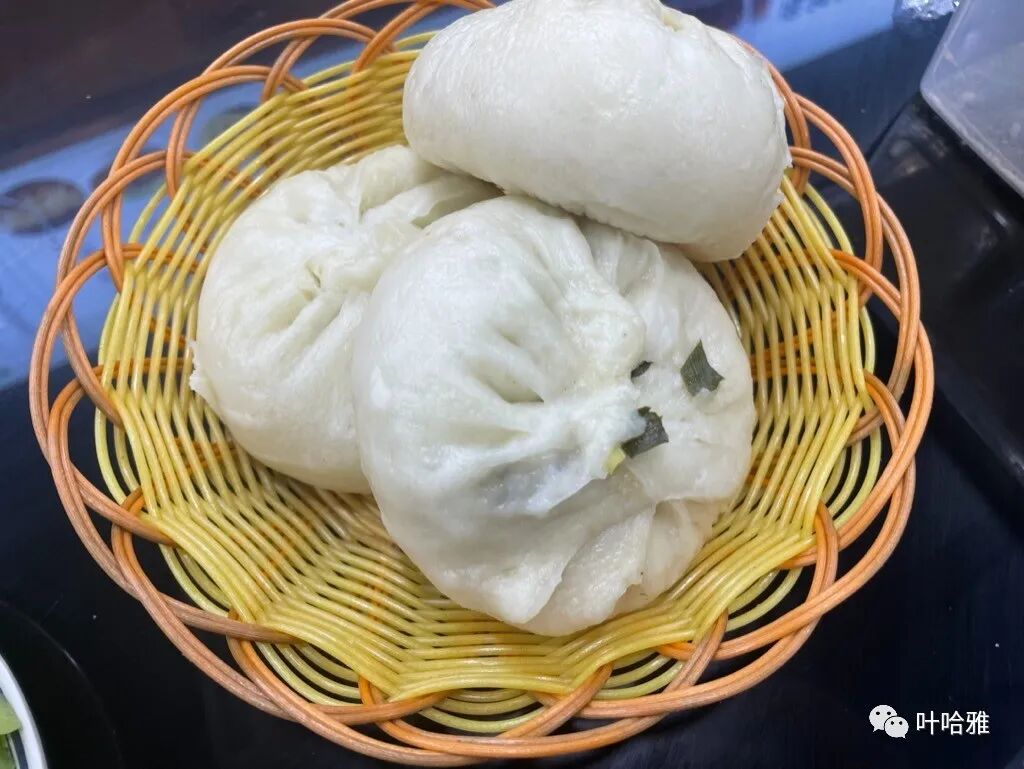
The skin of the large steamed bun is a bit thick. I personally prefer pan-fried buns, but unfortunately, they do not have them here.
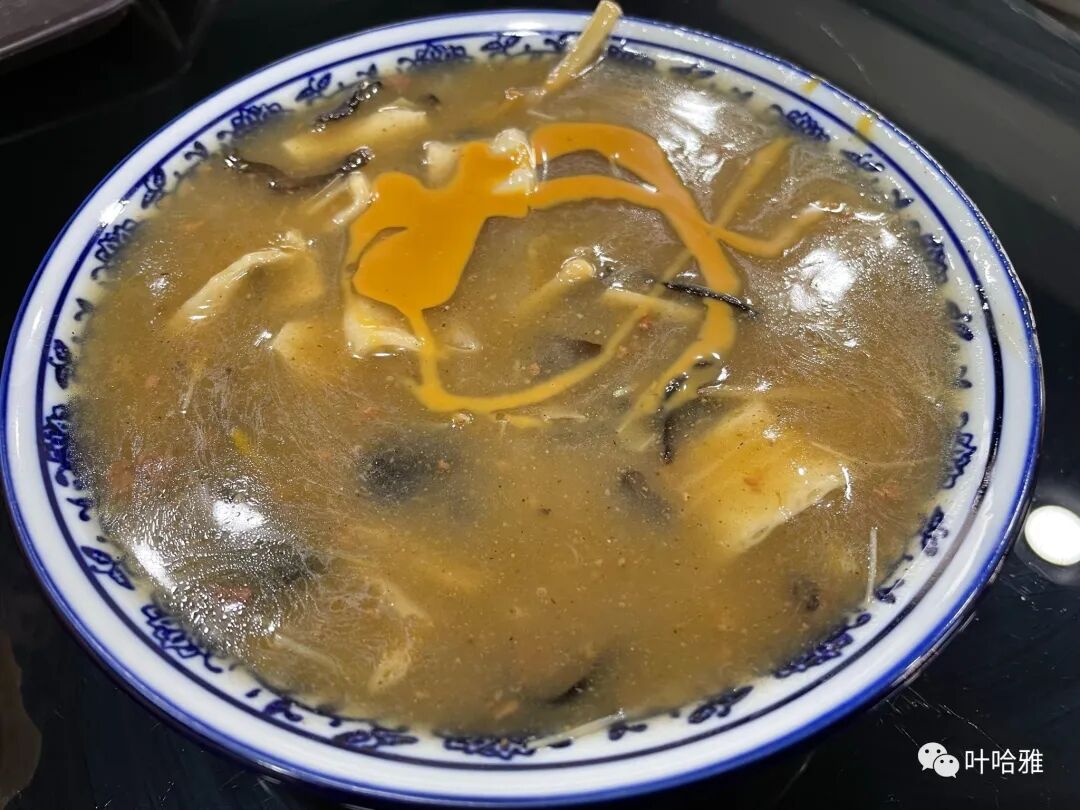
The spicy pepper soup (hulatang) in Huaiyang is lighter and less spicy than the one in Zhengzhou. Since it is called spicy pepper soup, it tastes better with that signature spicy kick.
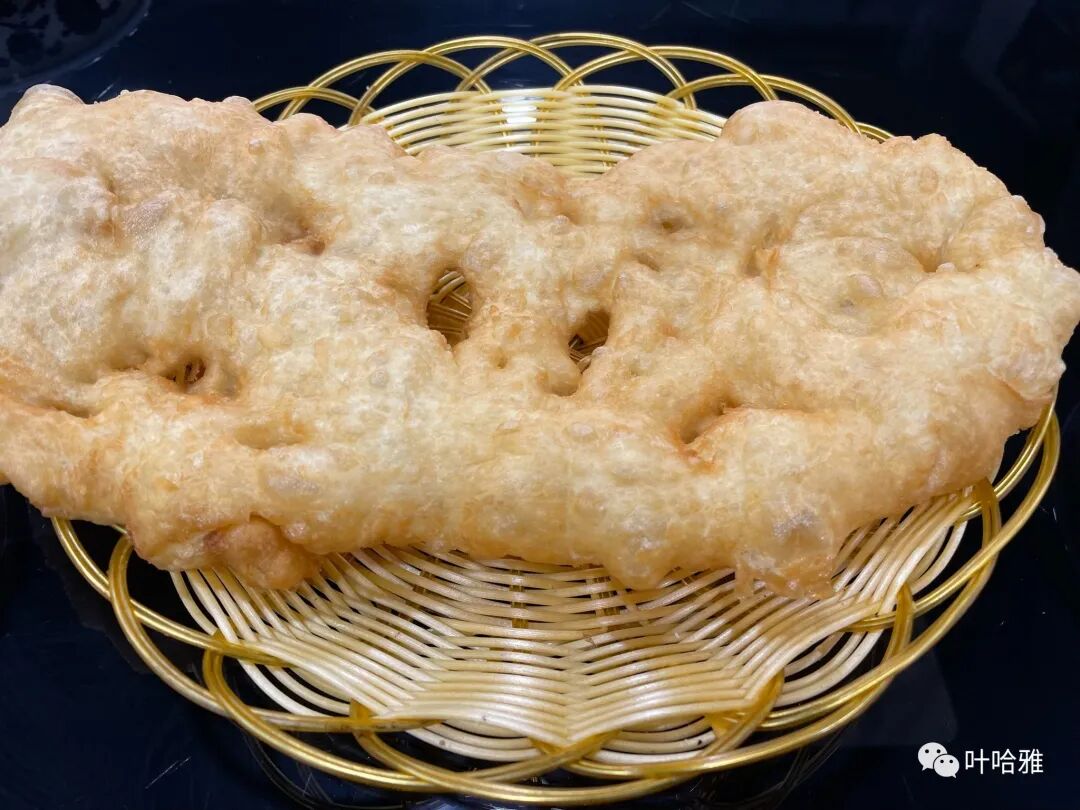
I think their clay pot dishes (shaguo) are the best. You can choose from many side dishes. I recommend the crispy pork clay pot (xiaosurou shaguo) and adding a side of noodles. It is delicious, and crispy pork (xiaosurou) is a classic Henan snack.
3. AIIB Executive Dining Room

I had the set meal at the AIIB main cafeteria last time, and I promised myself I would come back to try a proper meal at the executive dining room. Just to be clear, the AIIB restaurant is not open to the public. Why mention it then? I think you should apply for a job at the AIIB. You can live a lifestyle that balances your faith and your work here, and you can even get praised by your boss for taking paid time for namaz.
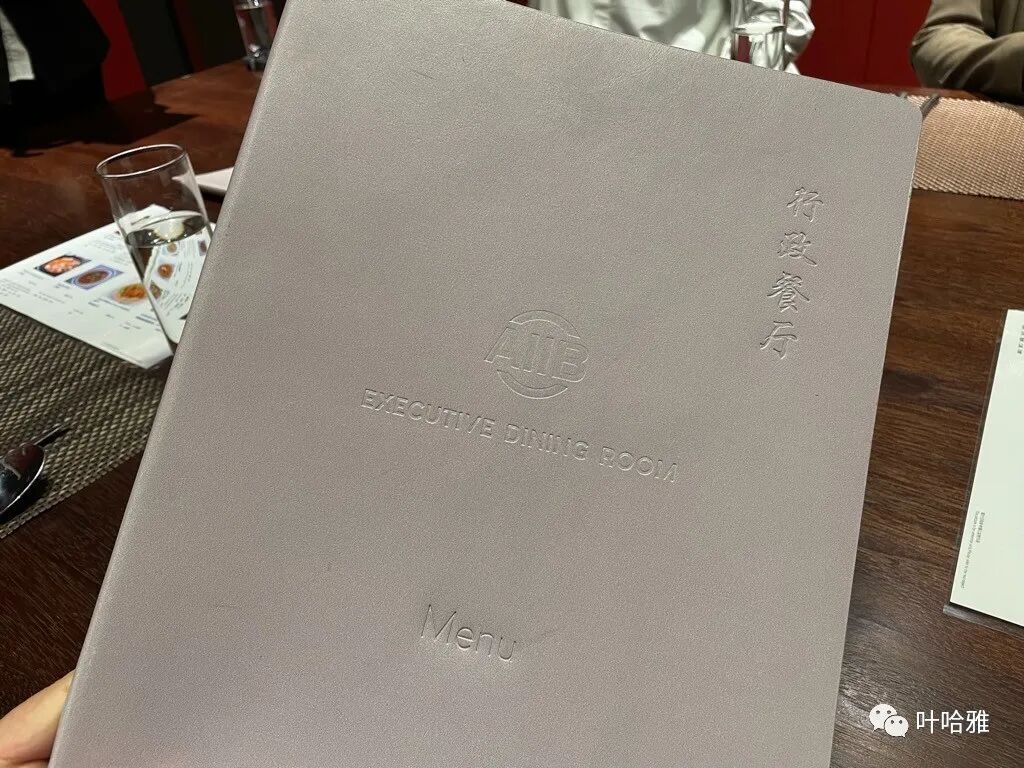
The executive dining room is not a halal restaurant, but they do prepare halal ingredients separately if you book in advance. Many AIIB executives and staff come from Muslim countries, so you do not need to worry about the food. The servers said all their meat is imported from Arab countries.
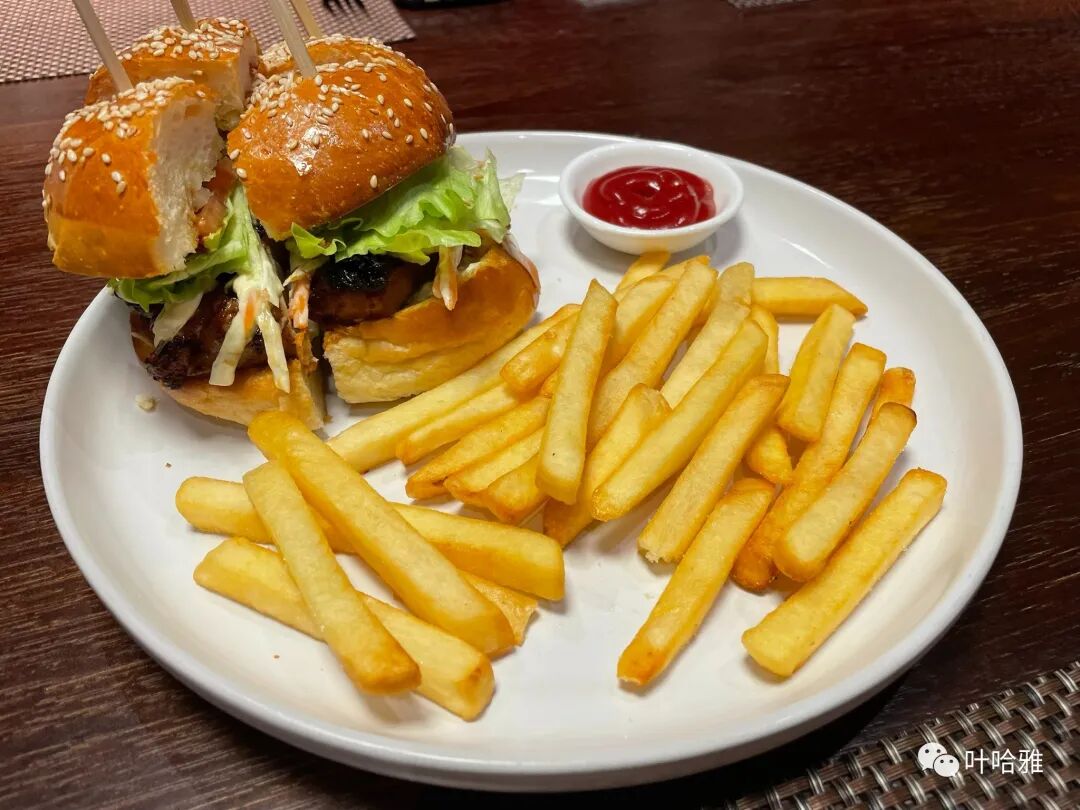
Teriyaki chicken leg burger
The executive dining room is a fusion restaurant that brings together food from many different countries, so we picked a specialty dish from each one.
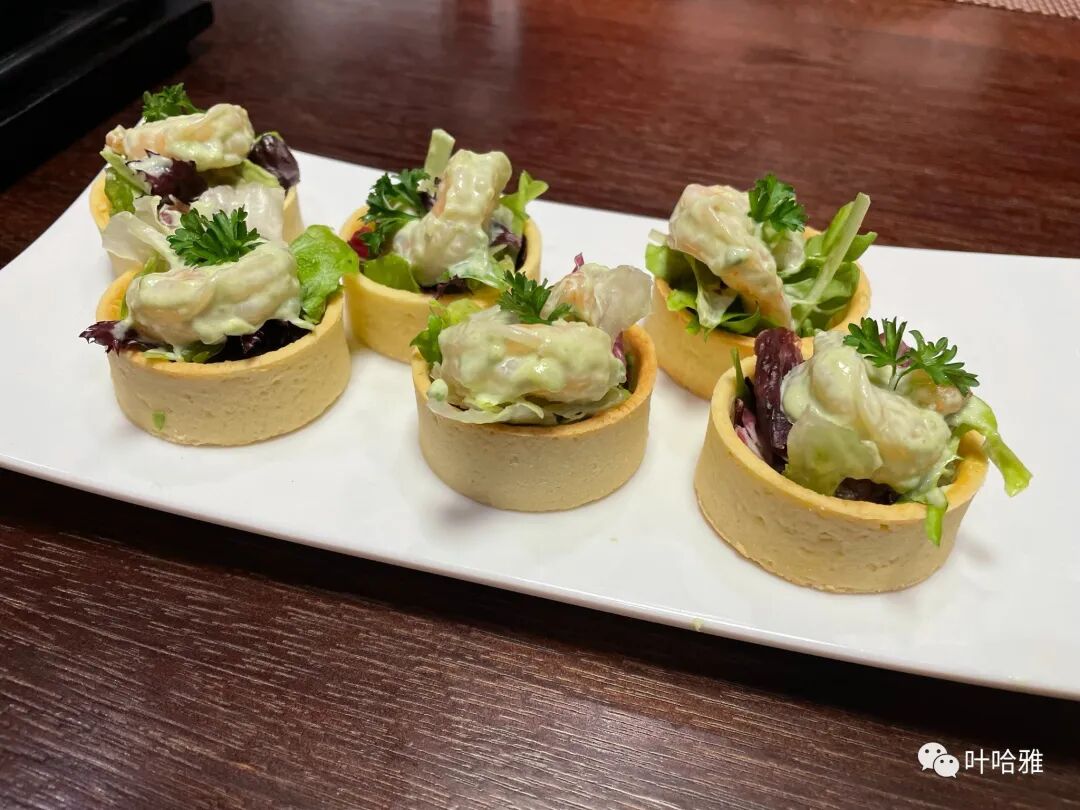
Avocado sauce embroidered shrimp balls
The avocado sauce embroidered shrimp balls are a Mexican-style dish because avocado sauce is a Mexican specialty.
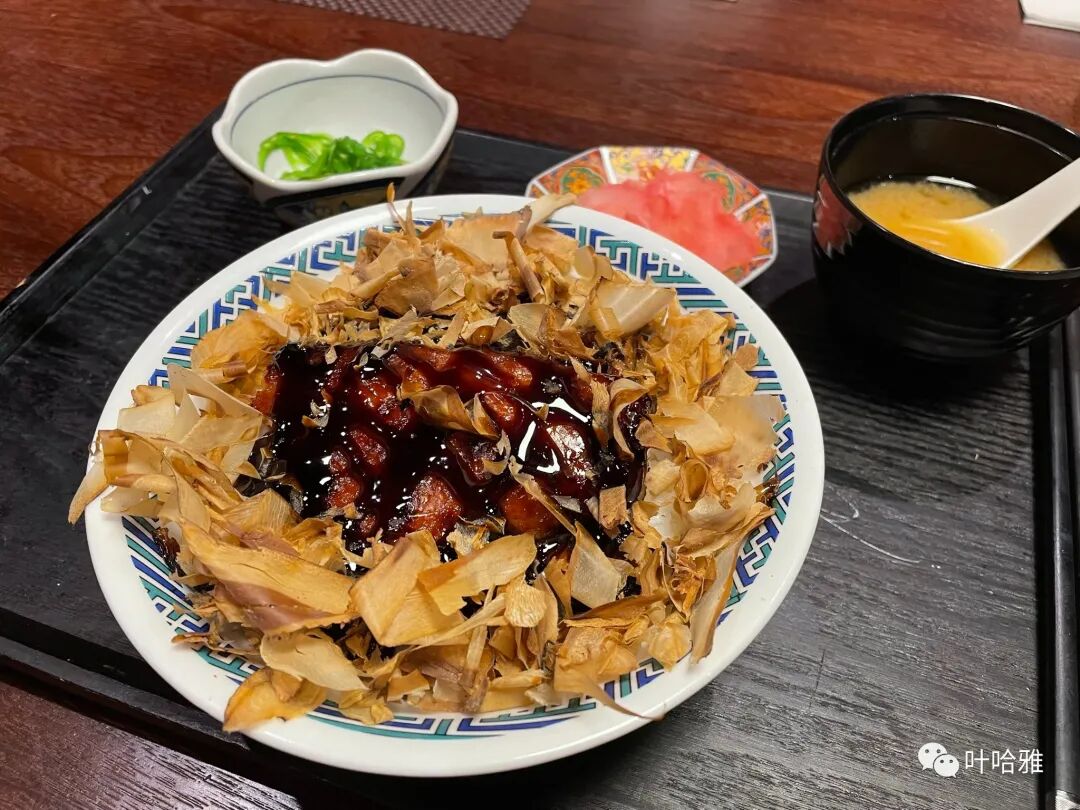
Japanese eel rice (unagi don)
The eel rice is topped with bonito flakes (muyuhua), which is a seasoning made from shaved dried skipjack tuna.
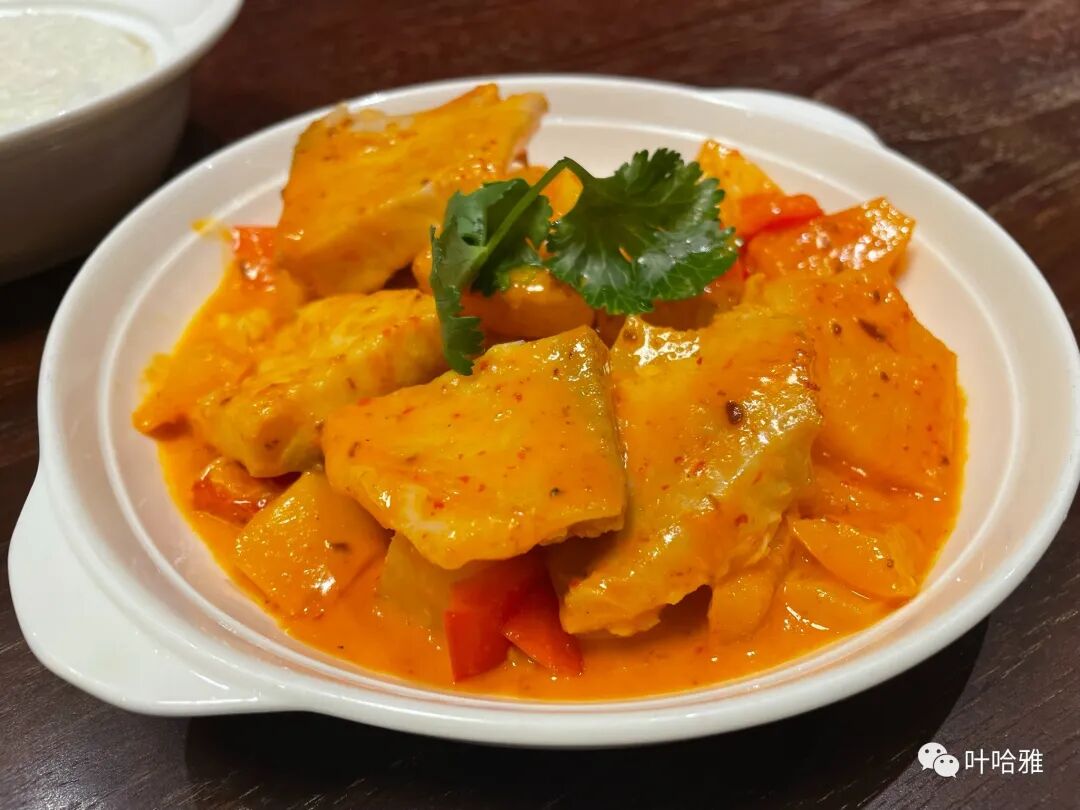
Coconut curry fish
Curry fish is a South Asian dish, and there are many people from India and Pakistan at the Asian Infrastructure Investment Bank.
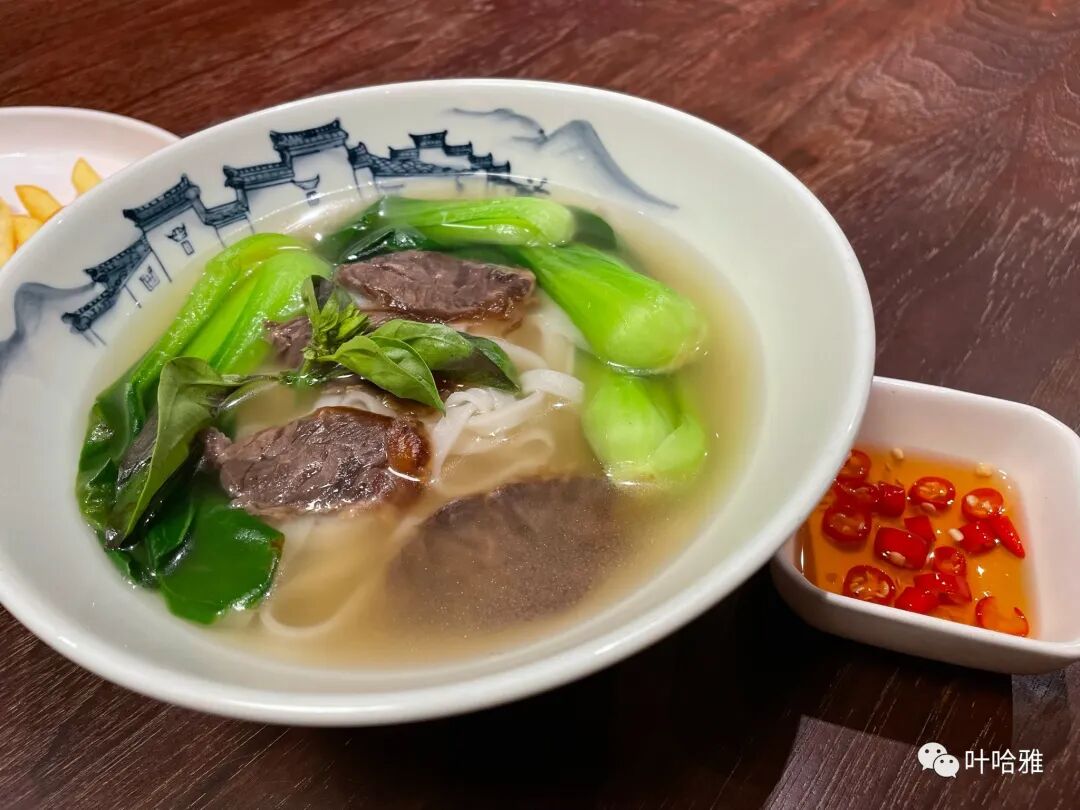
Vietnamese beef noodle soup (pho)
I have eaten halal rice noodles in Vietnam, but I never saw halal Vietnamese food back home until I finally found it here at the Asian Infrastructure Investment Bank.
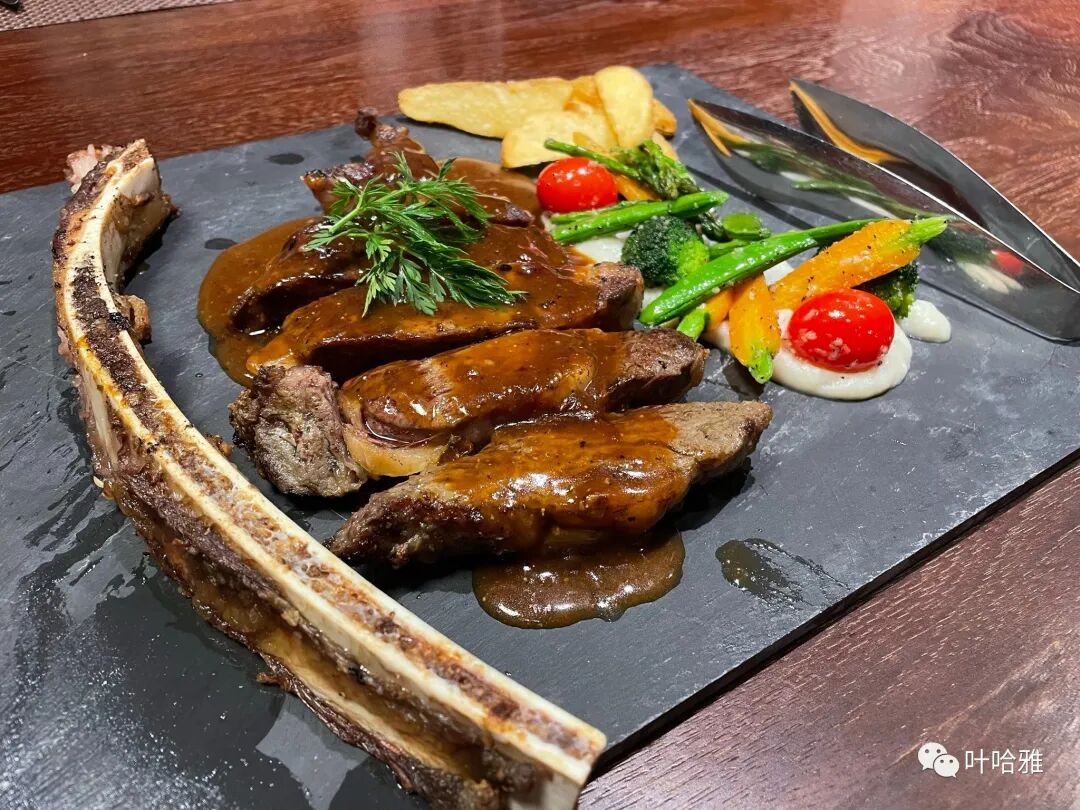
Angus tomahawk steak
It is rare to find a halal tomahawk steak. The server will ask how you want it cooked. I suggest medium-well. If you order it well-done, the beef juices dry out and you lose some of the fresh flavor.
4. One Thousand and One Nights Restaurant
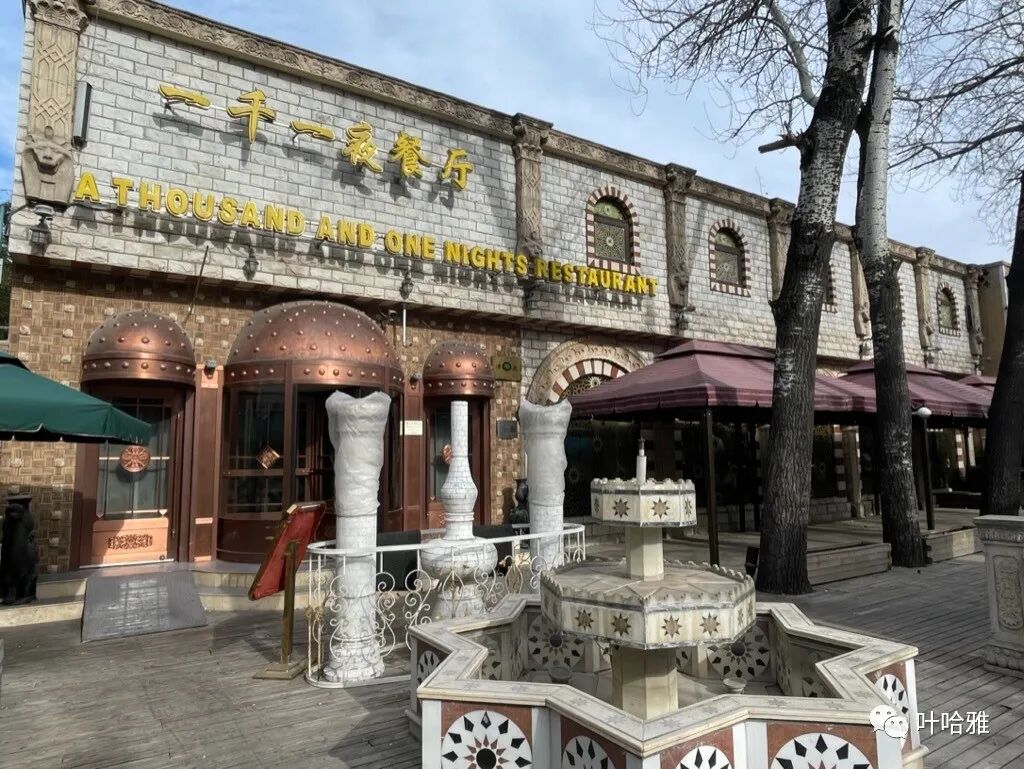
I visited the One Thousand and One Nights branch in Solana many years ago. After it closed, I never came to the Sanlitun location, but the Sanlitun shop is actually decorated with a very exotic style.
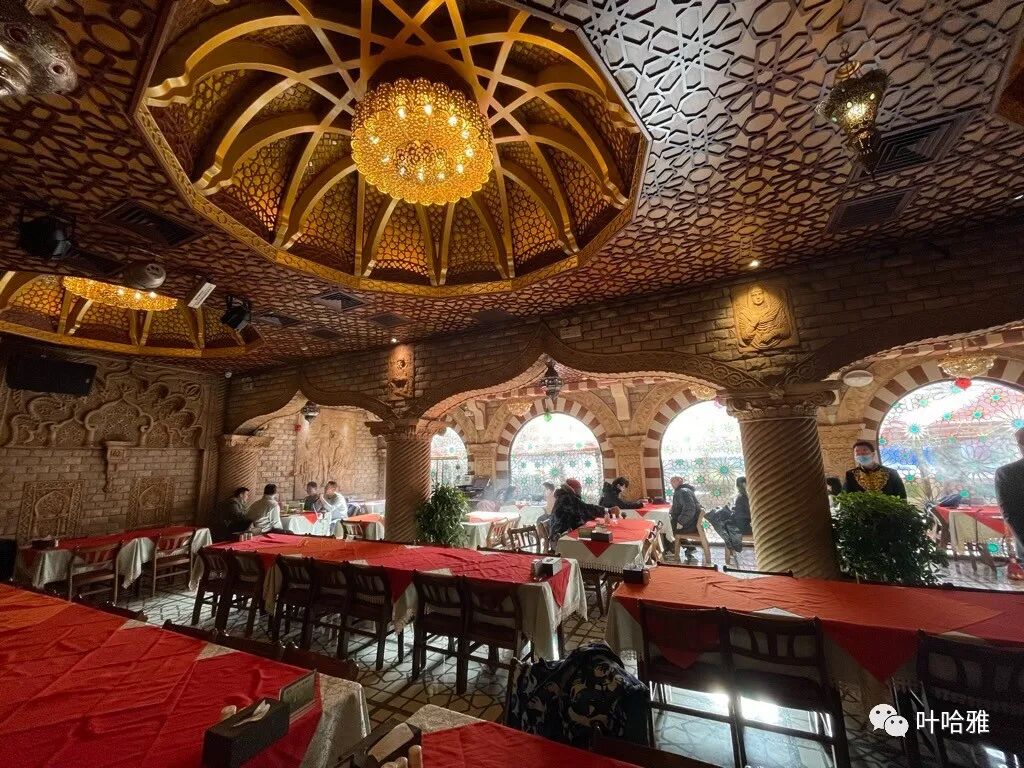
Next door to this shop are an Iranian restaurant and a Turkish Mom restaurant. Both are long-standing businesses, and their customers are mostly foreigners.
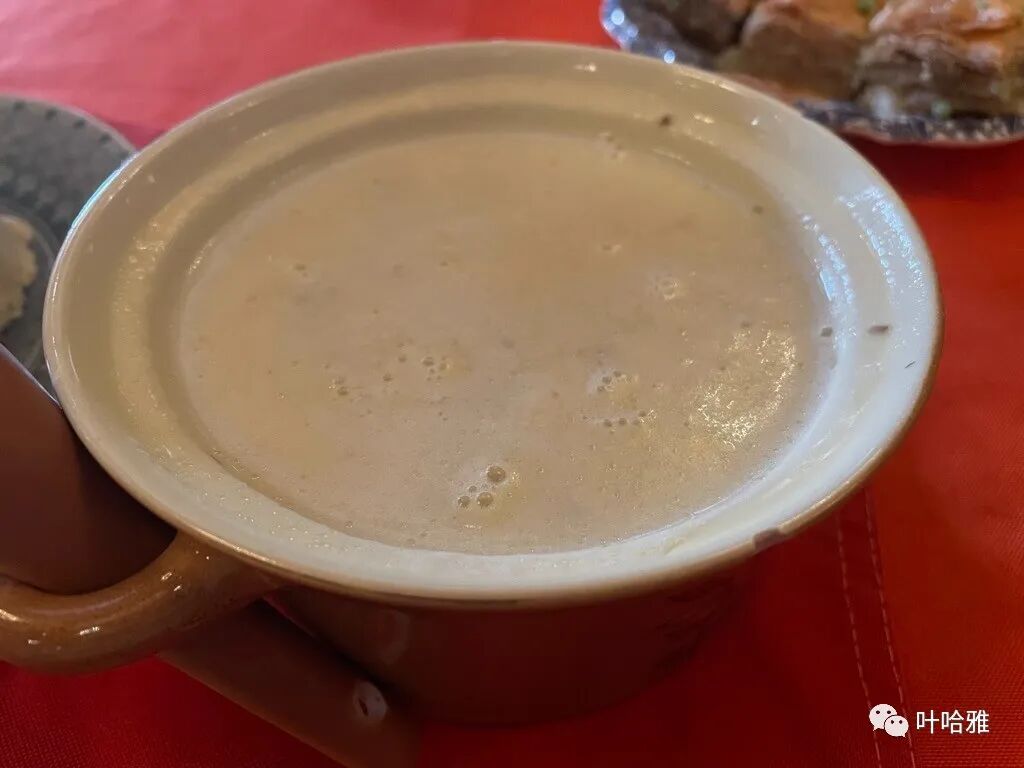
Cream of mushroom soup
One Thousand and One Nights is an Egyptian-themed Arabic restaurant. According to the rules, you drink soup before your meal.
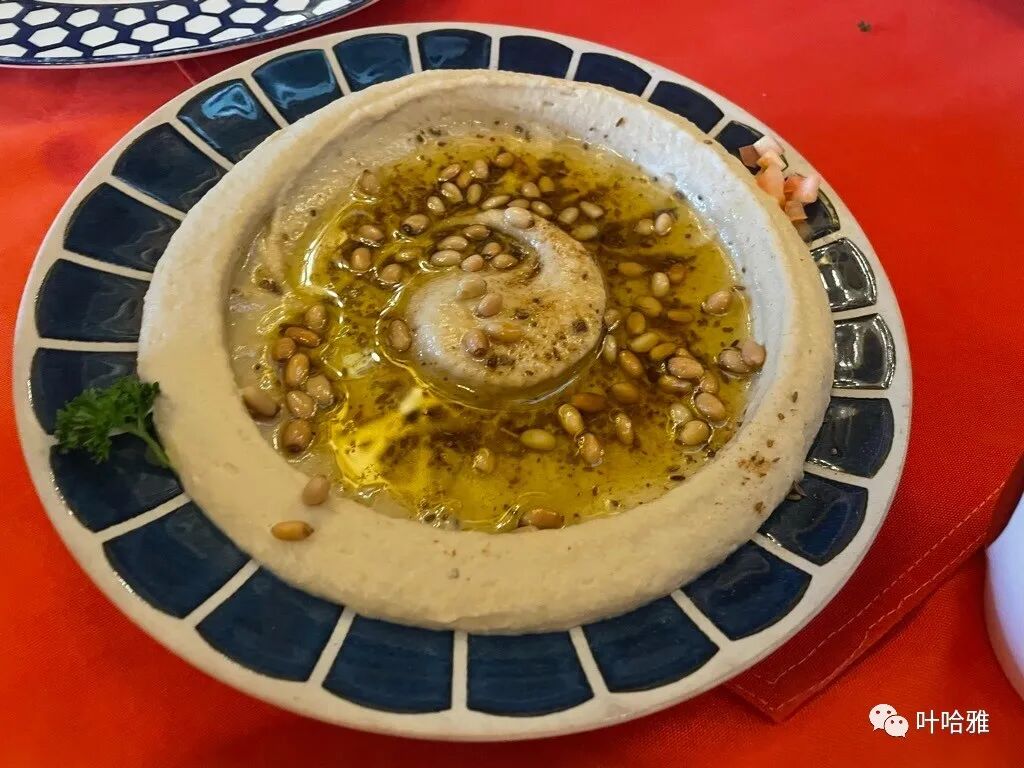
Hummus and spicy sesame sauce. Both are dips for cedar bread (xuesongbing). One is salty and savory, and the other is salty and spicy.
Cedar bread (xuesongbing)
Roasted lamb chops (kaoyangpai)
The roasted lamb chops and mixed grill at One Thousand and One Nights taste great. The lamb is fresh and tender with no gamey smell, keeping the natural flavor of the meat. The dipping sauce is simple, just salt and lemon juice, served with a small side of salad dressing. I think the meat tastes perfect on its own.
Mixed grill (zonghe shaokao)
The mixed grill is a combination of lamb, chicken, and beef skewers. Each skewer has even more meat than the red willow skewers (hongliu kaorou).
Shawarma
Shawarma can also be called a sandwich. It is a very popular Middle Eastern specialty, famous even in Western countries, much like the popularity of meat burgers (roujiamo) in our country.
Halawa
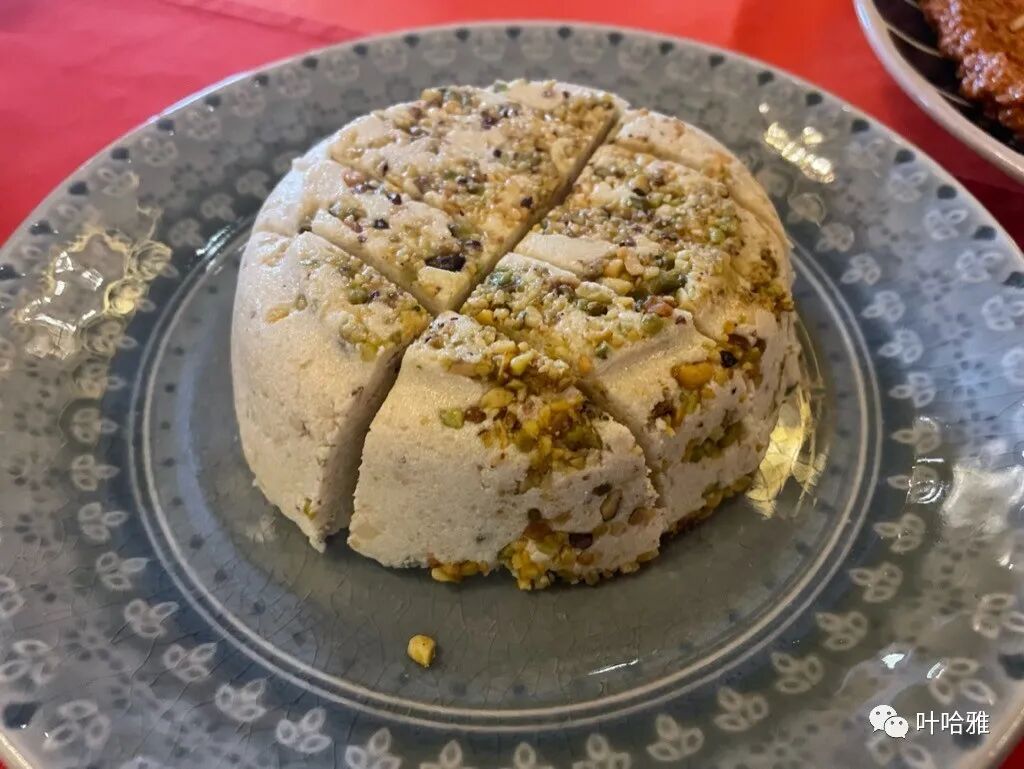
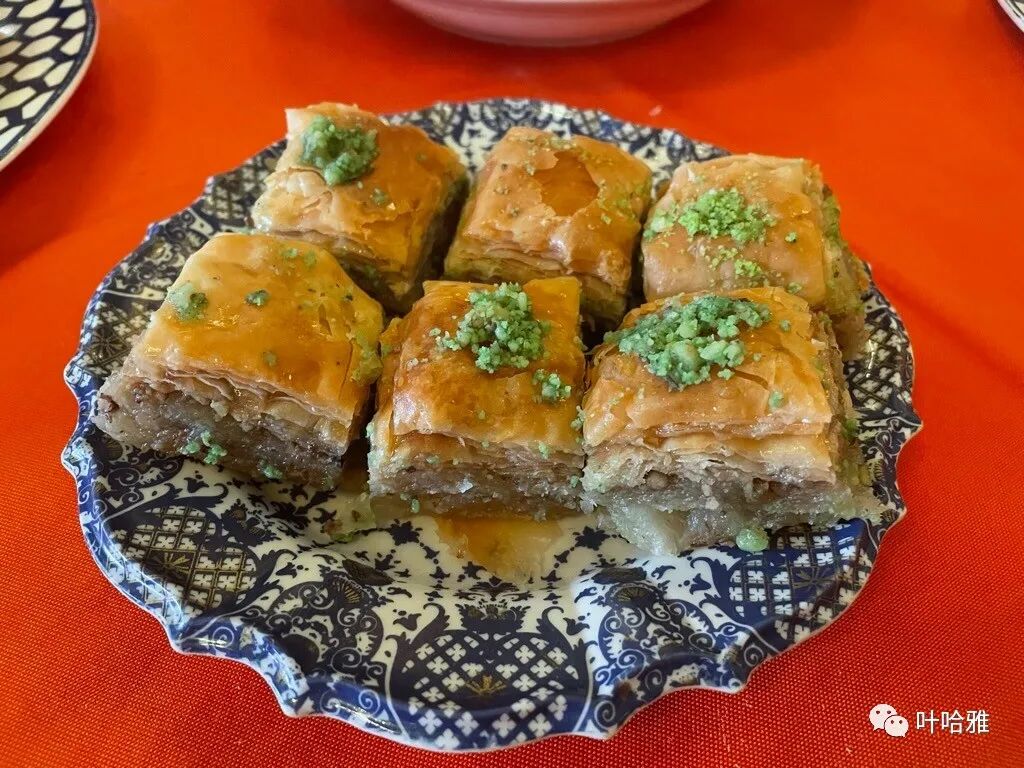
There are two unique Middle Eastern desserts: halawa and baklawa. Halawa is a peanut brittle with a mildly sweet taste. Baklawa is a honey cashew pastry with a sweetness level of over five plus signs.
Baklawa
One Thousand and One Nights has Egyptian belly dancing performances at night. These shows were paused for three years due to the pandemic, but they have now resumed.
5. Jianglai
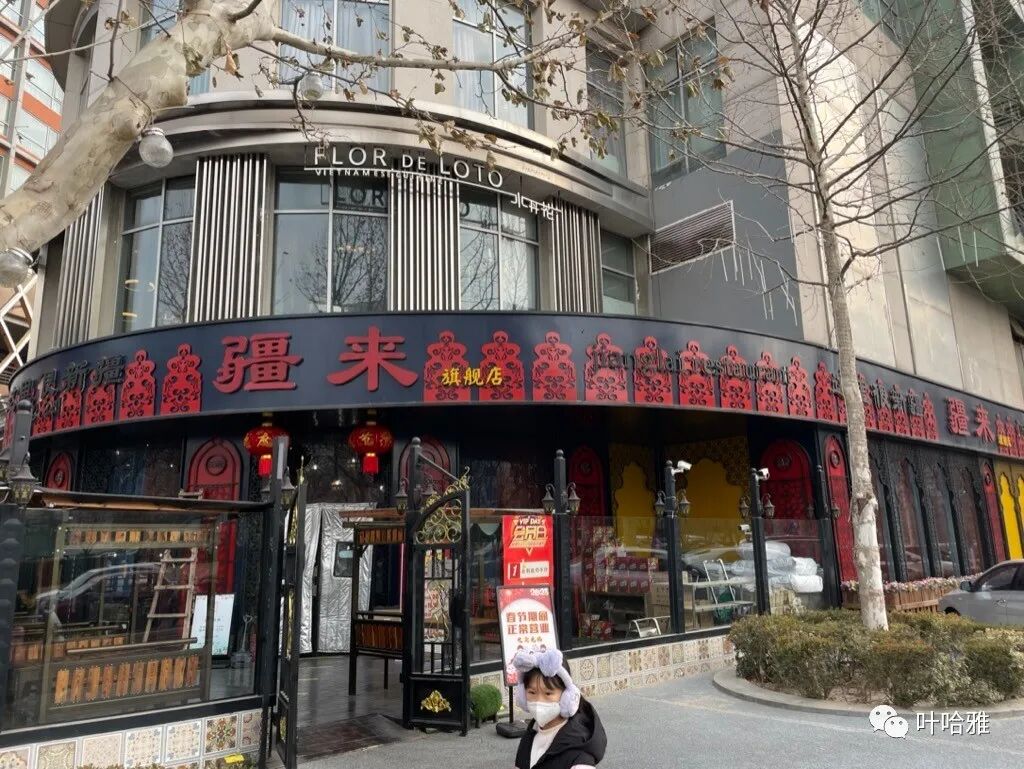
Jianglai is a chain restaurant, and this is their flagship store in Wangjing. It is very spacious, but it gets packed at lunch and you will need to wait for a table. There is a paid parking lot next door, but parking in Wangjing is very expensive.
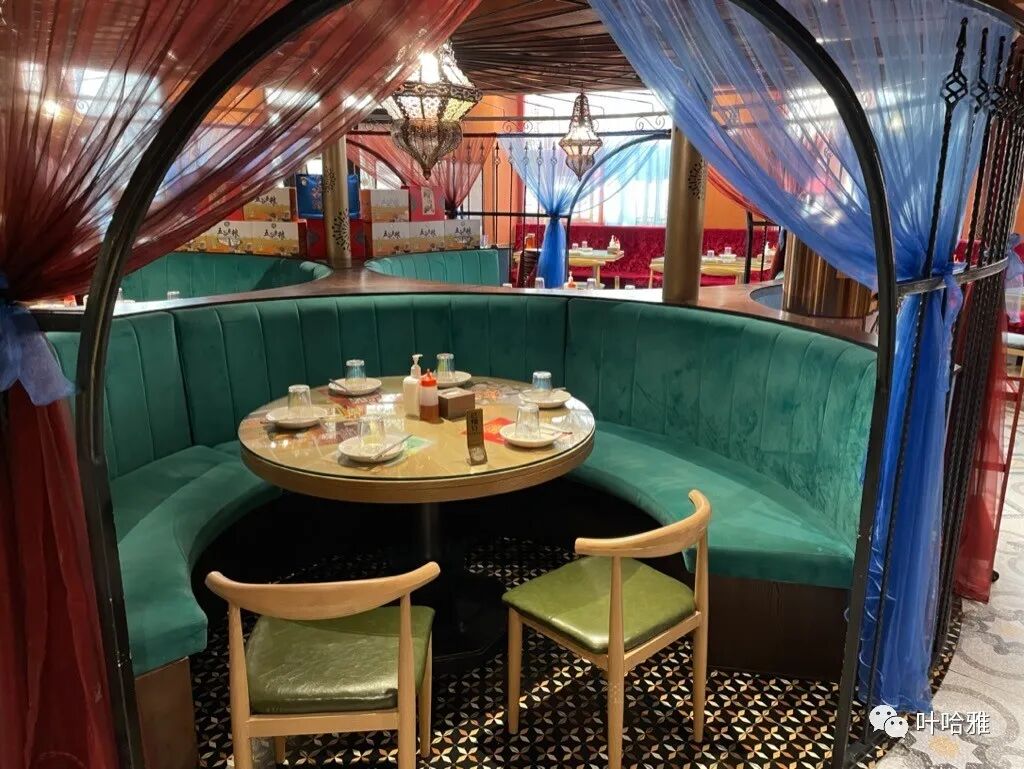
Jianglai is a bit like a localized version of Bayi Laoye, but the food is slightly inferior to Bayi Laoye.
Overall, their Xinjiang food has no major flaws, but it is not very surprising either. The flavors are quite mild.
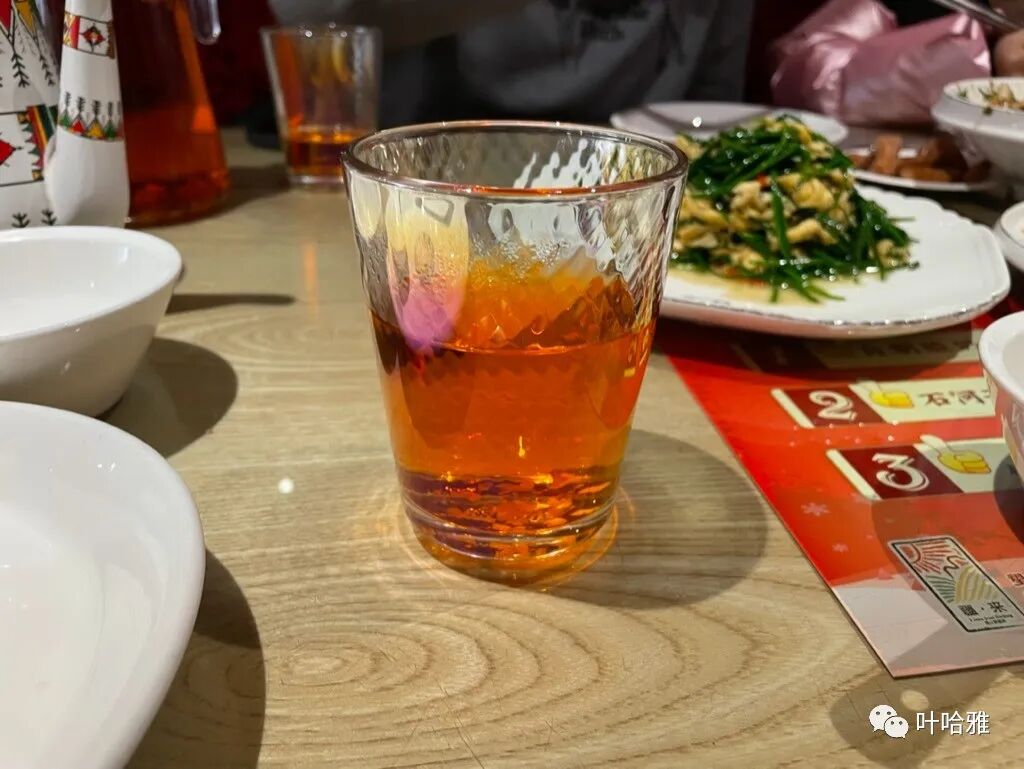
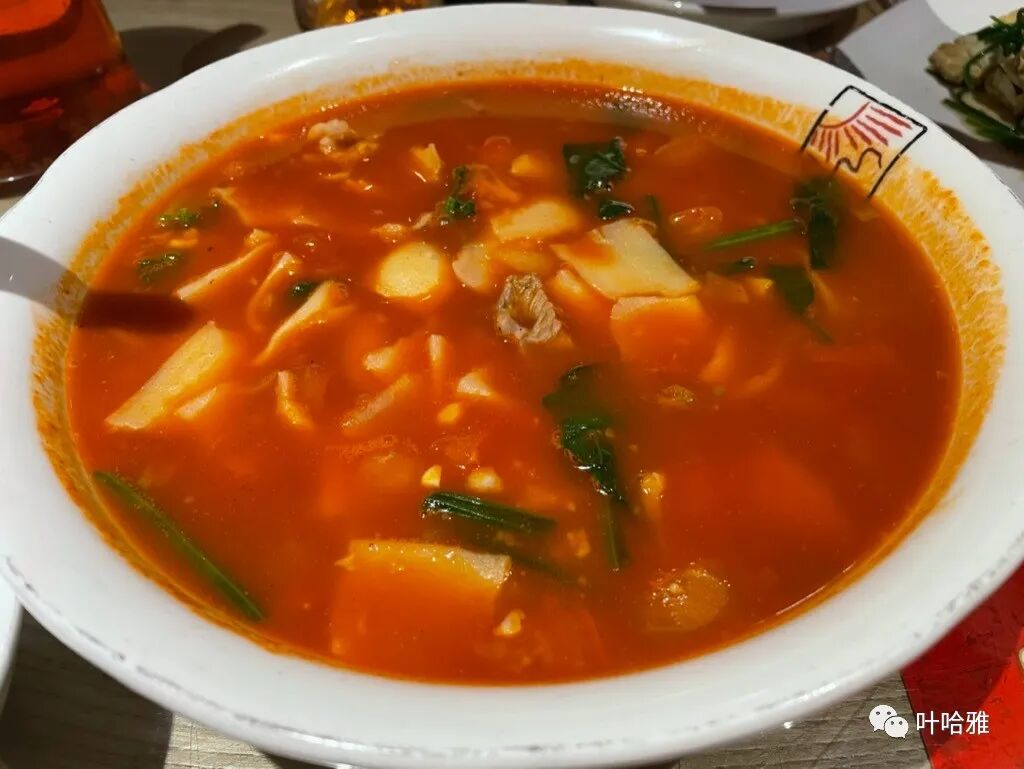
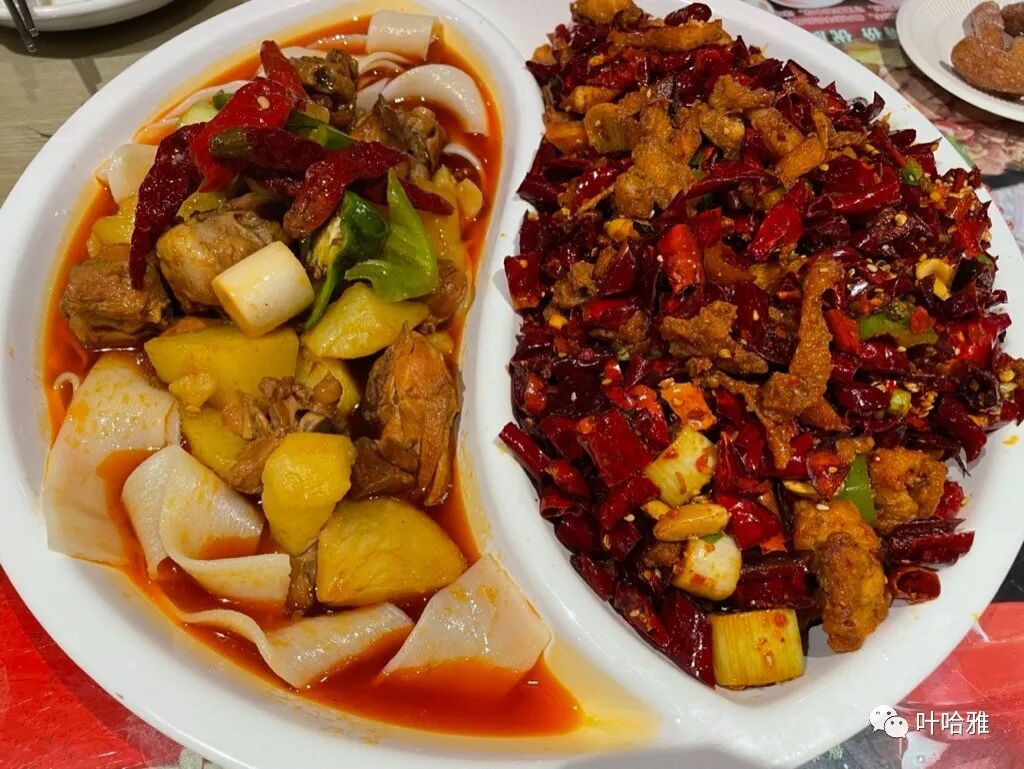
The combo of big plate chicken (dapanji) and spicy chicken (laziji) is creative. It lets you eat two hearty dishes at once and saves you the cost of an extra dish.
6. Xi'an lamb pita bread in soup (yangrou paomo)
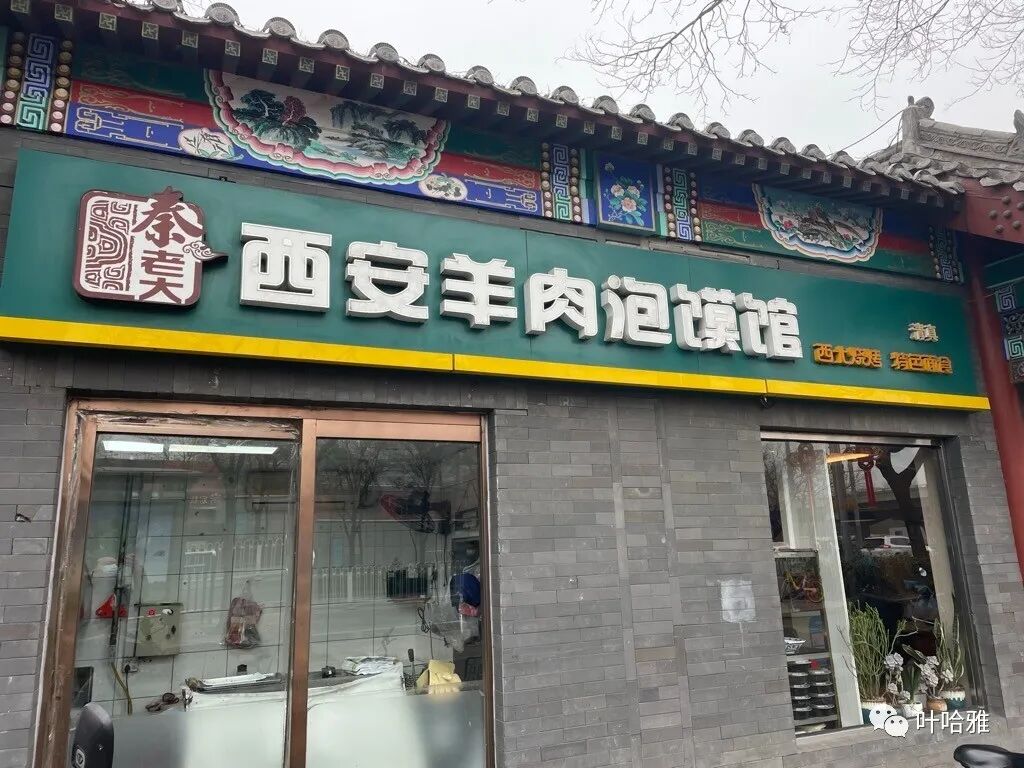
Qin Laoda Paomo Restaurant has been open in Beijing for 16 years. I vaguely remember eating here a few years ago. It is a standard paomo shop. Unfortunately, you cannot break the bread yourself, which is a big part of the fun for people from Xi'an.
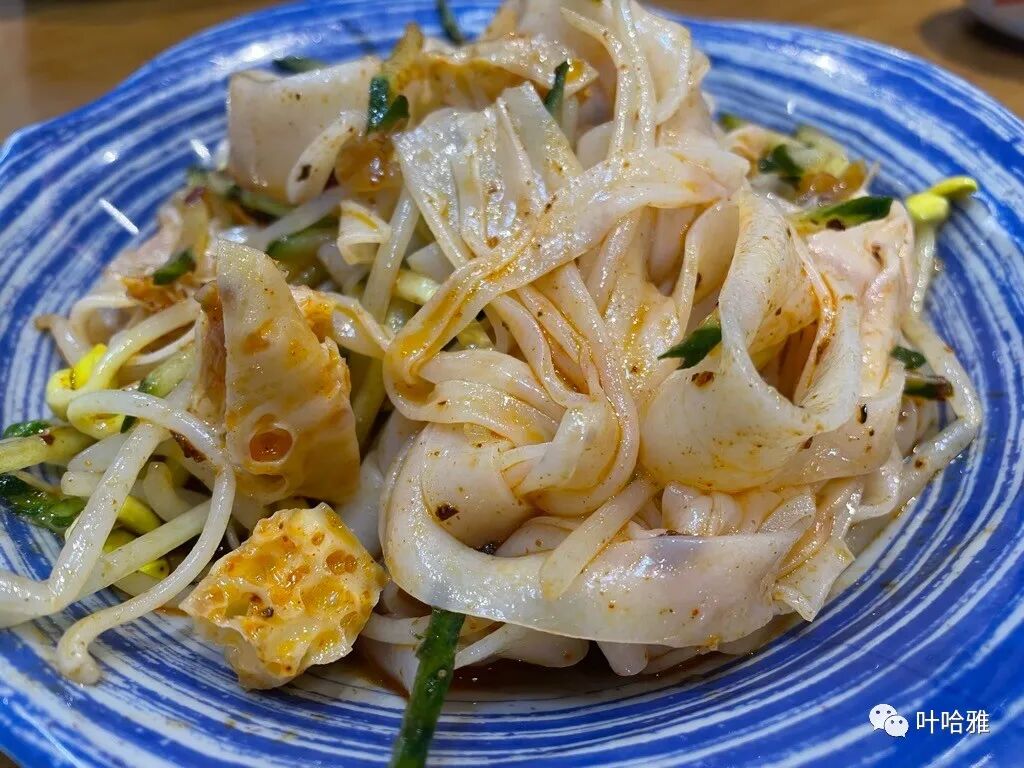
Cold skin noodles (liangpi) with wheat gluten (mianjin) topped with chili oil is a sour and spicy dish perfect for summer.
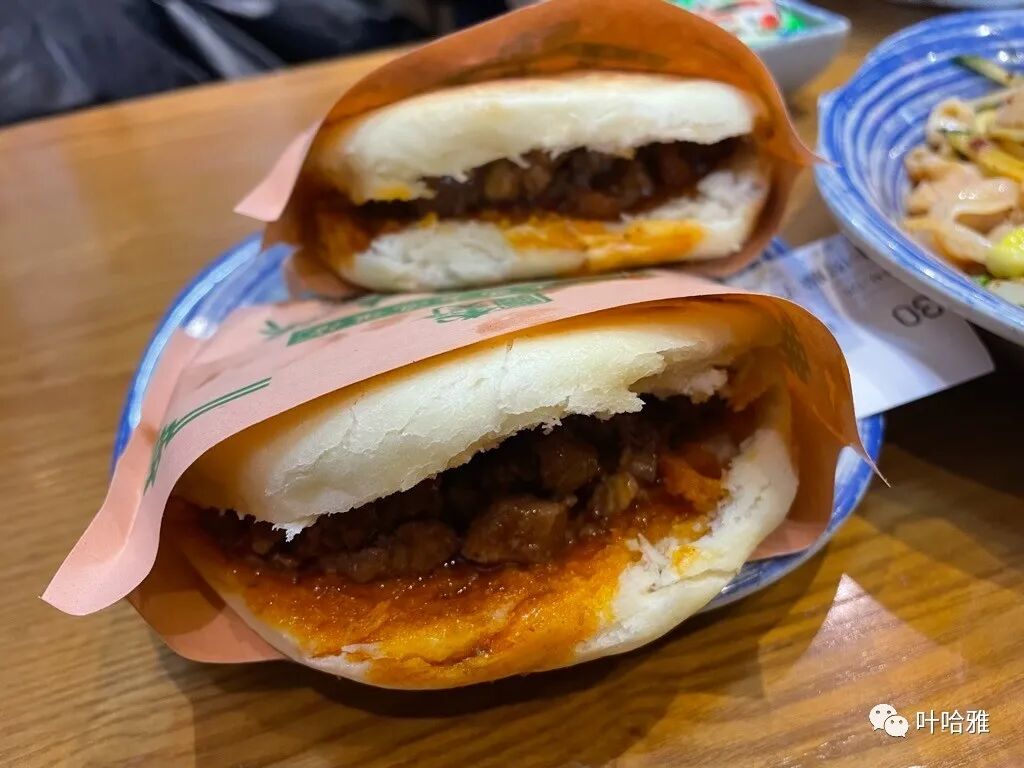
The meat burger (roujiamo) tastes good. The crust is very crispy and they give you plenty of meat.

To get the full experience when eating Xi'an paomo, you have to drink a local Xi'an Bingfeng soda.
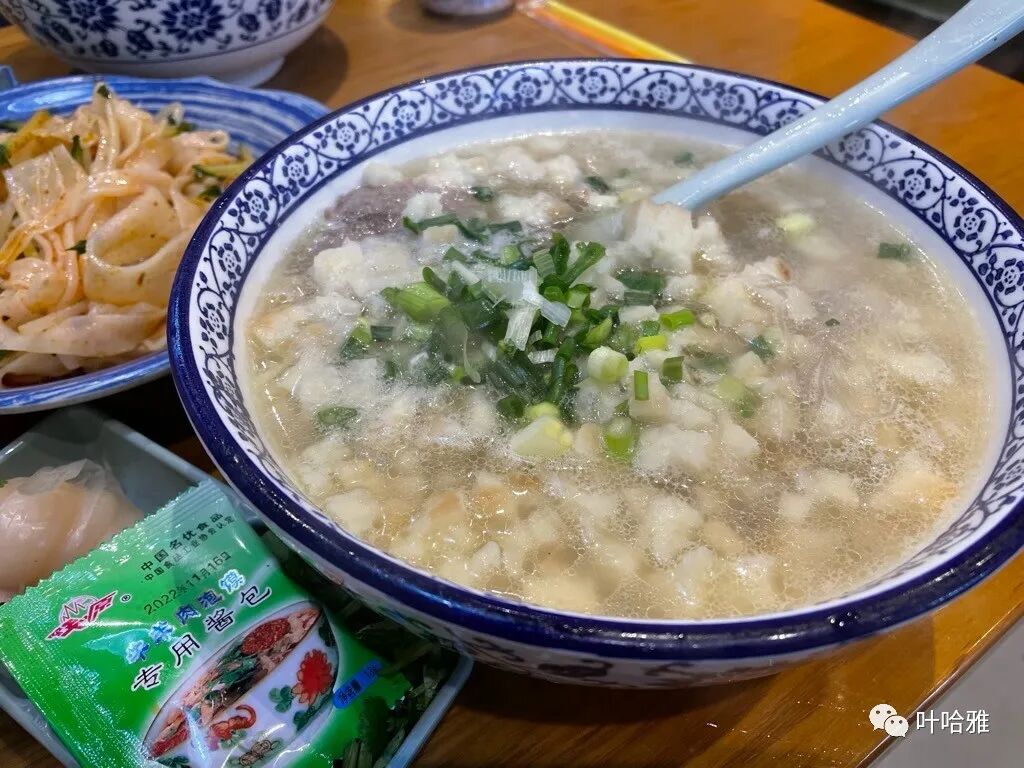
Although paomo is famous for the lamb version, locals in Xi'an mostly eat beef paomo, which I also prefer. Qin Laoda's paomo is decent, but it is definitely not as authentic as what you get in the Muslim Quarter (Huifang) in Xi'an.
7. Lianghuo Lanzhou twisted fried dough and skewers (fanhua kaochuan)
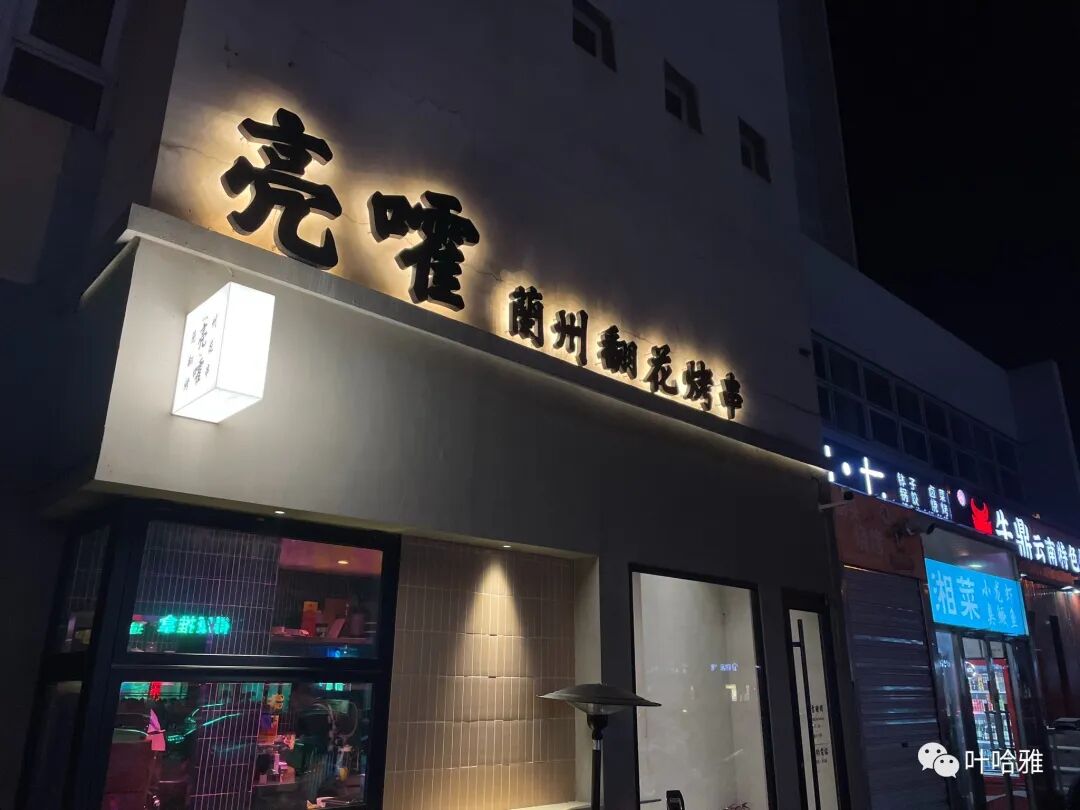
A new Lanzhou-style skewer shop just opened in Baiziwan. It does not have a halal sign because, while the owner is not a Hui Muslim, all the staff are. The staff says all their ingredients are sourced from halal suppliers.
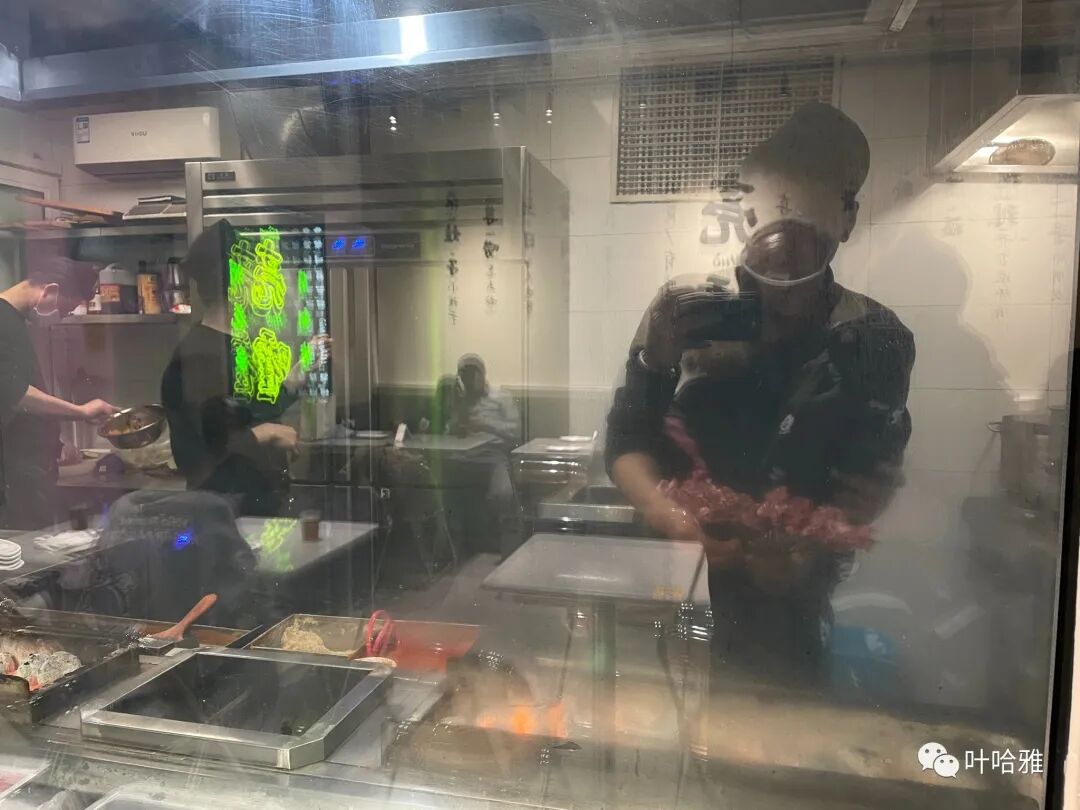
The kitchen staff all wear prayer caps (libaimao). If you have eaten at Lianshou Barbecue in Baiziwan, this shop has a very similar style.
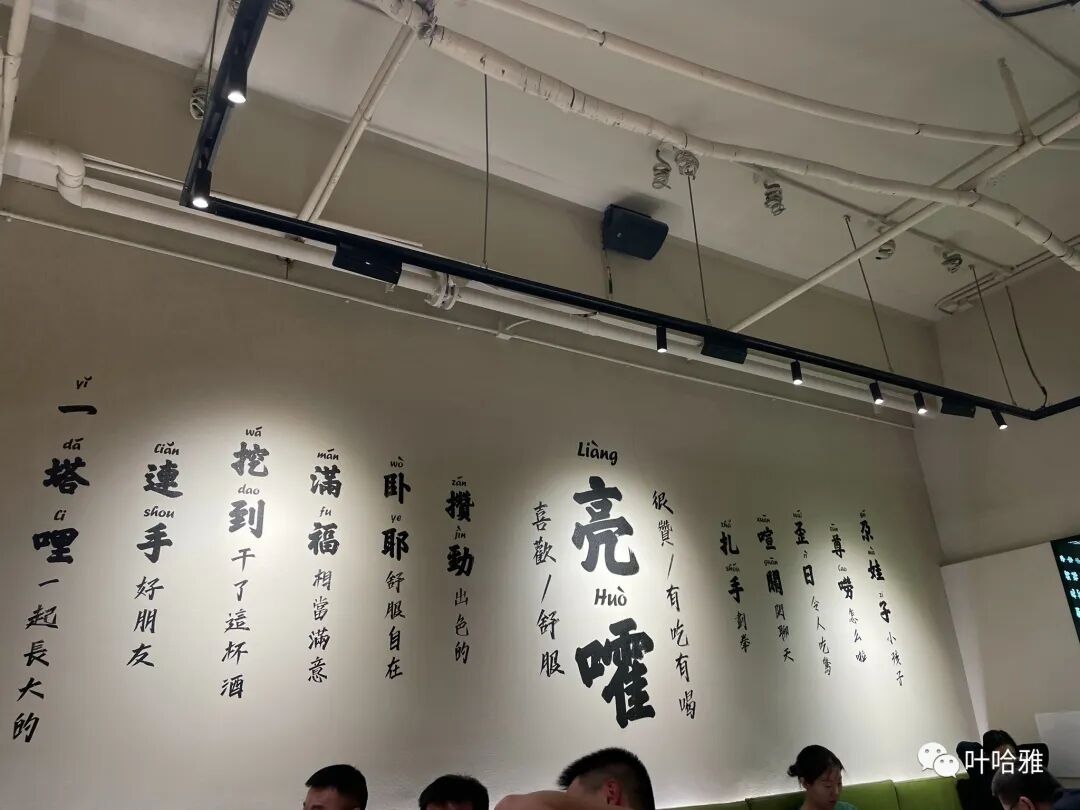
Lianghuo is a Lanzhou dialect word that means to praise someone. The wall also explains a few other Lanzhou dialect phrases.

To me, flower-style skewers (fanhua shaokao) are just meat with fat in the middle. This shop offers two ways to grill: dry or wet, with wet meaning they brush on a sauce.
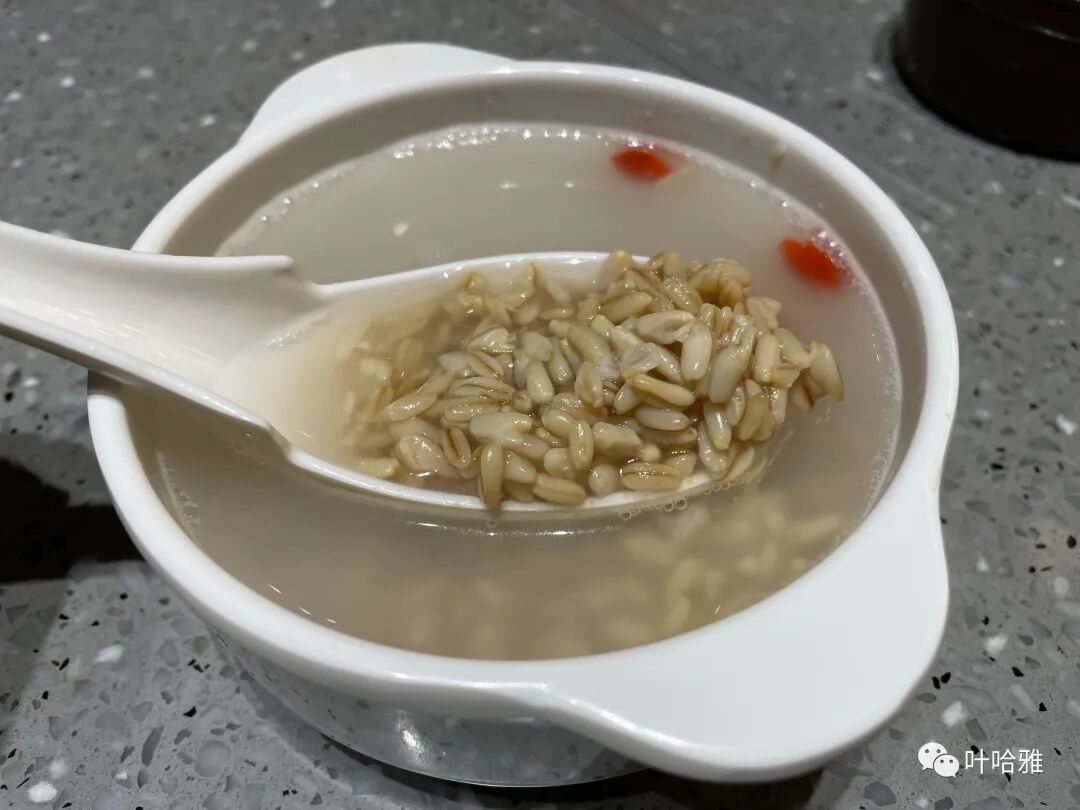
A Lanzhou-style barbecue shop must have Lanzhou snacks. You can have sweet fermented oat drink (tianbeizi) served hot, and once heated, you cannot smell the alcohol in it.
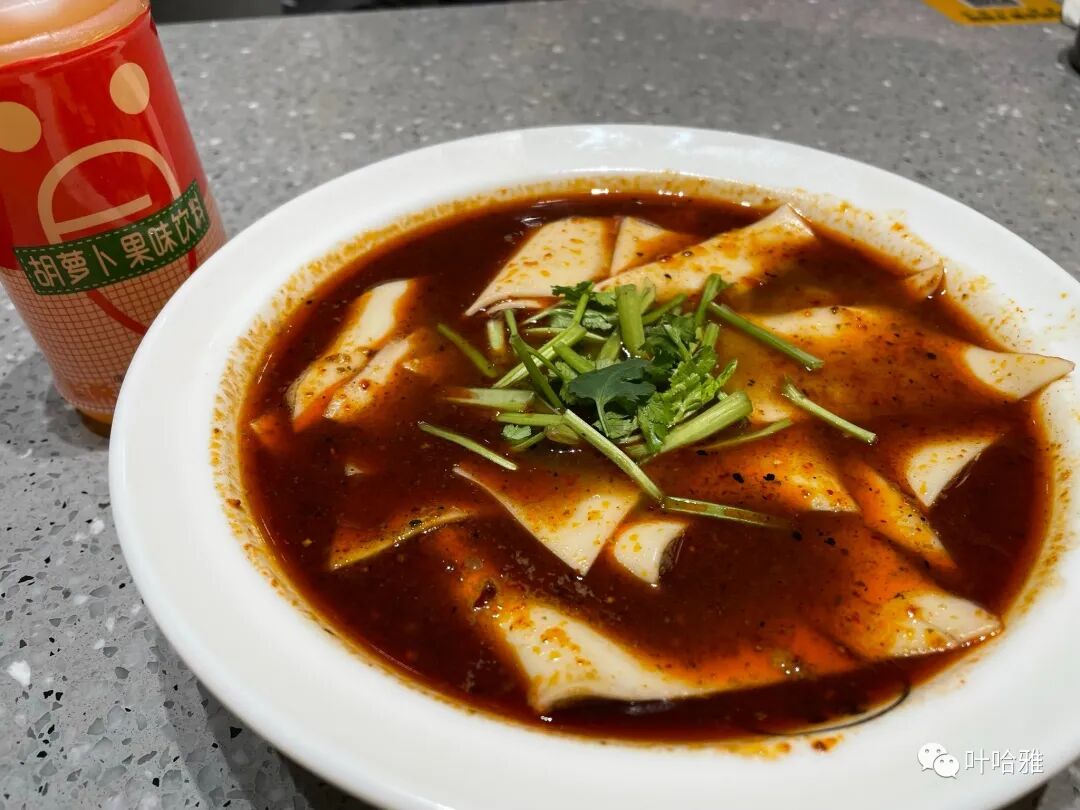
A must-order Lanzhou delicacy is the flowing sauce wide noodles (liuzhi kuanfen). They are smooth, chewy, and the sour and spicy broth is great for opening your appetite.
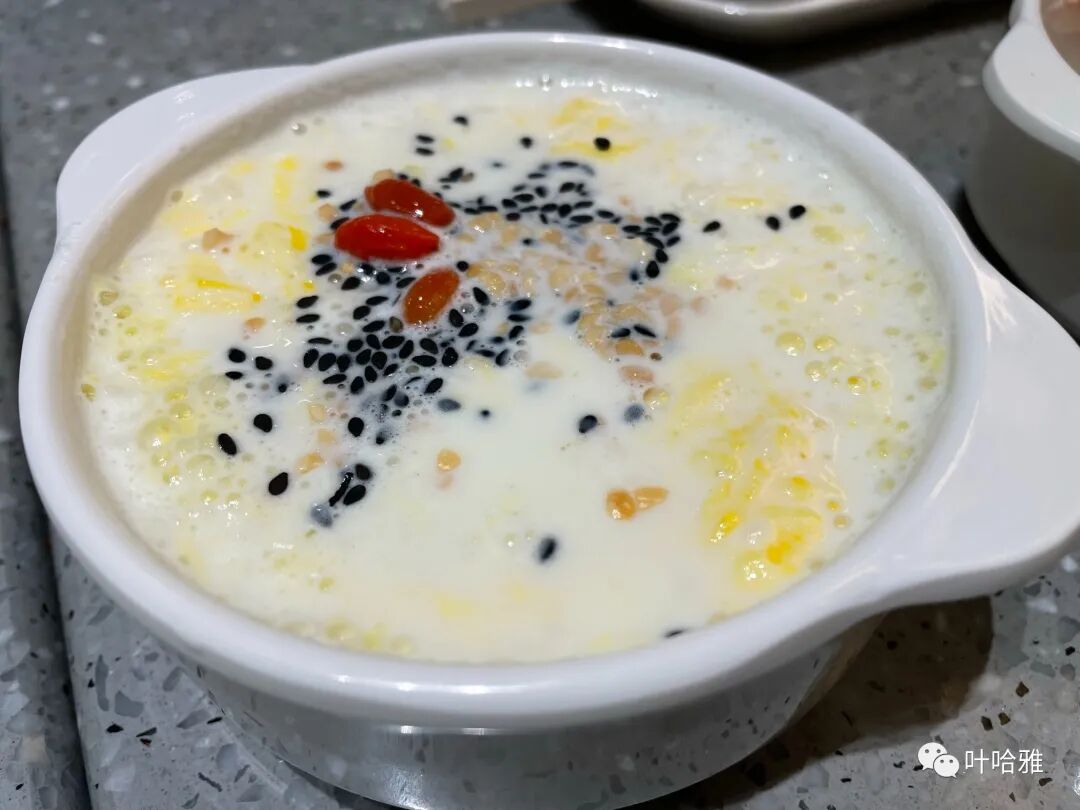
Milk egg fermented rice (niunai jidan laozao) is a nutritious hot drink. However, they did not beat the eggs well enough, so they were clumpy. It would be better if they were more spread out.
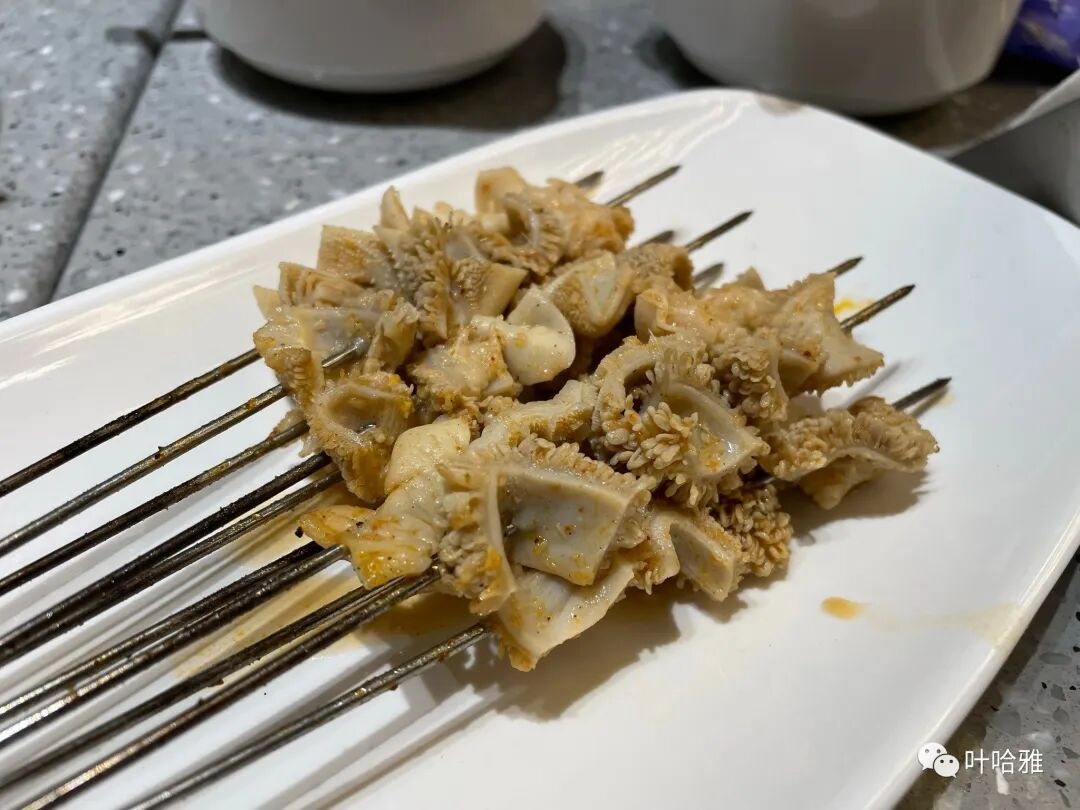
The sour and spicy lamb tripe (suanla xiaoyangdu) is a delicious skewer. The sour and spicy flavor is very unique to the region, as you do not usually find this taste in northern-style barbecue.
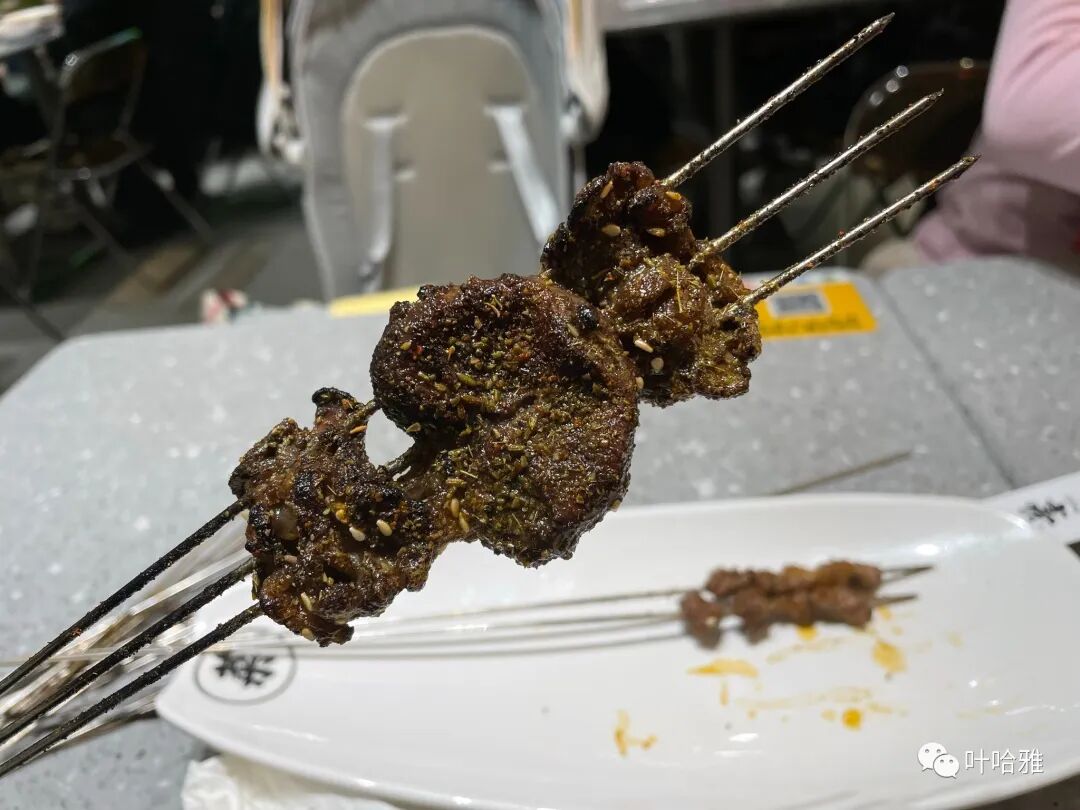
The grilled lamb kidney (kao yangyao) is also worth recommending. The small kidneys are not big, but they are grilled until crispy on the outside while staying tender inside.
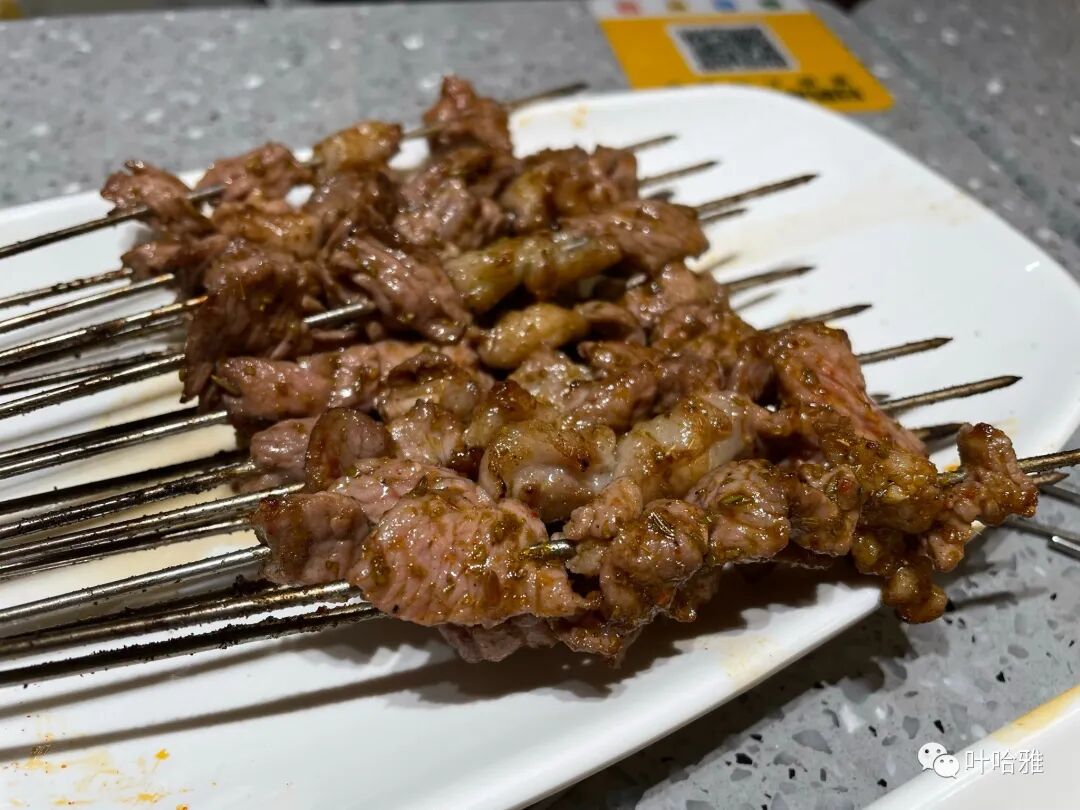
This is a bundle of lamb flower skewers (yang jiahua), which are just lamb skewers. One bundle has 20 small skewers, and one person can easily eat 40 or 50 in a sitting. I tested it myself, and these lamb flower skewers are better than the beef tendon. We ended up ordering another bundle.
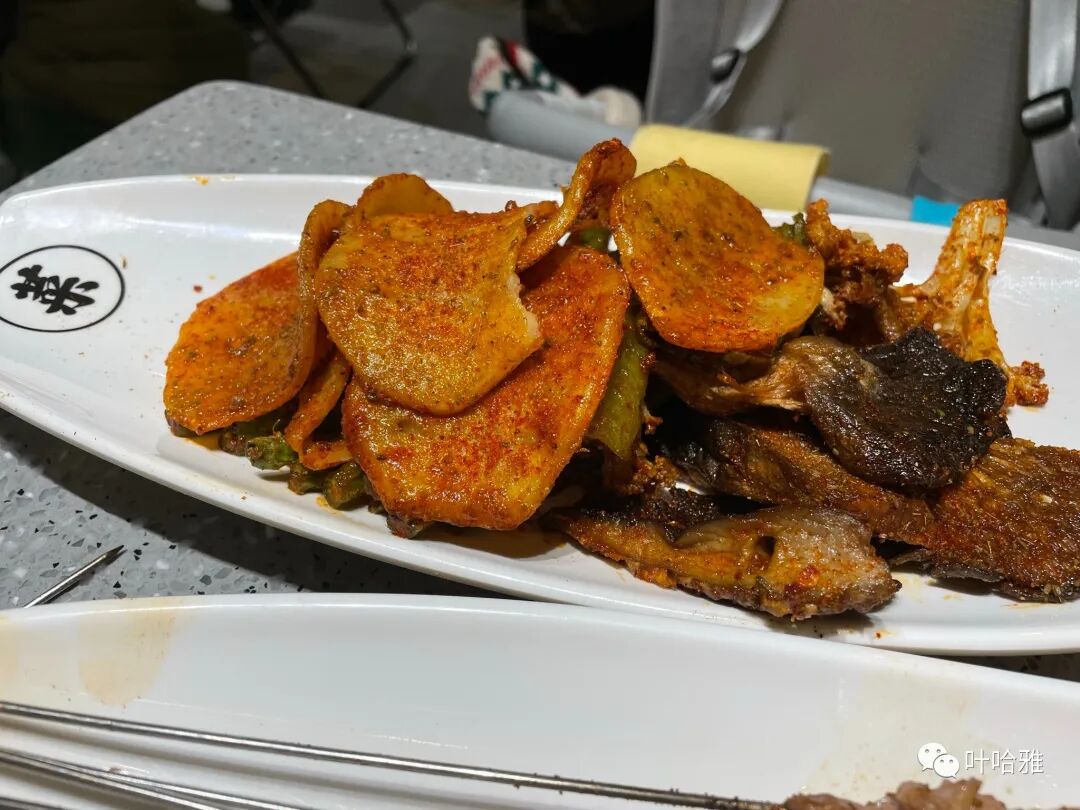
For the grilled vegetable platter, the best items are the grilled potato slices and grilled mushrooms. The crispy texture of the grilled mushrooms makes them taste just like meat.
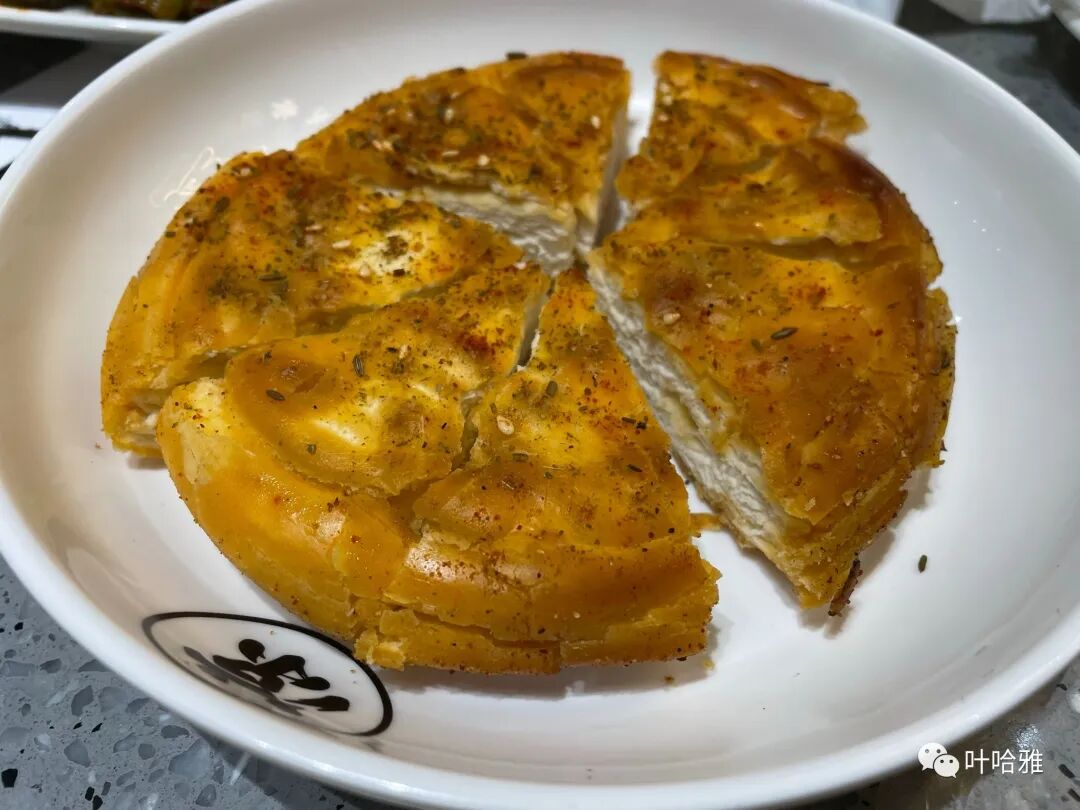
The Lanzhou grilled flatbread (lanzhou kaobing) was the main dish I was looking forward to most. I had tried this flatbread stuffed with skewers at Lianshou before, and it is delicious. The flatbread is about the same size as a sesame flatbread (shaobing), with a crispy crust and a soft center, perfect for stuffing with anything. Overall, it is about the same as Lianshou, and the prices are similar too. The small skewers are not cheap, with an average cost of about 100 per person.
8. Liang's Skewer Shop (Liang de chuandian)
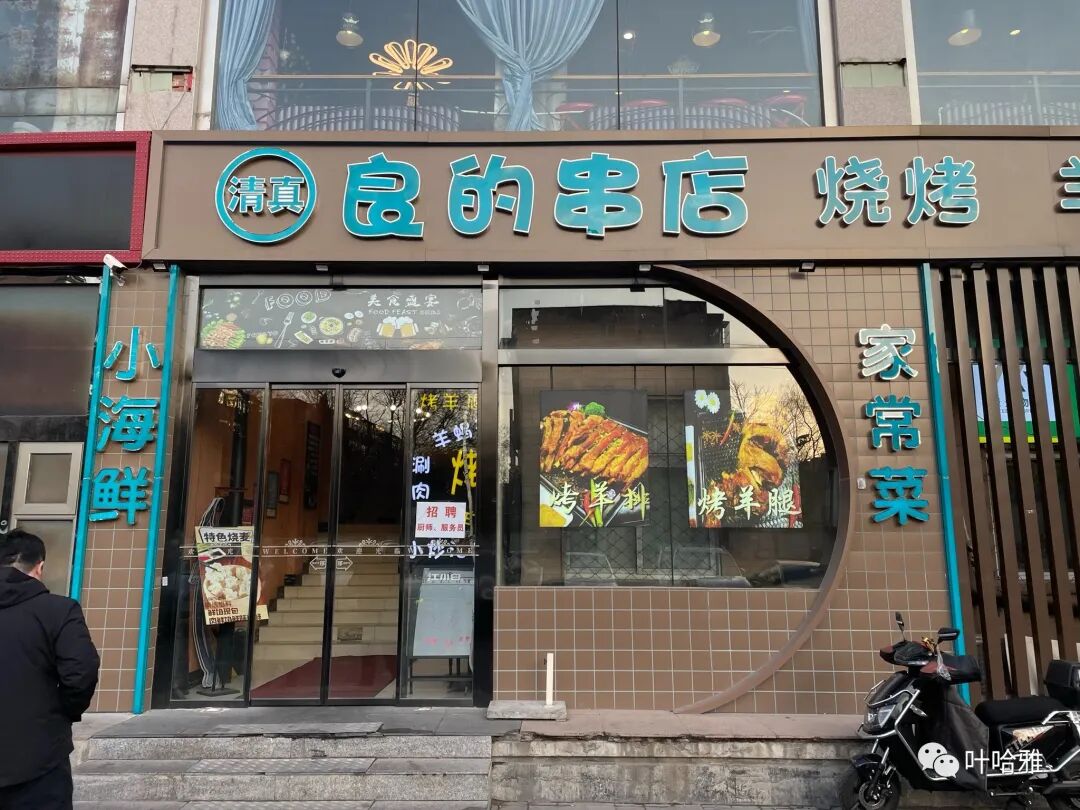
The owner's name is Liang, and he is from Hebei. He named his shop Liang's Skewer Shop.
The shop is on the second floor and is very spacious. One side has large floor-to-ceiling windows, making it very pleasant to eat barbecue by the window.
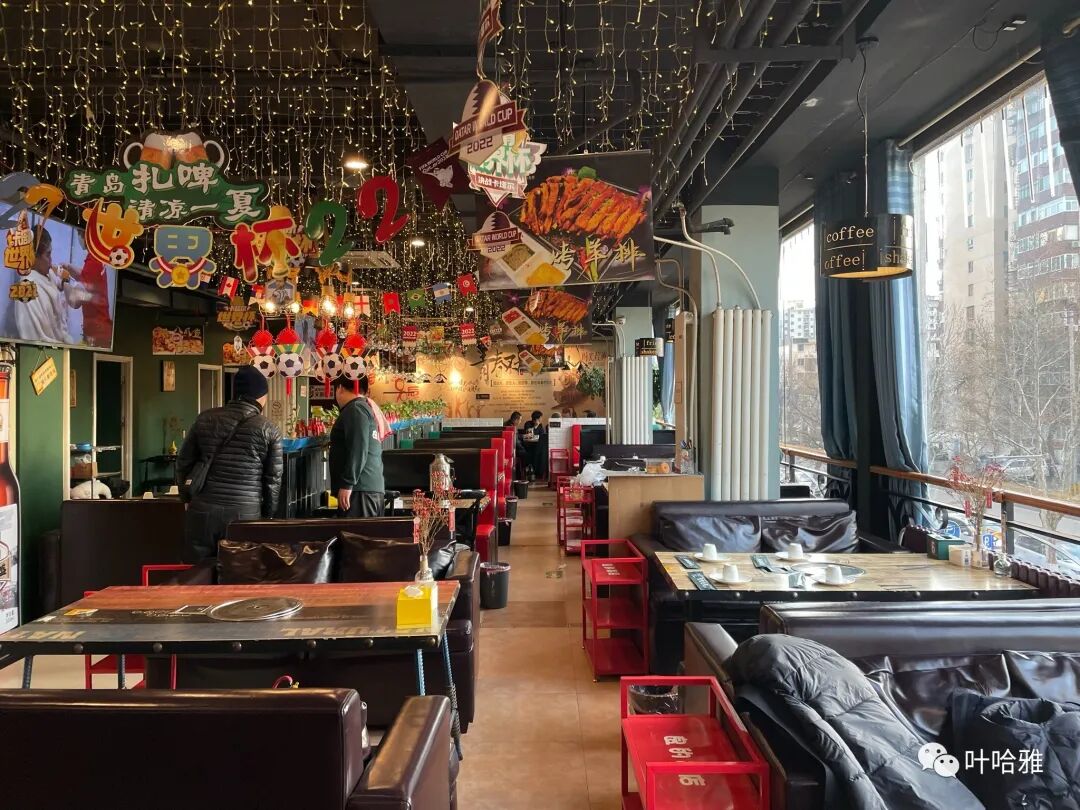
They serve seafood, barbecue, and hot pot. We came specifically for the seafood and barbecue.
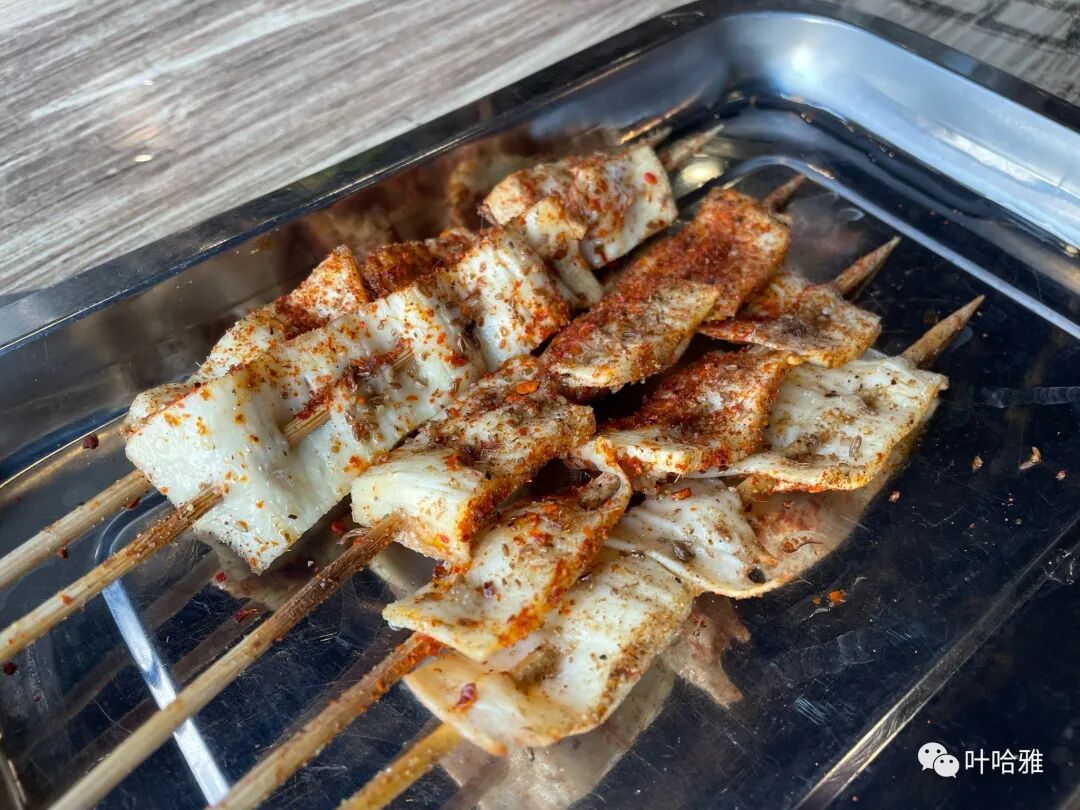
The grilled beef tendon, lamb heart tube, and lamb cartilage were all quite tasty. The chili was not very spicy, the saltiness was just right, and there were no extra flavors.
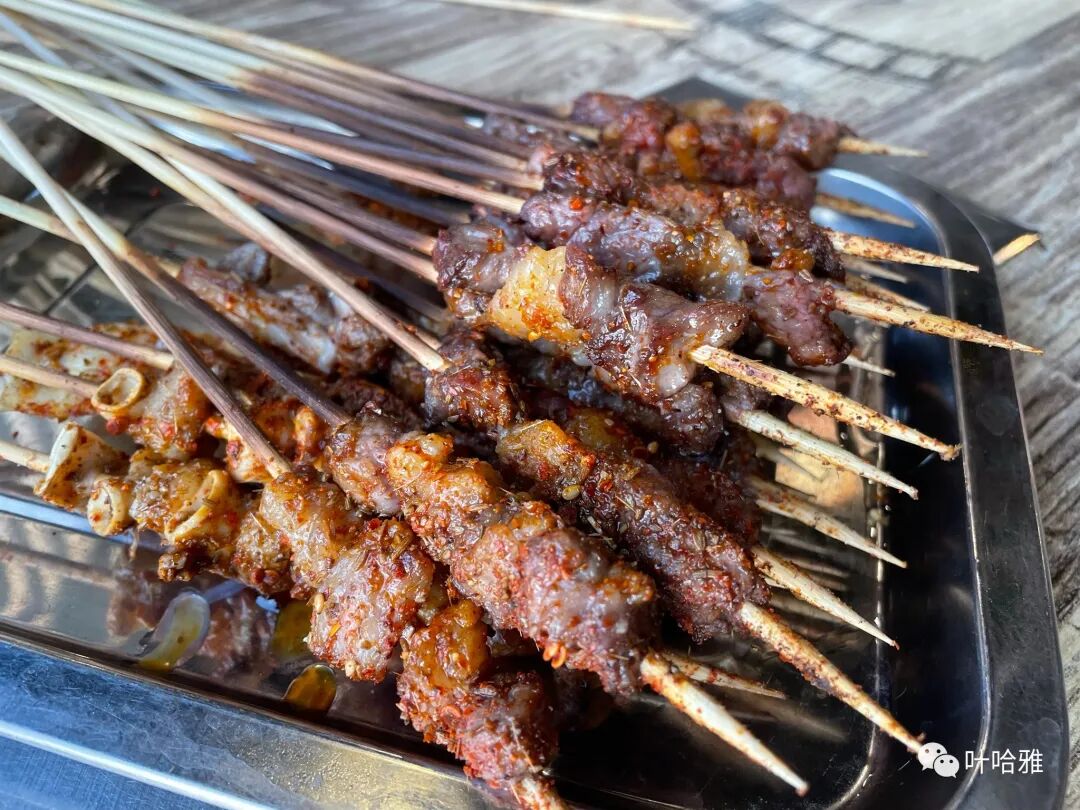
A handful of small lamb skewers shows that their lamb quality is very good; it is neither gamey nor tough.
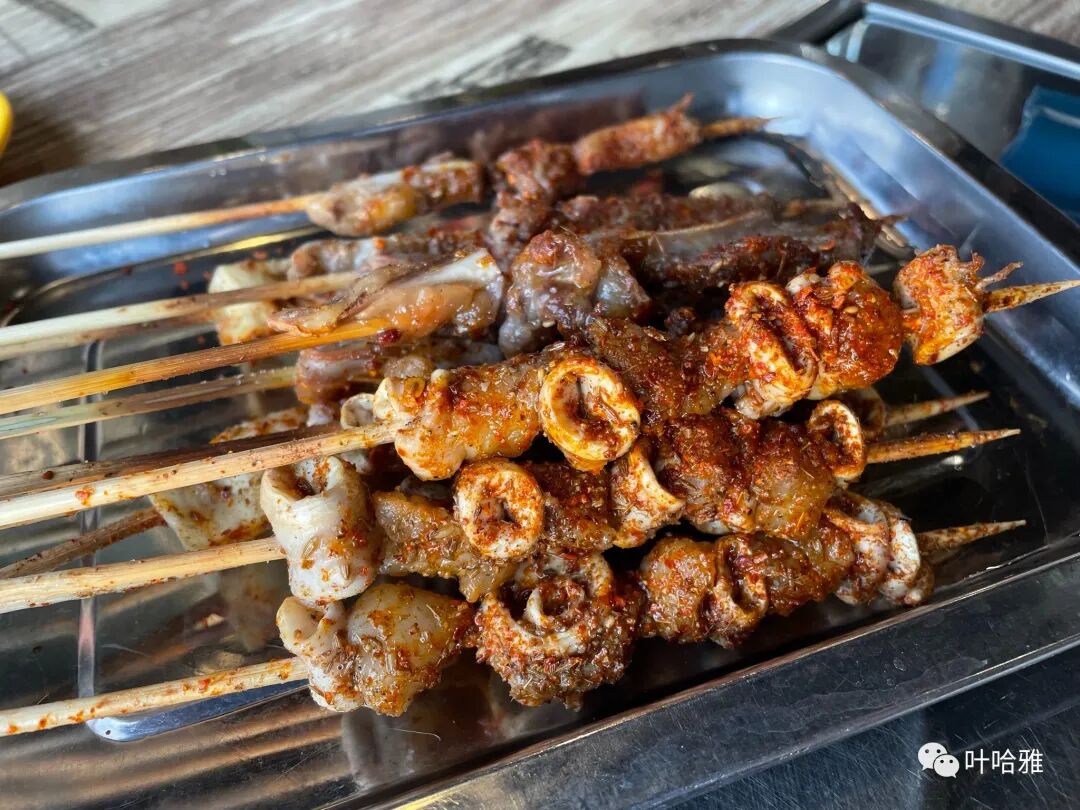
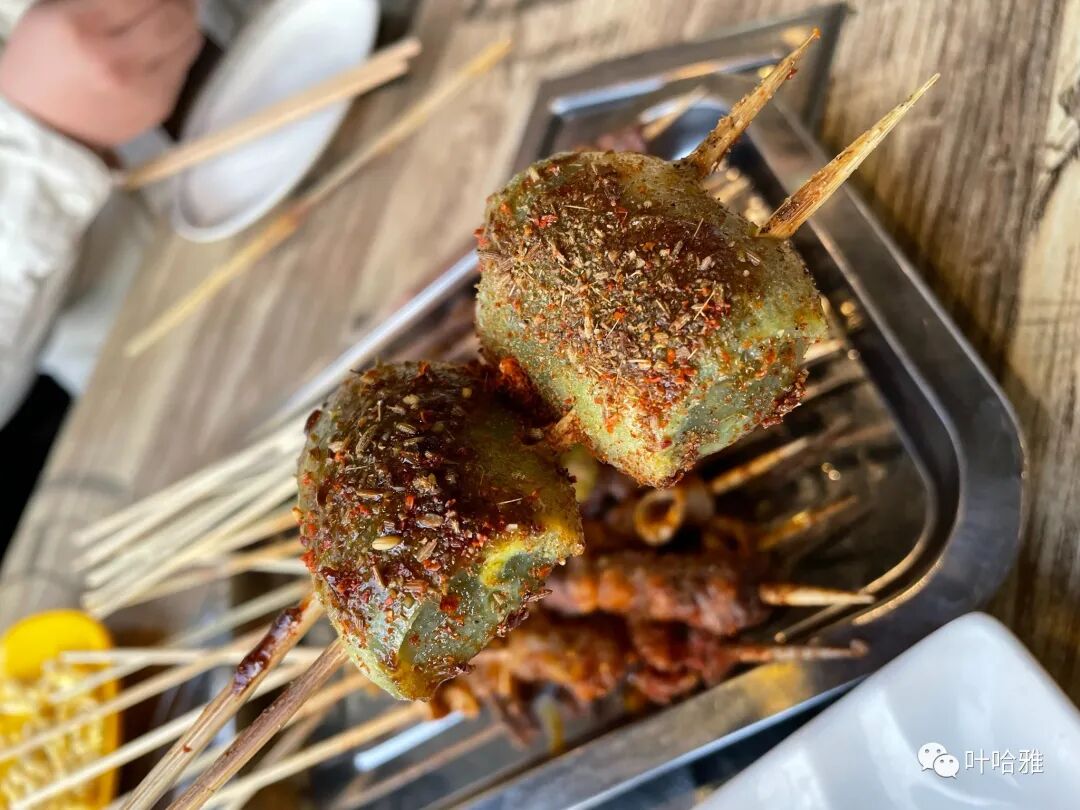
Grilled stone egg (kaoshidan)
We also tried some skewers we had never eaten before, like this grilled stone egg. It tasted like a grilled century egg (songhuadan).
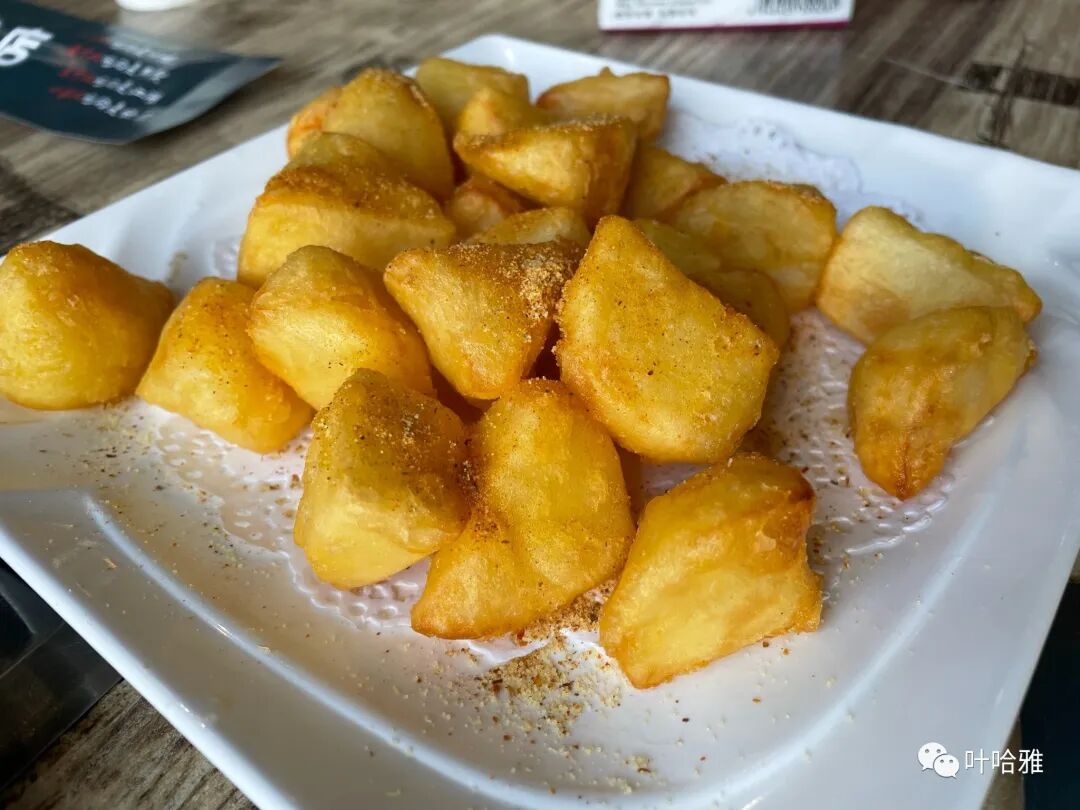
The crispy potato chunks (guoba tudou) were sprinkled with salt and pepper. The potatoes were soft inside, and the skin felt like it had been fried, similar to eating french fries.
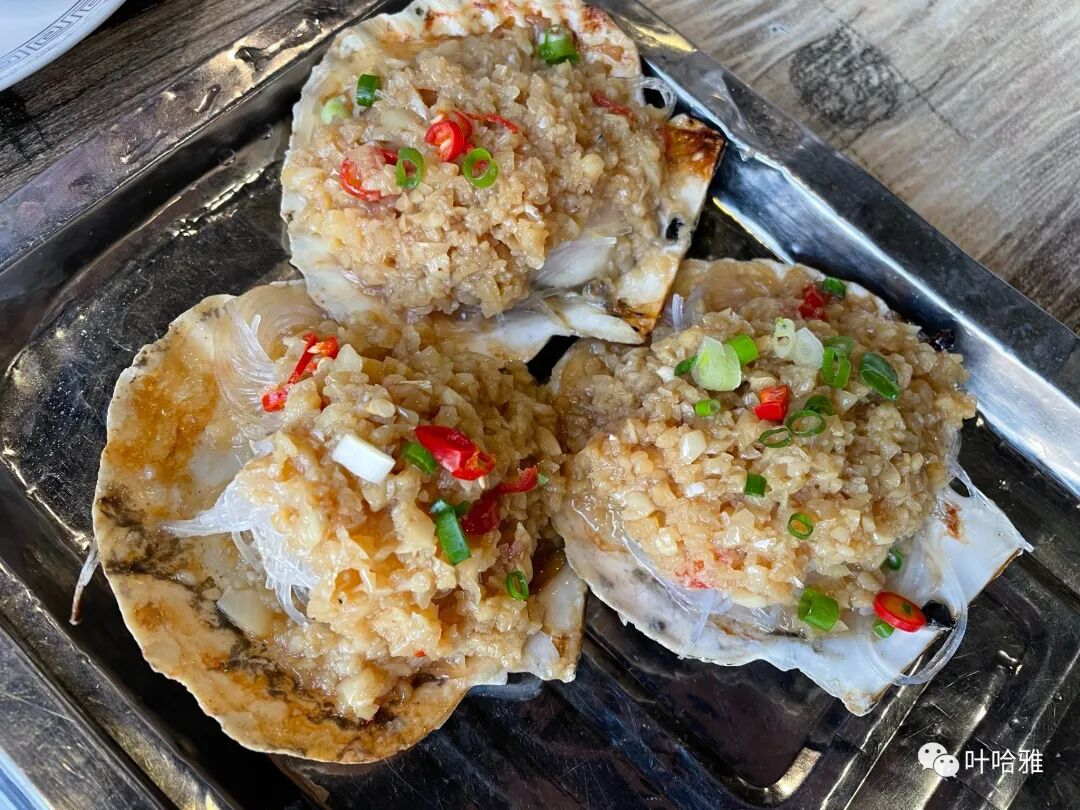
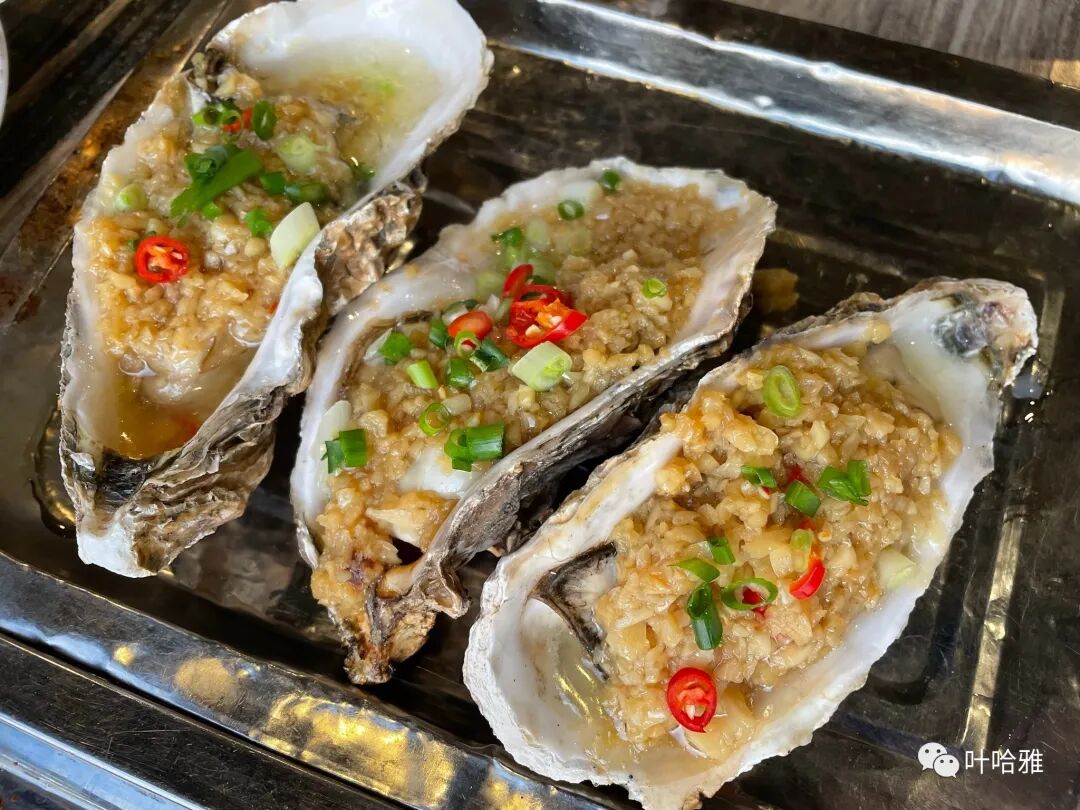
The grilled oysters, grilled scallops, and spicy stir-fried clams were generally not as good as the meat skewers, but you could tell the ingredients were fresh. The oysters and scallops were both 12 yuan each.
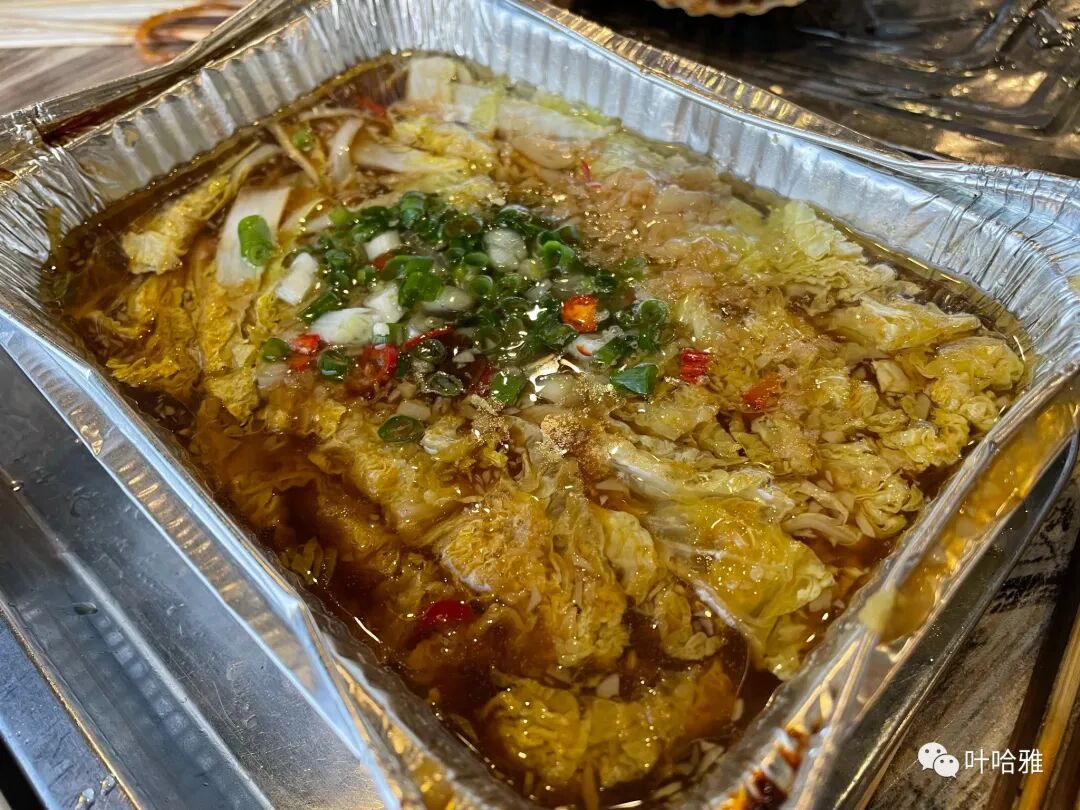
Baby cabbage in foil (xizhi wawacai)
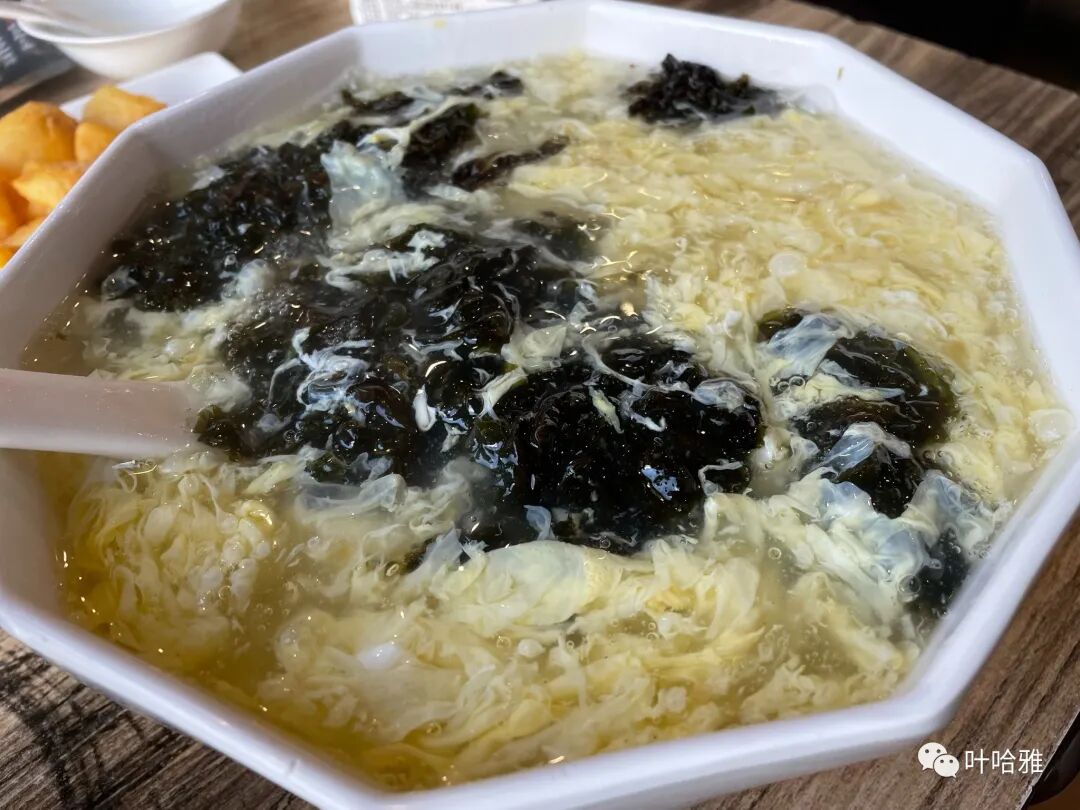
seaweed and egg drop soup (zicai danhua tang)
I found their seaweed and egg drop soup (zicai danhua tang) to be a great value because they pack it with ingredients, filling the whole bowl with fluffy egg ribbons. The average cost is about 80 yuan per person.
That is all for this collection. The text and photos are original, and you may not repost them without permission.
Summary: This Beijing halal food guide maps issue 31 of the author restaurant series, featuring Xinjiang restaurants, Tanyang lamb, grilled pigeon, roasted goose egg, soup noodles, milk beer, and practical notes for Muslim diners.
Beijing Halal Food Map (31) is presented here as a firsthand travel account in clear English, beginning with this scene: The restaurants I have saved on my phone that I still need to visit are basically just Northwest and Xinjiang spots now. The account keeps its focus on Beijing Halal Food, Muslim Travel, Middle Eastern Food while preserving the names, places, food, and historical details from the Chinese source.
The restaurants I have saved on my phone that I still need to visit are basically just Northwest and Xinjiang spots now. There are not many new specialty restaurants lately, but there are really quite a few new Xinjiang restaurants. After things opened up this year, I plan to start traveling abroad since I have basically been everywhere I can go in China. I have already arranged a trip to Hong Kong and Macau at the end of this month, and I will spend a long time in Malaysia in March to visit my grandmother and aunt whom I have never met before.
1. Tanyang Puzi North and South Xinjiang Specialties
This Xinjiang restaurant started in Mentougou and has several branches in the Beijing suburbs. Just seeing the words 'Tanyang' (salt-lake sheep) might make you think it is a Ningxia restaurant, but it is actually a Xinjiang restaurant with a full range of dishes from both North and South Xinjiang. They just use Tanyang from Ningxia as their main ingredient.
At the Mentougou main store, the hot pot and stir-fry sections are separate and have different entrances. The restaurant is spacious and has private rooms and booths.
Napaliyong
Napaliyong is a Xinjiang dessert. It is actually a transliteration of Napoleon, which is the same thing as a French mille-feuille. You can choose a dual-flavor option here, with both chocolate and milk.
The portion of pilaf (zhuafan) is large and affordable, and they give you plenty of meat, but the flavor is a bit bland and the lamb leg is not well-seasoned.
The barbecue is quite popular. The grilled lamb liver and grilled lamb trotters are both excellent. Tanyang meat has thick fat, which makes it perfect for grilling.
Grilled pigeon
Grilled pigeon is a Xinjiang specialty. The grilled pigeon at Tanyang Puzi is delicious, with crispy skin and tender meat.
Roasted goose egg
Roasted goose egg is a special Xinjiang barbecue dish you rarely see in other restaurants. Goose eggs are much bigger than chicken eggs. You have to boil them before roasting, or they will explode. Eat them with a dipping sauce made of cumin and crushed peanuts.
Xinjiang soup noodles (tangfan)
Soup noodles are hand-torn dough pieces. They are filling enough to be a main meal. The portions are huge, but the flavor is a bit mild. Their hot dishes generally have a light taste.
Milk beer (naipi) is a special Xinjiang drink. The label says it is a non-alcoholic fermented beverage. Some people worry it might contain trace amounts of alcohol. I once discussed what foods are not halal according to Islamic teachings. According to international halal food certification standards, trace amounts of alcohol produced by natural fermentation do not affect the halal status of food. This happens everywhere in daily life. It is not realistic to carry an alcohol tester to check every food you eat, including fruit. Milk beer does not make you drunk, and it certainly will not cause you to fail a drunk driving test.
There is a Xinjiang dance performance around 7:00 PM. My son loves watching the young ladies in colorful outfits dance. Overall, Tanyang Shop wins on value. The cost per person is under 100 yuan. They have a full range of Xinjiang dishes, but the taste is only average.
2. Xiefeng Steamed Bun Shop
Just looking at the name of this bun shop, you can tell how much the owner suffered, waiting three years to finally open.
This is a Huaiyang snack shop from Henan. From 7:00 AM to 10:00 AM, they serve spicy soup (hulatang) and steamed buns. These are large steamed buns, not pan-fried buns.
The skin of the large steamed bun is a bit thick. I personally prefer pan-fried buns, but unfortunately, they do not have them here.
The spicy pepper soup (hulatang) in Huaiyang is lighter and less spicy than the one in Zhengzhou. Since it is called spicy pepper soup, it tastes better with that signature spicy kick.
I think their clay pot dishes (shaguo) are the best. You can choose from many side dishes. I recommend the crispy pork clay pot (xiaosurou shaguo) and adding a side of noodles. It is delicious, and crispy pork (xiaosurou) is a classic Henan snack.
3. AIIB Executive Dining Room
I had the set meal at the AIIB main cafeteria last time, and I promised myself I would come back to try a proper meal at the executive dining room. Just to be clear, the AIIB restaurant is not open to the public. Why mention it then? I think you should apply for a job at the AIIB. You can live a lifestyle that balances your faith and your work here, and you can even get praised by your boss for taking paid time for namaz.
The executive dining room is not a halal restaurant, but they do prepare halal ingredients separately if you book in advance. Many AIIB executives and staff come from Muslim countries, so you do not need to worry about the food. The servers said all their meat is imported from Arab countries.
Teriyaki chicken leg burger
The executive dining room is a fusion restaurant that brings together food from many different countries, so we picked a specialty dish from each one.
Avocado sauce embroidered shrimp balls
The avocado sauce embroidered shrimp balls are a Mexican-style dish because avocado sauce is a Mexican specialty.
Japanese eel rice (unagi don)
The eel rice is topped with bonito flakes (muyuhua), which is a seasoning made from shaved dried skipjack tuna.
Coconut curry fish
Curry fish is a South Asian dish, and there are many people from India and Pakistan at the Asian Infrastructure Investment Bank.
Vietnamese beef noodle soup (pho)
I have eaten halal rice noodles in Vietnam, but I never saw halal Vietnamese food back home until I finally found it here at the Asian Infrastructure Investment Bank.
Angus tomahawk steak
It is rare to find a halal tomahawk steak. The server will ask how you want it cooked. I suggest medium-well. If you order it well-done, the beef juices dry out and you lose some of the fresh flavor.
4. One Thousand and One Nights Restaurant
I visited the One Thousand and One Nights branch in Solana many years ago. After it closed, I never came to the Sanlitun location, but the Sanlitun shop is actually decorated with a very exotic style.
Next door to this shop are an Iranian restaurant and a Turkish Mom restaurant. Both are long-standing businesses, and their customers are mostly foreigners.
Cream of mushroom soup
One Thousand and One Nights is an Egyptian-themed Arabic restaurant. According to the rules, you drink soup before your meal.
Hummus and spicy sesame sauce. Both are dips for cedar bread (xuesongbing). One is salty and savory, and the other is salty and spicy.
Cedar bread (xuesongbing)
Roasted lamb chops (kaoyangpai)
The roasted lamb chops and mixed grill at One Thousand and One Nights taste great. The lamb is fresh and tender with no gamey smell, keeping the natural flavor of the meat. The dipping sauce is simple, just salt and lemon juice, served with a small side of salad dressing. I think the meat tastes perfect on its own.
Mixed grill (zonghe shaokao)
The mixed grill is a combination of lamb, chicken, and beef skewers. Each skewer has even more meat than the red willow skewers (hongliu kaorou).
Shawarma
Shawarma can also be called a sandwich. It is a very popular Middle Eastern specialty, famous even in Western countries, much like the popularity of meat burgers (roujiamo) in our country.
Halawa
There are two unique Middle Eastern desserts: halawa and baklawa. Halawa is a peanut brittle with a mildly sweet taste. Baklawa is a honey cashew pastry with a sweetness level of over five plus signs.
Baklawa
One Thousand and One Nights has Egyptian belly dancing performances at night. These shows were paused for three years due to the pandemic, but they have now resumed.
5. Jianglai
Jianglai is a chain restaurant, and this is their flagship store in Wangjing. It is very spacious, but it gets packed at lunch and you will need to wait for a table. There is a paid parking lot next door, but parking in Wangjing is very expensive.
Jianglai is a bit like a localized version of Bayi Laoye, but the food is slightly inferior to Bayi Laoye.
Overall, their Xinjiang food has no major flaws, but it is not very surprising either. The flavors are quite mild.
The combo of big plate chicken (dapanji) and spicy chicken (laziji) is creative. It lets you eat two hearty dishes at once and saves you the cost of an extra dish.
6. Xi'an lamb pita bread in soup (yangrou paomo)
Qin Laoda Paomo Restaurant has been open in Beijing for 16 years. I vaguely remember eating here a few years ago. It is a standard paomo shop. Unfortunately, you cannot break the bread yourself, which is a big part of the fun for people from Xi'an.
Cold skin noodles (liangpi) with wheat gluten (mianjin) topped with chili oil is a sour and spicy dish perfect for summer.
The meat burger (roujiamo) tastes good. The crust is very crispy and they give you plenty of meat.
To get the full experience when eating Xi'an paomo, you have to drink a local Xi'an Bingfeng soda.
Although paomo is famous for the lamb version, locals in Xi'an mostly eat beef paomo, which I also prefer. Qin Laoda's paomo is decent, but it is definitely not as authentic as what you get in the Muslim Quarter (Huifang) in Xi'an.
7. Lianghuo Lanzhou twisted fried dough and skewers (fanhua kaochuan)
A new Lanzhou-style skewer shop just opened in Baiziwan. It does not have a halal sign because, while the owner is not a Hui Muslim, all the staff are. The staff says all their ingredients are sourced from halal suppliers.
The kitchen staff all wear prayer caps (libaimao). If you have eaten at Lianshou Barbecue in Baiziwan, this shop has a very similar style.
Lianghuo is a Lanzhou dialect word that means to praise someone. The wall also explains a few other Lanzhou dialect phrases.
To me, flower-style skewers (fanhua shaokao) are just meat with fat in the middle. This shop offers two ways to grill: dry or wet, with wet meaning they brush on a sauce.
A Lanzhou-style barbecue shop must have Lanzhou snacks. You can have sweet fermented oat drink (tianbeizi) served hot, and once heated, you cannot smell the alcohol in it.
A must-order Lanzhou delicacy is the flowing sauce wide noodles (liuzhi kuanfen). They are smooth, chewy, and the sour and spicy broth is great for opening your appetite.
Milk egg fermented rice (niunai jidan laozao) is a nutritious hot drink. However, they did not beat the eggs well enough, so they were clumpy. It would be better if they were more spread out.
The sour and spicy lamb tripe (suanla xiaoyangdu) is a delicious skewer. The sour and spicy flavor is very unique to the region, as you do not usually find this taste in northern-style barbecue.
The grilled lamb kidney (kao yangyao) is also worth recommending. The small kidneys are not big, but they are grilled until crispy on the outside while staying tender inside.
This is a bundle of lamb flower skewers (yang jiahua), which are just lamb skewers. One bundle has 20 small skewers, and one person can easily eat 40 or 50 in a sitting. I tested it myself, and these lamb flower skewers are better than the beef tendon. We ended up ordering another bundle.
For the grilled vegetable platter, the best items are the grilled potato slices and grilled mushrooms. The crispy texture of the grilled mushrooms makes them taste just like meat.
The Lanzhou grilled flatbread (lanzhou kaobing) was the main dish I was looking forward to most. I had tried this flatbread stuffed with skewers at Lianshou before, and it is delicious. The flatbread is about the same size as a sesame flatbread (shaobing), with a crispy crust and a soft center, perfect for stuffing with anything. Overall, it is about the same as Lianshou, and the prices are similar too. The small skewers are not cheap, with an average cost of about 100 per person.
8. Liang's Skewer Shop (Liang de chuandian)
The owner's name is Liang, and he is from Hebei. He named his shop Liang's Skewer Shop.
The shop is on the second floor and is very spacious. One side has large floor-to-ceiling windows, making it very pleasant to eat barbecue by the window.
They serve seafood, barbecue, and hot pot. We came specifically for the seafood and barbecue.
The grilled beef tendon, lamb heart tube, and lamb cartilage were all quite tasty. The chili was not very spicy, the saltiness was just right, and there were no extra flavors.
A handful of small lamb skewers shows that their lamb quality is very good; it is neither gamey nor tough.
Grilled stone egg (kaoshidan)
We also tried some skewers we had never eaten before, like this grilled stone egg. It tasted like a grilled century egg (songhuadan).
The crispy potato chunks (guoba tudou) were sprinkled with salt and pepper. The potatoes were soft inside, and the skin felt like it had been fried, similar to eating french fries.
The grilled oysters, grilled scallops, and spicy stir-fried clams were generally not as good as the meat skewers, but you could tell the ingredients were fresh. The oysters and scallops were both 12 yuan each.
Baby cabbage in foil (xizhi wawacai)
seaweed and egg drop soup (zicai danhua tang)
I found their seaweed and egg drop soup (zicai danhua tang) to be a great value because they pack it with ingredients, filling the whole bowl with fluffy egg ribbons. The average cost is about 80 yuan per person.
That is all for this collection. The text and photos are original, and you may not repost them without permission.
Best Halal Food Beijing: Authentic Xinjiang Restaurants, Tanyang Lamb and Grilled Pigeon
Articles • yusuf908 posted the article • 0 comments • 162 views • 2026-05-22 20:52
Reposted from the web
Summary: This Beijing halal food guide maps issue 31 of the author restaurant series, featuring Xinjiang restaurants, Tanyang lamb, grilled pigeon, roasted goose egg, soup noodles, milk beer, and practical notes for Muslim diners.
Beijing Halal Food Map (31) is presented here as a firsthand travel account in clear English, beginning with this scene: The restaurants I have saved on my phone that I still need to visit are basically just Northwest and Xinjiang spots now. The account keeps its focus on Beijing Halal Food, Muslim Travel, Middle Eastern Food while preserving the names, places, food, and historical details from the Chinese source.
The restaurants I have saved on my phone that I still need to visit are basically just Northwest and Xinjiang spots now. There are not many new specialty restaurants lately, but there are really quite a few new Xinjiang restaurants. After things opened up this year, I plan to start traveling abroad since I have basically been everywhere I can go in China. I have already arranged a trip to Hong Kong and Macau at the end of this month, and I will spend a long time in Malaysia in March to visit my grandmother and aunt whom I have never met before.
1. Tanyang Puzi North and South Xinjiang Specialties
This Xinjiang restaurant started in Mentougou and has several branches in the Beijing suburbs. Just seeing the words 'Tanyang' (salt-lake sheep) might make you think it is a Ningxia restaurant, but it is actually a Xinjiang restaurant with a full range of dishes from both North and South Xinjiang. They just use Tanyang from Ningxia as their main ingredient.
At the Mentougou main store, the hot pot and stir-fry sections are separate and have different entrances. The restaurant is spacious and has private rooms and booths.
Napaliyong
Napaliyong is a Xinjiang dessert. It is actually a transliteration of Napoleon, which is the same thing as a French mille-feuille. You can choose a dual-flavor option here, with both chocolate and milk.
The portion of pilaf (zhuafan) is large and affordable, and they give you plenty of meat, but the flavor is a bit bland and the lamb leg is not well-seasoned.
The barbecue is quite popular. The grilled lamb liver and grilled lamb trotters are both excellent. Tanyang meat has thick fat, which makes it perfect for grilling.
Grilled pigeon
Grilled pigeon is a Xinjiang specialty. The grilled pigeon at Tanyang Puzi is delicious, with crispy skin and tender meat.
Roasted goose egg
Roasted goose egg is a special Xinjiang barbecue dish you rarely see in other restaurants. Goose eggs are much bigger than chicken eggs. You have to boil them before roasting, or they will explode. Eat them with a dipping sauce made of cumin and crushed peanuts.
Xinjiang soup noodles (tangfan)
Soup noodles are hand-torn dough pieces. They are filling enough to be a main meal. The portions are huge, but the flavor is a bit mild. Their hot dishes generally have a light taste.
Milk beer (naipi) is a special Xinjiang drink. The label says it is a non-alcoholic fermented beverage. Some people worry it might contain trace amounts of alcohol. I once discussed what foods are not halal according to Islamic teachings. According to international halal food certification standards, trace amounts of alcohol produced by natural fermentation do not affect the halal status of food. This happens everywhere in daily life. It is not realistic to carry an alcohol tester to check every food you eat, including fruit. Milk beer does not make you drunk, and it certainly will not cause you to fail a drunk driving test.
There is a Xinjiang dance performance around 7:00 PM. My son loves watching the young ladies in colorful outfits dance. Overall, Tanyang Shop wins on value. The cost per person is under 100 yuan. They have a full range of Xinjiang dishes, but the taste is only average.
2. Xiefeng Steamed Bun Shop
Just looking at the name of this bun shop, you can tell how much the owner suffered, waiting three years to finally open.
This is a Huaiyang snack shop from Henan. From 7:00 AM to 10:00 AM, they serve spicy soup (hulatang) and steamed buns. These are large steamed buns, not pan-fried buns.
The skin of the large steamed bun is a bit thick. I personally prefer pan-fried buns, but unfortunately, they do not have them here.
The spicy pepper soup (hulatang) in Huaiyang is lighter and less spicy than the one in Zhengzhou. Since it is called spicy pepper soup, it tastes better with that signature spicy kick.
I think their clay pot dishes (shaguo) are the best. You can choose from many side dishes. I recommend the crispy pork clay pot (xiaosurou shaguo) and adding a side of noodles. It is delicious, and crispy pork (xiaosurou) is a classic Henan snack.
3. AIIB Executive Dining Room
I had the set meal at the AIIB main cafeteria last time, and I promised myself I would come back to try a proper meal at the executive dining room. Just to be clear, the AIIB restaurant is not open to the public. Why mention it then? I think you should apply for a job at the AIIB. You can live a lifestyle that balances your faith and your work here, and you can even get praised by your boss for taking paid time for namaz.
The executive dining room is not a halal restaurant, but they do prepare halal ingredients separately if you book in advance. Many AIIB executives and staff come from Muslim countries, so you do not need to worry about the food. The servers said all their meat is imported from Arab countries.
Teriyaki chicken leg burger
The executive dining room is a fusion restaurant that brings together food from many different countries, so we picked a specialty dish from each one.
Avocado sauce embroidered shrimp balls
The avocado sauce embroidered shrimp balls are a Mexican-style dish because avocado sauce is a Mexican specialty.
Japanese eel rice (unagi don)
The eel rice is topped with bonito flakes (muyuhua), which is a seasoning made from shaved dried skipjack tuna.
Coconut curry fish
Curry fish is a South Asian dish, and there are many people from India and Pakistan at the Asian Infrastructure Investment Bank.
Vietnamese beef noodle soup (pho)
I have eaten halal rice noodles in Vietnam, but I never saw halal Vietnamese food back home until I finally found it here at the Asian Infrastructure Investment Bank.
Angus tomahawk steak
It is rare to find a halal tomahawk steak. The server will ask how you want it cooked. I suggest medium-well. If you order it well-done, the beef juices dry out and you lose some of the fresh flavor.
4. One Thousand and One Nights Restaurant
I visited the One Thousand and One Nights branch in Solana many years ago. After it closed, I never came to the Sanlitun location, but the Sanlitun shop is actually decorated with a very exotic style.
Next door to this shop are an Iranian restaurant and a Turkish Mom restaurant. Both are long-standing businesses, and their customers are mostly foreigners.
Cream of mushroom soup
One Thousand and One Nights is an Egyptian-themed Arabic restaurant. According to the rules, you drink soup before your meal.
Hummus and spicy sesame sauce. Both are dips for cedar bread (xuesongbing). One is salty and savory, and the other is salty and spicy.
Cedar bread (xuesongbing)
Roasted lamb chops (kaoyangpai)
The roasted lamb chops and mixed grill at One Thousand and One Nights taste great. The lamb is fresh and tender with no gamey smell, keeping the natural flavor of the meat. The dipping sauce is simple, just salt and lemon juice, served with a small side of salad dressing. I think the meat tastes perfect on its own.
Mixed grill (zonghe shaokao)
The mixed grill is a combination of lamb, chicken, and beef skewers. Each skewer has even more meat than the red willow skewers (hongliu kaorou).
Shawarma
Shawarma can also be called a sandwich. It is a very popular Middle Eastern specialty, famous even in Western countries, much like the popularity of meat burgers (roujiamo) in our country.
Halawa
There are two unique Middle Eastern desserts: halawa and baklawa. Halawa is a peanut brittle with a mildly sweet taste. Baklawa is a honey cashew pastry with a sweetness level of over five plus signs.
Baklawa
One Thousand and One Nights has Egyptian belly dancing performances at night. These shows were paused for three years due to the pandemic, but they have now resumed.
5. Jianglai
Jianglai is a chain restaurant, and this is their flagship store in Wangjing. It is very spacious, but it gets packed at lunch and you will need to wait for a table. There is a paid parking lot next door, but parking in Wangjing is very expensive.
Jianglai is a bit like a localized version of Bayi Laoye, but the food is slightly inferior to Bayi Laoye.
Overall, their Xinjiang food has no major flaws, but it is not very surprising either. The flavors are quite mild.
The combo of big plate chicken (dapanji) and spicy chicken (laziji) is creative. It lets you eat two hearty dishes at once and saves you the cost of an extra dish.
6. Xi'an lamb pita bread in soup (yangrou paomo)
Qin Laoda Paomo Restaurant has been open in Beijing for 16 years. I vaguely remember eating here a few years ago. It is a standard paomo shop. Unfortunately, you cannot break the bread yourself, which is a big part of the fun for people from Xi'an.
Cold skin noodles (liangpi) with wheat gluten (mianjin) topped with chili oil is a sour and spicy dish perfect for summer.
The meat burger (roujiamo) tastes good. The crust is very crispy and they give you plenty of meat.
To get the full experience when eating Xi'an paomo, you have to drink a local Xi'an Bingfeng soda.
Although paomo is famous for the lamb version, locals in Xi'an mostly eat beef paomo, which I also prefer. Qin Laoda's paomo is decent, but it is definitely not as authentic as what you get in the Muslim Quarter (Huifang) in Xi'an.
7. Lianghuo Lanzhou twisted fried dough and skewers (fanhua kaochuan)
A new Lanzhou-style skewer shop just opened in Baiziwan. It does not have a halal sign because, while the owner is not a Hui Muslim, all the staff are. The staff says all their ingredients are sourced from halal suppliers.
The kitchen staff all wear prayer caps (libaimao). If you have eaten at Lianshou Barbecue in Baiziwan, this shop has a very similar style.
Lianghuo is a Lanzhou dialect word that means to praise someone. The wall also explains a few other Lanzhou dialect phrases.
To me, flower-style skewers (fanhua shaokao) are just meat with fat in the middle. This shop offers two ways to grill: dry or wet, with wet meaning they brush on a sauce.
A Lanzhou-style barbecue shop must have Lanzhou snacks. You can have sweet fermented oat drink (tianbeizi) served hot, and once heated, you cannot smell the alcohol in it.
A must-order Lanzhou delicacy is the flowing sauce wide noodles (liuzhi kuanfen). They are smooth, chewy, and the sour and spicy broth is great for opening your appetite.
Milk egg fermented rice (niunai jidan laozao) is a nutritious hot drink. However, they did not beat the eggs well enough, so they were clumpy. It would be better if they were more spread out.
The sour and spicy lamb tripe (suanla xiaoyangdu) is a delicious skewer. The sour and spicy flavor is very unique to the region, as you do not usually find this taste in northern-style barbecue.
The grilled lamb kidney (kao yangyao) is also worth recommending. The small kidneys are not big, but they are grilled until crispy on the outside while staying tender inside.
This is a bundle of lamb flower skewers (yang jiahua), which are just lamb skewers. One bundle has 20 small skewers, and one person can easily eat 40 or 50 in a sitting. I tested it myself, and these lamb flower skewers are better than the beef tendon. We ended up ordering another bundle.
For the grilled vegetable platter, the best items are the grilled potato slices and grilled mushrooms. The crispy texture of the grilled mushrooms makes them taste just like meat.
The Lanzhou grilled flatbread (lanzhou kaobing) was the main dish I was looking forward to most. I had tried this flatbread stuffed with skewers at Lianshou before, and it is delicious. The flatbread is about the same size as a sesame flatbread (shaobing), with a crispy crust and a soft center, perfect for stuffing with anything. Overall, it is about the same as Lianshou, and the prices are similar too. The small skewers are not cheap, with an average cost of about 100 per person.
8. Liang's Skewer Shop (Liang de chuandian)
The owner's name is Liang, and he is from Hebei. He named his shop Liang's Skewer Shop.
The shop is on the second floor and is very spacious. One side has large floor-to-ceiling windows, making it very pleasant to eat barbecue by the window.
They serve seafood, barbecue, and hot pot. We came specifically for the seafood and barbecue.
The grilled beef tendon, lamb heart tube, and lamb cartilage were all quite tasty. The chili was not very spicy, the saltiness was just right, and there were no extra flavors.
A handful of small lamb skewers shows that their lamb quality is very good; it is neither gamey nor tough.
Grilled stone egg (kaoshidan)
We also tried some skewers we had never eaten before, like this grilled stone egg. It tasted like a grilled century egg (songhuadan).
The crispy potato chunks (guoba tudou) were sprinkled with salt and pepper. The potatoes were soft inside, and the skin felt like it had been fried, similar to eating french fries.
The grilled oysters, grilled scallops, and spicy stir-fried clams were generally not as good as the meat skewers, but you could tell the ingredients were fresh. The oysters and scallops were both 12 yuan each.
Baby cabbage in foil (xizhi wawacai)
seaweed and egg drop soup (zicai danhua tang)
I found their seaweed and egg drop soup (zicai danhua tang) to be a great value because they pack it with ingredients, filling the whole bowl with fluffy egg ribbons. The average cost is about 80 yuan per person.
That is all for this collection. The text and photos are original, and you may not repost them without permission. view all
Summary: This Beijing halal food guide maps issue 31 of the author restaurant series, featuring Xinjiang restaurants, Tanyang lamb, grilled pigeon, roasted goose egg, soup noodles, milk beer, and practical notes for Muslim diners.
Beijing Halal Food Map (31) is presented here as a firsthand travel account in clear English, beginning with this scene: The restaurants I have saved on my phone that I still need to visit are basically just Northwest and Xinjiang spots now. The account keeps its focus on Beijing Halal Food, Muslim Travel, Middle Eastern Food while preserving the names, places, food, and historical details from the Chinese source.
The restaurants I have saved on my phone that I still need to visit are basically just Northwest and Xinjiang spots now. There are not many new specialty restaurants lately, but there are really quite a few new Xinjiang restaurants. After things opened up this year, I plan to start traveling abroad since I have basically been everywhere I can go in China. I have already arranged a trip to Hong Kong and Macau at the end of this month, and I will spend a long time in Malaysia in March to visit my grandmother and aunt whom I have never met before.
1. Tanyang Puzi North and South Xinjiang Specialties
This Xinjiang restaurant started in Mentougou and has several branches in the Beijing suburbs. Just seeing the words 'Tanyang' (salt-lake sheep) might make you think it is a Ningxia restaurant, but it is actually a Xinjiang restaurant with a full range of dishes from both North and South Xinjiang. They just use Tanyang from Ningxia as their main ingredient.
At the Mentougou main store, the hot pot and stir-fry sections are separate and have different entrances. The restaurant is spacious and has private rooms and booths.
Napaliyong
Napaliyong is a Xinjiang dessert. It is actually a transliteration of Napoleon, which is the same thing as a French mille-feuille. You can choose a dual-flavor option here, with both chocolate and milk.
The portion of pilaf (zhuafan) is large and affordable, and they give you plenty of meat, but the flavor is a bit bland and the lamb leg is not well-seasoned.
The barbecue is quite popular. The grilled lamb liver and grilled lamb trotters are both excellent. Tanyang meat has thick fat, which makes it perfect for grilling.
Grilled pigeon
Grilled pigeon is a Xinjiang specialty. The grilled pigeon at Tanyang Puzi is delicious, with crispy skin and tender meat.
Roasted goose egg
Roasted goose egg is a special Xinjiang barbecue dish you rarely see in other restaurants. Goose eggs are much bigger than chicken eggs. You have to boil them before roasting, or they will explode. Eat them with a dipping sauce made of cumin and crushed peanuts.
Xinjiang soup noodles (tangfan)
Soup noodles are hand-torn dough pieces. They are filling enough to be a main meal. The portions are huge, but the flavor is a bit mild. Their hot dishes generally have a light taste.
Milk beer (naipi) is a special Xinjiang drink. The label says it is a non-alcoholic fermented beverage. Some people worry it might contain trace amounts of alcohol. I once discussed what foods are not halal according to Islamic teachings. According to international halal food certification standards, trace amounts of alcohol produced by natural fermentation do not affect the halal status of food. This happens everywhere in daily life. It is not realistic to carry an alcohol tester to check every food you eat, including fruit. Milk beer does not make you drunk, and it certainly will not cause you to fail a drunk driving test.
There is a Xinjiang dance performance around 7:00 PM. My son loves watching the young ladies in colorful outfits dance. Overall, Tanyang Shop wins on value. The cost per person is under 100 yuan. They have a full range of Xinjiang dishes, but the taste is only average.
2. Xiefeng Steamed Bun Shop
Just looking at the name of this bun shop, you can tell how much the owner suffered, waiting three years to finally open.
This is a Huaiyang snack shop from Henan. From 7:00 AM to 10:00 AM, they serve spicy soup (hulatang) and steamed buns. These are large steamed buns, not pan-fried buns.
The skin of the large steamed bun is a bit thick. I personally prefer pan-fried buns, but unfortunately, they do not have them here.
The spicy pepper soup (hulatang) in Huaiyang is lighter and less spicy than the one in Zhengzhou. Since it is called spicy pepper soup, it tastes better with that signature spicy kick.
I think their clay pot dishes (shaguo) are the best. You can choose from many side dishes. I recommend the crispy pork clay pot (xiaosurou shaguo) and adding a side of noodles. It is delicious, and crispy pork (xiaosurou) is a classic Henan snack.
3. AIIB Executive Dining Room
I had the set meal at the AIIB main cafeteria last time, and I promised myself I would come back to try a proper meal at the executive dining room. Just to be clear, the AIIB restaurant is not open to the public. Why mention it then? I think you should apply for a job at the AIIB. You can live a lifestyle that balances your faith and your work here, and you can even get praised by your boss for taking paid time for namaz.
The executive dining room is not a halal restaurant, but they do prepare halal ingredients separately if you book in advance. Many AIIB executives and staff come from Muslim countries, so you do not need to worry about the food. The servers said all their meat is imported from Arab countries.
Teriyaki chicken leg burger
The executive dining room is a fusion restaurant that brings together food from many different countries, so we picked a specialty dish from each one.
Avocado sauce embroidered shrimp balls
The avocado sauce embroidered shrimp balls are a Mexican-style dish because avocado sauce is a Mexican specialty.
Japanese eel rice (unagi don)
The eel rice is topped with bonito flakes (muyuhua), which is a seasoning made from shaved dried skipjack tuna.
Coconut curry fish
Curry fish is a South Asian dish, and there are many people from India and Pakistan at the Asian Infrastructure Investment Bank.
Vietnamese beef noodle soup (pho)
I have eaten halal rice noodles in Vietnam, but I never saw halal Vietnamese food back home until I finally found it here at the Asian Infrastructure Investment Bank.
Angus tomahawk steak
It is rare to find a halal tomahawk steak. The server will ask how you want it cooked. I suggest medium-well. If you order it well-done, the beef juices dry out and you lose some of the fresh flavor.
4. One Thousand and One Nights Restaurant
I visited the One Thousand and One Nights branch in Solana many years ago. After it closed, I never came to the Sanlitun location, but the Sanlitun shop is actually decorated with a very exotic style.
Next door to this shop are an Iranian restaurant and a Turkish Mom restaurant. Both are long-standing businesses, and their customers are mostly foreigners.
Cream of mushroom soup
One Thousand and One Nights is an Egyptian-themed Arabic restaurant. According to the rules, you drink soup before your meal.
Hummus and spicy sesame sauce. Both are dips for cedar bread (xuesongbing). One is salty and savory, and the other is salty and spicy.
Cedar bread (xuesongbing)
Roasted lamb chops (kaoyangpai)
The roasted lamb chops and mixed grill at One Thousand and One Nights taste great. The lamb is fresh and tender with no gamey smell, keeping the natural flavor of the meat. The dipping sauce is simple, just salt and lemon juice, served with a small side of salad dressing. I think the meat tastes perfect on its own.
Mixed grill (zonghe shaokao)
The mixed grill is a combination of lamb, chicken, and beef skewers. Each skewer has even more meat than the red willow skewers (hongliu kaorou).
Shawarma
Shawarma can also be called a sandwich. It is a very popular Middle Eastern specialty, famous even in Western countries, much like the popularity of meat burgers (roujiamo) in our country.
Halawa
There are two unique Middle Eastern desserts: halawa and baklawa. Halawa is a peanut brittle with a mildly sweet taste. Baklawa is a honey cashew pastry with a sweetness level of over five plus signs.
Baklawa
One Thousand and One Nights has Egyptian belly dancing performances at night. These shows were paused for three years due to the pandemic, but they have now resumed.
5. Jianglai
Jianglai is a chain restaurant, and this is their flagship store in Wangjing. It is very spacious, but it gets packed at lunch and you will need to wait for a table. There is a paid parking lot next door, but parking in Wangjing is very expensive.
Jianglai is a bit like a localized version of Bayi Laoye, but the food is slightly inferior to Bayi Laoye.
Overall, their Xinjiang food has no major flaws, but it is not very surprising either. The flavors are quite mild.
The combo of big plate chicken (dapanji) and spicy chicken (laziji) is creative. It lets you eat two hearty dishes at once and saves you the cost of an extra dish.
6. Xi'an lamb pita bread in soup (yangrou paomo)
Qin Laoda Paomo Restaurant has been open in Beijing for 16 years. I vaguely remember eating here a few years ago. It is a standard paomo shop. Unfortunately, you cannot break the bread yourself, which is a big part of the fun for people from Xi'an.
Cold skin noodles (liangpi) with wheat gluten (mianjin) topped with chili oil is a sour and spicy dish perfect for summer.
The meat burger (roujiamo) tastes good. The crust is very crispy and they give you plenty of meat.
To get the full experience when eating Xi'an paomo, you have to drink a local Xi'an Bingfeng soda.
Although paomo is famous for the lamb version, locals in Xi'an mostly eat beef paomo, which I also prefer. Qin Laoda's paomo is decent, but it is definitely not as authentic as what you get in the Muslim Quarter (Huifang) in Xi'an.
7. Lianghuo Lanzhou twisted fried dough and skewers (fanhua kaochuan)
A new Lanzhou-style skewer shop just opened in Baiziwan. It does not have a halal sign because, while the owner is not a Hui Muslim, all the staff are. The staff says all their ingredients are sourced from halal suppliers.
The kitchen staff all wear prayer caps (libaimao). If you have eaten at Lianshou Barbecue in Baiziwan, this shop has a very similar style.
Lianghuo is a Lanzhou dialect word that means to praise someone. The wall also explains a few other Lanzhou dialect phrases.
To me, flower-style skewers (fanhua shaokao) are just meat with fat in the middle. This shop offers two ways to grill: dry or wet, with wet meaning they brush on a sauce.
A Lanzhou-style barbecue shop must have Lanzhou snacks. You can have sweet fermented oat drink (tianbeizi) served hot, and once heated, you cannot smell the alcohol in it.
A must-order Lanzhou delicacy is the flowing sauce wide noodles (liuzhi kuanfen). They are smooth, chewy, and the sour and spicy broth is great for opening your appetite.
Milk egg fermented rice (niunai jidan laozao) is a nutritious hot drink. However, they did not beat the eggs well enough, so they were clumpy. It would be better if they were more spread out.
The sour and spicy lamb tripe (suanla xiaoyangdu) is a delicious skewer. The sour and spicy flavor is very unique to the region, as you do not usually find this taste in northern-style barbecue.
The grilled lamb kidney (kao yangyao) is also worth recommending. The small kidneys are not big, but they are grilled until crispy on the outside while staying tender inside.
This is a bundle of lamb flower skewers (yang jiahua), which are just lamb skewers. One bundle has 20 small skewers, and one person can easily eat 40 or 50 in a sitting. I tested it myself, and these lamb flower skewers are better than the beef tendon. We ended up ordering another bundle.
For the grilled vegetable platter, the best items are the grilled potato slices and grilled mushrooms. The crispy texture of the grilled mushrooms makes them taste just like meat.
The Lanzhou grilled flatbread (lanzhou kaobing) was the main dish I was looking forward to most. I had tried this flatbread stuffed with skewers at Lianshou before, and it is delicious. The flatbread is about the same size as a sesame flatbread (shaobing), with a crispy crust and a soft center, perfect for stuffing with anything. Overall, it is about the same as Lianshou, and the prices are similar too. The small skewers are not cheap, with an average cost of about 100 per person.
8. Liang's Skewer Shop (Liang de chuandian)
The owner's name is Liang, and he is from Hebei. He named his shop Liang's Skewer Shop.
The shop is on the second floor and is very spacious. One side has large floor-to-ceiling windows, making it very pleasant to eat barbecue by the window.
They serve seafood, barbecue, and hot pot. We came specifically for the seafood and barbecue.
The grilled beef tendon, lamb heart tube, and lamb cartilage were all quite tasty. The chili was not very spicy, the saltiness was just right, and there were no extra flavors.
A handful of small lamb skewers shows that their lamb quality is very good; it is neither gamey nor tough.
Grilled stone egg (kaoshidan)
We also tried some skewers we had never eaten before, like this grilled stone egg. It tasted like a grilled century egg (songhuadan).
The crispy potato chunks (guoba tudou) were sprinkled with salt and pepper. The potatoes were soft inside, and the skin felt like it had been fried, similar to eating french fries.
The grilled oysters, grilled scallops, and spicy stir-fried clams were generally not as good as the meat skewers, but you could tell the ingredients were fresh. The oysters and scallops were both 12 yuan each.
Baby cabbage in foil (xizhi wawacai)
seaweed and egg drop soup (zicai danhua tang)
I found their seaweed and egg drop soup (zicai danhua tang) to be a great value because they pack it with ingredients, filling the whole bowl with fluffy egg ribbons. The average cost is about 80 yuan per person.
That is all for this collection. The text and photos are original, and you may not repost them without permission. view all
Reposted from the web
Summary: This Beijing halal food guide maps issue 31 of the author restaurant series, featuring Xinjiang restaurants, Tanyang lamb, grilled pigeon, roasted goose egg, soup noodles, milk beer, and practical notes for Muslim diners.
Beijing Halal Food Map (31) is presented here as a firsthand travel account in clear English, beginning with this scene: The restaurants I have saved on my phone that I still need to visit are basically just Northwest and Xinjiang spots now. The account keeps its focus on Beijing Halal Food, Muslim Travel, Middle Eastern Food while preserving the names, places, food, and historical details from the Chinese source.
The restaurants I have saved on my phone that I still need to visit are basically just Northwest and Xinjiang spots now. There are not many new specialty restaurants lately, but there are really quite a few new Xinjiang restaurants. After things opened up this year, I plan to start traveling abroad since I have basically been everywhere I can go in China. I have already arranged a trip to Hong Kong and Macau at the end of this month, and I will spend a long time in Malaysia in March to visit my grandmother and aunt whom I have never met before.
1. Tanyang Puzi North and South Xinjiang Specialties
This Xinjiang restaurant started in Mentougou and has several branches in the Beijing suburbs. Just seeing the words 'Tanyang' (salt-lake sheep) might make you think it is a Ningxia restaurant, but it is actually a Xinjiang restaurant with a full range of dishes from both North and South Xinjiang. They just use Tanyang from Ningxia as their main ingredient.
At the Mentougou main store, the hot pot and stir-fry sections are separate and have different entrances. The restaurant is spacious and has private rooms and booths.
Napaliyong
Napaliyong is a Xinjiang dessert. It is actually a transliteration of Napoleon, which is the same thing as a French mille-feuille. You can choose a dual-flavor option here, with both chocolate and milk.
The portion of pilaf (zhuafan) is large and affordable, and they give you plenty of meat, but the flavor is a bit bland and the lamb leg is not well-seasoned.
The barbecue is quite popular. The grilled lamb liver and grilled lamb trotters are both excellent. Tanyang meat has thick fat, which makes it perfect for grilling.
Grilled pigeon
Grilled pigeon is a Xinjiang specialty. The grilled pigeon at Tanyang Puzi is delicious, with crispy skin and tender meat.
Roasted goose egg
Roasted goose egg is a special Xinjiang barbecue dish you rarely see in other restaurants. Goose eggs are much bigger than chicken eggs. You have to boil them before roasting, or they will explode. Eat them with a dipping sauce made of cumin and crushed peanuts.
Xinjiang soup noodles (tangfan)
Soup noodles are hand-torn dough pieces. They are filling enough to be a main meal. The portions are huge, but the flavor is a bit mild. Their hot dishes generally have a light taste.
Milk beer (naipi) is a special Xinjiang drink. The label says it is a non-alcoholic fermented beverage. Some people worry it might contain trace amounts of alcohol. I once discussed what foods are not halal according to Islamic teachings. According to international halal food certification standards, trace amounts of alcohol produced by natural fermentation do not affect the halal status of food. This happens everywhere in daily life. It is not realistic to carry an alcohol tester to check every food you eat, including fruit. Milk beer does not make you drunk, and it certainly will not cause you to fail a drunk driving test.
There is a Xinjiang dance performance around 7:00 PM. My son loves watching the young ladies in colorful outfits dance. Overall, Tanyang Shop wins on value. The cost per person is under 100 yuan. They have a full range of Xinjiang dishes, but the taste is only average.
2. Xiefeng Steamed Bun Shop
Just looking at the name of this bun shop, you can tell how much the owner suffered, waiting three years to finally open.
This is a Huaiyang snack shop from Henan. From 7:00 AM to 10:00 AM, they serve spicy soup (hulatang) and steamed buns. These are large steamed buns, not pan-fried buns.
The skin of the large steamed bun is a bit thick. I personally prefer pan-fried buns, but unfortunately, they do not have them here.
The spicy pepper soup (hulatang) in Huaiyang is lighter and less spicy than the one in Zhengzhou. Since it is called spicy pepper soup, it tastes better with that signature spicy kick.
I think their clay pot dishes (shaguo) are the best. You can choose from many side dishes. I recommend the crispy pork clay pot (xiaosurou shaguo) and adding a side of noodles. It is delicious, and crispy pork (xiaosurou) is a classic Henan snack.
3. AIIB Executive Dining Room
I had the set meal at the AIIB main cafeteria last time, and I promised myself I would come back to try a proper meal at the executive dining room. Just to be clear, the AIIB restaurant is not open to the public. Why mention it then? I think you should apply for a job at the AIIB. You can live a lifestyle that balances your faith and your work here, and you can even get praised by your boss for taking paid time for namaz.
The executive dining room is not a halal restaurant, but they do prepare halal ingredients separately if you book in advance. Many AIIB executives and staff come from Muslim countries, so you do not need to worry about the food. The servers said all their meat is imported from Arab countries.
Teriyaki chicken leg burger
The executive dining room is a fusion restaurant that brings together food from many different countries, so we picked a specialty dish from each one.
Avocado sauce embroidered shrimp balls
The avocado sauce embroidered shrimp balls are a Mexican-style dish because avocado sauce is a Mexican specialty.
Japanese eel rice (unagi don)
The eel rice is topped with bonito flakes (muyuhua), which is a seasoning made from shaved dried skipjack tuna.
Coconut curry fish
Curry fish is a South Asian dish, and there are many people from India and Pakistan at the Asian Infrastructure Investment Bank.
Vietnamese beef noodle soup (pho)
I have eaten halal rice noodles in Vietnam, but I never saw halal Vietnamese food back home until I finally found it here at the Asian Infrastructure Investment Bank.
Angus tomahawk steak
It is rare to find a halal tomahawk steak. The server will ask how you want it cooked. I suggest medium-well. If you order it well-done, the beef juices dry out and you lose some of the fresh flavor.
4. One Thousand and One Nights Restaurant
I visited the One Thousand and One Nights branch in Solana many years ago. After it closed, I never came to the Sanlitun location, but the Sanlitun shop is actually decorated with a very exotic style.
Next door to this shop are an Iranian restaurant and a Turkish Mom restaurant. Both are long-standing businesses, and their customers are mostly foreigners.
Cream of mushroom soup
One Thousand and One Nights is an Egyptian-themed Arabic restaurant. According to the rules, you drink soup before your meal.
Hummus and spicy sesame sauce. Both are dips for cedar bread (xuesongbing). One is salty and savory, and the other is salty and spicy.
Cedar bread (xuesongbing)
Roasted lamb chops (kaoyangpai)
The roasted lamb chops and mixed grill at One Thousand and One Nights taste great. The lamb is fresh and tender with no gamey smell, keeping the natural flavor of the meat. The dipping sauce is simple, just salt and lemon juice, served with a small side of salad dressing. I think the meat tastes perfect on its own.
Mixed grill (zonghe shaokao)
The mixed grill is a combination of lamb, chicken, and beef skewers. Each skewer has even more meat than the red willow skewers (hongliu kaorou).
Shawarma
Shawarma can also be called a sandwich. It is a very popular Middle Eastern specialty, famous even in Western countries, much like the popularity of meat burgers (roujiamo) in our country.
Halawa
There are two unique Middle Eastern desserts: halawa and baklawa. Halawa is a peanut brittle with a mildly sweet taste. Baklawa is a honey cashew pastry with a sweetness level of over five plus signs.
Baklawa
One Thousand and One Nights has Egyptian belly dancing performances at night. These shows were paused for three years due to the pandemic, but they have now resumed.
5. Jianglai
Jianglai is a chain restaurant, and this is their flagship store in Wangjing. It is very spacious, but it gets packed at lunch and you will need to wait for a table. There is a paid parking lot next door, but parking in Wangjing is very expensive.
Jianglai is a bit like a localized version of Bayi Laoye, but the food is slightly inferior to Bayi Laoye.
Overall, their Xinjiang food has no major flaws, but it is not very surprising either. The flavors are quite mild.
The combo of big plate chicken (dapanji) and spicy chicken (laziji) is creative. It lets you eat two hearty dishes at once and saves you the cost of an extra dish.
6. Xi'an lamb pita bread in soup (yangrou paomo)
Qin Laoda Paomo Restaurant has been open in Beijing for 16 years. I vaguely remember eating here a few years ago. It is a standard paomo shop. Unfortunately, you cannot break the bread yourself, which is a big part of the fun for people from Xi'an.
Cold skin noodles (liangpi) with wheat gluten (mianjin) topped with chili oil is a sour and spicy dish perfect for summer.
The meat burger (roujiamo) tastes good. The crust is very crispy and they give you plenty of meat.
To get the full experience when eating Xi'an paomo, you have to drink a local Xi'an Bingfeng soda.
Although paomo is famous for the lamb version, locals in Xi'an mostly eat beef paomo, which I also prefer. Qin Laoda's paomo is decent, but it is definitely not as authentic as what you get in the Muslim Quarter (Huifang) in Xi'an.
7. Lianghuo Lanzhou twisted fried dough and skewers (fanhua kaochuan)
A new Lanzhou-style skewer shop just opened in Baiziwan. It does not have a halal sign because, while the owner is not a Hui Muslim, all the staff are. The staff says all their ingredients are sourced from halal suppliers.
The kitchen staff all wear prayer caps (libaimao). If you have eaten at Lianshou Barbecue in Baiziwan, this shop has a very similar style.
Lianghuo is a Lanzhou dialect word that means to praise someone. The wall also explains a few other Lanzhou dialect phrases.
To me, flower-style skewers (fanhua shaokao) are just meat with fat in the middle. This shop offers two ways to grill: dry or wet, with wet meaning they brush on a sauce.
A Lanzhou-style barbecue shop must have Lanzhou snacks. You can have sweet fermented oat drink (tianbeizi) served hot, and once heated, you cannot smell the alcohol in it.
A must-order Lanzhou delicacy is the flowing sauce wide noodles (liuzhi kuanfen). They are smooth, chewy, and the sour and spicy broth is great for opening your appetite.
Milk egg fermented rice (niunai jidan laozao) is a nutritious hot drink. However, they did not beat the eggs well enough, so they were clumpy. It would be better if they were more spread out.
The sour and spicy lamb tripe (suanla xiaoyangdu) is a delicious skewer. The sour and spicy flavor is very unique to the region, as you do not usually find this taste in northern-style barbecue.
The grilled lamb kidney (kao yangyao) is also worth recommending. The small kidneys are not big, but they are grilled until crispy on the outside while staying tender inside.
This is a bundle of lamb flower skewers (yang jiahua), which are just lamb skewers. One bundle has 20 small skewers, and one person can easily eat 40 or 50 in a sitting. I tested it myself, and these lamb flower skewers are better than the beef tendon. We ended up ordering another bundle.
For the grilled vegetable platter, the best items are the grilled potato slices and grilled mushrooms. The crispy texture of the grilled mushrooms makes them taste just like meat.
The Lanzhou grilled flatbread (lanzhou kaobing) was the main dish I was looking forward to most. I had tried this flatbread stuffed with skewers at Lianshou before, and it is delicious. The flatbread is about the same size as a sesame flatbread (shaobing), with a crispy crust and a soft center, perfect for stuffing with anything. Overall, it is about the same as Lianshou, and the prices are similar too. The small skewers are not cheap, with an average cost of about 100 per person.
8. Liang's Skewer Shop (Liang de chuandian)
The owner's name is Liang, and he is from Hebei. He named his shop Liang's Skewer Shop.
The shop is on the second floor and is very spacious. One side has large floor-to-ceiling windows, making it very pleasant to eat barbecue by the window.
They serve seafood, barbecue, and hot pot. We came specifically for the seafood and barbecue.
The grilled beef tendon, lamb heart tube, and lamb cartilage were all quite tasty. The chili was not very spicy, the saltiness was just right, and there were no extra flavors.
A handful of small lamb skewers shows that their lamb quality is very good; it is neither gamey nor tough.
Grilled stone egg (kaoshidan)
We also tried some skewers we had never eaten before, like this grilled stone egg. It tasted like a grilled century egg (songhuadan).
The crispy potato chunks (guoba tudou) were sprinkled with salt and pepper. The potatoes were soft inside, and the skin felt like it had been fried, similar to eating french fries.
The grilled oysters, grilled scallops, and spicy stir-fried clams were generally not as good as the meat skewers, but you could tell the ingredients were fresh. The oysters and scallops were both 12 yuan each.
Baby cabbage in foil (xizhi wawacai)
seaweed and egg drop soup (zicai danhua tang)
I found their seaweed and egg drop soup (zicai danhua tang) to be a great value because they pack it with ingredients, filling the whole bowl with fluffy egg ribbons. The average cost is about 80 yuan per person.
That is all for this collection. The text and photos are original, and you may not repost them without permission.
Summary: This Beijing halal food guide maps issue 31 of the author restaurant series, featuring Xinjiang restaurants, Tanyang lamb, grilled pigeon, roasted goose egg, soup noodles, milk beer, and practical notes for Muslim diners.
Beijing Halal Food Map (31) is presented here as a firsthand travel account in clear English, beginning with this scene: The restaurants I have saved on my phone that I still need to visit are basically just Northwest and Xinjiang spots now. The account keeps its focus on Beijing Halal Food, Muslim Travel, Middle Eastern Food while preserving the names, places, food, and historical details from the Chinese source.
The restaurants I have saved on my phone that I still need to visit are basically just Northwest and Xinjiang spots now. There are not many new specialty restaurants lately, but there are really quite a few new Xinjiang restaurants. After things opened up this year, I plan to start traveling abroad since I have basically been everywhere I can go in China. I have already arranged a trip to Hong Kong and Macau at the end of this month, and I will spend a long time in Malaysia in March to visit my grandmother and aunt whom I have never met before.
1. Tanyang Puzi North and South Xinjiang Specialties
This Xinjiang restaurant started in Mentougou and has several branches in the Beijing suburbs. Just seeing the words 'Tanyang' (salt-lake sheep) might make you think it is a Ningxia restaurant, but it is actually a Xinjiang restaurant with a full range of dishes from both North and South Xinjiang. They just use Tanyang from Ningxia as their main ingredient.
At the Mentougou main store, the hot pot and stir-fry sections are separate and have different entrances. The restaurant is spacious and has private rooms and booths.
Napaliyong
Napaliyong is a Xinjiang dessert. It is actually a transliteration of Napoleon, which is the same thing as a French mille-feuille. You can choose a dual-flavor option here, with both chocolate and milk.
The portion of pilaf (zhuafan) is large and affordable, and they give you plenty of meat, but the flavor is a bit bland and the lamb leg is not well-seasoned.
The barbecue is quite popular. The grilled lamb liver and grilled lamb trotters are both excellent. Tanyang meat has thick fat, which makes it perfect for grilling.
Grilled pigeon
Grilled pigeon is a Xinjiang specialty. The grilled pigeon at Tanyang Puzi is delicious, with crispy skin and tender meat.
Roasted goose egg
Roasted goose egg is a special Xinjiang barbecue dish you rarely see in other restaurants. Goose eggs are much bigger than chicken eggs. You have to boil them before roasting, or they will explode. Eat them with a dipping sauce made of cumin and crushed peanuts.
Xinjiang soup noodles (tangfan)
Soup noodles are hand-torn dough pieces. They are filling enough to be a main meal. The portions are huge, but the flavor is a bit mild. Their hot dishes generally have a light taste.
Milk beer (naipi) is a special Xinjiang drink. The label says it is a non-alcoholic fermented beverage. Some people worry it might contain trace amounts of alcohol. I once discussed what foods are not halal according to Islamic teachings. According to international halal food certification standards, trace amounts of alcohol produced by natural fermentation do not affect the halal status of food. This happens everywhere in daily life. It is not realistic to carry an alcohol tester to check every food you eat, including fruit. Milk beer does not make you drunk, and it certainly will not cause you to fail a drunk driving test.
There is a Xinjiang dance performance around 7:00 PM. My son loves watching the young ladies in colorful outfits dance. Overall, Tanyang Shop wins on value. The cost per person is under 100 yuan. They have a full range of Xinjiang dishes, but the taste is only average.
2. Xiefeng Steamed Bun Shop
Just looking at the name of this bun shop, you can tell how much the owner suffered, waiting three years to finally open.
This is a Huaiyang snack shop from Henan. From 7:00 AM to 10:00 AM, they serve spicy soup (hulatang) and steamed buns. These are large steamed buns, not pan-fried buns.
The skin of the large steamed bun is a bit thick. I personally prefer pan-fried buns, but unfortunately, they do not have them here.
The spicy pepper soup (hulatang) in Huaiyang is lighter and less spicy than the one in Zhengzhou. Since it is called spicy pepper soup, it tastes better with that signature spicy kick.
I think their clay pot dishes (shaguo) are the best. You can choose from many side dishes. I recommend the crispy pork clay pot (xiaosurou shaguo) and adding a side of noodles. It is delicious, and crispy pork (xiaosurou) is a classic Henan snack.
3. AIIB Executive Dining Room
I had the set meal at the AIIB main cafeteria last time, and I promised myself I would come back to try a proper meal at the executive dining room. Just to be clear, the AIIB restaurant is not open to the public. Why mention it then? I think you should apply for a job at the AIIB. You can live a lifestyle that balances your faith and your work here, and you can even get praised by your boss for taking paid time for namaz.
The executive dining room is not a halal restaurant, but they do prepare halal ingredients separately if you book in advance. Many AIIB executives and staff come from Muslim countries, so you do not need to worry about the food. The servers said all their meat is imported from Arab countries.
Teriyaki chicken leg burger
The executive dining room is a fusion restaurant that brings together food from many different countries, so we picked a specialty dish from each one.
Avocado sauce embroidered shrimp balls
The avocado sauce embroidered shrimp balls are a Mexican-style dish because avocado sauce is a Mexican specialty.
Japanese eel rice (unagi don)
The eel rice is topped with bonito flakes (muyuhua), which is a seasoning made from shaved dried skipjack tuna.
Coconut curry fish
Curry fish is a South Asian dish, and there are many people from India and Pakistan at the Asian Infrastructure Investment Bank.
Vietnamese beef noodle soup (pho)
I have eaten halal rice noodles in Vietnam, but I never saw halal Vietnamese food back home until I finally found it here at the Asian Infrastructure Investment Bank.
Angus tomahawk steak
It is rare to find a halal tomahawk steak. The server will ask how you want it cooked. I suggest medium-well. If you order it well-done, the beef juices dry out and you lose some of the fresh flavor.
4. One Thousand and One Nights Restaurant
I visited the One Thousand and One Nights branch in Solana many years ago. After it closed, I never came to the Sanlitun location, but the Sanlitun shop is actually decorated with a very exotic style.
Next door to this shop are an Iranian restaurant and a Turkish Mom restaurant. Both are long-standing businesses, and their customers are mostly foreigners.
Cream of mushroom soup
One Thousand and One Nights is an Egyptian-themed Arabic restaurant. According to the rules, you drink soup before your meal.
Hummus and spicy sesame sauce. Both are dips for cedar bread (xuesongbing). One is salty and savory, and the other is salty and spicy.
Cedar bread (xuesongbing)
Roasted lamb chops (kaoyangpai)
The roasted lamb chops and mixed grill at One Thousand and One Nights taste great. The lamb is fresh and tender with no gamey smell, keeping the natural flavor of the meat. The dipping sauce is simple, just salt and lemon juice, served with a small side of salad dressing. I think the meat tastes perfect on its own.
Mixed grill (zonghe shaokao)
The mixed grill is a combination of lamb, chicken, and beef skewers. Each skewer has even more meat than the red willow skewers (hongliu kaorou).
Shawarma
Shawarma can also be called a sandwich. It is a very popular Middle Eastern specialty, famous even in Western countries, much like the popularity of meat burgers (roujiamo) in our country.
Halawa
There are two unique Middle Eastern desserts: halawa and baklawa. Halawa is a peanut brittle with a mildly sweet taste. Baklawa is a honey cashew pastry with a sweetness level of over five plus signs.
Baklawa
One Thousand and One Nights has Egyptian belly dancing performances at night. These shows were paused for three years due to the pandemic, but they have now resumed.
5. Jianglai
Jianglai is a chain restaurant, and this is their flagship store in Wangjing. It is very spacious, but it gets packed at lunch and you will need to wait for a table. There is a paid parking lot next door, but parking in Wangjing is very expensive.
Jianglai is a bit like a localized version of Bayi Laoye, but the food is slightly inferior to Bayi Laoye.
Overall, their Xinjiang food has no major flaws, but it is not very surprising either. The flavors are quite mild.
The combo of big plate chicken (dapanji) and spicy chicken (laziji) is creative. It lets you eat two hearty dishes at once and saves you the cost of an extra dish.
6. Xi'an lamb pita bread in soup (yangrou paomo)
Qin Laoda Paomo Restaurant has been open in Beijing for 16 years. I vaguely remember eating here a few years ago. It is a standard paomo shop. Unfortunately, you cannot break the bread yourself, which is a big part of the fun for people from Xi'an.
Cold skin noodles (liangpi) with wheat gluten (mianjin) topped with chili oil is a sour and spicy dish perfect for summer.
The meat burger (roujiamo) tastes good. The crust is very crispy and they give you plenty of meat.
To get the full experience when eating Xi'an paomo, you have to drink a local Xi'an Bingfeng soda.
Although paomo is famous for the lamb version, locals in Xi'an mostly eat beef paomo, which I also prefer. Qin Laoda's paomo is decent, but it is definitely not as authentic as what you get in the Muslim Quarter (Huifang) in Xi'an.
7. Lianghuo Lanzhou twisted fried dough and skewers (fanhua kaochuan)
A new Lanzhou-style skewer shop just opened in Baiziwan. It does not have a halal sign because, while the owner is not a Hui Muslim, all the staff are. The staff says all their ingredients are sourced from halal suppliers.
The kitchen staff all wear prayer caps (libaimao). If you have eaten at Lianshou Barbecue in Baiziwan, this shop has a very similar style.
Lianghuo is a Lanzhou dialect word that means to praise someone. The wall also explains a few other Lanzhou dialect phrases.
To me, flower-style skewers (fanhua shaokao) are just meat with fat in the middle. This shop offers two ways to grill: dry or wet, with wet meaning they brush on a sauce.
A Lanzhou-style barbecue shop must have Lanzhou snacks. You can have sweet fermented oat drink (tianbeizi) served hot, and once heated, you cannot smell the alcohol in it.
A must-order Lanzhou delicacy is the flowing sauce wide noodles (liuzhi kuanfen). They are smooth, chewy, and the sour and spicy broth is great for opening your appetite.
Milk egg fermented rice (niunai jidan laozao) is a nutritious hot drink. However, they did not beat the eggs well enough, so they were clumpy. It would be better if they were more spread out.
The sour and spicy lamb tripe (suanla xiaoyangdu) is a delicious skewer. The sour and spicy flavor is very unique to the region, as you do not usually find this taste in northern-style barbecue.
The grilled lamb kidney (kao yangyao) is also worth recommending. The small kidneys are not big, but they are grilled until crispy on the outside while staying tender inside.
This is a bundle of lamb flower skewers (yang jiahua), which are just lamb skewers. One bundle has 20 small skewers, and one person can easily eat 40 or 50 in a sitting. I tested it myself, and these lamb flower skewers are better than the beef tendon. We ended up ordering another bundle.
For the grilled vegetable platter, the best items are the grilled potato slices and grilled mushrooms. The crispy texture of the grilled mushrooms makes them taste just like meat.
The Lanzhou grilled flatbread (lanzhou kaobing) was the main dish I was looking forward to most. I had tried this flatbread stuffed with skewers at Lianshou before, and it is delicious. The flatbread is about the same size as a sesame flatbread (shaobing), with a crispy crust and a soft center, perfect for stuffing with anything. Overall, it is about the same as Lianshou, and the prices are similar too. The small skewers are not cheap, with an average cost of about 100 per person.
8. Liang's Skewer Shop (Liang de chuandian)
The owner's name is Liang, and he is from Hebei. He named his shop Liang's Skewer Shop.
The shop is on the second floor and is very spacious. One side has large floor-to-ceiling windows, making it very pleasant to eat barbecue by the window.
They serve seafood, barbecue, and hot pot. We came specifically for the seafood and barbecue.
The grilled beef tendon, lamb heart tube, and lamb cartilage were all quite tasty. The chili was not very spicy, the saltiness was just right, and there were no extra flavors.
A handful of small lamb skewers shows that their lamb quality is very good; it is neither gamey nor tough.
Grilled stone egg (kaoshidan)
We also tried some skewers we had never eaten before, like this grilled stone egg. It tasted like a grilled century egg (songhuadan).
The crispy potato chunks (guoba tudou) were sprinkled with salt and pepper. The potatoes were soft inside, and the skin felt like it had been fried, similar to eating french fries.
The grilled oysters, grilled scallops, and spicy stir-fried clams were generally not as good as the meat skewers, but you could tell the ingredients were fresh. The oysters and scallops were both 12 yuan each.
Baby cabbage in foil (xizhi wawacai)
seaweed and egg drop soup (zicai danhua tang)
I found their seaweed and egg drop soup (zicai danhua tang) to be a great value because they pack it with ingredients, filling the whole bowl with fluffy egg ribbons. The average cost is about 80 yuan per person.
That is all for this collection. The text and photos are original, and you may not repost them without permission.