

Yangzhou Mosques
Halal Travel Guide: Seven Historic Mosques in Yangzhou, Part 1
Articles • ali2007fr posted the article • 0 comments • 189 views • 2026-05-20 08:14
Reposted from the web
Summary: Yangzhou, Jiangsu, is covered through seven historic mosques visited across two trips in 2021 and 2025. This account keeps the mosque names, founding dates, architectural details, community stories, food notes, and photographs in order.
I visited ancient mosques in Yangzhou, Jiangsu, twice in 2021 and 2025. I visited seven mosques in total: Xianhe, Majianxiang, Babayao, Shaobo, Lingtang, Gaoyou, and Baoying. I will share them with you here.
Xianhe Mosque
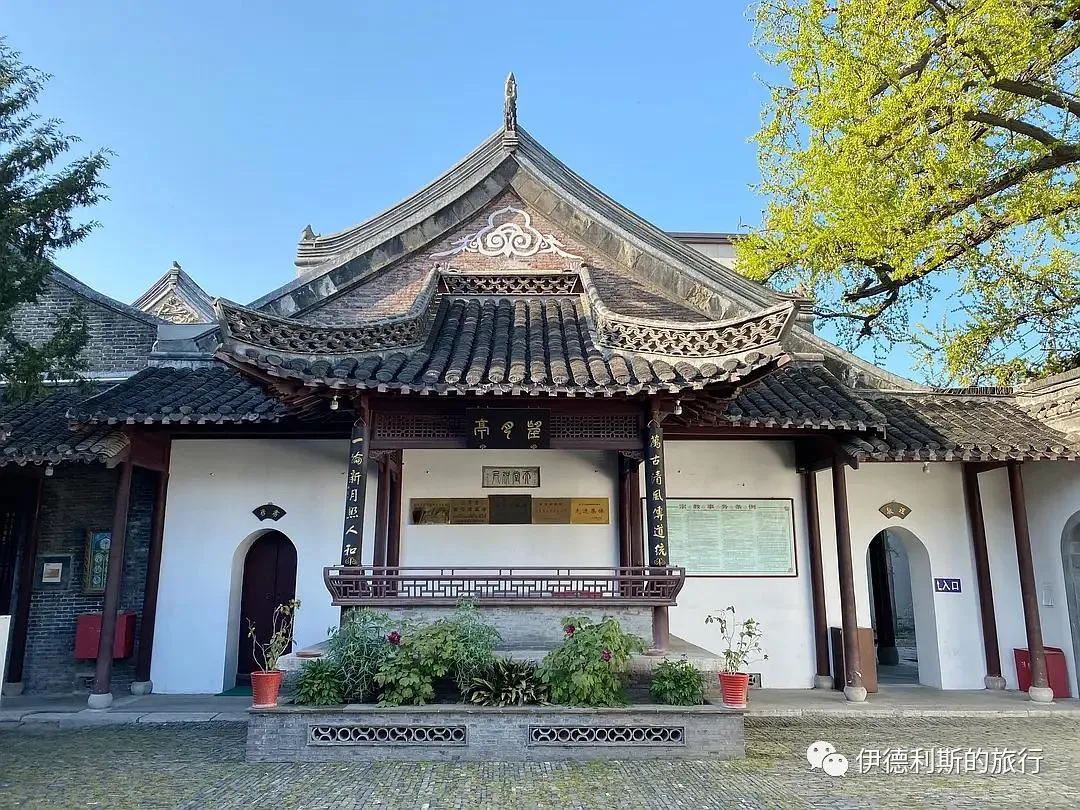
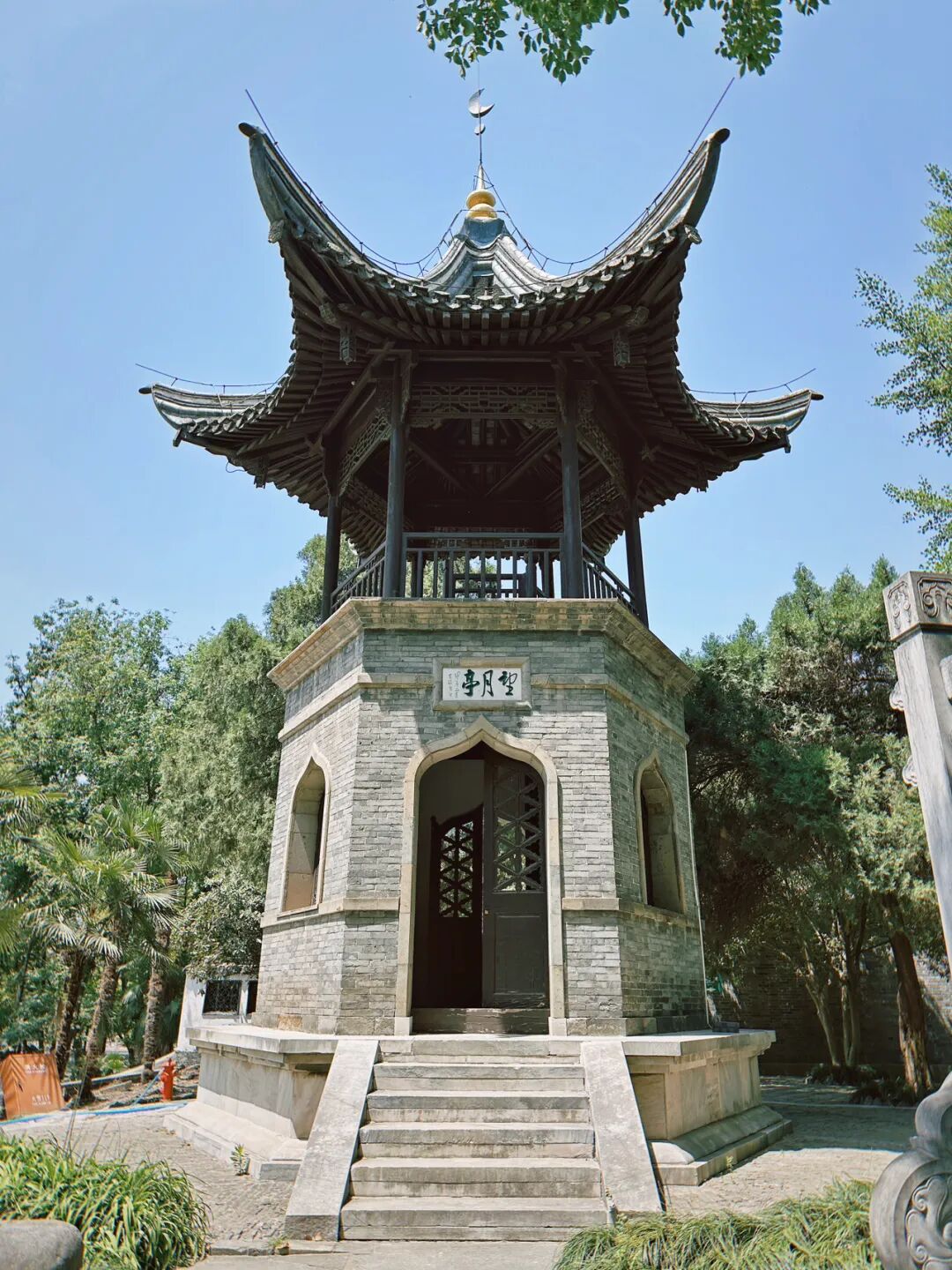
Xianhe Mosque is on Nanmen Street in Yangzhou. It was founded in 1275 (the 12th year of the Zhiyuan era of the Yuan Dynasty) by the Western sage Puhading before he passed away. It was rebuilt in 1390 (the 23rd year of the Hongwu era of the Ming Dynasty) by Ha San, renovated in 1523 (the 3rd year of the Jiajing era) by the merchant Ma Zongdao and the imam Ha Ming, and repaired again in 1791 (the 56th year of the Qianlong era). The Xianhe Mosque layout uses small courtyards, unlike the common four-sided courtyard (siheyuan) style found in northern mosques. Xianhe Mosque divides the lecture hall, the main prayer hall, and the gate into three separate small courtyards. It also features a moon-viewing pavilion (wangyueting) and a covered walkway (youlang) outside the south gable of the main hall, giving the mosque a garden-like atmosphere.
I visited Xianhe Mosque in 2021, as seen in my article, "The 2021 Trip to Gaoyou, Yangzhou, and Zhenjiang."
Majianxiang Mosque
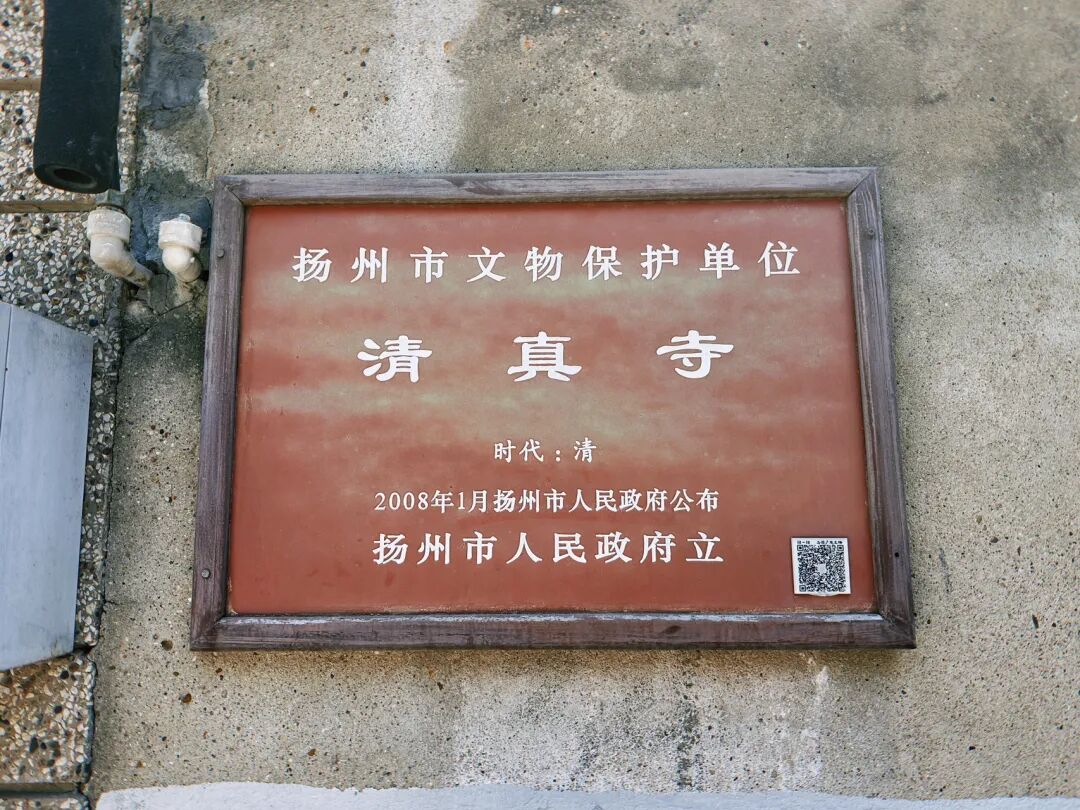
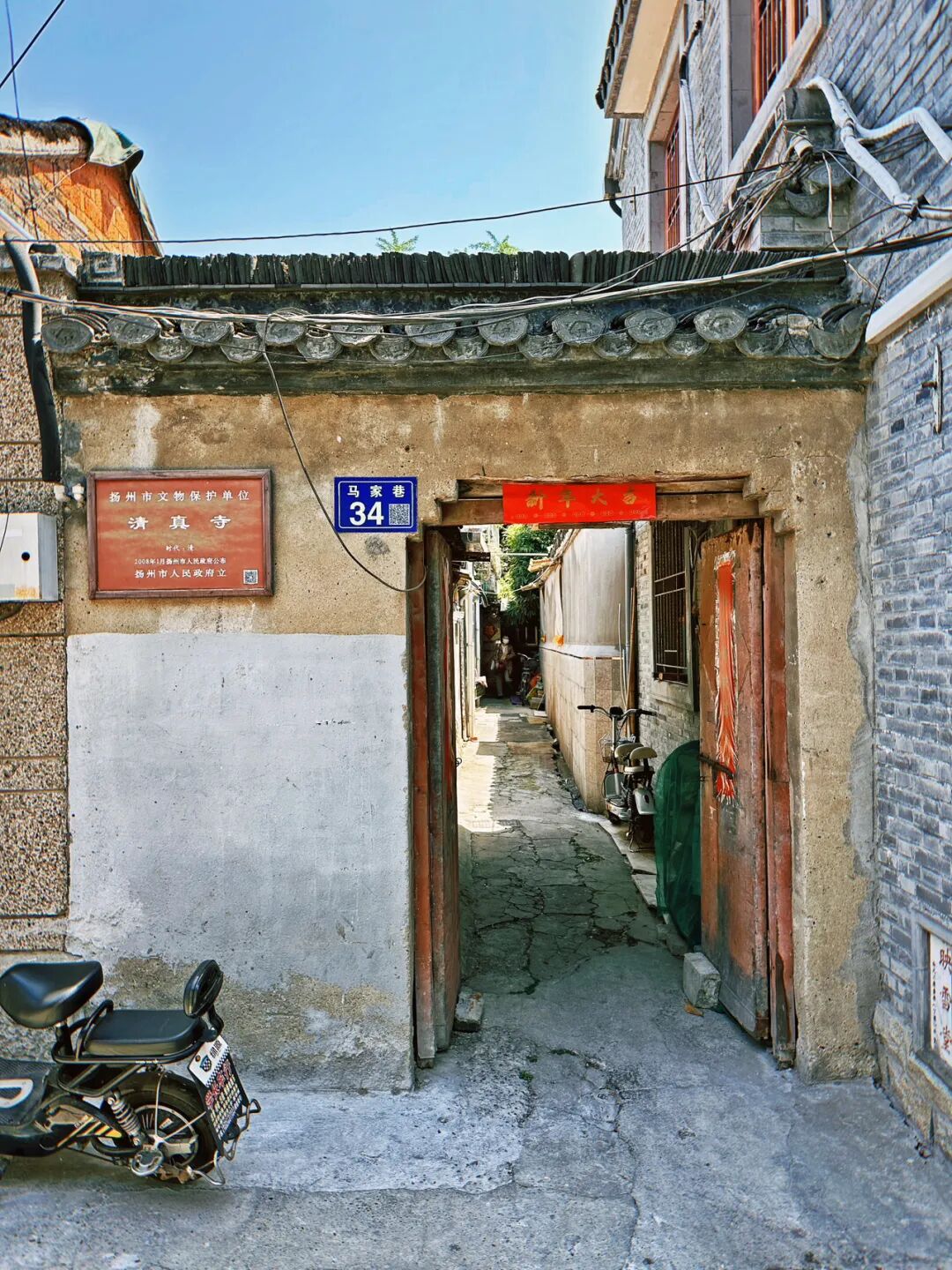
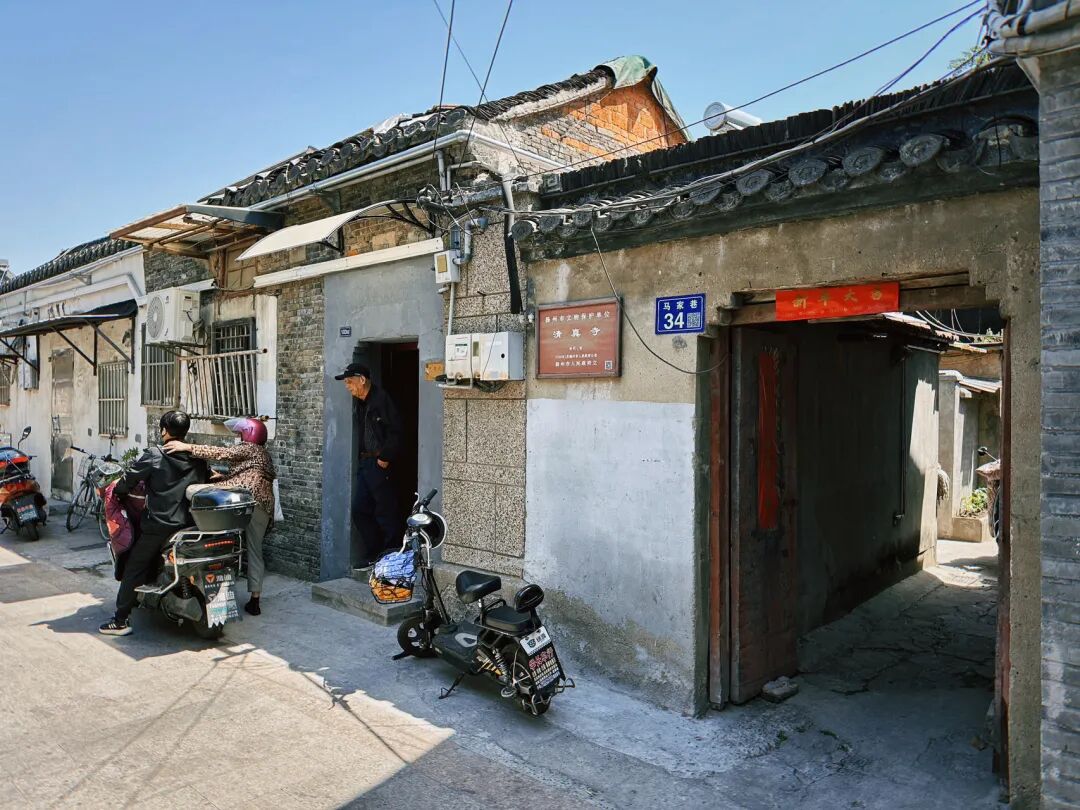
Majianxiang Mosque is located on Majianxiang in the Dongmen Street area of Yangzhou. According to the Hui Muslims' "Gu Family Genealogy," it was built in 1714 (the 53rd year of the Kangxi era) by Gu Yuanbing, a 24th-generation descendant of Gu Duding.
Majianxiang Mosque originally had dozens of rooms, including a gatehouse, a memorial archway (paifang), a main prayer hall, a reception hall, a water room (shuifang), side rooms, and dormitories. Today, two main halls, a reception hall, and the water room remain. In the early years of the Republic of China, the mosque housed the second Yangzhou branch of the Beijing-based "Zhenzong Newspaper" and a religious book and newspaper room.
In 1932, Liu Binru, a famous Yangzhou imam and one of the founders of the Chinese Islamic Association, along with Hua Ruzhou, then a council member of the Jiangdu County Hui Muslim Association, established the "Chinese Islamic Scripture Translation and Compilation Institute" here to translate religious texts. Liu Binru, who was fluent in Arabic and Persian, was responsible for translating the original Arabic texts. Hua Ruzhou translated the summaries from the English version by the Indian Islamic scholar Muhammad Ali, which were then attached before each section of the scripture. On January 1, 1935, the "Chinese Translation of the Quran with Ali's Summaries" was officially published. The first printing of 2,000 copies was sold by major bookstores across the country.
In 1933, the Yangzhou Islamic Association founded the Hui Muslim Cultural Training Institute at Majianxiang Mosque, with Liu Binru in charge. to teaching Arabic, the institute offered Chinese, English, and arithmetic, reaching a level equivalent to upper primary or junior high school. It replaced the traditional individual scripture teaching method with a classroom-based group instruction format. Teachers included the Majianxiang imam Hua Jinhou, who was proficient in Arabic, the imam Ruan Dechang, the imam of the East Gate Hui Muslim Hall Lan Baohua, and Liu Binru. They also hired Hui Muslim Association members Shen Junchen and Zhang Shaozhe to teach Chinese and arithmetic, and Hua Ruzhou to teach English.
Between 1934 and 1935, the missionary Claude L. Pickens visited the Majianxiang Mosque and saw a reading room inside with many books and magazines. He photographed the 1931 Gu Gong Memorial Stele standing in the mosque. The inscription records the life of mosque board member Gu Jisu, who served for 11 years, repaired the ablution room (shuifang) and market stalls, and built a new heated room (nuanfang), making great contributions to the mosque. He passed away in 1930, before he was 40 years old.
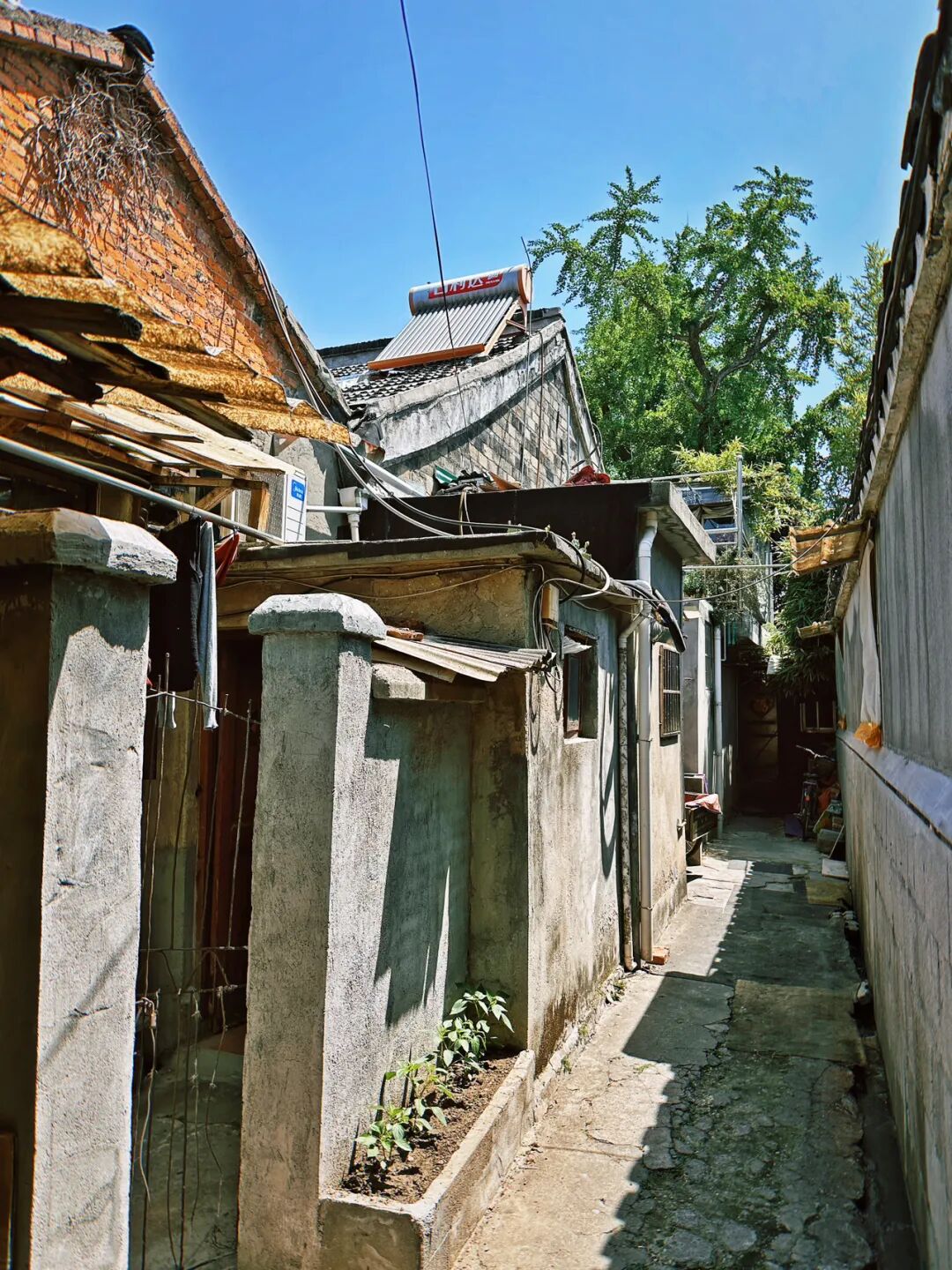
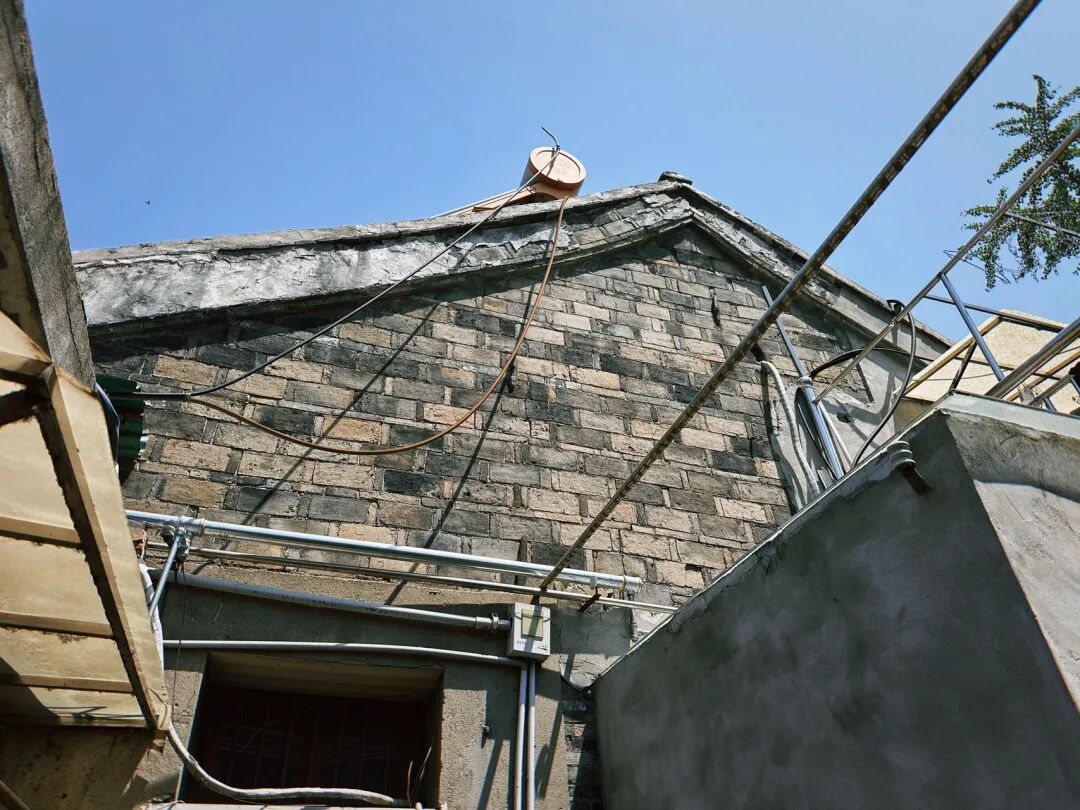
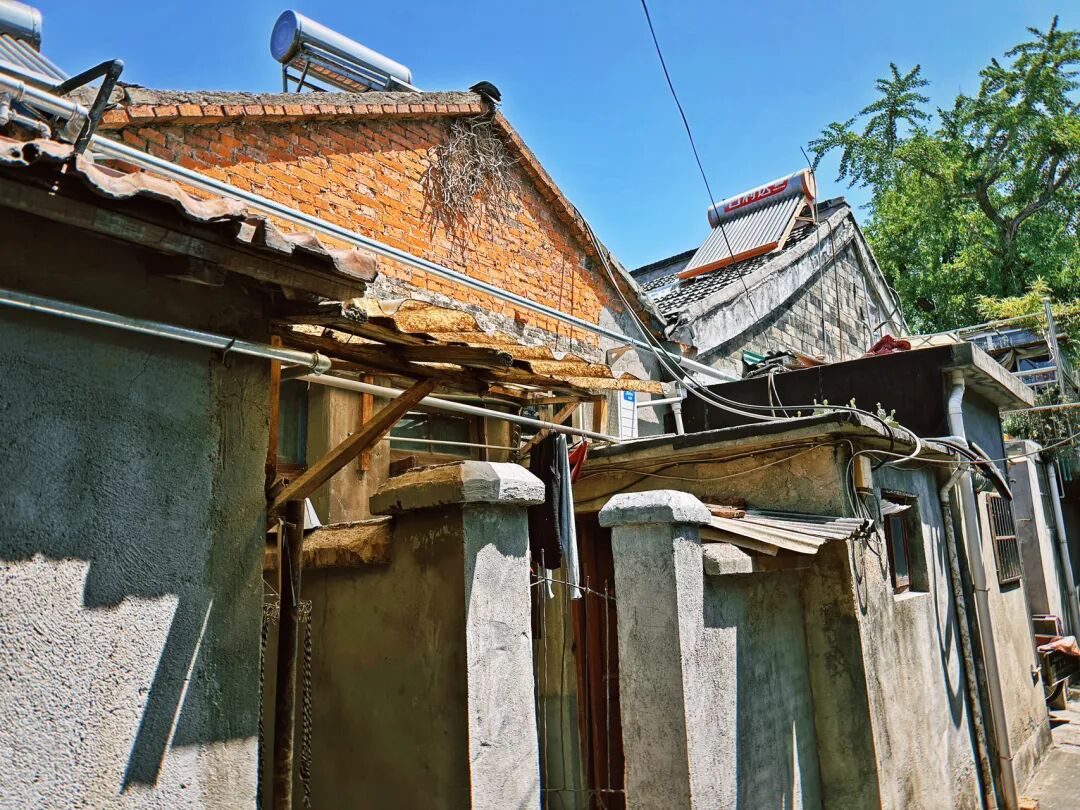
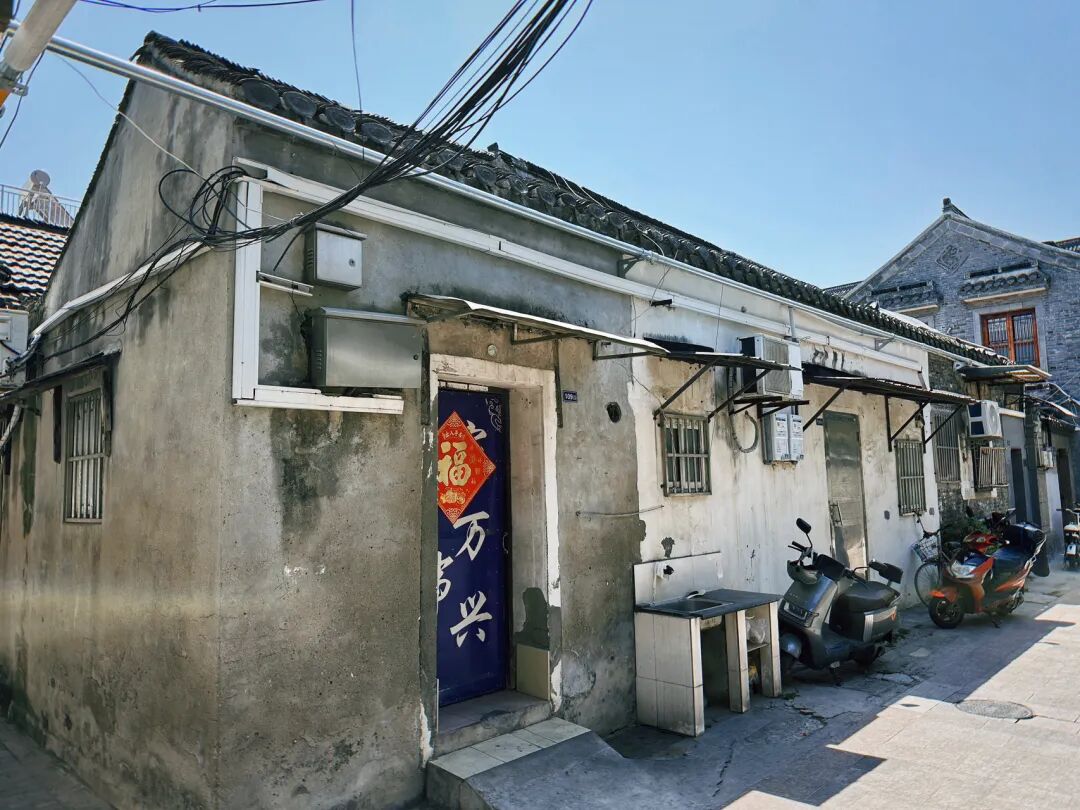
In 1958, the Majianxiang Mosque was converted into a factory workshop and occupied by a craft sign factory, a burlap bag factory, and a brush factory. The property was not recovered until 1997, and it was listed as a municipal cultural relic protection unit in 2008. It is currently used as a residence.
Puhading Tomb Garden
Legend says Puhading was a 16th-generation descendant of the Noble Prophet. He came to Yangzhou during the Xianchun period of the Song Dynasty (1265-1274) and died there in 1275 (the 12th year of the Zhiyuan period of the Yuan Dynasty). He was buried on a high ridge east of the Dongguan River in the New City, a place later called the Huihui Hall (commonly known as Baba Kiln).
According to oral traditions passed down by local imams in Yangzhou, as told by Imam Lan Baohua of the Huihui Hall on July 17, 1947, Puhading was born in 1204 (the 4th year of the Jiatai period of the Song Dynasty) into a wealthy Arab noble family and was the 16th-generation descendant of the Noble Prophet. Puhading was highly learned and mastered the scriptures and religious laws. At 57, following the teaching that one should seek knowledge even if it is as far as China, he spent four years preparing. At 61, he led a team of 17 people across the Arabian Sea toward China.
Puhading arrived in Yangzhou in 1265 (the 1st year of the Xianchun period of the Song Dynasty). During his 10 years in Yangzhou, he presided over the founding of the Xianhe Mosque, expanded the old mosque outside the South Gate, and rebuilt the Nanchaoguan Mosque.
In 1275 (the 12th year of the Zhiyuan period of the Yuan Dynasty), he died on a boat while returning from giving a lecture, at the age of 71. Yuan Guang'en, the governor of Guangling, buried him on a high ridge on the east bank of the Grand Canal in Yangzhou.
The Puhading Tomb Garden has been renovated through the dynasties. Most of the existing buildings reflect the appearance after the 1845 (the 25th year of the Daoguang period) renovation. It was named a Major Historical and Cultural Site Protected at the National Level in 2001.
The gate of the tomb garden is right next to the Beijing-Hangzhou Grand Canal, and the original stone path and stone pillars for tying boat ropes are preserved outside the gate. The lintel of the gate is inscribed with 'Tomb of the Western Sage Puhading,' with the signature 'Rebuilt in the month of lotus in the Bing-shen year of the Qianlong reign.' On both sides of the gate are Qing Dynasty drum-shaped stone bases featuring lions playing with a ball. Inside the gate is a stele from the Daoguang renovation, inscribed with 'In the Yi-si year of the Daoguang reign, people of various surnames donated to build the stone bank and renovate the halls; the management was not easy.' I hope this place is repaired from time to time so it does not fall into ruin, keeping the tomb grounds safe and preserving its memory forever.
After entering the Pu Hadin tomb complex, you reach stone steps leading up the hill. The stone railings on both sides are carved with traditional patterns and designs, including lions playing with balls, carp jumping over the dragon gate, and the three rams bringing prosperity (sanyang kaitai). At the top of the steps stands a foyer with a four-cornered pointed roof topped with a glazed vase. Above it is a plaque inscribed with the words 'Tianfang Ju Yue' (The Standard of the Holy Land).
The center of the Pu Hadin tomb complex is the Pu Hadin tomb pavilion. The tomb pavilion has a four-cornered pointed roof with a glazed vase on top, and the interior features a corbelled dome. Inside the pavilion is the tomb cover stone, which follows the classic Song and Yuan dynasty style for Hui Muslims. It has a five-tiered Sumeru pedestal structure carved with scrolling peonies, ruyi flowers, and scripture. Today, the tomb cover stone is covered by a cloth and cannot be seen.
The pavilion features a stone tablet erected in 1726 (the fourth year of the Yongzheng reign) that reads 'Tomb of the Sage Pu Hadin from the Western Regions who attained the Way,' with carvings of longevity peaches and lotus flowers around the edges.
Inside the north foyer, there is also a 'Record of the Tomb of the Sage Pu Hadin from the Western Regions' erected in 1908 (the 34th year of the Guangxu reign). Besides recording Pu Hadin's birth and death, it includes legendary stories known within the community as 'karamat' (miraculous signs). The inscription records that an old monk from the Dragon King Temple tried to compete with Pu Hadin in magic, but he could not win and was eventually humbled. It also records that in the early Qing dynasty, thieves tried to dig up Pu Hadin's tomb. After they opened the tomb cover stone, a raging fire suddenly broke out and burned many of the thieves. Later, they saw there were no remains in the tomb, only a scroll of the Quran (Tianjing) and a hat, shoes, fan, and staff. The inscription is signed by 'the imam of this mosque and others who supervised the carving.' The imam of this mosque refers to the leader of the Babayao Mosque.
Around the Pu Hadin tomb pavilion are the tomb pavilions of several other sages, including the sage Sa Ganda who passed away in 1278 (the third year of the Jingyan reign of the Song dynasty), the sages Mahamude and Zhanmaluding who passed away in 1469 (the fifth year of the Chenghua reign of the Ming dynasty), the sage Fana who passed away in 1498 (the 11th year of the Hongzhi reign), and the tomb of Wang Keng, a merchant from Xi'an, Shaanxi, who passed away in 1501 (the 14th year of the Hongzhi reign of the Ming dynasty). The tomb pavilions all contain traditional Song and Yuan dynasty Sumeru pedestal tomb cover stones. I saw them in 2017, but when I went back in 2025, they were all covered with cloths and could not be seen.
The pavilion also has a stone tablet from the Qianlong reign commemorating the reconstruction, which lists: 'The great sage Pu Hadin, a 16th-generation descendant of the Holy Prophet from the Western Regions, in the first year of the Deyou reign of the Song dynasty; the sage Sa Ganda from the Western Regions in the third year of the Jingyan reign of the Song dynasty; the sage Mahamude from the Western Regions in the fifth year of the Chenghua reign of the Ming dynasty; the sage Zhanmaluding from the Western Regions in the fifth year of the Chenghua reign of the Ming dynasty; and the sage Fana from the Western Regions in the 11th year of the Hongzhi reign of the Ming dynasty.' The inscription reads, Rebuilt in the lunar eighth month of the Bing-Shen year of the Qianlong reign.
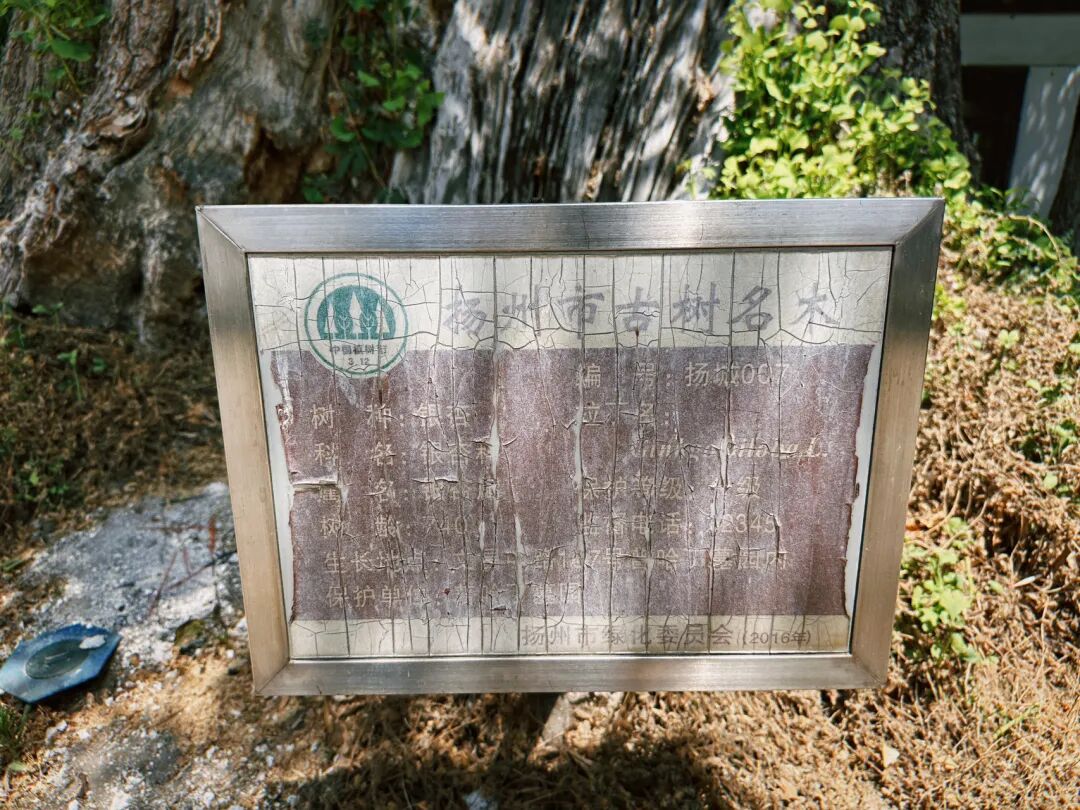
There are two ancient ginkgo trees in the cemetery, one of which is 750 years old and was planted when the cemetery was built in 1275. The 23rd day of the seventh lunar month this year marks the 750th anniversary of Pu Hadin's passing, and a grand memorial event will be held then.
The year 1275 was also when Yangzhou fell to the Yuan dynasty. That year, the Yuan general Wuliangha Ashu besieged Yangzhou, but the Song dynasty defenders refused to surrender, and the Yuan army failed to take the city after repeated attacks. The siege lasted for one year and three months. Eventually, a minor general inside the city opened the gates to surrender. The main commanders, Li Tingzhi and Jiang Cai, were captured, and the Yuan dynasty finally occupied Yangzhou. Therefore, this ancient ginkgo tree in the cemetery is a witness to the transition between the Song and Yuan dynasties.
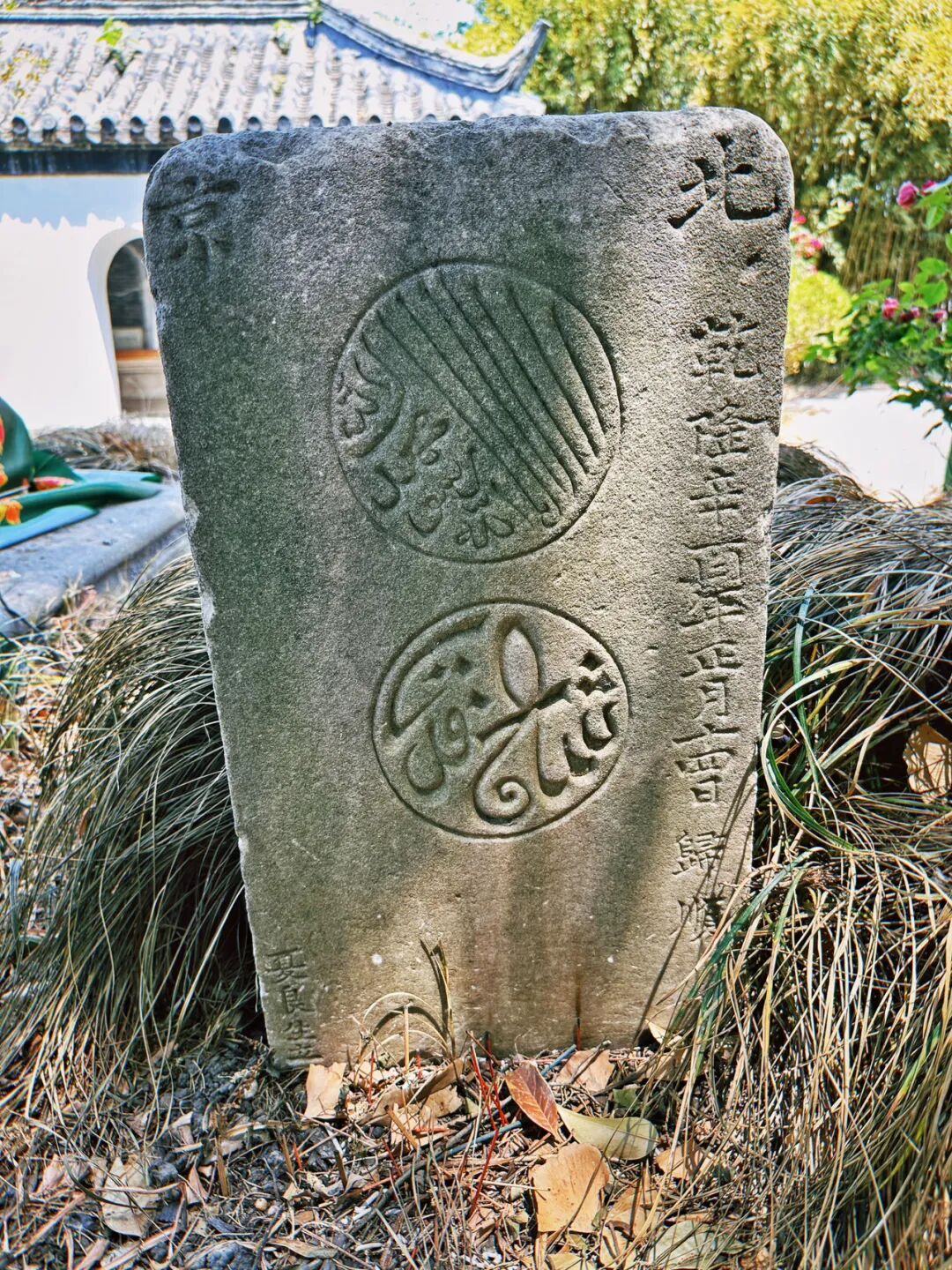
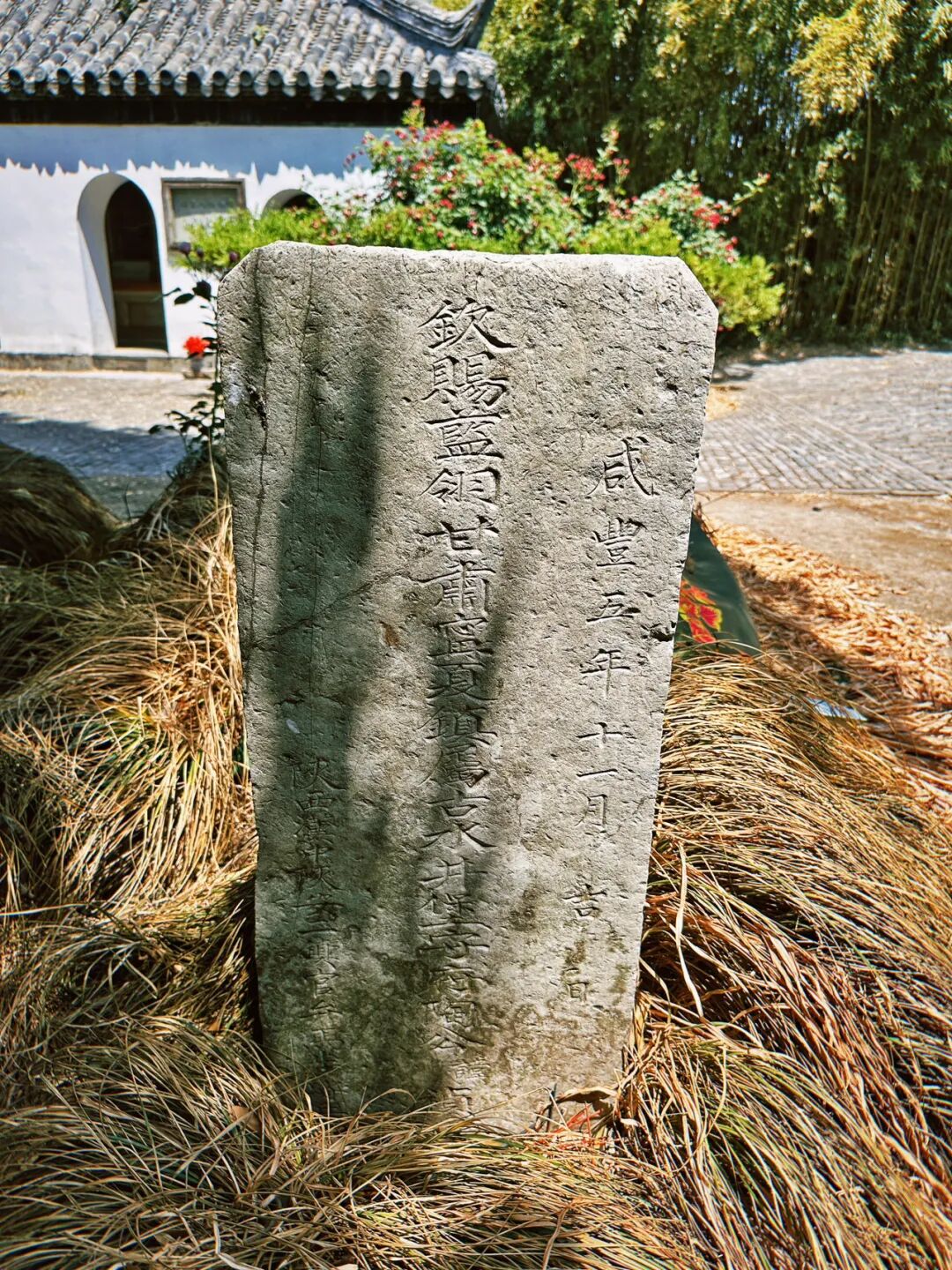
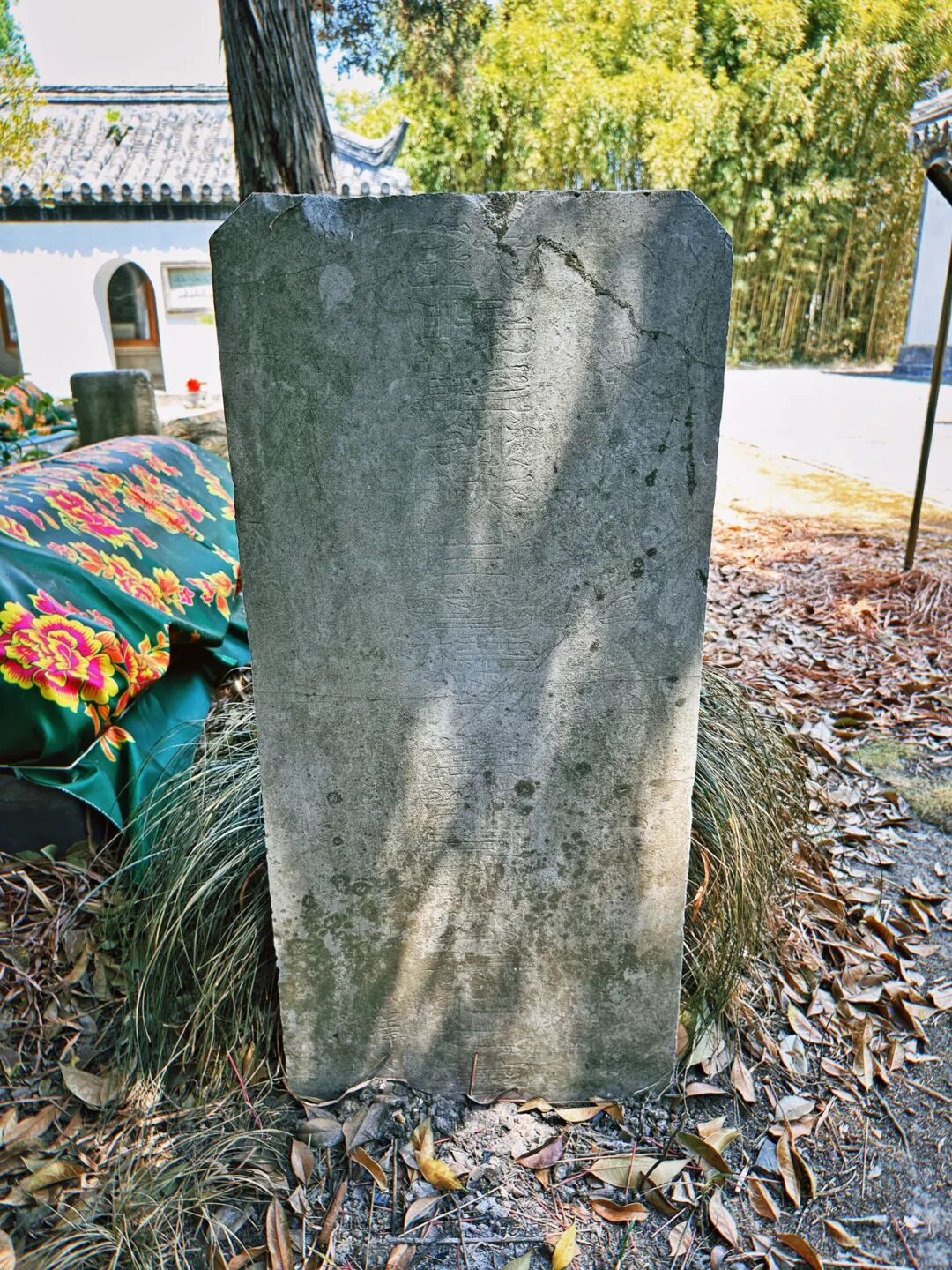
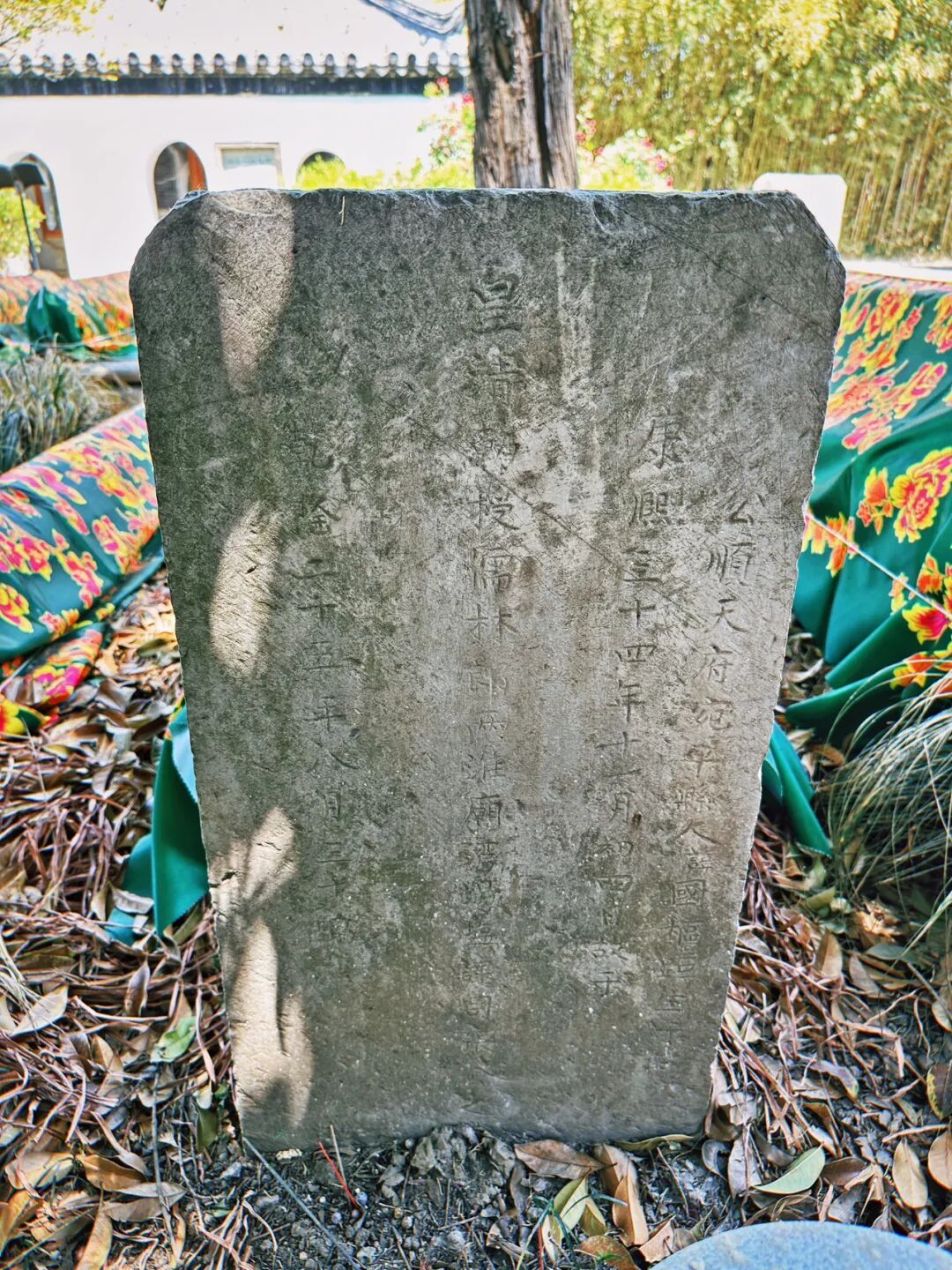
Most of the Qing dynasty tombstones in the Pu Hadin cemetery show official titles. One of them, from the fifth year of the Xianfeng reign, belongs to Tao Gong, a garrison commander of Gushuijing Fort under the Ningxia Town of Gansu, who was granted a blue peacock feather by the emperor.
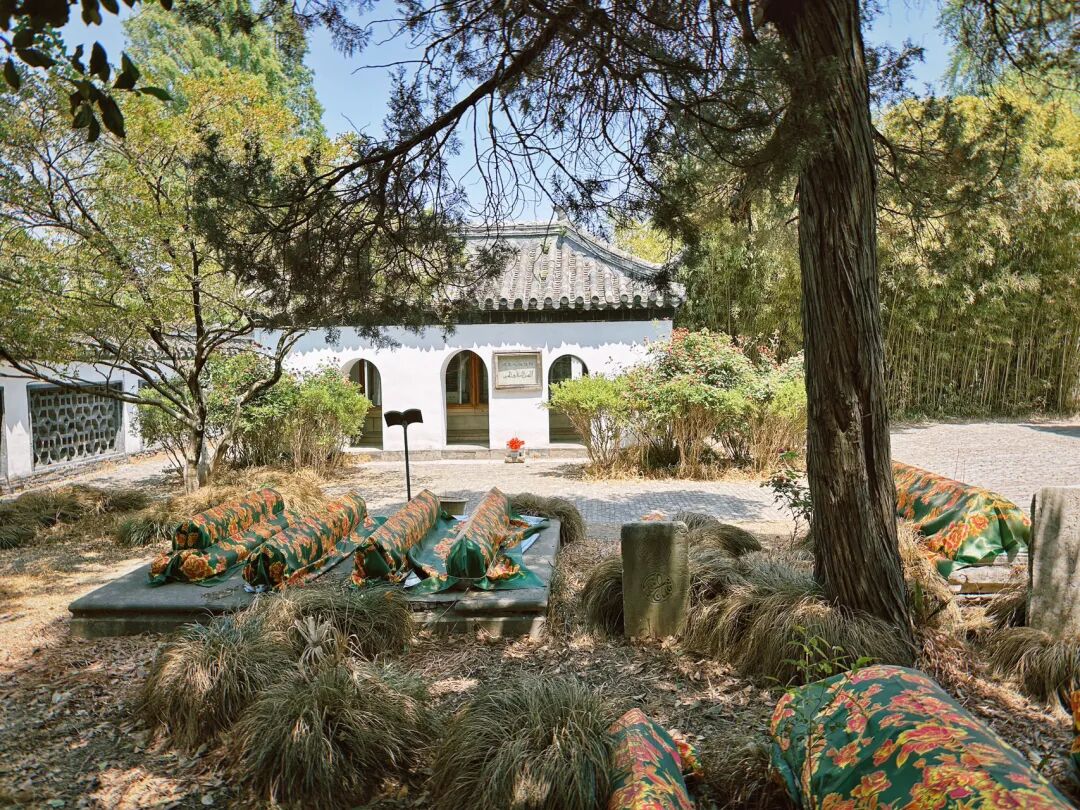
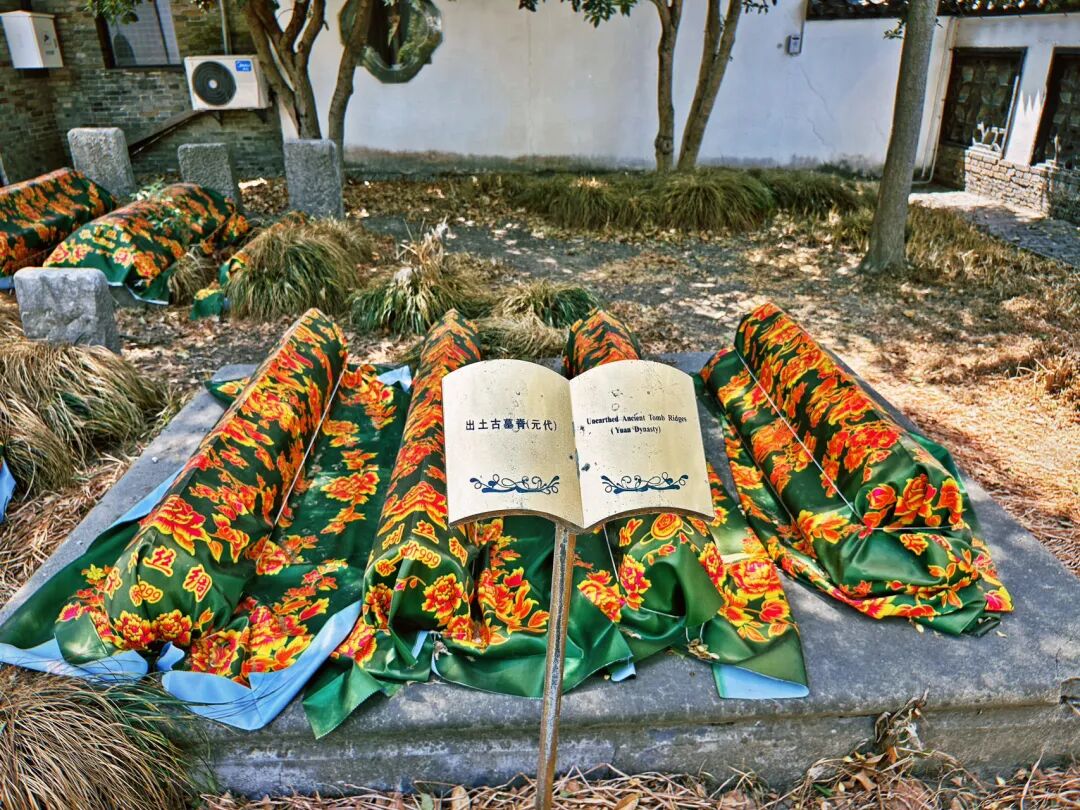
There are also some unearthed Yuan dynasty tomb capstones in the cemetery, but they are currently covered with tarps and cannot be seen.
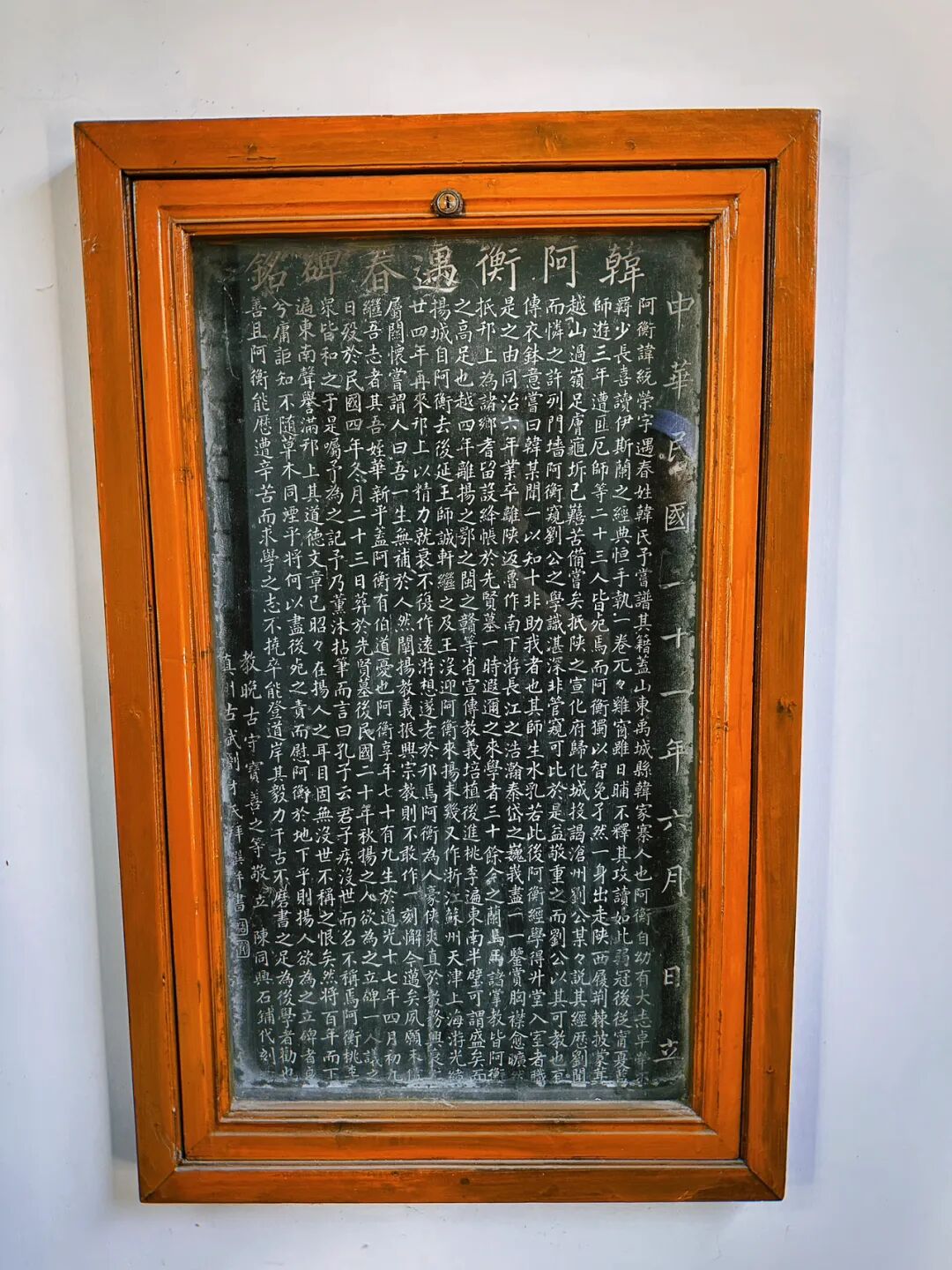
On the cemetery wall, there is a 1932 stele titled Inscription for Han Aheng Yuchun. The inscription records that Imam Han Tongrong was from Hanjiachai in Yucheng County, Shandong. He was born in 1837 (the 17th year of the Daoguang reign), studied the classics from a young age, and later traveled to Ningxia and Hohhot for his studies. After graduating in 1867 (the sixth year of the Tongzhi reign), he returned to Shandong and then traveled south. When he passed through Yangzhou, the local elders asked him to stay. He set up a school at the Baba Yao Mosque next to the Pu Hadin cemetery and taught over thirty students, including several religious leaders with the surnames Lan, Ma, and Wang. Four years later, Imam Han left Yangzhou to preach and teach in Hubei, Fujian, Jiangxi, and other places, with his students spread across the entire southeast region. During this time, Imam Han briefly returned to teach in Yangzhou before traveling to Zhejiang, Suzhou, Tianjin, and Shanghai. He returned to Yangzhou to teach in 1898 (the 24th year of the Guangxu reign) and stayed until he passed away in 1915 at the age of 79, after which he was buried in the Pu Hadin cemetery.
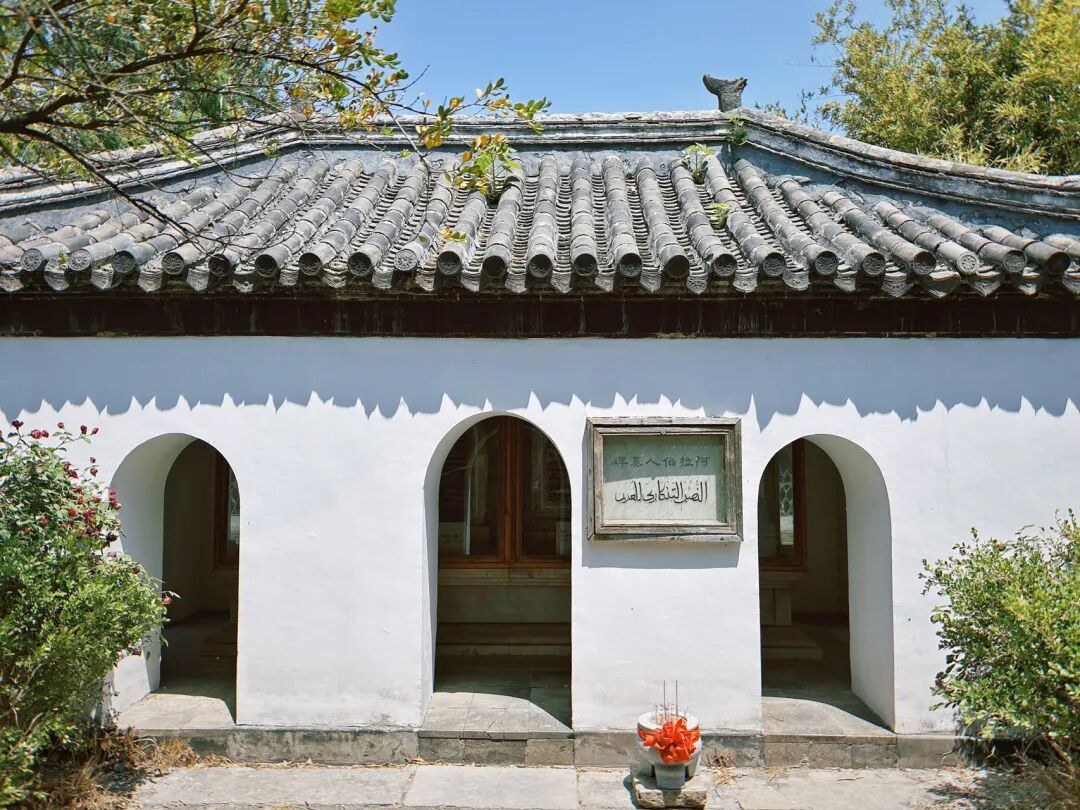
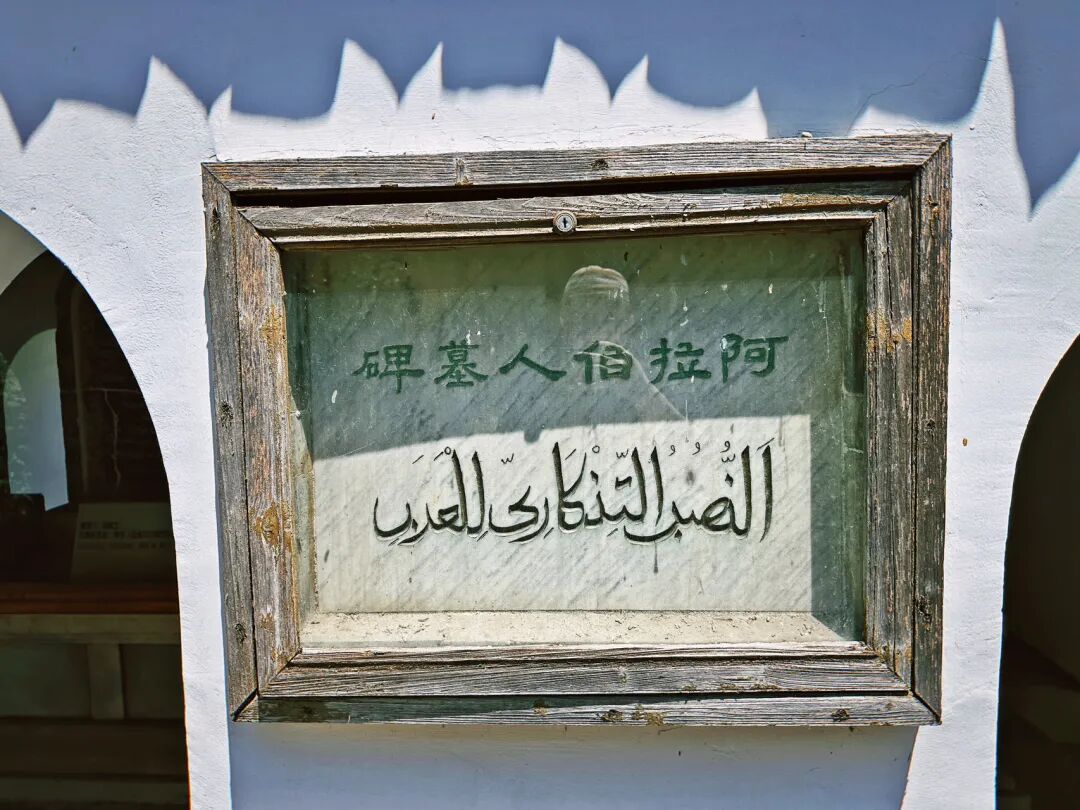
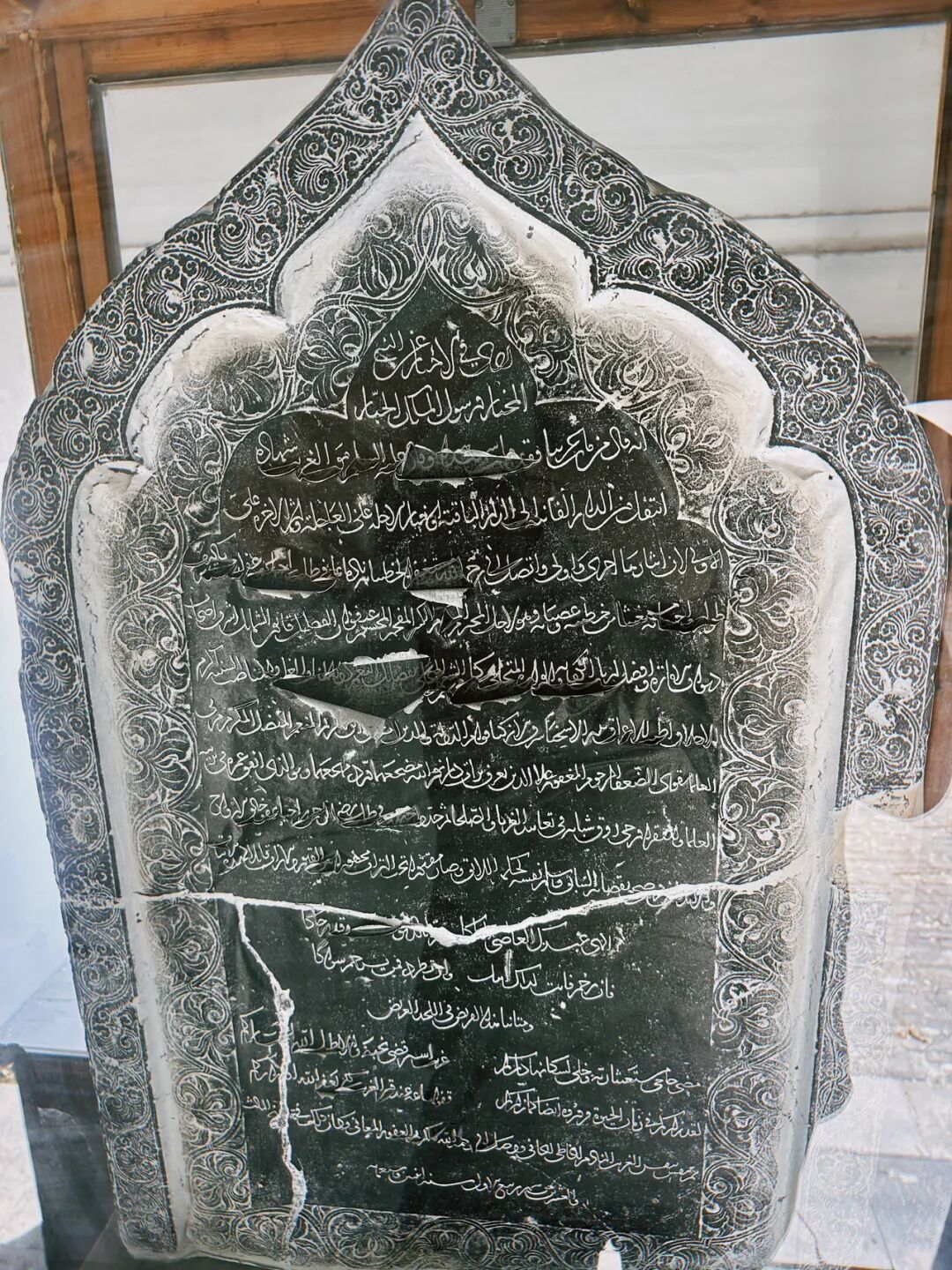
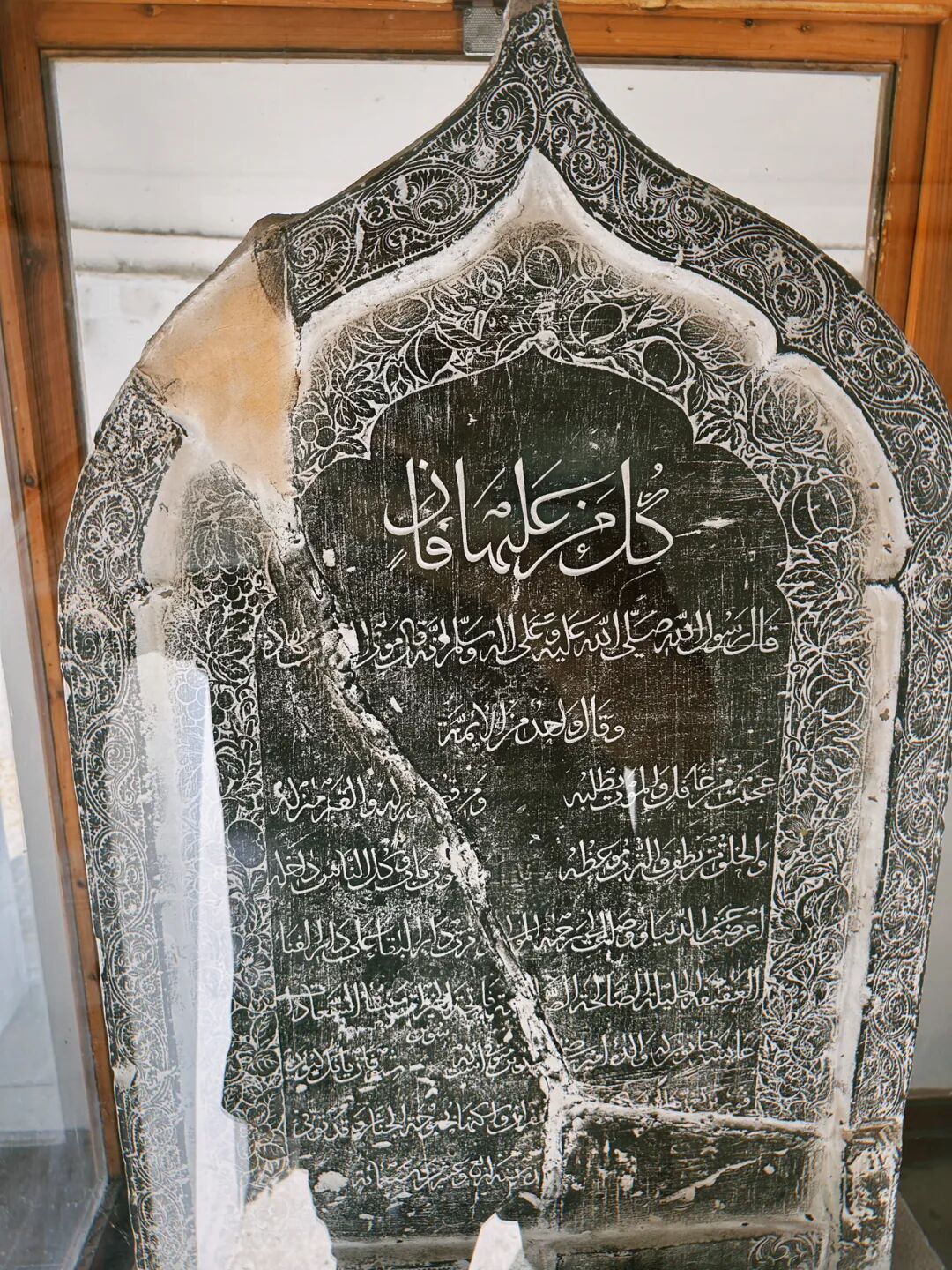
The Pu Hadin cemetery houses four Yuan dynasty tombstones. Three of them are primarily in Arabic with some Persian place names, while the front of the fourth one is written in Chinese characters. These four tombstones were discovered in the city foundations in 1924-1925 when the Dangjun Tower at the south gate of Yangzhou was demolished. It was originally kept in the tomb of the sages next to the Crane Mosque (Xianhe Si) and moved to the Puhading Cemetery in 1959.
During the Song Dynasty, a government hostel was set up at the south gate of Yangzhou. The area outside the south gate became a major settlement for Arab and Persian merchants. An ancient mosque (Nanmenwai Gusi) was built there, but it was later occupied by a glass factory and the main hall was demolished in 1984. A cemetery was also built nearby. In 1357, the 17th year of the Zhizheng era of the Yuan Dynasty, Zhu Yuanzhang captured Yangzhou and used some of the tombstones to build the Dangjun Tower at the south gate.
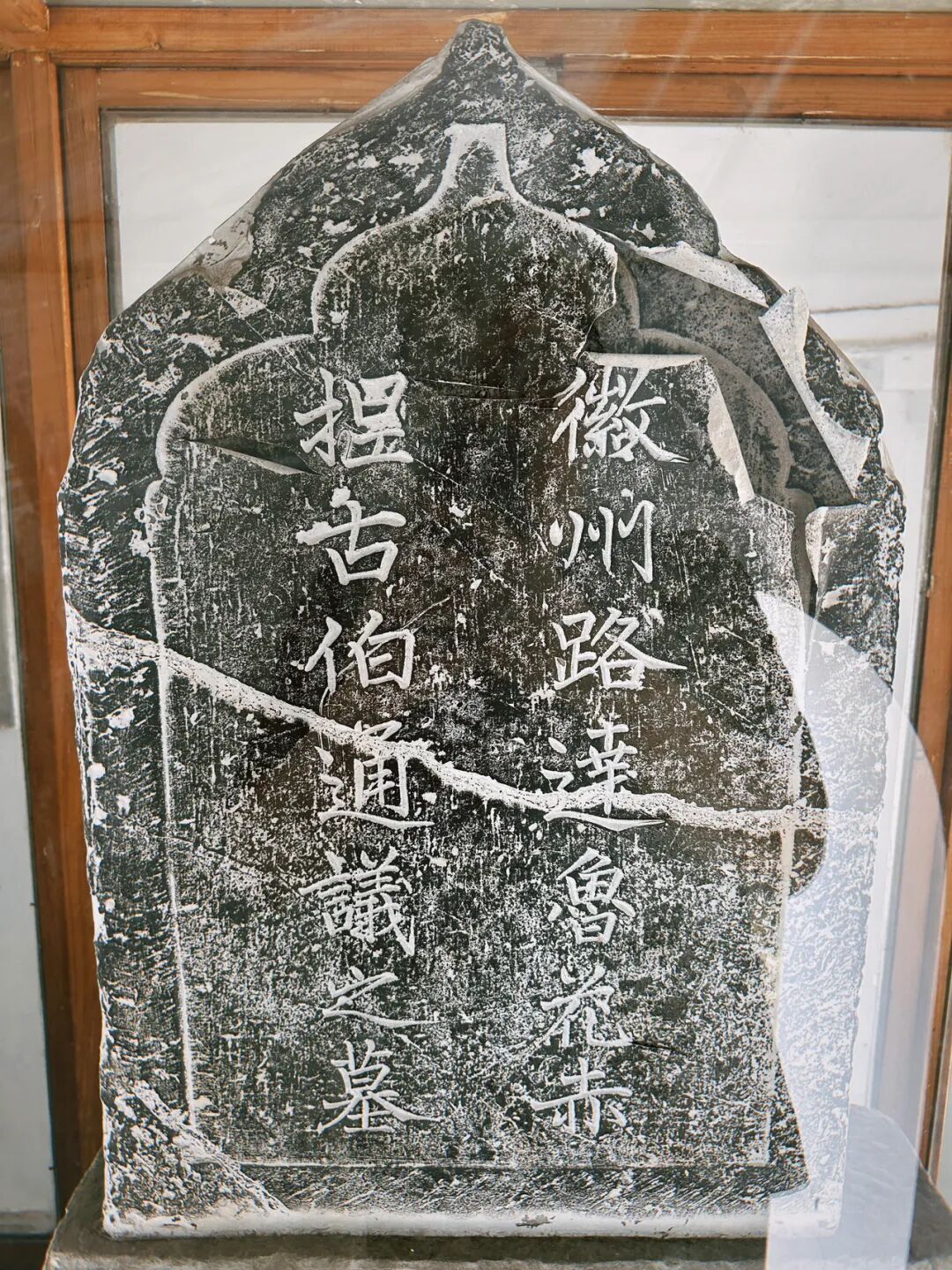
One of the Chinese-language tombstones is inscribed with 'Tomb of the Darughachi of Huizhou Circuit, Nie Gubo, Tongyi'. The term Darughachi originally meant 'seal holder' and referred to officials who held real administrative and military power in local areas during the Yuan Dynasty. The Huizhou Circuit was a high-ranking circuit, so the Darughachi held a rank of 3a. Tongyi is short for 'Tongyi Dafu', which is also a 3a rank. During the Yuan Dynasty, most Darughachi were Mongols, though some were Semu people with noble family backgrounds. The back of the stone records Nie Gubo's life and praises him as a 'noble, diligent, and excellent religious educator, an outstanding leader who helped the weak, was charitable and generous, and loved the people, a respected elder... a man of great virtue and wisdom, generous and fair, and blessed with great fortune.' It also notes that he passed away on the 2nd day of the 12th month of the Islamic calendar year 709, which is May 3, 1310, the third year of the Zhida era of the Yuan Dynasty.
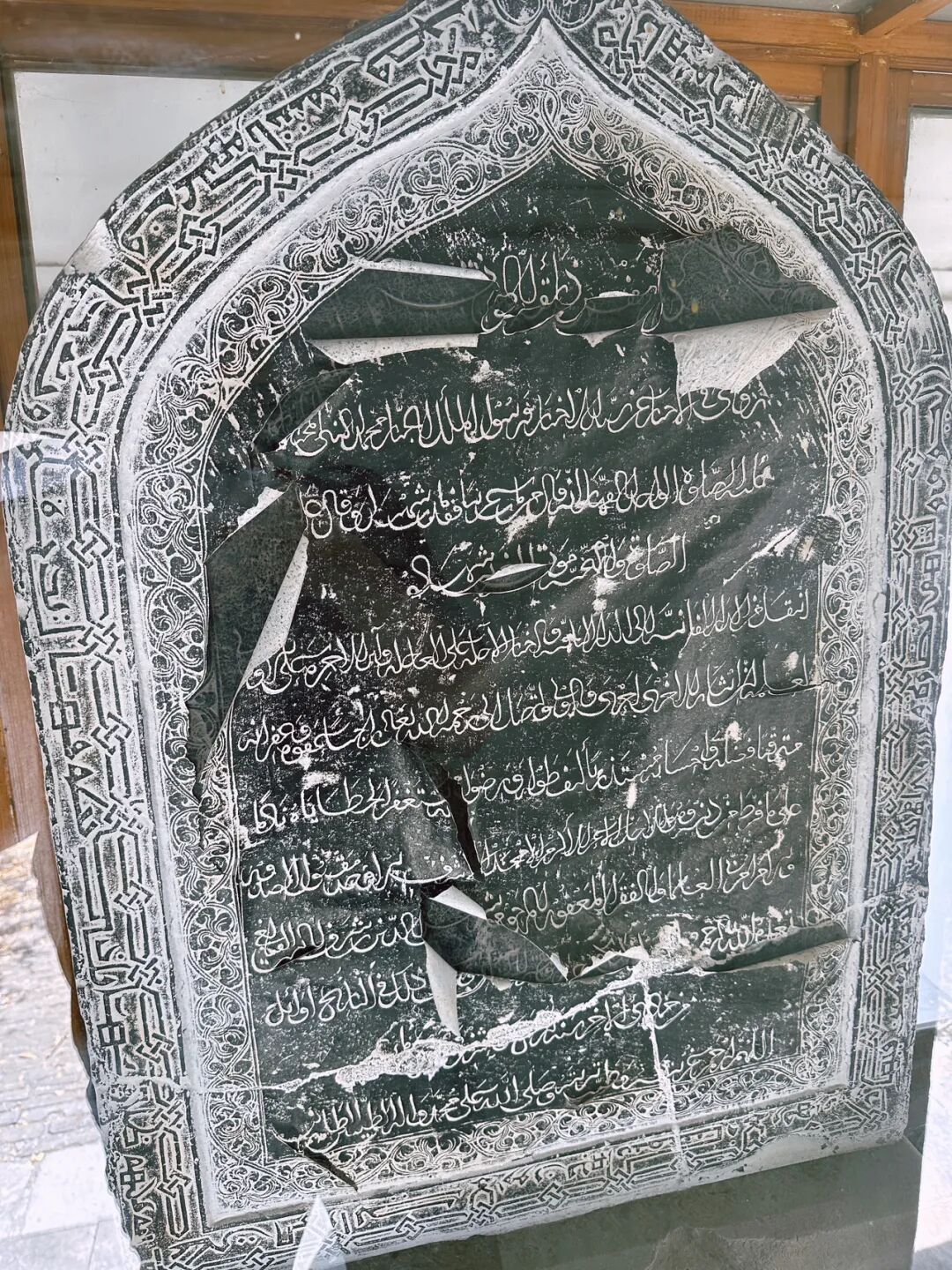
The second tombstone records: 'The pardoned deceased Shams al-Din Asif Allah Balaji... at the time of early June, 724 (Islamic calendar).' This corresponds to the end of May or early June of 1324, the first year of the Taiding era of the Yuan Dynasty.
The third tombstone belongs to a Persian woman who also passed away in 1324. Her name was Aisha Khatun, with 'Khatun' meaning 'lady'. The inscription says: 'She was a chaste, virtuous, and capable woman... her father was Lezunding, a well-respected official in the religious community.'
The fourth tombstone is damaged. It belonged to a missionary named Ala al-Din who died in 1302, the sixth year of the Dade era of the Yuan Dynasty. The inscription describes him as a merchant who was skilled in business and highly respected by the people.
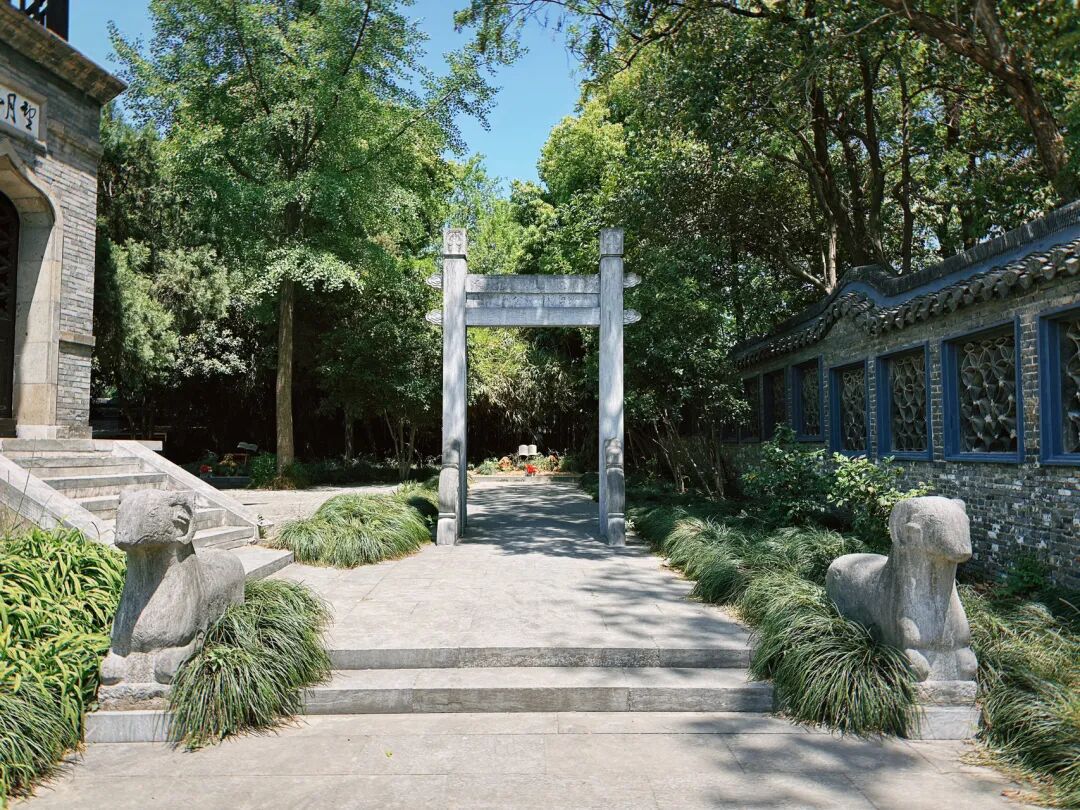
On the east side of the Puhading Cemetery is the tomb of General Zhang Xin, who passed away in 1551, the 30th year of the Jiajing era of the Ming Dynasty. General Zhang's ancestor, Damuchi, came from Samarkand. The 'Continued Records of Jiangdu County' from the Republic of China era states: 'General Zhaoyong, named Xin, was the grandson of the Hui Muslim Damuchi. He held the rank of Cavalry Commandant. Because he was an excellent archer, he was granted the surname Zhang and his household was registered in Yangzhou, located behind the Puhading tomb outside Tongji Gate.'
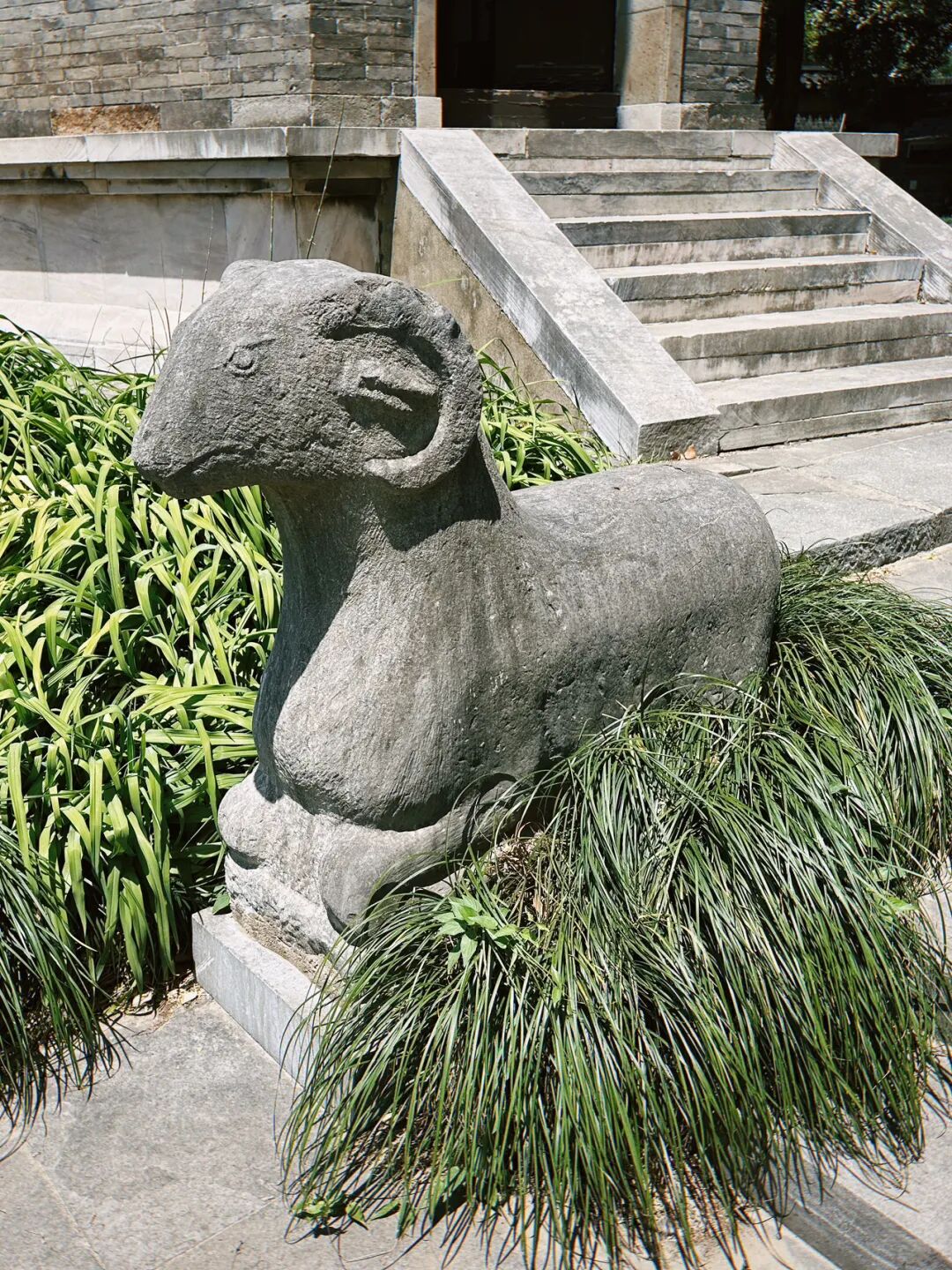
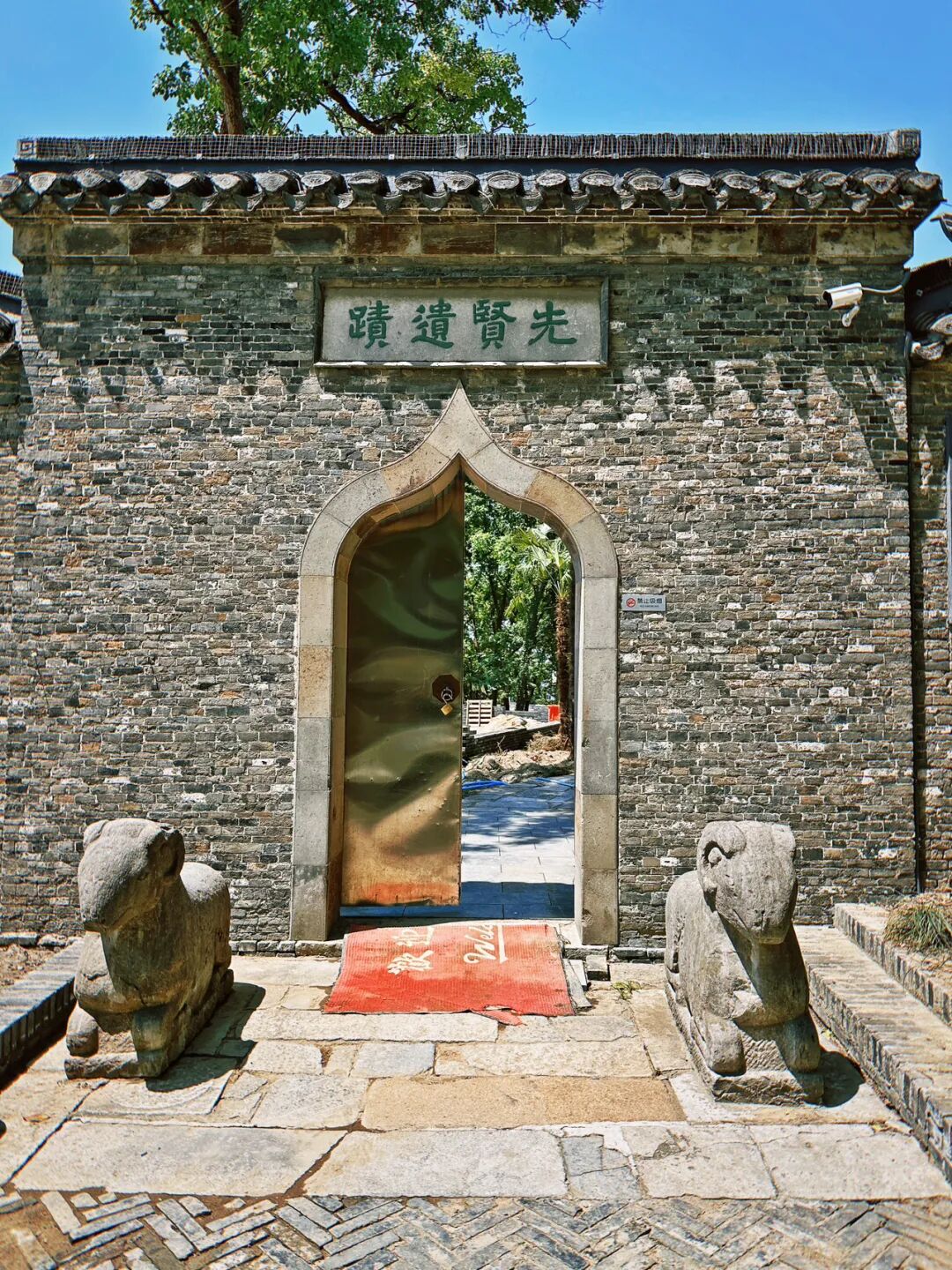
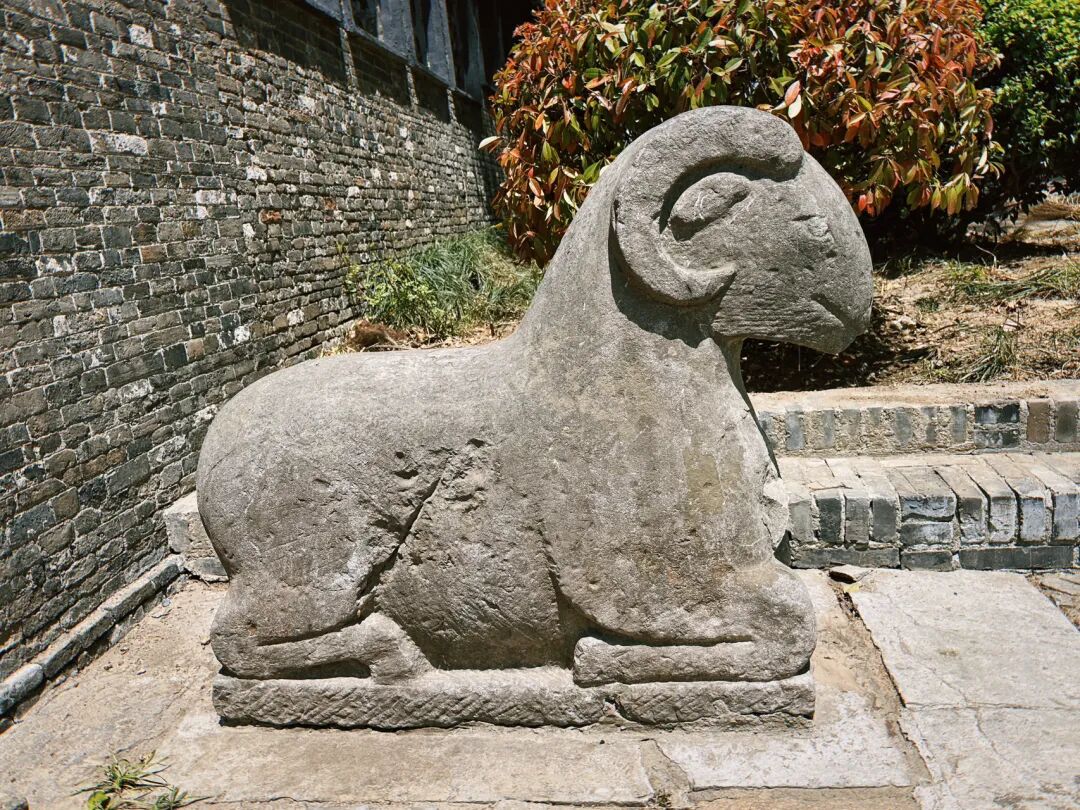
The spirit way archway for General Zhang was erected by his grandson, Zhang Heng. Zhang Heng was a famous Ming Dynasty general who fought against Japanese pirates and served as the hereditary commander of the Yangzhou Guard. In April 1556 (the 35th year of the Jiajing reign), Japanese pirates attacked Yangzhou. Zhang Heng, a retired Huaiyang assistant regional commander, personally led troops to fight them and died on the battlefield. The stone sheep beside the spirit way was once kept at Slender West Lake until it was moved back in 2011.
Next to General Zhang Xin's tomb is the cenotaph of Zuo Baogui, a famous Qing Dynasty general who fought against the Japanese. During the First Sino-Japanese War in 1894 (the 20th year of the Guangxu reign), Zuo Baogui led his troops to hold the Xuanwu Gate in Pyongyang and dealt a heavy blow to the Japanese army. On September 15, Zuo Baogui personally fired a cannon. His right arm was broken, but he bandaged the wound and kept fighting. He was then hit in the chest by a shell and died heroically at the age of 57. That same year, the Yangzhou government followed an imperial decree to build a cenotaph and a shrine for Zuo Baogui in the south section of the Puhading Tomb. The shrine was later destroyed, leaving only the tomb cover stone of the cenotaph.
Babayao Mosque
The mosque southwest of the Puhading Tomb garden is called Huihui Tang Mosque or Babayao Mosque. It was one of the six Hui Muslim districts in Yangzhou during the Qing Dynasty and is the only one remaining of the three districts outside the city. Babayao Mosque currently appears as it did after being rebuilt in 1776 (the 41st year of the Qianlong reign) and renovated in 1845 (the 25th year of the Daoguang reign), featuring the traditional architectural style typical of the Huaiyang region.
The main gate of Babayao Mosque is on the southwest side of the Puhading Tomb garden. The stone plaque above the gate was installed during the Qianlong reign, and the rectangular door-pillow stones are very elegant.
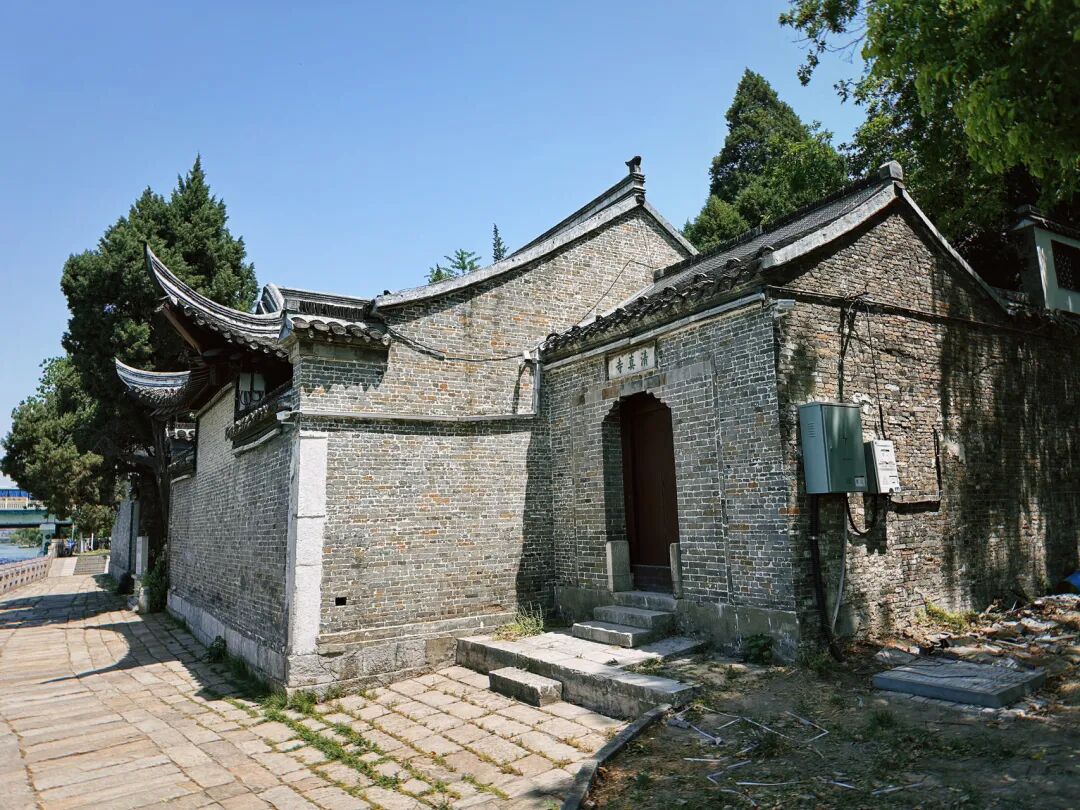
The main prayer hall is on the north side of the gate, right next to the stone path of the Grand Canal, and features upturned eaves. The interior has a hard mountain roof, floor-to-ceiling slanted lattice partition doors, and a large wooden column-and-tie structural frame.
Shaobo Mosque
Traveling north from Yangzhou city along the Beijing-Hangzhou Grand Canal, the first place you reach is the ancient town of Shaobo. Historically, Shaobo was a bustling canal trading port and a key route connecting Yangzhou and Gaoyou. The ancient town still keeps a three-mile-long stone-paved road and over 20 ancient houses from the Ming and Qing dynasties.
Shaobo Mosque is said to have been built by Hui Muslims from Shandong during the Xianfeng era. Its gate and main hall still stand, and it is a protected cultural site in Jiangdu District, Yangzhou. The mosque was once used as a private residence and is now abandoned.
The gate still has its original lintel and drum-shaped stone bases. The main hall is a hard-gable style building with grey bricks and dark tiles, showing typical Jianghuai architectural style.
Shaobo Mosque is three bays wide and seven purlins deep. The gable walls have brick wind boards, the ridge purlin is supported by a dou-gong bracket set, and the columns rest on ancient mirror-style bases carved with patterns. Besides the main hall, Shaobo Mosque once had other buildings, but now only stone remains like column bases are left.
Gaoyou Mosque
Travel north from the ancient town of Shaobo along the Beijing-Hangzhou Grand Canal to reach the ancient city of Gaoyou. I visited Gaoyou Mosque in 2021 but learned it only opens for Jumuah. This time, I came specifically for Jumuah and finally got inside.
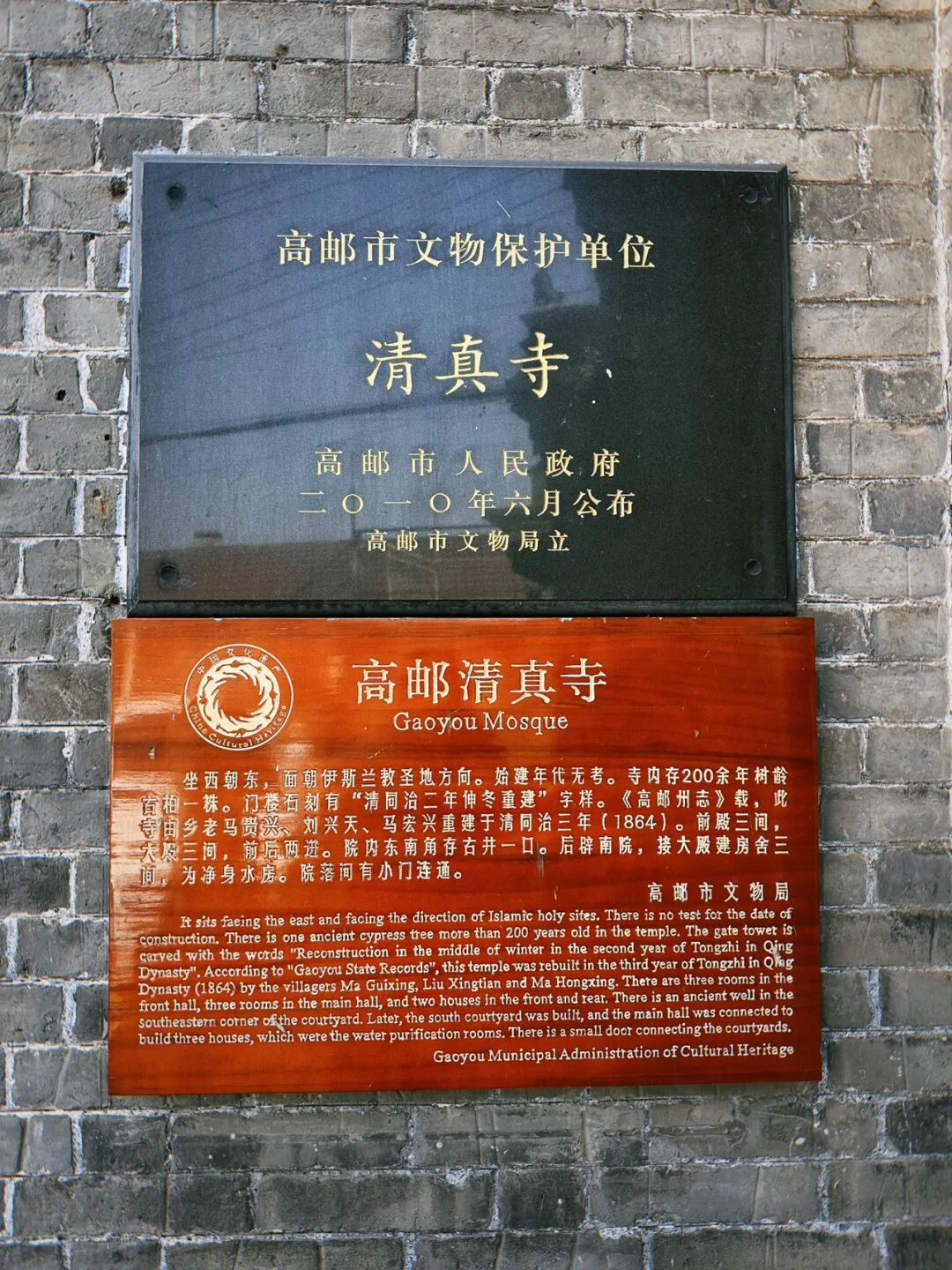
Gaoyou Mosque was first built in the Qing dynasty. According to the Gaoyou Prefecture Records (Qianlong era), local elders Ma Guixing, Liu Tianxing, and Ma Hongxing rebuilt it in 1864 (the third year of Tongzhi). The gate now has a stone lintel inscribed with 'Rebuilt in the middle of winter, the second year of Tongzhi' and a title from the local prefecture office.
Gaoyou Mosque consists of a gate and a main hall, forming an elegant and beautiful traditional Jianghuai courtyard. Inside, there is a 175-year-old boxwood tree, a 225-year-old Chinese juniper, and an ancient Qing dynasty well.
The main hall of Gaoyou Mosque is quite small, and its mihrab is in the traditional Jiangsu style. The people attending Jumuah are mostly friends (dost) from Northwest China who run hand-pulled noodle (lamian) shops. This is the current situation for many mosques in the southeast region.
Lingtang Mosque
At the end of the Yuan dynasty, Lingtang had a mosque built at 'Huihui Bay' by Gaoyou Lake, but it was later destroyed by a flood. It moved to Yangdazhuang in the mid-Ming dynasty, then to its current site in the early Qing dynasty. It was rebuilt in 1844 (the 24th year of Daoguang), expanded again in 1921, and finished in 1924. The sweet osmanthus tree next to the kiln hall was planted when local villager Xue Yukuan and his wife, Mrs. Xue Yang, had their nikah ceremony performed by an imam. It has a history of over 130 years.
See "2021 Trip to Gaoyou, Yangzhou, and Zhenjiang".
Baoying Mosque.
Traveling north from Gaoyou along the Grand Canal, you reach Baoying County. This is the northernmost part of Yangzhou, and further north lies Huai'an.
Baoying Mosque was originally located in Guojia Lane inside the east gate of the county town, though its founding date is unknown. It was rebuilt in 1910 (the second year of the Xuantong reign) at the entrance of Luoxiang Lane at the foot of the south city wall. With the help of Tao, the wife of anti-Japanese hero Zuo Baogui, and led by Imam Zhao Dezhai and others, the mosque was officially completed in 1914 through funds raised by many people from Shandong, Anhui, Zhejiang, Huaiyin, Yangzhou, Yancheng, and local Baoying residents like Gao Mu Ma Jinshi. Baoying Mosque closed after 1958, was rebuilt on its original site in 2002, and officially reopened in 2006.
The mosque still has the water well dug during the 1910 reconstruction and the ginkgo tree planted at that time. Imam Li at the mosque is from Siyang, Jiangsu. He usually runs the nearby "Li's Beef and Mutton" shop. If you want to enter the mosque, just call the number posted at the door. Imam Li is very welcoming. He mentioned that some local Gao Mu still come to the mosque for Jumu'ah prayers, which is better than some mosques where almost everyone attending is a dost from the Northwest. Imam Li comes from the Zhe school's Banqiao Daotang, but he treats all sects equally, and the religious community in Baoying County is very united. view all
Summary: Yangzhou, Jiangsu, is covered through seven historic mosques visited across two trips in 2021 and 2025. This account keeps the mosque names, founding dates, architectural details, community stories, food notes, and photographs in order.
I visited ancient mosques in Yangzhou, Jiangsu, twice in 2021 and 2025. I visited seven mosques in total: Xianhe, Majianxiang, Babayao, Shaobo, Lingtang, Gaoyou, and Baoying. I will share them with you here.
Xianhe Mosque
Xianhe Mosque is on Nanmen Street in Yangzhou. It was founded in 1275 (the 12th year of the Zhiyuan era of the Yuan Dynasty) by the Western sage Puhading before he passed away. It was rebuilt in 1390 (the 23rd year of the Hongwu era of the Ming Dynasty) by Ha San, renovated in 1523 (the 3rd year of the Jiajing era) by the merchant Ma Zongdao and the imam Ha Ming, and repaired again in 1791 (the 56th year of the Qianlong era). The Xianhe Mosque layout uses small courtyards, unlike the common four-sided courtyard (siheyuan) style found in northern mosques. Xianhe Mosque divides the lecture hall, the main prayer hall, and the gate into three separate small courtyards. It also features a moon-viewing pavilion (wangyueting) and a covered walkway (youlang) outside the south gable of the main hall, giving the mosque a garden-like atmosphere.
I visited Xianhe Mosque in 2021, as seen in my article, "The 2021 Trip to Gaoyou, Yangzhou, and Zhenjiang."
Majianxiang Mosque
Majianxiang Mosque is located on Majianxiang in the Dongmen Street area of Yangzhou. According to the Hui Muslims' "Gu Family Genealogy," it was built in 1714 (the 53rd year of the Kangxi era) by Gu Yuanbing, a 24th-generation descendant of Gu Duding.
Majianxiang Mosque originally had dozens of rooms, including a gatehouse, a memorial archway (paifang), a main prayer hall, a reception hall, a water room (shuifang), side rooms, and dormitories. Today, two main halls, a reception hall, and the water room remain. In the early years of the Republic of China, the mosque housed the second Yangzhou branch of the Beijing-based "Zhenzong Newspaper" and a religious book and newspaper room.
In 1932, Liu Binru, a famous Yangzhou imam and one of the founders of the Chinese Islamic Association, along with Hua Ruzhou, then a council member of the Jiangdu County Hui Muslim Association, established the "Chinese Islamic Scripture Translation and Compilation Institute" here to translate religious texts. Liu Binru, who was fluent in Arabic and Persian, was responsible for translating the original Arabic texts. Hua Ruzhou translated the summaries from the English version by the Indian Islamic scholar Muhammad Ali, which were then attached before each section of the scripture. On January 1, 1935, the "Chinese Translation of the Quran with Ali's Summaries" was officially published. The first printing of 2,000 copies was sold by major bookstores across the country.
In 1933, the Yangzhou Islamic Association founded the Hui Muslim Cultural Training Institute at Majianxiang Mosque, with Liu Binru in charge. to teaching Arabic, the institute offered Chinese, English, and arithmetic, reaching a level equivalent to upper primary or junior high school. It replaced the traditional individual scripture teaching method with a classroom-based group instruction format. Teachers included the Majianxiang imam Hua Jinhou, who was proficient in Arabic, the imam Ruan Dechang, the imam of the East Gate Hui Muslim Hall Lan Baohua, and Liu Binru. They also hired Hui Muslim Association members Shen Junchen and Zhang Shaozhe to teach Chinese and arithmetic, and Hua Ruzhou to teach English.
Between 1934 and 1935, the missionary Claude L. Pickens visited the Majianxiang Mosque and saw a reading room inside with many books and magazines. He photographed the 1931 Gu Gong Memorial Stele standing in the mosque. The inscription records the life of mosque board member Gu Jisu, who served for 11 years, repaired the ablution room (shuifang) and market stalls, and built a new heated room (nuanfang), making great contributions to the mosque. He passed away in 1930, before he was 40 years old.
In 1958, the Majianxiang Mosque was converted into a factory workshop and occupied by a craft sign factory, a burlap bag factory, and a brush factory. The property was not recovered until 1997, and it was listed as a municipal cultural relic protection unit in 2008. It is currently used as a residence.
Puhading Tomb Garden
Legend says Puhading was a 16th-generation descendant of the Noble Prophet. He came to Yangzhou during the Xianchun period of the Song Dynasty (1265-1274) and died there in 1275 (the 12th year of the Zhiyuan period of the Yuan Dynasty). He was buried on a high ridge east of the Dongguan River in the New City, a place later called the Huihui Hall (commonly known as Baba Kiln).
According to oral traditions passed down by local imams in Yangzhou, as told by Imam Lan Baohua of the Huihui Hall on July 17, 1947, Puhading was born in 1204 (the 4th year of the Jiatai period of the Song Dynasty) into a wealthy Arab noble family and was the 16th-generation descendant of the Noble Prophet. Puhading was highly learned and mastered the scriptures and religious laws. At 57, following the teaching that one should seek knowledge even if it is as far as China, he spent four years preparing. At 61, he led a team of 17 people across the Arabian Sea toward China.
Puhading arrived in Yangzhou in 1265 (the 1st year of the Xianchun period of the Song Dynasty). During his 10 years in Yangzhou, he presided over the founding of the Xianhe Mosque, expanded the old mosque outside the South Gate, and rebuilt the Nanchaoguan Mosque.
In 1275 (the 12th year of the Zhiyuan period of the Yuan Dynasty), he died on a boat while returning from giving a lecture, at the age of 71. Yuan Guang'en, the governor of Guangling, buried him on a high ridge on the east bank of the Grand Canal in Yangzhou.
The Puhading Tomb Garden has been renovated through the dynasties. Most of the existing buildings reflect the appearance after the 1845 (the 25th year of the Daoguang period) renovation. It was named a Major Historical and Cultural Site Protected at the National Level in 2001.
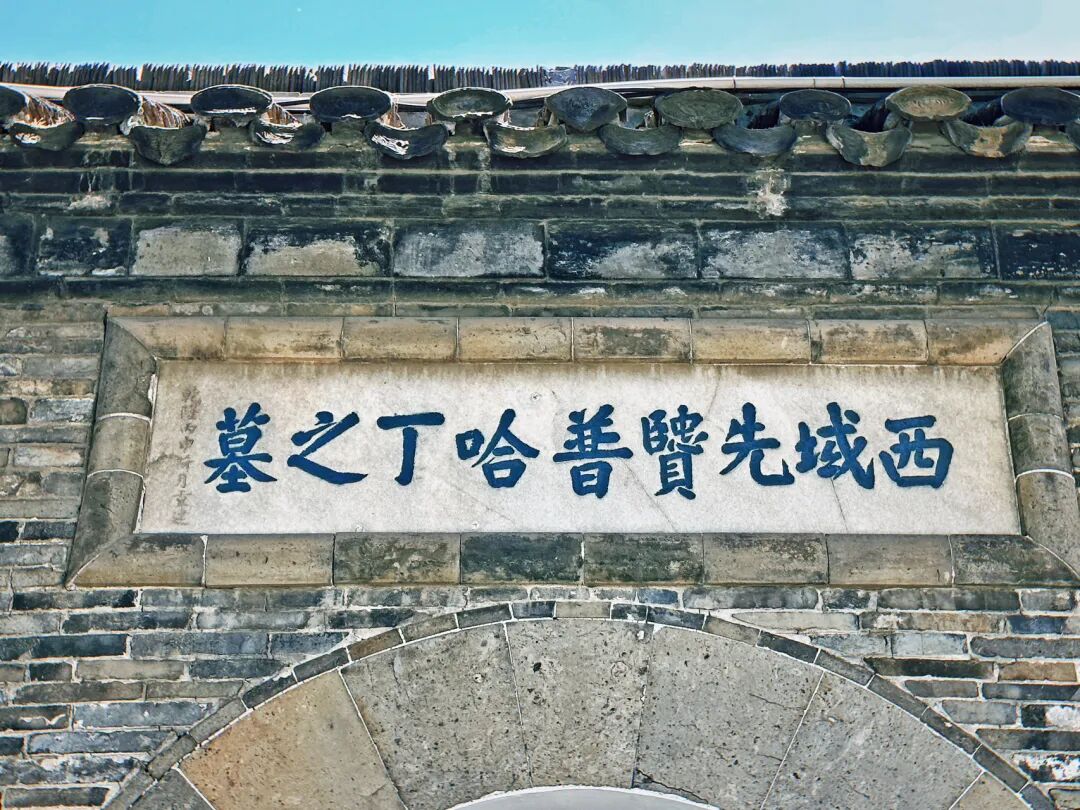
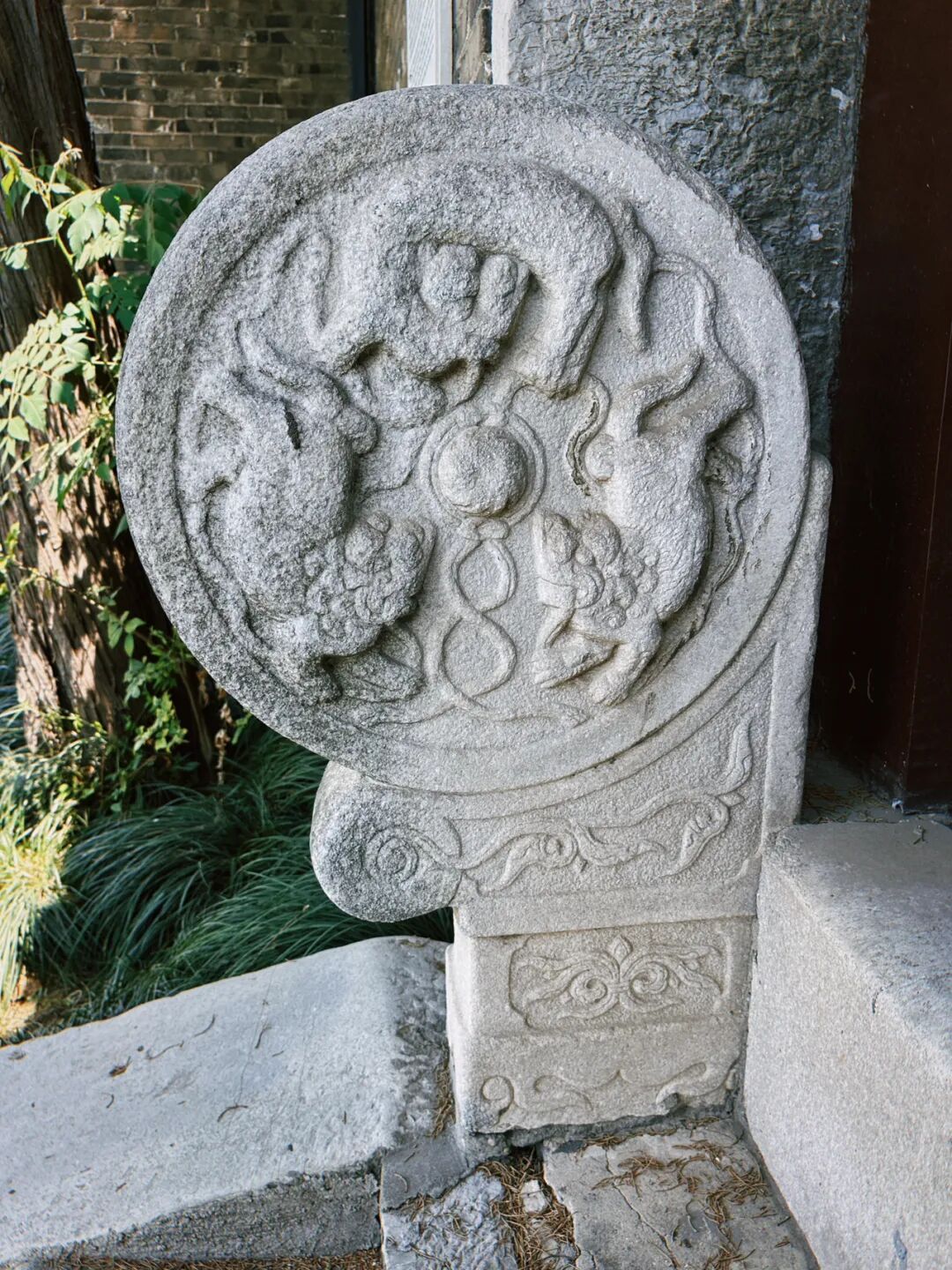
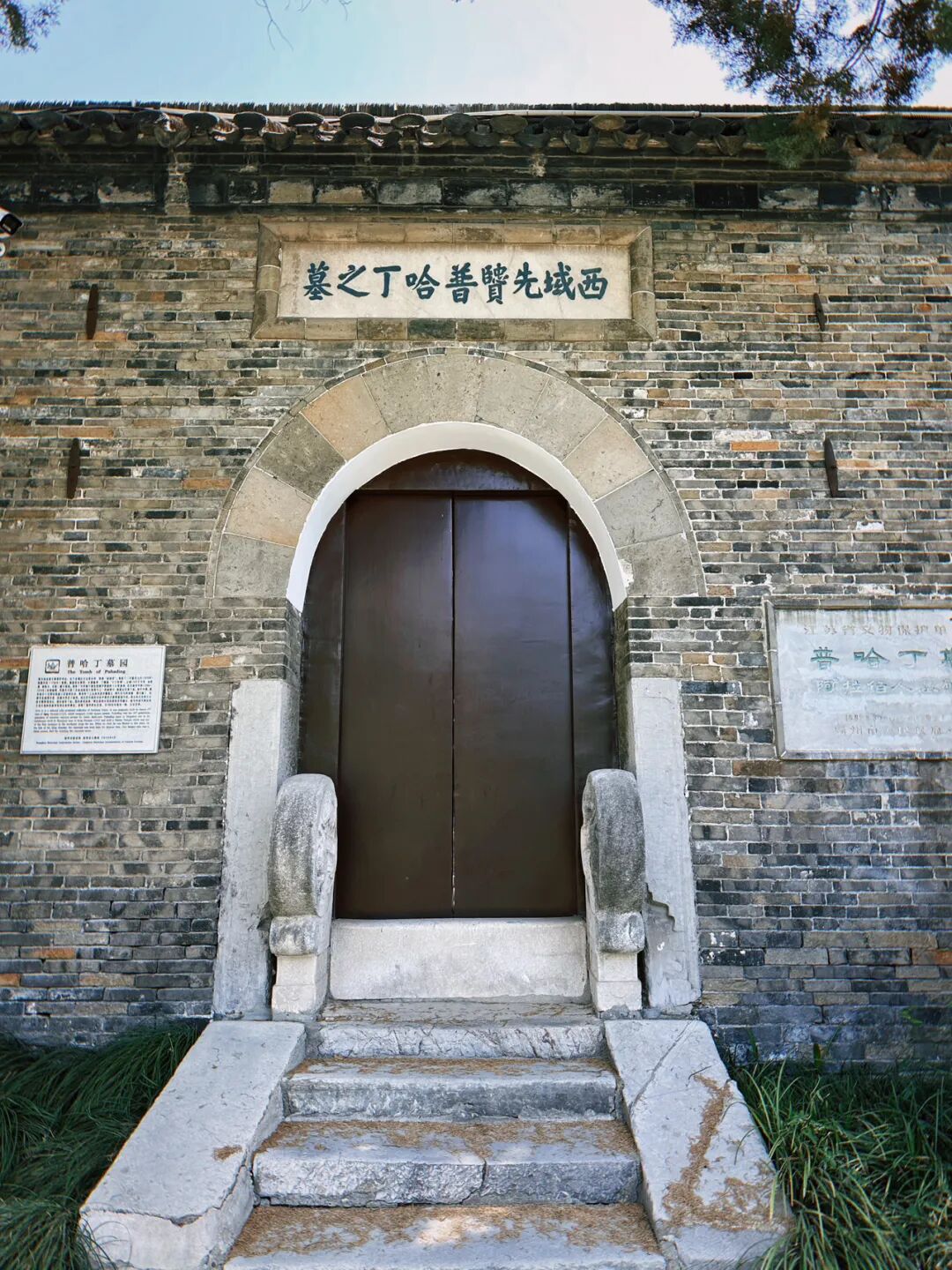
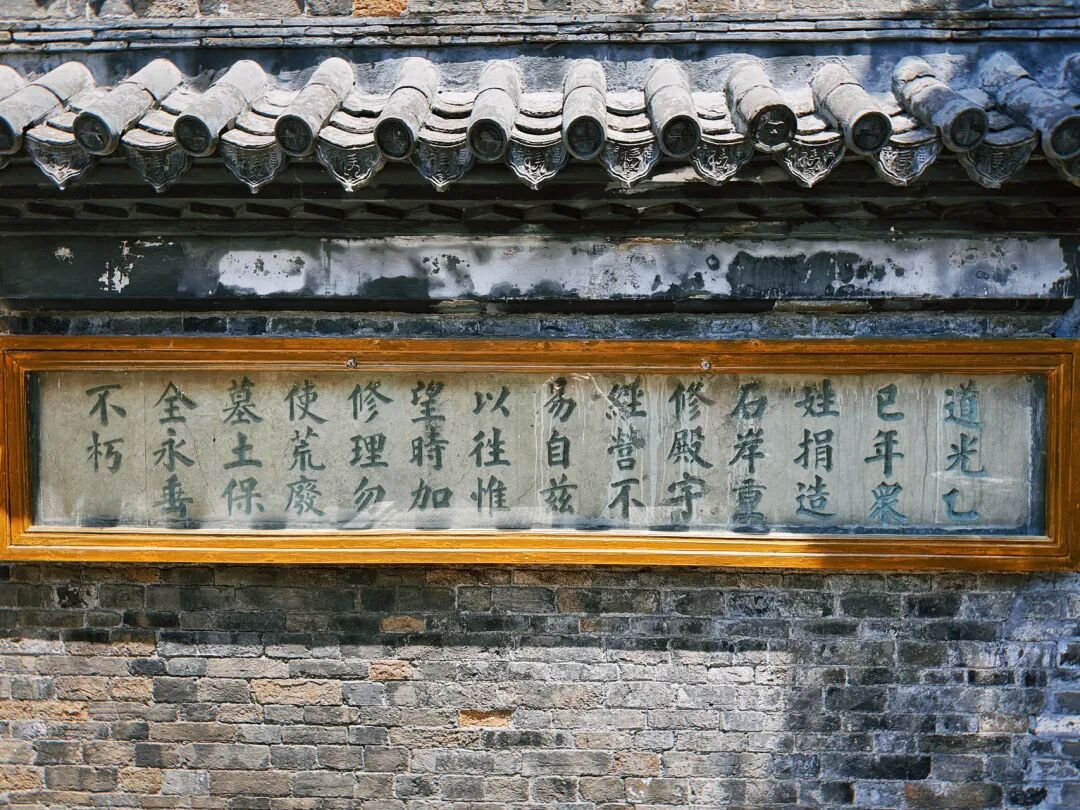
The gate of the tomb garden is right next to the Beijing-Hangzhou Grand Canal, and the original stone path and stone pillars for tying boat ropes are preserved outside the gate. The lintel of the gate is inscribed with 'Tomb of the Western Sage Puhading,' with the signature 'Rebuilt in the month of lotus in the Bing-shen year of the Qianlong reign.' On both sides of the gate are Qing Dynasty drum-shaped stone bases featuring lions playing with a ball. Inside the gate is a stele from the Daoguang renovation, inscribed with 'In the Yi-si year of the Daoguang reign, people of various surnames donated to build the stone bank and renovate the halls; the management was not easy.' I hope this place is repaired from time to time so it does not fall into ruin, keeping the tomb grounds safe and preserving its memory forever.
After entering the Pu Hadin tomb complex, you reach stone steps leading up the hill. The stone railings on both sides are carved with traditional patterns and designs, including lions playing with balls, carp jumping over the dragon gate, and the three rams bringing prosperity (sanyang kaitai). At the top of the steps stands a foyer with a four-cornered pointed roof topped with a glazed vase. Above it is a plaque inscribed with the words 'Tianfang Ju Yue' (The Standard of the Holy Land).
The center of the Pu Hadin tomb complex is the Pu Hadin tomb pavilion. The tomb pavilion has a four-cornered pointed roof with a glazed vase on top, and the interior features a corbelled dome. Inside the pavilion is the tomb cover stone, which follows the classic Song and Yuan dynasty style for Hui Muslims. It has a five-tiered Sumeru pedestal structure carved with scrolling peonies, ruyi flowers, and scripture. Today, the tomb cover stone is covered by a cloth and cannot be seen.
The pavilion features a stone tablet erected in 1726 (the fourth year of the Yongzheng reign) that reads 'Tomb of the Sage Pu Hadin from the Western Regions who attained the Way,' with carvings of longevity peaches and lotus flowers around the edges.
Inside the north foyer, there is also a 'Record of the Tomb of the Sage Pu Hadin from the Western Regions' erected in 1908 (the 34th year of the Guangxu reign). Besides recording Pu Hadin's birth and death, it includes legendary stories known within the community as 'karamat' (miraculous signs). The inscription records that an old monk from the Dragon King Temple tried to compete with Pu Hadin in magic, but he could not win and was eventually humbled. It also records that in the early Qing dynasty, thieves tried to dig up Pu Hadin's tomb. After they opened the tomb cover stone, a raging fire suddenly broke out and burned many of the thieves. Later, they saw there were no remains in the tomb, only a scroll of the Quran (Tianjing) and a hat, shoes, fan, and staff. The inscription is signed by 'the imam of this mosque and others who supervised the carving.' The imam of this mosque refers to the leader of the Babayao Mosque.
Around the Pu Hadin tomb pavilion are the tomb pavilions of several other sages, including the sage Sa Ganda who passed away in 1278 (the third year of the Jingyan reign of the Song dynasty), the sages Mahamude and Zhanmaluding who passed away in 1469 (the fifth year of the Chenghua reign of the Ming dynasty), the sage Fana who passed away in 1498 (the 11th year of the Hongzhi reign), and the tomb of Wang Keng, a merchant from Xi'an, Shaanxi, who passed away in 1501 (the 14th year of the Hongzhi reign of the Ming dynasty). The tomb pavilions all contain traditional Song and Yuan dynasty Sumeru pedestal tomb cover stones. I saw them in 2017, but when I went back in 2025, they were all covered with cloths and could not be seen.
The pavilion also has a stone tablet from the Qianlong reign commemorating the reconstruction, which lists: 'The great sage Pu Hadin, a 16th-generation descendant of the Holy Prophet from the Western Regions, in the first year of the Deyou reign of the Song dynasty; the sage Sa Ganda from the Western Regions in the third year of the Jingyan reign of the Song dynasty; the sage Mahamude from the Western Regions in the fifth year of the Chenghua reign of the Ming dynasty; the sage Zhanmaluding from the Western Regions in the fifth year of the Chenghua reign of the Ming dynasty; and the sage Fana from the Western Regions in the 11th year of the Hongzhi reign of the Ming dynasty.' The inscription reads, Rebuilt in the lunar eighth month of the Bing-Shen year of the Qianlong reign.
There are two ancient ginkgo trees in the cemetery, one of which is 750 years old and was planted when the cemetery was built in 1275. The 23rd day of the seventh lunar month this year marks the 750th anniversary of Pu Hadin's passing, and a grand memorial event will be held then.
The year 1275 was also when Yangzhou fell to the Yuan dynasty. That year, the Yuan general Wuliangha Ashu besieged Yangzhou, but the Song dynasty defenders refused to surrender, and the Yuan army failed to take the city after repeated attacks. The siege lasted for one year and three months. Eventually, a minor general inside the city opened the gates to surrender. The main commanders, Li Tingzhi and Jiang Cai, were captured, and the Yuan dynasty finally occupied Yangzhou. Therefore, this ancient ginkgo tree in the cemetery is a witness to the transition between the Song and Yuan dynasties.
Most of the Qing dynasty tombstones in the Pu Hadin cemetery show official titles. One of them, from the fifth year of the Xianfeng reign, belongs to Tao Gong, a garrison commander of Gushuijing Fort under the Ningxia Town of Gansu, who was granted a blue peacock feather by the emperor.
There are also some unearthed Yuan dynasty tomb capstones in the cemetery, but they are currently covered with tarps and cannot be seen.
On the cemetery wall, there is a 1932 stele titled Inscription for Han Aheng Yuchun. The inscription records that Imam Han Tongrong was from Hanjiachai in Yucheng County, Shandong. He was born in 1837 (the 17th year of the Daoguang reign), studied the classics from a young age, and later traveled to Ningxia and Hohhot for his studies. After graduating in 1867 (the sixth year of the Tongzhi reign), he returned to Shandong and then traveled south. When he passed through Yangzhou, the local elders asked him to stay. He set up a school at the Baba Yao Mosque next to the Pu Hadin cemetery and taught over thirty students, including several religious leaders with the surnames Lan, Ma, and Wang. Four years later, Imam Han left Yangzhou to preach and teach in Hubei, Fujian, Jiangxi, and other places, with his students spread across the entire southeast region. During this time, Imam Han briefly returned to teach in Yangzhou before traveling to Zhejiang, Suzhou, Tianjin, and Shanghai. He returned to Yangzhou to teach in 1898 (the 24th year of the Guangxu reign) and stayed until he passed away in 1915 at the age of 79, after which he was buried in the Pu Hadin cemetery.
The Pu Hadin cemetery houses four Yuan dynasty tombstones. Three of them are primarily in Arabic with some Persian place names, while the front of the fourth one is written in Chinese characters. These four tombstones were discovered in the city foundations in 1924-1925 when the Dangjun Tower at the south gate of Yangzhou was demolished. It was originally kept in the tomb of the sages next to the Crane Mosque (Xianhe Si) and moved to the Puhading Cemetery in 1959.
During the Song Dynasty, a government hostel was set up at the south gate of Yangzhou. The area outside the south gate became a major settlement for Arab and Persian merchants. An ancient mosque (Nanmenwai Gusi) was built there, but it was later occupied by a glass factory and the main hall was demolished in 1984. A cemetery was also built nearby. In 1357, the 17th year of the Zhizheng era of the Yuan Dynasty, Zhu Yuanzhang captured Yangzhou and used some of the tombstones to build the Dangjun Tower at the south gate.
One of the Chinese-language tombstones is inscribed with 'Tomb of the Darughachi of Huizhou Circuit, Nie Gubo, Tongyi'. The term Darughachi originally meant 'seal holder' and referred to officials who held real administrative and military power in local areas during the Yuan Dynasty. The Huizhou Circuit was a high-ranking circuit, so the Darughachi held a rank of 3a. Tongyi is short for 'Tongyi Dafu', which is also a 3a rank. During the Yuan Dynasty, most Darughachi were Mongols, though some were Semu people with noble family backgrounds. The back of the stone records Nie Gubo's life and praises him as a 'noble, diligent, and excellent religious educator, an outstanding leader who helped the weak, was charitable and generous, and loved the people, a respected elder... a man of great virtue and wisdom, generous and fair, and blessed with great fortune.' It also notes that he passed away on the 2nd day of the 12th month of the Islamic calendar year 709, which is May 3, 1310, the third year of the Zhida era of the Yuan Dynasty.
The second tombstone records: 'The pardoned deceased Shams al-Din Asif Allah Balaji... at the time of early June, 724 (Islamic calendar).' This corresponds to the end of May or early June of 1324, the first year of the Taiding era of the Yuan Dynasty.
The third tombstone belongs to a Persian woman who also passed away in 1324. Her name was Aisha Khatun, with 'Khatun' meaning 'lady'. The inscription says: 'She was a chaste, virtuous, and capable woman... her father was Lezunding, a well-respected official in the religious community.'
The fourth tombstone is damaged. It belonged to a missionary named Ala al-Din who died in 1302, the sixth year of the Dade era of the Yuan Dynasty. The inscription describes him as a merchant who was skilled in business and highly respected by the people.
On the east side of the Puhading Cemetery is the tomb of General Zhang Xin, who passed away in 1551, the 30th year of the Jiajing era of the Ming Dynasty. General Zhang's ancestor, Damuchi, came from Samarkand. The 'Continued Records of Jiangdu County' from the Republic of China era states: 'General Zhaoyong, named Xin, was the grandson of the Hui Muslim Damuchi. He held the rank of Cavalry Commandant. Because he was an excellent archer, he was granted the surname Zhang and his household was registered in Yangzhou, located behind the Puhading tomb outside Tongji Gate.'
The spirit way archway for General Zhang was erected by his grandson, Zhang Heng. Zhang Heng was a famous Ming Dynasty general who fought against Japanese pirates and served as the hereditary commander of the Yangzhou Guard. In April 1556 (the 35th year of the Jiajing reign), Japanese pirates attacked Yangzhou. Zhang Heng, a retired Huaiyang assistant regional commander, personally led troops to fight them and died on the battlefield. The stone sheep beside the spirit way was once kept at Slender West Lake until it was moved back in 2011.
Next to General Zhang Xin's tomb is the cenotaph of Zuo Baogui, a famous Qing Dynasty general who fought against the Japanese. During the First Sino-Japanese War in 1894 (the 20th year of the Guangxu reign), Zuo Baogui led his troops to hold the Xuanwu Gate in Pyongyang and dealt a heavy blow to the Japanese army. On September 15, Zuo Baogui personally fired a cannon. His right arm was broken, but he bandaged the wound and kept fighting. He was then hit in the chest by a shell and died heroically at the age of 57. That same year, the Yangzhou government followed an imperial decree to build a cenotaph and a shrine for Zuo Baogui in the south section of the Puhading Tomb. The shrine was later destroyed, leaving only the tomb cover stone of the cenotaph.
Babayao Mosque
The mosque southwest of the Puhading Tomb garden is called Huihui Tang Mosque or Babayao Mosque. It was one of the six Hui Muslim districts in Yangzhou during the Qing Dynasty and is the only one remaining of the three districts outside the city. Babayao Mosque currently appears as it did after being rebuilt in 1776 (the 41st year of the Qianlong reign) and renovated in 1845 (the 25th year of the Daoguang reign), featuring the traditional architectural style typical of the Huaiyang region.
The main gate of Babayao Mosque is on the southwest side of the Puhading Tomb garden. The stone plaque above the gate was installed during the Qianlong reign, and the rectangular door-pillow stones are very elegant.
The main prayer hall is on the north side of the gate, right next to the stone path of the Grand Canal, and features upturned eaves. The interior has a hard mountain roof, floor-to-ceiling slanted lattice partition doors, and a large wooden column-and-tie structural frame.
Shaobo Mosque
Traveling north from Yangzhou city along the Beijing-Hangzhou Grand Canal, the first place you reach is the ancient town of Shaobo. Historically, Shaobo was a bustling canal trading port and a key route connecting Yangzhou and Gaoyou. The ancient town still keeps a three-mile-long stone-paved road and over 20 ancient houses from the Ming and Qing dynasties.
Shaobo Mosque is said to have been built by Hui Muslims from Shandong during the Xianfeng era. Its gate and main hall still stand, and it is a protected cultural site in Jiangdu District, Yangzhou. The mosque was once used as a private residence and is now abandoned.
The gate still has its original lintel and drum-shaped stone bases. The main hall is a hard-gable style building with grey bricks and dark tiles, showing typical Jianghuai architectural style.
Shaobo Mosque is three bays wide and seven purlins deep. The gable walls have brick wind boards, the ridge purlin is supported by a dou-gong bracket set, and the columns rest on ancient mirror-style bases carved with patterns. Besides the main hall, Shaobo Mosque once had other buildings, but now only stone remains like column bases are left.
Gaoyou Mosque
Travel north from the ancient town of Shaobo along the Beijing-Hangzhou Grand Canal to reach the ancient city of Gaoyou. I visited Gaoyou Mosque in 2021 but learned it only opens for Jumuah. This time, I came specifically for Jumuah and finally got inside.
Gaoyou Mosque was first built in the Qing dynasty. According to the Gaoyou Prefecture Records (Qianlong era), local elders Ma Guixing, Liu Tianxing, and Ma Hongxing rebuilt it in 1864 (the third year of Tongzhi). The gate now has a stone lintel inscribed with 'Rebuilt in the middle of winter, the second year of Tongzhi' and a title from the local prefecture office.
Gaoyou Mosque consists of a gate and a main hall, forming an elegant and beautiful traditional Jianghuai courtyard. Inside, there is a 175-year-old boxwood tree, a 225-year-old Chinese juniper, and an ancient Qing dynasty well.
The main hall of Gaoyou Mosque is quite small, and its mihrab is in the traditional Jiangsu style. The people attending Jumuah are mostly friends (dost) from Northwest China who run hand-pulled noodle (lamian) shops. This is the current situation for many mosques in the southeast region.
Lingtang Mosque
At the end of the Yuan dynasty, Lingtang had a mosque built at 'Huihui Bay' by Gaoyou Lake, but it was later destroyed by a flood. It moved to Yangdazhuang in the mid-Ming dynasty, then to its current site in the early Qing dynasty. It was rebuilt in 1844 (the 24th year of Daoguang), expanded again in 1921, and finished in 1924. The sweet osmanthus tree next to the kiln hall was planted when local villager Xue Yukuan and his wife, Mrs. Xue Yang, had their nikah ceremony performed by an imam. It has a history of over 130 years.
See "2021 Trip to Gaoyou, Yangzhou, and Zhenjiang".
Baoying Mosque.
Traveling north from Gaoyou along the Grand Canal, you reach Baoying County. This is the northernmost part of Yangzhou, and further north lies Huai'an.
Baoying Mosque was originally located in Guojia Lane inside the east gate of the county town, though its founding date is unknown. It was rebuilt in 1910 (the second year of the Xuantong reign) at the entrance of Luoxiang Lane at the foot of the south city wall. With the help of Tao, the wife of anti-Japanese hero Zuo Baogui, and led by Imam Zhao Dezhai and others, the mosque was officially completed in 1914 through funds raised by many people from Shandong, Anhui, Zhejiang, Huaiyin, Yangzhou, Yancheng, and local Baoying residents like Gao Mu Ma Jinshi. Baoying Mosque closed after 1958, was rebuilt on its original site in 2002, and officially reopened in 2006.
The mosque still has the water well dug during the 1910 reconstruction and the ginkgo tree planted at that time. Imam Li at the mosque is from Siyang, Jiangsu. He usually runs the nearby "Li's Beef and Mutton" shop. If you want to enter the mosque, just call the number posted at the door. Imam Li is very welcoming. He mentioned that some local Gao Mu still come to the mosque for Jumu'ah prayers, which is better than some mosques where almost everyone attending is a dost from the Northwest. Imam Li comes from the Zhe school's Banqiao Daotang, but he treats all sects equally, and the religious community in Baoying County is very united. view all
Reposted from the web
Summary: Yangzhou, Jiangsu, is covered through seven historic mosques visited across two trips in 2021 and 2025. This account keeps the mosque names, founding dates, architectural details, community stories, food notes, and photographs in order.
I visited ancient mosques in Yangzhou, Jiangsu, twice in 2021 and 2025. I visited seven mosques in total: Xianhe, Majianxiang, Babayao, Shaobo, Lingtang, Gaoyou, and Baoying. I will share them with you here.
Xianhe Mosque
Xianhe Mosque is on Nanmen Street in Yangzhou. It was founded in 1275 (the 12th year of the Zhiyuan era of the Yuan Dynasty) by the Western sage Puhading before he passed away. It was rebuilt in 1390 (the 23rd year of the Hongwu era of the Ming Dynasty) by Ha San, renovated in 1523 (the 3rd year of the Jiajing era) by the merchant Ma Zongdao and the imam Ha Ming, and repaired again in 1791 (the 56th year of the Qianlong era). The Xianhe Mosque layout uses small courtyards, unlike the common four-sided courtyard (siheyuan) style found in northern mosques. Xianhe Mosque divides the lecture hall, the main prayer hall, and the gate into three separate small courtyards. It also features a moon-viewing pavilion (wangyueting) and a covered walkway (youlang) outside the south gable of the main hall, giving the mosque a garden-like atmosphere.
I visited Xianhe Mosque in 2021, as seen in my article, "The 2021 Trip to Gaoyou, Yangzhou, and Zhenjiang."
Majianxiang Mosque
Majianxiang Mosque is located on Majianxiang in the Dongmen Street area of Yangzhou. According to the Hui Muslims' "Gu Family Genealogy," it was built in 1714 (the 53rd year of the Kangxi era) by Gu Yuanbing, a 24th-generation descendant of Gu Duding.
Majianxiang Mosque originally had dozens of rooms, including a gatehouse, a memorial archway (paifang), a main prayer hall, a reception hall, a water room (shuifang), side rooms, and dormitories. Today, two main halls, a reception hall, and the water room remain. In the early years of the Republic of China, the mosque housed the second Yangzhou branch of the Beijing-based "Zhenzong Newspaper" and a religious book and newspaper room.
In 1932, Liu Binru, a famous Yangzhou imam and one of the founders of the Chinese Islamic Association, along with Hua Ruzhou, then a council member of the Jiangdu County Hui Muslim Association, established the "Chinese Islamic Scripture Translation and Compilation Institute" here to translate religious texts. Liu Binru, who was fluent in Arabic and Persian, was responsible for translating the original Arabic texts. Hua Ruzhou translated the summaries from the English version by the Indian Islamic scholar Muhammad Ali, which were then attached before each section of the scripture. On January 1, 1935, the "Chinese Translation of the Quran with Ali's Summaries" was officially published. The first printing of 2,000 copies was sold by major bookstores across the country.
In 1933, the Yangzhou Islamic Association founded the Hui Muslim Cultural Training Institute at Majianxiang Mosque, with Liu Binru in charge. to teaching Arabic, the institute offered Chinese, English, and arithmetic, reaching a level equivalent to upper primary or junior high school. It replaced the traditional individual scripture teaching method with a classroom-based group instruction format. Teachers included the Majianxiang imam Hua Jinhou, who was proficient in Arabic, the imam Ruan Dechang, the imam of the East Gate Hui Muslim Hall Lan Baohua, and Liu Binru. They also hired Hui Muslim Association members Shen Junchen and Zhang Shaozhe to teach Chinese and arithmetic, and Hua Ruzhou to teach English.
Between 1934 and 1935, the missionary Claude L. Pickens visited the Majianxiang Mosque and saw a reading room inside with many books and magazines. He photographed the 1931 Gu Gong Memorial Stele standing in the mosque. The inscription records the life of mosque board member Gu Jisu, who served for 11 years, repaired the ablution room (shuifang) and market stalls, and built a new heated room (nuanfang), making great contributions to the mosque. He passed away in 1930, before he was 40 years old.
In 1958, the Majianxiang Mosque was converted into a factory workshop and occupied by a craft sign factory, a burlap bag factory, and a brush factory. The property was not recovered until 1997, and it was listed as a municipal cultural relic protection unit in 2008. It is currently used as a residence.
Puhading Tomb Garden
Legend says Puhading was a 16th-generation descendant of the Noble Prophet. He came to Yangzhou during the Xianchun period of the Song Dynasty (1265-1274) and died there in 1275 (the 12th year of the Zhiyuan period of the Yuan Dynasty). He was buried on a high ridge east of the Dongguan River in the New City, a place later called the Huihui Hall (commonly known as Baba Kiln).
According to oral traditions passed down by local imams in Yangzhou, as told by Imam Lan Baohua of the Huihui Hall on July 17, 1947, Puhading was born in 1204 (the 4th year of the Jiatai period of the Song Dynasty) into a wealthy Arab noble family and was the 16th-generation descendant of the Noble Prophet. Puhading was highly learned and mastered the scriptures and religious laws. At 57, following the teaching that one should seek knowledge even if it is as far as China, he spent four years preparing. At 61, he led a team of 17 people across the Arabian Sea toward China.
Puhading arrived in Yangzhou in 1265 (the 1st year of the Xianchun period of the Song Dynasty). During his 10 years in Yangzhou, he presided over the founding of the Xianhe Mosque, expanded the old mosque outside the South Gate, and rebuilt the Nanchaoguan Mosque.
In 1275 (the 12th year of the Zhiyuan period of the Yuan Dynasty), he died on a boat while returning from giving a lecture, at the age of 71. Yuan Guang'en, the governor of Guangling, buried him on a high ridge on the east bank of the Grand Canal in Yangzhou.
The Puhading Tomb Garden has been renovated through the dynasties. Most of the existing buildings reflect the appearance after the 1845 (the 25th year of the Daoguang period) renovation. It was named a Major Historical and Cultural Site Protected at the National Level in 2001.
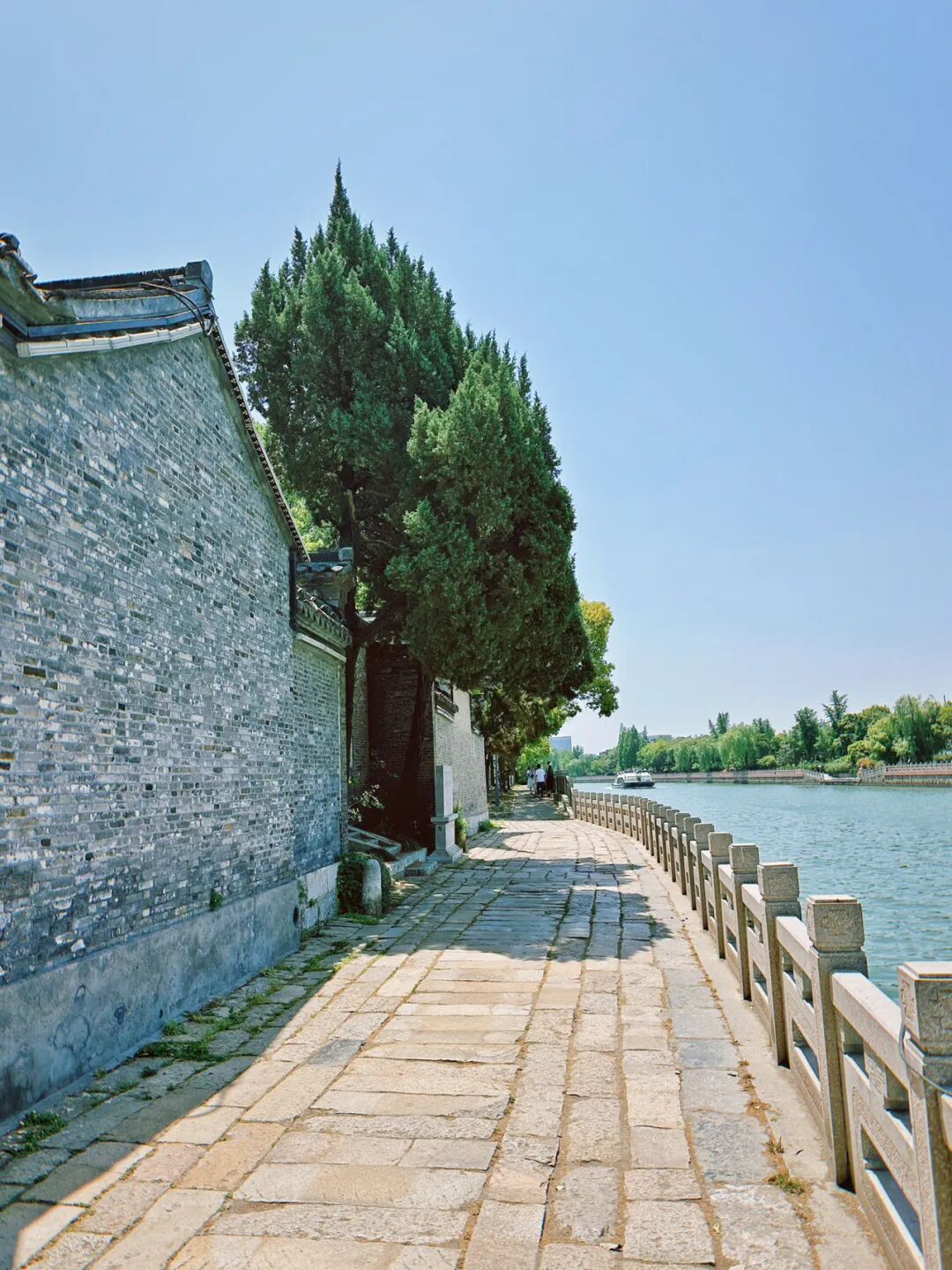
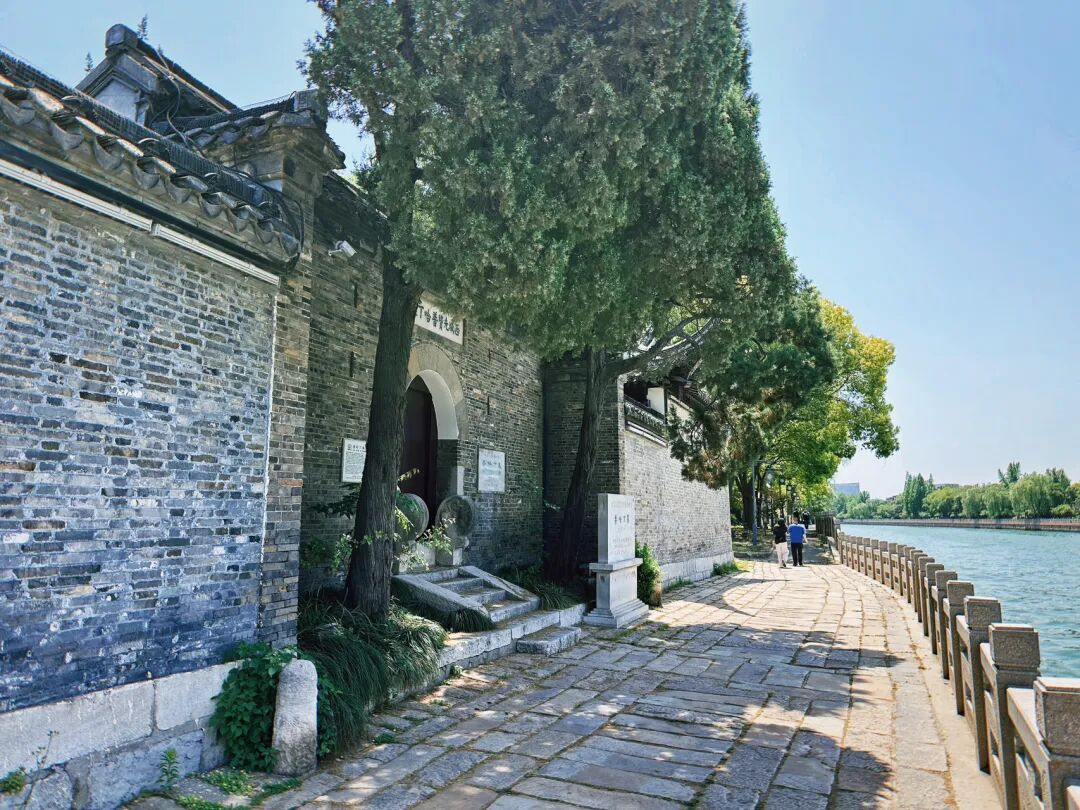
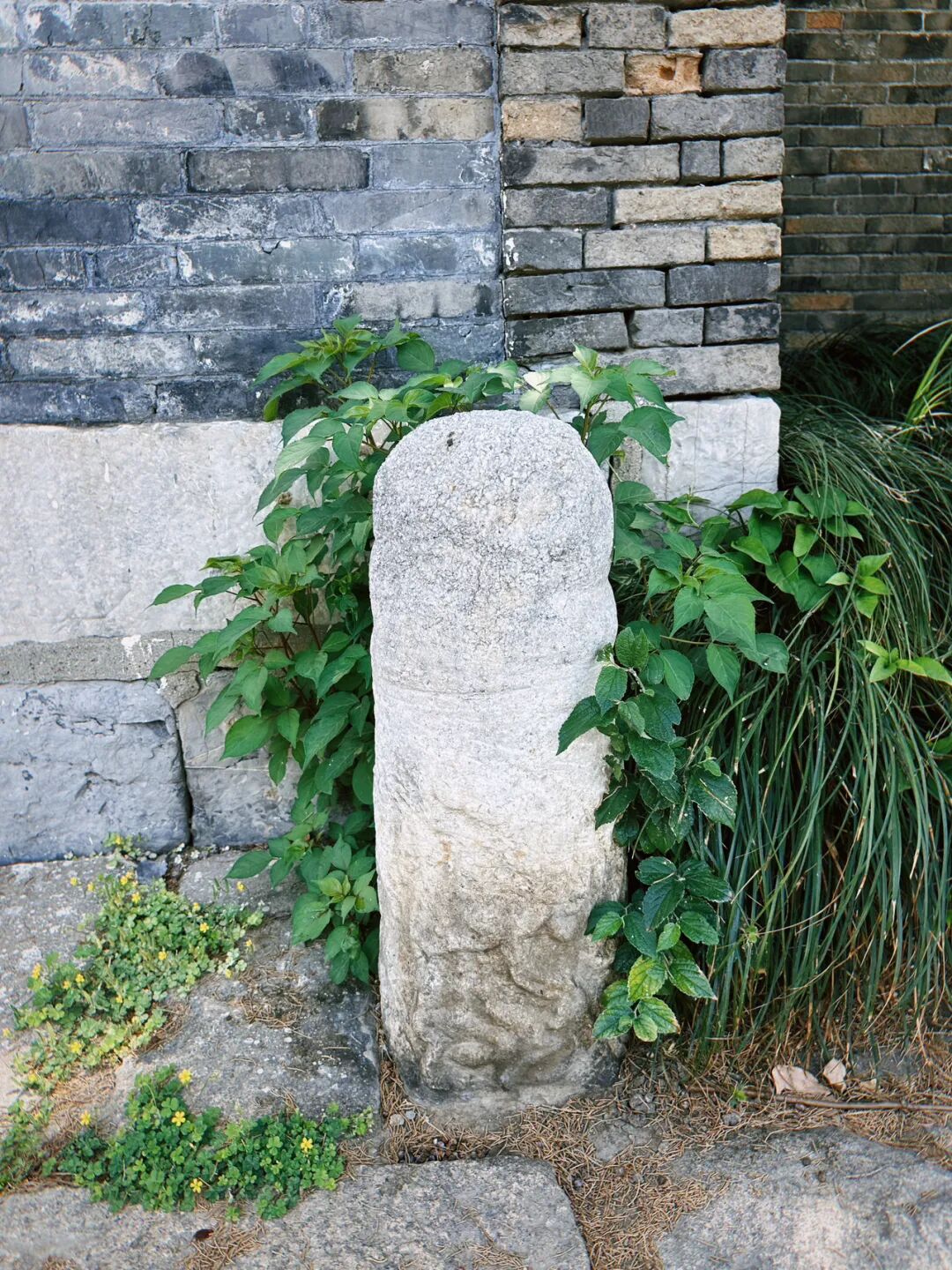
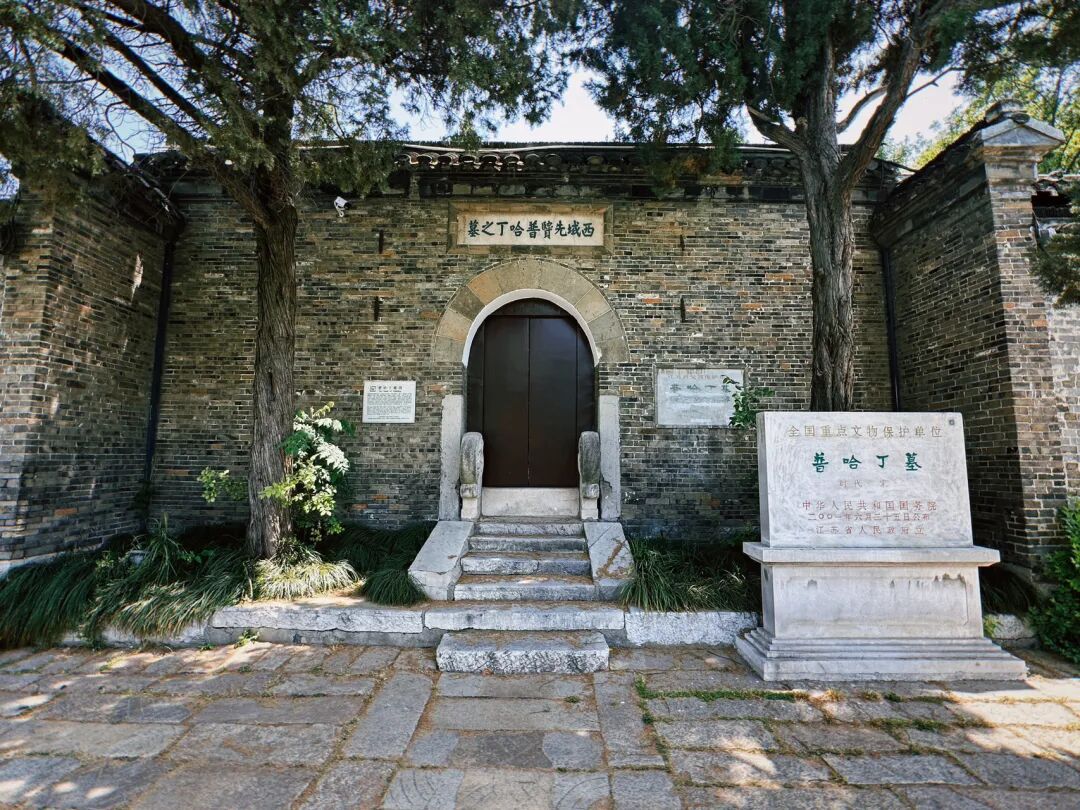
The gate of the tomb garden is right next to the Beijing-Hangzhou Grand Canal, and the original stone path and stone pillars for tying boat ropes are preserved outside the gate. The lintel of the gate is inscribed with 'Tomb of the Western Sage Puhading,' with the signature 'Rebuilt in the month of lotus in the Bing-shen year of the Qianlong reign.' On both sides of the gate are Qing Dynasty drum-shaped stone bases featuring lions playing with a ball. Inside the gate is a stele from the Daoguang renovation, inscribed with 'In the Yi-si year of the Daoguang reign, people of various surnames donated to build the stone bank and renovate the halls; the management was not easy.' I hope this place is repaired from time to time so it does not fall into ruin, keeping the tomb grounds safe and preserving its memory forever.
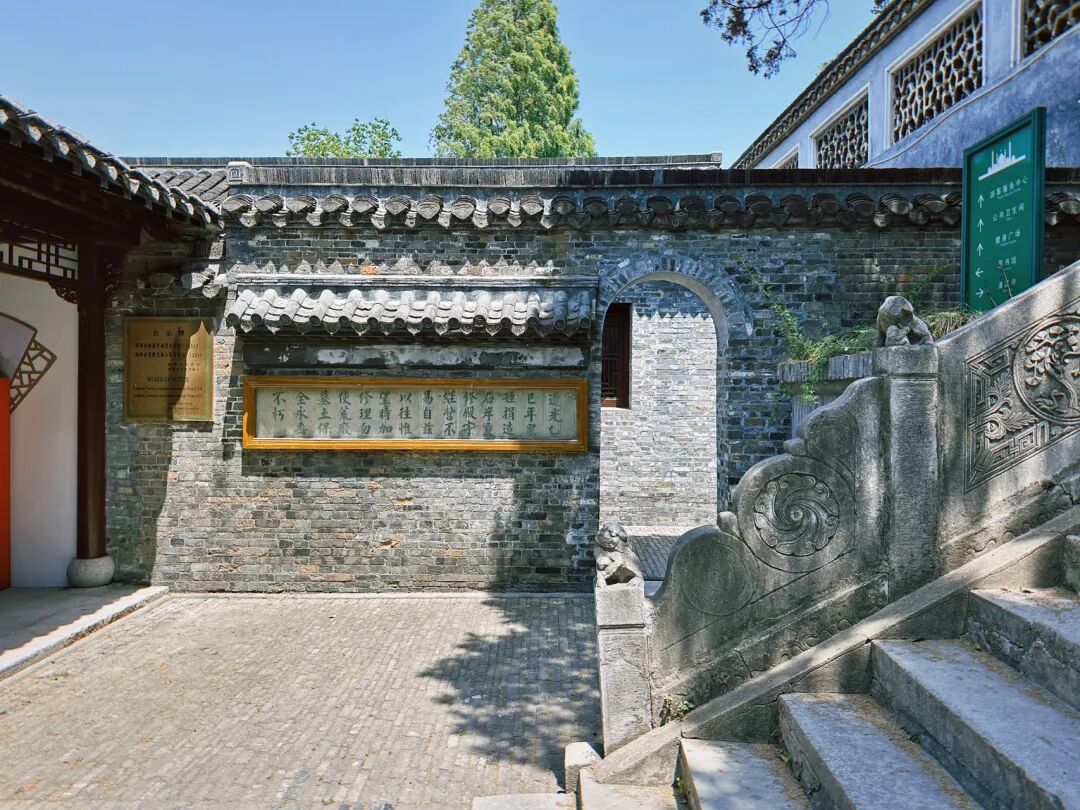
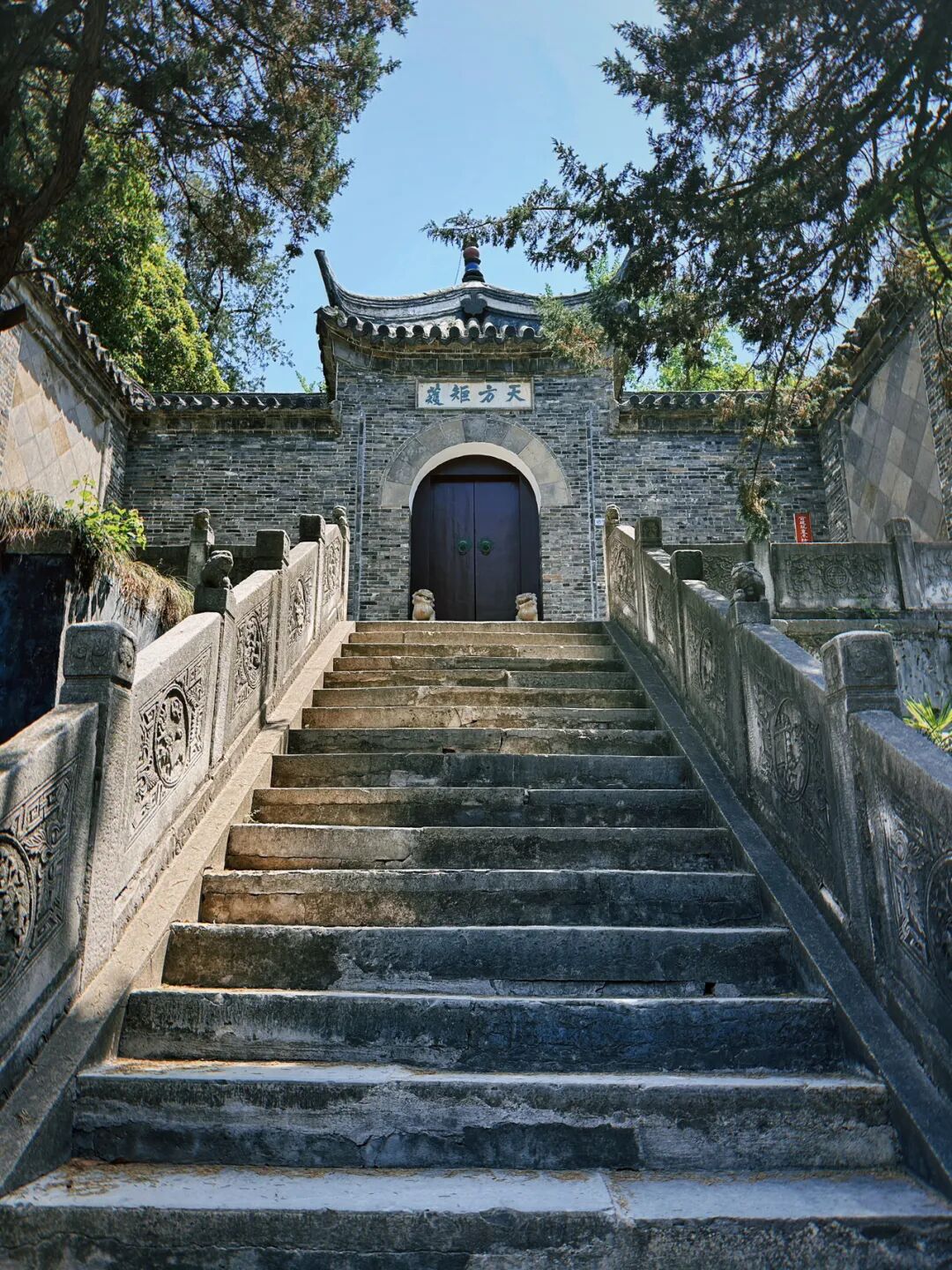
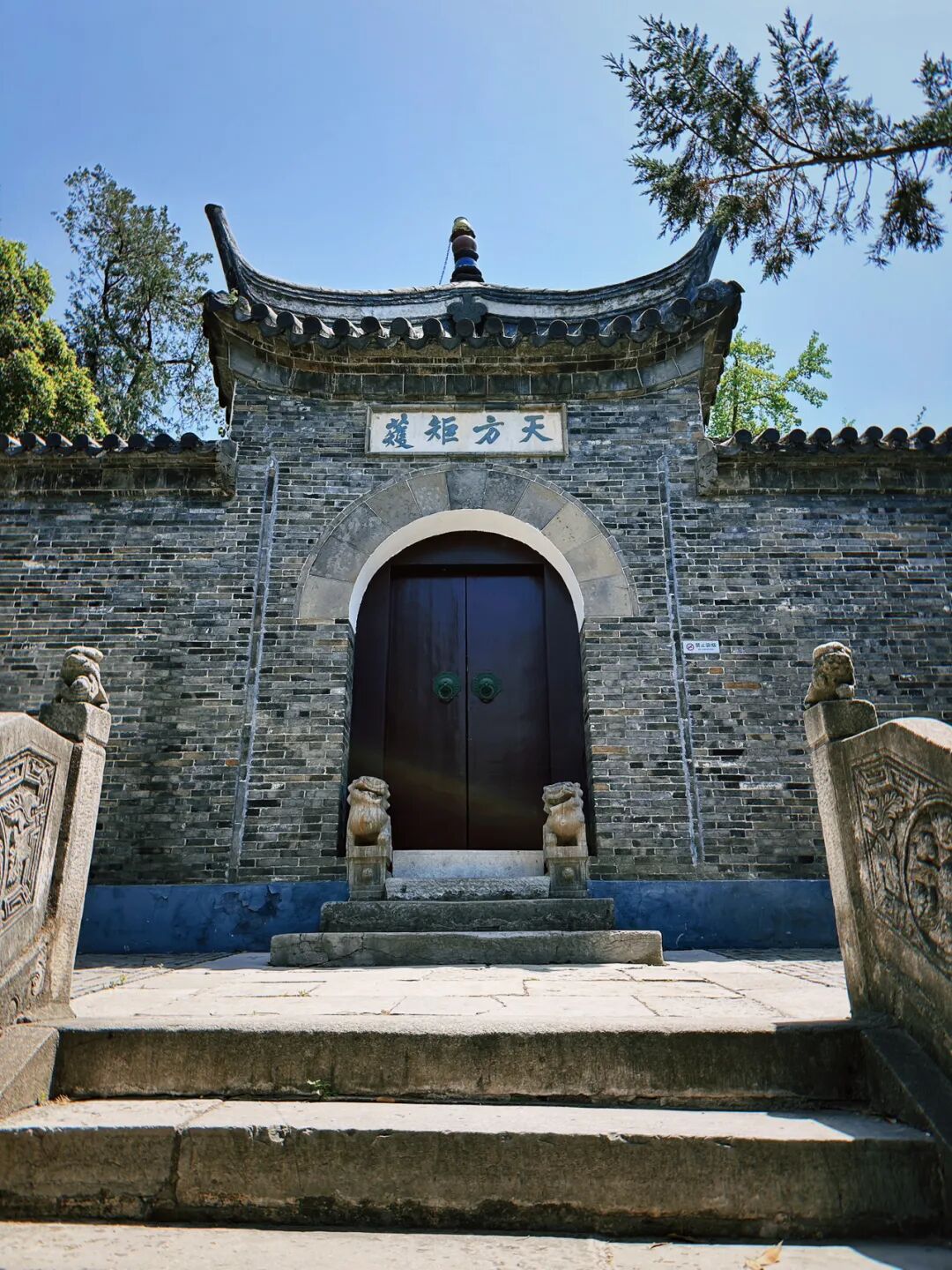
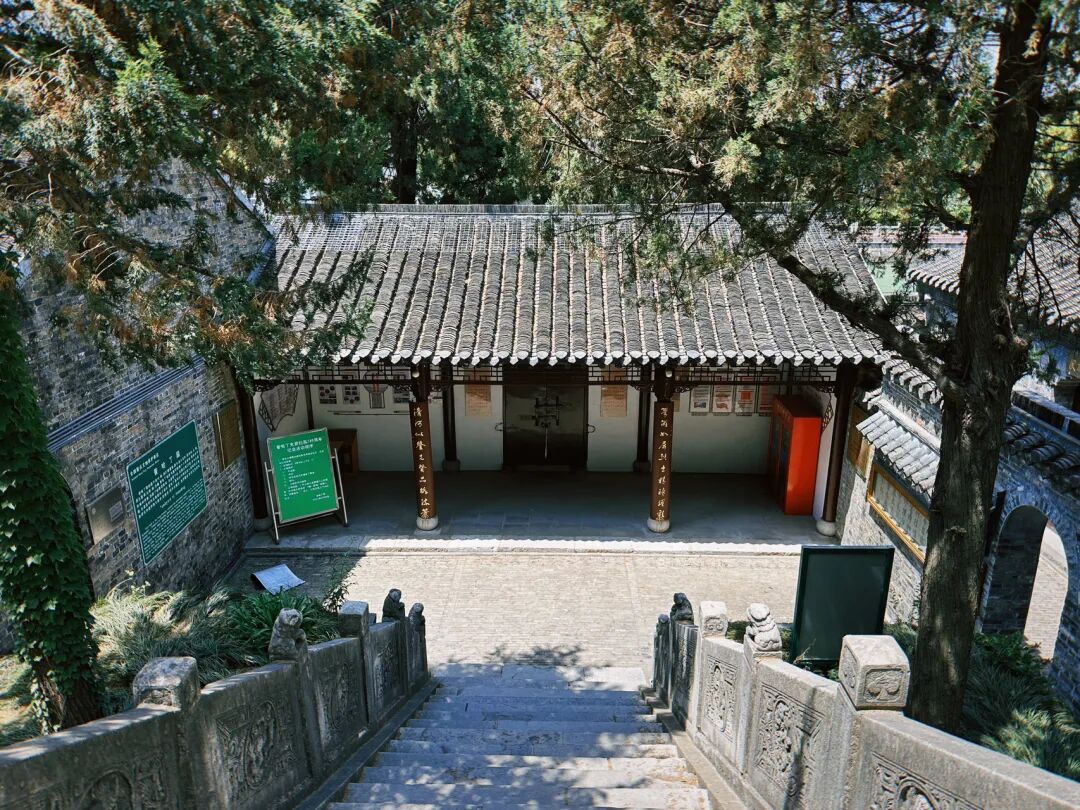
After entering the Pu Hadin tomb complex, you reach stone steps leading up the hill. The stone railings on both sides are carved with traditional patterns and designs, including lions playing with balls, carp jumping over the dragon gate, and the three rams bringing prosperity (sanyang kaitai). At the top of the steps stands a foyer with a four-cornered pointed roof topped with a glazed vase. Above it is a plaque inscribed with the words 'Tianfang Ju Yue' (The Standard of the Holy Land).
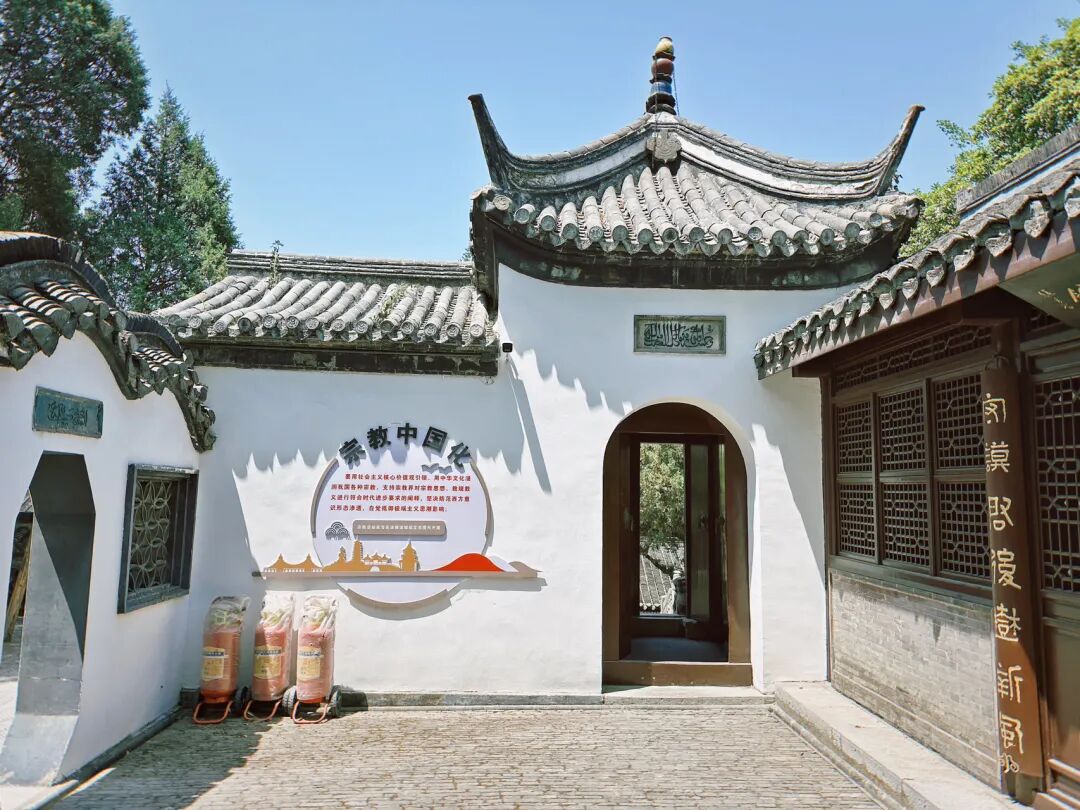
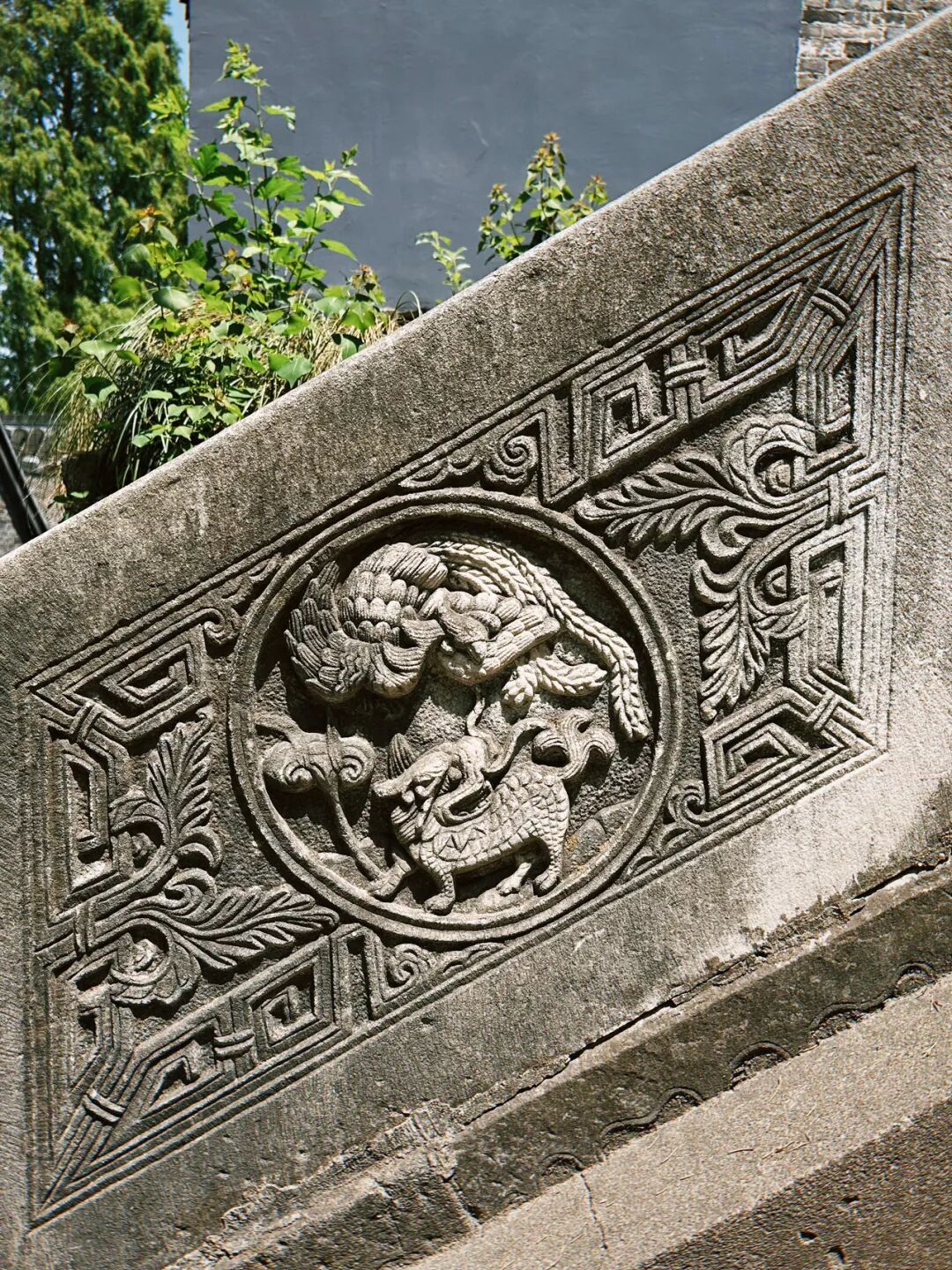
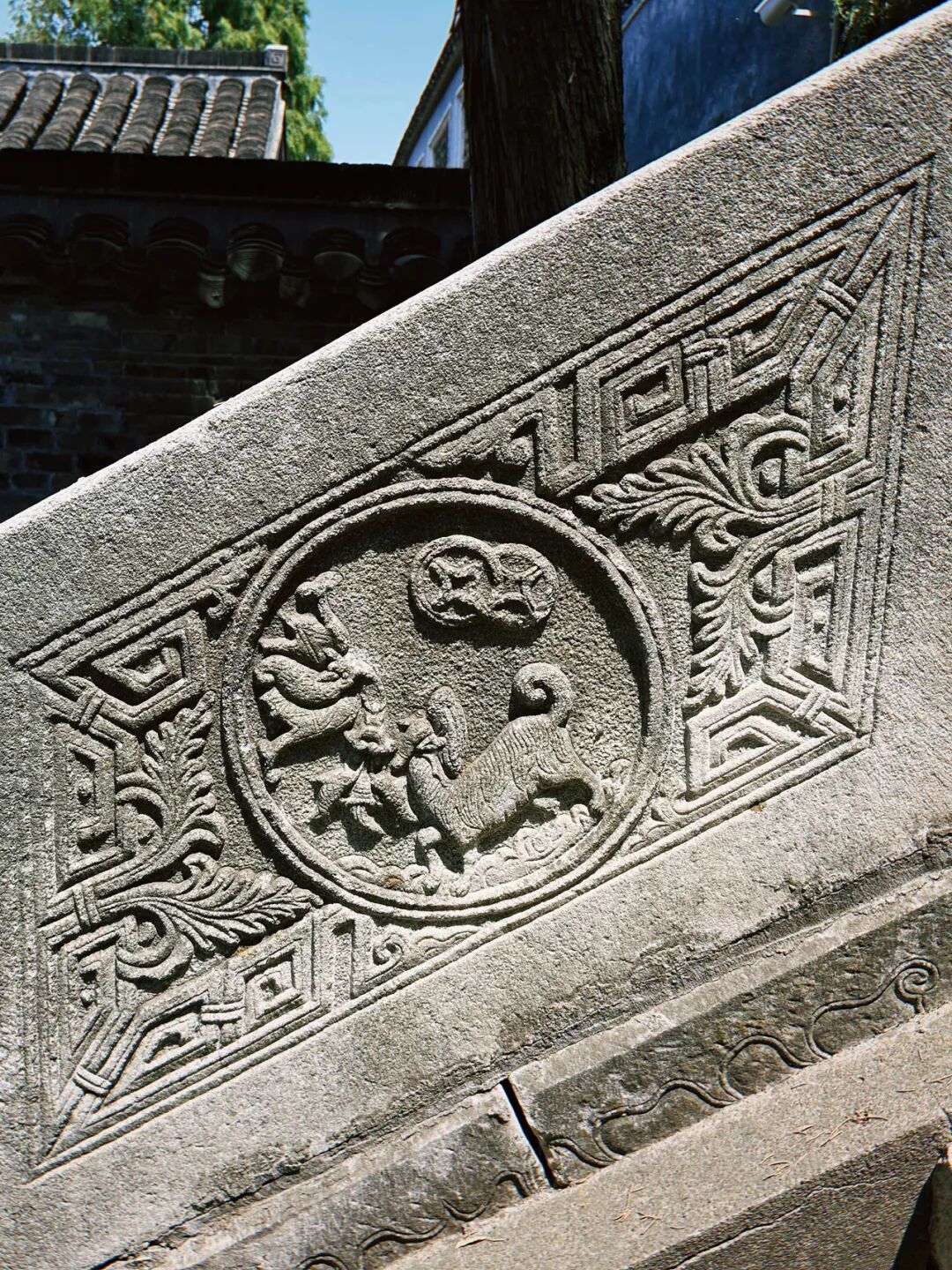
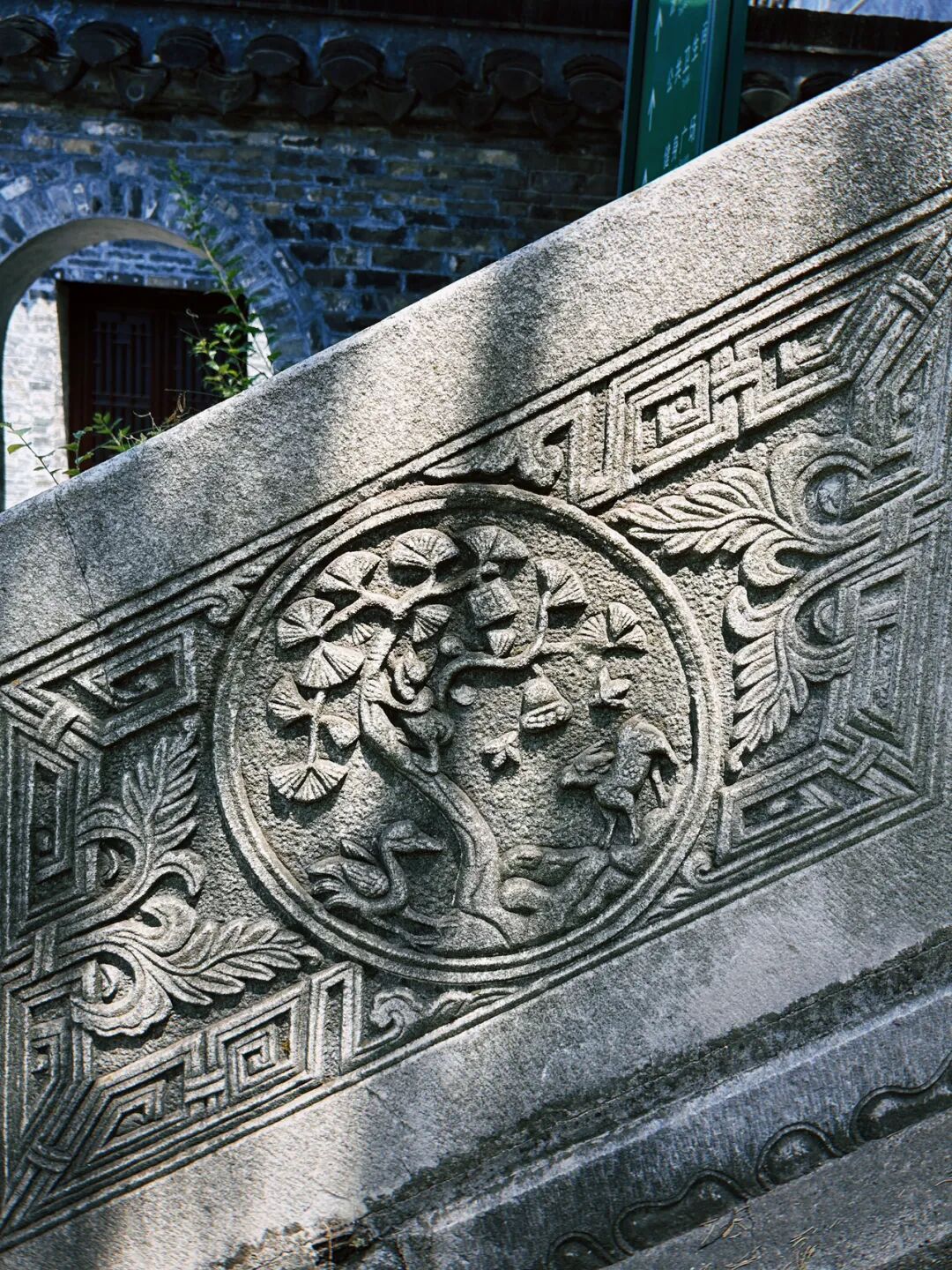
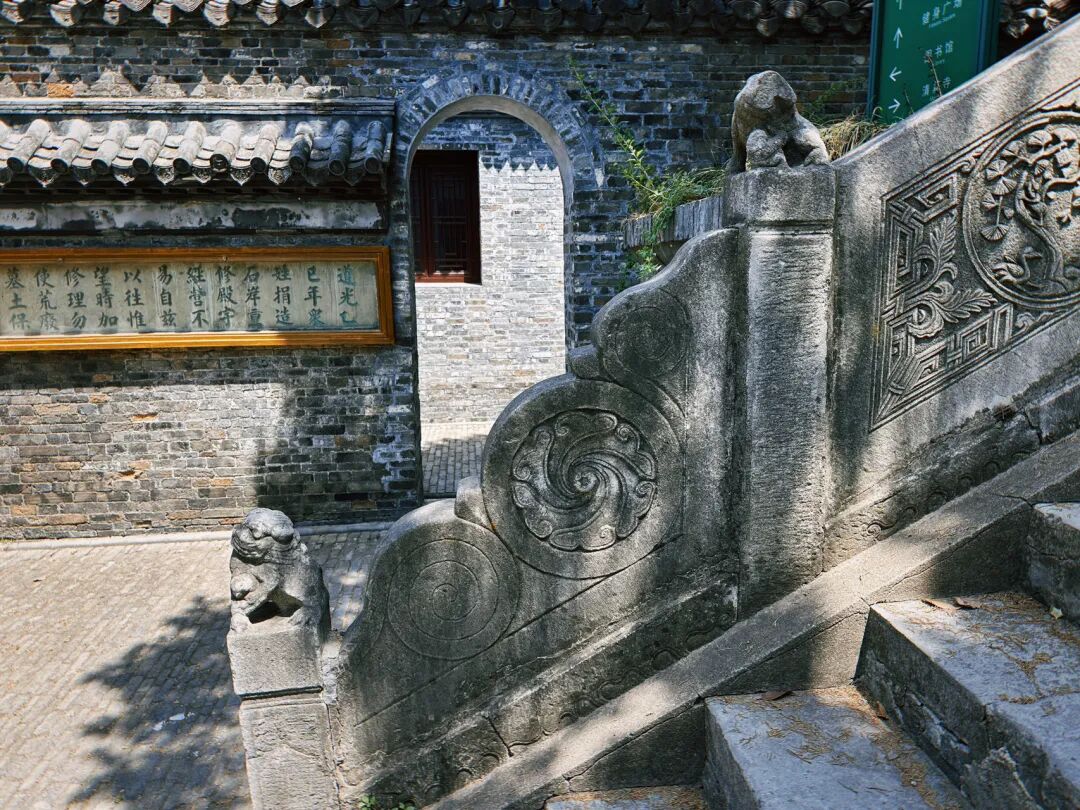
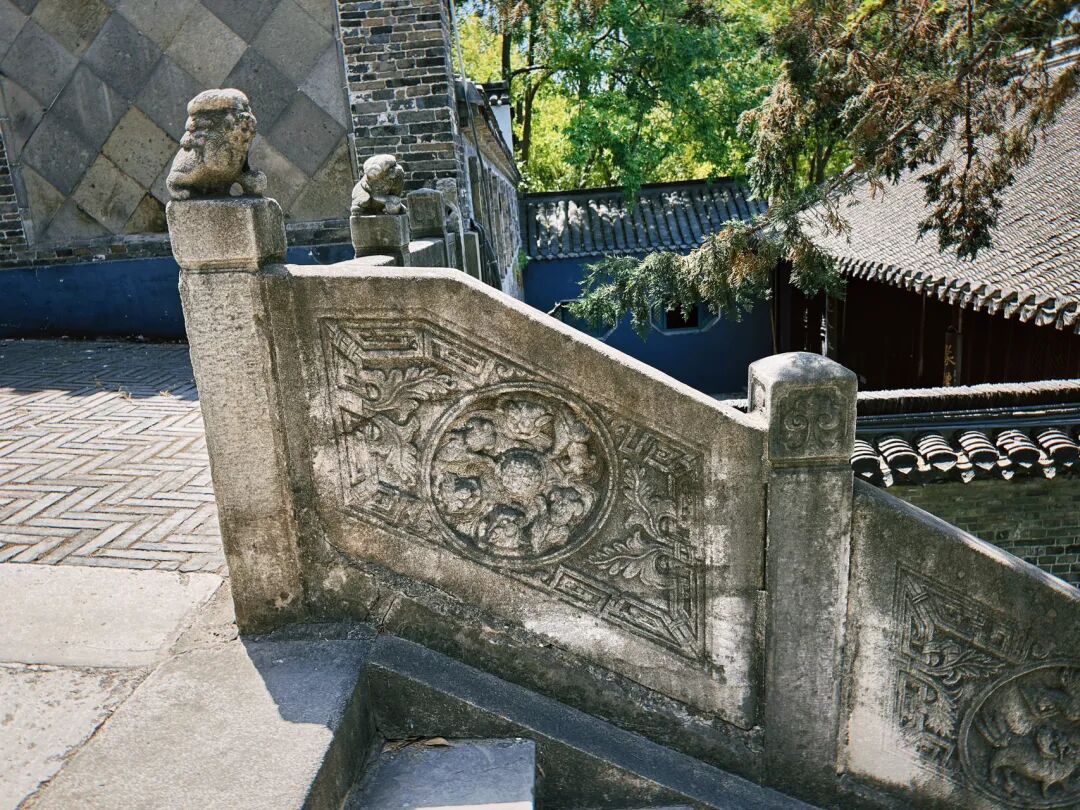
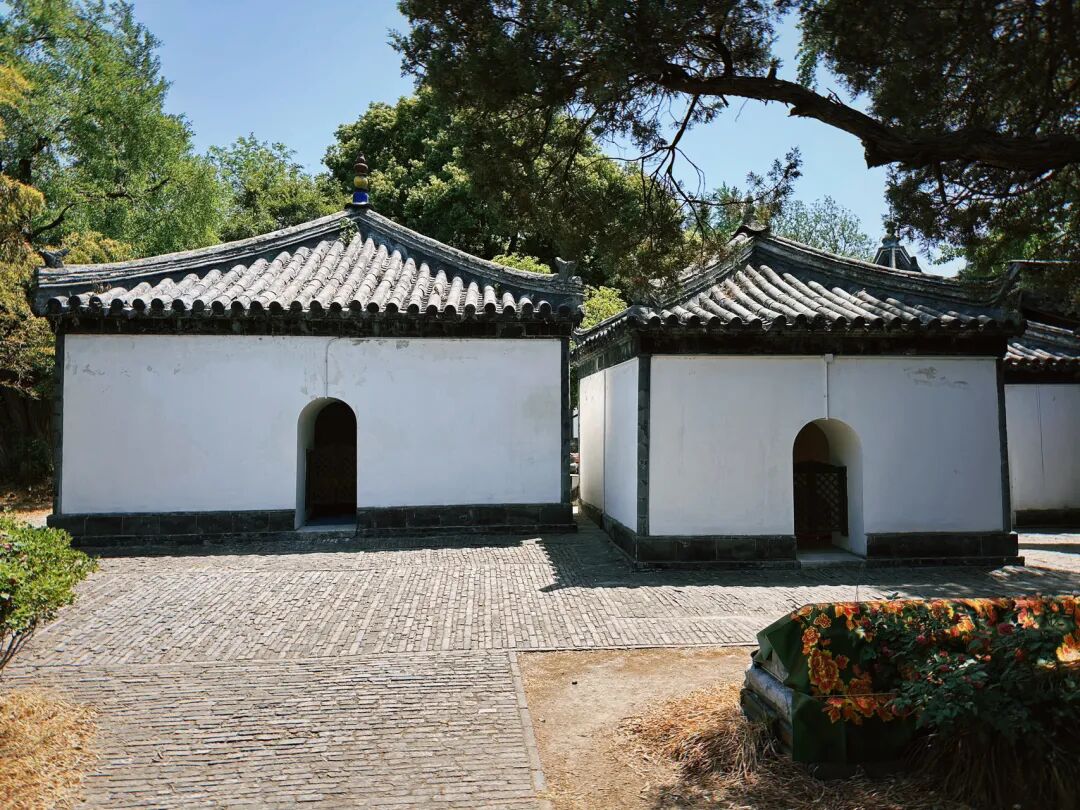
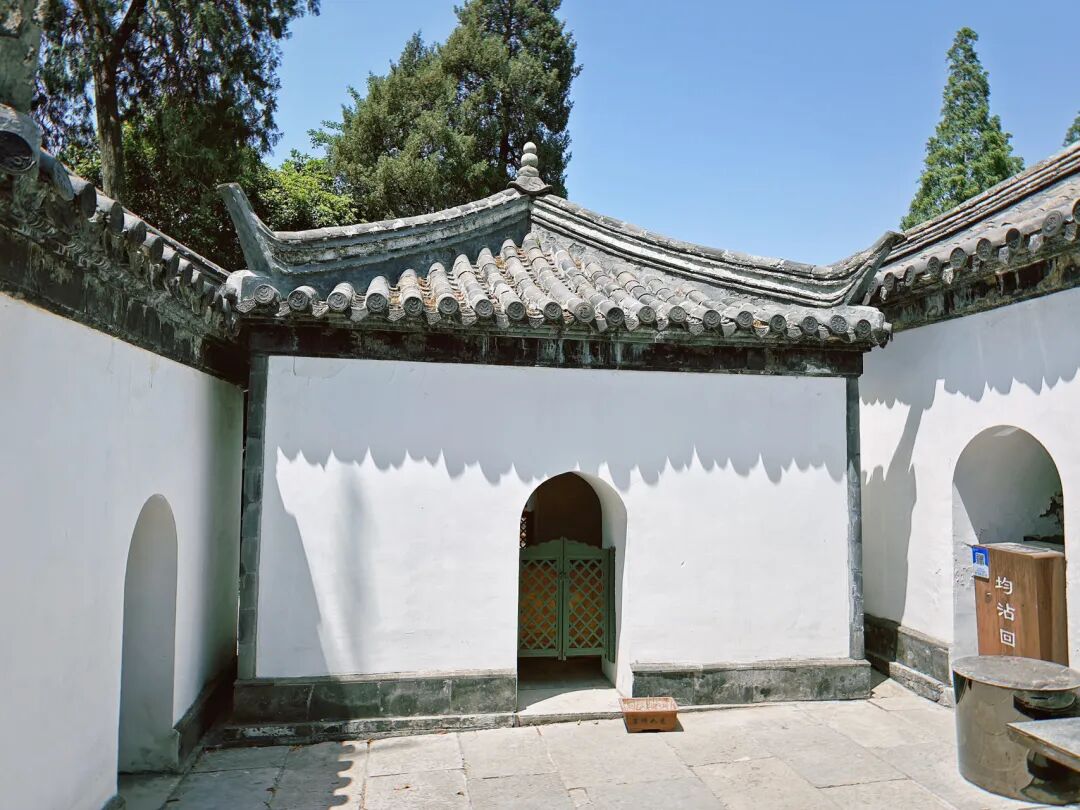
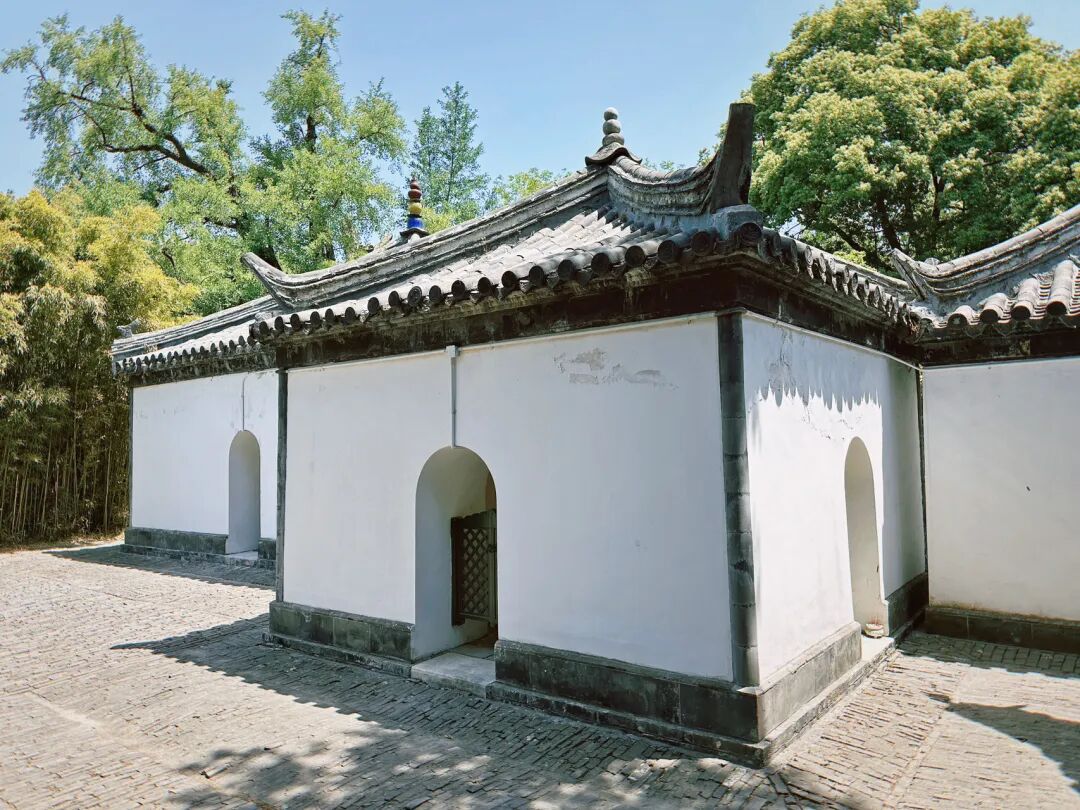
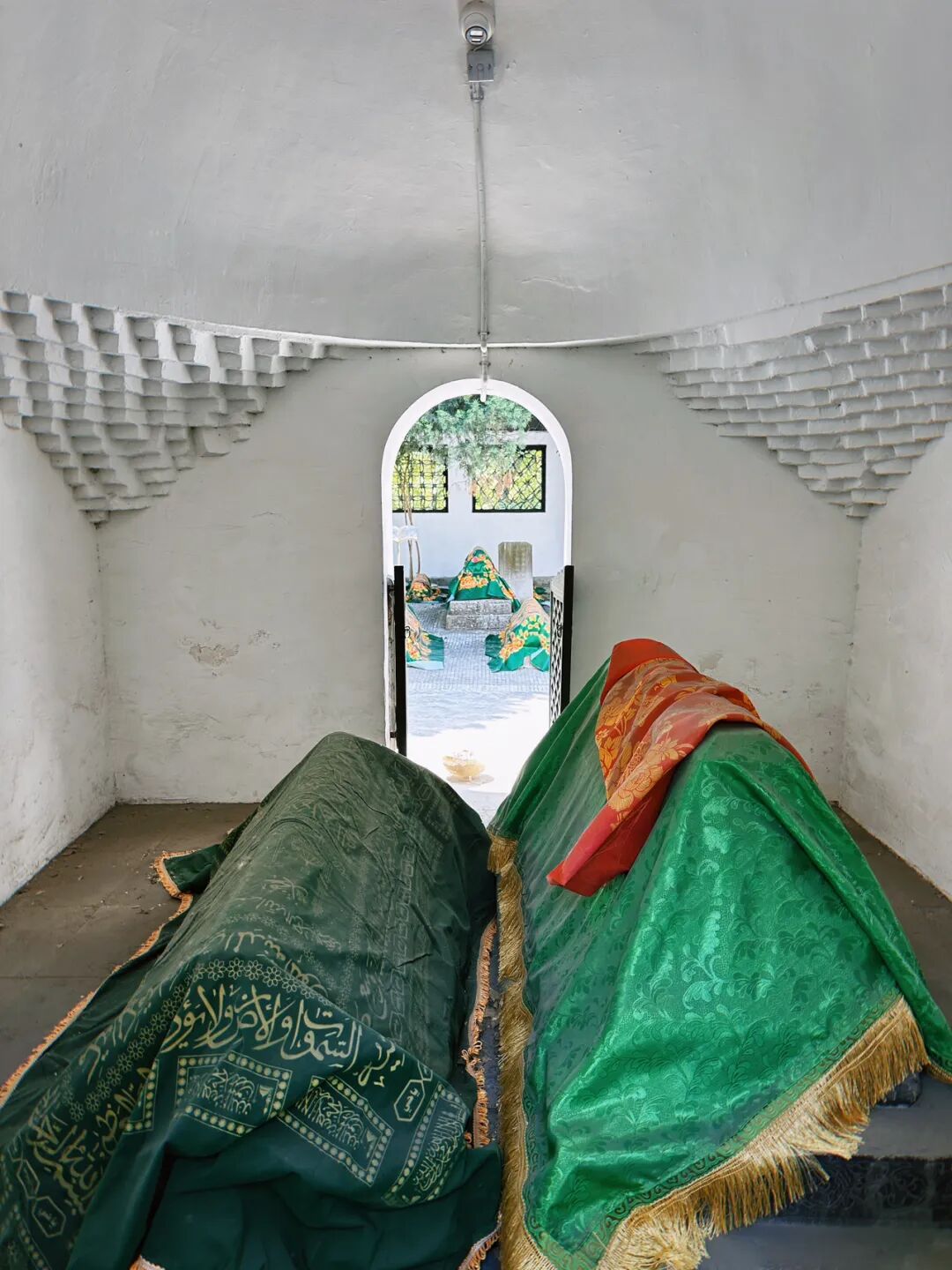
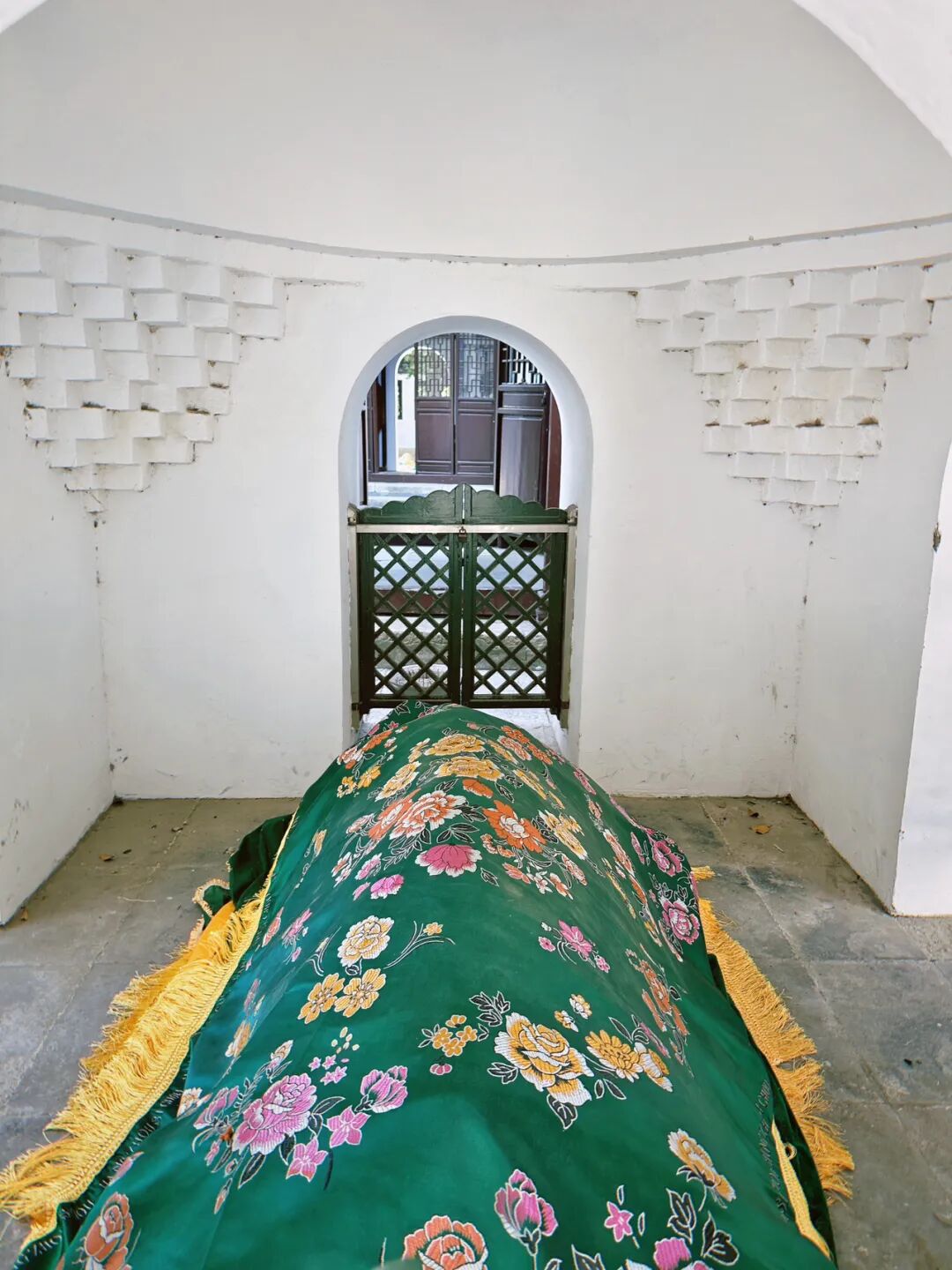
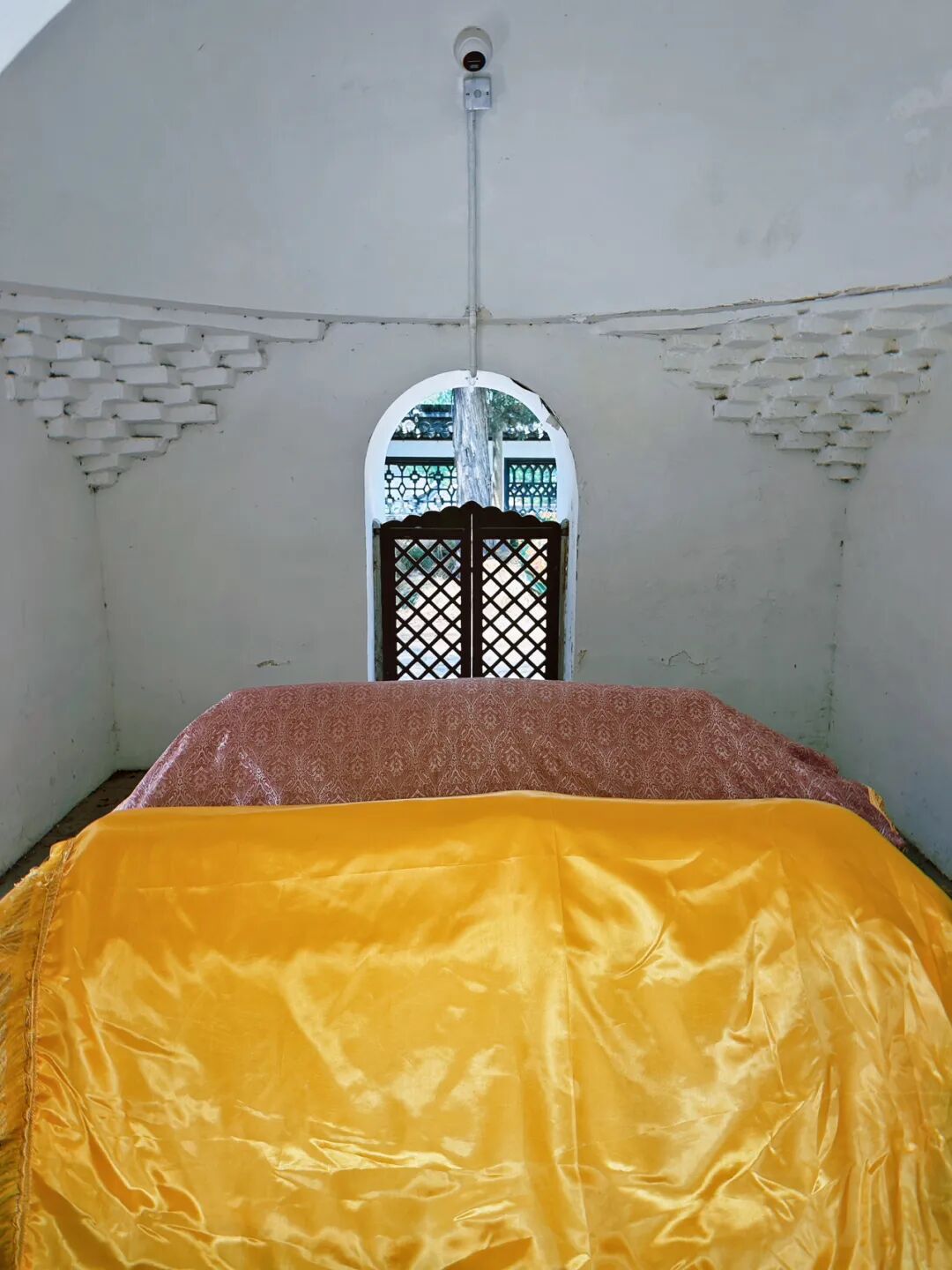
The center of the Pu Hadin tomb complex is the Pu Hadin tomb pavilion. The tomb pavilion has a four-cornered pointed roof with a glazed vase on top, and the interior features a corbelled dome. Inside the pavilion is the tomb cover stone, which follows the classic Song and Yuan dynasty style for Hui Muslims. It has a five-tiered Sumeru pedestal structure carved with scrolling peonies, ruyi flowers, and scripture. Today, the tomb cover stone is covered by a cloth and cannot be seen.
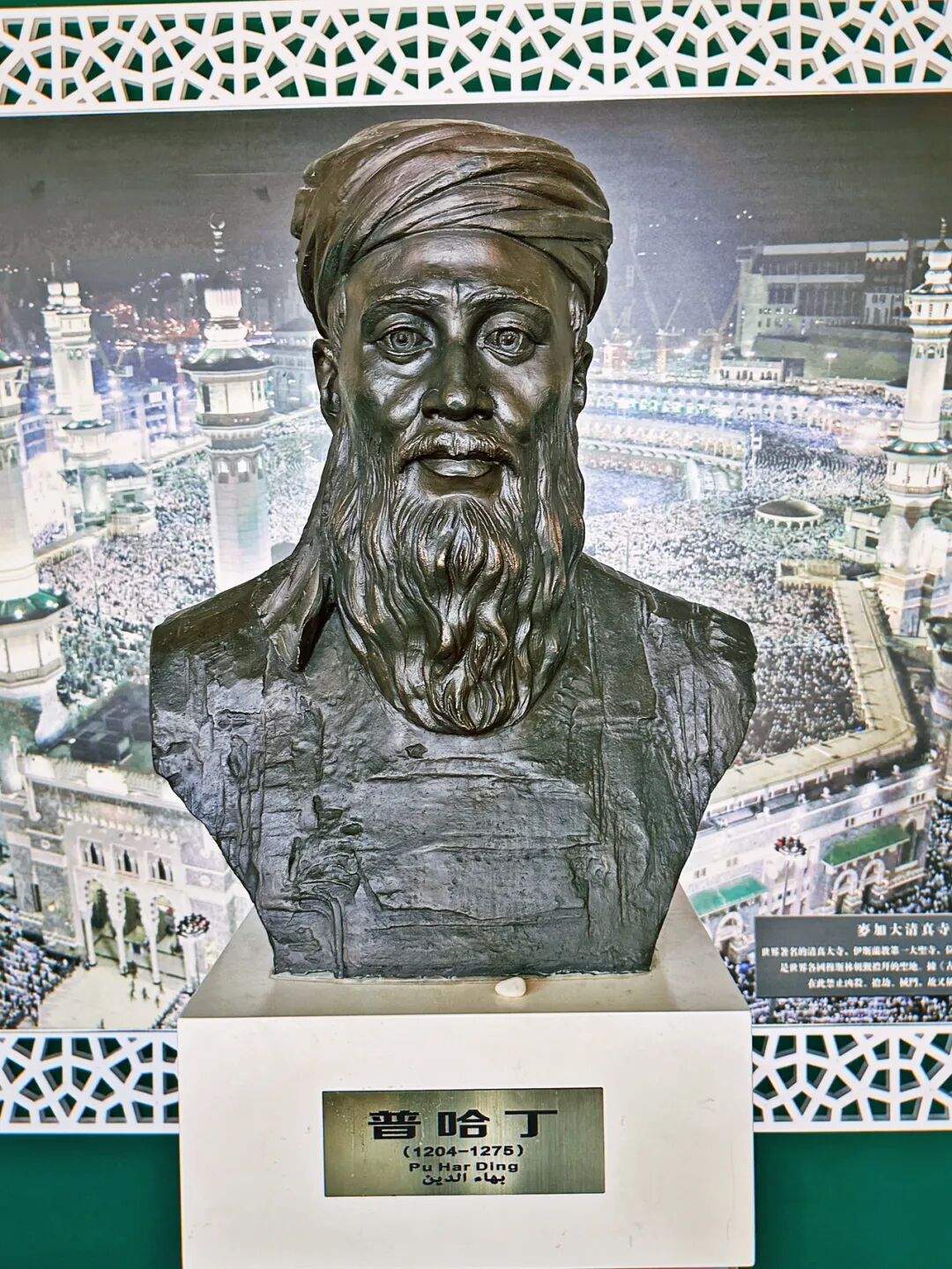
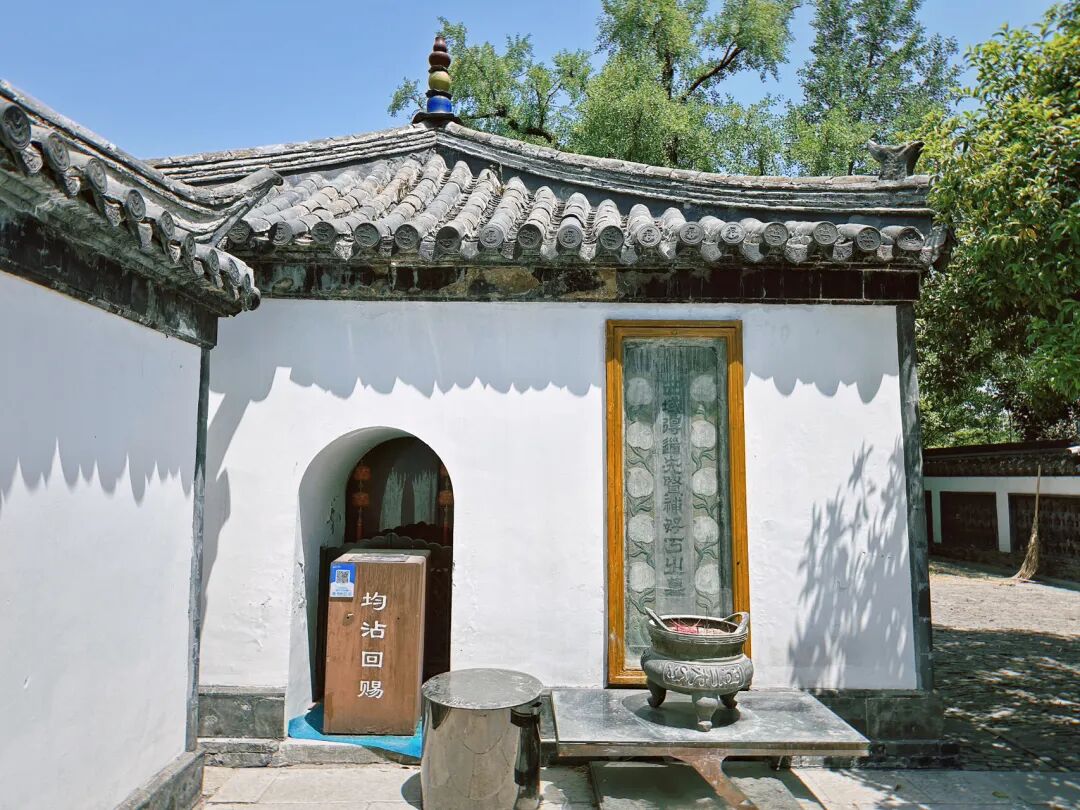
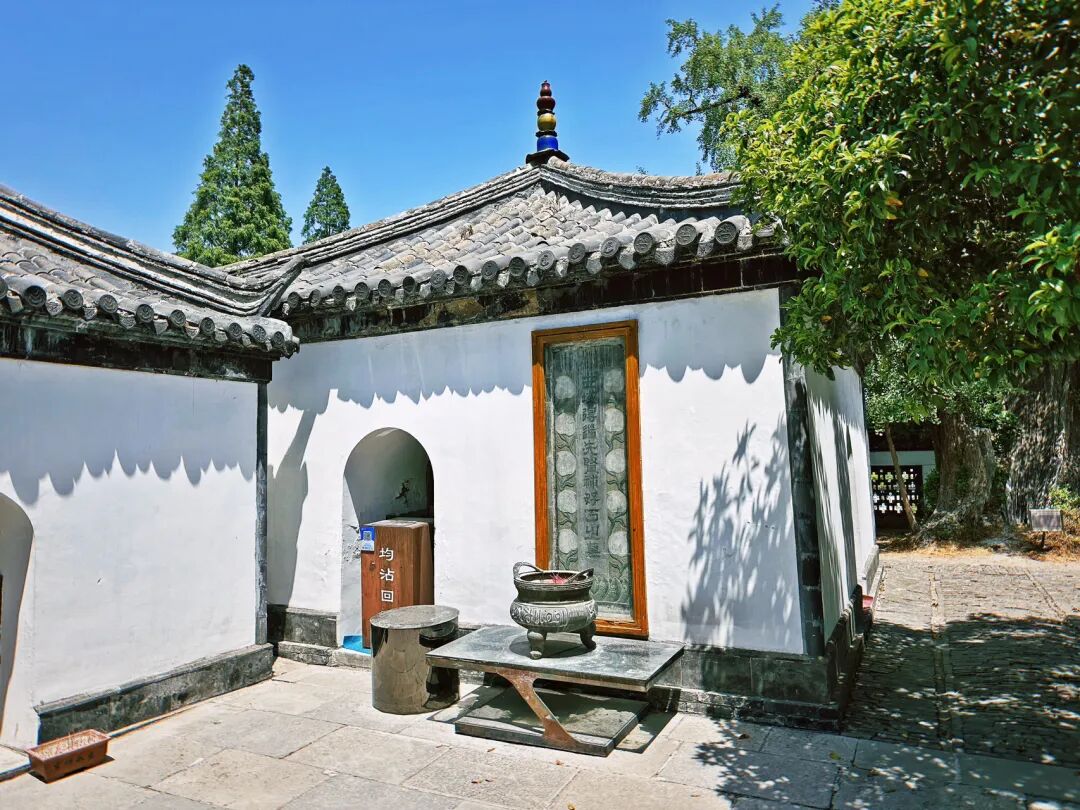
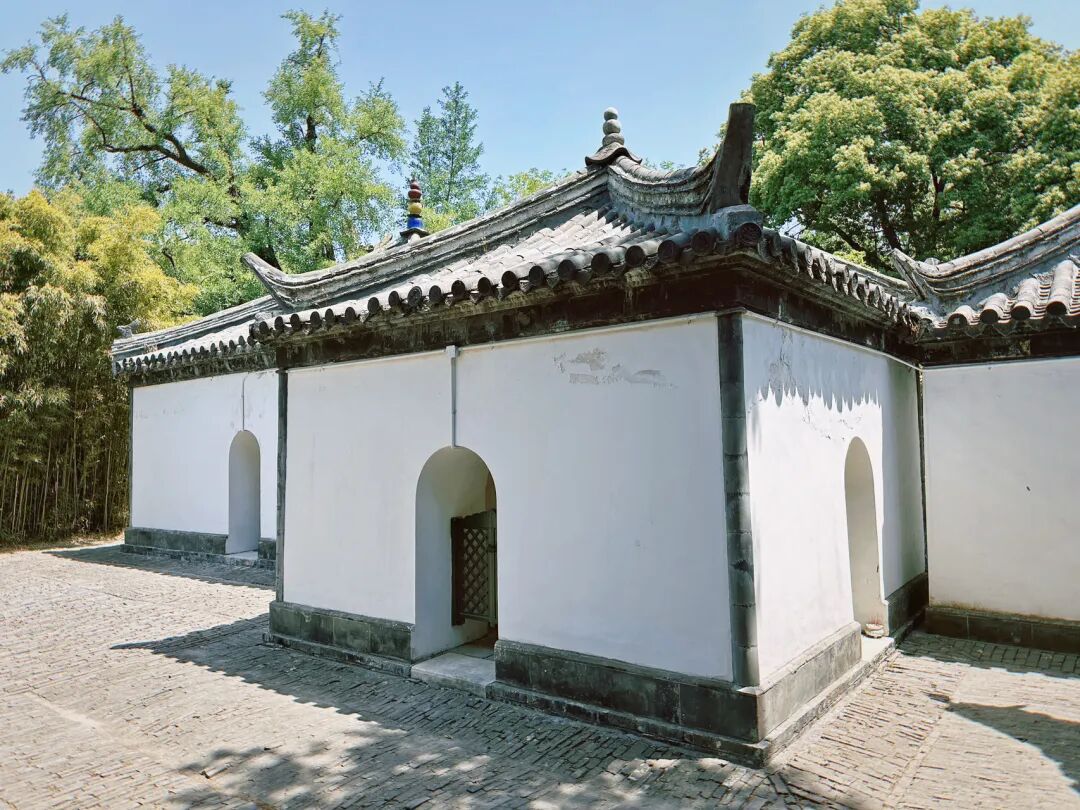
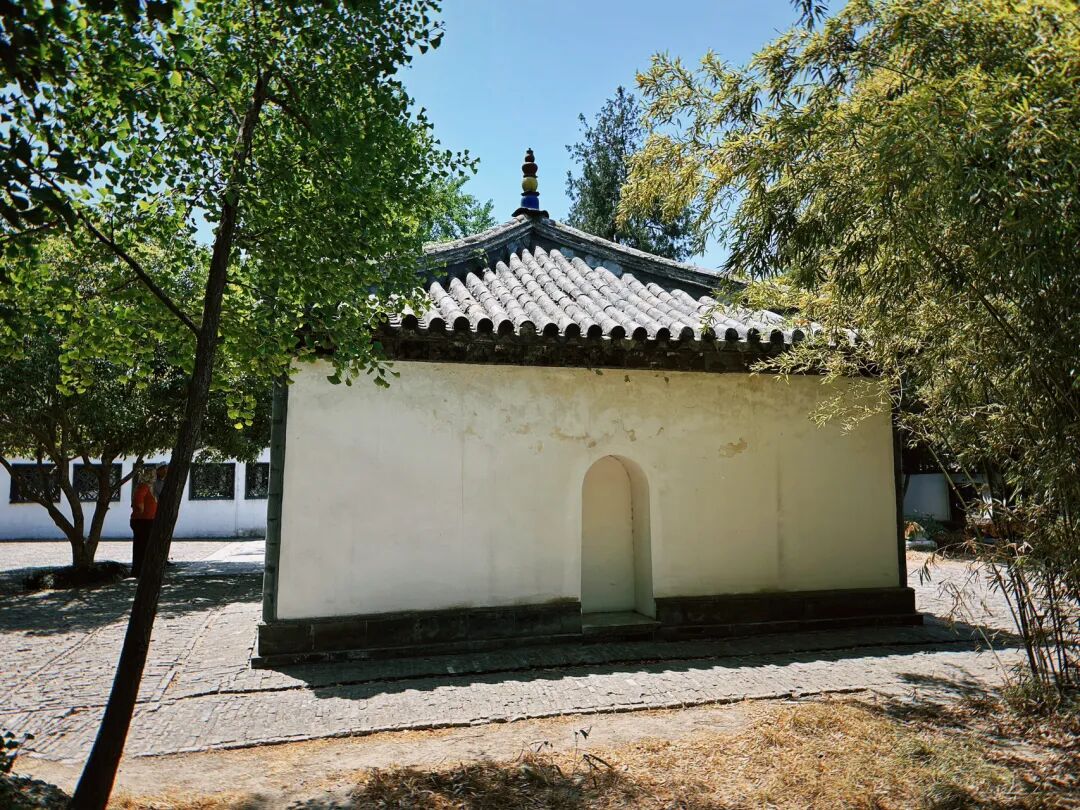
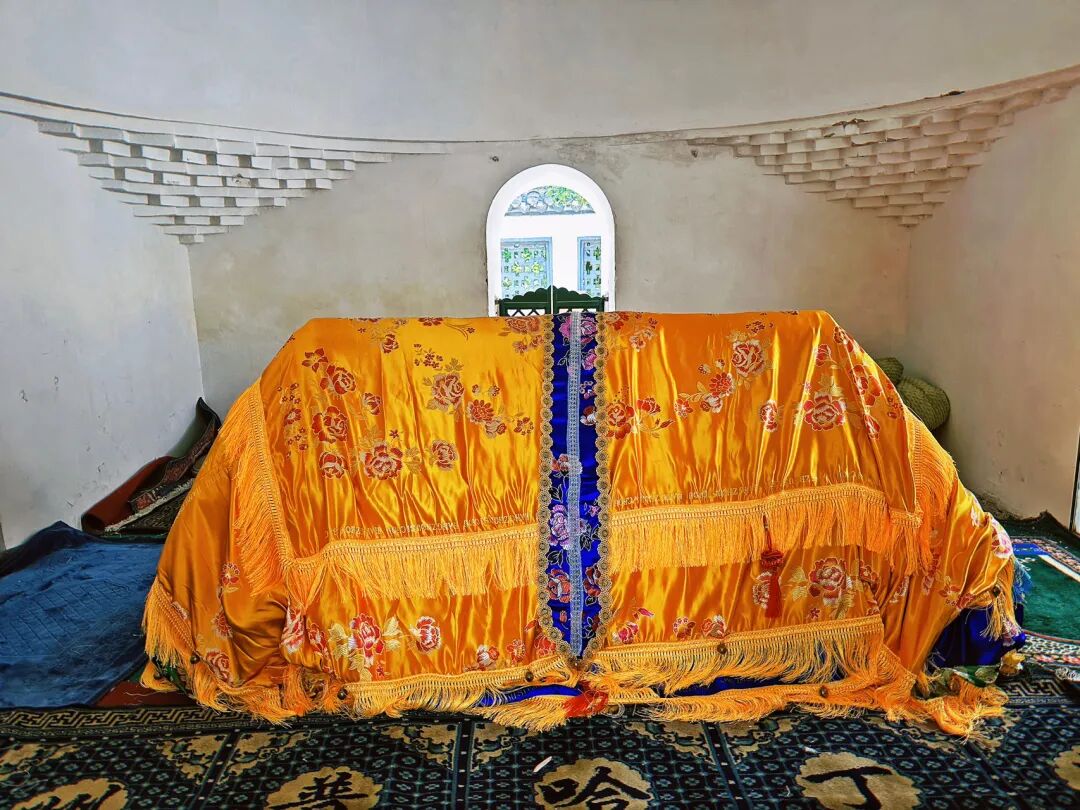
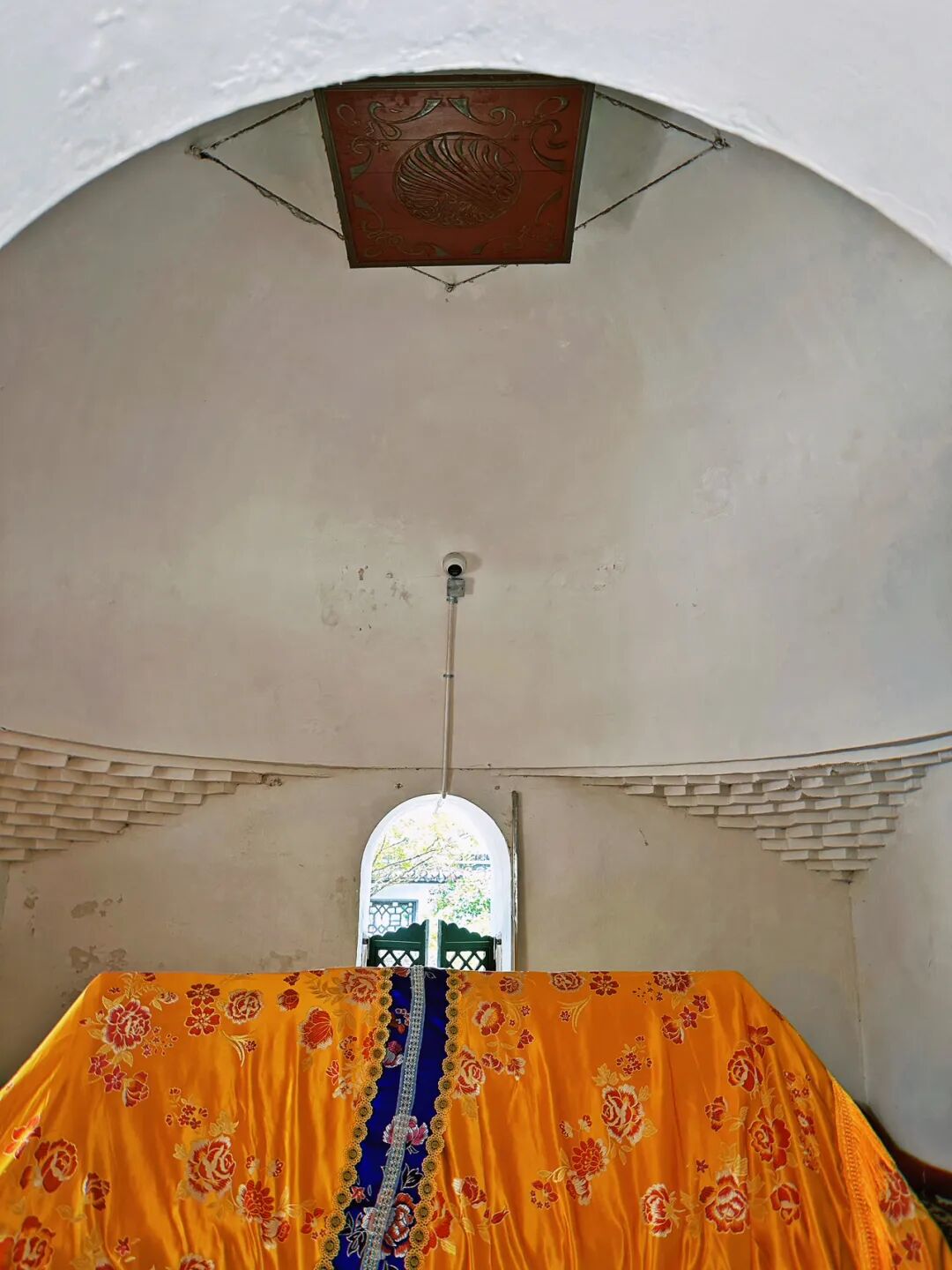
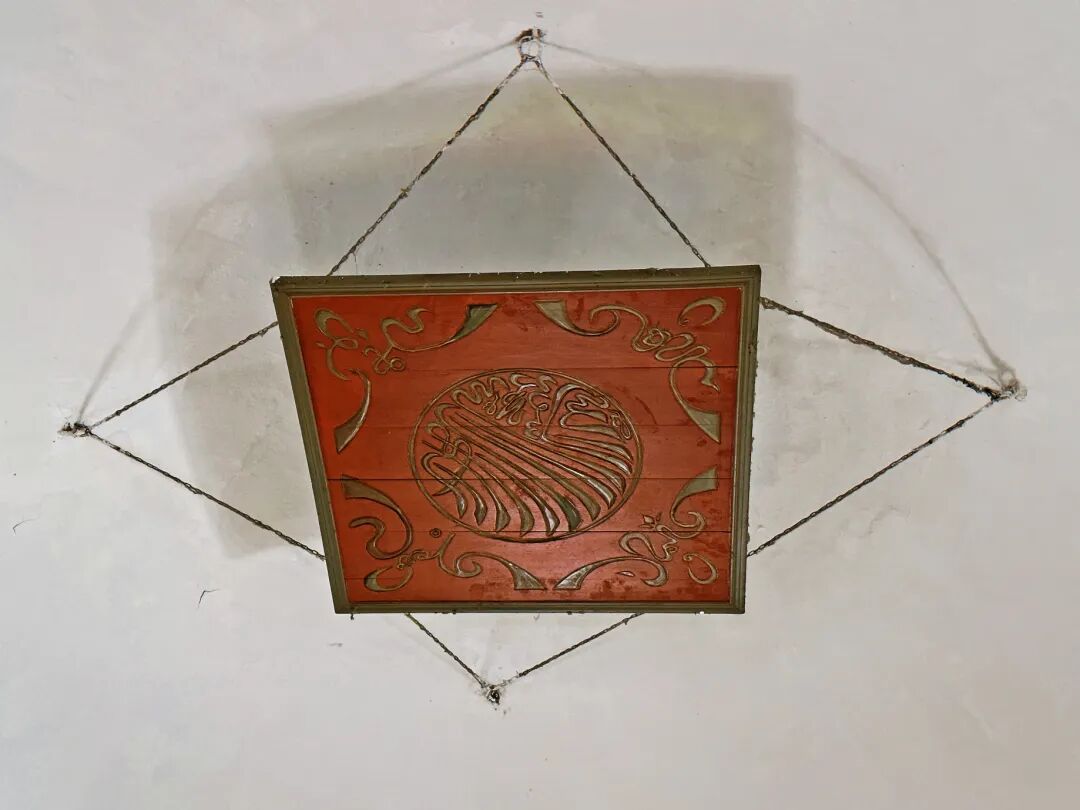
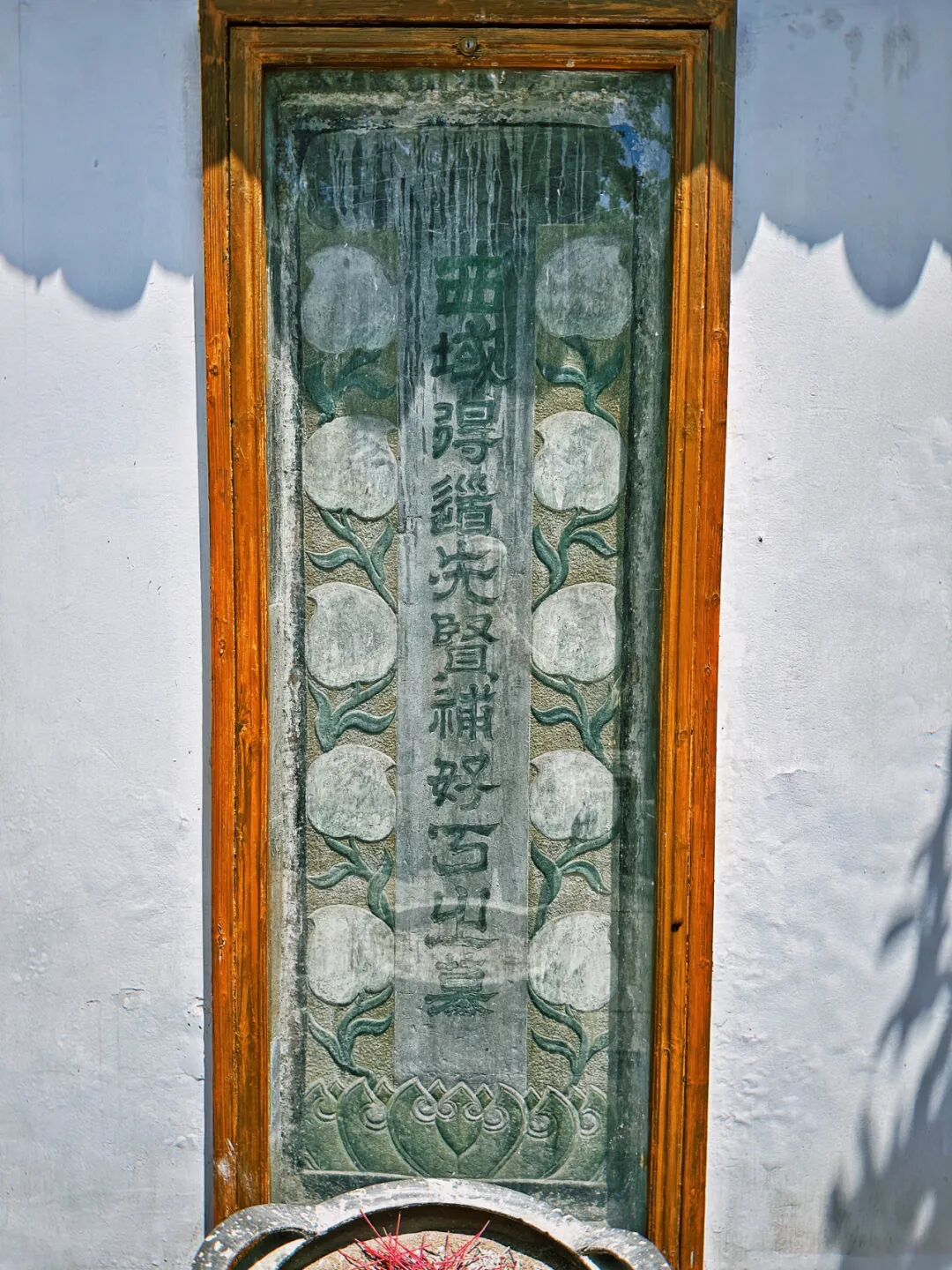
The pavilion features a stone tablet erected in 1726 (the fourth year of the Yongzheng reign) that reads 'Tomb of the Sage Pu Hadin from the Western Regions who attained the Way,' with carvings of longevity peaches and lotus flowers around the edges.
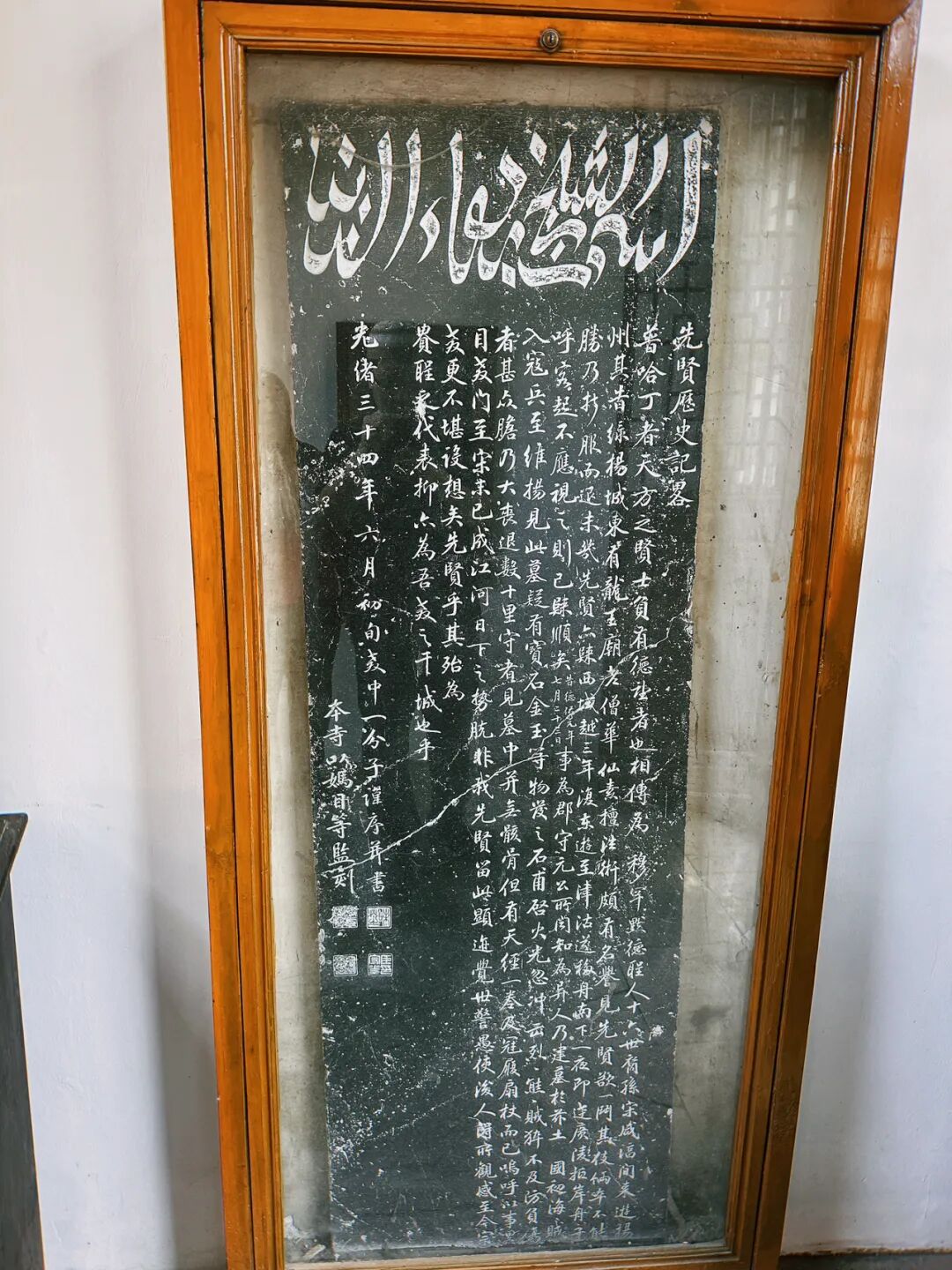
Inside the north foyer, there is also a 'Record of the Tomb of the Sage Pu Hadin from the Western Regions' erected in 1908 (the 34th year of the Guangxu reign). Besides recording Pu Hadin's birth and death, it includes legendary stories known within the community as 'karamat' (miraculous signs). The inscription records that an old monk from the Dragon King Temple tried to compete with Pu Hadin in magic, but he could not win and was eventually humbled. It also records that in the early Qing dynasty, thieves tried to dig up Pu Hadin's tomb. After they opened the tomb cover stone, a raging fire suddenly broke out and burned many of the thieves. Later, they saw there were no remains in the tomb, only a scroll of the Quran (Tianjing) and a hat, shoes, fan, and staff. The inscription is signed by 'the imam of this mosque and others who supervised the carving.' The imam of this mosque refers to the leader of the Babayao Mosque.
Around the Pu Hadin tomb pavilion are the tomb pavilions of several other sages, including the sage Sa Ganda who passed away in 1278 (the third year of the Jingyan reign of the Song dynasty), the sages Mahamude and Zhanmaluding who passed away in 1469 (the fifth year of the Chenghua reign of the Ming dynasty), the sage Fana who passed away in 1498 (the 11th year of the Hongzhi reign), and the tomb of Wang Keng, a merchant from Xi'an, Shaanxi, who passed away in 1501 (the 14th year of the Hongzhi reign of the Ming dynasty). The tomb pavilions all contain traditional Song and Yuan dynasty Sumeru pedestal tomb cover stones. I saw them in 2017, but when I went back in 2025, they were all covered with cloths and could not be seen.
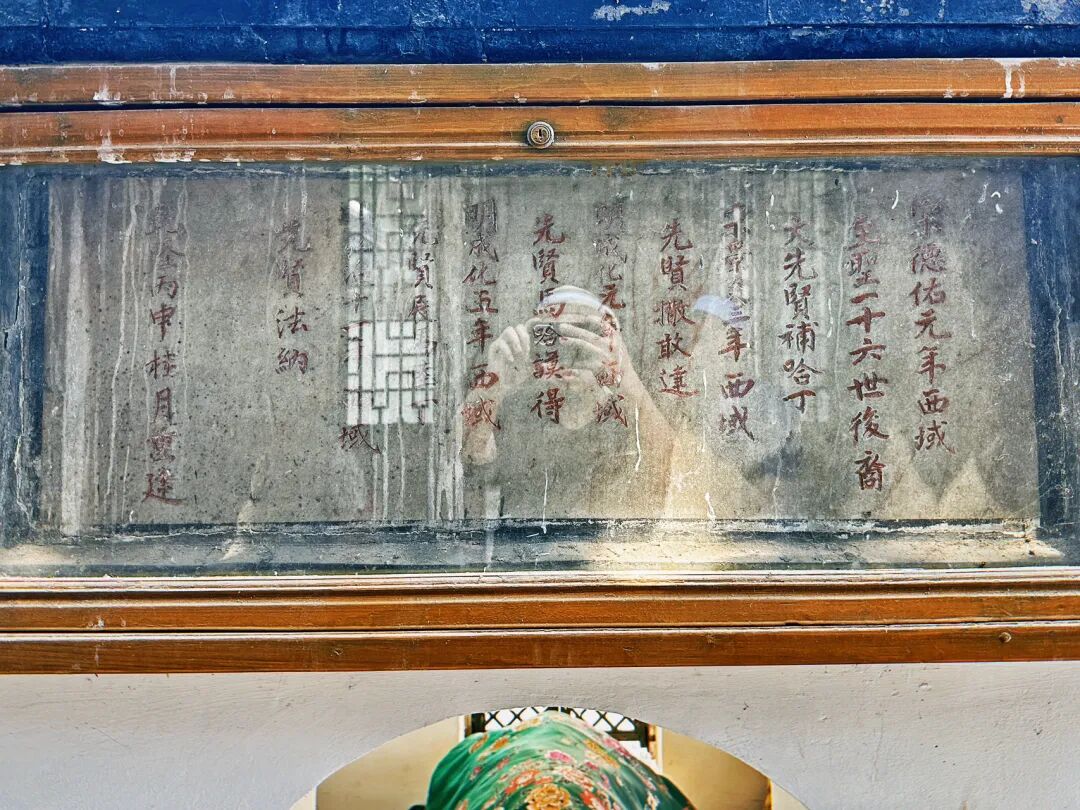
The pavilion also has a stone tablet from the Qianlong reign commemorating the reconstruction, which lists: 'The great sage Pu Hadin, a 16th-generation descendant of the Holy Prophet from the Western Regions, in the first year of the Deyou reign of the Song dynasty; the sage Sa Ganda from the Western Regions in the third year of the Jingyan reign of the Song dynasty; the sage Mahamude from the Western Regions in the fifth year of the Chenghua reign of the Ming dynasty; the sage Zhanmaluding from the Western Regions in the fifth year of the Chenghua reign of the Ming dynasty; and the sage Fana from the Western Regions in the 11th year of the Hongzhi reign of the Ming dynasty.' The inscription reads, Rebuilt in the lunar eighth month of the Bing-Shen year of the Qianlong reign.
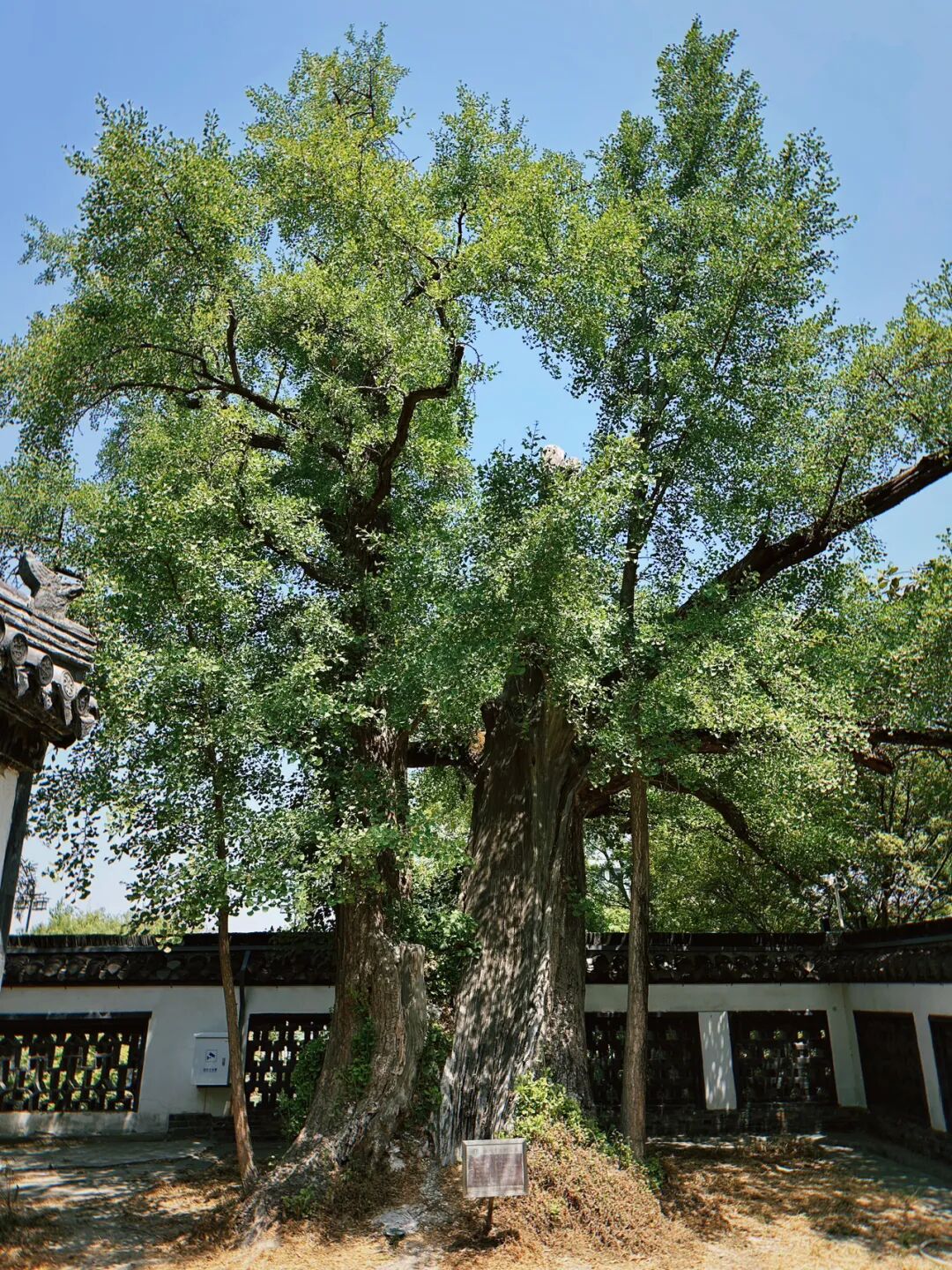
There are two ancient ginkgo trees in the cemetery, one of which is 750 years old and was planted when the cemetery was built in 1275. The 23rd day of the seventh lunar month this year marks the 750th anniversary of Pu Hadin's passing, and a grand memorial event will be held then.
The year 1275 was also when Yangzhou fell to the Yuan dynasty. That year, the Yuan general Wuliangha Ashu besieged Yangzhou, but the Song dynasty defenders refused to surrender, and the Yuan army failed to take the city after repeated attacks. The siege lasted for one year and three months. Eventually, a minor general inside the city opened the gates to surrender. The main commanders, Li Tingzhi and Jiang Cai, were captured, and the Yuan dynasty finally occupied Yangzhou. Therefore, this ancient ginkgo tree in the cemetery is a witness to the transition between the Song and Yuan dynasties.
Most of the Qing dynasty tombstones in the Pu Hadin cemetery show official titles. One of them, from the fifth year of the Xianfeng reign, belongs to Tao Gong, a garrison commander of Gushuijing Fort under the Ningxia Town of Gansu, who was granted a blue peacock feather by the emperor.
There are also some unearthed Yuan dynasty tomb capstones in the cemetery, but they are currently covered with tarps and cannot be seen.
On the cemetery wall, there is a 1932 stele titled Inscription for Han Aheng Yuchun. The inscription records that Imam Han Tongrong was from Hanjiachai in Yucheng County, Shandong. He was born in 1837 (the 17th year of the Daoguang reign), studied the classics from a young age, and later traveled to Ningxia and Hohhot for his studies. After graduating in 1867 (the sixth year of the Tongzhi reign), he returned to Shandong and then traveled south. When he passed through Yangzhou, the local elders asked him to stay. He set up a school at the Baba Yao Mosque next to the Pu Hadin cemetery and taught over thirty students, including several religious leaders with the surnames Lan, Ma, and Wang. Four years later, Imam Han left Yangzhou to preach and teach in Hubei, Fujian, Jiangxi, and other places, with his students spread across the entire southeast region. During this time, Imam Han briefly returned to teach in Yangzhou before traveling to Zhejiang, Suzhou, Tianjin, and Shanghai. He returned to Yangzhou to teach in 1898 (the 24th year of the Guangxu reign) and stayed until he passed away in 1915 at the age of 79, after which he was buried in the Pu Hadin cemetery.
The Pu Hadin cemetery houses four Yuan dynasty tombstones. Three of them are primarily in Arabic with some Persian place names, while the front of the fourth one is written in Chinese characters. These four tombstones were discovered in the city foundations in 1924-1925 when the Dangjun Tower at the south gate of Yangzhou was demolished. It was originally kept in the tomb of the sages next to the Crane Mosque (Xianhe Si) and moved to the Puhading Cemetery in 1959.
During the Song Dynasty, a government hostel was set up at the south gate of Yangzhou. The area outside the south gate became a major settlement for Arab and Persian merchants. An ancient mosque (Nanmenwai Gusi) was built there, but it was later occupied by a glass factory and the main hall was demolished in 1984. A cemetery was also built nearby. In 1357, the 17th year of the Zhizheng era of the Yuan Dynasty, Zhu Yuanzhang captured Yangzhou and used some of the tombstones to build the Dangjun Tower at the south gate.
One of the Chinese-language tombstones is inscribed with 'Tomb of the Darughachi of Huizhou Circuit, Nie Gubo, Tongyi'. The term Darughachi originally meant 'seal holder' and referred to officials who held real administrative and military power in local areas during the Yuan Dynasty. The Huizhou Circuit was a high-ranking circuit, so the Darughachi held a rank of 3a. Tongyi is short for 'Tongyi Dafu', which is also a 3a rank. During the Yuan Dynasty, most Darughachi were Mongols, though some were Semu people with noble family backgrounds. The back of the stone records Nie Gubo's life and praises him as a 'noble, diligent, and excellent religious educator, an outstanding leader who helped the weak, was charitable and generous, and loved the people, a respected elder... a man of great virtue and wisdom, generous and fair, and blessed with great fortune.' It also notes that he passed away on the 2nd day of the 12th month of the Islamic calendar year 709, which is May 3, 1310, the third year of the Zhida era of the Yuan Dynasty.
The second tombstone records: 'The pardoned deceased Shams al-Din Asif Allah Balaji... at the time of early June, 724 (Islamic calendar).' This corresponds to the end of May or early June of 1324, the first year of the Taiding era of the Yuan Dynasty.
The third tombstone belongs to a Persian woman who also passed away in 1324. Her name was Aisha Khatun, with 'Khatun' meaning 'lady'. The inscription says: 'She was a chaste, virtuous, and capable woman... her father was Lezunding, a well-respected official in the religious community.'
The fourth tombstone is damaged. It belonged to a missionary named Ala al-Din who died in 1302, the sixth year of the Dade era of the Yuan Dynasty. The inscription describes him as a merchant who was skilled in business and highly respected by the people.
On the east side of the Puhading Cemetery is the tomb of General Zhang Xin, who passed away in 1551, the 30th year of the Jiajing era of the Ming Dynasty. General Zhang's ancestor, Damuchi, came from Samarkand. The 'Continued Records of Jiangdu County' from the Republic of China era states: 'General Zhaoyong, named Xin, was the grandson of the Hui Muslim Damuchi. He held the rank of Cavalry Commandant. Because he was an excellent archer, he was granted the surname Zhang and his household was registered in Yangzhou, located behind the Puhading tomb outside Tongji Gate.'
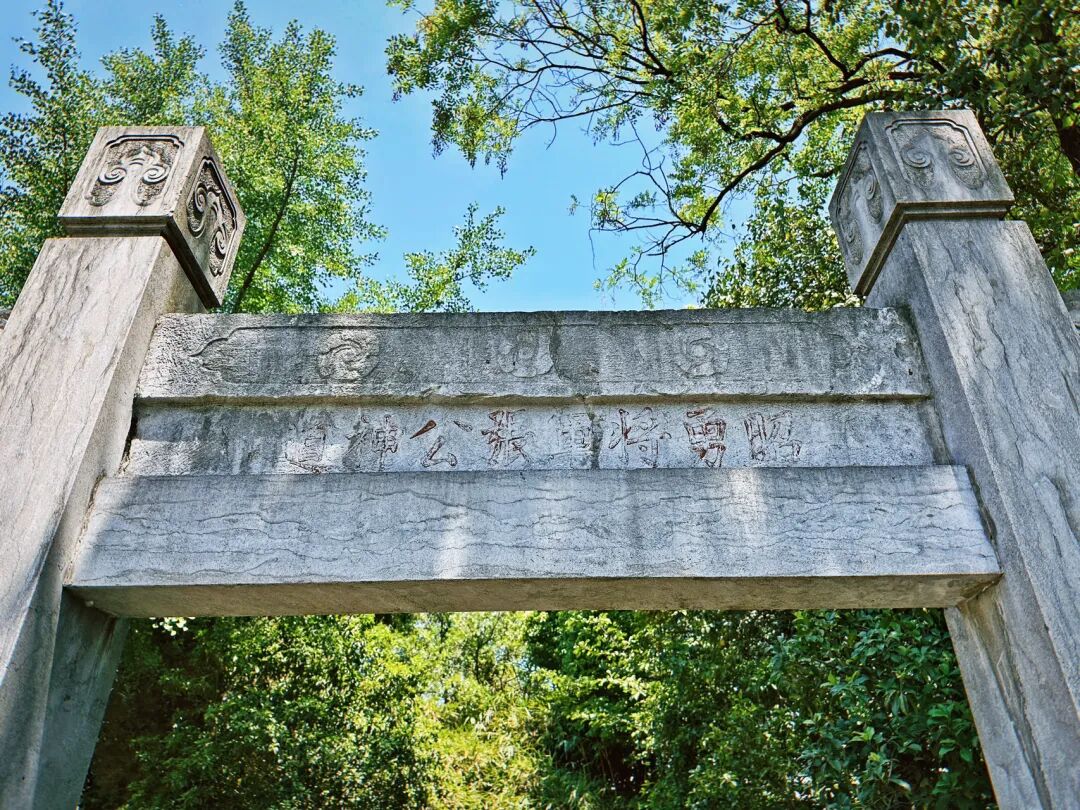
The spirit way archway for General Zhang was erected by his grandson, Zhang Heng. Zhang Heng was a famous Ming Dynasty general who fought against Japanese pirates and served as the hereditary commander of the Yangzhou Guard. In April 1556 (the 35th year of the Jiajing reign), Japanese pirates attacked Yangzhou. Zhang Heng, a retired Huaiyang assistant regional commander, personally led troops to fight them and died on the battlefield. The stone sheep beside the spirit way was once kept at Slender West Lake until it was moved back in 2011.
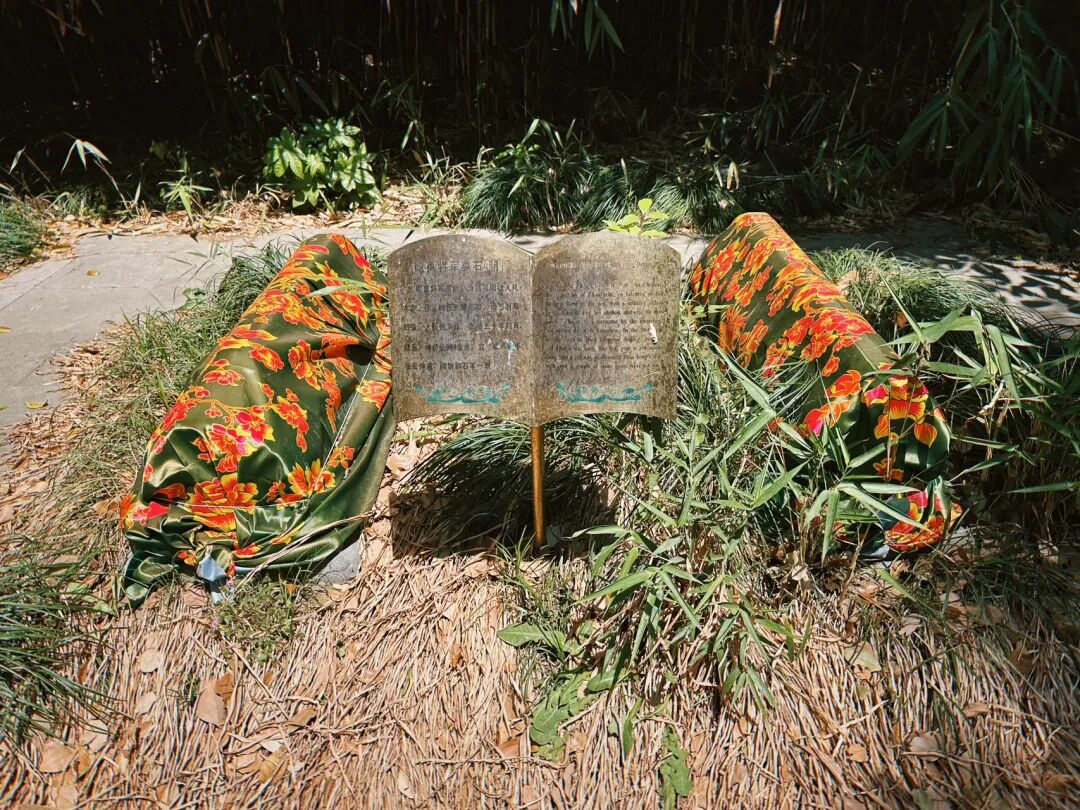
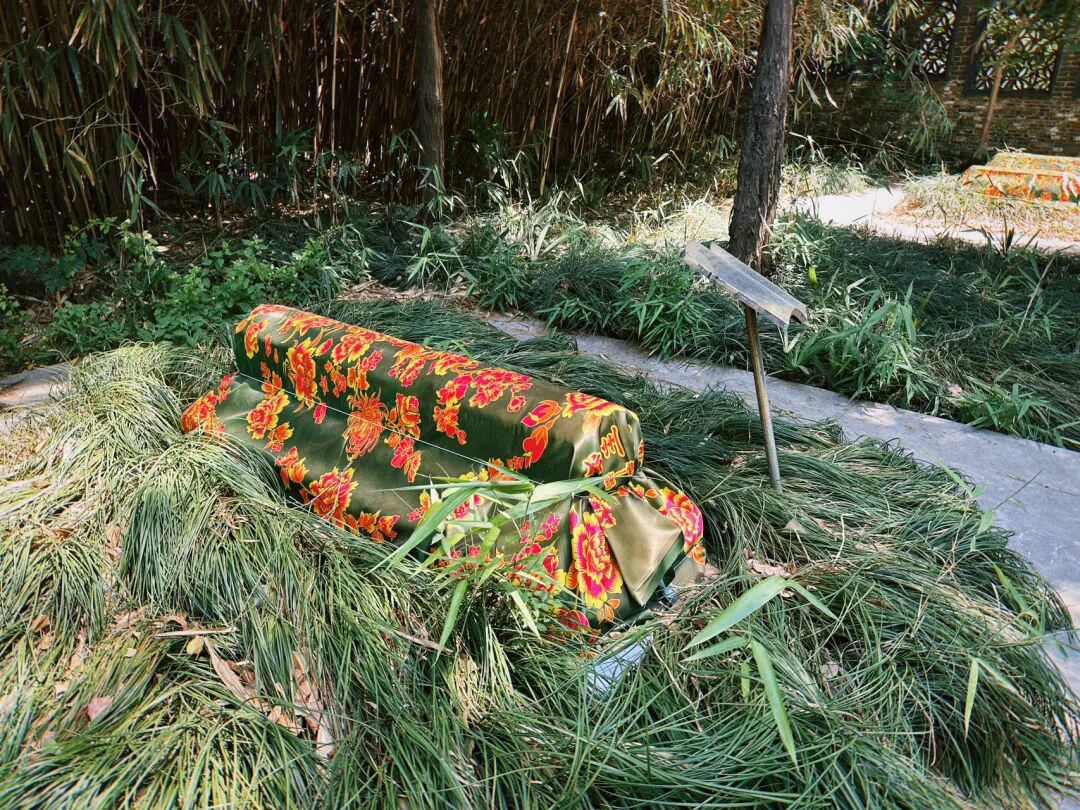
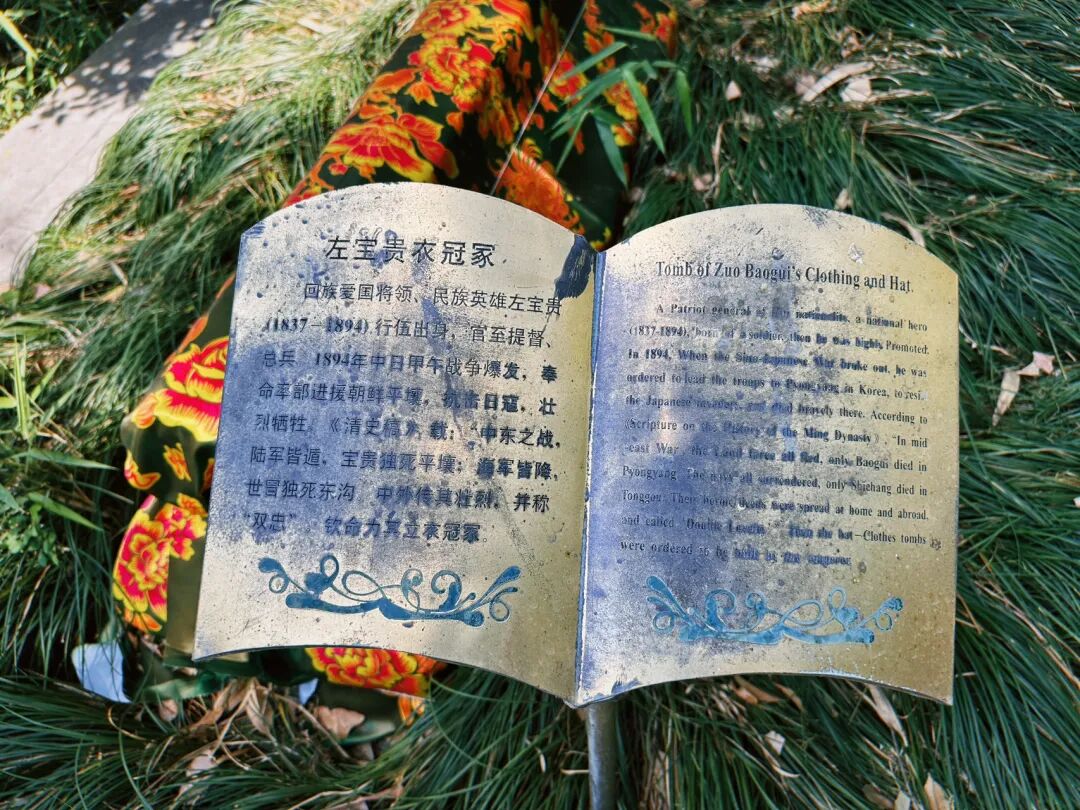
Next to General Zhang Xin's tomb is the cenotaph of Zuo Baogui, a famous Qing Dynasty general who fought against the Japanese. During the First Sino-Japanese War in 1894 (the 20th year of the Guangxu reign), Zuo Baogui led his troops to hold the Xuanwu Gate in Pyongyang and dealt a heavy blow to the Japanese army. On September 15, Zuo Baogui personally fired a cannon. His right arm was broken, but he bandaged the wound and kept fighting. He was then hit in the chest by a shell and died heroically at the age of 57. That same year, the Yangzhou government followed an imperial decree to build a cenotaph and a shrine for Zuo Baogui in the south section of the Puhading Tomb. The shrine was later destroyed, leaving only the tomb cover stone of the cenotaph.
Babayao Mosque
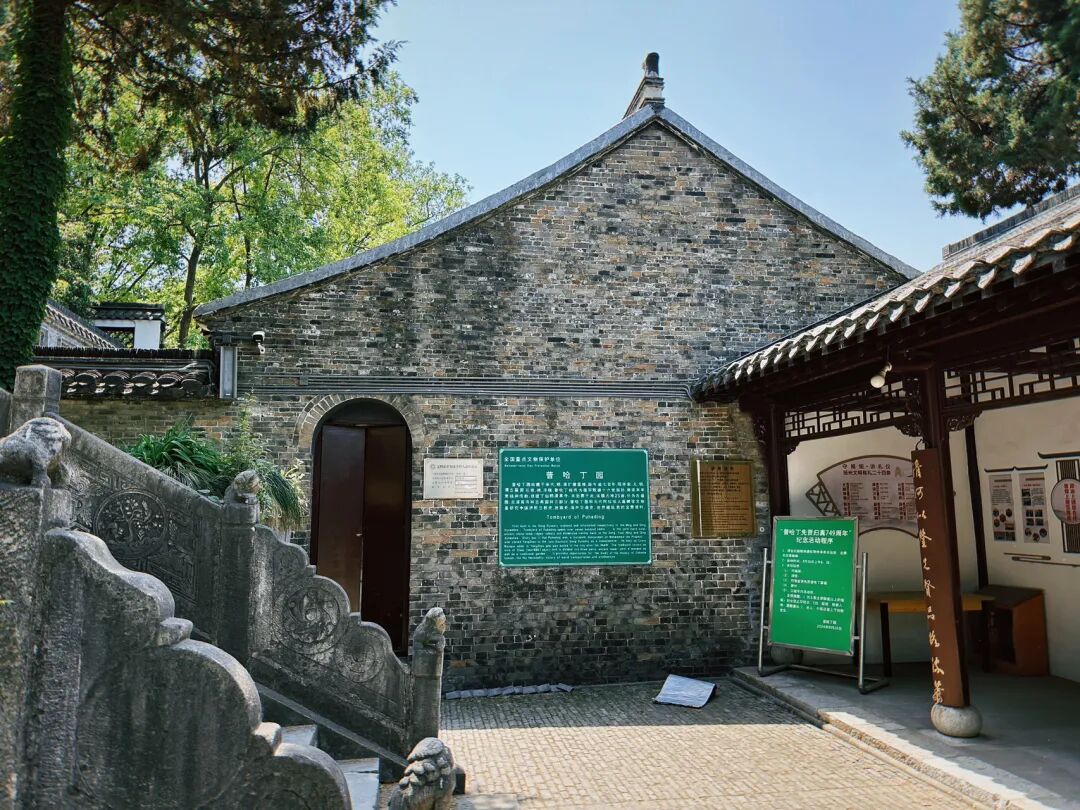
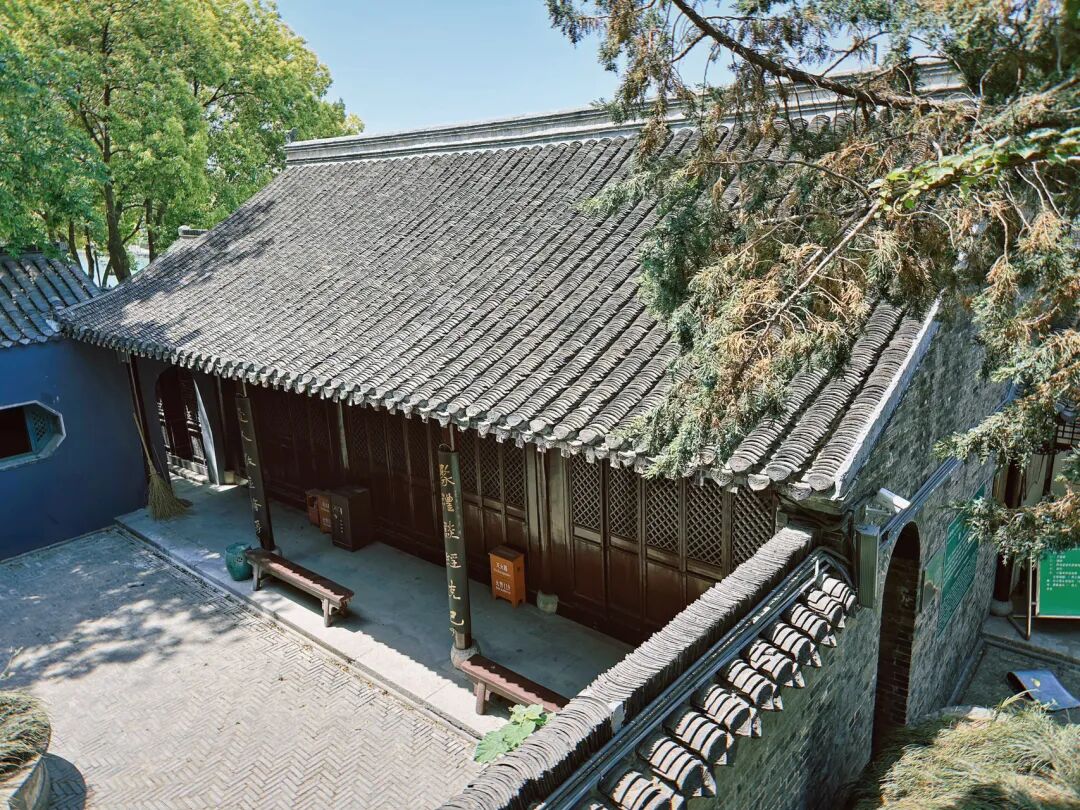
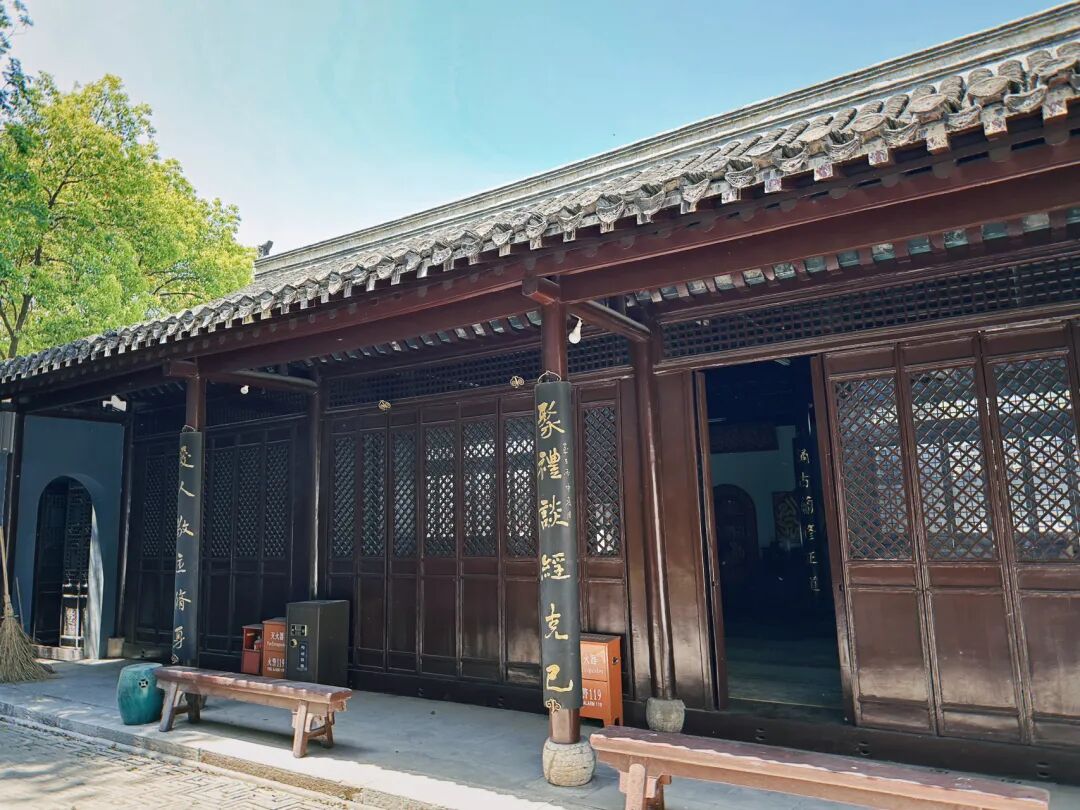
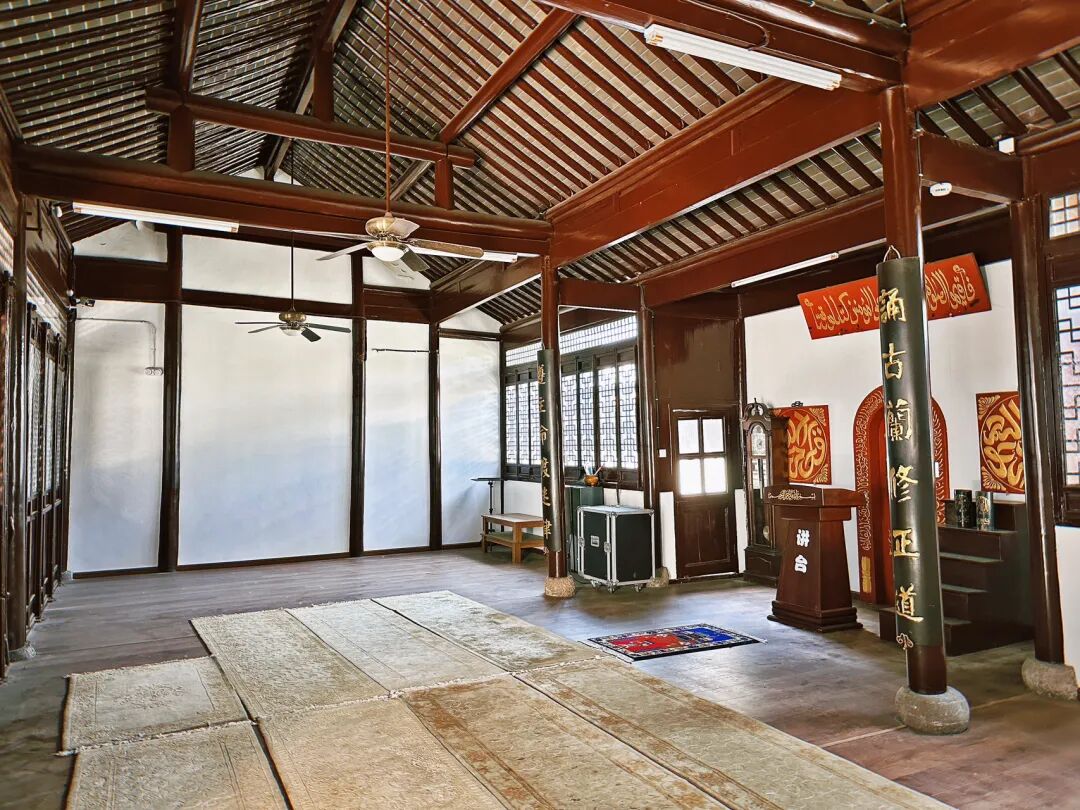
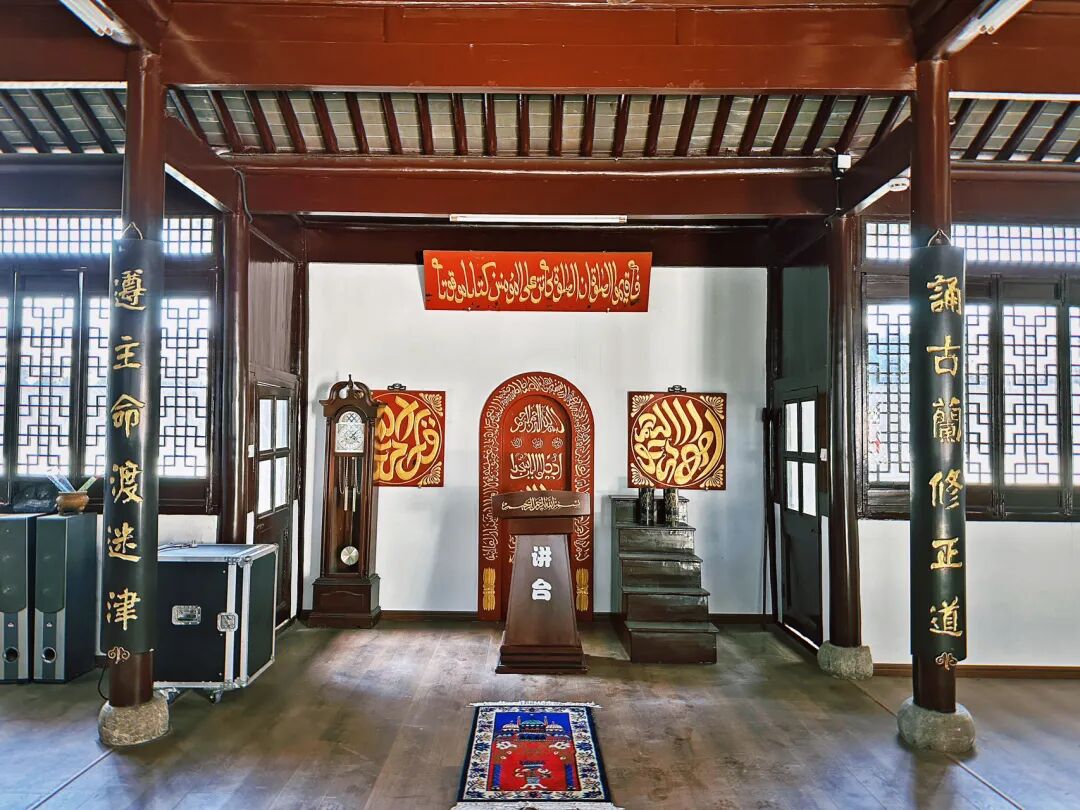
The mosque southwest of the Puhading Tomb garden is called Huihui Tang Mosque or Babayao Mosque. It was one of the six Hui Muslim districts in Yangzhou during the Qing Dynasty and is the only one remaining of the three districts outside the city. Babayao Mosque currently appears as it did after being rebuilt in 1776 (the 41st year of the Qianlong reign) and renovated in 1845 (the 25th year of the Daoguang reign), featuring the traditional architectural style typical of the Huaiyang region.
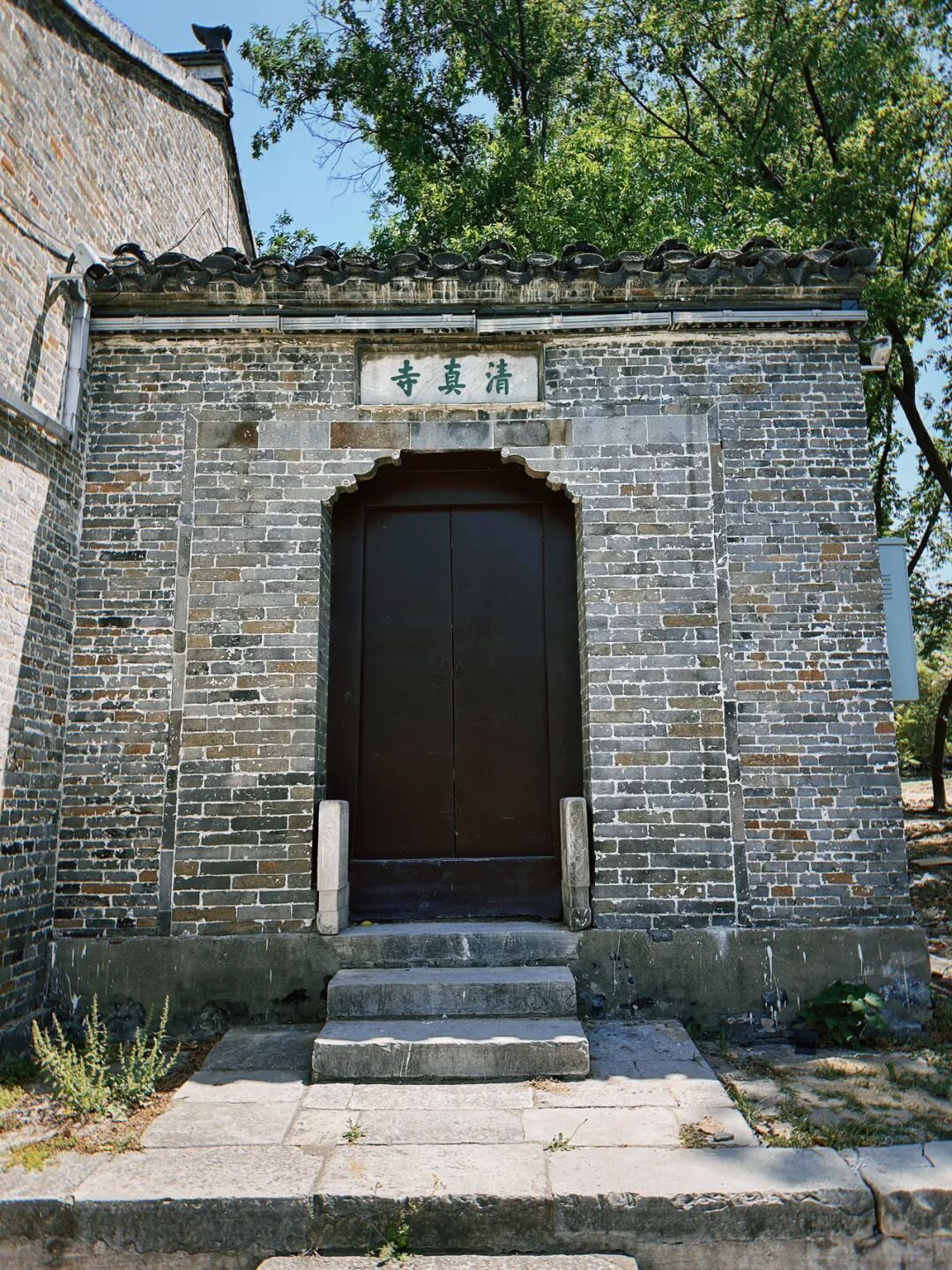
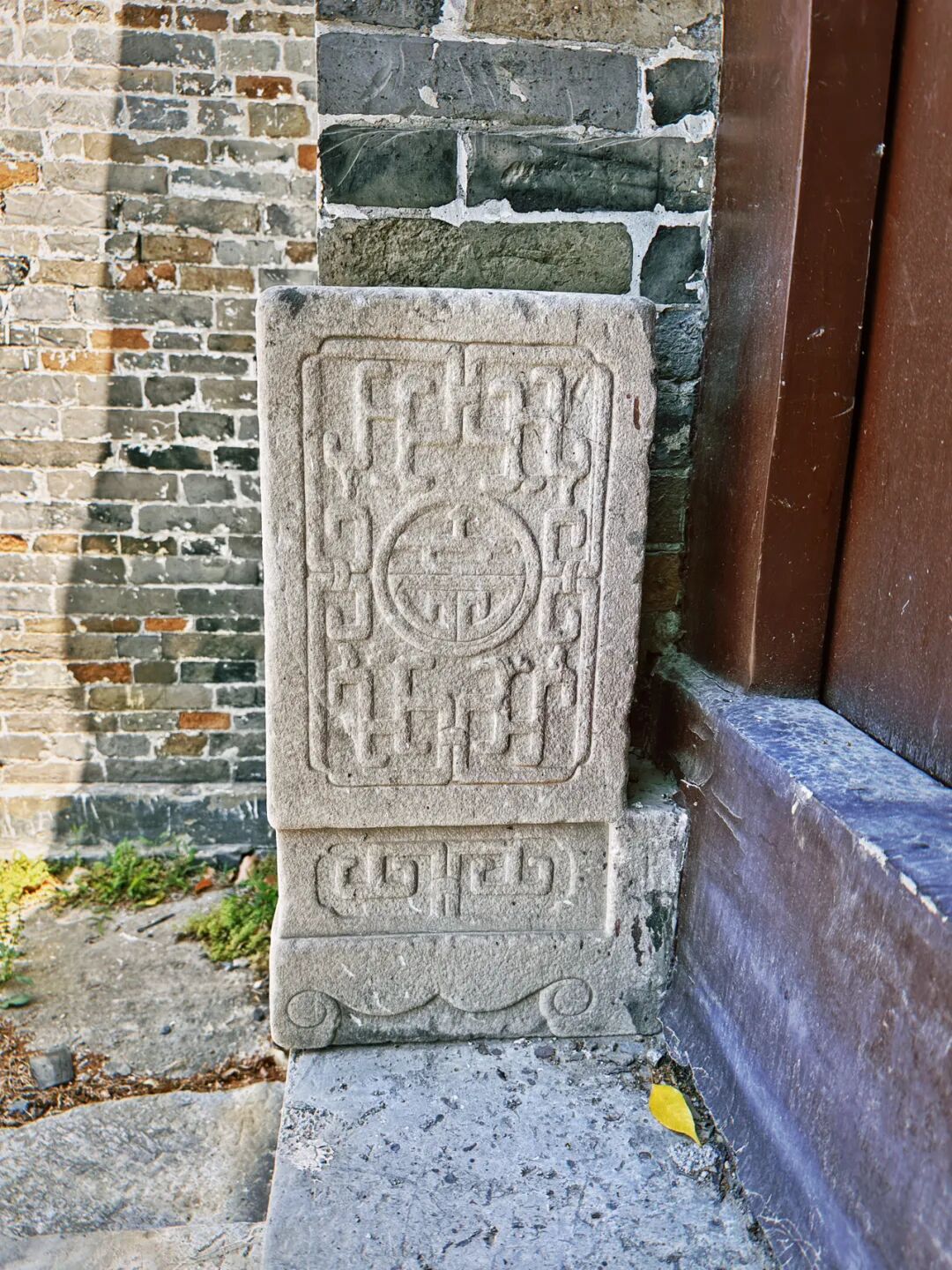
The main gate of Babayao Mosque is on the southwest side of the Puhading Tomb garden. The stone plaque above the gate was installed during the Qianlong reign, and the rectangular door-pillow stones are very elegant.
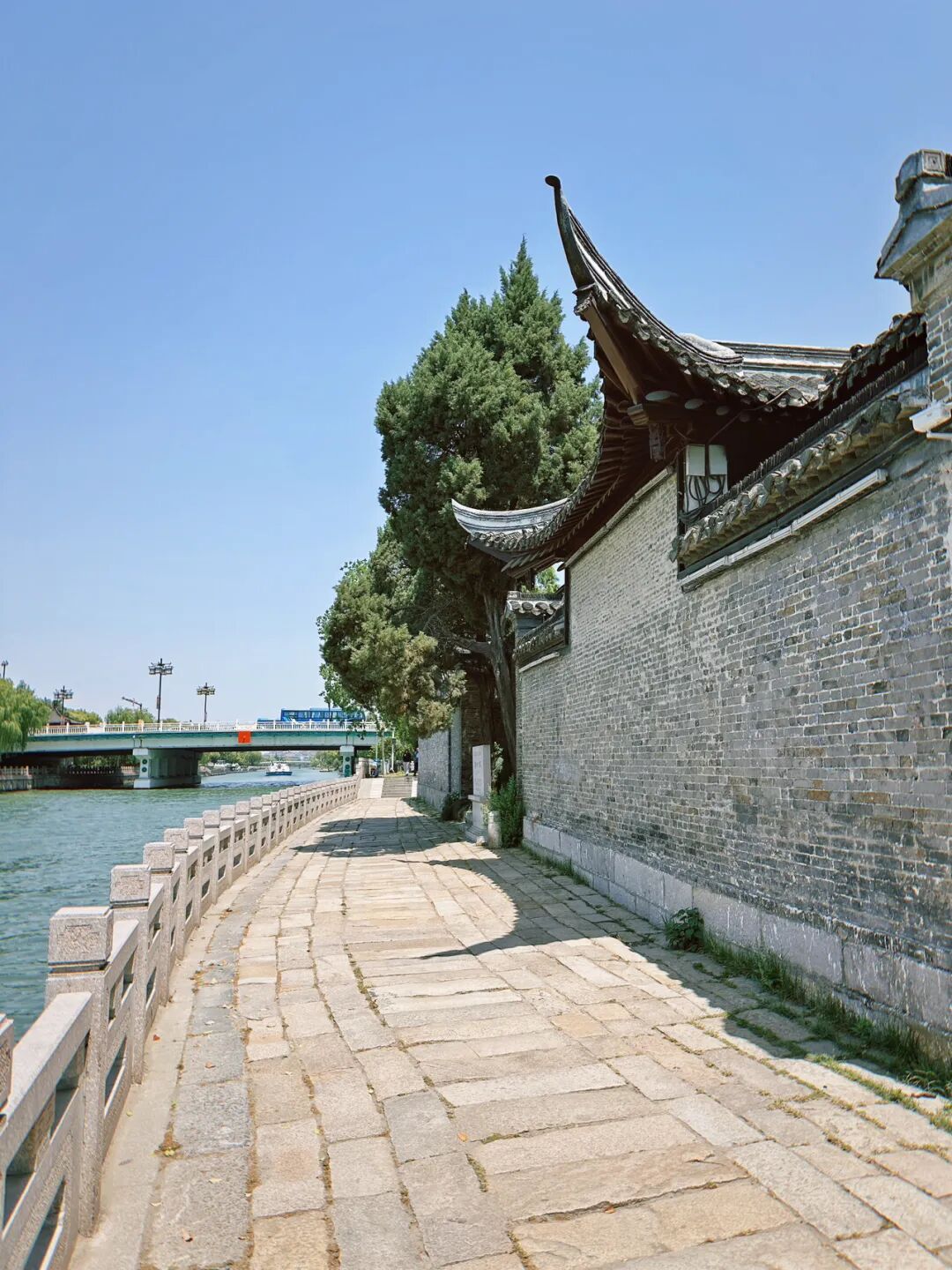
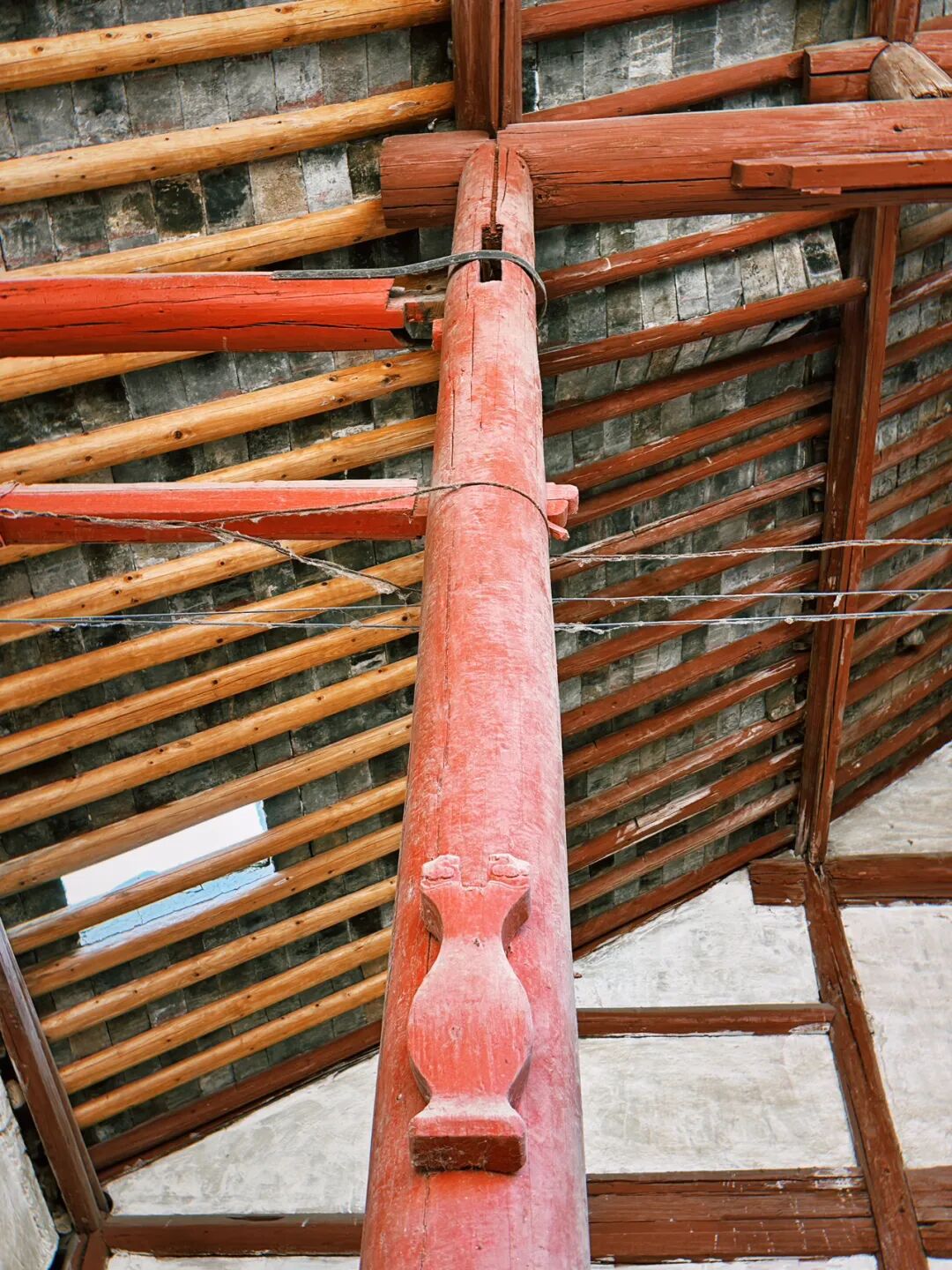
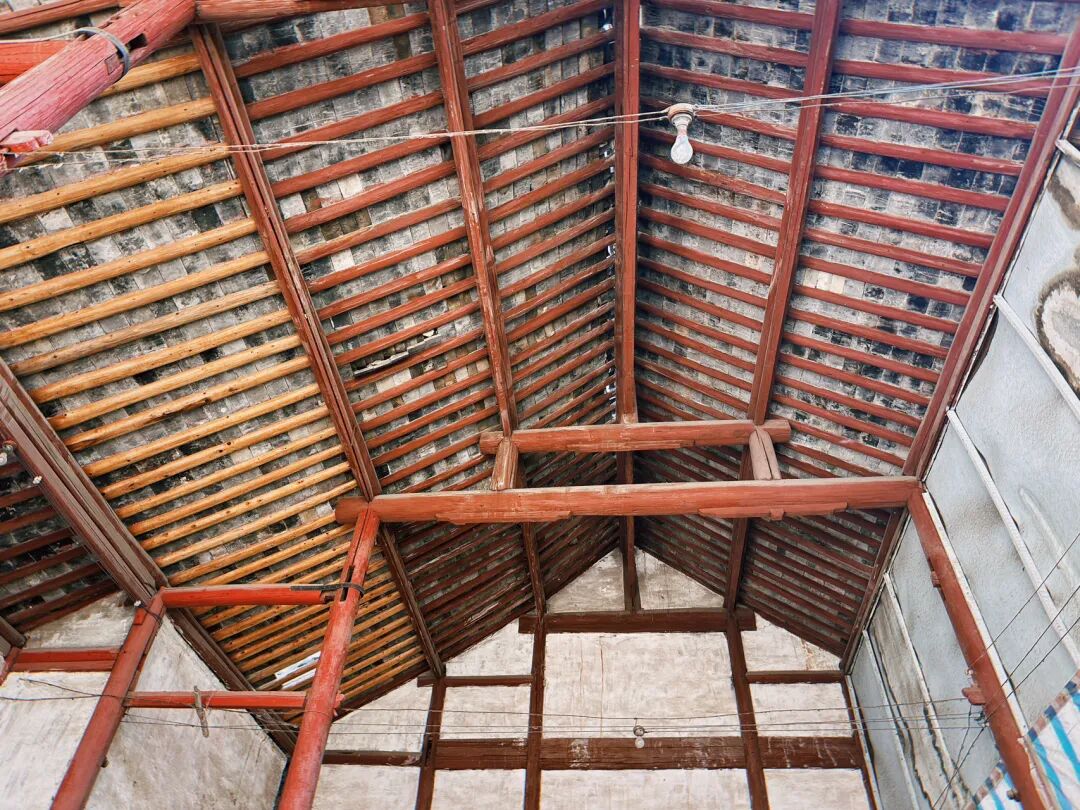
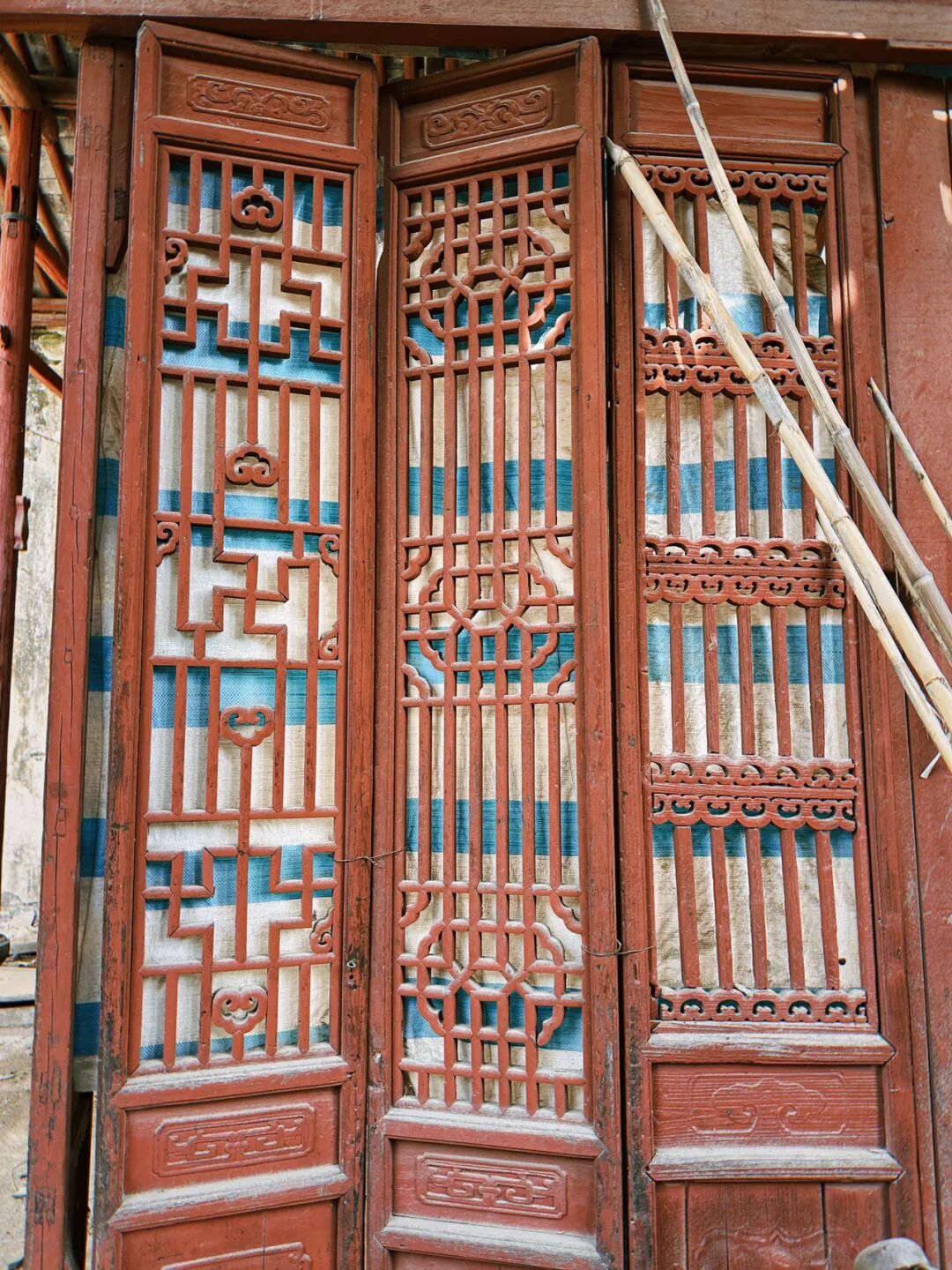
The main prayer hall is on the north side of the gate, right next to the stone path of the Grand Canal, and features upturned eaves. The interior has a hard mountain roof, floor-to-ceiling slanted lattice partition doors, and a large wooden column-and-tie structural frame.
Shaobo Mosque
Traveling north from Yangzhou city along the Beijing-Hangzhou Grand Canal, the first place you reach is the ancient town of Shaobo. Historically, Shaobo was a bustling canal trading port and a key route connecting Yangzhou and Gaoyou. The ancient town still keeps a three-mile-long stone-paved road and over 20 ancient houses from the Ming and Qing dynasties.
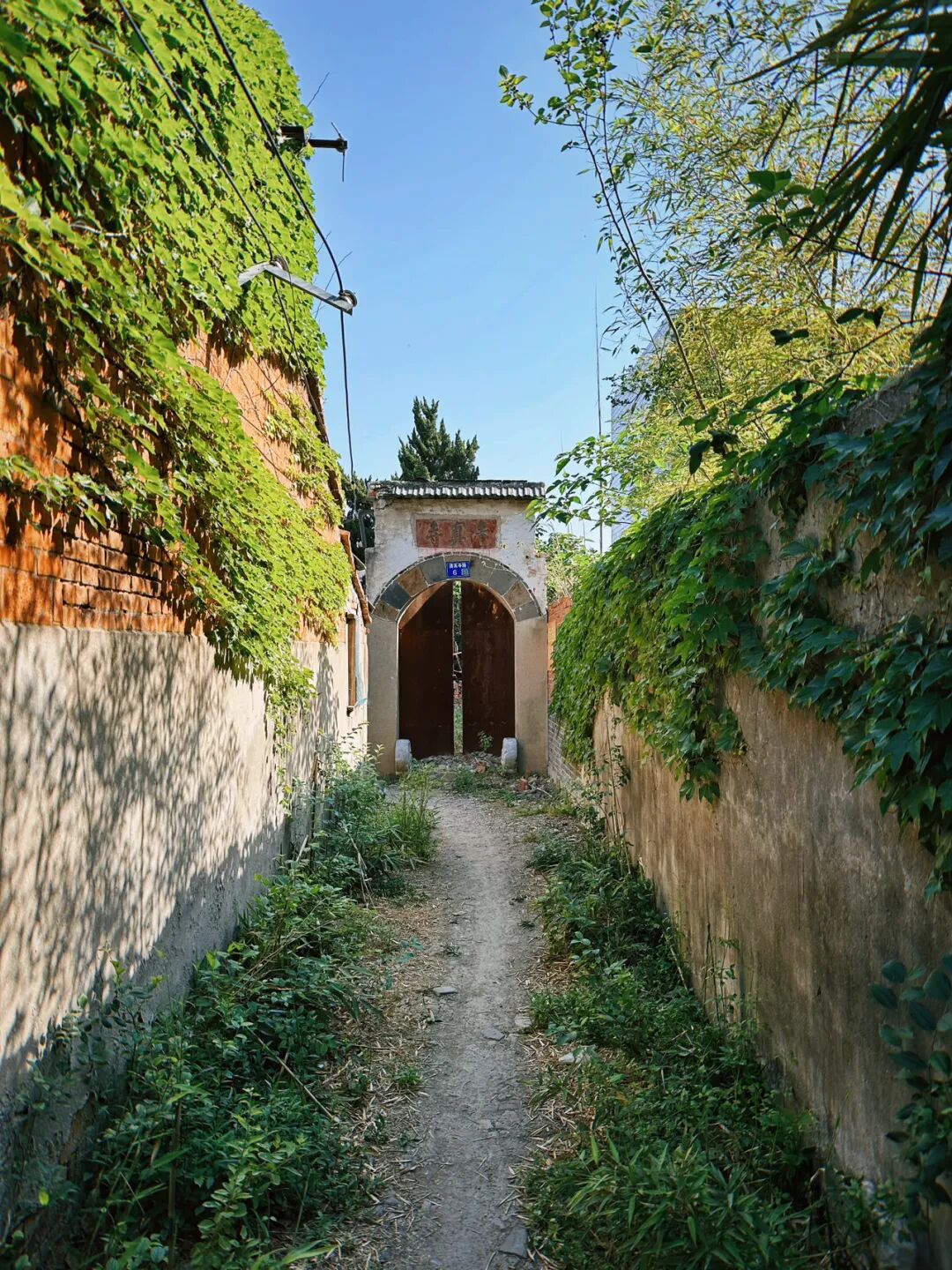
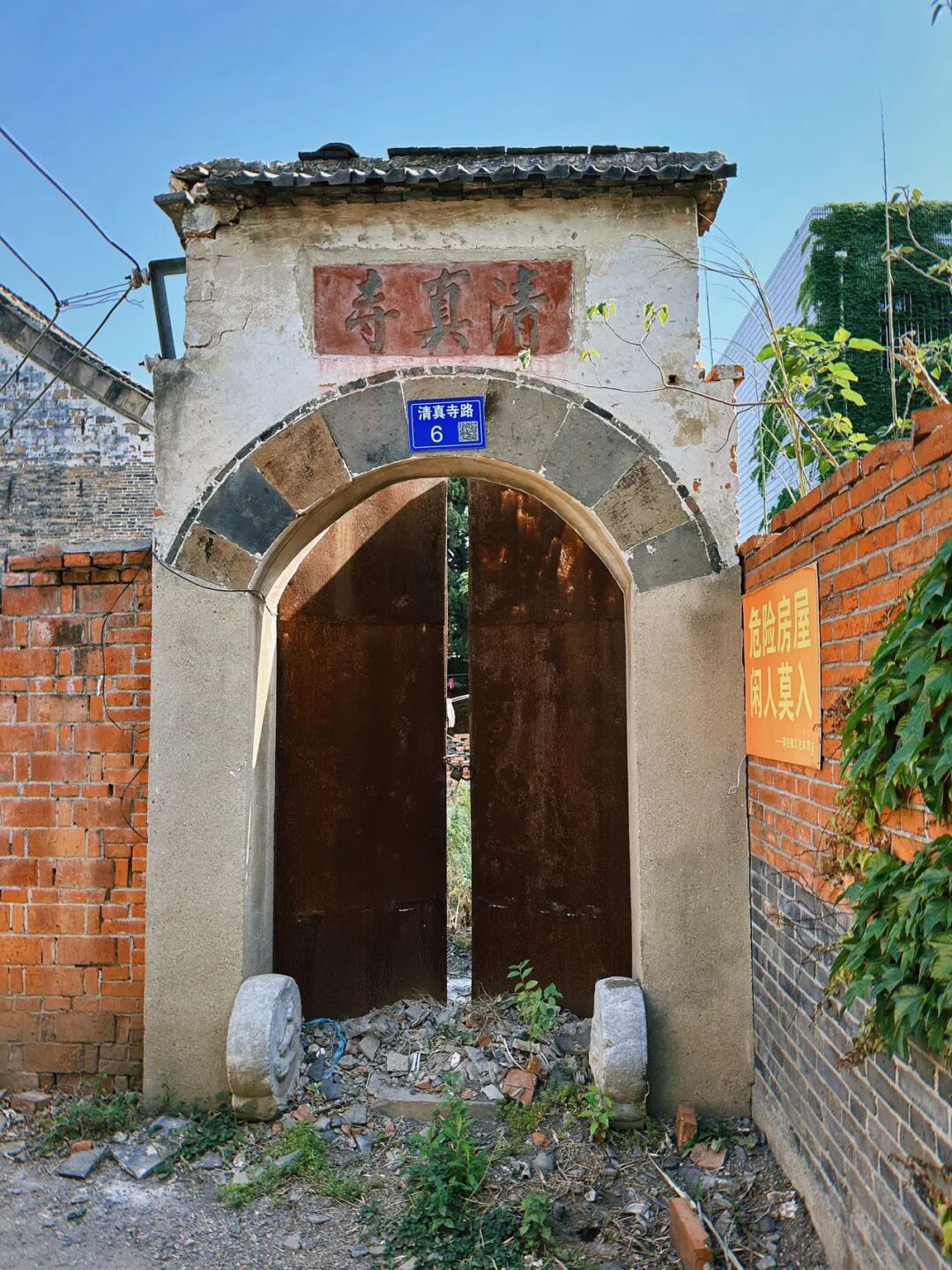
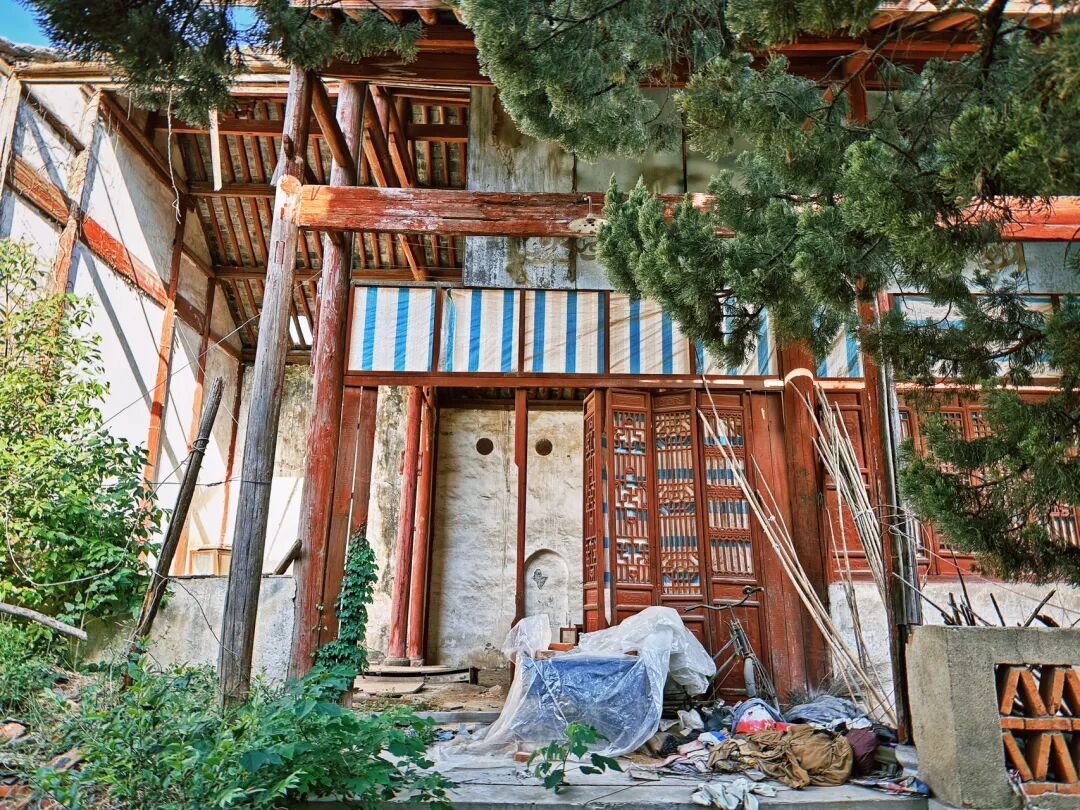
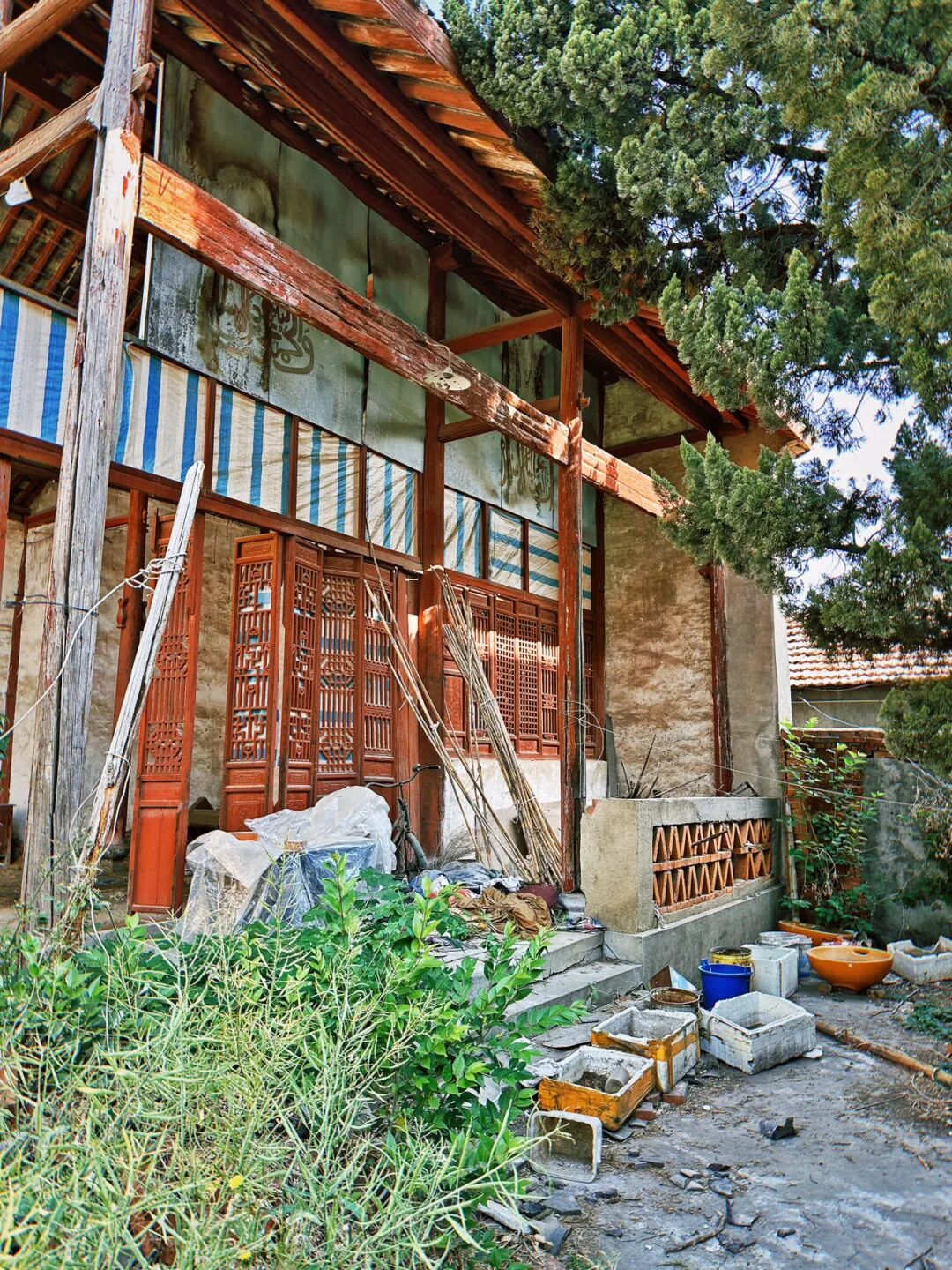
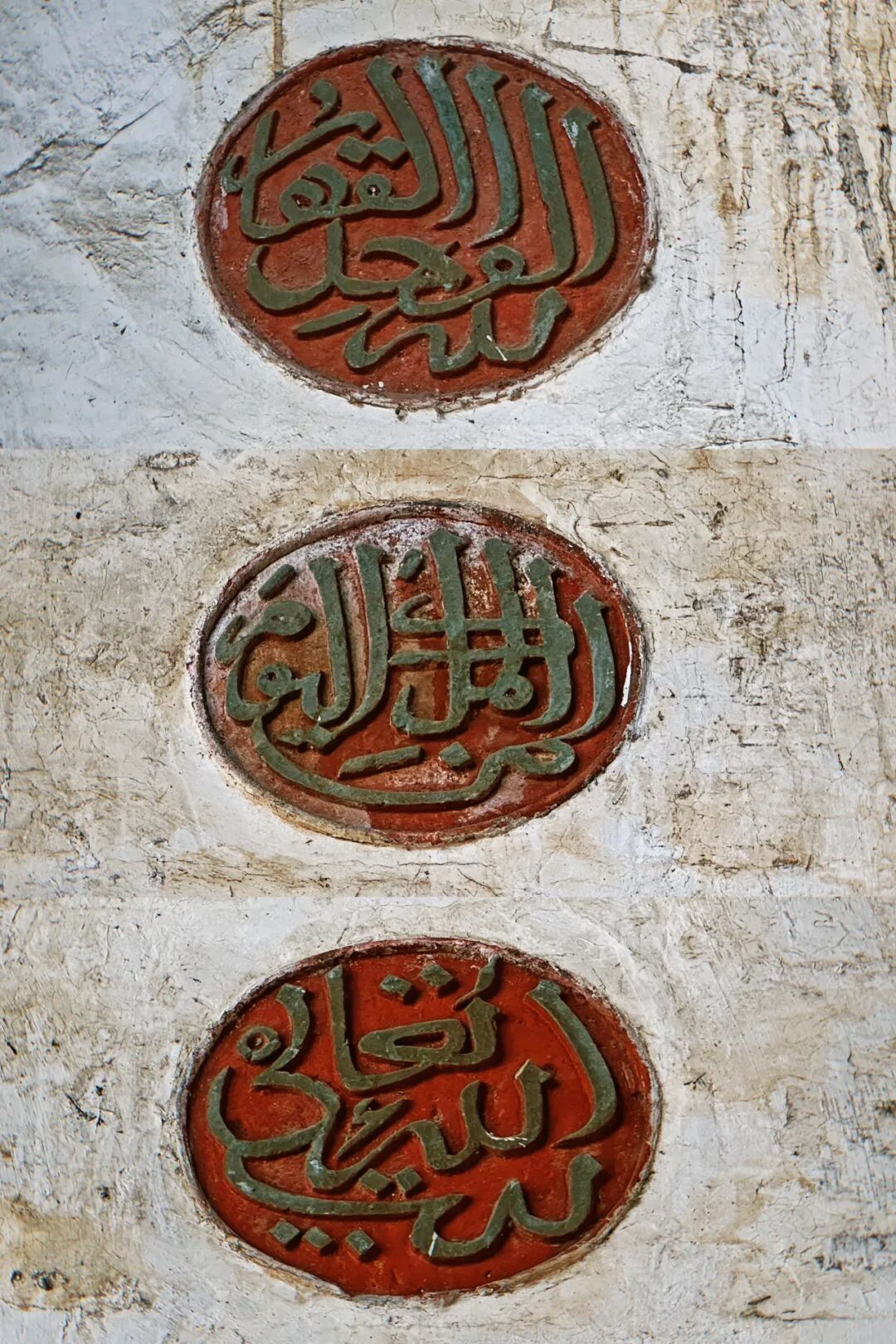
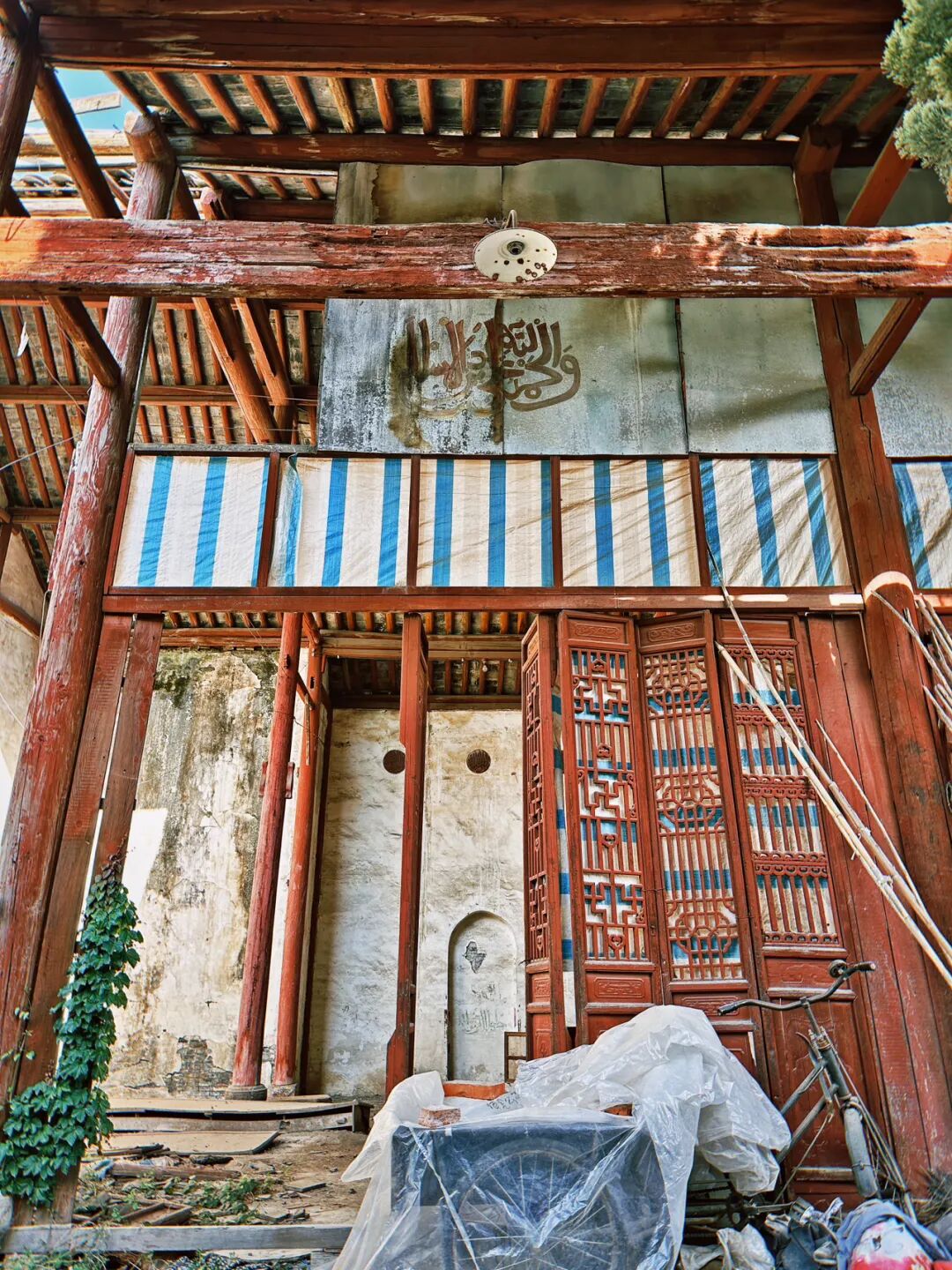
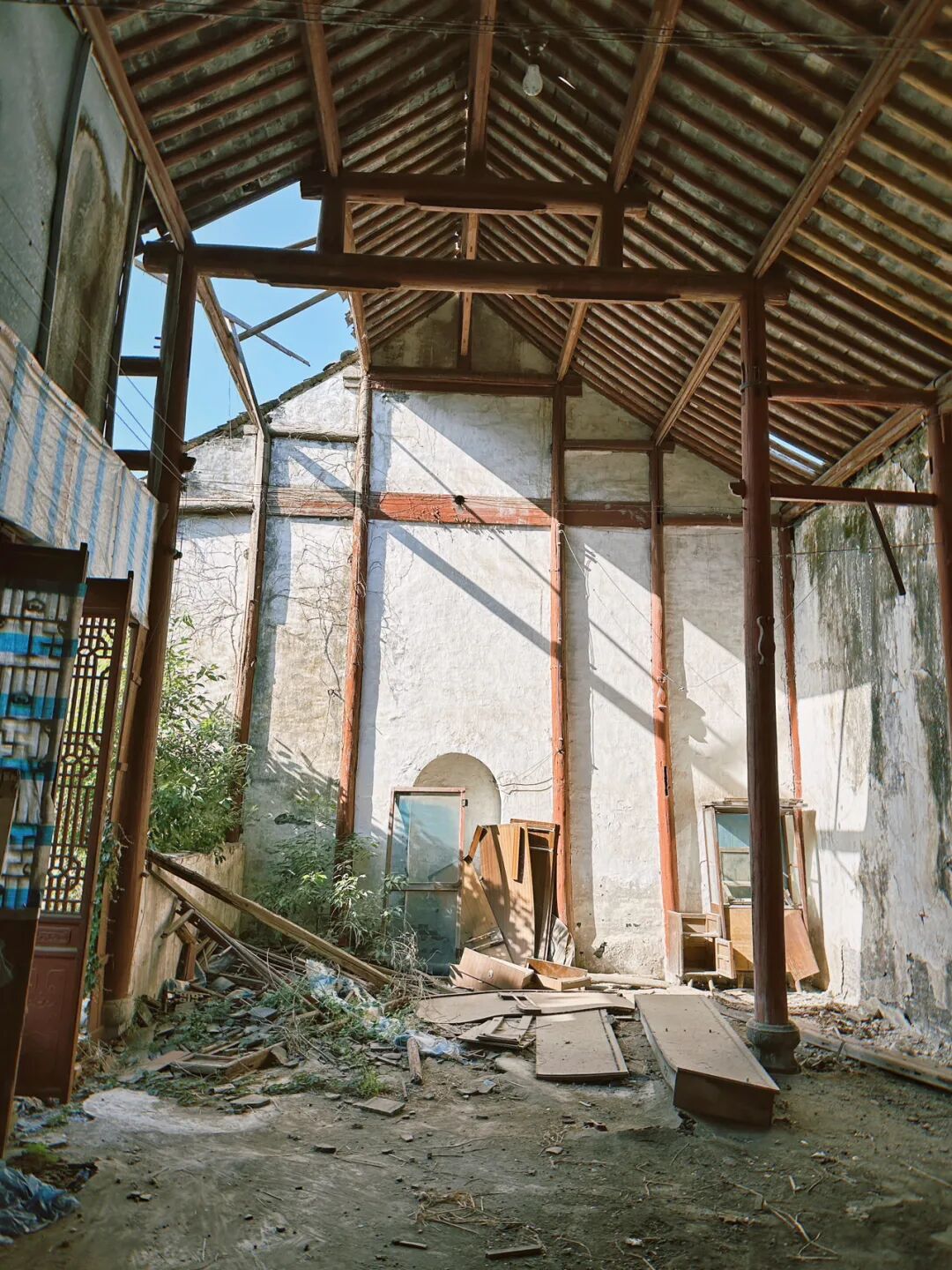
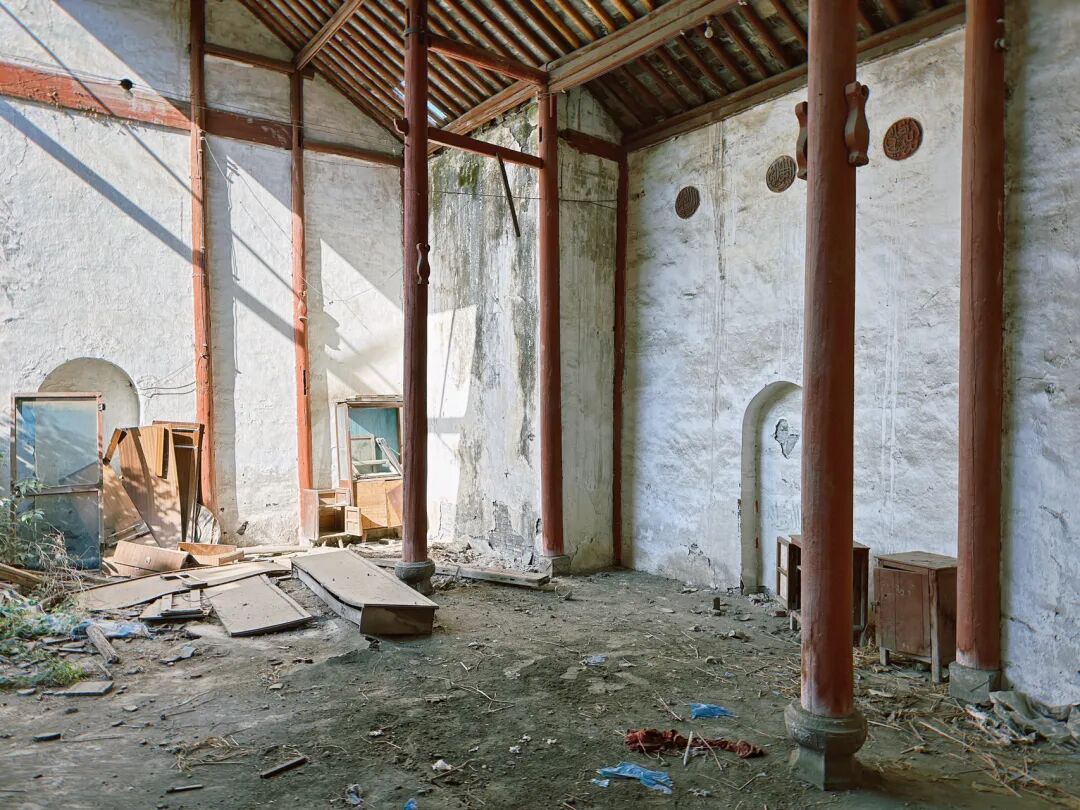
Shaobo Mosque is said to have been built by Hui Muslims from Shandong during the Xianfeng era. Its gate and main hall still stand, and it is a protected cultural site in Jiangdu District, Yangzhou. The mosque was once used as a private residence and is now abandoned.
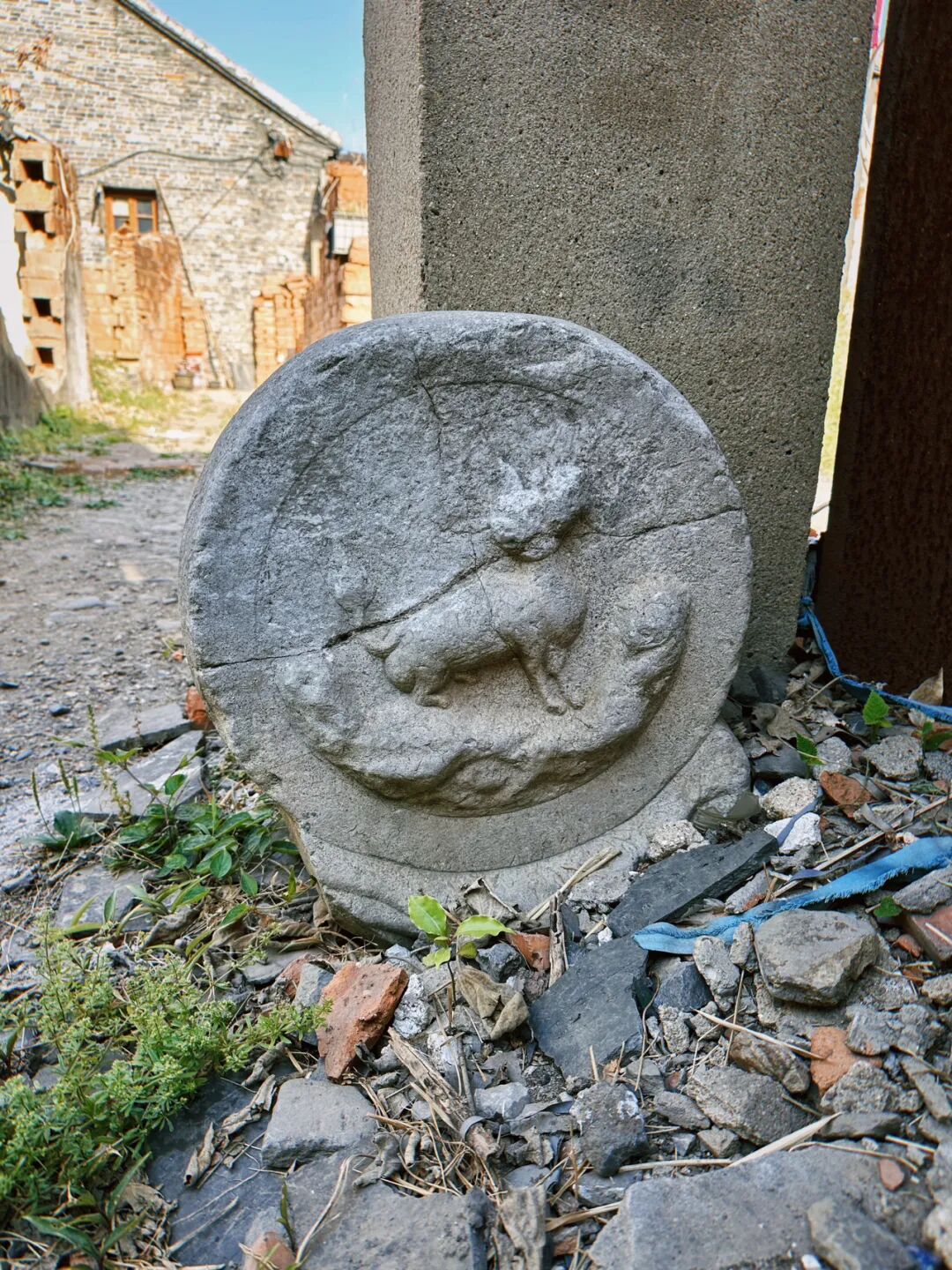
The gate still has its original lintel and drum-shaped stone bases. The main hall is a hard-gable style building with grey bricks and dark tiles, showing typical Jianghuai architectural style.
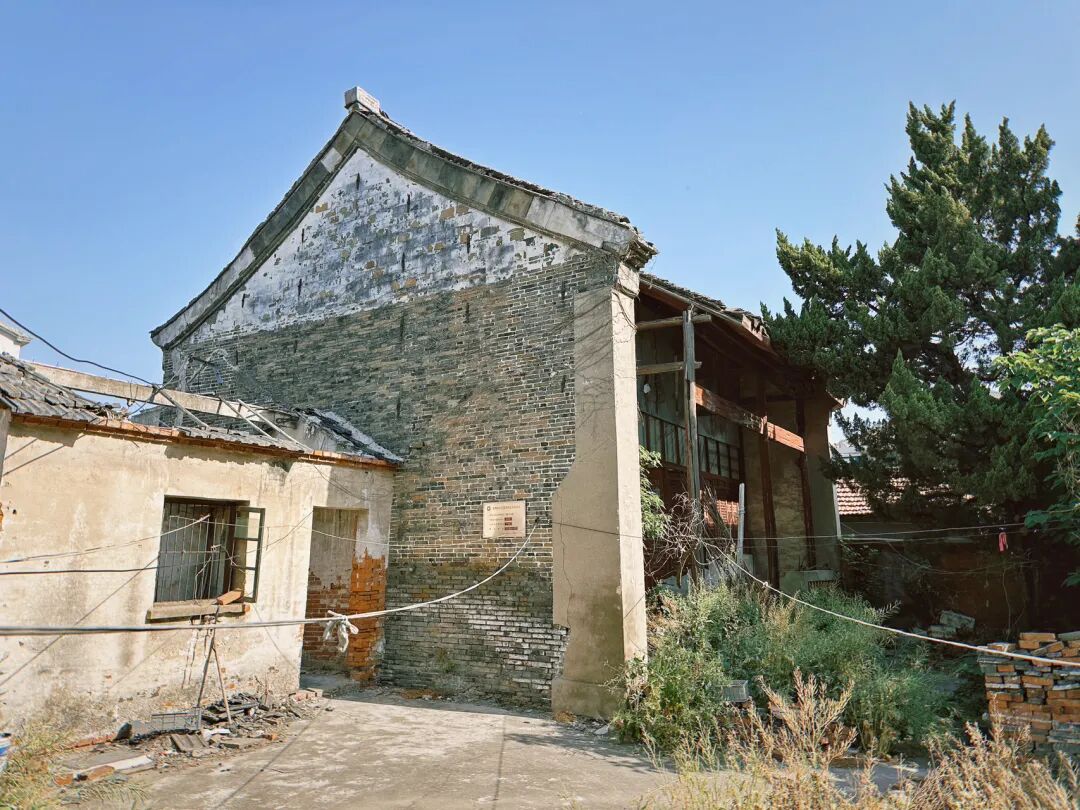
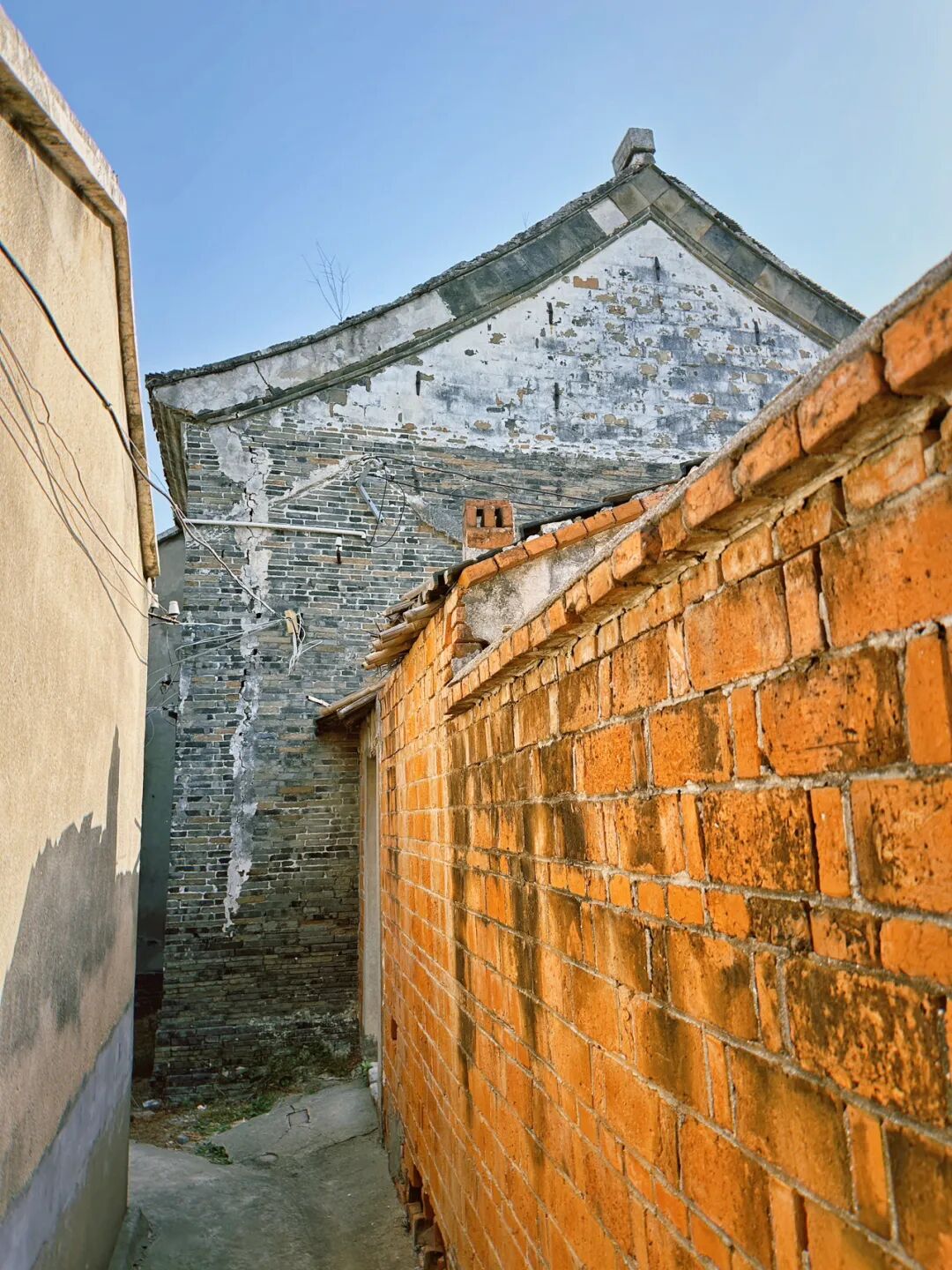
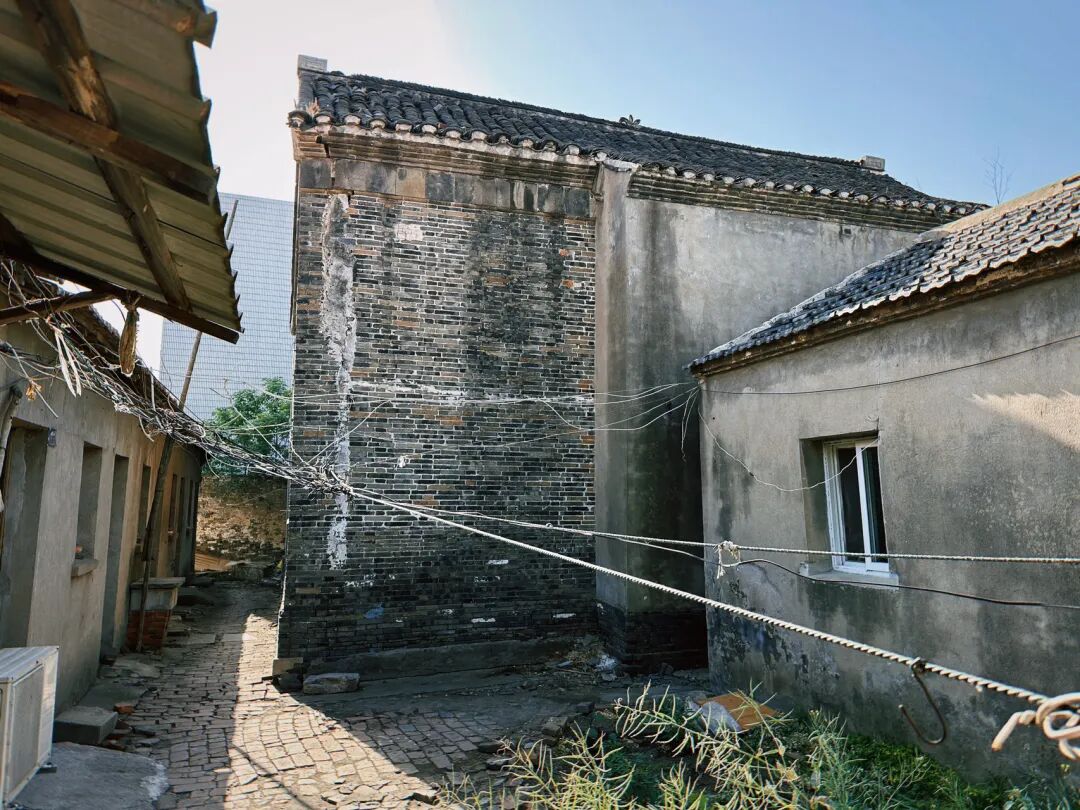
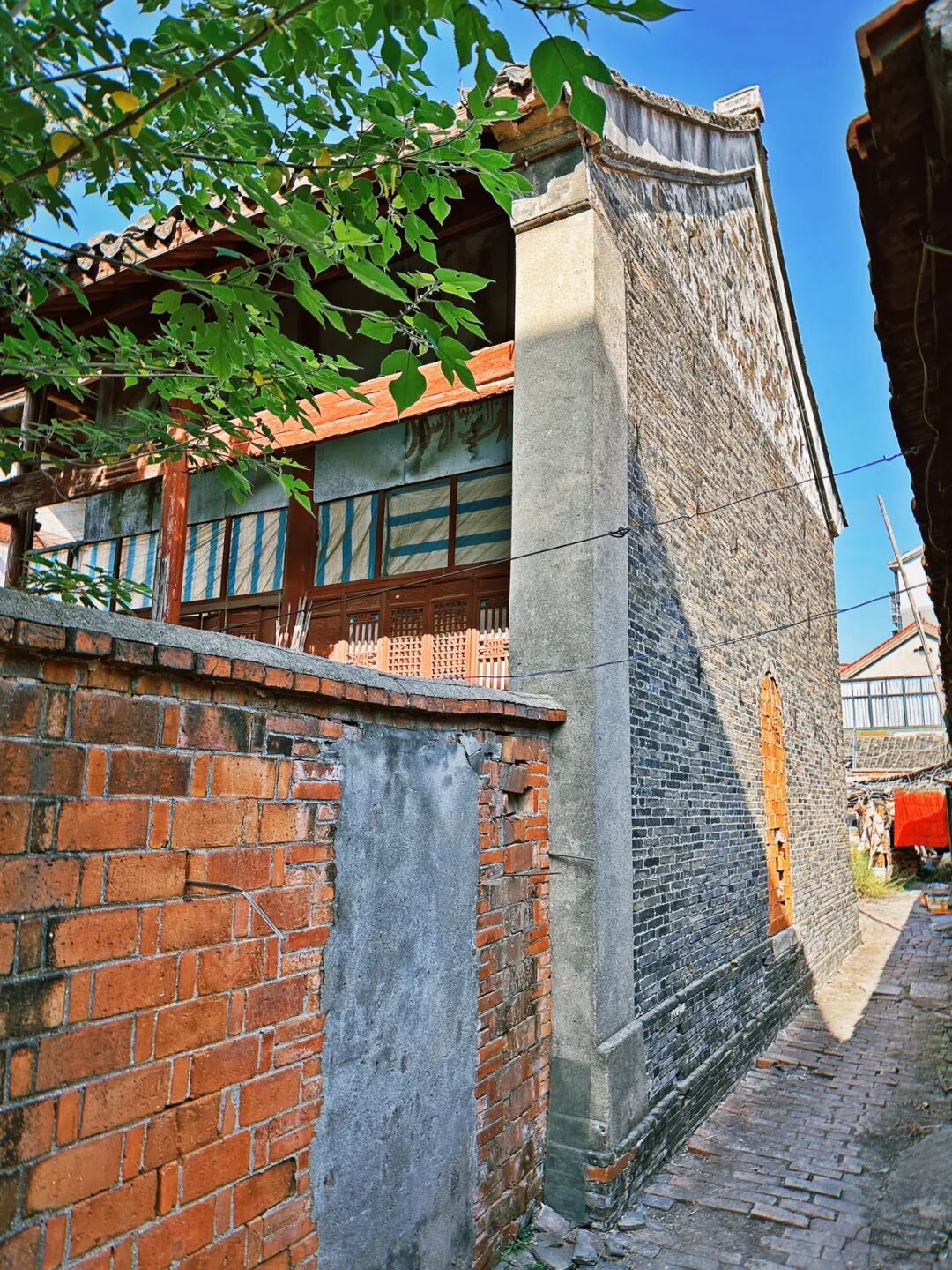
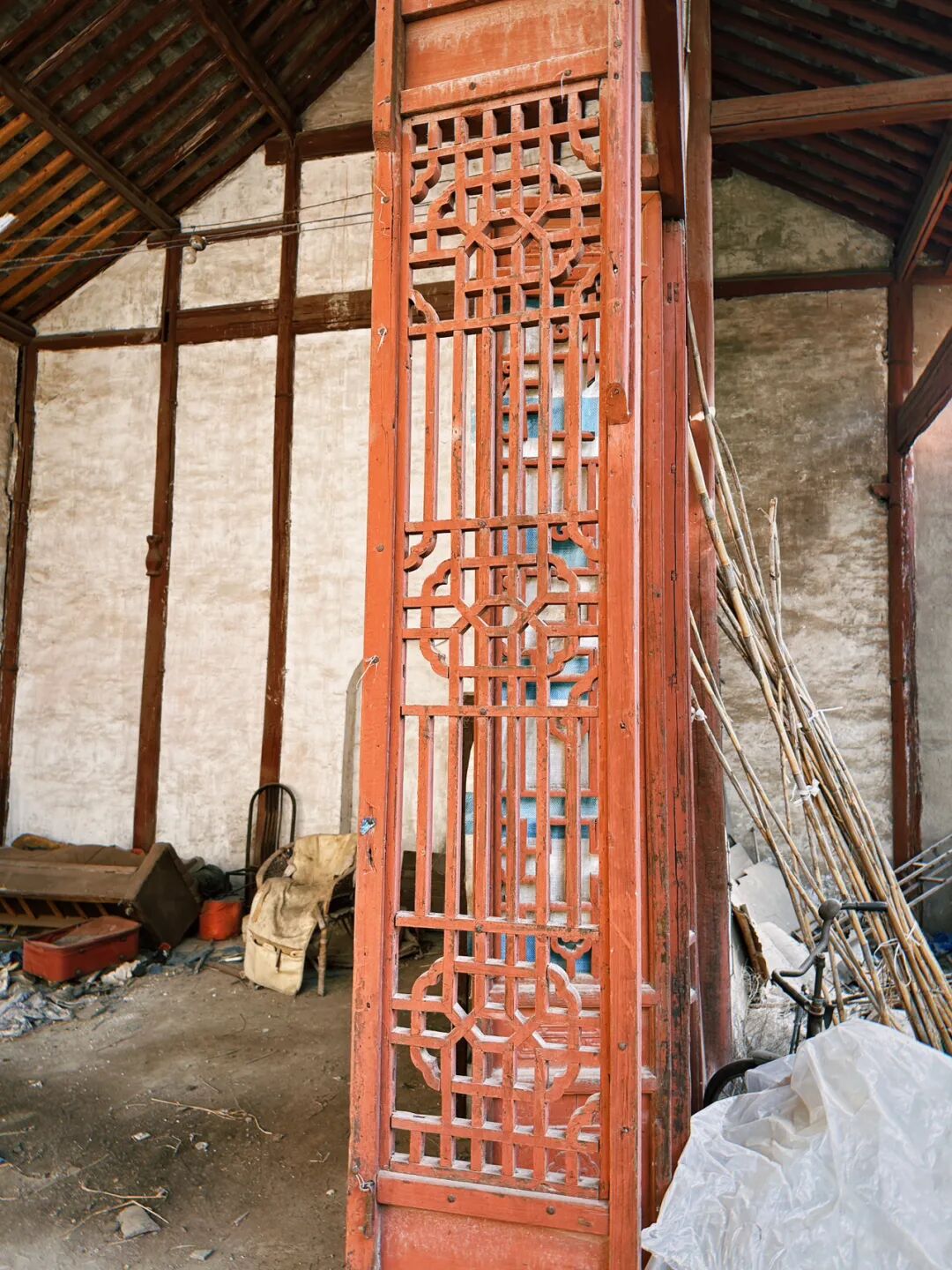
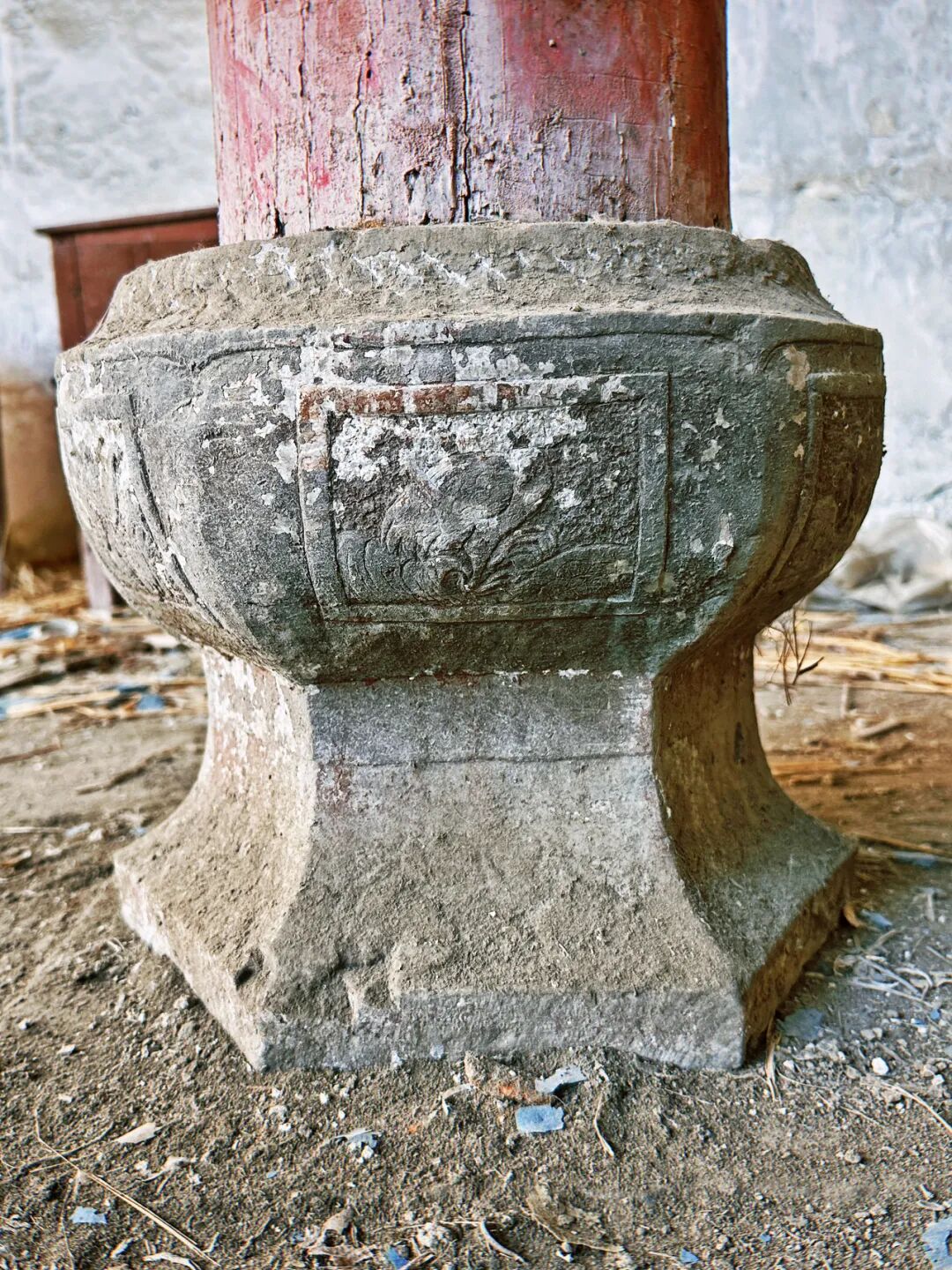
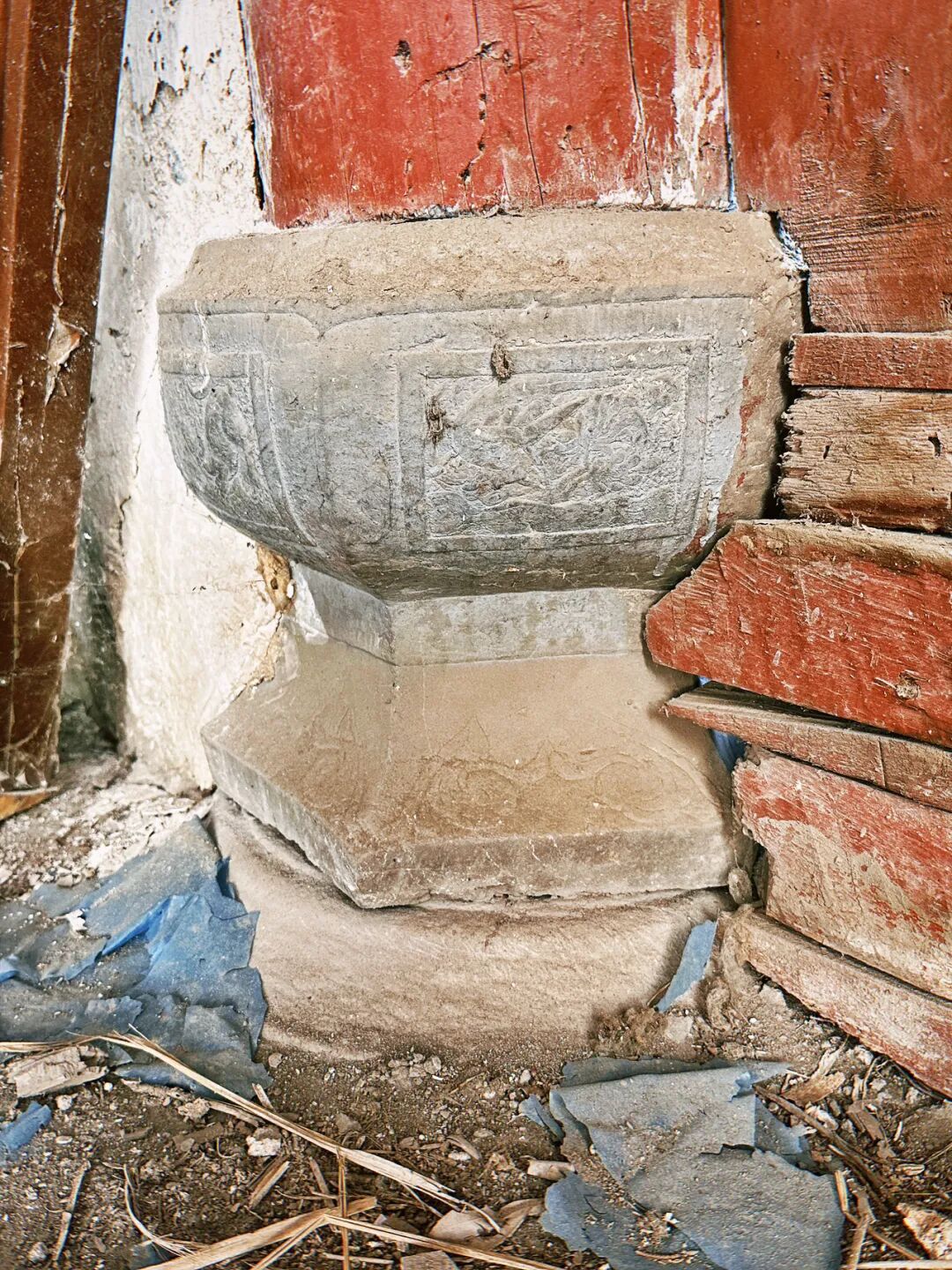
Shaobo Mosque is three bays wide and seven purlins deep. The gable walls have brick wind boards, the ridge purlin is supported by a dou-gong bracket set, and the columns rest on ancient mirror-style bases carved with patterns. Besides the main hall, Shaobo Mosque once had other buildings, but now only stone remains like column bases are left.
Gaoyou Mosque
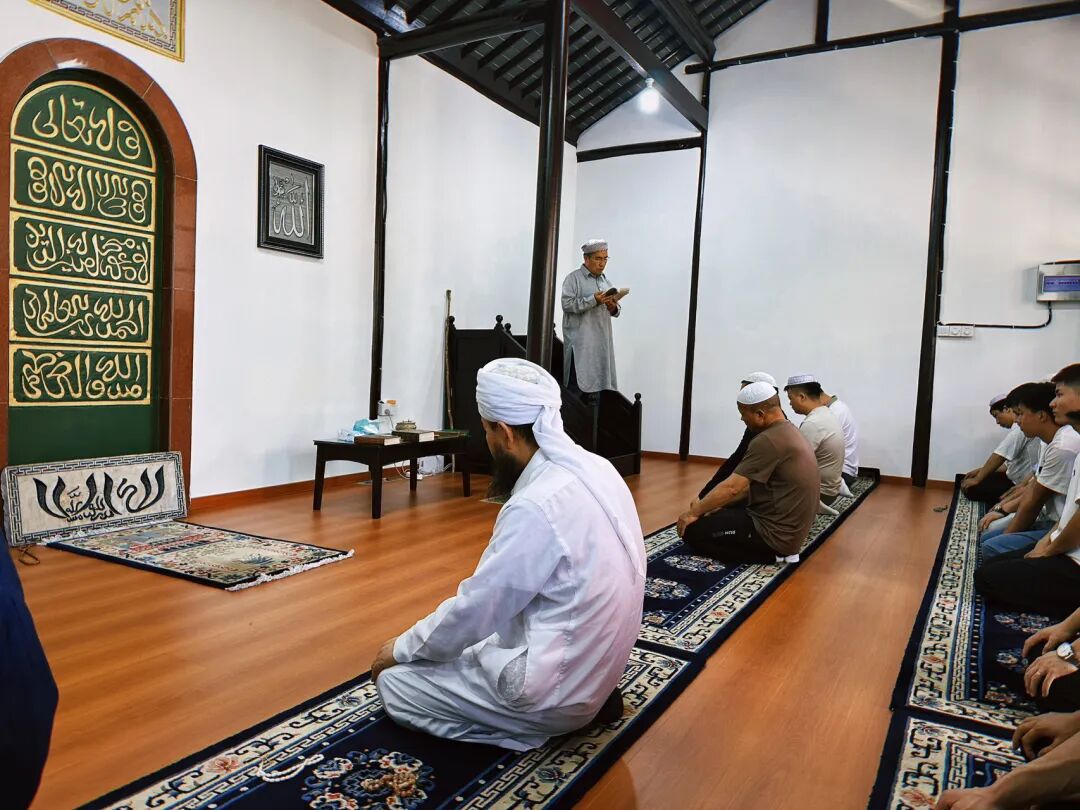
Travel north from the ancient town of Shaobo along the Beijing-Hangzhou Grand Canal to reach the ancient city of Gaoyou. I visited Gaoyou Mosque in 2021 but learned it only opens for Jumuah. This time, I came specifically for Jumuah and finally got inside.
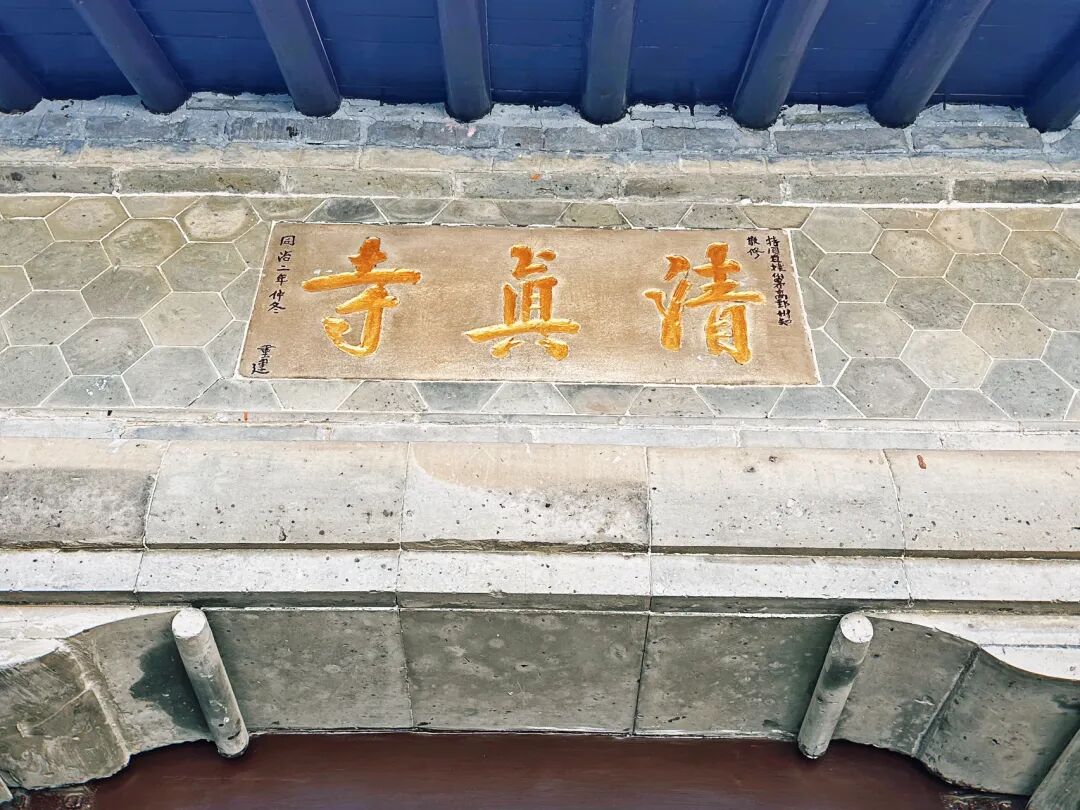
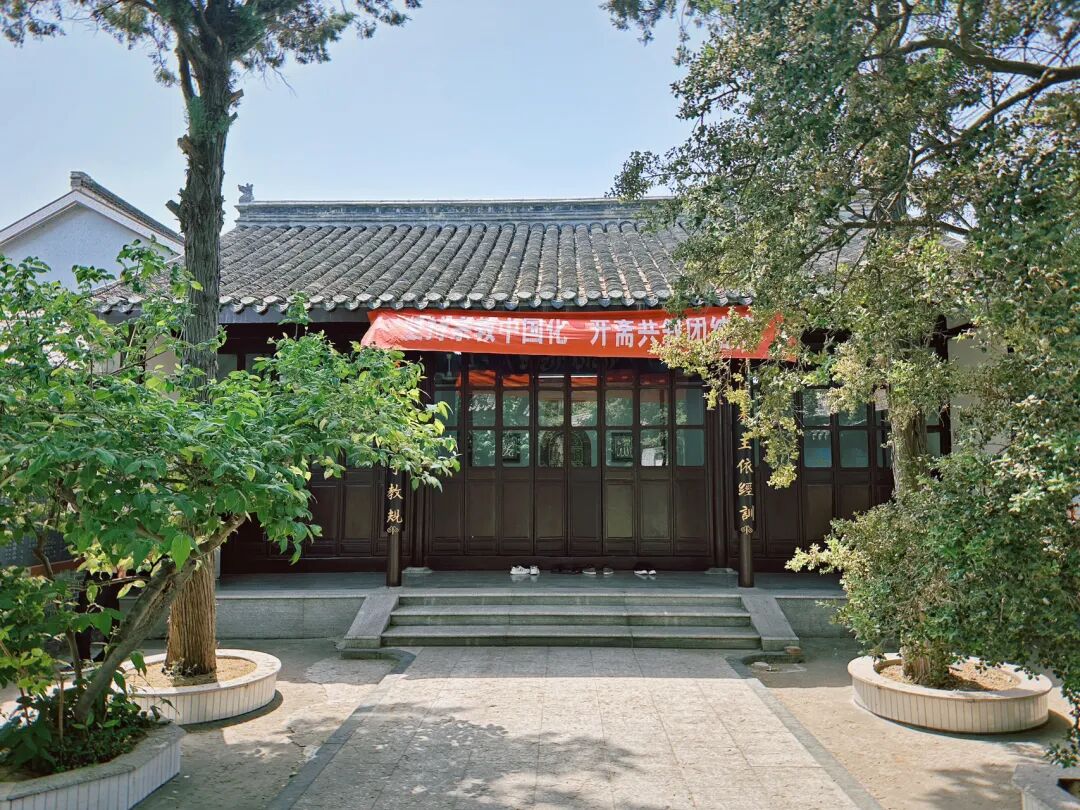
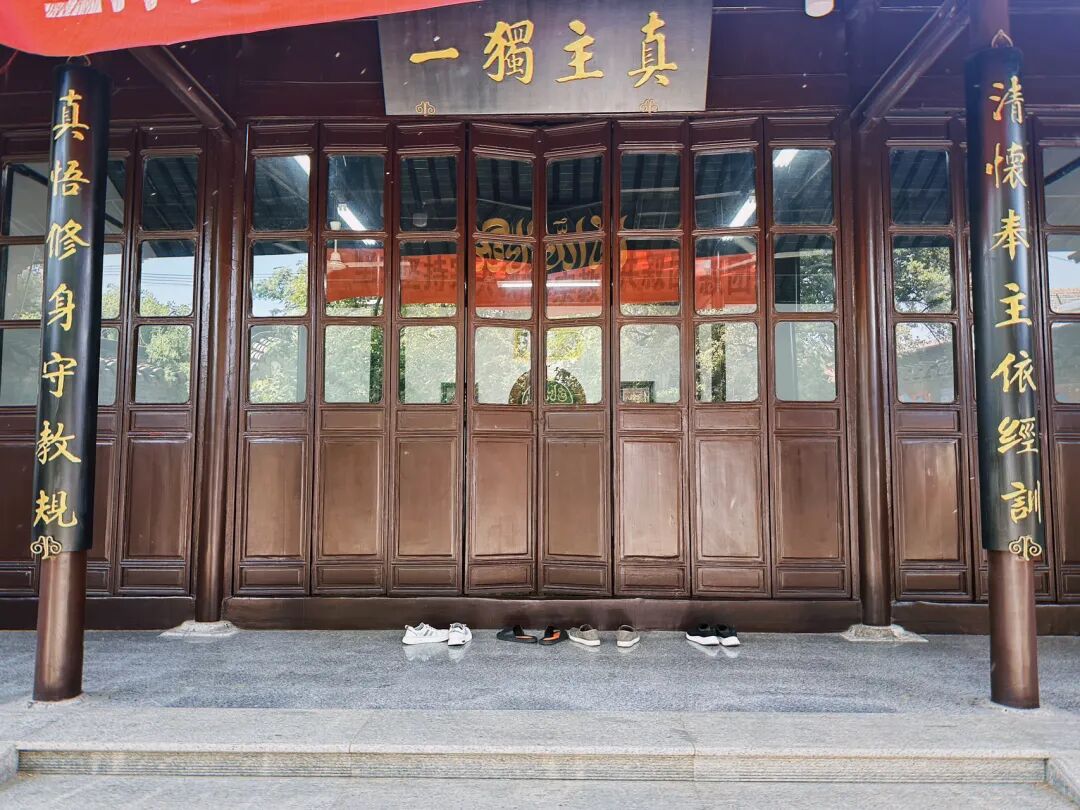
Gaoyou Mosque was first built in the Qing dynasty. According to the Gaoyou Prefecture Records (Qianlong era), local elders Ma Guixing, Liu Tianxing, and Ma Hongxing rebuilt it in 1864 (the third year of Tongzhi). The gate now has a stone lintel inscribed with 'Rebuilt in the middle of winter, the second year of Tongzhi' and a title from the local prefecture office.
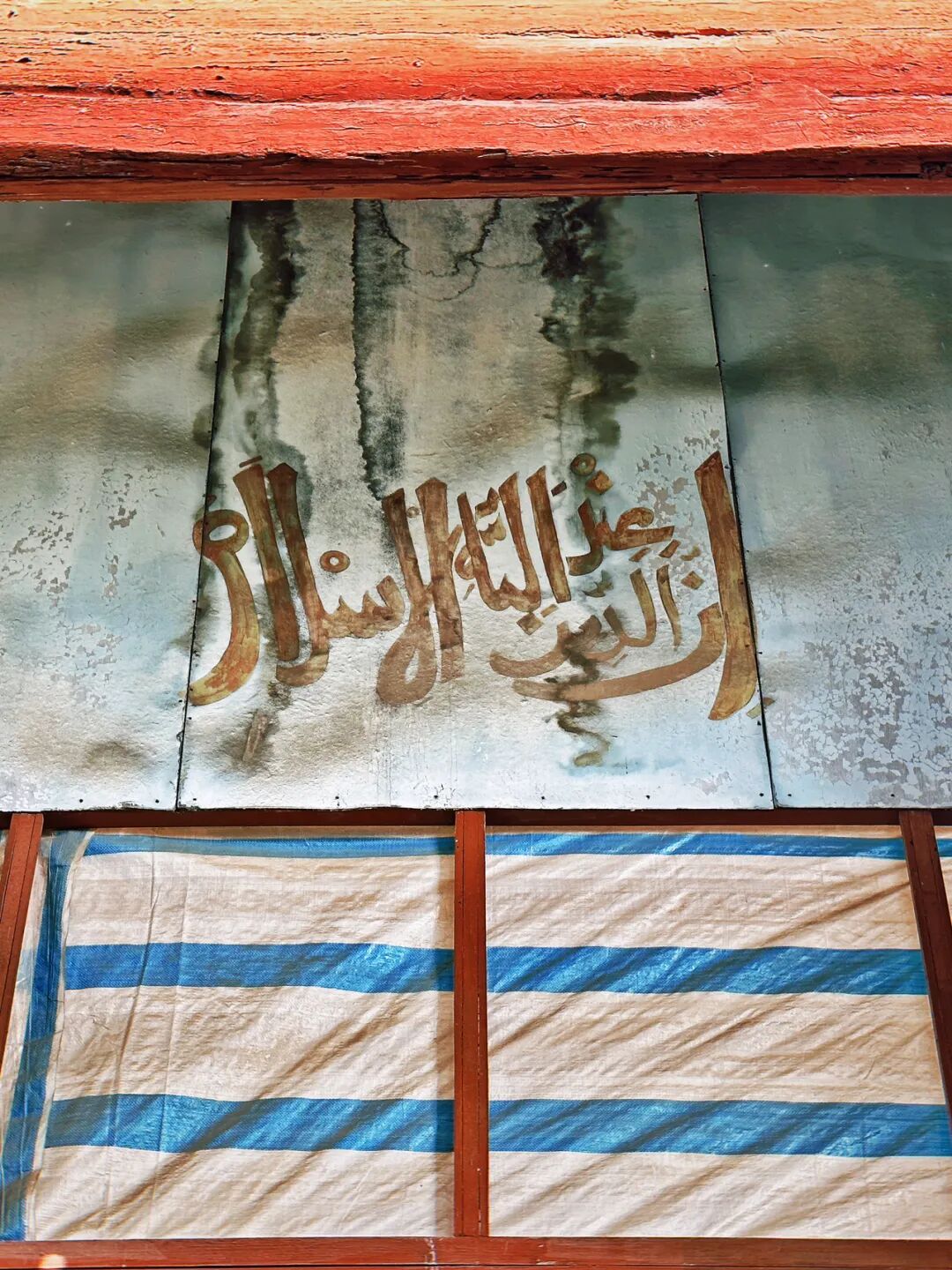
Gaoyou Mosque consists of a gate and a main hall, forming an elegant and beautiful traditional Jianghuai courtyard. Inside, there is a 175-year-old boxwood tree, a 225-year-old Chinese juniper, and an ancient Qing dynasty well.
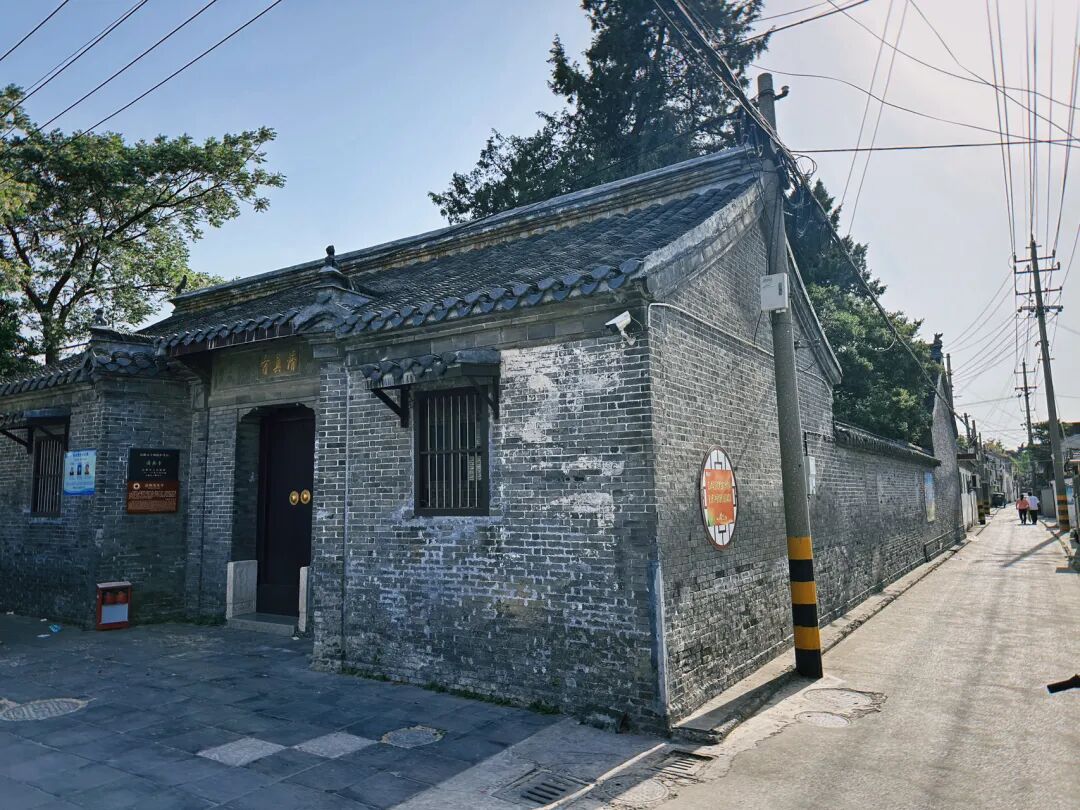
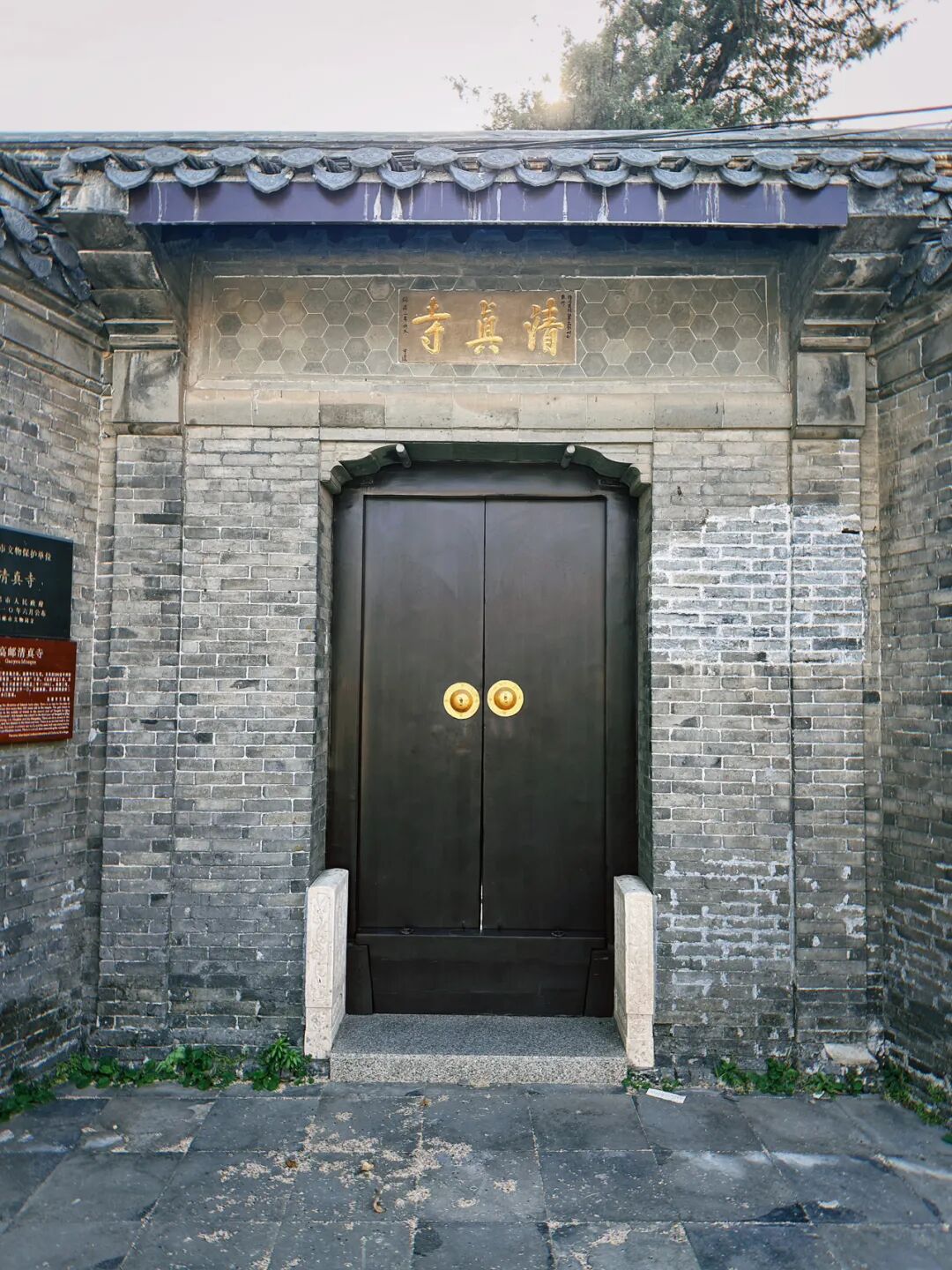
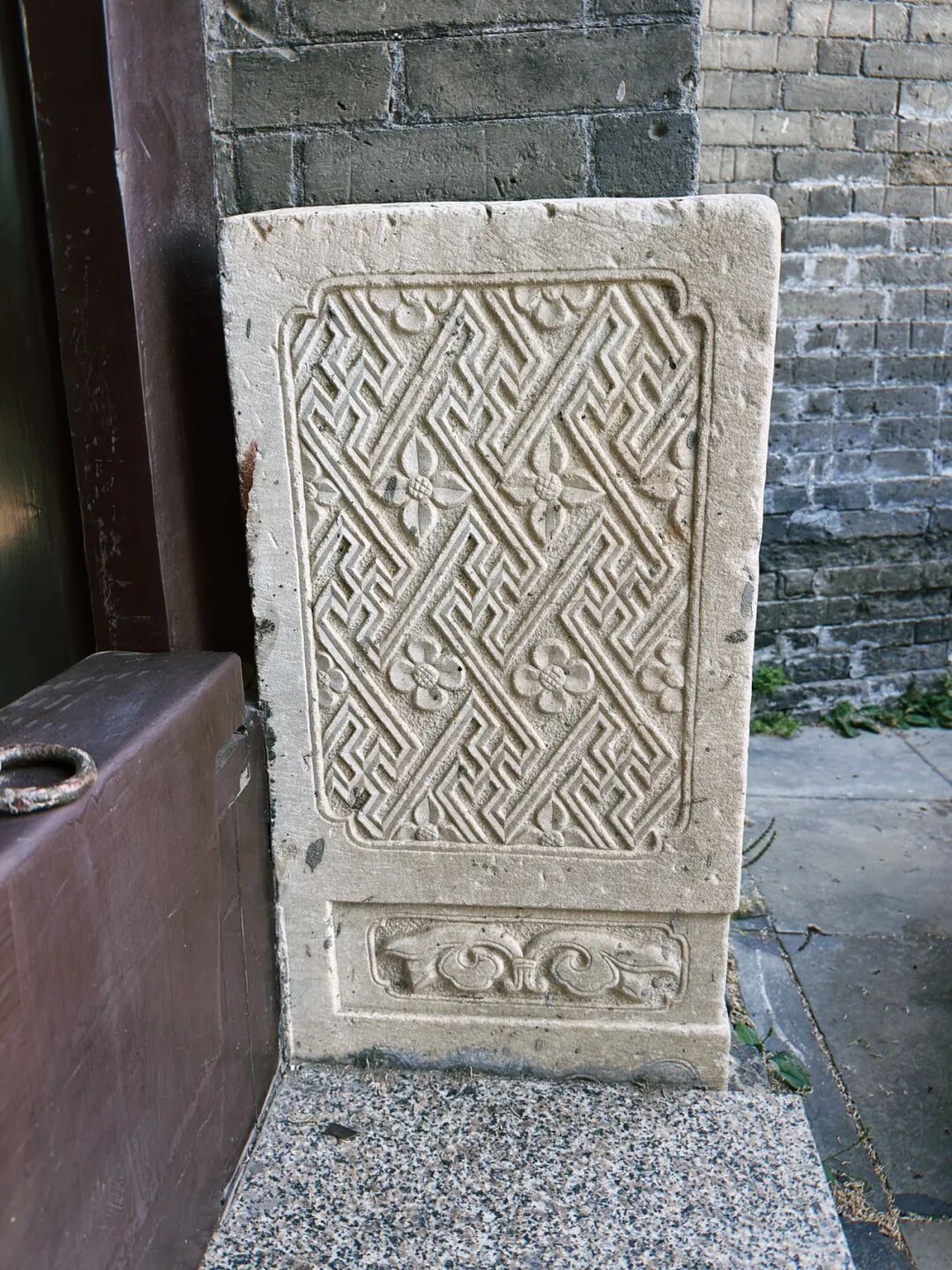
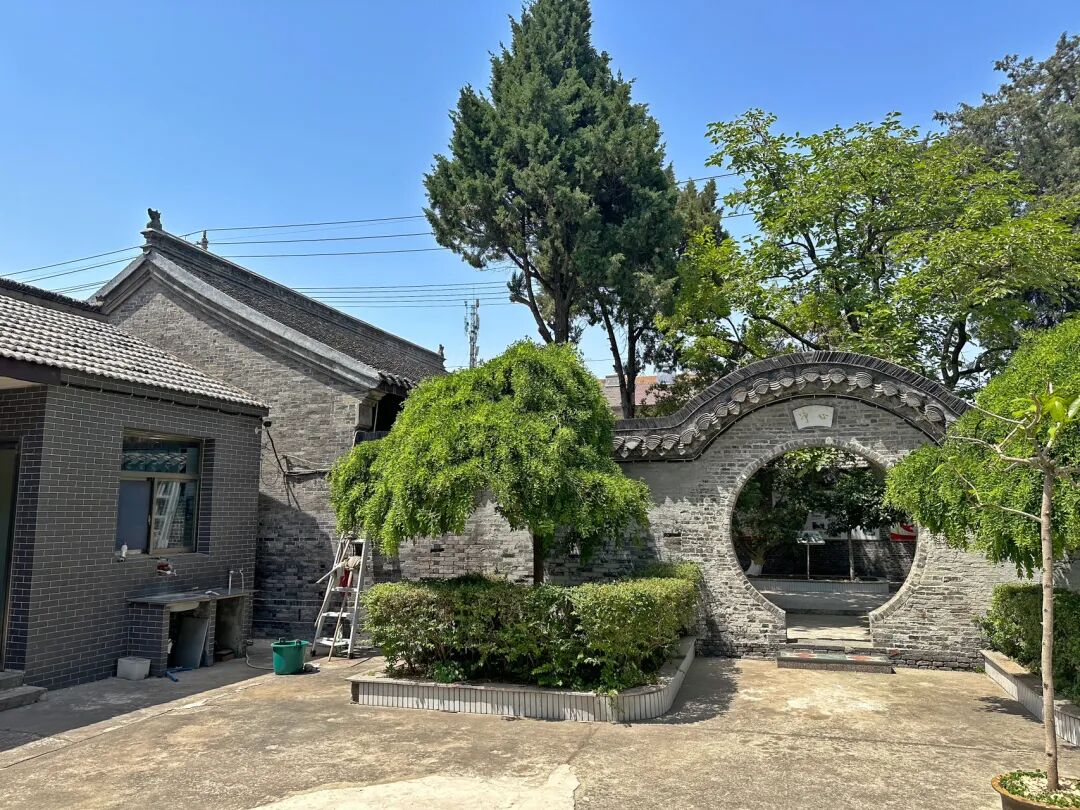
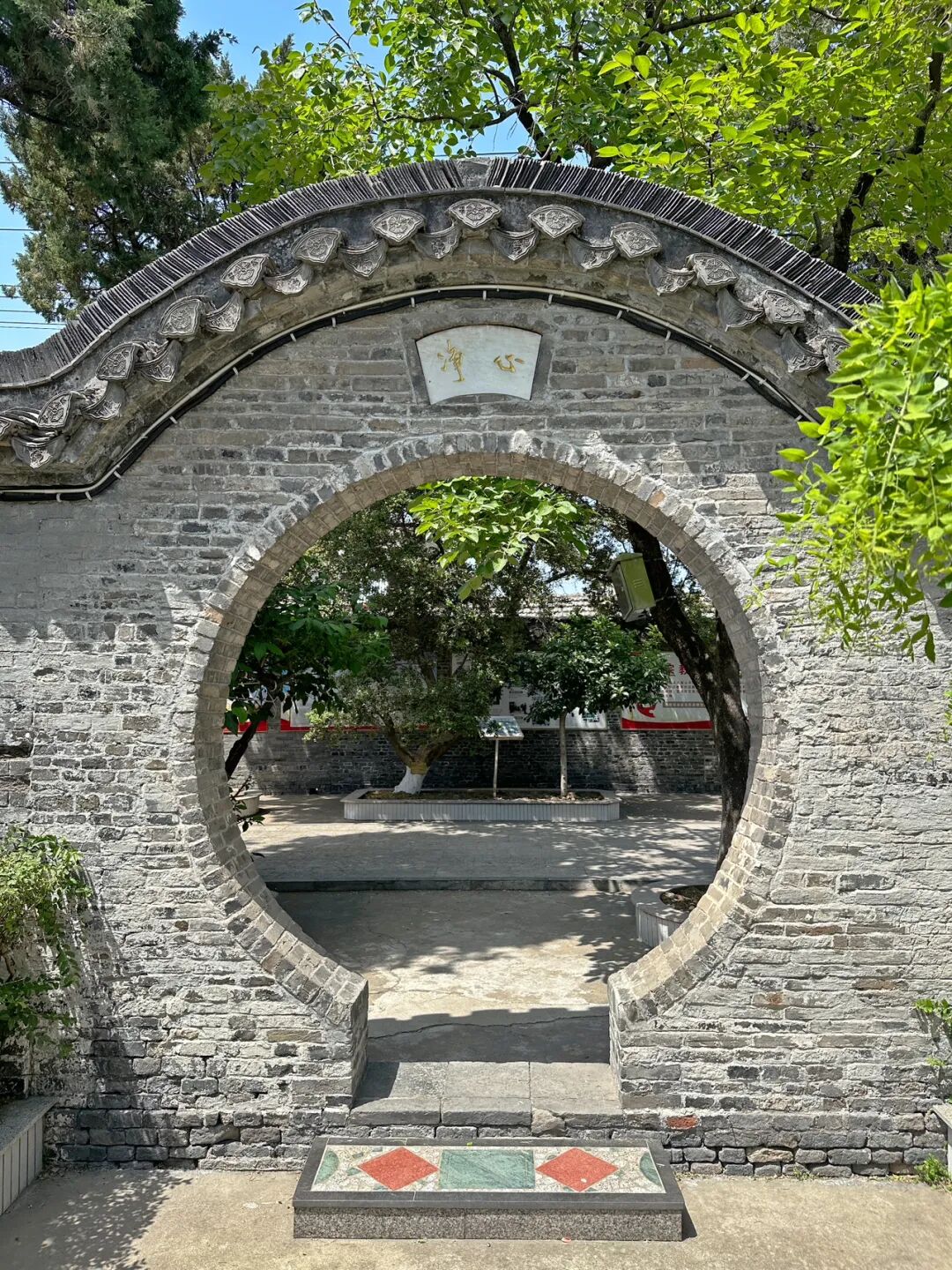
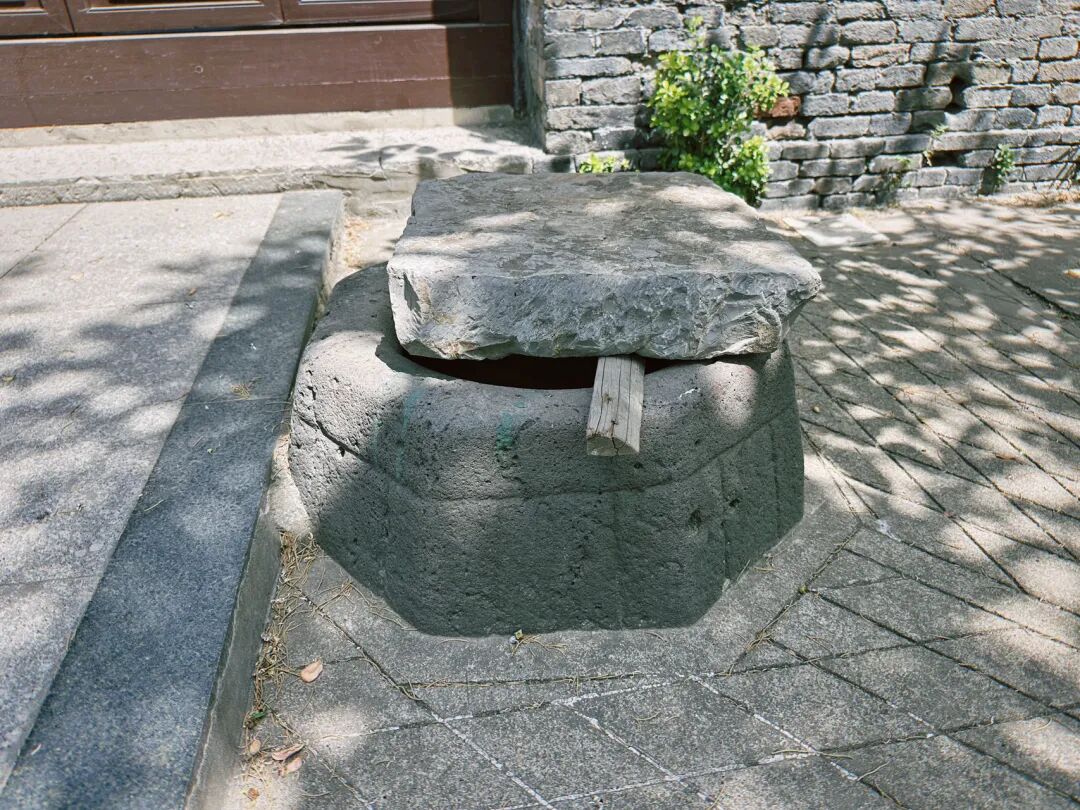
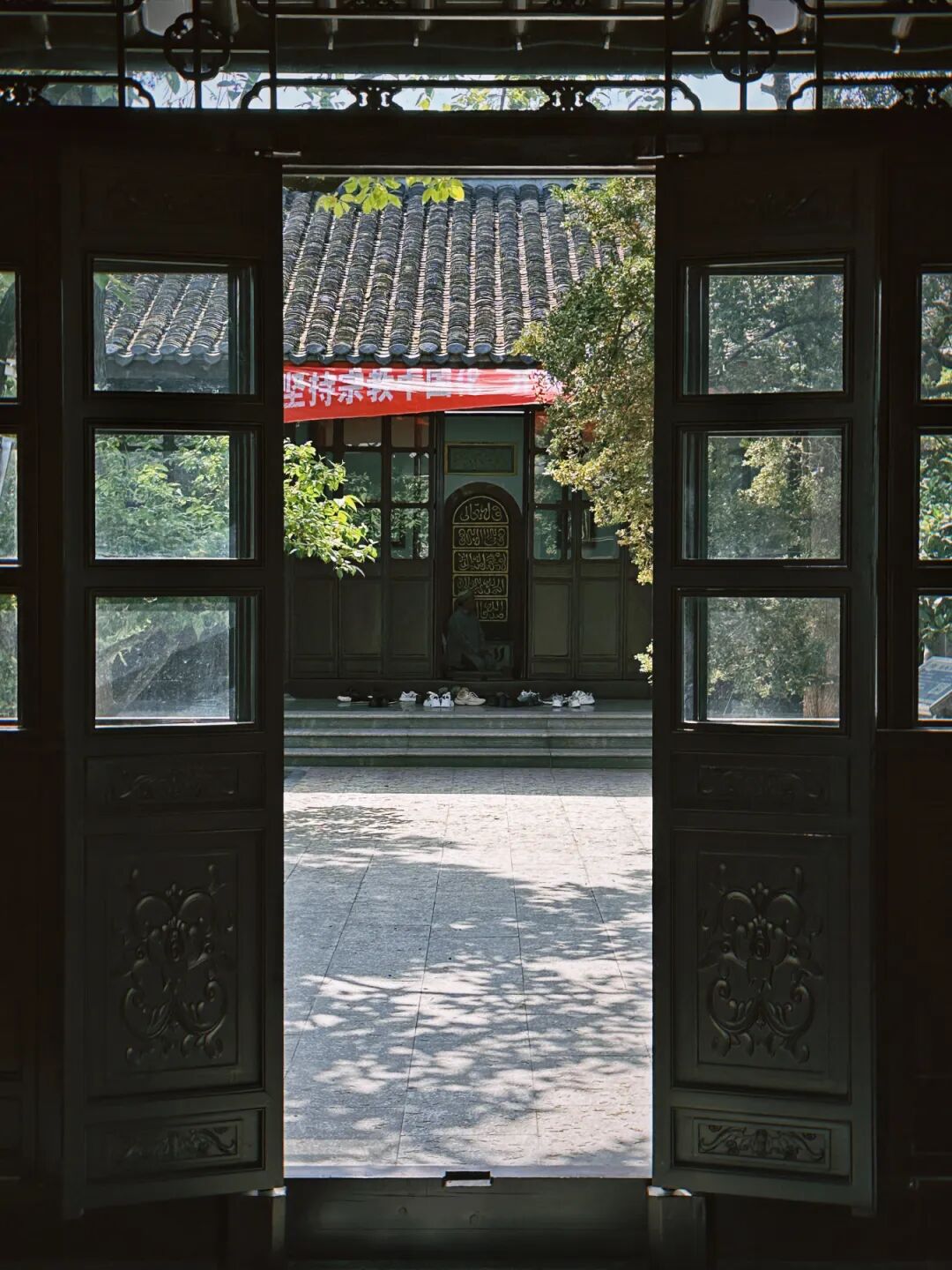
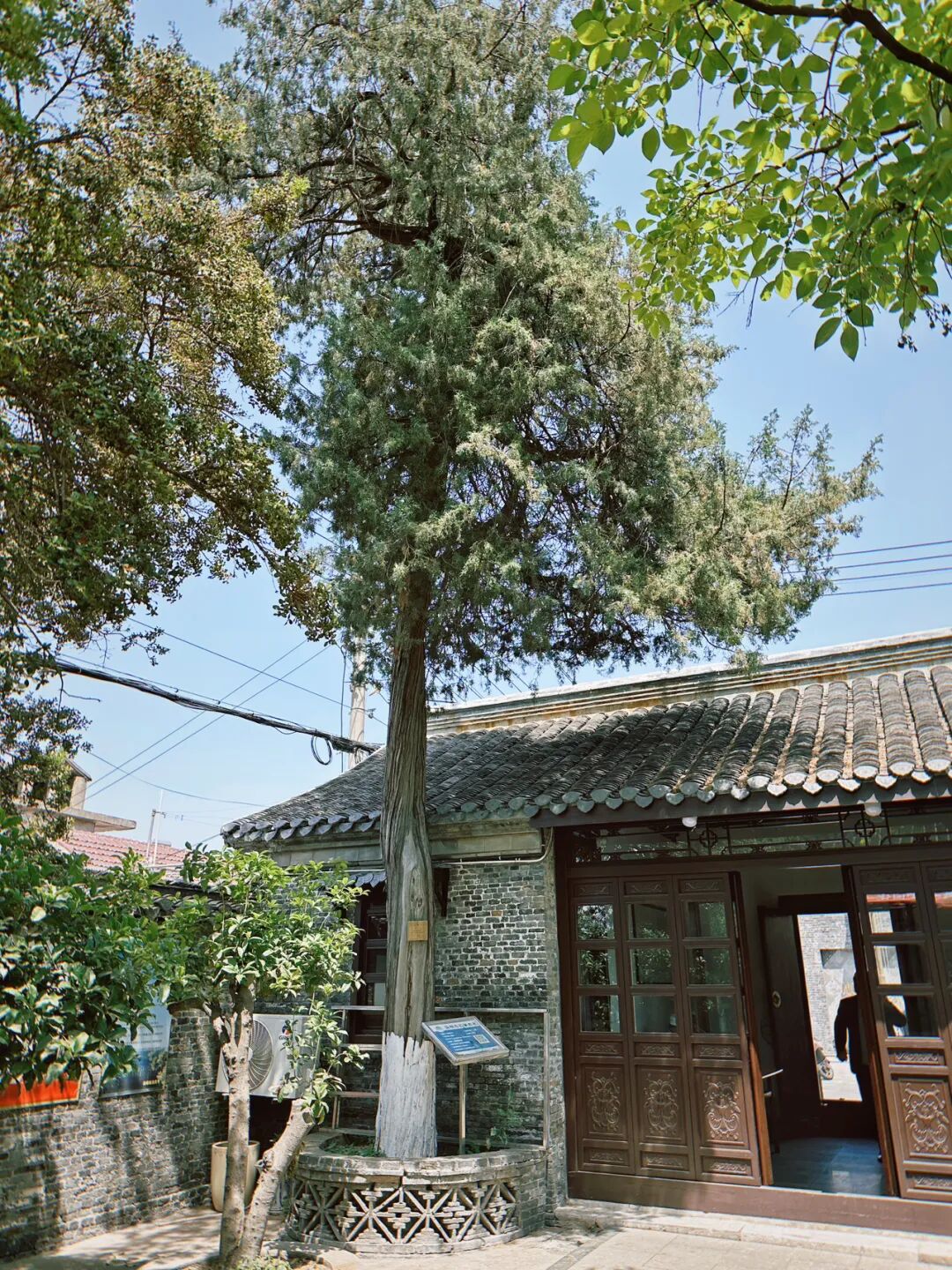
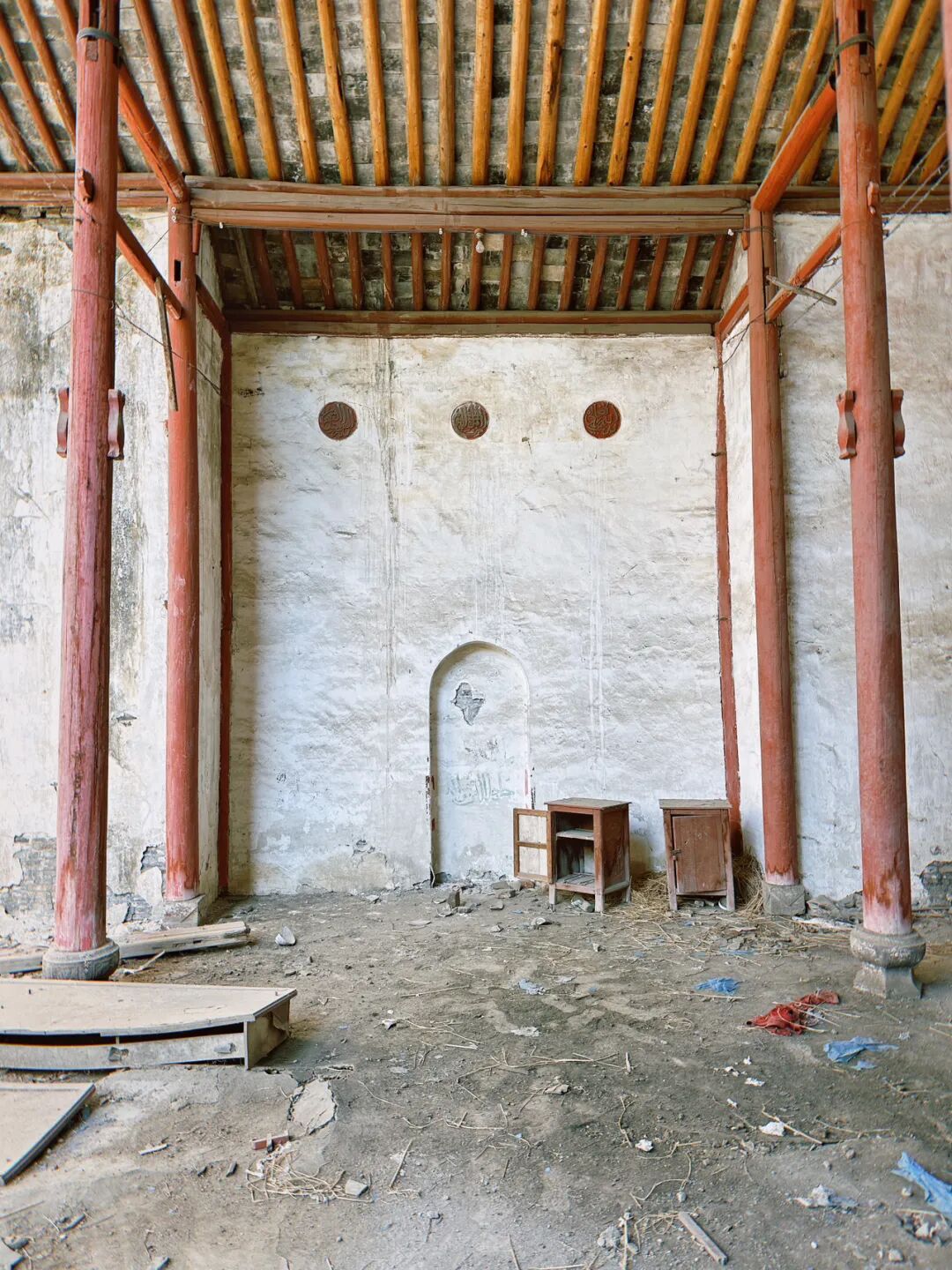
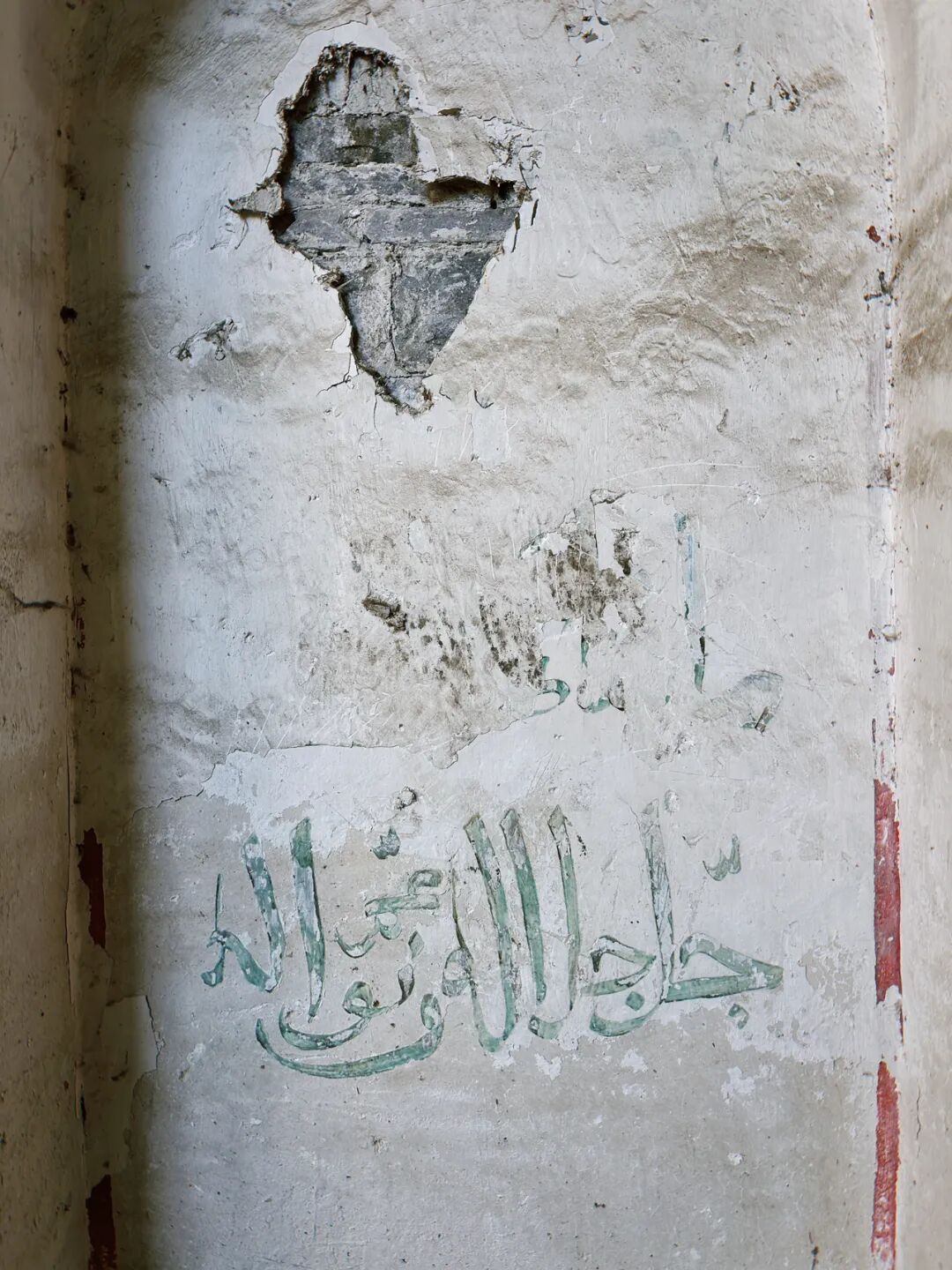
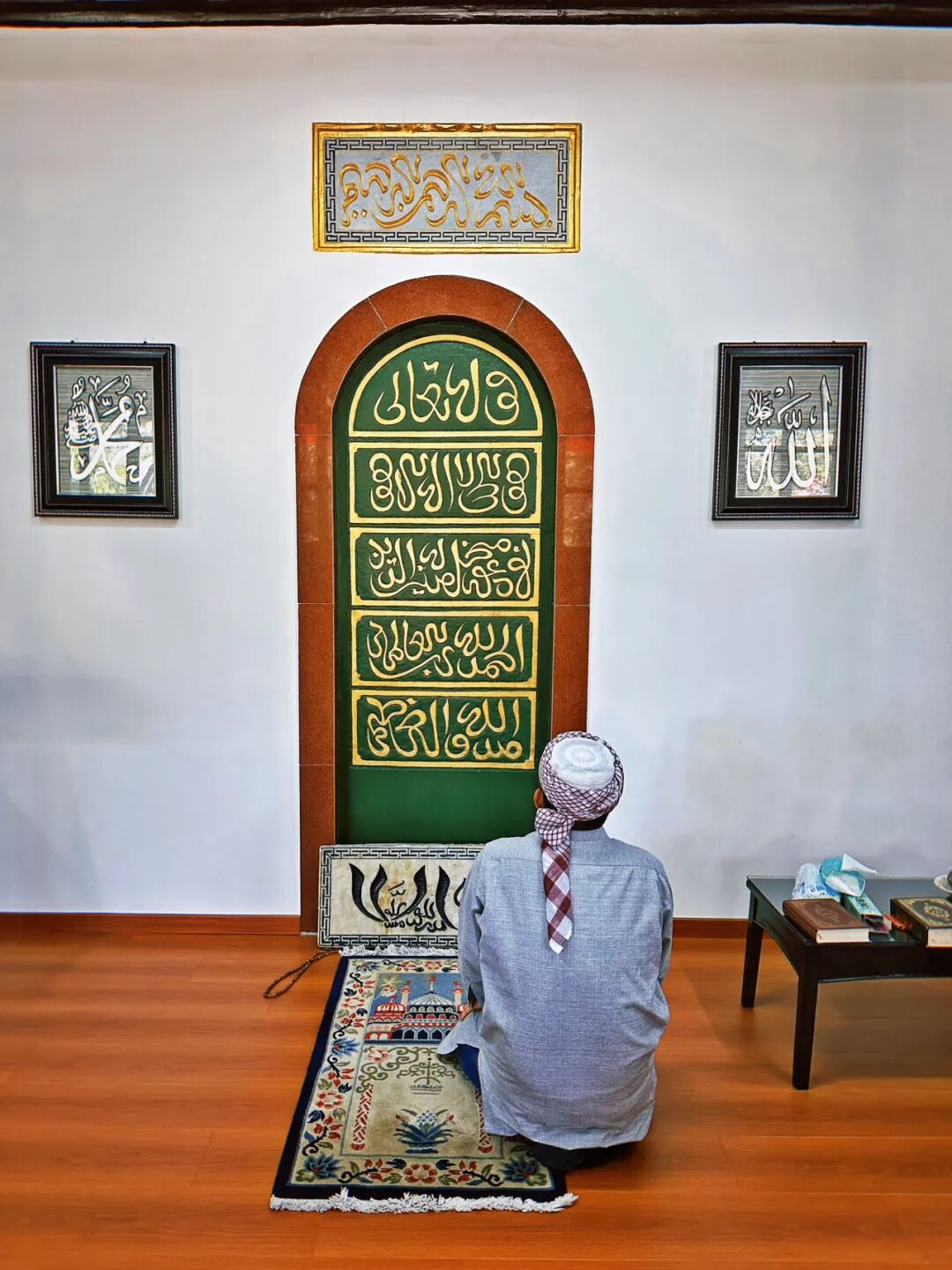
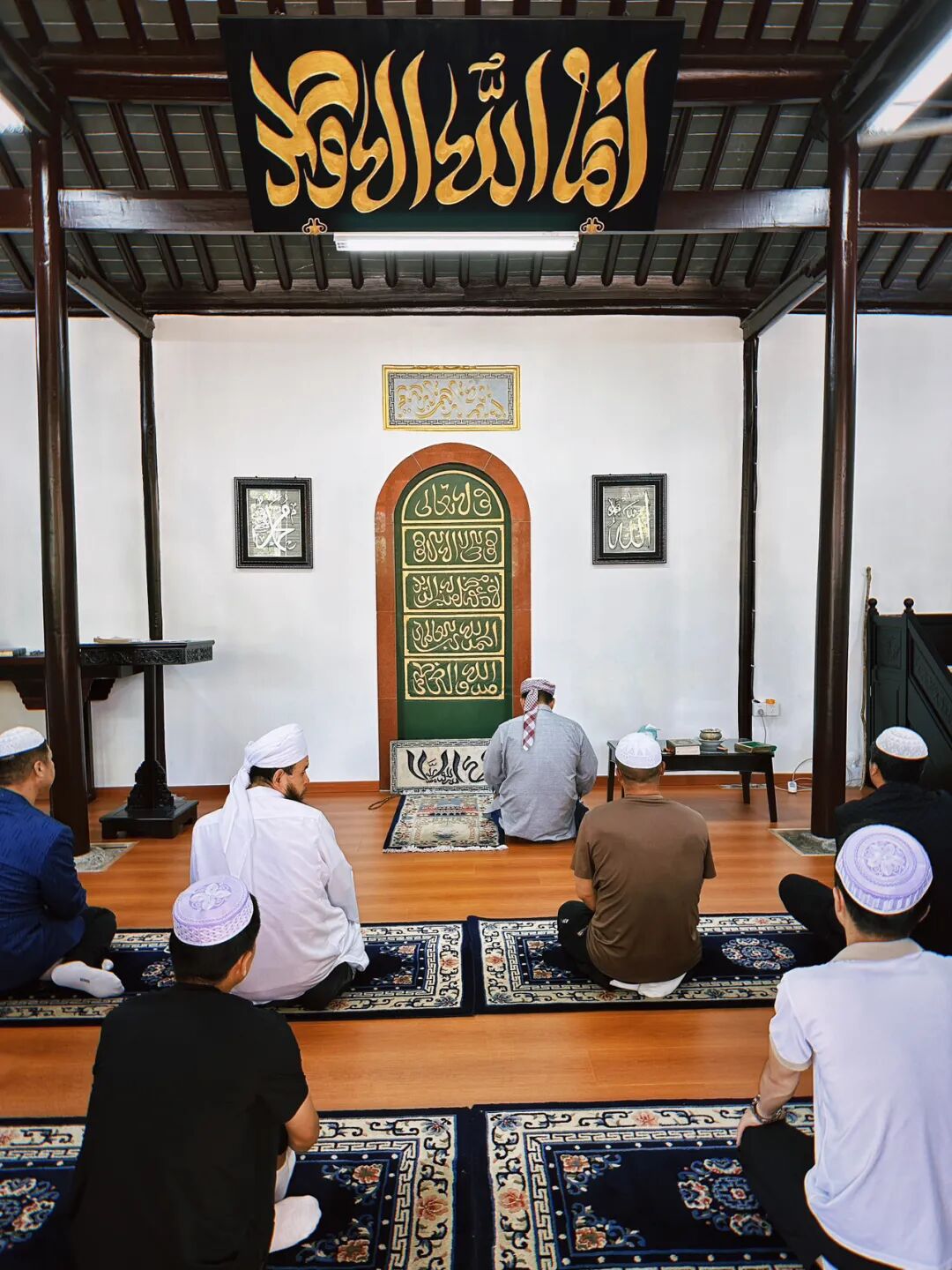
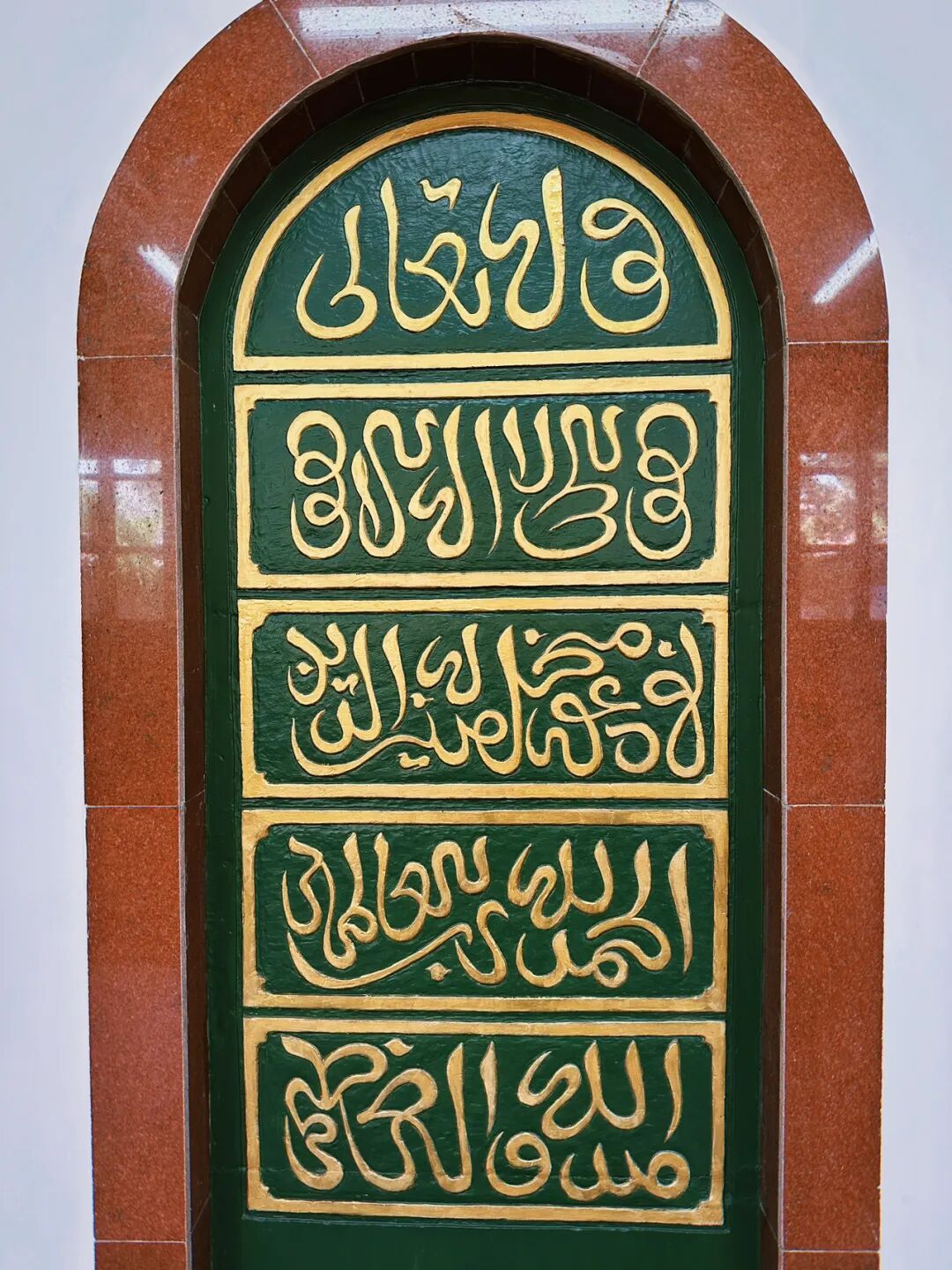
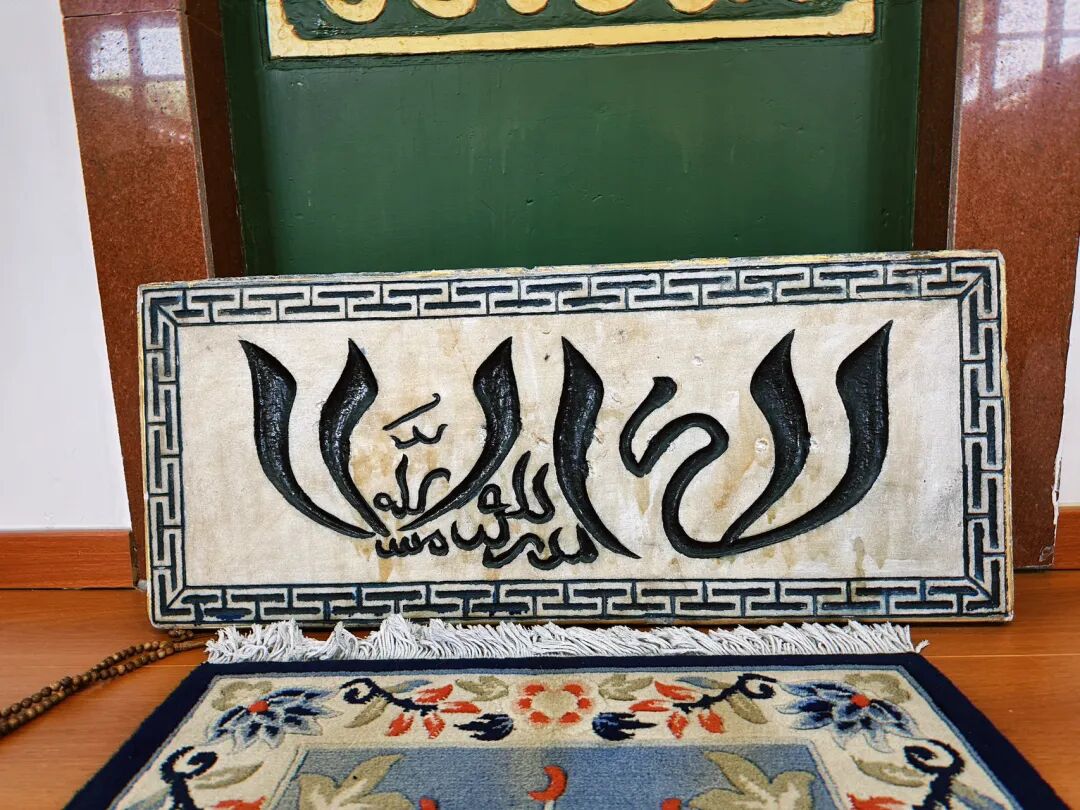
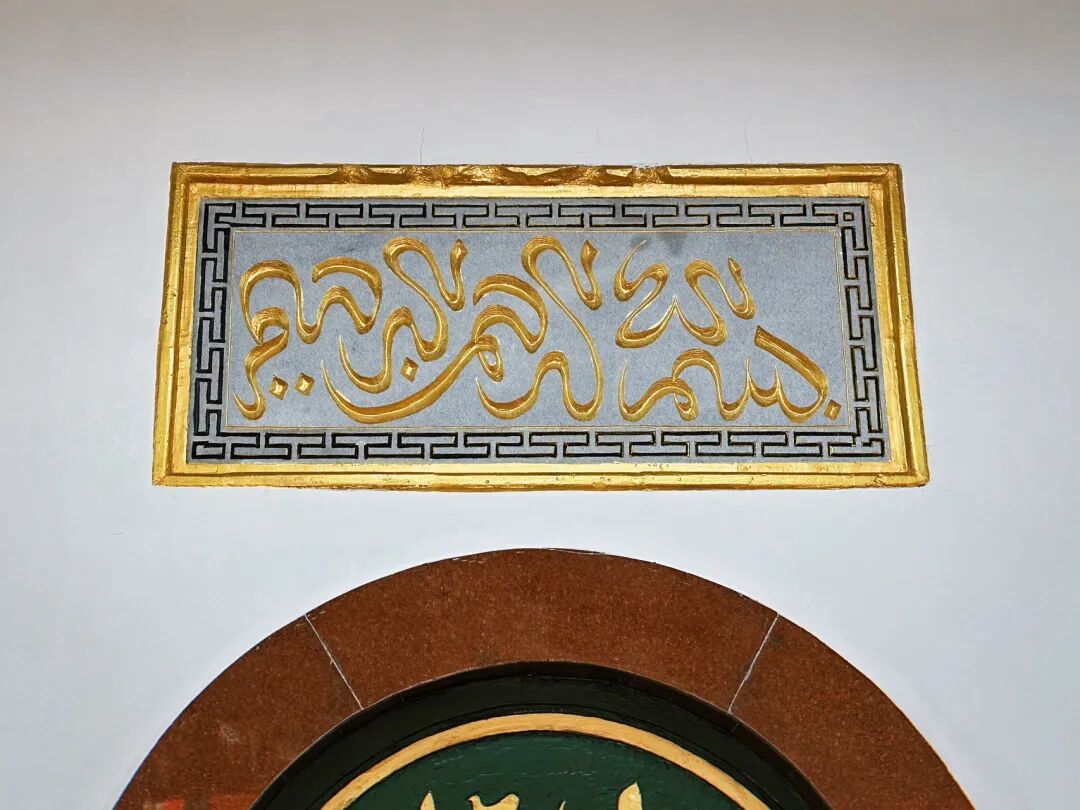
The main hall of Gaoyou Mosque is quite small, and its mihrab is in the traditional Jiangsu style. The people attending Jumuah are mostly friends (dost) from Northwest China who run hand-pulled noodle (lamian) shops. This is the current situation for many mosques in the southeast region.
Lingtang Mosque
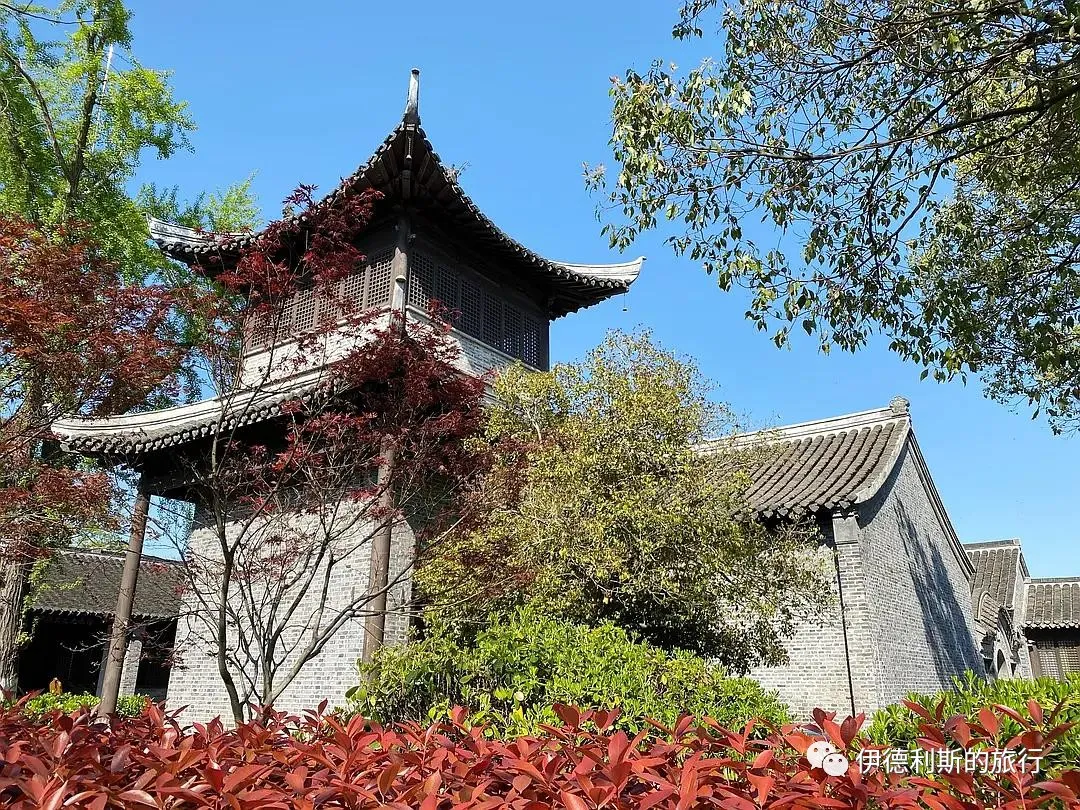
At the end of the Yuan dynasty, Lingtang had a mosque built at 'Huihui Bay' by Gaoyou Lake, but it was later destroyed by a flood. It moved to Yangdazhuang in the mid-Ming dynasty, then to its current site in the early Qing dynasty. It was rebuilt in 1844 (the 24th year of Daoguang), expanded again in 1921, and finished in 1924. The sweet osmanthus tree next to the kiln hall was planted when local villager Xue Yukuan and his wife, Mrs. Xue Yang, had their nikah ceremony performed by an imam. It has a history of over 130 years.
See "2021 Trip to Gaoyou, Yangzhou, and Zhenjiang".
Baoying Mosque.
Traveling north from Gaoyou along the Grand Canal, you reach Baoying County. This is the northernmost part of Yangzhou, and further north lies Huai'an.
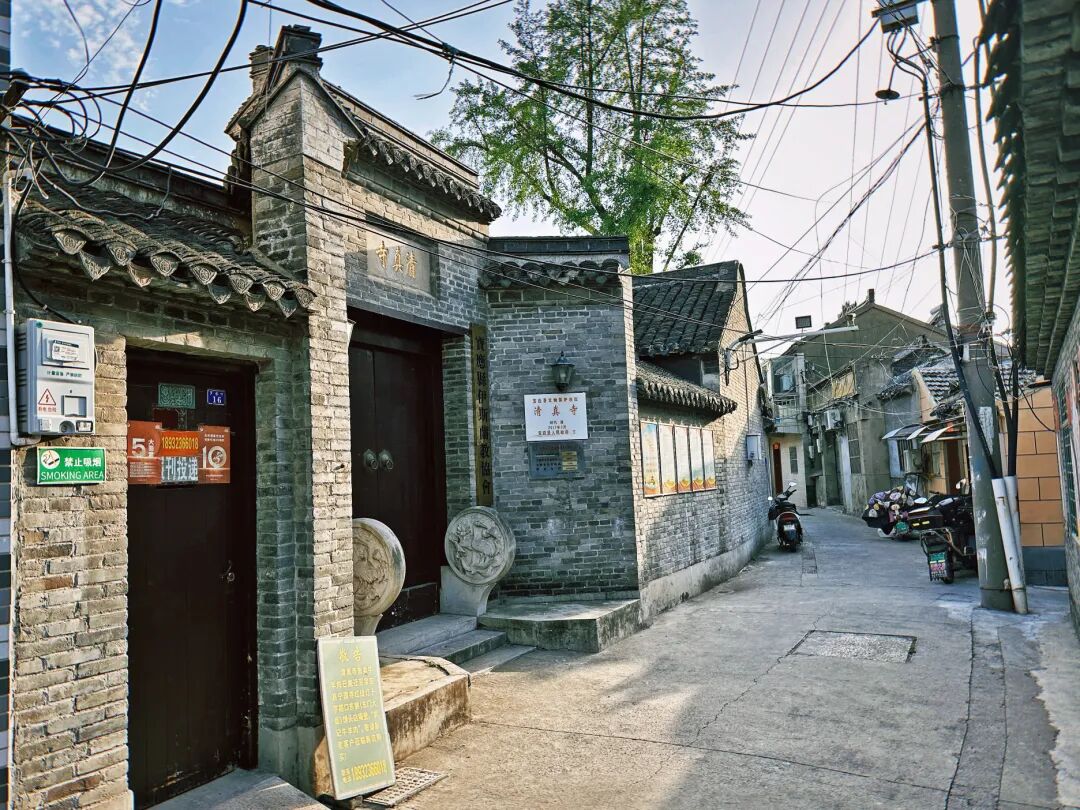
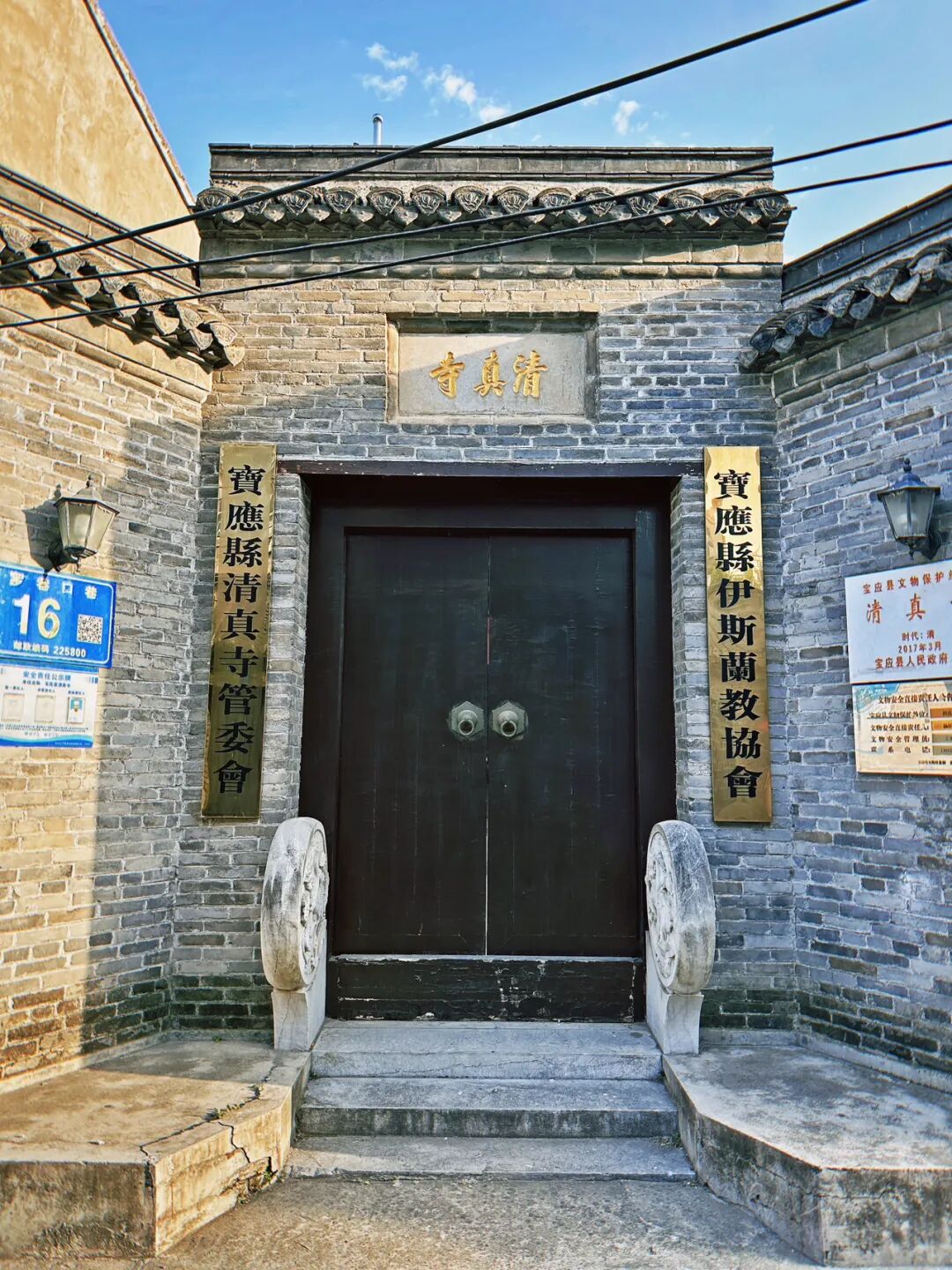
Baoying Mosque was originally located in Guojia Lane inside the east gate of the county town, though its founding date is unknown. It was rebuilt in 1910 (the second year of the Xuantong reign) at the entrance of Luoxiang Lane at the foot of the south city wall. With the help of Tao, the wife of anti-Japanese hero Zuo Baogui, and led by Imam Zhao Dezhai and others, the mosque was officially completed in 1914 through funds raised by many people from Shandong, Anhui, Zhejiang, Huaiyin, Yangzhou, Yancheng, and local Baoying residents like Gao Mu Ma Jinshi. Baoying Mosque closed after 1958, was rebuilt on its original site in 2002, and officially reopened in 2006.
The mosque still has the water well dug during the 1910 reconstruction and the ginkgo tree planted at that time. Imam Li at the mosque is from Siyang, Jiangsu. He usually runs the nearby "Li's Beef and Mutton" shop. If you want to enter the mosque, just call the number posted at the door. Imam Li is very welcoming. He mentioned that some local Gao Mu still come to the mosque for Jumu'ah prayers, which is better than some mosques where almost everyone attending is a dost from the Northwest. Imam Li comes from the Zhe school's Banqiao Daotang, but he treats all sects equally, and the religious community in Baoying County is very united.
Summary: Yangzhou, Jiangsu, is covered through seven historic mosques visited across two trips in 2021 and 2025. This account keeps the mosque names, founding dates, architectural details, community stories, food notes, and photographs in order.
I visited ancient mosques in Yangzhou, Jiangsu, twice in 2021 and 2025. I visited seven mosques in total: Xianhe, Majianxiang, Babayao, Shaobo, Lingtang, Gaoyou, and Baoying. I will share them with you here.
Xianhe Mosque
Xianhe Mosque is on Nanmen Street in Yangzhou. It was founded in 1275 (the 12th year of the Zhiyuan era of the Yuan Dynasty) by the Western sage Puhading before he passed away. It was rebuilt in 1390 (the 23rd year of the Hongwu era of the Ming Dynasty) by Ha San, renovated in 1523 (the 3rd year of the Jiajing era) by the merchant Ma Zongdao and the imam Ha Ming, and repaired again in 1791 (the 56th year of the Qianlong era). The Xianhe Mosque layout uses small courtyards, unlike the common four-sided courtyard (siheyuan) style found in northern mosques. Xianhe Mosque divides the lecture hall, the main prayer hall, and the gate into three separate small courtyards. It also features a moon-viewing pavilion (wangyueting) and a covered walkway (youlang) outside the south gable of the main hall, giving the mosque a garden-like atmosphere.
I visited Xianhe Mosque in 2021, as seen in my article, "The 2021 Trip to Gaoyou, Yangzhou, and Zhenjiang."
Majianxiang Mosque
Majianxiang Mosque is located on Majianxiang in the Dongmen Street area of Yangzhou. According to the Hui Muslims' "Gu Family Genealogy," it was built in 1714 (the 53rd year of the Kangxi era) by Gu Yuanbing, a 24th-generation descendant of Gu Duding.
Majianxiang Mosque originally had dozens of rooms, including a gatehouse, a memorial archway (paifang), a main prayer hall, a reception hall, a water room (shuifang), side rooms, and dormitories. Today, two main halls, a reception hall, and the water room remain. In the early years of the Republic of China, the mosque housed the second Yangzhou branch of the Beijing-based "Zhenzong Newspaper" and a religious book and newspaper room.
In 1932, Liu Binru, a famous Yangzhou imam and one of the founders of the Chinese Islamic Association, along with Hua Ruzhou, then a council member of the Jiangdu County Hui Muslim Association, established the "Chinese Islamic Scripture Translation and Compilation Institute" here to translate religious texts. Liu Binru, who was fluent in Arabic and Persian, was responsible for translating the original Arabic texts. Hua Ruzhou translated the summaries from the English version by the Indian Islamic scholar Muhammad Ali, which were then attached before each section of the scripture. On January 1, 1935, the "Chinese Translation of the Quran with Ali's Summaries" was officially published. The first printing of 2,000 copies was sold by major bookstores across the country.
In 1933, the Yangzhou Islamic Association founded the Hui Muslim Cultural Training Institute at Majianxiang Mosque, with Liu Binru in charge. to teaching Arabic, the institute offered Chinese, English, and arithmetic, reaching a level equivalent to upper primary or junior high school. It replaced the traditional individual scripture teaching method with a classroom-based group instruction format. Teachers included the Majianxiang imam Hua Jinhou, who was proficient in Arabic, the imam Ruan Dechang, the imam of the East Gate Hui Muslim Hall Lan Baohua, and Liu Binru. They also hired Hui Muslim Association members Shen Junchen and Zhang Shaozhe to teach Chinese and arithmetic, and Hua Ruzhou to teach English.
Between 1934 and 1935, the missionary Claude L. Pickens visited the Majianxiang Mosque and saw a reading room inside with many books and magazines. He photographed the 1931 Gu Gong Memorial Stele standing in the mosque. The inscription records the life of mosque board member Gu Jisu, who served for 11 years, repaired the ablution room (shuifang) and market stalls, and built a new heated room (nuanfang), making great contributions to the mosque. He passed away in 1930, before he was 40 years old.
In 1958, the Majianxiang Mosque was converted into a factory workshop and occupied by a craft sign factory, a burlap bag factory, and a brush factory. The property was not recovered until 1997, and it was listed as a municipal cultural relic protection unit in 2008. It is currently used as a residence.
Puhading Tomb Garden
Legend says Puhading was a 16th-generation descendant of the Noble Prophet. He came to Yangzhou during the Xianchun period of the Song Dynasty (1265-1274) and died there in 1275 (the 12th year of the Zhiyuan period of the Yuan Dynasty). He was buried on a high ridge east of the Dongguan River in the New City, a place later called the Huihui Hall (commonly known as Baba Kiln).
According to oral traditions passed down by local imams in Yangzhou, as told by Imam Lan Baohua of the Huihui Hall on July 17, 1947, Puhading was born in 1204 (the 4th year of the Jiatai period of the Song Dynasty) into a wealthy Arab noble family and was the 16th-generation descendant of the Noble Prophet. Puhading was highly learned and mastered the scriptures and religious laws. At 57, following the teaching that one should seek knowledge even if it is as far as China, he spent four years preparing. At 61, he led a team of 17 people across the Arabian Sea toward China.
Puhading arrived in Yangzhou in 1265 (the 1st year of the Xianchun period of the Song Dynasty). During his 10 years in Yangzhou, he presided over the founding of the Xianhe Mosque, expanded the old mosque outside the South Gate, and rebuilt the Nanchaoguan Mosque.
In 1275 (the 12th year of the Zhiyuan period of the Yuan Dynasty), he died on a boat while returning from giving a lecture, at the age of 71. Yuan Guang'en, the governor of Guangling, buried him on a high ridge on the east bank of the Grand Canal in Yangzhou.
The Puhading Tomb Garden has been renovated through the dynasties. Most of the existing buildings reflect the appearance after the 1845 (the 25th year of the Daoguang period) renovation. It was named a Major Historical and Cultural Site Protected at the National Level in 2001.
The gate of the tomb garden is right next to the Beijing-Hangzhou Grand Canal, and the original stone path and stone pillars for tying boat ropes are preserved outside the gate. The lintel of the gate is inscribed with 'Tomb of the Western Sage Puhading,' with the signature 'Rebuilt in the month of lotus in the Bing-shen year of the Qianlong reign.' On both sides of the gate are Qing Dynasty drum-shaped stone bases featuring lions playing with a ball. Inside the gate is a stele from the Daoguang renovation, inscribed with 'In the Yi-si year of the Daoguang reign, people of various surnames donated to build the stone bank and renovate the halls; the management was not easy.' I hope this place is repaired from time to time so it does not fall into ruin, keeping the tomb grounds safe and preserving its memory forever.
After entering the Pu Hadin tomb complex, you reach stone steps leading up the hill. The stone railings on both sides are carved with traditional patterns and designs, including lions playing with balls, carp jumping over the dragon gate, and the three rams bringing prosperity (sanyang kaitai). At the top of the steps stands a foyer with a four-cornered pointed roof topped with a glazed vase. Above it is a plaque inscribed with the words 'Tianfang Ju Yue' (The Standard of the Holy Land).
The center of the Pu Hadin tomb complex is the Pu Hadin tomb pavilion. The tomb pavilion has a four-cornered pointed roof with a glazed vase on top, and the interior features a corbelled dome. Inside the pavilion is the tomb cover stone, which follows the classic Song and Yuan dynasty style for Hui Muslims. It has a five-tiered Sumeru pedestal structure carved with scrolling peonies, ruyi flowers, and scripture. Today, the tomb cover stone is covered by a cloth and cannot be seen.
The pavilion features a stone tablet erected in 1726 (the fourth year of the Yongzheng reign) that reads 'Tomb of the Sage Pu Hadin from the Western Regions who attained the Way,' with carvings of longevity peaches and lotus flowers around the edges.
Inside the north foyer, there is also a 'Record of the Tomb of the Sage Pu Hadin from the Western Regions' erected in 1908 (the 34th year of the Guangxu reign). Besides recording Pu Hadin's birth and death, it includes legendary stories known within the community as 'karamat' (miraculous signs). The inscription records that an old monk from the Dragon King Temple tried to compete with Pu Hadin in magic, but he could not win and was eventually humbled. It also records that in the early Qing dynasty, thieves tried to dig up Pu Hadin's tomb. After they opened the tomb cover stone, a raging fire suddenly broke out and burned many of the thieves. Later, they saw there were no remains in the tomb, only a scroll of the Quran (Tianjing) and a hat, shoes, fan, and staff. The inscription is signed by 'the imam of this mosque and others who supervised the carving.' The imam of this mosque refers to the leader of the Babayao Mosque.
Around the Pu Hadin tomb pavilion are the tomb pavilions of several other sages, including the sage Sa Ganda who passed away in 1278 (the third year of the Jingyan reign of the Song dynasty), the sages Mahamude and Zhanmaluding who passed away in 1469 (the fifth year of the Chenghua reign of the Ming dynasty), the sage Fana who passed away in 1498 (the 11th year of the Hongzhi reign), and the tomb of Wang Keng, a merchant from Xi'an, Shaanxi, who passed away in 1501 (the 14th year of the Hongzhi reign of the Ming dynasty). The tomb pavilions all contain traditional Song and Yuan dynasty Sumeru pedestal tomb cover stones. I saw them in 2017, but when I went back in 2025, they were all covered with cloths and could not be seen.
The pavilion also has a stone tablet from the Qianlong reign commemorating the reconstruction, which lists: 'The great sage Pu Hadin, a 16th-generation descendant of the Holy Prophet from the Western Regions, in the first year of the Deyou reign of the Song dynasty; the sage Sa Ganda from the Western Regions in the third year of the Jingyan reign of the Song dynasty; the sage Mahamude from the Western Regions in the fifth year of the Chenghua reign of the Ming dynasty; the sage Zhanmaluding from the Western Regions in the fifth year of the Chenghua reign of the Ming dynasty; and the sage Fana from the Western Regions in the 11th year of the Hongzhi reign of the Ming dynasty.' The inscription reads, Rebuilt in the lunar eighth month of the Bing-Shen year of the Qianlong reign.
There are two ancient ginkgo trees in the cemetery, one of which is 750 years old and was planted when the cemetery was built in 1275. The 23rd day of the seventh lunar month this year marks the 750th anniversary of Pu Hadin's passing, and a grand memorial event will be held then.
The year 1275 was also when Yangzhou fell to the Yuan dynasty. That year, the Yuan general Wuliangha Ashu besieged Yangzhou, but the Song dynasty defenders refused to surrender, and the Yuan army failed to take the city after repeated attacks. The siege lasted for one year and three months. Eventually, a minor general inside the city opened the gates to surrender. The main commanders, Li Tingzhi and Jiang Cai, were captured, and the Yuan dynasty finally occupied Yangzhou. Therefore, this ancient ginkgo tree in the cemetery is a witness to the transition between the Song and Yuan dynasties.
Most of the Qing dynasty tombstones in the Pu Hadin cemetery show official titles. One of them, from the fifth year of the Xianfeng reign, belongs to Tao Gong, a garrison commander of Gushuijing Fort under the Ningxia Town of Gansu, who was granted a blue peacock feather by the emperor.
There are also some unearthed Yuan dynasty tomb capstones in the cemetery, but they are currently covered with tarps and cannot be seen.
On the cemetery wall, there is a 1932 stele titled Inscription for Han Aheng Yuchun. The inscription records that Imam Han Tongrong was from Hanjiachai in Yucheng County, Shandong. He was born in 1837 (the 17th year of the Daoguang reign), studied the classics from a young age, and later traveled to Ningxia and Hohhot for his studies. After graduating in 1867 (the sixth year of the Tongzhi reign), he returned to Shandong and then traveled south. When he passed through Yangzhou, the local elders asked him to stay. He set up a school at the Baba Yao Mosque next to the Pu Hadin cemetery and taught over thirty students, including several religious leaders with the surnames Lan, Ma, and Wang. Four years later, Imam Han left Yangzhou to preach and teach in Hubei, Fujian, Jiangxi, and other places, with his students spread across the entire southeast region. During this time, Imam Han briefly returned to teach in Yangzhou before traveling to Zhejiang, Suzhou, Tianjin, and Shanghai. He returned to Yangzhou to teach in 1898 (the 24th year of the Guangxu reign) and stayed until he passed away in 1915 at the age of 79, after which he was buried in the Pu Hadin cemetery.
The Pu Hadin cemetery houses four Yuan dynasty tombstones. Three of them are primarily in Arabic with some Persian place names, while the front of the fourth one is written in Chinese characters. These four tombstones were discovered in the city foundations in 1924-1925 when the Dangjun Tower at the south gate of Yangzhou was demolished. It was originally kept in the tomb of the sages next to the Crane Mosque (Xianhe Si) and moved to the Puhading Cemetery in 1959.
During the Song Dynasty, a government hostel was set up at the south gate of Yangzhou. The area outside the south gate became a major settlement for Arab and Persian merchants. An ancient mosque (Nanmenwai Gusi) was built there, but it was later occupied by a glass factory and the main hall was demolished in 1984. A cemetery was also built nearby. In 1357, the 17th year of the Zhizheng era of the Yuan Dynasty, Zhu Yuanzhang captured Yangzhou and used some of the tombstones to build the Dangjun Tower at the south gate.
One of the Chinese-language tombstones is inscribed with 'Tomb of the Darughachi of Huizhou Circuit, Nie Gubo, Tongyi'. The term Darughachi originally meant 'seal holder' and referred to officials who held real administrative and military power in local areas during the Yuan Dynasty. The Huizhou Circuit was a high-ranking circuit, so the Darughachi held a rank of 3a. Tongyi is short for 'Tongyi Dafu', which is also a 3a rank. During the Yuan Dynasty, most Darughachi were Mongols, though some were Semu people with noble family backgrounds. The back of the stone records Nie Gubo's life and praises him as a 'noble, diligent, and excellent religious educator, an outstanding leader who helped the weak, was charitable and generous, and loved the people, a respected elder... a man of great virtue and wisdom, generous and fair, and blessed with great fortune.' It also notes that he passed away on the 2nd day of the 12th month of the Islamic calendar year 709, which is May 3, 1310, the third year of the Zhida era of the Yuan Dynasty.
The second tombstone records: 'The pardoned deceased Shams al-Din Asif Allah Balaji... at the time of early June, 724 (Islamic calendar).' This corresponds to the end of May or early June of 1324, the first year of the Taiding era of the Yuan Dynasty.
The third tombstone belongs to a Persian woman who also passed away in 1324. Her name was Aisha Khatun, with 'Khatun' meaning 'lady'. The inscription says: 'She was a chaste, virtuous, and capable woman... her father was Lezunding, a well-respected official in the religious community.'
The fourth tombstone is damaged. It belonged to a missionary named Ala al-Din who died in 1302, the sixth year of the Dade era of the Yuan Dynasty. The inscription describes him as a merchant who was skilled in business and highly respected by the people.
On the east side of the Puhading Cemetery is the tomb of General Zhang Xin, who passed away in 1551, the 30th year of the Jiajing era of the Ming Dynasty. General Zhang's ancestor, Damuchi, came from Samarkand. The 'Continued Records of Jiangdu County' from the Republic of China era states: 'General Zhaoyong, named Xin, was the grandson of the Hui Muslim Damuchi. He held the rank of Cavalry Commandant. Because he was an excellent archer, he was granted the surname Zhang and his household was registered in Yangzhou, located behind the Puhading tomb outside Tongji Gate.'
The spirit way archway for General Zhang was erected by his grandson, Zhang Heng. Zhang Heng was a famous Ming Dynasty general who fought against Japanese pirates and served as the hereditary commander of the Yangzhou Guard. In April 1556 (the 35th year of the Jiajing reign), Japanese pirates attacked Yangzhou. Zhang Heng, a retired Huaiyang assistant regional commander, personally led troops to fight them and died on the battlefield. The stone sheep beside the spirit way was once kept at Slender West Lake until it was moved back in 2011.
Next to General Zhang Xin's tomb is the cenotaph of Zuo Baogui, a famous Qing Dynasty general who fought against the Japanese. During the First Sino-Japanese War in 1894 (the 20th year of the Guangxu reign), Zuo Baogui led his troops to hold the Xuanwu Gate in Pyongyang and dealt a heavy blow to the Japanese army. On September 15, Zuo Baogui personally fired a cannon. His right arm was broken, but he bandaged the wound and kept fighting. He was then hit in the chest by a shell and died heroically at the age of 57. That same year, the Yangzhou government followed an imperial decree to build a cenotaph and a shrine for Zuo Baogui in the south section of the Puhading Tomb. The shrine was later destroyed, leaving only the tomb cover stone of the cenotaph.
Babayao Mosque
The mosque southwest of the Puhading Tomb garden is called Huihui Tang Mosque or Babayao Mosque. It was one of the six Hui Muslim districts in Yangzhou during the Qing Dynasty and is the only one remaining of the three districts outside the city. Babayao Mosque currently appears as it did after being rebuilt in 1776 (the 41st year of the Qianlong reign) and renovated in 1845 (the 25th year of the Daoguang reign), featuring the traditional architectural style typical of the Huaiyang region.
The main gate of Babayao Mosque is on the southwest side of the Puhading Tomb garden. The stone plaque above the gate was installed during the Qianlong reign, and the rectangular door-pillow stones are very elegant.
The main prayer hall is on the north side of the gate, right next to the stone path of the Grand Canal, and features upturned eaves. The interior has a hard mountain roof, floor-to-ceiling slanted lattice partition doors, and a large wooden column-and-tie structural frame.
Shaobo Mosque
Traveling north from Yangzhou city along the Beijing-Hangzhou Grand Canal, the first place you reach is the ancient town of Shaobo. Historically, Shaobo was a bustling canal trading port and a key route connecting Yangzhou and Gaoyou. The ancient town still keeps a three-mile-long stone-paved road and over 20 ancient houses from the Ming and Qing dynasties.
Shaobo Mosque is said to have been built by Hui Muslims from Shandong during the Xianfeng era. Its gate and main hall still stand, and it is a protected cultural site in Jiangdu District, Yangzhou. The mosque was once used as a private residence and is now abandoned.
The gate still has its original lintel and drum-shaped stone bases. The main hall is a hard-gable style building with grey bricks and dark tiles, showing typical Jianghuai architectural style.
Shaobo Mosque is three bays wide and seven purlins deep. The gable walls have brick wind boards, the ridge purlin is supported by a dou-gong bracket set, and the columns rest on ancient mirror-style bases carved with patterns. Besides the main hall, Shaobo Mosque once had other buildings, but now only stone remains like column bases are left.
Gaoyou Mosque
Travel north from the ancient town of Shaobo along the Beijing-Hangzhou Grand Canal to reach the ancient city of Gaoyou. I visited Gaoyou Mosque in 2021 but learned it only opens for Jumuah. This time, I came specifically for Jumuah and finally got inside.
Gaoyou Mosque was first built in the Qing dynasty. According to the Gaoyou Prefecture Records (Qianlong era), local elders Ma Guixing, Liu Tianxing, and Ma Hongxing rebuilt it in 1864 (the third year of Tongzhi). The gate now has a stone lintel inscribed with 'Rebuilt in the middle of winter, the second year of Tongzhi' and a title from the local prefecture office.
Gaoyou Mosque consists of a gate and a main hall, forming an elegant and beautiful traditional Jianghuai courtyard. Inside, there is a 175-year-old boxwood tree, a 225-year-old Chinese juniper, and an ancient Qing dynasty well.
The main hall of Gaoyou Mosque is quite small, and its mihrab is in the traditional Jiangsu style. The people attending Jumuah are mostly friends (dost) from Northwest China who run hand-pulled noodle (lamian) shops. This is the current situation for many mosques in the southeast region.
Lingtang Mosque
At the end of the Yuan dynasty, Lingtang had a mosque built at 'Huihui Bay' by Gaoyou Lake, but it was later destroyed by a flood. It moved to Yangdazhuang in the mid-Ming dynasty, then to its current site in the early Qing dynasty. It was rebuilt in 1844 (the 24th year of Daoguang), expanded again in 1921, and finished in 1924. The sweet osmanthus tree next to the kiln hall was planted when local villager Xue Yukuan and his wife, Mrs. Xue Yang, had their nikah ceremony performed by an imam. It has a history of over 130 years.
See "2021 Trip to Gaoyou, Yangzhou, and Zhenjiang".
Baoying Mosque.
Traveling north from Gaoyou along the Grand Canal, you reach Baoying County. This is the northernmost part of Yangzhou, and further north lies Huai'an.
Baoying Mosque was originally located in Guojia Lane inside the east gate of the county town, though its founding date is unknown. It was rebuilt in 1910 (the second year of the Xuantong reign) at the entrance of Luoxiang Lane at the foot of the south city wall. With the help of Tao, the wife of anti-Japanese hero Zuo Baogui, and led by Imam Zhao Dezhai and others, the mosque was officially completed in 1914 through funds raised by many people from Shandong, Anhui, Zhejiang, Huaiyin, Yangzhou, Yancheng, and local Baoying residents like Gao Mu Ma Jinshi. Baoying Mosque closed after 1958, was rebuilt on its original site in 2002, and officially reopened in 2006.
The mosque still has the water well dug during the 1910 reconstruction and the ginkgo tree planted at that time. Imam Li at the mosque is from Siyang, Jiangsu. He usually runs the nearby "Li's Beef and Mutton" shop. If you want to enter the mosque, just call the number posted at the door. Imam Li is very welcoming. He mentioned that some local Gao Mu still come to the mosque for Jumu'ah prayers, which is better than some mosques where almost everyone attending is a dost from the Northwest. Imam Li comes from the Zhe school's Banqiao Daotang, but he treats all sects equally, and the religious community in Baoying County is very united.
Halal Travel Guide: Seven Historic Mosques in Yangzhou, Part 2
Articles • ali2007fr posted the article • 0 comments • 143 views • 2026-05-20 08:14
Reposted from the web
Summary: The second part of the Yangzhou mosque journey focuses on Baoying and local Hui Muslim food connected to the mosque community. This short account keeps the restaurant, halal meat details, and photographs from the original post.
Baoying County also has a beef and lamb restaurant run by local Hui Muslims. You can eat local Hui Muslim specialties there, and all the meat is slaughtered by Imam Li. It is a pity that the owner was busy and the shop was closed when we visited. If you are passing through Baoying County, I recommend that fellow Muslims (dost) stop by and give it a try. view all
Summary: The second part of the Yangzhou mosque journey focuses on Baoying and local Hui Muslim food connected to the mosque community. This short account keeps the restaurant, halal meat details, and photographs from the original post.
Baoying County also has a beef and lamb restaurant run by local Hui Muslims. You can eat local Hui Muslim specialties there, and all the meat is slaughtered by Imam Li. It is a pity that the owner was busy and the shop was closed when we visited. If you are passing through Baoying County, I recommend that fellow Muslims (dost) stop by and give it a try. view all
Reposted from the web
Summary: The second part of the Yangzhou mosque journey focuses on Baoying and local Hui Muslim food connected to the mosque community. This short account keeps the restaurant, halal meat details, and photographs from the original post.
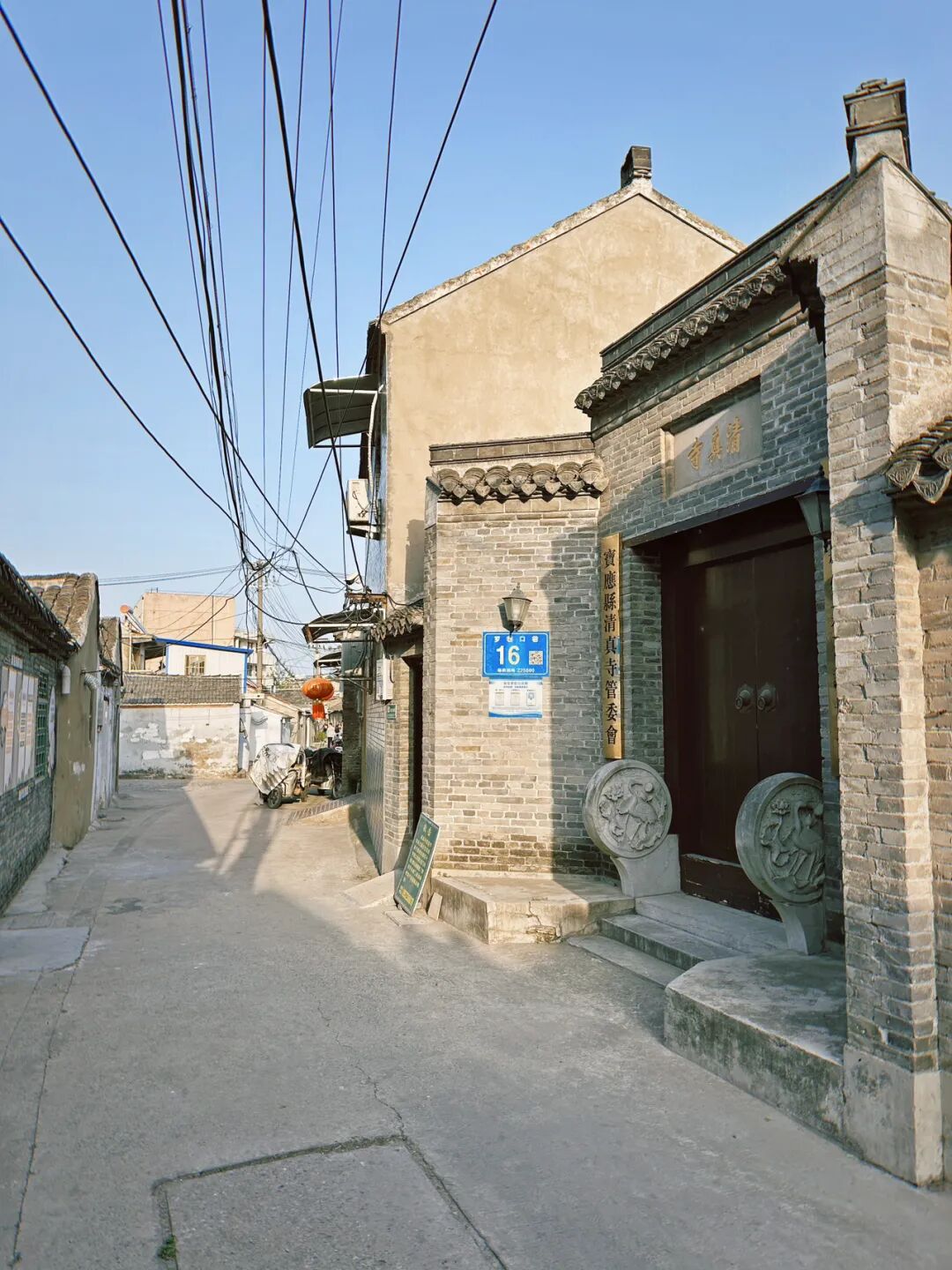
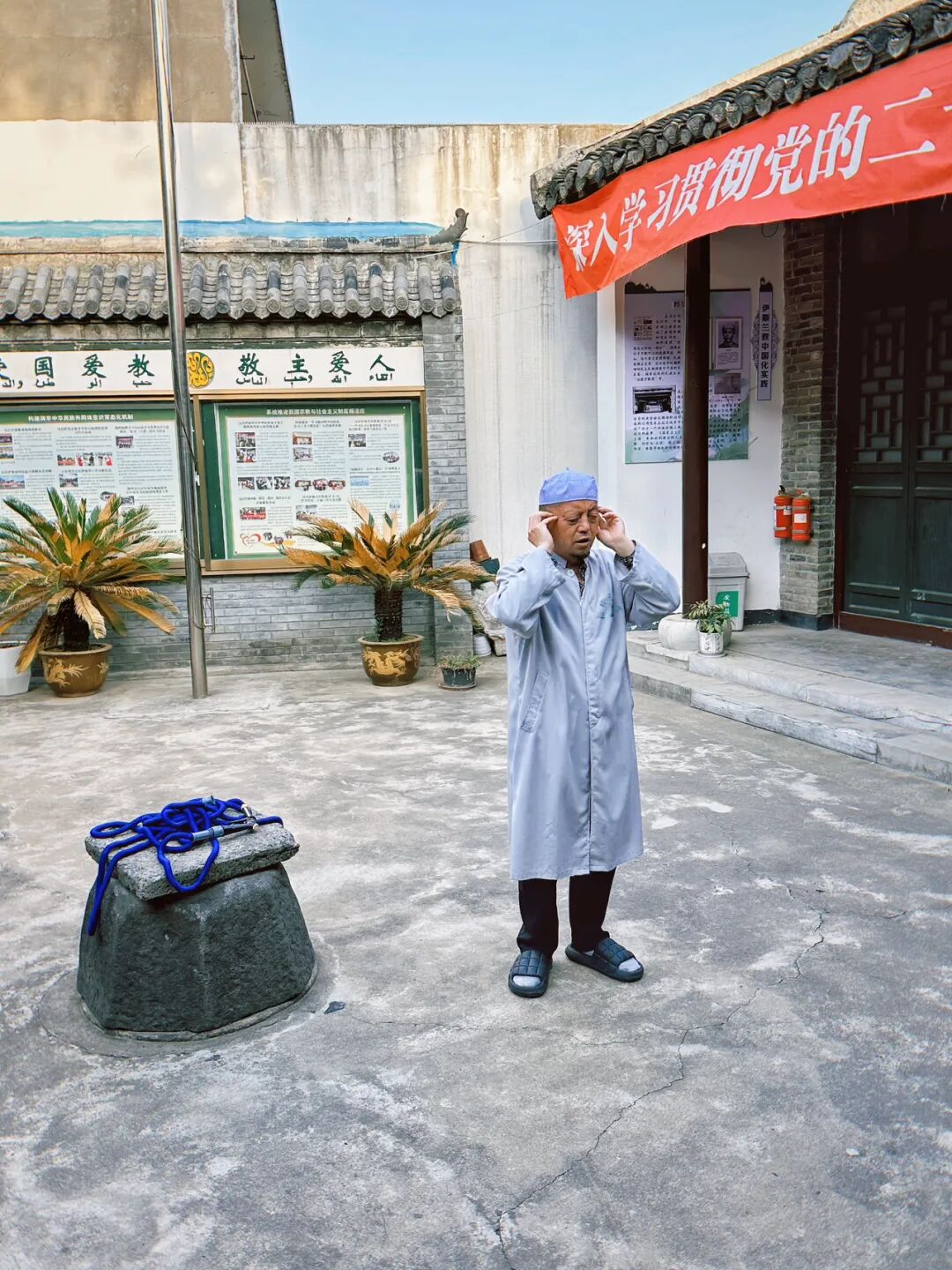
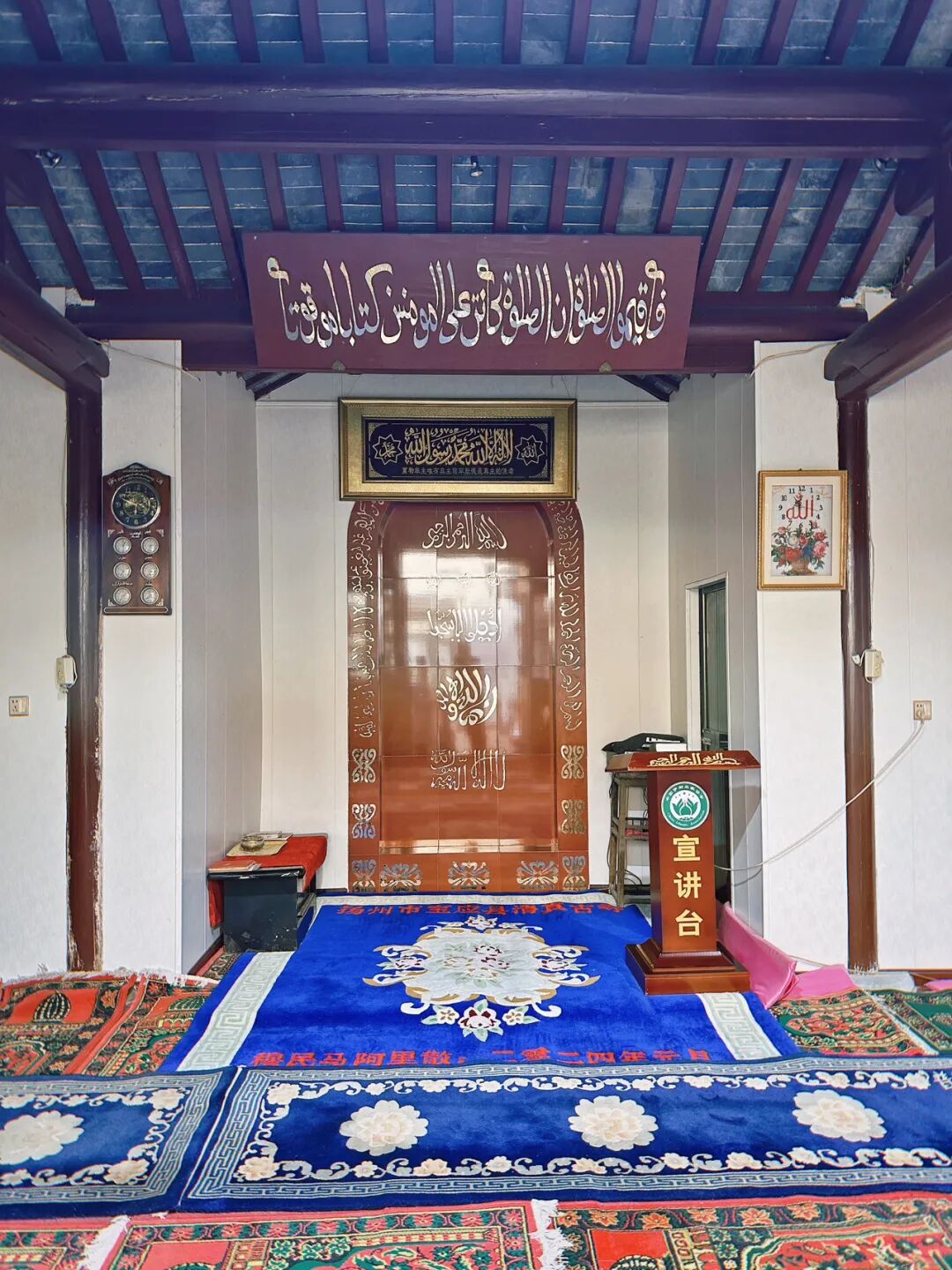
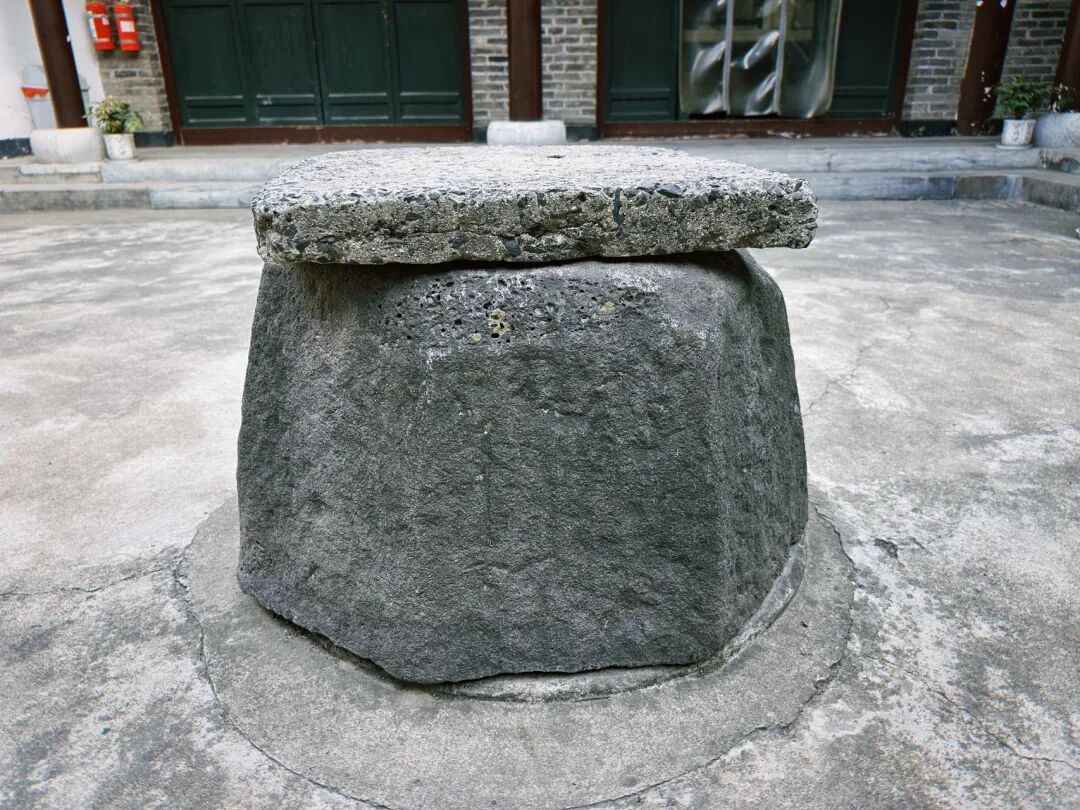
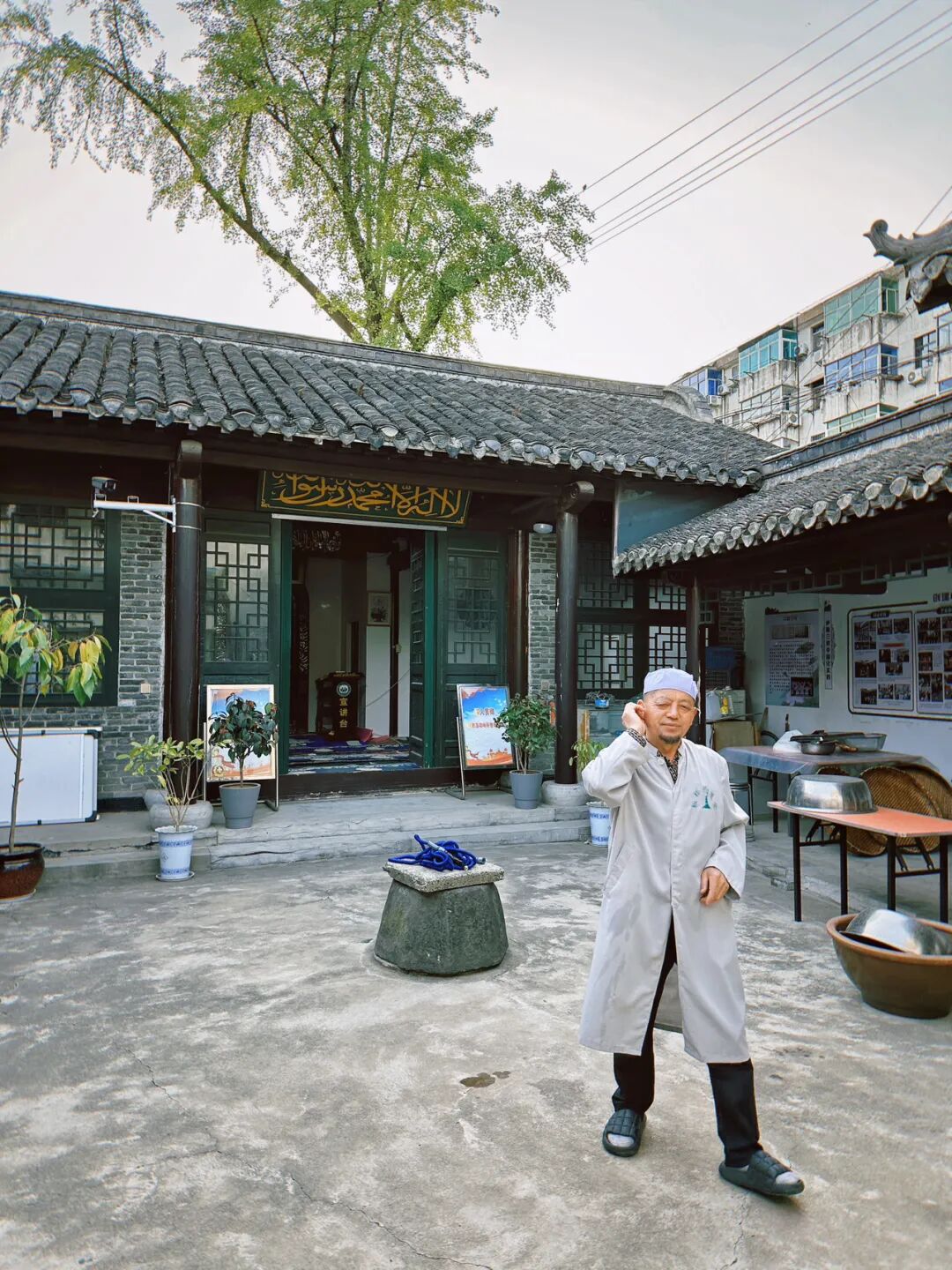
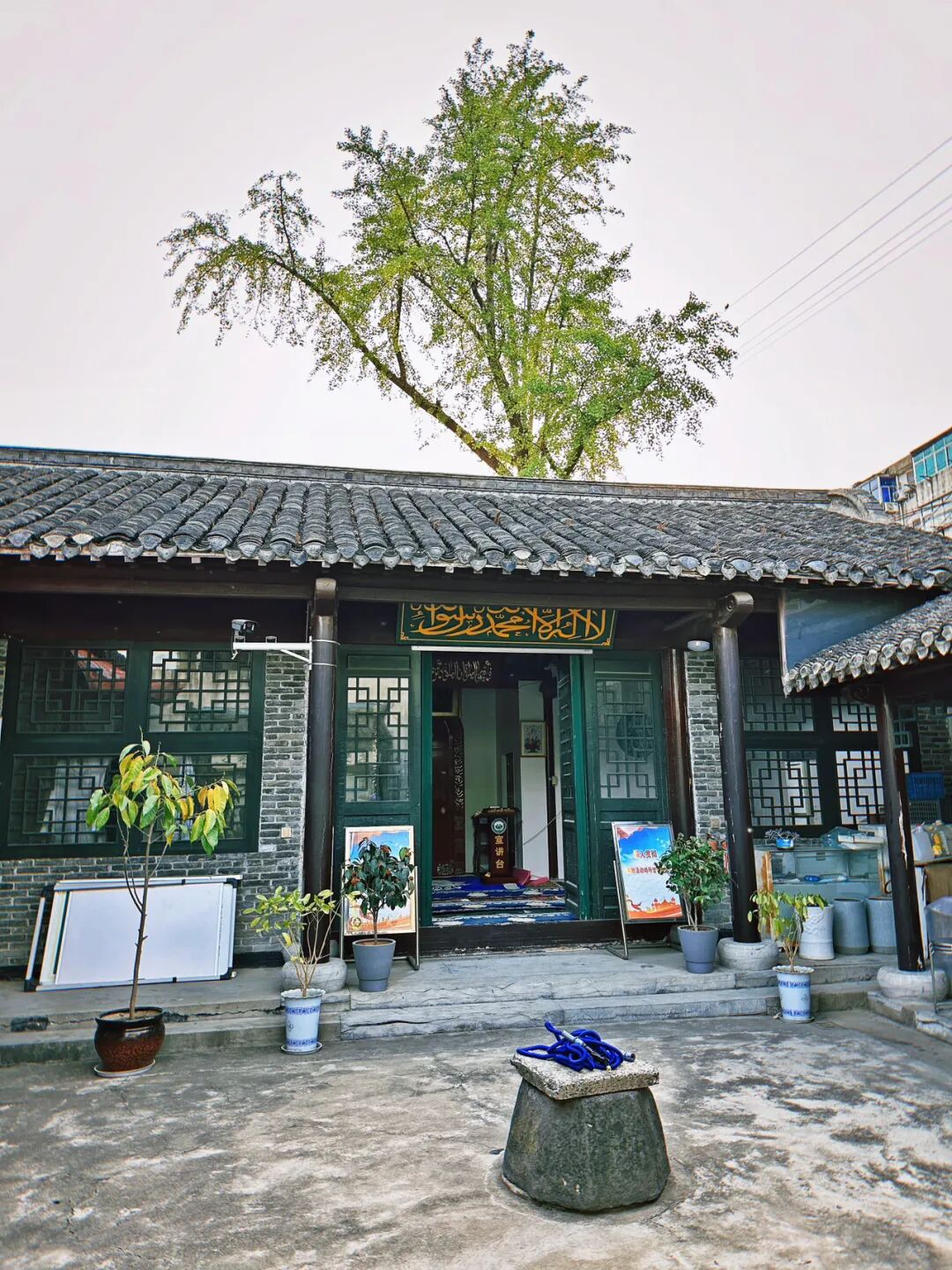
Baoying County also has a beef and lamb restaurant run by local Hui Muslims. You can eat local Hui Muslim specialties there, and all the meat is slaughtered by Imam Li. It is a pity that the owner was busy and the shop was closed when we visited. If you are passing through Baoying County, I recommend that fellow Muslims (dost) stop by and give it a try.
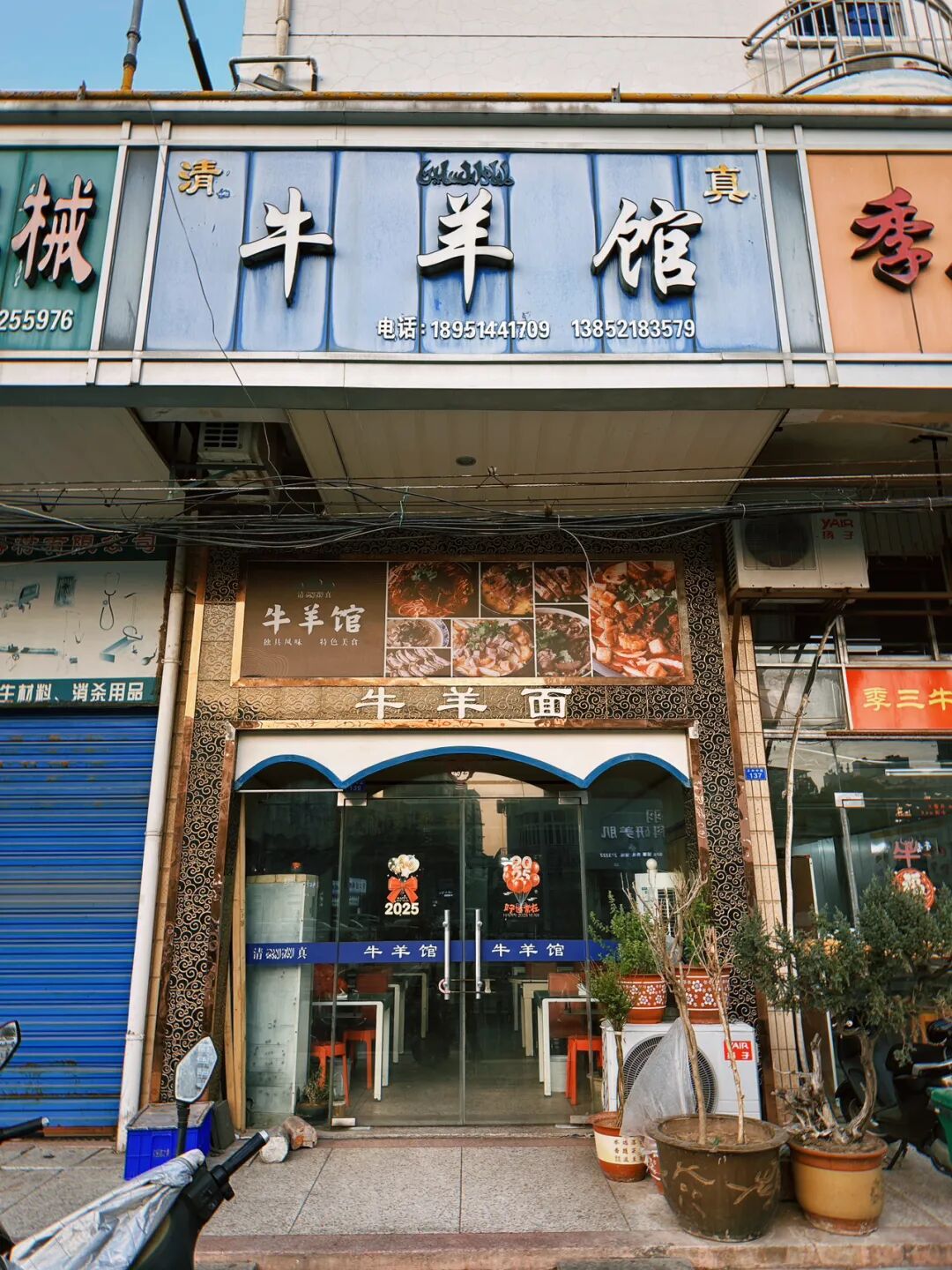
Summary: The second part of the Yangzhou mosque journey focuses on Baoying and local Hui Muslim food connected to the mosque community. This short account keeps the restaurant, halal meat details, and photographs from the original post.
Baoying County also has a beef and lamb restaurant run by local Hui Muslims. You can eat local Hui Muslim specialties there, and all the meat is slaughtered by Imam Li. It is a pity that the owner was busy and the shop was closed when we visited. If you are passing through Baoying County, I recommend that fellow Muslims (dost) stop by and give it a try.
Halal Travel Guide: Seven Historic Mosques in Yangzhou, Part 1
Articles • ali2007fr posted the article • 0 comments • 189 views • 2026-05-20 08:14
Reposted from the web
Summary: Yangzhou, Jiangsu, is covered through seven historic mosques visited across two trips in 2021 and 2025. This account keeps the mosque names, founding dates, architectural details, community stories, food notes, and photographs in order.
I visited ancient mosques in Yangzhou, Jiangsu, twice in 2021 and 2025. I visited seven mosques in total: Xianhe, Majianxiang, Babayao, Shaobo, Lingtang, Gaoyou, and Baoying. I will share them with you here.
Xianhe Mosque
Xianhe Mosque is on Nanmen Street in Yangzhou. It was founded in 1275 (the 12th year of the Zhiyuan era of the Yuan Dynasty) by the Western sage Puhading before he passed away. It was rebuilt in 1390 (the 23rd year of the Hongwu era of the Ming Dynasty) by Ha San, renovated in 1523 (the 3rd year of the Jiajing era) by the merchant Ma Zongdao and the imam Ha Ming, and repaired again in 1791 (the 56th year of the Qianlong era). The Xianhe Mosque layout uses small courtyards, unlike the common four-sided courtyard (siheyuan) style found in northern mosques. Xianhe Mosque divides the lecture hall, the main prayer hall, and the gate into three separate small courtyards. It also features a moon-viewing pavilion (wangyueting) and a covered walkway (youlang) outside the south gable of the main hall, giving the mosque a garden-like atmosphere.
I visited Xianhe Mosque in 2021, as seen in my article, "The 2021 Trip to Gaoyou, Yangzhou, and Zhenjiang."
Majianxiang Mosque
Majianxiang Mosque is located on Majianxiang in the Dongmen Street area of Yangzhou. According to the Hui Muslims' "Gu Family Genealogy," it was built in 1714 (the 53rd year of the Kangxi era) by Gu Yuanbing, a 24th-generation descendant of Gu Duding.
Majianxiang Mosque originally had dozens of rooms, including a gatehouse, a memorial archway (paifang), a main prayer hall, a reception hall, a water room (shuifang), side rooms, and dormitories. Today, two main halls, a reception hall, and the water room remain. In the early years of the Republic of China, the mosque housed the second Yangzhou branch of the Beijing-based "Zhenzong Newspaper" and a religious book and newspaper room.
In 1932, Liu Binru, a famous Yangzhou imam and one of the founders of the Chinese Islamic Association, along with Hua Ruzhou, then a council member of the Jiangdu County Hui Muslim Association, established the "Chinese Islamic Scripture Translation and Compilation Institute" here to translate religious texts. Liu Binru, who was fluent in Arabic and Persian, was responsible for translating the original Arabic texts. Hua Ruzhou translated the summaries from the English version by the Indian Islamic scholar Muhammad Ali, which were then attached before each section of the scripture. On January 1, 1935, the "Chinese Translation of the Quran with Ali's Summaries" was officially published. The first printing of 2,000 copies was sold by major bookstores across the country.
In 1933, the Yangzhou Islamic Association founded the Hui Muslim Cultural Training Institute at Majianxiang Mosque, with Liu Binru in charge. to teaching Arabic, the institute offered Chinese, English, and arithmetic, reaching a level equivalent to upper primary or junior high school. It replaced the traditional individual scripture teaching method with a classroom-based group instruction format. Teachers included the Majianxiang imam Hua Jinhou, who was proficient in Arabic, the imam Ruan Dechang, the imam of the East Gate Hui Muslim Hall Lan Baohua, and Liu Binru. They also hired Hui Muslim Association members Shen Junchen and Zhang Shaozhe to teach Chinese and arithmetic, and Hua Ruzhou to teach English.
Between 1934 and 1935, the missionary Claude L. Pickens visited the Majianxiang Mosque and saw a reading room inside with many books and magazines. He photographed the 1931 Gu Gong Memorial Stele standing in the mosque. The inscription records the life of mosque board member Gu Jisu, who served for 11 years, repaired the ablution room (shuifang) and market stalls, and built a new heated room (nuanfang), making great contributions to the mosque. He passed away in 1930, before he was 40 years old.
In 1958, the Majianxiang Mosque was converted into a factory workshop and occupied by a craft sign factory, a burlap bag factory, and a brush factory. The property was not recovered until 1997, and it was listed as a municipal cultural relic protection unit in 2008. It is currently used as a residence.
Puhading Tomb Garden
Legend says Puhading was a 16th-generation descendant of the Noble Prophet. He came to Yangzhou during the Xianchun period of the Song Dynasty (1265-1274) and died there in 1275 (the 12th year of the Zhiyuan period of the Yuan Dynasty). He was buried on a high ridge east of the Dongguan River in the New City, a place later called the Huihui Hall (commonly known as Baba Kiln).
According to oral traditions passed down by local imams in Yangzhou, as told by Imam Lan Baohua of the Huihui Hall on July 17, 1947, Puhading was born in 1204 (the 4th year of the Jiatai period of the Song Dynasty) into a wealthy Arab noble family and was the 16th-generation descendant of the Noble Prophet. Puhading was highly learned and mastered the scriptures and religious laws. At 57, following the teaching that one should seek knowledge even if it is as far as China, he spent four years preparing. At 61, he led a team of 17 people across the Arabian Sea toward China.
Puhading arrived in Yangzhou in 1265 (the 1st year of the Xianchun period of the Song Dynasty). During his 10 years in Yangzhou, he presided over the founding of the Xianhe Mosque, expanded the old mosque outside the South Gate, and rebuilt the Nanchaoguan Mosque.
In 1275 (the 12th year of the Zhiyuan period of the Yuan Dynasty), he died on a boat while returning from giving a lecture, at the age of 71. Yuan Guang'en, the governor of Guangling, buried him on a high ridge on the east bank of the Grand Canal in Yangzhou.
The Puhading Tomb Garden has been renovated through the dynasties. Most of the existing buildings reflect the appearance after the 1845 (the 25th year of the Daoguang period) renovation. It was named a Major Historical and Cultural Site Protected at the National Level in 2001.
The gate of the tomb garden is right next to the Beijing-Hangzhou Grand Canal, and the original stone path and stone pillars for tying boat ropes are preserved outside the gate. The lintel of the gate is inscribed with 'Tomb of the Western Sage Puhading,' with the signature 'Rebuilt in the month of lotus in the Bing-shen year of the Qianlong reign.' On both sides of the gate are Qing Dynasty drum-shaped stone bases featuring lions playing with a ball. Inside the gate is a stele from the Daoguang renovation, inscribed with 'In the Yi-si year of the Daoguang reign, people of various surnames donated to build the stone bank and renovate the halls; the management was not easy.' I hope this place is repaired from time to time so it does not fall into ruin, keeping the tomb grounds safe and preserving its memory forever.
After entering the Pu Hadin tomb complex, you reach stone steps leading up the hill. The stone railings on both sides are carved with traditional patterns and designs, including lions playing with balls, carp jumping over the dragon gate, and the three rams bringing prosperity (sanyang kaitai). At the top of the steps stands a foyer with a four-cornered pointed roof topped with a glazed vase. Above it is a plaque inscribed with the words 'Tianfang Ju Yue' (The Standard of the Holy Land).
The center of the Pu Hadin tomb complex is the Pu Hadin tomb pavilion. The tomb pavilion has a four-cornered pointed roof with a glazed vase on top, and the interior features a corbelled dome. Inside the pavilion is the tomb cover stone, which follows the classic Song and Yuan dynasty style for Hui Muslims. It has a five-tiered Sumeru pedestal structure carved with scrolling peonies, ruyi flowers, and scripture. Today, the tomb cover stone is covered by a cloth and cannot be seen.
The pavilion features a stone tablet erected in 1726 (the fourth year of the Yongzheng reign) that reads 'Tomb of the Sage Pu Hadin from the Western Regions who attained the Way,' with carvings of longevity peaches and lotus flowers around the edges.
Inside the north foyer, there is also a 'Record of the Tomb of the Sage Pu Hadin from the Western Regions' erected in 1908 (the 34th year of the Guangxu reign). Besides recording Pu Hadin's birth and death, it includes legendary stories known within the community as 'karamat' (miraculous signs). The inscription records that an old monk from the Dragon King Temple tried to compete with Pu Hadin in magic, but he could not win and was eventually humbled. It also records that in the early Qing dynasty, thieves tried to dig up Pu Hadin's tomb. After they opened the tomb cover stone, a raging fire suddenly broke out and burned many of the thieves. Later, they saw there were no remains in the tomb, only a scroll of the Quran (Tianjing) and a hat, shoes, fan, and staff. The inscription is signed by 'the imam of this mosque and others who supervised the carving.' The imam of this mosque refers to the leader of the Babayao Mosque.
Around the Pu Hadin tomb pavilion are the tomb pavilions of several other sages, including the sage Sa Ganda who passed away in 1278 (the third year of the Jingyan reign of the Song dynasty), the sages Mahamude and Zhanmaluding who passed away in 1469 (the fifth year of the Chenghua reign of the Ming dynasty), the sage Fana who passed away in 1498 (the 11th year of the Hongzhi reign), and the tomb of Wang Keng, a merchant from Xi'an, Shaanxi, who passed away in 1501 (the 14th year of the Hongzhi reign of the Ming dynasty). The tomb pavilions all contain traditional Song and Yuan dynasty Sumeru pedestal tomb cover stones. I saw them in 2017, but when I went back in 2025, they were all covered with cloths and could not be seen.
The pavilion also has a stone tablet from the Qianlong reign commemorating the reconstruction, which lists: 'The great sage Pu Hadin, a 16th-generation descendant of the Holy Prophet from the Western Regions, in the first year of the Deyou reign of the Song dynasty; the sage Sa Ganda from the Western Regions in the third year of the Jingyan reign of the Song dynasty; the sage Mahamude from the Western Regions in the fifth year of the Chenghua reign of the Ming dynasty; the sage Zhanmaluding from the Western Regions in the fifth year of the Chenghua reign of the Ming dynasty; and the sage Fana from the Western Regions in the 11th year of the Hongzhi reign of the Ming dynasty.' The inscription reads, Rebuilt in the lunar eighth month of the Bing-Shen year of the Qianlong reign.
There are two ancient ginkgo trees in the cemetery, one of which is 750 years old and was planted when the cemetery was built in 1275. The 23rd day of the seventh lunar month this year marks the 750th anniversary of Pu Hadin's passing, and a grand memorial event will be held then.
The year 1275 was also when Yangzhou fell to the Yuan dynasty. That year, the Yuan general Wuliangha Ashu besieged Yangzhou, but the Song dynasty defenders refused to surrender, and the Yuan army failed to take the city after repeated attacks. The siege lasted for one year and three months. Eventually, a minor general inside the city opened the gates to surrender. The main commanders, Li Tingzhi and Jiang Cai, were captured, and the Yuan dynasty finally occupied Yangzhou. Therefore, this ancient ginkgo tree in the cemetery is a witness to the transition between the Song and Yuan dynasties.
Most of the Qing dynasty tombstones in the Pu Hadin cemetery show official titles. One of them, from the fifth year of the Xianfeng reign, belongs to Tao Gong, a garrison commander of Gushuijing Fort under the Ningxia Town of Gansu, who was granted a blue peacock feather by the emperor.
There are also some unearthed Yuan dynasty tomb capstones in the cemetery, but they are currently covered with tarps and cannot be seen.
On the cemetery wall, there is a 1932 stele titled Inscription for Han Aheng Yuchun. The inscription records that Imam Han Tongrong was from Hanjiachai in Yucheng County, Shandong. He was born in 1837 (the 17th year of the Daoguang reign), studied the classics from a young age, and later traveled to Ningxia and Hohhot for his studies. After graduating in 1867 (the sixth year of the Tongzhi reign), he returned to Shandong and then traveled south. When he passed through Yangzhou, the local elders asked him to stay. He set up a school at the Baba Yao Mosque next to the Pu Hadin cemetery and taught over thirty students, including several religious leaders with the surnames Lan, Ma, and Wang. Four years later, Imam Han left Yangzhou to preach and teach in Hubei, Fujian, Jiangxi, and other places, with his students spread across the entire southeast region. During this time, Imam Han briefly returned to teach in Yangzhou before traveling to Zhejiang, Suzhou, Tianjin, and Shanghai. He returned to Yangzhou to teach in 1898 (the 24th year of the Guangxu reign) and stayed until he passed away in 1915 at the age of 79, after which he was buried in the Pu Hadin cemetery.
The Pu Hadin cemetery houses four Yuan dynasty tombstones. Three of them are primarily in Arabic with some Persian place names, while the front of the fourth one is written in Chinese characters. These four tombstones were discovered in the city foundations in 1924-1925 when the Dangjun Tower at the south gate of Yangzhou was demolished. It was originally kept in the tomb of the sages next to the Crane Mosque (Xianhe Si) and moved to the Puhading Cemetery in 1959.
During the Song Dynasty, a government hostel was set up at the south gate of Yangzhou. The area outside the south gate became a major settlement for Arab and Persian merchants. An ancient mosque (Nanmenwai Gusi) was built there, but it was later occupied by a glass factory and the main hall was demolished in 1984. A cemetery was also built nearby. In 1357, the 17th year of the Zhizheng era of the Yuan Dynasty, Zhu Yuanzhang captured Yangzhou and used some of the tombstones to build the Dangjun Tower at the south gate.
One of the Chinese-language tombstones is inscribed with 'Tomb of the Darughachi of Huizhou Circuit, Nie Gubo, Tongyi'. The term Darughachi originally meant 'seal holder' and referred to officials who held real administrative and military power in local areas during the Yuan Dynasty. The Huizhou Circuit was a high-ranking circuit, so the Darughachi held a rank of 3a. Tongyi is short for 'Tongyi Dafu', which is also a 3a rank. During the Yuan Dynasty, most Darughachi were Mongols, though some were Semu people with noble family backgrounds. The back of the stone records Nie Gubo's life and praises him as a 'noble, diligent, and excellent religious educator, an outstanding leader who helped the weak, was charitable and generous, and loved the people, a respected elder... a man of great virtue and wisdom, generous and fair, and blessed with great fortune.' It also notes that he passed away on the 2nd day of the 12th month of the Islamic calendar year 709, which is May 3, 1310, the third year of the Zhida era of the Yuan Dynasty.
The second tombstone records: 'The pardoned deceased Shams al-Din Asif Allah Balaji... at the time of early June, 724 (Islamic calendar).' This corresponds to the end of May or early June of 1324, the first year of the Taiding era of the Yuan Dynasty.
The third tombstone belongs to a Persian woman who also passed away in 1324. Her name was Aisha Khatun, with 'Khatun' meaning 'lady'. The inscription says: 'She was a chaste, virtuous, and capable woman... her father was Lezunding, a well-respected official in the religious community.'
The fourth tombstone is damaged. It belonged to a missionary named Ala al-Din who died in 1302, the sixth year of the Dade era of the Yuan Dynasty. The inscription describes him as a merchant who was skilled in business and highly respected by the people.
On the east side of the Puhading Cemetery is the tomb of General Zhang Xin, who passed away in 1551, the 30th year of the Jiajing era of the Ming Dynasty. General Zhang's ancestor, Damuchi, came from Samarkand. The 'Continued Records of Jiangdu County' from the Republic of China era states: 'General Zhaoyong, named Xin, was the grandson of the Hui Muslim Damuchi. He held the rank of Cavalry Commandant. Because he was an excellent archer, he was granted the surname Zhang and his household was registered in Yangzhou, located behind the Puhading tomb outside Tongji Gate.'
The spirit way archway for General Zhang was erected by his grandson, Zhang Heng. Zhang Heng was a famous Ming Dynasty general who fought against Japanese pirates and served as the hereditary commander of the Yangzhou Guard. In April 1556 (the 35th year of the Jiajing reign), Japanese pirates attacked Yangzhou. Zhang Heng, a retired Huaiyang assistant regional commander, personally led troops to fight them and died on the battlefield. The stone sheep beside the spirit way was once kept at Slender West Lake until it was moved back in 2011.
Next to General Zhang Xin's tomb is the cenotaph of Zuo Baogui, a famous Qing Dynasty general who fought against the Japanese. During the First Sino-Japanese War in 1894 (the 20th year of the Guangxu reign), Zuo Baogui led his troops to hold the Xuanwu Gate in Pyongyang and dealt a heavy blow to the Japanese army. On September 15, Zuo Baogui personally fired a cannon. His right arm was broken, but he bandaged the wound and kept fighting. He was then hit in the chest by a shell and died heroically at the age of 57. That same year, the Yangzhou government followed an imperial decree to build a cenotaph and a shrine for Zuo Baogui in the south section of the Puhading Tomb. The shrine was later destroyed, leaving only the tomb cover stone of the cenotaph.
Babayao Mosque
The mosque southwest of the Puhading Tomb garden is called Huihui Tang Mosque or Babayao Mosque. It was one of the six Hui Muslim districts in Yangzhou during the Qing Dynasty and is the only one remaining of the three districts outside the city. Babayao Mosque currently appears as it did after being rebuilt in 1776 (the 41st year of the Qianlong reign) and renovated in 1845 (the 25th year of the Daoguang reign), featuring the traditional architectural style typical of the Huaiyang region.
The main gate of Babayao Mosque is on the southwest side of the Puhading Tomb garden. The stone plaque above the gate was installed during the Qianlong reign, and the rectangular door-pillow stones are very elegant.
The main prayer hall is on the north side of the gate, right next to the stone path of the Grand Canal, and features upturned eaves. The interior has a hard mountain roof, floor-to-ceiling slanted lattice partition doors, and a large wooden column-and-tie structural frame.
Shaobo Mosque
Traveling north from Yangzhou city along the Beijing-Hangzhou Grand Canal, the first place you reach is the ancient town of Shaobo. Historically, Shaobo was a bustling canal trading port and a key route connecting Yangzhou and Gaoyou. The ancient town still keeps a three-mile-long stone-paved road and over 20 ancient houses from the Ming and Qing dynasties.
Shaobo Mosque is said to have been built by Hui Muslims from Shandong during the Xianfeng era. Its gate and main hall still stand, and it is a protected cultural site in Jiangdu District, Yangzhou. The mosque was once used as a private residence and is now abandoned.
The gate still has its original lintel and drum-shaped stone bases. The main hall is a hard-gable style building with grey bricks and dark tiles, showing typical Jianghuai architectural style.
Shaobo Mosque is three bays wide and seven purlins deep. The gable walls have brick wind boards, the ridge purlin is supported by a dou-gong bracket set, and the columns rest on ancient mirror-style bases carved with patterns. Besides the main hall, Shaobo Mosque once had other buildings, but now only stone remains like column bases are left.
Gaoyou Mosque
Travel north from the ancient town of Shaobo along the Beijing-Hangzhou Grand Canal to reach the ancient city of Gaoyou. I visited Gaoyou Mosque in 2021 but learned it only opens for Jumuah. This time, I came specifically for Jumuah and finally got inside.
Gaoyou Mosque was first built in the Qing dynasty. According to the Gaoyou Prefecture Records (Qianlong era), local elders Ma Guixing, Liu Tianxing, and Ma Hongxing rebuilt it in 1864 (the third year of Tongzhi). The gate now has a stone lintel inscribed with 'Rebuilt in the middle of winter, the second year of Tongzhi' and a title from the local prefecture office.
Gaoyou Mosque consists of a gate and a main hall, forming an elegant and beautiful traditional Jianghuai courtyard. Inside, there is a 175-year-old boxwood tree, a 225-year-old Chinese juniper, and an ancient Qing dynasty well.
The main hall of Gaoyou Mosque is quite small, and its mihrab is in the traditional Jiangsu style. The people attending Jumuah are mostly friends (dost) from Northwest China who run hand-pulled noodle (lamian) shops. This is the current situation for many mosques in the southeast region.
Lingtang Mosque
At the end of the Yuan dynasty, Lingtang had a mosque built at 'Huihui Bay' by Gaoyou Lake, but it was later destroyed by a flood. It moved to Yangdazhuang in the mid-Ming dynasty, then to its current site in the early Qing dynasty. It was rebuilt in 1844 (the 24th year of Daoguang), expanded again in 1921, and finished in 1924. The sweet osmanthus tree next to the kiln hall was planted when local villager Xue Yukuan and his wife, Mrs. Xue Yang, had their nikah ceremony performed by an imam. It has a history of over 130 years.
See "2021 Trip to Gaoyou, Yangzhou, and Zhenjiang".
Baoying Mosque.
Traveling north from Gaoyou along the Grand Canal, you reach Baoying County. This is the northernmost part of Yangzhou, and further north lies Huai'an.
Baoying Mosque was originally located in Guojia Lane inside the east gate of the county town, though its founding date is unknown. It was rebuilt in 1910 (the second year of the Xuantong reign) at the entrance of Luoxiang Lane at the foot of the south city wall. With the help of Tao, the wife of anti-Japanese hero Zuo Baogui, and led by Imam Zhao Dezhai and others, the mosque was officially completed in 1914 through funds raised by many people from Shandong, Anhui, Zhejiang, Huaiyin, Yangzhou, Yancheng, and local Baoying residents like Gao Mu Ma Jinshi. Baoying Mosque closed after 1958, was rebuilt on its original site in 2002, and officially reopened in 2006.
The mosque still has the water well dug during the 1910 reconstruction and the ginkgo tree planted at that time. Imam Li at the mosque is from Siyang, Jiangsu. He usually runs the nearby "Li's Beef and Mutton" shop. If you want to enter the mosque, just call the number posted at the door. Imam Li is very welcoming. He mentioned that some local Gao Mu still come to the mosque for Jumu'ah prayers, which is better than some mosques where almost everyone attending is a dost from the Northwest. Imam Li comes from the Zhe school's Banqiao Daotang, but he treats all sects equally, and the religious community in Baoying County is very united. view all
Summary: Yangzhou, Jiangsu, is covered through seven historic mosques visited across two trips in 2021 and 2025. This account keeps the mosque names, founding dates, architectural details, community stories, food notes, and photographs in order.
I visited ancient mosques in Yangzhou, Jiangsu, twice in 2021 and 2025. I visited seven mosques in total: Xianhe, Majianxiang, Babayao, Shaobo, Lingtang, Gaoyou, and Baoying. I will share them with you here.
Xianhe Mosque
Xianhe Mosque is on Nanmen Street in Yangzhou. It was founded in 1275 (the 12th year of the Zhiyuan era of the Yuan Dynasty) by the Western sage Puhading before he passed away. It was rebuilt in 1390 (the 23rd year of the Hongwu era of the Ming Dynasty) by Ha San, renovated in 1523 (the 3rd year of the Jiajing era) by the merchant Ma Zongdao and the imam Ha Ming, and repaired again in 1791 (the 56th year of the Qianlong era). The Xianhe Mosque layout uses small courtyards, unlike the common four-sided courtyard (siheyuan) style found in northern mosques. Xianhe Mosque divides the lecture hall, the main prayer hall, and the gate into three separate small courtyards. It also features a moon-viewing pavilion (wangyueting) and a covered walkway (youlang) outside the south gable of the main hall, giving the mosque a garden-like atmosphere.
I visited Xianhe Mosque in 2021, as seen in my article, "The 2021 Trip to Gaoyou, Yangzhou, and Zhenjiang."
Majianxiang Mosque
Majianxiang Mosque is located on Majianxiang in the Dongmen Street area of Yangzhou. According to the Hui Muslims' "Gu Family Genealogy," it was built in 1714 (the 53rd year of the Kangxi era) by Gu Yuanbing, a 24th-generation descendant of Gu Duding.
Majianxiang Mosque originally had dozens of rooms, including a gatehouse, a memorial archway (paifang), a main prayer hall, a reception hall, a water room (shuifang), side rooms, and dormitories. Today, two main halls, a reception hall, and the water room remain. In the early years of the Republic of China, the mosque housed the second Yangzhou branch of the Beijing-based "Zhenzong Newspaper" and a religious book and newspaper room.
In 1932, Liu Binru, a famous Yangzhou imam and one of the founders of the Chinese Islamic Association, along with Hua Ruzhou, then a council member of the Jiangdu County Hui Muslim Association, established the "Chinese Islamic Scripture Translation and Compilation Institute" here to translate religious texts. Liu Binru, who was fluent in Arabic and Persian, was responsible for translating the original Arabic texts. Hua Ruzhou translated the summaries from the English version by the Indian Islamic scholar Muhammad Ali, which were then attached before each section of the scripture. On January 1, 1935, the "Chinese Translation of the Quran with Ali's Summaries" was officially published. The first printing of 2,000 copies was sold by major bookstores across the country.
In 1933, the Yangzhou Islamic Association founded the Hui Muslim Cultural Training Institute at Majianxiang Mosque, with Liu Binru in charge. to teaching Arabic, the institute offered Chinese, English, and arithmetic, reaching a level equivalent to upper primary or junior high school. It replaced the traditional individual scripture teaching method with a classroom-based group instruction format. Teachers included the Majianxiang imam Hua Jinhou, who was proficient in Arabic, the imam Ruan Dechang, the imam of the East Gate Hui Muslim Hall Lan Baohua, and Liu Binru. They also hired Hui Muslim Association members Shen Junchen and Zhang Shaozhe to teach Chinese and arithmetic, and Hua Ruzhou to teach English.
Between 1934 and 1935, the missionary Claude L. Pickens visited the Majianxiang Mosque and saw a reading room inside with many books and magazines. He photographed the 1931 Gu Gong Memorial Stele standing in the mosque. The inscription records the life of mosque board member Gu Jisu, who served for 11 years, repaired the ablution room (shuifang) and market stalls, and built a new heated room (nuanfang), making great contributions to the mosque. He passed away in 1930, before he was 40 years old.
In 1958, the Majianxiang Mosque was converted into a factory workshop and occupied by a craft sign factory, a burlap bag factory, and a brush factory. The property was not recovered until 1997, and it was listed as a municipal cultural relic protection unit in 2008. It is currently used as a residence.
Puhading Tomb Garden
Legend says Puhading was a 16th-generation descendant of the Noble Prophet. He came to Yangzhou during the Xianchun period of the Song Dynasty (1265-1274) and died there in 1275 (the 12th year of the Zhiyuan period of the Yuan Dynasty). He was buried on a high ridge east of the Dongguan River in the New City, a place later called the Huihui Hall (commonly known as Baba Kiln).
According to oral traditions passed down by local imams in Yangzhou, as told by Imam Lan Baohua of the Huihui Hall on July 17, 1947, Puhading was born in 1204 (the 4th year of the Jiatai period of the Song Dynasty) into a wealthy Arab noble family and was the 16th-generation descendant of the Noble Prophet. Puhading was highly learned and mastered the scriptures and religious laws. At 57, following the teaching that one should seek knowledge even if it is as far as China, he spent four years preparing. At 61, he led a team of 17 people across the Arabian Sea toward China.
Puhading arrived in Yangzhou in 1265 (the 1st year of the Xianchun period of the Song Dynasty). During his 10 years in Yangzhou, he presided over the founding of the Xianhe Mosque, expanded the old mosque outside the South Gate, and rebuilt the Nanchaoguan Mosque.
In 1275 (the 12th year of the Zhiyuan period of the Yuan Dynasty), he died on a boat while returning from giving a lecture, at the age of 71. Yuan Guang'en, the governor of Guangling, buried him on a high ridge on the east bank of the Grand Canal in Yangzhou.
The Puhading Tomb Garden has been renovated through the dynasties. Most of the existing buildings reflect the appearance after the 1845 (the 25th year of the Daoguang period) renovation. It was named a Major Historical and Cultural Site Protected at the National Level in 2001.
The gate of the tomb garden is right next to the Beijing-Hangzhou Grand Canal, and the original stone path and stone pillars for tying boat ropes are preserved outside the gate. The lintel of the gate is inscribed with 'Tomb of the Western Sage Puhading,' with the signature 'Rebuilt in the month of lotus in the Bing-shen year of the Qianlong reign.' On both sides of the gate are Qing Dynasty drum-shaped stone bases featuring lions playing with a ball. Inside the gate is a stele from the Daoguang renovation, inscribed with 'In the Yi-si year of the Daoguang reign, people of various surnames donated to build the stone bank and renovate the halls; the management was not easy.' I hope this place is repaired from time to time so it does not fall into ruin, keeping the tomb grounds safe and preserving its memory forever.
After entering the Pu Hadin tomb complex, you reach stone steps leading up the hill. The stone railings on both sides are carved with traditional patterns and designs, including lions playing with balls, carp jumping over the dragon gate, and the three rams bringing prosperity (sanyang kaitai). At the top of the steps stands a foyer with a four-cornered pointed roof topped with a glazed vase. Above it is a plaque inscribed with the words 'Tianfang Ju Yue' (The Standard of the Holy Land).
The center of the Pu Hadin tomb complex is the Pu Hadin tomb pavilion. The tomb pavilion has a four-cornered pointed roof with a glazed vase on top, and the interior features a corbelled dome. Inside the pavilion is the tomb cover stone, which follows the classic Song and Yuan dynasty style for Hui Muslims. It has a five-tiered Sumeru pedestal structure carved with scrolling peonies, ruyi flowers, and scripture. Today, the tomb cover stone is covered by a cloth and cannot be seen.
The pavilion features a stone tablet erected in 1726 (the fourth year of the Yongzheng reign) that reads 'Tomb of the Sage Pu Hadin from the Western Regions who attained the Way,' with carvings of longevity peaches and lotus flowers around the edges.
Inside the north foyer, there is also a 'Record of the Tomb of the Sage Pu Hadin from the Western Regions' erected in 1908 (the 34th year of the Guangxu reign). Besides recording Pu Hadin's birth and death, it includes legendary stories known within the community as 'karamat' (miraculous signs). The inscription records that an old monk from the Dragon King Temple tried to compete with Pu Hadin in magic, but he could not win and was eventually humbled. It also records that in the early Qing dynasty, thieves tried to dig up Pu Hadin's tomb. After they opened the tomb cover stone, a raging fire suddenly broke out and burned many of the thieves. Later, they saw there were no remains in the tomb, only a scroll of the Quran (Tianjing) and a hat, shoes, fan, and staff. The inscription is signed by 'the imam of this mosque and others who supervised the carving.' The imam of this mosque refers to the leader of the Babayao Mosque.
Around the Pu Hadin tomb pavilion are the tomb pavilions of several other sages, including the sage Sa Ganda who passed away in 1278 (the third year of the Jingyan reign of the Song dynasty), the sages Mahamude and Zhanmaluding who passed away in 1469 (the fifth year of the Chenghua reign of the Ming dynasty), the sage Fana who passed away in 1498 (the 11th year of the Hongzhi reign), and the tomb of Wang Keng, a merchant from Xi'an, Shaanxi, who passed away in 1501 (the 14th year of the Hongzhi reign of the Ming dynasty). The tomb pavilions all contain traditional Song and Yuan dynasty Sumeru pedestal tomb cover stones. I saw them in 2017, but when I went back in 2025, they were all covered with cloths and could not be seen.
The pavilion also has a stone tablet from the Qianlong reign commemorating the reconstruction, which lists: 'The great sage Pu Hadin, a 16th-generation descendant of the Holy Prophet from the Western Regions, in the first year of the Deyou reign of the Song dynasty; the sage Sa Ganda from the Western Regions in the third year of the Jingyan reign of the Song dynasty; the sage Mahamude from the Western Regions in the fifth year of the Chenghua reign of the Ming dynasty; the sage Zhanmaluding from the Western Regions in the fifth year of the Chenghua reign of the Ming dynasty; and the sage Fana from the Western Regions in the 11th year of the Hongzhi reign of the Ming dynasty.' The inscription reads, Rebuilt in the lunar eighth month of the Bing-Shen year of the Qianlong reign.
There are two ancient ginkgo trees in the cemetery, one of which is 750 years old and was planted when the cemetery was built in 1275. The 23rd day of the seventh lunar month this year marks the 750th anniversary of Pu Hadin's passing, and a grand memorial event will be held then.
The year 1275 was also when Yangzhou fell to the Yuan dynasty. That year, the Yuan general Wuliangha Ashu besieged Yangzhou, but the Song dynasty defenders refused to surrender, and the Yuan army failed to take the city after repeated attacks. The siege lasted for one year and three months. Eventually, a minor general inside the city opened the gates to surrender. The main commanders, Li Tingzhi and Jiang Cai, were captured, and the Yuan dynasty finally occupied Yangzhou. Therefore, this ancient ginkgo tree in the cemetery is a witness to the transition between the Song and Yuan dynasties.
Most of the Qing dynasty tombstones in the Pu Hadin cemetery show official titles. One of them, from the fifth year of the Xianfeng reign, belongs to Tao Gong, a garrison commander of Gushuijing Fort under the Ningxia Town of Gansu, who was granted a blue peacock feather by the emperor.
There are also some unearthed Yuan dynasty tomb capstones in the cemetery, but they are currently covered with tarps and cannot be seen.
On the cemetery wall, there is a 1932 stele titled Inscription for Han Aheng Yuchun. The inscription records that Imam Han Tongrong was from Hanjiachai in Yucheng County, Shandong. He was born in 1837 (the 17th year of the Daoguang reign), studied the classics from a young age, and later traveled to Ningxia and Hohhot for his studies. After graduating in 1867 (the sixth year of the Tongzhi reign), he returned to Shandong and then traveled south. When he passed through Yangzhou, the local elders asked him to stay. He set up a school at the Baba Yao Mosque next to the Pu Hadin cemetery and taught over thirty students, including several religious leaders with the surnames Lan, Ma, and Wang. Four years later, Imam Han left Yangzhou to preach and teach in Hubei, Fujian, Jiangxi, and other places, with his students spread across the entire southeast region. During this time, Imam Han briefly returned to teach in Yangzhou before traveling to Zhejiang, Suzhou, Tianjin, and Shanghai. He returned to Yangzhou to teach in 1898 (the 24th year of the Guangxu reign) and stayed until he passed away in 1915 at the age of 79, after which he was buried in the Pu Hadin cemetery.
The Pu Hadin cemetery houses four Yuan dynasty tombstones. Three of them are primarily in Arabic with some Persian place names, while the front of the fourth one is written in Chinese characters. These four tombstones were discovered in the city foundations in 1924-1925 when the Dangjun Tower at the south gate of Yangzhou was demolished. It was originally kept in the tomb of the sages next to the Crane Mosque (Xianhe Si) and moved to the Puhading Cemetery in 1959.
During the Song Dynasty, a government hostel was set up at the south gate of Yangzhou. The area outside the south gate became a major settlement for Arab and Persian merchants. An ancient mosque (Nanmenwai Gusi) was built there, but it was later occupied by a glass factory and the main hall was demolished in 1984. A cemetery was also built nearby. In 1357, the 17th year of the Zhizheng era of the Yuan Dynasty, Zhu Yuanzhang captured Yangzhou and used some of the tombstones to build the Dangjun Tower at the south gate.
One of the Chinese-language tombstones is inscribed with 'Tomb of the Darughachi of Huizhou Circuit, Nie Gubo, Tongyi'. The term Darughachi originally meant 'seal holder' and referred to officials who held real administrative and military power in local areas during the Yuan Dynasty. The Huizhou Circuit was a high-ranking circuit, so the Darughachi held a rank of 3a. Tongyi is short for 'Tongyi Dafu', which is also a 3a rank. During the Yuan Dynasty, most Darughachi were Mongols, though some were Semu people with noble family backgrounds. The back of the stone records Nie Gubo's life and praises him as a 'noble, diligent, and excellent religious educator, an outstanding leader who helped the weak, was charitable and generous, and loved the people, a respected elder... a man of great virtue and wisdom, generous and fair, and blessed with great fortune.' It also notes that he passed away on the 2nd day of the 12th month of the Islamic calendar year 709, which is May 3, 1310, the third year of the Zhida era of the Yuan Dynasty.
The second tombstone records: 'The pardoned deceased Shams al-Din Asif Allah Balaji... at the time of early June, 724 (Islamic calendar).' This corresponds to the end of May or early June of 1324, the first year of the Taiding era of the Yuan Dynasty.
The third tombstone belongs to a Persian woman who also passed away in 1324. Her name was Aisha Khatun, with 'Khatun' meaning 'lady'. The inscription says: 'She was a chaste, virtuous, and capable woman... her father was Lezunding, a well-respected official in the religious community.'
The fourth tombstone is damaged. It belonged to a missionary named Ala al-Din who died in 1302, the sixth year of the Dade era of the Yuan Dynasty. The inscription describes him as a merchant who was skilled in business and highly respected by the people.
On the east side of the Puhading Cemetery is the tomb of General Zhang Xin, who passed away in 1551, the 30th year of the Jiajing era of the Ming Dynasty. General Zhang's ancestor, Damuchi, came from Samarkand. The 'Continued Records of Jiangdu County' from the Republic of China era states: 'General Zhaoyong, named Xin, was the grandson of the Hui Muslim Damuchi. He held the rank of Cavalry Commandant. Because he was an excellent archer, he was granted the surname Zhang and his household was registered in Yangzhou, located behind the Puhading tomb outside Tongji Gate.'
The spirit way archway for General Zhang was erected by his grandson, Zhang Heng. Zhang Heng was a famous Ming Dynasty general who fought against Japanese pirates and served as the hereditary commander of the Yangzhou Guard. In April 1556 (the 35th year of the Jiajing reign), Japanese pirates attacked Yangzhou. Zhang Heng, a retired Huaiyang assistant regional commander, personally led troops to fight them and died on the battlefield. The stone sheep beside the spirit way was once kept at Slender West Lake until it was moved back in 2011.
Next to General Zhang Xin's tomb is the cenotaph of Zuo Baogui, a famous Qing Dynasty general who fought against the Japanese. During the First Sino-Japanese War in 1894 (the 20th year of the Guangxu reign), Zuo Baogui led his troops to hold the Xuanwu Gate in Pyongyang and dealt a heavy blow to the Japanese army. On September 15, Zuo Baogui personally fired a cannon. His right arm was broken, but he bandaged the wound and kept fighting. He was then hit in the chest by a shell and died heroically at the age of 57. That same year, the Yangzhou government followed an imperial decree to build a cenotaph and a shrine for Zuo Baogui in the south section of the Puhading Tomb. The shrine was later destroyed, leaving only the tomb cover stone of the cenotaph.
Babayao Mosque
The mosque southwest of the Puhading Tomb garden is called Huihui Tang Mosque or Babayao Mosque. It was one of the six Hui Muslim districts in Yangzhou during the Qing Dynasty and is the only one remaining of the three districts outside the city. Babayao Mosque currently appears as it did after being rebuilt in 1776 (the 41st year of the Qianlong reign) and renovated in 1845 (the 25th year of the Daoguang reign), featuring the traditional architectural style typical of the Huaiyang region.
The main gate of Babayao Mosque is on the southwest side of the Puhading Tomb garden. The stone plaque above the gate was installed during the Qianlong reign, and the rectangular door-pillow stones are very elegant.
The main prayer hall is on the north side of the gate, right next to the stone path of the Grand Canal, and features upturned eaves. The interior has a hard mountain roof, floor-to-ceiling slanted lattice partition doors, and a large wooden column-and-tie structural frame.
Shaobo Mosque
Traveling north from Yangzhou city along the Beijing-Hangzhou Grand Canal, the first place you reach is the ancient town of Shaobo. Historically, Shaobo was a bustling canal trading port and a key route connecting Yangzhou and Gaoyou. The ancient town still keeps a three-mile-long stone-paved road and over 20 ancient houses from the Ming and Qing dynasties.
Shaobo Mosque is said to have been built by Hui Muslims from Shandong during the Xianfeng era. Its gate and main hall still stand, and it is a protected cultural site in Jiangdu District, Yangzhou. The mosque was once used as a private residence and is now abandoned.
The gate still has its original lintel and drum-shaped stone bases. The main hall is a hard-gable style building with grey bricks and dark tiles, showing typical Jianghuai architectural style.
Shaobo Mosque is three bays wide and seven purlins deep. The gable walls have brick wind boards, the ridge purlin is supported by a dou-gong bracket set, and the columns rest on ancient mirror-style bases carved with patterns. Besides the main hall, Shaobo Mosque once had other buildings, but now only stone remains like column bases are left.
Gaoyou Mosque
Travel north from the ancient town of Shaobo along the Beijing-Hangzhou Grand Canal to reach the ancient city of Gaoyou. I visited Gaoyou Mosque in 2021 but learned it only opens for Jumuah. This time, I came specifically for Jumuah and finally got inside.
Gaoyou Mosque was first built in the Qing dynasty. According to the Gaoyou Prefecture Records (Qianlong era), local elders Ma Guixing, Liu Tianxing, and Ma Hongxing rebuilt it in 1864 (the third year of Tongzhi). The gate now has a stone lintel inscribed with 'Rebuilt in the middle of winter, the second year of Tongzhi' and a title from the local prefecture office.
Gaoyou Mosque consists of a gate and a main hall, forming an elegant and beautiful traditional Jianghuai courtyard. Inside, there is a 175-year-old boxwood tree, a 225-year-old Chinese juniper, and an ancient Qing dynasty well.
The main hall of Gaoyou Mosque is quite small, and its mihrab is in the traditional Jiangsu style. The people attending Jumuah are mostly friends (dost) from Northwest China who run hand-pulled noodle (lamian) shops. This is the current situation for many mosques in the southeast region.
Lingtang Mosque
At the end of the Yuan dynasty, Lingtang had a mosque built at 'Huihui Bay' by Gaoyou Lake, but it was later destroyed by a flood. It moved to Yangdazhuang in the mid-Ming dynasty, then to its current site in the early Qing dynasty. It was rebuilt in 1844 (the 24th year of Daoguang), expanded again in 1921, and finished in 1924. The sweet osmanthus tree next to the kiln hall was planted when local villager Xue Yukuan and his wife, Mrs. Xue Yang, had their nikah ceremony performed by an imam. It has a history of over 130 years.
See "2021 Trip to Gaoyou, Yangzhou, and Zhenjiang".
Baoying Mosque.
Traveling north from Gaoyou along the Grand Canal, you reach Baoying County. This is the northernmost part of Yangzhou, and further north lies Huai'an.
Baoying Mosque was originally located in Guojia Lane inside the east gate of the county town, though its founding date is unknown. It was rebuilt in 1910 (the second year of the Xuantong reign) at the entrance of Luoxiang Lane at the foot of the south city wall. With the help of Tao, the wife of anti-Japanese hero Zuo Baogui, and led by Imam Zhao Dezhai and others, the mosque was officially completed in 1914 through funds raised by many people from Shandong, Anhui, Zhejiang, Huaiyin, Yangzhou, Yancheng, and local Baoying residents like Gao Mu Ma Jinshi. Baoying Mosque closed after 1958, was rebuilt on its original site in 2002, and officially reopened in 2006.
The mosque still has the water well dug during the 1910 reconstruction and the ginkgo tree planted at that time. Imam Li at the mosque is from Siyang, Jiangsu. He usually runs the nearby "Li's Beef and Mutton" shop. If you want to enter the mosque, just call the number posted at the door. Imam Li is very welcoming. He mentioned that some local Gao Mu still come to the mosque for Jumu'ah prayers, which is better than some mosques where almost everyone attending is a dost from the Northwest. Imam Li comes from the Zhe school's Banqiao Daotang, but he treats all sects equally, and the religious community in Baoying County is very united. view all
Reposted from the web
Summary: Yangzhou, Jiangsu, is covered through seven historic mosques visited across two trips in 2021 and 2025. This account keeps the mosque names, founding dates, architectural details, community stories, food notes, and photographs in order.
I visited ancient mosques in Yangzhou, Jiangsu, twice in 2021 and 2025. I visited seven mosques in total: Xianhe, Majianxiang, Babayao, Shaobo, Lingtang, Gaoyou, and Baoying. I will share them with you here.
Xianhe Mosque
Xianhe Mosque is on Nanmen Street in Yangzhou. It was founded in 1275 (the 12th year of the Zhiyuan era of the Yuan Dynasty) by the Western sage Puhading before he passed away. It was rebuilt in 1390 (the 23rd year of the Hongwu era of the Ming Dynasty) by Ha San, renovated in 1523 (the 3rd year of the Jiajing era) by the merchant Ma Zongdao and the imam Ha Ming, and repaired again in 1791 (the 56th year of the Qianlong era). The Xianhe Mosque layout uses small courtyards, unlike the common four-sided courtyard (siheyuan) style found in northern mosques. Xianhe Mosque divides the lecture hall, the main prayer hall, and the gate into three separate small courtyards. It also features a moon-viewing pavilion (wangyueting) and a covered walkway (youlang) outside the south gable of the main hall, giving the mosque a garden-like atmosphere.
I visited Xianhe Mosque in 2021, as seen in my article, "The 2021 Trip to Gaoyou, Yangzhou, and Zhenjiang."
Majianxiang Mosque
Majianxiang Mosque is located on Majianxiang in the Dongmen Street area of Yangzhou. According to the Hui Muslims' "Gu Family Genealogy," it was built in 1714 (the 53rd year of the Kangxi era) by Gu Yuanbing, a 24th-generation descendant of Gu Duding.
Majianxiang Mosque originally had dozens of rooms, including a gatehouse, a memorial archway (paifang), a main prayer hall, a reception hall, a water room (shuifang), side rooms, and dormitories. Today, two main halls, a reception hall, and the water room remain. In the early years of the Republic of China, the mosque housed the second Yangzhou branch of the Beijing-based "Zhenzong Newspaper" and a religious book and newspaper room.
In 1932, Liu Binru, a famous Yangzhou imam and one of the founders of the Chinese Islamic Association, along with Hua Ruzhou, then a council member of the Jiangdu County Hui Muslim Association, established the "Chinese Islamic Scripture Translation and Compilation Institute" here to translate religious texts. Liu Binru, who was fluent in Arabic and Persian, was responsible for translating the original Arabic texts. Hua Ruzhou translated the summaries from the English version by the Indian Islamic scholar Muhammad Ali, which were then attached before each section of the scripture. On January 1, 1935, the "Chinese Translation of the Quran with Ali's Summaries" was officially published. The first printing of 2,000 copies was sold by major bookstores across the country.
In 1933, the Yangzhou Islamic Association founded the Hui Muslim Cultural Training Institute at Majianxiang Mosque, with Liu Binru in charge. to teaching Arabic, the institute offered Chinese, English, and arithmetic, reaching a level equivalent to upper primary or junior high school. It replaced the traditional individual scripture teaching method with a classroom-based group instruction format. Teachers included the Majianxiang imam Hua Jinhou, who was proficient in Arabic, the imam Ruan Dechang, the imam of the East Gate Hui Muslim Hall Lan Baohua, and Liu Binru. They also hired Hui Muslim Association members Shen Junchen and Zhang Shaozhe to teach Chinese and arithmetic, and Hua Ruzhou to teach English.
Between 1934 and 1935, the missionary Claude L. Pickens visited the Majianxiang Mosque and saw a reading room inside with many books and magazines. He photographed the 1931 Gu Gong Memorial Stele standing in the mosque. The inscription records the life of mosque board member Gu Jisu, who served for 11 years, repaired the ablution room (shuifang) and market stalls, and built a new heated room (nuanfang), making great contributions to the mosque. He passed away in 1930, before he was 40 years old.
In 1958, the Majianxiang Mosque was converted into a factory workshop and occupied by a craft sign factory, a burlap bag factory, and a brush factory. The property was not recovered until 1997, and it was listed as a municipal cultural relic protection unit in 2008. It is currently used as a residence.
Puhading Tomb Garden
Legend says Puhading was a 16th-generation descendant of the Noble Prophet. He came to Yangzhou during the Xianchun period of the Song Dynasty (1265-1274) and died there in 1275 (the 12th year of the Zhiyuan period of the Yuan Dynasty). He was buried on a high ridge east of the Dongguan River in the New City, a place later called the Huihui Hall (commonly known as Baba Kiln).
According to oral traditions passed down by local imams in Yangzhou, as told by Imam Lan Baohua of the Huihui Hall on July 17, 1947, Puhading was born in 1204 (the 4th year of the Jiatai period of the Song Dynasty) into a wealthy Arab noble family and was the 16th-generation descendant of the Noble Prophet. Puhading was highly learned and mastered the scriptures and religious laws. At 57, following the teaching that one should seek knowledge even if it is as far as China, he spent four years preparing. At 61, he led a team of 17 people across the Arabian Sea toward China.
Puhading arrived in Yangzhou in 1265 (the 1st year of the Xianchun period of the Song Dynasty). During his 10 years in Yangzhou, he presided over the founding of the Xianhe Mosque, expanded the old mosque outside the South Gate, and rebuilt the Nanchaoguan Mosque.
In 1275 (the 12th year of the Zhiyuan period of the Yuan Dynasty), he died on a boat while returning from giving a lecture, at the age of 71. Yuan Guang'en, the governor of Guangling, buried him on a high ridge on the east bank of the Grand Canal in Yangzhou.
The Puhading Tomb Garden has been renovated through the dynasties. Most of the existing buildings reflect the appearance after the 1845 (the 25th year of the Daoguang period) renovation. It was named a Major Historical and Cultural Site Protected at the National Level in 2001.
The gate of the tomb garden is right next to the Beijing-Hangzhou Grand Canal, and the original stone path and stone pillars for tying boat ropes are preserved outside the gate. The lintel of the gate is inscribed with 'Tomb of the Western Sage Puhading,' with the signature 'Rebuilt in the month of lotus in the Bing-shen year of the Qianlong reign.' On both sides of the gate are Qing Dynasty drum-shaped stone bases featuring lions playing with a ball. Inside the gate is a stele from the Daoguang renovation, inscribed with 'In the Yi-si year of the Daoguang reign, people of various surnames donated to build the stone bank and renovate the halls; the management was not easy.' I hope this place is repaired from time to time so it does not fall into ruin, keeping the tomb grounds safe and preserving its memory forever.
After entering the Pu Hadin tomb complex, you reach stone steps leading up the hill. The stone railings on both sides are carved with traditional patterns and designs, including lions playing with balls, carp jumping over the dragon gate, and the three rams bringing prosperity (sanyang kaitai). At the top of the steps stands a foyer with a four-cornered pointed roof topped with a glazed vase. Above it is a plaque inscribed with the words 'Tianfang Ju Yue' (The Standard of the Holy Land).
The center of the Pu Hadin tomb complex is the Pu Hadin tomb pavilion. The tomb pavilion has a four-cornered pointed roof with a glazed vase on top, and the interior features a corbelled dome. Inside the pavilion is the tomb cover stone, which follows the classic Song and Yuan dynasty style for Hui Muslims. It has a five-tiered Sumeru pedestal structure carved with scrolling peonies, ruyi flowers, and scripture. Today, the tomb cover stone is covered by a cloth and cannot be seen.
The pavilion features a stone tablet erected in 1726 (the fourth year of the Yongzheng reign) that reads 'Tomb of the Sage Pu Hadin from the Western Regions who attained the Way,' with carvings of longevity peaches and lotus flowers around the edges.
Inside the north foyer, there is also a 'Record of the Tomb of the Sage Pu Hadin from the Western Regions' erected in 1908 (the 34th year of the Guangxu reign). Besides recording Pu Hadin's birth and death, it includes legendary stories known within the community as 'karamat' (miraculous signs). The inscription records that an old monk from the Dragon King Temple tried to compete with Pu Hadin in magic, but he could not win and was eventually humbled. It also records that in the early Qing dynasty, thieves tried to dig up Pu Hadin's tomb. After they opened the tomb cover stone, a raging fire suddenly broke out and burned many of the thieves. Later, they saw there were no remains in the tomb, only a scroll of the Quran (Tianjing) and a hat, shoes, fan, and staff. The inscription is signed by 'the imam of this mosque and others who supervised the carving.' The imam of this mosque refers to the leader of the Babayao Mosque.
Around the Pu Hadin tomb pavilion are the tomb pavilions of several other sages, including the sage Sa Ganda who passed away in 1278 (the third year of the Jingyan reign of the Song dynasty), the sages Mahamude and Zhanmaluding who passed away in 1469 (the fifth year of the Chenghua reign of the Ming dynasty), the sage Fana who passed away in 1498 (the 11th year of the Hongzhi reign), and the tomb of Wang Keng, a merchant from Xi'an, Shaanxi, who passed away in 1501 (the 14th year of the Hongzhi reign of the Ming dynasty). The tomb pavilions all contain traditional Song and Yuan dynasty Sumeru pedestal tomb cover stones. I saw them in 2017, but when I went back in 2025, they were all covered with cloths and could not be seen.
The pavilion also has a stone tablet from the Qianlong reign commemorating the reconstruction, which lists: 'The great sage Pu Hadin, a 16th-generation descendant of the Holy Prophet from the Western Regions, in the first year of the Deyou reign of the Song dynasty; the sage Sa Ganda from the Western Regions in the third year of the Jingyan reign of the Song dynasty; the sage Mahamude from the Western Regions in the fifth year of the Chenghua reign of the Ming dynasty; the sage Zhanmaluding from the Western Regions in the fifth year of the Chenghua reign of the Ming dynasty; and the sage Fana from the Western Regions in the 11th year of the Hongzhi reign of the Ming dynasty.' The inscription reads, Rebuilt in the lunar eighth month of the Bing-Shen year of the Qianlong reign.
There are two ancient ginkgo trees in the cemetery, one of which is 750 years old and was planted when the cemetery was built in 1275. The 23rd day of the seventh lunar month this year marks the 750th anniversary of Pu Hadin's passing, and a grand memorial event will be held then.
The year 1275 was also when Yangzhou fell to the Yuan dynasty. That year, the Yuan general Wuliangha Ashu besieged Yangzhou, but the Song dynasty defenders refused to surrender, and the Yuan army failed to take the city after repeated attacks. The siege lasted for one year and three months. Eventually, a minor general inside the city opened the gates to surrender. The main commanders, Li Tingzhi and Jiang Cai, were captured, and the Yuan dynasty finally occupied Yangzhou. Therefore, this ancient ginkgo tree in the cemetery is a witness to the transition between the Song and Yuan dynasties.
Most of the Qing dynasty tombstones in the Pu Hadin cemetery show official titles. One of them, from the fifth year of the Xianfeng reign, belongs to Tao Gong, a garrison commander of Gushuijing Fort under the Ningxia Town of Gansu, who was granted a blue peacock feather by the emperor.
There are also some unearthed Yuan dynasty tomb capstones in the cemetery, but they are currently covered with tarps and cannot be seen.
On the cemetery wall, there is a 1932 stele titled Inscription for Han Aheng Yuchun. The inscription records that Imam Han Tongrong was from Hanjiachai in Yucheng County, Shandong. He was born in 1837 (the 17th year of the Daoguang reign), studied the classics from a young age, and later traveled to Ningxia and Hohhot for his studies. After graduating in 1867 (the sixth year of the Tongzhi reign), he returned to Shandong and then traveled south. When he passed through Yangzhou, the local elders asked him to stay. He set up a school at the Baba Yao Mosque next to the Pu Hadin cemetery and taught over thirty students, including several religious leaders with the surnames Lan, Ma, and Wang. Four years later, Imam Han left Yangzhou to preach and teach in Hubei, Fujian, Jiangxi, and other places, with his students spread across the entire southeast region. During this time, Imam Han briefly returned to teach in Yangzhou before traveling to Zhejiang, Suzhou, Tianjin, and Shanghai. He returned to Yangzhou to teach in 1898 (the 24th year of the Guangxu reign) and stayed until he passed away in 1915 at the age of 79, after which he was buried in the Pu Hadin cemetery.
The Pu Hadin cemetery houses four Yuan dynasty tombstones. Three of them are primarily in Arabic with some Persian place names, while the front of the fourth one is written in Chinese characters. These four tombstones were discovered in the city foundations in 1924-1925 when the Dangjun Tower at the south gate of Yangzhou was demolished. It was originally kept in the tomb of the sages next to the Crane Mosque (Xianhe Si) and moved to the Puhading Cemetery in 1959.
During the Song Dynasty, a government hostel was set up at the south gate of Yangzhou. The area outside the south gate became a major settlement for Arab and Persian merchants. An ancient mosque (Nanmenwai Gusi) was built there, but it was later occupied by a glass factory and the main hall was demolished in 1984. A cemetery was also built nearby. In 1357, the 17th year of the Zhizheng era of the Yuan Dynasty, Zhu Yuanzhang captured Yangzhou and used some of the tombstones to build the Dangjun Tower at the south gate.
One of the Chinese-language tombstones is inscribed with 'Tomb of the Darughachi of Huizhou Circuit, Nie Gubo, Tongyi'. The term Darughachi originally meant 'seal holder' and referred to officials who held real administrative and military power in local areas during the Yuan Dynasty. The Huizhou Circuit was a high-ranking circuit, so the Darughachi held a rank of 3a. Tongyi is short for 'Tongyi Dafu', which is also a 3a rank. During the Yuan Dynasty, most Darughachi were Mongols, though some were Semu people with noble family backgrounds. The back of the stone records Nie Gubo's life and praises him as a 'noble, diligent, and excellent religious educator, an outstanding leader who helped the weak, was charitable and generous, and loved the people, a respected elder... a man of great virtue and wisdom, generous and fair, and blessed with great fortune.' It also notes that he passed away on the 2nd day of the 12th month of the Islamic calendar year 709, which is May 3, 1310, the third year of the Zhida era of the Yuan Dynasty.
The second tombstone records: 'The pardoned deceased Shams al-Din Asif Allah Balaji... at the time of early June, 724 (Islamic calendar).' This corresponds to the end of May or early June of 1324, the first year of the Taiding era of the Yuan Dynasty.
The third tombstone belongs to a Persian woman who also passed away in 1324. Her name was Aisha Khatun, with 'Khatun' meaning 'lady'. The inscription says: 'She was a chaste, virtuous, and capable woman... her father was Lezunding, a well-respected official in the religious community.'
The fourth tombstone is damaged. It belonged to a missionary named Ala al-Din who died in 1302, the sixth year of the Dade era of the Yuan Dynasty. The inscription describes him as a merchant who was skilled in business and highly respected by the people.
On the east side of the Puhading Cemetery is the tomb of General Zhang Xin, who passed away in 1551, the 30th year of the Jiajing era of the Ming Dynasty. General Zhang's ancestor, Damuchi, came from Samarkand. The 'Continued Records of Jiangdu County' from the Republic of China era states: 'General Zhaoyong, named Xin, was the grandson of the Hui Muslim Damuchi. He held the rank of Cavalry Commandant. Because he was an excellent archer, he was granted the surname Zhang and his household was registered in Yangzhou, located behind the Puhading tomb outside Tongji Gate.'
The spirit way archway for General Zhang was erected by his grandson, Zhang Heng. Zhang Heng was a famous Ming Dynasty general who fought against Japanese pirates and served as the hereditary commander of the Yangzhou Guard. In April 1556 (the 35th year of the Jiajing reign), Japanese pirates attacked Yangzhou. Zhang Heng, a retired Huaiyang assistant regional commander, personally led troops to fight them and died on the battlefield. The stone sheep beside the spirit way was once kept at Slender West Lake until it was moved back in 2011.
Next to General Zhang Xin's tomb is the cenotaph of Zuo Baogui, a famous Qing Dynasty general who fought against the Japanese. During the First Sino-Japanese War in 1894 (the 20th year of the Guangxu reign), Zuo Baogui led his troops to hold the Xuanwu Gate in Pyongyang and dealt a heavy blow to the Japanese army. On September 15, Zuo Baogui personally fired a cannon. His right arm was broken, but he bandaged the wound and kept fighting. He was then hit in the chest by a shell and died heroically at the age of 57. That same year, the Yangzhou government followed an imperial decree to build a cenotaph and a shrine for Zuo Baogui in the south section of the Puhading Tomb. The shrine was later destroyed, leaving only the tomb cover stone of the cenotaph.
Babayao Mosque
The mosque southwest of the Puhading Tomb garden is called Huihui Tang Mosque or Babayao Mosque. It was one of the six Hui Muslim districts in Yangzhou during the Qing Dynasty and is the only one remaining of the three districts outside the city. Babayao Mosque currently appears as it did after being rebuilt in 1776 (the 41st year of the Qianlong reign) and renovated in 1845 (the 25th year of the Daoguang reign), featuring the traditional architectural style typical of the Huaiyang region.
The main gate of Babayao Mosque is on the southwest side of the Puhading Tomb garden. The stone plaque above the gate was installed during the Qianlong reign, and the rectangular door-pillow stones are very elegant.
The main prayer hall is on the north side of the gate, right next to the stone path of the Grand Canal, and features upturned eaves. The interior has a hard mountain roof, floor-to-ceiling slanted lattice partition doors, and a large wooden column-and-tie structural frame.
Shaobo Mosque
Traveling north from Yangzhou city along the Beijing-Hangzhou Grand Canal, the first place you reach is the ancient town of Shaobo. Historically, Shaobo was a bustling canal trading port and a key route connecting Yangzhou and Gaoyou. The ancient town still keeps a three-mile-long stone-paved road and over 20 ancient houses from the Ming and Qing dynasties.
Shaobo Mosque is said to have been built by Hui Muslims from Shandong during the Xianfeng era. Its gate and main hall still stand, and it is a protected cultural site in Jiangdu District, Yangzhou. The mosque was once used as a private residence and is now abandoned.
The gate still has its original lintel and drum-shaped stone bases. The main hall is a hard-gable style building with grey bricks and dark tiles, showing typical Jianghuai architectural style.
Shaobo Mosque is three bays wide and seven purlins deep. The gable walls have brick wind boards, the ridge purlin is supported by a dou-gong bracket set, and the columns rest on ancient mirror-style bases carved with patterns. Besides the main hall, Shaobo Mosque once had other buildings, but now only stone remains like column bases are left.
Gaoyou Mosque
Travel north from the ancient town of Shaobo along the Beijing-Hangzhou Grand Canal to reach the ancient city of Gaoyou. I visited Gaoyou Mosque in 2021 but learned it only opens for Jumuah. This time, I came specifically for Jumuah and finally got inside.
Gaoyou Mosque was first built in the Qing dynasty. According to the Gaoyou Prefecture Records (Qianlong era), local elders Ma Guixing, Liu Tianxing, and Ma Hongxing rebuilt it in 1864 (the third year of Tongzhi). The gate now has a stone lintel inscribed with 'Rebuilt in the middle of winter, the second year of Tongzhi' and a title from the local prefecture office.
Gaoyou Mosque consists of a gate and a main hall, forming an elegant and beautiful traditional Jianghuai courtyard. Inside, there is a 175-year-old boxwood tree, a 225-year-old Chinese juniper, and an ancient Qing dynasty well.
The main hall of Gaoyou Mosque is quite small, and its mihrab is in the traditional Jiangsu style. The people attending Jumuah are mostly friends (dost) from Northwest China who run hand-pulled noodle (lamian) shops. This is the current situation for many mosques in the southeast region.
Lingtang Mosque
At the end of the Yuan dynasty, Lingtang had a mosque built at 'Huihui Bay' by Gaoyou Lake, but it was later destroyed by a flood. It moved to Yangdazhuang in the mid-Ming dynasty, then to its current site in the early Qing dynasty. It was rebuilt in 1844 (the 24th year of Daoguang), expanded again in 1921, and finished in 1924. The sweet osmanthus tree next to the kiln hall was planted when local villager Xue Yukuan and his wife, Mrs. Xue Yang, had their nikah ceremony performed by an imam. It has a history of over 130 years.
See "2021 Trip to Gaoyou, Yangzhou, and Zhenjiang".
Baoying Mosque.
Traveling north from Gaoyou along the Grand Canal, you reach Baoying County. This is the northernmost part of Yangzhou, and further north lies Huai'an.
Baoying Mosque was originally located in Guojia Lane inside the east gate of the county town, though its founding date is unknown. It was rebuilt in 1910 (the second year of the Xuantong reign) at the entrance of Luoxiang Lane at the foot of the south city wall. With the help of Tao, the wife of anti-Japanese hero Zuo Baogui, and led by Imam Zhao Dezhai and others, the mosque was officially completed in 1914 through funds raised by many people from Shandong, Anhui, Zhejiang, Huaiyin, Yangzhou, Yancheng, and local Baoying residents like Gao Mu Ma Jinshi. Baoying Mosque closed after 1958, was rebuilt on its original site in 2002, and officially reopened in 2006.
The mosque still has the water well dug during the 1910 reconstruction and the ginkgo tree planted at that time. Imam Li at the mosque is from Siyang, Jiangsu. He usually runs the nearby "Li's Beef and Mutton" shop. If you want to enter the mosque, just call the number posted at the door. Imam Li is very welcoming. He mentioned that some local Gao Mu still come to the mosque for Jumu'ah prayers, which is better than some mosques where almost everyone attending is a dost from the Northwest. Imam Li comes from the Zhe school's Banqiao Daotang, but he treats all sects equally, and the religious community in Baoying County is very united.
Summary: Yangzhou, Jiangsu, is covered through seven historic mosques visited across two trips in 2021 and 2025. This account keeps the mosque names, founding dates, architectural details, community stories, food notes, and photographs in order.
I visited ancient mosques in Yangzhou, Jiangsu, twice in 2021 and 2025. I visited seven mosques in total: Xianhe, Majianxiang, Babayao, Shaobo, Lingtang, Gaoyou, and Baoying. I will share them with you here.
Xianhe Mosque
Xianhe Mosque is on Nanmen Street in Yangzhou. It was founded in 1275 (the 12th year of the Zhiyuan era of the Yuan Dynasty) by the Western sage Puhading before he passed away. It was rebuilt in 1390 (the 23rd year of the Hongwu era of the Ming Dynasty) by Ha San, renovated in 1523 (the 3rd year of the Jiajing era) by the merchant Ma Zongdao and the imam Ha Ming, and repaired again in 1791 (the 56th year of the Qianlong era). The Xianhe Mosque layout uses small courtyards, unlike the common four-sided courtyard (siheyuan) style found in northern mosques. Xianhe Mosque divides the lecture hall, the main prayer hall, and the gate into three separate small courtyards. It also features a moon-viewing pavilion (wangyueting) and a covered walkway (youlang) outside the south gable of the main hall, giving the mosque a garden-like atmosphere.
I visited Xianhe Mosque in 2021, as seen in my article, "The 2021 Trip to Gaoyou, Yangzhou, and Zhenjiang."
Majianxiang Mosque
Majianxiang Mosque is located on Majianxiang in the Dongmen Street area of Yangzhou. According to the Hui Muslims' "Gu Family Genealogy," it was built in 1714 (the 53rd year of the Kangxi era) by Gu Yuanbing, a 24th-generation descendant of Gu Duding.
Majianxiang Mosque originally had dozens of rooms, including a gatehouse, a memorial archway (paifang), a main prayer hall, a reception hall, a water room (shuifang), side rooms, and dormitories. Today, two main halls, a reception hall, and the water room remain. In the early years of the Republic of China, the mosque housed the second Yangzhou branch of the Beijing-based "Zhenzong Newspaper" and a religious book and newspaper room.
In 1932, Liu Binru, a famous Yangzhou imam and one of the founders of the Chinese Islamic Association, along with Hua Ruzhou, then a council member of the Jiangdu County Hui Muslim Association, established the "Chinese Islamic Scripture Translation and Compilation Institute" here to translate religious texts. Liu Binru, who was fluent in Arabic and Persian, was responsible for translating the original Arabic texts. Hua Ruzhou translated the summaries from the English version by the Indian Islamic scholar Muhammad Ali, which were then attached before each section of the scripture. On January 1, 1935, the "Chinese Translation of the Quran with Ali's Summaries" was officially published. The first printing of 2,000 copies was sold by major bookstores across the country.
In 1933, the Yangzhou Islamic Association founded the Hui Muslim Cultural Training Institute at Majianxiang Mosque, with Liu Binru in charge. to teaching Arabic, the institute offered Chinese, English, and arithmetic, reaching a level equivalent to upper primary or junior high school. It replaced the traditional individual scripture teaching method with a classroom-based group instruction format. Teachers included the Majianxiang imam Hua Jinhou, who was proficient in Arabic, the imam Ruan Dechang, the imam of the East Gate Hui Muslim Hall Lan Baohua, and Liu Binru. They also hired Hui Muslim Association members Shen Junchen and Zhang Shaozhe to teach Chinese and arithmetic, and Hua Ruzhou to teach English.
Between 1934 and 1935, the missionary Claude L. Pickens visited the Majianxiang Mosque and saw a reading room inside with many books and magazines. He photographed the 1931 Gu Gong Memorial Stele standing in the mosque. The inscription records the life of mosque board member Gu Jisu, who served for 11 years, repaired the ablution room (shuifang) and market stalls, and built a new heated room (nuanfang), making great contributions to the mosque. He passed away in 1930, before he was 40 years old.
In 1958, the Majianxiang Mosque was converted into a factory workshop and occupied by a craft sign factory, a burlap bag factory, and a brush factory. The property was not recovered until 1997, and it was listed as a municipal cultural relic protection unit in 2008. It is currently used as a residence.
Puhading Tomb Garden
Legend says Puhading was a 16th-generation descendant of the Noble Prophet. He came to Yangzhou during the Xianchun period of the Song Dynasty (1265-1274) and died there in 1275 (the 12th year of the Zhiyuan period of the Yuan Dynasty). He was buried on a high ridge east of the Dongguan River in the New City, a place later called the Huihui Hall (commonly known as Baba Kiln).
According to oral traditions passed down by local imams in Yangzhou, as told by Imam Lan Baohua of the Huihui Hall on July 17, 1947, Puhading was born in 1204 (the 4th year of the Jiatai period of the Song Dynasty) into a wealthy Arab noble family and was the 16th-generation descendant of the Noble Prophet. Puhading was highly learned and mastered the scriptures and religious laws. At 57, following the teaching that one should seek knowledge even if it is as far as China, he spent four years preparing. At 61, he led a team of 17 people across the Arabian Sea toward China.
Puhading arrived in Yangzhou in 1265 (the 1st year of the Xianchun period of the Song Dynasty). During his 10 years in Yangzhou, he presided over the founding of the Xianhe Mosque, expanded the old mosque outside the South Gate, and rebuilt the Nanchaoguan Mosque.
In 1275 (the 12th year of the Zhiyuan period of the Yuan Dynasty), he died on a boat while returning from giving a lecture, at the age of 71. Yuan Guang'en, the governor of Guangling, buried him on a high ridge on the east bank of the Grand Canal in Yangzhou.
The Puhading Tomb Garden has been renovated through the dynasties. Most of the existing buildings reflect the appearance after the 1845 (the 25th year of the Daoguang period) renovation. It was named a Major Historical and Cultural Site Protected at the National Level in 2001.
The gate of the tomb garden is right next to the Beijing-Hangzhou Grand Canal, and the original stone path and stone pillars for tying boat ropes are preserved outside the gate. The lintel of the gate is inscribed with 'Tomb of the Western Sage Puhading,' with the signature 'Rebuilt in the month of lotus in the Bing-shen year of the Qianlong reign.' On both sides of the gate are Qing Dynasty drum-shaped stone bases featuring lions playing with a ball. Inside the gate is a stele from the Daoguang renovation, inscribed with 'In the Yi-si year of the Daoguang reign, people of various surnames donated to build the stone bank and renovate the halls; the management was not easy.' I hope this place is repaired from time to time so it does not fall into ruin, keeping the tomb grounds safe and preserving its memory forever.
After entering the Pu Hadin tomb complex, you reach stone steps leading up the hill. The stone railings on both sides are carved with traditional patterns and designs, including lions playing with balls, carp jumping over the dragon gate, and the three rams bringing prosperity (sanyang kaitai). At the top of the steps stands a foyer with a four-cornered pointed roof topped with a glazed vase. Above it is a plaque inscribed with the words 'Tianfang Ju Yue' (The Standard of the Holy Land).
The center of the Pu Hadin tomb complex is the Pu Hadin tomb pavilion. The tomb pavilion has a four-cornered pointed roof with a glazed vase on top, and the interior features a corbelled dome. Inside the pavilion is the tomb cover stone, which follows the classic Song and Yuan dynasty style for Hui Muslims. It has a five-tiered Sumeru pedestal structure carved with scrolling peonies, ruyi flowers, and scripture. Today, the tomb cover stone is covered by a cloth and cannot be seen.
The pavilion features a stone tablet erected in 1726 (the fourth year of the Yongzheng reign) that reads 'Tomb of the Sage Pu Hadin from the Western Regions who attained the Way,' with carvings of longevity peaches and lotus flowers around the edges.
Inside the north foyer, there is also a 'Record of the Tomb of the Sage Pu Hadin from the Western Regions' erected in 1908 (the 34th year of the Guangxu reign). Besides recording Pu Hadin's birth and death, it includes legendary stories known within the community as 'karamat' (miraculous signs). The inscription records that an old monk from the Dragon King Temple tried to compete with Pu Hadin in magic, but he could not win and was eventually humbled. It also records that in the early Qing dynasty, thieves tried to dig up Pu Hadin's tomb. After they opened the tomb cover stone, a raging fire suddenly broke out and burned many of the thieves. Later, they saw there were no remains in the tomb, only a scroll of the Quran (Tianjing) and a hat, shoes, fan, and staff. The inscription is signed by 'the imam of this mosque and others who supervised the carving.' The imam of this mosque refers to the leader of the Babayao Mosque.
Around the Pu Hadin tomb pavilion are the tomb pavilions of several other sages, including the sage Sa Ganda who passed away in 1278 (the third year of the Jingyan reign of the Song dynasty), the sages Mahamude and Zhanmaluding who passed away in 1469 (the fifth year of the Chenghua reign of the Ming dynasty), the sage Fana who passed away in 1498 (the 11th year of the Hongzhi reign), and the tomb of Wang Keng, a merchant from Xi'an, Shaanxi, who passed away in 1501 (the 14th year of the Hongzhi reign of the Ming dynasty). The tomb pavilions all contain traditional Song and Yuan dynasty Sumeru pedestal tomb cover stones. I saw them in 2017, but when I went back in 2025, they were all covered with cloths and could not be seen.
The pavilion also has a stone tablet from the Qianlong reign commemorating the reconstruction, which lists: 'The great sage Pu Hadin, a 16th-generation descendant of the Holy Prophet from the Western Regions, in the first year of the Deyou reign of the Song dynasty; the sage Sa Ganda from the Western Regions in the third year of the Jingyan reign of the Song dynasty; the sage Mahamude from the Western Regions in the fifth year of the Chenghua reign of the Ming dynasty; the sage Zhanmaluding from the Western Regions in the fifth year of the Chenghua reign of the Ming dynasty; and the sage Fana from the Western Regions in the 11th year of the Hongzhi reign of the Ming dynasty.' The inscription reads, Rebuilt in the lunar eighth month of the Bing-Shen year of the Qianlong reign.
There are two ancient ginkgo trees in the cemetery, one of which is 750 years old and was planted when the cemetery was built in 1275. The 23rd day of the seventh lunar month this year marks the 750th anniversary of Pu Hadin's passing, and a grand memorial event will be held then.
The year 1275 was also when Yangzhou fell to the Yuan dynasty. That year, the Yuan general Wuliangha Ashu besieged Yangzhou, but the Song dynasty defenders refused to surrender, and the Yuan army failed to take the city after repeated attacks. The siege lasted for one year and three months. Eventually, a minor general inside the city opened the gates to surrender. The main commanders, Li Tingzhi and Jiang Cai, were captured, and the Yuan dynasty finally occupied Yangzhou. Therefore, this ancient ginkgo tree in the cemetery is a witness to the transition between the Song and Yuan dynasties.
Most of the Qing dynasty tombstones in the Pu Hadin cemetery show official titles. One of them, from the fifth year of the Xianfeng reign, belongs to Tao Gong, a garrison commander of Gushuijing Fort under the Ningxia Town of Gansu, who was granted a blue peacock feather by the emperor.
There are also some unearthed Yuan dynasty tomb capstones in the cemetery, but they are currently covered with tarps and cannot be seen.
On the cemetery wall, there is a 1932 stele titled Inscription for Han Aheng Yuchun. The inscription records that Imam Han Tongrong was from Hanjiachai in Yucheng County, Shandong. He was born in 1837 (the 17th year of the Daoguang reign), studied the classics from a young age, and later traveled to Ningxia and Hohhot for his studies. After graduating in 1867 (the sixth year of the Tongzhi reign), he returned to Shandong and then traveled south. When he passed through Yangzhou, the local elders asked him to stay. He set up a school at the Baba Yao Mosque next to the Pu Hadin cemetery and taught over thirty students, including several religious leaders with the surnames Lan, Ma, and Wang. Four years later, Imam Han left Yangzhou to preach and teach in Hubei, Fujian, Jiangxi, and other places, with his students spread across the entire southeast region. During this time, Imam Han briefly returned to teach in Yangzhou before traveling to Zhejiang, Suzhou, Tianjin, and Shanghai. He returned to Yangzhou to teach in 1898 (the 24th year of the Guangxu reign) and stayed until he passed away in 1915 at the age of 79, after which he was buried in the Pu Hadin cemetery.
The Pu Hadin cemetery houses four Yuan dynasty tombstones. Three of them are primarily in Arabic with some Persian place names, while the front of the fourth one is written in Chinese characters. These four tombstones were discovered in the city foundations in 1924-1925 when the Dangjun Tower at the south gate of Yangzhou was demolished. It was originally kept in the tomb of the sages next to the Crane Mosque (Xianhe Si) and moved to the Puhading Cemetery in 1959.
During the Song Dynasty, a government hostel was set up at the south gate of Yangzhou. The area outside the south gate became a major settlement for Arab and Persian merchants. An ancient mosque (Nanmenwai Gusi) was built there, but it was later occupied by a glass factory and the main hall was demolished in 1984. A cemetery was also built nearby. In 1357, the 17th year of the Zhizheng era of the Yuan Dynasty, Zhu Yuanzhang captured Yangzhou and used some of the tombstones to build the Dangjun Tower at the south gate.
One of the Chinese-language tombstones is inscribed with 'Tomb of the Darughachi of Huizhou Circuit, Nie Gubo, Tongyi'. The term Darughachi originally meant 'seal holder' and referred to officials who held real administrative and military power in local areas during the Yuan Dynasty. The Huizhou Circuit was a high-ranking circuit, so the Darughachi held a rank of 3a. Tongyi is short for 'Tongyi Dafu', which is also a 3a rank. During the Yuan Dynasty, most Darughachi were Mongols, though some were Semu people with noble family backgrounds. The back of the stone records Nie Gubo's life and praises him as a 'noble, diligent, and excellent religious educator, an outstanding leader who helped the weak, was charitable and generous, and loved the people, a respected elder... a man of great virtue and wisdom, generous and fair, and blessed with great fortune.' It also notes that he passed away on the 2nd day of the 12th month of the Islamic calendar year 709, which is May 3, 1310, the third year of the Zhida era of the Yuan Dynasty.
The second tombstone records: 'The pardoned deceased Shams al-Din Asif Allah Balaji... at the time of early June, 724 (Islamic calendar).' This corresponds to the end of May or early June of 1324, the first year of the Taiding era of the Yuan Dynasty.
The third tombstone belongs to a Persian woman who also passed away in 1324. Her name was Aisha Khatun, with 'Khatun' meaning 'lady'. The inscription says: 'She was a chaste, virtuous, and capable woman... her father was Lezunding, a well-respected official in the religious community.'
The fourth tombstone is damaged. It belonged to a missionary named Ala al-Din who died in 1302, the sixth year of the Dade era of the Yuan Dynasty. The inscription describes him as a merchant who was skilled in business and highly respected by the people.
On the east side of the Puhading Cemetery is the tomb of General Zhang Xin, who passed away in 1551, the 30th year of the Jiajing era of the Ming Dynasty. General Zhang's ancestor, Damuchi, came from Samarkand. The 'Continued Records of Jiangdu County' from the Republic of China era states: 'General Zhaoyong, named Xin, was the grandson of the Hui Muslim Damuchi. He held the rank of Cavalry Commandant. Because he was an excellent archer, he was granted the surname Zhang and his household was registered in Yangzhou, located behind the Puhading tomb outside Tongji Gate.'
The spirit way archway for General Zhang was erected by his grandson, Zhang Heng. Zhang Heng was a famous Ming Dynasty general who fought against Japanese pirates and served as the hereditary commander of the Yangzhou Guard. In April 1556 (the 35th year of the Jiajing reign), Japanese pirates attacked Yangzhou. Zhang Heng, a retired Huaiyang assistant regional commander, personally led troops to fight them and died on the battlefield. The stone sheep beside the spirit way was once kept at Slender West Lake until it was moved back in 2011.
Next to General Zhang Xin's tomb is the cenotaph of Zuo Baogui, a famous Qing Dynasty general who fought against the Japanese. During the First Sino-Japanese War in 1894 (the 20th year of the Guangxu reign), Zuo Baogui led his troops to hold the Xuanwu Gate in Pyongyang and dealt a heavy blow to the Japanese army. On September 15, Zuo Baogui personally fired a cannon. His right arm was broken, but he bandaged the wound and kept fighting. He was then hit in the chest by a shell and died heroically at the age of 57. That same year, the Yangzhou government followed an imperial decree to build a cenotaph and a shrine for Zuo Baogui in the south section of the Puhading Tomb. The shrine was later destroyed, leaving only the tomb cover stone of the cenotaph.
Babayao Mosque
The mosque southwest of the Puhading Tomb garden is called Huihui Tang Mosque or Babayao Mosque. It was one of the six Hui Muslim districts in Yangzhou during the Qing Dynasty and is the only one remaining of the three districts outside the city. Babayao Mosque currently appears as it did after being rebuilt in 1776 (the 41st year of the Qianlong reign) and renovated in 1845 (the 25th year of the Daoguang reign), featuring the traditional architectural style typical of the Huaiyang region.
The main gate of Babayao Mosque is on the southwest side of the Puhading Tomb garden. The stone plaque above the gate was installed during the Qianlong reign, and the rectangular door-pillow stones are very elegant.
The main prayer hall is on the north side of the gate, right next to the stone path of the Grand Canal, and features upturned eaves. The interior has a hard mountain roof, floor-to-ceiling slanted lattice partition doors, and a large wooden column-and-tie structural frame.
Shaobo Mosque
Traveling north from Yangzhou city along the Beijing-Hangzhou Grand Canal, the first place you reach is the ancient town of Shaobo. Historically, Shaobo was a bustling canal trading port and a key route connecting Yangzhou and Gaoyou. The ancient town still keeps a three-mile-long stone-paved road and over 20 ancient houses from the Ming and Qing dynasties.
Shaobo Mosque is said to have been built by Hui Muslims from Shandong during the Xianfeng era. Its gate and main hall still stand, and it is a protected cultural site in Jiangdu District, Yangzhou. The mosque was once used as a private residence and is now abandoned.
The gate still has its original lintel and drum-shaped stone bases. The main hall is a hard-gable style building with grey bricks and dark tiles, showing typical Jianghuai architectural style.
Shaobo Mosque is three bays wide and seven purlins deep. The gable walls have brick wind boards, the ridge purlin is supported by a dou-gong bracket set, and the columns rest on ancient mirror-style bases carved with patterns. Besides the main hall, Shaobo Mosque once had other buildings, but now only stone remains like column bases are left.
Gaoyou Mosque
Travel north from the ancient town of Shaobo along the Beijing-Hangzhou Grand Canal to reach the ancient city of Gaoyou. I visited Gaoyou Mosque in 2021 but learned it only opens for Jumuah. This time, I came specifically for Jumuah and finally got inside.
Gaoyou Mosque was first built in the Qing dynasty. According to the Gaoyou Prefecture Records (Qianlong era), local elders Ma Guixing, Liu Tianxing, and Ma Hongxing rebuilt it in 1864 (the third year of Tongzhi). The gate now has a stone lintel inscribed with 'Rebuilt in the middle of winter, the second year of Tongzhi' and a title from the local prefecture office.
Gaoyou Mosque consists of a gate and a main hall, forming an elegant and beautiful traditional Jianghuai courtyard. Inside, there is a 175-year-old boxwood tree, a 225-year-old Chinese juniper, and an ancient Qing dynasty well.
The main hall of Gaoyou Mosque is quite small, and its mihrab is in the traditional Jiangsu style. The people attending Jumuah are mostly friends (dost) from Northwest China who run hand-pulled noodle (lamian) shops. This is the current situation for many mosques in the southeast region.
Lingtang Mosque
At the end of the Yuan dynasty, Lingtang had a mosque built at 'Huihui Bay' by Gaoyou Lake, but it was later destroyed by a flood. It moved to Yangdazhuang in the mid-Ming dynasty, then to its current site in the early Qing dynasty. It was rebuilt in 1844 (the 24th year of Daoguang), expanded again in 1921, and finished in 1924. The sweet osmanthus tree next to the kiln hall was planted when local villager Xue Yukuan and his wife, Mrs. Xue Yang, had their nikah ceremony performed by an imam. It has a history of over 130 years.
See "2021 Trip to Gaoyou, Yangzhou, and Zhenjiang".
Baoying Mosque.
Traveling north from Gaoyou along the Grand Canal, you reach Baoying County. This is the northernmost part of Yangzhou, and further north lies Huai'an.
Baoying Mosque was originally located in Guojia Lane inside the east gate of the county town, though its founding date is unknown. It was rebuilt in 1910 (the second year of the Xuantong reign) at the entrance of Luoxiang Lane at the foot of the south city wall. With the help of Tao, the wife of anti-Japanese hero Zuo Baogui, and led by Imam Zhao Dezhai and others, the mosque was officially completed in 1914 through funds raised by many people from Shandong, Anhui, Zhejiang, Huaiyin, Yangzhou, Yancheng, and local Baoying residents like Gao Mu Ma Jinshi. Baoying Mosque closed after 1958, was rebuilt on its original site in 2002, and officially reopened in 2006.
The mosque still has the water well dug during the 1910 reconstruction and the ginkgo tree planted at that time. Imam Li at the mosque is from Siyang, Jiangsu. He usually runs the nearby "Li's Beef and Mutton" shop. If you want to enter the mosque, just call the number posted at the door. Imam Li is very welcoming. He mentioned that some local Gao Mu still come to the mosque for Jumu'ah prayers, which is better than some mosques where almost everyone attending is a dost from the Northwest. Imam Li comes from the Zhe school's Banqiao Daotang, but he treats all sects equally, and the religious community in Baoying County is very united.
Halal Travel Guide: Seven Historic Mosques in Yangzhou, Part 2
Articles • ali2007fr posted the article • 0 comments • 143 views • 2026-05-20 08:14
Reposted from the web
Summary: The second part of the Yangzhou mosque journey focuses on Baoying and local Hui Muslim food connected to the mosque community. This short account keeps the restaurant, halal meat details, and photographs from the original post.
Baoying County also has a beef and lamb restaurant run by local Hui Muslims. You can eat local Hui Muslim specialties there, and all the meat is slaughtered by Imam Li. It is a pity that the owner was busy and the shop was closed when we visited. If you are passing through Baoying County, I recommend that fellow Muslims (dost) stop by and give it a try. view all
Summary: The second part of the Yangzhou mosque journey focuses on Baoying and local Hui Muslim food connected to the mosque community. This short account keeps the restaurant, halal meat details, and photographs from the original post.
Baoying County also has a beef and lamb restaurant run by local Hui Muslims. You can eat local Hui Muslim specialties there, and all the meat is slaughtered by Imam Li. It is a pity that the owner was busy and the shop was closed when we visited. If you are passing through Baoying County, I recommend that fellow Muslims (dost) stop by and give it a try. view all
Reposted from the web
Summary: The second part of the Yangzhou mosque journey focuses on Baoying and local Hui Muslim food connected to the mosque community. This short account keeps the restaurant, halal meat details, and photographs from the original post.
Baoying County also has a beef and lamb restaurant run by local Hui Muslims. You can eat local Hui Muslim specialties there, and all the meat is slaughtered by Imam Li. It is a pity that the owner was busy and the shop was closed when we visited. If you are passing through Baoying County, I recommend that fellow Muslims (dost) stop by and give it a try.
Summary: The second part of the Yangzhou mosque journey focuses on Baoying and local Hui Muslim food connected to the mosque community. This short account keeps the restaurant, halal meat details, and photographs from the original post.
Baoying County also has a beef and lamb restaurant run by local Hui Muslims. You can eat local Hui Muslim specialties there, and all the meat is slaughtered by Imam Li. It is a pity that the owner was busy and the shop was closed when we visited. If you are passing through Baoying County, I recommend that fellow Muslims (dost) stop by and give it a try.