

Yangzhou Travel
Halal Travel Guide: Yangzhou — Mosques, Muslim History and Jiangsu Streets
Articles • ali2007fr posted the article • 0 comments • 179 views • 2026-05-18 20:26
Reposted from the web
Summary: Yangzhou — Mosques, Muslim History and Jiangsu Streets is presented here as a firsthand travel account in clear English, beginning with this scene: I visited Yangzhou for food and sightseeing on New Year's Day in 2017. Some of the information in this article is compiled from the book Islam in Yangzhou, published by Nanjing University Press. The account keeps its focus on Yangzhou Travel, Jiangsu Mosques, Muslim Heritage while preserving the names, places, food, and historical details from the Chinese source.
I visited Yangzhou for food and sightseeing on New Year's Day in 2017. Some of the information in this article is compiled from the book Islam in Yangzhou, published by Nanjing University Press.
Since the Tang Dynasty, Yangzhou has been a major commercial hub in the southeast, attracting many merchants from Arabia and Persia.
The Extensive Records of the Taiping Era (Taiping Guangji) contains many stories about foreign merchants in Yangzhou. While most are quite exotic, they provide a vivid picture of Persian merchants in the city at that time. The entry for Wei Yan says that around 727, he obtained a precious jade. While passing through Guangling (Yangzhou), he met a foreign merchant who told him, 'This jade is a treasure of the pure ones (qingzhen ren), unseen by anyone for ten thousand years, and the finest treasure in the world.' The merchant bought it for hundreds of thousands in gold, making Wei Yan rich overnight. The story of the two students Lu and Li says that a student named Li owed the government 20,000 strings of cash. He met his uncle Lu in Yangzhou, who gave him a walking stick and told him to take it to a Persian shop to get money. The Persians accepted the walking stick and gave Li the money. This story shows that Persians in Yangzhou at the time operated shops (didian) that stored money and goods.
In 761, the Liu Zhan Rebellion occurred in Yangzhou. The Old Book of Tang, Biography of Deng Jingshan, records that the rebels reached Yangzhou and looted the assets of the people and merchants, whipping and digging up everything. Thousands of Arab and Persian merchants died. This shows that before 761, there were at least several thousand Arab and Persian merchants in Yangzhou.
During the wars at the end of the Tang Dynasty and the Five Dynasties period, Yangzhou was heavily damaged, and most of the original foreign merchants scattered. After the Song Dynasty, the descendants of those foreign merchants gradually transitioned from expatriates to locals, and the history of Hui Muslims in Yangzhou entered a new era.
Yangzhou's most famous Crane Mosque (Xianhe Si) and the Hui Muslim Hall (Puhading Tomb) were both built during the transition between the Song and Yuan dynasties. During the Xianchun period of the Southern Song Dynasty (1265-1274), Puhading, said to be the 16th-generation descendant of the Prophet, came to Yangzhou and built the Crane Mosque. He passed away in 1275, the year before the Yuan Dynasty captured Lin'an, and was buried on a high ridge east of the Dongguan River in the new city, which is now the Puhading Tomb.
The Song Dynasty established an official guesthouse at the south gate of Yangzhou, and the area outside the south gate developed into a new settlement for Muslim merchants. During the Song Dynasty, Muslims built a mosque not far from the south gate of Yangzhou. The main hall was not demolished until 1984, and there is a Song and Yuan dynasty Muslim cemetery near the mosque.
In 1357, when Zhu Yuanzhang captured Yangzhou, these Muslim tombstones were built into the South Gate military defense tower. Between 1924 and 1925, when the South Gate military defense tower in Yangzhou was demolished, four Yuan Dynasty Muslim stone tablets were found in the city foundation. Three of them were primarily in Arabic with some Persian place names, and the front of the fourth one was written in regular script Chinese characters.
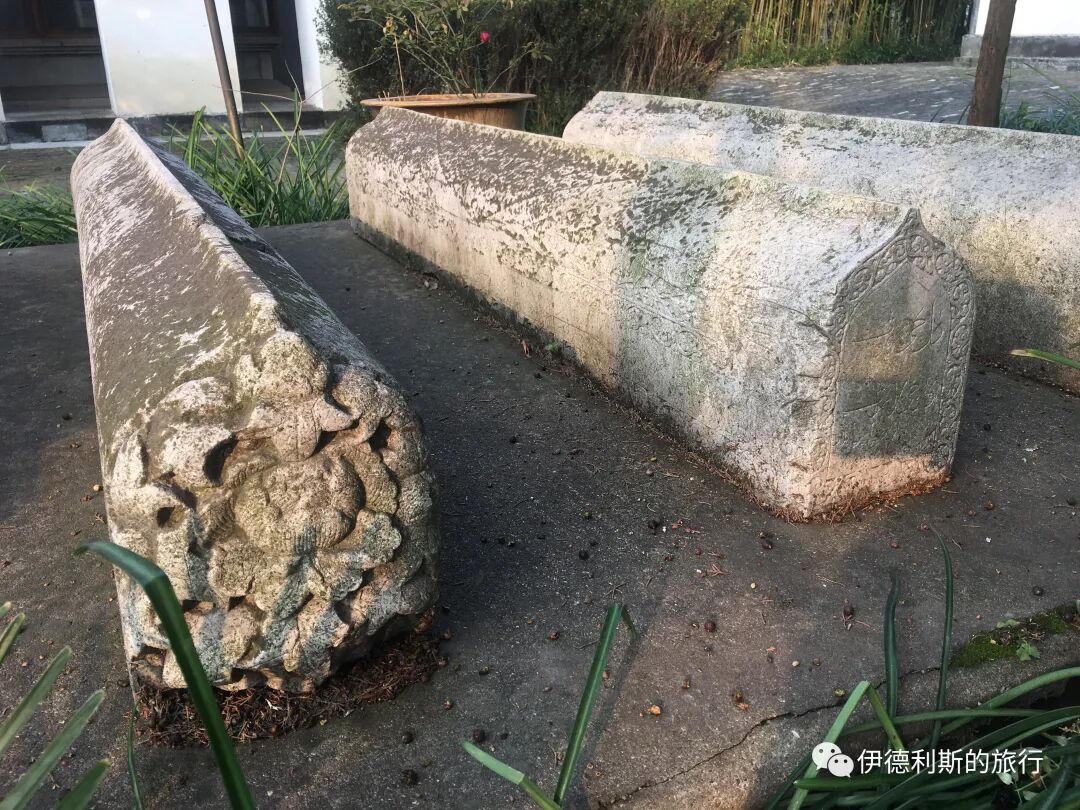
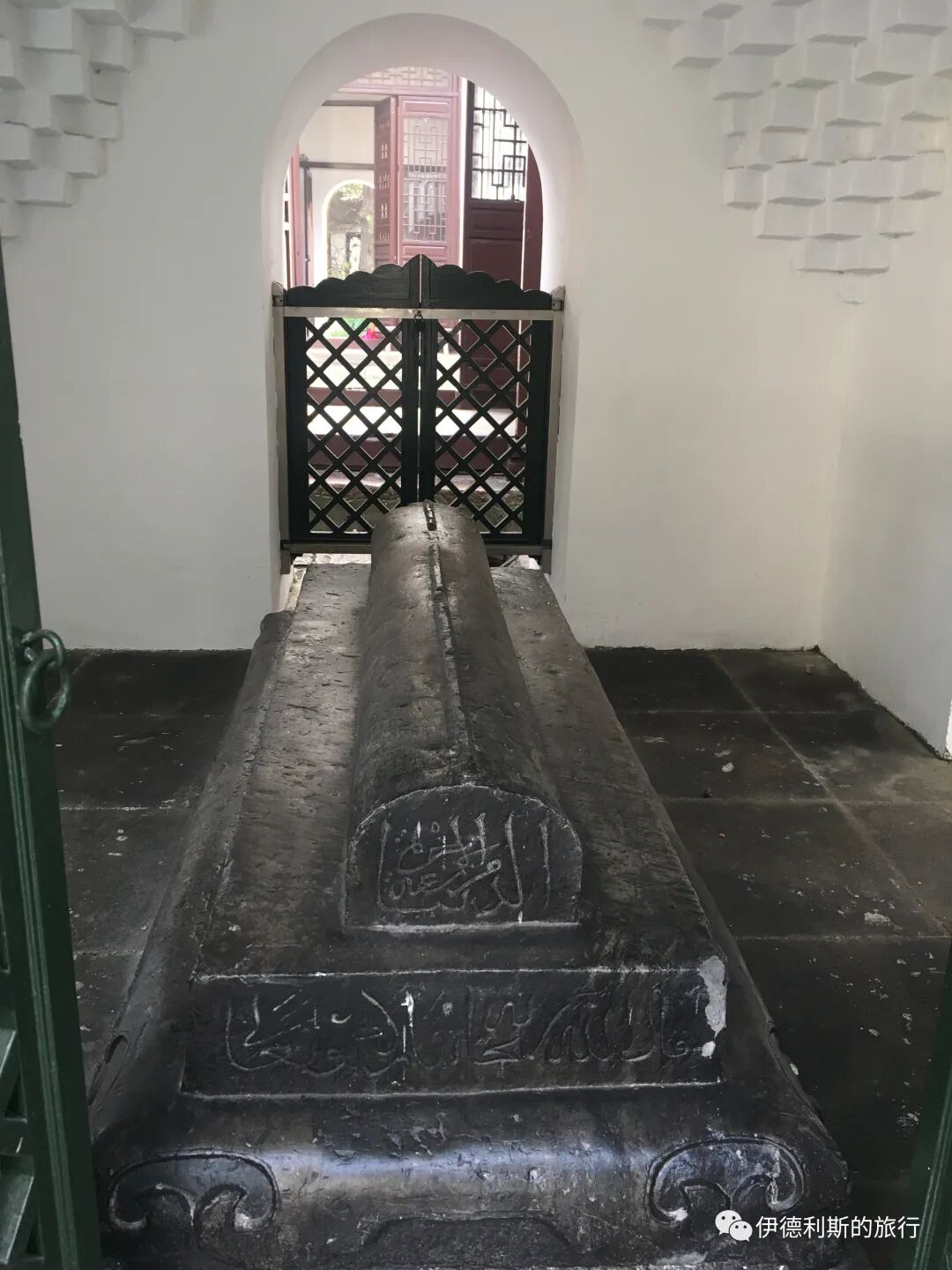
The place where Yuan Dynasty Arabic tombstones are kept at the Puhading Cemetery.
In the Arabic text of the four tombstones, the first section of each is the Basmala, and the remaining sections mostly come from the Quran and Hadith. Each tombstone is inscribed with the Hadith, 'Death in a foreign land is martyrdom.'
A replica of an Arab tombstone at the Yangzhou Museum.
Between 1934 and 1935, the missionary Claude L. Pickens photographed the four stone tablets. At that time, they were at the tomb of the sages near the now-vanished Xianhe Mosque.
The front of the Chinese tombstone is inscribed with, 'Tomb of Nie Gubo, the Darughachi of Huizhou Circuit and Grand Master of Thorough Discussion.' Darughachi originally meant 'seal holder.' After the Yuan Dynasty was established, a Darughachi was appointed to local government offices at the circuit, prefecture, department, and county levels to hold real power over local administration and military affairs. Huizhou Circuit was a top-tier circuit, and the rank of its Darughachi was third grade. Tongyi is short for 'Grand Master of Thorough Discussion,' which is also a third-grade rank.
In 1265, Emperor Kublai Khan of the Yuan Dynasty decreed that all circuit Darughachi must be Mongols, and any Han Chinese serving as Darughachi were removed from office. When Mongols were unavailable, it was permitted for Semu people with noble family backgrounds to serve. Therefore, this tombstone of a Semu Darughachi is extremely precious.
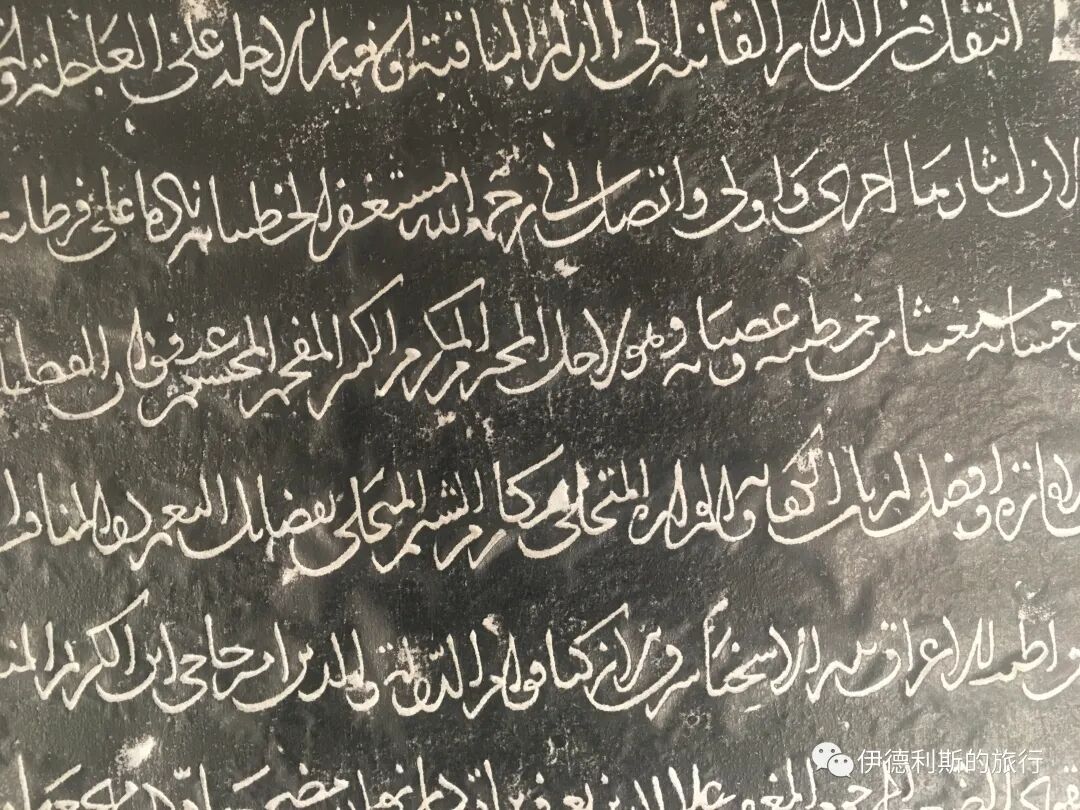
The back of Nie Gubo's tombstone is inscribed with ten lines of Arabic. The first section is the Basmala, followed by Hadith and praise for his life achievements. It reads: 'Noble, diligent, and excellent Islamic educator, a leader who helped the weak, was charitable, and cared for the people, a respected elder... a man of great virtue and wisdom, generous and just, enjoying great blessings.' It also records Nie Gubo's death date as the 2nd of Dhu al-Hijjah in the year 709 of the Hijri calendar, which is May 3, 1310.
The front edges of the second tombstone are carved with Quranic verses in Kufic Arabic script, and the center is carved with twelve lines of Arabic, which read: 'The forgiven deceased, Shams al-Din Asif Allah al-Balaji.' May Allah have mercy on him and grant him a place in the comfort of Paradise. This was in early June of the year 724 (Hijri calendar). This corresponds to the end of May or early June of 1324 (the first year of the Taiding era of the Yuan Dynasty).
The third tombstone belongs to a Persian woman who also died in 724 Hijri (1324). Her name was Aisha Khatun (Aisha was known as Ashe in the Yuan Dynasty, and Khatun means lady). The inscription says: 'She was a chaste, virtuous, and capable woman... her father was Lezunding, a highly respected official in Islam.'
The fourth tombstone is damaged. It belonged to a missionary named Ala-ud-Din who died in 702 Hijri, or 1302 (the sixth year of the Dade era of the Yuan Dynasty). The inscription describes him as a skilled businessman who was highly respected by the community.
After the Qianlong reign, there were six mosques in Yangzhou. The three inside the city were the Crane Mosque (Xianhe Si) on Nanmen Street, the Majian Lane Mosque, and the Xiejia Bridge Mosque (which was occupied by a sugar factory and no longer exists). The three mosques outside the city were the Hui Muslim Hall (Huihui Tang) east of the Dongguan River inside the Puhading Cemetery, the South Gate Mosque (occupied by a glass factory, with the main hall finally demolished in 1984), and the Chaoguan Mosque (occupied by a farm machinery factory and no longer exists).
During the Republic of China era, there were nearly 20,000 Hui Muslims living in the six mosque districts of Yangzhou, with Sha, Ma, Ha, Sa, and Da as the five major surnames. The family genealogy of the Ha surname records that their ancestor was a man named Hashen from the Western Regions' Rumi Kingdom (a region in West Asia or Asia Minor).
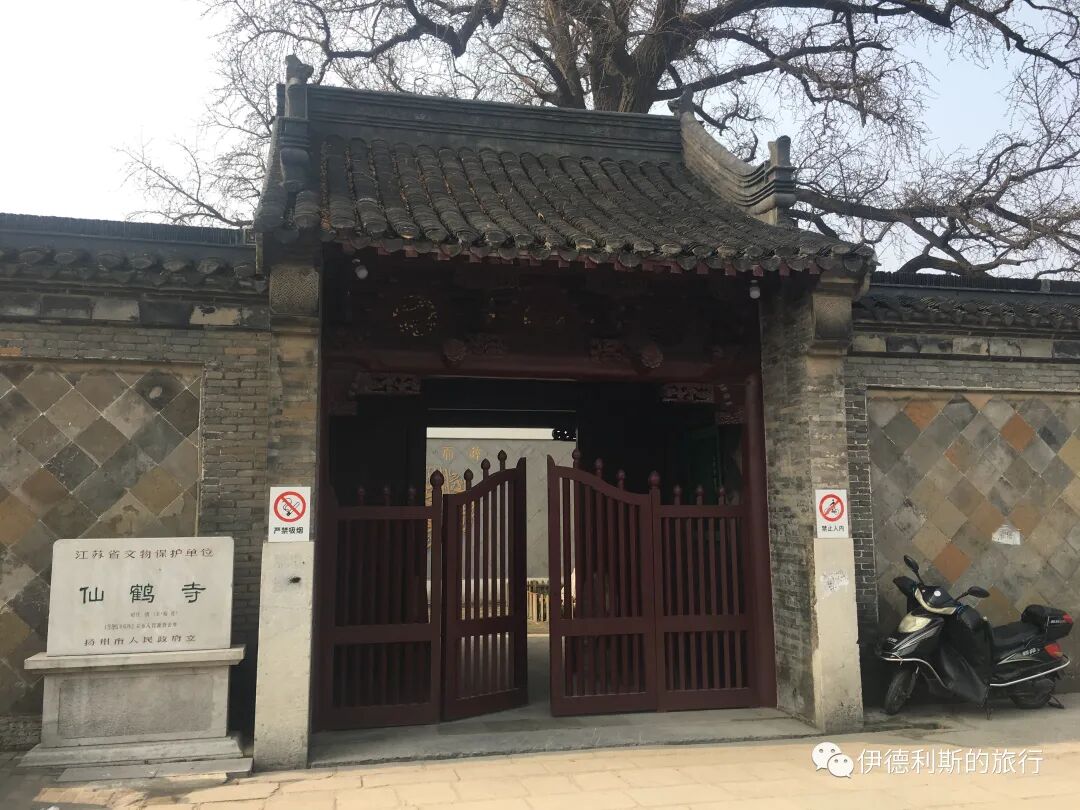
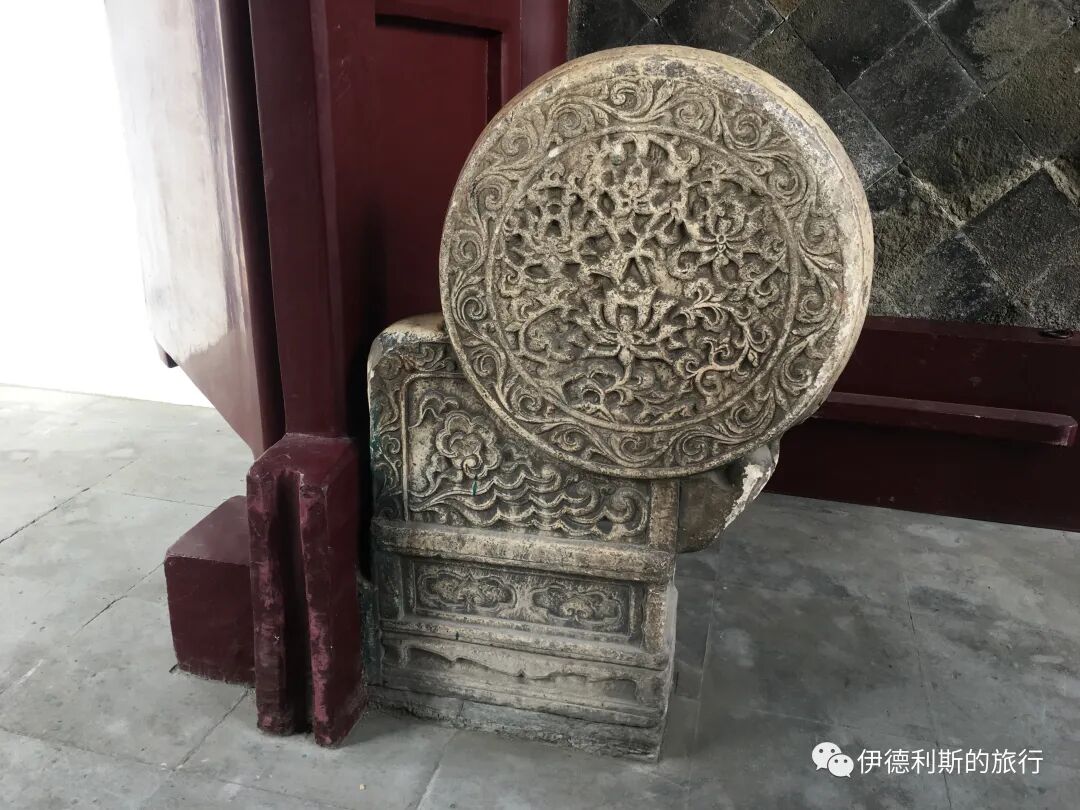
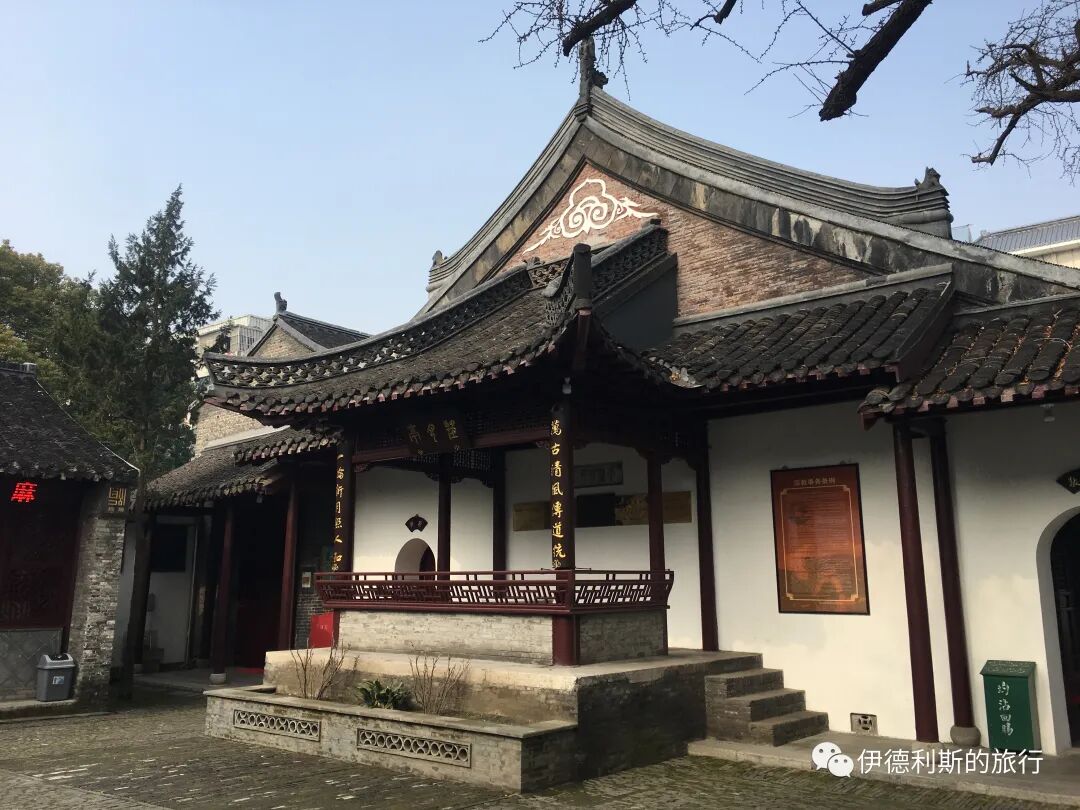
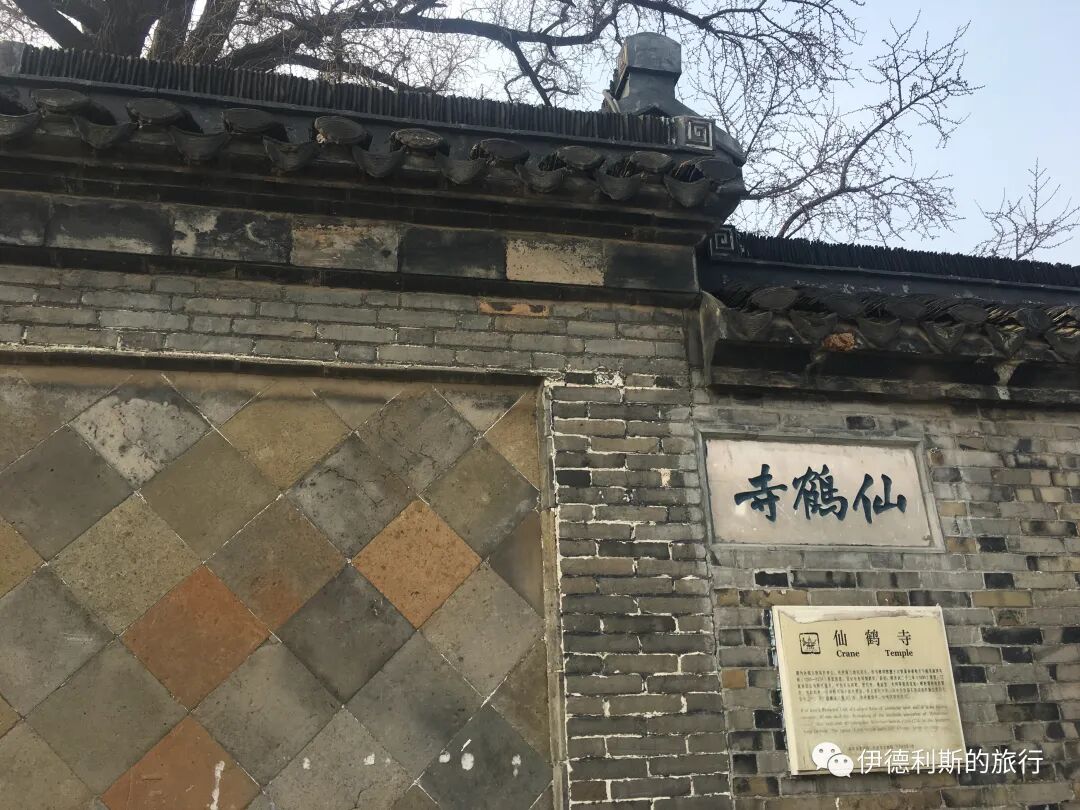
Crane Mosque (Xianhe Si)
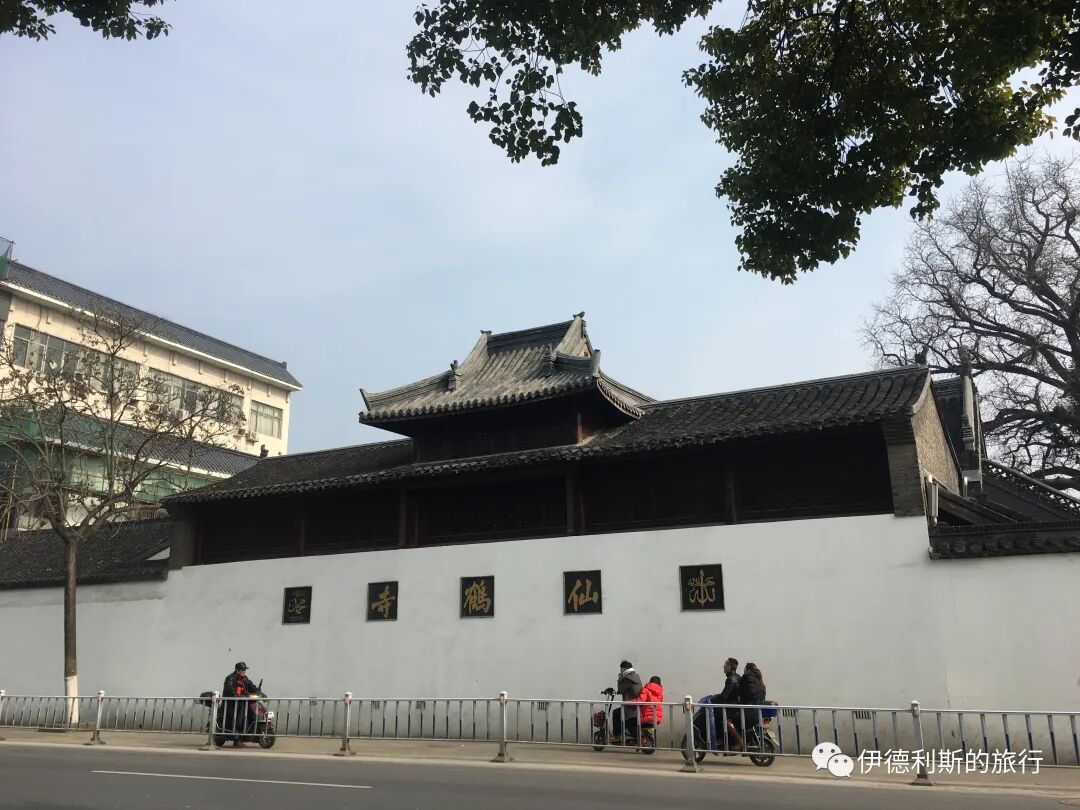
The Crane Mosque is one of the four ancient mosques along the southeast coast (in Hangzhou, Guangzhou, Quanzhou, and Yangzhou). It was founded in 1275 (the 12th year of the Zhiyuan era of the Yuan Dynasty) by the sage Puhading from the Western Regions before he passed away. It was rebuilt in 1380 (the 23rd year of the Hongwu era of the Ming Dynasty) by Ha San, and renovated in 1523 (the third year of the Jiajing era) by the merchant Ma Zongdao and the imam Ha Ming. Starting in 1542 (the 21st year of the Jiajing era), the Ha family received official documents from the Ministry of Rites to serve as the hereditary imams of the Crane Mosque.
Puhading Cemetery
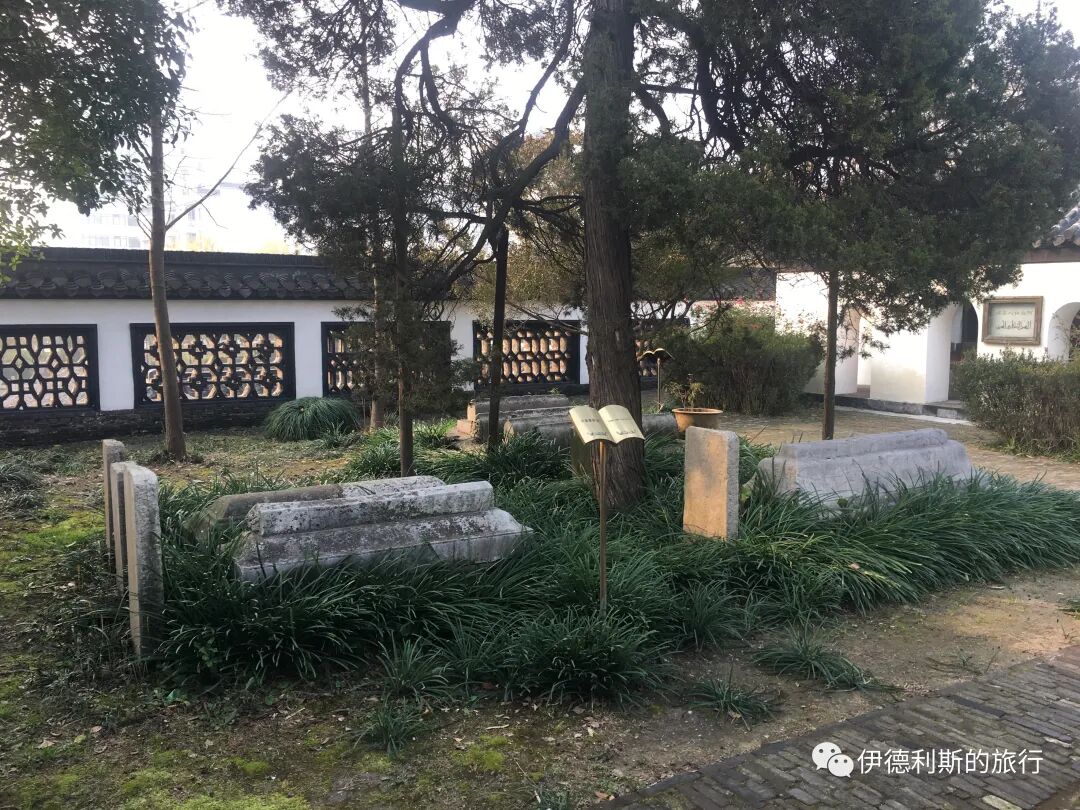
Puhading is said to be a 16th-generation descendant of the Prophet Muhammad. He came to Yangzhou during the Xianchun period of the Song Dynasty (1265-1274) and died in Yangzhou in 1275 (the 12th year of the Zhiyuan era of the Yuan Dynasty). He was buried on a high ridge east of the Dongguan River in the New City, a place later called the Hui Muslim Hall (commonly known as Baba Yao).
This is written in the article 'Puhading: Messenger of China-Arab Friendship,' published by the Yangzhou Islamic Association in the fourth issue of 'Jiangsu Muslims' in 2015. Local imams in Yangzhou pass down a set of stories about the life of Puhading. On the morning of July 17, 1947, at the East Lecture Hall of the Huihui Tang mosque, Imam Lan Baohua passed down the life story of Puhading to his son, Imam Lan Xiaoyang. He based this on the oral accounts of famous scholars Zhang Zhong and imams Han Yuchun, Lan Jiansen, Lan Wenyuan, and Lan Sifu. Seven people were present, including Imam Ruan Xiangsong and community elders Ma Liang, Zhang Yangwu, Wang Yan, and Jin Yuanxun. Here is the life story of Puhading as passed down by the Yangzhou imams:
Puhading was born on May 21, 1204 (the fourth year of the Jiatai era of the Song Dynasty) into a wealthy Arab noble family. He was the 16th-generation descendant of the Prophet Muhammad. Puhading was a man of great learning, well-versed in the Quran, the Hadith, and Islamic law. At age 57, Puhading followed the Prophet's teaching that one should seek knowledge even as far away as China. After four years of careful preparation, he set off for China from Arabia on a merchant ship at age 61, leading a team of 17 people.
On June 20, 1265 (the first year of the Xianchun era of the Song Dynasty), Puhading and his followers arrived in Yangzhou. They lived for four years at the mosque outside the south gate of Yangzhou at that time. He helped expand the old mosque outside the south gate and renovated the Guannan Chaoguan mosque.
On the 23rd day of the seventh lunar month in 1275 (the 12th year of the Zhiyuan era of the Yuan Dynasty), he traveled south from Rencheng (Jining) to Guangling (Yangzhou). He passed away on a boat while returning from giving a lecture, at the age of 71. The governor of Guangling, Yuan Guang'en, buried his body on a high ridge on the east bank of the Grand Canal, east of Yangzhou city.
Three years after Puhading died, another Muslim sage who came to Yangzhou to preach, Saganda, passed away in 1278 (the third year of the Jingyan era of the Song Dynasty). He was buried near Puhading's tomb. A stone tablet erected in 1776 (the 41st year of the Qianlong era) refers to him as the Western Region sage Saganda from the third year of the Jingyan era of the Song Dynasty.
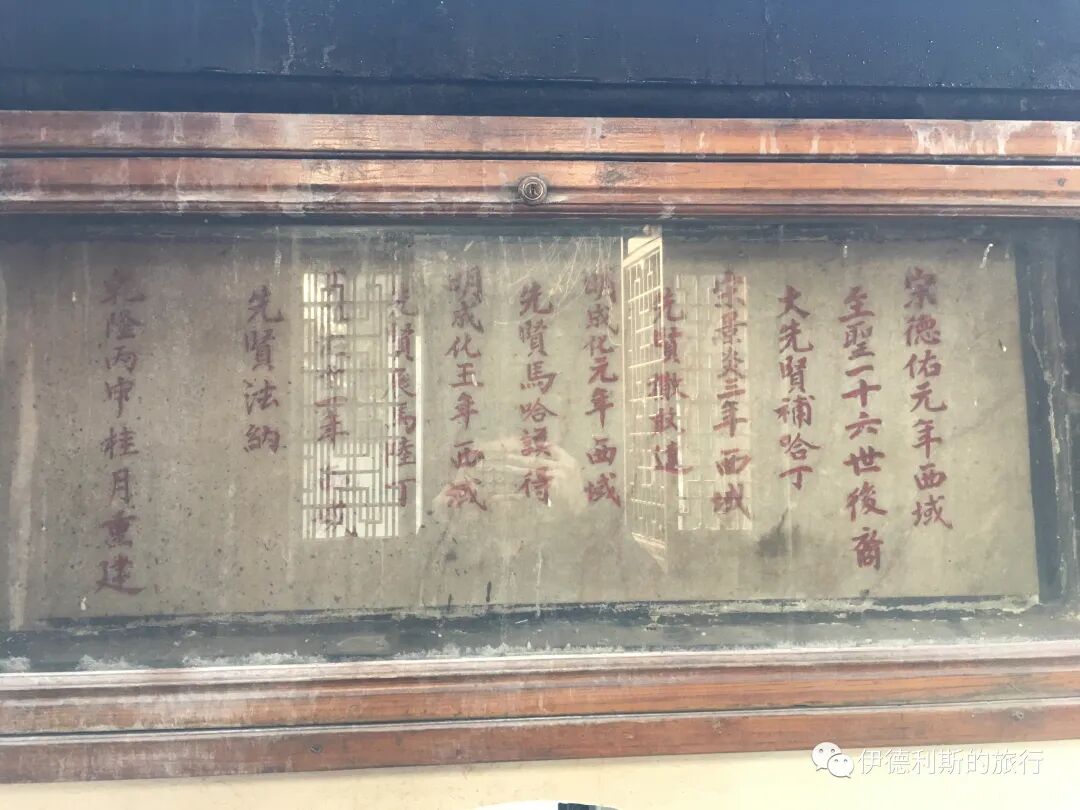
During the Ming Dynasty, more Muslims were buried there, such as the Western Region sage Mahamude in 1456 (the first year of the Chenghua era), the Western Region sage Zhanmaluding in 1469 (the fifth year of the Chenghua era), and the Western Region sage Fana in 1498 (the 11th year of the Hongzhi era).
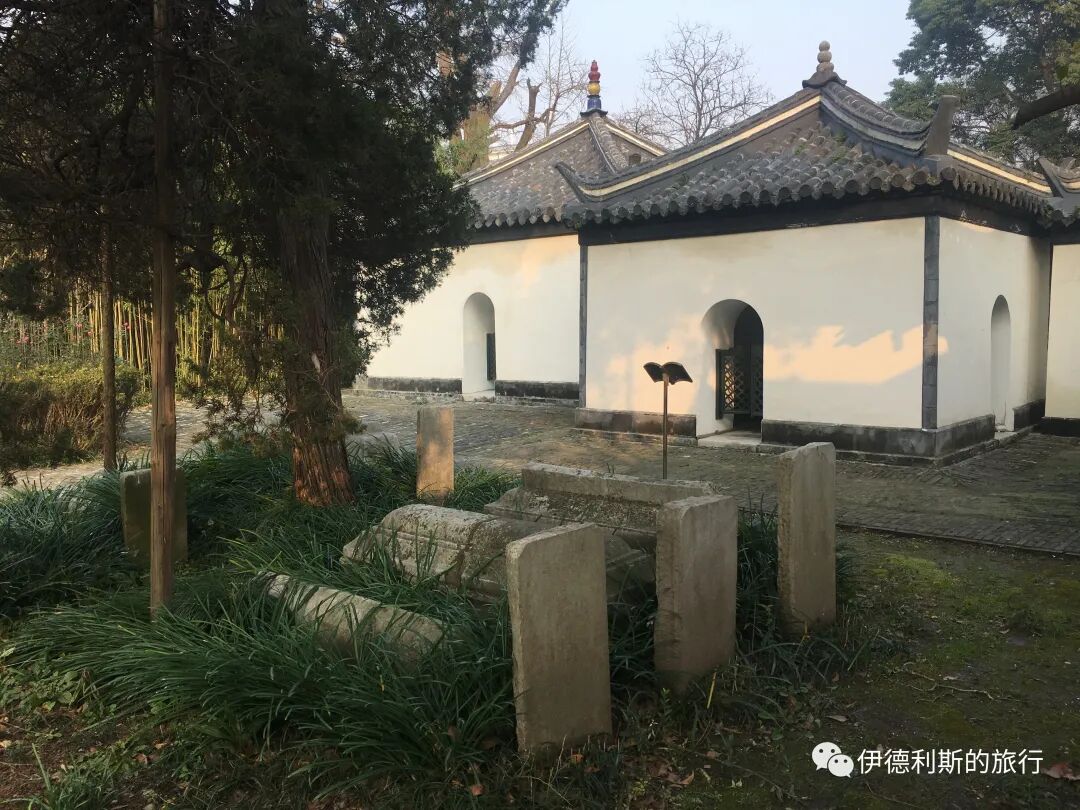
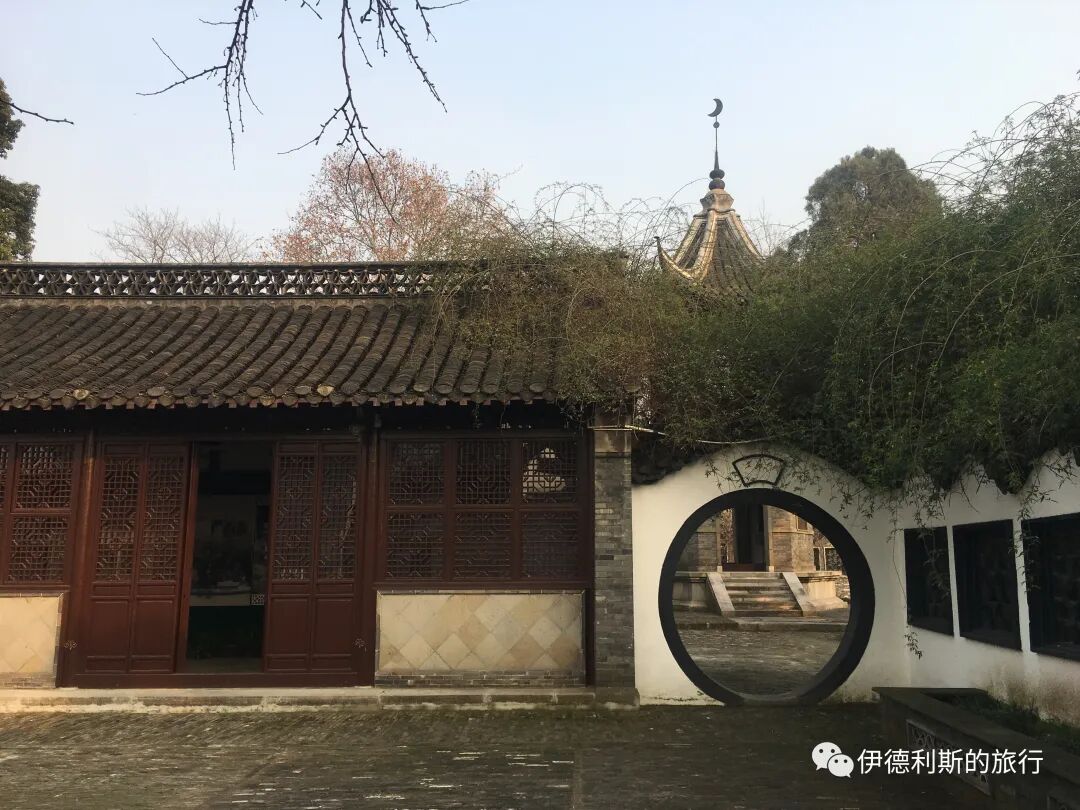
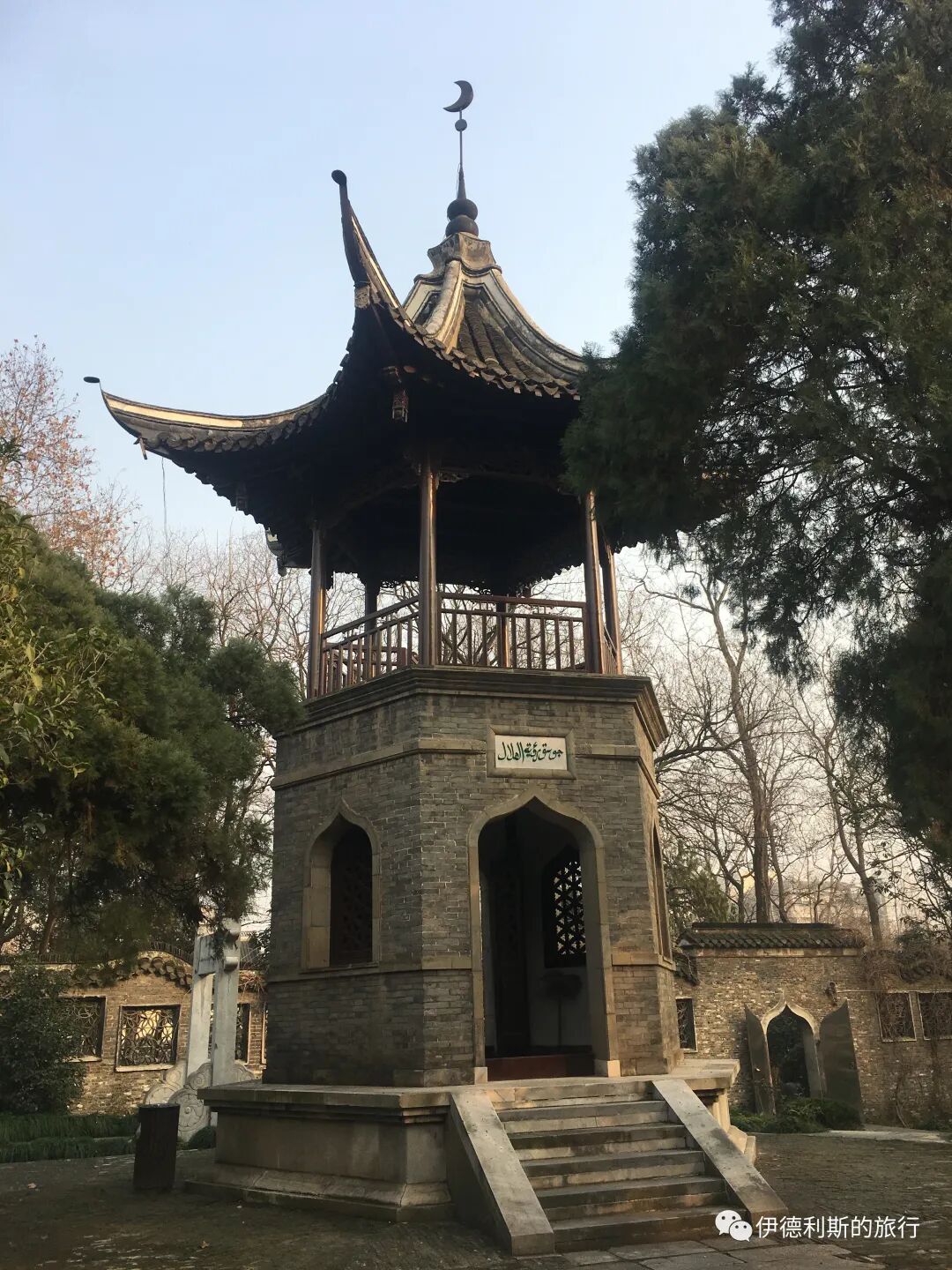
Next to the main gate is a mosque for those visiting the graves.
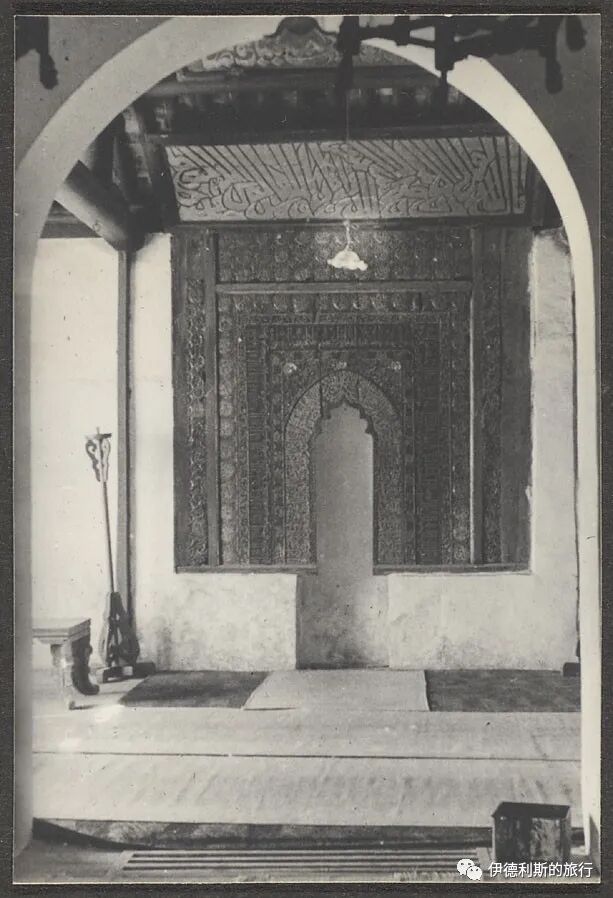
The mihrab of the mosque.
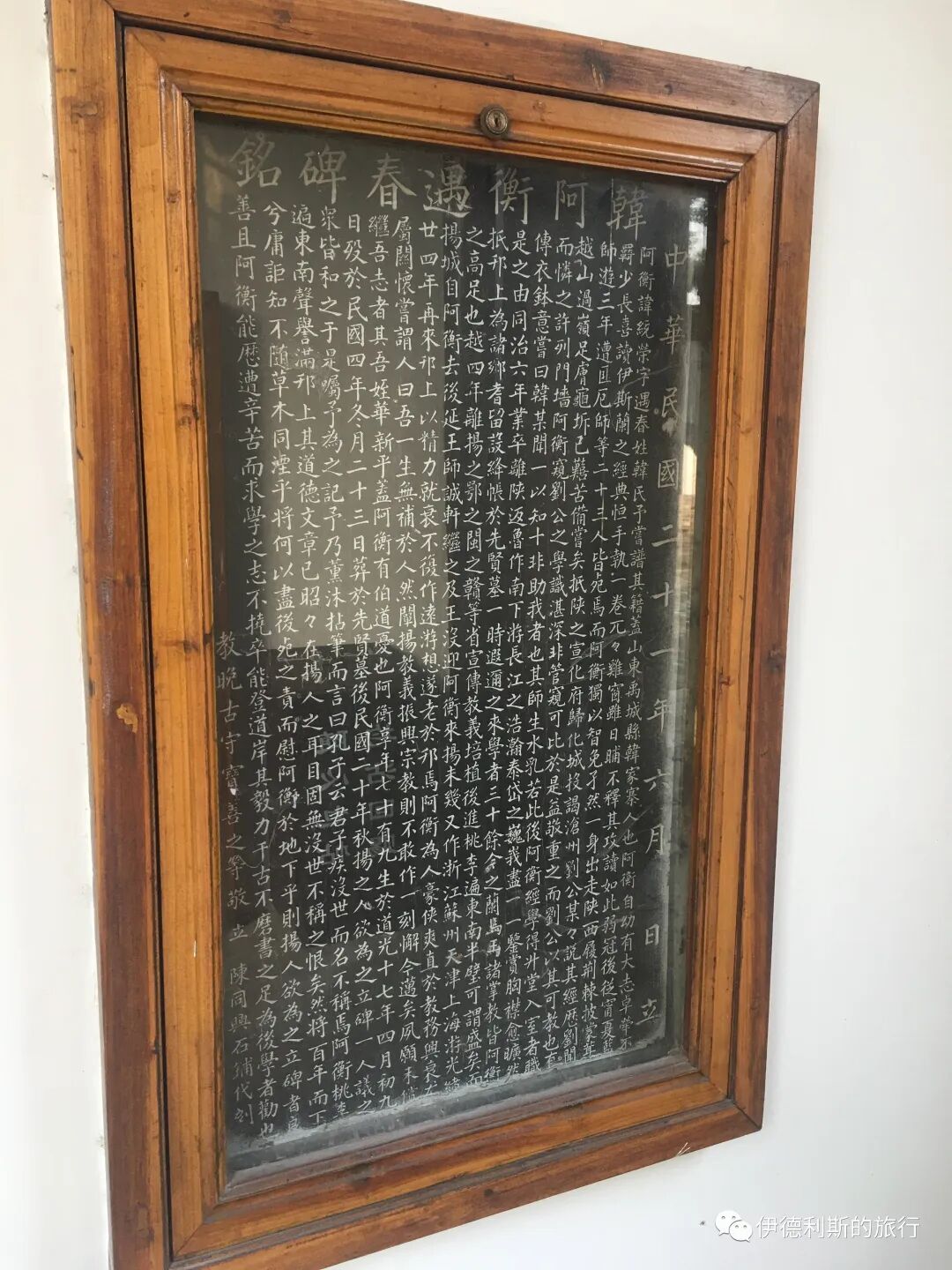
The stone carving inside the main gate records that in 1845 (the Yisi year of the Daoguang era), people of various surnames donated funds to build a stone embankment and renovate the halls.
Inside the main prayer hall of the mosque.
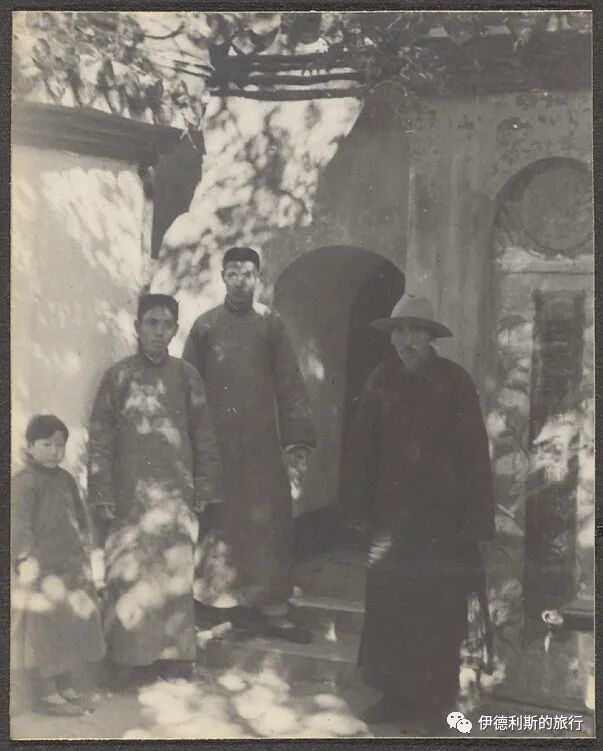
The kiln-style hall (yaodian) of the Puhading Tomb mosque, photographed by missionary Bi Jingshi between 1934 and 1935.
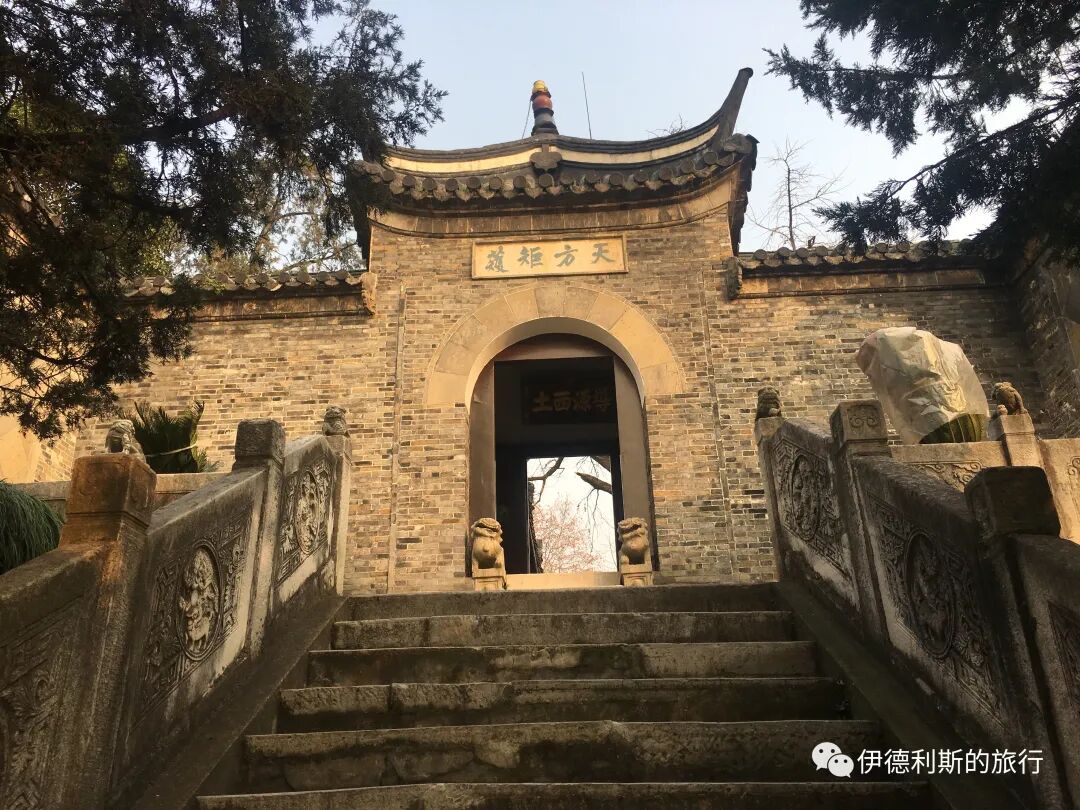
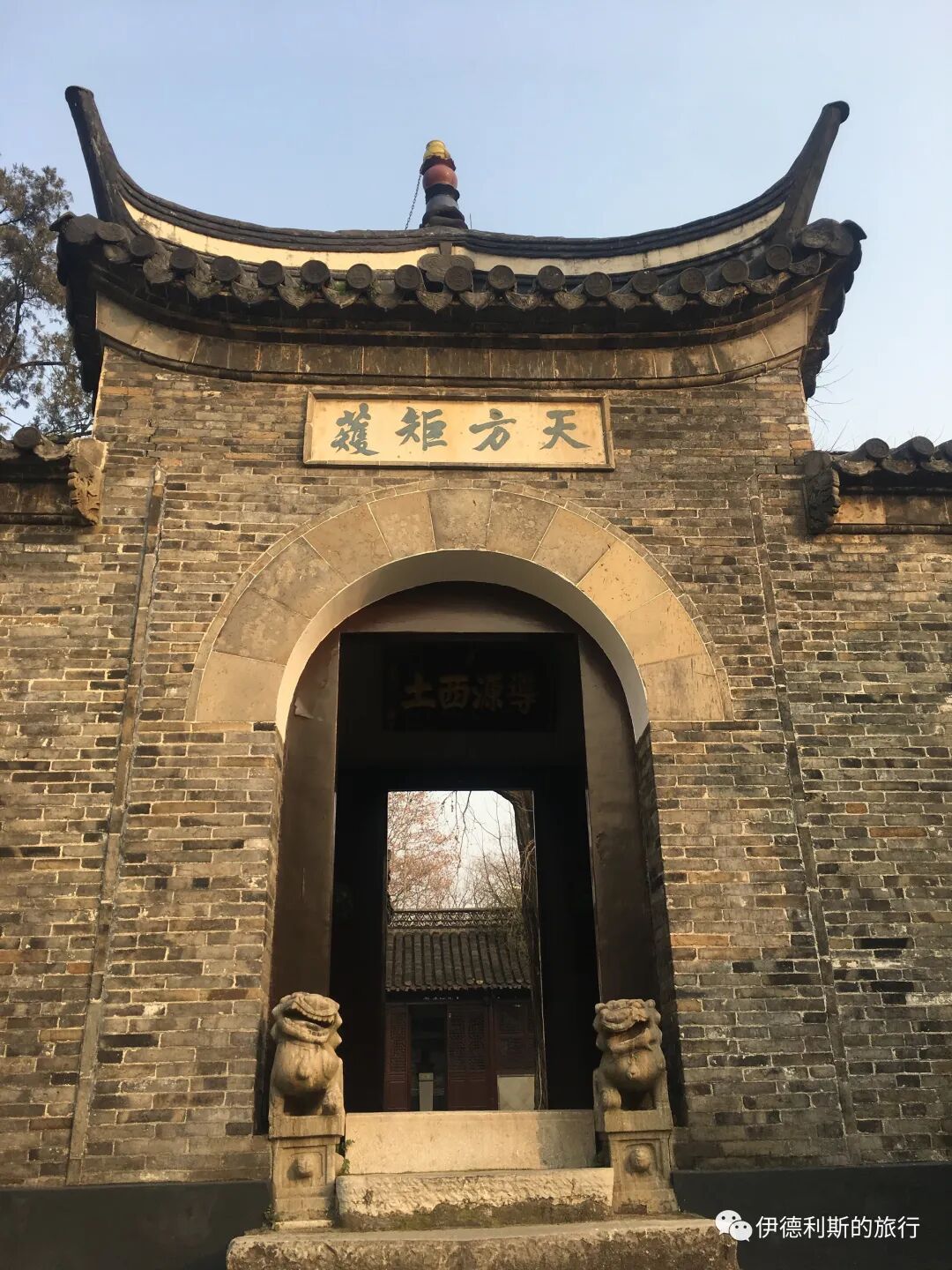
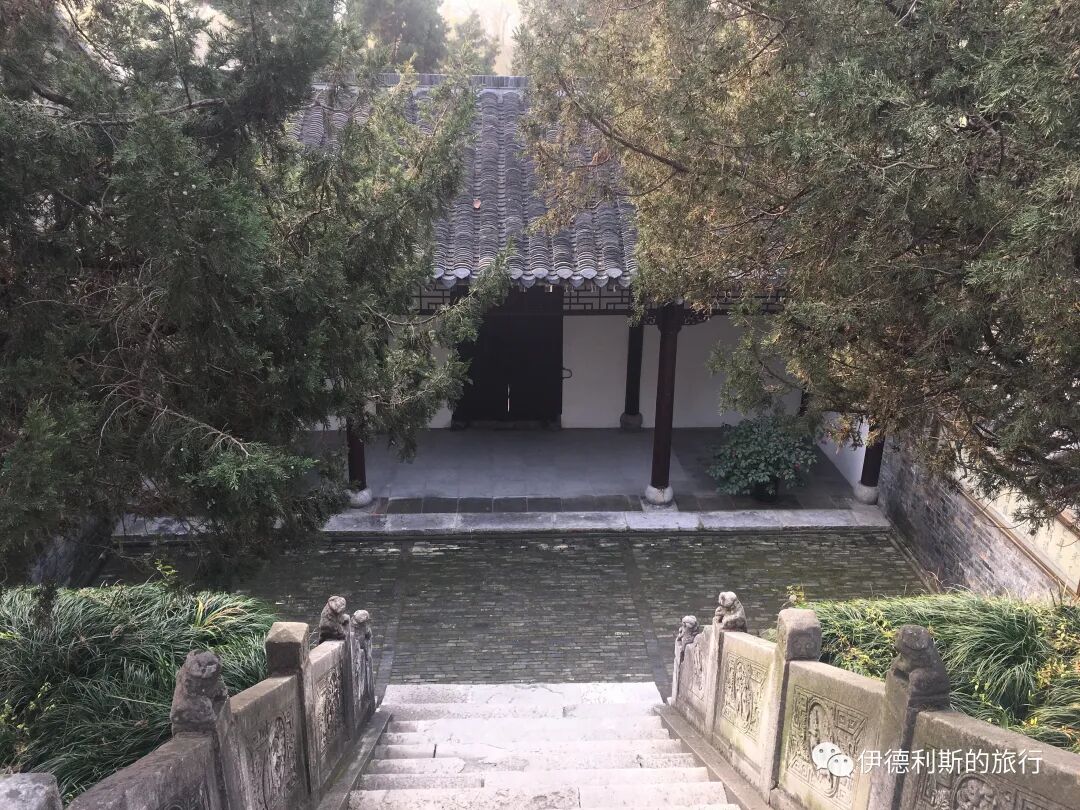
Climb the stone steps behind the mosque to reach the Puhading Tomb.
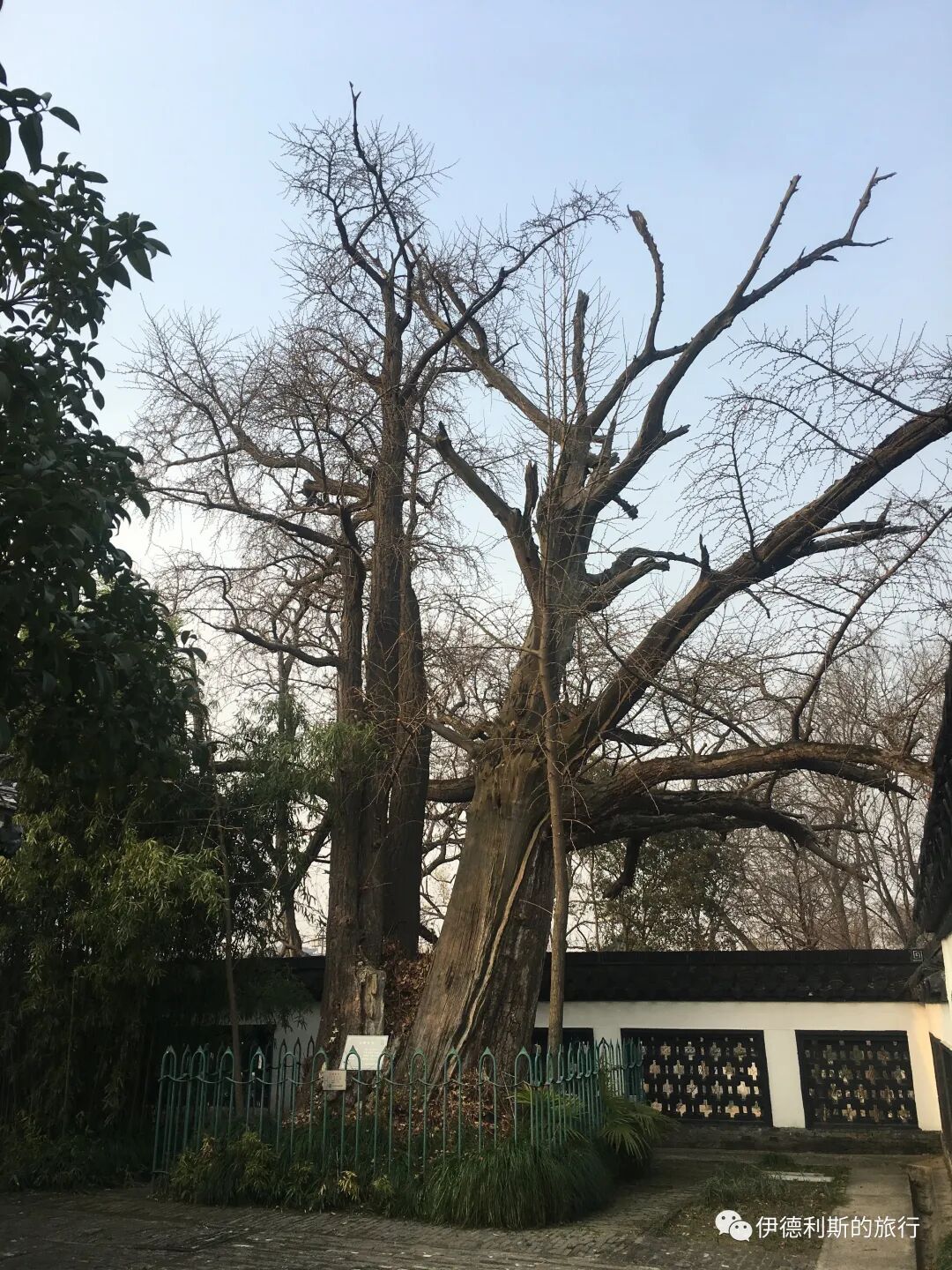
A 700-year-old ginkgo tree.
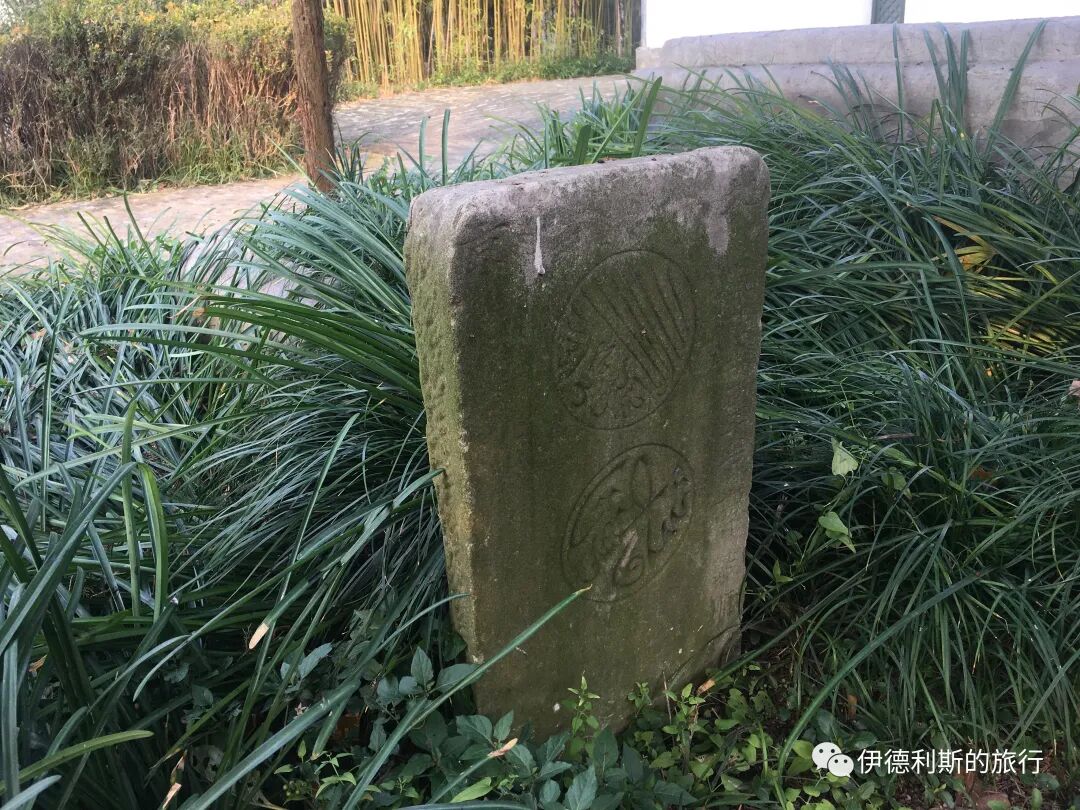
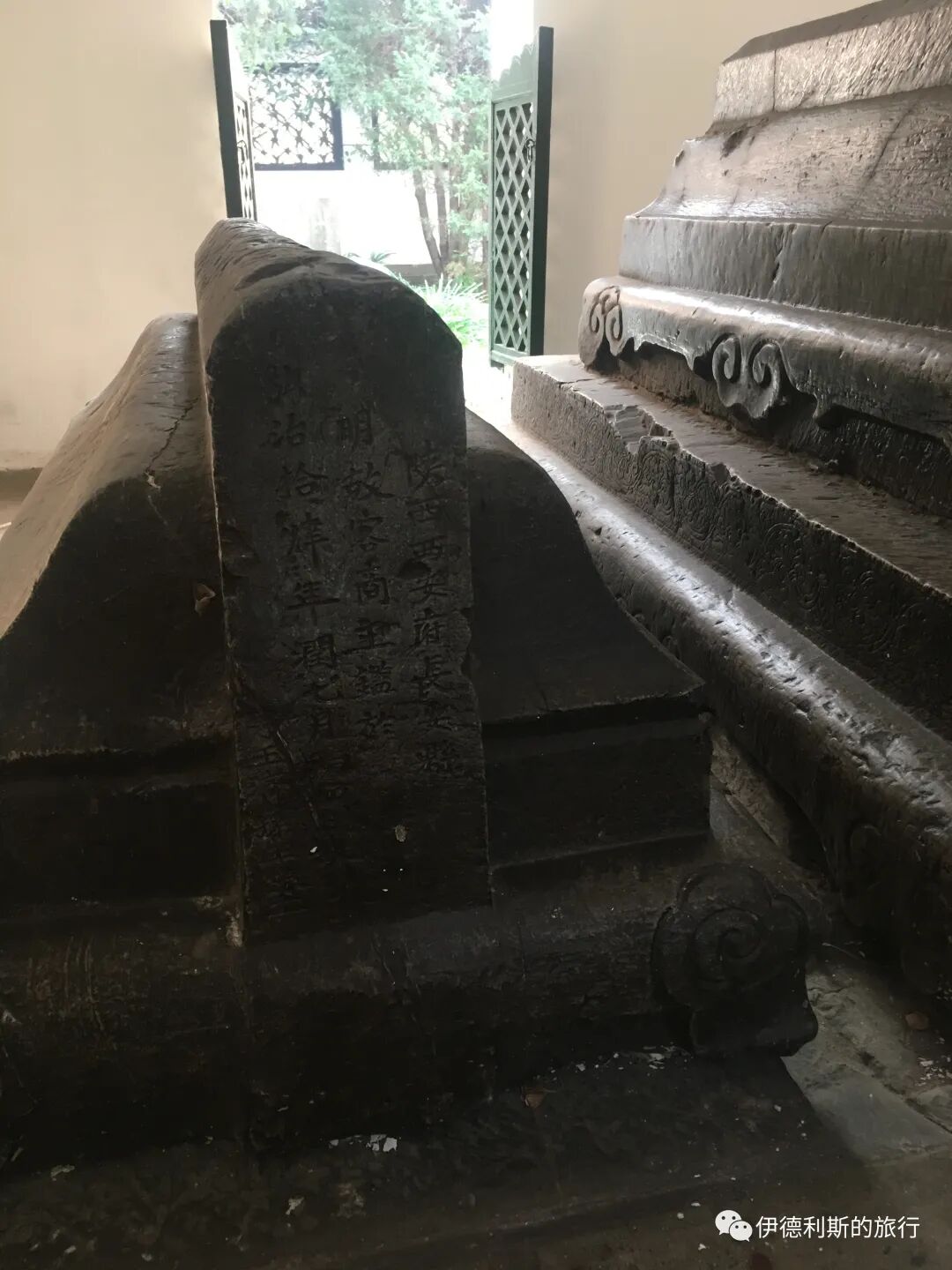
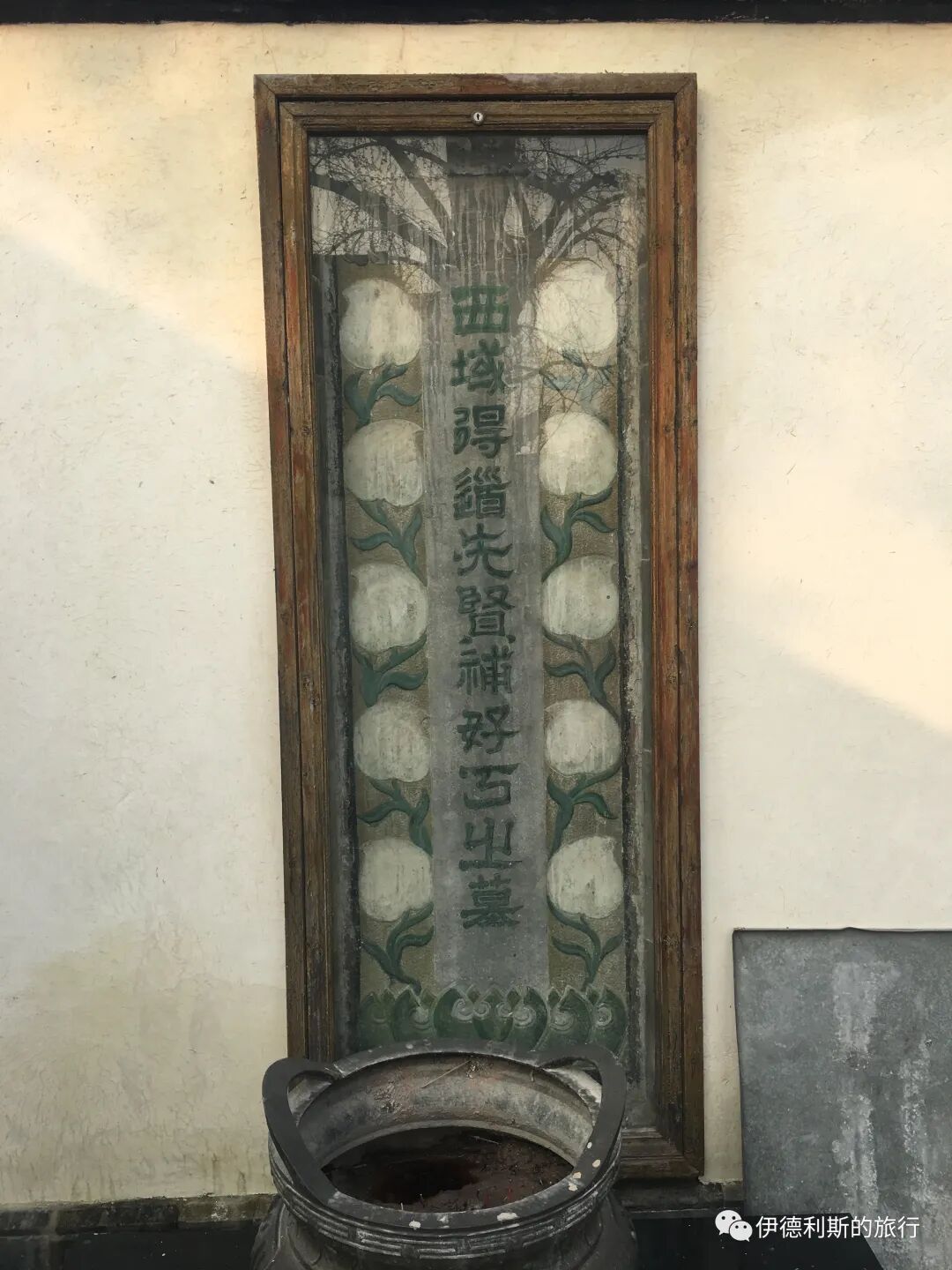
A merchant from Chang'an County, Xi'an Prefecture, Shaanxi, passed away on the fourth day of the intercalary seventh month in the 14th year of the Hongzhi reign (1501). Erected by his son Wang Qi and grandson Wang Dong.
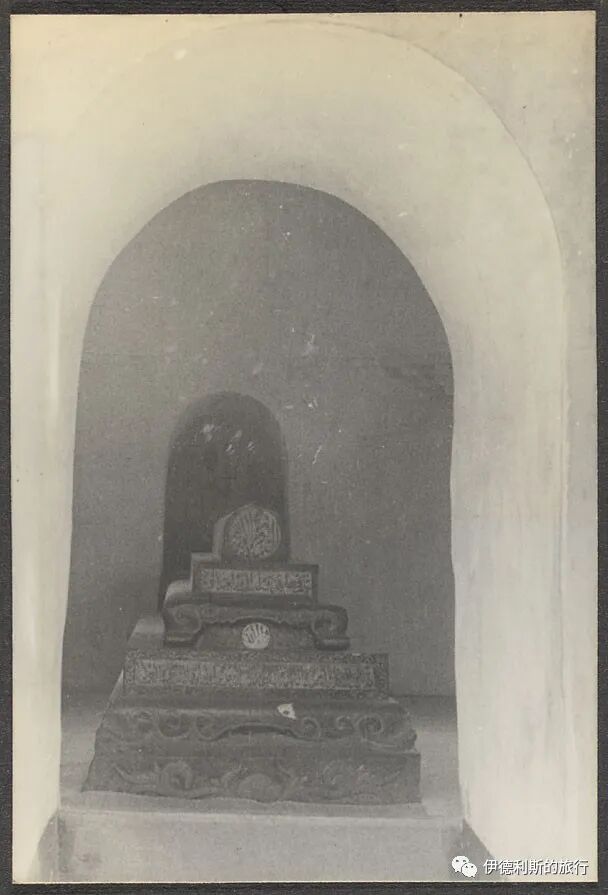
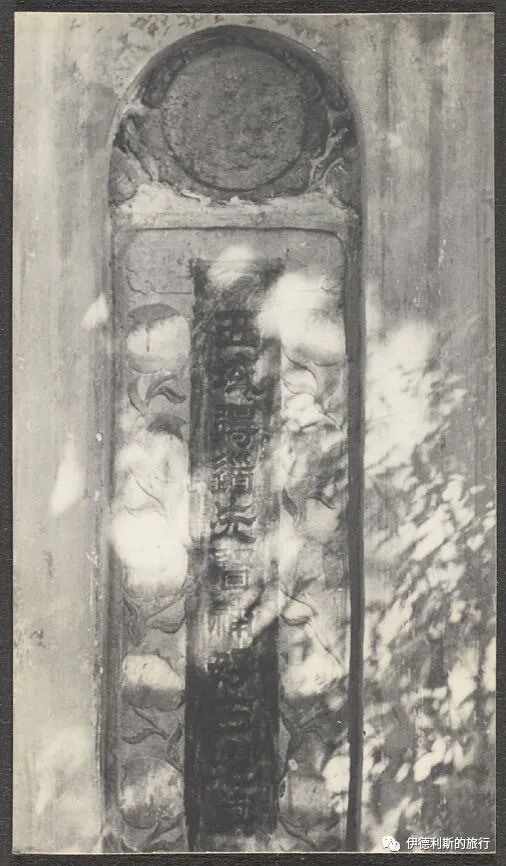
The Puhading Tomb photographed by missionary Claude L. Pickens between 1934 and 1935.
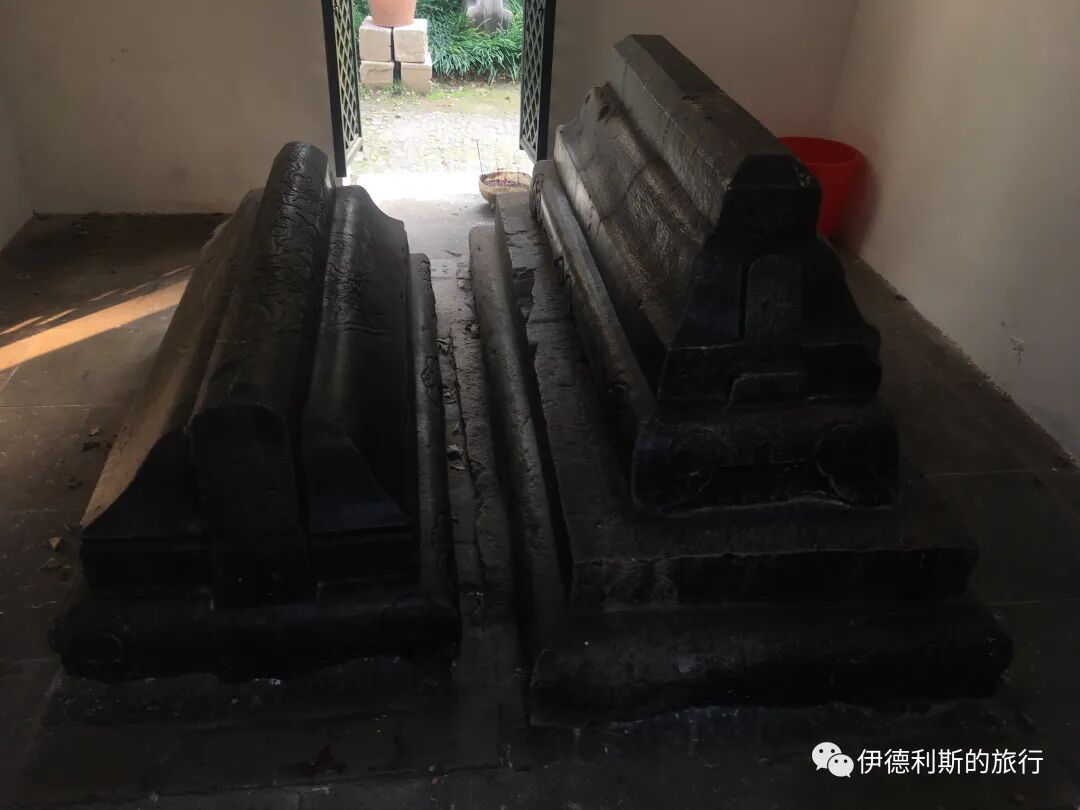
To the southeast of the Puhading Tomb lies the tomb cover of General Zhang Xin, who passed away in 1551 (the 30th year of the Jiajing reign). The tomb cover on the west side belongs to General Zhang Xin. The owner of the east side cover is still unknown, though it is likely a member of General Zhang's family.
General Zhang's ancestor, Damuchi, moved from Samarkand to settle in Yangzhou. The Continued Records of Jiangdu County from the Republic of China era state: 'General Zhaoyong, named Xin, was the grandson of the Hui Muslim Damuchi. He served as a Wuqi Duwei (a military rank). Because he was skilled at archery, he was granted the surname Zhang and registered in the Yangzhou Guard, located behind the Puhading Tomb outside Tongji Gate.'
The Zhang Gong Shendao Archway was erected in 1551 (the 30th year of the Jiajing reign) by Zhang Heng, the grandson of General Zhang Xin. Zhang Heng was a famous Ming dynasty general who fought against Japanese pirates and held the hereditary title of Yangzhou Guard Commander. In April 1556 (the 35th year of the Jiajing reign), when Japanese pirates attacked Yangzhou, the retired Huaiyang regional commander Zhang Heng personally led troops into battle and died on the field.
In May 2011, a 30-meter-long path was built on the south side of General Zhang Xin's tomb cover, and a pair of stone sheep that had been lost in Slender West Lake Park for 27 years were returned.
The Puhading Tomb photographed by missionary Claude L. Pickens between 1934 and 1935; the archway on the left side of the image is likely the Zhang Gong Shendao Archway.
Next to General Zhang Xin's tomb is the cenotaph of Zuo Baogui, a famous Qing dynasty general who fought against the Japanese. During the First Sino-Japanese War in 1894 (the 20th year of the Guangxu reign), Zuo Baogui led his troops to defend the Xuanwu Gate in Pyongyang, dealing heavy blows to the Japanese army. On September 15, Zuo Baogui was personally firing cannons when his right arm was shattered. He bandaged his wound and continued to fight until a bullet struck his chest, and he died heroically at the age of 57. That same year, the Yangzhou government received an imperial order to build a cenotaph for Zuo Baogui in the southern area of the Puhading Tomb and establish a memorial hall. The hall was later destroyed, leaving only the stone tomb cover of the cenotaph.
Majian Lane Mosque
There is another Majian Lane Mosque on East Gate Street in Yangzhou. According to the Gu family genealogy of the Hui Muslims, the mosque was built in 1714 (the 53rd year of the Kangxi reign) by Gu Yuanbing, the 24th-generation descendant of the ancient figure Bo Ding.
The Majian Lane Mosque originally had dozens of rooms, including a gate hall, a memorial archway, a main prayer hall, a reception hall, a washroom (shuifang), side rooms, and dormitories. Today, only two rooms of the main hall, the reception hall, and the washroom remain. In the early years of the Republic of China, the mosque housed the second Yangzhou branch of the Beijing-based Zhenzong Newspaper and an Islamic book and newspaper room.
In 1932, Liu Binru, a famous Yangzhou imam and one of the founders of the Chinese Islamic Association, along with Hua Ruzhou, then director of the Jiangdu County Hui Muslim Association, established the Chinese Islamic Scripture Translation Institute here to translate the Quran. Liu Binru, who was fluent in Arabic and Persian, was responsible for translating the Arabic original. Hua Ruzhou translated the summaries from the English version by the Indian Muslim scholar Muhammad Ali, which were then attached before the text of each section of the Quran.
On January 1, 1935, the Chinese Translation of the Quran with Ali's Summaries was officially published. The first printing was 2,000 copies, which were sold by major bookstores across the country.
In 1933, the Yangzhou Islamic Association founded the Hui Muslim Cultural Training Institute here, led by Liu Binru. to teaching Arabic, the institute offered Chinese, English, and arithmetic. The level was equivalent to higher primary school through junior high, and it replaced the traditional individual scripture teaching style with a modern classroom lecture format. Teachers included the Majian Lane Mosque imam Hua Jinhou, who was proficient in Arabic, Imam Ruan Dechang, Imam Lan Baohua of the Hui Muslim hall outside the East Gate, and Liu Binru. They also hired Hui Muslim Association members Shen Junchen and Zhang Shaozhe to teach Chinese and arithmetic, and Hua Ruzhou to teach English. There were over 30 students, but the school closed after one year due to a lack of funds.
Between 1934 and 1935, the missionary Claude L. Pickens Jr. (Bi Jing-shi) visited the Majian Lane Mosque. He saw a reading room inside with many Muslim magazines, as well as the Quran translated by Wang Jingzhai and parts of the Quran translated by Liu Binru and Hua Ruzhou mentioned earlier. He also photographed the Gu Gong Memorial Monument, which was erected in the mosque in 1931. It stated that Gu Su had served as a mosque trustee for 11 years, repaired the washroom and market stalls for the mosque, and built a new greenhouse, making great contributions to the mosque.
In the autumn of 1946, the Yangzhou Hui Muslim Youth Association founded the Shengsheng Primary School at the mosque, with Liu Binru serving as chairman. The school was a full primary school. When it opened, it had three multi-grade classes and enrolled 150 students. It provided free tuition for the children of Hui Muslims, offered books to those in extreme financial difficulty, and also provided free support to non-Hui Muslim children from poor families. Most of the teachers were unemployed Hui Muslim youths. The school closed in the summer of 1949.
In 1958, the mosque was converted into a factory workshop and occupied by a craft sign factory, a sack factory, and a brush factory. The property was not recovered until 1997, and in 2008, it was listed as a municipal-level cultural heritage site.
Halal food in Yangzhou during the Republic of China era.
The information in this section comes from "Islam in Yangzhou" and "Islam in Yangzhou."
The earliest records of halal food in Yangzhou come from the "Yangzhou Pleasure Boat Records" (Yangzhou Huafang Lu), an encyclopedia covering all aspects of Qing Dynasty Yangzhou. It mentions a cooked lamb shop called the "Hui Muslim Pavilion" (Huihui Guan), pleasure boats called "Ma the Hui Muslim's Ox Tongue" (Ma Huizi Niushetou), and a shop called "Kong Wu's Ox Tongue" (Kong Wu Niushetou). It also notes that "Zhang Si the Hui Muslim's Whole Lamb" (Zhang Si Huizi Quanyang) was a famous dish in Yangzhou at the time.
During the late Qing Dynasty and the Republic of China era, halal food in Yangzhou reached its peak. After entering the Republic of China era, lamb almost disappeared from Yangzhou's halal food scene, which shifted to focus mainly on beef, supplemented by poultry and fish. Many halal beef slaughterhouses were concentrated on Wazi Street. Some of the more famous ones included those run by Wang Tonglan, Jin Zhao'an, Wang Ting, Jin Ronghua, Zhang Youfu, and Li Sanlong. The second and eighth days of every lunar month were cattle market days, which were very busy.
During the Republic of China era, there were over a dozen famous halal restaurants in Yangzhou, which were very popular in the 1920s and 1930s. Examples include Ma Gongxing on Litou Street, Muyuanxing at the north entrance of Yuanmen Bridge, Ma Guangxing Restaurant on Zhuan Street, Tianxing Restaurant on Zuowei Street, Daxing in Darufang, and the Xinxin and Xinlong restaurants in Jiaochang. Among them, Tianxing Restaurant was the most famous.
Opened in the early years of the Republic of China, Tianxing Restaurant was the most famous halal restaurant in Yangzhou at the time. It was located at the busy intersection of Zuowei Street. The building had seven sections from front to back, each consisting of three large, high-ceilinged rooms. The rear section had a spacious flower hall on the east side that could host fifty banquet tables at once. At that time, everyone from scholars and writers to salt merchants and officials frequented the restaurant. Famous Peking opera actors Zhou Xinfang and Cheng Yanqiu would eat at Tianxing whenever they came to Yangzhou to perform.
Tianxing Restaurant was especially skilled at making shark fin and fish skin, and its roast duck was second to none. Famous dishes included braised shark fin (yuanmen yuchi), clear soup shark fin (qingtang yuchi), hibiscus chicken with shark fin (furong ji yuchi), skin-wrapped fin (pijia chi), roast duck (kaoya), braised chicken with crispy meatballs (yuanmen ji suyuan), ten-delicacy fish maw (yudu shijing), braised beef tendon (bashao niujin), and fish stuffed in lamb (yangfang cangyu).
There were over a dozen halal chicken and duck shops in Yangzhou. The most famous was Linyuanxing Chicken and Duck Shop, which was the predecessor of the later Halal Hongxing Ethnic Restaurant. The founder of Linyuanxing Chicken and Duck Shop was Lin Guangfeng, also known as Songting. When he was young, he worked for two or three years for his relative, Governor Shan Diankui, in Beijing. After returning to Yangzhou, he apprenticed at the halal Muyuan Restaurant. After his apprenticeship, Lin Guangfeng opened the halal Baoxing Restaurant, which also sold chicken and duck. It later closed due to poor management of staff. After Baoxing closed, Lin Guangfeng opened the halal Linyuanxing Chicken and Duck Shop at the North Archway entrance, where he sold his own products. The North Archway was a busy market back then, filled with snack stalls, magicians, acrobats, and fortune tellers. Linyuanxing did a booming business selling oil-poached chicken (youji), pressed duck (bandya), and roast duck (shaoya).
Linyuanxing's oil-poached chicken was white in color and fragrant, with a tender, delicious texture that even the elderly could chew easily. Pressed duck and salt-water duck (yanshuiya) are both called salted duck. In practice, they sold salt-water duck during spring, summer, and autumn, and pressed duck in winter. Pressed duck was salted and prepared in the ten days before the Minor Snow (xiaoxue) solar term until the middle of the eleventh lunar month, then hit the market before the Spring Festival. The secret to Linyuanxing's salted duck was the aged brine and the heat control; they were so precise that they would not cook even one bird more than the set amount per pot. Linyuanxing's roast duck was different from the large-fork roast duck in other shops; they used small forks to prop the ducks up inside the oven for hanging roast. The belly broth (dutang) from the roast duck was very flavorful. When customers bought roast duck, the shop gave them some broth to take home, mix with water, and simmer with the duck for a delicious soup.
Linyuanxing had an agreement with the imam of the mosque to come to the shop on time every day to perform the slaughter. Everything was freshly prepared, and any sick poultry was disposed of immediately. When customers came to the shop, the staff would chop whatever part they pointed to, treating regular customers and strangers exactly the same.
After decades of training, members of the Lin family opened their own shops. In Yangzhou, there was Linmaoxing at Dadongmen, Linshunxing on Zhuan Street, and Linzhenxing at Xiaodongmen. Outside the city, there was Linmaoxing on North Henan Road in Shanghai and Linyuanxing at Taibai Temple Bridge in Suzhou. Many other Lin family members also sold halal chicken and duck at the Xuanmiao Temple and Guanqian Street in Suzhou, and at the small docks in Zhenjiang.
Besides chicken and duck shops, there were over a dozen halal beef shops in Yangzhou. Famous ones included Chenwanxing in the drill ground (jiaochang), Xiaoqizi at the north entrance of the drill ground, Liertuozi on Zhuan Street, Chengsan (Zhaoxiang), and Sister Ma at the South Gate. Chenwanxing was known for its beef potstickers (guotie), steamed buns (baozi), and rice porridge (shaomi). They used a flat-bottomed pan to fry them, making them soft on top and crispy on the bottom. Their five-spice beef was especially famous. They used beef shank (zoujingzhua) that was marinated and boiled. When sold, it was sliced so thin it was translucent and sprinkled with five-spice powder. In summer, they wrapped it in fresh lotus leaves, making the beef smell fragrant and fresh. In winter, they sold frozen lamb jelly (yanggao), which was delicious when dipped in sweet sauce.
Xiaoqizi Beef Shop sold raw and cooked beef, as well as beef soup, beef noodles, steamed beef buns, steamed beef dumplings, pan-fried beef buns, and their most famous beef potstickers. Liertuozi was most famous for his beef soup. His soup was rich and authentic, served with beef tripe, beef tongue, beef liver, beef lips, plain boiled beef, and beef tendon (tuijinjua), making it refreshing and tasty. Sister Ma's shop is located at the South Gate of Yangzhou and is famous for its superb knife skills. The beef slices she cuts are as thin as paper and flutter when the wind blows.
Beyond meat, there are over thirty Hui Muslim flatbread (shaobing) shops in Yangzhou, offering flavors like flaky (casu), white sugar, red bean paste, salt and pepper, scallion oil, shredded radish, pea (andoutou), and osmanthus brown sugar, with shapes including rectangular, oval, diamond, and chrysanthemum. The most famous one is Mu Si Flatbread Shop at the entrance of Quelong Lane in Jiaochang. Their sesame oil dry-mixed noodles are neither hard nor mushy, with seasonings that soak deep into the noodles, making them very refreshing. Their most famous item is the straw-oven flatbread (caolu shaobing), baked in a square vertical jar oven taller than a person, with a dome-shaped interior and a round opening one and a half feet in diameter at chest height. To make them, they first heat the oven's dome and side walls with straw, dampen the interior with water once hot, and then stick the fermented dough portions onto the inner walls. After sticking them on, they close the oven door and bake them with the residual heat of the straw ash, shoveling them out once they are golden, cooked, and plump like steamed buns (mantou). One oven can bake forty to fifty flatbreads, which are crispy, fragrant, soft, and very cheap, attracting many farmers coming into the city to buy them. Because the flatbreads are thick, they need to be soaked in soup to fully soften; in the past, when a woman was recovering from childbirth, her family would send her straw-oven flatbreads and an old hen to nourish her body.
Additionally, there are the tall steamed buns (gaozhuang manshou) and salt and pepper rolls (jiaoyan juanzi) from Wang's Noodle and Flatbread Shop at Dongquan Gate, which taste best when dipped in beef gravy. The sesame oil dry-mixed noodles at Mu Si Flatbread Shop at the entrance of Quelong Lane in Jiaochang are neither hard nor mushy, with seasonings that soak deep into the noodles, making them refreshing to eat.
During the Republic of China era, Yangzhou had two halal tea and snack shops: Defeng on Wanzi Street and Tongfeng on Gengzi Street. Because they used only vegetable oil, not only did fellow Muslims (dost) buy from them, but many monks, nuns, and vegetarian Han Chinese also purchased their goods, especially their fruit powder (jingguofen) and mooncakes, which were particularly popular.
There were also two halal teahouses in Yangzhou: the Park Religious Room (Gongyuan Jiaomenshi) and the Old Dragon Spring Vegetarian Teahouse (Laolongquan Suchaguan) in Jiaochang. The Park Religious Room was located in the park next to Park Bridge in the city center, with three rooms side-by-side facing west. The first room was for the stove and cutting board, while the other two were for tea seating. The teahouse is filled with cypress wood square stools and tables. The east wall has floor-to-ceiling glass windows, and right outside is the Little Qinhuai River, where you can see clear water and weeping willows from your seat. Painted pleasure boats from Slender West Lake often dock at the pier next to the teahouse. Locals board boats here to go through the North Gate water gate all the way to Slender West Lake for sightseeing. On the way back, they land at the same pier and can stop by the halal teahouse for tea and snacks. Go enthusiasts in the city often gather here to drink tea, play games, and sharpen their skills. The halal teahouse is open for morning and afternoon sessions, serving plain tea, pastries, and dried tofu strips (gansi). The menu includes jade steamed dumplings (feicui shaomai), small steamed beef buns (xiaolong zheng niurou baojiao), beef and lamb dumplings (niuyangrou shuibobo), pan-fried beef and lamb buns (jian niuyangrou bao), beef potstickers (niurou guotie), scalded dried tofu strips (tang gansi), boiled dried tofu strips (zhu gansi), bamboo shoot and beef strips (sunsi niurusi), beef and lamb noodles (niuyangrou mian), stir-fried noodles (chaomian), and braised noodles (weimian). The best item is the pan-fried pancake (youjian guobing), which has a thin crust, plenty of filling, and a sweet, crispy flavor.
The Old Longquan Vegetarian Teahouse at the drill ground is a place for both drinking tea and trading antiques. Many antique dealers gather here to talk business during morning tea time. This place is most famous for its vegetable oil baked flatbread (suyou huoshao) and sugar and salt rolls (tangyan juanzi).
The halal teahouse has only one waiter, a short, thin, middle-aged man whom regular customers call Little Mouse. He is quick and always greets people with a smile. As soon as a customer leaves, he wipes the table with alkaline water and then cleans it with boiling water.
The halal food industry in Yangzhou declined sharply around 1949. Daxing Shop closed first, followed by Tianxing Restaurant, and other shops either changed businesses or shut down. After many twists and turns, only the struggling Ethnic Restaurant on Ganquan Road remained.
Tianxingzhai
For my first meal in Yangzhou, I went to Tianxingzhai, which just opened 16 years ago. I ordered boiled dried tofu strips (dazhu gansi), steamed beef dumplings (niurou zhengjiao), sticky rice and shrimp steamed dumplings (nuomi xiaren shaomai), beef noodles (niurou mian), smoked fish (xunyu), and chicken soup with vegetarian chicken (jitang suji). It is not easy for a new local-style halal restaurant to open in Yangzhou, and the food here is delicious with a slightly sweet taste. The beef noodles are huge and taste amazing, and the steamed dumplings are the best. I don't think any halal restaurants in Beijing can compare. (This place was not doing well when I visited again in 2021.)
Yixiangzhai
There is another Yixiangzhai on the street by the Puhading Tomb. It is a beef and lamb restaurant run by local Hui Muslims in Yangzhou. They serve hot pot, stir-fried dishes, and snacks. I ordered lamb liver, boiled dried tofu strips (zhugansi), and beef soup. The lamb liver was incredibly tender with a slightly sweet taste. It was delicious. (This place had closed down when I visited in 2021.)
Yangzhou section of the Grand Canal
In 605 (the first year of the Daye era of the Sui Dynasty), Emperor Yang of Sui, Yang Guang, carried out major renovations and expansions based on the Hangu Canal so he could travel by boat directly from Luoyang to Jiangdu (Yangzhou). This marked the official formation of the Yangzhou section of the Grand Canal. In 1415 (the 13th year of the Yongle era), Chen Xuan, the Earl of Pingjiang, was ordered to oversee the grain transport and manage the Yangzhou section of the canal. The route that currently winds through Yangzhou city was finalized during this period. Starting in 1853 (the third year of the Xianfeng era), grain transport was gradually shifted to sea routes to Tianjin. During the Tongzhi era, only one-tenth of the grain was still transported via the canal. Finally, in 1901 (the 27th year of the Guangxu era), the canal grain transport system was completely abolished.
Zhenjiang-Yangzhou Ferry
The river at the Zhenjiang-Yangzhou ferry crossing is 1.5 kilometers wide, and with the fog, you cannot see the opposite bank at all. view all
Summary: Yangzhou — Mosques, Muslim History and Jiangsu Streets is presented here as a firsthand travel account in clear English, beginning with this scene: I visited Yangzhou for food and sightseeing on New Year's Day in 2017. Some of the information in this article is compiled from the book Islam in Yangzhou, published by Nanjing University Press. The account keeps its focus on Yangzhou Travel, Jiangsu Mosques, Muslim Heritage while preserving the names, places, food, and historical details from the Chinese source.
I visited Yangzhou for food and sightseeing on New Year's Day in 2017. Some of the information in this article is compiled from the book Islam in Yangzhou, published by Nanjing University Press.
Since the Tang Dynasty, Yangzhou has been a major commercial hub in the southeast, attracting many merchants from Arabia and Persia.
The Extensive Records of the Taiping Era (Taiping Guangji) contains many stories about foreign merchants in Yangzhou. While most are quite exotic, they provide a vivid picture of Persian merchants in the city at that time. The entry for Wei Yan says that around 727, he obtained a precious jade. While passing through Guangling (Yangzhou), he met a foreign merchant who told him, 'This jade is a treasure of the pure ones (qingzhen ren), unseen by anyone for ten thousand years, and the finest treasure in the world.' The merchant bought it for hundreds of thousands in gold, making Wei Yan rich overnight. The story of the two students Lu and Li says that a student named Li owed the government 20,000 strings of cash. He met his uncle Lu in Yangzhou, who gave him a walking stick and told him to take it to a Persian shop to get money. The Persians accepted the walking stick and gave Li the money. This story shows that Persians in Yangzhou at the time operated shops (didian) that stored money and goods.
In 761, the Liu Zhan Rebellion occurred in Yangzhou. The Old Book of Tang, Biography of Deng Jingshan, records that the rebels reached Yangzhou and looted the assets of the people and merchants, whipping and digging up everything. Thousands of Arab and Persian merchants died. This shows that before 761, there were at least several thousand Arab and Persian merchants in Yangzhou.
During the wars at the end of the Tang Dynasty and the Five Dynasties period, Yangzhou was heavily damaged, and most of the original foreign merchants scattered. After the Song Dynasty, the descendants of those foreign merchants gradually transitioned from expatriates to locals, and the history of Hui Muslims in Yangzhou entered a new era.
Yangzhou's most famous Crane Mosque (Xianhe Si) and the Hui Muslim Hall (Puhading Tomb) were both built during the transition between the Song and Yuan dynasties. During the Xianchun period of the Southern Song Dynasty (1265-1274), Puhading, said to be the 16th-generation descendant of the Prophet, came to Yangzhou and built the Crane Mosque. He passed away in 1275, the year before the Yuan Dynasty captured Lin'an, and was buried on a high ridge east of the Dongguan River in the new city, which is now the Puhading Tomb.
The Song Dynasty established an official guesthouse at the south gate of Yangzhou, and the area outside the south gate developed into a new settlement for Muslim merchants. During the Song Dynasty, Muslims built a mosque not far from the south gate of Yangzhou. The main hall was not demolished until 1984, and there is a Song and Yuan dynasty Muslim cemetery near the mosque.
In 1357, when Zhu Yuanzhang captured Yangzhou, these Muslim tombstones were built into the South Gate military defense tower. Between 1924 and 1925, when the South Gate military defense tower in Yangzhou was demolished, four Yuan Dynasty Muslim stone tablets were found in the city foundation. Three of them were primarily in Arabic with some Persian place names, and the front of the fourth one was written in regular script Chinese characters.
The place where Yuan Dynasty Arabic tombstones are kept at the Puhading Cemetery.
In the Arabic text of the four tombstones, the first section of each is the Basmala, and the remaining sections mostly come from the Quran and Hadith. Each tombstone is inscribed with the Hadith, 'Death in a foreign land is martyrdom.'
A replica of an Arab tombstone at the Yangzhou Museum.
Between 1934 and 1935, the missionary Claude L. Pickens photographed the four stone tablets. At that time, they were at the tomb of the sages near the now-vanished Xianhe Mosque.
The front of the Chinese tombstone is inscribed with, 'Tomb of Nie Gubo, the Darughachi of Huizhou Circuit and Grand Master of Thorough Discussion.' Darughachi originally meant 'seal holder.' After the Yuan Dynasty was established, a Darughachi was appointed to local government offices at the circuit, prefecture, department, and county levels to hold real power over local administration and military affairs. Huizhou Circuit was a top-tier circuit, and the rank of its Darughachi was third grade. Tongyi is short for 'Grand Master of Thorough Discussion,' which is also a third-grade rank.
In 1265, Emperor Kublai Khan of the Yuan Dynasty decreed that all circuit Darughachi must be Mongols, and any Han Chinese serving as Darughachi were removed from office. When Mongols were unavailable, it was permitted for Semu people with noble family backgrounds to serve. Therefore, this tombstone of a Semu Darughachi is extremely precious.
The back of Nie Gubo's tombstone is inscribed with ten lines of Arabic. The first section is the Basmala, followed by Hadith and praise for his life achievements. It reads: 'Noble, diligent, and excellent Islamic educator, a leader who helped the weak, was charitable, and cared for the people, a respected elder... a man of great virtue and wisdom, generous and just, enjoying great blessings.' It also records Nie Gubo's death date as the 2nd of Dhu al-Hijjah in the year 709 of the Hijri calendar, which is May 3, 1310.
The front edges of the second tombstone are carved with Quranic verses in Kufic Arabic script, and the center is carved with twelve lines of Arabic, which read: 'The forgiven deceased, Shams al-Din Asif Allah al-Balaji.' May Allah have mercy on him and grant him a place in the comfort of Paradise. This was in early June of the year 724 (Hijri calendar). This corresponds to the end of May or early June of 1324 (the first year of the Taiding era of the Yuan Dynasty).
The third tombstone belongs to a Persian woman who also died in 724 Hijri (1324). Her name was Aisha Khatun (Aisha was known as Ashe in the Yuan Dynasty, and Khatun means lady). The inscription says: 'She was a chaste, virtuous, and capable woman... her father was Lezunding, a highly respected official in Islam.'
The fourth tombstone is damaged. It belonged to a missionary named Ala-ud-Din who died in 702 Hijri, or 1302 (the sixth year of the Dade era of the Yuan Dynasty). The inscription describes him as a skilled businessman who was highly respected by the community.
After the Qianlong reign, there were six mosques in Yangzhou. The three inside the city were the Crane Mosque (Xianhe Si) on Nanmen Street, the Majian Lane Mosque, and the Xiejia Bridge Mosque (which was occupied by a sugar factory and no longer exists). The three mosques outside the city were the Hui Muslim Hall (Huihui Tang) east of the Dongguan River inside the Puhading Cemetery, the South Gate Mosque (occupied by a glass factory, with the main hall finally demolished in 1984), and the Chaoguan Mosque (occupied by a farm machinery factory and no longer exists).
During the Republic of China era, there were nearly 20,000 Hui Muslims living in the six mosque districts of Yangzhou, with Sha, Ma, Ha, Sa, and Da as the five major surnames. The family genealogy of the Ha surname records that their ancestor was a man named Hashen from the Western Regions' Rumi Kingdom (a region in West Asia or Asia Minor).
Crane Mosque (Xianhe Si)
The Crane Mosque is one of the four ancient mosques along the southeast coast (in Hangzhou, Guangzhou, Quanzhou, and Yangzhou). It was founded in 1275 (the 12th year of the Zhiyuan era of the Yuan Dynasty) by the sage Puhading from the Western Regions before he passed away. It was rebuilt in 1380 (the 23rd year of the Hongwu era of the Ming Dynasty) by Ha San, and renovated in 1523 (the third year of the Jiajing era) by the merchant Ma Zongdao and the imam Ha Ming. Starting in 1542 (the 21st year of the Jiajing era), the Ha family received official documents from the Ministry of Rites to serve as the hereditary imams of the Crane Mosque.
Puhading Cemetery
Puhading is said to be a 16th-generation descendant of the Prophet Muhammad. He came to Yangzhou during the Xianchun period of the Song Dynasty (1265-1274) and died in Yangzhou in 1275 (the 12th year of the Zhiyuan era of the Yuan Dynasty). He was buried on a high ridge east of the Dongguan River in the New City, a place later called the Hui Muslim Hall (commonly known as Baba Yao).
This is written in the article 'Puhading: Messenger of China-Arab Friendship,' published by the Yangzhou Islamic Association in the fourth issue of 'Jiangsu Muslims' in 2015. Local imams in Yangzhou pass down a set of stories about the life of Puhading. On the morning of July 17, 1947, at the East Lecture Hall of the Huihui Tang mosque, Imam Lan Baohua passed down the life story of Puhading to his son, Imam Lan Xiaoyang. He based this on the oral accounts of famous scholars Zhang Zhong and imams Han Yuchun, Lan Jiansen, Lan Wenyuan, and Lan Sifu. Seven people were present, including Imam Ruan Xiangsong and community elders Ma Liang, Zhang Yangwu, Wang Yan, and Jin Yuanxun. Here is the life story of Puhading as passed down by the Yangzhou imams:
Puhading was born on May 21, 1204 (the fourth year of the Jiatai era of the Song Dynasty) into a wealthy Arab noble family. He was the 16th-generation descendant of the Prophet Muhammad. Puhading was a man of great learning, well-versed in the Quran, the Hadith, and Islamic law. At age 57, Puhading followed the Prophet's teaching that one should seek knowledge even as far away as China. After four years of careful preparation, he set off for China from Arabia on a merchant ship at age 61, leading a team of 17 people.
On June 20, 1265 (the first year of the Xianchun era of the Song Dynasty), Puhading and his followers arrived in Yangzhou. They lived for four years at the mosque outside the south gate of Yangzhou at that time. He helped expand the old mosque outside the south gate and renovated the Guannan Chaoguan mosque.
On the 23rd day of the seventh lunar month in 1275 (the 12th year of the Zhiyuan era of the Yuan Dynasty), he traveled south from Rencheng (Jining) to Guangling (Yangzhou). He passed away on a boat while returning from giving a lecture, at the age of 71. The governor of Guangling, Yuan Guang'en, buried his body on a high ridge on the east bank of the Grand Canal, east of Yangzhou city.
Three years after Puhading died, another Muslim sage who came to Yangzhou to preach, Saganda, passed away in 1278 (the third year of the Jingyan era of the Song Dynasty). He was buried near Puhading's tomb. A stone tablet erected in 1776 (the 41st year of the Qianlong era) refers to him as the Western Region sage Saganda from the third year of the Jingyan era of the Song Dynasty.
During the Ming Dynasty, more Muslims were buried there, such as the Western Region sage Mahamude in 1456 (the first year of the Chenghua era), the Western Region sage Zhanmaluding in 1469 (the fifth year of the Chenghua era), and the Western Region sage Fana in 1498 (the 11th year of the Hongzhi era).
Next to the main gate is a mosque for those visiting the graves.
The mihrab of the mosque.
The stone carving inside the main gate records that in 1845 (the Yisi year of the Daoguang era), people of various surnames donated funds to build a stone embankment and renovate the halls.
Inside the main prayer hall of the mosque.
The kiln-style hall (yaodian) of the Puhading Tomb mosque, photographed by missionary Bi Jingshi between 1934 and 1935.
Climb the stone steps behind the mosque to reach the Puhading Tomb.
A 700-year-old ginkgo tree.
A merchant from Chang'an County, Xi'an Prefecture, Shaanxi, passed away on the fourth day of the intercalary seventh month in the 14th year of the Hongzhi reign (1501). Erected by his son Wang Qi and grandson Wang Dong.
The Puhading Tomb photographed by missionary Claude L. Pickens between 1934 and 1935.
To the southeast of the Puhading Tomb lies the tomb cover of General Zhang Xin, who passed away in 1551 (the 30th year of the Jiajing reign). The tomb cover on the west side belongs to General Zhang Xin. The owner of the east side cover is still unknown, though it is likely a member of General Zhang's family.
General Zhang's ancestor, Damuchi, moved from Samarkand to settle in Yangzhou. The Continued Records of Jiangdu County from the Republic of China era state: 'General Zhaoyong, named Xin, was the grandson of the Hui Muslim Damuchi. He served as a Wuqi Duwei (a military rank). Because he was skilled at archery, he was granted the surname Zhang and registered in the Yangzhou Guard, located behind the Puhading Tomb outside Tongji Gate.'
The Zhang Gong Shendao Archway was erected in 1551 (the 30th year of the Jiajing reign) by Zhang Heng, the grandson of General Zhang Xin. Zhang Heng was a famous Ming dynasty general who fought against Japanese pirates and held the hereditary title of Yangzhou Guard Commander. In April 1556 (the 35th year of the Jiajing reign), when Japanese pirates attacked Yangzhou, the retired Huaiyang regional commander Zhang Heng personally led troops into battle and died on the field.
In May 2011, a 30-meter-long path was built on the south side of General Zhang Xin's tomb cover, and a pair of stone sheep that had been lost in Slender West Lake Park for 27 years were returned.
The Puhading Tomb photographed by missionary Claude L. Pickens between 1934 and 1935; the archway on the left side of the image is likely the Zhang Gong Shendao Archway.
Next to General Zhang Xin's tomb is the cenotaph of Zuo Baogui, a famous Qing dynasty general who fought against the Japanese. During the First Sino-Japanese War in 1894 (the 20th year of the Guangxu reign), Zuo Baogui led his troops to defend the Xuanwu Gate in Pyongyang, dealing heavy blows to the Japanese army. On September 15, Zuo Baogui was personally firing cannons when his right arm was shattered. He bandaged his wound and continued to fight until a bullet struck his chest, and he died heroically at the age of 57. That same year, the Yangzhou government received an imperial order to build a cenotaph for Zuo Baogui in the southern area of the Puhading Tomb and establish a memorial hall. The hall was later destroyed, leaving only the stone tomb cover of the cenotaph.
Majian Lane Mosque
There is another Majian Lane Mosque on East Gate Street in Yangzhou. According to the Gu family genealogy of the Hui Muslims, the mosque was built in 1714 (the 53rd year of the Kangxi reign) by Gu Yuanbing, the 24th-generation descendant of the ancient figure Bo Ding.
The Majian Lane Mosque originally had dozens of rooms, including a gate hall, a memorial archway, a main prayer hall, a reception hall, a washroom (shuifang), side rooms, and dormitories. Today, only two rooms of the main hall, the reception hall, and the washroom remain. In the early years of the Republic of China, the mosque housed the second Yangzhou branch of the Beijing-based Zhenzong Newspaper and an Islamic book and newspaper room.
In 1932, Liu Binru, a famous Yangzhou imam and one of the founders of the Chinese Islamic Association, along with Hua Ruzhou, then director of the Jiangdu County Hui Muslim Association, established the Chinese Islamic Scripture Translation Institute here to translate the Quran. Liu Binru, who was fluent in Arabic and Persian, was responsible for translating the Arabic original. Hua Ruzhou translated the summaries from the English version by the Indian Muslim scholar Muhammad Ali, which were then attached before the text of each section of the Quran.
On January 1, 1935, the Chinese Translation of the Quran with Ali's Summaries was officially published. The first printing was 2,000 copies, which were sold by major bookstores across the country.
In 1933, the Yangzhou Islamic Association founded the Hui Muslim Cultural Training Institute here, led by Liu Binru. to teaching Arabic, the institute offered Chinese, English, and arithmetic. The level was equivalent to higher primary school through junior high, and it replaced the traditional individual scripture teaching style with a modern classroom lecture format. Teachers included the Majian Lane Mosque imam Hua Jinhou, who was proficient in Arabic, Imam Ruan Dechang, Imam Lan Baohua of the Hui Muslim hall outside the East Gate, and Liu Binru. They also hired Hui Muslim Association members Shen Junchen and Zhang Shaozhe to teach Chinese and arithmetic, and Hua Ruzhou to teach English. There were over 30 students, but the school closed after one year due to a lack of funds.
Between 1934 and 1935, the missionary Claude L. Pickens Jr. (Bi Jing-shi) visited the Majian Lane Mosque. He saw a reading room inside with many Muslim magazines, as well as the Quran translated by Wang Jingzhai and parts of the Quran translated by Liu Binru and Hua Ruzhou mentioned earlier. He also photographed the Gu Gong Memorial Monument, which was erected in the mosque in 1931. It stated that Gu Su had served as a mosque trustee for 11 years, repaired the washroom and market stalls for the mosque, and built a new greenhouse, making great contributions to the mosque.
In the autumn of 1946, the Yangzhou Hui Muslim Youth Association founded the Shengsheng Primary School at the mosque, with Liu Binru serving as chairman. The school was a full primary school. When it opened, it had three multi-grade classes and enrolled 150 students. It provided free tuition for the children of Hui Muslims, offered books to those in extreme financial difficulty, and also provided free support to non-Hui Muslim children from poor families. Most of the teachers were unemployed Hui Muslim youths. The school closed in the summer of 1949.
In 1958, the mosque was converted into a factory workshop and occupied by a craft sign factory, a sack factory, and a brush factory. The property was not recovered until 1997, and in 2008, it was listed as a municipal-level cultural heritage site.
Halal food in Yangzhou during the Republic of China era.
The information in this section comes from "Islam in Yangzhou" and "Islam in Yangzhou."
The earliest records of halal food in Yangzhou come from the "Yangzhou Pleasure Boat Records" (Yangzhou Huafang Lu), an encyclopedia covering all aspects of Qing Dynasty Yangzhou. It mentions a cooked lamb shop called the "Hui Muslim Pavilion" (Huihui Guan), pleasure boats called "Ma the Hui Muslim's Ox Tongue" (Ma Huizi Niushetou), and a shop called "Kong Wu's Ox Tongue" (Kong Wu Niushetou). It also notes that "Zhang Si the Hui Muslim's Whole Lamb" (Zhang Si Huizi Quanyang) was a famous dish in Yangzhou at the time.
During the late Qing Dynasty and the Republic of China era, halal food in Yangzhou reached its peak. After entering the Republic of China era, lamb almost disappeared from Yangzhou's halal food scene, which shifted to focus mainly on beef, supplemented by poultry and fish. Many halal beef slaughterhouses were concentrated on Wazi Street. Some of the more famous ones included those run by Wang Tonglan, Jin Zhao'an, Wang Ting, Jin Ronghua, Zhang Youfu, and Li Sanlong. The second and eighth days of every lunar month were cattle market days, which were very busy.
During the Republic of China era, there were over a dozen famous halal restaurants in Yangzhou, which were very popular in the 1920s and 1930s. Examples include Ma Gongxing on Litou Street, Muyuanxing at the north entrance of Yuanmen Bridge, Ma Guangxing Restaurant on Zhuan Street, Tianxing Restaurant on Zuowei Street, Daxing in Darufang, and the Xinxin and Xinlong restaurants in Jiaochang. Among them, Tianxing Restaurant was the most famous.
Opened in the early years of the Republic of China, Tianxing Restaurant was the most famous halal restaurant in Yangzhou at the time. It was located at the busy intersection of Zuowei Street. The building had seven sections from front to back, each consisting of three large, high-ceilinged rooms. The rear section had a spacious flower hall on the east side that could host fifty banquet tables at once. At that time, everyone from scholars and writers to salt merchants and officials frequented the restaurant. Famous Peking opera actors Zhou Xinfang and Cheng Yanqiu would eat at Tianxing whenever they came to Yangzhou to perform.
Tianxing Restaurant was especially skilled at making shark fin and fish skin, and its roast duck was second to none. Famous dishes included braised shark fin (yuanmen yuchi), clear soup shark fin (qingtang yuchi), hibiscus chicken with shark fin (furong ji yuchi), skin-wrapped fin (pijia chi), roast duck (kaoya), braised chicken with crispy meatballs (yuanmen ji suyuan), ten-delicacy fish maw (yudu shijing), braised beef tendon (bashao niujin), and fish stuffed in lamb (yangfang cangyu).
There were over a dozen halal chicken and duck shops in Yangzhou. The most famous was Linyuanxing Chicken and Duck Shop, which was the predecessor of the later Halal Hongxing Ethnic Restaurant. The founder of Linyuanxing Chicken and Duck Shop was Lin Guangfeng, also known as Songting. When he was young, he worked for two or three years for his relative, Governor Shan Diankui, in Beijing. After returning to Yangzhou, he apprenticed at the halal Muyuan Restaurant. After his apprenticeship, Lin Guangfeng opened the halal Baoxing Restaurant, which also sold chicken and duck. It later closed due to poor management of staff. After Baoxing closed, Lin Guangfeng opened the halal Linyuanxing Chicken and Duck Shop at the North Archway entrance, where he sold his own products. The North Archway was a busy market back then, filled with snack stalls, magicians, acrobats, and fortune tellers. Linyuanxing did a booming business selling oil-poached chicken (youji), pressed duck (bandya), and roast duck (shaoya).
Linyuanxing's oil-poached chicken was white in color and fragrant, with a tender, delicious texture that even the elderly could chew easily. Pressed duck and salt-water duck (yanshuiya) are both called salted duck. In practice, they sold salt-water duck during spring, summer, and autumn, and pressed duck in winter. Pressed duck was salted and prepared in the ten days before the Minor Snow (xiaoxue) solar term until the middle of the eleventh lunar month, then hit the market before the Spring Festival. The secret to Linyuanxing's salted duck was the aged brine and the heat control; they were so precise that they would not cook even one bird more than the set amount per pot. Linyuanxing's roast duck was different from the large-fork roast duck in other shops; they used small forks to prop the ducks up inside the oven for hanging roast. The belly broth (dutang) from the roast duck was very flavorful. When customers bought roast duck, the shop gave them some broth to take home, mix with water, and simmer with the duck for a delicious soup.
Linyuanxing had an agreement with the imam of the mosque to come to the shop on time every day to perform the slaughter. Everything was freshly prepared, and any sick poultry was disposed of immediately. When customers came to the shop, the staff would chop whatever part they pointed to, treating regular customers and strangers exactly the same.
After decades of training, members of the Lin family opened their own shops. In Yangzhou, there was Linmaoxing at Dadongmen, Linshunxing on Zhuan Street, and Linzhenxing at Xiaodongmen. Outside the city, there was Linmaoxing on North Henan Road in Shanghai and Linyuanxing at Taibai Temple Bridge in Suzhou. Many other Lin family members also sold halal chicken and duck at the Xuanmiao Temple and Guanqian Street in Suzhou, and at the small docks in Zhenjiang.
Besides chicken and duck shops, there were over a dozen halal beef shops in Yangzhou. Famous ones included Chenwanxing in the drill ground (jiaochang), Xiaoqizi at the north entrance of the drill ground, Liertuozi on Zhuan Street, Chengsan (Zhaoxiang), and Sister Ma at the South Gate. Chenwanxing was known for its beef potstickers (guotie), steamed buns (baozi), and rice porridge (shaomi). They used a flat-bottomed pan to fry them, making them soft on top and crispy on the bottom. Their five-spice beef was especially famous. They used beef shank (zoujingzhua) that was marinated and boiled. When sold, it was sliced so thin it was translucent and sprinkled with five-spice powder. In summer, they wrapped it in fresh lotus leaves, making the beef smell fragrant and fresh. In winter, they sold frozen lamb jelly (yanggao), which was delicious when dipped in sweet sauce.
Xiaoqizi Beef Shop sold raw and cooked beef, as well as beef soup, beef noodles, steamed beef buns, steamed beef dumplings, pan-fried beef buns, and their most famous beef potstickers. Liertuozi was most famous for his beef soup. His soup was rich and authentic, served with beef tripe, beef tongue, beef liver, beef lips, plain boiled beef, and beef tendon (tuijinjua), making it refreshing and tasty. Sister Ma's shop is located at the South Gate of Yangzhou and is famous for its superb knife skills. The beef slices she cuts are as thin as paper and flutter when the wind blows.
Beyond meat, there are over thirty Hui Muslim flatbread (shaobing) shops in Yangzhou, offering flavors like flaky (casu), white sugar, red bean paste, salt and pepper, scallion oil, shredded radish, pea (andoutou), and osmanthus brown sugar, with shapes including rectangular, oval, diamond, and chrysanthemum. The most famous one is Mu Si Flatbread Shop at the entrance of Quelong Lane in Jiaochang. Their sesame oil dry-mixed noodles are neither hard nor mushy, with seasonings that soak deep into the noodles, making them very refreshing. Their most famous item is the straw-oven flatbread (caolu shaobing), baked in a square vertical jar oven taller than a person, with a dome-shaped interior and a round opening one and a half feet in diameter at chest height. To make them, they first heat the oven's dome and side walls with straw, dampen the interior with water once hot, and then stick the fermented dough portions onto the inner walls. After sticking them on, they close the oven door and bake them with the residual heat of the straw ash, shoveling them out once they are golden, cooked, and plump like steamed buns (mantou). One oven can bake forty to fifty flatbreads, which are crispy, fragrant, soft, and very cheap, attracting many farmers coming into the city to buy them. Because the flatbreads are thick, they need to be soaked in soup to fully soften; in the past, when a woman was recovering from childbirth, her family would send her straw-oven flatbreads and an old hen to nourish her body.
Additionally, there are the tall steamed buns (gaozhuang manshou) and salt and pepper rolls (jiaoyan juanzi) from Wang's Noodle and Flatbread Shop at Dongquan Gate, which taste best when dipped in beef gravy. The sesame oil dry-mixed noodles at Mu Si Flatbread Shop at the entrance of Quelong Lane in Jiaochang are neither hard nor mushy, with seasonings that soak deep into the noodles, making them refreshing to eat.
During the Republic of China era, Yangzhou had two halal tea and snack shops: Defeng on Wanzi Street and Tongfeng on Gengzi Street. Because they used only vegetable oil, not only did fellow Muslims (dost) buy from them, but many monks, nuns, and vegetarian Han Chinese also purchased their goods, especially their fruit powder (jingguofen) and mooncakes, which were particularly popular.
There were also two halal teahouses in Yangzhou: the Park Religious Room (Gongyuan Jiaomenshi) and the Old Dragon Spring Vegetarian Teahouse (Laolongquan Suchaguan) in Jiaochang. The Park Religious Room was located in the park next to Park Bridge in the city center, with three rooms side-by-side facing west. The first room was for the stove and cutting board, while the other two were for tea seating. The teahouse is filled with cypress wood square stools and tables. The east wall has floor-to-ceiling glass windows, and right outside is the Little Qinhuai River, where you can see clear water and weeping willows from your seat. Painted pleasure boats from Slender West Lake often dock at the pier next to the teahouse. Locals board boats here to go through the North Gate water gate all the way to Slender West Lake for sightseeing. On the way back, they land at the same pier and can stop by the halal teahouse for tea and snacks. Go enthusiasts in the city often gather here to drink tea, play games, and sharpen their skills. The halal teahouse is open for morning and afternoon sessions, serving plain tea, pastries, and dried tofu strips (gansi). The menu includes jade steamed dumplings (feicui shaomai), small steamed beef buns (xiaolong zheng niurou baojiao), beef and lamb dumplings (niuyangrou shuibobo), pan-fried beef and lamb buns (jian niuyangrou bao), beef potstickers (niurou guotie), scalded dried tofu strips (tang gansi), boiled dried tofu strips (zhu gansi), bamboo shoot and beef strips (sunsi niurusi), beef and lamb noodles (niuyangrou mian), stir-fried noodles (chaomian), and braised noodles (weimian). The best item is the pan-fried pancake (youjian guobing), which has a thin crust, plenty of filling, and a sweet, crispy flavor.
The Old Longquan Vegetarian Teahouse at the drill ground is a place for both drinking tea and trading antiques. Many antique dealers gather here to talk business during morning tea time. This place is most famous for its vegetable oil baked flatbread (suyou huoshao) and sugar and salt rolls (tangyan juanzi).
The halal teahouse has only one waiter, a short, thin, middle-aged man whom regular customers call Little Mouse. He is quick and always greets people with a smile. As soon as a customer leaves, he wipes the table with alkaline water and then cleans it with boiling water.
The halal food industry in Yangzhou declined sharply around 1949. Daxing Shop closed first, followed by Tianxing Restaurant, and other shops either changed businesses or shut down. After many twists and turns, only the struggling Ethnic Restaurant on Ganquan Road remained.
Tianxingzhai
For my first meal in Yangzhou, I went to Tianxingzhai, which just opened 16 years ago. I ordered boiled dried tofu strips (dazhu gansi), steamed beef dumplings (niurou zhengjiao), sticky rice and shrimp steamed dumplings (nuomi xiaren shaomai), beef noodles (niurou mian), smoked fish (xunyu), and chicken soup with vegetarian chicken (jitang suji). It is not easy for a new local-style halal restaurant to open in Yangzhou, and the food here is delicious with a slightly sweet taste. The beef noodles are huge and taste amazing, and the steamed dumplings are the best. I don't think any halal restaurants in Beijing can compare. (This place was not doing well when I visited again in 2021.)
Yixiangzhai
There is another Yixiangzhai on the street by the Puhading Tomb. It is a beef and lamb restaurant run by local Hui Muslims in Yangzhou. They serve hot pot, stir-fried dishes, and snacks. I ordered lamb liver, boiled dried tofu strips (zhugansi), and beef soup. The lamb liver was incredibly tender with a slightly sweet taste. It was delicious. (This place had closed down when I visited in 2021.)
Yangzhou section of the Grand Canal
In 605 (the first year of the Daye era of the Sui Dynasty), Emperor Yang of Sui, Yang Guang, carried out major renovations and expansions based on the Hangu Canal so he could travel by boat directly from Luoyang to Jiangdu (Yangzhou). This marked the official formation of the Yangzhou section of the Grand Canal. In 1415 (the 13th year of the Yongle era), Chen Xuan, the Earl of Pingjiang, was ordered to oversee the grain transport and manage the Yangzhou section of the canal. The route that currently winds through Yangzhou city was finalized during this period. Starting in 1853 (the third year of the Xianfeng era), grain transport was gradually shifted to sea routes to Tianjin. During the Tongzhi era, only one-tenth of the grain was still transported via the canal. Finally, in 1901 (the 27th year of the Guangxu era), the canal grain transport system was completely abolished.
Zhenjiang-Yangzhou Ferry
The river at the Zhenjiang-Yangzhou ferry crossing is 1.5 kilometers wide, and with the fog, you cannot see the opposite bank at all. view all
Reposted from the web
Summary: Yangzhou — Mosques, Muslim History and Jiangsu Streets is presented here as a firsthand travel account in clear English, beginning with this scene: I visited Yangzhou for food and sightseeing on New Year's Day in 2017. Some of the information in this article is compiled from the book Islam in Yangzhou, published by Nanjing University Press. The account keeps its focus on Yangzhou Travel, Jiangsu Mosques, Muslim Heritage while preserving the names, places, food, and historical details from the Chinese source.
I visited Yangzhou for food and sightseeing on New Year's Day in 2017. Some of the information in this article is compiled from the book Islam in Yangzhou, published by Nanjing University Press.
Since the Tang Dynasty, Yangzhou has been a major commercial hub in the southeast, attracting many merchants from Arabia and Persia.
The Extensive Records of the Taiping Era (Taiping Guangji) contains many stories about foreign merchants in Yangzhou. While most are quite exotic, they provide a vivid picture of Persian merchants in the city at that time. The entry for Wei Yan says that around 727, he obtained a precious jade. While passing through Guangling (Yangzhou), he met a foreign merchant who told him, 'This jade is a treasure of the pure ones (qingzhen ren), unseen by anyone for ten thousand years, and the finest treasure in the world.' The merchant bought it for hundreds of thousands in gold, making Wei Yan rich overnight. The story of the two students Lu and Li says that a student named Li owed the government 20,000 strings of cash. He met his uncle Lu in Yangzhou, who gave him a walking stick and told him to take it to a Persian shop to get money. The Persians accepted the walking stick and gave Li the money. This story shows that Persians in Yangzhou at the time operated shops (didian) that stored money and goods.
In 761, the Liu Zhan Rebellion occurred in Yangzhou. The Old Book of Tang, Biography of Deng Jingshan, records that the rebels reached Yangzhou and looted the assets of the people and merchants, whipping and digging up everything. Thousands of Arab and Persian merchants died. This shows that before 761, there were at least several thousand Arab and Persian merchants in Yangzhou.
During the wars at the end of the Tang Dynasty and the Five Dynasties period, Yangzhou was heavily damaged, and most of the original foreign merchants scattered. After the Song Dynasty, the descendants of those foreign merchants gradually transitioned from expatriates to locals, and the history of Hui Muslims in Yangzhou entered a new era.
Yangzhou's most famous Crane Mosque (Xianhe Si) and the Hui Muslim Hall (Puhading Tomb) were both built during the transition between the Song and Yuan dynasties. During the Xianchun period of the Southern Song Dynasty (1265-1274), Puhading, said to be the 16th-generation descendant of the Prophet, came to Yangzhou and built the Crane Mosque. He passed away in 1275, the year before the Yuan Dynasty captured Lin'an, and was buried on a high ridge east of the Dongguan River in the new city, which is now the Puhading Tomb.
The Song Dynasty established an official guesthouse at the south gate of Yangzhou, and the area outside the south gate developed into a new settlement for Muslim merchants. During the Song Dynasty, Muslims built a mosque not far from the south gate of Yangzhou. The main hall was not demolished until 1984, and there is a Song and Yuan dynasty Muslim cemetery near the mosque.
In 1357, when Zhu Yuanzhang captured Yangzhou, these Muslim tombstones were built into the South Gate military defense tower. Between 1924 and 1925, when the South Gate military defense tower in Yangzhou was demolished, four Yuan Dynasty Muslim stone tablets were found in the city foundation. Three of them were primarily in Arabic with some Persian place names, and the front of the fourth one was written in regular script Chinese characters.
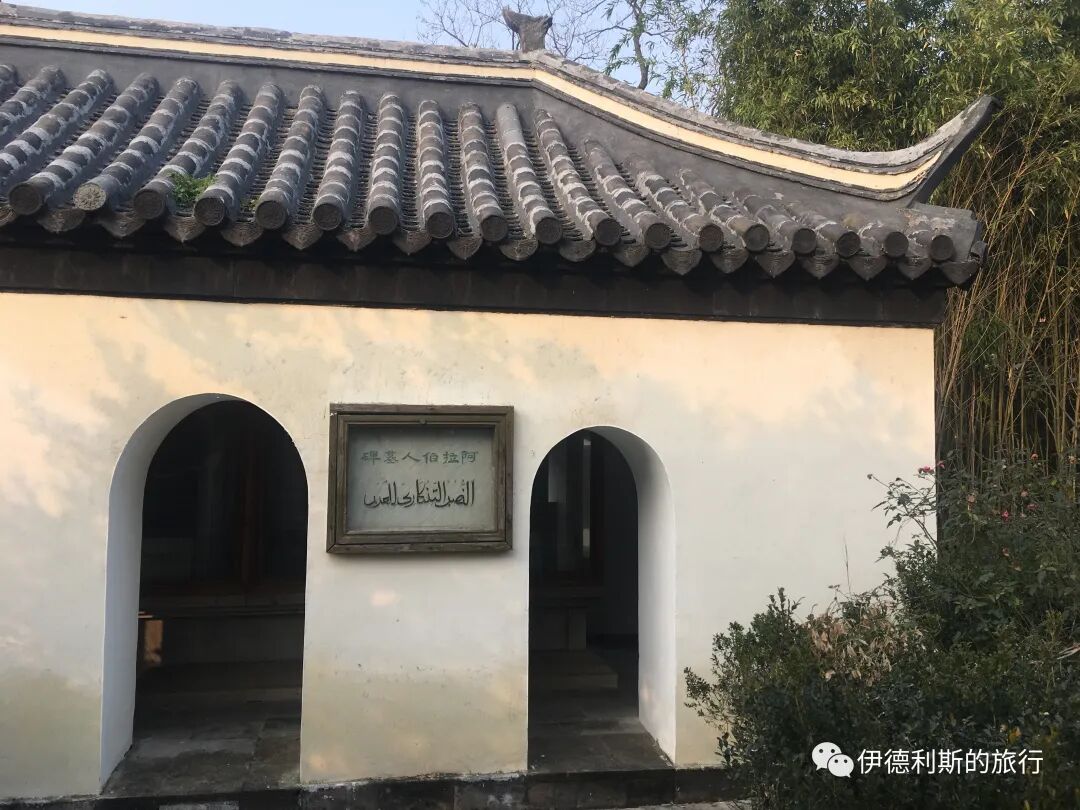
The place where Yuan Dynasty Arabic tombstones are kept at the Puhading Cemetery.
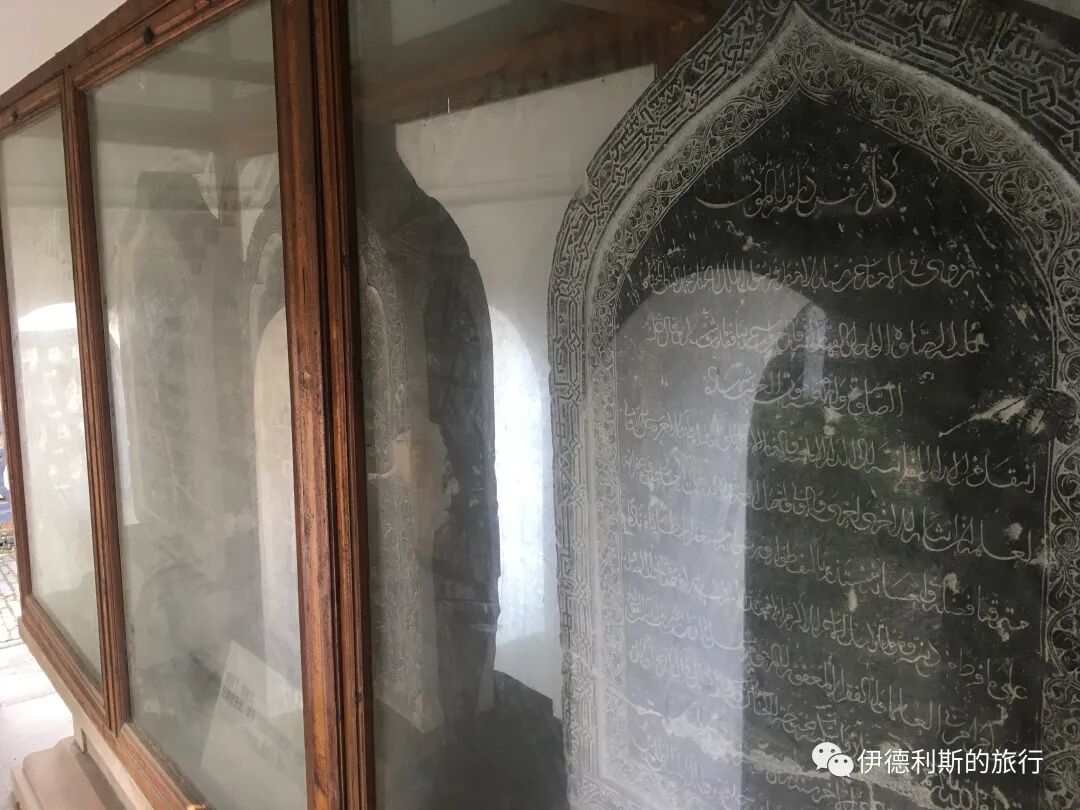
In the Arabic text of the four tombstones, the first section of each is the Basmala, and the remaining sections mostly come from the Quran and Hadith. Each tombstone is inscribed with the Hadith, 'Death in a foreign land is martyrdom.'
A replica of an Arab tombstone at the Yangzhou Museum.
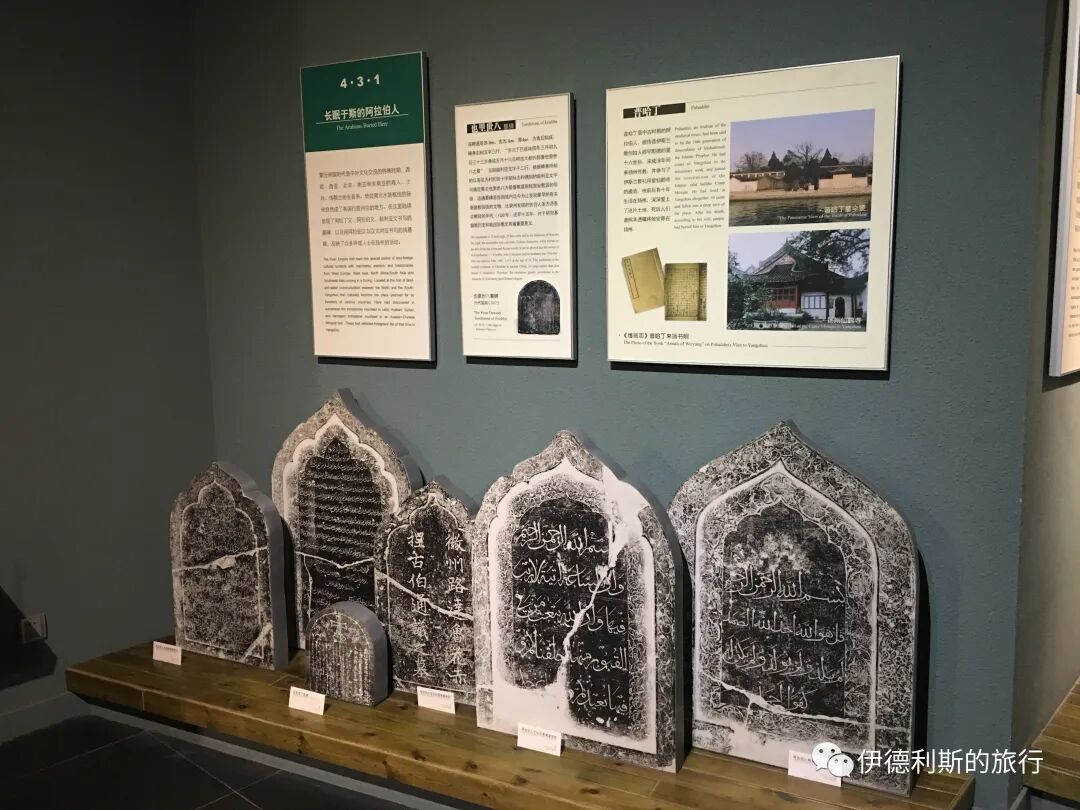
Between 1934 and 1935, the missionary Claude L. Pickens photographed the four stone tablets. At that time, they were at the tomb of the sages near the now-vanished Xianhe Mosque.
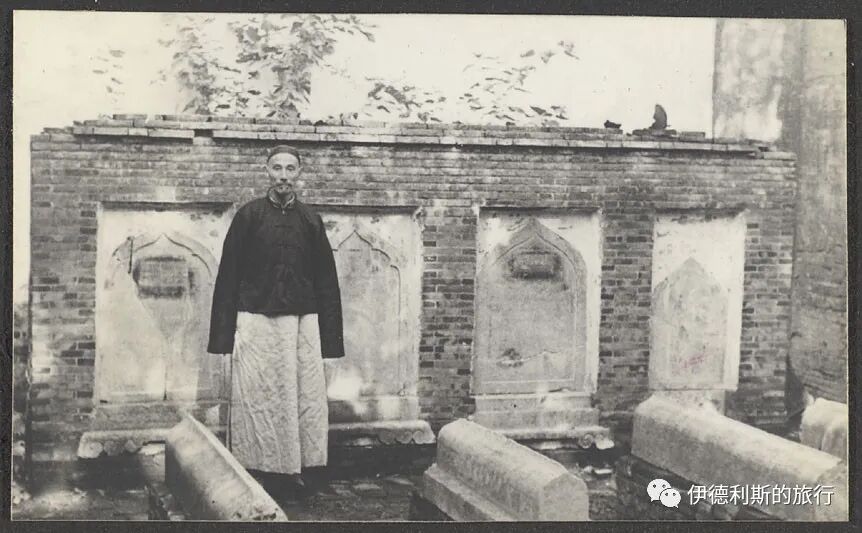
The front of the Chinese tombstone is inscribed with, 'Tomb of Nie Gubo, the Darughachi of Huizhou Circuit and Grand Master of Thorough Discussion.' Darughachi originally meant 'seal holder.' After the Yuan Dynasty was established, a Darughachi was appointed to local government offices at the circuit, prefecture, department, and county levels to hold real power over local administration and military affairs. Huizhou Circuit was a top-tier circuit, and the rank of its Darughachi was third grade. Tongyi is short for 'Grand Master of Thorough Discussion,' which is also a third-grade rank.
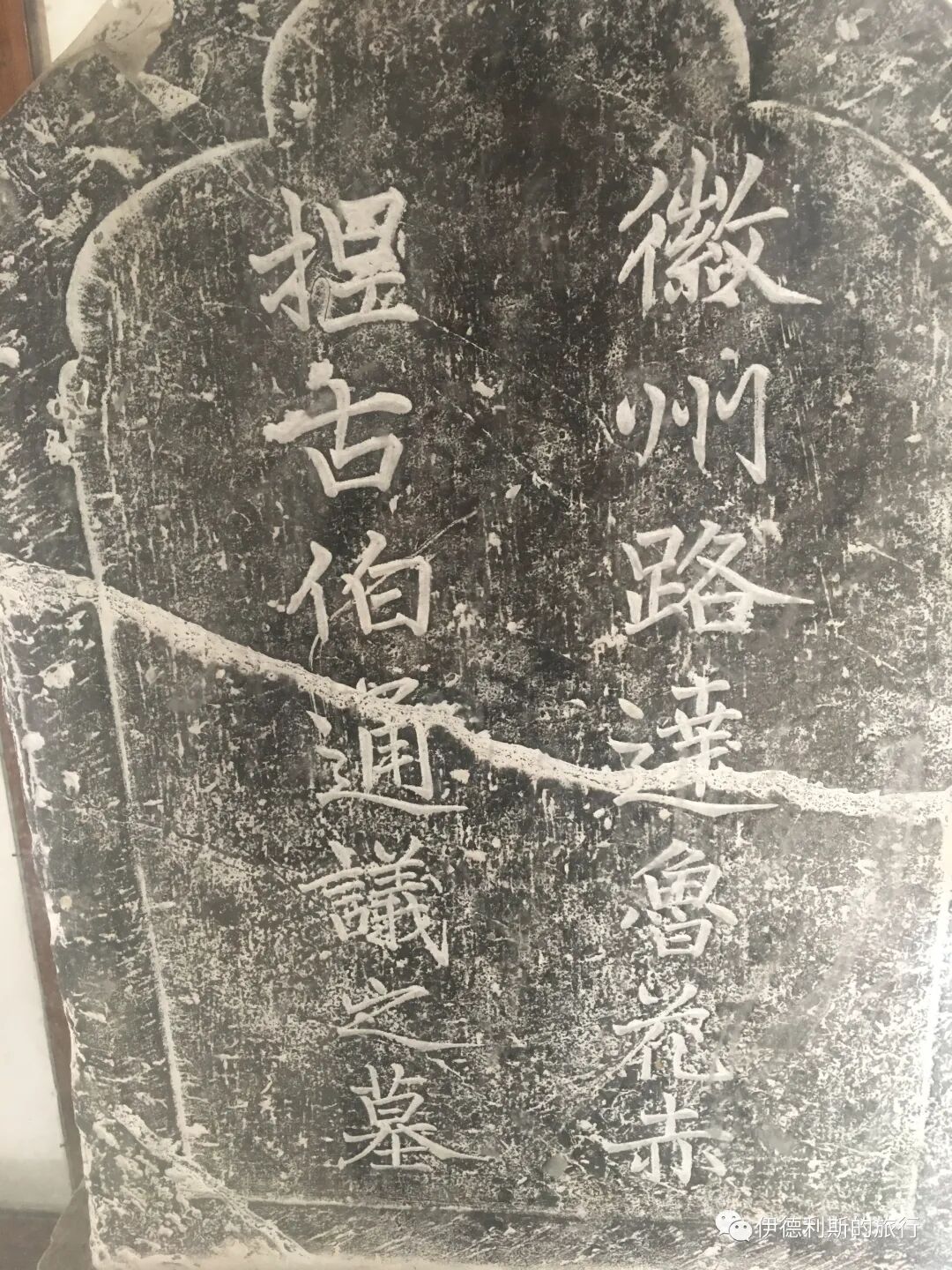
In 1265, Emperor Kublai Khan of the Yuan Dynasty decreed that all circuit Darughachi must be Mongols, and any Han Chinese serving as Darughachi were removed from office. When Mongols were unavailable, it was permitted for Semu people with noble family backgrounds to serve. Therefore, this tombstone of a Semu Darughachi is extremely precious.
The back of Nie Gubo's tombstone is inscribed with ten lines of Arabic. The first section is the Basmala, followed by Hadith and praise for his life achievements. It reads: 'Noble, diligent, and excellent Islamic educator, a leader who helped the weak, was charitable, and cared for the people, a respected elder... a man of great virtue and wisdom, generous and just, enjoying great blessings.' It also records Nie Gubo's death date as the 2nd of Dhu al-Hijjah in the year 709 of the Hijri calendar, which is May 3, 1310.
The front edges of the second tombstone are carved with Quranic verses in Kufic Arabic script, and the center is carved with twelve lines of Arabic, which read: 'The forgiven deceased, Shams al-Din Asif Allah al-Balaji.' May Allah have mercy on him and grant him a place in the comfort of Paradise. This was in early June of the year 724 (Hijri calendar). This corresponds to the end of May or early June of 1324 (the first year of the Taiding era of the Yuan Dynasty).
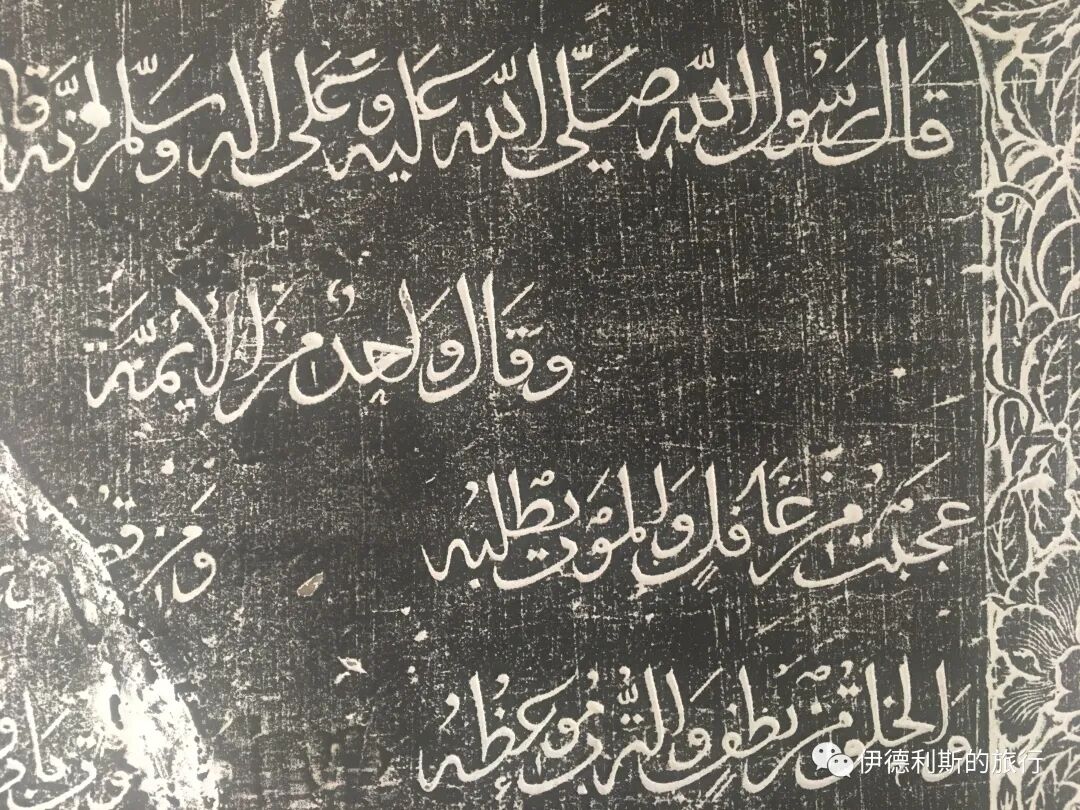
The third tombstone belongs to a Persian woman who also died in 724 Hijri (1324). Her name was Aisha Khatun (Aisha was known as Ashe in the Yuan Dynasty, and Khatun means lady). The inscription says: 'She was a chaste, virtuous, and capable woman... her father was Lezunding, a highly respected official in Islam.'
The fourth tombstone is damaged. It belonged to a missionary named Ala-ud-Din who died in 702 Hijri, or 1302 (the sixth year of the Dade era of the Yuan Dynasty). The inscription describes him as a skilled businessman who was highly respected by the community.
After the Qianlong reign, there were six mosques in Yangzhou. The three inside the city were the Crane Mosque (Xianhe Si) on Nanmen Street, the Majian Lane Mosque, and the Xiejia Bridge Mosque (which was occupied by a sugar factory and no longer exists). The three mosques outside the city were the Hui Muslim Hall (Huihui Tang) east of the Dongguan River inside the Puhading Cemetery, the South Gate Mosque (occupied by a glass factory, with the main hall finally demolished in 1984), and the Chaoguan Mosque (occupied by a farm machinery factory and no longer exists).
During the Republic of China era, there were nearly 20,000 Hui Muslims living in the six mosque districts of Yangzhou, with Sha, Ma, Ha, Sa, and Da as the five major surnames. The family genealogy of the Ha surname records that their ancestor was a man named Hashen from the Western Regions' Rumi Kingdom (a region in West Asia or Asia Minor).
Crane Mosque (Xianhe Si)
The Crane Mosque is one of the four ancient mosques along the southeast coast (in Hangzhou, Guangzhou, Quanzhou, and Yangzhou). It was founded in 1275 (the 12th year of the Zhiyuan era of the Yuan Dynasty) by the sage Puhading from the Western Regions before he passed away. It was rebuilt in 1380 (the 23rd year of the Hongwu era of the Ming Dynasty) by Ha San, and renovated in 1523 (the third year of the Jiajing era) by the merchant Ma Zongdao and the imam Ha Ming. Starting in 1542 (the 21st year of the Jiajing era), the Ha family received official documents from the Ministry of Rites to serve as the hereditary imams of the Crane Mosque.
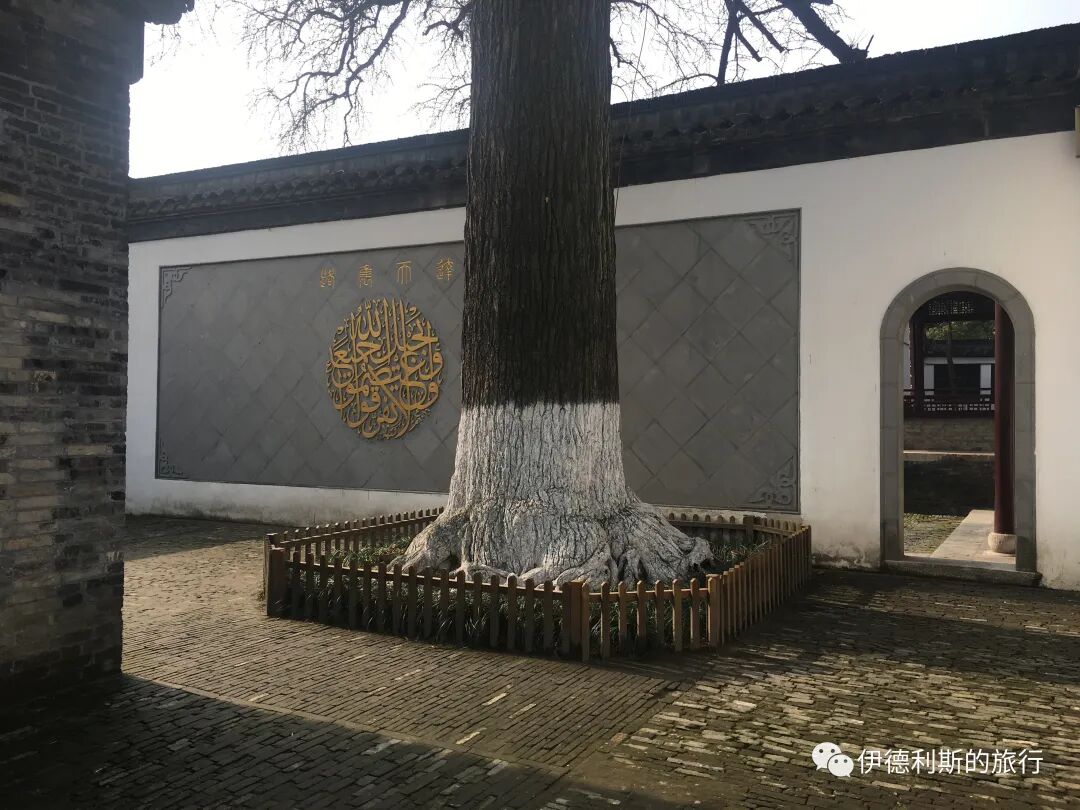
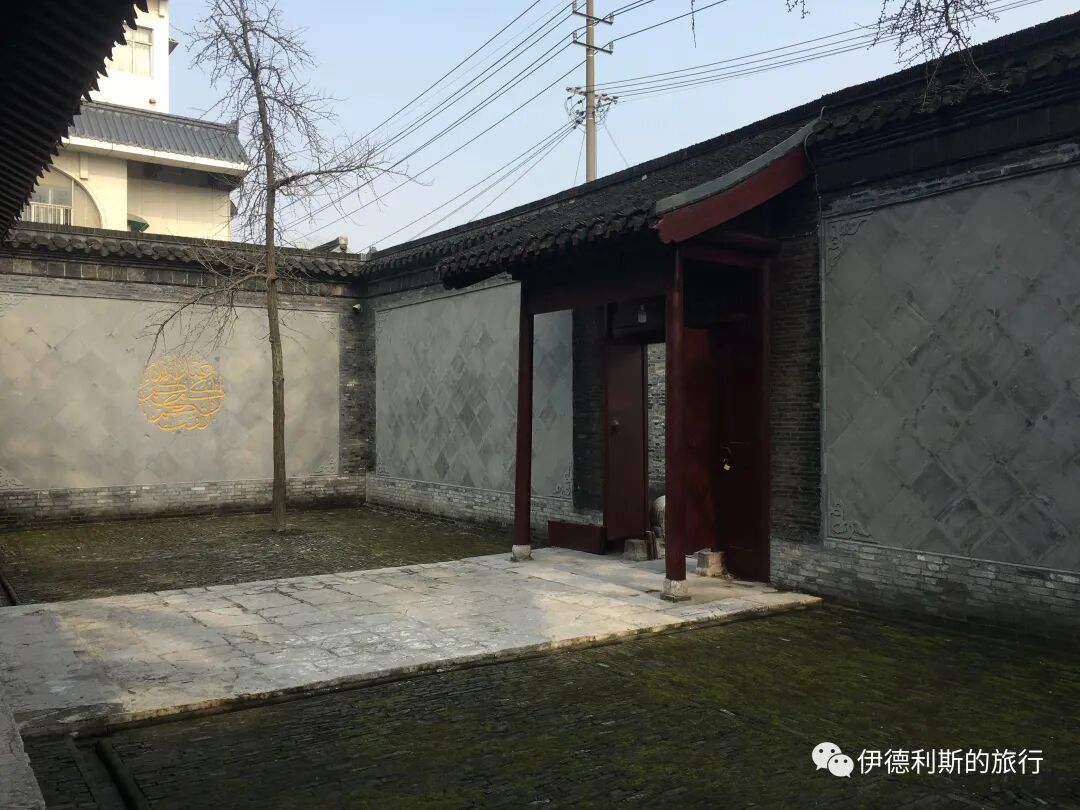
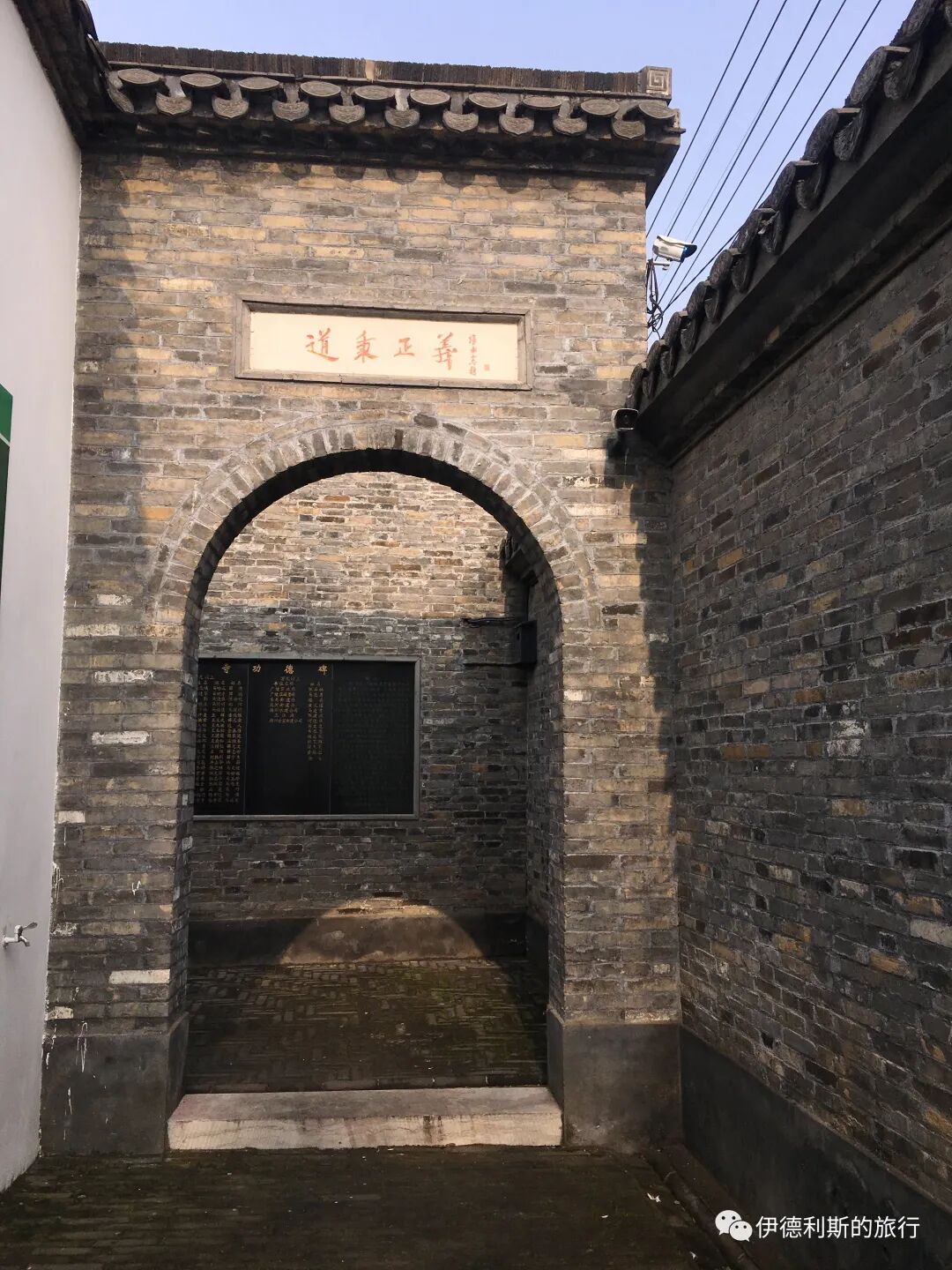
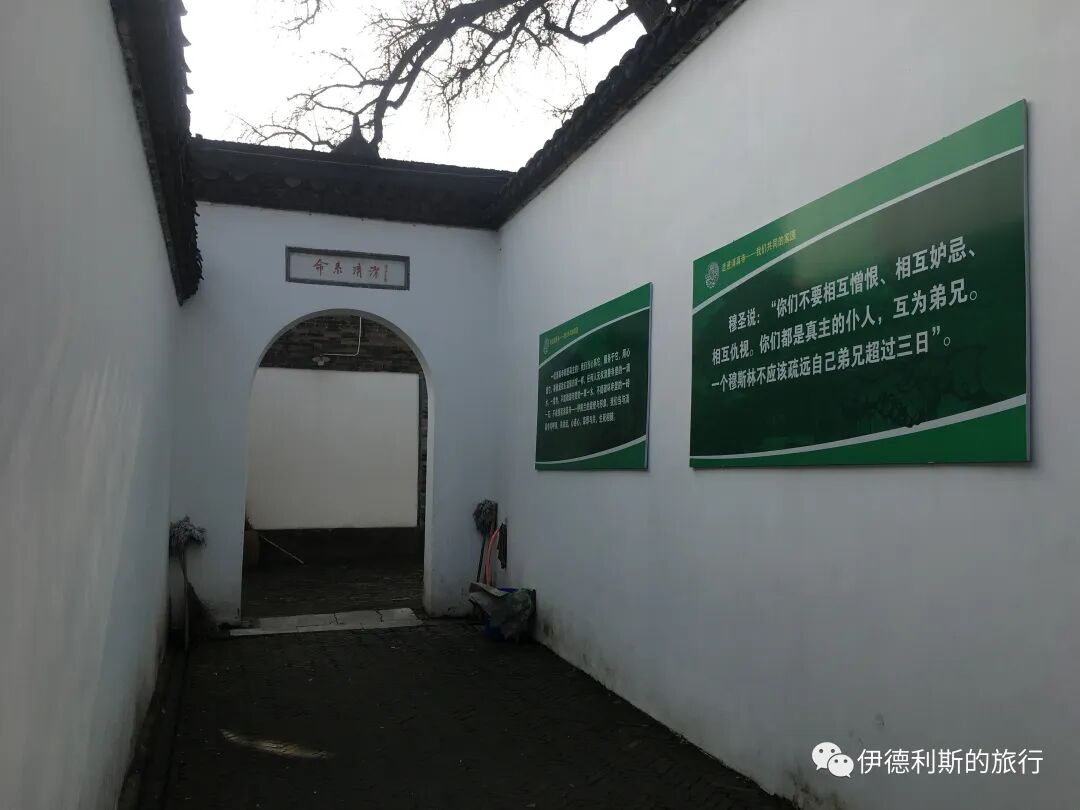
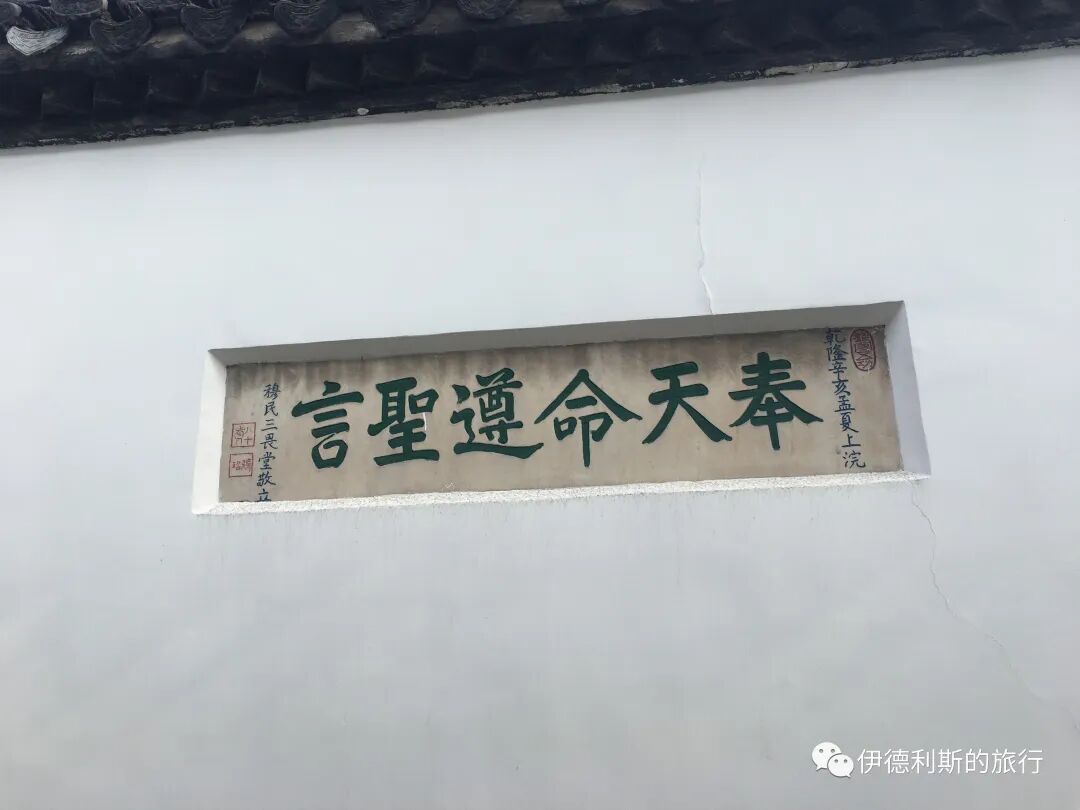
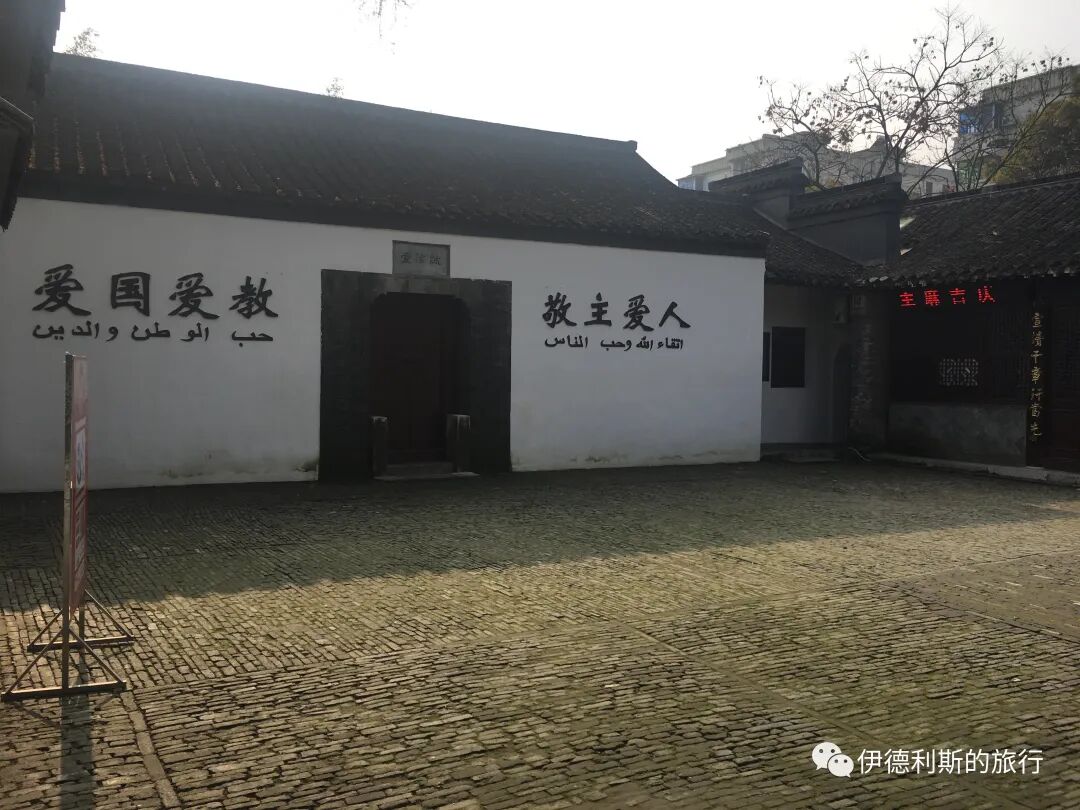
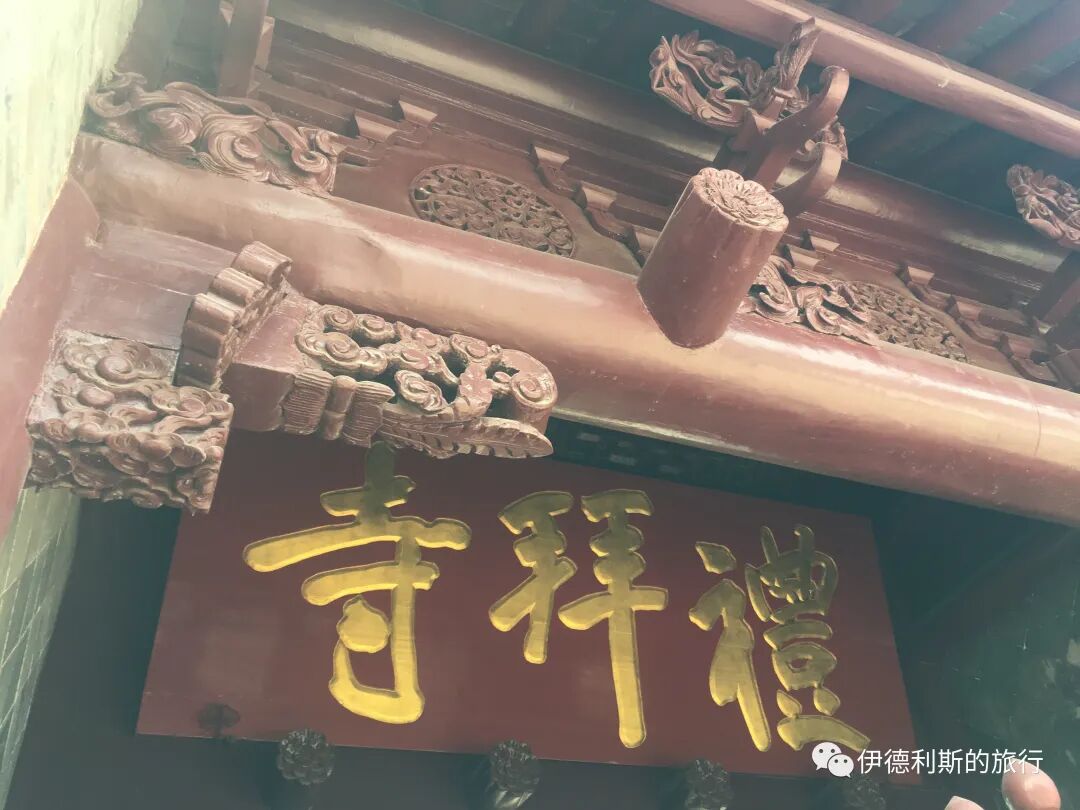
Puhading Cemetery
Puhading is said to be a 16th-generation descendant of the Prophet Muhammad. He came to Yangzhou during the Xianchun period of the Song Dynasty (1265-1274) and died in Yangzhou in 1275 (the 12th year of the Zhiyuan era of the Yuan Dynasty). He was buried on a high ridge east of the Dongguan River in the New City, a place later called the Hui Muslim Hall (commonly known as Baba Yao).
This is written in the article 'Puhading: Messenger of China-Arab Friendship,' published by the Yangzhou Islamic Association in the fourth issue of 'Jiangsu Muslims' in 2015. Local imams in Yangzhou pass down a set of stories about the life of Puhading. On the morning of July 17, 1947, at the East Lecture Hall of the Huihui Tang mosque, Imam Lan Baohua passed down the life story of Puhading to his son, Imam Lan Xiaoyang. He based this on the oral accounts of famous scholars Zhang Zhong and imams Han Yuchun, Lan Jiansen, Lan Wenyuan, and Lan Sifu. Seven people were present, including Imam Ruan Xiangsong and community elders Ma Liang, Zhang Yangwu, Wang Yan, and Jin Yuanxun. Here is the life story of Puhading as passed down by the Yangzhou imams:
Puhading was born on May 21, 1204 (the fourth year of the Jiatai era of the Song Dynasty) into a wealthy Arab noble family. He was the 16th-generation descendant of the Prophet Muhammad. Puhading was a man of great learning, well-versed in the Quran, the Hadith, and Islamic law. At age 57, Puhading followed the Prophet's teaching that one should seek knowledge even as far away as China. After four years of careful preparation, he set off for China from Arabia on a merchant ship at age 61, leading a team of 17 people.
On June 20, 1265 (the first year of the Xianchun era of the Song Dynasty), Puhading and his followers arrived in Yangzhou. They lived for four years at the mosque outside the south gate of Yangzhou at that time. He helped expand the old mosque outside the south gate and renovated the Guannan Chaoguan mosque.
On the 23rd day of the seventh lunar month in 1275 (the 12th year of the Zhiyuan era of the Yuan Dynasty), he traveled south from Rencheng (Jining) to Guangling (Yangzhou). He passed away on a boat while returning from giving a lecture, at the age of 71. The governor of Guangling, Yuan Guang'en, buried his body on a high ridge on the east bank of the Grand Canal, east of Yangzhou city.
Three years after Puhading died, another Muslim sage who came to Yangzhou to preach, Saganda, passed away in 1278 (the third year of the Jingyan era of the Song Dynasty). He was buried near Puhading's tomb. A stone tablet erected in 1776 (the 41st year of the Qianlong era) refers to him as the Western Region sage Saganda from the third year of the Jingyan era of the Song Dynasty.
During the Ming Dynasty, more Muslims were buried there, such as the Western Region sage Mahamude in 1456 (the first year of the Chenghua era), the Western Region sage Zhanmaluding in 1469 (the fifth year of the Chenghua era), and the Western Region sage Fana in 1498 (the 11th year of the Hongzhi era).
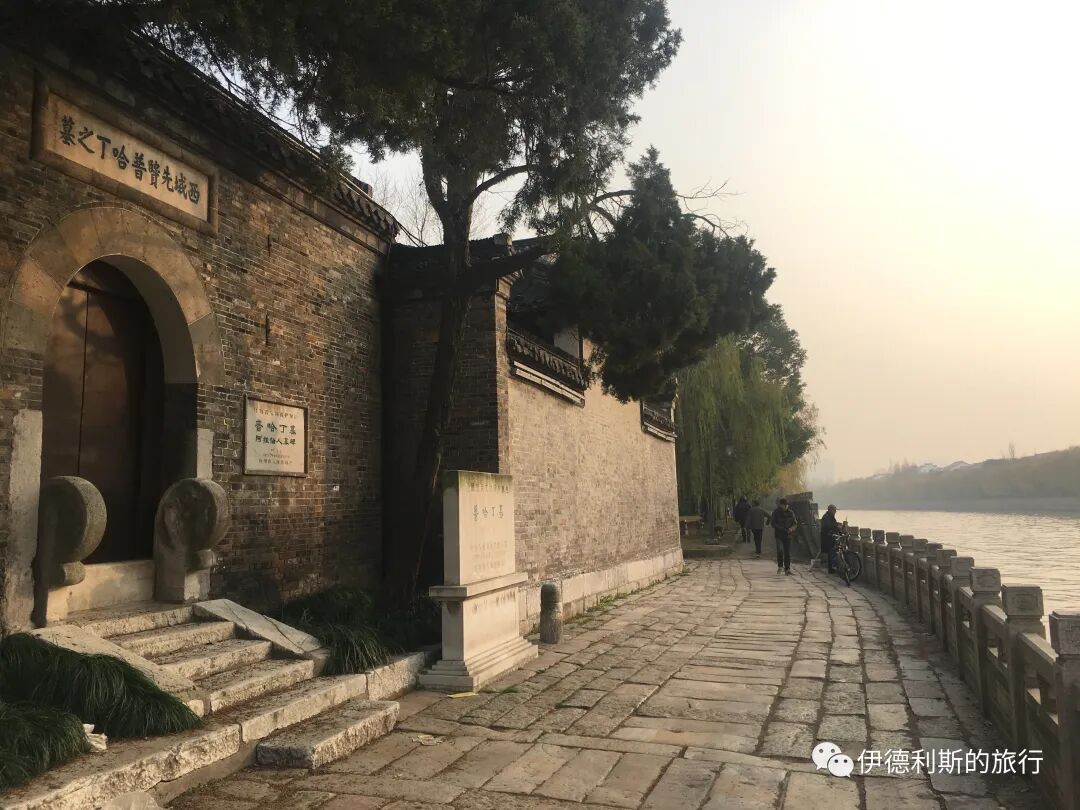
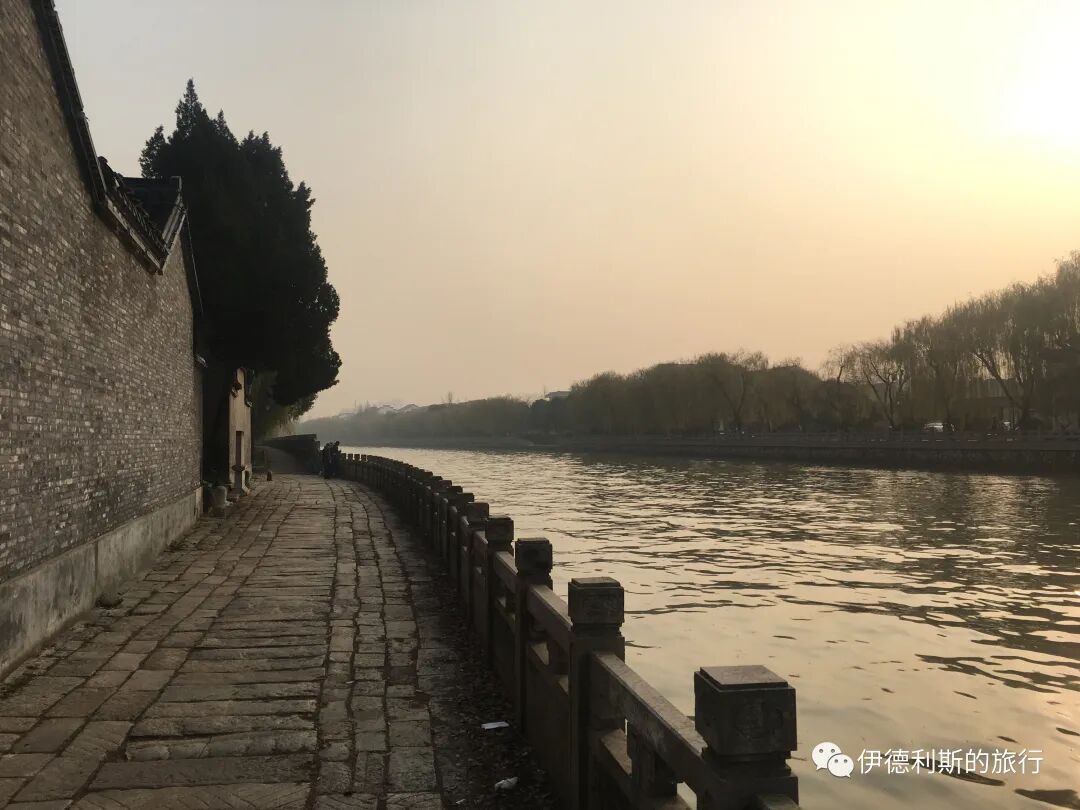
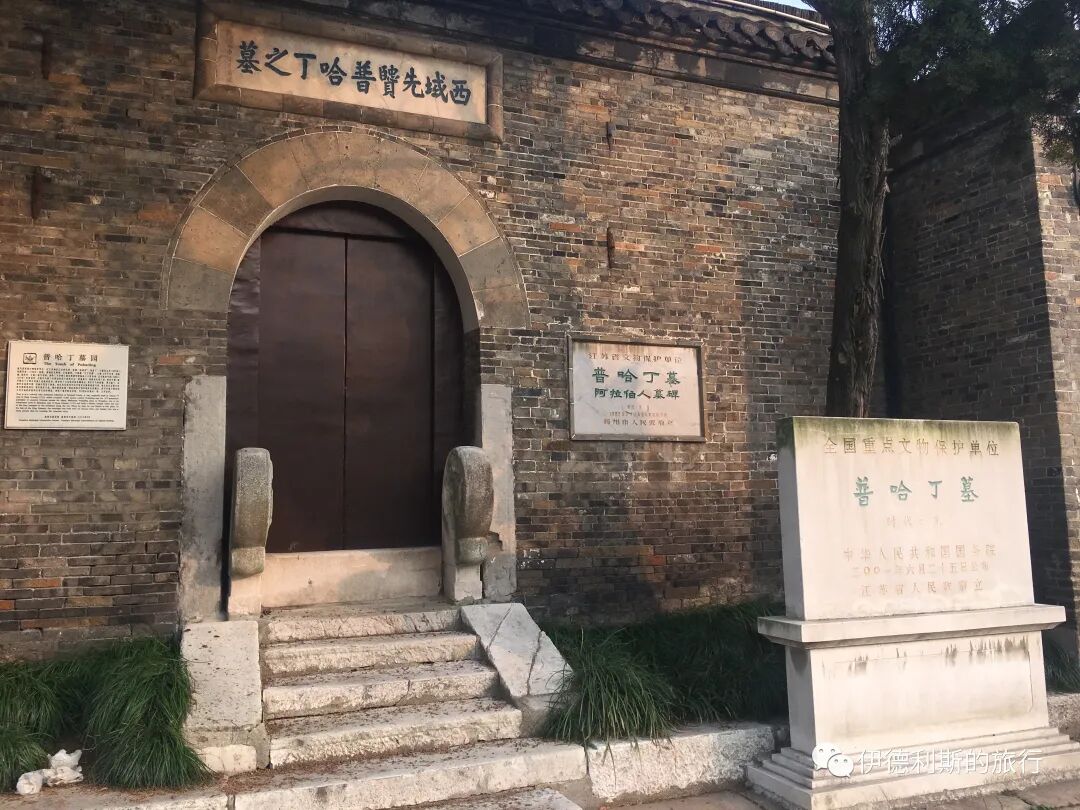
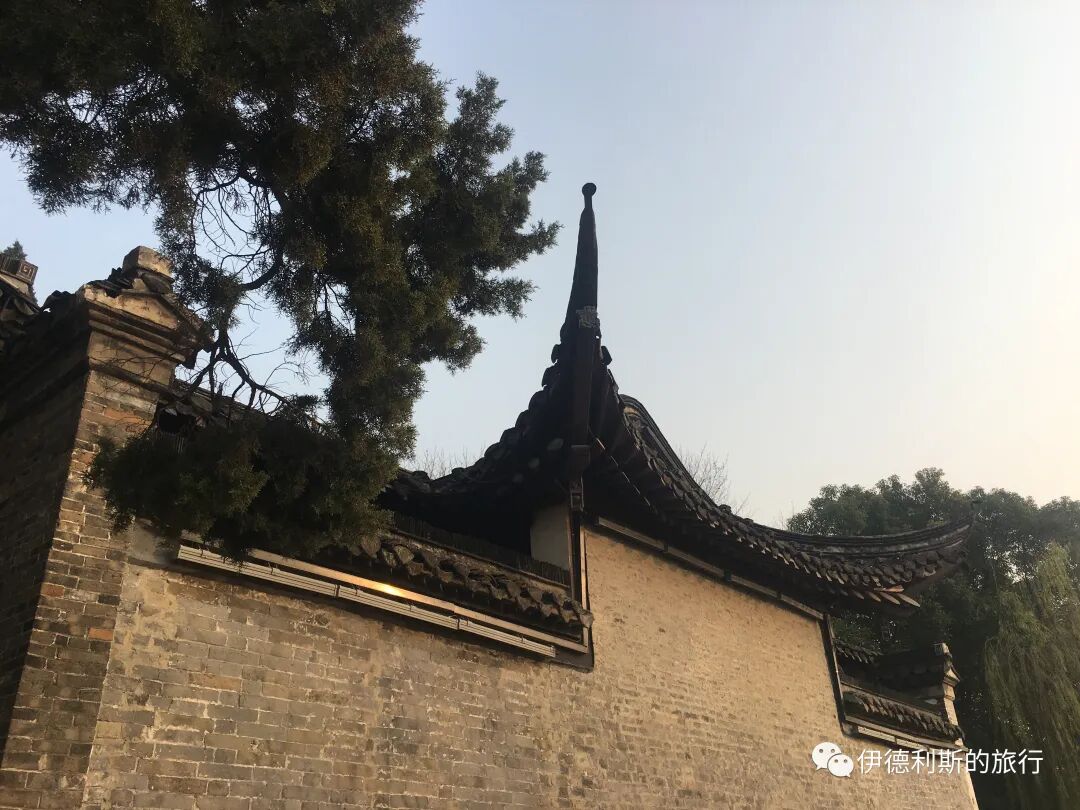
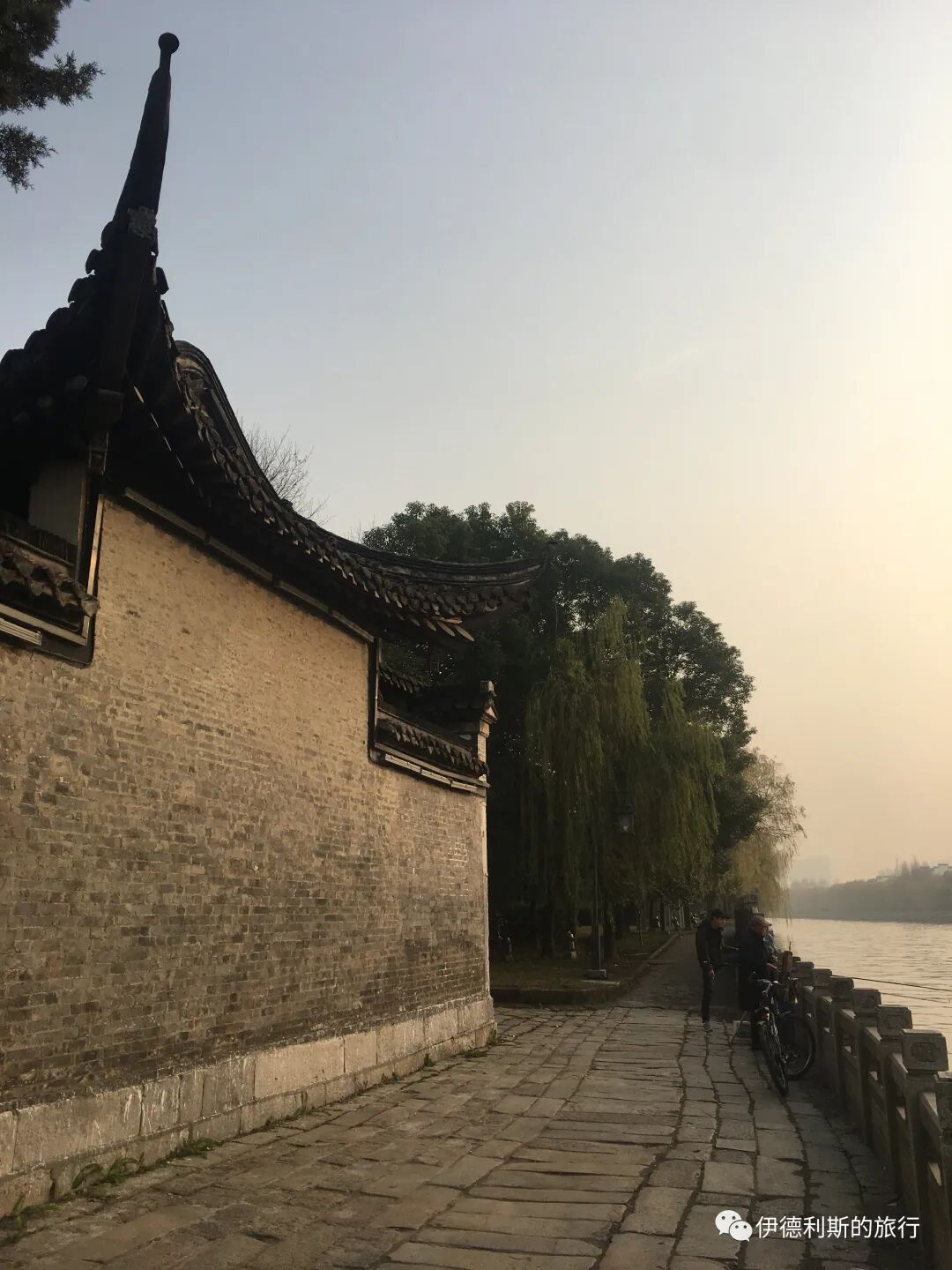
Next to the main gate is a mosque for those visiting the graves.
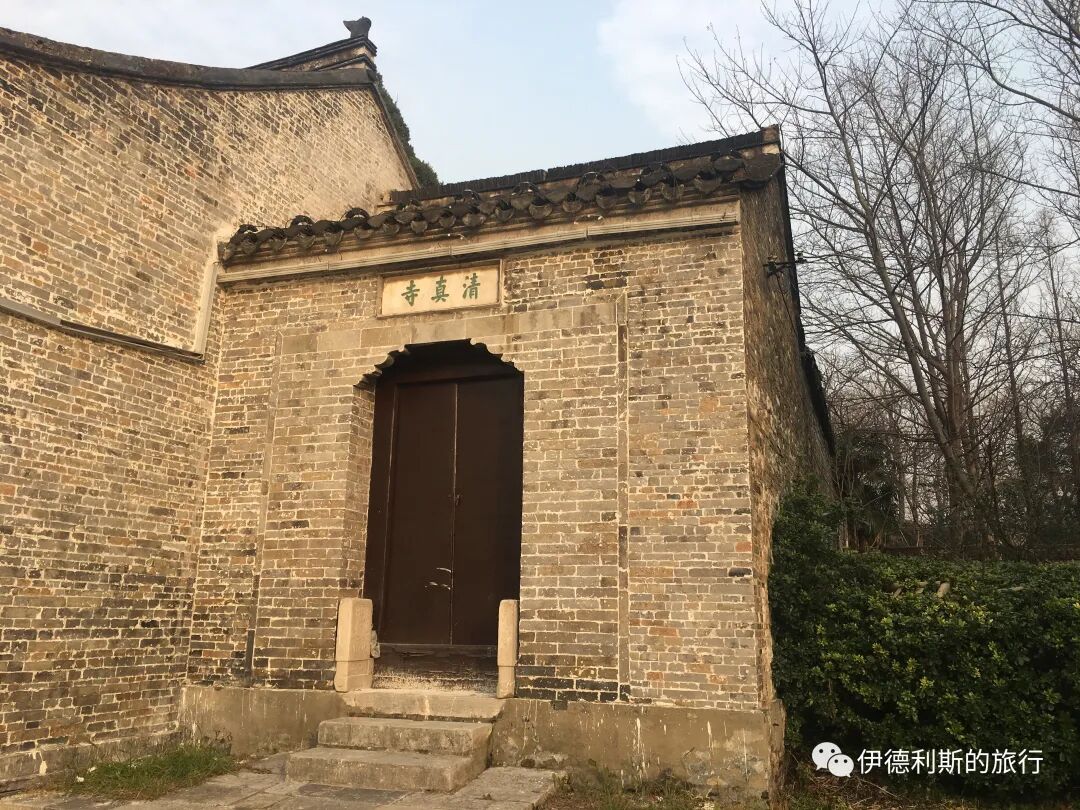
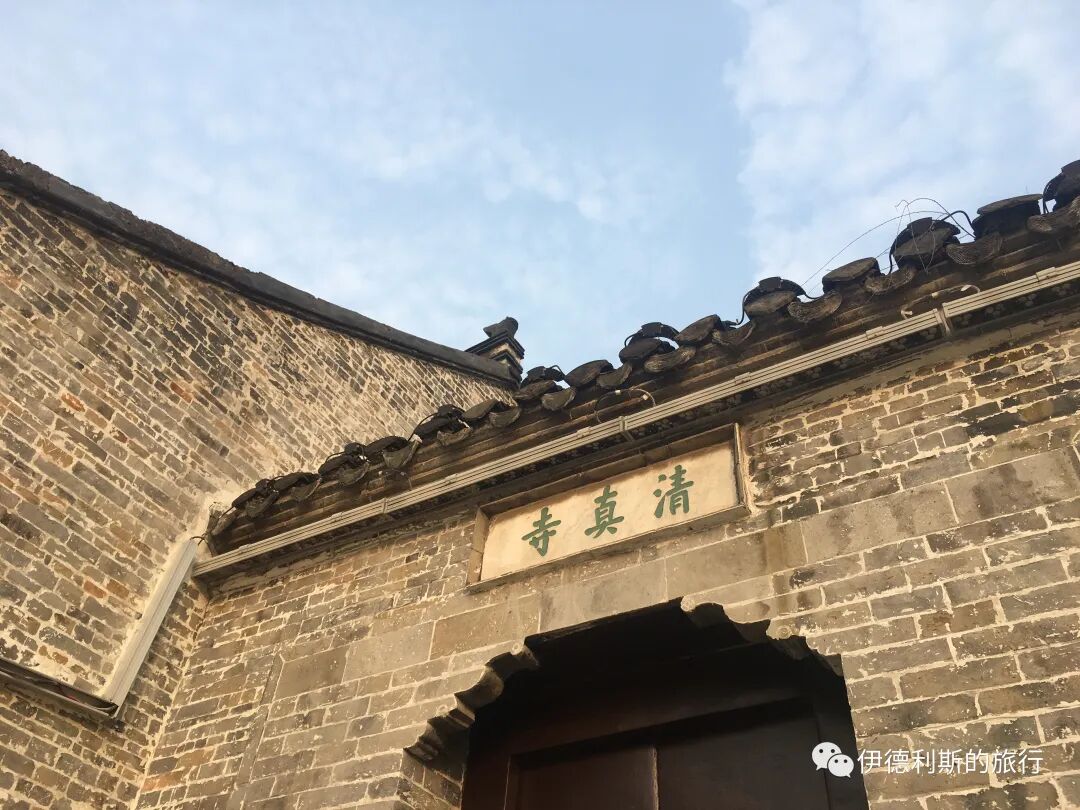
The mihrab of the mosque.
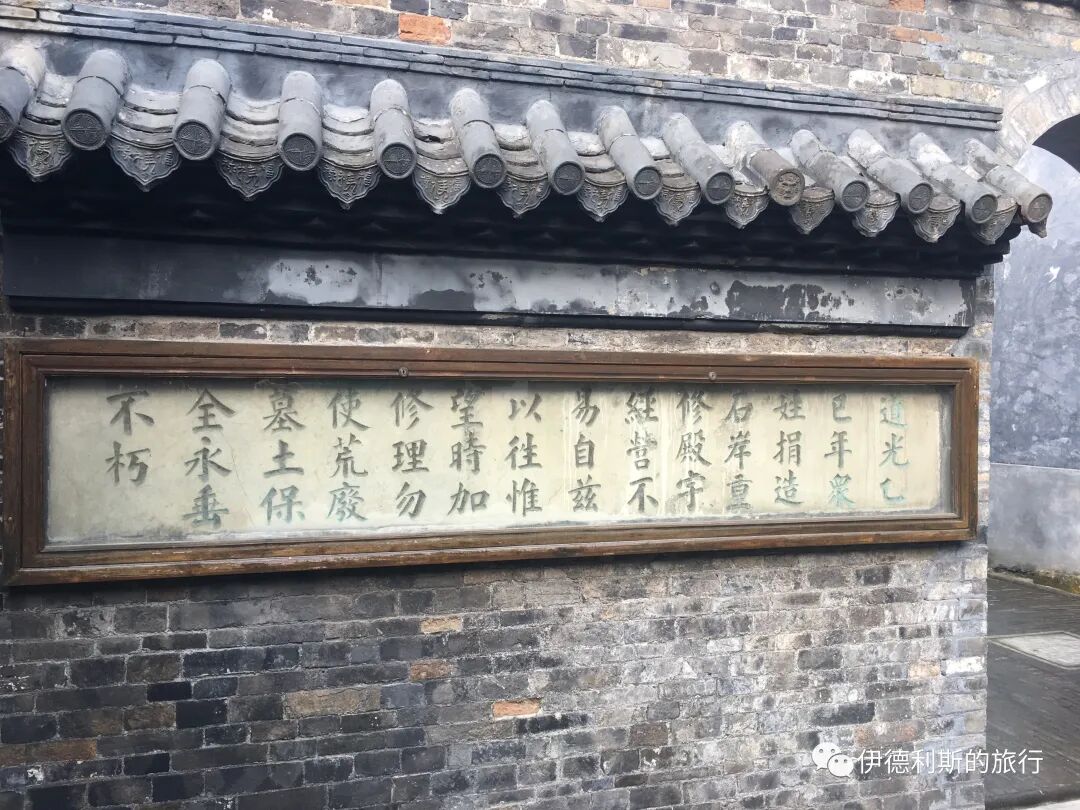
The stone carving inside the main gate records that in 1845 (the Yisi year of the Daoguang era), people of various surnames donated funds to build a stone embankment and renovate the halls.
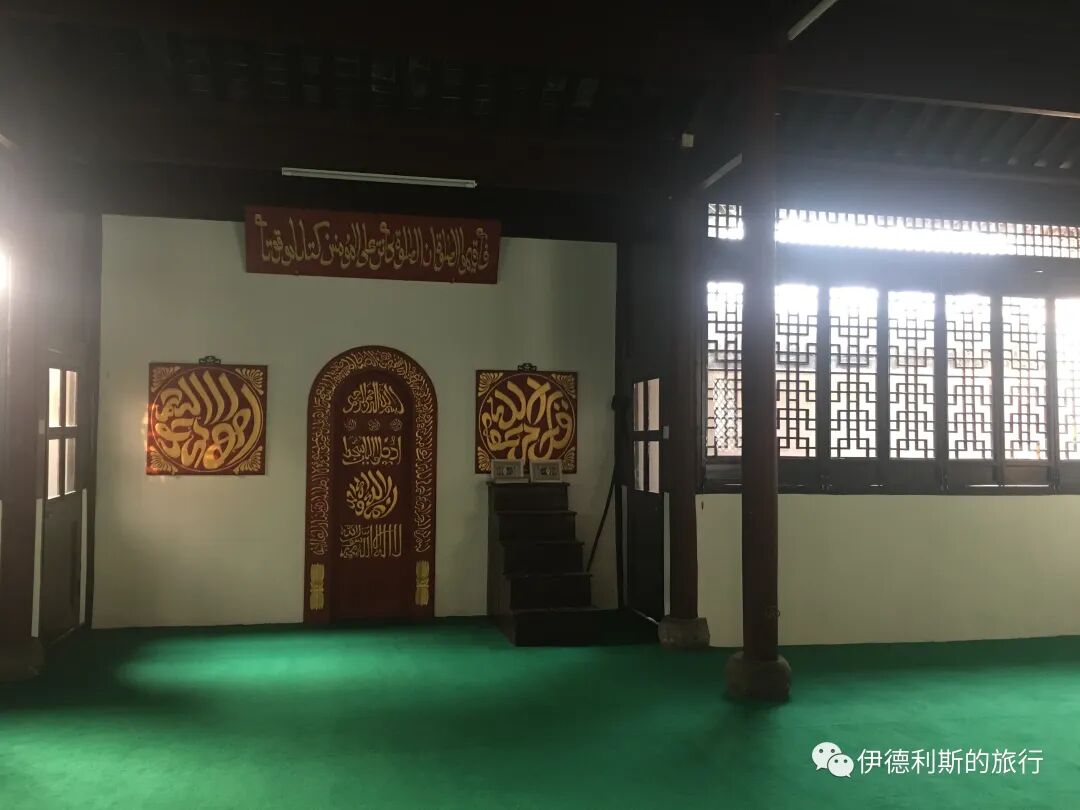
Inside the main prayer hall of the mosque.
The kiln-style hall (yaodian) of the Puhading Tomb mosque, photographed by missionary Bi Jingshi between 1934 and 1935.
Climb the stone steps behind the mosque to reach the Puhading Tomb.
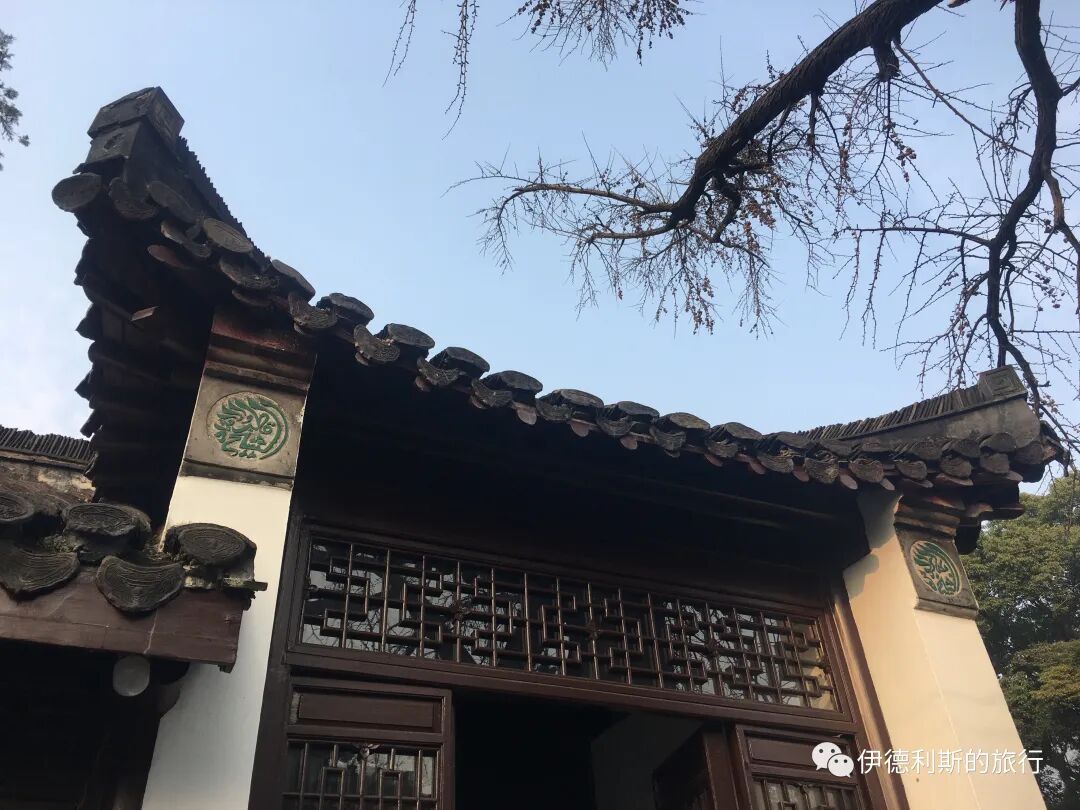
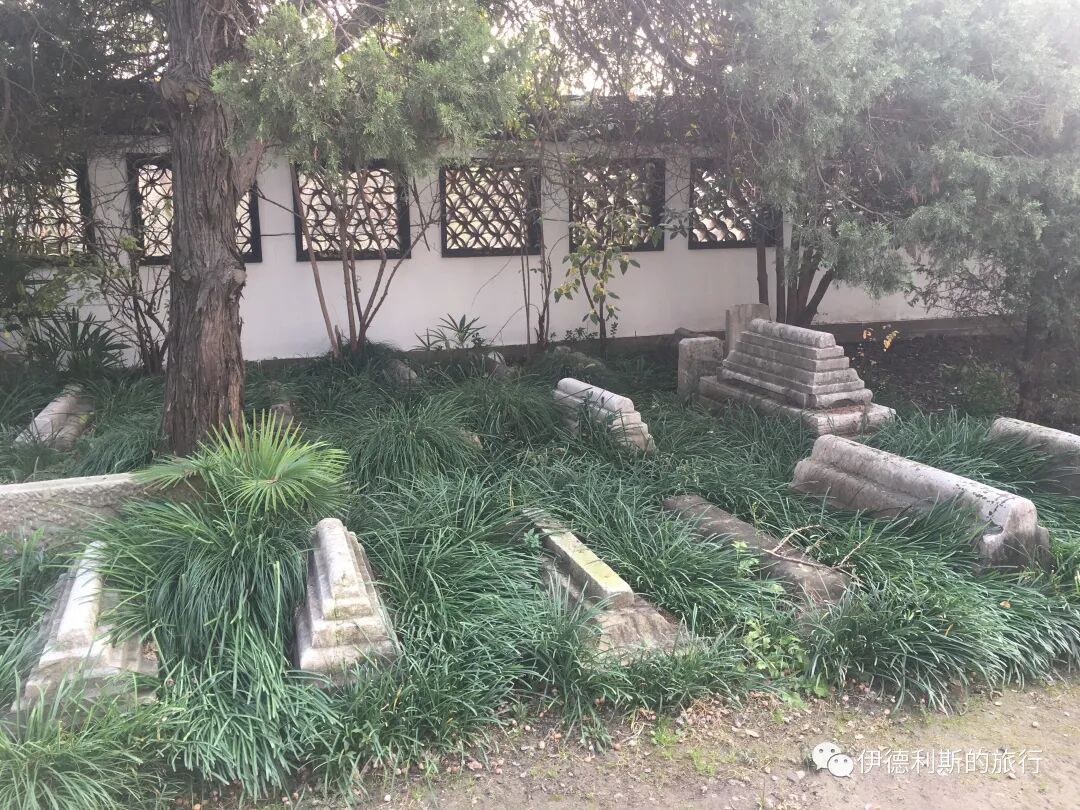
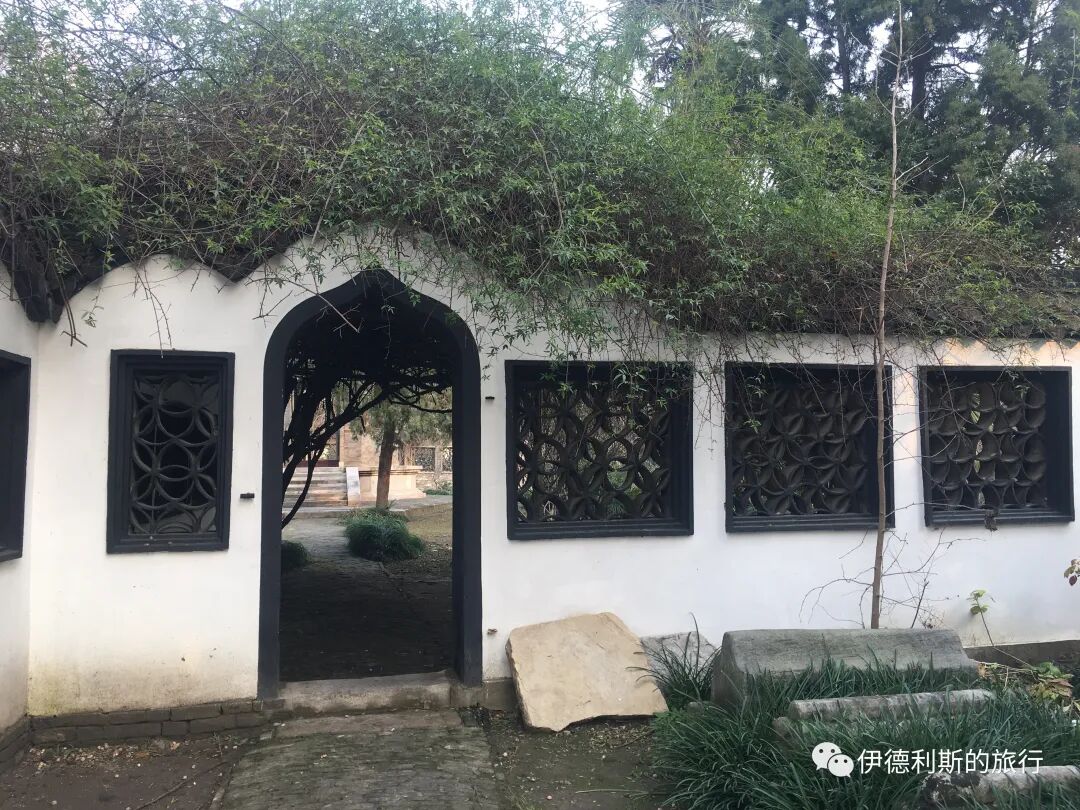
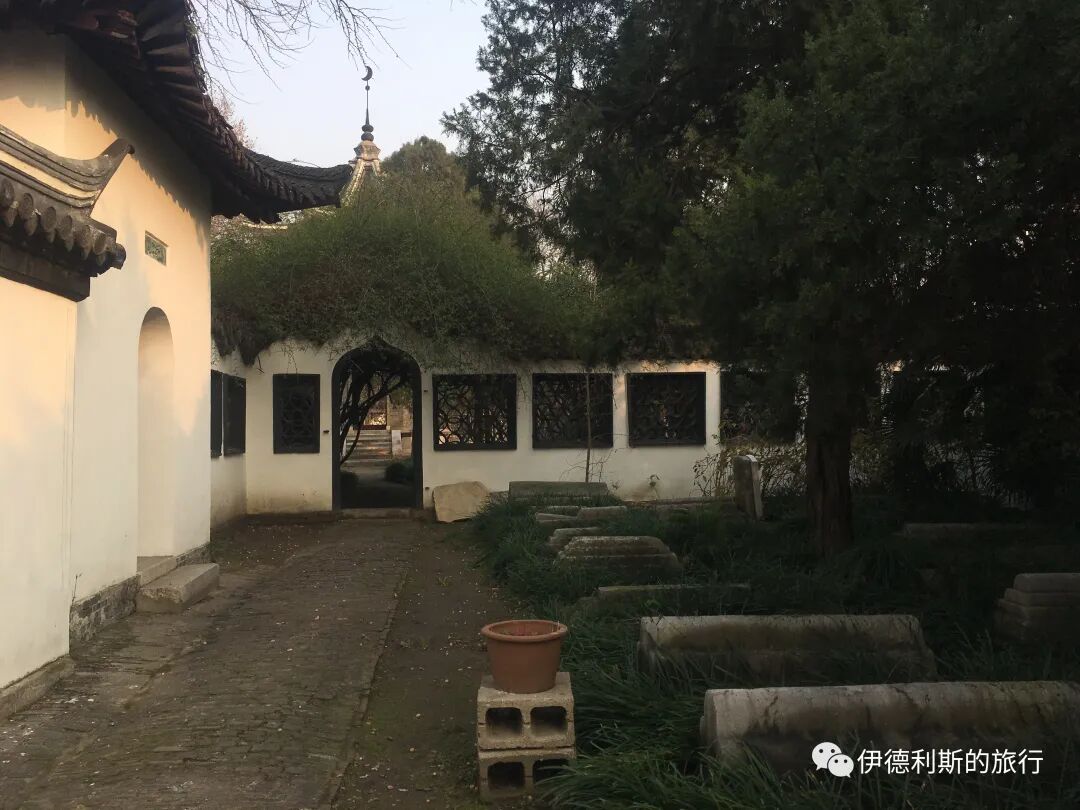
A 700-year-old ginkgo tree.
A merchant from Chang'an County, Xi'an Prefecture, Shaanxi, passed away on the fourth day of the intercalary seventh month in the 14th year of the Hongzhi reign (1501). Erected by his son Wang Qi and grandson Wang Dong.
The Puhading Tomb photographed by missionary Claude L. Pickens between 1934 and 1935.
To the southeast of the Puhading Tomb lies the tomb cover of General Zhang Xin, who passed away in 1551 (the 30th year of the Jiajing reign). The tomb cover on the west side belongs to General Zhang Xin. The owner of the east side cover is still unknown, though it is likely a member of General Zhang's family.
General Zhang's ancestor, Damuchi, moved from Samarkand to settle in Yangzhou. The Continued Records of Jiangdu County from the Republic of China era state: 'General Zhaoyong, named Xin, was the grandson of the Hui Muslim Damuchi. He served as a Wuqi Duwei (a military rank). Because he was skilled at archery, he was granted the surname Zhang and registered in the Yangzhou Guard, located behind the Puhading Tomb outside Tongji Gate.'
The Zhang Gong Shendao Archway was erected in 1551 (the 30th year of the Jiajing reign) by Zhang Heng, the grandson of General Zhang Xin. Zhang Heng was a famous Ming dynasty general who fought against Japanese pirates and held the hereditary title of Yangzhou Guard Commander. In April 1556 (the 35th year of the Jiajing reign), when Japanese pirates attacked Yangzhou, the retired Huaiyang regional commander Zhang Heng personally led troops into battle and died on the field.
In May 2011, a 30-meter-long path was built on the south side of General Zhang Xin's tomb cover, and a pair of stone sheep that had been lost in Slender West Lake Park for 27 years were returned.
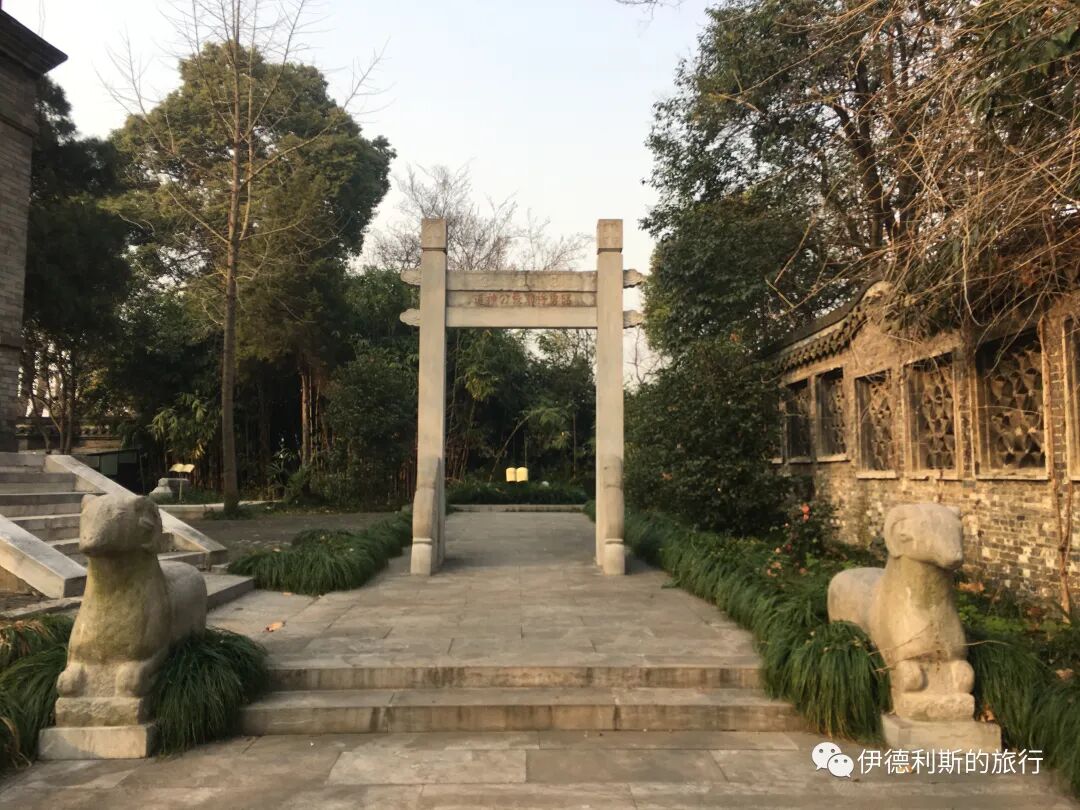
The Puhading Tomb photographed by missionary Claude L. Pickens between 1934 and 1935; the archway on the left side of the image is likely the Zhang Gong Shendao Archway.
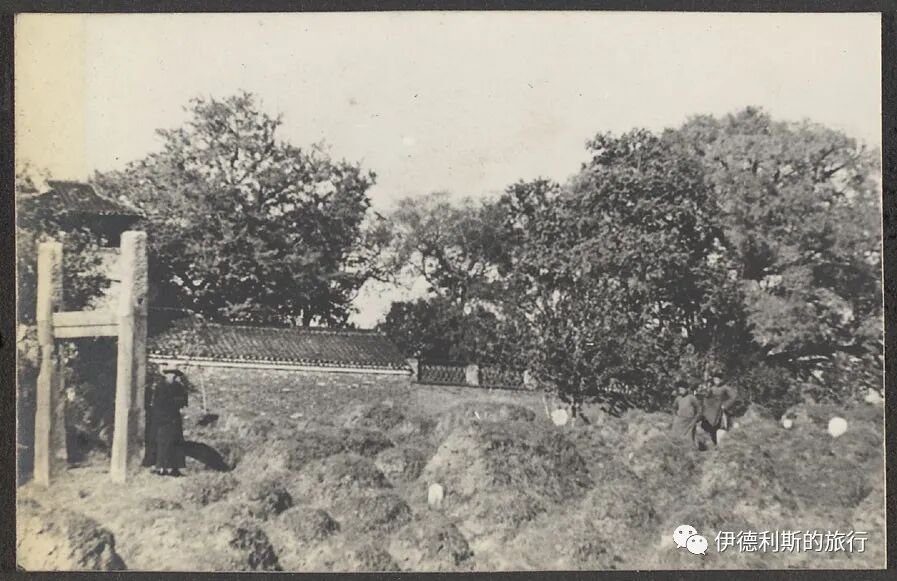
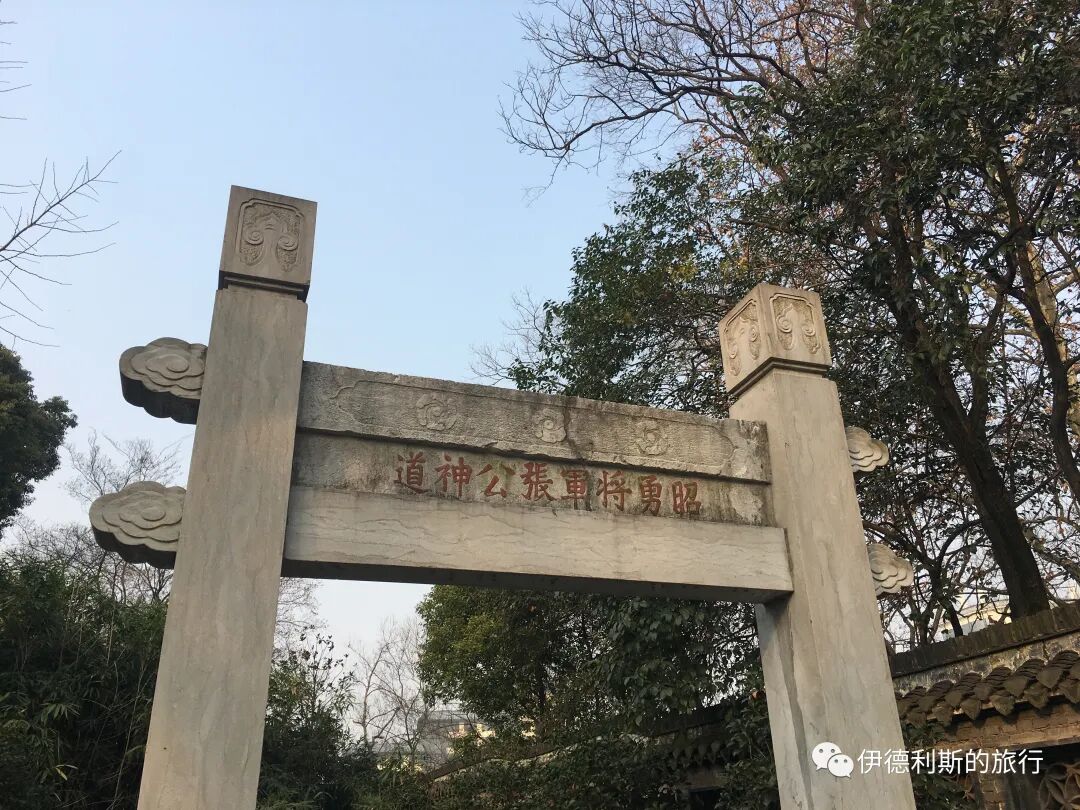
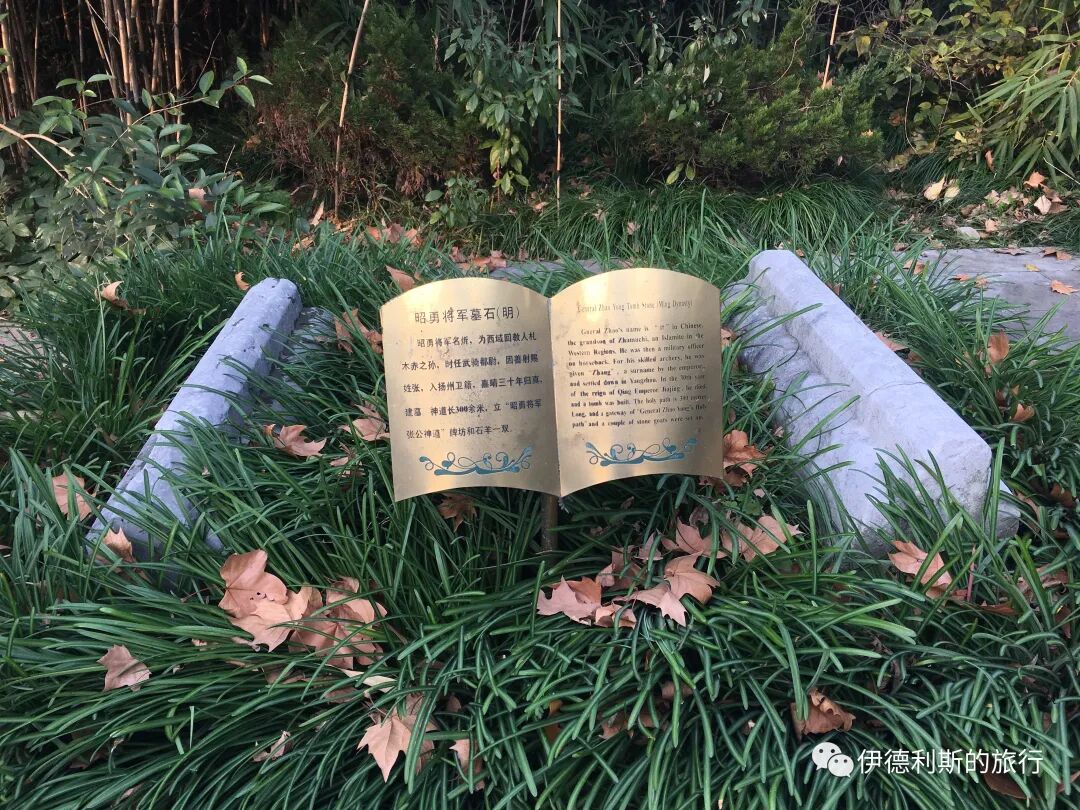
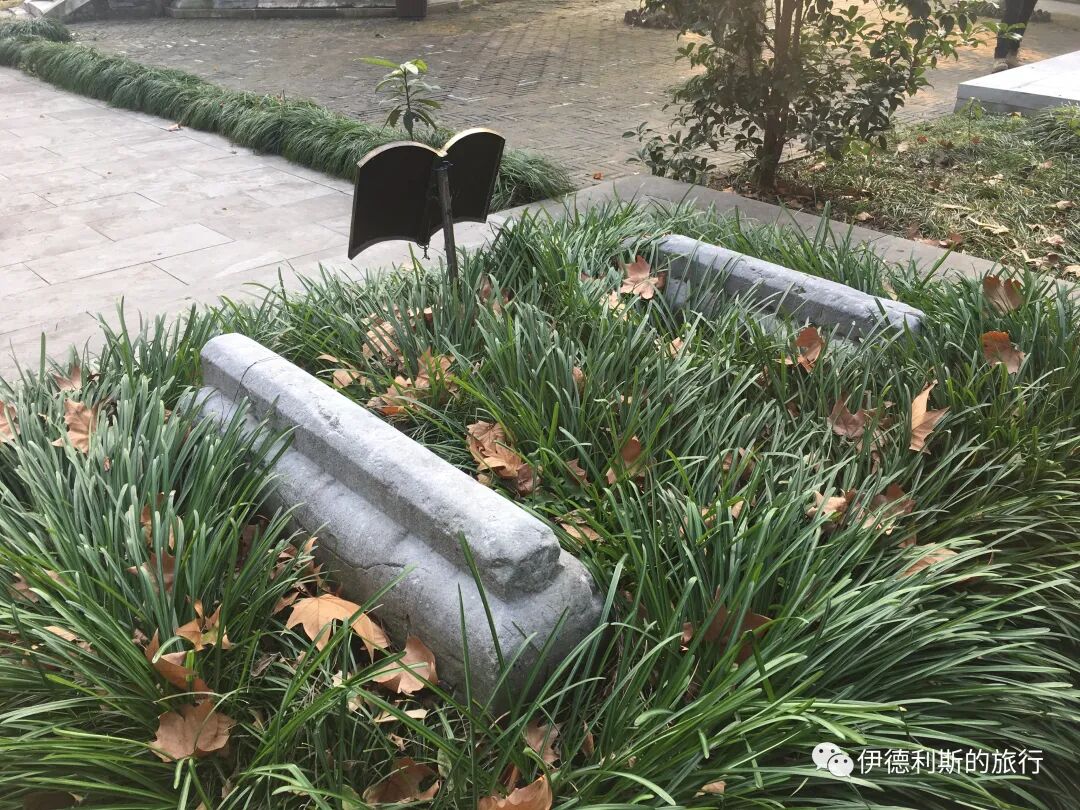
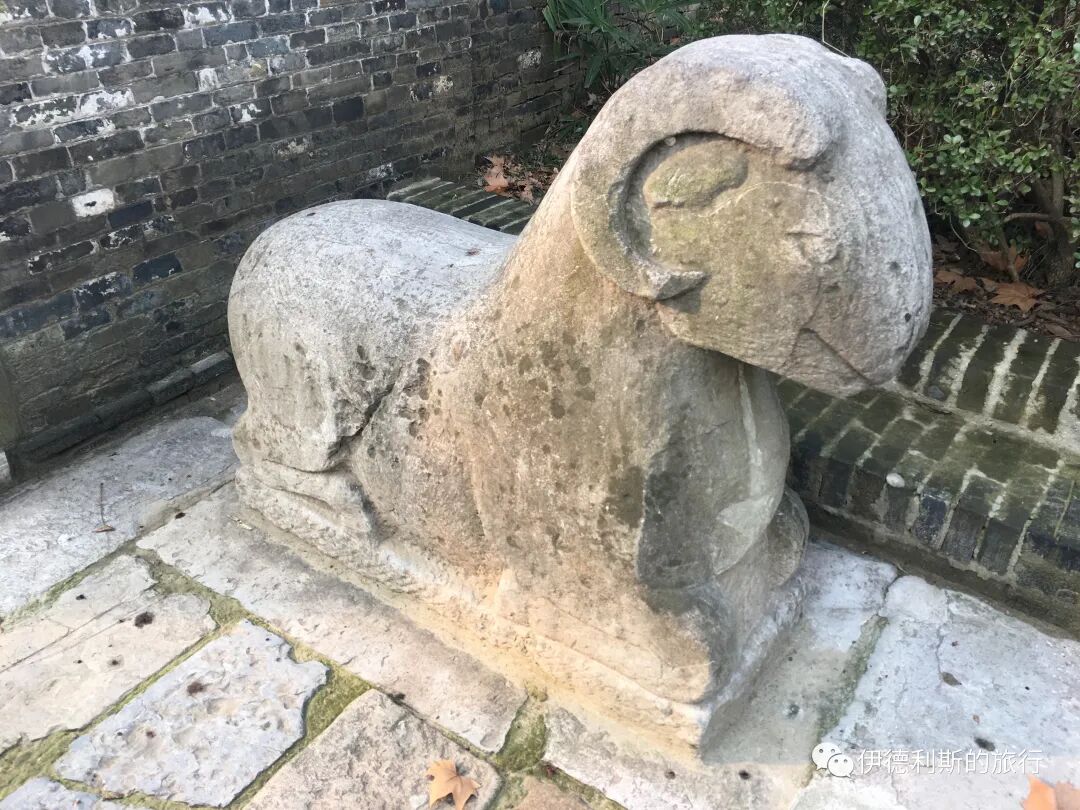
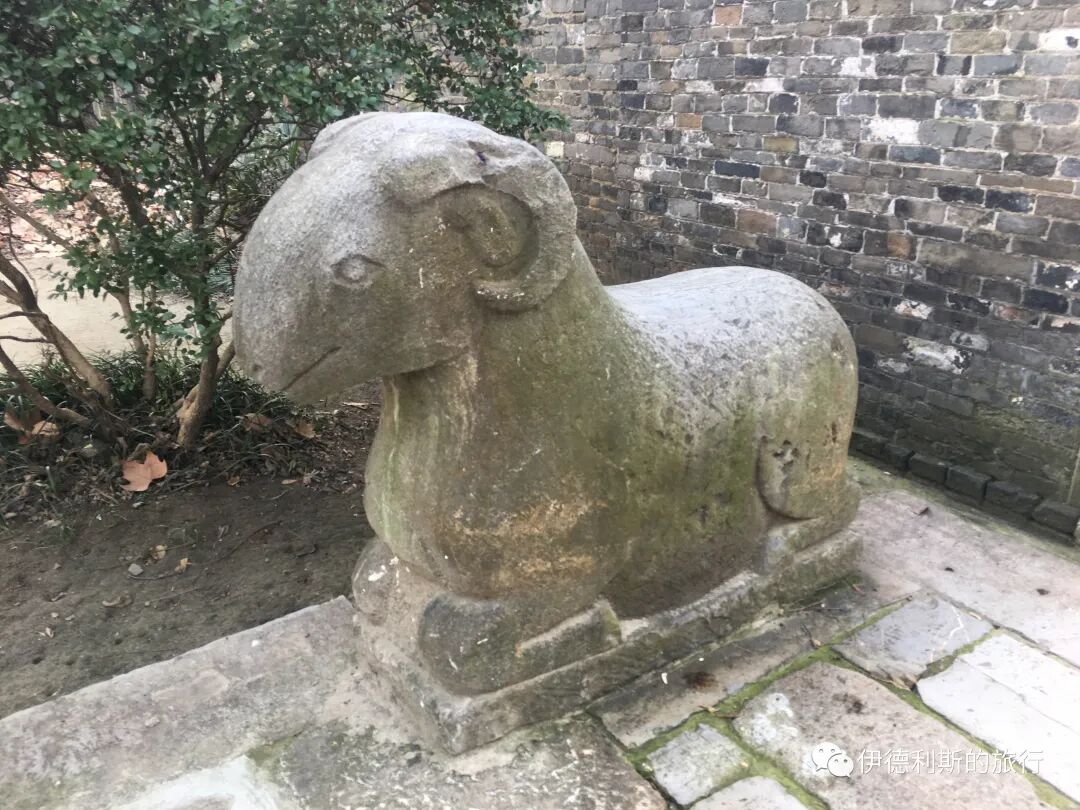
Next to General Zhang Xin's tomb is the cenotaph of Zuo Baogui, a famous Qing dynasty general who fought against the Japanese. During the First Sino-Japanese War in 1894 (the 20th year of the Guangxu reign), Zuo Baogui led his troops to defend the Xuanwu Gate in Pyongyang, dealing heavy blows to the Japanese army. On September 15, Zuo Baogui was personally firing cannons when his right arm was shattered. He bandaged his wound and continued to fight until a bullet struck his chest, and he died heroically at the age of 57. That same year, the Yangzhou government received an imperial order to build a cenotaph for Zuo Baogui in the southern area of the Puhading Tomb and establish a memorial hall. The hall was later destroyed, leaving only the stone tomb cover of the cenotaph.
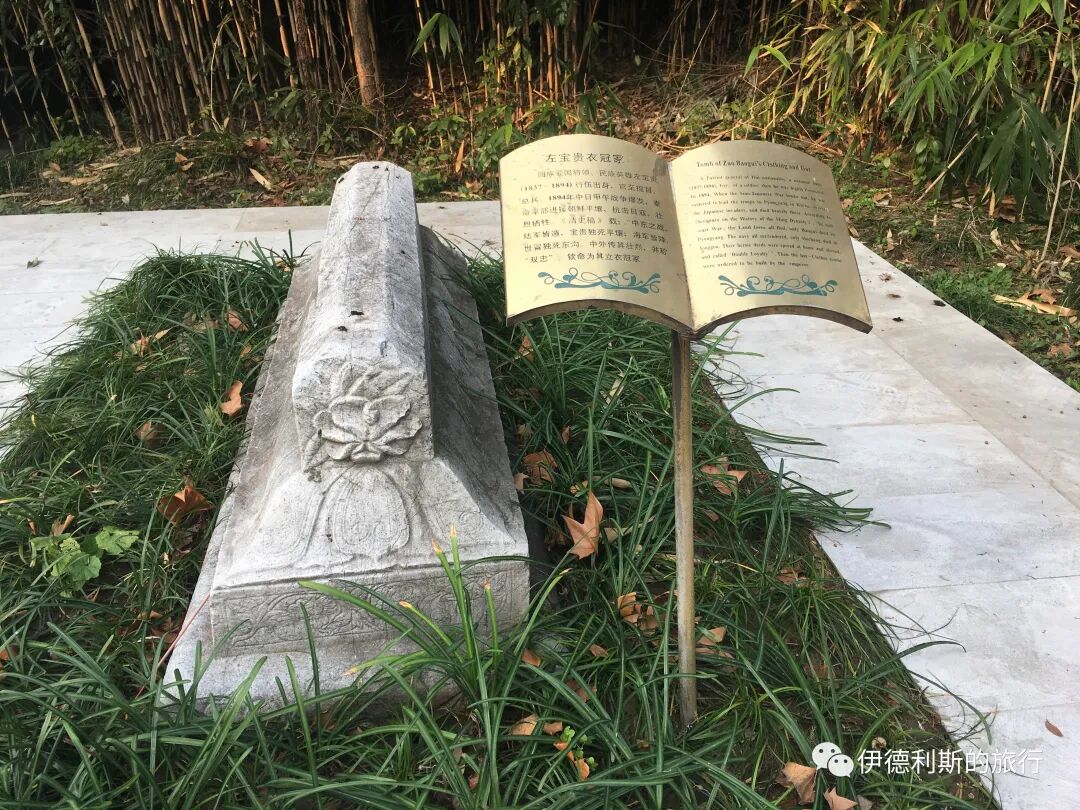
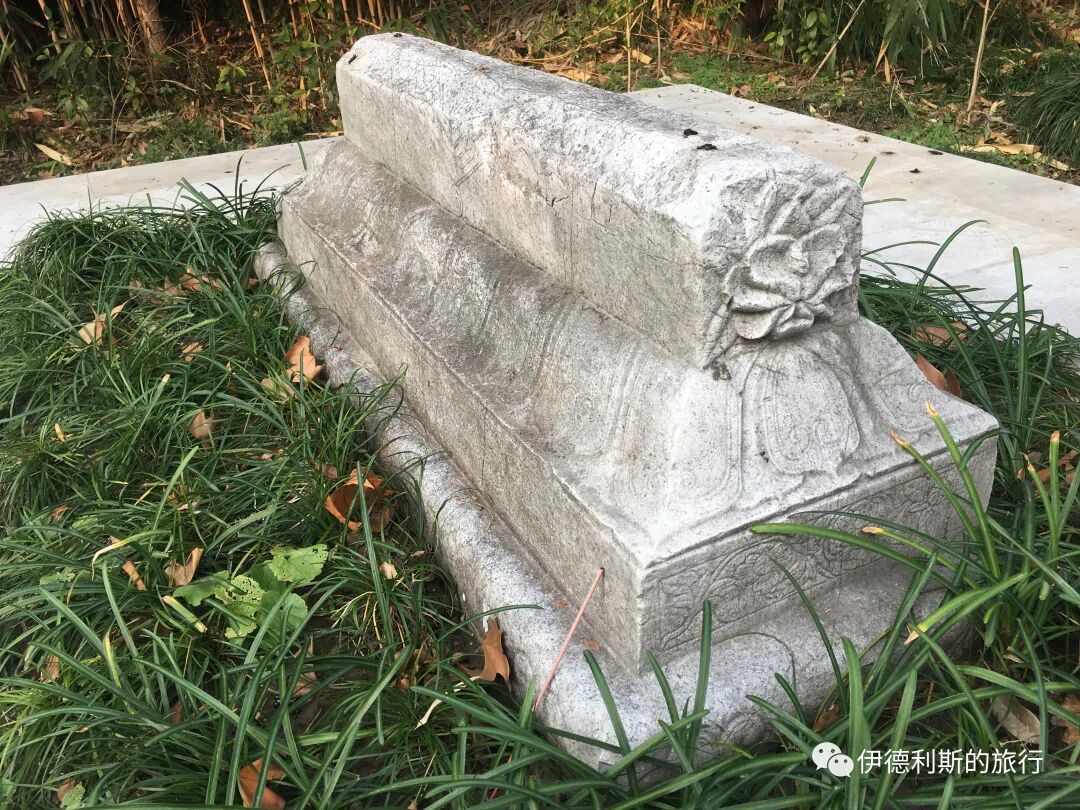
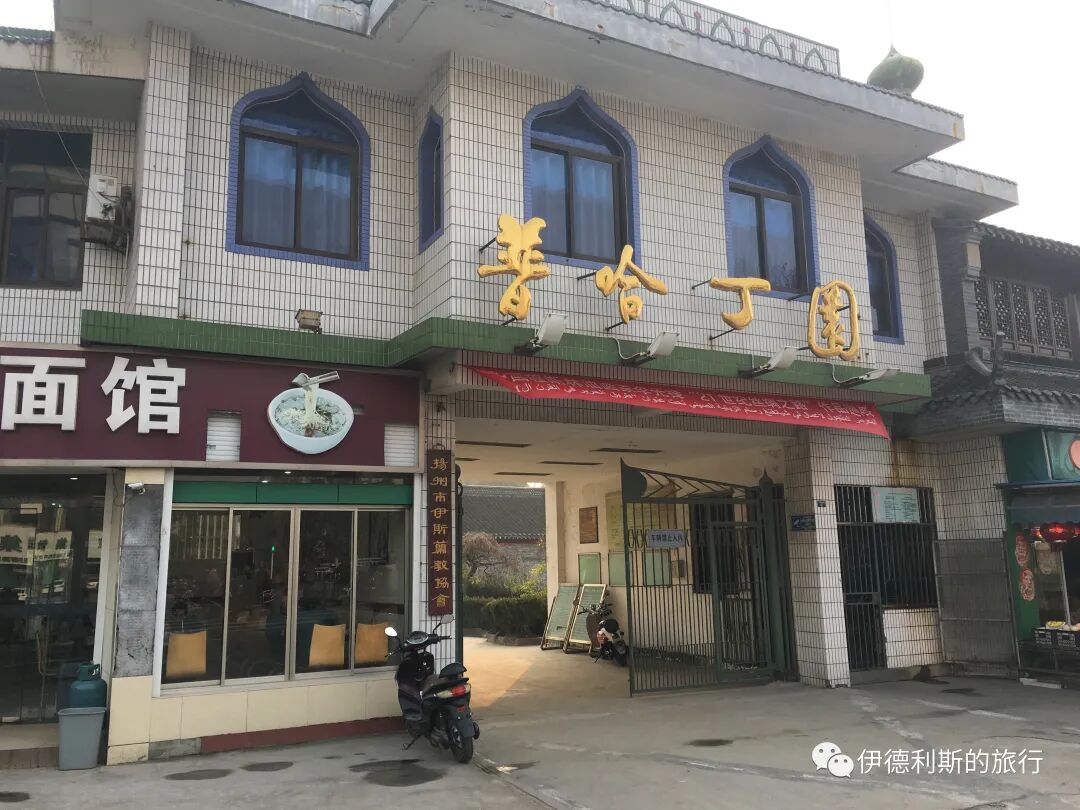
Majian Lane Mosque
There is another Majian Lane Mosque on East Gate Street in Yangzhou. According to the Gu family genealogy of the Hui Muslims, the mosque was built in 1714 (the 53rd year of the Kangxi reign) by Gu Yuanbing, the 24th-generation descendant of the ancient figure Bo Ding.
The Majian Lane Mosque originally had dozens of rooms, including a gate hall, a memorial archway, a main prayer hall, a reception hall, a washroom (shuifang), side rooms, and dormitories. Today, only two rooms of the main hall, the reception hall, and the washroom remain. In the early years of the Republic of China, the mosque housed the second Yangzhou branch of the Beijing-based Zhenzong Newspaper and an Islamic book and newspaper room.
In 1932, Liu Binru, a famous Yangzhou imam and one of the founders of the Chinese Islamic Association, along with Hua Ruzhou, then director of the Jiangdu County Hui Muslim Association, established the Chinese Islamic Scripture Translation Institute here to translate the Quran. Liu Binru, who was fluent in Arabic and Persian, was responsible for translating the Arabic original. Hua Ruzhou translated the summaries from the English version by the Indian Muslim scholar Muhammad Ali, which were then attached before the text of each section of the Quran.
On January 1, 1935, the Chinese Translation of the Quran with Ali's Summaries was officially published. The first printing was 2,000 copies, which were sold by major bookstores across the country.
In 1933, the Yangzhou Islamic Association founded the Hui Muslim Cultural Training Institute here, led by Liu Binru. to teaching Arabic, the institute offered Chinese, English, and arithmetic. The level was equivalent to higher primary school through junior high, and it replaced the traditional individual scripture teaching style with a modern classroom lecture format. Teachers included the Majian Lane Mosque imam Hua Jinhou, who was proficient in Arabic, Imam Ruan Dechang, Imam Lan Baohua of the Hui Muslim hall outside the East Gate, and Liu Binru. They also hired Hui Muslim Association members Shen Junchen and Zhang Shaozhe to teach Chinese and arithmetic, and Hua Ruzhou to teach English. There were over 30 students, but the school closed after one year due to a lack of funds.
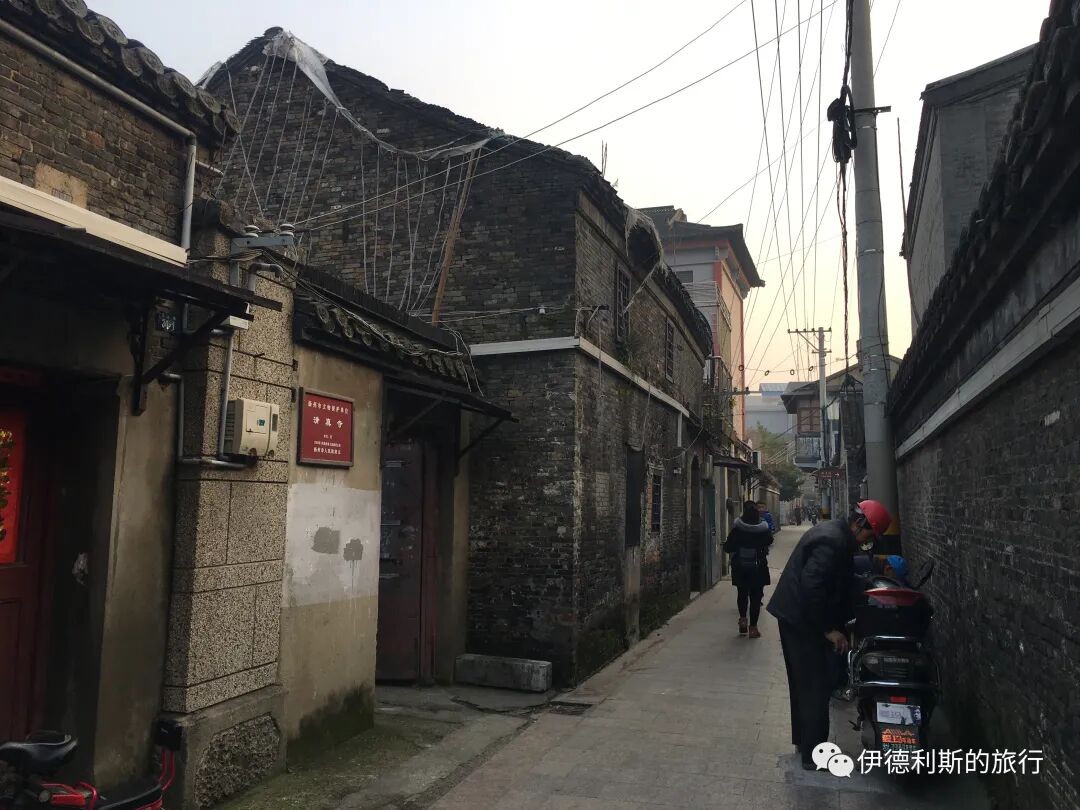
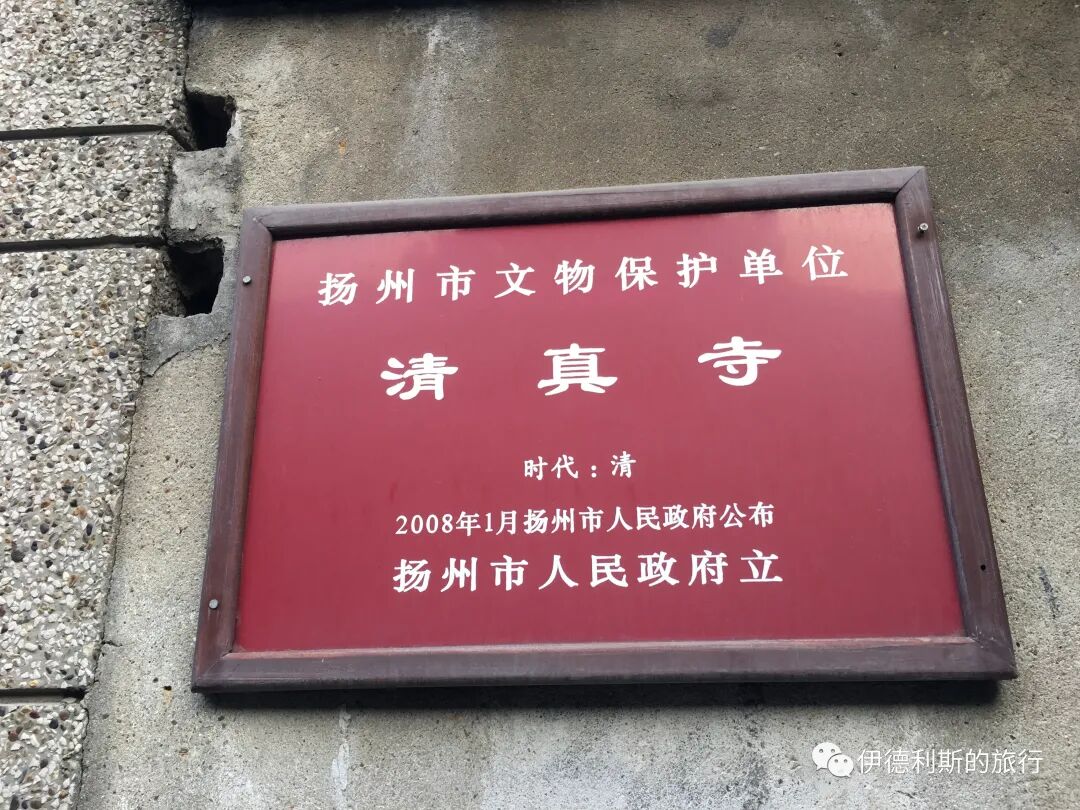
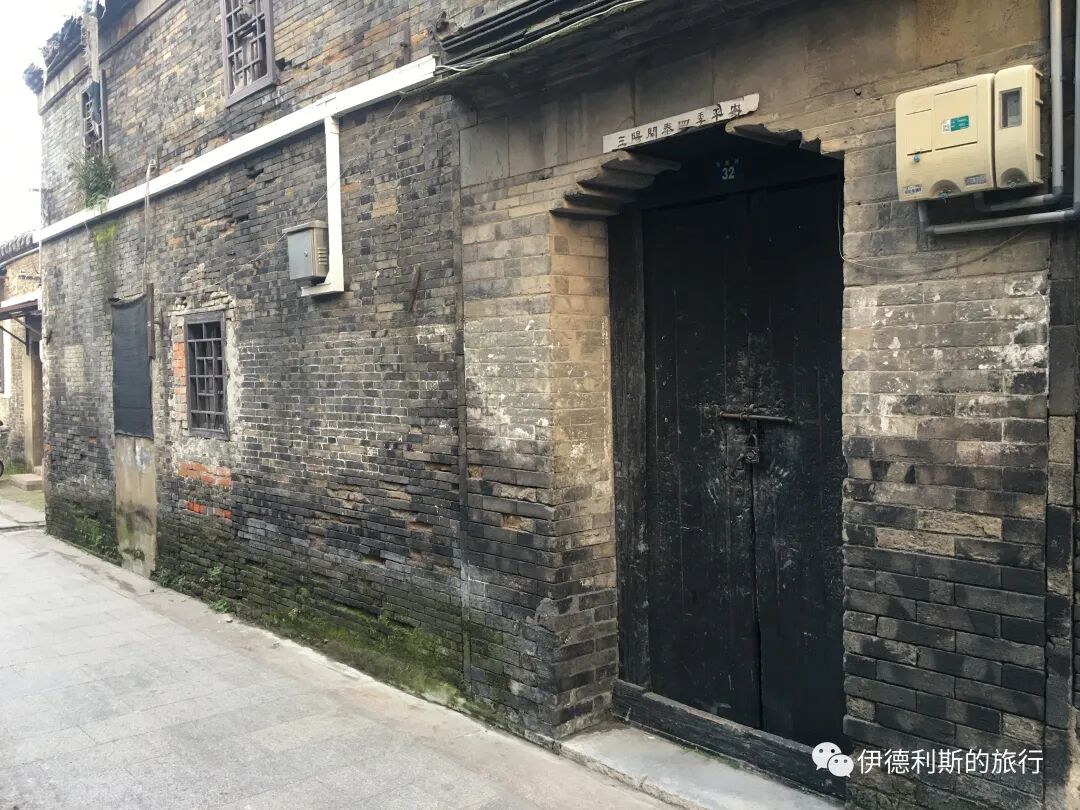
Between 1934 and 1935, the missionary Claude L. Pickens Jr. (Bi Jing-shi) visited the Majian Lane Mosque. He saw a reading room inside with many Muslim magazines, as well as the Quran translated by Wang Jingzhai and parts of the Quran translated by Liu Binru and Hua Ruzhou mentioned earlier. He also photographed the Gu Gong Memorial Monument, which was erected in the mosque in 1931. It stated that Gu Su had served as a mosque trustee for 11 years, repaired the washroom and market stalls for the mosque, and built a new greenhouse, making great contributions to the mosque.
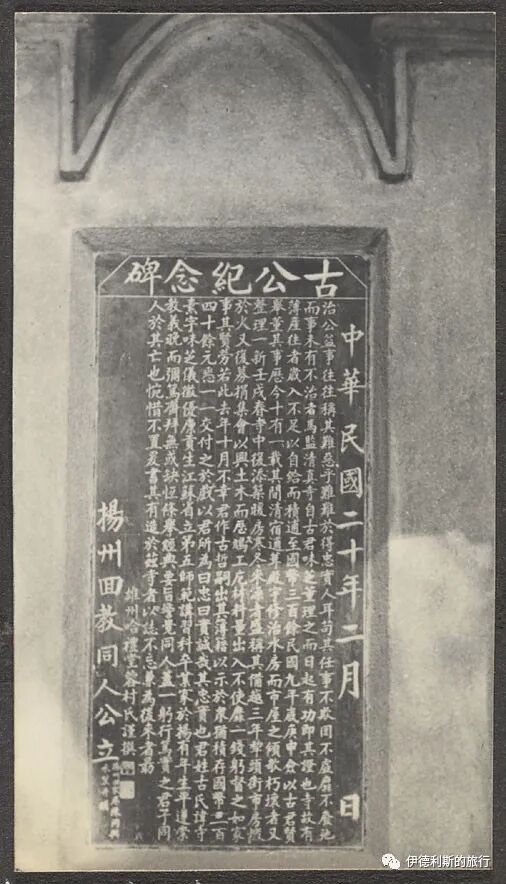
In the autumn of 1946, the Yangzhou Hui Muslim Youth Association founded the Shengsheng Primary School at the mosque, with Liu Binru serving as chairman. The school was a full primary school. When it opened, it had three multi-grade classes and enrolled 150 students. It provided free tuition for the children of Hui Muslims, offered books to those in extreme financial difficulty, and also provided free support to non-Hui Muslim children from poor families. Most of the teachers were unemployed Hui Muslim youths. The school closed in the summer of 1949.
In 1958, the mosque was converted into a factory workshop and occupied by a craft sign factory, a sack factory, and a brush factory. The property was not recovered until 1997, and in 2008, it was listed as a municipal-level cultural heritage site.
Halal food in Yangzhou during the Republic of China era.
The information in this section comes from "Islam in Yangzhou" and "Islam in Yangzhou."
The earliest records of halal food in Yangzhou come from the "Yangzhou Pleasure Boat Records" (Yangzhou Huafang Lu), an encyclopedia covering all aspects of Qing Dynasty Yangzhou. It mentions a cooked lamb shop called the "Hui Muslim Pavilion" (Huihui Guan), pleasure boats called "Ma the Hui Muslim's Ox Tongue" (Ma Huizi Niushetou), and a shop called "Kong Wu's Ox Tongue" (Kong Wu Niushetou). It also notes that "Zhang Si the Hui Muslim's Whole Lamb" (Zhang Si Huizi Quanyang) was a famous dish in Yangzhou at the time.
During the late Qing Dynasty and the Republic of China era, halal food in Yangzhou reached its peak. After entering the Republic of China era, lamb almost disappeared from Yangzhou's halal food scene, which shifted to focus mainly on beef, supplemented by poultry and fish. Many halal beef slaughterhouses were concentrated on Wazi Street. Some of the more famous ones included those run by Wang Tonglan, Jin Zhao'an, Wang Ting, Jin Ronghua, Zhang Youfu, and Li Sanlong. The second and eighth days of every lunar month were cattle market days, which were very busy.
During the Republic of China era, there were over a dozen famous halal restaurants in Yangzhou, which were very popular in the 1920s and 1930s. Examples include Ma Gongxing on Litou Street, Muyuanxing at the north entrance of Yuanmen Bridge, Ma Guangxing Restaurant on Zhuan Street, Tianxing Restaurant on Zuowei Street, Daxing in Darufang, and the Xinxin and Xinlong restaurants in Jiaochang. Among them, Tianxing Restaurant was the most famous.
Opened in the early years of the Republic of China, Tianxing Restaurant was the most famous halal restaurant in Yangzhou at the time. It was located at the busy intersection of Zuowei Street. The building had seven sections from front to back, each consisting of three large, high-ceilinged rooms. The rear section had a spacious flower hall on the east side that could host fifty banquet tables at once. At that time, everyone from scholars and writers to salt merchants and officials frequented the restaurant. Famous Peking opera actors Zhou Xinfang and Cheng Yanqiu would eat at Tianxing whenever they came to Yangzhou to perform.
Tianxing Restaurant was especially skilled at making shark fin and fish skin, and its roast duck was second to none. Famous dishes included braised shark fin (yuanmen yuchi), clear soup shark fin (qingtang yuchi), hibiscus chicken with shark fin (furong ji yuchi), skin-wrapped fin (pijia chi), roast duck (kaoya), braised chicken with crispy meatballs (yuanmen ji suyuan), ten-delicacy fish maw (yudu shijing), braised beef tendon (bashao niujin), and fish stuffed in lamb (yangfang cangyu).
There were over a dozen halal chicken and duck shops in Yangzhou. The most famous was Linyuanxing Chicken and Duck Shop, which was the predecessor of the later Halal Hongxing Ethnic Restaurant. The founder of Linyuanxing Chicken and Duck Shop was Lin Guangfeng, also known as Songting. When he was young, he worked for two or three years for his relative, Governor Shan Diankui, in Beijing. After returning to Yangzhou, he apprenticed at the halal Muyuan Restaurant. After his apprenticeship, Lin Guangfeng opened the halal Baoxing Restaurant, which also sold chicken and duck. It later closed due to poor management of staff. After Baoxing closed, Lin Guangfeng opened the halal Linyuanxing Chicken and Duck Shop at the North Archway entrance, where he sold his own products. The North Archway was a busy market back then, filled with snack stalls, magicians, acrobats, and fortune tellers. Linyuanxing did a booming business selling oil-poached chicken (youji), pressed duck (bandya), and roast duck (shaoya).
Linyuanxing's oil-poached chicken was white in color and fragrant, with a tender, delicious texture that even the elderly could chew easily. Pressed duck and salt-water duck (yanshuiya) are both called salted duck. In practice, they sold salt-water duck during spring, summer, and autumn, and pressed duck in winter. Pressed duck was salted and prepared in the ten days before the Minor Snow (xiaoxue) solar term until the middle of the eleventh lunar month, then hit the market before the Spring Festival. The secret to Linyuanxing's salted duck was the aged brine and the heat control; they were so precise that they would not cook even one bird more than the set amount per pot. Linyuanxing's roast duck was different from the large-fork roast duck in other shops; they used small forks to prop the ducks up inside the oven for hanging roast. The belly broth (dutang) from the roast duck was very flavorful. When customers bought roast duck, the shop gave them some broth to take home, mix with water, and simmer with the duck for a delicious soup.
Linyuanxing had an agreement with the imam of the mosque to come to the shop on time every day to perform the slaughter. Everything was freshly prepared, and any sick poultry was disposed of immediately. When customers came to the shop, the staff would chop whatever part they pointed to, treating regular customers and strangers exactly the same.
After decades of training, members of the Lin family opened their own shops. In Yangzhou, there was Linmaoxing at Dadongmen, Linshunxing on Zhuan Street, and Linzhenxing at Xiaodongmen. Outside the city, there was Linmaoxing on North Henan Road in Shanghai and Linyuanxing at Taibai Temple Bridge in Suzhou. Many other Lin family members also sold halal chicken and duck at the Xuanmiao Temple and Guanqian Street in Suzhou, and at the small docks in Zhenjiang.
Besides chicken and duck shops, there were over a dozen halal beef shops in Yangzhou. Famous ones included Chenwanxing in the drill ground (jiaochang), Xiaoqizi at the north entrance of the drill ground, Liertuozi on Zhuan Street, Chengsan (Zhaoxiang), and Sister Ma at the South Gate. Chenwanxing was known for its beef potstickers (guotie), steamed buns (baozi), and rice porridge (shaomi). They used a flat-bottomed pan to fry them, making them soft on top and crispy on the bottom. Their five-spice beef was especially famous. They used beef shank (zoujingzhua) that was marinated and boiled. When sold, it was sliced so thin it was translucent and sprinkled with five-spice powder. In summer, they wrapped it in fresh lotus leaves, making the beef smell fragrant and fresh. In winter, they sold frozen lamb jelly (yanggao), which was delicious when dipped in sweet sauce.
Xiaoqizi Beef Shop sold raw and cooked beef, as well as beef soup, beef noodles, steamed beef buns, steamed beef dumplings, pan-fried beef buns, and their most famous beef potstickers. Liertuozi was most famous for his beef soup. His soup was rich and authentic, served with beef tripe, beef tongue, beef liver, beef lips, plain boiled beef, and beef tendon (tuijinjua), making it refreshing and tasty. Sister Ma's shop is located at the South Gate of Yangzhou and is famous for its superb knife skills. The beef slices she cuts are as thin as paper and flutter when the wind blows.
Beyond meat, there are over thirty Hui Muslim flatbread (shaobing) shops in Yangzhou, offering flavors like flaky (casu), white sugar, red bean paste, salt and pepper, scallion oil, shredded radish, pea (andoutou), and osmanthus brown sugar, with shapes including rectangular, oval, diamond, and chrysanthemum. The most famous one is Mu Si Flatbread Shop at the entrance of Quelong Lane in Jiaochang. Their sesame oil dry-mixed noodles are neither hard nor mushy, with seasonings that soak deep into the noodles, making them very refreshing. Their most famous item is the straw-oven flatbread (caolu shaobing), baked in a square vertical jar oven taller than a person, with a dome-shaped interior and a round opening one and a half feet in diameter at chest height. To make them, they first heat the oven's dome and side walls with straw, dampen the interior with water once hot, and then stick the fermented dough portions onto the inner walls. After sticking them on, they close the oven door and bake them with the residual heat of the straw ash, shoveling them out once they are golden, cooked, and plump like steamed buns (mantou). One oven can bake forty to fifty flatbreads, which are crispy, fragrant, soft, and very cheap, attracting many farmers coming into the city to buy them. Because the flatbreads are thick, they need to be soaked in soup to fully soften; in the past, when a woman was recovering from childbirth, her family would send her straw-oven flatbreads and an old hen to nourish her body.
Additionally, there are the tall steamed buns (gaozhuang manshou) and salt and pepper rolls (jiaoyan juanzi) from Wang's Noodle and Flatbread Shop at Dongquan Gate, which taste best when dipped in beef gravy. The sesame oil dry-mixed noodles at Mu Si Flatbread Shop at the entrance of Quelong Lane in Jiaochang are neither hard nor mushy, with seasonings that soak deep into the noodles, making them refreshing to eat.
During the Republic of China era, Yangzhou had two halal tea and snack shops: Defeng on Wanzi Street and Tongfeng on Gengzi Street. Because they used only vegetable oil, not only did fellow Muslims (dost) buy from them, but many monks, nuns, and vegetarian Han Chinese also purchased their goods, especially their fruit powder (jingguofen) and mooncakes, which were particularly popular.
There were also two halal teahouses in Yangzhou: the Park Religious Room (Gongyuan Jiaomenshi) and the Old Dragon Spring Vegetarian Teahouse (Laolongquan Suchaguan) in Jiaochang. The Park Religious Room was located in the park next to Park Bridge in the city center, with three rooms side-by-side facing west. The first room was for the stove and cutting board, while the other two were for tea seating. The teahouse is filled with cypress wood square stools and tables. The east wall has floor-to-ceiling glass windows, and right outside is the Little Qinhuai River, where you can see clear water and weeping willows from your seat. Painted pleasure boats from Slender West Lake often dock at the pier next to the teahouse. Locals board boats here to go through the North Gate water gate all the way to Slender West Lake for sightseeing. On the way back, they land at the same pier and can stop by the halal teahouse for tea and snacks. Go enthusiasts in the city often gather here to drink tea, play games, and sharpen their skills. The halal teahouse is open for morning and afternoon sessions, serving plain tea, pastries, and dried tofu strips (gansi). The menu includes jade steamed dumplings (feicui shaomai), small steamed beef buns (xiaolong zheng niurou baojiao), beef and lamb dumplings (niuyangrou shuibobo), pan-fried beef and lamb buns (jian niuyangrou bao), beef potstickers (niurou guotie), scalded dried tofu strips (tang gansi), boiled dried tofu strips (zhu gansi), bamboo shoot and beef strips (sunsi niurusi), beef and lamb noodles (niuyangrou mian), stir-fried noodles (chaomian), and braised noodles (weimian). The best item is the pan-fried pancake (youjian guobing), which has a thin crust, plenty of filling, and a sweet, crispy flavor.
The Old Longquan Vegetarian Teahouse at the drill ground is a place for both drinking tea and trading antiques. Many antique dealers gather here to talk business during morning tea time. This place is most famous for its vegetable oil baked flatbread (suyou huoshao) and sugar and salt rolls (tangyan juanzi).
The halal teahouse has only one waiter, a short, thin, middle-aged man whom regular customers call Little Mouse. He is quick and always greets people with a smile. As soon as a customer leaves, he wipes the table with alkaline water and then cleans it with boiling water.
The halal food industry in Yangzhou declined sharply around 1949. Daxing Shop closed first, followed by Tianxing Restaurant, and other shops either changed businesses or shut down. After many twists and turns, only the struggling Ethnic Restaurant on Ganquan Road remained.
Tianxingzhai
For my first meal in Yangzhou, I went to Tianxingzhai, which just opened 16 years ago. I ordered boiled dried tofu strips (dazhu gansi), steamed beef dumplings (niurou zhengjiao), sticky rice and shrimp steamed dumplings (nuomi xiaren shaomai), beef noodles (niurou mian), smoked fish (xunyu), and chicken soup with vegetarian chicken (jitang suji). It is not easy for a new local-style halal restaurant to open in Yangzhou, and the food here is delicious with a slightly sweet taste. The beef noodles are huge and taste amazing, and the steamed dumplings are the best. I don't think any halal restaurants in Beijing can compare. (This place was not doing well when I visited again in 2021.)
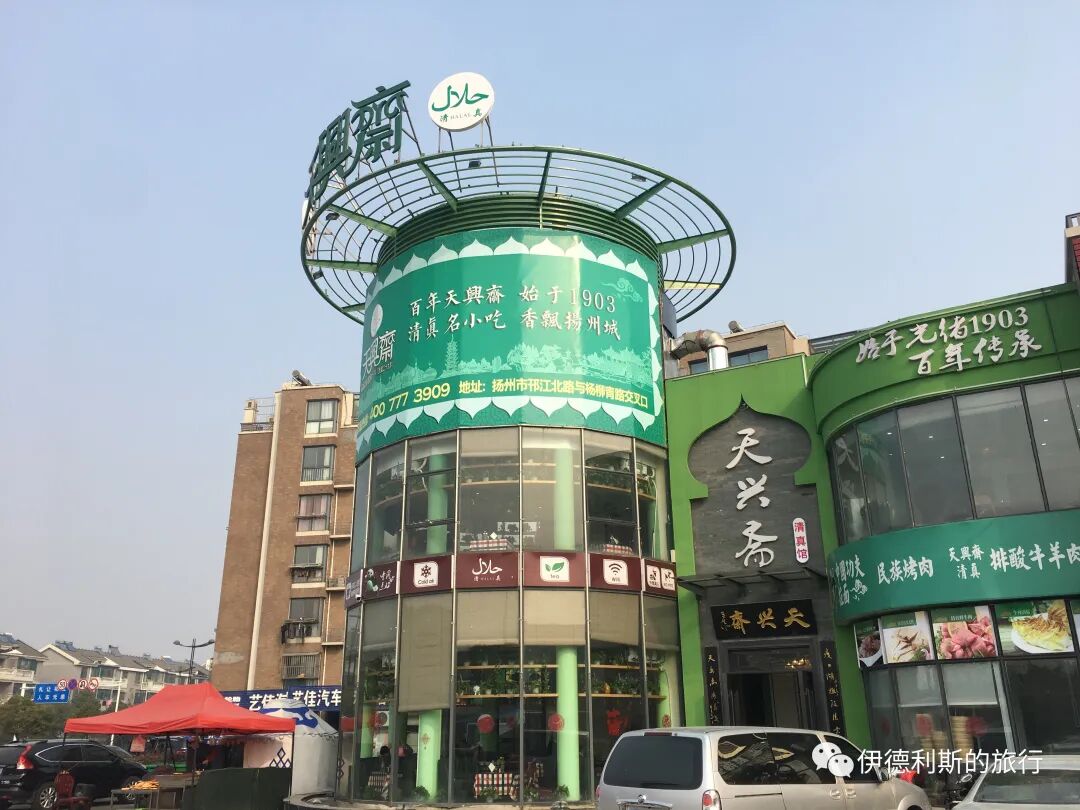
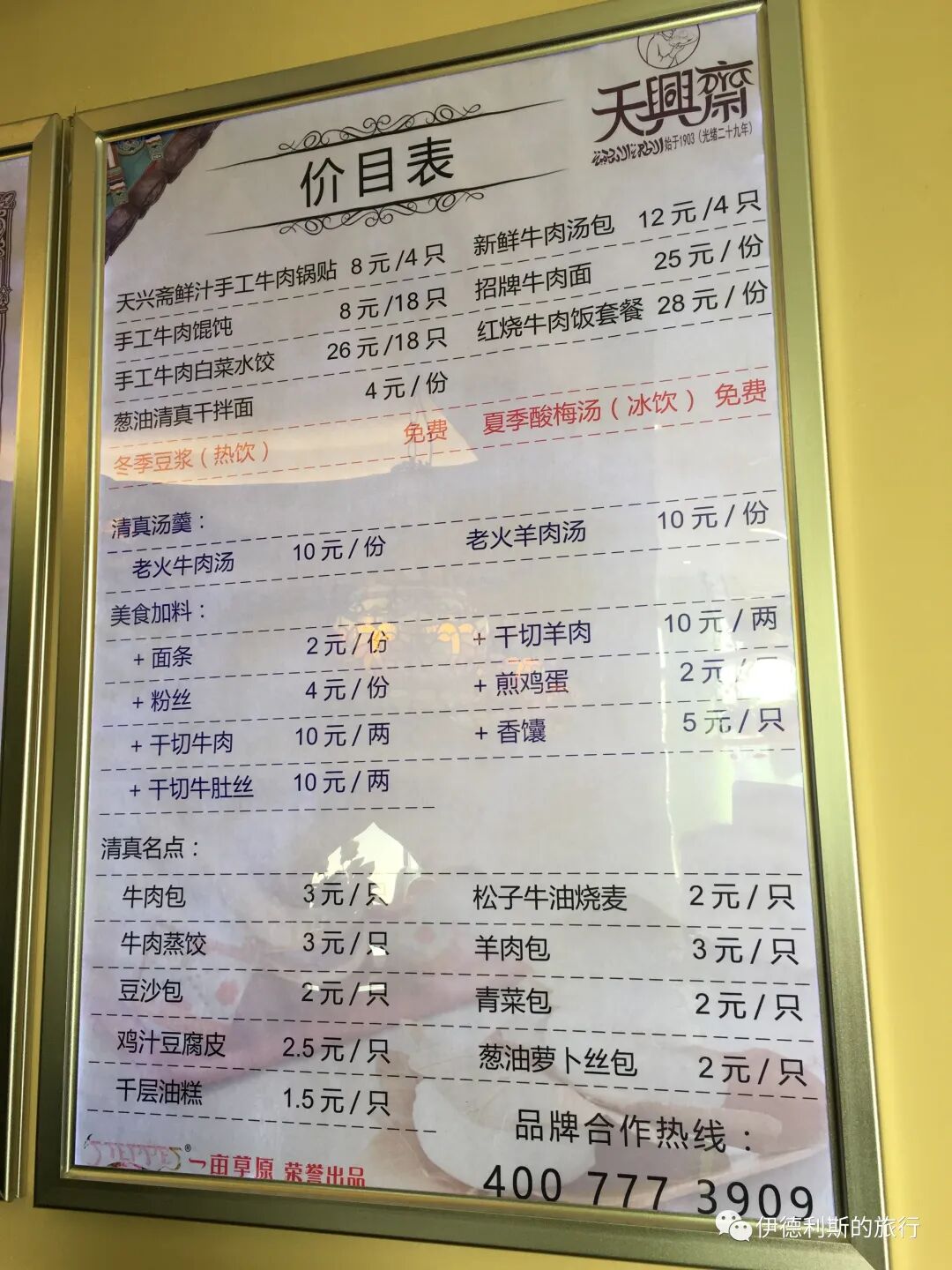
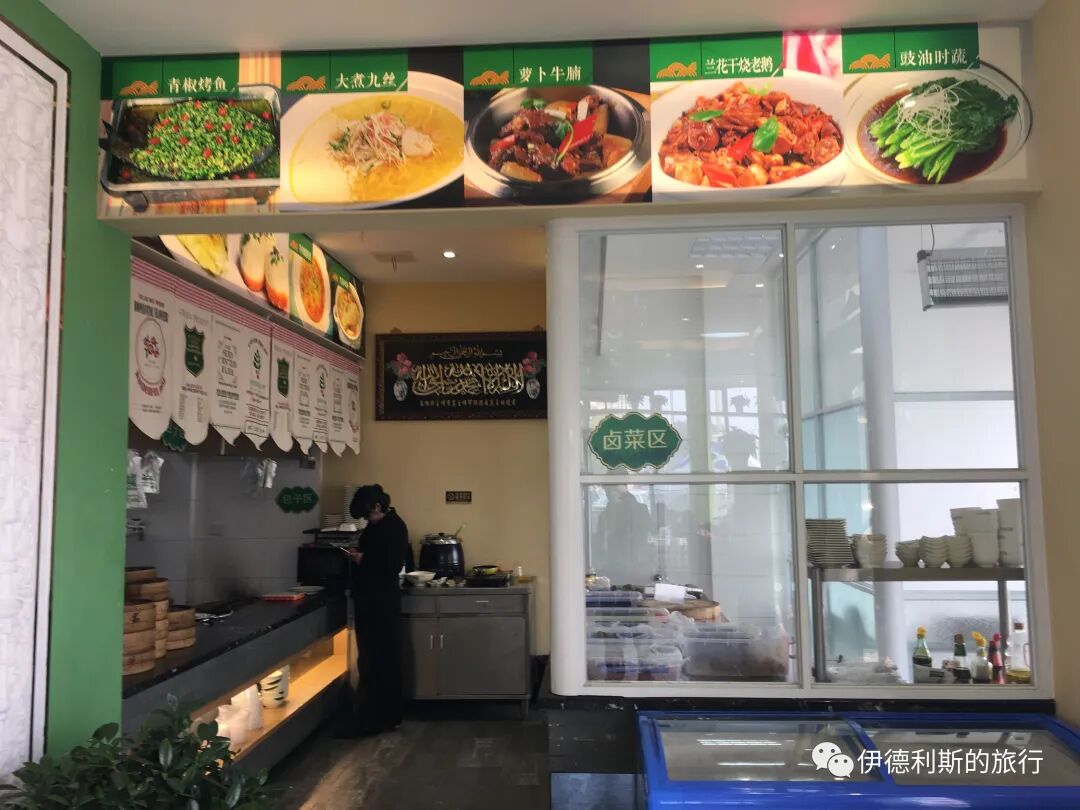
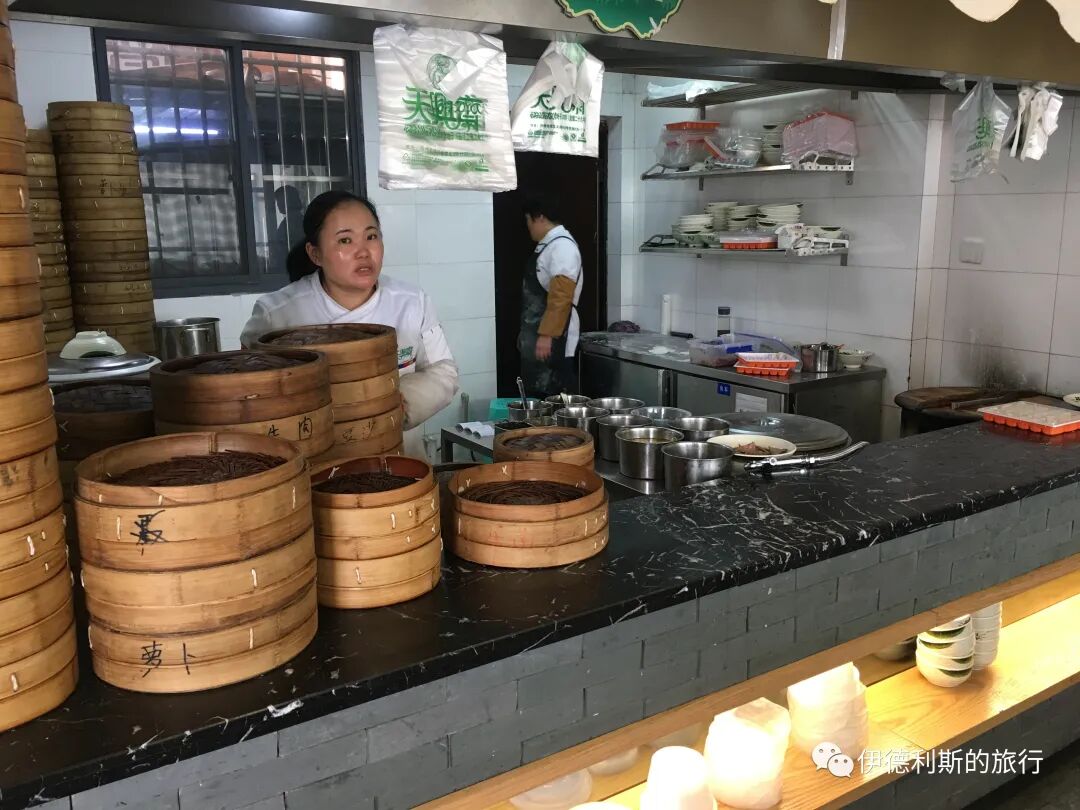
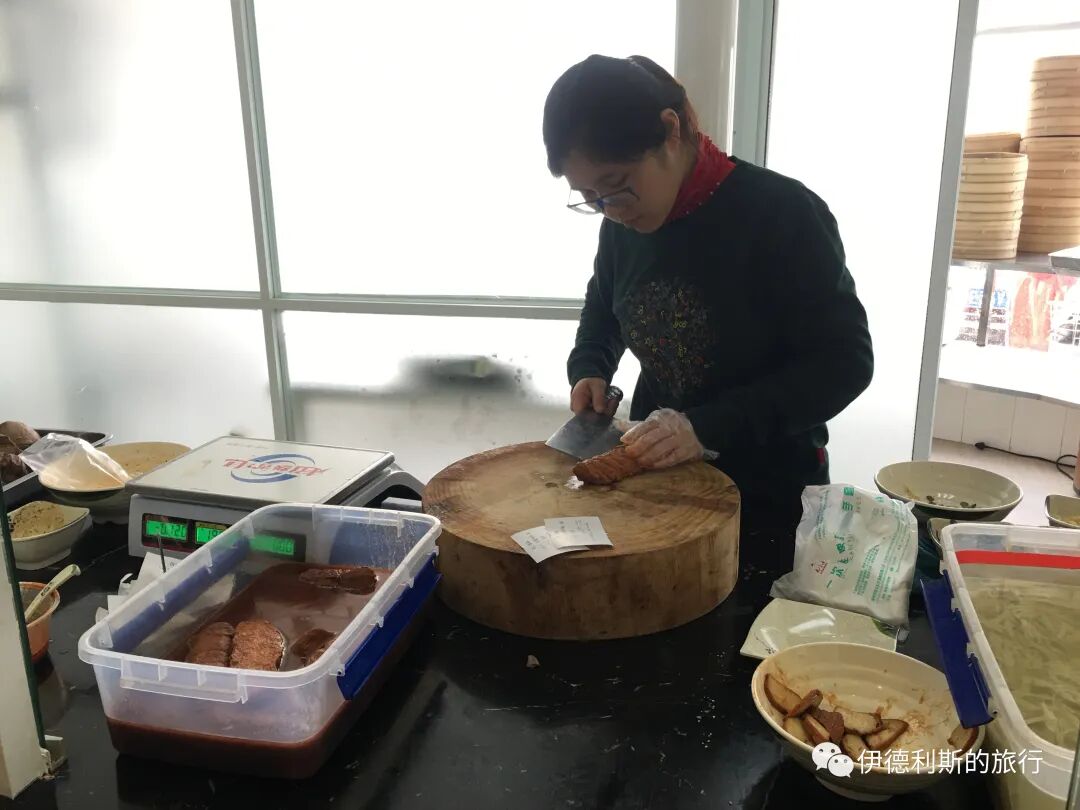
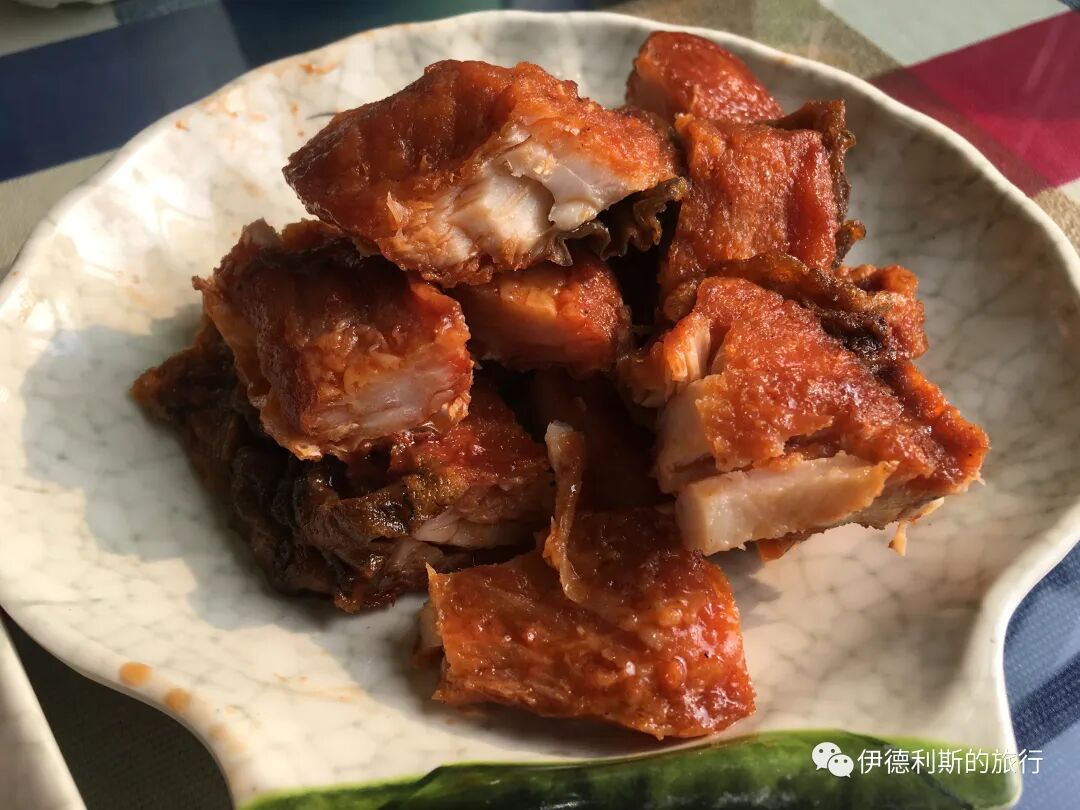
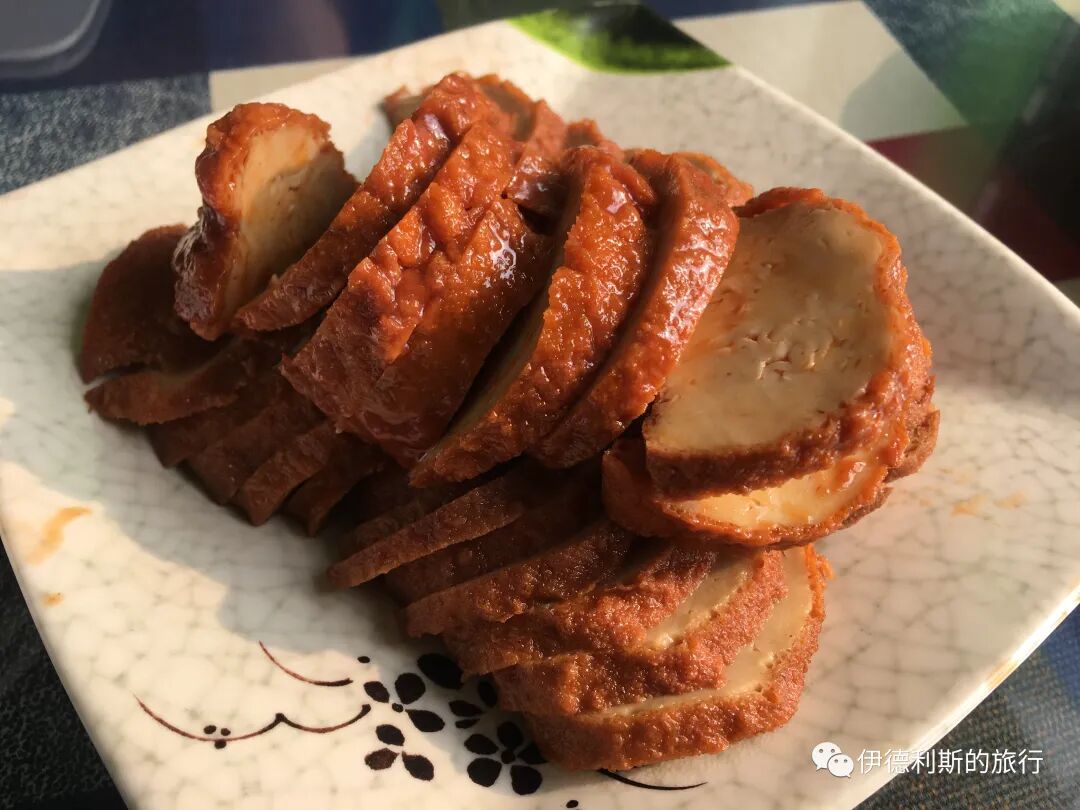
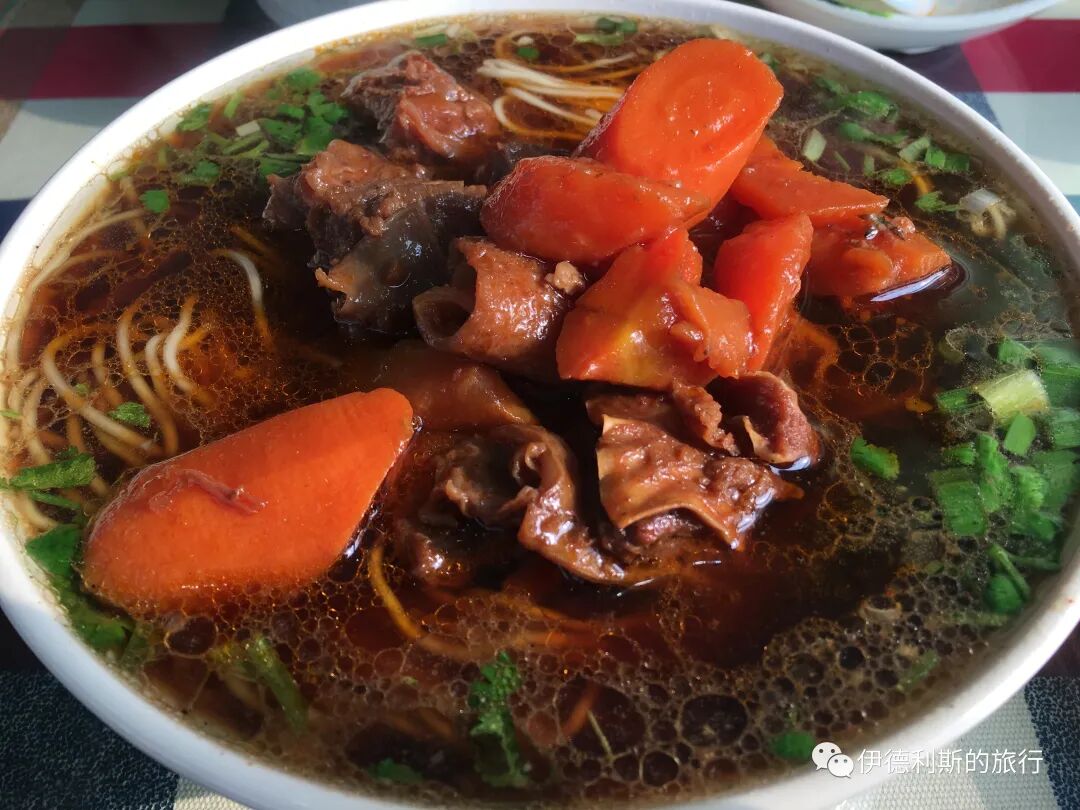
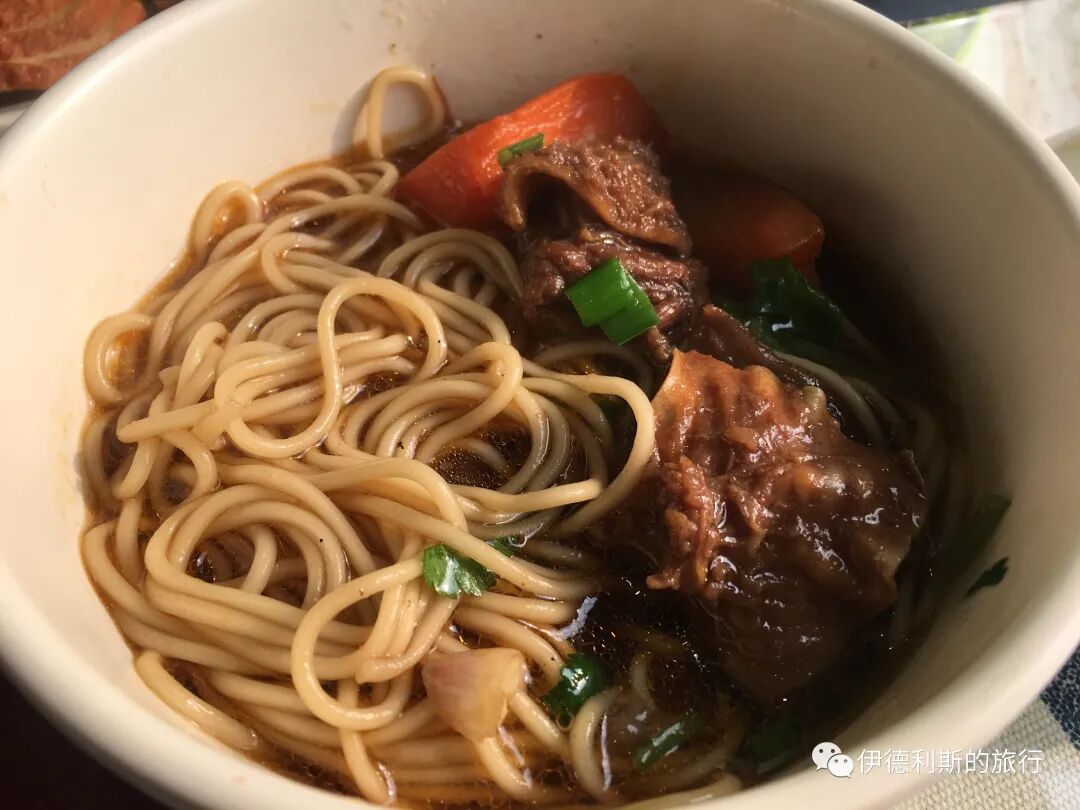
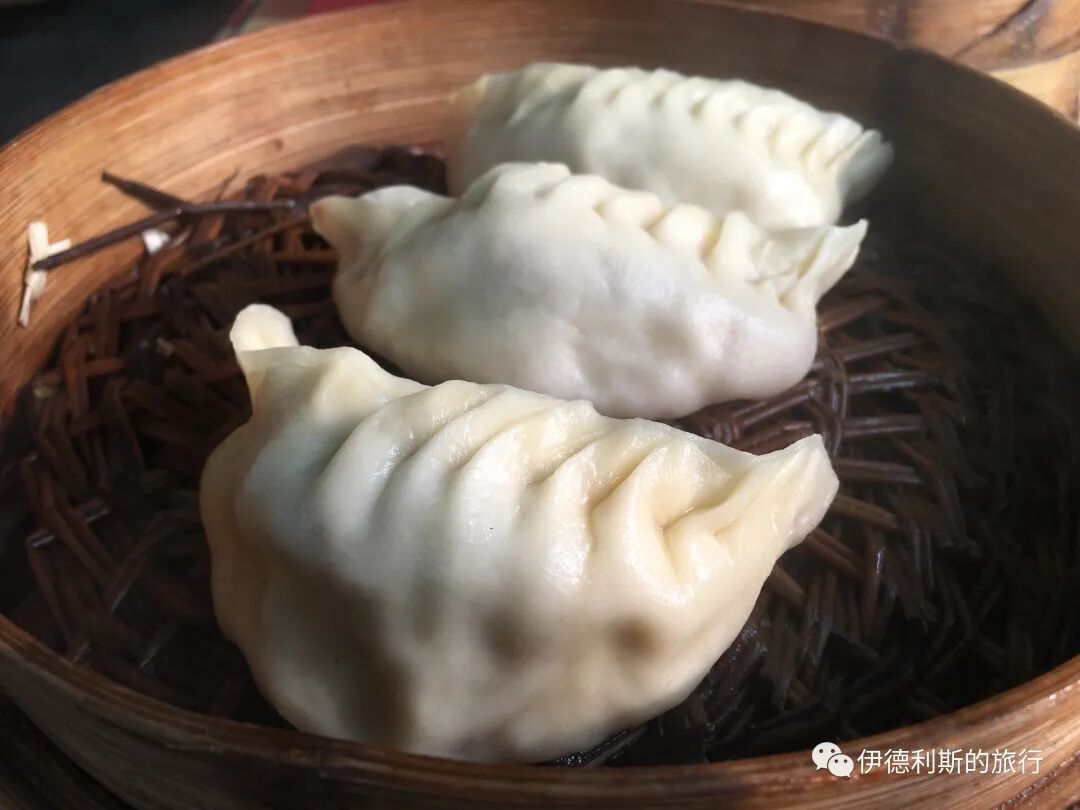
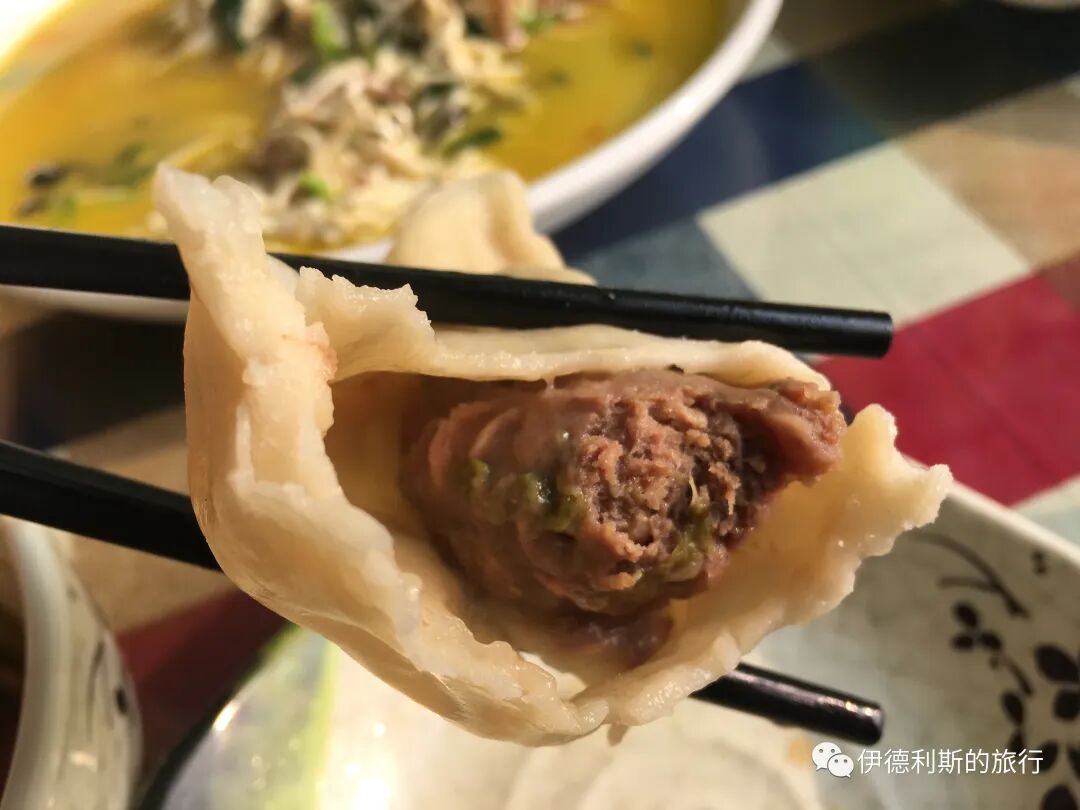
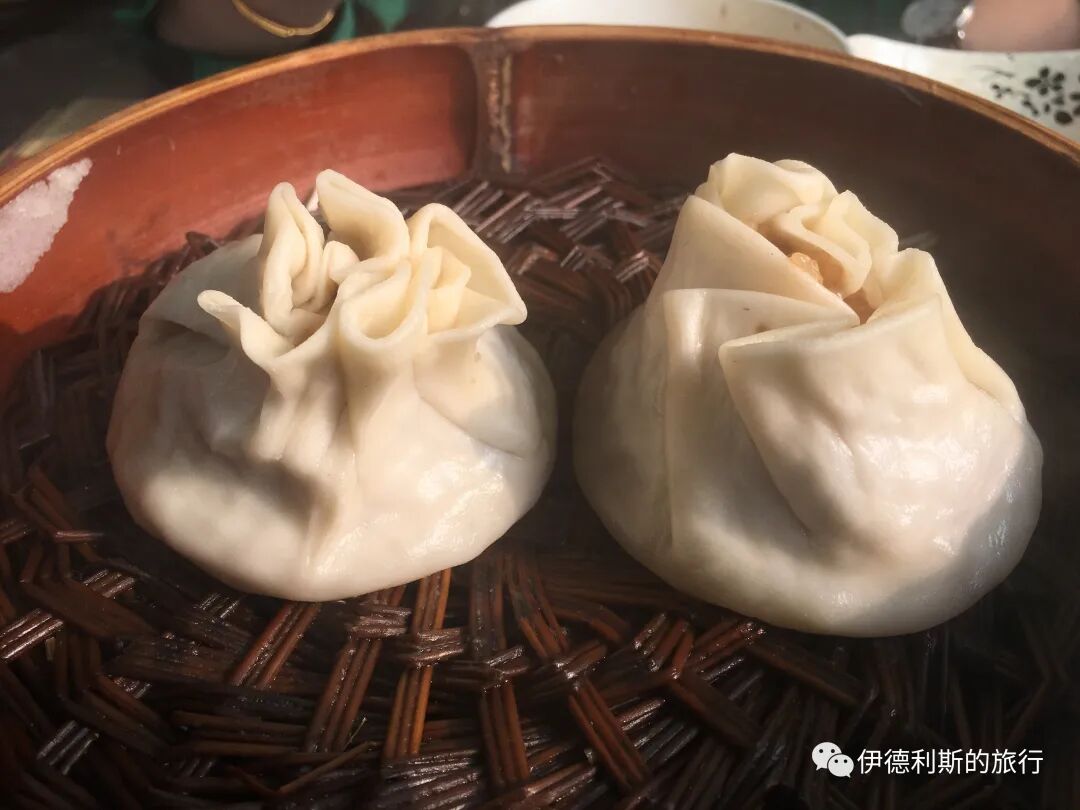
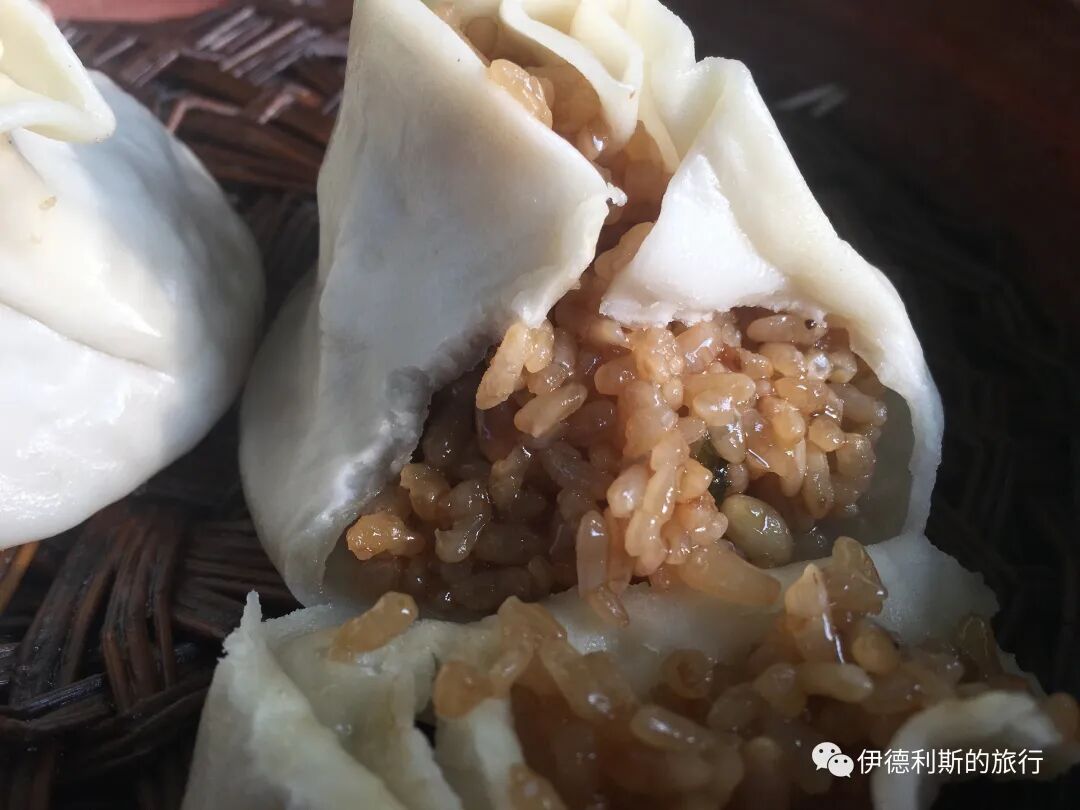
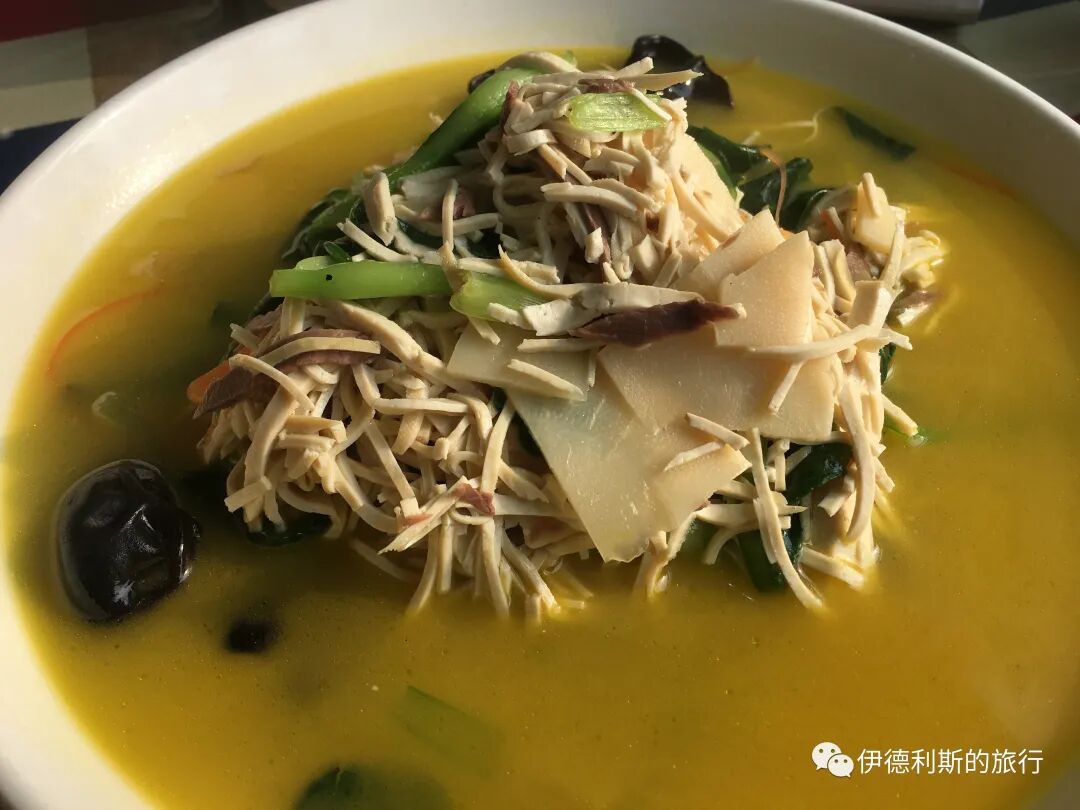
Yixiangzhai
There is another Yixiangzhai on the street by the Puhading Tomb. It is a beef and lamb restaurant run by local Hui Muslims in Yangzhou. They serve hot pot, stir-fried dishes, and snacks. I ordered lamb liver, boiled dried tofu strips (zhugansi), and beef soup. The lamb liver was incredibly tender with a slightly sweet taste. It was delicious. (This place had closed down when I visited in 2021.)
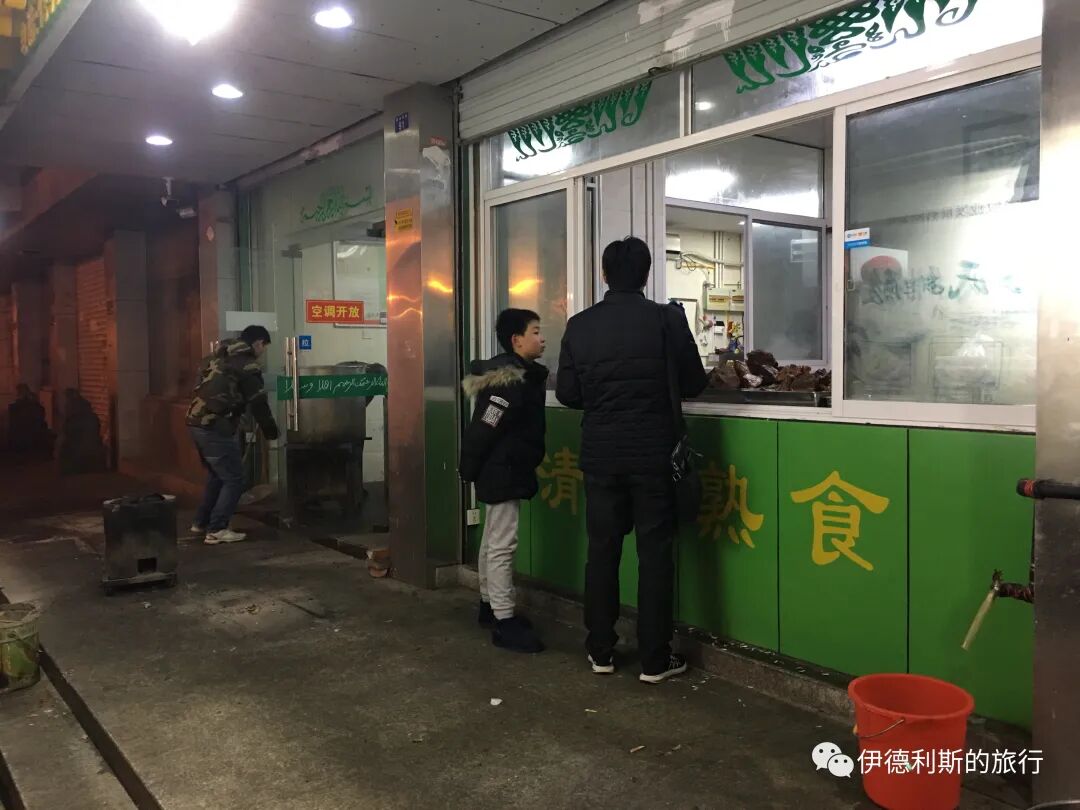
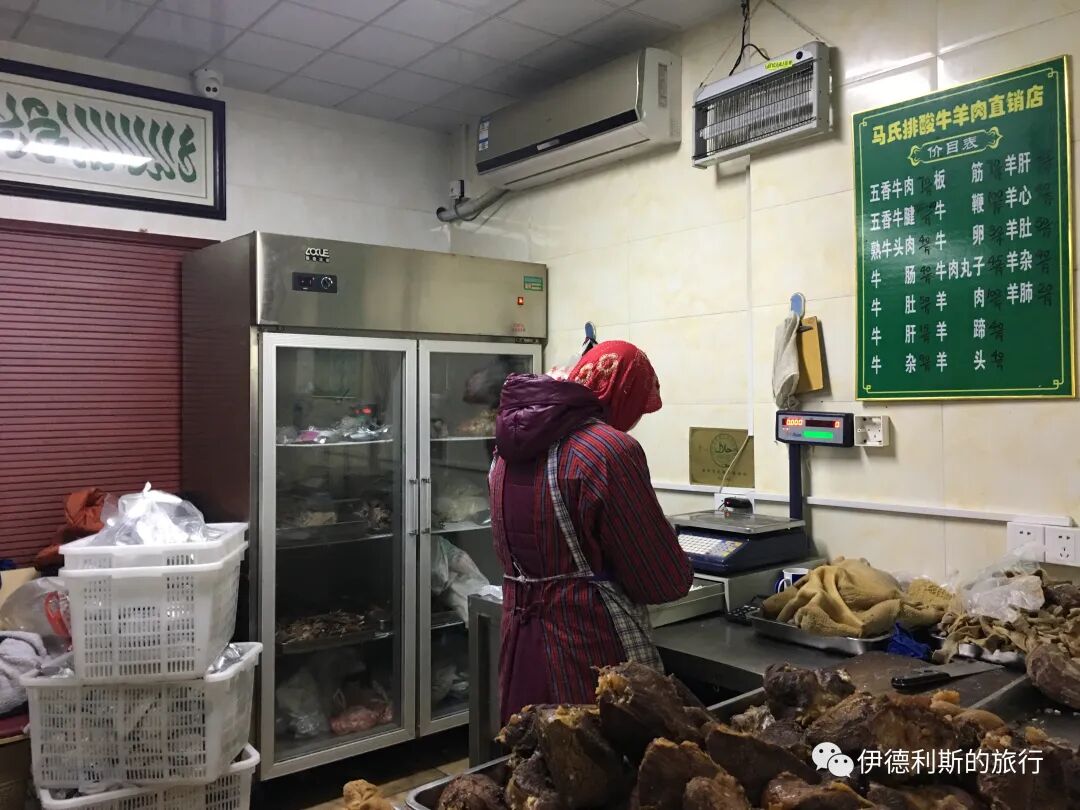
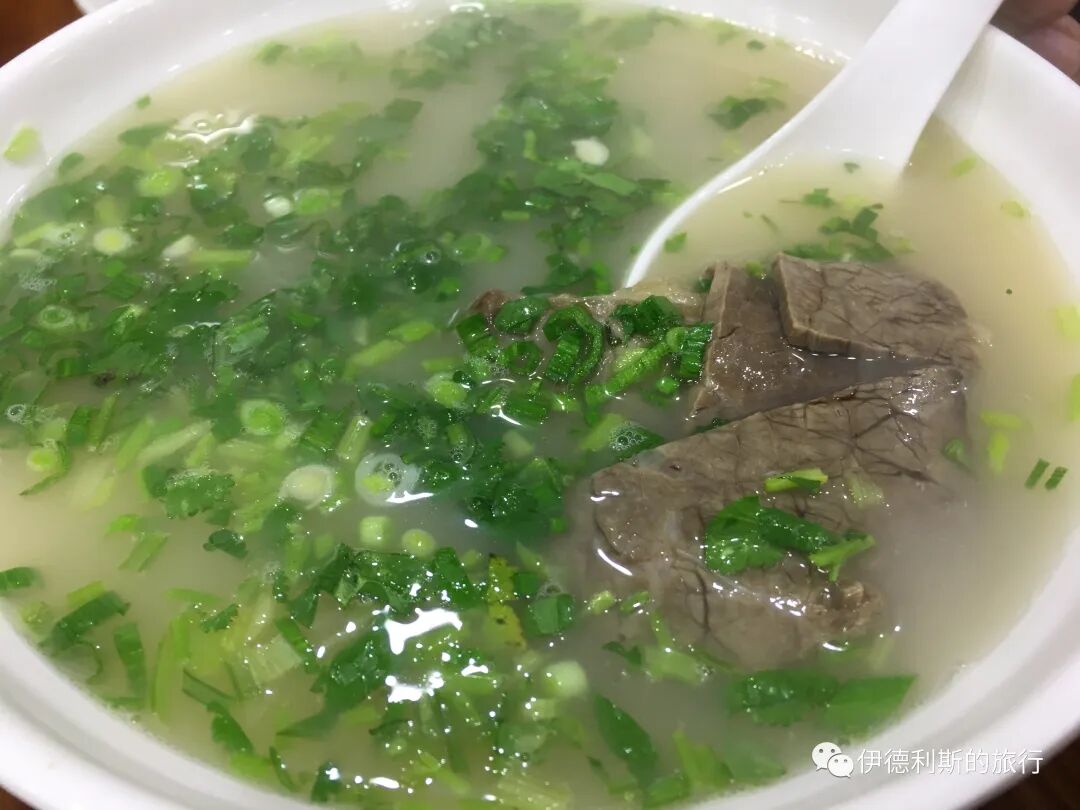
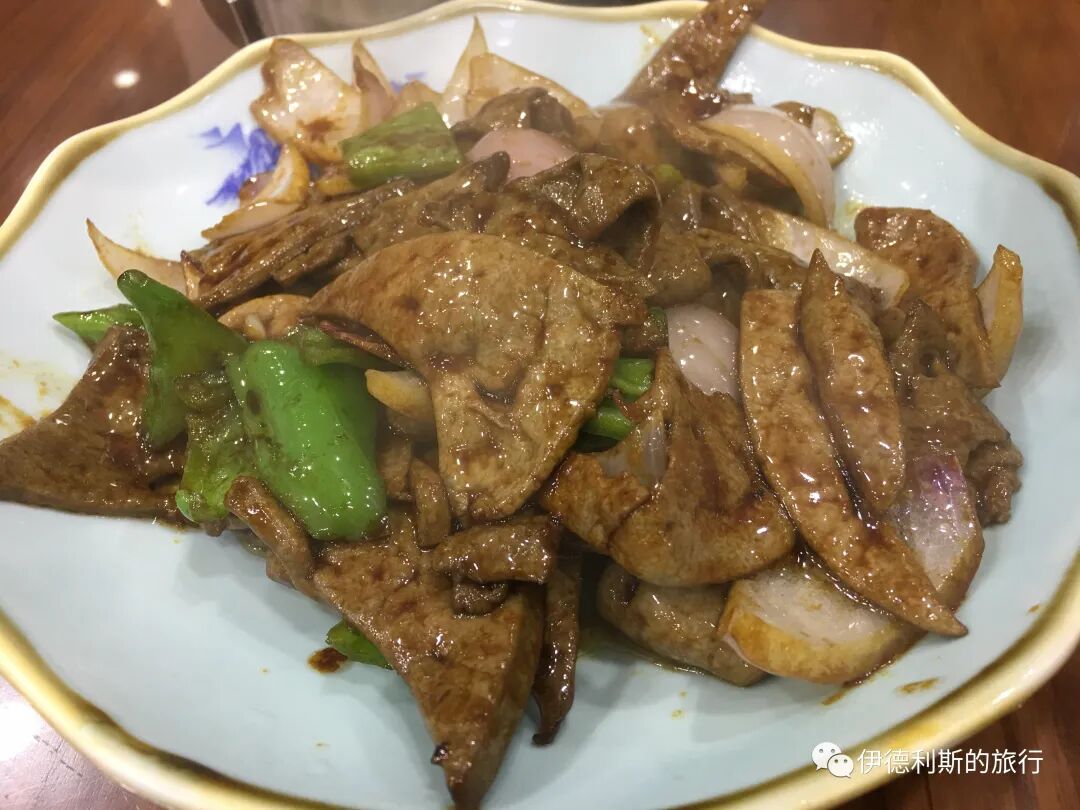
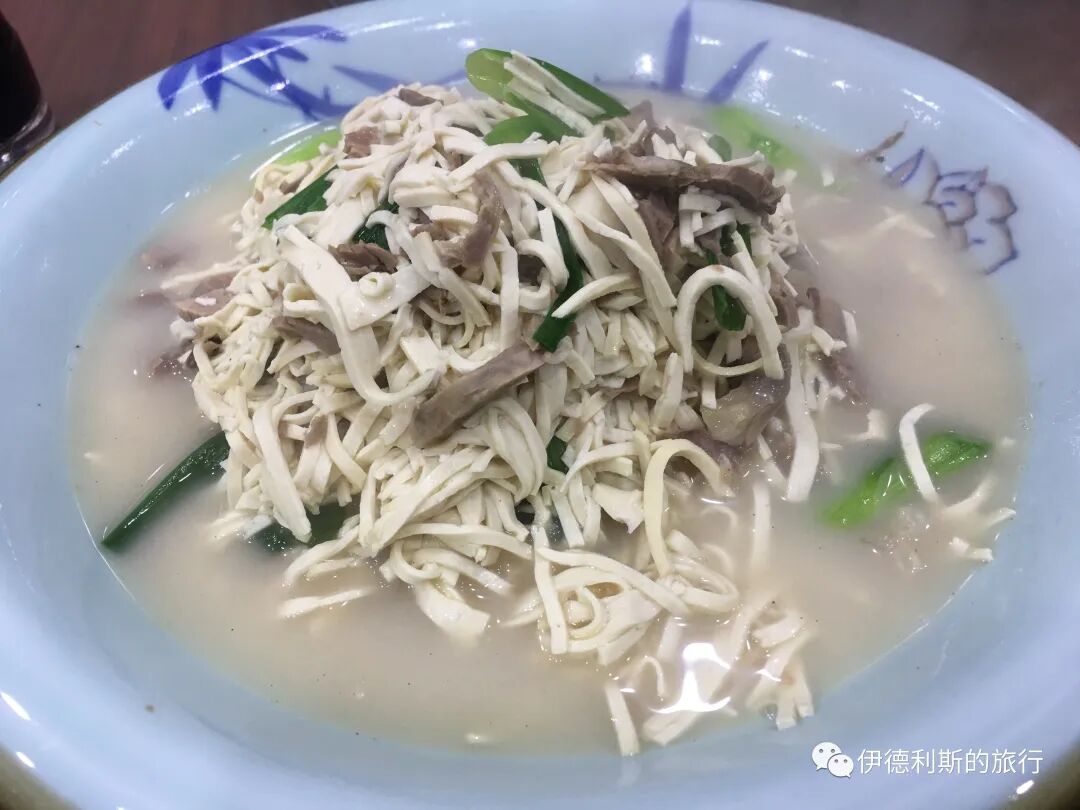
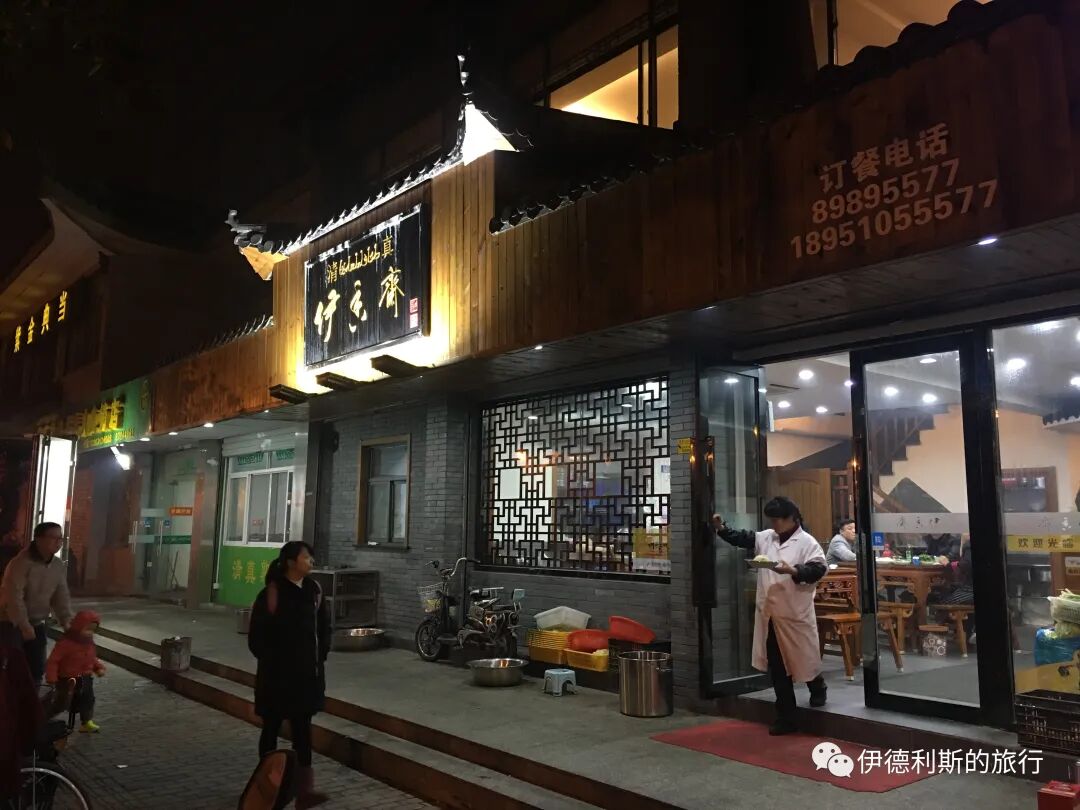
Yangzhou section of the Grand Canal
In 605 (the first year of the Daye era of the Sui Dynasty), Emperor Yang of Sui, Yang Guang, carried out major renovations and expansions based on the Hangu Canal so he could travel by boat directly from Luoyang to Jiangdu (Yangzhou). This marked the official formation of the Yangzhou section of the Grand Canal. In 1415 (the 13th year of the Yongle era), Chen Xuan, the Earl of Pingjiang, was ordered to oversee the grain transport and manage the Yangzhou section of the canal. The route that currently winds through Yangzhou city was finalized during this period. Starting in 1853 (the third year of the Xianfeng era), grain transport was gradually shifted to sea routes to Tianjin. During the Tongzhi era, only one-tenth of the grain was still transported via the canal. Finally, in 1901 (the 27th year of the Guangxu era), the canal grain transport system was completely abolished.
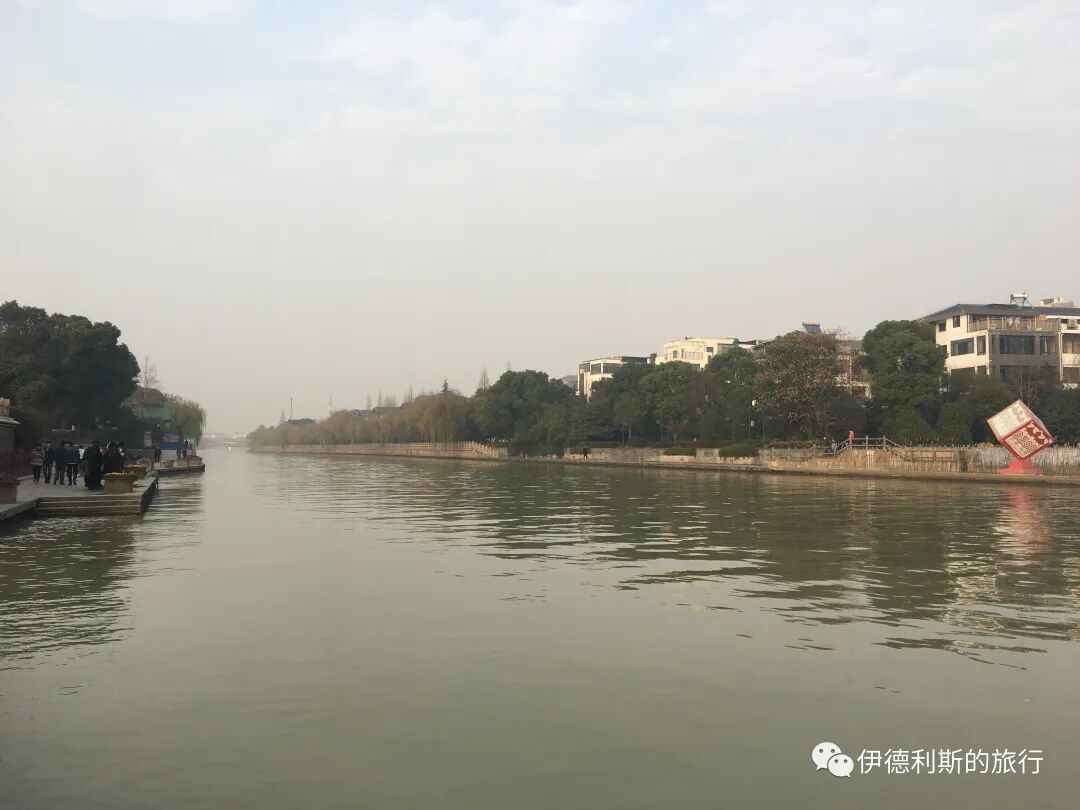
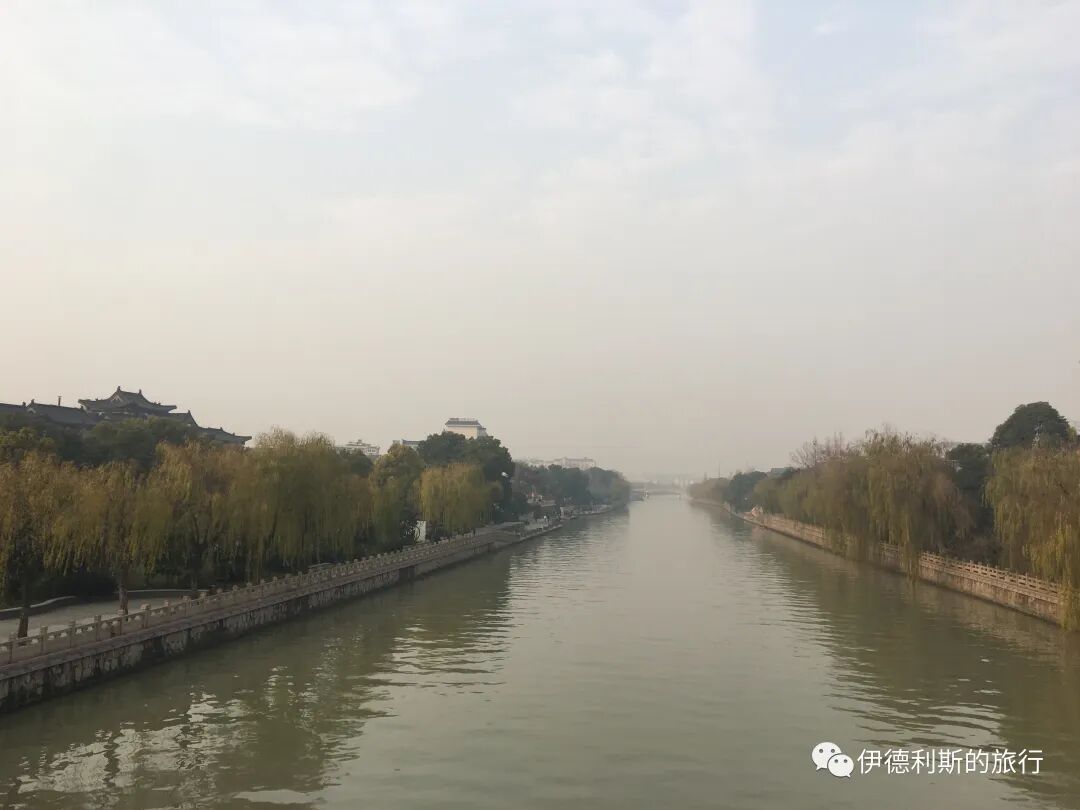
Zhenjiang-Yangzhou Ferry
The river at the Zhenjiang-Yangzhou ferry crossing is 1.5 kilometers wide, and with the fog, you cannot see the opposite bank at all.
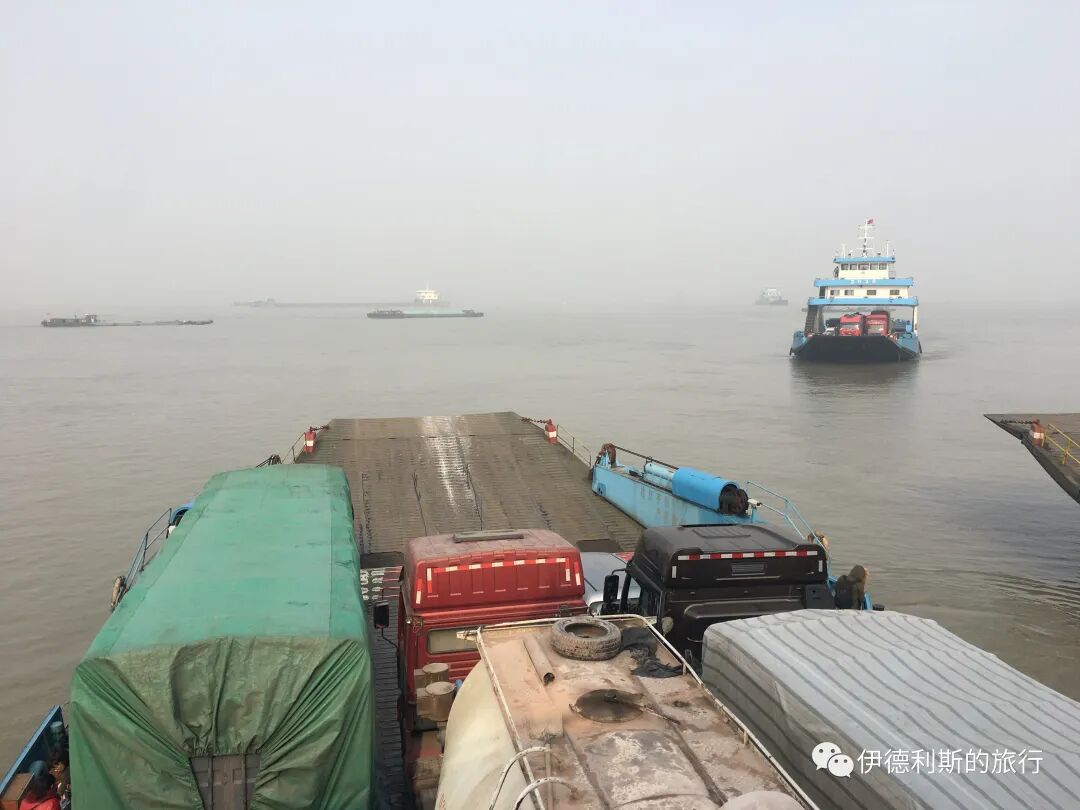
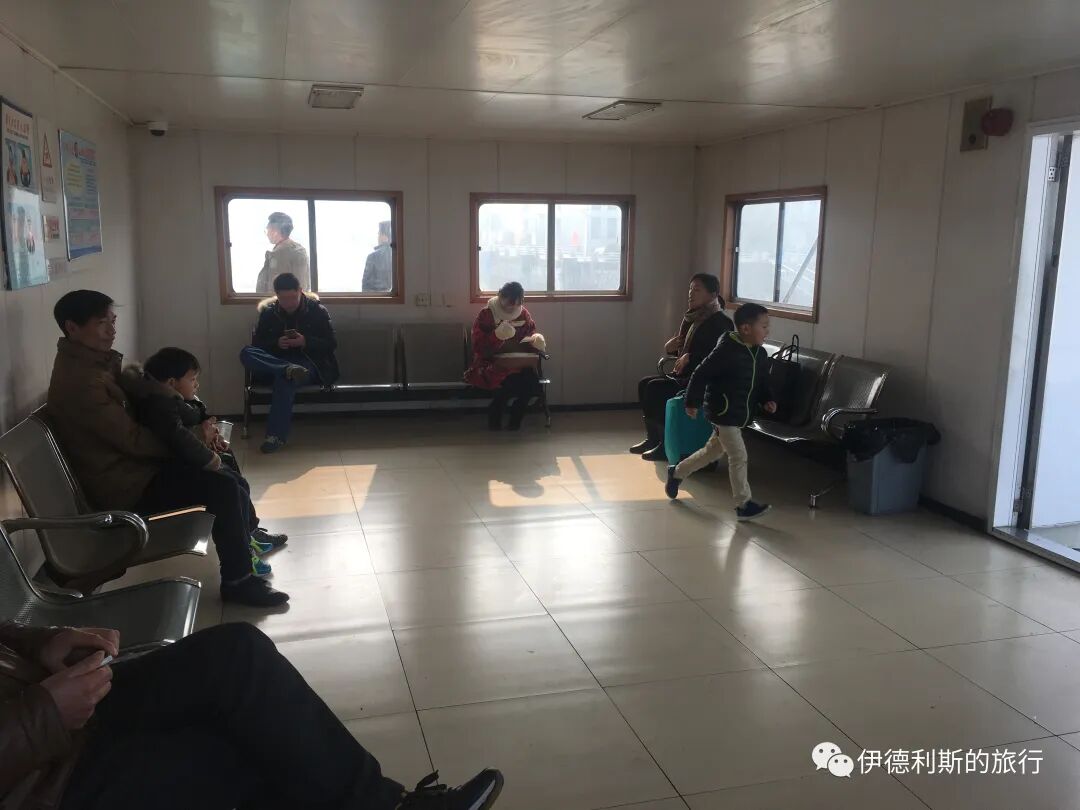
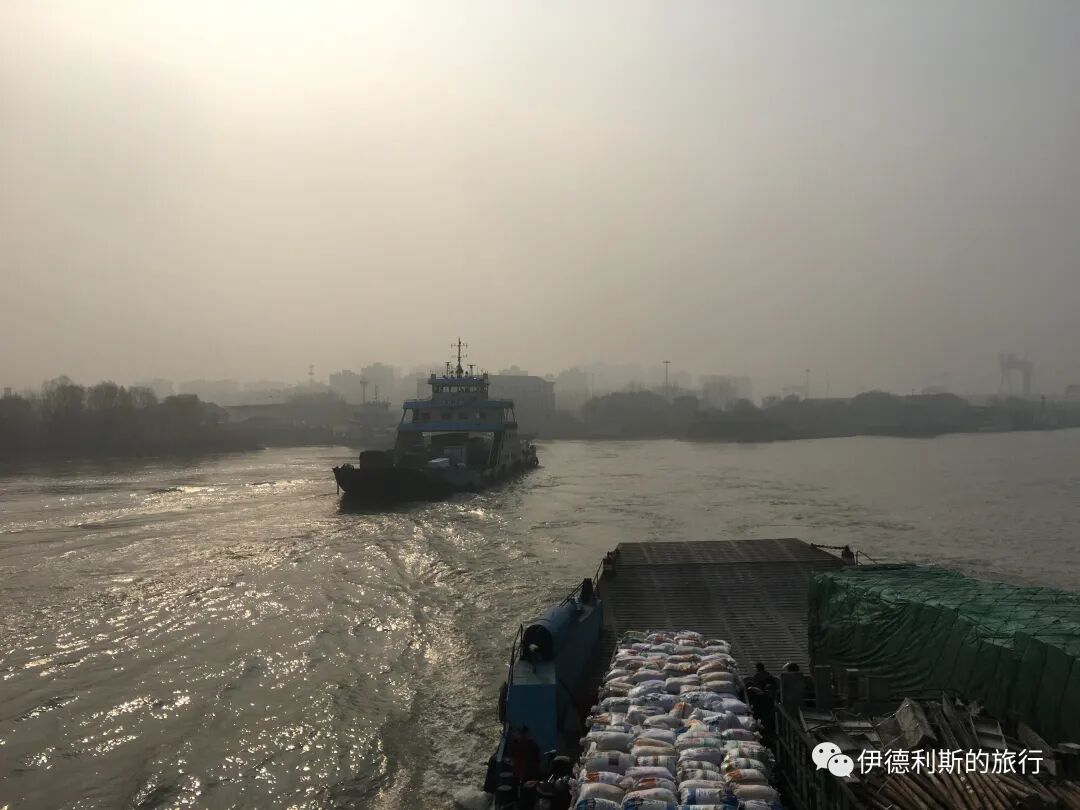
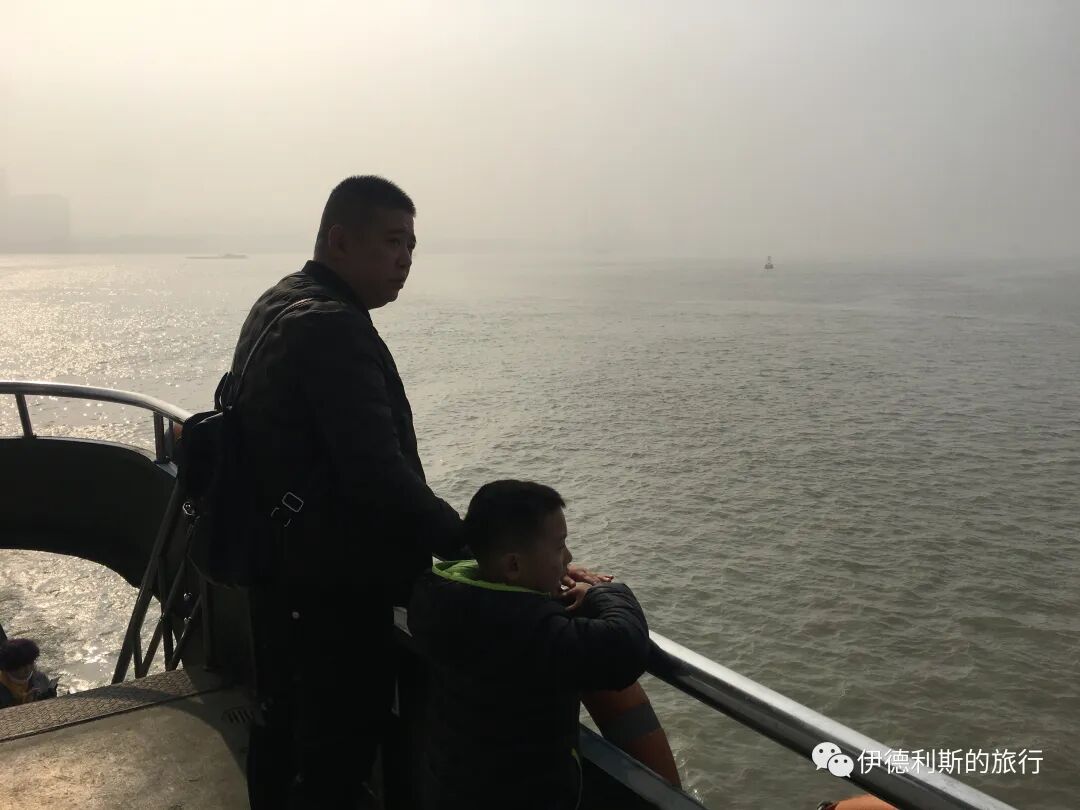
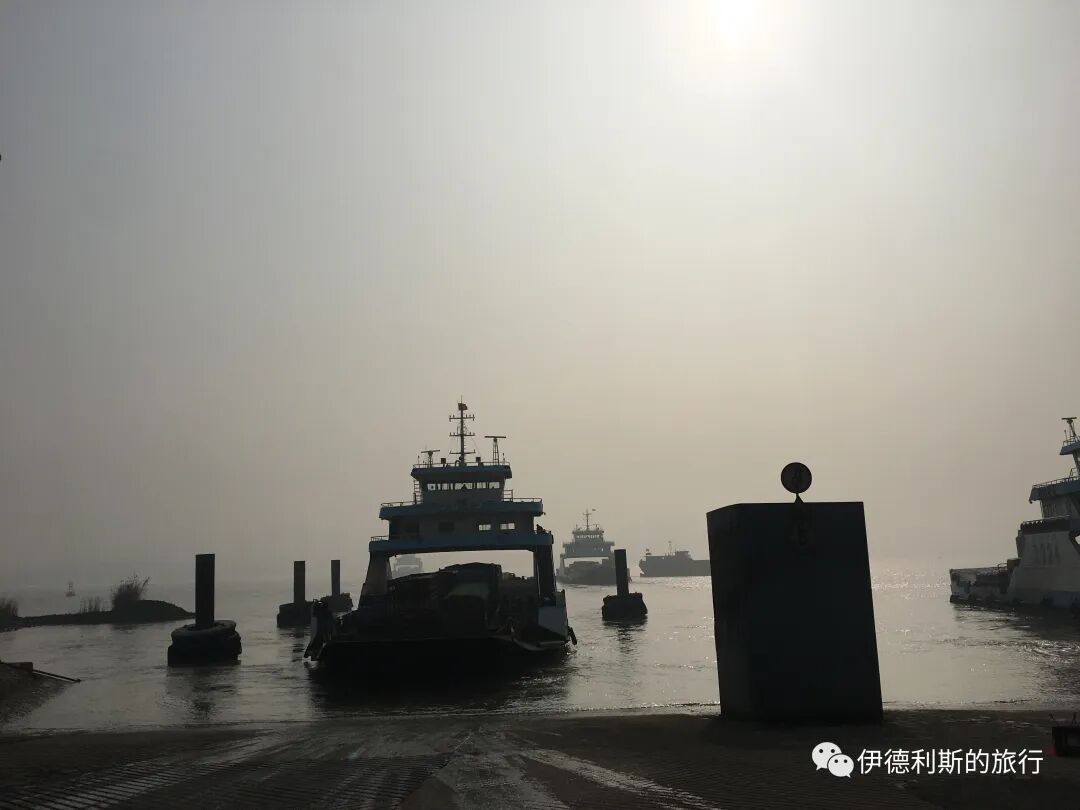
Summary: Yangzhou — Mosques, Muslim History and Jiangsu Streets is presented here as a firsthand travel account in clear English, beginning with this scene: I visited Yangzhou for food and sightseeing on New Year's Day in 2017. Some of the information in this article is compiled from the book Islam in Yangzhou, published by Nanjing University Press. The account keeps its focus on Yangzhou Travel, Jiangsu Mosques, Muslim Heritage while preserving the names, places, food, and historical details from the Chinese source.
I visited Yangzhou for food and sightseeing on New Year's Day in 2017. Some of the information in this article is compiled from the book Islam in Yangzhou, published by Nanjing University Press.
Since the Tang Dynasty, Yangzhou has been a major commercial hub in the southeast, attracting many merchants from Arabia and Persia.
The Extensive Records of the Taiping Era (Taiping Guangji) contains many stories about foreign merchants in Yangzhou. While most are quite exotic, they provide a vivid picture of Persian merchants in the city at that time. The entry for Wei Yan says that around 727, he obtained a precious jade. While passing through Guangling (Yangzhou), he met a foreign merchant who told him, 'This jade is a treasure of the pure ones (qingzhen ren), unseen by anyone for ten thousand years, and the finest treasure in the world.' The merchant bought it for hundreds of thousands in gold, making Wei Yan rich overnight. The story of the two students Lu and Li says that a student named Li owed the government 20,000 strings of cash. He met his uncle Lu in Yangzhou, who gave him a walking stick and told him to take it to a Persian shop to get money. The Persians accepted the walking stick and gave Li the money. This story shows that Persians in Yangzhou at the time operated shops (didian) that stored money and goods.
In 761, the Liu Zhan Rebellion occurred in Yangzhou. The Old Book of Tang, Biography of Deng Jingshan, records that the rebels reached Yangzhou and looted the assets of the people and merchants, whipping and digging up everything. Thousands of Arab and Persian merchants died. This shows that before 761, there were at least several thousand Arab and Persian merchants in Yangzhou.
During the wars at the end of the Tang Dynasty and the Five Dynasties period, Yangzhou was heavily damaged, and most of the original foreign merchants scattered. After the Song Dynasty, the descendants of those foreign merchants gradually transitioned from expatriates to locals, and the history of Hui Muslims in Yangzhou entered a new era.
Yangzhou's most famous Crane Mosque (Xianhe Si) and the Hui Muslim Hall (Puhading Tomb) were both built during the transition between the Song and Yuan dynasties. During the Xianchun period of the Southern Song Dynasty (1265-1274), Puhading, said to be the 16th-generation descendant of the Prophet, came to Yangzhou and built the Crane Mosque. He passed away in 1275, the year before the Yuan Dynasty captured Lin'an, and was buried on a high ridge east of the Dongguan River in the new city, which is now the Puhading Tomb.
The Song Dynasty established an official guesthouse at the south gate of Yangzhou, and the area outside the south gate developed into a new settlement for Muslim merchants. During the Song Dynasty, Muslims built a mosque not far from the south gate of Yangzhou. The main hall was not demolished until 1984, and there is a Song and Yuan dynasty Muslim cemetery near the mosque.
In 1357, when Zhu Yuanzhang captured Yangzhou, these Muslim tombstones were built into the South Gate military defense tower. Between 1924 and 1925, when the South Gate military defense tower in Yangzhou was demolished, four Yuan Dynasty Muslim stone tablets were found in the city foundation. Three of them were primarily in Arabic with some Persian place names, and the front of the fourth one was written in regular script Chinese characters.
The place where Yuan Dynasty Arabic tombstones are kept at the Puhading Cemetery.
In the Arabic text of the four tombstones, the first section of each is the Basmala, and the remaining sections mostly come from the Quran and Hadith. Each tombstone is inscribed with the Hadith, 'Death in a foreign land is martyrdom.'
A replica of an Arab tombstone at the Yangzhou Museum.
Between 1934 and 1935, the missionary Claude L. Pickens photographed the four stone tablets. At that time, they were at the tomb of the sages near the now-vanished Xianhe Mosque.
The front of the Chinese tombstone is inscribed with, 'Tomb of Nie Gubo, the Darughachi of Huizhou Circuit and Grand Master of Thorough Discussion.' Darughachi originally meant 'seal holder.' After the Yuan Dynasty was established, a Darughachi was appointed to local government offices at the circuit, prefecture, department, and county levels to hold real power over local administration and military affairs. Huizhou Circuit was a top-tier circuit, and the rank of its Darughachi was third grade. Tongyi is short for 'Grand Master of Thorough Discussion,' which is also a third-grade rank.
In 1265, Emperor Kublai Khan of the Yuan Dynasty decreed that all circuit Darughachi must be Mongols, and any Han Chinese serving as Darughachi were removed from office. When Mongols were unavailable, it was permitted for Semu people with noble family backgrounds to serve. Therefore, this tombstone of a Semu Darughachi is extremely precious.
The back of Nie Gubo's tombstone is inscribed with ten lines of Arabic. The first section is the Basmala, followed by Hadith and praise for his life achievements. It reads: 'Noble, diligent, and excellent Islamic educator, a leader who helped the weak, was charitable, and cared for the people, a respected elder... a man of great virtue and wisdom, generous and just, enjoying great blessings.' It also records Nie Gubo's death date as the 2nd of Dhu al-Hijjah in the year 709 of the Hijri calendar, which is May 3, 1310.
The front edges of the second tombstone are carved with Quranic verses in Kufic Arabic script, and the center is carved with twelve lines of Arabic, which read: 'The forgiven deceased, Shams al-Din Asif Allah al-Balaji.' May Allah have mercy on him and grant him a place in the comfort of Paradise. This was in early June of the year 724 (Hijri calendar). This corresponds to the end of May or early June of 1324 (the first year of the Taiding era of the Yuan Dynasty).
The third tombstone belongs to a Persian woman who also died in 724 Hijri (1324). Her name was Aisha Khatun (Aisha was known as Ashe in the Yuan Dynasty, and Khatun means lady). The inscription says: 'She was a chaste, virtuous, and capable woman... her father was Lezunding, a highly respected official in Islam.'
The fourth tombstone is damaged. It belonged to a missionary named Ala-ud-Din who died in 702 Hijri, or 1302 (the sixth year of the Dade era of the Yuan Dynasty). The inscription describes him as a skilled businessman who was highly respected by the community.
After the Qianlong reign, there were six mosques in Yangzhou. The three inside the city were the Crane Mosque (Xianhe Si) on Nanmen Street, the Majian Lane Mosque, and the Xiejia Bridge Mosque (which was occupied by a sugar factory and no longer exists). The three mosques outside the city were the Hui Muslim Hall (Huihui Tang) east of the Dongguan River inside the Puhading Cemetery, the South Gate Mosque (occupied by a glass factory, with the main hall finally demolished in 1984), and the Chaoguan Mosque (occupied by a farm machinery factory and no longer exists).
During the Republic of China era, there were nearly 20,000 Hui Muslims living in the six mosque districts of Yangzhou, with Sha, Ma, Ha, Sa, and Da as the five major surnames. The family genealogy of the Ha surname records that their ancestor was a man named Hashen from the Western Regions' Rumi Kingdom (a region in West Asia or Asia Minor).
Crane Mosque (Xianhe Si)
The Crane Mosque is one of the four ancient mosques along the southeast coast (in Hangzhou, Guangzhou, Quanzhou, and Yangzhou). It was founded in 1275 (the 12th year of the Zhiyuan era of the Yuan Dynasty) by the sage Puhading from the Western Regions before he passed away. It was rebuilt in 1380 (the 23rd year of the Hongwu era of the Ming Dynasty) by Ha San, and renovated in 1523 (the third year of the Jiajing era) by the merchant Ma Zongdao and the imam Ha Ming. Starting in 1542 (the 21st year of the Jiajing era), the Ha family received official documents from the Ministry of Rites to serve as the hereditary imams of the Crane Mosque.
Puhading Cemetery
Puhading is said to be a 16th-generation descendant of the Prophet Muhammad. He came to Yangzhou during the Xianchun period of the Song Dynasty (1265-1274) and died in Yangzhou in 1275 (the 12th year of the Zhiyuan era of the Yuan Dynasty). He was buried on a high ridge east of the Dongguan River in the New City, a place later called the Hui Muslim Hall (commonly known as Baba Yao).
This is written in the article 'Puhading: Messenger of China-Arab Friendship,' published by the Yangzhou Islamic Association in the fourth issue of 'Jiangsu Muslims' in 2015. Local imams in Yangzhou pass down a set of stories about the life of Puhading. On the morning of July 17, 1947, at the East Lecture Hall of the Huihui Tang mosque, Imam Lan Baohua passed down the life story of Puhading to his son, Imam Lan Xiaoyang. He based this on the oral accounts of famous scholars Zhang Zhong and imams Han Yuchun, Lan Jiansen, Lan Wenyuan, and Lan Sifu. Seven people were present, including Imam Ruan Xiangsong and community elders Ma Liang, Zhang Yangwu, Wang Yan, and Jin Yuanxun. Here is the life story of Puhading as passed down by the Yangzhou imams:
Puhading was born on May 21, 1204 (the fourth year of the Jiatai era of the Song Dynasty) into a wealthy Arab noble family. He was the 16th-generation descendant of the Prophet Muhammad. Puhading was a man of great learning, well-versed in the Quran, the Hadith, and Islamic law. At age 57, Puhading followed the Prophet's teaching that one should seek knowledge even as far away as China. After four years of careful preparation, he set off for China from Arabia on a merchant ship at age 61, leading a team of 17 people.
On June 20, 1265 (the first year of the Xianchun era of the Song Dynasty), Puhading and his followers arrived in Yangzhou. They lived for four years at the mosque outside the south gate of Yangzhou at that time. He helped expand the old mosque outside the south gate and renovated the Guannan Chaoguan mosque.
On the 23rd day of the seventh lunar month in 1275 (the 12th year of the Zhiyuan era of the Yuan Dynasty), he traveled south from Rencheng (Jining) to Guangling (Yangzhou). He passed away on a boat while returning from giving a lecture, at the age of 71. The governor of Guangling, Yuan Guang'en, buried his body on a high ridge on the east bank of the Grand Canal, east of Yangzhou city.
Three years after Puhading died, another Muslim sage who came to Yangzhou to preach, Saganda, passed away in 1278 (the third year of the Jingyan era of the Song Dynasty). He was buried near Puhading's tomb. A stone tablet erected in 1776 (the 41st year of the Qianlong era) refers to him as the Western Region sage Saganda from the third year of the Jingyan era of the Song Dynasty.
During the Ming Dynasty, more Muslims were buried there, such as the Western Region sage Mahamude in 1456 (the first year of the Chenghua era), the Western Region sage Zhanmaluding in 1469 (the fifth year of the Chenghua era), and the Western Region sage Fana in 1498 (the 11th year of the Hongzhi era).
Next to the main gate is a mosque for those visiting the graves.
The mihrab of the mosque.
The stone carving inside the main gate records that in 1845 (the Yisi year of the Daoguang era), people of various surnames donated funds to build a stone embankment and renovate the halls.
Inside the main prayer hall of the mosque.
The kiln-style hall (yaodian) of the Puhading Tomb mosque, photographed by missionary Bi Jingshi between 1934 and 1935.
Climb the stone steps behind the mosque to reach the Puhading Tomb.
A 700-year-old ginkgo tree.
A merchant from Chang'an County, Xi'an Prefecture, Shaanxi, passed away on the fourth day of the intercalary seventh month in the 14th year of the Hongzhi reign (1501). Erected by his son Wang Qi and grandson Wang Dong.
The Puhading Tomb photographed by missionary Claude L. Pickens between 1934 and 1935.
To the southeast of the Puhading Tomb lies the tomb cover of General Zhang Xin, who passed away in 1551 (the 30th year of the Jiajing reign). The tomb cover on the west side belongs to General Zhang Xin. The owner of the east side cover is still unknown, though it is likely a member of General Zhang's family.
General Zhang's ancestor, Damuchi, moved from Samarkand to settle in Yangzhou. The Continued Records of Jiangdu County from the Republic of China era state: 'General Zhaoyong, named Xin, was the grandson of the Hui Muslim Damuchi. He served as a Wuqi Duwei (a military rank). Because he was skilled at archery, he was granted the surname Zhang and registered in the Yangzhou Guard, located behind the Puhading Tomb outside Tongji Gate.'
The Zhang Gong Shendao Archway was erected in 1551 (the 30th year of the Jiajing reign) by Zhang Heng, the grandson of General Zhang Xin. Zhang Heng was a famous Ming dynasty general who fought against Japanese pirates and held the hereditary title of Yangzhou Guard Commander. In April 1556 (the 35th year of the Jiajing reign), when Japanese pirates attacked Yangzhou, the retired Huaiyang regional commander Zhang Heng personally led troops into battle and died on the field.
In May 2011, a 30-meter-long path was built on the south side of General Zhang Xin's tomb cover, and a pair of stone sheep that had been lost in Slender West Lake Park for 27 years were returned.
The Puhading Tomb photographed by missionary Claude L. Pickens between 1934 and 1935; the archway on the left side of the image is likely the Zhang Gong Shendao Archway.
Next to General Zhang Xin's tomb is the cenotaph of Zuo Baogui, a famous Qing dynasty general who fought against the Japanese. During the First Sino-Japanese War in 1894 (the 20th year of the Guangxu reign), Zuo Baogui led his troops to defend the Xuanwu Gate in Pyongyang, dealing heavy blows to the Japanese army. On September 15, Zuo Baogui was personally firing cannons when his right arm was shattered. He bandaged his wound and continued to fight until a bullet struck his chest, and he died heroically at the age of 57. That same year, the Yangzhou government received an imperial order to build a cenotaph for Zuo Baogui in the southern area of the Puhading Tomb and establish a memorial hall. The hall was later destroyed, leaving only the stone tomb cover of the cenotaph.
Majian Lane Mosque
There is another Majian Lane Mosque on East Gate Street in Yangzhou. According to the Gu family genealogy of the Hui Muslims, the mosque was built in 1714 (the 53rd year of the Kangxi reign) by Gu Yuanbing, the 24th-generation descendant of the ancient figure Bo Ding.
The Majian Lane Mosque originally had dozens of rooms, including a gate hall, a memorial archway, a main prayer hall, a reception hall, a washroom (shuifang), side rooms, and dormitories. Today, only two rooms of the main hall, the reception hall, and the washroom remain. In the early years of the Republic of China, the mosque housed the second Yangzhou branch of the Beijing-based Zhenzong Newspaper and an Islamic book and newspaper room.
In 1932, Liu Binru, a famous Yangzhou imam and one of the founders of the Chinese Islamic Association, along with Hua Ruzhou, then director of the Jiangdu County Hui Muslim Association, established the Chinese Islamic Scripture Translation Institute here to translate the Quran. Liu Binru, who was fluent in Arabic and Persian, was responsible for translating the Arabic original. Hua Ruzhou translated the summaries from the English version by the Indian Muslim scholar Muhammad Ali, which were then attached before the text of each section of the Quran.
On January 1, 1935, the Chinese Translation of the Quran with Ali's Summaries was officially published. The first printing was 2,000 copies, which were sold by major bookstores across the country.
In 1933, the Yangzhou Islamic Association founded the Hui Muslim Cultural Training Institute here, led by Liu Binru. to teaching Arabic, the institute offered Chinese, English, and arithmetic. The level was equivalent to higher primary school through junior high, and it replaced the traditional individual scripture teaching style with a modern classroom lecture format. Teachers included the Majian Lane Mosque imam Hua Jinhou, who was proficient in Arabic, Imam Ruan Dechang, Imam Lan Baohua of the Hui Muslim hall outside the East Gate, and Liu Binru. They also hired Hui Muslim Association members Shen Junchen and Zhang Shaozhe to teach Chinese and arithmetic, and Hua Ruzhou to teach English. There were over 30 students, but the school closed after one year due to a lack of funds.
Between 1934 and 1935, the missionary Claude L. Pickens Jr. (Bi Jing-shi) visited the Majian Lane Mosque. He saw a reading room inside with many Muslim magazines, as well as the Quran translated by Wang Jingzhai and parts of the Quran translated by Liu Binru and Hua Ruzhou mentioned earlier. He also photographed the Gu Gong Memorial Monument, which was erected in the mosque in 1931. It stated that Gu Su had served as a mosque trustee for 11 years, repaired the washroom and market stalls for the mosque, and built a new greenhouse, making great contributions to the mosque.
In the autumn of 1946, the Yangzhou Hui Muslim Youth Association founded the Shengsheng Primary School at the mosque, with Liu Binru serving as chairman. The school was a full primary school. When it opened, it had three multi-grade classes and enrolled 150 students. It provided free tuition for the children of Hui Muslims, offered books to those in extreme financial difficulty, and also provided free support to non-Hui Muslim children from poor families. Most of the teachers were unemployed Hui Muslim youths. The school closed in the summer of 1949.
In 1958, the mosque was converted into a factory workshop and occupied by a craft sign factory, a sack factory, and a brush factory. The property was not recovered until 1997, and in 2008, it was listed as a municipal-level cultural heritage site.
Halal food in Yangzhou during the Republic of China era.
The information in this section comes from "Islam in Yangzhou" and "Islam in Yangzhou."
The earliest records of halal food in Yangzhou come from the "Yangzhou Pleasure Boat Records" (Yangzhou Huafang Lu), an encyclopedia covering all aspects of Qing Dynasty Yangzhou. It mentions a cooked lamb shop called the "Hui Muslim Pavilion" (Huihui Guan), pleasure boats called "Ma the Hui Muslim's Ox Tongue" (Ma Huizi Niushetou), and a shop called "Kong Wu's Ox Tongue" (Kong Wu Niushetou). It also notes that "Zhang Si the Hui Muslim's Whole Lamb" (Zhang Si Huizi Quanyang) was a famous dish in Yangzhou at the time.
During the late Qing Dynasty and the Republic of China era, halal food in Yangzhou reached its peak. After entering the Republic of China era, lamb almost disappeared from Yangzhou's halal food scene, which shifted to focus mainly on beef, supplemented by poultry and fish. Many halal beef slaughterhouses were concentrated on Wazi Street. Some of the more famous ones included those run by Wang Tonglan, Jin Zhao'an, Wang Ting, Jin Ronghua, Zhang Youfu, and Li Sanlong. The second and eighth days of every lunar month were cattle market days, which were very busy.
During the Republic of China era, there were over a dozen famous halal restaurants in Yangzhou, which were very popular in the 1920s and 1930s. Examples include Ma Gongxing on Litou Street, Muyuanxing at the north entrance of Yuanmen Bridge, Ma Guangxing Restaurant on Zhuan Street, Tianxing Restaurant on Zuowei Street, Daxing in Darufang, and the Xinxin and Xinlong restaurants in Jiaochang. Among them, Tianxing Restaurant was the most famous.
Opened in the early years of the Republic of China, Tianxing Restaurant was the most famous halal restaurant in Yangzhou at the time. It was located at the busy intersection of Zuowei Street. The building had seven sections from front to back, each consisting of three large, high-ceilinged rooms. The rear section had a spacious flower hall on the east side that could host fifty banquet tables at once. At that time, everyone from scholars and writers to salt merchants and officials frequented the restaurant. Famous Peking opera actors Zhou Xinfang and Cheng Yanqiu would eat at Tianxing whenever they came to Yangzhou to perform.
Tianxing Restaurant was especially skilled at making shark fin and fish skin, and its roast duck was second to none. Famous dishes included braised shark fin (yuanmen yuchi), clear soup shark fin (qingtang yuchi), hibiscus chicken with shark fin (furong ji yuchi), skin-wrapped fin (pijia chi), roast duck (kaoya), braised chicken with crispy meatballs (yuanmen ji suyuan), ten-delicacy fish maw (yudu shijing), braised beef tendon (bashao niujin), and fish stuffed in lamb (yangfang cangyu).
There were over a dozen halal chicken and duck shops in Yangzhou. The most famous was Linyuanxing Chicken and Duck Shop, which was the predecessor of the later Halal Hongxing Ethnic Restaurant. The founder of Linyuanxing Chicken and Duck Shop was Lin Guangfeng, also known as Songting. When he was young, he worked for two or three years for his relative, Governor Shan Diankui, in Beijing. After returning to Yangzhou, he apprenticed at the halal Muyuan Restaurant. After his apprenticeship, Lin Guangfeng opened the halal Baoxing Restaurant, which also sold chicken and duck. It later closed due to poor management of staff. After Baoxing closed, Lin Guangfeng opened the halal Linyuanxing Chicken and Duck Shop at the North Archway entrance, where he sold his own products. The North Archway was a busy market back then, filled with snack stalls, magicians, acrobats, and fortune tellers. Linyuanxing did a booming business selling oil-poached chicken (youji), pressed duck (bandya), and roast duck (shaoya).
Linyuanxing's oil-poached chicken was white in color and fragrant, with a tender, delicious texture that even the elderly could chew easily. Pressed duck and salt-water duck (yanshuiya) are both called salted duck. In practice, they sold salt-water duck during spring, summer, and autumn, and pressed duck in winter. Pressed duck was salted and prepared in the ten days before the Minor Snow (xiaoxue) solar term until the middle of the eleventh lunar month, then hit the market before the Spring Festival. The secret to Linyuanxing's salted duck was the aged brine and the heat control; they were so precise that they would not cook even one bird more than the set amount per pot. Linyuanxing's roast duck was different from the large-fork roast duck in other shops; they used small forks to prop the ducks up inside the oven for hanging roast. The belly broth (dutang) from the roast duck was very flavorful. When customers bought roast duck, the shop gave them some broth to take home, mix with water, and simmer with the duck for a delicious soup.
Linyuanxing had an agreement with the imam of the mosque to come to the shop on time every day to perform the slaughter. Everything was freshly prepared, and any sick poultry was disposed of immediately. When customers came to the shop, the staff would chop whatever part they pointed to, treating regular customers and strangers exactly the same.
After decades of training, members of the Lin family opened their own shops. In Yangzhou, there was Linmaoxing at Dadongmen, Linshunxing on Zhuan Street, and Linzhenxing at Xiaodongmen. Outside the city, there was Linmaoxing on North Henan Road in Shanghai and Linyuanxing at Taibai Temple Bridge in Suzhou. Many other Lin family members also sold halal chicken and duck at the Xuanmiao Temple and Guanqian Street in Suzhou, and at the small docks in Zhenjiang.
Besides chicken and duck shops, there were over a dozen halal beef shops in Yangzhou. Famous ones included Chenwanxing in the drill ground (jiaochang), Xiaoqizi at the north entrance of the drill ground, Liertuozi on Zhuan Street, Chengsan (Zhaoxiang), and Sister Ma at the South Gate. Chenwanxing was known for its beef potstickers (guotie), steamed buns (baozi), and rice porridge (shaomi). They used a flat-bottomed pan to fry them, making them soft on top and crispy on the bottom. Their five-spice beef was especially famous. They used beef shank (zoujingzhua) that was marinated and boiled. When sold, it was sliced so thin it was translucent and sprinkled with five-spice powder. In summer, they wrapped it in fresh lotus leaves, making the beef smell fragrant and fresh. In winter, they sold frozen lamb jelly (yanggao), which was delicious when dipped in sweet sauce.
Xiaoqizi Beef Shop sold raw and cooked beef, as well as beef soup, beef noodles, steamed beef buns, steamed beef dumplings, pan-fried beef buns, and their most famous beef potstickers. Liertuozi was most famous for his beef soup. His soup was rich and authentic, served with beef tripe, beef tongue, beef liver, beef lips, plain boiled beef, and beef tendon (tuijinjua), making it refreshing and tasty. Sister Ma's shop is located at the South Gate of Yangzhou and is famous for its superb knife skills. The beef slices she cuts are as thin as paper and flutter when the wind blows.
Beyond meat, there are over thirty Hui Muslim flatbread (shaobing) shops in Yangzhou, offering flavors like flaky (casu), white sugar, red bean paste, salt and pepper, scallion oil, shredded radish, pea (andoutou), and osmanthus brown sugar, with shapes including rectangular, oval, diamond, and chrysanthemum. The most famous one is Mu Si Flatbread Shop at the entrance of Quelong Lane in Jiaochang. Their sesame oil dry-mixed noodles are neither hard nor mushy, with seasonings that soak deep into the noodles, making them very refreshing. Their most famous item is the straw-oven flatbread (caolu shaobing), baked in a square vertical jar oven taller than a person, with a dome-shaped interior and a round opening one and a half feet in diameter at chest height. To make them, they first heat the oven's dome and side walls with straw, dampen the interior with water once hot, and then stick the fermented dough portions onto the inner walls. After sticking them on, they close the oven door and bake them with the residual heat of the straw ash, shoveling them out once they are golden, cooked, and plump like steamed buns (mantou). One oven can bake forty to fifty flatbreads, which are crispy, fragrant, soft, and very cheap, attracting many farmers coming into the city to buy them. Because the flatbreads are thick, they need to be soaked in soup to fully soften; in the past, when a woman was recovering from childbirth, her family would send her straw-oven flatbreads and an old hen to nourish her body.
Additionally, there are the tall steamed buns (gaozhuang manshou) and salt and pepper rolls (jiaoyan juanzi) from Wang's Noodle and Flatbread Shop at Dongquan Gate, which taste best when dipped in beef gravy. The sesame oil dry-mixed noodles at Mu Si Flatbread Shop at the entrance of Quelong Lane in Jiaochang are neither hard nor mushy, with seasonings that soak deep into the noodles, making them refreshing to eat.
During the Republic of China era, Yangzhou had two halal tea and snack shops: Defeng on Wanzi Street and Tongfeng on Gengzi Street. Because they used only vegetable oil, not only did fellow Muslims (dost) buy from them, but many monks, nuns, and vegetarian Han Chinese also purchased their goods, especially their fruit powder (jingguofen) and mooncakes, which were particularly popular.
There were also two halal teahouses in Yangzhou: the Park Religious Room (Gongyuan Jiaomenshi) and the Old Dragon Spring Vegetarian Teahouse (Laolongquan Suchaguan) in Jiaochang. The Park Religious Room was located in the park next to Park Bridge in the city center, with three rooms side-by-side facing west. The first room was for the stove and cutting board, while the other two were for tea seating. The teahouse is filled with cypress wood square stools and tables. The east wall has floor-to-ceiling glass windows, and right outside is the Little Qinhuai River, where you can see clear water and weeping willows from your seat. Painted pleasure boats from Slender West Lake often dock at the pier next to the teahouse. Locals board boats here to go through the North Gate water gate all the way to Slender West Lake for sightseeing. On the way back, they land at the same pier and can stop by the halal teahouse for tea and snacks. Go enthusiasts in the city often gather here to drink tea, play games, and sharpen their skills. The halal teahouse is open for morning and afternoon sessions, serving plain tea, pastries, and dried tofu strips (gansi). The menu includes jade steamed dumplings (feicui shaomai), small steamed beef buns (xiaolong zheng niurou baojiao), beef and lamb dumplings (niuyangrou shuibobo), pan-fried beef and lamb buns (jian niuyangrou bao), beef potstickers (niurou guotie), scalded dried tofu strips (tang gansi), boiled dried tofu strips (zhu gansi), bamboo shoot and beef strips (sunsi niurusi), beef and lamb noodles (niuyangrou mian), stir-fried noodles (chaomian), and braised noodles (weimian). The best item is the pan-fried pancake (youjian guobing), which has a thin crust, plenty of filling, and a sweet, crispy flavor.
The Old Longquan Vegetarian Teahouse at the drill ground is a place for both drinking tea and trading antiques. Many antique dealers gather here to talk business during morning tea time. This place is most famous for its vegetable oil baked flatbread (suyou huoshao) and sugar and salt rolls (tangyan juanzi).
The halal teahouse has only one waiter, a short, thin, middle-aged man whom regular customers call Little Mouse. He is quick and always greets people with a smile. As soon as a customer leaves, he wipes the table with alkaline water and then cleans it with boiling water.
The halal food industry in Yangzhou declined sharply around 1949. Daxing Shop closed first, followed by Tianxing Restaurant, and other shops either changed businesses or shut down. After many twists and turns, only the struggling Ethnic Restaurant on Ganquan Road remained.
Tianxingzhai
For my first meal in Yangzhou, I went to Tianxingzhai, which just opened 16 years ago. I ordered boiled dried tofu strips (dazhu gansi), steamed beef dumplings (niurou zhengjiao), sticky rice and shrimp steamed dumplings (nuomi xiaren shaomai), beef noodles (niurou mian), smoked fish (xunyu), and chicken soup with vegetarian chicken (jitang suji). It is not easy for a new local-style halal restaurant to open in Yangzhou, and the food here is delicious with a slightly sweet taste. The beef noodles are huge and taste amazing, and the steamed dumplings are the best. I don't think any halal restaurants in Beijing can compare. (This place was not doing well when I visited again in 2021.)
Yixiangzhai
There is another Yixiangzhai on the street by the Puhading Tomb. It is a beef and lamb restaurant run by local Hui Muslims in Yangzhou. They serve hot pot, stir-fried dishes, and snacks. I ordered lamb liver, boiled dried tofu strips (zhugansi), and beef soup. The lamb liver was incredibly tender with a slightly sweet taste. It was delicious. (This place had closed down when I visited in 2021.)
Yangzhou section of the Grand Canal
In 605 (the first year of the Daye era of the Sui Dynasty), Emperor Yang of Sui, Yang Guang, carried out major renovations and expansions based on the Hangu Canal so he could travel by boat directly from Luoyang to Jiangdu (Yangzhou). This marked the official formation of the Yangzhou section of the Grand Canal. In 1415 (the 13th year of the Yongle era), Chen Xuan, the Earl of Pingjiang, was ordered to oversee the grain transport and manage the Yangzhou section of the canal. The route that currently winds through Yangzhou city was finalized during this period. Starting in 1853 (the third year of the Xianfeng era), grain transport was gradually shifted to sea routes to Tianjin. During the Tongzhi era, only one-tenth of the grain was still transported via the canal. Finally, in 1901 (the 27th year of the Guangxu era), the canal grain transport system was completely abolished.
Zhenjiang-Yangzhou Ferry
The river at the Zhenjiang-Yangzhou ferry crossing is 1.5 kilometers wide, and with the fog, you cannot see the opposite bank at all.
Halal Travel Guide: Yangzhou — Mosques, Muslim History and Jiangsu Streets
Articles • ali2007fr posted the article • 0 comments • 179 views • 2026-05-18 20:26
Reposted from the web
Summary: Yangzhou — Mosques, Muslim History and Jiangsu Streets is presented here as a firsthand travel account in clear English, beginning with this scene: I visited Yangzhou for food and sightseeing on New Year's Day in 2017. Some of the information in this article is compiled from the book Islam in Yangzhou, published by Nanjing University Press. The account keeps its focus on Yangzhou Travel, Jiangsu Mosques, Muslim Heritage while preserving the names, places, food, and historical details from the Chinese source.
I visited Yangzhou for food and sightseeing on New Year's Day in 2017. Some of the information in this article is compiled from the book Islam in Yangzhou, published by Nanjing University Press.
Since the Tang Dynasty, Yangzhou has been a major commercial hub in the southeast, attracting many merchants from Arabia and Persia.
The Extensive Records of the Taiping Era (Taiping Guangji) contains many stories about foreign merchants in Yangzhou. While most are quite exotic, they provide a vivid picture of Persian merchants in the city at that time. The entry for Wei Yan says that around 727, he obtained a precious jade. While passing through Guangling (Yangzhou), he met a foreign merchant who told him, 'This jade is a treasure of the pure ones (qingzhen ren), unseen by anyone for ten thousand years, and the finest treasure in the world.' The merchant bought it for hundreds of thousands in gold, making Wei Yan rich overnight. The story of the two students Lu and Li says that a student named Li owed the government 20,000 strings of cash. He met his uncle Lu in Yangzhou, who gave him a walking stick and told him to take it to a Persian shop to get money. The Persians accepted the walking stick and gave Li the money. This story shows that Persians in Yangzhou at the time operated shops (didian) that stored money and goods.
In 761, the Liu Zhan Rebellion occurred in Yangzhou. The Old Book of Tang, Biography of Deng Jingshan, records that the rebels reached Yangzhou and looted the assets of the people and merchants, whipping and digging up everything. Thousands of Arab and Persian merchants died. This shows that before 761, there were at least several thousand Arab and Persian merchants in Yangzhou.
During the wars at the end of the Tang Dynasty and the Five Dynasties period, Yangzhou was heavily damaged, and most of the original foreign merchants scattered. After the Song Dynasty, the descendants of those foreign merchants gradually transitioned from expatriates to locals, and the history of Hui Muslims in Yangzhou entered a new era.
Yangzhou's most famous Crane Mosque (Xianhe Si) and the Hui Muslim Hall (Puhading Tomb) were both built during the transition between the Song and Yuan dynasties. During the Xianchun period of the Southern Song Dynasty (1265-1274), Puhading, said to be the 16th-generation descendant of the Prophet, came to Yangzhou and built the Crane Mosque. He passed away in 1275, the year before the Yuan Dynasty captured Lin'an, and was buried on a high ridge east of the Dongguan River in the new city, which is now the Puhading Tomb.
The Song Dynasty established an official guesthouse at the south gate of Yangzhou, and the area outside the south gate developed into a new settlement for Muslim merchants. During the Song Dynasty, Muslims built a mosque not far from the south gate of Yangzhou. The main hall was not demolished until 1984, and there is a Song and Yuan dynasty Muslim cemetery near the mosque.
In 1357, when Zhu Yuanzhang captured Yangzhou, these Muslim tombstones were built into the South Gate military defense tower. Between 1924 and 1925, when the South Gate military defense tower in Yangzhou was demolished, four Yuan Dynasty Muslim stone tablets were found in the city foundation. Three of them were primarily in Arabic with some Persian place names, and the front of the fourth one was written in regular script Chinese characters.
The place where Yuan Dynasty Arabic tombstones are kept at the Puhading Cemetery.
In the Arabic text of the four tombstones, the first section of each is the Basmala, and the remaining sections mostly come from the Quran and Hadith. Each tombstone is inscribed with the Hadith, 'Death in a foreign land is martyrdom.'
A replica of an Arab tombstone at the Yangzhou Museum.
Between 1934 and 1935, the missionary Claude L. Pickens photographed the four stone tablets. At that time, they were at the tomb of the sages near the now-vanished Xianhe Mosque.
The front of the Chinese tombstone is inscribed with, 'Tomb of Nie Gubo, the Darughachi of Huizhou Circuit and Grand Master of Thorough Discussion.' Darughachi originally meant 'seal holder.' After the Yuan Dynasty was established, a Darughachi was appointed to local government offices at the circuit, prefecture, department, and county levels to hold real power over local administration and military affairs. Huizhou Circuit was a top-tier circuit, and the rank of its Darughachi was third grade. Tongyi is short for 'Grand Master of Thorough Discussion,' which is also a third-grade rank.
In 1265, Emperor Kublai Khan of the Yuan Dynasty decreed that all circuit Darughachi must be Mongols, and any Han Chinese serving as Darughachi were removed from office. When Mongols were unavailable, it was permitted for Semu people with noble family backgrounds to serve. Therefore, this tombstone of a Semu Darughachi is extremely precious.
The back of Nie Gubo's tombstone is inscribed with ten lines of Arabic. The first section is the Basmala, followed by Hadith and praise for his life achievements. It reads: 'Noble, diligent, and excellent Islamic educator, a leader who helped the weak, was charitable, and cared for the people, a respected elder... a man of great virtue and wisdom, generous and just, enjoying great blessings.' It also records Nie Gubo's death date as the 2nd of Dhu al-Hijjah in the year 709 of the Hijri calendar, which is May 3, 1310.
The front edges of the second tombstone are carved with Quranic verses in Kufic Arabic script, and the center is carved with twelve lines of Arabic, which read: 'The forgiven deceased, Shams al-Din Asif Allah al-Balaji.' May Allah have mercy on him and grant him a place in the comfort of Paradise. This was in early June of the year 724 (Hijri calendar). This corresponds to the end of May or early June of 1324 (the first year of the Taiding era of the Yuan Dynasty).
The third tombstone belongs to a Persian woman who also died in 724 Hijri (1324). Her name was Aisha Khatun (Aisha was known as Ashe in the Yuan Dynasty, and Khatun means lady). The inscription says: 'She was a chaste, virtuous, and capable woman... her father was Lezunding, a highly respected official in Islam.'
The fourth tombstone is damaged. It belonged to a missionary named Ala-ud-Din who died in 702 Hijri, or 1302 (the sixth year of the Dade era of the Yuan Dynasty). The inscription describes him as a skilled businessman who was highly respected by the community.
After the Qianlong reign, there were six mosques in Yangzhou. The three inside the city were the Crane Mosque (Xianhe Si) on Nanmen Street, the Majian Lane Mosque, and the Xiejia Bridge Mosque (which was occupied by a sugar factory and no longer exists). The three mosques outside the city were the Hui Muslim Hall (Huihui Tang) east of the Dongguan River inside the Puhading Cemetery, the South Gate Mosque (occupied by a glass factory, with the main hall finally demolished in 1984), and the Chaoguan Mosque (occupied by a farm machinery factory and no longer exists).
During the Republic of China era, there were nearly 20,000 Hui Muslims living in the six mosque districts of Yangzhou, with Sha, Ma, Ha, Sa, and Da as the five major surnames. The family genealogy of the Ha surname records that their ancestor was a man named Hashen from the Western Regions' Rumi Kingdom (a region in West Asia or Asia Minor).
Crane Mosque (Xianhe Si)
The Crane Mosque is one of the four ancient mosques along the southeast coast (in Hangzhou, Guangzhou, Quanzhou, and Yangzhou). It was founded in 1275 (the 12th year of the Zhiyuan era of the Yuan Dynasty) by the sage Puhading from the Western Regions before he passed away. It was rebuilt in 1380 (the 23rd year of the Hongwu era of the Ming Dynasty) by Ha San, and renovated in 1523 (the third year of the Jiajing era) by the merchant Ma Zongdao and the imam Ha Ming. Starting in 1542 (the 21st year of the Jiajing era), the Ha family received official documents from the Ministry of Rites to serve as the hereditary imams of the Crane Mosque.
Puhading Cemetery
Puhading is said to be a 16th-generation descendant of the Prophet Muhammad. He came to Yangzhou during the Xianchun period of the Song Dynasty (1265-1274) and died in Yangzhou in 1275 (the 12th year of the Zhiyuan era of the Yuan Dynasty). He was buried on a high ridge east of the Dongguan River in the New City, a place later called the Hui Muslim Hall (commonly known as Baba Yao).
This is written in the article 'Puhading: Messenger of China-Arab Friendship,' published by the Yangzhou Islamic Association in the fourth issue of 'Jiangsu Muslims' in 2015. Local imams in Yangzhou pass down a set of stories about the life of Puhading. On the morning of July 17, 1947, at the East Lecture Hall of the Huihui Tang mosque, Imam Lan Baohua passed down the life story of Puhading to his son, Imam Lan Xiaoyang. He based this on the oral accounts of famous scholars Zhang Zhong and imams Han Yuchun, Lan Jiansen, Lan Wenyuan, and Lan Sifu. Seven people were present, including Imam Ruan Xiangsong and community elders Ma Liang, Zhang Yangwu, Wang Yan, and Jin Yuanxun. Here is the life story of Puhading as passed down by the Yangzhou imams:
Puhading was born on May 21, 1204 (the fourth year of the Jiatai era of the Song Dynasty) into a wealthy Arab noble family. He was the 16th-generation descendant of the Prophet Muhammad. Puhading was a man of great learning, well-versed in the Quran, the Hadith, and Islamic law. At age 57, Puhading followed the Prophet's teaching that one should seek knowledge even as far away as China. After four years of careful preparation, he set off for China from Arabia on a merchant ship at age 61, leading a team of 17 people.
On June 20, 1265 (the first year of the Xianchun era of the Song Dynasty), Puhading and his followers arrived in Yangzhou. They lived for four years at the mosque outside the south gate of Yangzhou at that time. He helped expand the old mosque outside the south gate and renovated the Guannan Chaoguan mosque.
On the 23rd day of the seventh lunar month in 1275 (the 12th year of the Zhiyuan era of the Yuan Dynasty), he traveled south from Rencheng (Jining) to Guangling (Yangzhou). He passed away on a boat while returning from giving a lecture, at the age of 71. The governor of Guangling, Yuan Guang'en, buried his body on a high ridge on the east bank of the Grand Canal, east of Yangzhou city.
Three years after Puhading died, another Muslim sage who came to Yangzhou to preach, Saganda, passed away in 1278 (the third year of the Jingyan era of the Song Dynasty). He was buried near Puhading's tomb. A stone tablet erected in 1776 (the 41st year of the Qianlong era) refers to him as the Western Region sage Saganda from the third year of the Jingyan era of the Song Dynasty.
During the Ming Dynasty, more Muslims were buried there, such as the Western Region sage Mahamude in 1456 (the first year of the Chenghua era), the Western Region sage Zhanmaluding in 1469 (the fifth year of the Chenghua era), and the Western Region sage Fana in 1498 (the 11th year of the Hongzhi era).
Next to the main gate is a mosque for those visiting the graves.
The mihrab of the mosque.
The stone carving inside the main gate records that in 1845 (the Yisi year of the Daoguang era), people of various surnames donated funds to build a stone embankment and renovate the halls.
Inside the main prayer hall of the mosque.
The kiln-style hall (yaodian) of the Puhading Tomb mosque, photographed by missionary Bi Jingshi between 1934 and 1935.
Climb the stone steps behind the mosque to reach the Puhading Tomb.
A 700-year-old ginkgo tree.
A merchant from Chang'an County, Xi'an Prefecture, Shaanxi, passed away on the fourth day of the intercalary seventh month in the 14th year of the Hongzhi reign (1501). Erected by his son Wang Qi and grandson Wang Dong.
The Puhading Tomb photographed by missionary Claude L. Pickens between 1934 and 1935.
To the southeast of the Puhading Tomb lies the tomb cover of General Zhang Xin, who passed away in 1551 (the 30th year of the Jiajing reign). The tomb cover on the west side belongs to General Zhang Xin. The owner of the east side cover is still unknown, though it is likely a member of General Zhang's family.
General Zhang's ancestor, Damuchi, moved from Samarkand to settle in Yangzhou. The Continued Records of Jiangdu County from the Republic of China era state: 'General Zhaoyong, named Xin, was the grandson of the Hui Muslim Damuchi. He served as a Wuqi Duwei (a military rank). Because he was skilled at archery, he was granted the surname Zhang and registered in the Yangzhou Guard, located behind the Puhading Tomb outside Tongji Gate.'
The Zhang Gong Shendao Archway was erected in 1551 (the 30th year of the Jiajing reign) by Zhang Heng, the grandson of General Zhang Xin. Zhang Heng was a famous Ming dynasty general who fought against Japanese pirates and held the hereditary title of Yangzhou Guard Commander. In April 1556 (the 35th year of the Jiajing reign), when Japanese pirates attacked Yangzhou, the retired Huaiyang regional commander Zhang Heng personally led troops into battle and died on the field.
In May 2011, a 30-meter-long path was built on the south side of General Zhang Xin's tomb cover, and a pair of stone sheep that had been lost in Slender West Lake Park for 27 years were returned.
The Puhading Tomb photographed by missionary Claude L. Pickens between 1934 and 1935; the archway on the left side of the image is likely the Zhang Gong Shendao Archway.
Next to General Zhang Xin's tomb is the cenotaph of Zuo Baogui, a famous Qing dynasty general who fought against the Japanese. During the First Sino-Japanese War in 1894 (the 20th year of the Guangxu reign), Zuo Baogui led his troops to defend the Xuanwu Gate in Pyongyang, dealing heavy blows to the Japanese army. On September 15, Zuo Baogui was personally firing cannons when his right arm was shattered. He bandaged his wound and continued to fight until a bullet struck his chest, and he died heroically at the age of 57. That same year, the Yangzhou government received an imperial order to build a cenotaph for Zuo Baogui in the southern area of the Puhading Tomb and establish a memorial hall. The hall was later destroyed, leaving only the stone tomb cover of the cenotaph.
Majian Lane Mosque
There is another Majian Lane Mosque on East Gate Street in Yangzhou. According to the Gu family genealogy of the Hui Muslims, the mosque was built in 1714 (the 53rd year of the Kangxi reign) by Gu Yuanbing, the 24th-generation descendant of the ancient figure Bo Ding.
The Majian Lane Mosque originally had dozens of rooms, including a gate hall, a memorial archway, a main prayer hall, a reception hall, a washroom (shuifang), side rooms, and dormitories. Today, only two rooms of the main hall, the reception hall, and the washroom remain. In the early years of the Republic of China, the mosque housed the second Yangzhou branch of the Beijing-based Zhenzong Newspaper and an Islamic book and newspaper room.
In 1932, Liu Binru, a famous Yangzhou imam and one of the founders of the Chinese Islamic Association, along with Hua Ruzhou, then director of the Jiangdu County Hui Muslim Association, established the Chinese Islamic Scripture Translation Institute here to translate the Quran. Liu Binru, who was fluent in Arabic and Persian, was responsible for translating the Arabic original. Hua Ruzhou translated the summaries from the English version by the Indian Muslim scholar Muhammad Ali, which were then attached before the text of each section of the Quran.
On January 1, 1935, the Chinese Translation of the Quran with Ali's Summaries was officially published. The first printing was 2,000 copies, which were sold by major bookstores across the country.
In 1933, the Yangzhou Islamic Association founded the Hui Muslim Cultural Training Institute here, led by Liu Binru. to teaching Arabic, the institute offered Chinese, English, and arithmetic. The level was equivalent to higher primary school through junior high, and it replaced the traditional individual scripture teaching style with a modern classroom lecture format. Teachers included the Majian Lane Mosque imam Hua Jinhou, who was proficient in Arabic, Imam Ruan Dechang, Imam Lan Baohua of the Hui Muslim hall outside the East Gate, and Liu Binru. They also hired Hui Muslim Association members Shen Junchen and Zhang Shaozhe to teach Chinese and arithmetic, and Hua Ruzhou to teach English. There were over 30 students, but the school closed after one year due to a lack of funds.
Between 1934 and 1935, the missionary Claude L. Pickens Jr. (Bi Jing-shi) visited the Majian Lane Mosque. He saw a reading room inside with many Muslim magazines, as well as the Quran translated by Wang Jingzhai and parts of the Quran translated by Liu Binru and Hua Ruzhou mentioned earlier. He also photographed the Gu Gong Memorial Monument, which was erected in the mosque in 1931. It stated that Gu Su had served as a mosque trustee for 11 years, repaired the washroom and market stalls for the mosque, and built a new greenhouse, making great contributions to the mosque.
In the autumn of 1946, the Yangzhou Hui Muslim Youth Association founded the Shengsheng Primary School at the mosque, with Liu Binru serving as chairman. The school was a full primary school. When it opened, it had three multi-grade classes and enrolled 150 students. It provided free tuition for the children of Hui Muslims, offered books to those in extreme financial difficulty, and also provided free support to non-Hui Muslim children from poor families. Most of the teachers were unemployed Hui Muslim youths. The school closed in the summer of 1949.
In 1958, the mosque was converted into a factory workshop and occupied by a craft sign factory, a sack factory, and a brush factory. The property was not recovered until 1997, and in 2008, it was listed as a municipal-level cultural heritage site.
Halal food in Yangzhou during the Republic of China era.
The information in this section comes from "Islam in Yangzhou" and "Islam in Yangzhou."
The earliest records of halal food in Yangzhou come from the "Yangzhou Pleasure Boat Records" (Yangzhou Huafang Lu), an encyclopedia covering all aspects of Qing Dynasty Yangzhou. It mentions a cooked lamb shop called the "Hui Muslim Pavilion" (Huihui Guan), pleasure boats called "Ma the Hui Muslim's Ox Tongue" (Ma Huizi Niushetou), and a shop called "Kong Wu's Ox Tongue" (Kong Wu Niushetou). It also notes that "Zhang Si the Hui Muslim's Whole Lamb" (Zhang Si Huizi Quanyang) was a famous dish in Yangzhou at the time.
During the late Qing Dynasty and the Republic of China era, halal food in Yangzhou reached its peak. After entering the Republic of China era, lamb almost disappeared from Yangzhou's halal food scene, which shifted to focus mainly on beef, supplemented by poultry and fish. Many halal beef slaughterhouses were concentrated on Wazi Street. Some of the more famous ones included those run by Wang Tonglan, Jin Zhao'an, Wang Ting, Jin Ronghua, Zhang Youfu, and Li Sanlong. The second and eighth days of every lunar month were cattle market days, which were very busy.
During the Republic of China era, there were over a dozen famous halal restaurants in Yangzhou, which were very popular in the 1920s and 1930s. Examples include Ma Gongxing on Litou Street, Muyuanxing at the north entrance of Yuanmen Bridge, Ma Guangxing Restaurant on Zhuan Street, Tianxing Restaurant on Zuowei Street, Daxing in Darufang, and the Xinxin and Xinlong restaurants in Jiaochang. Among them, Tianxing Restaurant was the most famous.
Opened in the early years of the Republic of China, Tianxing Restaurant was the most famous halal restaurant in Yangzhou at the time. It was located at the busy intersection of Zuowei Street. The building had seven sections from front to back, each consisting of three large, high-ceilinged rooms. The rear section had a spacious flower hall on the east side that could host fifty banquet tables at once. At that time, everyone from scholars and writers to salt merchants and officials frequented the restaurant. Famous Peking opera actors Zhou Xinfang and Cheng Yanqiu would eat at Tianxing whenever they came to Yangzhou to perform.
Tianxing Restaurant was especially skilled at making shark fin and fish skin, and its roast duck was second to none. Famous dishes included braised shark fin (yuanmen yuchi), clear soup shark fin (qingtang yuchi), hibiscus chicken with shark fin (furong ji yuchi), skin-wrapped fin (pijia chi), roast duck (kaoya), braised chicken with crispy meatballs (yuanmen ji suyuan), ten-delicacy fish maw (yudu shijing), braised beef tendon (bashao niujin), and fish stuffed in lamb (yangfang cangyu).
There were over a dozen halal chicken and duck shops in Yangzhou. The most famous was Linyuanxing Chicken and Duck Shop, which was the predecessor of the later Halal Hongxing Ethnic Restaurant. The founder of Linyuanxing Chicken and Duck Shop was Lin Guangfeng, also known as Songting. When he was young, he worked for two or three years for his relative, Governor Shan Diankui, in Beijing. After returning to Yangzhou, he apprenticed at the halal Muyuan Restaurant. After his apprenticeship, Lin Guangfeng opened the halal Baoxing Restaurant, which also sold chicken and duck. It later closed due to poor management of staff. After Baoxing closed, Lin Guangfeng opened the halal Linyuanxing Chicken and Duck Shop at the North Archway entrance, where he sold his own products. The North Archway was a busy market back then, filled with snack stalls, magicians, acrobats, and fortune tellers. Linyuanxing did a booming business selling oil-poached chicken (youji), pressed duck (bandya), and roast duck (shaoya).
Linyuanxing's oil-poached chicken was white in color and fragrant, with a tender, delicious texture that even the elderly could chew easily. Pressed duck and salt-water duck (yanshuiya) are both called salted duck. In practice, they sold salt-water duck during spring, summer, and autumn, and pressed duck in winter. Pressed duck was salted and prepared in the ten days before the Minor Snow (xiaoxue) solar term until the middle of the eleventh lunar month, then hit the market before the Spring Festival. The secret to Linyuanxing's salted duck was the aged brine and the heat control; they were so precise that they would not cook even one bird more than the set amount per pot. Linyuanxing's roast duck was different from the large-fork roast duck in other shops; they used small forks to prop the ducks up inside the oven for hanging roast. The belly broth (dutang) from the roast duck was very flavorful. When customers bought roast duck, the shop gave them some broth to take home, mix with water, and simmer with the duck for a delicious soup.
Linyuanxing had an agreement with the imam of the mosque to come to the shop on time every day to perform the slaughter. Everything was freshly prepared, and any sick poultry was disposed of immediately. When customers came to the shop, the staff would chop whatever part they pointed to, treating regular customers and strangers exactly the same.
After decades of training, members of the Lin family opened their own shops. In Yangzhou, there was Linmaoxing at Dadongmen, Linshunxing on Zhuan Street, and Linzhenxing at Xiaodongmen. Outside the city, there was Linmaoxing on North Henan Road in Shanghai and Linyuanxing at Taibai Temple Bridge in Suzhou. Many other Lin family members also sold halal chicken and duck at the Xuanmiao Temple and Guanqian Street in Suzhou, and at the small docks in Zhenjiang.
Besides chicken and duck shops, there were over a dozen halal beef shops in Yangzhou. Famous ones included Chenwanxing in the drill ground (jiaochang), Xiaoqizi at the north entrance of the drill ground, Liertuozi on Zhuan Street, Chengsan (Zhaoxiang), and Sister Ma at the South Gate. Chenwanxing was known for its beef potstickers (guotie), steamed buns (baozi), and rice porridge (shaomi). They used a flat-bottomed pan to fry them, making them soft on top and crispy on the bottom. Their five-spice beef was especially famous. They used beef shank (zoujingzhua) that was marinated and boiled. When sold, it was sliced so thin it was translucent and sprinkled with five-spice powder. In summer, they wrapped it in fresh lotus leaves, making the beef smell fragrant and fresh. In winter, they sold frozen lamb jelly (yanggao), which was delicious when dipped in sweet sauce.
Xiaoqizi Beef Shop sold raw and cooked beef, as well as beef soup, beef noodles, steamed beef buns, steamed beef dumplings, pan-fried beef buns, and their most famous beef potstickers. Liertuozi was most famous for his beef soup. His soup was rich and authentic, served with beef tripe, beef tongue, beef liver, beef lips, plain boiled beef, and beef tendon (tuijinjua), making it refreshing and tasty. Sister Ma's shop is located at the South Gate of Yangzhou and is famous for its superb knife skills. The beef slices she cuts are as thin as paper and flutter when the wind blows.
Beyond meat, there are over thirty Hui Muslim flatbread (shaobing) shops in Yangzhou, offering flavors like flaky (casu), white sugar, red bean paste, salt and pepper, scallion oil, shredded radish, pea (andoutou), and osmanthus brown sugar, with shapes including rectangular, oval, diamond, and chrysanthemum. The most famous one is Mu Si Flatbread Shop at the entrance of Quelong Lane in Jiaochang. Their sesame oil dry-mixed noodles are neither hard nor mushy, with seasonings that soak deep into the noodles, making them very refreshing. Their most famous item is the straw-oven flatbread (caolu shaobing), baked in a square vertical jar oven taller than a person, with a dome-shaped interior and a round opening one and a half feet in diameter at chest height. To make them, they first heat the oven's dome and side walls with straw, dampen the interior with water once hot, and then stick the fermented dough portions onto the inner walls. After sticking them on, they close the oven door and bake them with the residual heat of the straw ash, shoveling them out once they are golden, cooked, and plump like steamed buns (mantou). One oven can bake forty to fifty flatbreads, which are crispy, fragrant, soft, and very cheap, attracting many farmers coming into the city to buy them. Because the flatbreads are thick, they need to be soaked in soup to fully soften; in the past, when a woman was recovering from childbirth, her family would send her straw-oven flatbreads and an old hen to nourish her body.
Additionally, there are the tall steamed buns (gaozhuang manshou) and salt and pepper rolls (jiaoyan juanzi) from Wang's Noodle and Flatbread Shop at Dongquan Gate, which taste best when dipped in beef gravy. The sesame oil dry-mixed noodles at Mu Si Flatbread Shop at the entrance of Quelong Lane in Jiaochang are neither hard nor mushy, with seasonings that soak deep into the noodles, making them refreshing to eat.
During the Republic of China era, Yangzhou had two halal tea and snack shops: Defeng on Wanzi Street and Tongfeng on Gengzi Street. Because they used only vegetable oil, not only did fellow Muslims (dost) buy from them, but many monks, nuns, and vegetarian Han Chinese also purchased their goods, especially their fruit powder (jingguofen) and mooncakes, which were particularly popular.
There were also two halal teahouses in Yangzhou: the Park Religious Room (Gongyuan Jiaomenshi) and the Old Dragon Spring Vegetarian Teahouse (Laolongquan Suchaguan) in Jiaochang. The Park Religious Room was located in the park next to Park Bridge in the city center, with three rooms side-by-side facing west. The first room was for the stove and cutting board, while the other two were for tea seating. The teahouse is filled with cypress wood square stools and tables. The east wall has floor-to-ceiling glass windows, and right outside is the Little Qinhuai River, where you can see clear water and weeping willows from your seat. Painted pleasure boats from Slender West Lake often dock at the pier next to the teahouse. Locals board boats here to go through the North Gate water gate all the way to Slender West Lake for sightseeing. On the way back, they land at the same pier and can stop by the halal teahouse for tea and snacks. Go enthusiasts in the city often gather here to drink tea, play games, and sharpen their skills. The halal teahouse is open for morning and afternoon sessions, serving plain tea, pastries, and dried tofu strips (gansi). The menu includes jade steamed dumplings (feicui shaomai), small steamed beef buns (xiaolong zheng niurou baojiao), beef and lamb dumplings (niuyangrou shuibobo), pan-fried beef and lamb buns (jian niuyangrou bao), beef potstickers (niurou guotie), scalded dried tofu strips (tang gansi), boiled dried tofu strips (zhu gansi), bamboo shoot and beef strips (sunsi niurusi), beef and lamb noodles (niuyangrou mian), stir-fried noodles (chaomian), and braised noodles (weimian). The best item is the pan-fried pancake (youjian guobing), which has a thin crust, plenty of filling, and a sweet, crispy flavor.
The Old Longquan Vegetarian Teahouse at the drill ground is a place for both drinking tea and trading antiques. Many antique dealers gather here to talk business during morning tea time. This place is most famous for its vegetable oil baked flatbread (suyou huoshao) and sugar and salt rolls (tangyan juanzi).
The halal teahouse has only one waiter, a short, thin, middle-aged man whom regular customers call Little Mouse. He is quick and always greets people with a smile. As soon as a customer leaves, he wipes the table with alkaline water and then cleans it with boiling water.
The halal food industry in Yangzhou declined sharply around 1949. Daxing Shop closed first, followed by Tianxing Restaurant, and other shops either changed businesses or shut down. After many twists and turns, only the struggling Ethnic Restaurant on Ganquan Road remained.
Tianxingzhai
For my first meal in Yangzhou, I went to Tianxingzhai, which just opened 16 years ago. I ordered boiled dried tofu strips (dazhu gansi), steamed beef dumplings (niurou zhengjiao), sticky rice and shrimp steamed dumplings (nuomi xiaren shaomai), beef noodles (niurou mian), smoked fish (xunyu), and chicken soup with vegetarian chicken (jitang suji). It is not easy for a new local-style halal restaurant to open in Yangzhou, and the food here is delicious with a slightly sweet taste. The beef noodles are huge and taste amazing, and the steamed dumplings are the best. I don't think any halal restaurants in Beijing can compare. (This place was not doing well when I visited again in 2021.)
Yixiangzhai
There is another Yixiangzhai on the street by the Puhading Tomb. It is a beef and lamb restaurant run by local Hui Muslims in Yangzhou. They serve hot pot, stir-fried dishes, and snacks. I ordered lamb liver, boiled dried tofu strips (zhugansi), and beef soup. The lamb liver was incredibly tender with a slightly sweet taste. It was delicious. (This place had closed down when I visited in 2021.)
Yangzhou section of the Grand Canal
In 605 (the first year of the Daye era of the Sui Dynasty), Emperor Yang of Sui, Yang Guang, carried out major renovations and expansions based on the Hangu Canal so he could travel by boat directly from Luoyang to Jiangdu (Yangzhou). This marked the official formation of the Yangzhou section of the Grand Canal. In 1415 (the 13th year of the Yongle era), Chen Xuan, the Earl of Pingjiang, was ordered to oversee the grain transport and manage the Yangzhou section of the canal. The route that currently winds through Yangzhou city was finalized during this period. Starting in 1853 (the third year of the Xianfeng era), grain transport was gradually shifted to sea routes to Tianjin. During the Tongzhi era, only one-tenth of the grain was still transported via the canal. Finally, in 1901 (the 27th year of the Guangxu era), the canal grain transport system was completely abolished.
Zhenjiang-Yangzhou Ferry
The river at the Zhenjiang-Yangzhou ferry crossing is 1.5 kilometers wide, and with the fog, you cannot see the opposite bank at all. view all
Summary: Yangzhou — Mosques, Muslim History and Jiangsu Streets is presented here as a firsthand travel account in clear English, beginning with this scene: I visited Yangzhou for food and sightseeing on New Year's Day in 2017. Some of the information in this article is compiled from the book Islam in Yangzhou, published by Nanjing University Press. The account keeps its focus on Yangzhou Travel, Jiangsu Mosques, Muslim Heritage while preserving the names, places, food, and historical details from the Chinese source.
I visited Yangzhou for food and sightseeing on New Year's Day in 2017. Some of the information in this article is compiled from the book Islam in Yangzhou, published by Nanjing University Press.
Since the Tang Dynasty, Yangzhou has been a major commercial hub in the southeast, attracting many merchants from Arabia and Persia.
The Extensive Records of the Taiping Era (Taiping Guangji) contains many stories about foreign merchants in Yangzhou. While most are quite exotic, they provide a vivid picture of Persian merchants in the city at that time. The entry for Wei Yan says that around 727, he obtained a precious jade. While passing through Guangling (Yangzhou), he met a foreign merchant who told him, 'This jade is a treasure of the pure ones (qingzhen ren), unseen by anyone for ten thousand years, and the finest treasure in the world.' The merchant bought it for hundreds of thousands in gold, making Wei Yan rich overnight. The story of the two students Lu and Li says that a student named Li owed the government 20,000 strings of cash. He met his uncle Lu in Yangzhou, who gave him a walking stick and told him to take it to a Persian shop to get money. The Persians accepted the walking stick and gave Li the money. This story shows that Persians in Yangzhou at the time operated shops (didian) that stored money and goods.
In 761, the Liu Zhan Rebellion occurred in Yangzhou. The Old Book of Tang, Biography of Deng Jingshan, records that the rebels reached Yangzhou and looted the assets of the people and merchants, whipping and digging up everything. Thousands of Arab and Persian merchants died. This shows that before 761, there were at least several thousand Arab and Persian merchants in Yangzhou.
During the wars at the end of the Tang Dynasty and the Five Dynasties period, Yangzhou was heavily damaged, and most of the original foreign merchants scattered. After the Song Dynasty, the descendants of those foreign merchants gradually transitioned from expatriates to locals, and the history of Hui Muslims in Yangzhou entered a new era.
Yangzhou's most famous Crane Mosque (Xianhe Si) and the Hui Muslim Hall (Puhading Tomb) were both built during the transition between the Song and Yuan dynasties. During the Xianchun period of the Southern Song Dynasty (1265-1274), Puhading, said to be the 16th-generation descendant of the Prophet, came to Yangzhou and built the Crane Mosque. He passed away in 1275, the year before the Yuan Dynasty captured Lin'an, and was buried on a high ridge east of the Dongguan River in the new city, which is now the Puhading Tomb.
The Song Dynasty established an official guesthouse at the south gate of Yangzhou, and the area outside the south gate developed into a new settlement for Muslim merchants. During the Song Dynasty, Muslims built a mosque not far from the south gate of Yangzhou. The main hall was not demolished until 1984, and there is a Song and Yuan dynasty Muslim cemetery near the mosque.
In 1357, when Zhu Yuanzhang captured Yangzhou, these Muslim tombstones were built into the South Gate military defense tower. Between 1924 and 1925, when the South Gate military defense tower in Yangzhou was demolished, four Yuan Dynasty Muslim stone tablets were found in the city foundation. Three of them were primarily in Arabic with some Persian place names, and the front of the fourth one was written in regular script Chinese characters.
The place where Yuan Dynasty Arabic tombstones are kept at the Puhading Cemetery.
In the Arabic text of the four tombstones, the first section of each is the Basmala, and the remaining sections mostly come from the Quran and Hadith. Each tombstone is inscribed with the Hadith, 'Death in a foreign land is martyrdom.'
A replica of an Arab tombstone at the Yangzhou Museum.
Between 1934 and 1935, the missionary Claude L. Pickens photographed the four stone tablets. At that time, they were at the tomb of the sages near the now-vanished Xianhe Mosque.
The front of the Chinese tombstone is inscribed with, 'Tomb of Nie Gubo, the Darughachi of Huizhou Circuit and Grand Master of Thorough Discussion.' Darughachi originally meant 'seal holder.' After the Yuan Dynasty was established, a Darughachi was appointed to local government offices at the circuit, prefecture, department, and county levels to hold real power over local administration and military affairs. Huizhou Circuit was a top-tier circuit, and the rank of its Darughachi was third grade. Tongyi is short for 'Grand Master of Thorough Discussion,' which is also a third-grade rank.
In 1265, Emperor Kublai Khan of the Yuan Dynasty decreed that all circuit Darughachi must be Mongols, and any Han Chinese serving as Darughachi were removed from office. When Mongols were unavailable, it was permitted for Semu people with noble family backgrounds to serve. Therefore, this tombstone of a Semu Darughachi is extremely precious.
The back of Nie Gubo's tombstone is inscribed with ten lines of Arabic. The first section is the Basmala, followed by Hadith and praise for his life achievements. It reads: 'Noble, diligent, and excellent Islamic educator, a leader who helped the weak, was charitable, and cared for the people, a respected elder... a man of great virtue and wisdom, generous and just, enjoying great blessings.' It also records Nie Gubo's death date as the 2nd of Dhu al-Hijjah in the year 709 of the Hijri calendar, which is May 3, 1310.
The front edges of the second tombstone are carved with Quranic verses in Kufic Arabic script, and the center is carved with twelve lines of Arabic, which read: 'The forgiven deceased, Shams al-Din Asif Allah al-Balaji.' May Allah have mercy on him and grant him a place in the comfort of Paradise. This was in early June of the year 724 (Hijri calendar). This corresponds to the end of May or early June of 1324 (the first year of the Taiding era of the Yuan Dynasty).
The third tombstone belongs to a Persian woman who also died in 724 Hijri (1324). Her name was Aisha Khatun (Aisha was known as Ashe in the Yuan Dynasty, and Khatun means lady). The inscription says: 'She was a chaste, virtuous, and capable woman... her father was Lezunding, a highly respected official in Islam.'
The fourth tombstone is damaged. It belonged to a missionary named Ala-ud-Din who died in 702 Hijri, or 1302 (the sixth year of the Dade era of the Yuan Dynasty). The inscription describes him as a skilled businessman who was highly respected by the community.
After the Qianlong reign, there were six mosques in Yangzhou. The three inside the city were the Crane Mosque (Xianhe Si) on Nanmen Street, the Majian Lane Mosque, and the Xiejia Bridge Mosque (which was occupied by a sugar factory and no longer exists). The three mosques outside the city were the Hui Muslim Hall (Huihui Tang) east of the Dongguan River inside the Puhading Cemetery, the South Gate Mosque (occupied by a glass factory, with the main hall finally demolished in 1984), and the Chaoguan Mosque (occupied by a farm machinery factory and no longer exists).
During the Republic of China era, there were nearly 20,000 Hui Muslims living in the six mosque districts of Yangzhou, with Sha, Ma, Ha, Sa, and Da as the five major surnames. The family genealogy of the Ha surname records that their ancestor was a man named Hashen from the Western Regions' Rumi Kingdom (a region in West Asia or Asia Minor).
Crane Mosque (Xianhe Si)
The Crane Mosque is one of the four ancient mosques along the southeast coast (in Hangzhou, Guangzhou, Quanzhou, and Yangzhou). It was founded in 1275 (the 12th year of the Zhiyuan era of the Yuan Dynasty) by the sage Puhading from the Western Regions before he passed away. It was rebuilt in 1380 (the 23rd year of the Hongwu era of the Ming Dynasty) by Ha San, and renovated in 1523 (the third year of the Jiajing era) by the merchant Ma Zongdao and the imam Ha Ming. Starting in 1542 (the 21st year of the Jiajing era), the Ha family received official documents from the Ministry of Rites to serve as the hereditary imams of the Crane Mosque.
Puhading Cemetery
Puhading is said to be a 16th-generation descendant of the Prophet Muhammad. He came to Yangzhou during the Xianchun period of the Song Dynasty (1265-1274) and died in Yangzhou in 1275 (the 12th year of the Zhiyuan era of the Yuan Dynasty). He was buried on a high ridge east of the Dongguan River in the New City, a place later called the Hui Muslim Hall (commonly known as Baba Yao).
This is written in the article 'Puhading: Messenger of China-Arab Friendship,' published by the Yangzhou Islamic Association in the fourth issue of 'Jiangsu Muslims' in 2015. Local imams in Yangzhou pass down a set of stories about the life of Puhading. On the morning of July 17, 1947, at the East Lecture Hall of the Huihui Tang mosque, Imam Lan Baohua passed down the life story of Puhading to his son, Imam Lan Xiaoyang. He based this on the oral accounts of famous scholars Zhang Zhong and imams Han Yuchun, Lan Jiansen, Lan Wenyuan, and Lan Sifu. Seven people were present, including Imam Ruan Xiangsong and community elders Ma Liang, Zhang Yangwu, Wang Yan, and Jin Yuanxun. Here is the life story of Puhading as passed down by the Yangzhou imams:
Puhading was born on May 21, 1204 (the fourth year of the Jiatai era of the Song Dynasty) into a wealthy Arab noble family. He was the 16th-generation descendant of the Prophet Muhammad. Puhading was a man of great learning, well-versed in the Quran, the Hadith, and Islamic law. At age 57, Puhading followed the Prophet's teaching that one should seek knowledge even as far away as China. After four years of careful preparation, he set off for China from Arabia on a merchant ship at age 61, leading a team of 17 people.
On June 20, 1265 (the first year of the Xianchun era of the Song Dynasty), Puhading and his followers arrived in Yangzhou. They lived for four years at the mosque outside the south gate of Yangzhou at that time. He helped expand the old mosque outside the south gate and renovated the Guannan Chaoguan mosque.
On the 23rd day of the seventh lunar month in 1275 (the 12th year of the Zhiyuan era of the Yuan Dynasty), he traveled south from Rencheng (Jining) to Guangling (Yangzhou). He passed away on a boat while returning from giving a lecture, at the age of 71. The governor of Guangling, Yuan Guang'en, buried his body on a high ridge on the east bank of the Grand Canal, east of Yangzhou city.
Three years after Puhading died, another Muslim sage who came to Yangzhou to preach, Saganda, passed away in 1278 (the third year of the Jingyan era of the Song Dynasty). He was buried near Puhading's tomb. A stone tablet erected in 1776 (the 41st year of the Qianlong era) refers to him as the Western Region sage Saganda from the third year of the Jingyan era of the Song Dynasty.
During the Ming Dynasty, more Muslims were buried there, such as the Western Region sage Mahamude in 1456 (the first year of the Chenghua era), the Western Region sage Zhanmaluding in 1469 (the fifth year of the Chenghua era), and the Western Region sage Fana in 1498 (the 11th year of the Hongzhi era).
Next to the main gate is a mosque for those visiting the graves.
The mihrab of the mosque.
The stone carving inside the main gate records that in 1845 (the Yisi year of the Daoguang era), people of various surnames donated funds to build a stone embankment and renovate the halls.
Inside the main prayer hall of the mosque.
The kiln-style hall (yaodian) of the Puhading Tomb mosque, photographed by missionary Bi Jingshi between 1934 and 1935.
Climb the stone steps behind the mosque to reach the Puhading Tomb.
A 700-year-old ginkgo tree.
A merchant from Chang'an County, Xi'an Prefecture, Shaanxi, passed away on the fourth day of the intercalary seventh month in the 14th year of the Hongzhi reign (1501). Erected by his son Wang Qi and grandson Wang Dong.
The Puhading Tomb photographed by missionary Claude L. Pickens between 1934 and 1935.
To the southeast of the Puhading Tomb lies the tomb cover of General Zhang Xin, who passed away in 1551 (the 30th year of the Jiajing reign). The tomb cover on the west side belongs to General Zhang Xin. The owner of the east side cover is still unknown, though it is likely a member of General Zhang's family.
General Zhang's ancestor, Damuchi, moved from Samarkand to settle in Yangzhou. The Continued Records of Jiangdu County from the Republic of China era state: 'General Zhaoyong, named Xin, was the grandson of the Hui Muslim Damuchi. He served as a Wuqi Duwei (a military rank). Because he was skilled at archery, he was granted the surname Zhang and registered in the Yangzhou Guard, located behind the Puhading Tomb outside Tongji Gate.'
The Zhang Gong Shendao Archway was erected in 1551 (the 30th year of the Jiajing reign) by Zhang Heng, the grandson of General Zhang Xin. Zhang Heng was a famous Ming dynasty general who fought against Japanese pirates and held the hereditary title of Yangzhou Guard Commander. In April 1556 (the 35th year of the Jiajing reign), when Japanese pirates attacked Yangzhou, the retired Huaiyang regional commander Zhang Heng personally led troops into battle and died on the field.
In May 2011, a 30-meter-long path was built on the south side of General Zhang Xin's tomb cover, and a pair of stone sheep that had been lost in Slender West Lake Park for 27 years were returned.
The Puhading Tomb photographed by missionary Claude L. Pickens between 1934 and 1935; the archway on the left side of the image is likely the Zhang Gong Shendao Archway.
Next to General Zhang Xin's tomb is the cenotaph of Zuo Baogui, a famous Qing dynasty general who fought against the Japanese. During the First Sino-Japanese War in 1894 (the 20th year of the Guangxu reign), Zuo Baogui led his troops to defend the Xuanwu Gate in Pyongyang, dealing heavy blows to the Japanese army. On September 15, Zuo Baogui was personally firing cannons when his right arm was shattered. He bandaged his wound and continued to fight until a bullet struck his chest, and he died heroically at the age of 57. That same year, the Yangzhou government received an imperial order to build a cenotaph for Zuo Baogui in the southern area of the Puhading Tomb and establish a memorial hall. The hall was later destroyed, leaving only the stone tomb cover of the cenotaph.
Majian Lane Mosque
There is another Majian Lane Mosque on East Gate Street in Yangzhou. According to the Gu family genealogy of the Hui Muslims, the mosque was built in 1714 (the 53rd year of the Kangxi reign) by Gu Yuanbing, the 24th-generation descendant of the ancient figure Bo Ding.
The Majian Lane Mosque originally had dozens of rooms, including a gate hall, a memorial archway, a main prayer hall, a reception hall, a washroom (shuifang), side rooms, and dormitories. Today, only two rooms of the main hall, the reception hall, and the washroom remain. In the early years of the Republic of China, the mosque housed the second Yangzhou branch of the Beijing-based Zhenzong Newspaper and an Islamic book and newspaper room.
In 1932, Liu Binru, a famous Yangzhou imam and one of the founders of the Chinese Islamic Association, along with Hua Ruzhou, then director of the Jiangdu County Hui Muslim Association, established the Chinese Islamic Scripture Translation Institute here to translate the Quran. Liu Binru, who was fluent in Arabic and Persian, was responsible for translating the Arabic original. Hua Ruzhou translated the summaries from the English version by the Indian Muslim scholar Muhammad Ali, which were then attached before the text of each section of the Quran.
On January 1, 1935, the Chinese Translation of the Quran with Ali's Summaries was officially published. The first printing was 2,000 copies, which were sold by major bookstores across the country.
In 1933, the Yangzhou Islamic Association founded the Hui Muslim Cultural Training Institute here, led by Liu Binru. to teaching Arabic, the institute offered Chinese, English, and arithmetic. The level was equivalent to higher primary school through junior high, and it replaced the traditional individual scripture teaching style with a modern classroom lecture format. Teachers included the Majian Lane Mosque imam Hua Jinhou, who was proficient in Arabic, Imam Ruan Dechang, Imam Lan Baohua of the Hui Muslim hall outside the East Gate, and Liu Binru. They also hired Hui Muslim Association members Shen Junchen and Zhang Shaozhe to teach Chinese and arithmetic, and Hua Ruzhou to teach English. There were over 30 students, but the school closed after one year due to a lack of funds.
Between 1934 and 1935, the missionary Claude L. Pickens Jr. (Bi Jing-shi) visited the Majian Lane Mosque. He saw a reading room inside with many Muslim magazines, as well as the Quran translated by Wang Jingzhai and parts of the Quran translated by Liu Binru and Hua Ruzhou mentioned earlier. He also photographed the Gu Gong Memorial Monument, which was erected in the mosque in 1931. It stated that Gu Su had served as a mosque trustee for 11 years, repaired the washroom and market stalls for the mosque, and built a new greenhouse, making great contributions to the mosque.
In the autumn of 1946, the Yangzhou Hui Muslim Youth Association founded the Shengsheng Primary School at the mosque, with Liu Binru serving as chairman. The school was a full primary school. When it opened, it had three multi-grade classes and enrolled 150 students. It provided free tuition for the children of Hui Muslims, offered books to those in extreme financial difficulty, and also provided free support to non-Hui Muslim children from poor families. Most of the teachers were unemployed Hui Muslim youths. The school closed in the summer of 1949.
In 1958, the mosque was converted into a factory workshop and occupied by a craft sign factory, a sack factory, and a brush factory. The property was not recovered until 1997, and in 2008, it was listed as a municipal-level cultural heritage site.
Halal food in Yangzhou during the Republic of China era.
The information in this section comes from "Islam in Yangzhou" and "Islam in Yangzhou."
The earliest records of halal food in Yangzhou come from the "Yangzhou Pleasure Boat Records" (Yangzhou Huafang Lu), an encyclopedia covering all aspects of Qing Dynasty Yangzhou. It mentions a cooked lamb shop called the "Hui Muslim Pavilion" (Huihui Guan), pleasure boats called "Ma the Hui Muslim's Ox Tongue" (Ma Huizi Niushetou), and a shop called "Kong Wu's Ox Tongue" (Kong Wu Niushetou). It also notes that "Zhang Si the Hui Muslim's Whole Lamb" (Zhang Si Huizi Quanyang) was a famous dish in Yangzhou at the time.
During the late Qing Dynasty and the Republic of China era, halal food in Yangzhou reached its peak. After entering the Republic of China era, lamb almost disappeared from Yangzhou's halal food scene, which shifted to focus mainly on beef, supplemented by poultry and fish. Many halal beef slaughterhouses were concentrated on Wazi Street. Some of the more famous ones included those run by Wang Tonglan, Jin Zhao'an, Wang Ting, Jin Ronghua, Zhang Youfu, and Li Sanlong. The second and eighth days of every lunar month were cattle market days, which were very busy.
During the Republic of China era, there were over a dozen famous halal restaurants in Yangzhou, which were very popular in the 1920s and 1930s. Examples include Ma Gongxing on Litou Street, Muyuanxing at the north entrance of Yuanmen Bridge, Ma Guangxing Restaurant on Zhuan Street, Tianxing Restaurant on Zuowei Street, Daxing in Darufang, and the Xinxin and Xinlong restaurants in Jiaochang. Among them, Tianxing Restaurant was the most famous.
Opened in the early years of the Republic of China, Tianxing Restaurant was the most famous halal restaurant in Yangzhou at the time. It was located at the busy intersection of Zuowei Street. The building had seven sections from front to back, each consisting of three large, high-ceilinged rooms. The rear section had a spacious flower hall on the east side that could host fifty banquet tables at once. At that time, everyone from scholars and writers to salt merchants and officials frequented the restaurant. Famous Peking opera actors Zhou Xinfang and Cheng Yanqiu would eat at Tianxing whenever they came to Yangzhou to perform.
Tianxing Restaurant was especially skilled at making shark fin and fish skin, and its roast duck was second to none. Famous dishes included braised shark fin (yuanmen yuchi), clear soup shark fin (qingtang yuchi), hibiscus chicken with shark fin (furong ji yuchi), skin-wrapped fin (pijia chi), roast duck (kaoya), braised chicken with crispy meatballs (yuanmen ji suyuan), ten-delicacy fish maw (yudu shijing), braised beef tendon (bashao niujin), and fish stuffed in lamb (yangfang cangyu).
There were over a dozen halal chicken and duck shops in Yangzhou. The most famous was Linyuanxing Chicken and Duck Shop, which was the predecessor of the later Halal Hongxing Ethnic Restaurant. The founder of Linyuanxing Chicken and Duck Shop was Lin Guangfeng, also known as Songting. When he was young, he worked for two or three years for his relative, Governor Shan Diankui, in Beijing. After returning to Yangzhou, he apprenticed at the halal Muyuan Restaurant. After his apprenticeship, Lin Guangfeng opened the halal Baoxing Restaurant, which also sold chicken and duck. It later closed due to poor management of staff. After Baoxing closed, Lin Guangfeng opened the halal Linyuanxing Chicken and Duck Shop at the North Archway entrance, where he sold his own products. The North Archway was a busy market back then, filled with snack stalls, magicians, acrobats, and fortune tellers. Linyuanxing did a booming business selling oil-poached chicken (youji), pressed duck (bandya), and roast duck (shaoya).
Linyuanxing's oil-poached chicken was white in color and fragrant, with a tender, delicious texture that even the elderly could chew easily. Pressed duck and salt-water duck (yanshuiya) are both called salted duck. In practice, they sold salt-water duck during spring, summer, and autumn, and pressed duck in winter. Pressed duck was salted and prepared in the ten days before the Minor Snow (xiaoxue) solar term until the middle of the eleventh lunar month, then hit the market before the Spring Festival. The secret to Linyuanxing's salted duck was the aged brine and the heat control; they were so precise that they would not cook even one bird more than the set amount per pot. Linyuanxing's roast duck was different from the large-fork roast duck in other shops; they used small forks to prop the ducks up inside the oven for hanging roast. The belly broth (dutang) from the roast duck was very flavorful. When customers bought roast duck, the shop gave them some broth to take home, mix with water, and simmer with the duck for a delicious soup.
Linyuanxing had an agreement with the imam of the mosque to come to the shop on time every day to perform the slaughter. Everything was freshly prepared, and any sick poultry was disposed of immediately. When customers came to the shop, the staff would chop whatever part they pointed to, treating regular customers and strangers exactly the same.
After decades of training, members of the Lin family opened their own shops. In Yangzhou, there was Linmaoxing at Dadongmen, Linshunxing on Zhuan Street, and Linzhenxing at Xiaodongmen. Outside the city, there was Linmaoxing on North Henan Road in Shanghai and Linyuanxing at Taibai Temple Bridge in Suzhou. Many other Lin family members also sold halal chicken and duck at the Xuanmiao Temple and Guanqian Street in Suzhou, and at the small docks in Zhenjiang.
Besides chicken and duck shops, there were over a dozen halal beef shops in Yangzhou. Famous ones included Chenwanxing in the drill ground (jiaochang), Xiaoqizi at the north entrance of the drill ground, Liertuozi on Zhuan Street, Chengsan (Zhaoxiang), and Sister Ma at the South Gate. Chenwanxing was known for its beef potstickers (guotie), steamed buns (baozi), and rice porridge (shaomi). They used a flat-bottomed pan to fry them, making them soft on top and crispy on the bottom. Their five-spice beef was especially famous. They used beef shank (zoujingzhua) that was marinated and boiled. When sold, it was sliced so thin it was translucent and sprinkled with five-spice powder. In summer, they wrapped it in fresh lotus leaves, making the beef smell fragrant and fresh. In winter, they sold frozen lamb jelly (yanggao), which was delicious when dipped in sweet sauce.
Xiaoqizi Beef Shop sold raw and cooked beef, as well as beef soup, beef noodles, steamed beef buns, steamed beef dumplings, pan-fried beef buns, and their most famous beef potstickers. Liertuozi was most famous for his beef soup. His soup was rich and authentic, served with beef tripe, beef tongue, beef liver, beef lips, plain boiled beef, and beef tendon (tuijinjua), making it refreshing and tasty. Sister Ma's shop is located at the South Gate of Yangzhou and is famous for its superb knife skills. The beef slices she cuts are as thin as paper and flutter when the wind blows.
Beyond meat, there are over thirty Hui Muslim flatbread (shaobing) shops in Yangzhou, offering flavors like flaky (casu), white sugar, red bean paste, salt and pepper, scallion oil, shredded radish, pea (andoutou), and osmanthus brown sugar, with shapes including rectangular, oval, diamond, and chrysanthemum. The most famous one is Mu Si Flatbread Shop at the entrance of Quelong Lane in Jiaochang. Their sesame oil dry-mixed noodles are neither hard nor mushy, with seasonings that soak deep into the noodles, making them very refreshing. Their most famous item is the straw-oven flatbread (caolu shaobing), baked in a square vertical jar oven taller than a person, with a dome-shaped interior and a round opening one and a half feet in diameter at chest height. To make them, they first heat the oven's dome and side walls with straw, dampen the interior with water once hot, and then stick the fermented dough portions onto the inner walls. After sticking them on, they close the oven door and bake them with the residual heat of the straw ash, shoveling them out once they are golden, cooked, and plump like steamed buns (mantou). One oven can bake forty to fifty flatbreads, which are crispy, fragrant, soft, and very cheap, attracting many farmers coming into the city to buy them. Because the flatbreads are thick, they need to be soaked in soup to fully soften; in the past, when a woman was recovering from childbirth, her family would send her straw-oven flatbreads and an old hen to nourish her body.
Additionally, there are the tall steamed buns (gaozhuang manshou) and salt and pepper rolls (jiaoyan juanzi) from Wang's Noodle and Flatbread Shop at Dongquan Gate, which taste best when dipped in beef gravy. The sesame oil dry-mixed noodles at Mu Si Flatbread Shop at the entrance of Quelong Lane in Jiaochang are neither hard nor mushy, with seasonings that soak deep into the noodles, making them refreshing to eat.
During the Republic of China era, Yangzhou had two halal tea and snack shops: Defeng on Wanzi Street and Tongfeng on Gengzi Street. Because they used only vegetable oil, not only did fellow Muslims (dost) buy from them, but many monks, nuns, and vegetarian Han Chinese also purchased their goods, especially their fruit powder (jingguofen) and mooncakes, which were particularly popular.
There were also two halal teahouses in Yangzhou: the Park Religious Room (Gongyuan Jiaomenshi) and the Old Dragon Spring Vegetarian Teahouse (Laolongquan Suchaguan) in Jiaochang. The Park Religious Room was located in the park next to Park Bridge in the city center, with three rooms side-by-side facing west. The first room was for the stove and cutting board, while the other two were for tea seating. The teahouse is filled with cypress wood square stools and tables. The east wall has floor-to-ceiling glass windows, and right outside is the Little Qinhuai River, where you can see clear water and weeping willows from your seat. Painted pleasure boats from Slender West Lake often dock at the pier next to the teahouse. Locals board boats here to go through the North Gate water gate all the way to Slender West Lake for sightseeing. On the way back, they land at the same pier and can stop by the halal teahouse for tea and snacks. Go enthusiasts in the city often gather here to drink tea, play games, and sharpen their skills. The halal teahouse is open for morning and afternoon sessions, serving plain tea, pastries, and dried tofu strips (gansi). The menu includes jade steamed dumplings (feicui shaomai), small steamed beef buns (xiaolong zheng niurou baojiao), beef and lamb dumplings (niuyangrou shuibobo), pan-fried beef and lamb buns (jian niuyangrou bao), beef potstickers (niurou guotie), scalded dried tofu strips (tang gansi), boiled dried tofu strips (zhu gansi), bamboo shoot and beef strips (sunsi niurusi), beef and lamb noodles (niuyangrou mian), stir-fried noodles (chaomian), and braised noodles (weimian). The best item is the pan-fried pancake (youjian guobing), which has a thin crust, plenty of filling, and a sweet, crispy flavor.
The Old Longquan Vegetarian Teahouse at the drill ground is a place for both drinking tea and trading antiques. Many antique dealers gather here to talk business during morning tea time. This place is most famous for its vegetable oil baked flatbread (suyou huoshao) and sugar and salt rolls (tangyan juanzi).
The halal teahouse has only one waiter, a short, thin, middle-aged man whom regular customers call Little Mouse. He is quick and always greets people with a smile. As soon as a customer leaves, he wipes the table with alkaline water and then cleans it with boiling water.
The halal food industry in Yangzhou declined sharply around 1949. Daxing Shop closed first, followed by Tianxing Restaurant, and other shops either changed businesses or shut down. After many twists and turns, only the struggling Ethnic Restaurant on Ganquan Road remained.
Tianxingzhai
For my first meal in Yangzhou, I went to Tianxingzhai, which just opened 16 years ago. I ordered boiled dried tofu strips (dazhu gansi), steamed beef dumplings (niurou zhengjiao), sticky rice and shrimp steamed dumplings (nuomi xiaren shaomai), beef noodles (niurou mian), smoked fish (xunyu), and chicken soup with vegetarian chicken (jitang suji). It is not easy for a new local-style halal restaurant to open in Yangzhou, and the food here is delicious with a slightly sweet taste. The beef noodles are huge and taste amazing, and the steamed dumplings are the best. I don't think any halal restaurants in Beijing can compare. (This place was not doing well when I visited again in 2021.)
Yixiangzhai
There is another Yixiangzhai on the street by the Puhading Tomb. It is a beef and lamb restaurant run by local Hui Muslims in Yangzhou. They serve hot pot, stir-fried dishes, and snacks. I ordered lamb liver, boiled dried tofu strips (zhugansi), and beef soup. The lamb liver was incredibly tender with a slightly sweet taste. It was delicious. (This place had closed down when I visited in 2021.)
Yangzhou section of the Grand Canal
In 605 (the first year of the Daye era of the Sui Dynasty), Emperor Yang of Sui, Yang Guang, carried out major renovations and expansions based on the Hangu Canal so he could travel by boat directly from Luoyang to Jiangdu (Yangzhou). This marked the official formation of the Yangzhou section of the Grand Canal. In 1415 (the 13th year of the Yongle era), Chen Xuan, the Earl of Pingjiang, was ordered to oversee the grain transport and manage the Yangzhou section of the canal. The route that currently winds through Yangzhou city was finalized during this period. Starting in 1853 (the third year of the Xianfeng era), grain transport was gradually shifted to sea routes to Tianjin. During the Tongzhi era, only one-tenth of the grain was still transported via the canal. Finally, in 1901 (the 27th year of the Guangxu era), the canal grain transport system was completely abolished.
Zhenjiang-Yangzhou Ferry
The river at the Zhenjiang-Yangzhou ferry crossing is 1.5 kilometers wide, and with the fog, you cannot see the opposite bank at all. view all
Reposted from the web
Summary: Yangzhou — Mosques, Muslim History and Jiangsu Streets is presented here as a firsthand travel account in clear English, beginning with this scene: I visited Yangzhou for food and sightseeing on New Year's Day in 2017. Some of the information in this article is compiled from the book Islam in Yangzhou, published by Nanjing University Press. The account keeps its focus on Yangzhou Travel, Jiangsu Mosques, Muslim Heritage while preserving the names, places, food, and historical details from the Chinese source.
I visited Yangzhou for food and sightseeing on New Year's Day in 2017. Some of the information in this article is compiled from the book Islam in Yangzhou, published by Nanjing University Press.
Since the Tang Dynasty, Yangzhou has been a major commercial hub in the southeast, attracting many merchants from Arabia and Persia.
The Extensive Records of the Taiping Era (Taiping Guangji) contains many stories about foreign merchants in Yangzhou. While most are quite exotic, they provide a vivid picture of Persian merchants in the city at that time. The entry for Wei Yan says that around 727, he obtained a precious jade. While passing through Guangling (Yangzhou), he met a foreign merchant who told him, 'This jade is a treasure of the pure ones (qingzhen ren), unseen by anyone for ten thousand years, and the finest treasure in the world.' The merchant bought it for hundreds of thousands in gold, making Wei Yan rich overnight. The story of the two students Lu and Li says that a student named Li owed the government 20,000 strings of cash. He met his uncle Lu in Yangzhou, who gave him a walking stick and told him to take it to a Persian shop to get money. The Persians accepted the walking stick and gave Li the money. This story shows that Persians in Yangzhou at the time operated shops (didian) that stored money and goods.
In 761, the Liu Zhan Rebellion occurred in Yangzhou. The Old Book of Tang, Biography of Deng Jingshan, records that the rebels reached Yangzhou and looted the assets of the people and merchants, whipping and digging up everything. Thousands of Arab and Persian merchants died. This shows that before 761, there were at least several thousand Arab and Persian merchants in Yangzhou.
During the wars at the end of the Tang Dynasty and the Five Dynasties period, Yangzhou was heavily damaged, and most of the original foreign merchants scattered. After the Song Dynasty, the descendants of those foreign merchants gradually transitioned from expatriates to locals, and the history of Hui Muslims in Yangzhou entered a new era.
Yangzhou's most famous Crane Mosque (Xianhe Si) and the Hui Muslim Hall (Puhading Tomb) were both built during the transition between the Song and Yuan dynasties. During the Xianchun period of the Southern Song Dynasty (1265-1274), Puhading, said to be the 16th-generation descendant of the Prophet, came to Yangzhou and built the Crane Mosque. He passed away in 1275, the year before the Yuan Dynasty captured Lin'an, and was buried on a high ridge east of the Dongguan River in the new city, which is now the Puhading Tomb.
The Song Dynasty established an official guesthouse at the south gate of Yangzhou, and the area outside the south gate developed into a new settlement for Muslim merchants. During the Song Dynasty, Muslims built a mosque not far from the south gate of Yangzhou. The main hall was not demolished until 1984, and there is a Song and Yuan dynasty Muslim cemetery near the mosque.
In 1357, when Zhu Yuanzhang captured Yangzhou, these Muslim tombstones were built into the South Gate military defense tower. Between 1924 and 1925, when the South Gate military defense tower in Yangzhou was demolished, four Yuan Dynasty Muslim stone tablets were found in the city foundation. Three of them were primarily in Arabic with some Persian place names, and the front of the fourth one was written in regular script Chinese characters.
The place where Yuan Dynasty Arabic tombstones are kept at the Puhading Cemetery.
In the Arabic text of the four tombstones, the first section of each is the Basmala, and the remaining sections mostly come from the Quran and Hadith. Each tombstone is inscribed with the Hadith, 'Death in a foreign land is martyrdom.'
A replica of an Arab tombstone at the Yangzhou Museum.
Between 1934 and 1935, the missionary Claude L. Pickens photographed the four stone tablets. At that time, they were at the tomb of the sages near the now-vanished Xianhe Mosque.
The front of the Chinese tombstone is inscribed with, 'Tomb of Nie Gubo, the Darughachi of Huizhou Circuit and Grand Master of Thorough Discussion.' Darughachi originally meant 'seal holder.' After the Yuan Dynasty was established, a Darughachi was appointed to local government offices at the circuit, prefecture, department, and county levels to hold real power over local administration and military affairs. Huizhou Circuit was a top-tier circuit, and the rank of its Darughachi was third grade. Tongyi is short for 'Grand Master of Thorough Discussion,' which is also a third-grade rank.
In 1265, Emperor Kublai Khan of the Yuan Dynasty decreed that all circuit Darughachi must be Mongols, and any Han Chinese serving as Darughachi were removed from office. When Mongols were unavailable, it was permitted for Semu people with noble family backgrounds to serve. Therefore, this tombstone of a Semu Darughachi is extremely precious.
The back of Nie Gubo's tombstone is inscribed with ten lines of Arabic. The first section is the Basmala, followed by Hadith and praise for his life achievements. It reads: 'Noble, diligent, and excellent Islamic educator, a leader who helped the weak, was charitable, and cared for the people, a respected elder... a man of great virtue and wisdom, generous and just, enjoying great blessings.' It also records Nie Gubo's death date as the 2nd of Dhu al-Hijjah in the year 709 of the Hijri calendar, which is May 3, 1310.
The front edges of the second tombstone are carved with Quranic verses in Kufic Arabic script, and the center is carved with twelve lines of Arabic, which read: 'The forgiven deceased, Shams al-Din Asif Allah al-Balaji.' May Allah have mercy on him and grant him a place in the comfort of Paradise. This was in early June of the year 724 (Hijri calendar). This corresponds to the end of May or early June of 1324 (the first year of the Taiding era of the Yuan Dynasty).
The third tombstone belongs to a Persian woman who also died in 724 Hijri (1324). Her name was Aisha Khatun (Aisha was known as Ashe in the Yuan Dynasty, and Khatun means lady). The inscription says: 'She was a chaste, virtuous, and capable woman... her father was Lezunding, a highly respected official in Islam.'
The fourth tombstone is damaged. It belonged to a missionary named Ala-ud-Din who died in 702 Hijri, or 1302 (the sixth year of the Dade era of the Yuan Dynasty). The inscription describes him as a skilled businessman who was highly respected by the community.
After the Qianlong reign, there were six mosques in Yangzhou. The three inside the city were the Crane Mosque (Xianhe Si) on Nanmen Street, the Majian Lane Mosque, and the Xiejia Bridge Mosque (which was occupied by a sugar factory and no longer exists). The three mosques outside the city were the Hui Muslim Hall (Huihui Tang) east of the Dongguan River inside the Puhading Cemetery, the South Gate Mosque (occupied by a glass factory, with the main hall finally demolished in 1984), and the Chaoguan Mosque (occupied by a farm machinery factory and no longer exists).
During the Republic of China era, there were nearly 20,000 Hui Muslims living in the six mosque districts of Yangzhou, with Sha, Ma, Ha, Sa, and Da as the five major surnames. The family genealogy of the Ha surname records that their ancestor was a man named Hashen from the Western Regions' Rumi Kingdom (a region in West Asia or Asia Minor).
Crane Mosque (Xianhe Si)
The Crane Mosque is one of the four ancient mosques along the southeast coast (in Hangzhou, Guangzhou, Quanzhou, and Yangzhou). It was founded in 1275 (the 12th year of the Zhiyuan era of the Yuan Dynasty) by the sage Puhading from the Western Regions before he passed away. It was rebuilt in 1380 (the 23rd year of the Hongwu era of the Ming Dynasty) by Ha San, and renovated in 1523 (the third year of the Jiajing era) by the merchant Ma Zongdao and the imam Ha Ming. Starting in 1542 (the 21st year of the Jiajing era), the Ha family received official documents from the Ministry of Rites to serve as the hereditary imams of the Crane Mosque.
Puhading Cemetery
Puhading is said to be a 16th-generation descendant of the Prophet Muhammad. He came to Yangzhou during the Xianchun period of the Song Dynasty (1265-1274) and died in Yangzhou in 1275 (the 12th year of the Zhiyuan era of the Yuan Dynasty). He was buried on a high ridge east of the Dongguan River in the New City, a place later called the Hui Muslim Hall (commonly known as Baba Yao).
This is written in the article 'Puhading: Messenger of China-Arab Friendship,' published by the Yangzhou Islamic Association in the fourth issue of 'Jiangsu Muslims' in 2015. Local imams in Yangzhou pass down a set of stories about the life of Puhading. On the morning of July 17, 1947, at the East Lecture Hall of the Huihui Tang mosque, Imam Lan Baohua passed down the life story of Puhading to his son, Imam Lan Xiaoyang. He based this on the oral accounts of famous scholars Zhang Zhong and imams Han Yuchun, Lan Jiansen, Lan Wenyuan, and Lan Sifu. Seven people were present, including Imam Ruan Xiangsong and community elders Ma Liang, Zhang Yangwu, Wang Yan, and Jin Yuanxun. Here is the life story of Puhading as passed down by the Yangzhou imams:
Puhading was born on May 21, 1204 (the fourth year of the Jiatai era of the Song Dynasty) into a wealthy Arab noble family. He was the 16th-generation descendant of the Prophet Muhammad. Puhading was a man of great learning, well-versed in the Quran, the Hadith, and Islamic law. At age 57, Puhading followed the Prophet's teaching that one should seek knowledge even as far away as China. After four years of careful preparation, he set off for China from Arabia on a merchant ship at age 61, leading a team of 17 people.
On June 20, 1265 (the first year of the Xianchun era of the Song Dynasty), Puhading and his followers arrived in Yangzhou. They lived for four years at the mosque outside the south gate of Yangzhou at that time. He helped expand the old mosque outside the south gate and renovated the Guannan Chaoguan mosque.
On the 23rd day of the seventh lunar month in 1275 (the 12th year of the Zhiyuan era of the Yuan Dynasty), he traveled south from Rencheng (Jining) to Guangling (Yangzhou). He passed away on a boat while returning from giving a lecture, at the age of 71. The governor of Guangling, Yuan Guang'en, buried his body on a high ridge on the east bank of the Grand Canal, east of Yangzhou city.
Three years after Puhading died, another Muslim sage who came to Yangzhou to preach, Saganda, passed away in 1278 (the third year of the Jingyan era of the Song Dynasty). He was buried near Puhading's tomb. A stone tablet erected in 1776 (the 41st year of the Qianlong era) refers to him as the Western Region sage Saganda from the third year of the Jingyan era of the Song Dynasty.
During the Ming Dynasty, more Muslims were buried there, such as the Western Region sage Mahamude in 1456 (the first year of the Chenghua era), the Western Region sage Zhanmaluding in 1469 (the fifth year of the Chenghua era), and the Western Region sage Fana in 1498 (the 11th year of the Hongzhi era).
Next to the main gate is a mosque for those visiting the graves.
The mihrab of the mosque.
The stone carving inside the main gate records that in 1845 (the Yisi year of the Daoguang era), people of various surnames donated funds to build a stone embankment and renovate the halls.
Inside the main prayer hall of the mosque.
The kiln-style hall (yaodian) of the Puhading Tomb mosque, photographed by missionary Bi Jingshi between 1934 and 1935.
Climb the stone steps behind the mosque to reach the Puhading Tomb.
A 700-year-old ginkgo tree.
A merchant from Chang'an County, Xi'an Prefecture, Shaanxi, passed away on the fourth day of the intercalary seventh month in the 14th year of the Hongzhi reign (1501). Erected by his son Wang Qi and grandson Wang Dong.
The Puhading Tomb photographed by missionary Claude L. Pickens between 1934 and 1935.
To the southeast of the Puhading Tomb lies the tomb cover of General Zhang Xin, who passed away in 1551 (the 30th year of the Jiajing reign). The tomb cover on the west side belongs to General Zhang Xin. The owner of the east side cover is still unknown, though it is likely a member of General Zhang's family.
General Zhang's ancestor, Damuchi, moved from Samarkand to settle in Yangzhou. The Continued Records of Jiangdu County from the Republic of China era state: 'General Zhaoyong, named Xin, was the grandson of the Hui Muslim Damuchi. He served as a Wuqi Duwei (a military rank). Because he was skilled at archery, he was granted the surname Zhang and registered in the Yangzhou Guard, located behind the Puhading Tomb outside Tongji Gate.'
The Zhang Gong Shendao Archway was erected in 1551 (the 30th year of the Jiajing reign) by Zhang Heng, the grandson of General Zhang Xin. Zhang Heng was a famous Ming dynasty general who fought against Japanese pirates and held the hereditary title of Yangzhou Guard Commander. In April 1556 (the 35th year of the Jiajing reign), when Japanese pirates attacked Yangzhou, the retired Huaiyang regional commander Zhang Heng personally led troops into battle and died on the field.
In May 2011, a 30-meter-long path was built on the south side of General Zhang Xin's tomb cover, and a pair of stone sheep that had been lost in Slender West Lake Park for 27 years were returned.
The Puhading Tomb photographed by missionary Claude L. Pickens between 1934 and 1935; the archway on the left side of the image is likely the Zhang Gong Shendao Archway.
Next to General Zhang Xin's tomb is the cenotaph of Zuo Baogui, a famous Qing dynasty general who fought against the Japanese. During the First Sino-Japanese War in 1894 (the 20th year of the Guangxu reign), Zuo Baogui led his troops to defend the Xuanwu Gate in Pyongyang, dealing heavy blows to the Japanese army. On September 15, Zuo Baogui was personally firing cannons when his right arm was shattered. He bandaged his wound and continued to fight until a bullet struck his chest, and he died heroically at the age of 57. That same year, the Yangzhou government received an imperial order to build a cenotaph for Zuo Baogui in the southern area of the Puhading Tomb and establish a memorial hall. The hall was later destroyed, leaving only the stone tomb cover of the cenotaph.
Majian Lane Mosque
There is another Majian Lane Mosque on East Gate Street in Yangzhou. According to the Gu family genealogy of the Hui Muslims, the mosque was built in 1714 (the 53rd year of the Kangxi reign) by Gu Yuanbing, the 24th-generation descendant of the ancient figure Bo Ding.
The Majian Lane Mosque originally had dozens of rooms, including a gate hall, a memorial archway, a main prayer hall, a reception hall, a washroom (shuifang), side rooms, and dormitories. Today, only two rooms of the main hall, the reception hall, and the washroom remain. In the early years of the Republic of China, the mosque housed the second Yangzhou branch of the Beijing-based Zhenzong Newspaper and an Islamic book and newspaper room.
In 1932, Liu Binru, a famous Yangzhou imam and one of the founders of the Chinese Islamic Association, along with Hua Ruzhou, then director of the Jiangdu County Hui Muslim Association, established the Chinese Islamic Scripture Translation Institute here to translate the Quran. Liu Binru, who was fluent in Arabic and Persian, was responsible for translating the Arabic original. Hua Ruzhou translated the summaries from the English version by the Indian Muslim scholar Muhammad Ali, which were then attached before the text of each section of the Quran.
On January 1, 1935, the Chinese Translation of the Quran with Ali's Summaries was officially published. The first printing was 2,000 copies, which were sold by major bookstores across the country.
In 1933, the Yangzhou Islamic Association founded the Hui Muslim Cultural Training Institute here, led by Liu Binru. to teaching Arabic, the institute offered Chinese, English, and arithmetic. The level was equivalent to higher primary school through junior high, and it replaced the traditional individual scripture teaching style with a modern classroom lecture format. Teachers included the Majian Lane Mosque imam Hua Jinhou, who was proficient in Arabic, Imam Ruan Dechang, Imam Lan Baohua of the Hui Muslim hall outside the East Gate, and Liu Binru. They also hired Hui Muslim Association members Shen Junchen and Zhang Shaozhe to teach Chinese and arithmetic, and Hua Ruzhou to teach English. There were over 30 students, but the school closed after one year due to a lack of funds.
Between 1934 and 1935, the missionary Claude L. Pickens Jr. (Bi Jing-shi) visited the Majian Lane Mosque. He saw a reading room inside with many Muslim magazines, as well as the Quran translated by Wang Jingzhai and parts of the Quran translated by Liu Binru and Hua Ruzhou mentioned earlier. He also photographed the Gu Gong Memorial Monument, which was erected in the mosque in 1931. It stated that Gu Su had served as a mosque trustee for 11 years, repaired the washroom and market stalls for the mosque, and built a new greenhouse, making great contributions to the mosque.
In the autumn of 1946, the Yangzhou Hui Muslim Youth Association founded the Shengsheng Primary School at the mosque, with Liu Binru serving as chairman. The school was a full primary school. When it opened, it had three multi-grade classes and enrolled 150 students. It provided free tuition for the children of Hui Muslims, offered books to those in extreme financial difficulty, and also provided free support to non-Hui Muslim children from poor families. Most of the teachers were unemployed Hui Muslim youths. The school closed in the summer of 1949.
In 1958, the mosque was converted into a factory workshop and occupied by a craft sign factory, a sack factory, and a brush factory. The property was not recovered until 1997, and in 2008, it was listed as a municipal-level cultural heritage site.
Halal food in Yangzhou during the Republic of China era.
The information in this section comes from "Islam in Yangzhou" and "Islam in Yangzhou."
The earliest records of halal food in Yangzhou come from the "Yangzhou Pleasure Boat Records" (Yangzhou Huafang Lu), an encyclopedia covering all aspects of Qing Dynasty Yangzhou. It mentions a cooked lamb shop called the "Hui Muslim Pavilion" (Huihui Guan), pleasure boats called "Ma the Hui Muslim's Ox Tongue" (Ma Huizi Niushetou), and a shop called "Kong Wu's Ox Tongue" (Kong Wu Niushetou). It also notes that "Zhang Si the Hui Muslim's Whole Lamb" (Zhang Si Huizi Quanyang) was a famous dish in Yangzhou at the time.
During the late Qing Dynasty and the Republic of China era, halal food in Yangzhou reached its peak. After entering the Republic of China era, lamb almost disappeared from Yangzhou's halal food scene, which shifted to focus mainly on beef, supplemented by poultry and fish. Many halal beef slaughterhouses were concentrated on Wazi Street. Some of the more famous ones included those run by Wang Tonglan, Jin Zhao'an, Wang Ting, Jin Ronghua, Zhang Youfu, and Li Sanlong. The second and eighth days of every lunar month were cattle market days, which were very busy.
During the Republic of China era, there were over a dozen famous halal restaurants in Yangzhou, which were very popular in the 1920s and 1930s. Examples include Ma Gongxing on Litou Street, Muyuanxing at the north entrance of Yuanmen Bridge, Ma Guangxing Restaurant on Zhuan Street, Tianxing Restaurant on Zuowei Street, Daxing in Darufang, and the Xinxin and Xinlong restaurants in Jiaochang. Among them, Tianxing Restaurant was the most famous.
Opened in the early years of the Republic of China, Tianxing Restaurant was the most famous halal restaurant in Yangzhou at the time. It was located at the busy intersection of Zuowei Street. The building had seven sections from front to back, each consisting of three large, high-ceilinged rooms. The rear section had a spacious flower hall on the east side that could host fifty banquet tables at once. At that time, everyone from scholars and writers to salt merchants and officials frequented the restaurant. Famous Peking opera actors Zhou Xinfang and Cheng Yanqiu would eat at Tianxing whenever they came to Yangzhou to perform.
Tianxing Restaurant was especially skilled at making shark fin and fish skin, and its roast duck was second to none. Famous dishes included braised shark fin (yuanmen yuchi), clear soup shark fin (qingtang yuchi), hibiscus chicken with shark fin (furong ji yuchi), skin-wrapped fin (pijia chi), roast duck (kaoya), braised chicken with crispy meatballs (yuanmen ji suyuan), ten-delicacy fish maw (yudu shijing), braised beef tendon (bashao niujin), and fish stuffed in lamb (yangfang cangyu).
There were over a dozen halal chicken and duck shops in Yangzhou. The most famous was Linyuanxing Chicken and Duck Shop, which was the predecessor of the later Halal Hongxing Ethnic Restaurant. The founder of Linyuanxing Chicken and Duck Shop was Lin Guangfeng, also known as Songting. When he was young, he worked for two or three years for his relative, Governor Shan Diankui, in Beijing. After returning to Yangzhou, he apprenticed at the halal Muyuan Restaurant. After his apprenticeship, Lin Guangfeng opened the halal Baoxing Restaurant, which also sold chicken and duck. It later closed due to poor management of staff. After Baoxing closed, Lin Guangfeng opened the halal Linyuanxing Chicken and Duck Shop at the North Archway entrance, where he sold his own products. The North Archway was a busy market back then, filled with snack stalls, magicians, acrobats, and fortune tellers. Linyuanxing did a booming business selling oil-poached chicken (youji), pressed duck (bandya), and roast duck (shaoya).
Linyuanxing's oil-poached chicken was white in color and fragrant, with a tender, delicious texture that even the elderly could chew easily. Pressed duck and salt-water duck (yanshuiya) are both called salted duck. In practice, they sold salt-water duck during spring, summer, and autumn, and pressed duck in winter. Pressed duck was salted and prepared in the ten days before the Minor Snow (xiaoxue) solar term until the middle of the eleventh lunar month, then hit the market before the Spring Festival. The secret to Linyuanxing's salted duck was the aged brine and the heat control; they were so precise that they would not cook even one bird more than the set amount per pot. Linyuanxing's roast duck was different from the large-fork roast duck in other shops; they used small forks to prop the ducks up inside the oven for hanging roast. The belly broth (dutang) from the roast duck was very flavorful. When customers bought roast duck, the shop gave them some broth to take home, mix with water, and simmer with the duck for a delicious soup.
Linyuanxing had an agreement with the imam of the mosque to come to the shop on time every day to perform the slaughter. Everything was freshly prepared, and any sick poultry was disposed of immediately. When customers came to the shop, the staff would chop whatever part they pointed to, treating regular customers and strangers exactly the same.
After decades of training, members of the Lin family opened their own shops. In Yangzhou, there was Linmaoxing at Dadongmen, Linshunxing on Zhuan Street, and Linzhenxing at Xiaodongmen. Outside the city, there was Linmaoxing on North Henan Road in Shanghai and Linyuanxing at Taibai Temple Bridge in Suzhou. Many other Lin family members also sold halal chicken and duck at the Xuanmiao Temple and Guanqian Street in Suzhou, and at the small docks in Zhenjiang.
Besides chicken and duck shops, there were over a dozen halal beef shops in Yangzhou. Famous ones included Chenwanxing in the drill ground (jiaochang), Xiaoqizi at the north entrance of the drill ground, Liertuozi on Zhuan Street, Chengsan (Zhaoxiang), and Sister Ma at the South Gate. Chenwanxing was known for its beef potstickers (guotie), steamed buns (baozi), and rice porridge (shaomi). They used a flat-bottomed pan to fry them, making them soft on top and crispy on the bottom. Their five-spice beef was especially famous. They used beef shank (zoujingzhua) that was marinated and boiled. When sold, it was sliced so thin it was translucent and sprinkled with five-spice powder. In summer, they wrapped it in fresh lotus leaves, making the beef smell fragrant and fresh. In winter, they sold frozen lamb jelly (yanggao), which was delicious when dipped in sweet sauce.
Xiaoqizi Beef Shop sold raw and cooked beef, as well as beef soup, beef noodles, steamed beef buns, steamed beef dumplings, pan-fried beef buns, and their most famous beef potstickers. Liertuozi was most famous for his beef soup. His soup was rich and authentic, served with beef tripe, beef tongue, beef liver, beef lips, plain boiled beef, and beef tendon (tuijinjua), making it refreshing and tasty. Sister Ma's shop is located at the South Gate of Yangzhou and is famous for its superb knife skills. The beef slices she cuts are as thin as paper and flutter when the wind blows.
Beyond meat, there are over thirty Hui Muslim flatbread (shaobing) shops in Yangzhou, offering flavors like flaky (casu), white sugar, red bean paste, salt and pepper, scallion oil, shredded radish, pea (andoutou), and osmanthus brown sugar, with shapes including rectangular, oval, diamond, and chrysanthemum. The most famous one is Mu Si Flatbread Shop at the entrance of Quelong Lane in Jiaochang. Their sesame oil dry-mixed noodles are neither hard nor mushy, with seasonings that soak deep into the noodles, making them very refreshing. Their most famous item is the straw-oven flatbread (caolu shaobing), baked in a square vertical jar oven taller than a person, with a dome-shaped interior and a round opening one and a half feet in diameter at chest height. To make them, they first heat the oven's dome and side walls with straw, dampen the interior with water once hot, and then stick the fermented dough portions onto the inner walls. After sticking them on, they close the oven door and bake them with the residual heat of the straw ash, shoveling them out once they are golden, cooked, and plump like steamed buns (mantou). One oven can bake forty to fifty flatbreads, which are crispy, fragrant, soft, and very cheap, attracting many farmers coming into the city to buy them. Because the flatbreads are thick, they need to be soaked in soup to fully soften; in the past, when a woman was recovering from childbirth, her family would send her straw-oven flatbreads and an old hen to nourish her body.
Additionally, there are the tall steamed buns (gaozhuang manshou) and salt and pepper rolls (jiaoyan juanzi) from Wang's Noodle and Flatbread Shop at Dongquan Gate, which taste best when dipped in beef gravy. The sesame oil dry-mixed noodles at Mu Si Flatbread Shop at the entrance of Quelong Lane in Jiaochang are neither hard nor mushy, with seasonings that soak deep into the noodles, making them refreshing to eat.
During the Republic of China era, Yangzhou had two halal tea and snack shops: Defeng on Wanzi Street and Tongfeng on Gengzi Street. Because they used only vegetable oil, not only did fellow Muslims (dost) buy from them, but many monks, nuns, and vegetarian Han Chinese also purchased their goods, especially their fruit powder (jingguofen) and mooncakes, which were particularly popular.
There were also two halal teahouses in Yangzhou: the Park Religious Room (Gongyuan Jiaomenshi) and the Old Dragon Spring Vegetarian Teahouse (Laolongquan Suchaguan) in Jiaochang. The Park Religious Room was located in the park next to Park Bridge in the city center, with three rooms side-by-side facing west. The first room was for the stove and cutting board, while the other two were for tea seating. The teahouse is filled with cypress wood square stools and tables. The east wall has floor-to-ceiling glass windows, and right outside is the Little Qinhuai River, where you can see clear water and weeping willows from your seat. Painted pleasure boats from Slender West Lake often dock at the pier next to the teahouse. Locals board boats here to go through the North Gate water gate all the way to Slender West Lake for sightseeing. On the way back, they land at the same pier and can stop by the halal teahouse for tea and snacks. Go enthusiasts in the city often gather here to drink tea, play games, and sharpen their skills. The halal teahouse is open for morning and afternoon sessions, serving plain tea, pastries, and dried tofu strips (gansi). The menu includes jade steamed dumplings (feicui shaomai), small steamed beef buns (xiaolong zheng niurou baojiao), beef and lamb dumplings (niuyangrou shuibobo), pan-fried beef and lamb buns (jian niuyangrou bao), beef potstickers (niurou guotie), scalded dried tofu strips (tang gansi), boiled dried tofu strips (zhu gansi), bamboo shoot and beef strips (sunsi niurusi), beef and lamb noodles (niuyangrou mian), stir-fried noodles (chaomian), and braised noodles (weimian). The best item is the pan-fried pancake (youjian guobing), which has a thin crust, plenty of filling, and a sweet, crispy flavor.
The Old Longquan Vegetarian Teahouse at the drill ground is a place for both drinking tea and trading antiques. Many antique dealers gather here to talk business during morning tea time. This place is most famous for its vegetable oil baked flatbread (suyou huoshao) and sugar and salt rolls (tangyan juanzi).
The halal teahouse has only one waiter, a short, thin, middle-aged man whom regular customers call Little Mouse. He is quick and always greets people with a smile. As soon as a customer leaves, he wipes the table with alkaline water and then cleans it with boiling water.
The halal food industry in Yangzhou declined sharply around 1949. Daxing Shop closed first, followed by Tianxing Restaurant, and other shops either changed businesses or shut down. After many twists and turns, only the struggling Ethnic Restaurant on Ganquan Road remained.
Tianxingzhai
For my first meal in Yangzhou, I went to Tianxingzhai, which just opened 16 years ago. I ordered boiled dried tofu strips (dazhu gansi), steamed beef dumplings (niurou zhengjiao), sticky rice and shrimp steamed dumplings (nuomi xiaren shaomai), beef noodles (niurou mian), smoked fish (xunyu), and chicken soup with vegetarian chicken (jitang suji). It is not easy for a new local-style halal restaurant to open in Yangzhou, and the food here is delicious with a slightly sweet taste. The beef noodles are huge and taste amazing, and the steamed dumplings are the best. I don't think any halal restaurants in Beijing can compare. (This place was not doing well when I visited again in 2021.)
Yixiangzhai
There is another Yixiangzhai on the street by the Puhading Tomb. It is a beef and lamb restaurant run by local Hui Muslims in Yangzhou. They serve hot pot, stir-fried dishes, and snacks. I ordered lamb liver, boiled dried tofu strips (zhugansi), and beef soup. The lamb liver was incredibly tender with a slightly sweet taste. It was delicious. (This place had closed down when I visited in 2021.)
Yangzhou section of the Grand Canal
In 605 (the first year of the Daye era of the Sui Dynasty), Emperor Yang of Sui, Yang Guang, carried out major renovations and expansions based on the Hangu Canal so he could travel by boat directly from Luoyang to Jiangdu (Yangzhou). This marked the official formation of the Yangzhou section of the Grand Canal. In 1415 (the 13th year of the Yongle era), Chen Xuan, the Earl of Pingjiang, was ordered to oversee the grain transport and manage the Yangzhou section of the canal. The route that currently winds through Yangzhou city was finalized during this period. Starting in 1853 (the third year of the Xianfeng era), grain transport was gradually shifted to sea routes to Tianjin. During the Tongzhi era, only one-tenth of the grain was still transported via the canal. Finally, in 1901 (the 27th year of the Guangxu era), the canal grain transport system was completely abolished.
Zhenjiang-Yangzhou Ferry
The river at the Zhenjiang-Yangzhou ferry crossing is 1.5 kilometers wide, and with the fog, you cannot see the opposite bank at all.
Summary: Yangzhou — Mosques, Muslim History and Jiangsu Streets is presented here as a firsthand travel account in clear English, beginning with this scene: I visited Yangzhou for food and sightseeing on New Year's Day in 2017. Some of the information in this article is compiled from the book Islam in Yangzhou, published by Nanjing University Press. The account keeps its focus on Yangzhou Travel, Jiangsu Mosques, Muslim Heritage while preserving the names, places, food, and historical details from the Chinese source.
I visited Yangzhou for food and sightseeing on New Year's Day in 2017. Some of the information in this article is compiled from the book Islam in Yangzhou, published by Nanjing University Press.
Since the Tang Dynasty, Yangzhou has been a major commercial hub in the southeast, attracting many merchants from Arabia and Persia.
The Extensive Records of the Taiping Era (Taiping Guangji) contains many stories about foreign merchants in Yangzhou. While most are quite exotic, they provide a vivid picture of Persian merchants in the city at that time. The entry for Wei Yan says that around 727, he obtained a precious jade. While passing through Guangling (Yangzhou), he met a foreign merchant who told him, 'This jade is a treasure of the pure ones (qingzhen ren), unseen by anyone for ten thousand years, and the finest treasure in the world.' The merchant bought it for hundreds of thousands in gold, making Wei Yan rich overnight. The story of the two students Lu and Li says that a student named Li owed the government 20,000 strings of cash. He met his uncle Lu in Yangzhou, who gave him a walking stick and told him to take it to a Persian shop to get money. The Persians accepted the walking stick and gave Li the money. This story shows that Persians in Yangzhou at the time operated shops (didian) that stored money and goods.
In 761, the Liu Zhan Rebellion occurred in Yangzhou. The Old Book of Tang, Biography of Deng Jingshan, records that the rebels reached Yangzhou and looted the assets of the people and merchants, whipping and digging up everything. Thousands of Arab and Persian merchants died. This shows that before 761, there were at least several thousand Arab and Persian merchants in Yangzhou.
During the wars at the end of the Tang Dynasty and the Five Dynasties period, Yangzhou was heavily damaged, and most of the original foreign merchants scattered. After the Song Dynasty, the descendants of those foreign merchants gradually transitioned from expatriates to locals, and the history of Hui Muslims in Yangzhou entered a new era.
Yangzhou's most famous Crane Mosque (Xianhe Si) and the Hui Muslim Hall (Puhading Tomb) were both built during the transition between the Song and Yuan dynasties. During the Xianchun period of the Southern Song Dynasty (1265-1274), Puhading, said to be the 16th-generation descendant of the Prophet, came to Yangzhou and built the Crane Mosque. He passed away in 1275, the year before the Yuan Dynasty captured Lin'an, and was buried on a high ridge east of the Dongguan River in the new city, which is now the Puhading Tomb.
The Song Dynasty established an official guesthouse at the south gate of Yangzhou, and the area outside the south gate developed into a new settlement for Muslim merchants. During the Song Dynasty, Muslims built a mosque not far from the south gate of Yangzhou. The main hall was not demolished until 1984, and there is a Song and Yuan dynasty Muslim cemetery near the mosque.
In 1357, when Zhu Yuanzhang captured Yangzhou, these Muslim tombstones were built into the South Gate military defense tower. Between 1924 and 1925, when the South Gate military defense tower in Yangzhou was demolished, four Yuan Dynasty Muslim stone tablets were found in the city foundation. Three of them were primarily in Arabic with some Persian place names, and the front of the fourth one was written in regular script Chinese characters.
The place where Yuan Dynasty Arabic tombstones are kept at the Puhading Cemetery.
In the Arabic text of the four tombstones, the first section of each is the Basmala, and the remaining sections mostly come from the Quran and Hadith. Each tombstone is inscribed with the Hadith, 'Death in a foreign land is martyrdom.'
A replica of an Arab tombstone at the Yangzhou Museum.
Between 1934 and 1935, the missionary Claude L. Pickens photographed the four stone tablets. At that time, they were at the tomb of the sages near the now-vanished Xianhe Mosque.
The front of the Chinese tombstone is inscribed with, 'Tomb of Nie Gubo, the Darughachi of Huizhou Circuit and Grand Master of Thorough Discussion.' Darughachi originally meant 'seal holder.' After the Yuan Dynasty was established, a Darughachi was appointed to local government offices at the circuit, prefecture, department, and county levels to hold real power over local administration and military affairs. Huizhou Circuit was a top-tier circuit, and the rank of its Darughachi was third grade. Tongyi is short for 'Grand Master of Thorough Discussion,' which is also a third-grade rank.
In 1265, Emperor Kublai Khan of the Yuan Dynasty decreed that all circuit Darughachi must be Mongols, and any Han Chinese serving as Darughachi were removed from office. When Mongols were unavailable, it was permitted for Semu people with noble family backgrounds to serve. Therefore, this tombstone of a Semu Darughachi is extremely precious.
The back of Nie Gubo's tombstone is inscribed with ten lines of Arabic. The first section is the Basmala, followed by Hadith and praise for his life achievements. It reads: 'Noble, diligent, and excellent Islamic educator, a leader who helped the weak, was charitable, and cared for the people, a respected elder... a man of great virtue and wisdom, generous and just, enjoying great blessings.' It also records Nie Gubo's death date as the 2nd of Dhu al-Hijjah in the year 709 of the Hijri calendar, which is May 3, 1310.
The front edges of the second tombstone are carved with Quranic verses in Kufic Arabic script, and the center is carved with twelve lines of Arabic, which read: 'The forgiven deceased, Shams al-Din Asif Allah al-Balaji.' May Allah have mercy on him and grant him a place in the comfort of Paradise. This was in early June of the year 724 (Hijri calendar). This corresponds to the end of May or early June of 1324 (the first year of the Taiding era of the Yuan Dynasty).
The third tombstone belongs to a Persian woman who also died in 724 Hijri (1324). Her name was Aisha Khatun (Aisha was known as Ashe in the Yuan Dynasty, and Khatun means lady). The inscription says: 'She was a chaste, virtuous, and capable woman... her father was Lezunding, a highly respected official in Islam.'
The fourth tombstone is damaged. It belonged to a missionary named Ala-ud-Din who died in 702 Hijri, or 1302 (the sixth year of the Dade era of the Yuan Dynasty). The inscription describes him as a skilled businessman who was highly respected by the community.
After the Qianlong reign, there were six mosques in Yangzhou. The three inside the city were the Crane Mosque (Xianhe Si) on Nanmen Street, the Majian Lane Mosque, and the Xiejia Bridge Mosque (which was occupied by a sugar factory and no longer exists). The three mosques outside the city were the Hui Muslim Hall (Huihui Tang) east of the Dongguan River inside the Puhading Cemetery, the South Gate Mosque (occupied by a glass factory, with the main hall finally demolished in 1984), and the Chaoguan Mosque (occupied by a farm machinery factory and no longer exists).
During the Republic of China era, there were nearly 20,000 Hui Muslims living in the six mosque districts of Yangzhou, with Sha, Ma, Ha, Sa, and Da as the five major surnames. The family genealogy of the Ha surname records that their ancestor was a man named Hashen from the Western Regions' Rumi Kingdom (a region in West Asia or Asia Minor).
Crane Mosque (Xianhe Si)
The Crane Mosque is one of the four ancient mosques along the southeast coast (in Hangzhou, Guangzhou, Quanzhou, and Yangzhou). It was founded in 1275 (the 12th year of the Zhiyuan era of the Yuan Dynasty) by the sage Puhading from the Western Regions before he passed away. It was rebuilt in 1380 (the 23rd year of the Hongwu era of the Ming Dynasty) by Ha San, and renovated in 1523 (the third year of the Jiajing era) by the merchant Ma Zongdao and the imam Ha Ming. Starting in 1542 (the 21st year of the Jiajing era), the Ha family received official documents from the Ministry of Rites to serve as the hereditary imams of the Crane Mosque.
Puhading Cemetery
Puhading is said to be a 16th-generation descendant of the Prophet Muhammad. He came to Yangzhou during the Xianchun period of the Song Dynasty (1265-1274) and died in Yangzhou in 1275 (the 12th year of the Zhiyuan era of the Yuan Dynasty). He was buried on a high ridge east of the Dongguan River in the New City, a place later called the Hui Muslim Hall (commonly known as Baba Yao).
This is written in the article 'Puhading: Messenger of China-Arab Friendship,' published by the Yangzhou Islamic Association in the fourth issue of 'Jiangsu Muslims' in 2015. Local imams in Yangzhou pass down a set of stories about the life of Puhading. On the morning of July 17, 1947, at the East Lecture Hall of the Huihui Tang mosque, Imam Lan Baohua passed down the life story of Puhading to his son, Imam Lan Xiaoyang. He based this on the oral accounts of famous scholars Zhang Zhong and imams Han Yuchun, Lan Jiansen, Lan Wenyuan, and Lan Sifu. Seven people were present, including Imam Ruan Xiangsong and community elders Ma Liang, Zhang Yangwu, Wang Yan, and Jin Yuanxun. Here is the life story of Puhading as passed down by the Yangzhou imams:
Puhading was born on May 21, 1204 (the fourth year of the Jiatai era of the Song Dynasty) into a wealthy Arab noble family. He was the 16th-generation descendant of the Prophet Muhammad. Puhading was a man of great learning, well-versed in the Quran, the Hadith, and Islamic law. At age 57, Puhading followed the Prophet's teaching that one should seek knowledge even as far away as China. After four years of careful preparation, he set off for China from Arabia on a merchant ship at age 61, leading a team of 17 people.
On June 20, 1265 (the first year of the Xianchun era of the Song Dynasty), Puhading and his followers arrived in Yangzhou. They lived for four years at the mosque outside the south gate of Yangzhou at that time. He helped expand the old mosque outside the south gate and renovated the Guannan Chaoguan mosque.
On the 23rd day of the seventh lunar month in 1275 (the 12th year of the Zhiyuan era of the Yuan Dynasty), he traveled south from Rencheng (Jining) to Guangling (Yangzhou). He passed away on a boat while returning from giving a lecture, at the age of 71. The governor of Guangling, Yuan Guang'en, buried his body on a high ridge on the east bank of the Grand Canal, east of Yangzhou city.
Three years after Puhading died, another Muslim sage who came to Yangzhou to preach, Saganda, passed away in 1278 (the third year of the Jingyan era of the Song Dynasty). He was buried near Puhading's tomb. A stone tablet erected in 1776 (the 41st year of the Qianlong era) refers to him as the Western Region sage Saganda from the third year of the Jingyan era of the Song Dynasty.
During the Ming Dynasty, more Muslims were buried there, such as the Western Region sage Mahamude in 1456 (the first year of the Chenghua era), the Western Region sage Zhanmaluding in 1469 (the fifth year of the Chenghua era), and the Western Region sage Fana in 1498 (the 11th year of the Hongzhi era).
Next to the main gate is a mosque for those visiting the graves.
The mihrab of the mosque.
The stone carving inside the main gate records that in 1845 (the Yisi year of the Daoguang era), people of various surnames donated funds to build a stone embankment and renovate the halls.
Inside the main prayer hall of the mosque.
The kiln-style hall (yaodian) of the Puhading Tomb mosque, photographed by missionary Bi Jingshi between 1934 and 1935.
Climb the stone steps behind the mosque to reach the Puhading Tomb.
A 700-year-old ginkgo tree.
A merchant from Chang'an County, Xi'an Prefecture, Shaanxi, passed away on the fourth day of the intercalary seventh month in the 14th year of the Hongzhi reign (1501). Erected by his son Wang Qi and grandson Wang Dong.
The Puhading Tomb photographed by missionary Claude L. Pickens between 1934 and 1935.
To the southeast of the Puhading Tomb lies the tomb cover of General Zhang Xin, who passed away in 1551 (the 30th year of the Jiajing reign). The tomb cover on the west side belongs to General Zhang Xin. The owner of the east side cover is still unknown, though it is likely a member of General Zhang's family.
General Zhang's ancestor, Damuchi, moved from Samarkand to settle in Yangzhou. The Continued Records of Jiangdu County from the Republic of China era state: 'General Zhaoyong, named Xin, was the grandson of the Hui Muslim Damuchi. He served as a Wuqi Duwei (a military rank). Because he was skilled at archery, he was granted the surname Zhang and registered in the Yangzhou Guard, located behind the Puhading Tomb outside Tongji Gate.'
The Zhang Gong Shendao Archway was erected in 1551 (the 30th year of the Jiajing reign) by Zhang Heng, the grandson of General Zhang Xin. Zhang Heng was a famous Ming dynasty general who fought against Japanese pirates and held the hereditary title of Yangzhou Guard Commander. In April 1556 (the 35th year of the Jiajing reign), when Japanese pirates attacked Yangzhou, the retired Huaiyang regional commander Zhang Heng personally led troops into battle and died on the field.
In May 2011, a 30-meter-long path was built on the south side of General Zhang Xin's tomb cover, and a pair of stone sheep that had been lost in Slender West Lake Park for 27 years were returned.
The Puhading Tomb photographed by missionary Claude L. Pickens between 1934 and 1935; the archway on the left side of the image is likely the Zhang Gong Shendao Archway.
Next to General Zhang Xin's tomb is the cenotaph of Zuo Baogui, a famous Qing dynasty general who fought against the Japanese. During the First Sino-Japanese War in 1894 (the 20th year of the Guangxu reign), Zuo Baogui led his troops to defend the Xuanwu Gate in Pyongyang, dealing heavy blows to the Japanese army. On September 15, Zuo Baogui was personally firing cannons when his right arm was shattered. He bandaged his wound and continued to fight until a bullet struck his chest, and he died heroically at the age of 57. That same year, the Yangzhou government received an imperial order to build a cenotaph for Zuo Baogui in the southern area of the Puhading Tomb and establish a memorial hall. The hall was later destroyed, leaving only the stone tomb cover of the cenotaph.
Majian Lane Mosque
There is another Majian Lane Mosque on East Gate Street in Yangzhou. According to the Gu family genealogy of the Hui Muslims, the mosque was built in 1714 (the 53rd year of the Kangxi reign) by Gu Yuanbing, the 24th-generation descendant of the ancient figure Bo Ding.
The Majian Lane Mosque originally had dozens of rooms, including a gate hall, a memorial archway, a main prayer hall, a reception hall, a washroom (shuifang), side rooms, and dormitories. Today, only two rooms of the main hall, the reception hall, and the washroom remain. In the early years of the Republic of China, the mosque housed the second Yangzhou branch of the Beijing-based Zhenzong Newspaper and an Islamic book and newspaper room.
In 1932, Liu Binru, a famous Yangzhou imam and one of the founders of the Chinese Islamic Association, along with Hua Ruzhou, then director of the Jiangdu County Hui Muslim Association, established the Chinese Islamic Scripture Translation Institute here to translate the Quran. Liu Binru, who was fluent in Arabic and Persian, was responsible for translating the Arabic original. Hua Ruzhou translated the summaries from the English version by the Indian Muslim scholar Muhammad Ali, which were then attached before the text of each section of the Quran.
On January 1, 1935, the Chinese Translation of the Quran with Ali's Summaries was officially published. The first printing was 2,000 copies, which were sold by major bookstores across the country.
In 1933, the Yangzhou Islamic Association founded the Hui Muslim Cultural Training Institute here, led by Liu Binru. to teaching Arabic, the institute offered Chinese, English, and arithmetic. The level was equivalent to higher primary school through junior high, and it replaced the traditional individual scripture teaching style with a modern classroom lecture format. Teachers included the Majian Lane Mosque imam Hua Jinhou, who was proficient in Arabic, Imam Ruan Dechang, Imam Lan Baohua of the Hui Muslim hall outside the East Gate, and Liu Binru. They also hired Hui Muslim Association members Shen Junchen and Zhang Shaozhe to teach Chinese and arithmetic, and Hua Ruzhou to teach English. There were over 30 students, but the school closed after one year due to a lack of funds.
Between 1934 and 1935, the missionary Claude L. Pickens Jr. (Bi Jing-shi) visited the Majian Lane Mosque. He saw a reading room inside with many Muslim magazines, as well as the Quran translated by Wang Jingzhai and parts of the Quran translated by Liu Binru and Hua Ruzhou mentioned earlier. He also photographed the Gu Gong Memorial Monument, which was erected in the mosque in 1931. It stated that Gu Su had served as a mosque trustee for 11 years, repaired the washroom and market stalls for the mosque, and built a new greenhouse, making great contributions to the mosque.
In the autumn of 1946, the Yangzhou Hui Muslim Youth Association founded the Shengsheng Primary School at the mosque, with Liu Binru serving as chairman. The school was a full primary school. When it opened, it had three multi-grade classes and enrolled 150 students. It provided free tuition for the children of Hui Muslims, offered books to those in extreme financial difficulty, and also provided free support to non-Hui Muslim children from poor families. Most of the teachers were unemployed Hui Muslim youths. The school closed in the summer of 1949.
In 1958, the mosque was converted into a factory workshop and occupied by a craft sign factory, a sack factory, and a brush factory. The property was not recovered until 1997, and in 2008, it was listed as a municipal-level cultural heritage site.
Halal food in Yangzhou during the Republic of China era.
The information in this section comes from "Islam in Yangzhou" and "Islam in Yangzhou."
The earliest records of halal food in Yangzhou come from the "Yangzhou Pleasure Boat Records" (Yangzhou Huafang Lu), an encyclopedia covering all aspects of Qing Dynasty Yangzhou. It mentions a cooked lamb shop called the "Hui Muslim Pavilion" (Huihui Guan), pleasure boats called "Ma the Hui Muslim's Ox Tongue" (Ma Huizi Niushetou), and a shop called "Kong Wu's Ox Tongue" (Kong Wu Niushetou). It also notes that "Zhang Si the Hui Muslim's Whole Lamb" (Zhang Si Huizi Quanyang) was a famous dish in Yangzhou at the time.
During the late Qing Dynasty and the Republic of China era, halal food in Yangzhou reached its peak. After entering the Republic of China era, lamb almost disappeared from Yangzhou's halal food scene, which shifted to focus mainly on beef, supplemented by poultry and fish. Many halal beef slaughterhouses were concentrated on Wazi Street. Some of the more famous ones included those run by Wang Tonglan, Jin Zhao'an, Wang Ting, Jin Ronghua, Zhang Youfu, and Li Sanlong. The second and eighth days of every lunar month were cattle market days, which were very busy.
During the Republic of China era, there were over a dozen famous halal restaurants in Yangzhou, which were very popular in the 1920s and 1930s. Examples include Ma Gongxing on Litou Street, Muyuanxing at the north entrance of Yuanmen Bridge, Ma Guangxing Restaurant on Zhuan Street, Tianxing Restaurant on Zuowei Street, Daxing in Darufang, and the Xinxin and Xinlong restaurants in Jiaochang. Among them, Tianxing Restaurant was the most famous.
Opened in the early years of the Republic of China, Tianxing Restaurant was the most famous halal restaurant in Yangzhou at the time. It was located at the busy intersection of Zuowei Street. The building had seven sections from front to back, each consisting of three large, high-ceilinged rooms. The rear section had a spacious flower hall on the east side that could host fifty banquet tables at once. At that time, everyone from scholars and writers to salt merchants and officials frequented the restaurant. Famous Peking opera actors Zhou Xinfang and Cheng Yanqiu would eat at Tianxing whenever they came to Yangzhou to perform.
Tianxing Restaurant was especially skilled at making shark fin and fish skin, and its roast duck was second to none. Famous dishes included braised shark fin (yuanmen yuchi), clear soup shark fin (qingtang yuchi), hibiscus chicken with shark fin (furong ji yuchi), skin-wrapped fin (pijia chi), roast duck (kaoya), braised chicken with crispy meatballs (yuanmen ji suyuan), ten-delicacy fish maw (yudu shijing), braised beef tendon (bashao niujin), and fish stuffed in lamb (yangfang cangyu).
There were over a dozen halal chicken and duck shops in Yangzhou. The most famous was Linyuanxing Chicken and Duck Shop, which was the predecessor of the later Halal Hongxing Ethnic Restaurant. The founder of Linyuanxing Chicken and Duck Shop was Lin Guangfeng, also known as Songting. When he was young, he worked for two or three years for his relative, Governor Shan Diankui, in Beijing. After returning to Yangzhou, he apprenticed at the halal Muyuan Restaurant. After his apprenticeship, Lin Guangfeng opened the halal Baoxing Restaurant, which also sold chicken and duck. It later closed due to poor management of staff. After Baoxing closed, Lin Guangfeng opened the halal Linyuanxing Chicken and Duck Shop at the North Archway entrance, where he sold his own products. The North Archway was a busy market back then, filled with snack stalls, magicians, acrobats, and fortune tellers. Linyuanxing did a booming business selling oil-poached chicken (youji), pressed duck (bandya), and roast duck (shaoya).
Linyuanxing's oil-poached chicken was white in color and fragrant, with a tender, delicious texture that even the elderly could chew easily. Pressed duck and salt-water duck (yanshuiya) are both called salted duck. In practice, they sold salt-water duck during spring, summer, and autumn, and pressed duck in winter. Pressed duck was salted and prepared in the ten days before the Minor Snow (xiaoxue) solar term until the middle of the eleventh lunar month, then hit the market before the Spring Festival. The secret to Linyuanxing's salted duck was the aged brine and the heat control; they were so precise that they would not cook even one bird more than the set amount per pot. Linyuanxing's roast duck was different from the large-fork roast duck in other shops; they used small forks to prop the ducks up inside the oven for hanging roast. The belly broth (dutang) from the roast duck was very flavorful. When customers bought roast duck, the shop gave them some broth to take home, mix with water, and simmer with the duck for a delicious soup.
Linyuanxing had an agreement with the imam of the mosque to come to the shop on time every day to perform the slaughter. Everything was freshly prepared, and any sick poultry was disposed of immediately. When customers came to the shop, the staff would chop whatever part they pointed to, treating regular customers and strangers exactly the same.
After decades of training, members of the Lin family opened their own shops. In Yangzhou, there was Linmaoxing at Dadongmen, Linshunxing on Zhuan Street, and Linzhenxing at Xiaodongmen. Outside the city, there was Linmaoxing on North Henan Road in Shanghai and Linyuanxing at Taibai Temple Bridge in Suzhou. Many other Lin family members also sold halal chicken and duck at the Xuanmiao Temple and Guanqian Street in Suzhou, and at the small docks in Zhenjiang.
Besides chicken and duck shops, there were over a dozen halal beef shops in Yangzhou. Famous ones included Chenwanxing in the drill ground (jiaochang), Xiaoqizi at the north entrance of the drill ground, Liertuozi on Zhuan Street, Chengsan (Zhaoxiang), and Sister Ma at the South Gate. Chenwanxing was known for its beef potstickers (guotie), steamed buns (baozi), and rice porridge (shaomi). They used a flat-bottomed pan to fry them, making them soft on top and crispy on the bottom. Their five-spice beef was especially famous. They used beef shank (zoujingzhua) that was marinated and boiled. When sold, it was sliced so thin it was translucent and sprinkled with five-spice powder. In summer, they wrapped it in fresh lotus leaves, making the beef smell fragrant and fresh. In winter, they sold frozen lamb jelly (yanggao), which was delicious when dipped in sweet sauce.
Xiaoqizi Beef Shop sold raw and cooked beef, as well as beef soup, beef noodles, steamed beef buns, steamed beef dumplings, pan-fried beef buns, and their most famous beef potstickers. Liertuozi was most famous for his beef soup. His soup was rich and authentic, served with beef tripe, beef tongue, beef liver, beef lips, plain boiled beef, and beef tendon (tuijinjua), making it refreshing and tasty. Sister Ma's shop is located at the South Gate of Yangzhou and is famous for its superb knife skills. The beef slices she cuts are as thin as paper and flutter when the wind blows.
Beyond meat, there are over thirty Hui Muslim flatbread (shaobing) shops in Yangzhou, offering flavors like flaky (casu), white sugar, red bean paste, salt and pepper, scallion oil, shredded radish, pea (andoutou), and osmanthus brown sugar, with shapes including rectangular, oval, diamond, and chrysanthemum. The most famous one is Mu Si Flatbread Shop at the entrance of Quelong Lane in Jiaochang. Their sesame oil dry-mixed noodles are neither hard nor mushy, with seasonings that soak deep into the noodles, making them very refreshing. Their most famous item is the straw-oven flatbread (caolu shaobing), baked in a square vertical jar oven taller than a person, with a dome-shaped interior and a round opening one and a half feet in diameter at chest height. To make them, they first heat the oven's dome and side walls with straw, dampen the interior with water once hot, and then stick the fermented dough portions onto the inner walls. After sticking them on, they close the oven door and bake them with the residual heat of the straw ash, shoveling them out once they are golden, cooked, and plump like steamed buns (mantou). One oven can bake forty to fifty flatbreads, which are crispy, fragrant, soft, and very cheap, attracting many farmers coming into the city to buy them. Because the flatbreads are thick, they need to be soaked in soup to fully soften; in the past, when a woman was recovering from childbirth, her family would send her straw-oven flatbreads and an old hen to nourish her body.
Additionally, there are the tall steamed buns (gaozhuang manshou) and salt and pepper rolls (jiaoyan juanzi) from Wang's Noodle and Flatbread Shop at Dongquan Gate, which taste best when dipped in beef gravy. The sesame oil dry-mixed noodles at Mu Si Flatbread Shop at the entrance of Quelong Lane in Jiaochang are neither hard nor mushy, with seasonings that soak deep into the noodles, making them refreshing to eat.
During the Republic of China era, Yangzhou had two halal tea and snack shops: Defeng on Wanzi Street and Tongfeng on Gengzi Street. Because they used only vegetable oil, not only did fellow Muslims (dost) buy from them, but many monks, nuns, and vegetarian Han Chinese also purchased their goods, especially their fruit powder (jingguofen) and mooncakes, which were particularly popular.
There were also two halal teahouses in Yangzhou: the Park Religious Room (Gongyuan Jiaomenshi) and the Old Dragon Spring Vegetarian Teahouse (Laolongquan Suchaguan) in Jiaochang. The Park Religious Room was located in the park next to Park Bridge in the city center, with three rooms side-by-side facing west. The first room was for the stove and cutting board, while the other two were for tea seating. The teahouse is filled with cypress wood square stools and tables. The east wall has floor-to-ceiling glass windows, and right outside is the Little Qinhuai River, where you can see clear water and weeping willows from your seat. Painted pleasure boats from Slender West Lake often dock at the pier next to the teahouse. Locals board boats here to go through the North Gate water gate all the way to Slender West Lake for sightseeing. On the way back, they land at the same pier and can stop by the halal teahouse for tea and snacks. Go enthusiasts in the city often gather here to drink tea, play games, and sharpen their skills. The halal teahouse is open for morning and afternoon sessions, serving plain tea, pastries, and dried tofu strips (gansi). The menu includes jade steamed dumplings (feicui shaomai), small steamed beef buns (xiaolong zheng niurou baojiao), beef and lamb dumplings (niuyangrou shuibobo), pan-fried beef and lamb buns (jian niuyangrou bao), beef potstickers (niurou guotie), scalded dried tofu strips (tang gansi), boiled dried tofu strips (zhu gansi), bamboo shoot and beef strips (sunsi niurusi), beef and lamb noodles (niuyangrou mian), stir-fried noodles (chaomian), and braised noodles (weimian). The best item is the pan-fried pancake (youjian guobing), which has a thin crust, plenty of filling, and a sweet, crispy flavor.
The Old Longquan Vegetarian Teahouse at the drill ground is a place for both drinking tea and trading antiques. Many antique dealers gather here to talk business during morning tea time. This place is most famous for its vegetable oil baked flatbread (suyou huoshao) and sugar and salt rolls (tangyan juanzi).
The halal teahouse has only one waiter, a short, thin, middle-aged man whom regular customers call Little Mouse. He is quick and always greets people with a smile. As soon as a customer leaves, he wipes the table with alkaline water and then cleans it with boiling water.
The halal food industry in Yangzhou declined sharply around 1949. Daxing Shop closed first, followed by Tianxing Restaurant, and other shops either changed businesses or shut down. After many twists and turns, only the struggling Ethnic Restaurant on Ganquan Road remained.
Tianxingzhai
For my first meal in Yangzhou, I went to Tianxingzhai, which just opened 16 years ago. I ordered boiled dried tofu strips (dazhu gansi), steamed beef dumplings (niurou zhengjiao), sticky rice and shrimp steamed dumplings (nuomi xiaren shaomai), beef noodles (niurou mian), smoked fish (xunyu), and chicken soup with vegetarian chicken (jitang suji). It is not easy for a new local-style halal restaurant to open in Yangzhou, and the food here is delicious with a slightly sweet taste. The beef noodles are huge and taste amazing, and the steamed dumplings are the best. I don't think any halal restaurants in Beijing can compare. (This place was not doing well when I visited again in 2021.)
Yixiangzhai
There is another Yixiangzhai on the street by the Puhading Tomb. It is a beef and lamb restaurant run by local Hui Muslims in Yangzhou. They serve hot pot, stir-fried dishes, and snacks. I ordered lamb liver, boiled dried tofu strips (zhugansi), and beef soup. The lamb liver was incredibly tender with a slightly sweet taste. It was delicious. (This place had closed down when I visited in 2021.)
Yangzhou section of the Grand Canal
In 605 (the first year of the Daye era of the Sui Dynasty), Emperor Yang of Sui, Yang Guang, carried out major renovations and expansions based on the Hangu Canal so he could travel by boat directly from Luoyang to Jiangdu (Yangzhou). This marked the official formation of the Yangzhou section of the Grand Canal. In 1415 (the 13th year of the Yongle era), Chen Xuan, the Earl of Pingjiang, was ordered to oversee the grain transport and manage the Yangzhou section of the canal. The route that currently winds through Yangzhou city was finalized during this period. Starting in 1853 (the third year of the Xianfeng era), grain transport was gradually shifted to sea routes to Tianjin. During the Tongzhi era, only one-tenth of the grain was still transported via the canal. Finally, in 1901 (the 27th year of the Guangxu era), the canal grain transport system was completely abolished.
Zhenjiang-Yangzhou Ferry
The river at the Zhenjiang-Yangzhou ferry crossing is 1.5 kilometers wide, and with the fog, you cannot see the opposite bank at all.