

Yogyakarta Mosques
Muslim Travel Guide Indonesia Yogyakarta: Sultanate Palaces, Mosques and Islamic Heritage
Articles • yusuf908 posted the article • 0 comments • 206 views • 2026-05-23 23:07
Reposted from the web
Summary: Muslim Travel Guide Indonesia Yogyakarta: Sultanate Palaces, Mosques and Islamic Heritage is presented here as a clear Muslim travel account, beginning with this scene: In our last article, The Lost Ancient Capital of Java: Kotagede, we introduced how the Mataram Sultanate became the most powerful Islamic kingdom on Java in the first half of the 17th century. The account keeps its focus on Yogyakarta Mosques, Indonesia Muslim Travel, Sultanate Palaces while preserving the names, places, food, and historical details from the Chinese source.
In our last article, The Lost Ancient Capital of Java: Kotagede, we introduced how the Mataram Sultanate became the most powerful Islamic kingdom on Java in the first half of the 17th century. However, after the third ruler, Sultan Agung (reigned 1613-1645), passed away, the royal family fell into a power struggle. After the 1670s, the Dutch East India Company used these power struggles to tighten their control, eventually splitting the Mataram Sultanate into the Yogyakarta Sultanate and the Surakarta Sunanate in 1755. After Indonesia declared independence in 1945, the Sultan of Yogyakarta pledged loyalty to the Indonesian government, and the sultanate became the Special Region of Yogyakarta, with the Sultan serving as governor. The governorship is hereditary, has no term limit, and is not appointed by the Indonesian government, making it the only region in Indonesia currently ruled by a sultan.
Table of Contents
1. Yogyakarta Palace: 1755
1. North Section
2. South Section
2. Yogyakarta Water Castle: 1758-1765
1. Segaran Lake Area
2. Bathing Area
3. Great Mosque of Yogyakarta: 1773
4. Royal Dining Hall: 1916
5. Sultan of Yogyakarta's Hat
1. Yogyakarta Palace: 1755
In 1755, the third war of succession for the Mataram Sultanate ended. The Dutch East India Company signed a treaty with two princes of the Mataram Sultanate, Mangkubumi and Pakubuwono III, to establish the Yogyakarta Sultanate and the Surakarta Sultanate. Prince Mangkubumi then became the founding Sultan of the Yogyakarta Sultanate, known as Hamengkubuwono I.
After becoming Sultan, Hamengkubuwono I chose a banyan forest between two rivers in Yogyakarta to build his palace. The Yogyakarta Palace (Kraton Ngayogyakarta Hadiningrat) has since served as the residence for ten sultans over 264 years.
Most of the existing palace buildings were renovated during the reign of Sultan Hamengkubuwono VIII (reigned 1921-1939) in the first half of the 20th century, and some parts were repaired again after the 2006 earthquake.
1. North Section
The Yogyakarta Palace site is currently divided into north and south sections, and you need to buy separate tickets for each. The main gate between the two sections only opens during official events, so you have to use the side gate on normal days.
The northernmost building is called Bangsal Pagelaran, where official ceremonies are held. When I visited, there was a royal manuscript exhibition, but photography was forbidden.
The Siti Hinggil in the south is where grand court ceremonies take place, and every Sultan of Yogyakarta has been crowned here. In 1949, the Netherlands officially recognized Indonesia's independence, and Indonesia's founding father, Sukarno, was officially inaugurated as president here.
2. South Section
Further south is the Kamandhungan, commonly known as Keben, which was used by the Sultan to pass death sentences in the past. This is currently the main gate to the southern part of the palace, and the ticket office is located here. After buying a ticket to enter the southern section, you reach Sri Manganti. This was once used to receive VIP guests, and now it hosts performances of gamelan music, wayang shadow puppetry, Javanese poetry, and classical dance almost every morning.
The Traju Mas Ward to the east of Keben was once the place where the Sultan welcomed guests. It collapsed during the 2006 earthquake and was not fully restored until 2010.
South of Keben is the Donopratopo gate, which has a pair of guardian statues called Dvarapala in front of it. Dvarapala originated as gate gods in Hinduism and Buddhism. In Javanese culture, they usually appear as giant, fierce-looking asuras holding a vajra.
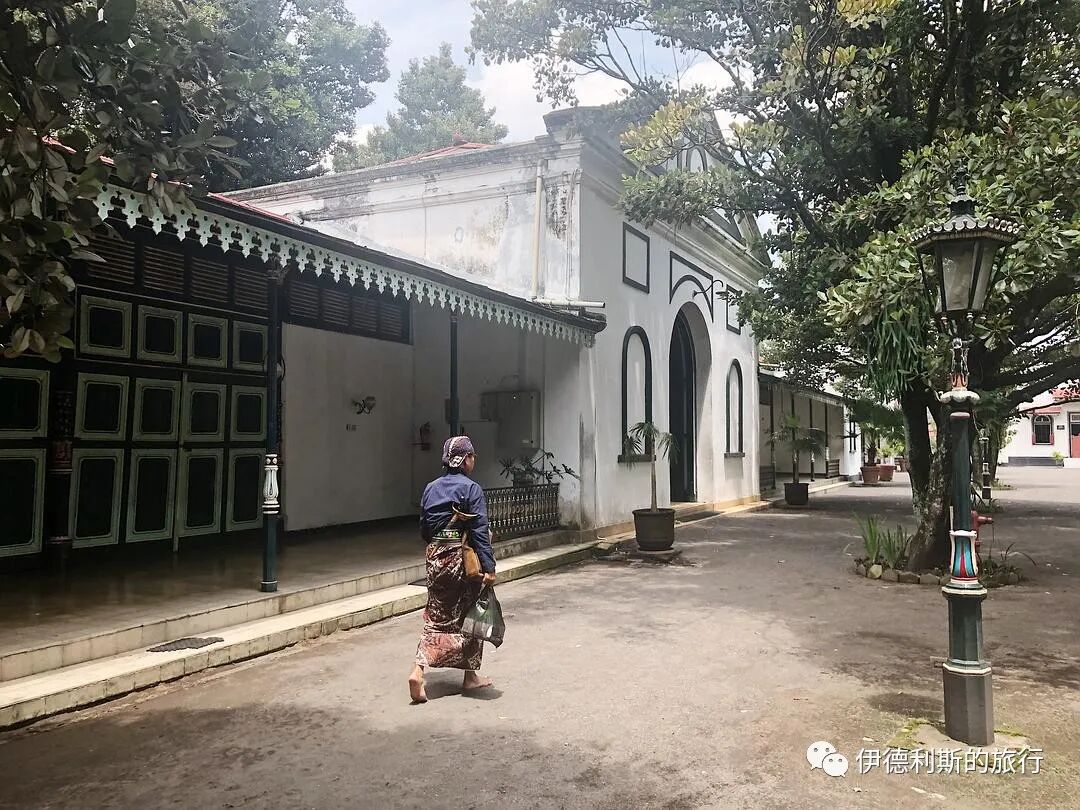
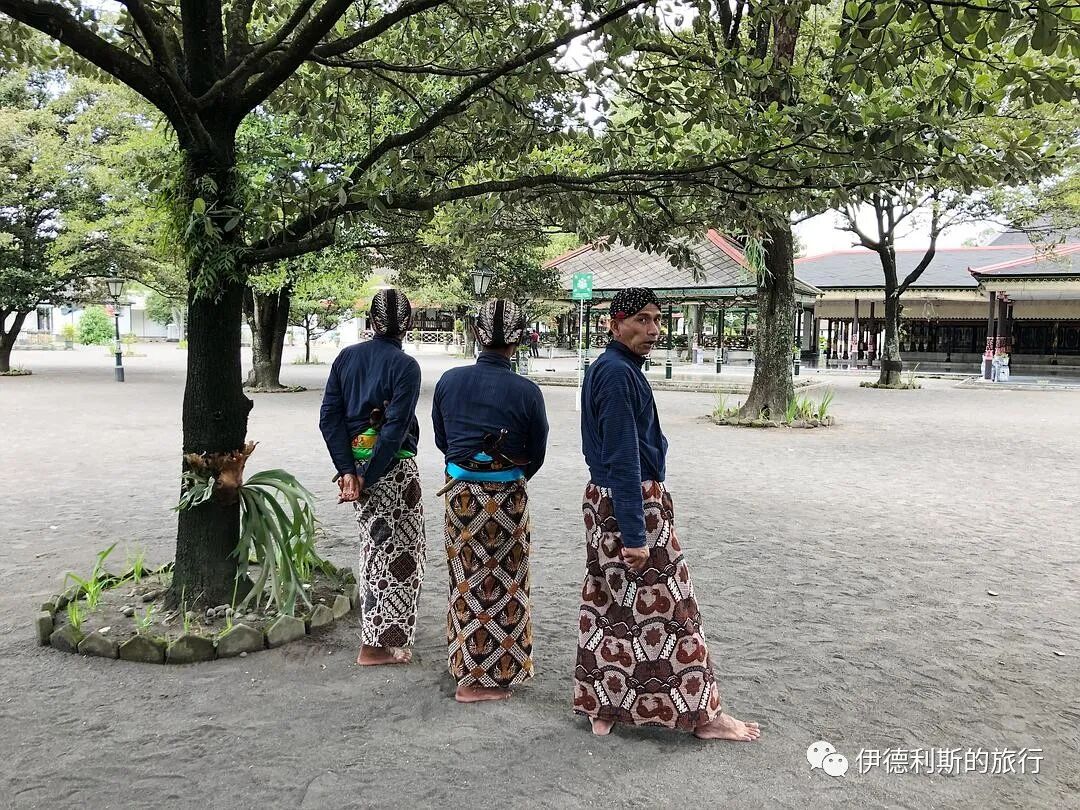
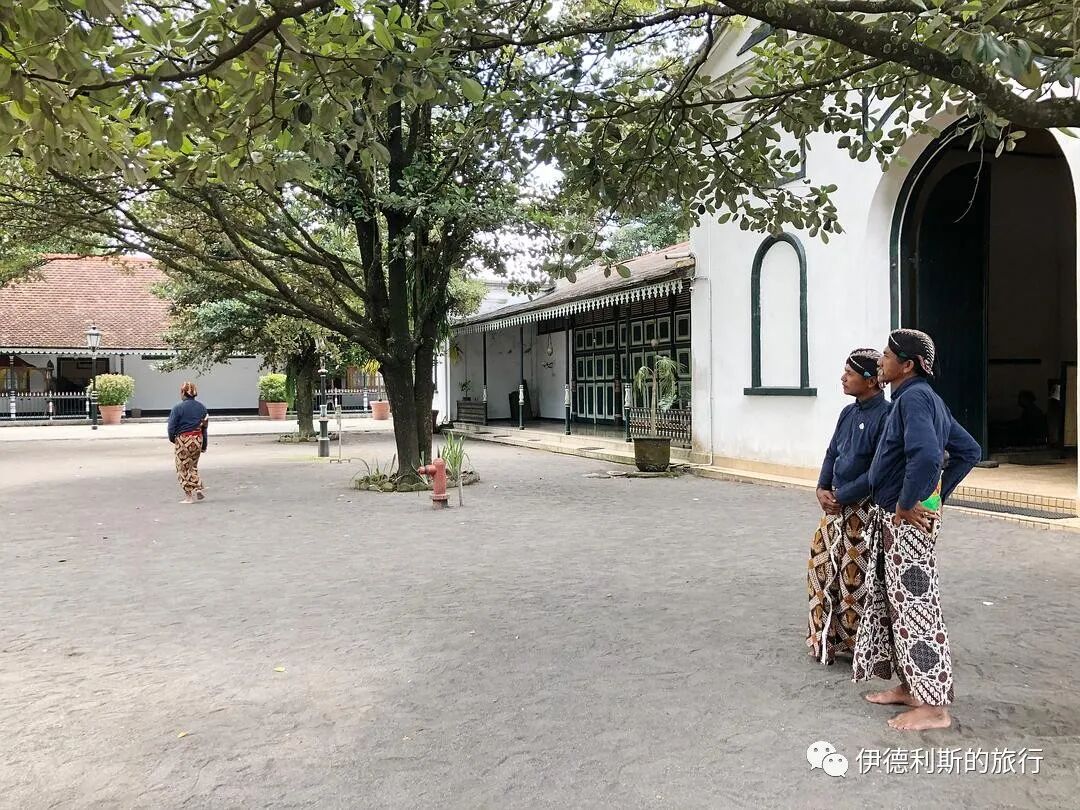
After passing through the Donopratopo gate, you enter the Kedhaton area, the heart of the palace. Only part of this area is open to the public, as the rest serves as the living quarters for the Sultan's family. The courtyard is covered in sand from the southern beach, where royal servants (Abdi-Dalem) stand barefoot.
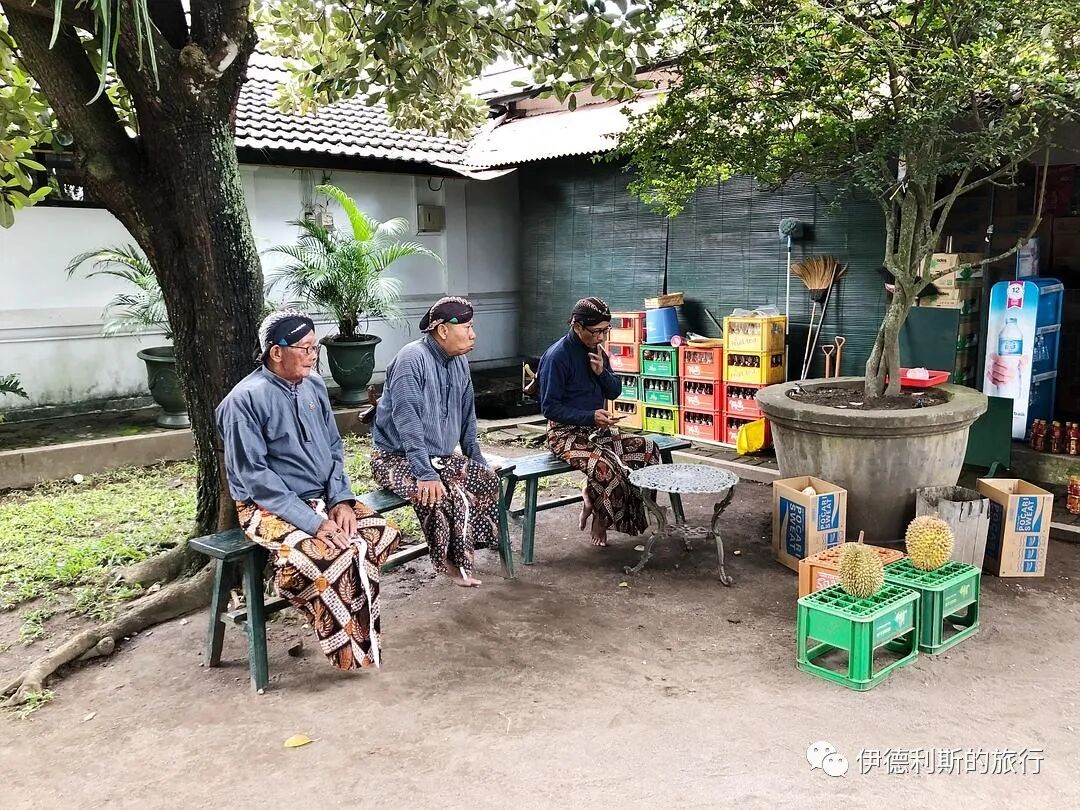
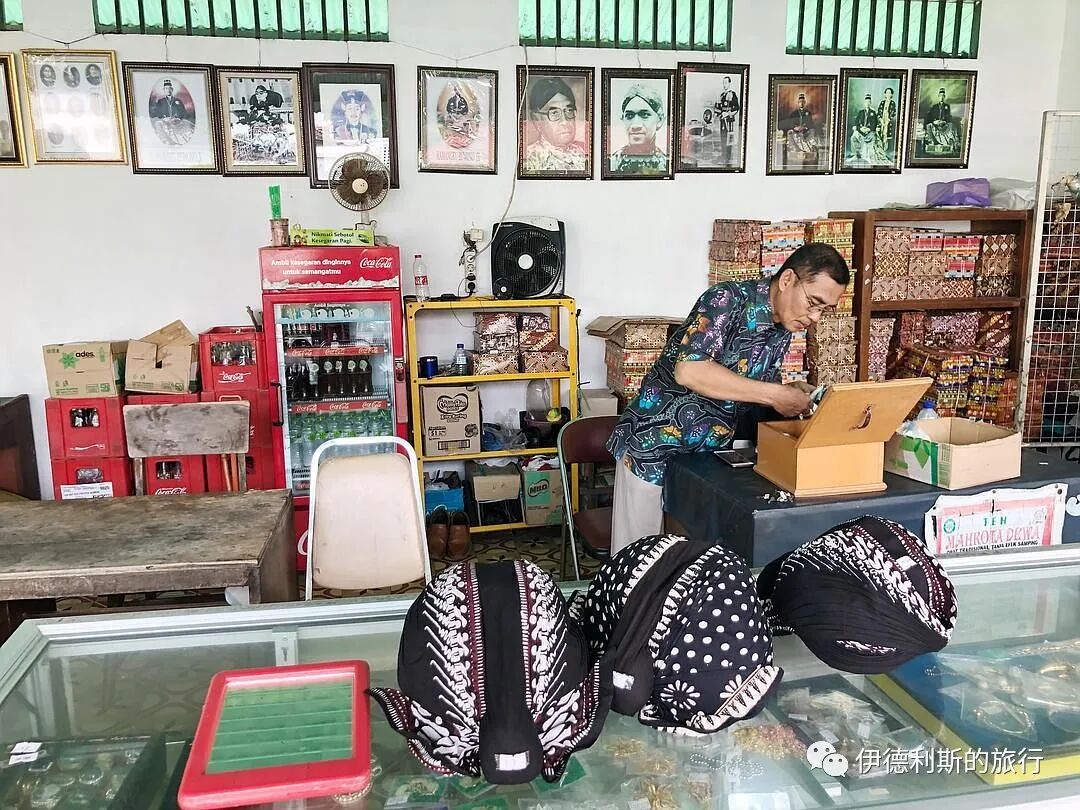
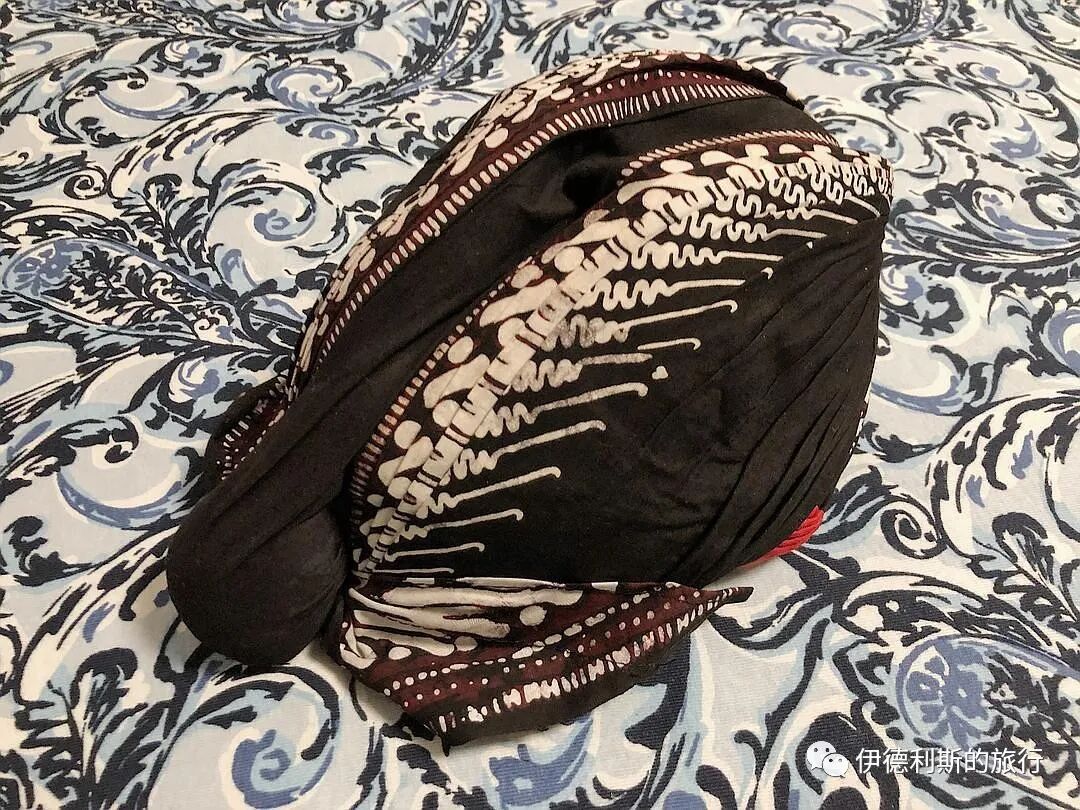
There are currently 2,640 royal servants in the Yogyakarta palace, and they all wear traditional Yogyakarta attire. You can buy the Blangkon hats worn by these servants right inside the palace. A Blangkon is a traditional batik headpiece for men from central and eastern Java. Legend says that Java island was once ruled by a giant named Dewata Cengkar. Dewata Cengkar often demanded human sacrifices, and the people were terrified of him. A man named Aji Saka volunteered to be sacrificed. He said to the giant, 'Great King of Java, I have only one wish before I die.' 'I want a piece of land as big as my headcloth.' The giant agreed to the request, so Aji Saka asked the giant to hold one end of the headcloth. The headcloth kept growing larger, and the giant kept stepping back until he reached the sea, where Aji Saka kicked him into the water. After defeating the giant, the people elected Aji Saka as the new King of Java, and the Blangkon he wore became a symbol of the Javanese people.
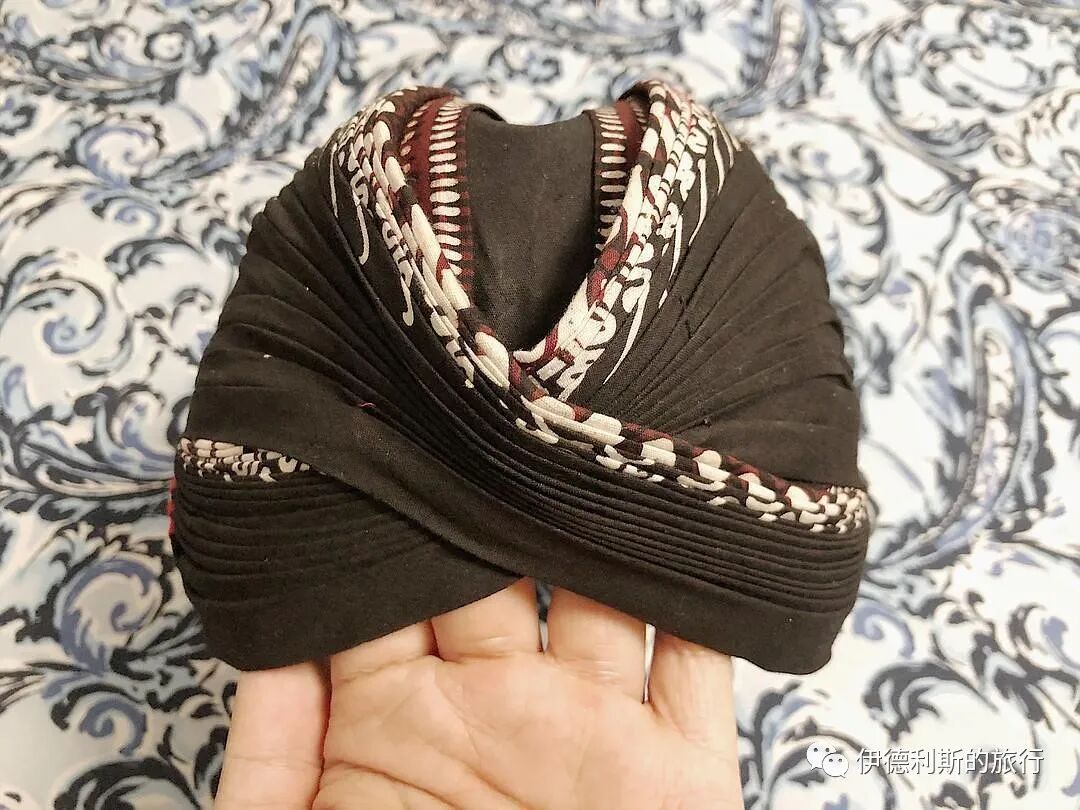
A more credible view is that after the 8th century, as more Indian Muslim merchants came to Java to trade, the combination of their turbans and Javanese batik created the Javanese Iket headcloth. The Blangkon is actually a more practical version of the Iket headcloth. The earliest headcloths required a complex tying process. Over time, people fixed the cloth into a set shape, creating a hat that did not need to be tied, which is the Blangkon.
The most common types of Blangkon are the Yogyakarta style and the Solo style. The Yogyakarta Blangkon is known for the Mondholan, a bulge on the back. In ancient times, Javanese men tied their long hair at the back of their heads. When wearing a Blangkon, they would wrap their hair tightly, creating this bulge. Because Solo was deeply influenced by Dutch colonialism, the locals stopped growing their hair long, so the back of the Solo Blangkon is flat.
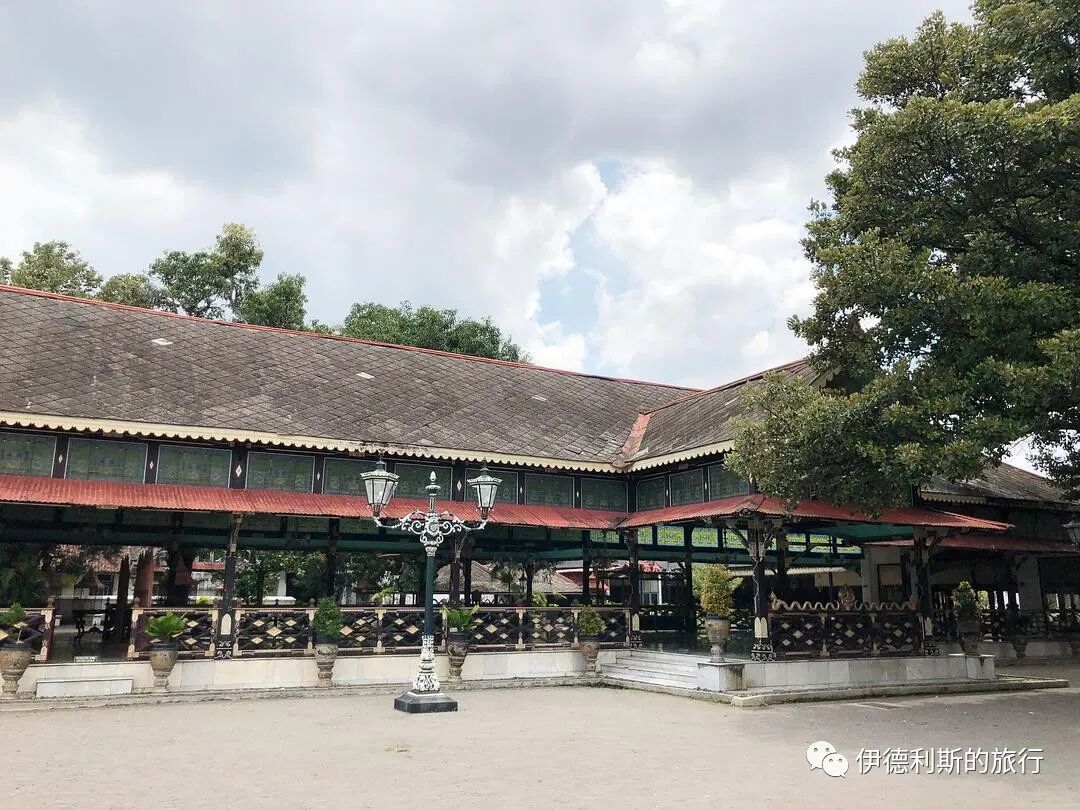
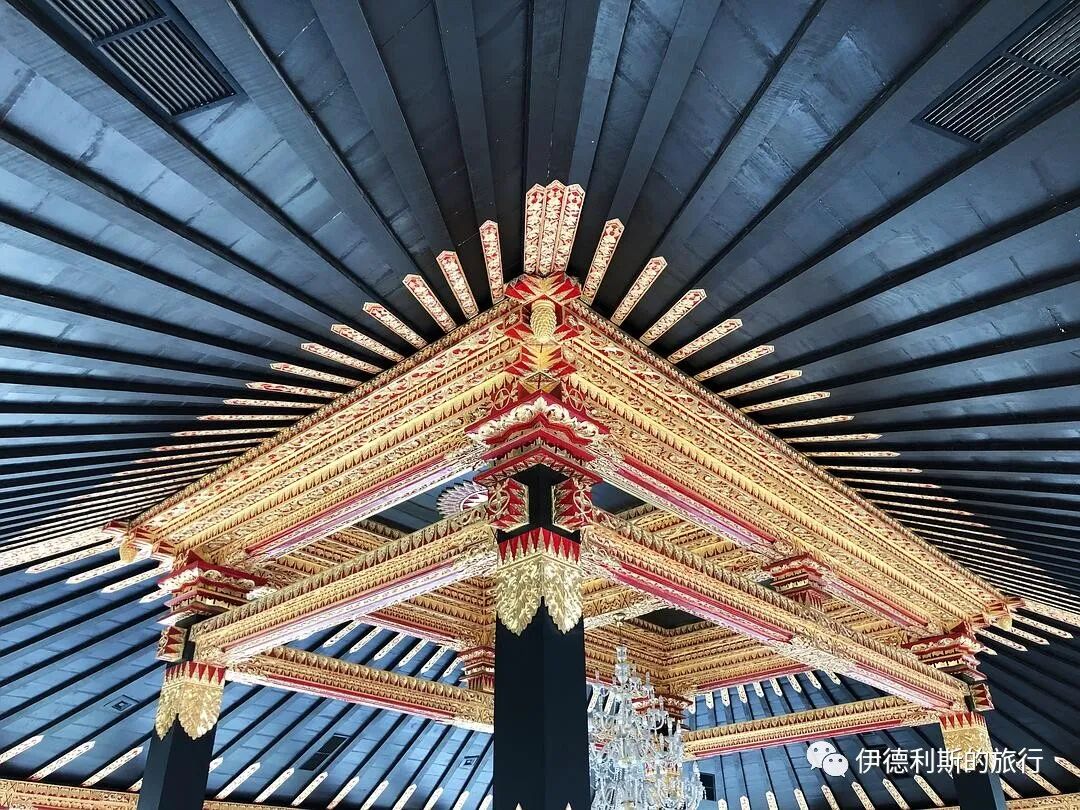
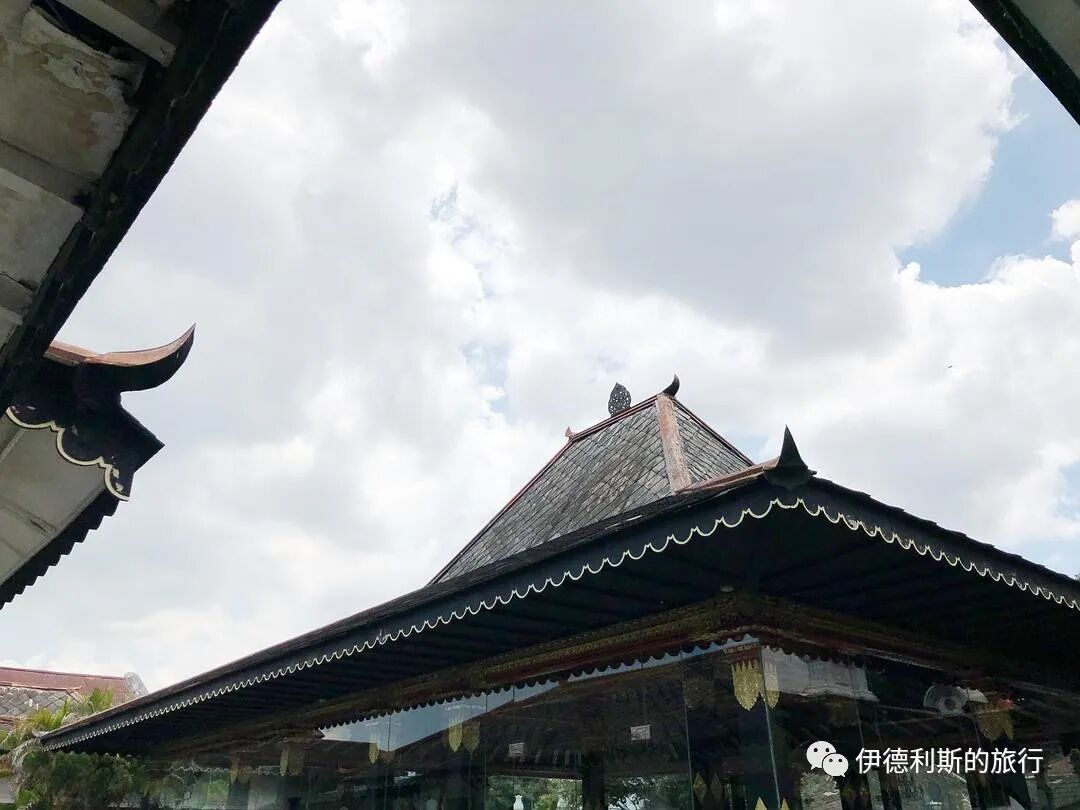
The east-facing Kencono Ward (Golden Pavilion) is the main hall of the palace and the site for various royal ceremonies.
The railings are carved with Batara Kala, the Javanese Hindu god of the underworld, who is also the god of time and destruction. In traditional Javanese mythology, Batara Kala eating the sun is the cause of solar eclipses. Legend says Batara Kala is the son of Batara Guru, the Javanese version of the god Shiva. In a moment of uncontrollable desire, Batara Guru had relations with his beautiful wife, Dewi Uma, on the back of a sacred cow. Uma felt very ashamed, and after being cursed, she took on the appearance of a monster. Therefore, the child she gave birth to, Batara Kala, also had a monster's appearance.
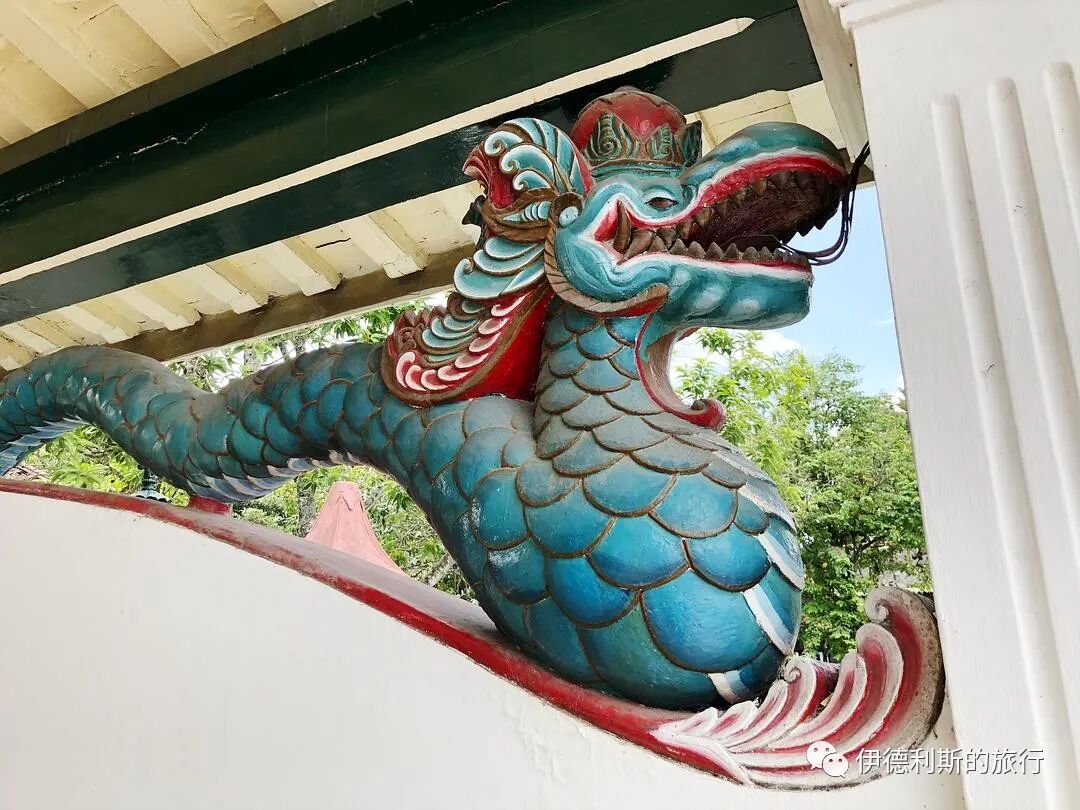
The railings are carved with the snake god Naga from Hindu and Buddhist culture. The Naga of Java and Bali is a crowned snake, representing a blend of the Hindu Shiva tradition and the native Javanese animist snake tradition. In the 9th century, the Javanese Naga looked like a cobra. After the 15th century, it was influenced by the Chinese dragon, though it lacks claws.
Batik
Some buildings
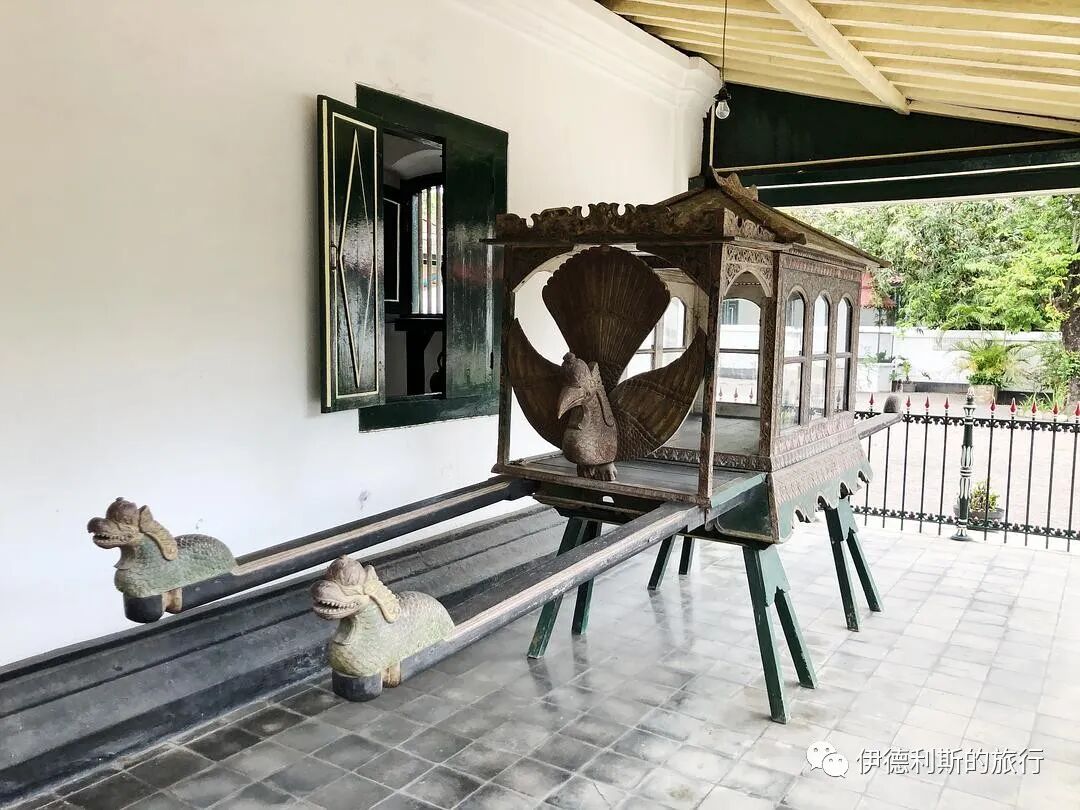
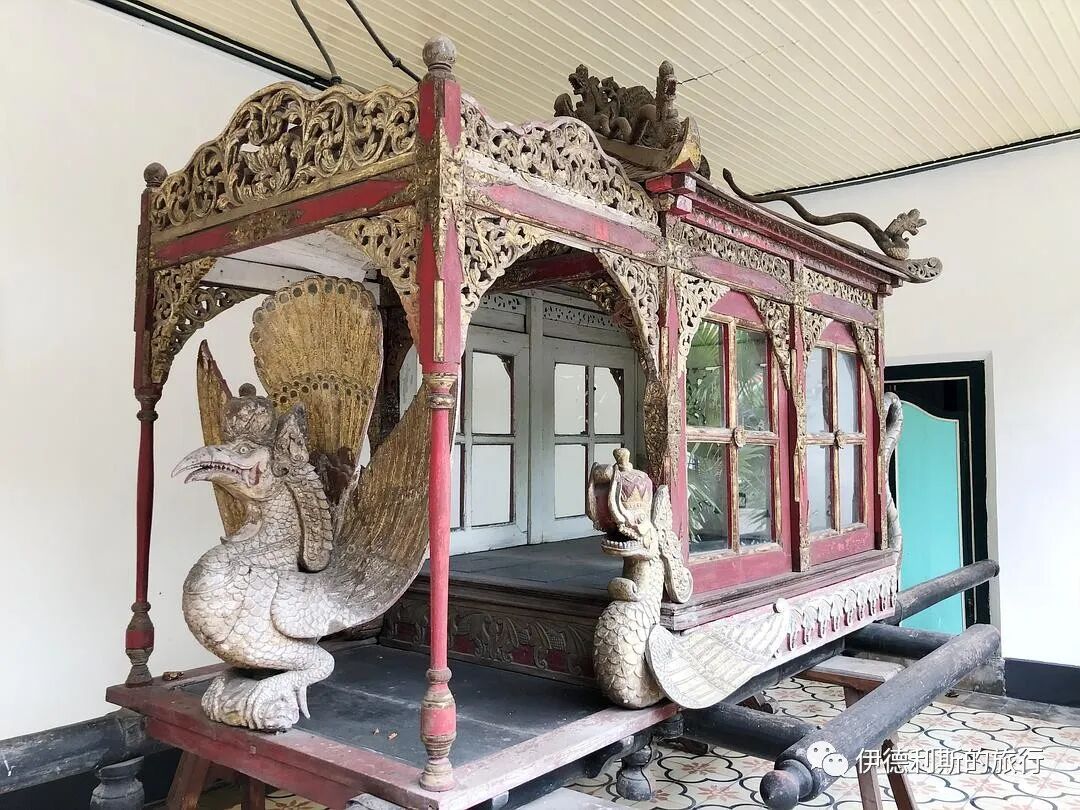
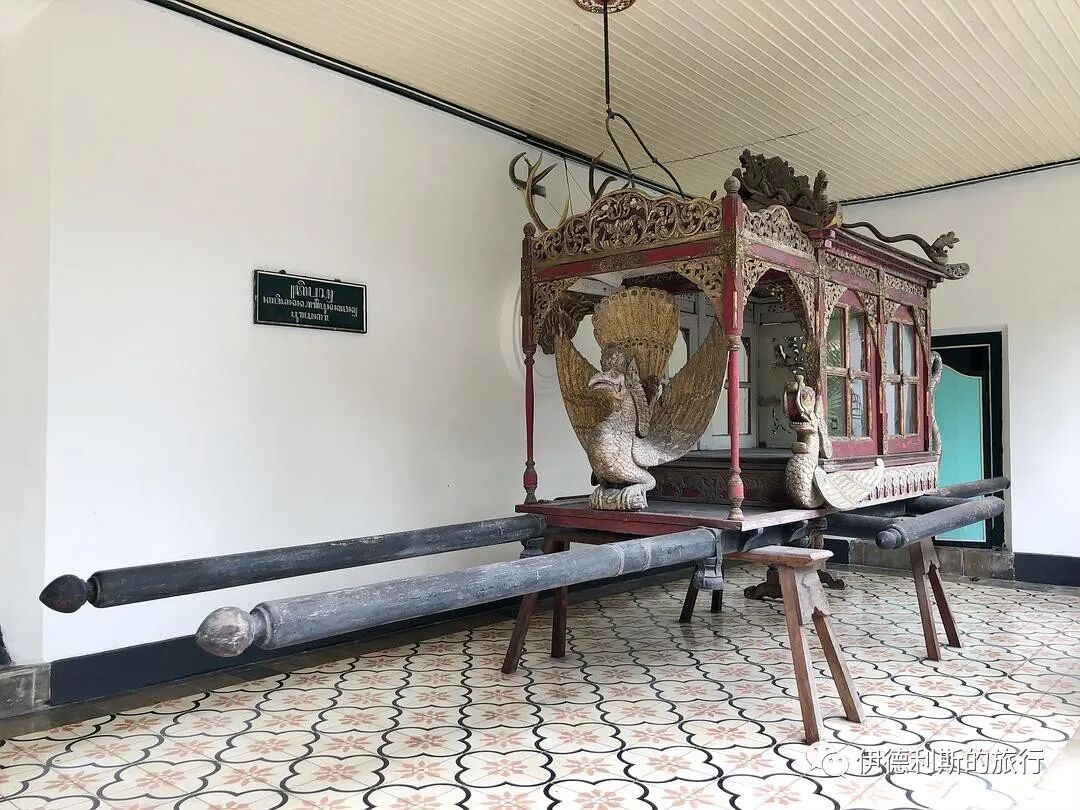
A palanquin used during Sultanate court processions
South of the Kedhaton is the Kamagangan Gate, which features statues of two Naga snake gods. Beyond the Kamagangan Gate is outside the palace grounds. This area was once used to train and test retainers, and the Magangan Ward in the middle of the courtyard is the site for the Bedhol Songsong puppet ceremony.
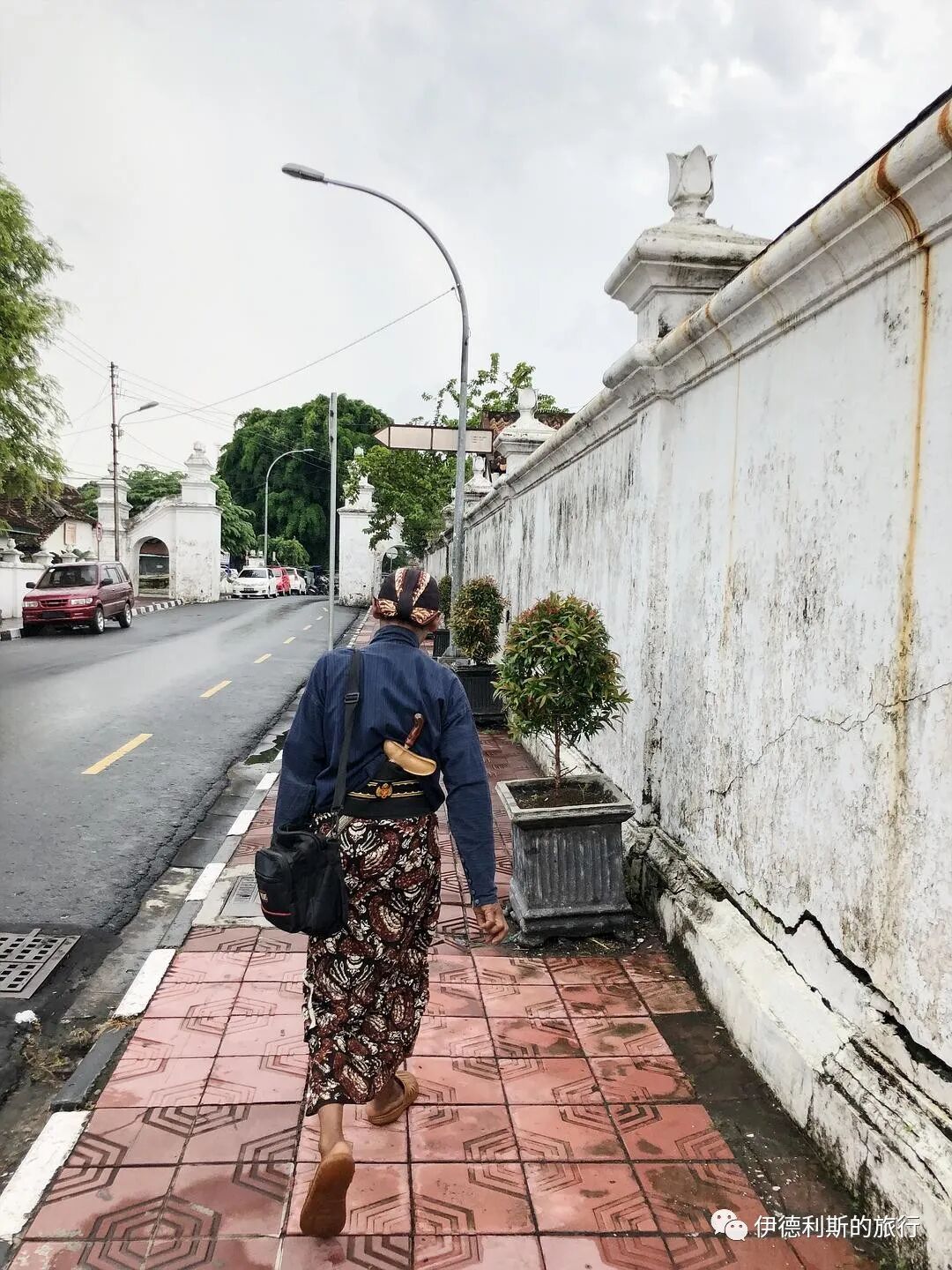
The palace walls of the Yogyakarta Palace
2. Yogyakarta Water Castle: 1758-1765
The Yogyakarta Water Palace (Taman Sari) is the garden harem of the Sultan of Yogyakarta. It was built in 1758 by order of the founding Sultan Hamengkubuwono I, and the architect was Tumenggung Mangundipura. Tumenggung Mangundipura traveled to the Dutch East India Company headquarters in Batavia (Old Jakarta) twice to study European architecture, so the buildings in the Water Palace blend Javanese and Dutch styles.
The Water Palace was finished in 1765, featuring a mosque, meditation rooms, bathing areas, 18 water gardens and pavilions, and a complex water system, but these designs were neglected after Sultan Hamengkubuwono I died in 1791. The Water Palace was damaged during the British invasion of Yogyakarta in 1812 and again during the Java War from 1825 to 1830.
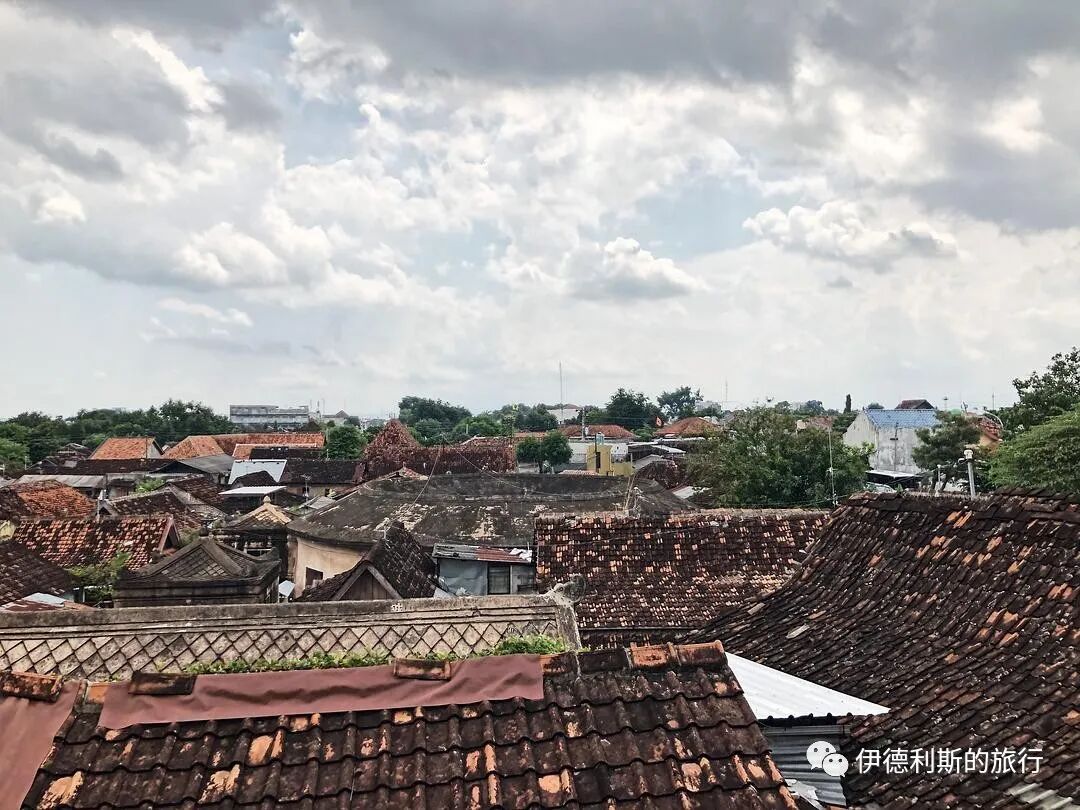
After an earthquake in 1867, the palace complex was completely abandoned, local residents began building homes on the ruins, and the dried-up lake was gradually filled in. Parts of the Water Palace were restored after the 1970s, but only the bathing area was fully repaired.
1. Segaran Lake Area
The main buildings of the Water Palace sit around an artificial lake called Segaran (artificial sea).
In the middle of Segaran lake is an island called Kenongo (magnolia island), which used to be covered in magnolia flowers. A building called Gedhong Kenongo stood on the island and was once the largest structure in the Water Palace, but it was severely damaged in the 1867 earthquake.
Before the 1859 earthquake
After the 1867 earthquake
There is an underwater tunnel on the south side of Kenongo island that connects to the land. The underwater tunnel built in 1761 still exists today, and it has a row of ventilation structures called Tajug on top.
The entrance to the underwater tunnel on Kenongo island.
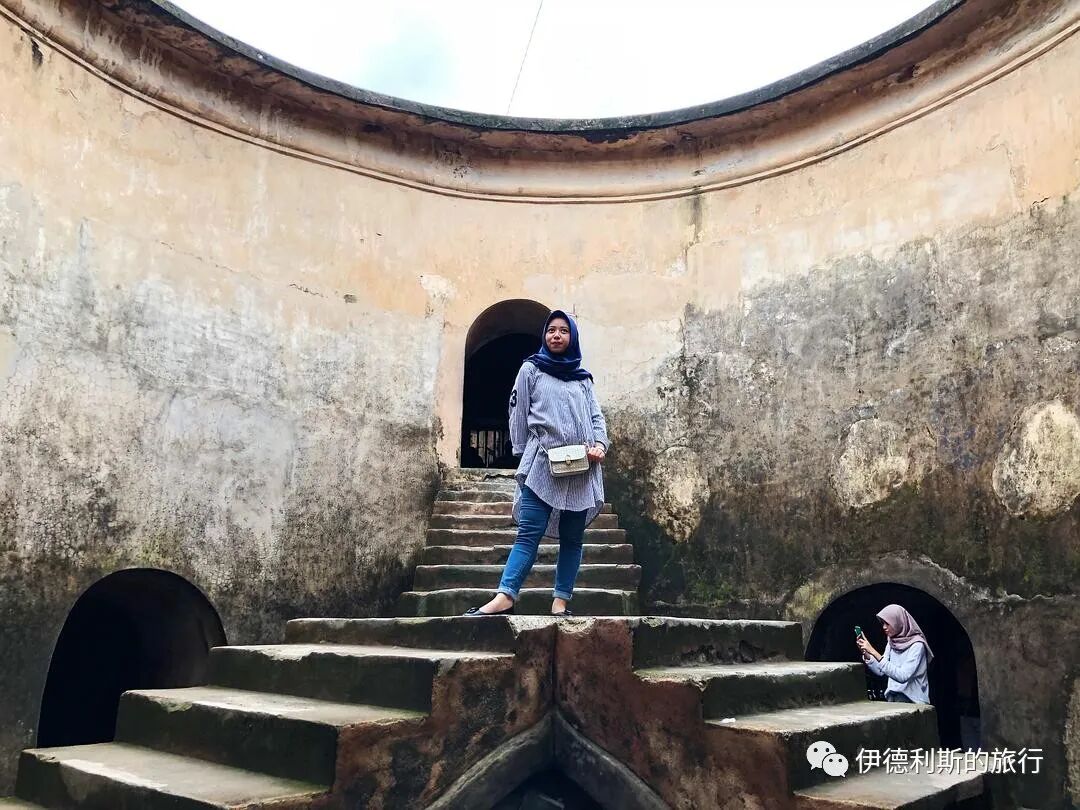
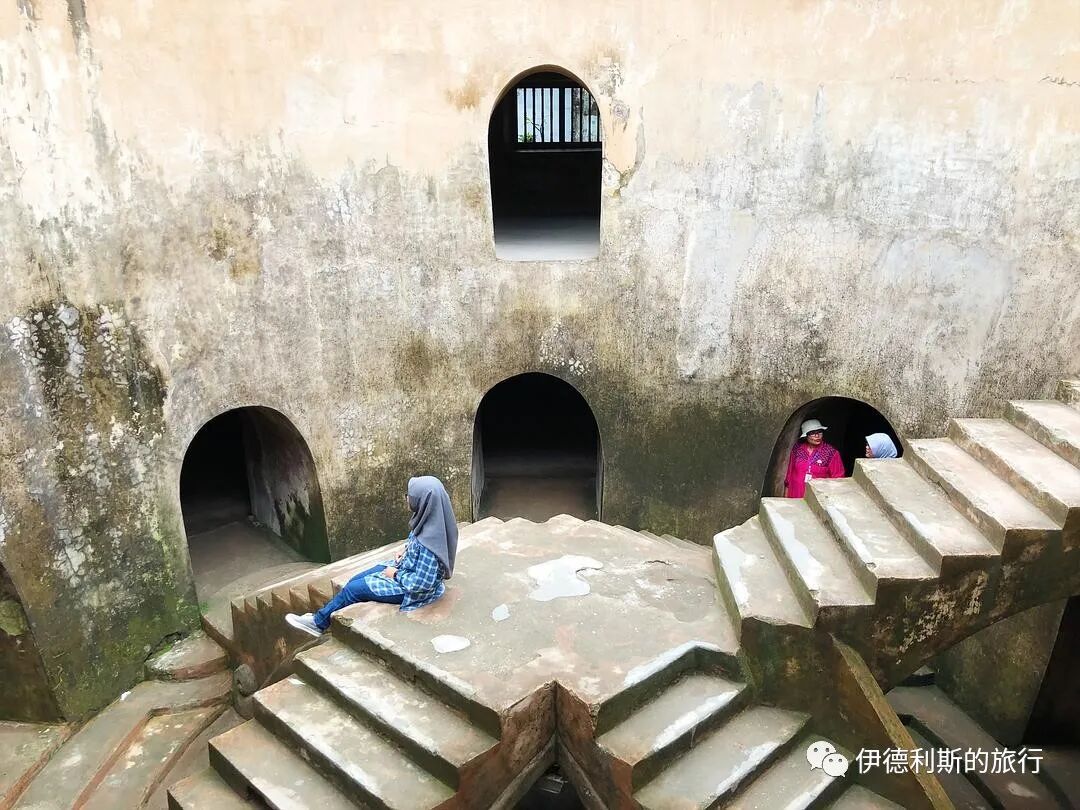
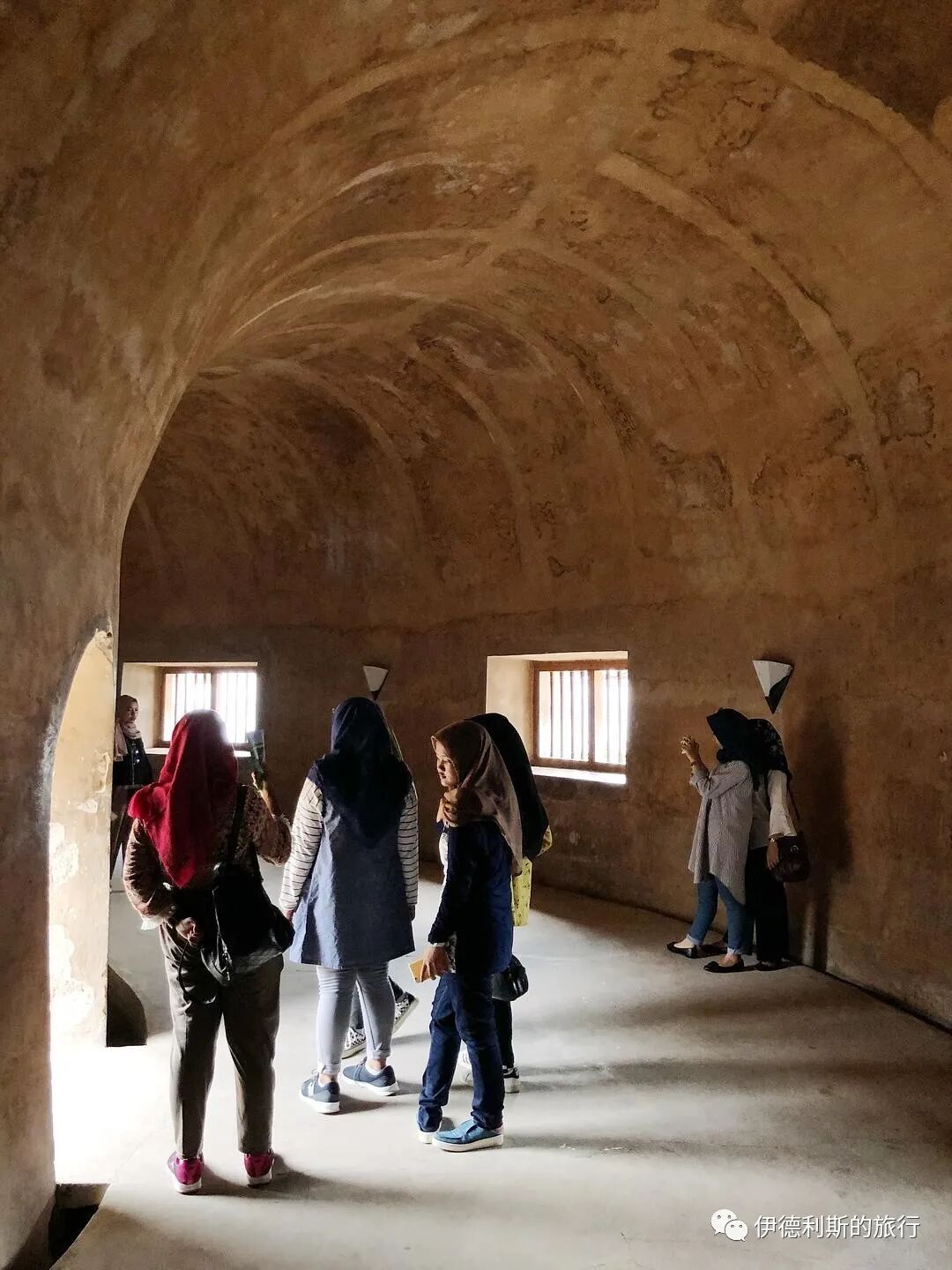
On the west side of Kenongo island is an artificial island made of a single building, the Sumur Gumuling mosque, which can only be reached through the underwater tunnel.
The exit of the underwater tunnel at the Sumur Gumuling mosque.
2. Bathing Area
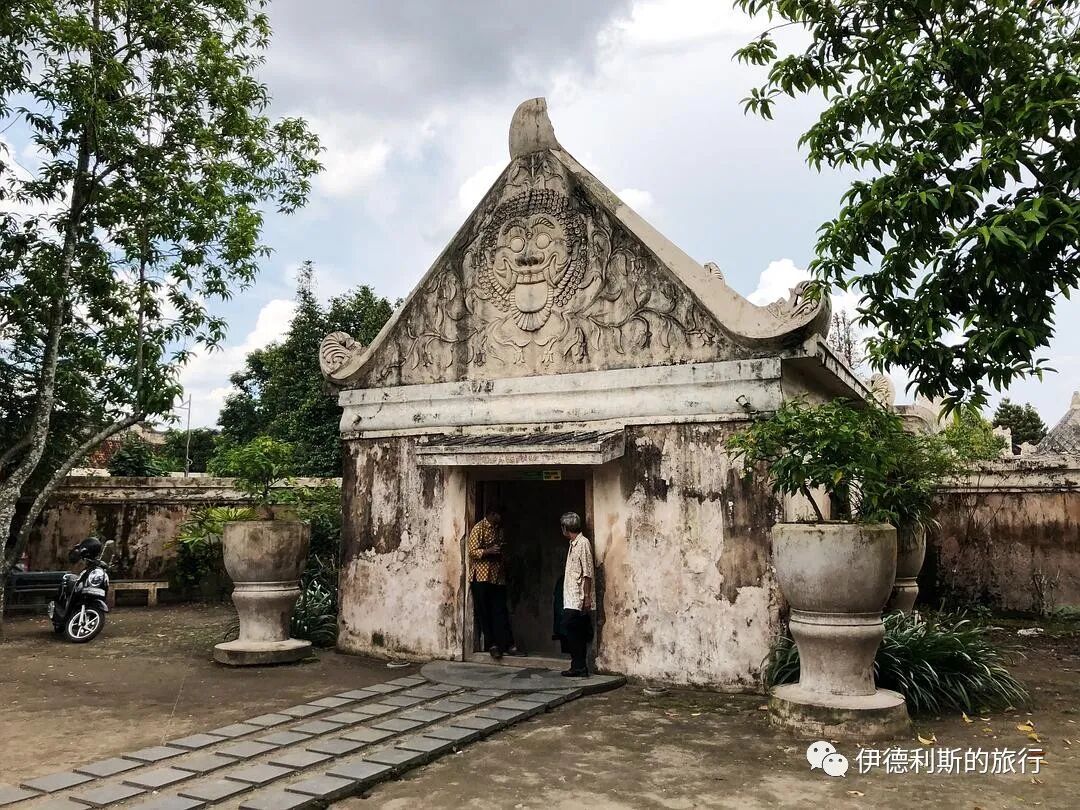
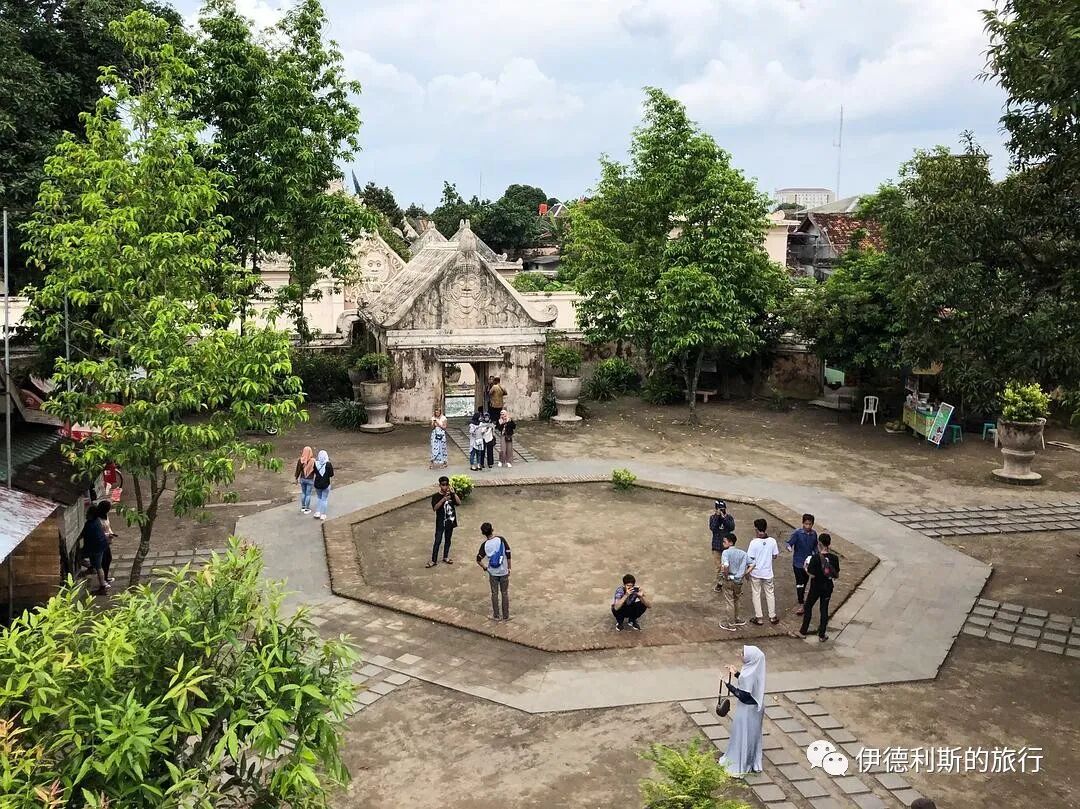
The bathing area is on the south side of Segaran lake; it was not the most important building back then, but it is the best-preserved part of the Water Palace today.
The bathing area has east and west gates decorated with detailed flower and bird patterns. The west gate is called Gedhong Gapura Hageng, built in 1765; it was once the main entrance to the bathing area but is now closed.
The east gate is called Gedhong Gapura Panggung, built in 1758; it is now the visitor entrance to the bathing area and features two Naga (serpent deity) statues on the gate.
Umbul Pasiraman is the central bathing area for the royal family, surrounded by lounges and changing rooms for the Sultan, his daughters, and his concubines, with the tallest tower serving as the spot where the Sultan watched his harem bathe. In the past, only women were allowed to enter the central bathing area, except for the Sultan himself.
3. Great Mosque of Yogyakarta: 1773
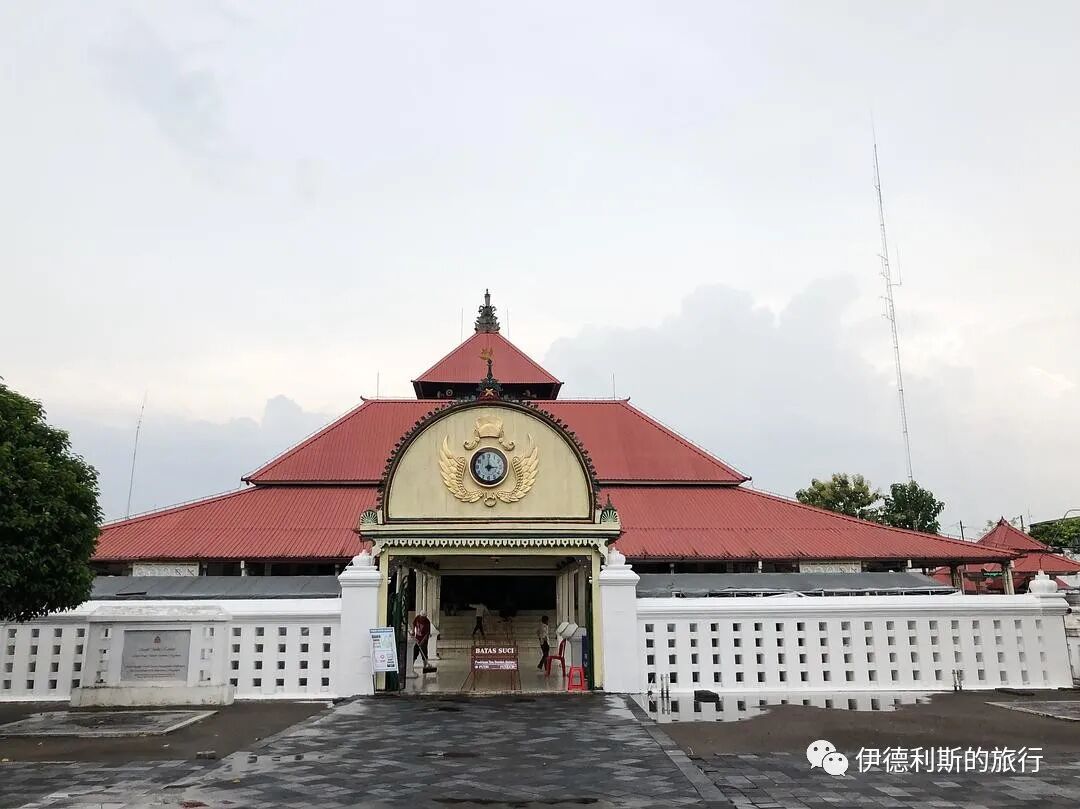
The Great Mosque of Yogyakarta (Masjid Gedhe Kauman) sits northwest of the Yogyakarta Palace. Built in 1773, it serves as the royal mosque for the Sultan of Yogyakarta.
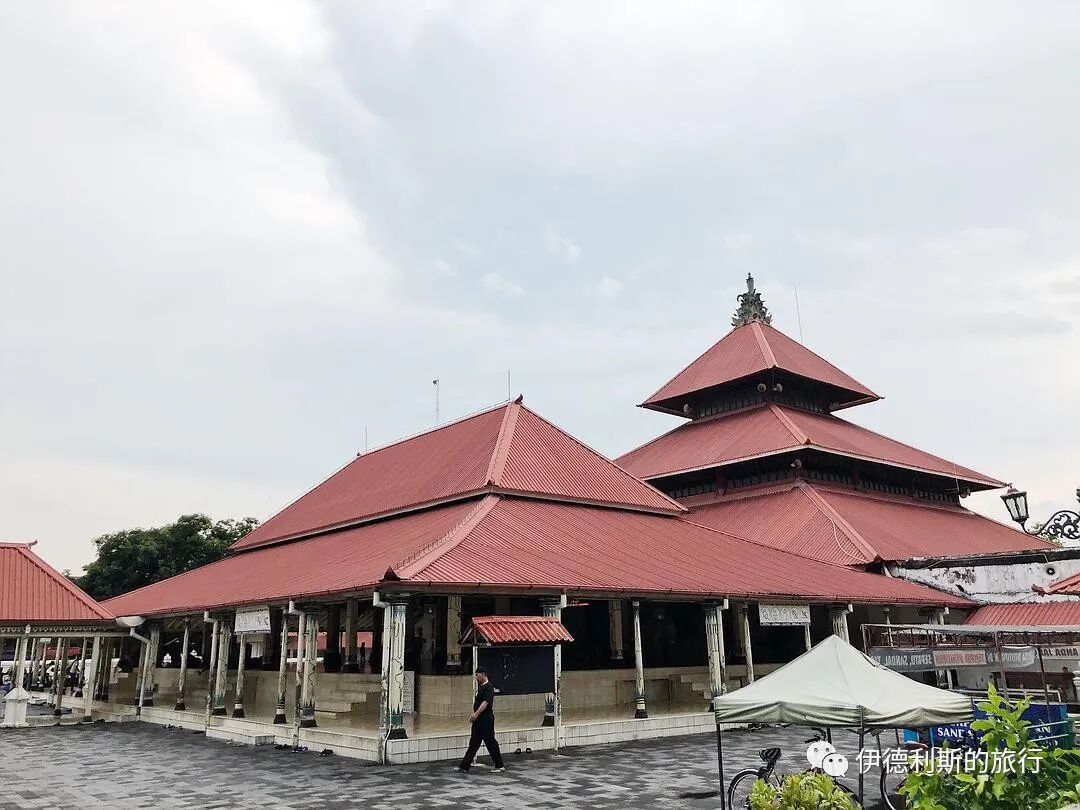
The Great Mosque of Yogyakarta features a classic traditional Javanese mosque style. The mosque has no minaret. Its main structure consists of a prayer hall and a front porch called a serambi. The roof of the prayer hall features an ornament called a Mustaka.
The front porch of the prayer hall.
Inside the prayer hall, the mihrab and the pulpit (minbar) both show a strong Javanese style. There is also a cage-like structure called a Maxura, which is where the Sultan of Yogyakarta prays.
The pulpit (minbar).
The place where the Sultan prays.
The mihrab.
4. Royal Dining Hall: 1916
Located next to the Yogyakarta Sultan's Palace, nDalem Joyokusuman was the home of Prince Gusti Haryo Haji Joyokusumo. It is now open as a cultural center and restaurant. I ate Nasi Blawong and Telo ijo here. Nasi Blawong is a specialty dish of the Sultan of Yogyakarta. It was once only served at the Sultan's birthday banquets, and the reddish Blawong rice used in it is considered sacred. Telo ijo is a cassava pastry drizzled with pandan coconut milk.
nDalem Joyokusuman was built in 1916 during the reign of the eighth Sultan of Yogyakarta, Hamengkubuwono VIII, and has been occupied by members of the Sultan's family ever since. Peringgitan is the inner hall behind the main living room. It is where the prince's family held activities and displayed valuable gifts the prince received.
Sentong Kiwo in picture 4 was originally a guest room and now serves as an exhibition hall.
The area in the courtyard where gamelan music is performed.
A photo of the prince's family when they were young.
5. Sultan of Yogyakarta's Hat
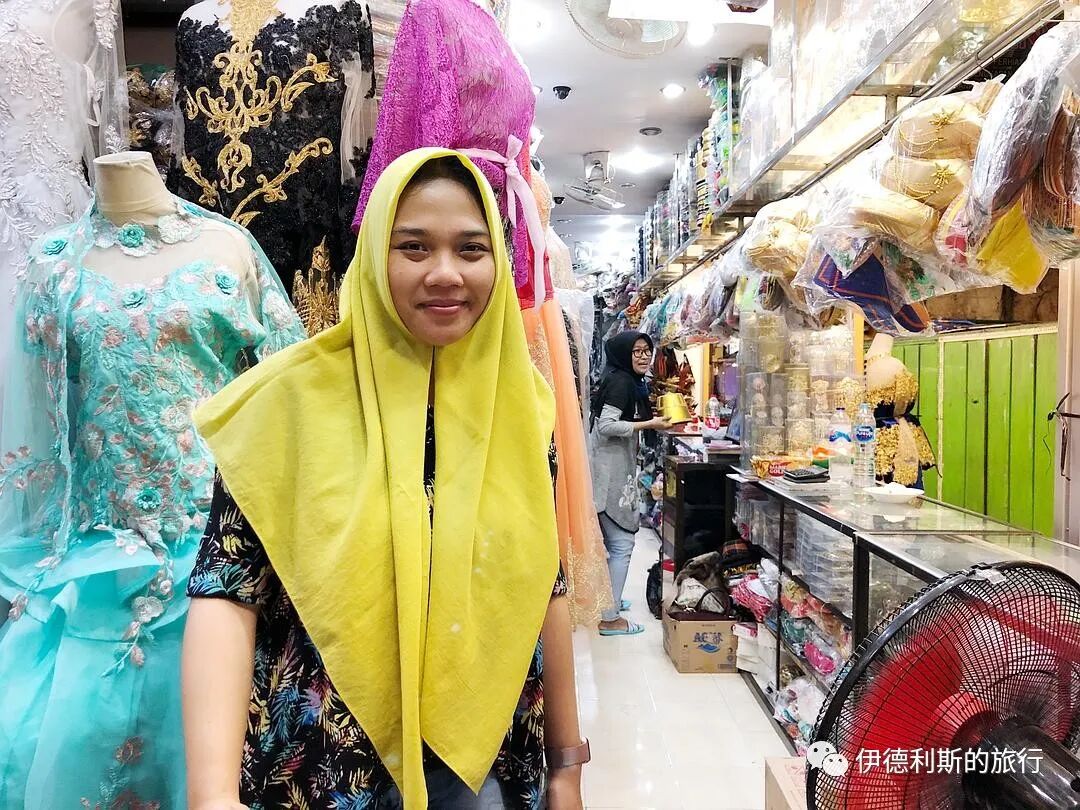
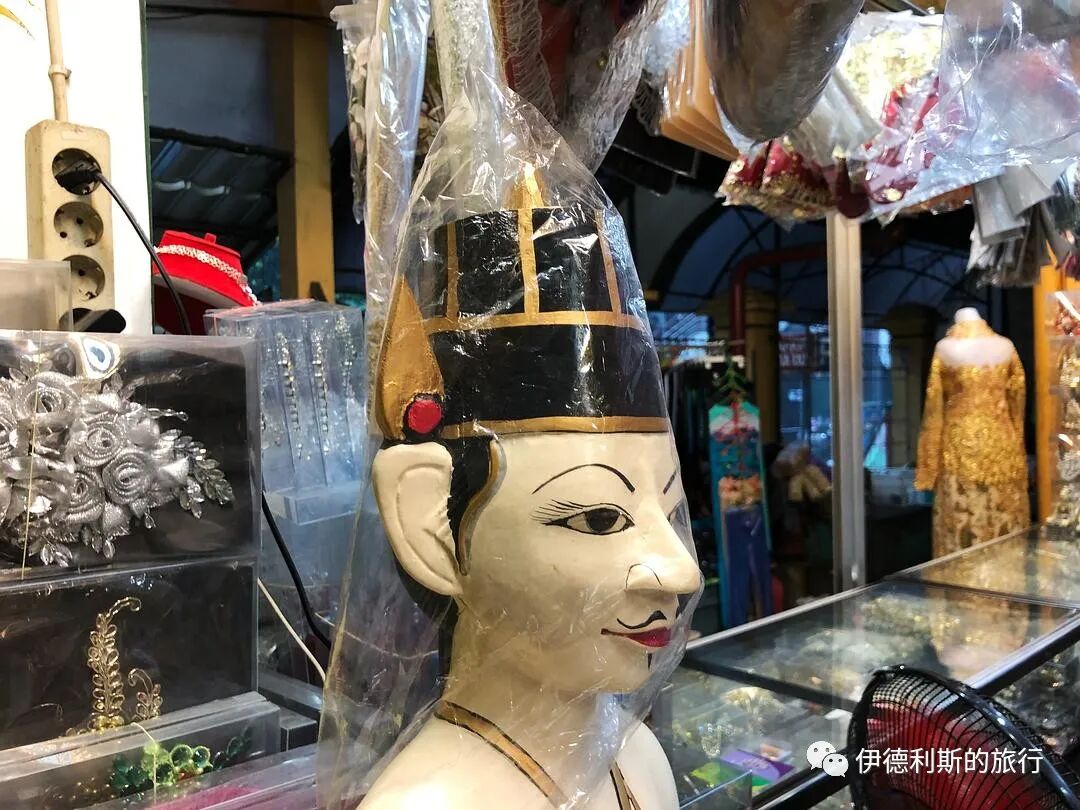
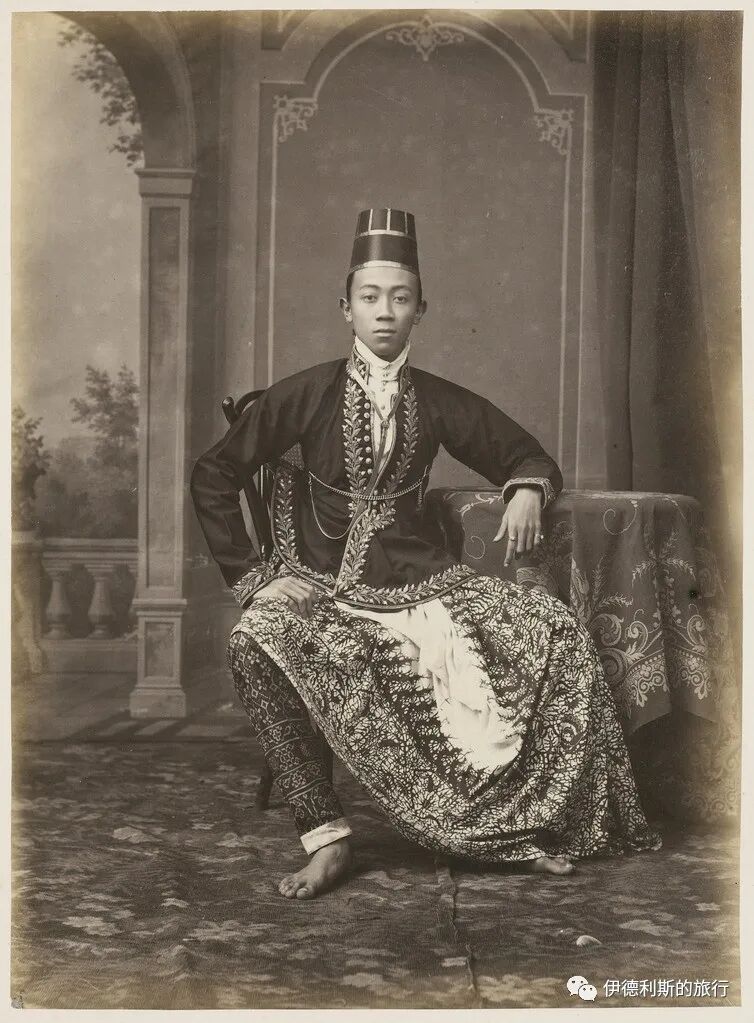
I bought a hat at Beringharjo Market in Yogyakarta that locals wear for weddings. It is based on the crown from the Yogyakarta Sultan's court.
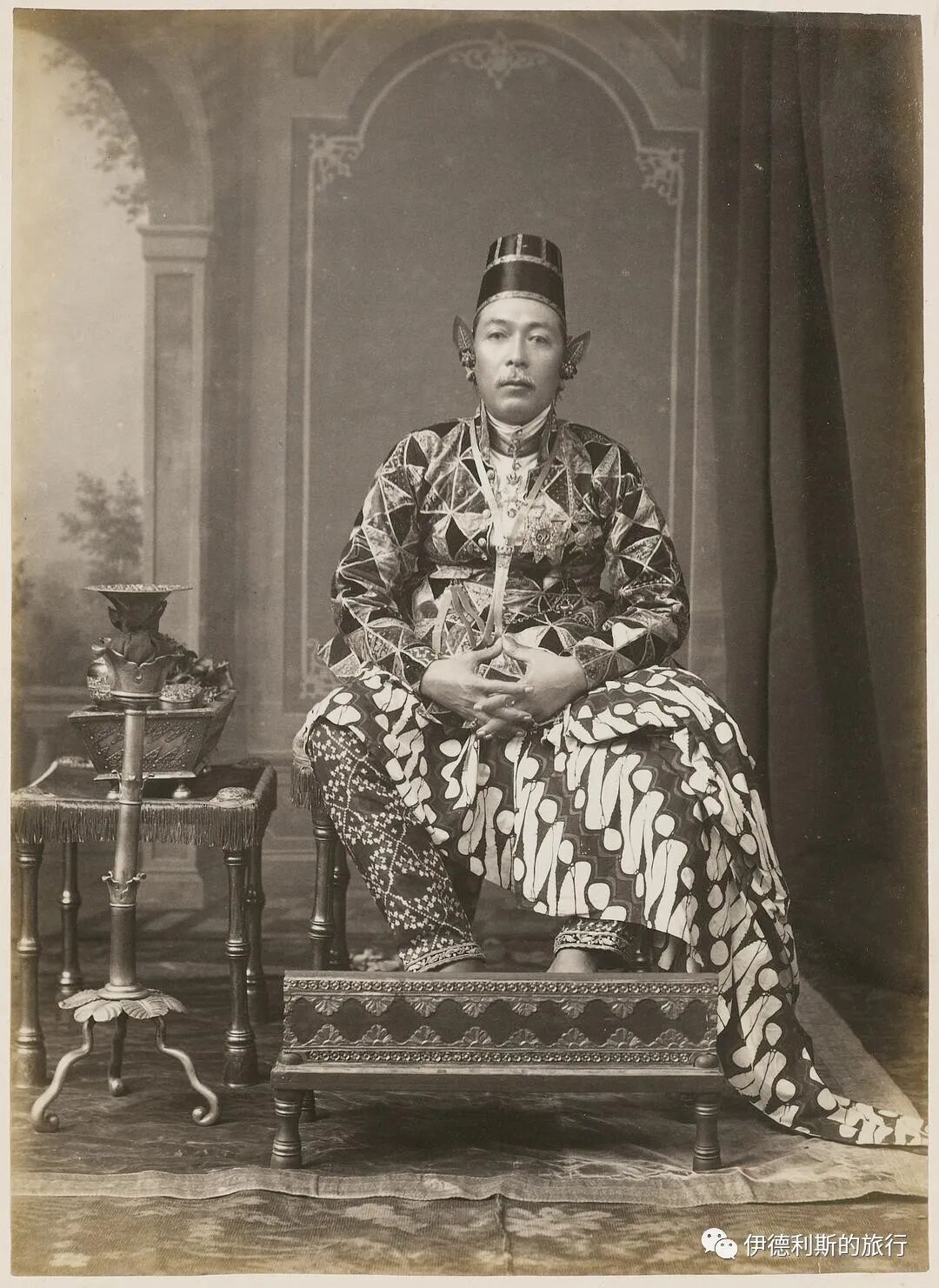
Sultan Hamengkubuwono VII of Yogyakarta, photographed in 1885.
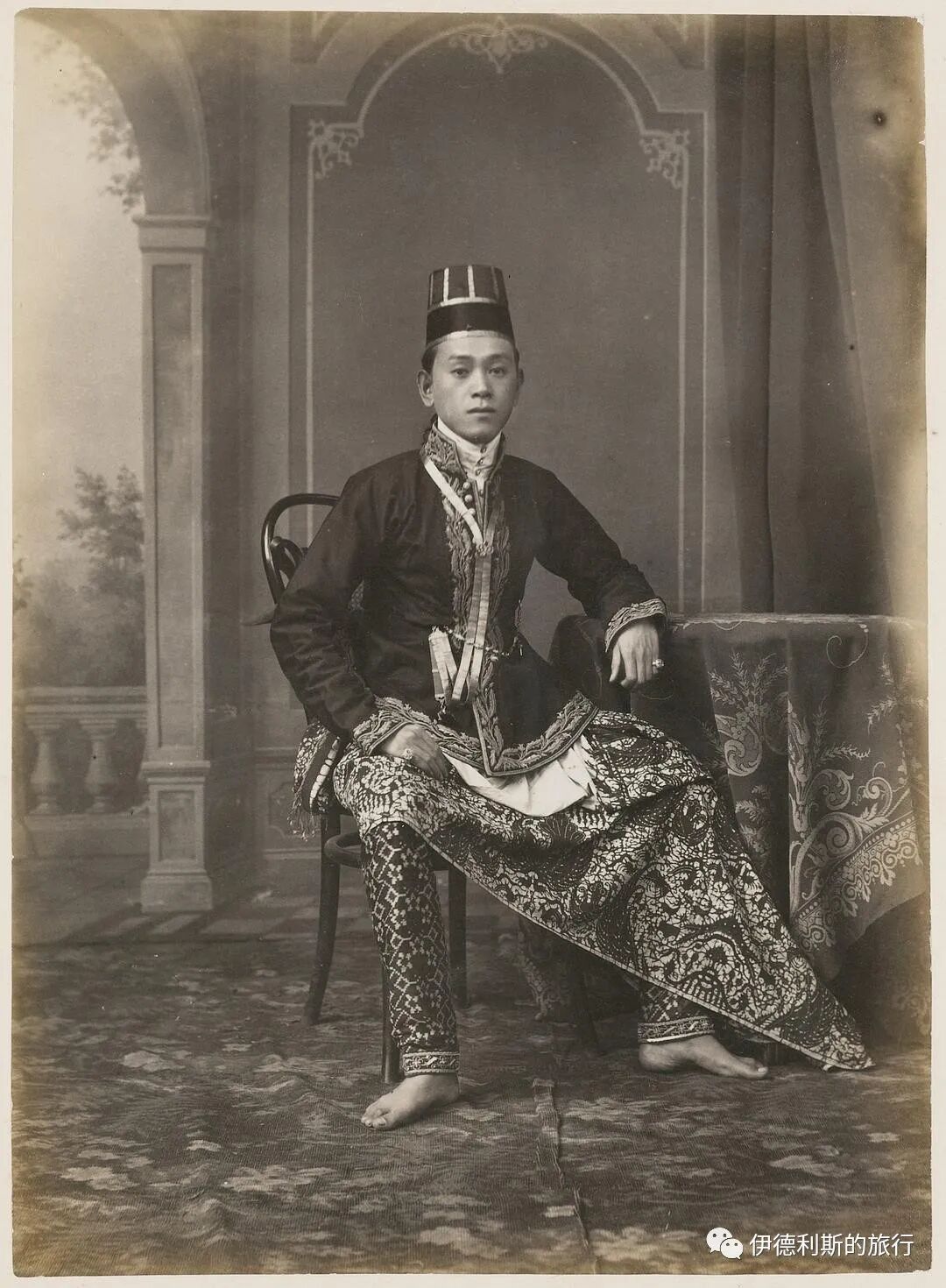
Members of the Yogyakarta Sultan's royal family, photographed in 1885. view all
Summary: Muslim Travel Guide Indonesia Yogyakarta: Sultanate Palaces, Mosques and Islamic Heritage is presented here as a clear Muslim travel account, beginning with this scene: In our last article, The Lost Ancient Capital of Java: Kotagede, we introduced how the Mataram Sultanate became the most powerful Islamic kingdom on Java in the first half of the 17th century. The account keeps its focus on Yogyakarta Mosques, Indonesia Muslim Travel, Sultanate Palaces while preserving the names, places, food, and historical details from the Chinese source.
In our last article, The Lost Ancient Capital of Java: Kotagede, we introduced how the Mataram Sultanate became the most powerful Islamic kingdom on Java in the first half of the 17th century. However, after the third ruler, Sultan Agung (reigned 1613-1645), passed away, the royal family fell into a power struggle. After the 1670s, the Dutch East India Company used these power struggles to tighten their control, eventually splitting the Mataram Sultanate into the Yogyakarta Sultanate and the Surakarta Sunanate in 1755. After Indonesia declared independence in 1945, the Sultan of Yogyakarta pledged loyalty to the Indonesian government, and the sultanate became the Special Region of Yogyakarta, with the Sultan serving as governor. The governorship is hereditary, has no term limit, and is not appointed by the Indonesian government, making it the only region in Indonesia currently ruled by a sultan.
Table of Contents
1. Yogyakarta Palace: 1755
1. North Section
2. South Section
2. Yogyakarta Water Castle: 1758-1765
1. Segaran Lake Area
2. Bathing Area
3. Great Mosque of Yogyakarta: 1773
4. Royal Dining Hall: 1916
5. Sultan of Yogyakarta's Hat
1. Yogyakarta Palace: 1755
In 1755, the third war of succession for the Mataram Sultanate ended. The Dutch East India Company signed a treaty with two princes of the Mataram Sultanate, Mangkubumi and Pakubuwono III, to establish the Yogyakarta Sultanate and the Surakarta Sultanate. Prince Mangkubumi then became the founding Sultan of the Yogyakarta Sultanate, known as Hamengkubuwono I.
After becoming Sultan, Hamengkubuwono I chose a banyan forest between two rivers in Yogyakarta to build his palace. The Yogyakarta Palace (Kraton Ngayogyakarta Hadiningrat) has since served as the residence for ten sultans over 264 years.
Most of the existing palace buildings were renovated during the reign of Sultan Hamengkubuwono VIII (reigned 1921-1939) in the first half of the 20th century, and some parts were repaired again after the 2006 earthquake.
1. North Section
The Yogyakarta Palace site is currently divided into north and south sections, and you need to buy separate tickets for each. The main gate between the two sections only opens during official events, so you have to use the side gate on normal days.
The northernmost building is called Bangsal Pagelaran, where official ceremonies are held. When I visited, there was a royal manuscript exhibition, but photography was forbidden.
The Siti Hinggil in the south is where grand court ceremonies take place, and every Sultan of Yogyakarta has been crowned here. In 1949, the Netherlands officially recognized Indonesia's independence, and Indonesia's founding father, Sukarno, was officially inaugurated as president here.
2. South Section
Further south is the Kamandhungan, commonly known as Keben, which was used by the Sultan to pass death sentences in the past. This is currently the main gate to the southern part of the palace, and the ticket office is located here. After buying a ticket to enter the southern section, you reach Sri Manganti. This was once used to receive VIP guests, and now it hosts performances of gamelan music, wayang shadow puppetry, Javanese poetry, and classical dance almost every morning.
The Traju Mas Ward to the east of Keben was once the place where the Sultan welcomed guests. It collapsed during the 2006 earthquake and was not fully restored until 2010.
South of Keben is the Donopratopo gate, which has a pair of guardian statues called Dvarapala in front of it. Dvarapala originated as gate gods in Hinduism and Buddhism. In Javanese culture, they usually appear as giant, fierce-looking asuras holding a vajra.
After passing through the Donopratopo gate, you enter the Kedhaton area, the heart of the palace. Only part of this area is open to the public, as the rest serves as the living quarters for the Sultan's family. The courtyard is covered in sand from the southern beach, where royal servants (Abdi-Dalem) stand barefoot.
There are currently 2,640 royal servants in the Yogyakarta palace, and they all wear traditional Yogyakarta attire. You can buy the Blangkon hats worn by these servants right inside the palace. A Blangkon is a traditional batik headpiece for men from central and eastern Java. Legend says that Java island was once ruled by a giant named Dewata Cengkar. Dewata Cengkar often demanded human sacrifices, and the people were terrified of him. A man named Aji Saka volunteered to be sacrificed. He said to the giant, 'Great King of Java, I have only one wish before I die.' 'I want a piece of land as big as my headcloth.' The giant agreed to the request, so Aji Saka asked the giant to hold one end of the headcloth. The headcloth kept growing larger, and the giant kept stepping back until he reached the sea, where Aji Saka kicked him into the water. After defeating the giant, the people elected Aji Saka as the new King of Java, and the Blangkon he wore became a symbol of the Javanese people.
A more credible view is that after the 8th century, as more Indian Muslim merchants came to Java to trade, the combination of their turbans and Javanese batik created the Javanese Iket headcloth. The Blangkon is actually a more practical version of the Iket headcloth. The earliest headcloths required a complex tying process. Over time, people fixed the cloth into a set shape, creating a hat that did not need to be tied, which is the Blangkon.
The most common types of Blangkon are the Yogyakarta style and the Solo style. The Yogyakarta Blangkon is known for the Mondholan, a bulge on the back. In ancient times, Javanese men tied their long hair at the back of their heads. When wearing a Blangkon, they would wrap their hair tightly, creating this bulge. Because Solo was deeply influenced by Dutch colonialism, the locals stopped growing their hair long, so the back of the Solo Blangkon is flat.
The east-facing Kencono Ward (Golden Pavilion) is the main hall of the palace and the site for various royal ceremonies.
The railings are carved with Batara Kala, the Javanese Hindu god of the underworld, who is also the god of time and destruction. In traditional Javanese mythology, Batara Kala eating the sun is the cause of solar eclipses. Legend says Batara Kala is the son of Batara Guru, the Javanese version of the god Shiva. In a moment of uncontrollable desire, Batara Guru had relations with his beautiful wife, Dewi Uma, on the back of a sacred cow. Uma felt very ashamed, and after being cursed, she took on the appearance of a monster. Therefore, the child she gave birth to, Batara Kala, also had a monster's appearance.
The railings are carved with the snake god Naga from Hindu and Buddhist culture. The Naga of Java and Bali is a crowned snake, representing a blend of the Hindu Shiva tradition and the native Javanese animist snake tradition. In the 9th century, the Javanese Naga looked like a cobra. After the 15th century, it was influenced by the Chinese dragon, though it lacks claws.
Batik
Some buildings
A palanquin used during Sultanate court processions
South of the Kedhaton is the Kamagangan Gate, which features statues of two Naga snake gods. Beyond the Kamagangan Gate is outside the palace grounds. This area was once used to train and test retainers, and the Magangan Ward in the middle of the courtyard is the site for the Bedhol Songsong puppet ceremony.
The palace walls of the Yogyakarta Palace
2. Yogyakarta Water Castle: 1758-1765
The Yogyakarta Water Palace (Taman Sari) is the garden harem of the Sultan of Yogyakarta. It was built in 1758 by order of the founding Sultan Hamengkubuwono I, and the architect was Tumenggung Mangundipura. Tumenggung Mangundipura traveled to the Dutch East India Company headquarters in Batavia (Old Jakarta) twice to study European architecture, so the buildings in the Water Palace blend Javanese and Dutch styles.
The Water Palace was finished in 1765, featuring a mosque, meditation rooms, bathing areas, 18 water gardens and pavilions, and a complex water system, but these designs were neglected after Sultan Hamengkubuwono I died in 1791. The Water Palace was damaged during the British invasion of Yogyakarta in 1812 and again during the Java War from 1825 to 1830.
After an earthquake in 1867, the palace complex was completely abandoned, local residents began building homes on the ruins, and the dried-up lake was gradually filled in. Parts of the Water Palace were restored after the 1970s, but only the bathing area was fully repaired.
1. Segaran Lake Area
The main buildings of the Water Palace sit around an artificial lake called Segaran (artificial sea).
In the middle of Segaran lake is an island called Kenongo (magnolia island), which used to be covered in magnolia flowers. A building called Gedhong Kenongo stood on the island and was once the largest structure in the Water Palace, but it was severely damaged in the 1867 earthquake.
Before the 1859 earthquake
After the 1867 earthquake
There is an underwater tunnel on the south side of Kenongo island that connects to the land. The underwater tunnel built in 1761 still exists today, and it has a row of ventilation structures called Tajug on top.
The entrance to the underwater tunnel on Kenongo island.
On the west side of Kenongo island is an artificial island made of a single building, the Sumur Gumuling mosque, which can only be reached through the underwater tunnel.
The exit of the underwater tunnel at the Sumur Gumuling mosque.
2. Bathing Area
The bathing area is on the south side of Segaran lake; it was not the most important building back then, but it is the best-preserved part of the Water Palace today.
The bathing area has east and west gates decorated with detailed flower and bird patterns. The west gate is called Gedhong Gapura Hageng, built in 1765; it was once the main entrance to the bathing area but is now closed.
The east gate is called Gedhong Gapura Panggung, built in 1758; it is now the visitor entrance to the bathing area and features two Naga (serpent deity) statues on the gate.
Umbul Pasiraman is the central bathing area for the royal family, surrounded by lounges and changing rooms for the Sultan, his daughters, and his concubines, with the tallest tower serving as the spot where the Sultan watched his harem bathe. In the past, only women were allowed to enter the central bathing area, except for the Sultan himself.
3. Great Mosque of Yogyakarta: 1773
The Great Mosque of Yogyakarta (Masjid Gedhe Kauman) sits northwest of the Yogyakarta Palace. Built in 1773, it serves as the royal mosque for the Sultan of Yogyakarta.
The Great Mosque of Yogyakarta features a classic traditional Javanese mosque style. The mosque has no minaret. Its main structure consists of a prayer hall and a front porch called a serambi. The roof of the prayer hall features an ornament called a Mustaka.
The front porch of the prayer hall.
Inside the prayer hall, the mihrab and the pulpit (minbar) both show a strong Javanese style. There is also a cage-like structure called a Maxura, which is where the Sultan of Yogyakarta prays.
The pulpit (minbar).
The place where the Sultan prays.
The mihrab.
4. Royal Dining Hall: 1916
Located next to the Yogyakarta Sultan's Palace, nDalem Joyokusuman was the home of Prince Gusti Haryo Haji Joyokusumo. It is now open as a cultural center and restaurant. I ate Nasi Blawong and Telo ijo here. Nasi Blawong is a specialty dish of the Sultan of Yogyakarta. It was once only served at the Sultan's birthday banquets, and the reddish Blawong rice used in it is considered sacred. Telo ijo is a cassava pastry drizzled with pandan coconut milk.
nDalem Joyokusuman was built in 1916 during the reign of the eighth Sultan of Yogyakarta, Hamengkubuwono VIII, and has been occupied by members of the Sultan's family ever since. Peringgitan is the inner hall behind the main living room. It is where the prince's family held activities and displayed valuable gifts the prince received.
Sentong Kiwo in picture 4 was originally a guest room and now serves as an exhibition hall.
The area in the courtyard where gamelan music is performed.
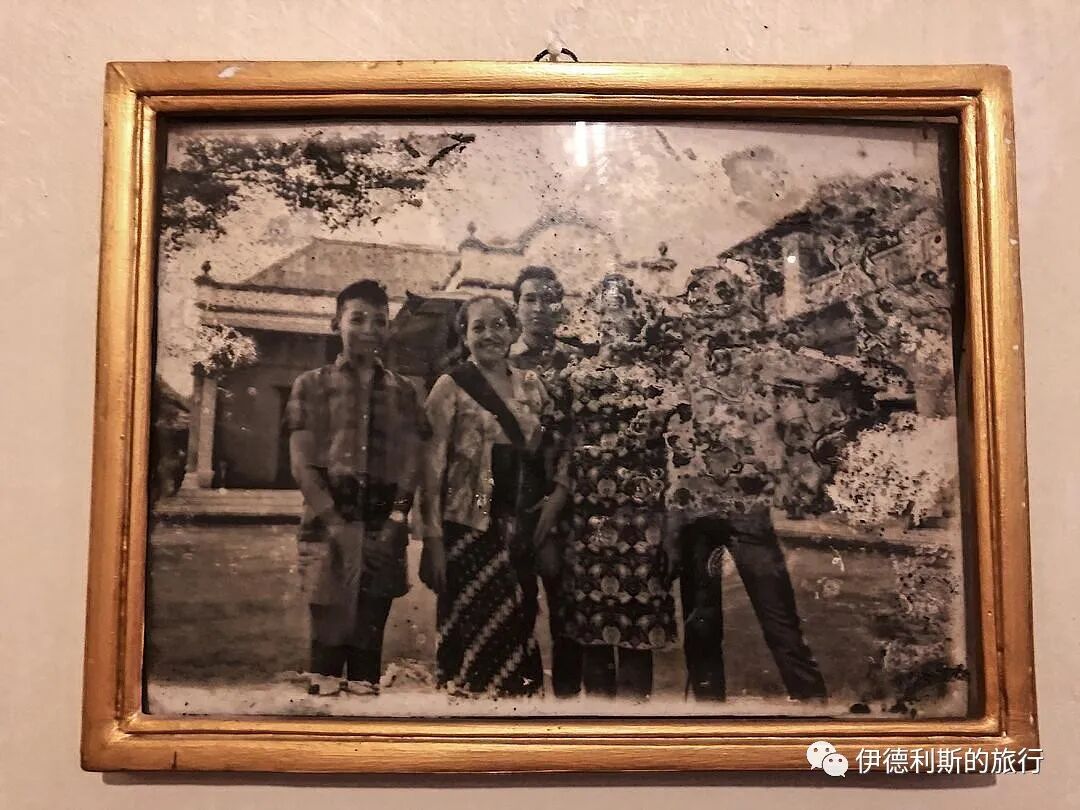
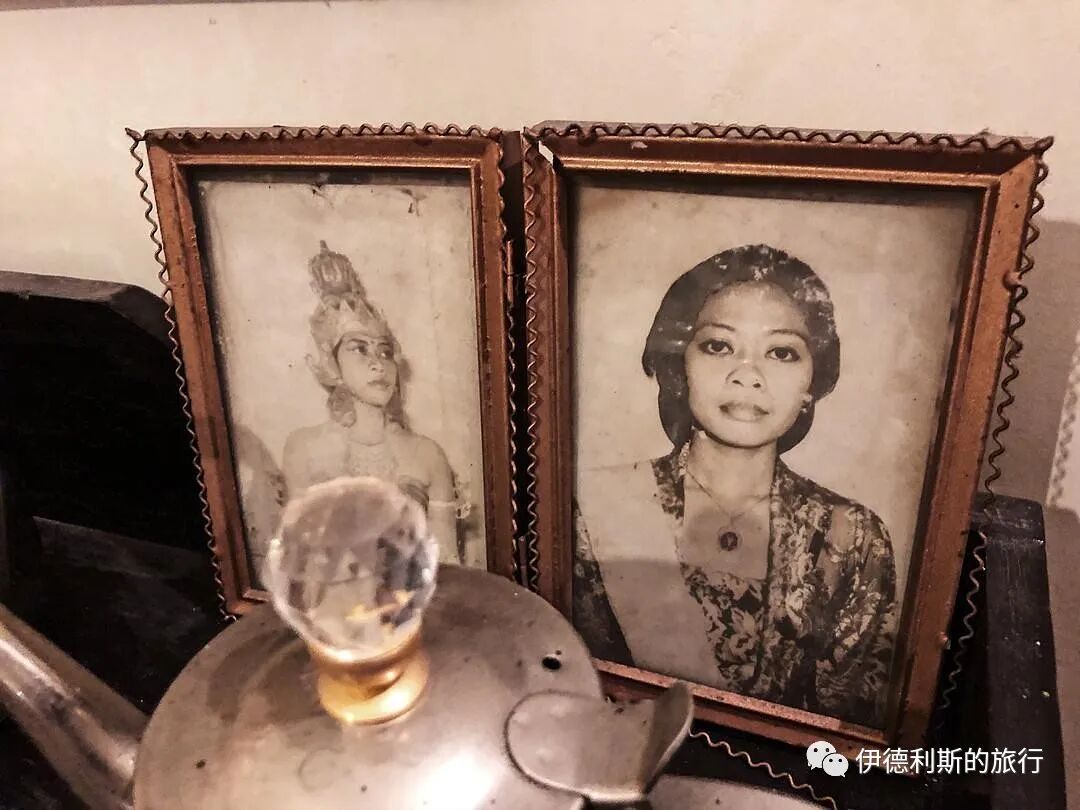
A photo of the prince's family when they were young.
5. Sultan of Yogyakarta's Hat
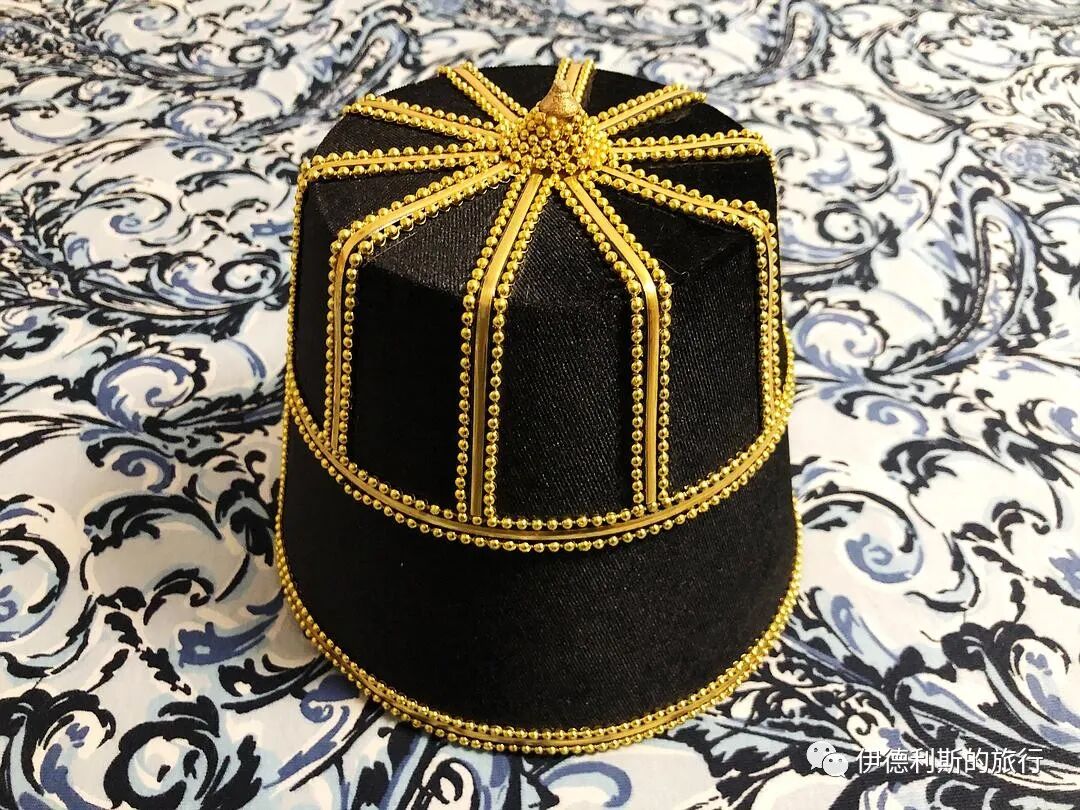
I bought a hat at Beringharjo Market in Yogyakarta that locals wear for weddings. It is based on the crown from the Yogyakarta Sultan's court.
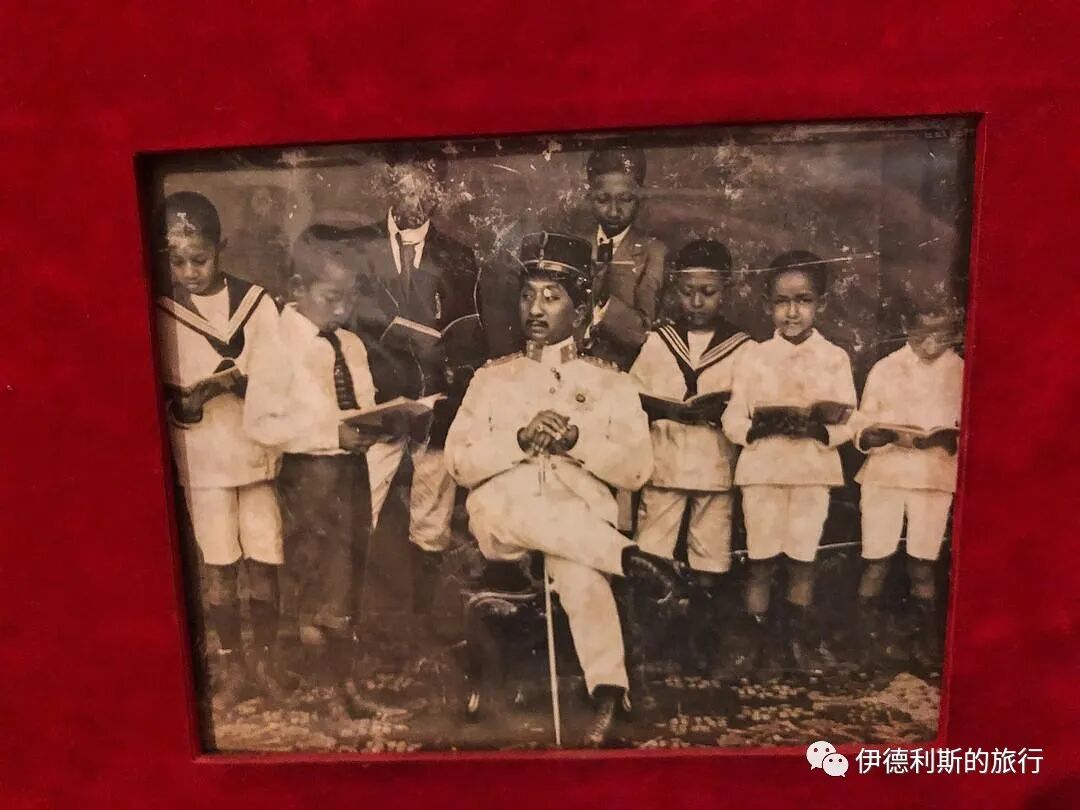
Sultan Hamengkubuwono VII of Yogyakarta, photographed in 1885.
Members of the Yogyakarta Sultan's royal family, photographed in 1885. view all
Reposted from the web
Summary: Muslim Travel Guide Indonesia Yogyakarta: Sultanate Palaces, Mosques and Islamic Heritage is presented here as a clear Muslim travel account, beginning with this scene: In our last article, The Lost Ancient Capital of Java: Kotagede, we introduced how the Mataram Sultanate became the most powerful Islamic kingdom on Java in the first half of the 17th century. The account keeps its focus on Yogyakarta Mosques, Indonesia Muslim Travel, Sultanate Palaces while preserving the names, places, food, and historical details from the Chinese source.
In our last article, The Lost Ancient Capital of Java: Kotagede, we introduced how the Mataram Sultanate became the most powerful Islamic kingdom on Java in the first half of the 17th century. However, after the third ruler, Sultan Agung (reigned 1613-1645), passed away, the royal family fell into a power struggle. After the 1670s, the Dutch East India Company used these power struggles to tighten their control, eventually splitting the Mataram Sultanate into the Yogyakarta Sultanate and the Surakarta Sunanate in 1755. After Indonesia declared independence in 1945, the Sultan of Yogyakarta pledged loyalty to the Indonesian government, and the sultanate became the Special Region of Yogyakarta, with the Sultan serving as governor. The governorship is hereditary, has no term limit, and is not appointed by the Indonesian government, making it the only region in Indonesia currently ruled by a sultan.
Table of Contents
1. Yogyakarta Palace: 1755
1. North Section
2. South Section
2. Yogyakarta Water Castle: 1758-1765
1. Segaran Lake Area
2. Bathing Area
3. Great Mosque of Yogyakarta: 1773
4. Royal Dining Hall: 1916
5. Sultan of Yogyakarta's Hat
1. Yogyakarta Palace: 1755
In 1755, the third war of succession for the Mataram Sultanate ended. The Dutch East India Company signed a treaty with two princes of the Mataram Sultanate, Mangkubumi and Pakubuwono III, to establish the Yogyakarta Sultanate and the Surakarta Sultanate. Prince Mangkubumi then became the founding Sultan of the Yogyakarta Sultanate, known as Hamengkubuwono I.
After becoming Sultan, Hamengkubuwono I chose a banyan forest between two rivers in Yogyakarta to build his palace. The Yogyakarta Palace (Kraton Ngayogyakarta Hadiningrat) has since served as the residence for ten sultans over 264 years.
Most of the existing palace buildings were renovated during the reign of Sultan Hamengkubuwono VIII (reigned 1921-1939) in the first half of the 20th century, and some parts were repaired again after the 2006 earthquake.
1. North Section
The Yogyakarta Palace site is currently divided into north and south sections, and you need to buy separate tickets for each. The main gate between the two sections only opens during official events, so you have to use the side gate on normal days.
The northernmost building is called Bangsal Pagelaran, where official ceremonies are held. When I visited, there was a royal manuscript exhibition, but photography was forbidden.
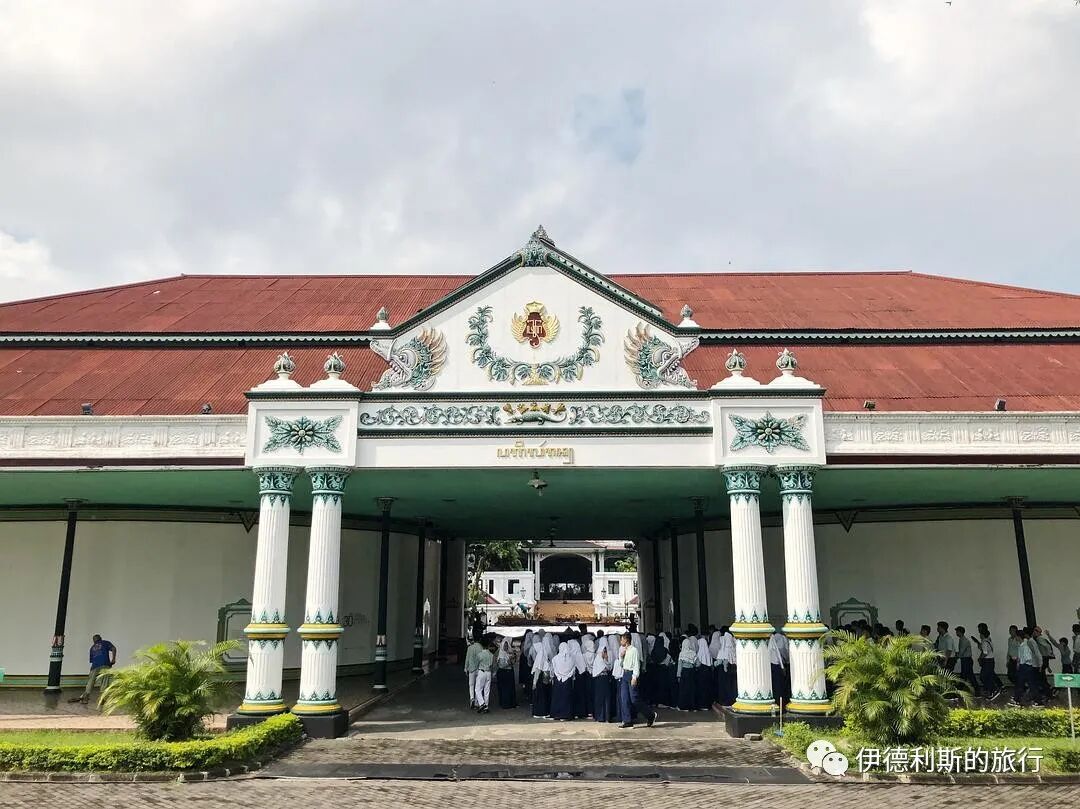
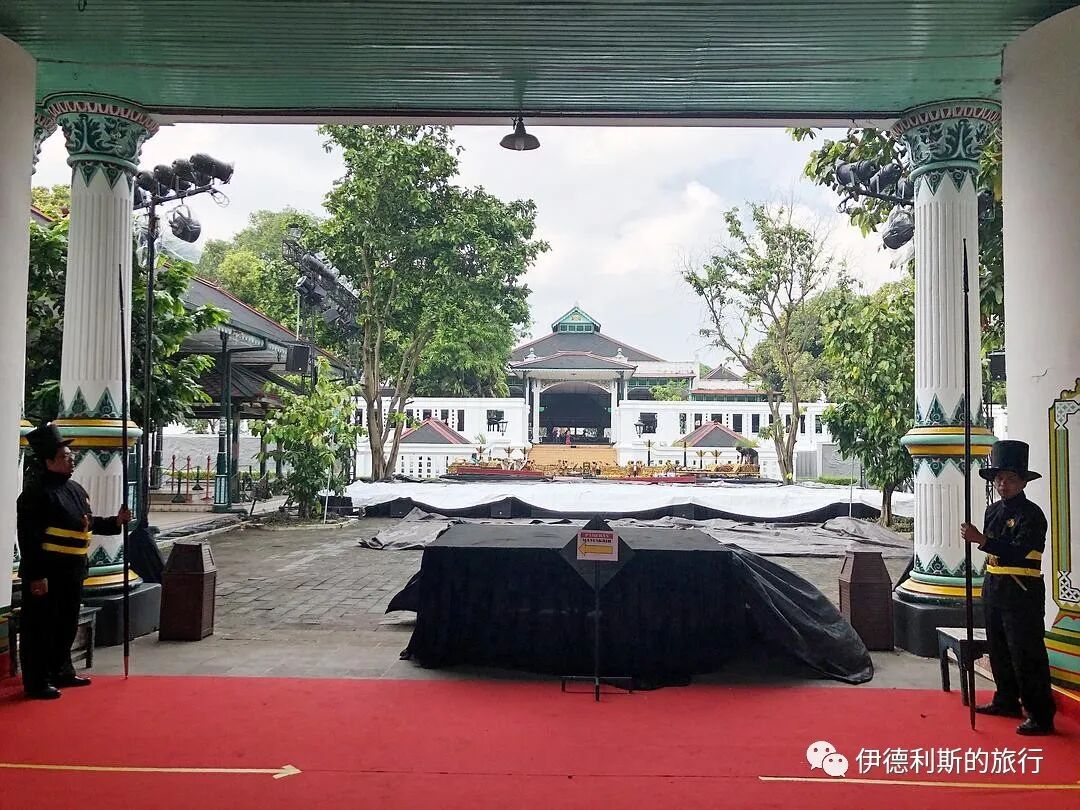
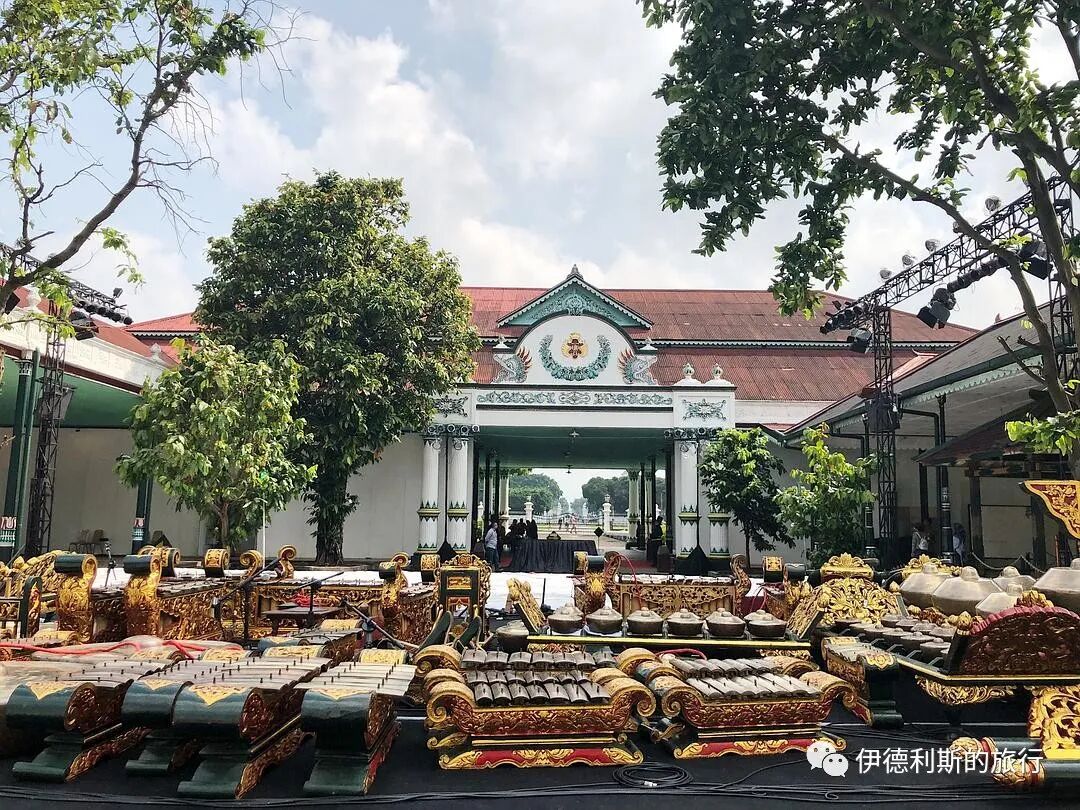
The Siti Hinggil in the south is where grand court ceremonies take place, and every Sultan of Yogyakarta has been crowned here. In 1949, the Netherlands officially recognized Indonesia's independence, and Indonesia's founding father, Sukarno, was officially inaugurated as president here.
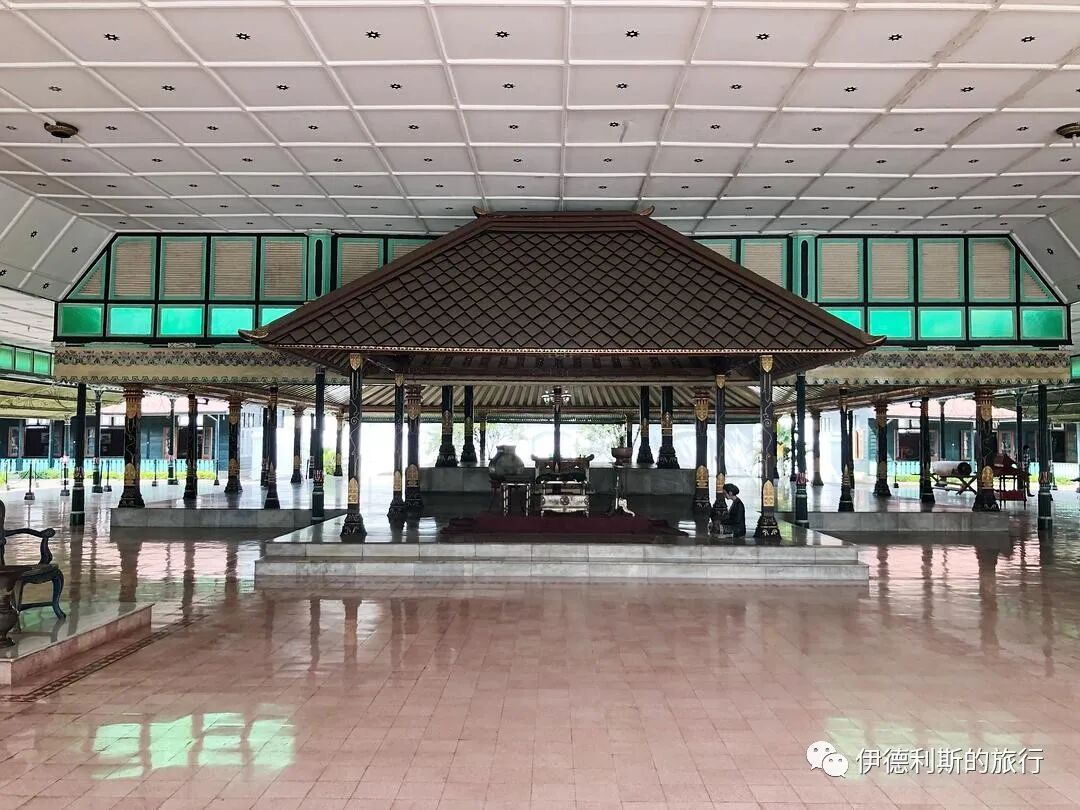
2. South Section
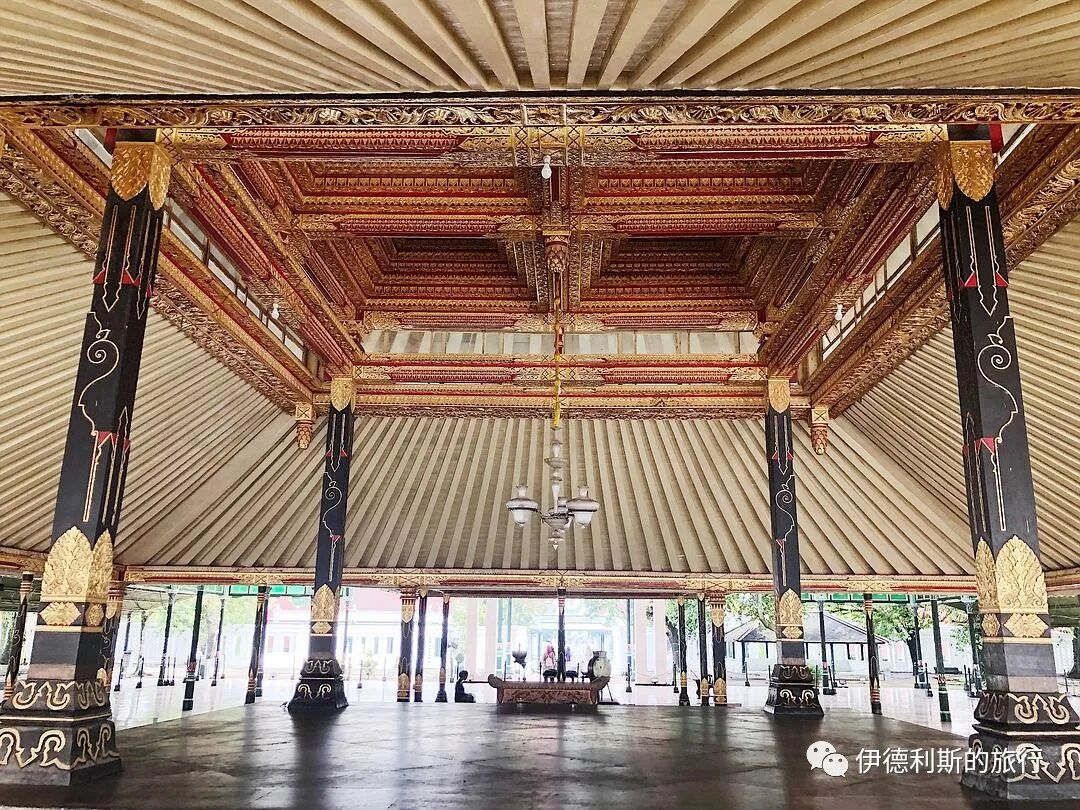
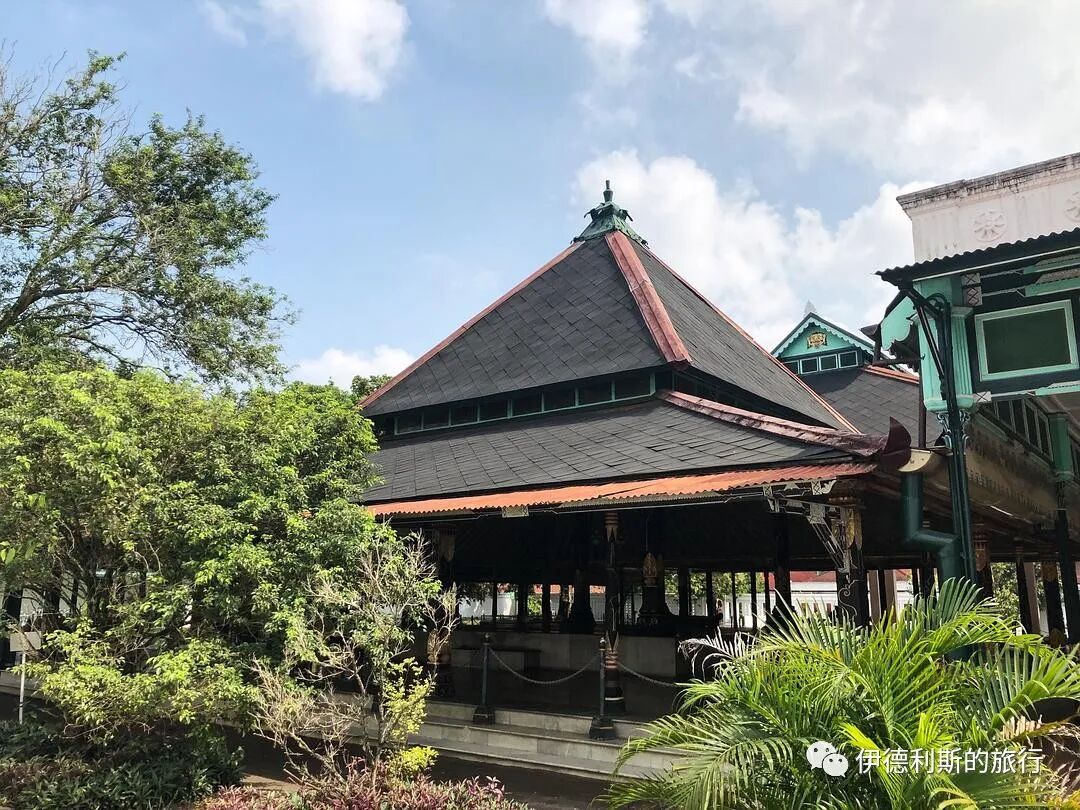
Further south is the Kamandhungan, commonly known as Keben, which was used by the Sultan to pass death sentences in the past. This is currently the main gate to the southern part of the palace, and the ticket office is located here. After buying a ticket to enter the southern section, you reach Sri Manganti. This was once used to receive VIP guests, and now it hosts performances of gamelan music, wayang shadow puppetry, Javanese poetry, and classical dance almost every morning.
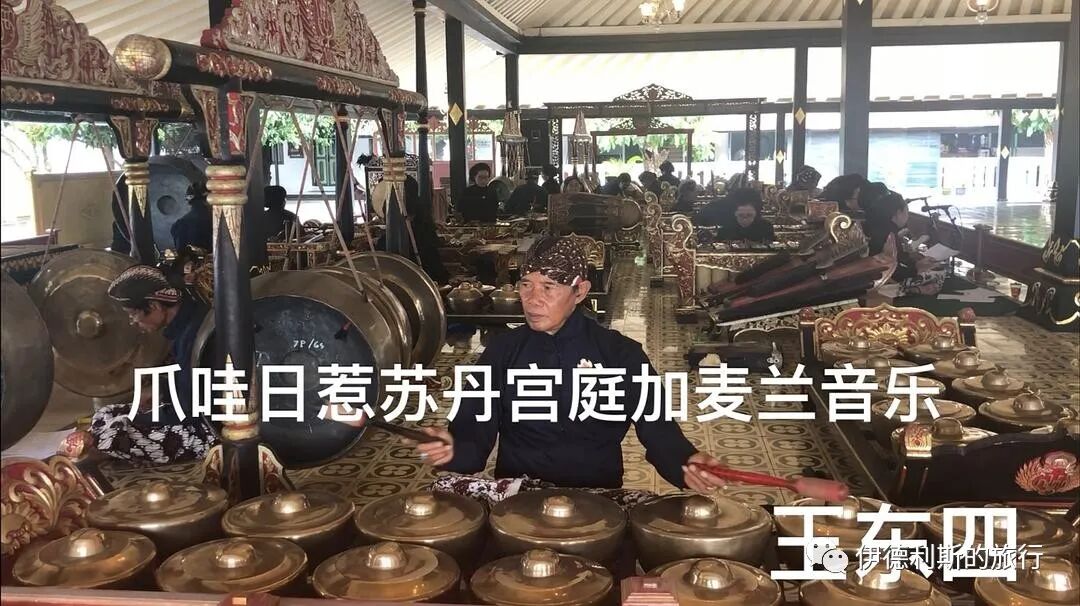
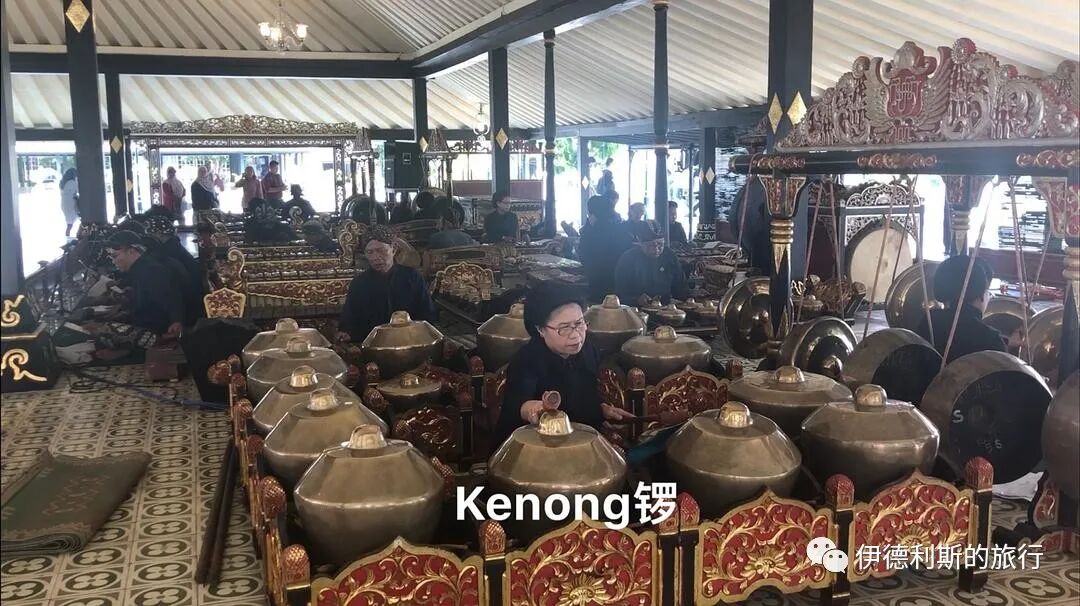
The Traju Mas Ward to the east of Keben was once the place where the Sultan welcomed guests. It collapsed during the 2006 earthquake and was not fully restored until 2010.
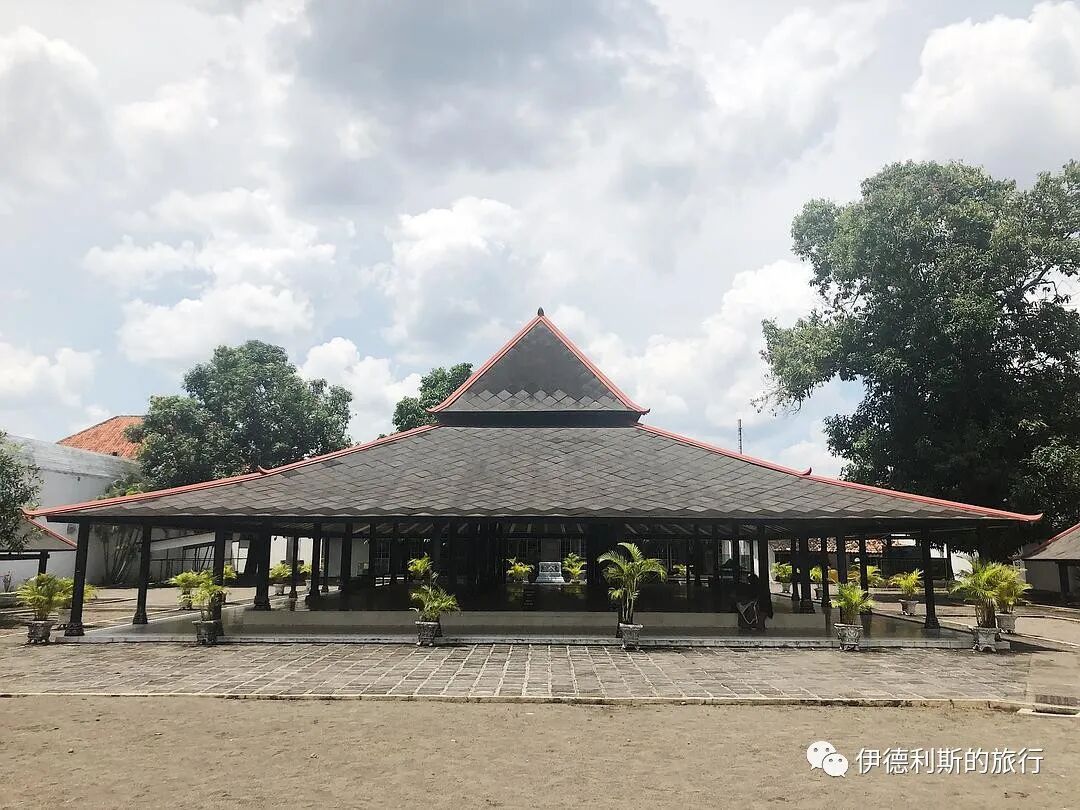
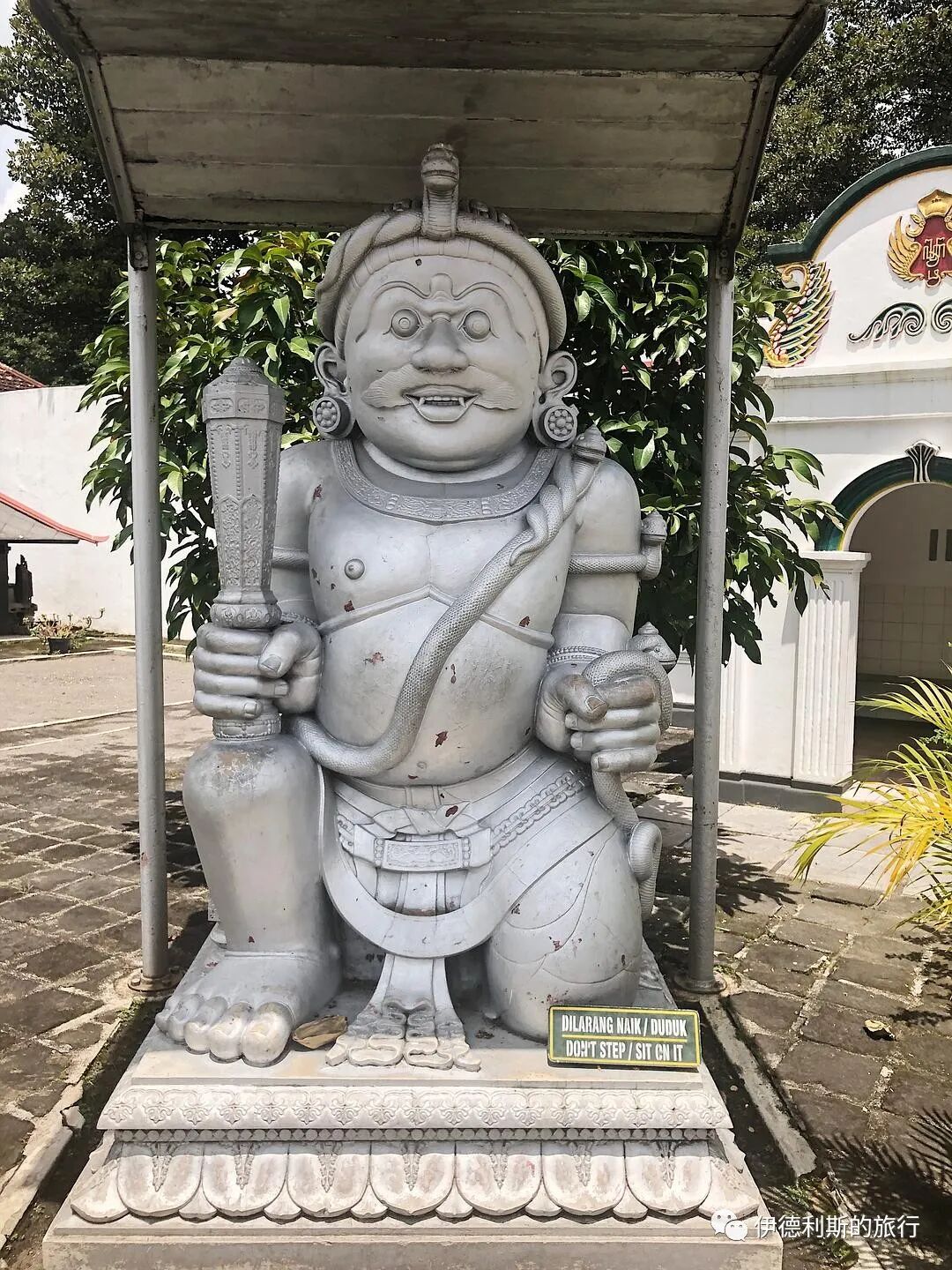
South of Keben is the Donopratopo gate, which has a pair of guardian statues called Dvarapala in front of it. Dvarapala originated as gate gods in Hinduism and Buddhism. In Javanese culture, they usually appear as giant, fierce-looking asuras holding a vajra.
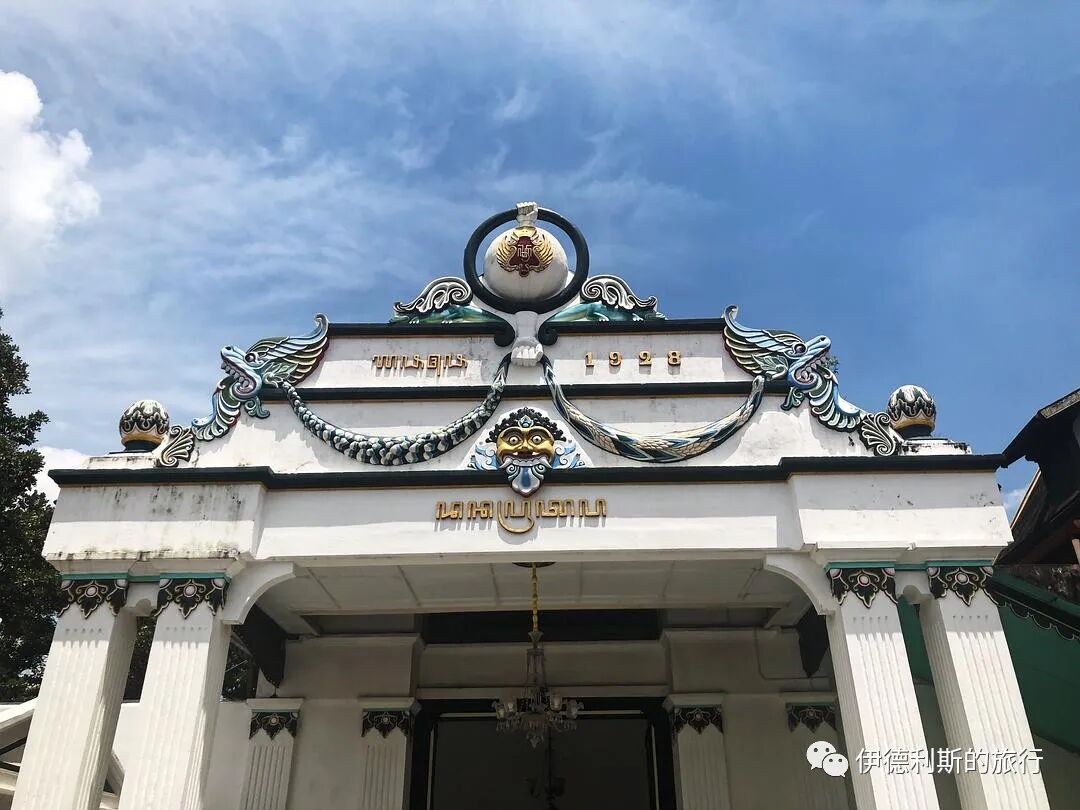
After passing through the Donopratopo gate, you enter the Kedhaton area, the heart of the palace. Only part of this area is open to the public, as the rest serves as the living quarters for the Sultan's family. The courtyard is covered in sand from the southern beach, where royal servants (Abdi-Dalem) stand barefoot.
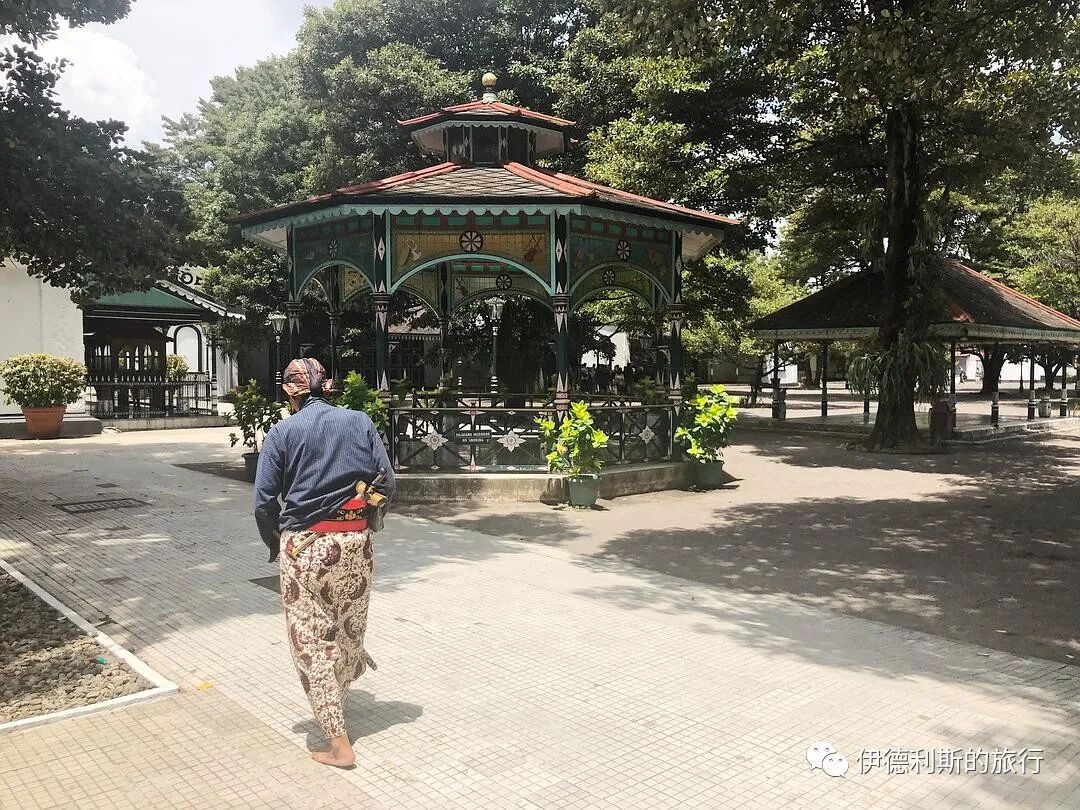
There are currently 2,640 royal servants in the Yogyakarta palace, and they all wear traditional Yogyakarta attire. You can buy the Blangkon hats worn by these servants right inside the palace. A Blangkon is a traditional batik headpiece for men from central and eastern Java. Legend says that Java island was once ruled by a giant named Dewata Cengkar. Dewata Cengkar often demanded human sacrifices, and the people were terrified of him. A man named Aji Saka volunteered to be sacrificed. He said to the giant, 'Great King of Java, I have only one wish before I die.' 'I want a piece of land as big as my headcloth.' The giant agreed to the request, so Aji Saka asked the giant to hold one end of the headcloth. The headcloth kept growing larger, and the giant kept stepping back until he reached the sea, where Aji Saka kicked him into the water. After defeating the giant, the people elected Aji Saka as the new King of Java, and the Blangkon he wore became a symbol of the Javanese people.
A more credible view is that after the 8th century, as more Indian Muslim merchants came to Java to trade, the combination of their turbans and Javanese batik created the Javanese Iket headcloth. The Blangkon is actually a more practical version of the Iket headcloth. The earliest headcloths required a complex tying process. Over time, people fixed the cloth into a set shape, creating a hat that did not need to be tied, which is the Blangkon.
The most common types of Blangkon are the Yogyakarta style and the Solo style. The Yogyakarta Blangkon is known for the Mondholan, a bulge on the back. In ancient times, Javanese men tied their long hair at the back of their heads. When wearing a Blangkon, they would wrap their hair tightly, creating this bulge. Because Solo was deeply influenced by Dutch colonialism, the locals stopped growing their hair long, so the back of the Solo Blangkon is flat.
The east-facing Kencono Ward (Golden Pavilion) is the main hall of the palace and the site for various royal ceremonies.
The railings are carved with Batara Kala, the Javanese Hindu god of the underworld, who is also the god of time and destruction. In traditional Javanese mythology, Batara Kala eating the sun is the cause of solar eclipses. Legend says Batara Kala is the son of Batara Guru, the Javanese version of the god Shiva. In a moment of uncontrollable desire, Batara Guru had relations with his beautiful wife, Dewi Uma, on the back of a sacred cow. Uma felt very ashamed, and after being cursed, she took on the appearance of a monster. Therefore, the child she gave birth to, Batara Kala, also had a monster's appearance.
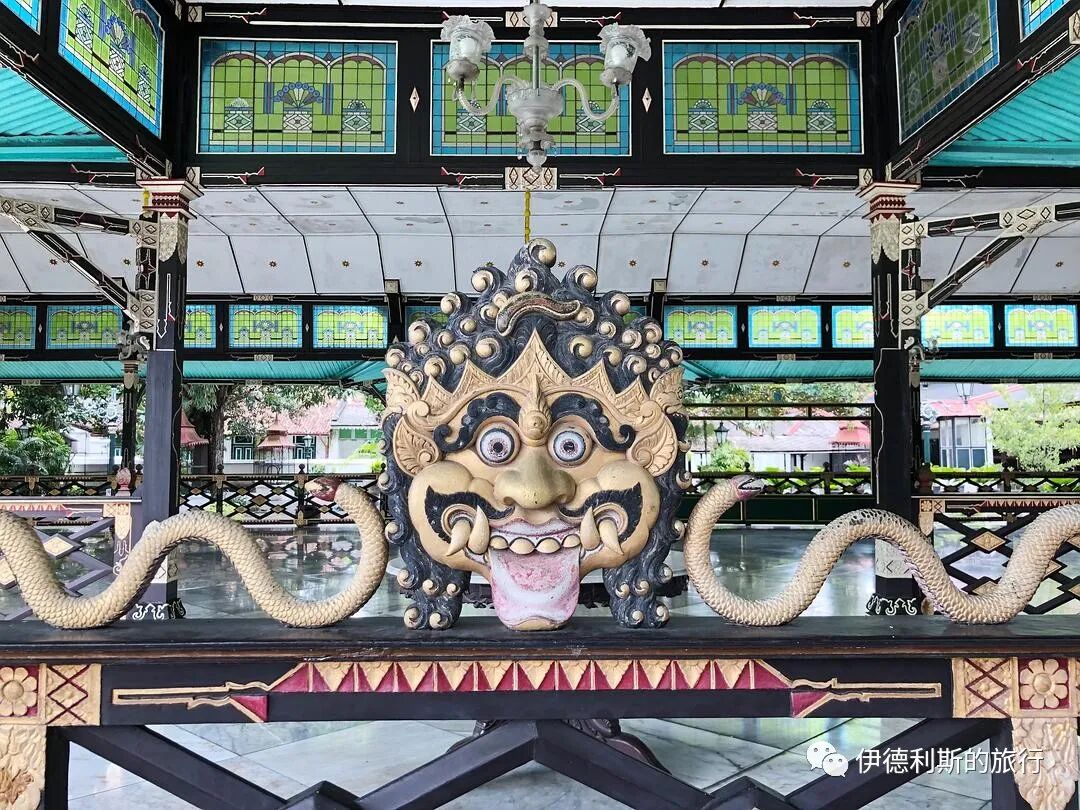
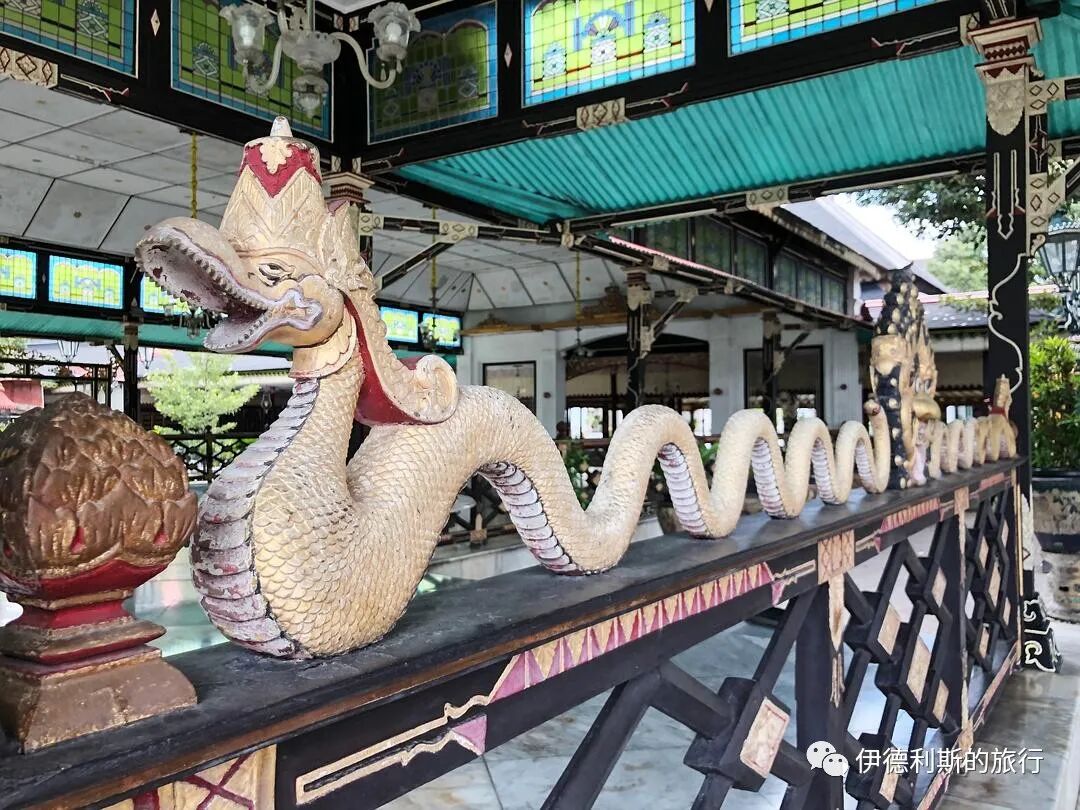
The railings are carved with the snake god Naga from Hindu and Buddhist culture. The Naga of Java and Bali is a crowned snake, representing a blend of the Hindu Shiva tradition and the native Javanese animist snake tradition. In the 9th century, the Javanese Naga looked like a cobra. After the 15th century, it was influenced by the Chinese dragon, though it lacks claws.
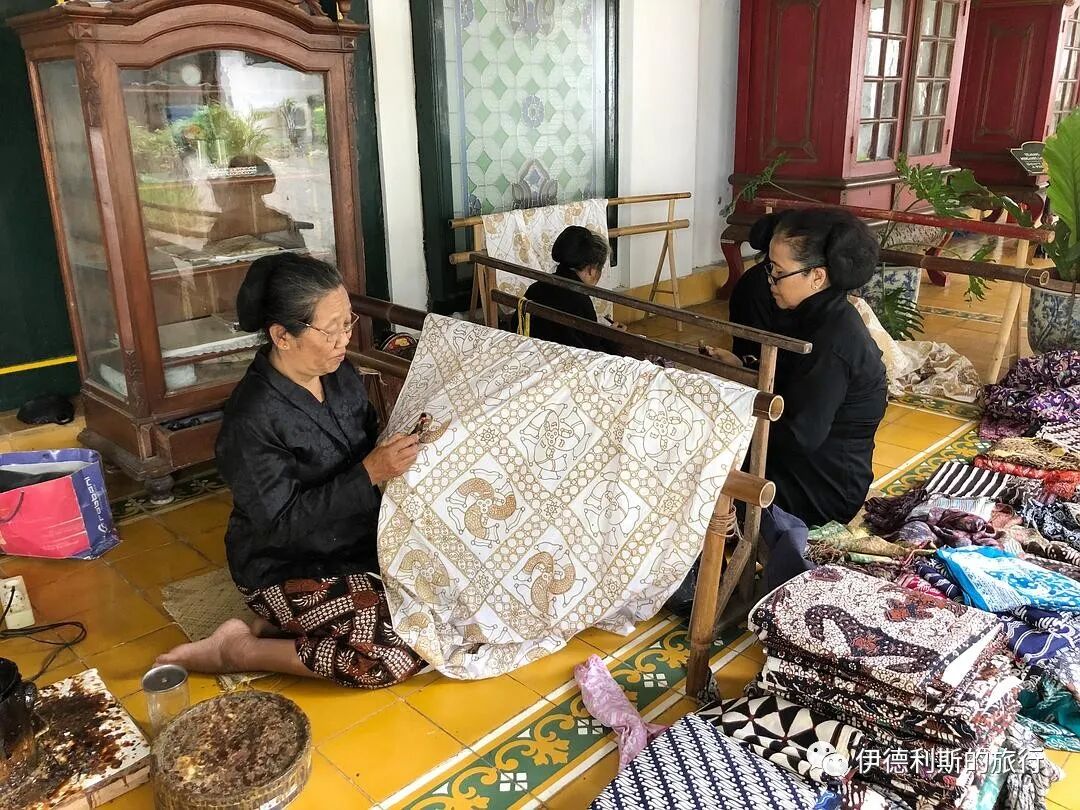
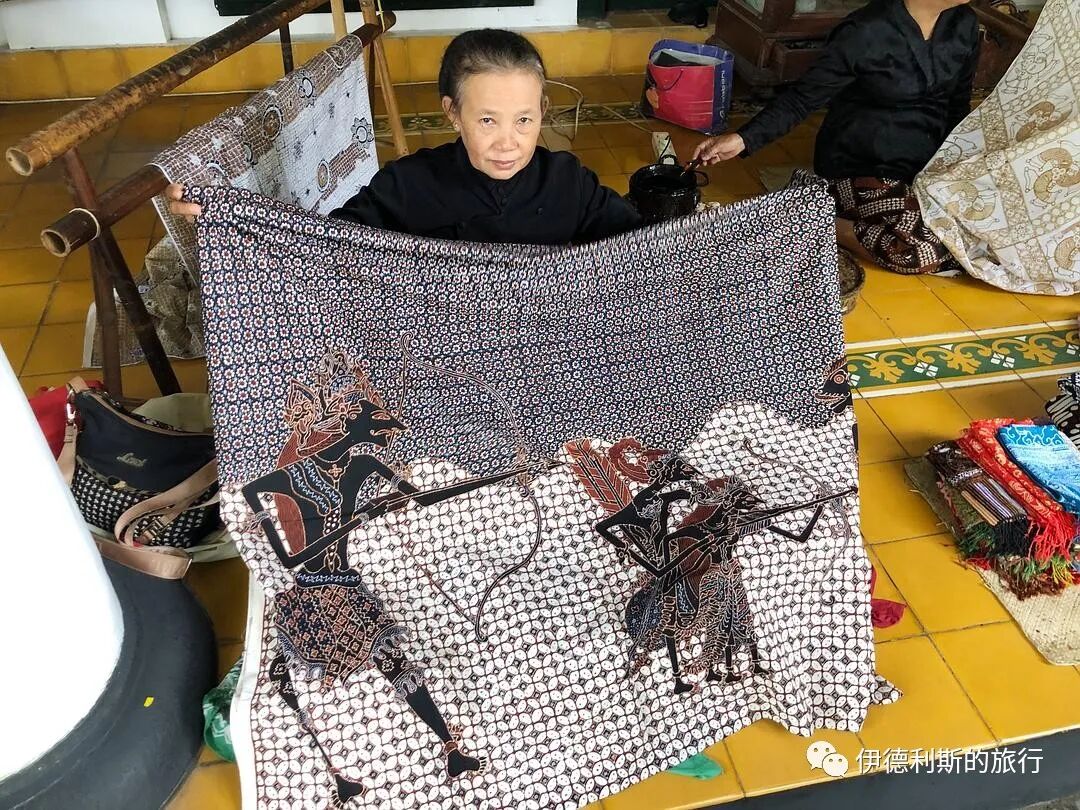
Batik
Some buildings
A palanquin used during Sultanate court processions
South of the Kedhaton is the Kamagangan Gate, which features statues of two Naga snake gods. Beyond the Kamagangan Gate is outside the palace grounds. This area was once used to train and test retainers, and the Magangan Ward in the middle of the courtyard is the site for the Bedhol Songsong puppet ceremony.
The palace walls of the Yogyakarta Palace
2. Yogyakarta Water Castle: 1758-1765
The Yogyakarta Water Palace (Taman Sari) is the garden harem of the Sultan of Yogyakarta. It was built in 1758 by order of the founding Sultan Hamengkubuwono I, and the architect was Tumenggung Mangundipura. Tumenggung Mangundipura traveled to the Dutch East India Company headquarters in Batavia (Old Jakarta) twice to study European architecture, so the buildings in the Water Palace blend Javanese and Dutch styles.
The Water Palace was finished in 1765, featuring a mosque, meditation rooms, bathing areas, 18 water gardens and pavilions, and a complex water system, but these designs were neglected after Sultan Hamengkubuwono I died in 1791. The Water Palace was damaged during the British invasion of Yogyakarta in 1812 and again during the Java War from 1825 to 1830.
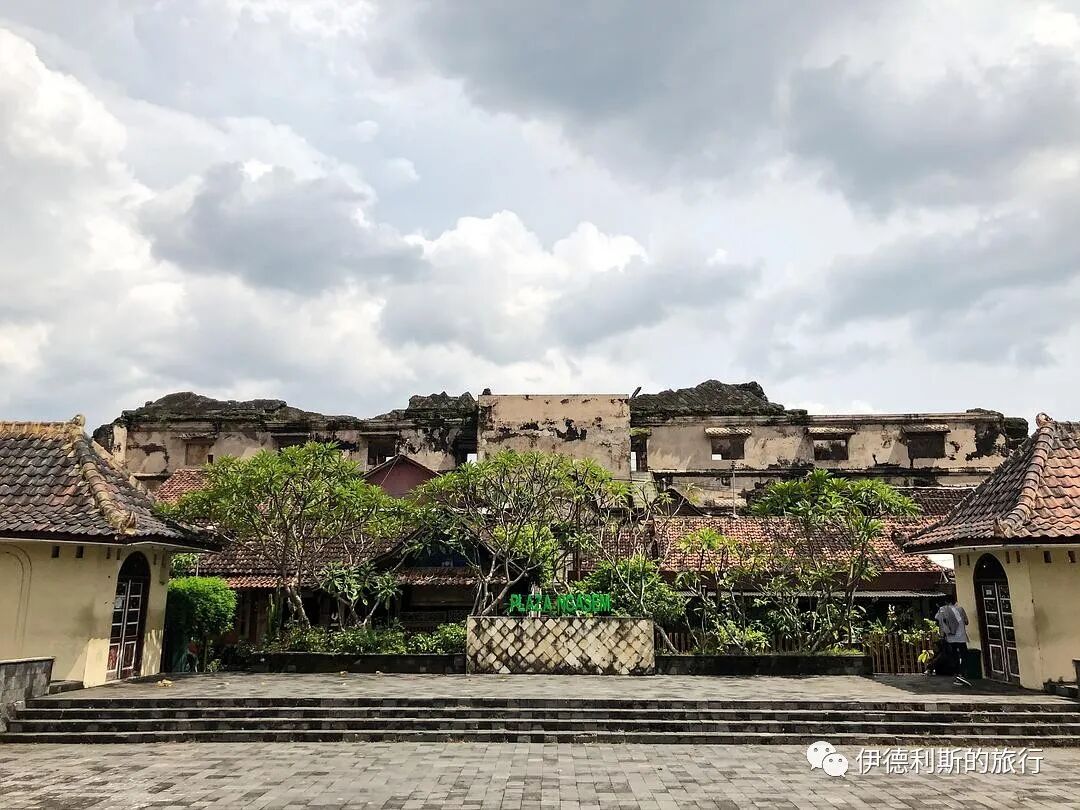
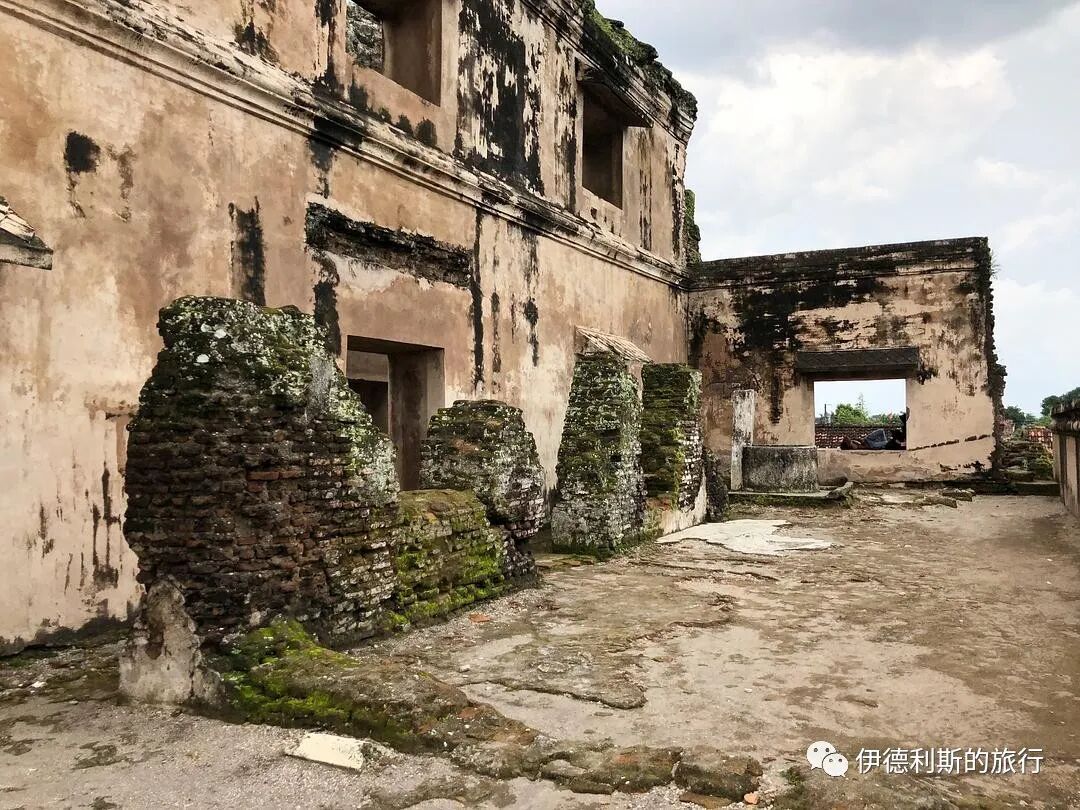
After an earthquake in 1867, the palace complex was completely abandoned, local residents began building homes on the ruins, and the dried-up lake was gradually filled in. Parts of the Water Palace were restored after the 1970s, but only the bathing area was fully repaired.
1. Segaran Lake Area
The main buildings of the Water Palace sit around an artificial lake called Segaran (artificial sea).
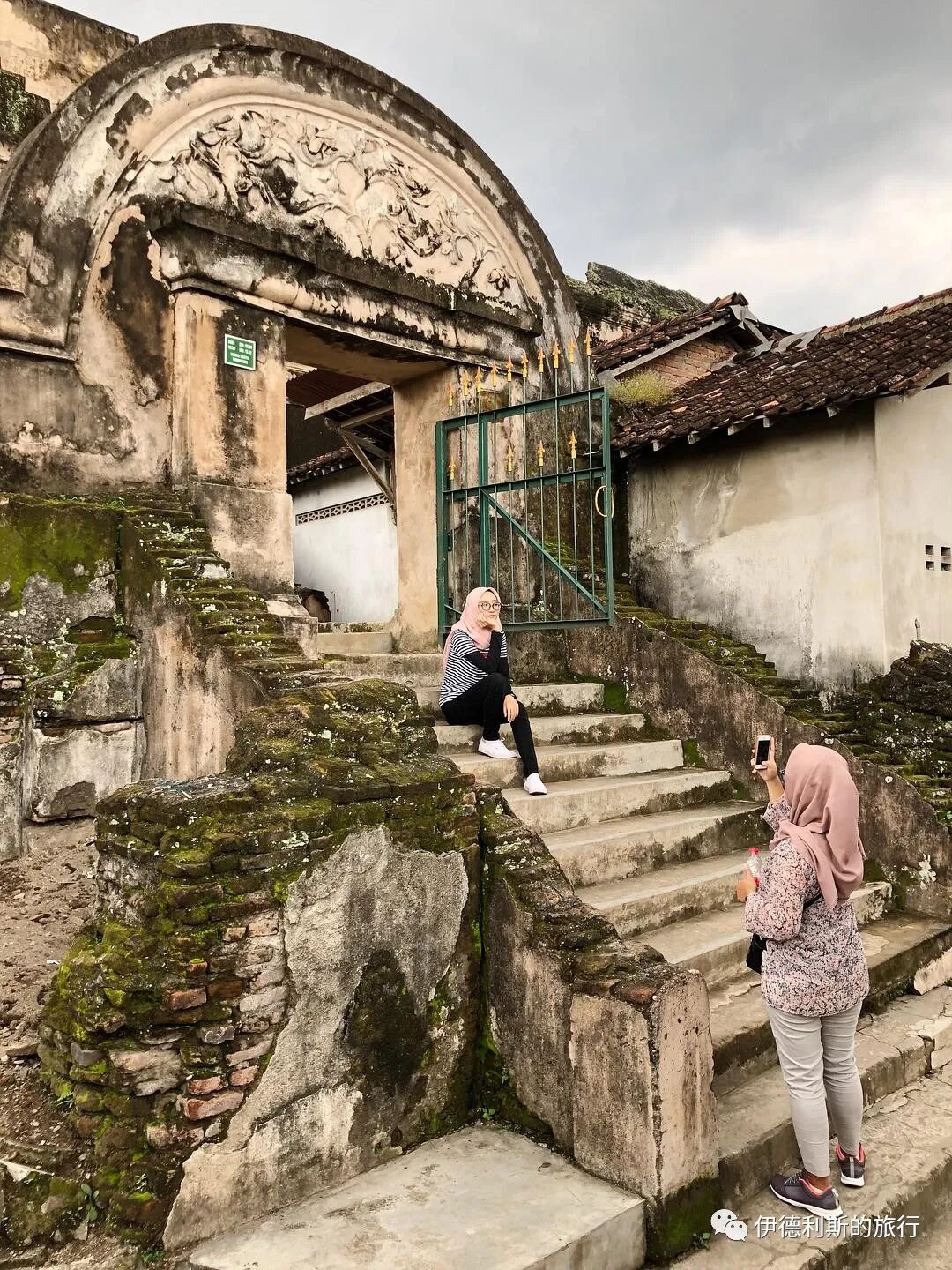
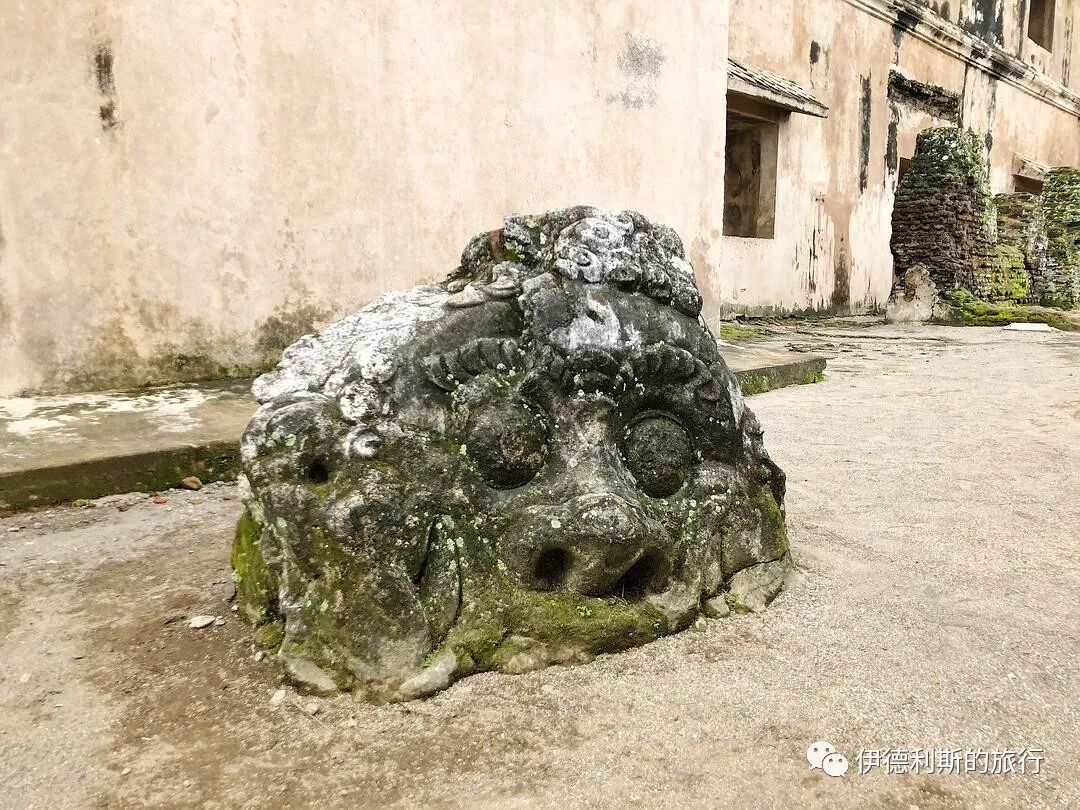
In the middle of Segaran lake is an island called Kenongo (magnolia island), which used to be covered in magnolia flowers. A building called Gedhong Kenongo stood on the island and was once the largest structure in the Water Palace, but it was severely damaged in the 1867 earthquake.
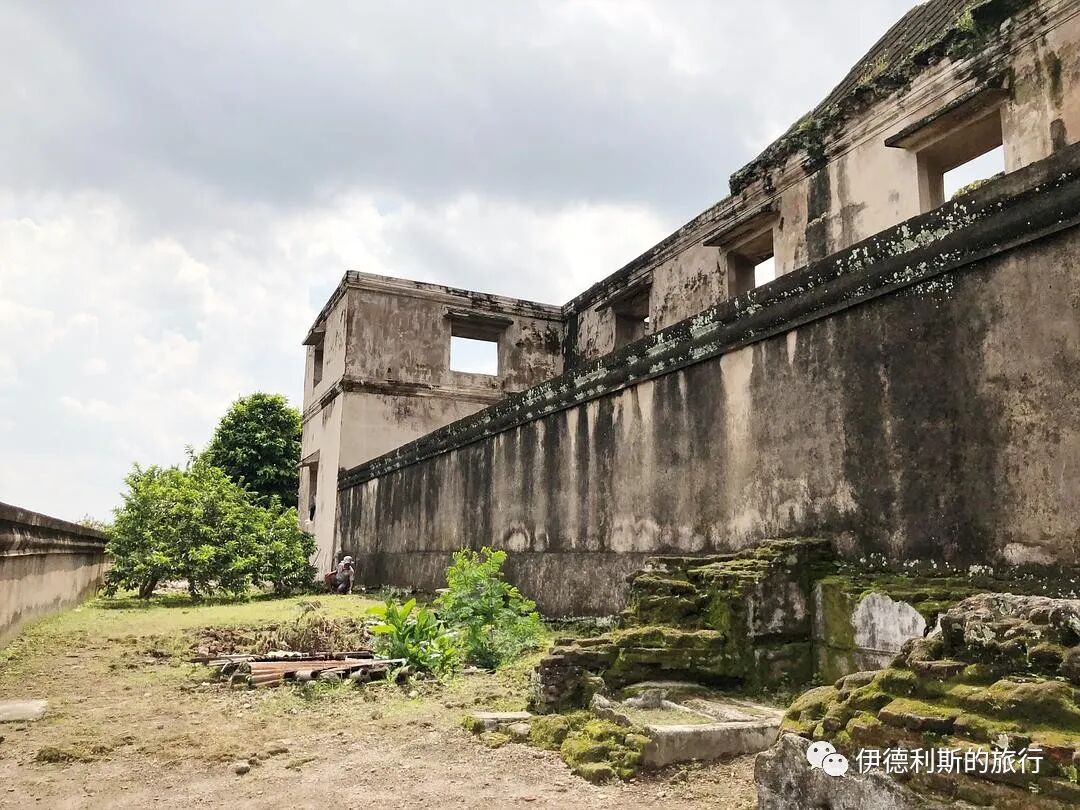
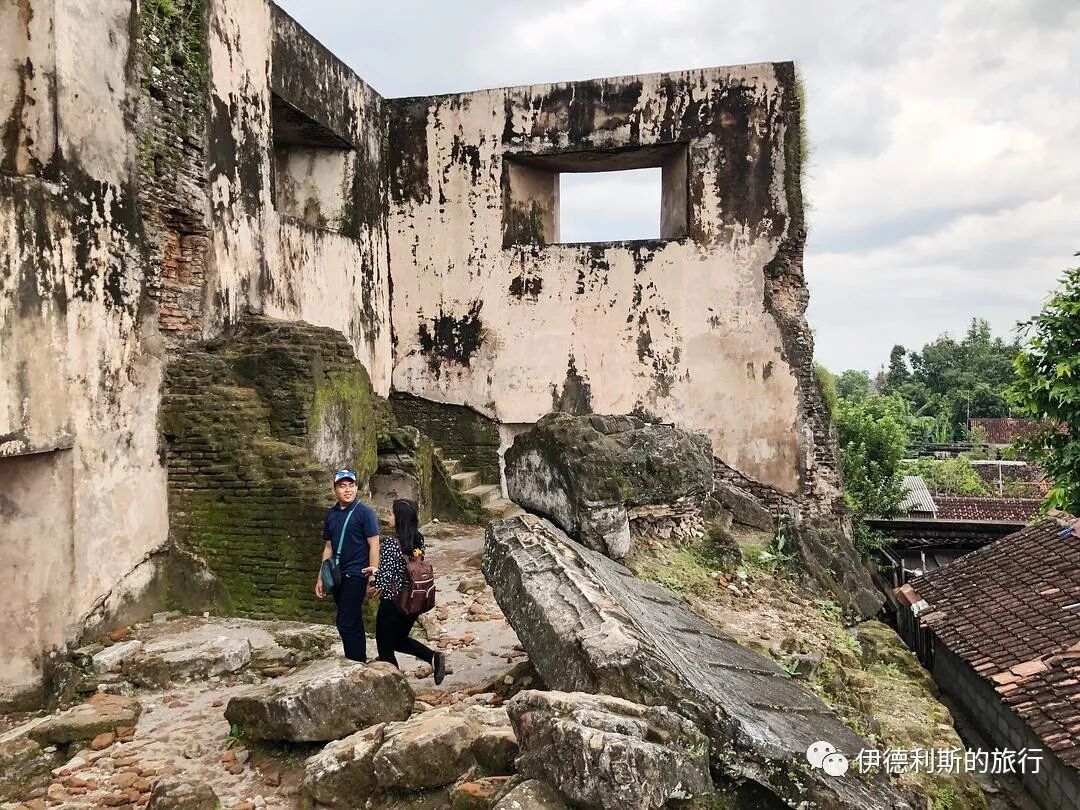
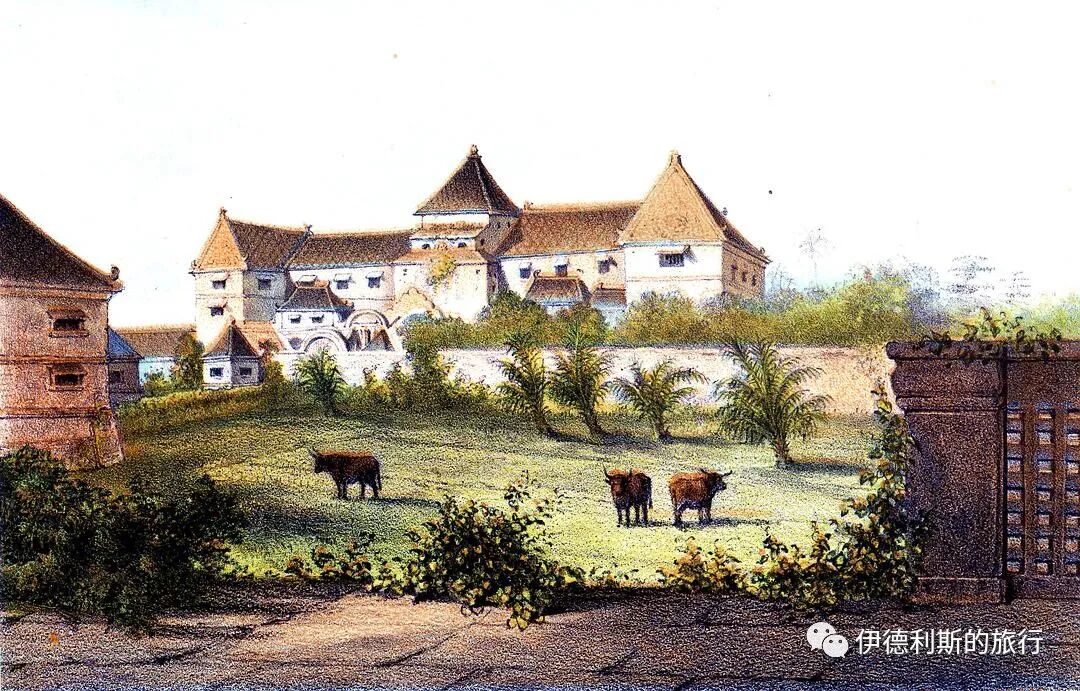
Before the 1859 earthquake
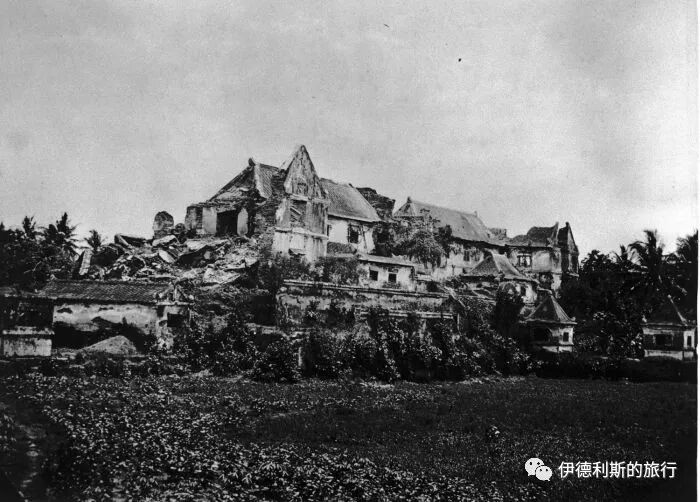
After the 1867 earthquake
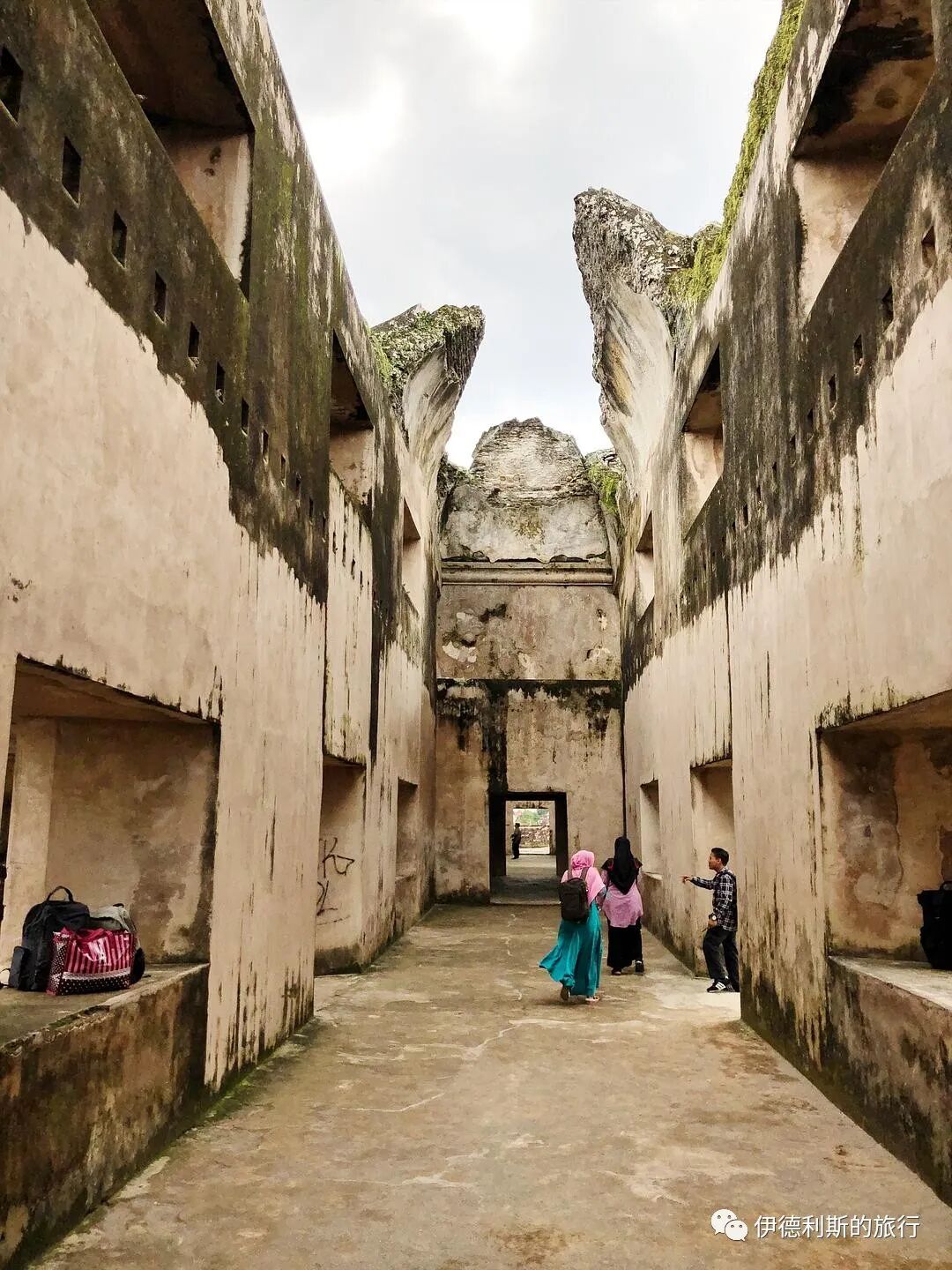
There is an underwater tunnel on the south side of Kenongo island that connects to the land. The underwater tunnel built in 1761 still exists today, and it has a row of ventilation structures called Tajug on top.
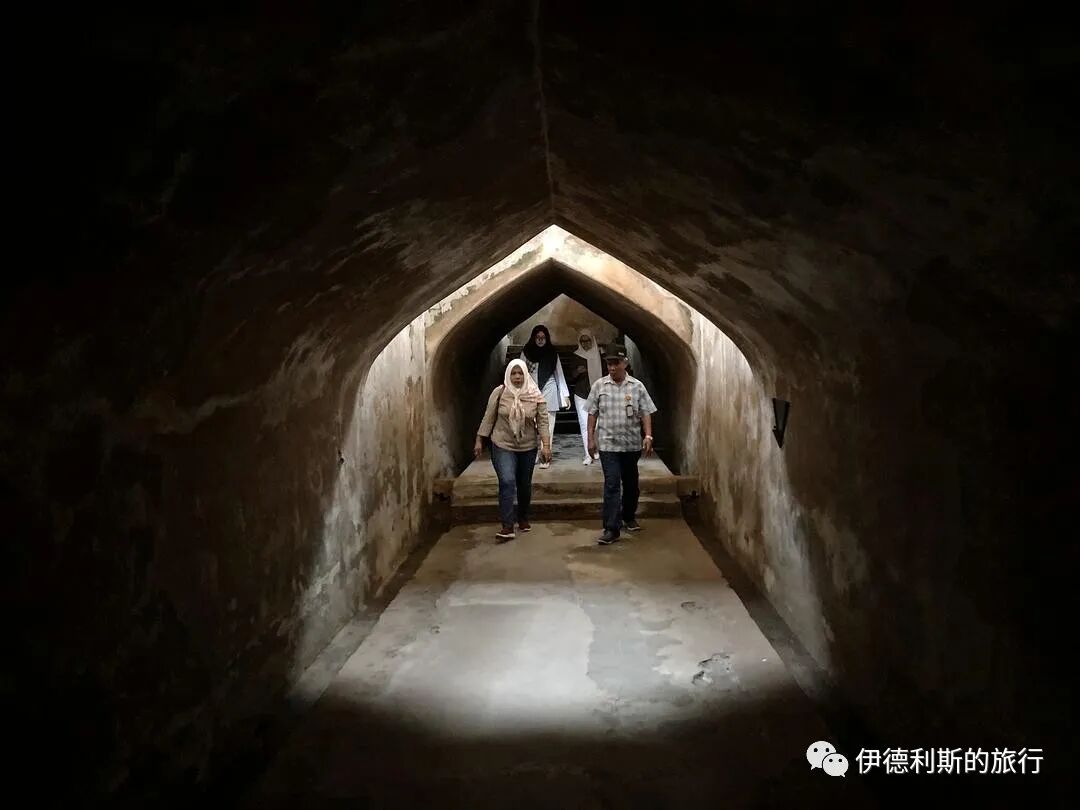
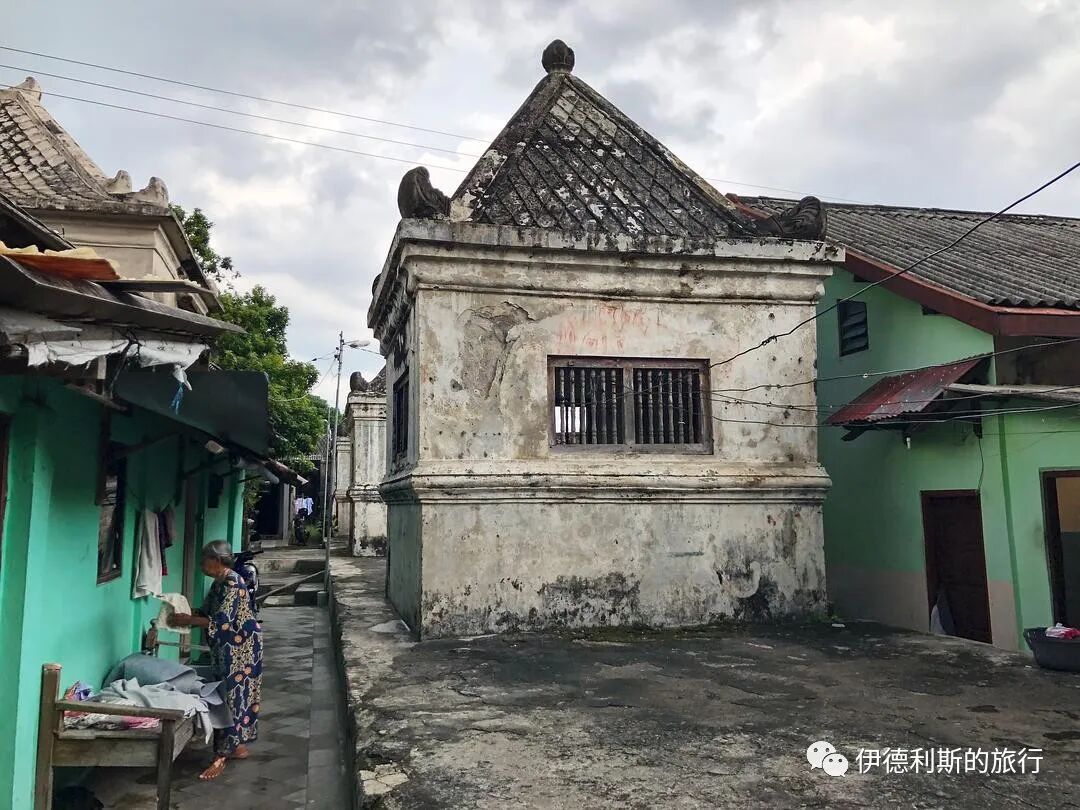
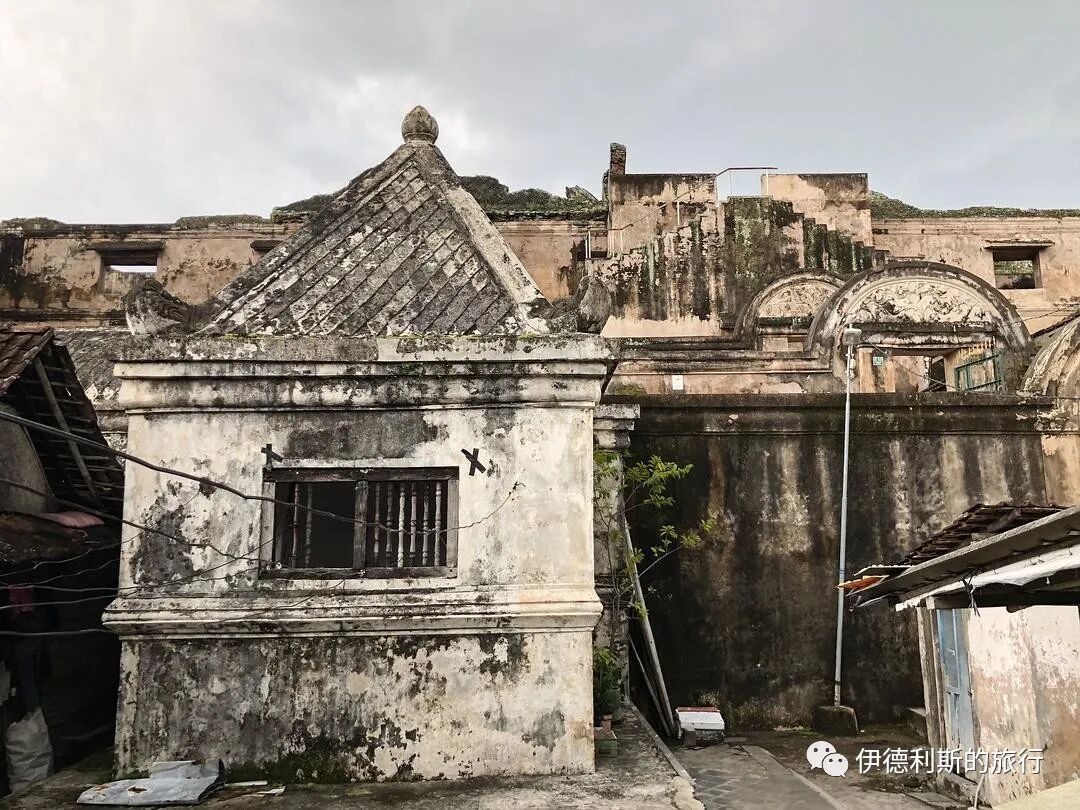
The entrance to the underwater tunnel on Kenongo island.
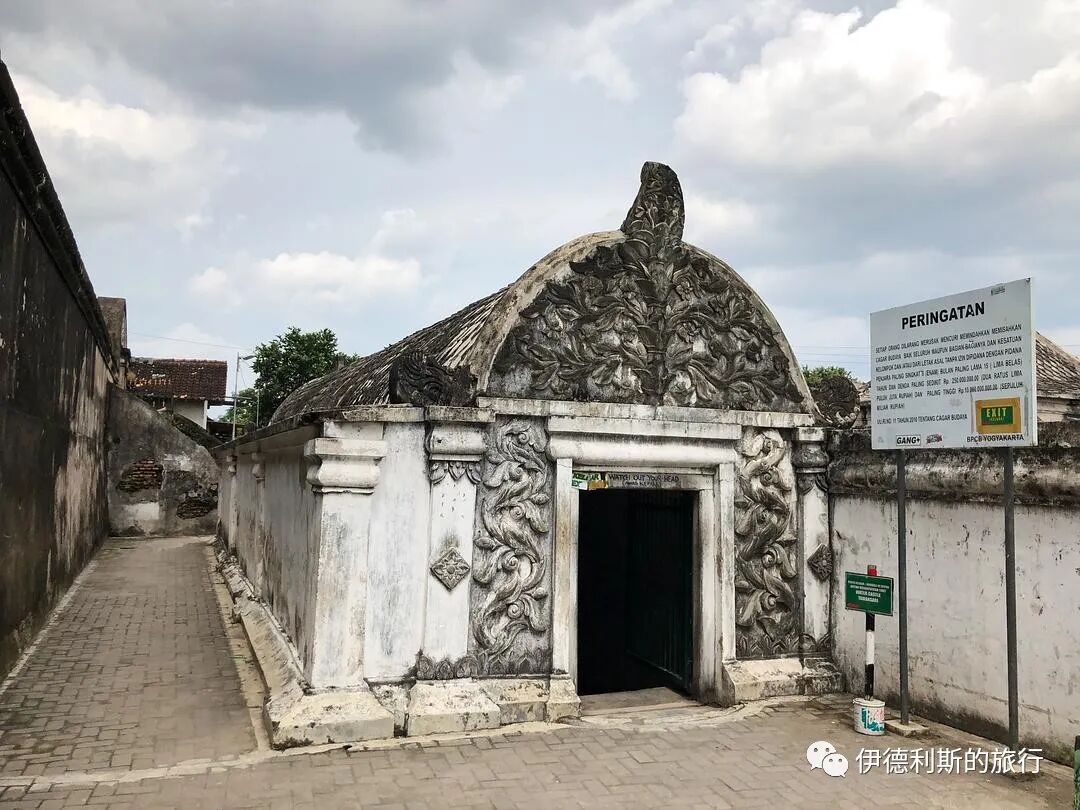
On the west side of Kenongo island is an artificial island made of a single building, the Sumur Gumuling mosque, which can only be reached through the underwater tunnel.
The exit of the underwater tunnel at the Sumur Gumuling mosque.
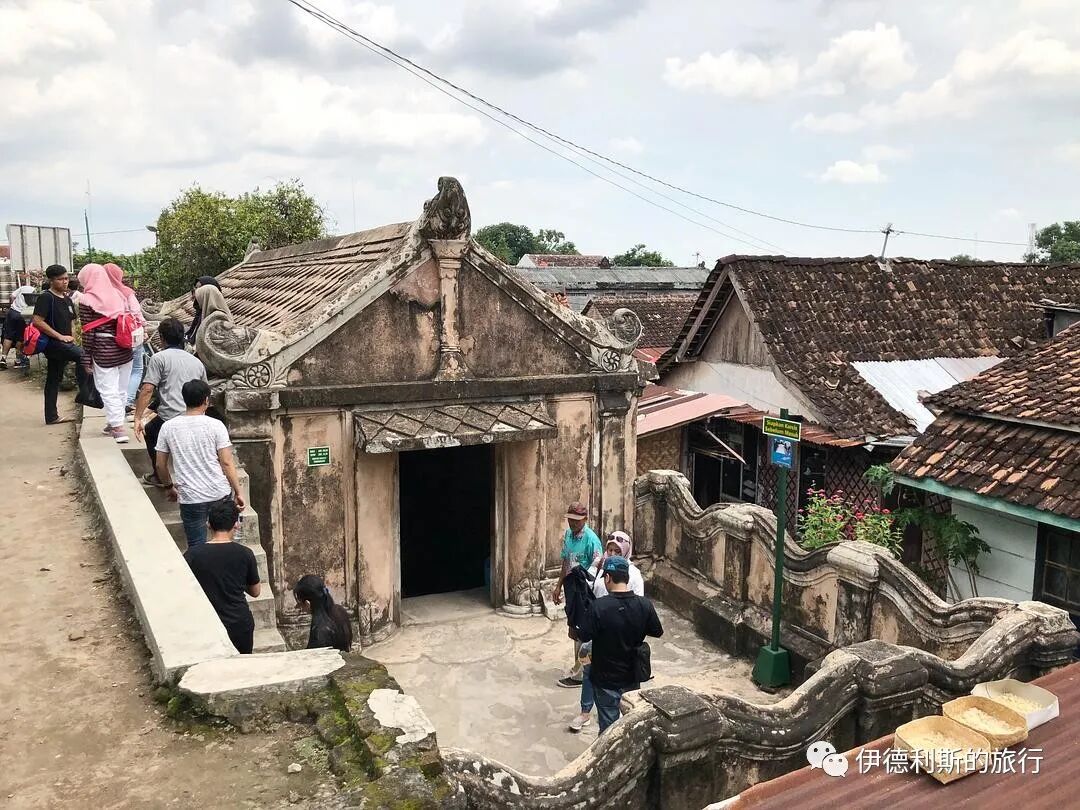
2. Bathing Area
The bathing area is on the south side of Segaran lake; it was not the most important building back then, but it is the best-preserved part of the Water Palace today.
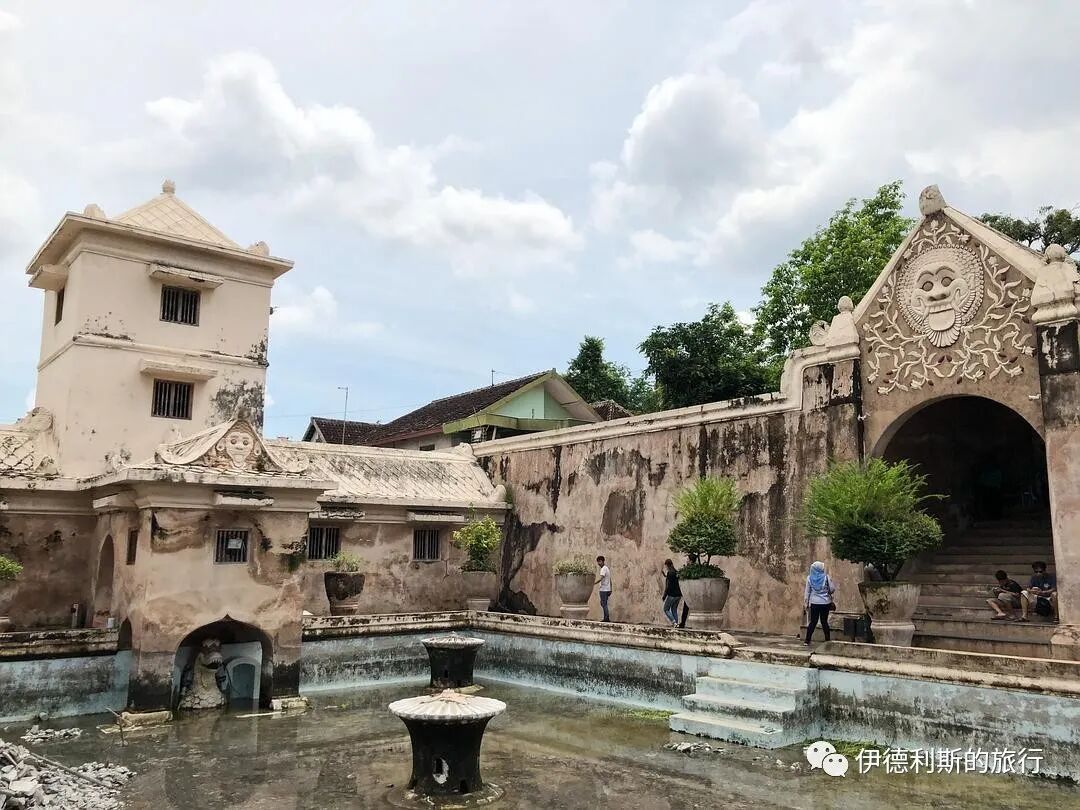
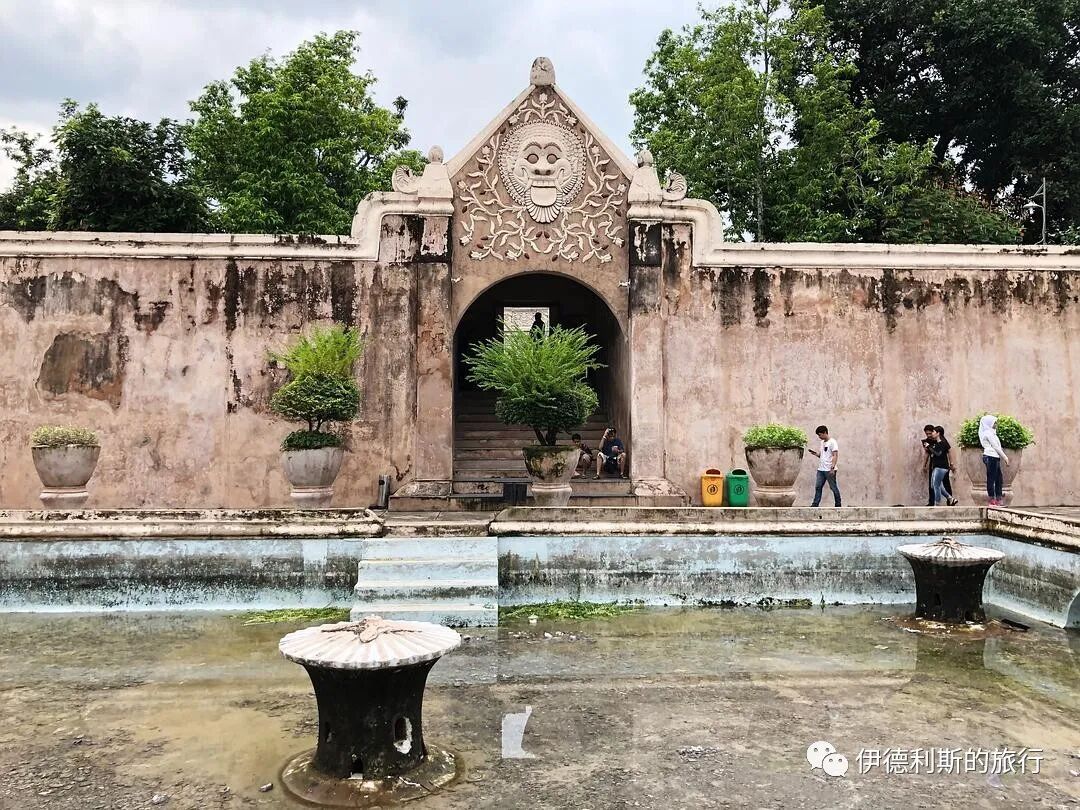
The bathing area has east and west gates decorated with detailed flower and bird patterns. The west gate is called Gedhong Gapura Hageng, built in 1765; it was once the main entrance to the bathing area but is now closed.
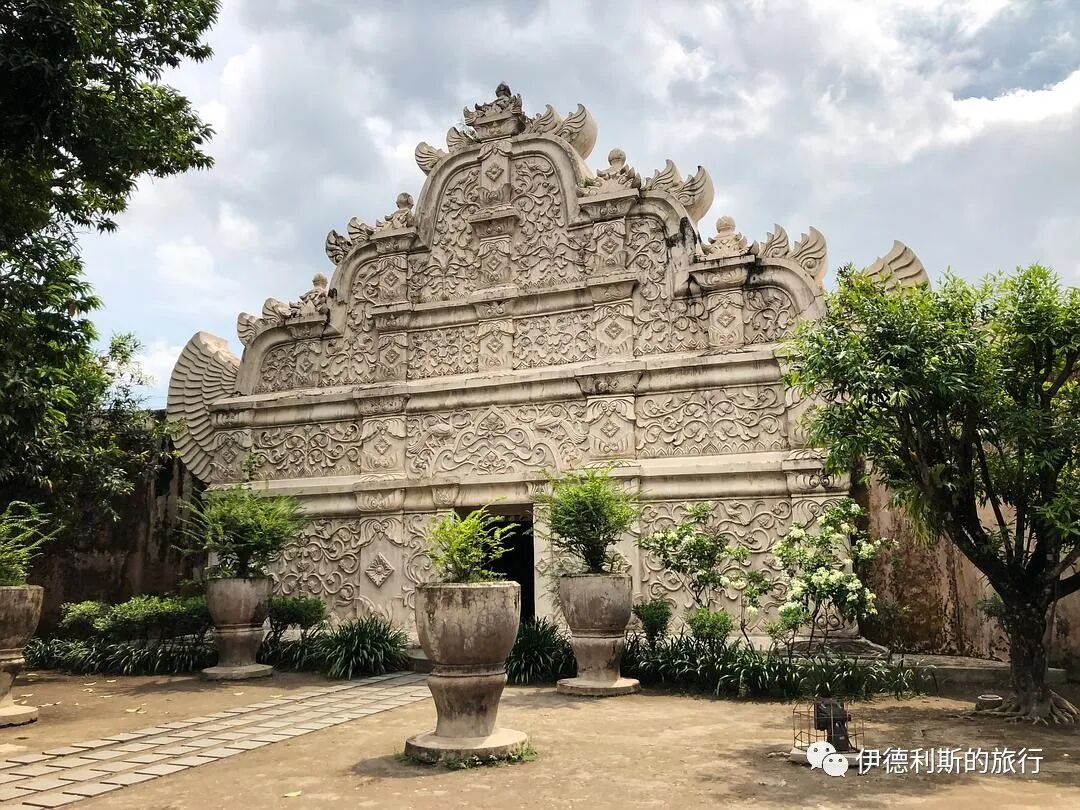
The east gate is called Gedhong Gapura Panggung, built in 1758; it is now the visitor entrance to the bathing area and features two Naga (serpent deity) statues on the gate.
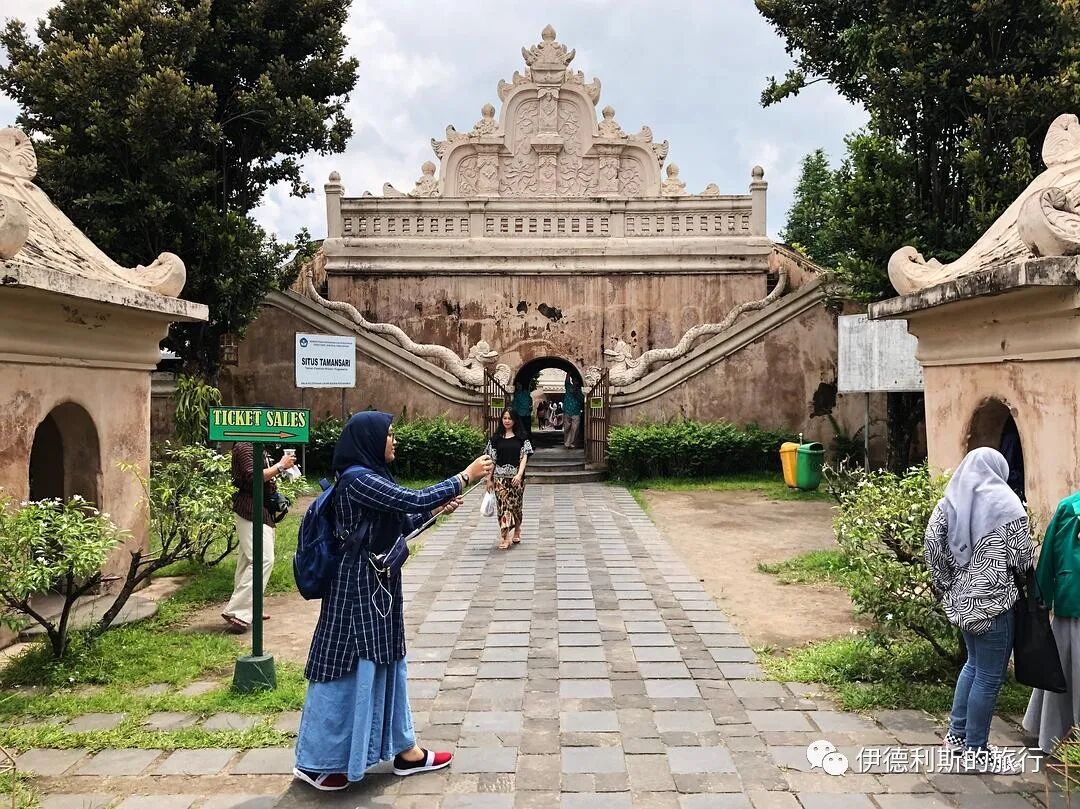
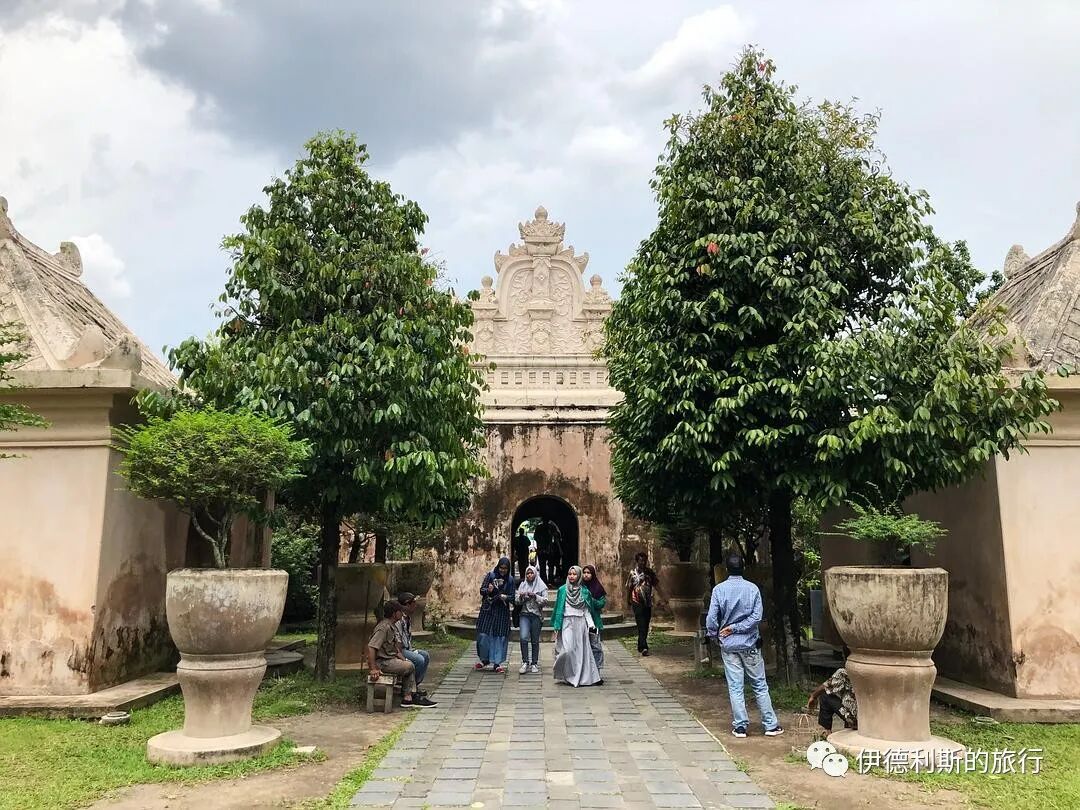
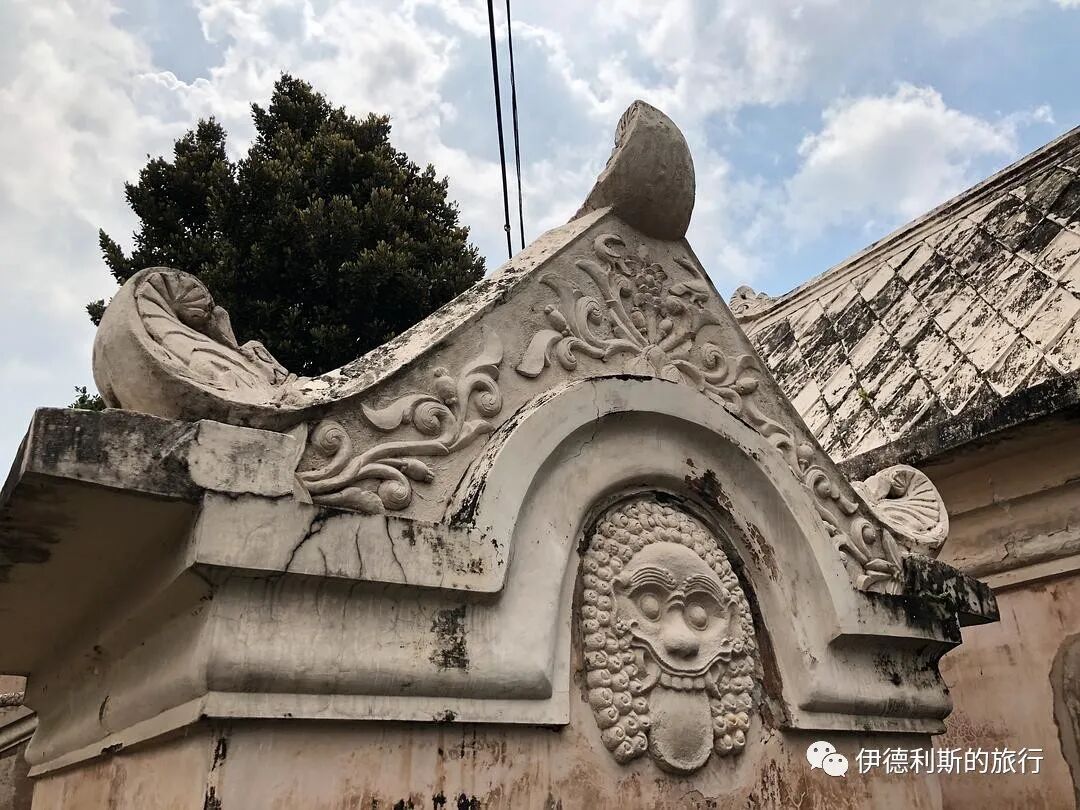
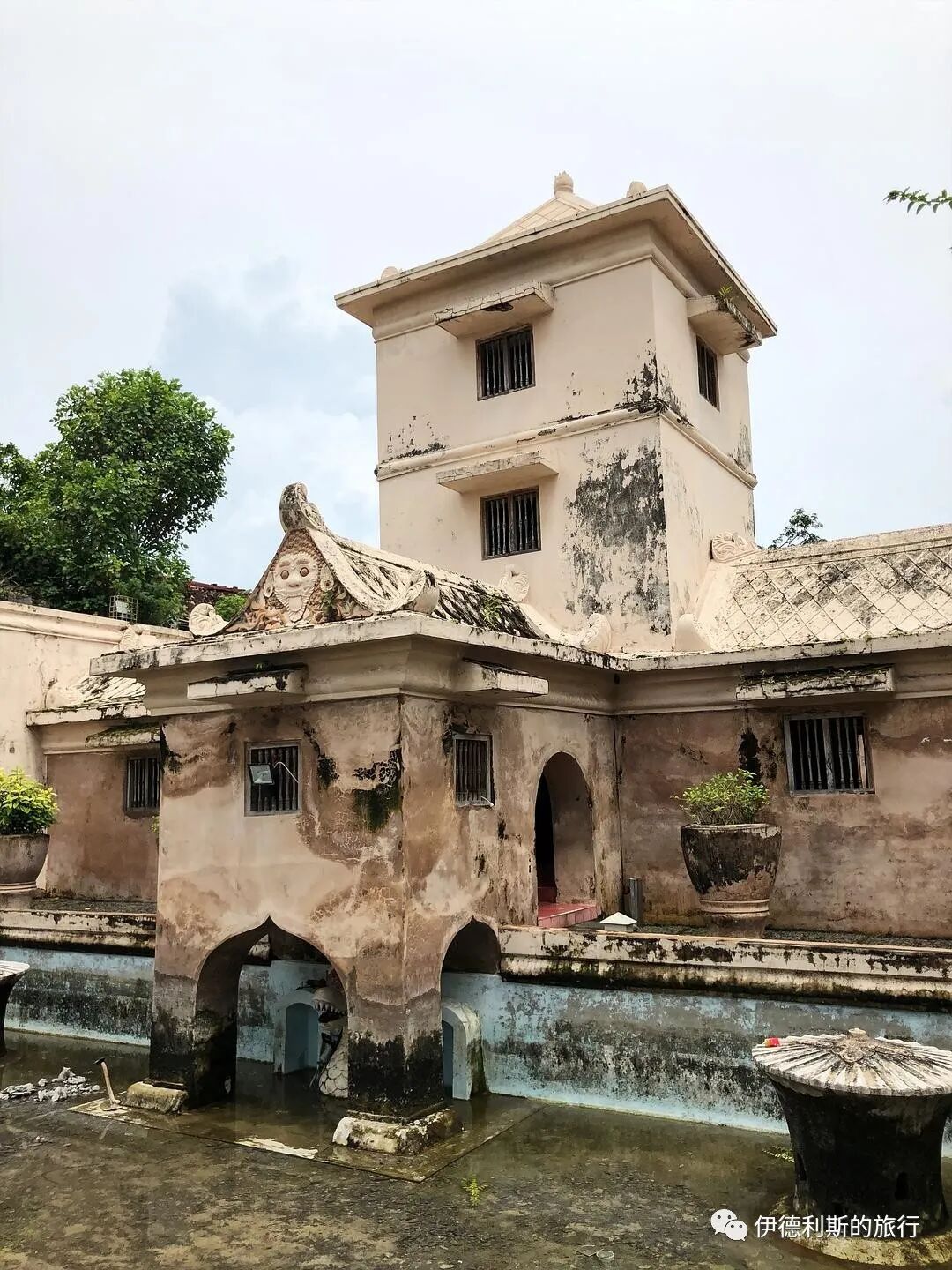
Umbul Pasiraman is the central bathing area for the royal family, surrounded by lounges and changing rooms for the Sultan, his daughters, and his concubines, with the tallest tower serving as the spot where the Sultan watched his harem bathe. In the past, only women were allowed to enter the central bathing area, except for the Sultan himself.
3. Great Mosque of Yogyakarta: 1773
The Great Mosque of Yogyakarta (Masjid Gedhe Kauman) sits northwest of the Yogyakarta Palace. Built in 1773, it serves as the royal mosque for the Sultan of Yogyakarta.
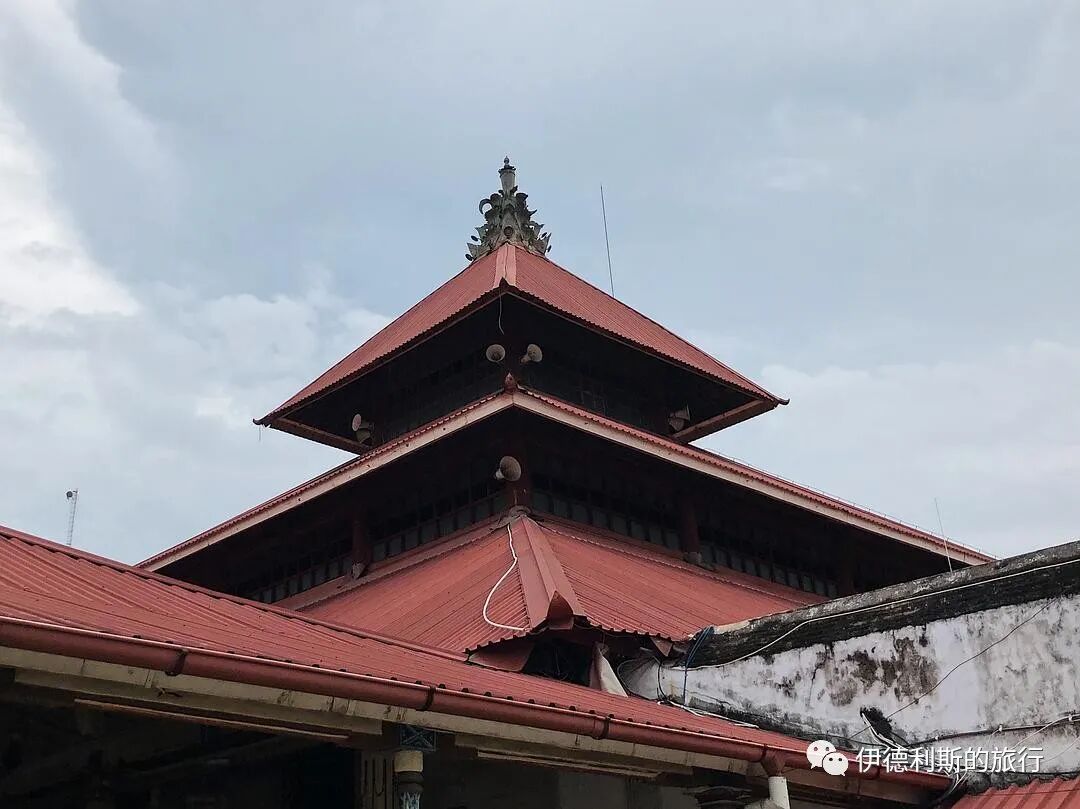
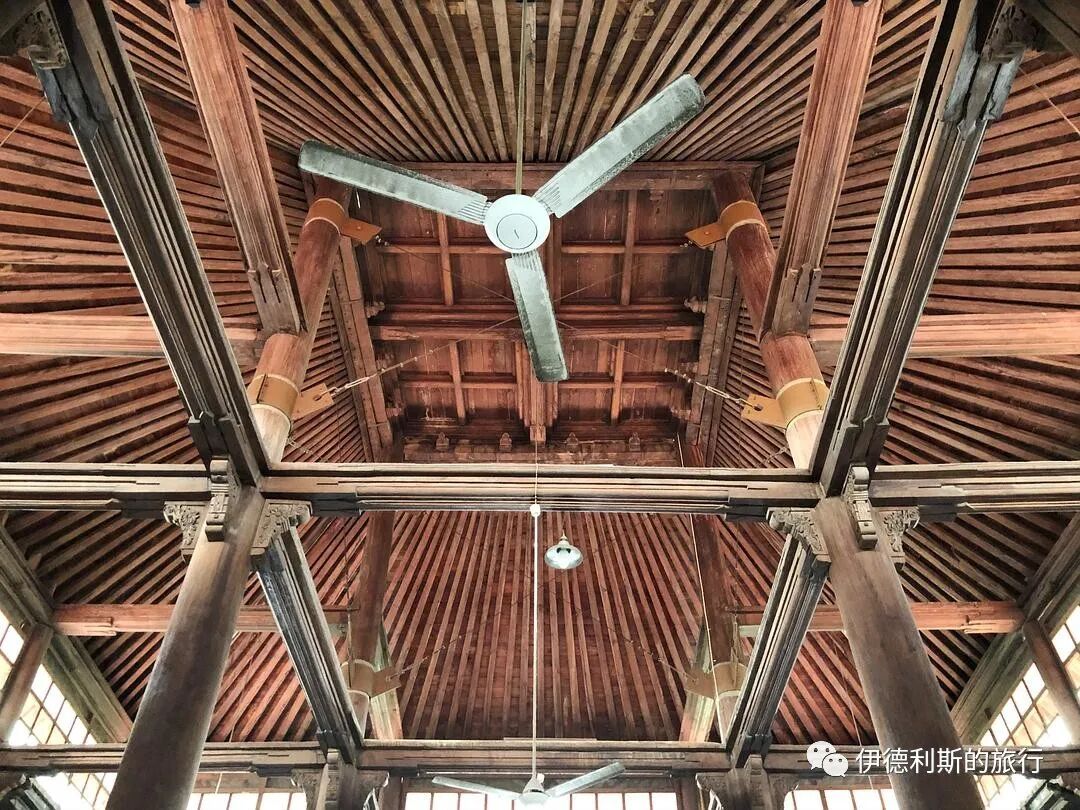
The Great Mosque of Yogyakarta features a classic traditional Javanese mosque style. The mosque has no minaret. Its main structure consists of a prayer hall and a front porch called a serambi. The roof of the prayer hall features an ornament called a Mustaka.
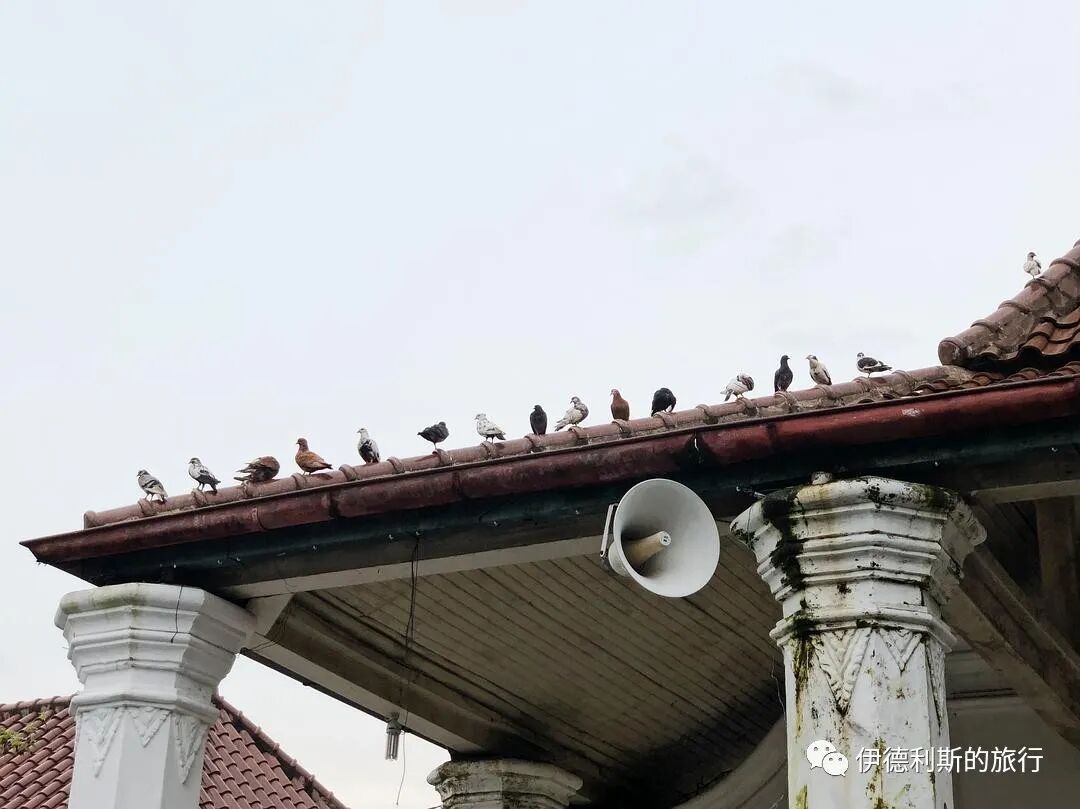
The front porch of the prayer hall.
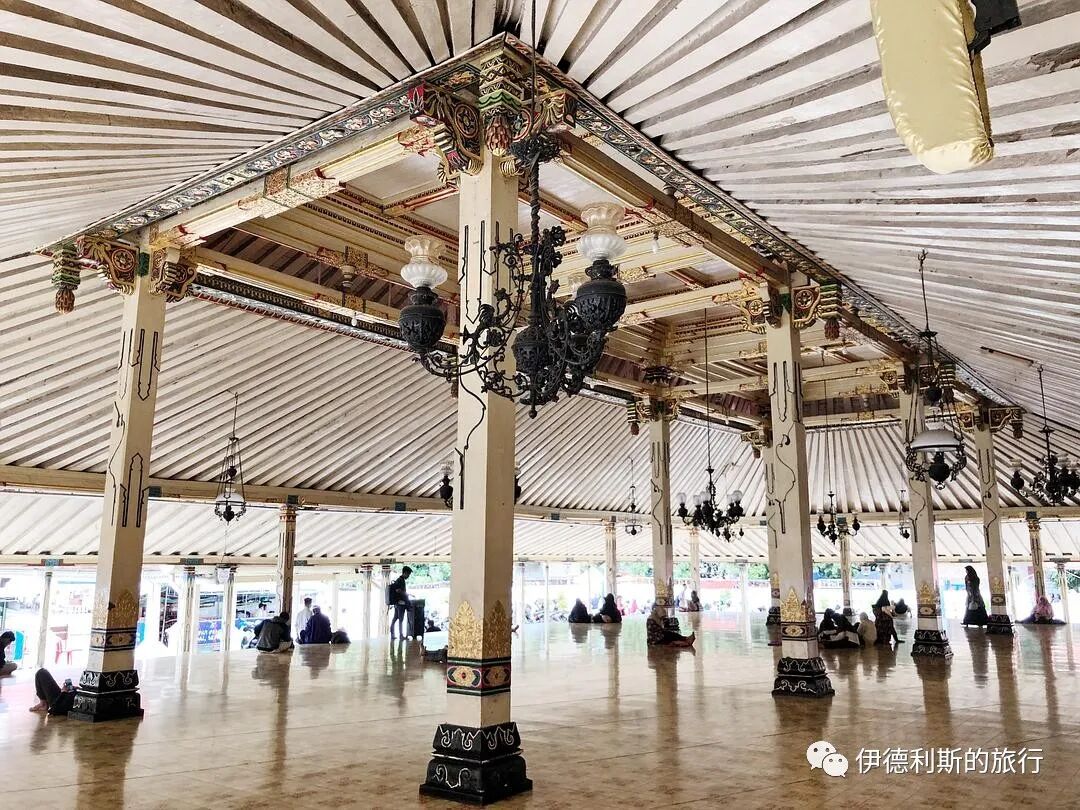
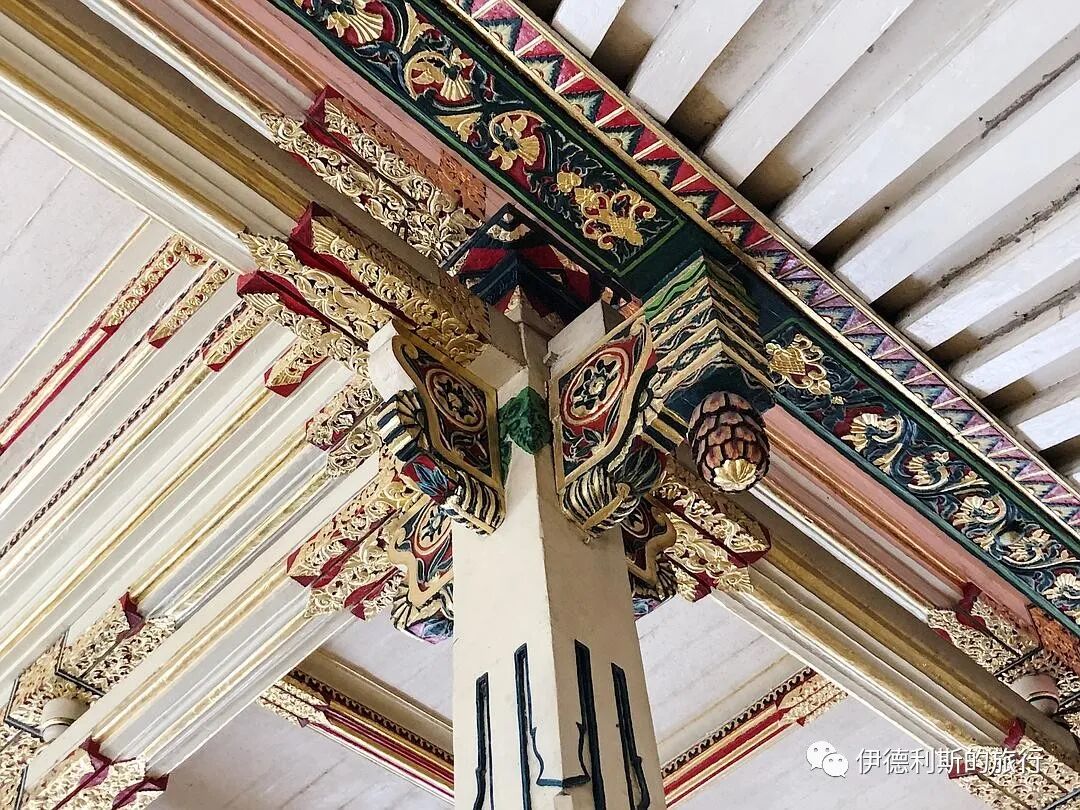
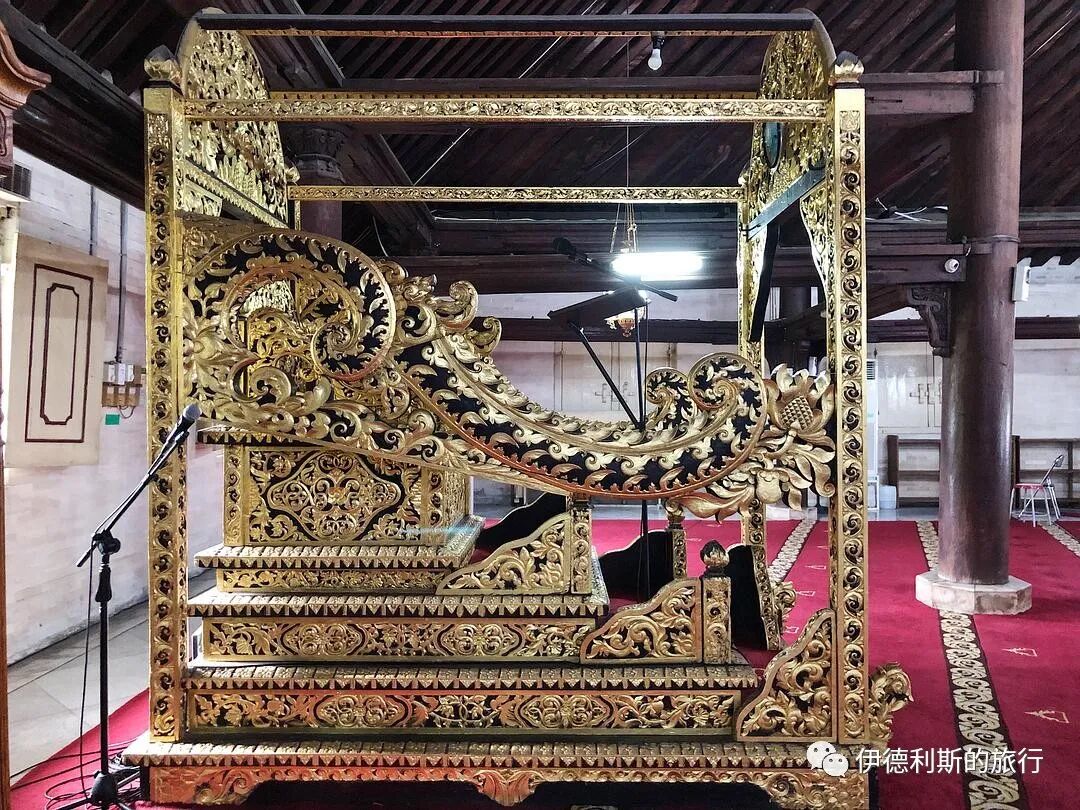
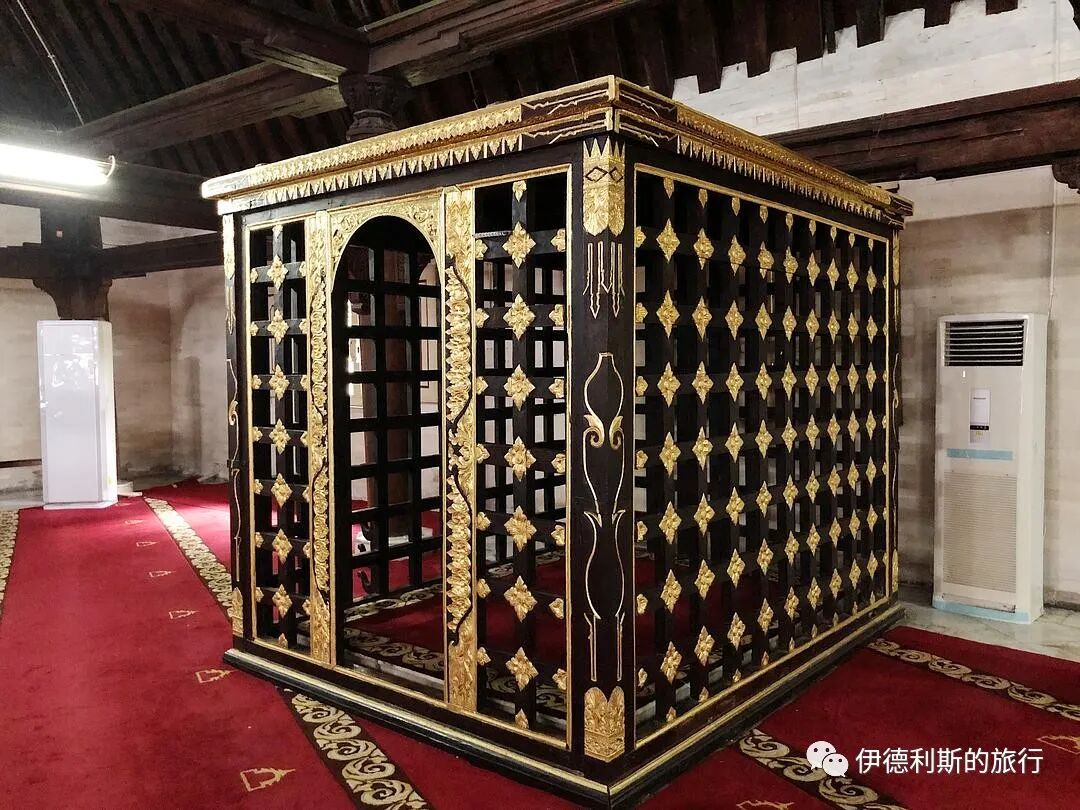
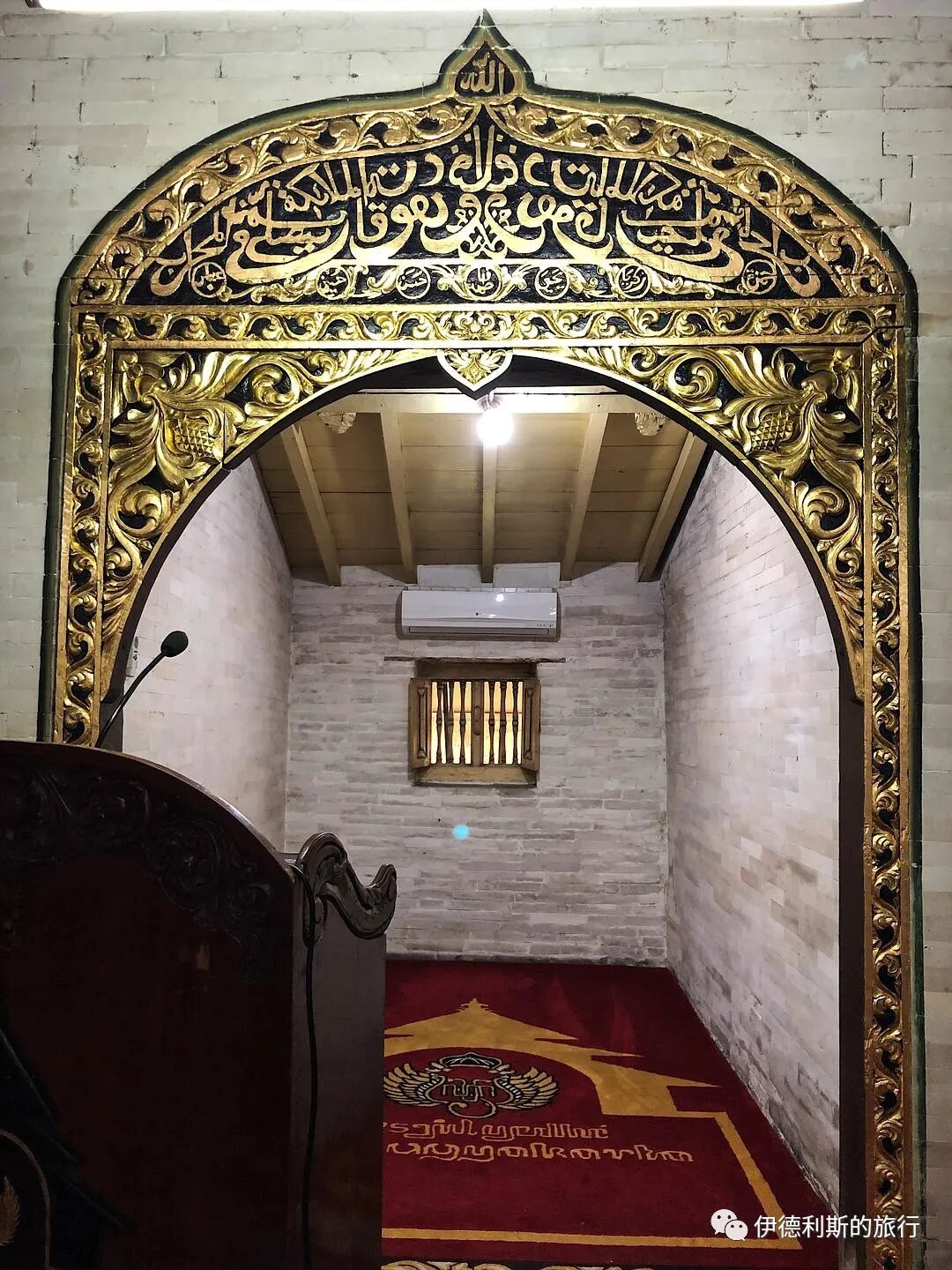
Inside the prayer hall, the mihrab and the pulpit (minbar) both show a strong Javanese style. There is also a cage-like structure called a Maxura, which is where the Sultan of Yogyakarta prays.
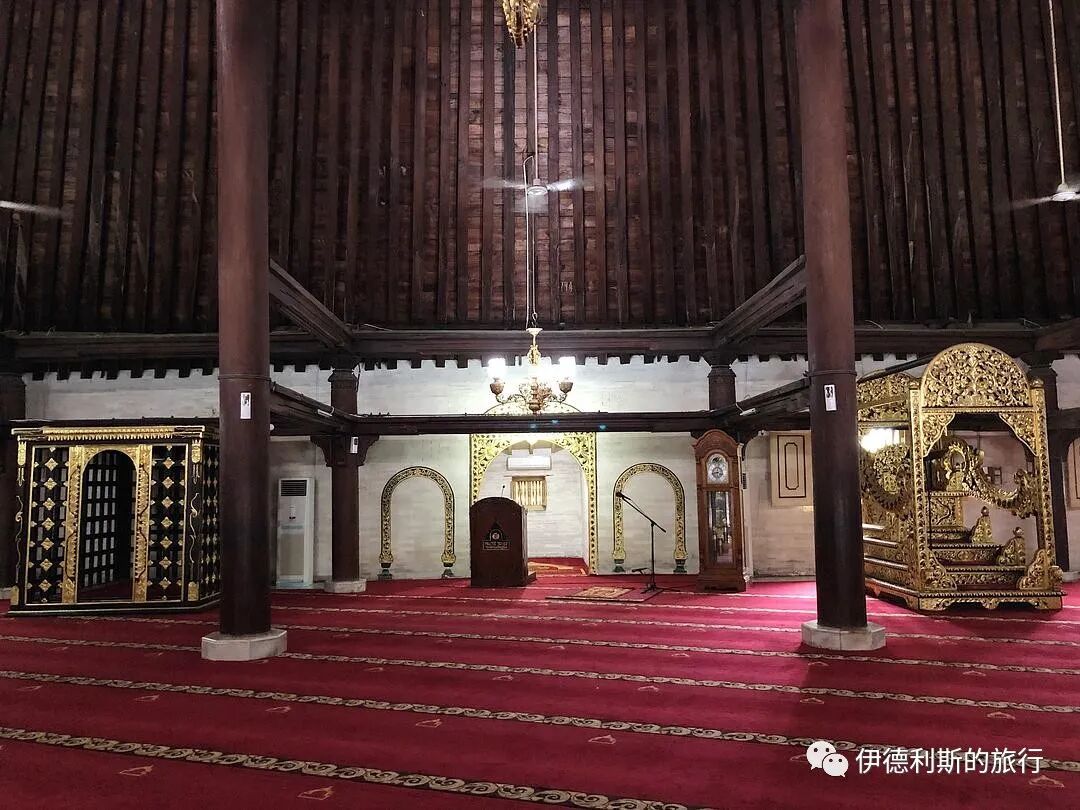
The pulpit (minbar).
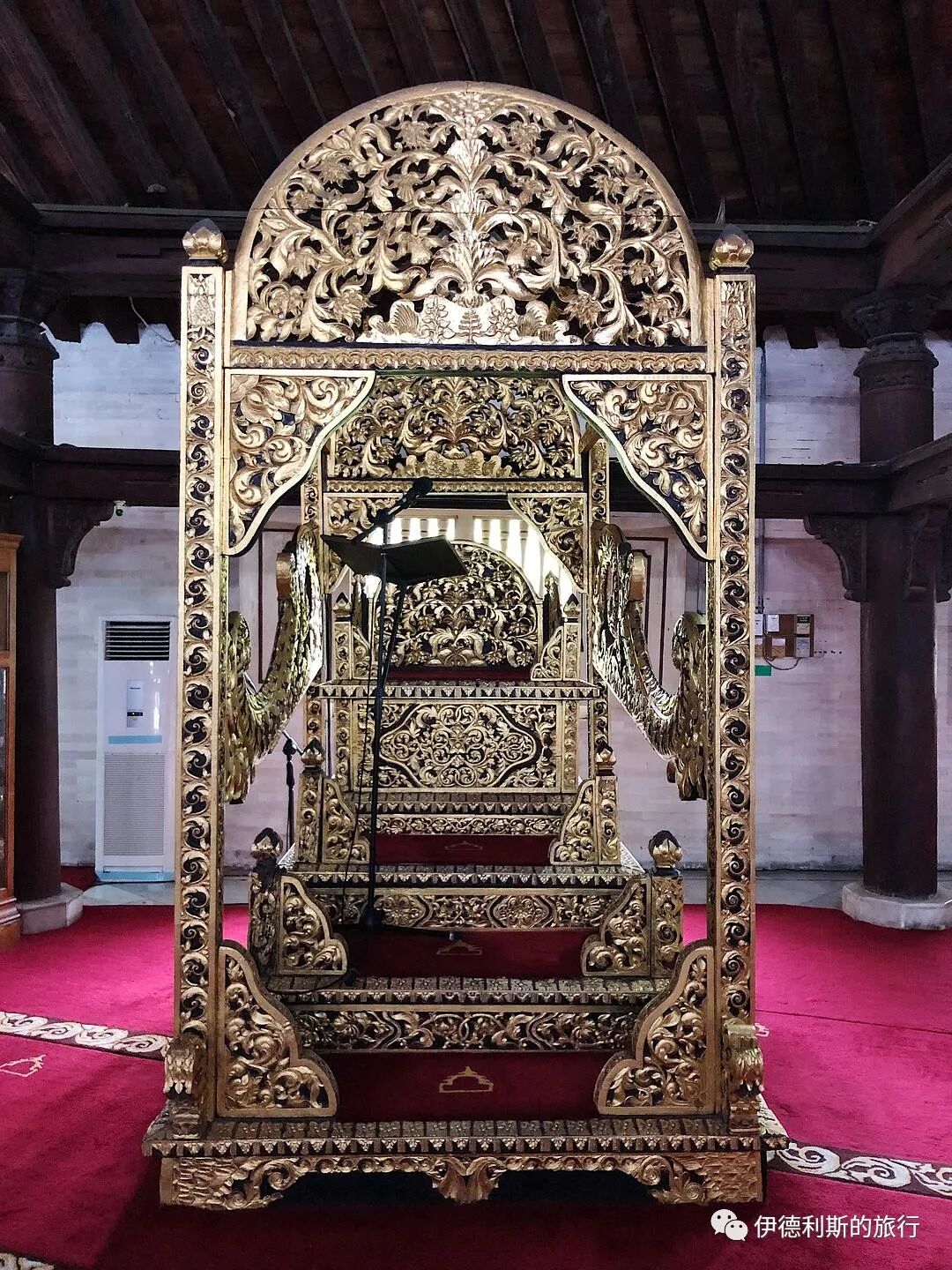
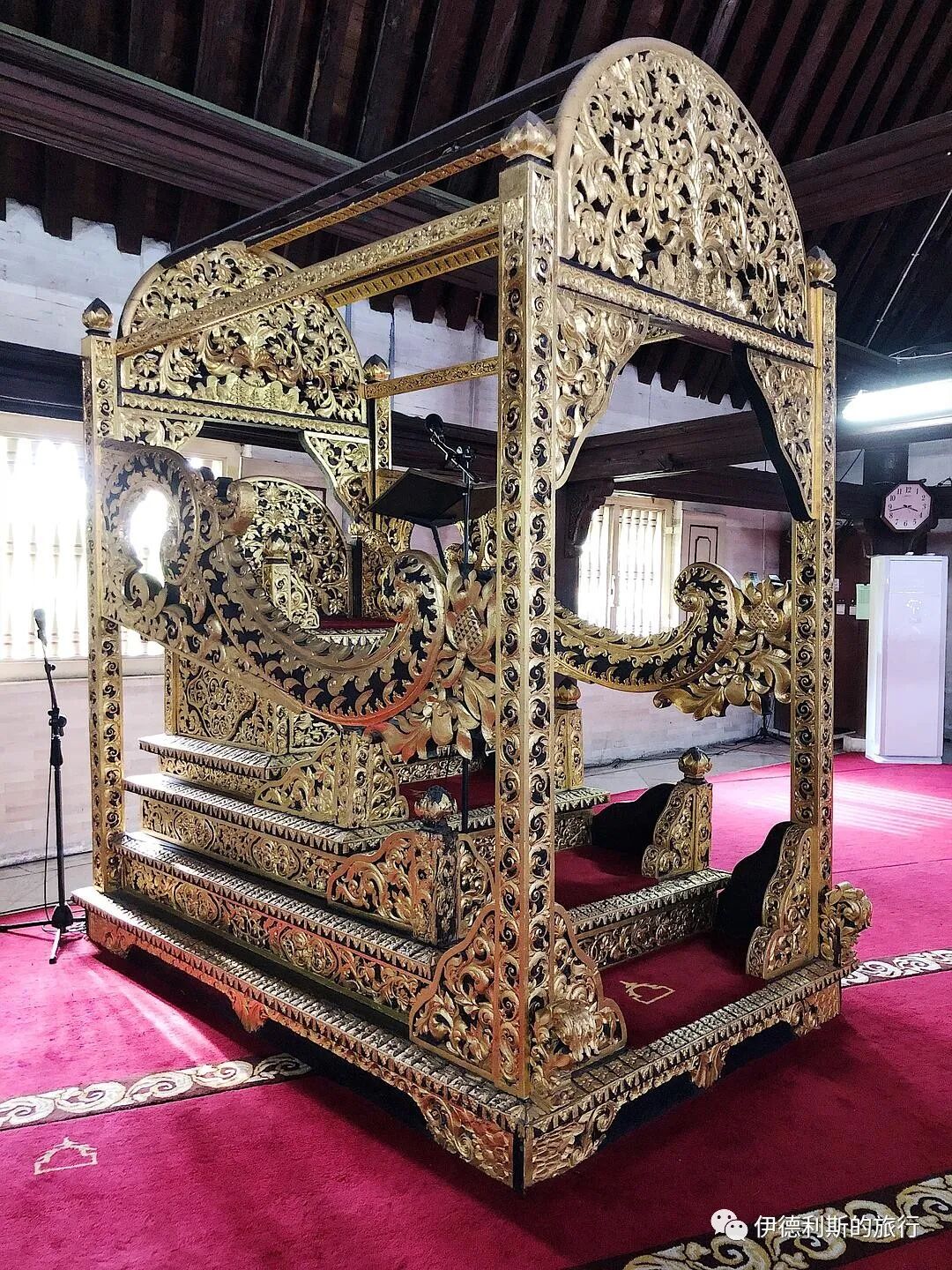
The place where the Sultan prays.
The mihrab.
4. Royal Dining Hall: 1916
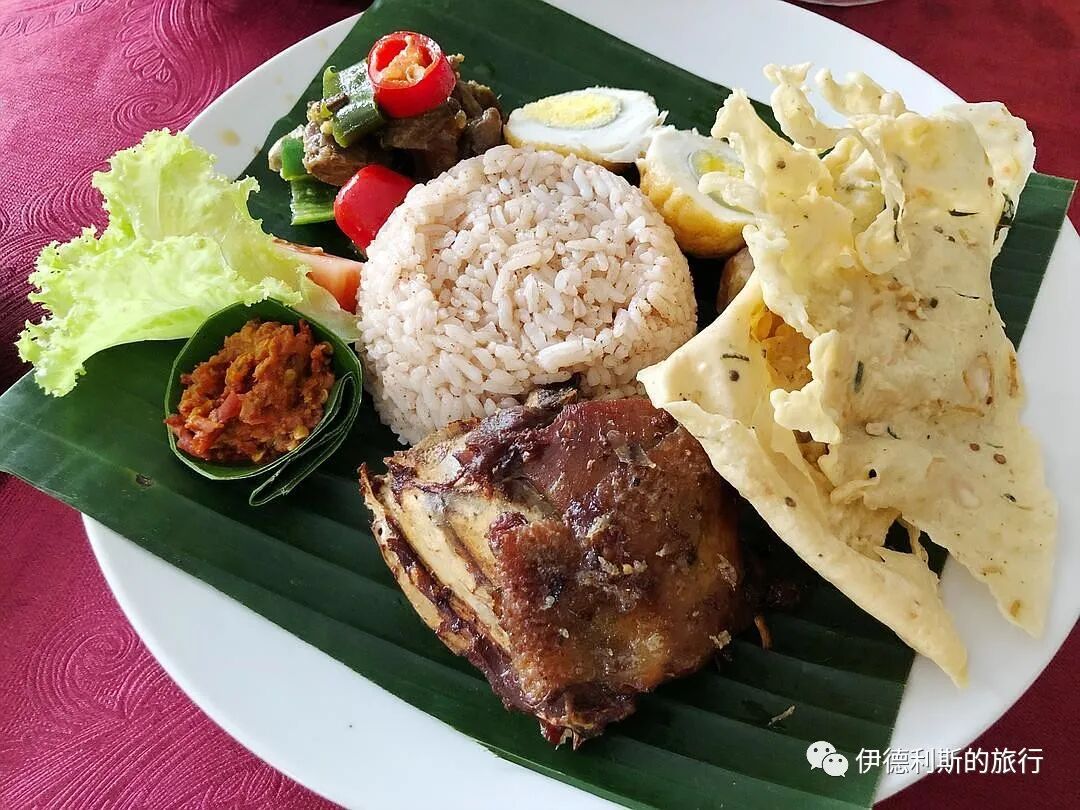
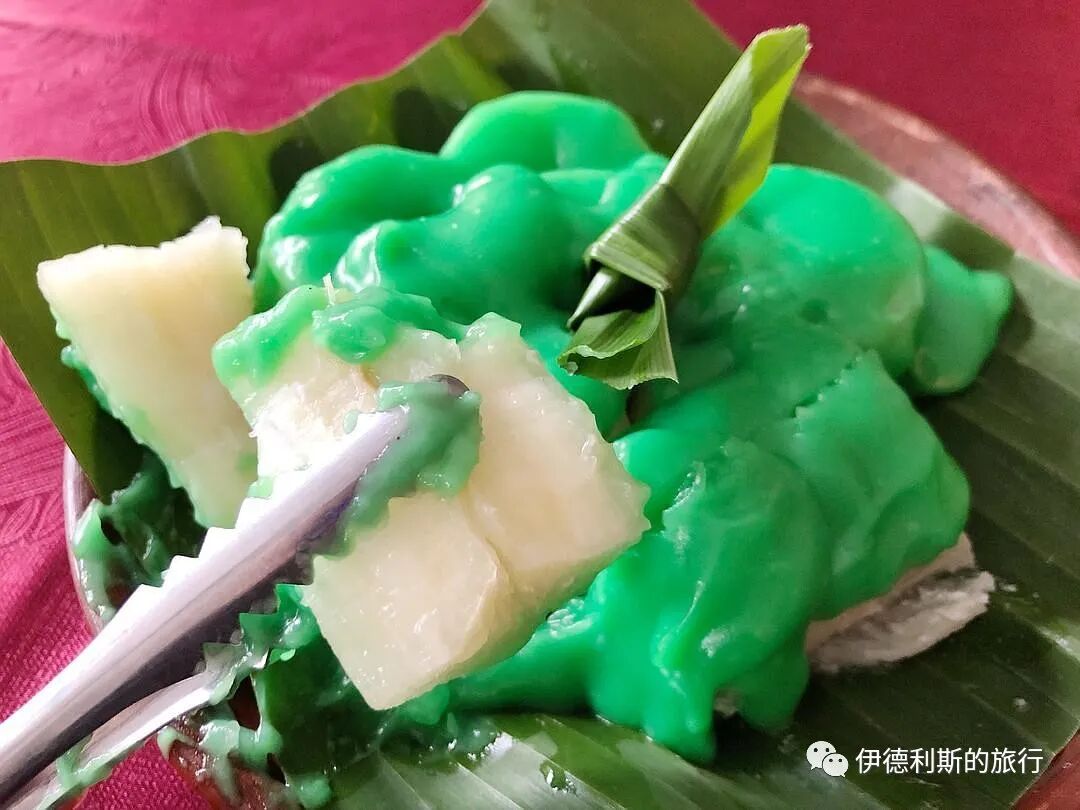
Located next to the Yogyakarta Sultan's Palace, nDalem Joyokusuman was the home of Prince Gusti Haryo Haji Joyokusumo. It is now open as a cultural center and restaurant. I ate Nasi Blawong and Telo ijo here. Nasi Blawong is a specialty dish of the Sultan of Yogyakarta. It was once only served at the Sultan's birthday banquets, and the reddish Blawong rice used in it is considered sacred. Telo ijo is a cassava pastry drizzled with pandan coconut milk.
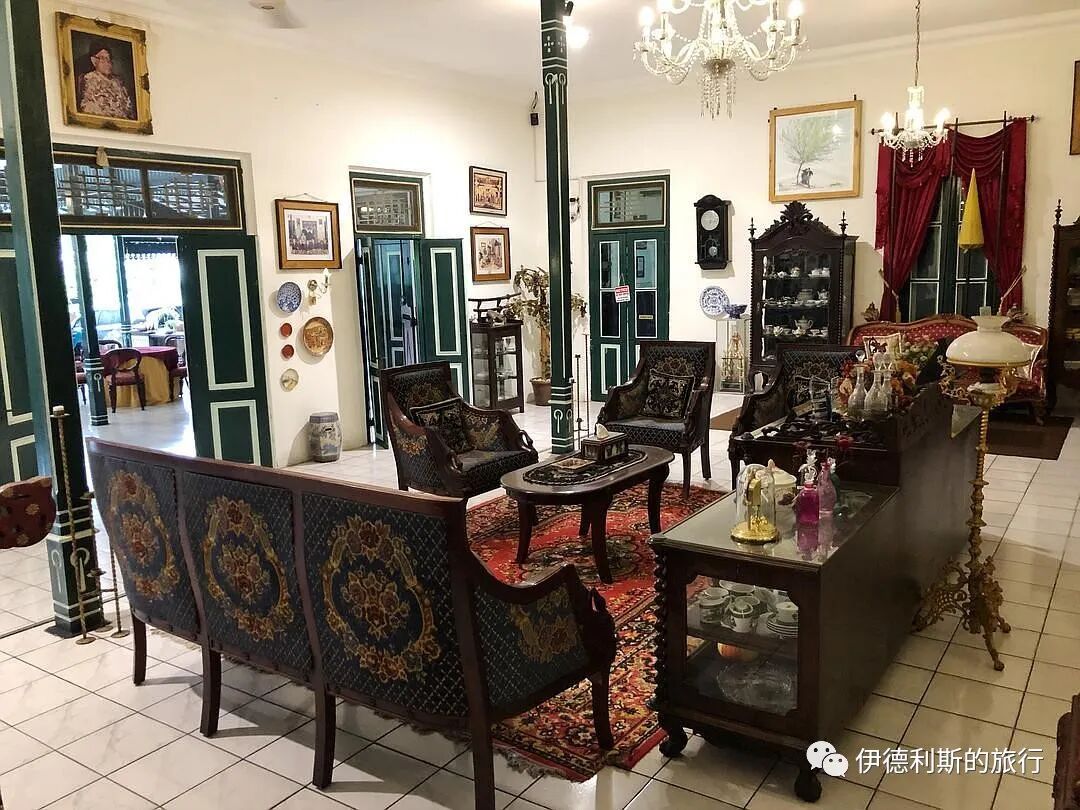
nDalem Joyokusuman was built in 1916 during the reign of the eighth Sultan of Yogyakarta, Hamengkubuwono VIII, and has been occupied by members of the Sultan's family ever since. Peringgitan is the inner hall behind the main living room. It is where the prince's family held activities and displayed valuable gifts the prince received.
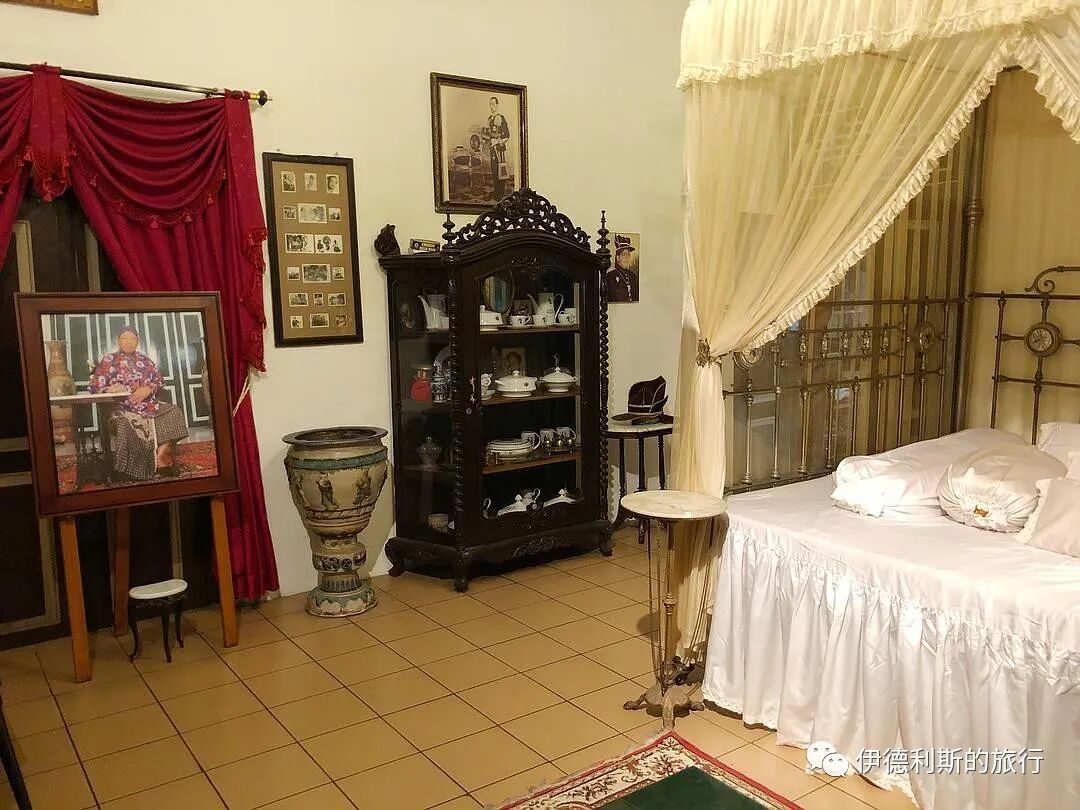
Sentong Kiwo in picture 4 was originally a guest room and now serves as an exhibition hall.
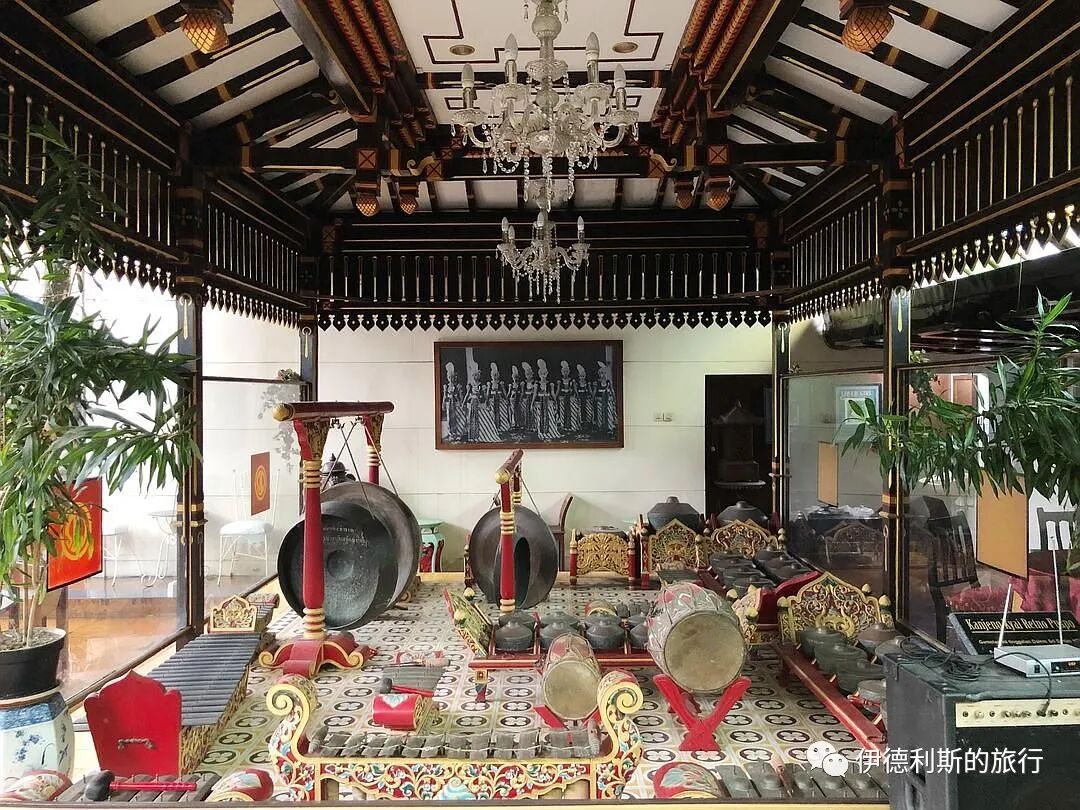
The area in the courtyard where gamelan music is performed.
A photo of the prince's family when they were young.
5. Sultan of Yogyakarta's Hat
I bought a hat at Beringharjo Market in Yogyakarta that locals wear for weddings. It is based on the crown from the Yogyakarta Sultan's court.
Sultan Hamengkubuwono VII of Yogyakarta, photographed in 1885.
Members of the Yogyakarta Sultan's royal family, photographed in 1885.
Summary: Muslim Travel Guide Indonesia Yogyakarta: Sultanate Palaces, Mosques and Islamic Heritage is presented here as a clear Muslim travel account, beginning with this scene: In our last article, The Lost Ancient Capital of Java: Kotagede, we introduced how the Mataram Sultanate became the most powerful Islamic kingdom on Java in the first half of the 17th century. The account keeps its focus on Yogyakarta Mosques, Indonesia Muslim Travel, Sultanate Palaces while preserving the names, places, food, and historical details from the Chinese source.
In our last article, The Lost Ancient Capital of Java: Kotagede, we introduced how the Mataram Sultanate became the most powerful Islamic kingdom on Java in the first half of the 17th century. However, after the third ruler, Sultan Agung (reigned 1613-1645), passed away, the royal family fell into a power struggle. After the 1670s, the Dutch East India Company used these power struggles to tighten their control, eventually splitting the Mataram Sultanate into the Yogyakarta Sultanate and the Surakarta Sunanate in 1755. After Indonesia declared independence in 1945, the Sultan of Yogyakarta pledged loyalty to the Indonesian government, and the sultanate became the Special Region of Yogyakarta, with the Sultan serving as governor. The governorship is hereditary, has no term limit, and is not appointed by the Indonesian government, making it the only region in Indonesia currently ruled by a sultan.
Table of Contents
1. Yogyakarta Palace: 1755
1. North Section
2. South Section
2. Yogyakarta Water Castle: 1758-1765
1. Segaran Lake Area
2. Bathing Area
3. Great Mosque of Yogyakarta: 1773
4. Royal Dining Hall: 1916
5. Sultan of Yogyakarta's Hat
1. Yogyakarta Palace: 1755
In 1755, the third war of succession for the Mataram Sultanate ended. The Dutch East India Company signed a treaty with two princes of the Mataram Sultanate, Mangkubumi and Pakubuwono III, to establish the Yogyakarta Sultanate and the Surakarta Sultanate. Prince Mangkubumi then became the founding Sultan of the Yogyakarta Sultanate, known as Hamengkubuwono I.
After becoming Sultan, Hamengkubuwono I chose a banyan forest between two rivers in Yogyakarta to build his palace. The Yogyakarta Palace (Kraton Ngayogyakarta Hadiningrat) has since served as the residence for ten sultans over 264 years.
Most of the existing palace buildings were renovated during the reign of Sultan Hamengkubuwono VIII (reigned 1921-1939) in the first half of the 20th century, and some parts were repaired again after the 2006 earthquake.
1. North Section
The Yogyakarta Palace site is currently divided into north and south sections, and you need to buy separate tickets for each. The main gate between the two sections only opens during official events, so you have to use the side gate on normal days.
The northernmost building is called Bangsal Pagelaran, where official ceremonies are held. When I visited, there was a royal manuscript exhibition, but photography was forbidden.
The Siti Hinggil in the south is where grand court ceremonies take place, and every Sultan of Yogyakarta has been crowned here. In 1949, the Netherlands officially recognized Indonesia's independence, and Indonesia's founding father, Sukarno, was officially inaugurated as president here.
2. South Section
Further south is the Kamandhungan, commonly known as Keben, which was used by the Sultan to pass death sentences in the past. This is currently the main gate to the southern part of the palace, and the ticket office is located here. After buying a ticket to enter the southern section, you reach Sri Manganti. This was once used to receive VIP guests, and now it hosts performances of gamelan music, wayang shadow puppetry, Javanese poetry, and classical dance almost every morning.
The Traju Mas Ward to the east of Keben was once the place where the Sultan welcomed guests. It collapsed during the 2006 earthquake and was not fully restored until 2010.
South of Keben is the Donopratopo gate, which has a pair of guardian statues called Dvarapala in front of it. Dvarapala originated as gate gods in Hinduism and Buddhism. In Javanese culture, they usually appear as giant, fierce-looking asuras holding a vajra.
After passing through the Donopratopo gate, you enter the Kedhaton area, the heart of the palace. Only part of this area is open to the public, as the rest serves as the living quarters for the Sultan's family. The courtyard is covered in sand from the southern beach, where royal servants (Abdi-Dalem) stand barefoot.
There are currently 2,640 royal servants in the Yogyakarta palace, and they all wear traditional Yogyakarta attire. You can buy the Blangkon hats worn by these servants right inside the palace. A Blangkon is a traditional batik headpiece for men from central and eastern Java. Legend says that Java island was once ruled by a giant named Dewata Cengkar. Dewata Cengkar often demanded human sacrifices, and the people were terrified of him. A man named Aji Saka volunteered to be sacrificed. He said to the giant, 'Great King of Java, I have only one wish before I die.' 'I want a piece of land as big as my headcloth.' The giant agreed to the request, so Aji Saka asked the giant to hold one end of the headcloth. The headcloth kept growing larger, and the giant kept stepping back until he reached the sea, where Aji Saka kicked him into the water. After defeating the giant, the people elected Aji Saka as the new King of Java, and the Blangkon he wore became a symbol of the Javanese people.
A more credible view is that after the 8th century, as more Indian Muslim merchants came to Java to trade, the combination of their turbans and Javanese batik created the Javanese Iket headcloth. The Blangkon is actually a more practical version of the Iket headcloth. The earliest headcloths required a complex tying process. Over time, people fixed the cloth into a set shape, creating a hat that did not need to be tied, which is the Blangkon.
The most common types of Blangkon are the Yogyakarta style and the Solo style. The Yogyakarta Blangkon is known for the Mondholan, a bulge on the back. In ancient times, Javanese men tied their long hair at the back of their heads. When wearing a Blangkon, they would wrap their hair tightly, creating this bulge. Because Solo was deeply influenced by Dutch colonialism, the locals stopped growing their hair long, so the back of the Solo Blangkon is flat.
The east-facing Kencono Ward (Golden Pavilion) is the main hall of the palace and the site for various royal ceremonies.
The railings are carved with Batara Kala, the Javanese Hindu god of the underworld, who is also the god of time and destruction. In traditional Javanese mythology, Batara Kala eating the sun is the cause of solar eclipses. Legend says Batara Kala is the son of Batara Guru, the Javanese version of the god Shiva. In a moment of uncontrollable desire, Batara Guru had relations with his beautiful wife, Dewi Uma, on the back of a sacred cow. Uma felt very ashamed, and after being cursed, she took on the appearance of a monster. Therefore, the child she gave birth to, Batara Kala, also had a monster's appearance.
The railings are carved with the snake god Naga from Hindu and Buddhist culture. The Naga of Java and Bali is a crowned snake, representing a blend of the Hindu Shiva tradition and the native Javanese animist snake tradition. In the 9th century, the Javanese Naga looked like a cobra. After the 15th century, it was influenced by the Chinese dragon, though it lacks claws.
Batik
Some buildings
A palanquin used during Sultanate court processions
South of the Kedhaton is the Kamagangan Gate, which features statues of two Naga snake gods. Beyond the Kamagangan Gate is outside the palace grounds. This area was once used to train and test retainers, and the Magangan Ward in the middle of the courtyard is the site for the Bedhol Songsong puppet ceremony.
The palace walls of the Yogyakarta Palace
2. Yogyakarta Water Castle: 1758-1765
The Yogyakarta Water Palace (Taman Sari) is the garden harem of the Sultan of Yogyakarta. It was built in 1758 by order of the founding Sultan Hamengkubuwono I, and the architect was Tumenggung Mangundipura. Tumenggung Mangundipura traveled to the Dutch East India Company headquarters in Batavia (Old Jakarta) twice to study European architecture, so the buildings in the Water Palace blend Javanese and Dutch styles.
The Water Palace was finished in 1765, featuring a mosque, meditation rooms, bathing areas, 18 water gardens and pavilions, and a complex water system, but these designs were neglected after Sultan Hamengkubuwono I died in 1791. The Water Palace was damaged during the British invasion of Yogyakarta in 1812 and again during the Java War from 1825 to 1830.
After an earthquake in 1867, the palace complex was completely abandoned, local residents began building homes on the ruins, and the dried-up lake was gradually filled in. Parts of the Water Palace were restored after the 1970s, but only the bathing area was fully repaired.
1. Segaran Lake Area
The main buildings of the Water Palace sit around an artificial lake called Segaran (artificial sea).
In the middle of Segaran lake is an island called Kenongo (magnolia island), which used to be covered in magnolia flowers. A building called Gedhong Kenongo stood on the island and was once the largest structure in the Water Palace, but it was severely damaged in the 1867 earthquake.
Before the 1859 earthquake
After the 1867 earthquake
There is an underwater tunnel on the south side of Kenongo island that connects to the land. The underwater tunnel built in 1761 still exists today, and it has a row of ventilation structures called Tajug on top.
The entrance to the underwater tunnel on Kenongo island.
On the west side of Kenongo island is an artificial island made of a single building, the Sumur Gumuling mosque, which can only be reached through the underwater tunnel.
The exit of the underwater tunnel at the Sumur Gumuling mosque.
2. Bathing Area
The bathing area is on the south side of Segaran lake; it was not the most important building back then, but it is the best-preserved part of the Water Palace today.
The bathing area has east and west gates decorated with detailed flower and bird patterns. The west gate is called Gedhong Gapura Hageng, built in 1765; it was once the main entrance to the bathing area but is now closed.
The east gate is called Gedhong Gapura Panggung, built in 1758; it is now the visitor entrance to the bathing area and features two Naga (serpent deity) statues on the gate.
Umbul Pasiraman is the central bathing area for the royal family, surrounded by lounges and changing rooms for the Sultan, his daughters, and his concubines, with the tallest tower serving as the spot where the Sultan watched his harem bathe. In the past, only women were allowed to enter the central bathing area, except for the Sultan himself.
3. Great Mosque of Yogyakarta: 1773
The Great Mosque of Yogyakarta (Masjid Gedhe Kauman) sits northwest of the Yogyakarta Palace. Built in 1773, it serves as the royal mosque for the Sultan of Yogyakarta.
The Great Mosque of Yogyakarta features a classic traditional Javanese mosque style. The mosque has no minaret. Its main structure consists of a prayer hall and a front porch called a serambi. The roof of the prayer hall features an ornament called a Mustaka.
The front porch of the prayer hall.
Inside the prayer hall, the mihrab and the pulpit (minbar) both show a strong Javanese style. There is also a cage-like structure called a Maxura, which is where the Sultan of Yogyakarta prays.
The pulpit (minbar).
The place where the Sultan prays.
The mihrab.
4. Royal Dining Hall: 1916
Located next to the Yogyakarta Sultan's Palace, nDalem Joyokusuman was the home of Prince Gusti Haryo Haji Joyokusumo. It is now open as a cultural center and restaurant. I ate Nasi Blawong and Telo ijo here. Nasi Blawong is a specialty dish of the Sultan of Yogyakarta. It was once only served at the Sultan's birthday banquets, and the reddish Blawong rice used in it is considered sacred. Telo ijo is a cassava pastry drizzled with pandan coconut milk.
nDalem Joyokusuman was built in 1916 during the reign of the eighth Sultan of Yogyakarta, Hamengkubuwono VIII, and has been occupied by members of the Sultan's family ever since. Peringgitan is the inner hall behind the main living room. It is where the prince's family held activities and displayed valuable gifts the prince received.
Sentong Kiwo in picture 4 was originally a guest room and now serves as an exhibition hall.
The area in the courtyard where gamelan music is performed.
A photo of the prince's family when they were young.
5. Sultan of Yogyakarta's Hat
I bought a hat at Beringharjo Market in Yogyakarta that locals wear for weddings. It is based on the crown from the Yogyakarta Sultan's court.
Sultan Hamengkubuwono VII of Yogyakarta, photographed in 1885.
Members of the Yogyakarta Sultan's royal family, photographed in 1885.
Muslim Travel Guide Indonesia Yogyakarta: Sultanate Palaces, Mosques and Islamic Heritage
Articles • yusuf908 posted the article • 0 comments • 206 views • 2026-05-23 23:07
Reposted from the web
Summary: Muslim Travel Guide Indonesia Yogyakarta: Sultanate Palaces, Mosques and Islamic Heritage is presented here as a clear Muslim travel account, beginning with this scene: In our last article, The Lost Ancient Capital of Java: Kotagede, we introduced how the Mataram Sultanate became the most powerful Islamic kingdom on Java in the first half of the 17th century. The account keeps its focus on Yogyakarta Mosques, Indonesia Muslim Travel, Sultanate Palaces while preserving the names, places, food, and historical details from the Chinese source.
In our last article, The Lost Ancient Capital of Java: Kotagede, we introduced how the Mataram Sultanate became the most powerful Islamic kingdom on Java in the first half of the 17th century. However, after the third ruler, Sultan Agung (reigned 1613-1645), passed away, the royal family fell into a power struggle. After the 1670s, the Dutch East India Company used these power struggles to tighten their control, eventually splitting the Mataram Sultanate into the Yogyakarta Sultanate and the Surakarta Sunanate in 1755. After Indonesia declared independence in 1945, the Sultan of Yogyakarta pledged loyalty to the Indonesian government, and the sultanate became the Special Region of Yogyakarta, with the Sultan serving as governor. The governorship is hereditary, has no term limit, and is not appointed by the Indonesian government, making it the only region in Indonesia currently ruled by a sultan.
Table of Contents
1. Yogyakarta Palace: 1755
1. North Section
2. South Section
2. Yogyakarta Water Castle: 1758-1765
1. Segaran Lake Area
2. Bathing Area
3. Great Mosque of Yogyakarta: 1773
4. Royal Dining Hall: 1916
5. Sultan of Yogyakarta's Hat
1. Yogyakarta Palace: 1755
In 1755, the third war of succession for the Mataram Sultanate ended. The Dutch East India Company signed a treaty with two princes of the Mataram Sultanate, Mangkubumi and Pakubuwono III, to establish the Yogyakarta Sultanate and the Surakarta Sultanate. Prince Mangkubumi then became the founding Sultan of the Yogyakarta Sultanate, known as Hamengkubuwono I.
After becoming Sultan, Hamengkubuwono I chose a banyan forest between two rivers in Yogyakarta to build his palace. The Yogyakarta Palace (Kraton Ngayogyakarta Hadiningrat) has since served as the residence for ten sultans over 264 years.
Most of the existing palace buildings were renovated during the reign of Sultan Hamengkubuwono VIII (reigned 1921-1939) in the first half of the 20th century, and some parts were repaired again after the 2006 earthquake.
1. North Section
The Yogyakarta Palace site is currently divided into north and south sections, and you need to buy separate tickets for each. The main gate between the two sections only opens during official events, so you have to use the side gate on normal days.
The northernmost building is called Bangsal Pagelaran, where official ceremonies are held. When I visited, there was a royal manuscript exhibition, but photography was forbidden.
The Siti Hinggil in the south is where grand court ceremonies take place, and every Sultan of Yogyakarta has been crowned here. In 1949, the Netherlands officially recognized Indonesia's independence, and Indonesia's founding father, Sukarno, was officially inaugurated as president here.
2. South Section
Further south is the Kamandhungan, commonly known as Keben, which was used by the Sultan to pass death sentences in the past. This is currently the main gate to the southern part of the palace, and the ticket office is located here. After buying a ticket to enter the southern section, you reach Sri Manganti. This was once used to receive VIP guests, and now it hosts performances of gamelan music, wayang shadow puppetry, Javanese poetry, and classical dance almost every morning.
The Traju Mas Ward to the east of Keben was once the place where the Sultan welcomed guests. It collapsed during the 2006 earthquake and was not fully restored until 2010.
South of Keben is the Donopratopo gate, which has a pair of guardian statues called Dvarapala in front of it. Dvarapala originated as gate gods in Hinduism and Buddhism. In Javanese culture, they usually appear as giant, fierce-looking asuras holding a vajra.
After passing through the Donopratopo gate, you enter the Kedhaton area, the heart of the palace. Only part of this area is open to the public, as the rest serves as the living quarters for the Sultan's family. The courtyard is covered in sand from the southern beach, where royal servants (Abdi-Dalem) stand barefoot.
There are currently 2,640 royal servants in the Yogyakarta palace, and they all wear traditional Yogyakarta attire. You can buy the Blangkon hats worn by these servants right inside the palace. A Blangkon is a traditional batik headpiece for men from central and eastern Java. Legend says that Java island was once ruled by a giant named Dewata Cengkar. Dewata Cengkar often demanded human sacrifices, and the people were terrified of him. A man named Aji Saka volunteered to be sacrificed. He said to the giant, 'Great King of Java, I have only one wish before I die.' 'I want a piece of land as big as my headcloth.' The giant agreed to the request, so Aji Saka asked the giant to hold one end of the headcloth. The headcloth kept growing larger, and the giant kept stepping back until he reached the sea, where Aji Saka kicked him into the water. After defeating the giant, the people elected Aji Saka as the new King of Java, and the Blangkon he wore became a symbol of the Javanese people.
A more credible view is that after the 8th century, as more Indian Muslim merchants came to Java to trade, the combination of their turbans and Javanese batik created the Javanese Iket headcloth. The Blangkon is actually a more practical version of the Iket headcloth. The earliest headcloths required a complex tying process. Over time, people fixed the cloth into a set shape, creating a hat that did not need to be tied, which is the Blangkon.
The most common types of Blangkon are the Yogyakarta style and the Solo style. The Yogyakarta Blangkon is known for the Mondholan, a bulge on the back. In ancient times, Javanese men tied their long hair at the back of their heads. When wearing a Blangkon, they would wrap their hair tightly, creating this bulge. Because Solo was deeply influenced by Dutch colonialism, the locals stopped growing their hair long, so the back of the Solo Blangkon is flat.
The east-facing Kencono Ward (Golden Pavilion) is the main hall of the palace and the site for various royal ceremonies.
The railings are carved with Batara Kala, the Javanese Hindu god of the underworld, who is also the god of time and destruction. In traditional Javanese mythology, Batara Kala eating the sun is the cause of solar eclipses. Legend says Batara Kala is the son of Batara Guru, the Javanese version of the god Shiva. In a moment of uncontrollable desire, Batara Guru had relations with his beautiful wife, Dewi Uma, on the back of a sacred cow. Uma felt very ashamed, and after being cursed, she took on the appearance of a monster. Therefore, the child she gave birth to, Batara Kala, also had a monster's appearance.
The railings are carved with the snake god Naga from Hindu and Buddhist culture. The Naga of Java and Bali is a crowned snake, representing a blend of the Hindu Shiva tradition and the native Javanese animist snake tradition. In the 9th century, the Javanese Naga looked like a cobra. After the 15th century, it was influenced by the Chinese dragon, though it lacks claws.
Batik
Some buildings
A palanquin used during Sultanate court processions
South of the Kedhaton is the Kamagangan Gate, which features statues of two Naga snake gods. Beyond the Kamagangan Gate is outside the palace grounds. This area was once used to train and test retainers, and the Magangan Ward in the middle of the courtyard is the site for the Bedhol Songsong puppet ceremony.
The palace walls of the Yogyakarta Palace
2. Yogyakarta Water Castle: 1758-1765
The Yogyakarta Water Palace (Taman Sari) is the garden harem of the Sultan of Yogyakarta. It was built in 1758 by order of the founding Sultan Hamengkubuwono I, and the architect was Tumenggung Mangundipura. Tumenggung Mangundipura traveled to the Dutch East India Company headquarters in Batavia (Old Jakarta) twice to study European architecture, so the buildings in the Water Palace blend Javanese and Dutch styles.
The Water Palace was finished in 1765, featuring a mosque, meditation rooms, bathing areas, 18 water gardens and pavilions, and a complex water system, but these designs were neglected after Sultan Hamengkubuwono I died in 1791. The Water Palace was damaged during the British invasion of Yogyakarta in 1812 and again during the Java War from 1825 to 1830.
After an earthquake in 1867, the palace complex was completely abandoned, local residents began building homes on the ruins, and the dried-up lake was gradually filled in. Parts of the Water Palace were restored after the 1970s, but only the bathing area was fully repaired.
1. Segaran Lake Area
The main buildings of the Water Palace sit around an artificial lake called Segaran (artificial sea).
In the middle of Segaran lake is an island called Kenongo (magnolia island), which used to be covered in magnolia flowers. A building called Gedhong Kenongo stood on the island and was once the largest structure in the Water Palace, but it was severely damaged in the 1867 earthquake.
Before the 1859 earthquake
After the 1867 earthquake
There is an underwater tunnel on the south side of Kenongo island that connects to the land. The underwater tunnel built in 1761 still exists today, and it has a row of ventilation structures called Tajug on top.
The entrance to the underwater tunnel on Kenongo island.
On the west side of Kenongo island is an artificial island made of a single building, the Sumur Gumuling mosque, which can only be reached through the underwater tunnel.
The exit of the underwater tunnel at the Sumur Gumuling mosque.
2. Bathing Area
The bathing area is on the south side of Segaran lake; it was not the most important building back then, but it is the best-preserved part of the Water Palace today.
The bathing area has east and west gates decorated with detailed flower and bird patterns. The west gate is called Gedhong Gapura Hageng, built in 1765; it was once the main entrance to the bathing area but is now closed.
The east gate is called Gedhong Gapura Panggung, built in 1758; it is now the visitor entrance to the bathing area and features two Naga (serpent deity) statues on the gate.
Umbul Pasiraman is the central bathing area for the royal family, surrounded by lounges and changing rooms for the Sultan, his daughters, and his concubines, with the tallest tower serving as the spot where the Sultan watched his harem bathe. In the past, only women were allowed to enter the central bathing area, except for the Sultan himself.
3. Great Mosque of Yogyakarta: 1773
The Great Mosque of Yogyakarta (Masjid Gedhe Kauman) sits northwest of the Yogyakarta Palace. Built in 1773, it serves as the royal mosque for the Sultan of Yogyakarta.
The Great Mosque of Yogyakarta features a classic traditional Javanese mosque style. The mosque has no minaret. Its main structure consists of a prayer hall and a front porch called a serambi. The roof of the prayer hall features an ornament called a Mustaka.
The front porch of the prayer hall.
Inside the prayer hall, the mihrab and the pulpit (minbar) both show a strong Javanese style. There is also a cage-like structure called a Maxura, which is where the Sultan of Yogyakarta prays.
The pulpit (minbar).
The place where the Sultan prays.
The mihrab.
4. Royal Dining Hall: 1916
Located next to the Yogyakarta Sultan's Palace, nDalem Joyokusuman was the home of Prince Gusti Haryo Haji Joyokusumo. It is now open as a cultural center and restaurant. I ate Nasi Blawong and Telo ijo here. Nasi Blawong is a specialty dish of the Sultan of Yogyakarta. It was once only served at the Sultan's birthday banquets, and the reddish Blawong rice used in it is considered sacred. Telo ijo is a cassava pastry drizzled with pandan coconut milk.
nDalem Joyokusuman was built in 1916 during the reign of the eighth Sultan of Yogyakarta, Hamengkubuwono VIII, and has been occupied by members of the Sultan's family ever since. Peringgitan is the inner hall behind the main living room. It is where the prince's family held activities and displayed valuable gifts the prince received.
Sentong Kiwo in picture 4 was originally a guest room and now serves as an exhibition hall.
The area in the courtyard where gamelan music is performed.
A photo of the prince's family when they were young.
5. Sultan of Yogyakarta's Hat
I bought a hat at Beringharjo Market in Yogyakarta that locals wear for weddings. It is based on the crown from the Yogyakarta Sultan's court.
Sultan Hamengkubuwono VII of Yogyakarta, photographed in 1885.
Members of the Yogyakarta Sultan's royal family, photographed in 1885. view all
Summary: Muslim Travel Guide Indonesia Yogyakarta: Sultanate Palaces, Mosques and Islamic Heritage is presented here as a clear Muslim travel account, beginning with this scene: In our last article, The Lost Ancient Capital of Java: Kotagede, we introduced how the Mataram Sultanate became the most powerful Islamic kingdom on Java in the first half of the 17th century. The account keeps its focus on Yogyakarta Mosques, Indonesia Muslim Travel, Sultanate Palaces while preserving the names, places, food, and historical details from the Chinese source.
In our last article, The Lost Ancient Capital of Java: Kotagede, we introduced how the Mataram Sultanate became the most powerful Islamic kingdom on Java in the first half of the 17th century. However, after the third ruler, Sultan Agung (reigned 1613-1645), passed away, the royal family fell into a power struggle. After the 1670s, the Dutch East India Company used these power struggles to tighten their control, eventually splitting the Mataram Sultanate into the Yogyakarta Sultanate and the Surakarta Sunanate in 1755. After Indonesia declared independence in 1945, the Sultan of Yogyakarta pledged loyalty to the Indonesian government, and the sultanate became the Special Region of Yogyakarta, with the Sultan serving as governor. The governorship is hereditary, has no term limit, and is not appointed by the Indonesian government, making it the only region in Indonesia currently ruled by a sultan.
Table of Contents
1. Yogyakarta Palace: 1755
1. North Section
2. South Section
2. Yogyakarta Water Castle: 1758-1765
1. Segaran Lake Area
2. Bathing Area
3. Great Mosque of Yogyakarta: 1773
4. Royal Dining Hall: 1916
5. Sultan of Yogyakarta's Hat
1. Yogyakarta Palace: 1755
In 1755, the third war of succession for the Mataram Sultanate ended. The Dutch East India Company signed a treaty with two princes of the Mataram Sultanate, Mangkubumi and Pakubuwono III, to establish the Yogyakarta Sultanate and the Surakarta Sultanate. Prince Mangkubumi then became the founding Sultan of the Yogyakarta Sultanate, known as Hamengkubuwono I.
After becoming Sultan, Hamengkubuwono I chose a banyan forest between two rivers in Yogyakarta to build his palace. The Yogyakarta Palace (Kraton Ngayogyakarta Hadiningrat) has since served as the residence for ten sultans over 264 years.
Most of the existing palace buildings were renovated during the reign of Sultan Hamengkubuwono VIII (reigned 1921-1939) in the first half of the 20th century, and some parts were repaired again after the 2006 earthquake.
1. North Section
The Yogyakarta Palace site is currently divided into north and south sections, and you need to buy separate tickets for each. The main gate between the two sections only opens during official events, so you have to use the side gate on normal days.
The northernmost building is called Bangsal Pagelaran, where official ceremonies are held. When I visited, there was a royal manuscript exhibition, but photography was forbidden.
The Siti Hinggil in the south is where grand court ceremonies take place, and every Sultan of Yogyakarta has been crowned here. In 1949, the Netherlands officially recognized Indonesia's independence, and Indonesia's founding father, Sukarno, was officially inaugurated as president here.
2. South Section
Further south is the Kamandhungan, commonly known as Keben, which was used by the Sultan to pass death sentences in the past. This is currently the main gate to the southern part of the palace, and the ticket office is located here. After buying a ticket to enter the southern section, you reach Sri Manganti. This was once used to receive VIP guests, and now it hosts performances of gamelan music, wayang shadow puppetry, Javanese poetry, and classical dance almost every morning.
The Traju Mas Ward to the east of Keben was once the place where the Sultan welcomed guests. It collapsed during the 2006 earthquake and was not fully restored until 2010.
South of Keben is the Donopratopo gate, which has a pair of guardian statues called Dvarapala in front of it. Dvarapala originated as gate gods in Hinduism and Buddhism. In Javanese culture, they usually appear as giant, fierce-looking asuras holding a vajra.
After passing through the Donopratopo gate, you enter the Kedhaton area, the heart of the palace. Only part of this area is open to the public, as the rest serves as the living quarters for the Sultan's family. The courtyard is covered in sand from the southern beach, where royal servants (Abdi-Dalem) stand barefoot.
There are currently 2,640 royal servants in the Yogyakarta palace, and they all wear traditional Yogyakarta attire. You can buy the Blangkon hats worn by these servants right inside the palace. A Blangkon is a traditional batik headpiece for men from central and eastern Java. Legend says that Java island was once ruled by a giant named Dewata Cengkar. Dewata Cengkar often demanded human sacrifices, and the people were terrified of him. A man named Aji Saka volunteered to be sacrificed. He said to the giant, 'Great King of Java, I have only one wish before I die.' 'I want a piece of land as big as my headcloth.' The giant agreed to the request, so Aji Saka asked the giant to hold one end of the headcloth. The headcloth kept growing larger, and the giant kept stepping back until he reached the sea, where Aji Saka kicked him into the water. After defeating the giant, the people elected Aji Saka as the new King of Java, and the Blangkon he wore became a symbol of the Javanese people.
A more credible view is that after the 8th century, as more Indian Muslim merchants came to Java to trade, the combination of their turbans and Javanese batik created the Javanese Iket headcloth. The Blangkon is actually a more practical version of the Iket headcloth. The earliest headcloths required a complex tying process. Over time, people fixed the cloth into a set shape, creating a hat that did not need to be tied, which is the Blangkon.
The most common types of Blangkon are the Yogyakarta style and the Solo style. The Yogyakarta Blangkon is known for the Mondholan, a bulge on the back. In ancient times, Javanese men tied their long hair at the back of their heads. When wearing a Blangkon, they would wrap their hair tightly, creating this bulge. Because Solo was deeply influenced by Dutch colonialism, the locals stopped growing their hair long, so the back of the Solo Blangkon is flat.
The east-facing Kencono Ward (Golden Pavilion) is the main hall of the palace and the site for various royal ceremonies.
The railings are carved with Batara Kala, the Javanese Hindu god of the underworld, who is also the god of time and destruction. In traditional Javanese mythology, Batara Kala eating the sun is the cause of solar eclipses. Legend says Batara Kala is the son of Batara Guru, the Javanese version of the god Shiva. In a moment of uncontrollable desire, Batara Guru had relations with his beautiful wife, Dewi Uma, on the back of a sacred cow. Uma felt very ashamed, and after being cursed, she took on the appearance of a monster. Therefore, the child she gave birth to, Batara Kala, also had a monster's appearance.
The railings are carved with the snake god Naga from Hindu and Buddhist culture. The Naga of Java and Bali is a crowned snake, representing a blend of the Hindu Shiva tradition and the native Javanese animist snake tradition. In the 9th century, the Javanese Naga looked like a cobra. After the 15th century, it was influenced by the Chinese dragon, though it lacks claws.
Batik
Some buildings
A palanquin used during Sultanate court processions
South of the Kedhaton is the Kamagangan Gate, which features statues of two Naga snake gods. Beyond the Kamagangan Gate is outside the palace grounds. This area was once used to train and test retainers, and the Magangan Ward in the middle of the courtyard is the site for the Bedhol Songsong puppet ceremony.
The palace walls of the Yogyakarta Palace
2. Yogyakarta Water Castle: 1758-1765
The Yogyakarta Water Palace (Taman Sari) is the garden harem of the Sultan of Yogyakarta. It was built in 1758 by order of the founding Sultan Hamengkubuwono I, and the architect was Tumenggung Mangundipura. Tumenggung Mangundipura traveled to the Dutch East India Company headquarters in Batavia (Old Jakarta) twice to study European architecture, so the buildings in the Water Palace blend Javanese and Dutch styles.
The Water Palace was finished in 1765, featuring a mosque, meditation rooms, bathing areas, 18 water gardens and pavilions, and a complex water system, but these designs were neglected after Sultan Hamengkubuwono I died in 1791. The Water Palace was damaged during the British invasion of Yogyakarta in 1812 and again during the Java War from 1825 to 1830.
After an earthquake in 1867, the palace complex was completely abandoned, local residents began building homes on the ruins, and the dried-up lake was gradually filled in. Parts of the Water Palace were restored after the 1970s, but only the bathing area was fully repaired.
1. Segaran Lake Area
The main buildings of the Water Palace sit around an artificial lake called Segaran (artificial sea).
In the middle of Segaran lake is an island called Kenongo (magnolia island), which used to be covered in magnolia flowers. A building called Gedhong Kenongo stood on the island and was once the largest structure in the Water Palace, but it was severely damaged in the 1867 earthquake.
Before the 1859 earthquake
After the 1867 earthquake
There is an underwater tunnel on the south side of Kenongo island that connects to the land. The underwater tunnel built in 1761 still exists today, and it has a row of ventilation structures called Tajug on top.
The entrance to the underwater tunnel on Kenongo island.
On the west side of Kenongo island is an artificial island made of a single building, the Sumur Gumuling mosque, which can only be reached through the underwater tunnel.
The exit of the underwater tunnel at the Sumur Gumuling mosque.
2. Bathing Area
The bathing area is on the south side of Segaran lake; it was not the most important building back then, but it is the best-preserved part of the Water Palace today.
The bathing area has east and west gates decorated with detailed flower and bird patterns. The west gate is called Gedhong Gapura Hageng, built in 1765; it was once the main entrance to the bathing area but is now closed.
The east gate is called Gedhong Gapura Panggung, built in 1758; it is now the visitor entrance to the bathing area and features two Naga (serpent deity) statues on the gate.
Umbul Pasiraman is the central bathing area for the royal family, surrounded by lounges and changing rooms for the Sultan, his daughters, and his concubines, with the tallest tower serving as the spot where the Sultan watched his harem bathe. In the past, only women were allowed to enter the central bathing area, except for the Sultan himself.
3. Great Mosque of Yogyakarta: 1773
The Great Mosque of Yogyakarta (Masjid Gedhe Kauman) sits northwest of the Yogyakarta Palace. Built in 1773, it serves as the royal mosque for the Sultan of Yogyakarta.
The Great Mosque of Yogyakarta features a classic traditional Javanese mosque style. The mosque has no minaret. Its main structure consists of a prayer hall and a front porch called a serambi. The roof of the prayer hall features an ornament called a Mustaka.
The front porch of the prayer hall.
Inside the prayer hall, the mihrab and the pulpit (minbar) both show a strong Javanese style. There is also a cage-like structure called a Maxura, which is where the Sultan of Yogyakarta prays.
The pulpit (minbar).
The place where the Sultan prays.
The mihrab.
4. Royal Dining Hall: 1916
Located next to the Yogyakarta Sultan's Palace, nDalem Joyokusuman was the home of Prince Gusti Haryo Haji Joyokusumo. It is now open as a cultural center and restaurant. I ate Nasi Blawong and Telo ijo here. Nasi Blawong is a specialty dish of the Sultan of Yogyakarta. It was once only served at the Sultan's birthday banquets, and the reddish Blawong rice used in it is considered sacred. Telo ijo is a cassava pastry drizzled with pandan coconut milk.
nDalem Joyokusuman was built in 1916 during the reign of the eighth Sultan of Yogyakarta, Hamengkubuwono VIII, and has been occupied by members of the Sultan's family ever since. Peringgitan is the inner hall behind the main living room. It is where the prince's family held activities and displayed valuable gifts the prince received.
Sentong Kiwo in picture 4 was originally a guest room and now serves as an exhibition hall.
The area in the courtyard where gamelan music is performed.
A photo of the prince's family when they were young.
5. Sultan of Yogyakarta's Hat
I bought a hat at Beringharjo Market in Yogyakarta that locals wear for weddings. It is based on the crown from the Yogyakarta Sultan's court.
Sultan Hamengkubuwono VII of Yogyakarta, photographed in 1885.
Members of the Yogyakarta Sultan's royal family, photographed in 1885. view all
Reposted from the web
Summary: Muslim Travel Guide Indonesia Yogyakarta: Sultanate Palaces, Mosques and Islamic Heritage is presented here as a clear Muslim travel account, beginning with this scene: In our last article, The Lost Ancient Capital of Java: Kotagede, we introduced how the Mataram Sultanate became the most powerful Islamic kingdom on Java in the first half of the 17th century. The account keeps its focus on Yogyakarta Mosques, Indonesia Muslim Travel, Sultanate Palaces while preserving the names, places, food, and historical details from the Chinese source.
In our last article, The Lost Ancient Capital of Java: Kotagede, we introduced how the Mataram Sultanate became the most powerful Islamic kingdom on Java in the first half of the 17th century. However, after the third ruler, Sultan Agung (reigned 1613-1645), passed away, the royal family fell into a power struggle. After the 1670s, the Dutch East India Company used these power struggles to tighten their control, eventually splitting the Mataram Sultanate into the Yogyakarta Sultanate and the Surakarta Sunanate in 1755. After Indonesia declared independence in 1945, the Sultan of Yogyakarta pledged loyalty to the Indonesian government, and the sultanate became the Special Region of Yogyakarta, with the Sultan serving as governor. The governorship is hereditary, has no term limit, and is not appointed by the Indonesian government, making it the only region in Indonesia currently ruled by a sultan.
Table of Contents
1. Yogyakarta Palace: 1755
1. North Section
2. South Section
2. Yogyakarta Water Castle: 1758-1765
1. Segaran Lake Area
2. Bathing Area
3. Great Mosque of Yogyakarta: 1773
4. Royal Dining Hall: 1916
5. Sultan of Yogyakarta's Hat
1. Yogyakarta Palace: 1755
In 1755, the third war of succession for the Mataram Sultanate ended. The Dutch East India Company signed a treaty with two princes of the Mataram Sultanate, Mangkubumi and Pakubuwono III, to establish the Yogyakarta Sultanate and the Surakarta Sultanate. Prince Mangkubumi then became the founding Sultan of the Yogyakarta Sultanate, known as Hamengkubuwono I.
After becoming Sultan, Hamengkubuwono I chose a banyan forest between two rivers in Yogyakarta to build his palace. The Yogyakarta Palace (Kraton Ngayogyakarta Hadiningrat) has since served as the residence for ten sultans over 264 years.
Most of the existing palace buildings were renovated during the reign of Sultan Hamengkubuwono VIII (reigned 1921-1939) in the first half of the 20th century, and some parts were repaired again after the 2006 earthquake.
1. North Section
The Yogyakarta Palace site is currently divided into north and south sections, and you need to buy separate tickets for each. The main gate between the two sections only opens during official events, so you have to use the side gate on normal days.
The northernmost building is called Bangsal Pagelaran, where official ceremonies are held. When I visited, there was a royal manuscript exhibition, but photography was forbidden.
The Siti Hinggil in the south is where grand court ceremonies take place, and every Sultan of Yogyakarta has been crowned here. In 1949, the Netherlands officially recognized Indonesia's independence, and Indonesia's founding father, Sukarno, was officially inaugurated as president here.
2. South Section
Further south is the Kamandhungan, commonly known as Keben, which was used by the Sultan to pass death sentences in the past. This is currently the main gate to the southern part of the palace, and the ticket office is located here. After buying a ticket to enter the southern section, you reach Sri Manganti. This was once used to receive VIP guests, and now it hosts performances of gamelan music, wayang shadow puppetry, Javanese poetry, and classical dance almost every morning.
The Traju Mas Ward to the east of Keben was once the place where the Sultan welcomed guests. It collapsed during the 2006 earthquake and was not fully restored until 2010.
South of Keben is the Donopratopo gate, which has a pair of guardian statues called Dvarapala in front of it. Dvarapala originated as gate gods in Hinduism and Buddhism. In Javanese culture, they usually appear as giant, fierce-looking asuras holding a vajra.
After passing through the Donopratopo gate, you enter the Kedhaton area, the heart of the palace. Only part of this area is open to the public, as the rest serves as the living quarters for the Sultan's family. The courtyard is covered in sand from the southern beach, where royal servants (Abdi-Dalem) stand barefoot.
There are currently 2,640 royal servants in the Yogyakarta palace, and they all wear traditional Yogyakarta attire. You can buy the Blangkon hats worn by these servants right inside the palace. A Blangkon is a traditional batik headpiece for men from central and eastern Java. Legend says that Java island was once ruled by a giant named Dewata Cengkar. Dewata Cengkar often demanded human sacrifices, and the people were terrified of him. A man named Aji Saka volunteered to be sacrificed. He said to the giant, 'Great King of Java, I have only one wish before I die.' 'I want a piece of land as big as my headcloth.' The giant agreed to the request, so Aji Saka asked the giant to hold one end of the headcloth. The headcloth kept growing larger, and the giant kept stepping back until he reached the sea, where Aji Saka kicked him into the water. After defeating the giant, the people elected Aji Saka as the new King of Java, and the Blangkon he wore became a symbol of the Javanese people.
A more credible view is that after the 8th century, as more Indian Muslim merchants came to Java to trade, the combination of their turbans and Javanese batik created the Javanese Iket headcloth. The Blangkon is actually a more practical version of the Iket headcloth. The earliest headcloths required a complex tying process. Over time, people fixed the cloth into a set shape, creating a hat that did not need to be tied, which is the Blangkon.
The most common types of Blangkon are the Yogyakarta style and the Solo style. The Yogyakarta Blangkon is known for the Mondholan, a bulge on the back. In ancient times, Javanese men tied their long hair at the back of their heads. When wearing a Blangkon, they would wrap their hair tightly, creating this bulge. Because Solo was deeply influenced by Dutch colonialism, the locals stopped growing their hair long, so the back of the Solo Blangkon is flat.
The east-facing Kencono Ward (Golden Pavilion) is the main hall of the palace and the site for various royal ceremonies.
The railings are carved with Batara Kala, the Javanese Hindu god of the underworld, who is also the god of time and destruction. In traditional Javanese mythology, Batara Kala eating the sun is the cause of solar eclipses. Legend says Batara Kala is the son of Batara Guru, the Javanese version of the god Shiva. In a moment of uncontrollable desire, Batara Guru had relations with his beautiful wife, Dewi Uma, on the back of a sacred cow. Uma felt very ashamed, and after being cursed, she took on the appearance of a monster. Therefore, the child she gave birth to, Batara Kala, also had a monster's appearance.
The railings are carved with the snake god Naga from Hindu and Buddhist culture. The Naga of Java and Bali is a crowned snake, representing a blend of the Hindu Shiva tradition and the native Javanese animist snake tradition. In the 9th century, the Javanese Naga looked like a cobra. After the 15th century, it was influenced by the Chinese dragon, though it lacks claws.
Batik
Some buildings
A palanquin used during Sultanate court processions
South of the Kedhaton is the Kamagangan Gate, which features statues of two Naga snake gods. Beyond the Kamagangan Gate is outside the palace grounds. This area was once used to train and test retainers, and the Magangan Ward in the middle of the courtyard is the site for the Bedhol Songsong puppet ceremony.
The palace walls of the Yogyakarta Palace
2. Yogyakarta Water Castle: 1758-1765
The Yogyakarta Water Palace (Taman Sari) is the garden harem of the Sultan of Yogyakarta. It was built in 1758 by order of the founding Sultan Hamengkubuwono I, and the architect was Tumenggung Mangundipura. Tumenggung Mangundipura traveled to the Dutch East India Company headquarters in Batavia (Old Jakarta) twice to study European architecture, so the buildings in the Water Palace blend Javanese and Dutch styles.
The Water Palace was finished in 1765, featuring a mosque, meditation rooms, bathing areas, 18 water gardens and pavilions, and a complex water system, but these designs were neglected after Sultan Hamengkubuwono I died in 1791. The Water Palace was damaged during the British invasion of Yogyakarta in 1812 and again during the Java War from 1825 to 1830.
After an earthquake in 1867, the palace complex was completely abandoned, local residents began building homes on the ruins, and the dried-up lake was gradually filled in. Parts of the Water Palace were restored after the 1970s, but only the bathing area was fully repaired.
1. Segaran Lake Area
The main buildings of the Water Palace sit around an artificial lake called Segaran (artificial sea).
In the middle of Segaran lake is an island called Kenongo (magnolia island), which used to be covered in magnolia flowers. A building called Gedhong Kenongo stood on the island and was once the largest structure in the Water Palace, but it was severely damaged in the 1867 earthquake.
Before the 1859 earthquake
After the 1867 earthquake
There is an underwater tunnel on the south side of Kenongo island that connects to the land. The underwater tunnel built in 1761 still exists today, and it has a row of ventilation structures called Tajug on top.
The entrance to the underwater tunnel on Kenongo island.
On the west side of Kenongo island is an artificial island made of a single building, the Sumur Gumuling mosque, which can only be reached through the underwater tunnel.
The exit of the underwater tunnel at the Sumur Gumuling mosque.
2. Bathing Area
The bathing area is on the south side of Segaran lake; it was not the most important building back then, but it is the best-preserved part of the Water Palace today.
The bathing area has east and west gates decorated with detailed flower and bird patterns. The west gate is called Gedhong Gapura Hageng, built in 1765; it was once the main entrance to the bathing area but is now closed.
The east gate is called Gedhong Gapura Panggung, built in 1758; it is now the visitor entrance to the bathing area and features two Naga (serpent deity) statues on the gate.
Umbul Pasiraman is the central bathing area for the royal family, surrounded by lounges and changing rooms for the Sultan, his daughters, and his concubines, with the tallest tower serving as the spot where the Sultan watched his harem bathe. In the past, only women were allowed to enter the central bathing area, except for the Sultan himself.
3. Great Mosque of Yogyakarta: 1773
The Great Mosque of Yogyakarta (Masjid Gedhe Kauman) sits northwest of the Yogyakarta Palace. Built in 1773, it serves as the royal mosque for the Sultan of Yogyakarta.
The Great Mosque of Yogyakarta features a classic traditional Javanese mosque style. The mosque has no minaret. Its main structure consists of a prayer hall and a front porch called a serambi. The roof of the prayer hall features an ornament called a Mustaka.
The front porch of the prayer hall.
Inside the prayer hall, the mihrab and the pulpit (minbar) both show a strong Javanese style. There is also a cage-like structure called a Maxura, which is where the Sultan of Yogyakarta prays.
The pulpit (minbar).
The place where the Sultan prays.
The mihrab.
4. Royal Dining Hall: 1916
Located next to the Yogyakarta Sultan's Palace, nDalem Joyokusuman was the home of Prince Gusti Haryo Haji Joyokusumo. It is now open as a cultural center and restaurant. I ate Nasi Blawong and Telo ijo here. Nasi Blawong is a specialty dish of the Sultan of Yogyakarta. It was once only served at the Sultan's birthday banquets, and the reddish Blawong rice used in it is considered sacred. Telo ijo is a cassava pastry drizzled with pandan coconut milk.
nDalem Joyokusuman was built in 1916 during the reign of the eighth Sultan of Yogyakarta, Hamengkubuwono VIII, and has been occupied by members of the Sultan's family ever since. Peringgitan is the inner hall behind the main living room. It is where the prince's family held activities and displayed valuable gifts the prince received.
Sentong Kiwo in picture 4 was originally a guest room and now serves as an exhibition hall.
The area in the courtyard where gamelan music is performed.
A photo of the prince's family when they were young.
5. Sultan of Yogyakarta's Hat
I bought a hat at Beringharjo Market in Yogyakarta that locals wear for weddings. It is based on the crown from the Yogyakarta Sultan's court.
Sultan Hamengkubuwono VII of Yogyakarta, photographed in 1885.
Members of the Yogyakarta Sultan's royal family, photographed in 1885.
Summary: Muslim Travel Guide Indonesia Yogyakarta: Sultanate Palaces, Mosques and Islamic Heritage is presented here as a clear Muslim travel account, beginning with this scene: In our last article, The Lost Ancient Capital of Java: Kotagede, we introduced how the Mataram Sultanate became the most powerful Islamic kingdom on Java in the first half of the 17th century. The account keeps its focus on Yogyakarta Mosques, Indonesia Muslim Travel, Sultanate Palaces while preserving the names, places, food, and historical details from the Chinese source.
In our last article, The Lost Ancient Capital of Java: Kotagede, we introduced how the Mataram Sultanate became the most powerful Islamic kingdom on Java in the first half of the 17th century. However, after the third ruler, Sultan Agung (reigned 1613-1645), passed away, the royal family fell into a power struggle. After the 1670s, the Dutch East India Company used these power struggles to tighten their control, eventually splitting the Mataram Sultanate into the Yogyakarta Sultanate and the Surakarta Sunanate in 1755. After Indonesia declared independence in 1945, the Sultan of Yogyakarta pledged loyalty to the Indonesian government, and the sultanate became the Special Region of Yogyakarta, with the Sultan serving as governor. The governorship is hereditary, has no term limit, and is not appointed by the Indonesian government, making it the only region in Indonesia currently ruled by a sultan.
Table of Contents
1. Yogyakarta Palace: 1755
1. North Section
2. South Section
2. Yogyakarta Water Castle: 1758-1765
1. Segaran Lake Area
2. Bathing Area
3. Great Mosque of Yogyakarta: 1773
4. Royal Dining Hall: 1916
5. Sultan of Yogyakarta's Hat
1. Yogyakarta Palace: 1755
In 1755, the third war of succession for the Mataram Sultanate ended. The Dutch East India Company signed a treaty with two princes of the Mataram Sultanate, Mangkubumi and Pakubuwono III, to establish the Yogyakarta Sultanate and the Surakarta Sultanate. Prince Mangkubumi then became the founding Sultan of the Yogyakarta Sultanate, known as Hamengkubuwono I.
After becoming Sultan, Hamengkubuwono I chose a banyan forest between two rivers in Yogyakarta to build his palace. The Yogyakarta Palace (Kraton Ngayogyakarta Hadiningrat) has since served as the residence for ten sultans over 264 years.
Most of the existing palace buildings were renovated during the reign of Sultan Hamengkubuwono VIII (reigned 1921-1939) in the first half of the 20th century, and some parts were repaired again after the 2006 earthquake.
1. North Section
The Yogyakarta Palace site is currently divided into north and south sections, and you need to buy separate tickets for each. The main gate between the two sections only opens during official events, so you have to use the side gate on normal days.
The northernmost building is called Bangsal Pagelaran, where official ceremonies are held. When I visited, there was a royal manuscript exhibition, but photography was forbidden.
The Siti Hinggil in the south is where grand court ceremonies take place, and every Sultan of Yogyakarta has been crowned here. In 1949, the Netherlands officially recognized Indonesia's independence, and Indonesia's founding father, Sukarno, was officially inaugurated as president here.
2. South Section
Further south is the Kamandhungan, commonly known as Keben, which was used by the Sultan to pass death sentences in the past. This is currently the main gate to the southern part of the palace, and the ticket office is located here. After buying a ticket to enter the southern section, you reach Sri Manganti. This was once used to receive VIP guests, and now it hosts performances of gamelan music, wayang shadow puppetry, Javanese poetry, and classical dance almost every morning.
The Traju Mas Ward to the east of Keben was once the place where the Sultan welcomed guests. It collapsed during the 2006 earthquake and was not fully restored until 2010.
South of Keben is the Donopratopo gate, which has a pair of guardian statues called Dvarapala in front of it. Dvarapala originated as gate gods in Hinduism and Buddhism. In Javanese culture, they usually appear as giant, fierce-looking asuras holding a vajra.
After passing through the Donopratopo gate, you enter the Kedhaton area, the heart of the palace. Only part of this area is open to the public, as the rest serves as the living quarters for the Sultan's family. The courtyard is covered in sand from the southern beach, where royal servants (Abdi-Dalem) stand barefoot.
There are currently 2,640 royal servants in the Yogyakarta palace, and they all wear traditional Yogyakarta attire. You can buy the Blangkon hats worn by these servants right inside the palace. A Blangkon is a traditional batik headpiece for men from central and eastern Java. Legend says that Java island was once ruled by a giant named Dewata Cengkar. Dewata Cengkar often demanded human sacrifices, and the people were terrified of him. A man named Aji Saka volunteered to be sacrificed. He said to the giant, 'Great King of Java, I have only one wish before I die.' 'I want a piece of land as big as my headcloth.' The giant agreed to the request, so Aji Saka asked the giant to hold one end of the headcloth. The headcloth kept growing larger, and the giant kept stepping back until he reached the sea, where Aji Saka kicked him into the water. After defeating the giant, the people elected Aji Saka as the new King of Java, and the Blangkon he wore became a symbol of the Javanese people.
A more credible view is that after the 8th century, as more Indian Muslim merchants came to Java to trade, the combination of their turbans and Javanese batik created the Javanese Iket headcloth. The Blangkon is actually a more practical version of the Iket headcloth. The earliest headcloths required a complex tying process. Over time, people fixed the cloth into a set shape, creating a hat that did not need to be tied, which is the Blangkon.
The most common types of Blangkon are the Yogyakarta style and the Solo style. The Yogyakarta Blangkon is known for the Mondholan, a bulge on the back. In ancient times, Javanese men tied their long hair at the back of their heads. When wearing a Blangkon, they would wrap their hair tightly, creating this bulge. Because Solo was deeply influenced by Dutch colonialism, the locals stopped growing their hair long, so the back of the Solo Blangkon is flat.
The east-facing Kencono Ward (Golden Pavilion) is the main hall of the palace and the site for various royal ceremonies.
The railings are carved with Batara Kala, the Javanese Hindu god of the underworld, who is also the god of time and destruction. In traditional Javanese mythology, Batara Kala eating the sun is the cause of solar eclipses. Legend says Batara Kala is the son of Batara Guru, the Javanese version of the god Shiva. In a moment of uncontrollable desire, Batara Guru had relations with his beautiful wife, Dewi Uma, on the back of a sacred cow. Uma felt very ashamed, and after being cursed, she took on the appearance of a monster. Therefore, the child she gave birth to, Batara Kala, also had a monster's appearance.
The railings are carved with the snake god Naga from Hindu and Buddhist culture. The Naga of Java and Bali is a crowned snake, representing a blend of the Hindu Shiva tradition and the native Javanese animist snake tradition. In the 9th century, the Javanese Naga looked like a cobra. After the 15th century, it was influenced by the Chinese dragon, though it lacks claws.
Batik
Some buildings
A palanquin used during Sultanate court processions
South of the Kedhaton is the Kamagangan Gate, which features statues of two Naga snake gods. Beyond the Kamagangan Gate is outside the palace grounds. This area was once used to train and test retainers, and the Magangan Ward in the middle of the courtyard is the site for the Bedhol Songsong puppet ceremony.
The palace walls of the Yogyakarta Palace
2. Yogyakarta Water Castle: 1758-1765
The Yogyakarta Water Palace (Taman Sari) is the garden harem of the Sultan of Yogyakarta. It was built in 1758 by order of the founding Sultan Hamengkubuwono I, and the architect was Tumenggung Mangundipura. Tumenggung Mangundipura traveled to the Dutch East India Company headquarters in Batavia (Old Jakarta) twice to study European architecture, so the buildings in the Water Palace blend Javanese and Dutch styles.
The Water Palace was finished in 1765, featuring a mosque, meditation rooms, bathing areas, 18 water gardens and pavilions, and a complex water system, but these designs were neglected after Sultan Hamengkubuwono I died in 1791. The Water Palace was damaged during the British invasion of Yogyakarta in 1812 and again during the Java War from 1825 to 1830.
After an earthquake in 1867, the palace complex was completely abandoned, local residents began building homes on the ruins, and the dried-up lake was gradually filled in. Parts of the Water Palace were restored after the 1970s, but only the bathing area was fully repaired.
1. Segaran Lake Area
The main buildings of the Water Palace sit around an artificial lake called Segaran (artificial sea).
In the middle of Segaran lake is an island called Kenongo (magnolia island), which used to be covered in magnolia flowers. A building called Gedhong Kenongo stood on the island and was once the largest structure in the Water Palace, but it was severely damaged in the 1867 earthquake.
Before the 1859 earthquake
After the 1867 earthquake
There is an underwater tunnel on the south side of Kenongo island that connects to the land. The underwater tunnel built in 1761 still exists today, and it has a row of ventilation structures called Tajug on top.
The entrance to the underwater tunnel on Kenongo island.
On the west side of Kenongo island is an artificial island made of a single building, the Sumur Gumuling mosque, which can only be reached through the underwater tunnel.
The exit of the underwater tunnel at the Sumur Gumuling mosque.
2. Bathing Area
The bathing area is on the south side of Segaran lake; it was not the most important building back then, but it is the best-preserved part of the Water Palace today.
The bathing area has east and west gates decorated with detailed flower and bird patterns. The west gate is called Gedhong Gapura Hageng, built in 1765; it was once the main entrance to the bathing area but is now closed.
The east gate is called Gedhong Gapura Panggung, built in 1758; it is now the visitor entrance to the bathing area and features two Naga (serpent deity) statues on the gate.
Umbul Pasiraman is the central bathing area for the royal family, surrounded by lounges and changing rooms for the Sultan, his daughters, and his concubines, with the tallest tower serving as the spot where the Sultan watched his harem bathe. In the past, only women were allowed to enter the central bathing area, except for the Sultan himself.
3. Great Mosque of Yogyakarta: 1773
The Great Mosque of Yogyakarta (Masjid Gedhe Kauman) sits northwest of the Yogyakarta Palace. Built in 1773, it serves as the royal mosque for the Sultan of Yogyakarta.
The Great Mosque of Yogyakarta features a classic traditional Javanese mosque style. The mosque has no minaret. Its main structure consists of a prayer hall and a front porch called a serambi. The roof of the prayer hall features an ornament called a Mustaka.
The front porch of the prayer hall.
Inside the prayer hall, the mihrab and the pulpit (minbar) both show a strong Javanese style. There is also a cage-like structure called a Maxura, which is where the Sultan of Yogyakarta prays.
The pulpit (minbar).
The place where the Sultan prays.
The mihrab.
4. Royal Dining Hall: 1916
Located next to the Yogyakarta Sultan's Palace, nDalem Joyokusuman was the home of Prince Gusti Haryo Haji Joyokusumo. It is now open as a cultural center and restaurant. I ate Nasi Blawong and Telo ijo here. Nasi Blawong is a specialty dish of the Sultan of Yogyakarta. It was once only served at the Sultan's birthday banquets, and the reddish Blawong rice used in it is considered sacred. Telo ijo is a cassava pastry drizzled with pandan coconut milk.
nDalem Joyokusuman was built in 1916 during the reign of the eighth Sultan of Yogyakarta, Hamengkubuwono VIII, and has been occupied by members of the Sultan's family ever since. Peringgitan is the inner hall behind the main living room. It is where the prince's family held activities and displayed valuable gifts the prince received.
Sentong Kiwo in picture 4 was originally a guest room and now serves as an exhibition hall.
The area in the courtyard where gamelan music is performed.
A photo of the prince's family when they were young.
5. Sultan of Yogyakarta's Hat
I bought a hat at Beringharjo Market in Yogyakarta that locals wear for weddings. It is based on the crown from the Yogyakarta Sultan's court.
Sultan Hamengkubuwono VII of Yogyakarta, photographed in 1885.
Members of the Yogyakarta Sultan's royal family, photographed in 1885.