

Youxiang
Traditional Hui Muslim Food: Deep Dive into the Cultural Significance and History of Youxiang (Fried Dough Cakes)
Articles • Hasan09 posted the article • 0 comments • 10 views • 1 hours ago
This deep dive features 15 detailed photos and an exploration of the cultural roots and symbolism of 'youxiang' (traditional fried dough cakes), a staple in Hui Muslim cuisine. From sharing them during Eid al-Fitr and Eid al-Adha to their role in solemn commemorative ceremonies, we examine how these simple dough cakes strengthen the bonds of the Hui Muslim community and reflect their moral traditions.
Youxiang is a traditional delicacy among Hui Muslims, typically prepared only for special family occasions, celebrations like weddings and funerals, or major holidays such as Eid al-Fitr and Eid al-Adha.
In my childhood memories, my mother would fry youxiang every Eid al-Fitr. From kneading and proofing the dough to shaping and frying, she did it all by herself. My sister and I never learned the craft; my father used to say Mom was just too independent and insisted on doing everything on her own.
Whenever Mom finished frying them, it was my job to deliver the youxiang to our neighbors. It was a lovely back-and-forth tradition, and they would often send other treats back home with me.
After I grew up, my mother stopped frying youxiang at home as often. When she occasionally went to help others prepare them, she’d bring back a couple, and sometimes she’d even bring home a piece of mietie (blessed meat gifted for religious remembrance).
I always thought we had plenty of time left, but Mom’s sudden passing early this year caught us completely off guard. After we brought her home that night, it was our neighbors who stepped in to help fry the youxiang.
According to Hui Muslim traditions, families are expected to fry youxiang as an act of sadaqah (charity/giving) during memorial days after a loved one passes; it is a duty and a responsibility for the children.
On the seventh day, we were still deep in grief, and since neither my sister nor I knew how to fry them, we felt a void. I ordered 35 youxiang from the Tiankelai Restaurant, heated them up, cut them into pieces, and placed a plate on every table.
Forty days after my mother passed, which happened to be during Ramadan, my sister fried the youxiang. They weren't perfect, but Mom surely felt the love behind the gesture.
I personally bought 10 catties (approx. 5kg) of beef and 15 catties (approx. 7.5kg) of eggs, donating them to the Madian Mosque to be used as ingredients for their community iftar (the meal to break the fast).
Time flew, and by the end of March, Eid al-Fitr was approaching. On a Saturday morning, we visited Mom’s grave, and that afternoon, I wanted to fulfill a wish: to fry youxiang myself, also known as 'xiangxiang guo' (the fragrant pot), to honor her memory.
After getting home at noon, the 'Niu' family (my husband) and I started prepping the ingredients.
After performing ghusl (major ritual washing) and wudu (minor ritual washing), I lit a stick of incense in the burner, then dove into kneading, proofing, portioning, and frying the dough.
Even though the youxiang didn't come out perfectly round, I was relieved that the dough rose well, and my husband even gave me a thumbs-up.
The sunset that day was beautiful, and we drove over to deliver a few to my father.
May 5th marked the 100th day since Mom passed. My father, my sister, and I agreed to fry youxiang and invite an Ahong (Imam) to our home for a prayer reading.
In the morning, after my husband and I arrived, my sister brought over the dough she had already proofed. We portioned it out, flattened it into circles, and waited for the oil to heat up before frying.
While frying, you have to keep spooning hot oil over the dough so the youxiang puffs up properly.
We fried less than 20 that day, but the dough turned out great, which brought my sister a lot of peace of mind.
When the Ahong left after the prayers, he took a few packages of mietie and two youxiang with him.
Youxiang comes in three main varieties: plain, sweet (sugar), and savory (meat). You can also find them in salty, bland, or sweet flavors, as well as the 'tangmian' (scalded dough) version.
As for their shape, youxiang in most Hui Muslim communities are round. However, there is one strict rule: you must never call them 'youbing' (fried pancakes). Even if they look exactly like youbing in some areas, it is considered taboo to use that name.
There is also a proper etiquette for eating youxiang: you should use your hands to tear it along the knife marks or split it in half, as it is considered improper to bite directly into the whole piece.
Youxiang is more than just food; it is a profound cultural symbol. Every holiday or family gathering brings families together to fry them, not just for themselves but to share with neighbors and friends. It preserves the dietary customs of the Hui Muslims and carries deep emotional meaning and cherished memories. view all
This deep dive features 15 detailed photos and an exploration of the cultural roots and symbolism of 'youxiang' (traditional fried dough cakes), a staple in Hui Muslim cuisine. From sharing them during Eid al-Fitr and Eid al-Adha to their role in solemn commemorative ceremonies, we examine how these simple dough cakes strengthen the bonds of the Hui Muslim community and reflect their moral traditions.
Youxiang is a traditional delicacy among Hui Muslims, typically prepared only for special family occasions, celebrations like weddings and funerals, or major holidays such as Eid al-Fitr and Eid al-Adha.
In my childhood memories, my mother would fry youxiang every Eid al-Fitr. From kneading and proofing the dough to shaping and frying, she did it all by herself. My sister and I never learned the craft; my father used to say Mom was just too independent and insisted on doing everything on her own.
Whenever Mom finished frying them, it was my job to deliver the youxiang to our neighbors. It was a lovely back-and-forth tradition, and they would often send other treats back home with me.
After I grew up, my mother stopped frying youxiang at home as often. When she occasionally went to help others prepare them, she’d bring back a couple, and sometimes she’d even bring home a piece of mietie (blessed meat gifted for religious remembrance).
I always thought we had plenty of time left, but Mom’s sudden passing early this year caught us completely off guard. After we brought her home that night, it was our neighbors who stepped in to help fry the youxiang.
According to Hui Muslim traditions, families are expected to fry youxiang as an act of sadaqah (charity/giving) during memorial days after a loved one passes; it is a duty and a responsibility for the children.

On the seventh day, we were still deep in grief, and since neither my sister nor I knew how to fry them, we felt a void. I ordered 35 youxiang from the Tiankelai Restaurant, heated them up, cut them into pieces, and placed a plate on every table.
Forty days after my mother passed, which happened to be during Ramadan, my sister fried the youxiang. They weren't perfect, but Mom surely felt the love behind the gesture.


I personally bought 10 catties (approx. 5kg) of beef and 15 catties (approx. 7.5kg) of eggs, donating them to the Madian Mosque to be used as ingredients for their community iftar (the meal to break the fast).
Time flew, and by the end of March, Eid al-Fitr was approaching. On a Saturday morning, we visited Mom’s grave, and that afternoon, I wanted to fulfill a wish: to fry youxiang myself, also known as 'xiangxiang guo' (the fragrant pot), to honor her memory.
After getting home at noon, the 'Niu' family (my husband) and I started prepping the ingredients.


After performing ghusl (major ritual washing) and wudu (minor ritual washing), I lit a stick of incense in the burner, then dove into kneading, proofing, portioning, and frying the dough.
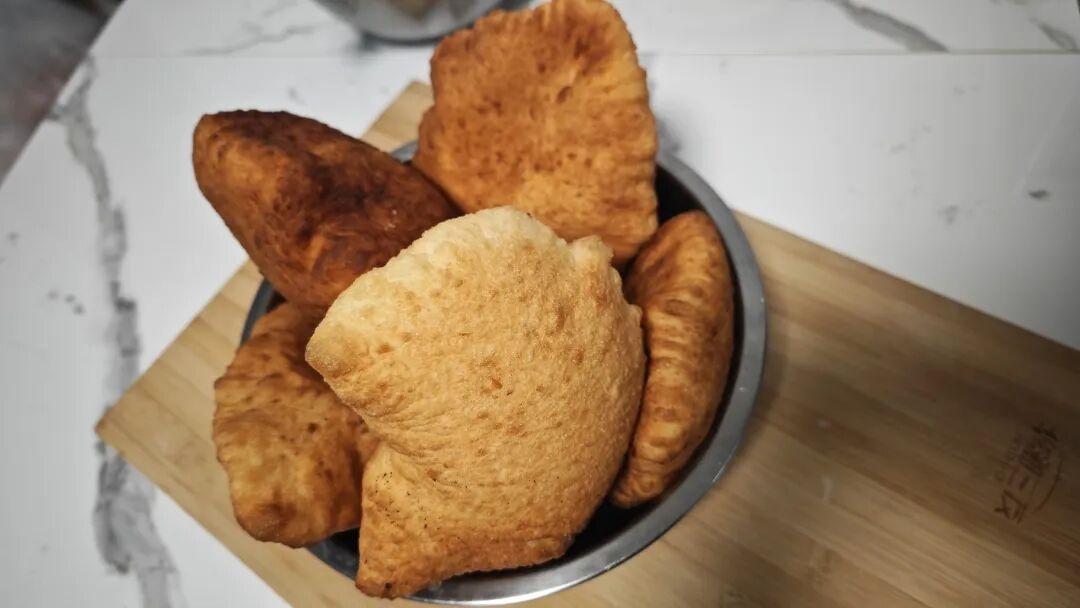
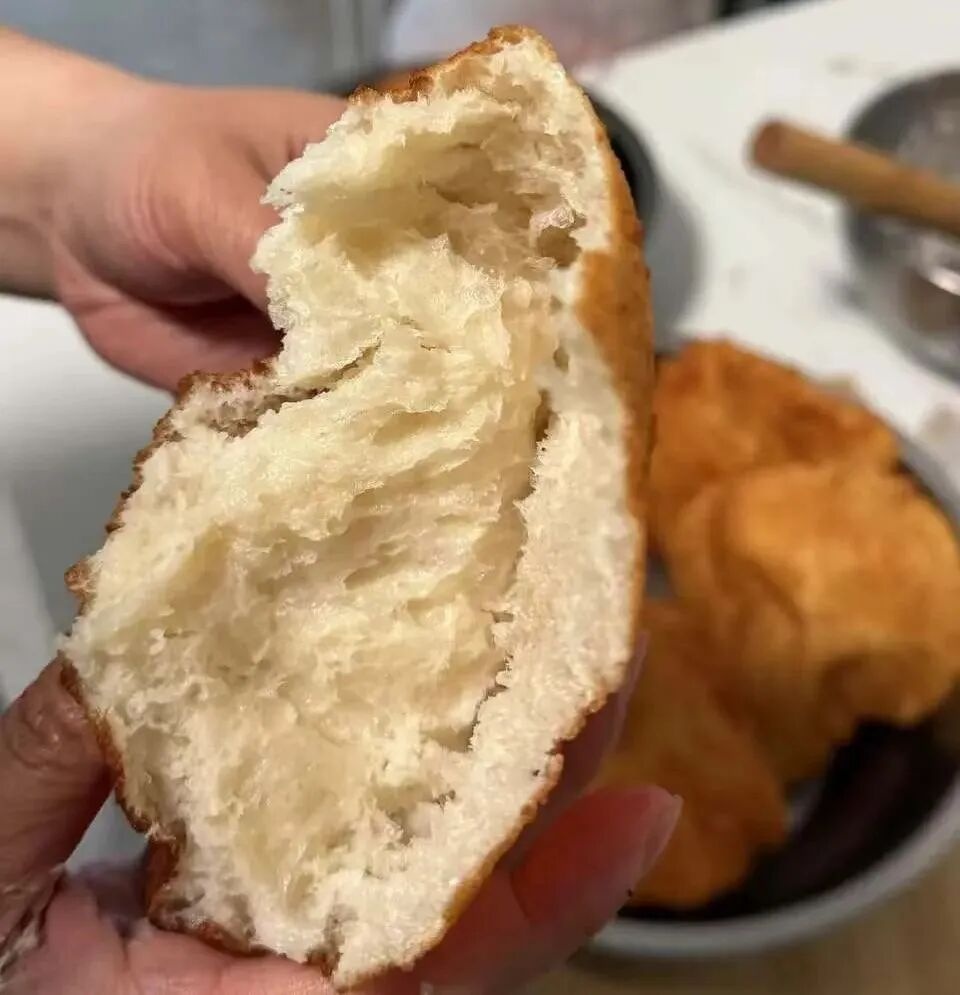
Even though the youxiang didn't come out perfectly round, I was relieved that the dough rose well, and my husband even gave me a thumbs-up.

The sunset that day was beautiful, and we drove over to deliver a few to my father.
May 5th marked the 100th day since Mom passed. My father, my sister, and I agreed to fry youxiang and invite an Ahong (Imam) to our home for a prayer reading.
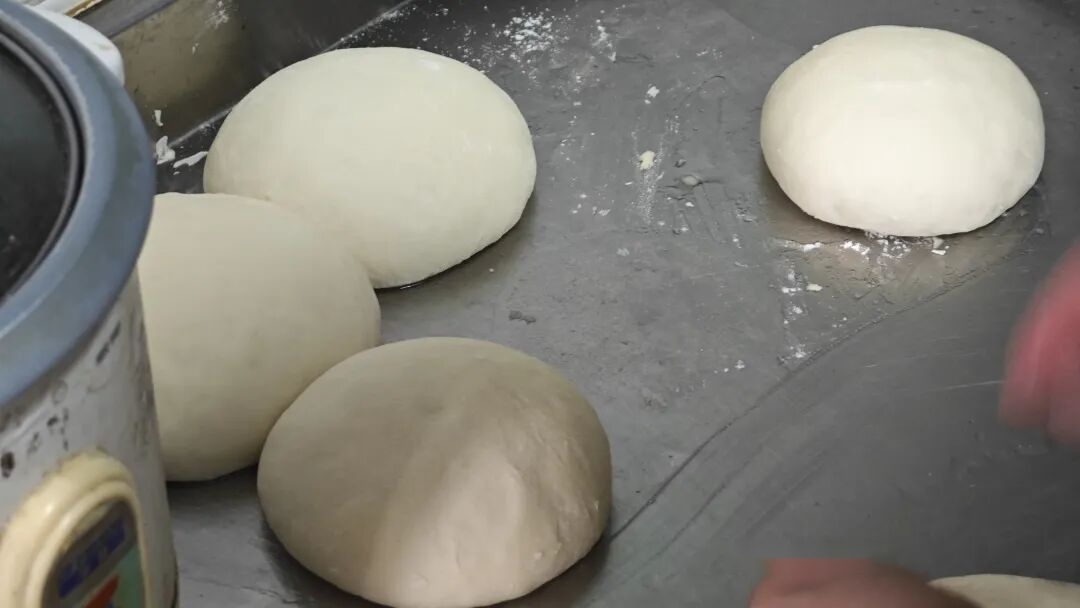
In the morning, after my husband and I arrived, my sister brought over the dough she had already proofed. We portioned it out, flattened it into circles, and waited for the oil to heat up before frying.
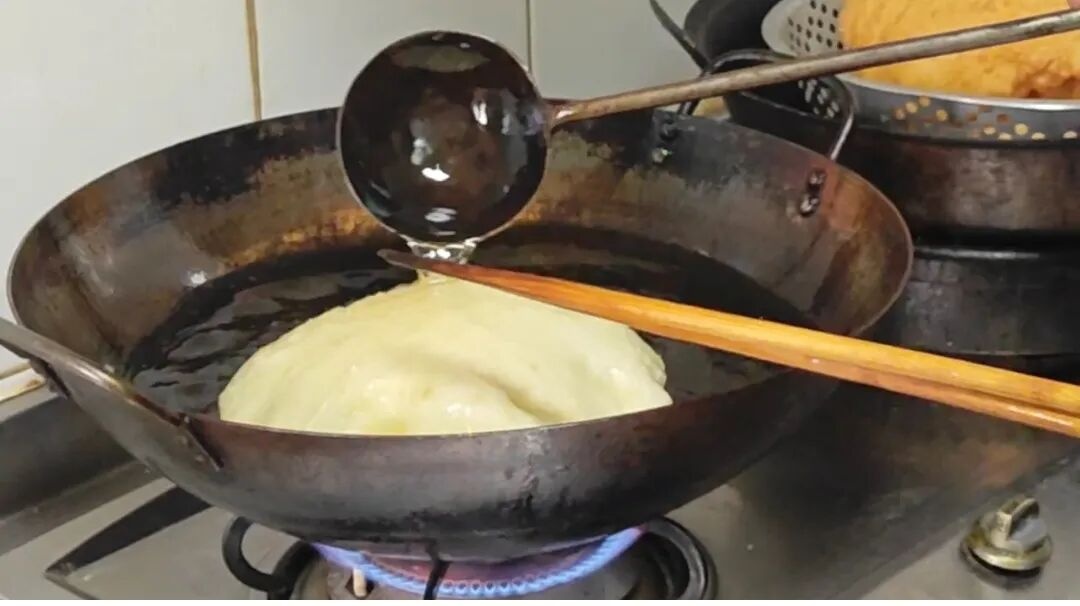
While frying, you have to keep spooning hot oil over the dough so the youxiang puffs up properly.
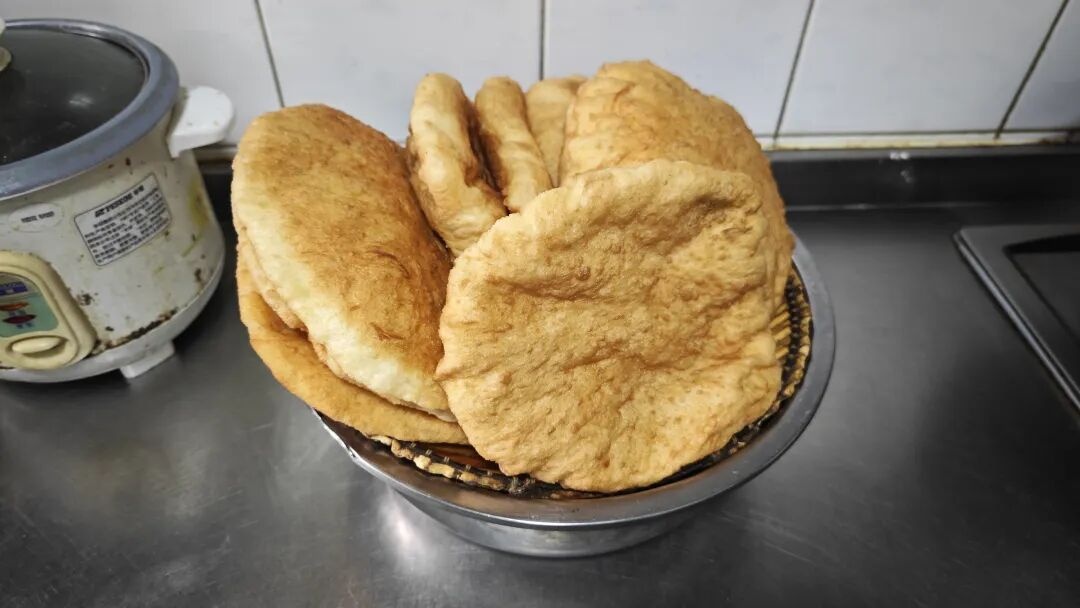
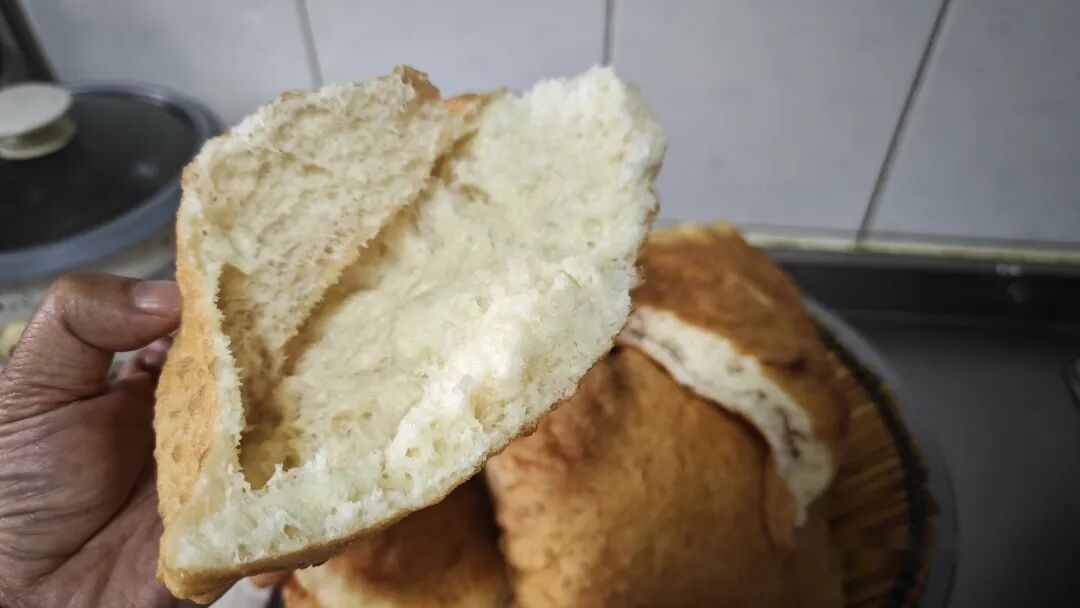
We fried less than 20 that day, but the dough turned out great, which brought my sister a lot of peace of mind.
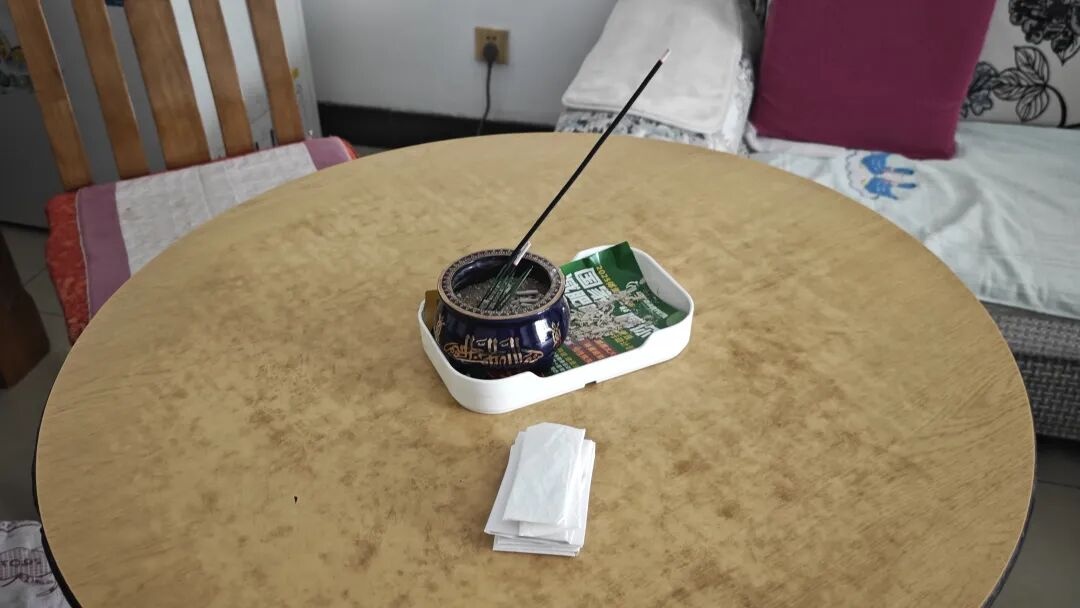
When the Ahong left after the prayers, he took a few packages of mietie and two youxiang with him.
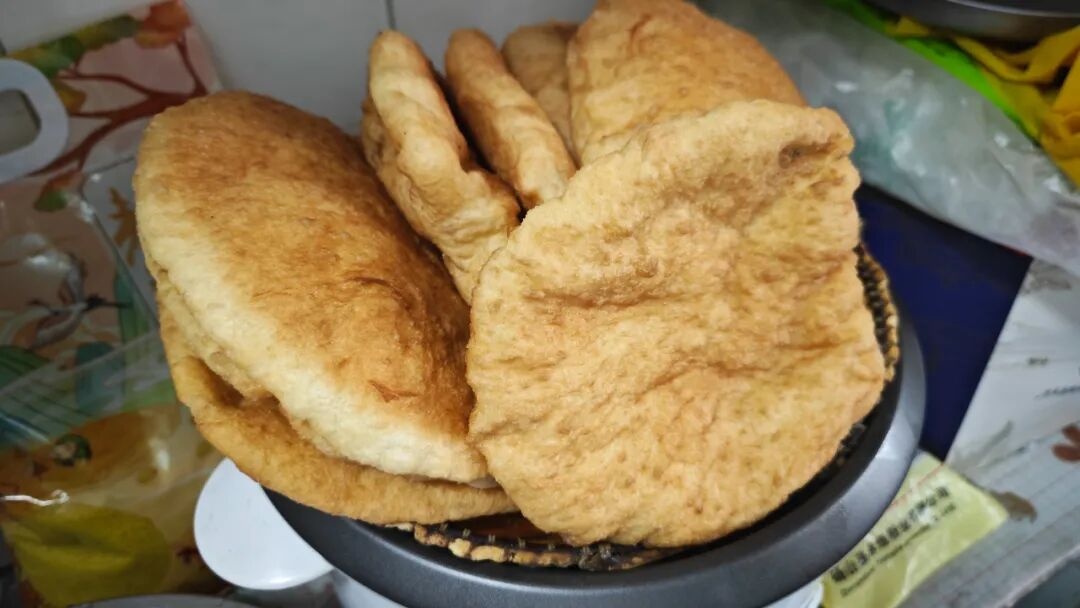
Youxiang comes in three main varieties: plain, sweet (sugar), and savory (meat). You can also find them in salty, bland, or sweet flavors, as well as the 'tangmian' (scalded dough) version.
As for their shape, youxiang in most Hui Muslim communities are round. However, there is one strict rule: you must never call them 'youbing' (fried pancakes). Even if they look exactly like youbing in some areas, it is considered taboo to use that name.
There is also a proper etiquette for eating youxiang: you should use your hands to tear it along the knife marks or split it in half, as it is considered improper to bite directly into the whole piece.
Youxiang is more than just food; it is a profound cultural symbol. Every holiday or family gathering brings families together to fry them, not just for themselves but to share with neighbors and friends. It preserves the dietary customs of the Hui Muslims and carries deep emotional meaning and cherished memories.
Youxiang is a traditional delicacy among Hui Muslims, typically prepared only for special family occasions, celebrations like weddings and funerals, or major holidays such as Eid al-Fitr and Eid al-Adha.
In my childhood memories, my mother would fry youxiang every Eid al-Fitr. From kneading and proofing the dough to shaping and frying, she did it all by herself. My sister and I never learned the craft; my father used to say Mom was just too independent and insisted on doing everything on her own.
Whenever Mom finished frying them, it was my job to deliver the youxiang to our neighbors. It was a lovely back-and-forth tradition, and they would often send other treats back home with me.
After I grew up, my mother stopped frying youxiang at home as often. When she occasionally went to help others prepare them, she’d bring back a couple, and sometimes she’d even bring home a piece of mietie (blessed meat gifted for religious remembrance).
I always thought we had plenty of time left, but Mom’s sudden passing early this year caught us completely off guard. After we brought her home that night, it was our neighbors who stepped in to help fry the youxiang.
According to Hui Muslim traditions, families are expected to fry youxiang as an act of sadaqah (charity/giving) during memorial days after a loved one passes; it is a duty and a responsibility for the children.
On the seventh day, we were still deep in grief, and since neither my sister nor I knew how to fry them, we felt a void. I ordered 35 youxiang from the Tiankelai Restaurant, heated them up, cut them into pieces, and placed a plate on every table.
Forty days after my mother passed, which happened to be during Ramadan, my sister fried the youxiang. They weren't perfect, but Mom surely felt the love behind the gesture.
I personally bought 10 catties (approx. 5kg) of beef and 15 catties (approx. 7.5kg) of eggs, donating them to the Madian Mosque to be used as ingredients for their community iftar (the meal to break the fast).
Time flew, and by the end of March, Eid al-Fitr was approaching. On a Saturday morning, we visited Mom’s grave, and that afternoon, I wanted to fulfill a wish: to fry youxiang myself, also known as 'xiangxiang guo' (the fragrant pot), to honor her memory.
After getting home at noon, the 'Niu' family (my husband) and I started prepping the ingredients.
After performing ghusl (major ritual washing) and wudu (minor ritual washing), I lit a stick of incense in the burner, then dove into kneading, proofing, portioning, and frying the dough.
Even though the youxiang didn't come out perfectly round, I was relieved that the dough rose well, and my husband even gave me a thumbs-up.
The sunset that day was beautiful, and we drove over to deliver a few to my father.
May 5th marked the 100th day since Mom passed. My father, my sister, and I agreed to fry youxiang and invite an Ahong (Imam) to our home for a prayer reading.
In the morning, after my husband and I arrived, my sister brought over the dough she had already proofed. We portioned it out, flattened it into circles, and waited for the oil to heat up before frying.
While frying, you have to keep spooning hot oil over the dough so the youxiang puffs up properly.
We fried less than 20 that day, but the dough turned out great, which brought my sister a lot of peace of mind.
When the Ahong left after the prayers, he took a few packages of mietie and two youxiang with him.
Youxiang comes in three main varieties: plain, sweet (sugar), and savory (meat). You can also find them in salty, bland, or sweet flavors, as well as the 'tangmian' (scalded dough) version.
As for their shape, youxiang in most Hui Muslim communities are round. However, there is one strict rule: you must never call them 'youbing' (fried pancakes). Even if they look exactly like youbing in some areas, it is considered taboo to use that name.
There is also a proper etiquette for eating youxiang: you should use your hands to tear it along the knife marks or split it in half, as it is considered improper to bite directly into the whole piece.
Youxiang is more than just food; it is a profound cultural symbol. Every holiday or family gathering brings families together to fry them, not just for themselves but to share with neighbors and friends. It preserves the dietary customs of the Hui Muslims and carries deep emotional meaning and cherished memories.
Traditional Hui Muslim Wedding Food: Exploring the Symbolism and Authentic Recipe of Fried Youxiang
Articles • Hasan09 posted the article • 0 comments • 10 views • 1 hours ago
These three heartfelt photos capture 'youxiang' (traditional fried dough cakes), an essential delicacy at traditional Hui Muslim weddings. From kneading the dough and rolling it out to frying it to perfection, these golden, crispy, and sweet cakes carry the blessings of neighbors and the symbolic meaning of good fortune passed down through generations, serving as the most soul-warming cultural symbol in Hui life rituals.
Golden, glistening, and incredibly fragrant—youxiang is a flavor that simply cannot be missing from a Hui Muslim wedding.
The kitchen is filled with steam as several ladies gather around the workbench, kneading and shaping the dough with practiced, nimble movements. The dough is folded back and forth in their hands until perfect round discs are prepped and ready to be dropped into a sizzling hot wok of oil.
The oil sizzles as the dough puffs up, slowly transforming from a pale white to an appetizing golden brown. Once lifted from the oil, the youxiang are slightly fluffy on the outside, smelling faintly of rich, fried dough, with a texture that is soft, chewy, and lightly sweet.
It is more than just a snack; it is a gesture of love. Serving youxiang at a wedding represents unity, happiness, and peace—it is the simplest yet most profound blessing from elders to the newlyweds, a tradition that has been passed down for generations.
There are no fancy decorations here, just the deep, genuine warmth of community and shared life. With the very first bite, you aren't just tasting a classic flavor, but also the comforting sense of ritual preserved through time.
Have you ever tried these youxiang that carry such beautiful meaning? view all
These three heartfelt photos capture 'youxiang' (traditional fried dough cakes), an essential delicacy at traditional Hui Muslim weddings. From kneading the dough and rolling it out to frying it to perfection, these golden, crispy, and sweet cakes carry the blessings of neighbors and the symbolic meaning of good fortune passed down through generations, serving as the most soul-warming cultural symbol in Hui life rituals.
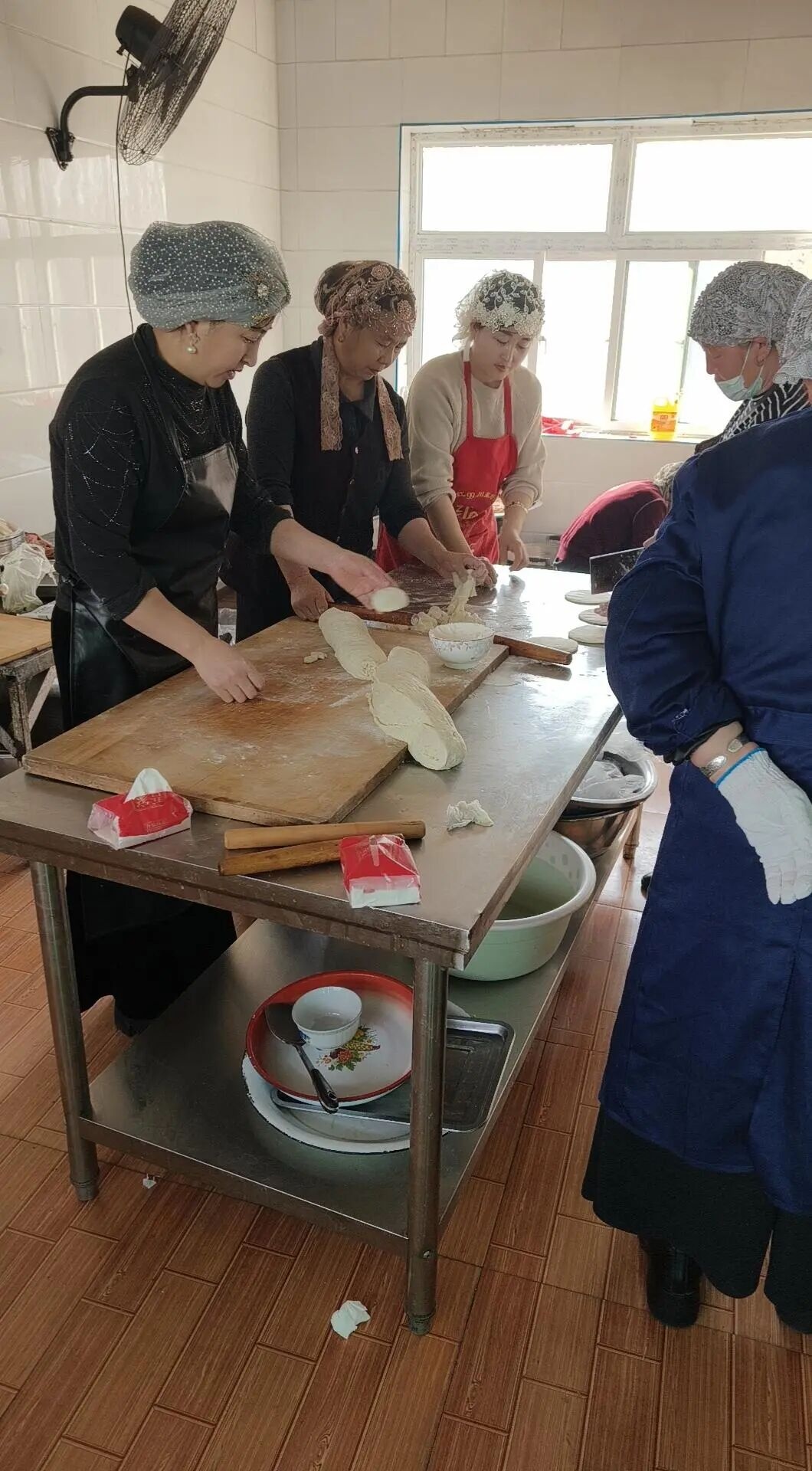
Golden, glistening, and incredibly fragrant—youxiang is a flavor that simply cannot be missing from a Hui Muslim wedding.
The kitchen is filled with steam as several ladies gather around the workbench, kneading and shaping the dough with practiced, nimble movements. The dough is folded back and forth in their hands until perfect round discs are prepped and ready to be dropped into a sizzling hot wok of oil.
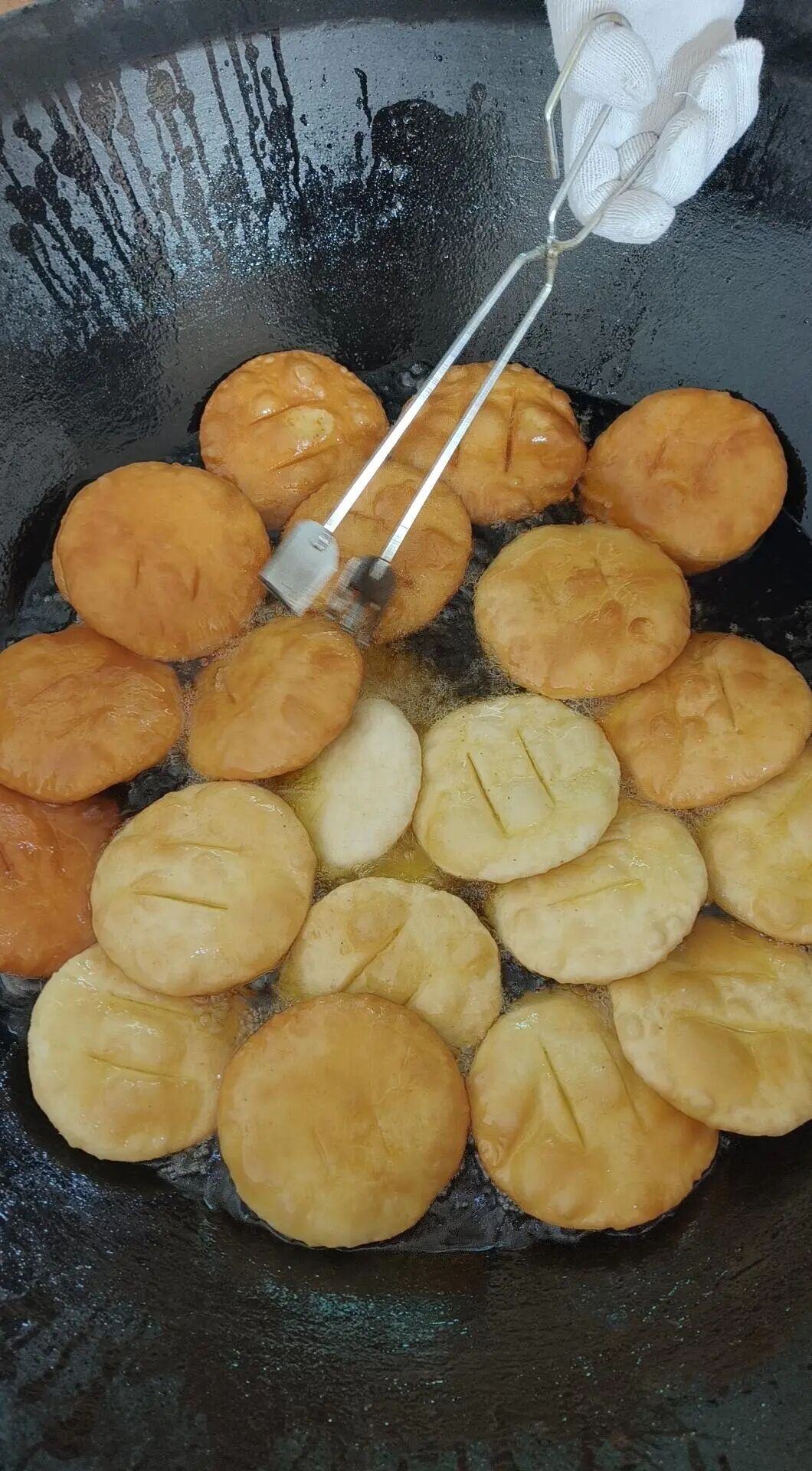
The oil sizzles as the dough puffs up, slowly transforming from a pale white to an appetizing golden brown. Once lifted from the oil, the youxiang are slightly fluffy on the outside, smelling faintly of rich, fried dough, with a texture that is soft, chewy, and lightly sweet.
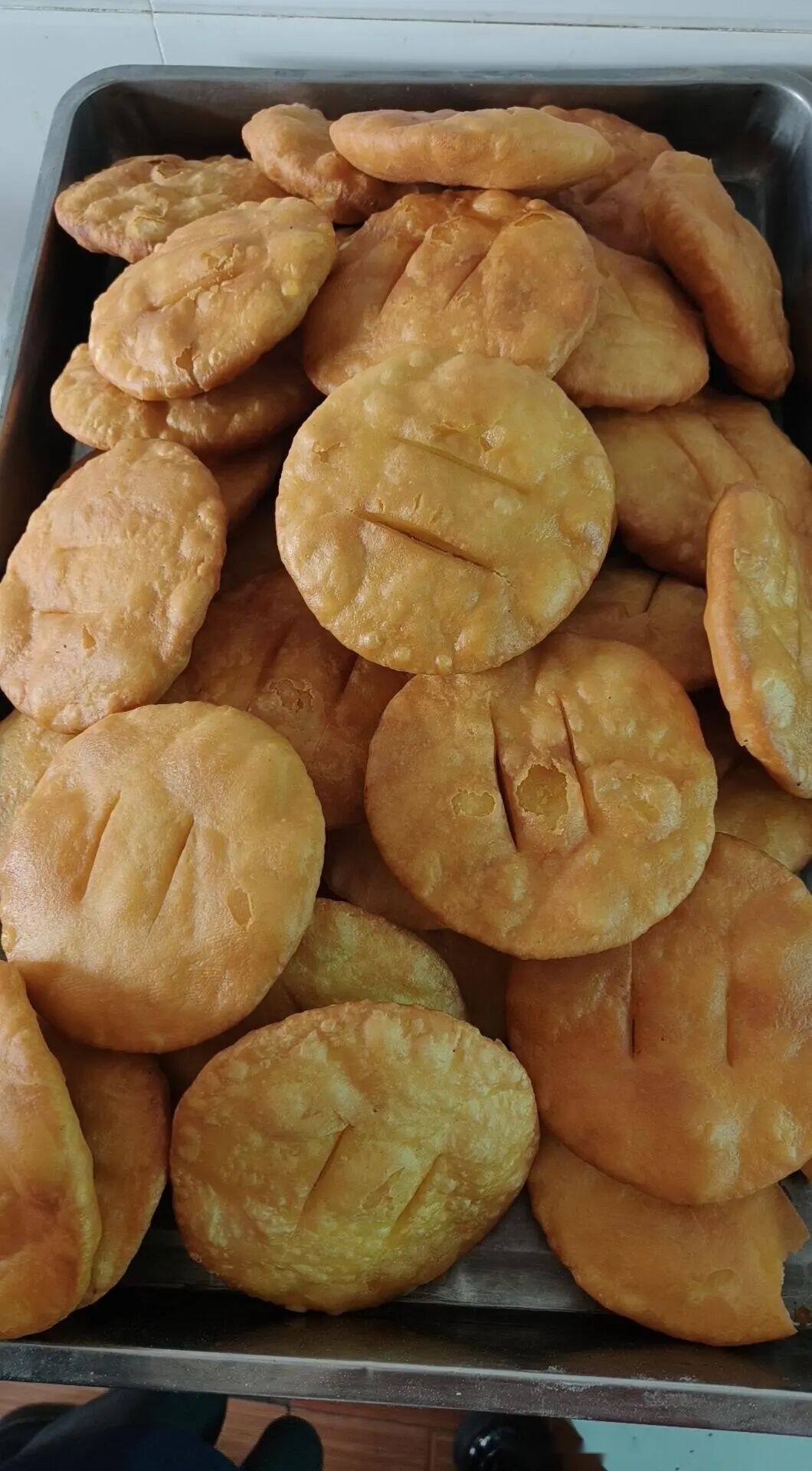
It is more than just a snack; it is a gesture of love. Serving youxiang at a wedding represents unity, happiness, and peace—it is the simplest yet most profound blessing from elders to the newlyweds, a tradition that has been passed down for generations.
There are no fancy decorations here, just the deep, genuine warmth of community and shared life. With the very first bite, you aren't just tasting a classic flavor, but also the comforting sense of ritual preserved through time.
Have you ever tried these youxiang that carry such beautiful meaning?
Golden, glistening, and incredibly fragrant—youxiang is a flavor that simply cannot be missing from a Hui Muslim wedding.
The kitchen is filled with steam as several ladies gather around the workbench, kneading and shaping the dough with practiced, nimble movements. The dough is folded back and forth in their hands until perfect round discs are prepped and ready to be dropped into a sizzling hot wok of oil.
The oil sizzles as the dough puffs up, slowly transforming from a pale white to an appetizing golden brown. Once lifted from the oil, the youxiang are slightly fluffy on the outside, smelling faintly of rich, fried dough, with a texture that is soft, chewy, and lightly sweet.
It is more than just a snack; it is a gesture of love. Serving youxiang at a wedding represents unity, happiness, and peace—it is the simplest yet most profound blessing from elders to the newlyweds, a tradition that has been passed down for generations.
There are no fancy decorations here, just the deep, genuine warmth of community and shared life. With the very first bite, you aren't just tasting a classic flavor, but also the comforting sense of ritual preserved through time.
Have you ever tried these youxiang that carry such beautiful meaning?
Traditional Hui Muslim Food: Deep Dive into the Cultural Significance and History of Youxiang (Fried Dough Cakes)
Articles • Hasan09 posted the article • 0 comments • 10 views • 1 hours ago
This deep dive features 15 detailed photos and an exploration of the cultural roots and symbolism of 'youxiang' (traditional fried dough cakes), a staple in Hui Muslim cuisine. From sharing them during Eid al-Fitr and Eid al-Adha to their role in solemn commemorative ceremonies, we examine how these simple dough cakes strengthen the bonds of the Hui Muslim community and reflect their moral traditions.
Youxiang is a traditional delicacy among Hui Muslims, typically prepared only for special family occasions, celebrations like weddings and funerals, or major holidays such as Eid al-Fitr and Eid al-Adha.
In my childhood memories, my mother would fry youxiang every Eid al-Fitr. From kneading and proofing the dough to shaping and frying, she did it all by herself. My sister and I never learned the craft; my father used to say Mom was just too independent and insisted on doing everything on her own.
Whenever Mom finished frying them, it was my job to deliver the youxiang to our neighbors. It was a lovely back-and-forth tradition, and they would often send other treats back home with me.
After I grew up, my mother stopped frying youxiang at home as often. When she occasionally went to help others prepare them, she’d bring back a couple, and sometimes she’d even bring home a piece of mietie (blessed meat gifted for religious remembrance).
I always thought we had plenty of time left, but Mom’s sudden passing early this year caught us completely off guard. After we brought her home that night, it was our neighbors who stepped in to help fry the youxiang.
According to Hui Muslim traditions, families are expected to fry youxiang as an act of sadaqah (charity/giving) during memorial days after a loved one passes; it is a duty and a responsibility for the children.
On the seventh day, we were still deep in grief, and since neither my sister nor I knew how to fry them, we felt a void. I ordered 35 youxiang from the Tiankelai Restaurant, heated them up, cut them into pieces, and placed a plate on every table.
Forty days after my mother passed, which happened to be during Ramadan, my sister fried the youxiang. They weren't perfect, but Mom surely felt the love behind the gesture.
I personally bought 10 catties (approx. 5kg) of beef and 15 catties (approx. 7.5kg) of eggs, donating them to the Madian Mosque to be used as ingredients for their community iftar (the meal to break the fast).
Time flew, and by the end of March, Eid al-Fitr was approaching. On a Saturday morning, we visited Mom’s grave, and that afternoon, I wanted to fulfill a wish: to fry youxiang myself, also known as 'xiangxiang guo' (the fragrant pot), to honor her memory.
After getting home at noon, the 'Niu' family (my husband) and I started prepping the ingredients.
After performing ghusl (major ritual washing) and wudu (minor ritual washing), I lit a stick of incense in the burner, then dove into kneading, proofing, portioning, and frying the dough.
Even though the youxiang didn't come out perfectly round, I was relieved that the dough rose well, and my husband even gave me a thumbs-up.
The sunset that day was beautiful, and we drove over to deliver a few to my father.
May 5th marked the 100th day since Mom passed. My father, my sister, and I agreed to fry youxiang and invite an Ahong (Imam) to our home for a prayer reading.
In the morning, after my husband and I arrived, my sister brought over the dough she had already proofed. We portioned it out, flattened it into circles, and waited for the oil to heat up before frying.
While frying, you have to keep spooning hot oil over the dough so the youxiang puffs up properly.
We fried less than 20 that day, but the dough turned out great, which brought my sister a lot of peace of mind.
When the Ahong left after the prayers, he took a few packages of mietie and two youxiang with him.
Youxiang comes in three main varieties: plain, sweet (sugar), and savory (meat). You can also find them in salty, bland, or sweet flavors, as well as the 'tangmian' (scalded dough) version.
As for their shape, youxiang in most Hui Muslim communities are round. However, there is one strict rule: you must never call them 'youbing' (fried pancakes). Even if they look exactly like youbing in some areas, it is considered taboo to use that name.
There is also a proper etiquette for eating youxiang: you should use your hands to tear it along the knife marks or split it in half, as it is considered improper to bite directly into the whole piece.
Youxiang is more than just food; it is a profound cultural symbol. Every holiday or family gathering brings families together to fry them, not just for themselves but to share with neighbors and friends. It preserves the dietary customs of the Hui Muslims and carries deep emotional meaning and cherished memories. view all
Youxiang is a traditional delicacy among Hui Muslims, typically prepared only for special family occasions, celebrations like weddings and funerals, or major holidays such as Eid al-Fitr and Eid al-Adha.
In my childhood memories, my mother would fry youxiang every Eid al-Fitr. From kneading and proofing the dough to shaping and frying, she did it all by herself. My sister and I never learned the craft; my father used to say Mom was just too independent and insisted on doing everything on her own.
Whenever Mom finished frying them, it was my job to deliver the youxiang to our neighbors. It was a lovely back-and-forth tradition, and they would often send other treats back home with me.
After I grew up, my mother stopped frying youxiang at home as often. When she occasionally went to help others prepare them, she’d bring back a couple, and sometimes she’d even bring home a piece of mietie (blessed meat gifted for religious remembrance).
I always thought we had plenty of time left, but Mom’s sudden passing early this year caught us completely off guard. After we brought her home that night, it was our neighbors who stepped in to help fry the youxiang.
According to Hui Muslim traditions, families are expected to fry youxiang as an act of sadaqah (charity/giving) during memorial days after a loved one passes; it is a duty and a responsibility for the children.
On the seventh day, we were still deep in grief, and since neither my sister nor I knew how to fry them, we felt a void. I ordered 35 youxiang from the Tiankelai Restaurant, heated them up, cut them into pieces, and placed a plate on every table.
Forty days after my mother passed, which happened to be during Ramadan, my sister fried the youxiang. They weren't perfect, but Mom surely felt the love behind the gesture.
I personally bought 10 catties (approx. 5kg) of beef and 15 catties (approx. 7.5kg) of eggs, donating them to the Madian Mosque to be used as ingredients for their community iftar (the meal to break the fast).
Time flew, and by the end of March, Eid al-Fitr was approaching. On a Saturday morning, we visited Mom’s grave, and that afternoon, I wanted to fulfill a wish: to fry youxiang myself, also known as 'xiangxiang guo' (the fragrant pot), to honor her memory.
After getting home at noon, the 'Niu' family (my husband) and I started prepping the ingredients.
After performing ghusl (major ritual washing) and wudu (minor ritual washing), I lit a stick of incense in the burner, then dove into kneading, proofing, portioning, and frying the dough.
Even though the youxiang didn't come out perfectly round, I was relieved that the dough rose well, and my husband even gave me a thumbs-up.
The sunset that day was beautiful, and we drove over to deliver a few to my father.
May 5th marked the 100th day since Mom passed. My father, my sister, and I agreed to fry youxiang and invite an Ahong (Imam) to our home for a prayer reading.
In the morning, after my husband and I arrived, my sister brought over the dough she had already proofed. We portioned it out, flattened it into circles, and waited for the oil to heat up before frying.
While frying, you have to keep spooning hot oil over the dough so the youxiang puffs up properly.
We fried less than 20 that day, but the dough turned out great, which brought my sister a lot of peace of mind.
When the Ahong left after the prayers, he took a few packages of mietie and two youxiang with him.
Youxiang comes in three main varieties: plain, sweet (sugar), and savory (meat). You can also find them in salty, bland, or sweet flavors, as well as the 'tangmian' (scalded dough) version.
As for their shape, youxiang in most Hui Muslim communities are round. However, there is one strict rule: you must never call them 'youbing' (fried pancakes). Even if they look exactly like youbing in some areas, it is considered taboo to use that name.
There is also a proper etiquette for eating youxiang: you should use your hands to tear it along the knife marks or split it in half, as it is considered improper to bite directly into the whole piece.
Youxiang is more than just food; it is a profound cultural symbol. Every holiday or family gathering brings families together to fry them, not just for themselves but to share with neighbors and friends. It preserves the dietary customs of the Hui Muslims and carries deep emotional meaning and cherished memories. view all
This deep dive features 15 detailed photos and an exploration of the cultural roots and symbolism of 'youxiang' (traditional fried dough cakes), a staple in Hui Muslim cuisine. From sharing them during Eid al-Fitr and Eid al-Adha to their role in solemn commemorative ceremonies, we examine how these simple dough cakes strengthen the bonds of the Hui Muslim community and reflect their moral traditions.
Youxiang is a traditional delicacy among Hui Muslims, typically prepared only for special family occasions, celebrations like weddings and funerals, or major holidays such as Eid al-Fitr and Eid al-Adha.
In my childhood memories, my mother would fry youxiang every Eid al-Fitr. From kneading and proofing the dough to shaping and frying, she did it all by herself. My sister and I never learned the craft; my father used to say Mom was just too independent and insisted on doing everything on her own.
Whenever Mom finished frying them, it was my job to deliver the youxiang to our neighbors. It was a lovely back-and-forth tradition, and they would often send other treats back home with me.
After I grew up, my mother stopped frying youxiang at home as often. When she occasionally went to help others prepare them, she’d bring back a couple, and sometimes she’d even bring home a piece of mietie (blessed meat gifted for religious remembrance).
I always thought we had plenty of time left, but Mom’s sudden passing early this year caught us completely off guard. After we brought her home that night, it was our neighbors who stepped in to help fry the youxiang.
According to Hui Muslim traditions, families are expected to fry youxiang as an act of sadaqah (charity/giving) during memorial days after a loved one passes; it is a duty and a responsibility for the children.
On the seventh day, we were still deep in grief, and since neither my sister nor I knew how to fry them, we felt a void. I ordered 35 youxiang from the Tiankelai Restaurant, heated them up, cut them into pieces, and placed a plate on every table.
Forty days after my mother passed, which happened to be during Ramadan, my sister fried the youxiang. They weren't perfect, but Mom surely felt the love behind the gesture.
I personally bought 10 catties (approx. 5kg) of beef and 15 catties (approx. 7.5kg) of eggs, donating them to the Madian Mosque to be used as ingredients for their community iftar (the meal to break the fast).
Time flew, and by the end of March, Eid al-Fitr was approaching. On a Saturday morning, we visited Mom’s grave, and that afternoon, I wanted to fulfill a wish: to fry youxiang myself, also known as 'xiangxiang guo' (the fragrant pot), to honor her memory.
After getting home at noon, the 'Niu' family (my husband) and I started prepping the ingredients.
After performing ghusl (major ritual washing) and wudu (minor ritual washing), I lit a stick of incense in the burner, then dove into kneading, proofing, portioning, and frying the dough.
Even though the youxiang didn't come out perfectly round, I was relieved that the dough rose well, and my husband even gave me a thumbs-up.
The sunset that day was beautiful, and we drove over to deliver a few to my father.
May 5th marked the 100th day since Mom passed. My father, my sister, and I agreed to fry youxiang and invite an Ahong (Imam) to our home for a prayer reading.
In the morning, after my husband and I arrived, my sister brought over the dough she had already proofed. We portioned it out, flattened it into circles, and waited for the oil to heat up before frying.
While frying, you have to keep spooning hot oil over the dough so the youxiang puffs up properly.
We fried less than 20 that day, but the dough turned out great, which brought my sister a lot of peace of mind.
When the Ahong left after the prayers, he took a few packages of mietie and two youxiang with him.
Youxiang comes in three main varieties: plain, sweet (sugar), and savory (meat). You can also find them in salty, bland, or sweet flavors, as well as the 'tangmian' (scalded dough) version.
As for their shape, youxiang in most Hui Muslim communities are round. However, there is one strict rule: you must never call them 'youbing' (fried pancakes). Even if they look exactly like youbing in some areas, it is considered taboo to use that name.
There is also a proper etiquette for eating youxiang: you should use your hands to tear it along the knife marks or split it in half, as it is considered improper to bite directly into the whole piece.
Youxiang is more than just food; it is a profound cultural symbol. Every holiday or family gathering brings families together to fry them, not just for themselves but to share with neighbors and friends. It preserves the dietary customs of the Hui Muslims and carries deep emotional meaning and cherished memories.
Traditional Hui Muslim Wedding Food: Exploring the Symbolism and Authentic Recipe of Fried Youxiang
Articles • Hasan09 posted the article • 0 comments • 10 views • 1 hours ago
These three heartfelt photos capture 'youxiang' (traditional fried dough cakes), an essential delicacy at traditional Hui Muslim weddings. From kneading the dough and rolling it out to frying it to perfection, these golden, crispy, and sweet cakes carry the blessings of neighbors and the symbolic meaning of good fortune passed down through generations, serving as the most soul-warming cultural symbol in Hui life rituals.
Golden, glistening, and incredibly fragrant—youxiang is a flavor that simply cannot be missing from a Hui Muslim wedding.
The kitchen is filled with steam as several ladies gather around the workbench, kneading and shaping the dough with practiced, nimble movements. The dough is folded back and forth in their hands until perfect round discs are prepped and ready to be dropped into a sizzling hot wok of oil.
The oil sizzles as the dough puffs up, slowly transforming from a pale white to an appetizing golden brown. Once lifted from the oil, the youxiang are slightly fluffy on the outside, smelling faintly of rich, fried dough, with a texture that is soft, chewy, and lightly sweet.
It is more than just a snack; it is a gesture of love. Serving youxiang at a wedding represents unity, happiness, and peace—it is the simplest yet most profound blessing from elders to the newlyweds, a tradition that has been passed down for generations.
There are no fancy decorations here, just the deep, genuine warmth of community and shared life. With the very first bite, you aren't just tasting a classic flavor, but also the comforting sense of ritual preserved through time.
Have you ever tried these youxiang that carry such beautiful meaning? view all
Golden, glistening, and incredibly fragrant—youxiang is a flavor that simply cannot be missing from a Hui Muslim wedding.
The kitchen is filled with steam as several ladies gather around the workbench, kneading and shaping the dough with practiced, nimble movements. The dough is folded back and forth in their hands until perfect round discs are prepped and ready to be dropped into a sizzling hot wok of oil.
The oil sizzles as the dough puffs up, slowly transforming from a pale white to an appetizing golden brown. Once lifted from the oil, the youxiang are slightly fluffy on the outside, smelling faintly of rich, fried dough, with a texture that is soft, chewy, and lightly sweet.
It is more than just a snack; it is a gesture of love. Serving youxiang at a wedding represents unity, happiness, and peace—it is the simplest yet most profound blessing from elders to the newlyweds, a tradition that has been passed down for generations.
There are no fancy decorations here, just the deep, genuine warmth of community and shared life. With the very first bite, you aren't just tasting a classic flavor, but also the comforting sense of ritual preserved through time.
Have you ever tried these youxiang that carry such beautiful meaning? view all
These three heartfelt photos capture 'youxiang' (traditional fried dough cakes), an essential delicacy at traditional Hui Muslim weddings. From kneading the dough and rolling it out to frying it to perfection, these golden, crispy, and sweet cakes carry the blessings of neighbors and the symbolic meaning of good fortune passed down through generations, serving as the most soul-warming cultural symbol in Hui life rituals.
Golden, glistening, and incredibly fragrant—youxiang is a flavor that simply cannot be missing from a Hui Muslim wedding.
The kitchen is filled with steam as several ladies gather around the workbench, kneading and shaping the dough with practiced, nimble movements. The dough is folded back and forth in their hands until perfect round discs are prepped and ready to be dropped into a sizzling hot wok of oil.
The oil sizzles as the dough puffs up, slowly transforming from a pale white to an appetizing golden brown. Once lifted from the oil, the youxiang are slightly fluffy on the outside, smelling faintly of rich, fried dough, with a texture that is soft, chewy, and lightly sweet.
It is more than just a snack; it is a gesture of love. Serving youxiang at a wedding represents unity, happiness, and peace—it is the simplest yet most profound blessing from elders to the newlyweds, a tradition that has been passed down for generations.
There are no fancy decorations here, just the deep, genuine warmth of community and shared life. With the very first bite, you aren't just tasting a classic flavor, but also the comforting sense of ritual preserved through time.
Have you ever tried these youxiang that carry such beautiful meaning?