

Yunnan Muslim Culture
The Hui Muslim Caravan Trails of Yunnan: Trade, Culture & History
Articles • Hasan09 posted the article • 0 comments • 17 views • 1 days ago
[Internet Repost]
The Hui Muslim Caravan Trails of Yunnan: Muslim Merchants, Caravan Culture, and Southwest Transportation History
Abstract: This article compiles the key points from the original text "The Hui Muslim Caravan Trails of Yunnan: Muslim Merchants, Caravan Culture, and Southwest Transportation History," maintaining the original sequence of paragraphs and images. It is tailored for readers searching for long-tail keywords such as Hui Muslim caravans, the Ancient Tea Horse Road, and Yunnan Muslims.
Ma Chongwen
Abstract: Before the advent of modern highways and railways, Yunnan Hui Muslim caravans braved the notoriously treacherous, miasma-filled terrain of the southwest, overcoming immense hardships to reach various parts of the southwest and Southeast Asia. Through trade, they connected people of different ethnic groups, fostering deep bonds. Hui Muslim caravans have a long-standing history of contributing to China's transportation and foreign trade, leaving an indelible mark on the motherland.
Keywords: Ancient Tea Horse Road, Hui Muslim Caravans, International Trade
Caravans were a unique form of transportation in China's vast southwest and the primary method of conveyance along the Ancient Tea Horse Road. The existence and operation of Hui Muslim caravans date back at least a thousand years. To this day, these caravans continue to toil in regions where highways are absent or transportation remains difficult, forming a deeply unique social group.
As the era of the caravan draws to a close, examining the Hui Muslim caravans in our study of Hui culture holds both profound historical significance and practical relevance.
I. The Formation of Hui Muslim Caravans
First, the Hui Muslim caravans were a product of history. In the 13th century, during Genghis Khan's western campaigns, a large number of Central Asian Muslims, Persians, and Arabs were forced to relocate to China. Because these incoming Huihui people lacked arable farmland, very few engaged in agriculture, and those who did struggled to make ends meet. Consequently, they turned to commerce to survive, quickly developing into a formidable trading force that relied primarily on horse and camel caravans. Take Weishan, Yunnan, for example: after Du Wenxiu's Hui uprising failed, the majority of Hui people became tenant farmers. Unable to survive on agriculture alone, they turned to trading and commerce. According to pre-liberation archival records and grassroots surveys, 15 villages maintained over 150 caravan troupes; 884 households raised more than 9,500 horses and mules, trekking along the Ancient Tea Horse Road and the Bonan Ancient Road (stretching from Chengdu, Kunming, Chuxiong, Xiangyun, Dali, Weishan, Yongping, Baoshan, Tengchong, and onward through Burma to India). Historical texts refer to this as the "Second Silk Road," which is one of the historical reasons why the Hui people excel at commerce.
Second, during the formation of the Hui ethnic group, they absorbed many Arab and Persian Muslim merchants. Starting from the Tang dynasty, numerous Arab and Persian merchants came to China to trade. During the Yuan dynasty, Semu people enjoyed relative freedom in trade in China, and the scale of these early Huihui ancestors surpassed that of any other ethnic merchant group. These foreign Muslim merchants accounted for a substantial proportion of the Hui population. Family genealogies of Sayyid Ajjal preserved by Ma Shangwen in Daweigen and Ma Youliang in Sanchiacun, Weishan, are sufficient proof of this. This is another reason why the Hui people are skilled in business.
Third, the religious factor. The vast majority of Hui people practice Islam. The Prophet Muhammad engaged in trade alongside his uncle during his youth, and Islam holds a favorable view of commerce. The Quran states: "Allah has permitted trade and forbidden usury." This religious doctrine encouraged and facilitated the growth of commercial endeavors among the Hui. Furthermore, Islamic teachings encourage believers to travel and migrate, providing a religious basis for the caravan drivers. Many Hui people operated caravan trades, and over time, a folk proverb emerged: "Han Chinese own the fields, Bai people own the valleys, and Huihui run the caravans and do business."
Fourth, Hui people excel at raising horses. The world's finest horse breed, the Arabian horse, was introduced to Dali through trade. Through the selective breeding efforts of the Huihui people, a famous Chinese horse breed native to Yunnan was developed: the Dali horse. Small, sturdy, resilient, adept at navigating mountain trails, and easy to train, the Dali horse became renowned. Since the Tang and Song dynasties, horse markets flourished, and Tea-Horse Offices were established to exchange tea for salt and horses. The development of the Dali horse fostered a long-standing tradition of horse-raising among various ethnic groups, making horses the primary mode of transportation along the Ancient Tea Horse Road.
II. The Spirit and Characteristics of Hui Muslim Caravans
The risks undertaken by the Hui Muslim caravans along the Ancient Tea Horse Road were legendary, and their most prominent characteristic was their adventurous spirit. Even today, the so-called heroic feats of professional adventurers pale in comparison to the caravan life of the old Ancient Tea Horse Road. First, there were business risks. The highly unstable political climate only heightened these dangers. While some grew wealthy through caravan trade, most worked for a lifetime and still ended up with nothing. Second, there were the hazards of harsh nature. The various routes traversed by the caravans presented extreme natural perils: wind, frost, rain, snow, towering mountains, rushing rivers, toxic plants, poisonous water, wild beasts, venomous insects, and epidemics could snuff out a caravan at any moment. Spending the vast majority of their time living in the wild was a severe test for any caravan driver (*ganma ren*) or caravan leader (*guotou*). Countless drivers and leaders were laid to rest in foreign lands. Third was the threat of bandits and robbers. At the time, banditry was rampant in the southwest. Although the caravans were fully armed, they were frequently attacked by bandits, resulting in constant loss of life and cargo. This extraordinary survival environment forged and defined the adventurous spirit of the caravans. Thus, running a caravan meant courting danger—it was literally risking one's neck to earn a living.
Caravans required not just a taste for adventure, but unwavering faith, extraordinary daring, relentless perseverance, immense courage, exceptional wisdom, and a host of other virtues. Putting all their trust in Allah, caravans of many other ethnic groups were eager to team up with the Hui Muslim caravans, which perfectly embodied these exact qualities.
III. Organization and Transport Methods of Hui Muslim Caravans
Caravans operated under strict organization and rules. Whether funded by pooled capital or operated independently, all operations were unified under the leadership of major bosses and caravan leaders (*guotou*). The *guotou* was the head of the transport merchant troupe, generally renowned for their impeccable reputation. A caravan organization included veterinarians, grooms, repairmen, and horseshoers. To defend against bandit raids when traveling to remote frontier regions, several or even dozens of caravans would band together, traveling in large groups while heavily armed. Caravans employed specialists to beat bronze gongs (*mangluo*) to signal and coordinate the pack animals, and carried specialized flags for identification. The lead mule or horse, known as the lead mule (*touluo*), wore a large bell around its neck, while the second mule wore a string of smaller bells. The heads of both the first and second mules were fitted with bridles and draped with colorful ribbons, making them look both striking and magnificent.
According to archival records from 1913, Yunnan province boasted a total of over 19,000 caravan pack animals. The western Yunnan route accounted for the lion's share with about 9,000 animals, of which Menghua (Weishan) alone contributed over a thousand.
Between 1911 and 1923, along the Xiaguan to Tengchong section, large Hui caravans from Weishan—run by figures like Ma Caiting and Ma Ruji—managed up to over 2,000 pack horses. Before highways were built, pack horse transport played a crucial role in developing the economy and fueling foreign trade.
During the Republic of China era, the Hui region of Weishan housed 29 soap-dyeing workshops operated by families producing soap-dyed homespun cloth and bleached fabrics, which were shipped far and wide across Yunnan. There were 7 leather processing factories whose goods were transported and sold throughout the province and abroad. More than 10 workshops produced ethnic gold and silver jewelry for Yunnan's ethnic minority communities.
Weishan's Hui community maintained over 150 large and small caravans, with 884 households raising more than 9,500 horses and mules. Among them, Huihuideng alone accounted for 44 caravans comprising over 2,000 horses and mules. Around 1920, Hui Muslim caravans primarily engaged in the tea trade. Ma Caiting of Yanqichang originally opened the "Yunhua Salt Firm" in Xiaguan, wholesaling table salt while trading in tea and cotton yarn. He personally owned 140 mules and horses, hiring over a dozen caravan hands to trade across Fengqing, Yunxian, Baoshan, and Kunming. On each trip from Baoshan, he imported about 140 loads of foreign cotton yarn to sell in Xiaguan, while transporting Xiaguan table salt and other goods to Weishan, Fengqing, and other frontier areas. His capital exceeded 100,000 silver dollars (*banjun*), and he later purchased a large courtyard residence in Kunming. Ma Caiting and his brother Ma Caichen won the favor of Yunnan Provincial Chairman Long Yun. Long Yun formed a sworn brotherhood alliance with Ma Caiting and appointed him as the director of the Yunnan Provincial Transportation Bureau, making him a pillar of the provincial unified transport administration. The family owned over 1,000 horses and mules, deployed vast funds to purchase large quantities of horses for Long Yun's transport operations, and traveled extensively between Chongqing in Sichuan, Xichang, Huili, Baise in Guangxi, Simao and Pu'er in Yunnan, Burma, Tibet, and Vietnam.
The six major caravans of Huihuideng—led by Hu Liangxian, Zhu Yingtang, Mi Wenyying, Hu Dechen, Zhu Yutai, and Ma Mingchong—owned upwards of 250 pack mules, with each caravan holding capital exceeding 10,000 silver dollars (*banjun*).
Dali Fengyi caravan leader Ma Guozhu commanded nearly 100 horses and mules, armed to escort anti-Japanese war supplies, with his lead mule flying the order flag of the 60th Army.
Hui Muslim caravans were versatile and multi-talented, earning high praise and trust from officials, governments, and wealthy bosses. A single person could handle five horses; caravan drivers knew how to raise and feed horses, and were capable of wielding rifles to fight off bandit attacks. A single mule or horse could carry 100 kilograms of cargo such as cotton yarn. Consequently, the Weishan Hui caravans consistently earned widespread social acclaim and trust. During the Daoguang era of the Qing dynasty (1821–1850), famous Weishan Hui caravan leaders (*guotou*) included: Ma Chaozhen from Xiaoweigen, who owned 120 horses, operated a sulfur plant, and served as a rear general in Du Wenxiu's uprising army; Ma Tianyou from Daweigen, who owned over a hundred horses and mules dedicated to transport, was public-spirited and charitable, and invested in his hometown by funding the construction of the Zijin Township Shangshujie Suspension Bridge over the river. Having served as a vanguard general in Du Wenxiu's uprising army, when ordered to garrison Shanggang, he used his own caravans to pack in stone materials to build the Shanggang city walls; Ma Wanyou from Mamichang, who worked as a miner and mine manager at Lingtaishan, owned 120 horses, and frequently transported copper to Sichuan; and "Old Man Mi" from Huihuideng, who operated transport with dozens of horses.
IV. Hui Muslim Caravans Contribute to the War of Resistance Against Japanese Aggression
Between 1938 and 1945, mobilized by military-civilian cooperation stations and the Islamic National Salvation Association, Huihuideng Association President Ma Yaotang mobilized Hui Muslim caravans to throw themselves into transporting military supplies for the War of Resistance. The Hui-dominated caravans of Menghua (Weishan) made monumental contributions to saving the nation and the people by participating in the all-out national war of resistance. Hui imams used Islamic doctrine—arguing that "for the survival of the nation and the people, one must propagate the spirit of Jihad"—to motivate the caravans to join the wartime transport effort. In the spring of 1942, invading Japanese forces in Burma advanced into Wanting, Longling, and Tengchong. The Huitong Bridge was bombed and destroyed, plunging the Yunnan-Burma Highway corridor into extreme chaos. At that time, 15,000 tons of military industrial supplies remained stockpiled in Baoshan, alongside 5,000 tons in Xiaguan, urgently needing to be rushed to Kunming. Ma Tingbi of the Xiaguan Courier Station accepted this emergency mission, rushing to the Hui-concentrated and caravan-heavy regions of Menghua, Yongping, and Yangbi counties to ask Hui elders and religious leaders to summon caravan labor. The organization went off without a hitch, instantly mobilizing 700 pack horses from Menghua and 500 from Yongping County, all led by Hui caravan leaders. Originally, the Baoshan stockpile was scheduled to be moved at a rate of 3,000 tons per month over five months, but the task was completed in a mere 120 days. The Xiaguan stockpile was cleared by 1,000 horse-drawn carts organized by Kunming in just 72 days. According to statistics, along the 605-kilometer Yunnan Post section of the Yunnan-Burma trunk line, pack horses totaled 3,700, with Menghua contributing 700—accounting for roughly one-fifth of the entire line. Cargo transported between 1939 and 1945 included imported military supplies, cotton yarn, textiles, and petty merchandise coming through Wanting, while exports through Wanting included tung oil, Chinese gallnuts, hog bristle, yellow raw silk, and medicinal herbs. Intra-provincial transport of table salt, cooking oil, tea, and coal relied entirely on large fleets of caravans, with Menghua caravans playing a pivotal role.
Following liberation, a large number of Weishan Hui caravans contributed significantly to supporting the march into Tibet, aiding Zhongdian, and wiping out the remnants of bandits in Xiaoliangshan, successfully completing the transport missions for the People's Liberation Army stationed in Tibet.
V. Yunnan Hui Muslim Caravans and Domestic and Foreign Trade
Famed caravans that travelled far and wide and reaped profits from transport successively established commercial houses in cities, evolving into integrated operations encompassing transport, storefronts, and marketing. Wealthy Hui tycoons Ma Mingkui and Ma Mingxiang from Dali were both imperial scholars (*jinshi*) during the Qing dynasty who abandoned official careers for commerce. Their family owned over a dozen caravans comprising hundreds of horses, along with massive commercial storefronts spanning Bhamo (Mandalay) and Yangon in Burma, Xufu and Chengdu in Sichuan, and Kunming and Baoshan within the province. Xiaguan alone housed six major trading firms: Yutai, Tailai, Yonghe, Lianxingchang, and Fuchun. These were massive commercial establishments featuring four-tier courtyards complete with cargo warehouses, accounting rooms, and horse stables, trading actively between Sichuan, Xiaguan, Baoshan, and Burma.
The "Sangsheng" firm of the Ming, Zhu, and Ma families in Tengchong not only commanded a caravan of over a hundred horses but possessed formidable commercial strength, maintaining close ties with the trading networks of Weishan, Dali, and Yongping. Tea stood out as one of the primary goods transported and traded by the caravans. During the Qing dynasty, the Mu Zhengming family of Shunning (Fengqing) owned over a thousand mu of tea plantations alongside more than a hundred horses and mules, transporting over 400 loads of tea annually to sell in Xiaguan and Menghua (Weishan), while hauling salt and other commodities back from Xiaguan to sell in Fengqing, Shunning, and Ninglang (Lincang).
More than ten caravan teams from the Ma and Xue families in Mengting, Changning, transported over 200 packs of tea every year to Xiaguan and Menghua (Weishan) to sell. Before liberation, Xiaguan and Dali had virtually become the distribution centers for the tea and salt trade in western Yunnan.
In 1938, Bai Liangcheng from Shadian opened the "Sipu District Tea Experimental Farm" around Simao and Pu'er, pioneering Yunnan's very first factory-produced black tea. With the development of the caravan transport business, Hui Muslim traditional medicine and Western medicine in various parts of Yunnan also flourished, giving rise to a batch of traditional Chinese-Western pharmacies and veterinary stations. Famous pharmacies included "Wansong Caotang," "Yuqiao Pharmacy," and "Aiguo Pharmacy," which featured three practitioners of traditional Chinese medicine, one Western medical doctor, and four veterinarians. Notable figures included the renowned doctor Mu Chongren in Baoshan and the bone-setting specialist Ma Shimei in Changning. Along Yunnan's caravan routes, Hui Muslim veterinary stations were set up at every stop. Famous veterinarians included the father-and-son duo Liu Houzhai and Liu Dianyang (from Kunming), Yang Kaike (from Binchuan), Lu Jinchen (from Kunming), and Yang Yiqing (from Dali), among others. Every caravan hub and post station was equipped with a veterinary station.
Hui Muslim caravan merchants and traders also opened up international trade routes.
During the War of Resistance Against Japanese Aggression, Yunnan became the grand rear base for the national war effort and the Burma Campaign. The formidable Hui Muslim caravan teams formed an essential transport lifeline for wartime supplies, rushing across vast regions spanning Yunnan, Myanmar, Thailand, and Vietnam. They shouldered the heavy responsibility of transporting supplies from Allied nations to support China's resistance, and many Hui Muslim merchants established business firms and settled down abroad. These caravan traders ventured beyond the borders and put down roots overseas.
After the reform and opening up, although the horse caravan was no longer the primary mode of transportation, inspired by the Party and state's enrichment policies, the villagers of Donglianhua maintained their love for horses, raised livestock, and expanded family-run breeding businesses. Many descendants of old caravan drivers organized themselves, collecting mules and horses raised by neighboring villagers and transporting them by trucks to remote mountainous areas and neighboring Myanmar to sell to border residents with limited access to transportation, partnering up in the mule-trading business. This not only found a market for the breeders and provided convenience for border residents buying mules and horses, but it also turned a profit for them, boosting their economic income.
Today, along the Ancient Tea Horse Road pioneered by our ancestors thousands of years ago, the sight of marching caravan teams is gone, the crisp and melodious sound of bronze bells has faded into the distance, and the ancient fragrance of tea leaves drifting on the wind has dissipated. However, the footprints and horse-hoof impressions left behind by our forebears on the Tea Horse Road, along with our lingering, intricate memories of antiquity, have transformed into a lofty entrepreneurial spirit shared by all descendants of the Chinese nation. This relentless, unyielding fighting spirit will carve out eternal monuments in the developmental history of the Chinese nation, shining with the glory and splendor of our people for thousands of generations to come.
VI. Conclusion
In summary: Wherever there were Hui Muslim villages in Yunnan, people raised horses and mules and ran caravans. Through sheer hardship, Hui Muslim people traveled with their caravans to various parts of the Southwest and Southeast Asian countries, connecting people of all ethnic groups through trade and forging deep bonds. The Hui Muslim caravans boast a long history in our motherland's transportation sector and foreign trade, making profound contributions to friendship between China, Southeast Asia, and Arab nations.
The Hui Muslim caravans deepened the bonds between various ethnic groups, promoted commodity exchange and cultural communication among them, and brought advanced inland and foreign technologies into the region. They boosted Yunnan's international trade activities. With a 4,060-kilometer border sharing limits with multiple Southeast Asian countries, Yunnan's historical Hui Muslim caravans paved the way for early exchanges with Southeast Asia and the Arab world. Today, with convenient transportation and people freely interacting, Yunnan enjoys unique advantages and conditions in implementing its "go global" strategy and building itself into China's "bridgehead" facing Southeast Asia. This carries profound historical significance not only within that past historical context, but also practical relevance for today's Scientific Outlook on Development put forward by the Party Central Committee—developing the economy, jointly creating a socialist harmonious society, and fostering harmony between individuals, among ethnic groups, across different religions, and between nations.
(The author is a veterinarian and expert receiving a special government allowance from the State Council, former president of the Weishan County Hui Culture Association, and a Hajji.) view all
The Hui Muslim Caravan Trails of Yunnan: Muslim Merchants, Caravan Culture, and Southwest Transportation History
Abstract: This article compiles the key points from the original text "The Hui Muslim Caravan Trails of Yunnan: Muslim Merchants, Caravan Culture, and Southwest Transportation History," maintaining the original sequence of paragraphs and images. It is tailored for readers searching for long-tail keywords such as Hui Muslim caravans, the Ancient Tea Horse Road, and Yunnan Muslims.
Ma Chongwen
Abstract: Before the advent of modern highways and railways, Yunnan Hui Muslim caravans braved the notoriously treacherous, miasma-filled terrain of the southwest, overcoming immense hardships to reach various parts of the southwest and Southeast Asia. Through trade, they connected people of different ethnic groups, fostering deep bonds. Hui Muslim caravans have a long-standing history of contributing to China's transportation and foreign trade, leaving an indelible mark on the motherland.
Keywords: Ancient Tea Horse Road, Hui Muslim Caravans, International Trade
Caravans were a unique form of transportation in China's vast southwest and the primary method of conveyance along the Ancient Tea Horse Road. The existence and operation of Hui Muslim caravans date back at least a thousand years. To this day, these caravans continue to toil in regions where highways are absent or transportation remains difficult, forming a deeply unique social group.
As the era of the caravan draws to a close, examining the Hui Muslim caravans in our study of Hui culture holds both profound historical significance and practical relevance.
I. The Formation of Hui Muslim Caravans
First, the Hui Muslim caravans were a product of history. In the 13th century, during Genghis Khan's western campaigns, a large number of Central Asian Muslims, Persians, and Arabs were forced to relocate to China. Because these incoming Huihui people lacked arable farmland, very few engaged in agriculture, and those who did struggled to make ends meet. Consequently, they turned to commerce to survive, quickly developing into a formidable trading force that relied primarily on horse and camel caravans. Take Weishan, Yunnan, for example: after Du Wenxiu's Hui uprising failed, the majority of Hui people became tenant farmers. Unable to survive on agriculture alone, they turned to trading and commerce. According to pre-liberation archival records and grassroots surveys, 15 villages maintained over 150 caravan troupes; 884 households raised more than 9,500 horses and mules, trekking along the Ancient Tea Horse Road and the Bonan Ancient Road (stretching from Chengdu, Kunming, Chuxiong, Xiangyun, Dali, Weishan, Yongping, Baoshan, Tengchong, and onward through Burma to India). Historical texts refer to this as the "Second Silk Road," which is one of the historical reasons why the Hui people excel at commerce.
Second, during the formation of the Hui ethnic group, they absorbed many Arab and Persian Muslim merchants. Starting from the Tang dynasty, numerous Arab and Persian merchants came to China to trade. During the Yuan dynasty, Semu people enjoyed relative freedom in trade in China, and the scale of these early Huihui ancestors surpassed that of any other ethnic merchant group. These foreign Muslim merchants accounted for a substantial proportion of the Hui population. Family genealogies of Sayyid Ajjal preserved by Ma Shangwen in Daweigen and Ma Youliang in Sanchiacun, Weishan, are sufficient proof of this. This is another reason why the Hui people are skilled in business.
Third, the religious factor. The vast majority of Hui people practice Islam. The Prophet Muhammad engaged in trade alongside his uncle during his youth, and Islam holds a favorable view of commerce. The Quran states: "Allah has permitted trade and forbidden usury." This religious doctrine encouraged and facilitated the growth of commercial endeavors among the Hui. Furthermore, Islamic teachings encourage believers to travel and migrate, providing a religious basis for the caravan drivers. Many Hui people operated caravan trades, and over time, a folk proverb emerged: "Han Chinese own the fields, Bai people own the valleys, and Huihui run the caravans and do business."
Fourth, Hui people excel at raising horses. The world's finest horse breed, the Arabian horse, was introduced to Dali through trade. Through the selective breeding efforts of the Huihui people, a famous Chinese horse breed native to Yunnan was developed: the Dali horse. Small, sturdy, resilient, adept at navigating mountain trails, and easy to train, the Dali horse became renowned. Since the Tang and Song dynasties, horse markets flourished, and Tea-Horse Offices were established to exchange tea for salt and horses. The development of the Dali horse fostered a long-standing tradition of horse-raising among various ethnic groups, making horses the primary mode of transportation along the Ancient Tea Horse Road.
II. The Spirit and Characteristics of Hui Muslim Caravans
The risks undertaken by the Hui Muslim caravans along the Ancient Tea Horse Road were legendary, and their most prominent characteristic was their adventurous spirit. Even today, the so-called heroic feats of professional adventurers pale in comparison to the caravan life of the old Ancient Tea Horse Road. First, there were business risks. The highly unstable political climate only heightened these dangers. While some grew wealthy through caravan trade, most worked for a lifetime and still ended up with nothing. Second, there were the hazards of harsh nature. The various routes traversed by the caravans presented extreme natural perils: wind, frost, rain, snow, towering mountains, rushing rivers, toxic plants, poisonous water, wild beasts, venomous insects, and epidemics could snuff out a caravan at any moment. Spending the vast majority of their time living in the wild was a severe test for any caravan driver (*ganma ren*) or caravan leader (*guotou*). Countless drivers and leaders were laid to rest in foreign lands. Third was the threat of bandits and robbers. At the time, banditry was rampant in the southwest. Although the caravans were fully armed, they were frequently attacked by bandits, resulting in constant loss of life and cargo. This extraordinary survival environment forged and defined the adventurous spirit of the caravans. Thus, running a caravan meant courting danger—it was literally risking one's neck to earn a living.
Caravans required not just a taste for adventure, but unwavering faith, extraordinary daring, relentless perseverance, immense courage, exceptional wisdom, and a host of other virtues. Putting all their trust in Allah, caravans of many other ethnic groups were eager to team up with the Hui Muslim caravans, which perfectly embodied these exact qualities.
III. Organization and Transport Methods of Hui Muslim Caravans
Caravans operated under strict organization and rules. Whether funded by pooled capital or operated independently, all operations were unified under the leadership of major bosses and caravan leaders (*guotou*). The *guotou* was the head of the transport merchant troupe, generally renowned for their impeccable reputation. A caravan organization included veterinarians, grooms, repairmen, and horseshoers. To defend against bandit raids when traveling to remote frontier regions, several or even dozens of caravans would band together, traveling in large groups while heavily armed. Caravans employed specialists to beat bronze gongs (*mangluo*) to signal and coordinate the pack animals, and carried specialized flags for identification. The lead mule or horse, known as the lead mule (*touluo*), wore a large bell around its neck, while the second mule wore a string of smaller bells. The heads of both the first and second mules were fitted with bridles and draped with colorful ribbons, making them look both striking and magnificent.
According to archival records from 1913, Yunnan province boasted a total of over 19,000 caravan pack animals. The western Yunnan route accounted for the lion's share with about 9,000 animals, of which Menghua (Weishan) alone contributed over a thousand.
Between 1911 and 1923, along the Xiaguan to Tengchong section, large Hui caravans from Weishan—run by figures like Ma Caiting and Ma Ruji—managed up to over 2,000 pack horses. Before highways were built, pack horse transport played a crucial role in developing the economy and fueling foreign trade.
During the Republic of China era, the Hui region of Weishan housed 29 soap-dyeing workshops operated by families producing soap-dyed homespun cloth and bleached fabrics, which were shipped far and wide across Yunnan. There were 7 leather processing factories whose goods were transported and sold throughout the province and abroad. More than 10 workshops produced ethnic gold and silver jewelry for Yunnan's ethnic minority communities.
Weishan's Hui community maintained over 150 large and small caravans, with 884 households raising more than 9,500 horses and mules. Among them, Huihuideng alone accounted for 44 caravans comprising over 2,000 horses and mules. Around 1920, Hui Muslim caravans primarily engaged in the tea trade. Ma Caiting of Yanqichang originally opened the "Yunhua Salt Firm" in Xiaguan, wholesaling table salt while trading in tea and cotton yarn. He personally owned 140 mules and horses, hiring over a dozen caravan hands to trade across Fengqing, Yunxian, Baoshan, and Kunming. On each trip from Baoshan, he imported about 140 loads of foreign cotton yarn to sell in Xiaguan, while transporting Xiaguan table salt and other goods to Weishan, Fengqing, and other frontier areas. His capital exceeded 100,000 silver dollars (*banjun*), and he later purchased a large courtyard residence in Kunming. Ma Caiting and his brother Ma Caichen won the favor of Yunnan Provincial Chairman Long Yun. Long Yun formed a sworn brotherhood alliance with Ma Caiting and appointed him as the director of the Yunnan Provincial Transportation Bureau, making him a pillar of the provincial unified transport administration. The family owned over 1,000 horses and mules, deployed vast funds to purchase large quantities of horses for Long Yun's transport operations, and traveled extensively between Chongqing in Sichuan, Xichang, Huili, Baise in Guangxi, Simao and Pu'er in Yunnan, Burma, Tibet, and Vietnam.
The six major caravans of Huihuideng—led by Hu Liangxian, Zhu Yingtang, Mi Wenyying, Hu Dechen, Zhu Yutai, and Ma Mingchong—owned upwards of 250 pack mules, with each caravan holding capital exceeding 10,000 silver dollars (*banjun*).
Dali Fengyi caravan leader Ma Guozhu commanded nearly 100 horses and mules, armed to escort anti-Japanese war supplies, with his lead mule flying the order flag of the 60th Army.
Hui Muslim caravans were versatile and multi-talented, earning high praise and trust from officials, governments, and wealthy bosses. A single person could handle five horses; caravan drivers knew how to raise and feed horses, and were capable of wielding rifles to fight off bandit attacks. A single mule or horse could carry 100 kilograms of cargo such as cotton yarn. Consequently, the Weishan Hui caravans consistently earned widespread social acclaim and trust. During the Daoguang era of the Qing dynasty (1821–1850), famous Weishan Hui caravan leaders (*guotou*) included: Ma Chaozhen from Xiaoweigen, who owned 120 horses, operated a sulfur plant, and served as a rear general in Du Wenxiu's uprising army; Ma Tianyou from Daweigen, who owned over a hundred horses and mules dedicated to transport, was public-spirited and charitable, and invested in his hometown by funding the construction of the Zijin Township Shangshujie Suspension Bridge over the river. Having served as a vanguard general in Du Wenxiu's uprising army, when ordered to garrison Shanggang, he used his own caravans to pack in stone materials to build the Shanggang city walls; Ma Wanyou from Mamichang, who worked as a miner and mine manager at Lingtaishan, owned 120 horses, and frequently transported copper to Sichuan; and "Old Man Mi" from Huihuideng, who operated transport with dozens of horses.
IV. Hui Muslim Caravans Contribute to the War of Resistance Against Japanese Aggression
Between 1938 and 1945, mobilized by military-civilian cooperation stations and the Islamic National Salvation Association, Huihuideng Association President Ma Yaotang mobilized Hui Muslim caravans to throw themselves into transporting military supplies for the War of Resistance. The Hui-dominated caravans of Menghua (Weishan) made monumental contributions to saving the nation and the people by participating in the all-out national war of resistance. Hui imams used Islamic doctrine—arguing that "for the survival of the nation and the people, one must propagate the spirit of Jihad"—to motivate the caravans to join the wartime transport effort. In the spring of 1942, invading Japanese forces in Burma advanced into Wanting, Longling, and Tengchong. The Huitong Bridge was bombed and destroyed, plunging the Yunnan-Burma Highway corridor into extreme chaos. At that time, 15,000 tons of military industrial supplies remained stockpiled in Baoshan, alongside 5,000 tons in Xiaguan, urgently needing to be rushed to Kunming. Ma Tingbi of the Xiaguan Courier Station accepted this emergency mission, rushing to the Hui-concentrated and caravan-heavy regions of Menghua, Yongping, and Yangbi counties to ask Hui elders and religious leaders to summon caravan labor. The organization went off without a hitch, instantly mobilizing 700 pack horses from Menghua and 500 from Yongping County, all led by Hui caravan leaders. Originally, the Baoshan stockpile was scheduled to be moved at a rate of 3,000 tons per month over five months, but the task was completed in a mere 120 days. The Xiaguan stockpile was cleared by 1,000 horse-drawn carts organized by Kunming in just 72 days. According to statistics, along the 605-kilometer Yunnan Post section of the Yunnan-Burma trunk line, pack horses totaled 3,700, with Menghua contributing 700—accounting for roughly one-fifth of the entire line. Cargo transported between 1939 and 1945 included imported military supplies, cotton yarn, textiles, and petty merchandise coming through Wanting, while exports through Wanting included tung oil, Chinese gallnuts, hog bristle, yellow raw silk, and medicinal herbs. Intra-provincial transport of table salt, cooking oil, tea, and coal relied entirely on large fleets of caravans, with Menghua caravans playing a pivotal role.
Following liberation, a large number of Weishan Hui caravans contributed significantly to supporting the march into Tibet, aiding Zhongdian, and wiping out the remnants of bandits in Xiaoliangshan, successfully completing the transport missions for the People's Liberation Army stationed in Tibet.
V. Yunnan Hui Muslim Caravans and Domestic and Foreign Trade
Famed caravans that travelled far and wide and reaped profits from transport successively established commercial houses in cities, evolving into integrated operations encompassing transport, storefronts, and marketing. Wealthy Hui tycoons Ma Mingkui and Ma Mingxiang from Dali were both imperial scholars (*jinshi*) during the Qing dynasty who abandoned official careers for commerce. Their family owned over a dozen caravans comprising hundreds of horses, along with massive commercial storefronts spanning Bhamo (Mandalay) and Yangon in Burma, Xufu and Chengdu in Sichuan, and Kunming and Baoshan within the province. Xiaguan alone housed six major trading firms: Yutai, Tailai, Yonghe, Lianxingchang, and Fuchun. These were massive commercial establishments featuring four-tier courtyards complete with cargo warehouses, accounting rooms, and horse stables, trading actively between Sichuan, Xiaguan, Baoshan, and Burma.
The "Sangsheng" firm of the Ming, Zhu, and Ma families in Tengchong not only commanded a caravan of over a hundred horses but possessed formidable commercial strength, maintaining close ties with the trading networks of Weishan, Dali, and Yongping. Tea stood out as one of the primary goods transported and traded by the caravans. During the Qing dynasty, the Mu Zhengming family of Shunning (Fengqing) owned over a thousand mu of tea plantations alongside more than a hundred horses and mules, transporting over 400 loads of tea annually to sell in Xiaguan and Menghua (Weishan), while hauling salt and other commodities back from Xiaguan to sell in Fengqing, Shunning, and Ninglang (Lincang).
More than ten caravan teams from the Ma and Xue families in Mengting, Changning, transported over 200 packs of tea every year to Xiaguan and Menghua (Weishan) to sell. Before liberation, Xiaguan and Dali had virtually become the distribution centers for the tea and salt trade in western Yunnan.
In 1938, Bai Liangcheng from Shadian opened the "Sipu District Tea Experimental Farm" around Simao and Pu'er, pioneering Yunnan's very first factory-produced black tea. With the development of the caravan transport business, Hui Muslim traditional medicine and Western medicine in various parts of Yunnan also flourished, giving rise to a batch of traditional Chinese-Western pharmacies and veterinary stations. Famous pharmacies included "Wansong Caotang," "Yuqiao Pharmacy," and "Aiguo Pharmacy," which featured three practitioners of traditional Chinese medicine, one Western medical doctor, and four veterinarians. Notable figures included the renowned doctor Mu Chongren in Baoshan and the bone-setting specialist Ma Shimei in Changning. Along Yunnan's caravan routes, Hui Muslim veterinary stations were set up at every stop. Famous veterinarians included the father-and-son duo Liu Houzhai and Liu Dianyang (from Kunming), Yang Kaike (from Binchuan), Lu Jinchen (from Kunming), and Yang Yiqing (from Dali), among others. Every caravan hub and post station was equipped with a veterinary station.
Hui Muslim caravan merchants and traders also opened up international trade routes.
During the War of Resistance Against Japanese Aggression, Yunnan became the grand rear base for the national war effort and the Burma Campaign. The formidable Hui Muslim caravan teams formed an essential transport lifeline for wartime supplies, rushing across vast regions spanning Yunnan, Myanmar, Thailand, and Vietnam. They shouldered the heavy responsibility of transporting supplies from Allied nations to support China's resistance, and many Hui Muslim merchants established business firms and settled down abroad. These caravan traders ventured beyond the borders and put down roots overseas.
After the reform and opening up, although the horse caravan was no longer the primary mode of transportation, inspired by the Party and state's enrichment policies, the villagers of Donglianhua maintained their love for horses, raised livestock, and expanded family-run breeding businesses. Many descendants of old caravan drivers organized themselves, collecting mules and horses raised by neighboring villagers and transporting them by trucks to remote mountainous areas and neighboring Myanmar to sell to border residents with limited access to transportation, partnering up in the mule-trading business. This not only found a market for the breeders and provided convenience for border residents buying mules and horses, but it also turned a profit for them, boosting their economic income.
Today, along the Ancient Tea Horse Road pioneered by our ancestors thousands of years ago, the sight of marching caravan teams is gone, the crisp and melodious sound of bronze bells has faded into the distance, and the ancient fragrance of tea leaves drifting on the wind has dissipated. However, the footprints and horse-hoof impressions left behind by our forebears on the Tea Horse Road, along with our lingering, intricate memories of antiquity, have transformed into a lofty entrepreneurial spirit shared by all descendants of the Chinese nation. This relentless, unyielding fighting spirit will carve out eternal monuments in the developmental history of the Chinese nation, shining with the glory and splendor of our people for thousands of generations to come.
VI. Conclusion
In summary: Wherever there were Hui Muslim villages in Yunnan, people raised horses and mules and ran caravans. Through sheer hardship, Hui Muslim people traveled with their caravans to various parts of the Southwest and Southeast Asian countries, connecting people of all ethnic groups through trade and forging deep bonds. The Hui Muslim caravans boast a long history in our motherland's transportation sector and foreign trade, making profound contributions to friendship between China, Southeast Asia, and Arab nations.
The Hui Muslim caravans deepened the bonds between various ethnic groups, promoted commodity exchange and cultural communication among them, and brought advanced inland and foreign technologies into the region. They boosted Yunnan's international trade activities. With a 4,060-kilometer border sharing limits with multiple Southeast Asian countries, Yunnan's historical Hui Muslim caravans paved the way for early exchanges with Southeast Asia and the Arab world. Today, with convenient transportation and people freely interacting, Yunnan enjoys unique advantages and conditions in implementing its "go global" strategy and building itself into China's "bridgehead" facing Southeast Asia. This carries profound historical significance not only within that past historical context, but also practical relevance for today's Scientific Outlook on Development put forward by the Party Central Committee—developing the economy, jointly creating a socialist harmonious society, and fostering harmony between individuals, among ethnic groups, across different religions, and between nations.
(The author is a veterinarian and expert receiving a special government allowance from the State Council, former president of the Weishan County Hui Culture Association, and a Hajji.) view all
[Internet Repost]
The Hui Muslim Caravan Trails of Yunnan: Muslim Merchants, Caravan Culture, and Southwest Transportation History
Abstract: This article compiles the key points from the original text "The Hui Muslim Caravan Trails of Yunnan: Muslim Merchants, Caravan Culture, and Southwest Transportation History," maintaining the original sequence of paragraphs and images. It is tailored for readers searching for long-tail keywords such as Hui Muslim caravans, the Ancient Tea Horse Road, and Yunnan Muslims.
Ma Chongwen
Abstract: Before the advent of modern highways and railways, Yunnan Hui Muslim caravans braved the notoriously treacherous, miasma-filled terrain of the southwest, overcoming immense hardships to reach various parts of the southwest and Southeast Asia. Through trade, they connected people of different ethnic groups, fostering deep bonds. Hui Muslim caravans have a long-standing history of contributing to China's transportation and foreign trade, leaving an indelible mark on the motherland.
Keywords: Ancient Tea Horse Road, Hui Muslim Caravans, International Trade
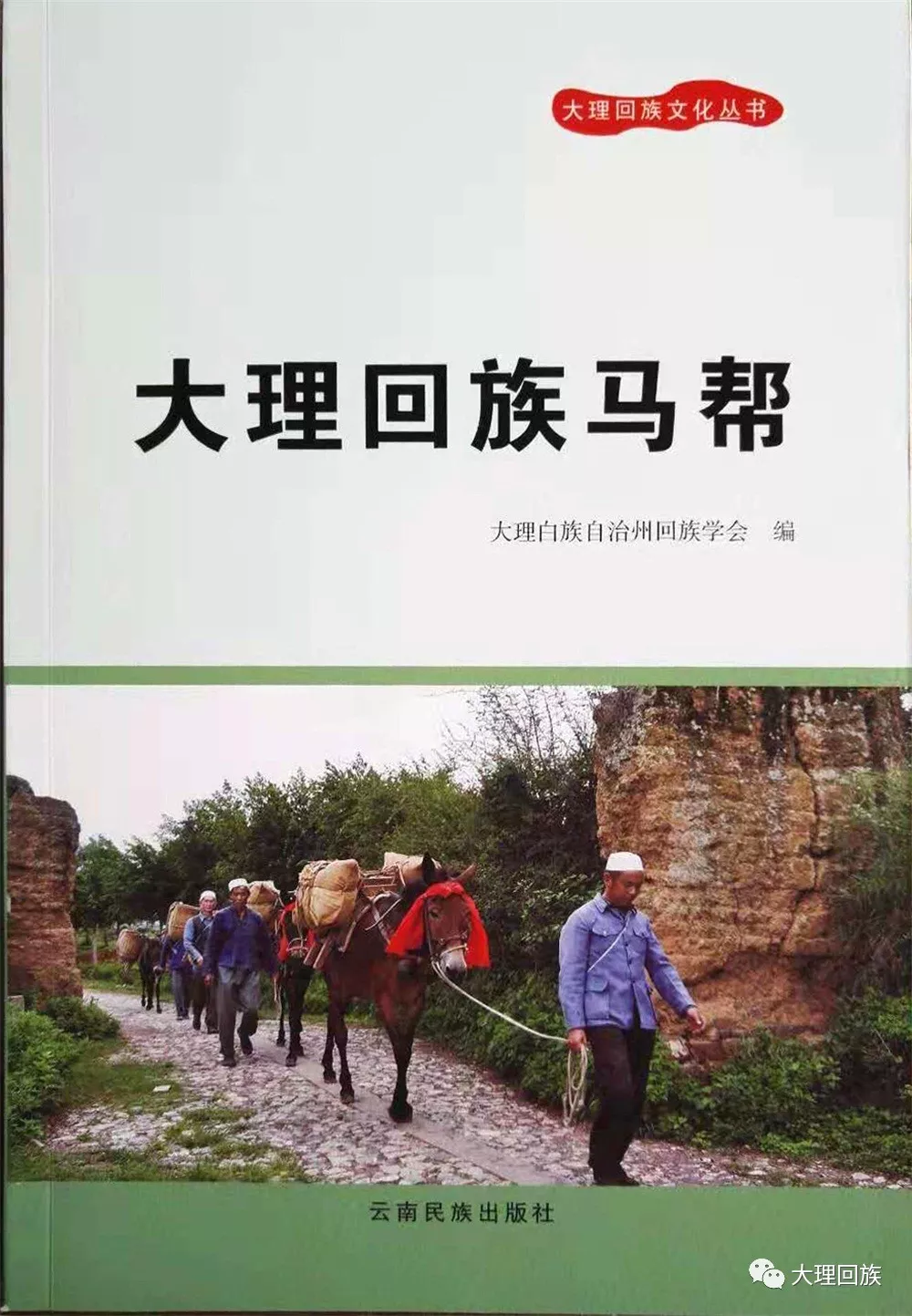
Caravans were a unique form of transportation in China's vast southwest and the primary method of conveyance along the Ancient Tea Horse Road. The existence and operation of Hui Muslim caravans date back at least a thousand years. To this day, these caravans continue to toil in regions where highways are absent or transportation remains difficult, forming a deeply unique social group.
As the era of the caravan draws to a close, examining the Hui Muslim caravans in our study of Hui culture holds both profound historical significance and practical relevance.
I. The Formation of Hui Muslim Caravans
First, the Hui Muslim caravans were a product of history. In the 13th century, during Genghis Khan's western campaigns, a large number of Central Asian Muslims, Persians, and Arabs were forced to relocate to China. Because these incoming Huihui people lacked arable farmland, very few engaged in agriculture, and those who did struggled to make ends meet. Consequently, they turned to commerce to survive, quickly developing into a formidable trading force that relied primarily on horse and camel caravans. Take Weishan, Yunnan, for example: after Du Wenxiu's Hui uprising failed, the majority of Hui people became tenant farmers. Unable to survive on agriculture alone, they turned to trading and commerce. According to pre-liberation archival records and grassroots surveys, 15 villages maintained over 150 caravan troupes; 884 households raised more than 9,500 horses and mules, trekking along the Ancient Tea Horse Road and the Bonan Ancient Road (stretching from Chengdu, Kunming, Chuxiong, Xiangyun, Dali, Weishan, Yongping, Baoshan, Tengchong, and onward through Burma to India). Historical texts refer to this as the "Second Silk Road," which is one of the historical reasons why the Hui people excel at commerce.
Second, during the formation of the Hui ethnic group, they absorbed many Arab and Persian Muslim merchants. Starting from the Tang dynasty, numerous Arab and Persian merchants came to China to trade. During the Yuan dynasty, Semu people enjoyed relative freedom in trade in China, and the scale of these early Huihui ancestors surpassed that of any other ethnic merchant group. These foreign Muslim merchants accounted for a substantial proportion of the Hui population. Family genealogies of Sayyid Ajjal preserved by Ma Shangwen in Daweigen and Ma Youliang in Sanchiacun, Weishan, are sufficient proof of this. This is another reason why the Hui people are skilled in business.
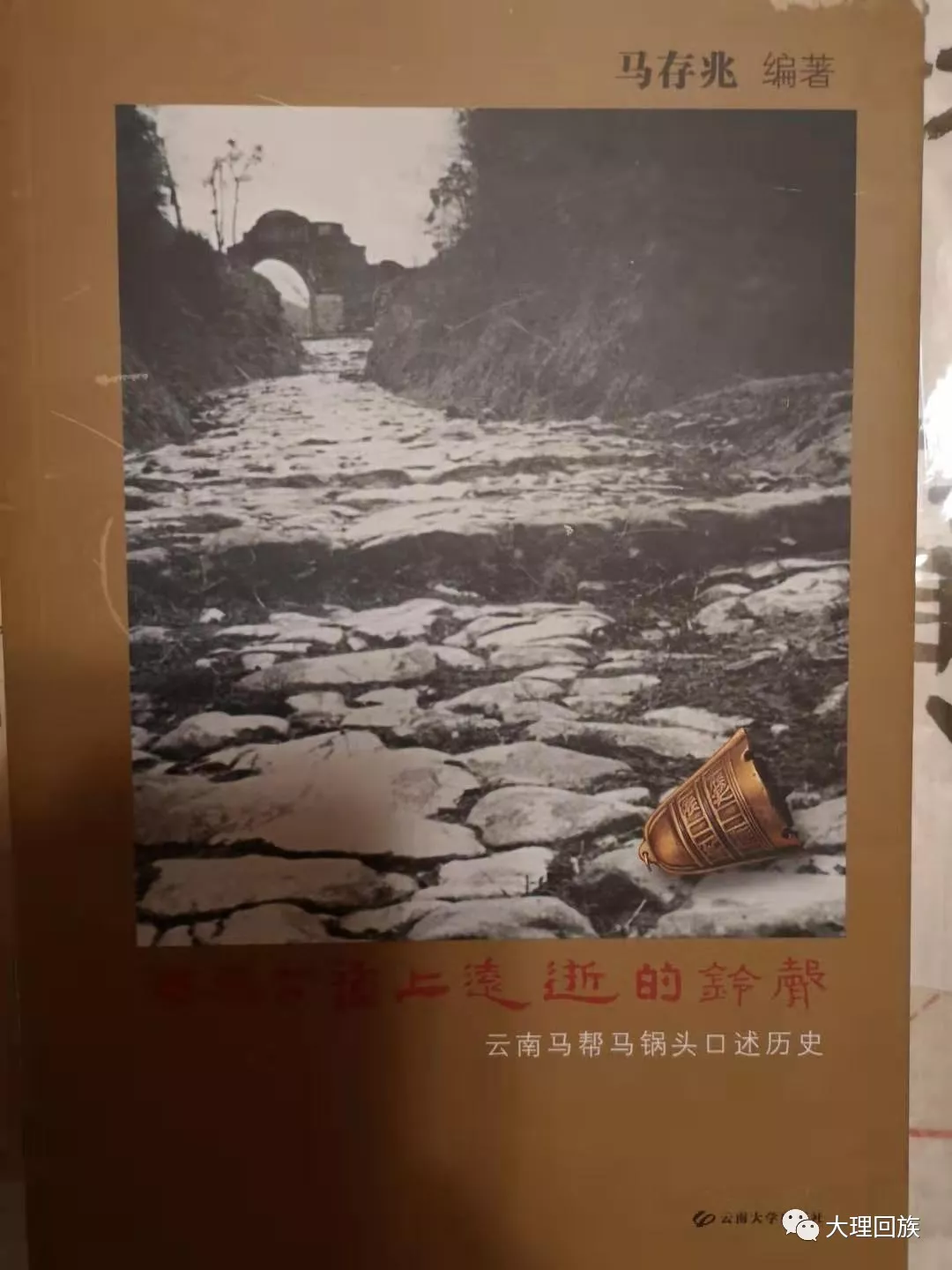
Third, the religious factor. The vast majority of Hui people practice Islam. The Prophet Muhammad engaged in trade alongside his uncle during his youth, and Islam holds a favorable view of commerce. The Quran states: "Allah has permitted trade and forbidden usury." This religious doctrine encouraged and facilitated the growth of commercial endeavors among the Hui. Furthermore, Islamic teachings encourage believers to travel and migrate, providing a religious basis for the caravan drivers. Many Hui people operated caravan trades, and over time, a folk proverb emerged: "Han Chinese own the fields, Bai people own the valleys, and Huihui run the caravans and do business."
Fourth, Hui people excel at raising horses. The world's finest horse breed, the Arabian horse, was introduced to Dali through trade. Through the selective breeding efforts of the Huihui people, a famous Chinese horse breed native to Yunnan was developed: the Dali horse. Small, sturdy, resilient, adept at navigating mountain trails, and easy to train, the Dali horse became renowned. Since the Tang and Song dynasties, horse markets flourished, and Tea-Horse Offices were established to exchange tea for salt and horses. The development of the Dali horse fostered a long-standing tradition of horse-raising among various ethnic groups, making horses the primary mode of transportation along the Ancient Tea Horse Road.
II. The Spirit and Characteristics of Hui Muslim Caravans
The risks undertaken by the Hui Muslim caravans along the Ancient Tea Horse Road were legendary, and their most prominent characteristic was their adventurous spirit. Even today, the so-called heroic feats of professional adventurers pale in comparison to the caravan life of the old Ancient Tea Horse Road. First, there were business risks. The highly unstable political climate only heightened these dangers. While some grew wealthy through caravan trade, most worked for a lifetime and still ended up with nothing. Second, there were the hazards of harsh nature. The various routes traversed by the caravans presented extreme natural perils: wind, frost, rain, snow, towering mountains, rushing rivers, toxic plants, poisonous water, wild beasts, venomous insects, and epidemics could snuff out a caravan at any moment. Spending the vast majority of their time living in the wild was a severe test for any caravan driver (*ganma ren*) or caravan leader (*guotou*). Countless drivers and leaders were laid to rest in foreign lands. Third was the threat of bandits and robbers. At the time, banditry was rampant in the southwest. Although the caravans were fully armed, they were frequently attacked by bandits, resulting in constant loss of life and cargo. This extraordinary survival environment forged and defined the adventurous spirit of the caravans. Thus, running a caravan meant courting danger—it was literally risking one's neck to earn a living.
Caravans required not just a taste for adventure, but unwavering faith, extraordinary daring, relentless perseverance, immense courage, exceptional wisdom, and a host of other virtues. Putting all their trust in Allah, caravans of many other ethnic groups were eager to team up with the Hui Muslim caravans, which perfectly embodied these exact qualities.
III. Organization and Transport Methods of Hui Muslim Caravans
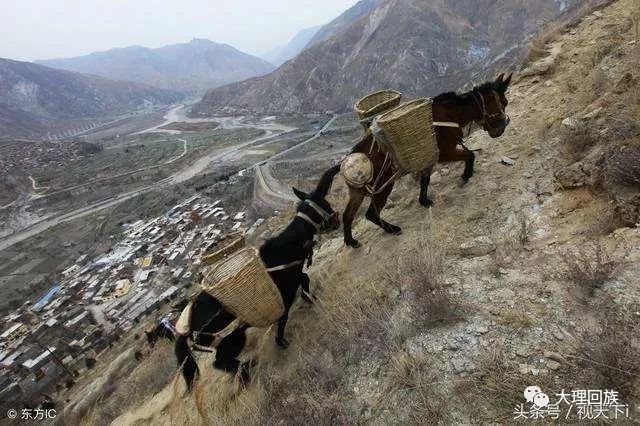
Caravans operated under strict organization and rules. Whether funded by pooled capital or operated independently, all operations were unified under the leadership of major bosses and caravan leaders (*guotou*). The *guotou* was the head of the transport merchant troupe, generally renowned for their impeccable reputation. A caravan organization included veterinarians, grooms, repairmen, and horseshoers. To defend against bandit raids when traveling to remote frontier regions, several or even dozens of caravans would band together, traveling in large groups while heavily armed. Caravans employed specialists to beat bronze gongs (*mangluo*) to signal and coordinate the pack animals, and carried specialized flags for identification. The lead mule or horse, known as the lead mule (*touluo*), wore a large bell around its neck, while the second mule wore a string of smaller bells. The heads of both the first and second mules were fitted with bridles and draped with colorful ribbons, making them look both striking and magnificent.
According to archival records from 1913, Yunnan province boasted a total of over 19,000 caravan pack animals. The western Yunnan route accounted for the lion's share with about 9,000 animals, of which Menghua (Weishan) alone contributed over a thousand.
Between 1911 and 1923, along the Xiaguan to Tengchong section, large Hui caravans from Weishan—run by figures like Ma Caiting and Ma Ruji—managed up to over 2,000 pack horses. Before highways were built, pack horse transport played a crucial role in developing the economy and fueling foreign trade.
During the Republic of China era, the Hui region of Weishan housed 29 soap-dyeing workshops operated by families producing soap-dyed homespun cloth and bleached fabrics, which were shipped far and wide across Yunnan. There were 7 leather processing factories whose goods were transported and sold throughout the province and abroad. More than 10 workshops produced ethnic gold and silver jewelry for Yunnan's ethnic minority communities.
Weishan's Hui community maintained over 150 large and small caravans, with 884 households raising more than 9,500 horses and mules. Among them, Huihuideng alone accounted for 44 caravans comprising over 2,000 horses and mules. Around 1920, Hui Muslim caravans primarily engaged in the tea trade. Ma Caiting of Yanqichang originally opened the "Yunhua Salt Firm" in Xiaguan, wholesaling table salt while trading in tea and cotton yarn. He personally owned 140 mules and horses, hiring over a dozen caravan hands to trade across Fengqing, Yunxian, Baoshan, and Kunming. On each trip from Baoshan, he imported about 140 loads of foreign cotton yarn to sell in Xiaguan, while transporting Xiaguan table salt and other goods to Weishan, Fengqing, and other frontier areas. His capital exceeded 100,000 silver dollars (*banjun*), and he later purchased a large courtyard residence in Kunming. Ma Caiting and his brother Ma Caichen won the favor of Yunnan Provincial Chairman Long Yun. Long Yun formed a sworn brotherhood alliance with Ma Caiting and appointed him as the director of the Yunnan Provincial Transportation Bureau, making him a pillar of the provincial unified transport administration. The family owned over 1,000 horses and mules, deployed vast funds to purchase large quantities of horses for Long Yun's transport operations, and traveled extensively between Chongqing in Sichuan, Xichang, Huili, Baise in Guangxi, Simao and Pu'er in Yunnan, Burma, Tibet, and Vietnam.
The six major caravans of Huihuideng—led by Hu Liangxian, Zhu Yingtang, Mi Wenyying, Hu Dechen, Zhu Yutai, and Ma Mingchong—owned upwards of 250 pack mules, with each caravan holding capital exceeding 10,000 silver dollars (*banjun*).
Dali Fengyi caravan leader Ma Guozhu commanded nearly 100 horses and mules, armed to escort anti-Japanese war supplies, with his lead mule flying the order flag of the 60th Army.
Hui Muslim caravans were versatile and multi-talented, earning high praise and trust from officials, governments, and wealthy bosses. A single person could handle five horses; caravan drivers knew how to raise and feed horses, and were capable of wielding rifles to fight off bandit attacks. A single mule or horse could carry 100 kilograms of cargo such as cotton yarn. Consequently, the Weishan Hui caravans consistently earned widespread social acclaim and trust. During the Daoguang era of the Qing dynasty (1821–1850), famous Weishan Hui caravan leaders (*guotou*) included: Ma Chaozhen from Xiaoweigen, who owned 120 horses, operated a sulfur plant, and served as a rear general in Du Wenxiu's uprising army; Ma Tianyou from Daweigen, who owned over a hundred horses and mules dedicated to transport, was public-spirited and charitable, and invested in his hometown by funding the construction of the Zijin Township Shangshujie Suspension Bridge over the river. Having served as a vanguard general in Du Wenxiu's uprising army, when ordered to garrison Shanggang, he used his own caravans to pack in stone materials to build the Shanggang city walls; Ma Wanyou from Mamichang, who worked as a miner and mine manager at Lingtaishan, owned 120 horses, and frequently transported copper to Sichuan; and "Old Man Mi" from Huihuideng, who operated transport with dozens of horses.
IV. Hui Muslim Caravans Contribute to the War of Resistance Against Japanese Aggression
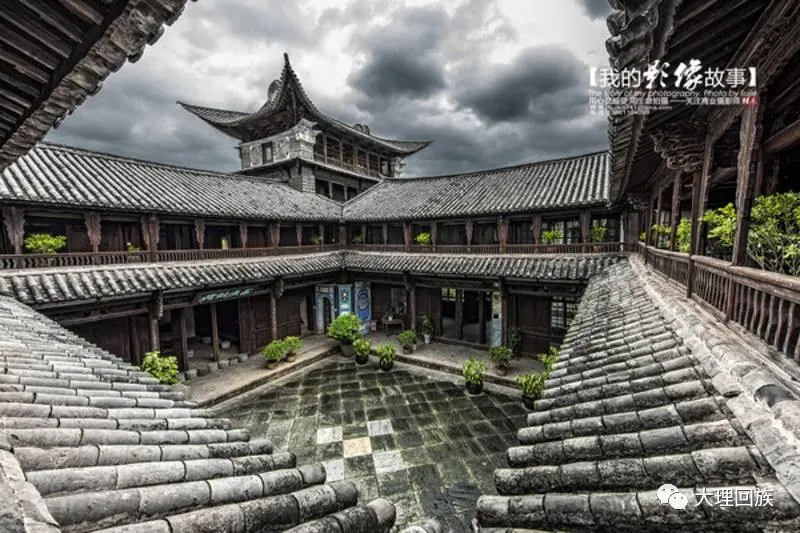
Between 1938 and 1945, mobilized by military-civilian cooperation stations and the Islamic National Salvation Association, Huihuideng Association President Ma Yaotang mobilized Hui Muslim caravans to throw themselves into transporting military supplies for the War of Resistance. The Hui-dominated caravans of Menghua (Weishan) made monumental contributions to saving the nation and the people by participating in the all-out national war of resistance. Hui imams used Islamic doctrine—arguing that "for the survival of the nation and the people, one must propagate the spirit of Jihad"—to motivate the caravans to join the wartime transport effort. In the spring of 1942, invading Japanese forces in Burma advanced into Wanting, Longling, and Tengchong. The Huitong Bridge was bombed and destroyed, plunging the Yunnan-Burma Highway corridor into extreme chaos. At that time, 15,000 tons of military industrial supplies remained stockpiled in Baoshan, alongside 5,000 tons in Xiaguan, urgently needing to be rushed to Kunming. Ma Tingbi of the Xiaguan Courier Station accepted this emergency mission, rushing to the Hui-concentrated and caravan-heavy regions of Menghua, Yongping, and Yangbi counties to ask Hui elders and religious leaders to summon caravan labor. The organization went off without a hitch, instantly mobilizing 700 pack horses from Menghua and 500 from Yongping County, all led by Hui caravan leaders. Originally, the Baoshan stockpile was scheduled to be moved at a rate of 3,000 tons per month over five months, but the task was completed in a mere 120 days. The Xiaguan stockpile was cleared by 1,000 horse-drawn carts organized by Kunming in just 72 days. According to statistics, along the 605-kilometer Yunnan Post section of the Yunnan-Burma trunk line, pack horses totaled 3,700, with Menghua contributing 700—accounting for roughly one-fifth of the entire line. Cargo transported between 1939 and 1945 included imported military supplies, cotton yarn, textiles, and petty merchandise coming through Wanting, while exports through Wanting included tung oil, Chinese gallnuts, hog bristle, yellow raw silk, and medicinal herbs. Intra-provincial transport of table salt, cooking oil, tea, and coal relied entirely on large fleets of caravans, with Menghua caravans playing a pivotal role.
Following liberation, a large number of Weishan Hui caravans contributed significantly to supporting the march into Tibet, aiding Zhongdian, and wiping out the remnants of bandits in Xiaoliangshan, successfully completing the transport missions for the People's Liberation Army stationed in Tibet.
V. Yunnan Hui Muslim Caravans and Domestic and Foreign Trade
Famed caravans that travelled far and wide and reaped profits from transport successively established commercial houses in cities, evolving into integrated operations encompassing transport, storefronts, and marketing. Wealthy Hui tycoons Ma Mingkui and Ma Mingxiang from Dali were both imperial scholars (*jinshi*) during the Qing dynasty who abandoned official careers for commerce. Their family owned over a dozen caravans comprising hundreds of horses, along with massive commercial storefronts spanning Bhamo (Mandalay) and Yangon in Burma, Xufu and Chengdu in Sichuan, and Kunming and Baoshan within the province. Xiaguan alone housed six major trading firms: Yutai, Tailai, Yonghe, Lianxingchang, and Fuchun. These were massive commercial establishments featuring four-tier courtyards complete with cargo warehouses, accounting rooms, and horse stables, trading actively between Sichuan, Xiaguan, Baoshan, and Burma.
The "Sangsheng" firm of the Ming, Zhu, and Ma families in Tengchong not only commanded a caravan of over a hundred horses but possessed formidable commercial strength, maintaining close ties with the trading networks of Weishan, Dali, and Yongping. Tea stood out as one of the primary goods transported and traded by the caravans. During the Qing dynasty, the Mu Zhengming family of Shunning (Fengqing) owned over a thousand mu of tea plantations alongside more than a hundred horses and mules, transporting over 400 loads of tea annually to sell in Xiaguan and Menghua (Weishan), while hauling salt and other commodities back from Xiaguan to sell in Fengqing, Shunning, and Ninglang (Lincang).
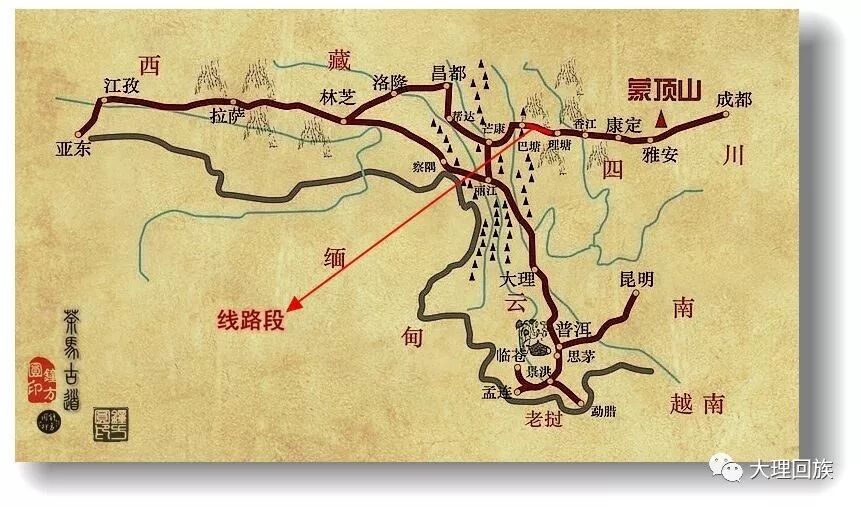
More than ten caravan teams from the Ma and Xue families in Mengting, Changning, transported over 200 packs of tea every year to Xiaguan and Menghua (Weishan) to sell. Before liberation, Xiaguan and Dali had virtually become the distribution centers for the tea and salt trade in western Yunnan.
In 1938, Bai Liangcheng from Shadian opened the "Sipu District Tea Experimental Farm" around Simao and Pu'er, pioneering Yunnan's very first factory-produced black tea. With the development of the caravan transport business, Hui Muslim traditional medicine and Western medicine in various parts of Yunnan also flourished, giving rise to a batch of traditional Chinese-Western pharmacies and veterinary stations. Famous pharmacies included "Wansong Caotang," "Yuqiao Pharmacy," and "Aiguo Pharmacy," which featured three practitioners of traditional Chinese medicine, one Western medical doctor, and four veterinarians. Notable figures included the renowned doctor Mu Chongren in Baoshan and the bone-setting specialist Ma Shimei in Changning. Along Yunnan's caravan routes, Hui Muslim veterinary stations were set up at every stop. Famous veterinarians included the father-and-son duo Liu Houzhai and Liu Dianyang (from Kunming), Yang Kaike (from Binchuan), Lu Jinchen (from Kunming), and Yang Yiqing (from Dali), among others. Every caravan hub and post station was equipped with a veterinary station.
Hui Muslim caravan merchants and traders also opened up international trade routes.
During the War of Resistance Against Japanese Aggression, Yunnan became the grand rear base for the national war effort and the Burma Campaign. The formidable Hui Muslim caravan teams formed an essential transport lifeline for wartime supplies, rushing across vast regions spanning Yunnan, Myanmar, Thailand, and Vietnam. They shouldered the heavy responsibility of transporting supplies from Allied nations to support China's resistance, and many Hui Muslim merchants established business firms and settled down abroad. These caravan traders ventured beyond the borders and put down roots overseas.
After the reform and opening up, although the horse caravan was no longer the primary mode of transportation, inspired by the Party and state's enrichment policies, the villagers of Donglianhua maintained their love for horses, raised livestock, and expanded family-run breeding businesses. Many descendants of old caravan drivers organized themselves, collecting mules and horses raised by neighboring villagers and transporting them by trucks to remote mountainous areas and neighboring Myanmar to sell to border residents with limited access to transportation, partnering up in the mule-trading business. This not only found a market for the breeders and provided convenience for border residents buying mules and horses, but it also turned a profit for them, boosting their economic income.
Today, along the Ancient Tea Horse Road pioneered by our ancestors thousands of years ago, the sight of marching caravan teams is gone, the crisp and melodious sound of bronze bells has faded into the distance, and the ancient fragrance of tea leaves drifting on the wind has dissipated. However, the footprints and horse-hoof impressions left behind by our forebears on the Tea Horse Road, along with our lingering, intricate memories of antiquity, have transformed into a lofty entrepreneurial spirit shared by all descendants of the Chinese nation. This relentless, unyielding fighting spirit will carve out eternal monuments in the developmental history of the Chinese nation, shining with the glory and splendor of our people for thousands of generations to come.
VI. Conclusion
In summary: Wherever there were Hui Muslim villages in Yunnan, people raised horses and mules and ran caravans. Through sheer hardship, Hui Muslim people traveled with their caravans to various parts of the Southwest and Southeast Asian countries, connecting people of all ethnic groups through trade and forging deep bonds. The Hui Muslim caravans boast a long history in our motherland's transportation sector and foreign trade, making profound contributions to friendship between China, Southeast Asia, and Arab nations.
The Hui Muslim caravans deepened the bonds between various ethnic groups, promoted commodity exchange and cultural communication among them, and brought advanced inland and foreign technologies into the region. They boosted Yunnan's international trade activities. With a 4,060-kilometer border sharing limits with multiple Southeast Asian countries, Yunnan's historical Hui Muslim caravans paved the way for early exchanges with Southeast Asia and the Arab world. Today, with convenient transportation and people freely interacting, Yunnan enjoys unique advantages and conditions in implementing its "go global" strategy and building itself into China's "bridgehead" facing Southeast Asia. This carries profound historical significance not only within that past historical context, but also practical relevance for today's Scientific Outlook on Development put forward by the Party Central Committee—developing the economy, jointly creating a socialist harmonious society, and fostering harmony between individuals, among ethnic groups, across different religions, and between nations.
(The author is a veterinarian and expert receiving a special government allowance from the State Council, former president of the Weishan County Hui Culture Association, and a Hajji.)
The Hui Muslim Caravan Trails of Yunnan: Muslim Merchants, Caravan Culture, and Southwest Transportation History
Abstract: This article compiles the key points from the original text "The Hui Muslim Caravan Trails of Yunnan: Muslim Merchants, Caravan Culture, and Southwest Transportation History," maintaining the original sequence of paragraphs and images. It is tailored for readers searching for long-tail keywords such as Hui Muslim caravans, the Ancient Tea Horse Road, and Yunnan Muslims.
Ma Chongwen
Abstract: Before the advent of modern highways and railways, Yunnan Hui Muslim caravans braved the notoriously treacherous, miasma-filled terrain of the southwest, overcoming immense hardships to reach various parts of the southwest and Southeast Asia. Through trade, they connected people of different ethnic groups, fostering deep bonds. Hui Muslim caravans have a long-standing history of contributing to China's transportation and foreign trade, leaving an indelible mark on the motherland.
Keywords: Ancient Tea Horse Road, Hui Muslim Caravans, International Trade
Caravans were a unique form of transportation in China's vast southwest and the primary method of conveyance along the Ancient Tea Horse Road. The existence and operation of Hui Muslim caravans date back at least a thousand years. To this day, these caravans continue to toil in regions where highways are absent or transportation remains difficult, forming a deeply unique social group.
As the era of the caravan draws to a close, examining the Hui Muslim caravans in our study of Hui culture holds both profound historical significance and practical relevance.
I. The Formation of Hui Muslim Caravans
First, the Hui Muslim caravans were a product of history. In the 13th century, during Genghis Khan's western campaigns, a large number of Central Asian Muslims, Persians, and Arabs were forced to relocate to China. Because these incoming Huihui people lacked arable farmland, very few engaged in agriculture, and those who did struggled to make ends meet. Consequently, they turned to commerce to survive, quickly developing into a formidable trading force that relied primarily on horse and camel caravans. Take Weishan, Yunnan, for example: after Du Wenxiu's Hui uprising failed, the majority of Hui people became tenant farmers. Unable to survive on agriculture alone, they turned to trading and commerce. According to pre-liberation archival records and grassroots surveys, 15 villages maintained over 150 caravan troupes; 884 households raised more than 9,500 horses and mules, trekking along the Ancient Tea Horse Road and the Bonan Ancient Road (stretching from Chengdu, Kunming, Chuxiong, Xiangyun, Dali, Weishan, Yongping, Baoshan, Tengchong, and onward through Burma to India). Historical texts refer to this as the "Second Silk Road," which is one of the historical reasons why the Hui people excel at commerce.
Second, during the formation of the Hui ethnic group, they absorbed many Arab and Persian Muslim merchants. Starting from the Tang dynasty, numerous Arab and Persian merchants came to China to trade. During the Yuan dynasty, Semu people enjoyed relative freedom in trade in China, and the scale of these early Huihui ancestors surpassed that of any other ethnic merchant group. These foreign Muslim merchants accounted for a substantial proportion of the Hui population. Family genealogies of Sayyid Ajjal preserved by Ma Shangwen in Daweigen and Ma Youliang in Sanchiacun, Weishan, are sufficient proof of this. This is another reason why the Hui people are skilled in business.
Third, the religious factor. The vast majority of Hui people practice Islam. The Prophet Muhammad engaged in trade alongside his uncle during his youth, and Islam holds a favorable view of commerce. The Quran states: "Allah has permitted trade and forbidden usury." This religious doctrine encouraged and facilitated the growth of commercial endeavors among the Hui. Furthermore, Islamic teachings encourage believers to travel and migrate, providing a religious basis for the caravan drivers. Many Hui people operated caravan trades, and over time, a folk proverb emerged: "Han Chinese own the fields, Bai people own the valleys, and Huihui run the caravans and do business."
Fourth, Hui people excel at raising horses. The world's finest horse breed, the Arabian horse, was introduced to Dali through trade. Through the selective breeding efforts of the Huihui people, a famous Chinese horse breed native to Yunnan was developed: the Dali horse. Small, sturdy, resilient, adept at navigating mountain trails, and easy to train, the Dali horse became renowned. Since the Tang and Song dynasties, horse markets flourished, and Tea-Horse Offices were established to exchange tea for salt and horses. The development of the Dali horse fostered a long-standing tradition of horse-raising among various ethnic groups, making horses the primary mode of transportation along the Ancient Tea Horse Road.
II. The Spirit and Characteristics of Hui Muslim Caravans
The risks undertaken by the Hui Muslim caravans along the Ancient Tea Horse Road were legendary, and their most prominent characteristic was their adventurous spirit. Even today, the so-called heroic feats of professional adventurers pale in comparison to the caravan life of the old Ancient Tea Horse Road. First, there were business risks. The highly unstable political climate only heightened these dangers. While some grew wealthy through caravan trade, most worked for a lifetime and still ended up with nothing. Second, there were the hazards of harsh nature. The various routes traversed by the caravans presented extreme natural perils: wind, frost, rain, snow, towering mountains, rushing rivers, toxic plants, poisonous water, wild beasts, venomous insects, and epidemics could snuff out a caravan at any moment. Spending the vast majority of their time living in the wild was a severe test for any caravan driver (*ganma ren*) or caravan leader (*guotou*). Countless drivers and leaders were laid to rest in foreign lands. Third was the threat of bandits and robbers. At the time, banditry was rampant in the southwest. Although the caravans were fully armed, they were frequently attacked by bandits, resulting in constant loss of life and cargo. This extraordinary survival environment forged and defined the adventurous spirit of the caravans. Thus, running a caravan meant courting danger—it was literally risking one's neck to earn a living.
Caravans required not just a taste for adventure, but unwavering faith, extraordinary daring, relentless perseverance, immense courage, exceptional wisdom, and a host of other virtues. Putting all their trust in Allah, caravans of many other ethnic groups were eager to team up with the Hui Muslim caravans, which perfectly embodied these exact qualities.
III. Organization and Transport Methods of Hui Muslim Caravans
Caravans operated under strict organization and rules. Whether funded by pooled capital or operated independently, all operations were unified under the leadership of major bosses and caravan leaders (*guotou*). The *guotou* was the head of the transport merchant troupe, generally renowned for their impeccable reputation. A caravan organization included veterinarians, grooms, repairmen, and horseshoers. To defend against bandit raids when traveling to remote frontier regions, several or even dozens of caravans would band together, traveling in large groups while heavily armed. Caravans employed specialists to beat bronze gongs (*mangluo*) to signal and coordinate the pack animals, and carried specialized flags for identification. The lead mule or horse, known as the lead mule (*touluo*), wore a large bell around its neck, while the second mule wore a string of smaller bells. The heads of both the first and second mules were fitted with bridles and draped with colorful ribbons, making them look both striking and magnificent.
According to archival records from 1913, Yunnan province boasted a total of over 19,000 caravan pack animals. The western Yunnan route accounted for the lion's share with about 9,000 animals, of which Menghua (Weishan) alone contributed over a thousand.
Between 1911 and 1923, along the Xiaguan to Tengchong section, large Hui caravans from Weishan—run by figures like Ma Caiting and Ma Ruji—managed up to over 2,000 pack horses. Before highways were built, pack horse transport played a crucial role in developing the economy and fueling foreign trade.
During the Republic of China era, the Hui region of Weishan housed 29 soap-dyeing workshops operated by families producing soap-dyed homespun cloth and bleached fabrics, which were shipped far and wide across Yunnan. There were 7 leather processing factories whose goods were transported and sold throughout the province and abroad. More than 10 workshops produced ethnic gold and silver jewelry for Yunnan's ethnic minority communities.
Weishan's Hui community maintained over 150 large and small caravans, with 884 households raising more than 9,500 horses and mules. Among them, Huihuideng alone accounted for 44 caravans comprising over 2,000 horses and mules. Around 1920, Hui Muslim caravans primarily engaged in the tea trade. Ma Caiting of Yanqichang originally opened the "Yunhua Salt Firm" in Xiaguan, wholesaling table salt while trading in tea and cotton yarn. He personally owned 140 mules and horses, hiring over a dozen caravan hands to trade across Fengqing, Yunxian, Baoshan, and Kunming. On each trip from Baoshan, he imported about 140 loads of foreign cotton yarn to sell in Xiaguan, while transporting Xiaguan table salt and other goods to Weishan, Fengqing, and other frontier areas. His capital exceeded 100,000 silver dollars (*banjun*), and he later purchased a large courtyard residence in Kunming. Ma Caiting and his brother Ma Caichen won the favor of Yunnan Provincial Chairman Long Yun. Long Yun formed a sworn brotherhood alliance with Ma Caiting and appointed him as the director of the Yunnan Provincial Transportation Bureau, making him a pillar of the provincial unified transport administration. The family owned over 1,000 horses and mules, deployed vast funds to purchase large quantities of horses for Long Yun's transport operations, and traveled extensively between Chongqing in Sichuan, Xichang, Huili, Baise in Guangxi, Simao and Pu'er in Yunnan, Burma, Tibet, and Vietnam.
The six major caravans of Huihuideng—led by Hu Liangxian, Zhu Yingtang, Mi Wenyying, Hu Dechen, Zhu Yutai, and Ma Mingchong—owned upwards of 250 pack mules, with each caravan holding capital exceeding 10,000 silver dollars (*banjun*).
Dali Fengyi caravan leader Ma Guozhu commanded nearly 100 horses and mules, armed to escort anti-Japanese war supplies, with his lead mule flying the order flag of the 60th Army.
Hui Muslim caravans were versatile and multi-talented, earning high praise and trust from officials, governments, and wealthy bosses. A single person could handle five horses; caravan drivers knew how to raise and feed horses, and were capable of wielding rifles to fight off bandit attacks. A single mule or horse could carry 100 kilograms of cargo such as cotton yarn. Consequently, the Weishan Hui caravans consistently earned widespread social acclaim and trust. During the Daoguang era of the Qing dynasty (1821–1850), famous Weishan Hui caravan leaders (*guotou*) included: Ma Chaozhen from Xiaoweigen, who owned 120 horses, operated a sulfur plant, and served as a rear general in Du Wenxiu's uprising army; Ma Tianyou from Daweigen, who owned over a hundred horses and mules dedicated to transport, was public-spirited and charitable, and invested in his hometown by funding the construction of the Zijin Township Shangshujie Suspension Bridge over the river. Having served as a vanguard general in Du Wenxiu's uprising army, when ordered to garrison Shanggang, he used his own caravans to pack in stone materials to build the Shanggang city walls; Ma Wanyou from Mamichang, who worked as a miner and mine manager at Lingtaishan, owned 120 horses, and frequently transported copper to Sichuan; and "Old Man Mi" from Huihuideng, who operated transport with dozens of horses.
IV. Hui Muslim Caravans Contribute to the War of Resistance Against Japanese Aggression
Between 1938 and 1945, mobilized by military-civilian cooperation stations and the Islamic National Salvation Association, Huihuideng Association President Ma Yaotang mobilized Hui Muslim caravans to throw themselves into transporting military supplies for the War of Resistance. The Hui-dominated caravans of Menghua (Weishan) made monumental contributions to saving the nation and the people by participating in the all-out national war of resistance. Hui imams used Islamic doctrine—arguing that "for the survival of the nation and the people, one must propagate the spirit of Jihad"—to motivate the caravans to join the wartime transport effort. In the spring of 1942, invading Japanese forces in Burma advanced into Wanting, Longling, and Tengchong. The Huitong Bridge was bombed and destroyed, plunging the Yunnan-Burma Highway corridor into extreme chaos. At that time, 15,000 tons of military industrial supplies remained stockpiled in Baoshan, alongside 5,000 tons in Xiaguan, urgently needing to be rushed to Kunming. Ma Tingbi of the Xiaguan Courier Station accepted this emergency mission, rushing to the Hui-concentrated and caravan-heavy regions of Menghua, Yongping, and Yangbi counties to ask Hui elders and religious leaders to summon caravan labor. The organization went off without a hitch, instantly mobilizing 700 pack horses from Menghua and 500 from Yongping County, all led by Hui caravan leaders. Originally, the Baoshan stockpile was scheduled to be moved at a rate of 3,000 tons per month over five months, but the task was completed in a mere 120 days. The Xiaguan stockpile was cleared by 1,000 horse-drawn carts organized by Kunming in just 72 days. According to statistics, along the 605-kilometer Yunnan Post section of the Yunnan-Burma trunk line, pack horses totaled 3,700, with Menghua contributing 700—accounting for roughly one-fifth of the entire line. Cargo transported between 1939 and 1945 included imported military supplies, cotton yarn, textiles, and petty merchandise coming through Wanting, while exports through Wanting included tung oil, Chinese gallnuts, hog bristle, yellow raw silk, and medicinal herbs. Intra-provincial transport of table salt, cooking oil, tea, and coal relied entirely on large fleets of caravans, with Menghua caravans playing a pivotal role.
Following liberation, a large number of Weishan Hui caravans contributed significantly to supporting the march into Tibet, aiding Zhongdian, and wiping out the remnants of bandits in Xiaoliangshan, successfully completing the transport missions for the People's Liberation Army stationed in Tibet.
V. Yunnan Hui Muslim Caravans and Domestic and Foreign Trade
Famed caravans that travelled far and wide and reaped profits from transport successively established commercial houses in cities, evolving into integrated operations encompassing transport, storefronts, and marketing. Wealthy Hui tycoons Ma Mingkui and Ma Mingxiang from Dali were both imperial scholars (*jinshi*) during the Qing dynasty who abandoned official careers for commerce. Their family owned over a dozen caravans comprising hundreds of horses, along with massive commercial storefronts spanning Bhamo (Mandalay) and Yangon in Burma, Xufu and Chengdu in Sichuan, and Kunming and Baoshan within the province. Xiaguan alone housed six major trading firms: Yutai, Tailai, Yonghe, Lianxingchang, and Fuchun. These were massive commercial establishments featuring four-tier courtyards complete with cargo warehouses, accounting rooms, and horse stables, trading actively between Sichuan, Xiaguan, Baoshan, and Burma.
The "Sangsheng" firm of the Ming, Zhu, and Ma families in Tengchong not only commanded a caravan of over a hundred horses but possessed formidable commercial strength, maintaining close ties with the trading networks of Weishan, Dali, and Yongping. Tea stood out as one of the primary goods transported and traded by the caravans. During the Qing dynasty, the Mu Zhengming family of Shunning (Fengqing) owned over a thousand mu of tea plantations alongside more than a hundred horses and mules, transporting over 400 loads of tea annually to sell in Xiaguan and Menghua (Weishan), while hauling salt and other commodities back from Xiaguan to sell in Fengqing, Shunning, and Ninglang (Lincang).
More than ten caravan teams from the Ma and Xue families in Mengting, Changning, transported over 200 packs of tea every year to Xiaguan and Menghua (Weishan) to sell. Before liberation, Xiaguan and Dali had virtually become the distribution centers for the tea and salt trade in western Yunnan.
In 1938, Bai Liangcheng from Shadian opened the "Sipu District Tea Experimental Farm" around Simao and Pu'er, pioneering Yunnan's very first factory-produced black tea. With the development of the caravan transport business, Hui Muslim traditional medicine and Western medicine in various parts of Yunnan also flourished, giving rise to a batch of traditional Chinese-Western pharmacies and veterinary stations. Famous pharmacies included "Wansong Caotang," "Yuqiao Pharmacy," and "Aiguo Pharmacy," which featured three practitioners of traditional Chinese medicine, one Western medical doctor, and four veterinarians. Notable figures included the renowned doctor Mu Chongren in Baoshan and the bone-setting specialist Ma Shimei in Changning. Along Yunnan's caravan routes, Hui Muslim veterinary stations were set up at every stop. Famous veterinarians included the father-and-son duo Liu Houzhai and Liu Dianyang (from Kunming), Yang Kaike (from Binchuan), Lu Jinchen (from Kunming), and Yang Yiqing (from Dali), among others. Every caravan hub and post station was equipped with a veterinary station.
Hui Muslim caravan merchants and traders also opened up international trade routes.
During the War of Resistance Against Japanese Aggression, Yunnan became the grand rear base for the national war effort and the Burma Campaign. The formidable Hui Muslim caravan teams formed an essential transport lifeline for wartime supplies, rushing across vast regions spanning Yunnan, Myanmar, Thailand, and Vietnam. They shouldered the heavy responsibility of transporting supplies from Allied nations to support China's resistance, and many Hui Muslim merchants established business firms and settled down abroad. These caravan traders ventured beyond the borders and put down roots overseas.
After the reform and opening up, although the horse caravan was no longer the primary mode of transportation, inspired by the Party and state's enrichment policies, the villagers of Donglianhua maintained their love for horses, raised livestock, and expanded family-run breeding businesses. Many descendants of old caravan drivers organized themselves, collecting mules and horses raised by neighboring villagers and transporting them by trucks to remote mountainous areas and neighboring Myanmar to sell to border residents with limited access to transportation, partnering up in the mule-trading business. This not only found a market for the breeders and provided convenience for border residents buying mules and horses, but it also turned a profit for them, boosting their economic income.
Today, along the Ancient Tea Horse Road pioneered by our ancestors thousands of years ago, the sight of marching caravan teams is gone, the crisp and melodious sound of bronze bells has faded into the distance, and the ancient fragrance of tea leaves drifting on the wind has dissipated. However, the footprints and horse-hoof impressions left behind by our forebears on the Tea Horse Road, along with our lingering, intricate memories of antiquity, have transformed into a lofty entrepreneurial spirit shared by all descendants of the Chinese nation. This relentless, unyielding fighting spirit will carve out eternal monuments in the developmental history of the Chinese nation, shining with the glory and splendor of our people for thousands of generations to come.
VI. Conclusion
In summary: Wherever there were Hui Muslim villages in Yunnan, people raised horses and mules and ran caravans. Through sheer hardship, Hui Muslim people traveled with their caravans to various parts of the Southwest and Southeast Asian countries, connecting people of all ethnic groups through trade and forging deep bonds. The Hui Muslim caravans boast a long history in our motherland's transportation sector and foreign trade, making profound contributions to friendship between China, Southeast Asia, and Arab nations.
The Hui Muslim caravans deepened the bonds between various ethnic groups, promoted commodity exchange and cultural communication among them, and brought advanced inland and foreign technologies into the region. They boosted Yunnan's international trade activities. With a 4,060-kilometer border sharing limits with multiple Southeast Asian countries, Yunnan's historical Hui Muslim caravans paved the way for early exchanges with Southeast Asia and the Arab world. Today, with convenient transportation and people freely interacting, Yunnan enjoys unique advantages and conditions in implementing its "go global" strategy and building itself into China's "bridgehead" facing Southeast Asia. This carries profound historical significance not only within that past historical context, but also practical relevance for today's Scientific Outlook on Development put forward by the Party Central Committee—developing the economy, jointly creating a socialist harmonious society, and fostering harmony between individuals, among ethnic groups, across different religions, and between nations.
(The author is a veterinarian and expert receiving a special government allowance from the State Council, former president of the Weishan County Hui Culture Association, and a Hajji.)
The Hui Muslim Caravan Trails of Yunnan: Trade, Culture & History
Articles • Hasan09 posted the article • 0 comments • 17 views • 1 days ago
[Internet Repost]
The Hui Muslim Caravan Trails of Yunnan: Muslim Merchants, Caravan Culture, and Southwest Transportation History
Abstract: This article compiles the key points from the original text "The Hui Muslim Caravan Trails of Yunnan: Muslim Merchants, Caravan Culture, and Southwest Transportation History," maintaining the original sequence of paragraphs and images. It is tailored for readers searching for long-tail keywords such as Hui Muslim caravans, the Ancient Tea Horse Road, and Yunnan Muslims.
Ma Chongwen
Abstract: Before the advent of modern highways and railways, Yunnan Hui Muslim caravans braved the notoriously treacherous, miasma-filled terrain of the southwest, overcoming immense hardships to reach various parts of the southwest and Southeast Asia. Through trade, they connected people of different ethnic groups, fostering deep bonds. Hui Muslim caravans have a long-standing history of contributing to China's transportation and foreign trade, leaving an indelible mark on the motherland.
Keywords: Ancient Tea Horse Road, Hui Muslim Caravans, International Trade
Caravans were a unique form of transportation in China's vast southwest and the primary method of conveyance along the Ancient Tea Horse Road. The existence and operation of Hui Muslim caravans date back at least a thousand years. To this day, these caravans continue to toil in regions where highways are absent or transportation remains difficult, forming a deeply unique social group.
As the era of the caravan draws to a close, examining the Hui Muslim caravans in our study of Hui culture holds both profound historical significance and practical relevance.
I. The Formation of Hui Muslim Caravans
First, the Hui Muslim caravans were a product of history. In the 13th century, during Genghis Khan's western campaigns, a large number of Central Asian Muslims, Persians, and Arabs were forced to relocate to China. Because these incoming Huihui people lacked arable farmland, very few engaged in agriculture, and those who did struggled to make ends meet. Consequently, they turned to commerce to survive, quickly developing into a formidable trading force that relied primarily on horse and camel caravans. Take Weishan, Yunnan, for example: after Du Wenxiu's Hui uprising failed, the majority of Hui people became tenant farmers. Unable to survive on agriculture alone, they turned to trading and commerce. According to pre-liberation archival records and grassroots surveys, 15 villages maintained over 150 caravan troupes; 884 households raised more than 9,500 horses and mules, trekking along the Ancient Tea Horse Road and the Bonan Ancient Road (stretching from Chengdu, Kunming, Chuxiong, Xiangyun, Dali, Weishan, Yongping, Baoshan, Tengchong, and onward through Burma to India). Historical texts refer to this as the "Second Silk Road," which is one of the historical reasons why the Hui people excel at commerce.
Second, during the formation of the Hui ethnic group, they absorbed many Arab and Persian Muslim merchants. Starting from the Tang dynasty, numerous Arab and Persian merchants came to China to trade. During the Yuan dynasty, Semu people enjoyed relative freedom in trade in China, and the scale of these early Huihui ancestors surpassed that of any other ethnic merchant group. These foreign Muslim merchants accounted for a substantial proportion of the Hui population. Family genealogies of Sayyid Ajjal preserved by Ma Shangwen in Daweigen and Ma Youliang in Sanchiacun, Weishan, are sufficient proof of this. This is another reason why the Hui people are skilled in business.
Third, the religious factor. The vast majority of Hui people practice Islam. The Prophet Muhammad engaged in trade alongside his uncle during his youth, and Islam holds a favorable view of commerce. The Quran states: "Allah has permitted trade and forbidden usury." This religious doctrine encouraged and facilitated the growth of commercial endeavors among the Hui. Furthermore, Islamic teachings encourage believers to travel and migrate, providing a religious basis for the caravan drivers. Many Hui people operated caravan trades, and over time, a folk proverb emerged: "Han Chinese own the fields, Bai people own the valleys, and Huihui run the caravans and do business."
Fourth, Hui people excel at raising horses. The world's finest horse breed, the Arabian horse, was introduced to Dali through trade. Through the selective breeding efforts of the Huihui people, a famous Chinese horse breed native to Yunnan was developed: the Dali horse. Small, sturdy, resilient, adept at navigating mountain trails, and easy to train, the Dali horse became renowned. Since the Tang and Song dynasties, horse markets flourished, and Tea-Horse Offices were established to exchange tea for salt and horses. The development of the Dali horse fostered a long-standing tradition of horse-raising among various ethnic groups, making horses the primary mode of transportation along the Ancient Tea Horse Road.
II. The Spirit and Characteristics of Hui Muslim Caravans
The risks undertaken by the Hui Muslim caravans along the Ancient Tea Horse Road were legendary, and their most prominent characteristic was their adventurous spirit. Even today, the so-called heroic feats of professional adventurers pale in comparison to the caravan life of the old Ancient Tea Horse Road. First, there were business risks. The highly unstable political climate only heightened these dangers. While some grew wealthy through caravan trade, most worked for a lifetime and still ended up with nothing. Second, there were the hazards of harsh nature. The various routes traversed by the caravans presented extreme natural perils: wind, frost, rain, snow, towering mountains, rushing rivers, toxic plants, poisonous water, wild beasts, venomous insects, and epidemics could snuff out a caravan at any moment. Spending the vast majority of their time living in the wild was a severe test for any caravan driver (*ganma ren*) or caravan leader (*guotou*). Countless drivers and leaders were laid to rest in foreign lands. Third was the threat of bandits and robbers. At the time, banditry was rampant in the southwest. Although the caravans were fully armed, they were frequently attacked by bandits, resulting in constant loss of life and cargo. This extraordinary survival environment forged and defined the adventurous spirit of the caravans. Thus, running a caravan meant courting danger—it was literally risking one's neck to earn a living.
Caravans required not just a taste for adventure, but unwavering faith, extraordinary daring, relentless perseverance, immense courage, exceptional wisdom, and a host of other virtues. Putting all their trust in Allah, caravans of many other ethnic groups were eager to team up with the Hui Muslim caravans, which perfectly embodied these exact qualities.
III. Organization and Transport Methods of Hui Muslim Caravans
Caravans operated under strict organization and rules. Whether funded by pooled capital or operated independently, all operations were unified under the leadership of major bosses and caravan leaders (*guotou*). The *guotou* was the head of the transport merchant troupe, generally renowned for their impeccable reputation. A caravan organization included veterinarians, grooms, repairmen, and horseshoers. To defend against bandit raids when traveling to remote frontier regions, several or even dozens of caravans would band together, traveling in large groups while heavily armed. Caravans employed specialists to beat bronze gongs (*mangluo*) to signal and coordinate the pack animals, and carried specialized flags for identification. The lead mule or horse, known as the lead mule (*touluo*), wore a large bell around its neck, while the second mule wore a string of smaller bells. The heads of both the first and second mules were fitted with bridles and draped with colorful ribbons, making them look both striking and magnificent.
According to archival records from 1913, Yunnan province boasted a total of over 19,000 caravan pack animals. The western Yunnan route accounted for the lion's share with about 9,000 animals, of which Menghua (Weishan) alone contributed over a thousand.
Between 1911 and 1923, along the Xiaguan to Tengchong section, large Hui caravans from Weishan—run by figures like Ma Caiting and Ma Ruji—managed up to over 2,000 pack horses. Before highways were built, pack horse transport played a crucial role in developing the economy and fueling foreign trade.
During the Republic of China era, the Hui region of Weishan housed 29 soap-dyeing workshops operated by families producing soap-dyed homespun cloth and bleached fabrics, which were shipped far and wide across Yunnan. There were 7 leather processing factories whose goods were transported and sold throughout the province and abroad. More than 10 workshops produced ethnic gold and silver jewelry for Yunnan's ethnic minority communities.
Weishan's Hui community maintained over 150 large and small caravans, with 884 households raising more than 9,500 horses and mules. Among them, Huihuideng alone accounted for 44 caravans comprising over 2,000 horses and mules. Around 1920, Hui Muslim caravans primarily engaged in the tea trade. Ma Caiting of Yanqichang originally opened the "Yunhua Salt Firm" in Xiaguan, wholesaling table salt while trading in tea and cotton yarn. He personally owned 140 mules and horses, hiring over a dozen caravan hands to trade across Fengqing, Yunxian, Baoshan, and Kunming. On each trip from Baoshan, he imported about 140 loads of foreign cotton yarn to sell in Xiaguan, while transporting Xiaguan table salt and other goods to Weishan, Fengqing, and other frontier areas. His capital exceeded 100,000 silver dollars (*banjun*), and he later purchased a large courtyard residence in Kunming. Ma Caiting and his brother Ma Caichen won the favor of Yunnan Provincial Chairman Long Yun. Long Yun formed a sworn brotherhood alliance with Ma Caiting and appointed him as the director of the Yunnan Provincial Transportation Bureau, making him a pillar of the provincial unified transport administration. The family owned over 1,000 horses and mules, deployed vast funds to purchase large quantities of horses for Long Yun's transport operations, and traveled extensively between Chongqing in Sichuan, Xichang, Huili, Baise in Guangxi, Simao and Pu'er in Yunnan, Burma, Tibet, and Vietnam.
The six major caravans of Huihuideng—led by Hu Liangxian, Zhu Yingtang, Mi Wenyying, Hu Dechen, Zhu Yutai, and Ma Mingchong—owned upwards of 250 pack mules, with each caravan holding capital exceeding 10,000 silver dollars (*banjun*).
Dali Fengyi caravan leader Ma Guozhu commanded nearly 100 horses and mules, armed to escort anti-Japanese war supplies, with his lead mule flying the order flag of the 60th Army.
Hui Muslim caravans were versatile and multi-talented, earning high praise and trust from officials, governments, and wealthy bosses. A single person could handle five horses; caravan drivers knew how to raise and feed horses, and were capable of wielding rifles to fight off bandit attacks. A single mule or horse could carry 100 kilograms of cargo such as cotton yarn. Consequently, the Weishan Hui caravans consistently earned widespread social acclaim and trust. During the Daoguang era of the Qing dynasty (1821–1850), famous Weishan Hui caravan leaders (*guotou*) included: Ma Chaozhen from Xiaoweigen, who owned 120 horses, operated a sulfur plant, and served as a rear general in Du Wenxiu's uprising army; Ma Tianyou from Daweigen, who owned over a hundred horses and mules dedicated to transport, was public-spirited and charitable, and invested in his hometown by funding the construction of the Zijin Township Shangshujie Suspension Bridge over the river. Having served as a vanguard general in Du Wenxiu's uprising army, when ordered to garrison Shanggang, he used his own caravans to pack in stone materials to build the Shanggang city walls; Ma Wanyou from Mamichang, who worked as a miner and mine manager at Lingtaishan, owned 120 horses, and frequently transported copper to Sichuan; and "Old Man Mi" from Huihuideng, who operated transport with dozens of horses.
IV. Hui Muslim Caravans Contribute to the War of Resistance Against Japanese Aggression
Between 1938 and 1945, mobilized by military-civilian cooperation stations and the Islamic National Salvation Association, Huihuideng Association President Ma Yaotang mobilized Hui Muslim caravans to throw themselves into transporting military supplies for the War of Resistance. The Hui-dominated caravans of Menghua (Weishan) made monumental contributions to saving the nation and the people by participating in the all-out national war of resistance. Hui imams used Islamic doctrine—arguing that "for the survival of the nation and the people, one must propagate the spirit of Jihad"—to motivate the caravans to join the wartime transport effort. In the spring of 1942, invading Japanese forces in Burma advanced into Wanting, Longling, and Tengchong. The Huitong Bridge was bombed and destroyed, plunging the Yunnan-Burma Highway corridor into extreme chaos. At that time, 15,000 tons of military industrial supplies remained stockpiled in Baoshan, alongside 5,000 tons in Xiaguan, urgently needing to be rushed to Kunming. Ma Tingbi of the Xiaguan Courier Station accepted this emergency mission, rushing to the Hui-concentrated and caravan-heavy regions of Menghua, Yongping, and Yangbi counties to ask Hui elders and religious leaders to summon caravan labor. The organization went off without a hitch, instantly mobilizing 700 pack horses from Menghua and 500 from Yongping County, all led by Hui caravan leaders. Originally, the Baoshan stockpile was scheduled to be moved at a rate of 3,000 tons per month over five months, but the task was completed in a mere 120 days. The Xiaguan stockpile was cleared by 1,000 horse-drawn carts organized by Kunming in just 72 days. According to statistics, along the 605-kilometer Yunnan Post section of the Yunnan-Burma trunk line, pack horses totaled 3,700, with Menghua contributing 700—accounting for roughly one-fifth of the entire line. Cargo transported between 1939 and 1945 included imported military supplies, cotton yarn, textiles, and petty merchandise coming through Wanting, while exports through Wanting included tung oil, Chinese gallnuts, hog bristle, yellow raw silk, and medicinal herbs. Intra-provincial transport of table salt, cooking oil, tea, and coal relied entirely on large fleets of caravans, with Menghua caravans playing a pivotal role.
Following liberation, a large number of Weishan Hui caravans contributed significantly to supporting the march into Tibet, aiding Zhongdian, and wiping out the remnants of bandits in Xiaoliangshan, successfully completing the transport missions for the People's Liberation Army stationed in Tibet.
V. Yunnan Hui Muslim Caravans and Domestic and Foreign Trade
Famed caravans that travelled far and wide and reaped profits from transport successively established commercial houses in cities, evolving into integrated operations encompassing transport, storefronts, and marketing. Wealthy Hui tycoons Ma Mingkui and Ma Mingxiang from Dali were both imperial scholars (*jinshi*) during the Qing dynasty who abandoned official careers for commerce. Their family owned over a dozen caravans comprising hundreds of horses, along with massive commercial storefronts spanning Bhamo (Mandalay) and Yangon in Burma, Xufu and Chengdu in Sichuan, and Kunming and Baoshan within the province. Xiaguan alone housed six major trading firms: Yutai, Tailai, Yonghe, Lianxingchang, and Fuchun. These were massive commercial establishments featuring four-tier courtyards complete with cargo warehouses, accounting rooms, and horse stables, trading actively between Sichuan, Xiaguan, Baoshan, and Burma.
The "Sangsheng" firm of the Ming, Zhu, and Ma families in Tengchong not only commanded a caravan of over a hundred horses but possessed formidable commercial strength, maintaining close ties with the trading networks of Weishan, Dali, and Yongping. Tea stood out as one of the primary goods transported and traded by the caravans. During the Qing dynasty, the Mu Zhengming family of Shunning (Fengqing) owned over a thousand mu of tea plantations alongside more than a hundred horses and mules, transporting over 400 loads of tea annually to sell in Xiaguan and Menghua (Weishan), while hauling salt and other commodities back from Xiaguan to sell in Fengqing, Shunning, and Ninglang (Lincang).
More than ten caravan teams from the Ma and Xue families in Mengting, Changning, transported over 200 packs of tea every year to Xiaguan and Menghua (Weishan) to sell. Before liberation, Xiaguan and Dali had virtually become the distribution centers for the tea and salt trade in western Yunnan.
In 1938, Bai Liangcheng from Shadian opened the "Sipu District Tea Experimental Farm" around Simao and Pu'er, pioneering Yunnan's very first factory-produced black tea. With the development of the caravan transport business, Hui Muslim traditional medicine and Western medicine in various parts of Yunnan also flourished, giving rise to a batch of traditional Chinese-Western pharmacies and veterinary stations. Famous pharmacies included "Wansong Caotang," "Yuqiao Pharmacy," and "Aiguo Pharmacy," which featured three practitioners of traditional Chinese medicine, one Western medical doctor, and four veterinarians. Notable figures included the renowned doctor Mu Chongren in Baoshan and the bone-setting specialist Ma Shimei in Changning. Along Yunnan's caravan routes, Hui Muslim veterinary stations were set up at every stop. Famous veterinarians included the father-and-son duo Liu Houzhai and Liu Dianyang (from Kunming), Yang Kaike (from Binchuan), Lu Jinchen (from Kunming), and Yang Yiqing (from Dali), among others. Every caravan hub and post station was equipped with a veterinary station.
Hui Muslim caravan merchants and traders also opened up international trade routes.
During the War of Resistance Against Japanese Aggression, Yunnan became the grand rear base for the national war effort and the Burma Campaign. The formidable Hui Muslim caravan teams formed an essential transport lifeline for wartime supplies, rushing across vast regions spanning Yunnan, Myanmar, Thailand, and Vietnam. They shouldered the heavy responsibility of transporting supplies from Allied nations to support China's resistance, and many Hui Muslim merchants established business firms and settled down abroad. These caravan traders ventured beyond the borders and put down roots overseas.
After the reform and opening up, although the horse caravan was no longer the primary mode of transportation, inspired by the Party and state's enrichment policies, the villagers of Donglianhua maintained their love for horses, raised livestock, and expanded family-run breeding businesses. Many descendants of old caravan drivers organized themselves, collecting mules and horses raised by neighboring villagers and transporting them by trucks to remote mountainous areas and neighboring Myanmar to sell to border residents with limited access to transportation, partnering up in the mule-trading business. This not only found a market for the breeders and provided convenience for border residents buying mules and horses, but it also turned a profit for them, boosting their economic income.
Today, along the Ancient Tea Horse Road pioneered by our ancestors thousands of years ago, the sight of marching caravan teams is gone, the crisp and melodious sound of bronze bells has faded into the distance, and the ancient fragrance of tea leaves drifting on the wind has dissipated. However, the footprints and horse-hoof impressions left behind by our forebears on the Tea Horse Road, along with our lingering, intricate memories of antiquity, have transformed into a lofty entrepreneurial spirit shared by all descendants of the Chinese nation. This relentless, unyielding fighting spirit will carve out eternal monuments in the developmental history of the Chinese nation, shining with the glory and splendor of our people for thousands of generations to come.
VI. Conclusion
In summary: Wherever there were Hui Muslim villages in Yunnan, people raised horses and mules and ran caravans. Through sheer hardship, Hui Muslim people traveled with their caravans to various parts of the Southwest and Southeast Asian countries, connecting people of all ethnic groups through trade and forging deep bonds. The Hui Muslim caravans boast a long history in our motherland's transportation sector and foreign trade, making profound contributions to friendship between China, Southeast Asia, and Arab nations.
The Hui Muslim caravans deepened the bonds between various ethnic groups, promoted commodity exchange and cultural communication among them, and brought advanced inland and foreign technologies into the region. They boosted Yunnan's international trade activities. With a 4,060-kilometer border sharing limits with multiple Southeast Asian countries, Yunnan's historical Hui Muslim caravans paved the way for early exchanges with Southeast Asia and the Arab world. Today, with convenient transportation and people freely interacting, Yunnan enjoys unique advantages and conditions in implementing its "go global" strategy and building itself into China's "bridgehead" facing Southeast Asia. This carries profound historical significance not only within that past historical context, but also practical relevance for today's Scientific Outlook on Development put forward by the Party Central Committee—developing the economy, jointly creating a socialist harmonious society, and fostering harmony between individuals, among ethnic groups, across different religions, and between nations.
(The author is a veterinarian and expert receiving a special government allowance from the State Council, former president of the Weishan County Hui Culture Association, and a Hajji.) view all
The Hui Muslim Caravan Trails of Yunnan: Muslim Merchants, Caravan Culture, and Southwest Transportation History
Abstract: This article compiles the key points from the original text "The Hui Muslim Caravan Trails of Yunnan: Muslim Merchants, Caravan Culture, and Southwest Transportation History," maintaining the original sequence of paragraphs and images. It is tailored for readers searching for long-tail keywords such as Hui Muslim caravans, the Ancient Tea Horse Road, and Yunnan Muslims.
Ma Chongwen
Abstract: Before the advent of modern highways and railways, Yunnan Hui Muslim caravans braved the notoriously treacherous, miasma-filled terrain of the southwest, overcoming immense hardships to reach various parts of the southwest and Southeast Asia. Through trade, they connected people of different ethnic groups, fostering deep bonds. Hui Muslim caravans have a long-standing history of contributing to China's transportation and foreign trade, leaving an indelible mark on the motherland.
Keywords: Ancient Tea Horse Road, Hui Muslim Caravans, International Trade
Caravans were a unique form of transportation in China's vast southwest and the primary method of conveyance along the Ancient Tea Horse Road. The existence and operation of Hui Muslim caravans date back at least a thousand years. To this day, these caravans continue to toil in regions where highways are absent or transportation remains difficult, forming a deeply unique social group.
As the era of the caravan draws to a close, examining the Hui Muslim caravans in our study of Hui culture holds both profound historical significance and practical relevance.
I. The Formation of Hui Muslim Caravans
First, the Hui Muslim caravans were a product of history. In the 13th century, during Genghis Khan's western campaigns, a large number of Central Asian Muslims, Persians, and Arabs were forced to relocate to China. Because these incoming Huihui people lacked arable farmland, very few engaged in agriculture, and those who did struggled to make ends meet. Consequently, they turned to commerce to survive, quickly developing into a formidable trading force that relied primarily on horse and camel caravans. Take Weishan, Yunnan, for example: after Du Wenxiu's Hui uprising failed, the majority of Hui people became tenant farmers. Unable to survive on agriculture alone, they turned to trading and commerce. According to pre-liberation archival records and grassroots surveys, 15 villages maintained over 150 caravan troupes; 884 households raised more than 9,500 horses and mules, trekking along the Ancient Tea Horse Road and the Bonan Ancient Road (stretching from Chengdu, Kunming, Chuxiong, Xiangyun, Dali, Weishan, Yongping, Baoshan, Tengchong, and onward through Burma to India). Historical texts refer to this as the "Second Silk Road," which is one of the historical reasons why the Hui people excel at commerce.
Second, during the formation of the Hui ethnic group, they absorbed many Arab and Persian Muslim merchants. Starting from the Tang dynasty, numerous Arab and Persian merchants came to China to trade. During the Yuan dynasty, Semu people enjoyed relative freedom in trade in China, and the scale of these early Huihui ancestors surpassed that of any other ethnic merchant group. These foreign Muslim merchants accounted for a substantial proportion of the Hui population. Family genealogies of Sayyid Ajjal preserved by Ma Shangwen in Daweigen and Ma Youliang in Sanchiacun, Weishan, are sufficient proof of this. This is another reason why the Hui people are skilled in business.
Third, the religious factor. The vast majority of Hui people practice Islam. The Prophet Muhammad engaged in trade alongside his uncle during his youth, and Islam holds a favorable view of commerce. The Quran states: "Allah has permitted trade and forbidden usury." This religious doctrine encouraged and facilitated the growth of commercial endeavors among the Hui. Furthermore, Islamic teachings encourage believers to travel and migrate, providing a religious basis for the caravan drivers. Many Hui people operated caravan trades, and over time, a folk proverb emerged: "Han Chinese own the fields, Bai people own the valleys, and Huihui run the caravans and do business."
Fourth, Hui people excel at raising horses. The world's finest horse breed, the Arabian horse, was introduced to Dali through trade. Through the selective breeding efforts of the Huihui people, a famous Chinese horse breed native to Yunnan was developed: the Dali horse. Small, sturdy, resilient, adept at navigating mountain trails, and easy to train, the Dali horse became renowned. Since the Tang and Song dynasties, horse markets flourished, and Tea-Horse Offices were established to exchange tea for salt and horses. The development of the Dali horse fostered a long-standing tradition of horse-raising among various ethnic groups, making horses the primary mode of transportation along the Ancient Tea Horse Road.
II. The Spirit and Characteristics of Hui Muslim Caravans
The risks undertaken by the Hui Muslim caravans along the Ancient Tea Horse Road were legendary, and their most prominent characteristic was their adventurous spirit. Even today, the so-called heroic feats of professional adventurers pale in comparison to the caravan life of the old Ancient Tea Horse Road. First, there were business risks. The highly unstable political climate only heightened these dangers. While some grew wealthy through caravan trade, most worked for a lifetime and still ended up with nothing. Second, there were the hazards of harsh nature. The various routes traversed by the caravans presented extreme natural perils: wind, frost, rain, snow, towering mountains, rushing rivers, toxic plants, poisonous water, wild beasts, venomous insects, and epidemics could snuff out a caravan at any moment. Spending the vast majority of their time living in the wild was a severe test for any caravan driver (*ganma ren*) or caravan leader (*guotou*). Countless drivers and leaders were laid to rest in foreign lands. Third was the threat of bandits and robbers. At the time, banditry was rampant in the southwest. Although the caravans were fully armed, they were frequently attacked by bandits, resulting in constant loss of life and cargo. This extraordinary survival environment forged and defined the adventurous spirit of the caravans. Thus, running a caravan meant courting danger—it was literally risking one's neck to earn a living.
Caravans required not just a taste for adventure, but unwavering faith, extraordinary daring, relentless perseverance, immense courage, exceptional wisdom, and a host of other virtues. Putting all their trust in Allah, caravans of many other ethnic groups were eager to team up with the Hui Muslim caravans, which perfectly embodied these exact qualities.
III. Organization and Transport Methods of Hui Muslim Caravans
Caravans operated under strict organization and rules. Whether funded by pooled capital or operated independently, all operations were unified under the leadership of major bosses and caravan leaders (*guotou*). The *guotou* was the head of the transport merchant troupe, generally renowned for their impeccable reputation. A caravan organization included veterinarians, grooms, repairmen, and horseshoers. To defend against bandit raids when traveling to remote frontier regions, several or even dozens of caravans would band together, traveling in large groups while heavily armed. Caravans employed specialists to beat bronze gongs (*mangluo*) to signal and coordinate the pack animals, and carried specialized flags for identification. The lead mule or horse, known as the lead mule (*touluo*), wore a large bell around its neck, while the second mule wore a string of smaller bells. The heads of both the first and second mules were fitted with bridles and draped with colorful ribbons, making them look both striking and magnificent.
According to archival records from 1913, Yunnan province boasted a total of over 19,000 caravan pack animals. The western Yunnan route accounted for the lion's share with about 9,000 animals, of which Menghua (Weishan) alone contributed over a thousand.
Between 1911 and 1923, along the Xiaguan to Tengchong section, large Hui caravans from Weishan—run by figures like Ma Caiting and Ma Ruji—managed up to over 2,000 pack horses. Before highways were built, pack horse transport played a crucial role in developing the economy and fueling foreign trade.
During the Republic of China era, the Hui region of Weishan housed 29 soap-dyeing workshops operated by families producing soap-dyed homespun cloth and bleached fabrics, which were shipped far and wide across Yunnan. There were 7 leather processing factories whose goods were transported and sold throughout the province and abroad. More than 10 workshops produced ethnic gold and silver jewelry for Yunnan's ethnic minority communities.
Weishan's Hui community maintained over 150 large and small caravans, with 884 households raising more than 9,500 horses and mules. Among them, Huihuideng alone accounted for 44 caravans comprising over 2,000 horses and mules. Around 1920, Hui Muslim caravans primarily engaged in the tea trade. Ma Caiting of Yanqichang originally opened the "Yunhua Salt Firm" in Xiaguan, wholesaling table salt while trading in tea and cotton yarn. He personally owned 140 mules and horses, hiring over a dozen caravan hands to trade across Fengqing, Yunxian, Baoshan, and Kunming. On each trip from Baoshan, he imported about 140 loads of foreign cotton yarn to sell in Xiaguan, while transporting Xiaguan table salt and other goods to Weishan, Fengqing, and other frontier areas. His capital exceeded 100,000 silver dollars (*banjun*), and he later purchased a large courtyard residence in Kunming. Ma Caiting and his brother Ma Caichen won the favor of Yunnan Provincial Chairman Long Yun. Long Yun formed a sworn brotherhood alliance with Ma Caiting and appointed him as the director of the Yunnan Provincial Transportation Bureau, making him a pillar of the provincial unified transport administration. The family owned over 1,000 horses and mules, deployed vast funds to purchase large quantities of horses for Long Yun's transport operations, and traveled extensively between Chongqing in Sichuan, Xichang, Huili, Baise in Guangxi, Simao and Pu'er in Yunnan, Burma, Tibet, and Vietnam.
The six major caravans of Huihuideng—led by Hu Liangxian, Zhu Yingtang, Mi Wenyying, Hu Dechen, Zhu Yutai, and Ma Mingchong—owned upwards of 250 pack mules, with each caravan holding capital exceeding 10,000 silver dollars (*banjun*).
Dali Fengyi caravan leader Ma Guozhu commanded nearly 100 horses and mules, armed to escort anti-Japanese war supplies, with his lead mule flying the order flag of the 60th Army.
Hui Muslim caravans were versatile and multi-talented, earning high praise and trust from officials, governments, and wealthy bosses. A single person could handle five horses; caravan drivers knew how to raise and feed horses, and were capable of wielding rifles to fight off bandit attacks. A single mule or horse could carry 100 kilograms of cargo such as cotton yarn. Consequently, the Weishan Hui caravans consistently earned widespread social acclaim and trust. During the Daoguang era of the Qing dynasty (1821–1850), famous Weishan Hui caravan leaders (*guotou*) included: Ma Chaozhen from Xiaoweigen, who owned 120 horses, operated a sulfur plant, and served as a rear general in Du Wenxiu's uprising army; Ma Tianyou from Daweigen, who owned over a hundred horses and mules dedicated to transport, was public-spirited and charitable, and invested in his hometown by funding the construction of the Zijin Township Shangshujie Suspension Bridge over the river. Having served as a vanguard general in Du Wenxiu's uprising army, when ordered to garrison Shanggang, he used his own caravans to pack in stone materials to build the Shanggang city walls; Ma Wanyou from Mamichang, who worked as a miner and mine manager at Lingtaishan, owned 120 horses, and frequently transported copper to Sichuan; and "Old Man Mi" from Huihuideng, who operated transport with dozens of horses.
IV. Hui Muslim Caravans Contribute to the War of Resistance Against Japanese Aggression
Between 1938 and 1945, mobilized by military-civilian cooperation stations and the Islamic National Salvation Association, Huihuideng Association President Ma Yaotang mobilized Hui Muslim caravans to throw themselves into transporting military supplies for the War of Resistance. The Hui-dominated caravans of Menghua (Weishan) made monumental contributions to saving the nation and the people by participating in the all-out national war of resistance. Hui imams used Islamic doctrine—arguing that "for the survival of the nation and the people, one must propagate the spirit of Jihad"—to motivate the caravans to join the wartime transport effort. In the spring of 1942, invading Japanese forces in Burma advanced into Wanting, Longling, and Tengchong. The Huitong Bridge was bombed and destroyed, plunging the Yunnan-Burma Highway corridor into extreme chaos. At that time, 15,000 tons of military industrial supplies remained stockpiled in Baoshan, alongside 5,000 tons in Xiaguan, urgently needing to be rushed to Kunming. Ma Tingbi of the Xiaguan Courier Station accepted this emergency mission, rushing to the Hui-concentrated and caravan-heavy regions of Menghua, Yongping, and Yangbi counties to ask Hui elders and religious leaders to summon caravan labor. The organization went off without a hitch, instantly mobilizing 700 pack horses from Menghua and 500 from Yongping County, all led by Hui caravan leaders. Originally, the Baoshan stockpile was scheduled to be moved at a rate of 3,000 tons per month over five months, but the task was completed in a mere 120 days. The Xiaguan stockpile was cleared by 1,000 horse-drawn carts organized by Kunming in just 72 days. According to statistics, along the 605-kilometer Yunnan Post section of the Yunnan-Burma trunk line, pack horses totaled 3,700, with Menghua contributing 700—accounting for roughly one-fifth of the entire line. Cargo transported between 1939 and 1945 included imported military supplies, cotton yarn, textiles, and petty merchandise coming through Wanting, while exports through Wanting included tung oil, Chinese gallnuts, hog bristle, yellow raw silk, and medicinal herbs. Intra-provincial transport of table salt, cooking oil, tea, and coal relied entirely on large fleets of caravans, with Menghua caravans playing a pivotal role.
Following liberation, a large number of Weishan Hui caravans contributed significantly to supporting the march into Tibet, aiding Zhongdian, and wiping out the remnants of bandits in Xiaoliangshan, successfully completing the transport missions for the People's Liberation Army stationed in Tibet.
V. Yunnan Hui Muslim Caravans and Domestic and Foreign Trade
Famed caravans that travelled far and wide and reaped profits from transport successively established commercial houses in cities, evolving into integrated operations encompassing transport, storefronts, and marketing. Wealthy Hui tycoons Ma Mingkui and Ma Mingxiang from Dali were both imperial scholars (*jinshi*) during the Qing dynasty who abandoned official careers for commerce. Their family owned over a dozen caravans comprising hundreds of horses, along with massive commercial storefronts spanning Bhamo (Mandalay) and Yangon in Burma, Xufu and Chengdu in Sichuan, and Kunming and Baoshan within the province. Xiaguan alone housed six major trading firms: Yutai, Tailai, Yonghe, Lianxingchang, and Fuchun. These were massive commercial establishments featuring four-tier courtyards complete with cargo warehouses, accounting rooms, and horse stables, trading actively between Sichuan, Xiaguan, Baoshan, and Burma.
The "Sangsheng" firm of the Ming, Zhu, and Ma families in Tengchong not only commanded a caravan of over a hundred horses but possessed formidable commercial strength, maintaining close ties with the trading networks of Weishan, Dali, and Yongping. Tea stood out as one of the primary goods transported and traded by the caravans. During the Qing dynasty, the Mu Zhengming family of Shunning (Fengqing) owned over a thousand mu of tea plantations alongside more than a hundred horses and mules, transporting over 400 loads of tea annually to sell in Xiaguan and Menghua (Weishan), while hauling salt and other commodities back from Xiaguan to sell in Fengqing, Shunning, and Ninglang (Lincang).
More than ten caravan teams from the Ma and Xue families in Mengting, Changning, transported over 200 packs of tea every year to Xiaguan and Menghua (Weishan) to sell. Before liberation, Xiaguan and Dali had virtually become the distribution centers for the tea and salt trade in western Yunnan.
In 1938, Bai Liangcheng from Shadian opened the "Sipu District Tea Experimental Farm" around Simao and Pu'er, pioneering Yunnan's very first factory-produced black tea. With the development of the caravan transport business, Hui Muslim traditional medicine and Western medicine in various parts of Yunnan also flourished, giving rise to a batch of traditional Chinese-Western pharmacies and veterinary stations. Famous pharmacies included "Wansong Caotang," "Yuqiao Pharmacy," and "Aiguo Pharmacy," which featured three practitioners of traditional Chinese medicine, one Western medical doctor, and four veterinarians. Notable figures included the renowned doctor Mu Chongren in Baoshan and the bone-setting specialist Ma Shimei in Changning. Along Yunnan's caravan routes, Hui Muslim veterinary stations were set up at every stop. Famous veterinarians included the father-and-son duo Liu Houzhai and Liu Dianyang (from Kunming), Yang Kaike (from Binchuan), Lu Jinchen (from Kunming), and Yang Yiqing (from Dali), among others. Every caravan hub and post station was equipped with a veterinary station.
Hui Muslim caravan merchants and traders also opened up international trade routes.
During the War of Resistance Against Japanese Aggression, Yunnan became the grand rear base for the national war effort and the Burma Campaign. The formidable Hui Muslim caravan teams formed an essential transport lifeline for wartime supplies, rushing across vast regions spanning Yunnan, Myanmar, Thailand, and Vietnam. They shouldered the heavy responsibility of transporting supplies from Allied nations to support China's resistance, and many Hui Muslim merchants established business firms and settled down abroad. These caravan traders ventured beyond the borders and put down roots overseas.
After the reform and opening up, although the horse caravan was no longer the primary mode of transportation, inspired by the Party and state's enrichment policies, the villagers of Donglianhua maintained their love for horses, raised livestock, and expanded family-run breeding businesses. Many descendants of old caravan drivers organized themselves, collecting mules and horses raised by neighboring villagers and transporting them by trucks to remote mountainous areas and neighboring Myanmar to sell to border residents with limited access to transportation, partnering up in the mule-trading business. This not only found a market for the breeders and provided convenience for border residents buying mules and horses, but it also turned a profit for them, boosting their economic income.
Today, along the Ancient Tea Horse Road pioneered by our ancestors thousands of years ago, the sight of marching caravan teams is gone, the crisp and melodious sound of bronze bells has faded into the distance, and the ancient fragrance of tea leaves drifting on the wind has dissipated. However, the footprints and horse-hoof impressions left behind by our forebears on the Tea Horse Road, along with our lingering, intricate memories of antiquity, have transformed into a lofty entrepreneurial spirit shared by all descendants of the Chinese nation. This relentless, unyielding fighting spirit will carve out eternal monuments in the developmental history of the Chinese nation, shining with the glory and splendor of our people for thousands of generations to come.
VI. Conclusion
In summary: Wherever there were Hui Muslim villages in Yunnan, people raised horses and mules and ran caravans. Through sheer hardship, Hui Muslim people traveled with their caravans to various parts of the Southwest and Southeast Asian countries, connecting people of all ethnic groups through trade and forging deep bonds. The Hui Muslim caravans boast a long history in our motherland's transportation sector and foreign trade, making profound contributions to friendship between China, Southeast Asia, and Arab nations.
The Hui Muslim caravans deepened the bonds between various ethnic groups, promoted commodity exchange and cultural communication among them, and brought advanced inland and foreign technologies into the region. They boosted Yunnan's international trade activities. With a 4,060-kilometer border sharing limits with multiple Southeast Asian countries, Yunnan's historical Hui Muslim caravans paved the way for early exchanges with Southeast Asia and the Arab world. Today, with convenient transportation and people freely interacting, Yunnan enjoys unique advantages and conditions in implementing its "go global" strategy and building itself into China's "bridgehead" facing Southeast Asia. This carries profound historical significance not only within that past historical context, but also practical relevance for today's Scientific Outlook on Development put forward by the Party Central Committee—developing the economy, jointly creating a socialist harmonious society, and fostering harmony between individuals, among ethnic groups, across different religions, and between nations.
(The author is a veterinarian and expert receiving a special government allowance from the State Council, former president of the Weishan County Hui Culture Association, and a Hajji.) view all
[Internet Repost]
The Hui Muslim Caravan Trails of Yunnan: Muslim Merchants, Caravan Culture, and Southwest Transportation History
Abstract: This article compiles the key points from the original text "The Hui Muslim Caravan Trails of Yunnan: Muslim Merchants, Caravan Culture, and Southwest Transportation History," maintaining the original sequence of paragraphs and images. It is tailored for readers searching for long-tail keywords such as Hui Muslim caravans, the Ancient Tea Horse Road, and Yunnan Muslims.
Ma Chongwen
Abstract: Before the advent of modern highways and railways, Yunnan Hui Muslim caravans braved the notoriously treacherous, miasma-filled terrain of the southwest, overcoming immense hardships to reach various parts of the southwest and Southeast Asia. Through trade, they connected people of different ethnic groups, fostering deep bonds. Hui Muslim caravans have a long-standing history of contributing to China's transportation and foreign trade, leaving an indelible mark on the motherland.
Keywords: Ancient Tea Horse Road, Hui Muslim Caravans, International Trade
Caravans were a unique form of transportation in China's vast southwest and the primary method of conveyance along the Ancient Tea Horse Road. The existence and operation of Hui Muslim caravans date back at least a thousand years. To this day, these caravans continue to toil in regions where highways are absent or transportation remains difficult, forming a deeply unique social group.
As the era of the caravan draws to a close, examining the Hui Muslim caravans in our study of Hui culture holds both profound historical significance and practical relevance.
I. The Formation of Hui Muslim Caravans
First, the Hui Muslim caravans were a product of history. In the 13th century, during Genghis Khan's western campaigns, a large number of Central Asian Muslims, Persians, and Arabs were forced to relocate to China. Because these incoming Huihui people lacked arable farmland, very few engaged in agriculture, and those who did struggled to make ends meet. Consequently, they turned to commerce to survive, quickly developing into a formidable trading force that relied primarily on horse and camel caravans. Take Weishan, Yunnan, for example: after Du Wenxiu's Hui uprising failed, the majority of Hui people became tenant farmers. Unable to survive on agriculture alone, they turned to trading and commerce. According to pre-liberation archival records and grassroots surveys, 15 villages maintained over 150 caravan troupes; 884 households raised more than 9,500 horses and mules, trekking along the Ancient Tea Horse Road and the Bonan Ancient Road (stretching from Chengdu, Kunming, Chuxiong, Xiangyun, Dali, Weishan, Yongping, Baoshan, Tengchong, and onward through Burma to India). Historical texts refer to this as the "Second Silk Road," which is one of the historical reasons why the Hui people excel at commerce.
Second, during the formation of the Hui ethnic group, they absorbed many Arab and Persian Muslim merchants. Starting from the Tang dynasty, numerous Arab and Persian merchants came to China to trade. During the Yuan dynasty, Semu people enjoyed relative freedom in trade in China, and the scale of these early Huihui ancestors surpassed that of any other ethnic merchant group. These foreign Muslim merchants accounted for a substantial proportion of the Hui population. Family genealogies of Sayyid Ajjal preserved by Ma Shangwen in Daweigen and Ma Youliang in Sanchiacun, Weishan, are sufficient proof of this. This is another reason why the Hui people are skilled in business.
Third, the religious factor. The vast majority of Hui people practice Islam. The Prophet Muhammad engaged in trade alongside his uncle during his youth, and Islam holds a favorable view of commerce. The Quran states: "Allah has permitted trade and forbidden usury." This religious doctrine encouraged and facilitated the growth of commercial endeavors among the Hui. Furthermore, Islamic teachings encourage believers to travel and migrate, providing a religious basis for the caravan drivers. Many Hui people operated caravan trades, and over time, a folk proverb emerged: "Han Chinese own the fields, Bai people own the valleys, and Huihui run the caravans and do business."
Fourth, Hui people excel at raising horses. The world's finest horse breed, the Arabian horse, was introduced to Dali through trade. Through the selective breeding efforts of the Huihui people, a famous Chinese horse breed native to Yunnan was developed: the Dali horse. Small, sturdy, resilient, adept at navigating mountain trails, and easy to train, the Dali horse became renowned. Since the Tang and Song dynasties, horse markets flourished, and Tea-Horse Offices were established to exchange tea for salt and horses. The development of the Dali horse fostered a long-standing tradition of horse-raising among various ethnic groups, making horses the primary mode of transportation along the Ancient Tea Horse Road.
II. The Spirit and Characteristics of Hui Muslim Caravans
The risks undertaken by the Hui Muslim caravans along the Ancient Tea Horse Road were legendary, and their most prominent characteristic was their adventurous spirit. Even today, the so-called heroic feats of professional adventurers pale in comparison to the caravan life of the old Ancient Tea Horse Road. First, there were business risks. The highly unstable political climate only heightened these dangers. While some grew wealthy through caravan trade, most worked for a lifetime and still ended up with nothing. Second, there were the hazards of harsh nature. The various routes traversed by the caravans presented extreme natural perils: wind, frost, rain, snow, towering mountains, rushing rivers, toxic plants, poisonous water, wild beasts, venomous insects, and epidemics could snuff out a caravan at any moment. Spending the vast majority of their time living in the wild was a severe test for any caravan driver (*ganma ren*) or caravan leader (*guotou*). Countless drivers and leaders were laid to rest in foreign lands. Third was the threat of bandits and robbers. At the time, banditry was rampant in the southwest. Although the caravans were fully armed, they were frequently attacked by bandits, resulting in constant loss of life and cargo. This extraordinary survival environment forged and defined the adventurous spirit of the caravans. Thus, running a caravan meant courting danger—it was literally risking one's neck to earn a living.
Caravans required not just a taste for adventure, but unwavering faith, extraordinary daring, relentless perseverance, immense courage, exceptional wisdom, and a host of other virtues. Putting all their trust in Allah, caravans of many other ethnic groups were eager to team up with the Hui Muslim caravans, which perfectly embodied these exact qualities.
III. Organization and Transport Methods of Hui Muslim Caravans
Caravans operated under strict organization and rules. Whether funded by pooled capital or operated independently, all operations were unified under the leadership of major bosses and caravan leaders (*guotou*). The *guotou* was the head of the transport merchant troupe, generally renowned for their impeccable reputation. A caravan organization included veterinarians, grooms, repairmen, and horseshoers. To defend against bandit raids when traveling to remote frontier regions, several or even dozens of caravans would band together, traveling in large groups while heavily armed. Caravans employed specialists to beat bronze gongs (*mangluo*) to signal and coordinate the pack animals, and carried specialized flags for identification. The lead mule or horse, known as the lead mule (*touluo*), wore a large bell around its neck, while the second mule wore a string of smaller bells. The heads of both the first and second mules were fitted with bridles and draped with colorful ribbons, making them look both striking and magnificent.
According to archival records from 1913, Yunnan province boasted a total of over 19,000 caravan pack animals. The western Yunnan route accounted for the lion's share with about 9,000 animals, of which Menghua (Weishan) alone contributed over a thousand.
Between 1911 and 1923, along the Xiaguan to Tengchong section, large Hui caravans from Weishan—run by figures like Ma Caiting and Ma Ruji—managed up to over 2,000 pack horses. Before highways were built, pack horse transport played a crucial role in developing the economy and fueling foreign trade.
During the Republic of China era, the Hui region of Weishan housed 29 soap-dyeing workshops operated by families producing soap-dyed homespun cloth and bleached fabrics, which were shipped far and wide across Yunnan. There were 7 leather processing factories whose goods were transported and sold throughout the province and abroad. More than 10 workshops produced ethnic gold and silver jewelry for Yunnan's ethnic minority communities.
Weishan's Hui community maintained over 150 large and small caravans, with 884 households raising more than 9,500 horses and mules. Among them, Huihuideng alone accounted for 44 caravans comprising over 2,000 horses and mules. Around 1920, Hui Muslim caravans primarily engaged in the tea trade. Ma Caiting of Yanqichang originally opened the "Yunhua Salt Firm" in Xiaguan, wholesaling table salt while trading in tea and cotton yarn. He personally owned 140 mules and horses, hiring over a dozen caravan hands to trade across Fengqing, Yunxian, Baoshan, and Kunming. On each trip from Baoshan, he imported about 140 loads of foreign cotton yarn to sell in Xiaguan, while transporting Xiaguan table salt and other goods to Weishan, Fengqing, and other frontier areas. His capital exceeded 100,000 silver dollars (*banjun*), and he later purchased a large courtyard residence in Kunming. Ma Caiting and his brother Ma Caichen won the favor of Yunnan Provincial Chairman Long Yun. Long Yun formed a sworn brotherhood alliance with Ma Caiting and appointed him as the director of the Yunnan Provincial Transportation Bureau, making him a pillar of the provincial unified transport administration. The family owned over 1,000 horses and mules, deployed vast funds to purchase large quantities of horses for Long Yun's transport operations, and traveled extensively between Chongqing in Sichuan, Xichang, Huili, Baise in Guangxi, Simao and Pu'er in Yunnan, Burma, Tibet, and Vietnam.
The six major caravans of Huihuideng—led by Hu Liangxian, Zhu Yingtang, Mi Wenyying, Hu Dechen, Zhu Yutai, and Ma Mingchong—owned upwards of 250 pack mules, with each caravan holding capital exceeding 10,000 silver dollars (*banjun*).
Dali Fengyi caravan leader Ma Guozhu commanded nearly 100 horses and mules, armed to escort anti-Japanese war supplies, with his lead mule flying the order flag of the 60th Army.
Hui Muslim caravans were versatile and multi-talented, earning high praise and trust from officials, governments, and wealthy bosses. A single person could handle five horses; caravan drivers knew how to raise and feed horses, and were capable of wielding rifles to fight off bandit attacks. A single mule or horse could carry 100 kilograms of cargo such as cotton yarn. Consequently, the Weishan Hui caravans consistently earned widespread social acclaim and trust. During the Daoguang era of the Qing dynasty (1821–1850), famous Weishan Hui caravan leaders (*guotou*) included: Ma Chaozhen from Xiaoweigen, who owned 120 horses, operated a sulfur plant, and served as a rear general in Du Wenxiu's uprising army; Ma Tianyou from Daweigen, who owned over a hundred horses and mules dedicated to transport, was public-spirited and charitable, and invested in his hometown by funding the construction of the Zijin Township Shangshujie Suspension Bridge over the river. Having served as a vanguard general in Du Wenxiu's uprising army, when ordered to garrison Shanggang, he used his own caravans to pack in stone materials to build the Shanggang city walls; Ma Wanyou from Mamichang, who worked as a miner and mine manager at Lingtaishan, owned 120 horses, and frequently transported copper to Sichuan; and "Old Man Mi" from Huihuideng, who operated transport with dozens of horses.
IV. Hui Muslim Caravans Contribute to the War of Resistance Against Japanese Aggression
Between 1938 and 1945, mobilized by military-civilian cooperation stations and the Islamic National Salvation Association, Huihuideng Association President Ma Yaotang mobilized Hui Muslim caravans to throw themselves into transporting military supplies for the War of Resistance. The Hui-dominated caravans of Menghua (Weishan) made monumental contributions to saving the nation and the people by participating in the all-out national war of resistance. Hui imams used Islamic doctrine—arguing that "for the survival of the nation and the people, one must propagate the spirit of Jihad"—to motivate the caravans to join the wartime transport effort. In the spring of 1942, invading Japanese forces in Burma advanced into Wanting, Longling, and Tengchong. The Huitong Bridge was bombed and destroyed, plunging the Yunnan-Burma Highway corridor into extreme chaos. At that time, 15,000 tons of military industrial supplies remained stockpiled in Baoshan, alongside 5,000 tons in Xiaguan, urgently needing to be rushed to Kunming. Ma Tingbi of the Xiaguan Courier Station accepted this emergency mission, rushing to the Hui-concentrated and caravan-heavy regions of Menghua, Yongping, and Yangbi counties to ask Hui elders and religious leaders to summon caravan labor. The organization went off without a hitch, instantly mobilizing 700 pack horses from Menghua and 500 from Yongping County, all led by Hui caravan leaders. Originally, the Baoshan stockpile was scheduled to be moved at a rate of 3,000 tons per month over five months, but the task was completed in a mere 120 days. The Xiaguan stockpile was cleared by 1,000 horse-drawn carts organized by Kunming in just 72 days. According to statistics, along the 605-kilometer Yunnan Post section of the Yunnan-Burma trunk line, pack horses totaled 3,700, with Menghua contributing 700—accounting for roughly one-fifth of the entire line. Cargo transported between 1939 and 1945 included imported military supplies, cotton yarn, textiles, and petty merchandise coming through Wanting, while exports through Wanting included tung oil, Chinese gallnuts, hog bristle, yellow raw silk, and medicinal herbs. Intra-provincial transport of table salt, cooking oil, tea, and coal relied entirely on large fleets of caravans, with Menghua caravans playing a pivotal role.
Following liberation, a large number of Weishan Hui caravans contributed significantly to supporting the march into Tibet, aiding Zhongdian, and wiping out the remnants of bandits in Xiaoliangshan, successfully completing the transport missions for the People's Liberation Army stationed in Tibet.
V. Yunnan Hui Muslim Caravans and Domestic and Foreign Trade
Famed caravans that travelled far and wide and reaped profits from transport successively established commercial houses in cities, evolving into integrated operations encompassing transport, storefronts, and marketing. Wealthy Hui tycoons Ma Mingkui and Ma Mingxiang from Dali were both imperial scholars (*jinshi*) during the Qing dynasty who abandoned official careers for commerce. Their family owned over a dozen caravans comprising hundreds of horses, along with massive commercial storefronts spanning Bhamo (Mandalay) and Yangon in Burma, Xufu and Chengdu in Sichuan, and Kunming and Baoshan within the province. Xiaguan alone housed six major trading firms: Yutai, Tailai, Yonghe, Lianxingchang, and Fuchun. These were massive commercial establishments featuring four-tier courtyards complete with cargo warehouses, accounting rooms, and horse stables, trading actively between Sichuan, Xiaguan, Baoshan, and Burma.
The "Sangsheng" firm of the Ming, Zhu, and Ma families in Tengchong not only commanded a caravan of over a hundred horses but possessed formidable commercial strength, maintaining close ties with the trading networks of Weishan, Dali, and Yongping. Tea stood out as one of the primary goods transported and traded by the caravans. During the Qing dynasty, the Mu Zhengming family of Shunning (Fengqing) owned over a thousand mu of tea plantations alongside more than a hundred horses and mules, transporting over 400 loads of tea annually to sell in Xiaguan and Menghua (Weishan), while hauling salt and other commodities back from Xiaguan to sell in Fengqing, Shunning, and Ninglang (Lincang).
More than ten caravan teams from the Ma and Xue families in Mengting, Changning, transported over 200 packs of tea every year to Xiaguan and Menghua (Weishan) to sell. Before liberation, Xiaguan and Dali had virtually become the distribution centers for the tea and salt trade in western Yunnan.
In 1938, Bai Liangcheng from Shadian opened the "Sipu District Tea Experimental Farm" around Simao and Pu'er, pioneering Yunnan's very first factory-produced black tea. With the development of the caravan transport business, Hui Muslim traditional medicine and Western medicine in various parts of Yunnan also flourished, giving rise to a batch of traditional Chinese-Western pharmacies and veterinary stations. Famous pharmacies included "Wansong Caotang," "Yuqiao Pharmacy," and "Aiguo Pharmacy," which featured three practitioners of traditional Chinese medicine, one Western medical doctor, and four veterinarians. Notable figures included the renowned doctor Mu Chongren in Baoshan and the bone-setting specialist Ma Shimei in Changning. Along Yunnan's caravan routes, Hui Muslim veterinary stations were set up at every stop. Famous veterinarians included the father-and-son duo Liu Houzhai and Liu Dianyang (from Kunming), Yang Kaike (from Binchuan), Lu Jinchen (from Kunming), and Yang Yiqing (from Dali), among others. Every caravan hub and post station was equipped with a veterinary station.
Hui Muslim caravan merchants and traders also opened up international trade routes.
During the War of Resistance Against Japanese Aggression, Yunnan became the grand rear base for the national war effort and the Burma Campaign. The formidable Hui Muslim caravan teams formed an essential transport lifeline for wartime supplies, rushing across vast regions spanning Yunnan, Myanmar, Thailand, and Vietnam. They shouldered the heavy responsibility of transporting supplies from Allied nations to support China's resistance, and many Hui Muslim merchants established business firms and settled down abroad. These caravan traders ventured beyond the borders and put down roots overseas.
After the reform and opening up, although the horse caravan was no longer the primary mode of transportation, inspired by the Party and state's enrichment policies, the villagers of Donglianhua maintained their love for horses, raised livestock, and expanded family-run breeding businesses. Many descendants of old caravan drivers organized themselves, collecting mules and horses raised by neighboring villagers and transporting them by trucks to remote mountainous areas and neighboring Myanmar to sell to border residents with limited access to transportation, partnering up in the mule-trading business. This not only found a market for the breeders and provided convenience for border residents buying mules and horses, but it also turned a profit for them, boosting their economic income.
Today, along the Ancient Tea Horse Road pioneered by our ancestors thousands of years ago, the sight of marching caravan teams is gone, the crisp and melodious sound of bronze bells has faded into the distance, and the ancient fragrance of tea leaves drifting on the wind has dissipated. However, the footprints and horse-hoof impressions left behind by our forebears on the Tea Horse Road, along with our lingering, intricate memories of antiquity, have transformed into a lofty entrepreneurial spirit shared by all descendants of the Chinese nation. This relentless, unyielding fighting spirit will carve out eternal monuments in the developmental history of the Chinese nation, shining with the glory and splendor of our people for thousands of generations to come.
VI. Conclusion
In summary: Wherever there were Hui Muslim villages in Yunnan, people raised horses and mules and ran caravans. Through sheer hardship, Hui Muslim people traveled with their caravans to various parts of the Southwest and Southeast Asian countries, connecting people of all ethnic groups through trade and forging deep bonds. The Hui Muslim caravans boast a long history in our motherland's transportation sector and foreign trade, making profound contributions to friendship between China, Southeast Asia, and Arab nations.
The Hui Muslim caravans deepened the bonds between various ethnic groups, promoted commodity exchange and cultural communication among them, and brought advanced inland and foreign technologies into the region. They boosted Yunnan's international trade activities. With a 4,060-kilometer border sharing limits with multiple Southeast Asian countries, Yunnan's historical Hui Muslim caravans paved the way for early exchanges with Southeast Asia and the Arab world. Today, with convenient transportation and people freely interacting, Yunnan enjoys unique advantages and conditions in implementing its "go global" strategy and building itself into China's "bridgehead" facing Southeast Asia. This carries profound historical significance not only within that past historical context, but also practical relevance for today's Scientific Outlook on Development put forward by the Party Central Committee—developing the economy, jointly creating a socialist harmonious society, and fostering harmony between individuals, among ethnic groups, across different religions, and between nations.
(The author is a veterinarian and expert receiving a special government allowance from the State Council, former president of the Weishan County Hui Culture Association, and a Hajji.)
The Hui Muslim Caravan Trails of Yunnan: Muslim Merchants, Caravan Culture, and Southwest Transportation History
Abstract: This article compiles the key points from the original text "The Hui Muslim Caravan Trails of Yunnan: Muslim Merchants, Caravan Culture, and Southwest Transportation History," maintaining the original sequence of paragraphs and images. It is tailored for readers searching for long-tail keywords such as Hui Muslim caravans, the Ancient Tea Horse Road, and Yunnan Muslims.
Ma Chongwen
Abstract: Before the advent of modern highways and railways, Yunnan Hui Muslim caravans braved the notoriously treacherous, miasma-filled terrain of the southwest, overcoming immense hardships to reach various parts of the southwest and Southeast Asia. Through trade, they connected people of different ethnic groups, fostering deep bonds. Hui Muslim caravans have a long-standing history of contributing to China's transportation and foreign trade, leaving an indelible mark on the motherland.
Keywords: Ancient Tea Horse Road, Hui Muslim Caravans, International Trade
Caravans were a unique form of transportation in China's vast southwest and the primary method of conveyance along the Ancient Tea Horse Road. The existence and operation of Hui Muslim caravans date back at least a thousand years. To this day, these caravans continue to toil in regions where highways are absent or transportation remains difficult, forming a deeply unique social group.
As the era of the caravan draws to a close, examining the Hui Muslim caravans in our study of Hui culture holds both profound historical significance and practical relevance.
I. The Formation of Hui Muslim Caravans
First, the Hui Muslim caravans were a product of history. In the 13th century, during Genghis Khan's western campaigns, a large number of Central Asian Muslims, Persians, and Arabs were forced to relocate to China. Because these incoming Huihui people lacked arable farmland, very few engaged in agriculture, and those who did struggled to make ends meet. Consequently, they turned to commerce to survive, quickly developing into a formidable trading force that relied primarily on horse and camel caravans. Take Weishan, Yunnan, for example: after Du Wenxiu's Hui uprising failed, the majority of Hui people became tenant farmers. Unable to survive on agriculture alone, they turned to trading and commerce. According to pre-liberation archival records and grassroots surveys, 15 villages maintained over 150 caravan troupes; 884 households raised more than 9,500 horses and mules, trekking along the Ancient Tea Horse Road and the Bonan Ancient Road (stretching from Chengdu, Kunming, Chuxiong, Xiangyun, Dali, Weishan, Yongping, Baoshan, Tengchong, and onward through Burma to India). Historical texts refer to this as the "Second Silk Road," which is one of the historical reasons why the Hui people excel at commerce.
Second, during the formation of the Hui ethnic group, they absorbed many Arab and Persian Muslim merchants. Starting from the Tang dynasty, numerous Arab and Persian merchants came to China to trade. During the Yuan dynasty, Semu people enjoyed relative freedom in trade in China, and the scale of these early Huihui ancestors surpassed that of any other ethnic merchant group. These foreign Muslim merchants accounted for a substantial proportion of the Hui population. Family genealogies of Sayyid Ajjal preserved by Ma Shangwen in Daweigen and Ma Youliang in Sanchiacun, Weishan, are sufficient proof of this. This is another reason why the Hui people are skilled in business.
Third, the religious factor. The vast majority of Hui people practice Islam. The Prophet Muhammad engaged in trade alongside his uncle during his youth, and Islam holds a favorable view of commerce. The Quran states: "Allah has permitted trade and forbidden usury." This religious doctrine encouraged and facilitated the growth of commercial endeavors among the Hui. Furthermore, Islamic teachings encourage believers to travel and migrate, providing a religious basis for the caravan drivers. Many Hui people operated caravan trades, and over time, a folk proverb emerged: "Han Chinese own the fields, Bai people own the valleys, and Huihui run the caravans and do business."
Fourth, Hui people excel at raising horses. The world's finest horse breed, the Arabian horse, was introduced to Dali through trade. Through the selective breeding efforts of the Huihui people, a famous Chinese horse breed native to Yunnan was developed: the Dali horse. Small, sturdy, resilient, adept at navigating mountain trails, and easy to train, the Dali horse became renowned. Since the Tang and Song dynasties, horse markets flourished, and Tea-Horse Offices were established to exchange tea for salt and horses. The development of the Dali horse fostered a long-standing tradition of horse-raising among various ethnic groups, making horses the primary mode of transportation along the Ancient Tea Horse Road.
II. The Spirit and Characteristics of Hui Muslim Caravans
The risks undertaken by the Hui Muslim caravans along the Ancient Tea Horse Road were legendary, and their most prominent characteristic was their adventurous spirit. Even today, the so-called heroic feats of professional adventurers pale in comparison to the caravan life of the old Ancient Tea Horse Road. First, there were business risks. The highly unstable political climate only heightened these dangers. While some grew wealthy through caravan trade, most worked for a lifetime and still ended up with nothing. Second, there were the hazards of harsh nature. The various routes traversed by the caravans presented extreme natural perils: wind, frost, rain, snow, towering mountains, rushing rivers, toxic plants, poisonous water, wild beasts, venomous insects, and epidemics could snuff out a caravan at any moment. Spending the vast majority of their time living in the wild was a severe test for any caravan driver (*ganma ren*) or caravan leader (*guotou*). Countless drivers and leaders were laid to rest in foreign lands. Third was the threat of bandits and robbers. At the time, banditry was rampant in the southwest. Although the caravans were fully armed, they were frequently attacked by bandits, resulting in constant loss of life and cargo. This extraordinary survival environment forged and defined the adventurous spirit of the caravans. Thus, running a caravan meant courting danger—it was literally risking one's neck to earn a living.
Caravans required not just a taste for adventure, but unwavering faith, extraordinary daring, relentless perseverance, immense courage, exceptional wisdom, and a host of other virtues. Putting all their trust in Allah, caravans of many other ethnic groups were eager to team up with the Hui Muslim caravans, which perfectly embodied these exact qualities.
III. Organization and Transport Methods of Hui Muslim Caravans
Caravans operated under strict organization and rules. Whether funded by pooled capital or operated independently, all operations were unified under the leadership of major bosses and caravan leaders (*guotou*). The *guotou* was the head of the transport merchant troupe, generally renowned for their impeccable reputation. A caravan organization included veterinarians, grooms, repairmen, and horseshoers. To defend against bandit raids when traveling to remote frontier regions, several or even dozens of caravans would band together, traveling in large groups while heavily armed. Caravans employed specialists to beat bronze gongs (*mangluo*) to signal and coordinate the pack animals, and carried specialized flags for identification. The lead mule or horse, known as the lead mule (*touluo*), wore a large bell around its neck, while the second mule wore a string of smaller bells. The heads of both the first and second mules were fitted with bridles and draped with colorful ribbons, making them look both striking and magnificent.
According to archival records from 1913, Yunnan province boasted a total of over 19,000 caravan pack animals. The western Yunnan route accounted for the lion's share with about 9,000 animals, of which Menghua (Weishan) alone contributed over a thousand.
Between 1911 and 1923, along the Xiaguan to Tengchong section, large Hui caravans from Weishan—run by figures like Ma Caiting and Ma Ruji—managed up to over 2,000 pack horses. Before highways were built, pack horse transport played a crucial role in developing the economy and fueling foreign trade.
During the Republic of China era, the Hui region of Weishan housed 29 soap-dyeing workshops operated by families producing soap-dyed homespun cloth and bleached fabrics, which were shipped far and wide across Yunnan. There were 7 leather processing factories whose goods were transported and sold throughout the province and abroad. More than 10 workshops produced ethnic gold and silver jewelry for Yunnan's ethnic minority communities.
Weishan's Hui community maintained over 150 large and small caravans, with 884 households raising more than 9,500 horses and mules. Among them, Huihuideng alone accounted for 44 caravans comprising over 2,000 horses and mules. Around 1920, Hui Muslim caravans primarily engaged in the tea trade. Ma Caiting of Yanqichang originally opened the "Yunhua Salt Firm" in Xiaguan, wholesaling table salt while trading in tea and cotton yarn. He personally owned 140 mules and horses, hiring over a dozen caravan hands to trade across Fengqing, Yunxian, Baoshan, and Kunming. On each trip from Baoshan, he imported about 140 loads of foreign cotton yarn to sell in Xiaguan, while transporting Xiaguan table salt and other goods to Weishan, Fengqing, and other frontier areas. His capital exceeded 100,000 silver dollars (*banjun*), and he later purchased a large courtyard residence in Kunming. Ma Caiting and his brother Ma Caichen won the favor of Yunnan Provincial Chairman Long Yun. Long Yun formed a sworn brotherhood alliance with Ma Caiting and appointed him as the director of the Yunnan Provincial Transportation Bureau, making him a pillar of the provincial unified transport administration. The family owned over 1,000 horses and mules, deployed vast funds to purchase large quantities of horses for Long Yun's transport operations, and traveled extensively between Chongqing in Sichuan, Xichang, Huili, Baise in Guangxi, Simao and Pu'er in Yunnan, Burma, Tibet, and Vietnam.
The six major caravans of Huihuideng—led by Hu Liangxian, Zhu Yingtang, Mi Wenyying, Hu Dechen, Zhu Yutai, and Ma Mingchong—owned upwards of 250 pack mules, with each caravan holding capital exceeding 10,000 silver dollars (*banjun*).
Dali Fengyi caravan leader Ma Guozhu commanded nearly 100 horses and mules, armed to escort anti-Japanese war supplies, with his lead mule flying the order flag of the 60th Army.
Hui Muslim caravans were versatile and multi-talented, earning high praise and trust from officials, governments, and wealthy bosses. A single person could handle five horses; caravan drivers knew how to raise and feed horses, and were capable of wielding rifles to fight off bandit attacks. A single mule or horse could carry 100 kilograms of cargo such as cotton yarn. Consequently, the Weishan Hui caravans consistently earned widespread social acclaim and trust. During the Daoguang era of the Qing dynasty (1821–1850), famous Weishan Hui caravan leaders (*guotou*) included: Ma Chaozhen from Xiaoweigen, who owned 120 horses, operated a sulfur plant, and served as a rear general in Du Wenxiu's uprising army; Ma Tianyou from Daweigen, who owned over a hundred horses and mules dedicated to transport, was public-spirited and charitable, and invested in his hometown by funding the construction of the Zijin Township Shangshujie Suspension Bridge over the river. Having served as a vanguard general in Du Wenxiu's uprising army, when ordered to garrison Shanggang, he used his own caravans to pack in stone materials to build the Shanggang city walls; Ma Wanyou from Mamichang, who worked as a miner and mine manager at Lingtaishan, owned 120 horses, and frequently transported copper to Sichuan; and "Old Man Mi" from Huihuideng, who operated transport with dozens of horses.
IV. Hui Muslim Caravans Contribute to the War of Resistance Against Japanese Aggression
Between 1938 and 1945, mobilized by military-civilian cooperation stations and the Islamic National Salvation Association, Huihuideng Association President Ma Yaotang mobilized Hui Muslim caravans to throw themselves into transporting military supplies for the War of Resistance. The Hui-dominated caravans of Menghua (Weishan) made monumental contributions to saving the nation and the people by participating in the all-out national war of resistance. Hui imams used Islamic doctrine—arguing that "for the survival of the nation and the people, one must propagate the spirit of Jihad"—to motivate the caravans to join the wartime transport effort. In the spring of 1942, invading Japanese forces in Burma advanced into Wanting, Longling, and Tengchong. The Huitong Bridge was bombed and destroyed, plunging the Yunnan-Burma Highway corridor into extreme chaos. At that time, 15,000 tons of military industrial supplies remained stockpiled in Baoshan, alongside 5,000 tons in Xiaguan, urgently needing to be rushed to Kunming. Ma Tingbi of the Xiaguan Courier Station accepted this emergency mission, rushing to the Hui-concentrated and caravan-heavy regions of Menghua, Yongping, and Yangbi counties to ask Hui elders and religious leaders to summon caravan labor. The organization went off without a hitch, instantly mobilizing 700 pack horses from Menghua and 500 from Yongping County, all led by Hui caravan leaders. Originally, the Baoshan stockpile was scheduled to be moved at a rate of 3,000 tons per month over five months, but the task was completed in a mere 120 days. The Xiaguan stockpile was cleared by 1,000 horse-drawn carts organized by Kunming in just 72 days. According to statistics, along the 605-kilometer Yunnan Post section of the Yunnan-Burma trunk line, pack horses totaled 3,700, with Menghua contributing 700—accounting for roughly one-fifth of the entire line. Cargo transported between 1939 and 1945 included imported military supplies, cotton yarn, textiles, and petty merchandise coming through Wanting, while exports through Wanting included tung oil, Chinese gallnuts, hog bristle, yellow raw silk, and medicinal herbs. Intra-provincial transport of table salt, cooking oil, tea, and coal relied entirely on large fleets of caravans, with Menghua caravans playing a pivotal role.
Following liberation, a large number of Weishan Hui caravans contributed significantly to supporting the march into Tibet, aiding Zhongdian, and wiping out the remnants of bandits in Xiaoliangshan, successfully completing the transport missions for the People's Liberation Army stationed in Tibet.
V. Yunnan Hui Muslim Caravans and Domestic and Foreign Trade
Famed caravans that travelled far and wide and reaped profits from transport successively established commercial houses in cities, evolving into integrated operations encompassing transport, storefronts, and marketing. Wealthy Hui tycoons Ma Mingkui and Ma Mingxiang from Dali were both imperial scholars (*jinshi*) during the Qing dynasty who abandoned official careers for commerce. Their family owned over a dozen caravans comprising hundreds of horses, along with massive commercial storefronts spanning Bhamo (Mandalay) and Yangon in Burma, Xufu and Chengdu in Sichuan, and Kunming and Baoshan within the province. Xiaguan alone housed six major trading firms: Yutai, Tailai, Yonghe, Lianxingchang, and Fuchun. These were massive commercial establishments featuring four-tier courtyards complete with cargo warehouses, accounting rooms, and horse stables, trading actively between Sichuan, Xiaguan, Baoshan, and Burma.
The "Sangsheng" firm of the Ming, Zhu, and Ma families in Tengchong not only commanded a caravan of over a hundred horses but possessed formidable commercial strength, maintaining close ties with the trading networks of Weishan, Dali, and Yongping. Tea stood out as one of the primary goods transported and traded by the caravans. During the Qing dynasty, the Mu Zhengming family of Shunning (Fengqing) owned over a thousand mu of tea plantations alongside more than a hundred horses and mules, transporting over 400 loads of tea annually to sell in Xiaguan and Menghua (Weishan), while hauling salt and other commodities back from Xiaguan to sell in Fengqing, Shunning, and Ninglang (Lincang).
More than ten caravan teams from the Ma and Xue families in Mengting, Changning, transported over 200 packs of tea every year to Xiaguan and Menghua (Weishan) to sell. Before liberation, Xiaguan and Dali had virtually become the distribution centers for the tea and salt trade in western Yunnan.
In 1938, Bai Liangcheng from Shadian opened the "Sipu District Tea Experimental Farm" around Simao and Pu'er, pioneering Yunnan's very first factory-produced black tea. With the development of the caravan transport business, Hui Muslim traditional medicine and Western medicine in various parts of Yunnan also flourished, giving rise to a batch of traditional Chinese-Western pharmacies and veterinary stations. Famous pharmacies included "Wansong Caotang," "Yuqiao Pharmacy," and "Aiguo Pharmacy," which featured three practitioners of traditional Chinese medicine, one Western medical doctor, and four veterinarians. Notable figures included the renowned doctor Mu Chongren in Baoshan and the bone-setting specialist Ma Shimei in Changning. Along Yunnan's caravan routes, Hui Muslim veterinary stations were set up at every stop. Famous veterinarians included the father-and-son duo Liu Houzhai and Liu Dianyang (from Kunming), Yang Kaike (from Binchuan), Lu Jinchen (from Kunming), and Yang Yiqing (from Dali), among others. Every caravan hub and post station was equipped with a veterinary station.
Hui Muslim caravan merchants and traders also opened up international trade routes.
During the War of Resistance Against Japanese Aggression, Yunnan became the grand rear base for the national war effort and the Burma Campaign. The formidable Hui Muslim caravan teams formed an essential transport lifeline for wartime supplies, rushing across vast regions spanning Yunnan, Myanmar, Thailand, and Vietnam. They shouldered the heavy responsibility of transporting supplies from Allied nations to support China's resistance, and many Hui Muslim merchants established business firms and settled down abroad. These caravan traders ventured beyond the borders and put down roots overseas.
After the reform and opening up, although the horse caravan was no longer the primary mode of transportation, inspired by the Party and state's enrichment policies, the villagers of Donglianhua maintained their love for horses, raised livestock, and expanded family-run breeding businesses. Many descendants of old caravan drivers organized themselves, collecting mules and horses raised by neighboring villagers and transporting them by trucks to remote mountainous areas and neighboring Myanmar to sell to border residents with limited access to transportation, partnering up in the mule-trading business. This not only found a market for the breeders and provided convenience for border residents buying mules and horses, but it also turned a profit for them, boosting their economic income.
Today, along the Ancient Tea Horse Road pioneered by our ancestors thousands of years ago, the sight of marching caravan teams is gone, the crisp and melodious sound of bronze bells has faded into the distance, and the ancient fragrance of tea leaves drifting on the wind has dissipated. However, the footprints and horse-hoof impressions left behind by our forebears on the Tea Horse Road, along with our lingering, intricate memories of antiquity, have transformed into a lofty entrepreneurial spirit shared by all descendants of the Chinese nation. This relentless, unyielding fighting spirit will carve out eternal monuments in the developmental history of the Chinese nation, shining with the glory and splendor of our people for thousands of generations to come.
VI. Conclusion
In summary: Wherever there were Hui Muslim villages in Yunnan, people raised horses and mules and ran caravans. Through sheer hardship, Hui Muslim people traveled with their caravans to various parts of the Southwest and Southeast Asian countries, connecting people of all ethnic groups through trade and forging deep bonds. The Hui Muslim caravans boast a long history in our motherland's transportation sector and foreign trade, making profound contributions to friendship between China, Southeast Asia, and Arab nations.
The Hui Muslim caravans deepened the bonds between various ethnic groups, promoted commodity exchange and cultural communication among them, and brought advanced inland and foreign technologies into the region. They boosted Yunnan's international trade activities. With a 4,060-kilometer border sharing limits with multiple Southeast Asian countries, Yunnan's historical Hui Muslim caravans paved the way for early exchanges with Southeast Asia and the Arab world. Today, with convenient transportation and people freely interacting, Yunnan enjoys unique advantages and conditions in implementing its "go global" strategy and building itself into China's "bridgehead" facing Southeast Asia. This carries profound historical significance not only within that past historical context, but also practical relevance for today's Scientific Outlook on Development put forward by the Party Central Committee—developing the economy, jointly creating a socialist harmonious society, and fostering harmony between individuals, among ethnic groups, across different religions, and between nations.
(The author is a veterinarian and expert receiving a special government allowance from the State Council, former president of the Weishan County Hui Culture Association, and a Hajji.)