

Zhaoqing Mosques
China Mosque Travel Guide: Zhaoqing Guangdong Mosques, Hui Muslim Tombs and Halal Roast Goose
Articles • yusuf908 posted the article • 0 comments • 268 views • 2026-05-22 11:44
Reposted from the web
Summary: This China mosque travel guide covers Zhaoqing in Guangdong, including East City Mosque, West Mosque, ancient Hui Muslim tombs, local Muslim history, and halal Cantonese food such as crispy roast goose.
A Halal Trip to Zhaoqing, Guangdong: The Mosque, Ancient Tombs of Hui Muslims, and Crispy Roast Goose (Shaoge) is presented here as a firsthand travel account in clear English, beginning with this scene: I had long heard that Zhaoqing has a halal Cantonese restaurant run by locals for many years, two mosques, and the largest ancient tomb complex for Hui Muslims in Guangdong. The account keeps its focus on Halal Travel, Yiwu Food, Mosque Travel while preserving the names, places, food, and historical details from the Chinese source.
I had long heard that Zhaoqing has a halal Cantonese restaurant run by locals for many years, two mosques, and the largest ancient tomb complex for Hui Muslims in Guangdong. During our team-building trip to Guangzhou, I set aside one day to visit Zhaoqing. You can take an intercity train from Guangzhou and reach Zhaoqing in just over an hour, making it an easy day trip. I suggest buying a ticket to Zhaoqing Station instead of Zhaoqing East Station, as the East Station is a 40-minute drive from the city center.
Zhaoqing Station is only three kilometers from the mosques. Historical records show two mosques in Zhaoqing: the East Mosque and the West Mosque. The East Mosque was built between the late Ming and early Qing dynasties on Shuishiying Road in the Duanzhou District, which was the Shuixiangying area at the time. The West Mosque was built in the 32nd year of the Qianlong reign of the Qing dynasty on Kangle Middle Road in the Duanzhou District, formerly known as Kangle Middle Street on Zhujia Road near the West Gate. The two mosques are about two kilometers apart.
East City Mosque
Zhaoqing East City Mosque
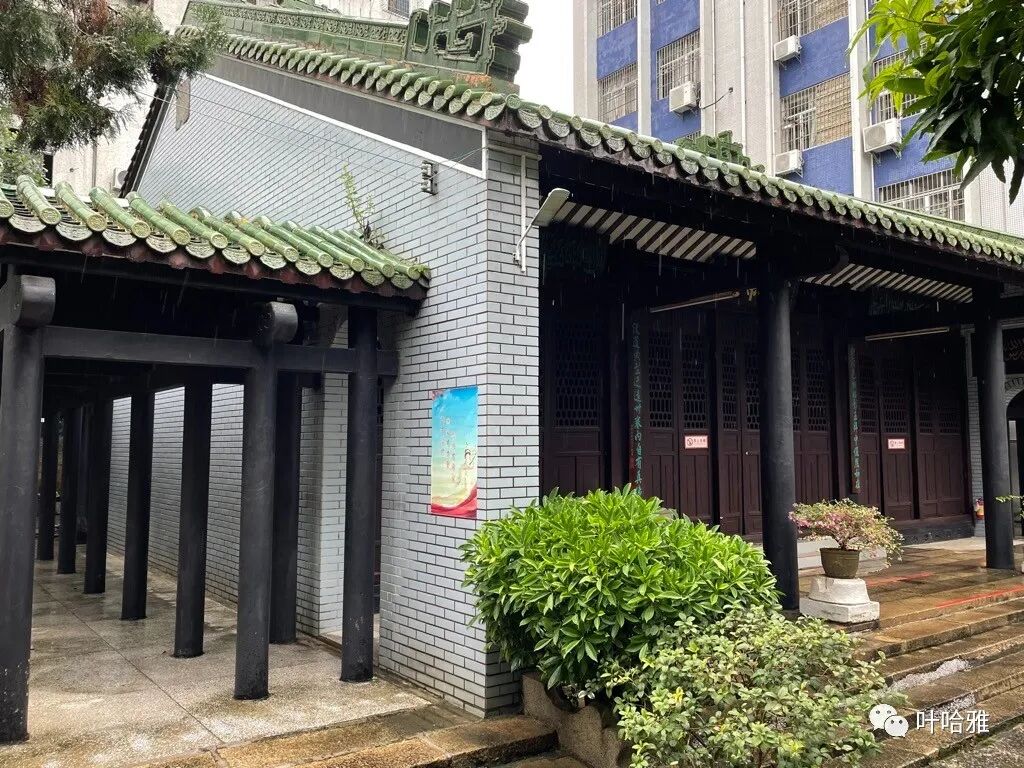
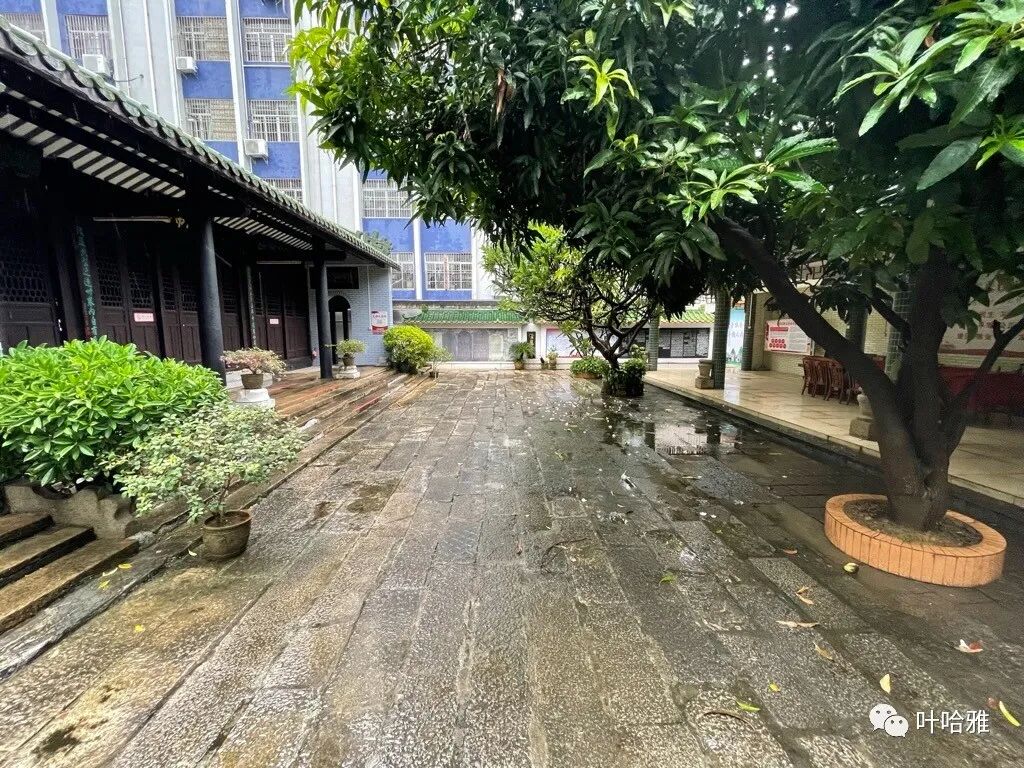
The Zhaoqing East City Mosque was first built between the late Ming and early Qing dynasties. It currently houses 11 ancient stone tablets and plaques, along with a collection of ancient books. It was named a Zhaoqing municipal cultural relic protection site in 1984. According to ancient stone tablets, the mosque was originally a brick-and-wood structure and underwent repairs during the Kangxi, Qianlong, Jiaqing, and Daoguang reigns. In 1946, Imam Yang Maolin opened a scripture school inside the mosque. The following year, he turned it into a halal primary school. It became a public halal primary school after 1950 and was renamed Zhaoqing No. 17 Primary School in 1966. In 1991, the mosque and the primary school were separated; the north side of the main prayer hall was given to the primary school, and the south side was returned to the mosque.
Old photo of the halal primary school
The caretaker of the East City Mosque is from the Wang family of Hui Muslims, who were the first of their people to settle in Zhaoqing. According to the Wang Family Genealogy of Zhaoqing, People say Wang Jiyin had a brother who moved to Guangxi shortly after arriving in Zhaoqing, and they lost contact. Since Wang Jiyin, the family has lived here for over 200 years across eleven generations. The family has grown to over a thousand people, with relatives now living in Hong Kong, Macau, and overseas, far beyond their original small presence in Zhaoqing.
The East City Mosque is slightly older than the West City Mosque and was rebuilt in a traditional style.
The East City Mosque does not hold regular religious services; you must go to the West City Mosque for Jumu'ah prayers.
Hui Muslims in Guangdong live all over the province. They are mainly concentrated in the Pearl River Delta centered on Guangzhou, the West River region centered on Zhaoqing, and the North River region centered on Shaozhou and Nanxiong. There are also scattered populations in southern Guangdong, the East River area, and the Chaoshan region.
The Hui Muslims in Zhaoqing mainly came from military garrisons during the Ming and Qing dynasties, where they settled down and raised families. Others were Hui Muslims from across the country who came to do business, or Hui scholars who came to Guangdong to serve as imams, moving from places like Gansu, Shaanxi, Guangxi, and Hunan. A small number of Hui Muslims were also exiled here. For example, during the Hongzhi reign, the imperial court sent 181 tribute envoys from Turpan to be settled in Guangdong and Guangxi. Thousands of Hui Muslims from counties like Fengxiang and Fufeng in Shaanxi rose up in rebellion. After the uprising was suppressed, the men were all sent to Guangdong and Guangxi for military service. In the seventh year of the Hongzhi reign, Minister of War Ma Wensheng requested that 40 Turpan Hui tribute envoys, including Xieyiman Su'er, be sent to Guangdong, Guangxi, and Fujian as a punishment.
Recorded history of Hui Muslims in Zhaoqing dates back to the Ming dynasty. In the first year of the Jingtai reign (1450), Dong Xing requested that over 400 officers and soldiers under the command of Lian Zhong, a regional military commander sent from Nanjing to suppress Huang Xiaoyang, be allowed to stay and garrison in Guangdong. In the second year of the Chenghua reign (1466), Han Yong requested that they and their families be allowed to settle in Guangdong as part of the agricultural garrison troops. Some of these Hui Muslims settled near the naval camp east of Zhaoqing city, while those who settled in the west of the city arrived in the early Qing dynasty. Today, there are about 600 Hui Muslims in Zhaoqing with nine surnames: Liu, Li, Ma, Mu, Luo, Wang, Dong, Ha, and Sa.
In 1646, Zhu Youlang of the Ming royal family established the Southern Ming regime in Zhaoqing. The Qing government sent troops to suppress it. Once the fighting stopped, the Hui Muslim soldiers settled down as civilians, and these Hui Muslims later moved to Guangzhou one after another.
After the Southern Ming regime fell, the Qing government moved the Governor-General's office of Guangdong and Guangxi to Guangzhou in the 11th year of the Qianlong reign. Zhaoqing was no longer a major military hub, so the Hui Muslims moved out of Zhaoqing and into Guangzhou along with the government. Because of this, a saying spread among the Hui Muslims: First arrive in Zhaoqing, then live in Guangzhou.
West City Mosque
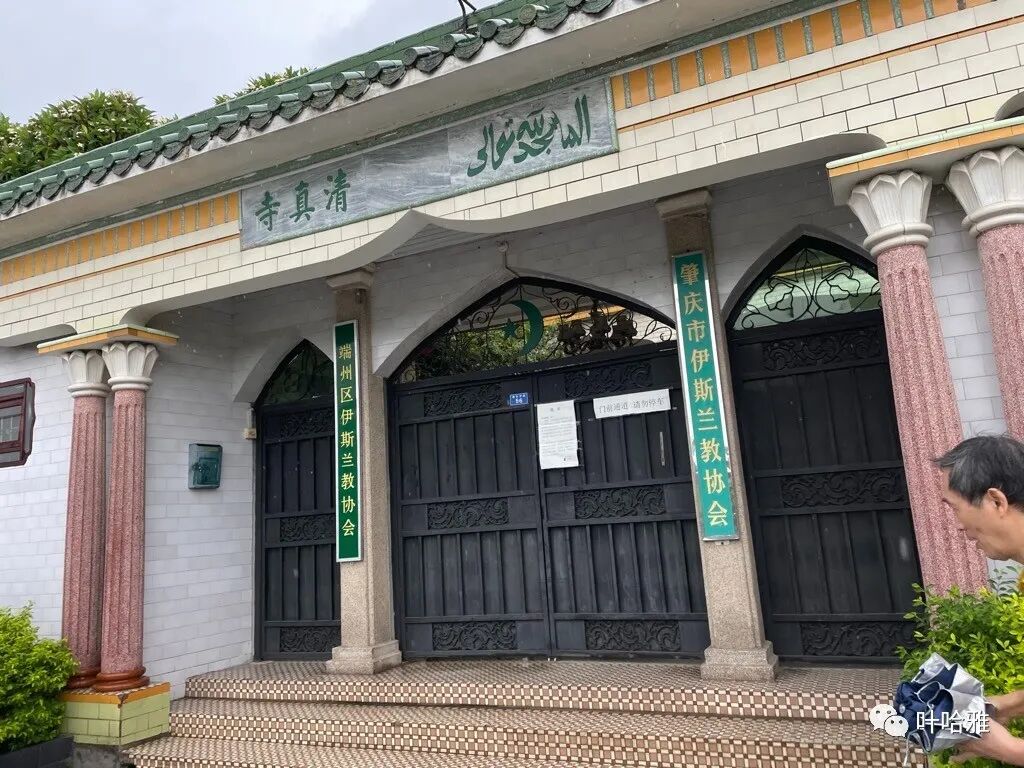
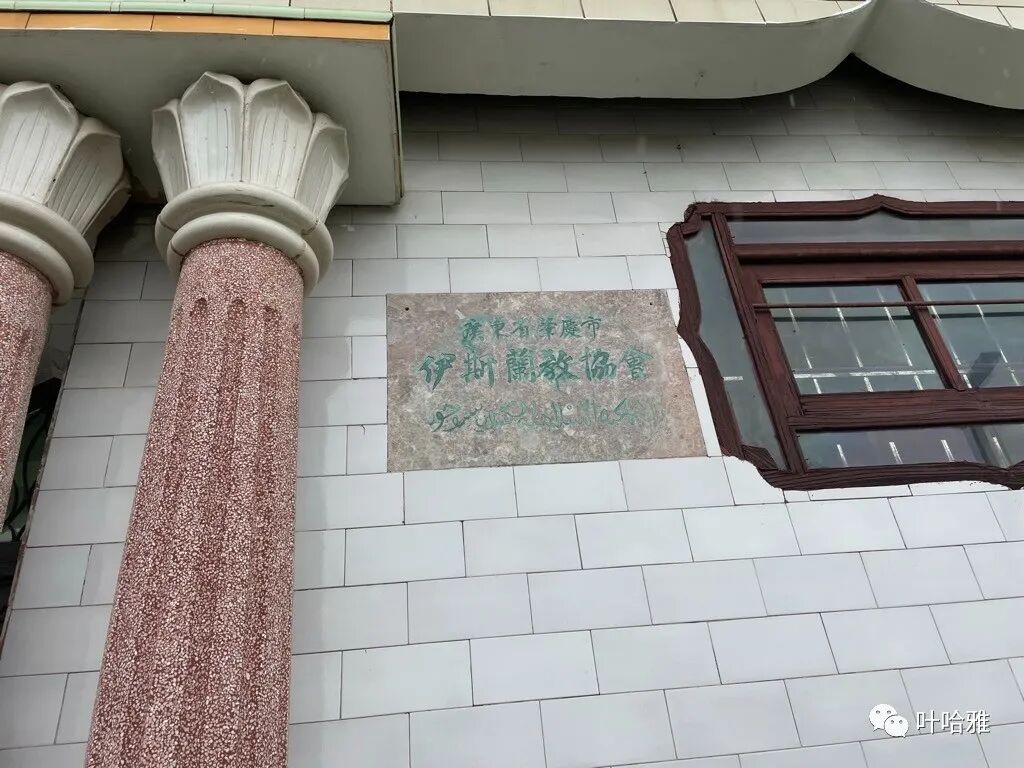
The West City Mosque in Zhaoqing was first built in the early years of the Qianlong reign. Local elders pooled money to buy a house in Zhongyongshe outside the north of the city to serve as the first mosque. It was later moved to Longdinggang in Zhujia Lane outside the west of the city, and then expanded with funds raised by local elders during the Jiaqing reign.
The imam of the West City Mosque is from Hainan and has led the mosque in Zhaoqing for over thirty years. He just retired. The day after my visit was the first day for the new imam, who is from Xinjiang and has taught in Guangdong for many years.
Zhaoqing West City Mosque
The West City Mosque was built with a dome style. Since it has long been a municipal-level cultural relic protection site, there are no plans to renovate it.
Daily religious activities are held at the West City Mosque. The East City Mosque has no imam, so Friday prayers (Jumu'ah) are held at the West City Mosque.
The ground of the mosque is covered in frangipani flowers (jidan hua), which have a very fresh scent. They can be dried and used in medicine or for making soup.
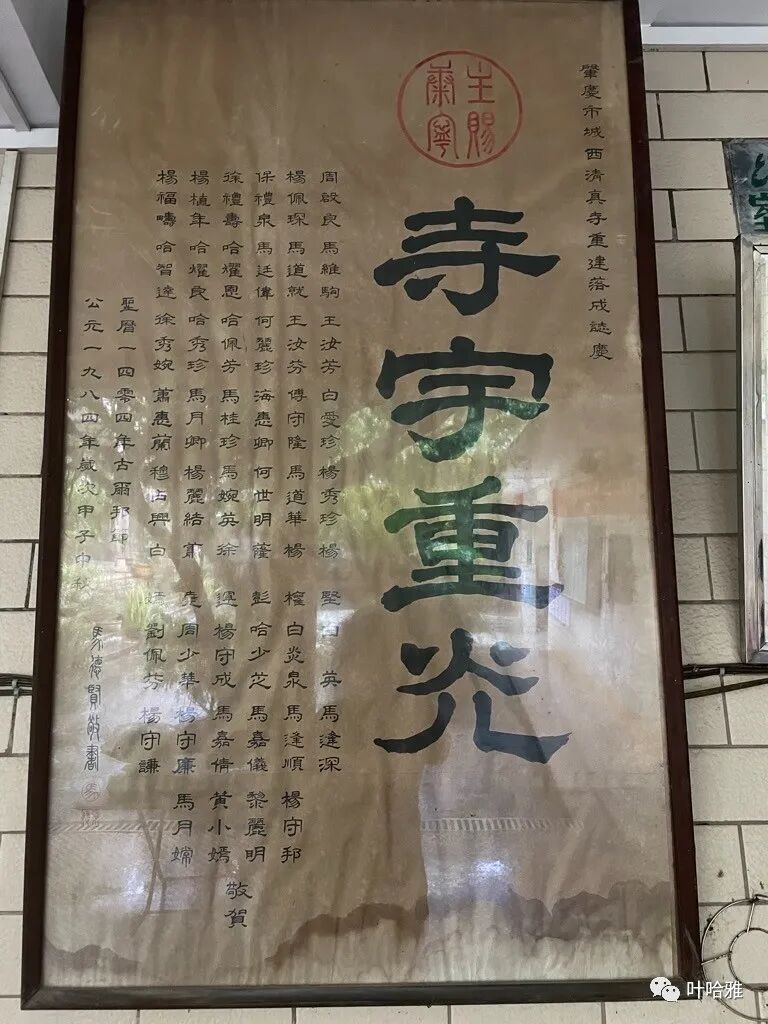
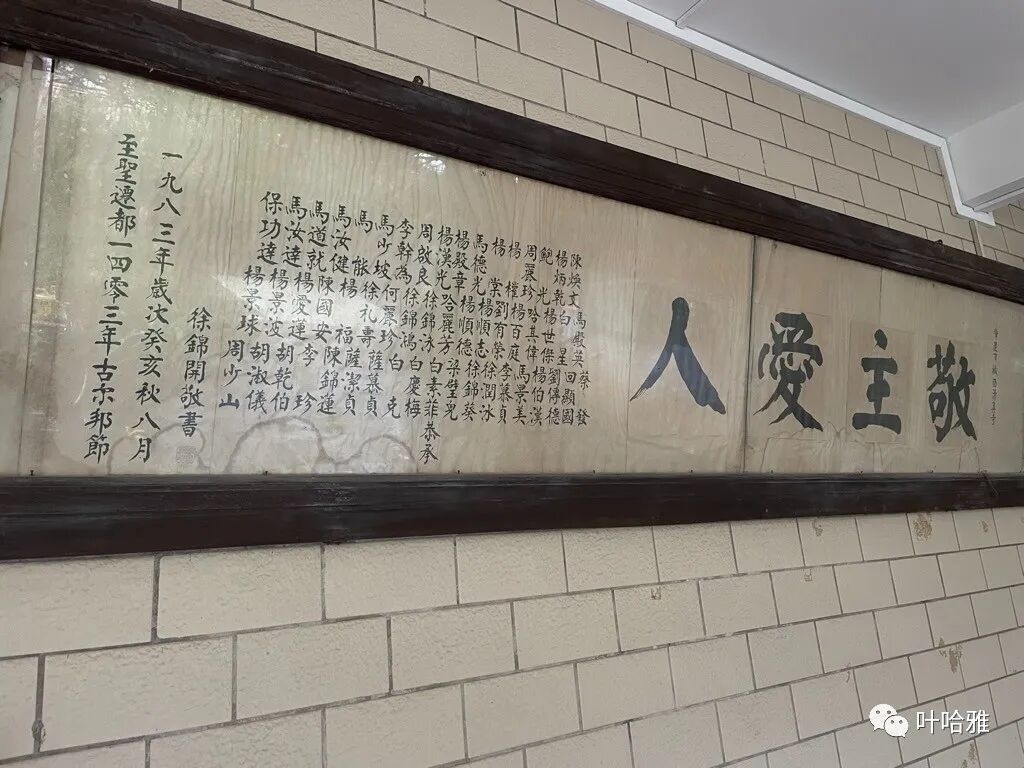
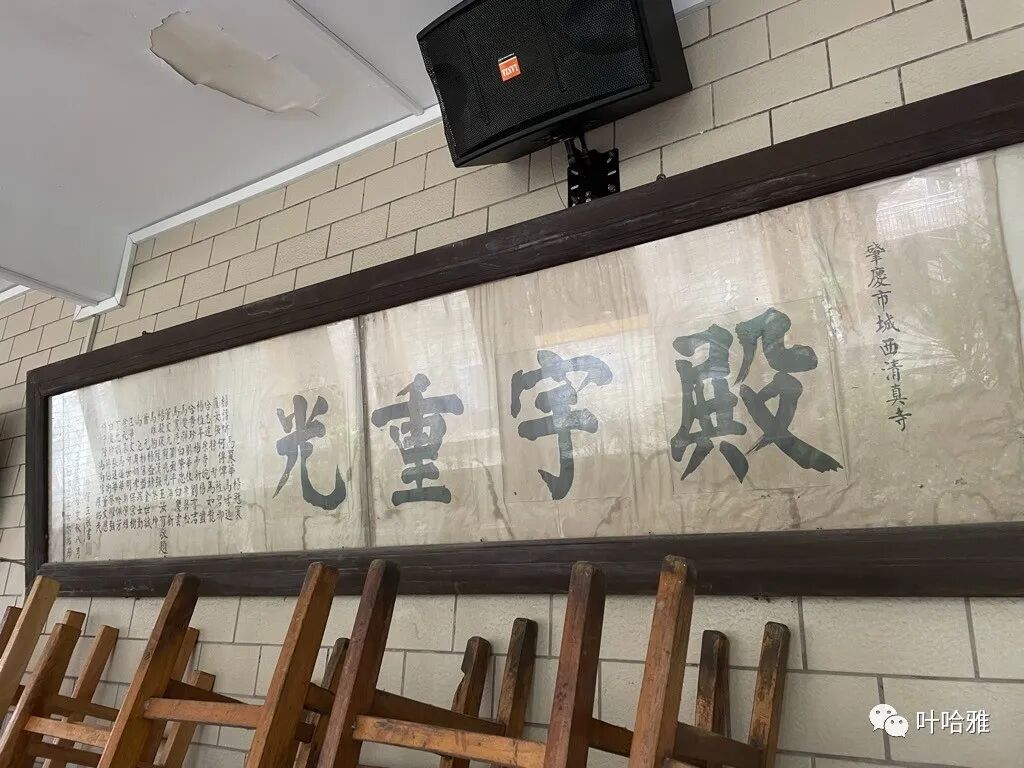
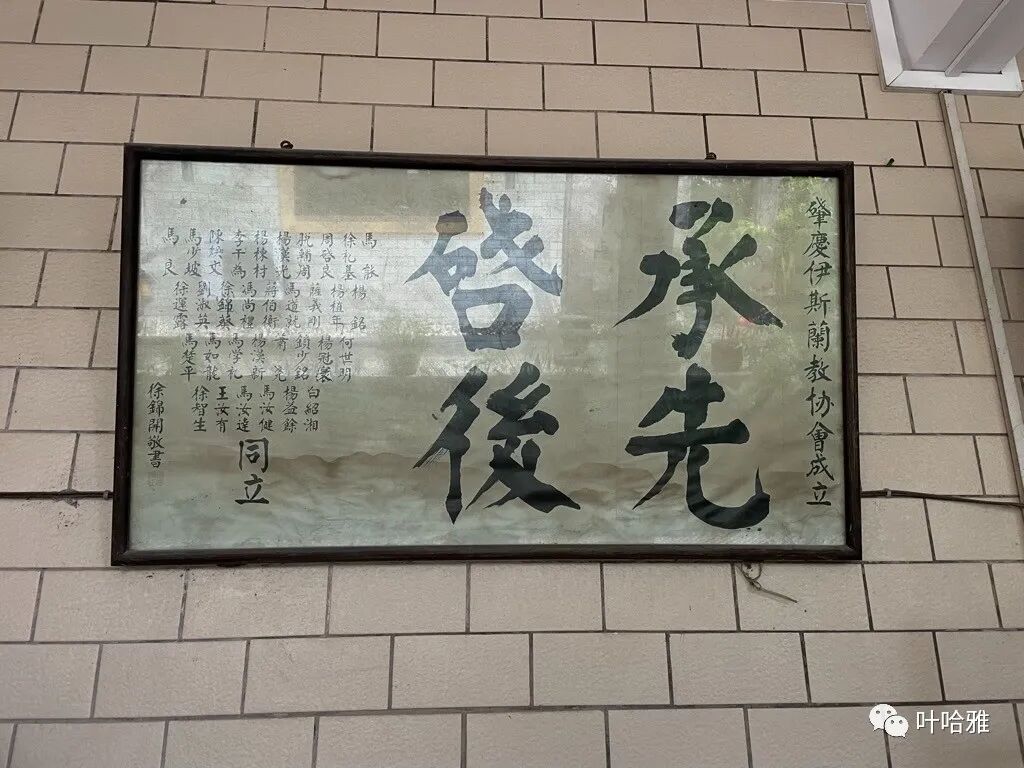
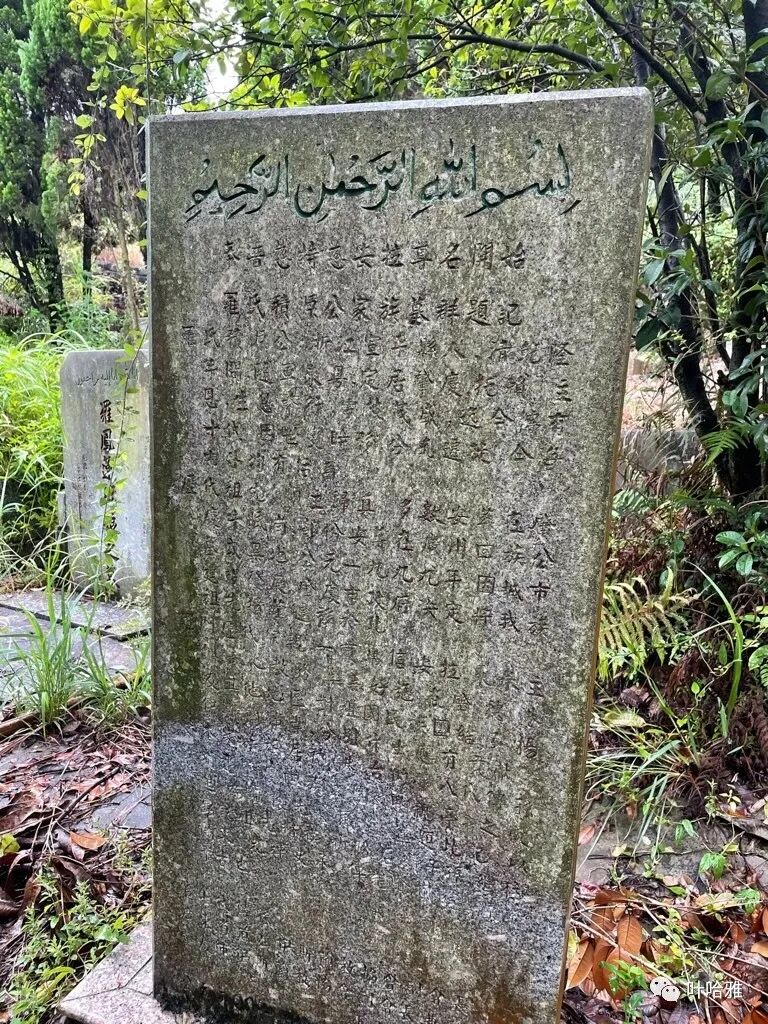
The only remaining historical site inside the mosque records the history of its construction.
Zhaoqing Hui Muslim Cemetery
The Zhaoqing Hui Muslim Cemetery is located in Ganshu Village, Gaoyao District, more than ten kilometers from the city center. It was originally located at Niumiangang in the west of the city and covered nearly 20,000 square meters. Later, due to urban planning, the graves were moved here, and the area was expanded to nearly 40,000 square meters.
A total of 2,521 graves were relocated. The remains of the ancestors were wrapped in white burial shrouds (kafan) and reburied.
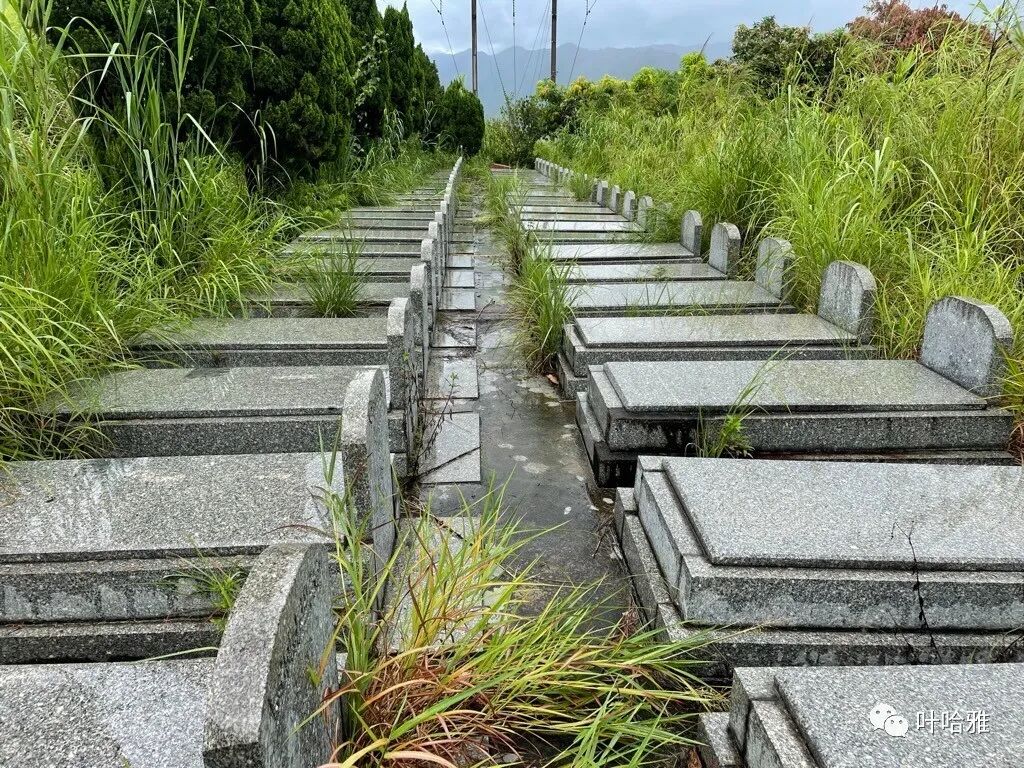
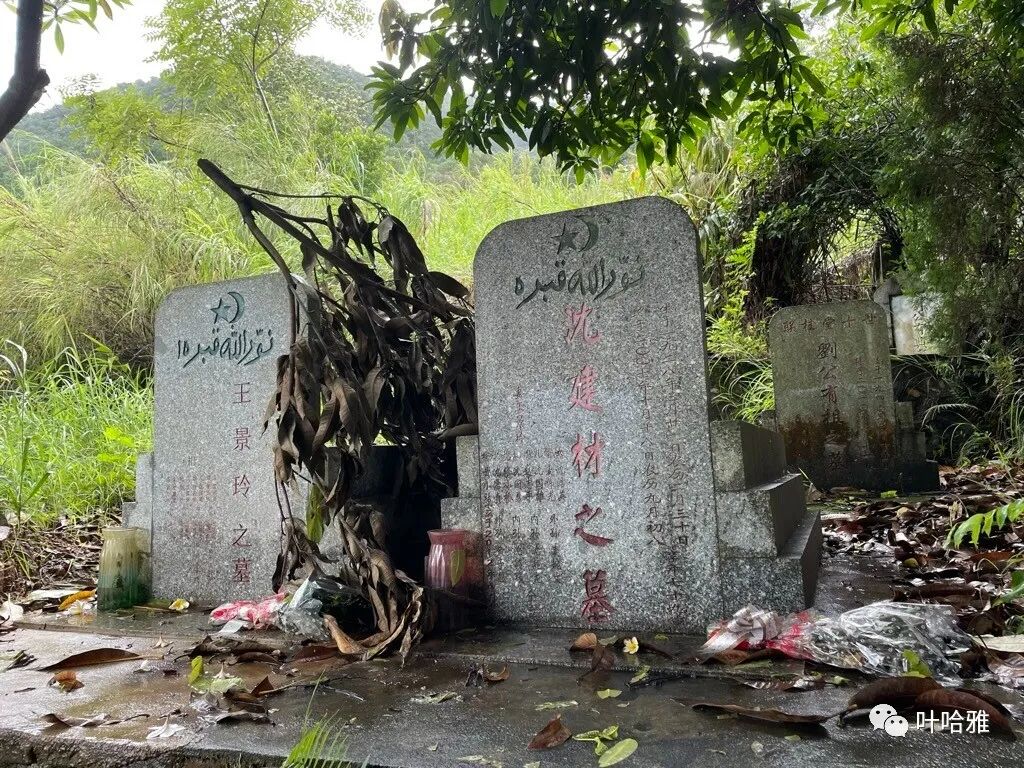
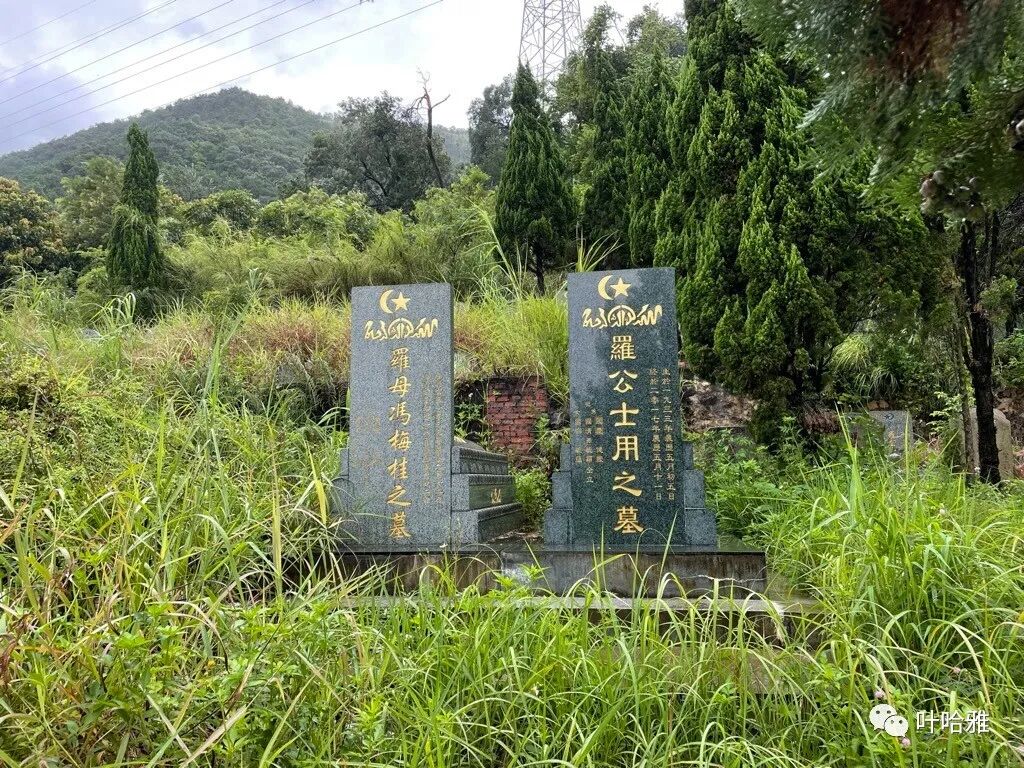
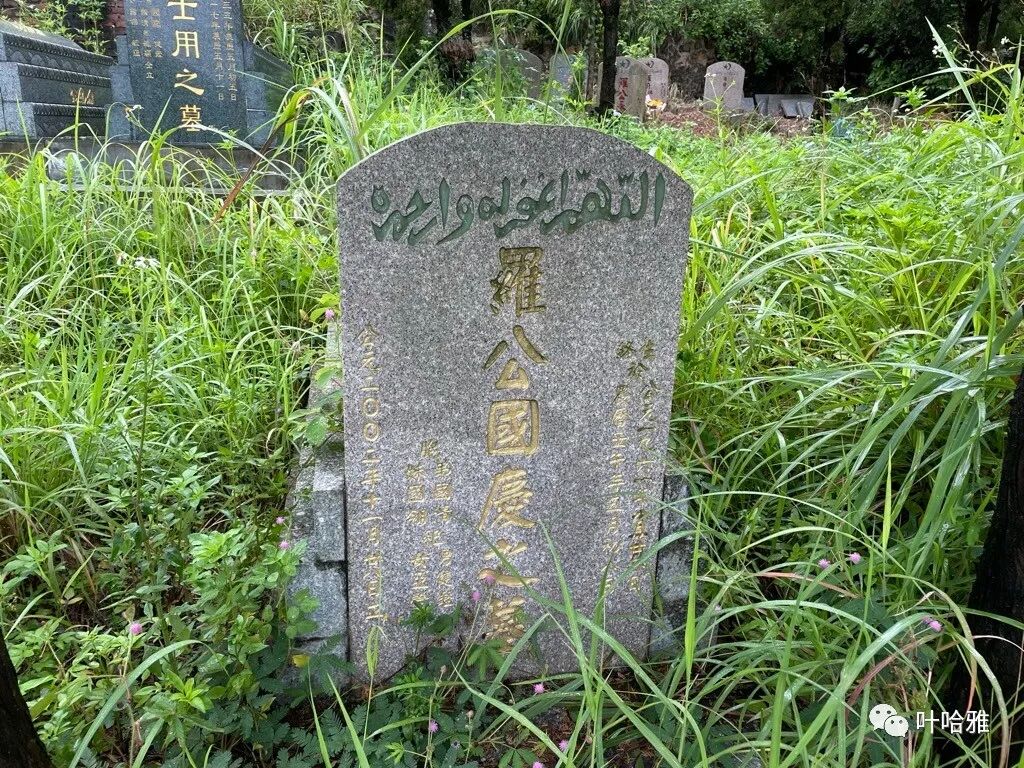
The cemetery is overgrown with weeds and rarely visited. Only one local Hui Muslim caretaker stays here year-round.
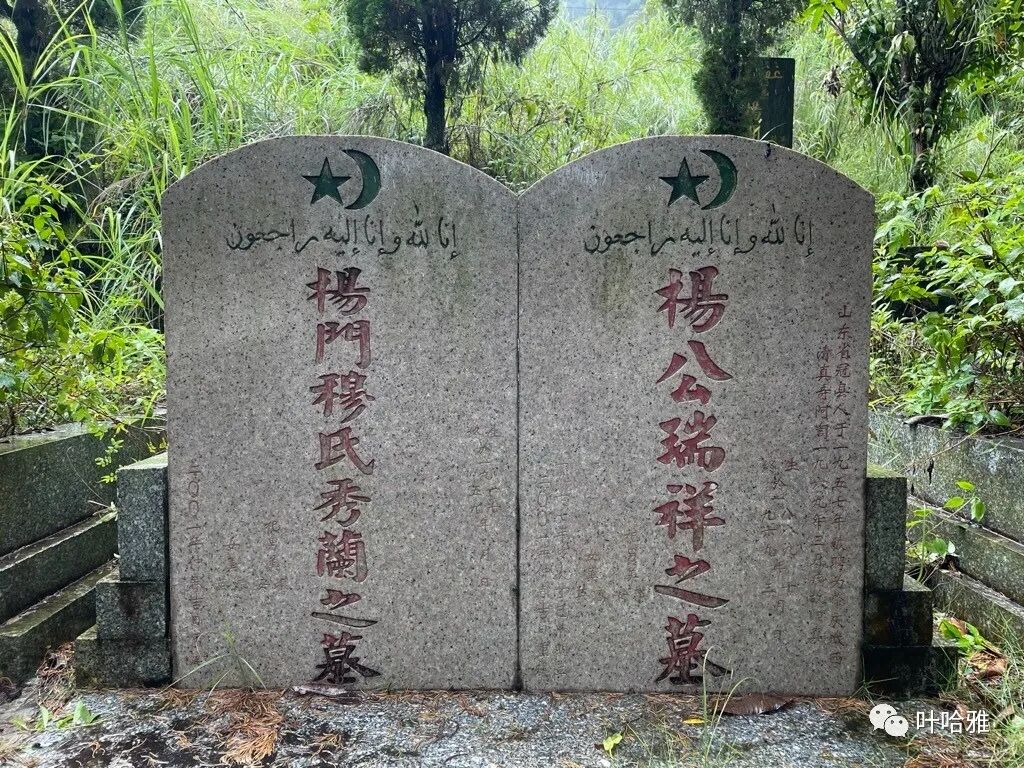
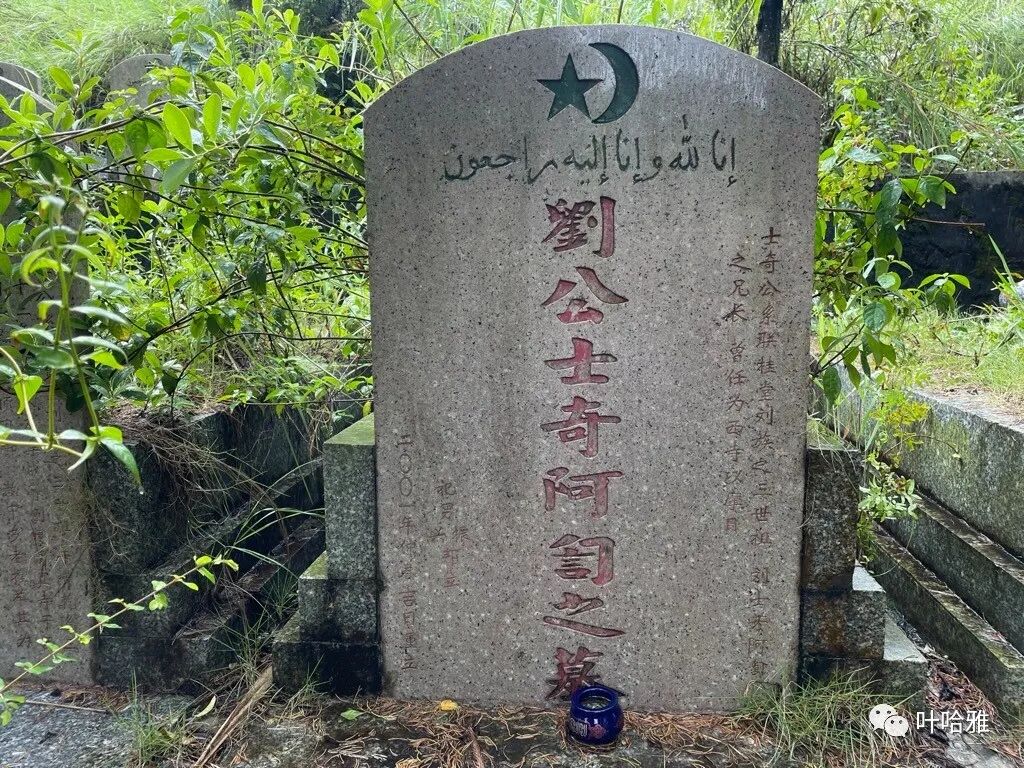
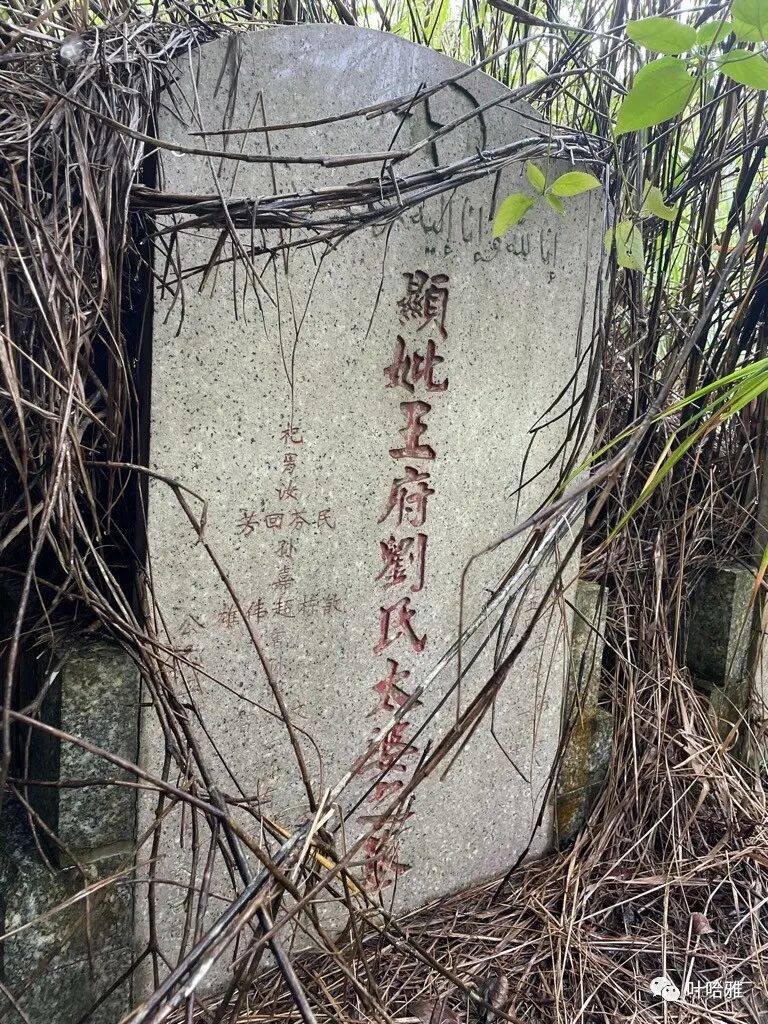
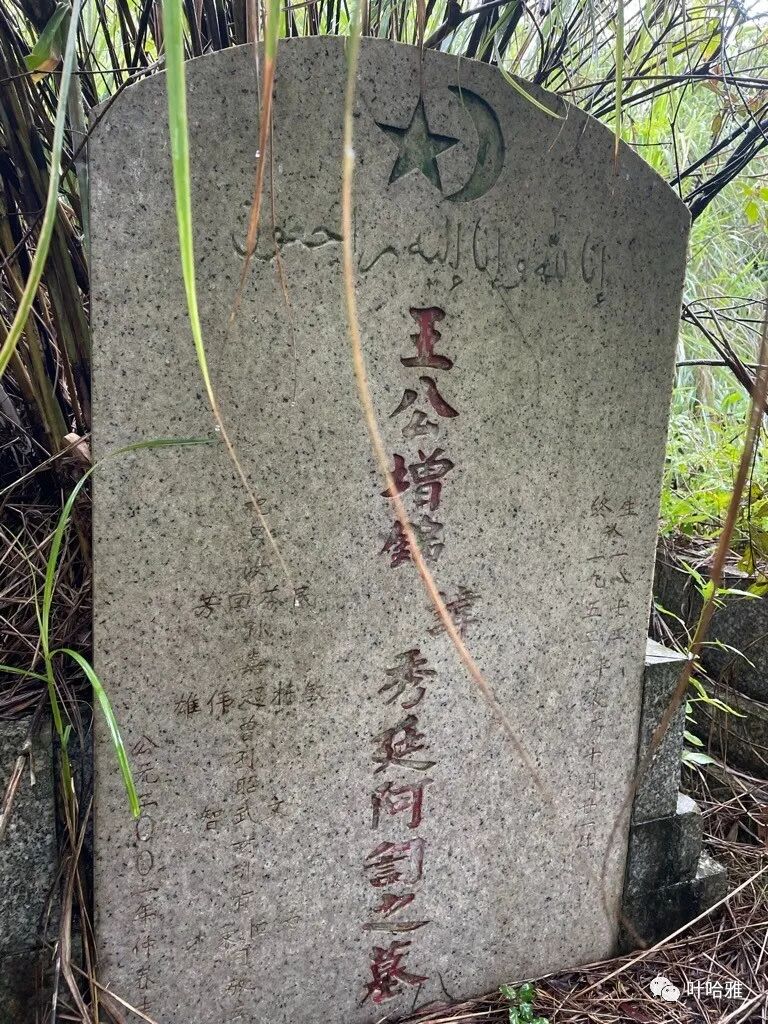
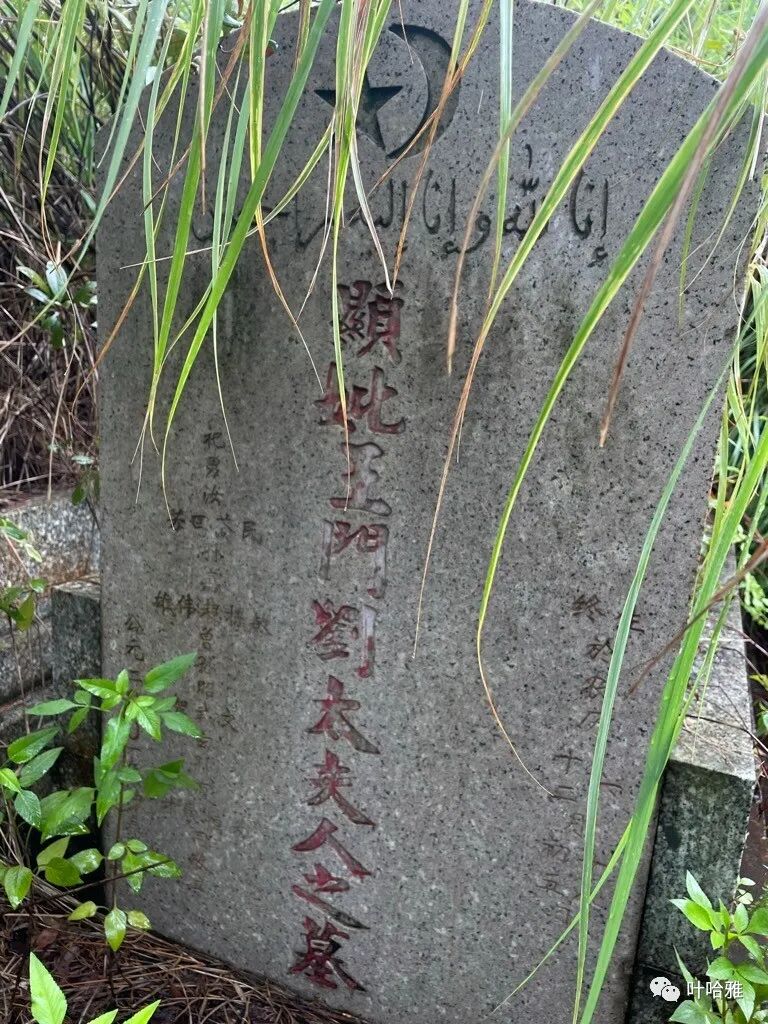
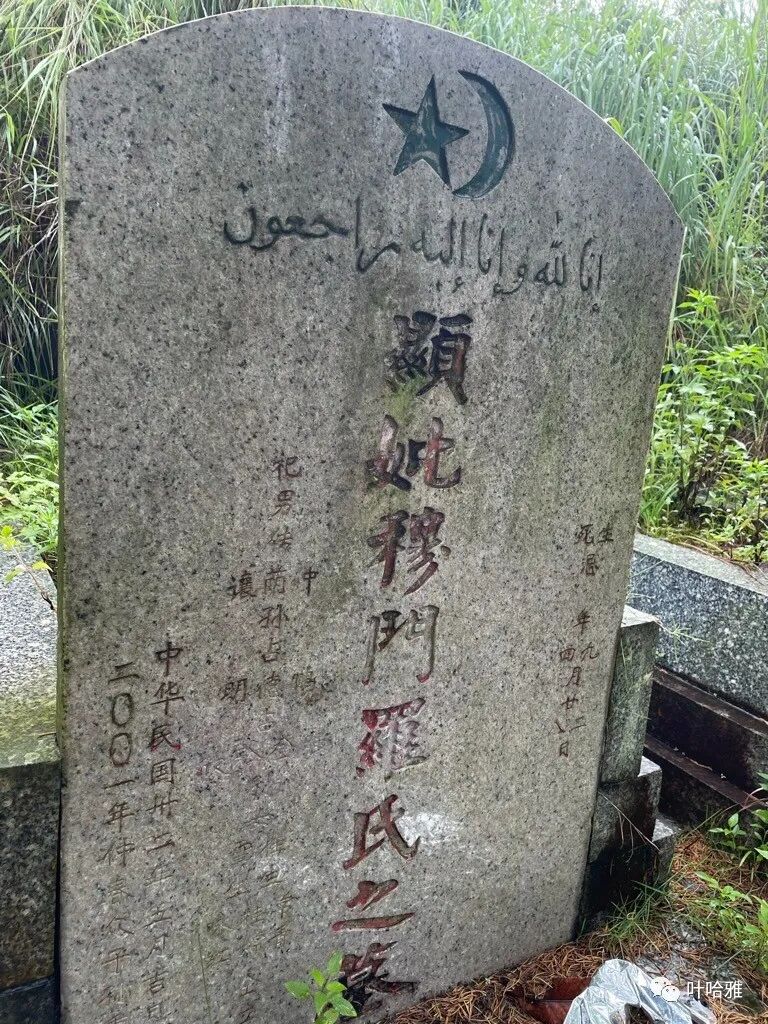
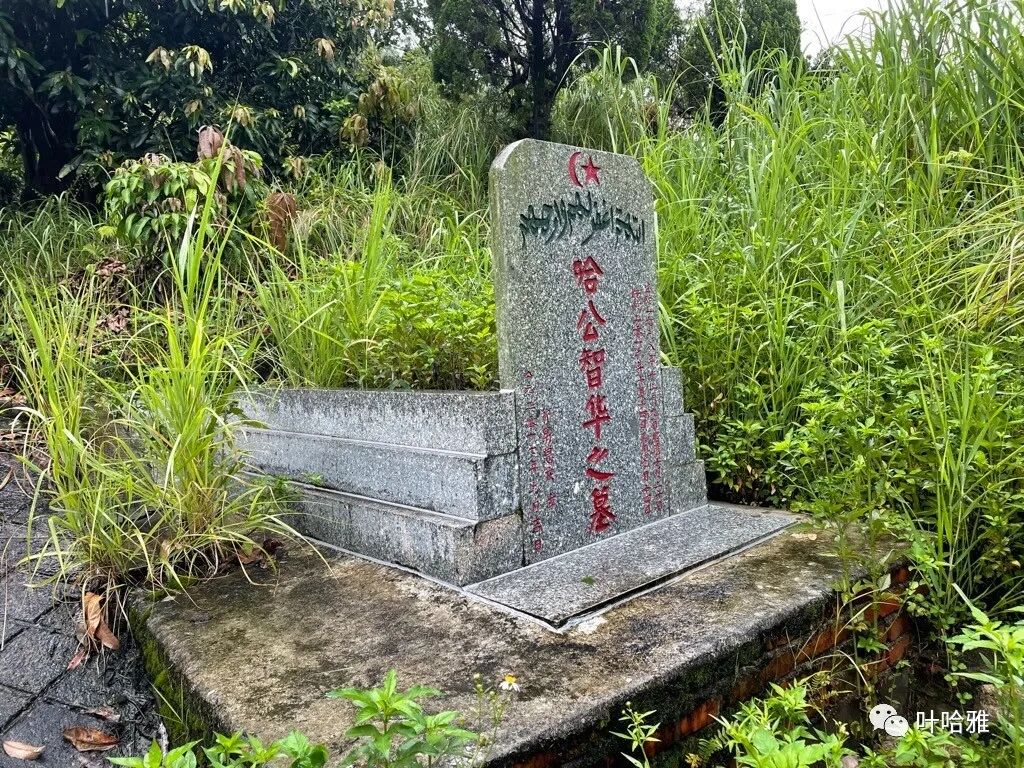
The names carved on the stone tablets are those who donated money to renovate the cemetery. Many are from the Guangdong-Hong Kong-Macao region. For those who have passed away, the characters for "late Hui" (gu hui) are carved above their names.
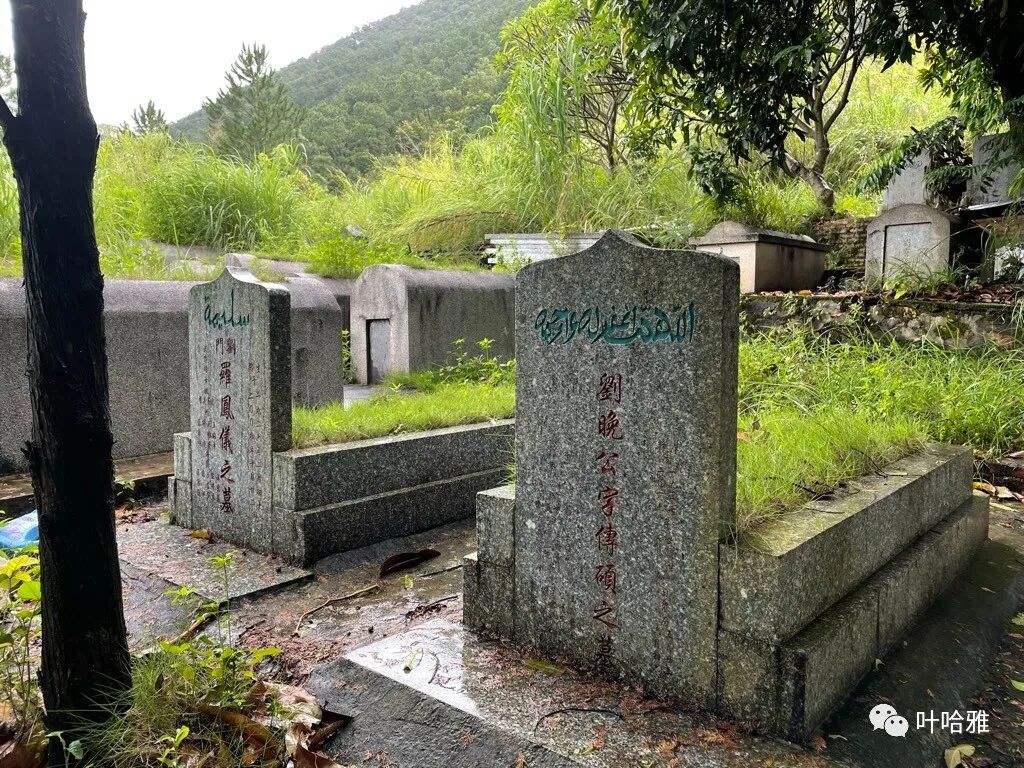
The cemetery has an area specifically for burying scholars and imams from the Ming and Qing dynasties. The local Islamic Association rebuilt the graves for these predecessors based on historical records. However, the caretaker said that the descendants of these scholars are mostly missing, so he has never seen any descendants come to visit the graves.
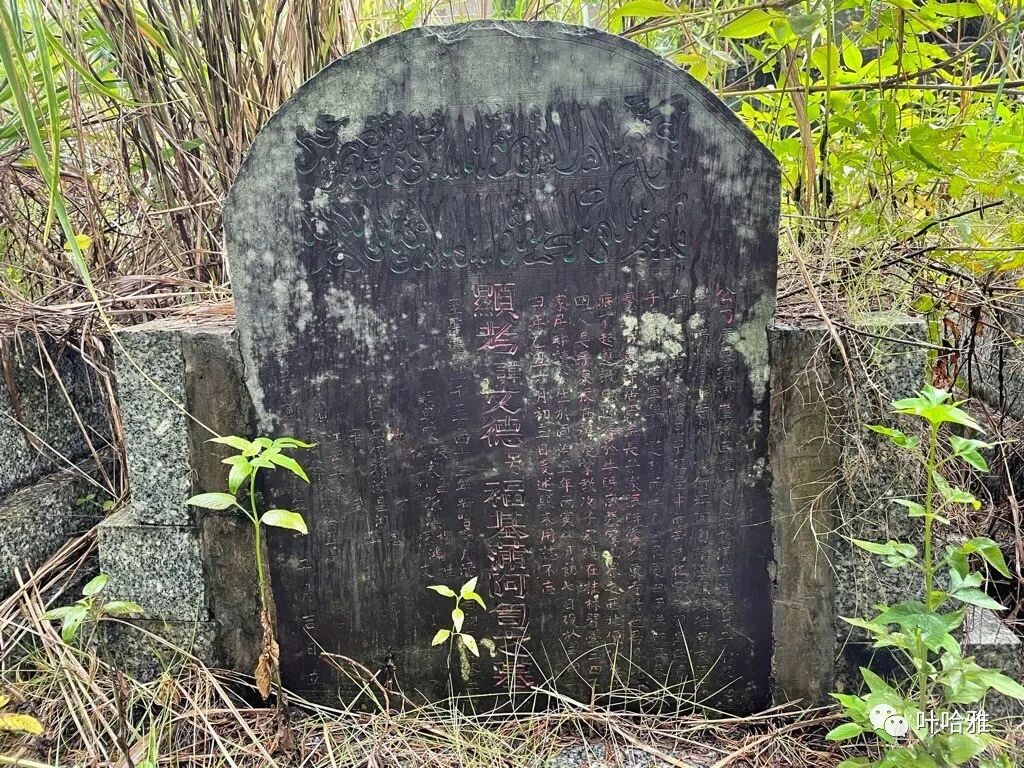
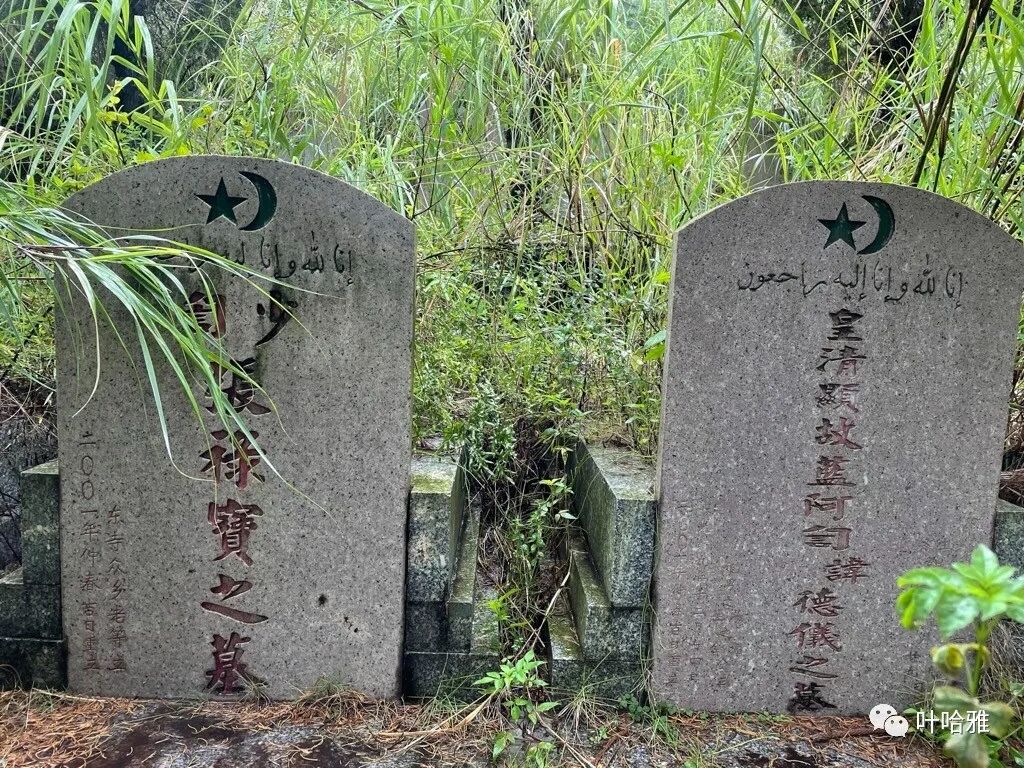
Huangqing Gu refers to someone who returned to Allah during the early Qing Dynasty, while Qing Gu refers to someone who returned to Allah during the later years of the Qing Dynasty.
Praise the Emperor Pavilion (Songsheng Ting).
The Praise the Emperor Pavilion (Songsheng Ting) donated and built by the Guangzhou Dost.
Li Family Genealogy.
The Zhaoqing Hui Muslim Li Family Genealogy records that their ancestor, Li Fengqi, was originally from Jinan Prefecture, Shandong, and came south to Guangdong with Ma Bohu during the Chongzhen reign of the Ming Dynasty. After Ma Bohu was defeated in battle, Li Fengqi lived in seclusion in Guangzhou (Yangcheng) and moved to Zhaoqing in the early Qing Dynasty. The Zhaoqing Hui Muslim Liu Family Genealogy records that their ancestor, Liu Zhongyi, was originally from Wumenlou, Beiguan, Chang'an County, Xi'an Prefecture, Shaanxi Province. He also came south to Guangdong with Ma Bohu in the early Qing Dynasty and served at the Guangdong Luoding Garrison Governor's Office (possibly the Luoding Garrison Vice General; the Yongzheng edition of the Guangdong Gazetteer mentions Liu Zhengli as the Luoding Garrison Vice General in the 47th year of the Kangxi reign, though it is unclear if this is Liu Zhongyi). His descendants then lived in Zhaoqing for generations. However, checking the official records in the Ming Dynasty Guangdong Gazetteer and the Qing Dynasty Guangdong Gazetteer, there is no mention of a person named Ma Bohu.
The Zhaoqing Hui Muslim Liu Family Genealogy (revised in the 50th year of the Qianlong reign), Li Family Genealogy (revised in the 23rd year of the Daoguang reign), Luo Family Genealogy, Wang Family Genealogy, and the Liangguang Sa Family Genealogy (based on the Daoguang 17th-year edition, reprinted in the Republic of China era) all record that their respective ancestors came from Chang'an in Shaanxi, Jinan in Shandong, Xuanping in Zhejiang, Taiyuan in Shanxi, and other places. They settled in Zhaoqing after taking official posts there during the Qianlong and Daoguang reigns of the Qing Dynasty.
The Zhaoqing City Luo Jiyuan Family Genealogy records: Tracing our Luo Jiyuan family, People say we originated from Xuanping County, Zhejiang Province. During the Qianlong reign, they received an imperial order to lead troops south to eastern Guangdong and were stationed in Duanzhou (Zhaoqing). They later settled there, and the family branches have multiplied and flourished for nearly 300 years, with a long and deep history.
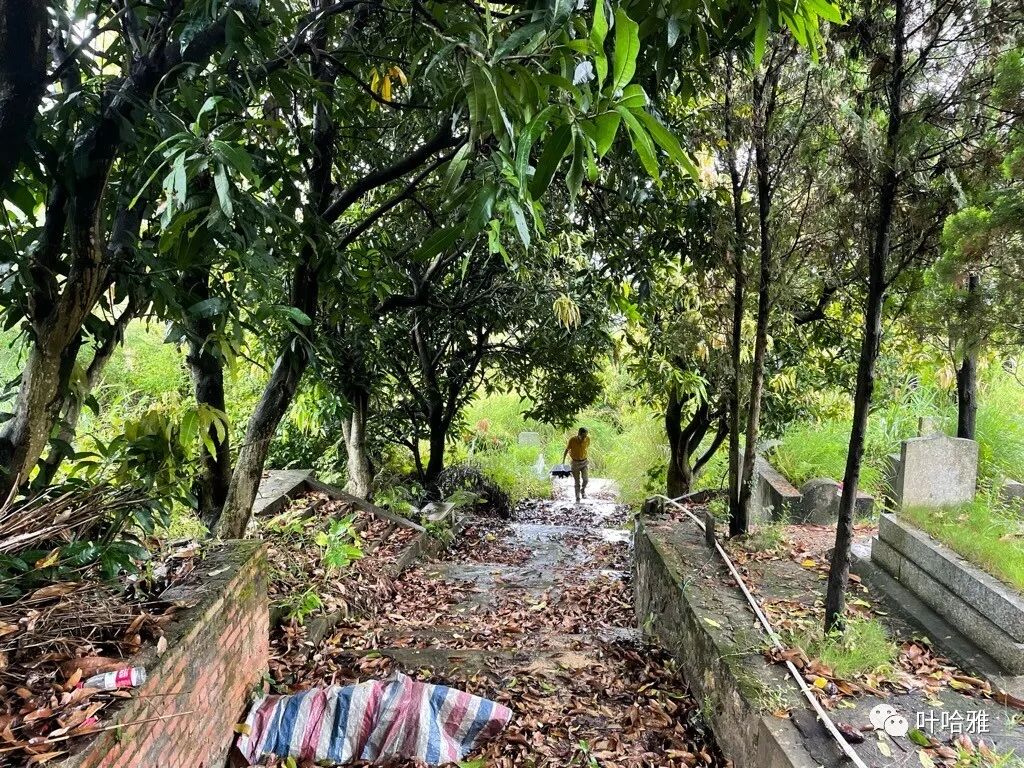
Although the cemetery is located in a remote mountain area, I asked the caretaker, and he said he has not encountered any ghosts or supernatural events in the decades he has been here. I wanted to give the old gentleman some money, but he politely declined and told me I could give it to the mosque instead.
The photos show that the Hui Muslim cemetery has fallen into disrepair and is overgrown with weeds, with many tombstones hidden by grass taller than a person. Every year, family members still invite an imam to recite prayers in memory of the deceased. Most Hui Muslims from Zhaoqing have moved away or work elsewhere, and few are very wealthy. The owner of the Zhaoqing Halal Restaurant is a local Hui Muslim who stays true to his faith, which is not easy.
Halal Restaurant
The Halal Restaurant was founded in 1957. Luo Xutang, president of the Zhaoqing Islamic Association, explained that four Hui Muslims who lived in Zhaoqing—Luo Shiyong, Sa Zhinan, Dong Shi, and Liu Youxing—were entrusted with setting up the restaurant. In 1998, the Halal Restaurant moved to its current location by the river.
There used to be three local halal restaurants in downtown Zhaoqing, but this is the only one left. It is famous for its Zhaoqing crispy roast goose (cui pi shao e), which locals have eaten since they were children, making it a fond childhood memory for many.
The restaurant is about 300 square meters and has private rooms and display areas, making it suitable for daily dining and hosting weddings or funerals.
This is the only halal restaurant in Zhaoqing that serves Cantonese food, though there are over twenty noodle shops.
My friends in Guangzhou told me the roast goose was a must-order before I arrived. The skin is crispy and the meat is tender; it is the best Cantonese-style roast goose I have ever had. You can dip it in a sweet and sour sauce so you can eat plenty without it feeling greasy.
Roast goose
Cantonese people care a lot about healthy eating and are especially good at making soups, using all kinds of ingredients and herbs. The bowl of black-eyed pea, chicken foot, and clam soup (meidou jijiao bang tang) I had tasted a bit medicinal. I asked Imam Liu what the difference is between Zhaoqing food and Guangzhou food. He felt that Zhaoqing has a wider variety of soups, though perhaps that is because we Hui Muslims have fewer soup options, so we can only compare the Zhaoqing Halal Restaurant with those in Guangzhou.
Black-eyed pea, chicken feet, and clam soup (meidou jijiao bangtang).
Stir-fried rice noodles with beef (ganchao niuhe) is a famous street food in Guangdong. I think it is a main dish that really shows a Cantonese chef's skill. It is made with beef slices and flat rice noodles, and the green parts are yellow chives (jiuhuang). I was surprised that the portion at the halal restaurant was huge; one serving is enough for two people.
Stir-fried rice noodles with beef (ganchao niuhe).
When I was in Guangzhou, I could easily get a group together for a meal. But when I said I wanted to go to Zhaoqing to visit graves, no one would go with me. So, I ended up eating alone at the halal restaurant, which meant I could not try everything on the menu. Sand ginger poached chicken (shajiang baiqieji) is also a Zhaoqing specialty, but I could not finish it by myself. It was a shame, but I will come back again. view all
Summary: This China mosque travel guide covers Zhaoqing in Guangdong, including East City Mosque, West Mosque, ancient Hui Muslim tombs, local Muslim history, and halal Cantonese food such as crispy roast goose.
A Halal Trip to Zhaoqing, Guangdong: The Mosque, Ancient Tombs of Hui Muslims, and Crispy Roast Goose (Shaoge) is presented here as a firsthand travel account in clear English, beginning with this scene: I had long heard that Zhaoqing has a halal Cantonese restaurant run by locals for many years, two mosques, and the largest ancient tomb complex for Hui Muslims in Guangdong. The account keeps its focus on Halal Travel, Yiwu Food, Mosque Travel while preserving the names, places, food, and historical details from the Chinese source.
I had long heard that Zhaoqing has a halal Cantonese restaurant run by locals for many years, two mosques, and the largest ancient tomb complex for Hui Muslims in Guangdong. During our team-building trip to Guangzhou, I set aside one day to visit Zhaoqing. You can take an intercity train from Guangzhou and reach Zhaoqing in just over an hour, making it an easy day trip. I suggest buying a ticket to Zhaoqing Station instead of Zhaoqing East Station, as the East Station is a 40-minute drive from the city center.
Zhaoqing Station is only three kilometers from the mosques. Historical records show two mosques in Zhaoqing: the East Mosque and the West Mosque. The East Mosque was built between the late Ming and early Qing dynasties on Shuishiying Road in the Duanzhou District, which was the Shuixiangying area at the time. The West Mosque was built in the 32nd year of the Qianlong reign of the Qing dynasty on Kangle Middle Road in the Duanzhou District, formerly known as Kangle Middle Street on Zhujia Road near the West Gate. The two mosques are about two kilometers apart.
East City Mosque
Zhaoqing East City Mosque
The Zhaoqing East City Mosque was first built between the late Ming and early Qing dynasties. It currently houses 11 ancient stone tablets and plaques, along with a collection of ancient books. It was named a Zhaoqing municipal cultural relic protection site in 1984. According to ancient stone tablets, the mosque was originally a brick-and-wood structure and underwent repairs during the Kangxi, Qianlong, Jiaqing, and Daoguang reigns. In 1946, Imam Yang Maolin opened a scripture school inside the mosque. The following year, he turned it into a halal primary school. It became a public halal primary school after 1950 and was renamed Zhaoqing No. 17 Primary School in 1966. In 1991, the mosque and the primary school were separated; the north side of the main prayer hall was given to the primary school, and the south side was returned to the mosque.
Old photo of the halal primary school
The caretaker of the East City Mosque is from the Wang family of Hui Muslims, who were the first of their people to settle in Zhaoqing. According to the Wang Family Genealogy of Zhaoqing, People say Wang Jiyin had a brother who moved to Guangxi shortly after arriving in Zhaoqing, and they lost contact. Since Wang Jiyin, the family has lived here for over 200 years across eleven generations. The family has grown to over a thousand people, with relatives now living in Hong Kong, Macau, and overseas, far beyond their original small presence in Zhaoqing.
The East City Mosque is slightly older than the West City Mosque and was rebuilt in a traditional style.
The East City Mosque does not hold regular religious services; you must go to the West City Mosque for Jumu'ah prayers.
Hui Muslims in Guangdong live all over the province. They are mainly concentrated in the Pearl River Delta centered on Guangzhou, the West River region centered on Zhaoqing, and the North River region centered on Shaozhou and Nanxiong. There are also scattered populations in southern Guangdong, the East River area, and the Chaoshan region.
The Hui Muslims in Zhaoqing mainly came from military garrisons during the Ming and Qing dynasties, where they settled down and raised families. Others were Hui Muslims from across the country who came to do business, or Hui scholars who came to Guangdong to serve as imams, moving from places like Gansu, Shaanxi, Guangxi, and Hunan. A small number of Hui Muslims were also exiled here. For example, during the Hongzhi reign, the imperial court sent 181 tribute envoys from Turpan to be settled in Guangdong and Guangxi. Thousands of Hui Muslims from counties like Fengxiang and Fufeng in Shaanxi rose up in rebellion. After the uprising was suppressed, the men were all sent to Guangdong and Guangxi for military service. In the seventh year of the Hongzhi reign, Minister of War Ma Wensheng requested that 40 Turpan Hui tribute envoys, including Xieyiman Su'er, be sent to Guangdong, Guangxi, and Fujian as a punishment.
Recorded history of Hui Muslims in Zhaoqing dates back to the Ming dynasty. In the first year of the Jingtai reign (1450), Dong Xing requested that over 400 officers and soldiers under the command of Lian Zhong, a regional military commander sent from Nanjing to suppress Huang Xiaoyang, be allowed to stay and garrison in Guangdong. In the second year of the Chenghua reign (1466), Han Yong requested that they and their families be allowed to settle in Guangdong as part of the agricultural garrison troops. Some of these Hui Muslims settled near the naval camp east of Zhaoqing city, while those who settled in the west of the city arrived in the early Qing dynasty. Today, there are about 600 Hui Muslims in Zhaoqing with nine surnames: Liu, Li, Ma, Mu, Luo, Wang, Dong, Ha, and Sa.
In 1646, Zhu Youlang of the Ming royal family established the Southern Ming regime in Zhaoqing. The Qing government sent troops to suppress it. Once the fighting stopped, the Hui Muslim soldiers settled down as civilians, and these Hui Muslims later moved to Guangzhou one after another.
After the Southern Ming regime fell, the Qing government moved the Governor-General's office of Guangdong and Guangxi to Guangzhou in the 11th year of the Qianlong reign. Zhaoqing was no longer a major military hub, so the Hui Muslims moved out of Zhaoqing and into Guangzhou along with the government. Because of this, a saying spread among the Hui Muslims: First arrive in Zhaoqing, then live in Guangzhou.
West City Mosque
The West City Mosque in Zhaoqing was first built in the early years of the Qianlong reign. Local elders pooled money to buy a house in Zhongyongshe outside the north of the city to serve as the first mosque. It was later moved to Longdinggang in Zhujia Lane outside the west of the city, and then expanded with funds raised by local elders during the Jiaqing reign.
The imam of the West City Mosque is from Hainan and has led the mosque in Zhaoqing for over thirty years. He just retired. The day after my visit was the first day for the new imam, who is from Xinjiang and has taught in Guangdong for many years.
Zhaoqing West City Mosque
The West City Mosque was built with a dome style. Since it has long been a municipal-level cultural relic protection site, there are no plans to renovate it.
Daily religious activities are held at the West City Mosque. The East City Mosque has no imam, so Friday prayers (Jumu'ah) are held at the West City Mosque.
The ground of the mosque is covered in frangipani flowers (jidan hua), which have a very fresh scent. They can be dried and used in medicine or for making soup.
The only remaining historical site inside the mosque records the history of its construction.
Zhaoqing Hui Muslim Cemetery
The Zhaoqing Hui Muslim Cemetery is located in Ganshu Village, Gaoyao District, more than ten kilometers from the city center. It was originally located at Niumiangang in the west of the city and covered nearly 20,000 square meters. Later, due to urban planning, the graves were moved here, and the area was expanded to nearly 40,000 square meters.
A total of 2,521 graves were relocated. The remains of the ancestors were wrapped in white burial shrouds (kafan) and reburied.
The cemetery is overgrown with weeds and rarely visited. Only one local Hui Muslim caretaker stays here year-round.
The names carved on the stone tablets are those who donated money to renovate the cemetery. Many are from the Guangdong-Hong Kong-Macao region. For those who have passed away, the characters for "late Hui" (gu hui) are carved above their names.
The cemetery has an area specifically for burying scholars and imams from the Ming and Qing dynasties. The local Islamic Association rebuilt the graves for these predecessors based on historical records. However, the caretaker said that the descendants of these scholars are mostly missing, so he has never seen any descendants come to visit the graves.
Huangqing Gu refers to someone who returned to Allah during the early Qing Dynasty, while Qing Gu refers to someone who returned to Allah during the later years of the Qing Dynasty.
Praise the Emperor Pavilion (Songsheng Ting).
The Praise the Emperor Pavilion (Songsheng Ting) donated and built by the Guangzhou Dost.
Li Family Genealogy.
The Zhaoqing Hui Muslim Li Family Genealogy records that their ancestor, Li Fengqi, was originally from Jinan Prefecture, Shandong, and came south to Guangdong with Ma Bohu during the Chongzhen reign of the Ming Dynasty. After Ma Bohu was defeated in battle, Li Fengqi lived in seclusion in Guangzhou (Yangcheng) and moved to Zhaoqing in the early Qing Dynasty. The Zhaoqing Hui Muslim Liu Family Genealogy records that their ancestor, Liu Zhongyi, was originally from Wumenlou, Beiguan, Chang'an County, Xi'an Prefecture, Shaanxi Province. He also came south to Guangdong with Ma Bohu in the early Qing Dynasty and served at the Guangdong Luoding Garrison Governor's Office (possibly the Luoding Garrison Vice General; the Yongzheng edition of the Guangdong Gazetteer mentions Liu Zhengli as the Luoding Garrison Vice General in the 47th year of the Kangxi reign, though it is unclear if this is Liu Zhongyi). His descendants then lived in Zhaoqing for generations. However, checking the official records in the Ming Dynasty Guangdong Gazetteer and the Qing Dynasty Guangdong Gazetteer, there is no mention of a person named Ma Bohu.
The Zhaoqing Hui Muslim Liu Family Genealogy (revised in the 50th year of the Qianlong reign), Li Family Genealogy (revised in the 23rd year of the Daoguang reign), Luo Family Genealogy, Wang Family Genealogy, and the Liangguang Sa Family Genealogy (based on the Daoguang 17th-year edition, reprinted in the Republic of China era) all record that their respective ancestors came from Chang'an in Shaanxi, Jinan in Shandong, Xuanping in Zhejiang, Taiyuan in Shanxi, and other places. They settled in Zhaoqing after taking official posts there during the Qianlong and Daoguang reigns of the Qing Dynasty.
The Zhaoqing City Luo Jiyuan Family Genealogy records: Tracing our Luo Jiyuan family, People say we originated from Xuanping County, Zhejiang Province. During the Qianlong reign, they received an imperial order to lead troops south to eastern Guangdong and were stationed in Duanzhou (Zhaoqing). They later settled there, and the family branches have multiplied and flourished for nearly 300 years, with a long and deep history.
Although the cemetery is located in a remote mountain area, I asked the caretaker, and he said he has not encountered any ghosts or supernatural events in the decades he has been here. I wanted to give the old gentleman some money, but he politely declined and told me I could give it to the mosque instead.
The photos show that the Hui Muslim cemetery has fallen into disrepair and is overgrown with weeds, with many tombstones hidden by grass taller than a person. Every year, family members still invite an imam to recite prayers in memory of the deceased. Most Hui Muslims from Zhaoqing have moved away or work elsewhere, and few are very wealthy. The owner of the Zhaoqing Halal Restaurant is a local Hui Muslim who stays true to his faith, which is not easy.
Halal Restaurant
The Halal Restaurant was founded in 1957. Luo Xutang, president of the Zhaoqing Islamic Association, explained that four Hui Muslims who lived in Zhaoqing—Luo Shiyong, Sa Zhinan, Dong Shi, and Liu Youxing—were entrusted with setting up the restaurant. In 1998, the Halal Restaurant moved to its current location by the river.
There used to be three local halal restaurants in downtown Zhaoqing, but this is the only one left. It is famous for its Zhaoqing crispy roast goose (cui pi shao e), which locals have eaten since they were children, making it a fond childhood memory for many.
The restaurant is about 300 square meters and has private rooms and display areas, making it suitable for daily dining and hosting weddings or funerals.
This is the only halal restaurant in Zhaoqing that serves Cantonese food, though there are over twenty noodle shops.
My friends in Guangzhou told me the roast goose was a must-order before I arrived. The skin is crispy and the meat is tender; it is the best Cantonese-style roast goose I have ever had. You can dip it in a sweet and sour sauce so you can eat plenty without it feeling greasy.
Roast goose
Cantonese people care a lot about healthy eating and are especially good at making soups, using all kinds of ingredients and herbs. The bowl of black-eyed pea, chicken foot, and clam soup (meidou jijiao bang tang) I had tasted a bit medicinal. I asked Imam Liu what the difference is between Zhaoqing food and Guangzhou food. He felt that Zhaoqing has a wider variety of soups, though perhaps that is because we Hui Muslims have fewer soup options, so we can only compare the Zhaoqing Halal Restaurant with those in Guangzhou.
Black-eyed pea, chicken feet, and clam soup (meidou jijiao bangtang).
Stir-fried rice noodles with beef (ganchao niuhe) is a famous street food in Guangdong. I think it is a main dish that really shows a Cantonese chef's skill. It is made with beef slices and flat rice noodles, and the green parts are yellow chives (jiuhuang). I was surprised that the portion at the halal restaurant was huge; one serving is enough for two people.
Stir-fried rice noodles with beef (ganchao niuhe).
When I was in Guangzhou, I could easily get a group together for a meal. But when I said I wanted to go to Zhaoqing to visit graves, no one would go with me. So, I ended up eating alone at the halal restaurant, which meant I could not try everything on the menu. Sand ginger poached chicken (shajiang baiqieji) is also a Zhaoqing specialty, but I could not finish it by myself. It was a shame, but I will come back again. view all
Reposted from the web
Summary: This China mosque travel guide covers Zhaoqing in Guangdong, including East City Mosque, West Mosque, ancient Hui Muslim tombs, local Muslim history, and halal Cantonese food such as crispy roast goose.
A Halal Trip to Zhaoqing, Guangdong: The Mosque, Ancient Tombs of Hui Muslims, and Crispy Roast Goose (Shaoge) is presented here as a firsthand travel account in clear English, beginning with this scene: I had long heard that Zhaoqing has a halal Cantonese restaurant run by locals for many years, two mosques, and the largest ancient tomb complex for Hui Muslims in Guangdong. The account keeps its focus on Halal Travel, Yiwu Food, Mosque Travel while preserving the names, places, food, and historical details from the Chinese source.
I had long heard that Zhaoqing has a halal Cantonese restaurant run by locals for many years, two mosques, and the largest ancient tomb complex for Hui Muslims in Guangdong. During our team-building trip to Guangzhou, I set aside one day to visit Zhaoqing. You can take an intercity train from Guangzhou and reach Zhaoqing in just over an hour, making it an easy day trip. I suggest buying a ticket to Zhaoqing Station instead of Zhaoqing East Station, as the East Station is a 40-minute drive from the city center.
Zhaoqing Station is only three kilometers from the mosques. Historical records show two mosques in Zhaoqing: the East Mosque and the West Mosque. The East Mosque was built between the late Ming and early Qing dynasties on Shuishiying Road in the Duanzhou District, which was the Shuixiangying area at the time. The West Mosque was built in the 32nd year of the Qianlong reign of the Qing dynasty on Kangle Middle Road in the Duanzhou District, formerly known as Kangle Middle Street on Zhujia Road near the West Gate. The two mosques are about two kilometers apart.
East City Mosque
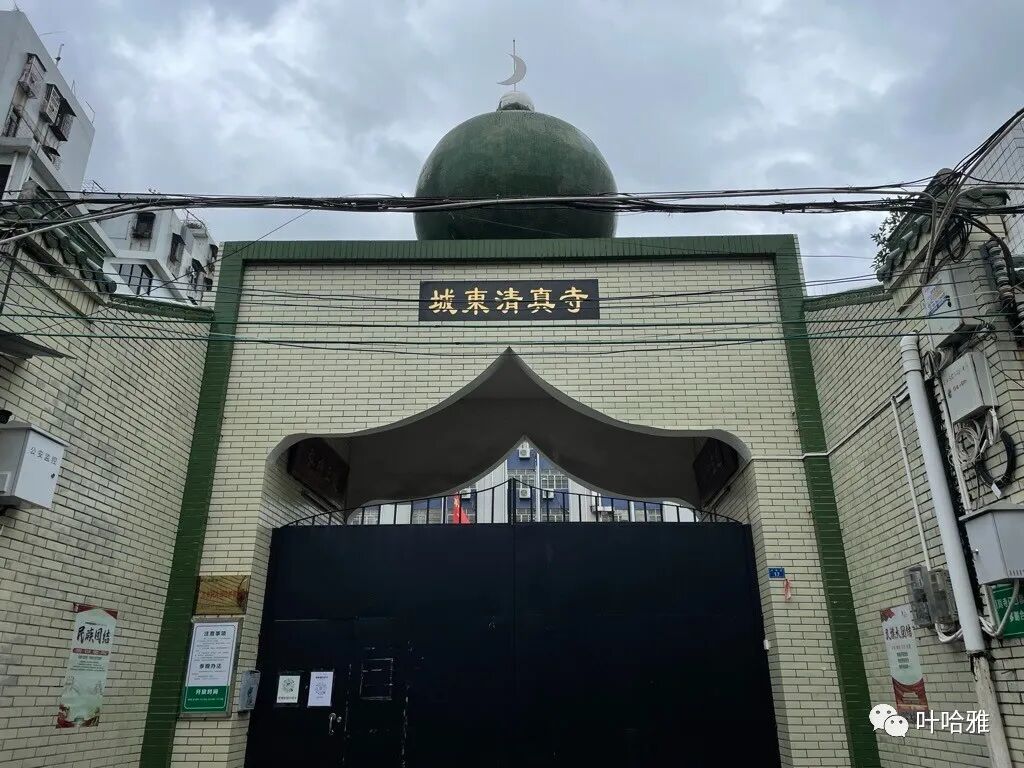
Zhaoqing East City Mosque
The Zhaoqing East City Mosque was first built between the late Ming and early Qing dynasties. It currently houses 11 ancient stone tablets and plaques, along with a collection of ancient books. It was named a Zhaoqing municipal cultural relic protection site in 1984. According to ancient stone tablets, the mosque was originally a brick-and-wood structure and underwent repairs during the Kangxi, Qianlong, Jiaqing, and Daoguang reigns. In 1946, Imam Yang Maolin opened a scripture school inside the mosque. The following year, he turned it into a halal primary school. It became a public halal primary school after 1950 and was renamed Zhaoqing No. 17 Primary School in 1966. In 1991, the mosque and the primary school were separated; the north side of the main prayer hall was given to the primary school, and the south side was returned to the mosque.
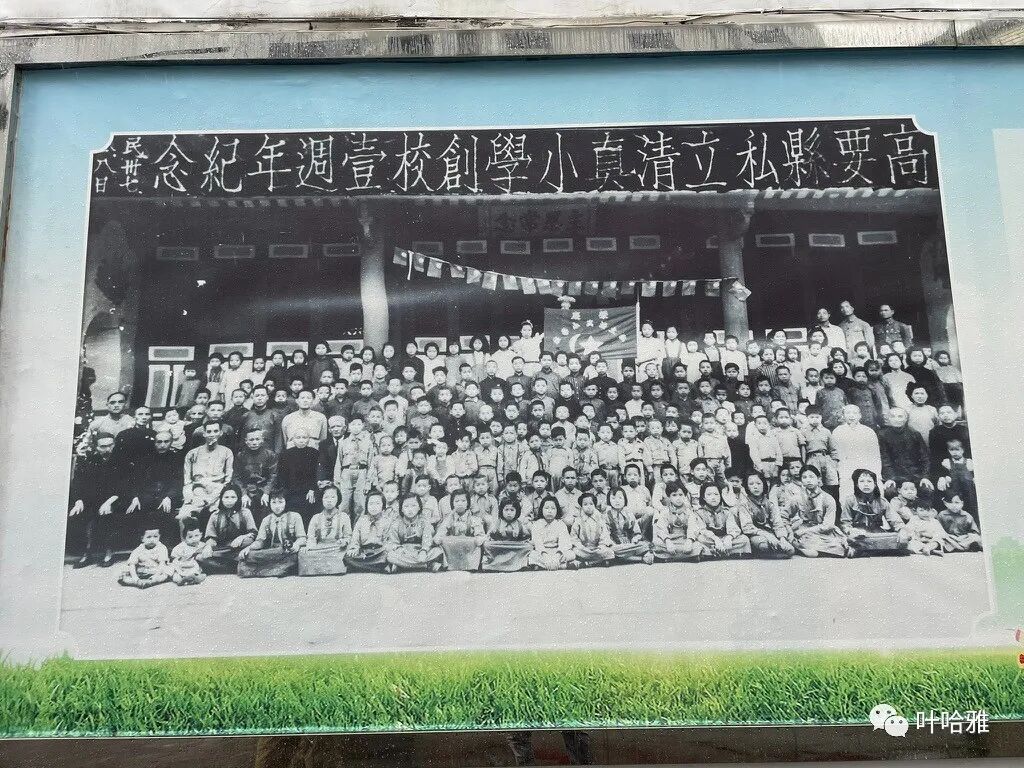
Old photo of the halal primary school
The caretaker of the East City Mosque is from the Wang family of Hui Muslims, who were the first of their people to settle in Zhaoqing. According to the Wang Family Genealogy of Zhaoqing, People say Wang Jiyin had a brother who moved to Guangxi shortly after arriving in Zhaoqing, and they lost contact. Since Wang Jiyin, the family has lived here for over 200 years across eleven generations. The family has grown to over a thousand people, with relatives now living in Hong Kong, Macau, and overseas, far beyond their original small presence in Zhaoqing.
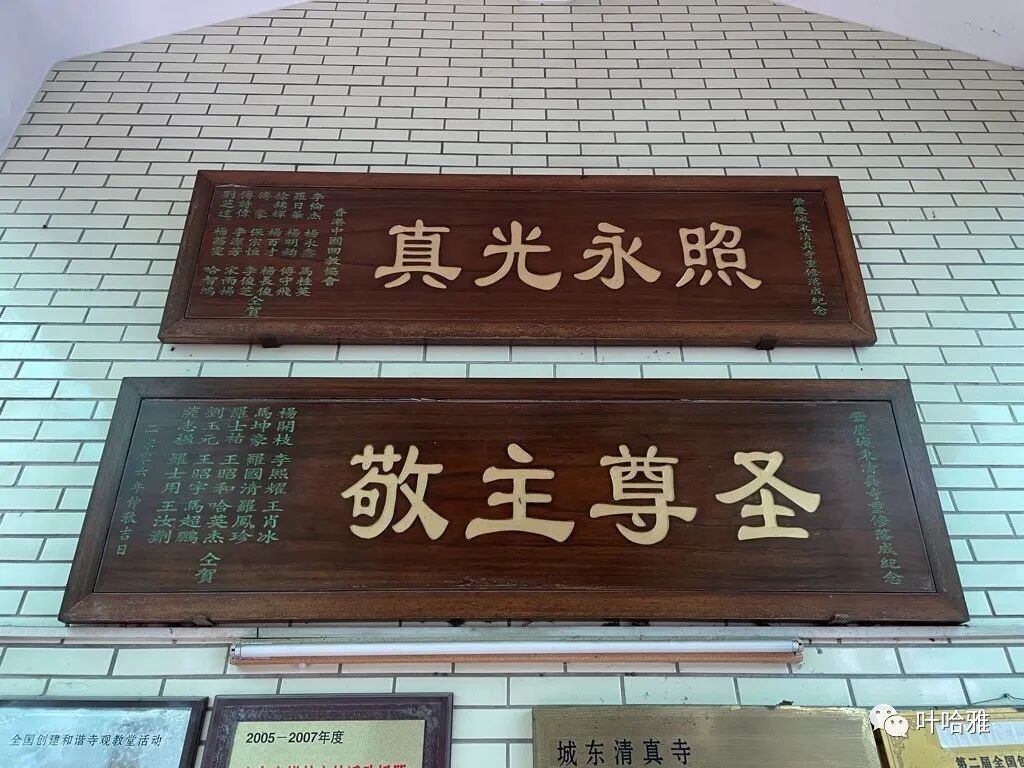
The East City Mosque is slightly older than the West City Mosque and was rebuilt in a traditional style.
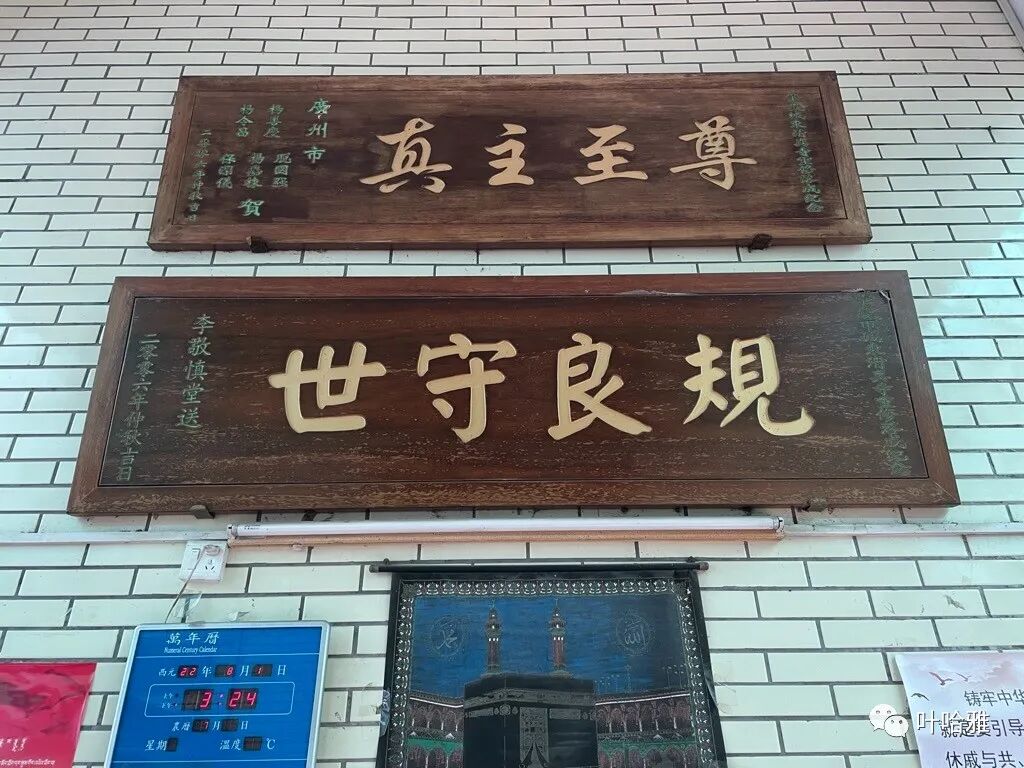
The East City Mosque does not hold regular religious services; you must go to the West City Mosque for Jumu'ah prayers.
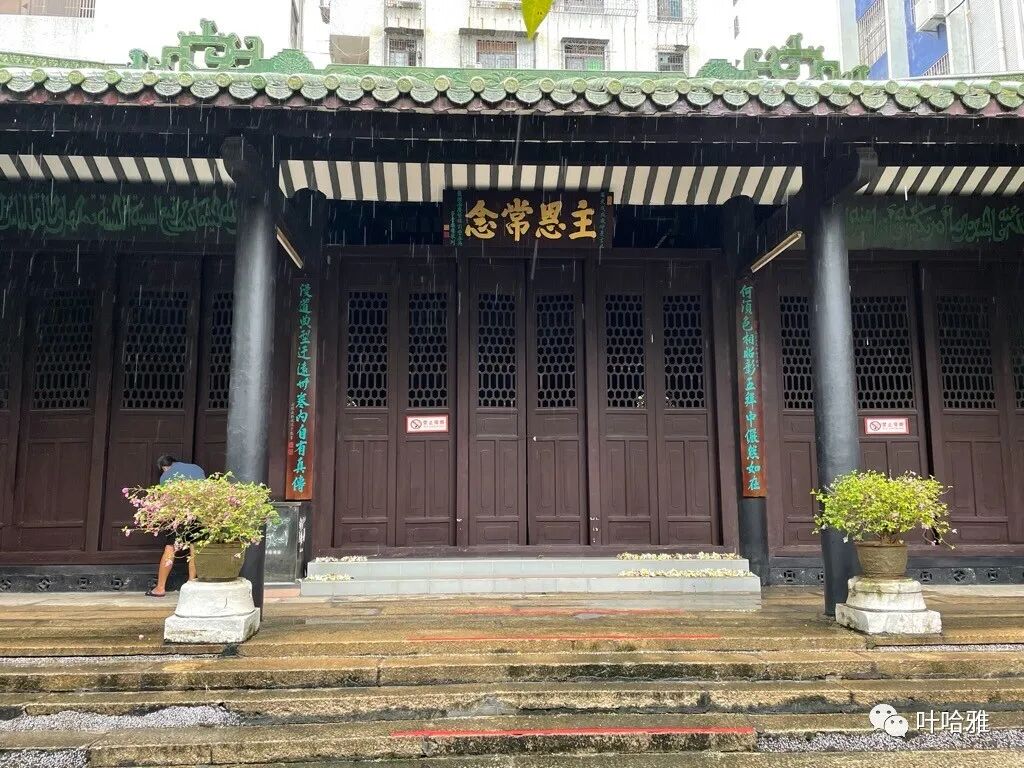
Hui Muslims in Guangdong live all over the province. They are mainly concentrated in the Pearl River Delta centered on Guangzhou, the West River region centered on Zhaoqing, and the North River region centered on Shaozhou and Nanxiong. There are also scattered populations in southern Guangdong, the East River area, and the Chaoshan region.
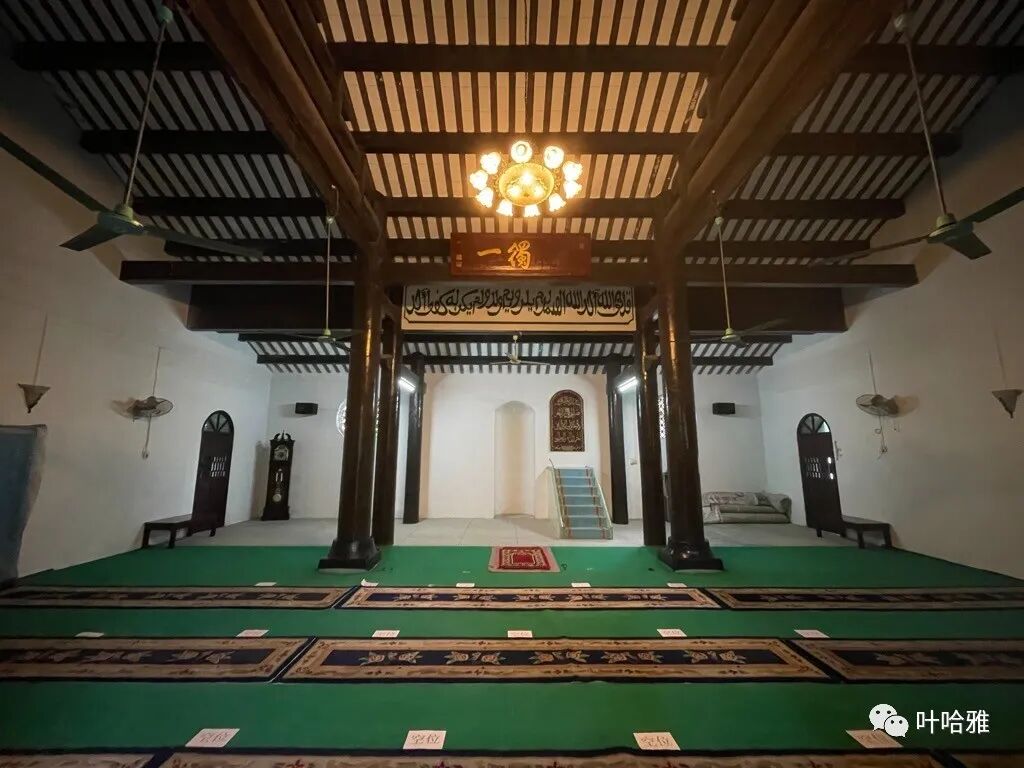
The Hui Muslims in Zhaoqing mainly came from military garrisons during the Ming and Qing dynasties, where they settled down and raised families. Others were Hui Muslims from across the country who came to do business, or Hui scholars who came to Guangdong to serve as imams, moving from places like Gansu, Shaanxi, Guangxi, and Hunan. A small number of Hui Muslims were also exiled here. For example, during the Hongzhi reign, the imperial court sent 181 tribute envoys from Turpan to be settled in Guangdong and Guangxi. Thousands of Hui Muslims from counties like Fengxiang and Fufeng in Shaanxi rose up in rebellion. After the uprising was suppressed, the men were all sent to Guangdong and Guangxi for military service. In the seventh year of the Hongzhi reign, Minister of War Ma Wensheng requested that 40 Turpan Hui tribute envoys, including Xieyiman Su'er, be sent to Guangdong, Guangxi, and Fujian as a punishment.
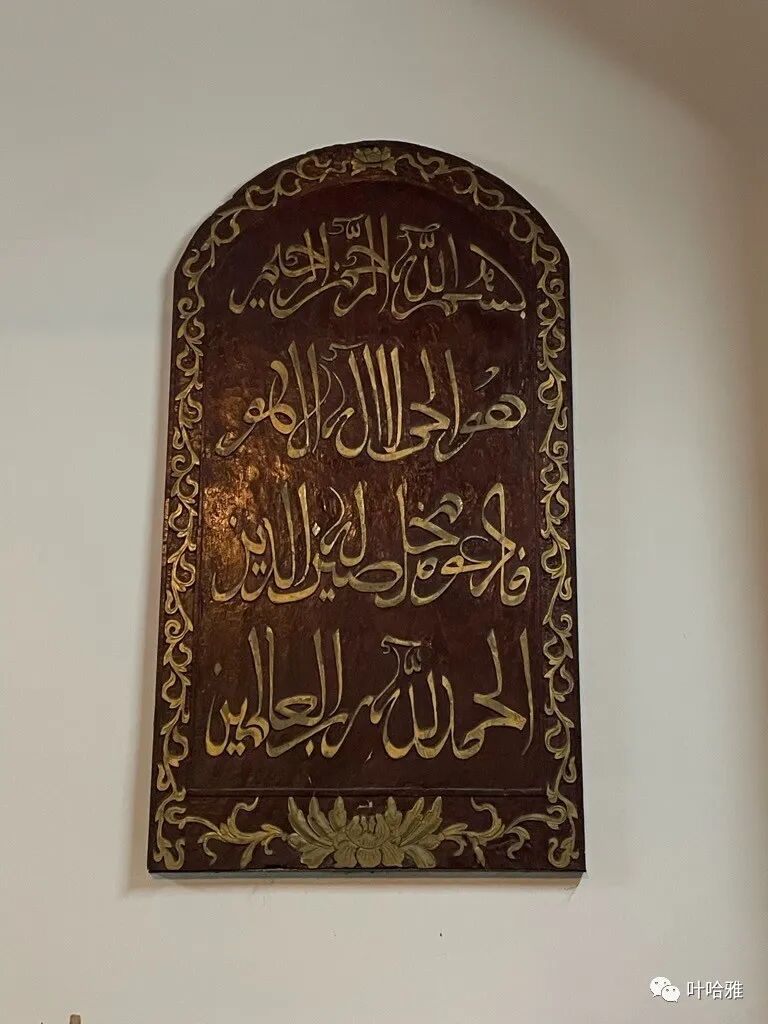
Recorded history of Hui Muslims in Zhaoqing dates back to the Ming dynasty. In the first year of the Jingtai reign (1450), Dong Xing requested that over 400 officers and soldiers under the command of Lian Zhong, a regional military commander sent from Nanjing to suppress Huang Xiaoyang, be allowed to stay and garrison in Guangdong. In the second year of the Chenghua reign (1466), Han Yong requested that they and their families be allowed to settle in Guangdong as part of the agricultural garrison troops. Some of these Hui Muslims settled near the naval camp east of Zhaoqing city, while those who settled in the west of the city arrived in the early Qing dynasty. Today, there are about 600 Hui Muslims in Zhaoqing with nine surnames: Liu, Li, Ma, Mu, Luo, Wang, Dong, Ha, and Sa.
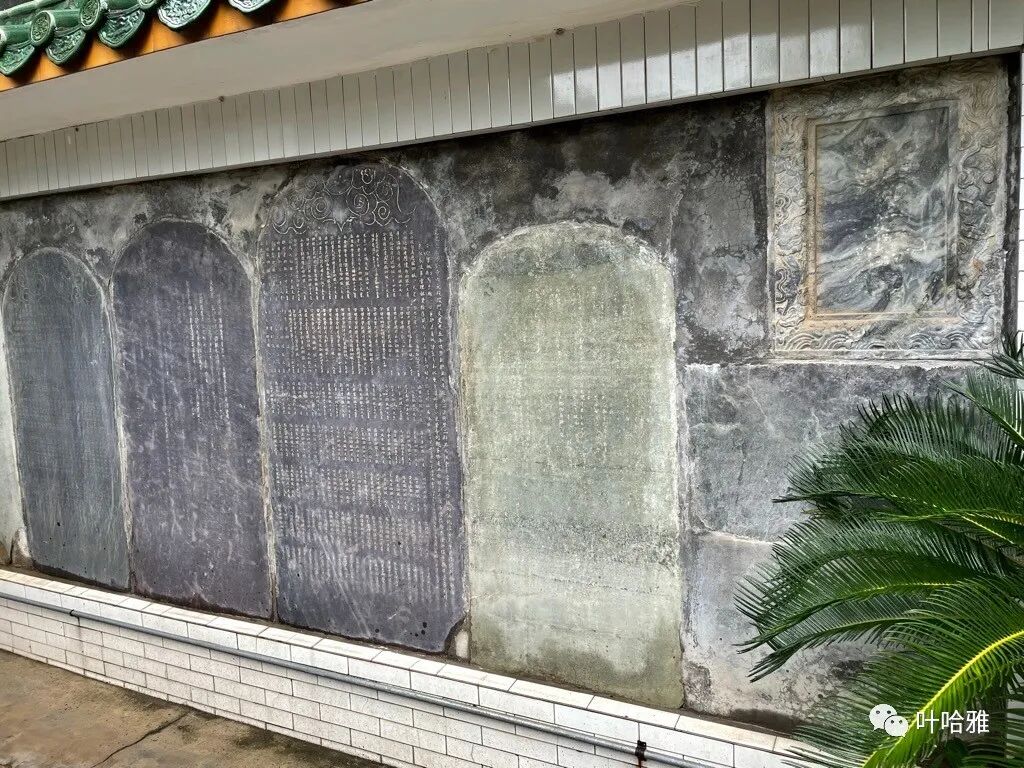
In 1646, Zhu Youlang of the Ming royal family established the Southern Ming regime in Zhaoqing. The Qing government sent troops to suppress it. Once the fighting stopped, the Hui Muslim soldiers settled down as civilians, and these Hui Muslims later moved to Guangzhou one after another.
After the Southern Ming regime fell, the Qing government moved the Governor-General's office of Guangdong and Guangxi to Guangzhou in the 11th year of the Qianlong reign. Zhaoqing was no longer a major military hub, so the Hui Muslims moved out of Zhaoqing and into Guangzhou along with the government. Because of this, a saying spread among the Hui Muslims: First arrive in Zhaoqing, then live in Guangzhou.
West City Mosque
The West City Mosque in Zhaoqing was first built in the early years of the Qianlong reign. Local elders pooled money to buy a house in Zhongyongshe outside the north of the city to serve as the first mosque. It was later moved to Longdinggang in Zhujia Lane outside the west of the city, and then expanded with funds raised by local elders during the Jiaqing reign.
The imam of the West City Mosque is from Hainan and has led the mosque in Zhaoqing for over thirty years. He just retired. The day after my visit was the first day for the new imam, who is from Xinjiang and has taught in Guangdong for many years.
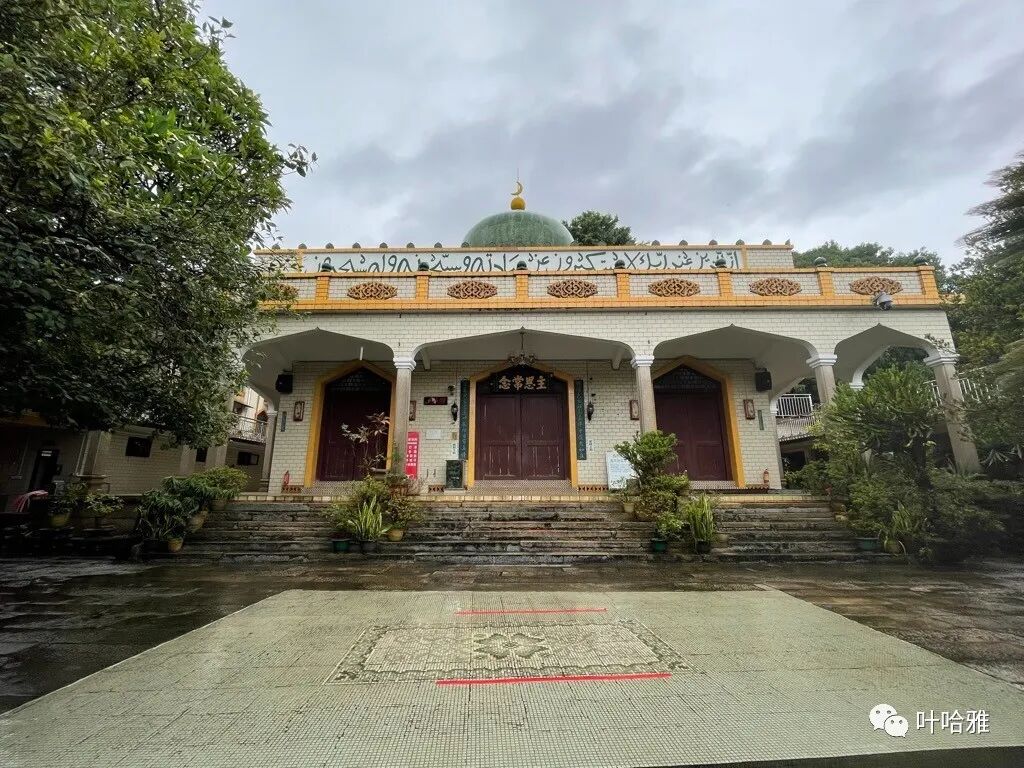
Zhaoqing West City Mosque
The West City Mosque was built with a dome style. Since it has long been a municipal-level cultural relic protection site, there are no plans to renovate it.
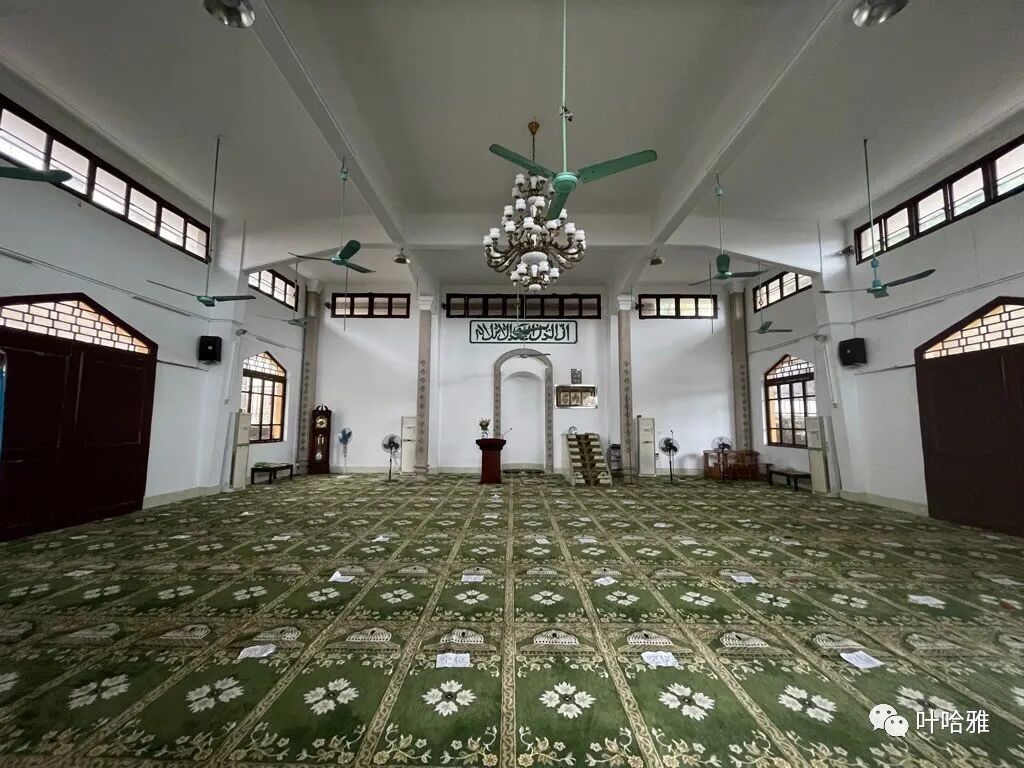
Daily religious activities are held at the West City Mosque. The East City Mosque has no imam, so Friday prayers (Jumu'ah) are held at the West City Mosque.
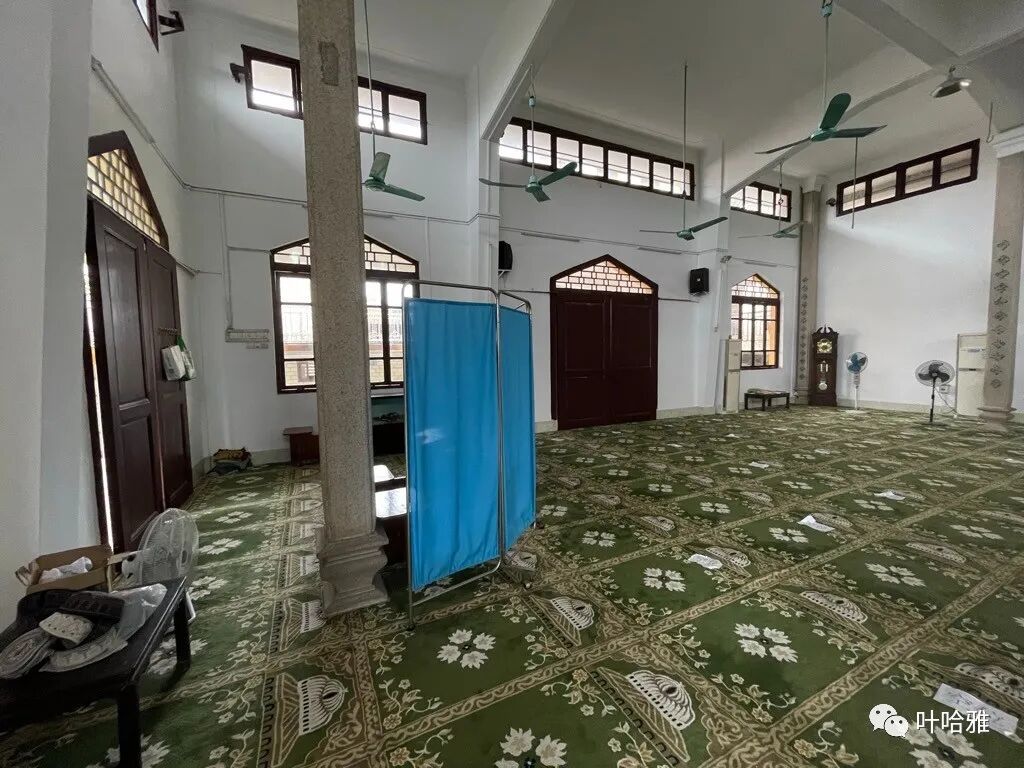
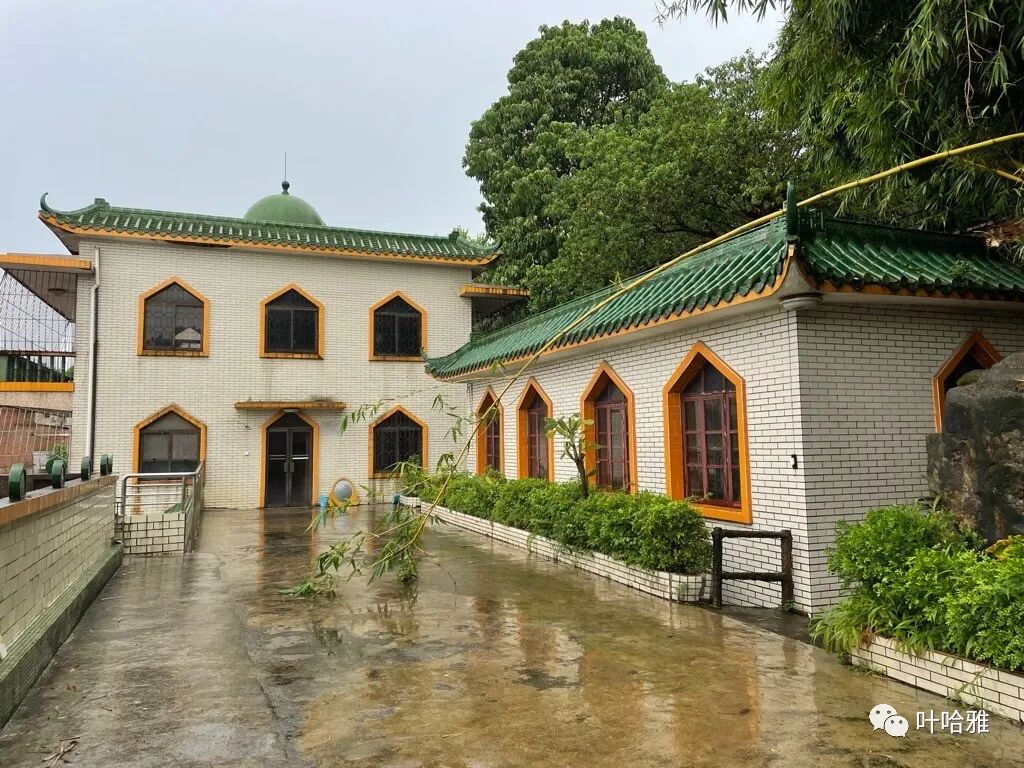
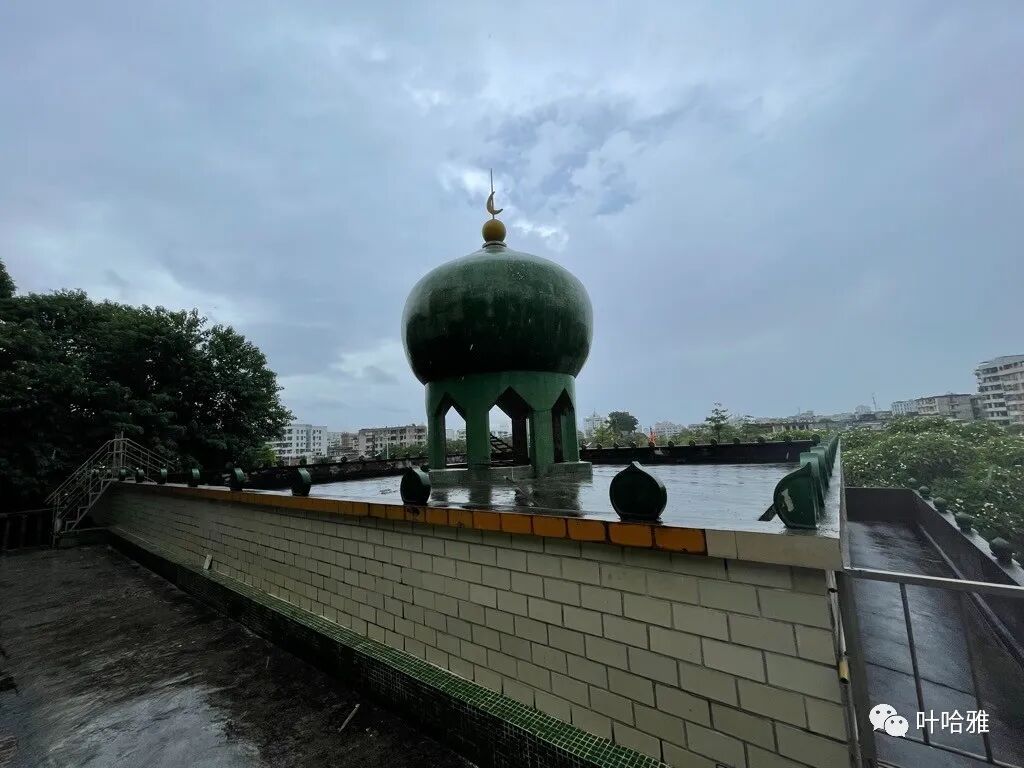
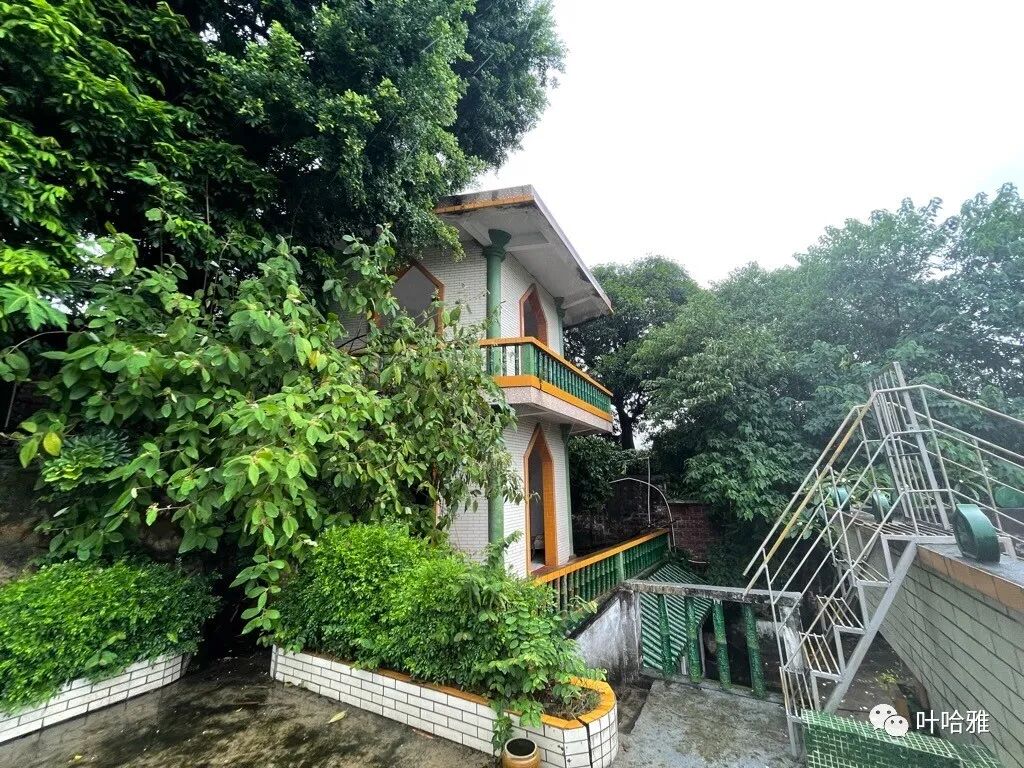
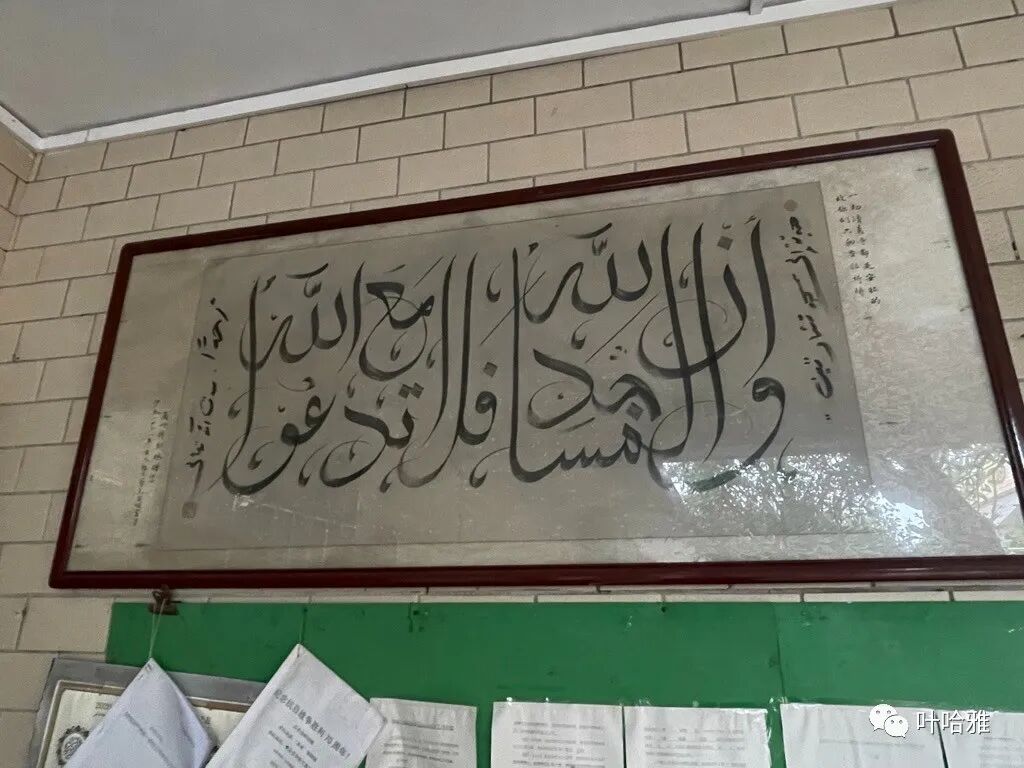
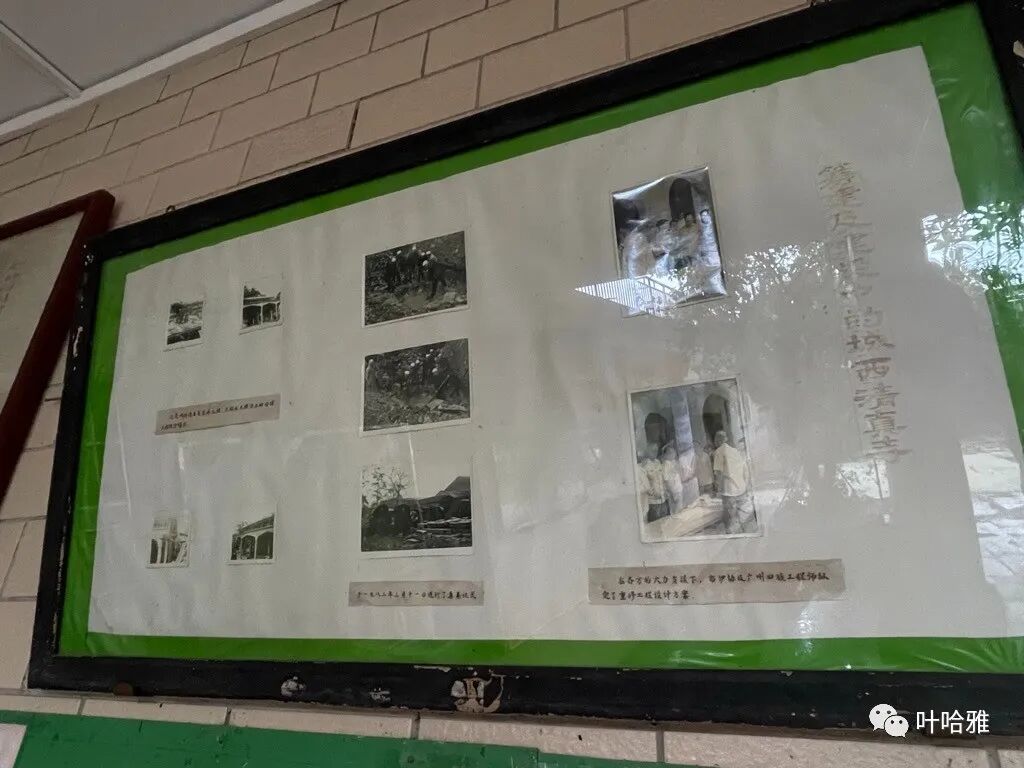
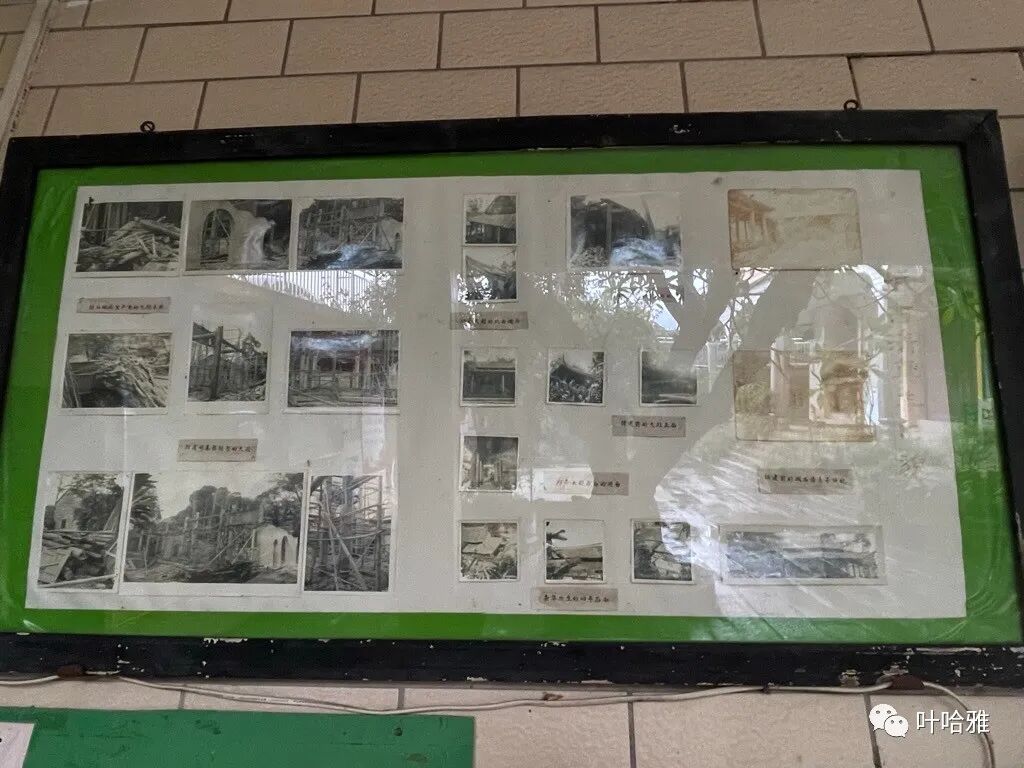
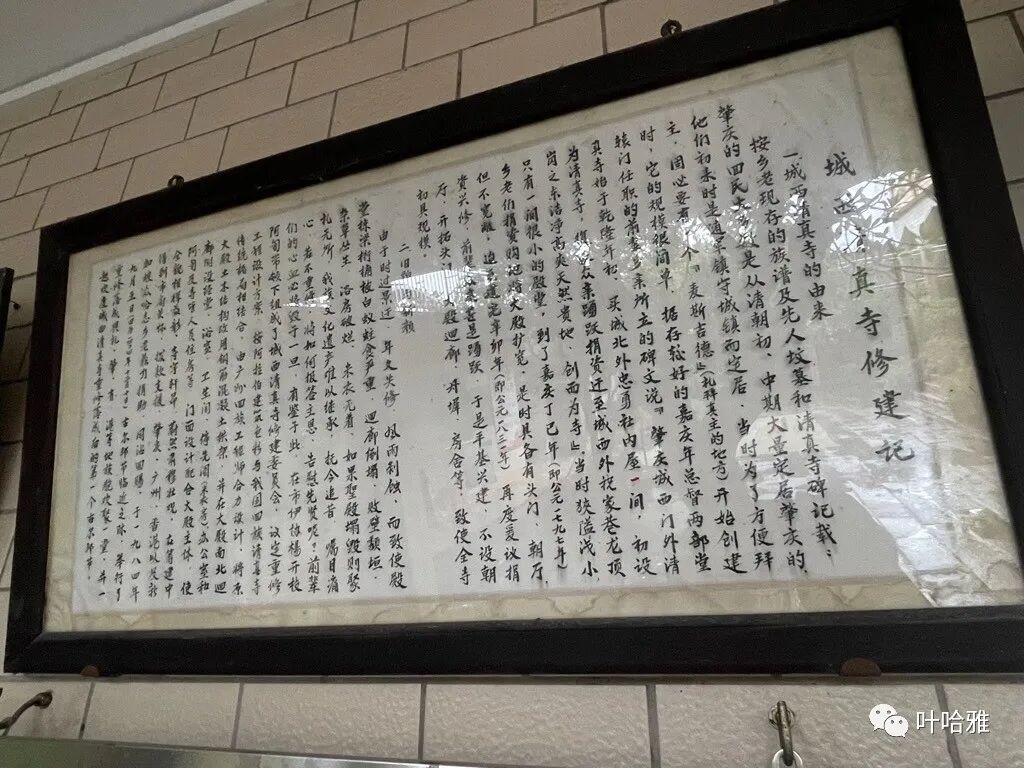
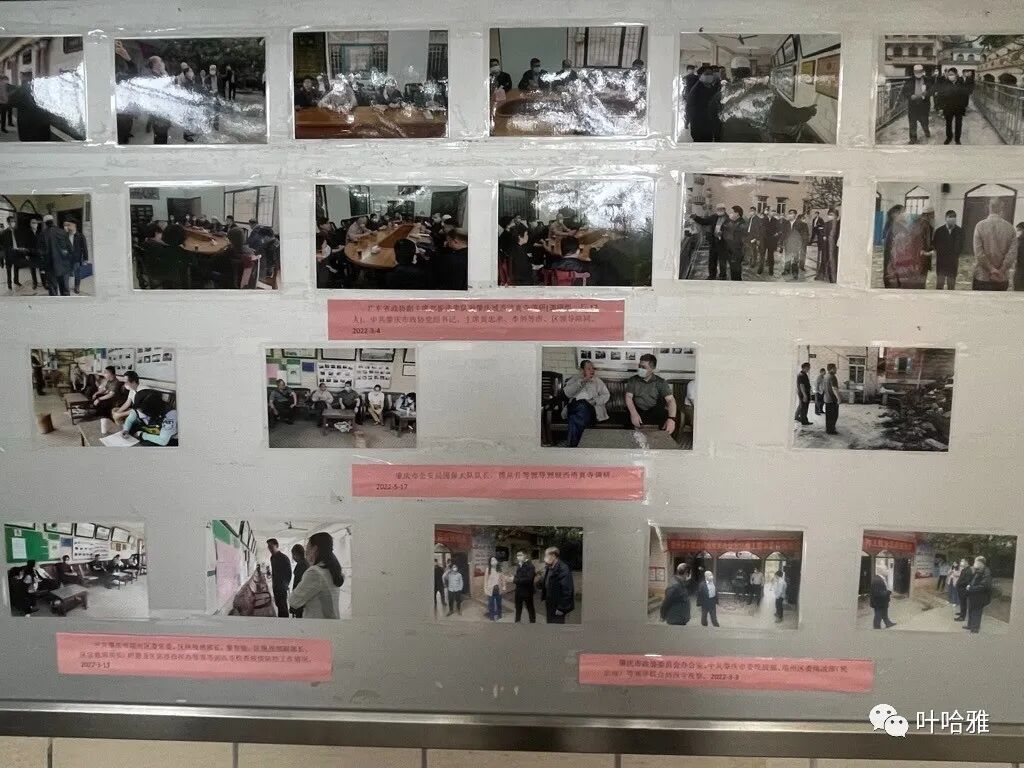
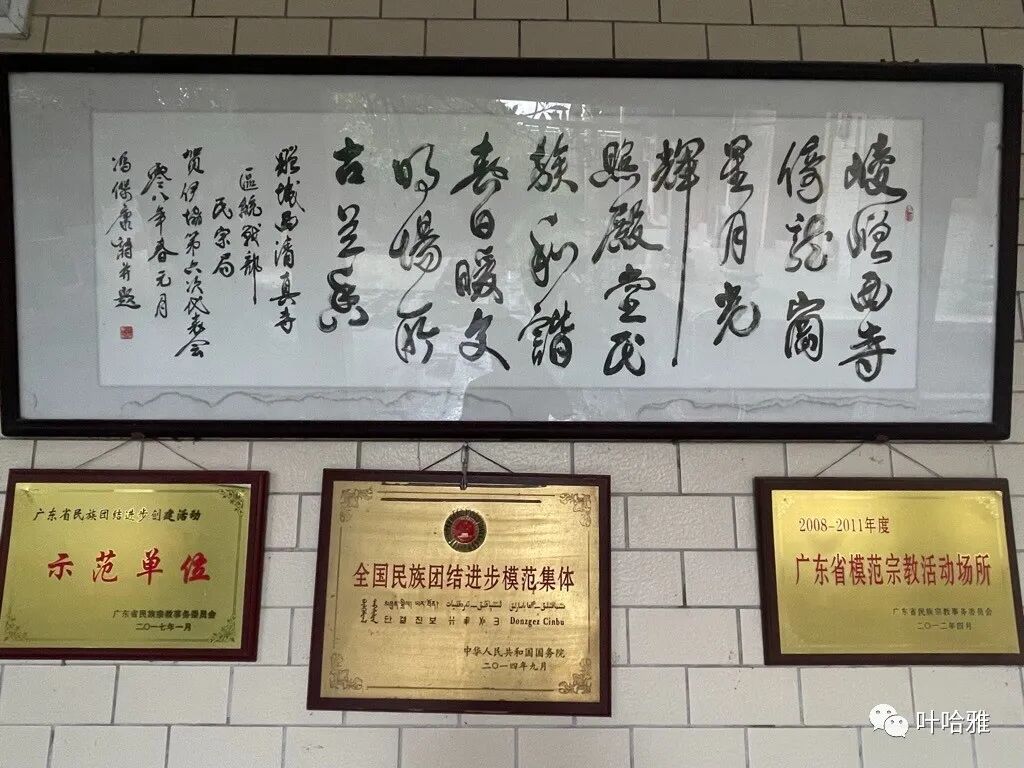
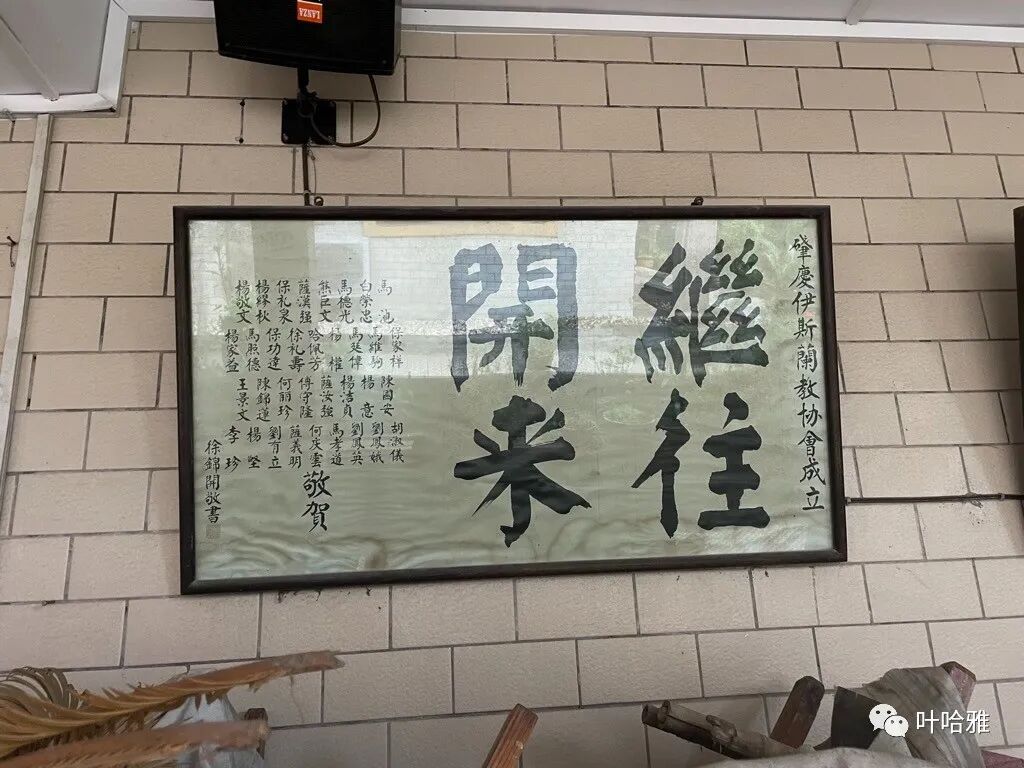
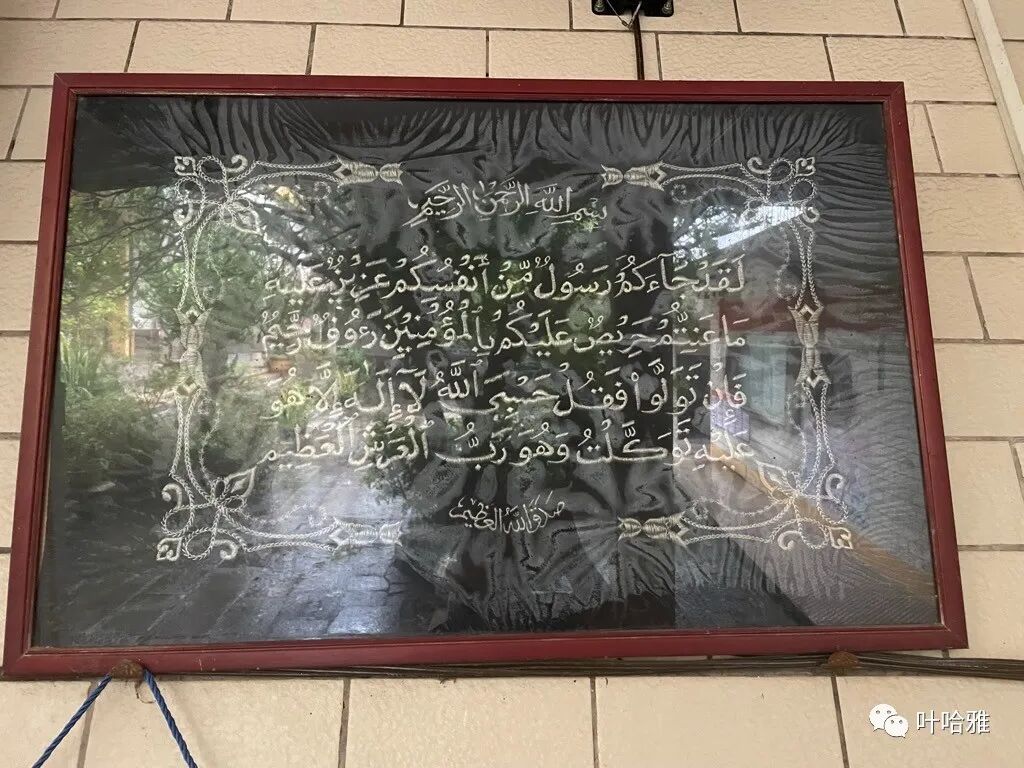
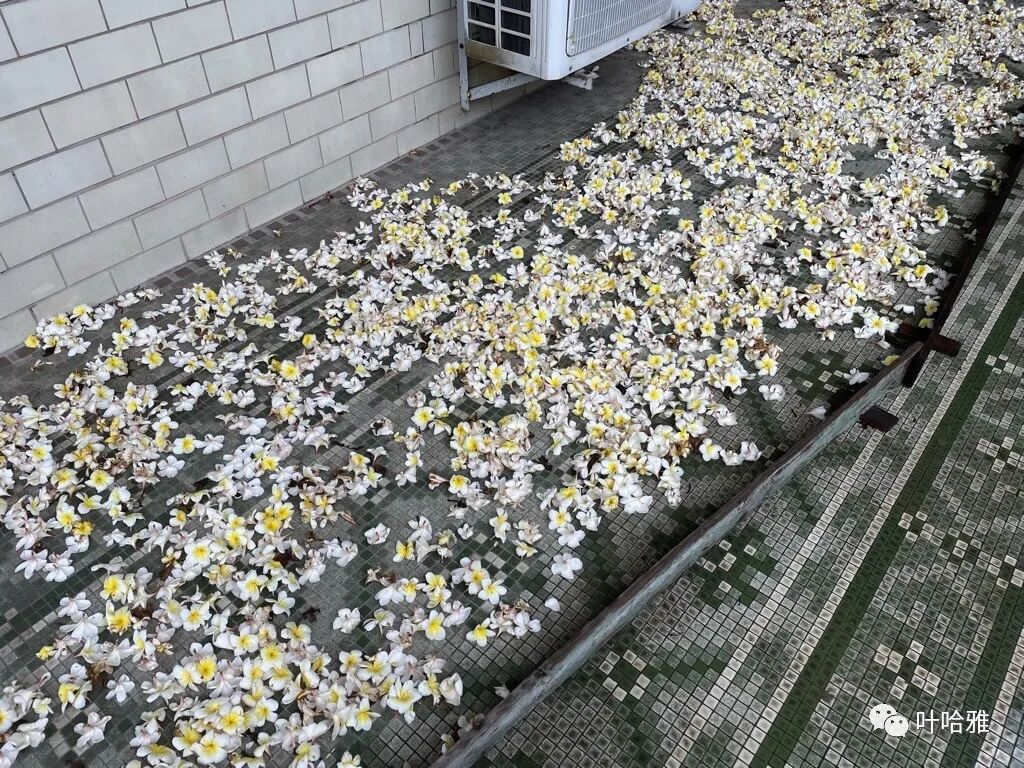
The ground of the mosque is covered in frangipani flowers (jidan hua), which have a very fresh scent. They can be dried and used in medicine or for making soup.
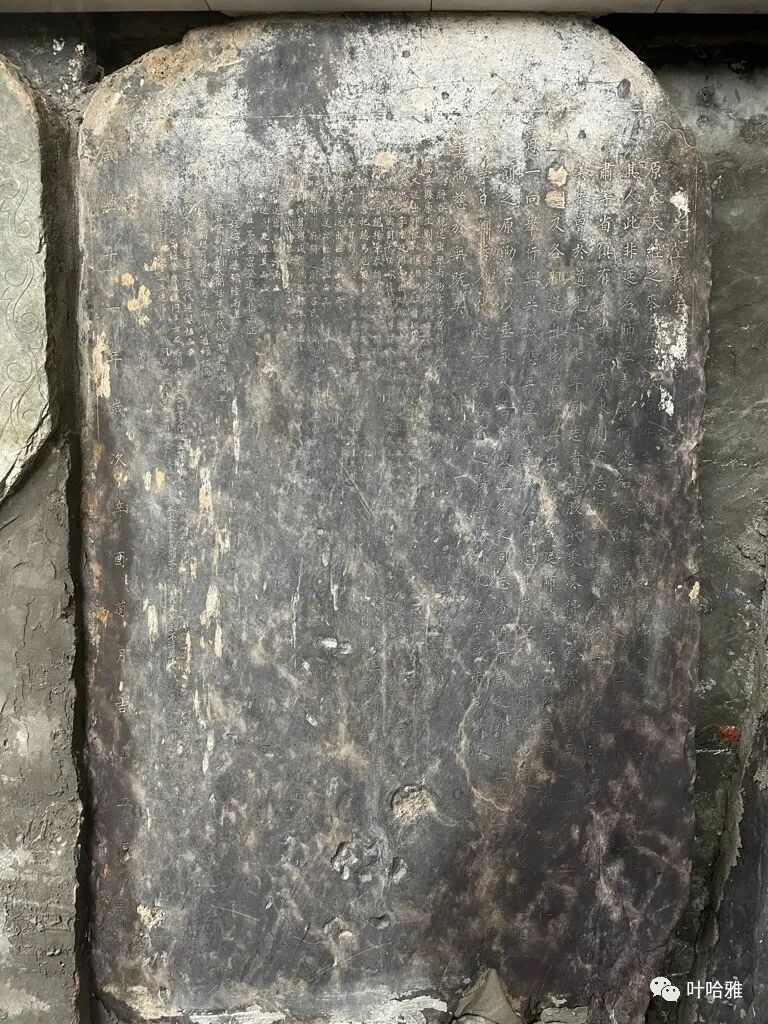
The only remaining historical site inside the mosque records the history of its construction.
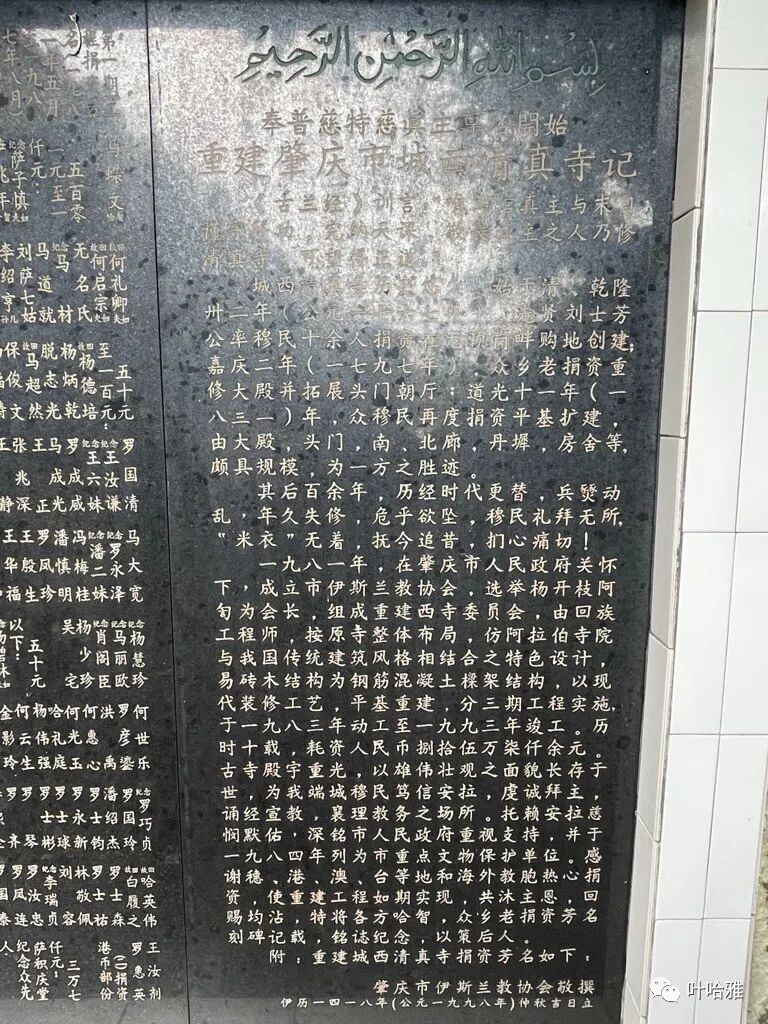
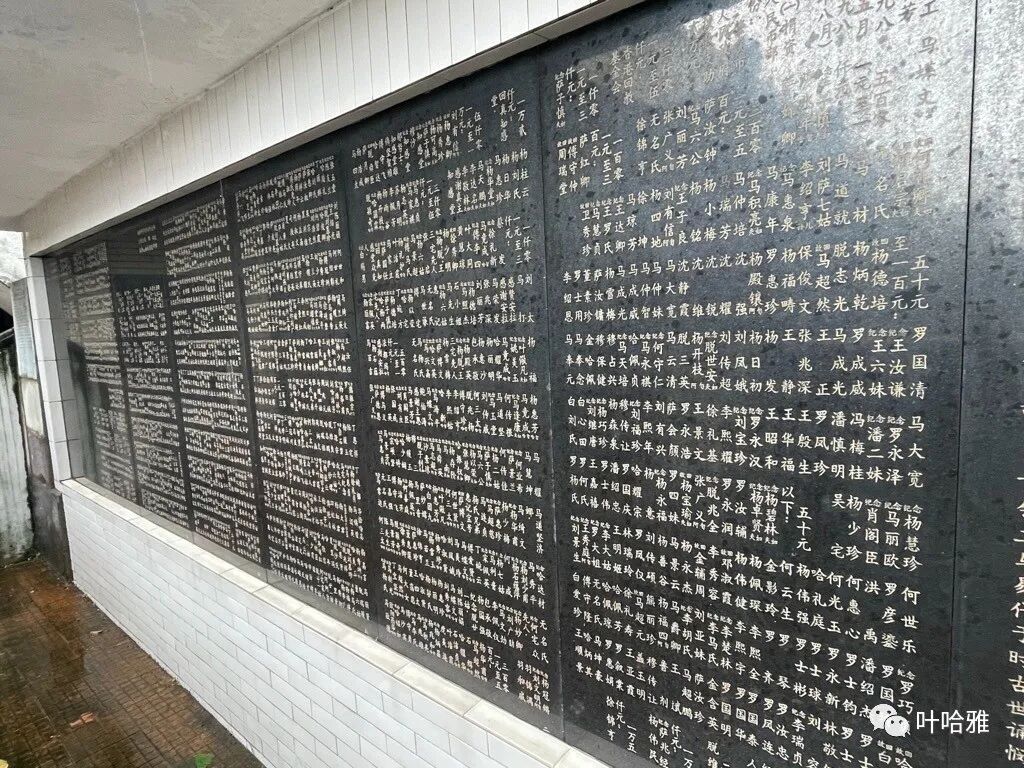
Zhaoqing Hui Muslim Cemetery
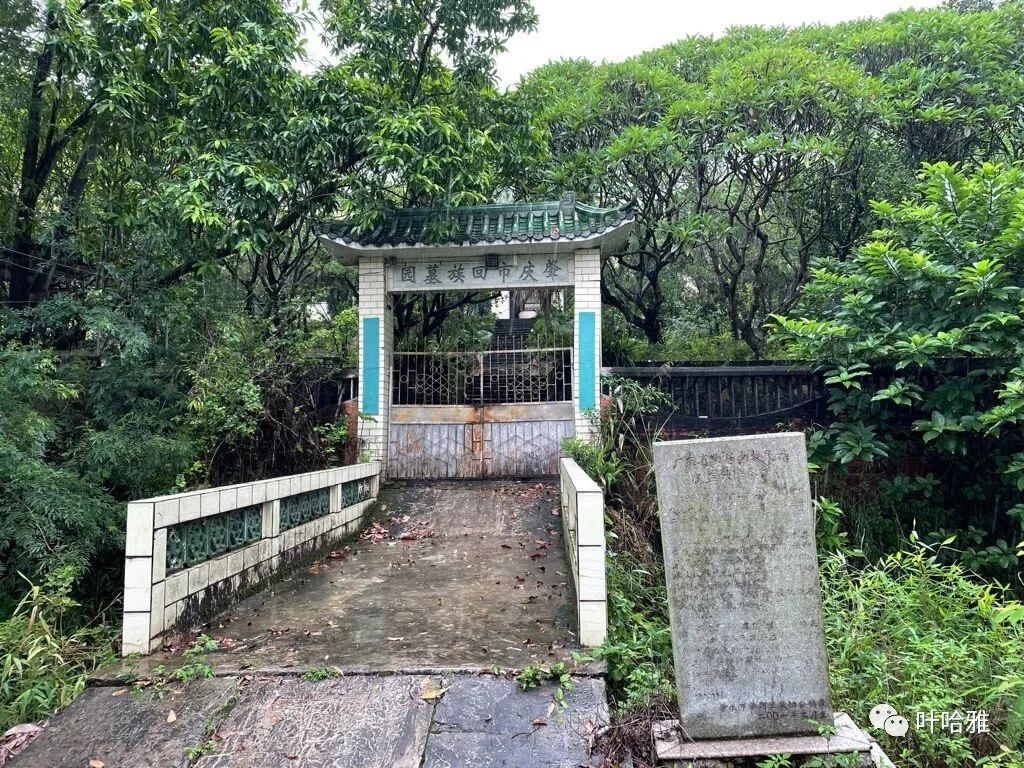
The Zhaoqing Hui Muslim Cemetery is located in Ganshu Village, Gaoyao District, more than ten kilometers from the city center. It was originally located at Niumiangang in the west of the city and covered nearly 20,000 square meters. Later, due to urban planning, the graves were moved here, and the area was expanded to nearly 40,000 square meters.
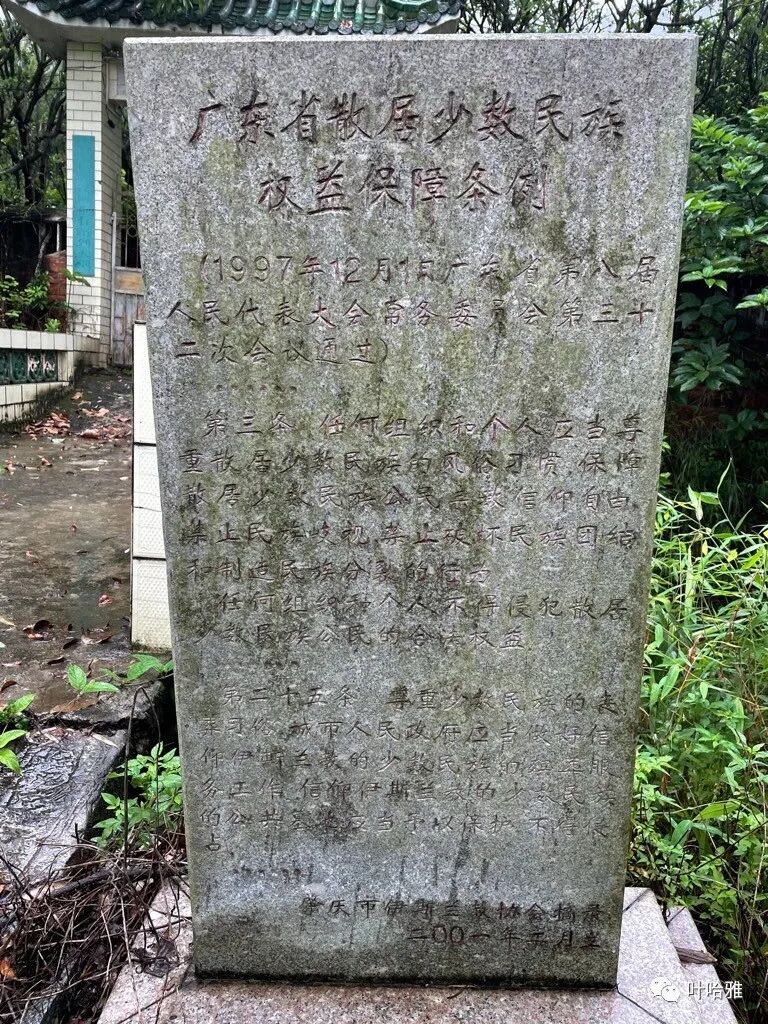
A total of 2,521 graves were relocated. The remains of the ancestors were wrapped in white burial shrouds (kafan) and reburied.
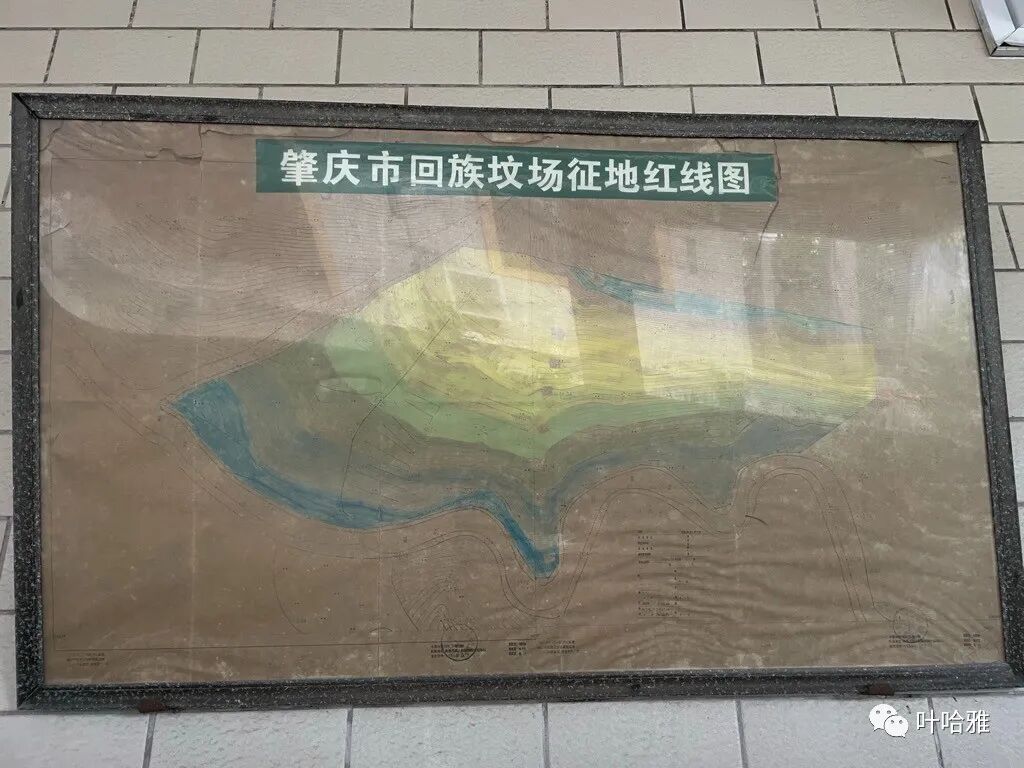
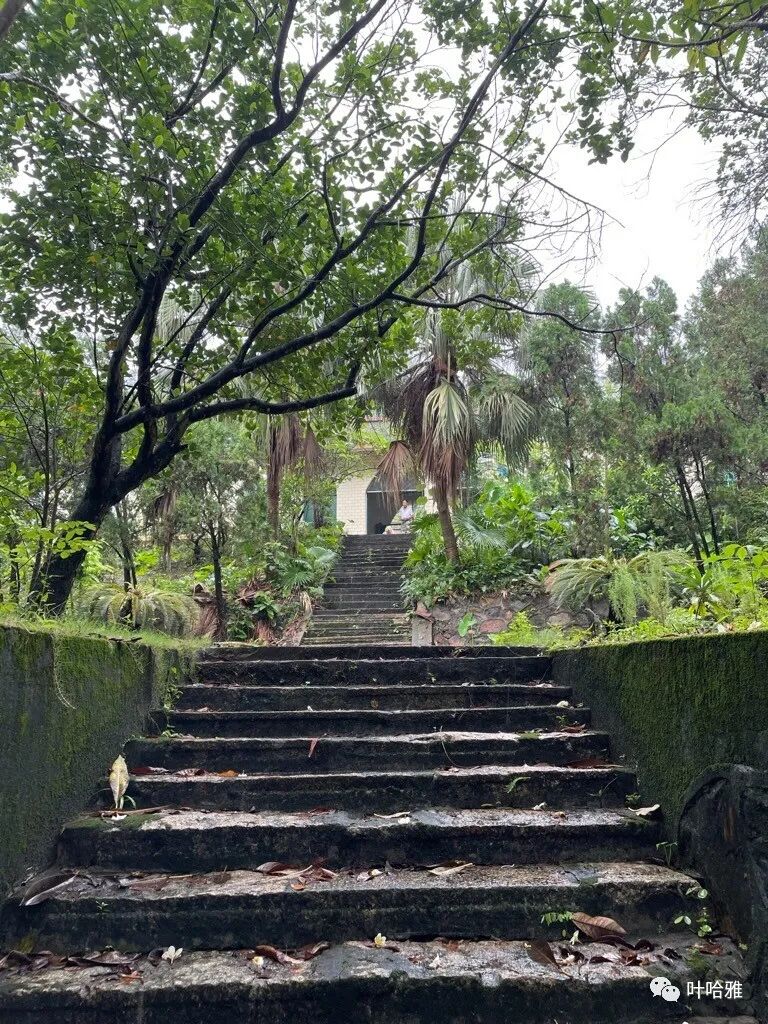
The cemetery is overgrown with weeds and rarely visited. Only one local Hui Muslim caretaker stays here year-round.
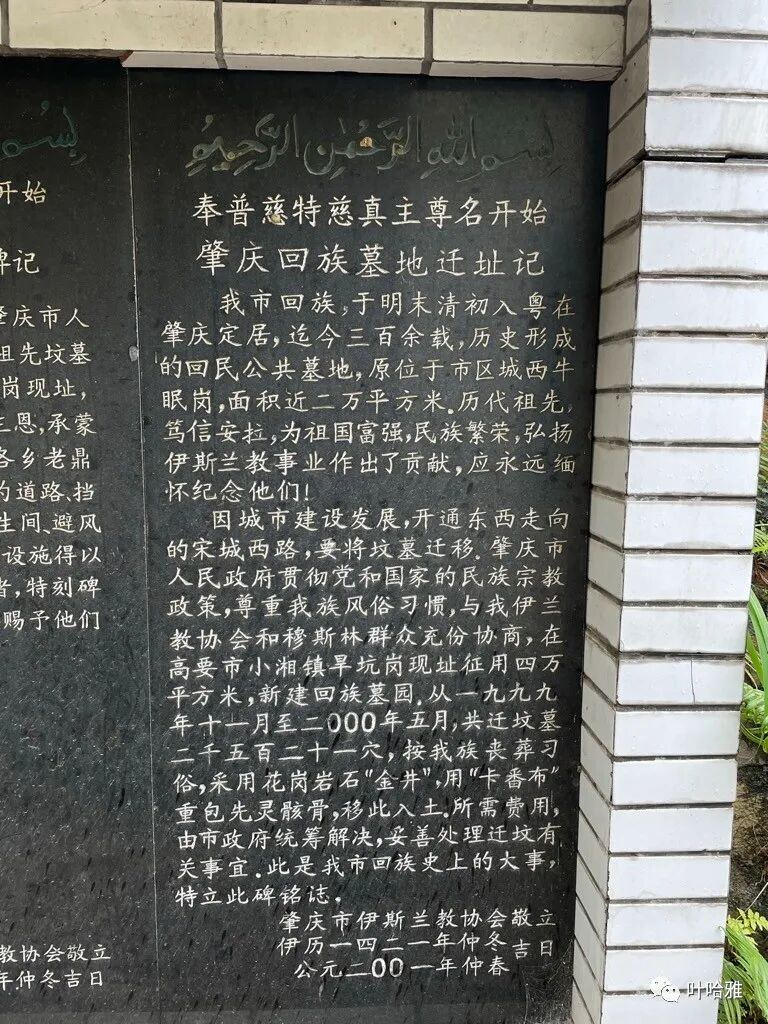
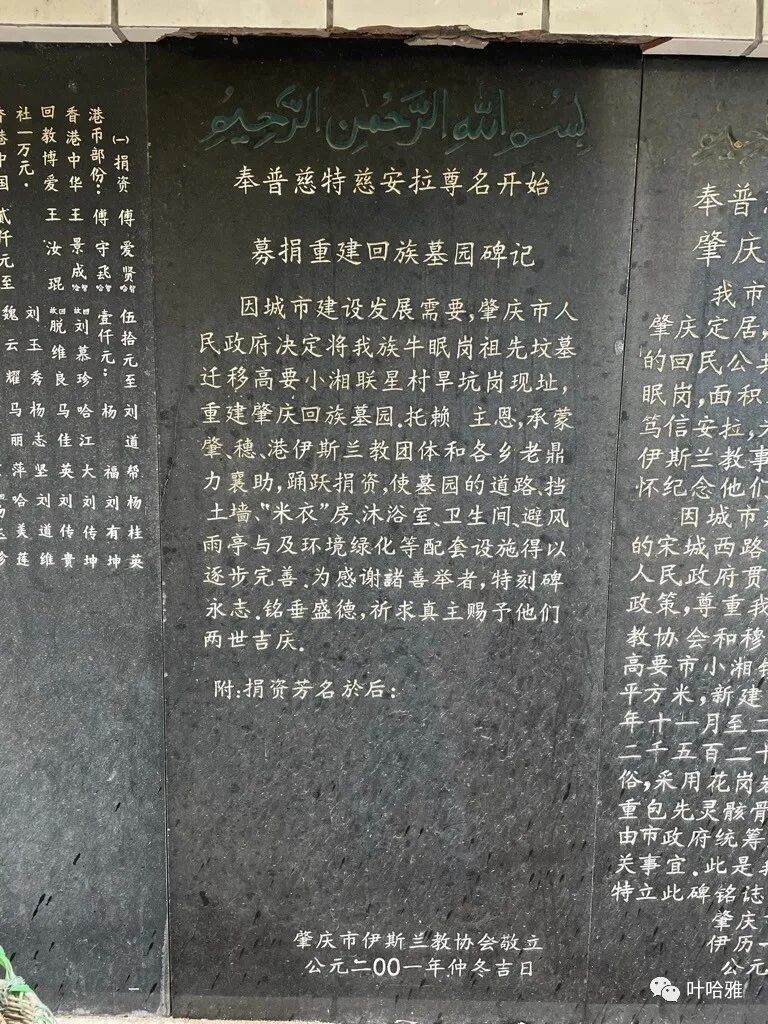
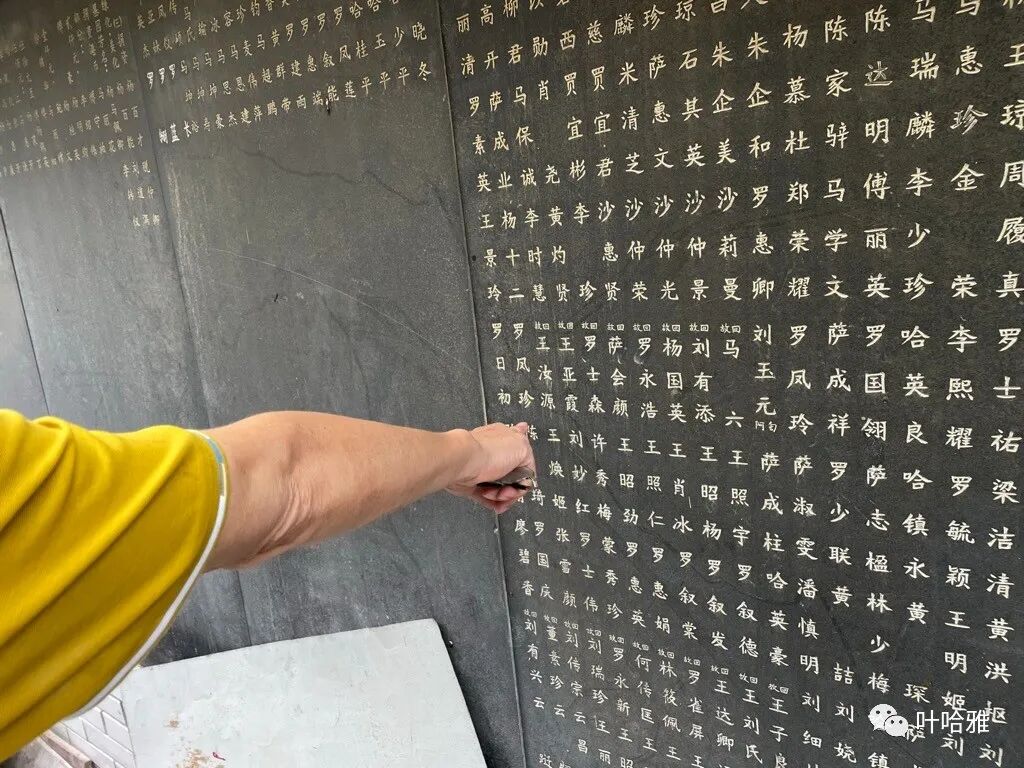
The names carved on the stone tablets are those who donated money to renovate the cemetery. Many are from the Guangdong-Hong Kong-Macao region. For those who have passed away, the characters for "late Hui" (gu hui) are carved above their names.
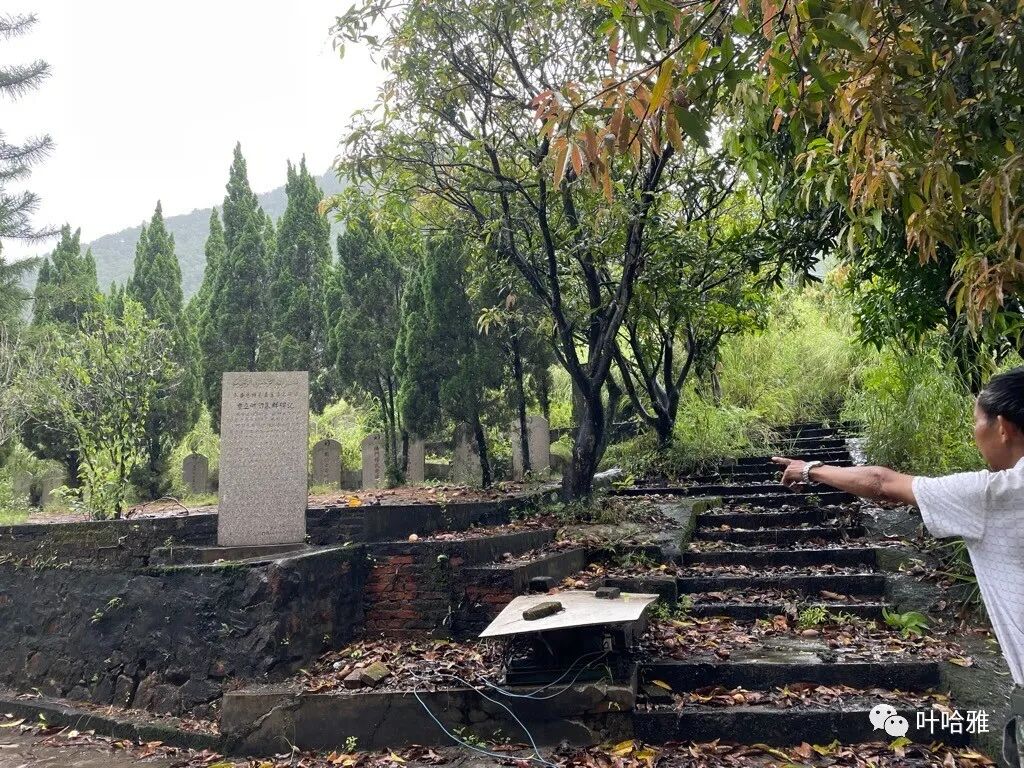
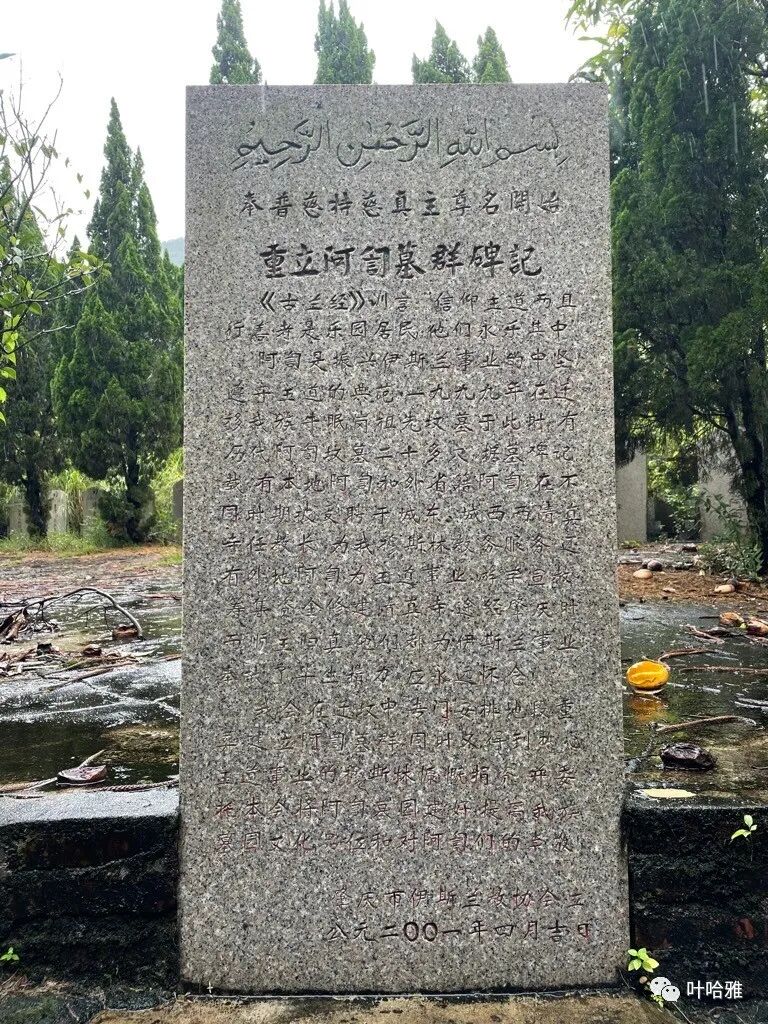
The cemetery has an area specifically for burying scholars and imams from the Ming and Qing dynasties. The local Islamic Association rebuilt the graves for these predecessors based on historical records. However, the caretaker said that the descendants of these scholars are mostly missing, so he has never seen any descendants come to visit the graves.
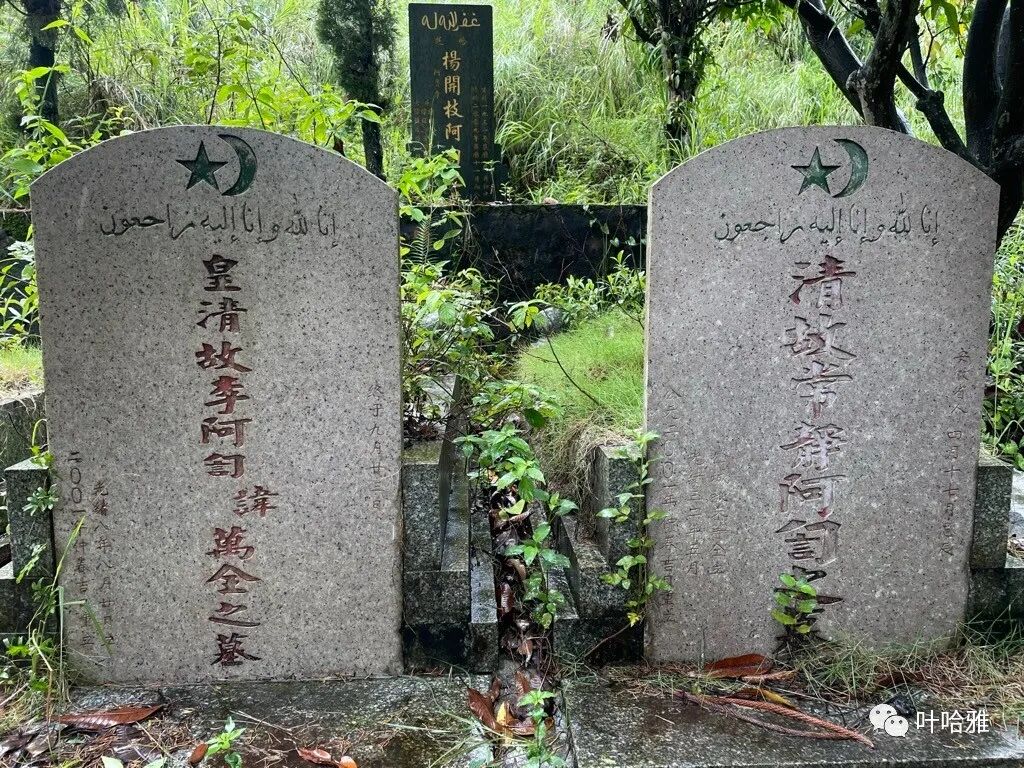
Huangqing Gu refers to someone who returned to Allah during the early Qing Dynasty, while Qing Gu refers to someone who returned to Allah during the later years of the Qing Dynasty.
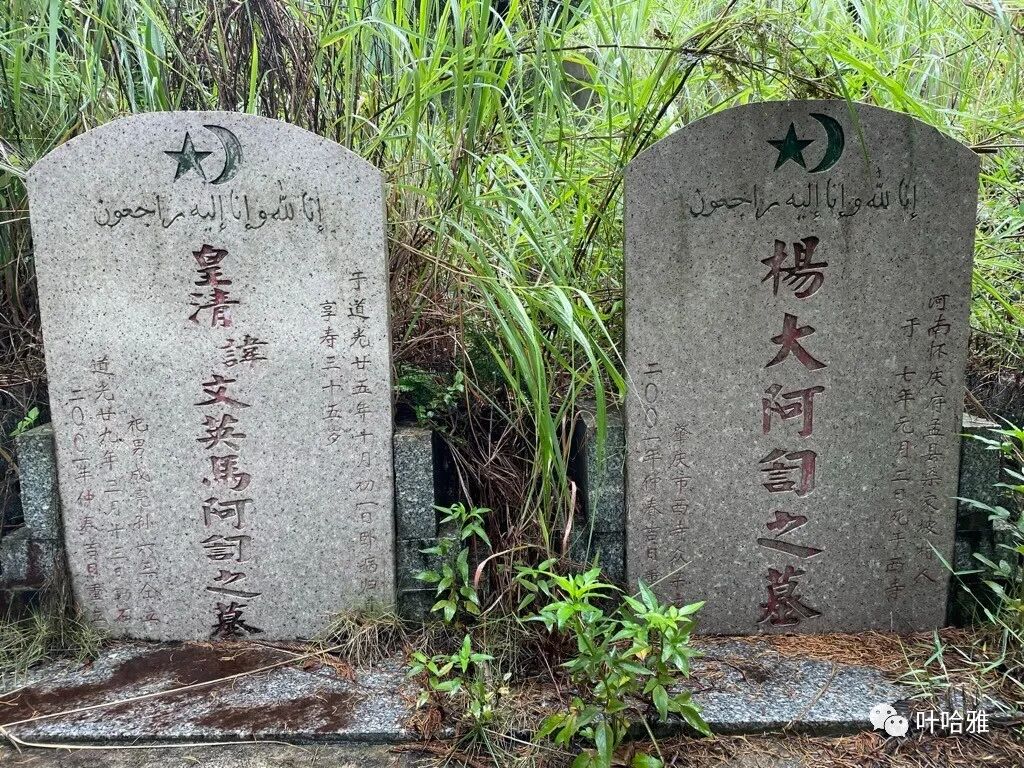
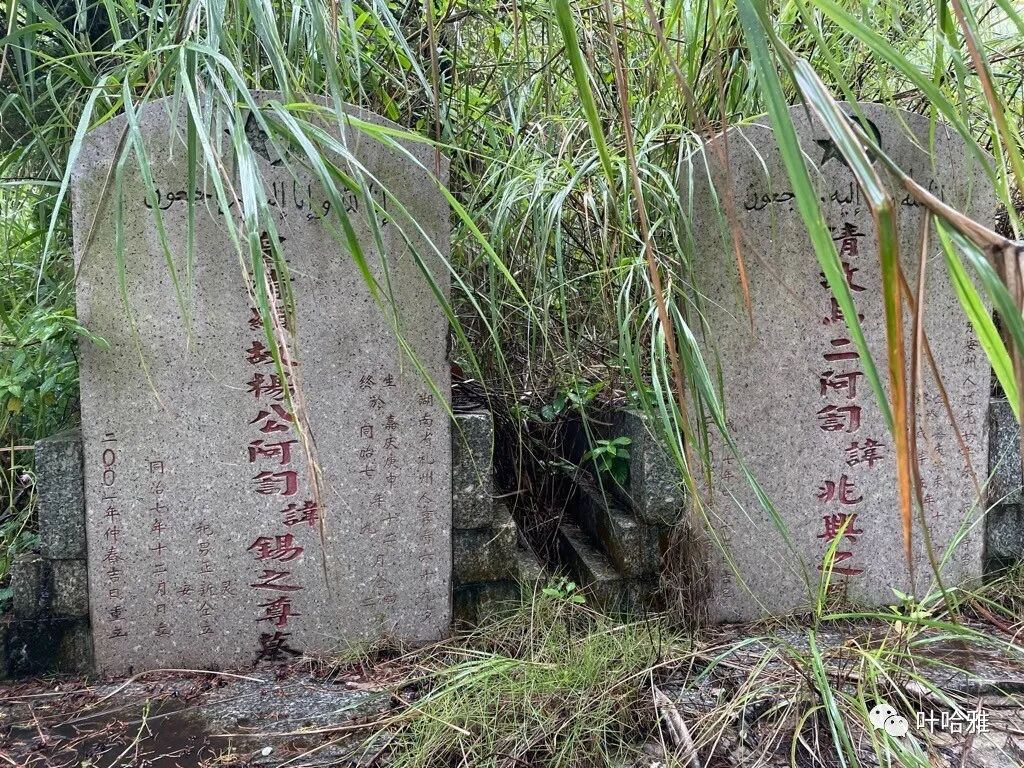
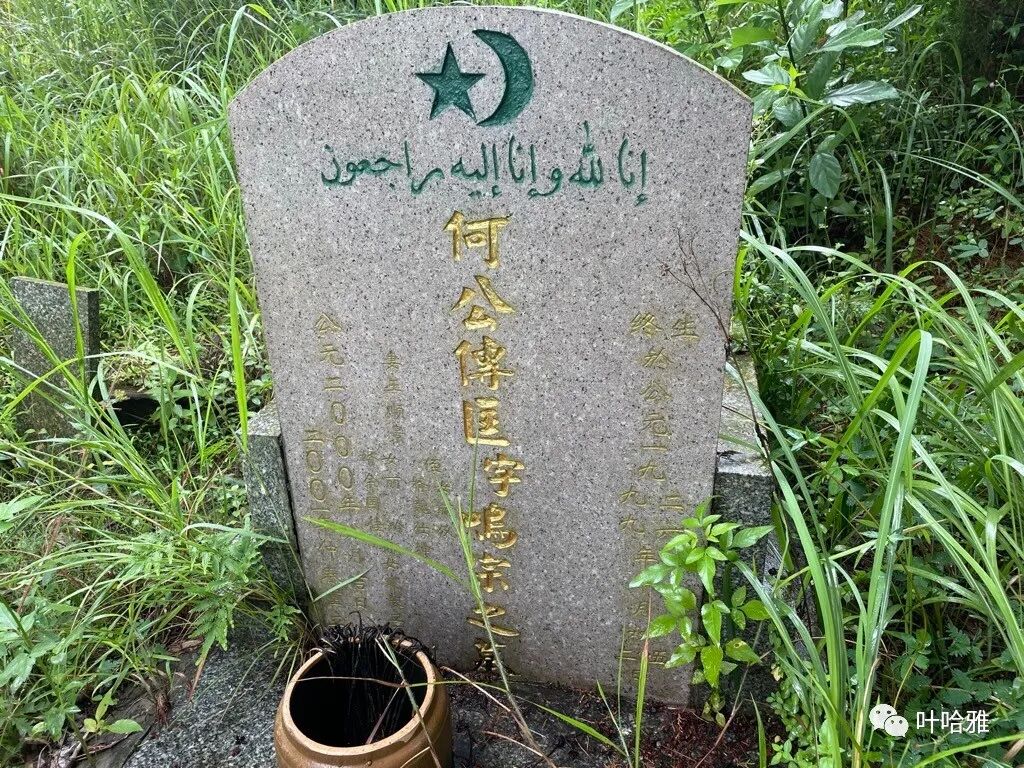
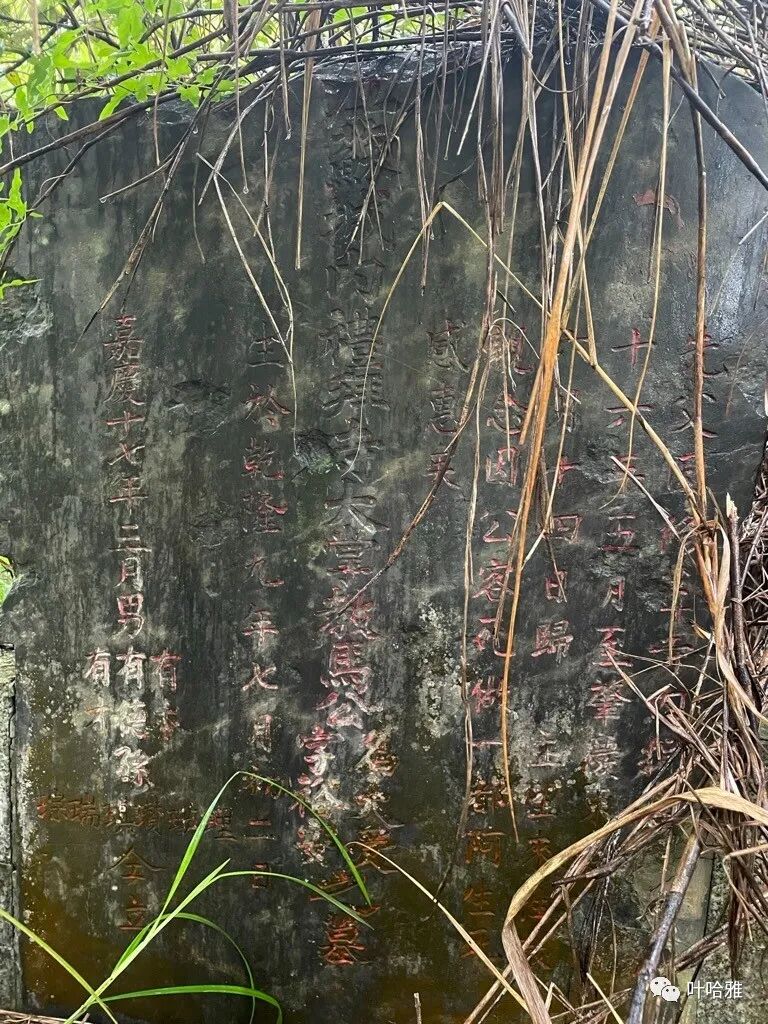
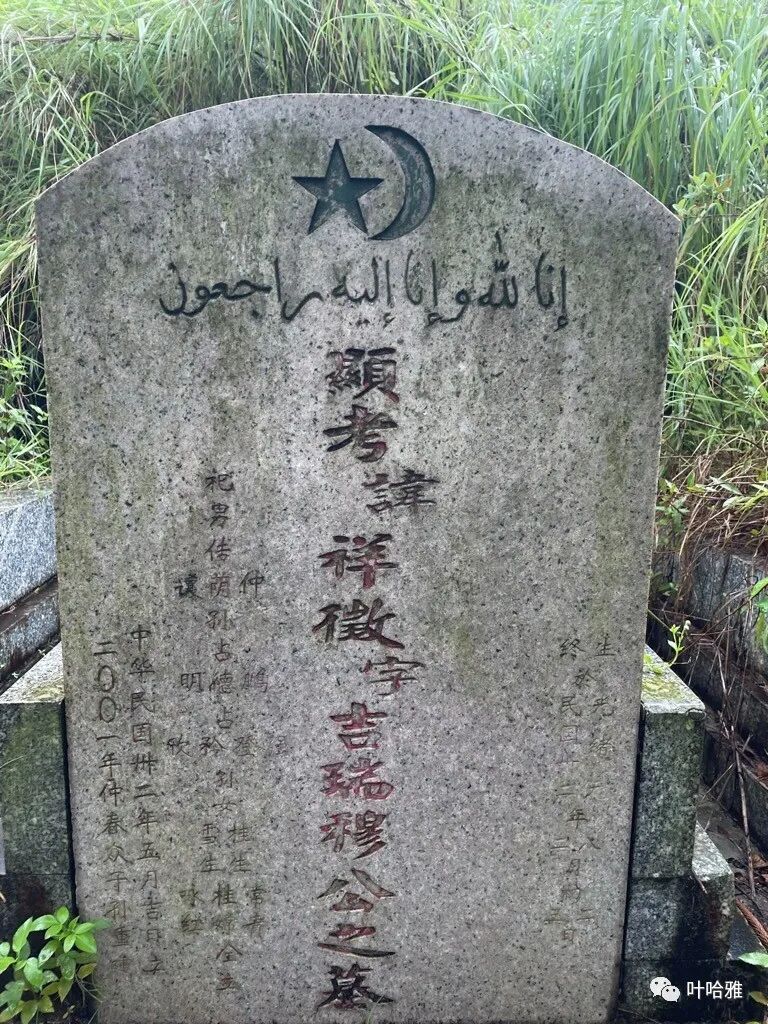
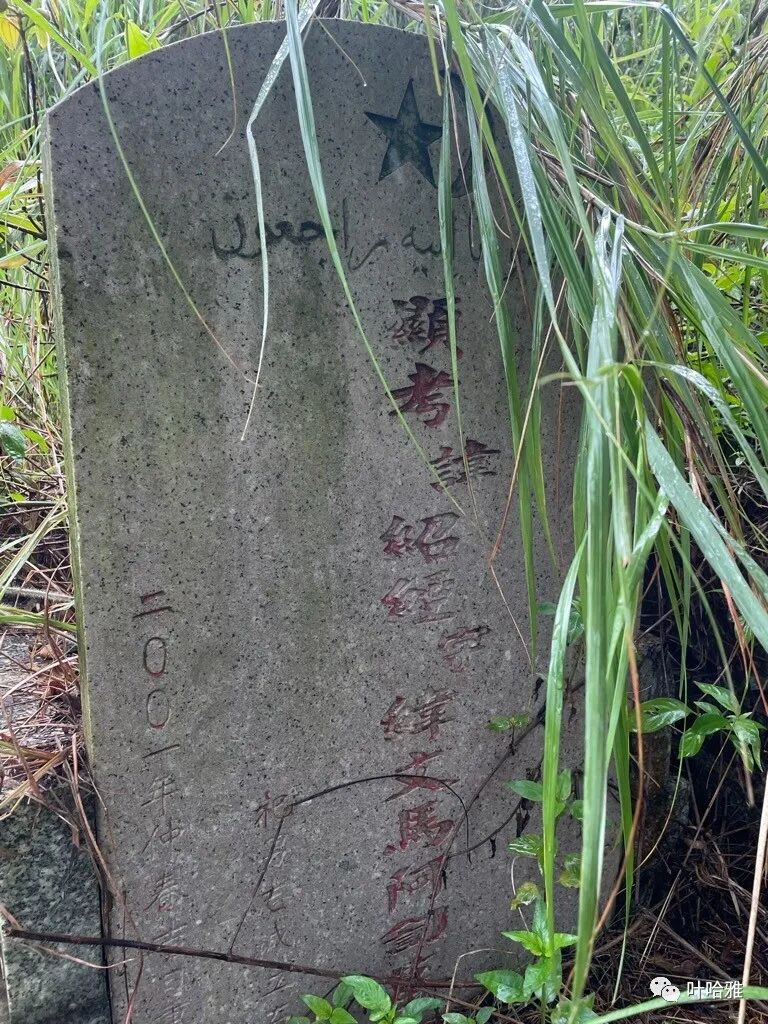
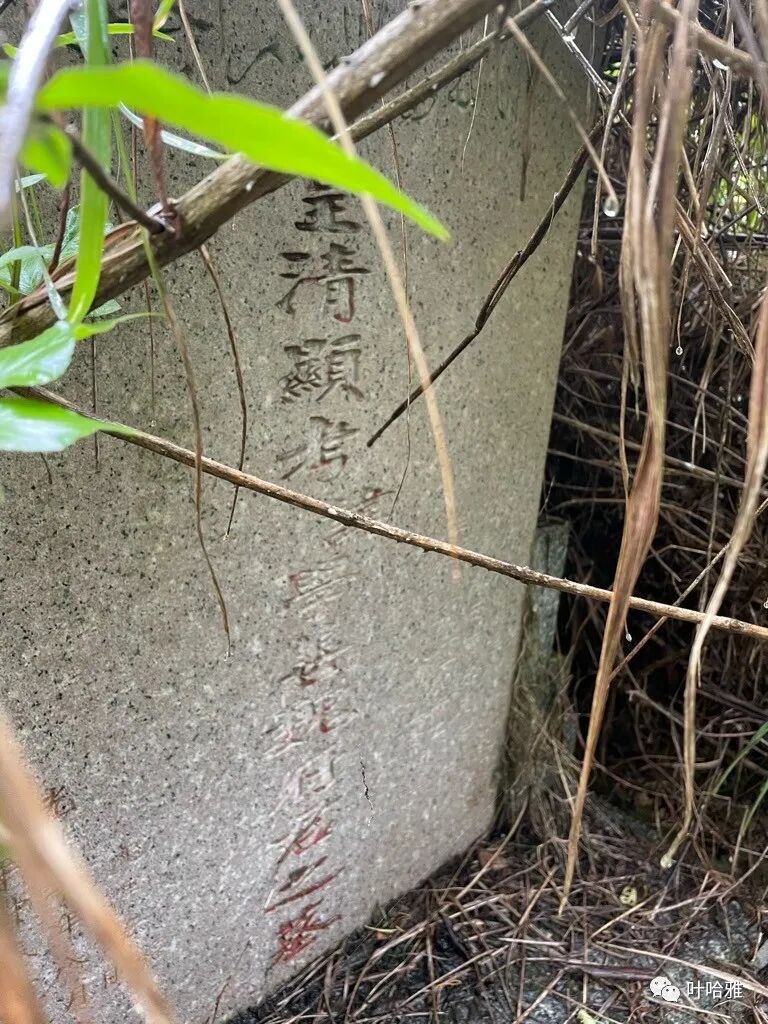
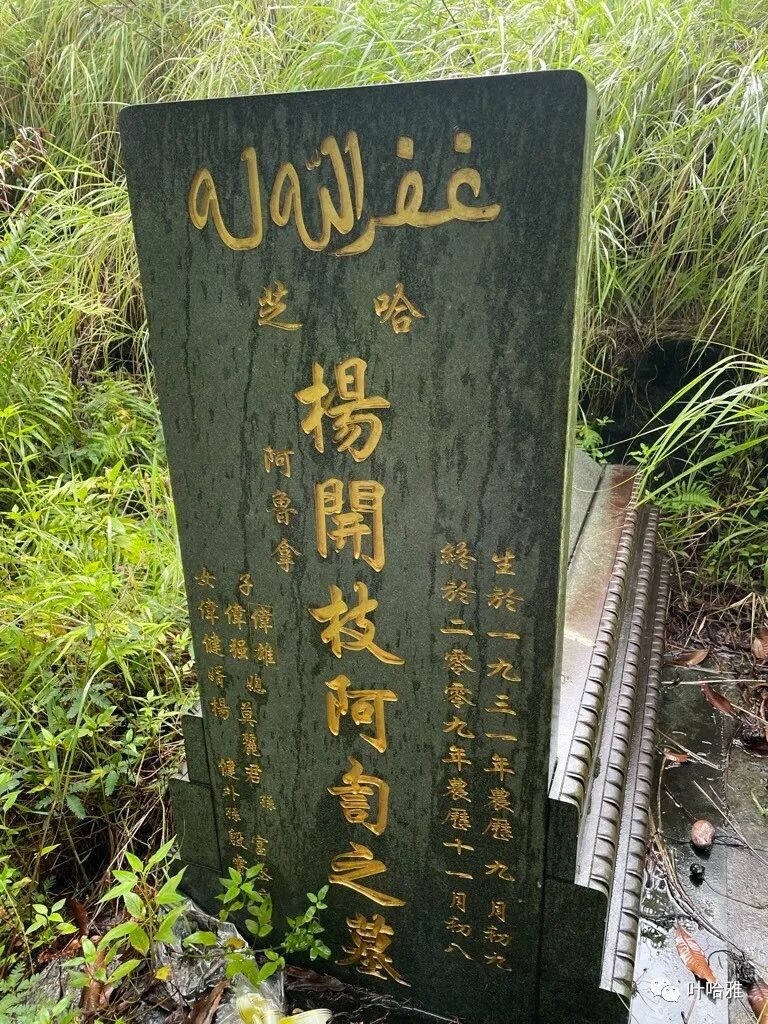
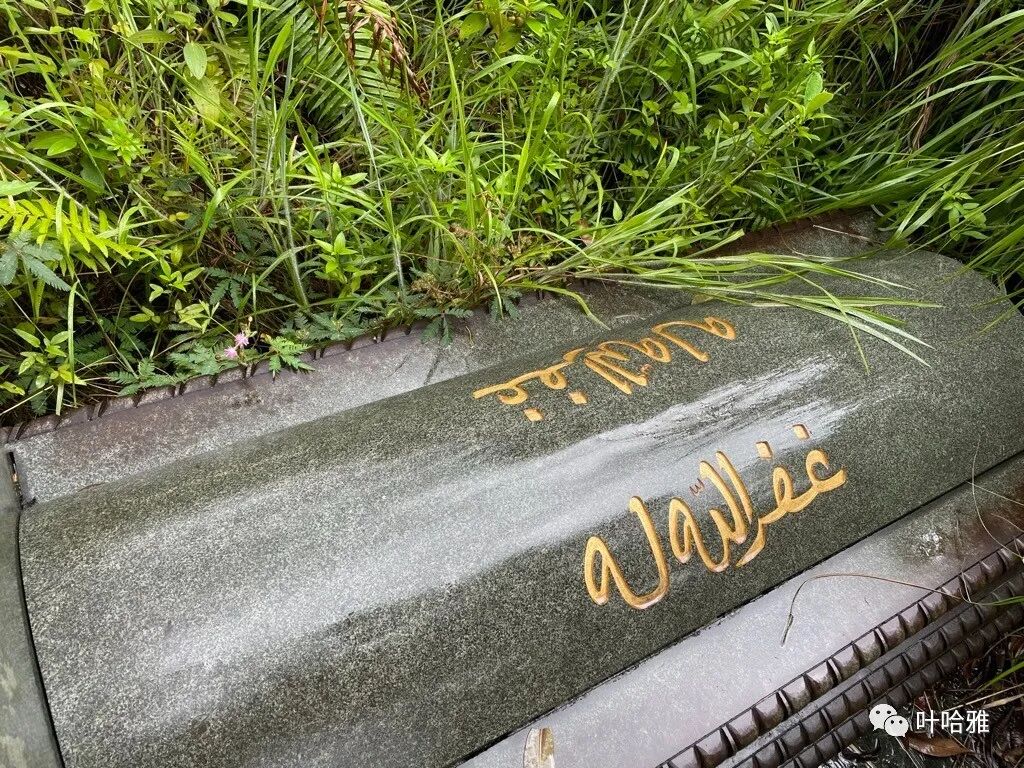
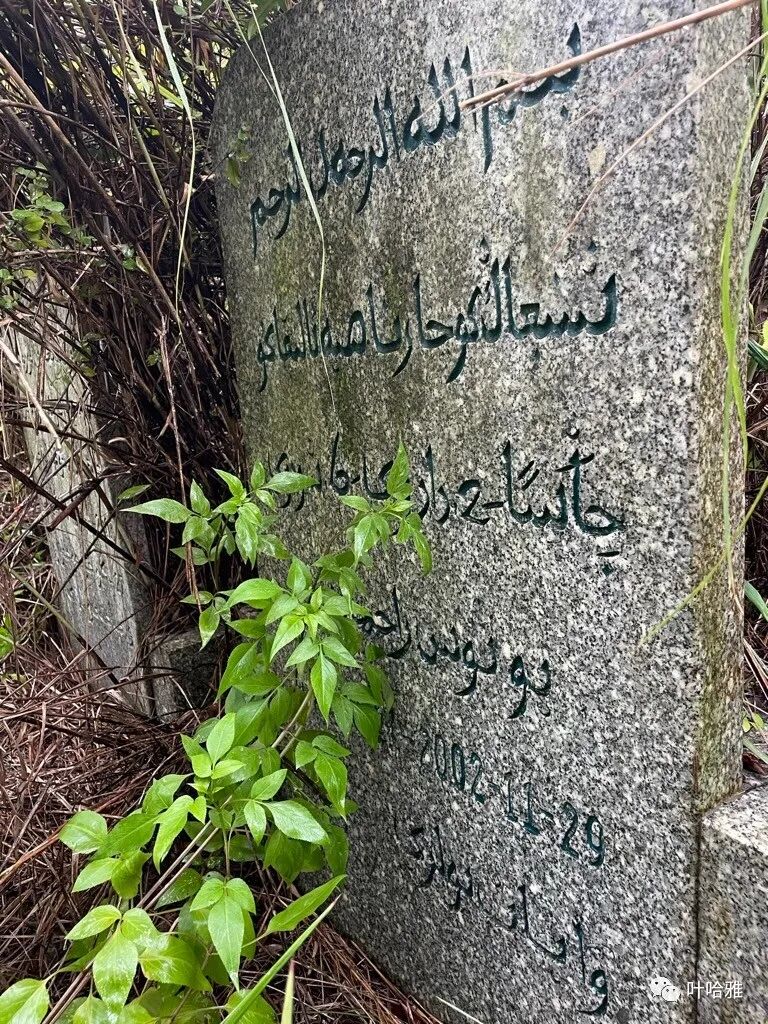
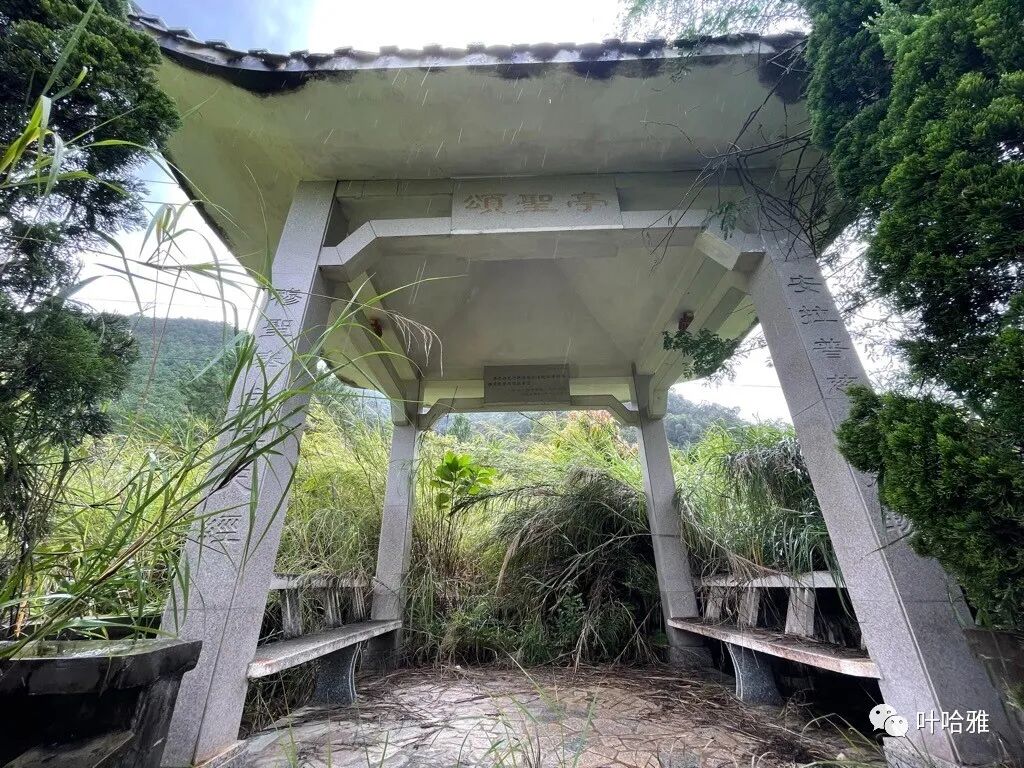
Praise the Emperor Pavilion (Songsheng Ting).
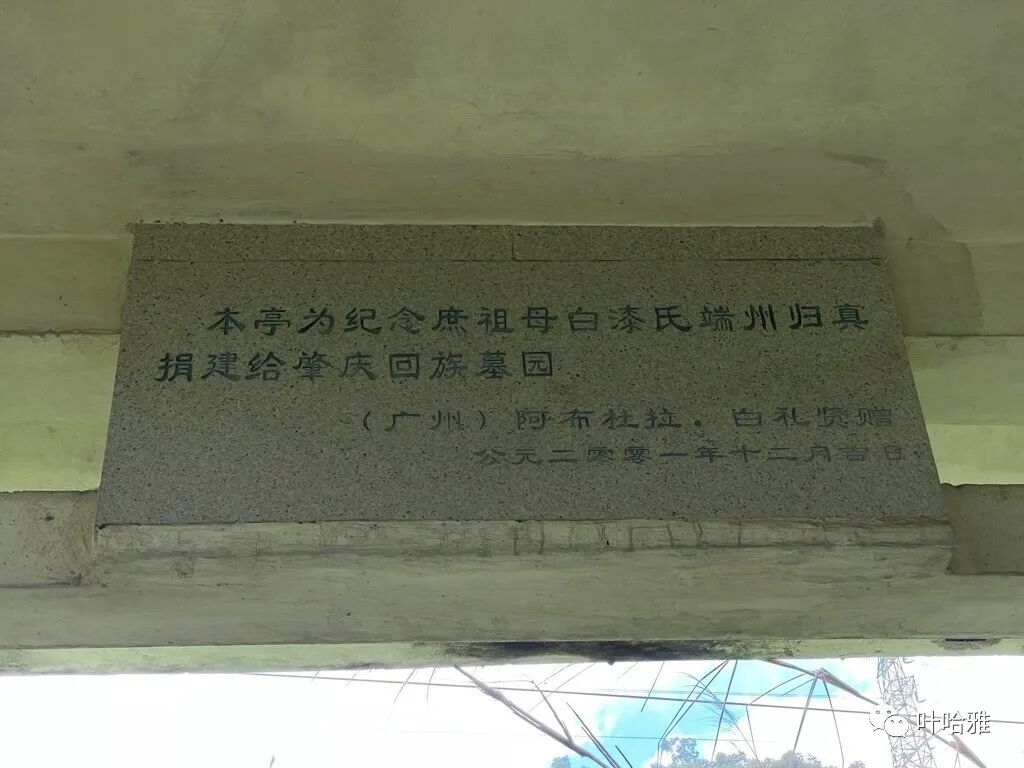
The Praise the Emperor Pavilion (Songsheng Ting) donated and built by the Guangzhou Dost.

Li Family Genealogy.
The Zhaoqing Hui Muslim Li Family Genealogy records that their ancestor, Li Fengqi, was originally from Jinan Prefecture, Shandong, and came south to Guangdong with Ma Bohu during the Chongzhen reign of the Ming Dynasty. After Ma Bohu was defeated in battle, Li Fengqi lived in seclusion in Guangzhou (Yangcheng) and moved to Zhaoqing in the early Qing Dynasty. The Zhaoqing Hui Muslim Liu Family Genealogy records that their ancestor, Liu Zhongyi, was originally from Wumenlou, Beiguan, Chang'an County, Xi'an Prefecture, Shaanxi Province. He also came south to Guangdong with Ma Bohu in the early Qing Dynasty and served at the Guangdong Luoding Garrison Governor's Office (possibly the Luoding Garrison Vice General; the Yongzheng edition of the Guangdong Gazetteer mentions Liu Zhengli as the Luoding Garrison Vice General in the 47th year of the Kangxi reign, though it is unclear if this is Liu Zhongyi). His descendants then lived in Zhaoqing for generations. However, checking the official records in the Ming Dynasty Guangdong Gazetteer and the Qing Dynasty Guangdong Gazetteer, there is no mention of a person named Ma Bohu.
The Zhaoqing Hui Muslim Liu Family Genealogy (revised in the 50th year of the Qianlong reign), Li Family Genealogy (revised in the 23rd year of the Daoguang reign), Luo Family Genealogy, Wang Family Genealogy, and the Liangguang Sa Family Genealogy (based on the Daoguang 17th-year edition, reprinted in the Republic of China era) all record that their respective ancestors came from Chang'an in Shaanxi, Jinan in Shandong, Xuanping in Zhejiang, Taiyuan in Shanxi, and other places. They settled in Zhaoqing after taking official posts there during the Qianlong and Daoguang reigns of the Qing Dynasty.
The Zhaoqing City Luo Jiyuan Family Genealogy records: Tracing our Luo Jiyuan family, People say we originated from Xuanping County, Zhejiang Province. During the Qianlong reign, they received an imperial order to lead troops south to eastern Guangdong and were stationed in Duanzhou (Zhaoqing). They later settled there, and the family branches have multiplied and flourished for nearly 300 years, with a long and deep history.
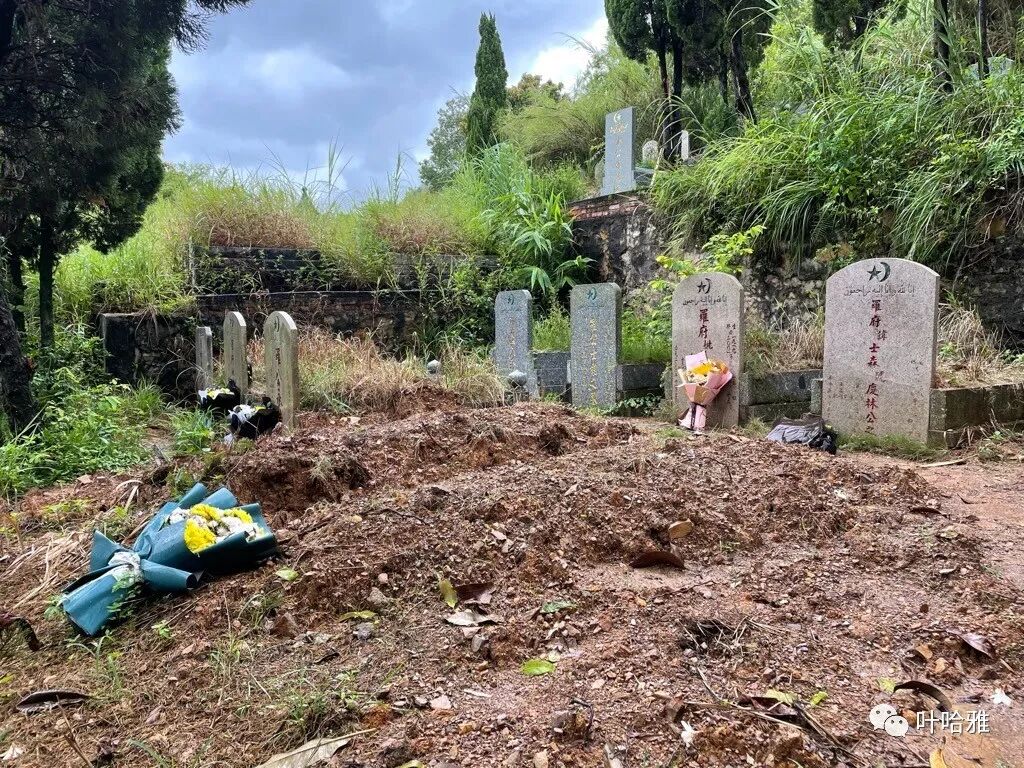
Although the cemetery is located in a remote mountain area, I asked the caretaker, and he said he has not encountered any ghosts or supernatural events in the decades he has been here. I wanted to give the old gentleman some money, but he politely declined and told me I could give it to the mosque instead.
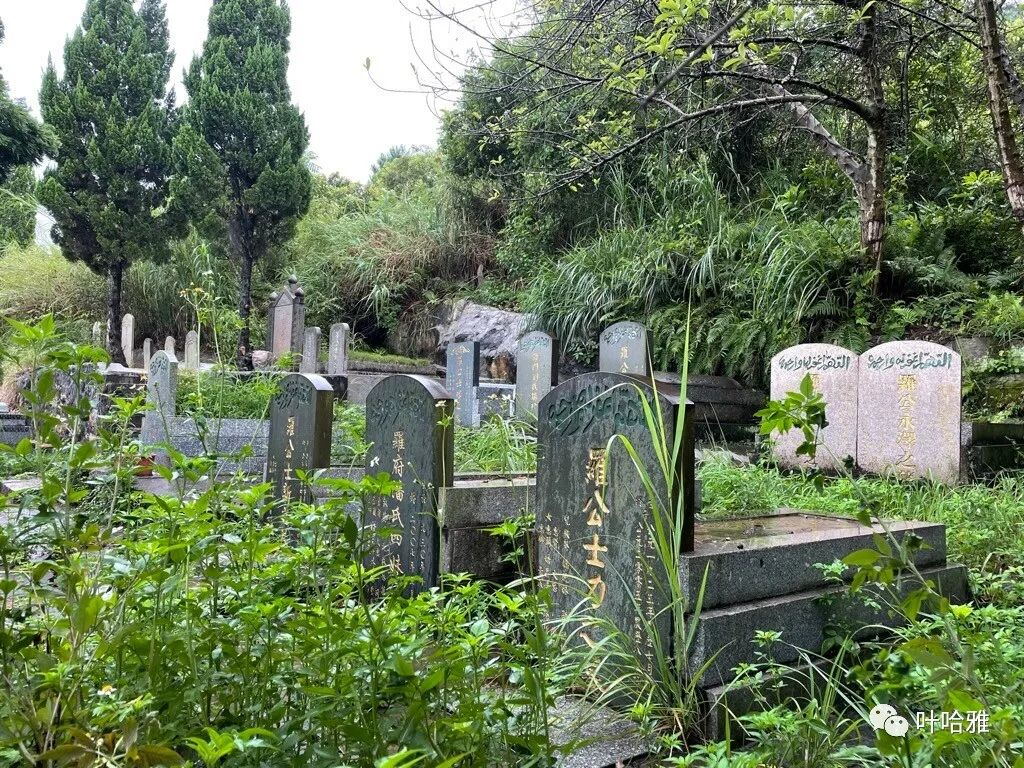
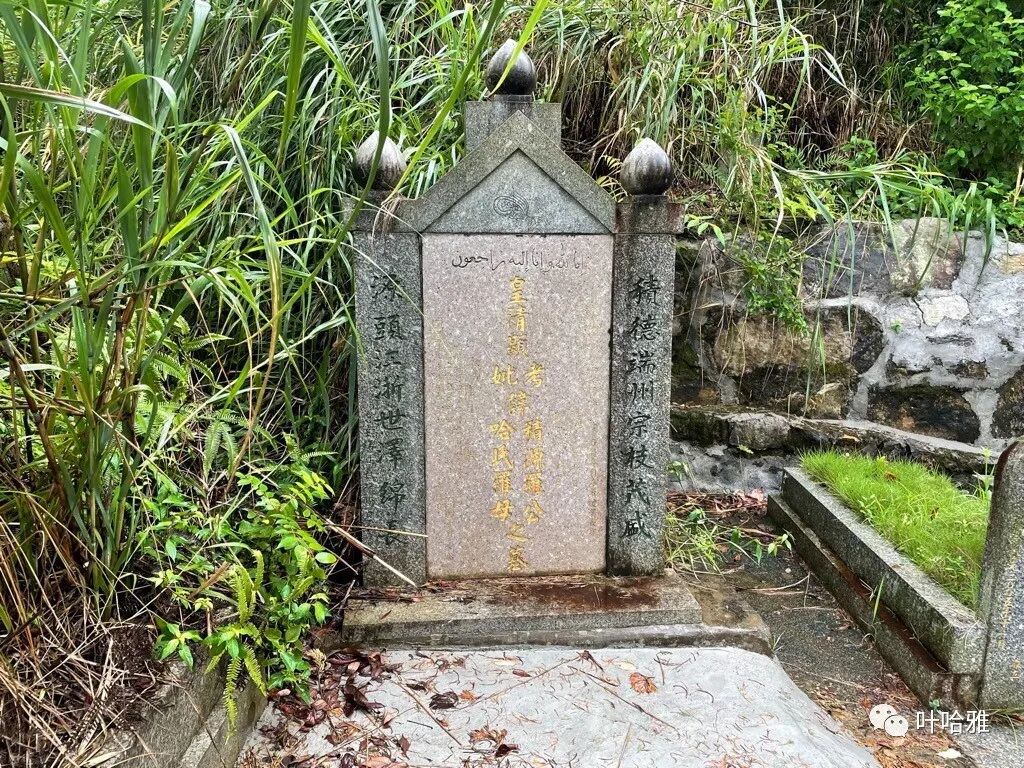
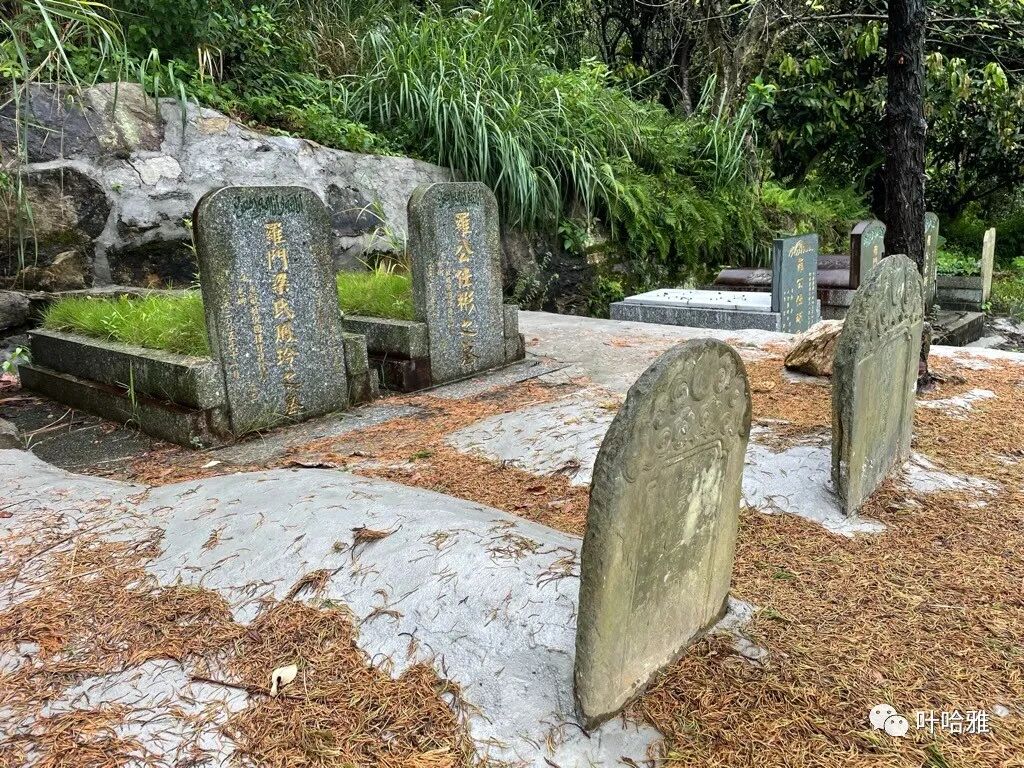
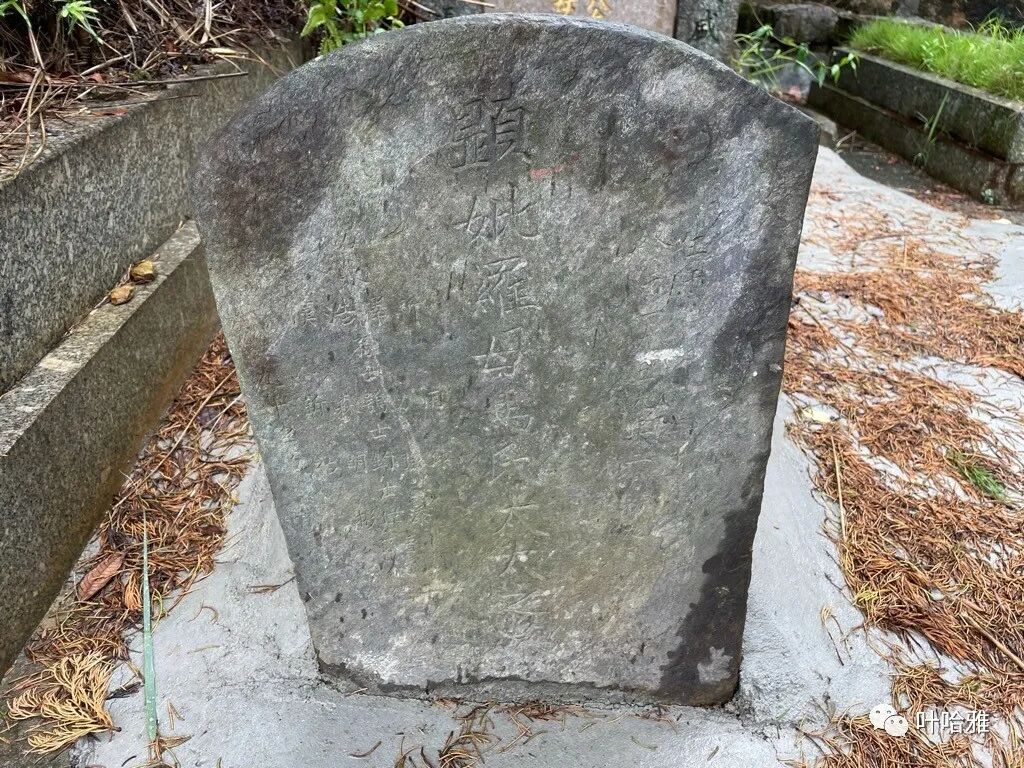
The photos show that the Hui Muslim cemetery has fallen into disrepair and is overgrown with weeds, with many tombstones hidden by grass taller than a person. Every year, family members still invite an imam to recite prayers in memory of the deceased. Most Hui Muslims from Zhaoqing have moved away or work elsewhere, and few are very wealthy. The owner of the Zhaoqing Halal Restaurant is a local Hui Muslim who stays true to his faith, which is not easy.
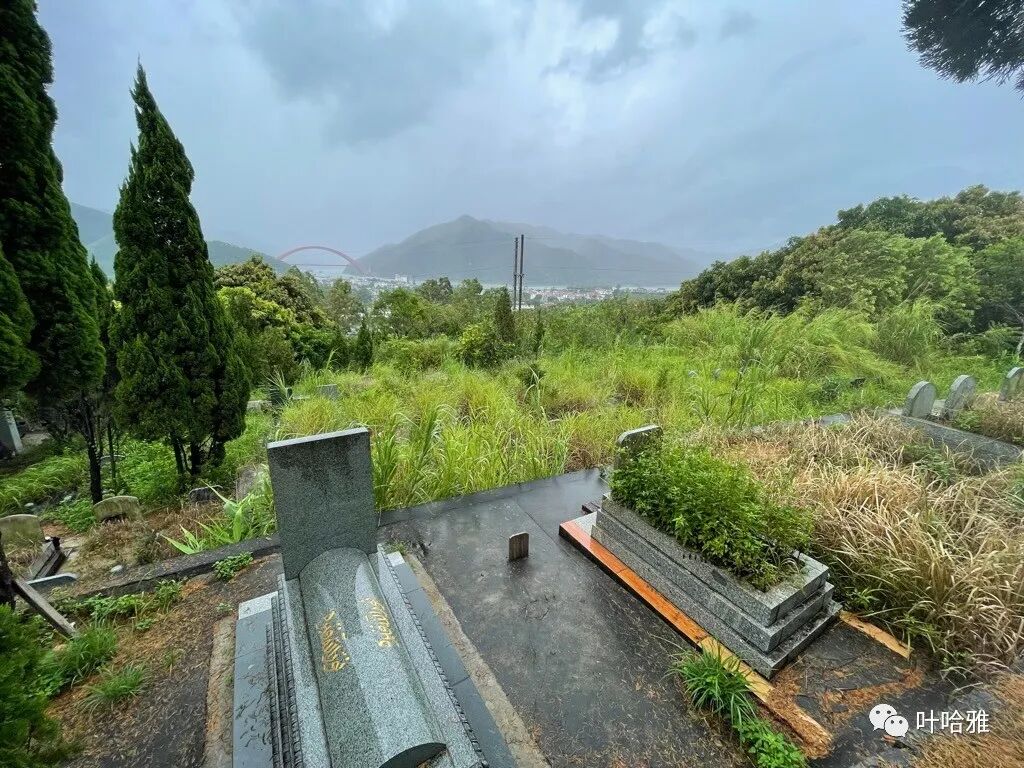
Halal Restaurant
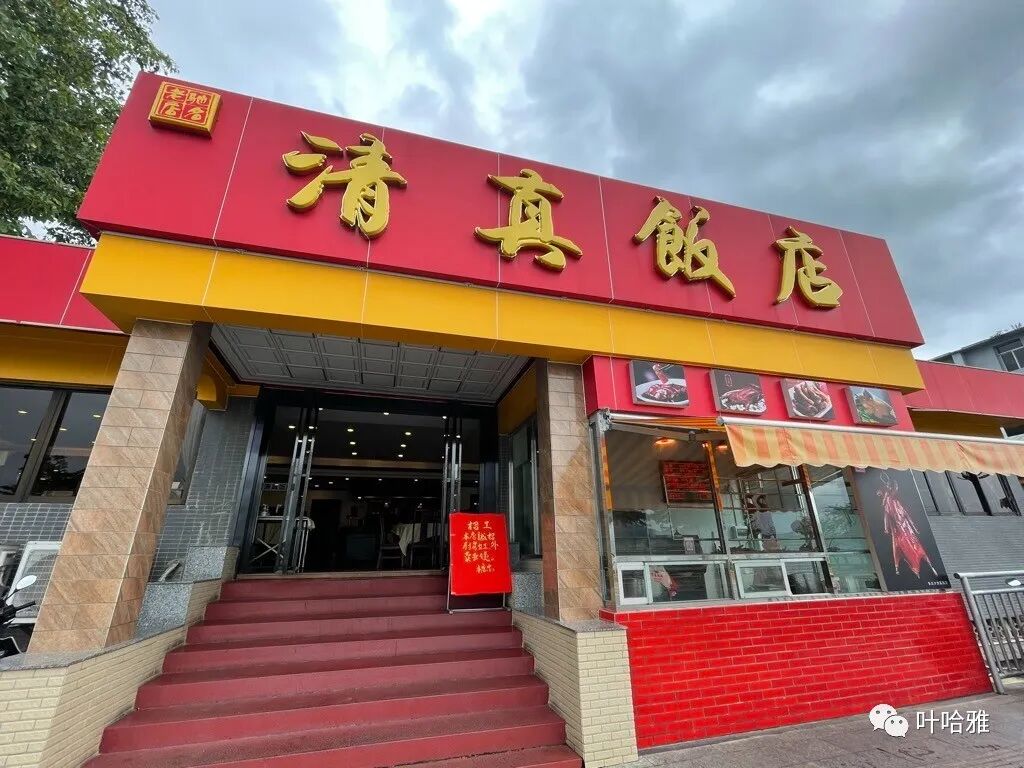
The Halal Restaurant was founded in 1957. Luo Xutang, president of the Zhaoqing Islamic Association, explained that four Hui Muslims who lived in Zhaoqing—Luo Shiyong, Sa Zhinan, Dong Shi, and Liu Youxing—were entrusted with setting up the restaurant. In 1998, the Halal Restaurant moved to its current location by the river.
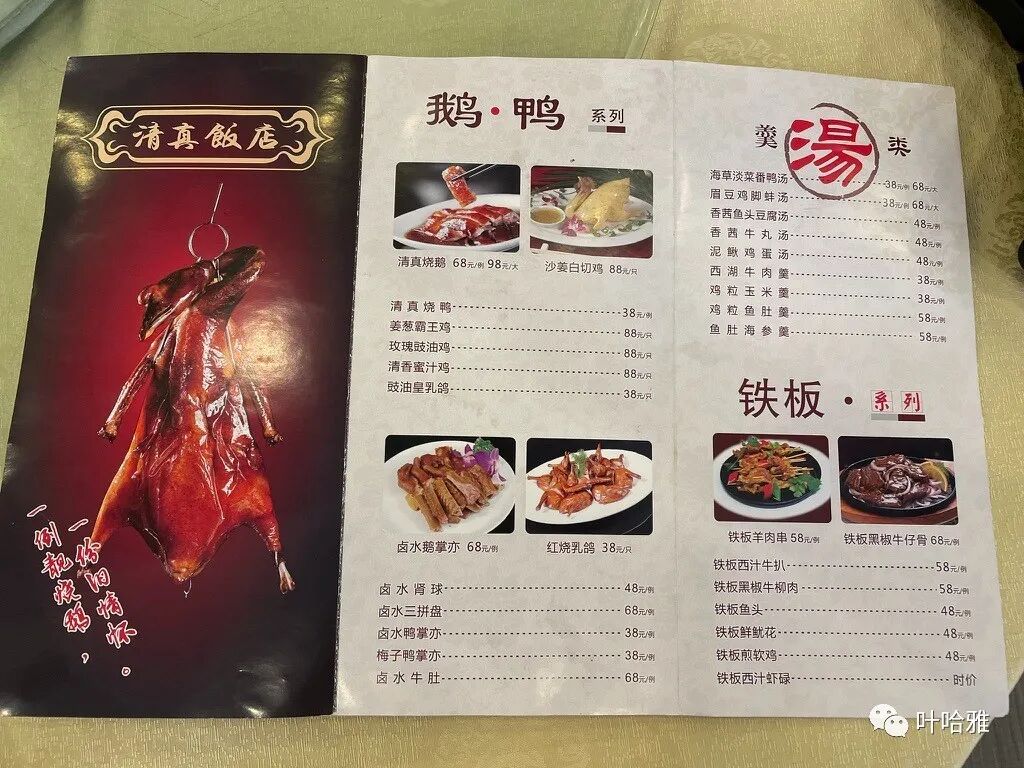
There used to be three local halal restaurants in downtown Zhaoqing, but this is the only one left. It is famous for its Zhaoqing crispy roast goose (cui pi shao e), which locals have eaten since they were children, making it a fond childhood memory for many.
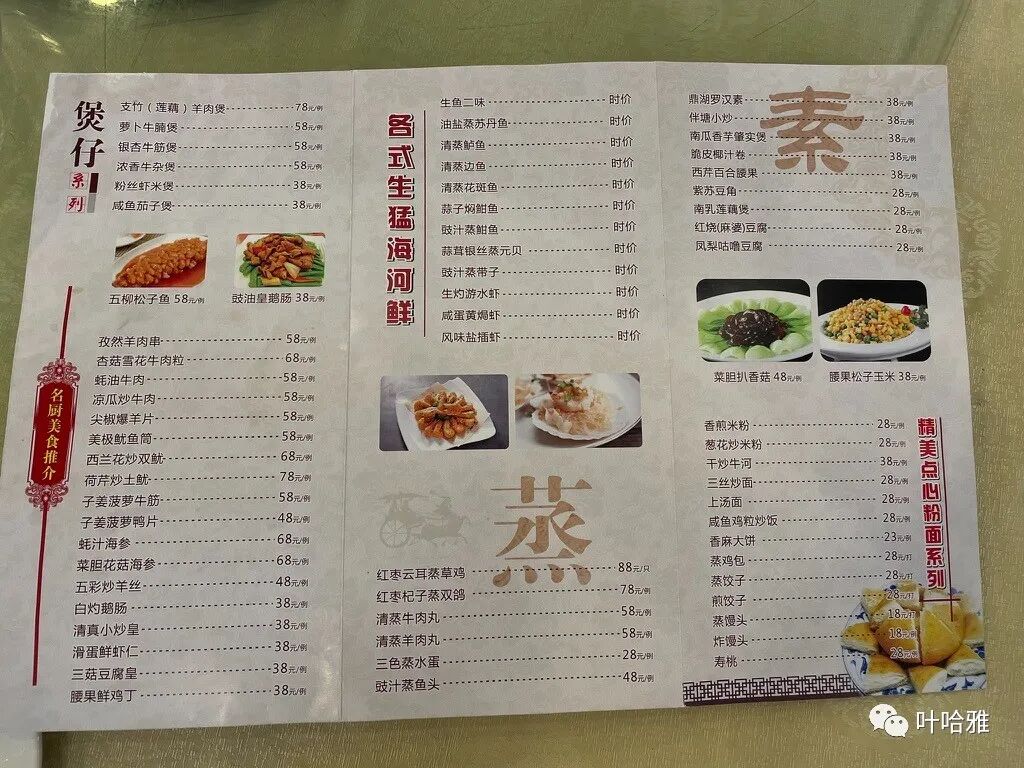
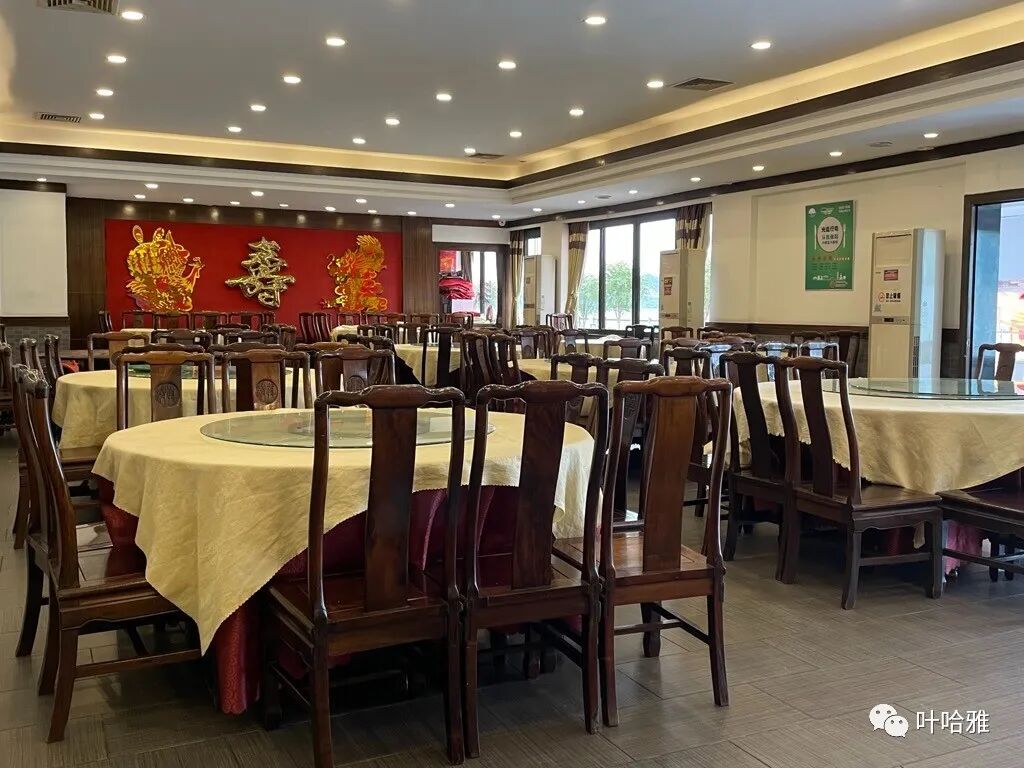
The restaurant is about 300 square meters and has private rooms and display areas, making it suitable for daily dining and hosting weddings or funerals.
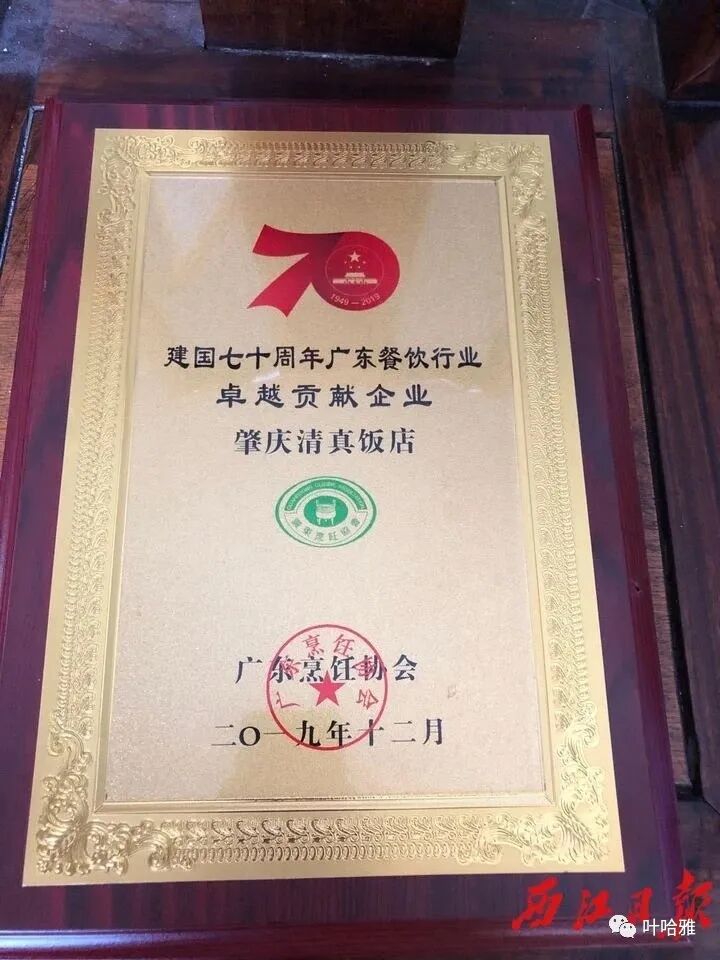
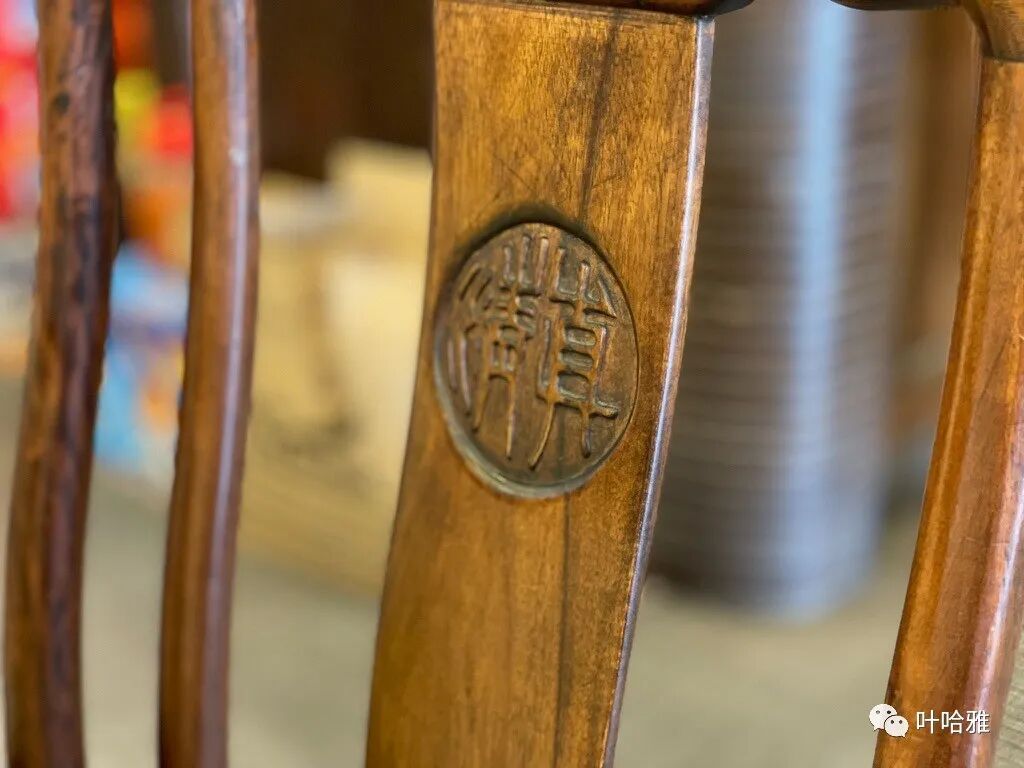
This is the only halal restaurant in Zhaoqing that serves Cantonese food, though there are over twenty noodle shops.
My friends in Guangzhou told me the roast goose was a must-order before I arrived. The skin is crispy and the meat is tender; it is the best Cantonese-style roast goose I have ever had. You can dip it in a sweet and sour sauce so you can eat plenty without it feeling greasy.
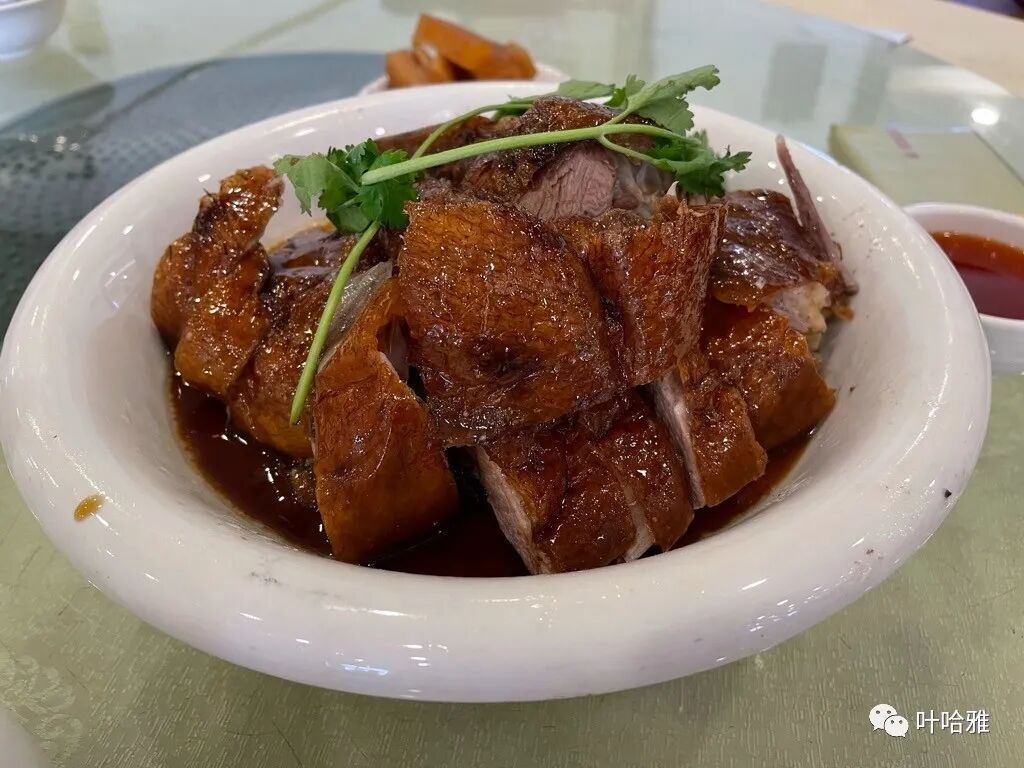
Roast goose
Cantonese people care a lot about healthy eating and are especially good at making soups, using all kinds of ingredients and herbs. The bowl of black-eyed pea, chicken foot, and clam soup (meidou jijiao bang tang) I had tasted a bit medicinal. I asked Imam Liu what the difference is between Zhaoqing food and Guangzhou food. He felt that Zhaoqing has a wider variety of soups, though perhaps that is because we Hui Muslims have fewer soup options, so we can only compare the Zhaoqing Halal Restaurant with those in Guangzhou.
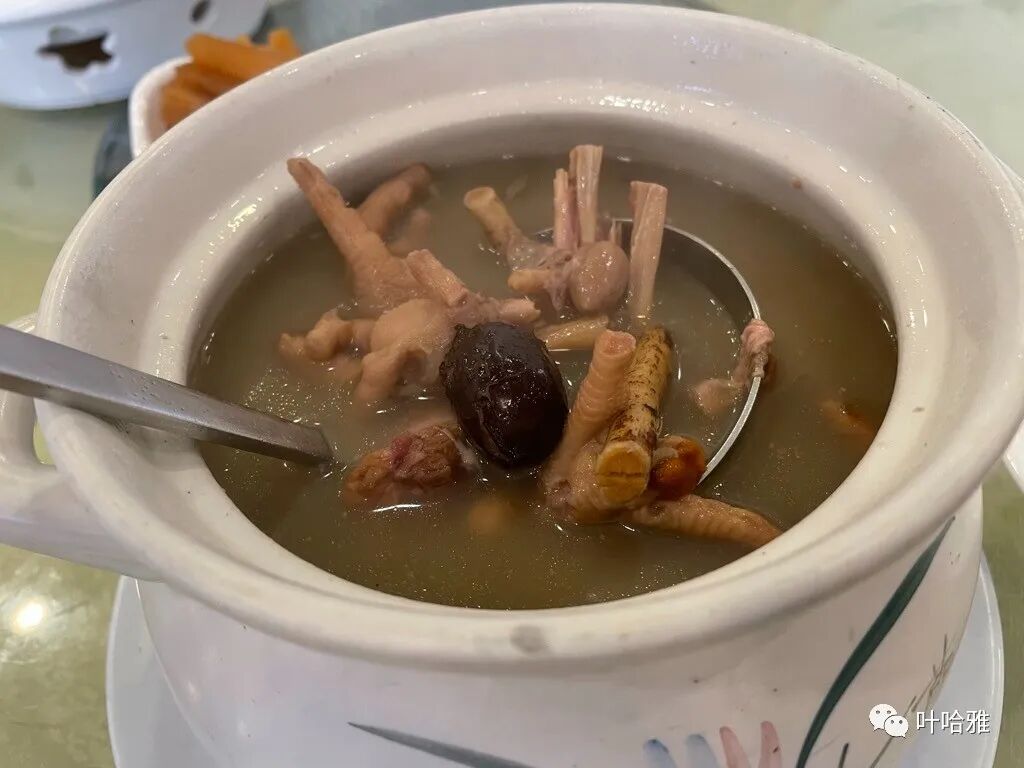
Black-eyed pea, chicken feet, and clam soup (meidou jijiao bangtang).
Stir-fried rice noodles with beef (ganchao niuhe) is a famous street food in Guangdong. I think it is a main dish that really shows a Cantonese chef's skill. It is made with beef slices and flat rice noodles, and the green parts are yellow chives (jiuhuang). I was surprised that the portion at the halal restaurant was huge; one serving is enough for two people.
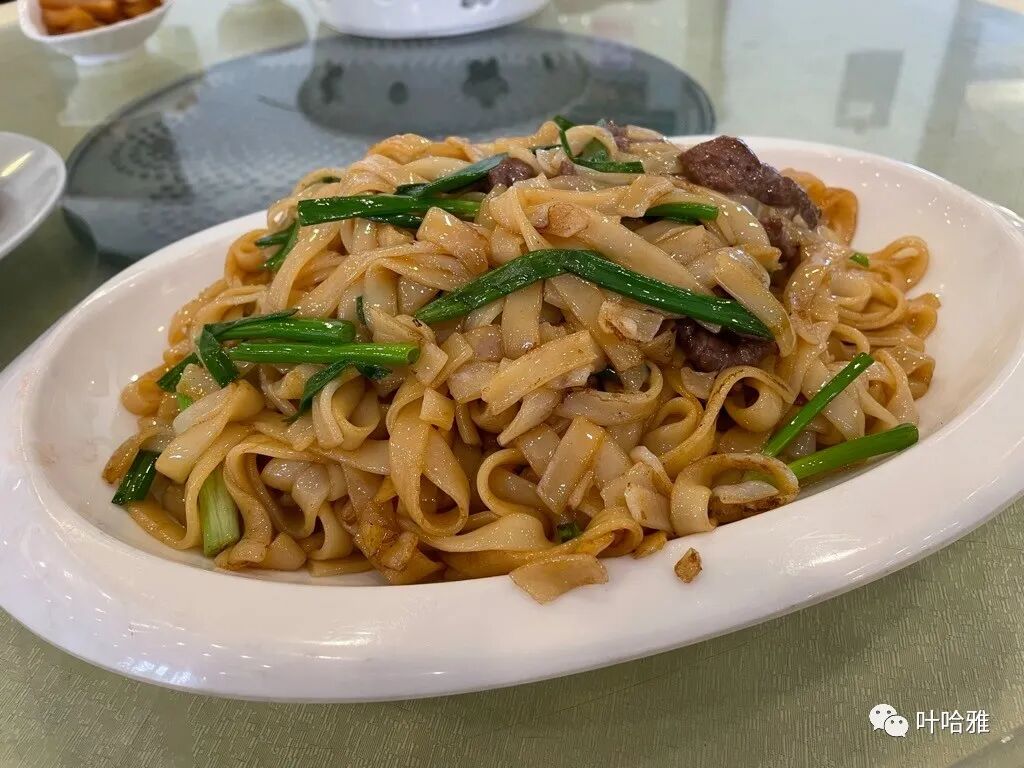
Stir-fried rice noodles with beef (ganchao niuhe).
When I was in Guangzhou, I could easily get a group together for a meal. But when I said I wanted to go to Zhaoqing to visit graves, no one would go with me. So, I ended up eating alone at the halal restaurant, which meant I could not try everything on the menu. Sand ginger poached chicken (shajiang baiqieji) is also a Zhaoqing specialty, but I could not finish it by myself. It was a shame, but I will come back again.
Summary: This China mosque travel guide covers Zhaoqing in Guangdong, including East City Mosque, West Mosque, ancient Hui Muslim tombs, local Muslim history, and halal Cantonese food such as crispy roast goose.
A Halal Trip to Zhaoqing, Guangdong: The Mosque, Ancient Tombs of Hui Muslims, and Crispy Roast Goose (Shaoge) is presented here as a firsthand travel account in clear English, beginning with this scene: I had long heard that Zhaoqing has a halal Cantonese restaurant run by locals for many years, two mosques, and the largest ancient tomb complex for Hui Muslims in Guangdong. The account keeps its focus on Halal Travel, Yiwu Food, Mosque Travel while preserving the names, places, food, and historical details from the Chinese source.
I had long heard that Zhaoqing has a halal Cantonese restaurant run by locals for many years, two mosques, and the largest ancient tomb complex for Hui Muslims in Guangdong. During our team-building trip to Guangzhou, I set aside one day to visit Zhaoqing. You can take an intercity train from Guangzhou and reach Zhaoqing in just over an hour, making it an easy day trip. I suggest buying a ticket to Zhaoqing Station instead of Zhaoqing East Station, as the East Station is a 40-minute drive from the city center.
Zhaoqing Station is only three kilometers from the mosques. Historical records show two mosques in Zhaoqing: the East Mosque and the West Mosque. The East Mosque was built between the late Ming and early Qing dynasties on Shuishiying Road in the Duanzhou District, which was the Shuixiangying area at the time. The West Mosque was built in the 32nd year of the Qianlong reign of the Qing dynasty on Kangle Middle Road in the Duanzhou District, formerly known as Kangle Middle Street on Zhujia Road near the West Gate. The two mosques are about two kilometers apart.
East City Mosque
Zhaoqing East City Mosque
The Zhaoqing East City Mosque was first built between the late Ming and early Qing dynasties. It currently houses 11 ancient stone tablets and plaques, along with a collection of ancient books. It was named a Zhaoqing municipal cultural relic protection site in 1984. According to ancient stone tablets, the mosque was originally a brick-and-wood structure and underwent repairs during the Kangxi, Qianlong, Jiaqing, and Daoguang reigns. In 1946, Imam Yang Maolin opened a scripture school inside the mosque. The following year, he turned it into a halal primary school. It became a public halal primary school after 1950 and was renamed Zhaoqing No. 17 Primary School in 1966. In 1991, the mosque and the primary school were separated; the north side of the main prayer hall was given to the primary school, and the south side was returned to the mosque.
Old photo of the halal primary school
The caretaker of the East City Mosque is from the Wang family of Hui Muslims, who were the first of their people to settle in Zhaoqing. According to the Wang Family Genealogy of Zhaoqing, People say Wang Jiyin had a brother who moved to Guangxi shortly after arriving in Zhaoqing, and they lost contact. Since Wang Jiyin, the family has lived here for over 200 years across eleven generations. The family has grown to over a thousand people, with relatives now living in Hong Kong, Macau, and overseas, far beyond their original small presence in Zhaoqing.
The East City Mosque is slightly older than the West City Mosque and was rebuilt in a traditional style.
The East City Mosque does not hold regular religious services; you must go to the West City Mosque for Jumu'ah prayers.
Hui Muslims in Guangdong live all over the province. They are mainly concentrated in the Pearl River Delta centered on Guangzhou, the West River region centered on Zhaoqing, and the North River region centered on Shaozhou and Nanxiong. There are also scattered populations in southern Guangdong, the East River area, and the Chaoshan region.
The Hui Muslims in Zhaoqing mainly came from military garrisons during the Ming and Qing dynasties, where they settled down and raised families. Others were Hui Muslims from across the country who came to do business, or Hui scholars who came to Guangdong to serve as imams, moving from places like Gansu, Shaanxi, Guangxi, and Hunan. A small number of Hui Muslims were also exiled here. For example, during the Hongzhi reign, the imperial court sent 181 tribute envoys from Turpan to be settled in Guangdong and Guangxi. Thousands of Hui Muslims from counties like Fengxiang and Fufeng in Shaanxi rose up in rebellion. After the uprising was suppressed, the men were all sent to Guangdong and Guangxi for military service. In the seventh year of the Hongzhi reign, Minister of War Ma Wensheng requested that 40 Turpan Hui tribute envoys, including Xieyiman Su'er, be sent to Guangdong, Guangxi, and Fujian as a punishment.
Recorded history of Hui Muslims in Zhaoqing dates back to the Ming dynasty. In the first year of the Jingtai reign (1450), Dong Xing requested that over 400 officers and soldiers under the command of Lian Zhong, a regional military commander sent from Nanjing to suppress Huang Xiaoyang, be allowed to stay and garrison in Guangdong. In the second year of the Chenghua reign (1466), Han Yong requested that they and their families be allowed to settle in Guangdong as part of the agricultural garrison troops. Some of these Hui Muslims settled near the naval camp east of Zhaoqing city, while those who settled in the west of the city arrived in the early Qing dynasty. Today, there are about 600 Hui Muslims in Zhaoqing with nine surnames: Liu, Li, Ma, Mu, Luo, Wang, Dong, Ha, and Sa.
In 1646, Zhu Youlang of the Ming royal family established the Southern Ming regime in Zhaoqing. The Qing government sent troops to suppress it. Once the fighting stopped, the Hui Muslim soldiers settled down as civilians, and these Hui Muslims later moved to Guangzhou one after another.
After the Southern Ming regime fell, the Qing government moved the Governor-General's office of Guangdong and Guangxi to Guangzhou in the 11th year of the Qianlong reign. Zhaoqing was no longer a major military hub, so the Hui Muslims moved out of Zhaoqing and into Guangzhou along with the government. Because of this, a saying spread among the Hui Muslims: First arrive in Zhaoqing, then live in Guangzhou.
West City Mosque
The West City Mosque in Zhaoqing was first built in the early years of the Qianlong reign. Local elders pooled money to buy a house in Zhongyongshe outside the north of the city to serve as the first mosque. It was later moved to Longdinggang in Zhujia Lane outside the west of the city, and then expanded with funds raised by local elders during the Jiaqing reign.
The imam of the West City Mosque is from Hainan and has led the mosque in Zhaoqing for over thirty years. He just retired. The day after my visit was the first day for the new imam, who is from Xinjiang and has taught in Guangdong for many years.
Zhaoqing West City Mosque
The West City Mosque was built with a dome style. Since it has long been a municipal-level cultural relic protection site, there are no plans to renovate it.
Daily religious activities are held at the West City Mosque. The East City Mosque has no imam, so Friday prayers (Jumu'ah) are held at the West City Mosque.
The ground of the mosque is covered in frangipani flowers (jidan hua), which have a very fresh scent. They can be dried and used in medicine or for making soup.
The only remaining historical site inside the mosque records the history of its construction.
Zhaoqing Hui Muslim Cemetery
The Zhaoqing Hui Muslim Cemetery is located in Ganshu Village, Gaoyao District, more than ten kilometers from the city center. It was originally located at Niumiangang in the west of the city and covered nearly 20,000 square meters. Later, due to urban planning, the graves were moved here, and the area was expanded to nearly 40,000 square meters.
A total of 2,521 graves were relocated. The remains of the ancestors were wrapped in white burial shrouds (kafan) and reburied.
The cemetery is overgrown with weeds and rarely visited. Only one local Hui Muslim caretaker stays here year-round.
The names carved on the stone tablets are those who donated money to renovate the cemetery. Many are from the Guangdong-Hong Kong-Macao region. For those who have passed away, the characters for "late Hui" (gu hui) are carved above their names.
The cemetery has an area specifically for burying scholars and imams from the Ming and Qing dynasties. The local Islamic Association rebuilt the graves for these predecessors based on historical records. However, the caretaker said that the descendants of these scholars are mostly missing, so he has never seen any descendants come to visit the graves.
Huangqing Gu refers to someone who returned to Allah during the early Qing Dynasty, while Qing Gu refers to someone who returned to Allah during the later years of the Qing Dynasty.
Praise the Emperor Pavilion (Songsheng Ting).
The Praise the Emperor Pavilion (Songsheng Ting) donated and built by the Guangzhou Dost.
Li Family Genealogy.
The Zhaoqing Hui Muslim Li Family Genealogy records that their ancestor, Li Fengqi, was originally from Jinan Prefecture, Shandong, and came south to Guangdong with Ma Bohu during the Chongzhen reign of the Ming Dynasty. After Ma Bohu was defeated in battle, Li Fengqi lived in seclusion in Guangzhou (Yangcheng) and moved to Zhaoqing in the early Qing Dynasty. The Zhaoqing Hui Muslim Liu Family Genealogy records that their ancestor, Liu Zhongyi, was originally from Wumenlou, Beiguan, Chang'an County, Xi'an Prefecture, Shaanxi Province. He also came south to Guangdong with Ma Bohu in the early Qing Dynasty and served at the Guangdong Luoding Garrison Governor's Office (possibly the Luoding Garrison Vice General; the Yongzheng edition of the Guangdong Gazetteer mentions Liu Zhengli as the Luoding Garrison Vice General in the 47th year of the Kangxi reign, though it is unclear if this is Liu Zhongyi). His descendants then lived in Zhaoqing for generations. However, checking the official records in the Ming Dynasty Guangdong Gazetteer and the Qing Dynasty Guangdong Gazetteer, there is no mention of a person named Ma Bohu.
The Zhaoqing Hui Muslim Liu Family Genealogy (revised in the 50th year of the Qianlong reign), Li Family Genealogy (revised in the 23rd year of the Daoguang reign), Luo Family Genealogy, Wang Family Genealogy, and the Liangguang Sa Family Genealogy (based on the Daoguang 17th-year edition, reprinted in the Republic of China era) all record that their respective ancestors came from Chang'an in Shaanxi, Jinan in Shandong, Xuanping in Zhejiang, Taiyuan in Shanxi, and other places. They settled in Zhaoqing after taking official posts there during the Qianlong and Daoguang reigns of the Qing Dynasty.
The Zhaoqing City Luo Jiyuan Family Genealogy records: Tracing our Luo Jiyuan family, People say we originated from Xuanping County, Zhejiang Province. During the Qianlong reign, they received an imperial order to lead troops south to eastern Guangdong and were stationed in Duanzhou (Zhaoqing). They later settled there, and the family branches have multiplied and flourished for nearly 300 years, with a long and deep history.
Although the cemetery is located in a remote mountain area, I asked the caretaker, and he said he has not encountered any ghosts or supernatural events in the decades he has been here. I wanted to give the old gentleman some money, but he politely declined and told me I could give it to the mosque instead.
The photos show that the Hui Muslim cemetery has fallen into disrepair and is overgrown with weeds, with many tombstones hidden by grass taller than a person. Every year, family members still invite an imam to recite prayers in memory of the deceased. Most Hui Muslims from Zhaoqing have moved away or work elsewhere, and few are very wealthy. The owner of the Zhaoqing Halal Restaurant is a local Hui Muslim who stays true to his faith, which is not easy.
Halal Restaurant
The Halal Restaurant was founded in 1957. Luo Xutang, president of the Zhaoqing Islamic Association, explained that four Hui Muslims who lived in Zhaoqing—Luo Shiyong, Sa Zhinan, Dong Shi, and Liu Youxing—were entrusted with setting up the restaurant. In 1998, the Halal Restaurant moved to its current location by the river.
There used to be three local halal restaurants in downtown Zhaoqing, but this is the only one left. It is famous for its Zhaoqing crispy roast goose (cui pi shao e), which locals have eaten since they were children, making it a fond childhood memory for many.
The restaurant is about 300 square meters and has private rooms and display areas, making it suitable for daily dining and hosting weddings or funerals.
This is the only halal restaurant in Zhaoqing that serves Cantonese food, though there are over twenty noodle shops.
My friends in Guangzhou told me the roast goose was a must-order before I arrived. The skin is crispy and the meat is tender; it is the best Cantonese-style roast goose I have ever had. You can dip it in a sweet and sour sauce so you can eat plenty without it feeling greasy.
Roast goose
Cantonese people care a lot about healthy eating and are especially good at making soups, using all kinds of ingredients and herbs. The bowl of black-eyed pea, chicken foot, and clam soup (meidou jijiao bang tang) I had tasted a bit medicinal. I asked Imam Liu what the difference is between Zhaoqing food and Guangzhou food. He felt that Zhaoqing has a wider variety of soups, though perhaps that is because we Hui Muslims have fewer soup options, so we can only compare the Zhaoqing Halal Restaurant with those in Guangzhou.
Black-eyed pea, chicken feet, and clam soup (meidou jijiao bangtang).
Stir-fried rice noodles with beef (ganchao niuhe) is a famous street food in Guangdong. I think it is a main dish that really shows a Cantonese chef's skill. It is made with beef slices and flat rice noodles, and the green parts are yellow chives (jiuhuang). I was surprised that the portion at the halal restaurant was huge; one serving is enough for two people.
Stir-fried rice noodles with beef (ganchao niuhe).
When I was in Guangzhou, I could easily get a group together for a meal. But when I said I wanted to go to Zhaoqing to visit graves, no one would go with me. So, I ended up eating alone at the halal restaurant, which meant I could not try everything on the menu. Sand ginger poached chicken (shajiang baiqieji) is also a Zhaoqing specialty, but I could not finish it by myself. It was a shame, but I will come back again.
China Mosque Travel Guide: Zhaoqing Guangdong Mosques, Hui Muslim Tombs and Halal Roast Goose
Articles • yusuf908 posted the article • 0 comments • 268 views • 2026-05-22 11:44
Reposted from the web
Summary: This China mosque travel guide covers Zhaoqing in Guangdong, including East City Mosque, West Mosque, ancient Hui Muslim tombs, local Muslim history, and halal Cantonese food such as crispy roast goose.
A Halal Trip to Zhaoqing, Guangdong: The Mosque, Ancient Tombs of Hui Muslims, and Crispy Roast Goose (Shaoge) is presented here as a firsthand travel account in clear English, beginning with this scene: I had long heard that Zhaoqing has a halal Cantonese restaurant run by locals for many years, two mosques, and the largest ancient tomb complex for Hui Muslims in Guangdong. The account keeps its focus on Halal Travel, Yiwu Food, Mosque Travel while preserving the names, places, food, and historical details from the Chinese source.
I had long heard that Zhaoqing has a halal Cantonese restaurant run by locals for many years, two mosques, and the largest ancient tomb complex for Hui Muslims in Guangdong. During our team-building trip to Guangzhou, I set aside one day to visit Zhaoqing. You can take an intercity train from Guangzhou and reach Zhaoqing in just over an hour, making it an easy day trip. I suggest buying a ticket to Zhaoqing Station instead of Zhaoqing East Station, as the East Station is a 40-minute drive from the city center.
Zhaoqing Station is only three kilometers from the mosques. Historical records show two mosques in Zhaoqing: the East Mosque and the West Mosque. The East Mosque was built between the late Ming and early Qing dynasties on Shuishiying Road in the Duanzhou District, which was the Shuixiangying area at the time. The West Mosque was built in the 32nd year of the Qianlong reign of the Qing dynasty on Kangle Middle Road in the Duanzhou District, formerly known as Kangle Middle Street on Zhujia Road near the West Gate. The two mosques are about two kilometers apart.
East City Mosque
Zhaoqing East City Mosque
The Zhaoqing East City Mosque was first built between the late Ming and early Qing dynasties. It currently houses 11 ancient stone tablets and plaques, along with a collection of ancient books. It was named a Zhaoqing municipal cultural relic protection site in 1984. According to ancient stone tablets, the mosque was originally a brick-and-wood structure and underwent repairs during the Kangxi, Qianlong, Jiaqing, and Daoguang reigns. In 1946, Imam Yang Maolin opened a scripture school inside the mosque. The following year, he turned it into a halal primary school. It became a public halal primary school after 1950 and was renamed Zhaoqing No. 17 Primary School in 1966. In 1991, the mosque and the primary school were separated; the north side of the main prayer hall was given to the primary school, and the south side was returned to the mosque.
Old photo of the halal primary school
The caretaker of the East City Mosque is from the Wang family of Hui Muslims, who were the first of their people to settle in Zhaoqing. According to the Wang Family Genealogy of Zhaoqing, People say Wang Jiyin had a brother who moved to Guangxi shortly after arriving in Zhaoqing, and they lost contact. Since Wang Jiyin, the family has lived here for over 200 years across eleven generations. The family has grown to over a thousand people, with relatives now living in Hong Kong, Macau, and overseas, far beyond their original small presence in Zhaoqing.
The East City Mosque is slightly older than the West City Mosque and was rebuilt in a traditional style.
The East City Mosque does not hold regular religious services; you must go to the West City Mosque for Jumu'ah prayers.
Hui Muslims in Guangdong live all over the province. They are mainly concentrated in the Pearl River Delta centered on Guangzhou, the West River region centered on Zhaoqing, and the North River region centered on Shaozhou and Nanxiong. There are also scattered populations in southern Guangdong, the East River area, and the Chaoshan region.
The Hui Muslims in Zhaoqing mainly came from military garrisons during the Ming and Qing dynasties, where they settled down and raised families. Others were Hui Muslims from across the country who came to do business, or Hui scholars who came to Guangdong to serve as imams, moving from places like Gansu, Shaanxi, Guangxi, and Hunan. A small number of Hui Muslims were also exiled here. For example, during the Hongzhi reign, the imperial court sent 181 tribute envoys from Turpan to be settled in Guangdong and Guangxi. Thousands of Hui Muslims from counties like Fengxiang and Fufeng in Shaanxi rose up in rebellion. After the uprising was suppressed, the men were all sent to Guangdong and Guangxi for military service. In the seventh year of the Hongzhi reign, Minister of War Ma Wensheng requested that 40 Turpan Hui tribute envoys, including Xieyiman Su'er, be sent to Guangdong, Guangxi, and Fujian as a punishment.
Recorded history of Hui Muslims in Zhaoqing dates back to the Ming dynasty. In the first year of the Jingtai reign (1450), Dong Xing requested that over 400 officers and soldiers under the command of Lian Zhong, a regional military commander sent from Nanjing to suppress Huang Xiaoyang, be allowed to stay and garrison in Guangdong. In the second year of the Chenghua reign (1466), Han Yong requested that they and their families be allowed to settle in Guangdong as part of the agricultural garrison troops. Some of these Hui Muslims settled near the naval camp east of Zhaoqing city, while those who settled in the west of the city arrived in the early Qing dynasty. Today, there are about 600 Hui Muslims in Zhaoqing with nine surnames: Liu, Li, Ma, Mu, Luo, Wang, Dong, Ha, and Sa.
In 1646, Zhu Youlang of the Ming royal family established the Southern Ming regime in Zhaoqing. The Qing government sent troops to suppress it. Once the fighting stopped, the Hui Muslim soldiers settled down as civilians, and these Hui Muslims later moved to Guangzhou one after another.
After the Southern Ming regime fell, the Qing government moved the Governor-General's office of Guangdong and Guangxi to Guangzhou in the 11th year of the Qianlong reign. Zhaoqing was no longer a major military hub, so the Hui Muslims moved out of Zhaoqing and into Guangzhou along with the government. Because of this, a saying spread among the Hui Muslims: First arrive in Zhaoqing, then live in Guangzhou.
West City Mosque
The West City Mosque in Zhaoqing was first built in the early years of the Qianlong reign. Local elders pooled money to buy a house in Zhongyongshe outside the north of the city to serve as the first mosque. It was later moved to Longdinggang in Zhujia Lane outside the west of the city, and then expanded with funds raised by local elders during the Jiaqing reign.
The imam of the West City Mosque is from Hainan and has led the mosque in Zhaoqing for over thirty years. He just retired. The day after my visit was the first day for the new imam, who is from Xinjiang and has taught in Guangdong for many years.
Zhaoqing West City Mosque
The West City Mosque was built with a dome style. Since it has long been a municipal-level cultural relic protection site, there are no plans to renovate it.
Daily religious activities are held at the West City Mosque. The East City Mosque has no imam, so Friday prayers (Jumu'ah) are held at the West City Mosque.
The ground of the mosque is covered in frangipani flowers (jidan hua), which have a very fresh scent. They can be dried and used in medicine or for making soup.
The only remaining historical site inside the mosque records the history of its construction.
Zhaoqing Hui Muslim Cemetery
The Zhaoqing Hui Muslim Cemetery is located in Ganshu Village, Gaoyao District, more than ten kilometers from the city center. It was originally located at Niumiangang in the west of the city and covered nearly 20,000 square meters. Later, due to urban planning, the graves were moved here, and the area was expanded to nearly 40,000 square meters.
A total of 2,521 graves were relocated. The remains of the ancestors were wrapped in white burial shrouds (kafan) and reburied.
The cemetery is overgrown with weeds and rarely visited. Only one local Hui Muslim caretaker stays here year-round.
The names carved on the stone tablets are those who donated money to renovate the cemetery. Many are from the Guangdong-Hong Kong-Macao region. For those who have passed away, the characters for "late Hui" (gu hui) are carved above their names.
The cemetery has an area specifically for burying scholars and imams from the Ming and Qing dynasties. The local Islamic Association rebuilt the graves for these predecessors based on historical records. However, the caretaker said that the descendants of these scholars are mostly missing, so he has never seen any descendants come to visit the graves.
Huangqing Gu refers to someone who returned to Allah during the early Qing Dynasty, while Qing Gu refers to someone who returned to Allah during the later years of the Qing Dynasty.
Praise the Emperor Pavilion (Songsheng Ting).
The Praise the Emperor Pavilion (Songsheng Ting) donated and built by the Guangzhou Dost.
Li Family Genealogy.
The Zhaoqing Hui Muslim Li Family Genealogy records that their ancestor, Li Fengqi, was originally from Jinan Prefecture, Shandong, and came south to Guangdong with Ma Bohu during the Chongzhen reign of the Ming Dynasty. After Ma Bohu was defeated in battle, Li Fengqi lived in seclusion in Guangzhou (Yangcheng) and moved to Zhaoqing in the early Qing Dynasty. The Zhaoqing Hui Muslim Liu Family Genealogy records that their ancestor, Liu Zhongyi, was originally from Wumenlou, Beiguan, Chang'an County, Xi'an Prefecture, Shaanxi Province. He also came south to Guangdong with Ma Bohu in the early Qing Dynasty and served at the Guangdong Luoding Garrison Governor's Office (possibly the Luoding Garrison Vice General; the Yongzheng edition of the Guangdong Gazetteer mentions Liu Zhengli as the Luoding Garrison Vice General in the 47th year of the Kangxi reign, though it is unclear if this is Liu Zhongyi). His descendants then lived in Zhaoqing for generations. However, checking the official records in the Ming Dynasty Guangdong Gazetteer and the Qing Dynasty Guangdong Gazetteer, there is no mention of a person named Ma Bohu.
The Zhaoqing Hui Muslim Liu Family Genealogy (revised in the 50th year of the Qianlong reign), Li Family Genealogy (revised in the 23rd year of the Daoguang reign), Luo Family Genealogy, Wang Family Genealogy, and the Liangguang Sa Family Genealogy (based on the Daoguang 17th-year edition, reprinted in the Republic of China era) all record that their respective ancestors came from Chang'an in Shaanxi, Jinan in Shandong, Xuanping in Zhejiang, Taiyuan in Shanxi, and other places. They settled in Zhaoqing after taking official posts there during the Qianlong and Daoguang reigns of the Qing Dynasty.
The Zhaoqing City Luo Jiyuan Family Genealogy records: Tracing our Luo Jiyuan family, People say we originated from Xuanping County, Zhejiang Province. During the Qianlong reign, they received an imperial order to lead troops south to eastern Guangdong and were stationed in Duanzhou (Zhaoqing). They later settled there, and the family branches have multiplied and flourished for nearly 300 years, with a long and deep history.
Although the cemetery is located in a remote mountain area, I asked the caretaker, and he said he has not encountered any ghosts or supernatural events in the decades he has been here. I wanted to give the old gentleman some money, but he politely declined and told me I could give it to the mosque instead.
The photos show that the Hui Muslim cemetery has fallen into disrepair and is overgrown with weeds, with many tombstones hidden by grass taller than a person. Every year, family members still invite an imam to recite prayers in memory of the deceased. Most Hui Muslims from Zhaoqing have moved away or work elsewhere, and few are very wealthy. The owner of the Zhaoqing Halal Restaurant is a local Hui Muslim who stays true to his faith, which is not easy.
Halal Restaurant
The Halal Restaurant was founded in 1957. Luo Xutang, president of the Zhaoqing Islamic Association, explained that four Hui Muslims who lived in Zhaoqing—Luo Shiyong, Sa Zhinan, Dong Shi, and Liu Youxing—were entrusted with setting up the restaurant. In 1998, the Halal Restaurant moved to its current location by the river.
There used to be three local halal restaurants in downtown Zhaoqing, but this is the only one left. It is famous for its Zhaoqing crispy roast goose (cui pi shao e), which locals have eaten since they were children, making it a fond childhood memory for many.
The restaurant is about 300 square meters and has private rooms and display areas, making it suitable for daily dining and hosting weddings or funerals.
This is the only halal restaurant in Zhaoqing that serves Cantonese food, though there are over twenty noodle shops.
My friends in Guangzhou told me the roast goose was a must-order before I arrived. The skin is crispy and the meat is tender; it is the best Cantonese-style roast goose I have ever had. You can dip it in a sweet and sour sauce so you can eat plenty without it feeling greasy.
Roast goose
Cantonese people care a lot about healthy eating and are especially good at making soups, using all kinds of ingredients and herbs. The bowl of black-eyed pea, chicken foot, and clam soup (meidou jijiao bang tang) I had tasted a bit medicinal. I asked Imam Liu what the difference is between Zhaoqing food and Guangzhou food. He felt that Zhaoqing has a wider variety of soups, though perhaps that is because we Hui Muslims have fewer soup options, so we can only compare the Zhaoqing Halal Restaurant with those in Guangzhou.
Black-eyed pea, chicken feet, and clam soup (meidou jijiao bangtang).
Stir-fried rice noodles with beef (ganchao niuhe) is a famous street food in Guangdong. I think it is a main dish that really shows a Cantonese chef's skill. It is made with beef slices and flat rice noodles, and the green parts are yellow chives (jiuhuang). I was surprised that the portion at the halal restaurant was huge; one serving is enough for two people.
Stir-fried rice noodles with beef (ganchao niuhe).
When I was in Guangzhou, I could easily get a group together for a meal. But when I said I wanted to go to Zhaoqing to visit graves, no one would go with me. So, I ended up eating alone at the halal restaurant, which meant I could not try everything on the menu. Sand ginger poached chicken (shajiang baiqieji) is also a Zhaoqing specialty, but I could not finish it by myself. It was a shame, but I will come back again. view all
Summary: This China mosque travel guide covers Zhaoqing in Guangdong, including East City Mosque, West Mosque, ancient Hui Muslim tombs, local Muslim history, and halal Cantonese food such as crispy roast goose.
A Halal Trip to Zhaoqing, Guangdong: The Mosque, Ancient Tombs of Hui Muslims, and Crispy Roast Goose (Shaoge) is presented here as a firsthand travel account in clear English, beginning with this scene: I had long heard that Zhaoqing has a halal Cantonese restaurant run by locals for many years, two mosques, and the largest ancient tomb complex for Hui Muslims in Guangdong. The account keeps its focus on Halal Travel, Yiwu Food, Mosque Travel while preserving the names, places, food, and historical details from the Chinese source.
I had long heard that Zhaoqing has a halal Cantonese restaurant run by locals for many years, two mosques, and the largest ancient tomb complex for Hui Muslims in Guangdong. During our team-building trip to Guangzhou, I set aside one day to visit Zhaoqing. You can take an intercity train from Guangzhou and reach Zhaoqing in just over an hour, making it an easy day trip. I suggest buying a ticket to Zhaoqing Station instead of Zhaoqing East Station, as the East Station is a 40-minute drive from the city center.
Zhaoqing Station is only three kilometers from the mosques. Historical records show two mosques in Zhaoqing: the East Mosque and the West Mosque. The East Mosque was built between the late Ming and early Qing dynasties on Shuishiying Road in the Duanzhou District, which was the Shuixiangying area at the time. The West Mosque was built in the 32nd year of the Qianlong reign of the Qing dynasty on Kangle Middle Road in the Duanzhou District, formerly known as Kangle Middle Street on Zhujia Road near the West Gate. The two mosques are about two kilometers apart.
East City Mosque
Zhaoqing East City Mosque
The Zhaoqing East City Mosque was first built between the late Ming and early Qing dynasties. It currently houses 11 ancient stone tablets and plaques, along with a collection of ancient books. It was named a Zhaoqing municipal cultural relic protection site in 1984. According to ancient stone tablets, the mosque was originally a brick-and-wood structure and underwent repairs during the Kangxi, Qianlong, Jiaqing, and Daoguang reigns. In 1946, Imam Yang Maolin opened a scripture school inside the mosque. The following year, he turned it into a halal primary school. It became a public halal primary school after 1950 and was renamed Zhaoqing No. 17 Primary School in 1966. In 1991, the mosque and the primary school were separated; the north side of the main prayer hall was given to the primary school, and the south side was returned to the mosque.
Old photo of the halal primary school
The caretaker of the East City Mosque is from the Wang family of Hui Muslims, who were the first of their people to settle in Zhaoqing. According to the Wang Family Genealogy of Zhaoqing, People say Wang Jiyin had a brother who moved to Guangxi shortly after arriving in Zhaoqing, and they lost contact. Since Wang Jiyin, the family has lived here for over 200 years across eleven generations. The family has grown to over a thousand people, with relatives now living in Hong Kong, Macau, and overseas, far beyond their original small presence in Zhaoqing.
The East City Mosque is slightly older than the West City Mosque and was rebuilt in a traditional style.
The East City Mosque does not hold regular religious services; you must go to the West City Mosque for Jumu'ah prayers.
Hui Muslims in Guangdong live all over the province. They are mainly concentrated in the Pearl River Delta centered on Guangzhou, the West River region centered on Zhaoqing, and the North River region centered on Shaozhou and Nanxiong. There are also scattered populations in southern Guangdong, the East River area, and the Chaoshan region.
The Hui Muslims in Zhaoqing mainly came from military garrisons during the Ming and Qing dynasties, where they settled down and raised families. Others were Hui Muslims from across the country who came to do business, or Hui scholars who came to Guangdong to serve as imams, moving from places like Gansu, Shaanxi, Guangxi, and Hunan. A small number of Hui Muslims were also exiled here. For example, during the Hongzhi reign, the imperial court sent 181 tribute envoys from Turpan to be settled in Guangdong and Guangxi. Thousands of Hui Muslims from counties like Fengxiang and Fufeng in Shaanxi rose up in rebellion. After the uprising was suppressed, the men were all sent to Guangdong and Guangxi for military service. In the seventh year of the Hongzhi reign, Minister of War Ma Wensheng requested that 40 Turpan Hui tribute envoys, including Xieyiman Su'er, be sent to Guangdong, Guangxi, and Fujian as a punishment.
Recorded history of Hui Muslims in Zhaoqing dates back to the Ming dynasty. In the first year of the Jingtai reign (1450), Dong Xing requested that over 400 officers and soldiers under the command of Lian Zhong, a regional military commander sent from Nanjing to suppress Huang Xiaoyang, be allowed to stay and garrison in Guangdong. In the second year of the Chenghua reign (1466), Han Yong requested that they and their families be allowed to settle in Guangdong as part of the agricultural garrison troops. Some of these Hui Muslims settled near the naval camp east of Zhaoqing city, while those who settled in the west of the city arrived in the early Qing dynasty. Today, there are about 600 Hui Muslims in Zhaoqing with nine surnames: Liu, Li, Ma, Mu, Luo, Wang, Dong, Ha, and Sa.
In 1646, Zhu Youlang of the Ming royal family established the Southern Ming regime in Zhaoqing. The Qing government sent troops to suppress it. Once the fighting stopped, the Hui Muslim soldiers settled down as civilians, and these Hui Muslims later moved to Guangzhou one after another.
After the Southern Ming regime fell, the Qing government moved the Governor-General's office of Guangdong and Guangxi to Guangzhou in the 11th year of the Qianlong reign. Zhaoqing was no longer a major military hub, so the Hui Muslims moved out of Zhaoqing and into Guangzhou along with the government. Because of this, a saying spread among the Hui Muslims: First arrive in Zhaoqing, then live in Guangzhou.
West City Mosque
The West City Mosque in Zhaoqing was first built in the early years of the Qianlong reign. Local elders pooled money to buy a house in Zhongyongshe outside the north of the city to serve as the first mosque. It was later moved to Longdinggang in Zhujia Lane outside the west of the city, and then expanded with funds raised by local elders during the Jiaqing reign.
The imam of the West City Mosque is from Hainan and has led the mosque in Zhaoqing for over thirty years. He just retired. The day after my visit was the first day for the new imam, who is from Xinjiang and has taught in Guangdong for many years.
Zhaoqing West City Mosque
The West City Mosque was built with a dome style. Since it has long been a municipal-level cultural relic protection site, there are no plans to renovate it.
Daily religious activities are held at the West City Mosque. The East City Mosque has no imam, so Friday prayers (Jumu'ah) are held at the West City Mosque.
The ground of the mosque is covered in frangipani flowers (jidan hua), which have a very fresh scent. They can be dried and used in medicine or for making soup.
The only remaining historical site inside the mosque records the history of its construction.
Zhaoqing Hui Muslim Cemetery
The Zhaoqing Hui Muslim Cemetery is located in Ganshu Village, Gaoyao District, more than ten kilometers from the city center. It was originally located at Niumiangang in the west of the city and covered nearly 20,000 square meters. Later, due to urban planning, the graves were moved here, and the area was expanded to nearly 40,000 square meters.
A total of 2,521 graves were relocated. The remains of the ancestors were wrapped in white burial shrouds (kafan) and reburied.
The cemetery is overgrown with weeds and rarely visited. Only one local Hui Muslim caretaker stays here year-round.
The names carved on the stone tablets are those who donated money to renovate the cemetery. Many are from the Guangdong-Hong Kong-Macao region. For those who have passed away, the characters for "late Hui" (gu hui) are carved above their names.
The cemetery has an area specifically for burying scholars and imams from the Ming and Qing dynasties. The local Islamic Association rebuilt the graves for these predecessors based on historical records. However, the caretaker said that the descendants of these scholars are mostly missing, so he has never seen any descendants come to visit the graves.
Huangqing Gu refers to someone who returned to Allah during the early Qing Dynasty, while Qing Gu refers to someone who returned to Allah during the later years of the Qing Dynasty.
Praise the Emperor Pavilion (Songsheng Ting).
The Praise the Emperor Pavilion (Songsheng Ting) donated and built by the Guangzhou Dost.
Li Family Genealogy.
The Zhaoqing Hui Muslim Li Family Genealogy records that their ancestor, Li Fengqi, was originally from Jinan Prefecture, Shandong, and came south to Guangdong with Ma Bohu during the Chongzhen reign of the Ming Dynasty. After Ma Bohu was defeated in battle, Li Fengqi lived in seclusion in Guangzhou (Yangcheng) and moved to Zhaoqing in the early Qing Dynasty. The Zhaoqing Hui Muslim Liu Family Genealogy records that their ancestor, Liu Zhongyi, was originally from Wumenlou, Beiguan, Chang'an County, Xi'an Prefecture, Shaanxi Province. He also came south to Guangdong with Ma Bohu in the early Qing Dynasty and served at the Guangdong Luoding Garrison Governor's Office (possibly the Luoding Garrison Vice General; the Yongzheng edition of the Guangdong Gazetteer mentions Liu Zhengli as the Luoding Garrison Vice General in the 47th year of the Kangxi reign, though it is unclear if this is Liu Zhongyi). His descendants then lived in Zhaoqing for generations. However, checking the official records in the Ming Dynasty Guangdong Gazetteer and the Qing Dynasty Guangdong Gazetteer, there is no mention of a person named Ma Bohu.
The Zhaoqing Hui Muslim Liu Family Genealogy (revised in the 50th year of the Qianlong reign), Li Family Genealogy (revised in the 23rd year of the Daoguang reign), Luo Family Genealogy, Wang Family Genealogy, and the Liangguang Sa Family Genealogy (based on the Daoguang 17th-year edition, reprinted in the Republic of China era) all record that their respective ancestors came from Chang'an in Shaanxi, Jinan in Shandong, Xuanping in Zhejiang, Taiyuan in Shanxi, and other places. They settled in Zhaoqing after taking official posts there during the Qianlong and Daoguang reigns of the Qing Dynasty.
The Zhaoqing City Luo Jiyuan Family Genealogy records: Tracing our Luo Jiyuan family, People say we originated from Xuanping County, Zhejiang Province. During the Qianlong reign, they received an imperial order to lead troops south to eastern Guangdong and were stationed in Duanzhou (Zhaoqing). They later settled there, and the family branches have multiplied and flourished for nearly 300 years, with a long and deep history.
Although the cemetery is located in a remote mountain area, I asked the caretaker, and he said he has not encountered any ghosts or supernatural events in the decades he has been here. I wanted to give the old gentleman some money, but he politely declined and told me I could give it to the mosque instead.
The photos show that the Hui Muslim cemetery has fallen into disrepair and is overgrown with weeds, with many tombstones hidden by grass taller than a person. Every year, family members still invite an imam to recite prayers in memory of the deceased. Most Hui Muslims from Zhaoqing have moved away or work elsewhere, and few are very wealthy. The owner of the Zhaoqing Halal Restaurant is a local Hui Muslim who stays true to his faith, which is not easy.
Halal Restaurant
The Halal Restaurant was founded in 1957. Luo Xutang, president of the Zhaoqing Islamic Association, explained that four Hui Muslims who lived in Zhaoqing—Luo Shiyong, Sa Zhinan, Dong Shi, and Liu Youxing—were entrusted with setting up the restaurant. In 1998, the Halal Restaurant moved to its current location by the river.
There used to be three local halal restaurants in downtown Zhaoqing, but this is the only one left. It is famous for its Zhaoqing crispy roast goose (cui pi shao e), which locals have eaten since they were children, making it a fond childhood memory for many.
The restaurant is about 300 square meters and has private rooms and display areas, making it suitable for daily dining and hosting weddings or funerals.
This is the only halal restaurant in Zhaoqing that serves Cantonese food, though there are over twenty noodle shops.
My friends in Guangzhou told me the roast goose was a must-order before I arrived. The skin is crispy and the meat is tender; it is the best Cantonese-style roast goose I have ever had. You can dip it in a sweet and sour sauce so you can eat plenty without it feeling greasy.
Roast goose
Cantonese people care a lot about healthy eating and are especially good at making soups, using all kinds of ingredients and herbs. The bowl of black-eyed pea, chicken foot, and clam soup (meidou jijiao bang tang) I had tasted a bit medicinal. I asked Imam Liu what the difference is between Zhaoqing food and Guangzhou food. He felt that Zhaoqing has a wider variety of soups, though perhaps that is because we Hui Muslims have fewer soup options, so we can only compare the Zhaoqing Halal Restaurant with those in Guangzhou.
Black-eyed pea, chicken feet, and clam soup (meidou jijiao bangtang).
Stir-fried rice noodles with beef (ganchao niuhe) is a famous street food in Guangdong. I think it is a main dish that really shows a Cantonese chef's skill. It is made with beef slices and flat rice noodles, and the green parts are yellow chives (jiuhuang). I was surprised that the portion at the halal restaurant was huge; one serving is enough for two people.
Stir-fried rice noodles with beef (ganchao niuhe).
When I was in Guangzhou, I could easily get a group together for a meal. But when I said I wanted to go to Zhaoqing to visit graves, no one would go with me. So, I ended up eating alone at the halal restaurant, which meant I could not try everything on the menu. Sand ginger poached chicken (shajiang baiqieji) is also a Zhaoqing specialty, but I could not finish it by myself. It was a shame, but I will come back again. view all
Reposted from the web
Summary: This China mosque travel guide covers Zhaoqing in Guangdong, including East City Mosque, West Mosque, ancient Hui Muslim tombs, local Muslim history, and halal Cantonese food such as crispy roast goose.
A Halal Trip to Zhaoqing, Guangdong: The Mosque, Ancient Tombs of Hui Muslims, and Crispy Roast Goose (Shaoge) is presented here as a firsthand travel account in clear English, beginning with this scene: I had long heard that Zhaoqing has a halal Cantonese restaurant run by locals for many years, two mosques, and the largest ancient tomb complex for Hui Muslims in Guangdong. The account keeps its focus on Halal Travel, Yiwu Food, Mosque Travel while preserving the names, places, food, and historical details from the Chinese source.
I had long heard that Zhaoqing has a halal Cantonese restaurant run by locals for many years, two mosques, and the largest ancient tomb complex for Hui Muslims in Guangdong. During our team-building trip to Guangzhou, I set aside one day to visit Zhaoqing. You can take an intercity train from Guangzhou and reach Zhaoqing in just over an hour, making it an easy day trip. I suggest buying a ticket to Zhaoqing Station instead of Zhaoqing East Station, as the East Station is a 40-minute drive from the city center.
Zhaoqing Station is only three kilometers from the mosques. Historical records show two mosques in Zhaoqing: the East Mosque and the West Mosque. The East Mosque was built between the late Ming and early Qing dynasties on Shuishiying Road in the Duanzhou District, which was the Shuixiangying area at the time. The West Mosque was built in the 32nd year of the Qianlong reign of the Qing dynasty on Kangle Middle Road in the Duanzhou District, formerly known as Kangle Middle Street on Zhujia Road near the West Gate. The two mosques are about two kilometers apart.
East City Mosque
Zhaoqing East City Mosque
The Zhaoqing East City Mosque was first built between the late Ming and early Qing dynasties. It currently houses 11 ancient stone tablets and plaques, along with a collection of ancient books. It was named a Zhaoqing municipal cultural relic protection site in 1984. According to ancient stone tablets, the mosque was originally a brick-and-wood structure and underwent repairs during the Kangxi, Qianlong, Jiaqing, and Daoguang reigns. In 1946, Imam Yang Maolin opened a scripture school inside the mosque. The following year, he turned it into a halal primary school. It became a public halal primary school after 1950 and was renamed Zhaoqing No. 17 Primary School in 1966. In 1991, the mosque and the primary school were separated; the north side of the main prayer hall was given to the primary school, and the south side was returned to the mosque.
Old photo of the halal primary school
The caretaker of the East City Mosque is from the Wang family of Hui Muslims, who were the first of their people to settle in Zhaoqing. According to the Wang Family Genealogy of Zhaoqing, People say Wang Jiyin had a brother who moved to Guangxi shortly after arriving in Zhaoqing, and they lost contact. Since Wang Jiyin, the family has lived here for over 200 years across eleven generations. The family has grown to over a thousand people, with relatives now living in Hong Kong, Macau, and overseas, far beyond their original small presence in Zhaoqing.
The East City Mosque is slightly older than the West City Mosque and was rebuilt in a traditional style.
The East City Mosque does not hold regular religious services; you must go to the West City Mosque for Jumu'ah prayers.
Hui Muslims in Guangdong live all over the province. They are mainly concentrated in the Pearl River Delta centered on Guangzhou, the West River region centered on Zhaoqing, and the North River region centered on Shaozhou and Nanxiong. There are also scattered populations in southern Guangdong, the East River area, and the Chaoshan region.
The Hui Muslims in Zhaoqing mainly came from military garrisons during the Ming and Qing dynasties, where they settled down and raised families. Others were Hui Muslims from across the country who came to do business, or Hui scholars who came to Guangdong to serve as imams, moving from places like Gansu, Shaanxi, Guangxi, and Hunan. A small number of Hui Muslims were also exiled here. For example, during the Hongzhi reign, the imperial court sent 181 tribute envoys from Turpan to be settled in Guangdong and Guangxi. Thousands of Hui Muslims from counties like Fengxiang and Fufeng in Shaanxi rose up in rebellion. After the uprising was suppressed, the men were all sent to Guangdong and Guangxi for military service. In the seventh year of the Hongzhi reign, Minister of War Ma Wensheng requested that 40 Turpan Hui tribute envoys, including Xieyiman Su'er, be sent to Guangdong, Guangxi, and Fujian as a punishment.
Recorded history of Hui Muslims in Zhaoqing dates back to the Ming dynasty. In the first year of the Jingtai reign (1450), Dong Xing requested that over 400 officers and soldiers under the command of Lian Zhong, a regional military commander sent from Nanjing to suppress Huang Xiaoyang, be allowed to stay and garrison in Guangdong. In the second year of the Chenghua reign (1466), Han Yong requested that they and their families be allowed to settle in Guangdong as part of the agricultural garrison troops. Some of these Hui Muslims settled near the naval camp east of Zhaoqing city, while those who settled in the west of the city arrived in the early Qing dynasty. Today, there are about 600 Hui Muslims in Zhaoqing with nine surnames: Liu, Li, Ma, Mu, Luo, Wang, Dong, Ha, and Sa.
In 1646, Zhu Youlang of the Ming royal family established the Southern Ming regime in Zhaoqing. The Qing government sent troops to suppress it. Once the fighting stopped, the Hui Muslim soldiers settled down as civilians, and these Hui Muslims later moved to Guangzhou one after another.
After the Southern Ming regime fell, the Qing government moved the Governor-General's office of Guangdong and Guangxi to Guangzhou in the 11th year of the Qianlong reign. Zhaoqing was no longer a major military hub, so the Hui Muslims moved out of Zhaoqing and into Guangzhou along with the government. Because of this, a saying spread among the Hui Muslims: First arrive in Zhaoqing, then live in Guangzhou.
West City Mosque
The West City Mosque in Zhaoqing was first built in the early years of the Qianlong reign. Local elders pooled money to buy a house in Zhongyongshe outside the north of the city to serve as the first mosque. It was later moved to Longdinggang in Zhujia Lane outside the west of the city, and then expanded with funds raised by local elders during the Jiaqing reign.
The imam of the West City Mosque is from Hainan and has led the mosque in Zhaoqing for over thirty years. He just retired. The day after my visit was the first day for the new imam, who is from Xinjiang and has taught in Guangdong for many years.
Zhaoqing West City Mosque
The West City Mosque was built with a dome style. Since it has long been a municipal-level cultural relic protection site, there are no plans to renovate it.
Daily religious activities are held at the West City Mosque. The East City Mosque has no imam, so Friday prayers (Jumu'ah) are held at the West City Mosque.
The ground of the mosque is covered in frangipani flowers (jidan hua), which have a very fresh scent. They can be dried and used in medicine or for making soup.
The only remaining historical site inside the mosque records the history of its construction.
Zhaoqing Hui Muslim Cemetery
The Zhaoqing Hui Muslim Cemetery is located in Ganshu Village, Gaoyao District, more than ten kilometers from the city center. It was originally located at Niumiangang in the west of the city and covered nearly 20,000 square meters. Later, due to urban planning, the graves were moved here, and the area was expanded to nearly 40,000 square meters.
A total of 2,521 graves were relocated. The remains of the ancestors were wrapped in white burial shrouds (kafan) and reburied.
The cemetery is overgrown with weeds and rarely visited. Only one local Hui Muslim caretaker stays here year-round.
The names carved on the stone tablets are those who donated money to renovate the cemetery. Many are from the Guangdong-Hong Kong-Macao region. For those who have passed away, the characters for "late Hui" (gu hui) are carved above their names.
The cemetery has an area specifically for burying scholars and imams from the Ming and Qing dynasties. The local Islamic Association rebuilt the graves for these predecessors based on historical records. However, the caretaker said that the descendants of these scholars are mostly missing, so he has never seen any descendants come to visit the graves.
Huangqing Gu refers to someone who returned to Allah during the early Qing Dynasty, while Qing Gu refers to someone who returned to Allah during the later years of the Qing Dynasty.
Praise the Emperor Pavilion (Songsheng Ting).
The Praise the Emperor Pavilion (Songsheng Ting) donated and built by the Guangzhou Dost.
Li Family Genealogy.
The Zhaoqing Hui Muslim Li Family Genealogy records that their ancestor, Li Fengqi, was originally from Jinan Prefecture, Shandong, and came south to Guangdong with Ma Bohu during the Chongzhen reign of the Ming Dynasty. After Ma Bohu was defeated in battle, Li Fengqi lived in seclusion in Guangzhou (Yangcheng) and moved to Zhaoqing in the early Qing Dynasty. The Zhaoqing Hui Muslim Liu Family Genealogy records that their ancestor, Liu Zhongyi, was originally from Wumenlou, Beiguan, Chang'an County, Xi'an Prefecture, Shaanxi Province. He also came south to Guangdong with Ma Bohu in the early Qing Dynasty and served at the Guangdong Luoding Garrison Governor's Office (possibly the Luoding Garrison Vice General; the Yongzheng edition of the Guangdong Gazetteer mentions Liu Zhengli as the Luoding Garrison Vice General in the 47th year of the Kangxi reign, though it is unclear if this is Liu Zhongyi). His descendants then lived in Zhaoqing for generations. However, checking the official records in the Ming Dynasty Guangdong Gazetteer and the Qing Dynasty Guangdong Gazetteer, there is no mention of a person named Ma Bohu.
The Zhaoqing Hui Muslim Liu Family Genealogy (revised in the 50th year of the Qianlong reign), Li Family Genealogy (revised in the 23rd year of the Daoguang reign), Luo Family Genealogy, Wang Family Genealogy, and the Liangguang Sa Family Genealogy (based on the Daoguang 17th-year edition, reprinted in the Republic of China era) all record that their respective ancestors came from Chang'an in Shaanxi, Jinan in Shandong, Xuanping in Zhejiang, Taiyuan in Shanxi, and other places. They settled in Zhaoqing after taking official posts there during the Qianlong and Daoguang reigns of the Qing Dynasty.
The Zhaoqing City Luo Jiyuan Family Genealogy records: Tracing our Luo Jiyuan family, People say we originated from Xuanping County, Zhejiang Province. During the Qianlong reign, they received an imperial order to lead troops south to eastern Guangdong and were stationed in Duanzhou (Zhaoqing). They later settled there, and the family branches have multiplied and flourished for nearly 300 years, with a long and deep history.
Although the cemetery is located in a remote mountain area, I asked the caretaker, and he said he has not encountered any ghosts or supernatural events in the decades he has been here. I wanted to give the old gentleman some money, but he politely declined and told me I could give it to the mosque instead.
The photos show that the Hui Muslim cemetery has fallen into disrepair and is overgrown with weeds, with many tombstones hidden by grass taller than a person. Every year, family members still invite an imam to recite prayers in memory of the deceased. Most Hui Muslims from Zhaoqing have moved away or work elsewhere, and few are very wealthy. The owner of the Zhaoqing Halal Restaurant is a local Hui Muslim who stays true to his faith, which is not easy.
Halal Restaurant
The Halal Restaurant was founded in 1957. Luo Xutang, president of the Zhaoqing Islamic Association, explained that four Hui Muslims who lived in Zhaoqing—Luo Shiyong, Sa Zhinan, Dong Shi, and Liu Youxing—were entrusted with setting up the restaurant. In 1998, the Halal Restaurant moved to its current location by the river.
There used to be three local halal restaurants in downtown Zhaoqing, but this is the only one left. It is famous for its Zhaoqing crispy roast goose (cui pi shao e), which locals have eaten since they were children, making it a fond childhood memory for many.
The restaurant is about 300 square meters and has private rooms and display areas, making it suitable for daily dining and hosting weddings or funerals.
This is the only halal restaurant in Zhaoqing that serves Cantonese food, though there are over twenty noodle shops.
My friends in Guangzhou told me the roast goose was a must-order before I arrived. The skin is crispy and the meat is tender; it is the best Cantonese-style roast goose I have ever had. You can dip it in a sweet and sour sauce so you can eat plenty without it feeling greasy.
Roast goose
Cantonese people care a lot about healthy eating and are especially good at making soups, using all kinds of ingredients and herbs. The bowl of black-eyed pea, chicken foot, and clam soup (meidou jijiao bang tang) I had tasted a bit medicinal. I asked Imam Liu what the difference is between Zhaoqing food and Guangzhou food. He felt that Zhaoqing has a wider variety of soups, though perhaps that is because we Hui Muslims have fewer soup options, so we can only compare the Zhaoqing Halal Restaurant with those in Guangzhou.
Black-eyed pea, chicken feet, and clam soup (meidou jijiao bangtang).
Stir-fried rice noodles with beef (ganchao niuhe) is a famous street food in Guangdong. I think it is a main dish that really shows a Cantonese chef's skill. It is made with beef slices and flat rice noodles, and the green parts are yellow chives (jiuhuang). I was surprised that the portion at the halal restaurant was huge; one serving is enough for two people.
Stir-fried rice noodles with beef (ganchao niuhe).
When I was in Guangzhou, I could easily get a group together for a meal. But when I said I wanted to go to Zhaoqing to visit graves, no one would go with me. So, I ended up eating alone at the halal restaurant, which meant I could not try everything on the menu. Sand ginger poached chicken (shajiang baiqieji) is also a Zhaoqing specialty, but I could not finish it by myself. It was a shame, but I will come back again.
Summary: This China mosque travel guide covers Zhaoqing in Guangdong, including East City Mosque, West Mosque, ancient Hui Muslim tombs, local Muslim history, and halal Cantonese food such as crispy roast goose.
A Halal Trip to Zhaoqing, Guangdong: The Mosque, Ancient Tombs of Hui Muslims, and Crispy Roast Goose (Shaoge) is presented here as a firsthand travel account in clear English, beginning with this scene: I had long heard that Zhaoqing has a halal Cantonese restaurant run by locals for many years, two mosques, and the largest ancient tomb complex for Hui Muslims in Guangdong. The account keeps its focus on Halal Travel, Yiwu Food, Mosque Travel while preserving the names, places, food, and historical details from the Chinese source.
I had long heard that Zhaoqing has a halal Cantonese restaurant run by locals for many years, two mosques, and the largest ancient tomb complex for Hui Muslims in Guangdong. During our team-building trip to Guangzhou, I set aside one day to visit Zhaoqing. You can take an intercity train from Guangzhou and reach Zhaoqing in just over an hour, making it an easy day trip. I suggest buying a ticket to Zhaoqing Station instead of Zhaoqing East Station, as the East Station is a 40-minute drive from the city center.
Zhaoqing Station is only three kilometers from the mosques. Historical records show two mosques in Zhaoqing: the East Mosque and the West Mosque. The East Mosque was built between the late Ming and early Qing dynasties on Shuishiying Road in the Duanzhou District, which was the Shuixiangying area at the time. The West Mosque was built in the 32nd year of the Qianlong reign of the Qing dynasty on Kangle Middle Road in the Duanzhou District, formerly known as Kangle Middle Street on Zhujia Road near the West Gate. The two mosques are about two kilometers apart.
East City Mosque
Zhaoqing East City Mosque
The Zhaoqing East City Mosque was first built between the late Ming and early Qing dynasties. It currently houses 11 ancient stone tablets and plaques, along with a collection of ancient books. It was named a Zhaoqing municipal cultural relic protection site in 1984. According to ancient stone tablets, the mosque was originally a brick-and-wood structure and underwent repairs during the Kangxi, Qianlong, Jiaqing, and Daoguang reigns. In 1946, Imam Yang Maolin opened a scripture school inside the mosque. The following year, he turned it into a halal primary school. It became a public halal primary school after 1950 and was renamed Zhaoqing No. 17 Primary School in 1966. In 1991, the mosque and the primary school were separated; the north side of the main prayer hall was given to the primary school, and the south side was returned to the mosque.
Old photo of the halal primary school
The caretaker of the East City Mosque is from the Wang family of Hui Muslims, who were the first of their people to settle in Zhaoqing. According to the Wang Family Genealogy of Zhaoqing, People say Wang Jiyin had a brother who moved to Guangxi shortly after arriving in Zhaoqing, and they lost contact. Since Wang Jiyin, the family has lived here for over 200 years across eleven generations. The family has grown to over a thousand people, with relatives now living in Hong Kong, Macau, and overseas, far beyond their original small presence in Zhaoqing.
The East City Mosque is slightly older than the West City Mosque and was rebuilt in a traditional style.
The East City Mosque does not hold regular religious services; you must go to the West City Mosque for Jumu'ah prayers.
Hui Muslims in Guangdong live all over the province. They are mainly concentrated in the Pearl River Delta centered on Guangzhou, the West River region centered on Zhaoqing, and the North River region centered on Shaozhou and Nanxiong. There are also scattered populations in southern Guangdong, the East River area, and the Chaoshan region.
The Hui Muslims in Zhaoqing mainly came from military garrisons during the Ming and Qing dynasties, where they settled down and raised families. Others were Hui Muslims from across the country who came to do business, or Hui scholars who came to Guangdong to serve as imams, moving from places like Gansu, Shaanxi, Guangxi, and Hunan. A small number of Hui Muslims were also exiled here. For example, during the Hongzhi reign, the imperial court sent 181 tribute envoys from Turpan to be settled in Guangdong and Guangxi. Thousands of Hui Muslims from counties like Fengxiang and Fufeng in Shaanxi rose up in rebellion. After the uprising was suppressed, the men were all sent to Guangdong and Guangxi for military service. In the seventh year of the Hongzhi reign, Minister of War Ma Wensheng requested that 40 Turpan Hui tribute envoys, including Xieyiman Su'er, be sent to Guangdong, Guangxi, and Fujian as a punishment.
Recorded history of Hui Muslims in Zhaoqing dates back to the Ming dynasty. In the first year of the Jingtai reign (1450), Dong Xing requested that over 400 officers and soldiers under the command of Lian Zhong, a regional military commander sent from Nanjing to suppress Huang Xiaoyang, be allowed to stay and garrison in Guangdong. In the second year of the Chenghua reign (1466), Han Yong requested that they and their families be allowed to settle in Guangdong as part of the agricultural garrison troops. Some of these Hui Muslims settled near the naval camp east of Zhaoqing city, while those who settled in the west of the city arrived in the early Qing dynasty. Today, there are about 600 Hui Muslims in Zhaoqing with nine surnames: Liu, Li, Ma, Mu, Luo, Wang, Dong, Ha, and Sa.
In 1646, Zhu Youlang of the Ming royal family established the Southern Ming regime in Zhaoqing. The Qing government sent troops to suppress it. Once the fighting stopped, the Hui Muslim soldiers settled down as civilians, and these Hui Muslims later moved to Guangzhou one after another.
After the Southern Ming regime fell, the Qing government moved the Governor-General's office of Guangdong and Guangxi to Guangzhou in the 11th year of the Qianlong reign. Zhaoqing was no longer a major military hub, so the Hui Muslims moved out of Zhaoqing and into Guangzhou along with the government. Because of this, a saying spread among the Hui Muslims: First arrive in Zhaoqing, then live in Guangzhou.
West City Mosque
The West City Mosque in Zhaoqing was first built in the early years of the Qianlong reign. Local elders pooled money to buy a house in Zhongyongshe outside the north of the city to serve as the first mosque. It was later moved to Longdinggang in Zhujia Lane outside the west of the city, and then expanded with funds raised by local elders during the Jiaqing reign.
The imam of the West City Mosque is from Hainan and has led the mosque in Zhaoqing for over thirty years. He just retired. The day after my visit was the first day for the new imam, who is from Xinjiang and has taught in Guangdong for many years.
Zhaoqing West City Mosque
The West City Mosque was built with a dome style. Since it has long been a municipal-level cultural relic protection site, there are no plans to renovate it.
Daily religious activities are held at the West City Mosque. The East City Mosque has no imam, so Friday prayers (Jumu'ah) are held at the West City Mosque.
The ground of the mosque is covered in frangipani flowers (jidan hua), which have a very fresh scent. They can be dried and used in medicine or for making soup.
The only remaining historical site inside the mosque records the history of its construction.
Zhaoqing Hui Muslim Cemetery
The Zhaoqing Hui Muslim Cemetery is located in Ganshu Village, Gaoyao District, more than ten kilometers from the city center. It was originally located at Niumiangang in the west of the city and covered nearly 20,000 square meters. Later, due to urban planning, the graves were moved here, and the area was expanded to nearly 40,000 square meters.
A total of 2,521 graves were relocated. The remains of the ancestors were wrapped in white burial shrouds (kafan) and reburied.
The cemetery is overgrown with weeds and rarely visited. Only one local Hui Muslim caretaker stays here year-round.
The names carved on the stone tablets are those who donated money to renovate the cemetery. Many are from the Guangdong-Hong Kong-Macao region. For those who have passed away, the characters for "late Hui" (gu hui) are carved above their names.
The cemetery has an area specifically for burying scholars and imams from the Ming and Qing dynasties. The local Islamic Association rebuilt the graves for these predecessors based on historical records. However, the caretaker said that the descendants of these scholars are mostly missing, so he has never seen any descendants come to visit the graves.
Huangqing Gu refers to someone who returned to Allah during the early Qing Dynasty, while Qing Gu refers to someone who returned to Allah during the later years of the Qing Dynasty.
Praise the Emperor Pavilion (Songsheng Ting).
The Praise the Emperor Pavilion (Songsheng Ting) donated and built by the Guangzhou Dost.
Li Family Genealogy.
The Zhaoqing Hui Muslim Li Family Genealogy records that their ancestor, Li Fengqi, was originally from Jinan Prefecture, Shandong, and came south to Guangdong with Ma Bohu during the Chongzhen reign of the Ming Dynasty. After Ma Bohu was defeated in battle, Li Fengqi lived in seclusion in Guangzhou (Yangcheng) and moved to Zhaoqing in the early Qing Dynasty. The Zhaoqing Hui Muslim Liu Family Genealogy records that their ancestor, Liu Zhongyi, was originally from Wumenlou, Beiguan, Chang'an County, Xi'an Prefecture, Shaanxi Province. He also came south to Guangdong with Ma Bohu in the early Qing Dynasty and served at the Guangdong Luoding Garrison Governor's Office (possibly the Luoding Garrison Vice General; the Yongzheng edition of the Guangdong Gazetteer mentions Liu Zhengli as the Luoding Garrison Vice General in the 47th year of the Kangxi reign, though it is unclear if this is Liu Zhongyi). His descendants then lived in Zhaoqing for generations. However, checking the official records in the Ming Dynasty Guangdong Gazetteer and the Qing Dynasty Guangdong Gazetteer, there is no mention of a person named Ma Bohu.
The Zhaoqing Hui Muslim Liu Family Genealogy (revised in the 50th year of the Qianlong reign), Li Family Genealogy (revised in the 23rd year of the Daoguang reign), Luo Family Genealogy, Wang Family Genealogy, and the Liangguang Sa Family Genealogy (based on the Daoguang 17th-year edition, reprinted in the Republic of China era) all record that their respective ancestors came from Chang'an in Shaanxi, Jinan in Shandong, Xuanping in Zhejiang, Taiyuan in Shanxi, and other places. They settled in Zhaoqing after taking official posts there during the Qianlong and Daoguang reigns of the Qing Dynasty.
The Zhaoqing City Luo Jiyuan Family Genealogy records: Tracing our Luo Jiyuan family, People say we originated from Xuanping County, Zhejiang Province. During the Qianlong reign, they received an imperial order to lead troops south to eastern Guangdong and were stationed in Duanzhou (Zhaoqing). They later settled there, and the family branches have multiplied and flourished for nearly 300 years, with a long and deep history.
Although the cemetery is located in a remote mountain area, I asked the caretaker, and he said he has not encountered any ghosts or supernatural events in the decades he has been here. I wanted to give the old gentleman some money, but he politely declined and told me I could give it to the mosque instead.
The photos show that the Hui Muslim cemetery has fallen into disrepair and is overgrown with weeds, with many tombstones hidden by grass taller than a person. Every year, family members still invite an imam to recite prayers in memory of the deceased. Most Hui Muslims from Zhaoqing have moved away or work elsewhere, and few are very wealthy. The owner of the Zhaoqing Halal Restaurant is a local Hui Muslim who stays true to his faith, which is not easy.
Halal Restaurant
The Halal Restaurant was founded in 1957. Luo Xutang, president of the Zhaoqing Islamic Association, explained that four Hui Muslims who lived in Zhaoqing—Luo Shiyong, Sa Zhinan, Dong Shi, and Liu Youxing—were entrusted with setting up the restaurant. In 1998, the Halal Restaurant moved to its current location by the river.
There used to be three local halal restaurants in downtown Zhaoqing, but this is the only one left. It is famous for its Zhaoqing crispy roast goose (cui pi shao e), which locals have eaten since they were children, making it a fond childhood memory for many.
The restaurant is about 300 square meters and has private rooms and display areas, making it suitable for daily dining and hosting weddings or funerals.
This is the only halal restaurant in Zhaoqing that serves Cantonese food, though there are over twenty noodle shops.
My friends in Guangzhou told me the roast goose was a must-order before I arrived. The skin is crispy and the meat is tender; it is the best Cantonese-style roast goose I have ever had. You can dip it in a sweet and sour sauce so you can eat plenty without it feeling greasy.
Roast goose
Cantonese people care a lot about healthy eating and are especially good at making soups, using all kinds of ingredients and herbs. The bowl of black-eyed pea, chicken foot, and clam soup (meidou jijiao bang tang) I had tasted a bit medicinal. I asked Imam Liu what the difference is between Zhaoqing food and Guangzhou food. He felt that Zhaoqing has a wider variety of soups, though perhaps that is because we Hui Muslims have fewer soup options, so we can only compare the Zhaoqing Halal Restaurant with those in Guangzhou.
Black-eyed pea, chicken feet, and clam soup (meidou jijiao bangtang).
Stir-fried rice noodles with beef (ganchao niuhe) is a famous street food in Guangdong. I think it is a main dish that really shows a Cantonese chef's skill. It is made with beef slices and flat rice noodles, and the green parts are yellow chives (jiuhuang). I was surprised that the portion at the halal restaurant was huge; one serving is enough for two people.
Stir-fried rice noodles with beef (ganchao niuhe).
When I was in Guangzhou, I could easily get a group together for a meal. But when I said I wanted to go to Zhaoqing to visit graves, no one would go with me. So, I ended up eating alone at the halal restaurant, which meant I could not try everything on the menu. Sand ginger poached chicken (shajiang baiqieji) is also a Zhaoqing specialty, but I could not finish it by myself. It was a shame, but I will come back again.