

Zhuang_Hui Culture
Discovering Yunnan's Unique Zhuang-Hui Muslims: Culture, Food & History
Articles • Hasan09 posted the article • 0 comments • 1 views • 1 hours ago
[Internet Repost]
Liping Hu, Yu Feng: A Closer Look at the "Zhuang-Hui" Muslims of Wenshan, Yunnan
Abstract:
The "Zhuang-Hui" are a unique group of Hui Muslims living in Wenshan Prefecture, Yunnan Province. Over the course of history, they have blended elements of Islamic faith with distinct Zhuang cultural traditions, creating a rich, pluralistic ethnic culture.
1. Origins and Overview of the Hui People in Wenshan Prefecture, Yunnan
Wenshan Zhuang and Miao Autonomous Prefecture is home to over 23,000 Hui Muslims, making up about 0.007% of the prefecture's total population of 3.28 million. They are scattered across four counties: Wenshan, Yanshan, Qiubei, and Guangnan. Wenshan city sits at the center, surrounded by Maguan, Xichou, Malipo, Funing, Yanshan, Qiubei, and Guangnan counties. Aside from a few Hui civil servants and temporary residents working in Xichou, Maguan, Malipo, and Funing, those four counties are essentially devoid of resident Hui populations.
The "Zhuang-Hui" are a unique group of Hui Muslims living in Wenshan Prefecture, Yunnan Province. Over the course of history, they have blended elements of Islamic faith with distinct Zhuang cultural traditions, creating a rich, pluralistic ethnic culture.
1. Origins and Overview of the Hui People in Wenshan Prefecture, Yunnan
Wenshan Zhuang and Miao Autonomous Prefecture is home to over 23,000 Hui Muslims, making up about 0.007% of the prefecture's total population of 3.28 million. They are scattered across four counties: Wenshan, Yanshan, Qiubei, and Guangnan. Wenshan city sits at the center, surrounded by Maguan, Xichou, Malipo, Funing, Yanshan, Qiubei, and Guangnan counties. Aside from a few Hui civil servants and temporary residents working in Xichou, Maguan, Malipo, and Funing, those four counties are essentially devoid of resident Hui populations.
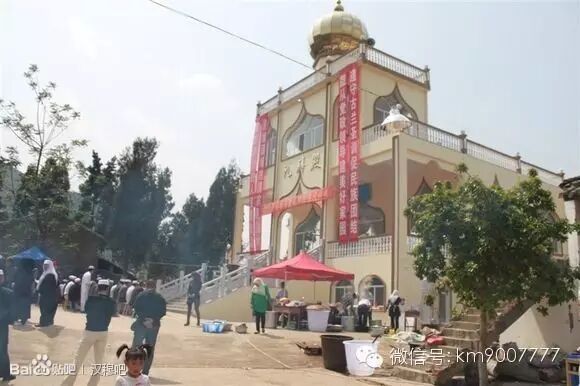
Wenshan's Hui population primarily lives along highways or in towns, mostly settled in flat valley basins with a small fraction living in mountainous areas. Hui villages tend to be tightly clustered, creating a settlement pattern of "large dispersion, small concentration." Currently, Yanshan has 19 Hui villages: Pingyuan Town includes Tianxin, Pingyuan, Songmaopo, Maolong, Sanjiacun, Xinzhuang, Xiaoyuan Road, Chebaini, Songshancun, and Shangmao Avenue; Jiayi Town includes Laojiaocheng, Xiaoshiqiao, Zhongzhai, Chengda, and Yanshan urban area; Ameng Town includes Ameng, Mifa, Mifa New Village, and Maodichong. Qiubei County has 9 Hui villages: Qiubei urban area, the Ball Manufacturing Plant, Jinping Town's Matoushan, Xincheng, Hewai, and Jiucheng, as well as Yuezhe Township's Yuezhe, Xinzhai, and Fuxing Village. Wenshan County has 9 Hui villages: Wenshan urban area, Matang Township's Huanglongba, Pingba Town's Pingba, Hongdian Hui Ethnic Township's Moke, Bajiazhai, along with self-declared repatriated ancestral villages Wulu Old Village, Wulu New Village, and Mulubai, plus Dehou Township's Kazuo Zhuang village Muslims. Guangnan County has two Hui residential areas in Guangnan urban area and Zhulin. Across the entire prefecture, there are 39 Hui residential villages and towns, housing a total of 40 mosques. Aside from the older mosques in Yuezhe and Guangnan, all other mosques have been successively renovated, expanded, or rebuilt by local villages and towns in recent times.
Generally speaking, the Hui population in Wenshan originated from migrations out of Dali, Kunming, Jianshui, Luliang, and Luxi during the Yongzheng, Qianlong, and Xianfeng reigns of the Qing Dynasty.
2. The Origins of Wenshan's Zhuang-Hui
Han, Hui, and other ethnic groups in Yunnan had historically lived together in harmony. However, the Qing government adopted a divide-and-rule policy of "using Han to control Hui," manufacturing ethnic divides that heightened tensions and damaged relations between the two communities.
In March 1856 (the 6th year of Xianfeng, Bingchen year), Yunnan Governor Shu Ahxing and Provincial Treasurer Qingsheng (a Manchu), acting on orders from the Qing court, commanded all prefectures, departments, sub-prefectures, and counties to "annihilate the Yunnan Hui and sweep them clean across eight hundred miles" (from Ma Minlin's *Records of the Great Calamity in Yunnan in the Fourteenth Year of Xianfeng*) and "gather mobs to slaughter the Hui," giving authorities a green light to kill Hui people with impunity. On April 16 and May 16, 1856, the Qing rulers carried out another brutal massacre of the Hui. Over 10,000 people in Kunming were slaughtered, leaving "almost no survivors" (from the *Inscribed Monument Marking the Reburial of Kunming's Five-Directional Hui Martyrs of the Bingchen Year of Xianfeng*). Today, the back of Jinjiashan in Kunming city serves as a mass grave (pit) for these massacred Hui people.
Before Du Wenxiu’s uprising broke out in western Yunnan in 1856 (the Bingchen year), the "Four Mountains Yi Rebellion" had already erupted around Wenshan and Qiubei. After Du Wenxiu's uprising began, Ma Zunxiang, a Hui from Moke Village in Wenshan, and Ma Jingju, a Hui from Xishan in Wenshan, also raised the banner of anti-Qing resistance. The anti-Qing struggle of Qiubei's Hui was deeply sympathized with and supported by local ethnic brothers. For instance, Yi people from places like Baima Cao secretly supplied grain to the Hui, highlighting the anti-Qing resistance of Hui in the Yuezhe area. As various ethnic groups united against the Qing, the Qing government—pursuing its policy of "gathering mobs to slaughter the Hui, wiping them straight out for eight hundred miles" and "giving permission to execute on sight any rebellious Hui troublemakers"—rolled out chilling slogans such as "First exterminate the Hui, next exterminate the Yi, and skin the Zhuang (Zhuang people) and Miao (Miao people) alive" to threaten anti-Manchu actions. After Du Wenxiu's uprising failed, almost every Hui village in Wenshan Prefecture was subjected to bloody purges and encirclement. Survivors were left destitute and displaced, fleeing to foreign lands. Afterward, Wenshan's Hui accepted pacification by the Qing court, but were forbidden from living in their ancestral homelands. Some Hui (such as those from the Yuezhe area) were escorted by troops to settle in Dazhang and Shadian in Hongju Prefecture.
During this period, some Hui who escaped by the skin of their teeth fled from various places into Zhuang villages, where they were sheltered by their Zhuang brothers. They began wearing Zhuang clothing, speaking the Zhuang language, intermarrying with local Zhuang, and raising families. Bingle Township's Wulu Old Village, New Village, Mulubai in Hongdian Township, and Kazuo Village in Dehou Township are entirely Zhuang communities, yet the ancestors of Wulu New Village, Old Village, and Mulubai were descendants of Dazhang Hui bearing the surname Ma and others. Today, New Village has 58 households, out of which 18 households adhere to Islam. Among these 18 households, 16 carry the surname Ma, 1 is surnamed Li, and 1 is surnamed Long. Old Village has over 200 households, with 24 households embracing Islam (18 Ma households, 4 Shen households, 1 Long household, and 1 Tian household). Among these Muslim households, while the Ma families trace their ancestry back to the Hui, the other surnames joined Islam after marrying daughters of the Ma family and becoming influenced by their Muslim relatives.
The ancestors of Kazuo Village originally came from Najiaying in Tonghai, belonging to the Na lineage. Legend has it that during the Bingchen incident of the Qing Dynasty, ancestors of the Ma family fled to Wulu and Mulubai, while ancestors of the Na family fled to Kazuo Village. Through intermarriage with other ethnic groups, they settled down, descendants multiplied, and as older generations passed away, the younger generations became assimilated by the local ethnic groups.
For example, in Wulu Village, Bingle Township, Wenshan Prefecture, there are currently two "Zhuang-Hui" villages known as Old Village and New Village, with New Village developing out of Old Village. According to local oral tradition, the shared male ancestor bearing the surname Ma fled from the Dazhang Hui enclave in Honghe Prefecture after the Bingchen incident and hid out in a Zhuang village. The male ancestor surnamed Ma married a local Zhuang woman, and all their descendants now carry the surname Ma. After the male ancestor passed away, his Dazhang Hui relatives would travel to Wulu every year during Eid al-Fitr to visit his grave. However, according to local recollections in Wulu, prior to 1990, Wulu's Ma villagers only knew that their ancestors were surnamed Ma and were Hui; they knew absolutely nothing about Islam or Hui culture and were practically indistinguishable from the local Zhuang. After 1990, Dazhang Hui people successively traveled to Wulu to preach Islam to the villagers, while also providing economic aid such as rice, sesame oil, and daily necessities. Ahong (Imam) Li Zaitang, who still serves as the religious leader at the Dazhang Mosque, was one of the earliest religious figures in the 1990s to help the villagers of Wulu return to Islam. Recalling how eagerly the villagers requested to "return" to the Hui fold, many memories remain vivid for him. Because local economic conditions were extremely harsh—roads were undeveloped and cars couldn't drive into the village—villagers used an ox cart to transport Ahong Li into the village. Both women and men eagerly studied religious knowledge; during the freezing winter without hot water, they used cold water to perform wudu (ablutions) before learning how to pray. Ahong Li described what he saw back then by saying he "was moved to tears multiple times." The Wulu Muslims who experienced this "return" maintain Islamic religious beliefs, yet they retain many cultural elements of both the Hui and Zhuang in their clothing, language, housing, and even their ethnic psychology.
3. Culture of the Wenshan Zhuang-Hui
(1) Language: Language is not only a marker of group identity and a differentiator from others, but also a social construction of the user group through cultural elements, generating cognitive, psychological, and conscious identification and interpretation. The Hui who migrated to the Zhuang areas of Yunnan embraced Zhuang cultural life and adopted the Zhuang language. The use of Zhuang is not limited to communication with Zhuang people; it is also widely used within the Hui community itself. The adoption of Zhuang has become a major hallmark of the "Zhuang-Hui." On their official ID cards, Wenshan Zhuang-Hui are registered as "Zhuang," and their language usage is identical to that of the local Zhuang. They refer to themselves as "Zhuang Muslims." Ma Guoxin, the current Ahong of the Old Village Mosque, is a local. During an evening of fieldwork, two cows belonging to a Zhuang family in Old Village fought and went missing, prompting them to seek help from the Ahong at the mosque. Ma Guoxin used a loudspeaker in the Zhuang language to help them find the cows. Hui men, women, old, and young in the village all speak and understand Zhuang, a practice the Zhuang refer to as "chatting." For instance, Ahong Ma Guoxin's children speak Mandarin at home with their parents, but speak Zhuang when playing with village playmates. Zhuang is a spoken language without a written script.
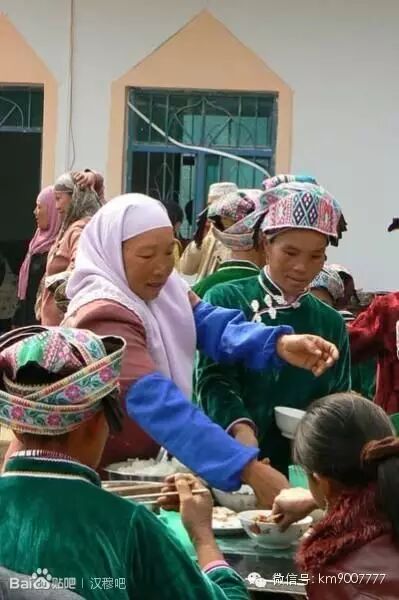
(2) Clothing: The attire of the "Zhuang-Hui" is also distinctive because it mirrors Zhuang dress, which is one reason they are called "Zhuang-Hui." During the historical formation of the Zhuang-Hui, this cultural shift of speaking Zhuang and wearing Zhuang clothing happened rapidly. Because the Hui adopted these two identity-marking traits of language and clothing, acquiring the outward cultural features of the Zhuang, outsiders came to call them "Zhuang-Hui." After returning to Islam, Hui men and women still wear clothing identical to that of the local Zhuang. Some elderly women still wear the traditional Zhuang headwrap at home, only switching to the Hui headscarf (hijab) when going out to attend Hui religious holidays.
(3) Diet: The "Zhuang-Hui" have also transitioned toward Zhuang characteristics in their culinary culture. Every year on the 15th day of the first lunar month, the Zhuang dye rice yellow using various flowers, and on the 24th day of the sixth lunar month, they celebrate the Red Rice Festival by dyeing glutinous rice red. The local Hui have likewise adopted these folk dietary customs while steadfastly upholding traditional Hui dietary habits and taboos.
(4) Funeral Customs: The Zhuang practice polytheism, worshipping mountains, rivers, and various aspects of nature. The Zhuang are extremely particular about choosing the right date for a funeral; if the day is wrong, the burial can be postponed for half a month or even a month after a loved one passes away. Wenshan Zhuang Muslims still retain their Zhuang identity status on their ID cards, referring to themselves as "Zhuang Muslims"—changing their religion without changing their official ethnicity. However, in funeral customs, Zhuang Muslims have inherited Hui traditions, handling the deceased according to Hui burial rites: prompt burial, janazah prayers led by an Ahong, and wrapping the body in white shrouds instead of using a coffin. In many families, some members practice Islam while others practice Zhuang polytheism. When a non-Muslim family member passes away, family members generally attend the funeral together, except that the Zhuang Muslims refrain from rituals that violate Islamic etiquette.
4. Pluralistic Cultural Identity
Cultural identity
refers to the social and psychological process by which an individual internalizes the culture and cultural group to which they belong, generating a sense of belonging, and thereby acquiring, maintaining, and innovating their own culture. Cultural identity encompasses identification with social value norms, religious beliefs, customs, language, and art. Cultural identity is also the process of forming the "self."
Wenshan's "Zhuang-Hui" demonstrate identity with local Zhuang in their daily life, economy, clothing, and customs, while primarily identifying as Hui in terms of their ethnic identity, religion, and communal emotional belonging. In Yunnan, there are similar groups identified by academics as "Yi-Hui" (in Xingping, Yuxi), "Tibetan-Hui" (in Shangri-La), and "Bai-Hui" (in Eryuan, Dali). They practice Islam, yet identify with local ethnic minority groups in their customs, habits, and language. Spiritually, they find their homecoming in Islam, even though their daily life paradigms have converged with local ethnic groups.
Due to historical reasons, the "Zhuang-Hui" group lacked sustained social interaction and demographic mobility with the mainstream Hui population for a long time. Instead, they maintained continuous, frequent interpersonal interactions, social contact, and cultural exchanges with the local Zhuang. However, this social process did not dilute their group belonging and identity regarding Hui traditional culture and mainstream emotional ties. Hui identity has persisted throughout the developmental history of the "Zhuang-Hui." An ancestral stele discovered in Wulu, Wenshan, titled *Stele Inscription of the Ma Progenitor*, records: "...yet the principles of the Islamic faith dare not be abandoned... After the ancestors passed away, there were no Hui teachers to guide us through the scriptures, hence later descendants changed their religion." Consequently, amid today's more open and frequent inter-ethnic interactions, some "Zhuang-Hui" have experienced a strong ethnic consciousness, symbolized by a religious return, sparking a series of social, cultural, and ideological revivals of traditional Hui social culture.
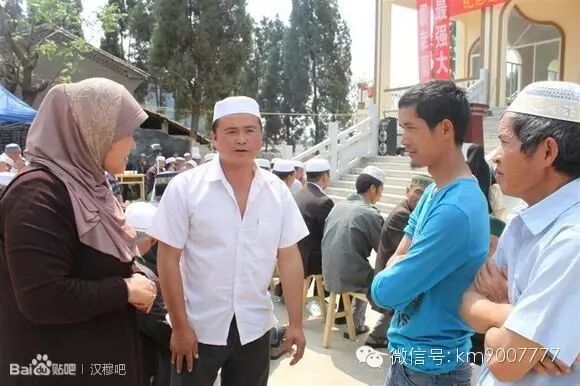
During fieldwork interviews, this pluralistic cultural identity of the Zhuang-Hui constantly shone through. Feng LF (female, 48 years old, wife of Ma KT's older brother, from Xiasheshu Village, a Zhuang who married into the Wulu Ma family and converted to Islam in 1990):
"Back then, Xue BJ (from Zhaotong, living in Dazhang) brought a group of about 20 young students from Dazhang to teach us how to perform wudu, pray, and recite scriptures. They told us our ancestors were Hui and that we needed to return to the Hui identity."
"After I became Hui, visiting my maiden family became a bit inconvenient, but I have my own cooking pots and stove. I still have 3 younger brothers and 2 younger sisters in Xiasheshu, and they are all Zhuang. Since I embraced Islam, I can no longer eat pork. I wash my face (perform wudu—author's note) and pray. Now I am Hui, but on my ID card, I still list my ethnicity as Zhuang. Going to the mosque to wash up and pray makes me feel much cleaner. All my kids love studying scriptures. My eldest son, Ma Mingli, is 22 this year. He's very smart, has a deep grasp of scriptural study, and is currently studying scriptures in Iran, funded by a Hui family in Tianxin Village."
"I feel life is better after embracing Islam than before. I don't feel any different from Hui people elsewhere; all Muslims around the world are one family. Whenever we are with Muslims anywhere, we feel like family, with no fear or awkwardness. Now, I still feel a bit shy around Nong people (Zhuang people—author's note), not daring to speak much, but when I see Muslims wearing hijabs, I feel a warm kinship. We live in a Zhuang area, and I wear a Muslim hijab now, but if there are events like accompanying a bride to a Zhuang village for a wedding, I will put on the traditional Nong headwrap and wear Nong clothing. Because if I went wearing a hijab, people would ask a million questions and feel we are different from them. I do feel there is a difference between us and the Nong; our diets are different, and they are busier than us."
Thus, a pluralistic ethnic culture characterized by Zhuang-Hui blending was formed. The transformation of these cultural traits represents a process of cultural acceptance and adaptation, achieving an adaptive integration of two cultures. After encountering Zhuang culture, the Hui borrowed its cultural elements, adapted to local geographic traits, altered their original lifestyle, and integrated Zhuang cultural elements like language, clothing, and housing into the internal structure of Hui culture. This integration primarily remained at the foundational level of daily life, whereas religious consciousness—the core domain constituting ethnic identity—has remained deeply rooted throughout the historical journey of the Zhuang-Hui.
5. Conclusion
The renowned American anthropologist Clifford Geertz
once brilliantly pointed out: "Ethnic identity is actually a group's strategic adjustment and adaptation when facing a certain type of social experience, and changes in ethnic identity are closely related to the 'boundary of ethnic groups.' And we must pay full attention to social boundary interactions because the two sides possess 'territorial counterparts.' For an ethnic group to maintain its identity, it must take into account the interactions between the people of both sides..."
Based on the above perspective, I think this better explains how the Wenshan Wulu Hui Muslims, as an immigrant ethnic minority upon entering the Wenshan Wulu Zhuang villages, developed an identity with the local Zhuang culture, beautifully reflecting the survival wisdom of Hui ancestors and the harmonious coexistence among different ethnic groups in the historical process.
Islam is not only a religion, but a complete way of life. Under the intersection of "faith and pragmatism," a diverse cultural identity concept of "harmony in diversity" has been formed among the Wenshan Hui Muslims. It embodies an open mindset and an enterprising spirit in the process of dialogue with different cultures. "Harmony" actually means seeking common ground while reserving differences, whereas "sameness" would mean eliminating differences for the sake of uniformity. "Harmony in diversity" advocates pursuing harmonious unity on the premise of respecting differences. The main spirit of "harmony" is to coordinate differences, achieve a new harmonious unity, and enable various different things to attain new development and become new, distinct entities.
[This article is a phased achievement of the National Social Science Fund Project: Research on Yunnan's Special Hui Ethnic Groups and Local Inter-Ethnic Social Harmonious Relations (Project No. 13CMZ027)]
References
1. Zhang Lijian, *Ethnic Identity in the Context of Scattered and Mixed Communities*, Ethnic Publishing House, 2009.
2. Yue Daiyun, "Two Dangers in Multicultural Development and the Contributions Culture Can Make," *Literature and Art Daily*, August 28, 2001.
(Hu Liping is a lecturer at the School of Social Management, Kunming University; Feng Yu is a lecturer at the Research Institute for Southwest China Border Ethnic Minorities, Yunnan University) view all
Liping Hu, Yu Feng: A Closer Look at the "Zhuang-Hui" Muslims of Wenshan, Yunnan
Abstract:
The "Zhuang-Hui" are a unique group of Hui Muslims living in Wenshan Prefecture, Yunnan Province. Over the course of history, they have blended elements of Islamic faith with distinct Zhuang cultural traditions, creating a rich, pluralistic ethnic culture.
1. Origins and Overview of the Hui People in Wenshan Prefecture, Yunnan
Wenshan Zhuang and Miao Autonomous Prefecture is home to over 23,000 Hui Muslims, making up about 0.007% of the prefecture's total population of 3.28 million. They are scattered across four counties: Wenshan, Yanshan, Qiubei, and Guangnan. Wenshan city sits at the center, surrounded by Maguan, Xichou, Malipo, Funing, Yanshan, Qiubei, and Guangnan counties. Aside from a few Hui civil servants and temporary residents working in Xichou, Maguan, Malipo, and Funing, those four counties are essentially devoid of resident Hui populations.
The "Zhuang-Hui" are a unique group of Hui Muslims living in Wenshan Prefecture, Yunnan Province. Over the course of history, they have blended elements of Islamic faith with distinct Zhuang cultural traditions, creating a rich, pluralistic ethnic culture.
1. Origins and Overview of the Hui People in Wenshan Prefecture, Yunnan
Wenshan Zhuang and Miao Autonomous Prefecture is home to over 23,000 Hui Muslims, making up about 0.007% of the prefecture's total population of 3.28 million. They are scattered across four counties: Wenshan, Yanshan, Qiubei, and Guangnan. Wenshan city sits at the center, surrounded by Maguan, Xichou, Malipo, Funing, Yanshan, Qiubei, and Guangnan counties. Aside from a few Hui civil servants and temporary residents working in Xichou, Maguan, Malipo, and Funing, those four counties are essentially devoid of resident Hui populations.
Wenshan's Hui population primarily lives along highways or in towns, mostly settled in flat valley basins with a small fraction living in mountainous areas. Hui villages tend to be tightly clustered, creating a settlement pattern of "large dispersion, small concentration." Currently, Yanshan has 19 Hui villages: Pingyuan Town includes Tianxin, Pingyuan, Songmaopo, Maolong, Sanjiacun, Xinzhuang, Xiaoyuan Road, Chebaini, Songshancun, and Shangmao Avenue; Jiayi Town includes Laojiaocheng, Xiaoshiqiao, Zhongzhai, Chengda, and Yanshan urban area; Ameng Town includes Ameng, Mifa, Mifa New Village, and Maodichong. Qiubei County has 9 Hui villages: Qiubei urban area, the Ball Manufacturing Plant, Jinping Town's Matoushan, Xincheng, Hewai, and Jiucheng, as well as Yuezhe Township's Yuezhe, Xinzhai, and Fuxing Village. Wenshan County has 9 Hui villages: Wenshan urban area, Matang Township's Huanglongba, Pingba Town's Pingba, Hongdian Hui Ethnic Township's Moke, Bajiazhai, along with self-declared repatriated ancestral villages Wulu Old Village, Wulu New Village, and Mulubai, plus Dehou Township's Kazuo Zhuang village Muslims. Guangnan County has two Hui residential areas in Guangnan urban area and Zhulin. Across the entire prefecture, there are 39 Hui residential villages and towns, housing a total of 40 mosques. Aside from the older mosques in Yuezhe and Guangnan, all other mosques have been successively renovated, expanded, or rebuilt by local villages and towns in recent times.
Generally speaking, the Hui population in Wenshan originated from migrations out of Dali, Kunming, Jianshui, Luliang, and Luxi during the Yongzheng, Qianlong, and Xianfeng reigns of the Qing Dynasty.
2. The Origins of Wenshan's Zhuang-Hui
Han, Hui, and other ethnic groups in Yunnan had historically lived together in harmony. However, the Qing government adopted a divide-and-rule policy of "using Han to control Hui," manufacturing ethnic divides that heightened tensions and damaged relations between the two communities.
In March 1856 (the 6th year of Xianfeng, Bingchen year), Yunnan Governor Shu Ahxing and Provincial Treasurer Qingsheng (a Manchu), acting on orders from the Qing court, commanded all prefectures, departments, sub-prefectures, and counties to "annihilate the Yunnan Hui and sweep them clean across eight hundred miles" (from Ma Minlin's *Records of the Great Calamity in Yunnan in the Fourteenth Year of Xianfeng*) and "gather mobs to slaughter the Hui," giving authorities a green light to kill Hui people with impunity. On April 16 and May 16, 1856, the Qing rulers carried out another brutal massacre of the Hui. Over 10,000 people in Kunming were slaughtered, leaving "almost no survivors" (from the *Inscribed Monument Marking the Reburial of Kunming's Five-Directional Hui Martyrs of the Bingchen Year of Xianfeng*). Today, the back of Jinjiashan in Kunming city serves as a mass grave (pit) for these massacred Hui people.
Before Du Wenxiu’s uprising broke out in western Yunnan in 1856 (the Bingchen year), the "Four Mountains Yi Rebellion" had already erupted around Wenshan and Qiubei. After Du Wenxiu's uprising began, Ma Zunxiang, a Hui from Moke Village in Wenshan, and Ma Jingju, a Hui from Xishan in Wenshan, also raised the banner of anti-Qing resistance. The anti-Qing struggle of Qiubei's Hui was deeply sympathized with and supported by local ethnic brothers. For instance, Yi people from places like Baima Cao secretly supplied grain to the Hui, highlighting the anti-Qing resistance of Hui in the Yuezhe area. As various ethnic groups united against the Qing, the Qing government—pursuing its policy of "gathering mobs to slaughter the Hui, wiping them straight out for eight hundred miles" and "giving permission to execute on sight any rebellious Hui troublemakers"—rolled out chilling slogans such as "First exterminate the Hui, next exterminate the Yi, and skin the Zhuang (Zhuang people) and Miao (Miao people) alive" to threaten anti-Manchu actions. After Du Wenxiu's uprising failed, almost every Hui village in Wenshan Prefecture was subjected to bloody purges and encirclement. Survivors were left destitute and displaced, fleeing to foreign lands. Afterward, Wenshan's Hui accepted pacification by the Qing court, but were forbidden from living in their ancestral homelands. Some Hui (such as those from the Yuezhe area) were escorted by troops to settle in Dazhang and Shadian in Hongju Prefecture.
During this period, some Hui who escaped by the skin of their teeth fled from various places into Zhuang villages, where they were sheltered by their Zhuang brothers. They began wearing Zhuang clothing, speaking the Zhuang language, intermarrying with local Zhuang, and raising families. Bingle Township's Wulu Old Village, New Village, Mulubai in Hongdian Township, and Kazuo Village in Dehou Township are entirely Zhuang communities, yet the ancestors of Wulu New Village, Old Village, and Mulubai were descendants of Dazhang Hui bearing the surname Ma and others. Today, New Village has 58 households, out of which 18 households adhere to Islam. Among these 18 households, 16 carry the surname Ma, 1 is surnamed Li, and 1 is surnamed Long. Old Village has over 200 households, with 24 households embracing Islam (18 Ma households, 4 Shen households, 1 Long household, and 1 Tian household). Among these Muslim households, while the Ma families trace their ancestry back to the Hui, the other surnames joined Islam after marrying daughters of the Ma family and becoming influenced by their Muslim relatives.
The ancestors of Kazuo Village originally came from Najiaying in Tonghai, belonging to the Na lineage. Legend has it that during the Bingchen incident of the Qing Dynasty, ancestors of the Ma family fled to Wulu and Mulubai, while ancestors of the Na family fled to Kazuo Village. Through intermarriage with other ethnic groups, they settled down, descendants multiplied, and as older generations passed away, the younger generations became assimilated by the local ethnic groups.
For example, in Wulu Village, Bingle Township, Wenshan Prefecture, there are currently two "Zhuang-Hui" villages known as Old Village and New Village, with New Village developing out of Old Village. According to local oral tradition, the shared male ancestor bearing the surname Ma fled from the Dazhang Hui enclave in Honghe Prefecture after the Bingchen incident and hid out in a Zhuang village. The male ancestor surnamed Ma married a local Zhuang woman, and all their descendants now carry the surname Ma. After the male ancestor passed away, his Dazhang Hui relatives would travel to Wulu every year during Eid al-Fitr to visit his grave. However, according to local recollections in Wulu, prior to 1990, Wulu's Ma villagers only knew that their ancestors were surnamed Ma and were Hui; they knew absolutely nothing about Islam or Hui culture and were practically indistinguishable from the local Zhuang. After 1990, Dazhang Hui people successively traveled to Wulu to preach Islam to the villagers, while also providing economic aid such as rice, sesame oil, and daily necessities. Ahong (Imam) Li Zaitang, who still serves as the religious leader at the Dazhang Mosque, was one of the earliest religious figures in the 1990s to help the villagers of Wulu return to Islam. Recalling how eagerly the villagers requested to "return" to the Hui fold, many memories remain vivid for him. Because local economic conditions were extremely harsh—roads were undeveloped and cars couldn't drive into the village—villagers used an ox cart to transport Ahong Li into the village. Both women and men eagerly studied religious knowledge; during the freezing winter without hot water, they used cold water to perform wudu (ablutions) before learning how to pray. Ahong Li described what he saw back then by saying he "was moved to tears multiple times." The Wulu Muslims who experienced this "return" maintain Islamic religious beliefs, yet they retain many cultural elements of both the Hui and Zhuang in their clothing, language, housing, and even their ethnic psychology.
3. Culture of the Wenshan Zhuang-Hui
(1) Language: Language is not only a marker of group identity and a differentiator from others, but also a social construction of the user group through cultural elements, generating cognitive, psychological, and conscious identification and interpretation. The Hui who migrated to the Zhuang areas of Yunnan embraced Zhuang cultural life and adopted the Zhuang language. The use of Zhuang is not limited to communication with Zhuang people; it is also widely used within the Hui community itself. The adoption of Zhuang has become a major hallmark of the "Zhuang-Hui." On their official ID cards, Wenshan Zhuang-Hui are registered as "Zhuang," and their language usage is identical to that of the local Zhuang. They refer to themselves as "Zhuang Muslims." Ma Guoxin, the current Ahong of the Old Village Mosque, is a local. During an evening of fieldwork, two cows belonging to a Zhuang family in Old Village fought and went missing, prompting them to seek help from the Ahong at the mosque. Ma Guoxin used a loudspeaker in the Zhuang language to help them find the cows. Hui men, women, old, and young in the village all speak and understand Zhuang, a practice the Zhuang refer to as "chatting." For instance, Ahong Ma Guoxin's children speak Mandarin at home with their parents, but speak Zhuang when playing with village playmates. Zhuang is a spoken language without a written script.
(2) Clothing: The attire of the "Zhuang-Hui" is also distinctive because it mirrors Zhuang dress, which is one reason they are called "Zhuang-Hui." During the historical formation of the Zhuang-Hui, this cultural shift of speaking Zhuang and wearing Zhuang clothing happened rapidly. Because the Hui adopted these two identity-marking traits of language and clothing, acquiring the outward cultural features of the Zhuang, outsiders came to call them "Zhuang-Hui." After returning to Islam, Hui men and women still wear clothing identical to that of the local Zhuang. Some elderly women still wear the traditional Zhuang headwrap at home, only switching to the Hui headscarf (hijab) when going out to attend Hui religious holidays.
(3) Diet: The "Zhuang-Hui" have also transitioned toward Zhuang characteristics in their culinary culture. Every year on the 15th day of the first lunar month, the Zhuang dye rice yellow using various flowers, and on the 24th day of the sixth lunar month, they celebrate the Red Rice Festival by dyeing glutinous rice red. The local Hui have likewise adopted these folk dietary customs while steadfastly upholding traditional Hui dietary habits and taboos.
(4) Funeral Customs: The Zhuang practice polytheism, worshipping mountains, rivers, and various aspects of nature. The Zhuang are extremely particular about choosing the right date for a funeral; if the day is wrong, the burial can be postponed for half a month or even a month after a loved one passes away. Wenshan Zhuang Muslims still retain their Zhuang identity status on their ID cards, referring to themselves as "Zhuang Muslims"—changing their religion without changing their official ethnicity. However, in funeral customs, Zhuang Muslims have inherited Hui traditions, handling the deceased according to Hui burial rites: prompt burial, janazah prayers led by an Ahong, and wrapping the body in white shrouds instead of using a coffin. In many families, some members practice Islam while others practice Zhuang polytheism. When a non-Muslim family member passes away, family members generally attend the funeral together, except that the Zhuang Muslims refrain from rituals that violate Islamic etiquette.
4. Pluralistic Cultural Identity
Cultural identity
refers to the social and psychological process by which an individual internalizes the culture and cultural group to which they belong, generating a sense of belonging, and thereby acquiring, maintaining, and innovating their own culture. Cultural identity encompasses identification with social value norms, religious beliefs, customs, language, and art. Cultural identity is also the process of forming the "self."
Wenshan's "Zhuang-Hui" demonstrate identity with local Zhuang in their daily life, economy, clothing, and customs, while primarily identifying as Hui in terms of their ethnic identity, religion, and communal emotional belonging. In Yunnan, there are similar groups identified by academics as "Yi-Hui" (in Xingping, Yuxi), "Tibetan-Hui" (in Shangri-La), and "Bai-Hui" (in Eryuan, Dali). They practice Islam, yet identify with local ethnic minority groups in their customs, habits, and language. Spiritually, they find their homecoming in Islam, even though their daily life paradigms have converged with local ethnic groups.
Due to historical reasons, the "Zhuang-Hui" group lacked sustained social interaction and demographic mobility with the mainstream Hui population for a long time. Instead, they maintained continuous, frequent interpersonal interactions, social contact, and cultural exchanges with the local Zhuang. However, this social process did not dilute their group belonging and identity regarding Hui traditional culture and mainstream emotional ties. Hui identity has persisted throughout the developmental history of the "Zhuang-Hui." An ancestral stele discovered in Wulu, Wenshan, titled *Stele Inscription of the Ma Progenitor*, records: "...yet the principles of the Islamic faith dare not be abandoned... After the ancestors passed away, there were no Hui teachers to guide us through the scriptures, hence later descendants changed their religion." Consequently, amid today's more open and frequent inter-ethnic interactions, some "Zhuang-Hui" have experienced a strong ethnic consciousness, symbolized by a religious return, sparking a series of social, cultural, and ideological revivals of traditional Hui social culture.
During fieldwork interviews, this pluralistic cultural identity of the Zhuang-Hui constantly shone through. Feng LF (female, 48 years old, wife of Ma KT's older brother, from Xiasheshu Village, a Zhuang who married into the Wulu Ma family and converted to Islam in 1990):
"Back then, Xue BJ (from Zhaotong, living in Dazhang) brought a group of about 20 young students from Dazhang to teach us how to perform wudu, pray, and recite scriptures. They told us our ancestors were Hui and that we needed to return to the Hui identity."
"After I became Hui, visiting my maiden family became a bit inconvenient, but I have my own cooking pots and stove. I still have 3 younger brothers and 2 younger sisters in Xiasheshu, and they are all Zhuang. Since I embraced Islam, I can no longer eat pork. I wash my face (perform wudu—author's note) and pray. Now I am Hui, but on my ID card, I still list my ethnicity as Zhuang. Going to the mosque to wash up and pray makes me feel much cleaner. All my kids love studying scriptures. My eldest son, Ma Mingli, is 22 this year. He's very smart, has a deep grasp of scriptural study, and is currently studying scriptures in Iran, funded by a Hui family in Tianxin Village."
"I feel life is better after embracing Islam than before. I don't feel any different from Hui people elsewhere; all Muslims around the world are one family. Whenever we are with Muslims anywhere, we feel like family, with no fear or awkwardness. Now, I still feel a bit shy around Nong people (Zhuang people—author's note), not daring to speak much, but when I see Muslims wearing hijabs, I feel a warm kinship. We live in a Zhuang area, and I wear a Muslim hijab now, but if there are events like accompanying a bride to a Zhuang village for a wedding, I will put on the traditional Nong headwrap and wear Nong clothing. Because if I went wearing a hijab, people would ask a million questions and feel we are different from them. I do feel there is a difference between us and the Nong; our diets are different, and they are busier than us."
Thus, a pluralistic ethnic culture characterized by Zhuang-Hui blending was formed. The transformation of these cultural traits represents a process of cultural acceptance and adaptation, achieving an adaptive integration of two cultures. After encountering Zhuang culture, the Hui borrowed its cultural elements, adapted to local geographic traits, altered their original lifestyle, and integrated Zhuang cultural elements like language, clothing, and housing into the internal structure of Hui culture. This integration primarily remained at the foundational level of daily life, whereas religious consciousness—the core domain constituting ethnic identity—has remained deeply rooted throughout the historical journey of the Zhuang-Hui.
5. Conclusion
The renowned American anthropologist Clifford Geertz
once brilliantly pointed out: "Ethnic identity is actually a group's strategic adjustment and adaptation when facing a certain type of social experience, and changes in ethnic identity are closely related to the 'boundary of ethnic groups.' And we must pay full attention to social boundary interactions because the two sides possess 'territorial counterparts.' For an ethnic group to maintain its identity, it must take into account the interactions between the people of both sides..."
Based on the above perspective, I think this better explains how the Wenshan Wulu Hui Muslims, as an immigrant ethnic minority upon entering the Wenshan Wulu Zhuang villages, developed an identity with the local Zhuang culture, beautifully reflecting the survival wisdom of Hui ancestors and the harmonious coexistence among different ethnic groups in the historical process.
Islam is not only a religion, but a complete way of life. Under the intersection of "faith and pragmatism," a diverse cultural identity concept of "harmony in diversity" has been formed among the Wenshan Hui Muslims. It embodies an open mindset and an enterprising spirit in the process of dialogue with different cultures. "Harmony" actually means seeking common ground while reserving differences, whereas "sameness" would mean eliminating differences for the sake of uniformity. "Harmony in diversity" advocates pursuing harmonious unity on the premise of respecting differences. The main spirit of "harmony" is to coordinate differences, achieve a new harmonious unity, and enable various different things to attain new development and become new, distinct entities.
[This article is a phased achievement of the National Social Science Fund Project: Research on Yunnan's Special Hui Ethnic Groups and Local Inter-Ethnic Social Harmonious Relations (Project No. 13CMZ027)]
References
1. Zhang Lijian, *Ethnic Identity in the Context of Scattered and Mixed Communities*, Ethnic Publishing House, 2009.
2. Yue Daiyun, "Two Dangers in Multicultural Development and the Contributions Culture Can Make," *Literature and Art Daily*, August 28, 2001.
(Hu Liping is a lecturer at the School of Social Management, Kunming University; Feng Yu is a lecturer at the Research Institute for Southwest China Border Ethnic Minorities, Yunnan University) view all
[Internet Repost]
Liping Hu, Yu Feng: A Closer Look at the "Zhuang-Hui" Muslims of Wenshan, Yunnan
Abstract:
The "Zhuang-Hui" are a unique group of Hui Muslims living in Wenshan Prefecture, Yunnan Province. Over the course of history, they have blended elements of Islamic faith with distinct Zhuang cultural traditions, creating a rich, pluralistic ethnic culture.
1. Origins and Overview of the Hui People in Wenshan Prefecture, Yunnan
Wenshan Zhuang and Miao Autonomous Prefecture is home to over 23,000 Hui Muslims, making up about 0.007% of the prefecture's total population of 3.28 million. They are scattered across four counties: Wenshan, Yanshan, Qiubei, and Guangnan. Wenshan city sits at the center, surrounded by Maguan, Xichou, Malipo, Funing, Yanshan, Qiubei, and Guangnan counties. Aside from a few Hui civil servants and temporary residents working in Xichou, Maguan, Malipo, and Funing, those four counties are essentially devoid of resident Hui populations.
The "Zhuang-Hui" are a unique group of Hui Muslims living in Wenshan Prefecture, Yunnan Province. Over the course of history, they have blended elements of Islamic faith with distinct Zhuang cultural traditions, creating a rich, pluralistic ethnic culture.
1. Origins and Overview of the Hui People in Wenshan Prefecture, Yunnan
Wenshan Zhuang and Miao Autonomous Prefecture is home to over 23,000 Hui Muslims, making up about 0.007% of the prefecture's total population of 3.28 million. They are scattered across four counties: Wenshan, Yanshan, Qiubei, and Guangnan. Wenshan city sits at the center, surrounded by Maguan, Xichou, Malipo, Funing, Yanshan, Qiubei, and Guangnan counties. Aside from a few Hui civil servants and temporary residents working in Xichou, Maguan, Malipo, and Funing, those four counties are essentially devoid of resident Hui populations.
Wenshan's Hui population primarily lives along highways or in towns, mostly settled in flat valley basins with a small fraction living in mountainous areas. Hui villages tend to be tightly clustered, creating a settlement pattern of "large dispersion, small concentration." Currently, Yanshan has 19 Hui villages: Pingyuan Town includes Tianxin, Pingyuan, Songmaopo, Maolong, Sanjiacun, Xinzhuang, Xiaoyuan Road, Chebaini, Songshancun, and Shangmao Avenue; Jiayi Town includes Laojiaocheng, Xiaoshiqiao, Zhongzhai, Chengda, and Yanshan urban area; Ameng Town includes Ameng, Mifa, Mifa New Village, and Maodichong. Qiubei County has 9 Hui villages: Qiubei urban area, the Ball Manufacturing Plant, Jinping Town's Matoushan, Xincheng, Hewai, and Jiucheng, as well as Yuezhe Township's Yuezhe, Xinzhai, and Fuxing Village. Wenshan County has 9 Hui villages: Wenshan urban area, Matang Township's Huanglongba, Pingba Town's Pingba, Hongdian Hui Ethnic Township's Moke, Bajiazhai, along with self-declared repatriated ancestral villages Wulu Old Village, Wulu New Village, and Mulubai, plus Dehou Township's Kazuo Zhuang village Muslims. Guangnan County has two Hui residential areas in Guangnan urban area and Zhulin. Across the entire prefecture, there are 39 Hui residential villages and towns, housing a total of 40 mosques. Aside from the older mosques in Yuezhe and Guangnan, all other mosques have been successively renovated, expanded, or rebuilt by local villages and towns in recent times.
Generally speaking, the Hui population in Wenshan originated from migrations out of Dali, Kunming, Jianshui, Luliang, and Luxi during the Yongzheng, Qianlong, and Xianfeng reigns of the Qing Dynasty.
2. The Origins of Wenshan's Zhuang-Hui
Han, Hui, and other ethnic groups in Yunnan had historically lived together in harmony. However, the Qing government adopted a divide-and-rule policy of "using Han to control Hui," manufacturing ethnic divides that heightened tensions and damaged relations between the two communities.
In March 1856 (the 6th year of Xianfeng, Bingchen year), Yunnan Governor Shu Ahxing and Provincial Treasurer Qingsheng (a Manchu), acting on orders from the Qing court, commanded all prefectures, departments, sub-prefectures, and counties to "annihilate the Yunnan Hui and sweep them clean across eight hundred miles" (from Ma Minlin's *Records of the Great Calamity in Yunnan in the Fourteenth Year of Xianfeng*) and "gather mobs to slaughter the Hui," giving authorities a green light to kill Hui people with impunity. On April 16 and May 16, 1856, the Qing rulers carried out another brutal massacre of the Hui. Over 10,000 people in Kunming were slaughtered, leaving "almost no survivors" (from the *Inscribed Monument Marking the Reburial of Kunming's Five-Directional Hui Martyrs of the Bingchen Year of Xianfeng*). Today, the back of Jinjiashan in Kunming city serves as a mass grave (pit) for these massacred Hui people.
Before Du Wenxiu’s uprising broke out in western Yunnan in 1856 (the Bingchen year), the "Four Mountains Yi Rebellion" had already erupted around Wenshan and Qiubei. After Du Wenxiu's uprising began, Ma Zunxiang, a Hui from Moke Village in Wenshan, and Ma Jingju, a Hui from Xishan in Wenshan, also raised the banner of anti-Qing resistance. The anti-Qing struggle of Qiubei's Hui was deeply sympathized with and supported by local ethnic brothers. For instance, Yi people from places like Baima Cao secretly supplied grain to the Hui, highlighting the anti-Qing resistance of Hui in the Yuezhe area. As various ethnic groups united against the Qing, the Qing government—pursuing its policy of "gathering mobs to slaughter the Hui, wiping them straight out for eight hundred miles" and "giving permission to execute on sight any rebellious Hui troublemakers"—rolled out chilling slogans such as "First exterminate the Hui, next exterminate the Yi, and skin the Zhuang (Zhuang people) and Miao (Miao people) alive" to threaten anti-Manchu actions. After Du Wenxiu's uprising failed, almost every Hui village in Wenshan Prefecture was subjected to bloody purges and encirclement. Survivors were left destitute and displaced, fleeing to foreign lands. Afterward, Wenshan's Hui accepted pacification by the Qing court, but were forbidden from living in their ancestral homelands. Some Hui (such as those from the Yuezhe area) were escorted by troops to settle in Dazhang and Shadian in Hongju Prefecture.
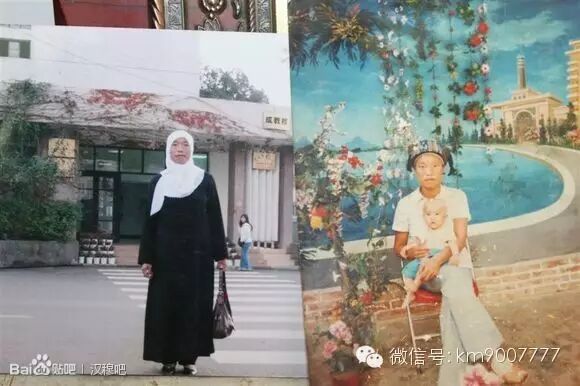
During this period, some Hui who escaped by the skin of their teeth fled from various places into Zhuang villages, where they were sheltered by their Zhuang brothers. They began wearing Zhuang clothing, speaking the Zhuang language, intermarrying with local Zhuang, and raising families. Bingle Township's Wulu Old Village, New Village, Mulubai in Hongdian Township, and Kazuo Village in Dehou Township are entirely Zhuang communities, yet the ancestors of Wulu New Village, Old Village, and Mulubai were descendants of Dazhang Hui bearing the surname Ma and others. Today, New Village has 58 households, out of which 18 households adhere to Islam. Among these 18 households, 16 carry the surname Ma, 1 is surnamed Li, and 1 is surnamed Long. Old Village has over 200 households, with 24 households embracing Islam (18 Ma households, 4 Shen households, 1 Long household, and 1 Tian household). Among these Muslim households, while the Ma families trace their ancestry back to the Hui, the other surnames joined Islam after marrying daughters of the Ma family and becoming influenced by their Muslim relatives.
The ancestors of Kazuo Village originally came from Najiaying in Tonghai, belonging to the Na lineage. Legend has it that during the Bingchen incident of the Qing Dynasty, ancestors of the Ma family fled to Wulu and Mulubai, while ancestors of the Na family fled to Kazuo Village. Through intermarriage with other ethnic groups, they settled down, descendants multiplied, and as older generations passed away, the younger generations became assimilated by the local ethnic groups.
For example, in Wulu Village, Bingle Township, Wenshan Prefecture, there are currently two "Zhuang-Hui" villages known as Old Village and New Village, with New Village developing out of Old Village. According to local oral tradition, the shared male ancestor bearing the surname Ma fled from the Dazhang Hui enclave in Honghe Prefecture after the Bingchen incident and hid out in a Zhuang village. The male ancestor surnamed Ma married a local Zhuang woman, and all their descendants now carry the surname Ma. After the male ancestor passed away, his Dazhang Hui relatives would travel to Wulu every year during Eid al-Fitr to visit his grave. However, according to local recollections in Wulu, prior to 1990, Wulu's Ma villagers only knew that their ancestors were surnamed Ma and were Hui; they knew absolutely nothing about Islam or Hui culture and were practically indistinguishable from the local Zhuang. After 1990, Dazhang Hui people successively traveled to Wulu to preach Islam to the villagers, while also providing economic aid such as rice, sesame oil, and daily necessities. Ahong (Imam) Li Zaitang, who still serves as the religious leader at the Dazhang Mosque, was one of the earliest religious figures in the 1990s to help the villagers of Wulu return to Islam. Recalling how eagerly the villagers requested to "return" to the Hui fold, many memories remain vivid for him. Because local economic conditions were extremely harsh—roads were undeveloped and cars couldn't drive into the village—villagers used an ox cart to transport Ahong Li into the village. Both women and men eagerly studied religious knowledge; during the freezing winter without hot water, they used cold water to perform wudu (ablutions) before learning how to pray. Ahong Li described what he saw back then by saying he "was moved to tears multiple times." The Wulu Muslims who experienced this "return" maintain Islamic religious beliefs, yet they retain many cultural elements of both the Hui and Zhuang in their clothing, language, housing, and even their ethnic psychology.
3. Culture of the Wenshan Zhuang-Hui
(1) Language: Language is not only a marker of group identity and a differentiator from others, but also a social construction of the user group through cultural elements, generating cognitive, psychological, and conscious identification and interpretation. The Hui who migrated to the Zhuang areas of Yunnan embraced Zhuang cultural life and adopted the Zhuang language. The use of Zhuang is not limited to communication with Zhuang people; it is also widely used within the Hui community itself. The adoption of Zhuang has become a major hallmark of the "Zhuang-Hui." On their official ID cards, Wenshan Zhuang-Hui are registered as "Zhuang," and their language usage is identical to that of the local Zhuang. They refer to themselves as "Zhuang Muslims." Ma Guoxin, the current Ahong of the Old Village Mosque, is a local. During an evening of fieldwork, two cows belonging to a Zhuang family in Old Village fought and went missing, prompting them to seek help from the Ahong at the mosque. Ma Guoxin used a loudspeaker in the Zhuang language to help them find the cows. Hui men, women, old, and young in the village all speak and understand Zhuang, a practice the Zhuang refer to as "chatting." For instance, Ahong Ma Guoxin's children speak Mandarin at home with their parents, but speak Zhuang when playing with village playmates. Zhuang is a spoken language without a written script.
(2) Clothing: The attire of the "Zhuang-Hui" is also distinctive because it mirrors Zhuang dress, which is one reason they are called "Zhuang-Hui." During the historical formation of the Zhuang-Hui, this cultural shift of speaking Zhuang and wearing Zhuang clothing happened rapidly. Because the Hui adopted these two identity-marking traits of language and clothing, acquiring the outward cultural features of the Zhuang, outsiders came to call them "Zhuang-Hui." After returning to Islam, Hui men and women still wear clothing identical to that of the local Zhuang. Some elderly women still wear the traditional Zhuang headwrap at home, only switching to the Hui headscarf (hijab) when going out to attend Hui religious holidays.
(3) Diet: The "Zhuang-Hui" have also transitioned toward Zhuang characteristics in their culinary culture. Every year on the 15th day of the first lunar month, the Zhuang dye rice yellow using various flowers, and on the 24th day of the sixth lunar month, they celebrate the Red Rice Festival by dyeing glutinous rice red. The local Hui have likewise adopted these folk dietary customs while steadfastly upholding traditional Hui dietary habits and taboos.
(4) Funeral Customs: The Zhuang practice polytheism, worshipping mountains, rivers, and various aspects of nature. The Zhuang are extremely particular about choosing the right date for a funeral; if the day is wrong, the burial can be postponed for half a month or even a month after a loved one passes away. Wenshan Zhuang Muslims still retain their Zhuang identity status on their ID cards, referring to themselves as "Zhuang Muslims"—changing their religion without changing their official ethnicity. However, in funeral customs, Zhuang Muslims have inherited Hui traditions, handling the deceased according to Hui burial rites: prompt burial, janazah prayers led by an Ahong, and wrapping the body in white shrouds instead of using a coffin. In many families, some members practice Islam while others practice Zhuang polytheism. When a non-Muslim family member passes away, family members generally attend the funeral together, except that the Zhuang Muslims refrain from rituals that violate Islamic etiquette.
4. Pluralistic Cultural Identity
Cultural identity
refers to the social and psychological process by which an individual internalizes the culture and cultural group to which they belong, generating a sense of belonging, and thereby acquiring, maintaining, and innovating their own culture. Cultural identity encompasses identification with social value norms, religious beliefs, customs, language, and art. Cultural identity is also the process of forming the "self."
Wenshan's "Zhuang-Hui" demonstrate identity with local Zhuang in their daily life, economy, clothing, and customs, while primarily identifying as Hui in terms of their ethnic identity, religion, and communal emotional belonging. In Yunnan, there are similar groups identified by academics as "Yi-Hui" (in Xingping, Yuxi), "Tibetan-Hui" (in Shangri-La), and "Bai-Hui" (in Eryuan, Dali). They practice Islam, yet identify with local ethnic minority groups in their customs, habits, and language. Spiritually, they find their homecoming in Islam, even though their daily life paradigms have converged with local ethnic groups.
Due to historical reasons, the "Zhuang-Hui" group lacked sustained social interaction and demographic mobility with the mainstream Hui population for a long time. Instead, they maintained continuous, frequent interpersonal interactions, social contact, and cultural exchanges with the local Zhuang. However, this social process did not dilute their group belonging and identity regarding Hui traditional culture and mainstream emotional ties. Hui identity has persisted throughout the developmental history of the "Zhuang-Hui." An ancestral stele discovered in Wulu, Wenshan, titled *Stele Inscription of the Ma Progenitor*, records: "...yet the principles of the Islamic faith dare not be abandoned... After the ancestors passed away, there were no Hui teachers to guide us through the scriptures, hence later descendants changed their religion." Consequently, amid today's more open and frequent inter-ethnic interactions, some "Zhuang-Hui" have experienced a strong ethnic consciousness, symbolized by a religious return, sparking a series of social, cultural, and ideological revivals of traditional Hui social culture.
During fieldwork interviews, this pluralistic cultural identity of the Zhuang-Hui constantly shone through. Feng LF (female, 48 years old, wife of Ma KT's older brother, from Xiasheshu Village, a Zhuang who married into the Wulu Ma family and converted to Islam in 1990):
"Back then, Xue BJ (from Zhaotong, living in Dazhang) brought a group of about 20 young students from Dazhang to teach us how to perform wudu, pray, and recite scriptures. They told us our ancestors were Hui and that we needed to return to the Hui identity."
"After I became Hui, visiting my maiden family became a bit inconvenient, but I have my own cooking pots and stove. I still have 3 younger brothers and 2 younger sisters in Xiasheshu, and they are all Zhuang. Since I embraced Islam, I can no longer eat pork. I wash my face (perform wudu—author's note) and pray. Now I am Hui, but on my ID card, I still list my ethnicity as Zhuang. Going to the mosque to wash up and pray makes me feel much cleaner. All my kids love studying scriptures. My eldest son, Ma Mingli, is 22 this year. He's very smart, has a deep grasp of scriptural study, and is currently studying scriptures in Iran, funded by a Hui family in Tianxin Village."
"I feel life is better after embracing Islam than before. I don't feel any different from Hui people elsewhere; all Muslims around the world are one family. Whenever we are with Muslims anywhere, we feel like family, with no fear or awkwardness. Now, I still feel a bit shy around Nong people (Zhuang people—author's note), not daring to speak much, but when I see Muslims wearing hijabs, I feel a warm kinship. We live in a Zhuang area, and I wear a Muslim hijab now, but if there are events like accompanying a bride to a Zhuang village for a wedding, I will put on the traditional Nong headwrap and wear Nong clothing. Because if I went wearing a hijab, people would ask a million questions and feel we are different from them. I do feel there is a difference between us and the Nong; our diets are different, and they are busier than us."
Thus, a pluralistic ethnic culture characterized by Zhuang-Hui blending was formed. The transformation of these cultural traits represents a process of cultural acceptance and adaptation, achieving an adaptive integration of two cultures. After encountering Zhuang culture, the Hui borrowed its cultural elements, adapted to local geographic traits, altered their original lifestyle, and integrated Zhuang cultural elements like language, clothing, and housing into the internal structure of Hui culture. This integration primarily remained at the foundational level of daily life, whereas religious consciousness—the core domain constituting ethnic identity—has remained deeply rooted throughout the historical journey of the Zhuang-Hui.
5. Conclusion
The renowned American anthropologist Clifford Geertz
once brilliantly pointed out: "Ethnic identity is actually a group's strategic adjustment and adaptation when facing a certain type of social experience, and changes in ethnic identity are closely related to the 'boundary of ethnic groups.' And we must pay full attention to social boundary interactions because the two sides possess 'territorial counterparts.' For an ethnic group to maintain its identity, it must take into account the interactions between the people of both sides..."
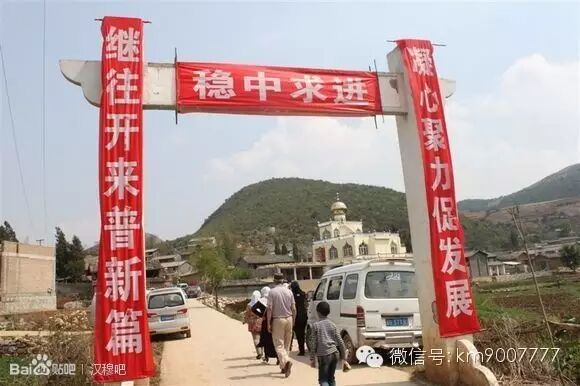
Based on the above perspective, I think this better explains how the Wenshan Wulu Hui Muslims, as an immigrant ethnic minority upon entering the Wenshan Wulu Zhuang villages, developed an identity with the local Zhuang culture, beautifully reflecting the survival wisdom of Hui ancestors and the harmonious coexistence among different ethnic groups in the historical process.
Islam is not only a religion, but a complete way of life. Under the intersection of "faith and pragmatism," a diverse cultural identity concept of "harmony in diversity" has been formed among the Wenshan Hui Muslims. It embodies an open mindset and an enterprising spirit in the process of dialogue with different cultures. "Harmony" actually means seeking common ground while reserving differences, whereas "sameness" would mean eliminating differences for the sake of uniformity. "Harmony in diversity" advocates pursuing harmonious unity on the premise of respecting differences. The main spirit of "harmony" is to coordinate differences, achieve a new harmonious unity, and enable various different things to attain new development and become new, distinct entities.
[This article is a phased achievement of the National Social Science Fund Project: Research on Yunnan's Special Hui Ethnic Groups and Local Inter-Ethnic Social Harmonious Relations (Project No. 13CMZ027)]
References
1. Zhang Lijian, *Ethnic Identity in the Context of Scattered and Mixed Communities*, Ethnic Publishing House, 2009.
2. Yue Daiyun, "Two Dangers in Multicultural Development and the Contributions Culture Can Make," *Literature and Art Daily*, August 28, 2001.
(Hu Liping is a lecturer at the School of Social Management, Kunming University; Feng Yu is a lecturer at the Research Institute for Southwest China Border Ethnic Minorities, Yunnan University)
Liping Hu, Yu Feng: A Closer Look at the "Zhuang-Hui" Muslims of Wenshan, Yunnan
Abstract:
The "Zhuang-Hui" are a unique group of Hui Muslims living in Wenshan Prefecture, Yunnan Province. Over the course of history, they have blended elements of Islamic faith with distinct Zhuang cultural traditions, creating a rich, pluralistic ethnic culture.
1. Origins and Overview of the Hui People in Wenshan Prefecture, Yunnan
Wenshan Zhuang and Miao Autonomous Prefecture is home to over 23,000 Hui Muslims, making up about 0.007% of the prefecture's total population of 3.28 million. They are scattered across four counties: Wenshan, Yanshan, Qiubei, and Guangnan. Wenshan city sits at the center, surrounded by Maguan, Xichou, Malipo, Funing, Yanshan, Qiubei, and Guangnan counties. Aside from a few Hui civil servants and temporary residents working in Xichou, Maguan, Malipo, and Funing, those four counties are essentially devoid of resident Hui populations.
The "Zhuang-Hui" are a unique group of Hui Muslims living in Wenshan Prefecture, Yunnan Province. Over the course of history, they have blended elements of Islamic faith with distinct Zhuang cultural traditions, creating a rich, pluralistic ethnic culture.
1. Origins and Overview of the Hui People in Wenshan Prefecture, Yunnan
Wenshan Zhuang and Miao Autonomous Prefecture is home to over 23,000 Hui Muslims, making up about 0.007% of the prefecture's total population of 3.28 million. They are scattered across four counties: Wenshan, Yanshan, Qiubei, and Guangnan. Wenshan city sits at the center, surrounded by Maguan, Xichou, Malipo, Funing, Yanshan, Qiubei, and Guangnan counties. Aside from a few Hui civil servants and temporary residents working in Xichou, Maguan, Malipo, and Funing, those four counties are essentially devoid of resident Hui populations.
Wenshan's Hui population primarily lives along highways or in towns, mostly settled in flat valley basins with a small fraction living in mountainous areas. Hui villages tend to be tightly clustered, creating a settlement pattern of "large dispersion, small concentration." Currently, Yanshan has 19 Hui villages: Pingyuan Town includes Tianxin, Pingyuan, Songmaopo, Maolong, Sanjiacun, Xinzhuang, Xiaoyuan Road, Chebaini, Songshancun, and Shangmao Avenue; Jiayi Town includes Laojiaocheng, Xiaoshiqiao, Zhongzhai, Chengda, and Yanshan urban area; Ameng Town includes Ameng, Mifa, Mifa New Village, and Maodichong. Qiubei County has 9 Hui villages: Qiubei urban area, the Ball Manufacturing Plant, Jinping Town's Matoushan, Xincheng, Hewai, and Jiucheng, as well as Yuezhe Township's Yuezhe, Xinzhai, and Fuxing Village. Wenshan County has 9 Hui villages: Wenshan urban area, Matang Township's Huanglongba, Pingba Town's Pingba, Hongdian Hui Ethnic Township's Moke, Bajiazhai, along with self-declared repatriated ancestral villages Wulu Old Village, Wulu New Village, and Mulubai, plus Dehou Township's Kazuo Zhuang village Muslims. Guangnan County has two Hui residential areas in Guangnan urban area and Zhulin. Across the entire prefecture, there are 39 Hui residential villages and towns, housing a total of 40 mosques. Aside from the older mosques in Yuezhe and Guangnan, all other mosques have been successively renovated, expanded, or rebuilt by local villages and towns in recent times.
Generally speaking, the Hui population in Wenshan originated from migrations out of Dali, Kunming, Jianshui, Luliang, and Luxi during the Yongzheng, Qianlong, and Xianfeng reigns of the Qing Dynasty.
2. The Origins of Wenshan's Zhuang-Hui
Han, Hui, and other ethnic groups in Yunnan had historically lived together in harmony. However, the Qing government adopted a divide-and-rule policy of "using Han to control Hui," manufacturing ethnic divides that heightened tensions and damaged relations between the two communities.
In March 1856 (the 6th year of Xianfeng, Bingchen year), Yunnan Governor Shu Ahxing and Provincial Treasurer Qingsheng (a Manchu), acting on orders from the Qing court, commanded all prefectures, departments, sub-prefectures, and counties to "annihilate the Yunnan Hui and sweep them clean across eight hundred miles" (from Ma Minlin's *Records of the Great Calamity in Yunnan in the Fourteenth Year of Xianfeng*) and "gather mobs to slaughter the Hui," giving authorities a green light to kill Hui people with impunity. On April 16 and May 16, 1856, the Qing rulers carried out another brutal massacre of the Hui. Over 10,000 people in Kunming were slaughtered, leaving "almost no survivors" (from the *Inscribed Monument Marking the Reburial of Kunming's Five-Directional Hui Martyrs of the Bingchen Year of Xianfeng*). Today, the back of Jinjiashan in Kunming city serves as a mass grave (pit) for these massacred Hui people.
Before Du Wenxiu’s uprising broke out in western Yunnan in 1856 (the Bingchen year), the "Four Mountains Yi Rebellion" had already erupted around Wenshan and Qiubei. After Du Wenxiu's uprising began, Ma Zunxiang, a Hui from Moke Village in Wenshan, and Ma Jingju, a Hui from Xishan in Wenshan, also raised the banner of anti-Qing resistance. The anti-Qing struggle of Qiubei's Hui was deeply sympathized with and supported by local ethnic brothers. For instance, Yi people from places like Baima Cao secretly supplied grain to the Hui, highlighting the anti-Qing resistance of Hui in the Yuezhe area. As various ethnic groups united against the Qing, the Qing government—pursuing its policy of "gathering mobs to slaughter the Hui, wiping them straight out for eight hundred miles" and "giving permission to execute on sight any rebellious Hui troublemakers"—rolled out chilling slogans such as "First exterminate the Hui, next exterminate the Yi, and skin the Zhuang (Zhuang people) and Miao (Miao people) alive" to threaten anti-Manchu actions. After Du Wenxiu's uprising failed, almost every Hui village in Wenshan Prefecture was subjected to bloody purges and encirclement. Survivors were left destitute and displaced, fleeing to foreign lands. Afterward, Wenshan's Hui accepted pacification by the Qing court, but were forbidden from living in their ancestral homelands. Some Hui (such as those from the Yuezhe area) were escorted by troops to settle in Dazhang and Shadian in Hongju Prefecture.
During this period, some Hui who escaped by the skin of their teeth fled from various places into Zhuang villages, where they were sheltered by their Zhuang brothers. They began wearing Zhuang clothing, speaking the Zhuang language, intermarrying with local Zhuang, and raising families. Bingle Township's Wulu Old Village, New Village, Mulubai in Hongdian Township, and Kazuo Village in Dehou Township are entirely Zhuang communities, yet the ancestors of Wulu New Village, Old Village, and Mulubai were descendants of Dazhang Hui bearing the surname Ma and others. Today, New Village has 58 households, out of which 18 households adhere to Islam. Among these 18 households, 16 carry the surname Ma, 1 is surnamed Li, and 1 is surnamed Long. Old Village has over 200 households, with 24 households embracing Islam (18 Ma households, 4 Shen households, 1 Long household, and 1 Tian household). Among these Muslim households, while the Ma families trace their ancestry back to the Hui, the other surnames joined Islam after marrying daughters of the Ma family and becoming influenced by their Muslim relatives.
The ancestors of Kazuo Village originally came from Najiaying in Tonghai, belonging to the Na lineage. Legend has it that during the Bingchen incident of the Qing Dynasty, ancestors of the Ma family fled to Wulu and Mulubai, while ancestors of the Na family fled to Kazuo Village. Through intermarriage with other ethnic groups, they settled down, descendants multiplied, and as older generations passed away, the younger generations became assimilated by the local ethnic groups.
For example, in Wulu Village, Bingle Township, Wenshan Prefecture, there are currently two "Zhuang-Hui" villages known as Old Village and New Village, with New Village developing out of Old Village. According to local oral tradition, the shared male ancestor bearing the surname Ma fled from the Dazhang Hui enclave in Honghe Prefecture after the Bingchen incident and hid out in a Zhuang village. The male ancestor surnamed Ma married a local Zhuang woman, and all their descendants now carry the surname Ma. After the male ancestor passed away, his Dazhang Hui relatives would travel to Wulu every year during Eid al-Fitr to visit his grave. However, according to local recollections in Wulu, prior to 1990, Wulu's Ma villagers only knew that their ancestors were surnamed Ma and were Hui; they knew absolutely nothing about Islam or Hui culture and were practically indistinguishable from the local Zhuang. After 1990, Dazhang Hui people successively traveled to Wulu to preach Islam to the villagers, while also providing economic aid such as rice, sesame oil, and daily necessities. Ahong (Imam) Li Zaitang, who still serves as the religious leader at the Dazhang Mosque, was one of the earliest religious figures in the 1990s to help the villagers of Wulu return to Islam. Recalling how eagerly the villagers requested to "return" to the Hui fold, many memories remain vivid for him. Because local economic conditions were extremely harsh—roads were undeveloped and cars couldn't drive into the village—villagers used an ox cart to transport Ahong Li into the village. Both women and men eagerly studied religious knowledge; during the freezing winter without hot water, they used cold water to perform wudu (ablutions) before learning how to pray. Ahong Li described what he saw back then by saying he "was moved to tears multiple times." The Wulu Muslims who experienced this "return" maintain Islamic religious beliefs, yet they retain many cultural elements of both the Hui and Zhuang in their clothing, language, housing, and even their ethnic psychology.
3. Culture of the Wenshan Zhuang-Hui
(1) Language: Language is not only a marker of group identity and a differentiator from others, but also a social construction of the user group through cultural elements, generating cognitive, psychological, and conscious identification and interpretation. The Hui who migrated to the Zhuang areas of Yunnan embraced Zhuang cultural life and adopted the Zhuang language. The use of Zhuang is not limited to communication with Zhuang people; it is also widely used within the Hui community itself. The adoption of Zhuang has become a major hallmark of the "Zhuang-Hui." On their official ID cards, Wenshan Zhuang-Hui are registered as "Zhuang," and their language usage is identical to that of the local Zhuang. They refer to themselves as "Zhuang Muslims." Ma Guoxin, the current Ahong of the Old Village Mosque, is a local. During an evening of fieldwork, two cows belonging to a Zhuang family in Old Village fought and went missing, prompting them to seek help from the Ahong at the mosque. Ma Guoxin used a loudspeaker in the Zhuang language to help them find the cows. Hui men, women, old, and young in the village all speak and understand Zhuang, a practice the Zhuang refer to as "chatting." For instance, Ahong Ma Guoxin's children speak Mandarin at home with their parents, but speak Zhuang when playing with village playmates. Zhuang is a spoken language without a written script.
(2) Clothing: The attire of the "Zhuang-Hui" is also distinctive because it mirrors Zhuang dress, which is one reason they are called "Zhuang-Hui." During the historical formation of the Zhuang-Hui, this cultural shift of speaking Zhuang and wearing Zhuang clothing happened rapidly. Because the Hui adopted these two identity-marking traits of language and clothing, acquiring the outward cultural features of the Zhuang, outsiders came to call them "Zhuang-Hui." After returning to Islam, Hui men and women still wear clothing identical to that of the local Zhuang. Some elderly women still wear the traditional Zhuang headwrap at home, only switching to the Hui headscarf (hijab) when going out to attend Hui religious holidays.
(3) Diet: The "Zhuang-Hui" have also transitioned toward Zhuang characteristics in their culinary culture. Every year on the 15th day of the first lunar month, the Zhuang dye rice yellow using various flowers, and on the 24th day of the sixth lunar month, they celebrate the Red Rice Festival by dyeing glutinous rice red. The local Hui have likewise adopted these folk dietary customs while steadfastly upholding traditional Hui dietary habits and taboos.
(4) Funeral Customs: The Zhuang practice polytheism, worshipping mountains, rivers, and various aspects of nature. The Zhuang are extremely particular about choosing the right date for a funeral; if the day is wrong, the burial can be postponed for half a month or even a month after a loved one passes away. Wenshan Zhuang Muslims still retain their Zhuang identity status on their ID cards, referring to themselves as "Zhuang Muslims"—changing their religion without changing their official ethnicity. However, in funeral customs, Zhuang Muslims have inherited Hui traditions, handling the deceased according to Hui burial rites: prompt burial, janazah prayers led by an Ahong, and wrapping the body in white shrouds instead of using a coffin. In many families, some members practice Islam while others practice Zhuang polytheism. When a non-Muslim family member passes away, family members generally attend the funeral together, except that the Zhuang Muslims refrain from rituals that violate Islamic etiquette.
4. Pluralistic Cultural Identity
Cultural identity
refers to the social and psychological process by which an individual internalizes the culture and cultural group to which they belong, generating a sense of belonging, and thereby acquiring, maintaining, and innovating their own culture. Cultural identity encompasses identification with social value norms, religious beliefs, customs, language, and art. Cultural identity is also the process of forming the "self."
Wenshan's "Zhuang-Hui" demonstrate identity with local Zhuang in their daily life, economy, clothing, and customs, while primarily identifying as Hui in terms of their ethnic identity, religion, and communal emotional belonging. In Yunnan, there are similar groups identified by academics as "Yi-Hui" (in Xingping, Yuxi), "Tibetan-Hui" (in Shangri-La), and "Bai-Hui" (in Eryuan, Dali). They practice Islam, yet identify with local ethnic minority groups in their customs, habits, and language. Spiritually, they find their homecoming in Islam, even though their daily life paradigms have converged with local ethnic groups.
Due to historical reasons, the "Zhuang-Hui" group lacked sustained social interaction and demographic mobility with the mainstream Hui population for a long time. Instead, they maintained continuous, frequent interpersonal interactions, social contact, and cultural exchanges with the local Zhuang. However, this social process did not dilute their group belonging and identity regarding Hui traditional culture and mainstream emotional ties. Hui identity has persisted throughout the developmental history of the "Zhuang-Hui." An ancestral stele discovered in Wulu, Wenshan, titled *Stele Inscription of the Ma Progenitor*, records: "...yet the principles of the Islamic faith dare not be abandoned... After the ancestors passed away, there were no Hui teachers to guide us through the scriptures, hence later descendants changed their religion." Consequently, amid today's more open and frequent inter-ethnic interactions, some "Zhuang-Hui" have experienced a strong ethnic consciousness, symbolized by a religious return, sparking a series of social, cultural, and ideological revivals of traditional Hui social culture.
During fieldwork interviews, this pluralistic cultural identity of the Zhuang-Hui constantly shone through. Feng LF (female, 48 years old, wife of Ma KT's older brother, from Xiasheshu Village, a Zhuang who married into the Wulu Ma family and converted to Islam in 1990):
"Back then, Xue BJ (from Zhaotong, living in Dazhang) brought a group of about 20 young students from Dazhang to teach us how to perform wudu, pray, and recite scriptures. They told us our ancestors were Hui and that we needed to return to the Hui identity."
"After I became Hui, visiting my maiden family became a bit inconvenient, but I have my own cooking pots and stove. I still have 3 younger brothers and 2 younger sisters in Xiasheshu, and they are all Zhuang. Since I embraced Islam, I can no longer eat pork. I wash my face (perform wudu—author's note) and pray. Now I am Hui, but on my ID card, I still list my ethnicity as Zhuang. Going to the mosque to wash up and pray makes me feel much cleaner. All my kids love studying scriptures. My eldest son, Ma Mingli, is 22 this year. He's very smart, has a deep grasp of scriptural study, and is currently studying scriptures in Iran, funded by a Hui family in Tianxin Village."
"I feel life is better after embracing Islam than before. I don't feel any different from Hui people elsewhere; all Muslims around the world are one family. Whenever we are with Muslims anywhere, we feel like family, with no fear or awkwardness. Now, I still feel a bit shy around Nong people (Zhuang people—author's note), not daring to speak much, but when I see Muslims wearing hijabs, I feel a warm kinship. We live in a Zhuang area, and I wear a Muslim hijab now, but if there are events like accompanying a bride to a Zhuang village for a wedding, I will put on the traditional Nong headwrap and wear Nong clothing. Because if I went wearing a hijab, people would ask a million questions and feel we are different from them. I do feel there is a difference between us and the Nong; our diets are different, and they are busier than us."
Thus, a pluralistic ethnic culture characterized by Zhuang-Hui blending was formed. The transformation of these cultural traits represents a process of cultural acceptance and adaptation, achieving an adaptive integration of two cultures. After encountering Zhuang culture, the Hui borrowed its cultural elements, adapted to local geographic traits, altered their original lifestyle, and integrated Zhuang cultural elements like language, clothing, and housing into the internal structure of Hui culture. This integration primarily remained at the foundational level of daily life, whereas religious consciousness—the core domain constituting ethnic identity—has remained deeply rooted throughout the historical journey of the Zhuang-Hui.
5. Conclusion
The renowned American anthropologist Clifford Geertz
once brilliantly pointed out: "Ethnic identity is actually a group's strategic adjustment and adaptation when facing a certain type of social experience, and changes in ethnic identity are closely related to the 'boundary of ethnic groups.' And we must pay full attention to social boundary interactions because the two sides possess 'territorial counterparts.' For an ethnic group to maintain its identity, it must take into account the interactions between the people of both sides..."
Based on the above perspective, I think this better explains how the Wenshan Wulu Hui Muslims, as an immigrant ethnic minority upon entering the Wenshan Wulu Zhuang villages, developed an identity with the local Zhuang culture, beautifully reflecting the survival wisdom of Hui ancestors and the harmonious coexistence among different ethnic groups in the historical process.
Islam is not only a religion, but a complete way of life. Under the intersection of "faith and pragmatism," a diverse cultural identity concept of "harmony in diversity" has been formed among the Wenshan Hui Muslims. It embodies an open mindset and an enterprising spirit in the process of dialogue with different cultures. "Harmony" actually means seeking common ground while reserving differences, whereas "sameness" would mean eliminating differences for the sake of uniformity. "Harmony in diversity" advocates pursuing harmonious unity on the premise of respecting differences. The main spirit of "harmony" is to coordinate differences, achieve a new harmonious unity, and enable various different things to attain new development and become new, distinct entities.
[This article is a phased achievement of the National Social Science Fund Project: Research on Yunnan's Special Hui Ethnic Groups and Local Inter-Ethnic Social Harmonious Relations (Project No. 13CMZ027)]
References
1. Zhang Lijian, *Ethnic Identity in the Context of Scattered and Mixed Communities*, Ethnic Publishing House, 2009.
2. Yue Daiyun, "Two Dangers in Multicultural Development and the Contributions Culture Can Make," *Literature and Art Daily*, August 28, 2001.
(Hu Liping is a lecturer at the School of Social Management, Kunming University; Feng Yu is a lecturer at the Research Institute for Southwest China Border Ethnic Minorities, Yunnan University)
Discovering Yunnan's Unique Zhuang-Hui Muslims: Culture, Food & History
Articles • Hasan09 posted the article • 0 comments • 1 views • 1 hours ago
[Internet Repost]
Liping Hu, Yu Feng: A Closer Look at the "Zhuang-Hui" Muslims of Wenshan, Yunnan
Abstract:
The "Zhuang-Hui" are a unique group of Hui Muslims living in Wenshan Prefecture, Yunnan Province. Over the course of history, they have blended elements of Islamic faith with distinct Zhuang cultural traditions, creating a rich, pluralistic ethnic culture.
1. Origins and Overview of the Hui People in Wenshan Prefecture, Yunnan
Wenshan Zhuang and Miao Autonomous Prefecture is home to over 23,000 Hui Muslims, making up about 0.007% of the prefecture's total population of 3.28 million. They are scattered across four counties: Wenshan, Yanshan, Qiubei, and Guangnan. Wenshan city sits at the center, surrounded by Maguan, Xichou, Malipo, Funing, Yanshan, Qiubei, and Guangnan counties. Aside from a few Hui civil servants and temporary residents working in Xichou, Maguan, Malipo, and Funing, those four counties are essentially devoid of resident Hui populations.
The "Zhuang-Hui" are a unique group of Hui Muslims living in Wenshan Prefecture, Yunnan Province. Over the course of history, they have blended elements of Islamic faith with distinct Zhuang cultural traditions, creating a rich, pluralistic ethnic culture.
1. Origins and Overview of the Hui People in Wenshan Prefecture, Yunnan
Wenshan Zhuang and Miao Autonomous Prefecture is home to over 23,000 Hui Muslims, making up about 0.007% of the prefecture's total population of 3.28 million. They are scattered across four counties: Wenshan, Yanshan, Qiubei, and Guangnan. Wenshan city sits at the center, surrounded by Maguan, Xichou, Malipo, Funing, Yanshan, Qiubei, and Guangnan counties. Aside from a few Hui civil servants and temporary residents working in Xichou, Maguan, Malipo, and Funing, those four counties are essentially devoid of resident Hui populations.
Wenshan's Hui population primarily lives along highways or in towns, mostly settled in flat valley basins with a small fraction living in mountainous areas. Hui villages tend to be tightly clustered, creating a settlement pattern of "large dispersion, small concentration." Currently, Yanshan has 19 Hui villages: Pingyuan Town includes Tianxin, Pingyuan, Songmaopo, Maolong, Sanjiacun, Xinzhuang, Xiaoyuan Road, Chebaini, Songshancun, and Shangmao Avenue; Jiayi Town includes Laojiaocheng, Xiaoshiqiao, Zhongzhai, Chengda, and Yanshan urban area; Ameng Town includes Ameng, Mifa, Mifa New Village, and Maodichong. Qiubei County has 9 Hui villages: Qiubei urban area, the Ball Manufacturing Plant, Jinping Town's Matoushan, Xincheng, Hewai, and Jiucheng, as well as Yuezhe Township's Yuezhe, Xinzhai, and Fuxing Village. Wenshan County has 9 Hui villages: Wenshan urban area, Matang Township's Huanglongba, Pingba Town's Pingba, Hongdian Hui Ethnic Township's Moke, Bajiazhai, along with self-declared repatriated ancestral villages Wulu Old Village, Wulu New Village, and Mulubai, plus Dehou Township's Kazuo Zhuang village Muslims. Guangnan County has two Hui residential areas in Guangnan urban area and Zhulin. Across the entire prefecture, there are 39 Hui residential villages and towns, housing a total of 40 mosques. Aside from the older mosques in Yuezhe and Guangnan, all other mosques have been successively renovated, expanded, or rebuilt by local villages and towns in recent times.
Generally speaking, the Hui population in Wenshan originated from migrations out of Dali, Kunming, Jianshui, Luliang, and Luxi during the Yongzheng, Qianlong, and Xianfeng reigns of the Qing Dynasty.
2. The Origins of Wenshan's Zhuang-Hui
Han, Hui, and other ethnic groups in Yunnan had historically lived together in harmony. However, the Qing government adopted a divide-and-rule policy of "using Han to control Hui," manufacturing ethnic divides that heightened tensions and damaged relations between the two communities.
In March 1856 (the 6th year of Xianfeng, Bingchen year), Yunnan Governor Shu Ahxing and Provincial Treasurer Qingsheng (a Manchu), acting on orders from the Qing court, commanded all prefectures, departments, sub-prefectures, and counties to "annihilate the Yunnan Hui and sweep them clean across eight hundred miles" (from Ma Minlin's *Records of the Great Calamity in Yunnan in the Fourteenth Year of Xianfeng*) and "gather mobs to slaughter the Hui," giving authorities a green light to kill Hui people with impunity. On April 16 and May 16, 1856, the Qing rulers carried out another brutal massacre of the Hui. Over 10,000 people in Kunming were slaughtered, leaving "almost no survivors" (from the *Inscribed Monument Marking the Reburial of Kunming's Five-Directional Hui Martyrs of the Bingchen Year of Xianfeng*). Today, the back of Jinjiashan in Kunming city serves as a mass grave (pit) for these massacred Hui people.
Before Du Wenxiu’s uprising broke out in western Yunnan in 1856 (the Bingchen year), the "Four Mountains Yi Rebellion" had already erupted around Wenshan and Qiubei. After Du Wenxiu's uprising began, Ma Zunxiang, a Hui from Moke Village in Wenshan, and Ma Jingju, a Hui from Xishan in Wenshan, also raised the banner of anti-Qing resistance. The anti-Qing struggle of Qiubei's Hui was deeply sympathized with and supported by local ethnic brothers. For instance, Yi people from places like Baima Cao secretly supplied grain to the Hui, highlighting the anti-Qing resistance of Hui in the Yuezhe area. As various ethnic groups united against the Qing, the Qing government—pursuing its policy of "gathering mobs to slaughter the Hui, wiping them straight out for eight hundred miles" and "giving permission to execute on sight any rebellious Hui troublemakers"—rolled out chilling slogans such as "First exterminate the Hui, next exterminate the Yi, and skin the Zhuang (Zhuang people) and Miao (Miao people) alive" to threaten anti-Manchu actions. After Du Wenxiu's uprising failed, almost every Hui village in Wenshan Prefecture was subjected to bloody purges and encirclement. Survivors were left destitute and displaced, fleeing to foreign lands. Afterward, Wenshan's Hui accepted pacification by the Qing court, but were forbidden from living in their ancestral homelands. Some Hui (such as those from the Yuezhe area) were escorted by troops to settle in Dazhang and Shadian in Hongju Prefecture.
During this period, some Hui who escaped by the skin of their teeth fled from various places into Zhuang villages, where they were sheltered by their Zhuang brothers. They began wearing Zhuang clothing, speaking the Zhuang language, intermarrying with local Zhuang, and raising families. Bingle Township's Wulu Old Village, New Village, Mulubai in Hongdian Township, and Kazuo Village in Dehou Township are entirely Zhuang communities, yet the ancestors of Wulu New Village, Old Village, and Mulubai were descendants of Dazhang Hui bearing the surname Ma and others. Today, New Village has 58 households, out of which 18 households adhere to Islam. Among these 18 households, 16 carry the surname Ma, 1 is surnamed Li, and 1 is surnamed Long. Old Village has over 200 households, with 24 households embracing Islam (18 Ma households, 4 Shen households, 1 Long household, and 1 Tian household). Among these Muslim households, while the Ma families trace their ancestry back to the Hui, the other surnames joined Islam after marrying daughters of the Ma family and becoming influenced by their Muslim relatives.
The ancestors of Kazuo Village originally came from Najiaying in Tonghai, belonging to the Na lineage. Legend has it that during the Bingchen incident of the Qing Dynasty, ancestors of the Ma family fled to Wulu and Mulubai, while ancestors of the Na family fled to Kazuo Village. Through intermarriage with other ethnic groups, they settled down, descendants multiplied, and as older generations passed away, the younger generations became assimilated by the local ethnic groups.
For example, in Wulu Village, Bingle Township, Wenshan Prefecture, there are currently two "Zhuang-Hui" villages known as Old Village and New Village, with New Village developing out of Old Village. According to local oral tradition, the shared male ancestor bearing the surname Ma fled from the Dazhang Hui enclave in Honghe Prefecture after the Bingchen incident and hid out in a Zhuang village. The male ancestor surnamed Ma married a local Zhuang woman, and all their descendants now carry the surname Ma. After the male ancestor passed away, his Dazhang Hui relatives would travel to Wulu every year during Eid al-Fitr to visit his grave. However, according to local recollections in Wulu, prior to 1990, Wulu's Ma villagers only knew that their ancestors were surnamed Ma and were Hui; they knew absolutely nothing about Islam or Hui culture and were practically indistinguishable from the local Zhuang. After 1990, Dazhang Hui people successively traveled to Wulu to preach Islam to the villagers, while also providing economic aid such as rice, sesame oil, and daily necessities. Ahong (Imam) Li Zaitang, who still serves as the religious leader at the Dazhang Mosque, was one of the earliest religious figures in the 1990s to help the villagers of Wulu return to Islam. Recalling how eagerly the villagers requested to "return" to the Hui fold, many memories remain vivid for him. Because local economic conditions were extremely harsh—roads were undeveloped and cars couldn't drive into the village—villagers used an ox cart to transport Ahong Li into the village. Both women and men eagerly studied religious knowledge; during the freezing winter without hot water, they used cold water to perform wudu (ablutions) before learning how to pray. Ahong Li described what he saw back then by saying he "was moved to tears multiple times." The Wulu Muslims who experienced this "return" maintain Islamic religious beliefs, yet they retain many cultural elements of both the Hui and Zhuang in their clothing, language, housing, and even their ethnic psychology.
3. Culture of the Wenshan Zhuang-Hui
(1) Language: Language is not only a marker of group identity and a differentiator from others, but also a social construction of the user group through cultural elements, generating cognitive, psychological, and conscious identification and interpretation. The Hui who migrated to the Zhuang areas of Yunnan embraced Zhuang cultural life and adopted the Zhuang language. The use of Zhuang is not limited to communication with Zhuang people; it is also widely used within the Hui community itself. The adoption of Zhuang has become a major hallmark of the "Zhuang-Hui." On their official ID cards, Wenshan Zhuang-Hui are registered as "Zhuang," and their language usage is identical to that of the local Zhuang. They refer to themselves as "Zhuang Muslims." Ma Guoxin, the current Ahong of the Old Village Mosque, is a local. During an evening of fieldwork, two cows belonging to a Zhuang family in Old Village fought and went missing, prompting them to seek help from the Ahong at the mosque. Ma Guoxin used a loudspeaker in the Zhuang language to help them find the cows. Hui men, women, old, and young in the village all speak and understand Zhuang, a practice the Zhuang refer to as "chatting." For instance, Ahong Ma Guoxin's children speak Mandarin at home with their parents, but speak Zhuang when playing with village playmates. Zhuang is a spoken language without a written script.
(2) Clothing: The attire of the "Zhuang-Hui" is also distinctive because it mirrors Zhuang dress, which is one reason they are called "Zhuang-Hui." During the historical formation of the Zhuang-Hui, this cultural shift of speaking Zhuang and wearing Zhuang clothing happened rapidly. Because the Hui adopted these two identity-marking traits of language and clothing, acquiring the outward cultural features of the Zhuang, outsiders came to call them "Zhuang-Hui." After returning to Islam, Hui men and women still wear clothing identical to that of the local Zhuang. Some elderly women still wear the traditional Zhuang headwrap at home, only switching to the Hui headscarf (hijab) when going out to attend Hui religious holidays.
(3) Diet: The "Zhuang-Hui" have also transitioned toward Zhuang characteristics in their culinary culture. Every year on the 15th day of the first lunar month, the Zhuang dye rice yellow using various flowers, and on the 24th day of the sixth lunar month, they celebrate the Red Rice Festival by dyeing glutinous rice red. The local Hui have likewise adopted these folk dietary customs while steadfastly upholding traditional Hui dietary habits and taboos.
(4) Funeral Customs: The Zhuang practice polytheism, worshipping mountains, rivers, and various aspects of nature. The Zhuang are extremely particular about choosing the right date for a funeral; if the day is wrong, the burial can be postponed for half a month or even a month after a loved one passes away. Wenshan Zhuang Muslims still retain their Zhuang identity status on their ID cards, referring to themselves as "Zhuang Muslims"—changing their religion without changing their official ethnicity. However, in funeral customs, Zhuang Muslims have inherited Hui traditions, handling the deceased according to Hui burial rites: prompt burial, janazah prayers led by an Ahong, and wrapping the body in white shrouds instead of using a coffin. In many families, some members practice Islam while others practice Zhuang polytheism. When a non-Muslim family member passes away, family members generally attend the funeral together, except that the Zhuang Muslims refrain from rituals that violate Islamic etiquette.
4. Pluralistic Cultural Identity
Cultural identity
refers to the social and psychological process by which an individual internalizes the culture and cultural group to which they belong, generating a sense of belonging, and thereby acquiring, maintaining, and innovating their own culture. Cultural identity encompasses identification with social value norms, religious beliefs, customs, language, and art. Cultural identity is also the process of forming the "self."
Wenshan's "Zhuang-Hui" demonstrate identity with local Zhuang in their daily life, economy, clothing, and customs, while primarily identifying as Hui in terms of their ethnic identity, religion, and communal emotional belonging. In Yunnan, there are similar groups identified by academics as "Yi-Hui" (in Xingping, Yuxi), "Tibetan-Hui" (in Shangri-La), and "Bai-Hui" (in Eryuan, Dali). They practice Islam, yet identify with local ethnic minority groups in their customs, habits, and language. Spiritually, they find their homecoming in Islam, even though their daily life paradigms have converged with local ethnic groups.
Due to historical reasons, the "Zhuang-Hui" group lacked sustained social interaction and demographic mobility with the mainstream Hui population for a long time. Instead, they maintained continuous, frequent interpersonal interactions, social contact, and cultural exchanges with the local Zhuang. However, this social process did not dilute their group belonging and identity regarding Hui traditional culture and mainstream emotional ties. Hui identity has persisted throughout the developmental history of the "Zhuang-Hui." An ancestral stele discovered in Wulu, Wenshan, titled *Stele Inscription of the Ma Progenitor*, records: "...yet the principles of the Islamic faith dare not be abandoned... After the ancestors passed away, there were no Hui teachers to guide us through the scriptures, hence later descendants changed their religion." Consequently, amid today's more open and frequent inter-ethnic interactions, some "Zhuang-Hui" have experienced a strong ethnic consciousness, symbolized by a religious return, sparking a series of social, cultural, and ideological revivals of traditional Hui social culture.
During fieldwork interviews, this pluralistic cultural identity of the Zhuang-Hui constantly shone through. Feng LF (female, 48 years old, wife of Ma KT's older brother, from Xiasheshu Village, a Zhuang who married into the Wulu Ma family and converted to Islam in 1990):
"Back then, Xue BJ (from Zhaotong, living in Dazhang) brought a group of about 20 young students from Dazhang to teach us how to perform wudu, pray, and recite scriptures. They told us our ancestors were Hui and that we needed to return to the Hui identity."
"After I became Hui, visiting my maiden family became a bit inconvenient, but I have my own cooking pots and stove. I still have 3 younger brothers and 2 younger sisters in Xiasheshu, and they are all Zhuang. Since I embraced Islam, I can no longer eat pork. I wash my face (perform wudu—author's note) and pray. Now I am Hui, but on my ID card, I still list my ethnicity as Zhuang. Going to the mosque to wash up and pray makes me feel much cleaner. All my kids love studying scriptures. My eldest son, Ma Mingli, is 22 this year. He's very smart, has a deep grasp of scriptural study, and is currently studying scriptures in Iran, funded by a Hui family in Tianxin Village."
"I feel life is better after embracing Islam than before. I don't feel any different from Hui people elsewhere; all Muslims around the world are one family. Whenever we are with Muslims anywhere, we feel like family, with no fear or awkwardness. Now, I still feel a bit shy around Nong people (Zhuang people—author's note), not daring to speak much, but when I see Muslims wearing hijabs, I feel a warm kinship. We live in a Zhuang area, and I wear a Muslim hijab now, but if there are events like accompanying a bride to a Zhuang village for a wedding, I will put on the traditional Nong headwrap and wear Nong clothing. Because if I went wearing a hijab, people would ask a million questions and feel we are different from them. I do feel there is a difference between us and the Nong; our diets are different, and they are busier than us."
Thus, a pluralistic ethnic culture characterized by Zhuang-Hui blending was formed. The transformation of these cultural traits represents a process of cultural acceptance and adaptation, achieving an adaptive integration of two cultures. After encountering Zhuang culture, the Hui borrowed its cultural elements, adapted to local geographic traits, altered their original lifestyle, and integrated Zhuang cultural elements like language, clothing, and housing into the internal structure of Hui culture. This integration primarily remained at the foundational level of daily life, whereas religious consciousness—the core domain constituting ethnic identity—has remained deeply rooted throughout the historical journey of the Zhuang-Hui.
5. Conclusion
The renowned American anthropologist Clifford Geertz
once brilliantly pointed out: "Ethnic identity is actually a group's strategic adjustment and adaptation when facing a certain type of social experience, and changes in ethnic identity are closely related to the 'boundary of ethnic groups.' And we must pay full attention to social boundary interactions because the two sides possess 'territorial counterparts.' For an ethnic group to maintain its identity, it must take into account the interactions between the people of both sides..."
Based on the above perspective, I think this better explains how the Wenshan Wulu Hui Muslims, as an immigrant ethnic minority upon entering the Wenshan Wulu Zhuang villages, developed an identity with the local Zhuang culture, beautifully reflecting the survival wisdom of Hui ancestors and the harmonious coexistence among different ethnic groups in the historical process.
Islam is not only a religion, but a complete way of life. Under the intersection of "faith and pragmatism," a diverse cultural identity concept of "harmony in diversity" has been formed among the Wenshan Hui Muslims. It embodies an open mindset and an enterprising spirit in the process of dialogue with different cultures. "Harmony" actually means seeking common ground while reserving differences, whereas "sameness" would mean eliminating differences for the sake of uniformity. "Harmony in diversity" advocates pursuing harmonious unity on the premise of respecting differences. The main spirit of "harmony" is to coordinate differences, achieve a new harmonious unity, and enable various different things to attain new development and become new, distinct entities.
[This article is a phased achievement of the National Social Science Fund Project: Research on Yunnan's Special Hui Ethnic Groups and Local Inter-Ethnic Social Harmonious Relations (Project No. 13CMZ027)]
References
1. Zhang Lijian, *Ethnic Identity in the Context of Scattered and Mixed Communities*, Ethnic Publishing House, 2009.
2. Yue Daiyun, "Two Dangers in Multicultural Development and the Contributions Culture Can Make," *Literature and Art Daily*, August 28, 2001.
(Hu Liping is a lecturer at the School of Social Management, Kunming University; Feng Yu is a lecturer at the Research Institute for Southwest China Border Ethnic Minorities, Yunnan University) view all
Liping Hu, Yu Feng: A Closer Look at the "Zhuang-Hui" Muslims of Wenshan, Yunnan
Abstract:
The "Zhuang-Hui" are a unique group of Hui Muslims living in Wenshan Prefecture, Yunnan Province. Over the course of history, they have blended elements of Islamic faith with distinct Zhuang cultural traditions, creating a rich, pluralistic ethnic culture.
1. Origins and Overview of the Hui People in Wenshan Prefecture, Yunnan
Wenshan Zhuang and Miao Autonomous Prefecture is home to over 23,000 Hui Muslims, making up about 0.007% of the prefecture's total population of 3.28 million. They are scattered across four counties: Wenshan, Yanshan, Qiubei, and Guangnan. Wenshan city sits at the center, surrounded by Maguan, Xichou, Malipo, Funing, Yanshan, Qiubei, and Guangnan counties. Aside from a few Hui civil servants and temporary residents working in Xichou, Maguan, Malipo, and Funing, those four counties are essentially devoid of resident Hui populations.
The "Zhuang-Hui" are a unique group of Hui Muslims living in Wenshan Prefecture, Yunnan Province. Over the course of history, they have blended elements of Islamic faith with distinct Zhuang cultural traditions, creating a rich, pluralistic ethnic culture.
1. Origins and Overview of the Hui People in Wenshan Prefecture, Yunnan
Wenshan Zhuang and Miao Autonomous Prefecture is home to over 23,000 Hui Muslims, making up about 0.007% of the prefecture's total population of 3.28 million. They are scattered across four counties: Wenshan, Yanshan, Qiubei, and Guangnan. Wenshan city sits at the center, surrounded by Maguan, Xichou, Malipo, Funing, Yanshan, Qiubei, and Guangnan counties. Aside from a few Hui civil servants and temporary residents working in Xichou, Maguan, Malipo, and Funing, those four counties are essentially devoid of resident Hui populations.
Wenshan's Hui population primarily lives along highways or in towns, mostly settled in flat valley basins with a small fraction living in mountainous areas. Hui villages tend to be tightly clustered, creating a settlement pattern of "large dispersion, small concentration." Currently, Yanshan has 19 Hui villages: Pingyuan Town includes Tianxin, Pingyuan, Songmaopo, Maolong, Sanjiacun, Xinzhuang, Xiaoyuan Road, Chebaini, Songshancun, and Shangmao Avenue; Jiayi Town includes Laojiaocheng, Xiaoshiqiao, Zhongzhai, Chengda, and Yanshan urban area; Ameng Town includes Ameng, Mifa, Mifa New Village, and Maodichong. Qiubei County has 9 Hui villages: Qiubei urban area, the Ball Manufacturing Plant, Jinping Town's Matoushan, Xincheng, Hewai, and Jiucheng, as well as Yuezhe Township's Yuezhe, Xinzhai, and Fuxing Village. Wenshan County has 9 Hui villages: Wenshan urban area, Matang Township's Huanglongba, Pingba Town's Pingba, Hongdian Hui Ethnic Township's Moke, Bajiazhai, along with self-declared repatriated ancestral villages Wulu Old Village, Wulu New Village, and Mulubai, plus Dehou Township's Kazuo Zhuang village Muslims. Guangnan County has two Hui residential areas in Guangnan urban area and Zhulin. Across the entire prefecture, there are 39 Hui residential villages and towns, housing a total of 40 mosques. Aside from the older mosques in Yuezhe and Guangnan, all other mosques have been successively renovated, expanded, or rebuilt by local villages and towns in recent times.
Generally speaking, the Hui population in Wenshan originated from migrations out of Dali, Kunming, Jianshui, Luliang, and Luxi during the Yongzheng, Qianlong, and Xianfeng reigns of the Qing Dynasty.
2. The Origins of Wenshan's Zhuang-Hui
Han, Hui, and other ethnic groups in Yunnan had historically lived together in harmony. However, the Qing government adopted a divide-and-rule policy of "using Han to control Hui," manufacturing ethnic divides that heightened tensions and damaged relations between the two communities.
In March 1856 (the 6th year of Xianfeng, Bingchen year), Yunnan Governor Shu Ahxing and Provincial Treasurer Qingsheng (a Manchu), acting on orders from the Qing court, commanded all prefectures, departments, sub-prefectures, and counties to "annihilate the Yunnan Hui and sweep them clean across eight hundred miles" (from Ma Minlin's *Records of the Great Calamity in Yunnan in the Fourteenth Year of Xianfeng*) and "gather mobs to slaughter the Hui," giving authorities a green light to kill Hui people with impunity. On April 16 and May 16, 1856, the Qing rulers carried out another brutal massacre of the Hui. Over 10,000 people in Kunming were slaughtered, leaving "almost no survivors" (from the *Inscribed Monument Marking the Reburial of Kunming's Five-Directional Hui Martyrs of the Bingchen Year of Xianfeng*). Today, the back of Jinjiashan in Kunming city serves as a mass grave (pit) for these massacred Hui people.
Before Du Wenxiu’s uprising broke out in western Yunnan in 1856 (the Bingchen year), the "Four Mountains Yi Rebellion" had already erupted around Wenshan and Qiubei. After Du Wenxiu's uprising began, Ma Zunxiang, a Hui from Moke Village in Wenshan, and Ma Jingju, a Hui from Xishan in Wenshan, also raised the banner of anti-Qing resistance. The anti-Qing struggle of Qiubei's Hui was deeply sympathized with and supported by local ethnic brothers. For instance, Yi people from places like Baima Cao secretly supplied grain to the Hui, highlighting the anti-Qing resistance of Hui in the Yuezhe area. As various ethnic groups united against the Qing, the Qing government—pursuing its policy of "gathering mobs to slaughter the Hui, wiping them straight out for eight hundred miles" and "giving permission to execute on sight any rebellious Hui troublemakers"—rolled out chilling slogans such as "First exterminate the Hui, next exterminate the Yi, and skin the Zhuang (Zhuang people) and Miao (Miao people) alive" to threaten anti-Manchu actions. After Du Wenxiu's uprising failed, almost every Hui village in Wenshan Prefecture was subjected to bloody purges and encirclement. Survivors were left destitute and displaced, fleeing to foreign lands. Afterward, Wenshan's Hui accepted pacification by the Qing court, but were forbidden from living in their ancestral homelands. Some Hui (such as those from the Yuezhe area) were escorted by troops to settle in Dazhang and Shadian in Hongju Prefecture.
During this period, some Hui who escaped by the skin of their teeth fled from various places into Zhuang villages, where they were sheltered by their Zhuang brothers. They began wearing Zhuang clothing, speaking the Zhuang language, intermarrying with local Zhuang, and raising families. Bingle Township's Wulu Old Village, New Village, Mulubai in Hongdian Township, and Kazuo Village in Dehou Township are entirely Zhuang communities, yet the ancestors of Wulu New Village, Old Village, and Mulubai were descendants of Dazhang Hui bearing the surname Ma and others. Today, New Village has 58 households, out of which 18 households adhere to Islam. Among these 18 households, 16 carry the surname Ma, 1 is surnamed Li, and 1 is surnamed Long. Old Village has over 200 households, with 24 households embracing Islam (18 Ma households, 4 Shen households, 1 Long household, and 1 Tian household). Among these Muslim households, while the Ma families trace their ancestry back to the Hui, the other surnames joined Islam after marrying daughters of the Ma family and becoming influenced by their Muslim relatives.
The ancestors of Kazuo Village originally came from Najiaying in Tonghai, belonging to the Na lineage. Legend has it that during the Bingchen incident of the Qing Dynasty, ancestors of the Ma family fled to Wulu and Mulubai, while ancestors of the Na family fled to Kazuo Village. Through intermarriage with other ethnic groups, they settled down, descendants multiplied, and as older generations passed away, the younger generations became assimilated by the local ethnic groups.
For example, in Wulu Village, Bingle Township, Wenshan Prefecture, there are currently two "Zhuang-Hui" villages known as Old Village and New Village, with New Village developing out of Old Village. According to local oral tradition, the shared male ancestor bearing the surname Ma fled from the Dazhang Hui enclave in Honghe Prefecture after the Bingchen incident and hid out in a Zhuang village. The male ancestor surnamed Ma married a local Zhuang woman, and all their descendants now carry the surname Ma. After the male ancestor passed away, his Dazhang Hui relatives would travel to Wulu every year during Eid al-Fitr to visit his grave. However, according to local recollections in Wulu, prior to 1990, Wulu's Ma villagers only knew that their ancestors were surnamed Ma and were Hui; they knew absolutely nothing about Islam or Hui culture and were practically indistinguishable from the local Zhuang. After 1990, Dazhang Hui people successively traveled to Wulu to preach Islam to the villagers, while also providing economic aid such as rice, sesame oil, and daily necessities. Ahong (Imam) Li Zaitang, who still serves as the religious leader at the Dazhang Mosque, was one of the earliest religious figures in the 1990s to help the villagers of Wulu return to Islam. Recalling how eagerly the villagers requested to "return" to the Hui fold, many memories remain vivid for him. Because local economic conditions were extremely harsh—roads were undeveloped and cars couldn't drive into the village—villagers used an ox cart to transport Ahong Li into the village. Both women and men eagerly studied religious knowledge; during the freezing winter without hot water, they used cold water to perform wudu (ablutions) before learning how to pray. Ahong Li described what he saw back then by saying he "was moved to tears multiple times." The Wulu Muslims who experienced this "return" maintain Islamic religious beliefs, yet they retain many cultural elements of both the Hui and Zhuang in their clothing, language, housing, and even their ethnic psychology.
3. Culture of the Wenshan Zhuang-Hui
(1) Language: Language is not only a marker of group identity and a differentiator from others, but also a social construction of the user group through cultural elements, generating cognitive, psychological, and conscious identification and interpretation. The Hui who migrated to the Zhuang areas of Yunnan embraced Zhuang cultural life and adopted the Zhuang language. The use of Zhuang is not limited to communication with Zhuang people; it is also widely used within the Hui community itself. The adoption of Zhuang has become a major hallmark of the "Zhuang-Hui." On their official ID cards, Wenshan Zhuang-Hui are registered as "Zhuang," and their language usage is identical to that of the local Zhuang. They refer to themselves as "Zhuang Muslims." Ma Guoxin, the current Ahong of the Old Village Mosque, is a local. During an evening of fieldwork, two cows belonging to a Zhuang family in Old Village fought and went missing, prompting them to seek help from the Ahong at the mosque. Ma Guoxin used a loudspeaker in the Zhuang language to help them find the cows. Hui men, women, old, and young in the village all speak and understand Zhuang, a practice the Zhuang refer to as "chatting." For instance, Ahong Ma Guoxin's children speak Mandarin at home with their parents, but speak Zhuang when playing with village playmates. Zhuang is a spoken language without a written script.
(2) Clothing: The attire of the "Zhuang-Hui" is also distinctive because it mirrors Zhuang dress, which is one reason they are called "Zhuang-Hui." During the historical formation of the Zhuang-Hui, this cultural shift of speaking Zhuang and wearing Zhuang clothing happened rapidly. Because the Hui adopted these two identity-marking traits of language and clothing, acquiring the outward cultural features of the Zhuang, outsiders came to call them "Zhuang-Hui." After returning to Islam, Hui men and women still wear clothing identical to that of the local Zhuang. Some elderly women still wear the traditional Zhuang headwrap at home, only switching to the Hui headscarf (hijab) when going out to attend Hui religious holidays.
(3) Diet: The "Zhuang-Hui" have also transitioned toward Zhuang characteristics in their culinary culture. Every year on the 15th day of the first lunar month, the Zhuang dye rice yellow using various flowers, and on the 24th day of the sixth lunar month, they celebrate the Red Rice Festival by dyeing glutinous rice red. The local Hui have likewise adopted these folk dietary customs while steadfastly upholding traditional Hui dietary habits and taboos.
(4) Funeral Customs: The Zhuang practice polytheism, worshipping mountains, rivers, and various aspects of nature. The Zhuang are extremely particular about choosing the right date for a funeral; if the day is wrong, the burial can be postponed for half a month or even a month after a loved one passes away. Wenshan Zhuang Muslims still retain their Zhuang identity status on their ID cards, referring to themselves as "Zhuang Muslims"—changing their religion without changing their official ethnicity. However, in funeral customs, Zhuang Muslims have inherited Hui traditions, handling the deceased according to Hui burial rites: prompt burial, janazah prayers led by an Ahong, and wrapping the body in white shrouds instead of using a coffin. In many families, some members practice Islam while others practice Zhuang polytheism. When a non-Muslim family member passes away, family members generally attend the funeral together, except that the Zhuang Muslims refrain from rituals that violate Islamic etiquette.
4. Pluralistic Cultural Identity
Cultural identity
refers to the social and psychological process by which an individual internalizes the culture and cultural group to which they belong, generating a sense of belonging, and thereby acquiring, maintaining, and innovating their own culture. Cultural identity encompasses identification with social value norms, religious beliefs, customs, language, and art. Cultural identity is also the process of forming the "self."
Wenshan's "Zhuang-Hui" demonstrate identity with local Zhuang in their daily life, economy, clothing, and customs, while primarily identifying as Hui in terms of their ethnic identity, religion, and communal emotional belonging. In Yunnan, there are similar groups identified by academics as "Yi-Hui" (in Xingping, Yuxi), "Tibetan-Hui" (in Shangri-La), and "Bai-Hui" (in Eryuan, Dali). They practice Islam, yet identify with local ethnic minority groups in their customs, habits, and language. Spiritually, they find their homecoming in Islam, even though their daily life paradigms have converged with local ethnic groups.
Due to historical reasons, the "Zhuang-Hui" group lacked sustained social interaction and demographic mobility with the mainstream Hui population for a long time. Instead, they maintained continuous, frequent interpersonal interactions, social contact, and cultural exchanges with the local Zhuang. However, this social process did not dilute their group belonging and identity regarding Hui traditional culture and mainstream emotional ties. Hui identity has persisted throughout the developmental history of the "Zhuang-Hui." An ancestral stele discovered in Wulu, Wenshan, titled *Stele Inscription of the Ma Progenitor*, records: "...yet the principles of the Islamic faith dare not be abandoned... After the ancestors passed away, there were no Hui teachers to guide us through the scriptures, hence later descendants changed their religion." Consequently, amid today's more open and frequent inter-ethnic interactions, some "Zhuang-Hui" have experienced a strong ethnic consciousness, symbolized by a religious return, sparking a series of social, cultural, and ideological revivals of traditional Hui social culture.
During fieldwork interviews, this pluralistic cultural identity of the Zhuang-Hui constantly shone through. Feng LF (female, 48 years old, wife of Ma KT's older brother, from Xiasheshu Village, a Zhuang who married into the Wulu Ma family and converted to Islam in 1990):
"Back then, Xue BJ (from Zhaotong, living in Dazhang) brought a group of about 20 young students from Dazhang to teach us how to perform wudu, pray, and recite scriptures. They told us our ancestors were Hui and that we needed to return to the Hui identity."
"After I became Hui, visiting my maiden family became a bit inconvenient, but I have my own cooking pots and stove. I still have 3 younger brothers and 2 younger sisters in Xiasheshu, and they are all Zhuang. Since I embraced Islam, I can no longer eat pork. I wash my face (perform wudu—author's note) and pray. Now I am Hui, but on my ID card, I still list my ethnicity as Zhuang. Going to the mosque to wash up and pray makes me feel much cleaner. All my kids love studying scriptures. My eldest son, Ma Mingli, is 22 this year. He's very smart, has a deep grasp of scriptural study, and is currently studying scriptures in Iran, funded by a Hui family in Tianxin Village."
"I feel life is better after embracing Islam than before. I don't feel any different from Hui people elsewhere; all Muslims around the world are one family. Whenever we are with Muslims anywhere, we feel like family, with no fear or awkwardness. Now, I still feel a bit shy around Nong people (Zhuang people—author's note), not daring to speak much, but when I see Muslims wearing hijabs, I feel a warm kinship. We live in a Zhuang area, and I wear a Muslim hijab now, but if there are events like accompanying a bride to a Zhuang village for a wedding, I will put on the traditional Nong headwrap and wear Nong clothing. Because if I went wearing a hijab, people would ask a million questions and feel we are different from them. I do feel there is a difference between us and the Nong; our diets are different, and they are busier than us."
Thus, a pluralistic ethnic culture characterized by Zhuang-Hui blending was formed. The transformation of these cultural traits represents a process of cultural acceptance and adaptation, achieving an adaptive integration of two cultures. After encountering Zhuang culture, the Hui borrowed its cultural elements, adapted to local geographic traits, altered their original lifestyle, and integrated Zhuang cultural elements like language, clothing, and housing into the internal structure of Hui culture. This integration primarily remained at the foundational level of daily life, whereas religious consciousness—the core domain constituting ethnic identity—has remained deeply rooted throughout the historical journey of the Zhuang-Hui.
5. Conclusion
The renowned American anthropologist Clifford Geertz
once brilliantly pointed out: "Ethnic identity is actually a group's strategic adjustment and adaptation when facing a certain type of social experience, and changes in ethnic identity are closely related to the 'boundary of ethnic groups.' And we must pay full attention to social boundary interactions because the two sides possess 'territorial counterparts.' For an ethnic group to maintain its identity, it must take into account the interactions between the people of both sides..."
Based on the above perspective, I think this better explains how the Wenshan Wulu Hui Muslims, as an immigrant ethnic minority upon entering the Wenshan Wulu Zhuang villages, developed an identity with the local Zhuang culture, beautifully reflecting the survival wisdom of Hui ancestors and the harmonious coexistence among different ethnic groups in the historical process.
Islam is not only a religion, but a complete way of life. Under the intersection of "faith and pragmatism," a diverse cultural identity concept of "harmony in diversity" has been formed among the Wenshan Hui Muslims. It embodies an open mindset and an enterprising spirit in the process of dialogue with different cultures. "Harmony" actually means seeking common ground while reserving differences, whereas "sameness" would mean eliminating differences for the sake of uniformity. "Harmony in diversity" advocates pursuing harmonious unity on the premise of respecting differences. The main spirit of "harmony" is to coordinate differences, achieve a new harmonious unity, and enable various different things to attain new development and become new, distinct entities.
[This article is a phased achievement of the National Social Science Fund Project: Research on Yunnan's Special Hui Ethnic Groups and Local Inter-Ethnic Social Harmonious Relations (Project No. 13CMZ027)]
References
1. Zhang Lijian, *Ethnic Identity in the Context of Scattered and Mixed Communities*, Ethnic Publishing House, 2009.
2. Yue Daiyun, "Two Dangers in Multicultural Development and the Contributions Culture Can Make," *Literature and Art Daily*, August 28, 2001.
(Hu Liping is a lecturer at the School of Social Management, Kunming University; Feng Yu is a lecturer at the Research Institute for Southwest China Border Ethnic Minorities, Yunnan University) view all
[Internet Repost]
Liping Hu, Yu Feng: A Closer Look at the "Zhuang-Hui" Muslims of Wenshan, Yunnan
Abstract:
The "Zhuang-Hui" are a unique group of Hui Muslims living in Wenshan Prefecture, Yunnan Province. Over the course of history, they have blended elements of Islamic faith with distinct Zhuang cultural traditions, creating a rich, pluralistic ethnic culture.
1. Origins and Overview of the Hui People in Wenshan Prefecture, Yunnan
Wenshan Zhuang and Miao Autonomous Prefecture is home to over 23,000 Hui Muslims, making up about 0.007% of the prefecture's total population of 3.28 million. They are scattered across four counties: Wenshan, Yanshan, Qiubei, and Guangnan. Wenshan city sits at the center, surrounded by Maguan, Xichou, Malipo, Funing, Yanshan, Qiubei, and Guangnan counties. Aside from a few Hui civil servants and temporary residents working in Xichou, Maguan, Malipo, and Funing, those four counties are essentially devoid of resident Hui populations.
The "Zhuang-Hui" are a unique group of Hui Muslims living in Wenshan Prefecture, Yunnan Province. Over the course of history, they have blended elements of Islamic faith with distinct Zhuang cultural traditions, creating a rich, pluralistic ethnic culture.
1. Origins and Overview of the Hui People in Wenshan Prefecture, Yunnan
Wenshan Zhuang and Miao Autonomous Prefecture is home to over 23,000 Hui Muslims, making up about 0.007% of the prefecture's total population of 3.28 million. They are scattered across four counties: Wenshan, Yanshan, Qiubei, and Guangnan. Wenshan city sits at the center, surrounded by Maguan, Xichou, Malipo, Funing, Yanshan, Qiubei, and Guangnan counties. Aside from a few Hui civil servants and temporary residents working in Xichou, Maguan, Malipo, and Funing, those four counties are essentially devoid of resident Hui populations.
Wenshan's Hui population primarily lives along highways or in towns, mostly settled in flat valley basins with a small fraction living in mountainous areas. Hui villages tend to be tightly clustered, creating a settlement pattern of "large dispersion, small concentration." Currently, Yanshan has 19 Hui villages: Pingyuan Town includes Tianxin, Pingyuan, Songmaopo, Maolong, Sanjiacun, Xinzhuang, Xiaoyuan Road, Chebaini, Songshancun, and Shangmao Avenue; Jiayi Town includes Laojiaocheng, Xiaoshiqiao, Zhongzhai, Chengda, and Yanshan urban area; Ameng Town includes Ameng, Mifa, Mifa New Village, and Maodichong. Qiubei County has 9 Hui villages: Qiubei urban area, the Ball Manufacturing Plant, Jinping Town's Matoushan, Xincheng, Hewai, and Jiucheng, as well as Yuezhe Township's Yuezhe, Xinzhai, and Fuxing Village. Wenshan County has 9 Hui villages: Wenshan urban area, Matang Township's Huanglongba, Pingba Town's Pingba, Hongdian Hui Ethnic Township's Moke, Bajiazhai, along with self-declared repatriated ancestral villages Wulu Old Village, Wulu New Village, and Mulubai, plus Dehou Township's Kazuo Zhuang village Muslims. Guangnan County has two Hui residential areas in Guangnan urban area and Zhulin. Across the entire prefecture, there are 39 Hui residential villages and towns, housing a total of 40 mosques. Aside from the older mosques in Yuezhe and Guangnan, all other mosques have been successively renovated, expanded, or rebuilt by local villages and towns in recent times.
Generally speaking, the Hui population in Wenshan originated from migrations out of Dali, Kunming, Jianshui, Luliang, and Luxi during the Yongzheng, Qianlong, and Xianfeng reigns of the Qing Dynasty.
2. The Origins of Wenshan's Zhuang-Hui
Han, Hui, and other ethnic groups in Yunnan had historically lived together in harmony. However, the Qing government adopted a divide-and-rule policy of "using Han to control Hui," manufacturing ethnic divides that heightened tensions and damaged relations between the two communities.
In March 1856 (the 6th year of Xianfeng, Bingchen year), Yunnan Governor Shu Ahxing and Provincial Treasurer Qingsheng (a Manchu), acting on orders from the Qing court, commanded all prefectures, departments, sub-prefectures, and counties to "annihilate the Yunnan Hui and sweep them clean across eight hundred miles" (from Ma Minlin's *Records of the Great Calamity in Yunnan in the Fourteenth Year of Xianfeng*) and "gather mobs to slaughter the Hui," giving authorities a green light to kill Hui people with impunity. On April 16 and May 16, 1856, the Qing rulers carried out another brutal massacre of the Hui. Over 10,000 people in Kunming were slaughtered, leaving "almost no survivors" (from the *Inscribed Monument Marking the Reburial of Kunming's Five-Directional Hui Martyrs of the Bingchen Year of Xianfeng*). Today, the back of Jinjiashan in Kunming city serves as a mass grave (pit) for these massacred Hui people.
Before Du Wenxiu’s uprising broke out in western Yunnan in 1856 (the Bingchen year), the "Four Mountains Yi Rebellion" had already erupted around Wenshan and Qiubei. After Du Wenxiu's uprising began, Ma Zunxiang, a Hui from Moke Village in Wenshan, and Ma Jingju, a Hui from Xishan in Wenshan, also raised the banner of anti-Qing resistance. The anti-Qing struggle of Qiubei's Hui was deeply sympathized with and supported by local ethnic brothers. For instance, Yi people from places like Baima Cao secretly supplied grain to the Hui, highlighting the anti-Qing resistance of Hui in the Yuezhe area. As various ethnic groups united against the Qing, the Qing government—pursuing its policy of "gathering mobs to slaughter the Hui, wiping them straight out for eight hundred miles" and "giving permission to execute on sight any rebellious Hui troublemakers"—rolled out chilling slogans such as "First exterminate the Hui, next exterminate the Yi, and skin the Zhuang (Zhuang people) and Miao (Miao people) alive" to threaten anti-Manchu actions. After Du Wenxiu's uprising failed, almost every Hui village in Wenshan Prefecture was subjected to bloody purges and encirclement. Survivors were left destitute and displaced, fleeing to foreign lands. Afterward, Wenshan's Hui accepted pacification by the Qing court, but were forbidden from living in their ancestral homelands. Some Hui (such as those from the Yuezhe area) were escorted by troops to settle in Dazhang and Shadian in Hongju Prefecture.
During this period, some Hui who escaped by the skin of their teeth fled from various places into Zhuang villages, where they were sheltered by their Zhuang brothers. They began wearing Zhuang clothing, speaking the Zhuang language, intermarrying with local Zhuang, and raising families. Bingle Township's Wulu Old Village, New Village, Mulubai in Hongdian Township, and Kazuo Village in Dehou Township are entirely Zhuang communities, yet the ancestors of Wulu New Village, Old Village, and Mulubai were descendants of Dazhang Hui bearing the surname Ma and others. Today, New Village has 58 households, out of which 18 households adhere to Islam. Among these 18 households, 16 carry the surname Ma, 1 is surnamed Li, and 1 is surnamed Long. Old Village has over 200 households, with 24 households embracing Islam (18 Ma households, 4 Shen households, 1 Long household, and 1 Tian household). Among these Muslim households, while the Ma families trace their ancestry back to the Hui, the other surnames joined Islam after marrying daughters of the Ma family and becoming influenced by their Muslim relatives.
The ancestors of Kazuo Village originally came from Najiaying in Tonghai, belonging to the Na lineage. Legend has it that during the Bingchen incident of the Qing Dynasty, ancestors of the Ma family fled to Wulu and Mulubai, while ancestors of the Na family fled to Kazuo Village. Through intermarriage with other ethnic groups, they settled down, descendants multiplied, and as older generations passed away, the younger generations became assimilated by the local ethnic groups.
For example, in Wulu Village, Bingle Township, Wenshan Prefecture, there are currently two "Zhuang-Hui" villages known as Old Village and New Village, with New Village developing out of Old Village. According to local oral tradition, the shared male ancestor bearing the surname Ma fled from the Dazhang Hui enclave in Honghe Prefecture after the Bingchen incident and hid out in a Zhuang village. The male ancestor surnamed Ma married a local Zhuang woman, and all their descendants now carry the surname Ma. After the male ancestor passed away, his Dazhang Hui relatives would travel to Wulu every year during Eid al-Fitr to visit his grave. However, according to local recollections in Wulu, prior to 1990, Wulu's Ma villagers only knew that their ancestors were surnamed Ma and were Hui; they knew absolutely nothing about Islam or Hui culture and were practically indistinguishable from the local Zhuang. After 1990, Dazhang Hui people successively traveled to Wulu to preach Islam to the villagers, while also providing economic aid such as rice, sesame oil, and daily necessities. Ahong (Imam) Li Zaitang, who still serves as the religious leader at the Dazhang Mosque, was one of the earliest religious figures in the 1990s to help the villagers of Wulu return to Islam. Recalling how eagerly the villagers requested to "return" to the Hui fold, many memories remain vivid for him. Because local economic conditions were extremely harsh—roads were undeveloped and cars couldn't drive into the village—villagers used an ox cart to transport Ahong Li into the village. Both women and men eagerly studied religious knowledge; during the freezing winter without hot water, they used cold water to perform wudu (ablutions) before learning how to pray. Ahong Li described what he saw back then by saying he "was moved to tears multiple times." The Wulu Muslims who experienced this "return" maintain Islamic religious beliefs, yet they retain many cultural elements of both the Hui and Zhuang in their clothing, language, housing, and even their ethnic psychology.
3. Culture of the Wenshan Zhuang-Hui
(1) Language: Language is not only a marker of group identity and a differentiator from others, but also a social construction of the user group through cultural elements, generating cognitive, psychological, and conscious identification and interpretation. The Hui who migrated to the Zhuang areas of Yunnan embraced Zhuang cultural life and adopted the Zhuang language. The use of Zhuang is not limited to communication with Zhuang people; it is also widely used within the Hui community itself. The adoption of Zhuang has become a major hallmark of the "Zhuang-Hui." On their official ID cards, Wenshan Zhuang-Hui are registered as "Zhuang," and their language usage is identical to that of the local Zhuang. They refer to themselves as "Zhuang Muslims." Ma Guoxin, the current Ahong of the Old Village Mosque, is a local. During an evening of fieldwork, two cows belonging to a Zhuang family in Old Village fought and went missing, prompting them to seek help from the Ahong at the mosque. Ma Guoxin used a loudspeaker in the Zhuang language to help them find the cows. Hui men, women, old, and young in the village all speak and understand Zhuang, a practice the Zhuang refer to as "chatting." For instance, Ahong Ma Guoxin's children speak Mandarin at home with their parents, but speak Zhuang when playing with village playmates. Zhuang is a spoken language without a written script.
(2) Clothing: The attire of the "Zhuang-Hui" is also distinctive because it mirrors Zhuang dress, which is one reason they are called "Zhuang-Hui." During the historical formation of the Zhuang-Hui, this cultural shift of speaking Zhuang and wearing Zhuang clothing happened rapidly. Because the Hui adopted these two identity-marking traits of language and clothing, acquiring the outward cultural features of the Zhuang, outsiders came to call them "Zhuang-Hui." After returning to Islam, Hui men and women still wear clothing identical to that of the local Zhuang. Some elderly women still wear the traditional Zhuang headwrap at home, only switching to the Hui headscarf (hijab) when going out to attend Hui religious holidays.
(3) Diet: The "Zhuang-Hui" have also transitioned toward Zhuang characteristics in their culinary culture. Every year on the 15th day of the first lunar month, the Zhuang dye rice yellow using various flowers, and on the 24th day of the sixth lunar month, they celebrate the Red Rice Festival by dyeing glutinous rice red. The local Hui have likewise adopted these folk dietary customs while steadfastly upholding traditional Hui dietary habits and taboos.
(4) Funeral Customs: The Zhuang practice polytheism, worshipping mountains, rivers, and various aspects of nature. The Zhuang are extremely particular about choosing the right date for a funeral; if the day is wrong, the burial can be postponed for half a month or even a month after a loved one passes away. Wenshan Zhuang Muslims still retain their Zhuang identity status on their ID cards, referring to themselves as "Zhuang Muslims"—changing their religion without changing their official ethnicity. However, in funeral customs, Zhuang Muslims have inherited Hui traditions, handling the deceased according to Hui burial rites: prompt burial, janazah prayers led by an Ahong, and wrapping the body in white shrouds instead of using a coffin. In many families, some members practice Islam while others practice Zhuang polytheism. When a non-Muslim family member passes away, family members generally attend the funeral together, except that the Zhuang Muslims refrain from rituals that violate Islamic etiquette.
4. Pluralistic Cultural Identity
Cultural identity
refers to the social and psychological process by which an individual internalizes the culture and cultural group to which they belong, generating a sense of belonging, and thereby acquiring, maintaining, and innovating their own culture. Cultural identity encompasses identification with social value norms, religious beliefs, customs, language, and art. Cultural identity is also the process of forming the "self."
Wenshan's "Zhuang-Hui" demonstrate identity with local Zhuang in their daily life, economy, clothing, and customs, while primarily identifying as Hui in terms of their ethnic identity, religion, and communal emotional belonging. In Yunnan, there are similar groups identified by academics as "Yi-Hui" (in Xingping, Yuxi), "Tibetan-Hui" (in Shangri-La), and "Bai-Hui" (in Eryuan, Dali). They practice Islam, yet identify with local ethnic minority groups in their customs, habits, and language. Spiritually, they find their homecoming in Islam, even though their daily life paradigms have converged with local ethnic groups.
Due to historical reasons, the "Zhuang-Hui" group lacked sustained social interaction and demographic mobility with the mainstream Hui population for a long time. Instead, they maintained continuous, frequent interpersonal interactions, social contact, and cultural exchanges with the local Zhuang. However, this social process did not dilute their group belonging and identity regarding Hui traditional culture and mainstream emotional ties. Hui identity has persisted throughout the developmental history of the "Zhuang-Hui." An ancestral stele discovered in Wulu, Wenshan, titled *Stele Inscription of the Ma Progenitor*, records: "...yet the principles of the Islamic faith dare not be abandoned... After the ancestors passed away, there were no Hui teachers to guide us through the scriptures, hence later descendants changed their religion." Consequently, amid today's more open and frequent inter-ethnic interactions, some "Zhuang-Hui" have experienced a strong ethnic consciousness, symbolized by a religious return, sparking a series of social, cultural, and ideological revivals of traditional Hui social culture.
During fieldwork interviews, this pluralistic cultural identity of the Zhuang-Hui constantly shone through. Feng LF (female, 48 years old, wife of Ma KT's older brother, from Xiasheshu Village, a Zhuang who married into the Wulu Ma family and converted to Islam in 1990):
"Back then, Xue BJ (from Zhaotong, living in Dazhang) brought a group of about 20 young students from Dazhang to teach us how to perform wudu, pray, and recite scriptures. They told us our ancestors were Hui and that we needed to return to the Hui identity."
"After I became Hui, visiting my maiden family became a bit inconvenient, but I have my own cooking pots and stove. I still have 3 younger brothers and 2 younger sisters in Xiasheshu, and they are all Zhuang. Since I embraced Islam, I can no longer eat pork. I wash my face (perform wudu—author's note) and pray. Now I am Hui, but on my ID card, I still list my ethnicity as Zhuang. Going to the mosque to wash up and pray makes me feel much cleaner. All my kids love studying scriptures. My eldest son, Ma Mingli, is 22 this year. He's very smart, has a deep grasp of scriptural study, and is currently studying scriptures in Iran, funded by a Hui family in Tianxin Village."
"I feel life is better after embracing Islam than before. I don't feel any different from Hui people elsewhere; all Muslims around the world are one family. Whenever we are with Muslims anywhere, we feel like family, with no fear or awkwardness. Now, I still feel a bit shy around Nong people (Zhuang people—author's note), not daring to speak much, but when I see Muslims wearing hijabs, I feel a warm kinship. We live in a Zhuang area, and I wear a Muslim hijab now, but if there are events like accompanying a bride to a Zhuang village for a wedding, I will put on the traditional Nong headwrap and wear Nong clothing. Because if I went wearing a hijab, people would ask a million questions and feel we are different from them. I do feel there is a difference between us and the Nong; our diets are different, and they are busier than us."
Thus, a pluralistic ethnic culture characterized by Zhuang-Hui blending was formed. The transformation of these cultural traits represents a process of cultural acceptance and adaptation, achieving an adaptive integration of two cultures. After encountering Zhuang culture, the Hui borrowed its cultural elements, adapted to local geographic traits, altered their original lifestyle, and integrated Zhuang cultural elements like language, clothing, and housing into the internal structure of Hui culture. This integration primarily remained at the foundational level of daily life, whereas religious consciousness—the core domain constituting ethnic identity—has remained deeply rooted throughout the historical journey of the Zhuang-Hui.
5. Conclusion
The renowned American anthropologist Clifford Geertz
once brilliantly pointed out: "Ethnic identity is actually a group's strategic adjustment and adaptation when facing a certain type of social experience, and changes in ethnic identity are closely related to the 'boundary of ethnic groups.' And we must pay full attention to social boundary interactions because the two sides possess 'territorial counterparts.' For an ethnic group to maintain its identity, it must take into account the interactions between the people of both sides..."
Based on the above perspective, I think this better explains how the Wenshan Wulu Hui Muslims, as an immigrant ethnic minority upon entering the Wenshan Wulu Zhuang villages, developed an identity with the local Zhuang culture, beautifully reflecting the survival wisdom of Hui ancestors and the harmonious coexistence among different ethnic groups in the historical process.
Islam is not only a religion, but a complete way of life. Under the intersection of "faith and pragmatism," a diverse cultural identity concept of "harmony in diversity" has been formed among the Wenshan Hui Muslims. It embodies an open mindset and an enterprising spirit in the process of dialogue with different cultures. "Harmony" actually means seeking common ground while reserving differences, whereas "sameness" would mean eliminating differences for the sake of uniformity. "Harmony in diversity" advocates pursuing harmonious unity on the premise of respecting differences. The main spirit of "harmony" is to coordinate differences, achieve a new harmonious unity, and enable various different things to attain new development and become new, distinct entities.
[This article is a phased achievement of the National Social Science Fund Project: Research on Yunnan's Special Hui Ethnic Groups and Local Inter-Ethnic Social Harmonious Relations (Project No. 13CMZ027)]
References
1. Zhang Lijian, *Ethnic Identity in the Context of Scattered and Mixed Communities*, Ethnic Publishing House, 2009.
2. Yue Daiyun, "Two Dangers in Multicultural Development and the Contributions Culture Can Make," *Literature and Art Daily*, August 28, 2001.
(Hu Liping is a lecturer at the School of Social Management, Kunming University; Feng Yu is a lecturer at the Research Institute for Southwest China Border Ethnic Minorities, Yunnan University)
Liping Hu, Yu Feng: A Closer Look at the "Zhuang-Hui" Muslims of Wenshan, Yunnan
Abstract:
The "Zhuang-Hui" are a unique group of Hui Muslims living in Wenshan Prefecture, Yunnan Province. Over the course of history, they have blended elements of Islamic faith with distinct Zhuang cultural traditions, creating a rich, pluralistic ethnic culture.
1. Origins and Overview of the Hui People in Wenshan Prefecture, Yunnan
Wenshan Zhuang and Miao Autonomous Prefecture is home to over 23,000 Hui Muslims, making up about 0.007% of the prefecture's total population of 3.28 million. They are scattered across four counties: Wenshan, Yanshan, Qiubei, and Guangnan. Wenshan city sits at the center, surrounded by Maguan, Xichou, Malipo, Funing, Yanshan, Qiubei, and Guangnan counties. Aside from a few Hui civil servants and temporary residents working in Xichou, Maguan, Malipo, and Funing, those four counties are essentially devoid of resident Hui populations.
The "Zhuang-Hui" are a unique group of Hui Muslims living in Wenshan Prefecture, Yunnan Province. Over the course of history, they have blended elements of Islamic faith with distinct Zhuang cultural traditions, creating a rich, pluralistic ethnic culture.
1. Origins and Overview of the Hui People in Wenshan Prefecture, Yunnan
Wenshan Zhuang and Miao Autonomous Prefecture is home to over 23,000 Hui Muslims, making up about 0.007% of the prefecture's total population of 3.28 million. They are scattered across four counties: Wenshan, Yanshan, Qiubei, and Guangnan. Wenshan city sits at the center, surrounded by Maguan, Xichou, Malipo, Funing, Yanshan, Qiubei, and Guangnan counties. Aside from a few Hui civil servants and temporary residents working in Xichou, Maguan, Malipo, and Funing, those four counties are essentially devoid of resident Hui populations.
Wenshan's Hui population primarily lives along highways or in towns, mostly settled in flat valley basins with a small fraction living in mountainous areas. Hui villages tend to be tightly clustered, creating a settlement pattern of "large dispersion, small concentration." Currently, Yanshan has 19 Hui villages: Pingyuan Town includes Tianxin, Pingyuan, Songmaopo, Maolong, Sanjiacun, Xinzhuang, Xiaoyuan Road, Chebaini, Songshancun, and Shangmao Avenue; Jiayi Town includes Laojiaocheng, Xiaoshiqiao, Zhongzhai, Chengda, and Yanshan urban area; Ameng Town includes Ameng, Mifa, Mifa New Village, and Maodichong. Qiubei County has 9 Hui villages: Qiubei urban area, the Ball Manufacturing Plant, Jinping Town's Matoushan, Xincheng, Hewai, and Jiucheng, as well as Yuezhe Township's Yuezhe, Xinzhai, and Fuxing Village. Wenshan County has 9 Hui villages: Wenshan urban area, Matang Township's Huanglongba, Pingba Town's Pingba, Hongdian Hui Ethnic Township's Moke, Bajiazhai, along with self-declared repatriated ancestral villages Wulu Old Village, Wulu New Village, and Mulubai, plus Dehou Township's Kazuo Zhuang village Muslims. Guangnan County has two Hui residential areas in Guangnan urban area and Zhulin. Across the entire prefecture, there are 39 Hui residential villages and towns, housing a total of 40 mosques. Aside from the older mosques in Yuezhe and Guangnan, all other mosques have been successively renovated, expanded, or rebuilt by local villages and towns in recent times.
Generally speaking, the Hui population in Wenshan originated from migrations out of Dali, Kunming, Jianshui, Luliang, and Luxi during the Yongzheng, Qianlong, and Xianfeng reigns of the Qing Dynasty.
2. The Origins of Wenshan's Zhuang-Hui
Han, Hui, and other ethnic groups in Yunnan had historically lived together in harmony. However, the Qing government adopted a divide-and-rule policy of "using Han to control Hui," manufacturing ethnic divides that heightened tensions and damaged relations between the two communities.
In March 1856 (the 6th year of Xianfeng, Bingchen year), Yunnan Governor Shu Ahxing and Provincial Treasurer Qingsheng (a Manchu), acting on orders from the Qing court, commanded all prefectures, departments, sub-prefectures, and counties to "annihilate the Yunnan Hui and sweep them clean across eight hundred miles" (from Ma Minlin's *Records of the Great Calamity in Yunnan in the Fourteenth Year of Xianfeng*) and "gather mobs to slaughter the Hui," giving authorities a green light to kill Hui people with impunity. On April 16 and May 16, 1856, the Qing rulers carried out another brutal massacre of the Hui. Over 10,000 people in Kunming were slaughtered, leaving "almost no survivors" (from the *Inscribed Monument Marking the Reburial of Kunming's Five-Directional Hui Martyrs of the Bingchen Year of Xianfeng*). Today, the back of Jinjiashan in Kunming city serves as a mass grave (pit) for these massacred Hui people.
Before Du Wenxiu’s uprising broke out in western Yunnan in 1856 (the Bingchen year), the "Four Mountains Yi Rebellion" had already erupted around Wenshan and Qiubei. After Du Wenxiu's uprising began, Ma Zunxiang, a Hui from Moke Village in Wenshan, and Ma Jingju, a Hui from Xishan in Wenshan, also raised the banner of anti-Qing resistance. The anti-Qing struggle of Qiubei's Hui was deeply sympathized with and supported by local ethnic brothers. For instance, Yi people from places like Baima Cao secretly supplied grain to the Hui, highlighting the anti-Qing resistance of Hui in the Yuezhe area. As various ethnic groups united against the Qing, the Qing government—pursuing its policy of "gathering mobs to slaughter the Hui, wiping them straight out for eight hundred miles" and "giving permission to execute on sight any rebellious Hui troublemakers"—rolled out chilling slogans such as "First exterminate the Hui, next exterminate the Yi, and skin the Zhuang (Zhuang people) and Miao (Miao people) alive" to threaten anti-Manchu actions. After Du Wenxiu's uprising failed, almost every Hui village in Wenshan Prefecture was subjected to bloody purges and encirclement. Survivors were left destitute and displaced, fleeing to foreign lands. Afterward, Wenshan's Hui accepted pacification by the Qing court, but were forbidden from living in their ancestral homelands. Some Hui (such as those from the Yuezhe area) were escorted by troops to settle in Dazhang and Shadian in Hongju Prefecture.
During this period, some Hui who escaped by the skin of their teeth fled from various places into Zhuang villages, where they were sheltered by their Zhuang brothers. They began wearing Zhuang clothing, speaking the Zhuang language, intermarrying with local Zhuang, and raising families. Bingle Township's Wulu Old Village, New Village, Mulubai in Hongdian Township, and Kazuo Village in Dehou Township are entirely Zhuang communities, yet the ancestors of Wulu New Village, Old Village, and Mulubai were descendants of Dazhang Hui bearing the surname Ma and others. Today, New Village has 58 households, out of which 18 households adhere to Islam. Among these 18 households, 16 carry the surname Ma, 1 is surnamed Li, and 1 is surnamed Long. Old Village has over 200 households, with 24 households embracing Islam (18 Ma households, 4 Shen households, 1 Long household, and 1 Tian household). Among these Muslim households, while the Ma families trace their ancestry back to the Hui, the other surnames joined Islam after marrying daughters of the Ma family and becoming influenced by their Muslim relatives.
The ancestors of Kazuo Village originally came from Najiaying in Tonghai, belonging to the Na lineage. Legend has it that during the Bingchen incident of the Qing Dynasty, ancestors of the Ma family fled to Wulu and Mulubai, while ancestors of the Na family fled to Kazuo Village. Through intermarriage with other ethnic groups, they settled down, descendants multiplied, and as older generations passed away, the younger generations became assimilated by the local ethnic groups.
For example, in Wulu Village, Bingle Township, Wenshan Prefecture, there are currently two "Zhuang-Hui" villages known as Old Village and New Village, with New Village developing out of Old Village. According to local oral tradition, the shared male ancestor bearing the surname Ma fled from the Dazhang Hui enclave in Honghe Prefecture after the Bingchen incident and hid out in a Zhuang village. The male ancestor surnamed Ma married a local Zhuang woman, and all their descendants now carry the surname Ma. After the male ancestor passed away, his Dazhang Hui relatives would travel to Wulu every year during Eid al-Fitr to visit his grave. However, according to local recollections in Wulu, prior to 1990, Wulu's Ma villagers only knew that their ancestors were surnamed Ma and were Hui; they knew absolutely nothing about Islam or Hui culture and were practically indistinguishable from the local Zhuang. After 1990, Dazhang Hui people successively traveled to Wulu to preach Islam to the villagers, while also providing economic aid such as rice, sesame oil, and daily necessities. Ahong (Imam) Li Zaitang, who still serves as the religious leader at the Dazhang Mosque, was one of the earliest religious figures in the 1990s to help the villagers of Wulu return to Islam. Recalling how eagerly the villagers requested to "return" to the Hui fold, many memories remain vivid for him. Because local economic conditions were extremely harsh—roads were undeveloped and cars couldn't drive into the village—villagers used an ox cart to transport Ahong Li into the village. Both women and men eagerly studied religious knowledge; during the freezing winter without hot water, they used cold water to perform wudu (ablutions) before learning how to pray. Ahong Li described what he saw back then by saying he "was moved to tears multiple times." The Wulu Muslims who experienced this "return" maintain Islamic religious beliefs, yet they retain many cultural elements of both the Hui and Zhuang in their clothing, language, housing, and even their ethnic psychology.
3. Culture of the Wenshan Zhuang-Hui
(1) Language: Language is not only a marker of group identity and a differentiator from others, but also a social construction of the user group through cultural elements, generating cognitive, psychological, and conscious identification and interpretation. The Hui who migrated to the Zhuang areas of Yunnan embraced Zhuang cultural life and adopted the Zhuang language. The use of Zhuang is not limited to communication with Zhuang people; it is also widely used within the Hui community itself. The adoption of Zhuang has become a major hallmark of the "Zhuang-Hui." On their official ID cards, Wenshan Zhuang-Hui are registered as "Zhuang," and their language usage is identical to that of the local Zhuang. They refer to themselves as "Zhuang Muslims." Ma Guoxin, the current Ahong of the Old Village Mosque, is a local. During an evening of fieldwork, two cows belonging to a Zhuang family in Old Village fought and went missing, prompting them to seek help from the Ahong at the mosque. Ma Guoxin used a loudspeaker in the Zhuang language to help them find the cows. Hui men, women, old, and young in the village all speak and understand Zhuang, a practice the Zhuang refer to as "chatting." For instance, Ahong Ma Guoxin's children speak Mandarin at home with their parents, but speak Zhuang when playing with village playmates. Zhuang is a spoken language without a written script.
(2) Clothing: The attire of the "Zhuang-Hui" is also distinctive because it mirrors Zhuang dress, which is one reason they are called "Zhuang-Hui." During the historical formation of the Zhuang-Hui, this cultural shift of speaking Zhuang and wearing Zhuang clothing happened rapidly. Because the Hui adopted these two identity-marking traits of language and clothing, acquiring the outward cultural features of the Zhuang, outsiders came to call them "Zhuang-Hui." After returning to Islam, Hui men and women still wear clothing identical to that of the local Zhuang. Some elderly women still wear the traditional Zhuang headwrap at home, only switching to the Hui headscarf (hijab) when going out to attend Hui religious holidays.
(3) Diet: The "Zhuang-Hui" have also transitioned toward Zhuang characteristics in their culinary culture. Every year on the 15th day of the first lunar month, the Zhuang dye rice yellow using various flowers, and on the 24th day of the sixth lunar month, they celebrate the Red Rice Festival by dyeing glutinous rice red. The local Hui have likewise adopted these folk dietary customs while steadfastly upholding traditional Hui dietary habits and taboos.
(4) Funeral Customs: The Zhuang practice polytheism, worshipping mountains, rivers, and various aspects of nature. The Zhuang are extremely particular about choosing the right date for a funeral; if the day is wrong, the burial can be postponed for half a month or even a month after a loved one passes away. Wenshan Zhuang Muslims still retain their Zhuang identity status on their ID cards, referring to themselves as "Zhuang Muslims"—changing their religion without changing their official ethnicity. However, in funeral customs, Zhuang Muslims have inherited Hui traditions, handling the deceased according to Hui burial rites: prompt burial, janazah prayers led by an Ahong, and wrapping the body in white shrouds instead of using a coffin. In many families, some members practice Islam while others practice Zhuang polytheism. When a non-Muslim family member passes away, family members generally attend the funeral together, except that the Zhuang Muslims refrain from rituals that violate Islamic etiquette.
4. Pluralistic Cultural Identity
Cultural identity
refers to the social and psychological process by which an individual internalizes the culture and cultural group to which they belong, generating a sense of belonging, and thereby acquiring, maintaining, and innovating their own culture. Cultural identity encompasses identification with social value norms, religious beliefs, customs, language, and art. Cultural identity is also the process of forming the "self."
Wenshan's "Zhuang-Hui" demonstrate identity with local Zhuang in their daily life, economy, clothing, and customs, while primarily identifying as Hui in terms of their ethnic identity, religion, and communal emotional belonging. In Yunnan, there are similar groups identified by academics as "Yi-Hui" (in Xingping, Yuxi), "Tibetan-Hui" (in Shangri-La), and "Bai-Hui" (in Eryuan, Dali). They practice Islam, yet identify with local ethnic minority groups in their customs, habits, and language. Spiritually, they find their homecoming in Islam, even though their daily life paradigms have converged with local ethnic groups.
Due to historical reasons, the "Zhuang-Hui" group lacked sustained social interaction and demographic mobility with the mainstream Hui population for a long time. Instead, they maintained continuous, frequent interpersonal interactions, social contact, and cultural exchanges with the local Zhuang. However, this social process did not dilute their group belonging and identity regarding Hui traditional culture and mainstream emotional ties. Hui identity has persisted throughout the developmental history of the "Zhuang-Hui." An ancestral stele discovered in Wulu, Wenshan, titled *Stele Inscription of the Ma Progenitor*, records: "...yet the principles of the Islamic faith dare not be abandoned... After the ancestors passed away, there were no Hui teachers to guide us through the scriptures, hence later descendants changed their religion." Consequently, amid today's more open and frequent inter-ethnic interactions, some "Zhuang-Hui" have experienced a strong ethnic consciousness, symbolized by a religious return, sparking a series of social, cultural, and ideological revivals of traditional Hui social culture.
During fieldwork interviews, this pluralistic cultural identity of the Zhuang-Hui constantly shone through. Feng LF (female, 48 years old, wife of Ma KT's older brother, from Xiasheshu Village, a Zhuang who married into the Wulu Ma family and converted to Islam in 1990):
"Back then, Xue BJ (from Zhaotong, living in Dazhang) brought a group of about 20 young students from Dazhang to teach us how to perform wudu, pray, and recite scriptures. They told us our ancestors were Hui and that we needed to return to the Hui identity."
"After I became Hui, visiting my maiden family became a bit inconvenient, but I have my own cooking pots and stove. I still have 3 younger brothers and 2 younger sisters in Xiasheshu, and they are all Zhuang. Since I embraced Islam, I can no longer eat pork. I wash my face (perform wudu—author's note) and pray. Now I am Hui, but on my ID card, I still list my ethnicity as Zhuang. Going to the mosque to wash up and pray makes me feel much cleaner. All my kids love studying scriptures. My eldest son, Ma Mingli, is 22 this year. He's very smart, has a deep grasp of scriptural study, and is currently studying scriptures in Iran, funded by a Hui family in Tianxin Village."
"I feel life is better after embracing Islam than before. I don't feel any different from Hui people elsewhere; all Muslims around the world are one family. Whenever we are with Muslims anywhere, we feel like family, with no fear or awkwardness. Now, I still feel a bit shy around Nong people (Zhuang people—author's note), not daring to speak much, but when I see Muslims wearing hijabs, I feel a warm kinship. We live in a Zhuang area, and I wear a Muslim hijab now, but if there are events like accompanying a bride to a Zhuang village for a wedding, I will put on the traditional Nong headwrap and wear Nong clothing. Because if I went wearing a hijab, people would ask a million questions and feel we are different from them. I do feel there is a difference between us and the Nong; our diets are different, and they are busier than us."
Thus, a pluralistic ethnic culture characterized by Zhuang-Hui blending was formed. The transformation of these cultural traits represents a process of cultural acceptance and adaptation, achieving an adaptive integration of two cultures. After encountering Zhuang culture, the Hui borrowed its cultural elements, adapted to local geographic traits, altered their original lifestyle, and integrated Zhuang cultural elements like language, clothing, and housing into the internal structure of Hui culture. This integration primarily remained at the foundational level of daily life, whereas religious consciousness—the core domain constituting ethnic identity—has remained deeply rooted throughout the historical journey of the Zhuang-Hui.
5. Conclusion
The renowned American anthropologist Clifford Geertz
once brilliantly pointed out: "Ethnic identity is actually a group's strategic adjustment and adaptation when facing a certain type of social experience, and changes in ethnic identity are closely related to the 'boundary of ethnic groups.' And we must pay full attention to social boundary interactions because the two sides possess 'territorial counterparts.' For an ethnic group to maintain its identity, it must take into account the interactions between the people of both sides..."
Based on the above perspective, I think this better explains how the Wenshan Wulu Hui Muslims, as an immigrant ethnic minority upon entering the Wenshan Wulu Zhuang villages, developed an identity with the local Zhuang culture, beautifully reflecting the survival wisdom of Hui ancestors and the harmonious coexistence among different ethnic groups in the historical process.
Islam is not only a religion, but a complete way of life. Under the intersection of "faith and pragmatism," a diverse cultural identity concept of "harmony in diversity" has been formed among the Wenshan Hui Muslims. It embodies an open mindset and an enterprising spirit in the process of dialogue with different cultures. "Harmony" actually means seeking common ground while reserving differences, whereas "sameness" would mean eliminating differences for the sake of uniformity. "Harmony in diversity" advocates pursuing harmonious unity on the premise of respecting differences. The main spirit of "harmony" is to coordinate differences, achieve a new harmonious unity, and enable various different things to attain new development and become new, distinct entities.
[This article is a phased achievement of the National Social Science Fund Project: Research on Yunnan's Special Hui Ethnic Groups and Local Inter-Ethnic Social Harmonious Relations (Project No. 13CMZ027)]
References
1. Zhang Lijian, *Ethnic Identity in the Context of Scattered and Mixed Communities*, Ethnic Publishing House, 2009.
2. Yue Daiyun, "Two Dangers in Multicultural Development and the Contributions Culture Can Make," *Literature and Art Daily*, August 28, 2001.
(Hu Liping is a lecturer at the School of Social Management, Kunming University; Feng Yu is a lecturer at the Research Institute for Southwest China Border Ethnic Minorities, Yunnan University)