

muslim genocide in China
Hui Muslims who fled oppression in China are concerned about the president-elect’s vows to tighten asylum policy.
News • napio posted the article • 0 comments • 1144 views • 2025-01-26 05:39
Then they managed to get out of China and reached the soil of the United States, many by trekking through the brutal jungle in Panama known as the Darién Gap on their way to the U.S. southern border.
They are Hui Muslims, a state-recognized ethnic minority group in China, where the government is determined to crack down on Islam. As President-elect Donald J. Trump promises to build detention camps and enlist the military to carry out mass deportations, the future of this group of immigrants is precarious. Deportation could mean years in jail or labor camps.
“My mother told me to stay here,” said Yan, a single mother who came to the United States in July with her 10-year-old son, Masoud, through the Darién Gap. “‘If you come back,’” she quoted her own mother as saying, “‘there’ll be no good outcome for you. Who knows — they might even sentence you to life imprisonment.’”
In China, Yan was detained by the police for 15 days, then sent to a psychiatric hospital for more than 20 days because her phone showed that she had made small donations to two online Quran prayer groups. The police said she supported religious terrorists and called her a “radical religious fanatic.” She considers herself not very religious and doesn’t even wear a head scarf.
A growing number of Chinese are migrating to escape bleak economic prospects and political oppression. Many have joined Venezuelans, Ecuadoreans and Haitians trying to reach the United States through the Darién Gap. More than 38,000 Chinese migrants were temporarily detained on the southern border of the United States in the 2024 fiscal year, up from 24,000 the previous year, according to U.S. Customs and Border Protection. It’s not clear how many of them are Muslims.
Many Hui Muslims are making the crossing with their families.
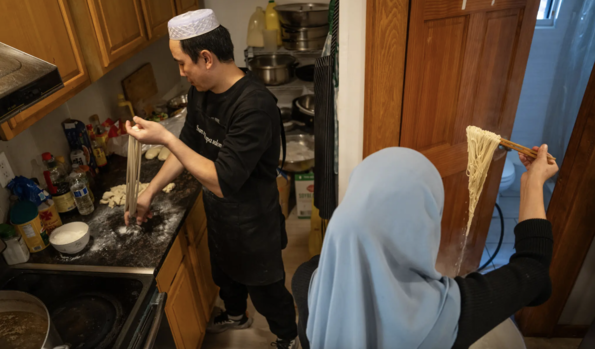
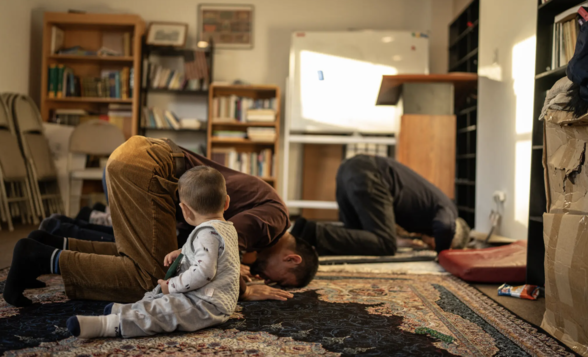
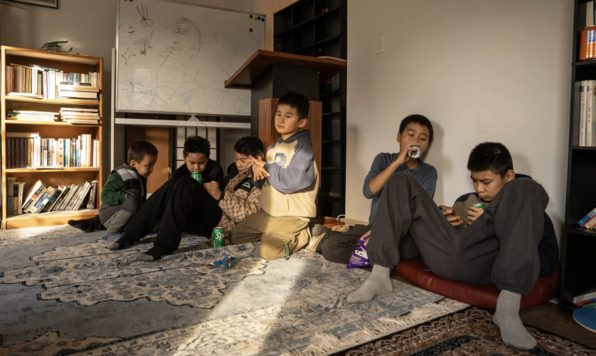
On a recent Friday afternoon, Yan and Masoud were among the 15 adults and six children who had gathered at a three-story house in Flushing, Queens, in New York City. Most of them had stayed there, a shelter for Muslim immigrants from China, just after arriving in the United States. They get together on Fridays with newcomers to chat, pray and discuss their lives, faith and current affairs. Then they cook a big meal with the flavors of northwestern China’s cuisine: beef noodles, spicy chicken and steamed buns.
The shelter offers the immigrants free boarding for the first two weeks before they can find places to settle down. Known as Home of Muslim, it also serves as a community center where they can seek solace and support one another.
They exchange personal stories, often full of trauma, sorrow and anger, said Ma Ju, the founder and a financial backer of the shelter. Once, he walked into the living room, he said, and saw a group of women in one another’s arms, weeping.
Mr. Ma, a businessman and a critic of the government’s policies to make Islam in China more Chinese, started the shelter in February 2023 as more Chinese came from the southern border. Over 350 people have stayed at the refuge. Most of them are Hui Muslims, though some are Uyghurs, Tibetans or Han Chinese.
“They are all traumatized,” Mr. Ma said. “But sometimes, they didn’t even know what they experienced was oppression and discrimination.”
Of the roughly 25 million Muslims in China, 11 million are Hui, who have a big presence in the northwest but also live in enclaves around the nation. The Hui are better integrated into Chinese society than Uyghurs, the biggest Muslim group, who live primarily in Xinjiang. Unlike Uyghurs, who are ethnically Turkic, the Hui look similar to the country’s dominant ethnic group, the Han. The Hui haven’t faced the same degree of persecution as the Uyghurs, but the crackdown on Islam has shaken the group.
The Chinese Communist Party fears ideological competition from any religion. Across the country, the government has demolished minarets and domes of mosques, banned the public use of Arabic script, forbidden children to attend Quran schools and sent the most religious Muslims to re-education camps.
That Friday afternoon at the shelter, Yong, a Hui Muslim from Xinjiang, was one of the cooks. For years, he operated a successful halal restaurant in Urumqi, Xinjiang’s capital city. Nearly 90 percent of his customers were Uyghurs, he said. When the government expanded re-education camps in 2017, his customers started to dwindle in number. A year later, nearly 80 percent of them had disappeared, he said.
Then Yong’s three uncles and his brother-in-law, all Hui Muslims, were sent to re-education centers for going to mosques “too often” or for having studied at religious schools when they were young. His mother was taken to the local police station for questioning after she was spotted wearing a scarf at home. She was released after making a written promise that she would not wear a scarf again.
“At that time, my wife and I were living in constant fear,” Yong said, “feeling like even the slightest misstep could get us into serious trouble.” He and his wife arrived in America in May 2023, having transited the Darién Gap. He now drives an ambulance in Queens, and his wife works at a halal restaurant in New York City.
Most people I interviewed for this column asked that I use only their given names for fear that their family members in China could face harassment or worse punishment from the authorities.
Another cook at the shelter was Ye Chengxiang, a Hui Muslim from northwestern Qinghai Province. In 2017, the authorities destroyed the minaret on the mosque of his hometown. Then in 2022, Mr. Ye, also a restaurant owner, was forced to take down its halal sign amid a campaign to ban Arabic script.
Mr. Ye, 43, grew up listening to horror stories about his older family members’ experiences. He was determined to leave the country. It took him a decade to get Chinese passports for his family of four. On Dec. 11, 2023, he arrived in San Diego with his wife and two teenage daughters by way of the Darién Gap.
“There were moments on the road when it felt like I was going to die, completely unable to keep going,” he said. “But after I got to this land of freedom, the hardship was nothing. Totally worth it.”
In November, his wife, Sophie, gave birth to their third child. He recently opened a halal restaurant in Rego Park, Queens, with other Muslim immigrants. Another group who stayed at the shelter opened a halal noodle restaurant in Manhattan.
But Mr. Ma, the founder of the shelter, said Muslim migrants faced obstacles in making lives in America. Pork dishes, which many Muslims don’t eat, feature heavily in most Chinese restaurants. One former resident of the shelter, with Mr. Ma’s help, found a job at a warehouse — and was called “a terrorist” by co-workers, Han Chinese immigrants, on his first day.
After Mr. Trump won the election, Mr. Ma said, his phone rang almost nonstop for a week. The callers were anxious. They spoke little English, so they had limited access to official information.
Mr. Ma said he had invited a lawyer to the shelter to explain the importance of applying for political asylum. Most Chinese migrants entering the United States from the southern border are released on parole by immigration authorities. Then they can apply for asylum. Under the current protocols, the lawyer told them, once they had a pending case, they should be protected from deportation.
“It would be lying if anyone says they are not scared,” said Yan, the single mother. “Everyone is on edge.” She said she would accept being deported but would make the painful decision to have someone adopt her son, who has problems learning, if it meant he could stay in the United States.
“My son has to stay here,” she said. “Going back would mean no chance of survival for him.” view all
Then they managed to get out of China and reached the soil of the United States, many by trekking through the brutal jungle in Panama known as the Darién Gap on their way to the U.S. southern border.
They are Hui Muslims, a state-recognized ethnic minority group in China, where the government is determined to crack down on Islam. As President-elect Donald J. Trump promises to build detention camps and enlist the military to carry out mass deportations, the future of this group of immigrants is precarious. Deportation could mean years in jail or labor camps.
“My mother told me to stay here,” said Yan, a single mother who came to the United States in July with her 10-year-old son, Masoud, through the Darién Gap. “‘If you come back,’” she quoted her own mother as saying, “‘there’ll be no good outcome for you. Who knows — they might even sentence you to life imprisonment.’”
In China, Yan was detained by the police for 15 days, then sent to a psychiatric hospital for more than 20 days because her phone showed that she had made small donations to two online Quran prayer groups. The police said she supported religious terrorists and called her a “radical religious fanatic.” She considers herself not very religious and doesn’t even wear a head scarf.
A growing number of Chinese are migrating to escape bleak economic prospects and political oppression. Many have joined Venezuelans, Ecuadoreans and Haitians trying to reach the United States through the Darién Gap. More than 38,000 Chinese migrants were temporarily detained on the southern border of the United States in the 2024 fiscal year, up from 24,000 the previous year, according to U.S. Customs and Border Protection. It’s not clear how many of them are Muslims.
Many Hui Muslims are making the crossing with their families.
On a recent Friday afternoon, Yan and Masoud were among the 15 adults and six children who had gathered at a three-story house in Flushing, Queens, in New York City. Most of them had stayed there, a shelter for Muslim immigrants from China, just after arriving in the United States. They get together on Fridays with newcomers to chat, pray and discuss their lives, faith and current affairs. Then they cook a big meal with the flavors of northwestern China’s cuisine: beef noodles, spicy chicken and steamed buns.
The shelter offers the immigrants free boarding for the first two weeks before they can find places to settle down. Known as Home of Muslim, it also serves as a community center where they can seek solace and support one another.
They exchange personal stories, often full of trauma, sorrow and anger, said Ma Ju, the founder and a financial backer of the shelter. Once, he walked into the living room, he said, and saw a group of women in one another’s arms, weeping.
Mr. Ma, a businessman and a critic of the government’s policies to make Islam in China more Chinese, started the shelter in February 2023 as more Chinese came from the southern border. Over 350 people have stayed at the refuge. Most of them are Hui Muslims, though some are Uyghurs, Tibetans or Han Chinese.
“They are all traumatized,” Mr. Ma said. “But sometimes, they didn’t even know what they experienced was oppression and discrimination.”
Of the roughly 25 million Muslims in China, 11 million are Hui, who have a big presence in the northwest but also live in enclaves around the nation. The Hui are better integrated into Chinese society than Uyghurs, the biggest Muslim group, who live primarily in Xinjiang. Unlike Uyghurs, who are ethnically Turkic, the Hui look similar to the country’s dominant ethnic group, the Han. The Hui haven’t faced the same degree of persecution as the Uyghurs, but the crackdown on Islam has shaken the group.
The Chinese Communist Party fears ideological competition from any religion. Across the country, the government has demolished minarets and domes of mosques, banned the public use of Arabic script, forbidden children to attend Quran schools and sent the most religious Muslims to re-education camps.
That Friday afternoon at the shelter, Yong, a Hui Muslim from Xinjiang, was one of the cooks. For years, he operated a successful halal restaurant in Urumqi, Xinjiang’s capital city. Nearly 90 percent of his customers were Uyghurs, he said. When the government expanded re-education camps in 2017, his customers started to dwindle in number. A year later, nearly 80 percent of them had disappeared, he said.
Then Yong’s three uncles and his brother-in-law, all Hui Muslims, were sent to re-education centers for going to mosques “too often” or for having studied at religious schools when they were young. His mother was taken to the local police station for questioning after she was spotted wearing a scarf at home. She was released after making a written promise that she would not wear a scarf again.
“At that time, my wife and I were living in constant fear,” Yong said, “feeling like even the slightest misstep could get us into serious trouble.” He and his wife arrived in America in May 2023, having transited the Darién Gap. He now drives an ambulance in Queens, and his wife works at a halal restaurant in New York City.
Most people I interviewed for this column asked that I use only their given names for fear that their family members in China could face harassment or worse punishment from the authorities.
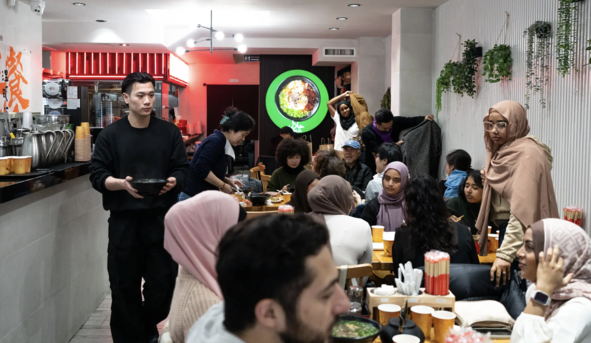
Another cook at the shelter was Ye Chengxiang, a Hui Muslim from northwestern Qinghai Province. In 2017, the authorities destroyed the minaret on the mosque of his hometown. Then in 2022, Mr. Ye, also a restaurant owner, was forced to take down its halal sign amid a campaign to ban Arabic script.
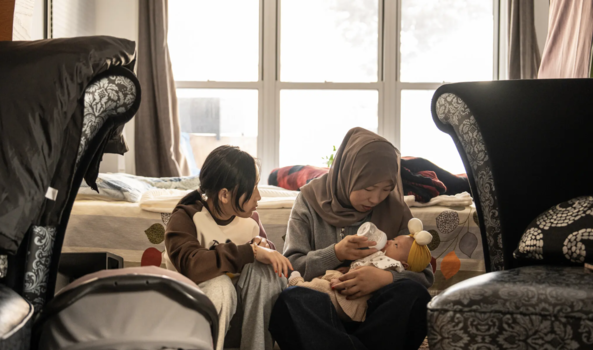
Mr. Ye, 43, grew up listening to horror stories about his older family members’ experiences. He was determined to leave the country. It took him a decade to get Chinese passports for his family of four. On Dec. 11, 2023, he arrived in San Diego with his wife and two teenage daughters by way of the Darién Gap.
“There were moments on the road when it felt like I was going to die, completely unable to keep going,” he said. “But after I got to this land of freedom, the hardship was nothing. Totally worth it.”
In November, his wife, Sophie, gave birth to their third child. He recently opened a halal restaurant in Rego Park, Queens, with other Muslim immigrants. Another group who stayed at the shelter opened a halal noodle restaurant in Manhattan.
But Mr. Ma, the founder of the shelter, said Muslim migrants faced obstacles in making lives in America. Pork dishes, which many Muslims don’t eat, feature heavily in most Chinese restaurants. One former resident of the shelter, with Mr. Ma’s help, found a job at a warehouse — and was called “a terrorist” by co-workers, Han Chinese immigrants, on his first day.
After Mr. Trump won the election, Mr. Ma said, his phone rang almost nonstop for a week. The callers were anxious. They spoke little English, so they had limited access to official information.
Mr. Ma said he had invited a lawyer to the shelter to explain the importance of applying for political asylum. Most Chinese migrants entering the United States from the southern border are released on parole by immigration authorities. Then they can apply for asylum. Under the current protocols, the lawyer told them, once they had a pending case, they should be protected from deportation.
“It would be lying if anyone says they are not scared,” said Yan, the single mother. “Everyone is on edge.” She said she would accept being deported but would make the painful decision to have someone adopt her son, who has problems learning, if it meant he could stay in the United States.
“My son has to stay here,” she said. “Going back would mean no chance of survival for him.”
Uyghur Genocide Database | Meryem Emet | muslim concentration camps in china
Uyghur Genocide • leo posted the article • 0 comments • 1219 views • 2022-11-21 11:39
link:https://www.cecc.gov/sites/chi ... 0.pdf
Meryem Emet
2022-00124
Date of Detention: Unknown date in 2017
Place of Detention: A prison in Kucha (Kuche) county, Aksu prefecture, XUAR
Charge(s): Unknown
Status: Sentenced to 20 years
Context: In 2017, authorities in Urumqi municipality, XUAR, detained Meryem Emet and later sentenced her to 20 years in prison. Her sentence was reportedly con- nected with her marriage to a Turkish national, and with her having met and spoken with Turkish Prime Minister Recep Tayyip Erdog ̆an during his 2012 visit to Urumqi. Additional Information: After her detention, XUAR au- thorities forced her two children, then ages four and six, into boarding schools in Urumqi, where teachers sub- jected them to traumatizing disciplinary measures includ- ing beatings and being forced to hold stress positions. After nearly 20 months at the schools, the two children were left unable to communicate in Uyghur. view all
link:https://www.cecc.gov/sites/chi ... 0.pdf
Meryem Emet
2022-00124
Date of Detention: Unknown date in 2017
Place of Detention: A prison in Kucha (Kuche) county, Aksu prefecture, XUAR
Charge(s): Unknown
Status: Sentenced to 20 years
Context: In 2017, authorities in Urumqi municipality, XUAR, detained Meryem Emet and later sentenced her to 20 years in prison. Her sentence was reportedly con- nected with her marriage to a Turkish national, and with her having met and spoken with Turkish Prime Minister Recep Tayyip Erdog ̆an during his 2012 visit to Urumqi. Additional Information: After her detention, XUAR au- thorities forced her two children, then ages four and six, into boarding schools in Urumqi, where teachers sub- jected them to traumatizing disciplinary measures includ- ing beatings and being forced to hold stress positions. After nearly 20 months at the schools, the two children were left unable to communicate in Uyghur.
Uyghur Genocide database | Helchem Pazil
Human Rights • leo posted the article • 0 comments • 1211 views • 2022-11-21 11:37
Helchem Pazil
2022-00112
Date of Detention: Unknown date in 2018 or 2019 Place of Detention: Changji Women’s Prison, Changji Hui Autonomous Prefecture, Xinjiang Uyghur Autono- mous Region (XUAR)
Charge(s): Inciting ethnic hatred; gathering a crowd to disturb public order
Status: Sentenced to 17 years
Context: In a court judgment issued in 2019, the Korla (Ku’erle) Municipal People’s Court in Bayangol (Bayinguoleng) Mongol Autonomous Prefecture, XUAR, sentenced 78-year-old Helchem Pazil and several of her relatives, including her three daughters and a daughter- in-law, to prison in connection with private gatherings in which they discussed family life and Islam. view all
Helchem Pazil
2022-00112
Date of Detention: Unknown date in 2018 or 2019 Place of Detention: Changji Women’s Prison, Changji Hui Autonomous Prefecture, Xinjiang Uyghur Autono- mous Region (XUAR)
Charge(s): Inciting ethnic hatred; gathering a crowd to disturb public order
Status: Sentenced to 17 years
Context: In a court judgment issued in 2019, the Korla (Ku’erle) Municipal People’s Court in Bayangol (Bayinguoleng) Mongol Autonomous Prefecture, XUAR, sentenced 78-year-old Helchem Pazil and several of her relatives, including her three daughters and a daughter- in-law, to prison in connection with private gatherings in which they discussed family life and Islam.
9 so-called muslim countries sold their religion and soul for China government's money
News • ogmt posted the article • 0 comments • 1034 views • 2022-10-09 06:04

Earlier around 100 Uyghurs protested at the WhiteHouse against China’s ongoing genocide & forced starvation in East Turkistan
News • Justice Brown posted the article • 0 comments • 1049 views • 2022-09-11 21:19
view all


China is committing to starvation genocide on Uyghurs | uyghur muslim genocide
News • Justice Brown posted the article • 0 comments • 1051 views • 2022-09-11 11:54
Uyghur's vocie: My wife & 4-days old child are dying, don’t know which disease they got, the hospital kicked us out, local authorities didn’t accept our visit. We could find no one to help. Don’t know what to do.
00:00 start
00:10 Uyghur's children haven’t eaten in 3 days as there is no food.
00:23 China’s locking up Uyghurs in their homes and leaving them to starve under the pretext of “Covid lockdowns.”
02:24 China locked down Uyghur houses and Uyghur people asking for food 02:29 Dozens of Uyghurs “protested” against starvation
03:02 Chinese Communist Party is now using "Covid" as a tool to eradicate the Uyghurs
03:29 One Uyghur girl wrote a poem for the death of her sister
05:43 Uyghur are starving to death in China’s zero covid policy
06:02 how the quarantine works under China's 'Zero Covid' policy
06:10 Uyghurs are taken to temporary tents, Han Chinese are taken to hotels
06:27 Hospital kicked Uyghurs out and oneUyghur woman & 4-days old child are dying 07:05 china is committing to starvation genocide on Uyghurs 07:50 end
view all
Uyghur's vocie: My wife & 4-days old child are dying, don’t know which disease they got, the hospital kicked us out, local authorities didn’t accept our visit. We could find no one to help. Don’t know what to do.
00:00 start
00:10 Uyghur's children haven’t eaten in 3 days as there is no food.
00:23 China’s locking up Uyghurs in their homes and leaving them to starve under the pretext of “Covid lockdowns.”
02:24 China locked down Uyghur houses and Uyghur people asking for food 02:29 Dozens of Uyghurs “protested” against starvation
03:02 Chinese Communist Party is now using "Covid" as a tool to eradicate the Uyghurs
03:29 One Uyghur girl wrote a poem for the death of her sister
05:43 Uyghur are starving to death in China’s zero covid policy
06:02 how the quarantine works under China's 'Zero Covid' policy
06:10 Uyghurs are taken to temporary tents, Han Chinese are taken to hotels
06:27 Hospital kicked Uyghurs out and oneUyghur woman & 4-days old child are dying 07:05 china is committing to starvation genocide on Uyghurs 07:50 end
Uyghur woman explains starvation genocide on Uyghurs in Ghulja, East Turkistan
News • Justice Brown posted the article • 0 comments • 965 views • 2022-09-11 10:54
'00:45 Uyghur woman explains starvation genocide on Uyghurs in Ghulja
02:21 no food or medical help for Uyghur kids during the lookdown
Uyghur woman explains starvation in Ghulja, East Turkistan which is under China’s“covid lockdown” for the past 40 days. She says people have money but can’t buy food, no one is bringing them food, people left to starve in their homes, many have already died. China is committing to starvation genocide on Uyghurs.Uyghurs r about to die.They have high fever and are starved, but there are no food or medical help during the lookdown. Chinese Communist Party is now using"Covid"as a tool to eradicate the Uyghurs.
view all
'00:45 Uyghur woman explains starvation genocide on Uyghurs in Ghulja
02:21 no food or medical help for Uyghur kids during the lookdown
Uyghur woman explains starvation in Ghulja, East Turkistan which is under China’s“covid lockdown” for the past 40 days. She says people have money but can’t buy food, no one is bringing them food, people left to starve in their homes, many have already died. China is committing to starvation genocide on Uyghurs.Uyghurs r about to die.They have high fever and are starved, but there are no food or medical help during the lookdown. Chinese Communist Party is now using"Covid"as a tool to eradicate the Uyghurs.
Uyghurs are sharing videos of Starvation Genocide on Uyghurs | Uyghur Muslim Concentration Camps
News • Justice Brown posted the article • 0 comments • 930 views • 2022-09-11 10:28
China is committing to starvation genocide on Uyghurs
News • Justice Brown posted the article • 0 comments • 1024 views • 2022-09-11 10:12
view all
China extends DNA sample collection to Tibet under ‘crime detection’ program, had earlier done so for Uyghur Muslims in Xinjiang
News • shotiko91 posted the article • 0 comments • 1004 views • 2022-09-07 09:17
view all

Ambassador Xiao Qian keep lying to the world, he says the UN report on Uyghurs and other Muslim groups in China's Xinjiang region is "an absolute fabrication".
News • shotiko91 posted the article • 0 comments • 1056 views • 2022-09-07 09:13
view all
THIS IS HOW THE ARAB REGIMES ARREST THE UYGHURS MUSLIMS AND HAND THEM OVER TO CHINA
Uyghur Genocide • shotiko91 posted the article • 1 comments • 1272 views • 2022-09-06 10:22
Many of China's Muslims of the Uyghur minority escaped the oppression of their government and decided to reside in Arab countries. However, since 2017, the Arab regimes have repeatedly attempted to extradite them to Beijing.
The American network, NBC News, revealed the secret on April 25, 2022, confirming that the Beijing government provided “gifts” to Arab regimes in the form of projects and economic benefits in exchange for a position against the Uyghur minority.
It emphasized that the Chinese authorities, in order to suppress the Muslim Uyghur minority, are intensifying cooperation with the governments of Arab countries, such as Saudi Arabia, Egypt, and the UAE, whether to arrest them or to cooperate in defending China against international criticism over the persecution of its Muslims.
Simultaneously, the Kissinger Institute for Chinese-American Affairs of the Woodrow Wilson Center released a study entitled The Great Wall of Steel that revealed unprecedented details about the extent of Arab governments' complicity with China to deport Uyghurs.
The study showed that more than 1,500 Uyghurs in Arab countries were arrested or extradited, or forced to return to China to face detention and torture.
It said that Beijing targeted more than 5,500 Uyghurs outside China in Arab and Middle Eastern countries with cyber-attacks to spy on them and threaten their family members residing at home, with the complicity of Arab governments as well.
Since 1949, Beijing has controlled the territory of East Turkestan, which is the homeland of the Muslim Uyghur Turks, and called it Xinjiang, meaning "the new frontier".
Official statistics indicate that there are 30 million Muslims in the country, 23 million of whom are Uyghurs, while unofficial reports confirm that the number of Muslims is about 100 million, or about 9.5 percent of the total population.
In 2017, the Chinese authorities in Xinjiang began a campaign to arrest Muslim women and men from the Uyghur, Kazakh, and Kyrgyz ethnic minorities and detain them in camps designed under the pretext of " ridding them of terrorist and extremist tendencies," according to China’s claim.
Between one and two million Uyghurs and members of other minorities from Xinjiang are believed to be held in the camps, where they are forced to study Marxism, renounce their religion, work in factories, and face abuse, according to human rights groups.
'Gifts' and Complicity
NBC News issued a study entitled the Great Steel Wall in 2022, researchers identified several reasons for the complicity of Arab regimes with Beijing in the suppression of China's Muslims.
The Great Steel Wall report chronicles the efforts of the Chinese Ministry of State Security to harass, detain, and extradite Uyghurs from around the world, and the cooperation it receives from Arab governments in the Middle East and North Africa in unprecedented detail.
The author of the report, Bradley Jardine, of the Kissinger Institute of the Wilson Center, says that these gifts are Chinese projects in Arab countries, including Egypt, Morocco, and Saudi Arabia, with billions of dollars, and their goal is to facilitate trade between China and the Arabs.
Scholar Adrian Zenz, who has studied China's systematic oppression of the Uyghurs, explained that Beijing uses its economic influence and "gifts" in the form of infrastructure projects.
These projects are represented by the Belt and Road Initiative, and they benefit Arab and Islamic countries that sympathize with the Uyghur crisis and put pressure on them as well.
He stressed that "the Chinese are afraid of the opinion of Muslim peoples regarding their treatment of the Uyghurs, and they have made exceptional efforts to influence the governments of those countries and their public opinion."
The researcher Jardine, who is also director of research at the Oxus Association for Central Asian Affairs, wrote in Time magazine on March 24, 2022, that "the Arab world is not only silent about the Chinese oppression of the Uyghurs, but it is complicit."
He asserted that Arab countries actively help Beijing in justifying abuses and retaliation against the Uyghurs and that at least six governments in the Arab world: Egypt, Morocco, Qatar, Saudi Arabia, Syria, and the UAE have detained and extradited Chinese Muslims to Beijing.
Torture and Murder
The Oxus Association says: "The Egyptian police arrested more than 200 Chinese Muslims from their homes, restaurants, mosques and even airports, most of them students at al-Azhar University, and a large number were transferred to the notorious Tora and Scorpion prisons."
It asserted, in a report entitled: Beyond the Silence: Cooperation between Arab Countries and China in the Cross-Border Repression of the Uyghurs, that Chinese detainees in Egypt assured that Chinese intelligence officers interrogated them inside Egyptian prisons.
"The Uyghurs who fled the crackdown in Egypt believed that al-Azhar University would protect them, but they were "surprised" when the police arrested them and revealed that it had killed two Uyghur students in custody and deported 76 of them to China," according to the association.
According to a report by NBC News, in 2017, the Egyptian police arrested Uyghur students at a university in Cairo and deported them to China and other places in the Middle East.
On June 19, 2017, the Egyptian Ministry of Interior signed an agreement with the Chinese Ministry of Public Security, during the visit of Egyptian President Abdel Fattah Sisi to Beijing to attend the BRICS summit focused on "fighting terrorism and security cooperation between the two countries", without details.
The agreement was followed by a campaign by the Egyptian security services against Muslim students from East Turkestan in China (the Uyghurs) who are studying at al-Azhar or residing in Egypt for fear of returning to their country and being subjected to torture.
Omer Kanat, an activist of the Uyghur Human Rights Project, said that "the Egyptian authorities are forcing the students to sign documents stating that they belong to extremist groups at the request of the Chinese government, which accused them of terrorism, with the aim of justifying their deportation to China," according to a statement published in June 2017.
The news was also confirmed by the New York Times on July 6, 2017, confirming that 12 of these students had already been deported to China and that 22 others were awaiting deportation, as it quoted three Egyptian aviation officials at the time.
Arabic 'Trap'
Reports by NBC News, the study of the Great Steel Wall, and Time magazine confirm that China's Muslims were not spared from arrest, even on the pilgrimage, which turned into a trap for them, as Saudi Arabia arrested an Uyghur coming to it.
In the report published in Time magazine, Bradley Jardine pointed out that the Chinese intelligence services used the pilgrimage to lure fugitive Uyghurs residing in Europe, and deport them to China with the complicity of the Saudi government.
Such as the arrest of the Uyghur Osman Ahmed Tohti, after he came for Hajj in 2018 from Turkey, where he resides legally.
The UAE, which has strong relations with China, also played a role in the arrest of Uyghurs and was described as a "regional intelligence center for the Chinese security services."
It was reported that Chinese Muslims residing in the Netherlands were lured to Dubai and their families in Xinjiang were pressured to ensure their compliance in cooperating with Chinese intelligence to spy on Chinese Muslims abroad.
Saudi Arabia appears on China's list of "suspicious" countries to which the Uyghurs travel, "and the kingdom has increasingly cooperated with Beijing," according to the American network, NBC News.
It confirmed that the Saudi authorities had deported at least six Uyghurs to China in the past four years who were performing the Hajj pilgrimage to Mecca or entered the country legally, according to the report.
view all

Many of China's Muslims of the Uyghur minority escaped the oppression of their government and decided to reside in Arab countries. However, since 2017, the Arab regimes have repeatedly attempted to extradite them to Beijing.
The American network, NBC News, revealed the secret on April 25, 2022, confirming that the Beijing government provided “gifts” to Arab regimes in the form of projects and economic benefits in exchange for a position against the Uyghur minority.
It emphasized that the Chinese authorities, in order to suppress the Muslim Uyghur minority, are intensifying cooperation with the governments of Arab countries, such as Saudi Arabia, Egypt, and the UAE, whether to arrest them or to cooperate in defending China against international criticism over the persecution of its Muslims.
Simultaneously, the Kissinger Institute for Chinese-American Affairs of the Woodrow Wilson Center released a study entitled The Great Wall of Steel that revealed unprecedented details about the extent of Arab governments' complicity with China to deport Uyghurs.
The study showed that more than 1,500 Uyghurs in Arab countries were arrested or extradited, or forced to return to China to face detention and torture.
It said that Beijing targeted more than 5,500 Uyghurs outside China in Arab and Middle Eastern countries with cyber-attacks to spy on them and threaten their family members residing at home, with the complicity of Arab governments as well.
Since 1949, Beijing has controlled the territory of East Turkestan, which is the homeland of the Muslim Uyghur Turks, and called it Xinjiang, meaning "the new frontier".
Official statistics indicate that there are 30 million Muslims in the country, 23 million of whom are Uyghurs, while unofficial reports confirm that the number of Muslims is about 100 million, or about 9.5 percent of the total population.
In 2017, the Chinese authorities in Xinjiang began a campaign to arrest Muslim women and men from the Uyghur, Kazakh, and Kyrgyz ethnic minorities and detain them in camps designed under the pretext of " ridding them of terrorist and extremist tendencies," according to China’s claim.
Between one and two million Uyghurs and members of other minorities from Xinjiang are believed to be held in the camps, where they are forced to study Marxism, renounce their religion, work in factories, and face abuse, according to human rights groups.
'Gifts' and Complicity
NBC News issued a study entitled the Great Steel Wall in 2022, researchers identified several reasons for the complicity of Arab regimes with Beijing in the suppression of China's Muslims.
The Great Steel Wall report chronicles the efforts of the Chinese Ministry of State Security to harass, detain, and extradite Uyghurs from around the world, and the cooperation it receives from Arab governments in the Middle East and North Africa in unprecedented detail.
The author of the report, Bradley Jardine, of the Kissinger Institute of the Wilson Center, says that these gifts are Chinese projects in Arab countries, including Egypt, Morocco, and Saudi Arabia, with billions of dollars, and their goal is to facilitate trade between China and the Arabs.
Scholar Adrian Zenz, who has studied China's systematic oppression of the Uyghurs, explained that Beijing uses its economic influence and "gifts" in the form of infrastructure projects.
These projects are represented by the Belt and Road Initiative, and they benefit Arab and Islamic countries that sympathize with the Uyghur crisis and put pressure on them as well.
He stressed that "the Chinese are afraid of the opinion of Muslim peoples regarding their treatment of the Uyghurs, and they have made exceptional efforts to influence the governments of those countries and their public opinion."
The researcher Jardine, who is also director of research at the Oxus Association for Central Asian Affairs, wrote in Time magazine on March 24, 2022, that "the Arab world is not only silent about the Chinese oppression of the Uyghurs, but it is complicit."
He asserted that Arab countries actively help Beijing in justifying abuses and retaliation against the Uyghurs and that at least six governments in the Arab world: Egypt, Morocco, Qatar, Saudi Arabia, Syria, and the UAE have detained and extradited Chinese Muslims to Beijing.

Torture and Murder
The Oxus Association says: "The Egyptian police arrested more than 200 Chinese Muslims from their homes, restaurants, mosques and even airports, most of them students at al-Azhar University, and a large number were transferred to the notorious Tora and Scorpion prisons."
It asserted, in a report entitled: Beyond the Silence: Cooperation between Arab Countries and China in the Cross-Border Repression of the Uyghurs, that Chinese detainees in Egypt assured that Chinese intelligence officers interrogated them inside Egyptian prisons.
"The Uyghurs who fled the crackdown in Egypt believed that al-Azhar University would protect them, but they were "surprised" when the police arrested them and revealed that it had killed two Uyghur students in custody and deported 76 of them to China," according to the association.
According to a report by NBC News, in 2017, the Egyptian police arrested Uyghur students at a university in Cairo and deported them to China and other places in the Middle East.
On June 19, 2017, the Egyptian Ministry of Interior signed an agreement with the Chinese Ministry of Public Security, during the visit of Egyptian President Abdel Fattah Sisi to Beijing to attend the BRICS summit focused on "fighting terrorism and security cooperation between the two countries", without details.
The agreement was followed by a campaign by the Egyptian security services against Muslim students from East Turkestan in China (the Uyghurs) who are studying at al-Azhar or residing in Egypt for fear of returning to their country and being subjected to torture.
Omer Kanat, an activist of the Uyghur Human Rights Project, said that "the Egyptian authorities are forcing the students to sign documents stating that they belong to extremist groups at the request of the Chinese government, which accused them of terrorism, with the aim of justifying their deportation to China," according to a statement published in June 2017.
The news was also confirmed by the New York Times on July 6, 2017, confirming that 12 of these students had already been deported to China and that 22 others were awaiting deportation, as it quoted three Egyptian aviation officials at the time.
Arabic 'Trap'
Reports by NBC News, the study of the Great Steel Wall, and Time magazine confirm that China's Muslims were not spared from arrest, even on the pilgrimage, which turned into a trap for them, as Saudi Arabia arrested an Uyghur coming to it.
In the report published in Time magazine, Bradley Jardine pointed out that the Chinese intelligence services used the pilgrimage to lure fugitive Uyghurs residing in Europe, and deport them to China with the complicity of the Saudi government.
Such as the arrest of the Uyghur Osman Ahmed Tohti, after he came for Hajj in 2018 from Turkey, where he resides legally.
The UAE, which has strong relations with China, also played a role in the arrest of Uyghurs and was described as a "regional intelligence center for the Chinese security services."
It was reported that Chinese Muslims residing in the Netherlands were lured to Dubai and their families in Xinjiang were pressured to ensure their compliance in cooperating with Chinese intelligence to spy on Chinese Muslims abroad.
Saudi Arabia appears on China's list of "suspicious" countries to which the Uyghurs travel, "and the kingdom has increasingly cooperated with Beijing," according to the American network, NBC News.
It confirmed that the Saudi authorities had deported at least six Uyghurs to China in the past four years who were performing the Hajj pilgrimage to Mecca or entered the country legally, according to the report.
Muslim Concentration Camps in China | China’s cost-free gulag for Muslims
News • shotiko91 posted the article • 0 comments • 1085 views • 2022-09-06 10:14
China’s prolonged detention of more than 1 million Muslims in Xinjiang represents the largest mass incarceration of people on religious grounds since the Nazi era. Yet, disturbingly, China has incurred no international costs.
Chinese President Xi Jinping, the brain behind the scheme, and his inner circle have faced no consequences for sustaining the Muslim gulag since at least March 2017. Despite two successive U.S. administrations describing the unparalleled repression in Xinjiang as “genocide” and “crimes against humanity,” Western actions against China have largely been symbolic.
The just-released report on Xinjiang by the United Nations’ human rights office cites serious human-rights violations there and recommends that Beijing take “prompt steps to release all individuals arbitrarily deprived of their liberty” in that sprawling ethnic-minority homeland.
Yet this report, paradoxically, is a fresh reminder that China has escaped scot-free, with little prospect that it will be held to account for its mass internment of Muslim minorities, including expanding detention sites in Xinjiang since 2019. The Xinjiang repression also includes forced sterilization and abortion, torture of detainees, slave labor and draconian curbs on freedom of religion and movement.
The report’s release came after nearly a yearlong delay and just minutes before the four-year term of Michelle Bachelet, the U.N. high commissioner for human rights, ended. U.N. investigators had compiled the Xinjiang report almost a year ago, but Bachelet kept stalling its release, despite growing pressure from Western countries.
In May, after lengthy discussions with Beijing on arrangements, Bachelet undertook a controversial official visit to China, the first by a U.N. high commissioner for human rights since 2005. During her tenure, Bachelet – a former Chilean president and political detainee under dictator Augusto Pinochet – stayed mum on the Chinese repression in Xinjiang (and Tibet). She said nothing on the crackdown in Xinjiang even when she briefly visited that region during her restrictive China tour, which glossed over abuses by Xi’s regime.
Bachelet had earlier acknowledged that she was under “tremendous pressure” over the report, with China asking her to bury it. The eventual release of the report, minutes before Bachelet’s retirement at midnight on Aug. 31, indicated that she did not want her successor or temporary replacement to take credit for publishing it. Failing to release the report would have left a glaring black mark on her tenure.
Days before her retirement, Bachelet sent a copy of the report to Beijing because, as she explained in a Sept. 1 statement, she “wanted to take the greatest care to deal with the responses and inputs received from the (Chinese) government last week.” In response to the 48-page U.N. assessment, China wrote a 131-page rebuttal, with its foreign ministry calling the report a “farce.”
China has been emboldened by the international community’s indifference and indulgence. It successfully hosted the 2022 Winter Olympics, probably the most divisive games since the 1936 Berlin Summer Olympics, which helped strengthen the hands of Germany’s Adolf Hitler.
Underscoring China’s growing economic power and geopolitical clout, even Muslim countries, by and large, have remained shockingly silent on the Xinjiang repression. As if that weren’t bad enough, the 57-nation Organization of Islamic Cooperation in March honored Chinese Foreign Minister Wang Yi as a speaker at its foreign ministers’ forum in Pakistan.
Xi’s Muslim gulag has made a mockery of the 1948 Genocide Convention, to which China acceded in 1983 (with the rider that it does not consider itself bound by Article IX, the clause allowing any party in a dispute to lodge a complaint with the International Court of Justice). The Genocide Convention requires its parties, which include the United States, to “prevent and punish” acts of genocide.
Chinese authorities have subjected Uyghur and other Muslim groups in Xinjiang, including ethnic Kazakhs and Kyrgyz, to Orwellian levels of surveillance and control over many details of life. As Secretary of Commerce Gina M. Raimondo warned, China is weaponizing biotechnology to “pursue control over its people and its repression of members of ethnic and religious minority groups.”
The Xinjiang repression is aimed at indoctrinating not just political dissidents and religious zealots but entire Muslim communities by imposing large-scale deprogramming of Islamic identities. A gulag archipelago of 380 internment camps (or “reeducation hospitals,” as Beijing calls them) has become integral to this larger assault on Islam.
It is against this background that the carefully worded U.N. report warns that, “The extent of arbitrary and discriminatory detention of members of Uyghur and other predominantly Muslim groups … and deprivation more generally of fundamental rights enjoyed individually and collectively, may constitute international crimes, in particular crimes against humanity.” The report cited “patterns of torture or other forms of cruel, inhuman or degrading treatment or punishment” in the detention centers, including “credible” allegations of sexual violence.
The U.N. report may carry the imprimatur of the world’s only truly universal organization and its member states, yet China was quick to pour scorn on it. Just as it rubbished a 2016 international arbitral tribunal ruling that invalidated its territorial claims in the South China Sea, China ridiculed the U.N. report, calling it a pack of “disinformation and lies.”
The 1945-46 Nuremberg Military Tribunal, set up after Germany’s surrender in World War II, prosecuted those involved in crimes against humanity, the same crimes now being perpetrated in Xinjiang. Yet, with China a rising power, there seems little prospect that Chinese officials behind the Muslim gulag will face similar justice.
Indeed, just as China responded to the tribunal’s ruling by accelerating its expansionism in the South China Sea, including militarizing the region, it could step up its repression in Xinjiang until it manages to fully Sinicize and tame Muslim groups.
Brahma Chellaney is a geostrategist and the author of nine books, including the award-winning “Water: Asia’s New Battleground” (Georgetown University Press). Follow him on Twitter @Chellaney.
view all
China’s prolonged detention of more than 1 million Muslims in Xinjiang represents the largest mass incarceration of people on religious grounds since the Nazi era. Yet, disturbingly, China has incurred no international costs.
Chinese President Xi Jinping, the brain behind the scheme, and his inner circle have faced no consequences for sustaining the Muslim gulag since at least March 2017. Despite two successive U.S. administrations describing the unparalleled repression in Xinjiang as “genocide” and “crimes against humanity,” Western actions against China have largely been symbolic.
The just-released report on Xinjiang by the United Nations’ human rights office cites serious human-rights violations there and recommends that Beijing take “prompt steps to release all individuals arbitrarily deprived of their liberty” in that sprawling ethnic-minority homeland.
Yet this report, paradoxically, is a fresh reminder that China has escaped scot-free, with little prospect that it will be held to account for its mass internment of Muslim minorities, including expanding detention sites in Xinjiang since 2019. The Xinjiang repression also includes forced sterilization and abortion, torture of detainees, slave labor and draconian curbs on freedom of religion and movement.
The report’s release came after nearly a yearlong delay and just minutes before the four-year term of Michelle Bachelet, the U.N. high commissioner for human rights, ended. U.N. investigators had compiled the Xinjiang report almost a year ago, but Bachelet kept stalling its release, despite growing pressure from Western countries.
In May, after lengthy discussions with Beijing on arrangements, Bachelet undertook a controversial official visit to China, the first by a U.N. high commissioner for human rights since 2005. During her tenure, Bachelet – a former Chilean president and political detainee under dictator Augusto Pinochet – stayed mum on the Chinese repression in Xinjiang (and Tibet). She said nothing on the crackdown in Xinjiang even when she briefly visited that region during her restrictive China tour, which glossed over abuses by Xi’s regime.
Bachelet had earlier acknowledged that she was under “tremendous pressure” over the report, with China asking her to bury it. The eventual release of the report, minutes before Bachelet’s retirement at midnight on Aug. 31, indicated that she did not want her successor or temporary replacement to take credit for publishing it. Failing to release the report would have left a glaring black mark on her tenure.
Days before her retirement, Bachelet sent a copy of the report to Beijing because, as she explained in a Sept. 1 statement, she “wanted to take the greatest care to deal with the responses and inputs received from the (Chinese) government last week.” In response to the 48-page U.N. assessment, China wrote a 131-page rebuttal, with its foreign ministry calling the report a “farce.”
China has been emboldened by the international community’s indifference and indulgence. It successfully hosted the 2022 Winter Olympics, probably the most divisive games since the 1936 Berlin Summer Olympics, which helped strengthen the hands of Germany’s Adolf Hitler.
Underscoring China’s growing economic power and geopolitical clout, even Muslim countries, by and large, have remained shockingly silent on the Xinjiang repression. As if that weren’t bad enough, the 57-nation Organization of Islamic Cooperation in March honored Chinese Foreign Minister Wang Yi as a speaker at its foreign ministers’ forum in Pakistan.
Xi’s Muslim gulag has made a mockery of the 1948 Genocide Convention, to which China acceded in 1983 (with the rider that it does not consider itself bound by Article IX, the clause allowing any party in a dispute to lodge a complaint with the International Court of Justice). The Genocide Convention requires its parties, which include the United States, to “prevent and punish” acts of genocide.
Chinese authorities have subjected Uyghur and other Muslim groups in Xinjiang, including ethnic Kazakhs and Kyrgyz, to Orwellian levels of surveillance and control over many details of life. As Secretary of Commerce Gina M. Raimondo warned, China is weaponizing biotechnology to “pursue control over its people and its repression of members of ethnic and religious minority groups.”
The Xinjiang repression is aimed at indoctrinating not just political dissidents and religious zealots but entire Muslim communities by imposing large-scale deprogramming of Islamic identities. A gulag archipelago of 380 internment camps (or “reeducation hospitals,” as Beijing calls them) has become integral to this larger assault on Islam.
It is against this background that the carefully worded U.N. report warns that, “The extent of arbitrary and discriminatory detention of members of Uyghur and other predominantly Muslim groups … and deprivation more generally of fundamental rights enjoyed individually and collectively, may constitute international crimes, in particular crimes against humanity.” The report cited “patterns of torture or other forms of cruel, inhuman or degrading treatment or punishment” in the detention centers, including “credible” allegations of sexual violence.
The U.N. report may carry the imprimatur of the world’s only truly universal organization and its member states, yet China was quick to pour scorn on it. Just as it rubbished a 2016 international arbitral tribunal ruling that invalidated its territorial claims in the South China Sea, China ridiculed the U.N. report, calling it a pack of “disinformation and lies.”
The 1945-46 Nuremberg Military Tribunal, set up after Germany’s surrender in World War II, prosecuted those involved in crimes against humanity, the same crimes now being perpetrated in Xinjiang. Yet, with China a rising power, there seems little prospect that Chinese officials behind the Muslim gulag will face similar justice.
Indeed, just as China responded to the tribunal’s ruling by accelerating its expansionism in the South China Sea, including militarizing the region, it could step up its repression in Xinjiang until it manages to fully Sinicize and tame Muslim groups.
Brahma Chellaney is a geostrategist and the author of nine books, including the award-winning “Water: Asia’s New Battleground” (Georgetown University Press). Follow him on Twitter @Chellaney.
The Chinese government is violently demolishing the dome of the Islamic and Quran learning College in Beijing
News • Calvin posted the article • 0 comments • 940 views • 2022-09-05 06:12
The Chinese government is violently demolishing the dome of the Islamic and Quran learning College in Beijing, the video shows on Sept. 3, 2022.
The Quran learning Academy is within the second ring road of Beijing. Funding was provided by a donation of more than $900,000 from the Islamic Development Bank to build the new Beijing Islamic and Quran learning Institute on the site of the former Tianqiao Mosque. The main buildings include a teaching building, a worship hall (which can accommodate 150 worshipers at the same time), ablution rooms, a dining hall, dormitories, a library, meeting rooms, etc. The architecture combines Chinese tradition with Arabic style. on November 15, 1994, the Beijing Quran Learning Institute was completed and resumed enrollment. Since Xi Jinping's "Chinese-ization of Islam" policy in 2017, China has demolished a large number of mosques in Xinjiang, Yunnan, Ningxia, Qinghai, Henan, Gansu, and Inner Mongolia, banned the Quran, shut down Quran and Arabic learning schools, and maliciously erased halal restaurants and minority Muslim communities' languages and Islamic symbols. Muslim groups like the Uighurs, Kazakhs, and Hui are forcefully indoctrinated with Han Chinese racist and Chinese hegemonic ideology. The intention is to destroy the Islamic faithful in China and implement a policy of complete genocide and cultural cleansing of the Muslim community in mainland China.
view all
The Chinese government is violently demolishing the dome of the Islamic and Quran learning College in Beijing, the video shows on Sept. 3, 2022.

The Quran learning Academy is within the second ring road of Beijing. Funding was provided by a donation of more than $900,000 from the Islamic Development Bank to build the new Beijing Islamic and Quran learning Institute on the site of the former Tianqiao Mosque. The main buildings include a teaching building, a worship hall (which can accommodate 150 worshipers at the same time), ablution rooms, a dining hall, dormitories, a library, meeting rooms, etc. The architecture combines Chinese tradition with Arabic style. on November 15, 1994, the Beijing Quran Learning Institute was completed and resumed enrollment. Since Xi Jinping's "Chinese-ization of Islam" policy in 2017, China has demolished a large number of mosques in Xinjiang, Yunnan, Ningxia, Qinghai, Henan, Gansu, and Inner Mongolia, banned the Quran, shut down Quran and Arabic learning schools, and maliciously erased halal restaurants and minority Muslim communities' languages and Islamic symbols. Muslim groups like the Uighurs, Kazakhs, and Hui are forcefully indoctrinated with Han Chinese racist and Chinese hegemonic ideology. The intention is to destroy the Islamic faithful in China and implement a policy of complete genocide and cultural cleansing of the Muslim community in mainland China.
China Yunnan ZhaoTong Eastern Mosque was destroyed by Chinese government.
News • Momas posted the article • 0 comments • 1045 views • 2022-08-27 12:37

Australian Uyghur Muslim Mehray is seeking her husband, who is still being held prisoner by the CCP for crimes he did not commit.
News • kidia posted the article • 0 comments • 1050 views • 2022-08-05 05:52
The following tweets from her official twitter account.
6 years ago today I married the love of my life, Mirzat Taher. We should be celebrating this day together however, my husband is still being held prisoner by the CCP for crimes he did not commit. No one deserves to be separated from their loved ones.
view all
The following tweets from her official twitter account.
6 years ago today I married the love of my life, Mirzat Taher. We should be celebrating this day together however, my husband is still being held prisoner by the CCP for crimes he did not commit. No one deserves to be separated from their loved ones.


July 31, 2022. Join the #stand4uyghurs movement alongside 100+ muslim organisations.
News • Yosuf posted the article • 0 comments • 1068 views • 2022-07-28 03:59
The Stand4Uyghurs coalition of over 100Muslim partner organisations will be hitting the streets of London,Manchester Edinburgh as well as internationally in Washington DC,Toronto Istanbul,Sydney,Melbourne and Brisbane on Sunday 31July
view all
The Stand4Uyghurs coalition of over 100Muslim partner organisations will be hitting the streets of London,Manchester Edinburgh as well as internationally in Washington DC,Toronto Istanbul,Sydney,Melbourne and Brisbane on Sunday 31July

A Uyghur activist looks at the truth behind Xi Jinping’s visit to Xinjiang
Articles • mykhan posted the article • 0 comments • 1120 views • 2022-07-28 00:32
Why would Xi Jinping hide his visit to “Xinjiang” from his people and the world, and why did the Chinese media not report on it until three days after it began?
No matter how powerful the killer is or how modern his weapon, the magnitude and brutality of the crime he commits is so well-known that he cannot be free from the weakness of criminal guilt.
No pre-visit press statement was issued, no news of journey reported until the visit was well underway. It was an obvious abnormality, given that the region is under domestic and international scrutiny over accusations of genocide. The lack of announcement may have been to either surprise or hide it from people in the Uyghur region. The latter is likely true—there is no need to surprise the oppressed.
The reason for Xi Jinping’s lack of transparency is clear. He is aware of the crimes he has committed in the Uyghur region over the last five years.
Chinese officials have repeatedly and proudly stated that there has been no single violent incident in “Xinjiang” since the establishment of the “vocational training centers.” If it is so, why was Xi Jinping afraid of publicizing his visit to a region where the objective of zero violence has been achieved? This is because he has not reached this goal by solving the root of the problem—illegal occupation of Uyghur land and ethnic injustice policies in the region. Instead, he has fueled the problem with unprecedented crackdowns, including the incarceration of more than three million people. From a sociological perspective, a zero-violence record is not natural stability but artificial stability. It is not due to a lack of resistance; the resistance has moved underground. Xi Jinping is well aware of this fact and its dangers.
In 2014, Xi Jinping’s first visit to the region was “welcomed” by an explosion at the Urumqi train station. He may not have forgotten this precedent, so his latest visit may have been unannounced to leave potential attackers unprepared. However, hiding his travel dates and itinerary did not provide him with adequate comfort or confidence, and the police stations located every few blocks in Urumqi did not allow him enough freedom. This fear was reflected in the pictures of the official Xinhua news agency: the Uyghur residents, who surrounded Xi Jinping while smiling and applauding, mostly comprised women and the elderly. There were almost no young male residents.
What brought Xi Jinping to “Xinjiang”? Politically, he wanted to tell the world that he does not regret the genocide he has committed and for which he has been criticized; he does not care about international public opinion. With this message, Xi Jinping wanted to encourage his military, police forces, and Han settlers in the region. Psychologically, he was demonstrating his gratification over the successful concealment of thousands of corpses of those who have died in his camps and prisons, killed by his chauvinist comrades.
Another image of the visit. Young males still rare.
Boasting of strength is normal, but boasting of crime is not. While most murderers in human history have tried to cover their guilt with reasons and excuses, China has no such tradition. Holding up all the men in the military age in a captured nation, then boasting of a “zero-violence victory” is unique to Chinese officials. If China had won and formed this victory against the army of a state or against armed rebel groups in the region, it would have been possible to think there was a moral side to this, and a reason to be proud. In reality, it is a victory against a small and unorganized group of “terrorists” who had no weapons other than axes and knives. This victory came in killing these men, their wives, children, relatives, and neighbors and in incarcerating all residents who shared the same ethnic origin with them. It is a shameful victory of a power that has no decency, standards, or care for humanity.
The state media has shown Xi Jinping with a group of people who celebrated him by dancing and singing. Since the occupation of East Turkestan, the Chinese state has always hoped to see Uyghurs engaged in music and dance with no interest in politics. They also dreamed of seeing Uyghur Muslims who only pray but do not think and seek justice. That dream has not been realized, as it is incompatible with human nature. The Uyghur dancers around Xi Jinping are not reflective of the Uyghurs’ situation. They represent a scene that China wants the world to see and an expression of China’s unwavering colonial desire.
To understand this scene of dancing, one must read only two lines of dialog in a report by Radio Free Asia of some years ago. The reporter questioned a Kashgar resident:
Q: “How is the situation in Kashgar, especially the unity of Han settlers and Uyghurs?”
A: “The situation is normal. The unity of nationalities is wonderful because if we do not unite with the Han people, we will be imprisoned and shot.”
This is the real voice of the Uyghur people when they are given a path to express their will.
On the eve of Xi Jinping’s visit, in mid-June this year, “community corrections personnel” and Uyghurs suspected of participating in religious activities in some districts of Urumqi were transferred to several locations in southern Xinjiang for a month-long “legal education,” perhaps out of concerns for the safety of Xi Jinping.
Xi Jinping’s non-announcement and delayed reporting of his visit to “Xinjiang,” as well as the relocation of suspected Uyghurs from Urumqi, is an acknowledgment of his failures and that he has established peace in appearance only and not in essence. He has captured Uyghurs physically but not spiritually. Murderers cannot live in peace spiritually, regardless of their “power” and “success.” view all

An image of Xi’s visit from China’s state television, but where are the young male residents?
Why would Xi Jinping hide his visit to “Xinjiang” from his people and the world, and why did the Chinese media not report on it until three days after it began?
No matter how powerful the killer is or how modern his weapon, the magnitude and brutality of the crime he commits is so well-known that he cannot be free from the weakness of criminal guilt.
No pre-visit press statement was issued, no news of journey reported until the visit was well underway. It was an obvious abnormality, given that the region is under domestic and international scrutiny over accusations of genocide. The lack of announcement may have been to either surprise or hide it from people in the Uyghur region. The latter is likely true—there is no need to surprise the oppressed.
The reason for Xi Jinping’s lack of transparency is clear. He is aware of the crimes he has committed in the Uyghur region over the last five years.
Chinese officials have repeatedly and proudly stated that there has been no single violent incident in “Xinjiang” since the establishment of the “vocational training centers.” If it is so, why was Xi Jinping afraid of publicizing his visit to a region where the objective of zero violence has been achieved? This is because he has not reached this goal by solving the root of the problem—illegal occupation of Uyghur land and ethnic injustice policies in the region. Instead, he has fueled the problem with unprecedented crackdowns, including the incarceration of more than three million people. From a sociological perspective, a zero-violence record is not natural stability but artificial stability. It is not due to a lack of resistance; the resistance has moved underground. Xi Jinping is well aware of this fact and its dangers.
In 2014, Xi Jinping’s first visit to the region was “welcomed” by an explosion at the Urumqi train station. He may not have forgotten this precedent, so his latest visit may have been unannounced to leave potential attackers unprepared. However, hiding his travel dates and itinerary did not provide him with adequate comfort or confidence, and the police stations located every few blocks in Urumqi did not allow him enough freedom. This fear was reflected in the pictures of the official Xinhua news agency: the Uyghur residents, who surrounded Xi Jinping while smiling and applauding, mostly comprised women and the elderly. There were almost no young male residents.
What brought Xi Jinping to “Xinjiang”? Politically, he wanted to tell the world that he does not regret the genocide he has committed and for which he has been criticized; he does not care about international public opinion. With this message, Xi Jinping wanted to encourage his military, police forces, and Han settlers in the region. Psychologically, he was demonstrating his gratification over the successful concealment of thousands of corpses of those who have died in his camps and prisons, killed by his chauvinist comrades.

Another image of the visit. Young males still rare.
Boasting of strength is normal, but boasting of crime is not. While most murderers in human history have tried to cover their guilt with reasons and excuses, China has no such tradition. Holding up all the men in the military age in a captured nation, then boasting of a “zero-violence victory” is unique to Chinese officials. If China had won and formed this victory against the army of a state or against armed rebel groups in the region, it would have been possible to think there was a moral side to this, and a reason to be proud. In reality, it is a victory against a small and unorganized group of “terrorists” who had no weapons other than axes and knives. This victory came in killing these men, their wives, children, relatives, and neighbors and in incarcerating all residents who shared the same ethnic origin with them. It is a shameful victory of a power that has no decency, standards, or care for humanity.
The state media has shown Xi Jinping with a group of people who celebrated him by dancing and singing. Since the occupation of East Turkestan, the Chinese state has always hoped to see Uyghurs engaged in music and dance with no interest in politics. They also dreamed of seeing Uyghur Muslims who only pray but do not think and seek justice. That dream has not been realized, as it is incompatible with human nature. The Uyghur dancers around Xi Jinping are not reflective of the Uyghurs’ situation. They represent a scene that China wants the world to see and an expression of China’s unwavering colonial desire.
To understand this scene of dancing, one must read only two lines of dialog in a report by Radio Free Asia of some years ago. The reporter questioned a Kashgar resident:
Q: “How is the situation in Kashgar, especially the unity of Han settlers and Uyghurs?”
A: “The situation is normal. The unity of nationalities is wonderful because if we do not unite with the Han people, we will be imprisoned and shot.”
This is the real voice of the Uyghur people when they are given a path to express their will.
On the eve of Xi Jinping’s visit, in mid-June this year, “community corrections personnel” and Uyghurs suspected of participating in religious activities in some districts of Urumqi were transferred to several locations in southern Xinjiang for a month-long “legal education,” perhaps out of concerns for the safety of Xi Jinping.
Xi Jinping’s non-announcement and delayed reporting of his visit to “Xinjiang,” as well as the relocation of suspected Uyghurs from Urumqi, is an acknowledgment of his failures and that he has established peace in appearance only and not in essence. He has captured Uyghurs physically but not spiritually. Murderers cannot live in peace spiritually, regardless of their “power” and “success.”
The Chinese government is violently demolishing the dome of the Islamic and Quran learning College in Beijing
News • Calvin posted the article • 0 comments • 940 views • 2022-09-05 06:12
The Chinese government is violently demolishing the dome of the Islamic and Quran learning College in Beijing, the video shows on Sept. 3, 2022.
The Quran learning Academy is within the second ring road of Beijing. Funding was provided by a donation of more than $900,000 from the Islamic Development Bank to build the new Beijing Islamic and Quran learning Institute on the site of the former Tianqiao Mosque. The main buildings include a teaching building, a worship hall (which can accommodate 150 worshipers at the same time), ablution rooms, a dining hall, dormitories, a library, meeting rooms, etc. The architecture combines Chinese tradition with Arabic style. on November 15, 1994, the Beijing Quran Learning Institute was completed and resumed enrollment. Since Xi Jinping's "Chinese-ization of Islam" policy in 2017, China has demolished a large number of mosques in Xinjiang, Yunnan, Ningxia, Qinghai, Henan, Gansu, and Inner Mongolia, banned the Quran, shut down Quran and Arabic learning schools, and maliciously erased halal restaurants and minority Muslim communities' languages and Islamic symbols. Muslim groups like the Uighurs, Kazakhs, and Hui are forcefully indoctrinated with Han Chinese racist and Chinese hegemonic ideology. The intention is to destroy the Islamic faithful in China and implement a policy of complete genocide and cultural cleansing of the Muslim community in mainland China.
view all
The Chinese government is violently demolishing the dome of the Islamic and Quran learning College in Beijing, the video shows on Sept. 3, 2022.
The Quran learning Academy is within the second ring road of Beijing. Funding was provided by a donation of more than $900,000 from the Islamic Development Bank to build the new Beijing Islamic and Quran learning Institute on the site of the former Tianqiao Mosque. The main buildings include a teaching building, a worship hall (which can accommodate 150 worshipers at the same time), ablution rooms, a dining hall, dormitories, a library, meeting rooms, etc. The architecture combines Chinese tradition with Arabic style. on November 15, 1994, the Beijing Quran Learning Institute was completed and resumed enrollment. Since Xi Jinping's "Chinese-ization of Islam" policy in 2017, China has demolished a large number of mosques in Xinjiang, Yunnan, Ningxia, Qinghai, Henan, Gansu, and Inner Mongolia, banned the Quran, shut down Quran and Arabic learning schools, and maliciously erased halal restaurants and minority Muslim communities' languages and Islamic symbols. Muslim groups like the Uighurs, Kazakhs, and Hui are forcefully indoctrinated with Han Chinese racist and Chinese hegemonic ideology. The intention is to destroy the Islamic faithful in China and implement a policy of complete genocide and cultural cleansing of the Muslim community in mainland China.