
Samarkand Travel Guide: Timur's Capital, Mosques & Islamic History (Part 1)
Reposted from the web
Summary: This travel note introduces Samarkand Travel Guide: Timur's Capital, Mosques & Islamic History (Part 1). In 1220, Genghis Khan led the Mongol army to conquer the ancient Central Asian city of Samarkand, killed all the civilians who had taken refuge in the citadel and the mosque, and looted all the treasures in the city. It is useful for readers interested in Uzbekistan Travel, Timurid History, Muslim Heritage.
In 1220, Genghis Khan led the Mongol army to conquer the ancient Central Asian city of Samarkand, killed all the civilians who had taken refuge in the citadel and the mosque, and looted all the treasures in the city; Samarkand lost its former glory.
In 1370, Emperor Timur established the Timurid dynasty on the ruins of the Chagatai Khanate and made Samarkand his capital. Over the next 35 years, Timur employed craftsmen, artists, and architects from all over the Timurid Empire to rebuild the city of Samarkand, making it the undisputed center of Central Asia. During Timur's reign, the population of Samarkand exceeded 150,000, and important monuments such as the Shah-i-Zinda mausoleum complex and the Bibi-Khanym Mosque have been preserved to this day.
Between 1409 and 1449, a period of 40 years, the city of Samarkand continued to grow as a city of science and culture under the rule of Timur's grandson, Ulugh Beg. In addition to the completion of the Gur-e-Amir mausoleum for Emperor Timur, the Ulugh Beg Madrasah (Islamic school) and the Ulugh Beg Observatory are both important testaments to this.
After the death of Ulugh Beg, the Timurid dynasty went from prosperity to decline and fell into division. In the early 16th century, the Uzbeks occupied Samarkand and established the Shaybanid dynasty, later moving the capital to Bukhara in 1561. Since then, Samarkand gradually declined.
By the 19th century, most of the Timurid dynasty monuments in Samarkand were severely damaged. During the Soviet era, large-scale renovations were carried out on the Timurid monuments in Samarkand; unfortunately, the 'tear down the old and build the new' approach erased too much historical information and has been criticized by later generations.
In 2001, the ancient city of Samarkand was inscribed on the World Heritage List under the name 'Samarkand – Crossroad of Cultures'.
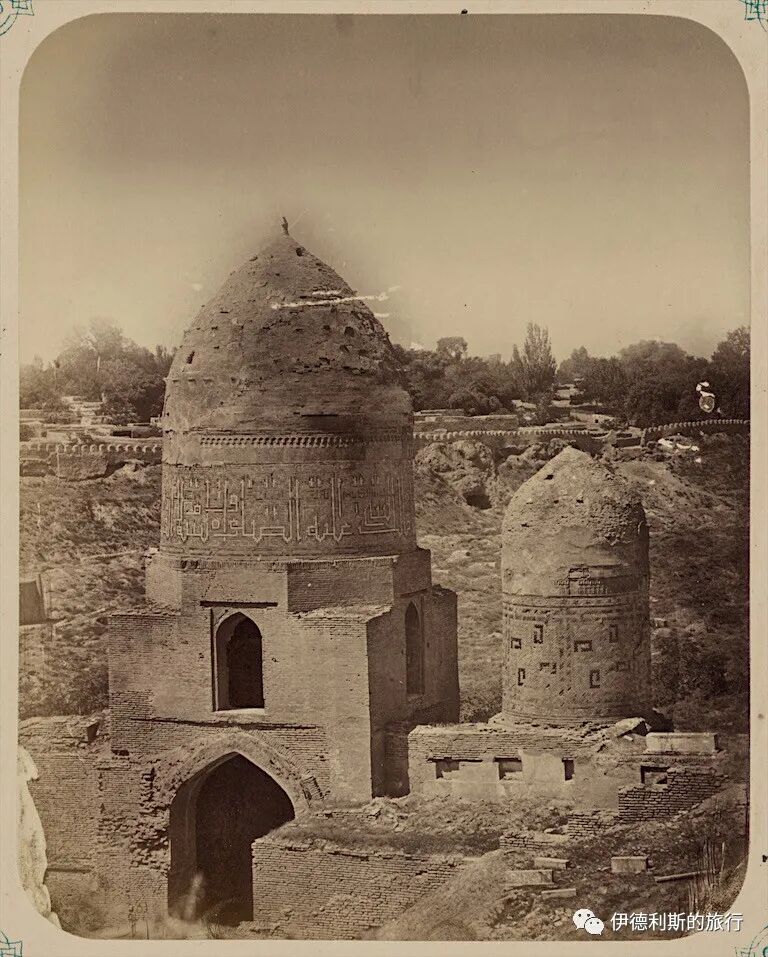
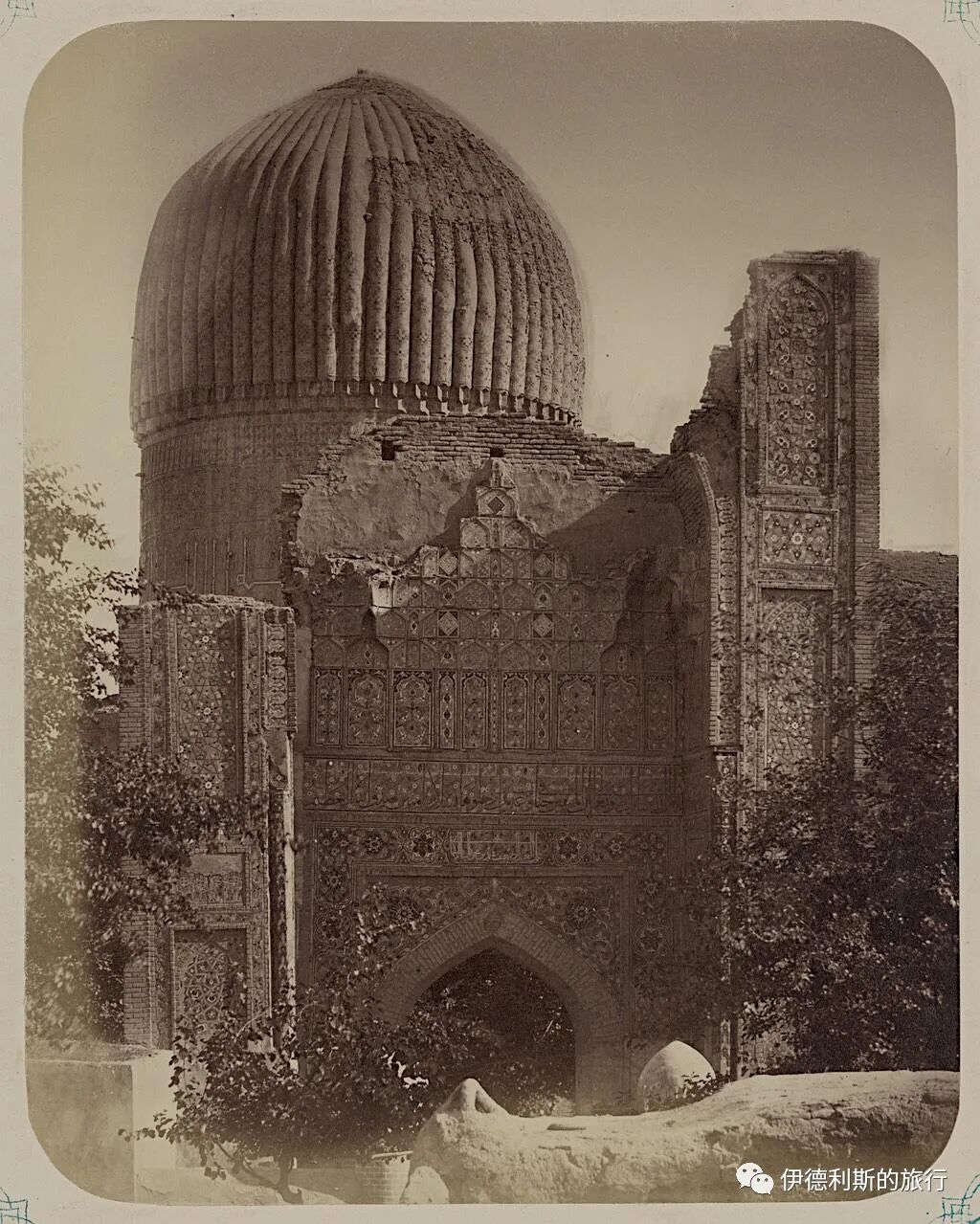
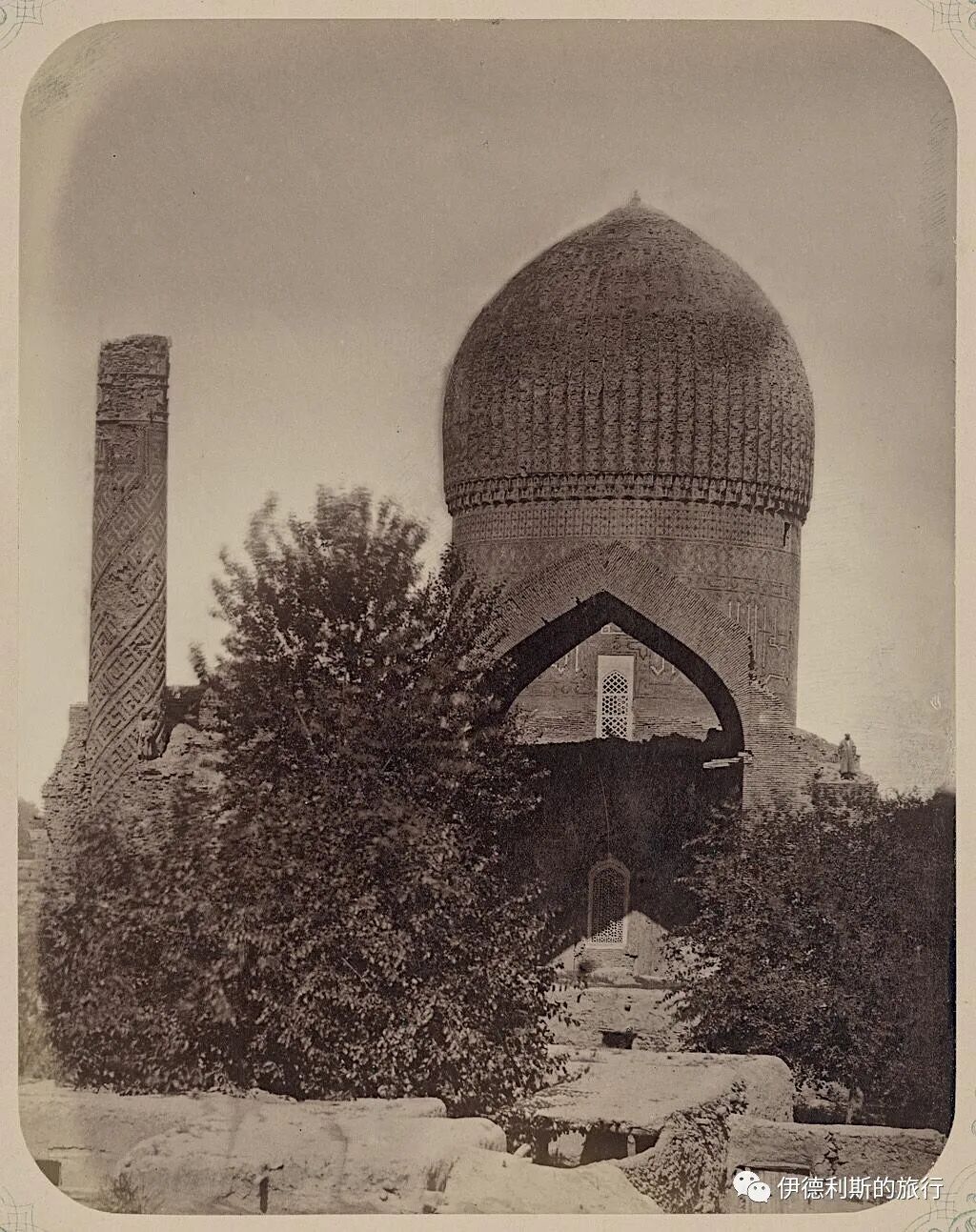
The old photos shared in this article, the black and white ones, come from the 'Turkestan Album', produced between 1871 and 1872 under the sponsorship of Konstantin P. von Kaufman, the first Governor-General of Russian Turkestan.
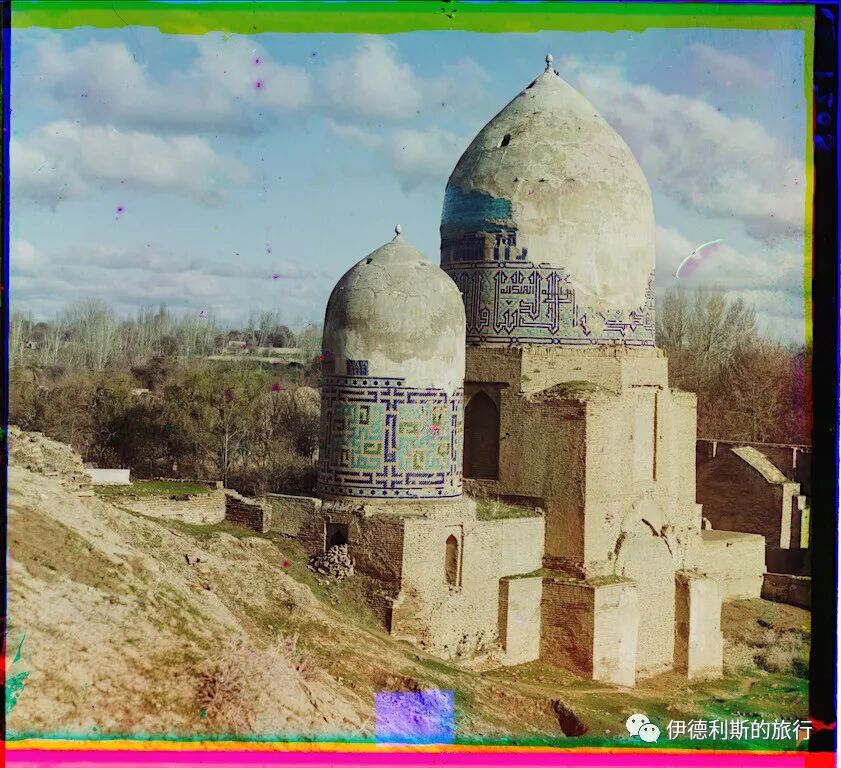
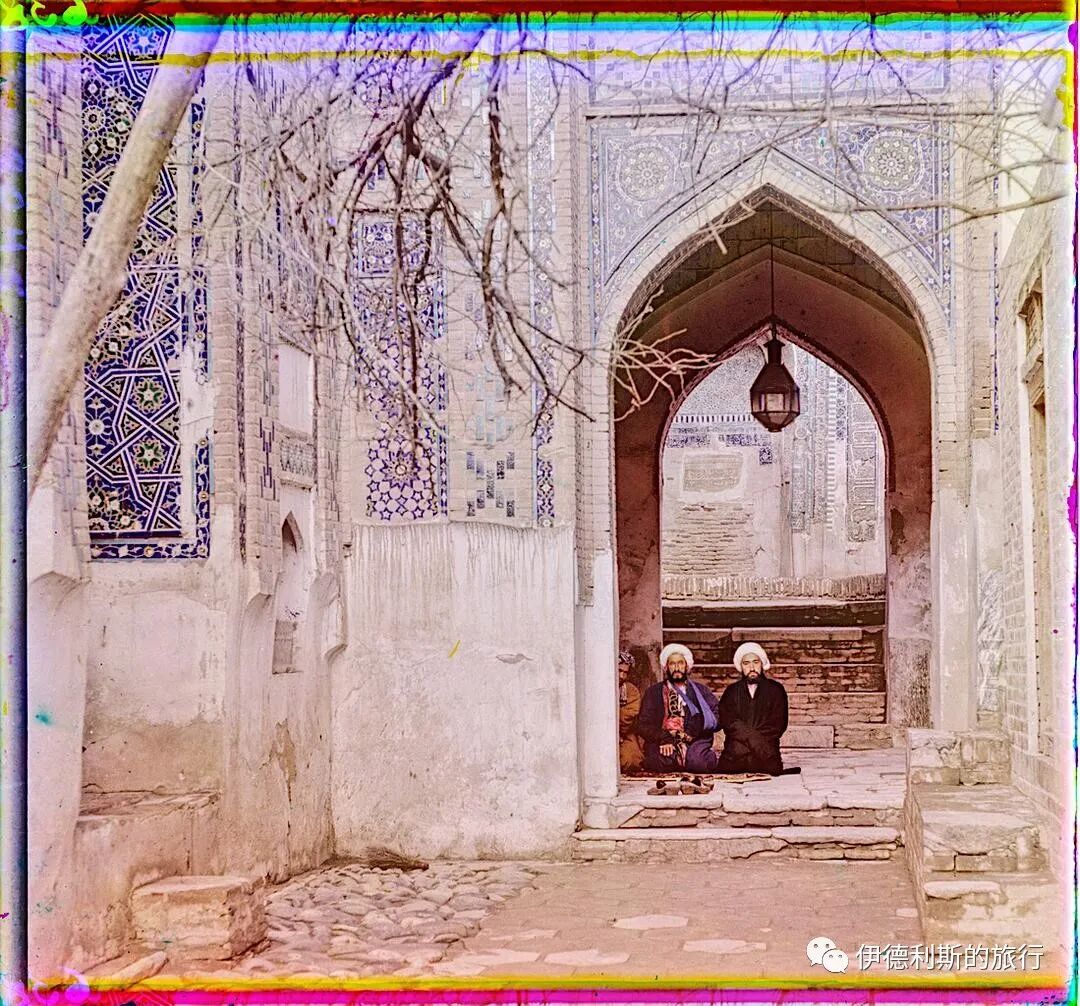
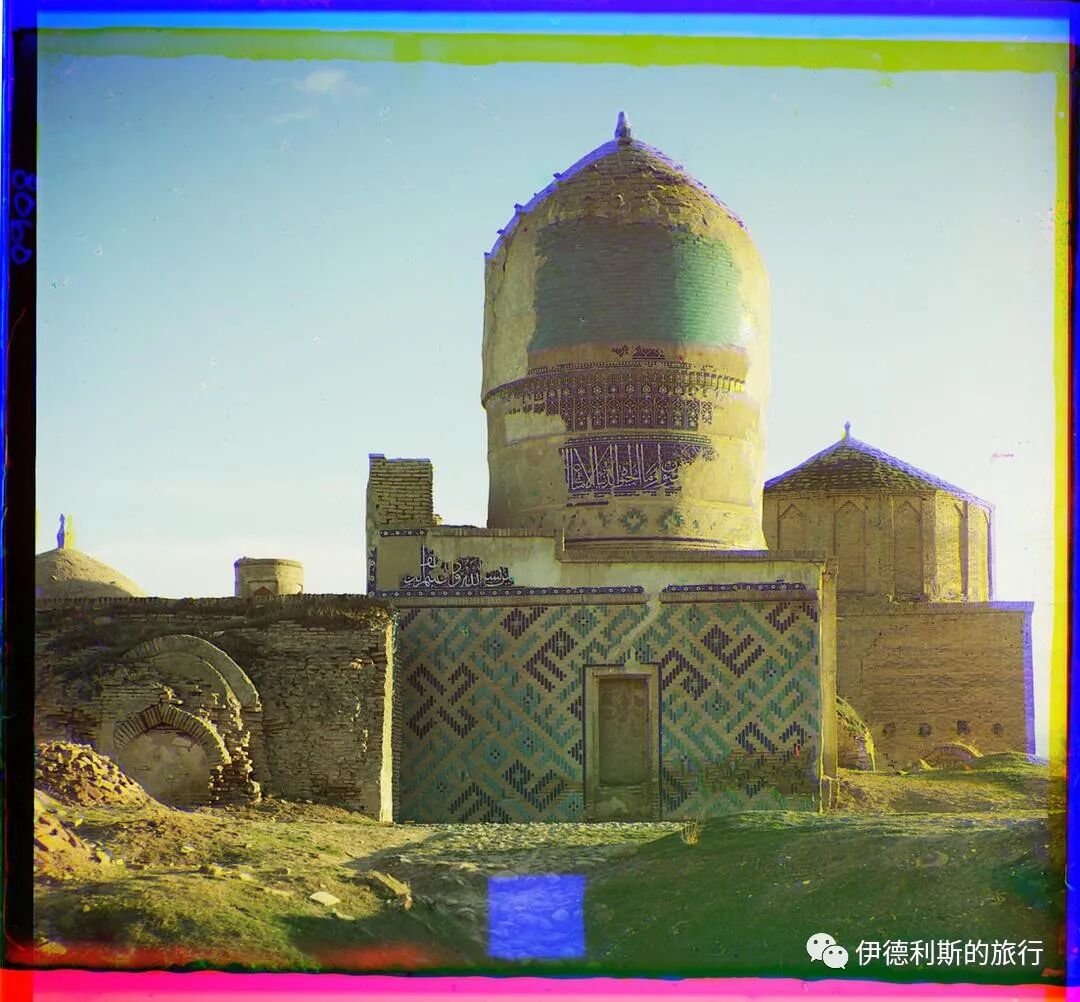
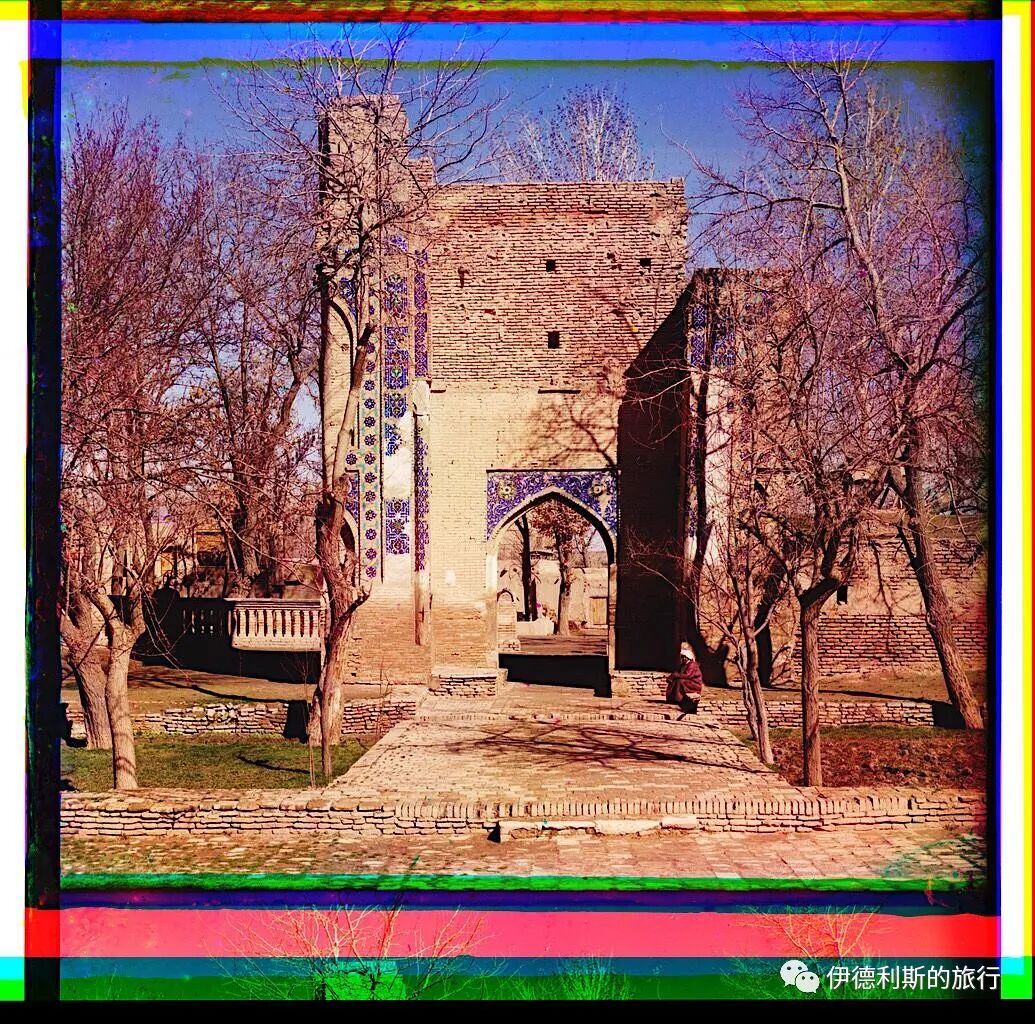
The color photos are from Sergei Mikhailovich Prokudin-Gorskii. Some of these photos date back to 1905, with most of the work coming from between 1909 and 1915. During this period, he traveled to many different regions of the Russian Empire with the support of Tsar Nicholas II and the Ministry of Transport.
Table of Contents
I. Shah-i-Zinda: 11th–15th centuries
II. Rukhabad Mausoleum: 1380s
III. Gur-e-Amir Mausoleum: 1404
4. Bibi-Khanym Mosque: 1404
5. Bibi-Khanym Mausoleum: 1404
6. Ulugh Beg Madrasah: 1420
7. Ulugh Beg Observatory: 1429
8. Ishrat-khana Mausoleum: 1464
9. Ak-Saray Mausoleum: Presumed to be 1450s-1470s
10. Khodja Abdu Derun Mausoleum: 15th century
11. Mausoleum of Prophet Daniel: Rebuilt in the early 20th century
I. Shah-i-Zinda: 11th–15th centuries
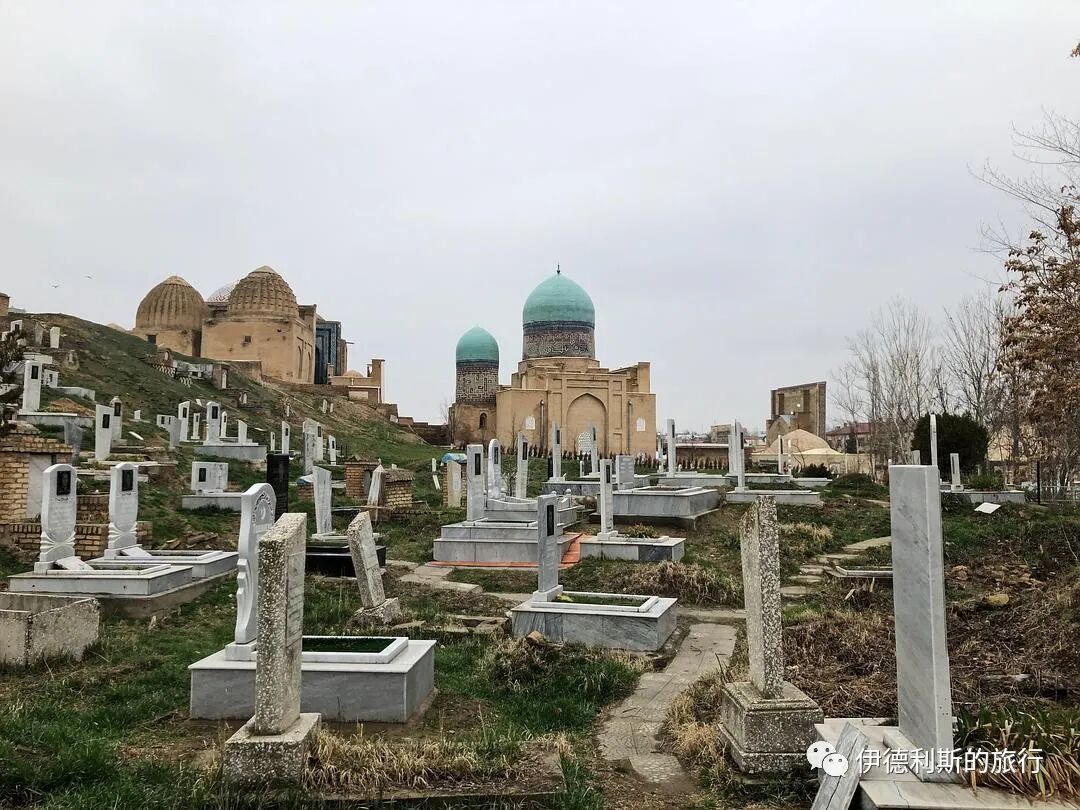
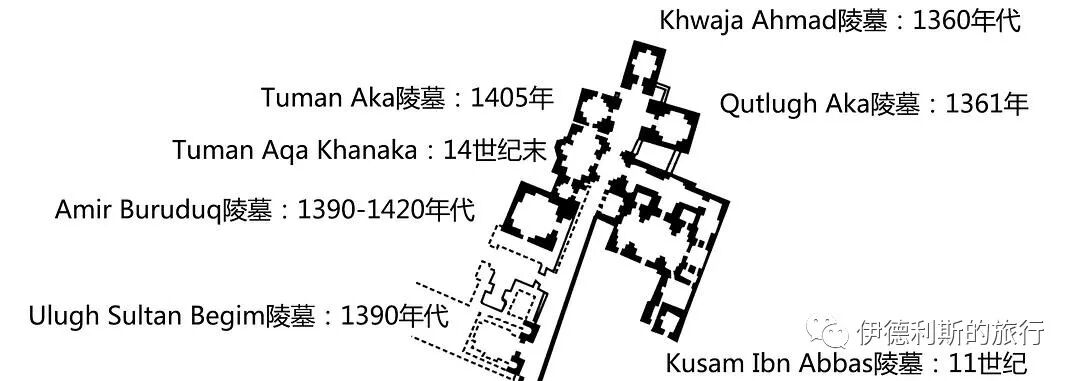
Shah-i-Zinda is the oldest and most important Islamic mausoleum complex in Samarkand. In the 11th century, the tomb of Kusam Ibn Abbas, a cousin of the Prophet Muhammad, was built here; during the Timurid dynasty in the 14th century, a large number of women from the Timurid family and Timur's confidants were also buried here.
The Shah-i-Zinda complex can be divided into three parts: south, middle, and north, each with its own gate. The southern complex is the latest in date, built by Timur's grandson, Ulugh Beg. The middle complex contains the tombs of Timur's ministers, generals, nieces, and sisters. The northern complex is the core part; in addition to the Prophet's cousin, two of Timur's wives and local religious leaders are also buried there.
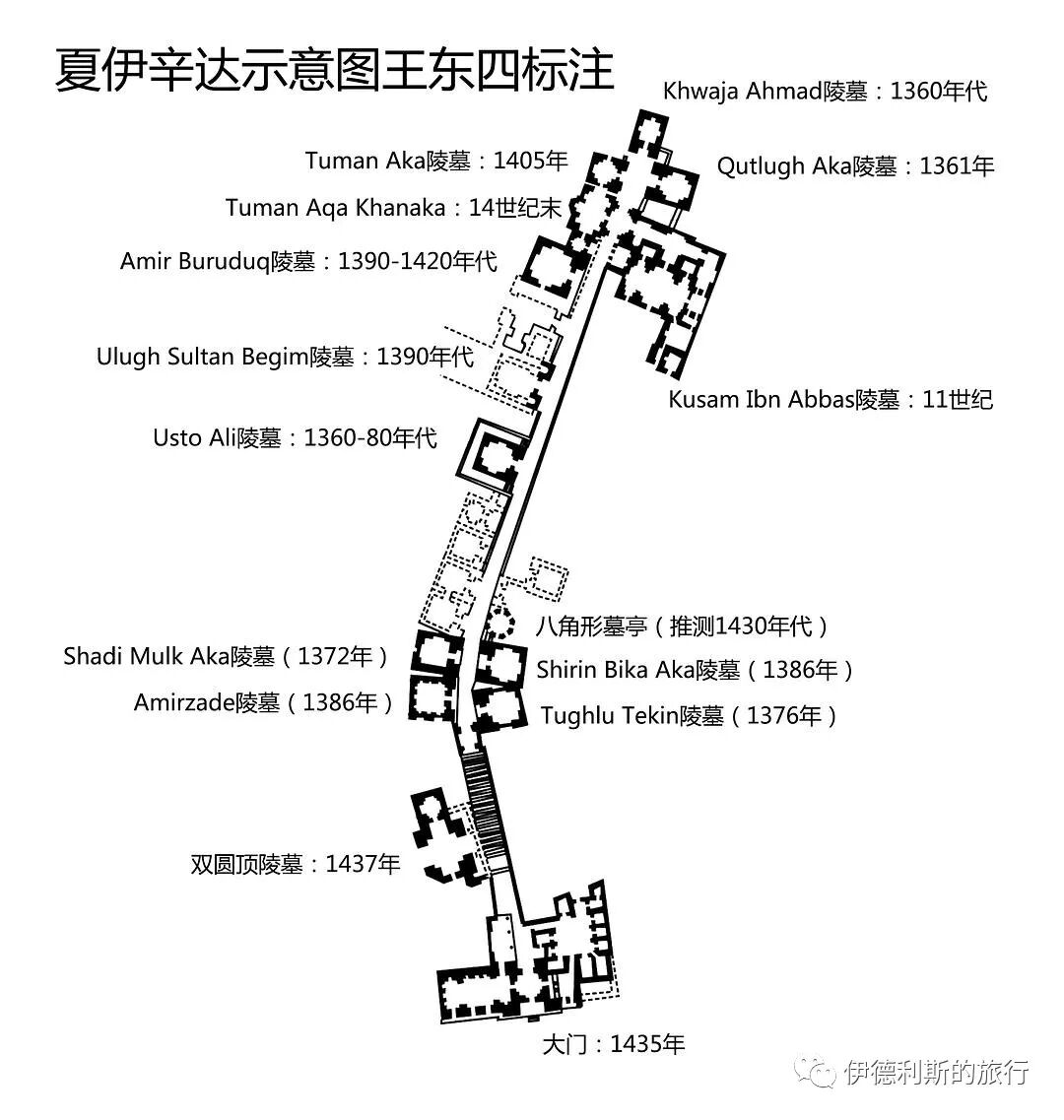
(I) Southern Complex
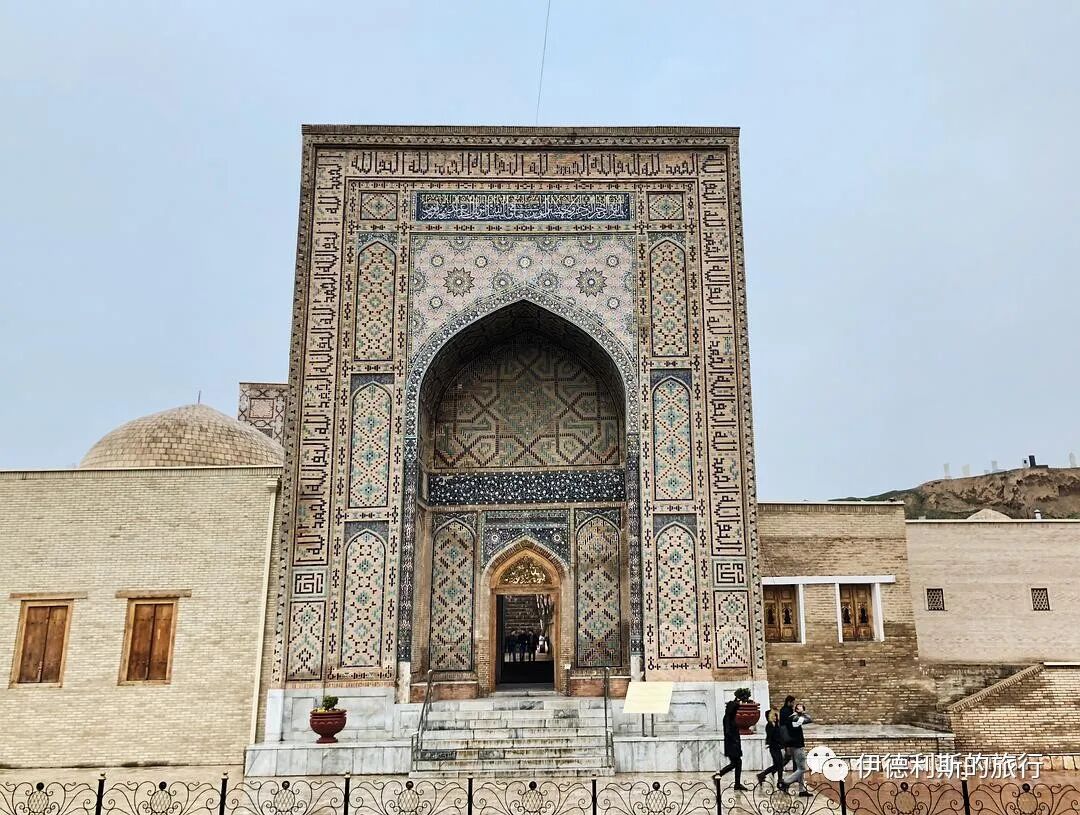
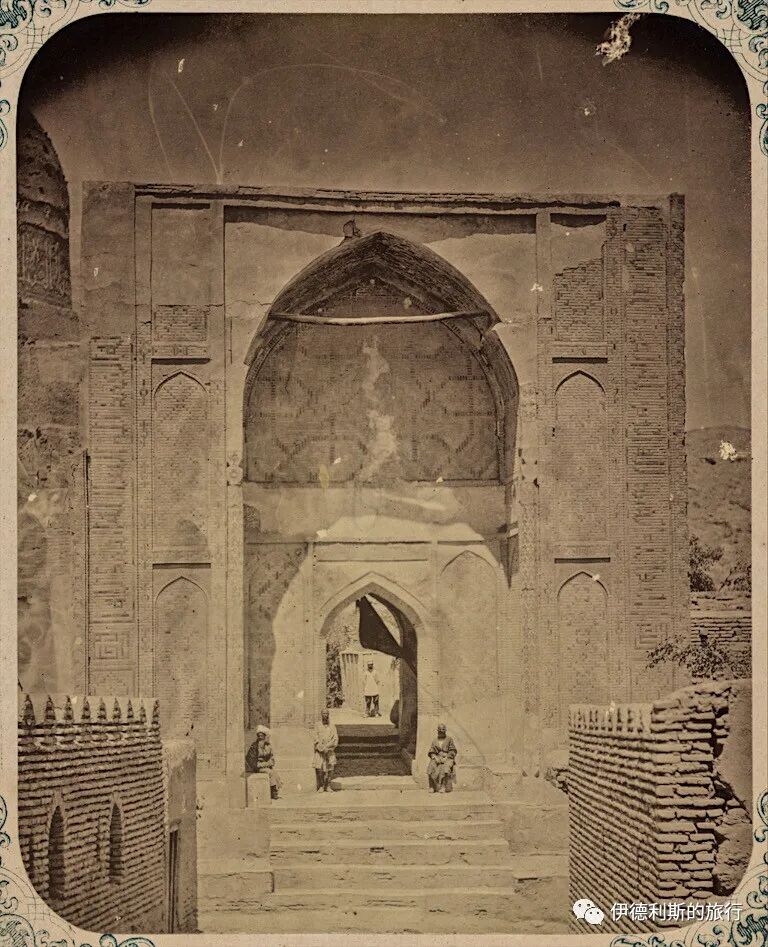
1. Gate: 1435
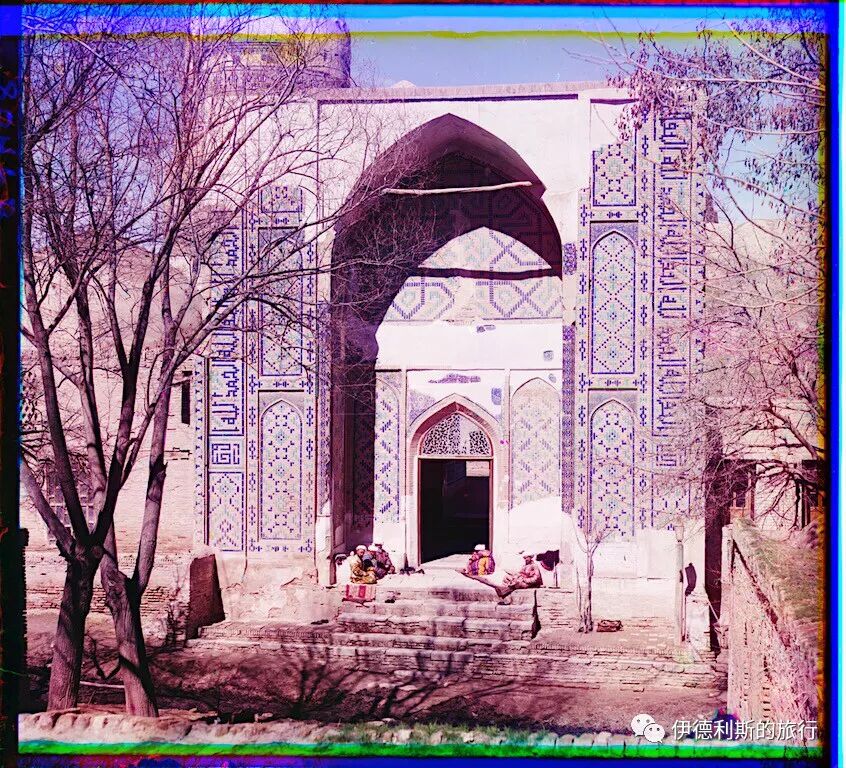
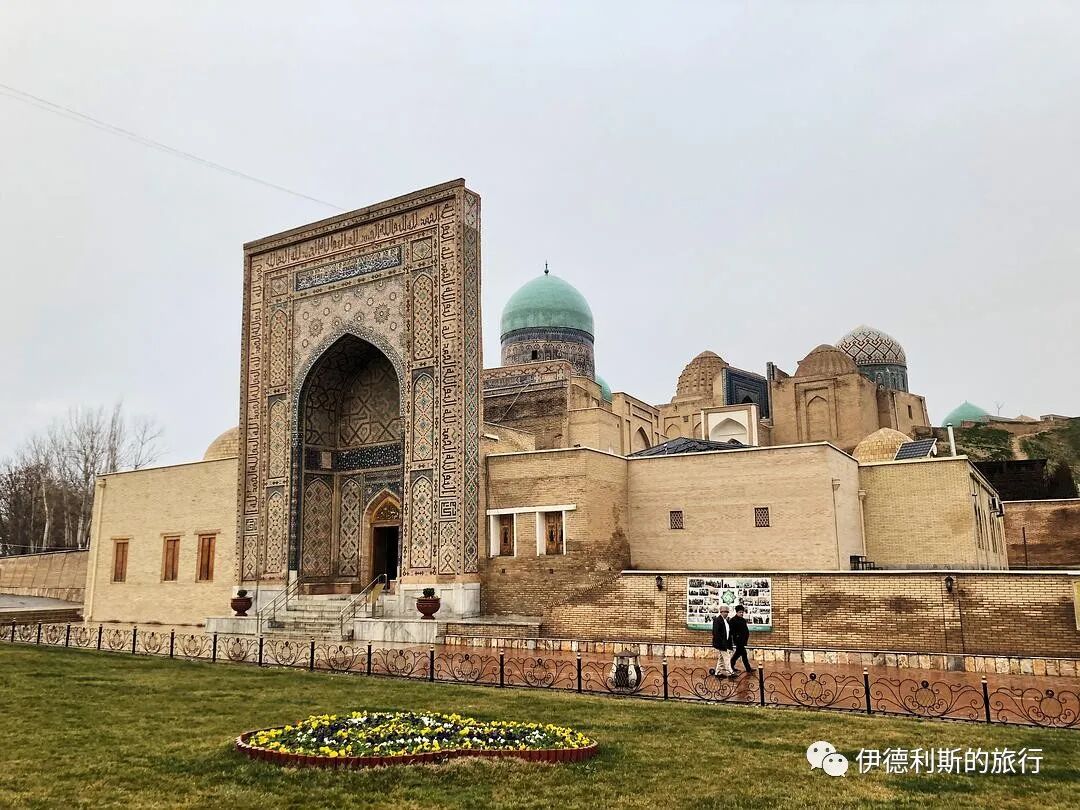
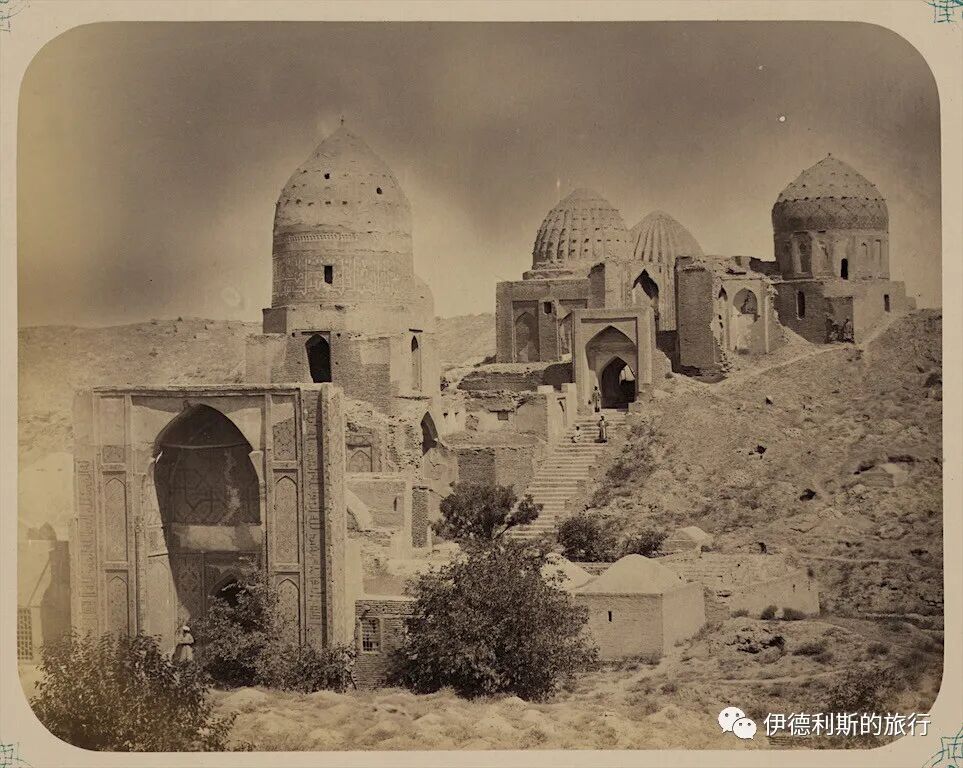
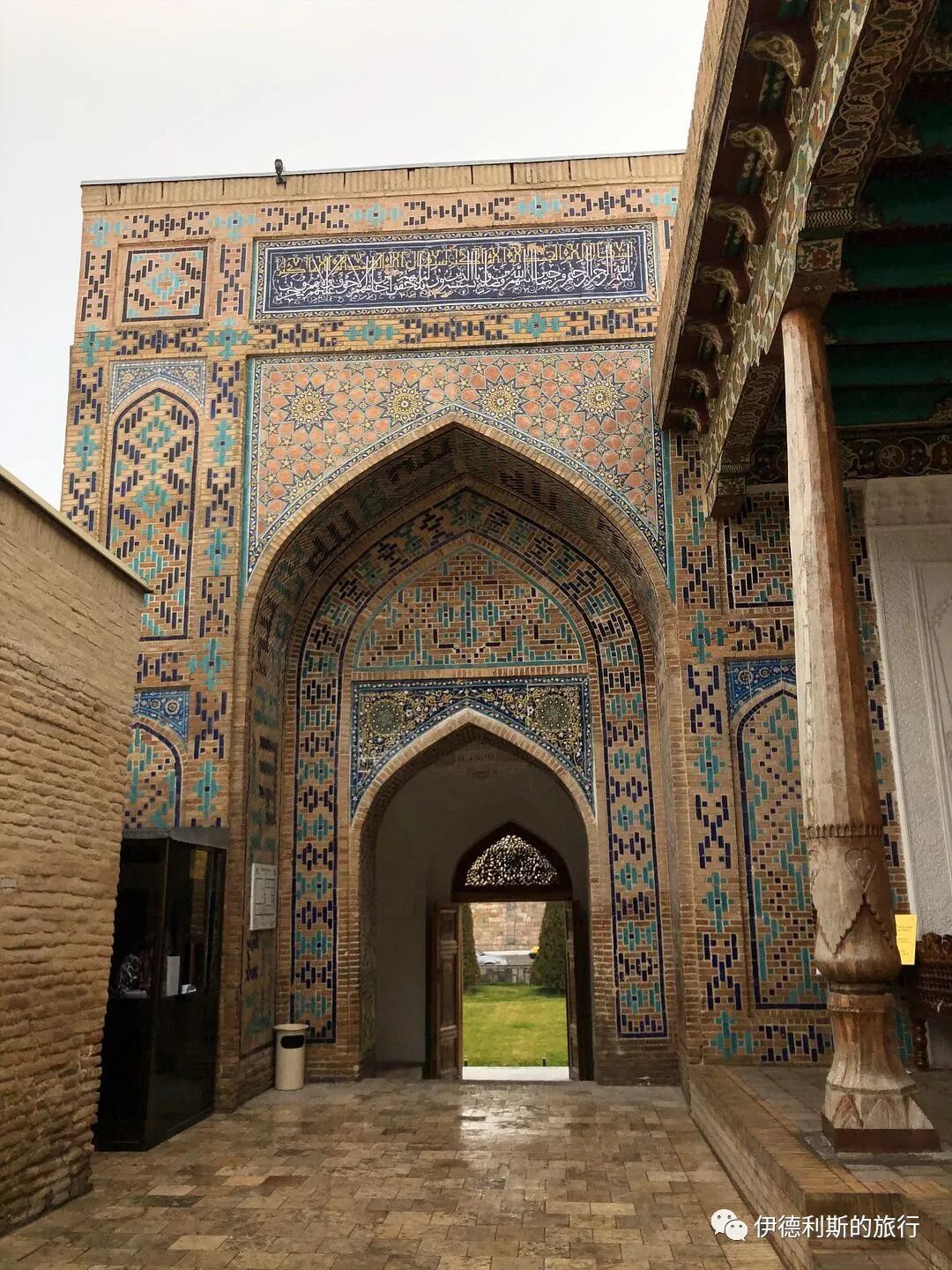
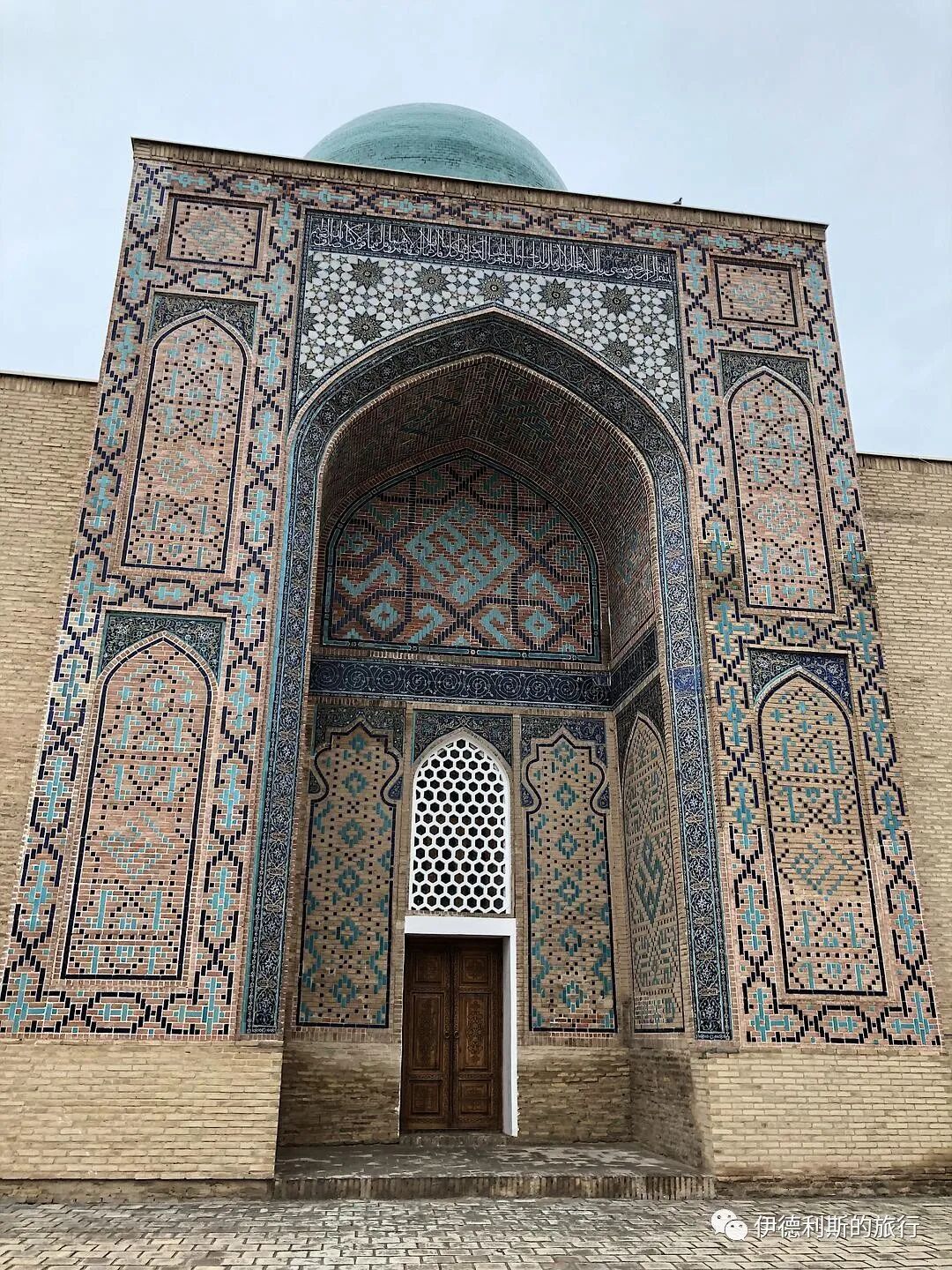
The gate of Shah-i-Zinda (Chartak of Abdulaziz) was built in 1435 by Ulugh Beg, the third ruler of the Timurid dynasty, on behalf of his son Abdulaziz. Abdulaziz was Ulugh Beg's second son, raised by Ulugh Beg from childhood, deeply loved by him, and was also the designated heir of Ulugh Beg.
In 1449, Ulugh Beg's eldest son, Abdal-Latif Mirza, launched a rebellion against his father; Ulugh Beg led his army to meet him while ordering Abdal-Aziz to stay behind and guard Samarkand. Abdulaziz's poor management eventually led to an uprising in Samarkand; he locked himself in the citadel and sent a letter to his father for help, and Ulugh Beg had to return to Samarkand after receiving the letter. Abdal-Latif subsequently attacked Samarkand, and Ulugh Beg and Abdal-Aziz surrendered to him. Abdal-Latif arranged for Ulugh Beg and Abdulaziz to go on Hajj (pilgrimage) to Mecca and had them both killed on the way.
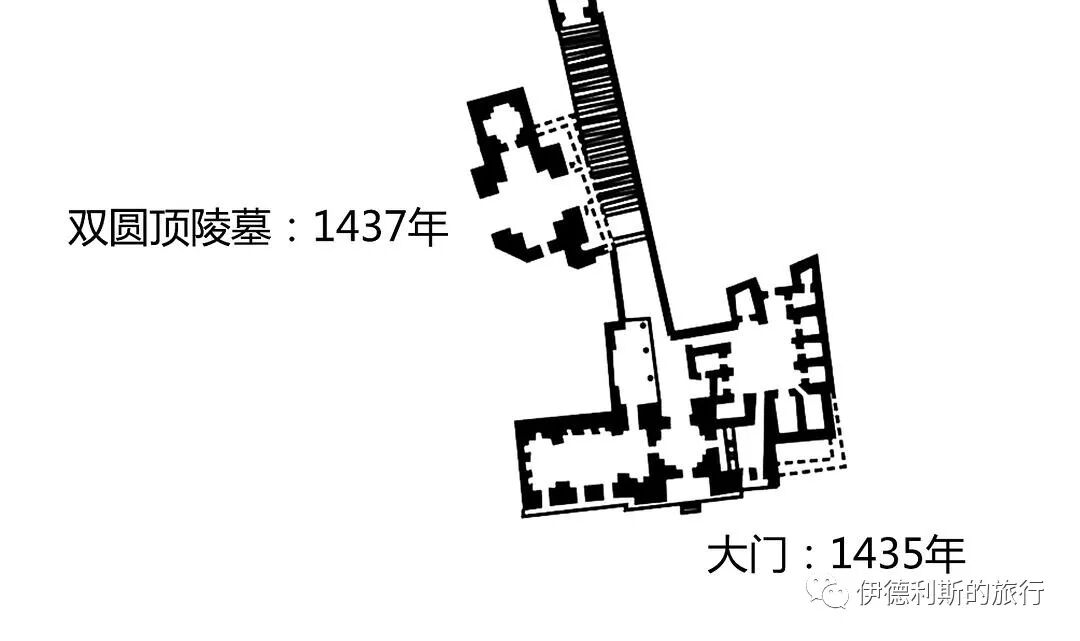
2. Double-domed Mausoleum: 1437
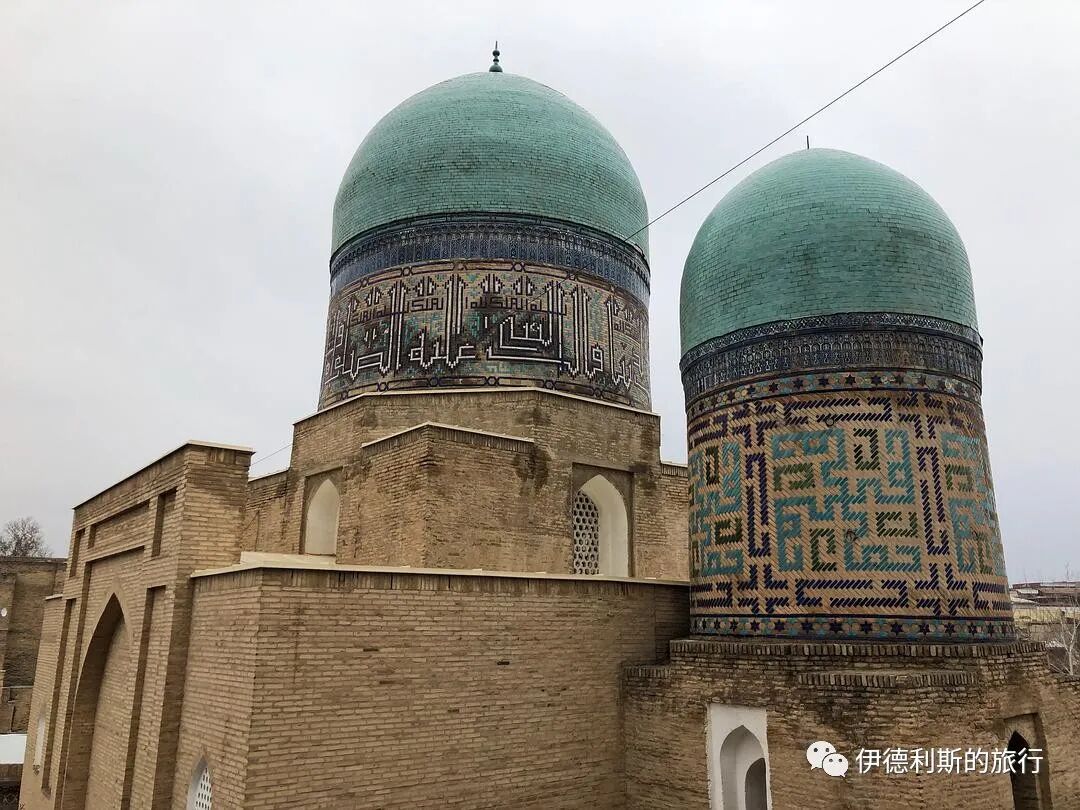
The Double-domed Mausoleum is the first mausoleum after entering the gate, believed to have been built by the third ruler of the Timurid dynasty, Ulugh Beg, in 1437. The occupant of the tomb may be Timur's benefactor Uldzk Inak and her daughter Bibi Zinet, but there is also a theory that the occupant is the astronomer Kazi Zadeh Al-Rumi, who worked under Ulugh Beg.
Kazi Zadeh Al-Rumi was a famous astronomer and mathematician of the 14th–15th centuries, born in Bursa, the capital of the Ottoman Empire in 1364, and came to work at the Ulugh Beg Observatory in Samarkand during Ulugh Beg's reign. At the observatory, he worked with Ulugh Beg and other astronomers to complete the famous 'Zīj-i Sultānī' (Ulugh Beg's astronomical tables).
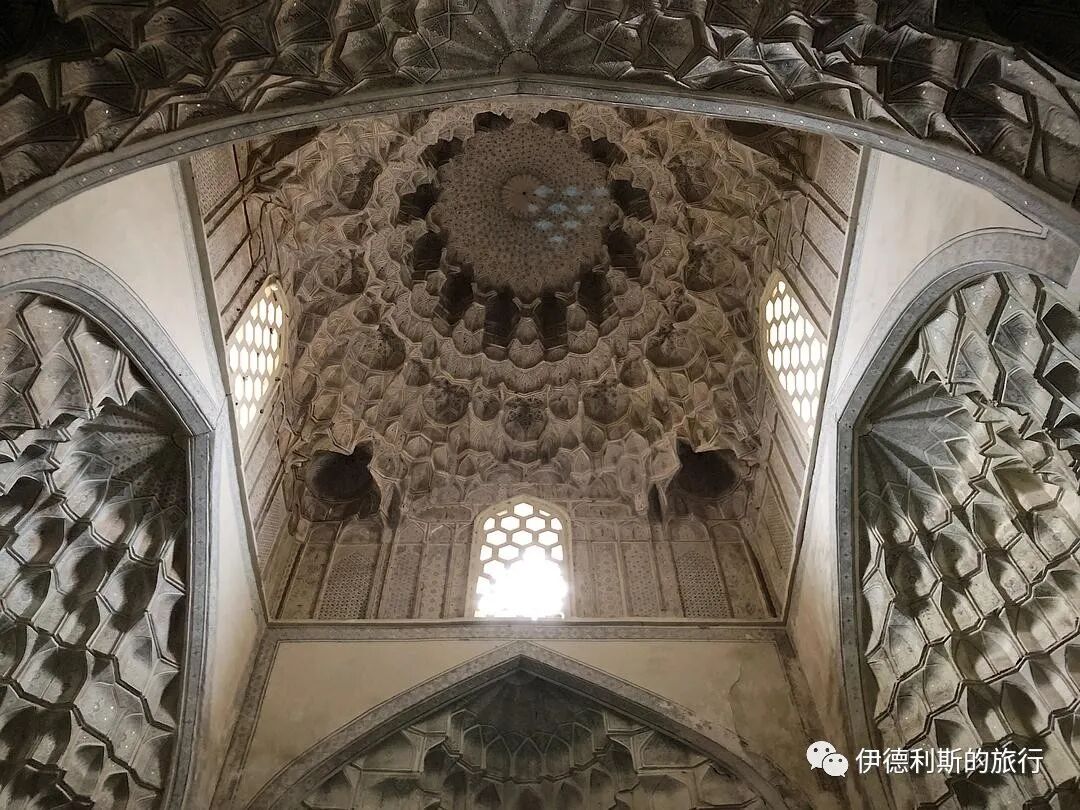
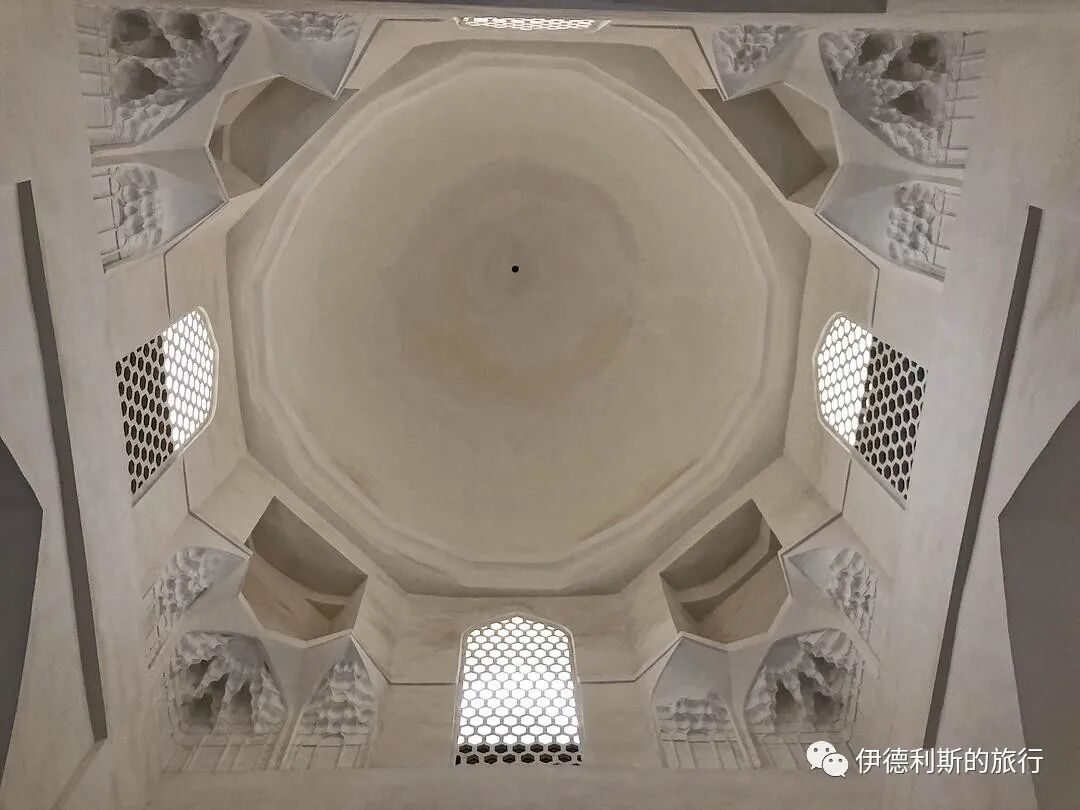
(II) Middle Complex
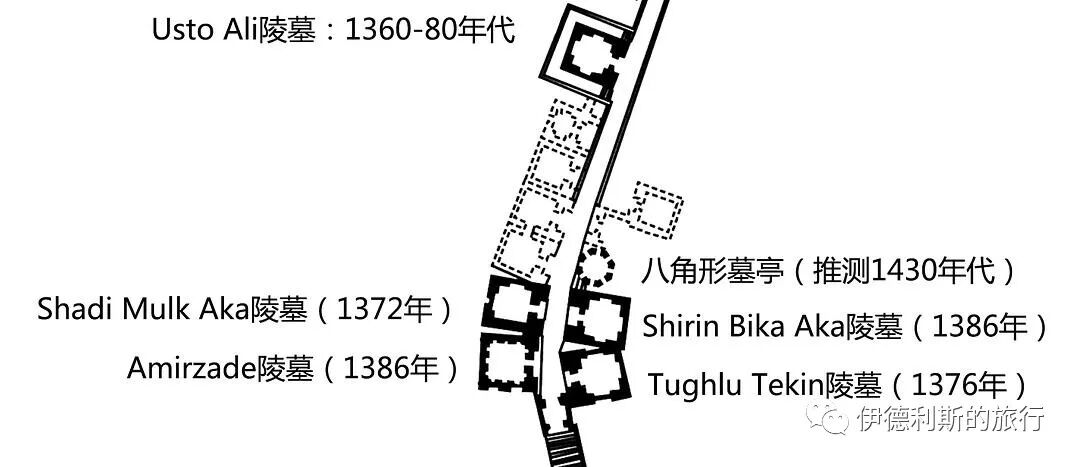
After passing through the gate and the Double-domed Mausoleum and climbing the stairs, one enters the middle complex. The middle complex can also be divided into southern and northern parts. The southern part consists of five adjacent mausoleums, mainly for important figures in Timur's court: the mausoleum of Timur's minister Amirzade (1386), the mausoleum of Timur's niece Shadi Mulk Aka (1372), the mausoleum of Timur's sister Shirin Bika Aka (1386), and the mausoleum of Timur's general Tughlu Tekin (1376); there is also an octagonal mausoleum of unknown occupant, presumably built in the 1430s.
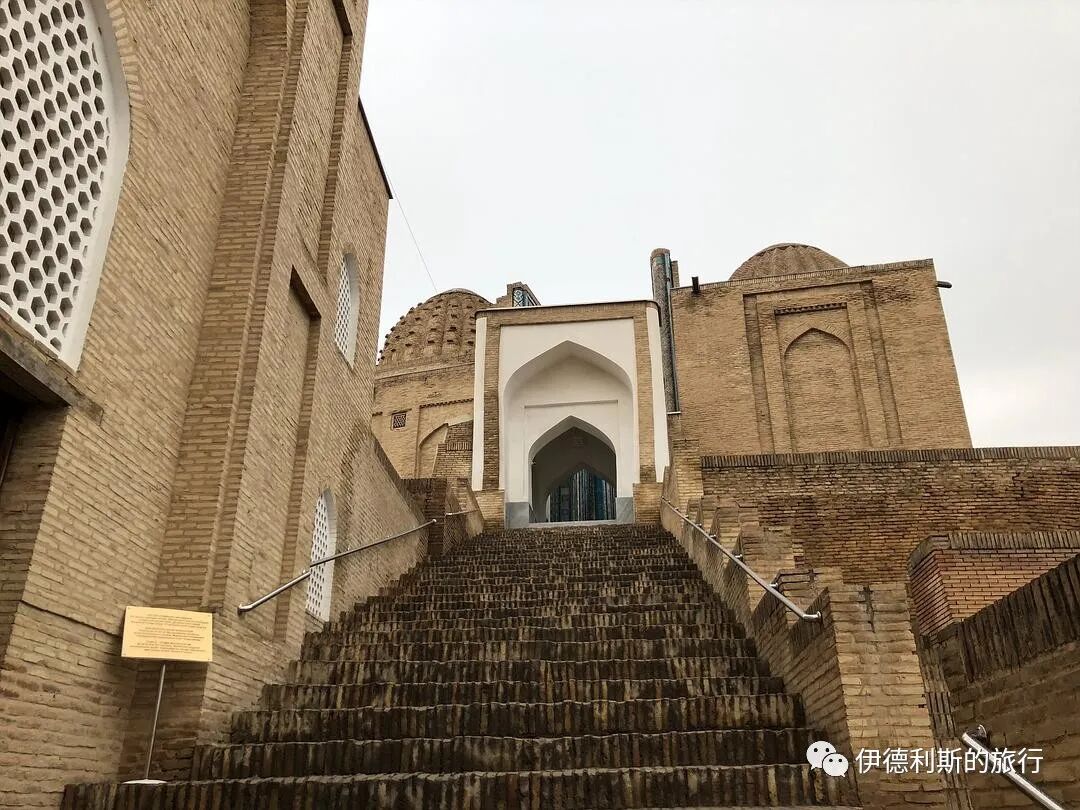
View of the gate of the middle complex from the Double-domed Mausoleum
Shot from west to east, from left to right are the mausoleum of niece Shadi Mulk Aka, the mausoleum of sister Shirin Bika Aka, the mausoleum of minister Amirzade, and the Double-domed Mausoleum.
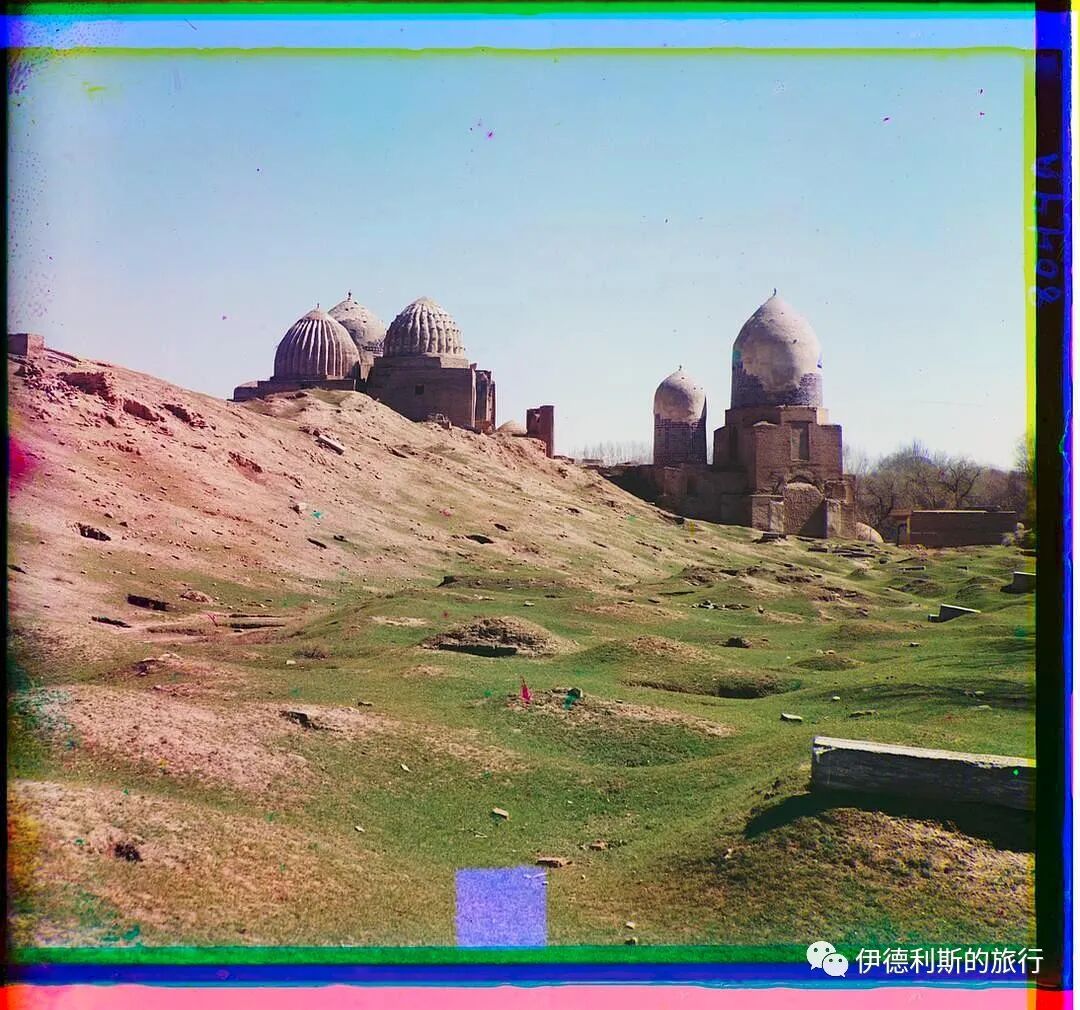
Shot from northeast to southwest, the three domes from left to right are the mausoleum of sister Shirin Bika Aka, the octagonal tomb pavilion, and the mausoleum of niece Shadi Mulk Aka; on the right are three others rebuilt in modern times.
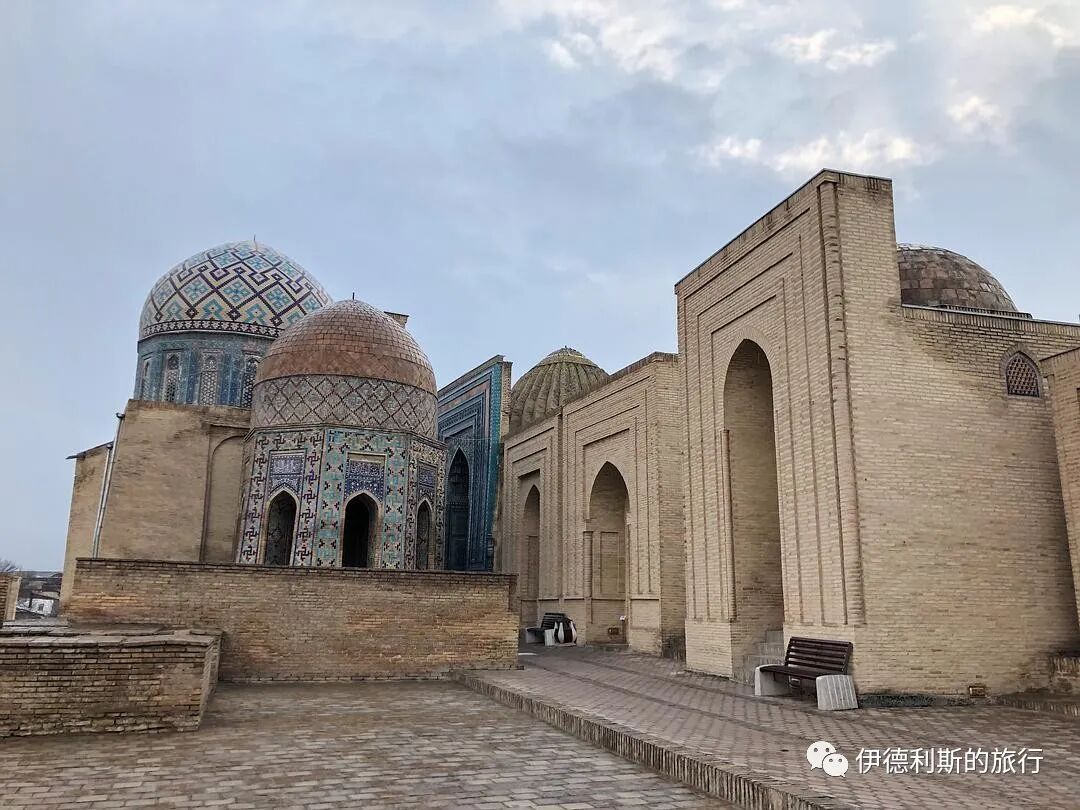
Shot from northeast to southwest, the three domes from left to right belong to the mausoleum of sister Shirin Bika Aka, the mausoleum of minister Amirzade, and the mausoleum of niece Shadi Mulk Aka; in the front is the octagonal tomb pavilion.
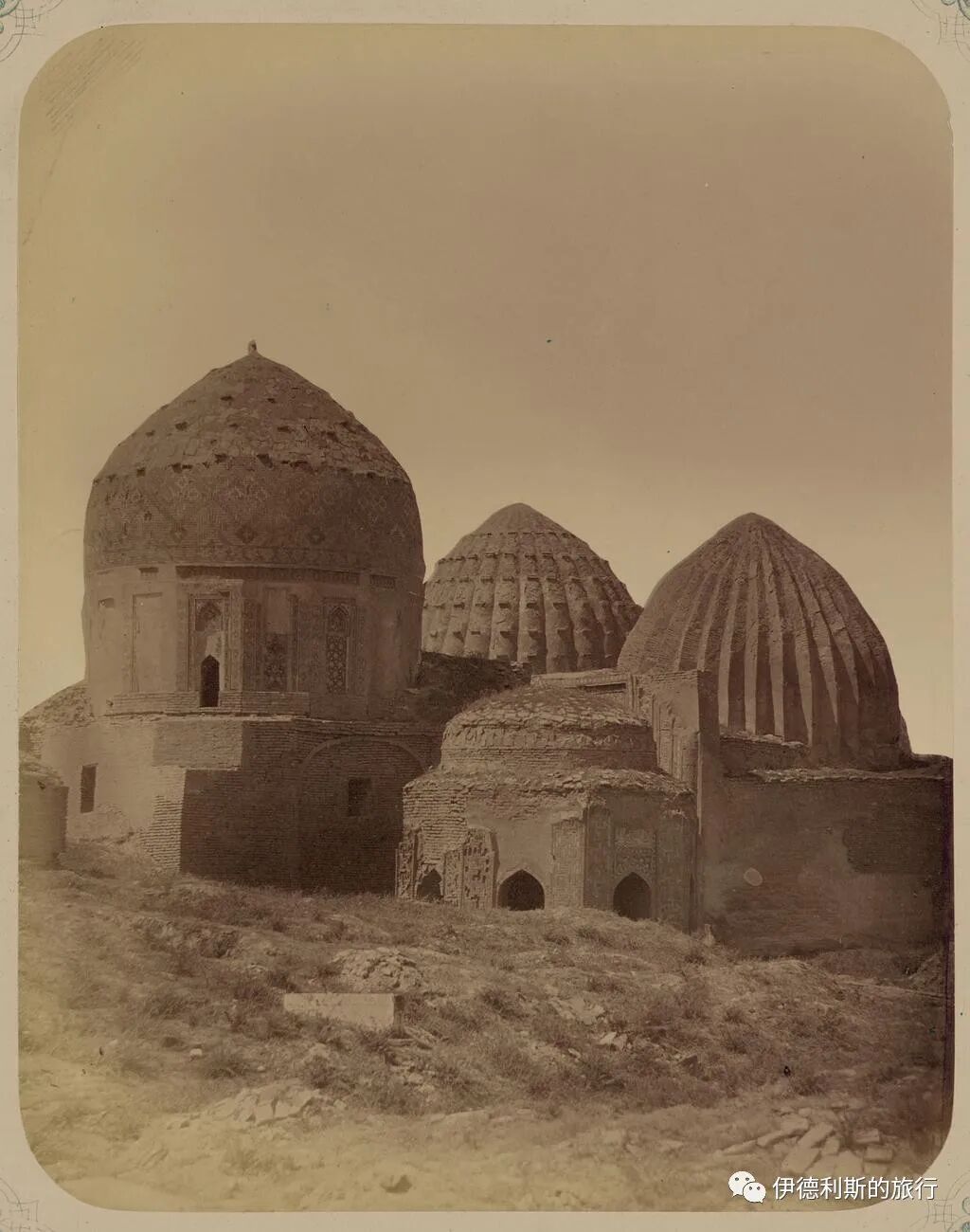
Shot from northwest to southeast, from left to right are the octagonal tomb pavilion, the mausoleum of sister Shirin Bika Aka, the mausoleum of niece Shadi Mulk Aka, the mausoleum of minister Amirzade, and the Double-domed Mausoleum.
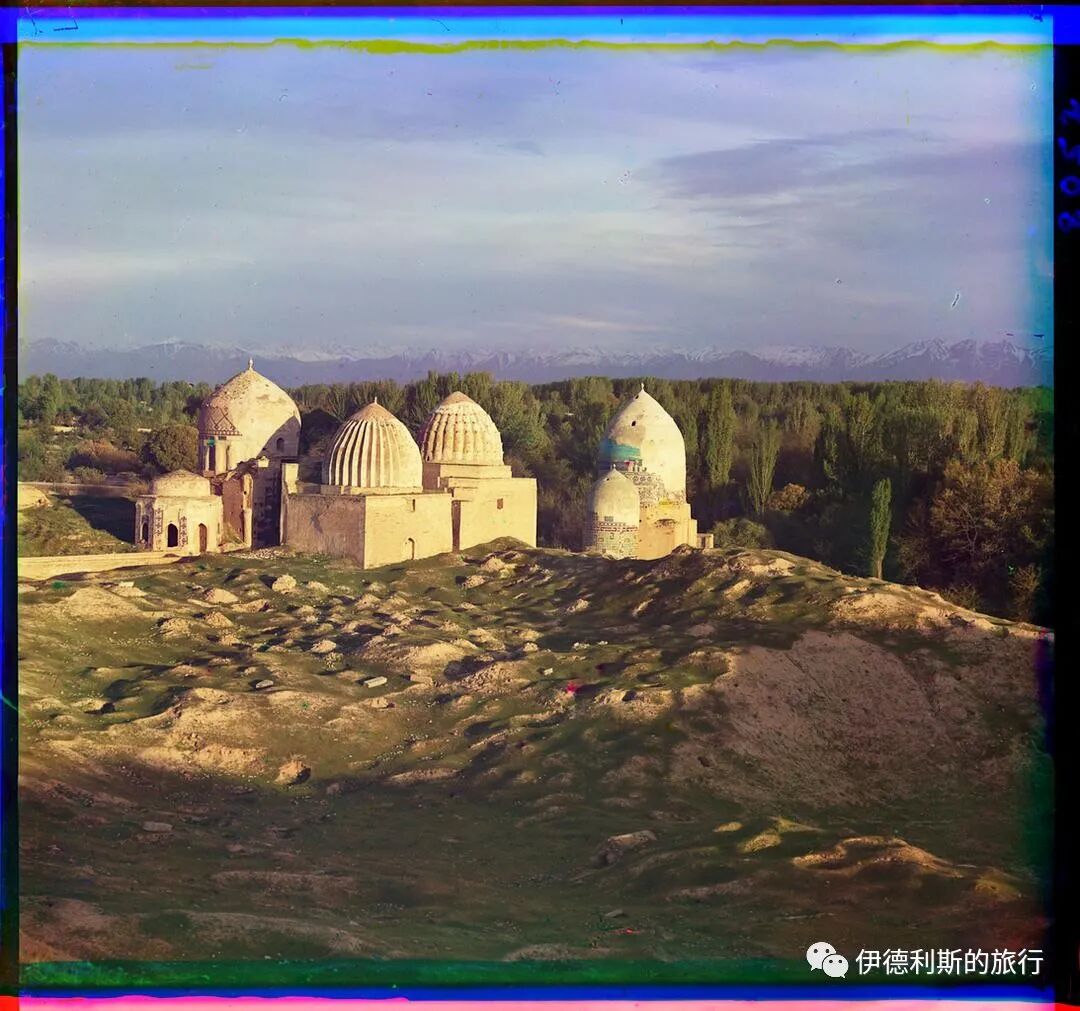
Shot from north to south, from left to right are the mausoleum of Shirin Bika Aka, the mausoleum of Amirzade, and the mausoleum of Shadi Mulk Aka.
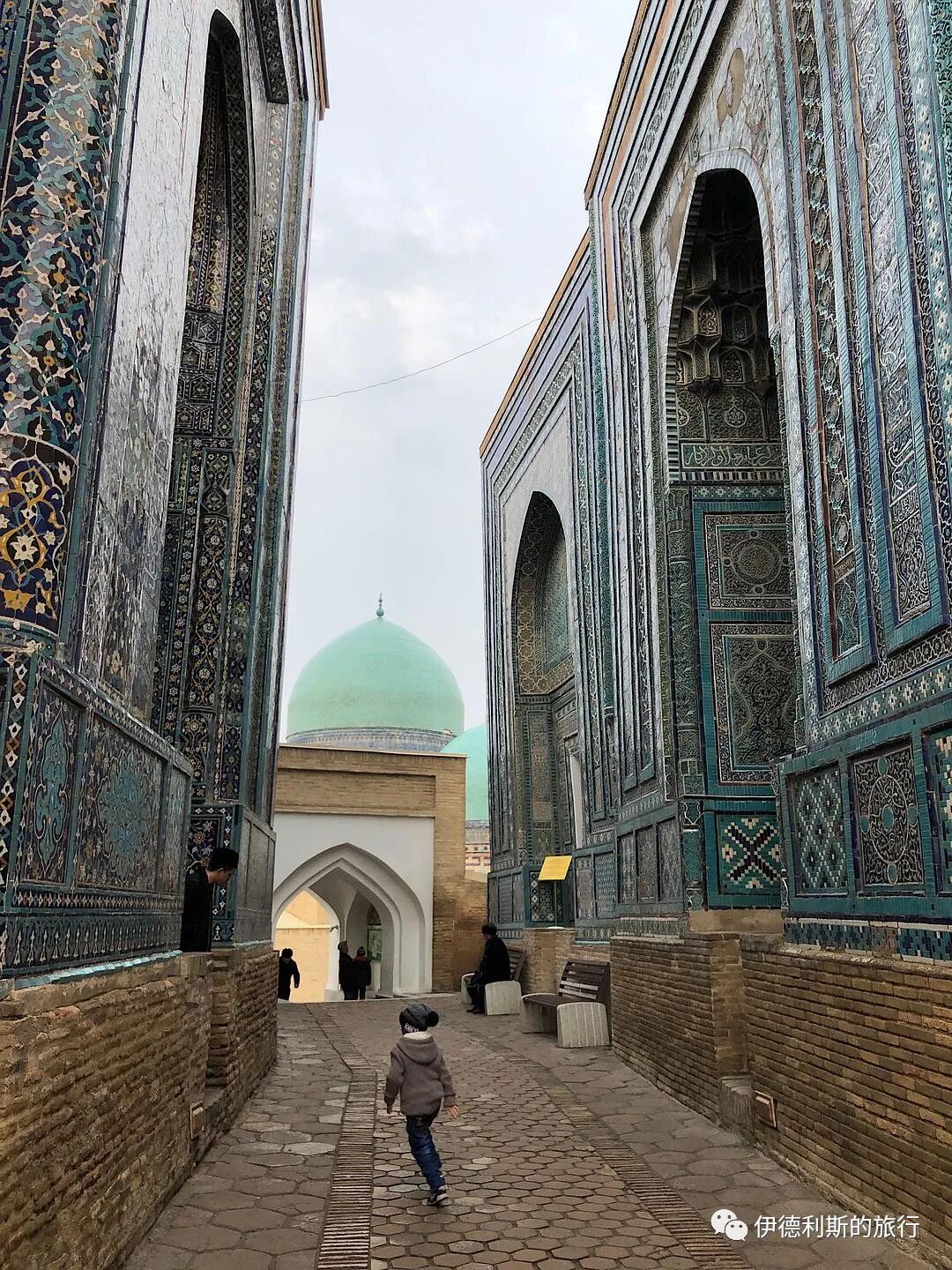
Shot from south to north, on the left is the octagonal tomb pavilion, and on the right is the mausoleum of Shadi Mulk Aka.
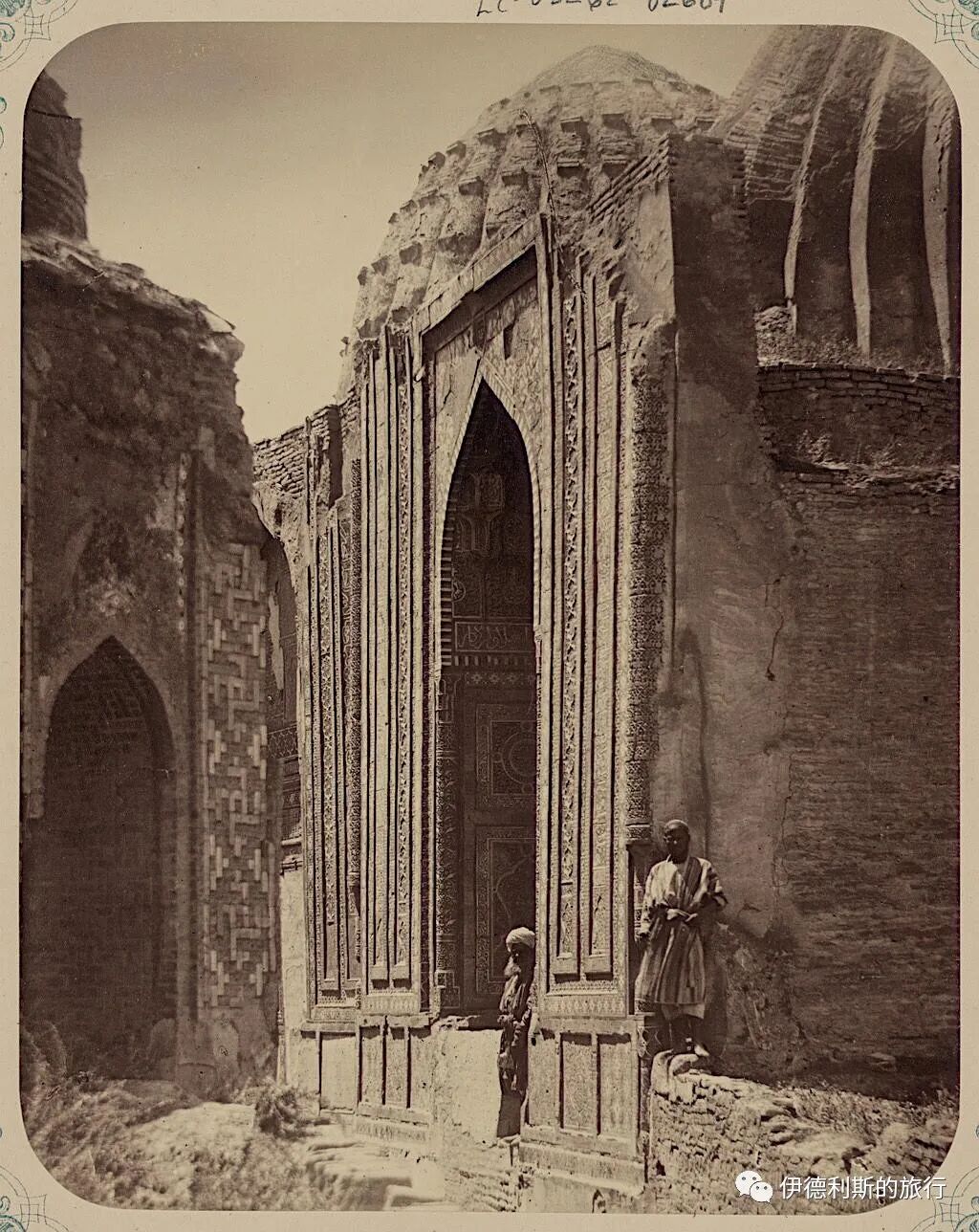
Shot from south to north, on the left are the mausoleum of Amirzade and the mausoleum of Shadi Mulk Aka.
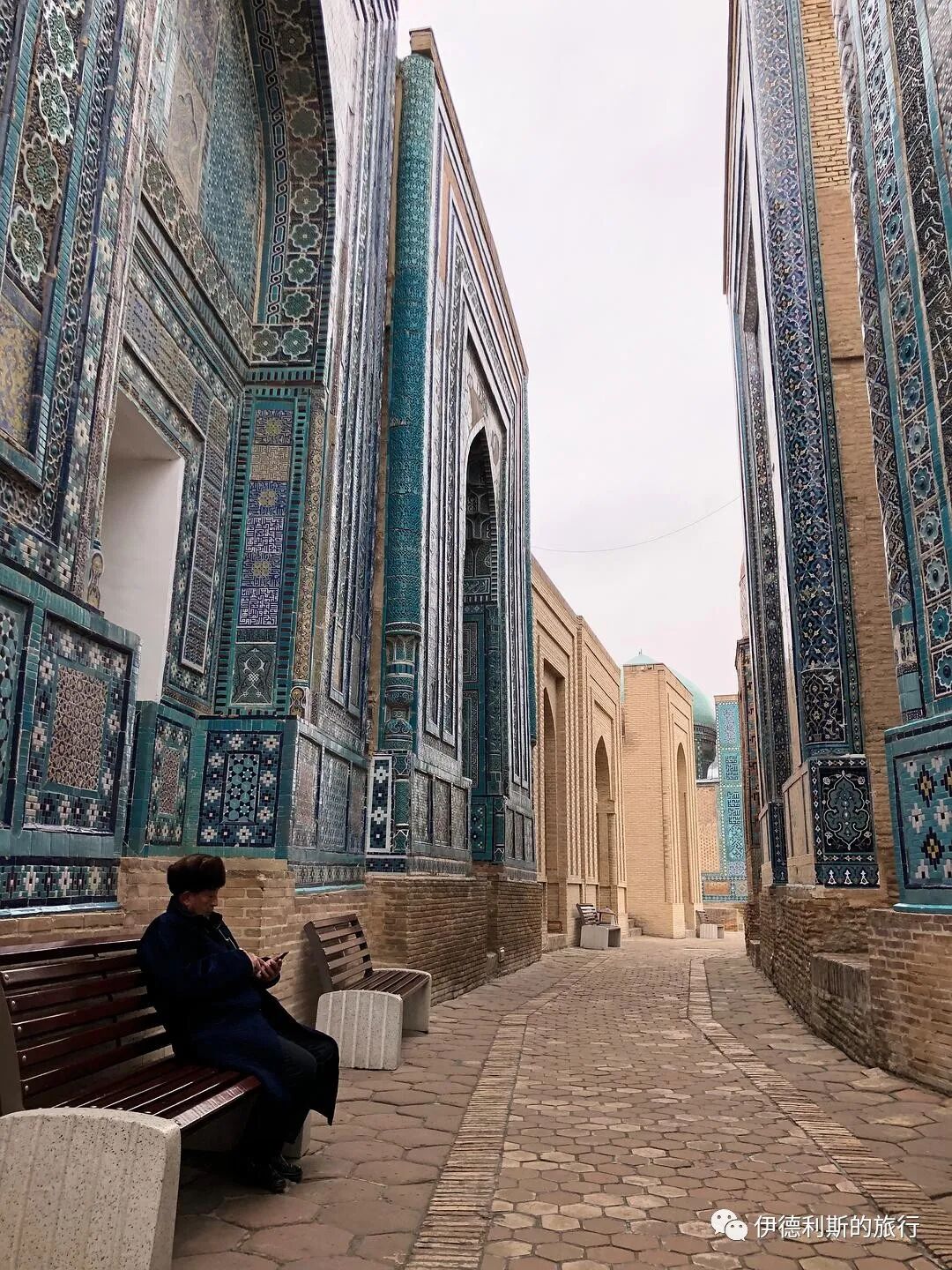
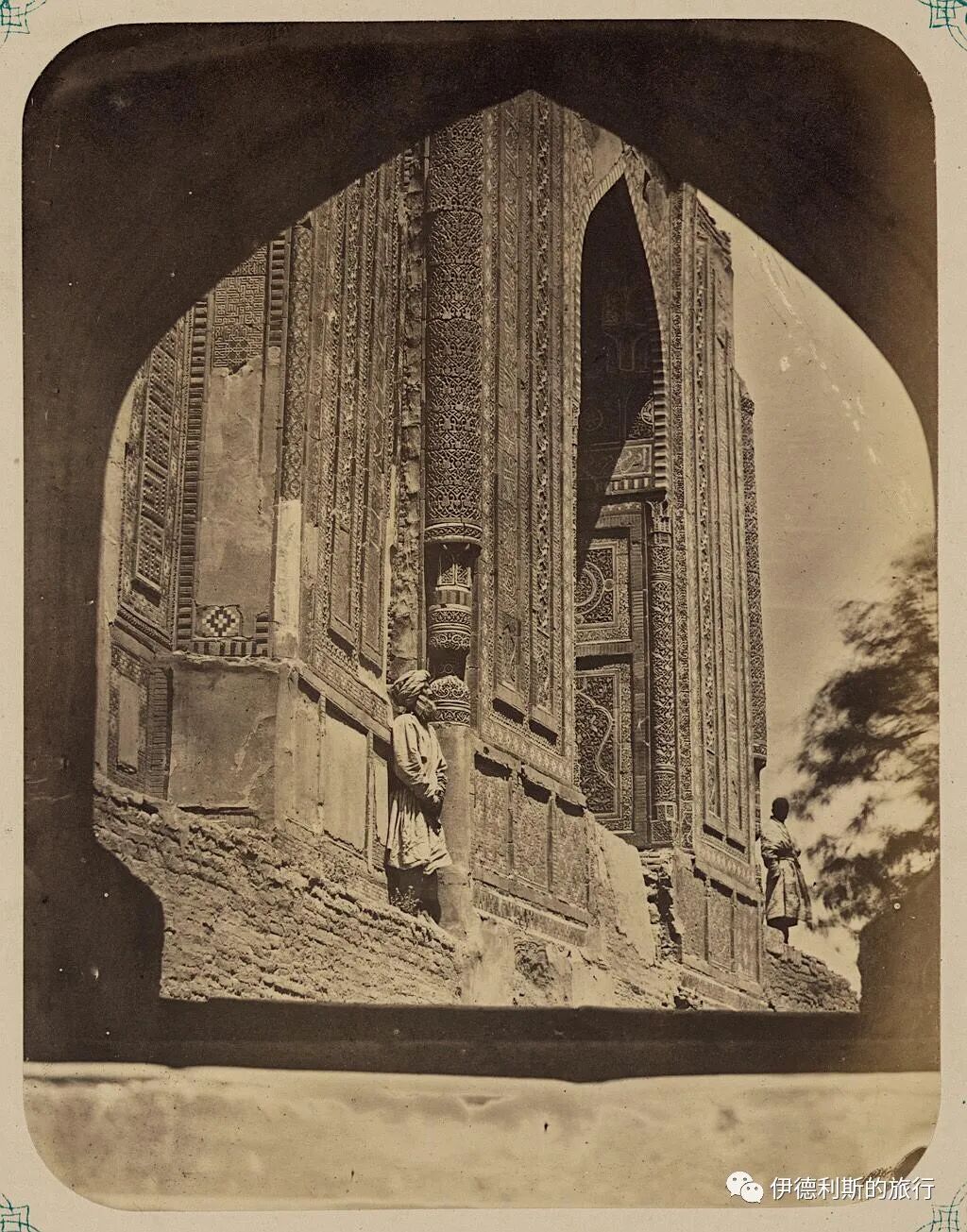
The mausoleum of Amirzade shot from north to south.
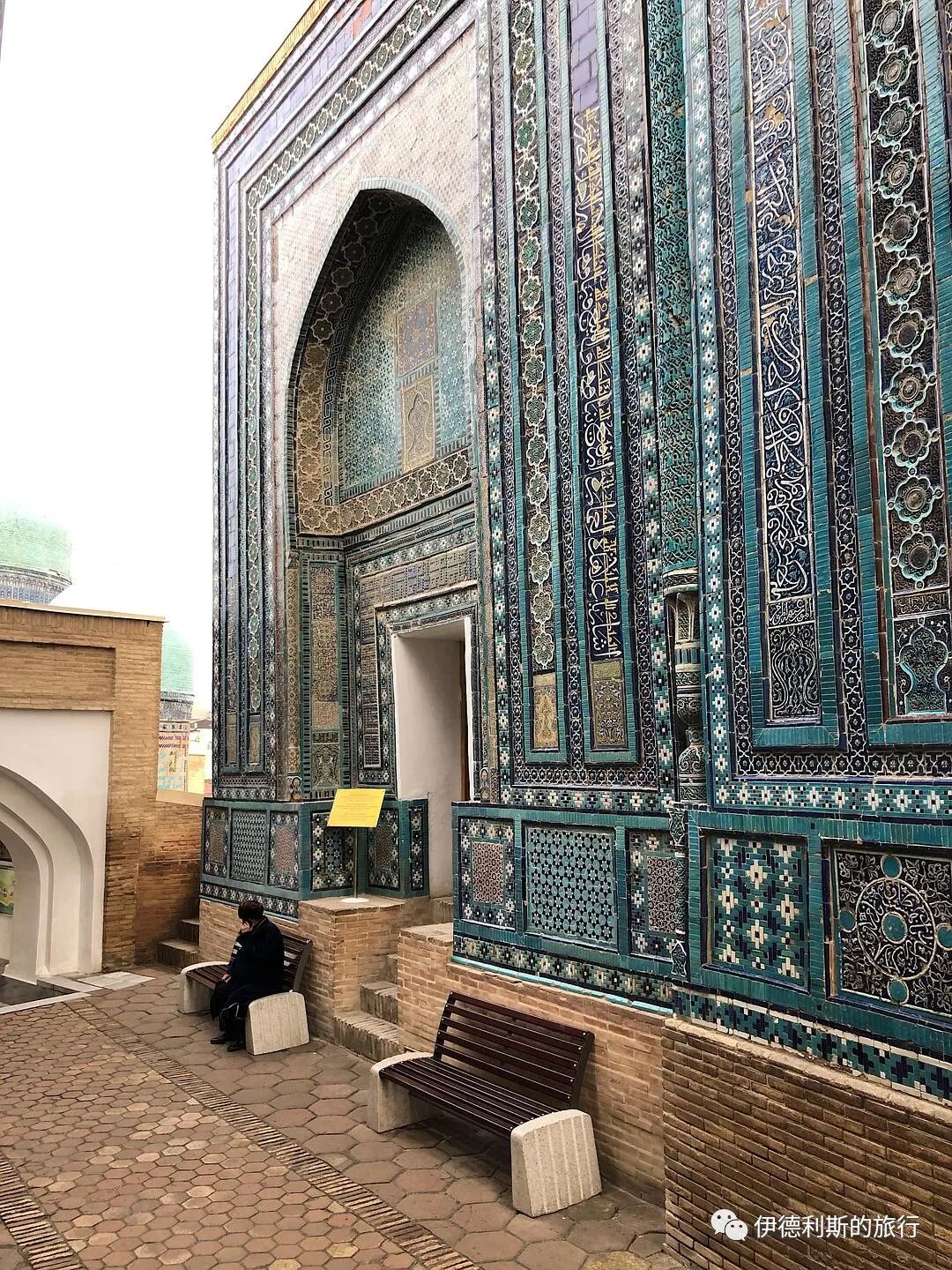
Shot from north to south, from left to right are the mausoleum of Amirzade and the mausoleum of Shadi Mulk Aka.
1. Amirzade Mausoleum: 1386
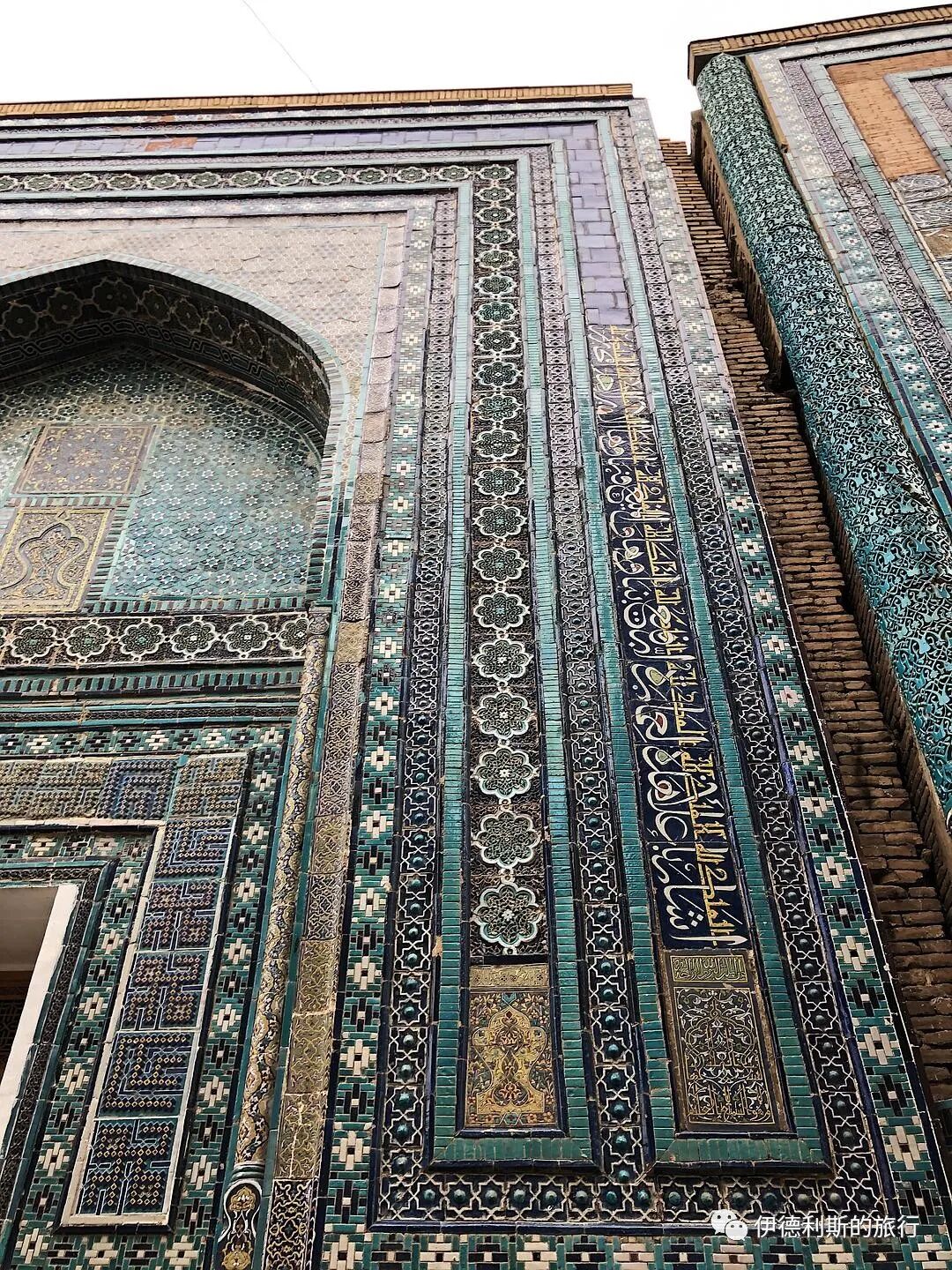
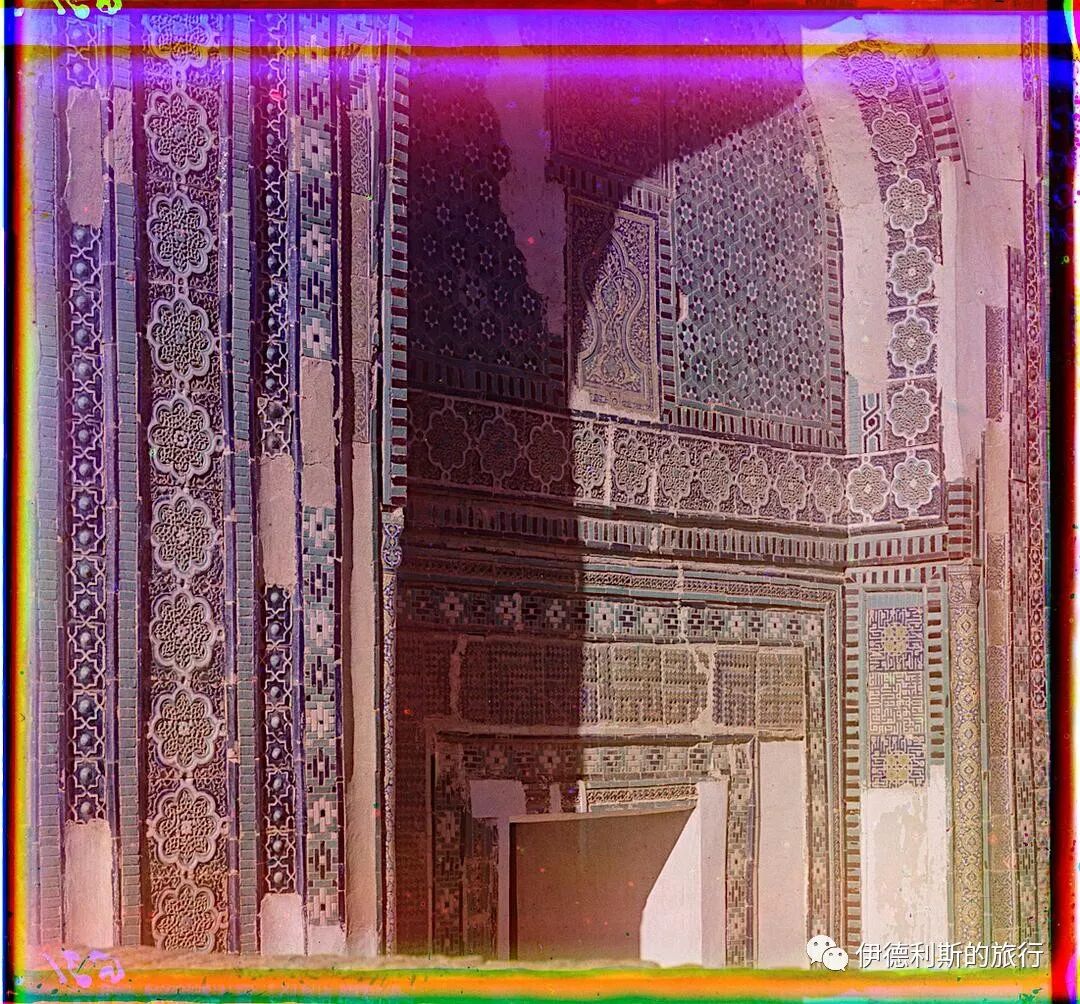
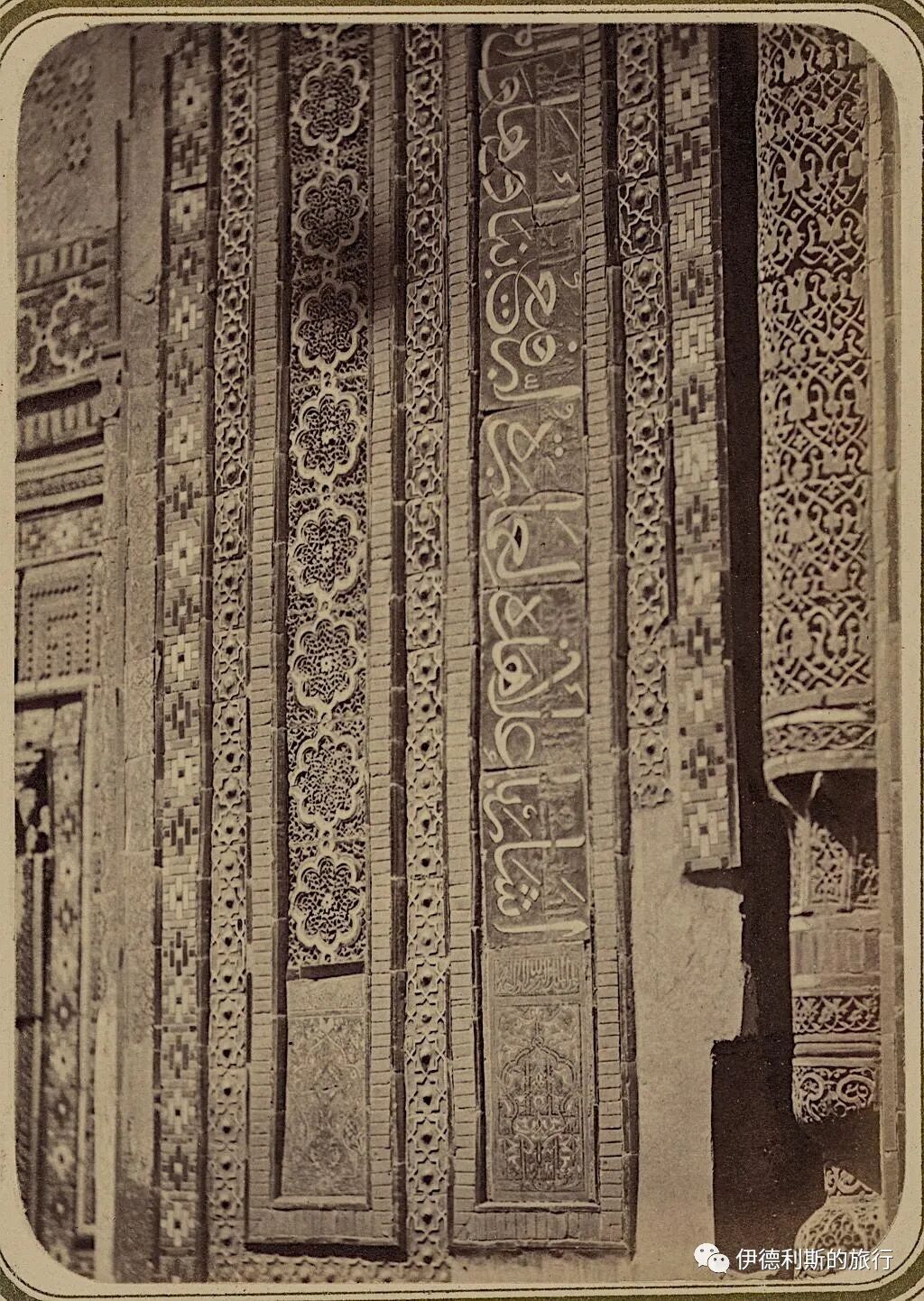
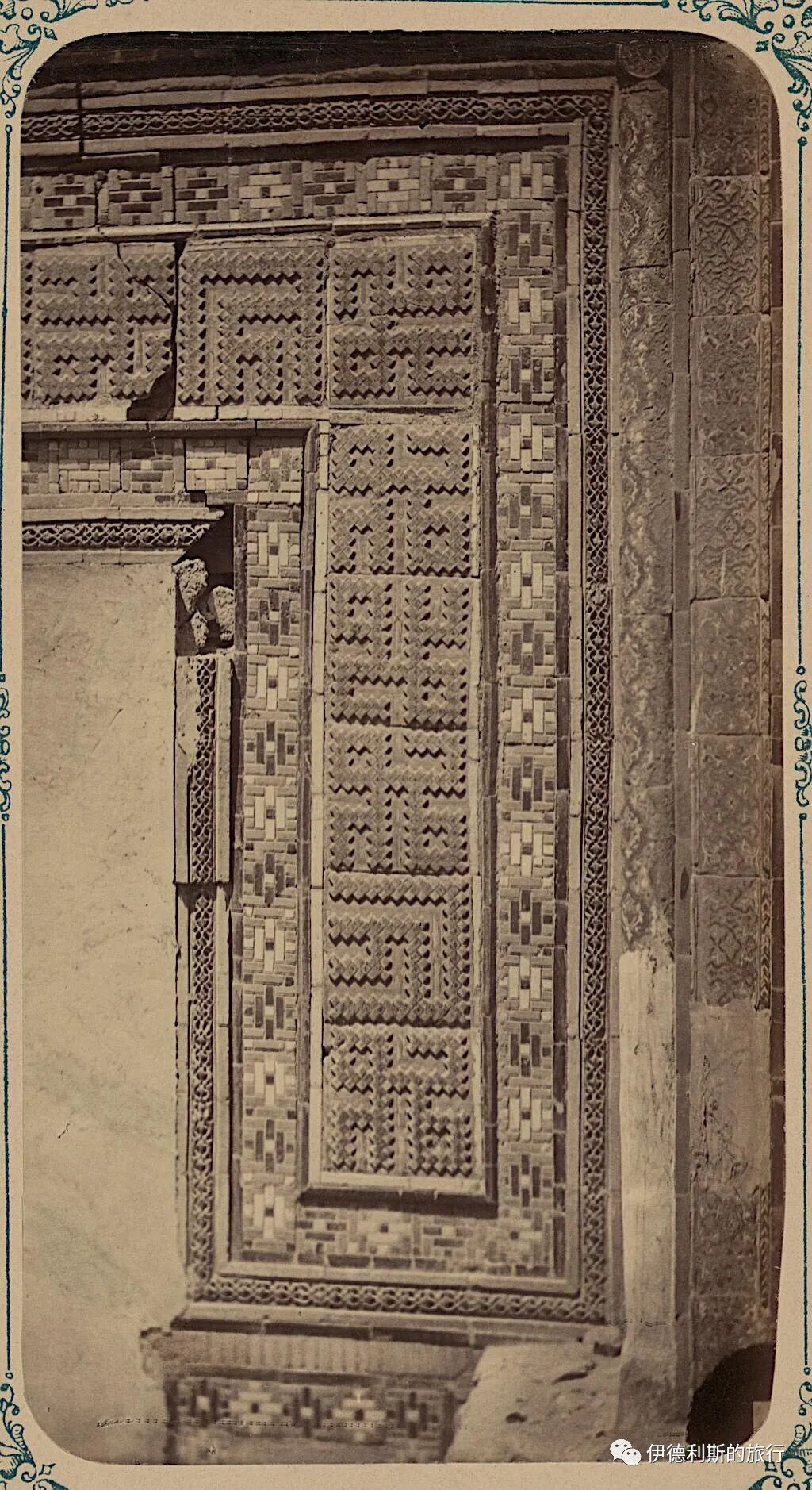
Amirzade was a minister in Timur's court. In addition to geometric patterns and eight-petaled rose patterns, the Peshtak (portal) entrance of the mausoleum also features Kufic calligraphy and Thuluth calligraphy.
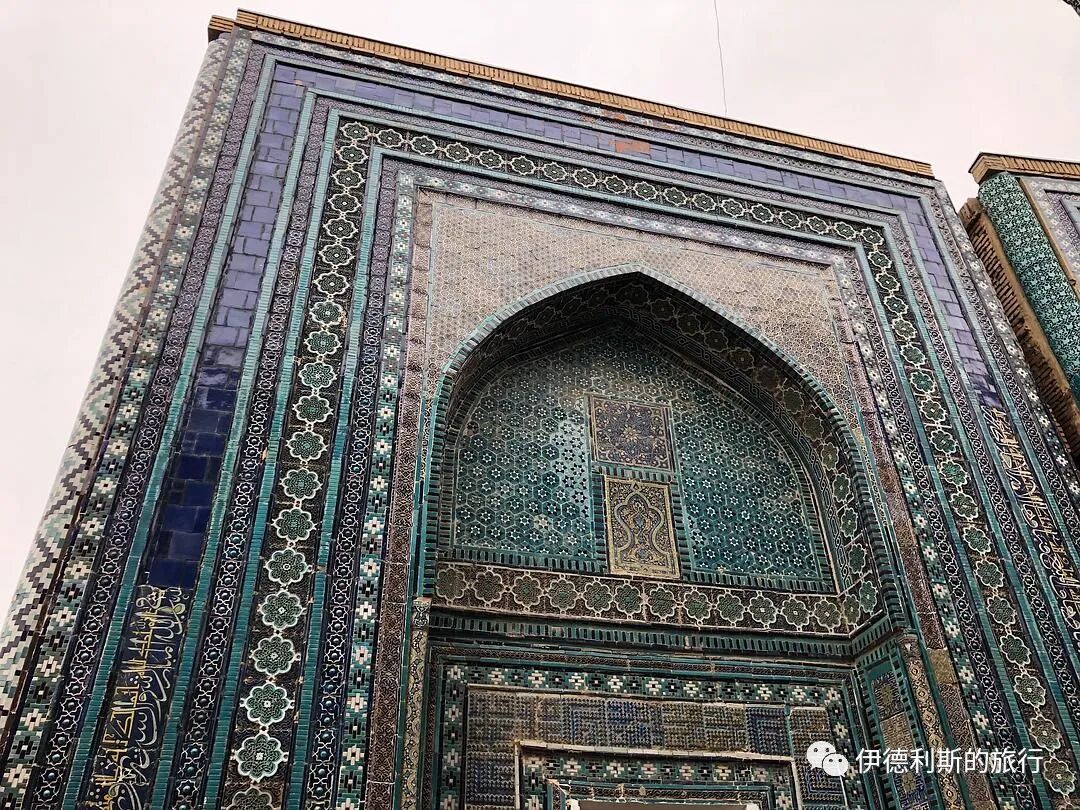
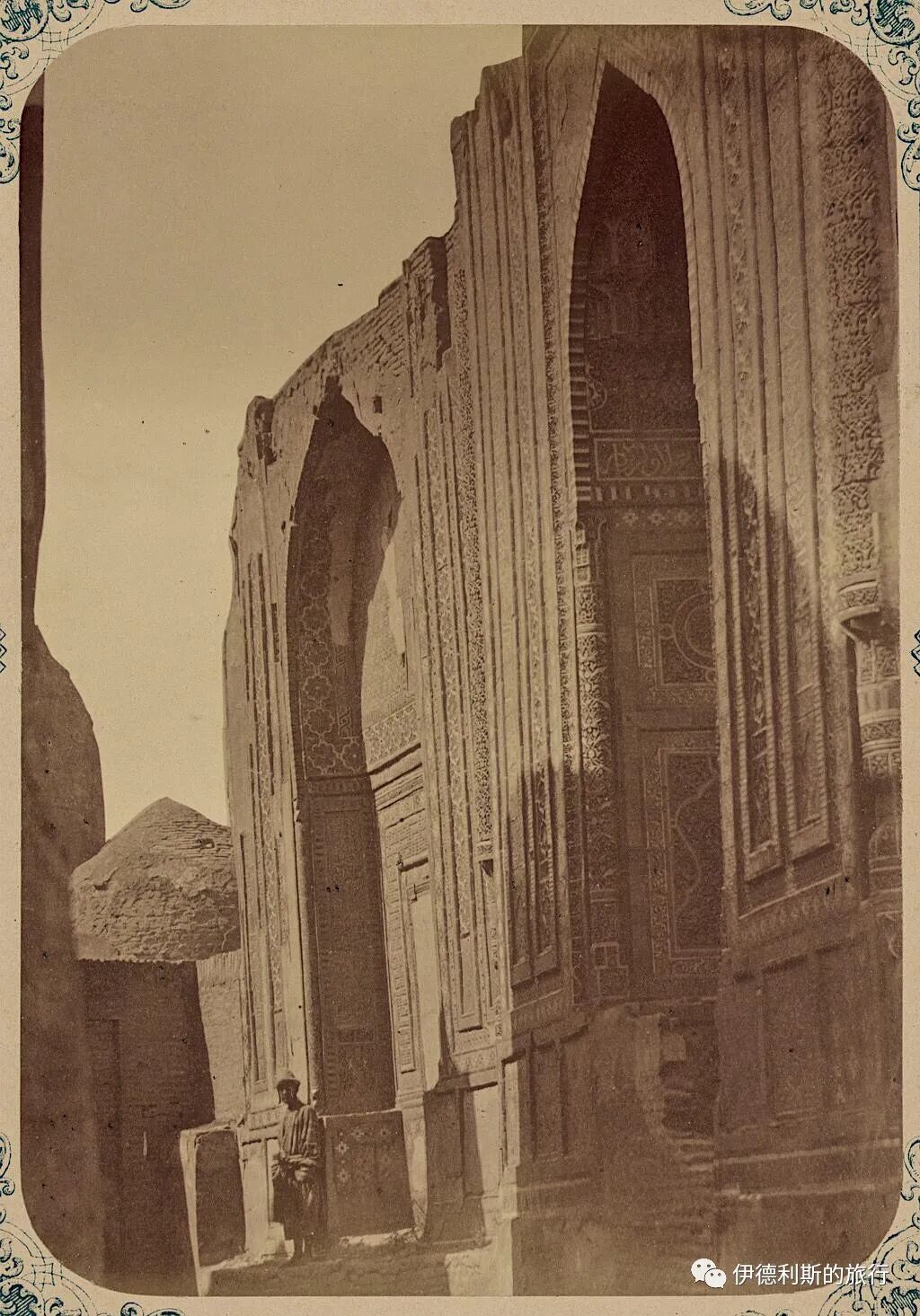
2. Shadi Mulk Aka Mausoleum: 1372
Shadi Mulk Aka was the daughter of Timur's eldest sister, Kutlug Turkan Aka.
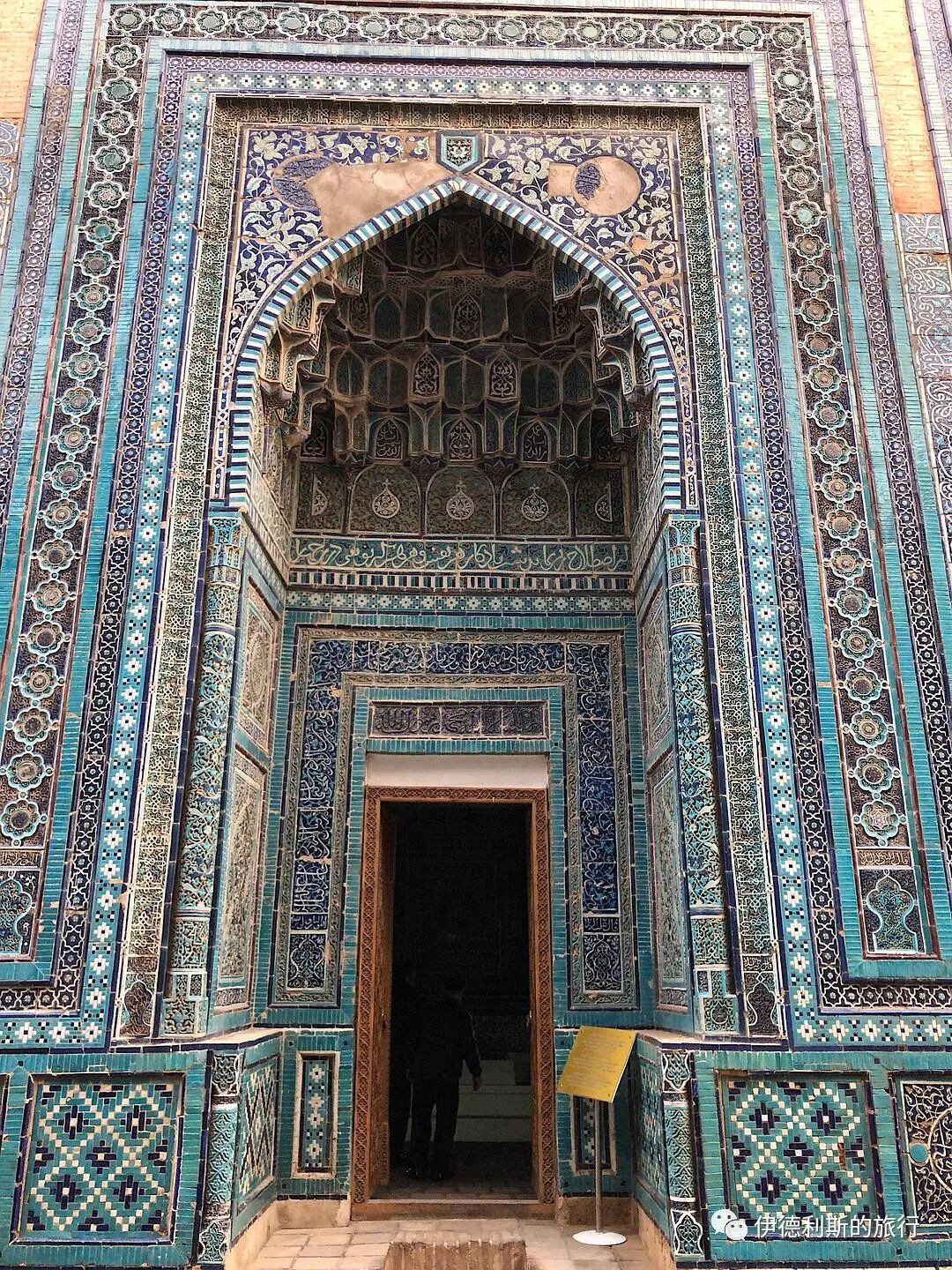
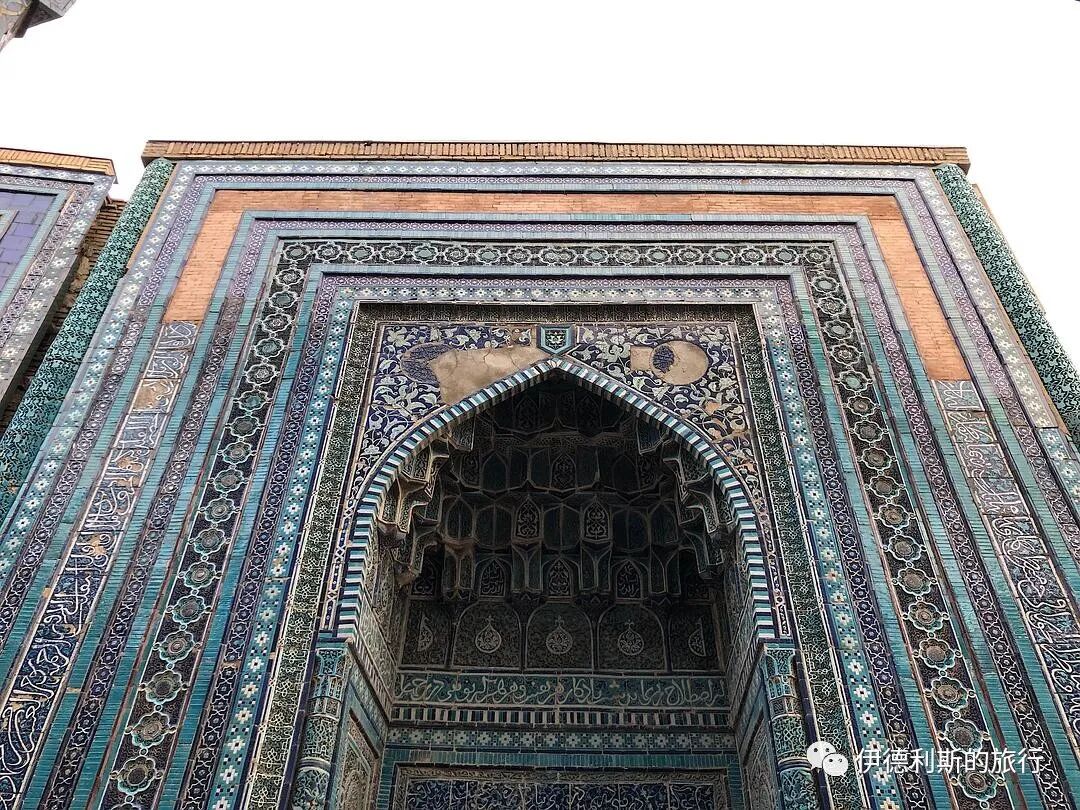
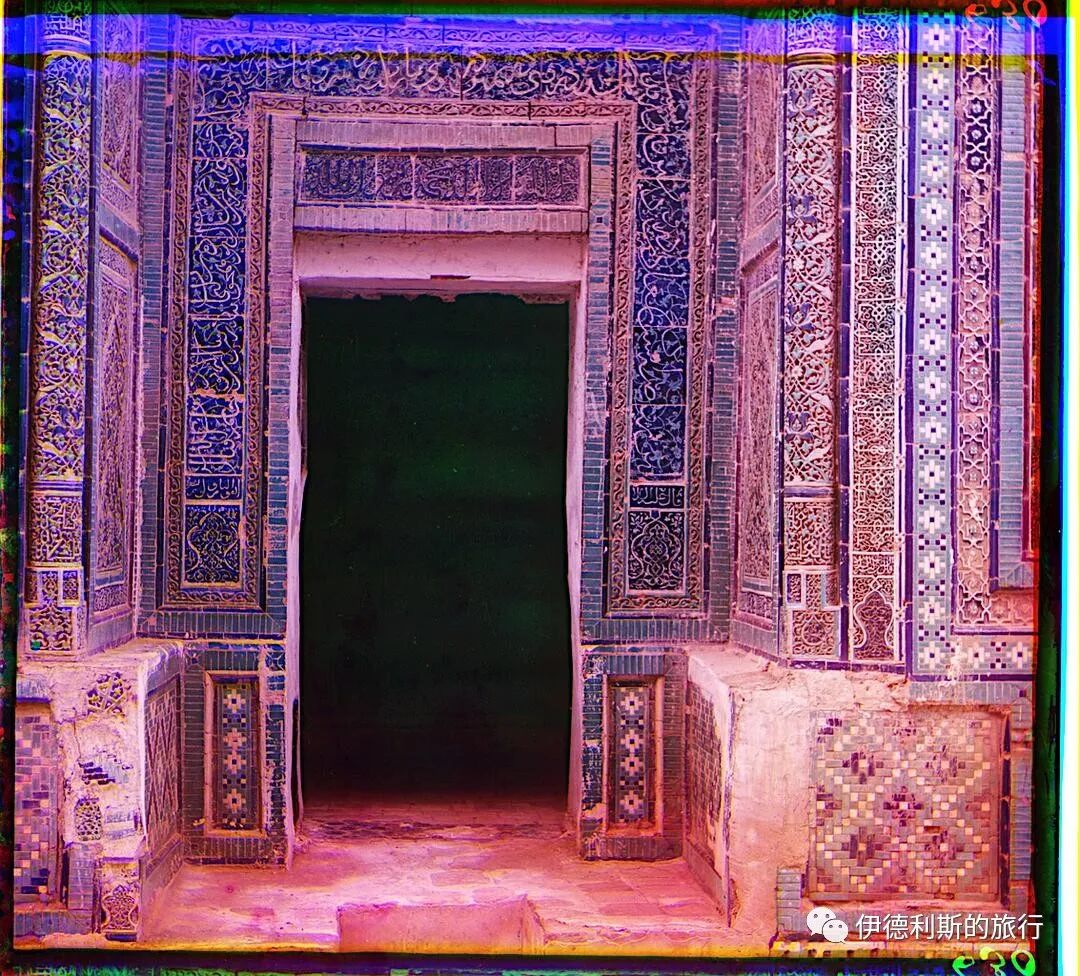
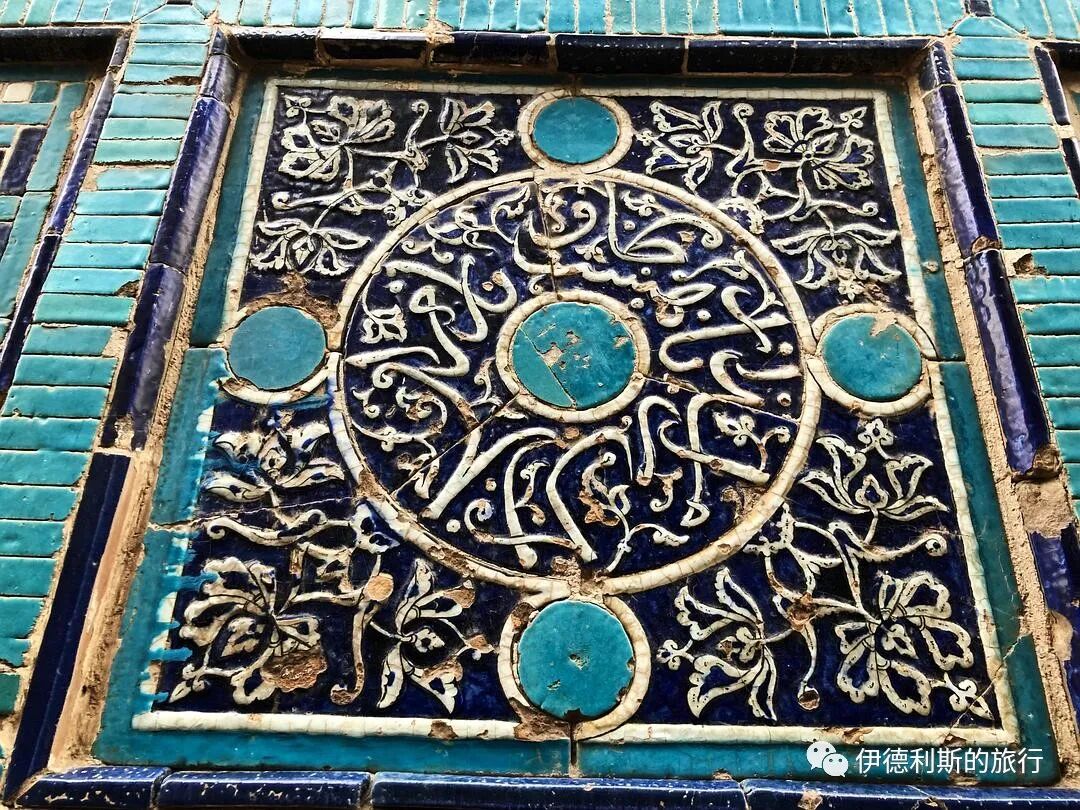
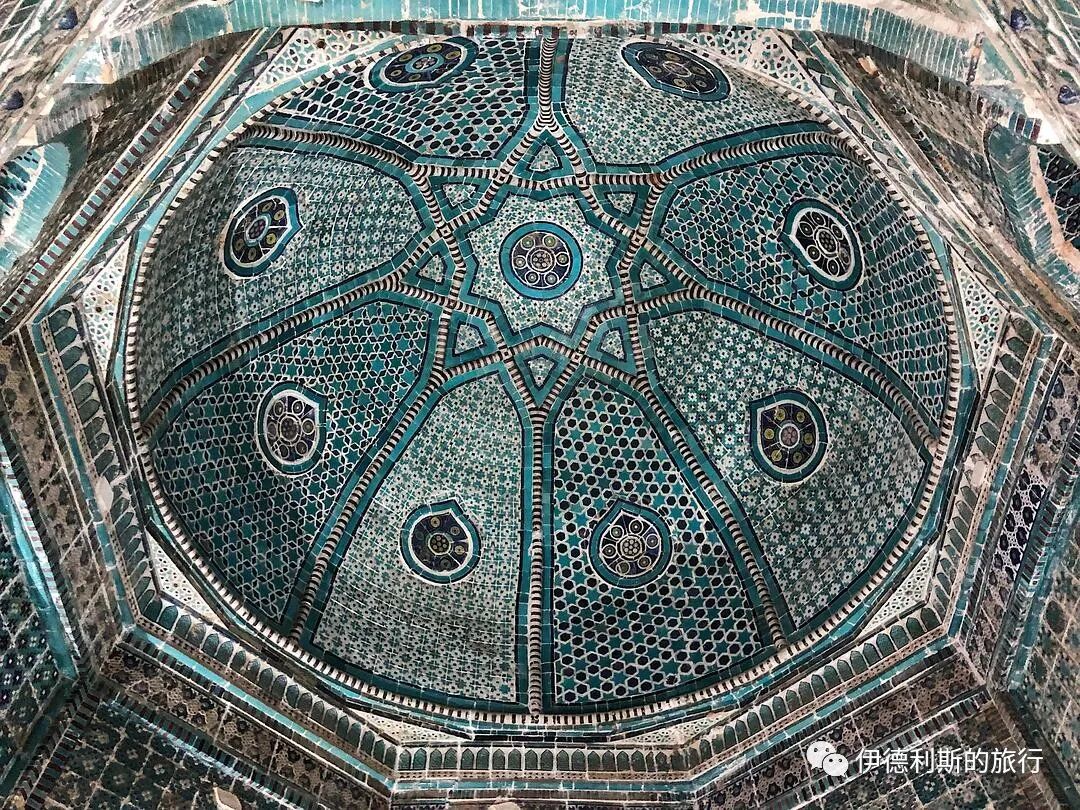
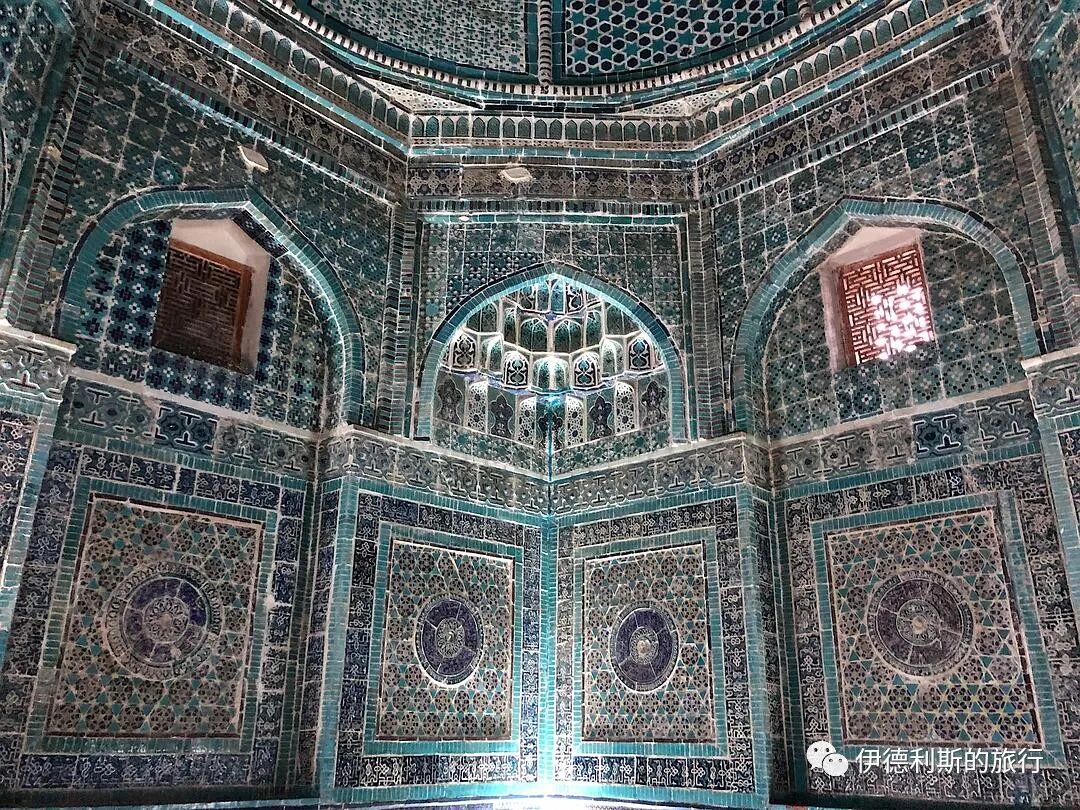
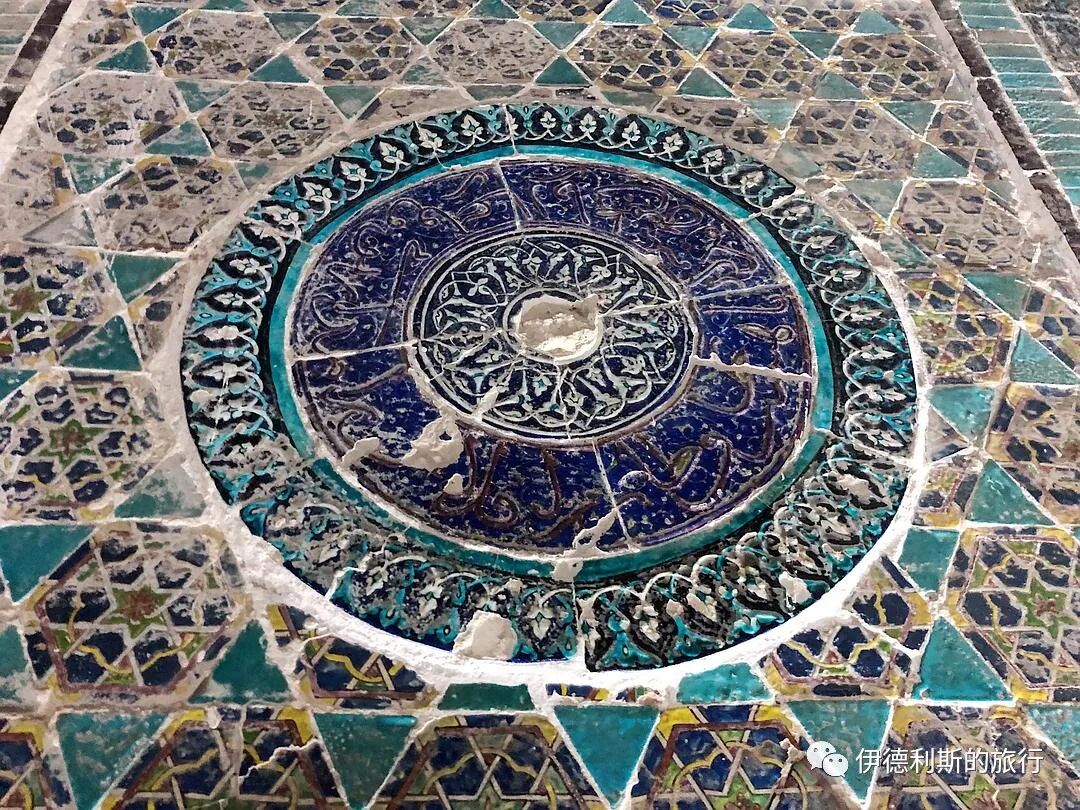
3. Tughlu Tekin Mausoleum: 1376
Tughlu Tekin was the mother of Timur's general Amir Hussein, and later Amir Hussein was also buried here.
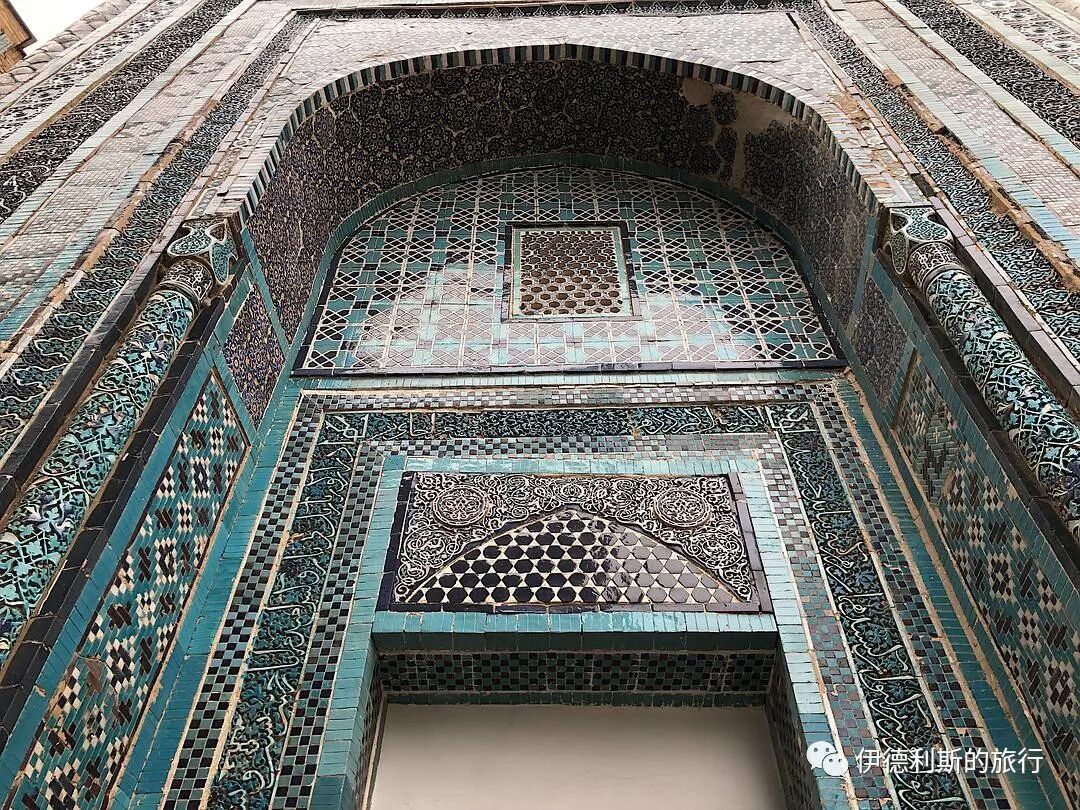
4. Shirin Bika Aka Mausoleum: 1386
The occupant of the tomb is Timur's sister.
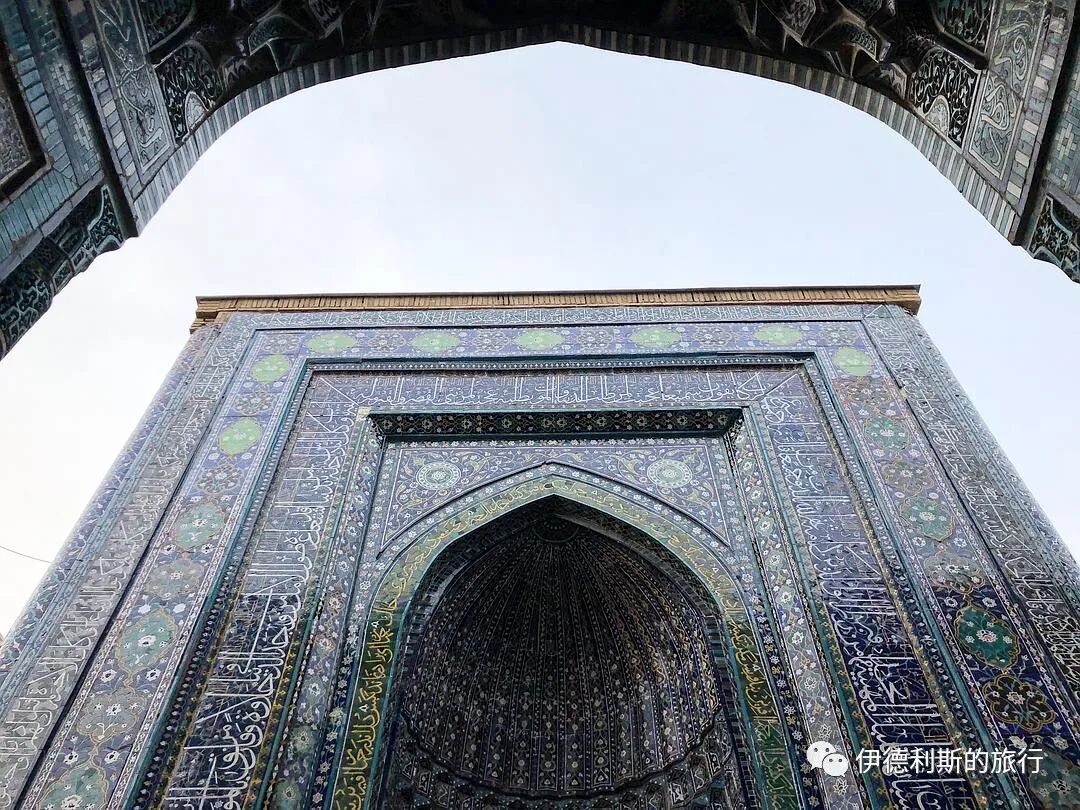
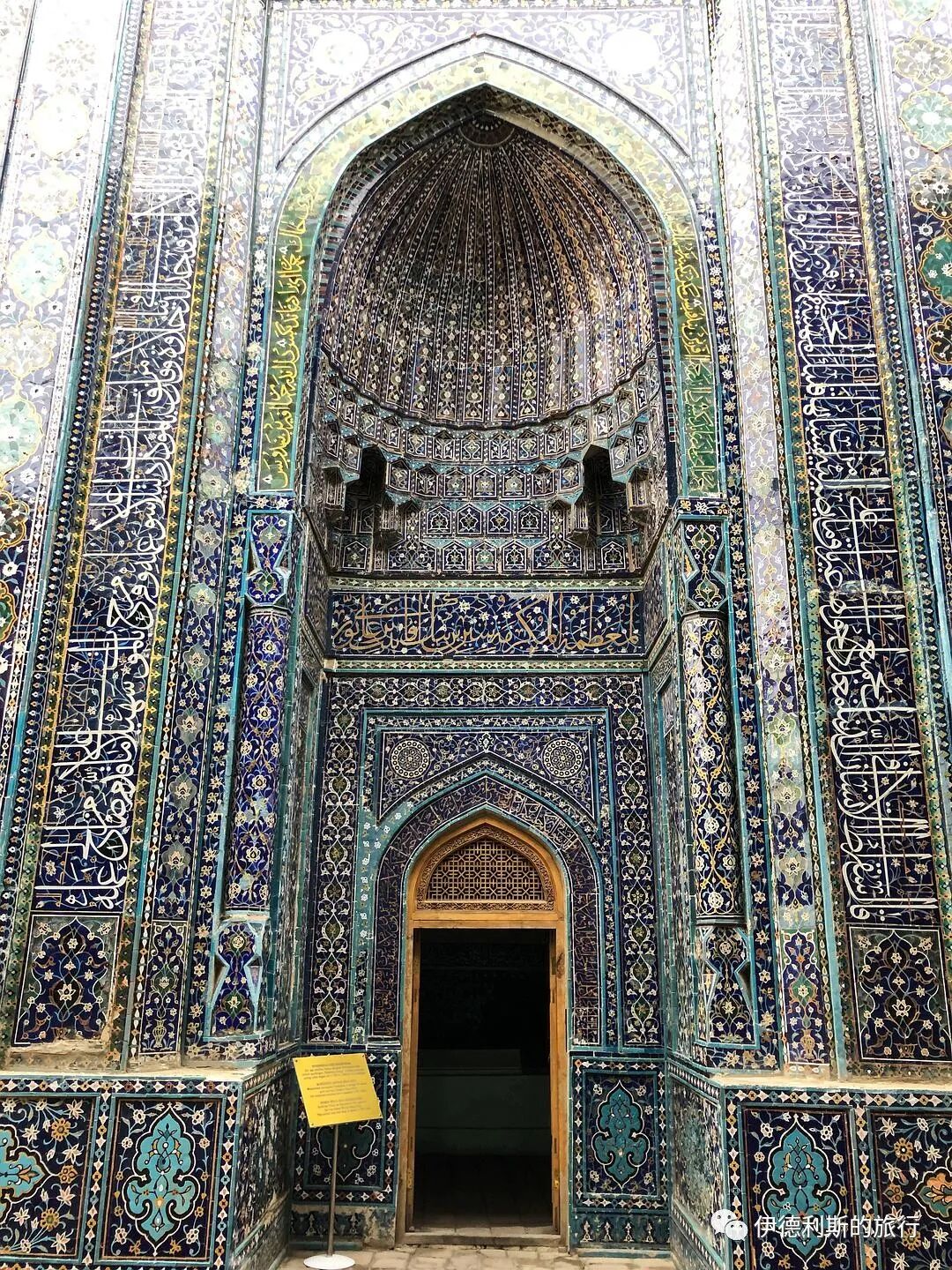
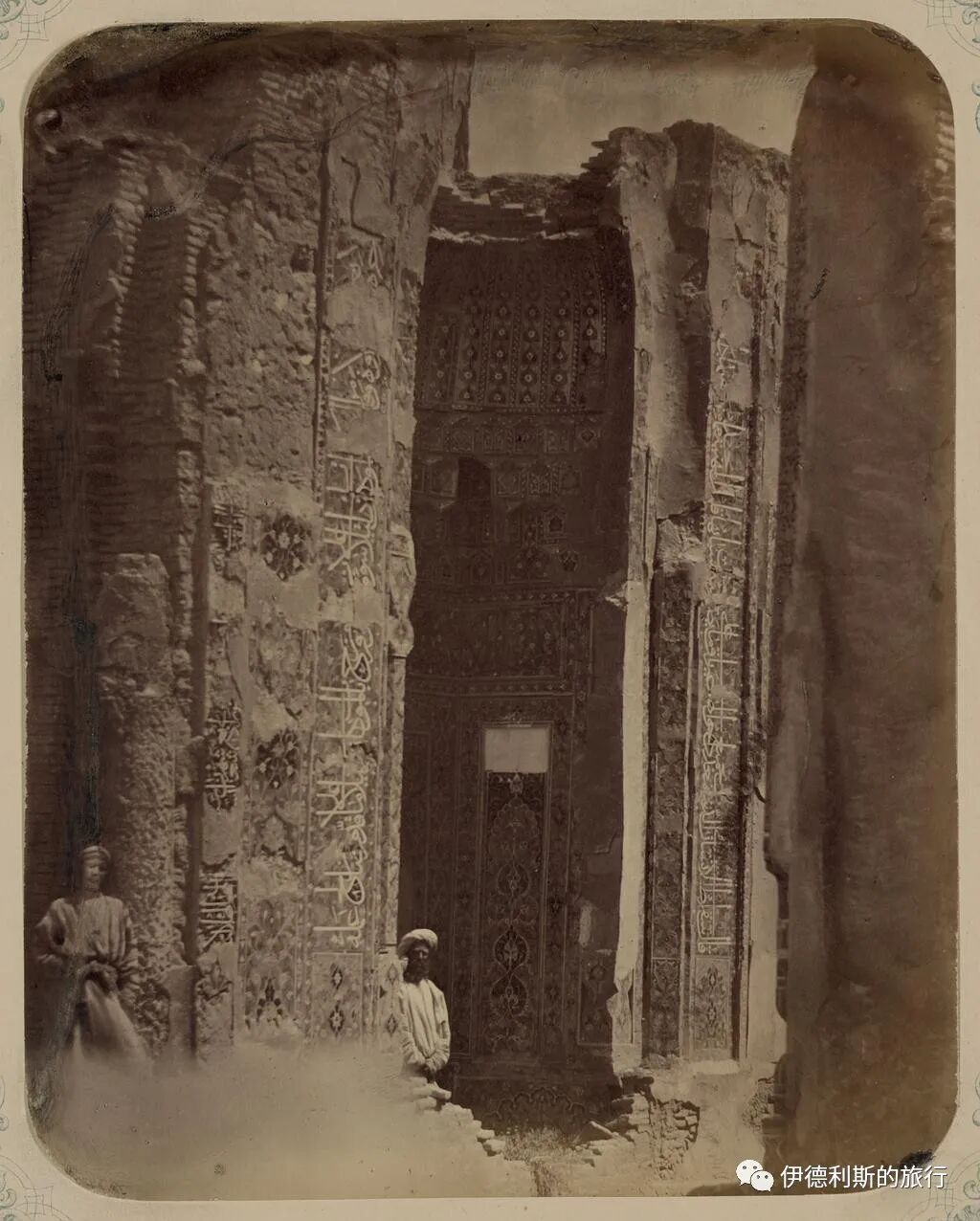
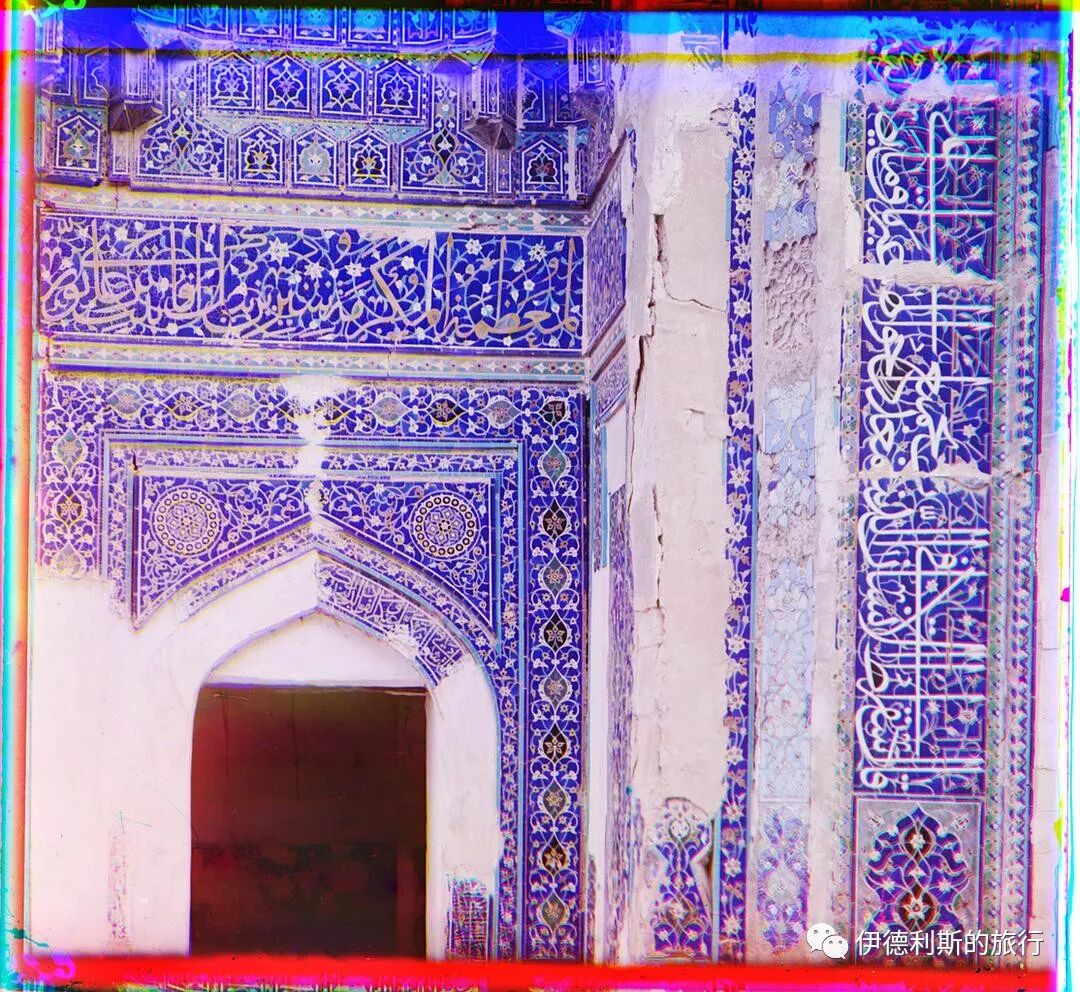
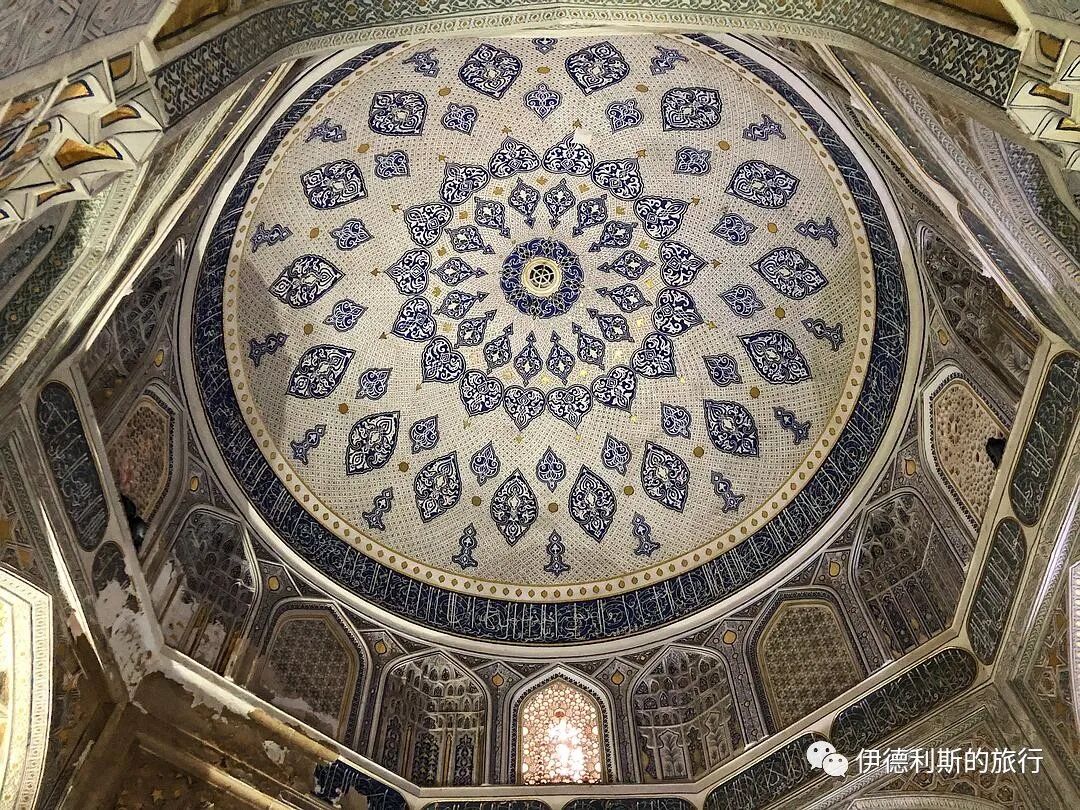
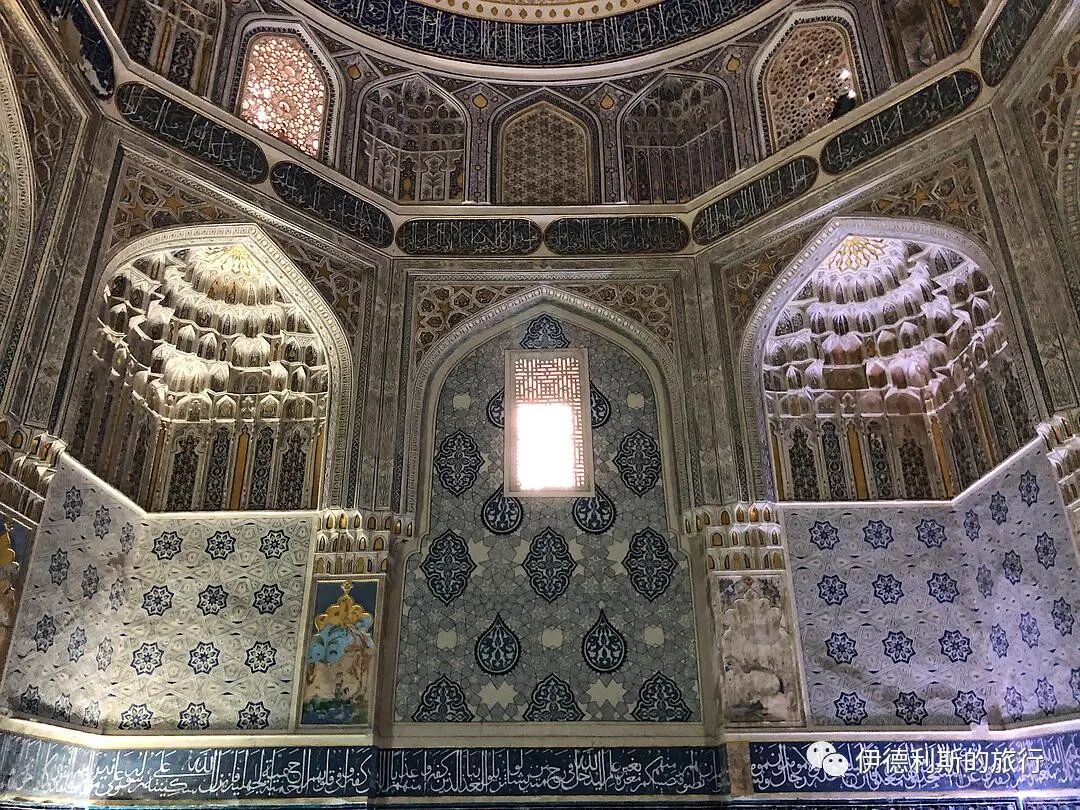
5. Octagonal Tomb Pavilion: presumably 1430s
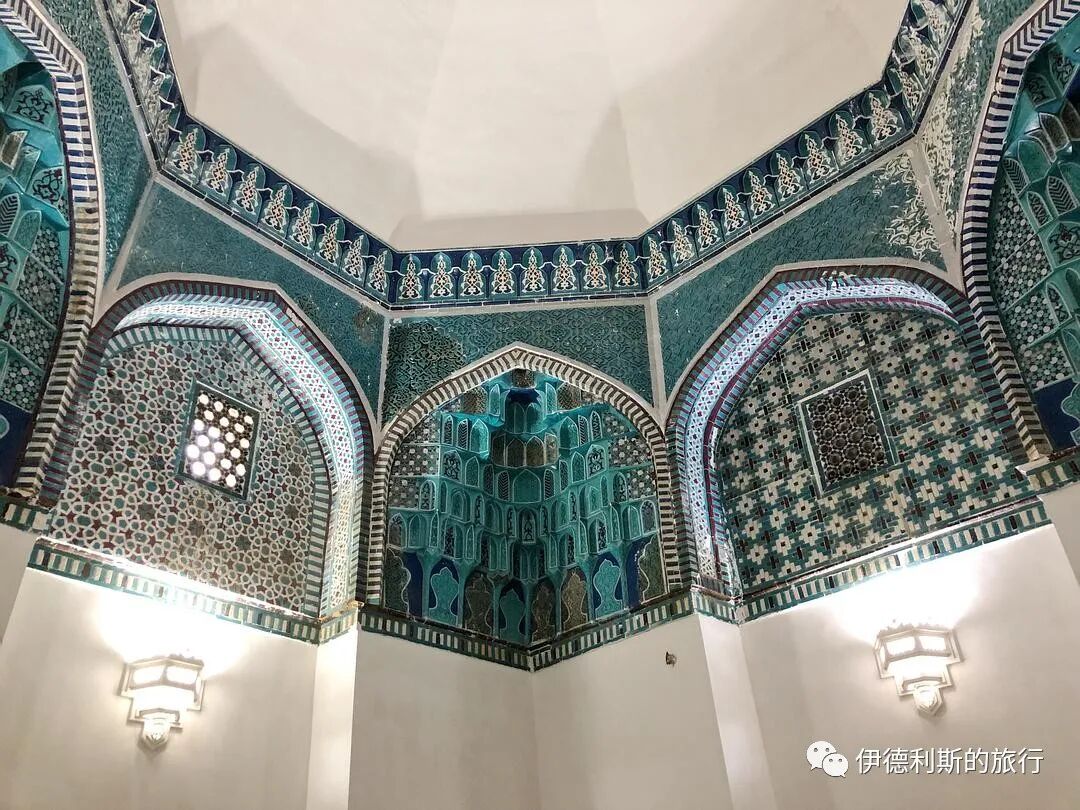
The occupant of this tomb pavilion has not been verified to this day.
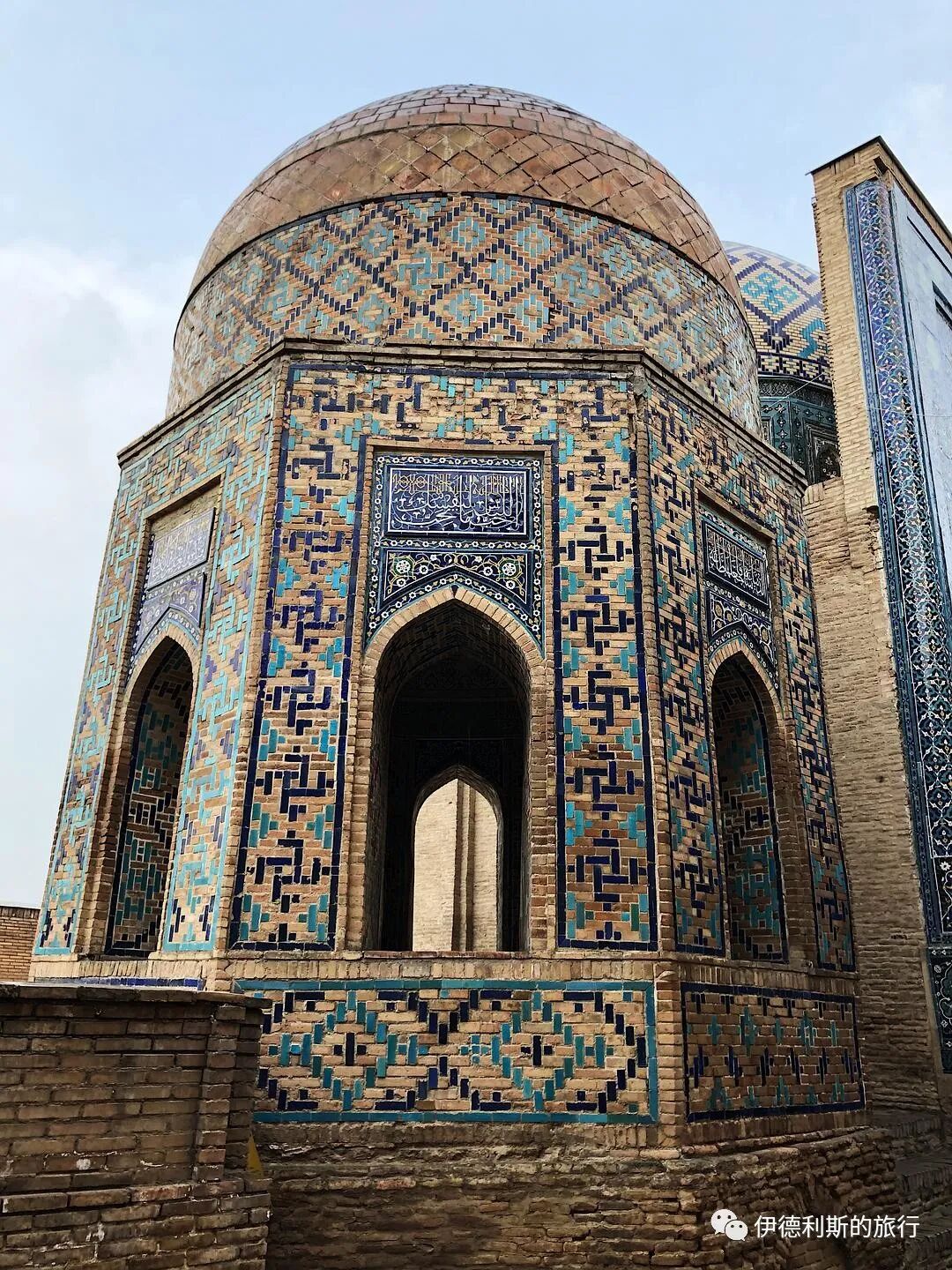
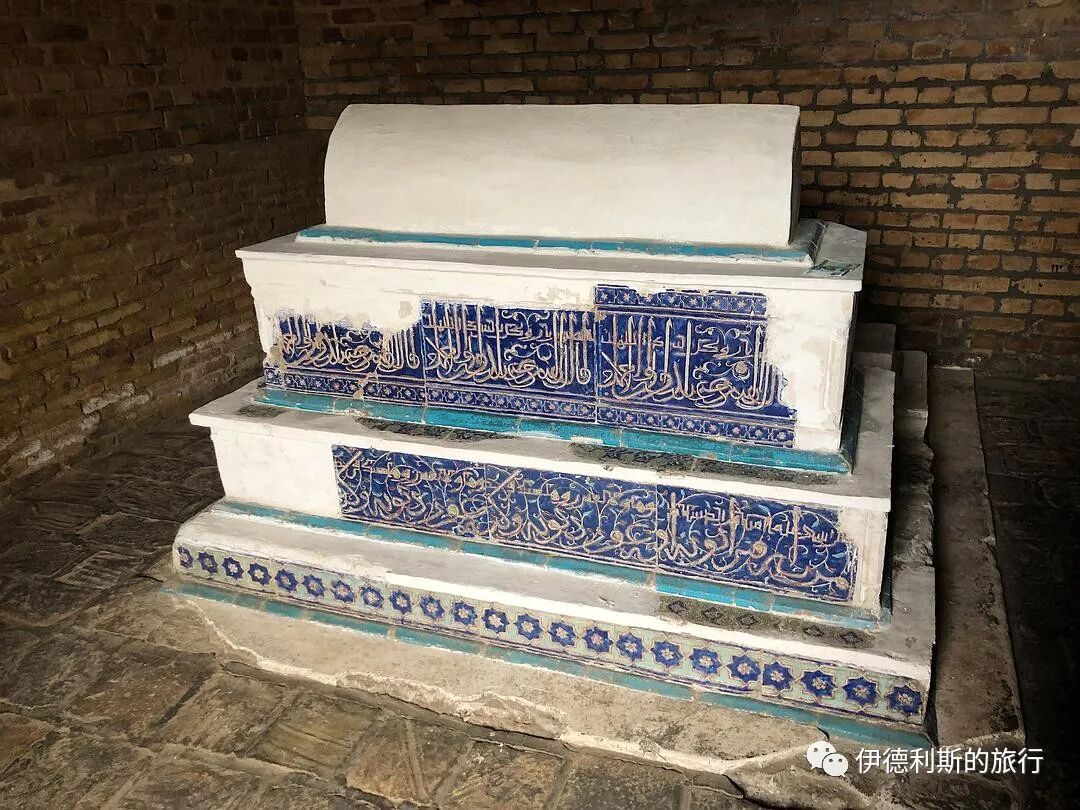
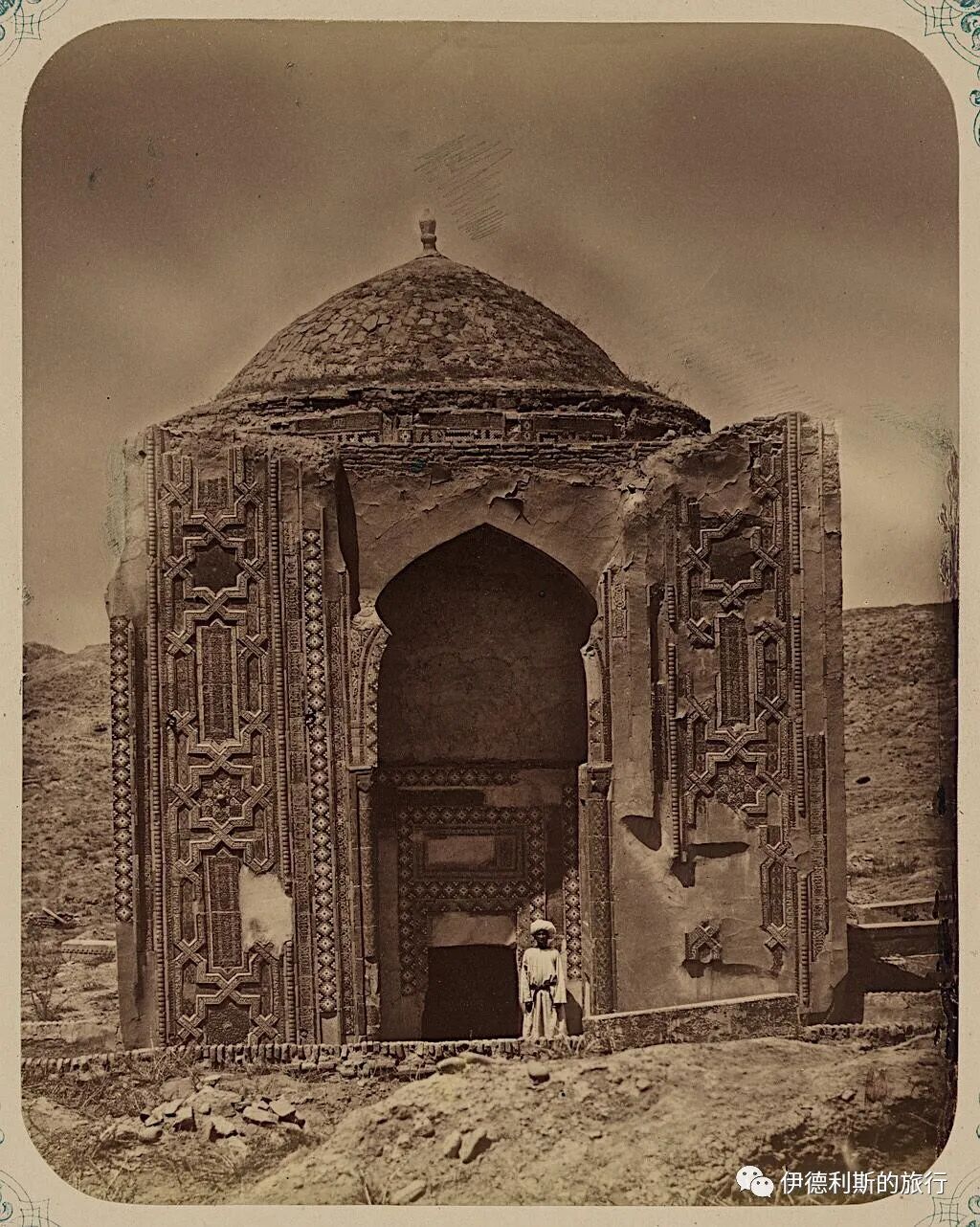
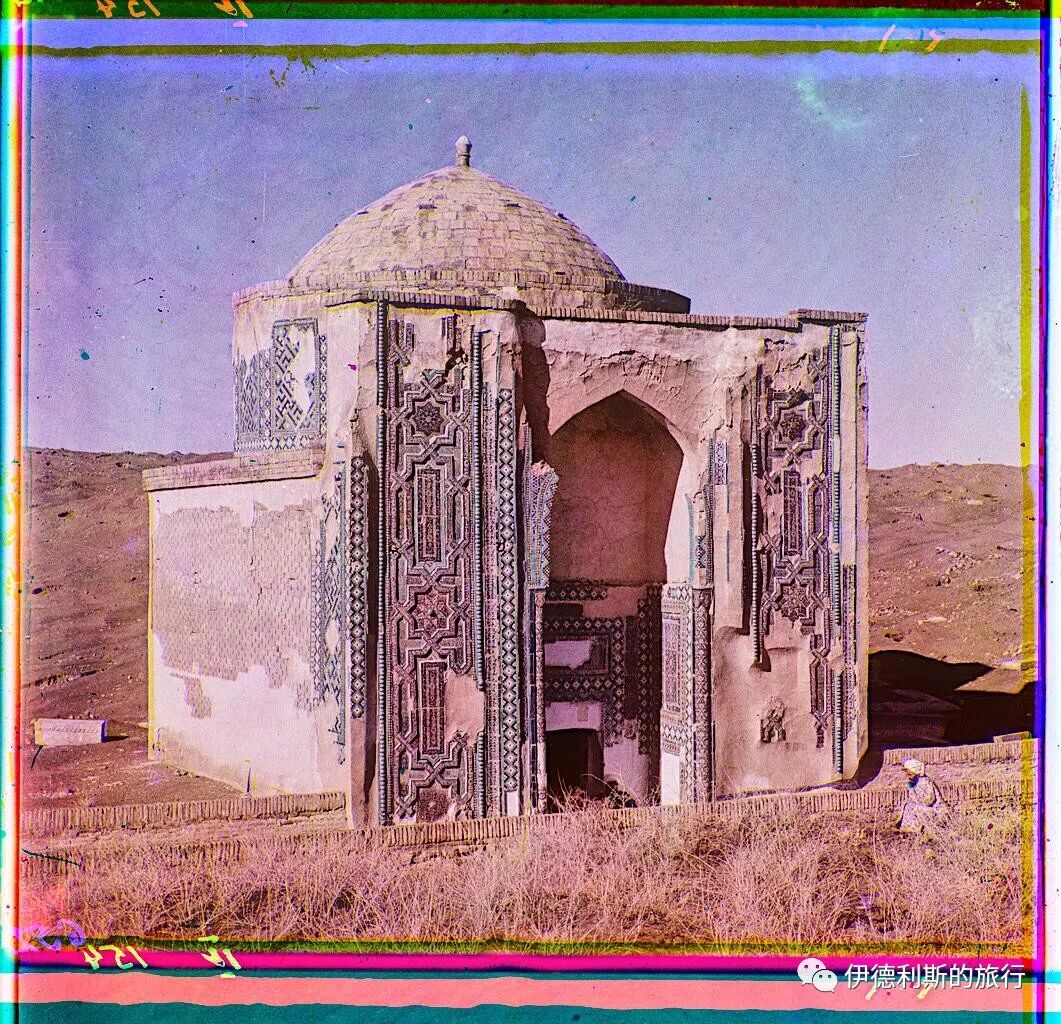
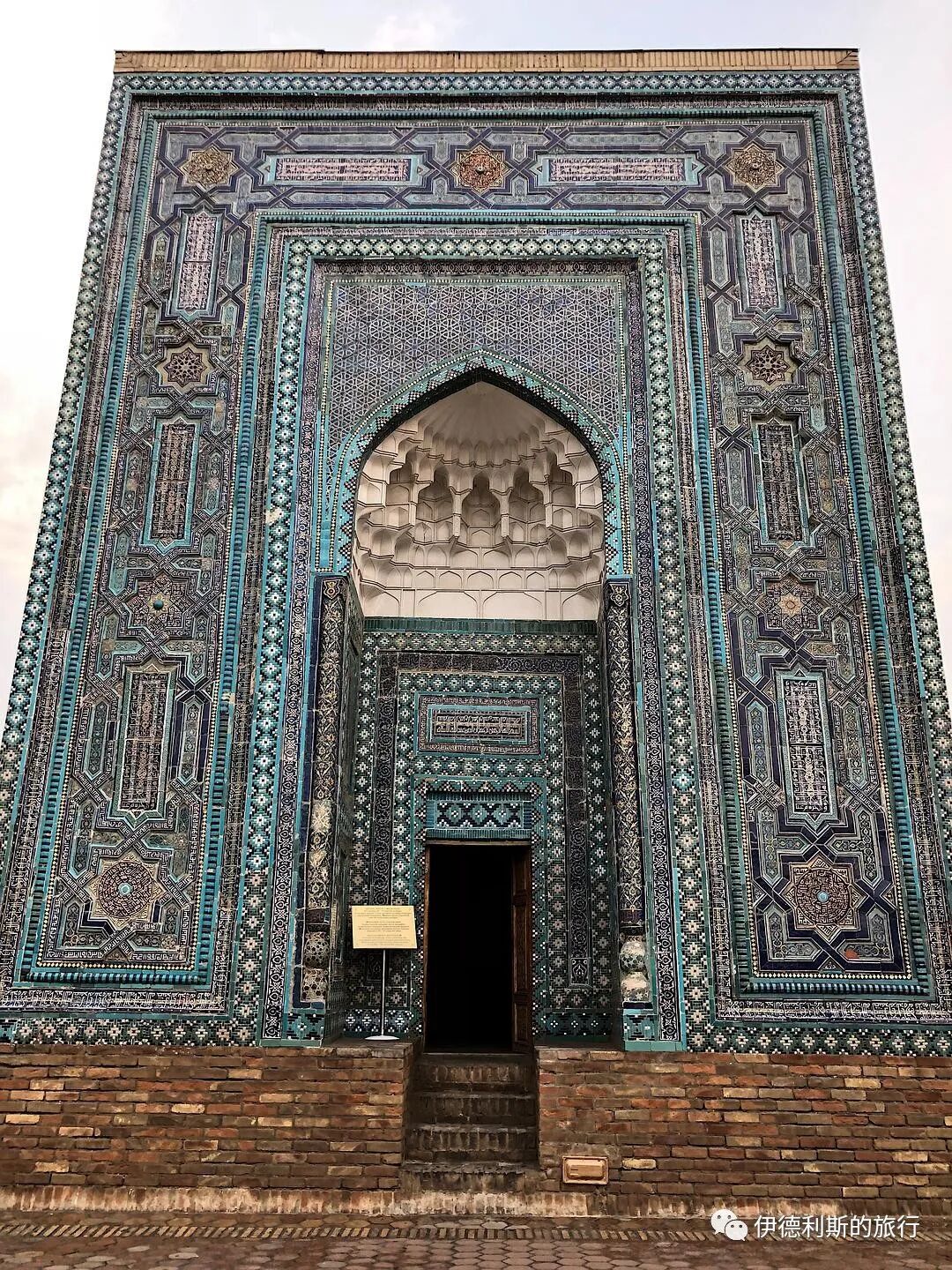
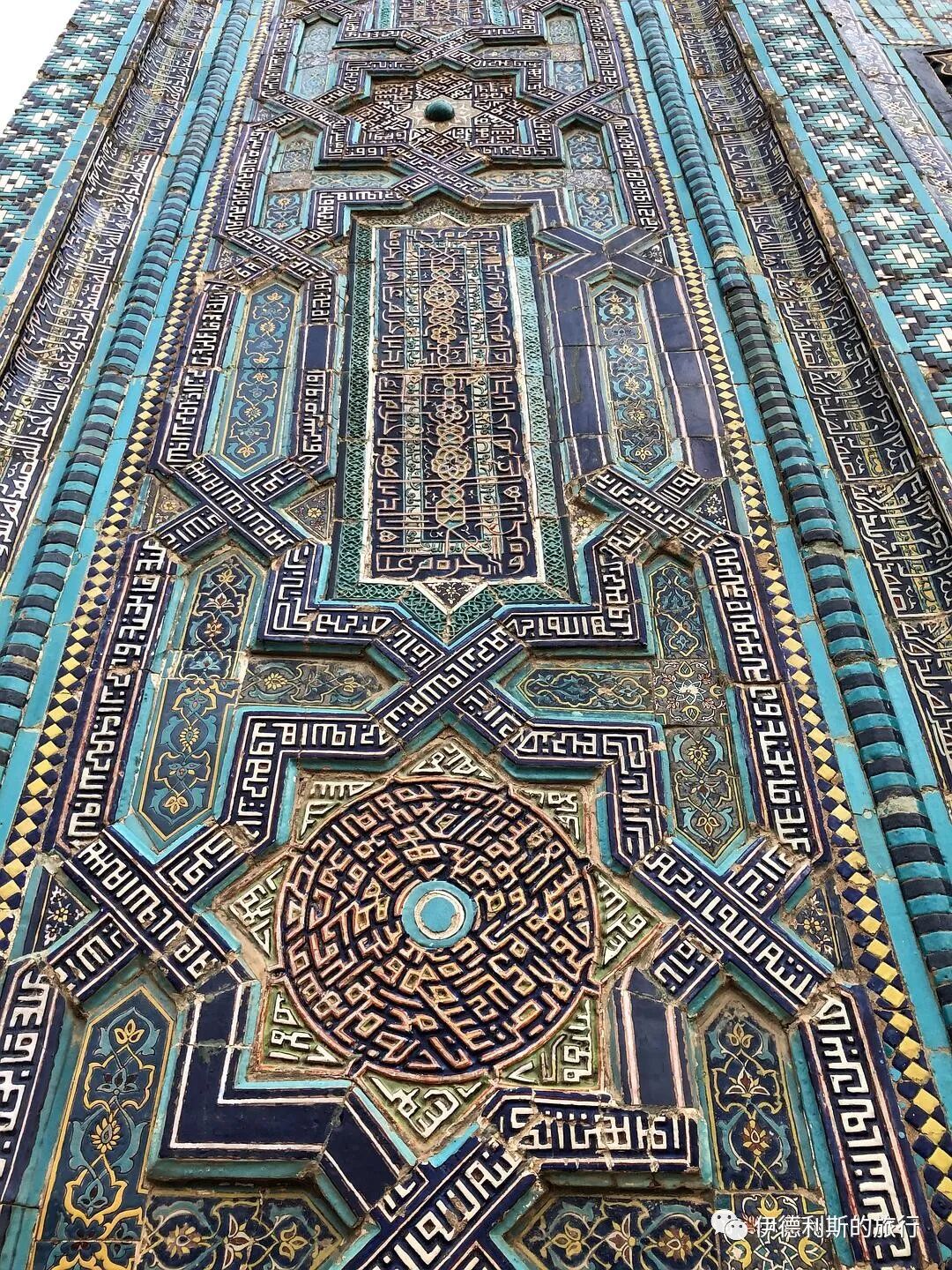
6. Usto Ali Mausoleum: 1360s–1380s
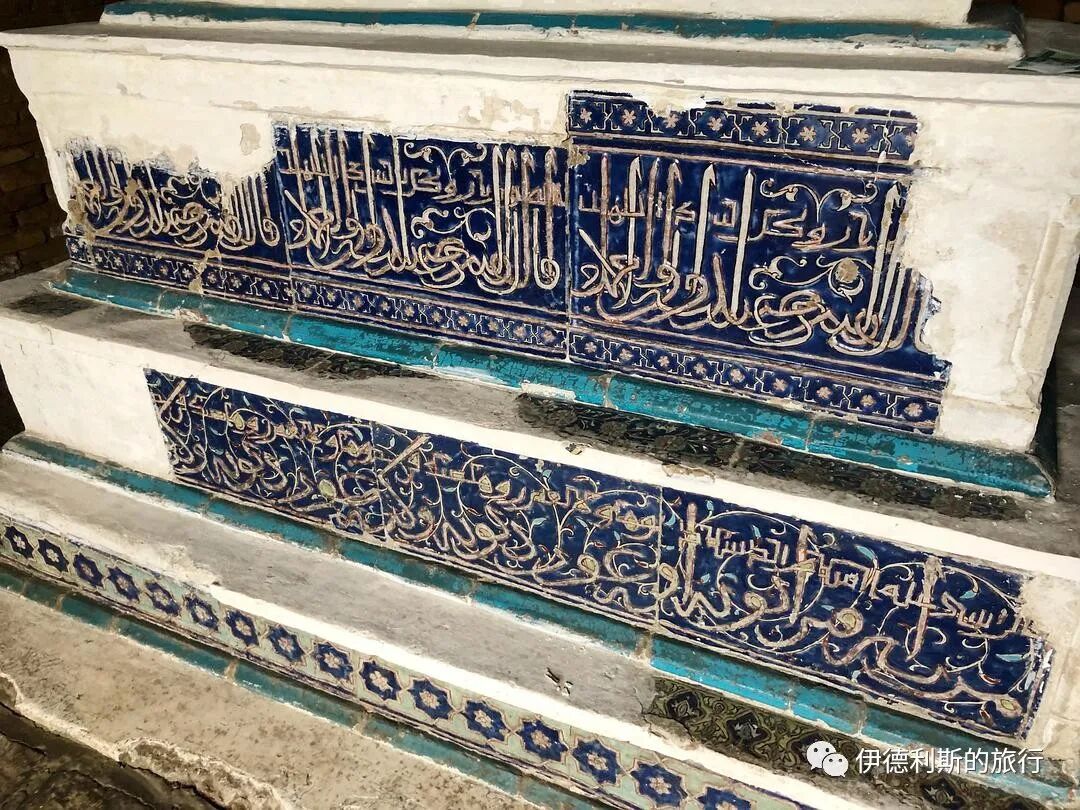
On the north side of the middle complex is a separate mausoleum; the occupant is unknown, only that the architect was Usto Ali from Nasaf (Qarshi).
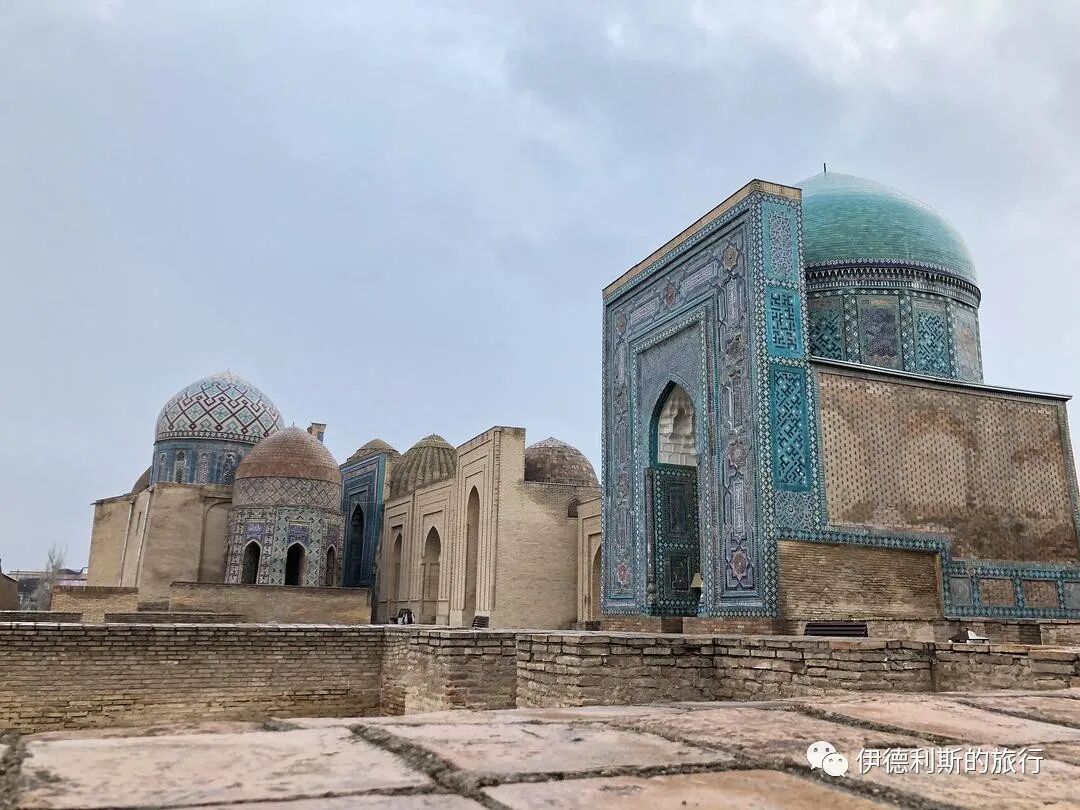
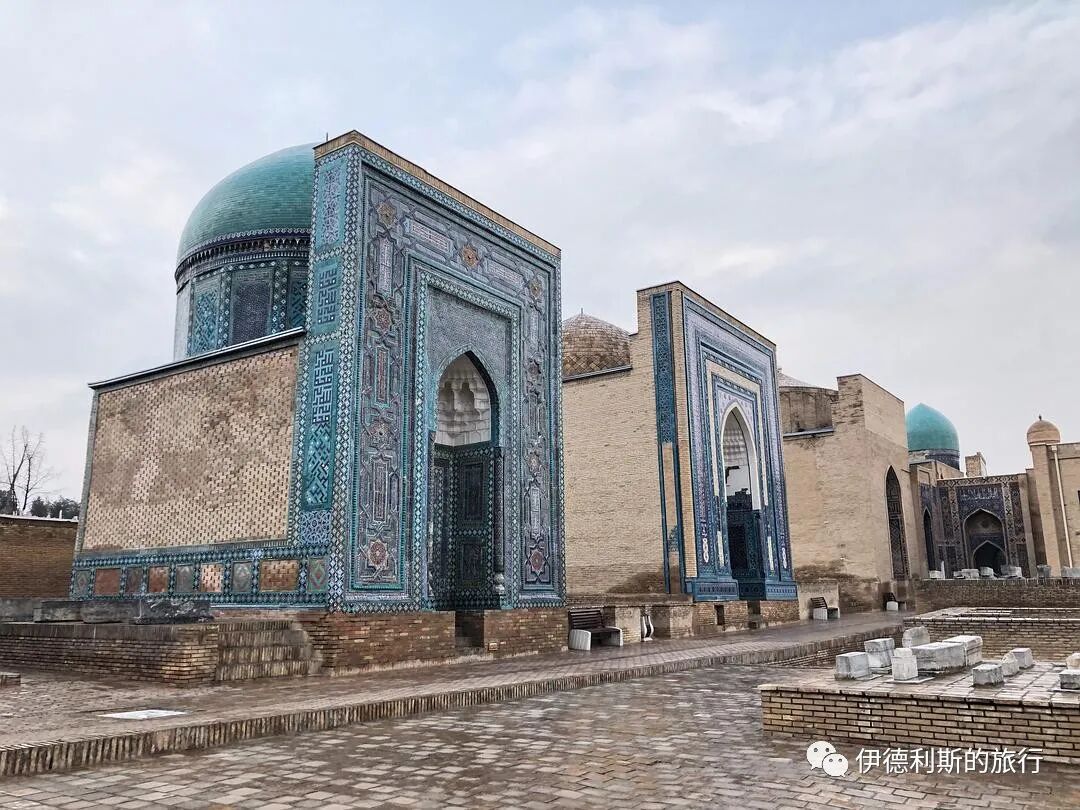
View from south to north
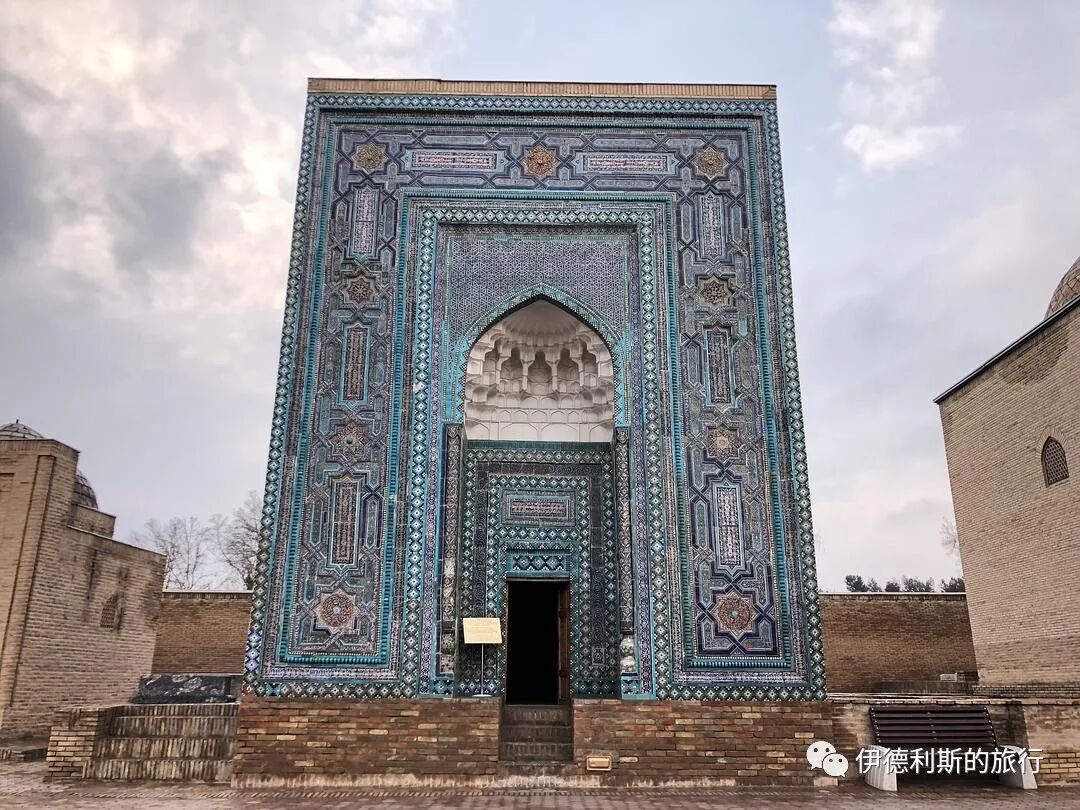
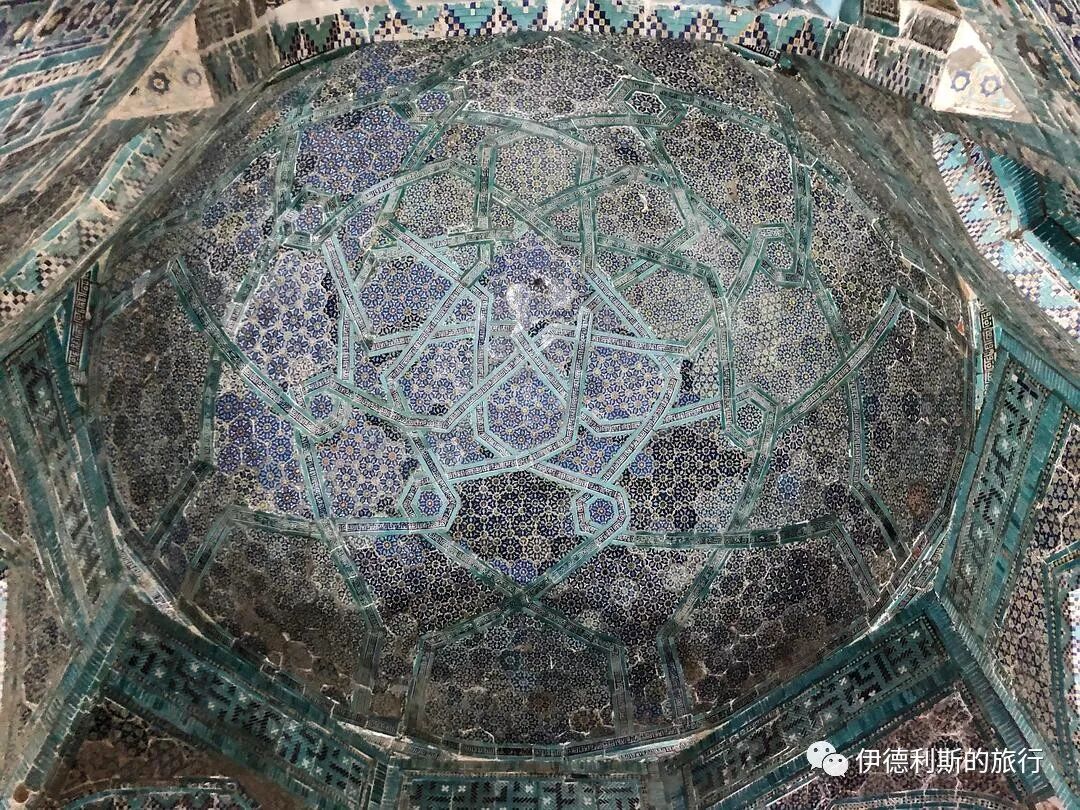
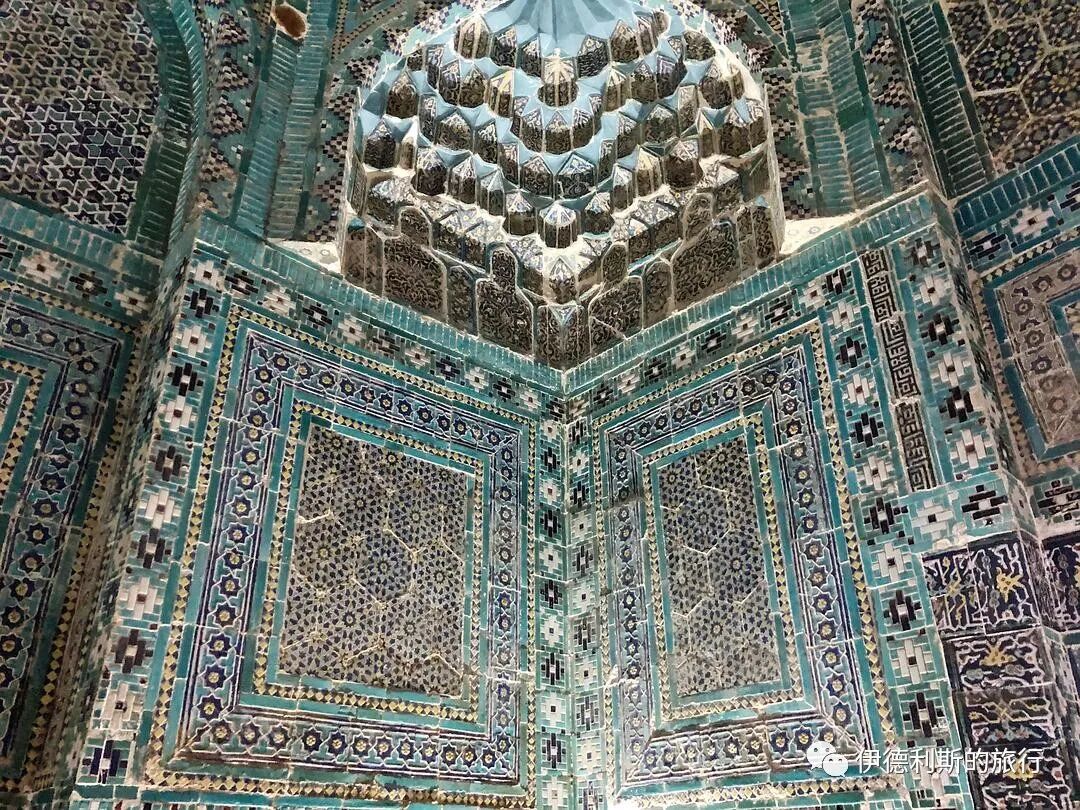
(III) Northern Complex
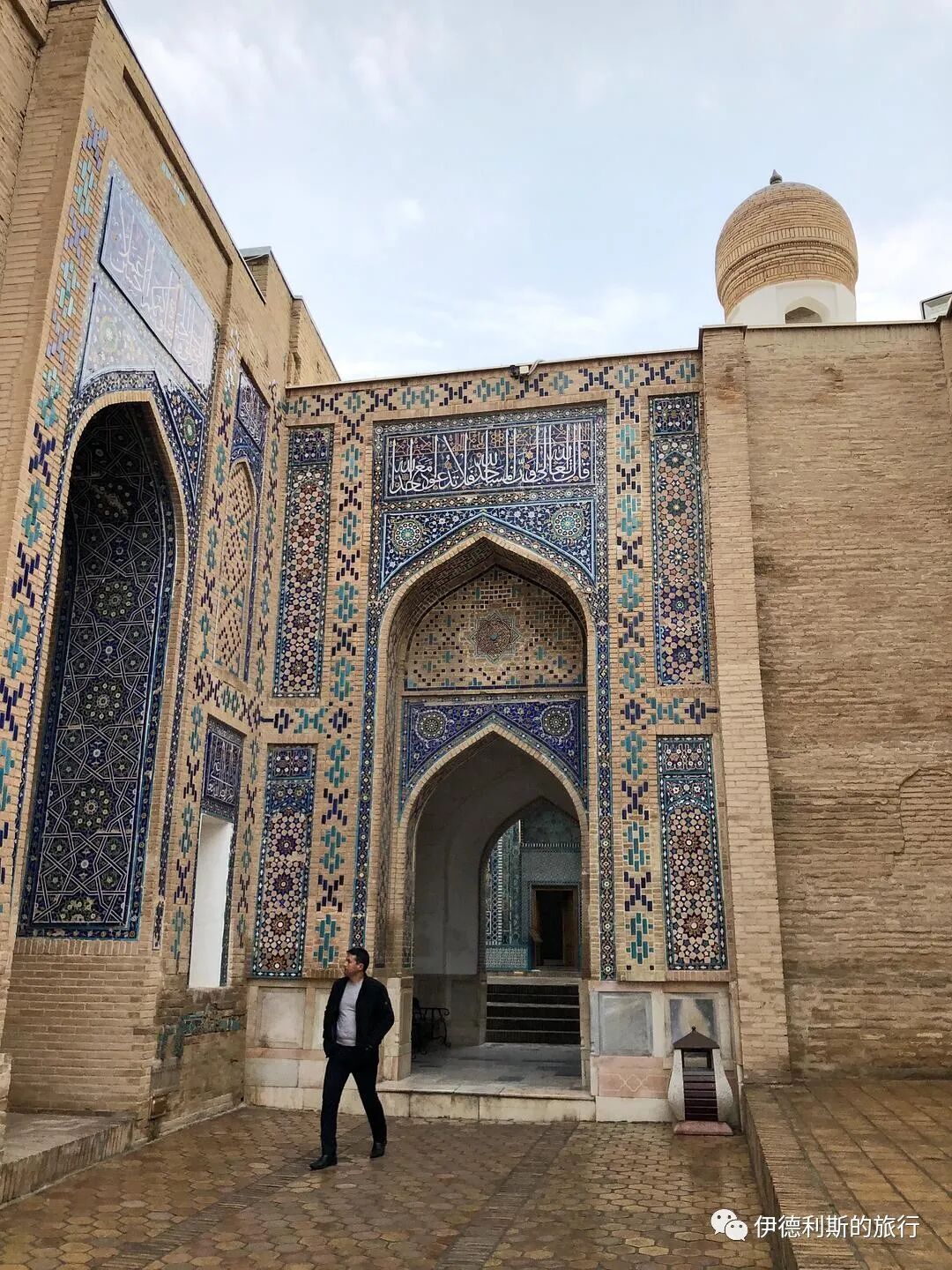
1. Passage of the Departed: 14th century
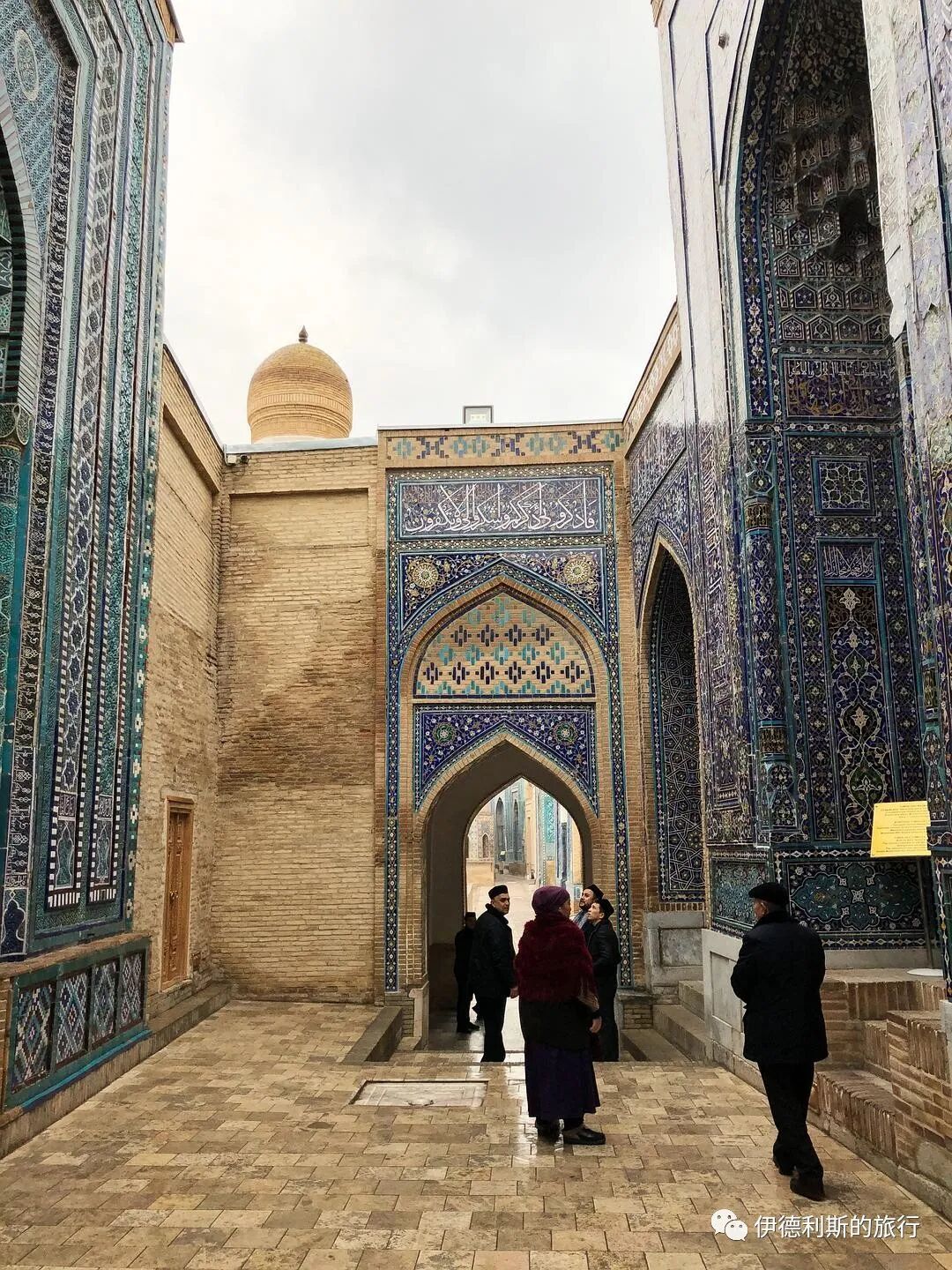
The Passage of the Departed (Yuqori Chortoq) is the gate to the northern complex.
2. Kusam Ibn Abbas Mausoleum: 11th century
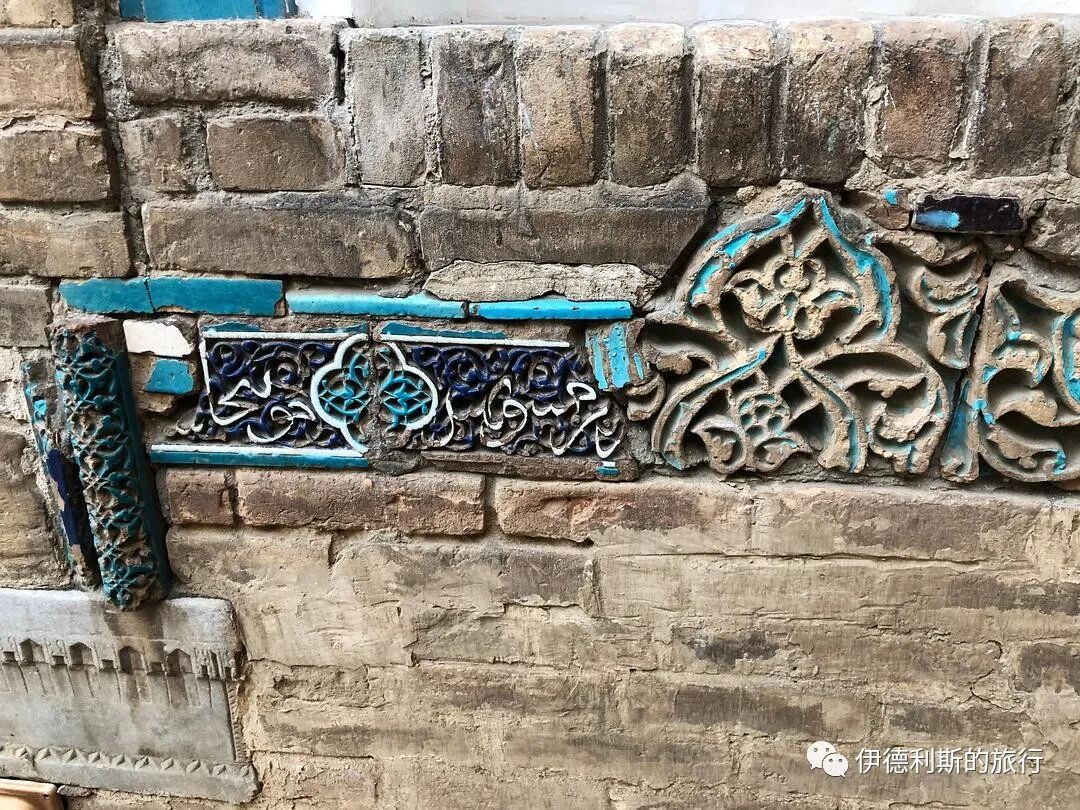
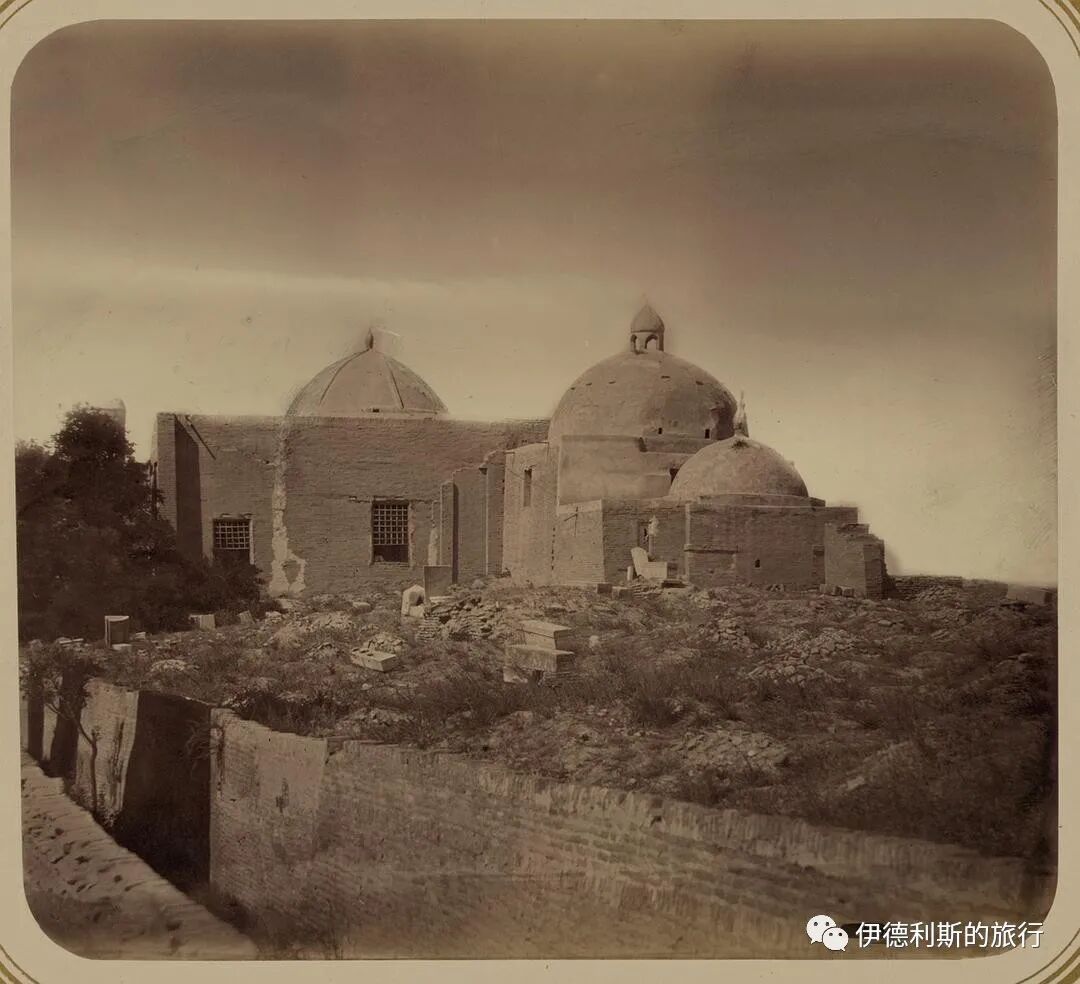
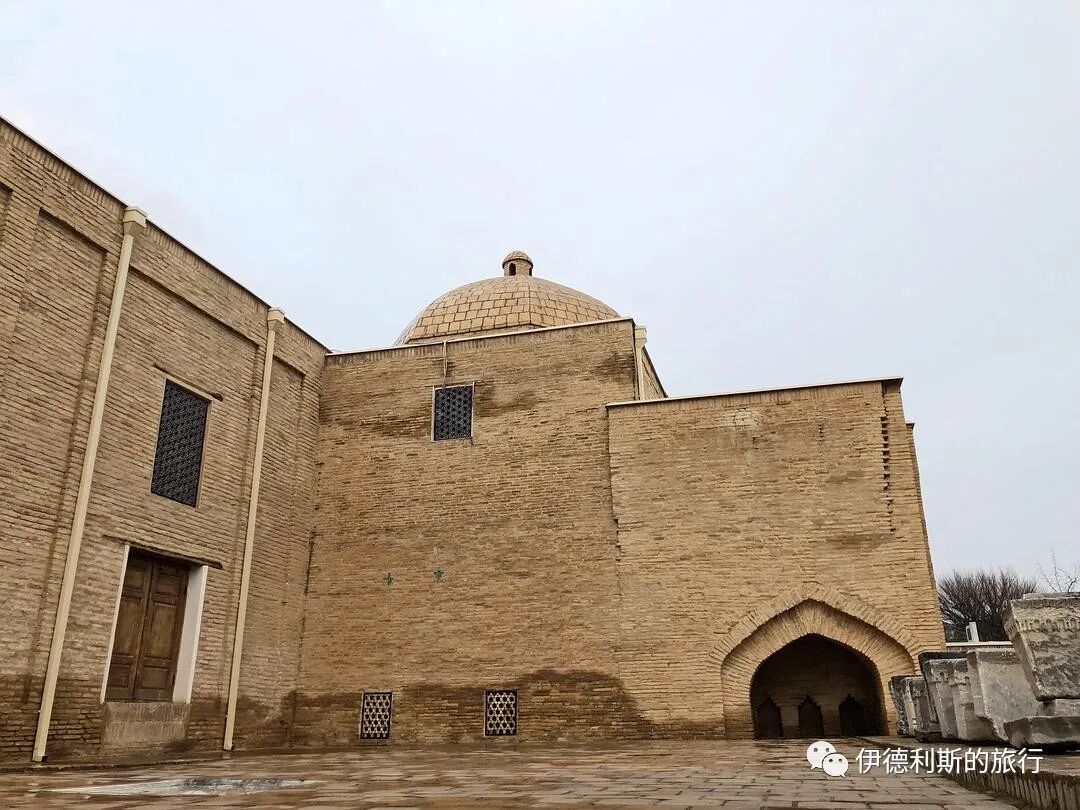
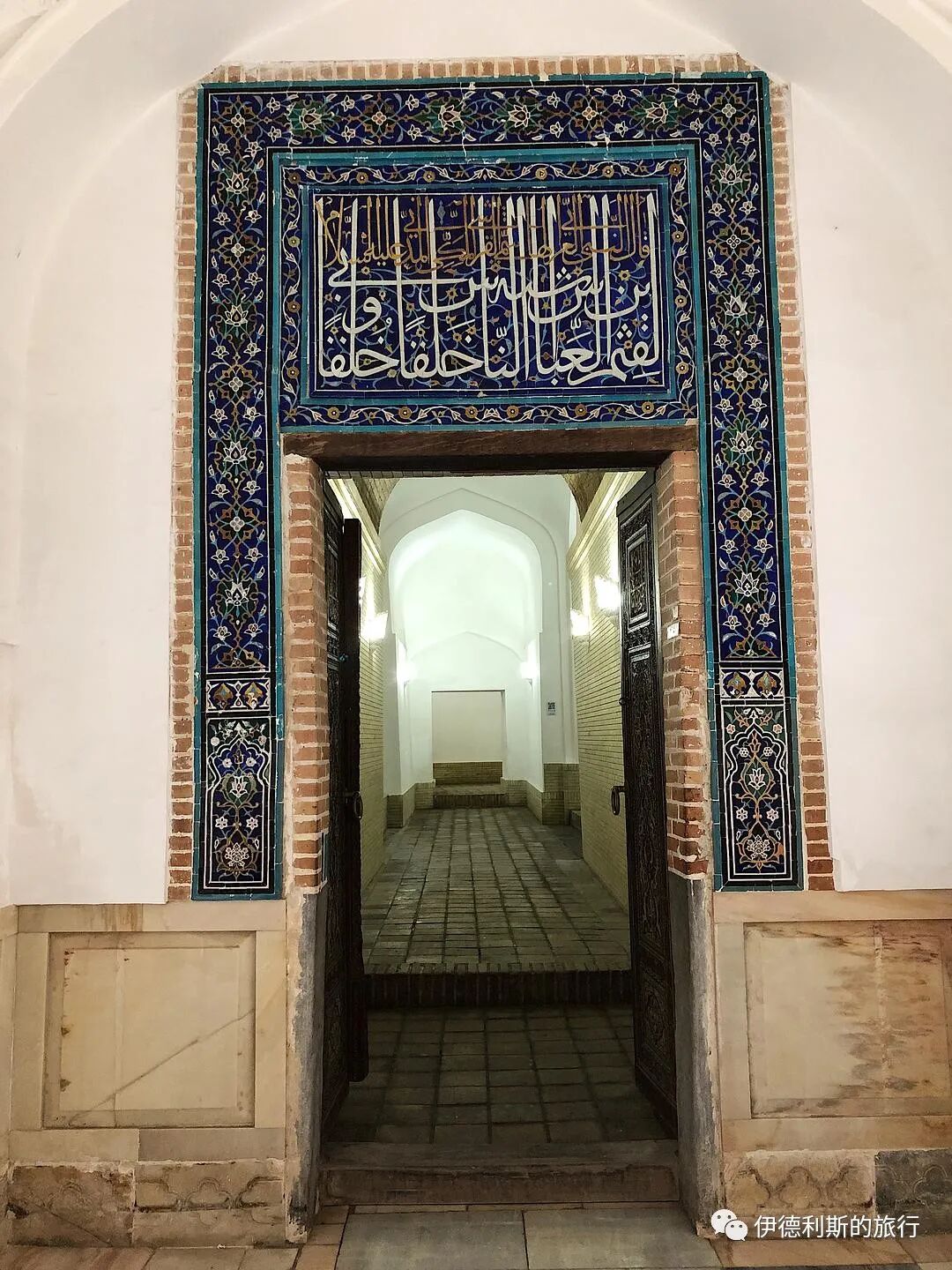
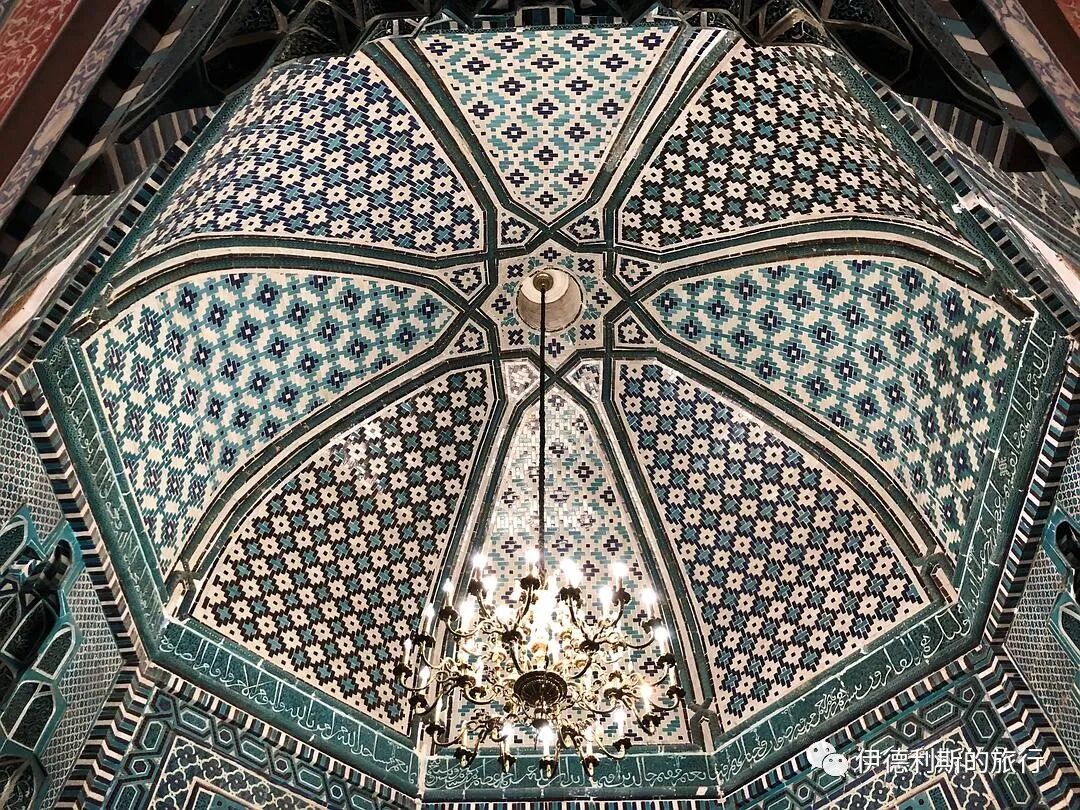
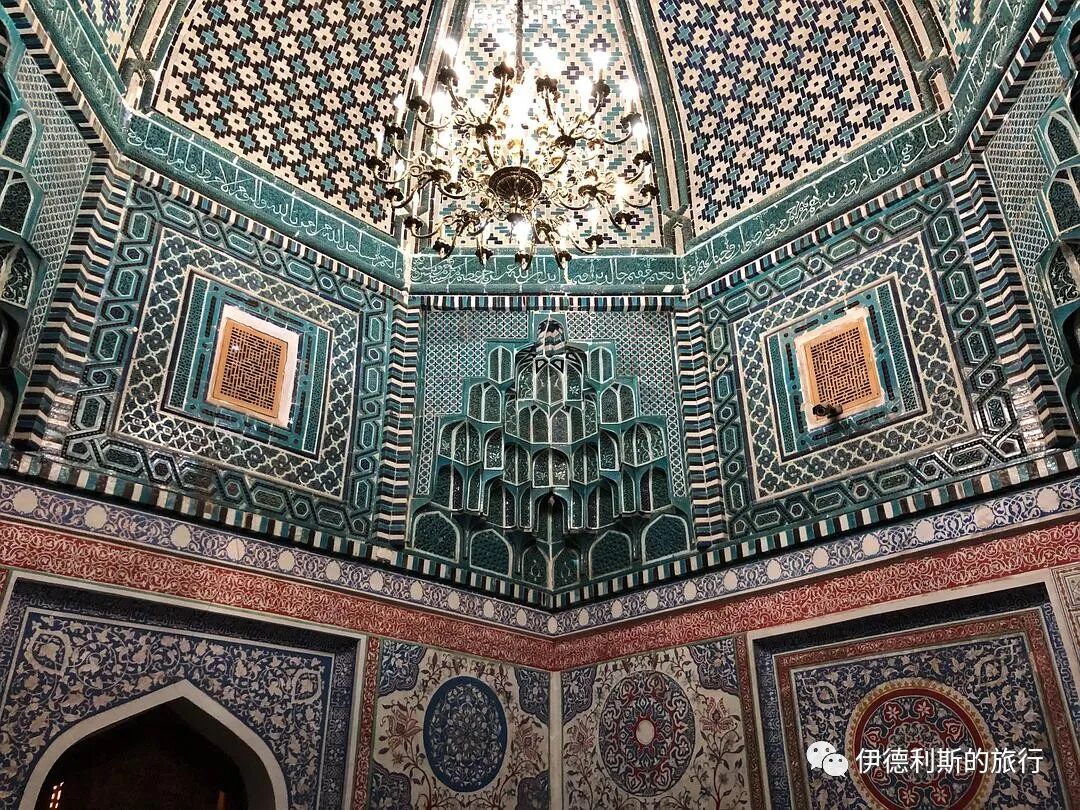
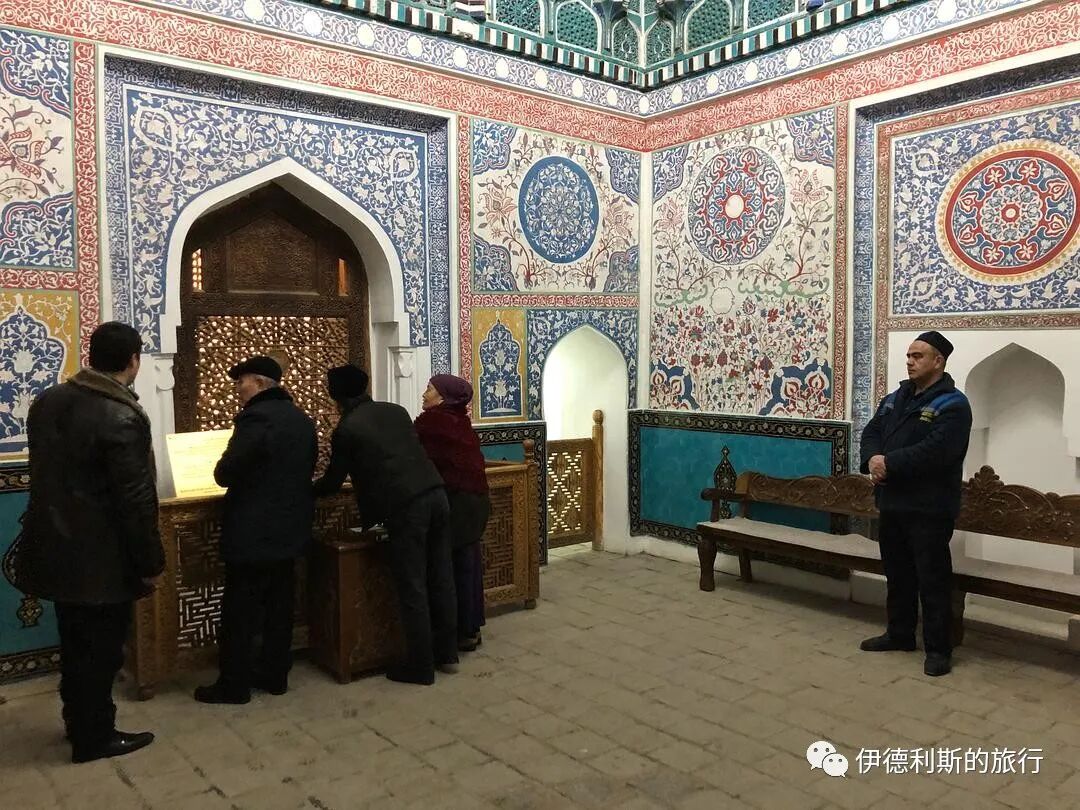
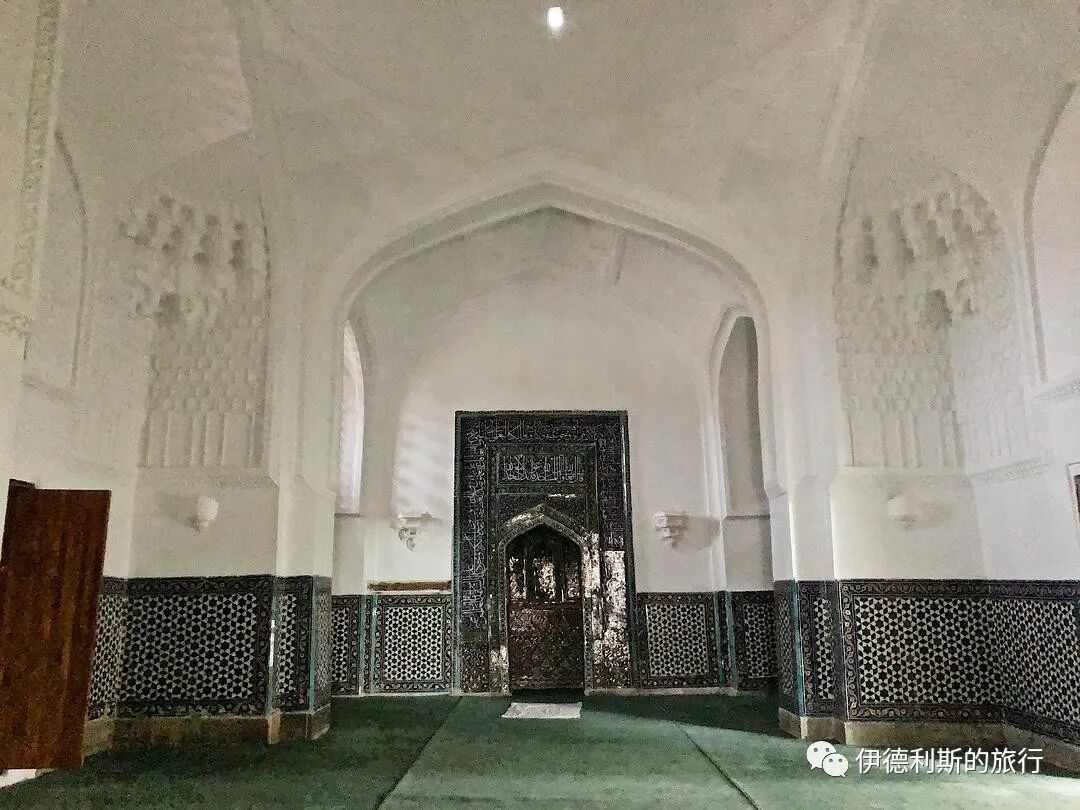
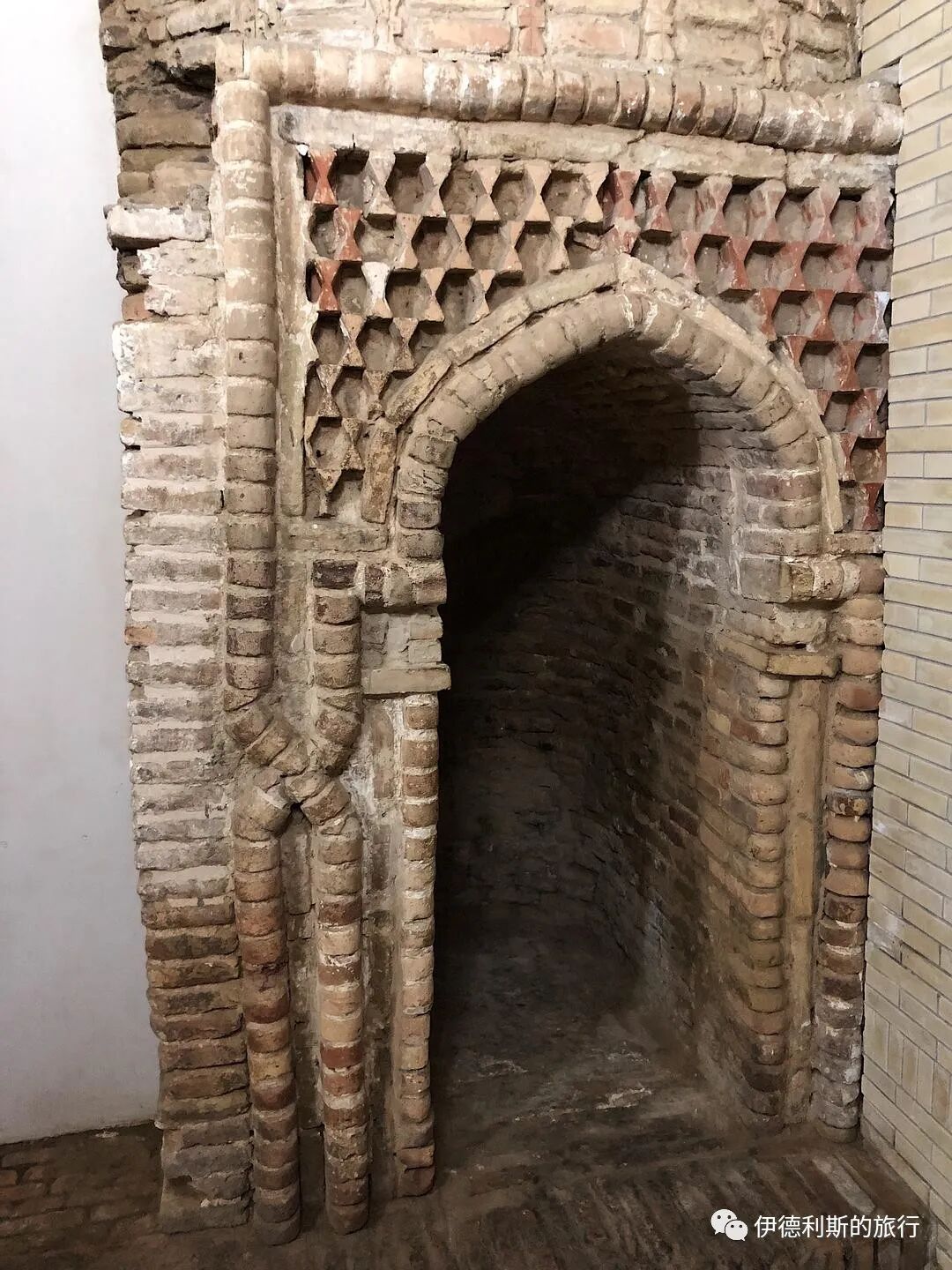
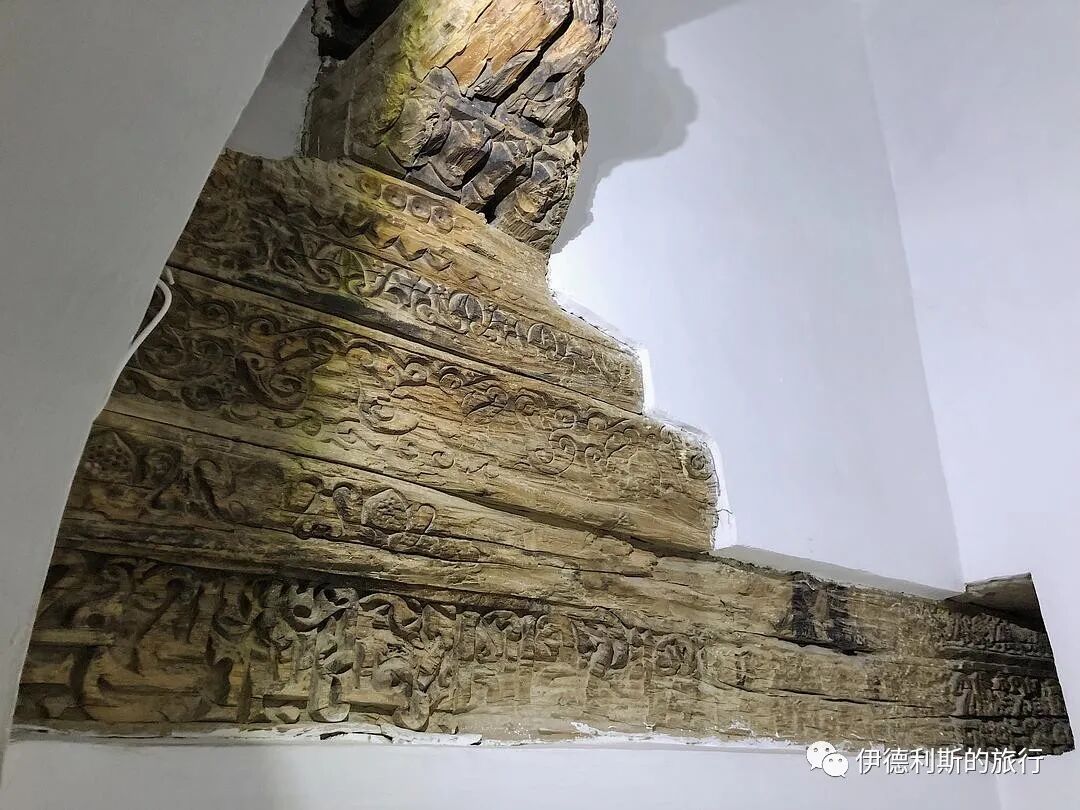
The Kusam Ibn Abbas Mausoleum is the earliest building constructed in Shah-i-Zinda, dating back to the 11th century, and was renovated in the 14th and 15th centuries. Kusam is legendary as the cousin of the Prophet Muhammad and the son of the Prophet's uncle, Abbas ibn Abdul-Muttalib. Kusam is said to be one of the first people to come to Central Asia to spread Islam and eventually died in Samarkand.
In 1333, the famous Moroccan traveler Ibn Battuta passed through Samarkand and visited the Kusam mausoleum. The 'Rihla' (Travels of Ibn Battuta) records:
'The people of Samarkand come to visit this tomb every Monday and Friday eve; the Tatars also come to visit and make great vows to him, bringing cattle, sheep, dirhams, and dinars to be used as funds for the food and lodging of passing travelers and for the servants of the shrine.' 'On the tomb is a dome built on four pillars, each pillar flanked by two marble columns in green, black, white, and red.' 'The walls of the dome are carved and inlaid with gilded marble, and the ceiling is made of lead.' 'The tomb is inlaid with ebony, the four corners of the tomb are wrapped in silver leaf, three silver lamps are hung over the tomb, and wool and cotton carpets are spread inside the dome.' "
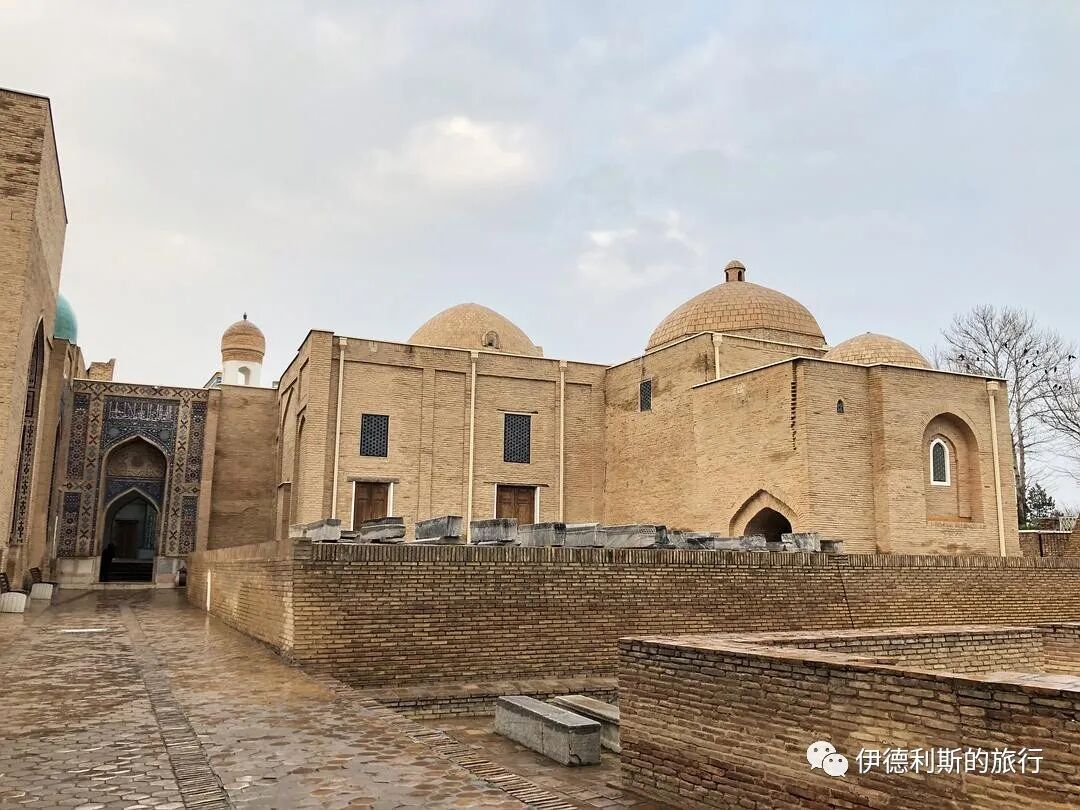
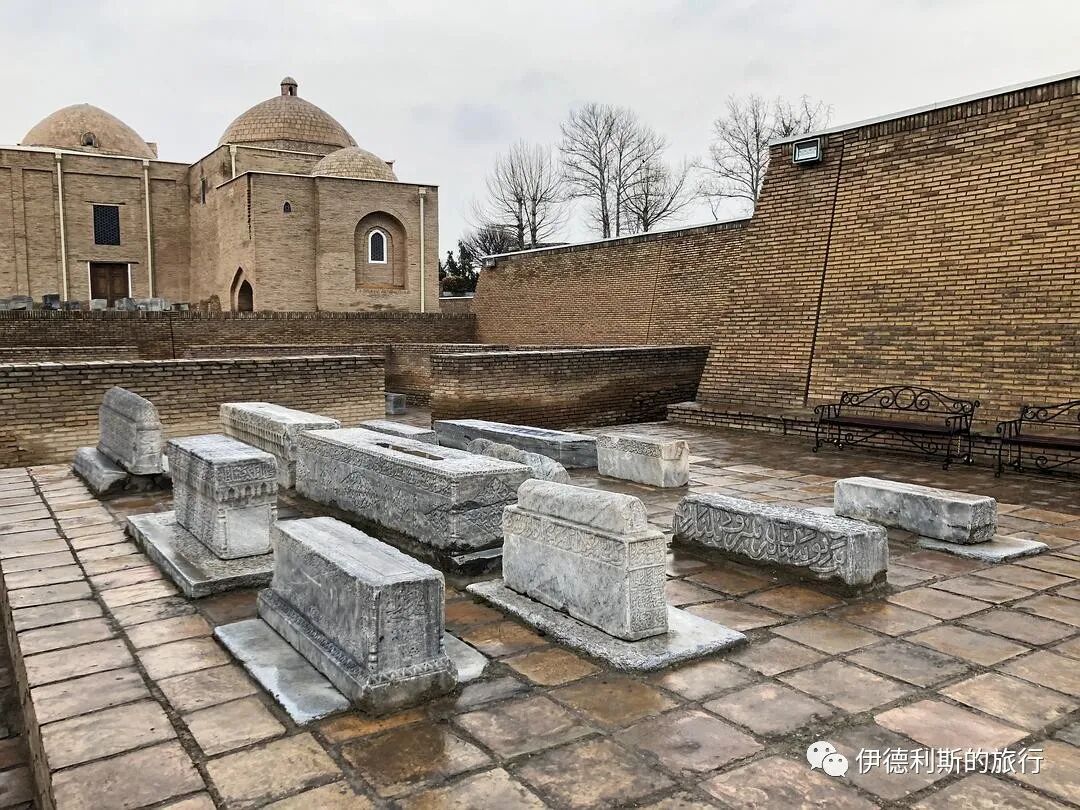
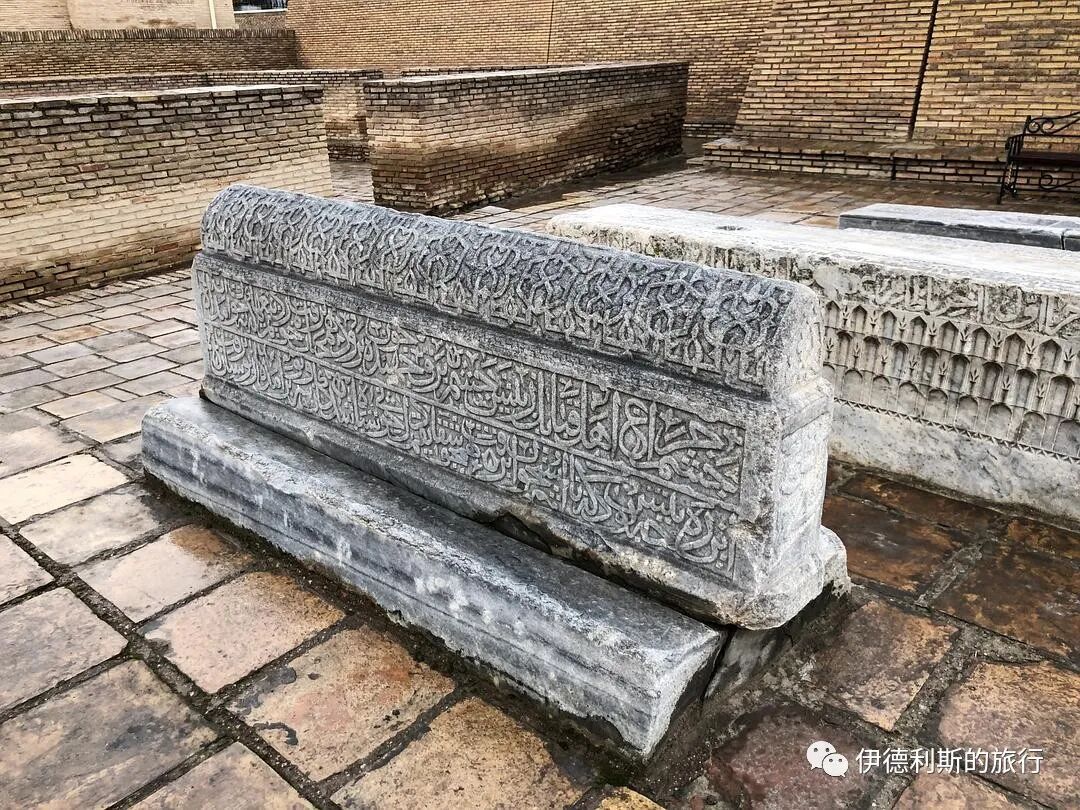
There are also some tombstones outside the mausoleum.
3. Tuman Aka Mausoleum: 1405
Opposite the Kusam Ibn Abbas Mausoleum is the mausoleum of Timur's wife, Tuman Aka. Tuman Aka, also written as Touman Agha, married Timur in 1377 and came from the family of the last Chagatai Khan, Qazan Sultan. She was Timur's favorite wife and a younger relative of Sarai Mulk Khanym, the daughter of Qazan Sultan.
Tuman Aka's mausoleum was built on the ruins of an Islamic madrasah destroyed in the 14th century; the inscription on the mausoleum bears the construction date of 1405 and the name of a calligrapher from Tabriz, Iran.
Next to the Tuman Aqa mausoleum is a Sufi khanaka (hospice) named after Tuman Aqa. It is speculated that the khanaka was built earlier than the mausoleum, probably around the end of the 14th century.
4. Khodja Ahmad Mausoleum: 1360s
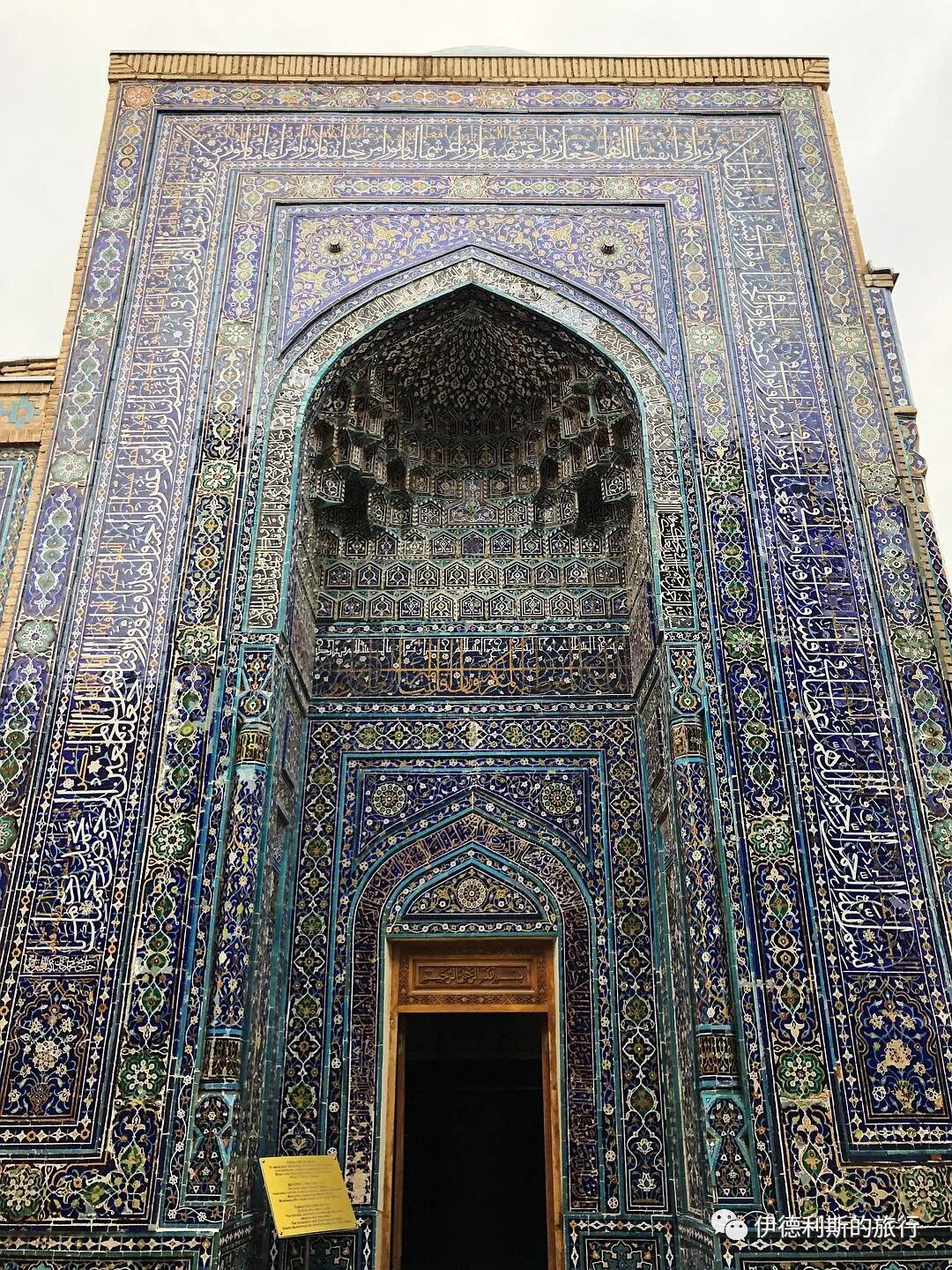
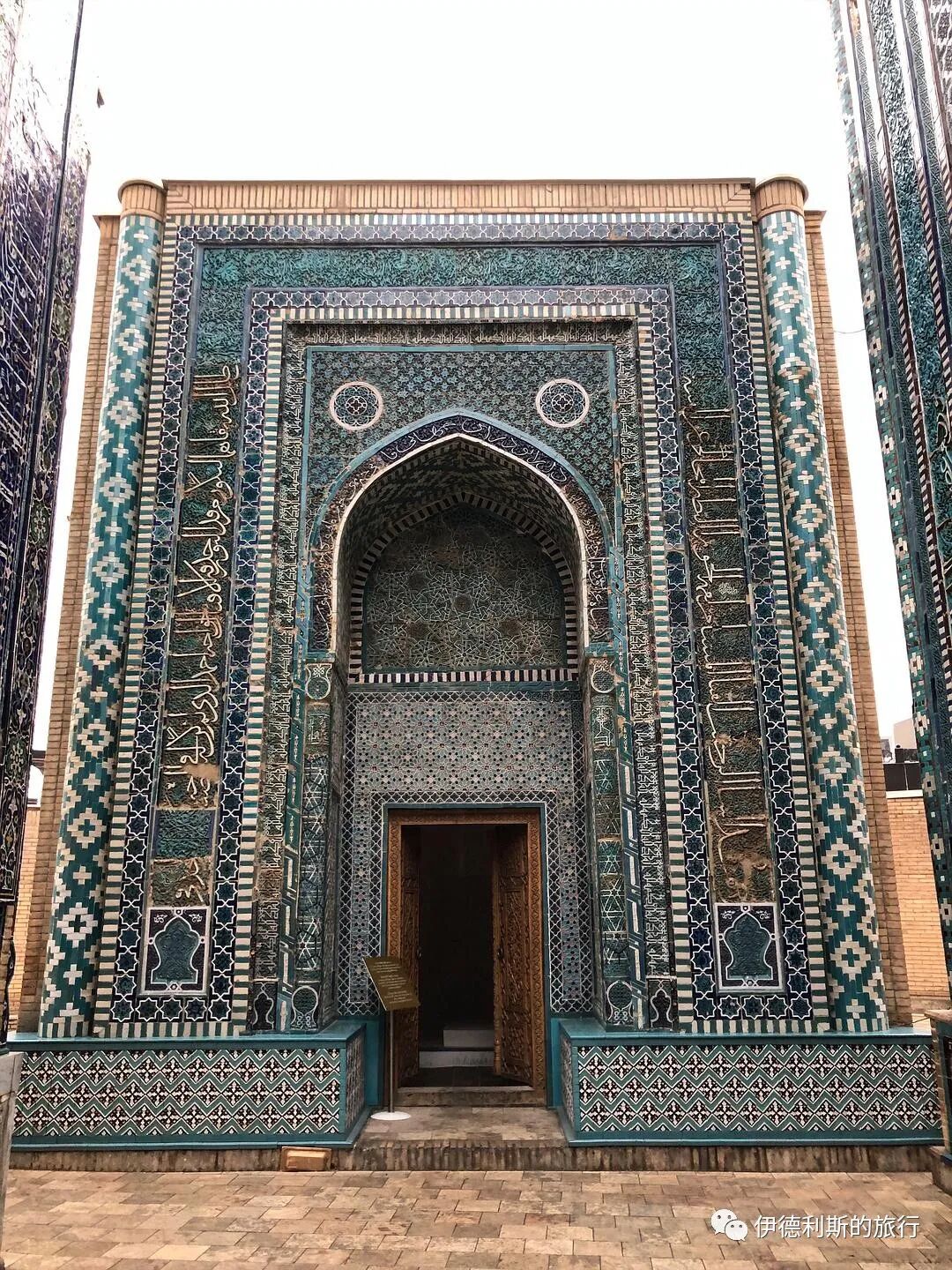
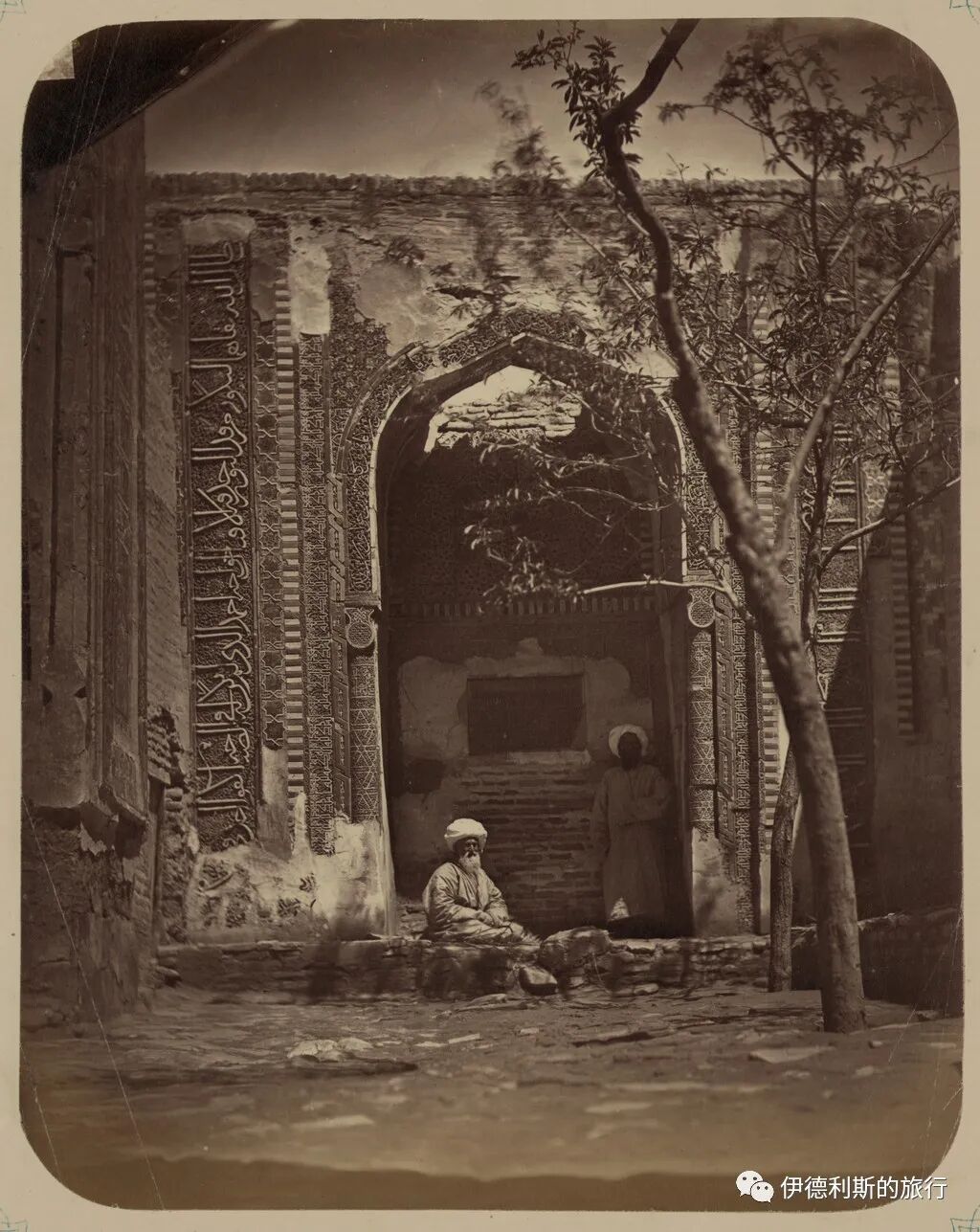
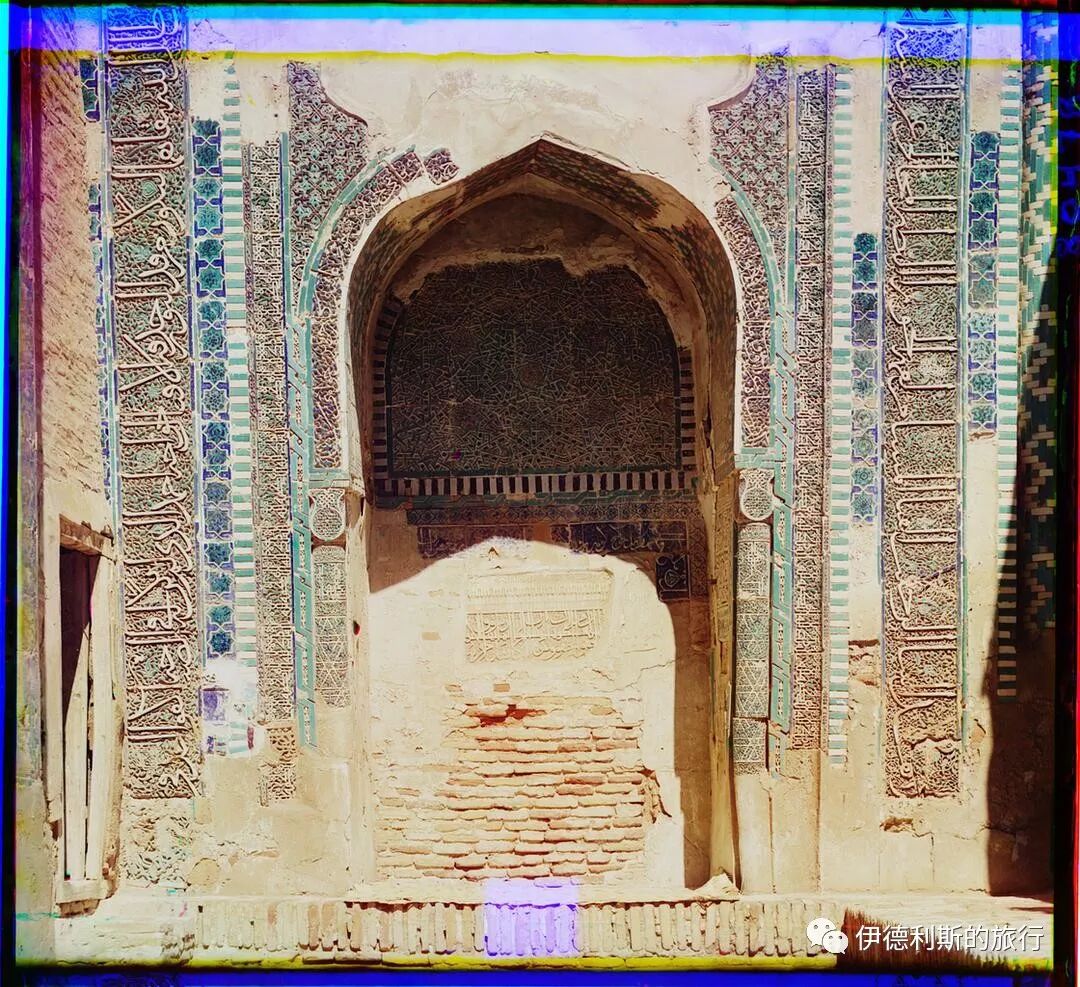
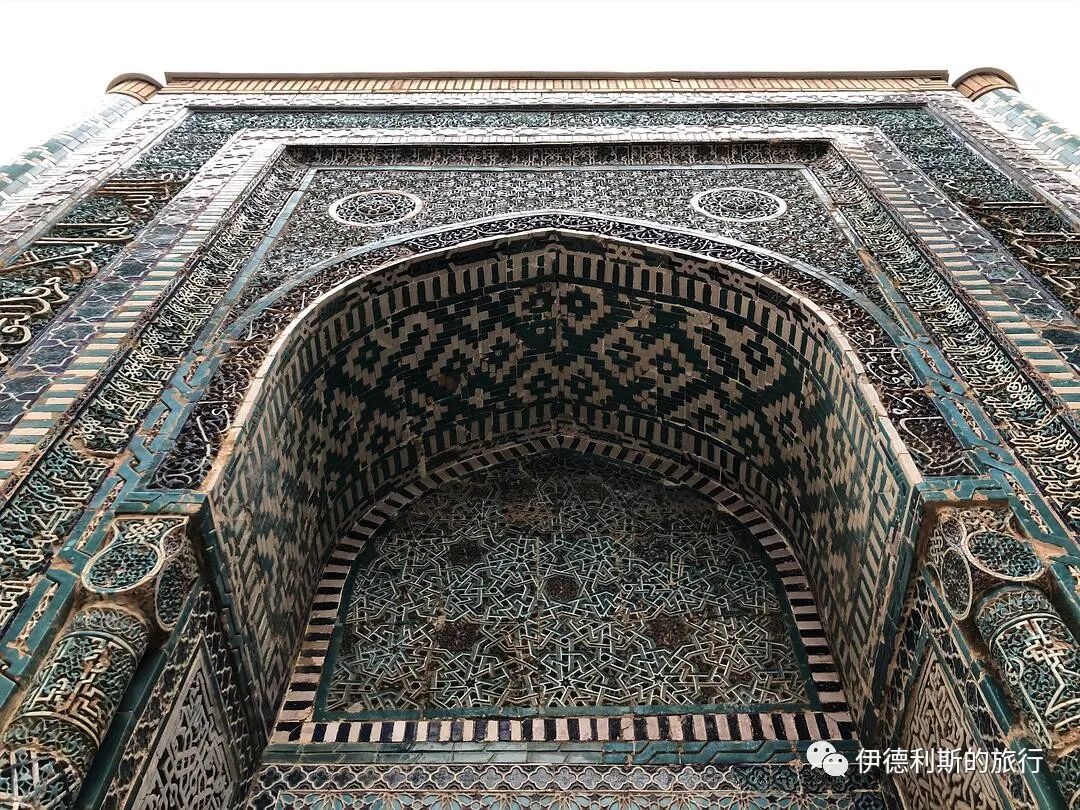
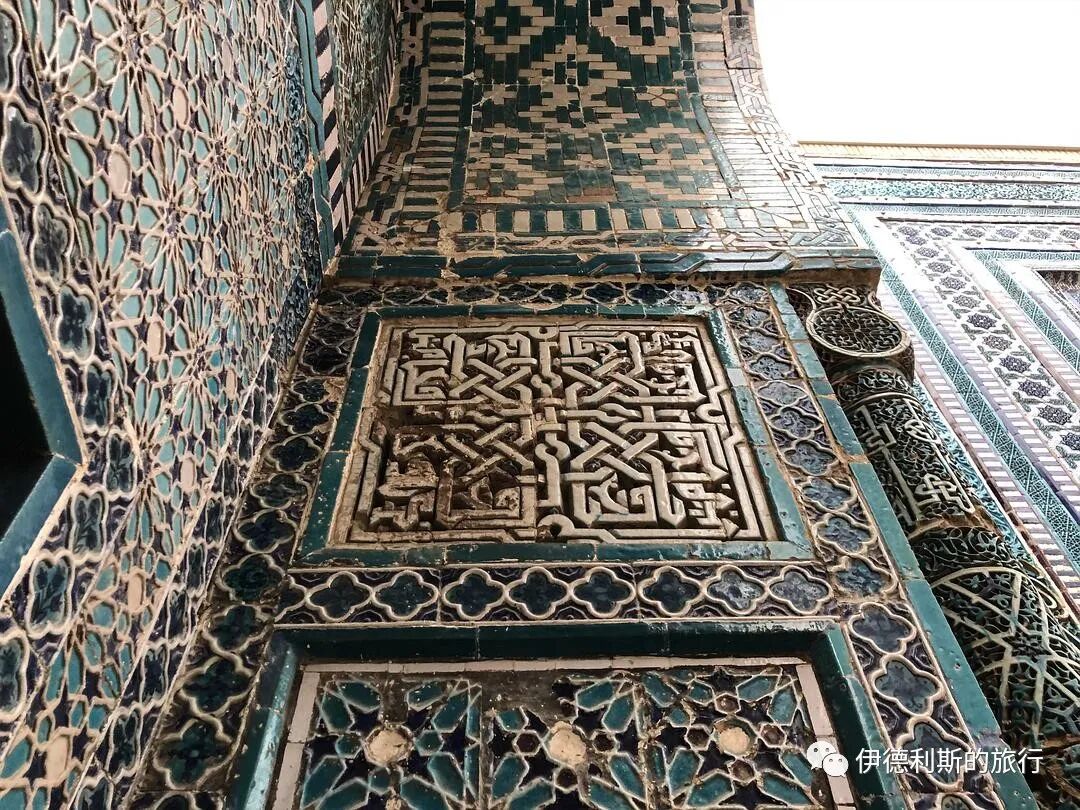
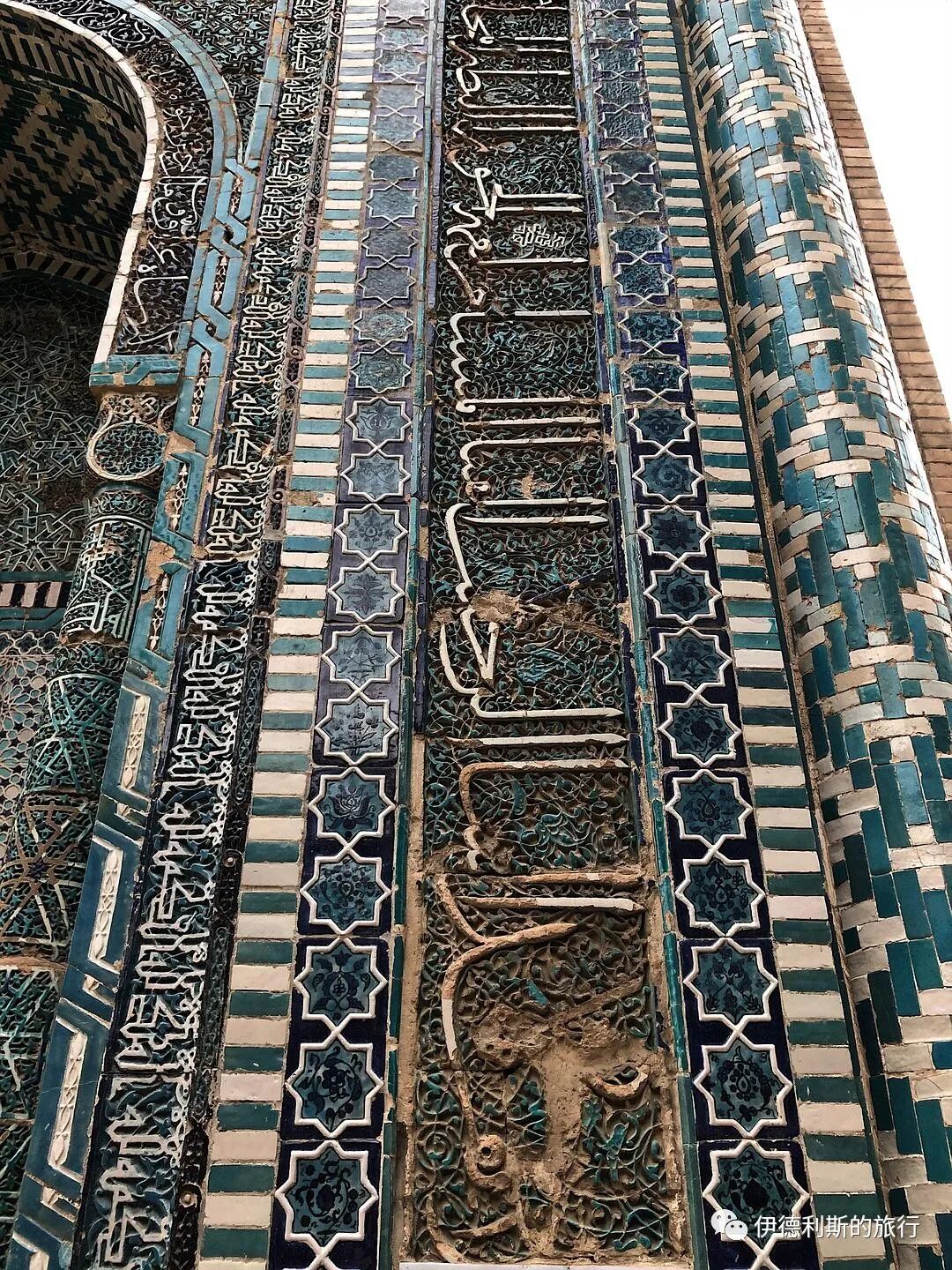
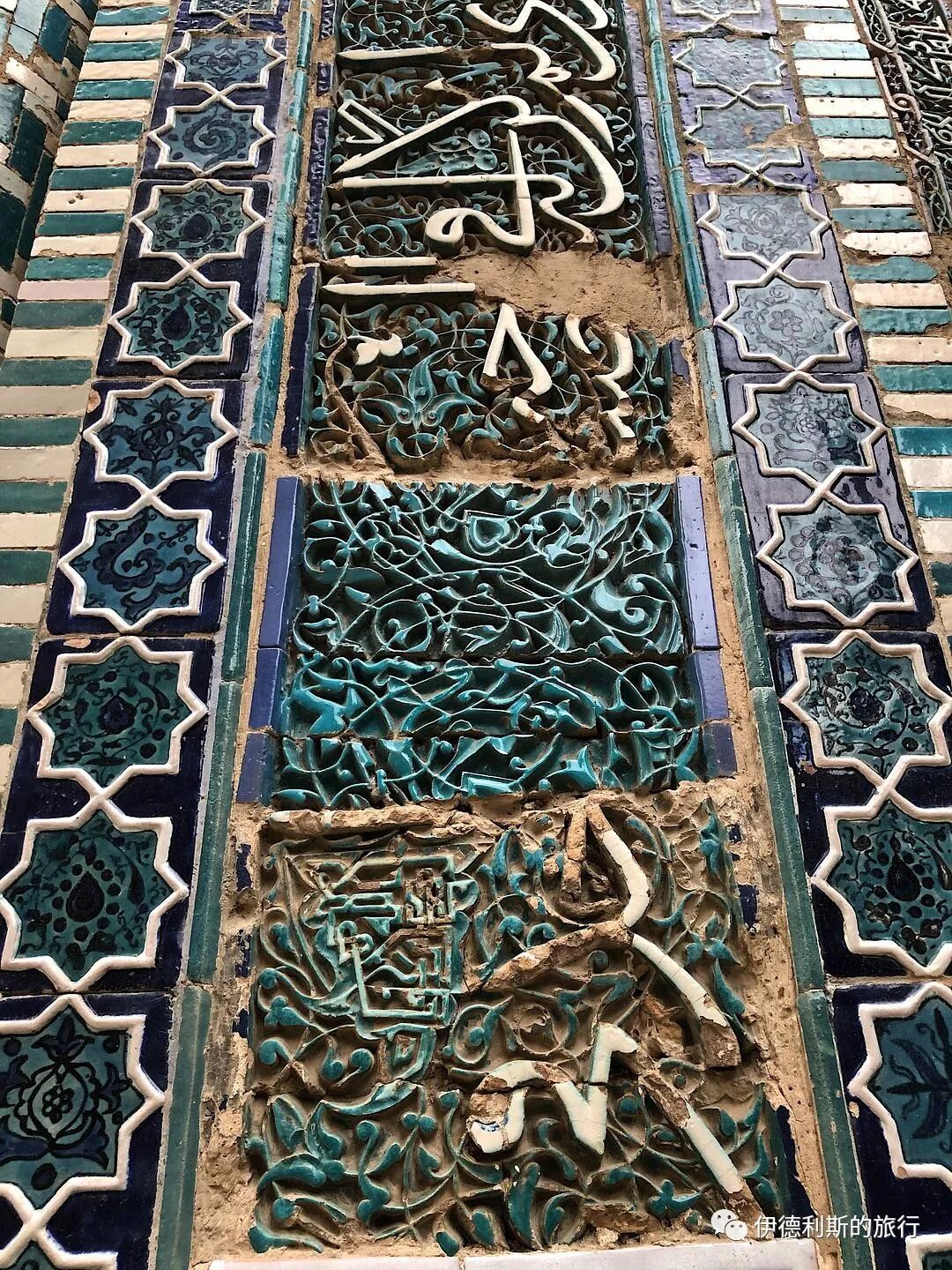
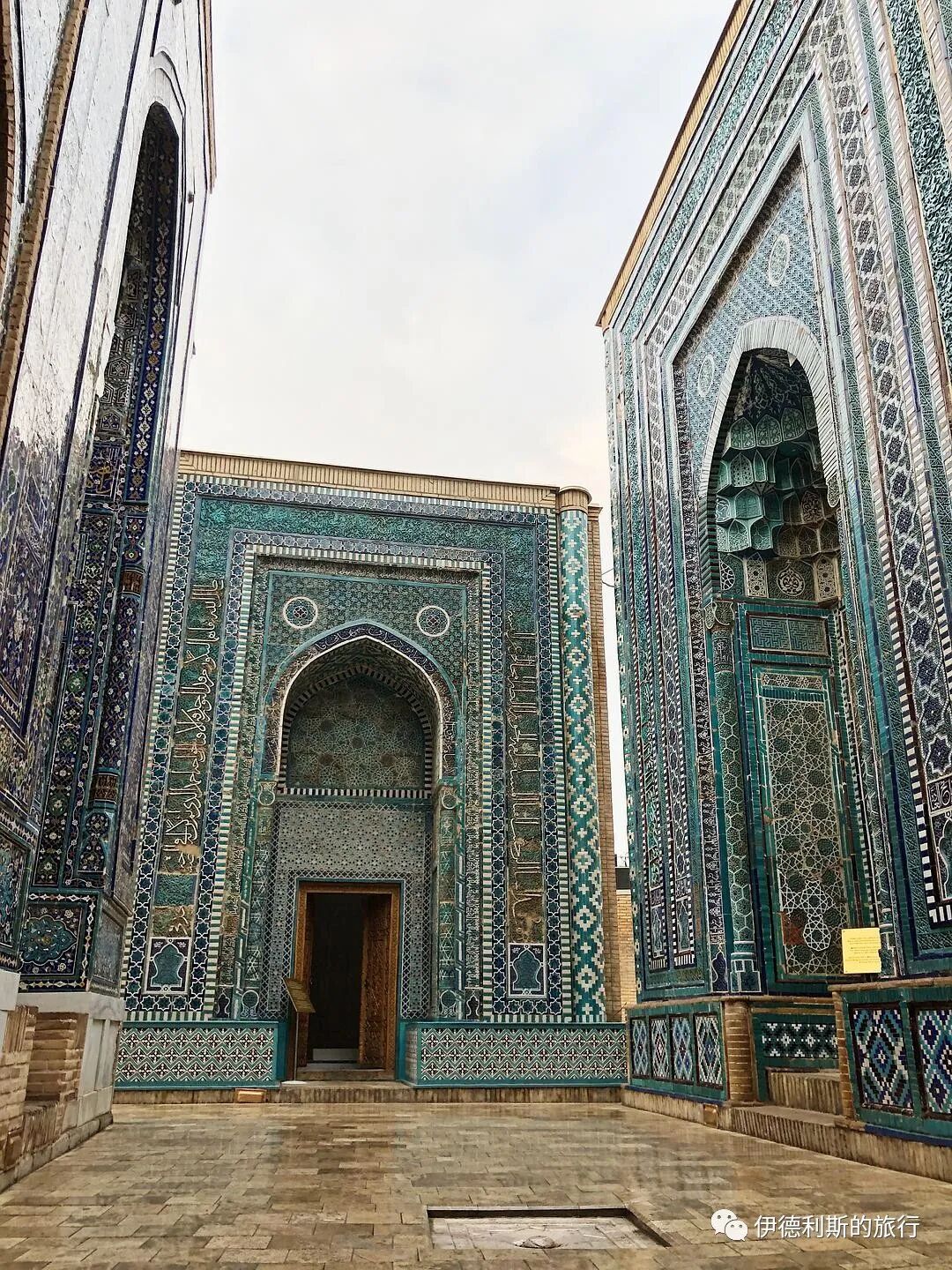
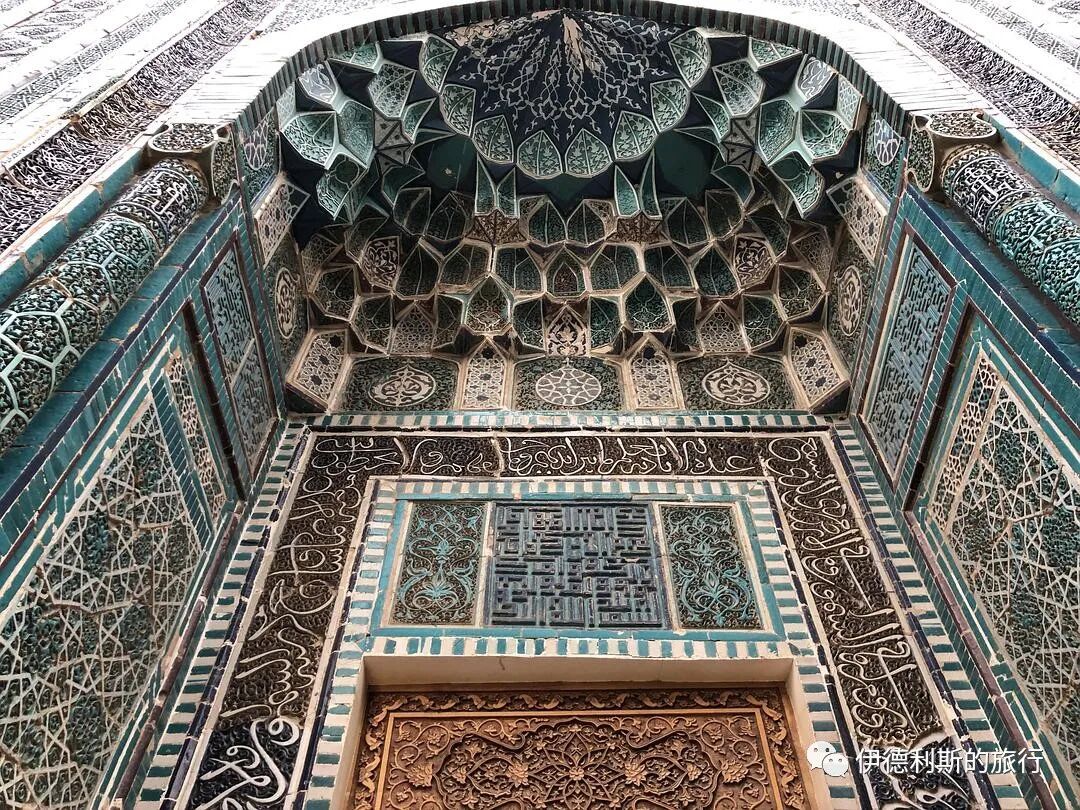
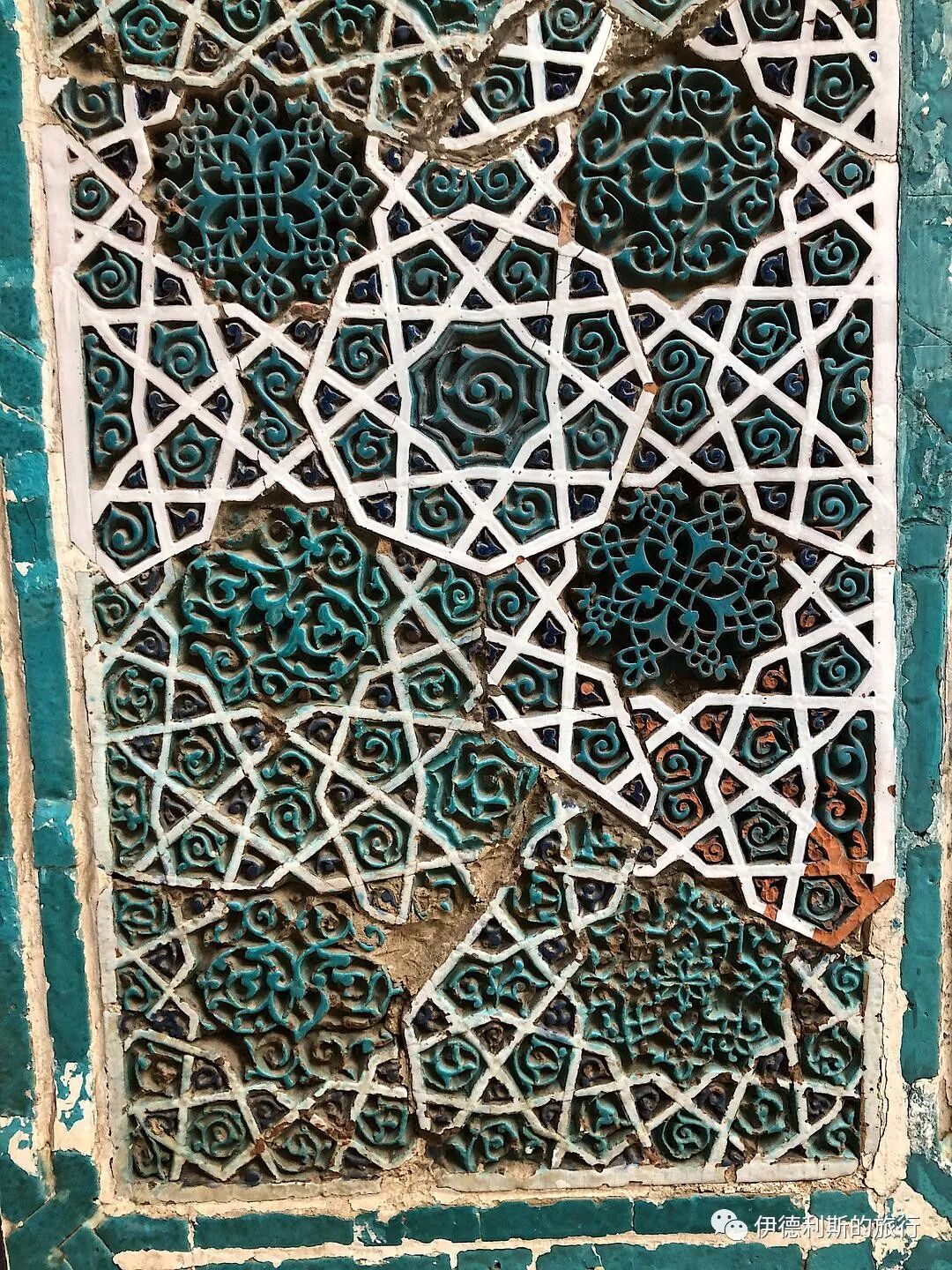
The Khodja Ahmad Mausoleum is located at the northernmost part of the entire Shah-i-Zinda complex, built in the 1360s, and is the tomb of a local religious leader. The facade (Peshtak or Pischtak) of the mausoleum is decorated with a large number of floral, geometric patterns, and calligraphic tiles. The Kufic calligraphy tiles on the inside bear the name of the architect Fakhri-Ali, and the Thuluth calligraphy tiles on the outside read, 'May Allah perpetuate this eternity and make the mausoleum a garden of happiness for Khodja Ahmad.' "
5. Qutlugh Aka Mausoleum: 1361
To the east of the Khwaja Ahmad Mausoleum is the tomb of an unidentified woman, dating back to 1361. Some information indicates that Timur's wife, Qutlugh Aka, is buried here.
II. Rukhabad Mausoleum: 1380s
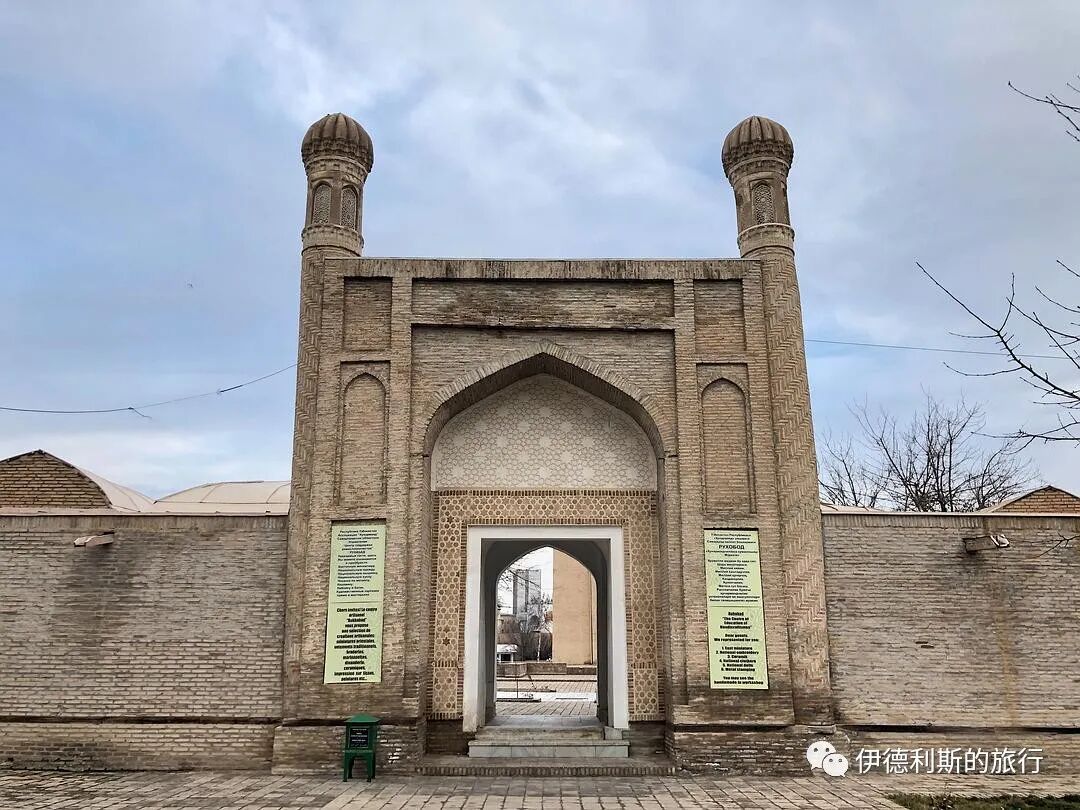
The Rukhabad Mausoleum is one of the earliest buildings built by Timur in Samarkand. Legend has it that after the Sufi sheikh Burkhan ad-Din Sagardji died during the Yuan Dynasty, his son Abu Said brought his remains to Samarkand for burial according to his father's last wish. During his stay in Samarkand, Abu Said became Timur's religious mentor, and Timur built a mausoleum for Sagardji in the 1380s, naming it 'Rukhabad' (House of the Spirit).
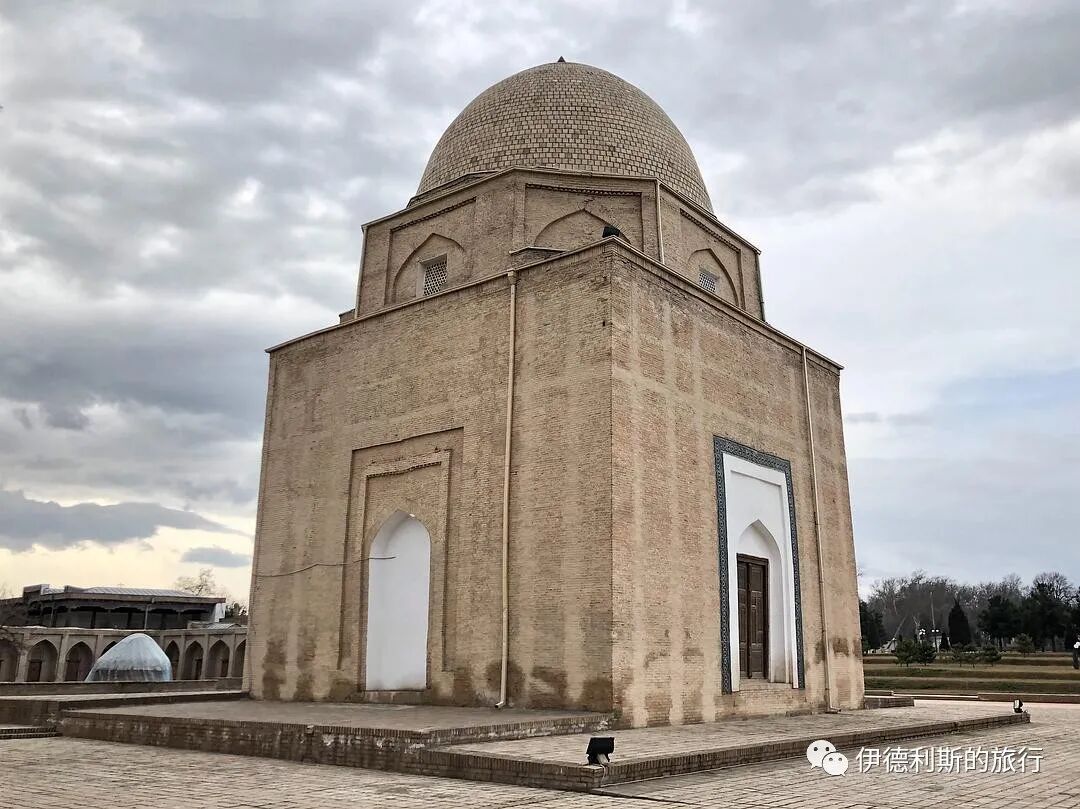
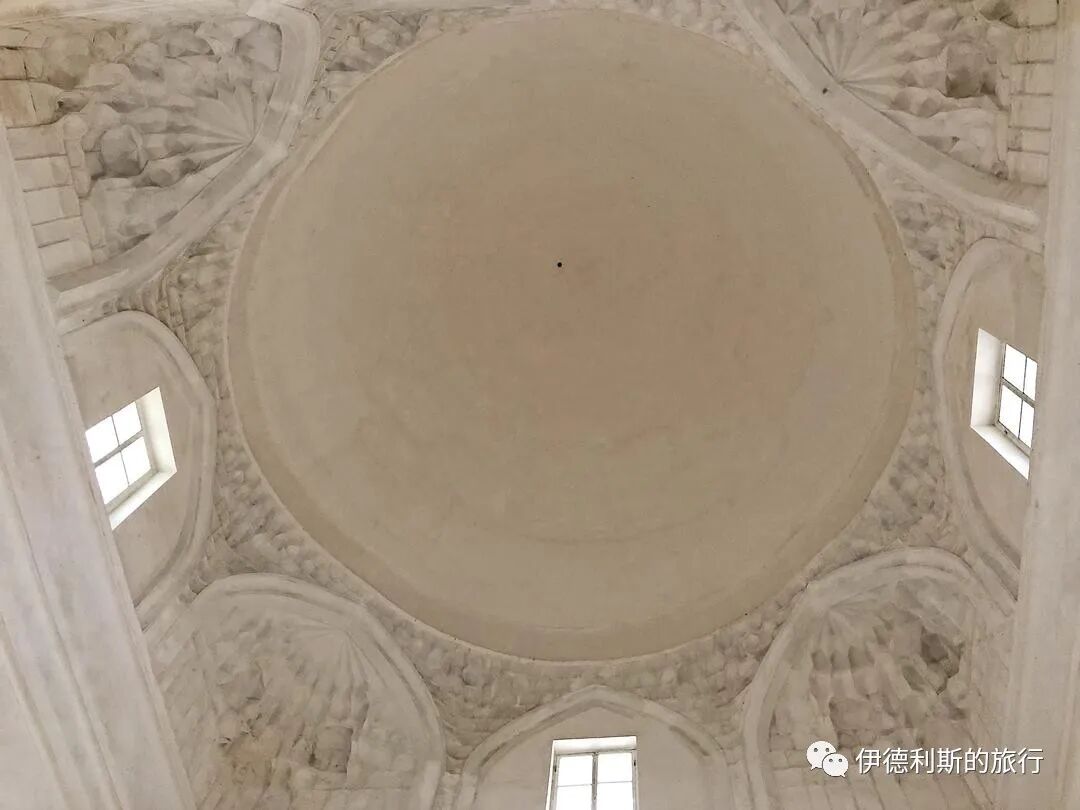
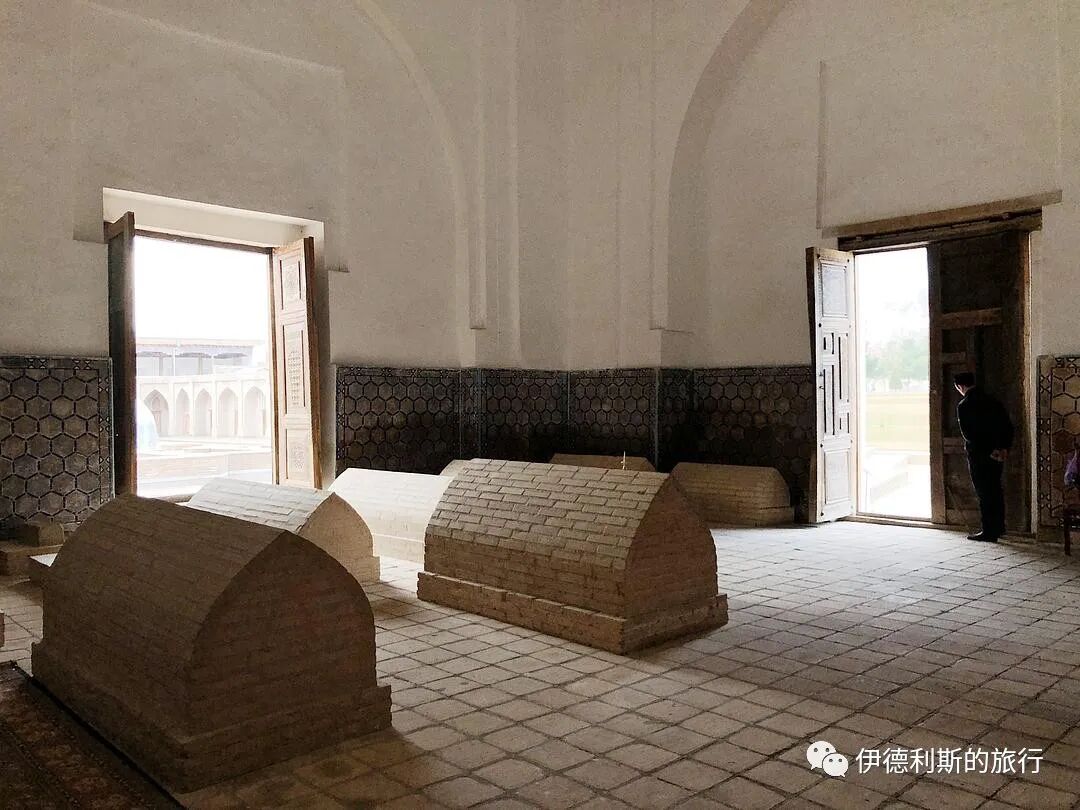
Behind the mausoleum are the ruins of a madrasah.
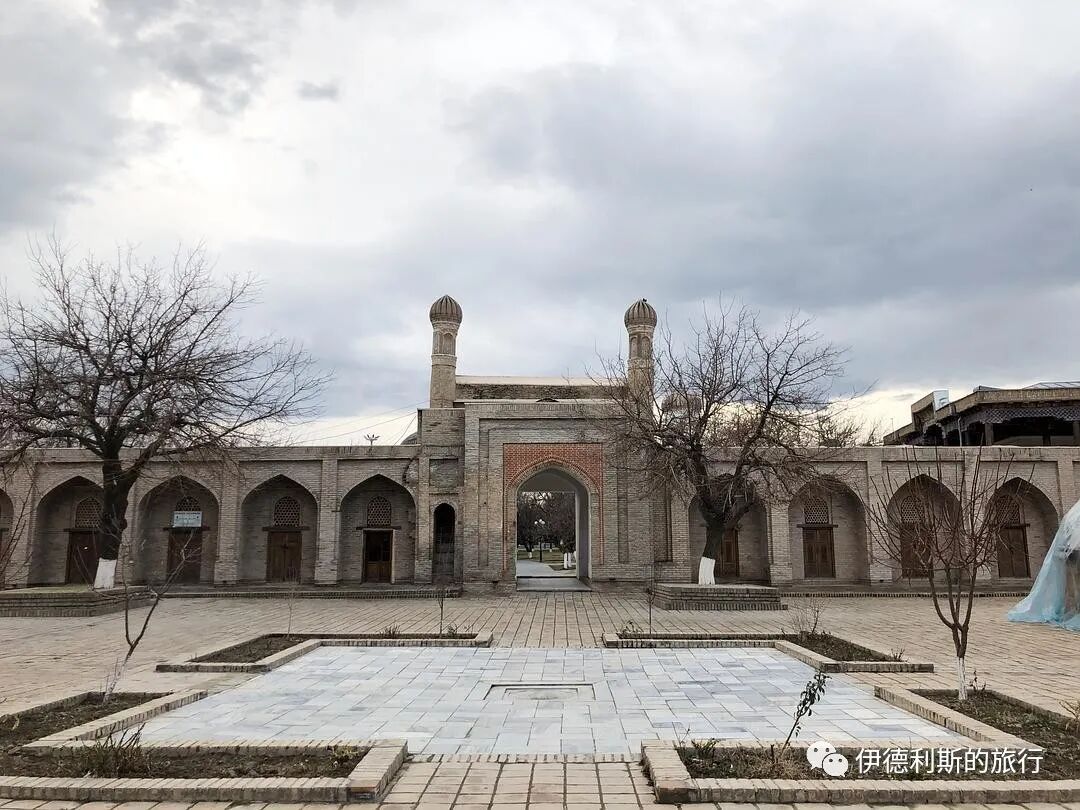
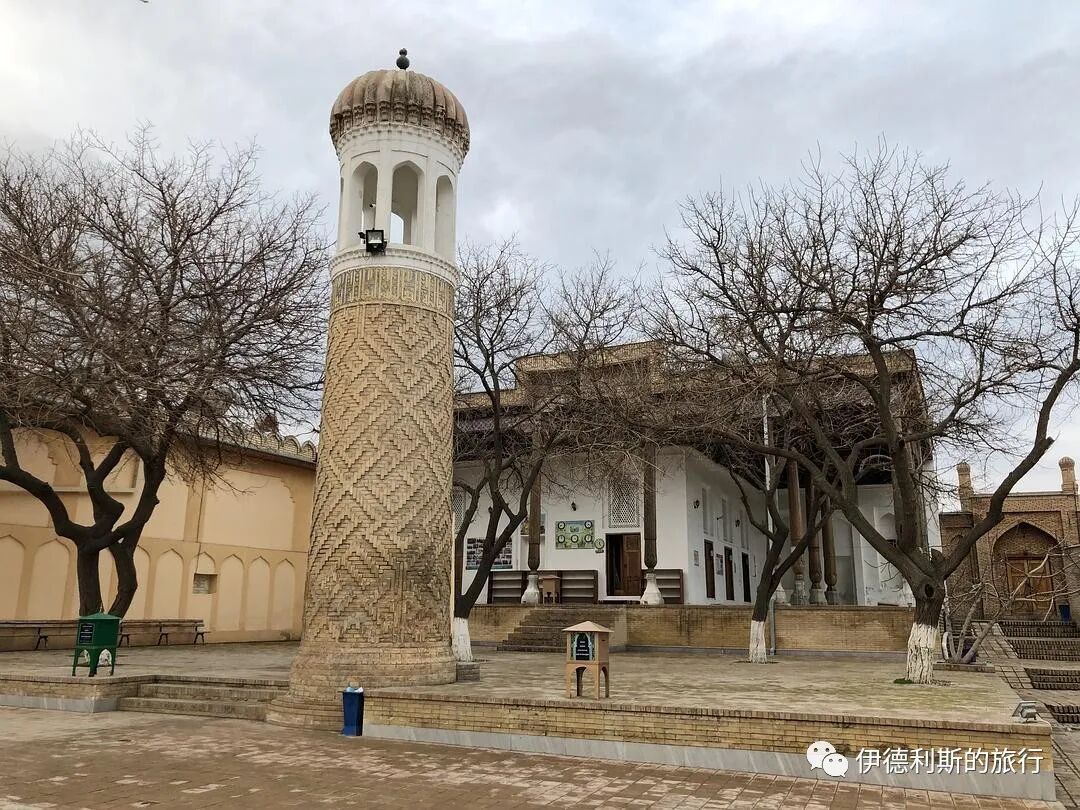
III. Gur-e-Amir Mausoleum: 1404
Gur-e-Amir is the mausoleum of Timur, which holds an important position in the history of Central Asian architecture and became the precursor and model for later Mughal architecture.
The complex was originally a Sufi khanqah and madrasah built by Timur's favorite grandson, Muhammad Sultan, at the end of the 14th century, called Khangah-i Muhammad Sultan; now only part of the foundation remains.
Muhammad Sultan died in 1403 while accompanying Timur on his expedition to the Ottoman Empire. He was initially buried in northwestern Iran, and it was not until a year later that he was transported to Samarkand and reburied in the Khangah-i Muhammad Sultan. In 1405, Timur died on his way to campaign against the Ming Dynasty; his body could not be transported back to his hometown of Shahrisabz due to heavy snow and was eventually buried with his grandson Muhammad Sultan.
After Timur's death, his son Shah Rukh inherited the eastern part of the empire. Shah Rukh moved the capital of the Timurid Empire from Samarkand to Herat in Afghanistan and had his son Ulugh Beg rule Samarkand starting in 1409. During Ulugh Beg's rule in Samarkand, he hired the architect Muhammad ibn Mahmud from Isfahan, Iran, to formally convert the Khangah-i Muhammad Sultan into the royal mausoleum of the Timurid dynasty, Gur-e-Amir, which means 'Tomb of the King' in Persian.
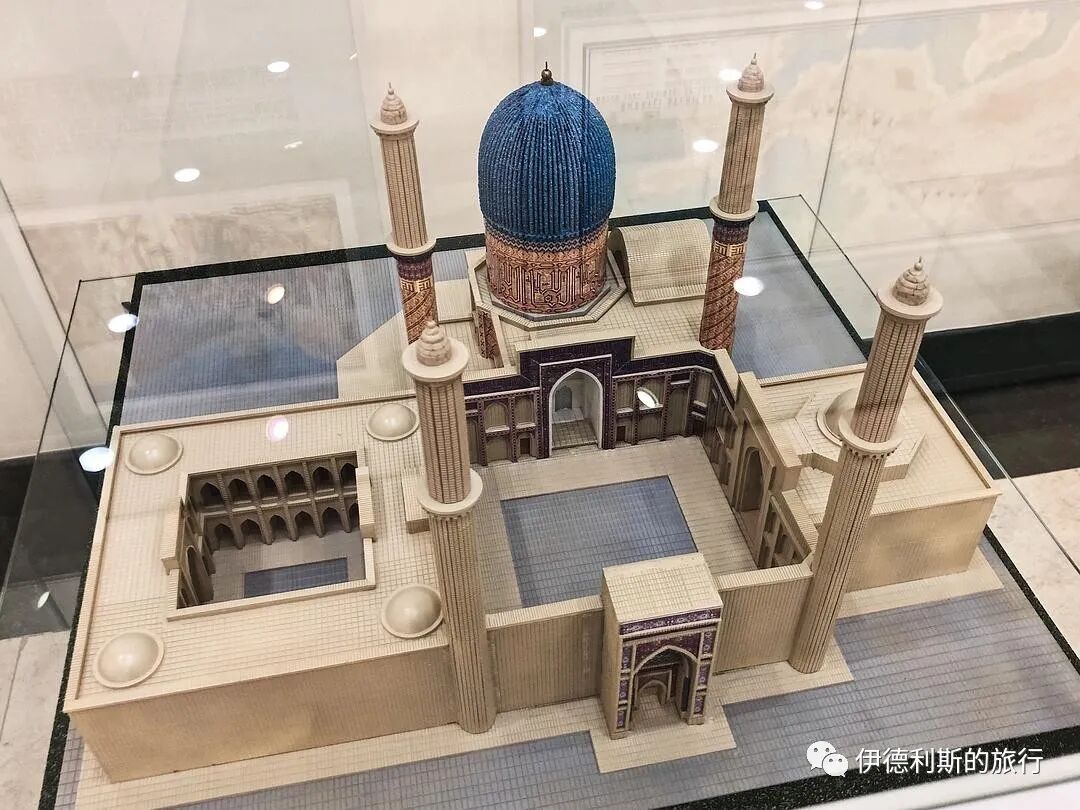
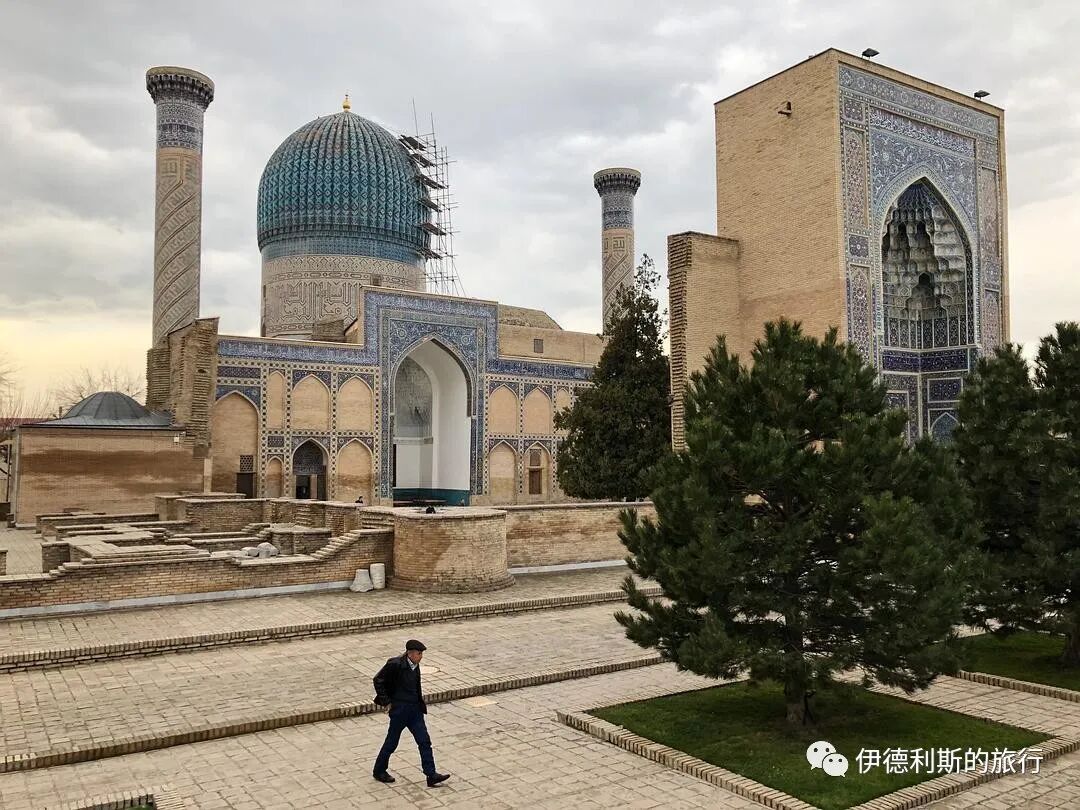
After the 17th century, as the center of Transoxiana shifted from Samarkand to Bukhara, Gur-e-Amir gradually fell into disrepair. It was not until the 1950s that renovations began on the dome, gate, and minarets, and the interior was renovated in the 1970s.
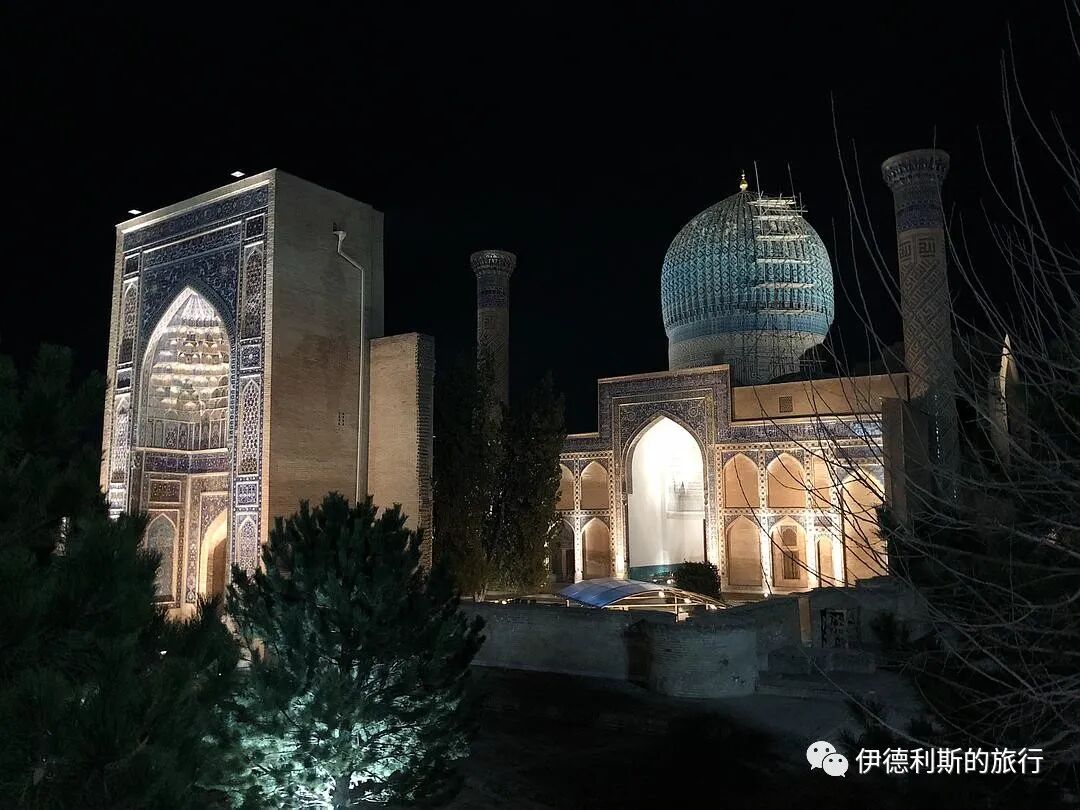
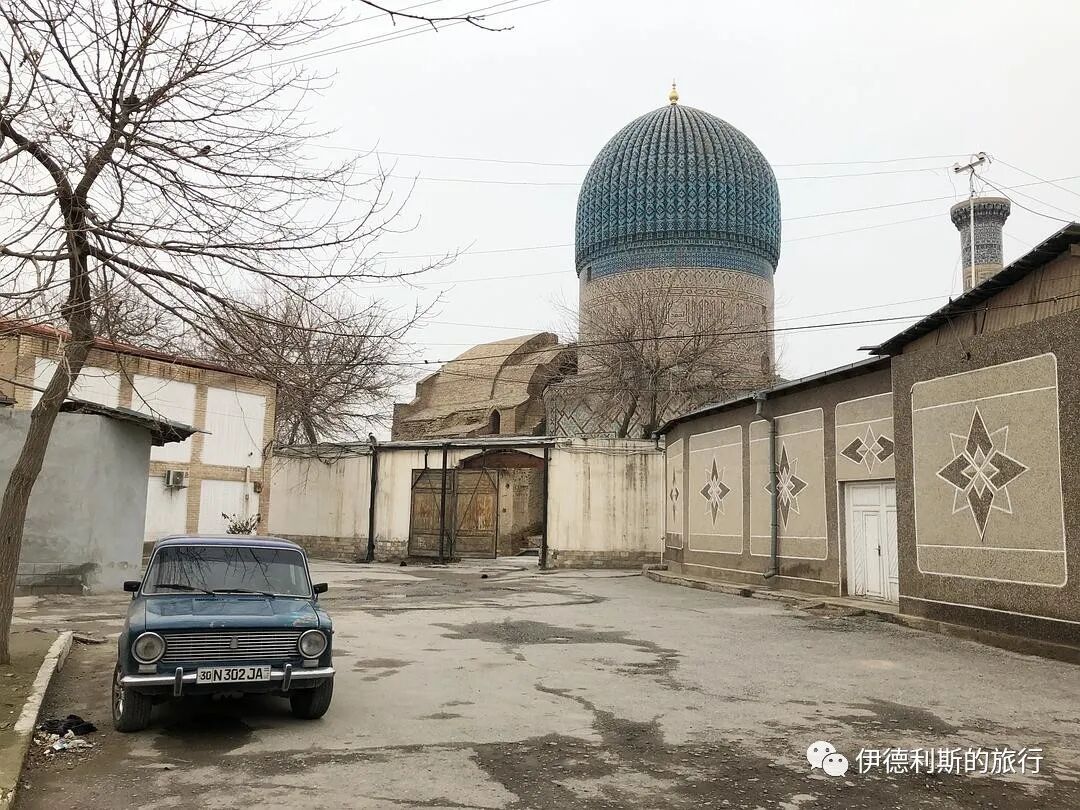
The alley behind Gur-e-Amir
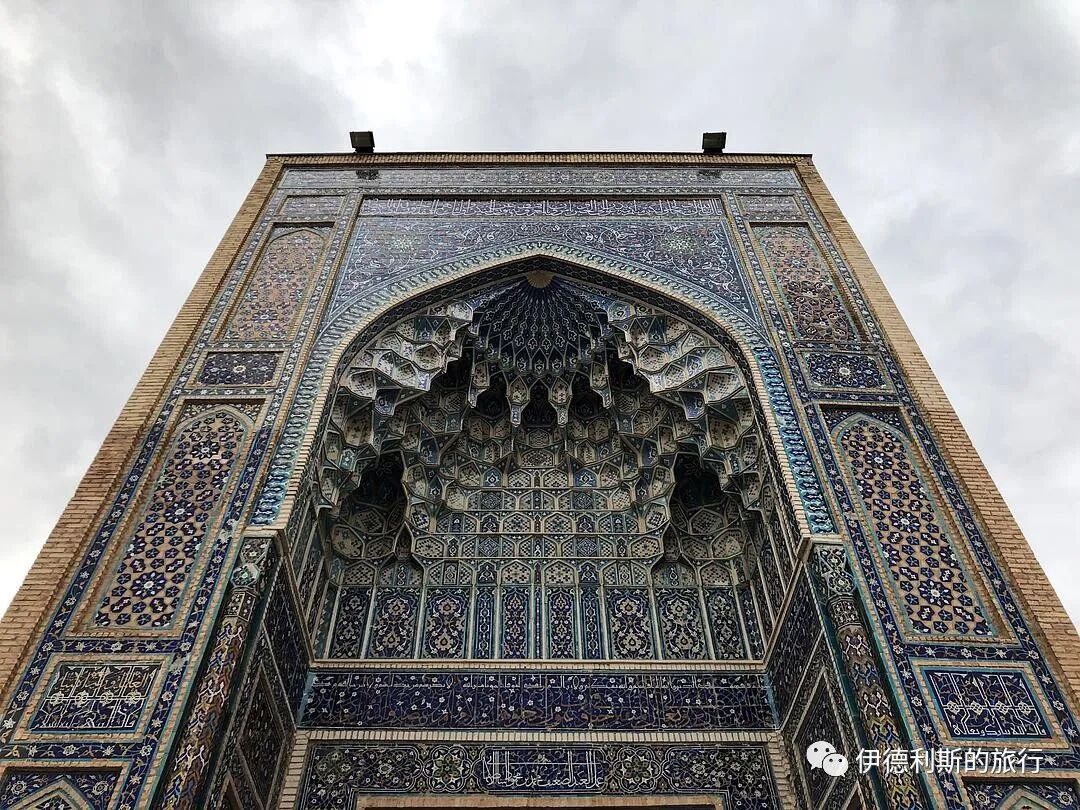
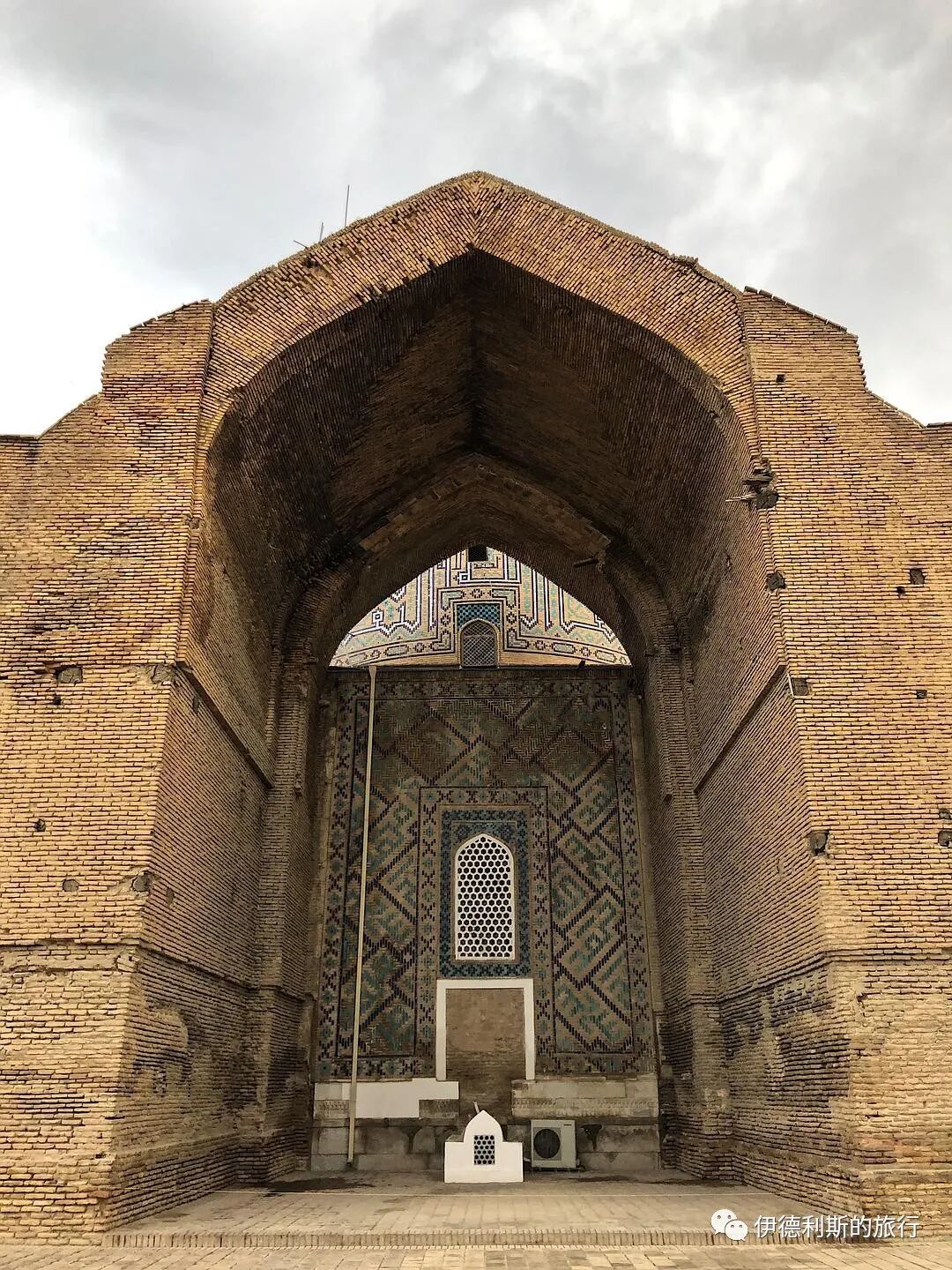
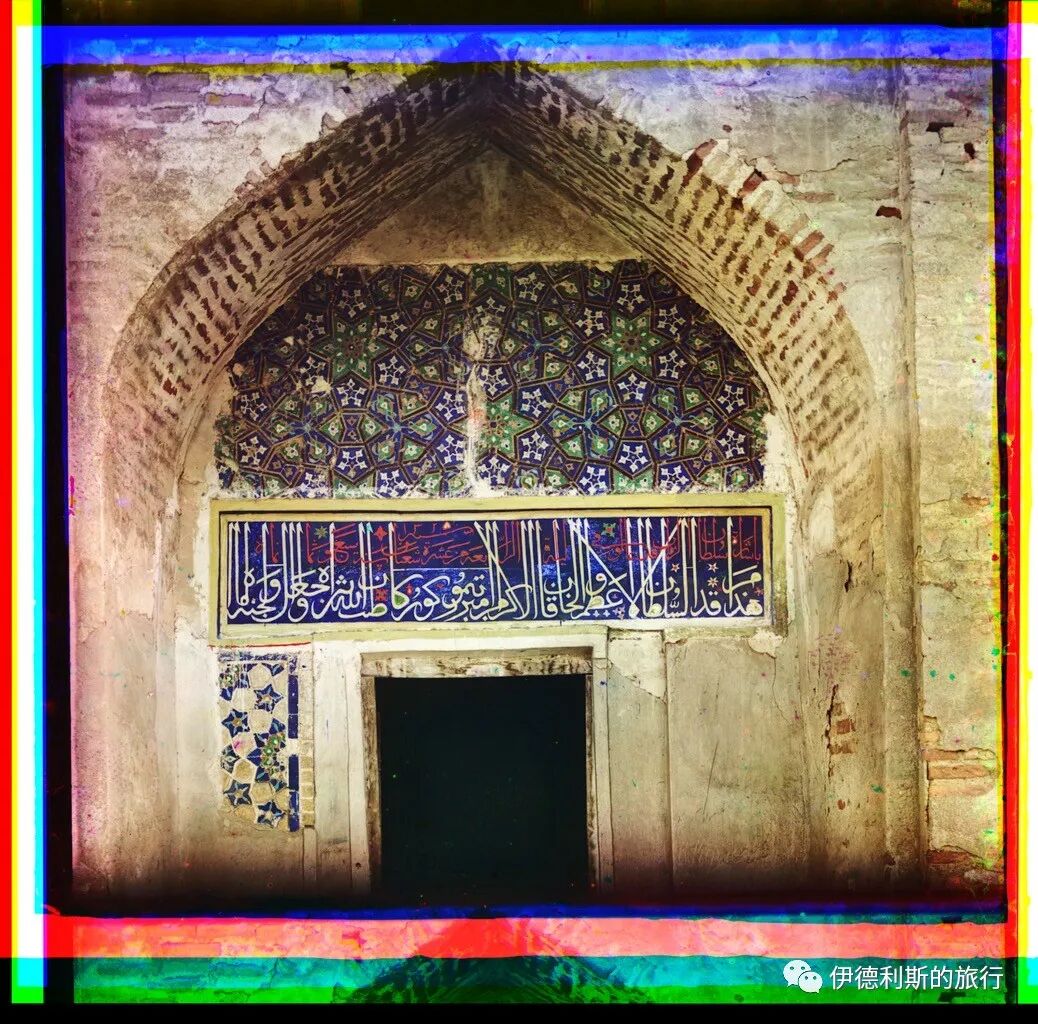
The entrance to Gur-e-Amir is a huge Iwan arch, covered with glazed ceramic panels featuring complex plant and geometric patterns. In the 19th century, the upper part had collapsed and was later restored.
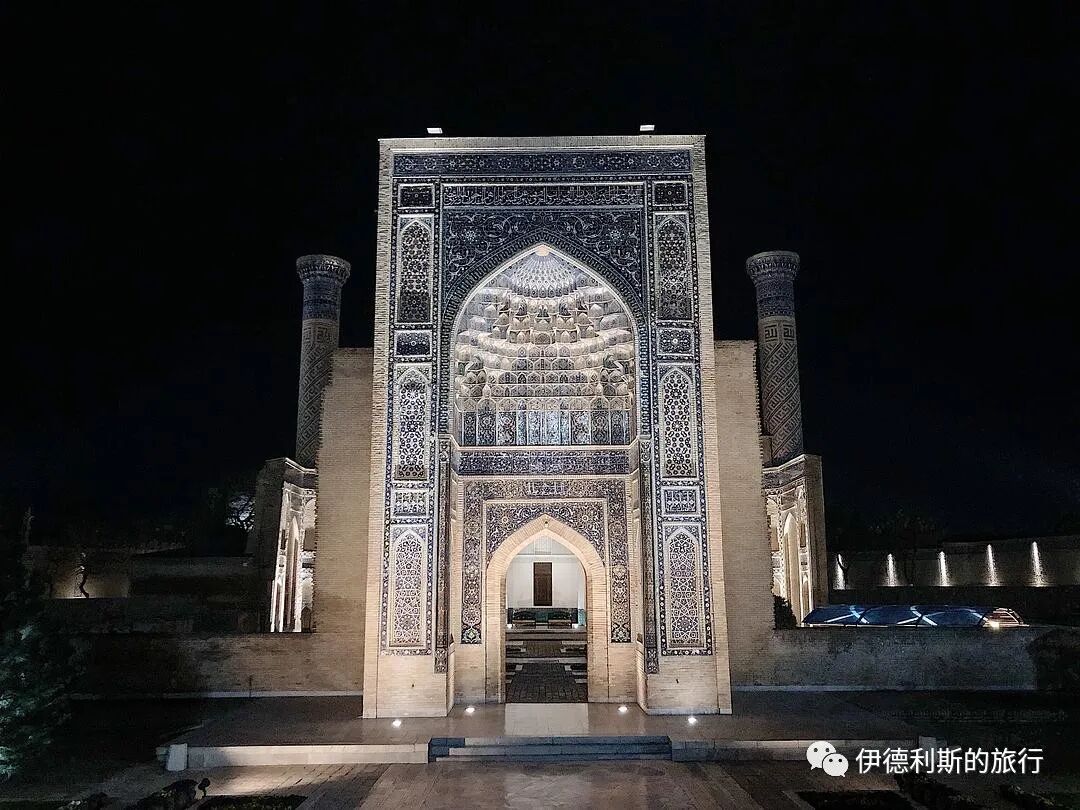
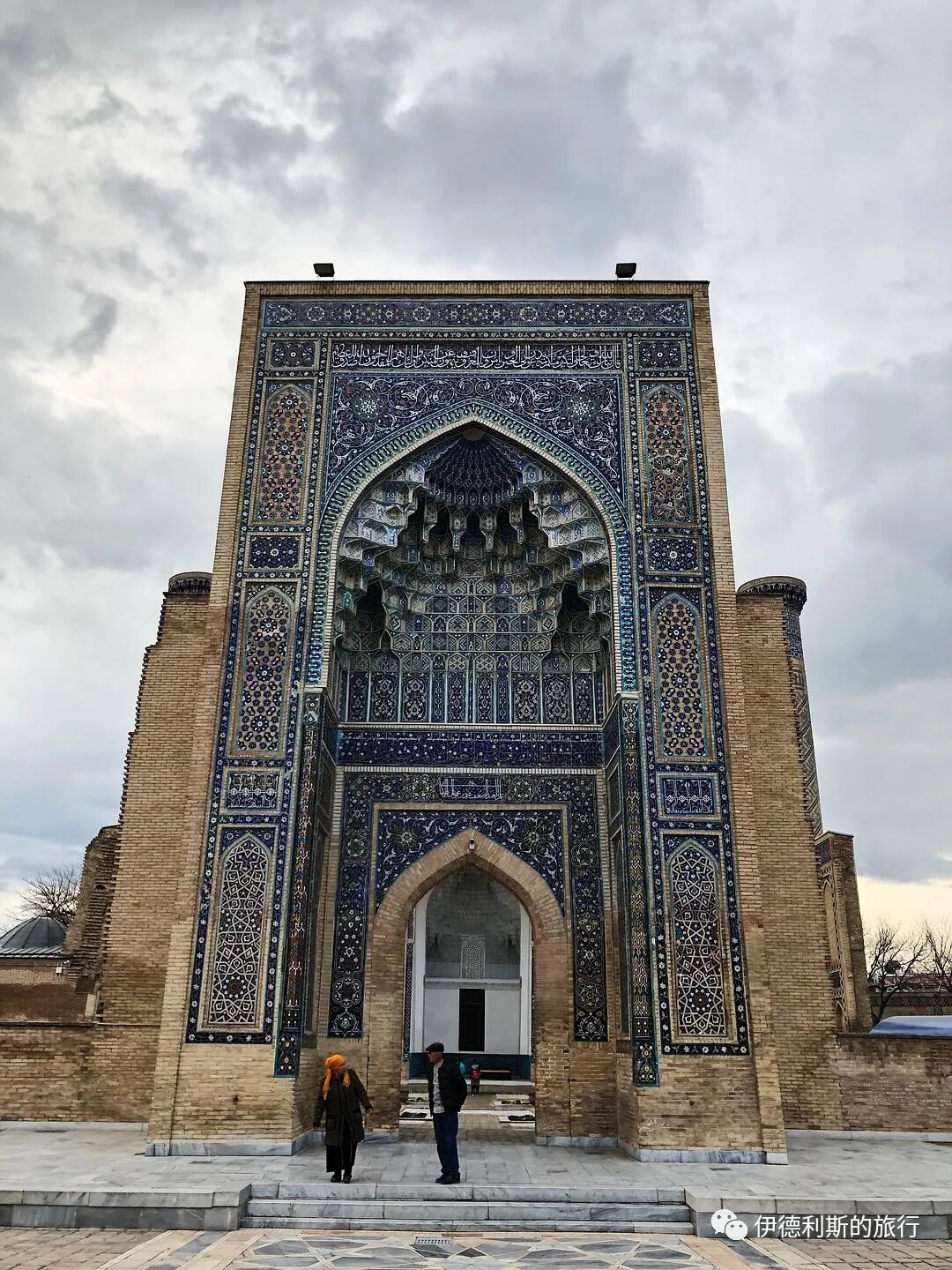
Back of the arch
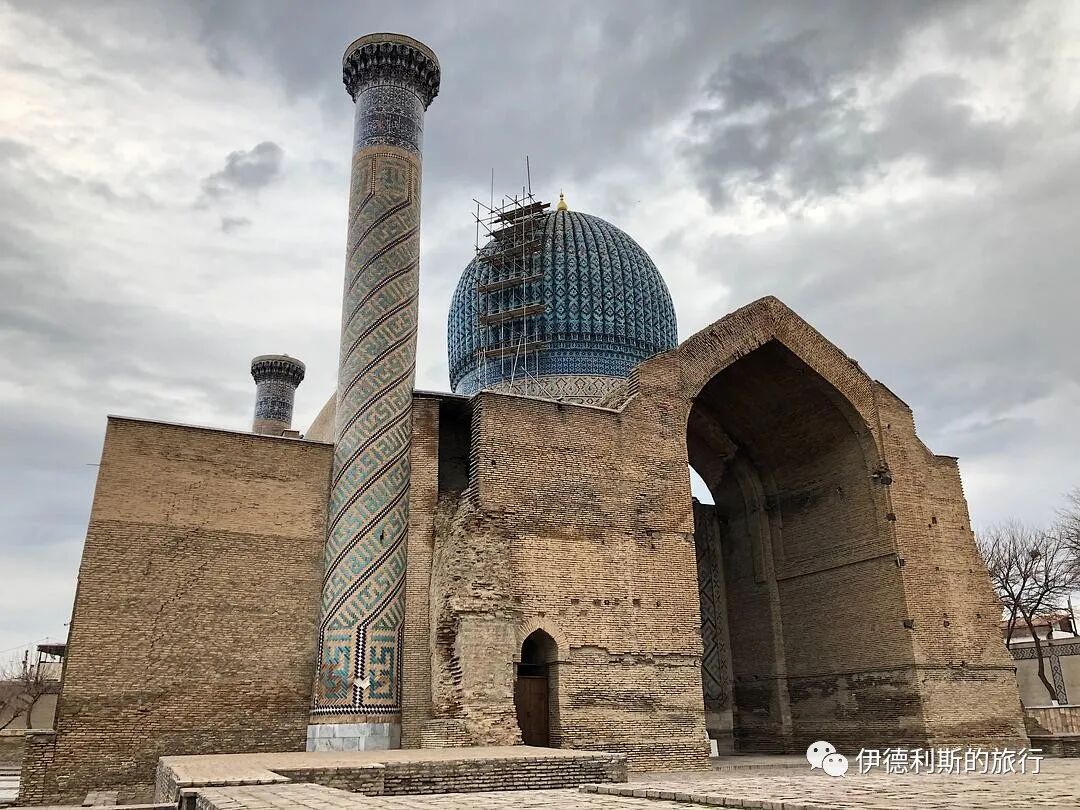
After entering the arch is the main building of the mausoleum. The mausoleum was fortunately preserved, but unfortunately, only the northwestern one of the four minarets remained by the 19th century. The minaret has spiral-thickened Kufic Arabic calligraphy.
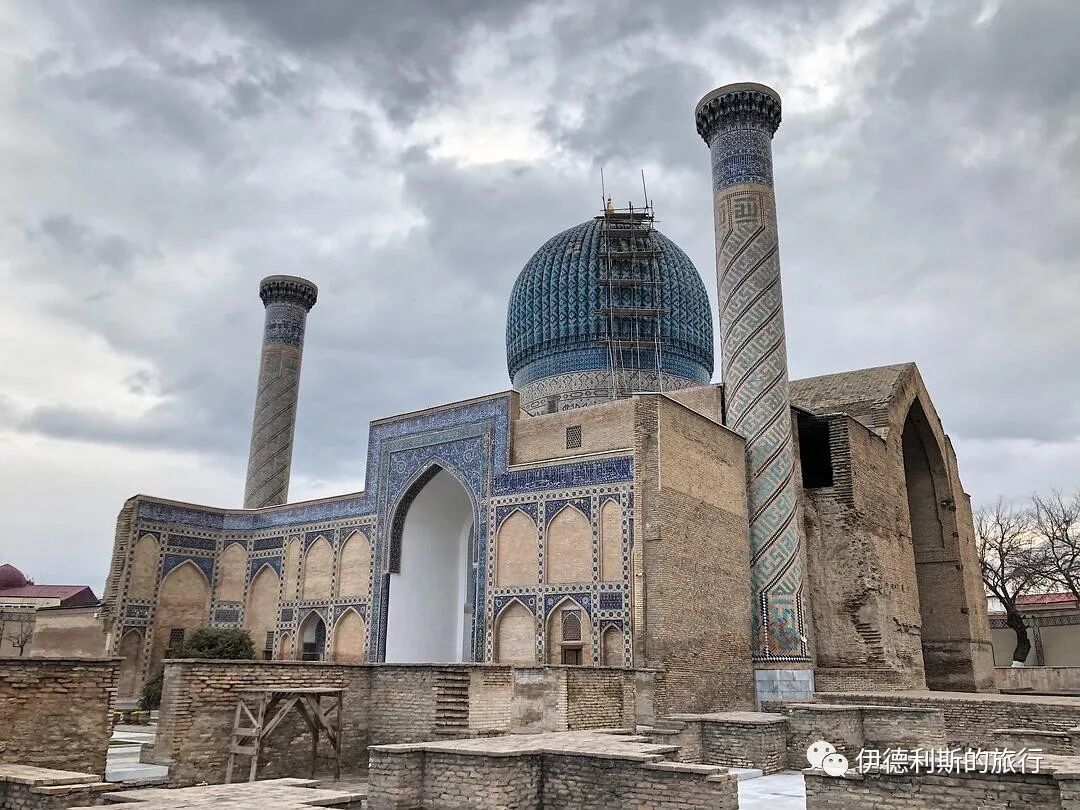
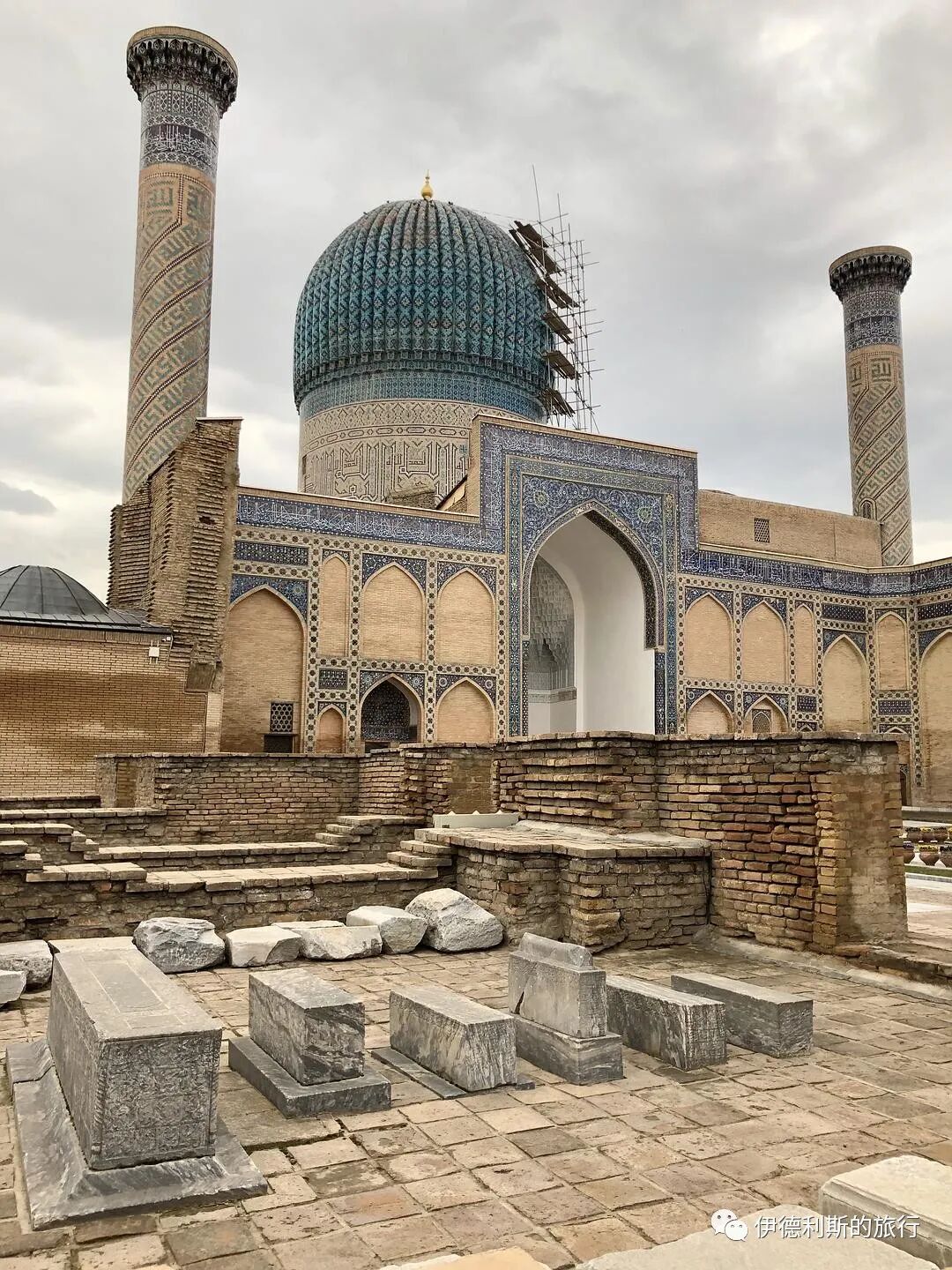
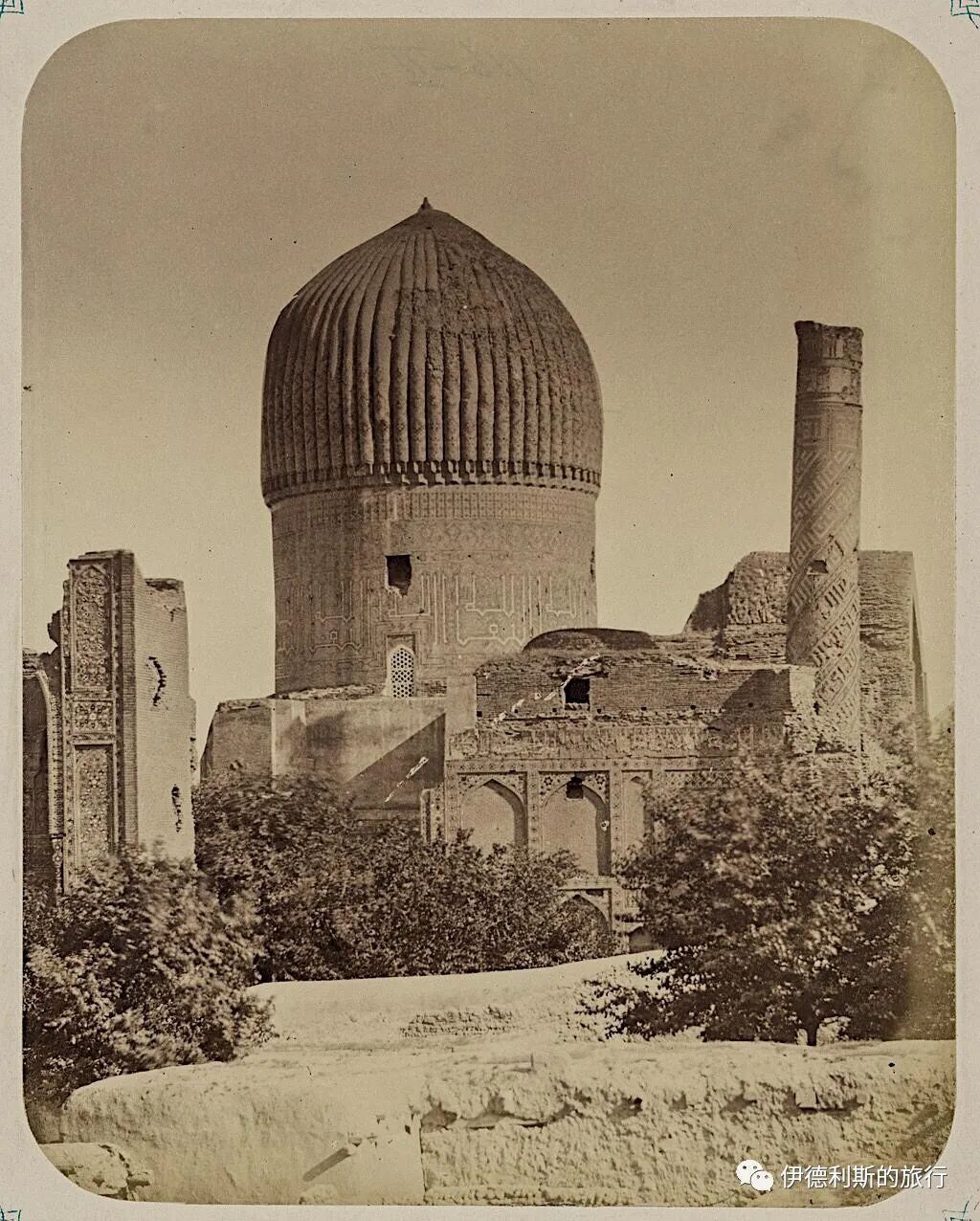
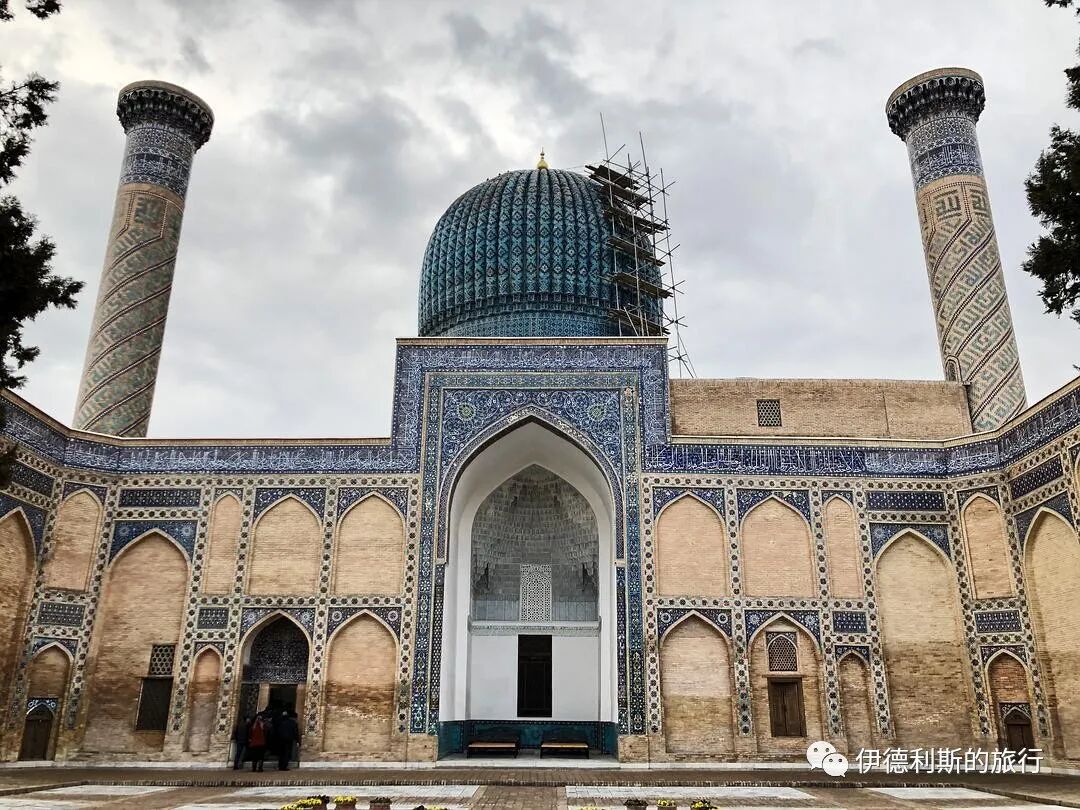
The main body of the mausoleum is divided into three levels: an octagonal base, a middle drum structure, and a large ribbed dome. The base is decorated with thickened Kufic Arabic calligraphy in blue tiles, while the drum structure is decorated with slender Persian-Arabic calligraphy in black and white tiles.
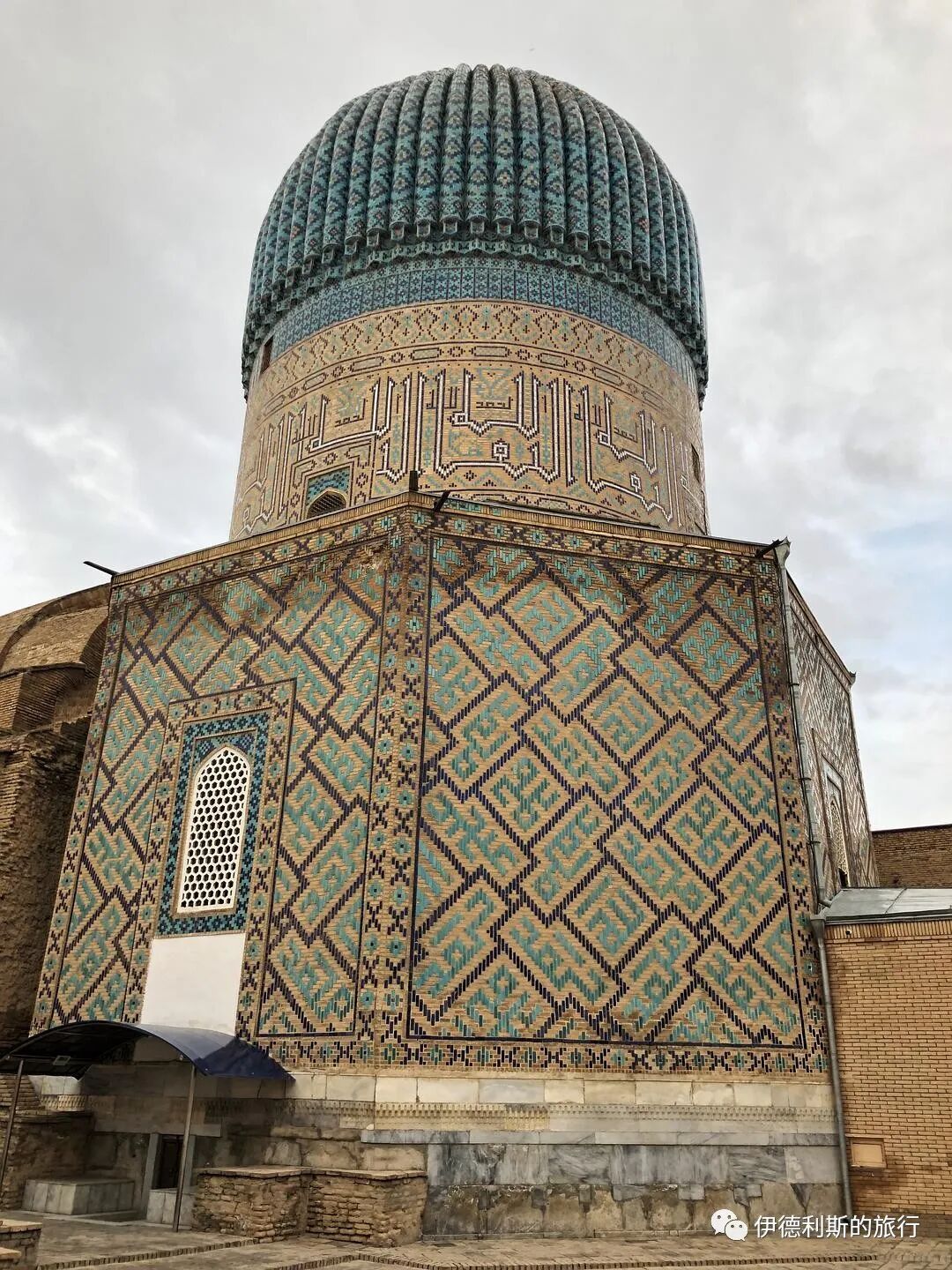
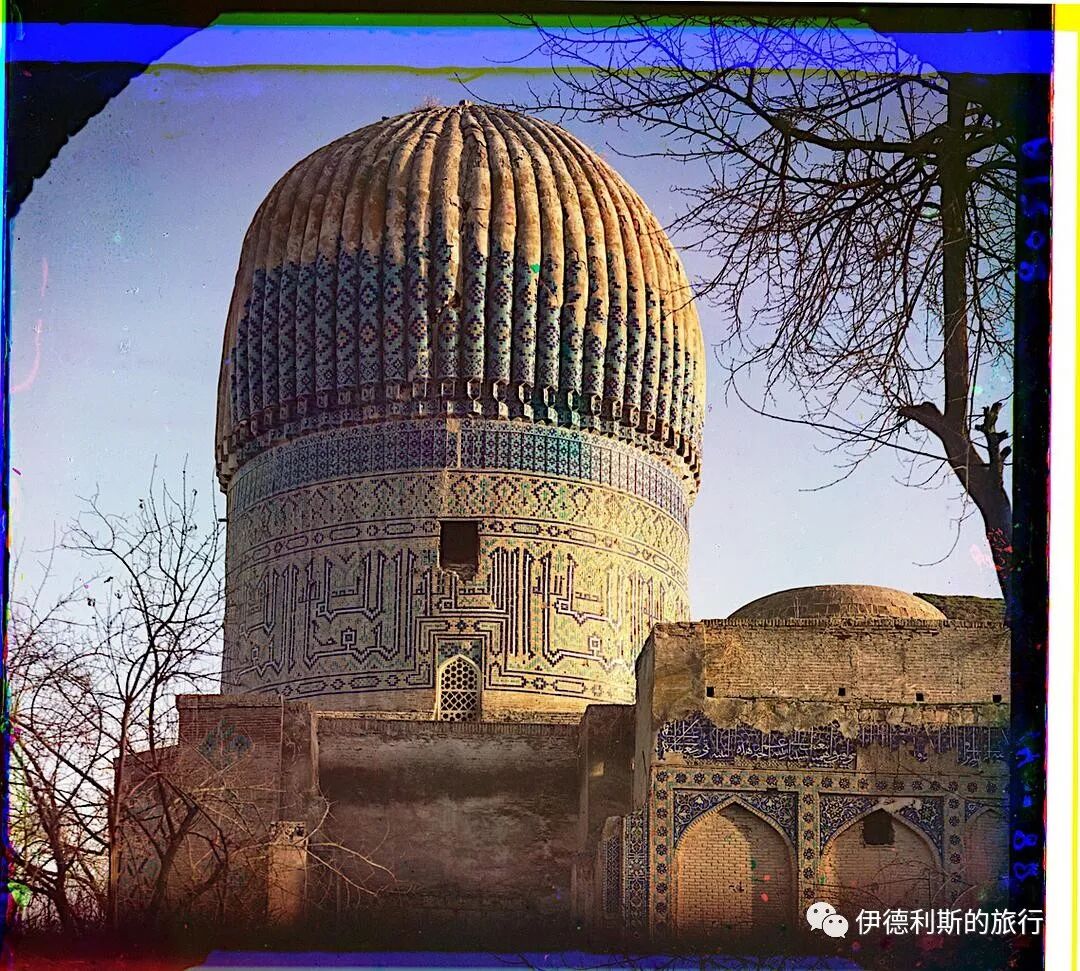
There is also a huge main arch on the west side of the mausoleum.
The current entrance is on the north side of the mausoleum.
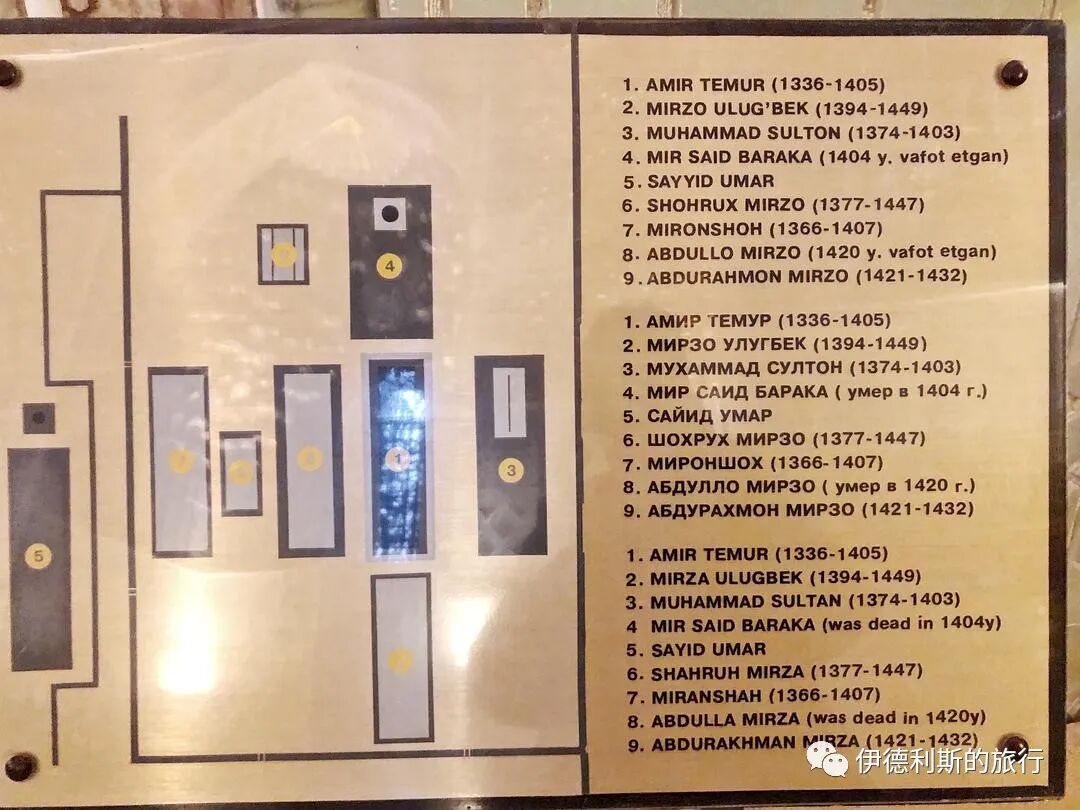
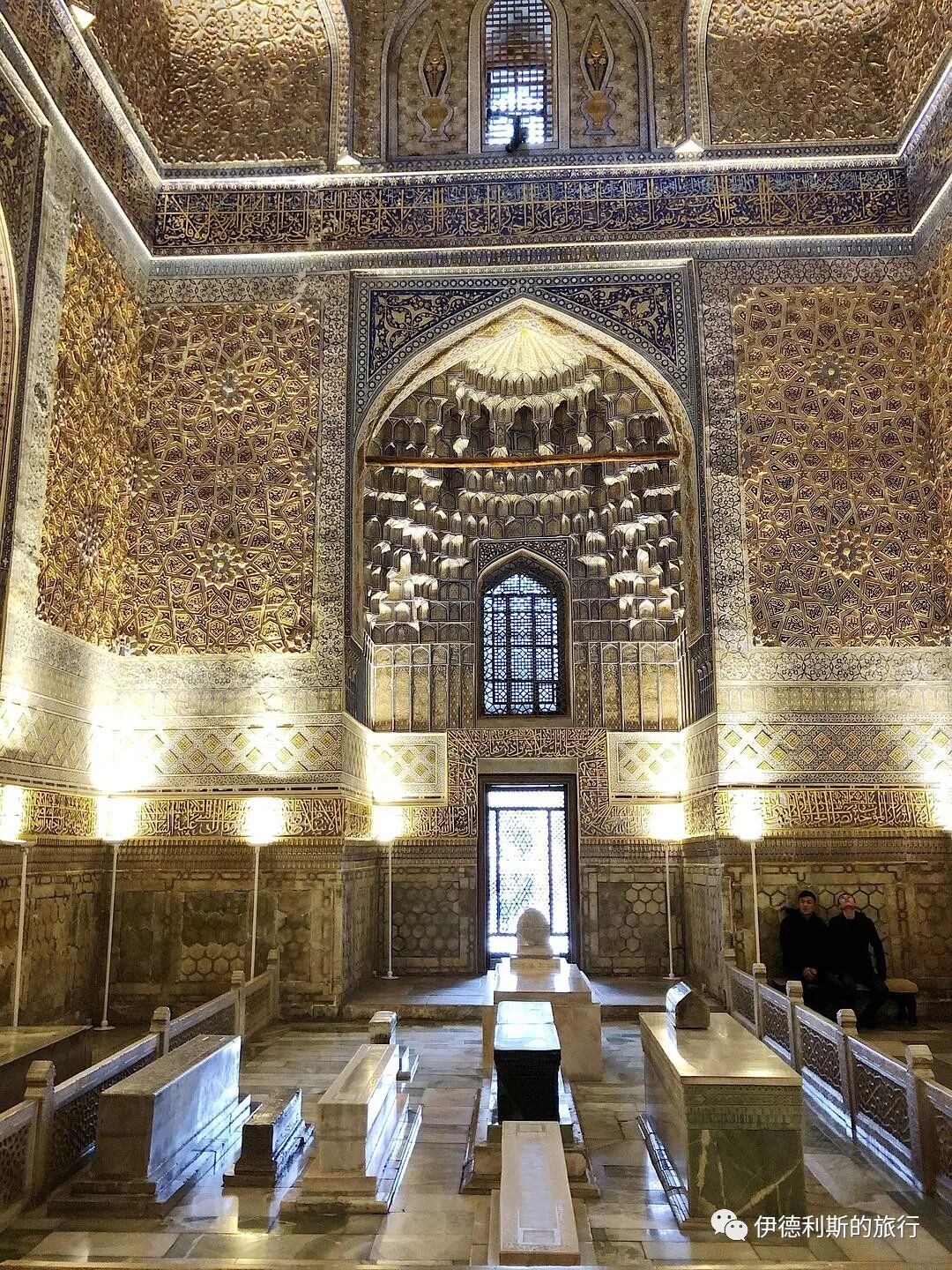
The interior of the mausoleum is divided into two levels: the upper level contains the tombstones indicating the positions, and the lower level is the actual burial site. There are 9 people buried in the mausoleum: Timur himself, his sons Miran Shah and Shah Rukh, his grandsons Ulugh Beg and Muhammad Sultan, as well as Timur's spiritual mentor Mir Said Baraka and another Islamic master, Seyid Omar.
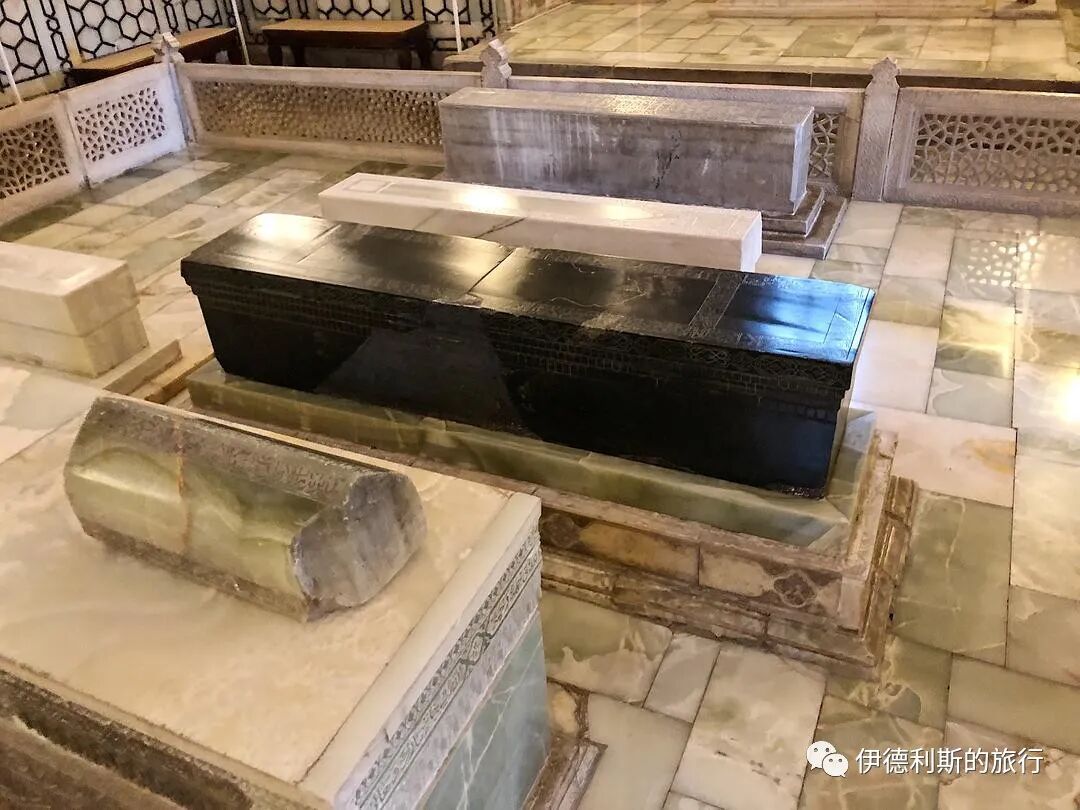
Ulugh Beg placed a hard, dark green jade stone over Timur's tomb, which is said to have come from the throne of the Chagatai Khanate. In 1740, Nader Shah, the emperor of the Persian Afsharid dynasty, took the tombstone back to Persia, but the stone cracked when it was moved, and Nader Shah immediately began to suffer misfortune. The tombstone was considered the cause of the misfortune, so he eventually returned it to its original place.
To the west of Timur's tombstone is Shah Rukh's tombstone. Shah Rukh was the second ruler of the Timurid dynasty. In 1447, Shah Rukh died of illness and was buried in Herat. The following year, Ulugh Beg occupied Herat, dug up his father's remains, brought them back to Samarkand, and reburied them in Gur-e-Amir.
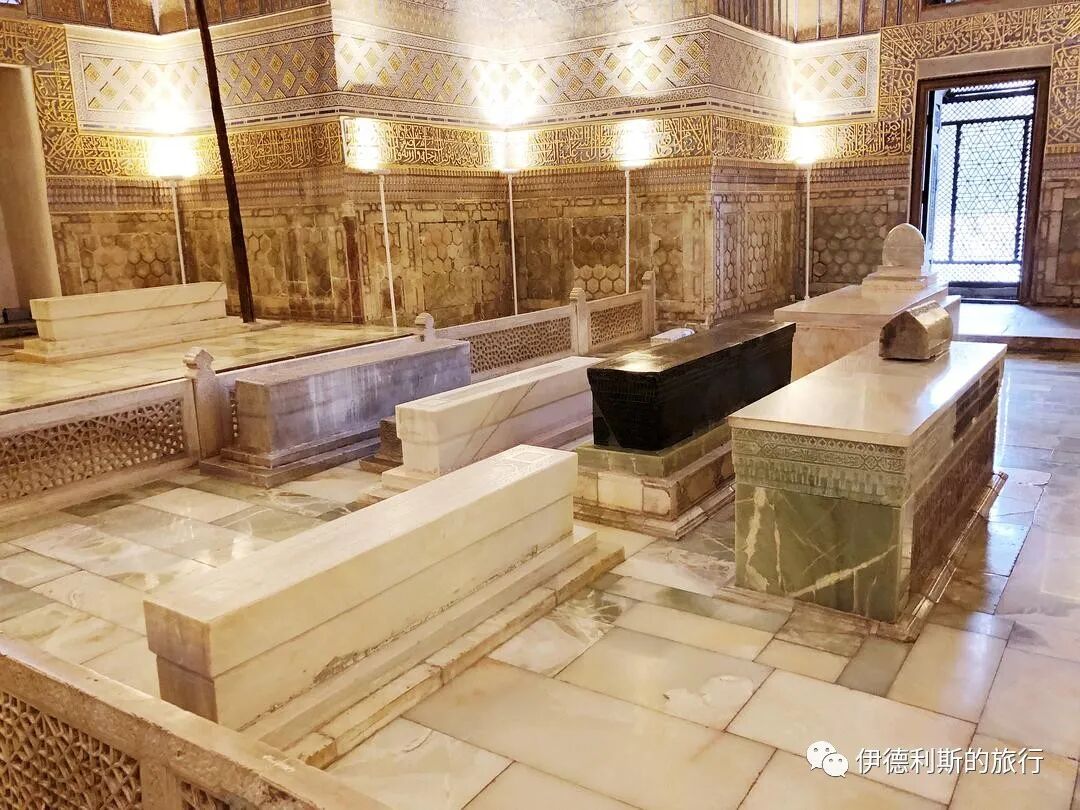
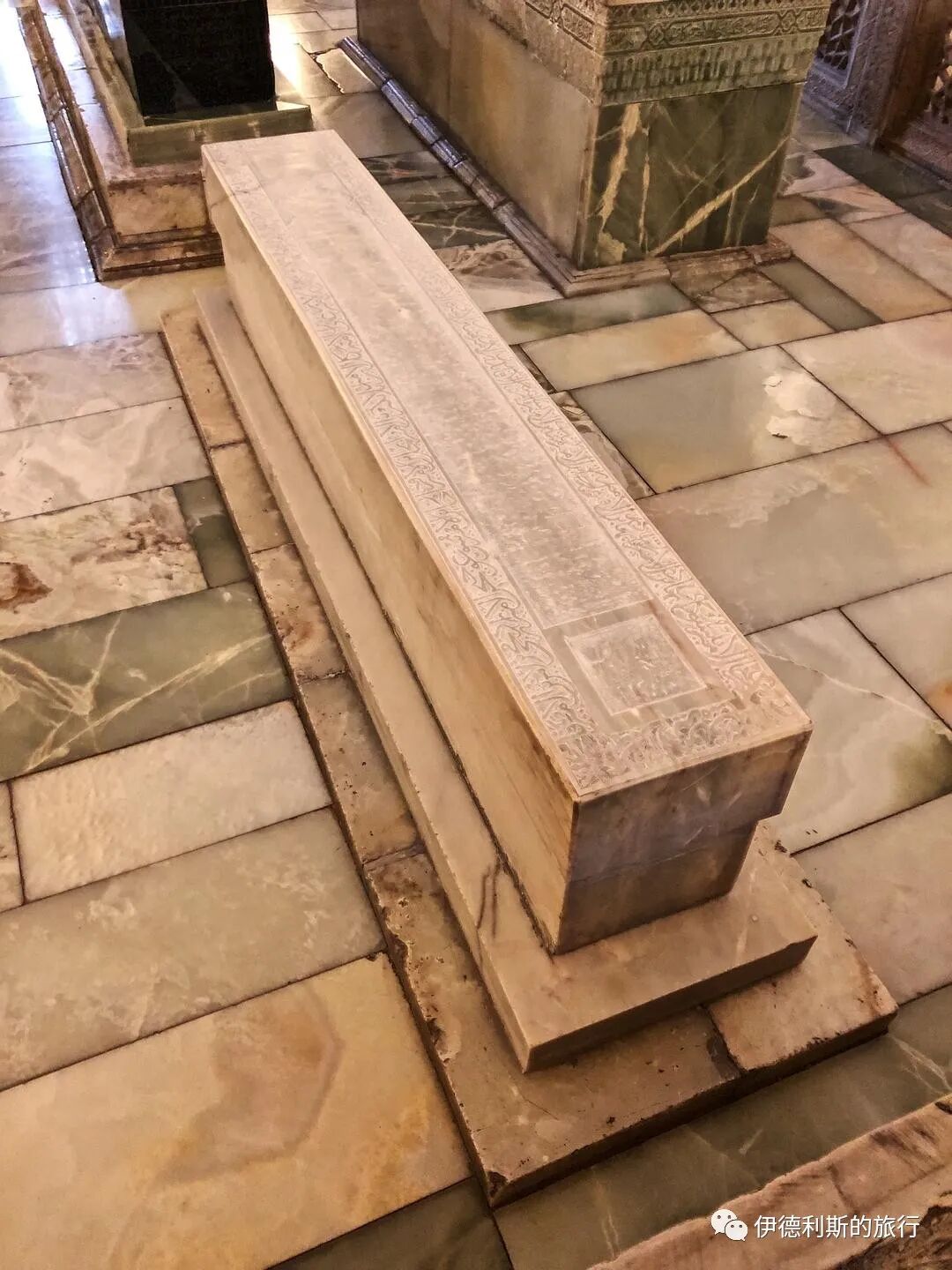
To the south of Timur's tombstone is Ulugh Beg's tombstone. Ulugh Beg was the third ruler of the Timurid dynasty. In 1449, Ulugh Beg's eldest son, Abdal-Latif Mirza, launched a rebellion, captured Ulugh Beg near Samarkand, and subsequently had him killed. But Abdal-Latif only ruled for 6 months before being murdered, and Samarkand was then ruled by Ulugh Beg's nephew, Abdallah Mirza. Abdallah buried Ulugh Beg's remains in Gur-e-Amir, together with his grandfather Timur and father Shah Rukh.
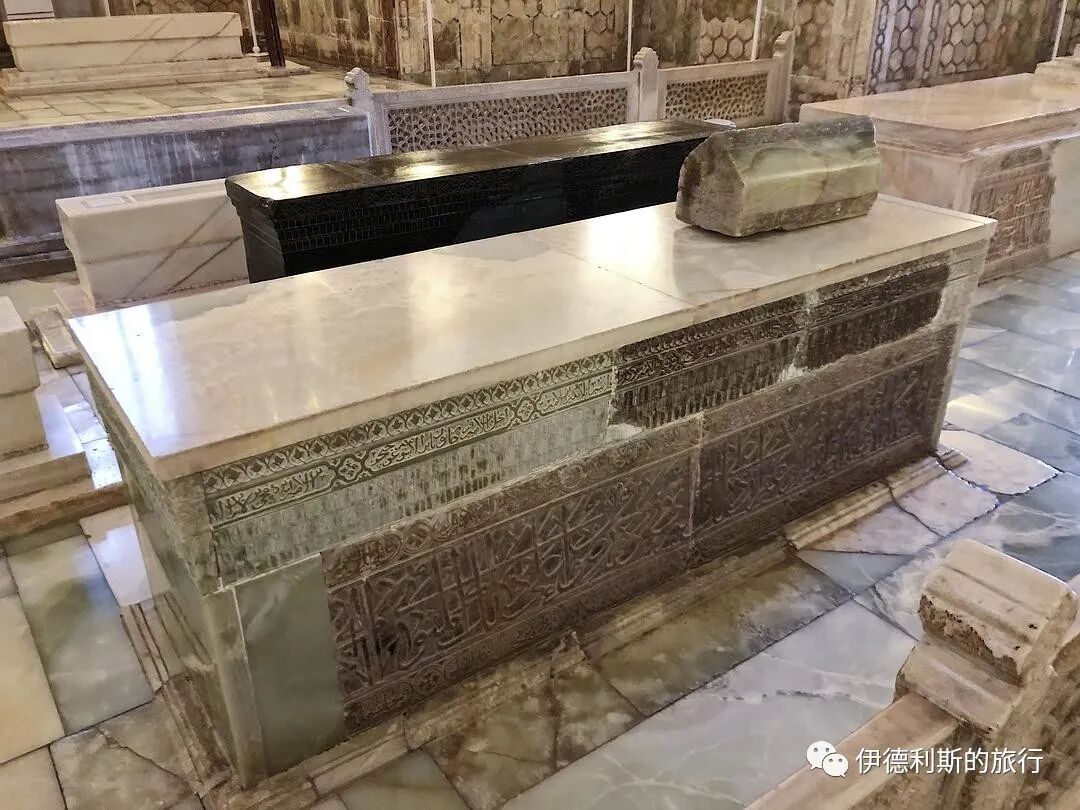
To the east of Timur's tombstone is Muhammad Sultan's tombstone.
Muhammad Sultan's father was Timur's favorite son, Jahangir, but he died of illness in 1376, the year after Muhammad was born. In 1386, the 10-year-old Muhammad Sultan was appointed by Timur to rule the important Iranian city of Tabriz. Five years later, he began to accompany his grandfather on campaigns, performing well in two wars invading the Golden Horde, and grew into an excellent officer. In 1397, Muhammad Sultan was appointed to manage the Fergana region in the easternmost part of the Timurid Empire and was given an army of 40,000 men.
Just before Timur's invasion of India in 1398, Muhammad Sultan was appointed by Timur as the heir to the throne (Vali al-lakhd). It is said that when Timur preached the Khutbah (sermon) at the Jumu'ah (Friday) congregational prayer after conquering Delhi, he placed Muhammad Sultan's name alongside his own.
In 1402, Timur invaded the Ottoman Empire, and the two sides fought a decisive battle in Ankara. On the battlefield, Muhammad Sultan led the army to inflict heavy damage on the enemy and captured the Ottoman Sultan Bayezid I. After the war, Muhammad Sultan was sent to Bursa, the then-capital of the Ottoman Empire, and seized a large amount of treasure.
However, while returning from Bursa to the main force led by Timur, Muhammad Sultan was wounded in battle and eventually died in 1403. Timur felt immense grief over his grandson's death and ordered everyone in the army to wear dark clothes to mourn.
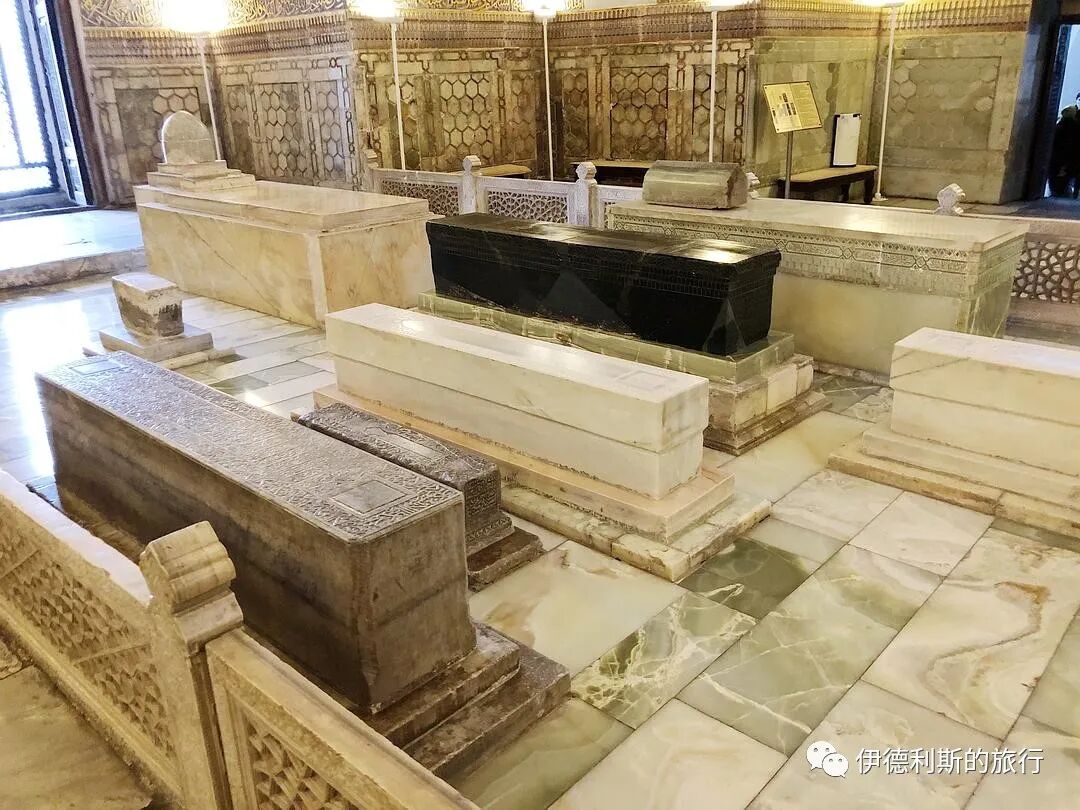
Further west of Timur's tombstone is the tombstone of Timur's third son, Miran Shah. After Timur conquered Iran in 1393, he granted the 'Hulagu Throne' to Miran Shah, with territories including Persia and the Caucasus region, such as Baghdad and Tabriz. However, after suffering a mental illness from falling off a horse, Miran Shah increasingly became a tyrant.
Miran Shah lived a dissolute life, including drinking in the mosque, throwing gold coins out of palace windows, and suffering successive military failures. Most importantly, he began to question Timur's ability to govern, which Timur learned about.
In 1399, Timur sent his nephew Sulaiman Shah to bring Miran Shah back to Samarkand, stripped him of all positions, and made him a follower of Timur.
After Timur died in 1405, Miran Shah supported his son Khalil Sultan to inherit the throne, launching a war of succession with his brother Shah Rukh. Miran Shah led an army to fight in western Persia but was defeated by the Turkmen Black Sheep dynasty in the battle for Tabriz in 1406. During the rout, Miran Shah was killed by the Turkmen, and his head was later cut off and hung on the walls of Tabriz.
After the war, the Turkmen handed over Miran Shah's head and body to Shah Rukh, who had ultimately won the war of succession, and Shah Rukh buried Miran Shah in Gur-e-Amir.
Summary: This travel note introduces Samarkand Travel Guide: Timur's Capital, Mosques & Islamic History (Part 1). In 1220, Genghis Khan led the Mongol army to conquer the ancient Central Asian city of Samarkand, killed all the civilians who had taken refuge in the citadel and the mosque, and looted all the treasures in the city. It is useful for readers interested in Uzbekistan Travel, Timurid History, Muslim Heritage.
In 1220, Genghis Khan led the Mongol army to conquer the ancient Central Asian city of Samarkand, killed all the civilians who had taken refuge in the citadel and the mosque, and looted all the treasures in the city; Samarkand lost its former glory.
In 1370, Emperor Timur established the Timurid dynasty on the ruins of the Chagatai Khanate and made Samarkand his capital. Over the next 35 years, Timur employed craftsmen, artists, and architects from all over the Timurid Empire to rebuild the city of Samarkand, making it the undisputed center of Central Asia. During Timur's reign, the population of Samarkand exceeded 150,000, and important monuments such as the Shah-i-Zinda mausoleum complex and the Bibi-Khanym Mosque have been preserved to this day.
Between 1409 and 1449, a period of 40 years, the city of Samarkand continued to grow as a city of science and culture under the rule of Timur's grandson, Ulugh Beg. In addition to the completion of the Gur-e-Amir mausoleum for Emperor Timur, the Ulugh Beg Madrasah (Islamic school) and the Ulugh Beg Observatory are both important testaments to this.
After the death of Ulugh Beg, the Timurid dynasty went from prosperity to decline and fell into division. In the early 16th century, the Uzbeks occupied Samarkand and established the Shaybanid dynasty, later moving the capital to Bukhara in 1561. Since then, Samarkand gradually declined.
By the 19th century, most of the Timurid dynasty monuments in Samarkand were severely damaged. During the Soviet era, large-scale renovations were carried out on the Timurid monuments in Samarkand; unfortunately, the 'tear down the old and build the new' approach erased too much historical information and has been criticized by later generations.
In 2001, the ancient city of Samarkand was inscribed on the World Heritage List under the name 'Samarkand – Crossroad of Cultures'.
The old photos shared in this article, the black and white ones, come from the 'Turkestan Album', produced between 1871 and 1872 under the sponsorship of Konstantin P. von Kaufman, the first Governor-General of Russian Turkestan.
The color photos are from Sergei Mikhailovich Prokudin-Gorskii. Some of these photos date back to 1905, with most of the work coming from between 1909 and 1915. During this period, he traveled to many different regions of the Russian Empire with the support of Tsar Nicholas II and the Ministry of Transport.
Table of Contents
I. Shah-i-Zinda: 11th–15th centuries
II. Rukhabad Mausoleum: 1380s
III. Gur-e-Amir Mausoleum: 1404
4. Bibi-Khanym Mosque: 1404
5. Bibi-Khanym Mausoleum: 1404
6. Ulugh Beg Madrasah: 1420
7. Ulugh Beg Observatory: 1429
8. Ishrat-khana Mausoleum: 1464
9. Ak-Saray Mausoleum: Presumed to be 1450s-1470s
10. Khodja Abdu Derun Mausoleum: 15th century
11. Mausoleum of Prophet Daniel: Rebuilt in the early 20th century
I. Shah-i-Zinda: 11th–15th centuries
Shah-i-Zinda is the oldest and most important Islamic mausoleum complex in Samarkand. In the 11th century, the tomb of Kusam Ibn Abbas, a cousin of the Prophet Muhammad, was built here; during the Timurid dynasty in the 14th century, a large number of women from the Timurid family and Timur's confidants were also buried here.
The Shah-i-Zinda complex can be divided into three parts: south, middle, and north, each with its own gate. The southern complex is the latest in date, built by Timur's grandson, Ulugh Beg. The middle complex contains the tombs of Timur's ministers, generals, nieces, and sisters. The northern complex is the core part; in addition to the Prophet's cousin, two of Timur's wives and local religious leaders are also buried there.
(I) Southern Complex
1. Gate: 1435
The gate of Shah-i-Zinda (Chartak of Abdulaziz) was built in 1435 by Ulugh Beg, the third ruler of the Timurid dynasty, on behalf of his son Abdulaziz. Abdulaziz was Ulugh Beg's second son, raised by Ulugh Beg from childhood, deeply loved by him, and was also the designated heir of Ulugh Beg.
In 1449, Ulugh Beg's eldest son, Abdal-Latif Mirza, launched a rebellion against his father; Ulugh Beg led his army to meet him while ordering Abdal-Aziz to stay behind and guard Samarkand. Abdulaziz's poor management eventually led to an uprising in Samarkand; he locked himself in the citadel and sent a letter to his father for help, and Ulugh Beg had to return to Samarkand after receiving the letter. Abdal-Latif subsequently attacked Samarkand, and Ulugh Beg and Abdal-Aziz surrendered to him. Abdal-Latif arranged for Ulugh Beg and Abdulaziz to go on Hajj (pilgrimage) to Mecca and had them both killed on the way.
2. Double-domed Mausoleum: 1437
The Double-domed Mausoleum is the first mausoleum after entering the gate, believed to have been built by the third ruler of the Timurid dynasty, Ulugh Beg, in 1437. The occupant of the tomb may be Timur's benefactor Uldzk Inak and her daughter Bibi Zinet, but there is also a theory that the occupant is the astronomer Kazi Zadeh Al-Rumi, who worked under Ulugh Beg.
Kazi Zadeh Al-Rumi was a famous astronomer and mathematician of the 14th–15th centuries, born in Bursa, the capital of the Ottoman Empire in 1364, and came to work at the Ulugh Beg Observatory in Samarkand during Ulugh Beg's reign. At the observatory, he worked with Ulugh Beg and other astronomers to complete the famous 'Zīj-i Sultānī' (Ulugh Beg's astronomical tables).
(II) Middle Complex
After passing through the gate and the Double-domed Mausoleum and climbing the stairs, one enters the middle complex. The middle complex can also be divided into southern and northern parts. The southern part consists of five adjacent mausoleums, mainly for important figures in Timur's court: the mausoleum of Timur's minister Amirzade (1386), the mausoleum of Timur's niece Shadi Mulk Aka (1372), the mausoleum of Timur's sister Shirin Bika Aka (1386), and the mausoleum of Timur's general Tughlu Tekin (1376); there is also an octagonal mausoleum of unknown occupant, presumably built in the 1430s.
View of the gate of the middle complex from the Double-domed Mausoleum
Shot from west to east, from left to right are the mausoleum of niece Shadi Mulk Aka, the mausoleum of sister Shirin Bika Aka, the mausoleum of minister Amirzade, and the Double-domed Mausoleum.
Shot from northeast to southwest, the three domes from left to right are the mausoleum of sister Shirin Bika Aka, the octagonal tomb pavilion, and the mausoleum of niece Shadi Mulk Aka; on the right are three others rebuilt in modern times.
Shot from northeast to southwest, the three domes from left to right belong to the mausoleum of sister Shirin Bika Aka, the mausoleum of minister Amirzade, and the mausoleum of niece Shadi Mulk Aka; in the front is the octagonal tomb pavilion.
Shot from northwest to southeast, from left to right are the octagonal tomb pavilion, the mausoleum of sister Shirin Bika Aka, the mausoleum of niece Shadi Mulk Aka, the mausoleum of minister Amirzade, and the Double-domed Mausoleum.
Shot from north to south, from left to right are the mausoleum of Shirin Bika Aka, the mausoleum of Amirzade, and the mausoleum of Shadi Mulk Aka.
Shot from south to north, on the left is the octagonal tomb pavilion, and on the right is the mausoleum of Shadi Mulk Aka.
Shot from south to north, on the left are the mausoleum of Amirzade and the mausoleum of Shadi Mulk Aka.
The mausoleum of Amirzade shot from north to south.
Shot from north to south, from left to right are the mausoleum of Amirzade and the mausoleum of Shadi Mulk Aka.
1. Amirzade Mausoleum: 1386
Amirzade was a minister in Timur's court. In addition to geometric patterns and eight-petaled rose patterns, the Peshtak (portal) entrance of the mausoleum also features Kufic calligraphy and Thuluth calligraphy.
2. Shadi Mulk Aka Mausoleum: 1372
Shadi Mulk Aka was the daughter of Timur's eldest sister, Kutlug Turkan Aka.
3. Tughlu Tekin Mausoleum: 1376
Tughlu Tekin was the mother of Timur's general Amir Hussein, and later Amir Hussein was also buried here.
4. Shirin Bika Aka Mausoleum: 1386
The occupant of the tomb is Timur's sister.
5. Octagonal Tomb Pavilion: presumably 1430s
The occupant of this tomb pavilion has not been verified to this day.
6. Usto Ali Mausoleum: 1360s–1380s
On the north side of the middle complex is a separate mausoleum; the occupant is unknown, only that the architect was Usto Ali from Nasaf (Qarshi).
View from south to north
(III) Northern Complex
1. Passage of the Departed: 14th century
The Passage of the Departed (Yuqori Chortoq) is the gate to the northern complex.
2. Kusam Ibn Abbas Mausoleum: 11th century
The Kusam Ibn Abbas Mausoleum is the earliest building constructed in Shah-i-Zinda, dating back to the 11th century, and was renovated in the 14th and 15th centuries. Kusam is legendary as the cousin of the Prophet Muhammad and the son of the Prophet's uncle, Abbas ibn Abdul-Muttalib. Kusam is said to be one of the first people to come to Central Asia to spread Islam and eventually died in Samarkand.
In 1333, the famous Moroccan traveler Ibn Battuta passed through Samarkand and visited the Kusam mausoleum. The 'Rihla' (Travels of Ibn Battuta) records:
'The people of Samarkand come to visit this tomb every Monday and Friday eve; the Tatars also come to visit and make great vows to him, bringing cattle, sheep, dirhams, and dinars to be used as funds for the food and lodging of passing travelers and for the servants of the shrine.' 'On the tomb is a dome built on four pillars, each pillar flanked by two marble columns in green, black, white, and red.' 'The walls of the dome are carved and inlaid with gilded marble, and the ceiling is made of lead.' 'The tomb is inlaid with ebony, the four corners of the tomb are wrapped in silver leaf, three silver lamps are hung over the tomb, and wool and cotton carpets are spread inside the dome.' "
There are also some tombstones outside the mausoleum.
3. Tuman Aka Mausoleum: 1405
Opposite the Kusam Ibn Abbas Mausoleum is the mausoleum of Timur's wife, Tuman Aka. Tuman Aka, also written as Touman Agha, married Timur in 1377 and came from the family of the last Chagatai Khan, Qazan Sultan. She was Timur's favorite wife and a younger relative of Sarai Mulk Khanym, the daughter of Qazan Sultan.
Tuman Aka's mausoleum was built on the ruins of an Islamic madrasah destroyed in the 14th century; the inscription on the mausoleum bears the construction date of 1405 and the name of a calligrapher from Tabriz, Iran.
Next to the Tuman Aqa mausoleum is a Sufi khanaka (hospice) named after Tuman Aqa. It is speculated that the khanaka was built earlier than the mausoleum, probably around the end of the 14th century.
4. Khodja Ahmad Mausoleum: 1360s
The Khodja Ahmad Mausoleum is located at the northernmost part of the entire Shah-i-Zinda complex, built in the 1360s, and is the tomb of a local religious leader. The facade (Peshtak or Pischtak) of the mausoleum is decorated with a large number of floral, geometric patterns, and calligraphic tiles. The Kufic calligraphy tiles on the inside bear the name of the architect Fakhri-Ali, and the Thuluth calligraphy tiles on the outside read, 'May Allah perpetuate this eternity and make the mausoleum a garden of happiness for Khodja Ahmad.' "
5. Qutlugh Aka Mausoleum: 1361
To the east of the Khwaja Ahmad Mausoleum is the tomb of an unidentified woman, dating back to 1361. Some information indicates that Timur's wife, Qutlugh Aka, is buried here.
II. Rukhabad Mausoleum: 1380s
The Rukhabad Mausoleum is one of the earliest buildings built by Timur in Samarkand. Legend has it that after the Sufi sheikh Burkhan ad-Din Sagardji died during the Yuan Dynasty, his son Abu Said brought his remains to Samarkand for burial according to his father's last wish. During his stay in Samarkand, Abu Said became Timur's religious mentor, and Timur built a mausoleum for Sagardji in the 1380s, naming it 'Rukhabad' (House of the Spirit).
Behind the mausoleum are the ruins of a madrasah.
III. Gur-e-Amir Mausoleum: 1404
Gur-e-Amir is the mausoleum of Timur, which holds an important position in the history of Central Asian architecture and became the precursor and model for later Mughal architecture.
The complex was originally a Sufi khanqah and madrasah built by Timur's favorite grandson, Muhammad Sultan, at the end of the 14th century, called Khangah-i Muhammad Sultan; now only part of the foundation remains.
Muhammad Sultan died in 1403 while accompanying Timur on his expedition to the Ottoman Empire. He was initially buried in northwestern Iran, and it was not until a year later that he was transported to Samarkand and reburied in the Khangah-i Muhammad Sultan. In 1405, Timur died on his way to campaign against the Ming Dynasty; his body could not be transported back to his hometown of Shahrisabz due to heavy snow and was eventually buried with his grandson Muhammad Sultan.
After Timur's death, his son Shah Rukh inherited the eastern part of the empire. Shah Rukh moved the capital of the Timurid Empire from Samarkand to Herat in Afghanistan and had his son Ulugh Beg rule Samarkand starting in 1409. During Ulugh Beg's rule in Samarkand, he hired the architect Muhammad ibn Mahmud from Isfahan, Iran, to formally convert the Khangah-i Muhammad Sultan into the royal mausoleum of the Timurid dynasty, Gur-e-Amir, which means 'Tomb of the King' in Persian.
After the 17th century, as the center of Transoxiana shifted from Samarkand to Bukhara, Gur-e-Amir gradually fell into disrepair. It was not until the 1950s that renovations began on the dome, gate, and minarets, and the interior was renovated in the 1970s.
The alley behind Gur-e-Amir
The entrance to Gur-e-Amir is a huge Iwan arch, covered with glazed ceramic panels featuring complex plant and geometric patterns. In the 19th century, the upper part had collapsed and was later restored.
Back of the arch
After entering the arch is the main building of the mausoleum. The mausoleum was fortunately preserved, but unfortunately, only the northwestern one of the four minarets remained by the 19th century. The minaret has spiral-thickened Kufic Arabic calligraphy.
The main body of the mausoleum is divided into three levels: an octagonal base, a middle drum structure, and a large ribbed dome. The base is decorated with thickened Kufic Arabic calligraphy in blue tiles, while the drum structure is decorated with slender Persian-Arabic calligraphy in black and white tiles.
There is also a huge main arch on the west side of the mausoleum.
The current entrance is on the north side of the mausoleum.
The interior of the mausoleum is divided into two levels: the upper level contains the tombstones indicating the positions, and the lower level is the actual burial site. There are 9 people buried in the mausoleum: Timur himself, his sons Miran Shah and Shah Rukh, his grandsons Ulugh Beg and Muhammad Sultan, as well as Timur's spiritual mentor Mir Said Baraka and another Islamic master, Seyid Omar.
Ulugh Beg placed a hard, dark green jade stone over Timur's tomb, which is said to have come from the throne of the Chagatai Khanate. In 1740, Nader Shah, the emperor of the Persian Afsharid dynasty, took the tombstone back to Persia, but the stone cracked when it was moved, and Nader Shah immediately began to suffer misfortune. The tombstone was considered the cause of the misfortune, so he eventually returned it to its original place.
To the west of Timur's tombstone is Shah Rukh's tombstone. Shah Rukh was the second ruler of the Timurid dynasty. In 1447, Shah Rukh died of illness and was buried in Herat. The following year, Ulugh Beg occupied Herat, dug up his father's remains, brought them back to Samarkand, and reburied them in Gur-e-Amir.
To the south of Timur's tombstone is Ulugh Beg's tombstone. Ulugh Beg was the third ruler of the Timurid dynasty. In 1449, Ulugh Beg's eldest son, Abdal-Latif Mirza, launched a rebellion, captured Ulugh Beg near Samarkand, and subsequently had him killed. But Abdal-Latif only ruled for 6 months before being murdered, and Samarkand was then ruled by Ulugh Beg's nephew, Abdallah Mirza. Abdallah buried Ulugh Beg's remains in Gur-e-Amir, together with his grandfather Timur and father Shah Rukh.
To the east of Timur's tombstone is Muhammad Sultan's tombstone.
Muhammad Sultan's father was Timur's favorite son, Jahangir, but he died of illness in 1376, the year after Muhammad was born. In 1386, the 10-year-old Muhammad Sultan was appointed by Timur to rule the important Iranian city of Tabriz. Five years later, he began to accompany his grandfather on campaigns, performing well in two wars invading the Golden Horde, and grew into an excellent officer. In 1397, Muhammad Sultan was appointed to manage the Fergana region in the easternmost part of the Timurid Empire and was given an army of 40,000 men.
Just before Timur's invasion of India in 1398, Muhammad Sultan was appointed by Timur as the heir to the throne (Vali al-lakhd). It is said that when Timur preached the Khutbah (sermon) at the Jumu'ah (Friday) congregational prayer after conquering Delhi, he placed Muhammad Sultan's name alongside his own.
In 1402, Timur invaded the Ottoman Empire, and the two sides fought a decisive battle in Ankara. On the battlefield, Muhammad Sultan led the army to inflict heavy damage on the enemy and captured the Ottoman Sultan Bayezid I. After the war, Muhammad Sultan was sent to Bursa, the then-capital of the Ottoman Empire, and seized a large amount of treasure.
However, while returning from Bursa to the main force led by Timur, Muhammad Sultan was wounded in battle and eventually died in 1403. Timur felt immense grief over his grandson's death and ordered everyone in the army to wear dark clothes to mourn.
Further west of Timur's tombstone is the tombstone of Timur's third son, Miran Shah. After Timur conquered Iran in 1393, he granted the 'Hulagu Throne' to Miran Shah, with territories including Persia and the Caucasus region, such as Baghdad and Tabriz. However, after suffering a mental illness from falling off a horse, Miran Shah increasingly became a tyrant.
Miran Shah lived a dissolute life, including drinking in the mosque, throwing gold coins out of palace windows, and suffering successive military failures. Most importantly, he began to question Timur's ability to govern, which Timur learned about.
In 1399, Timur sent his nephew Sulaiman Shah to bring Miran Shah back to Samarkand, stripped him of all positions, and made him a follower of Timur.
After Timur died in 1405, Miran Shah supported his son Khalil Sultan to inherit the throne, launching a war of succession with his brother Shah Rukh. Miran Shah led an army to fight in western Persia but was defeated by the Turkmen Black Sheep dynasty in the battle for Tabriz in 1406. During the rout, Miran Shah was killed by the Turkmen, and his head was later cut off and hung on the walls of Tabriz.
After the war, the Turkmen handed over Miran Shah's head and body to Shah Rukh, who had ultimately won the war of succession, and Shah Rukh buried Miran Shah in Gur-e-Amir.
