

Uzbekistan Travel
Uzbekistan Applied Arts Museum: Suzani Embroidery, Crafts and Central Asian Heritage
Articles • ali2007fr posted the article • 0 comments • 120 views • 2026-05-18 01:58
Summary: Uzbekistan Applied Arts Museum: Suzani Embroidery, Crafts and Central Asian Heritage is presented here as a firsthand travel account in clear English, beginning with this scene: The State Museum of Applied Arts of Uzbekistan is in Tashkent. It opened in 1937 and holds over 4,000 pieces of traditional crafts from across Uzbekistan, including wood carvings, ceramics, jewelry, and embroidery. The account keeps its focus on Uzbekistan Travel, Islamic Art, Central Asia while preserving the names, places, food, and historical details from the Chinese source.
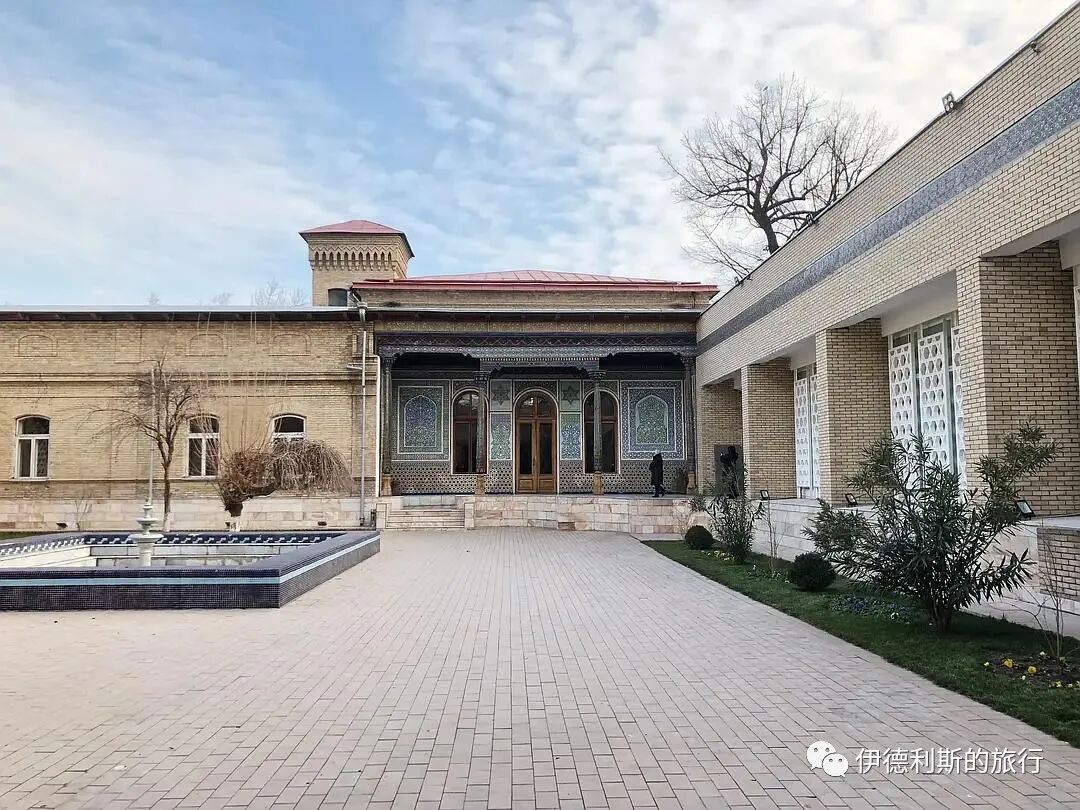
The State Museum of Applied Arts of Uzbekistan is in Tashkent. It opened in 1937 and holds over 4,000 pieces of traditional crafts from across Uzbekistan, including wood carvings, ceramics, jewelry, and embroidery.
The museum building was once the home of a 19th-century Russian diplomat named Alexander Alexandrovich Polovtsev Jr. His secretary bought the house from a Tashkent merchant, and architect A. A. Burmeyster later renovated it.
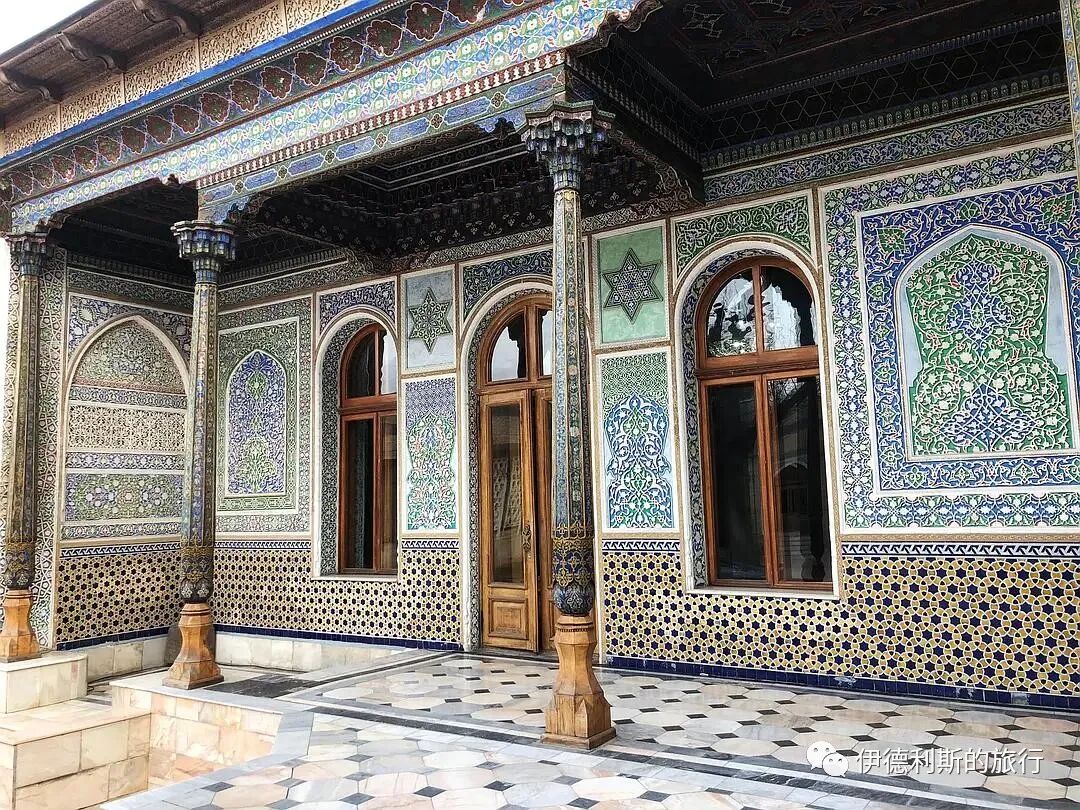
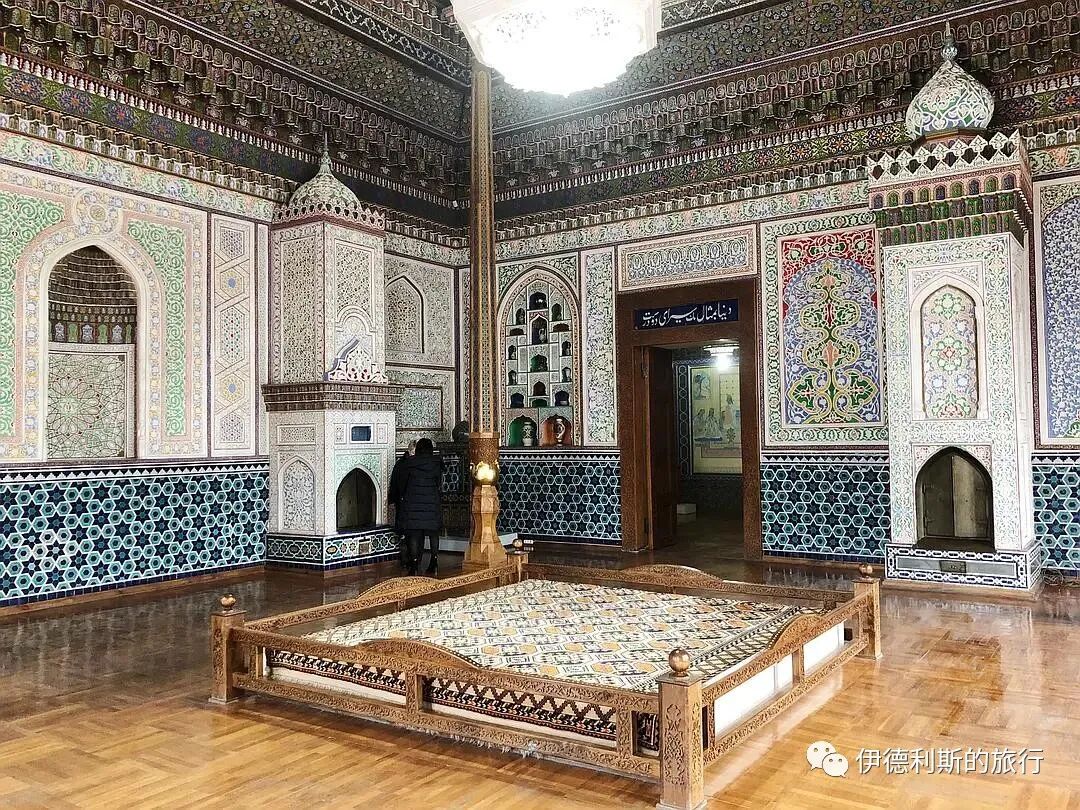
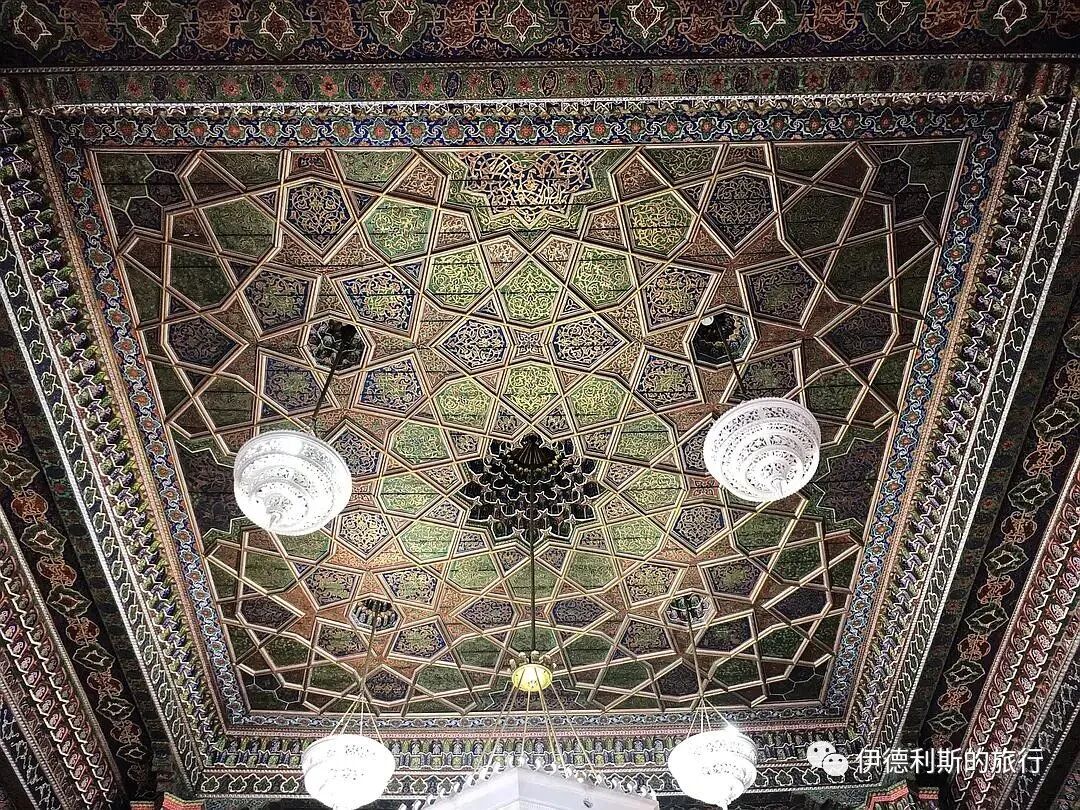
This building is a classic example of late 19th-century Uzbek oriental architecture and decorative art. Folk artists worked together on the carvings and paintings, including Usta T. Arsankulov, A. Kazymdzhanov from Tashkent, Usta Shirin Muradov from Bukhara, Usta A. Palvanov from Khiva, and Usta Abdullah from Rishtan.
During World War I, the building held Austrian officer prisoners. After the October Revolution and until the mid-1930s, it served as an orphanage. In 1937, it became a training center for carving and embossing, as well as an embroidery workshop, eventually turning into a museum for handicrafts. In 1997, the museum was transferred to the Ministry of Culture of Uzbekistan and renamed the State Museum of Applied Arts.
Oil paintings
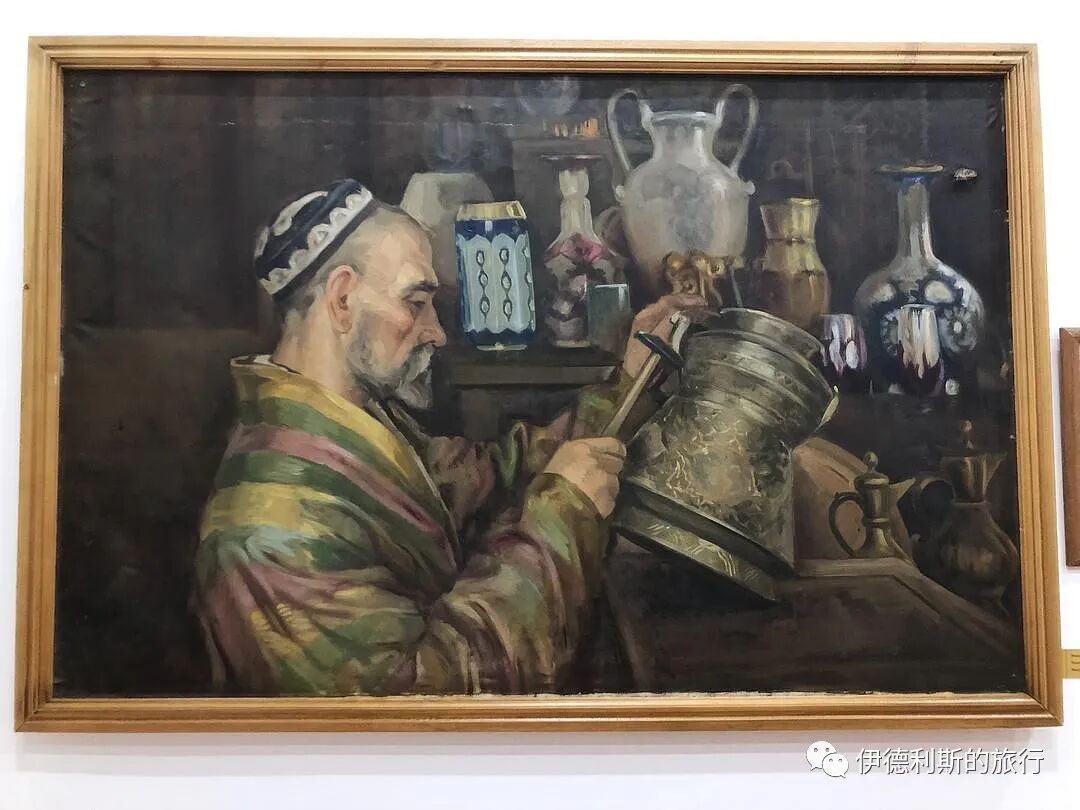
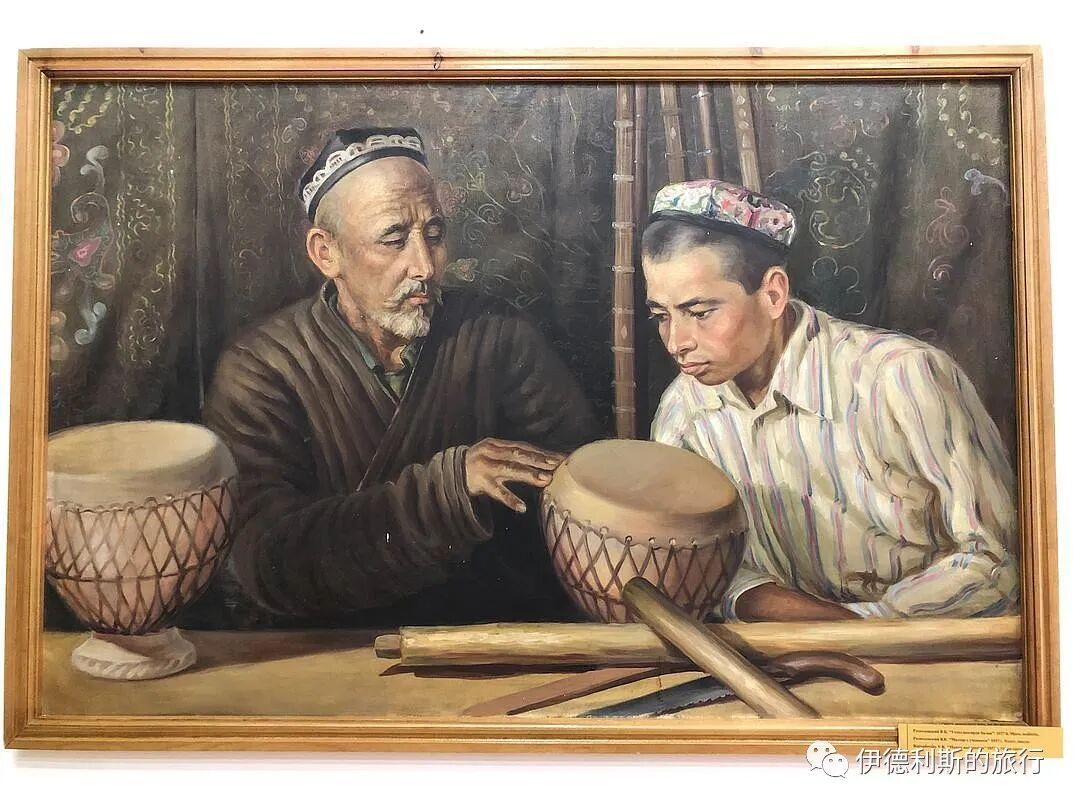
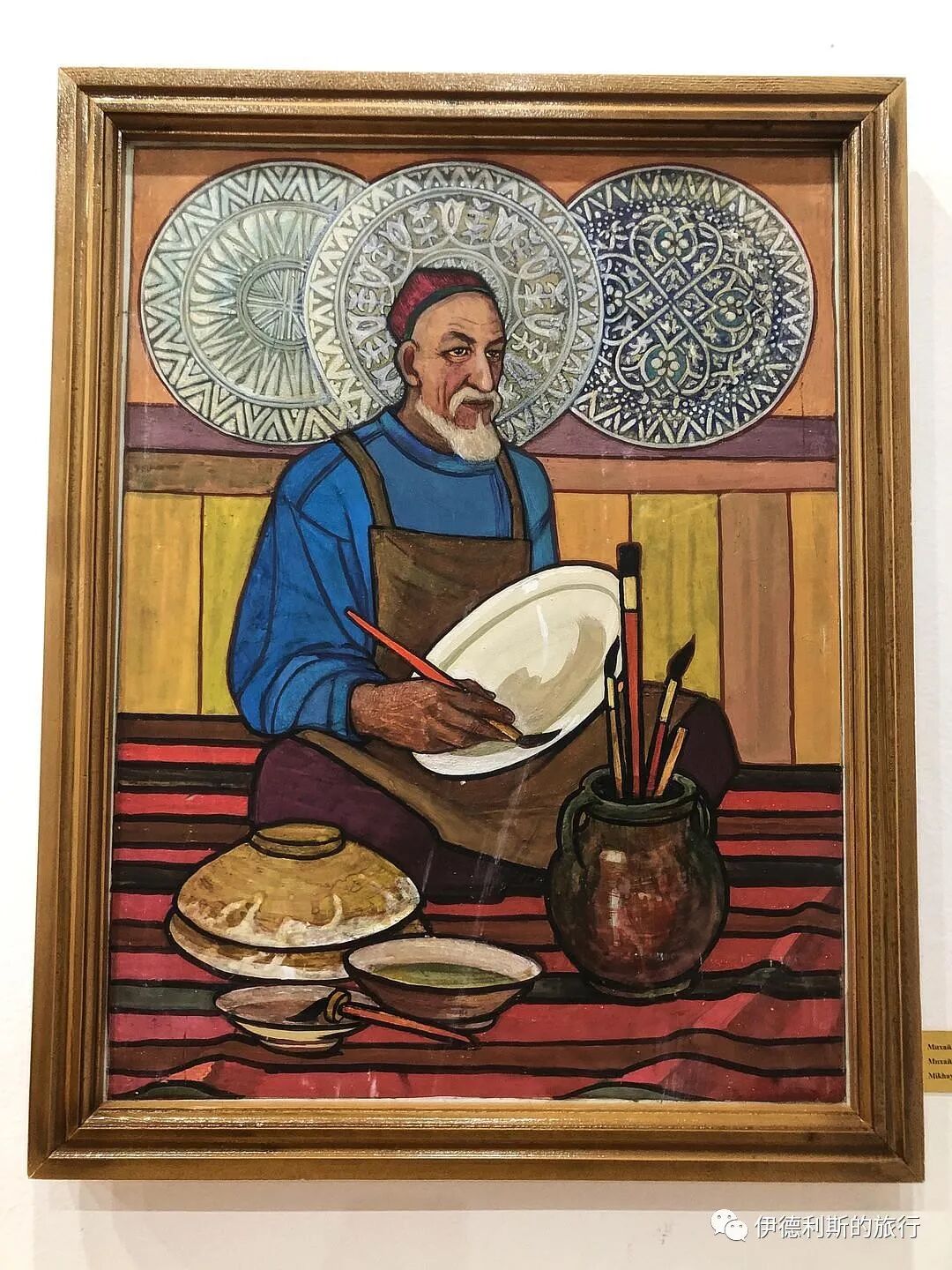
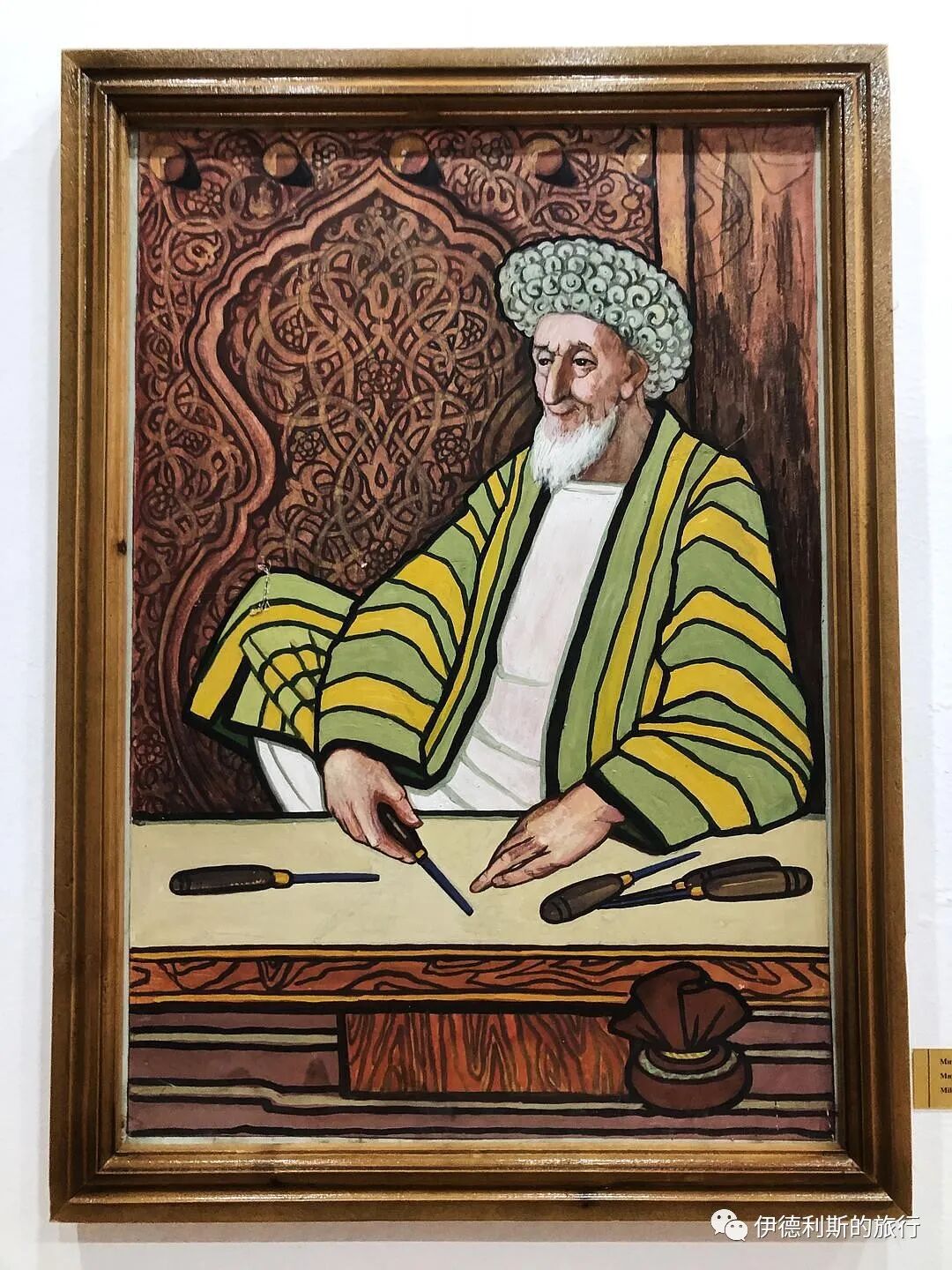
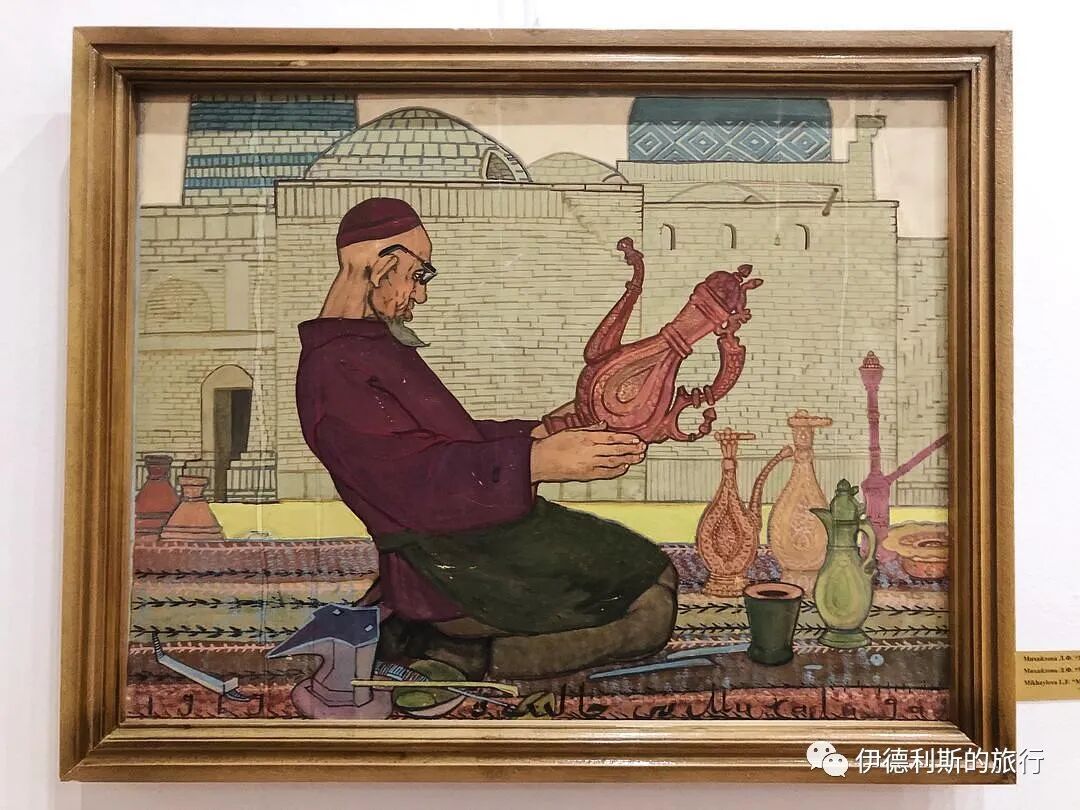
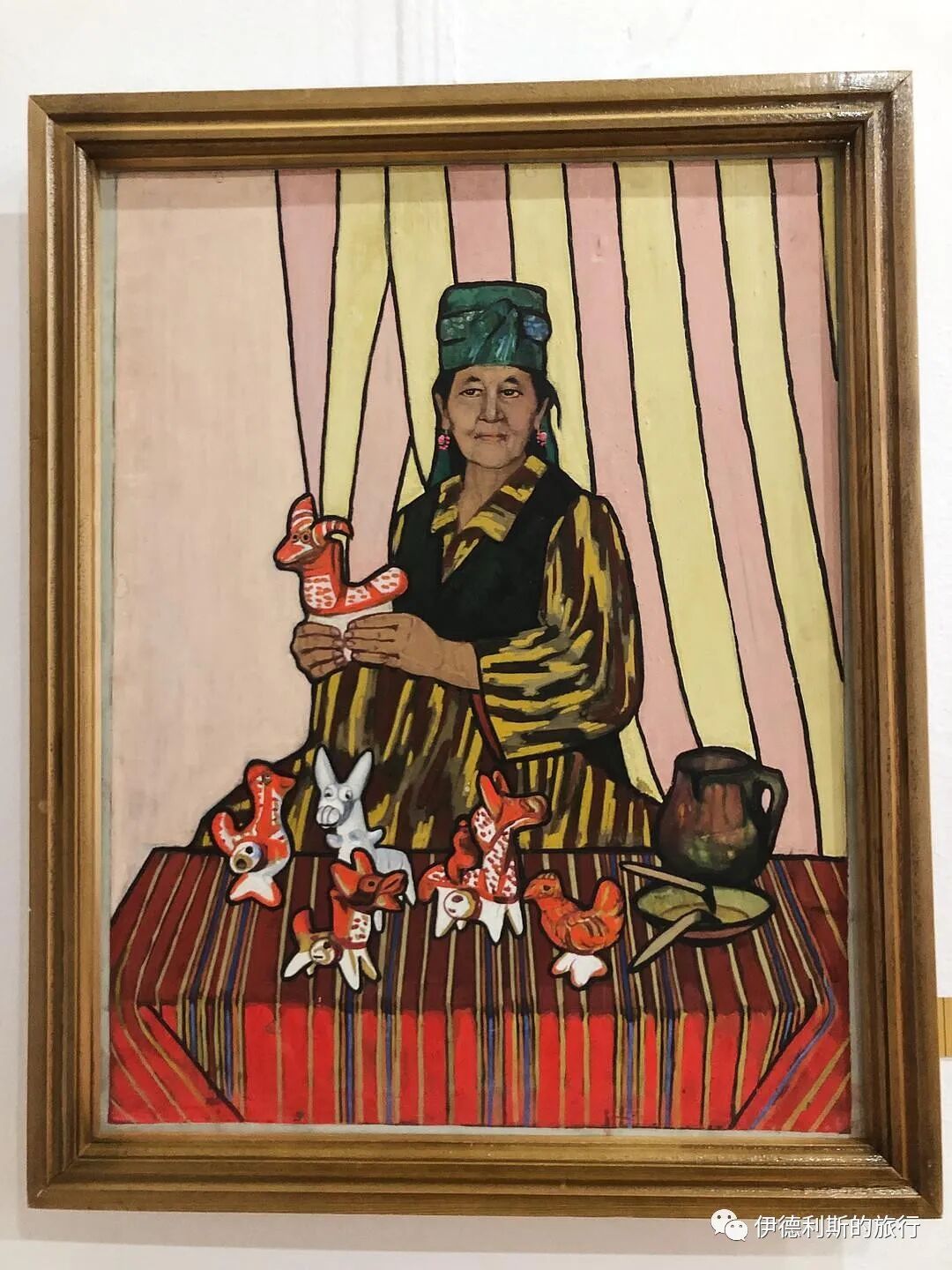
These are oil paintings by Uzbek craftspeople. The first two were painted by V. K. Razvadovsky in 1937.
Suzani embroidery
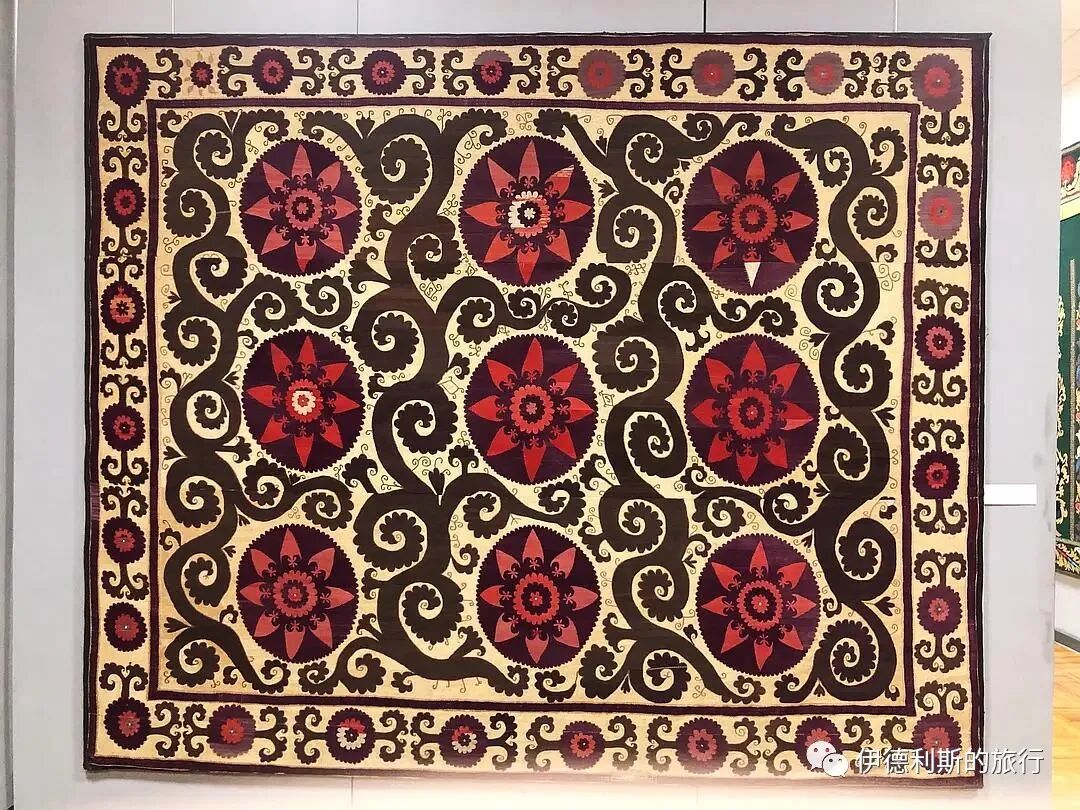
The word Suzani comes from the Persian word suzan, meaning needle. This type of embroidery is popular in the Transoxiana region of Central Asia. Girls in the Transoxiana region traditionally start learning to sew when they are very young. Before a wedding, the bride's female relatives gather to make a Suzani together. This gathering is called hashar, and they sing and dance while they work. At the wedding, the Suzani is first hung in the bride's home. When the wedding car is ready to leave, the Suzani is taken down, packed up, and brought to the new couple's home to be hung on the wall. After that, the Suzani is usually only hung up for important events and gatherings, and it is kept in a wooden chest at other times.
Suzani is usually made of cotton. Before sewing, the cotton fabric is soaked in tea or onion water to turn the background a light brown color, then colored with various natural dyes. Light yellow comes from saffron, bright yellow from onion skins, brown from nut shells, light purple from black mulberries, deep purple from cherries, gray-blue from raspberries, and orange from henna.
The artists who design the Suzani patterns are called kalamkash. They draw lines with black ink and use bowls and plates to trace circles. Once the pattern is designed, several women embroider it together.
Suzani art reached its peak during the 16th to 19th centuries under the Bukhara Khanate and the Kokand Khanate. By the 19th century, there were six major production centers: Nurota, Bukhara, Samarkand, Shahrisabz, Tashkent, and Fergana.
A 19th-century Suzani embroidery from Bukhara. Bukhara Suzani is the most exquisite of all, known for its beautiful colors and high-quality stitching.
A 19th-century Suzani embroidery from Nurota. Nurota is an ancient Central Asian city built by Alexander the Great in the 4th century BC. In the 19th century, Nurata belonged to the Khanate of Bukhara. Its embroidery (suzani) features clusters of flowers, birds, animals, and highly stylized figures on a white background.
An Andijan suzani embroidery from the 1950s. Andijan is in the southeast of the Fergana Valley. The Fergana Valley is very fertile and is an important cotton-producing region. This area is skilled at producing large decorative suzani. The embroidery is very fine and usually features circular rosettes.
A Gul'kurpa-style suzani embroidery from the Piskent region of Tashkent Province in the 19th century. This type of embroidery uses many floral patterns and is a specialty of the Tashkent region.
A 19th-century Tashkent suzani embroidery. This type of suzani is called 'oy-palak' (moon heaven). Many Tashkent suzani have themes of starry skies, the sun, and the moon.
A late 19th-century Shahrisabz suzani embroidery. Shahrisabz is the hometown of Tamerlane the Great. In the 19th century, it was a weaving center for the Khanate of Bukhara, where many artisans made suzani specifically for the royal court.
A 20th-century suzani embroidery from the Surxondaryo region in the far south of Uzbekistan, near Afghanistan.
A 20th-century Samarkand suzani embroidery. Samarkand has historically been a center for the weaving industry in Central Asia. The suzani here have larger and simpler patterns than those in Bukhara, often featuring deep red rose garlands wrapped in leaves.
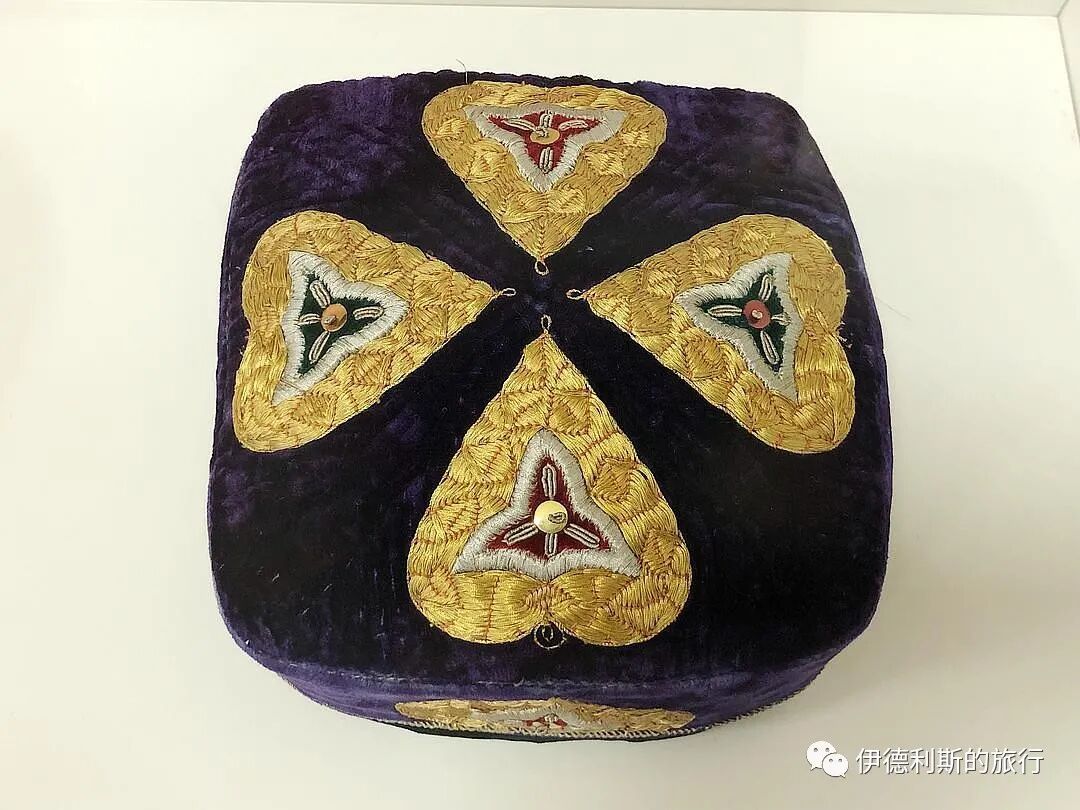
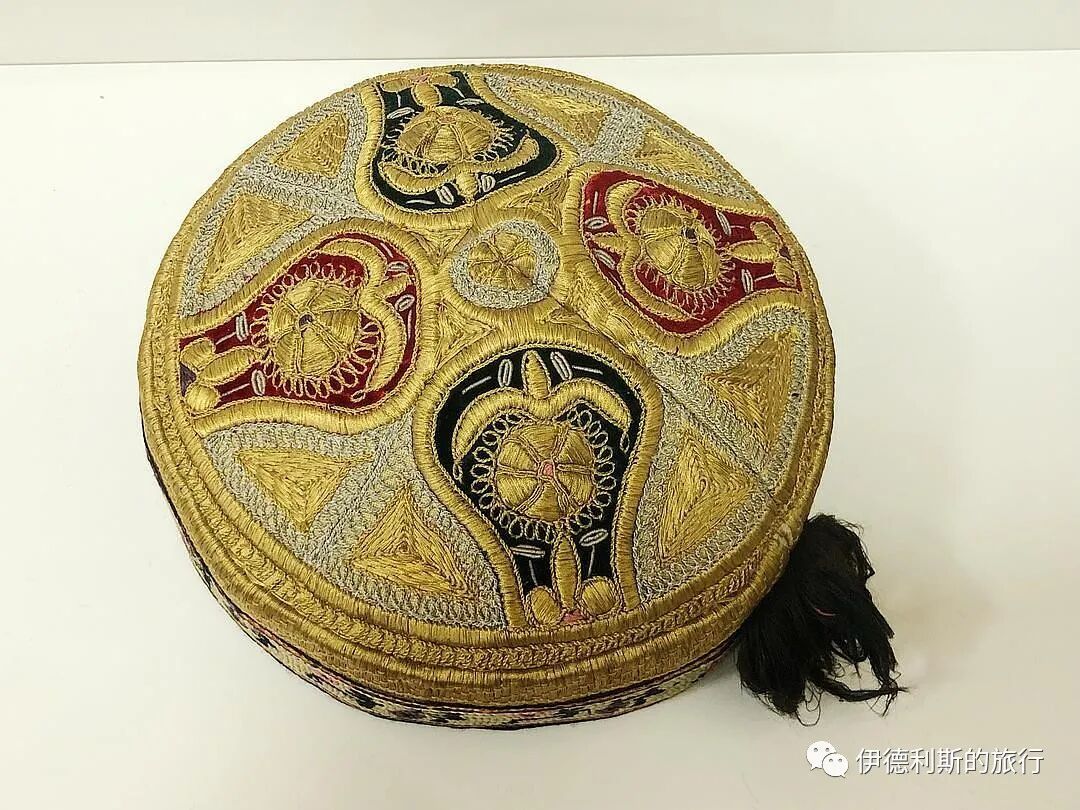
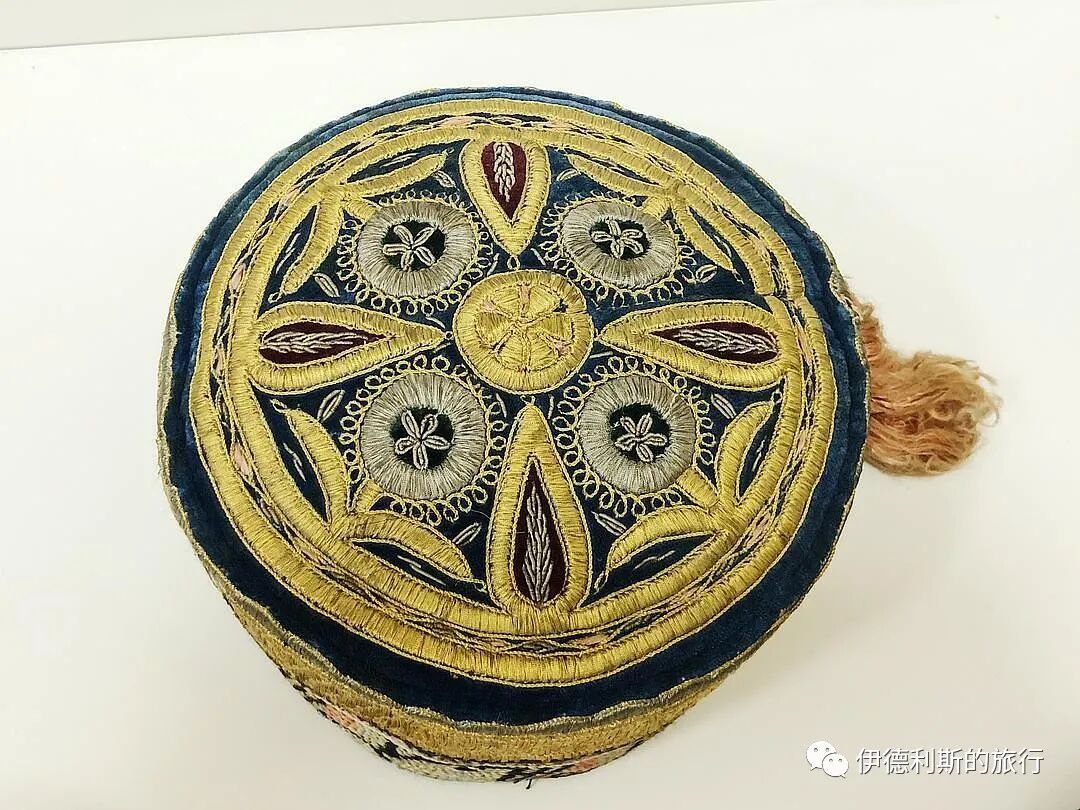
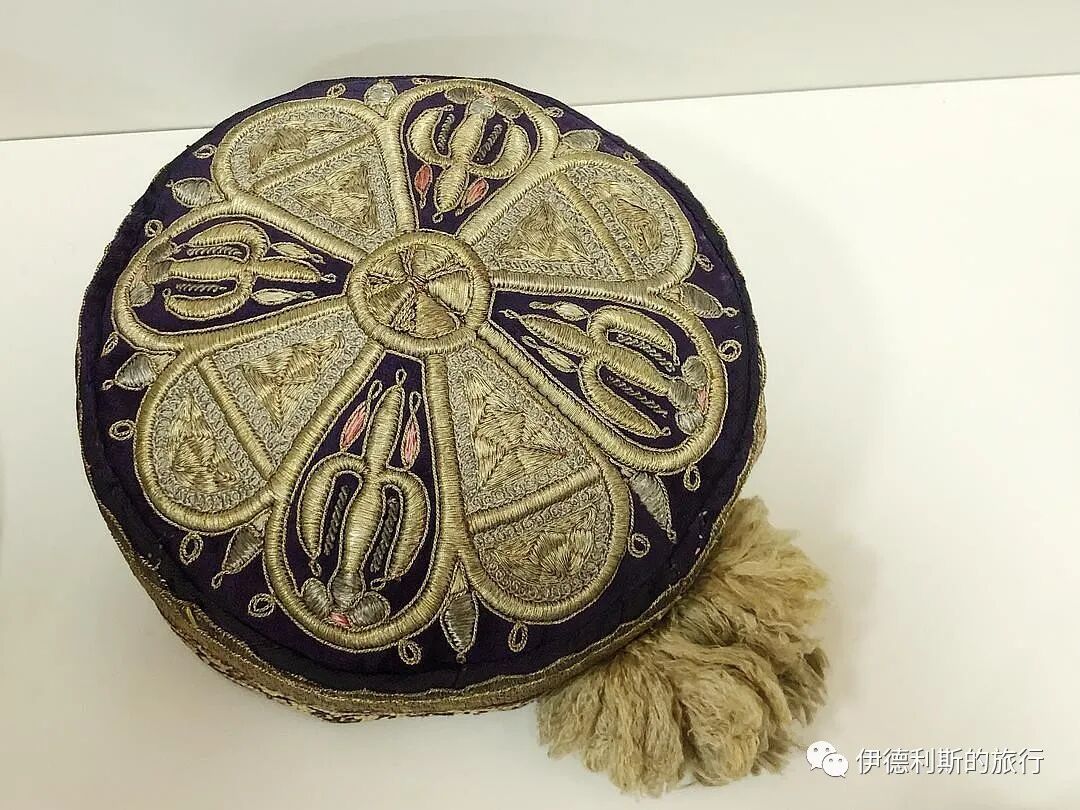
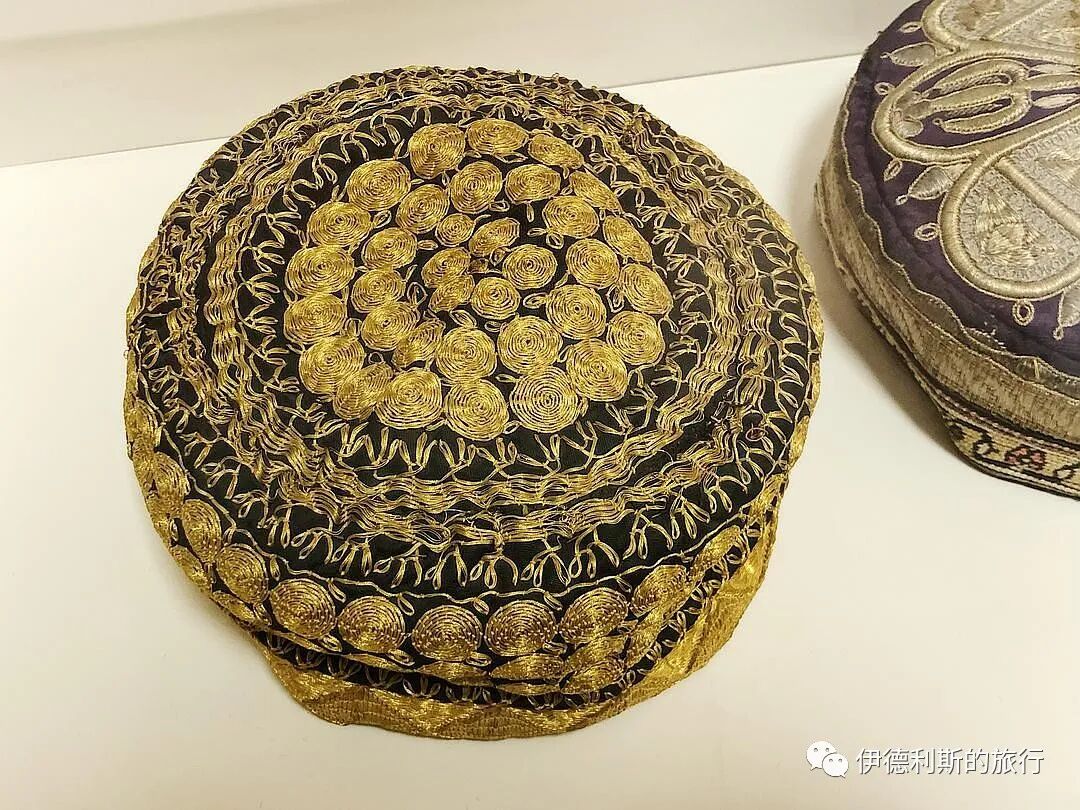
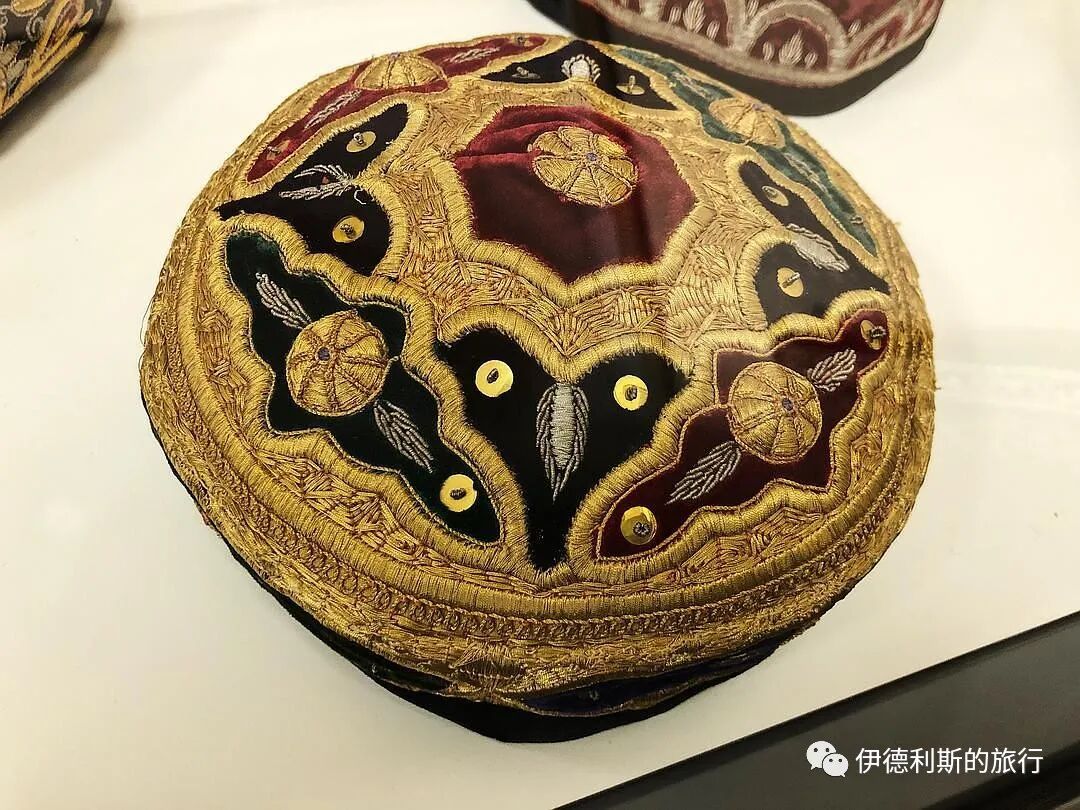
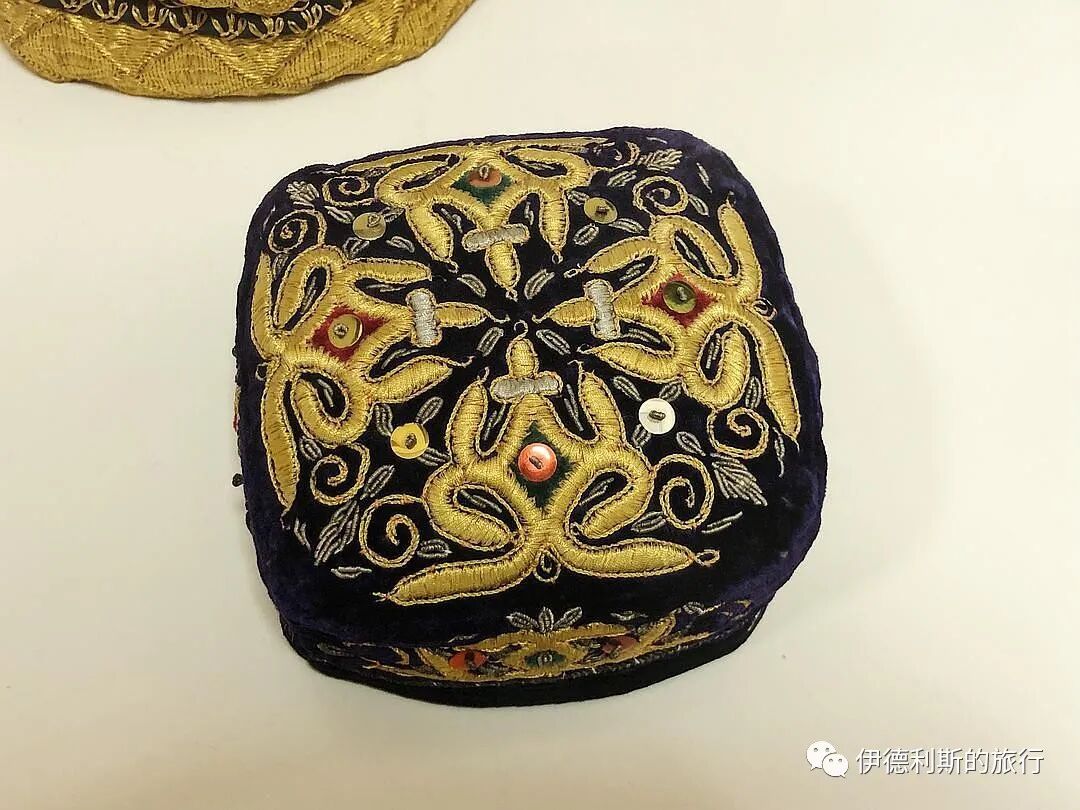
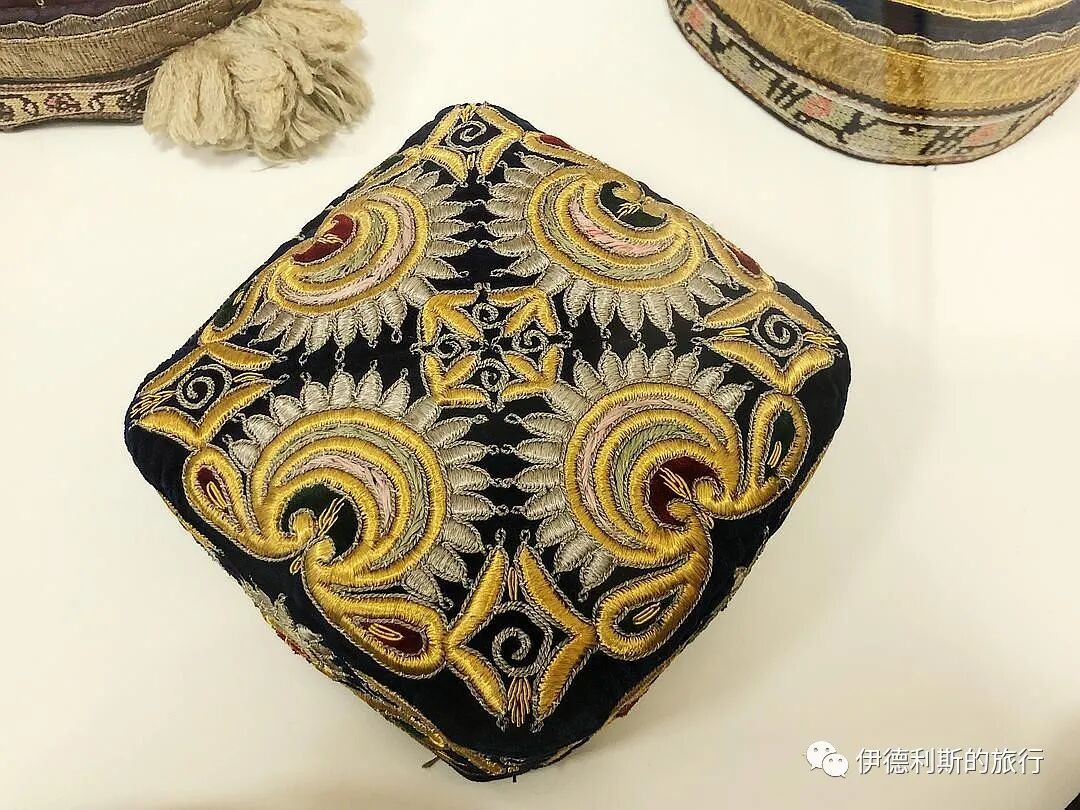
Skullcap (doppa).
Various 19th to 20th-century Uzbek skullcaps (doppa) from Samarkand, Shahrisabz, and Andijan. The skullcaps we see on the streets of Uzbekistan today are much simpler than these.
A gold-thread embroidered skullcap (doppa) made in Bukhara between 1940 and 1975.
Jewelry.
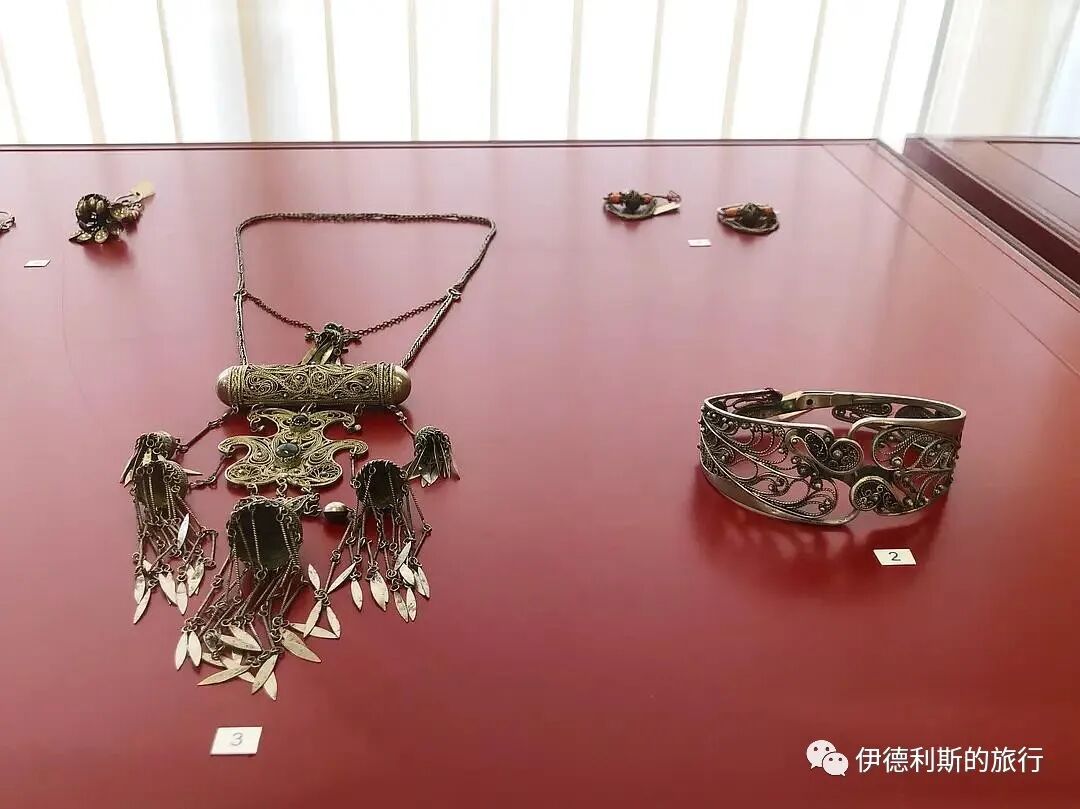
On the right is a bracelet made by Azizov K. A. in Tashkent in 1977. On the left is an amulet made by Dzyuba A. in Tashkent in 1982.
An early 20th-century amulet from Bukhara.
An early 20th-century necklace from Bukhara.
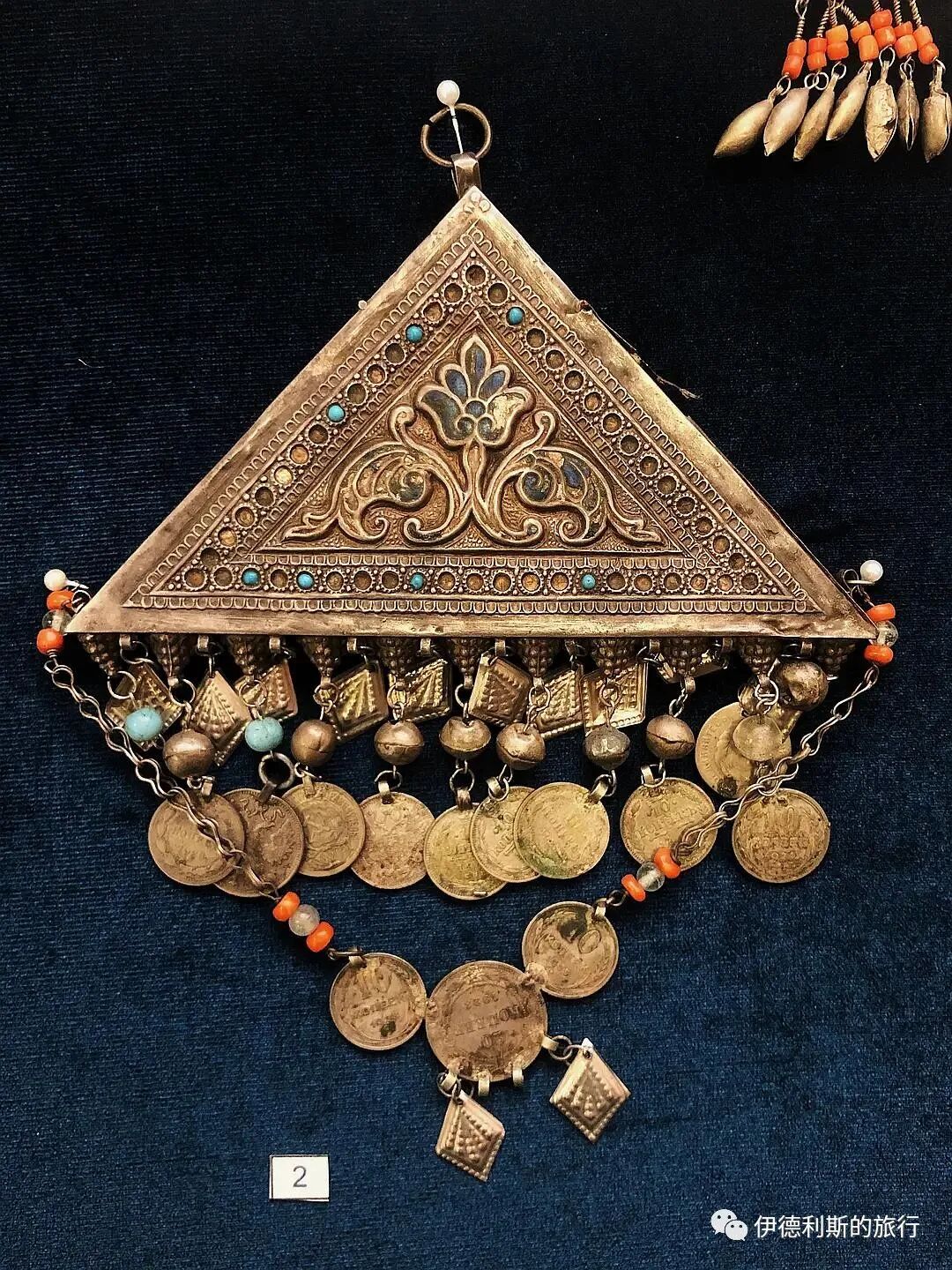
A late 19th to early 20th-century chest ornament from Bukhara.
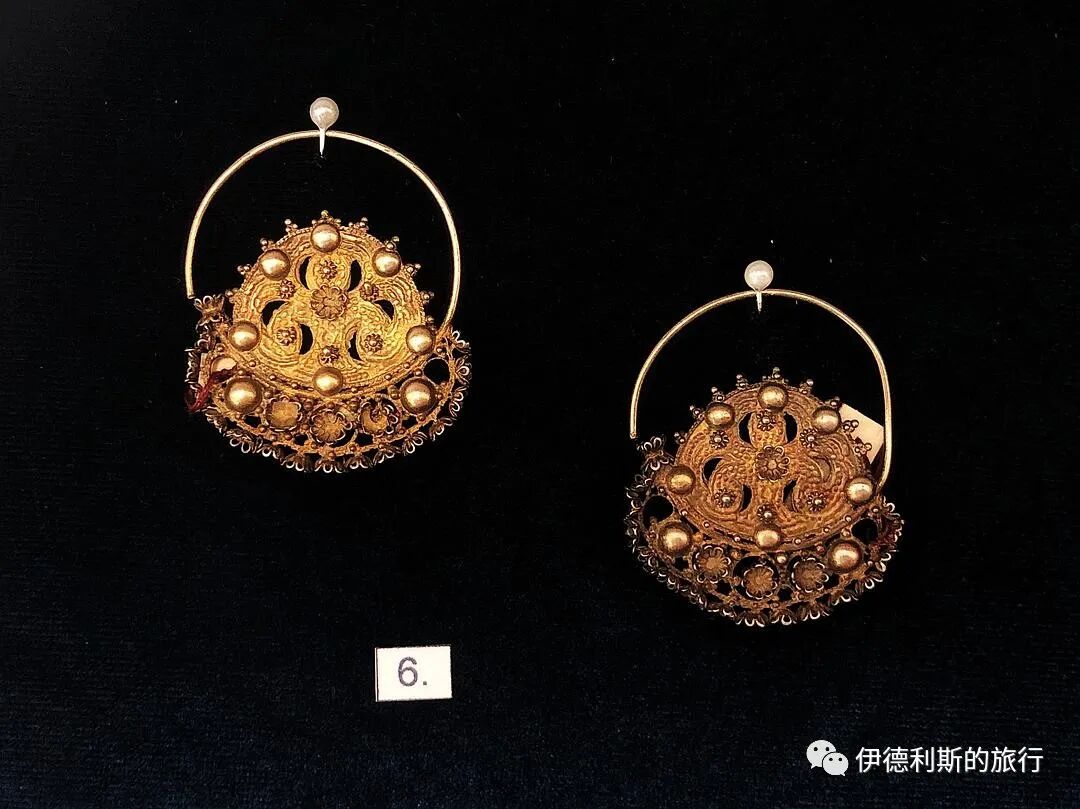
Late 19th to early 20th-century earrings from Samarkand.
Mid-20th-century earrings from Tashkent.
A late 19th to early 20th-century amulet from Tashkent.
Earrings from Fergana in the early 20th century.
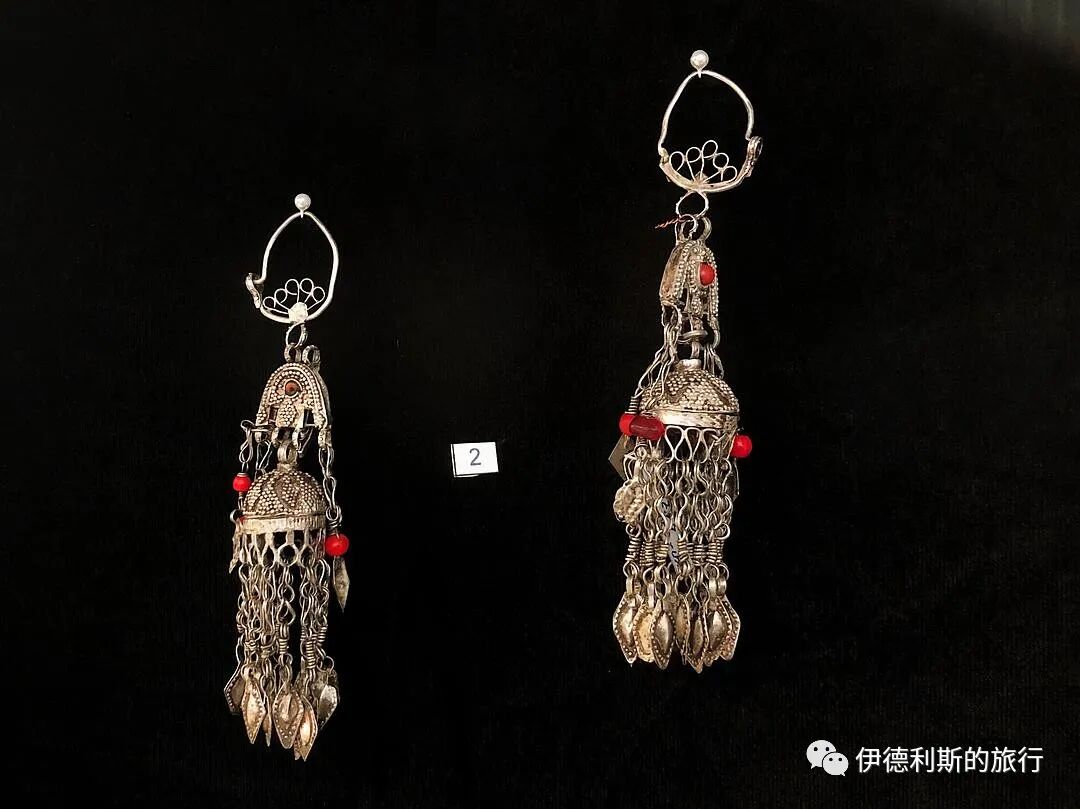
Earrings from Surxondaryo Region in the late 19th to early 20th century.
A headpiece from Fergana in the late 19th century.
Earrings from Sirdaryo in the early 20th century.
Wooden door.
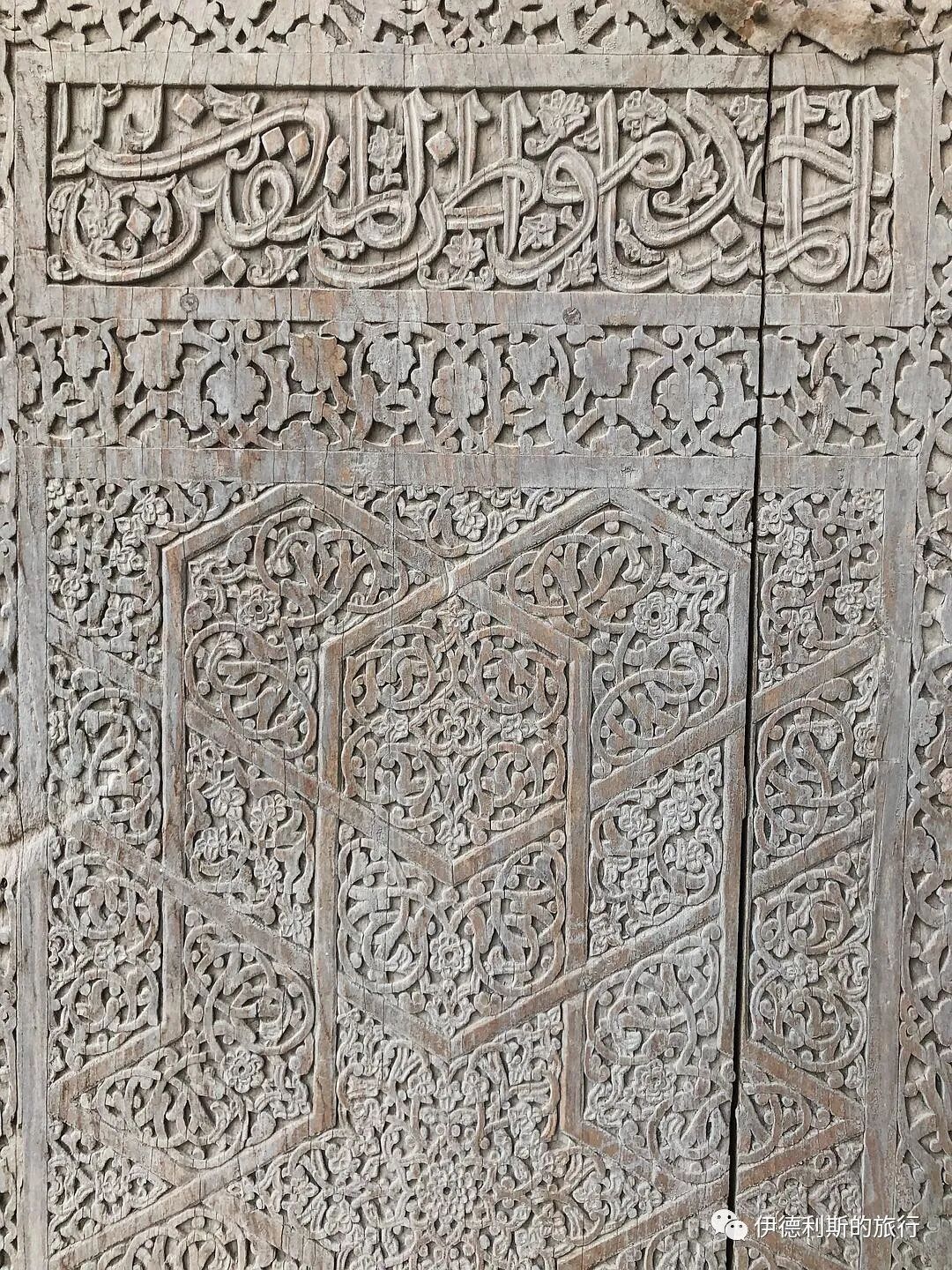
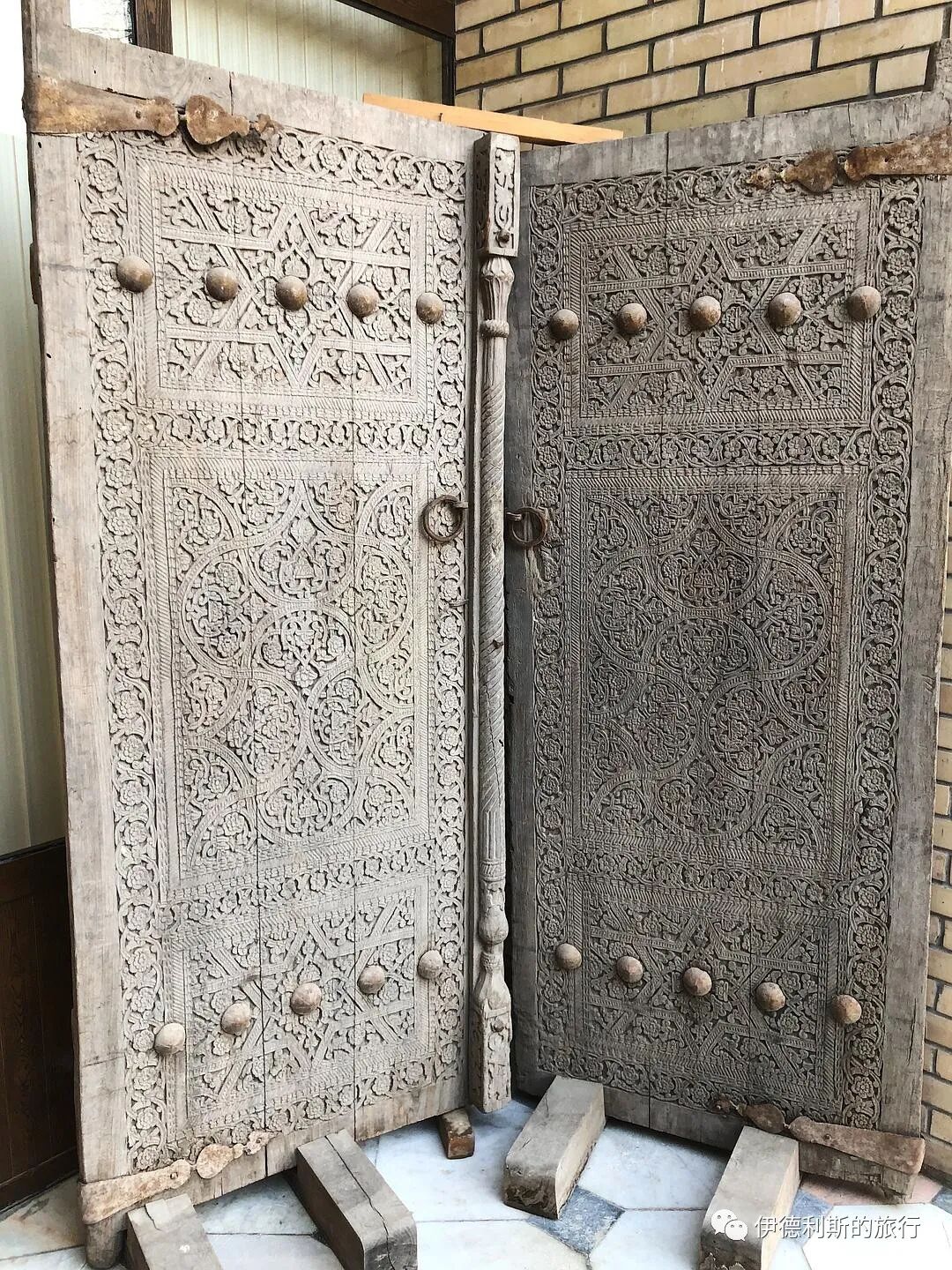
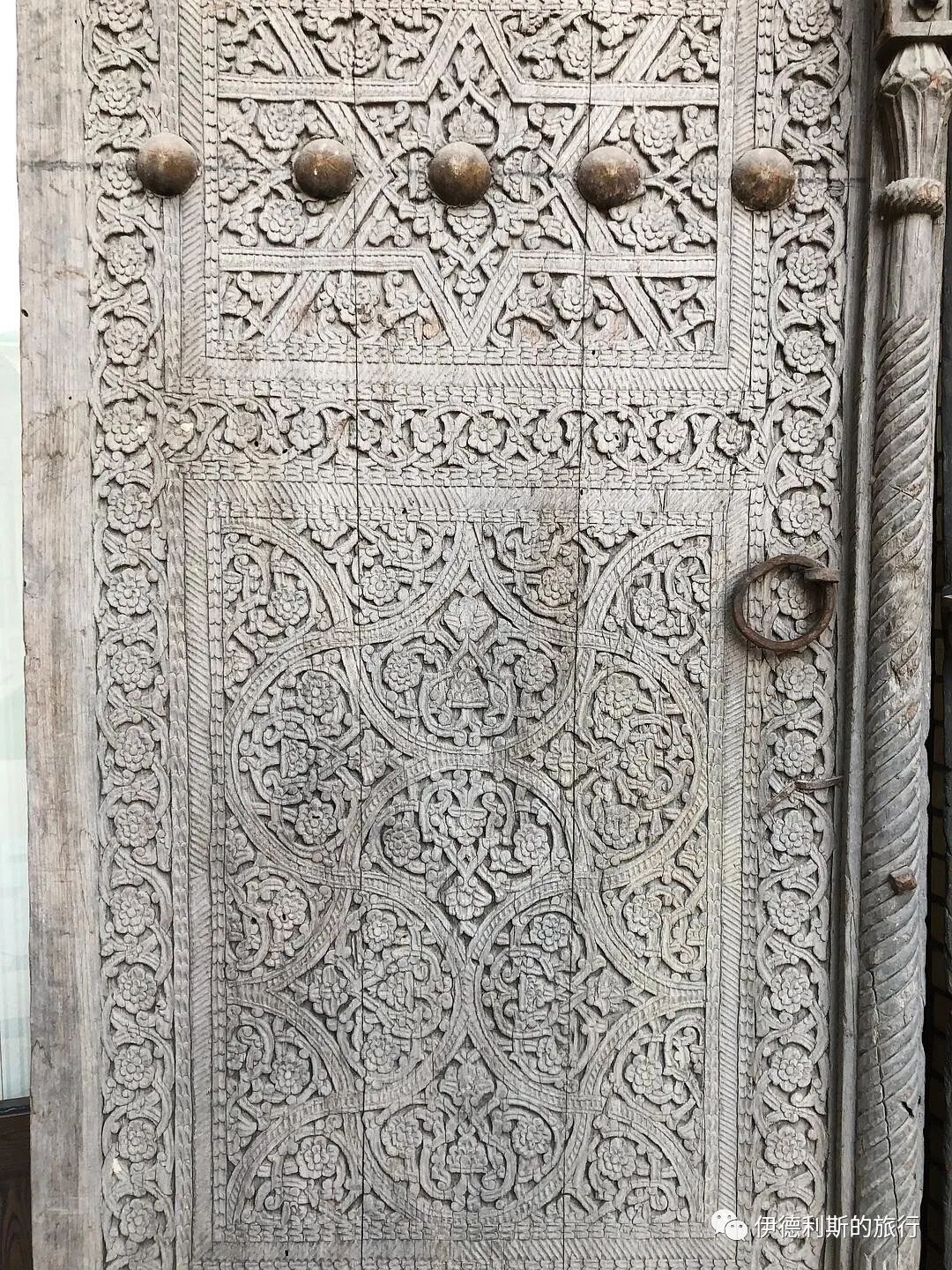
A beautiful traditional Uzbek wooden door from the museum collection. view all
Summary: Uzbekistan Applied Arts Museum: Suzani Embroidery, Crafts and Central Asian Heritage is presented here as a firsthand travel account in clear English, beginning with this scene: The State Museum of Applied Arts of Uzbekistan is in Tashkent. It opened in 1937 and holds over 4,000 pieces of traditional crafts from across Uzbekistan, including wood carvings, ceramics, jewelry, and embroidery. The account keeps its focus on Uzbekistan Travel, Islamic Art, Central Asia while preserving the names, places, food, and historical details from the Chinese source.
The State Museum of Applied Arts of Uzbekistan is in Tashkent. It opened in 1937 and holds over 4,000 pieces of traditional crafts from across Uzbekistan, including wood carvings, ceramics, jewelry, and embroidery.
The museum building was once the home of a 19th-century Russian diplomat named Alexander Alexandrovich Polovtsev Jr. His secretary bought the house from a Tashkent merchant, and architect A. A. Burmeyster later renovated it.
This building is a classic example of late 19th-century Uzbek oriental architecture and decorative art. Folk artists worked together on the carvings and paintings, including Usta T. Arsankulov, A. Kazymdzhanov from Tashkent, Usta Shirin Muradov from Bukhara, Usta A. Palvanov from Khiva, and Usta Abdullah from Rishtan.
During World War I, the building held Austrian officer prisoners. After the October Revolution and until the mid-1930s, it served as an orphanage. In 1937, it became a training center for carving and embossing, as well as an embroidery workshop, eventually turning into a museum for handicrafts. In 1997, the museum was transferred to the Ministry of Culture of Uzbekistan and renamed the State Museum of Applied Arts.
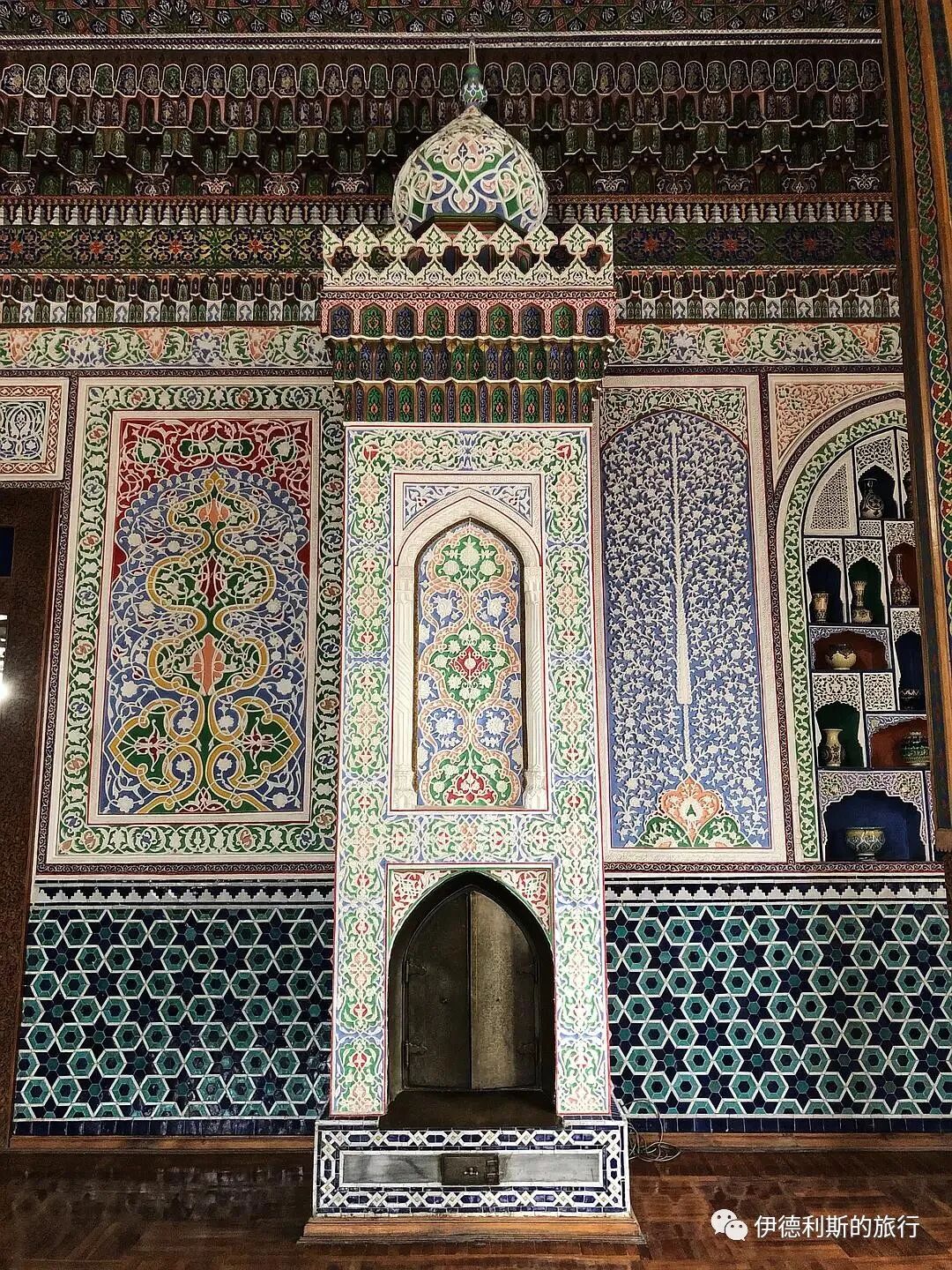
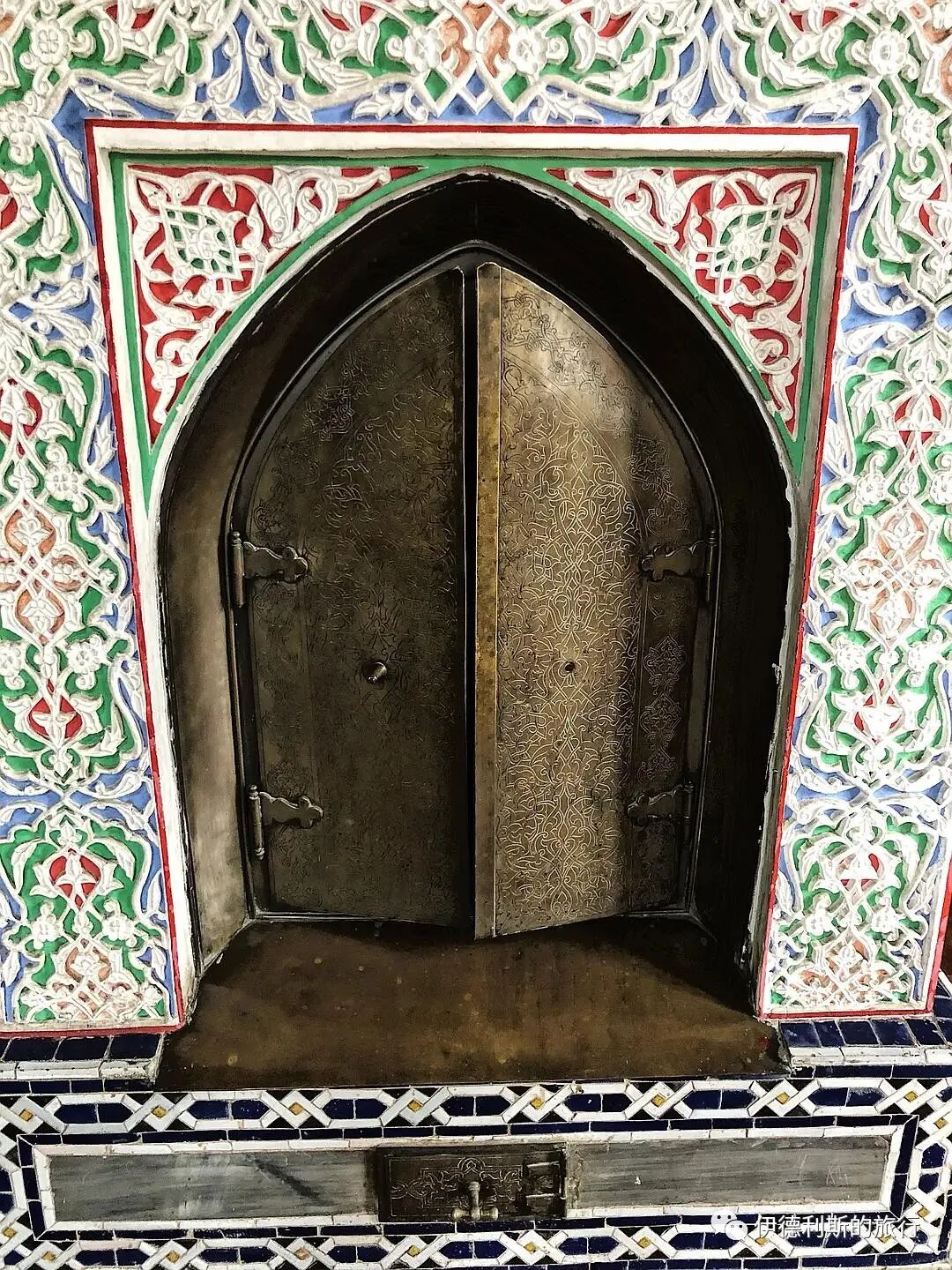
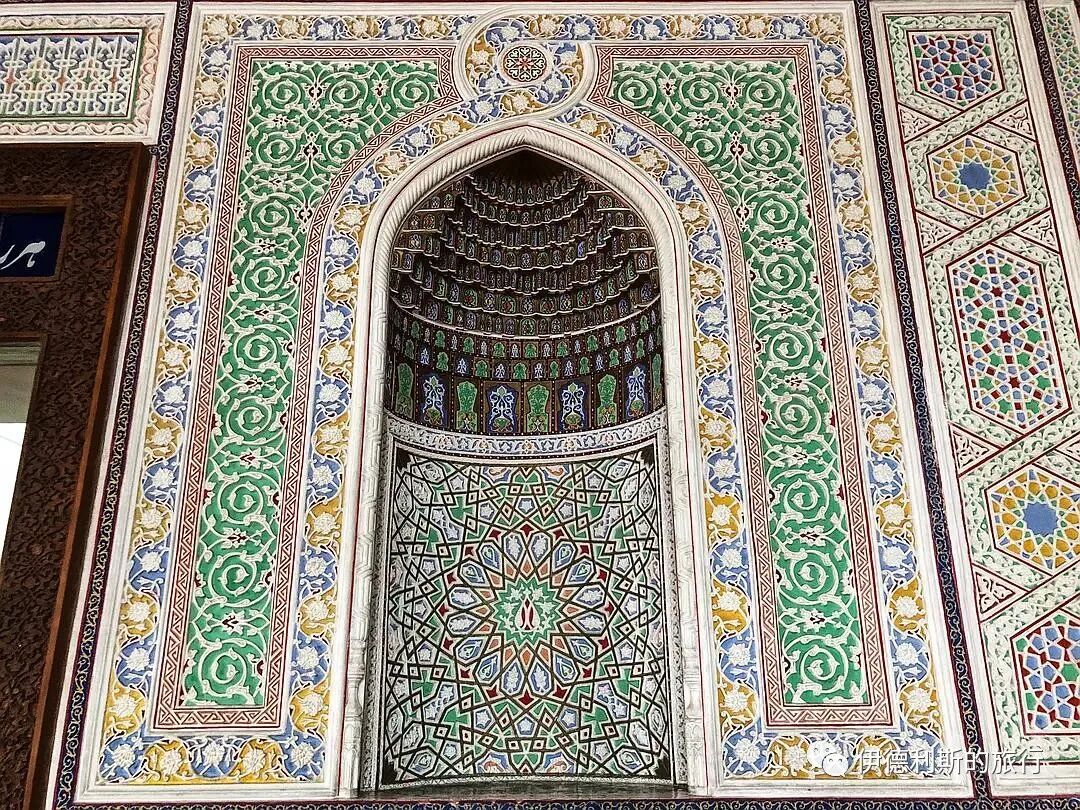
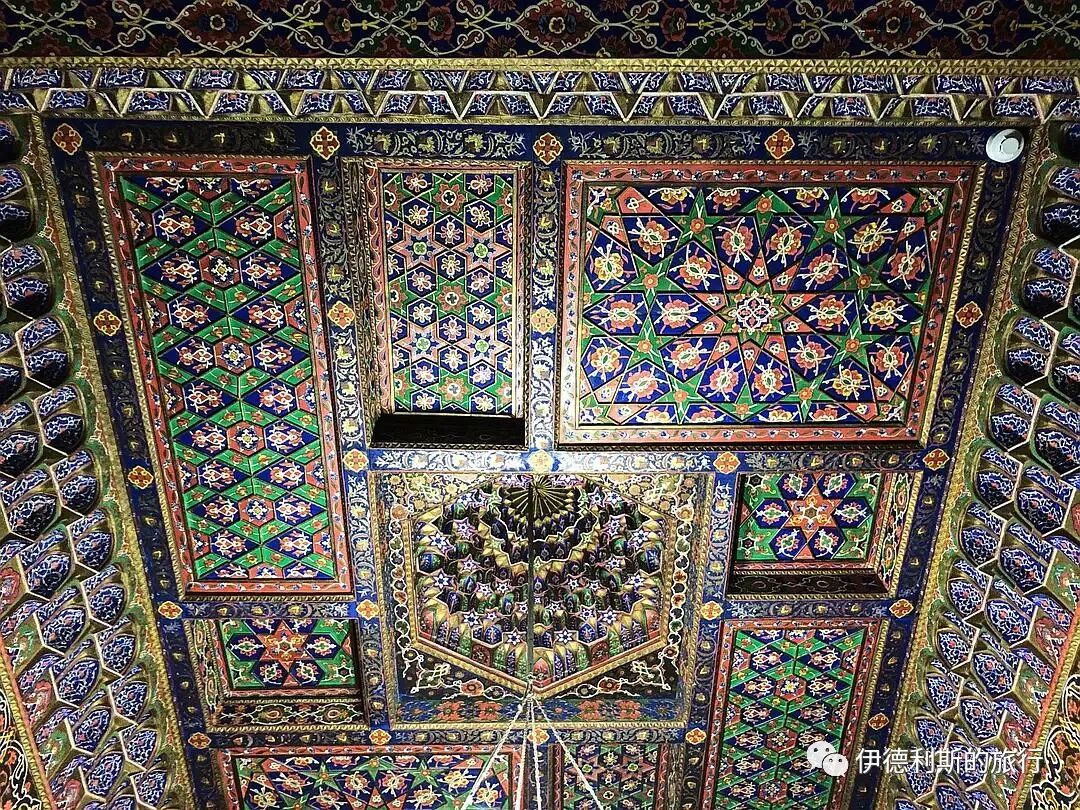
Oil paintings
These are oil paintings by Uzbek craftspeople. The first two were painted by V. K. Razvadovsky in 1937.
Suzani embroidery
The word Suzani comes from the Persian word suzan, meaning needle. This type of embroidery is popular in the Transoxiana region of Central Asia. Girls in the Transoxiana region traditionally start learning to sew when they are very young. Before a wedding, the bride's female relatives gather to make a Suzani together. This gathering is called hashar, and they sing and dance while they work. At the wedding, the Suzani is first hung in the bride's home. When the wedding car is ready to leave, the Suzani is taken down, packed up, and brought to the new couple's home to be hung on the wall. After that, the Suzani is usually only hung up for important events and gatherings, and it is kept in a wooden chest at other times.
Suzani is usually made of cotton. Before sewing, the cotton fabric is soaked in tea or onion water to turn the background a light brown color, then colored with various natural dyes. Light yellow comes from saffron, bright yellow from onion skins, brown from nut shells, light purple from black mulberries, deep purple from cherries, gray-blue from raspberries, and orange from henna.
The artists who design the Suzani patterns are called kalamkash. They draw lines with black ink and use bowls and plates to trace circles. Once the pattern is designed, several women embroider it together.
Suzani art reached its peak during the 16th to 19th centuries under the Bukhara Khanate and the Kokand Khanate. By the 19th century, there were six major production centers: Nurota, Bukhara, Samarkand, Shahrisabz, Tashkent, and Fergana.
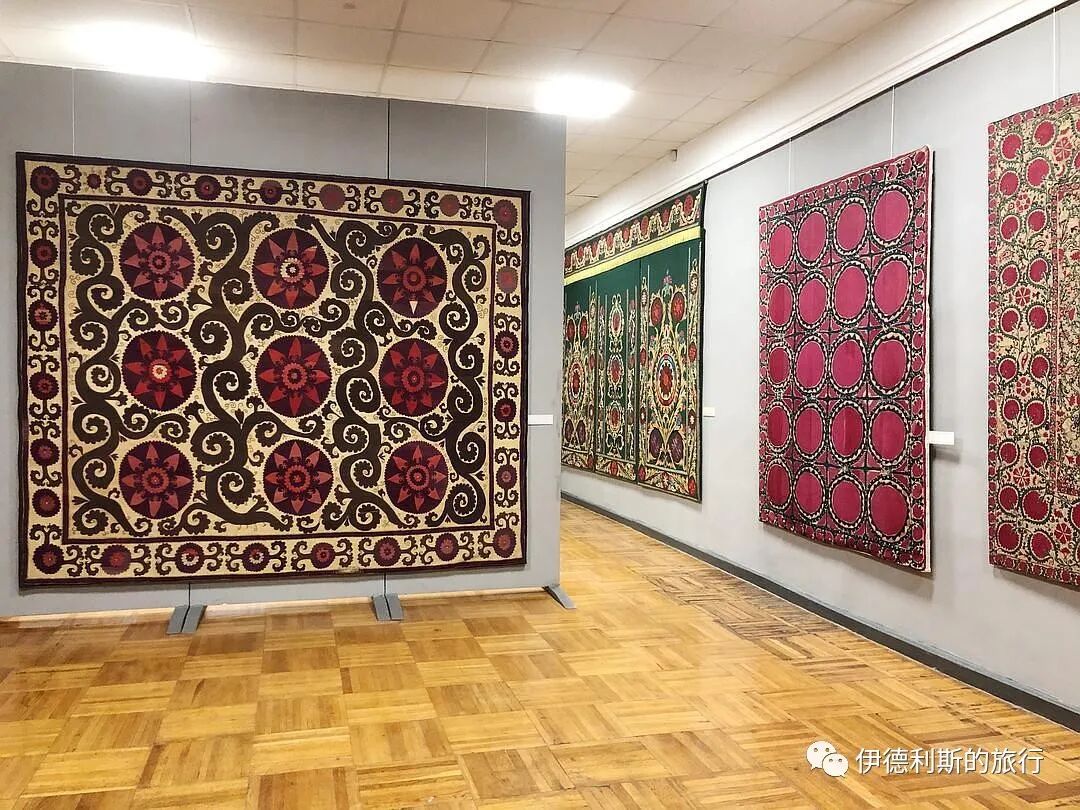
A 19th-century Suzani embroidery from Bukhara. Bukhara Suzani is the most exquisite of all, known for its beautiful colors and high-quality stitching.
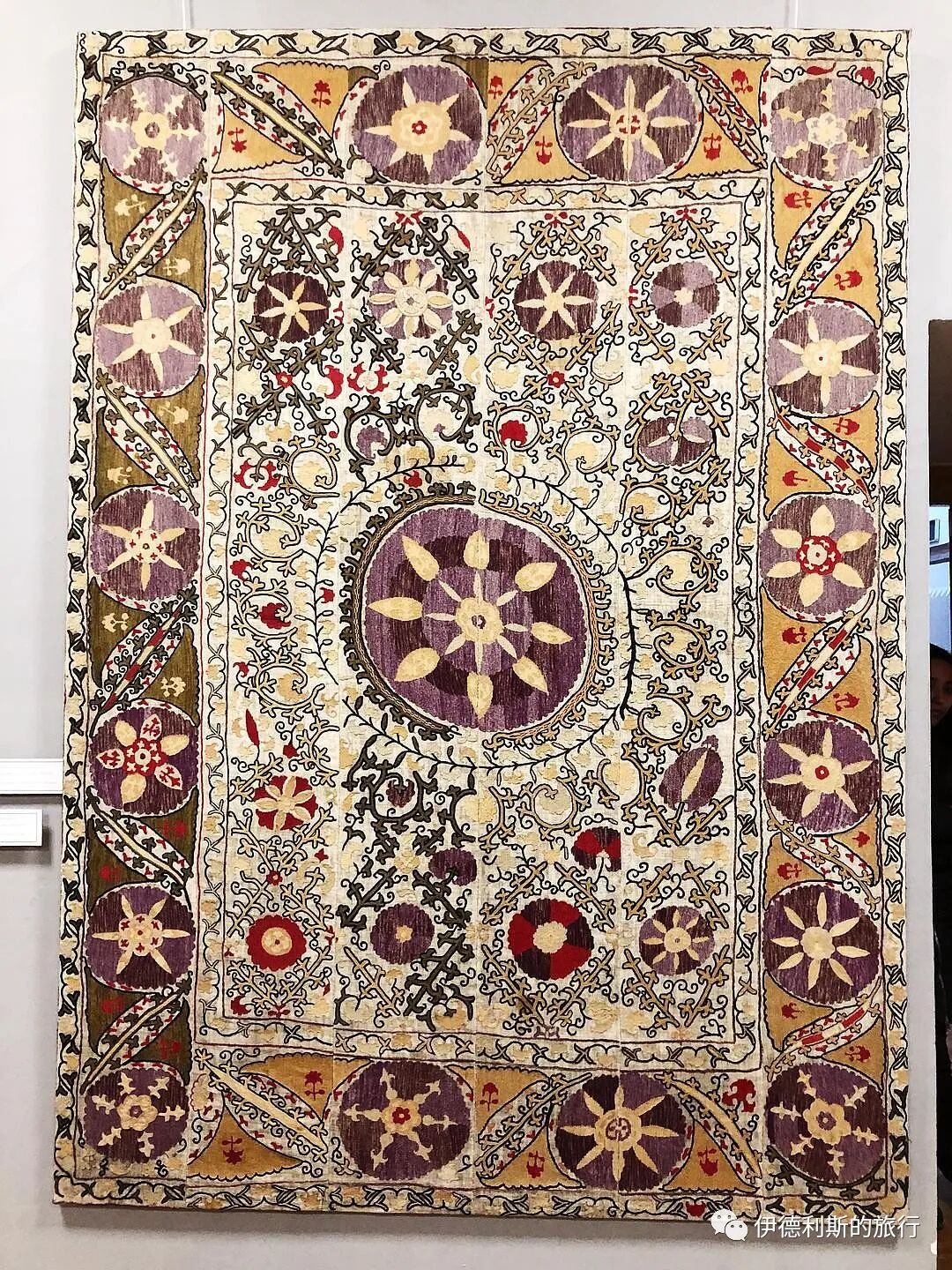
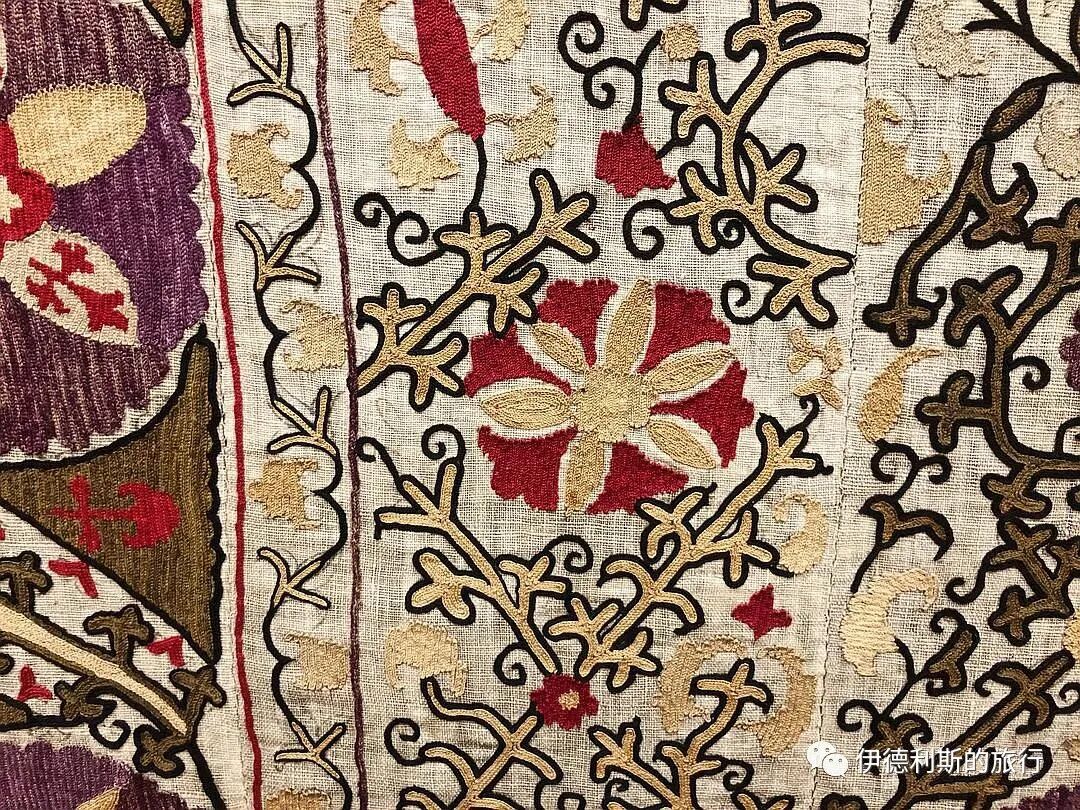
A 19th-century Suzani embroidery from Nurota. Nurota is an ancient Central Asian city built by Alexander the Great in the 4th century BC. In the 19th century, Nurata belonged to the Khanate of Bukhara. Its embroidery (suzani) features clusters of flowers, birds, animals, and highly stylized figures on a white background.
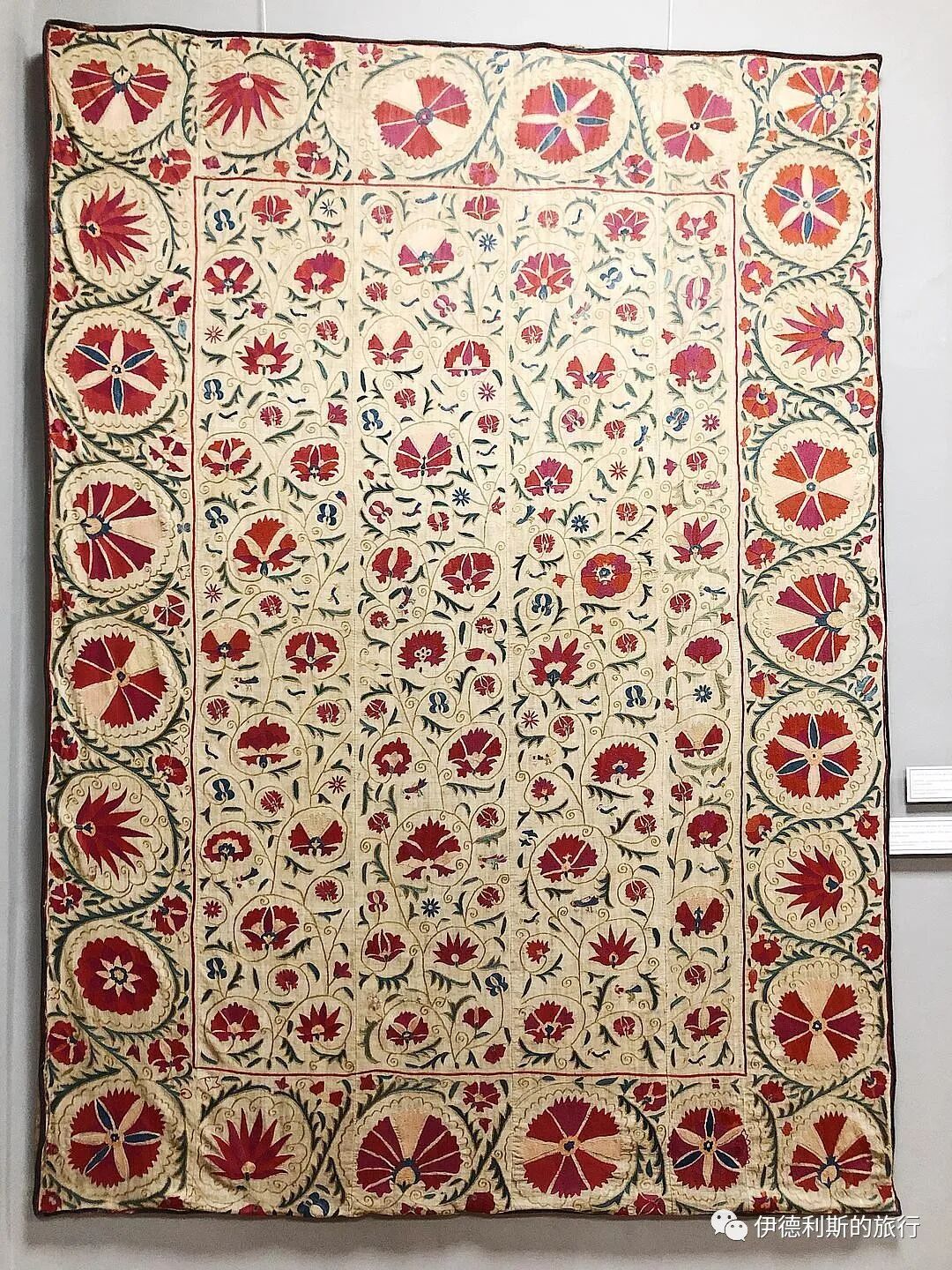
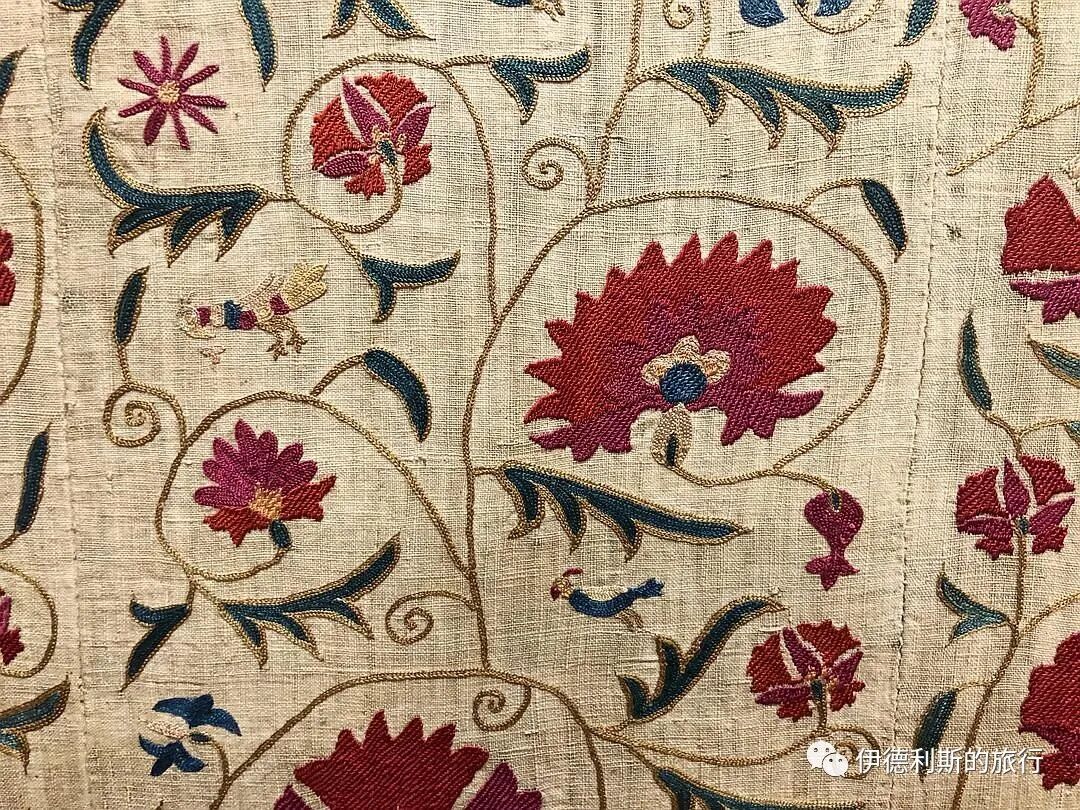
An Andijan suzani embroidery from the 1950s. Andijan is in the southeast of the Fergana Valley. The Fergana Valley is very fertile and is an important cotton-producing region. This area is skilled at producing large decorative suzani. The embroidery is very fine and usually features circular rosettes.
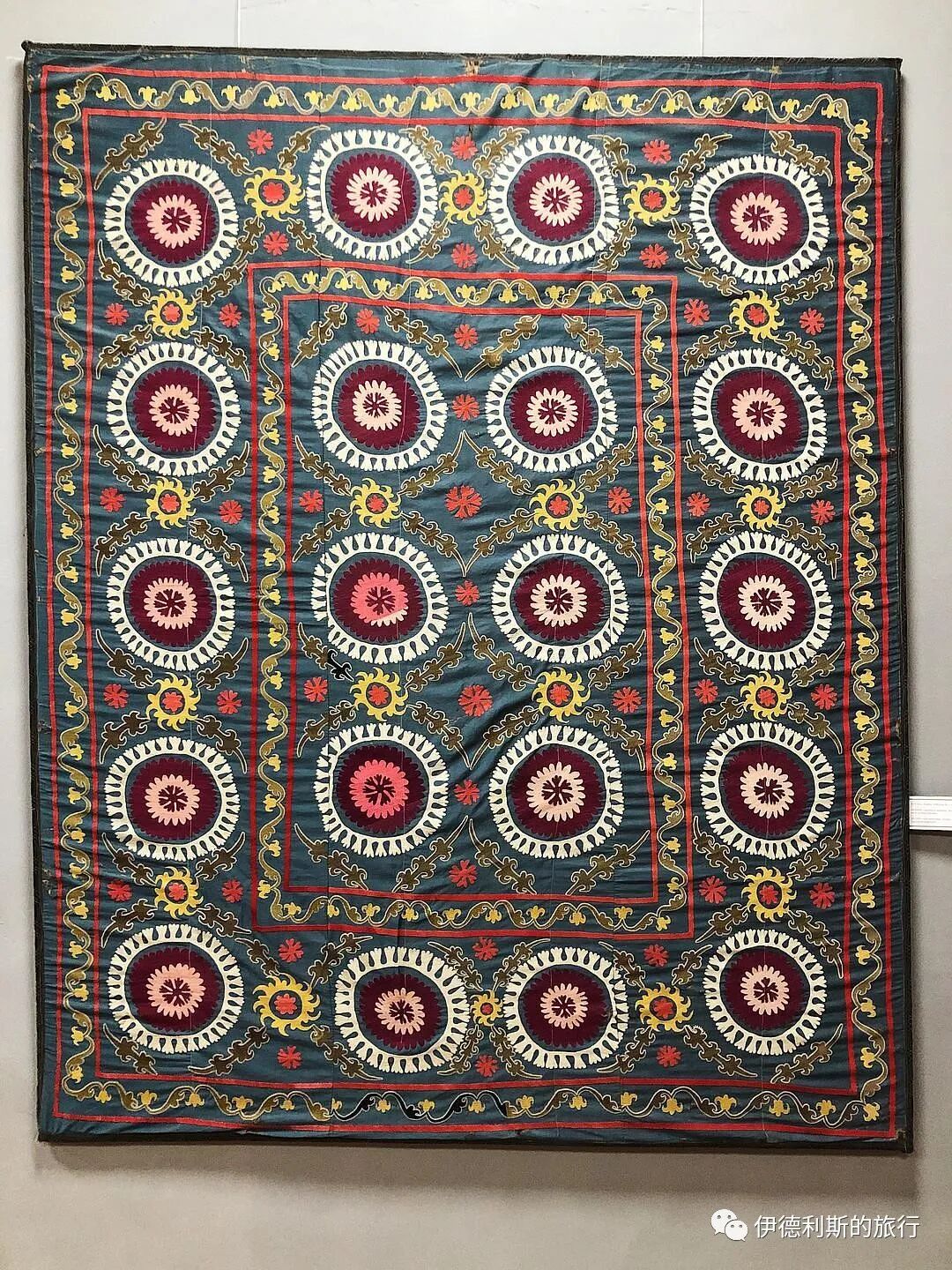
A Gul'kurpa-style suzani embroidery from the Piskent region of Tashkent Province in the 19th century. This type of embroidery uses many floral patterns and is a specialty of the Tashkent region.
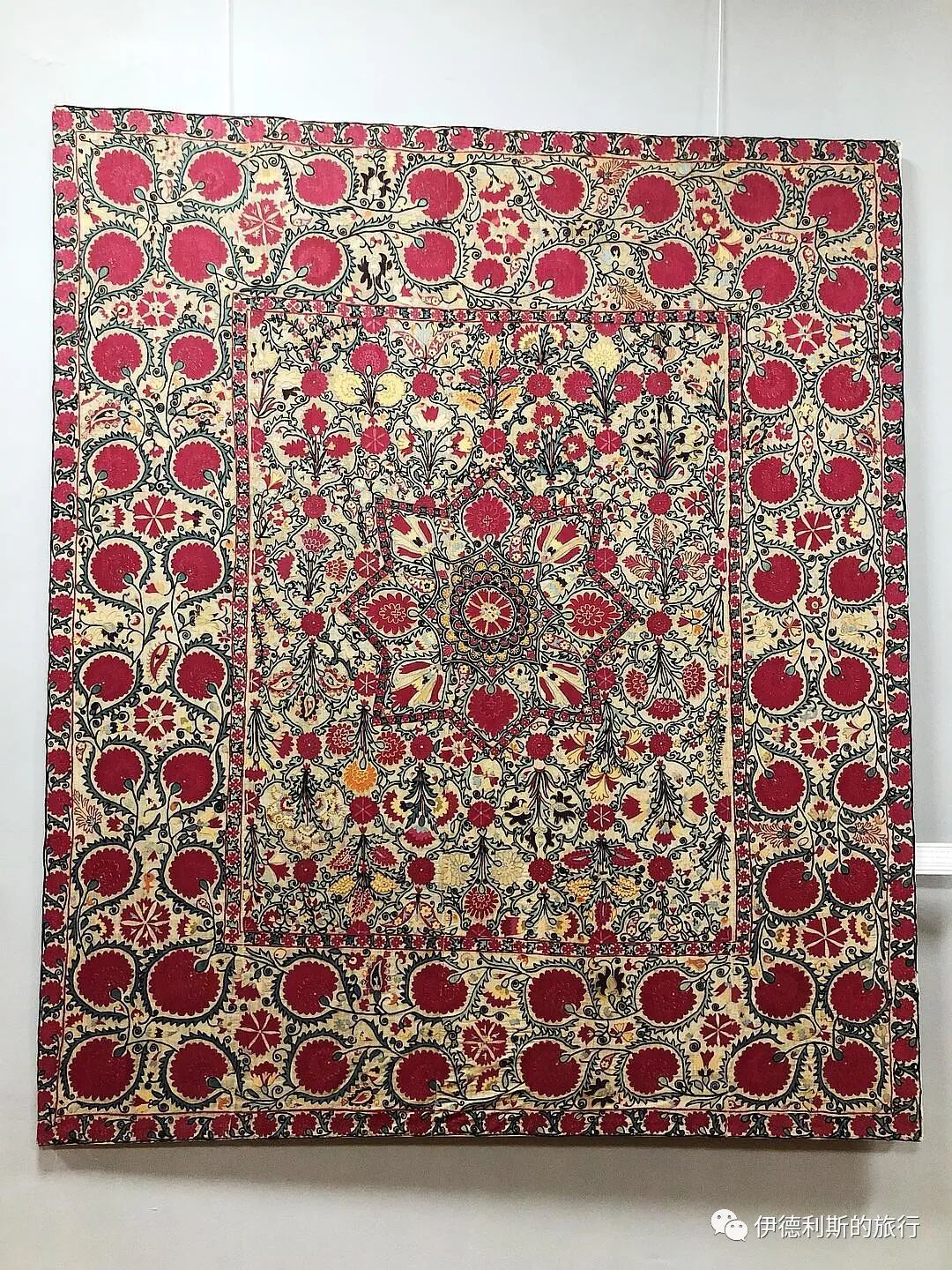
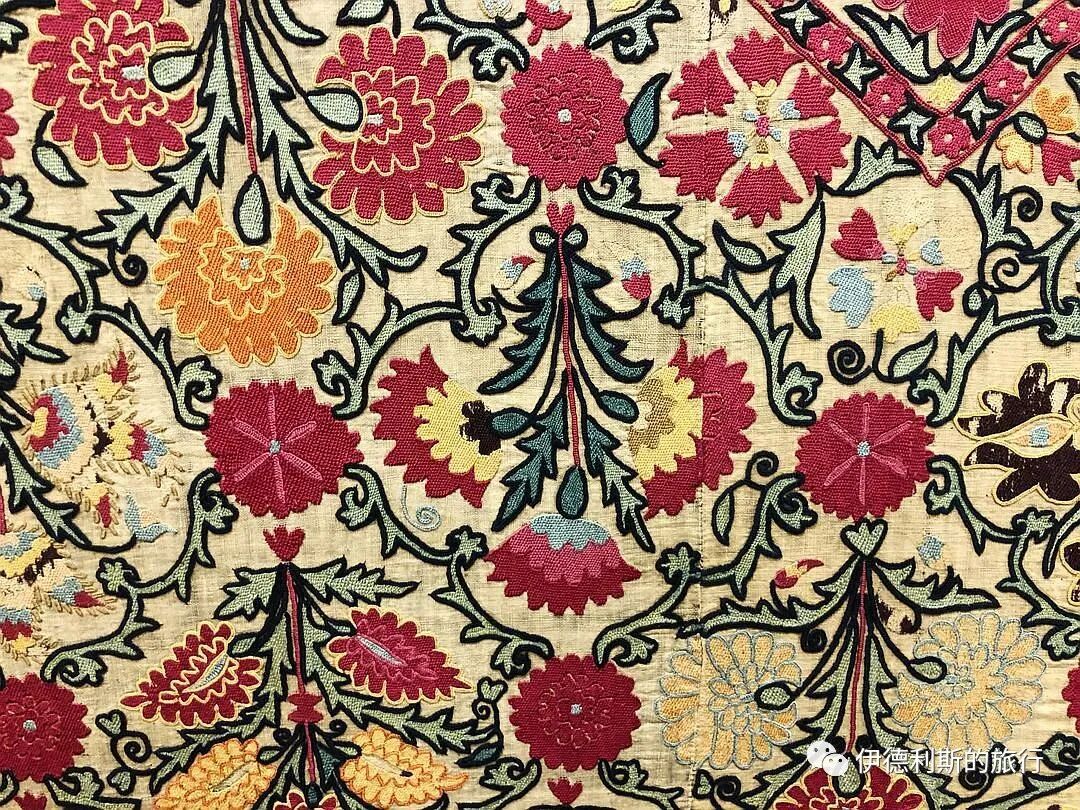
A 19th-century Tashkent suzani embroidery. This type of suzani is called 'oy-palak' (moon heaven). Many Tashkent suzani have themes of starry skies, the sun, and the moon.
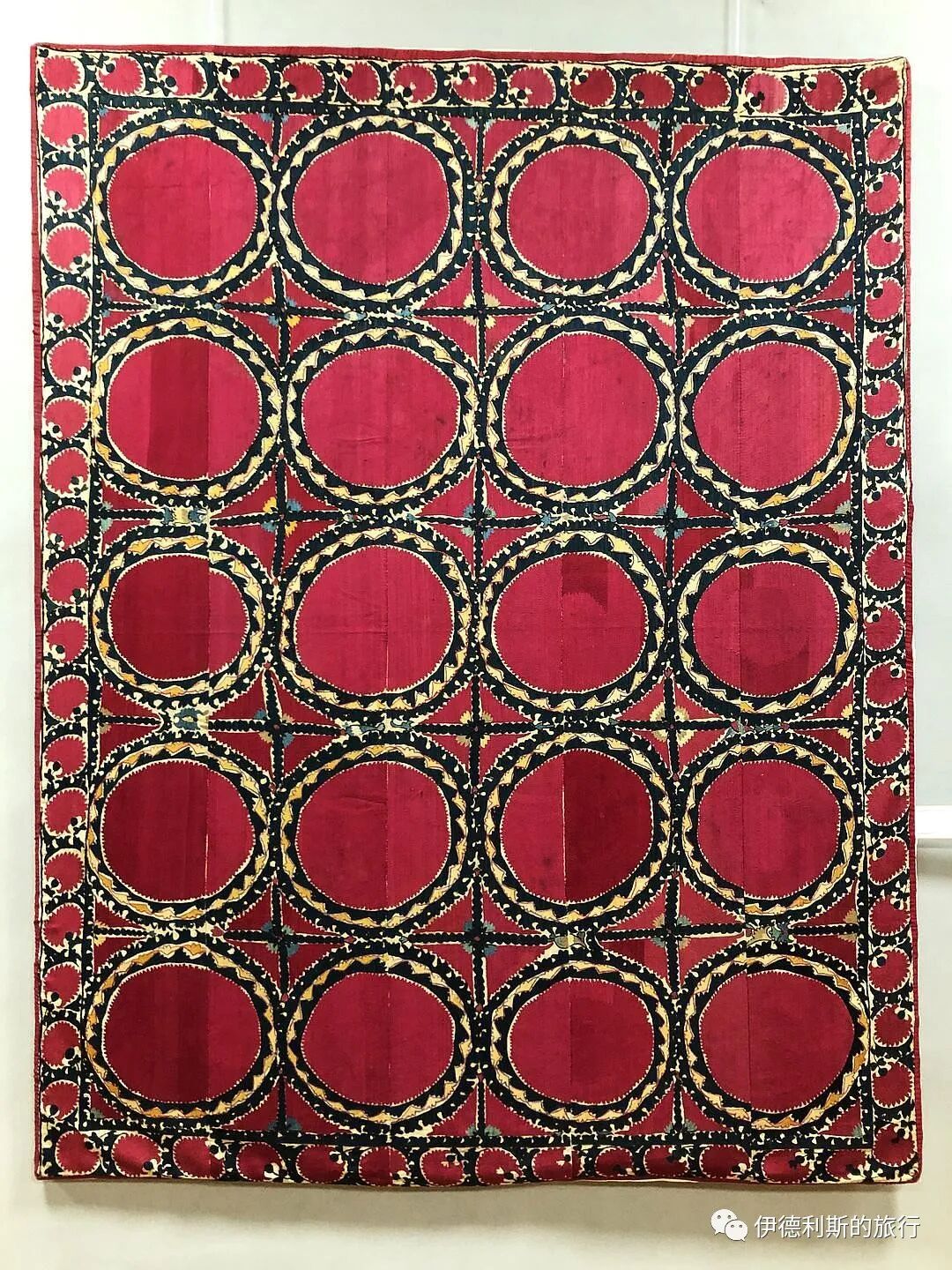
A late 19th-century Shahrisabz suzani embroidery. Shahrisabz is the hometown of Tamerlane the Great. In the 19th century, it was a weaving center for the Khanate of Bukhara, where many artisans made suzani specifically for the royal court.
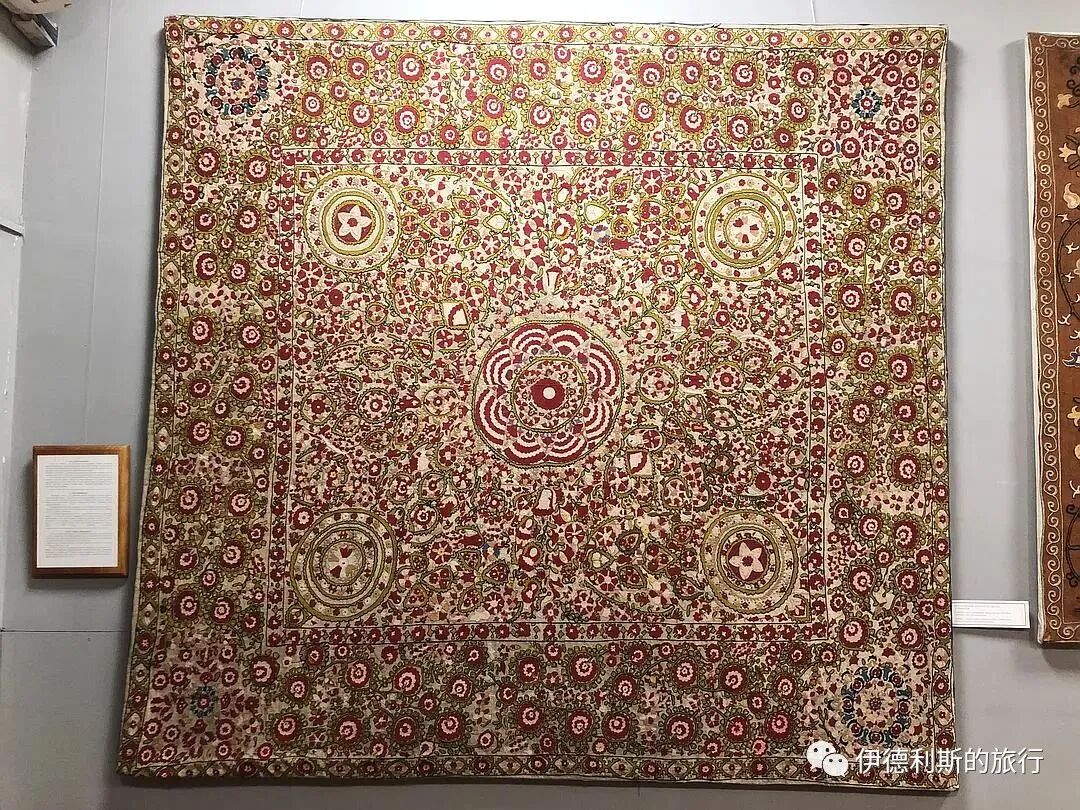
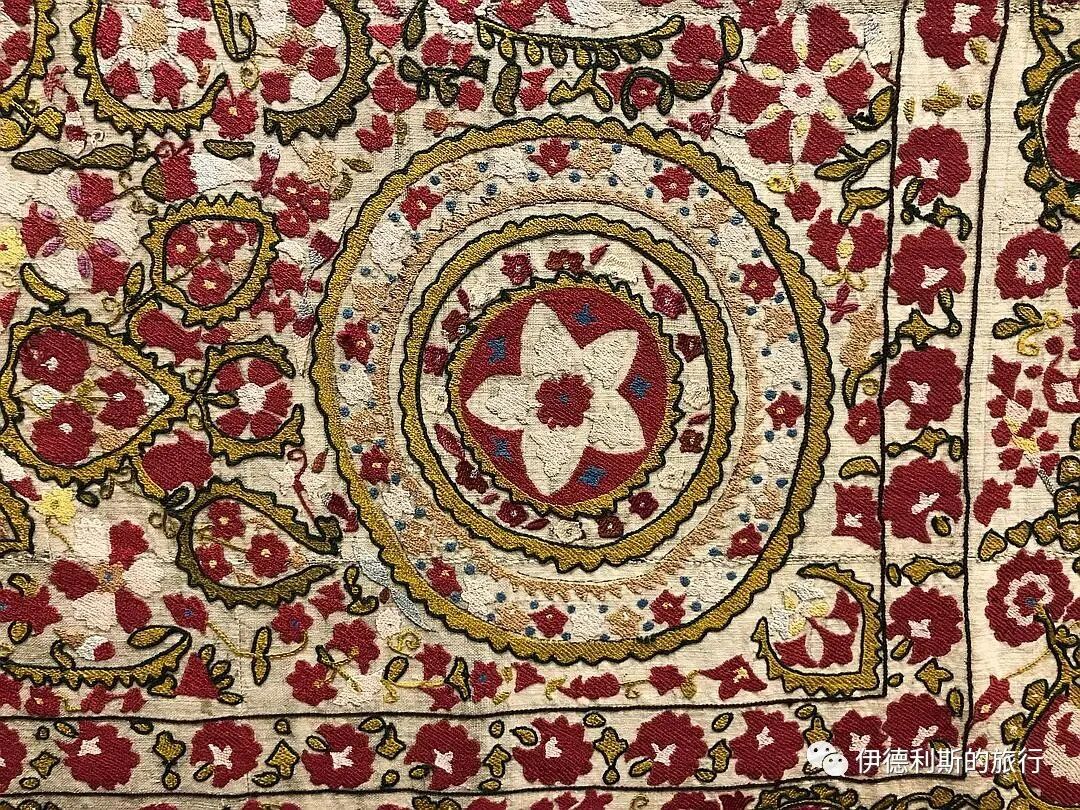
A 20th-century suzani embroidery from the Surxondaryo region in the far south of Uzbekistan, near Afghanistan.
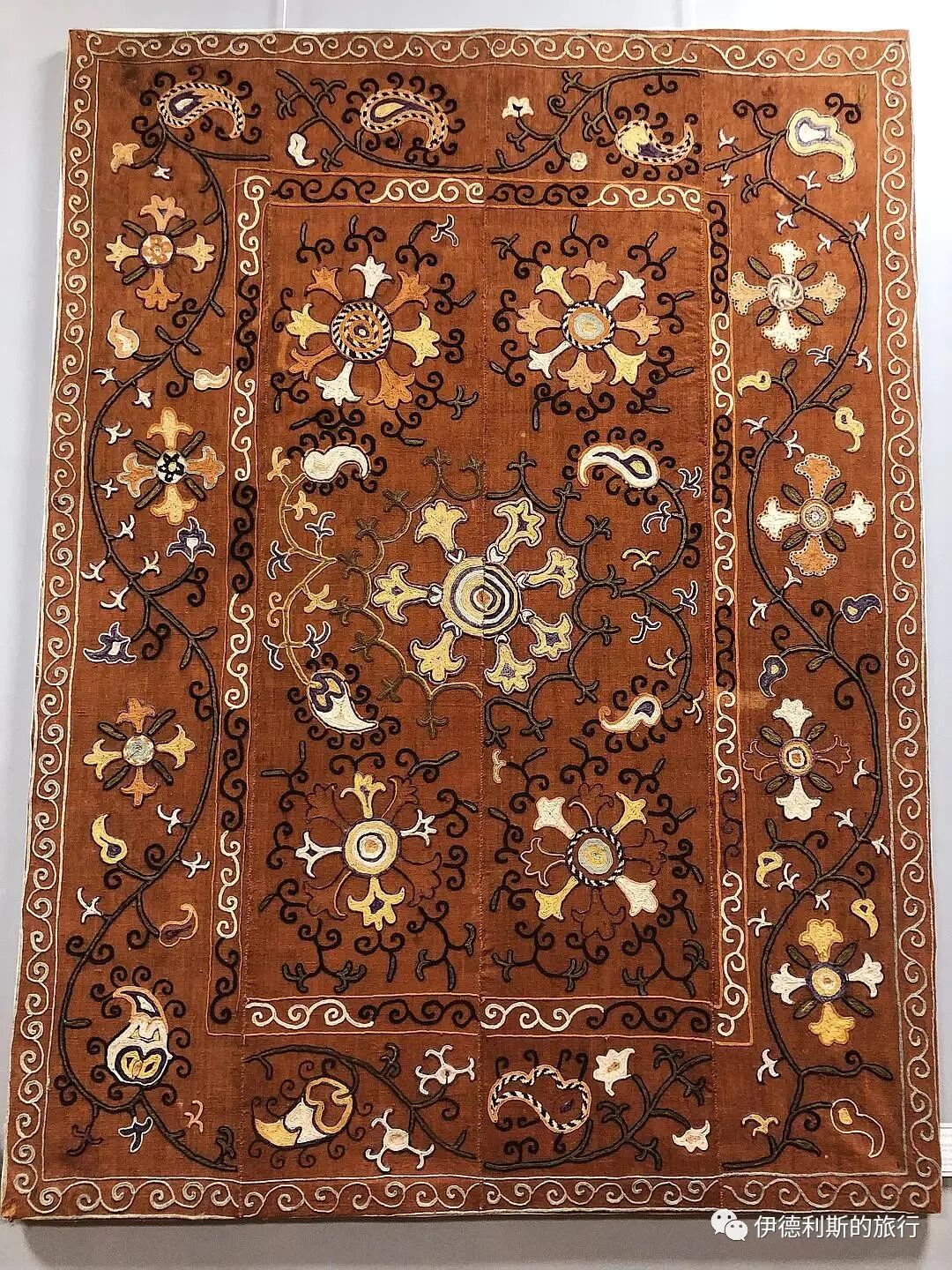
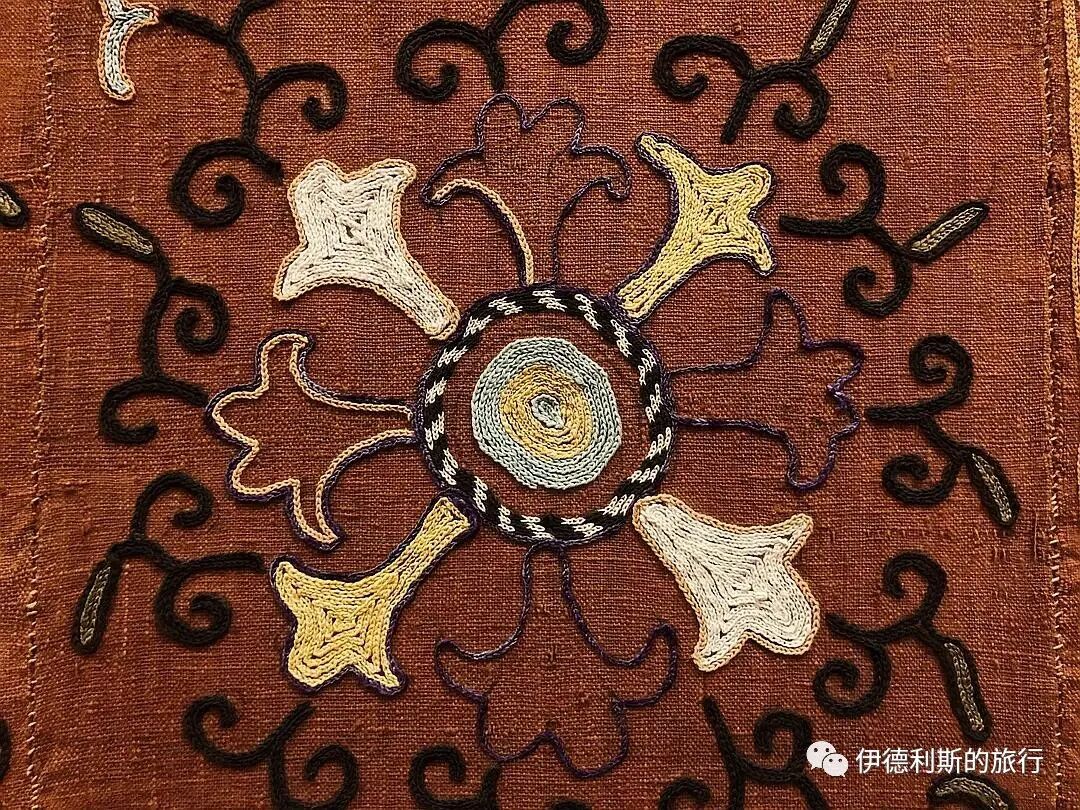
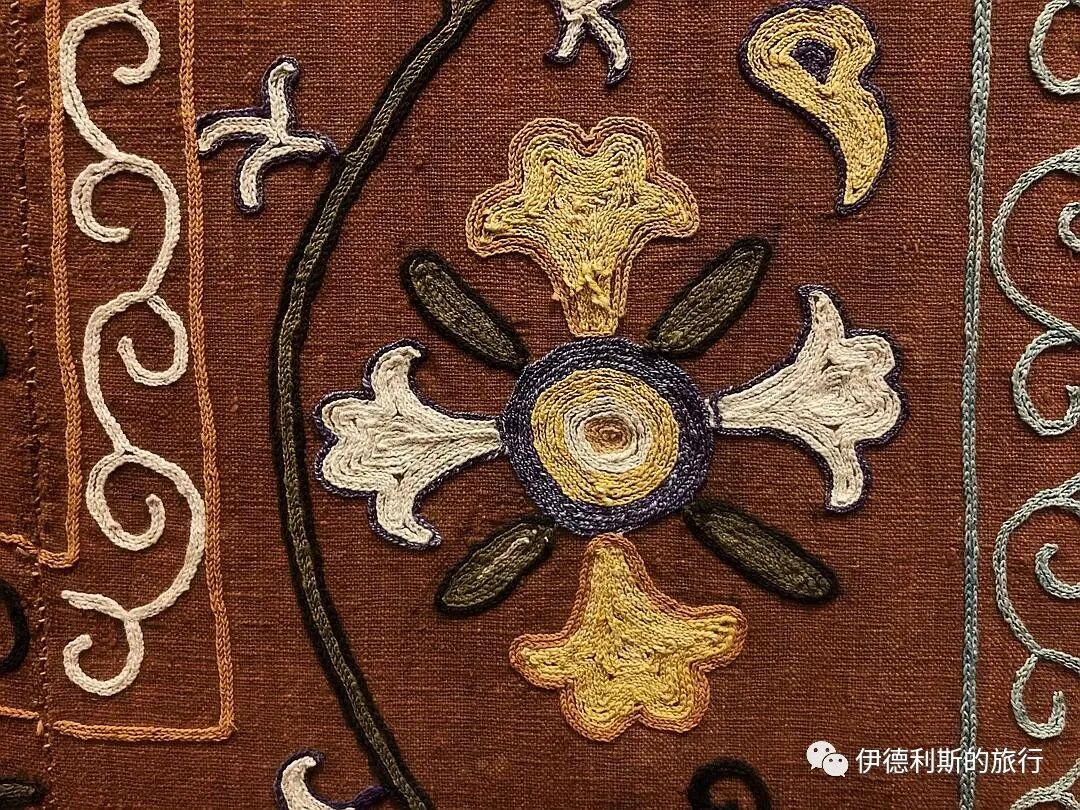
A 20th-century Samarkand suzani embroidery. Samarkand has historically been a center for the weaving industry in Central Asia. The suzani here have larger and simpler patterns than those in Bukhara, often featuring deep red rose garlands wrapped in leaves.
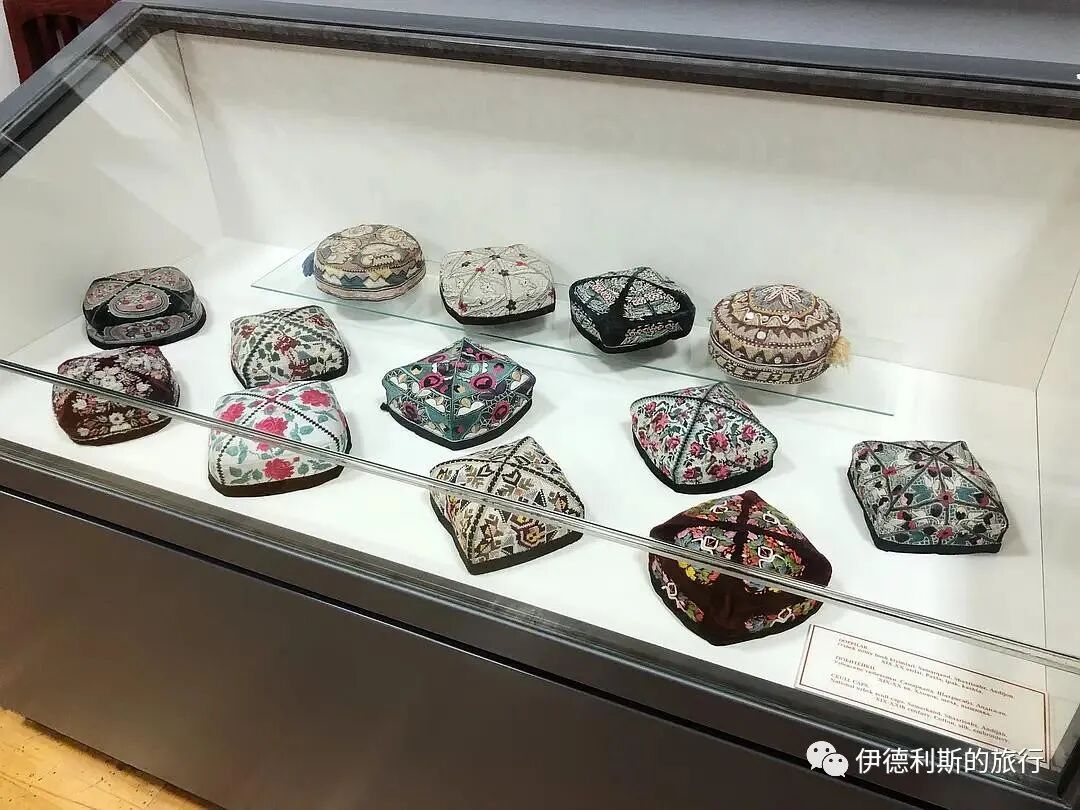
Skullcap (doppa).
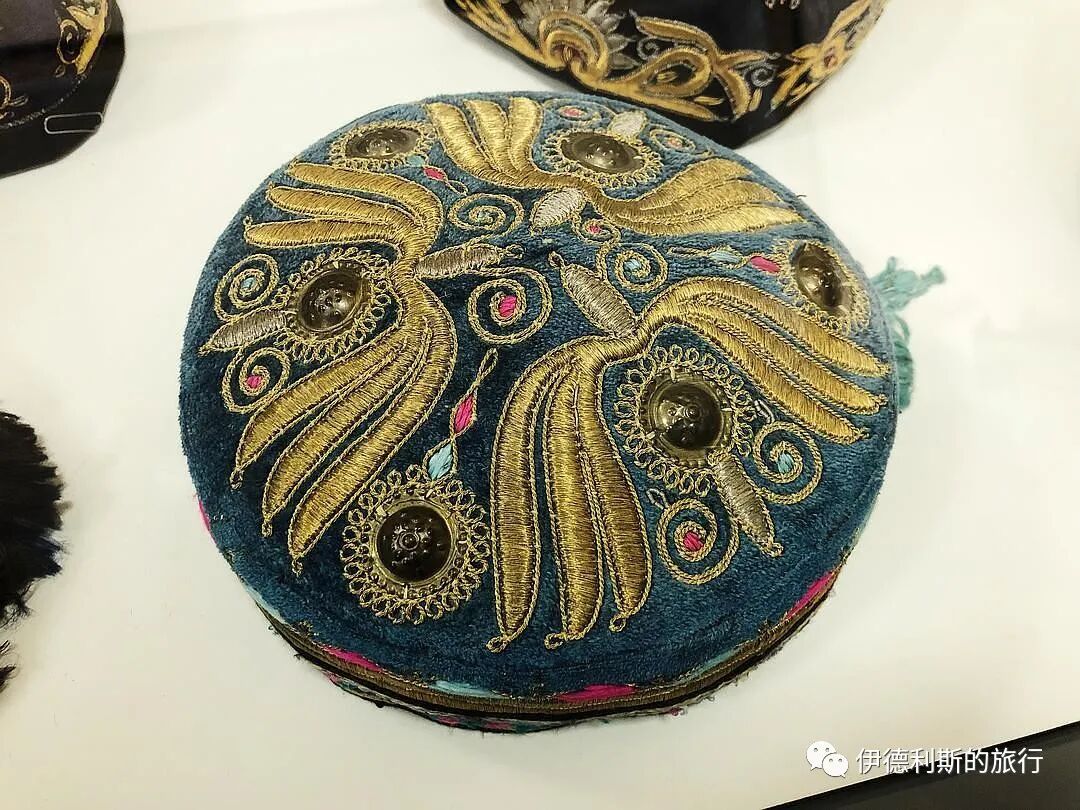
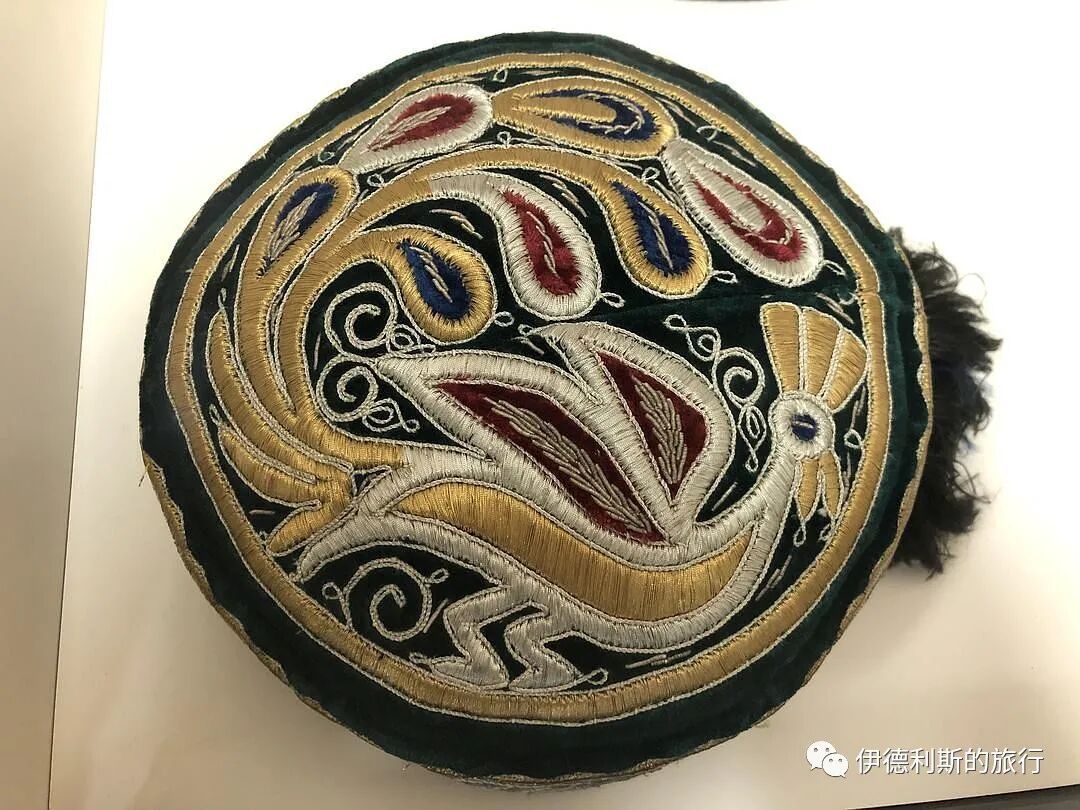
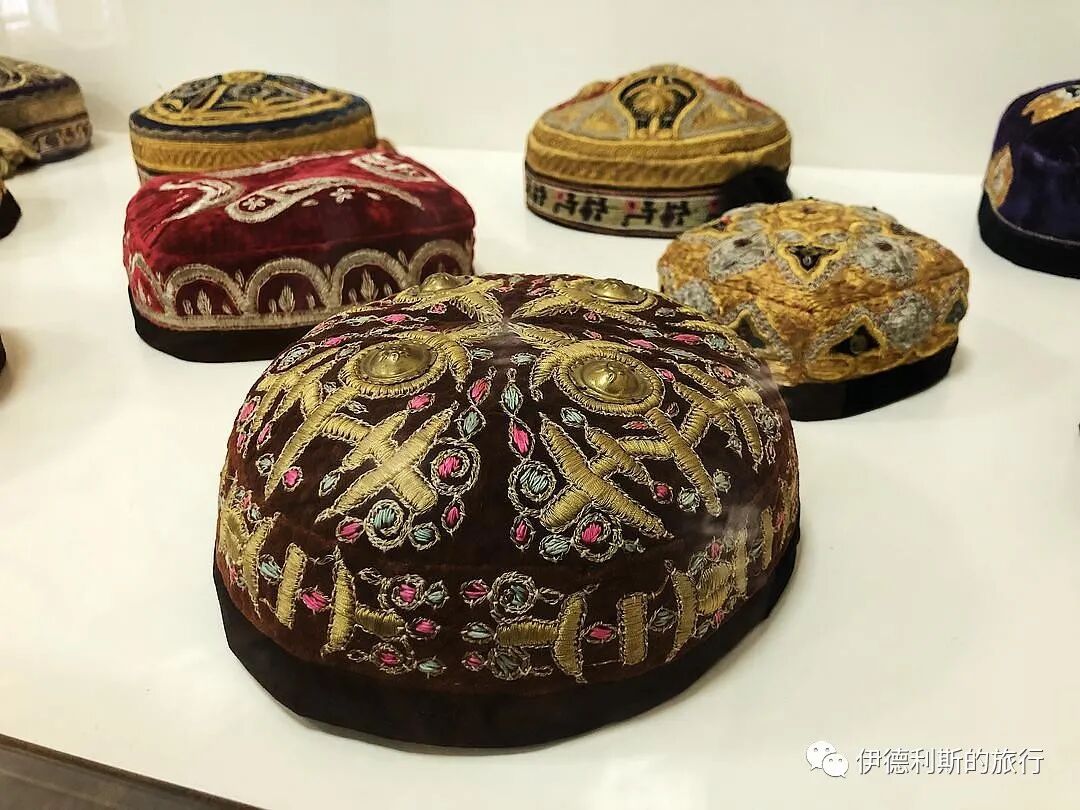
Various 19th to 20th-century Uzbek skullcaps (doppa) from Samarkand, Shahrisabz, and Andijan. The skullcaps we see on the streets of Uzbekistan today are much simpler than these.
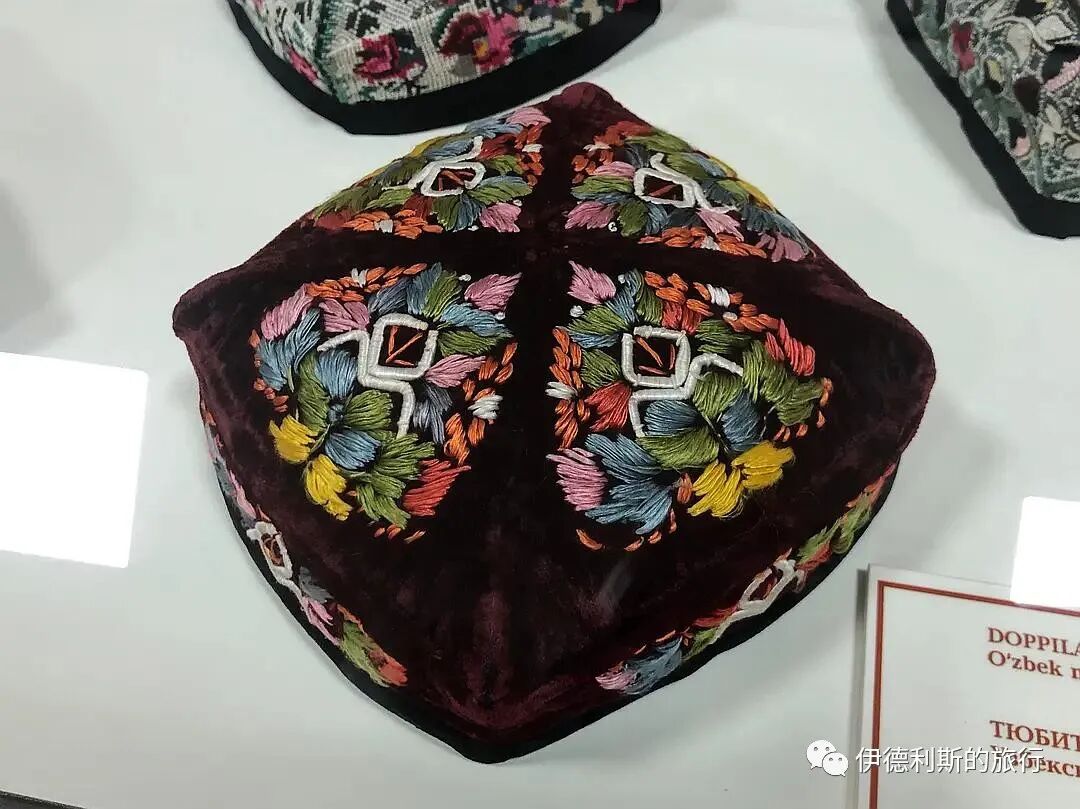
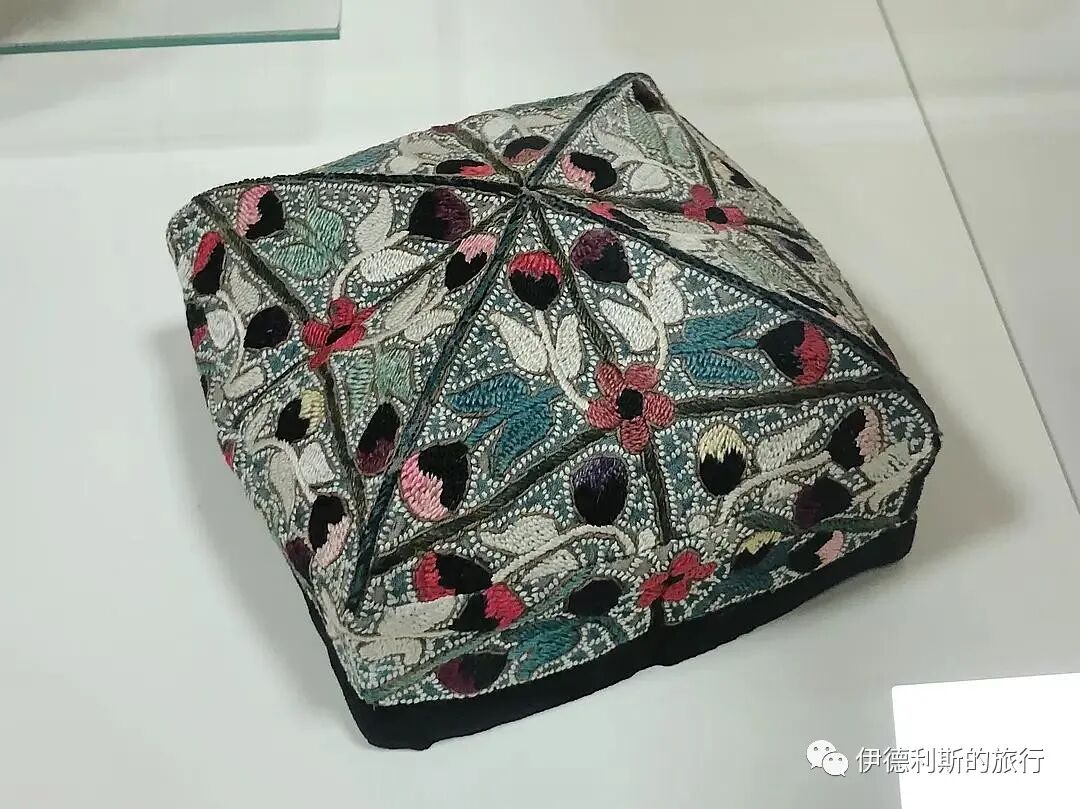
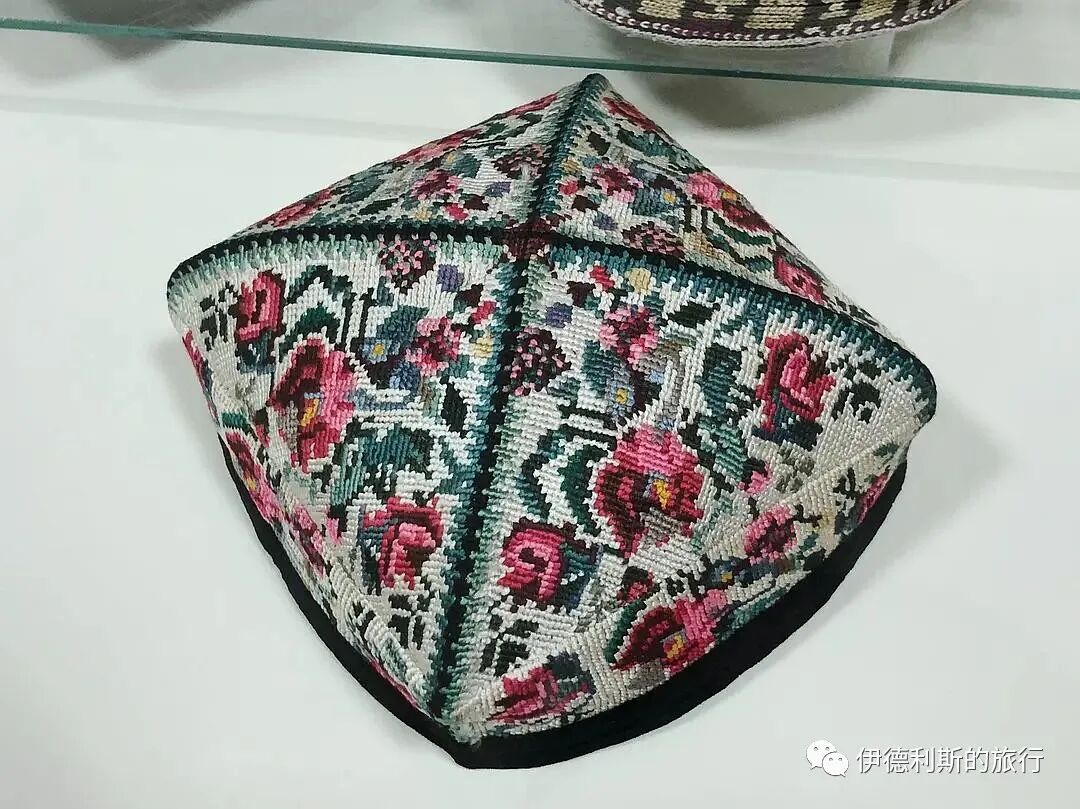
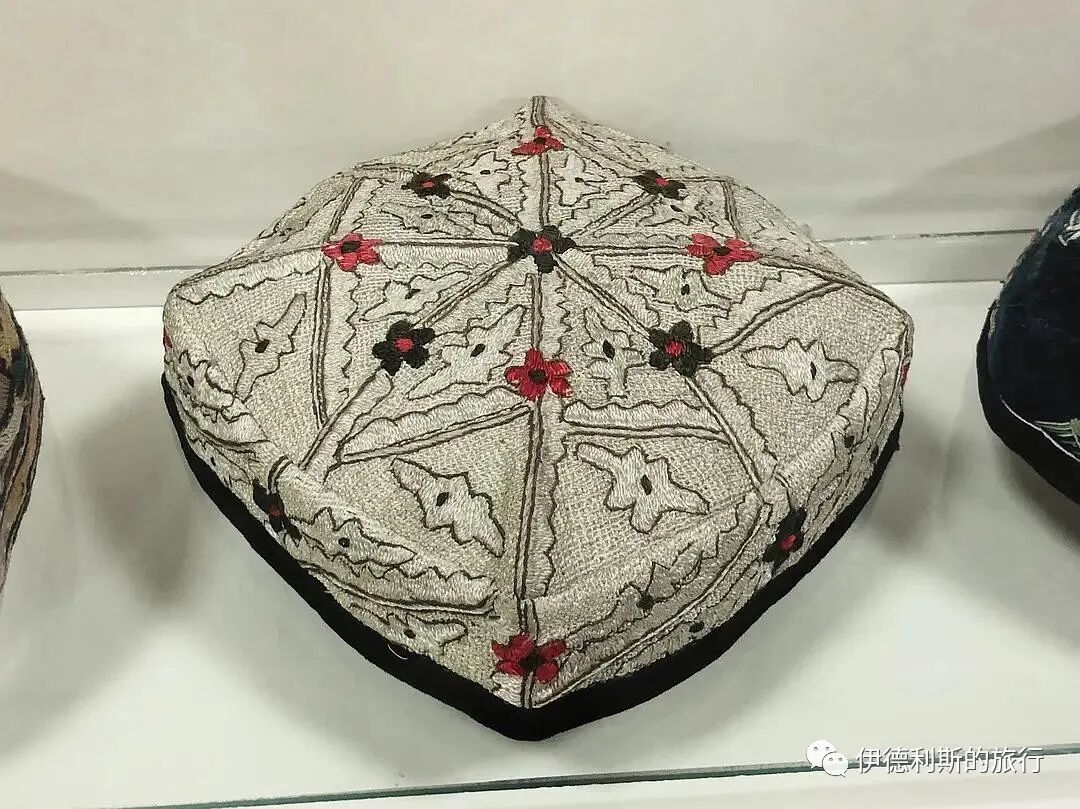
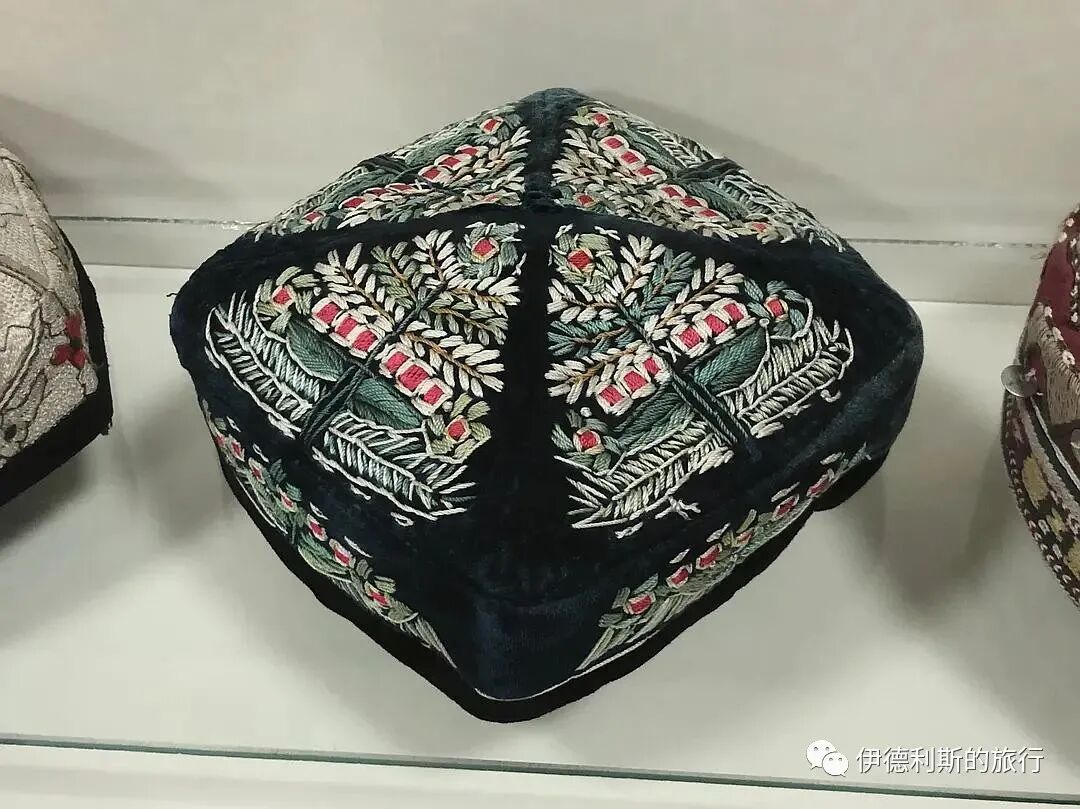
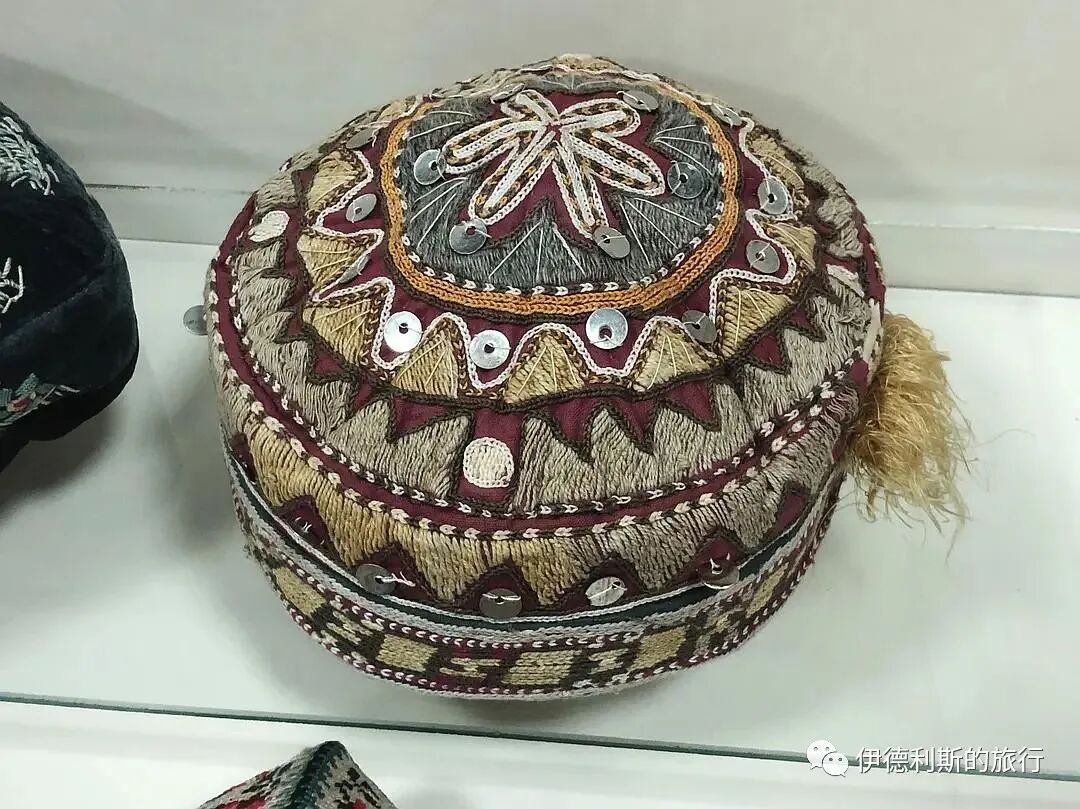
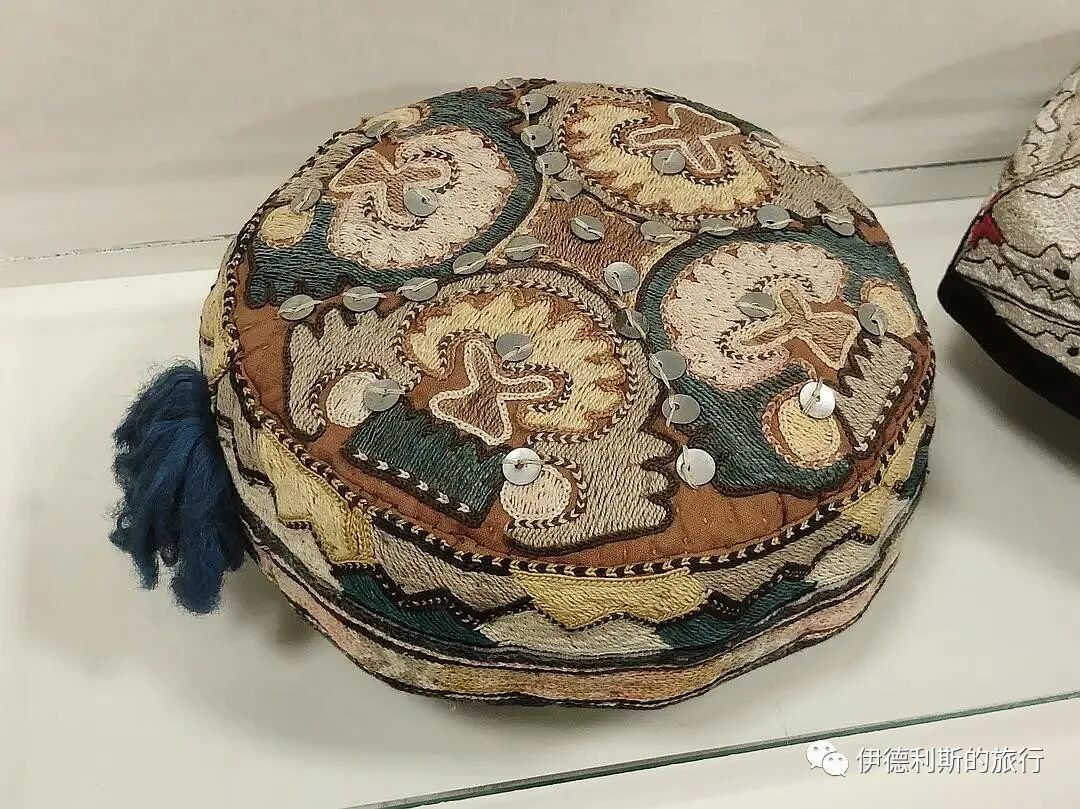
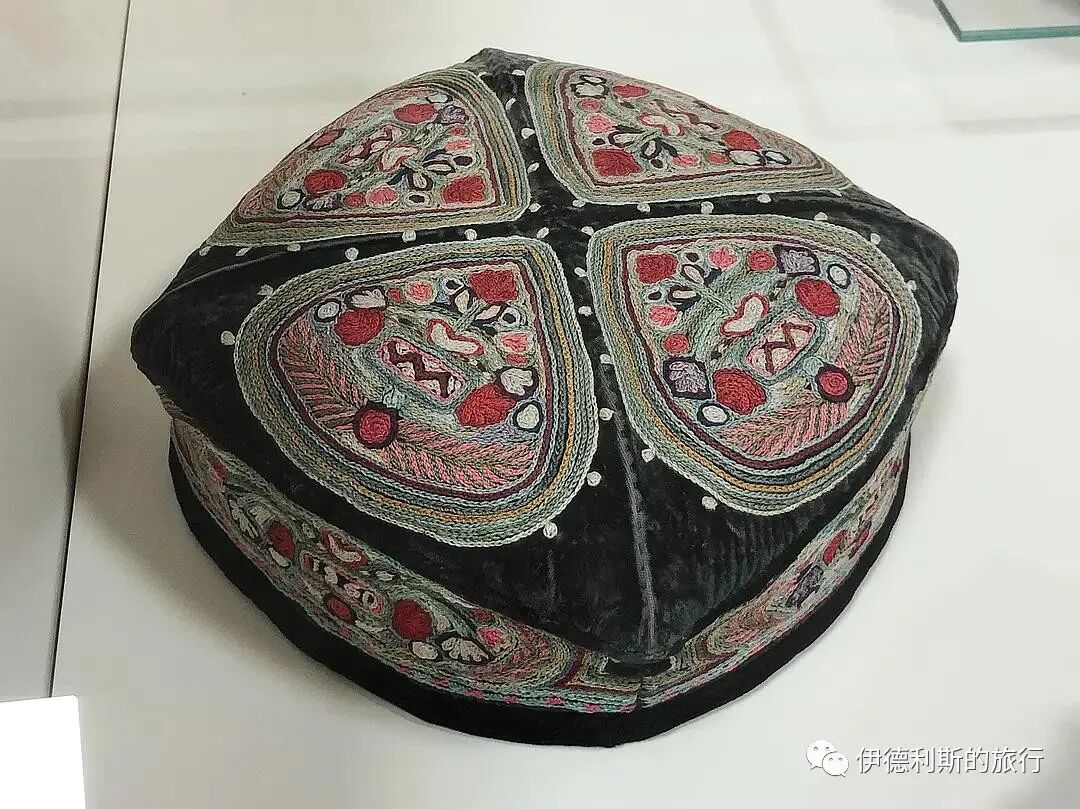
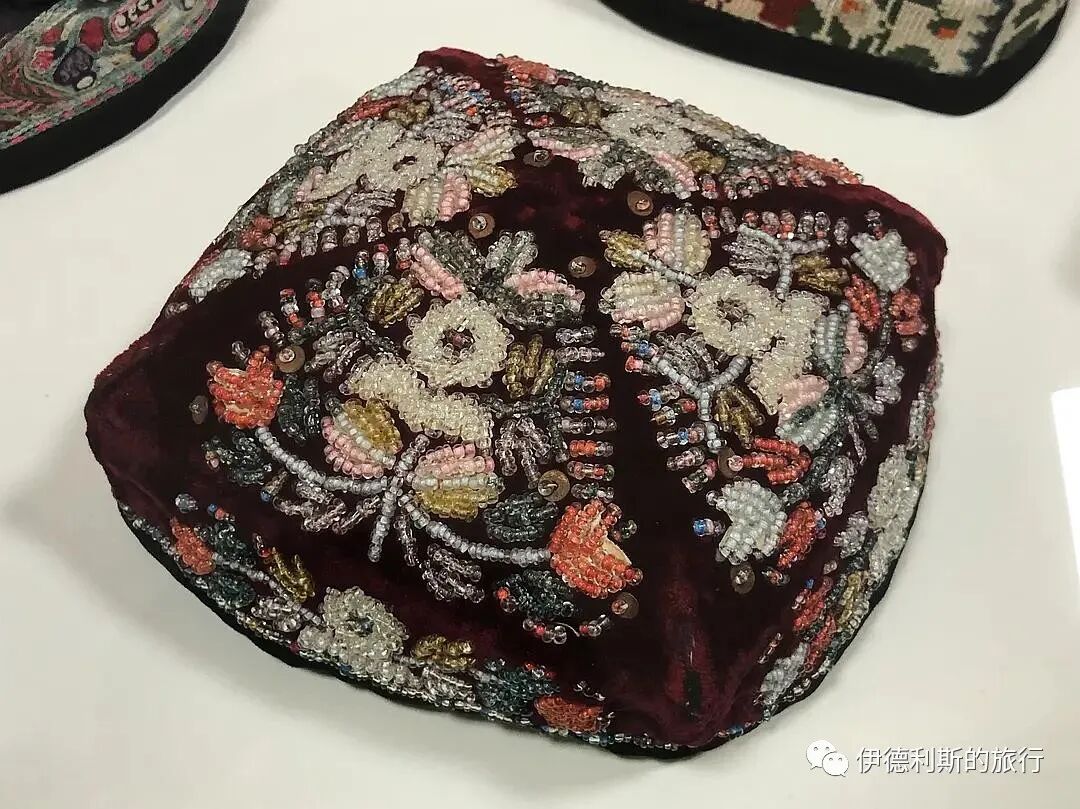
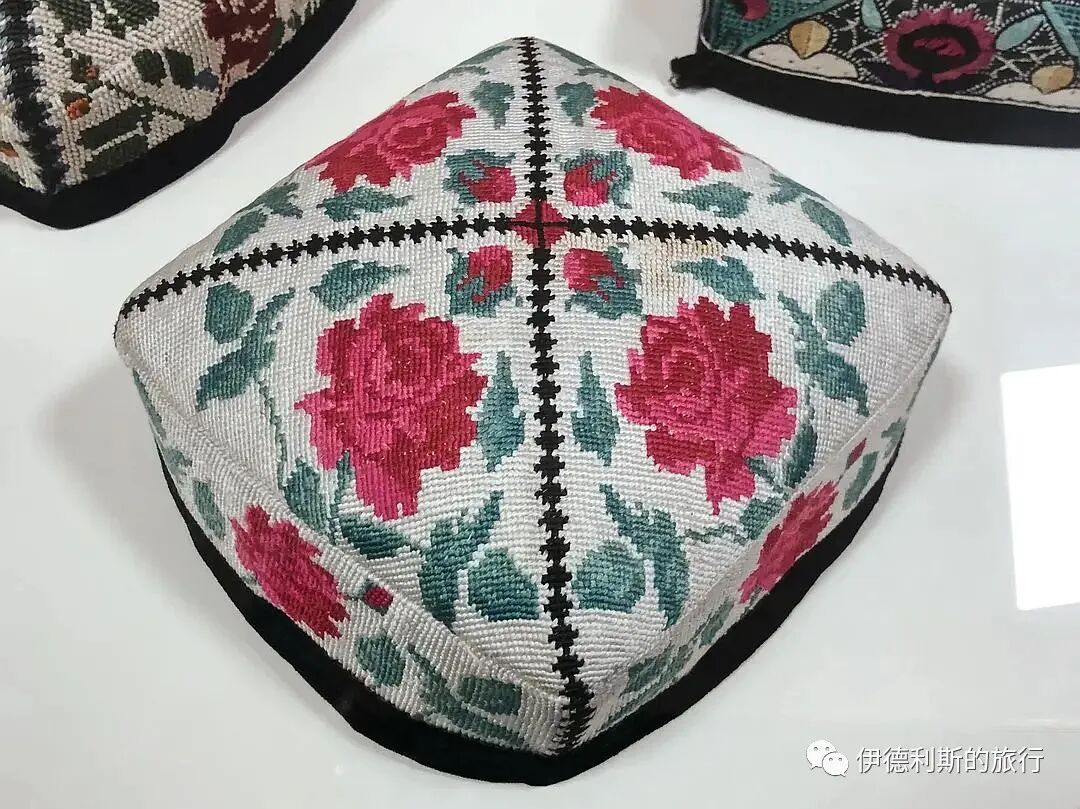
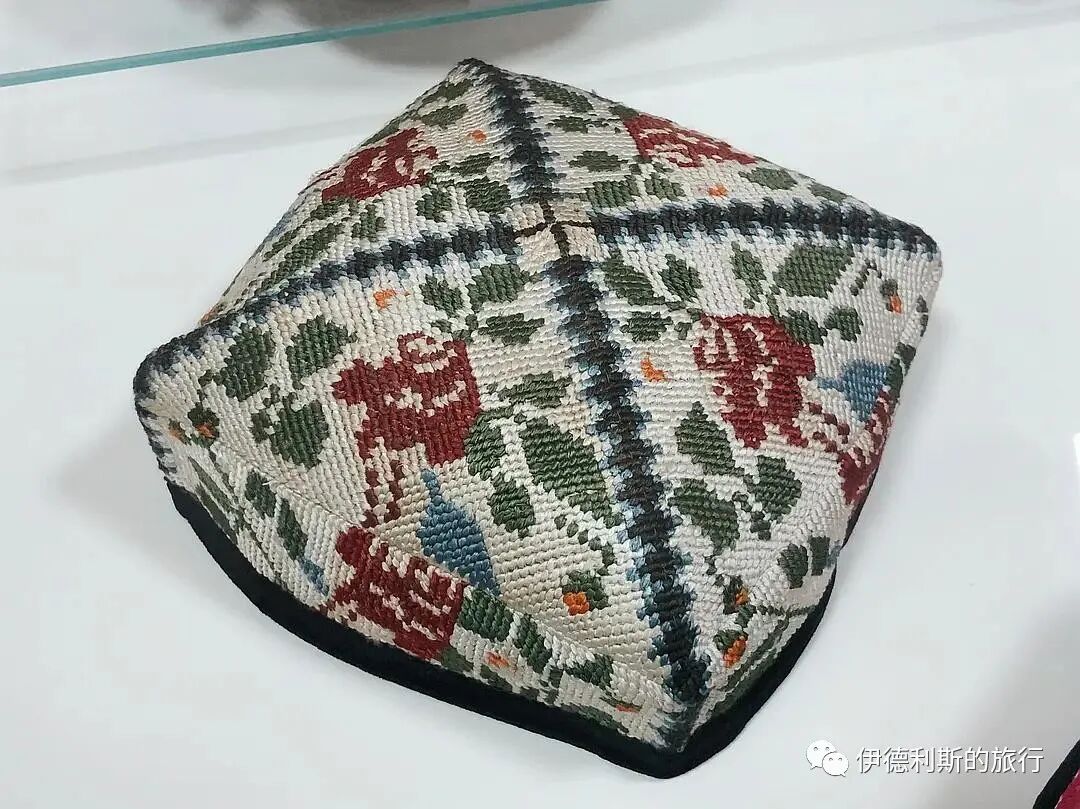
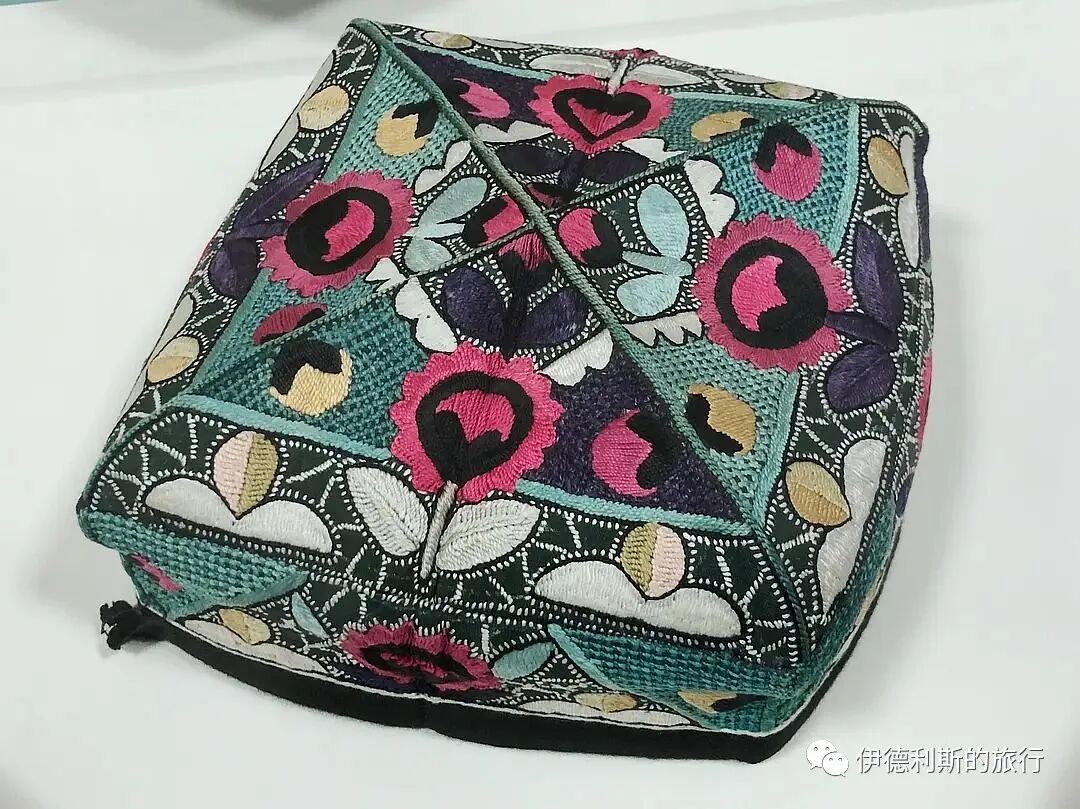
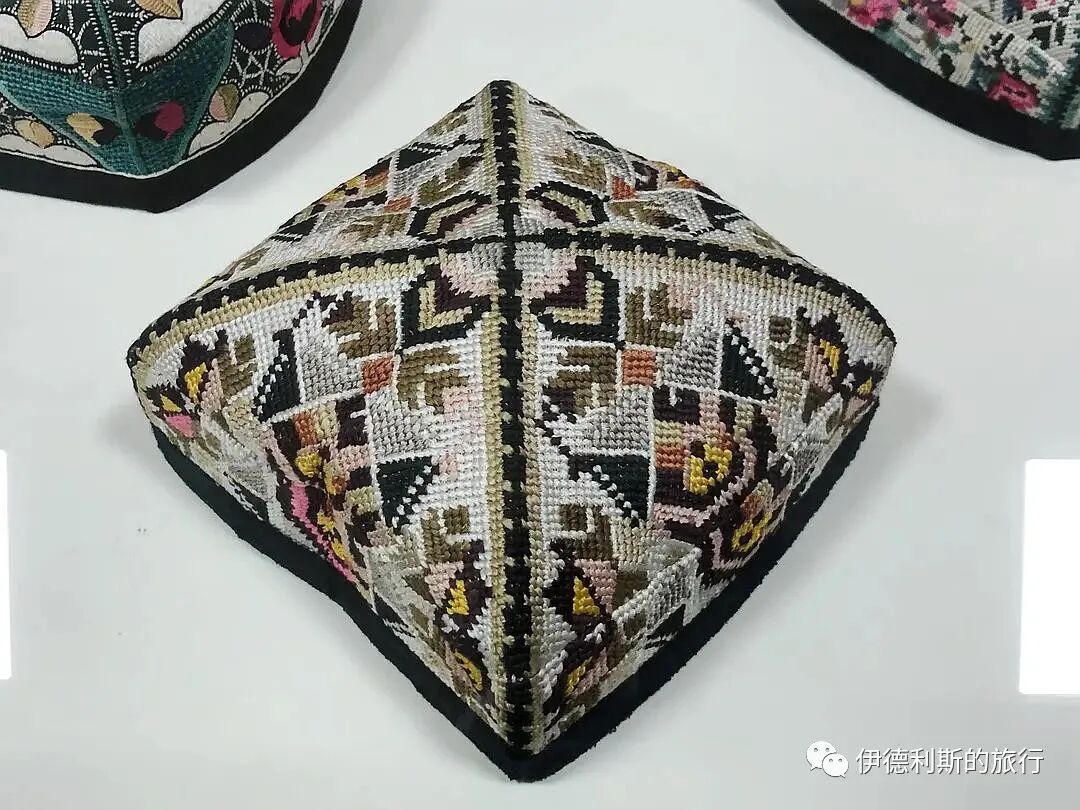
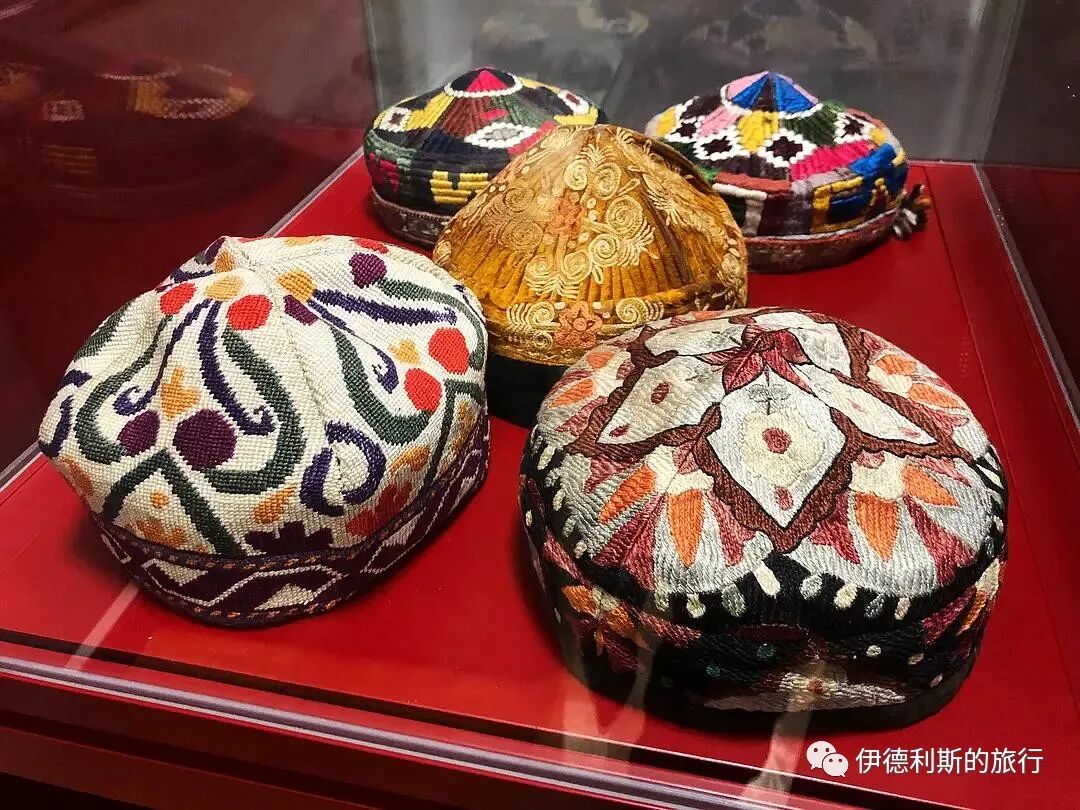
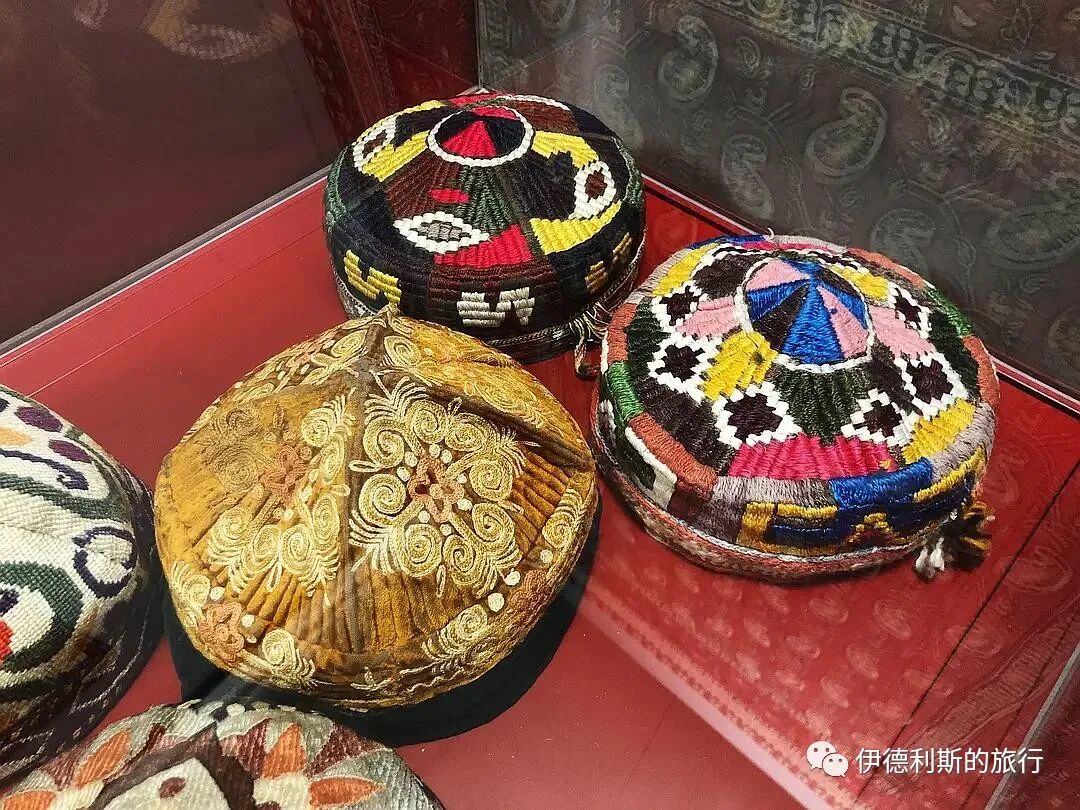
A gold-thread embroidered skullcap (doppa) made in Bukhara between 1940 and 1975.
Jewelry.
On the right is a bracelet made by Azizov K. A. in Tashkent in 1977. On the left is an amulet made by Dzyuba A. in Tashkent in 1982.
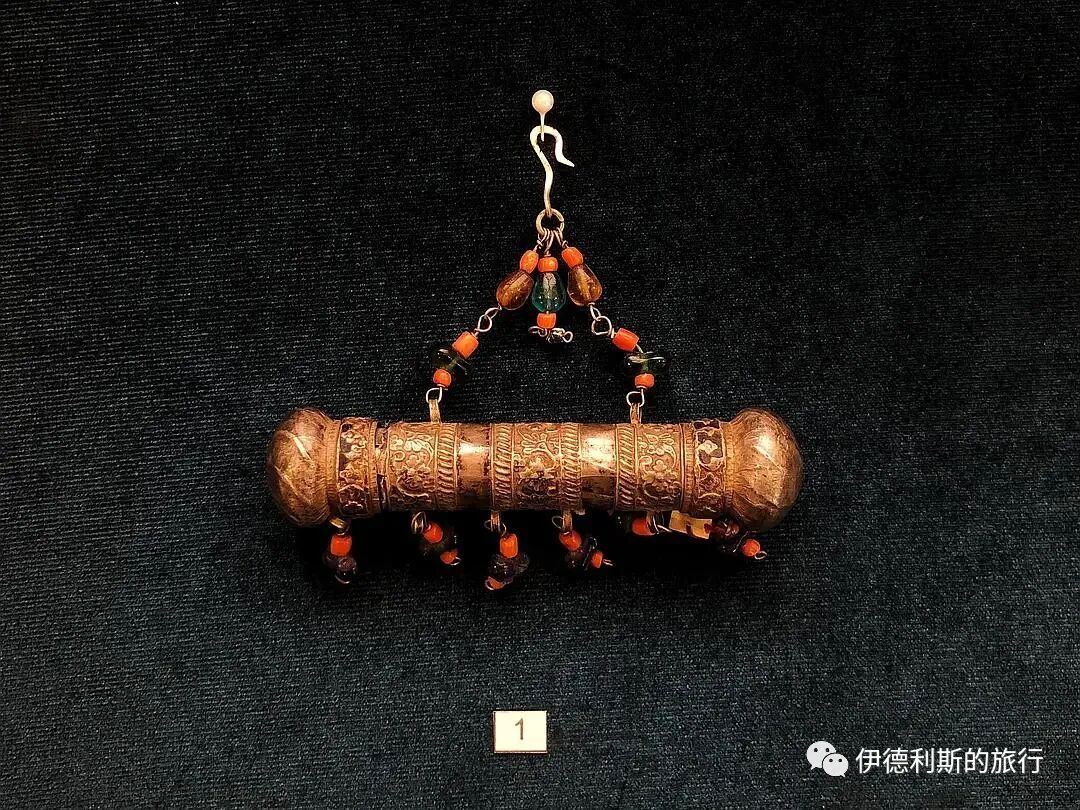
An early 20th-century amulet from Bukhara.
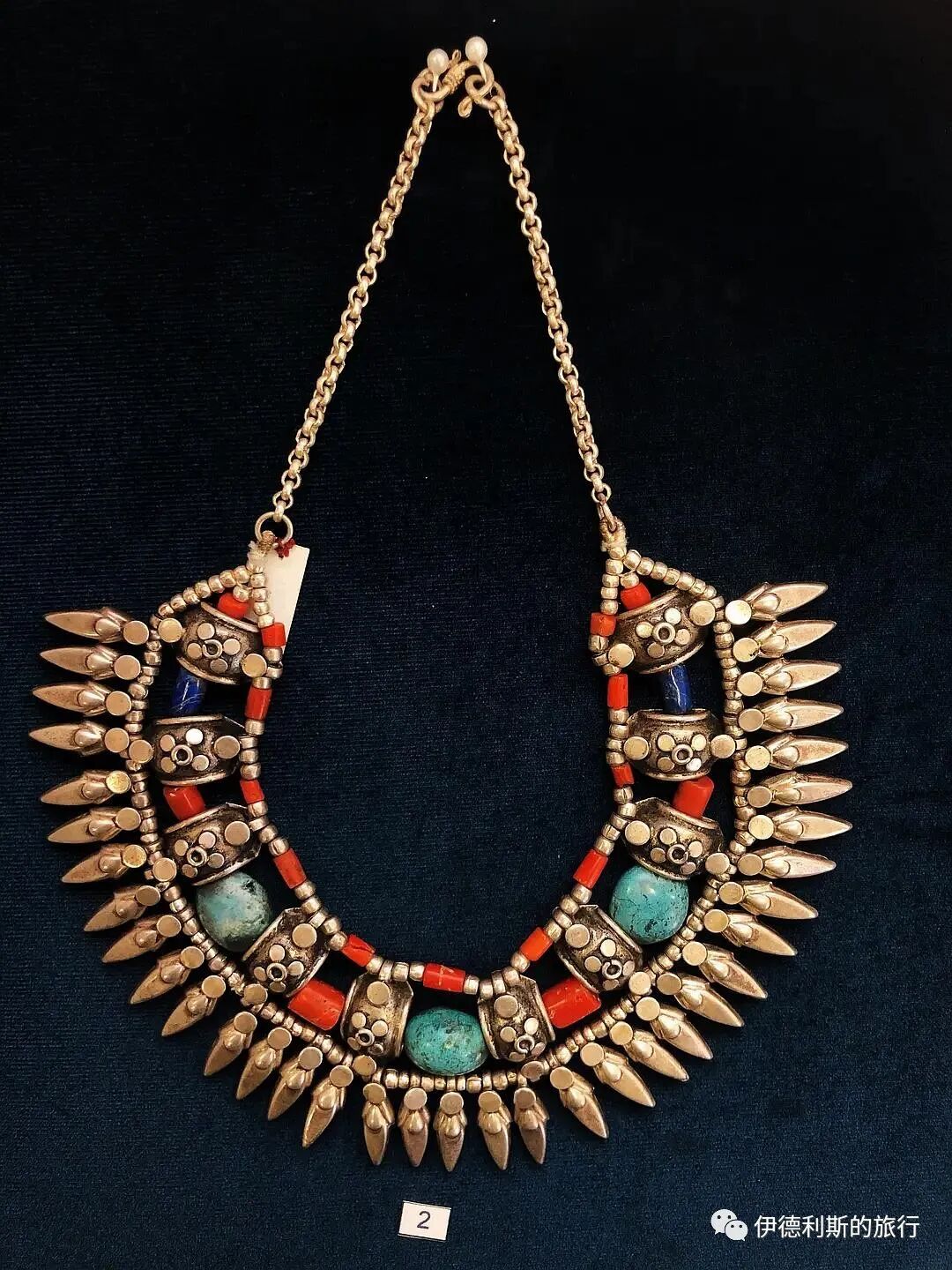
An early 20th-century necklace from Bukhara.
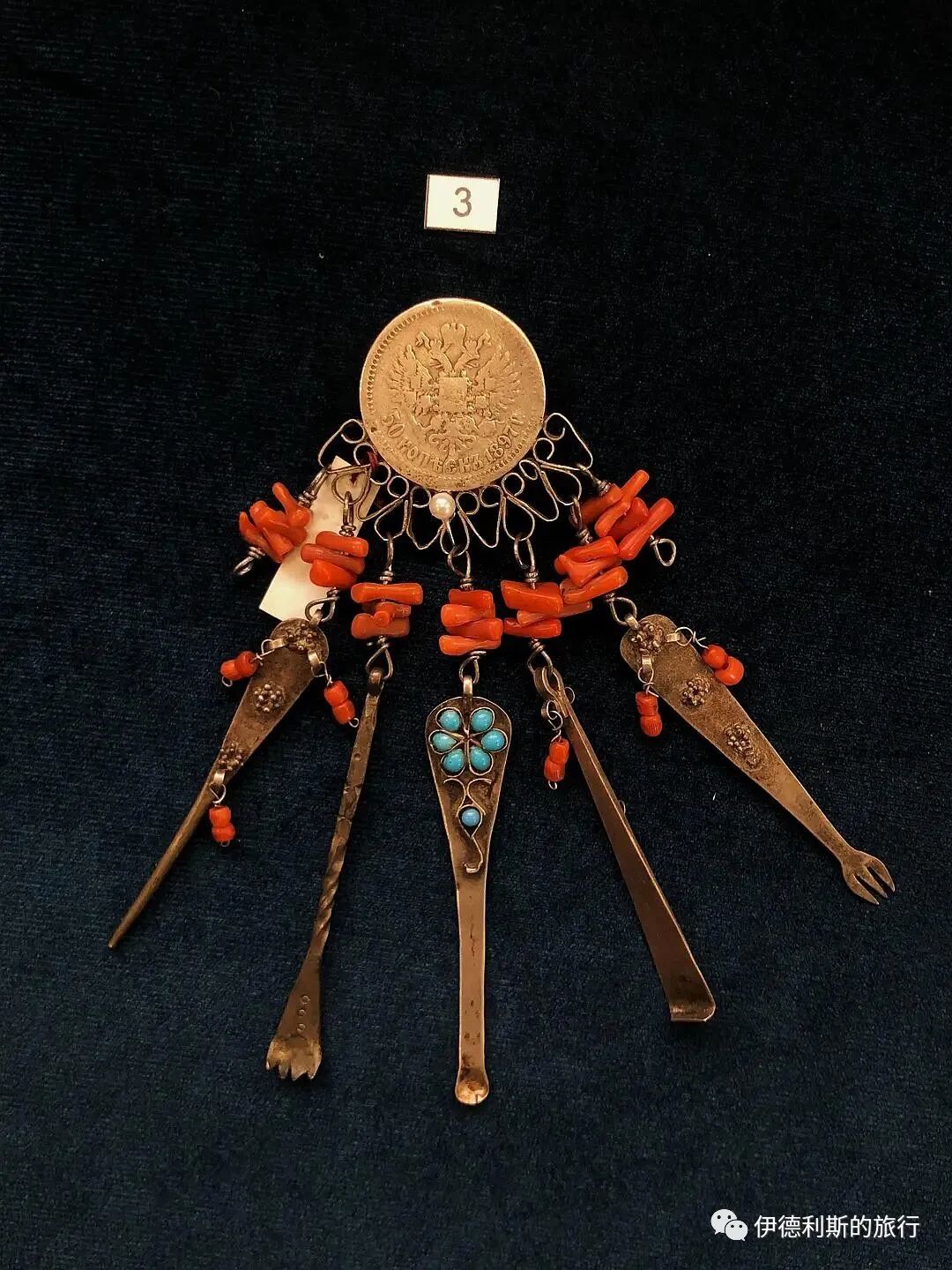
A late 19th to early 20th-century chest ornament from Bukhara.
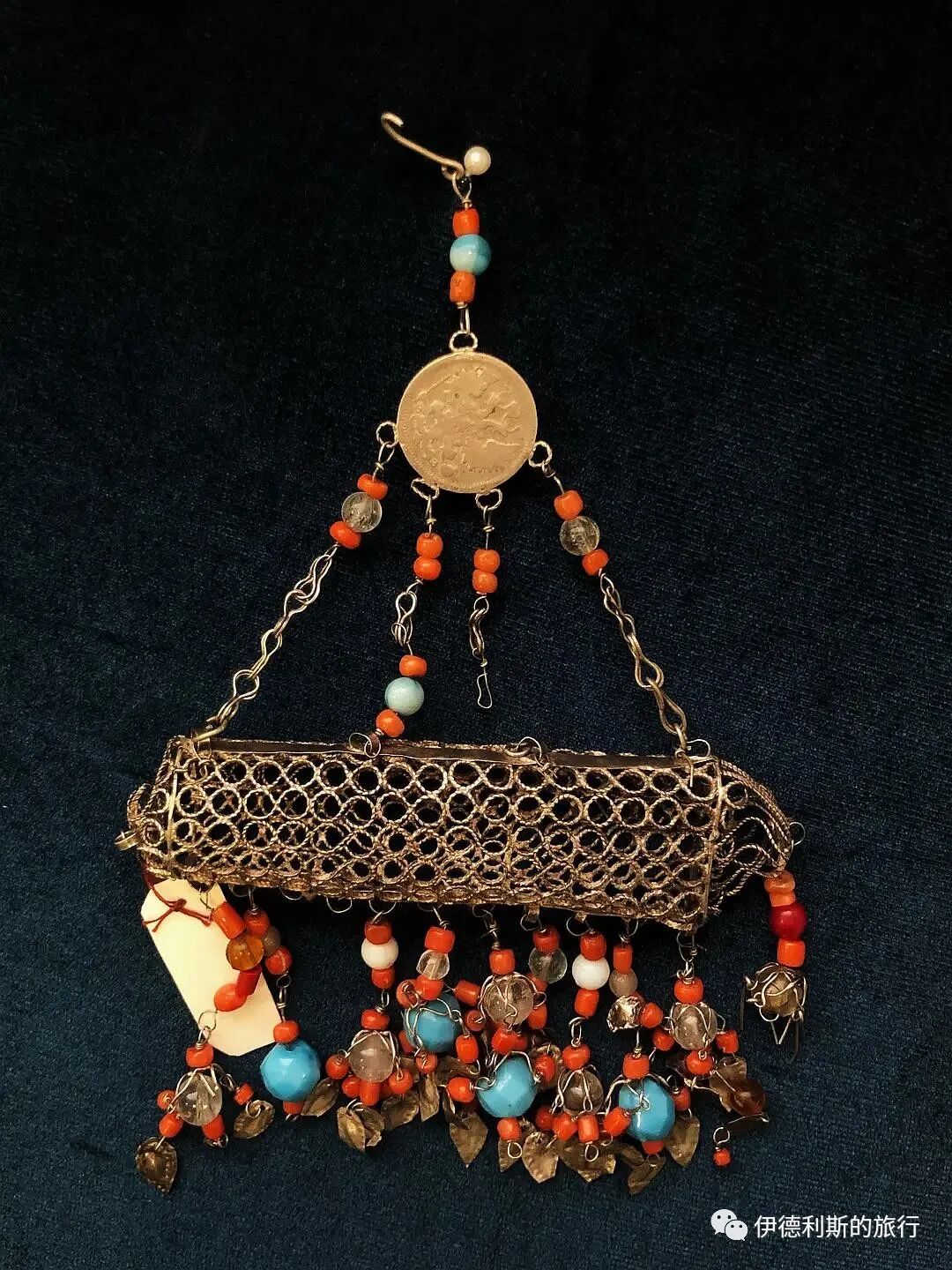
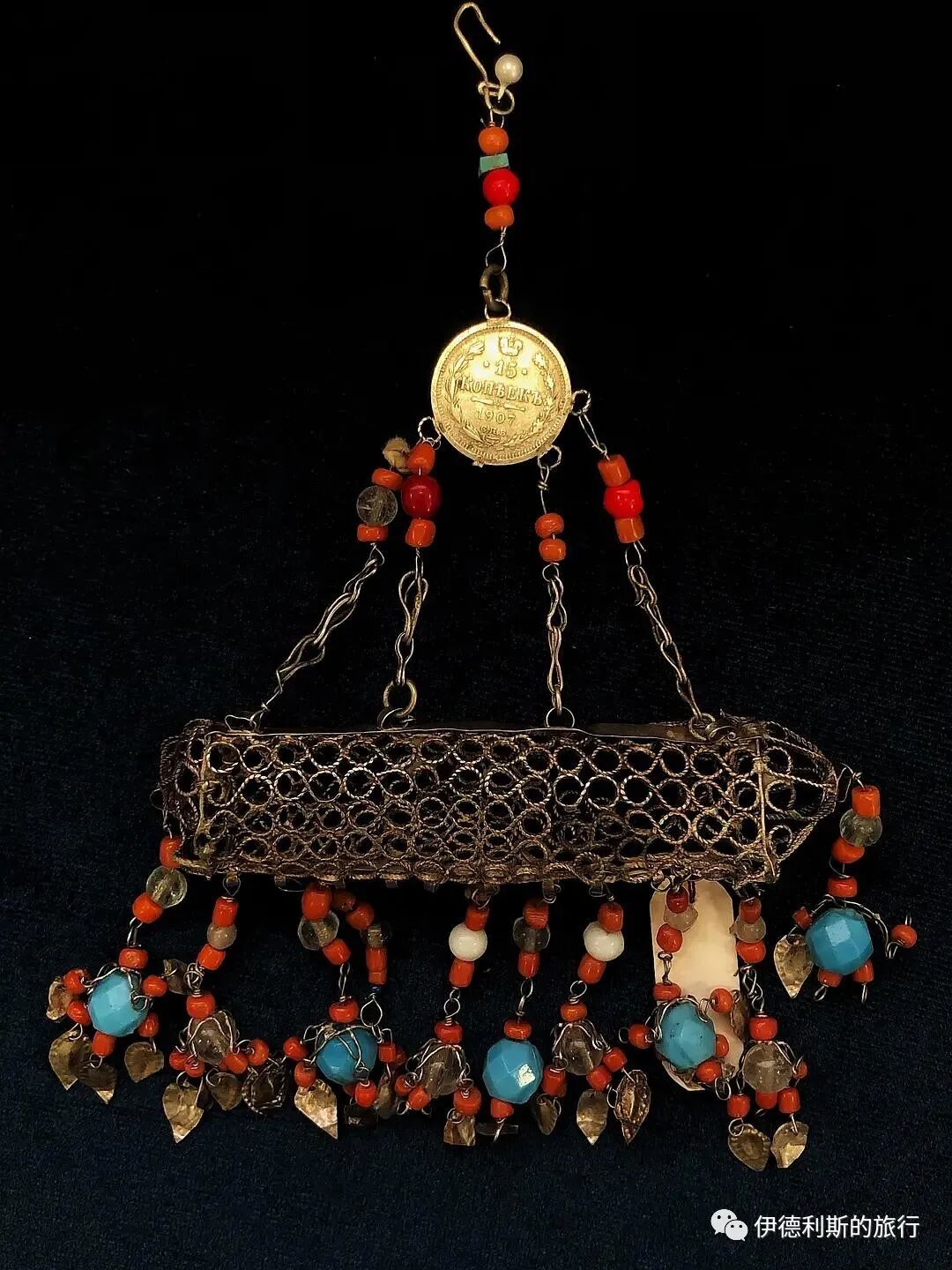
Late 19th to early 20th-century earrings from Samarkand.
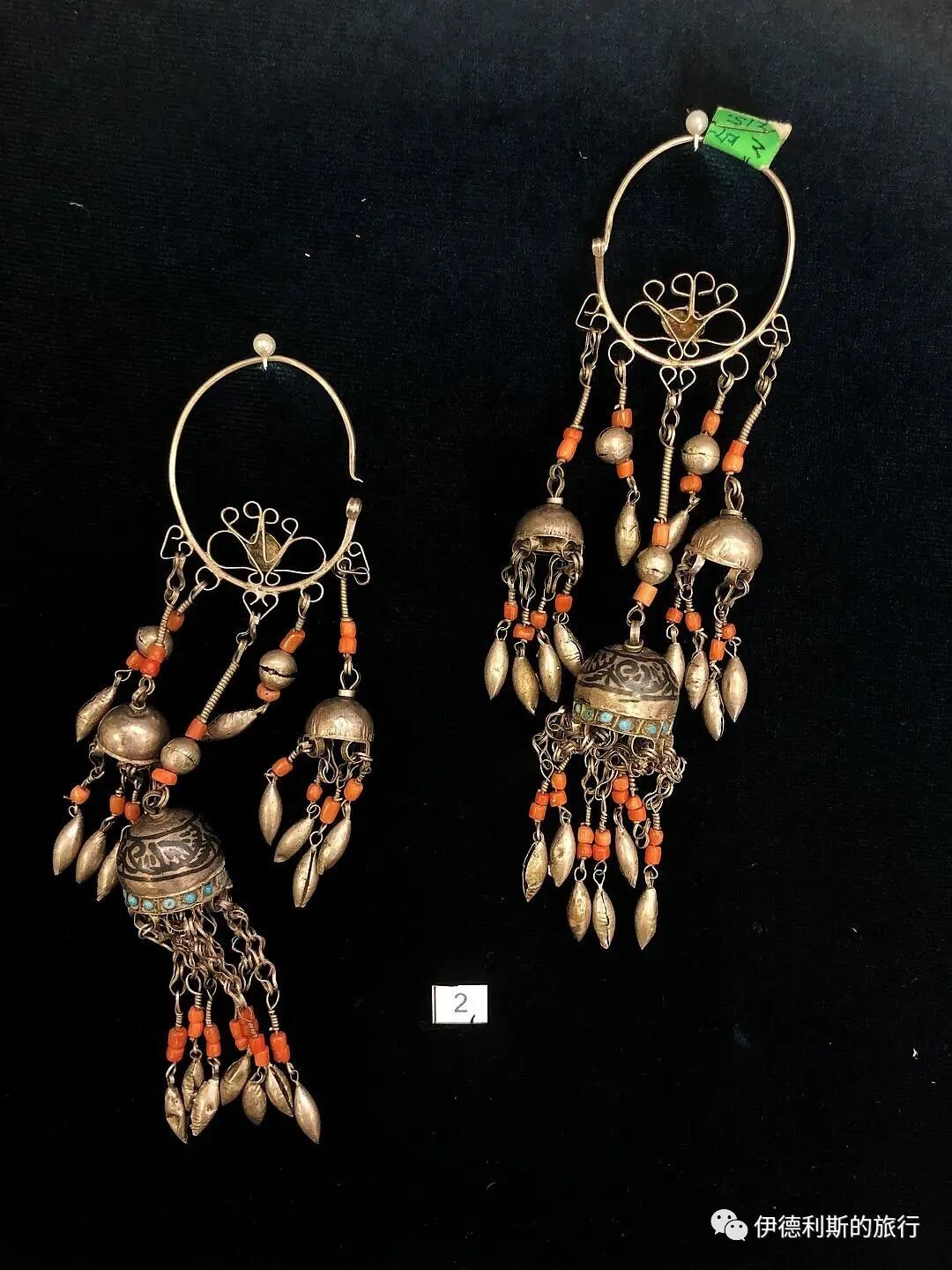
Mid-20th-century earrings from Tashkent.
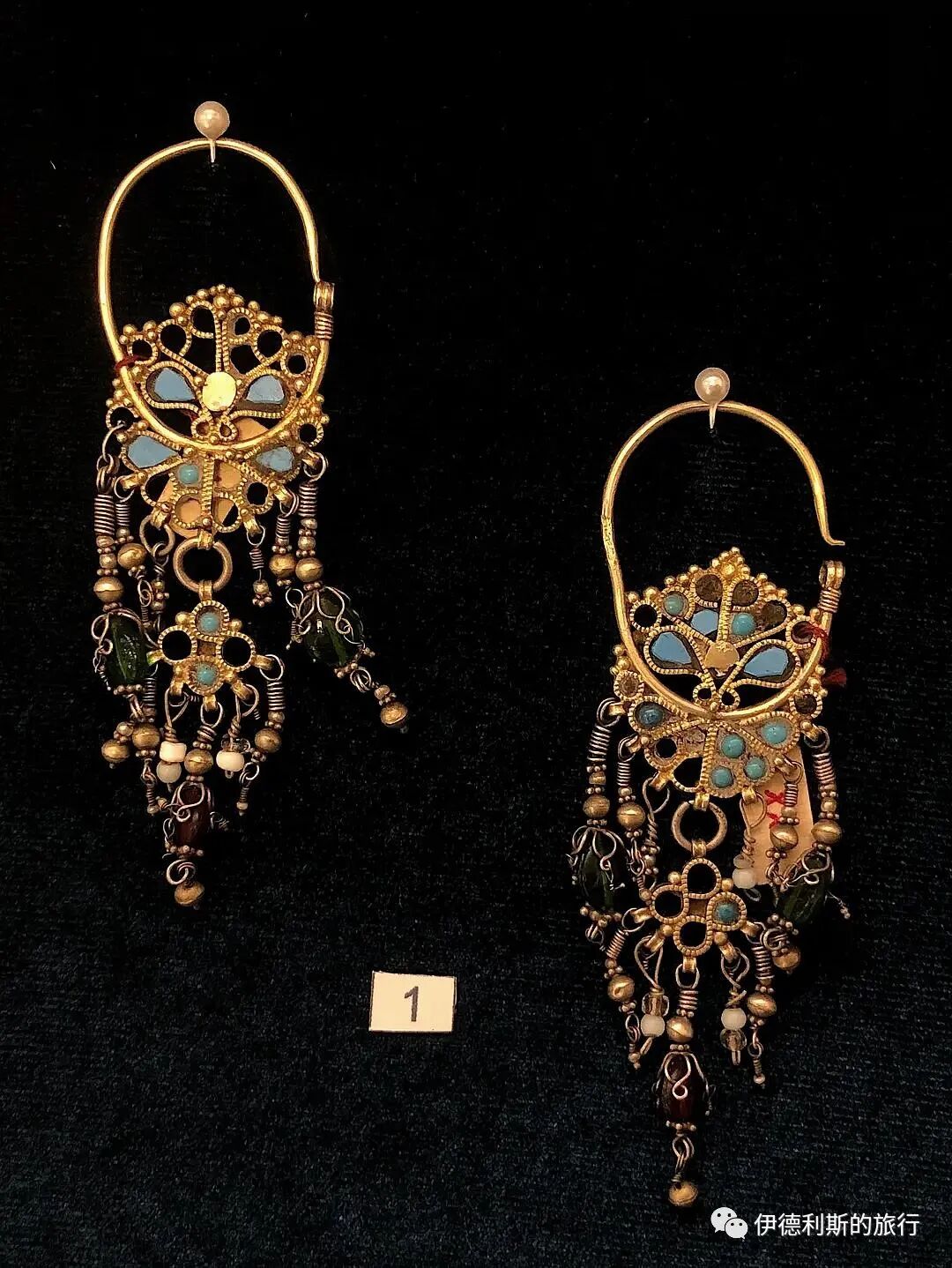
A late 19th to early 20th-century amulet from Tashkent.
Earrings from Fergana in the early 20th century.
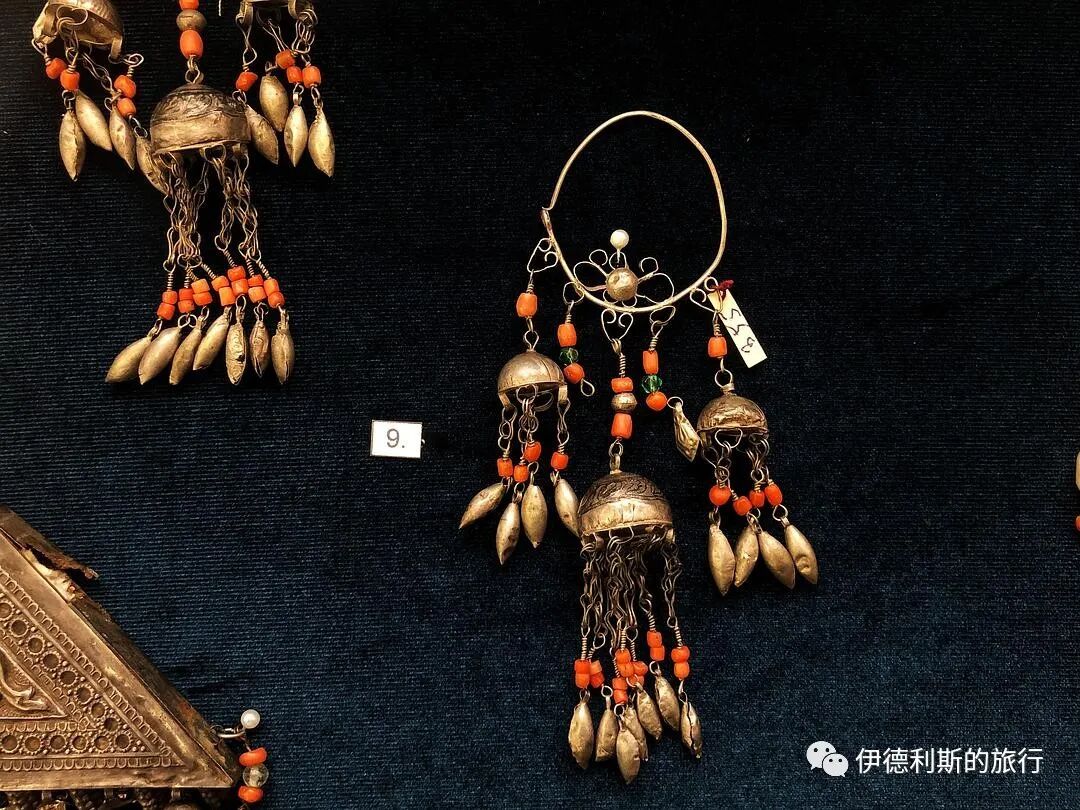
Earrings from Surxondaryo Region in the late 19th to early 20th century.
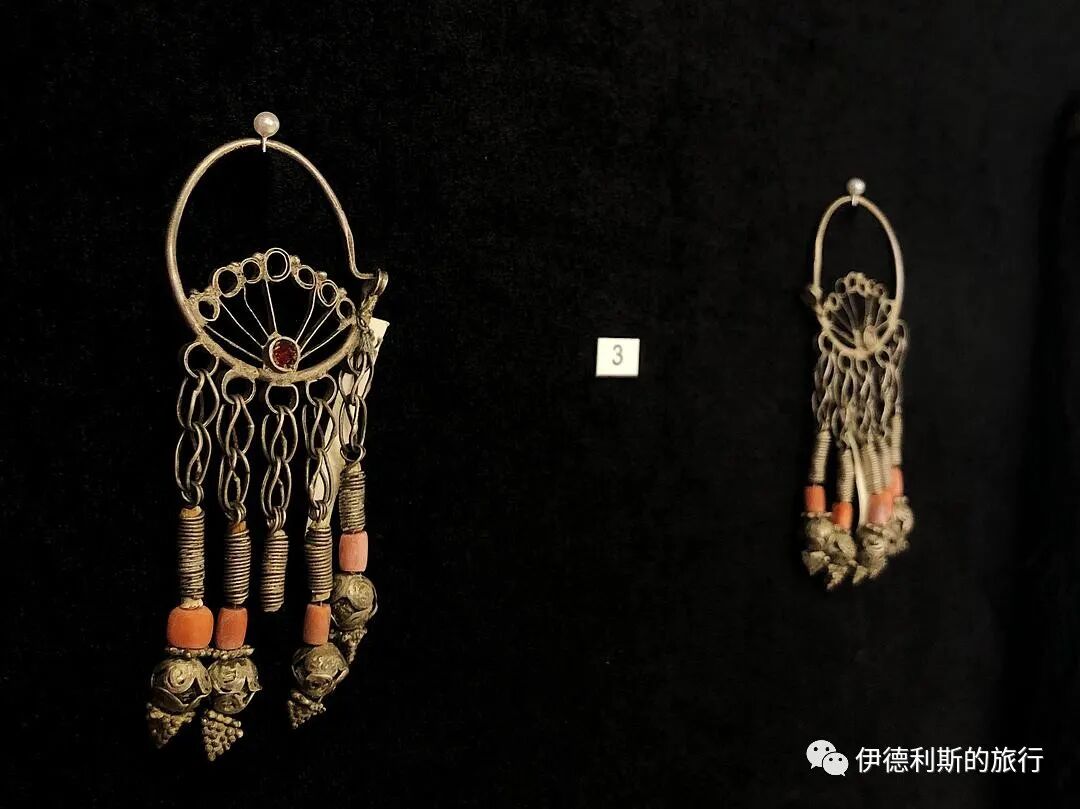
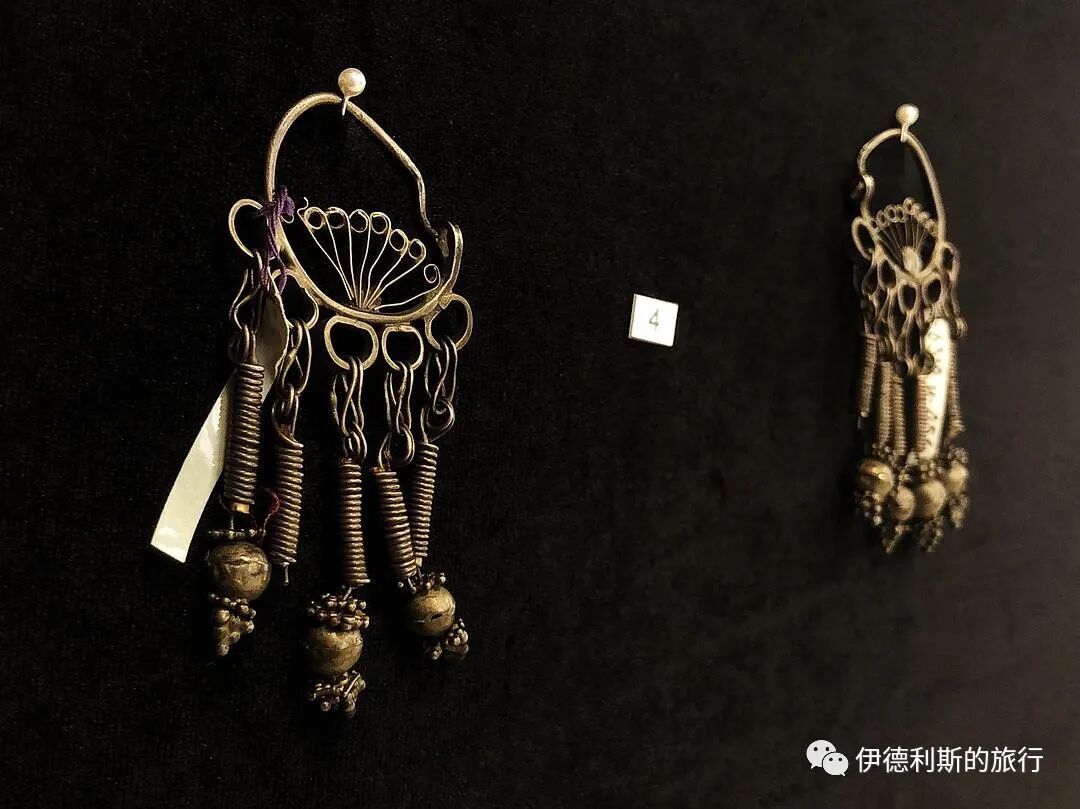
A headpiece from Fergana in the late 19th century.
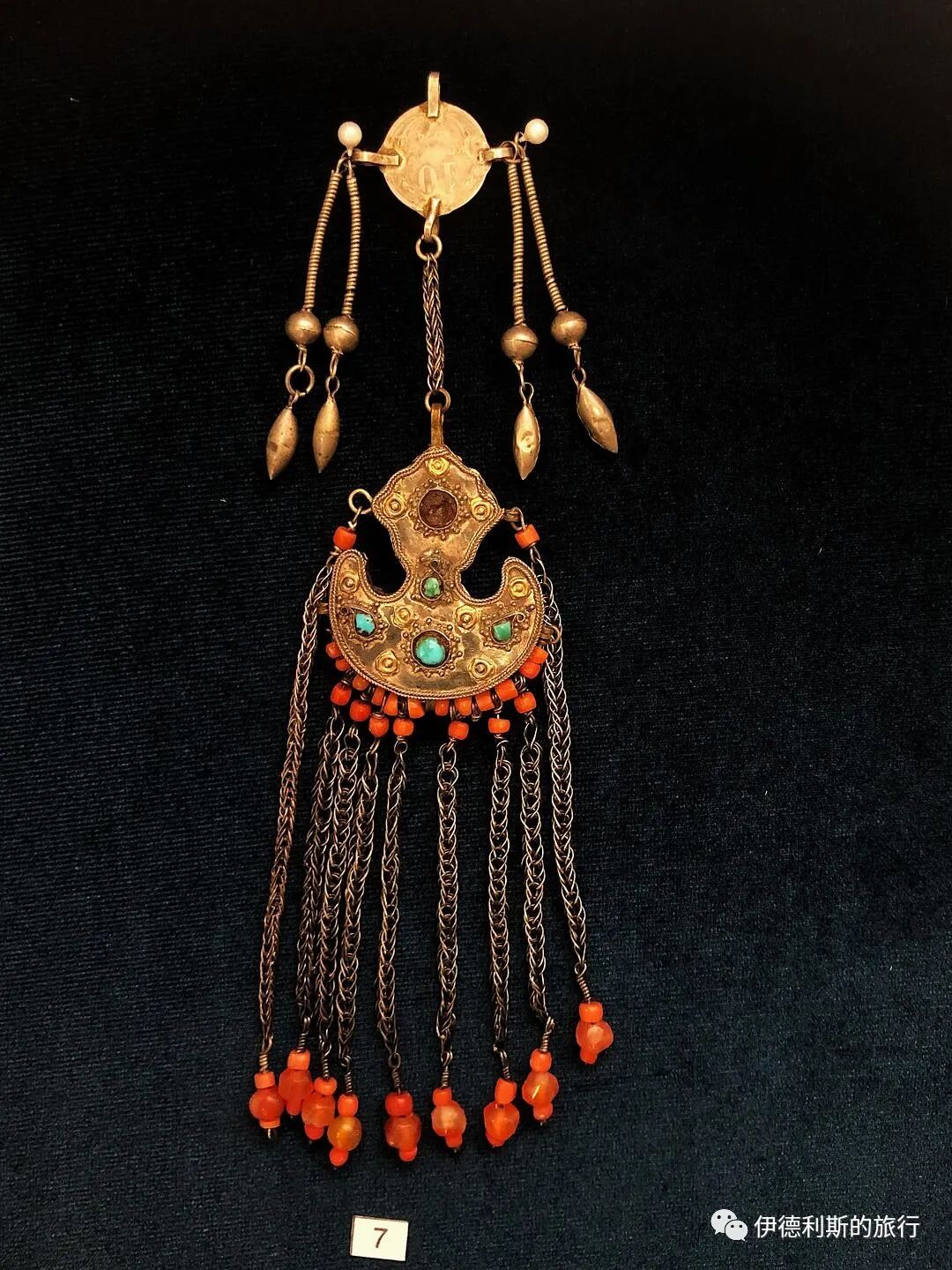
Earrings from Sirdaryo in the early 20th century.
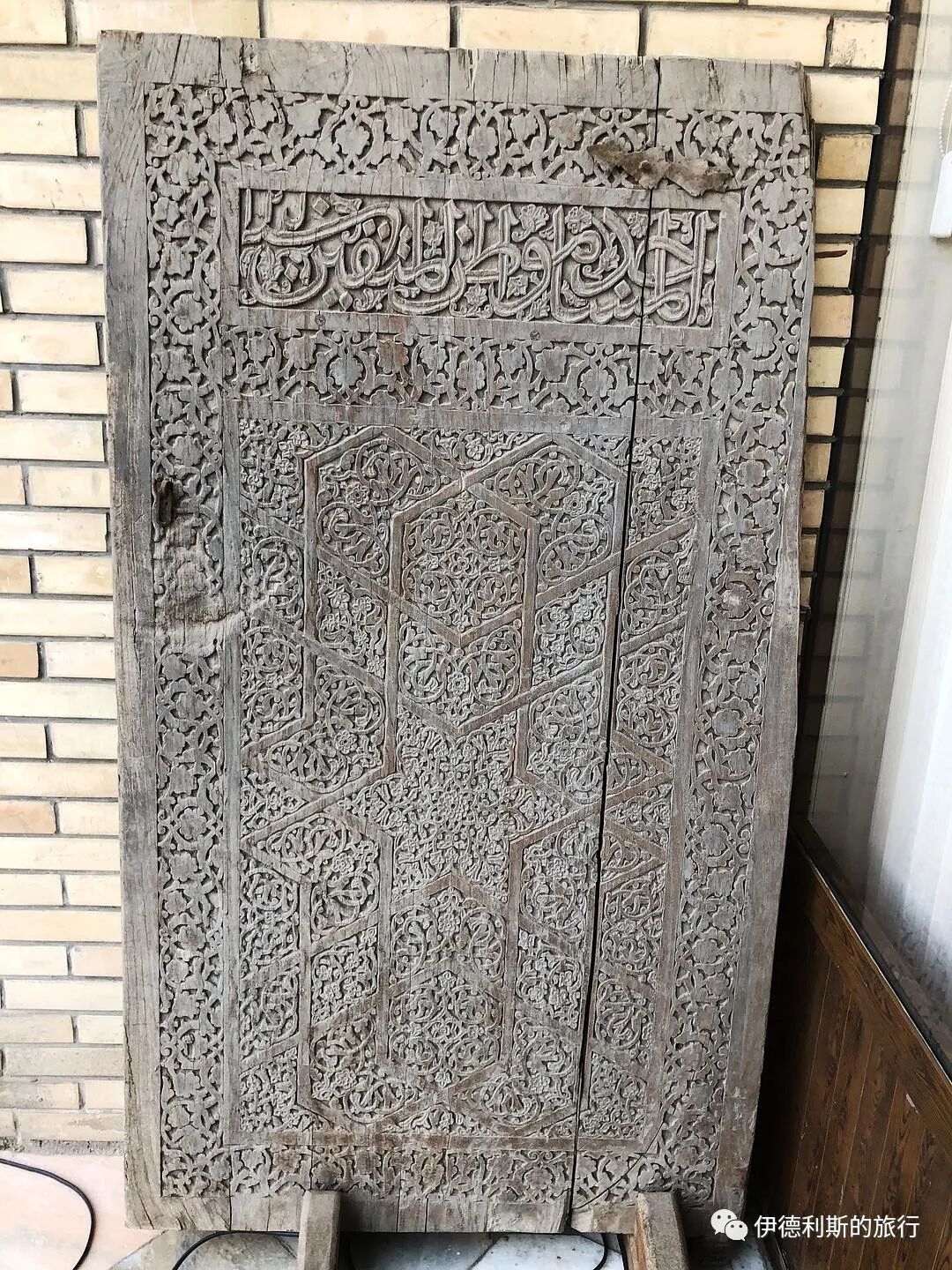
Wooden door.
A beautiful traditional Uzbek wooden door from the museum collection.
Samarkand Travel Guide: Timur's Capital, Mosques & Islamic History (Part 1)
Articles • ali2007fr posted the article • 0 comments • 167 views • 2026-05-17 05:44
Summary: This travel note introduces Samarkand Travel Guide: Timur's Capital, Mosques & Islamic History (Part 1). In 1220, Genghis Khan led the Mongol army to conquer the ancient Central Asian city of Samarkand, killed all the civilians who had taken refuge in the citadel and the mosque, and looted all the treasures in the city. It is useful for readers interested in Uzbekistan Travel, Timurid History, Muslim Heritage.
In 1220, Genghis Khan led the Mongol army to conquer the ancient Central Asian city of Samarkand, killed all the civilians who had taken refuge in the citadel and the mosque, and looted all the treasures in the city; Samarkand lost its former glory.
In 1370, Emperor Timur established the Timurid dynasty on the ruins of the Chagatai Khanate and made Samarkand his capital. Over the next 35 years, Timur employed craftsmen, artists, and architects from all over the Timurid Empire to rebuild the city of Samarkand, making it the undisputed center of Central Asia. During Timur's reign, the population of Samarkand exceeded 150,000, and important monuments such as the Shah-i-Zinda mausoleum complex and the Bibi-Khanym Mosque have been preserved to this day.
Between 1409 and 1449, a period of 40 years, the city of Samarkand continued to grow as a city of science and culture under the rule of Timur's grandson, Ulugh Beg. In addition to the completion of the Gur-e-Amir mausoleum for Emperor Timur, the Ulugh Beg Madrasah (Islamic school) and the Ulugh Beg Observatory are both important testaments to this.
After the death of Ulugh Beg, the Timurid dynasty went from prosperity to decline and fell into division. In the early 16th century, the Uzbeks occupied Samarkand and established the Shaybanid dynasty, later moving the capital to Bukhara in 1561. Since then, Samarkand gradually declined.
By the 19th century, most of the Timurid dynasty monuments in Samarkand were severely damaged. During the Soviet era, large-scale renovations were carried out on the Timurid monuments in Samarkand; unfortunately, the 'tear down the old and build the new' approach erased too much historical information and has been criticized by later generations.
In 2001, the ancient city of Samarkand was inscribed on the World Heritage List under the name 'Samarkand – Crossroad of Cultures'.
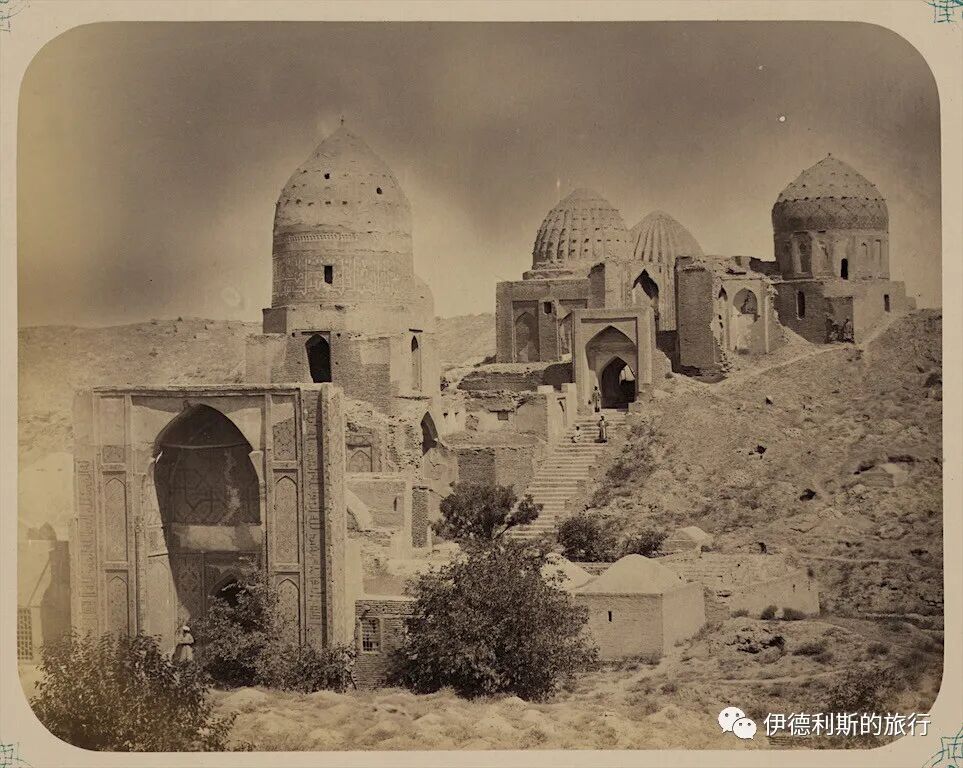
The old photos shared in this article, the black and white ones, come from the 'Turkestan Album', produced between 1871 and 1872 under the sponsorship of Konstantin P. von Kaufman, the first Governor-General of Russian Turkestan.
The color photos are from Sergei Mikhailovich Prokudin-Gorskii. Some of these photos date back to 1905, with most of the work coming from between 1909 and 1915. During this period, he traveled to many different regions of the Russian Empire with the support of Tsar Nicholas II and the Ministry of Transport.
Table of Contents
I. Shah-i-Zinda: 11th–15th centuries
II. Rukhabad Mausoleum: 1380s
III. Gur-e-Amir Mausoleum: 1404
4. Bibi-Khanym Mosque: 1404
5. Bibi-Khanym Mausoleum: 1404
6. Ulugh Beg Madrasah: 1420
7. Ulugh Beg Observatory: 1429
8. Ishrat-khana Mausoleum: 1464
9. Ak-Saray Mausoleum: Presumed to be 1450s-1470s
10. Khodja Abdu Derun Mausoleum: 15th century
11. Mausoleum of Prophet Daniel: Rebuilt in the early 20th century
I. Shah-i-Zinda: 11th–15th centuries
Shah-i-Zinda is the oldest and most important Islamic mausoleum complex in Samarkand. In the 11th century, the tomb of Kusam Ibn Abbas, a cousin of the Prophet Muhammad, was built here; during the Timurid dynasty in the 14th century, a large number of women from the Timurid family and Timur's confidants were also buried here.
The Shah-i-Zinda complex can be divided into three parts: south, middle, and north, each with its own gate. The southern complex is the latest in date, built by Timur's grandson, Ulugh Beg. The middle complex contains the tombs of Timur's ministers, generals, nieces, and sisters. The northern complex is the core part; in addition to the Prophet's cousin, two of Timur's wives and local religious leaders are also buried there.
(I) Southern Complex
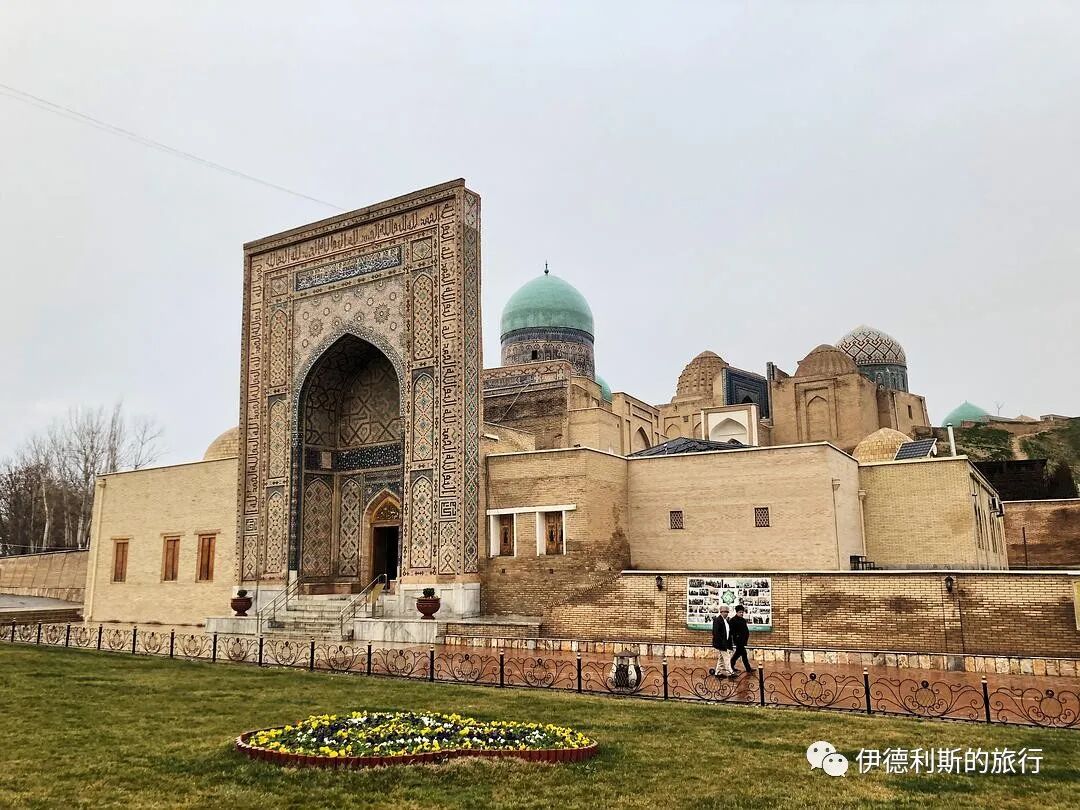
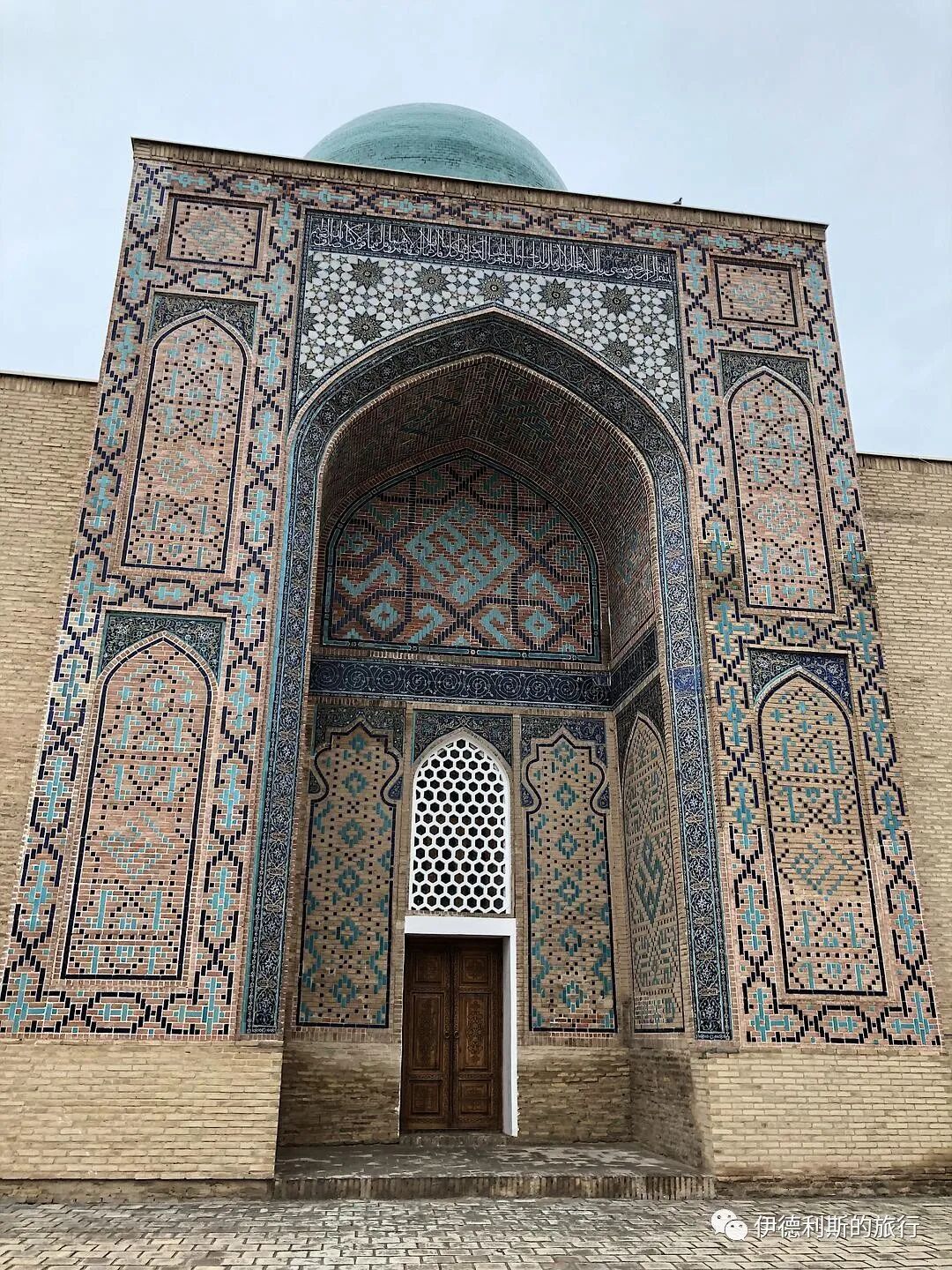
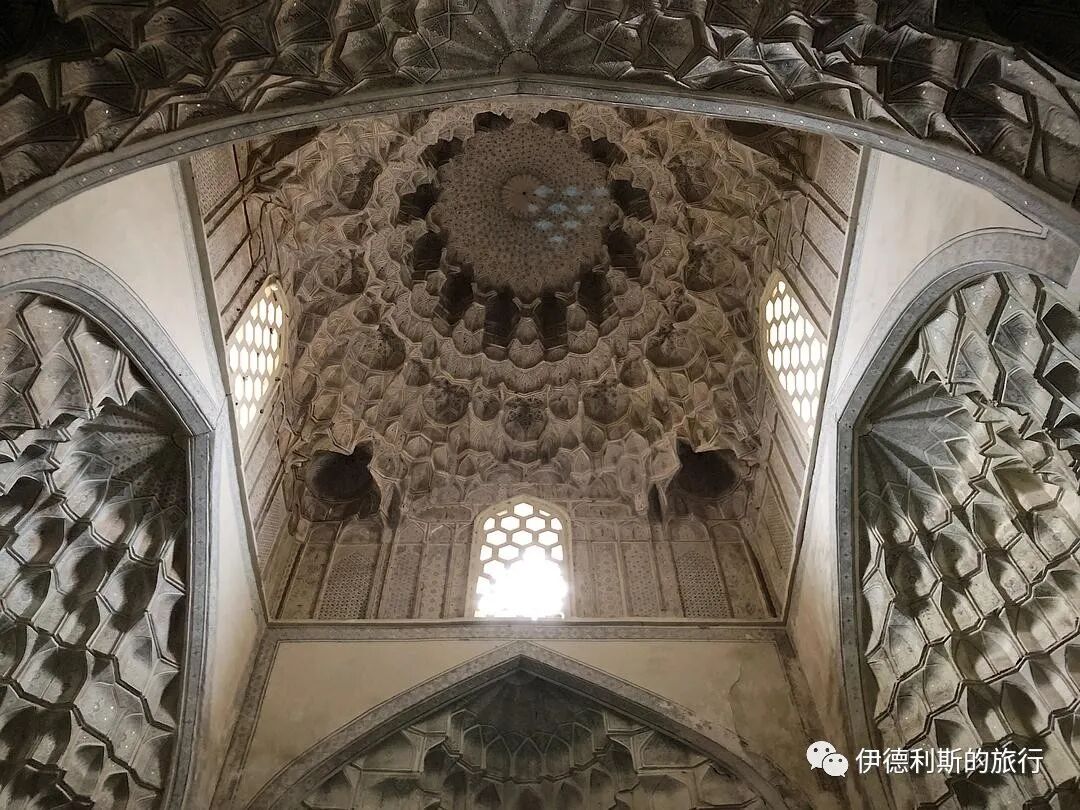
1. Gate: 1435
The gate of Shah-i-Zinda (Chartak of Abdulaziz) was built in 1435 by Ulugh Beg, the third ruler of the Timurid dynasty, on behalf of his son Abdulaziz. Abdulaziz was Ulugh Beg's second son, raised by Ulugh Beg from childhood, deeply loved by him, and was also the designated heir of Ulugh Beg.
In 1449, Ulugh Beg's eldest son, Abdal-Latif Mirza, launched a rebellion against his father; Ulugh Beg led his army to meet him while ordering Abdal-Aziz to stay behind and guard Samarkand. Abdulaziz's poor management eventually led to an uprising in Samarkand; he locked himself in the citadel and sent a letter to his father for help, and Ulugh Beg had to return to Samarkand after receiving the letter. Abdal-Latif subsequently attacked Samarkand, and Ulugh Beg and Abdal-Aziz surrendered to him. Abdal-Latif arranged for Ulugh Beg and Abdulaziz to go on Hajj (pilgrimage) to Mecca and had them both killed on the way.
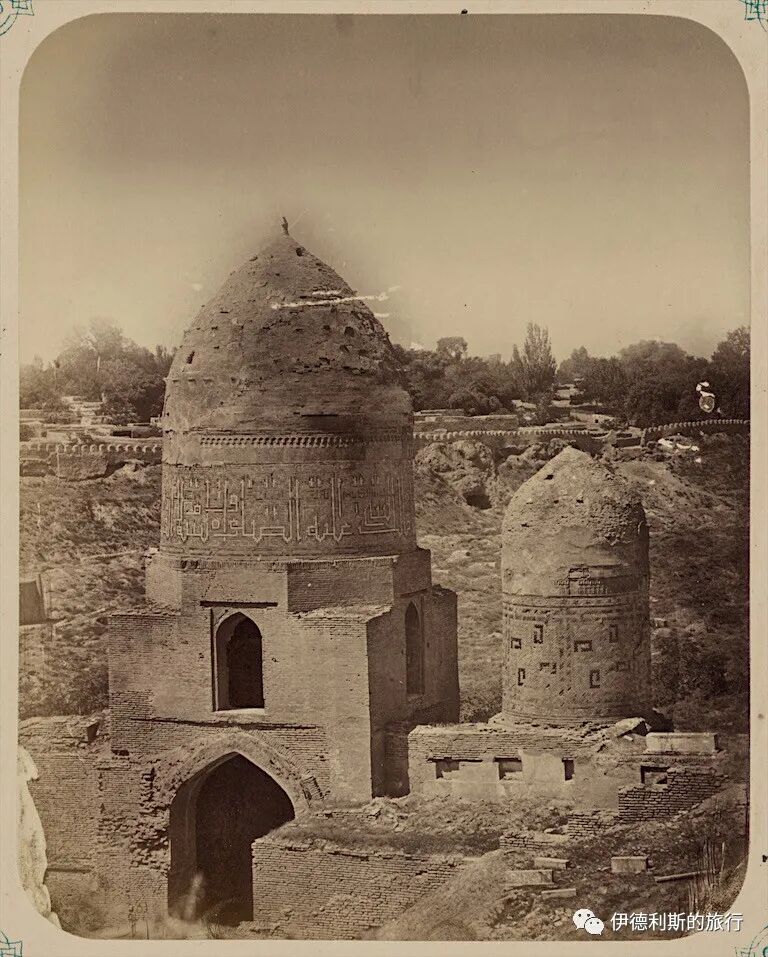
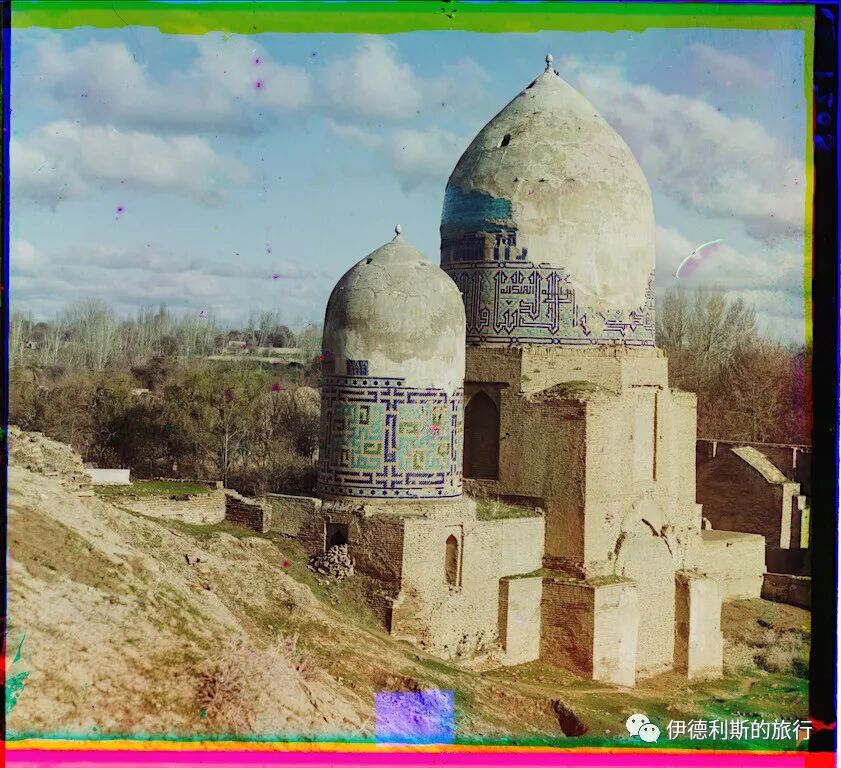
2. Double-domed Mausoleum: 1437
The Double-domed Mausoleum is the first mausoleum after entering the gate, believed to have been built by the third ruler of the Timurid dynasty, Ulugh Beg, in 1437. The occupant of the tomb may be Timur's benefactor Uldzk Inak and her daughter Bibi Zinet, but there is also a theory that the occupant is the astronomer Kazi Zadeh Al-Rumi, who worked under Ulugh Beg.
Kazi Zadeh Al-Rumi was a famous astronomer and mathematician of the 14th–15th centuries, born in Bursa, the capital of the Ottoman Empire in 1364, and came to work at the Ulugh Beg Observatory in Samarkand during Ulugh Beg's reign. At the observatory, he worked with Ulugh Beg and other astronomers to complete the famous 'Zīj-i Sultānī' (Ulugh Beg's astronomical tables).
(II) Middle Complex
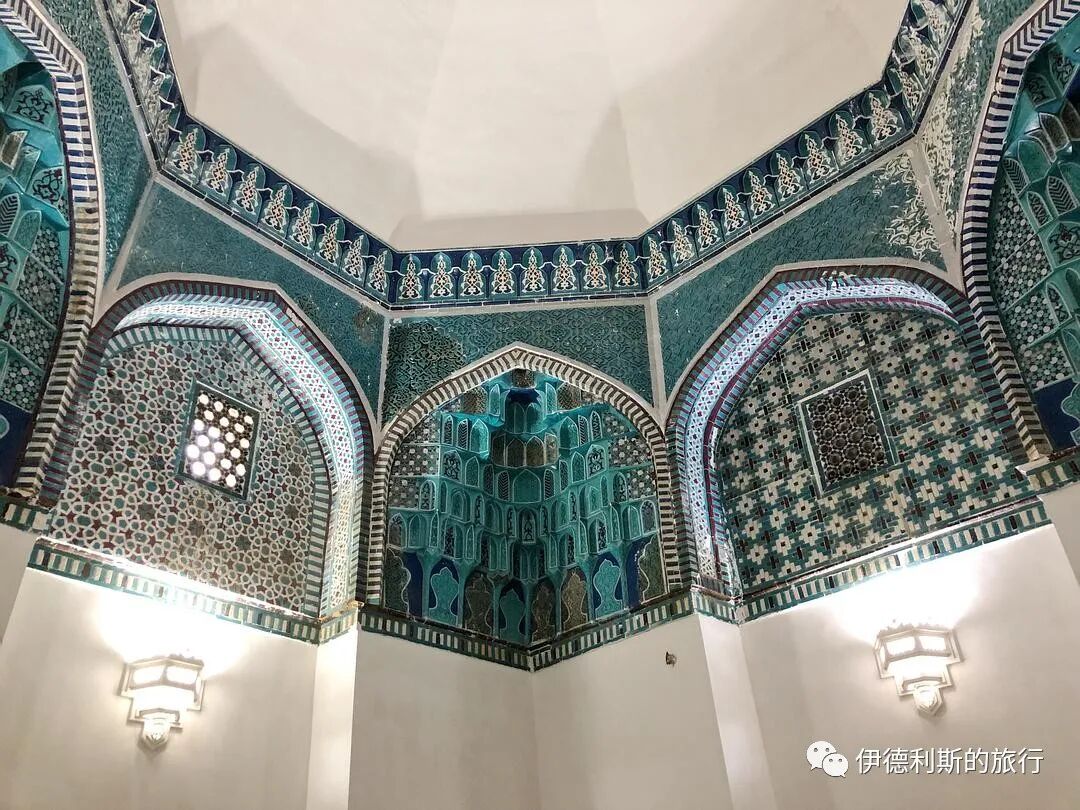
After passing through the gate and the Double-domed Mausoleum and climbing the stairs, one enters the middle complex. The middle complex can also be divided into southern and northern parts. The southern part consists of five adjacent mausoleums, mainly for important figures in Timur's court: the mausoleum of Timur's minister Amirzade (1386), the mausoleum of Timur's niece Shadi Mulk Aka (1372), the mausoleum of Timur's sister Shirin Bika Aka (1386), and the mausoleum of Timur's general Tughlu Tekin (1376); there is also an octagonal mausoleum of unknown occupant, presumably built in the 1430s.
View of the gate of the middle complex from the Double-domed Mausoleum
Shot from west to east, from left to right are the mausoleum of niece Shadi Mulk Aka, the mausoleum of sister Shirin Bika Aka, the mausoleum of minister Amirzade, and the Double-domed Mausoleum.
Shot from northeast to southwest, the three domes from left to right are the mausoleum of sister Shirin Bika Aka, the octagonal tomb pavilion, and the mausoleum of niece Shadi Mulk Aka; on the right are three others rebuilt in modern times.
Shot from northeast to southwest, the three domes from left to right belong to the mausoleum of sister Shirin Bika Aka, the mausoleum of minister Amirzade, and the mausoleum of niece Shadi Mulk Aka; in the front is the octagonal tomb pavilion.
Shot from northwest to southeast, from left to right are the octagonal tomb pavilion, the mausoleum of sister Shirin Bika Aka, the mausoleum of niece Shadi Mulk Aka, the mausoleum of minister Amirzade, and the Double-domed Mausoleum.
Shot from north to south, from left to right are the mausoleum of Shirin Bika Aka, the mausoleum of Amirzade, and the mausoleum of Shadi Mulk Aka.
Shot from south to north, on the left is the octagonal tomb pavilion, and on the right is the mausoleum of Shadi Mulk Aka.
Shot from south to north, on the left are the mausoleum of Amirzade and the mausoleum of Shadi Mulk Aka.
The mausoleum of Amirzade shot from north to south.
Shot from north to south, from left to right are the mausoleum of Amirzade and the mausoleum of Shadi Mulk Aka.
1. Amirzade Mausoleum: 1386
Amirzade was a minister in Timur's court. In addition to geometric patterns and eight-petaled rose patterns, the Peshtak (portal) entrance of the mausoleum also features Kufic calligraphy and Thuluth calligraphy.
2. Shadi Mulk Aka Mausoleum: 1372
Shadi Mulk Aka was the daughter of Timur's eldest sister, Kutlug Turkan Aka.
3. Tughlu Tekin Mausoleum: 1376
Tughlu Tekin was the mother of Timur's general Amir Hussein, and later Amir Hussein was also buried here.
4. Shirin Bika Aka Mausoleum: 1386
The occupant of the tomb is Timur's sister.
5. Octagonal Tomb Pavilion: presumably 1430s
The occupant of this tomb pavilion has not been verified to this day.
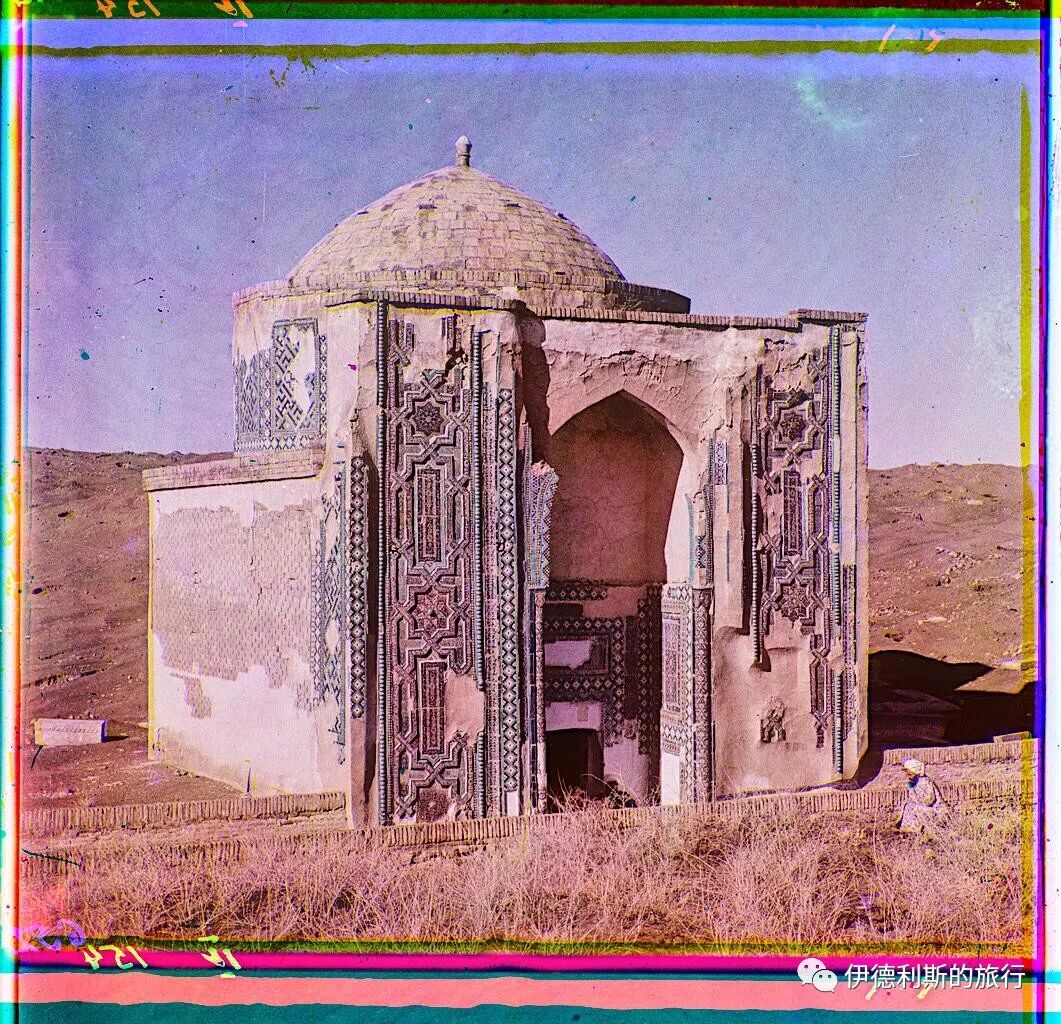
6. Usto Ali Mausoleum: 1360s–1380s
On the north side of the middle complex is a separate mausoleum; the occupant is unknown, only that the architect was Usto Ali from Nasaf (Qarshi).
View from south to north
(III) Northern Complex
1. Passage of the Departed: 14th century
The Passage of the Departed (Yuqori Chortoq) is the gate to the northern complex.
2. Kusam Ibn Abbas Mausoleum: 11th century
The Kusam Ibn Abbas Mausoleum is the earliest building constructed in Shah-i-Zinda, dating back to the 11th century, and was renovated in the 14th and 15th centuries. Kusam is legendary as the cousin of the Prophet Muhammad and the son of the Prophet's uncle, Abbas ibn Abdul-Muttalib. Kusam is said to be one of the first people to come to Central Asia to spread Islam and eventually died in Samarkand.
In 1333, the famous Moroccan traveler Ibn Battuta passed through Samarkand and visited the Kusam mausoleum. The 'Rihla' (Travels of Ibn Battuta) records:
'The people of Samarkand come to visit this tomb every Monday and Friday eve; the Tatars also come to visit and make great vows to him, bringing cattle, sheep, dirhams, and dinars to be used as funds for the food and lodging of passing travelers and for the servants of the shrine.' 'On the tomb is a dome built on four pillars, each pillar flanked by two marble columns in green, black, white, and red.' 'The walls of the dome are carved and inlaid with gilded marble, and the ceiling is made of lead.' 'The tomb is inlaid with ebony, the four corners of the tomb are wrapped in silver leaf, three silver lamps are hung over the tomb, and wool and cotton carpets are spread inside the dome.' "
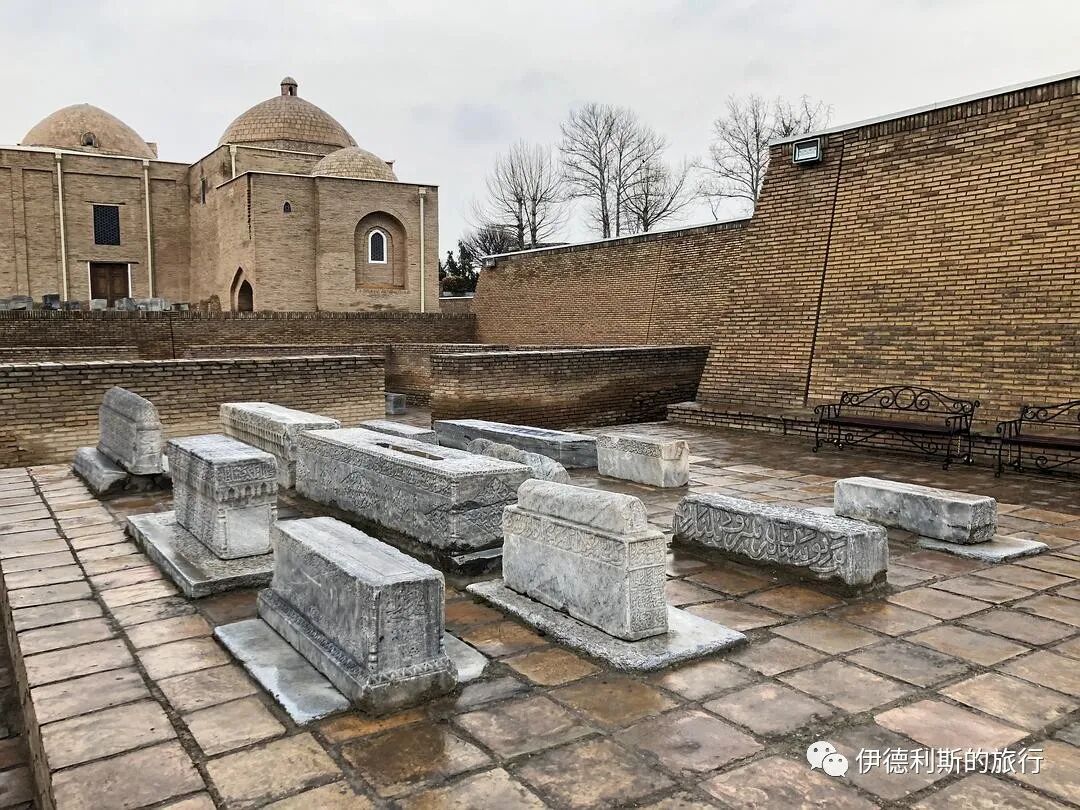
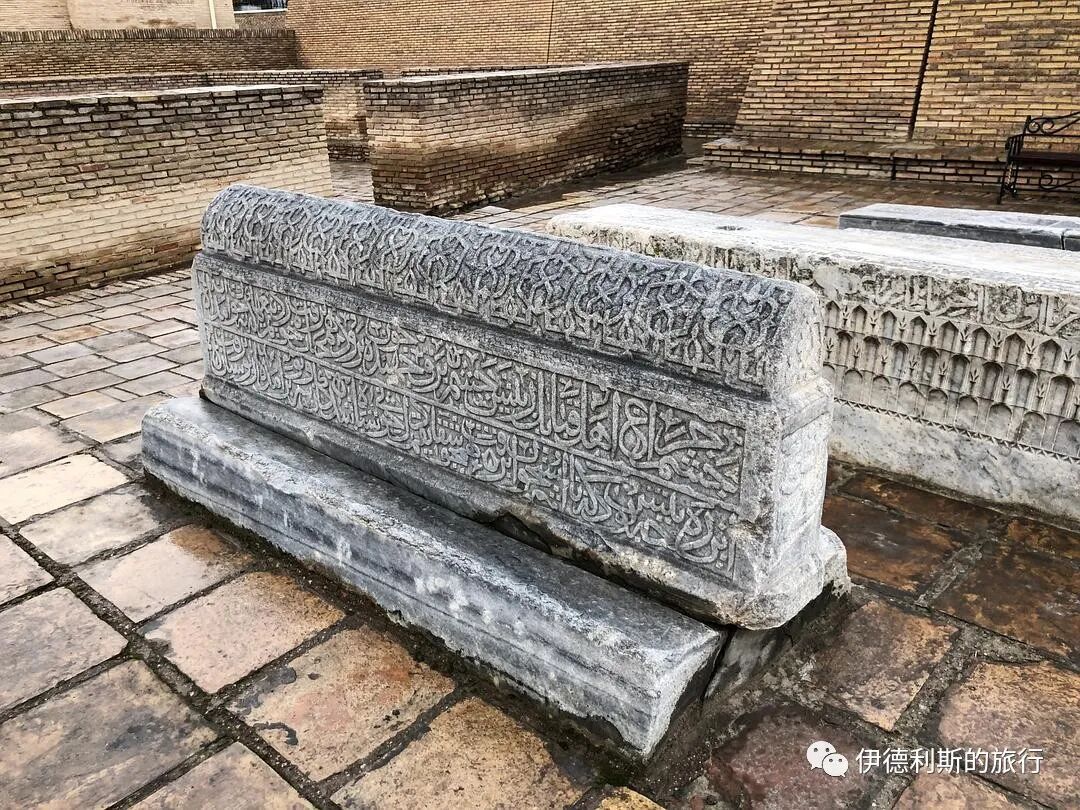
There are also some tombstones outside the mausoleum.
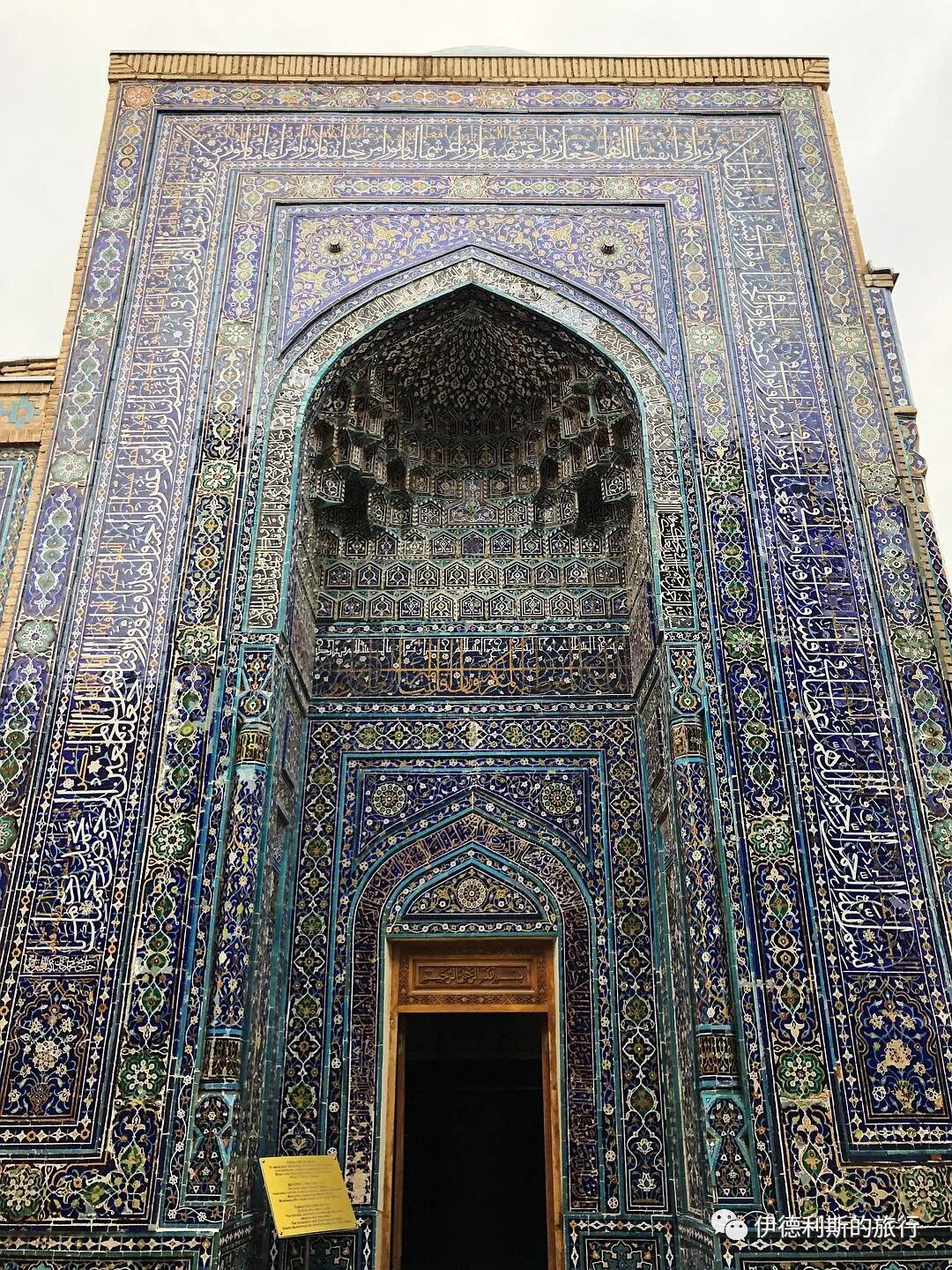
3. Tuman Aka Mausoleum: 1405
Opposite the Kusam Ibn Abbas Mausoleum is the mausoleum of Timur's wife, Tuman Aka. Tuman Aka, also written as Touman Agha, married Timur in 1377 and came from the family of the last Chagatai Khan, Qazan Sultan. She was Timur's favorite wife and a younger relative of Sarai Mulk Khanym, the daughter of Qazan Sultan.
Tuman Aka's mausoleum was built on the ruins of an Islamic madrasah destroyed in the 14th century; the inscription on the mausoleum bears the construction date of 1405 and the name of a calligrapher from Tabriz, Iran.
Next to the Tuman Aqa mausoleum is a Sufi khanaka (hospice) named after Tuman Aqa. It is speculated that the khanaka was built earlier than the mausoleum, probably around the end of the 14th century.
4. Khodja Ahmad Mausoleum: 1360s
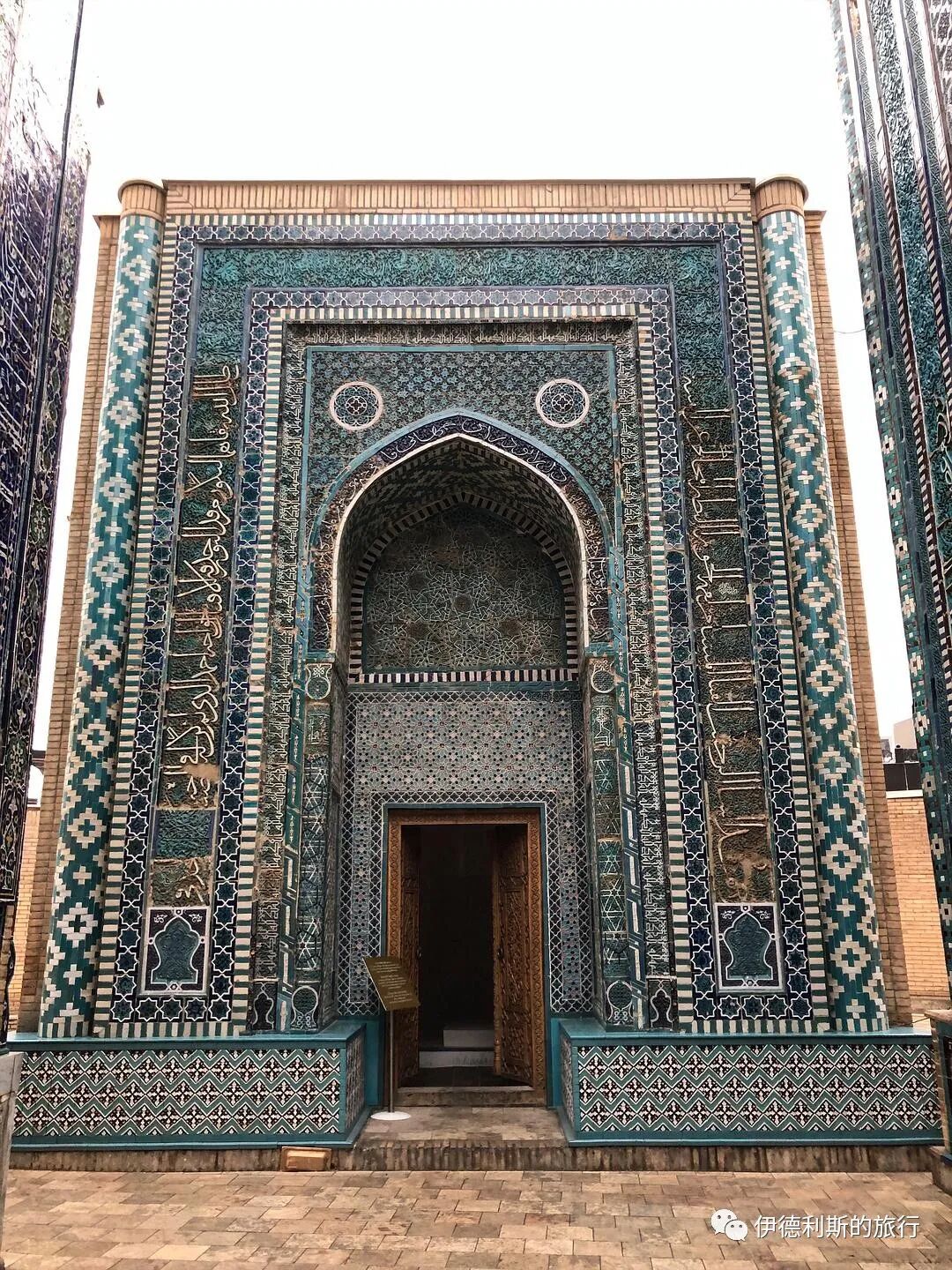
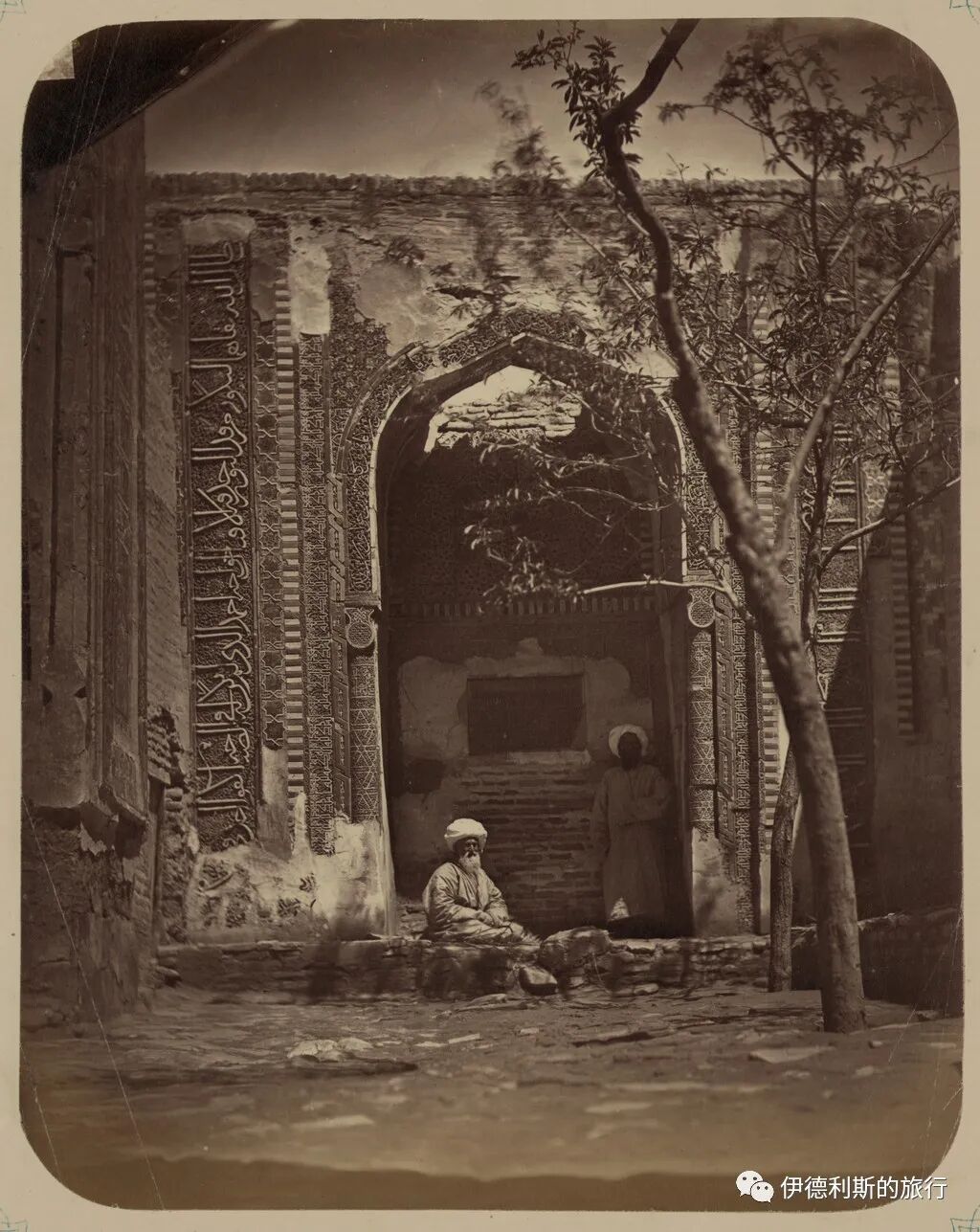
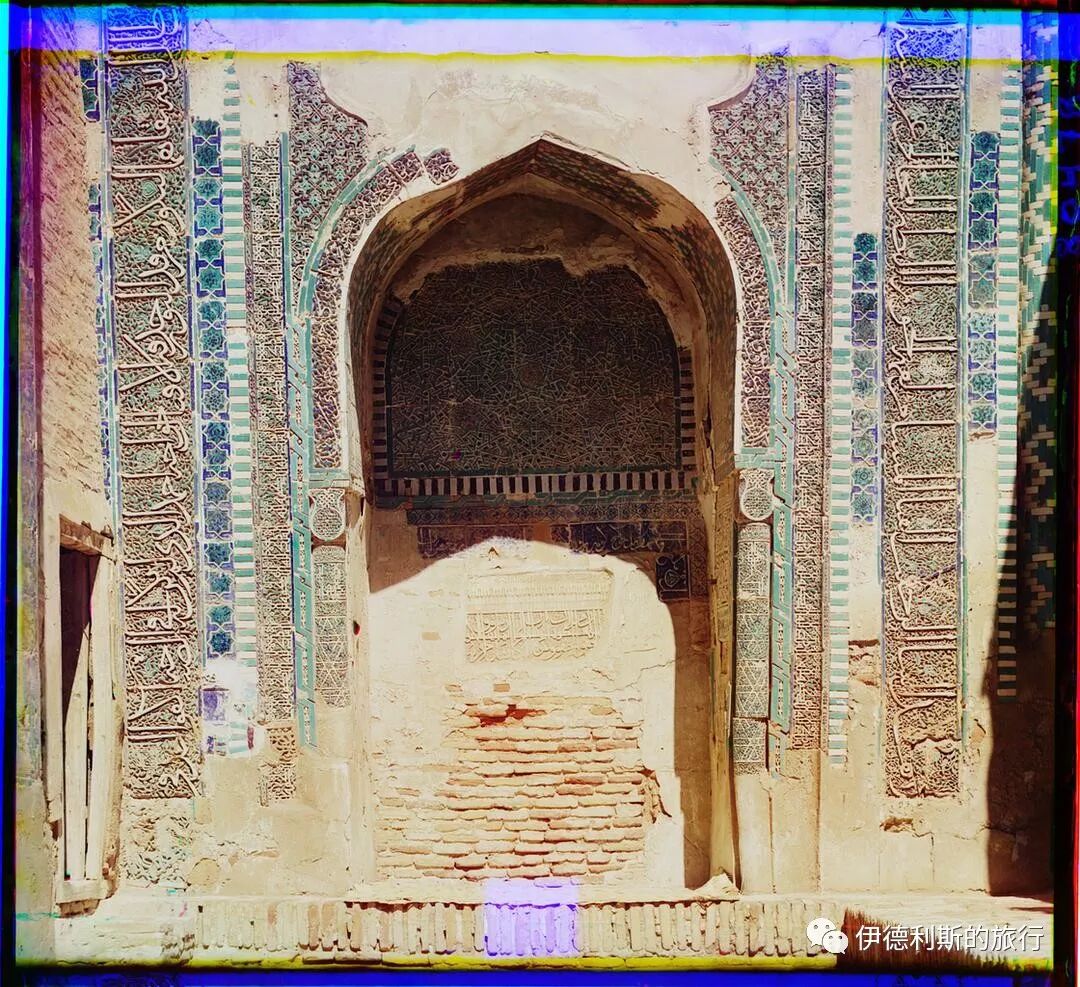
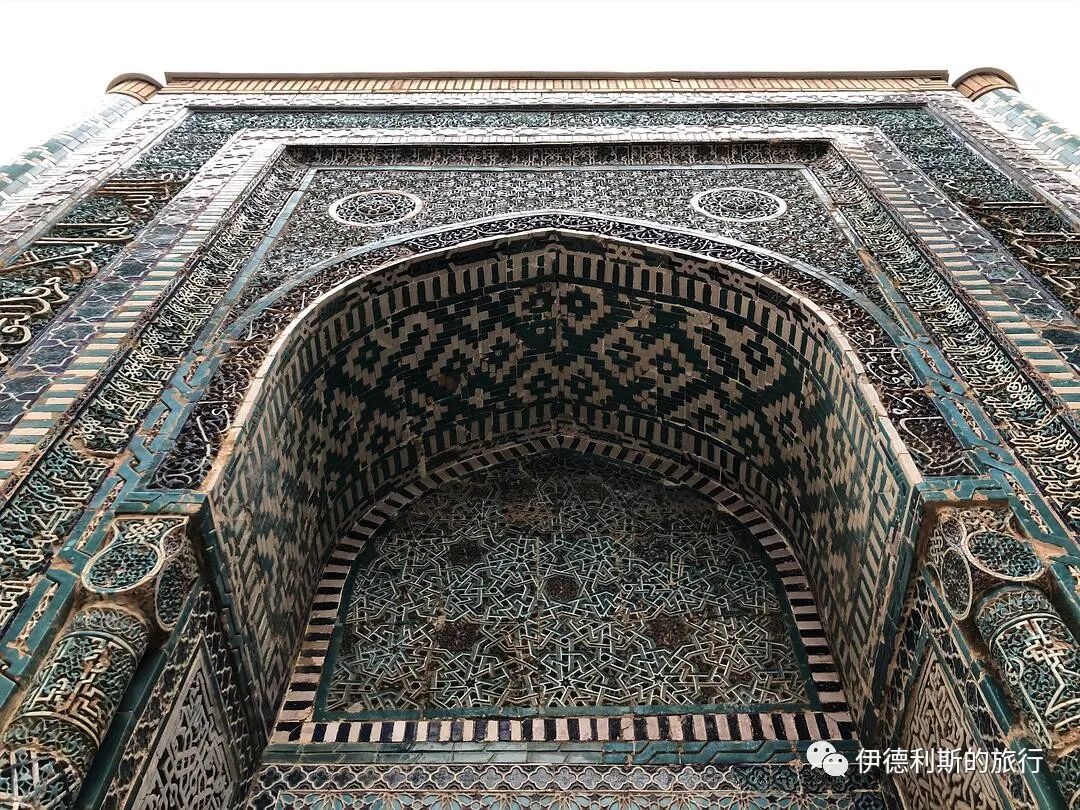
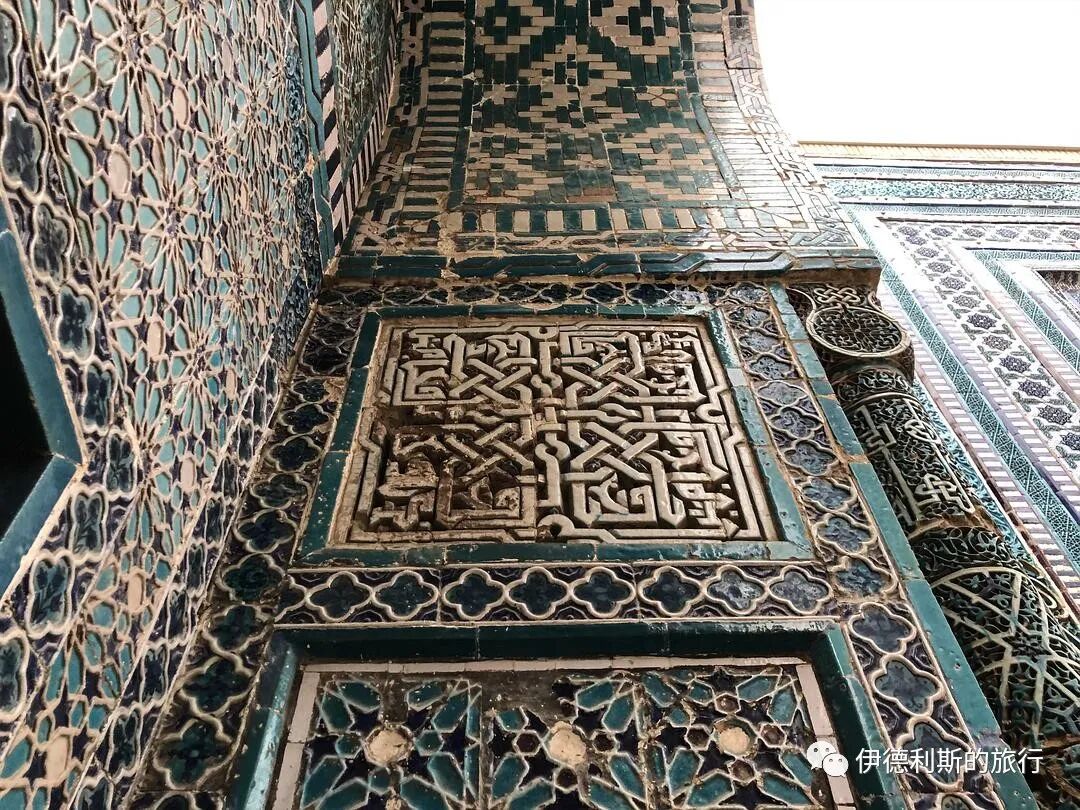
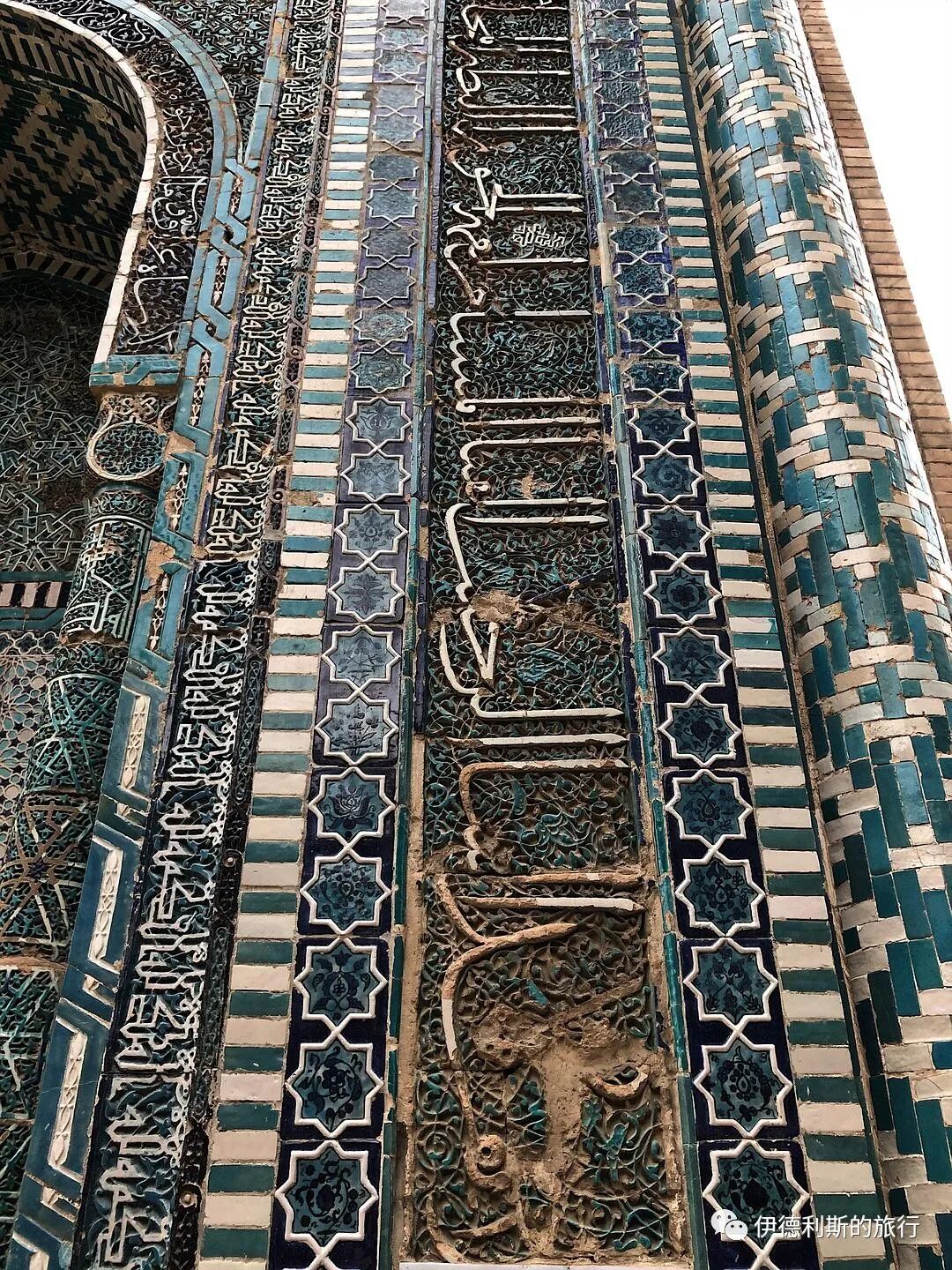
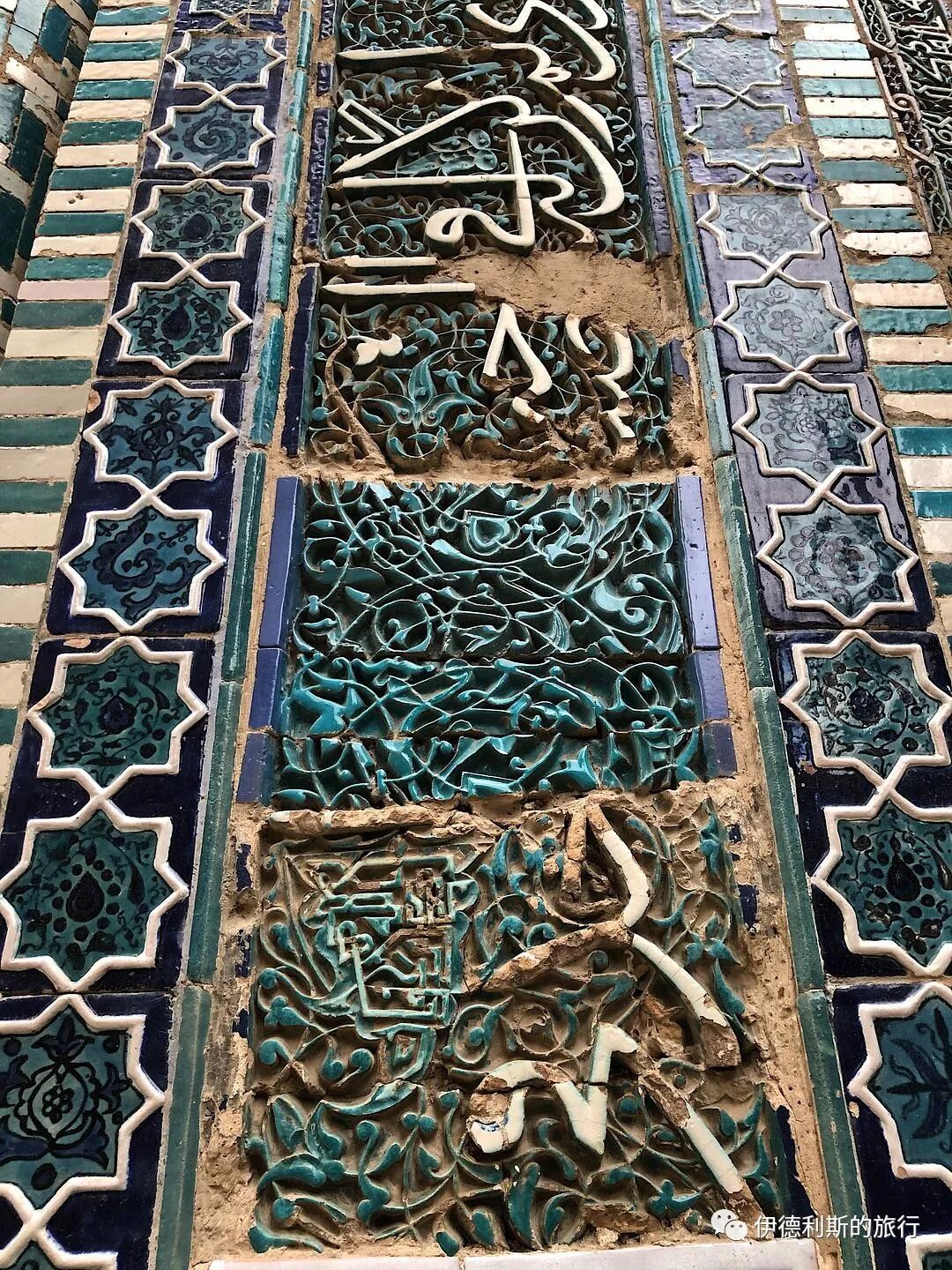
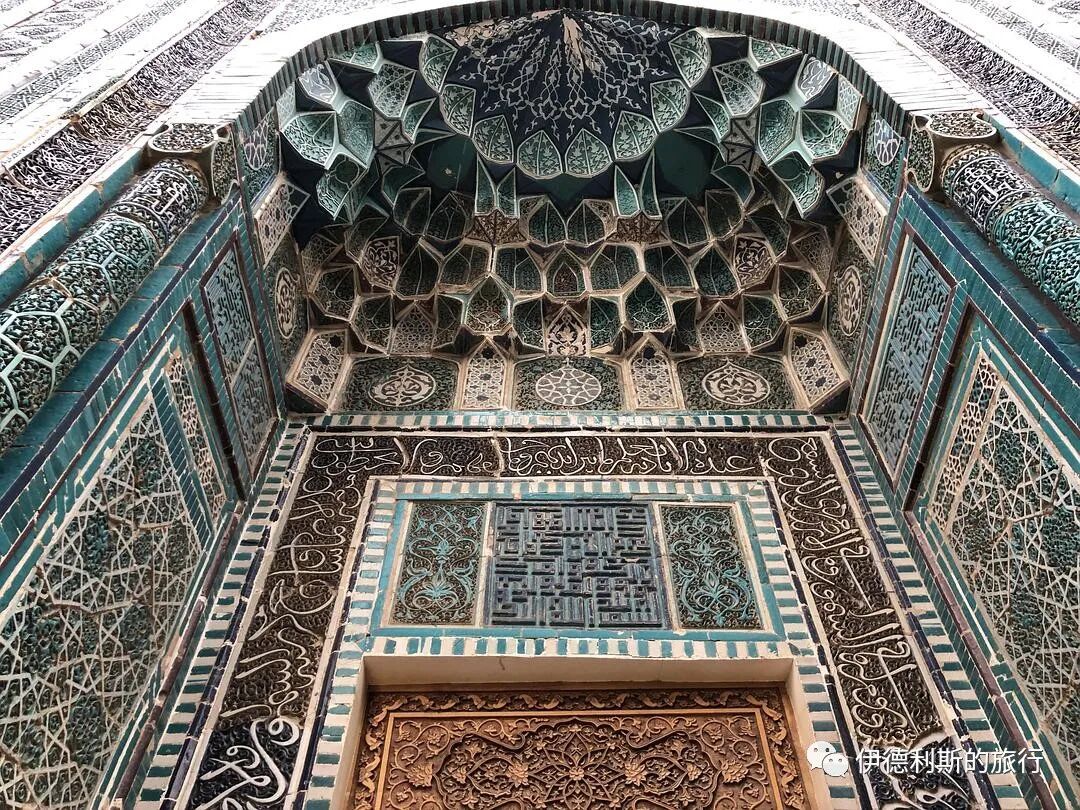
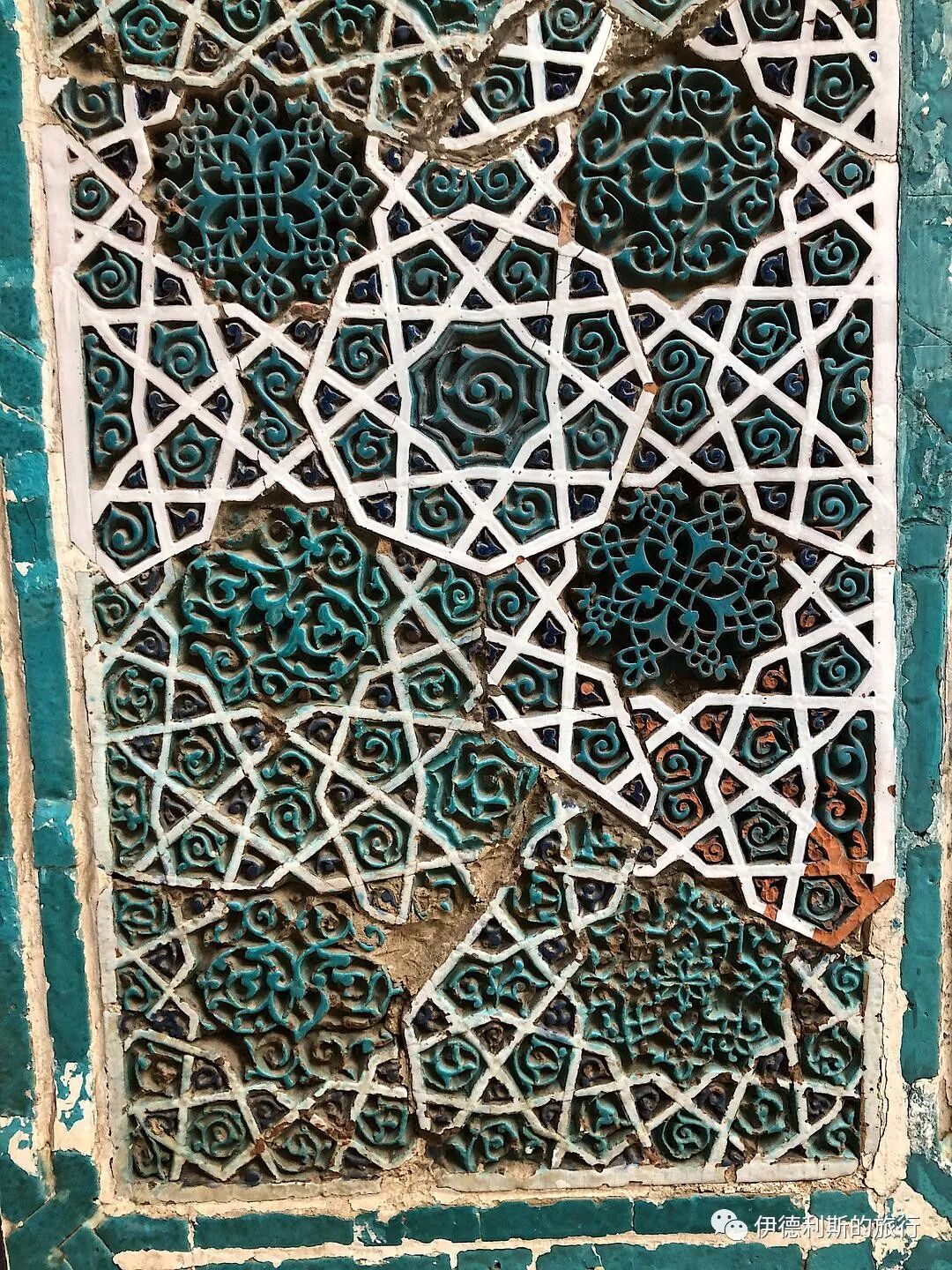
The Khodja Ahmad Mausoleum is located at the northernmost part of the entire Shah-i-Zinda complex, built in the 1360s, and is the tomb of a local religious leader. The facade (Peshtak or Pischtak) of the mausoleum is decorated with a large number of floral, geometric patterns, and calligraphic tiles. The Kufic calligraphy tiles on the inside bear the name of the architect Fakhri-Ali, and the Thuluth calligraphy tiles on the outside read, 'May Allah perpetuate this eternity and make the mausoleum a garden of happiness for Khodja Ahmad.' "
5. Qutlugh Aka Mausoleum: 1361
To the east of the Khwaja Ahmad Mausoleum is the tomb of an unidentified woman, dating back to 1361. Some information indicates that Timur's wife, Qutlugh Aka, is buried here.
II. Rukhabad Mausoleum: 1380s
The Rukhabad Mausoleum is one of the earliest buildings built by Timur in Samarkand. Legend has it that after the Sufi sheikh Burkhan ad-Din Sagardji died during the Yuan Dynasty, his son Abu Said brought his remains to Samarkand for burial according to his father's last wish. During his stay in Samarkand, Abu Said became Timur's religious mentor, and Timur built a mausoleum for Sagardji in the 1380s, naming it 'Rukhabad' (House of the Spirit).
Behind the mausoleum are the ruins of a madrasah.
III. Gur-e-Amir Mausoleum: 1404
Gur-e-Amir is the mausoleum of Timur, which holds an important position in the history of Central Asian architecture and became the precursor and model for later Mughal architecture.
The complex was originally a Sufi khanqah and madrasah built by Timur's favorite grandson, Muhammad Sultan, at the end of the 14th century, called Khangah-i Muhammad Sultan; now only part of the foundation remains.
Muhammad Sultan died in 1403 while accompanying Timur on his expedition to the Ottoman Empire. He was initially buried in northwestern Iran, and it was not until a year later that he was transported to Samarkand and reburied in the Khangah-i Muhammad Sultan. In 1405, Timur died on his way to campaign against the Ming Dynasty; his body could not be transported back to his hometown of Shahrisabz due to heavy snow and was eventually buried with his grandson Muhammad Sultan.
After Timur's death, his son Shah Rukh inherited the eastern part of the empire. Shah Rukh moved the capital of the Timurid Empire from Samarkand to Herat in Afghanistan and had his son Ulugh Beg rule Samarkand starting in 1409. During Ulugh Beg's rule in Samarkand, he hired the architect Muhammad ibn Mahmud from Isfahan, Iran, to formally convert the Khangah-i Muhammad Sultan into the royal mausoleum of the Timurid dynasty, Gur-e-Amir, which means 'Tomb of the King' in Persian.
After the 17th century, as the center of Transoxiana shifted from Samarkand to Bukhara, Gur-e-Amir gradually fell into disrepair. It was not until the 1950s that renovations began on the dome, gate, and minarets, and the interior was renovated in the 1970s.
The alley behind Gur-e-Amir
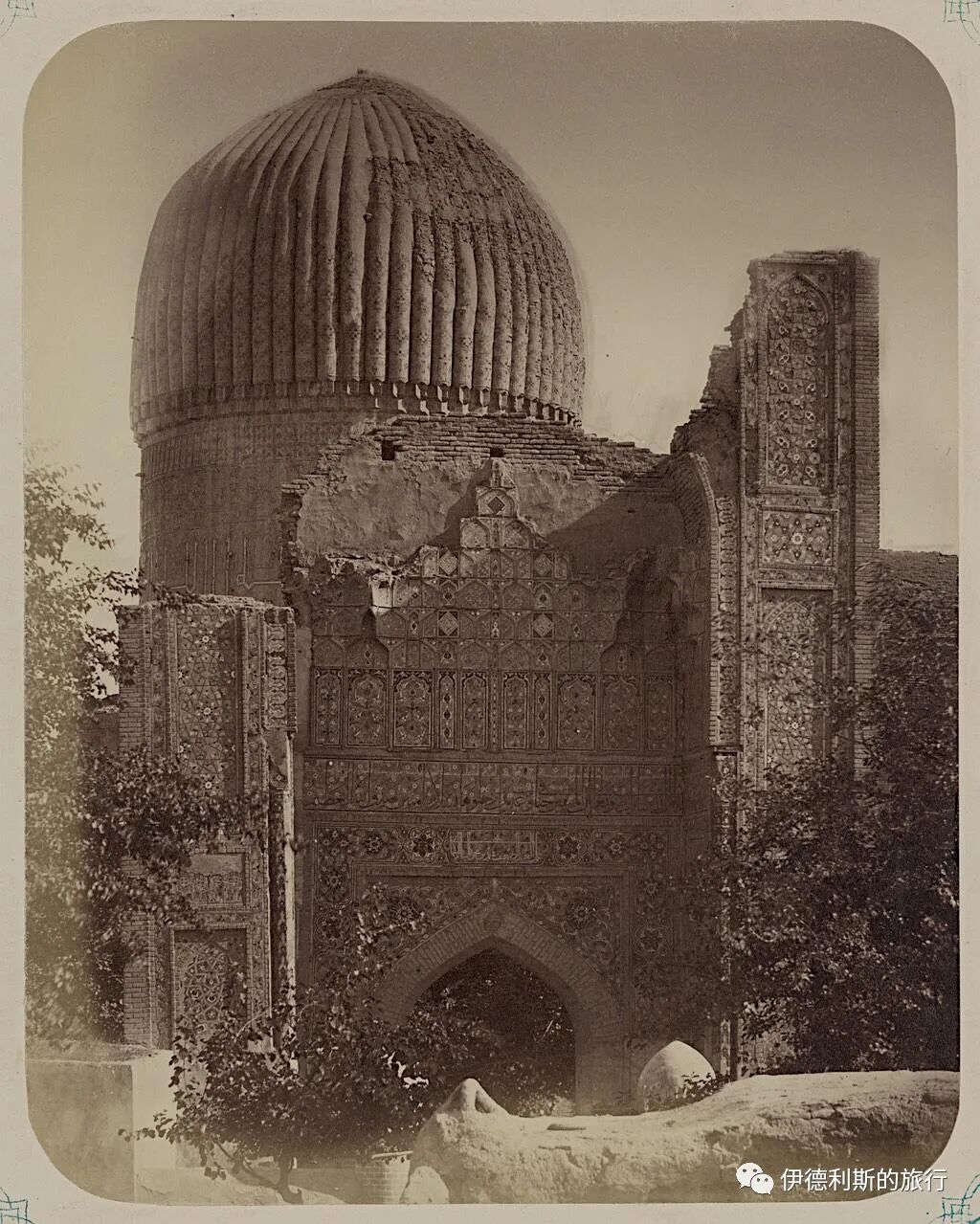
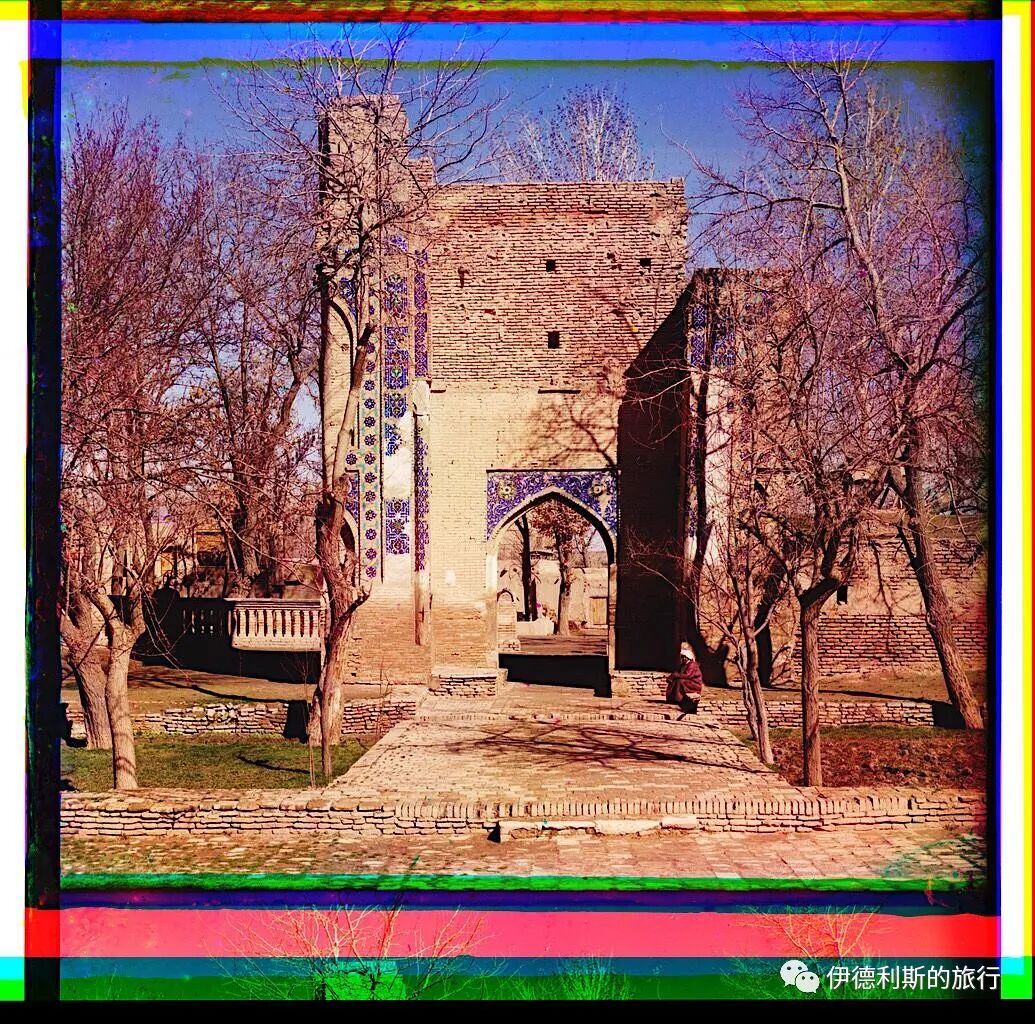
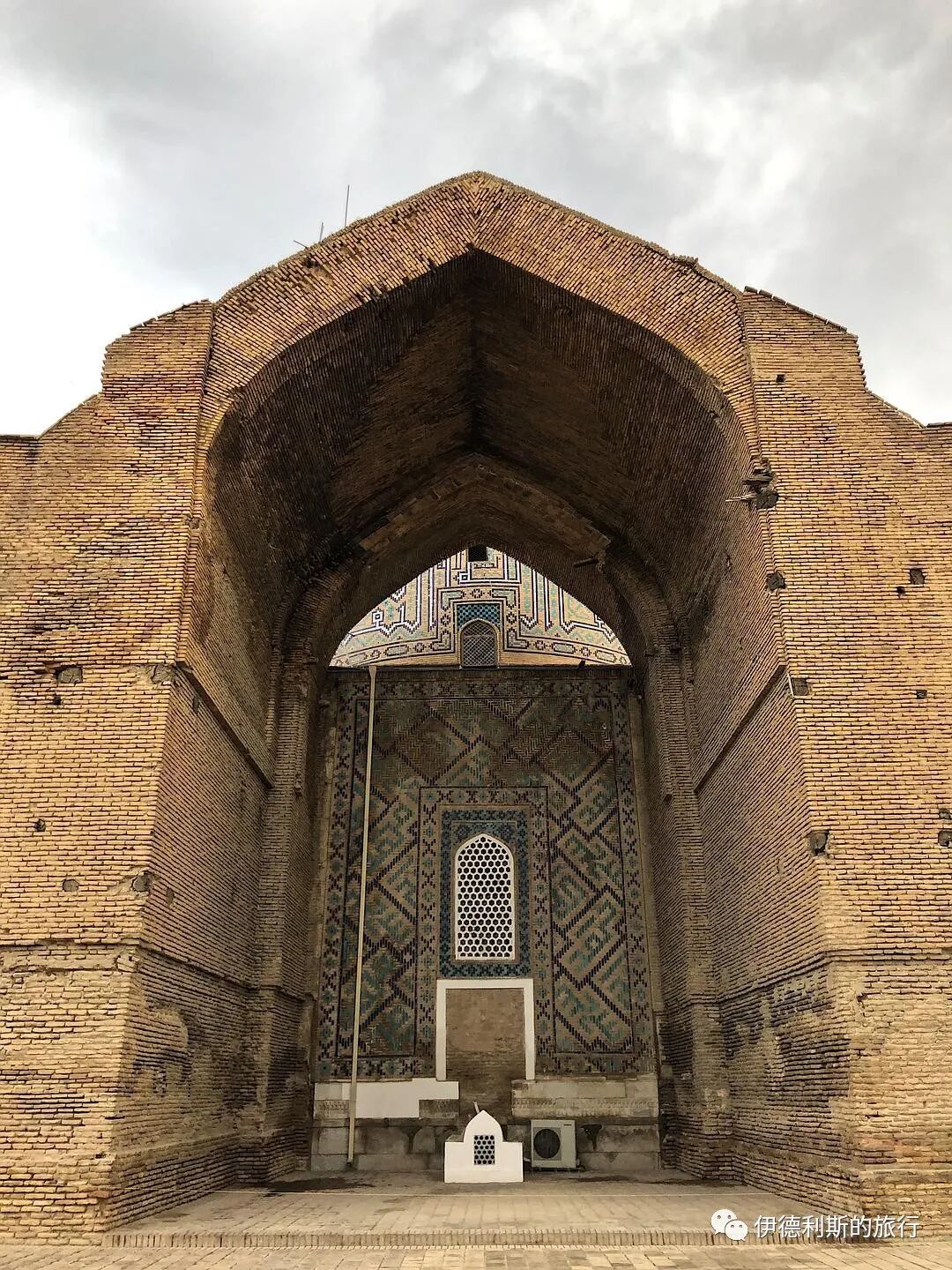
The entrance to Gur-e-Amir is a huge Iwan arch, covered with glazed ceramic panels featuring complex plant and geometric patterns. In the 19th century, the upper part had collapsed and was later restored.
Back of the arch
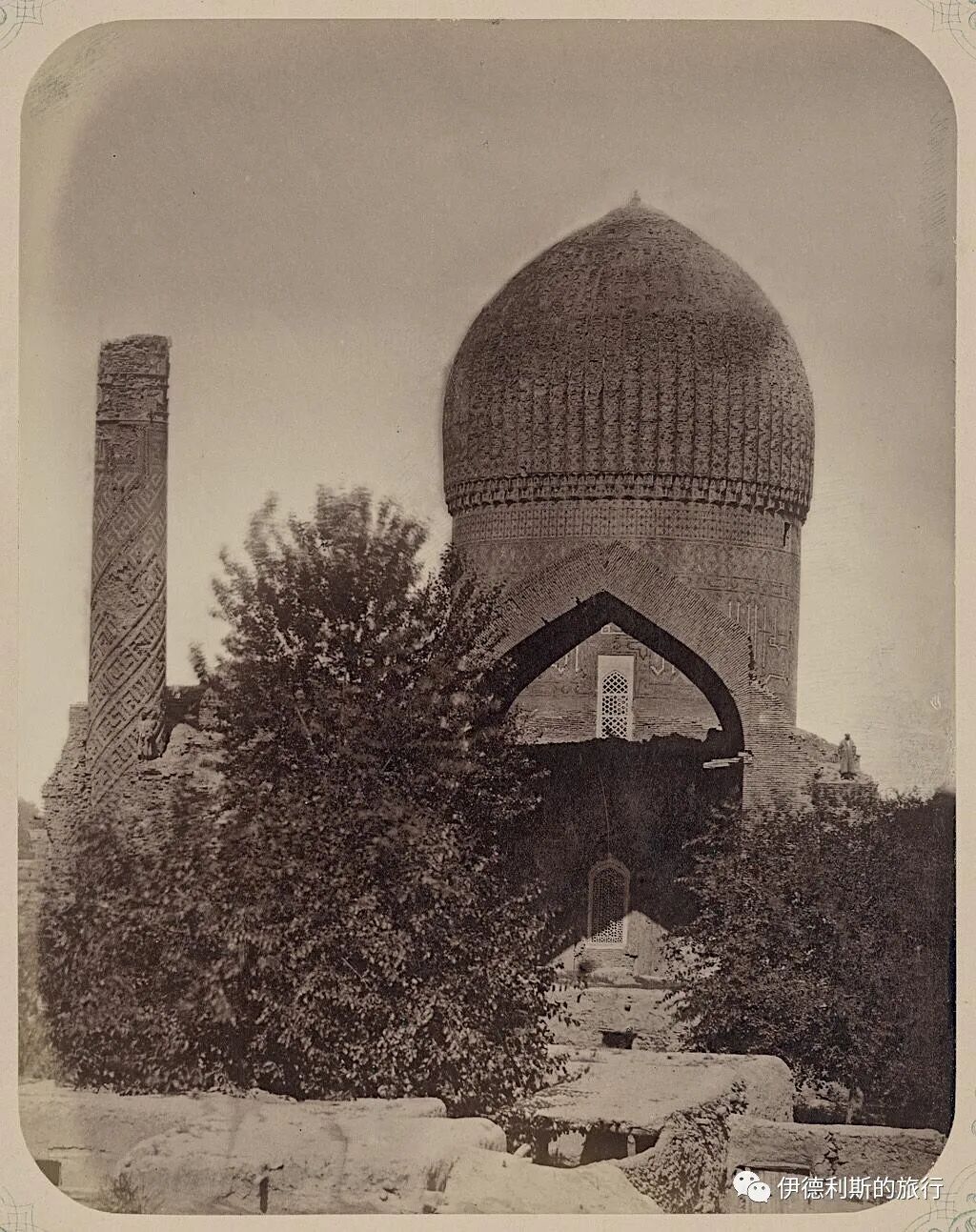
After entering the arch is the main building of the mausoleum. The mausoleum was fortunately preserved, but unfortunately, only the northwestern one of the four minarets remained by the 19th century. The minaret has spiral-thickened Kufic Arabic calligraphy.
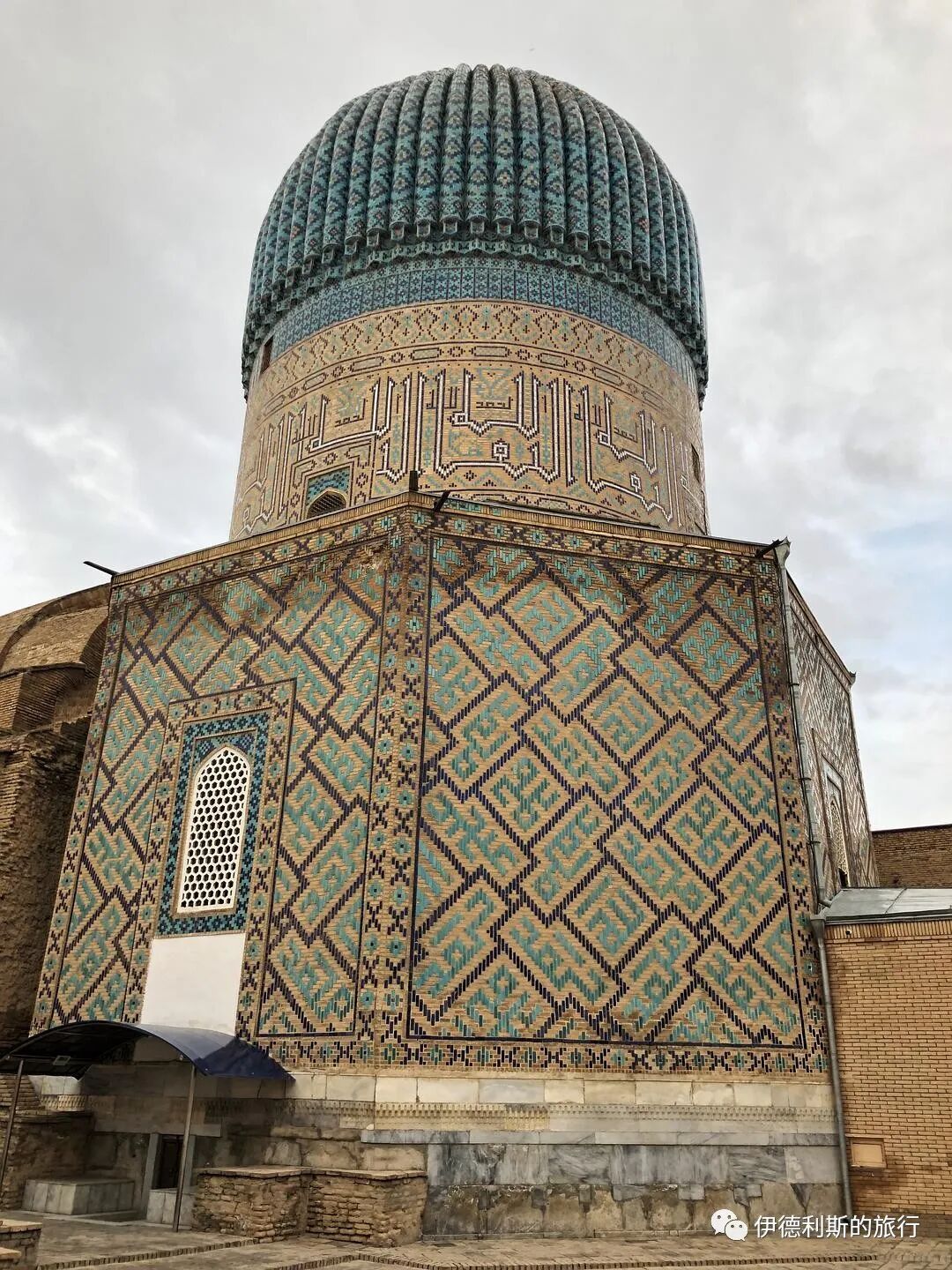
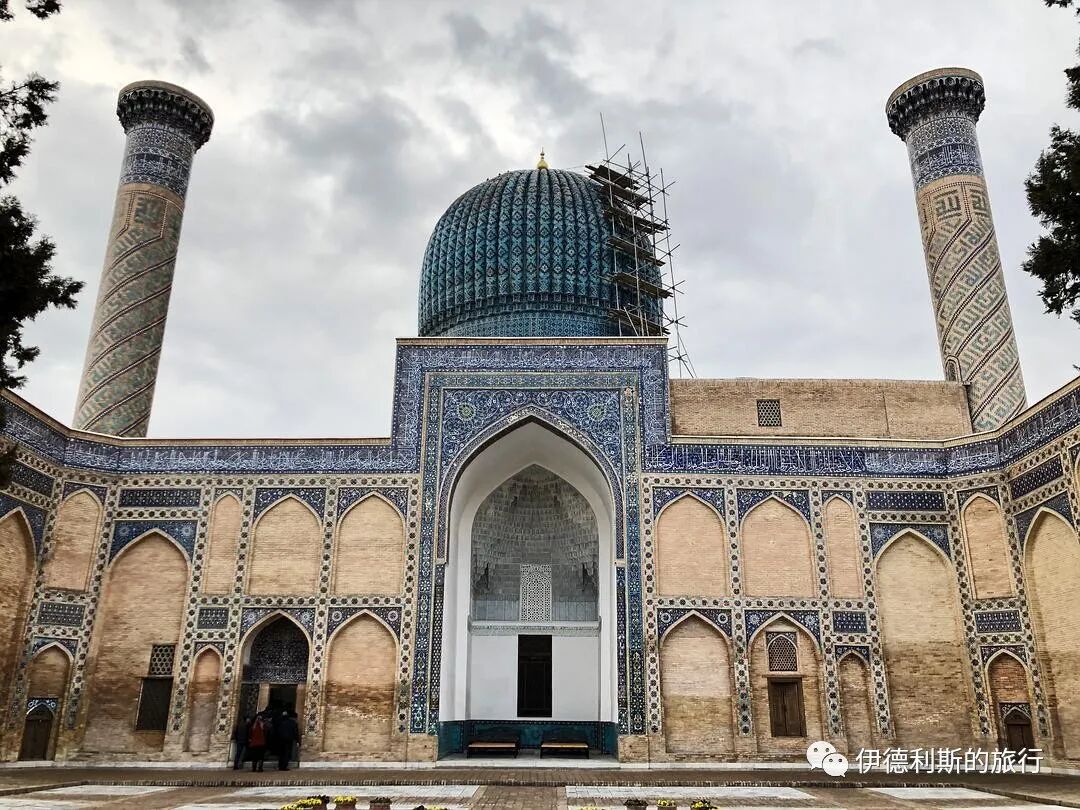
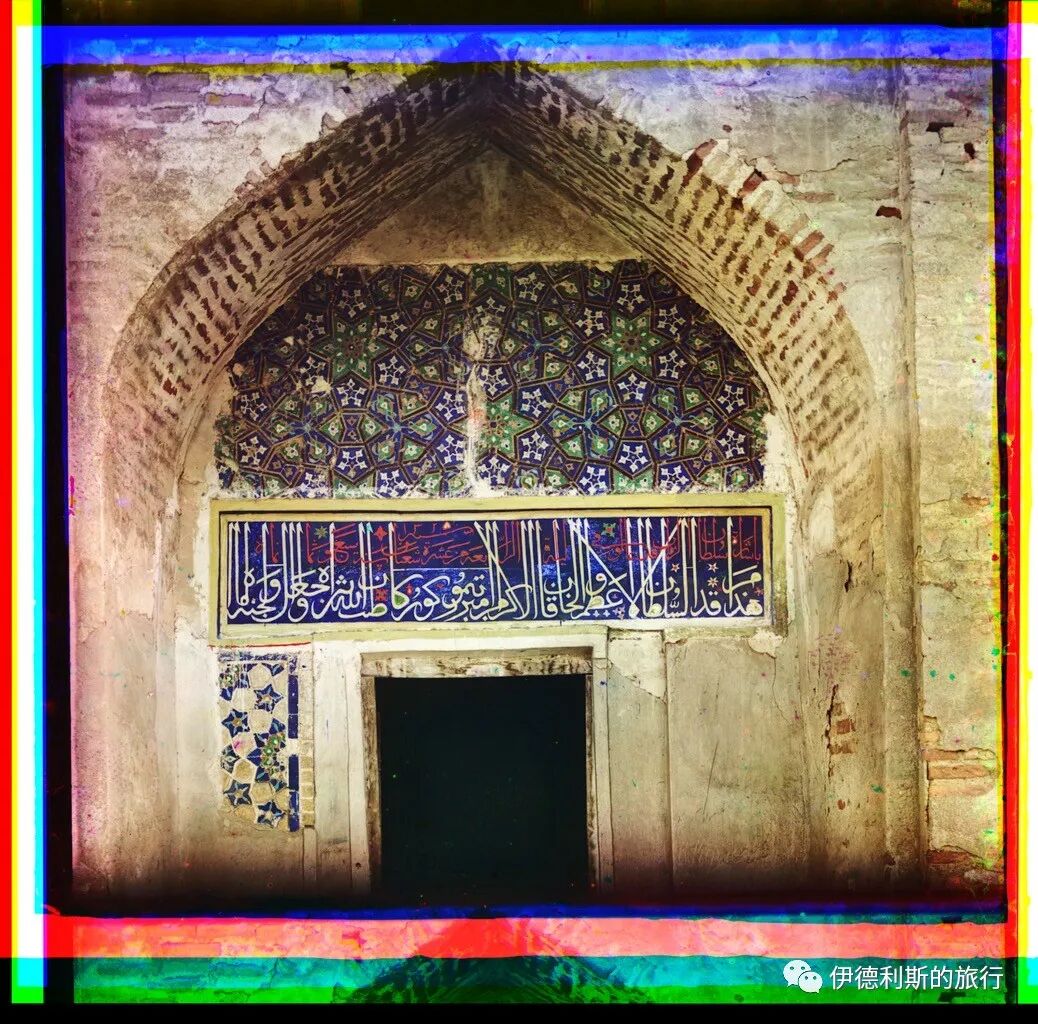
The main body of the mausoleum is divided into three levels: an octagonal base, a middle drum structure, and a large ribbed dome. The base is decorated with thickened Kufic Arabic calligraphy in blue tiles, while the drum structure is decorated with slender Persian-Arabic calligraphy in black and white tiles.
There is also a huge main arch on the west side of the mausoleum.
The current entrance is on the north side of the mausoleum.
The interior of the mausoleum is divided into two levels: the upper level contains the tombstones indicating the positions, and the lower level is the actual burial site. There are 9 people buried in the mausoleum: Timur himself, his sons Miran Shah and Shah Rukh, his grandsons Ulugh Beg and Muhammad Sultan, as well as Timur's spiritual mentor Mir Said Baraka and another Islamic master, Seyid Omar.
Ulugh Beg placed a hard, dark green jade stone over Timur's tomb, which is said to have come from the throne of the Chagatai Khanate. In 1740, Nader Shah, the emperor of the Persian Afsharid dynasty, took the tombstone back to Persia, but the stone cracked when it was moved, and Nader Shah immediately began to suffer misfortune. The tombstone was considered the cause of the misfortune, so he eventually returned it to its original place.
To the west of Timur's tombstone is Shah Rukh's tombstone. Shah Rukh was the second ruler of the Timurid dynasty. In 1447, Shah Rukh died of illness and was buried in Herat. The following year, Ulugh Beg occupied Herat, dug up his father's remains, brought them back to Samarkand, and reburied them in Gur-e-Amir.
To the south of Timur's tombstone is Ulugh Beg's tombstone. Ulugh Beg was the third ruler of the Timurid dynasty. In 1449, Ulugh Beg's eldest son, Abdal-Latif Mirza, launched a rebellion, captured Ulugh Beg near Samarkand, and subsequently had him killed. But Abdal-Latif only ruled for 6 months before being murdered, and Samarkand was then ruled by Ulugh Beg's nephew, Abdallah Mirza. Abdallah buried Ulugh Beg's remains in Gur-e-Amir, together with his grandfather Timur and father Shah Rukh.
To the east of Timur's tombstone is Muhammad Sultan's tombstone.
Muhammad Sultan's father was Timur's favorite son, Jahangir, but he died of illness in 1376, the year after Muhammad was born. In 1386, the 10-year-old Muhammad Sultan was appointed by Timur to rule the important Iranian city of Tabriz. Five years later, he began to accompany his grandfather on campaigns, performing well in two wars invading the Golden Horde, and grew into an excellent officer. In 1397, Muhammad Sultan was appointed to manage the Fergana region in the easternmost part of the Timurid Empire and was given an army of 40,000 men.
Just before Timur's invasion of India in 1398, Muhammad Sultan was appointed by Timur as the heir to the throne (Vali al-lakhd). It is said that when Timur preached the Khutbah (sermon) at the Jumu'ah (Friday) congregational prayer after conquering Delhi, he placed Muhammad Sultan's name alongside his own.
In 1402, Timur invaded the Ottoman Empire, and the two sides fought a decisive battle in Ankara. On the battlefield, Muhammad Sultan led the army to inflict heavy damage on the enemy and captured the Ottoman Sultan Bayezid I. After the war, Muhammad Sultan was sent to Bursa, the then-capital of the Ottoman Empire, and seized a large amount of treasure.
However, while returning from Bursa to the main force led by Timur, Muhammad Sultan was wounded in battle and eventually died in 1403. Timur felt immense grief over his grandson's death and ordered everyone in the army to wear dark clothes to mourn.
Further west of Timur's tombstone is the tombstone of Timur's third son, Miran Shah. After Timur conquered Iran in 1393, he granted the 'Hulagu Throne' to Miran Shah, with territories including Persia and the Caucasus region, such as Baghdad and Tabriz. However, after suffering a mental illness from falling off a horse, Miran Shah increasingly became a tyrant.
Miran Shah lived a dissolute life, including drinking in the mosque, throwing gold coins out of palace windows, and suffering successive military failures. Most importantly, he began to question Timur's ability to govern, which Timur learned about.
In 1399, Timur sent his nephew Sulaiman Shah to bring Miran Shah back to Samarkand, stripped him of all positions, and made him a follower of Timur.
After Timur died in 1405, Miran Shah supported his son Khalil Sultan to inherit the throne, launching a war of succession with his brother Shah Rukh. Miran Shah led an army to fight in western Persia but was defeated by the Turkmen Black Sheep dynasty in the battle for Tabriz in 1406. During the rout, Miran Shah was killed by the Turkmen, and his head was later cut off and hung on the walls of Tabriz.
After the war, the Turkmen handed over Miran Shah's head and body to Shah Rukh, who had ultimately won the war of succession, and Shah Rukh buried Miran Shah in Gur-e-Amir. view all
Summary: This travel note introduces Samarkand Travel Guide: Timur's Capital, Mosques & Islamic History (Part 1). In 1220, Genghis Khan led the Mongol army to conquer the ancient Central Asian city of Samarkand, killed all the civilians who had taken refuge in the citadel and the mosque, and looted all the treasures in the city. It is useful for readers interested in Uzbekistan Travel, Timurid History, Muslim Heritage.
In 1220, Genghis Khan led the Mongol army to conquer the ancient Central Asian city of Samarkand, killed all the civilians who had taken refuge in the citadel and the mosque, and looted all the treasures in the city; Samarkand lost its former glory.
In 1370, Emperor Timur established the Timurid dynasty on the ruins of the Chagatai Khanate and made Samarkand his capital. Over the next 35 years, Timur employed craftsmen, artists, and architects from all over the Timurid Empire to rebuild the city of Samarkand, making it the undisputed center of Central Asia. During Timur's reign, the population of Samarkand exceeded 150,000, and important monuments such as the Shah-i-Zinda mausoleum complex and the Bibi-Khanym Mosque have been preserved to this day.
Between 1409 and 1449, a period of 40 years, the city of Samarkand continued to grow as a city of science and culture under the rule of Timur's grandson, Ulugh Beg. In addition to the completion of the Gur-e-Amir mausoleum for Emperor Timur, the Ulugh Beg Madrasah (Islamic school) and the Ulugh Beg Observatory are both important testaments to this.
After the death of Ulugh Beg, the Timurid dynasty went from prosperity to decline and fell into division. In the early 16th century, the Uzbeks occupied Samarkand and established the Shaybanid dynasty, later moving the capital to Bukhara in 1561. Since then, Samarkand gradually declined.
By the 19th century, most of the Timurid dynasty monuments in Samarkand were severely damaged. During the Soviet era, large-scale renovations were carried out on the Timurid monuments in Samarkand; unfortunately, the 'tear down the old and build the new' approach erased too much historical information and has been criticized by later generations.
In 2001, the ancient city of Samarkand was inscribed on the World Heritage List under the name 'Samarkand – Crossroad of Cultures'.
The old photos shared in this article, the black and white ones, come from the 'Turkestan Album', produced between 1871 and 1872 under the sponsorship of Konstantin P. von Kaufman, the first Governor-General of Russian Turkestan.
The color photos are from Sergei Mikhailovich Prokudin-Gorskii. Some of these photos date back to 1905, with most of the work coming from between 1909 and 1915. During this period, he traveled to many different regions of the Russian Empire with the support of Tsar Nicholas II and the Ministry of Transport.
Table of Contents
I. Shah-i-Zinda: 11th–15th centuries
II. Rukhabad Mausoleum: 1380s
III. Gur-e-Amir Mausoleum: 1404
4. Bibi-Khanym Mosque: 1404
5. Bibi-Khanym Mausoleum: 1404
6. Ulugh Beg Madrasah: 1420
7. Ulugh Beg Observatory: 1429
8. Ishrat-khana Mausoleum: 1464
9. Ak-Saray Mausoleum: Presumed to be 1450s-1470s
10. Khodja Abdu Derun Mausoleum: 15th century
11. Mausoleum of Prophet Daniel: Rebuilt in the early 20th century
I. Shah-i-Zinda: 11th–15th centuries
Shah-i-Zinda is the oldest and most important Islamic mausoleum complex in Samarkand. In the 11th century, the tomb of Kusam Ibn Abbas, a cousin of the Prophet Muhammad, was built here; during the Timurid dynasty in the 14th century, a large number of women from the Timurid family and Timur's confidants were also buried here.
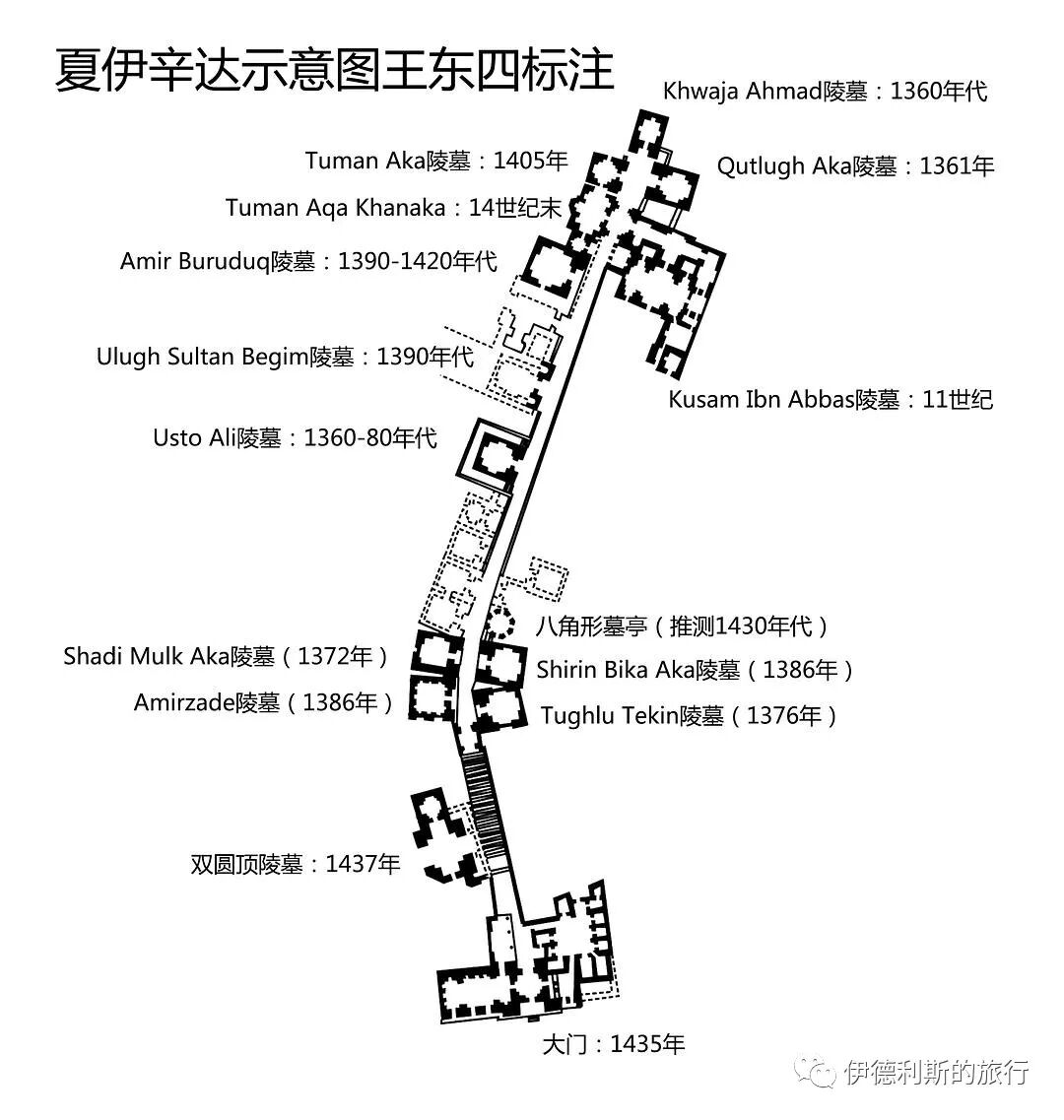
The Shah-i-Zinda complex can be divided into three parts: south, middle, and north, each with its own gate. The southern complex is the latest in date, built by Timur's grandson, Ulugh Beg. The middle complex contains the tombs of Timur's ministers, generals, nieces, and sisters. The northern complex is the core part; in addition to the Prophet's cousin, two of Timur's wives and local religious leaders are also buried there.
(I) Southern Complex
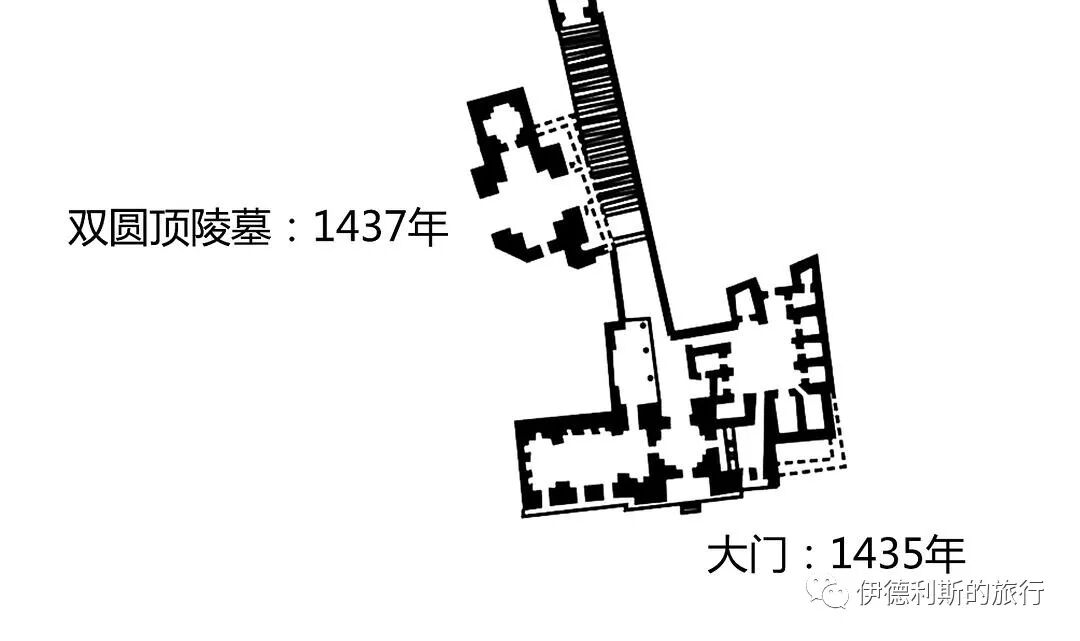
1. Gate: 1435
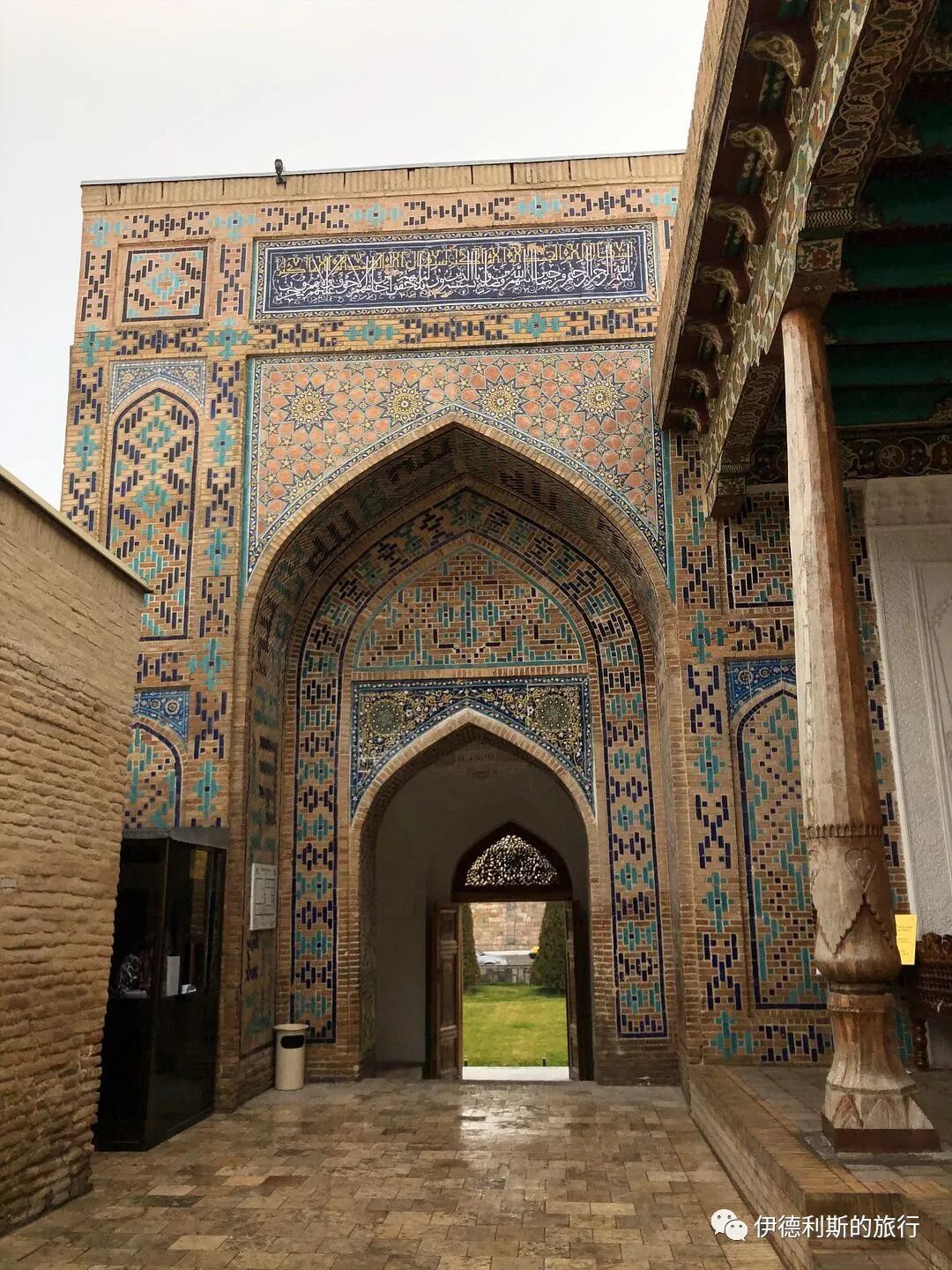
The gate of Shah-i-Zinda (Chartak of Abdulaziz) was built in 1435 by Ulugh Beg, the third ruler of the Timurid dynasty, on behalf of his son Abdulaziz. Abdulaziz was Ulugh Beg's second son, raised by Ulugh Beg from childhood, deeply loved by him, and was also the designated heir of Ulugh Beg.
In 1449, Ulugh Beg's eldest son, Abdal-Latif Mirza, launched a rebellion against his father; Ulugh Beg led his army to meet him while ordering Abdal-Aziz to stay behind and guard Samarkand. Abdulaziz's poor management eventually led to an uprising in Samarkand; he locked himself in the citadel and sent a letter to his father for help, and Ulugh Beg had to return to Samarkand after receiving the letter. Abdal-Latif subsequently attacked Samarkand, and Ulugh Beg and Abdal-Aziz surrendered to him. Abdal-Latif arranged for Ulugh Beg and Abdulaziz to go on Hajj (pilgrimage) to Mecca and had them both killed on the way.
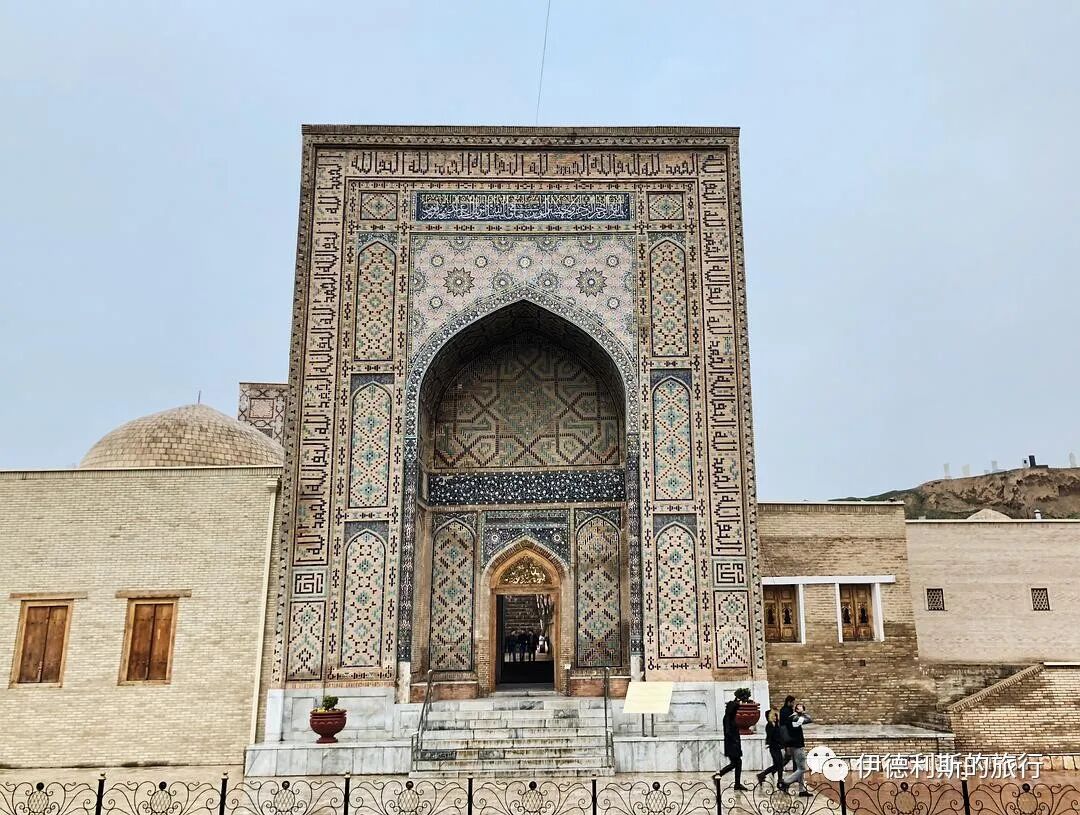
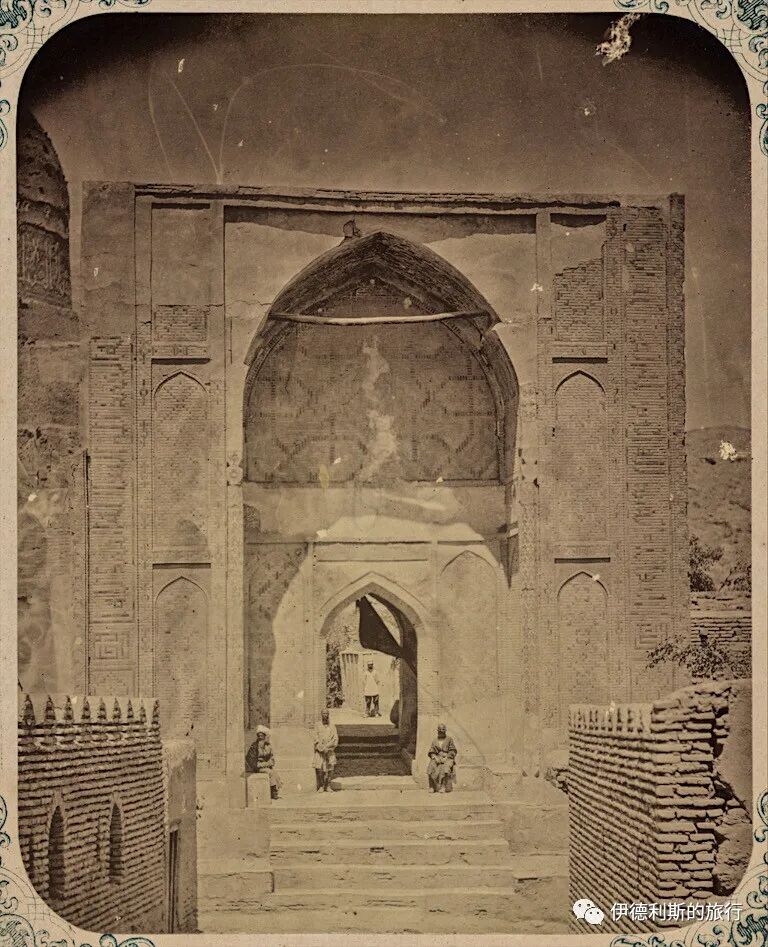
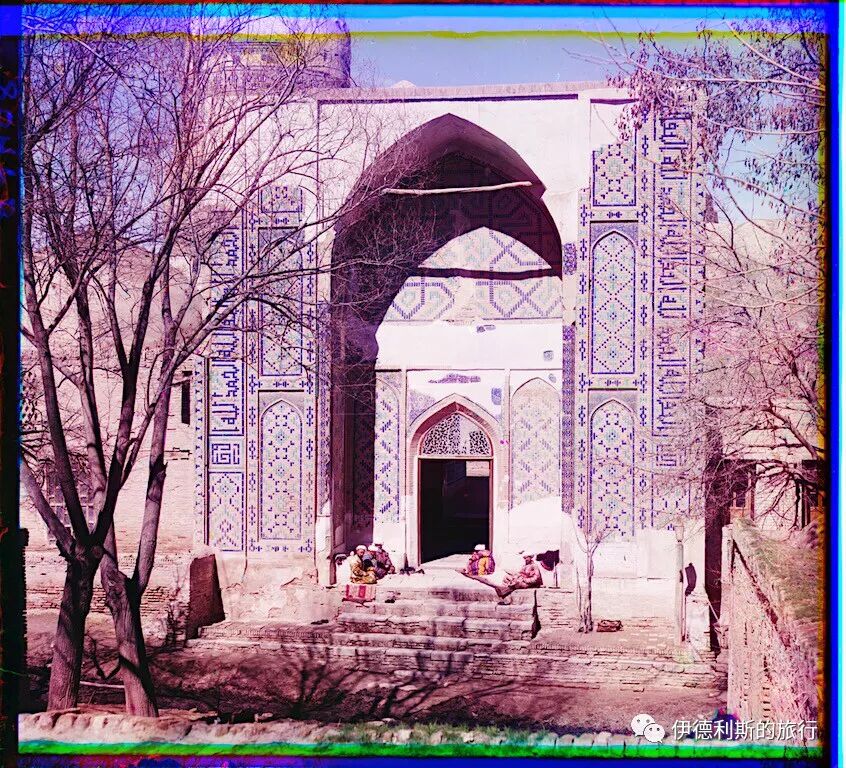
2. Double-domed Mausoleum: 1437
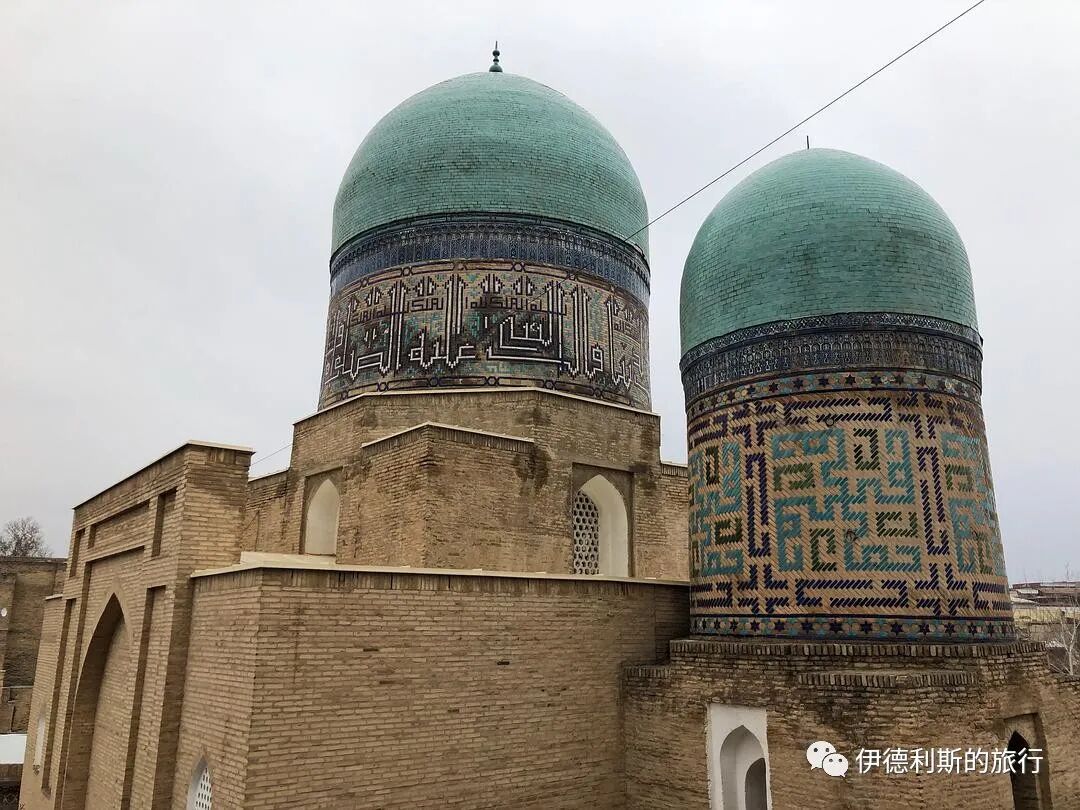
The Double-domed Mausoleum is the first mausoleum after entering the gate, believed to have been built by the third ruler of the Timurid dynasty, Ulugh Beg, in 1437. The occupant of the tomb may be Timur's benefactor Uldzk Inak and her daughter Bibi Zinet, but there is also a theory that the occupant is the astronomer Kazi Zadeh Al-Rumi, who worked under Ulugh Beg.
Kazi Zadeh Al-Rumi was a famous astronomer and mathematician of the 14th–15th centuries, born in Bursa, the capital of the Ottoman Empire in 1364, and came to work at the Ulugh Beg Observatory in Samarkand during Ulugh Beg's reign. At the observatory, he worked with Ulugh Beg and other astronomers to complete the famous 'Zīj-i Sultānī' (Ulugh Beg's astronomical tables).
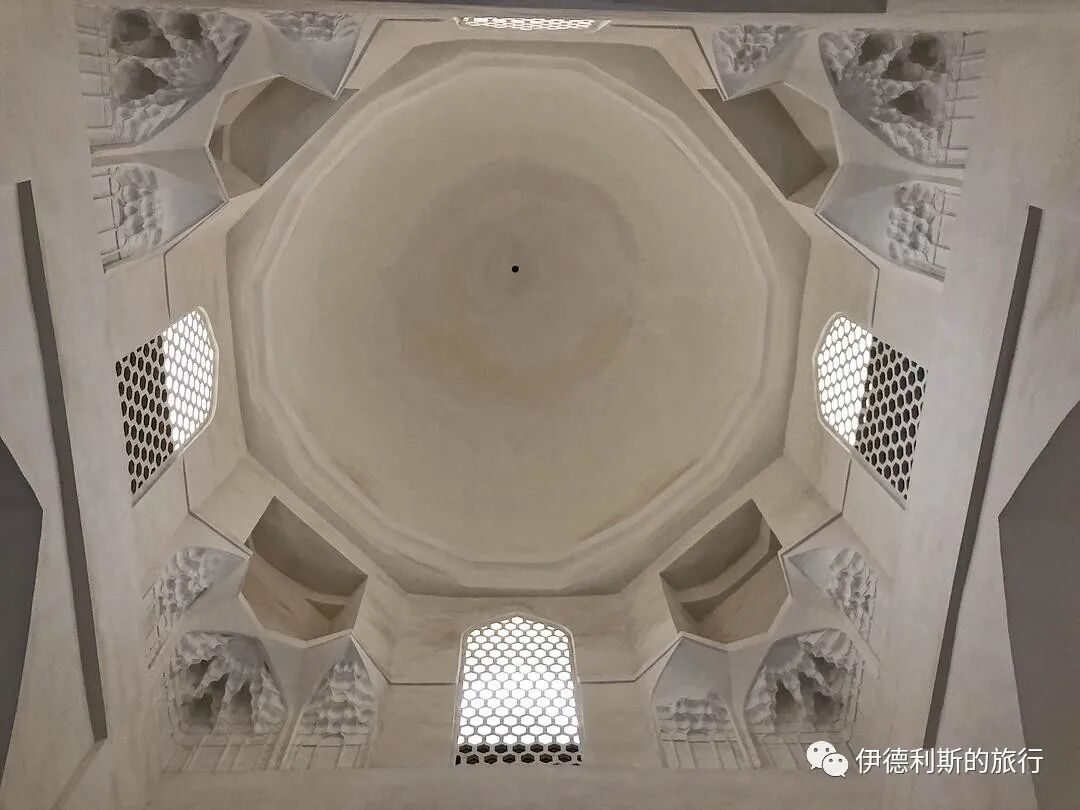
(II) Middle Complex
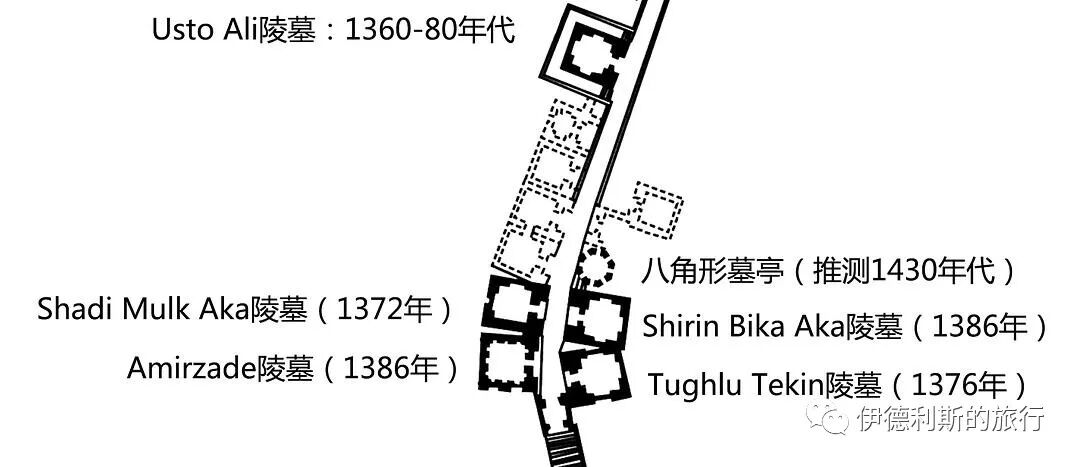
After passing through the gate and the Double-domed Mausoleum and climbing the stairs, one enters the middle complex. The middle complex can also be divided into southern and northern parts. The southern part consists of five adjacent mausoleums, mainly for important figures in Timur's court: the mausoleum of Timur's minister Amirzade (1386), the mausoleum of Timur's niece Shadi Mulk Aka (1372), the mausoleum of Timur's sister Shirin Bika Aka (1386), and the mausoleum of Timur's general Tughlu Tekin (1376); there is also an octagonal mausoleum of unknown occupant, presumably built in the 1430s.
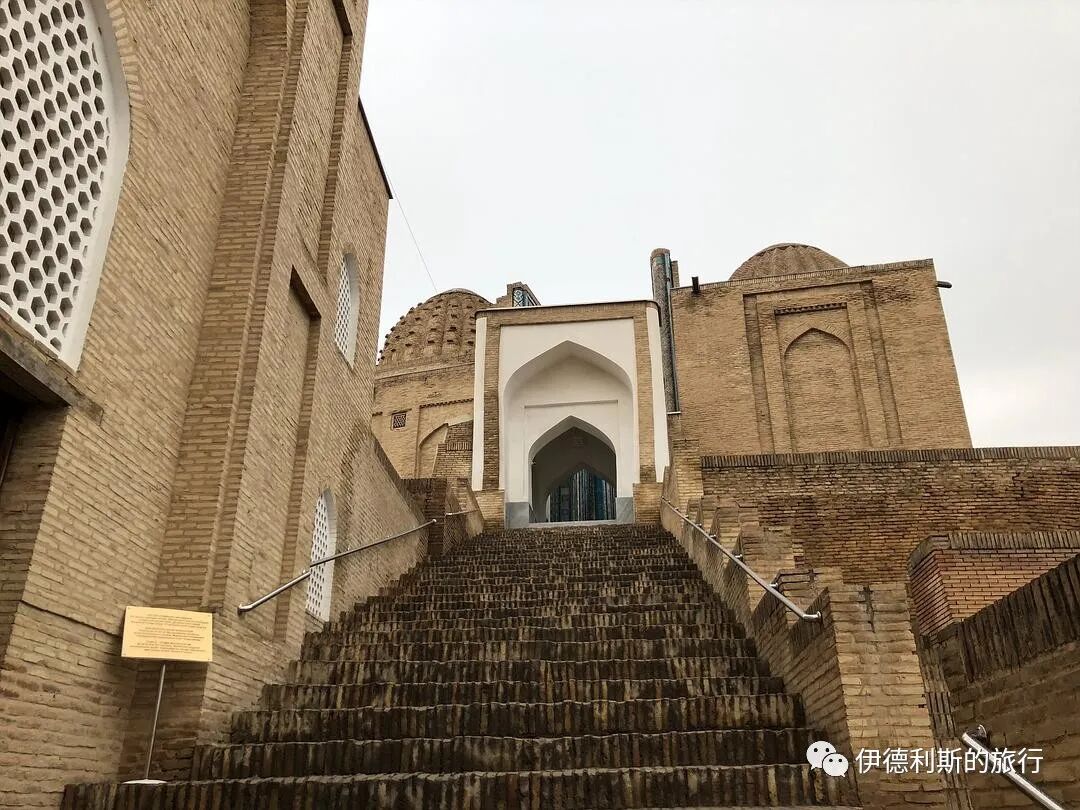
View of the gate of the middle complex from the Double-domed Mausoleum
Shot from west to east, from left to right are the mausoleum of niece Shadi Mulk Aka, the mausoleum of sister Shirin Bika Aka, the mausoleum of minister Amirzade, and the Double-domed Mausoleum.
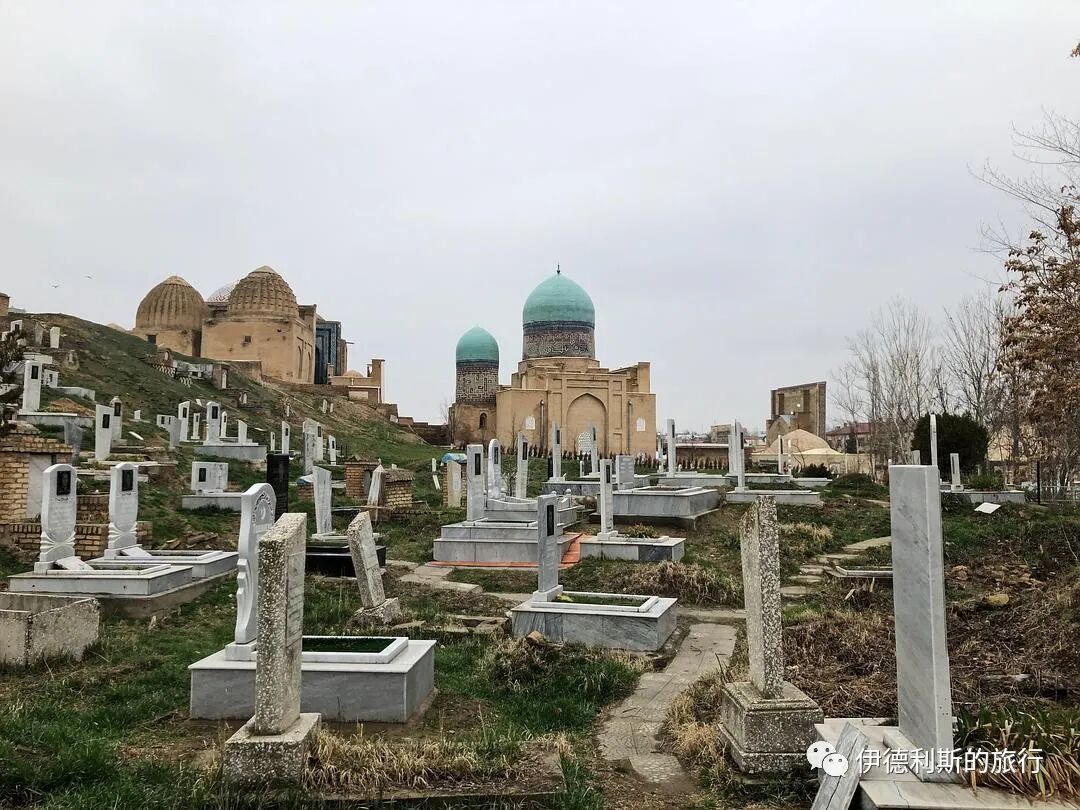
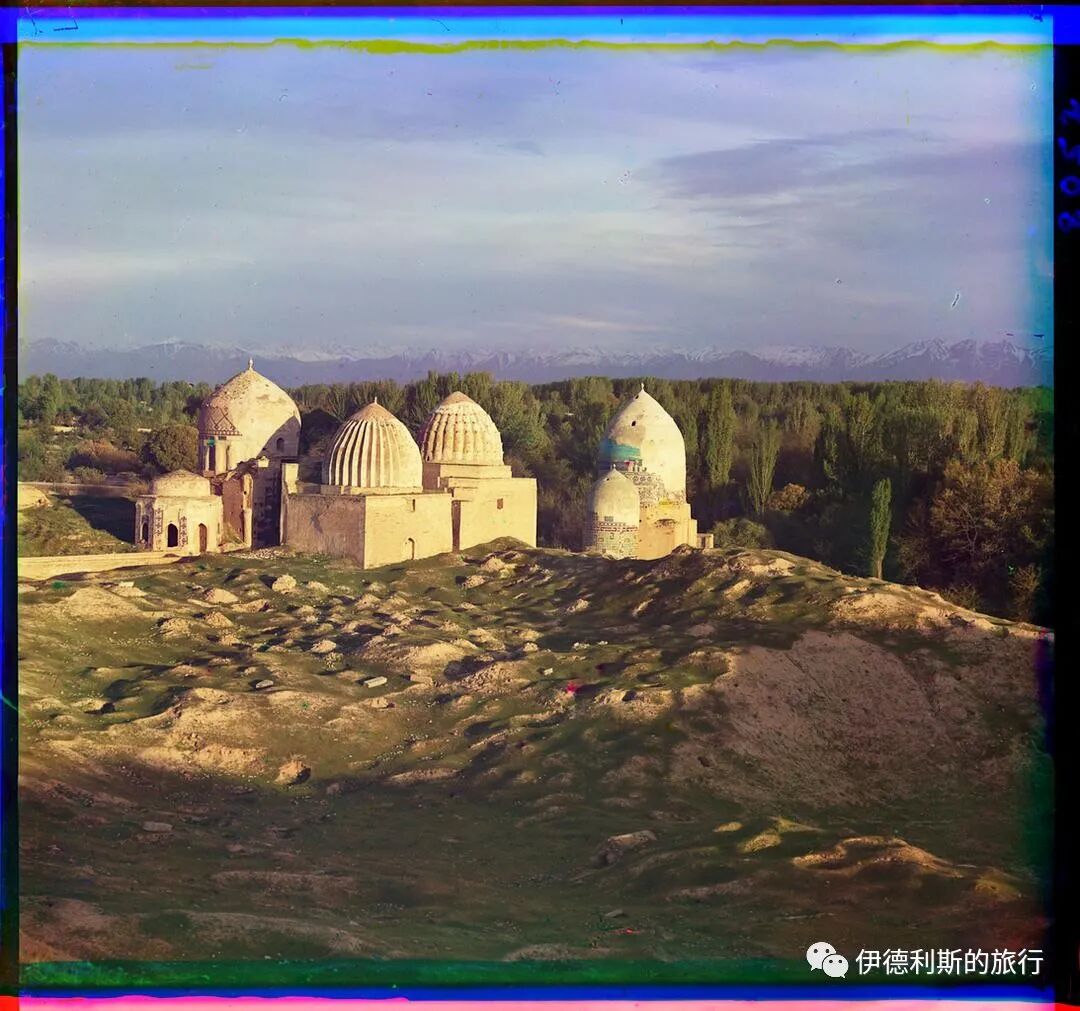
Shot from northeast to southwest, the three domes from left to right are the mausoleum of sister Shirin Bika Aka, the octagonal tomb pavilion, and the mausoleum of niece Shadi Mulk Aka; on the right are three others rebuilt in modern times.
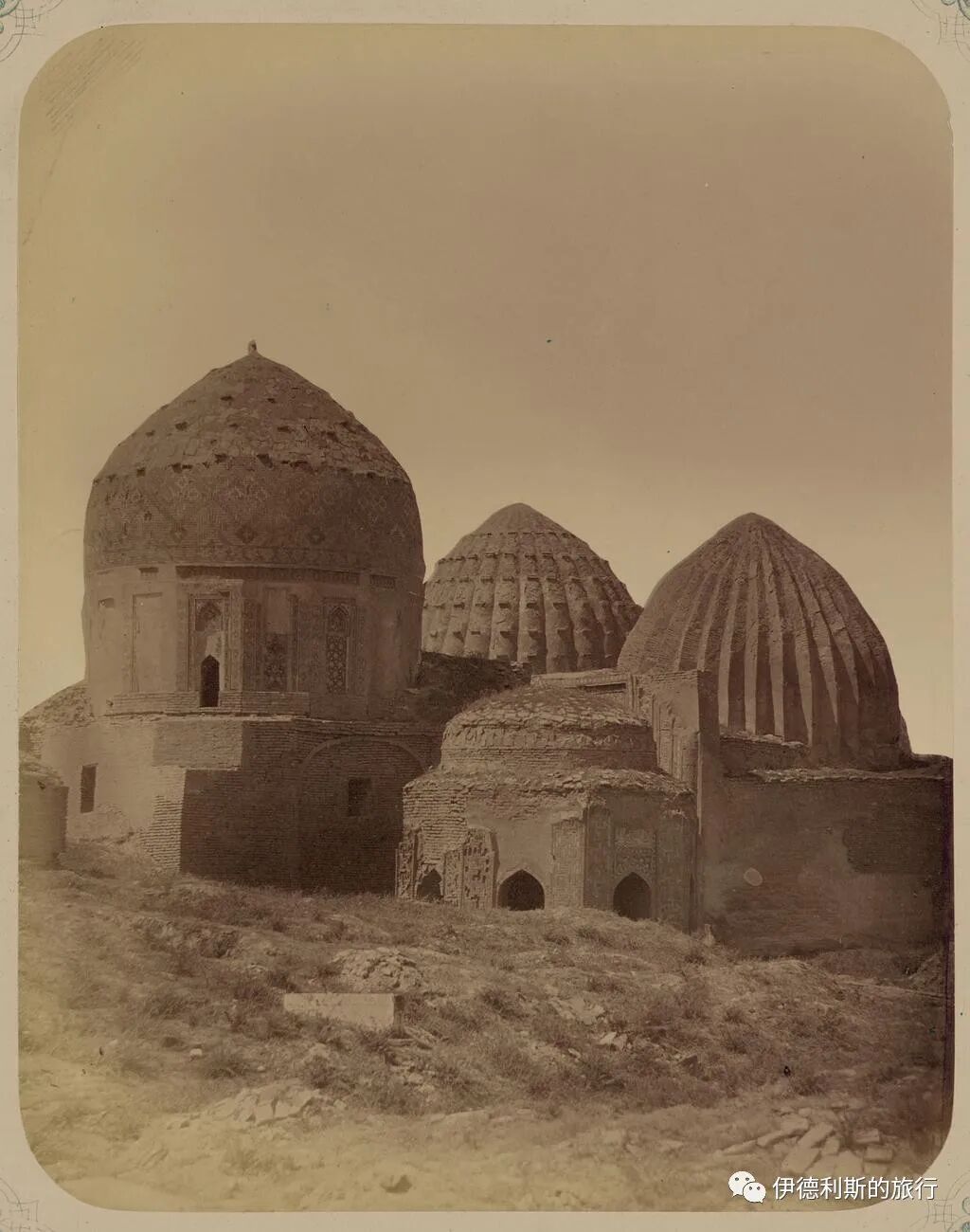
Shot from northeast to southwest, the three domes from left to right belong to the mausoleum of sister Shirin Bika Aka, the mausoleum of minister Amirzade, and the mausoleum of niece Shadi Mulk Aka; in the front is the octagonal tomb pavilion.
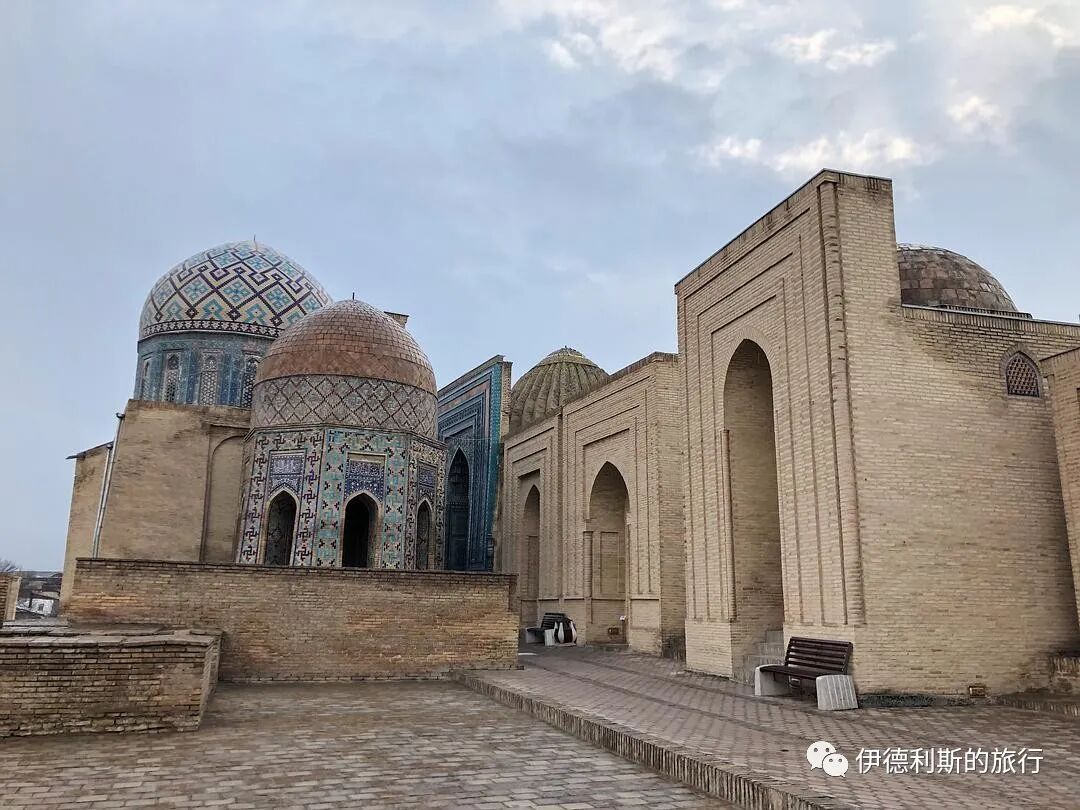
Shot from northwest to southeast, from left to right are the octagonal tomb pavilion, the mausoleum of sister Shirin Bika Aka, the mausoleum of niece Shadi Mulk Aka, the mausoleum of minister Amirzade, and the Double-domed Mausoleum.
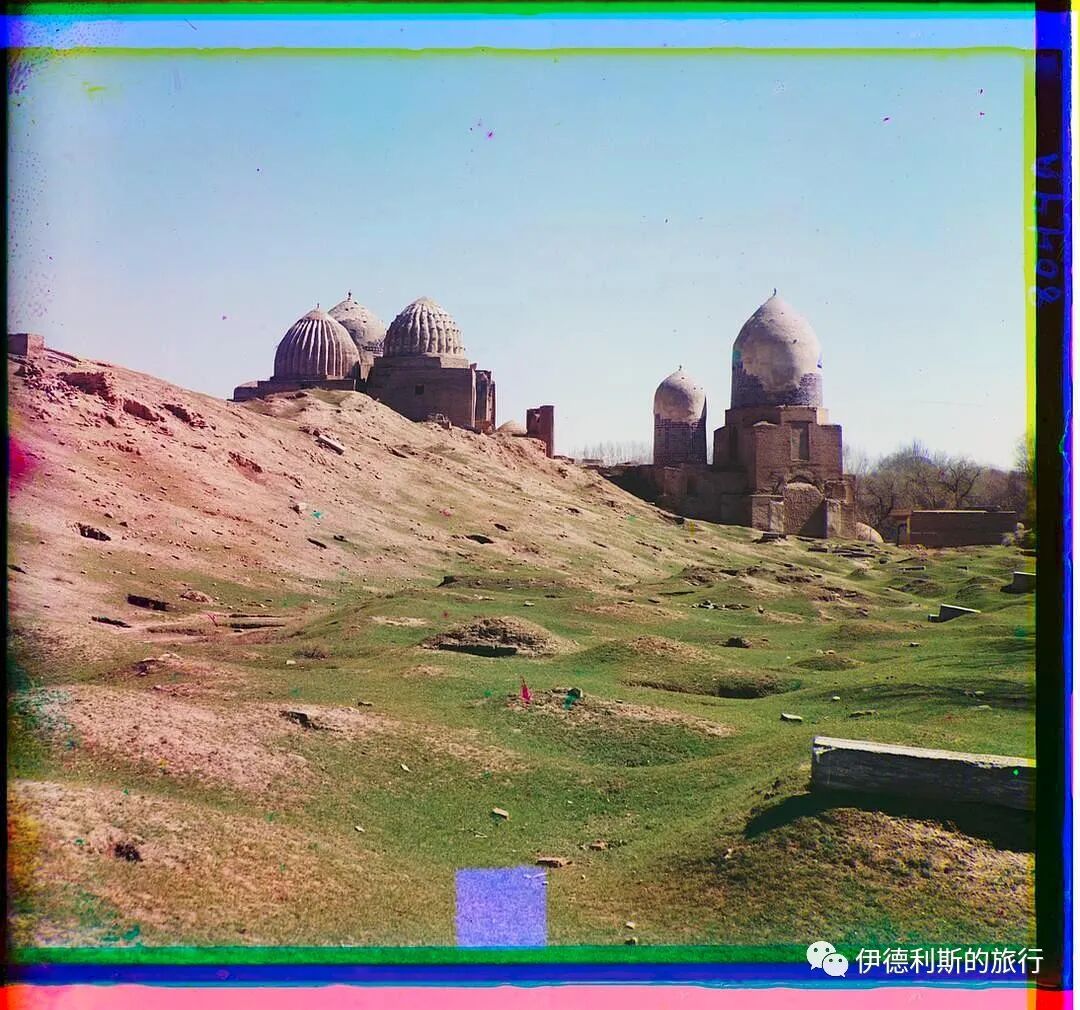
Shot from north to south, from left to right are the mausoleum of Shirin Bika Aka, the mausoleum of Amirzade, and the mausoleum of Shadi Mulk Aka.
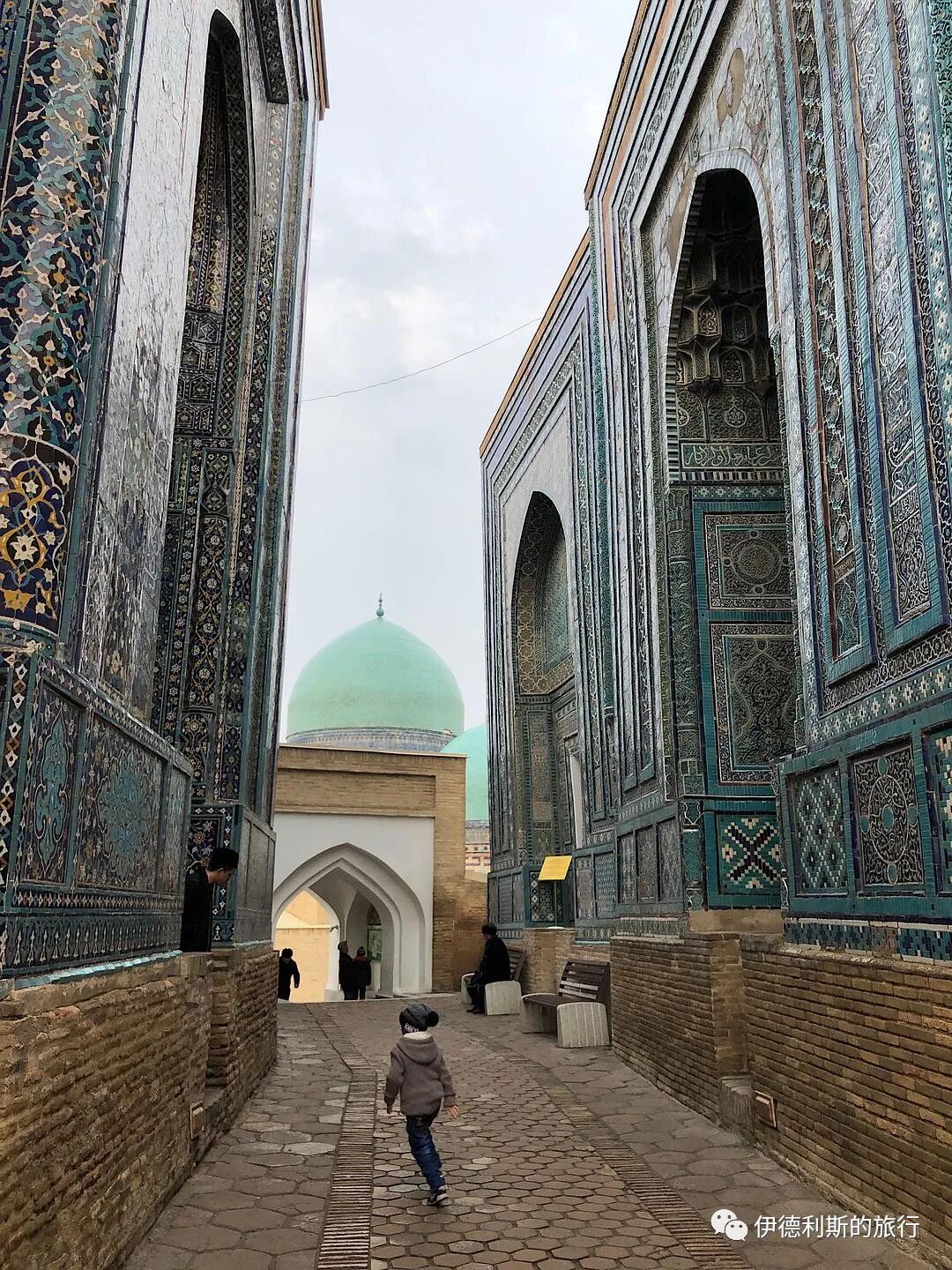
Shot from south to north, on the left is the octagonal tomb pavilion, and on the right is the mausoleum of Shadi Mulk Aka.
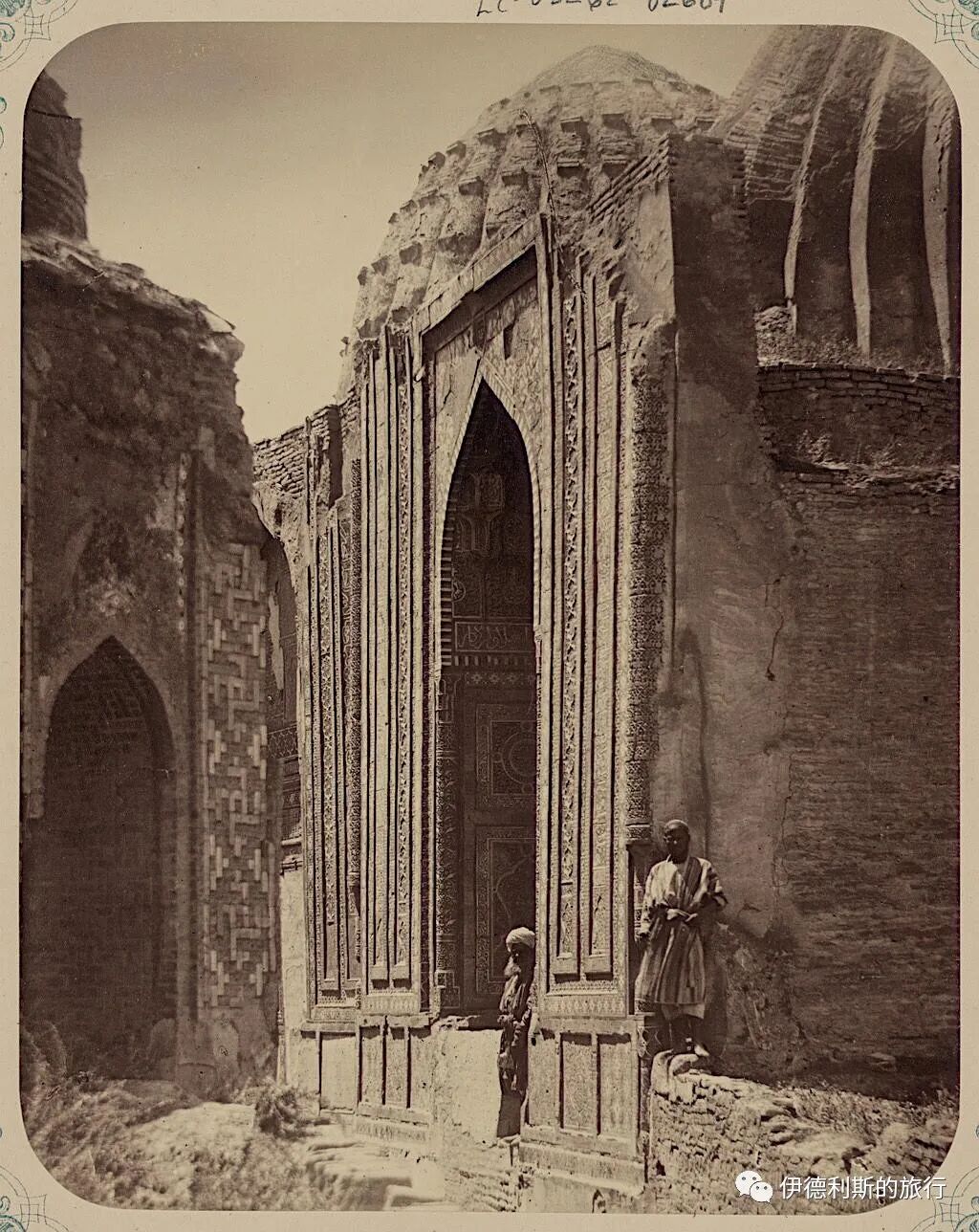
Shot from south to north, on the left are the mausoleum of Amirzade and the mausoleum of Shadi Mulk Aka.
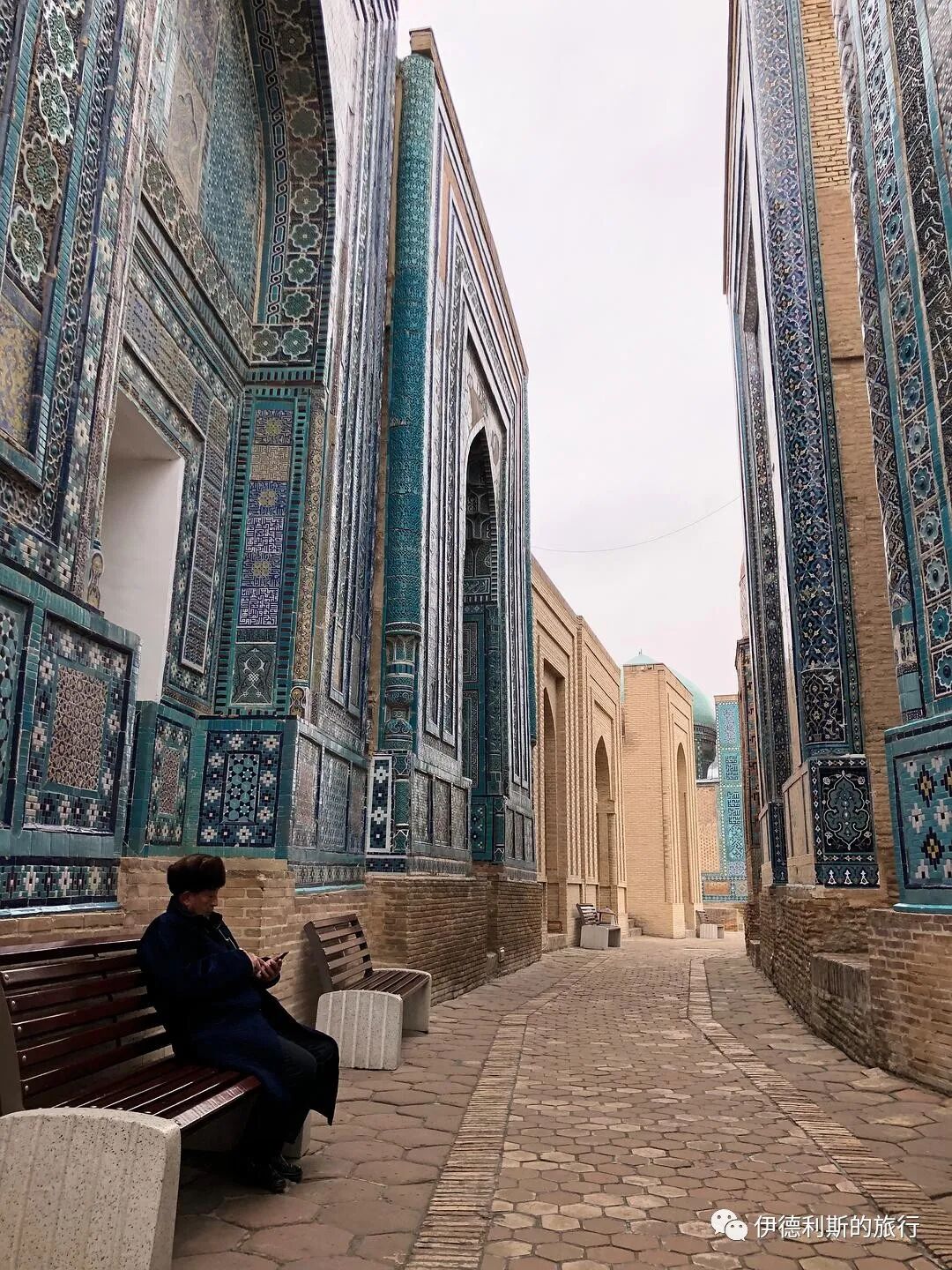
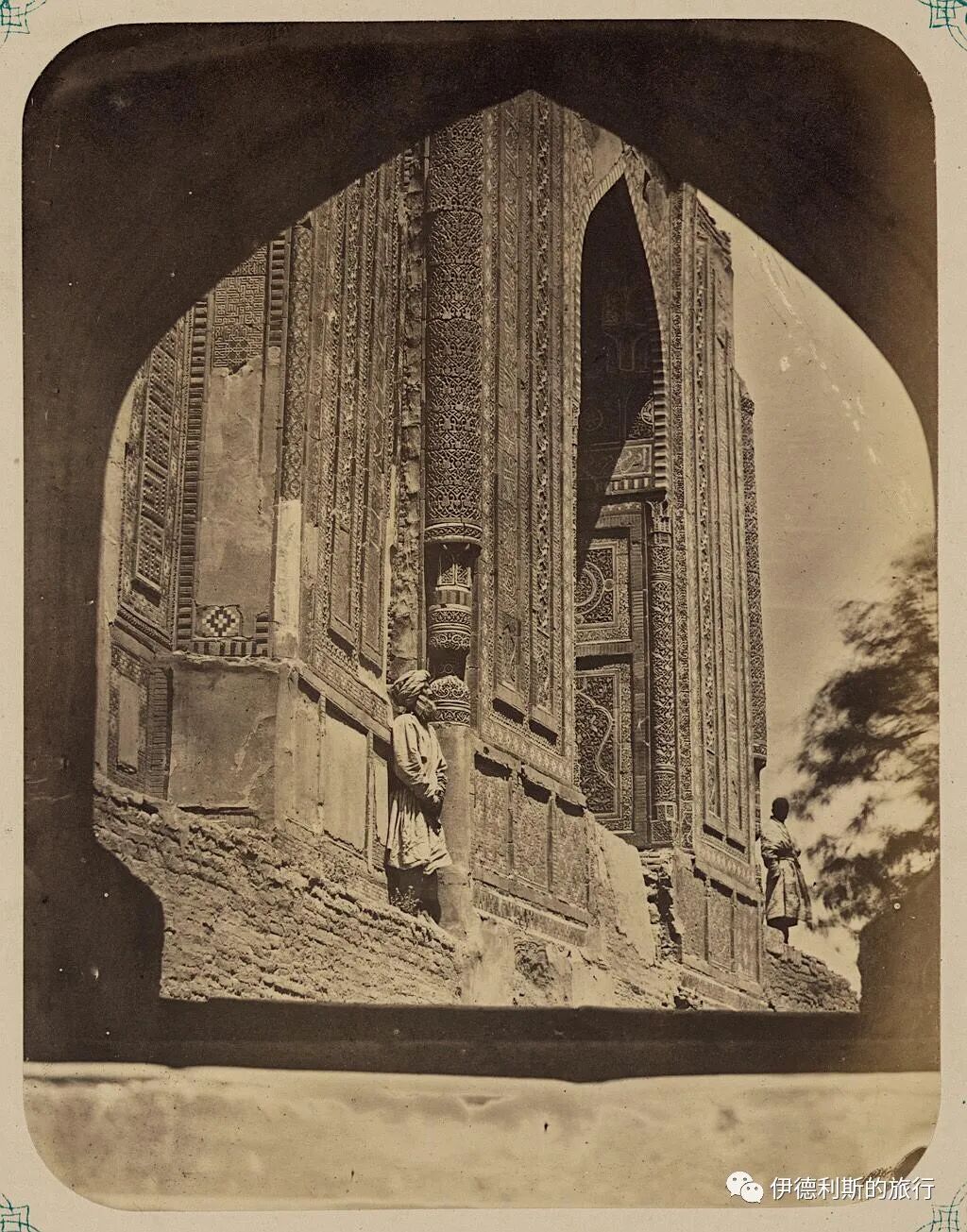
The mausoleum of Amirzade shot from north to south.
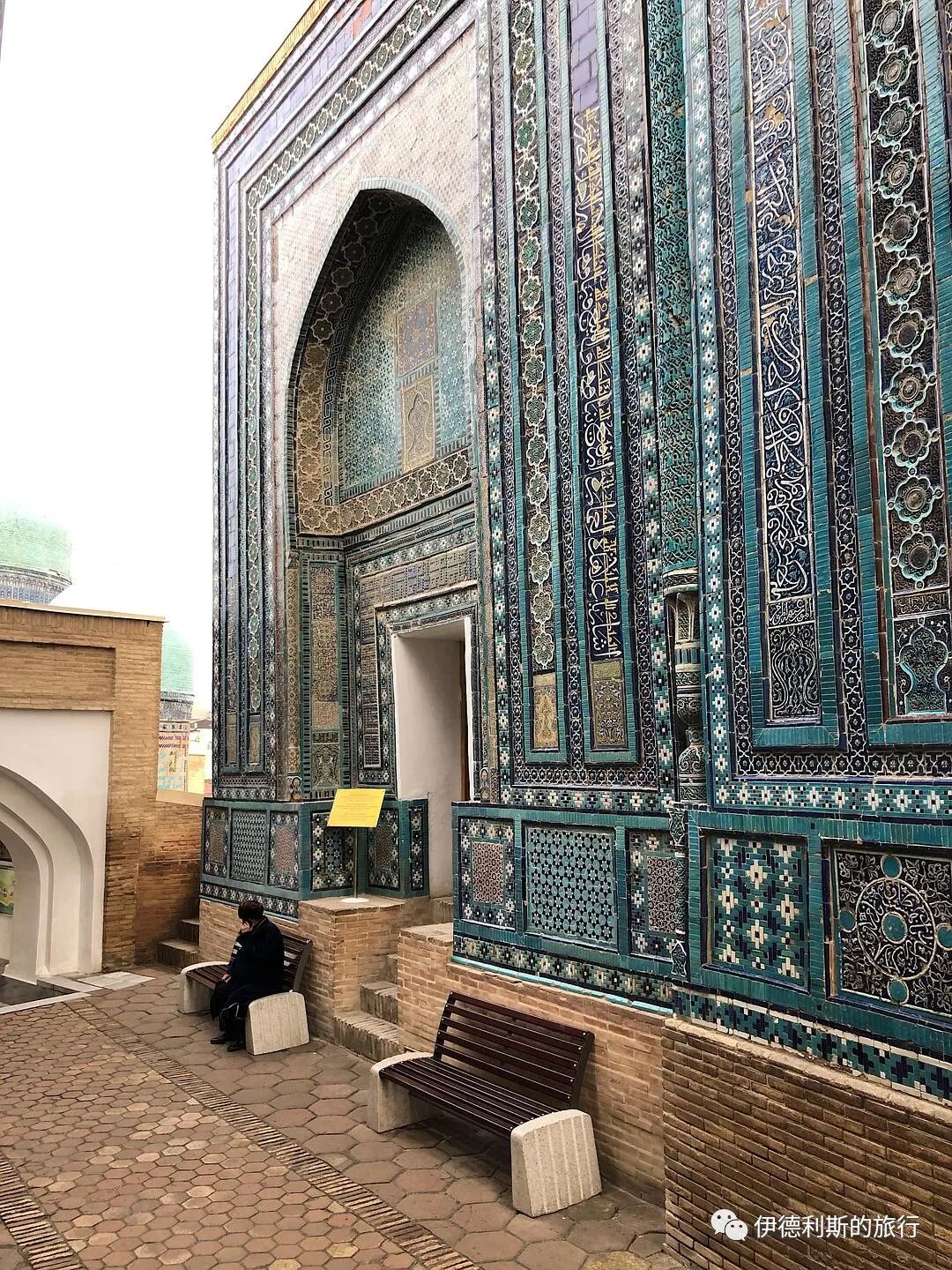
Shot from north to south, from left to right are the mausoleum of Amirzade and the mausoleum of Shadi Mulk Aka.
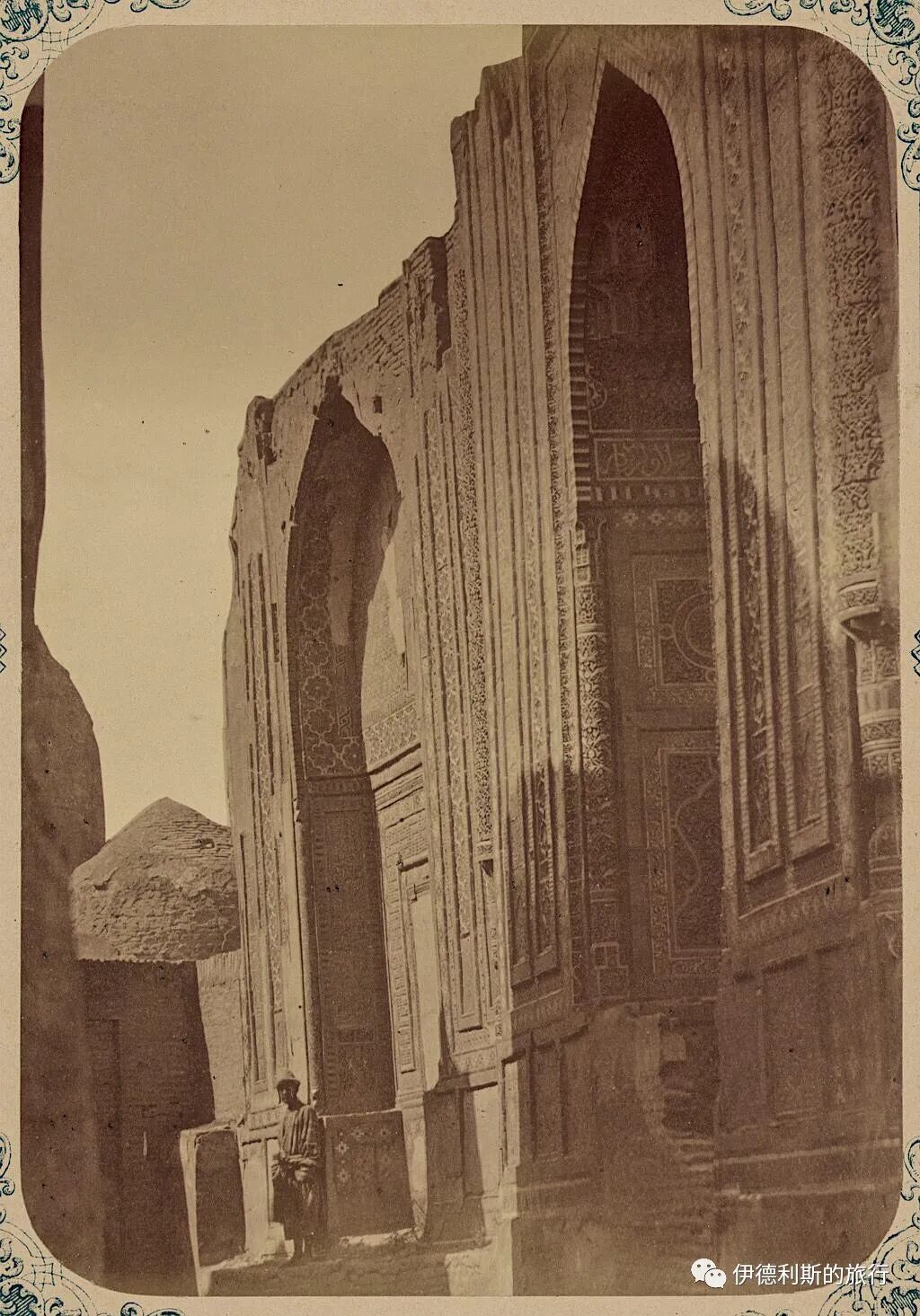
1. Amirzade Mausoleum: 1386
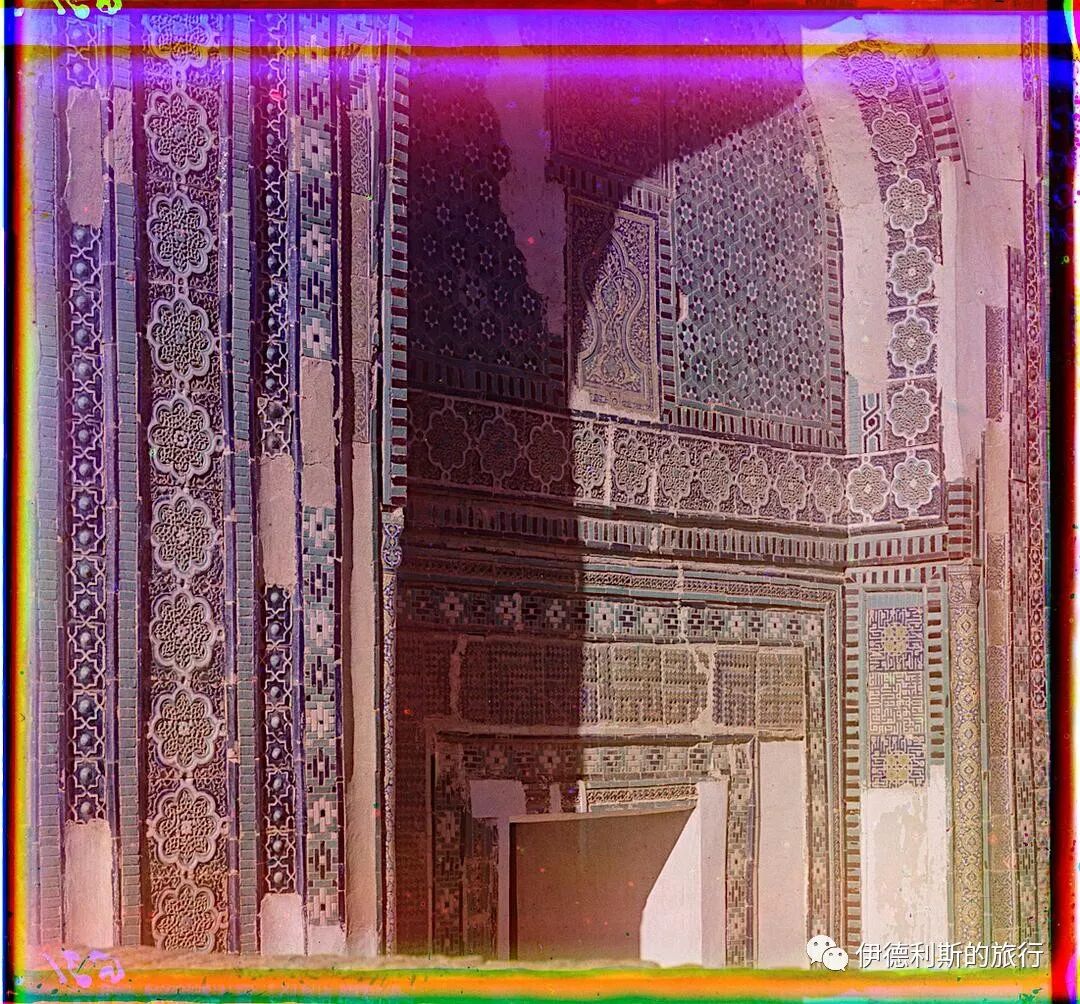
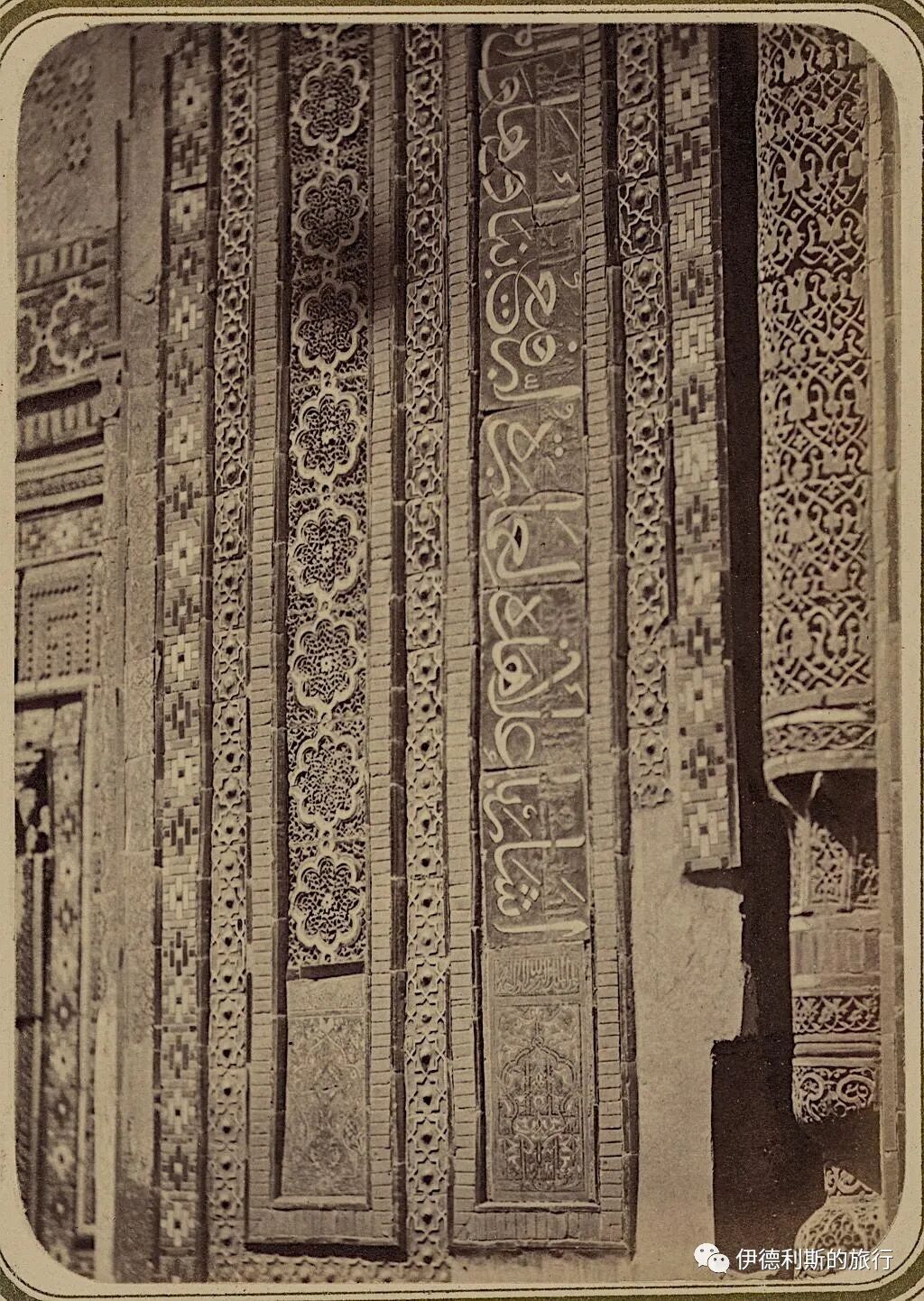
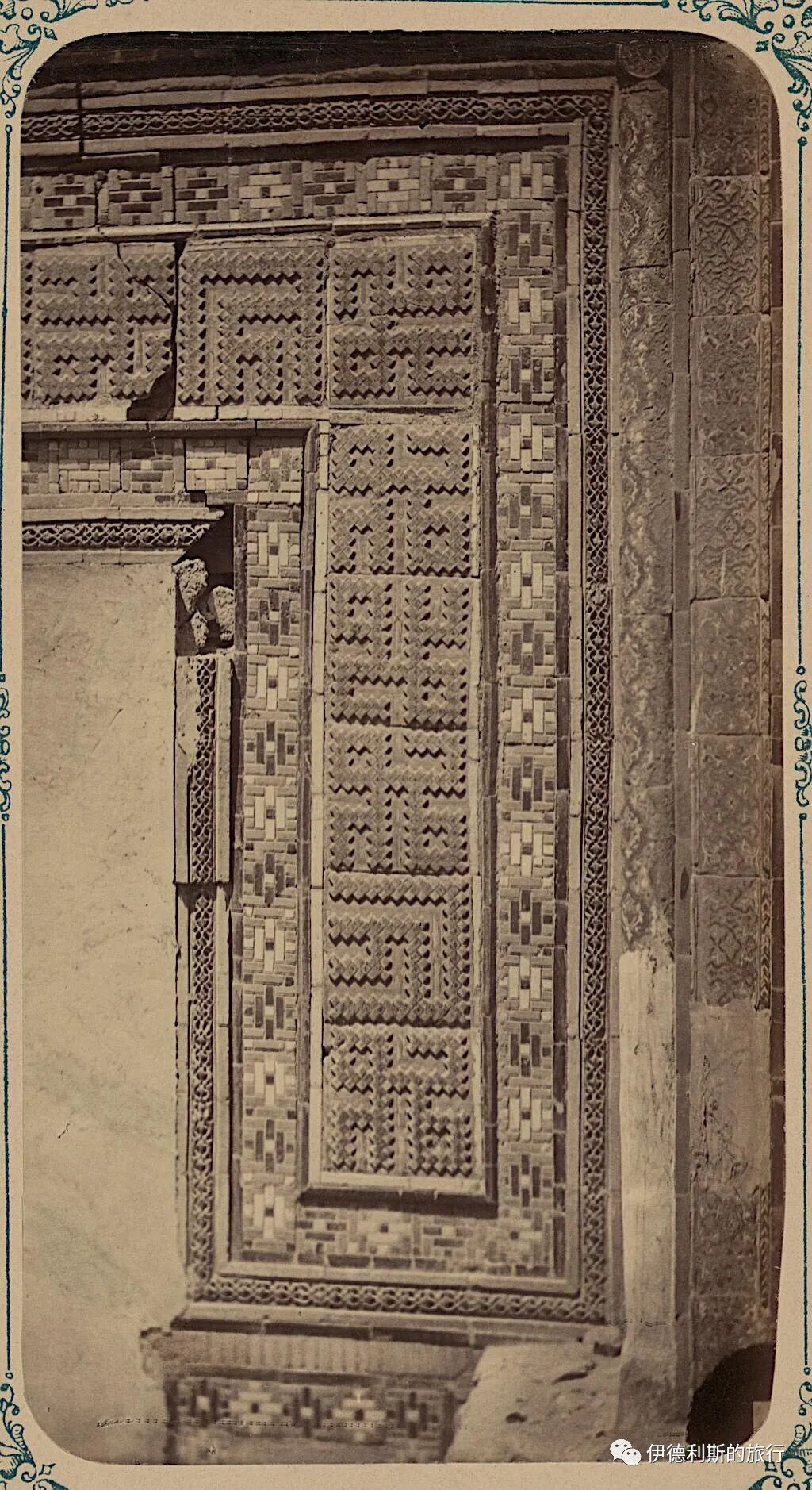
Amirzade was a minister in Timur's court. In addition to geometric patterns and eight-petaled rose patterns, the Peshtak (portal) entrance of the mausoleum also features Kufic calligraphy and Thuluth calligraphy.
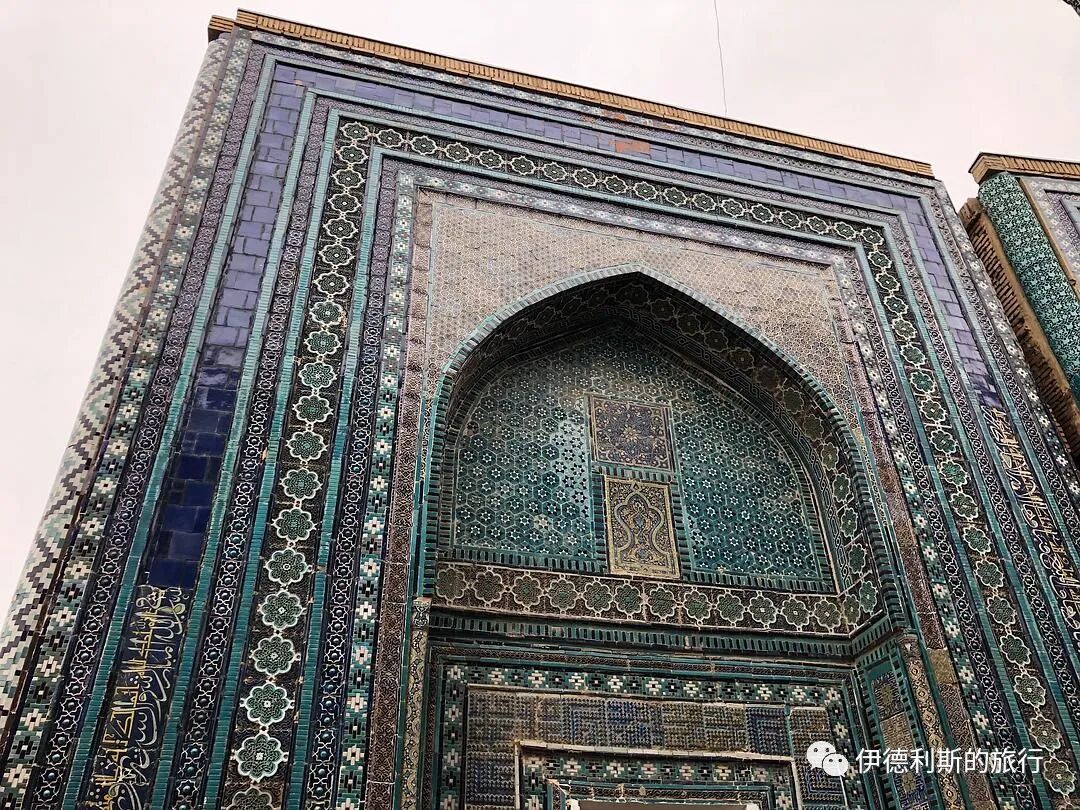
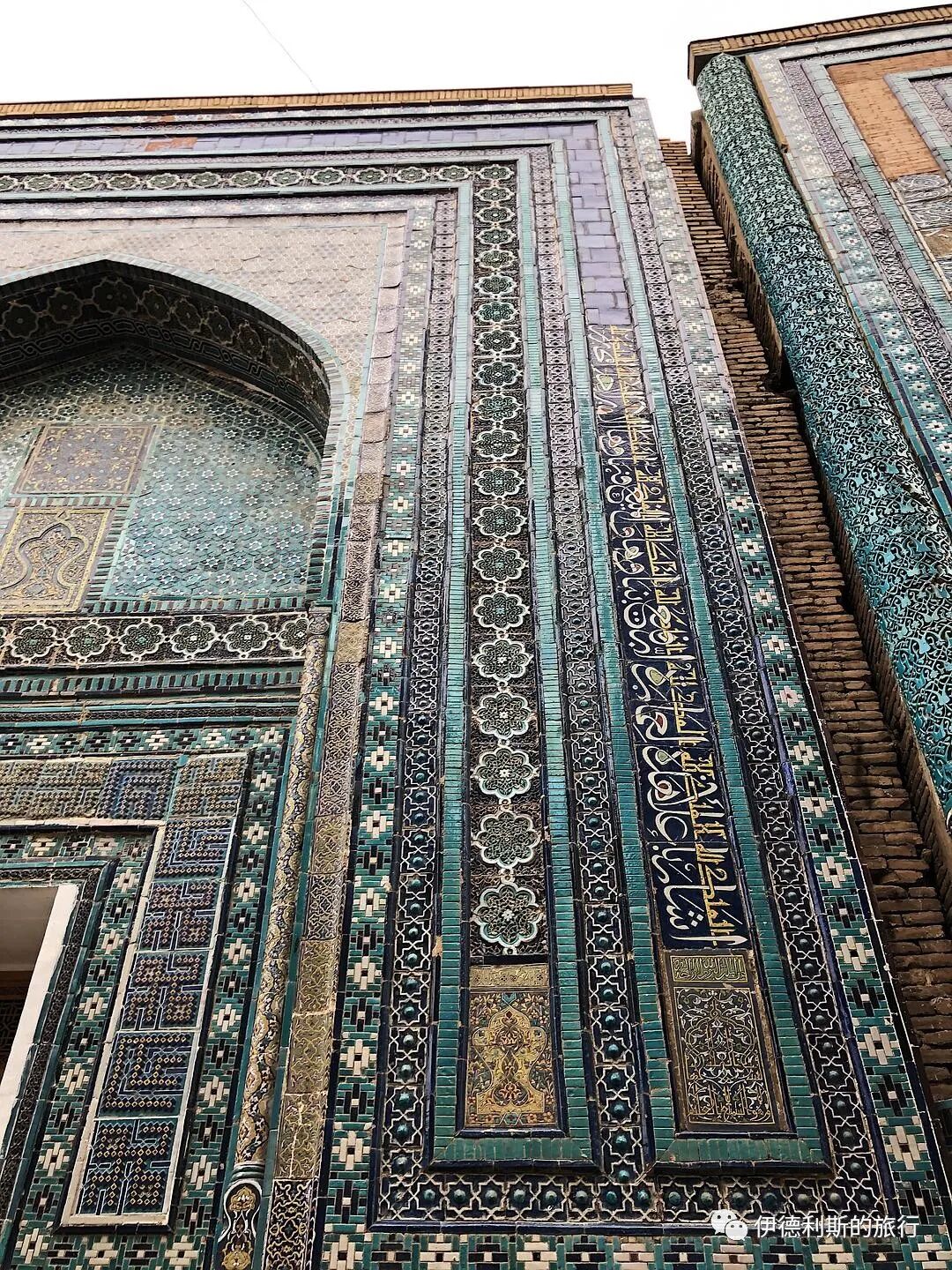
2. Shadi Mulk Aka Mausoleum: 1372
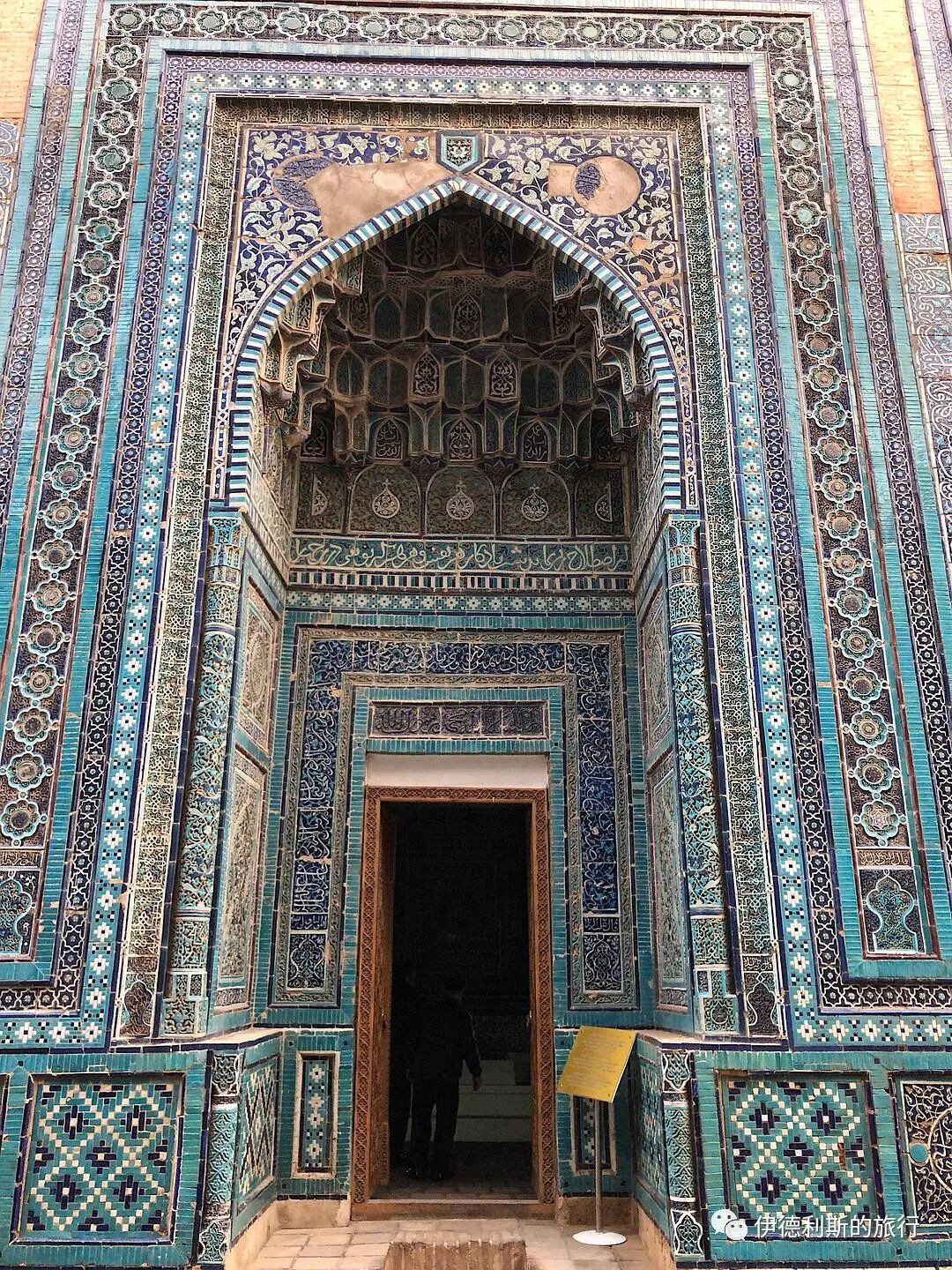
Shadi Mulk Aka was the daughter of Timur's eldest sister, Kutlug Turkan Aka.
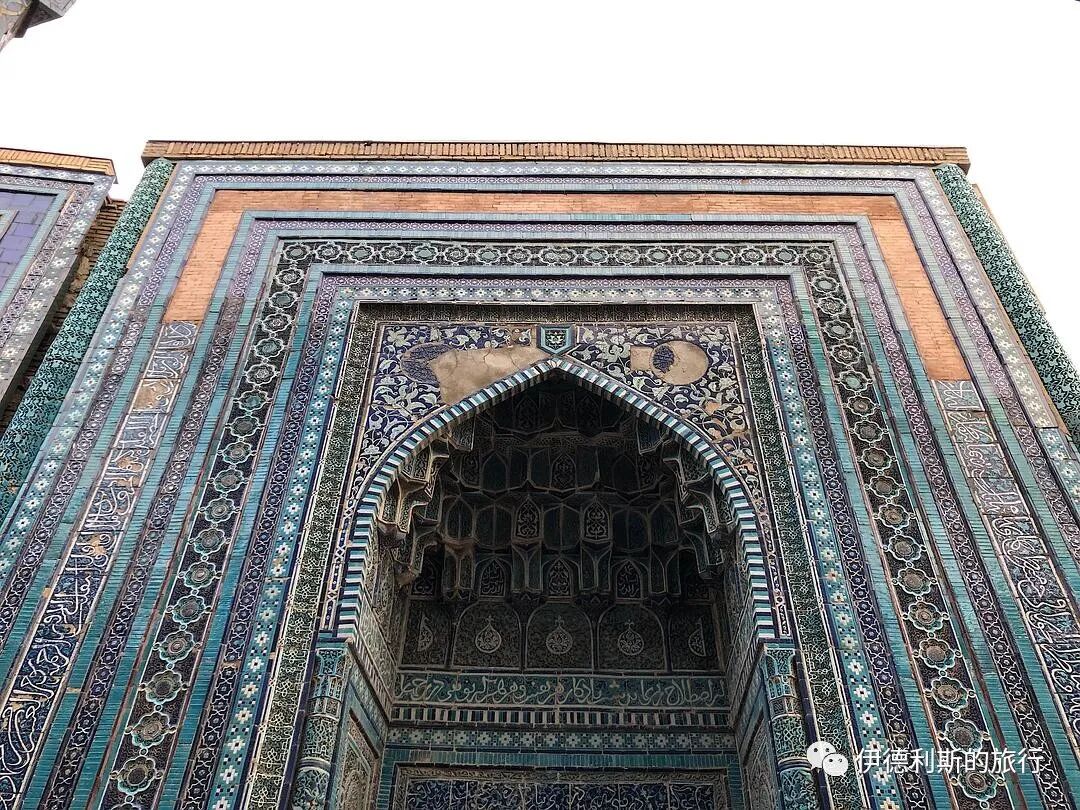
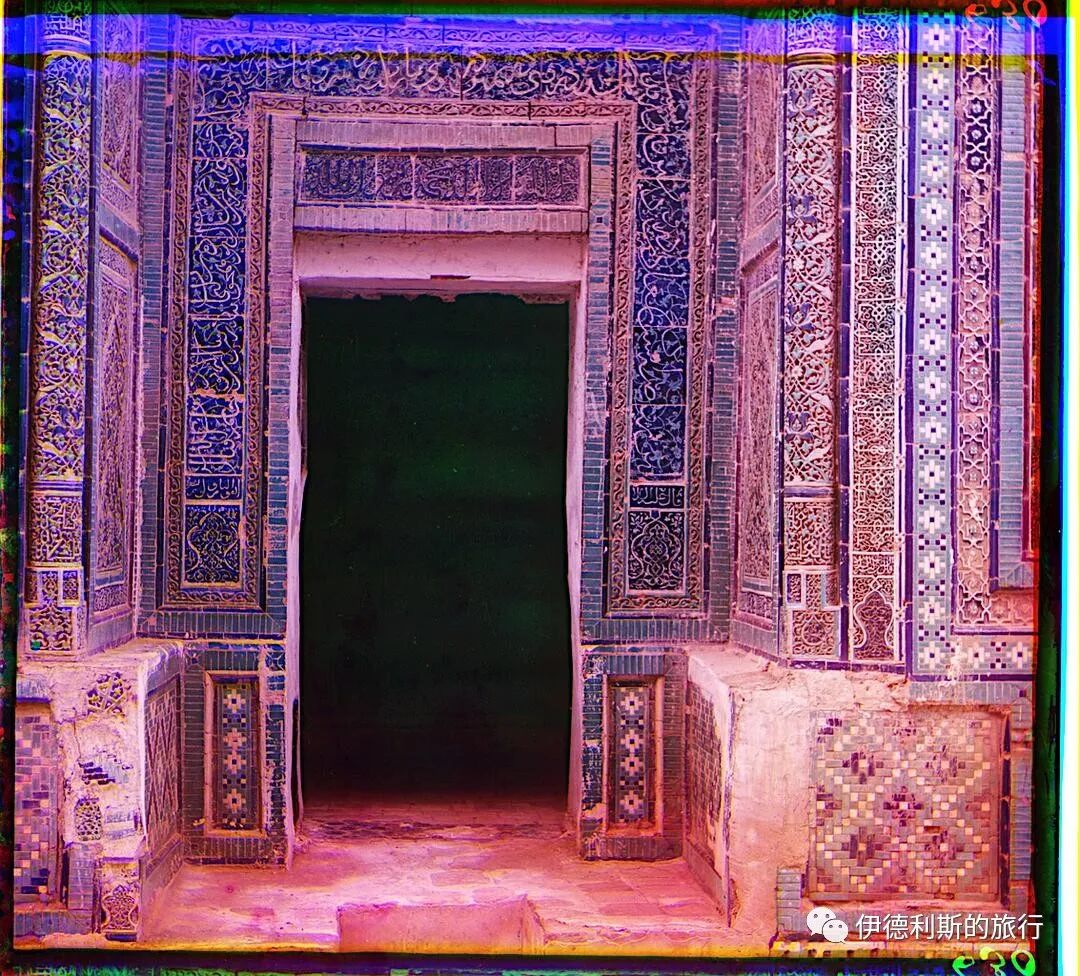
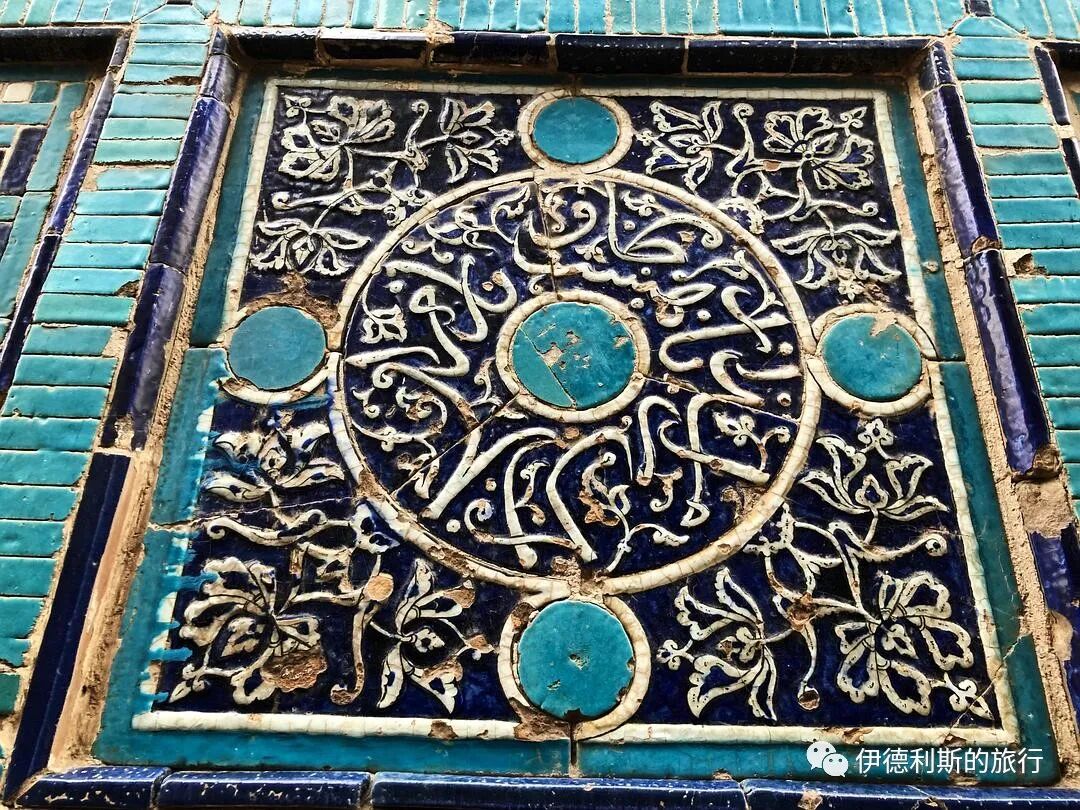
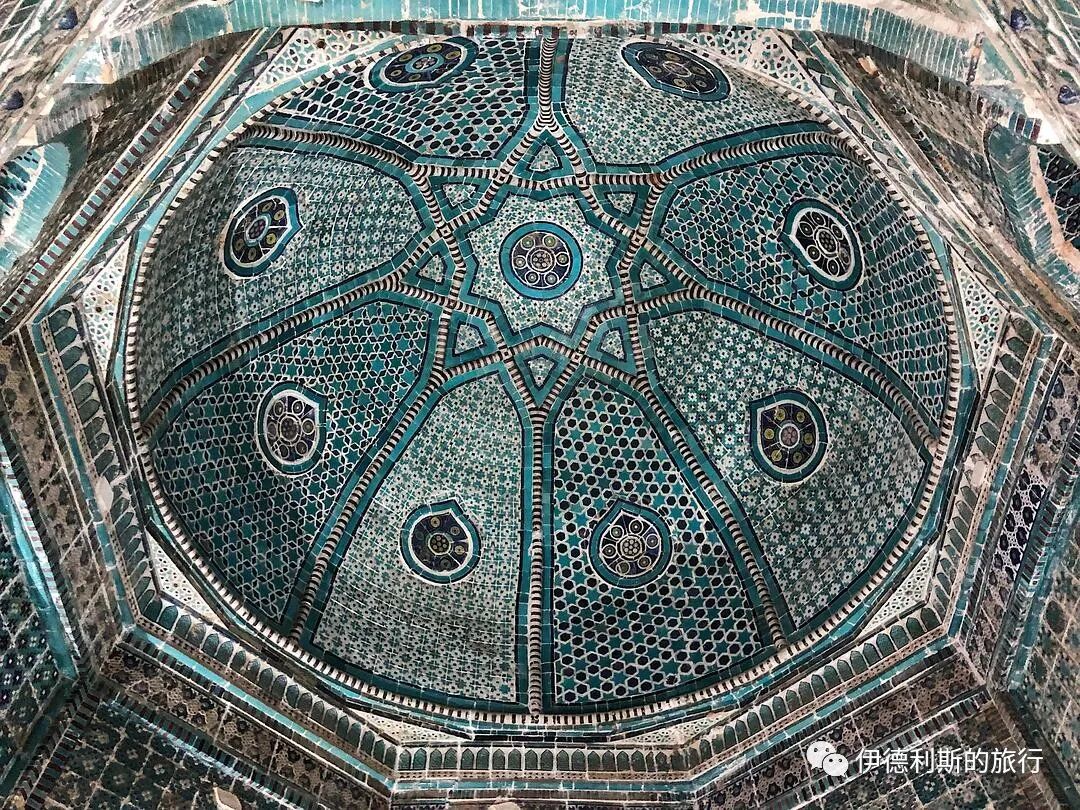
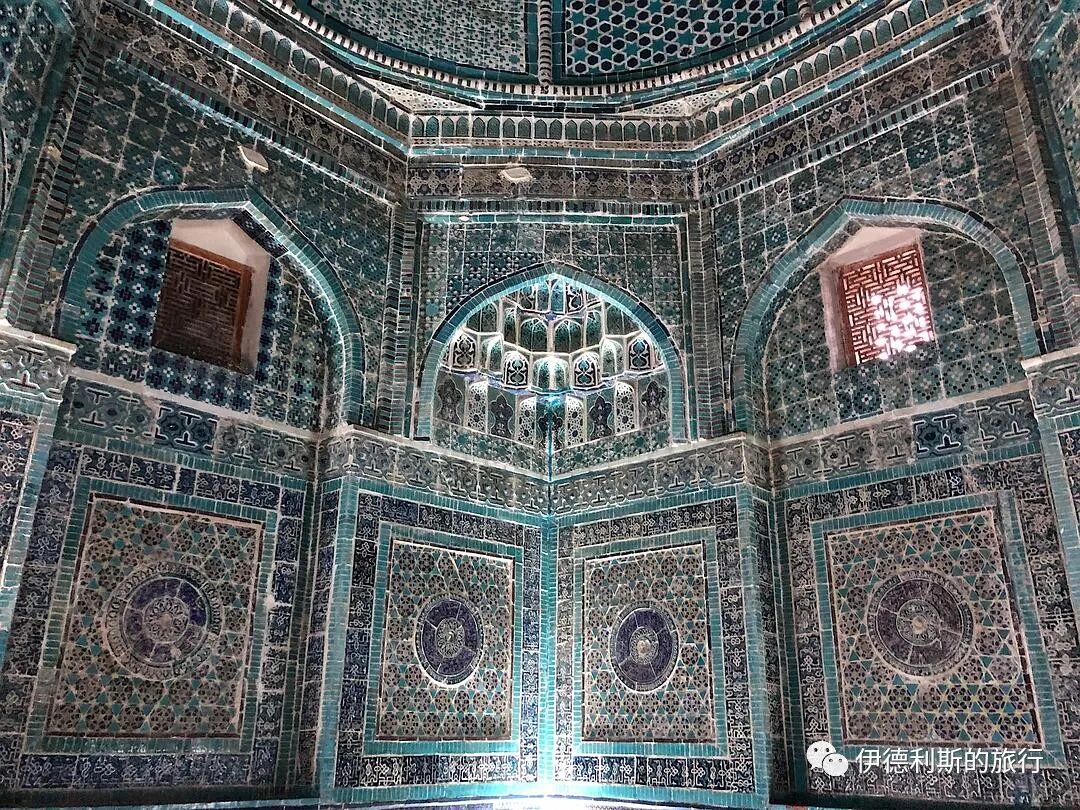
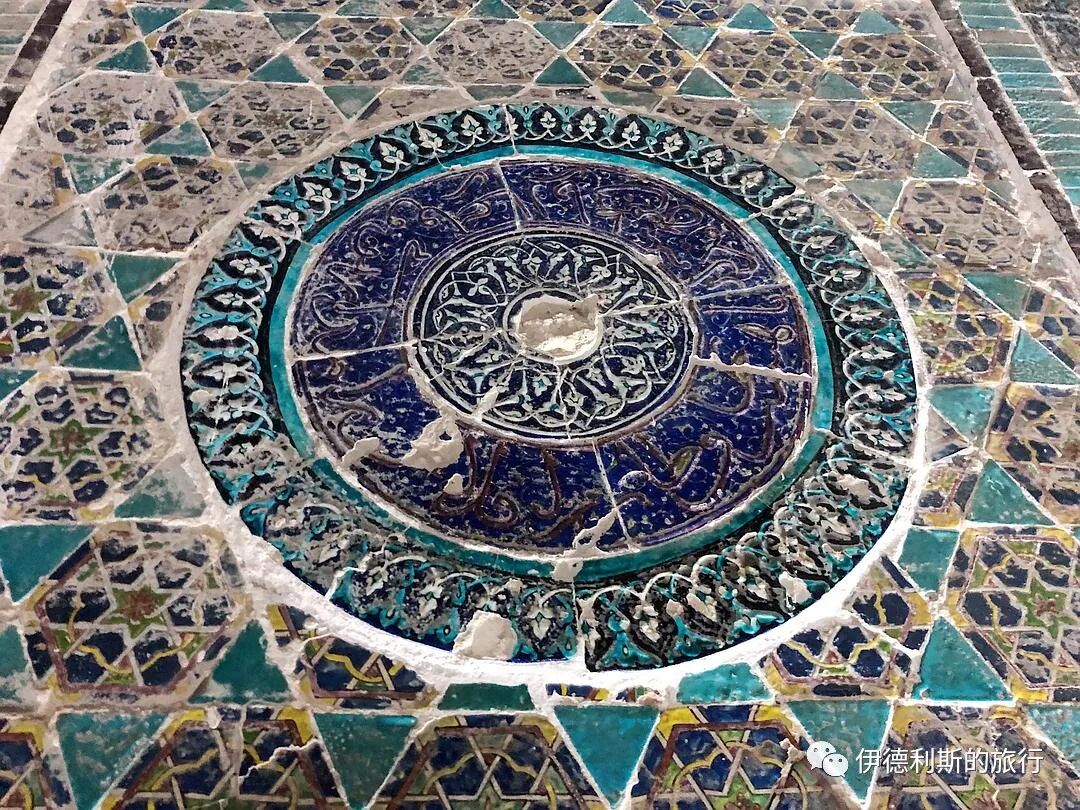
3. Tughlu Tekin Mausoleum: 1376
Tughlu Tekin was the mother of Timur's general Amir Hussein, and later Amir Hussein was also buried here.
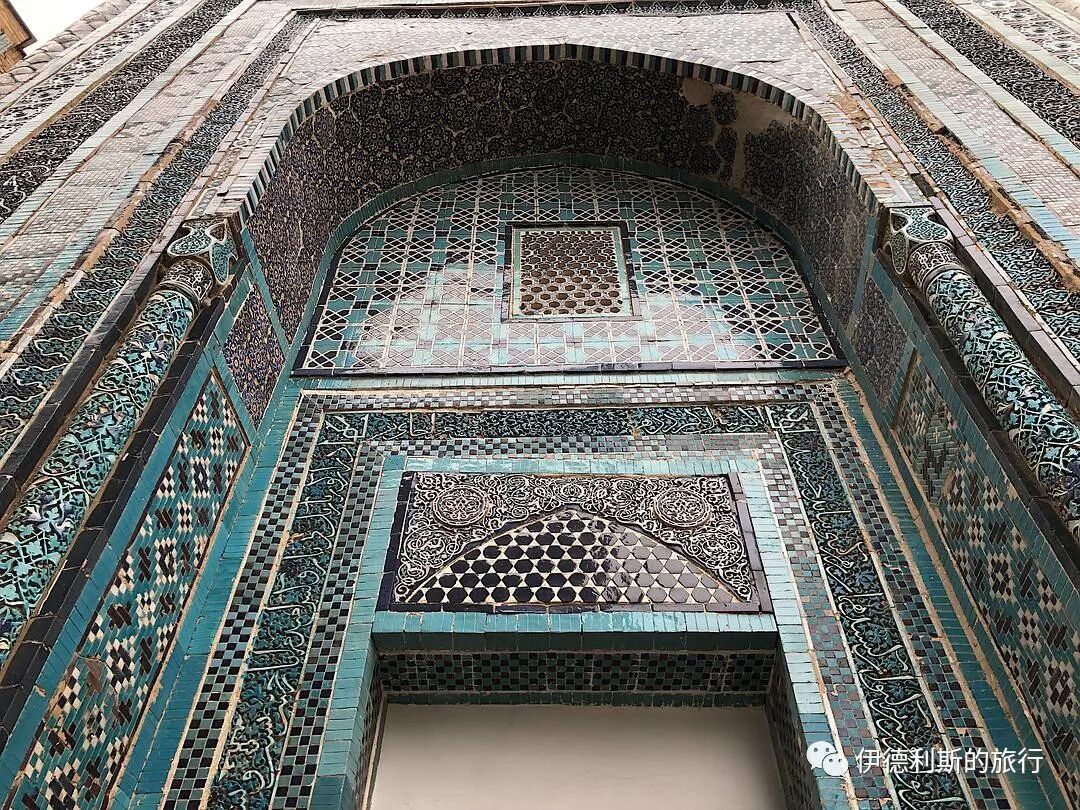
4. Shirin Bika Aka Mausoleum: 1386
The occupant of the tomb is Timur's sister.
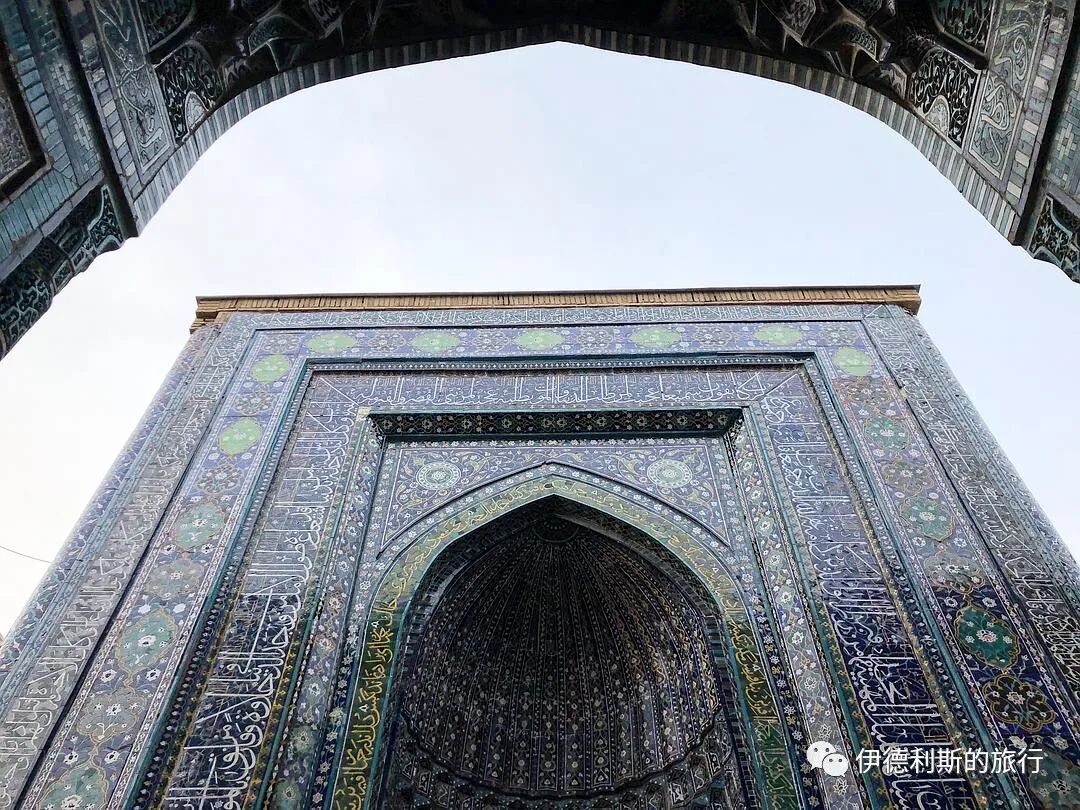
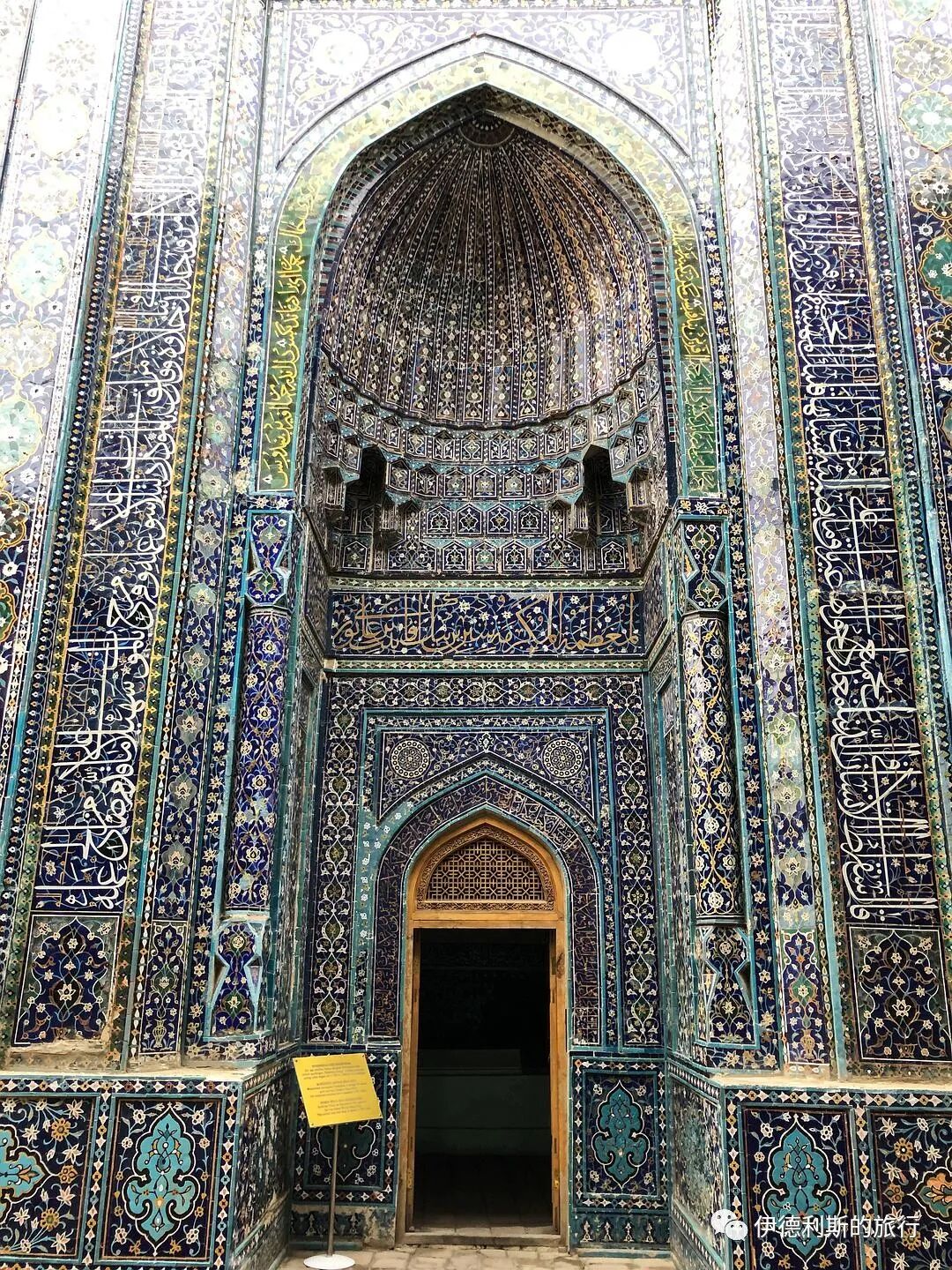
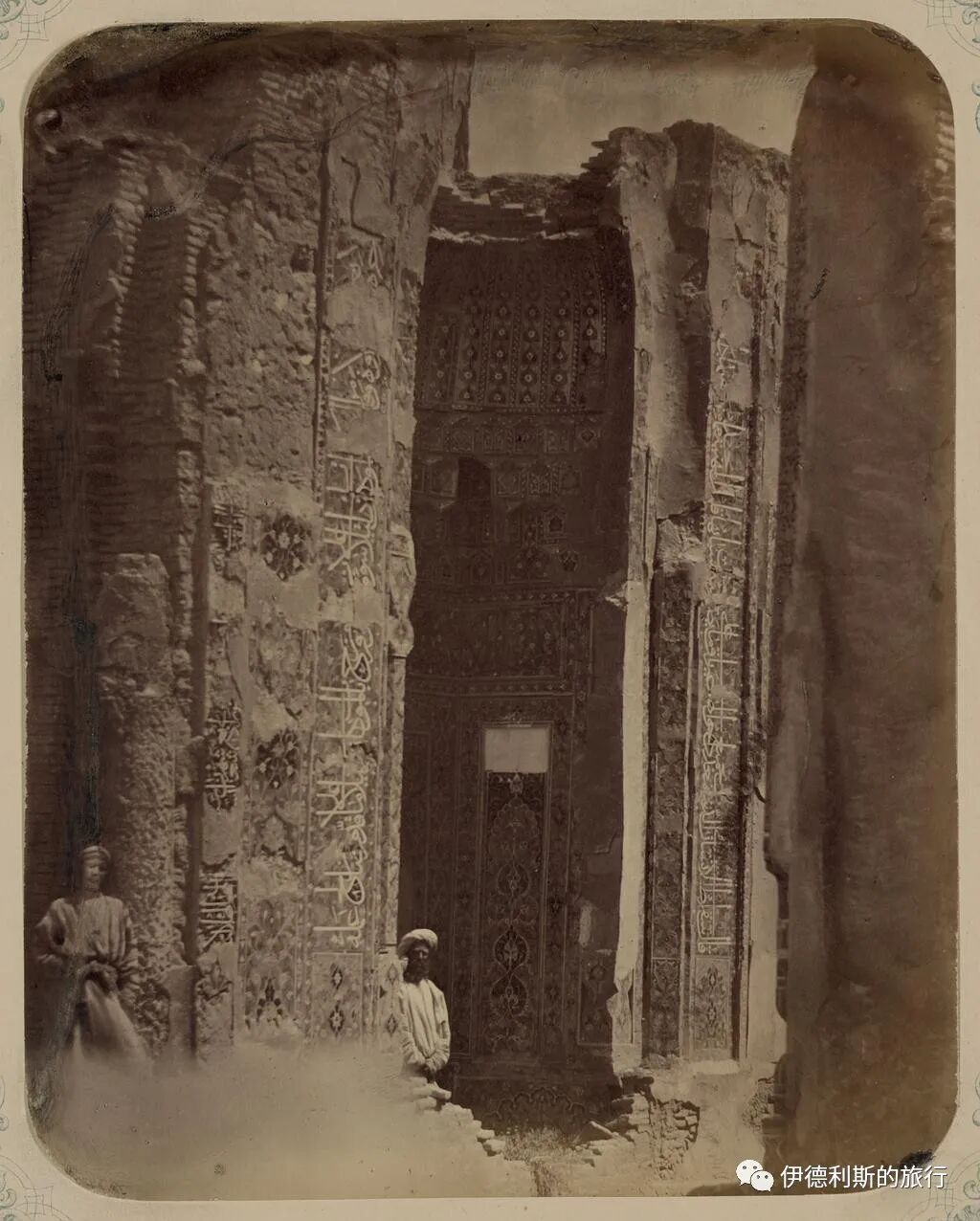
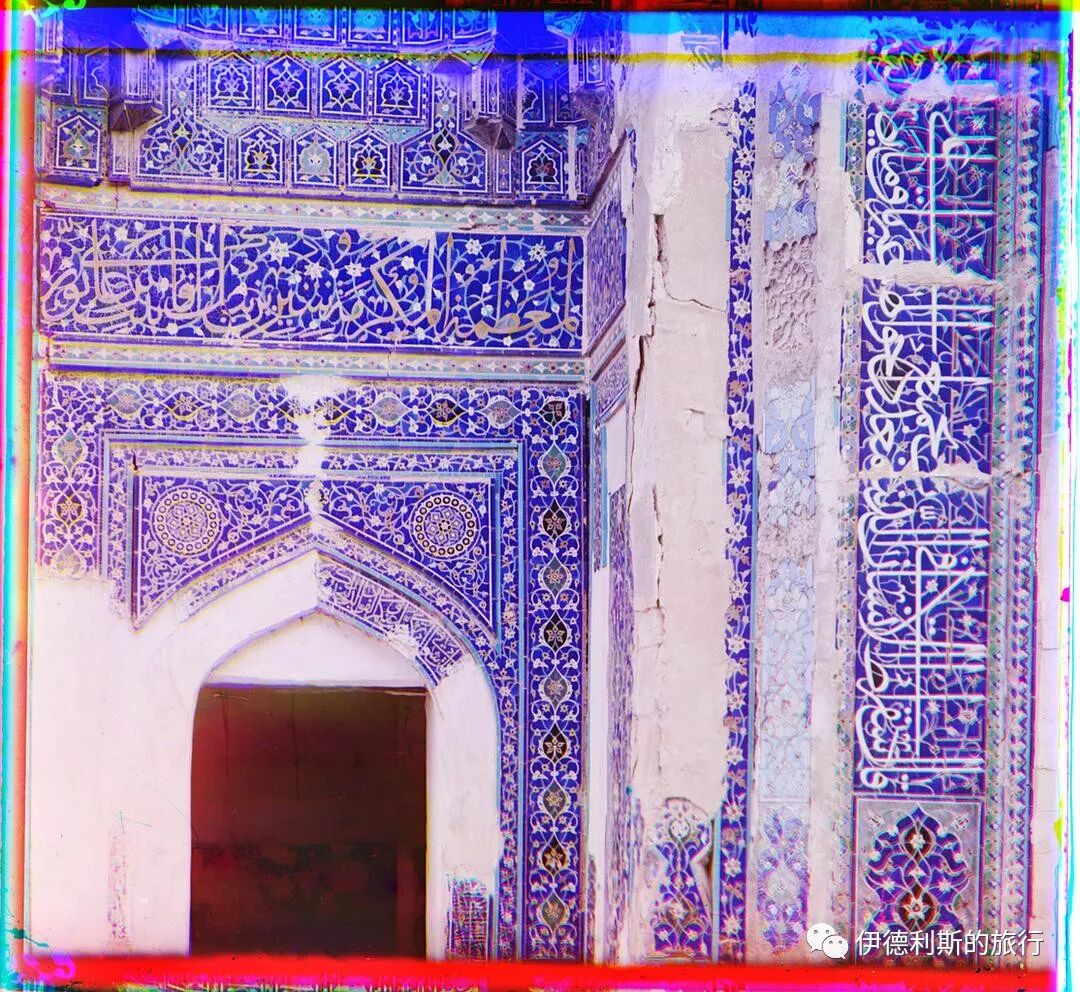
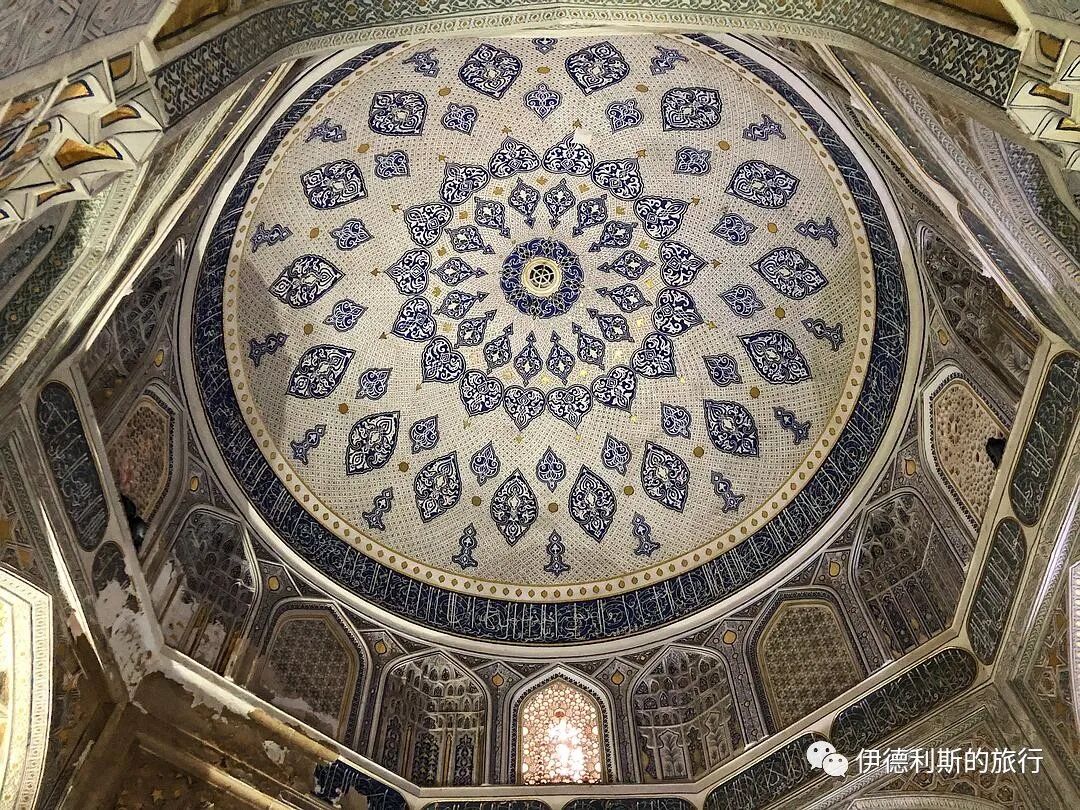
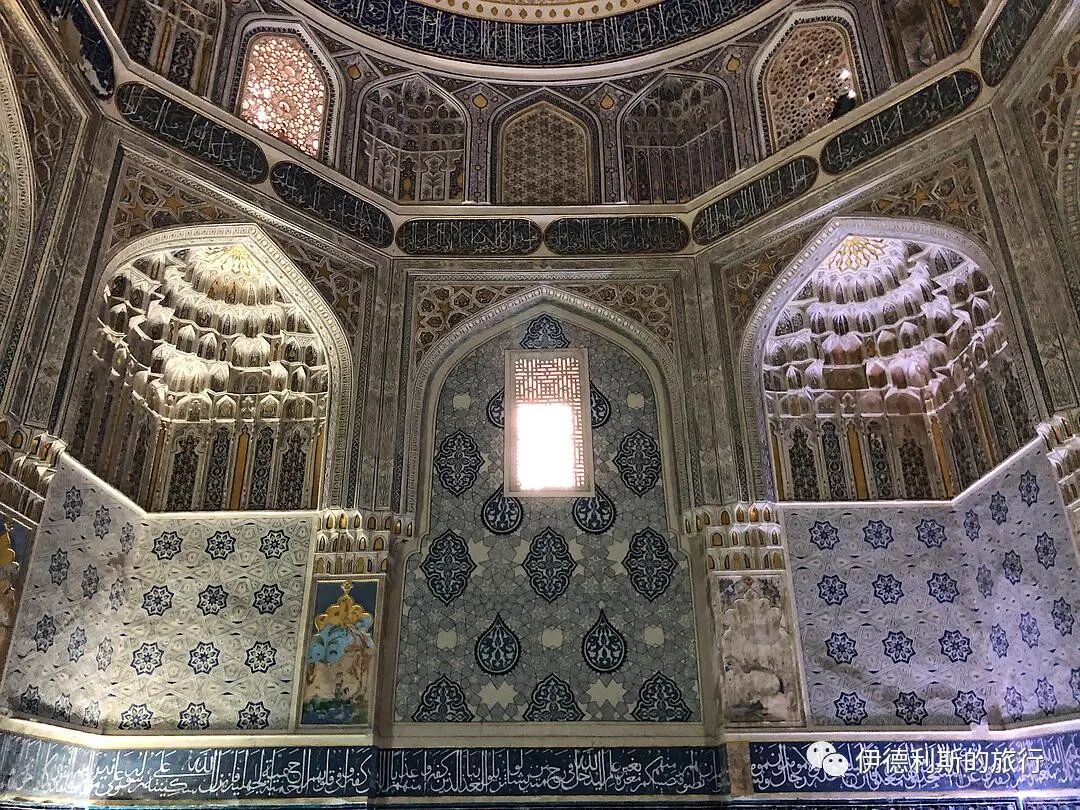
5. Octagonal Tomb Pavilion: presumably 1430s
The occupant of this tomb pavilion has not been verified to this day.
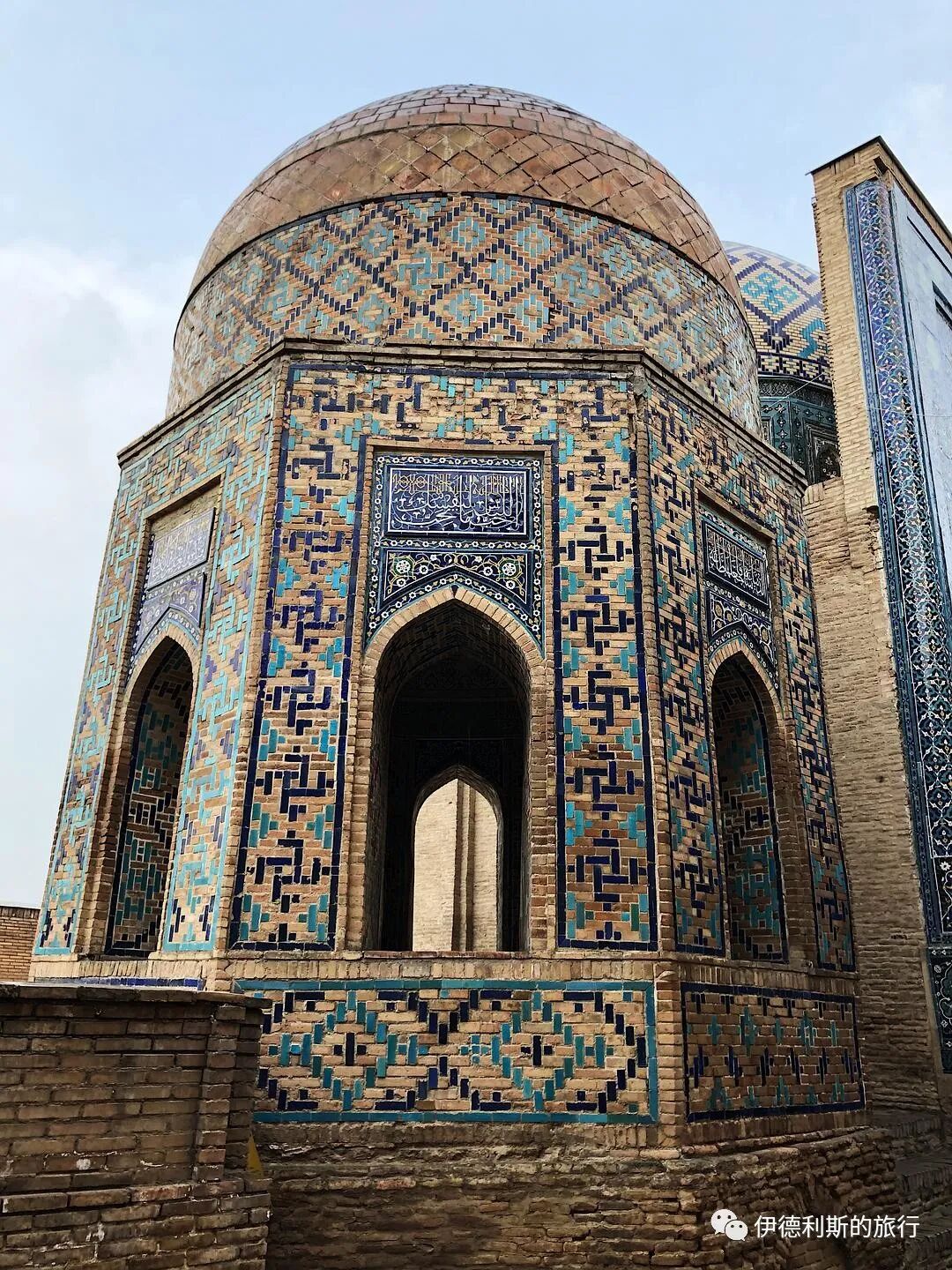
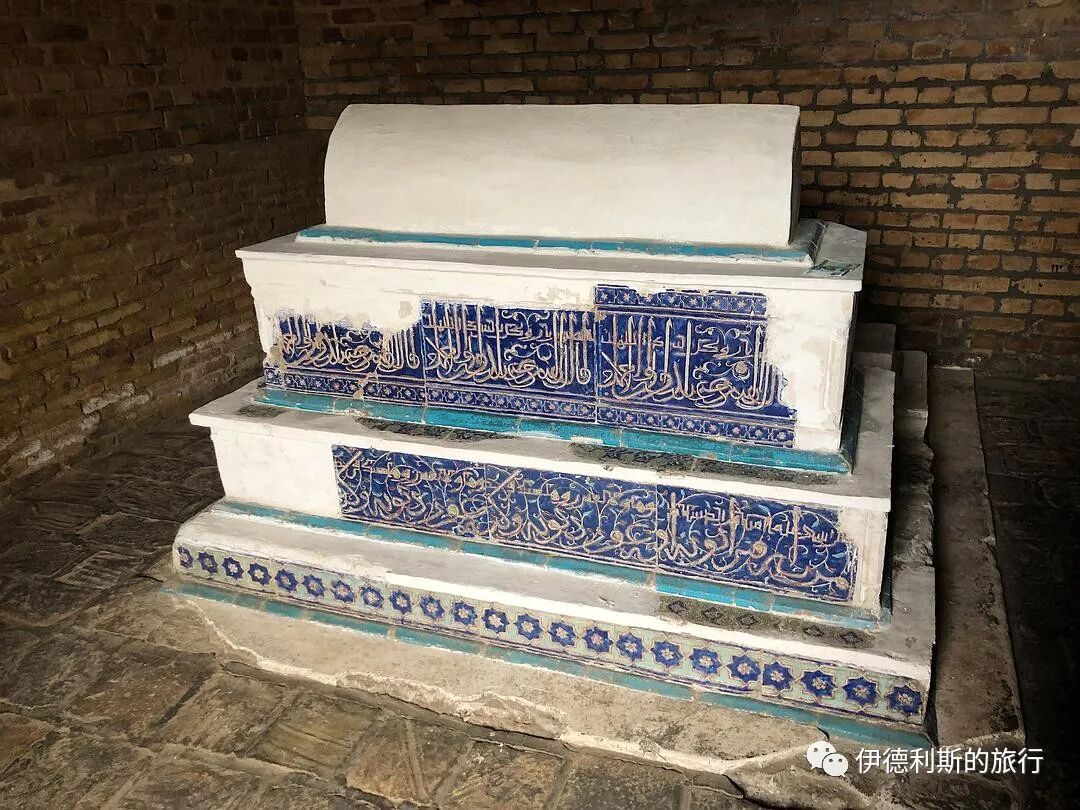
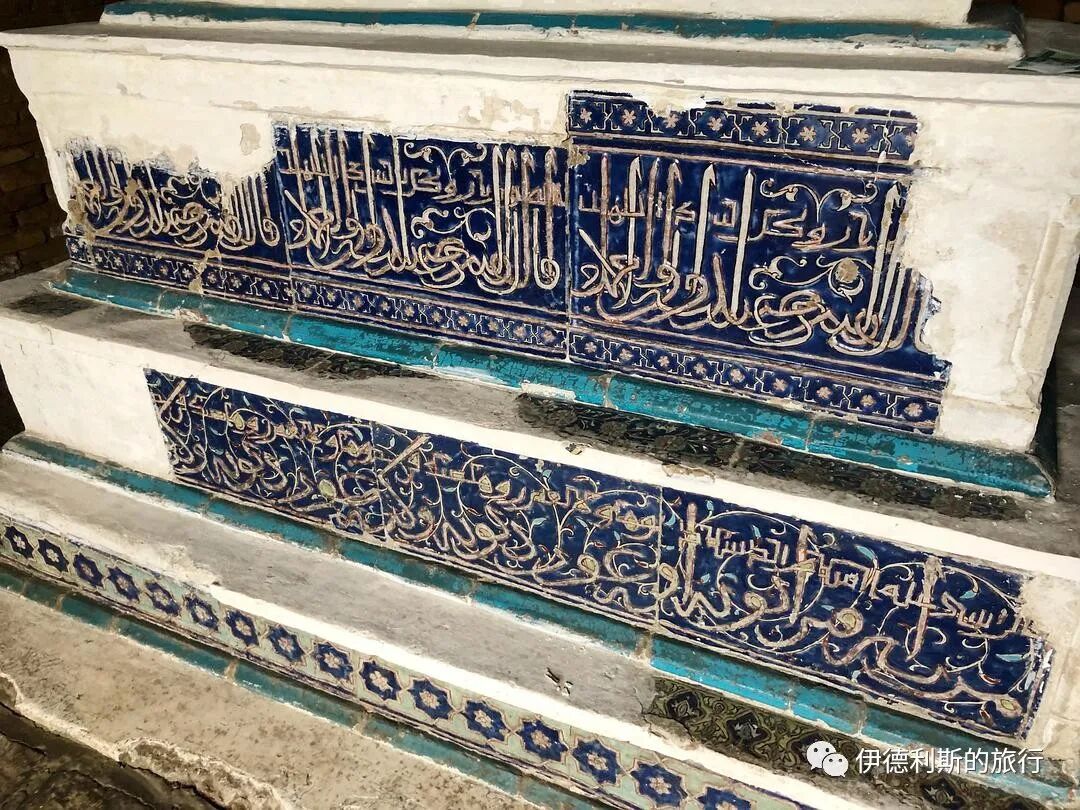
6. Usto Ali Mausoleum: 1360s–1380s
On the north side of the middle complex is a separate mausoleum; the occupant is unknown, only that the architect was Usto Ali from Nasaf (Qarshi).
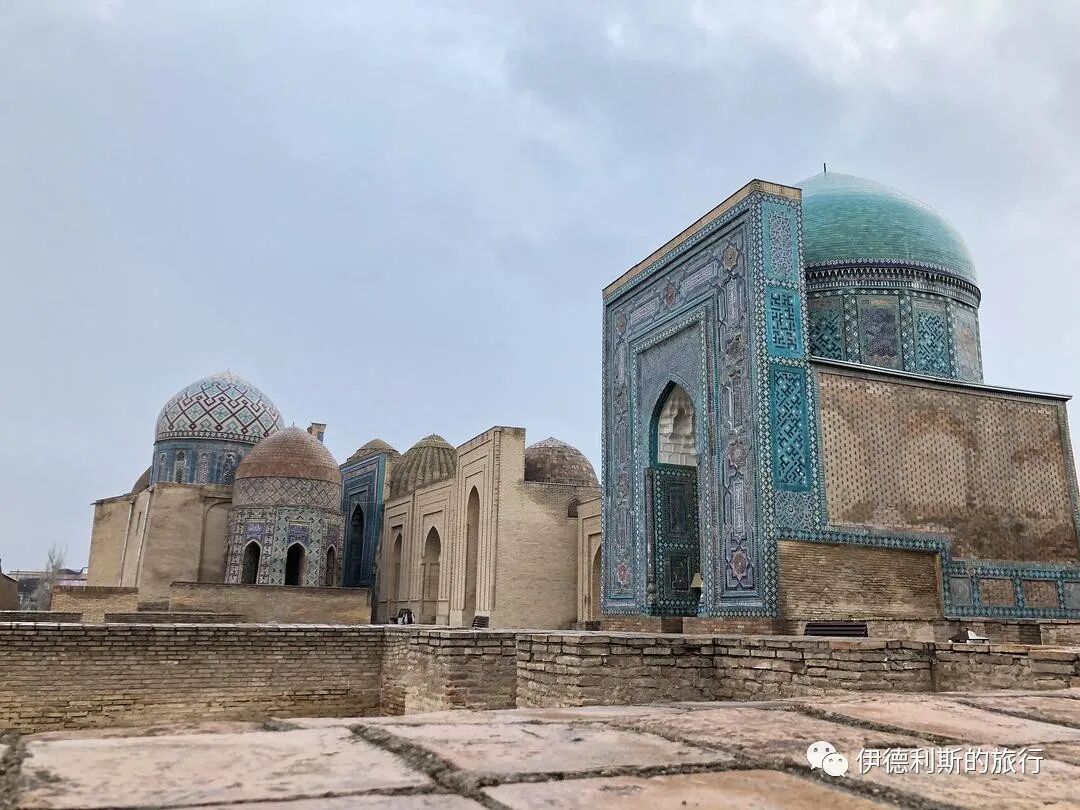
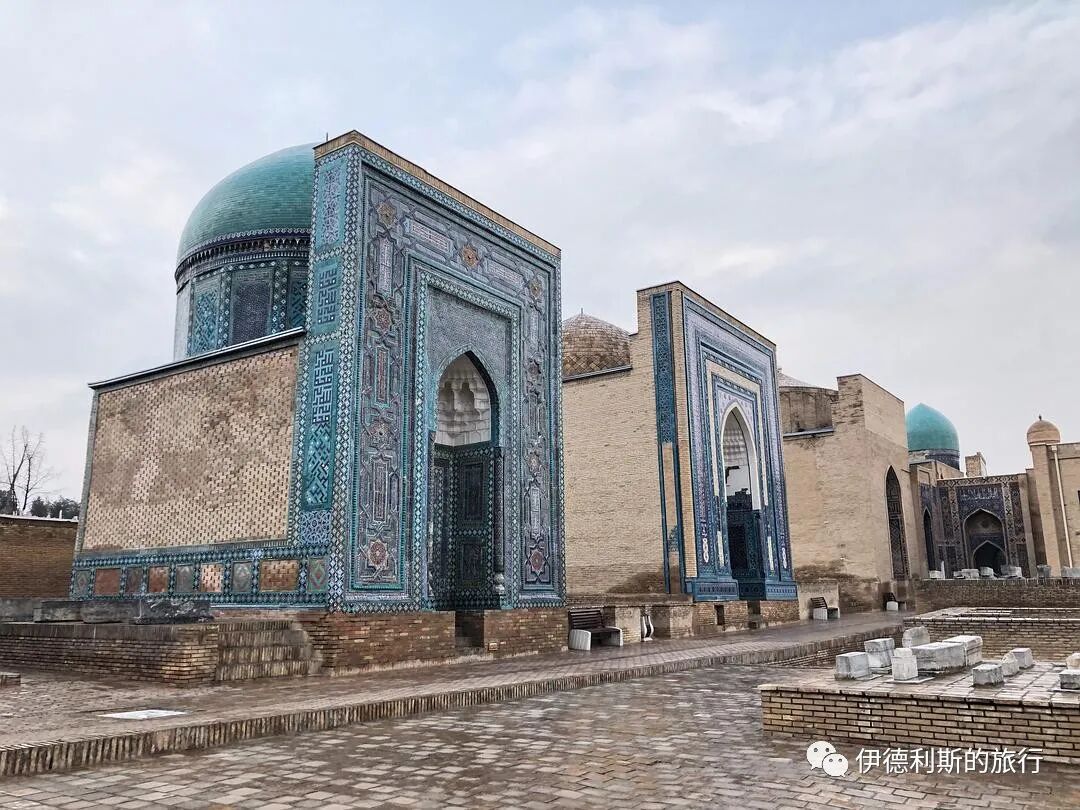
View from south to north
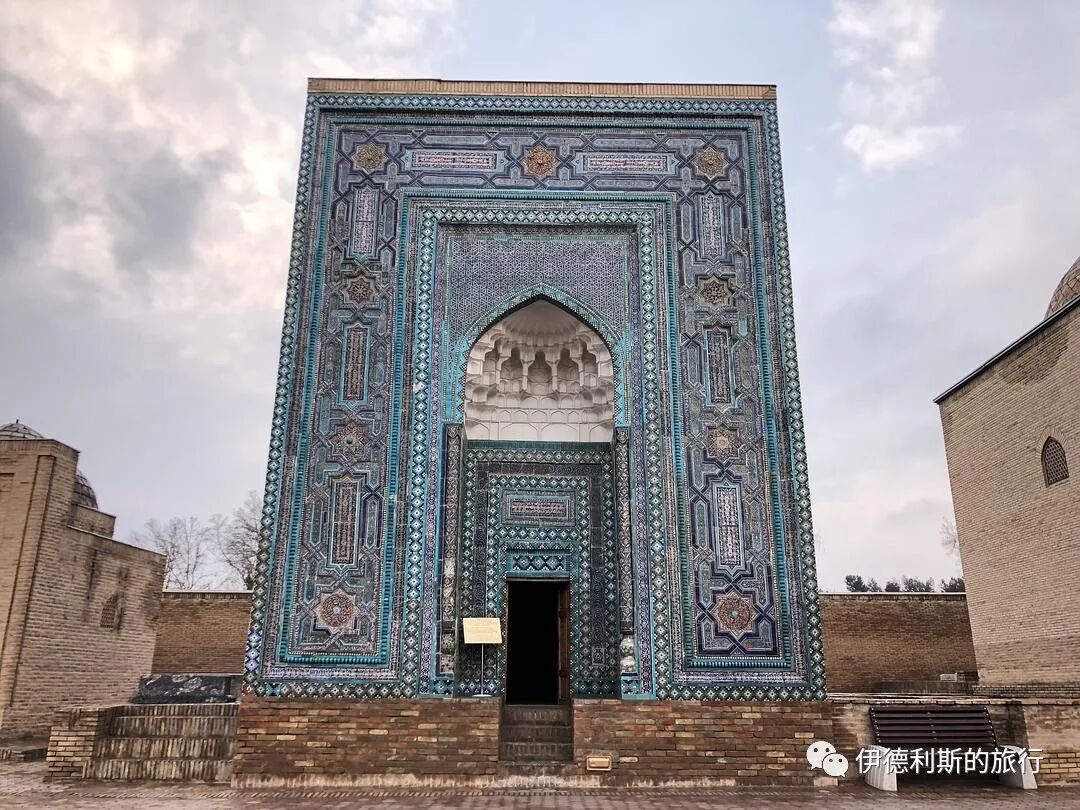
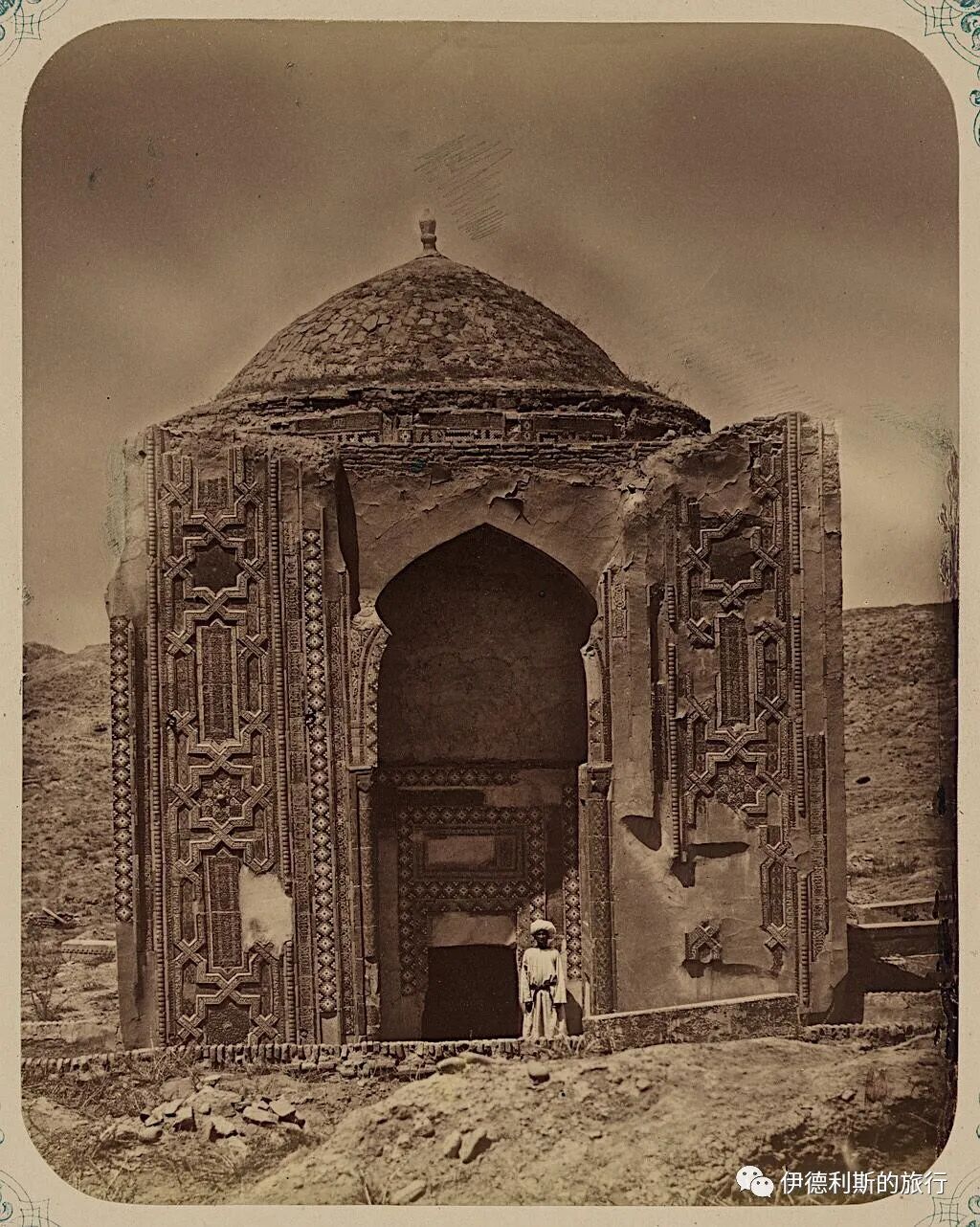
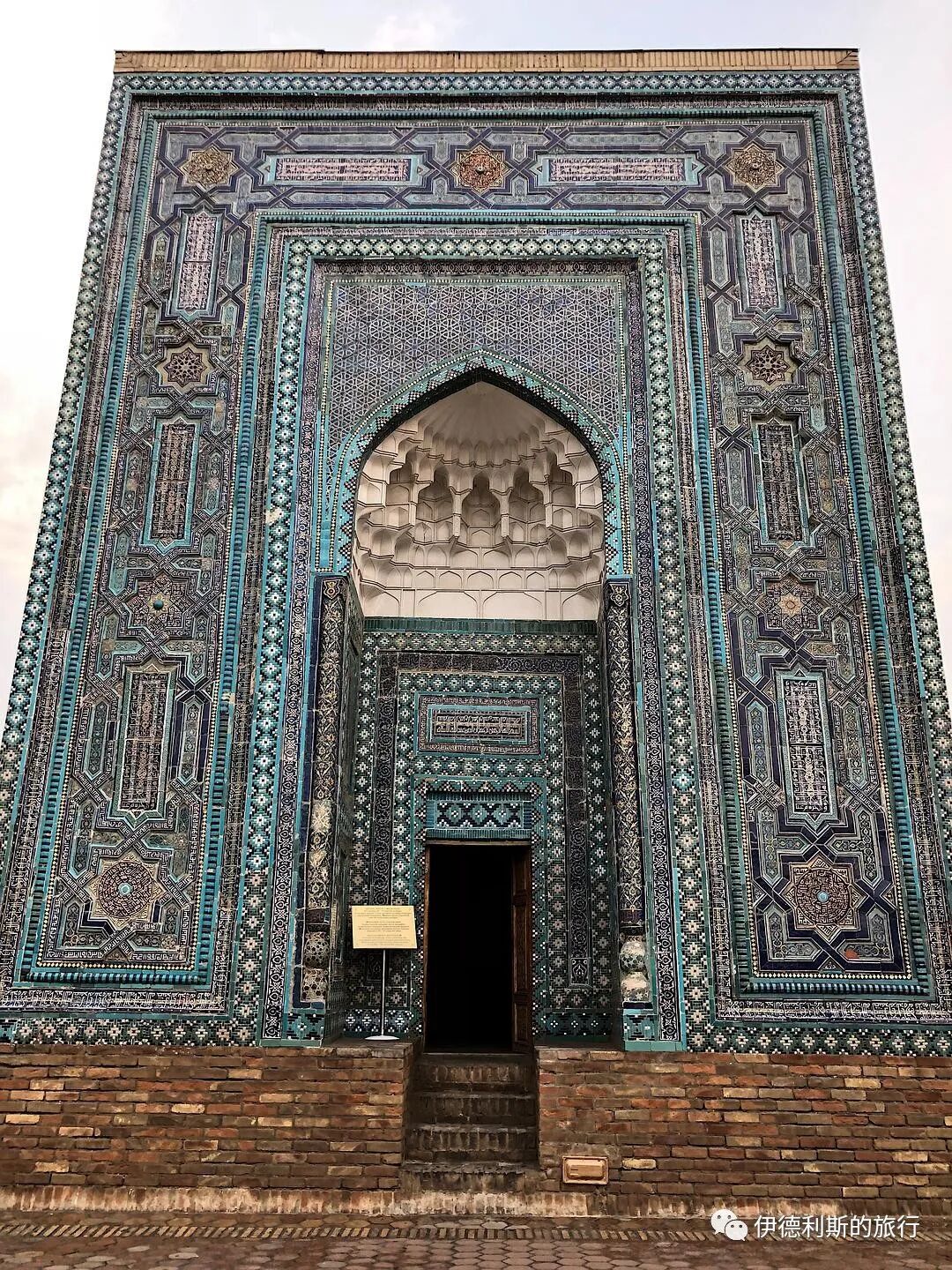
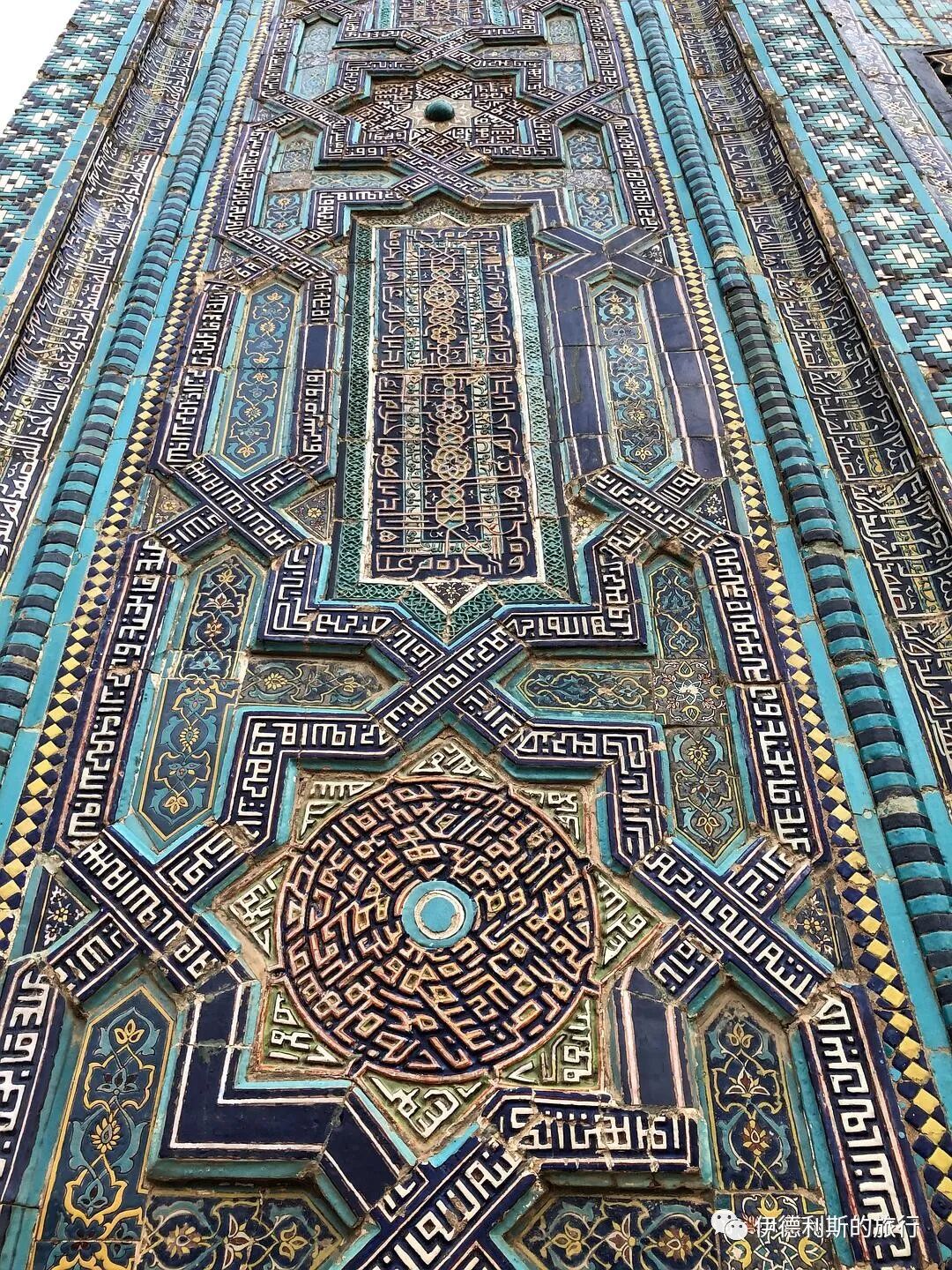
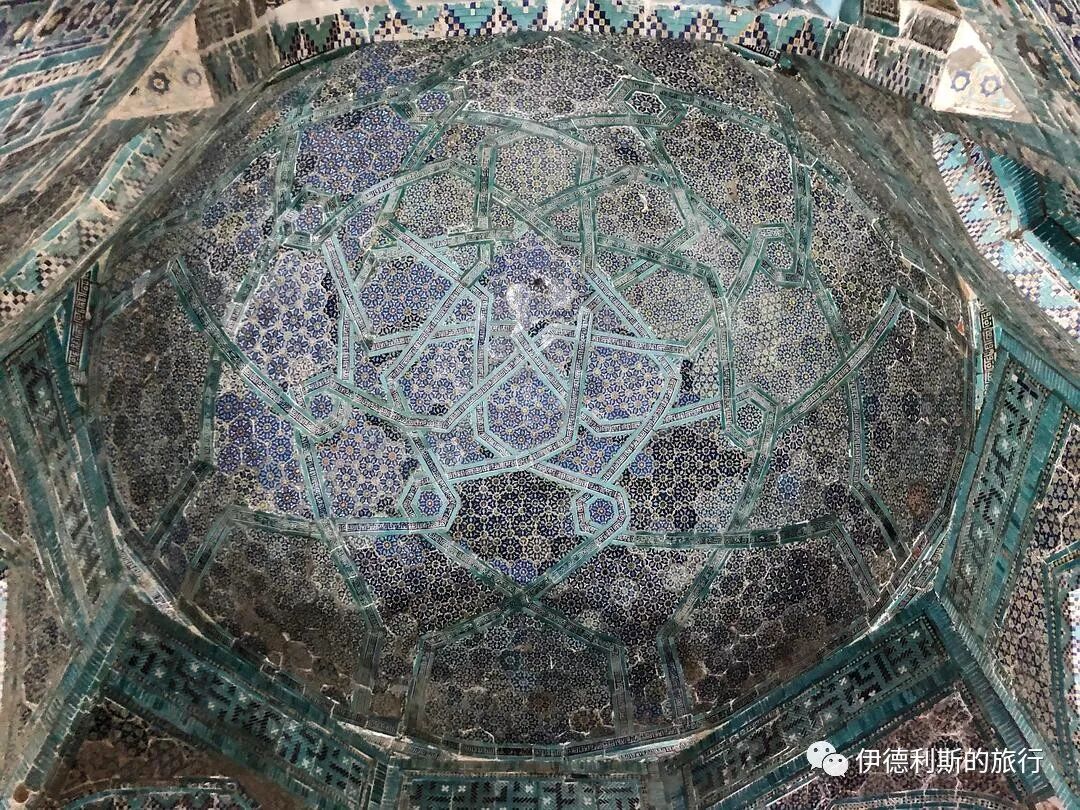
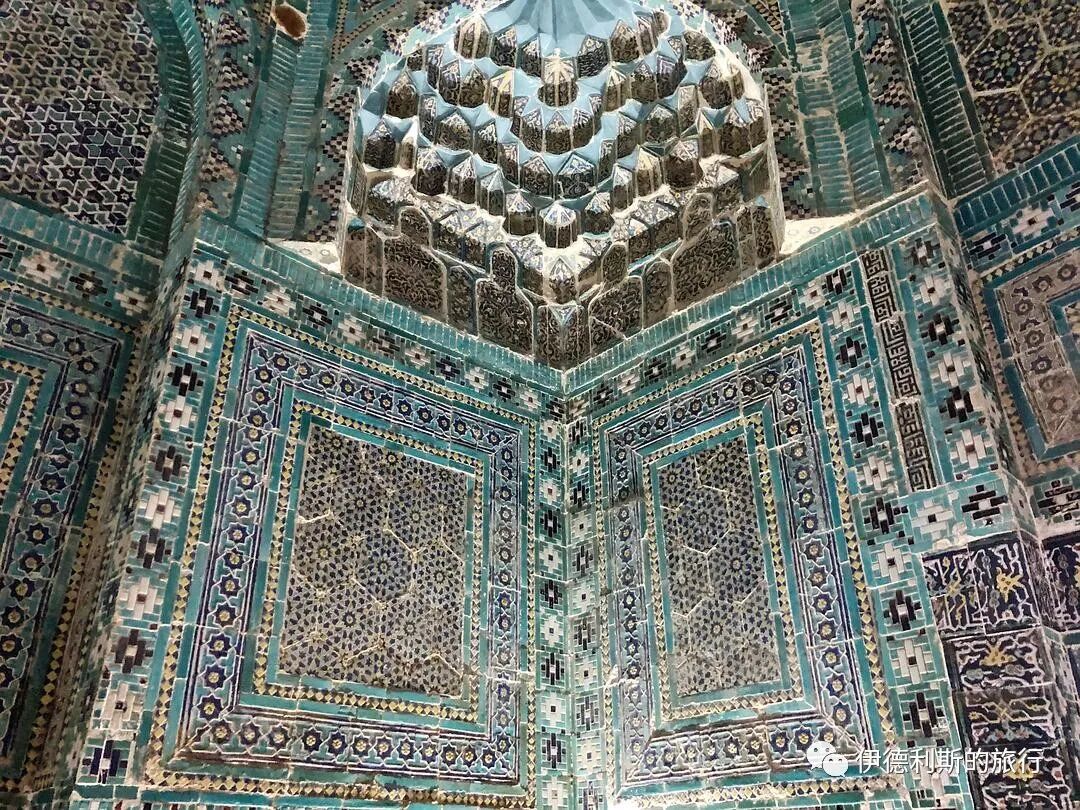
(III) Northern Complex
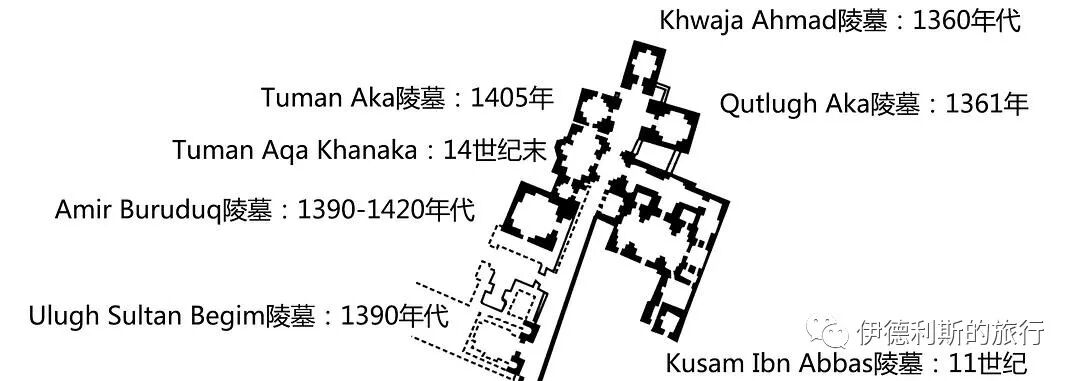
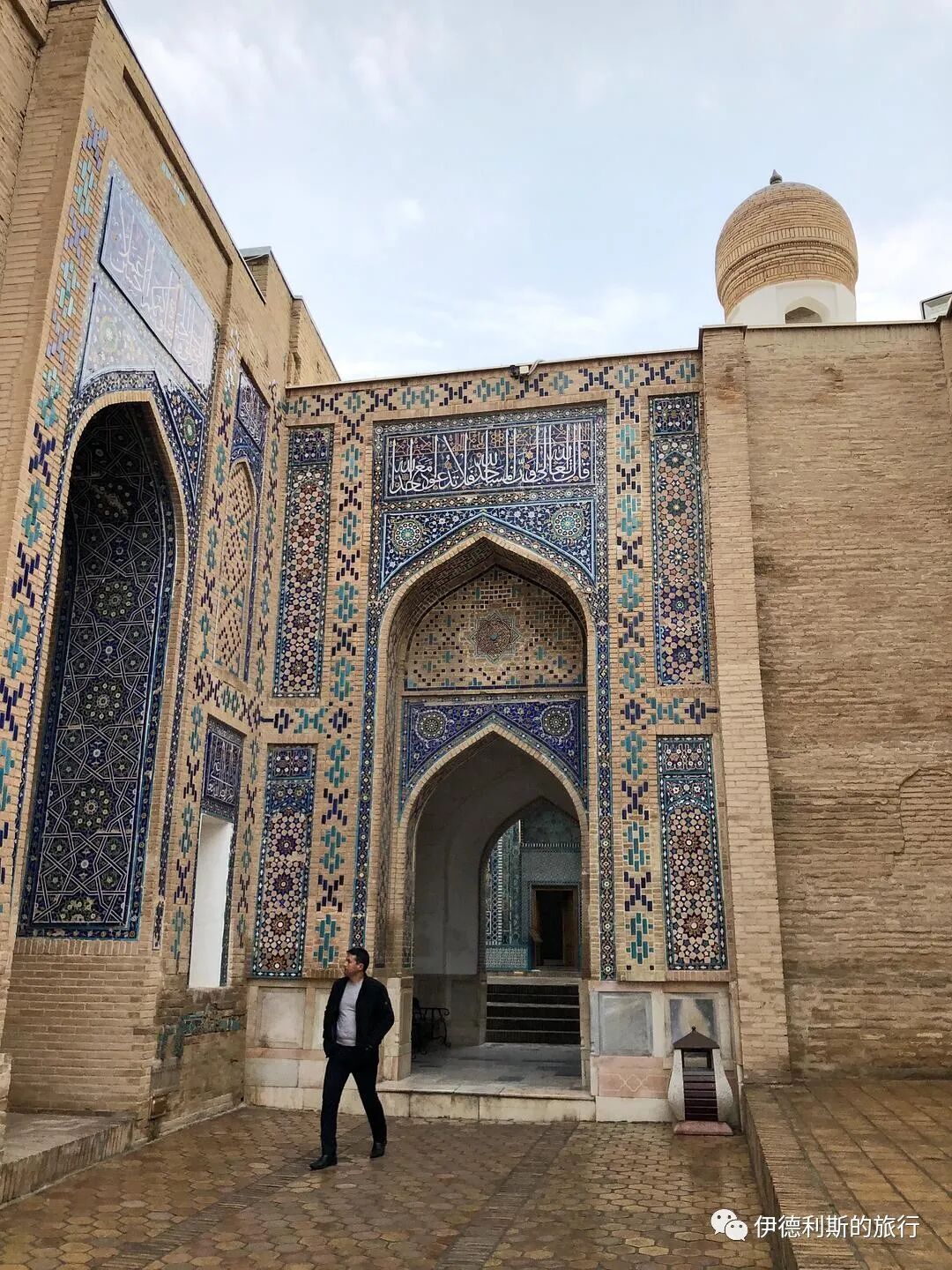
1. Passage of the Departed: 14th century
The Passage of the Departed (Yuqori Chortoq) is the gate to the northern complex.
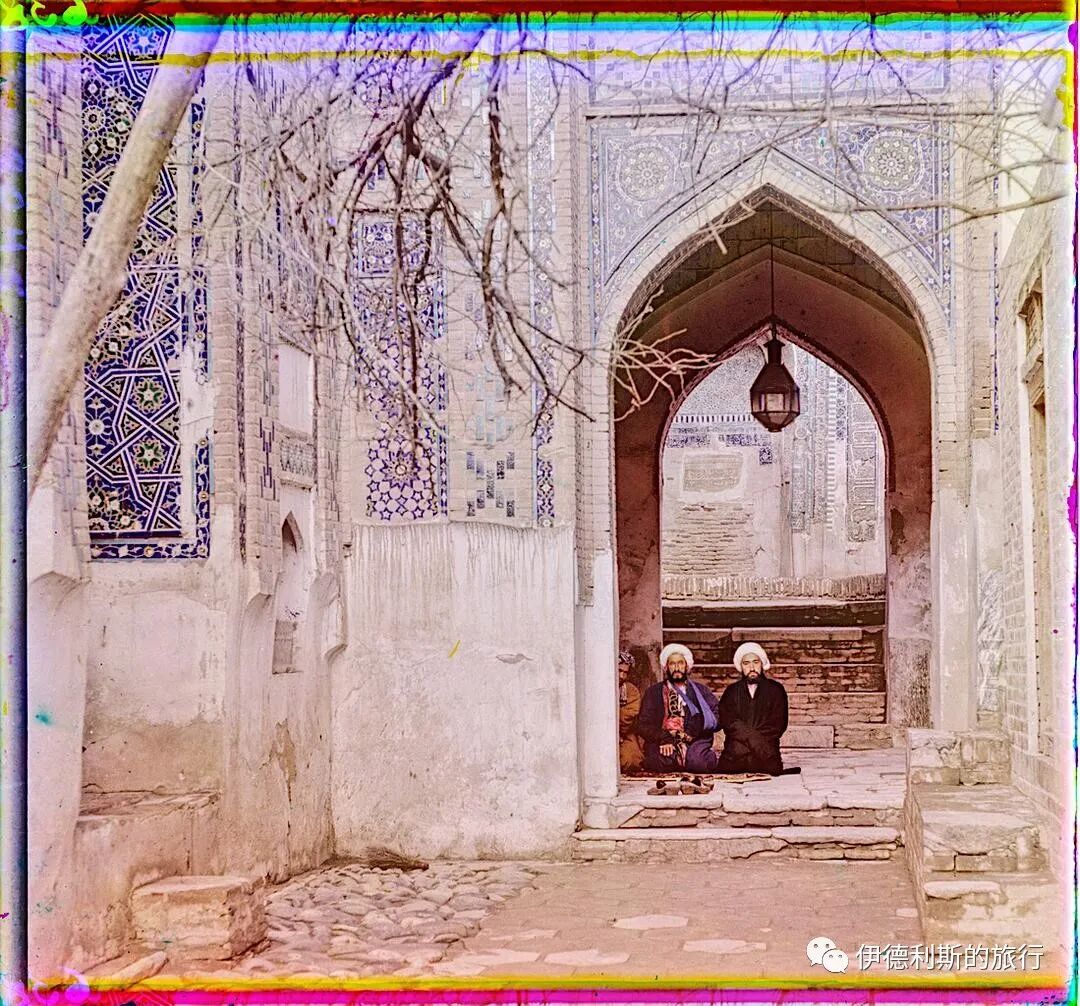
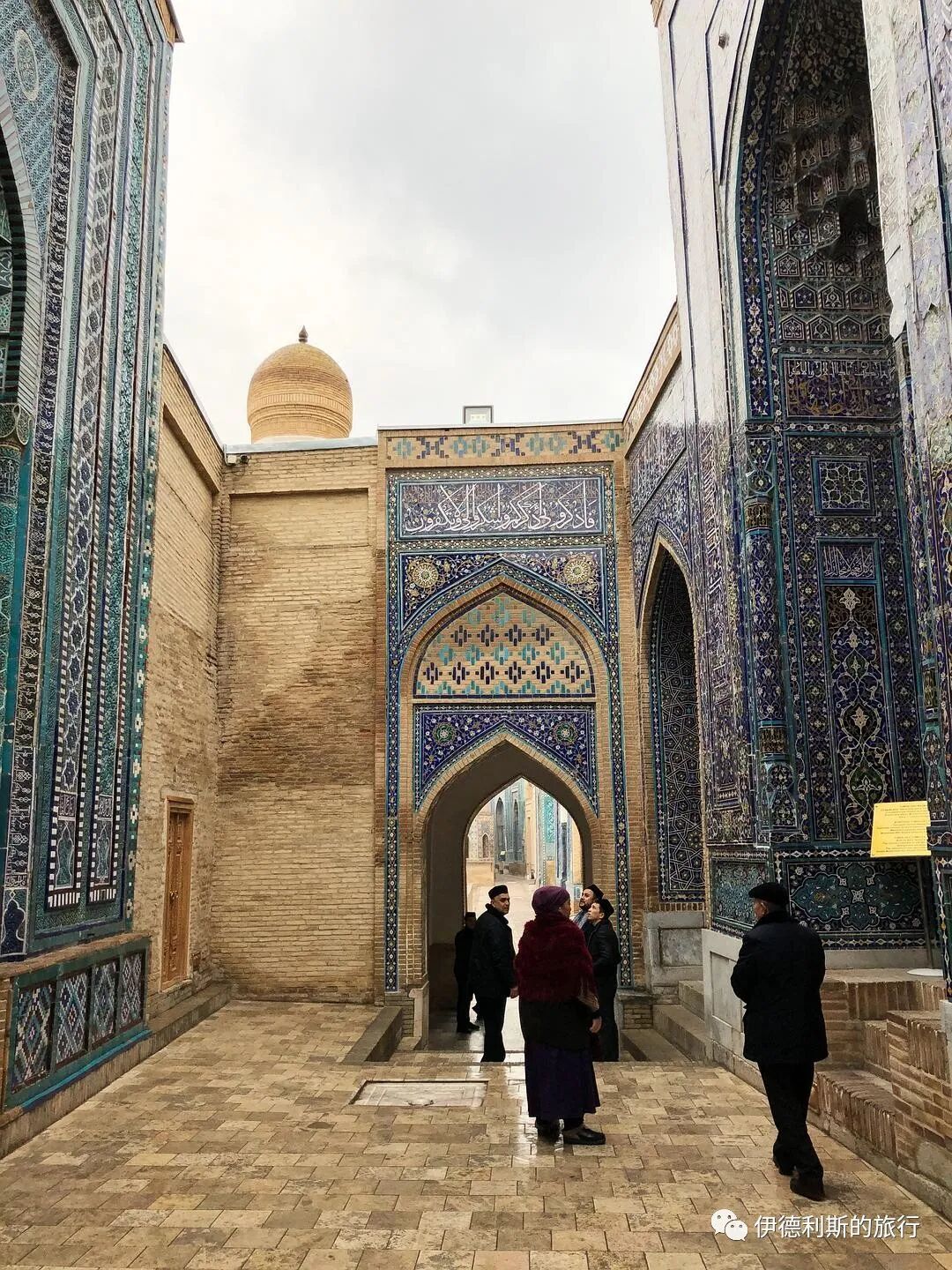
2. Kusam Ibn Abbas Mausoleum: 11th century
The Kusam Ibn Abbas Mausoleum is the earliest building constructed in Shah-i-Zinda, dating back to the 11th century, and was renovated in the 14th and 15th centuries. Kusam is legendary as the cousin of the Prophet Muhammad and the son of the Prophet's uncle, Abbas ibn Abdul-Muttalib. Kusam is said to be one of the first people to come to Central Asia to spread Islam and eventually died in Samarkand.
In 1333, the famous Moroccan traveler Ibn Battuta passed through Samarkand and visited the Kusam mausoleum. The 'Rihla' (Travels of Ibn Battuta) records:
'The people of Samarkand come to visit this tomb every Monday and Friday eve; the Tatars also come to visit and make great vows to him, bringing cattle, sheep, dirhams, and dinars to be used as funds for the food and lodging of passing travelers and for the servants of the shrine.' 'On the tomb is a dome built on four pillars, each pillar flanked by two marble columns in green, black, white, and red.' 'The walls of the dome are carved and inlaid with gilded marble, and the ceiling is made of lead.' 'The tomb is inlaid with ebony, the four corners of the tomb are wrapped in silver leaf, three silver lamps are hung over the tomb, and wool and cotton carpets are spread inside the dome.' "
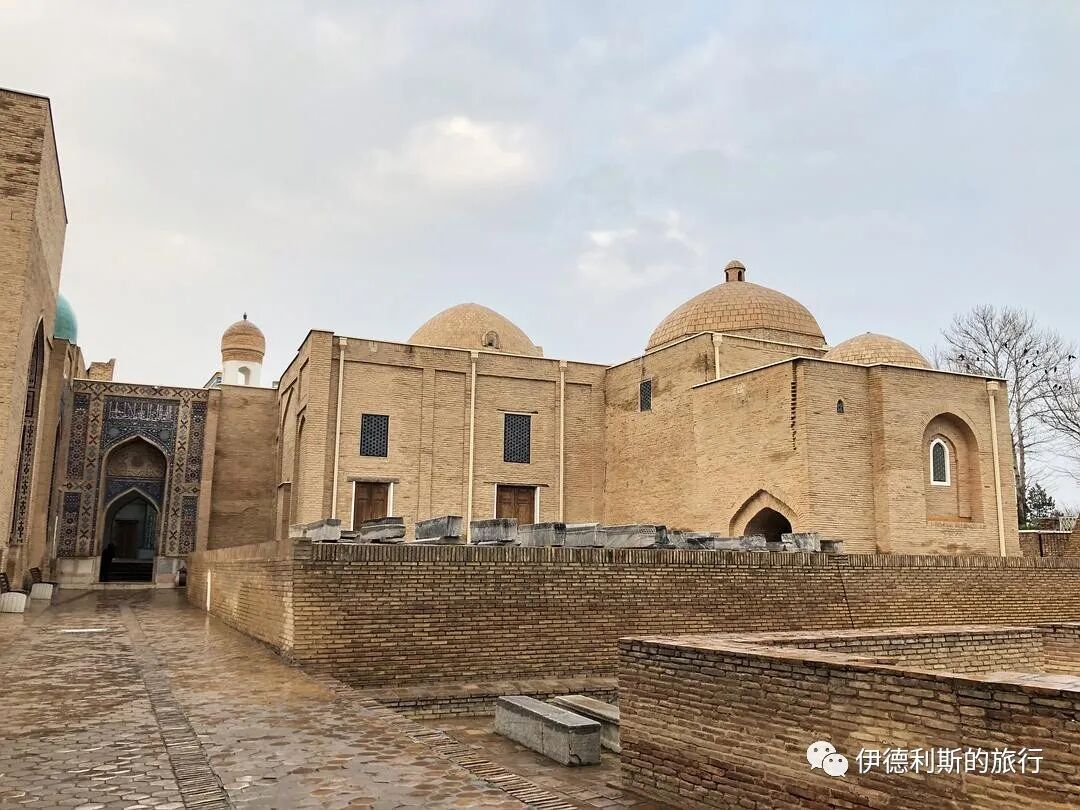
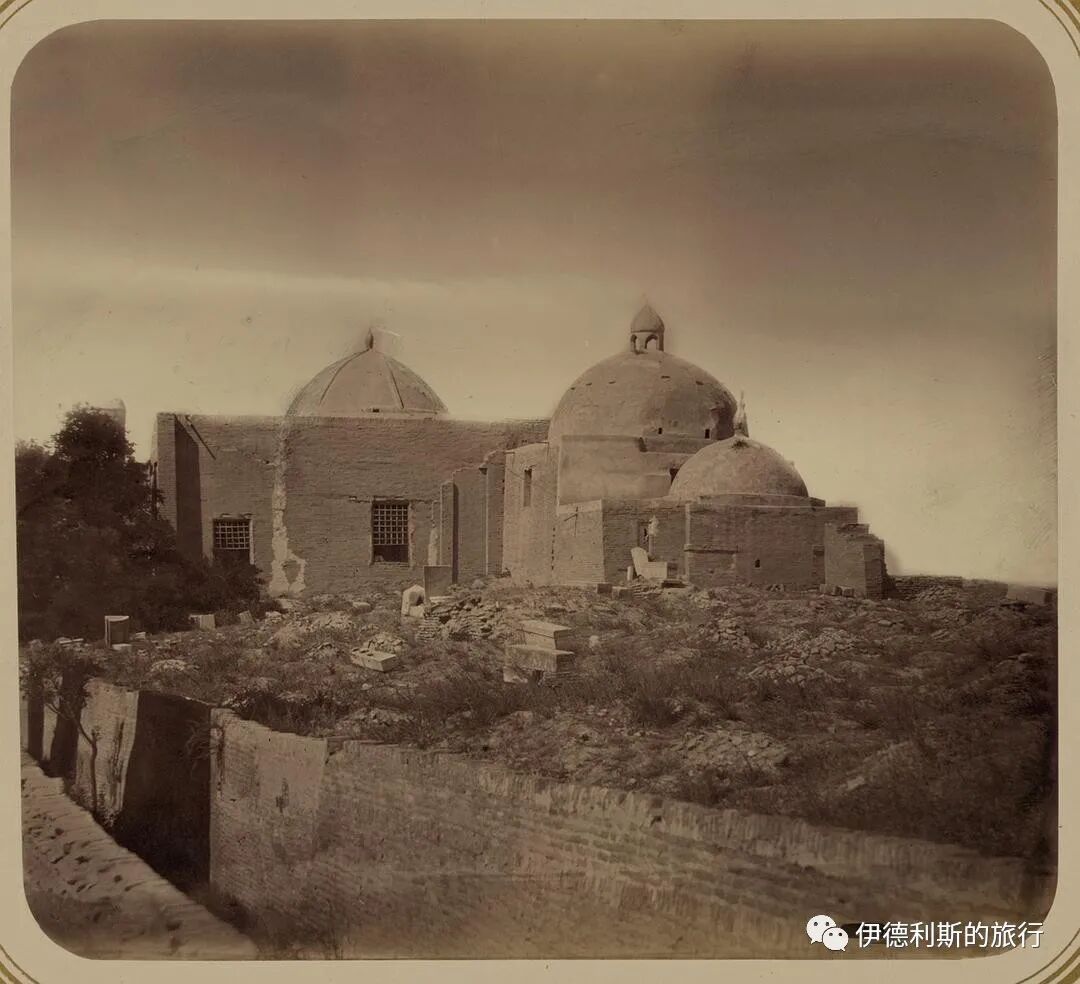
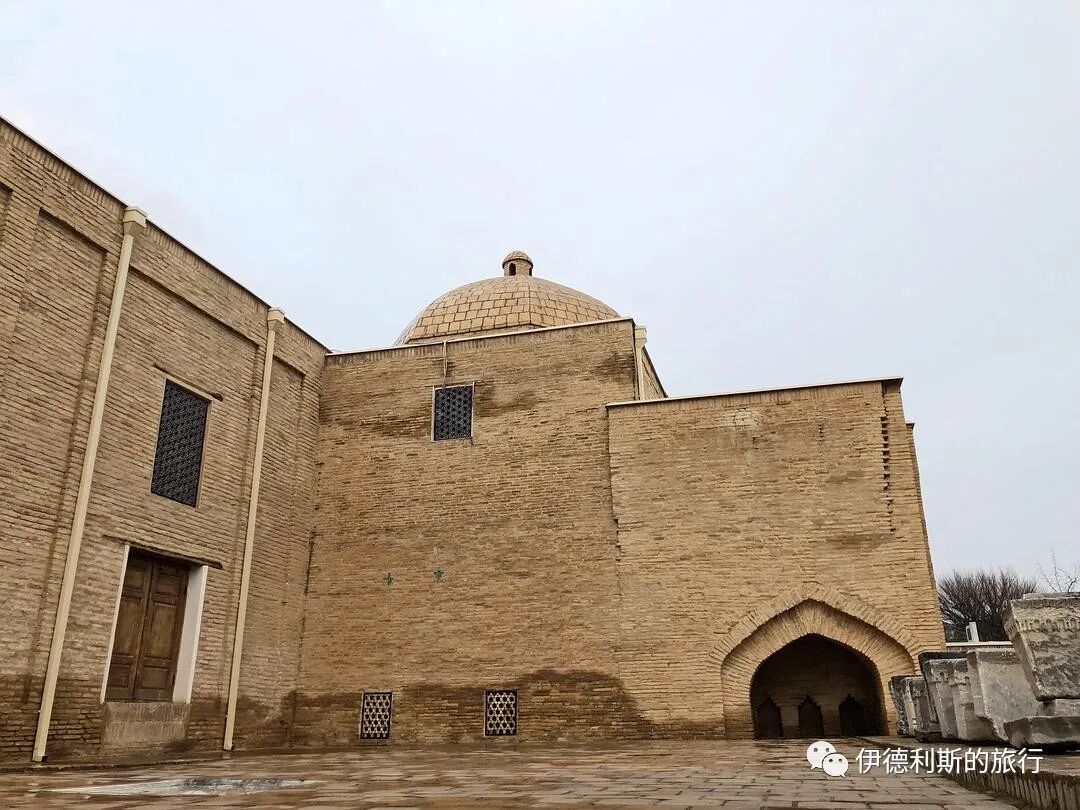
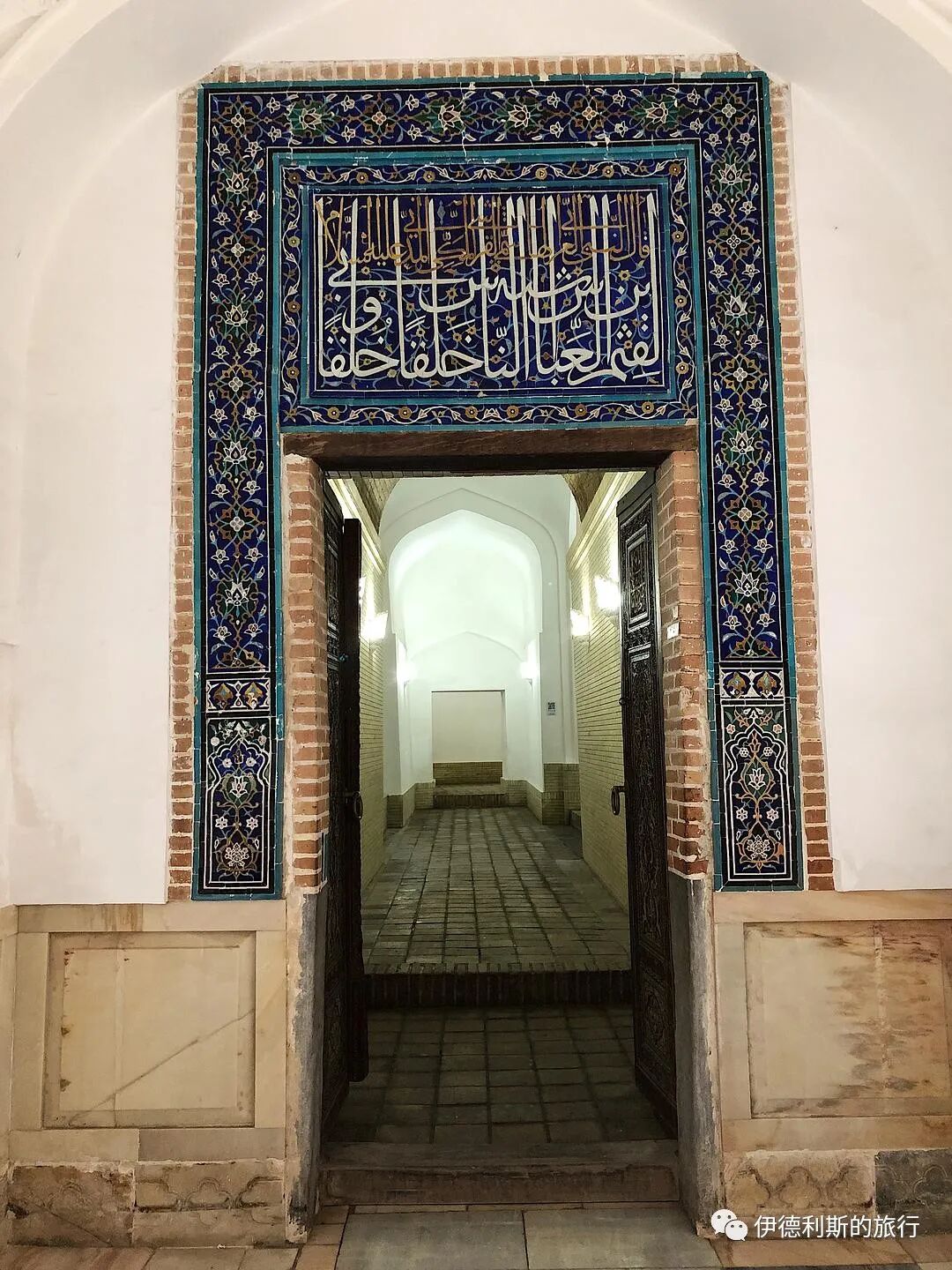
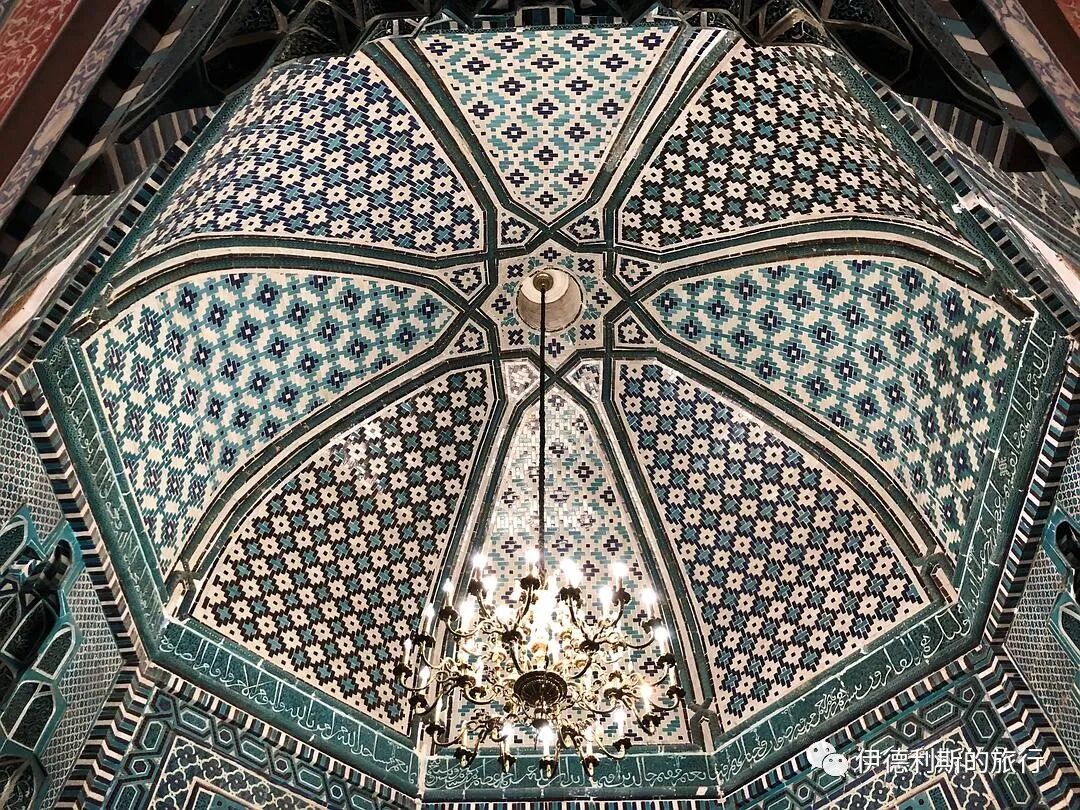
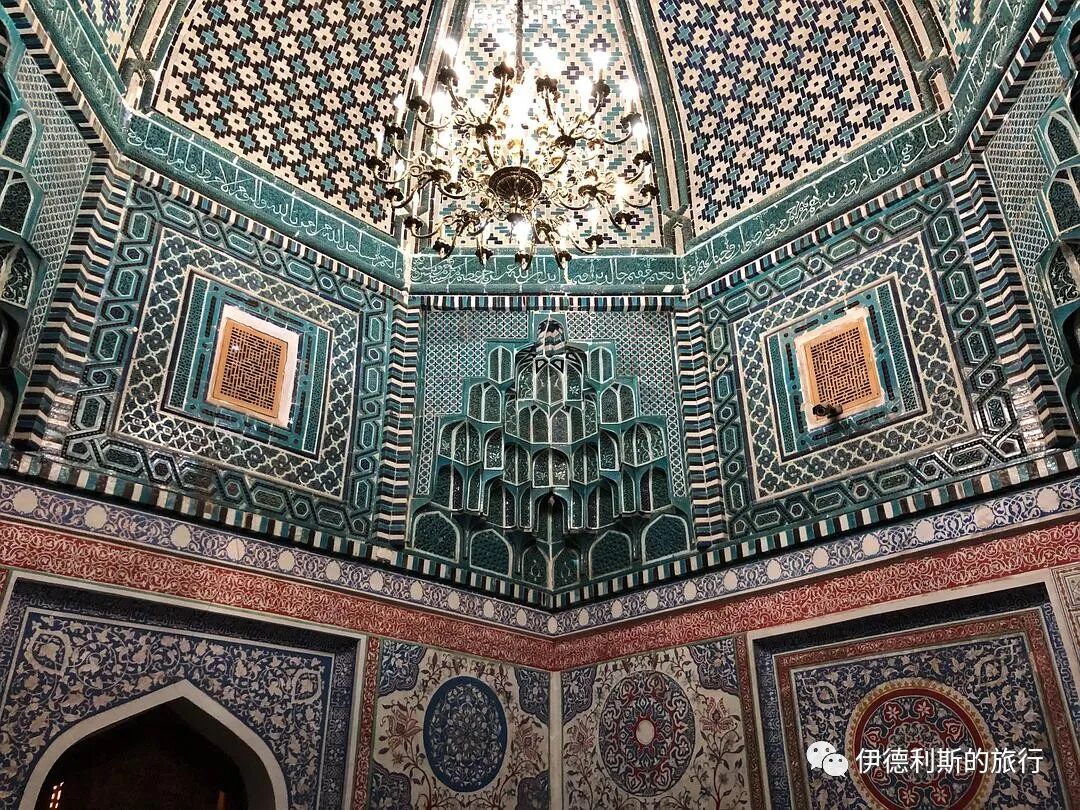
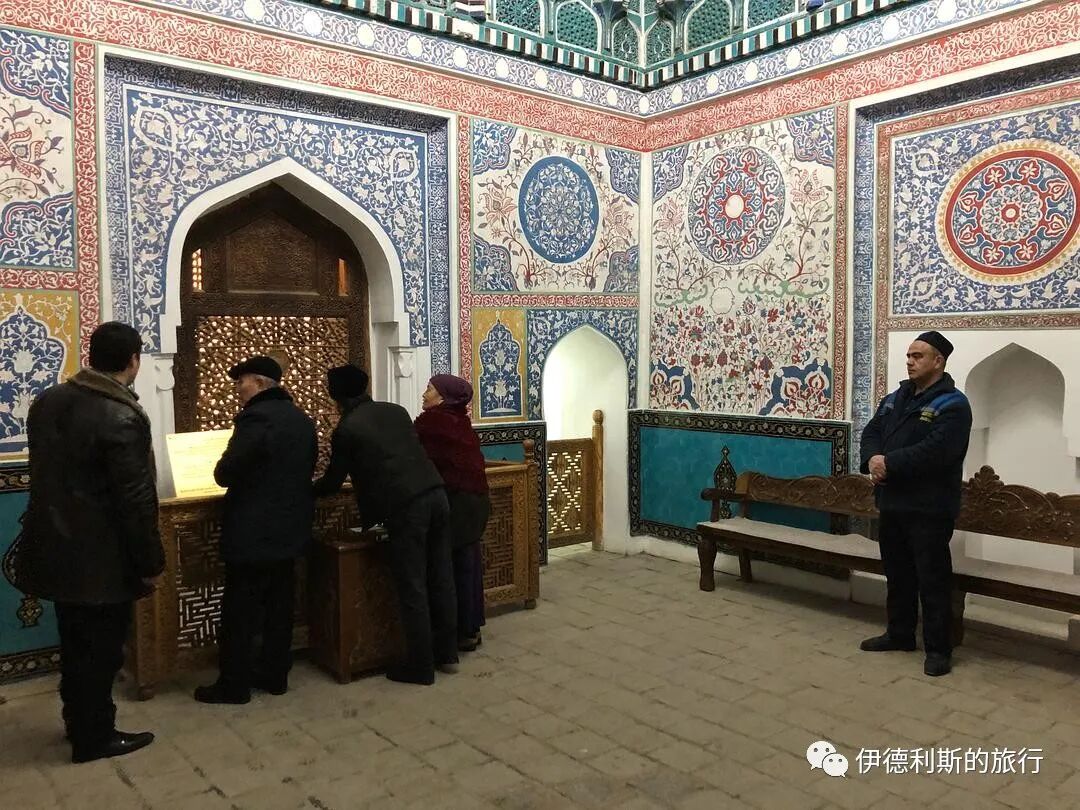
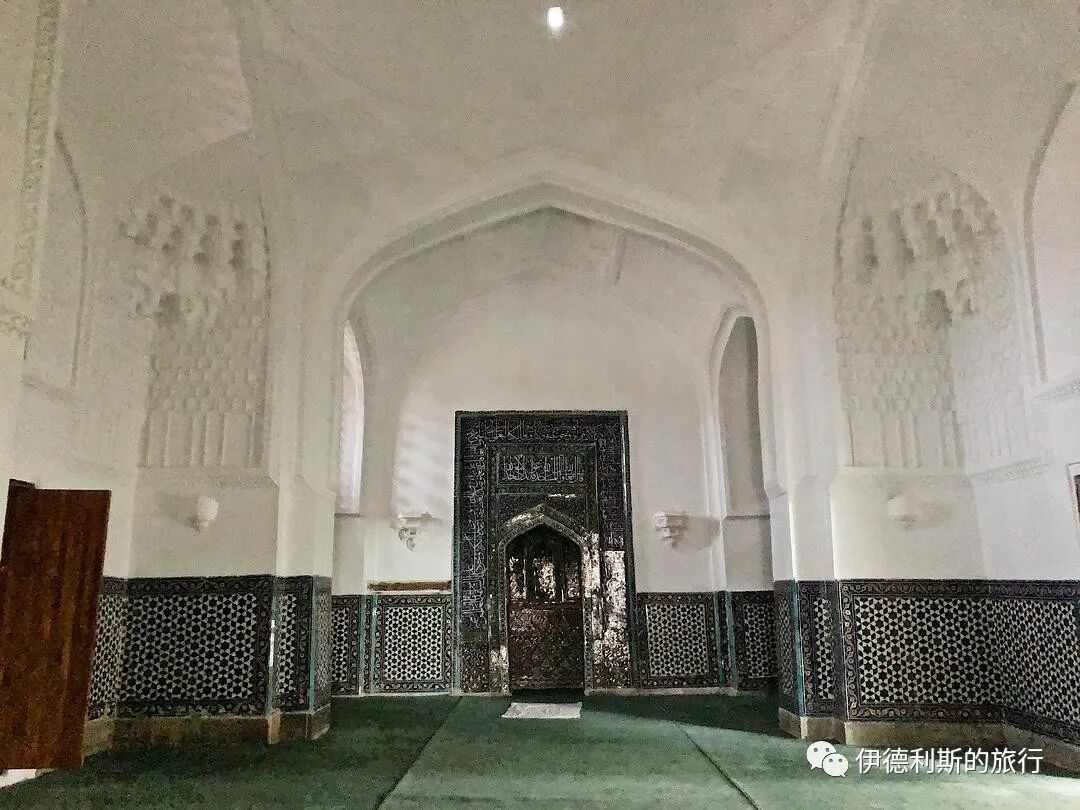
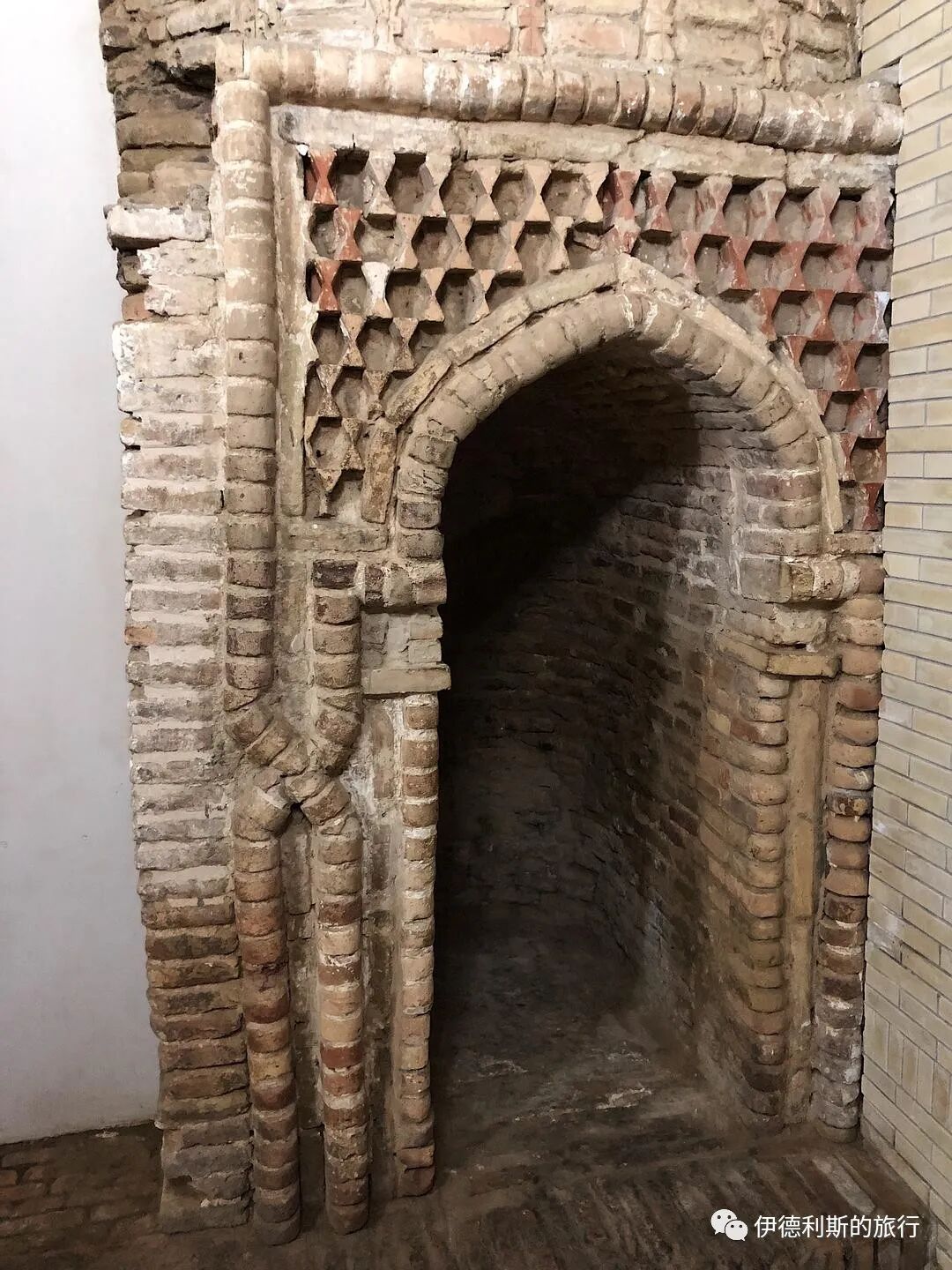
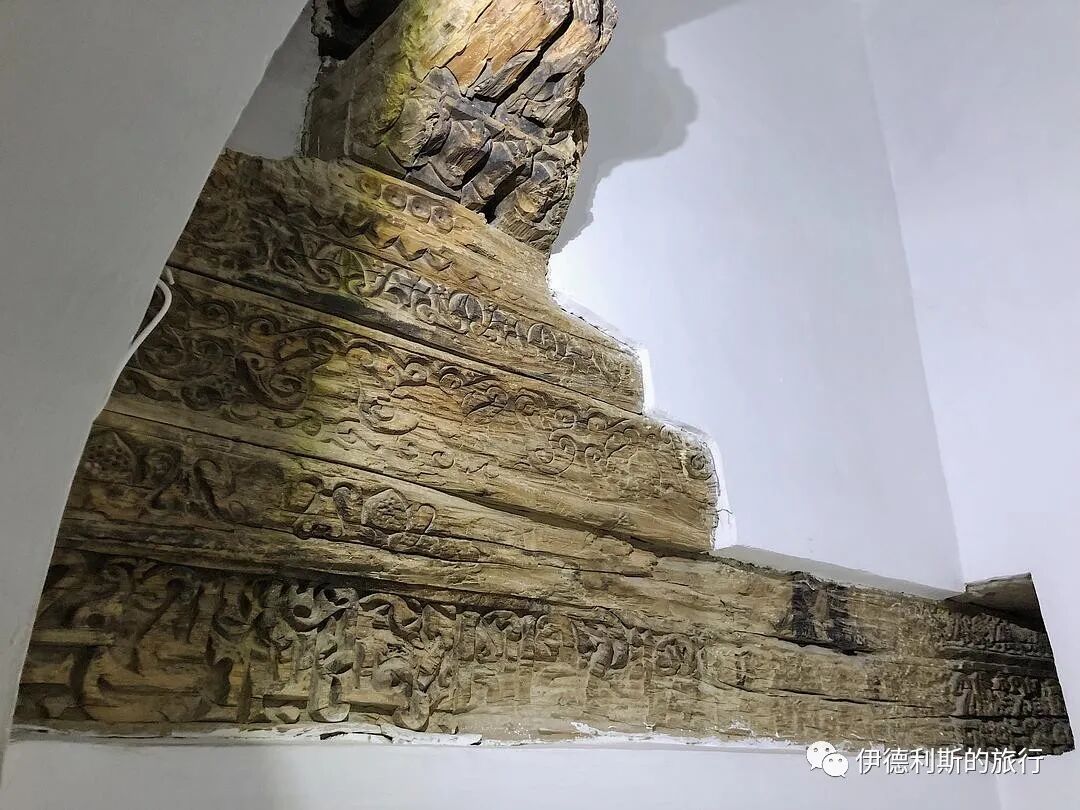
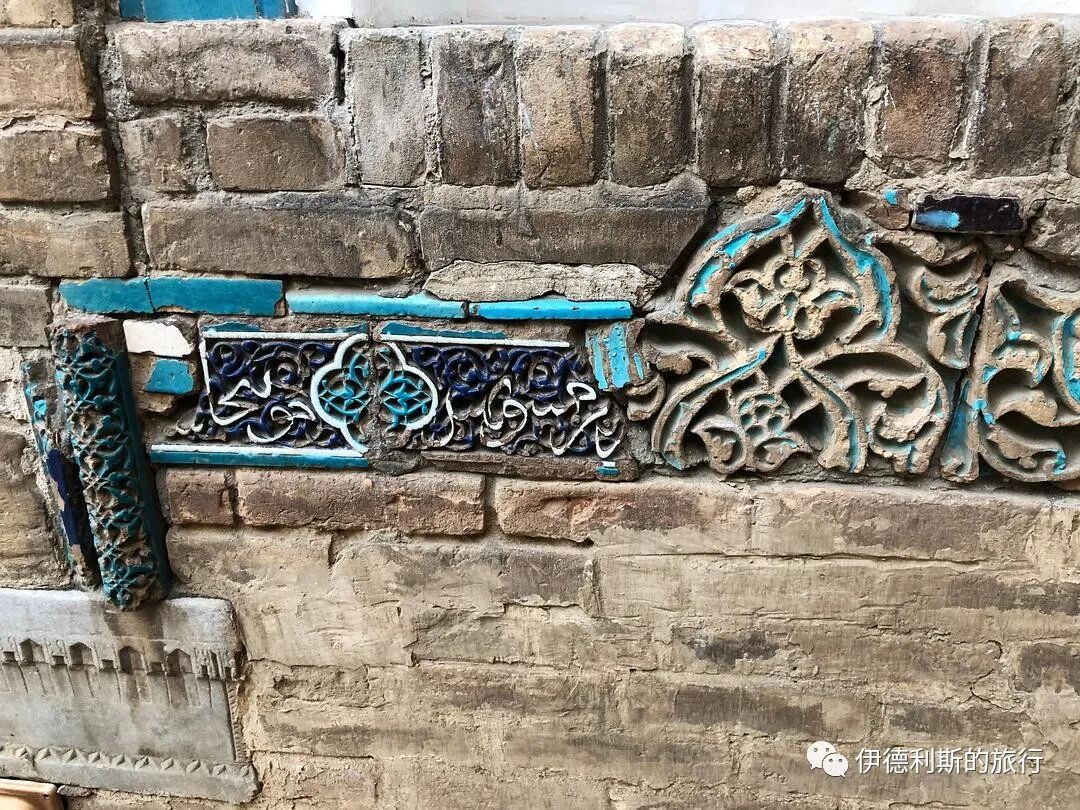
There are also some tombstones outside the mausoleum.
3. Tuman Aka Mausoleum: 1405
Opposite the Kusam Ibn Abbas Mausoleum is the mausoleum of Timur's wife, Tuman Aka. Tuman Aka, also written as Touman Agha, married Timur in 1377 and came from the family of the last Chagatai Khan, Qazan Sultan. She was Timur's favorite wife and a younger relative of Sarai Mulk Khanym, the daughter of Qazan Sultan.
Tuman Aka's mausoleum was built on the ruins of an Islamic madrasah destroyed in the 14th century; the inscription on the mausoleum bears the construction date of 1405 and the name of a calligrapher from Tabriz, Iran.
Next to the Tuman Aqa mausoleum is a Sufi khanaka (hospice) named after Tuman Aqa. It is speculated that the khanaka was built earlier than the mausoleum, probably around the end of the 14th century.
4. Khodja Ahmad Mausoleum: 1360s
The Khodja Ahmad Mausoleum is located at the northernmost part of the entire Shah-i-Zinda complex, built in the 1360s, and is the tomb of a local religious leader. The facade (Peshtak or Pischtak) of the mausoleum is decorated with a large number of floral, geometric patterns, and calligraphic tiles. The Kufic calligraphy tiles on the inside bear the name of the architect Fakhri-Ali, and the Thuluth calligraphy tiles on the outside read, 'May Allah perpetuate this eternity and make the mausoleum a garden of happiness for Khodja Ahmad.' "
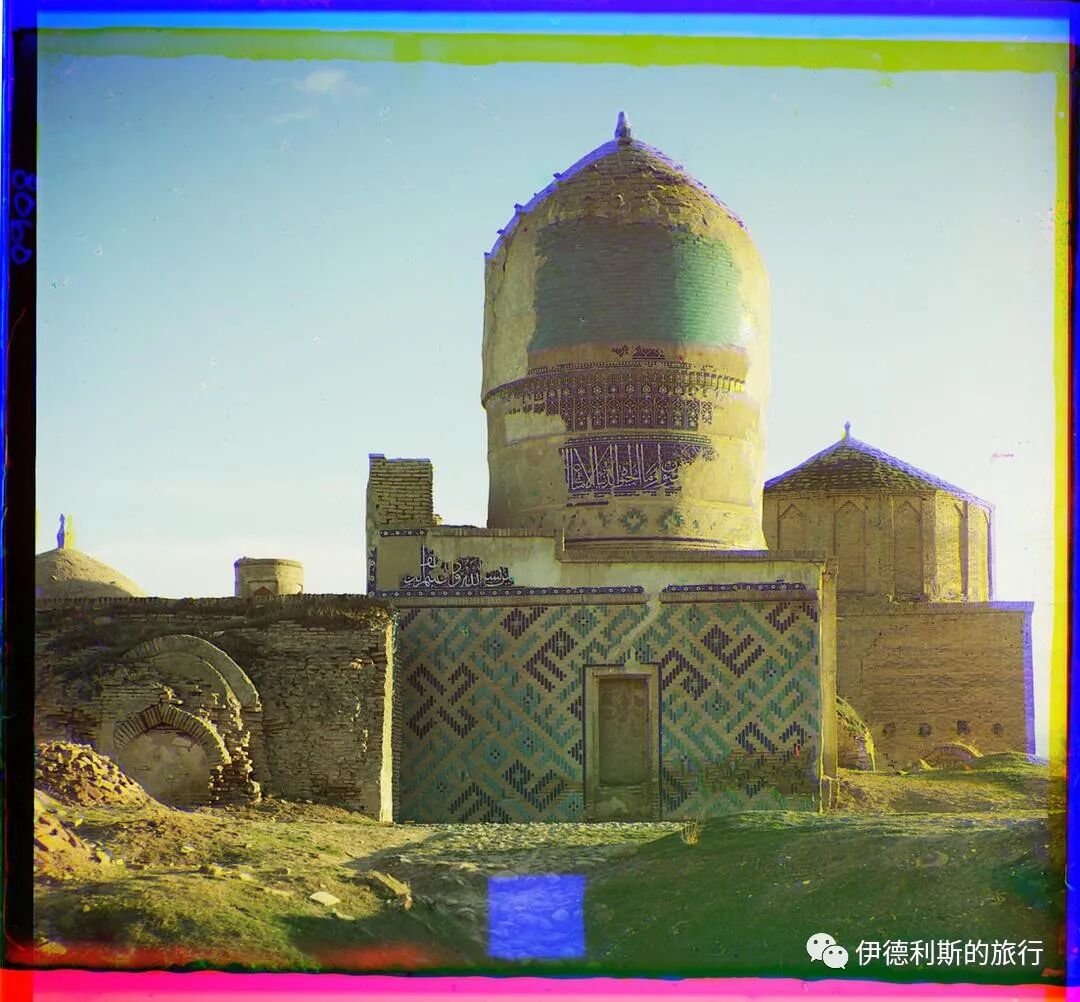
5. Qutlugh Aka Mausoleum: 1361
To the east of the Khwaja Ahmad Mausoleum is the tomb of an unidentified woman, dating back to 1361. Some information indicates that Timur's wife, Qutlugh Aka, is buried here.
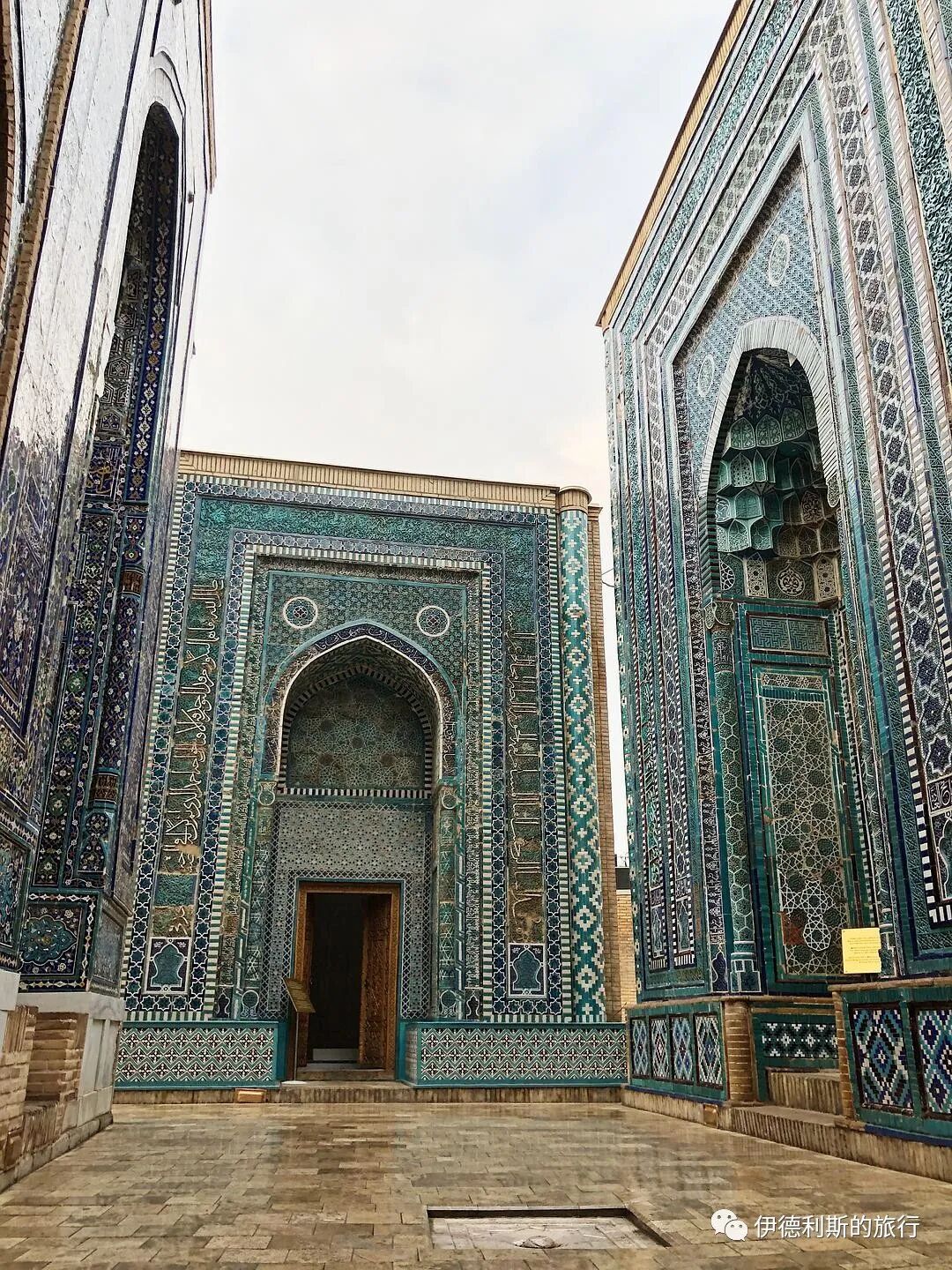
II. Rukhabad Mausoleum: 1380s
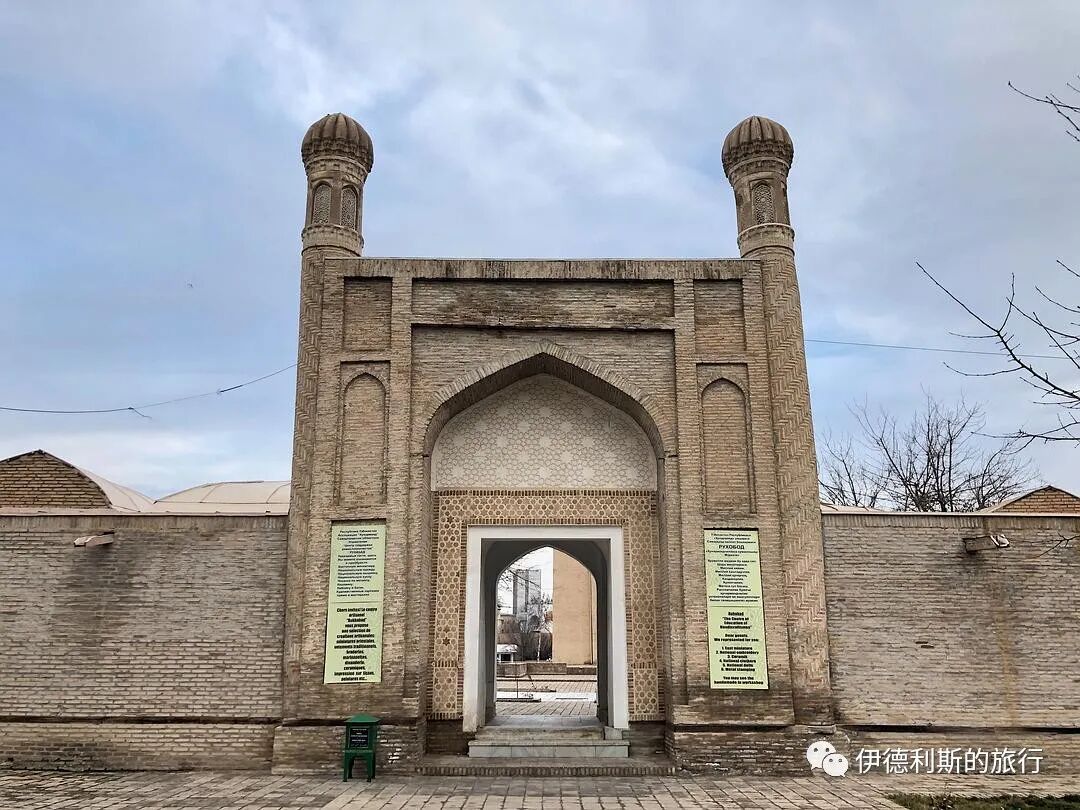
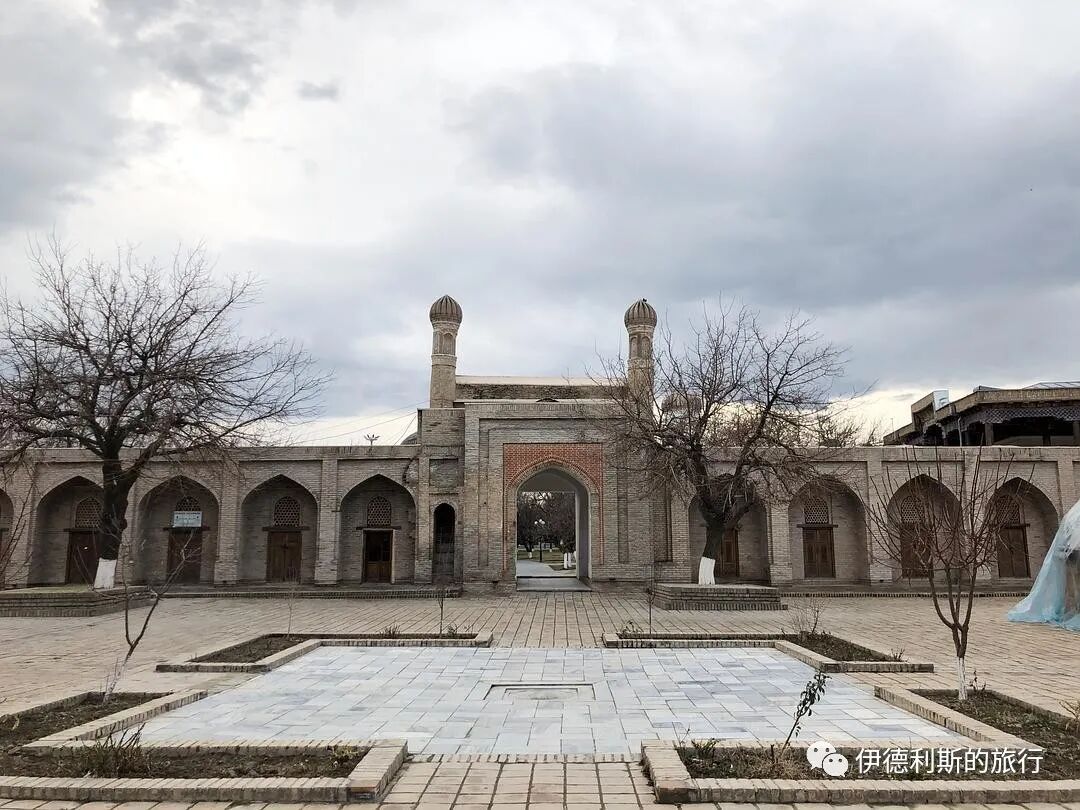
The Rukhabad Mausoleum is one of the earliest buildings built by Timur in Samarkand. Legend has it that after the Sufi sheikh Burkhan ad-Din Sagardji died during the Yuan Dynasty, his son Abu Said brought his remains to Samarkand for burial according to his father's last wish. During his stay in Samarkand, Abu Said became Timur's religious mentor, and Timur built a mausoleum for Sagardji in the 1380s, naming it 'Rukhabad' (House of the Spirit).
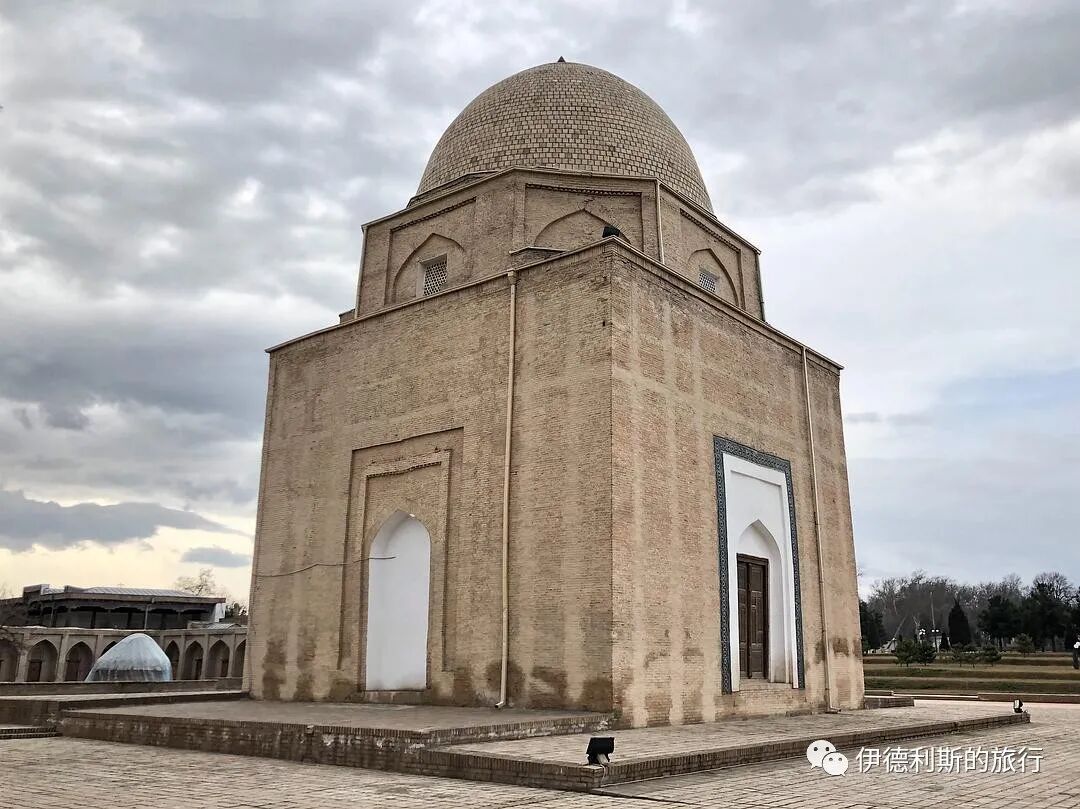
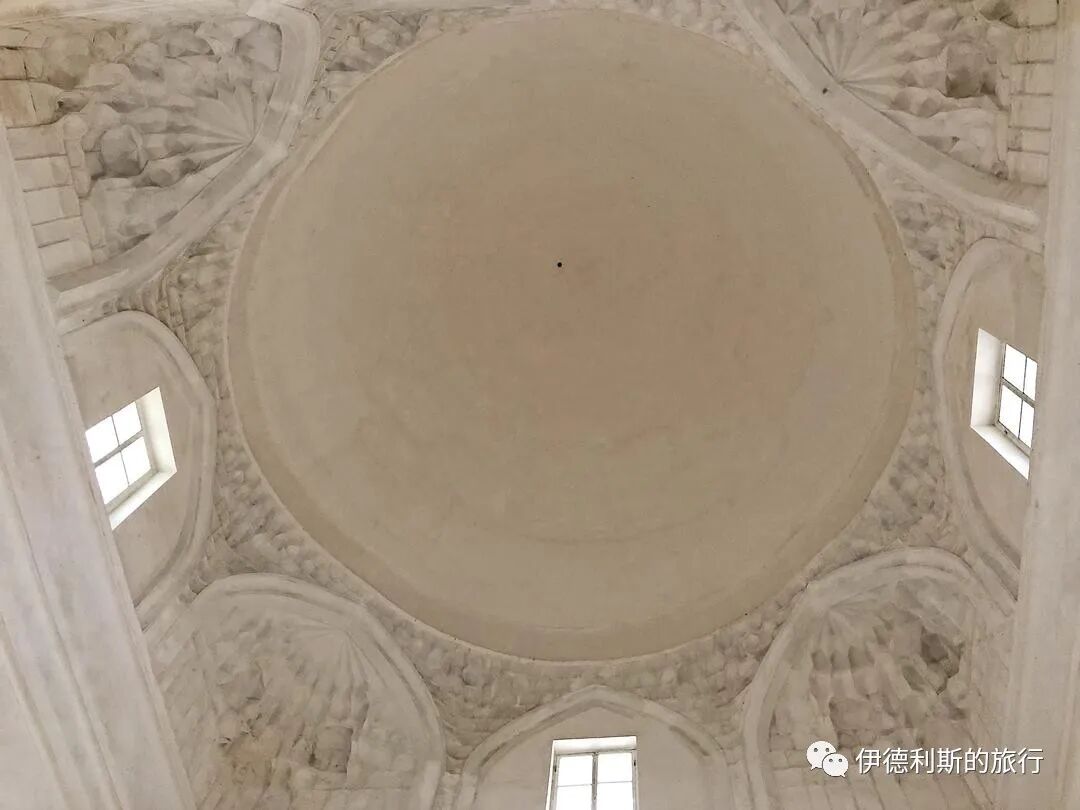
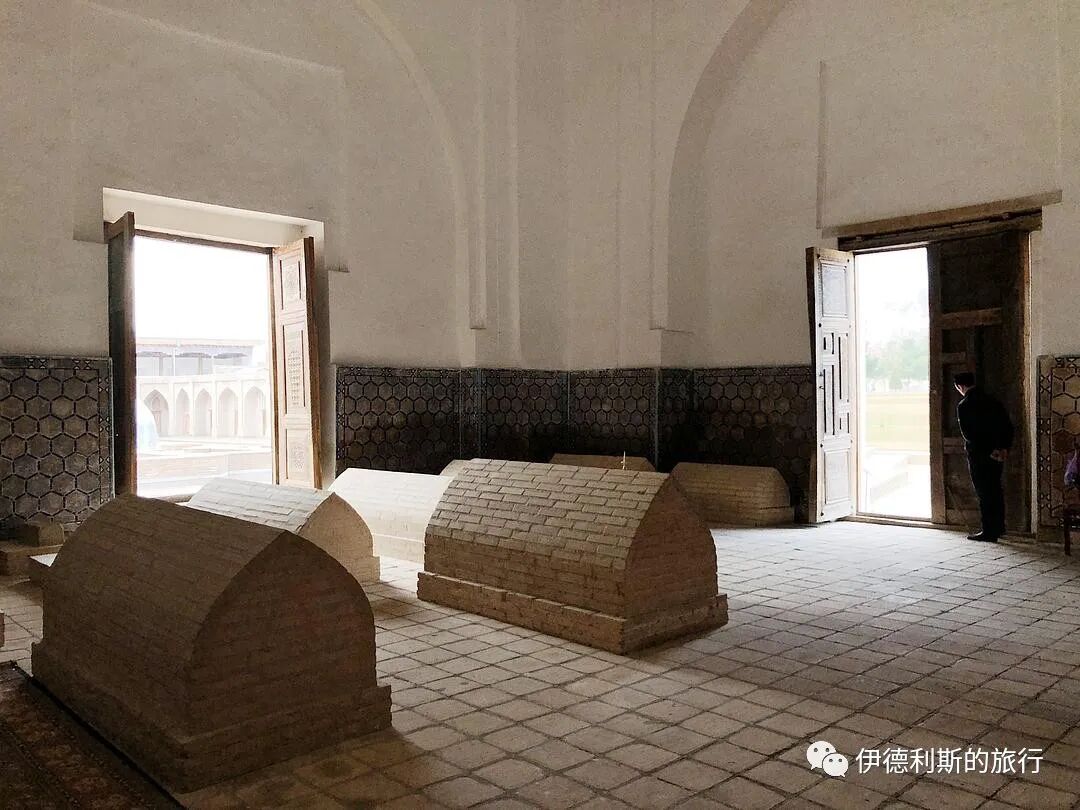
Behind the mausoleum are the ruins of a madrasah.
III. Gur-e-Amir Mausoleum: 1404
Gur-e-Amir is the mausoleum of Timur, which holds an important position in the history of Central Asian architecture and became the precursor and model for later Mughal architecture.
The complex was originally a Sufi khanqah and madrasah built by Timur's favorite grandson, Muhammad Sultan, at the end of the 14th century, called Khangah-i Muhammad Sultan; now only part of the foundation remains.
Muhammad Sultan died in 1403 while accompanying Timur on his expedition to the Ottoman Empire. He was initially buried in northwestern Iran, and it was not until a year later that he was transported to Samarkand and reburied in the Khangah-i Muhammad Sultan. In 1405, Timur died on his way to campaign against the Ming Dynasty; his body could not be transported back to his hometown of Shahrisabz due to heavy snow and was eventually buried with his grandson Muhammad Sultan.
After Timur's death, his son Shah Rukh inherited the eastern part of the empire. Shah Rukh moved the capital of the Timurid Empire from Samarkand to Herat in Afghanistan and had his son Ulugh Beg rule Samarkand starting in 1409. During Ulugh Beg's rule in Samarkand, he hired the architect Muhammad ibn Mahmud from Isfahan, Iran, to formally convert the Khangah-i Muhammad Sultan into the royal mausoleum of the Timurid dynasty, Gur-e-Amir, which means 'Tomb of the King' in Persian.
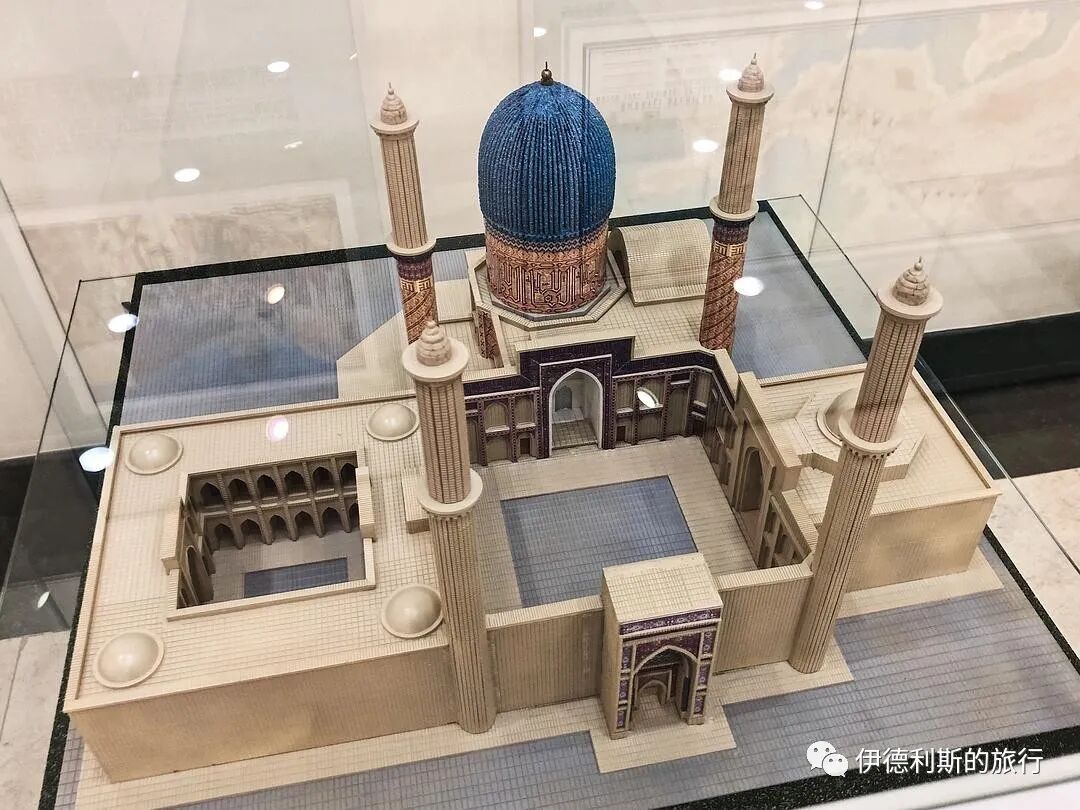
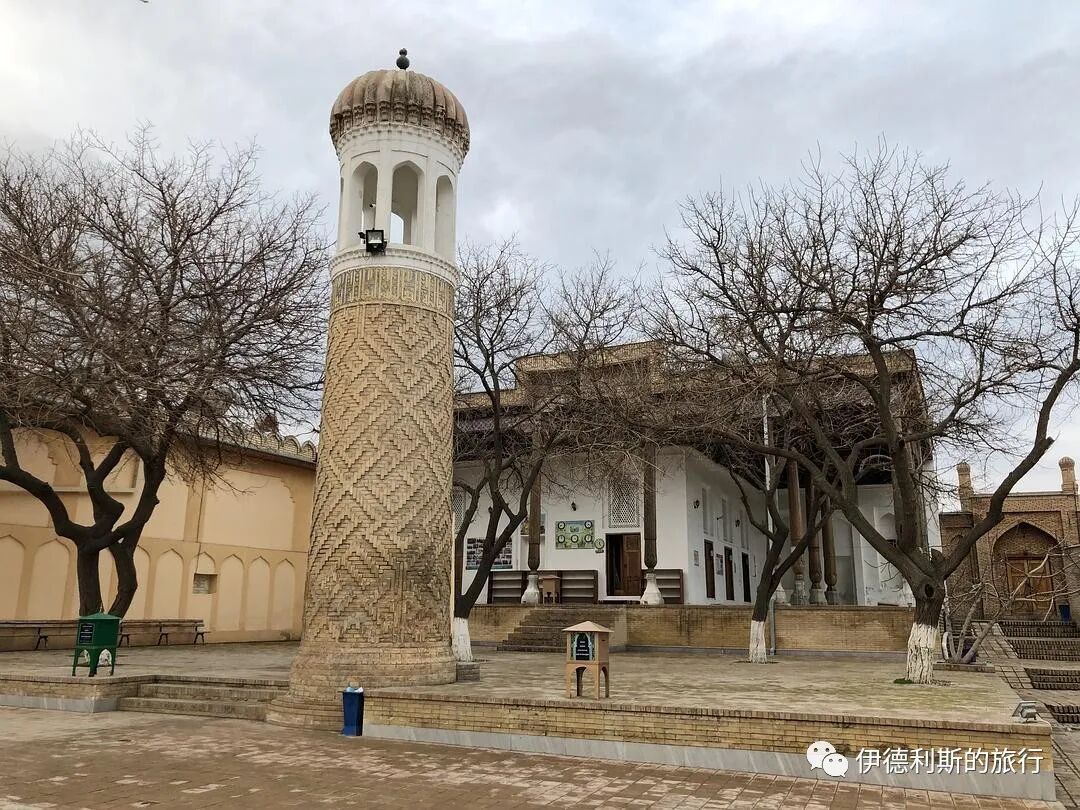
After the 17th century, as the center of Transoxiana shifted from Samarkand to Bukhara, Gur-e-Amir gradually fell into disrepair. It was not until the 1950s that renovations began on the dome, gate, and minarets, and the interior was renovated in the 1970s.
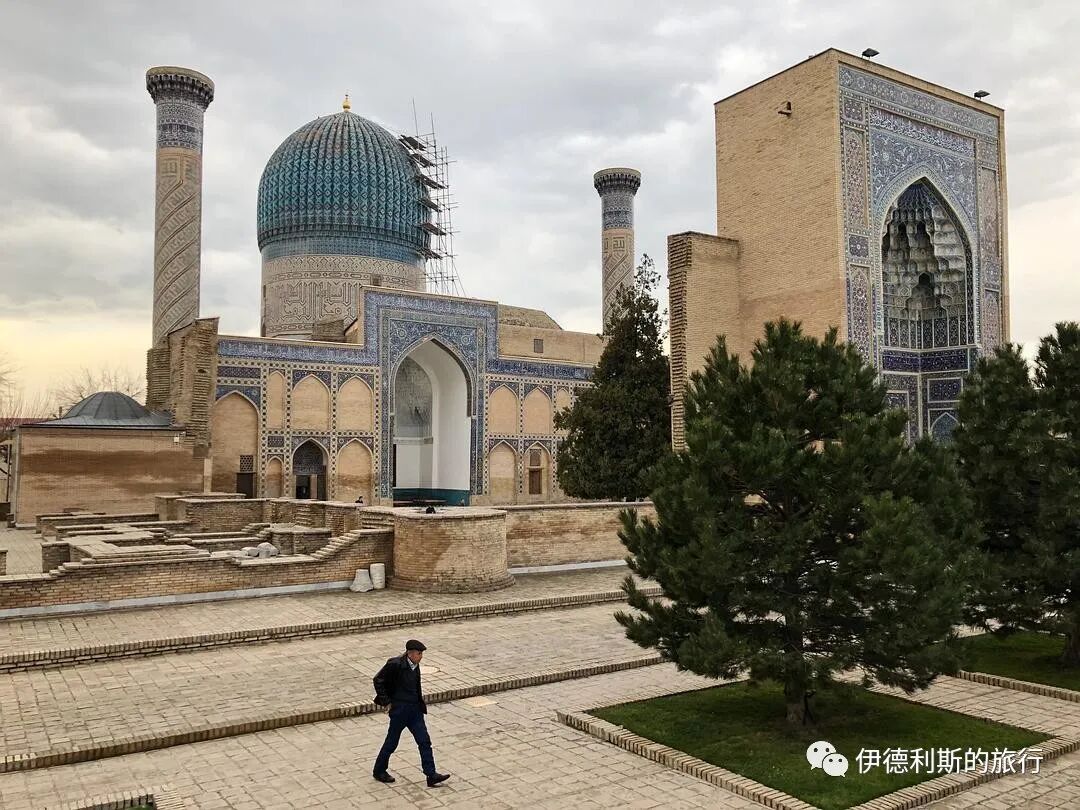
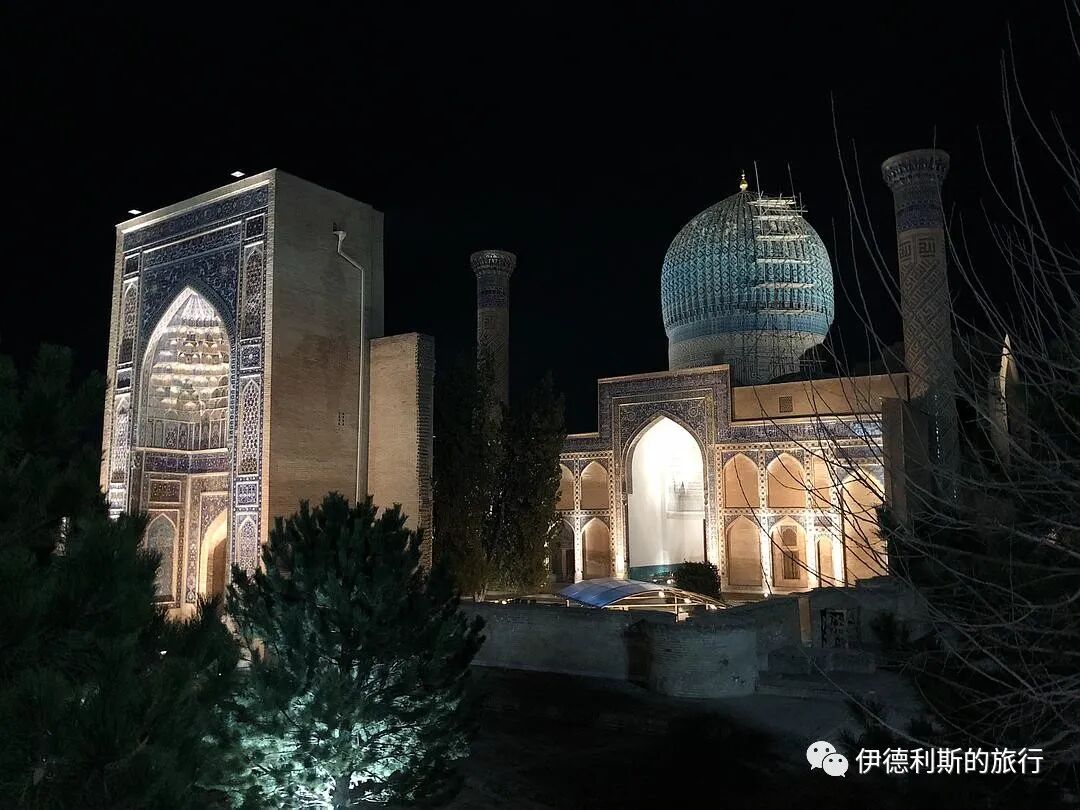
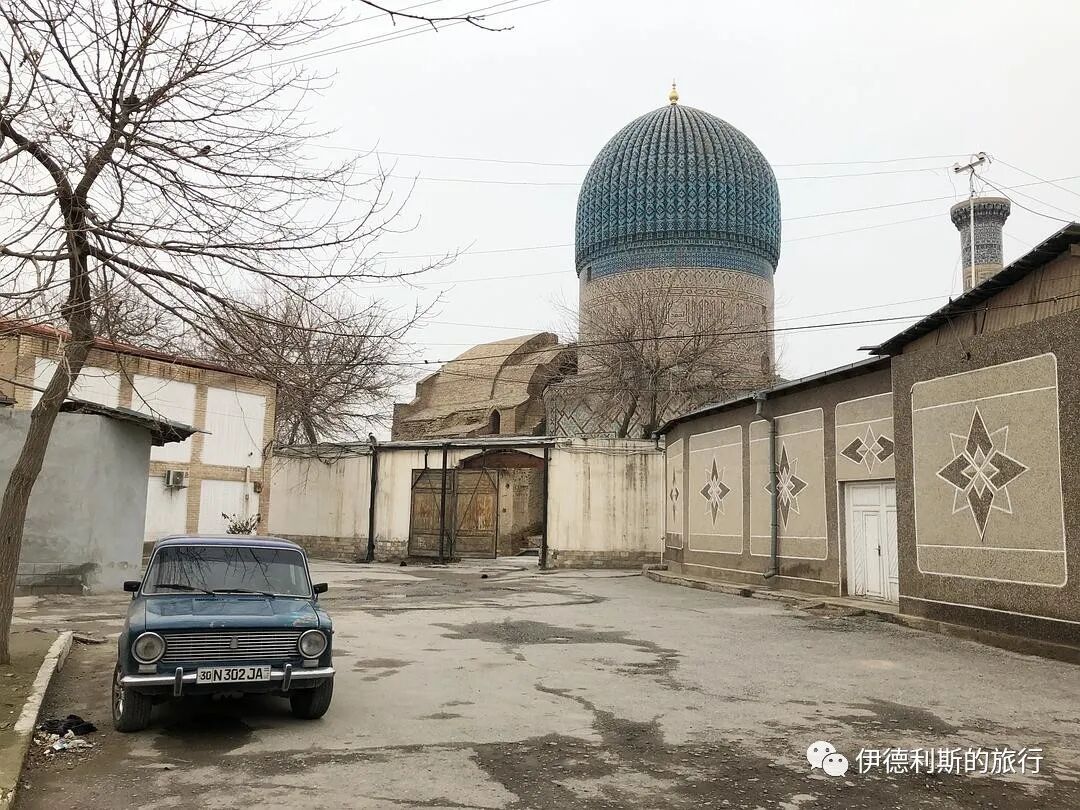
The alley behind Gur-e-Amir
The entrance to Gur-e-Amir is a huge Iwan arch, covered with glazed ceramic panels featuring complex plant and geometric patterns. In the 19th century, the upper part had collapsed and was later restored.
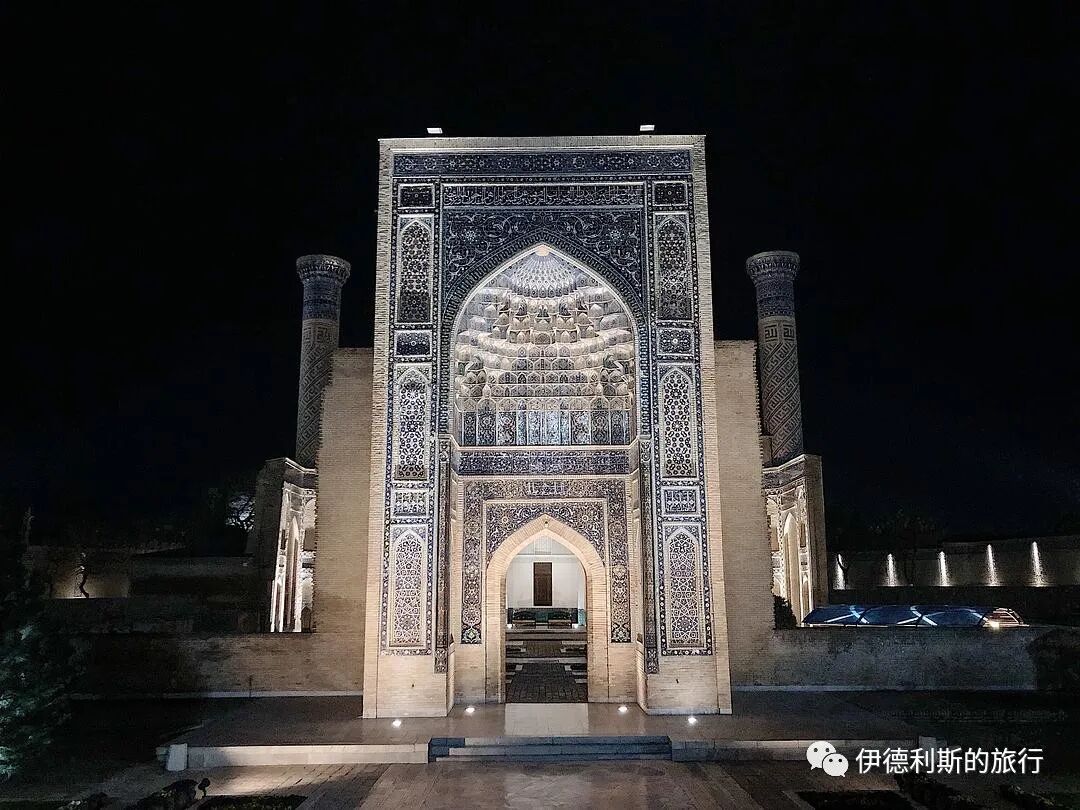
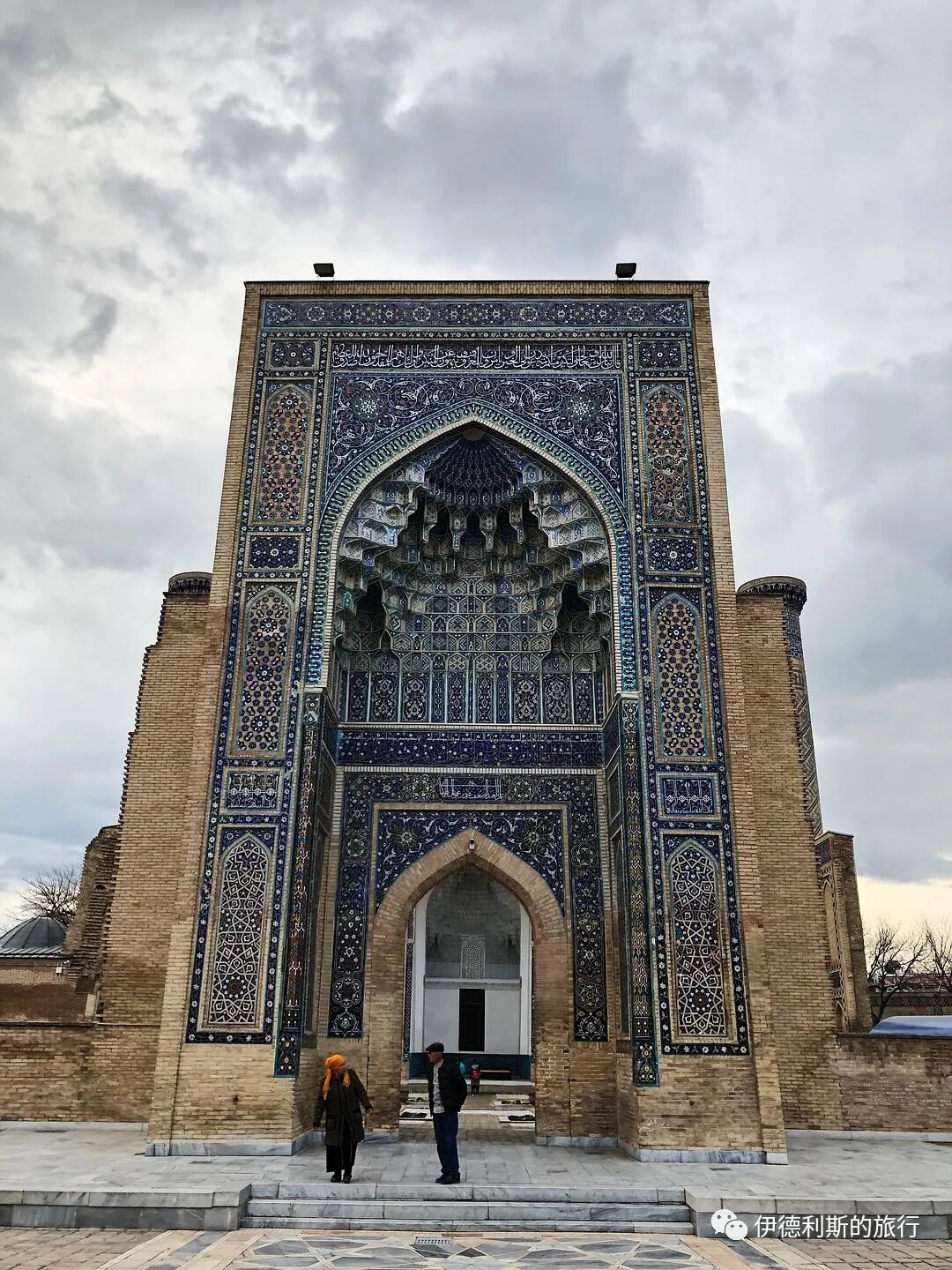
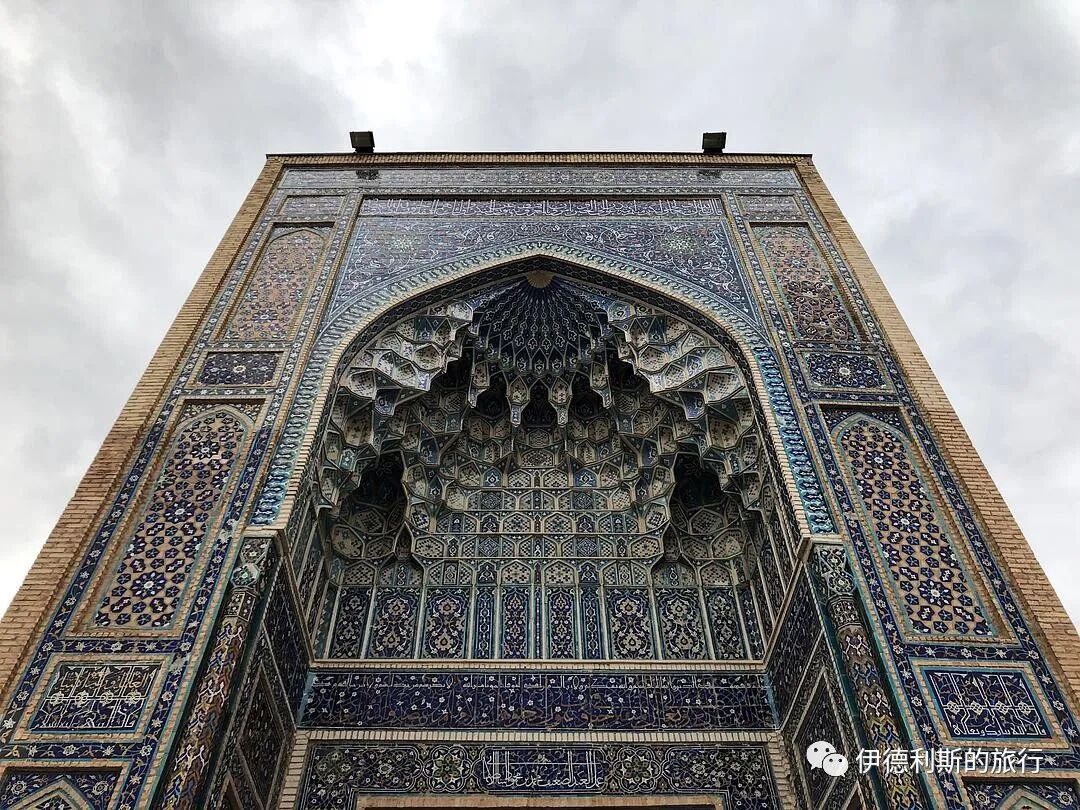
Back of the arch
After entering the arch is the main building of the mausoleum. The mausoleum was fortunately preserved, but unfortunately, only the northwestern one of the four minarets remained by the 19th century. The minaret has spiral-thickened Kufic Arabic calligraphy.
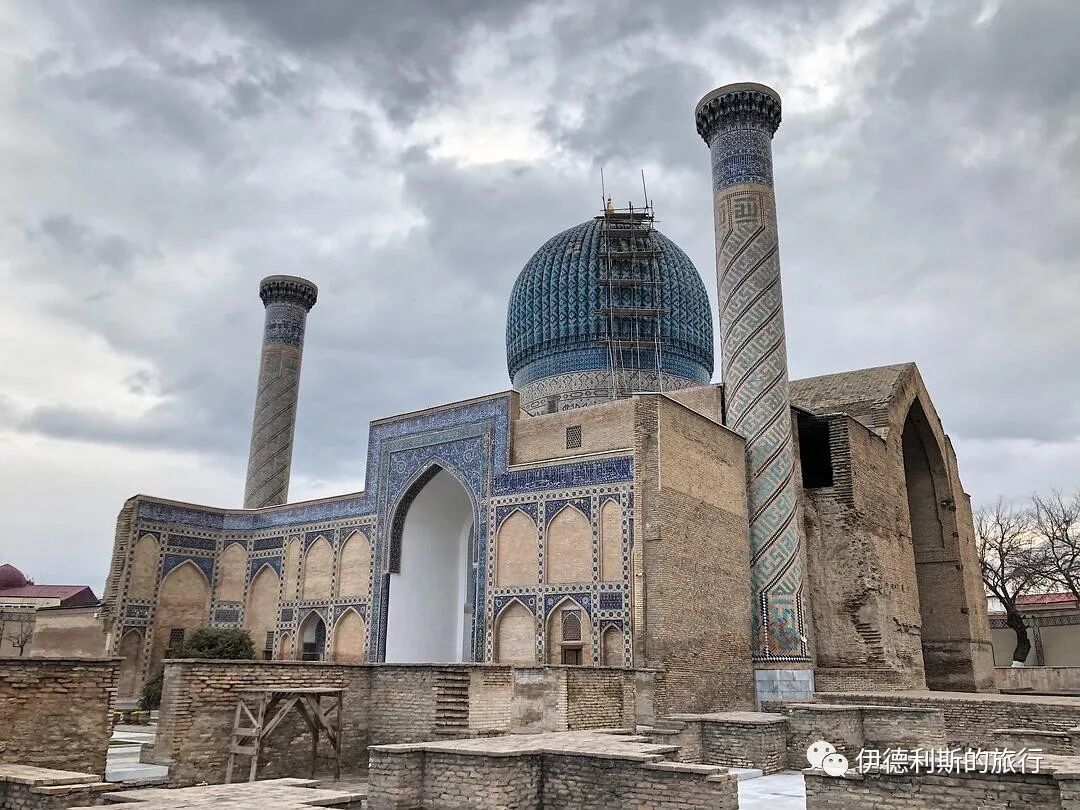
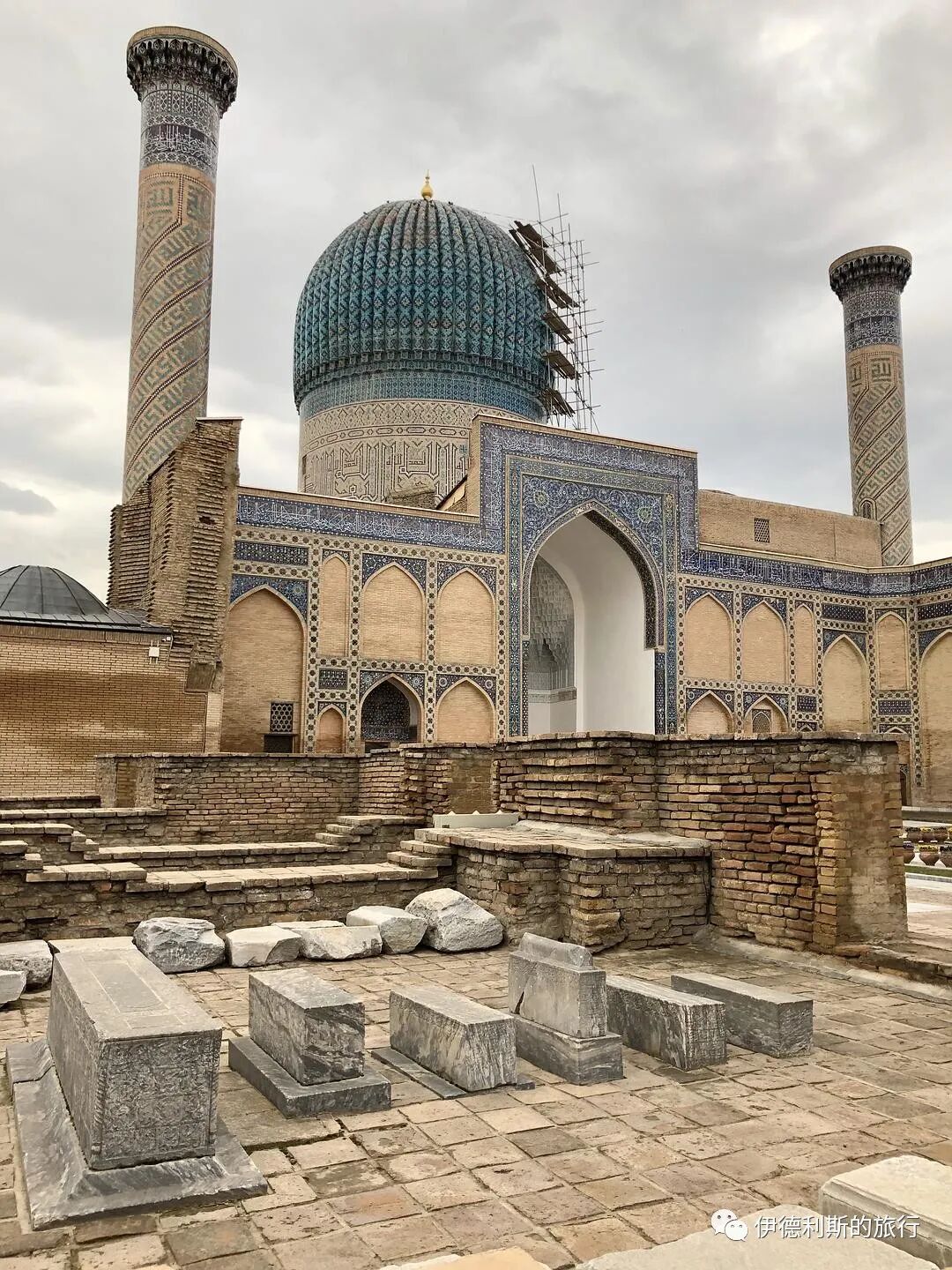
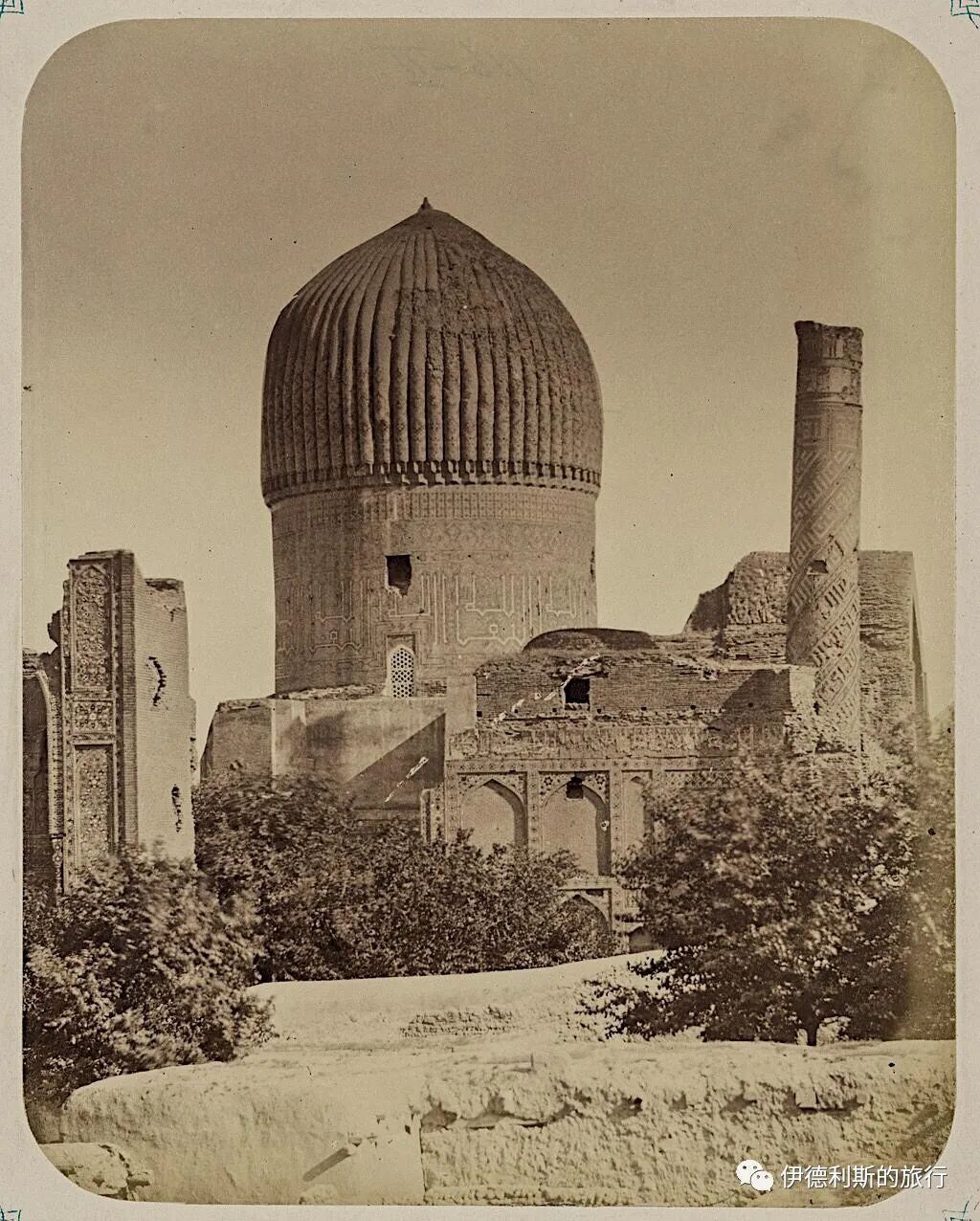
The main body of the mausoleum is divided into three levels: an octagonal base, a middle drum structure, and a large ribbed dome. The base is decorated with thickened Kufic Arabic calligraphy in blue tiles, while the drum structure is decorated with slender Persian-Arabic calligraphy in black and white tiles.
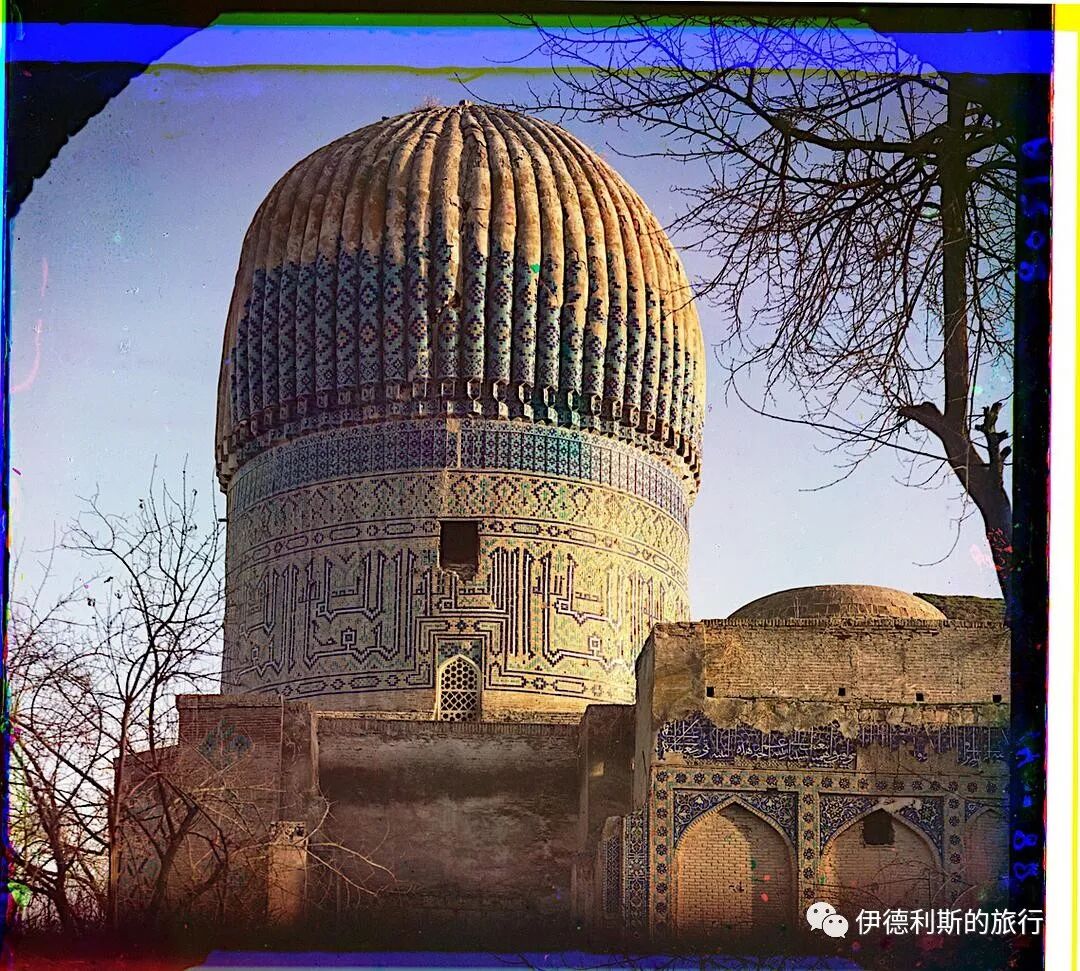
There is also a huge main arch on the west side of the mausoleum.
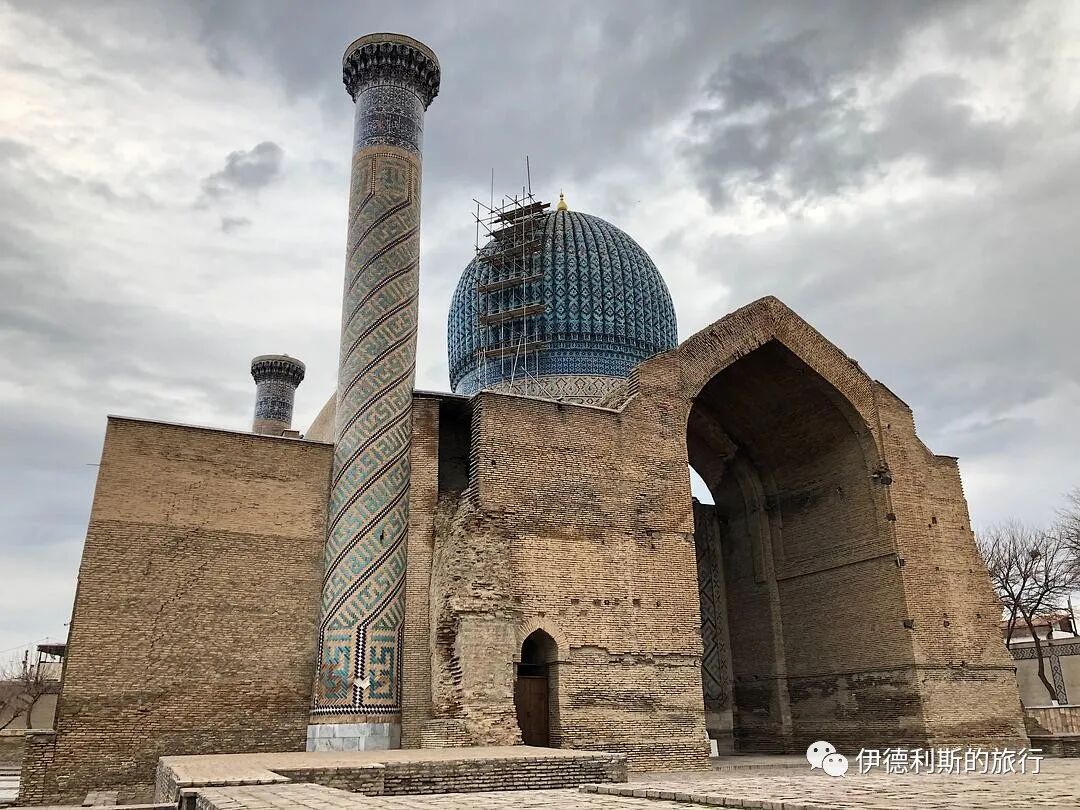
The current entrance is on the north side of the mausoleum.
The interior of the mausoleum is divided into two levels: the upper level contains the tombstones indicating the positions, and the lower level is the actual burial site. There are 9 people buried in the mausoleum: Timur himself, his sons Miran Shah and Shah Rukh, his grandsons Ulugh Beg and Muhammad Sultan, as well as Timur's spiritual mentor Mir Said Baraka and another Islamic master, Seyid Omar.
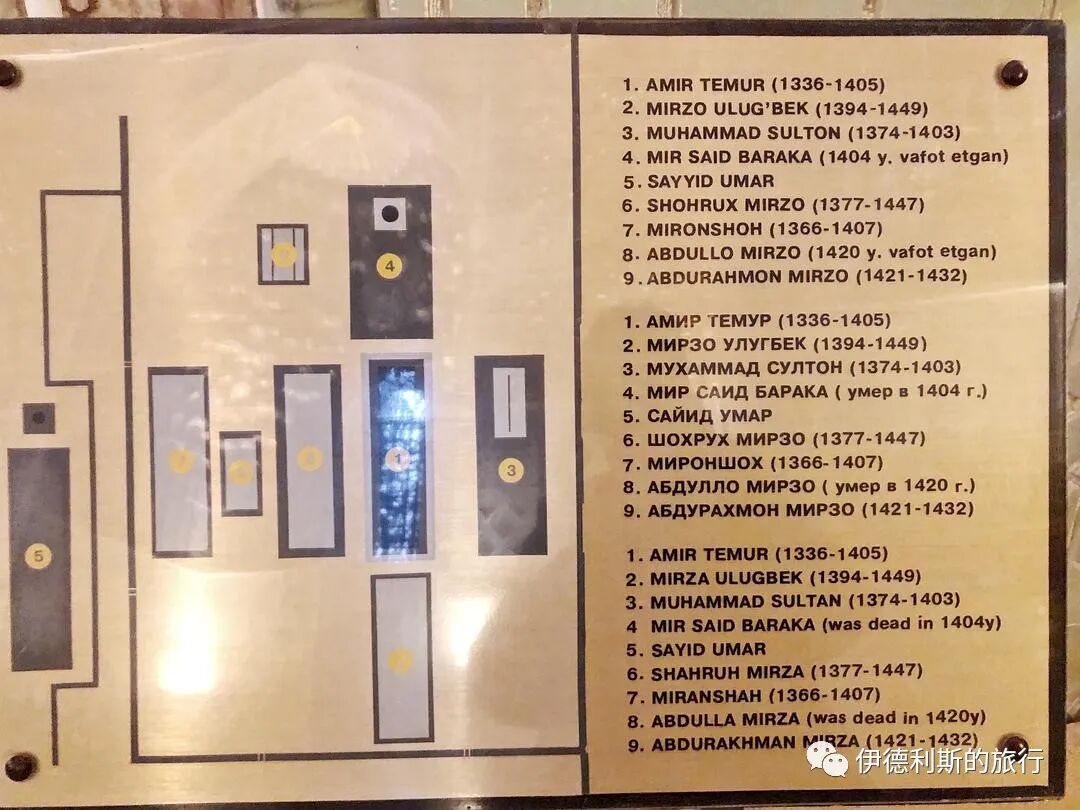
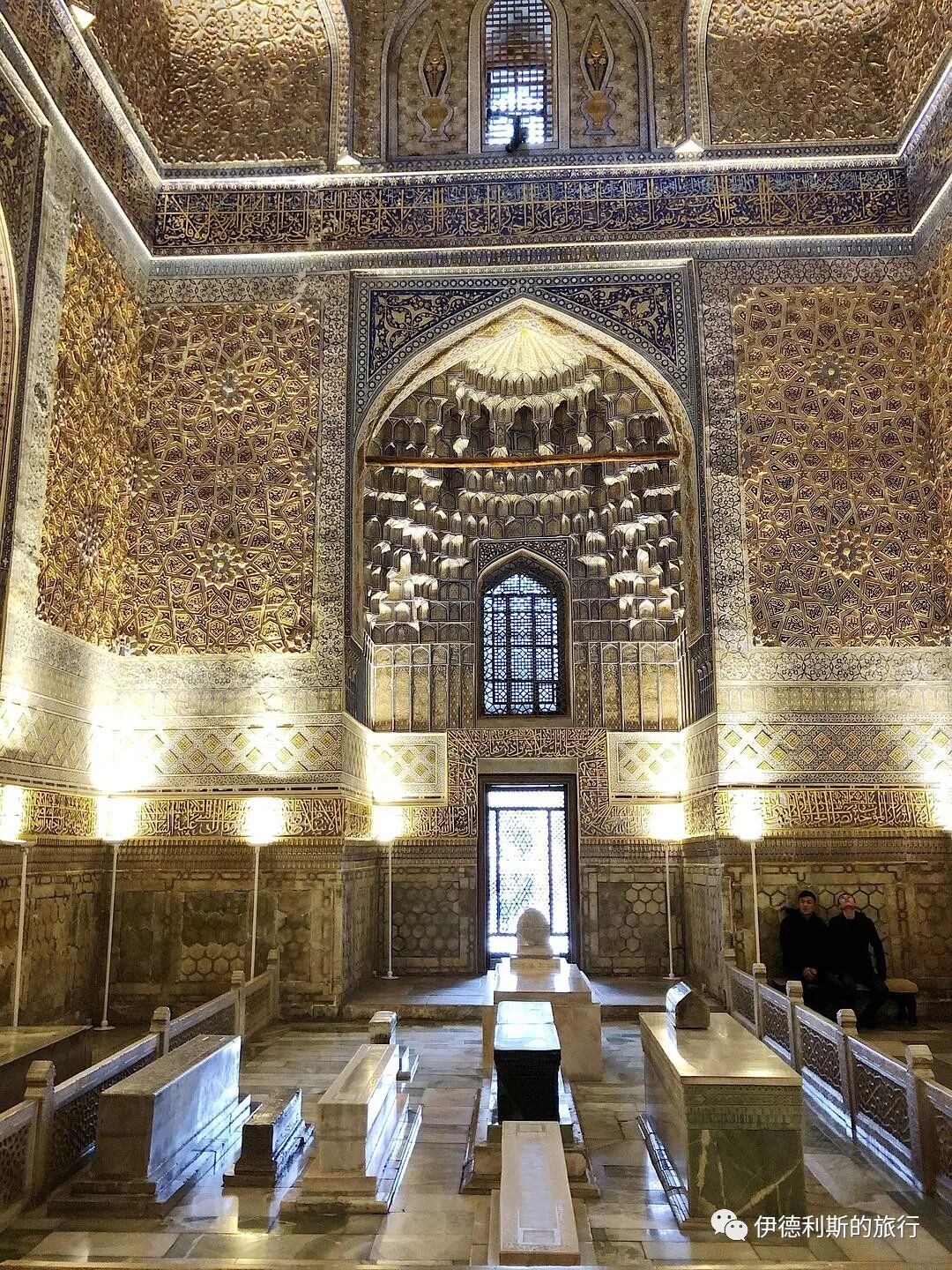
Ulugh Beg placed a hard, dark green jade stone over Timur's tomb, which is said to have come from the throne of the Chagatai Khanate. In 1740, Nader Shah, the emperor of the Persian Afsharid dynasty, took the tombstone back to Persia, but the stone cracked when it was moved, and Nader Shah immediately began to suffer misfortune. The tombstone was considered the cause of the misfortune, so he eventually returned it to its original place.
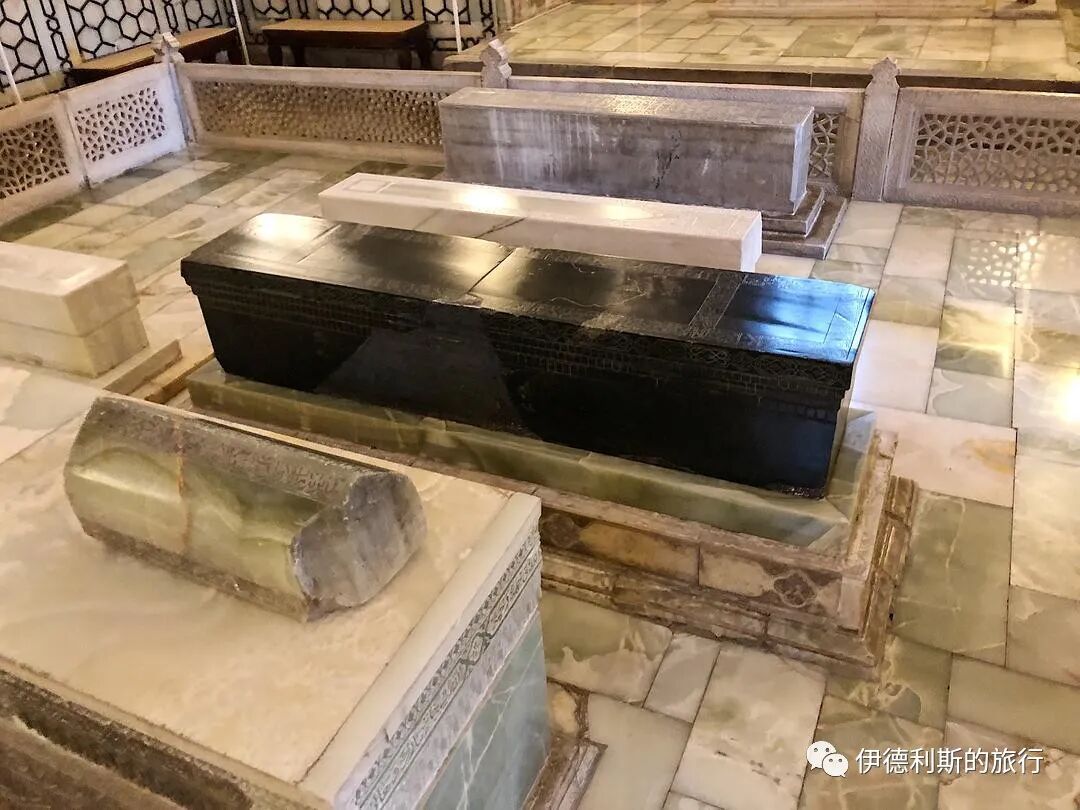
To the west of Timur's tombstone is Shah Rukh's tombstone. Shah Rukh was the second ruler of the Timurid dynasty. In 1447, Shah Rukh died of illness and was buried in Herat. The following year, Ulugh Beg occupied Herat, dug up his father's remains, brought them back to Samarkand, and reburied them in Gur-e-Amir.
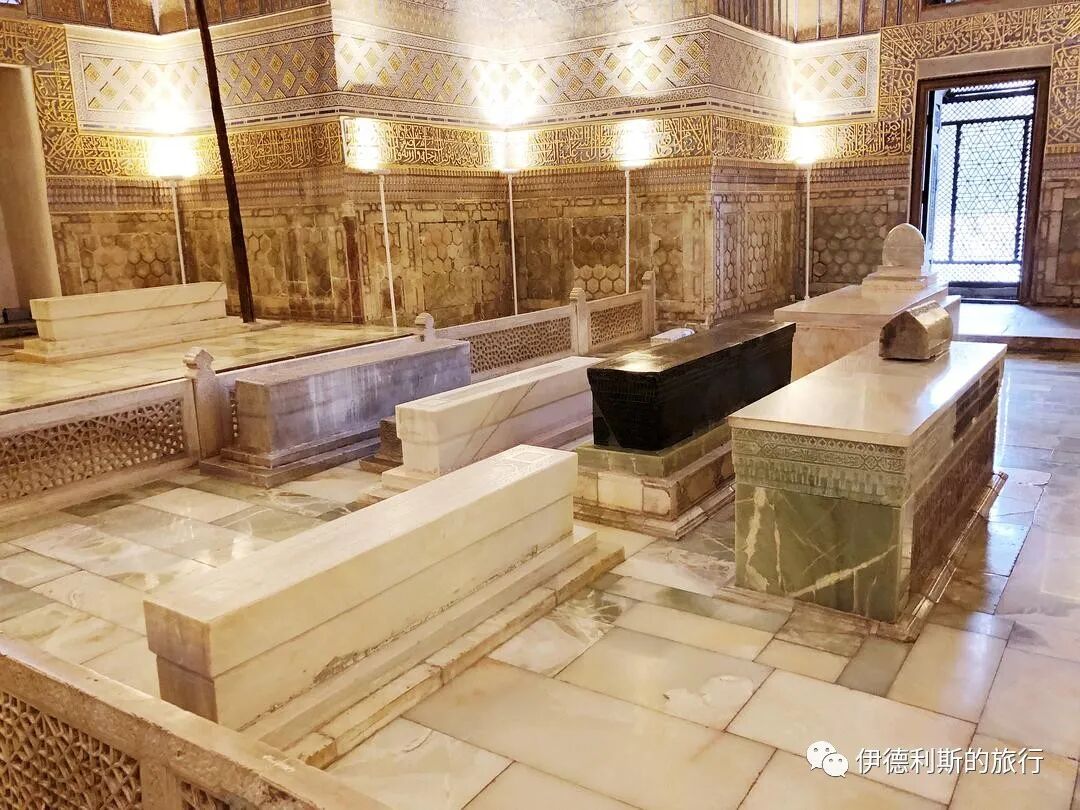
To the south of Timur's tombstone is Ulugh Beg's tombstone. Ulugh Beg was the third ruler of the Timurid dynasty. In 1449, Ulugh Beg's eldest son, Abdal-Latif Mirza, launched a rebellion, captured Ulugh Beg near Samarkand, and subsequently had him killed. But Abdal-Latif only ruled for 6 months before being murdered, and Samarkand was then ruled by Ulugh Beg's nephew, Abdallah Mirza. Abdallah buried Ulugh Beg's remains in Gur-e-Amir, together with his grandfather Timur and father Shah Rukh.
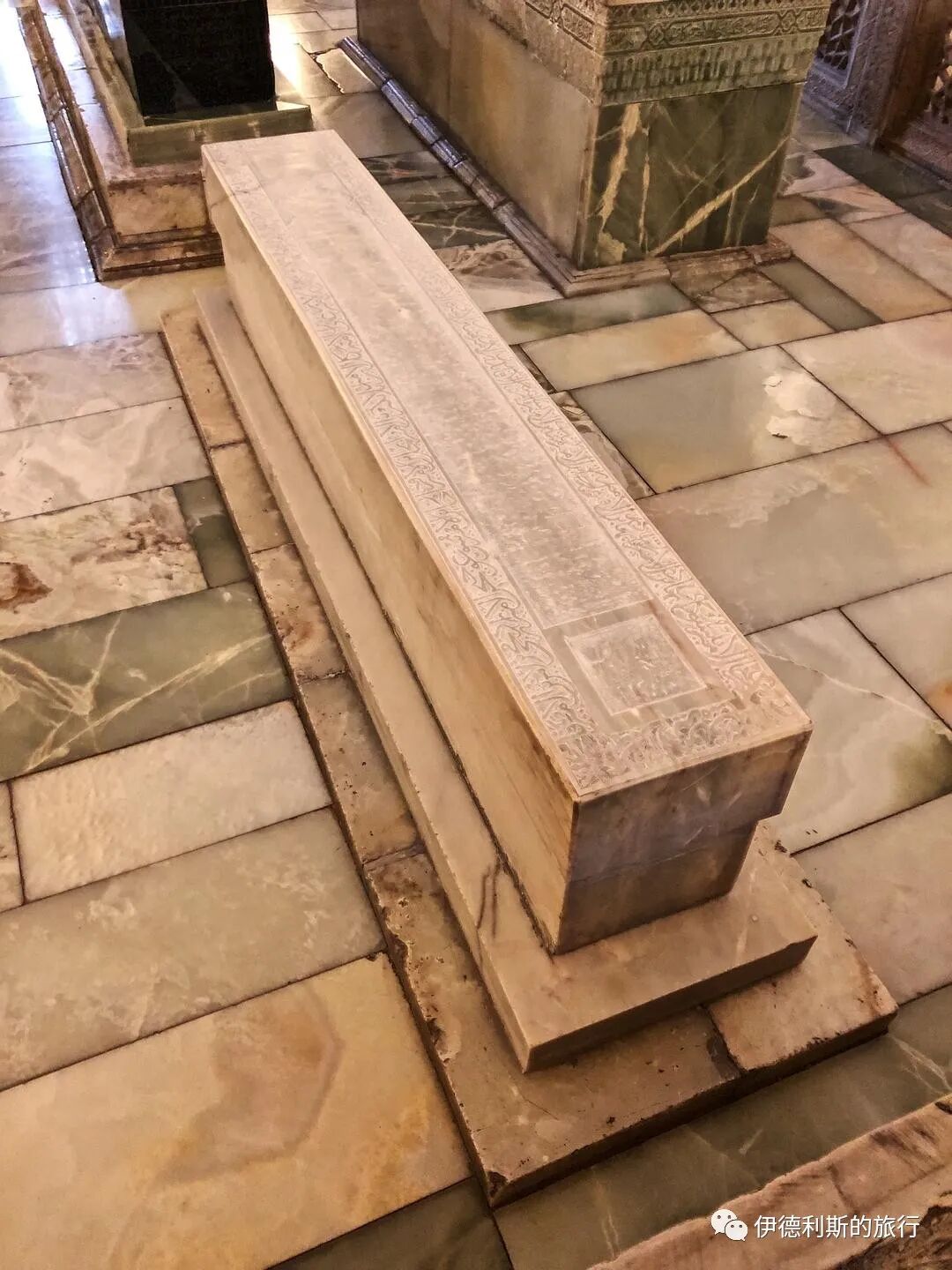
To the east of Timur's tombstone is Muhammad Sultan's tombstone.
Muhammad Sultan's father was Timur's favorite son, Jahangir, but he died of illness in 1376, the year after Muhammad was born. In 1386, the 10-year-old Muhammad Sultan was appointed by Timur to rule the important Iranian city of Tabriz. Five years later, he began to accompany his grandfather on campaigns, performing well in two wars invading the Golden Horde, and grew into an excellent officer. In 1397, Muhammad Sultan was appointed to manage the Fergana region in the easternmost part of the Timurid Empire and was given an army of 40,000 men.
Just before Timur's invasion of India in 1398, Muhammad Sultan was appointed by Timur as the heir to the throne (Vali al-lakhd). It is said that when Timur preached the Khutbah (sermon) at the Jumu'ah (Friday) congregational prayer after conquering Delhi, he placed Muhammad Sultan's name alongside his own.
In 1402, Timur invaded the Ottoman Empire, and the two sides fought a decisive battle in Ankara. On the battlefield, Muhammad Sultan led the army to inflict heavy damage on the enemy and captured the Ottoman Sultan Bayezid I. After the war, Muhammad Sultan was sent to Bursa, the then-capital of the Ottoman Empire, and seized a large amount of treasure.
However, while returning from Bursa to the main force led by Timur, Muhammad Sultan was wounded in battle and eventually died in 1403. Timur felt immense grief over his grandson's death and ordered everyone in the army to wear dark clothes to mourn.
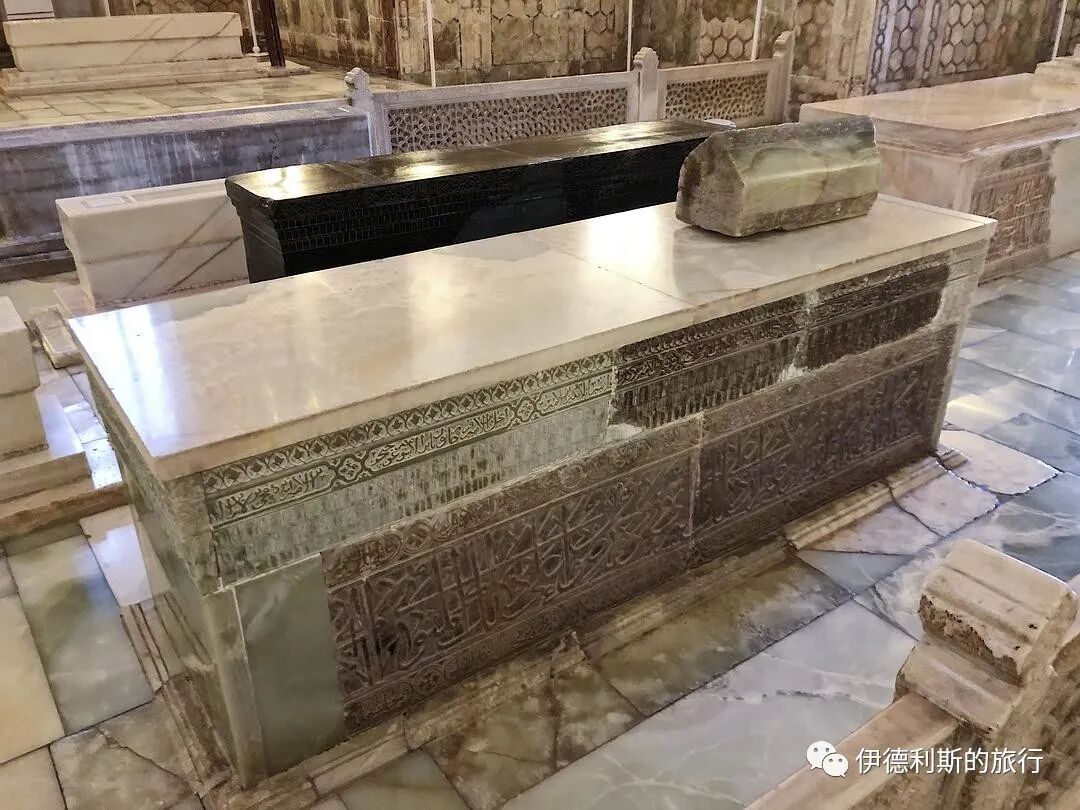
Further west of Timur's tombstone is the tombstone of Timur's third son, Miran Shah. After Timur conquered Iran in 1393, he granted the 'Hulagu Throne' to Miran Shah, with territories including Persia and the Caucasus region, such as Baghdad and Tabriz. However, after suffering a mental illness from falling off a horse, Miran Shah increasingly became a tyrant.
Miran Shah lived a dissolute life, including drinking in the mosque, throwing gold coins out of palace windows, and suffering successive military failures. Most importantly, he began to question Timur's ability to govern, which Timur learned about.
In 1399, Timur sent his nephew Sulaiman Shah to bring Miran Shah back to Samarkand, stripped him of all positions, and made him a follower of Timur.
After Timur died in 1405, Miran Shah supported his son Khalil Sultan to inherit the throne, launching a war of succession with his brother Shah Rukh. Miran Shah led an army to fight in western Persia but was defeated by the Turkmen Black Sheep dynasty in the battle for Tabriz in 1406. During the rout, Miran Shah was killed by the Turkmen, and his head was later cut off and hung on the walls of Tabriz.
After the war, the Turkmen handed over Miran Shah's head and body to Shah Rukh, who had ultimately won the war of succession, and Shah Rukh buried Miran Shah in Gur-e-Amir.
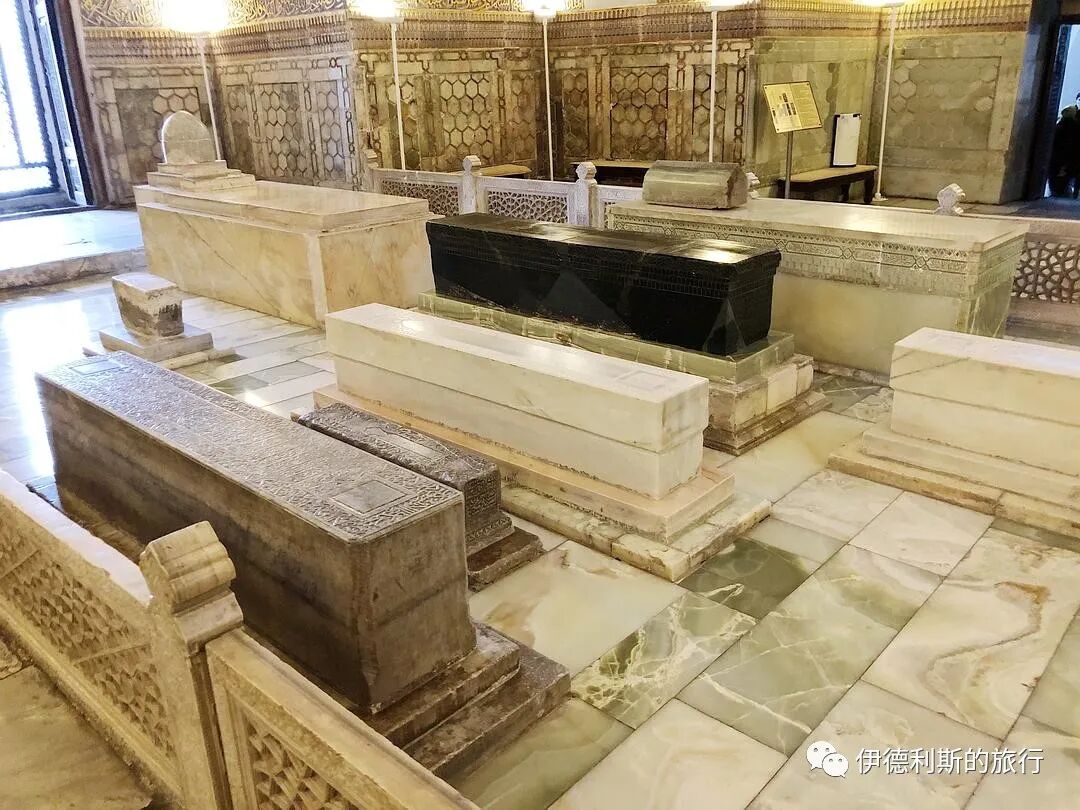
Samarkand Travel Guide: Timur's Capital, Mosques & Islamic History (Part 2)
Articles • ali2007fr posted the article • 0 comments • 132 views • 2026-05-17 05:44
Summary: This travel note introduces Samarkand Travel Guide: Timur's Capital, Mosques & Islamic History (Part 2). The true burial chamber on the lower level is currently not open. It is useful for readers interested in Uzbekistan Travel, Timurid History, Muslim Heritage.
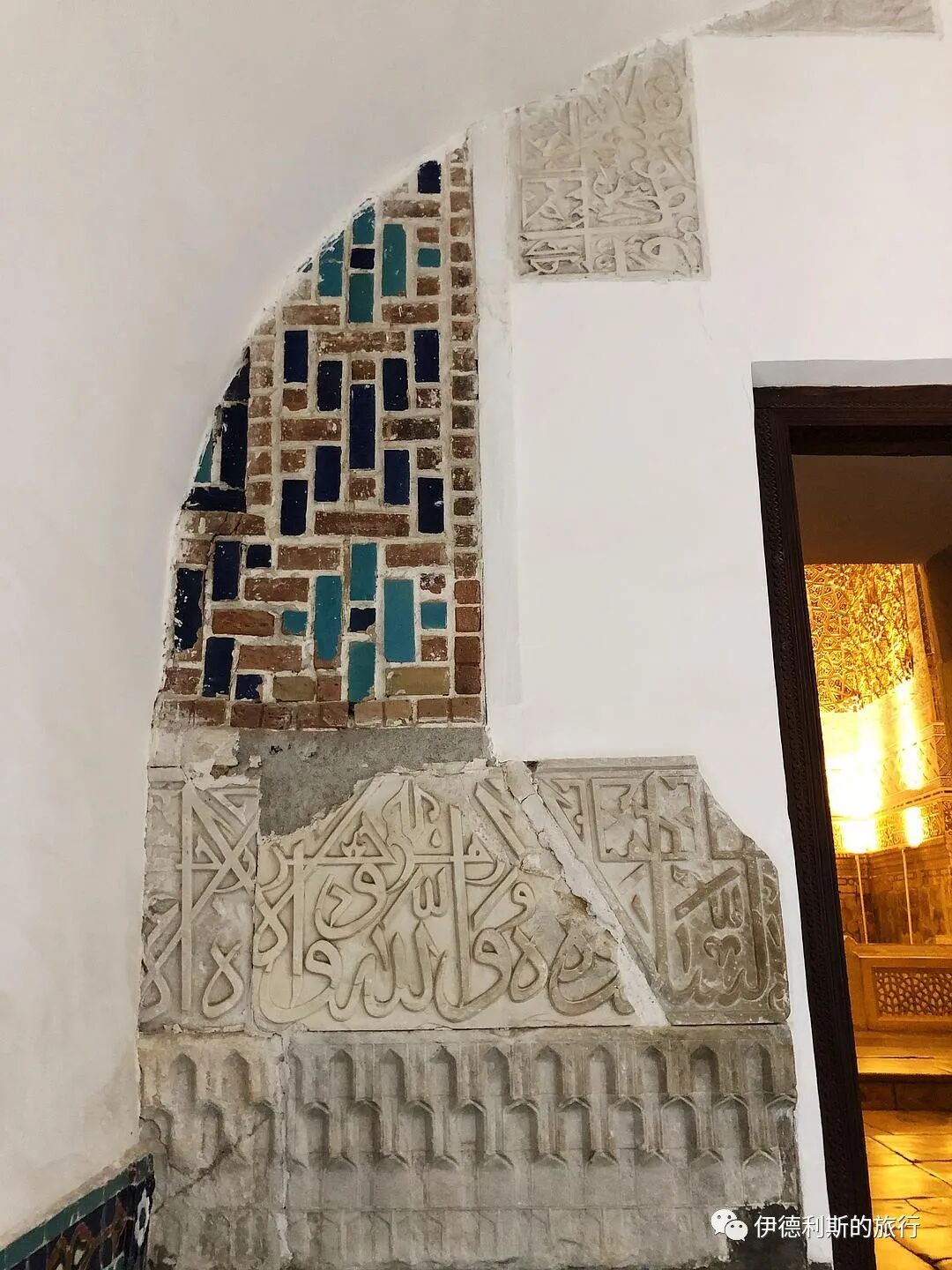
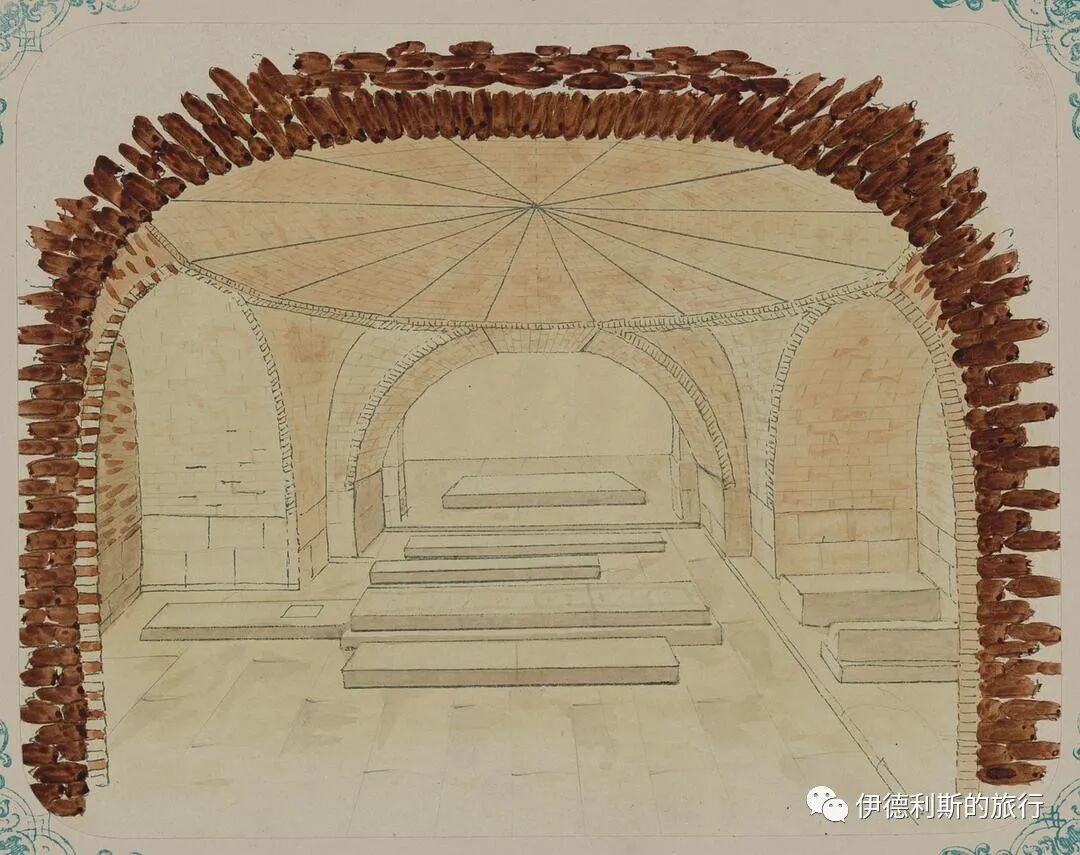
The true burial chamber on the lower level is currently not open.
4. Bibi-Khanym Mosque: 1404
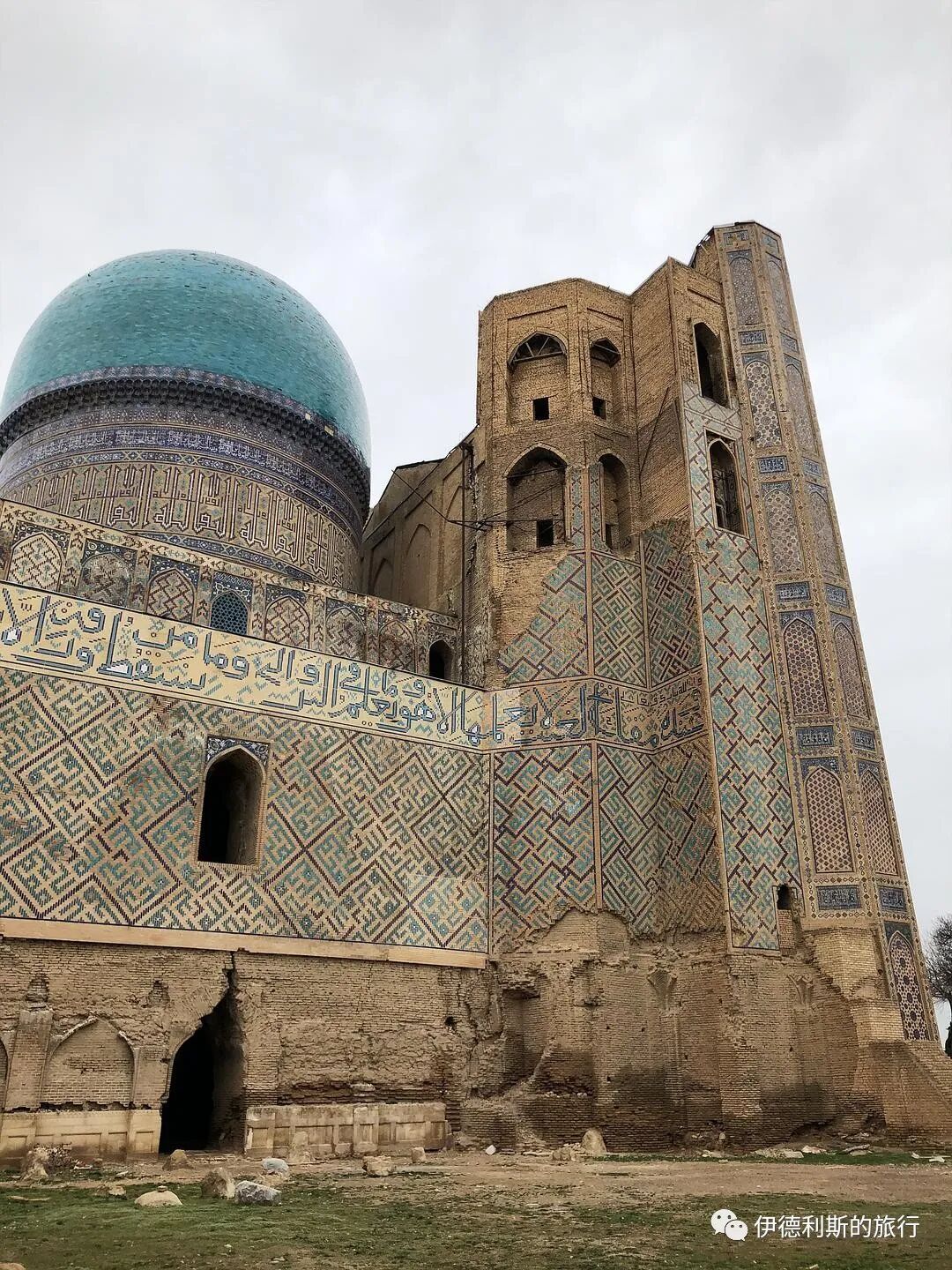
The Bibi-Khanym Mosque is hailed as the most magnificent mosque architecture in 15th-century Central Asia and is the most important mosque of the Timurid dynasty, serving as a model for many later mosques.
The mosque was commissioned in 1399 after Timur conquered Delhi, India, to commemorate his wife, Sarai Mulk Khanym, the daughter of the last Chagatai Khan, Qazan Sultan. When Timur returned to Samarkand in 1404, the mosque was nearly complete, but he was dissatisfied with it, feeling the main dome was not grand enough, and ordered it to be rebuilt. However, during the reconstruction process, Timur passed away in 1405. Afterward, the mosque gradually revealed structural problems caused by its excessive size, and bricks began to fall from the dome; the Timurid dynasty never ceased its repairs on the mosque.
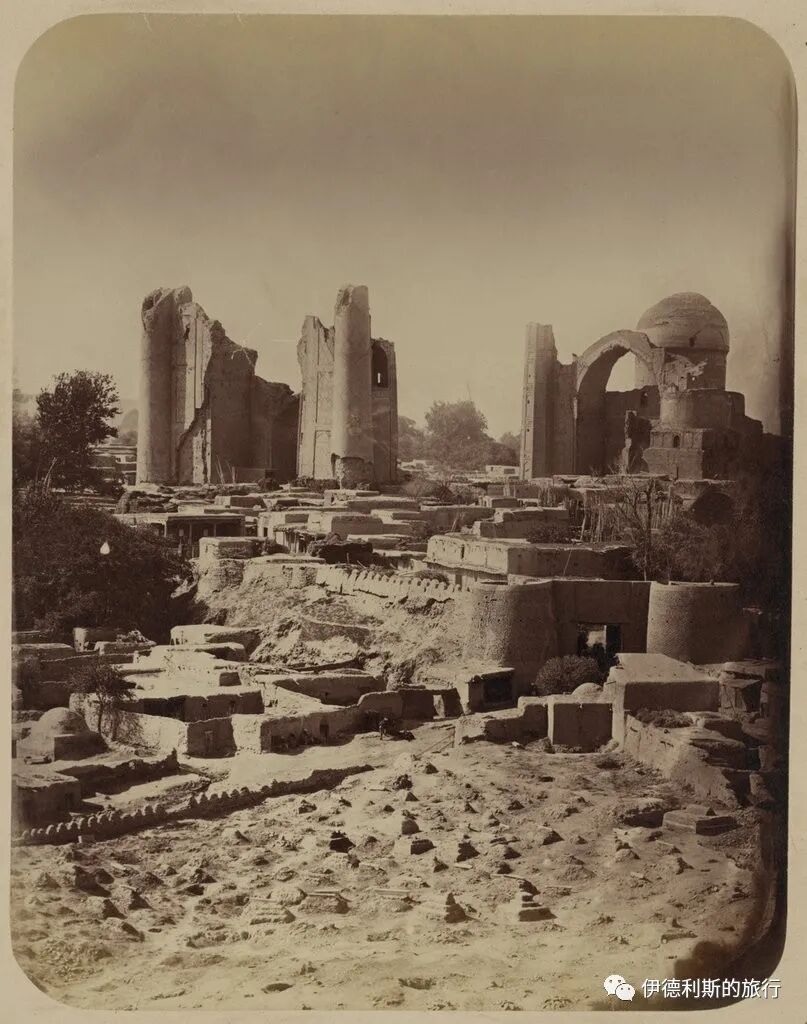
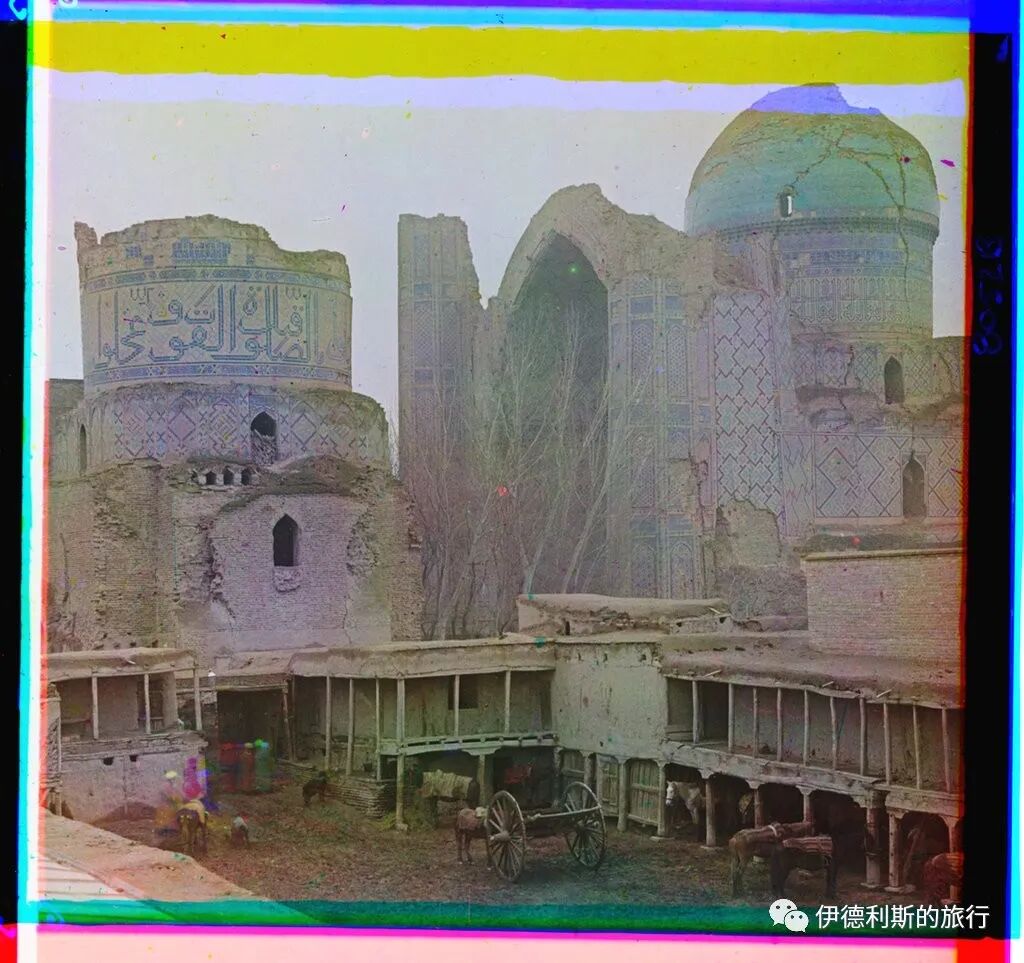
In the late 16th century, Abdullah Khan II (reigned 1583-1598) of the Bukhara Khanate ordered a halt to the maintenance of the Bibi-Khanym Mosque. Subsequently, the bricks and stones of the mosque were continuously taken by local residents to build houses, and the mosque gradually fell into ruins, with the arch of the main gate collapsing in the 1897 earthquake.
In 1974, the Soviet Union began restoring the Bibi-Khanym Mosque, and the restoration work continues to this day.
The Bibi-Khanym Mosque is a classic "Four-Iwan scheme" mosque, consisting of four buildings with Iwan (vaulted hall) arches: the east gate, the west main hall, and two classrooms to the north and south.
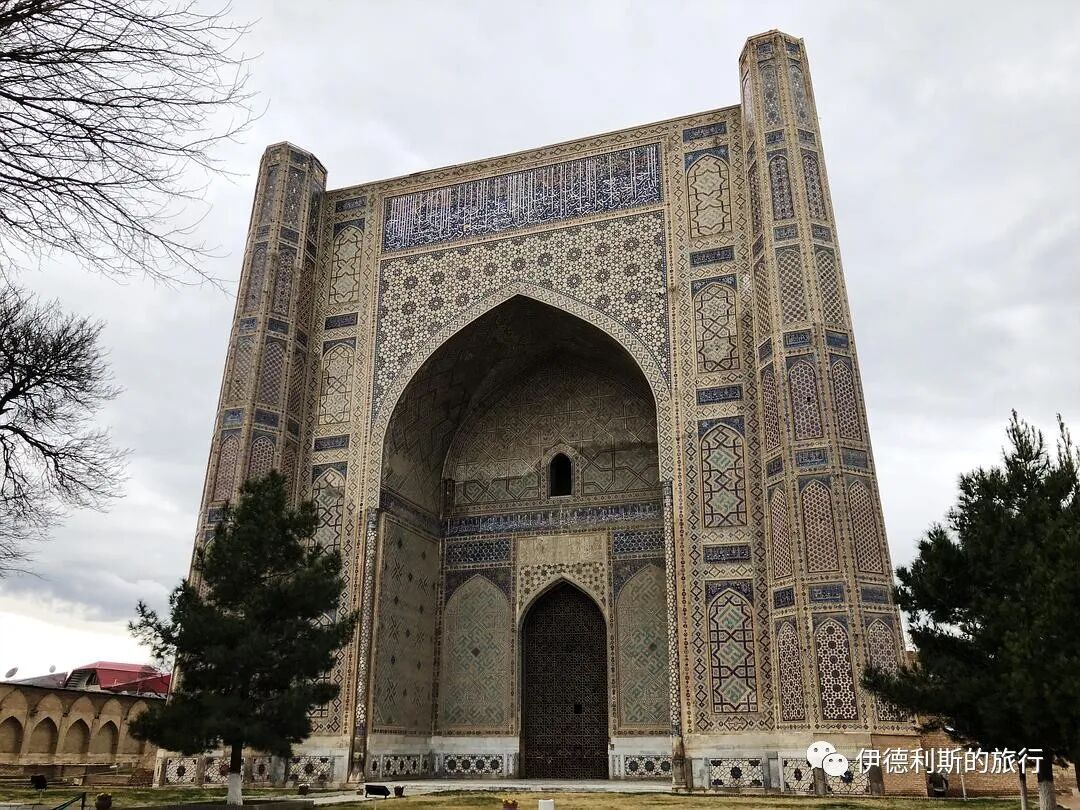
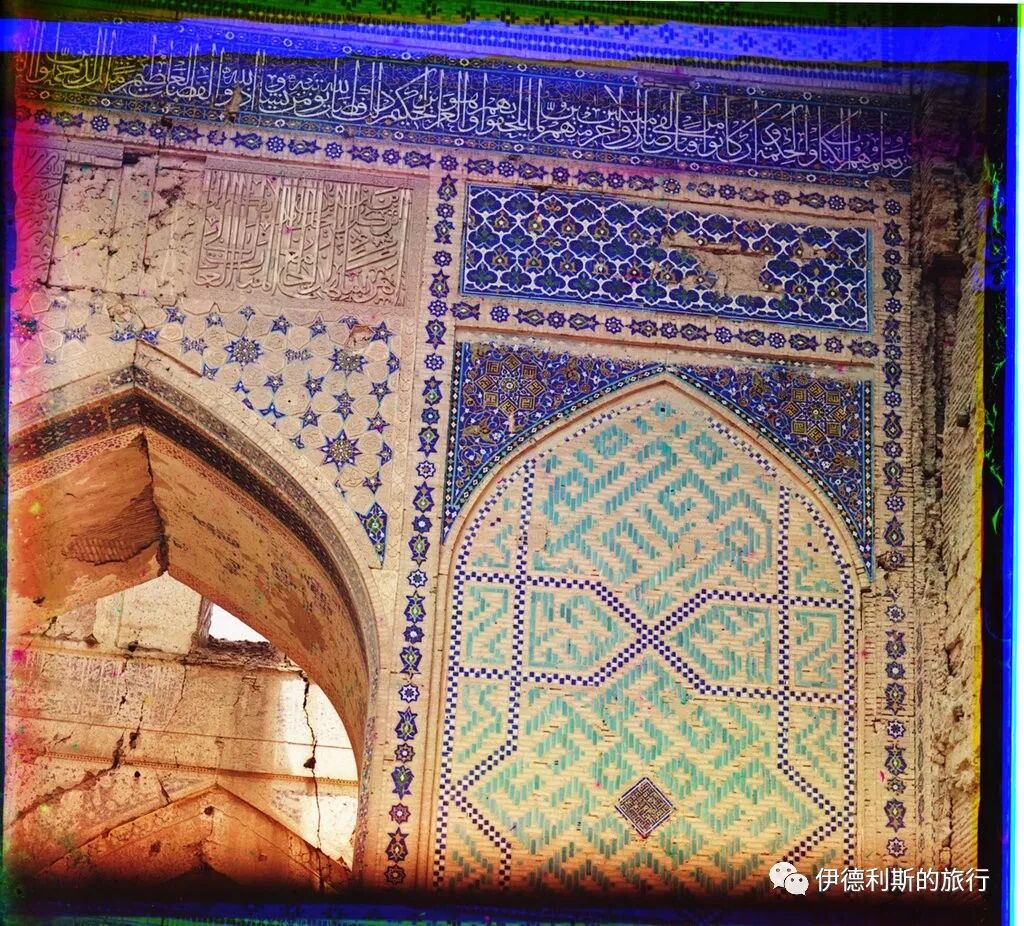
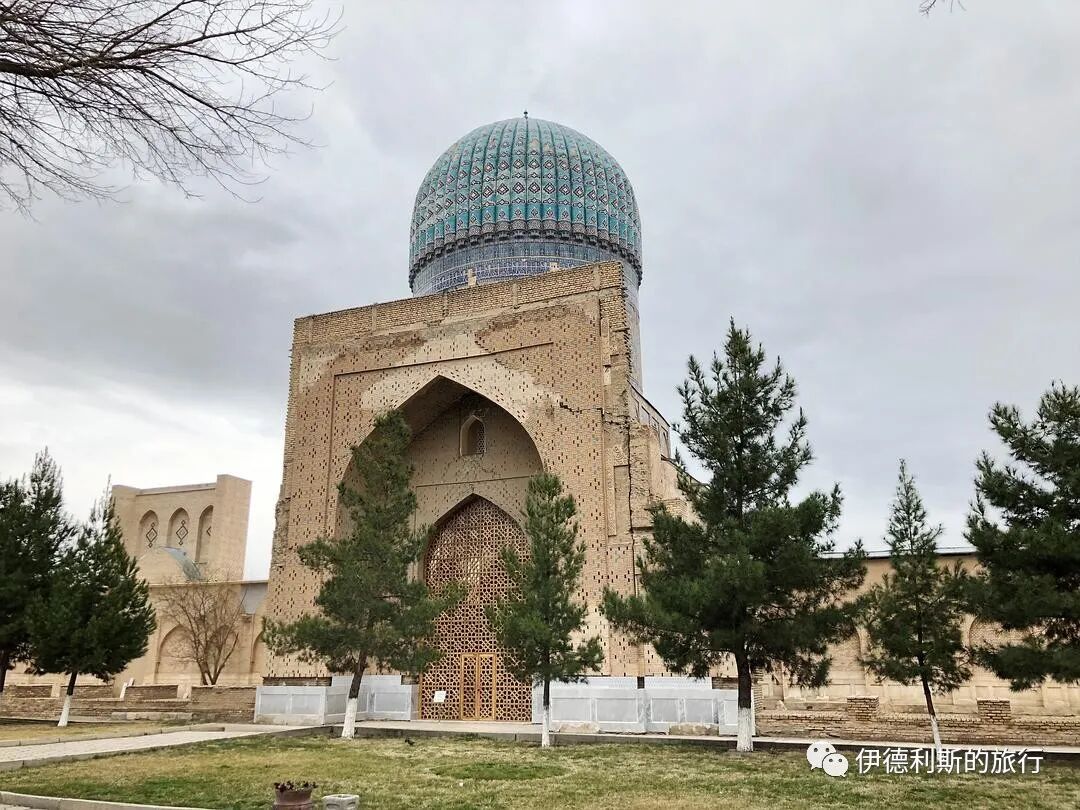
The mosque gate has a tall Pishtak (monumental portal) facade, with an Iwan arch in the center.
Front of the main gate
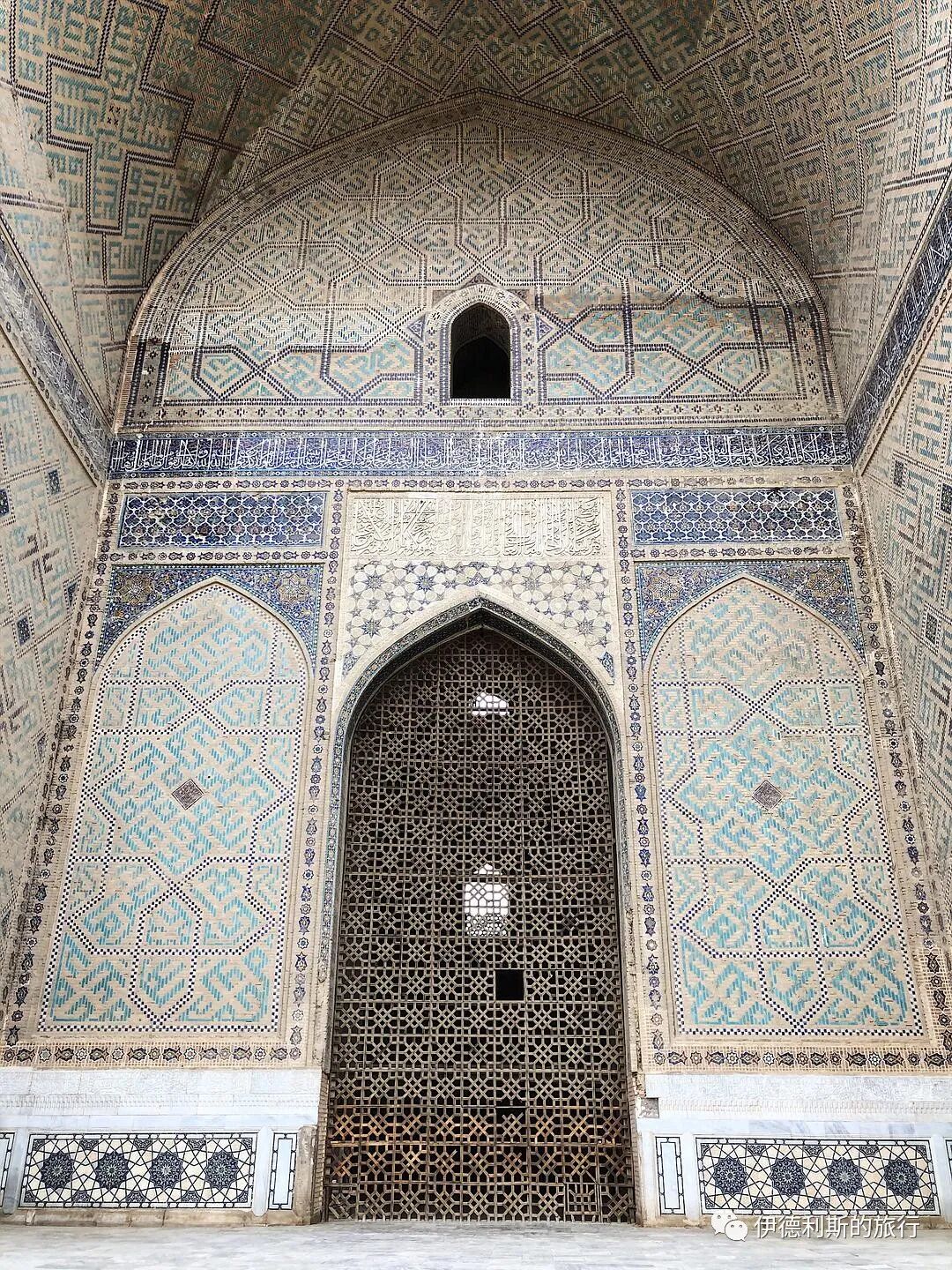
Details of the main gate
Back of the main gate
The main hall has a huge dome, but when viewed from the courtyard, the dome is blocked by the Pishtak facade; in reality, it can only be seen from the sides and the back.
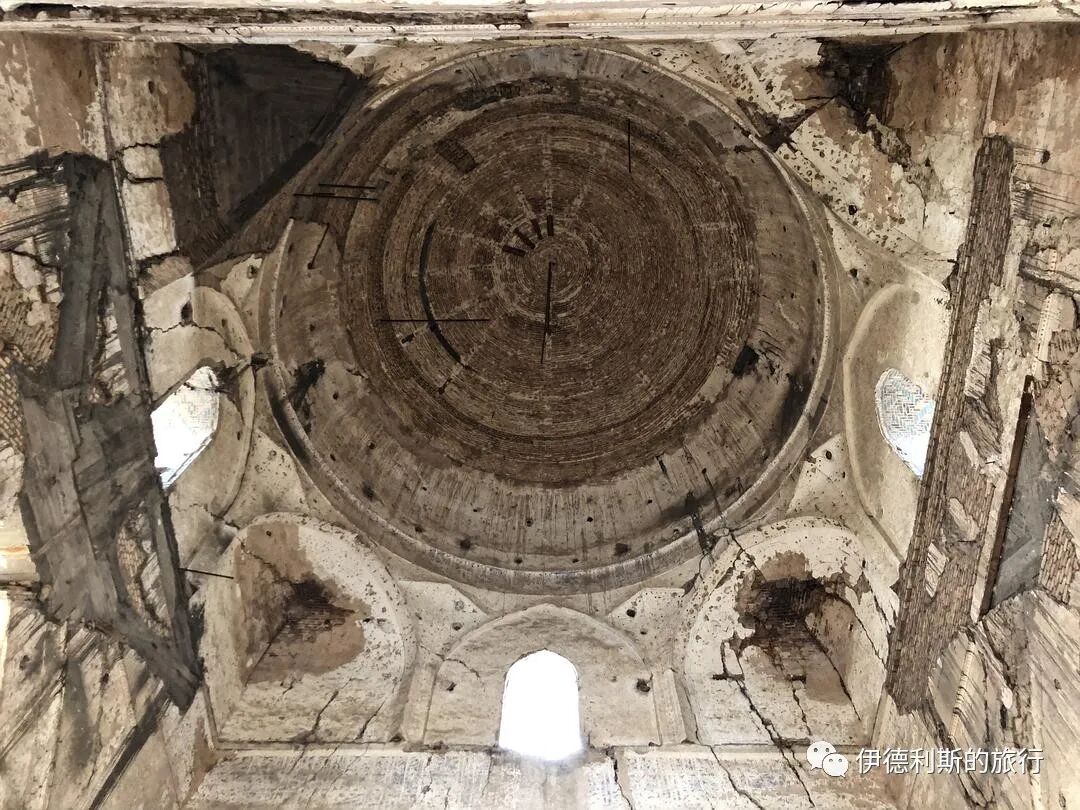
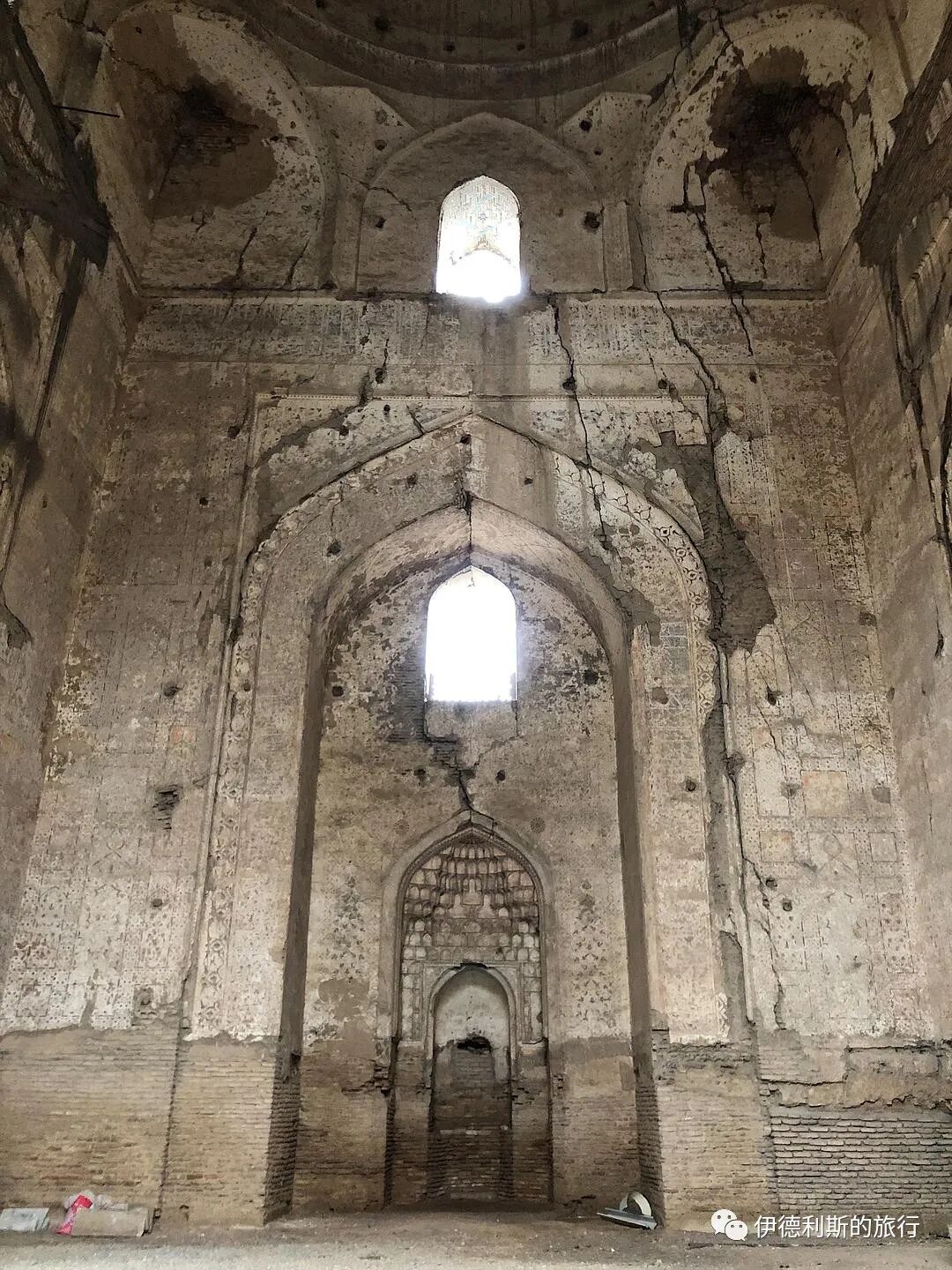
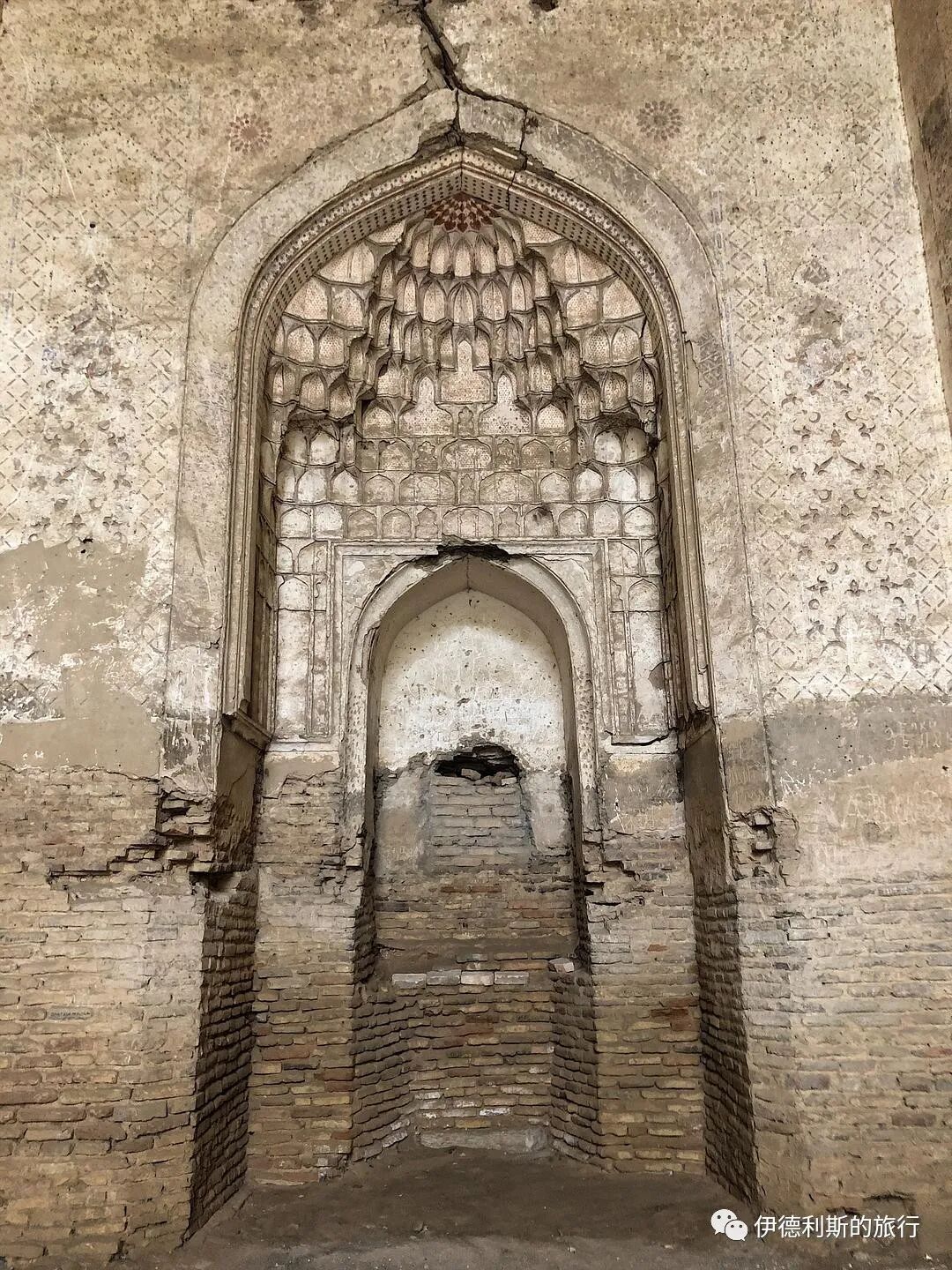
The domes of the main hall and the side halls utilize the innovative "double dome" technique. The inner dome of the main hall is 30 meters high, and the outer dome is 40 meters high, with a 10-meter hollow space in between. This allows the proportion of the interior mihrab (niche indicating the direction of prayer) to the entire hall to be as harmonious as possible, while the exterior dome can be as tall as possible.
The two classrooms to the north and south of the mosque were once surrounded by a circle of 7.2-meter-high rooms forming a courtyard, composed of continuous arches and domes, but today all the rooms are in ruins, with only the foundations remaining.
North classroom
South classroom
In the middle of the courtyard is a marble Quran stand, which is an original artifact from the Timurid era.
5. Bibi-Khanym Mausoleum: 1404
The Bibi Khanym Mausoleum is located directly opposite the Bibi-Khanym Mosque, built at the same time as the mosque, and is connected to it by a path. In addition to Timur's wife, Sarai Mulk Khanym, other women of the Timurid family are buried in the mausoleum.
Sarai Mulk Khanym was the daughter of the last Khan of the Chagatai Khanate, Qazan Khan ibn Yasaur (reigned 1343-1346), and her first husband was the Chagatai warlord Amir Husayn. Husayn was once Timur's main ally before he came to power; in 1370, their alliance broke down, and Timur defeated and executed Husayn, taking over his harem and thus marrying Husayn's wife, Sarai Mulk Khanym.
As a direct descendant of Genghis Khan and a princess of the Chagatai Khanate, Sarai Mulk Khanym held a very high status in Timur's court. By marrying Sarai Mulk Khanym, Timur acquired the title of "Gurgan" (son-in-law), a title that was very important to Timur, indicating his relationship with the Genghis Khan-Chagatai family.
Sarai Mulk Khanym is referred to in historical records as Timur's favorite queen, and she always played a significant role in the court. When Timur was not in Samarkand, Sarai Mulk Khanym even managed state affairs as regent.
Sarai Mulk Khanym had no children, but she treated Timur's youngest son, Shah Rukh (the second ruler of the Timurid dynasty), as her own. After the birth of Shah Rukh's son, Ulugh Beg (the third ruler of the Timurid dynasty), in 1394, Sarai Mulk Khanym also raised and educated Ulugh Beg just as she did Shah Rukh.
6. Ulugh Beg Madrasah: 1420
The Ulugh Beg Madrasah (Islamic school) is located on the west side of Registan Square and was built by the Timurid ruler and famous astronomer Ulugh Beg (reigned 1447-1449) between 1417 and 1420.
After Timur's death in 1405, his son Shah Rukh inherited the eastern part of the empire. Shah Rukh moved the capital of the Timurid Empire from Samarkand to Herat in Afghanistan, and from 1409, he let his son Ulugh Beg rule Samarkand.
The Ulugh Beg Madrasah is hailed as the best Islamic school in 15th-century Central Asia, and it also made Samarkand the cultural center of 15th-century Central Asia. The school usually had about 100 students studying mathematics, geometry, logic, natural sciences, and theology. Ulugh Beg taught here himself; the great Persian poet and Sufi scholar Abdul-Rahman Jami studied here, and the school also produced many astronomers. After the establishment of the Bukhara Khanate in the 16th century, Samarkand lost its status as the capital, but the Ulugh Beg Madrasah remained one of the best schools in Central Asia.
The Ulugh Beg Madrasah was severely damaged in two major earthquakes in 1817 and 1818, and finally became a ruin after the 1897 earthquake. After the 1920s, the Ulugh Beg Madrasah began to be restored, a process that has lasted for more than 70 years. The first phase of work mainly focused on protecting the surviving parts of the building, and the northeast minaret was straightened in 1932. Major restoration work was carried out in the 1950s and 1960s; the ground level was lowered by two meters, doors, windows, and various architectural decorations were restored, and the southeast minaret was restored in 1965. In the 1990s, the second floor of the school building, which had been demolished in the 18th century, was restored.
The archaeological section of the "Turkestan Album," produced by Russia between 1871 and 1872, photographed the Ulugh Beg Madrasah at that time.
Russian photographer Prokudin-Gorskii photographed the Ulugh Beg Madrasah in 1905.
7. Ulugh Beg Observatory: 1429
The Ulugh Beg Observatory is located northeast of Samarkand and is hailed as one of the most famous observatories in the Islamic world.
After the Ulugh Beg Madrasah was completed in 1420, Ulugh Beg invited many astronomers to teach there. To further promote astronomical research, Ulugh Beg began building the observatory in 1424. After the observatory was officially completed in 1429, Ulugh Beg appointed his student Ali Qushji to be in charge of the main work, and many famous astronomers such as Qāḍīzāda al-Rūmī and Jamshid Kashani observed celestial movements here.
In 1437, under the sponsorship of Ulugh Beg, astronomers in Samarkand used the Ulugh Beg Observatory to map the coordinates of 1,018 stars, known as the "Zīj-i Sultānī" (Ulugh Beg Astronomical Tables), which was an important update to the star catalogs of predecessors like Ptolemy.
In 1449, Ulugh Beg was assassinated on his way to perform Hajj (pilgrimage), and the observatory was subsequently destroyed by religious fanatics, remaining unknown for more than 400 years thereafter. It was not until 1908 that a Samarkand archaeologist, V. L. Vyatkin, finally discovered the exact location of the observatory in a document from the Timurid period. He immediately began archaeological excavations and discovered a huge marble sextant.
Site of the marble sextant
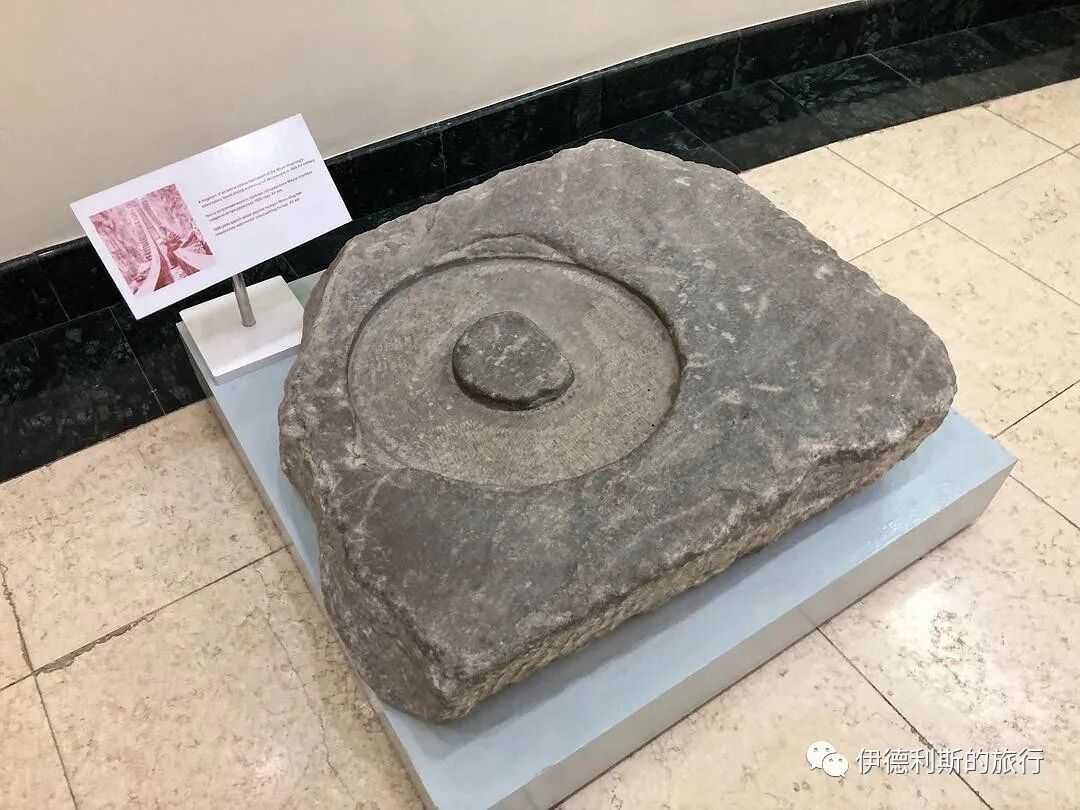
Astronomical instruments unearthed during archaeological excavations
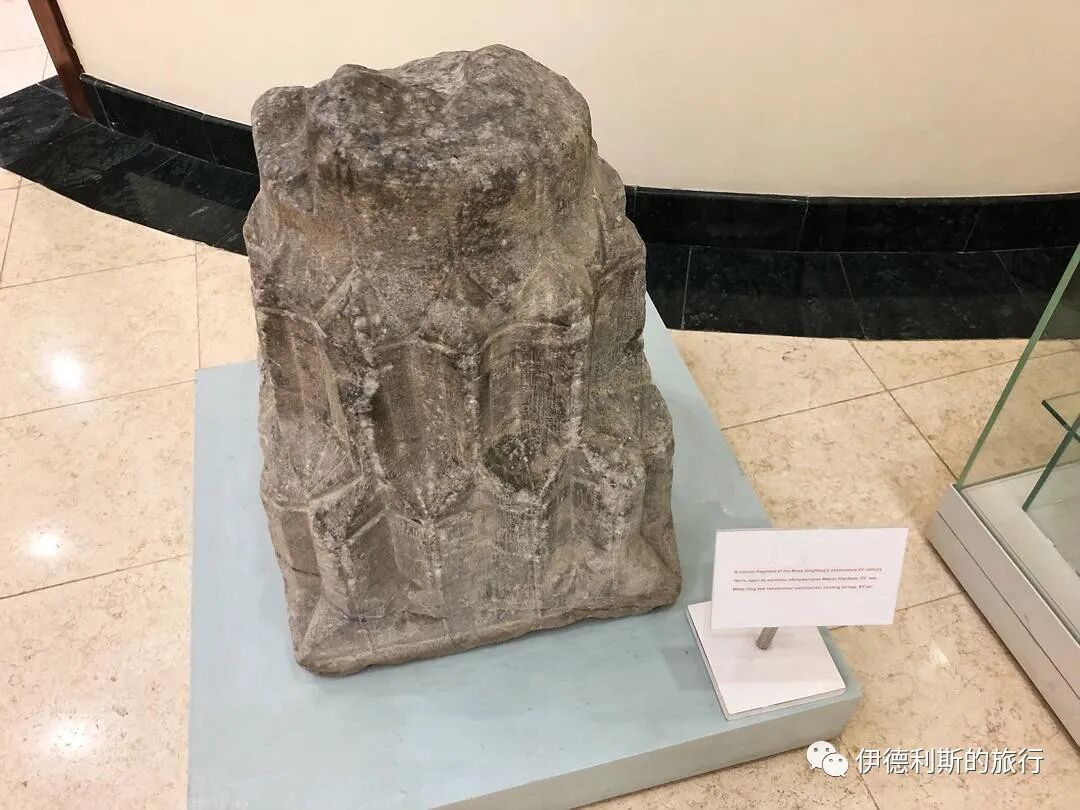
Unearthed stone column components of the observatory
Restoration model of the observatory
In 1970, the Ulugh Beg Observatory Museum was established on the site of the observatory, housing related artifacts.
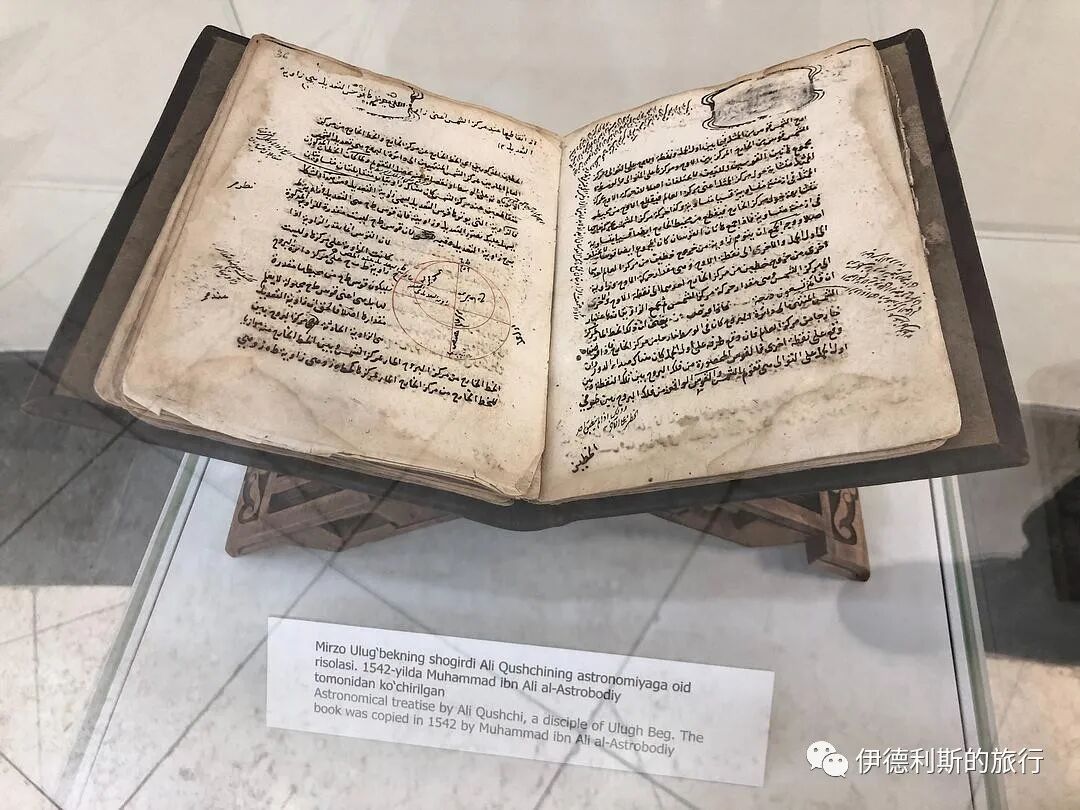
The image below is a 1542 manuscript of the astronomical work of Ulugh Beg's student Ali Qushji; he was the main person in charge of the Ulugh Beg Observatory and a famous astronomer, mathematician, and physicist of the 15th century.
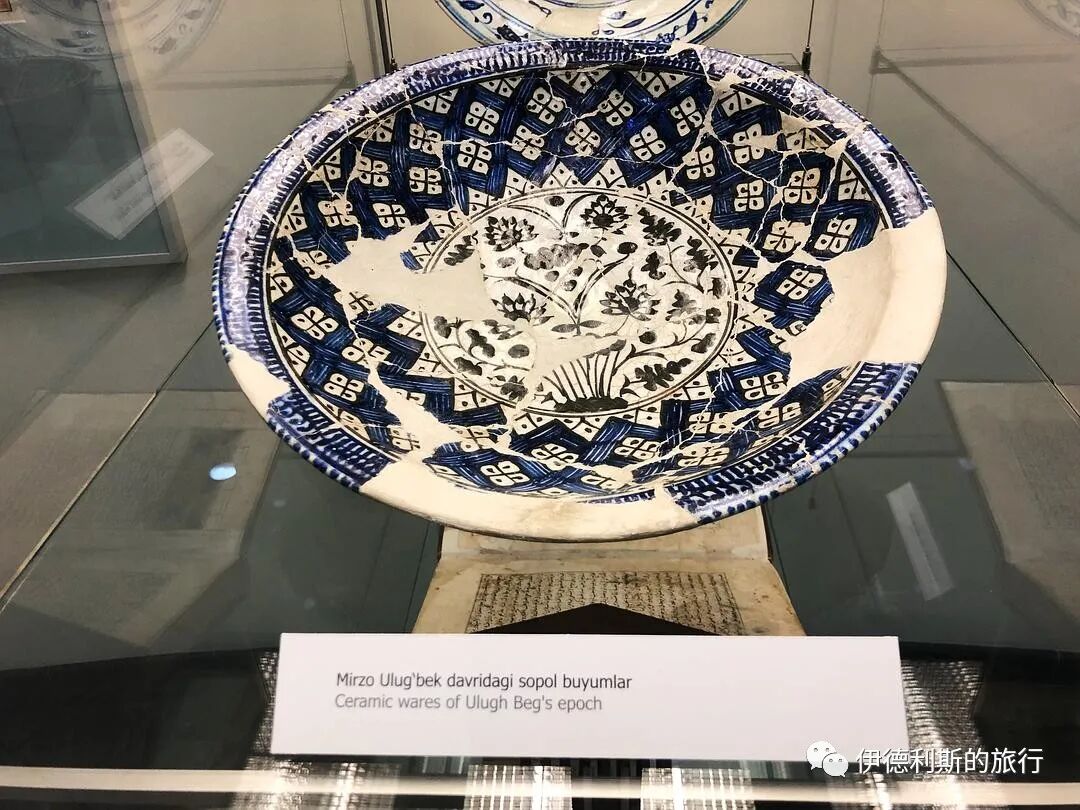
Porcelain plate from the era of Ulugh Beg.
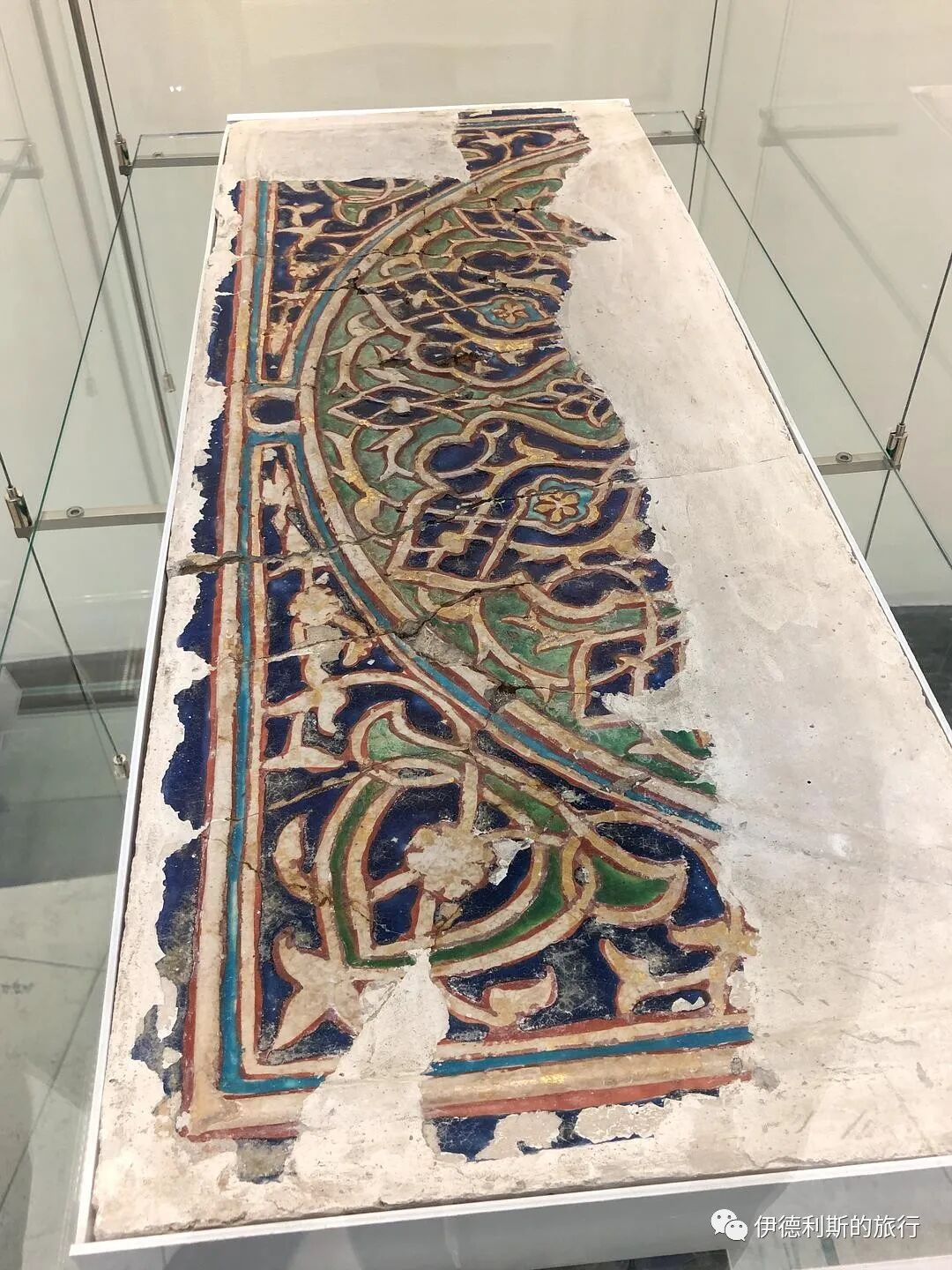
14th-century ceramic tile.
14th-15th-century ceramic tiles and marble tiles
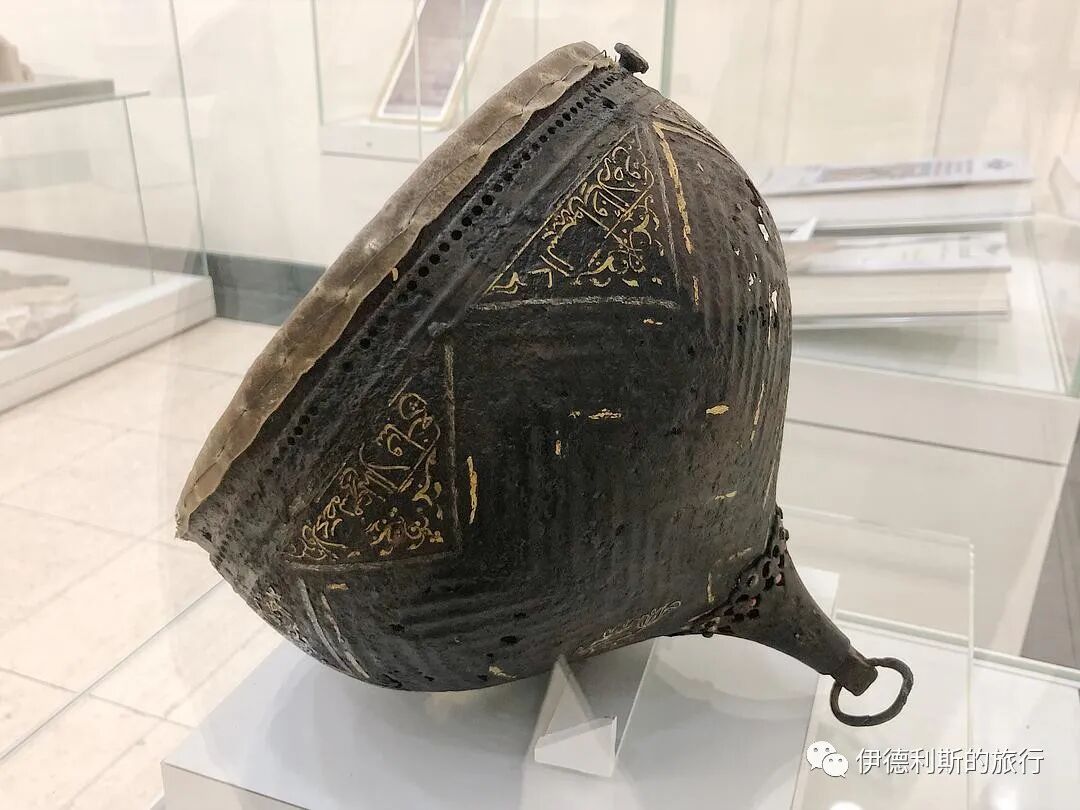
15th-century military drum.
8. Ishrat-khana Mausoleum: 1464
The Ishrat-khana Mausoleum is located in the southeast of the old city of Samarkand and is one of the few Timurid monuments in Samarkand that has not been renovated.
Ishrat-khana means "House of Pleasure." According to the discovery by archaeologist V. L. Vyatkin in 1896, this building was built in 1464 by Habiba Sultan, the wife of the Timurid ruler Abu Sa'id Mirza (reigned 1451-1469), for their daughter Havend Sultan-bika. In 1940, Professor M. E. Masson organized an archaeological excavation of the mausoleum and discovered an octagonal tomb under the hall, which contained 23 graves of women and children, all of whom were likely members of the Timurid royal family.
Abu Sa'id Mirza was the great-grandson of Timur the Great and the grandfather of Babur, the founder of the Mughal Empire. Abu Sa'id Mirza occupied Samarkand in 1451 with the help of the Uzbeks, defeated other Timurid princes in 1459, and conquered eastern Iran and most of Afghanistan in 1461, becoming the last monarch to unify the Timurid Empire.
The Ishrat-khana Mausoleum was severely damaged in the 1903 earthquake, the dome was destroyed, and only an iron sheet roof was added later for protection. The archaeological section of the "Turkestan Album," produced by Russia between 1871 and 1872, contains photos of the Ishrat-khana Mausoleum before the earthquake, where the former dome of the mausoleum can be seen.
9. Ak-Saray Mausoleum: Presumed to be 1450s-1470s
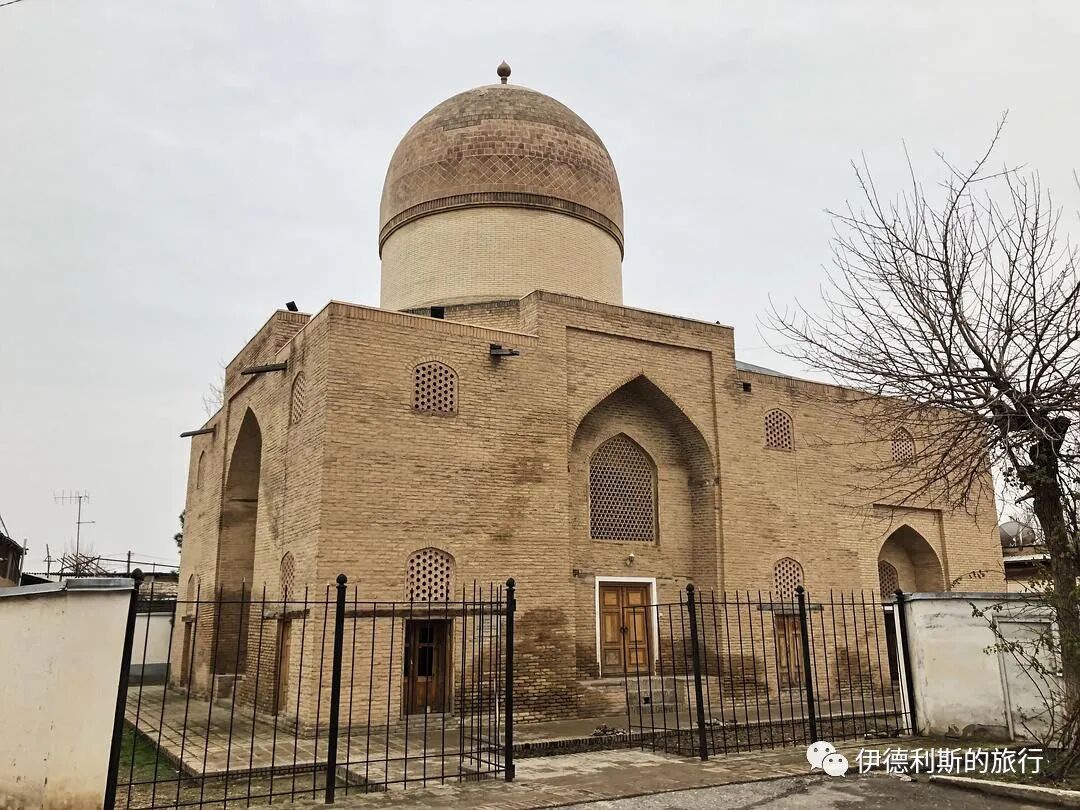
The Ak-Saray Mausoleum is located right next to the Gur-e-Amir Mausoleum; it is a rectangular domed building with narrow stairs leading to an octagonal tomb underground.
"Ak-Saray" means "White Palace," and no information about the identity of the tomb owner was left inside the tomb. According to the speculation of Soviet historian and orientalist Mikhail Masson, the tomb owner is likely the Timurid ruler Abdal-Latif Mirza (reigned 1449-1450).
Abdal-Latif Mirza was the great-grandson of Timur the Great and the eldest son of Ulugh Beg. Abdal-Latif initially followed his father in battle and helped his father capture the city of Herat, but was later exiled by his father, allegedly because he was disloyal to his father; another theory is that Ulugh Beg predicted through astrology that he would be killed by his son. In 1449, Abdal-Latif launched a rebellion, captured Ulugh Beg near Samarkand, and subsequently murdered him; therefore, Abdal-Latif is also known as "Padarkush" (the patricide). A few days later, Abdal-Latif killed his brother to seize the throne, but he was killed after ruling for only 6 months. It is speculated that because Abdal-Latif was a patricide, he could not be buried in the Gur-e-Amir Mausoleum where his father Ulugh Beg was buried, so he could only be buried nearby.
Another speculation is that the tomb owner is the Timurid ruler Abu Sa'id Mirza (reigned 1451-1469), who was Abdal-Latif's cousin. Abu Sa'id Mirza wanted to expand the scale of the Gur-e-Amir Mausoleum to continue burying male members of the Timurid royal family, so he planned to build this mausoleum. Abu Sa'id Mirza died in 1469, so this mausoleum may have been built in the 1470s. In addition, the Ishrat-khana Mausoleum, built by Abu Sa'id in 1464 to bury female and child royal family members, is very similar in architectural style to the Ak-Saray Mausoleum, which is also evidence for this view.
The Ak-Saray Mausoleum once fell into ruins, was later protectively restored between 1924 and 1925, renovated again in 2007, and is now open to tourists as an attraction. The archaeological section of the "Turkestan Album," produced by Russia between 1871 and 1872, contains old photos of the Ak-Saray Mausoleum, where it can be seen that the dome of the Ak-Saray Mausoleum had completely collapsed at that time.
10. Khodja Abdu Derun Mausoleum: 15th century
The Khodja Abdu Derun Mausoleum was built to commemorate a 9th-century Arab judge, where "Derun" refers to the fact that the mausoleum is located inside the city of Samarkand.
The earliest domed mausoleum was built in the 12th century and was expanded in the 15th century into a complex including a pond, a mosque, and a gate.
11. Mausoleum of Prophet Daniel: Rebuilt in the early 20th century
Daniel (Daniyar in Uzbek) is a prophet recorded in the Old Testament of the Bible, who lived between the 7th and 6th centuries BC and was buried in the ancient city of Susa in Persia after his death. Legend has it that when Timur passed through the city of Susa, he brought the right hand of the Prophet Daniel back to Samarkand and buried it next to a spring on the bank of the Siab River at the foot of Afrosiab Hill, which is the current Mausoleum of Khodja Daniyar.
The Mausoleum of the Prophet Daniel was originally just covered by stones by the river, with a sacred pillar inserted on top. Legend has it that the mausoleum kept growing, forcing people to continuously lengthen the marble sarcophagus. It was not until the early 20th century that people built the current mausoleum building, which contains an 18-meter-long sarcophagus.
In addition to Samarkand, there are mausoleums of the Prophet Daniel in Jerusalem, the ancient city of Susa, Istanbul, and the ancient city of Sumar in Iraq, but unfortunately, the prophet's mausoleum in the ancient city of Sumar was destroyed by ISIS not long ago.
Furthermore, the spring next to the prophet's mausoleum is believed to have the power to heal the body and soul. view all
Summary: This travel note introduces Samarkand Travel Guide: Timur's Capital, Mosques & Islamic History (Part 2). The true burial chamber on the lower level is currently not open. It is useful for readers interested in Uzbekistan Travel, Timurid History, Muslim Heritage.
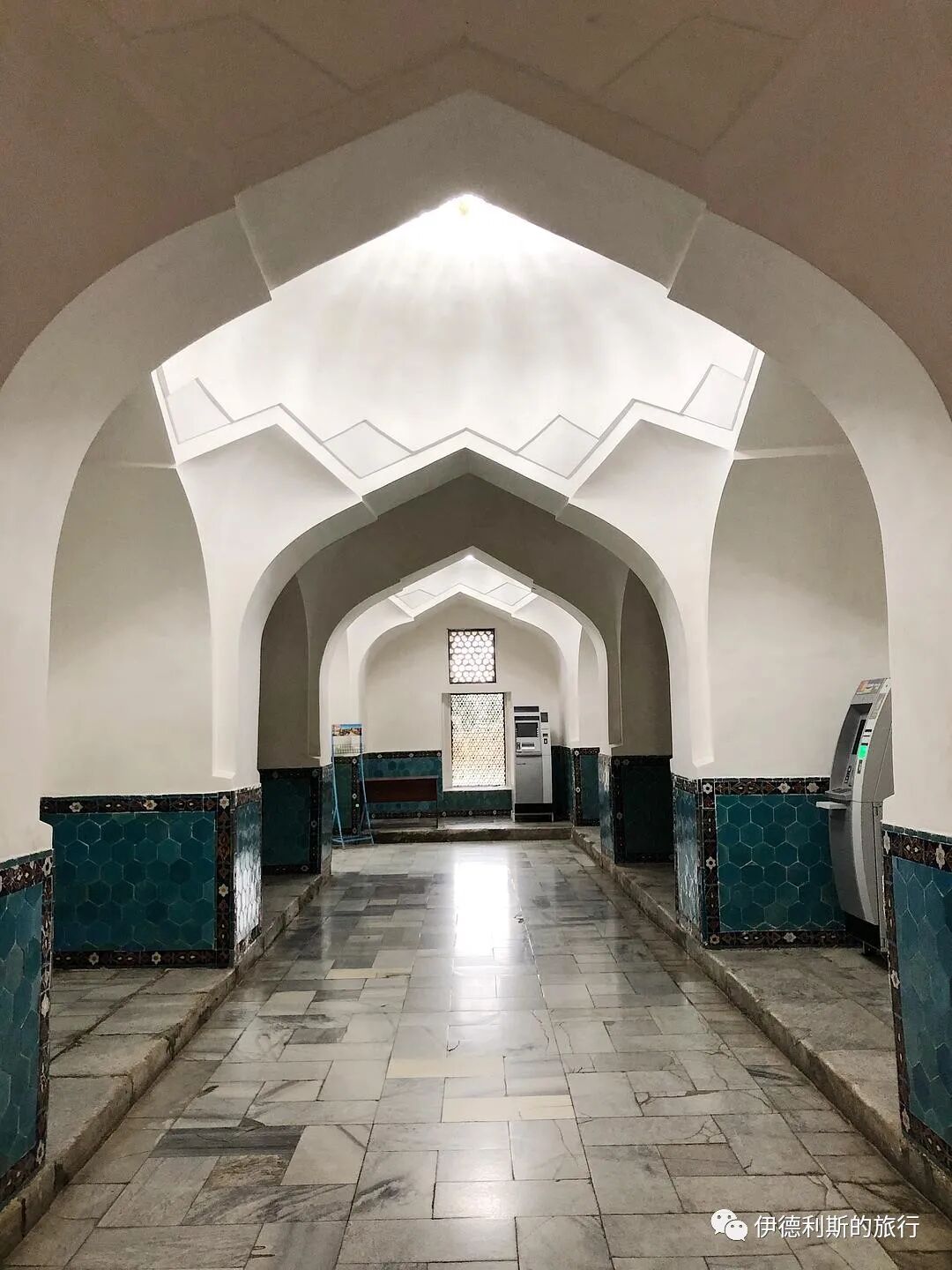
The true burial chamber on the lower level is currently not open.
4. Bibi-Khanym Mosque: 1404
The Bibi-Khanym Mosque is hailed as the most magnificent mosque architecture in 15th-century Central Asia and is the most important mosque of the Timurid dynasty, serving as a model for many later mosques.
The mosque was commissioned in 1399 after Timur conquered Delhi, India, to commemorate his wife, Sarai Mulk Khanym, the daughter of the last Chagatai Khan, Qazan Sultan. When Timur returned to Samarkand in 1404, the mosque was nearly complete, but he was dissatisfied with it, feeling the main dome was not grand enough, and ordered it to be rebuilt. However, during the reconstruction process, Timur passed away in 1405. Afterward, the mosque gradually revealed structural problems caused by its excessive size, and bricks began to fall from the dome; the Timurid dynasty never ceased its repairs on the mosque.
In the late 16th century, Abdullah Khan II (reigned 1583-1598) of the Bukhara Khanate ordered a halt to the maintenance of the Bibi-Khanym Mosque. Subsequently, the bricks and stones of the mosque were continuously taken by local residents to build houses, and the mosque gradually fell into ruins, with the arch of the main gate collapsing in the 1897 earthquake.
In 1974, the Soviet Union began restoring the Bibi-Khanym Mosque, and the restoration work continues to this day.
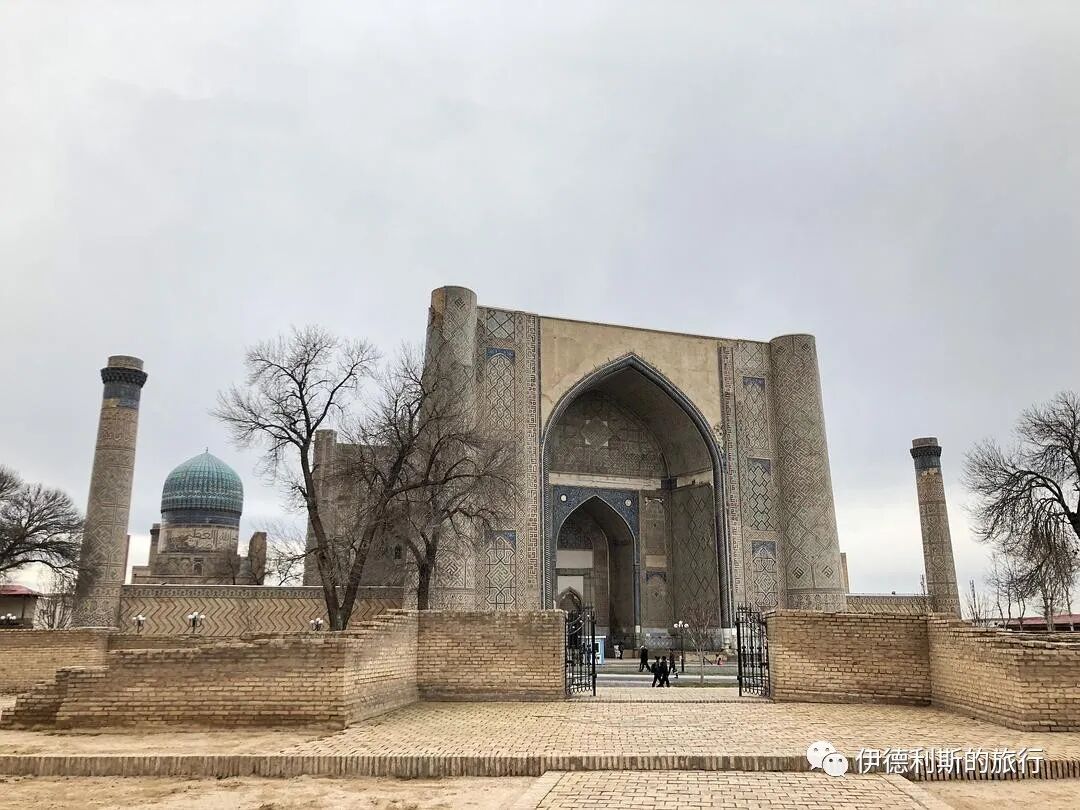
The Bibi-Khanym Mosque is a classic "Four-Iwan scheme" mosque, consisting of four buildings with Iwan (vaulted hall) arches: the east gate, the west main hall, and two classrooms to the north and south.
The mosque gate has a tall Pishtak (monumental portal) facade, with an Iwan arch in the center.
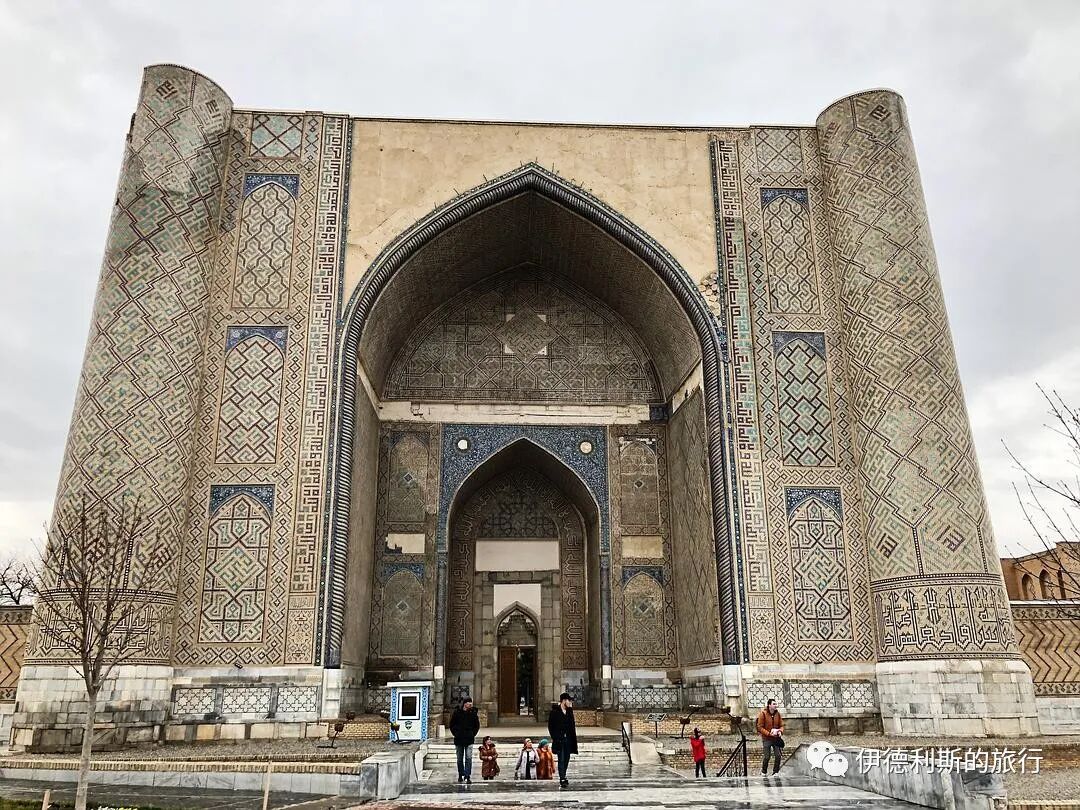
Front of the main gate
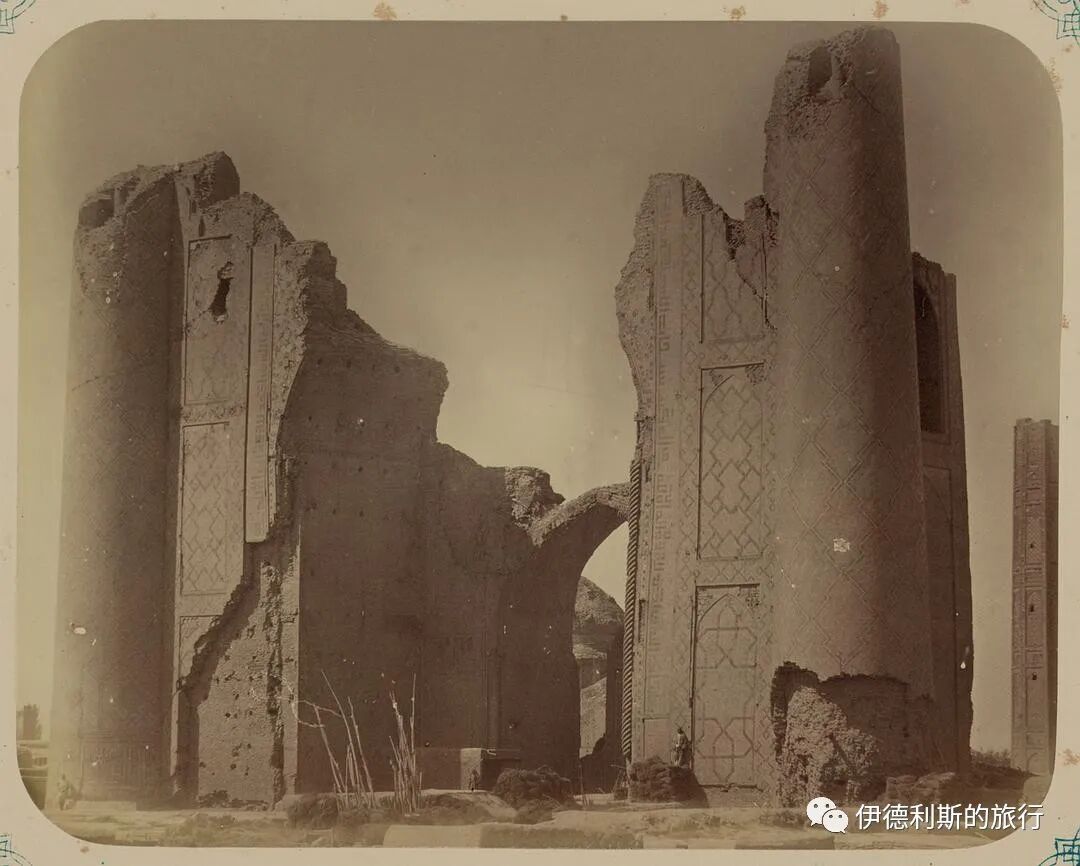
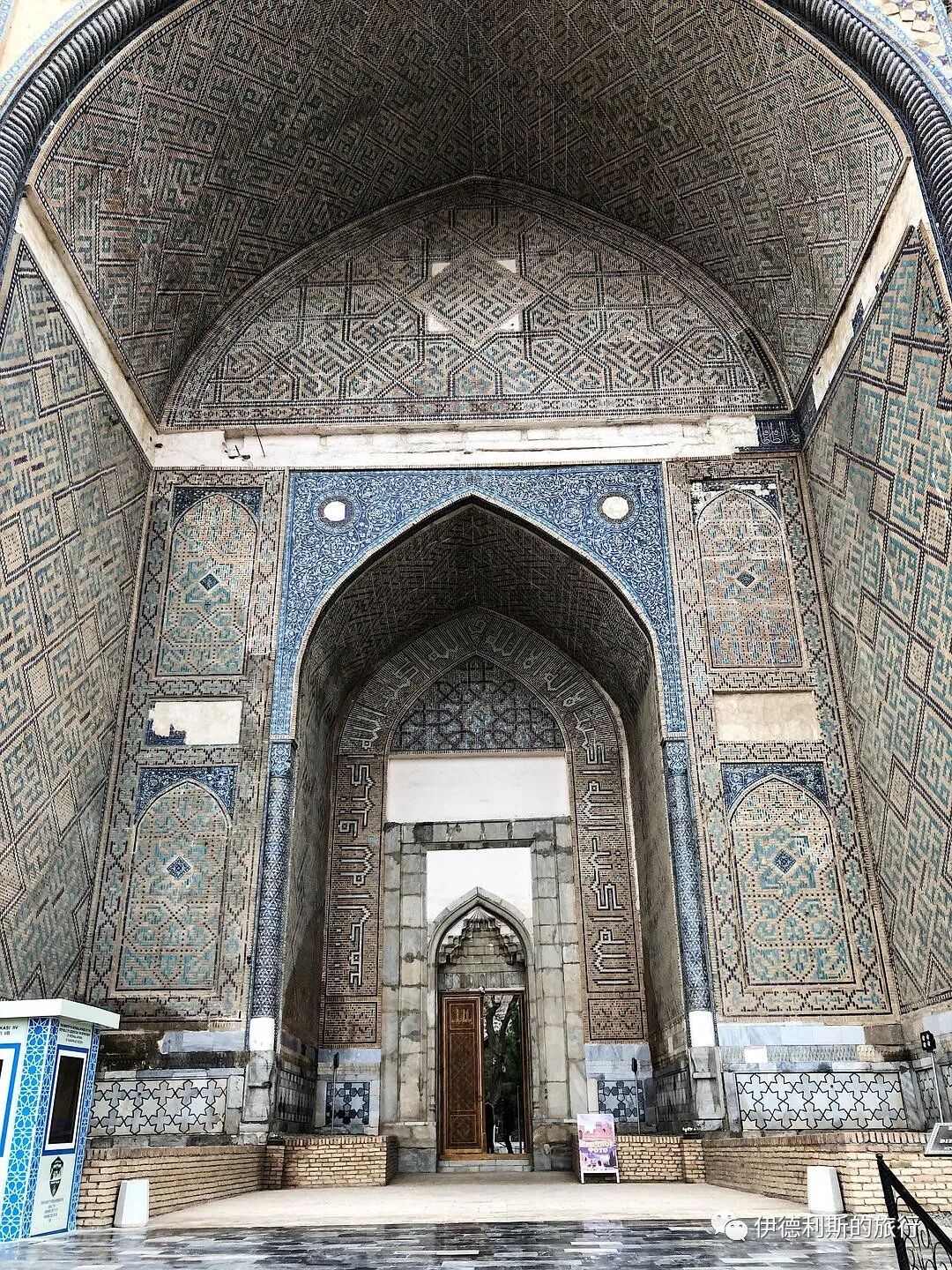
Details of the main gate
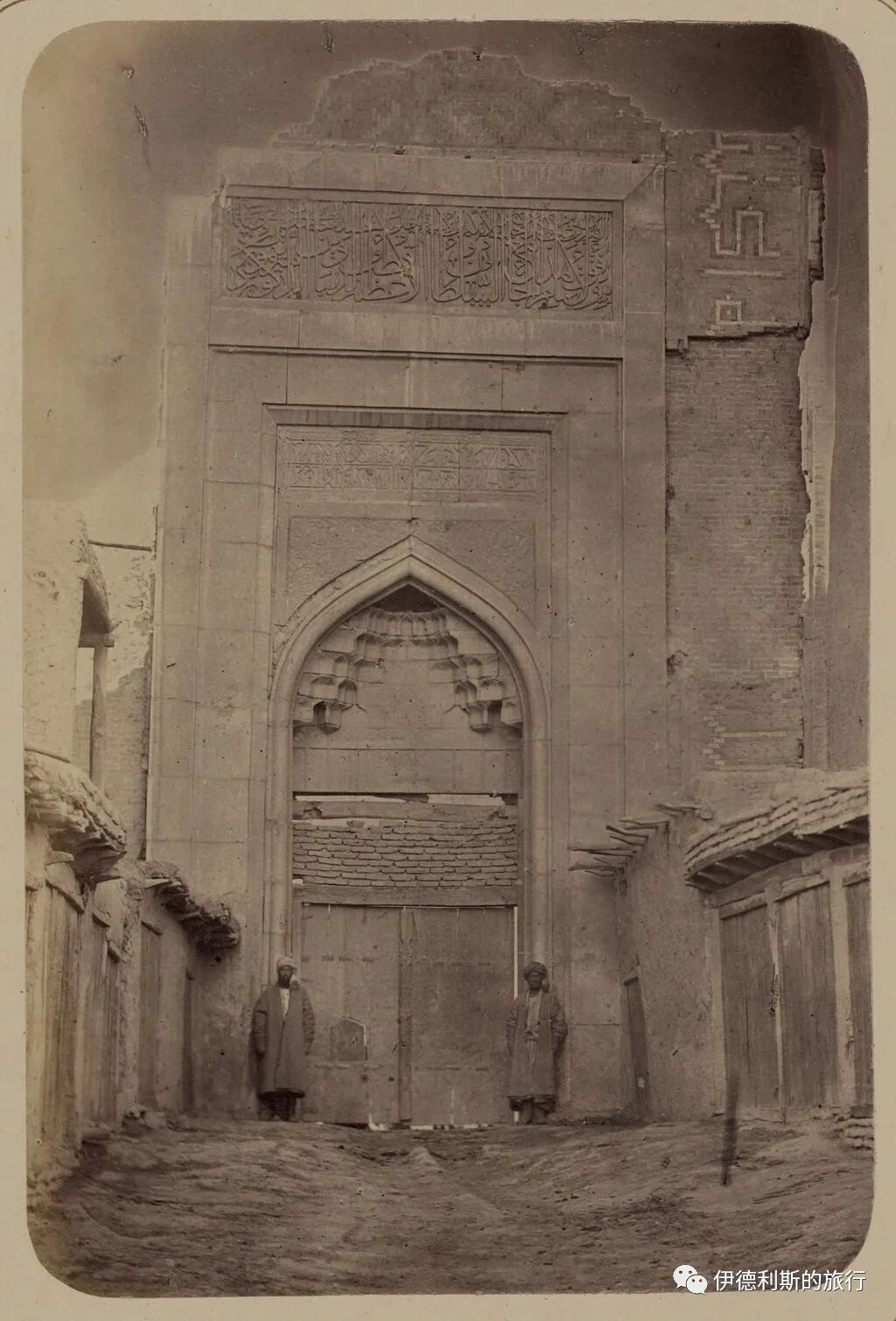
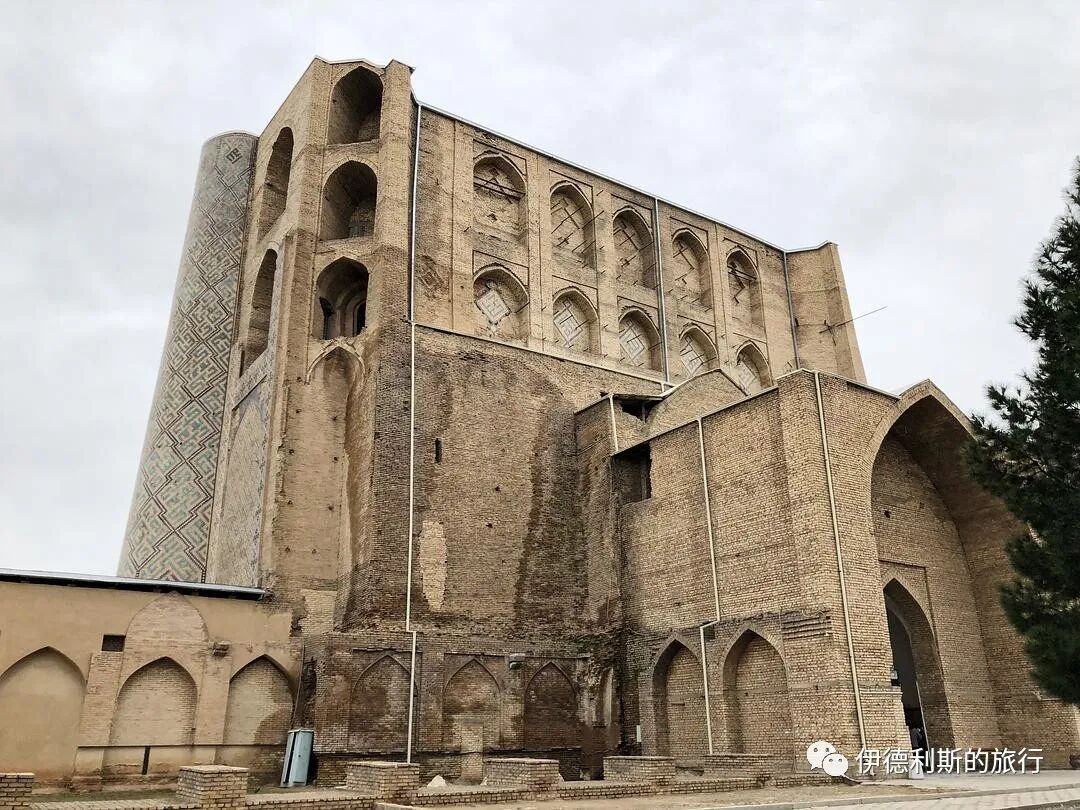
Back of the main gate
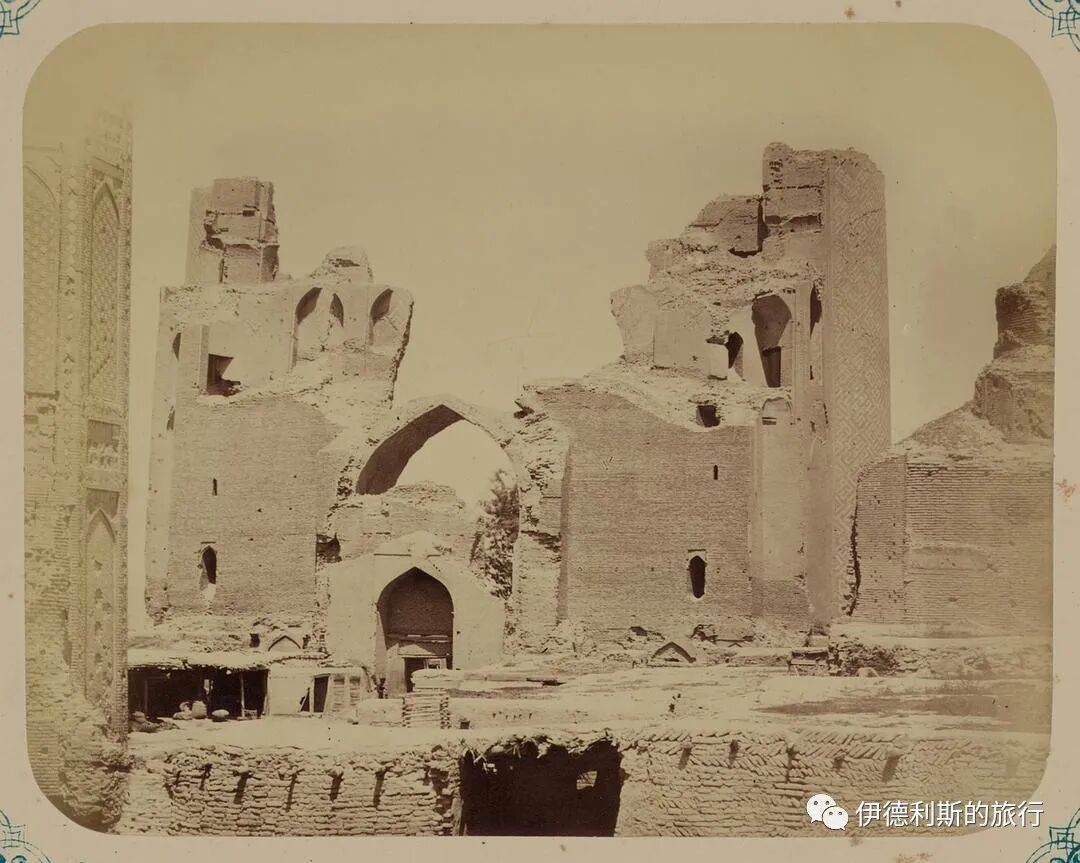
The main hall has a huge dome, but when viewed from the courtyard, the dome is blocked by the Pishtak facade; in reality, it can only be seen from the sides and the back.
The domes of the main hall and the side halls utilize the innovative "double dome" technique. The inner dome of the main hall is 30 meters high, and the outer dome is 40 meters high, with a 10-meter hollow space in between. This allows the proportion of the interior mihrab (niche indicating the direction of prayer) to the entire hall to be as harmonious as possible, while the exterior dome can be as tall as possible.
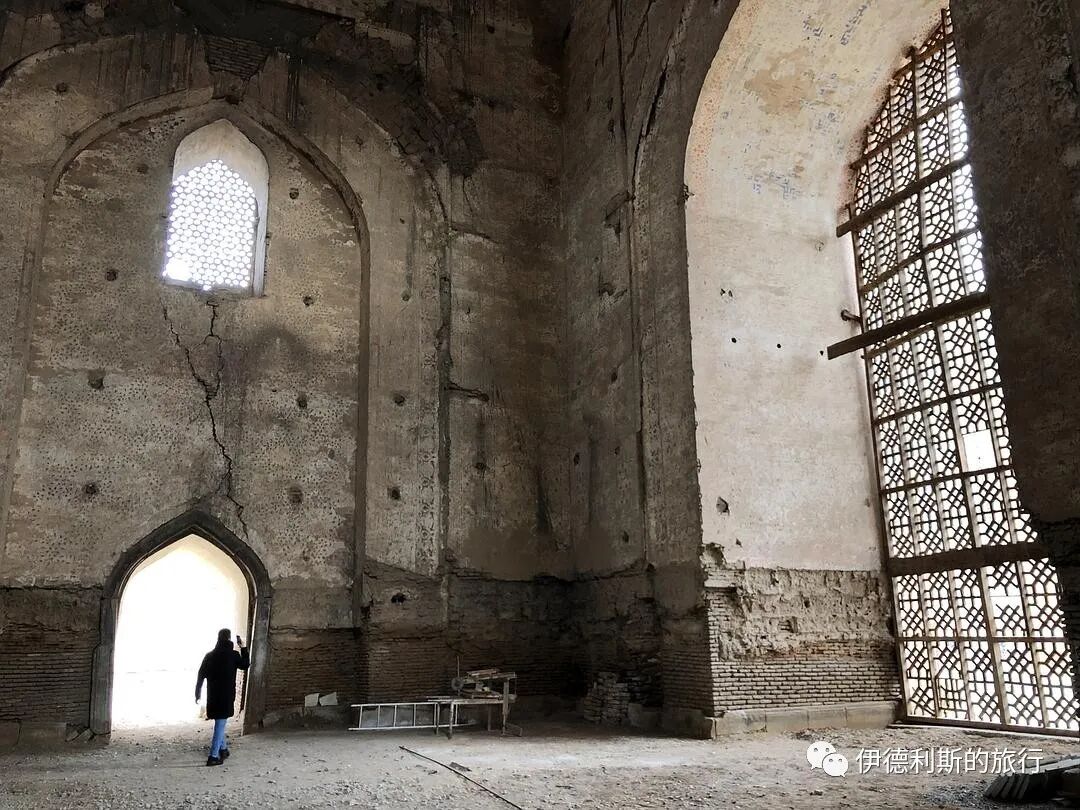
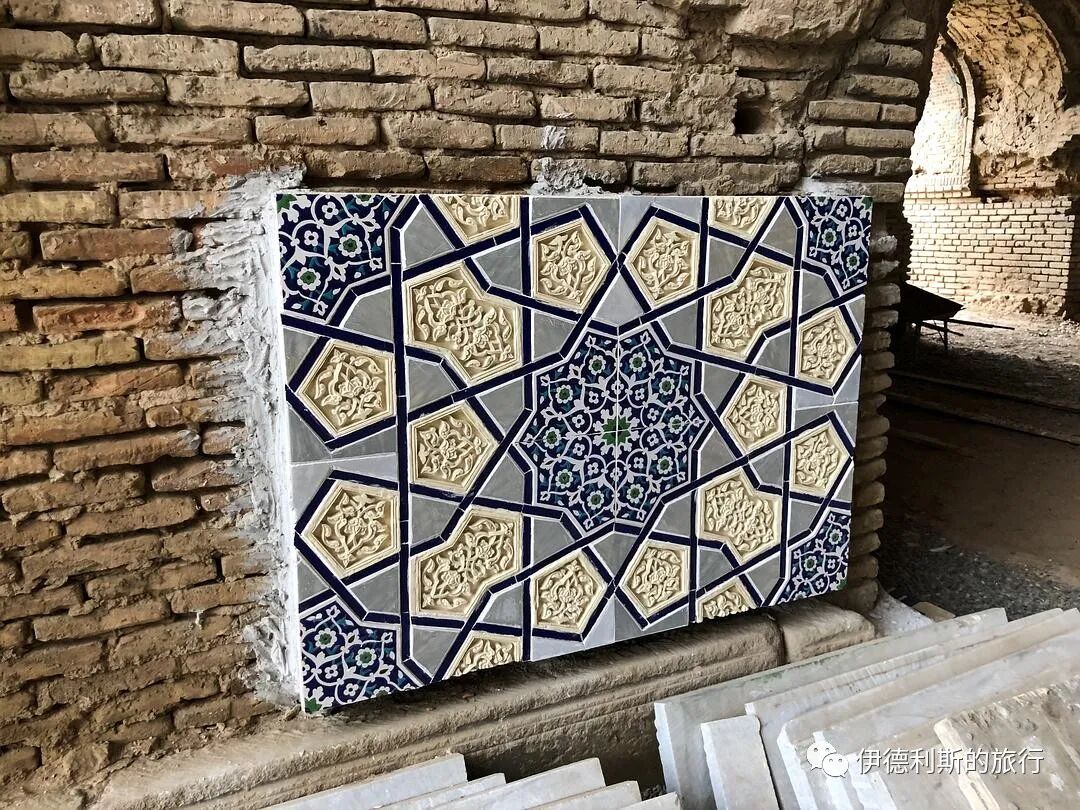
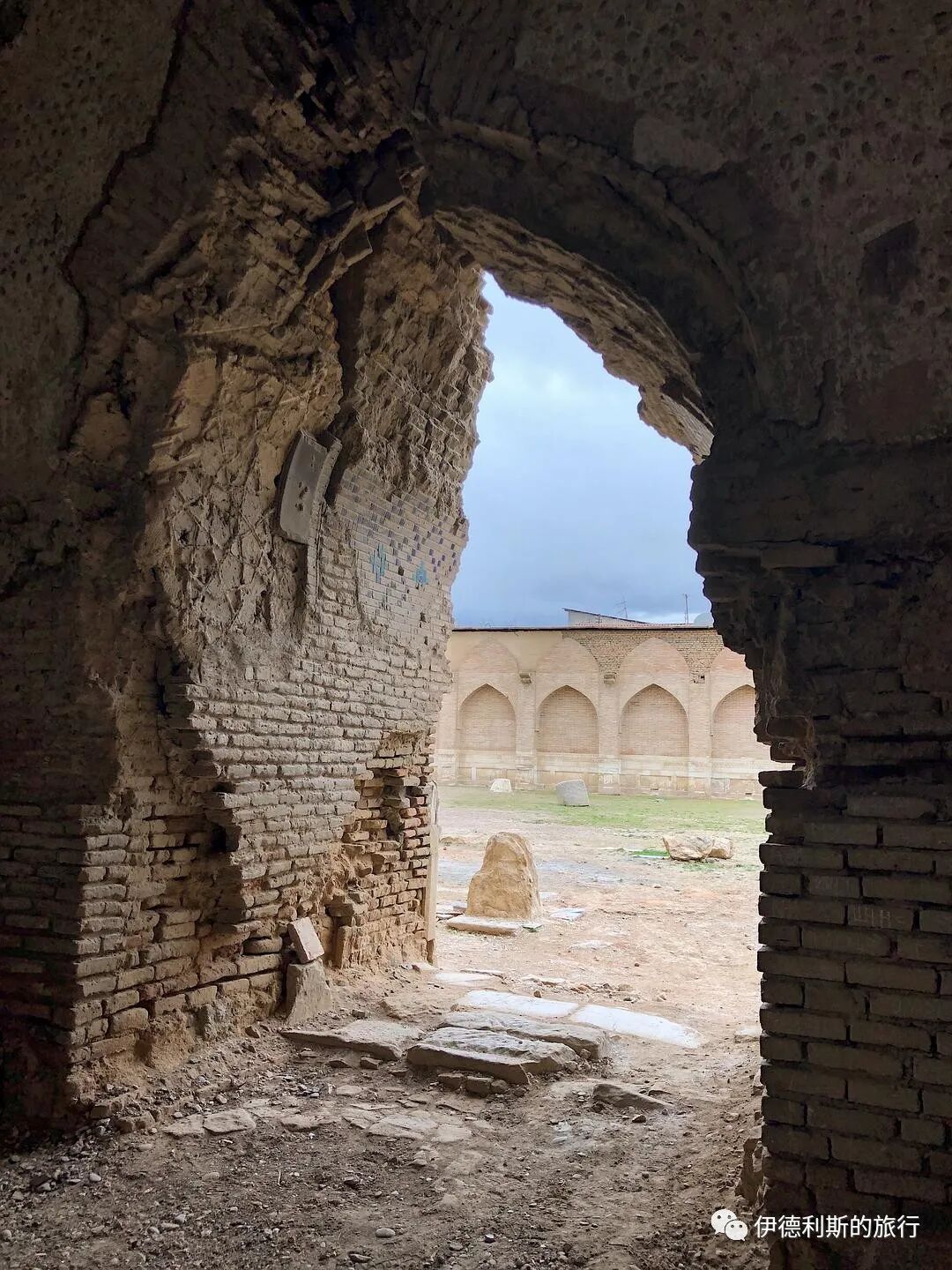
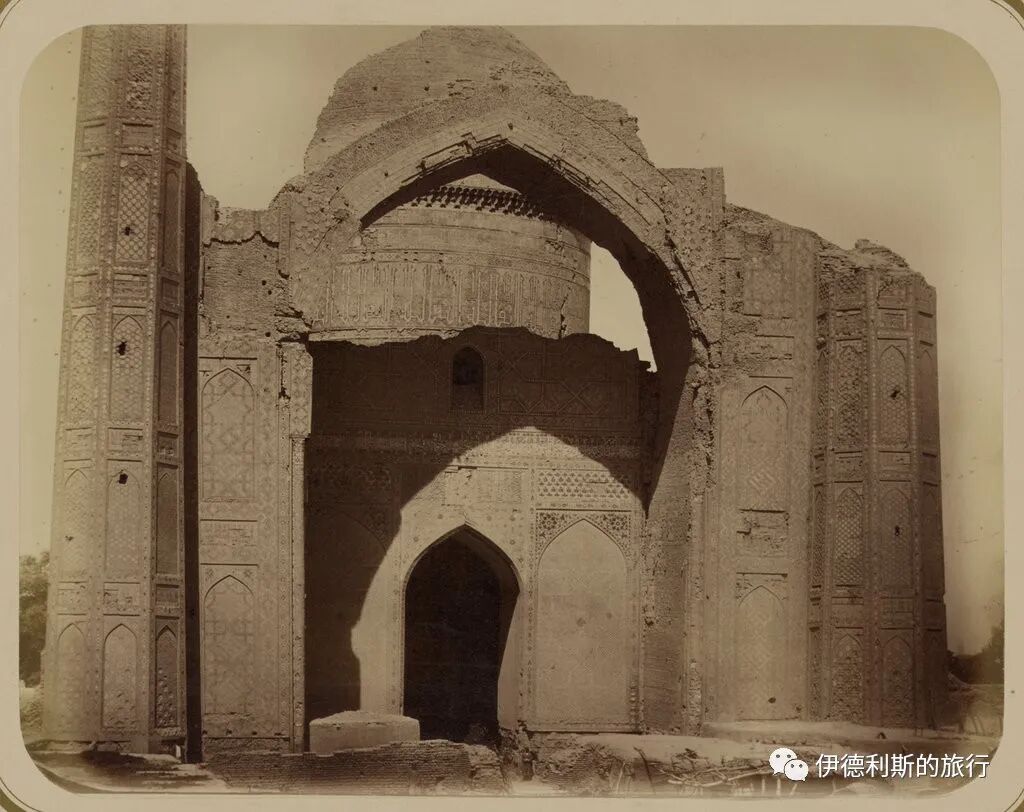
The two classrooms to the north and south of the mosque were once surrounded by a circle of 7.2-meter-high rooms forming a courtyard, composed of continuous arches and domes, but today all the rooms are in ruins, with only the foundations remaining.
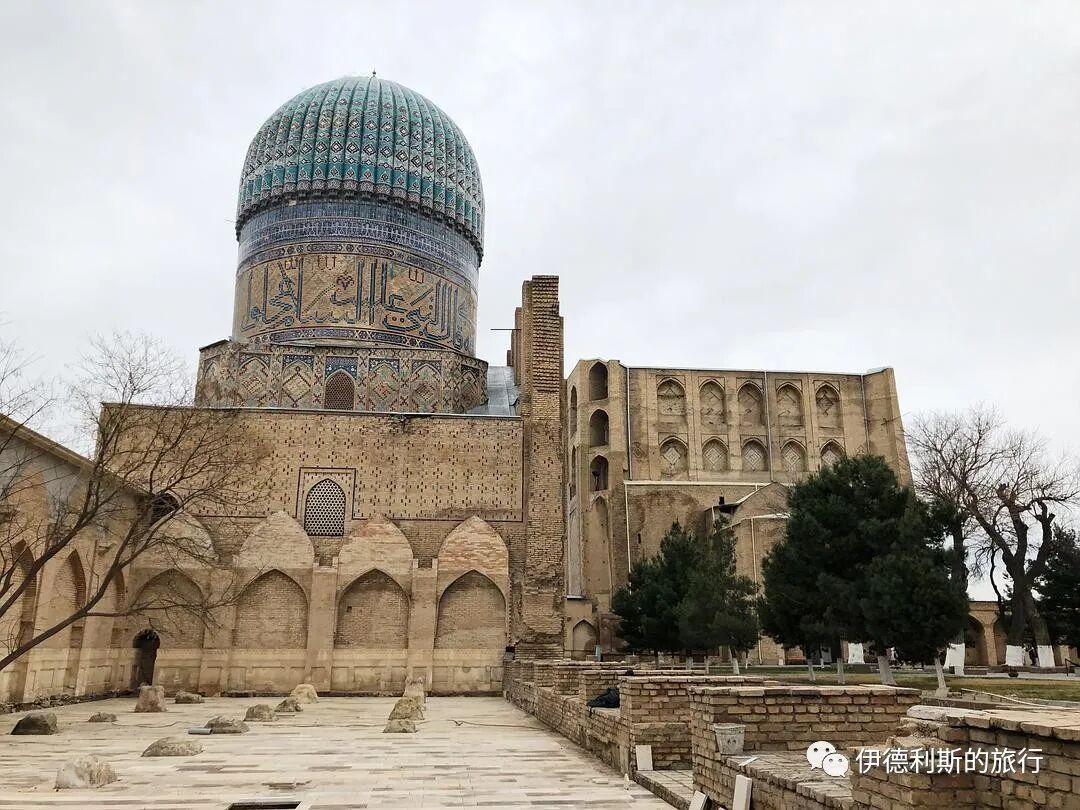
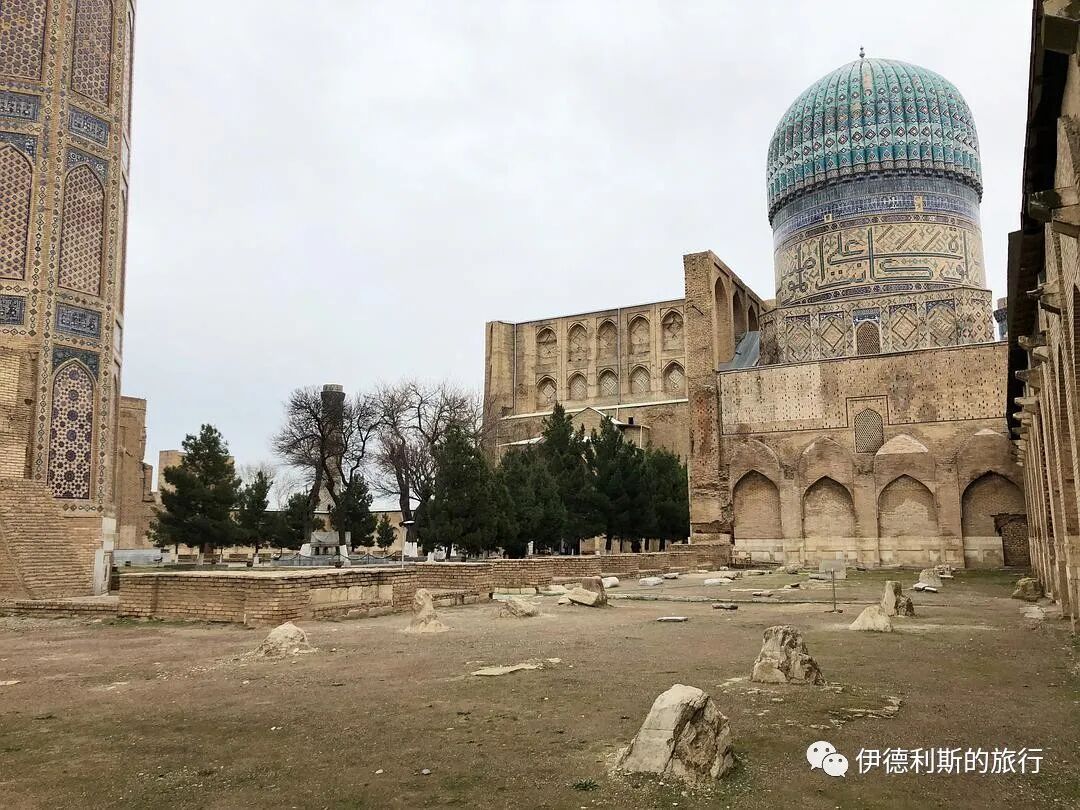
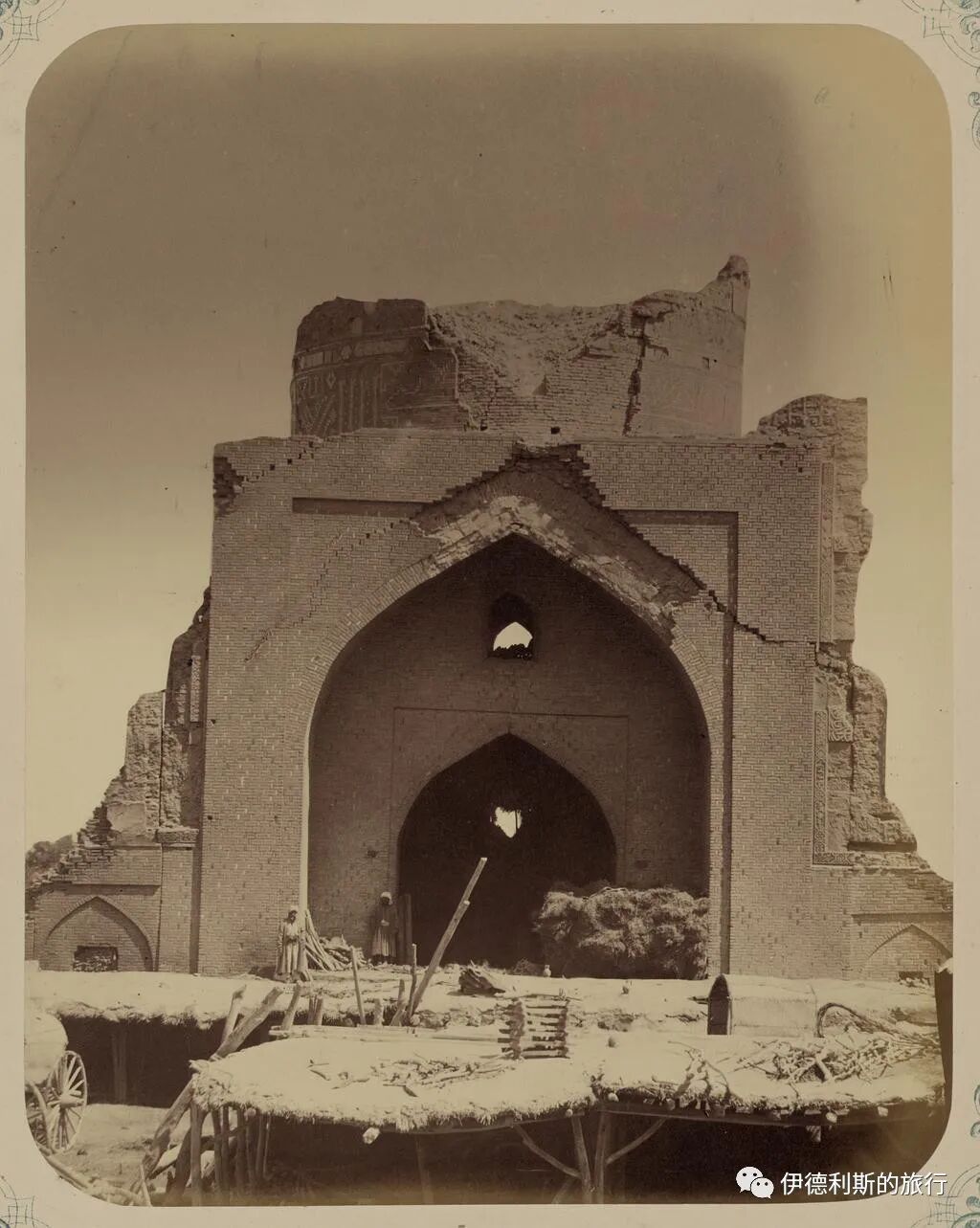
North classroom
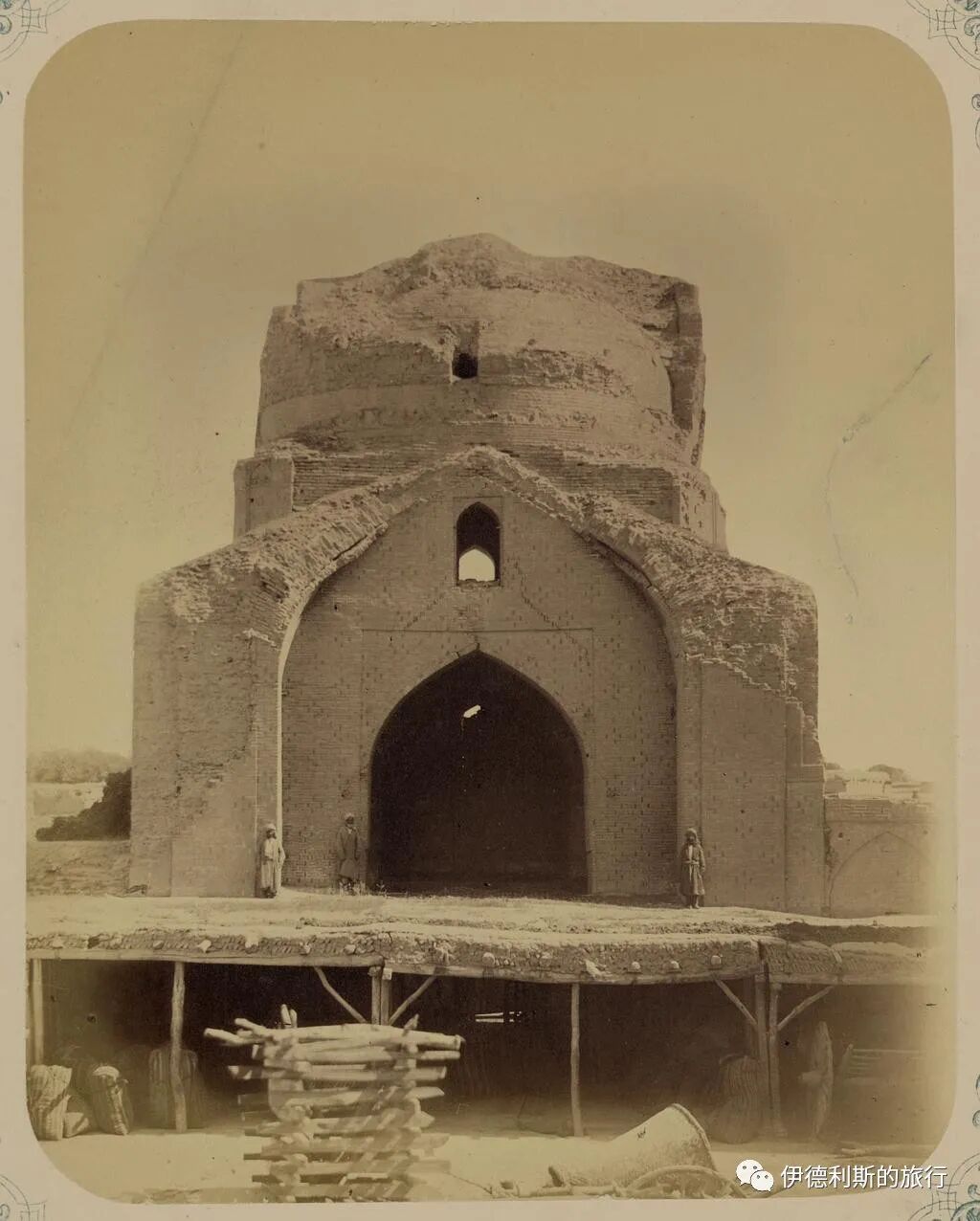
South classroom
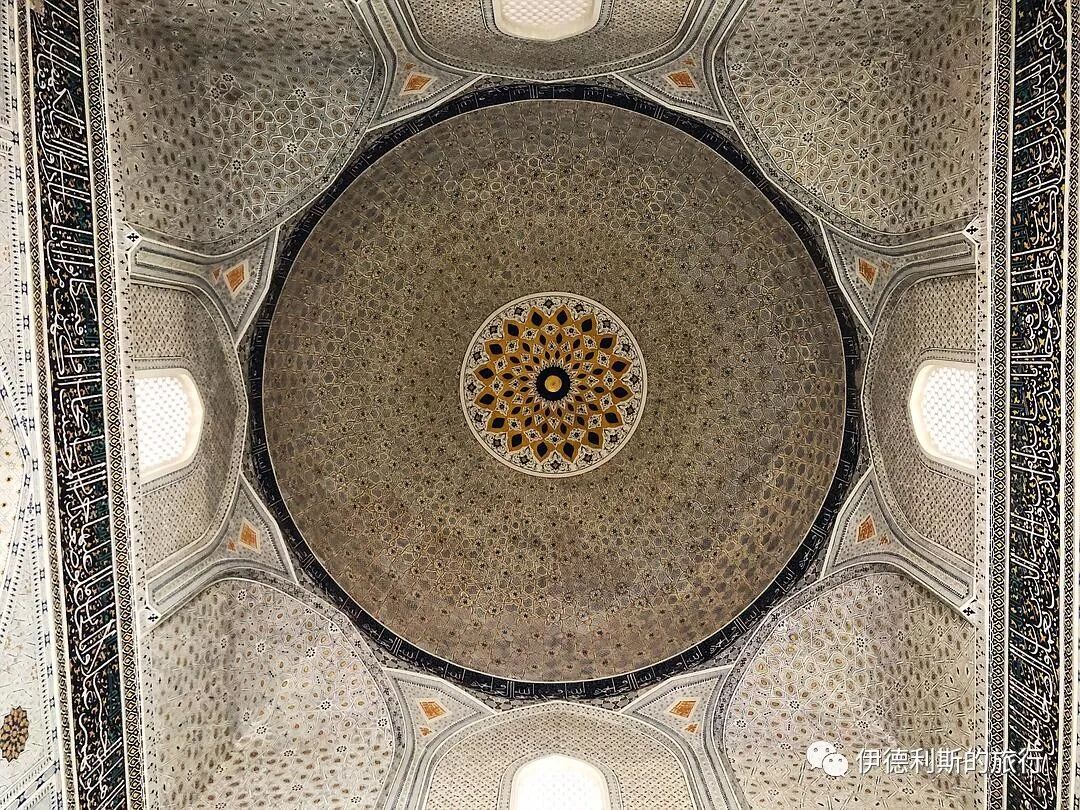
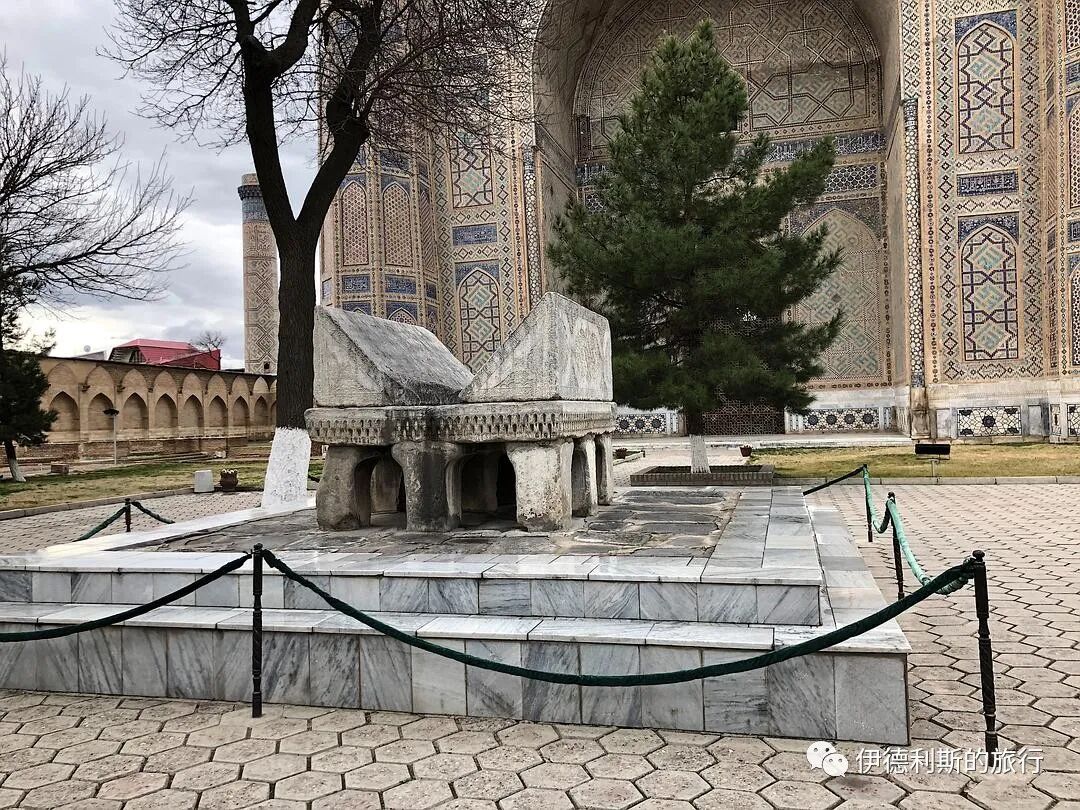
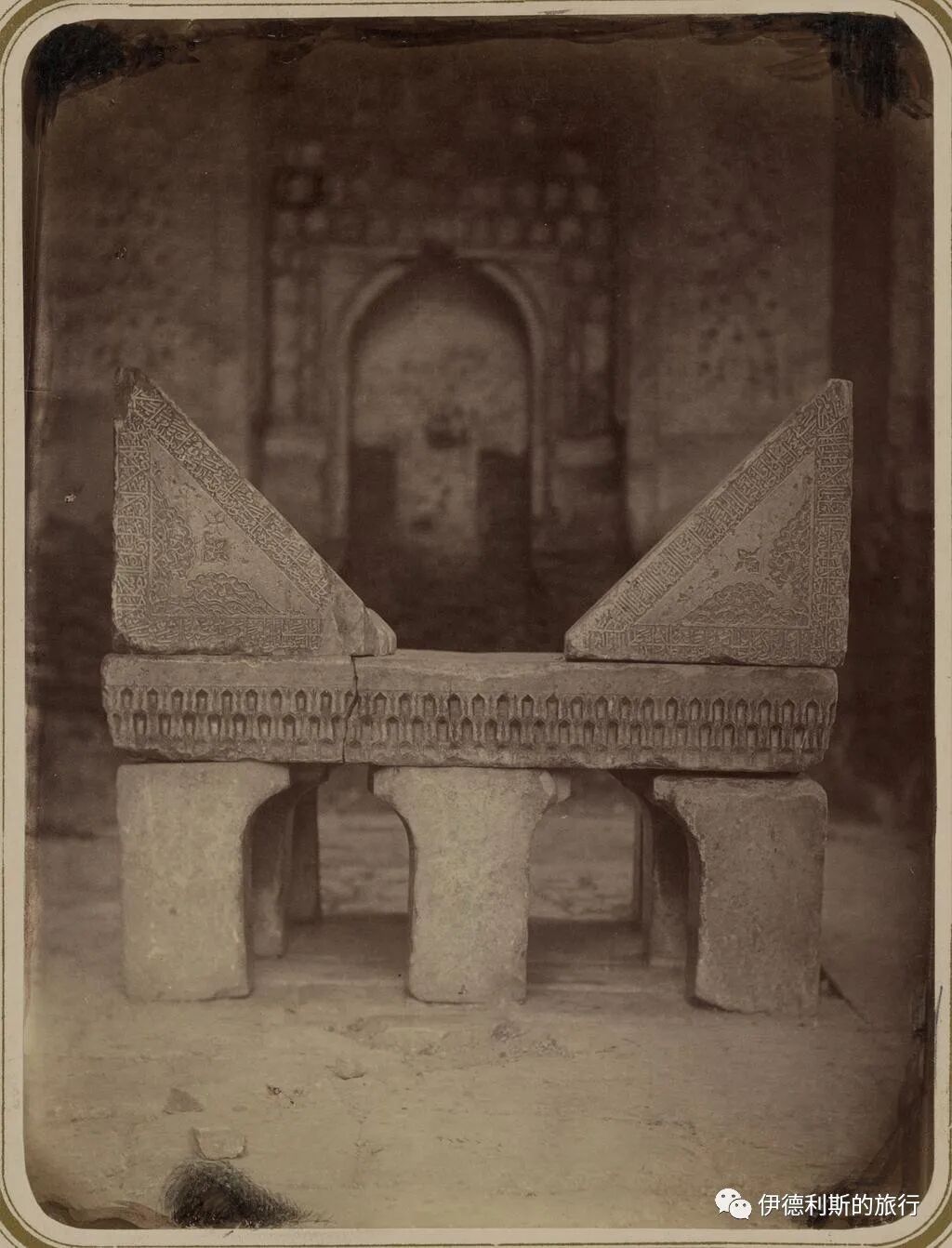
In the middle of the courtyard is a marble Quran stand, which is an original artifact from the Timurid era.
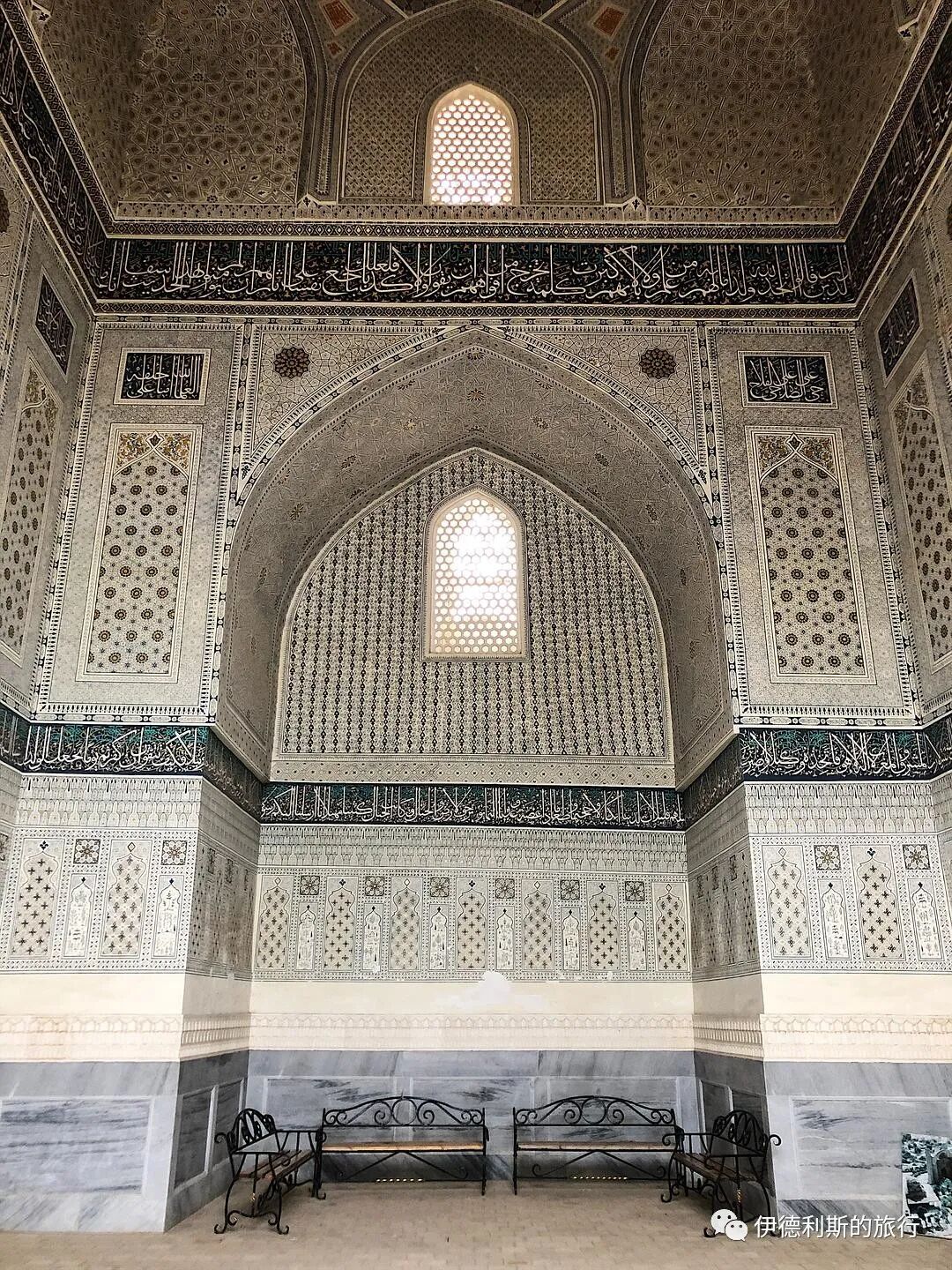
5. Bibi-Khanym Mausoleum: 1404
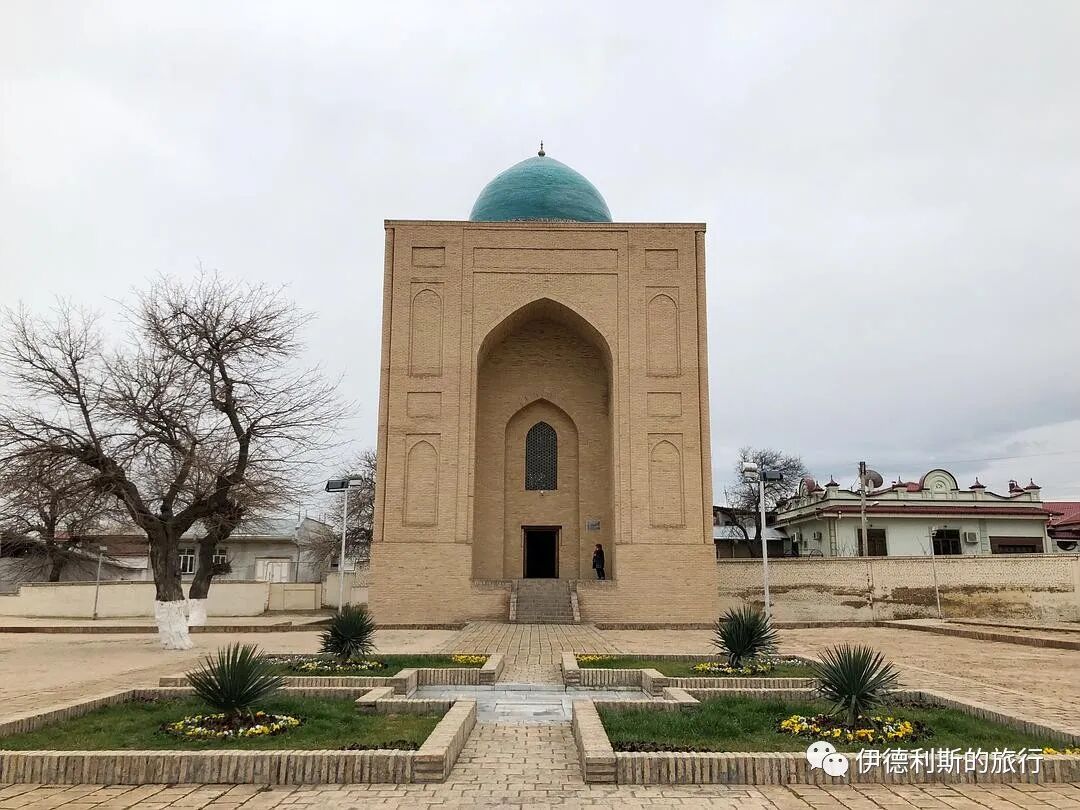
The Bibi Khanym Mausoleum is located directly opposite the Bibi-Khanym Mosque, built at the same time as the mosque, and is connected to it by a path. In addition to Timur's wife, Sarai Mulk Khanym, other women of the Timurid family are buried in the mausoleum.
Sarai Mulk Khanym was the daughter of the last Khan of the Chagatai Khanate, Qazan Khan ibn Yasaur (reigned 1343-1346), and her first husband was the Chagatai warlord Amir Husayn. Husayn was once Timur's main ally before he came to power; in 1370, their alliance broke down, and Timur defeated and executed Husayn, taking over his harem and thus marrying Husayn's wife, Sarai Mulk Khanym.
As a direct descendant of Genghis Khan and a princess of the Chagatai Khanate, Sarai Mulk Khanym held a very high status in Timur's court. By marrying Sarai Mulk Khanym, Timur acquired the title of "Gurgan" (son-in-law), a title that was very important to Timur, indicating his relationship with the Genghis Khan-Chagatai family.
Sarai Mulk Khanym is referred to in historical records as Timur's favorite queen, and she always played a significant role in the court. When Timur was not in Samarkand, Sarai Mulk Khanym even managed state affairs as regent.
Sarai Mulk Khanym had no children, but she treated Timur's youngest son, Shah Rukh (the second ruler of the Timurid dynasty), as her own. After the birth of Shah Rukh's son, Ulugh Beg (the third ruler of the Timurid dynasty), in 1394, Sarai Mulk Khanym also raised and educated Ulugh Beg just as she did Shah Rukh.
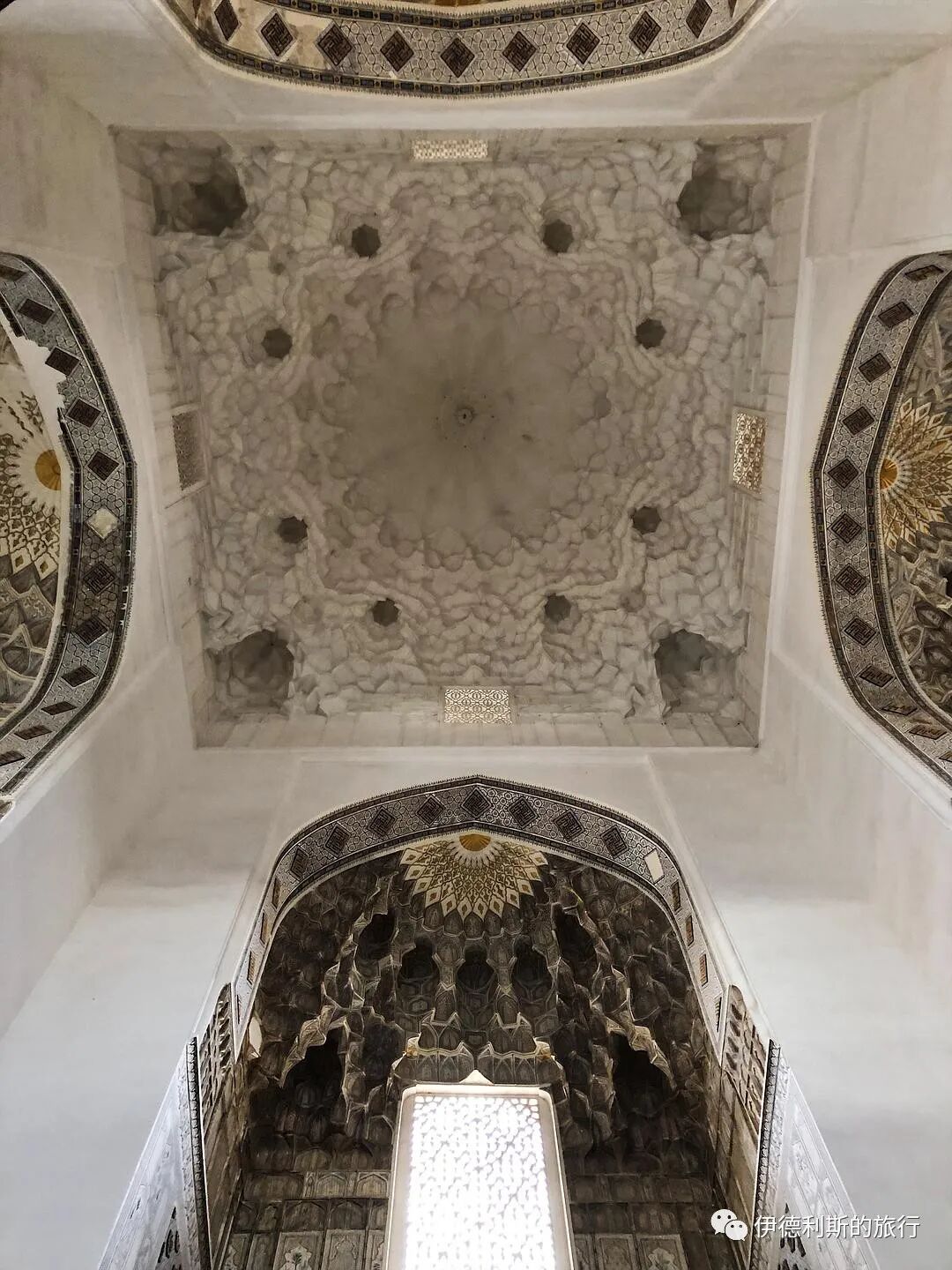
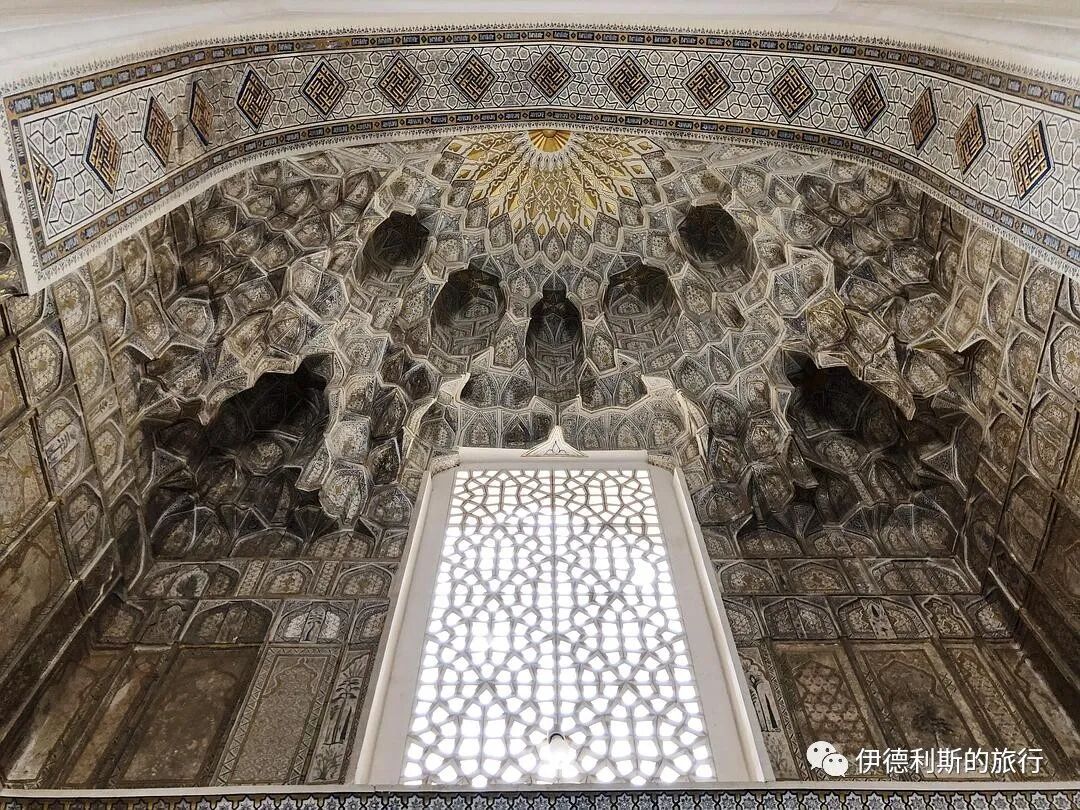
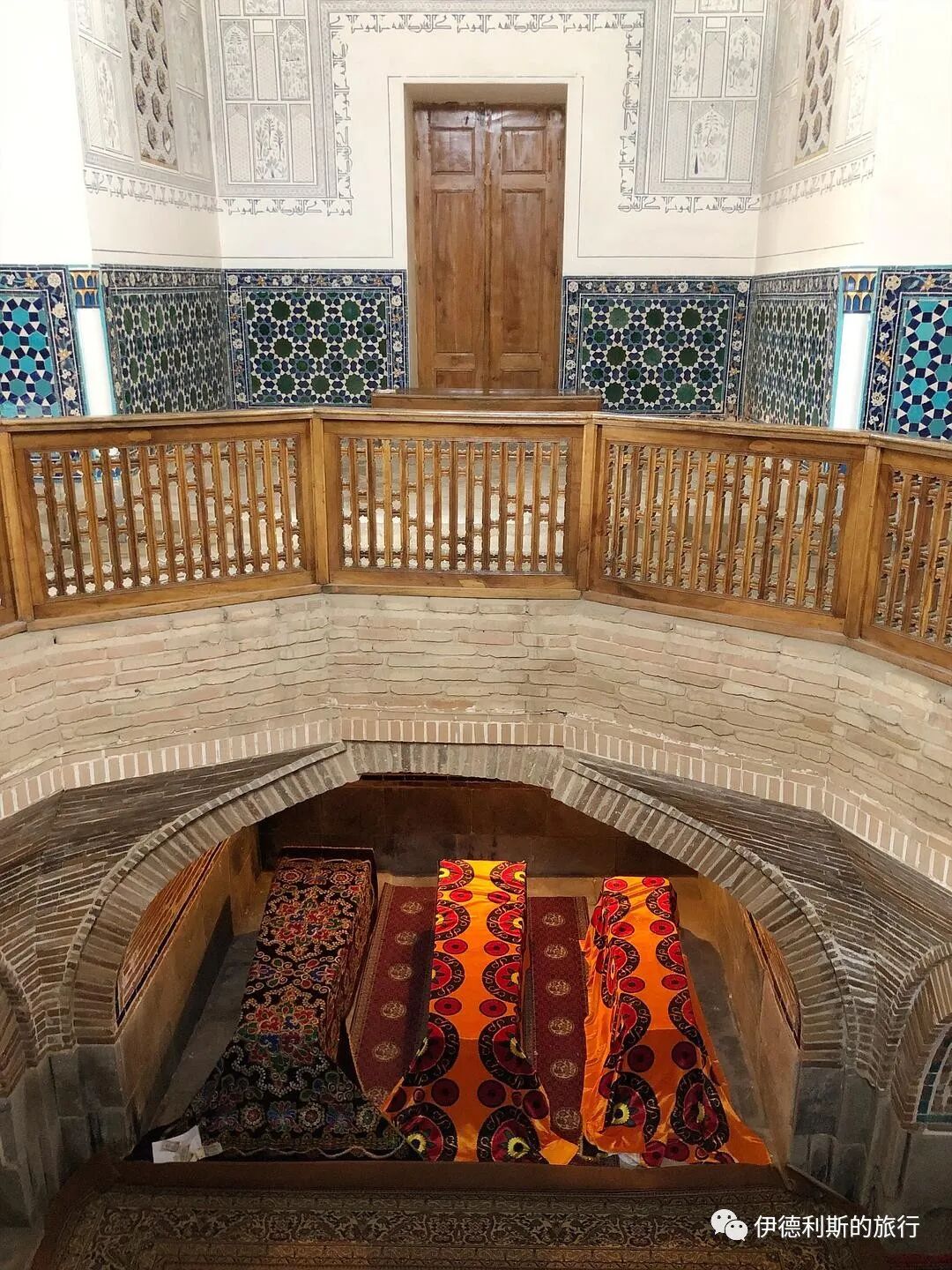
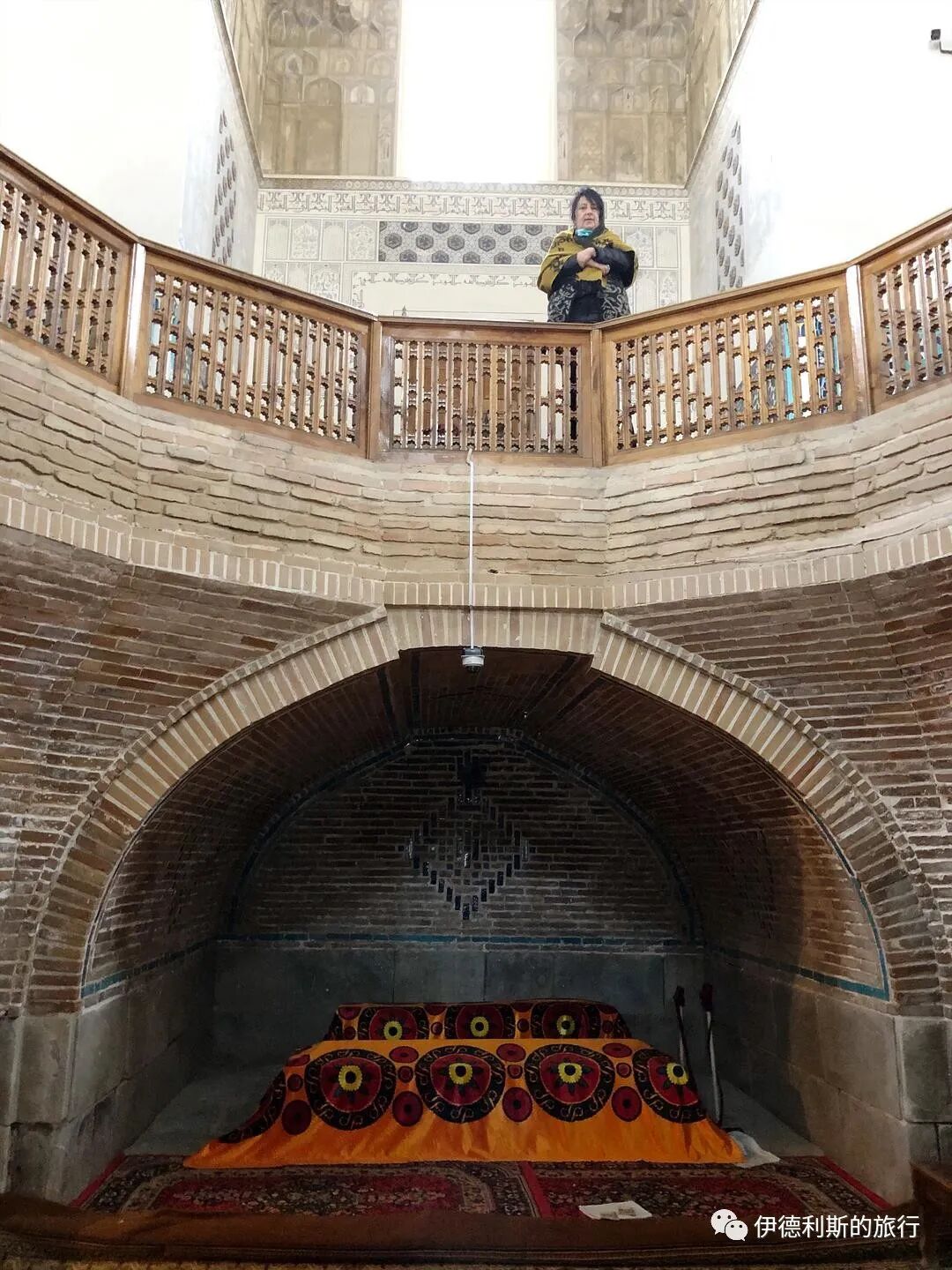
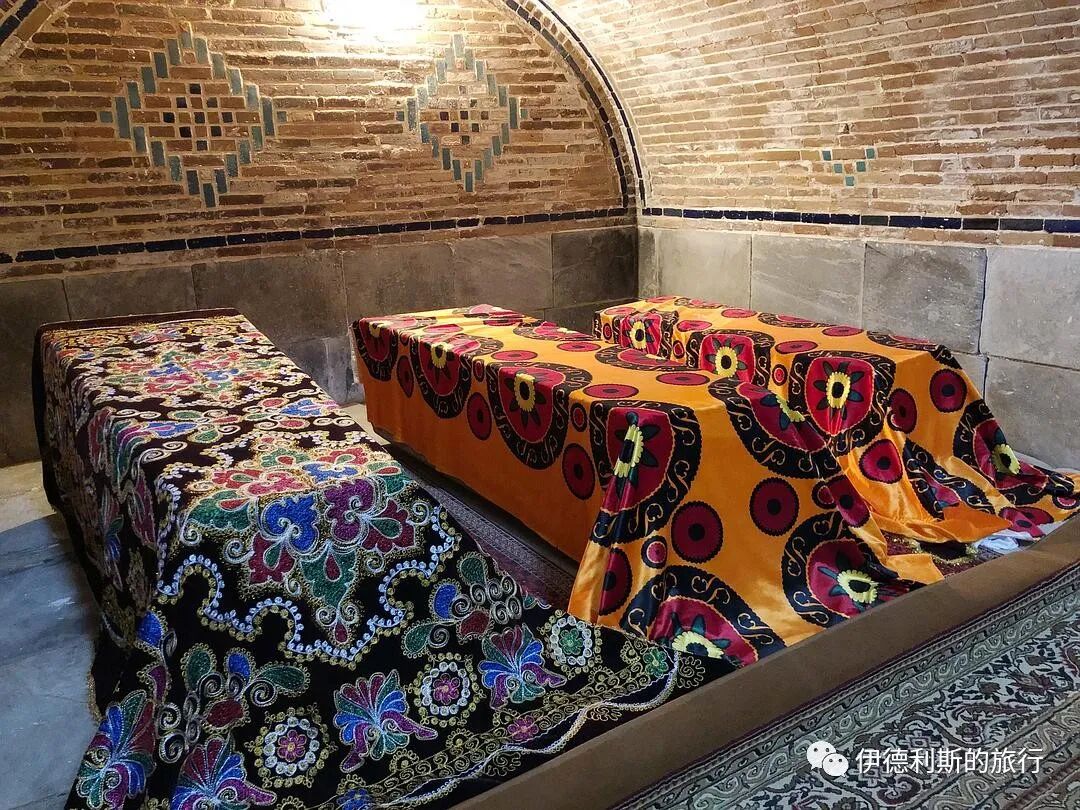
6. Ulugh Beg Madrasah: 1420
The Ulugh Beg Madrasah (Islamic school) is located on the west side of Registan Square and was built by the Timurid ruler and famous astronomer Ulugh Beg (reigned 1447-1449) between 1417 and 1420.
After Timur's death in 1405, his son Shah Rukh inherited the eastern part of the empire. Shah Rukh moved the capital of the Timurid Empire from Samarkand to Herat in Afghanistan, and from 1409, he let his son Ulugh Beg rule Samarkand.
The Ulugh Beg Madrasah is hailed as the best Islamic school in 15th-century Central Asia, and it also made Samarkand the cultural center of 15th-century Central Asia. The school usually had about 100 students studying mathematics, geometry, logic, natural sciences, and theology. Ulugh Beg taught here himself; the great Persian poet and Sufi scholar Abdul-Rahman Jami studied here, and the school also produced many astronomers. After the establishment of the Bukhara Khanate in the 16th century, Samarkand lost its status as the capital, but the Ulugh Beg Madrasah remained one of the best schools in Central Asia.
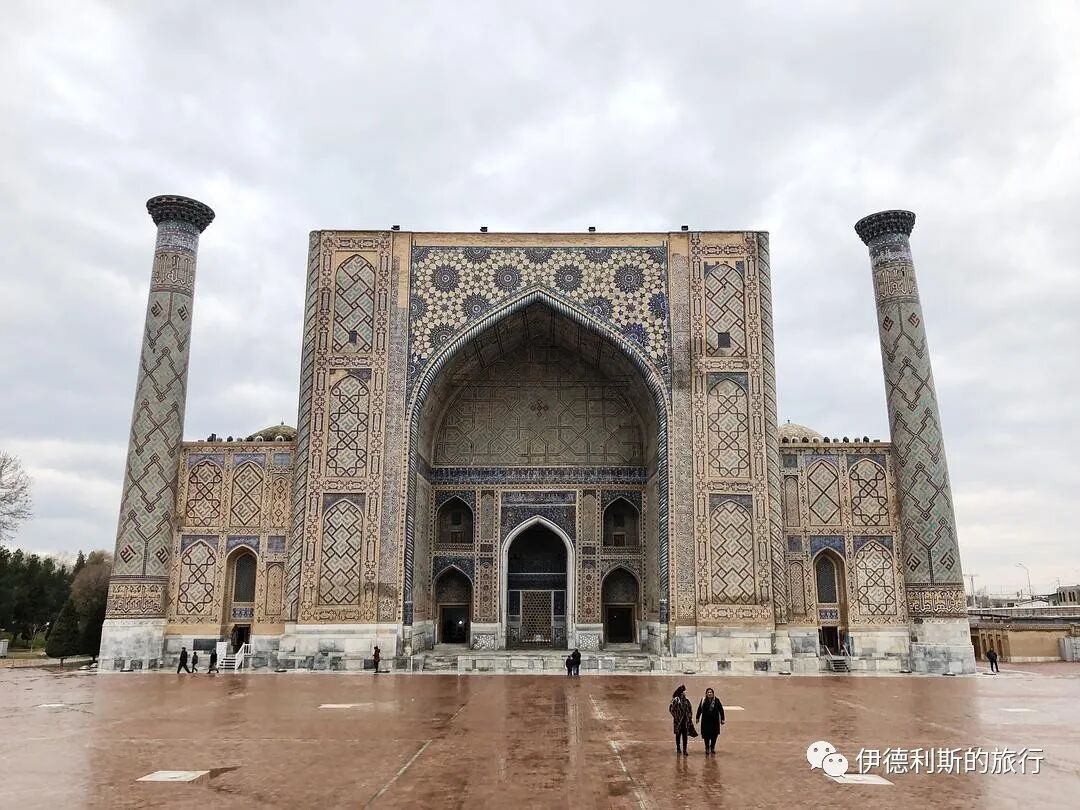
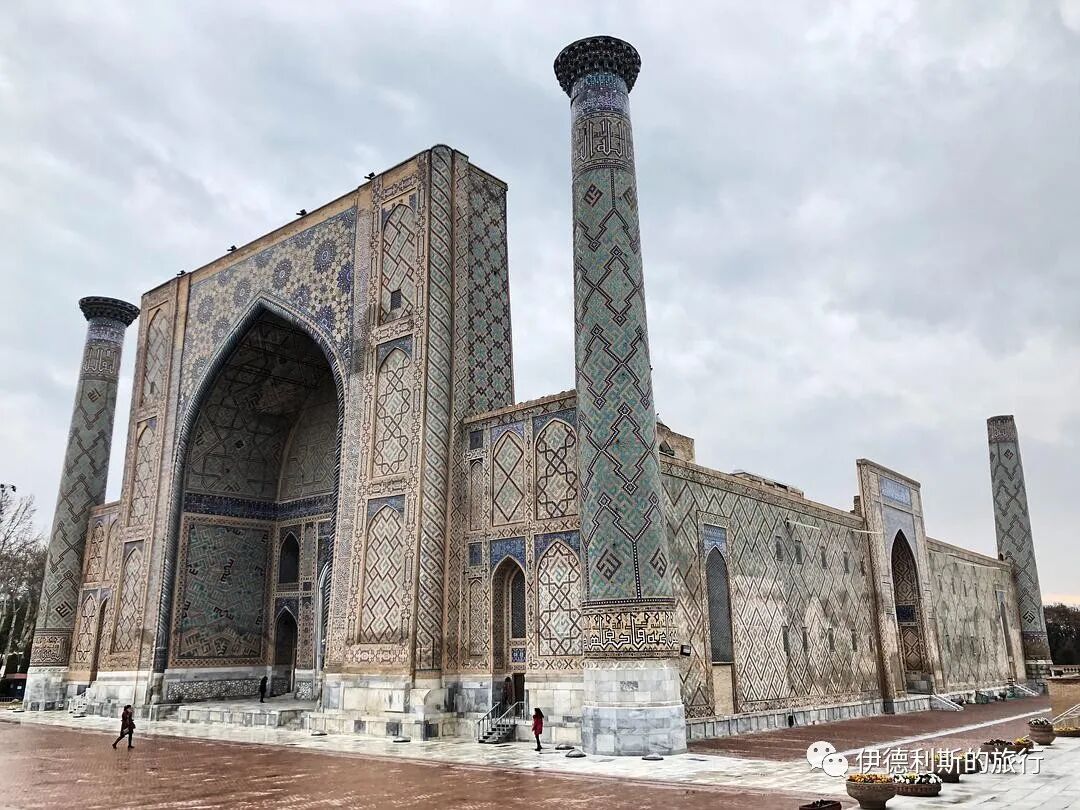
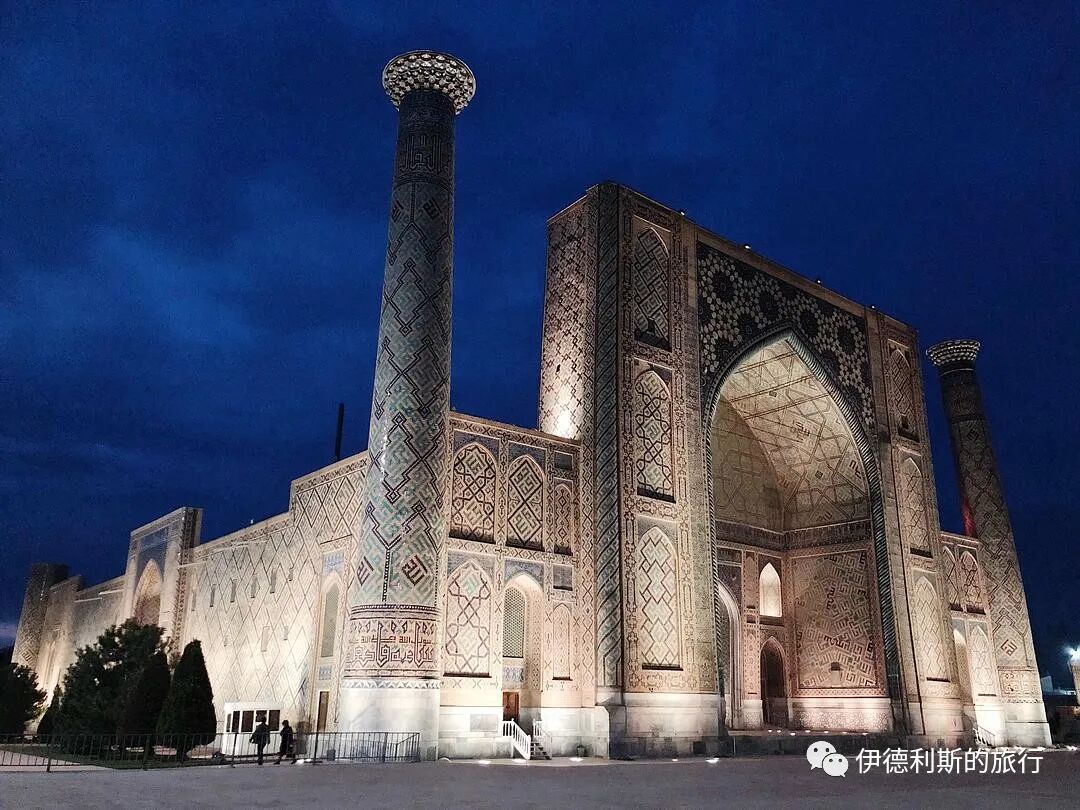
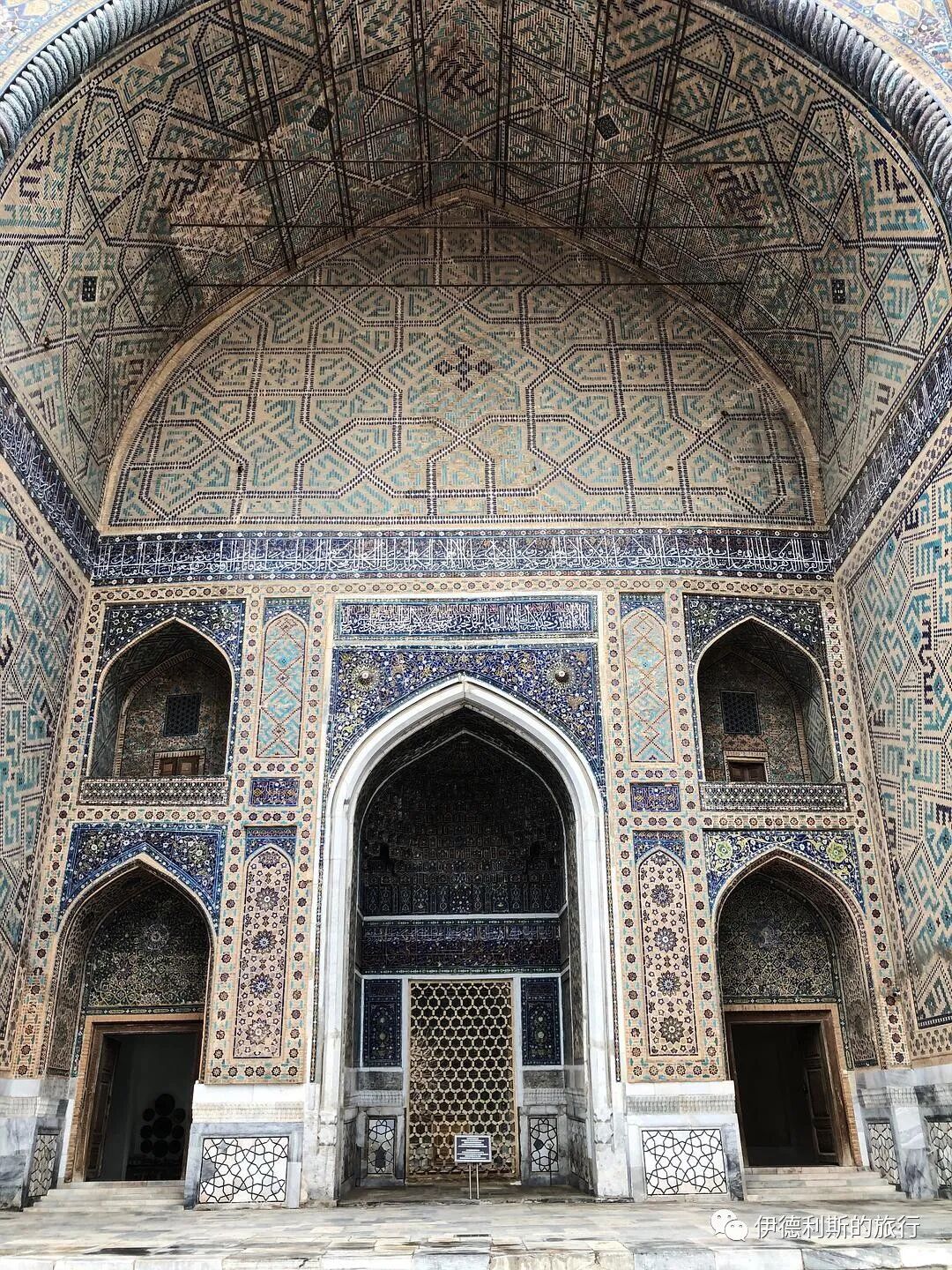
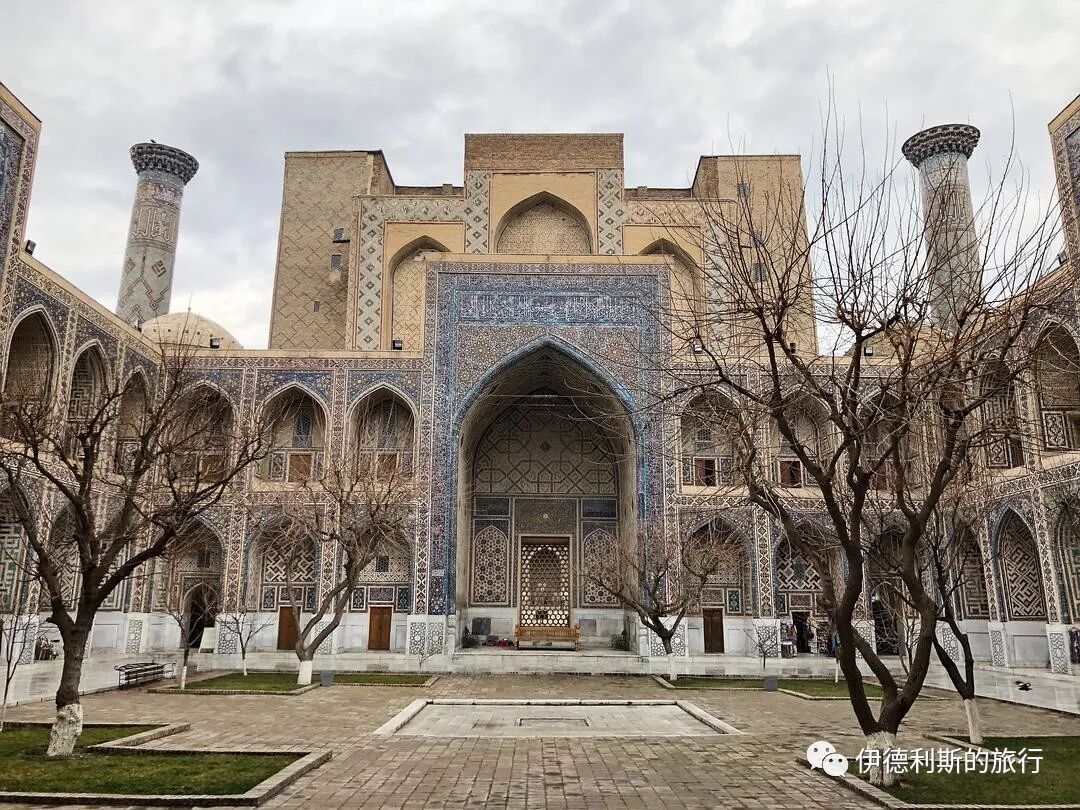
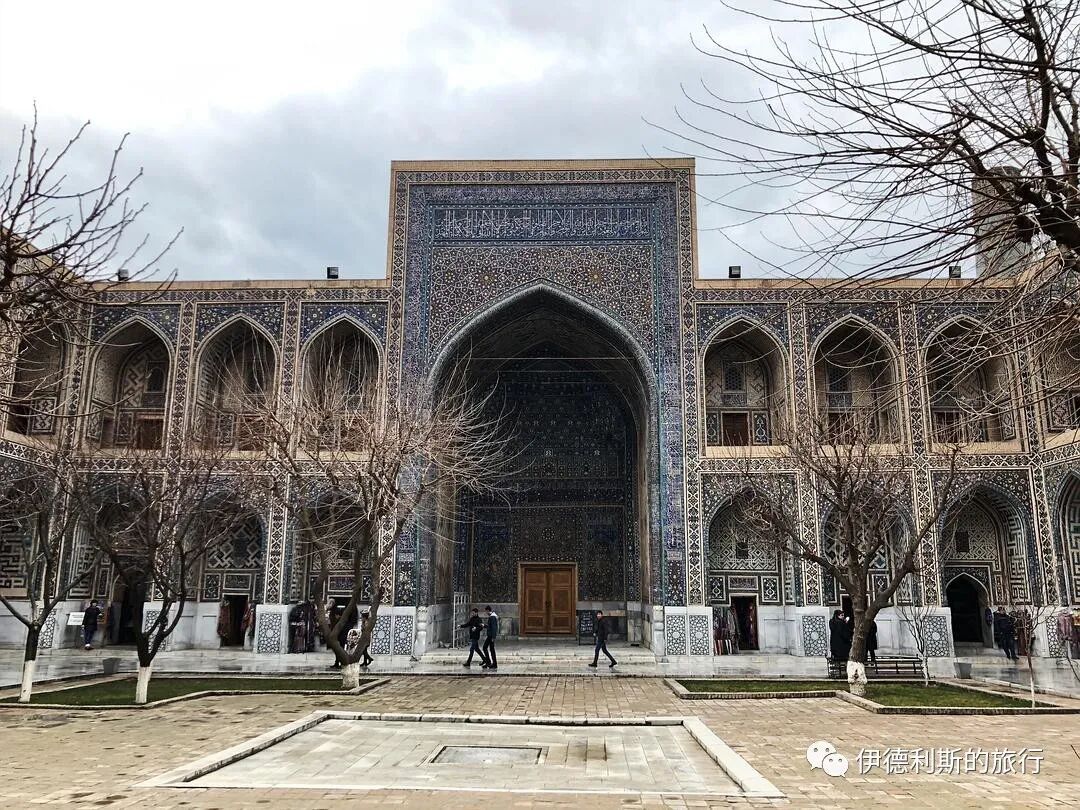
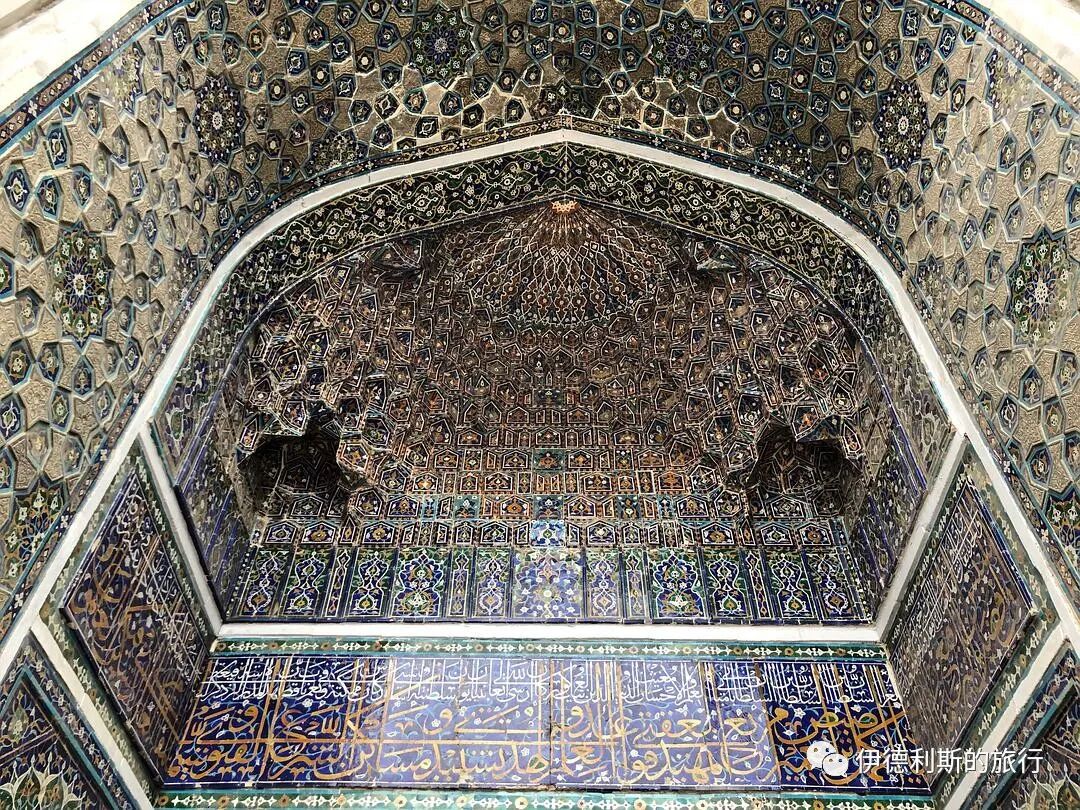
The Ulugh Beg Madrasah was severely damaged in two major earthquakes in 1817 and 1818, and finally became a ruin after the 1897 earthquake. After the 1920s, the Ulugh Beg Madrasah began to be restored, a process that has lasted for more than 70 years. The first phase of work mainly focused on protecting the surviving parts of the building, and the northeast minaret was straightened in 1932. Major restoration work was carried out in the 1950s and 1960s; the ground level was lowered by two meters, doors, windows, and various architectural decorations were restored, and the southeast minaret was restored in 1965. In the 1990s, the second floor of the school building, which had been demolished in the 18th century, was restored.
The archaeological section of the "Turkestan Album," produced by Russia between 1871 and 1872, photographed the Ulugh Beg Madrasah at that time.
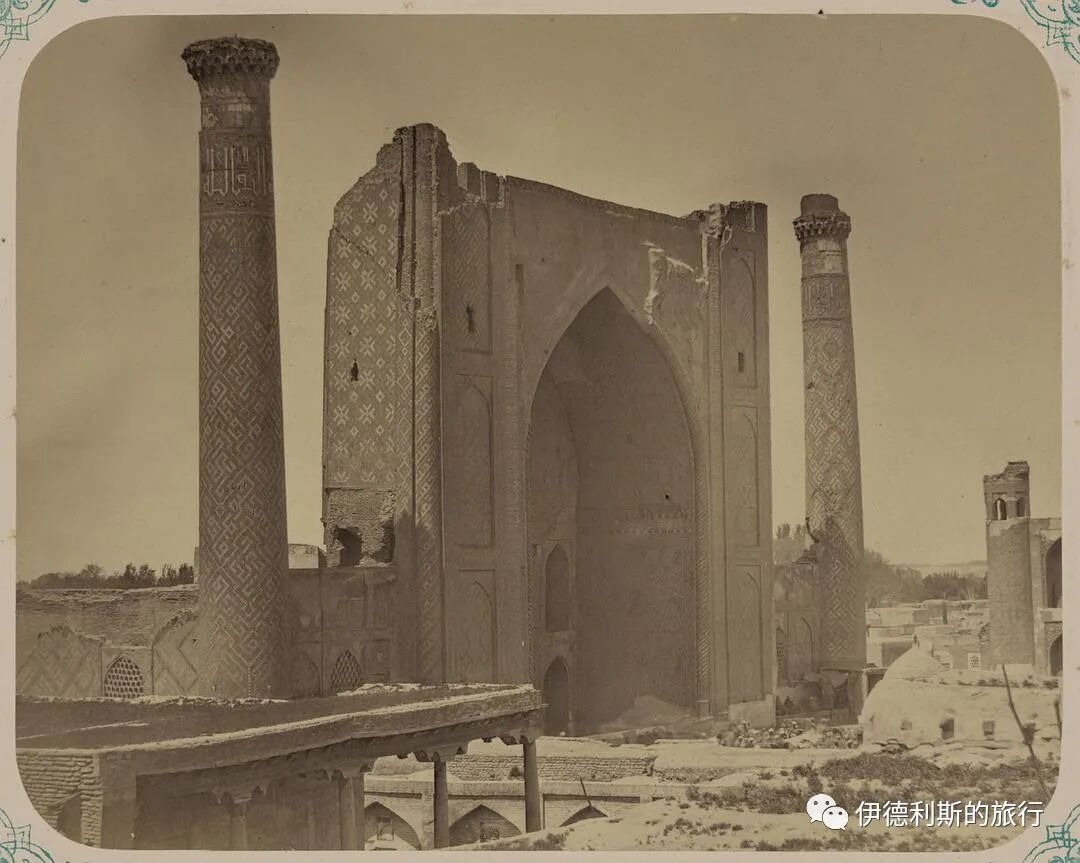
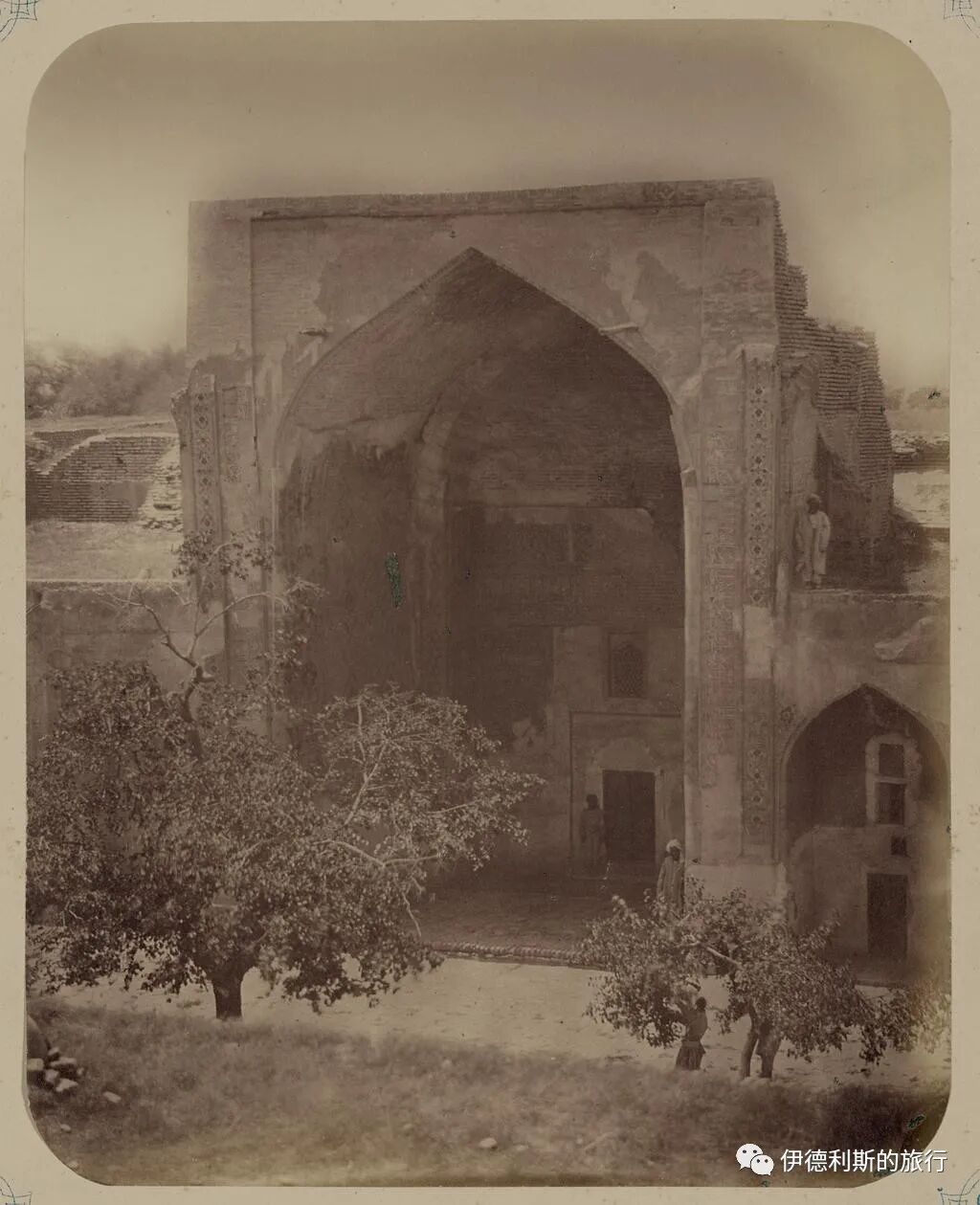
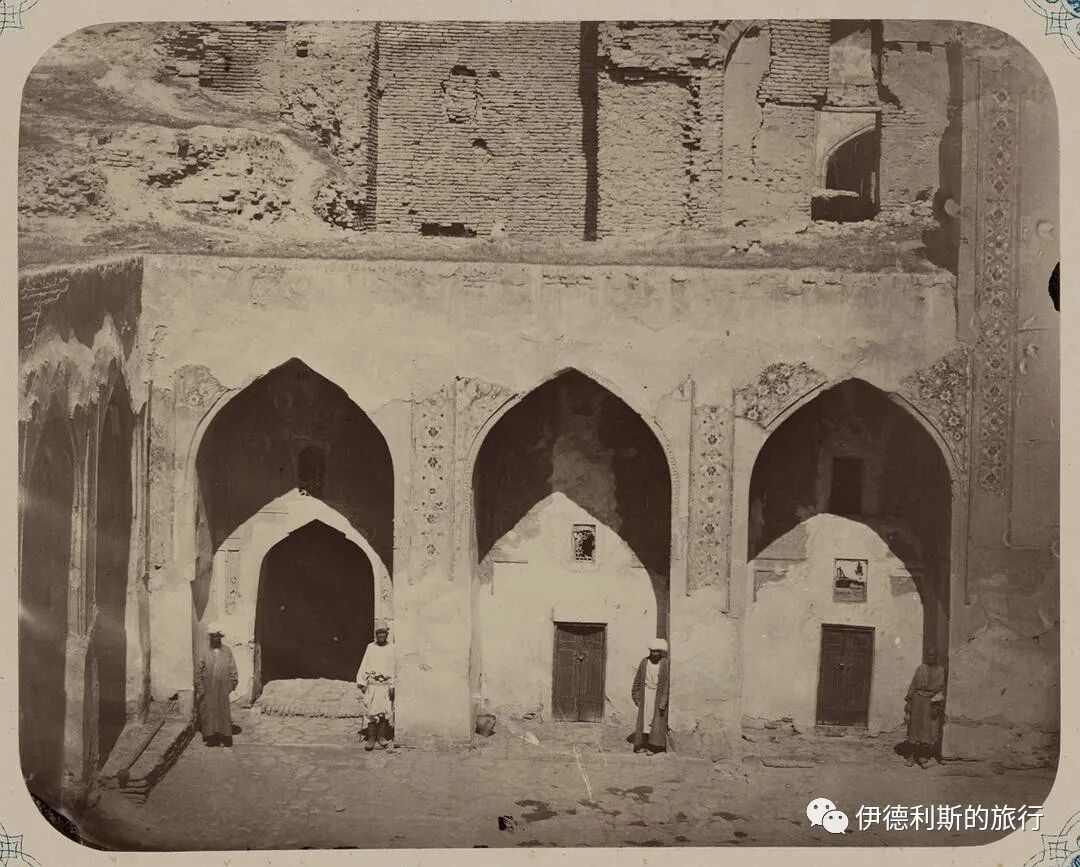
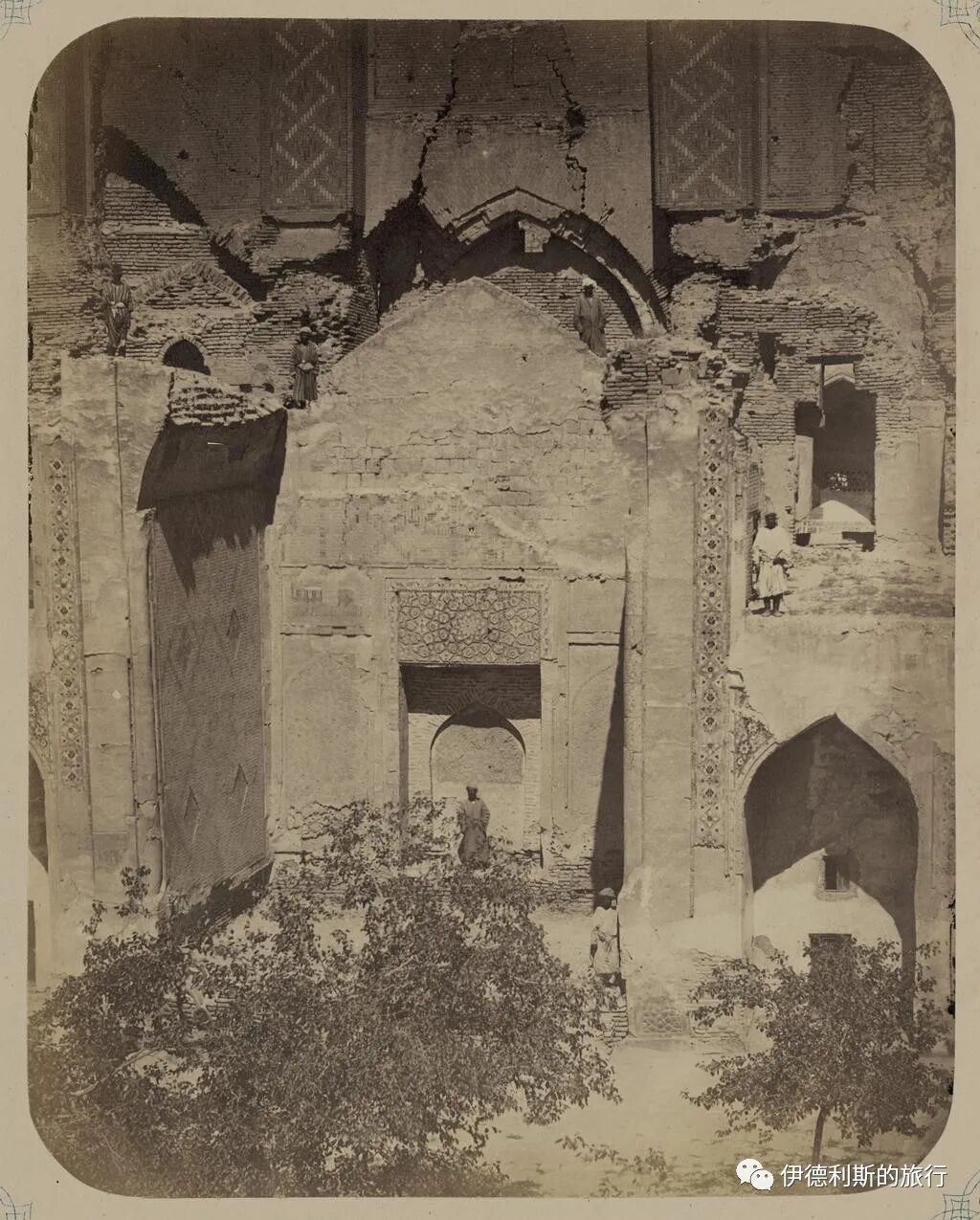
Russian photographer Prokudin-Gorskii photographed the Ulugh Beg Madrasah in 1905.
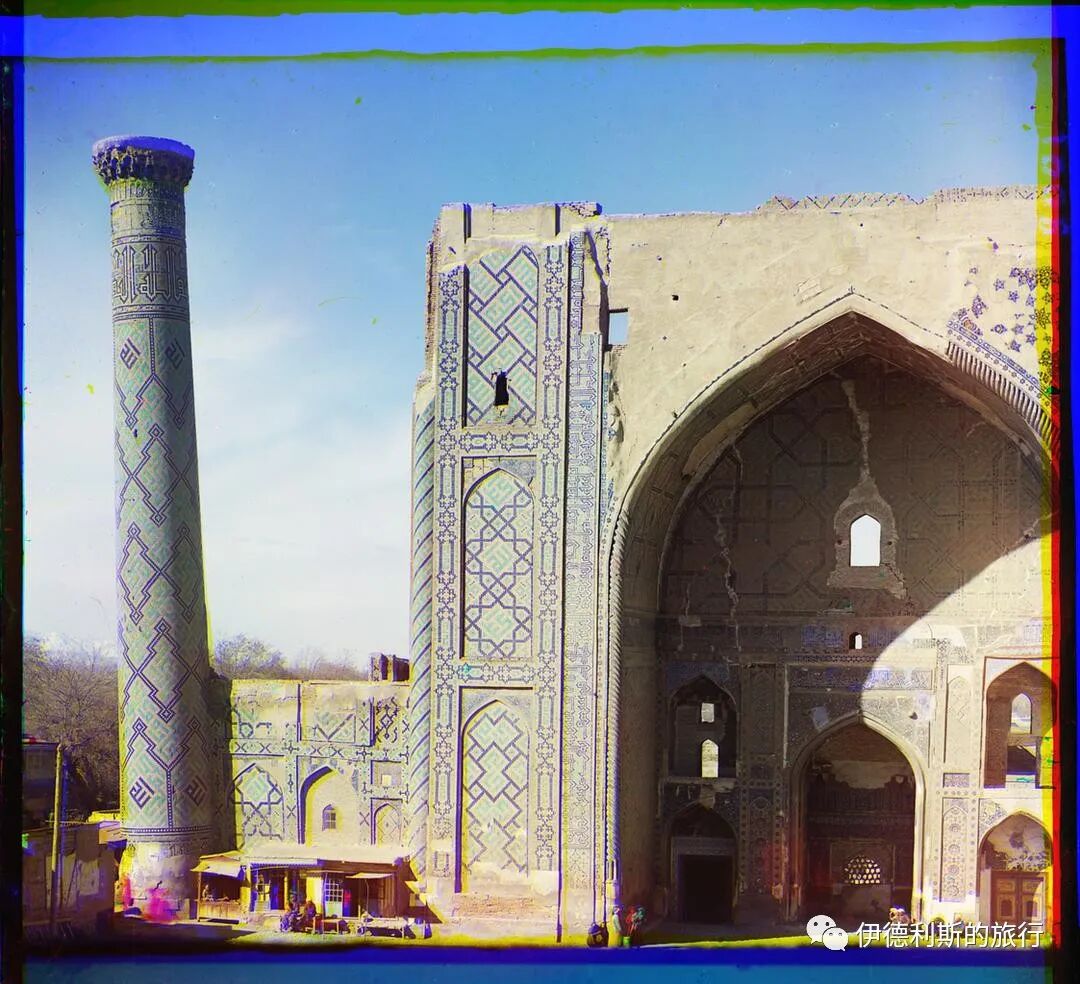
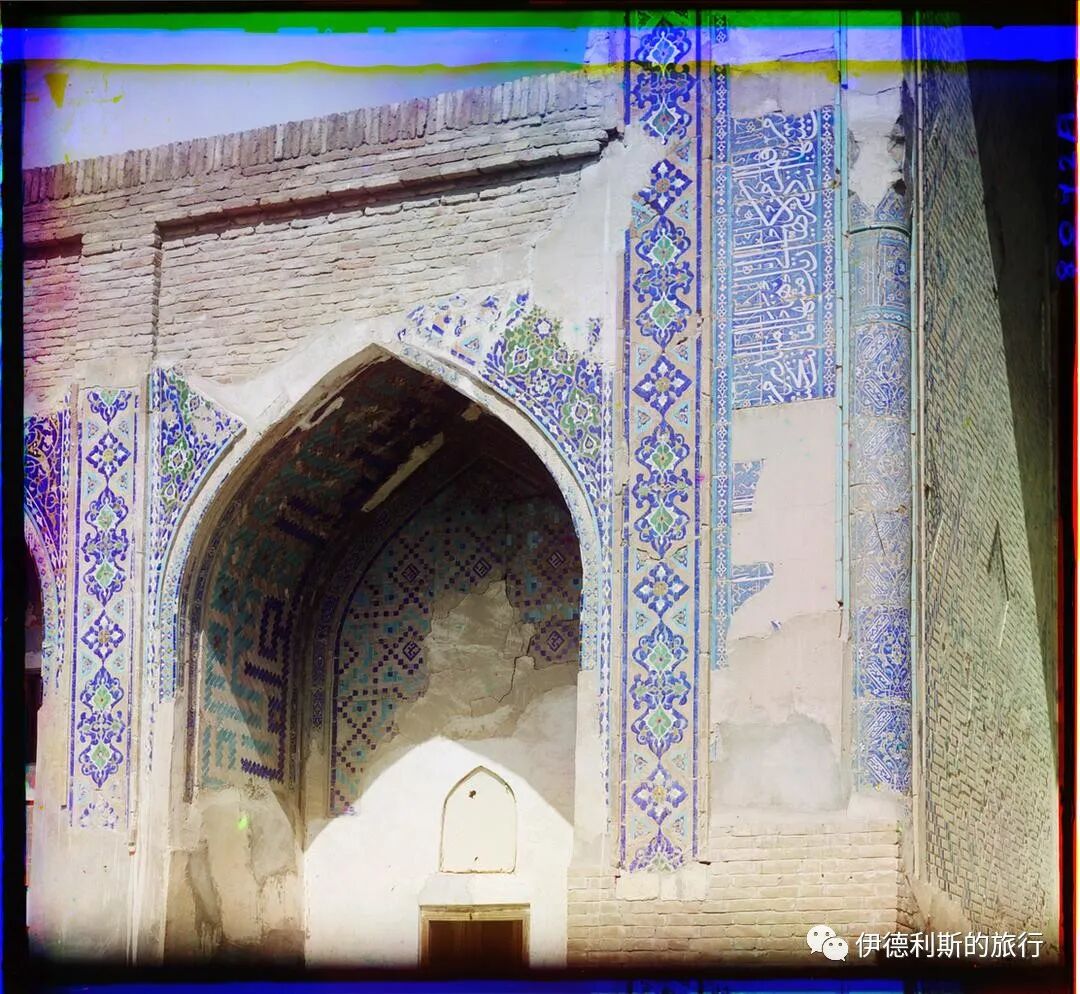
7. Ulugh Beg Observatory: 1429
The Ulugh Beg Observatory is located northeast of Samarkand and is hailed as one of the most famous observatories in the Islamic world.
After the Ulugh Beg Madrasah was completed in 1420, Ulugh Beg invited many astronomers to teach there. To further promote astronomical research, Ulugh Beg began building the observatory in 1424. After the observatory was officially completed in 1429, Ulugh Beg appointed his student Ali Qushji to be in charge of the main work, and many famous astronomers such as Qāḍīzāda al-Rūmī and Jamshid Kashani observed celestial movements here.
In 1437, under the sponsorship of Ulugh Beg, astronomers in Samarkand used the Ulugh Beg Observatory to map the coordinates of 1,018 stars, known as the "Zīj-i Sultānī" (Ulugh Beg Astronomical Tables), which was an important update to the star catalogs of predecessors like Ptolemy.
In 1449, Ulugh Beg was assassinated on his way to perform Hajj (pilgrimage), and the observatory was subsequently destroyed by religious fanatics, remaining unknown for more than 400 years thereafter. It was not until 1908 that a Samarkand archaeologist, V. L. Vyatkin, finally discovered the exact location of the observatory in a document from the Timurid period. He immediately began archaeological excavations and discovered a huge marble sextant.
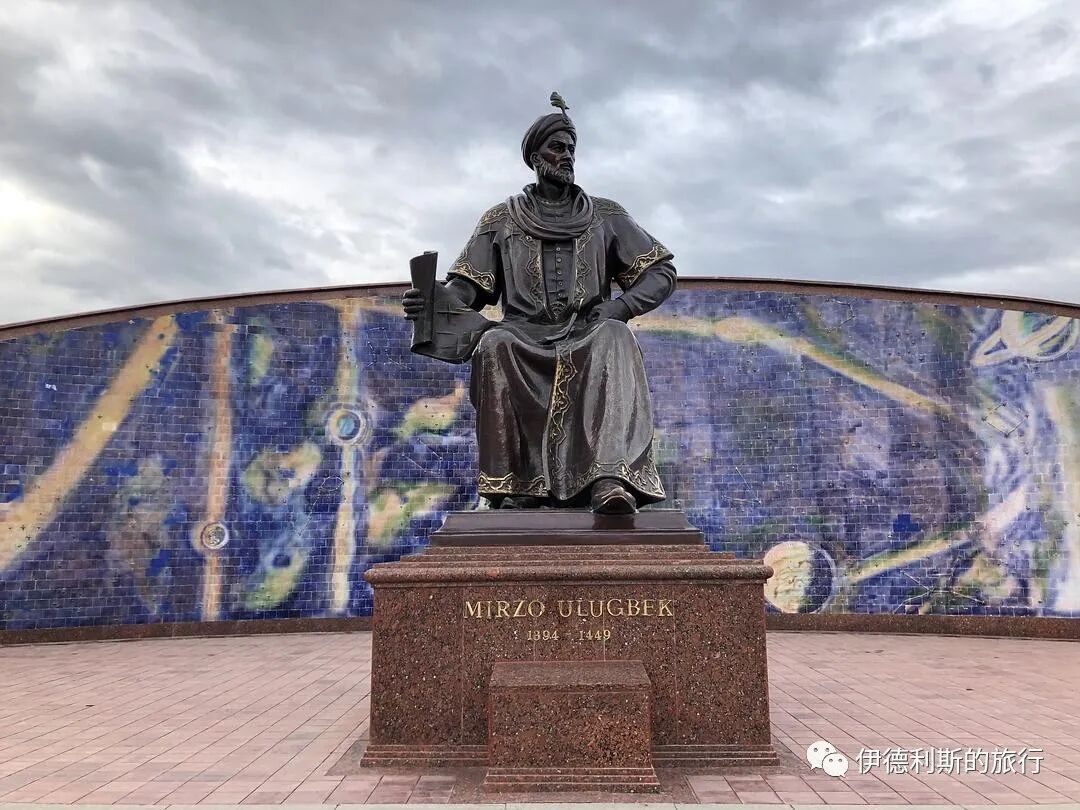
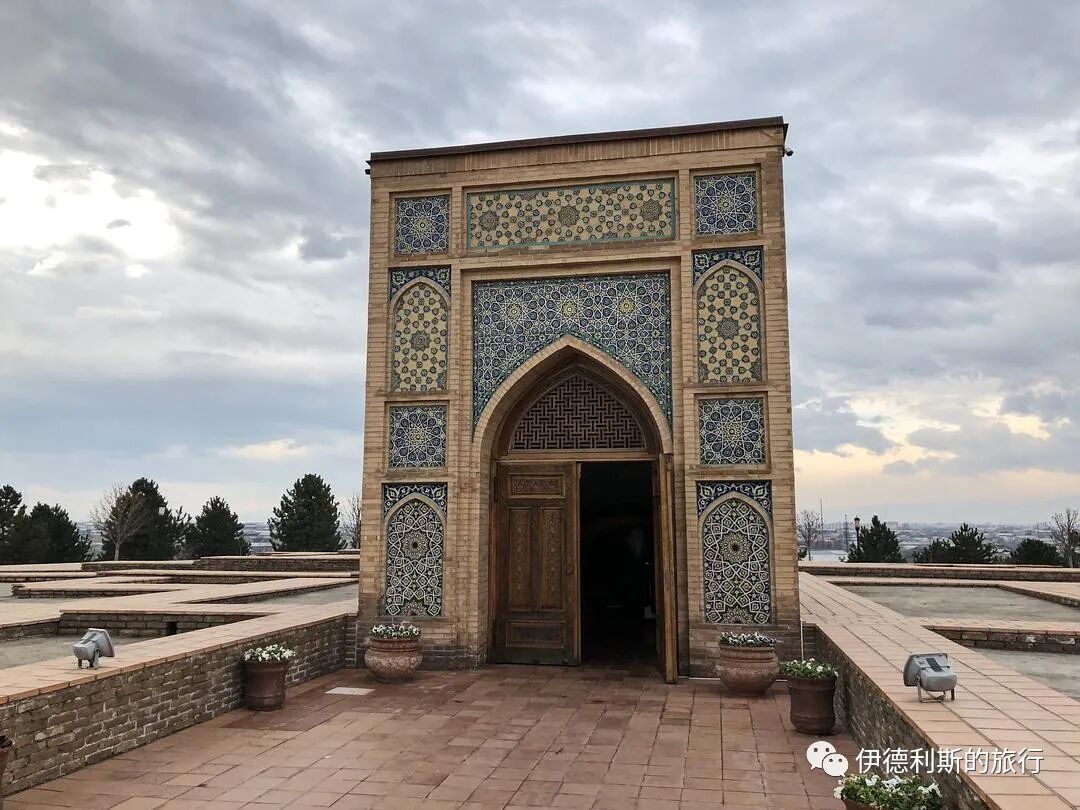
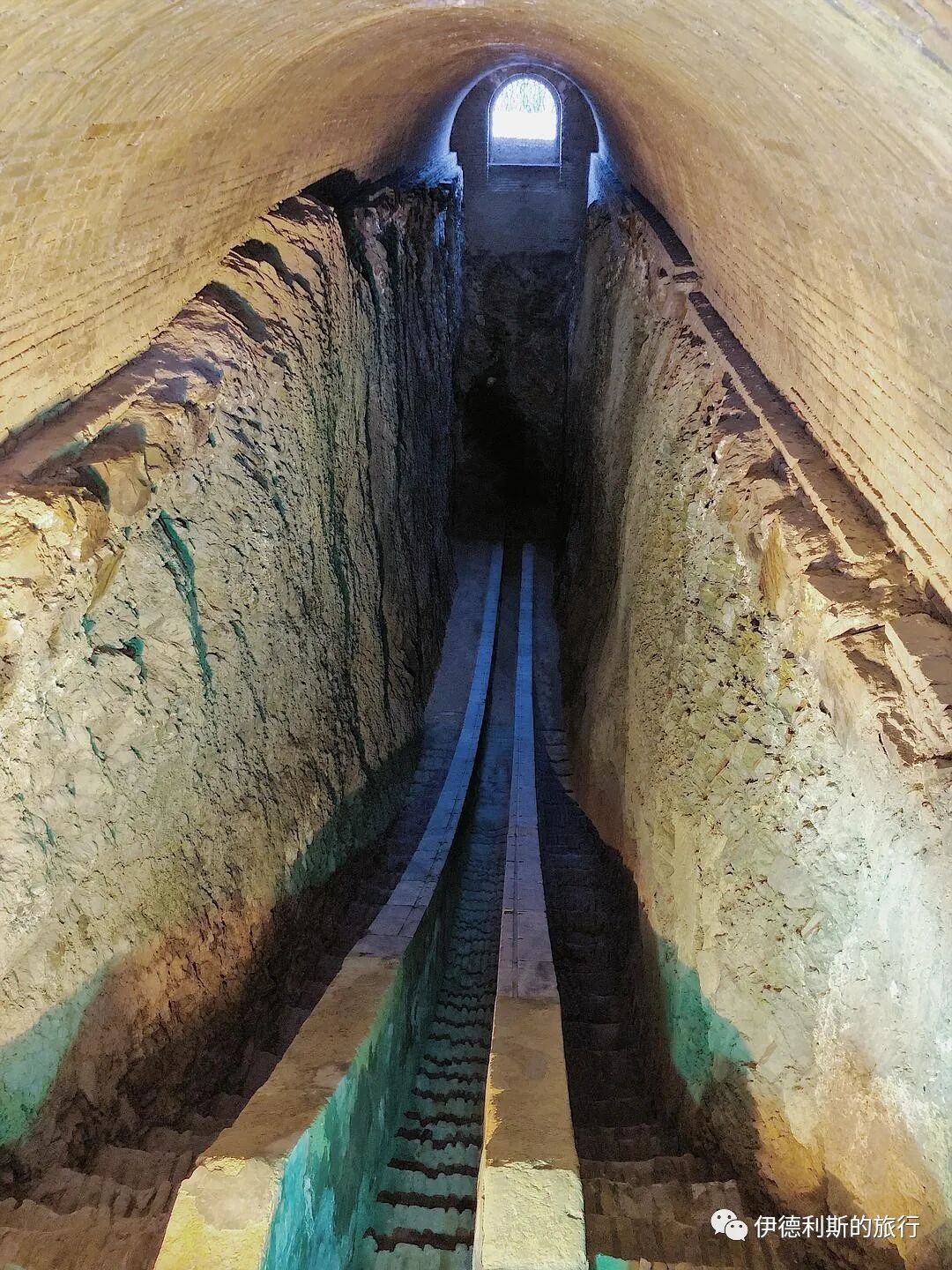
Site of the marble sextant
Astronomical instruments unearthed during archaeological excavations
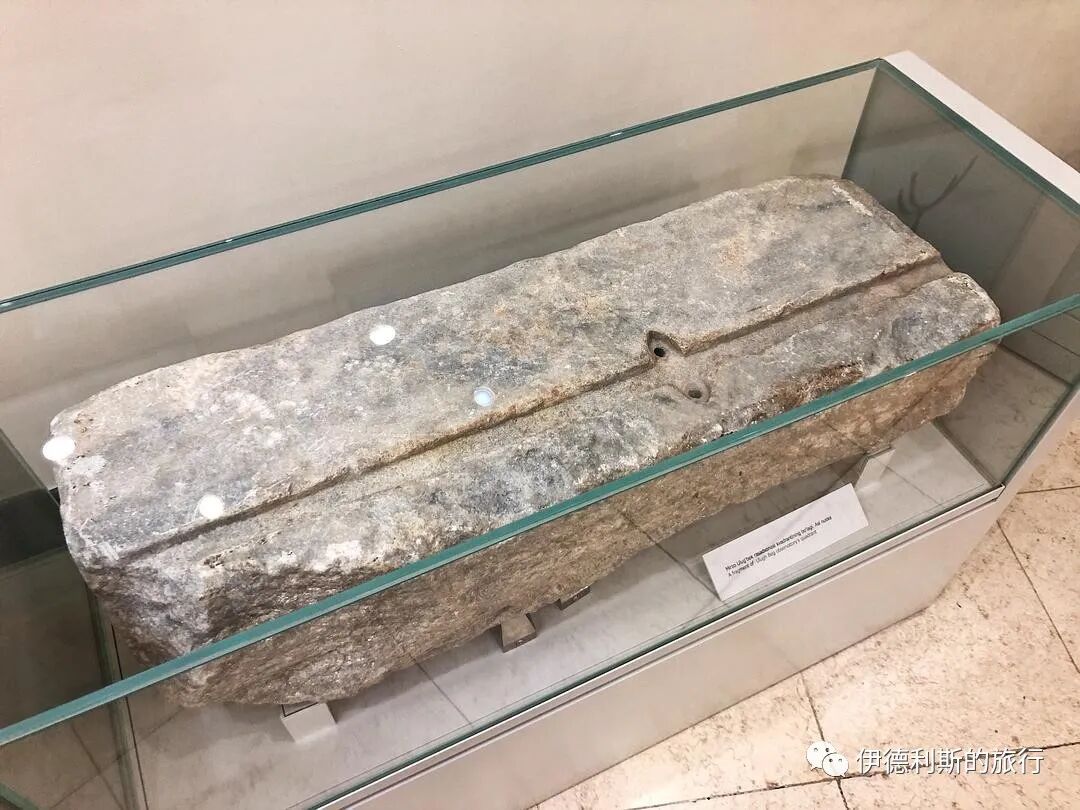
Unearthed stone column components of the observatory
Restoration model of the observatory
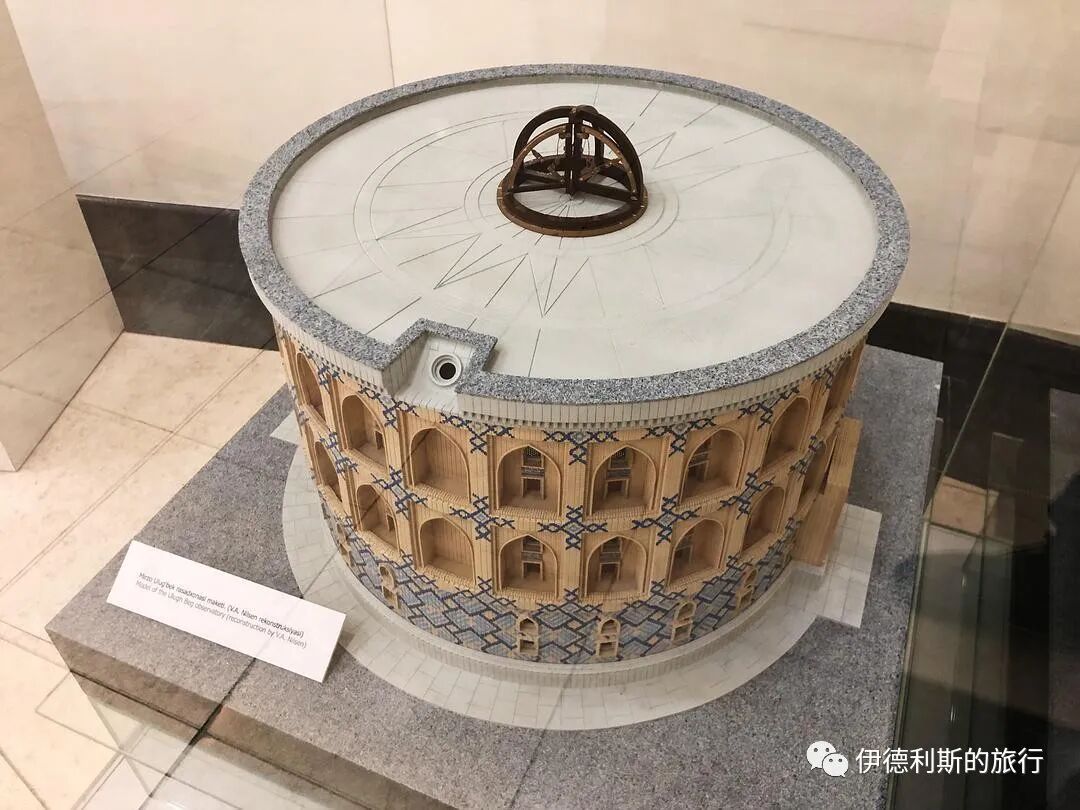
In 1970, the Ulugh Beg Observatory Museum was established on the site of the observatory, housing related artifacts.
The image below is a 1542 manuscript of the astronomical work of Ulugh Beg's student Ali Qushji; he was the main person in charge of the Ulugh Beg Observatory and a famous astronomer, mathematician, and physicist of the 15th century.
Porcelain plate from the era of Ulugh Beg.
14th-century ceramic tile.
14th-15th-century ceramic tiles and marble tiles
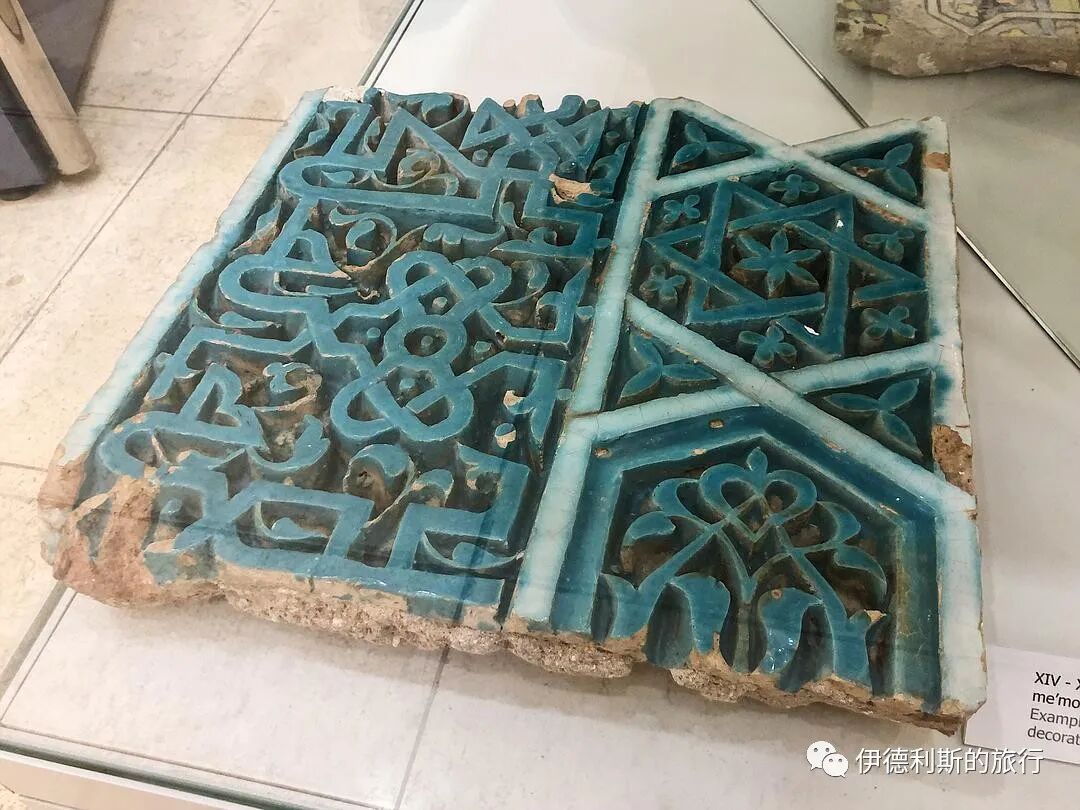
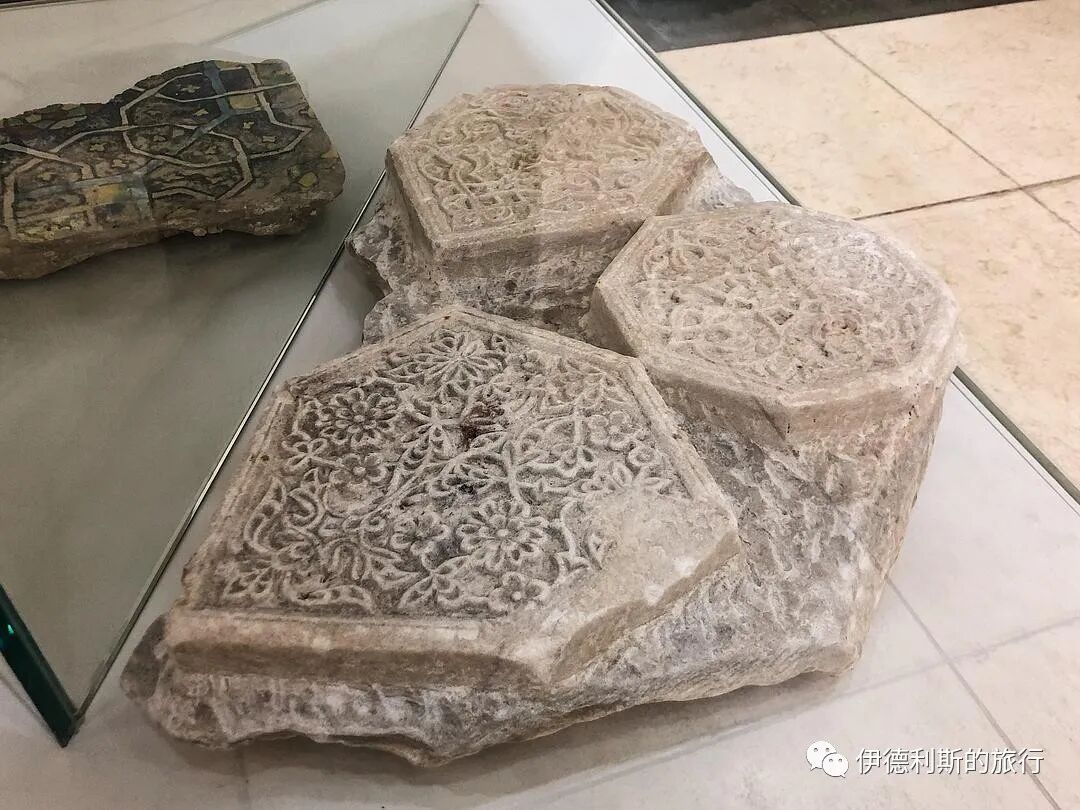
15th-century military drum.
8. Ishrat-khana Mausoleum: 1464
The Ishrat-khana Mausoleum is located in the southeast of the old city of Samarkand and is one of the few Timurid monuments in Samarkand that has not been renovated.
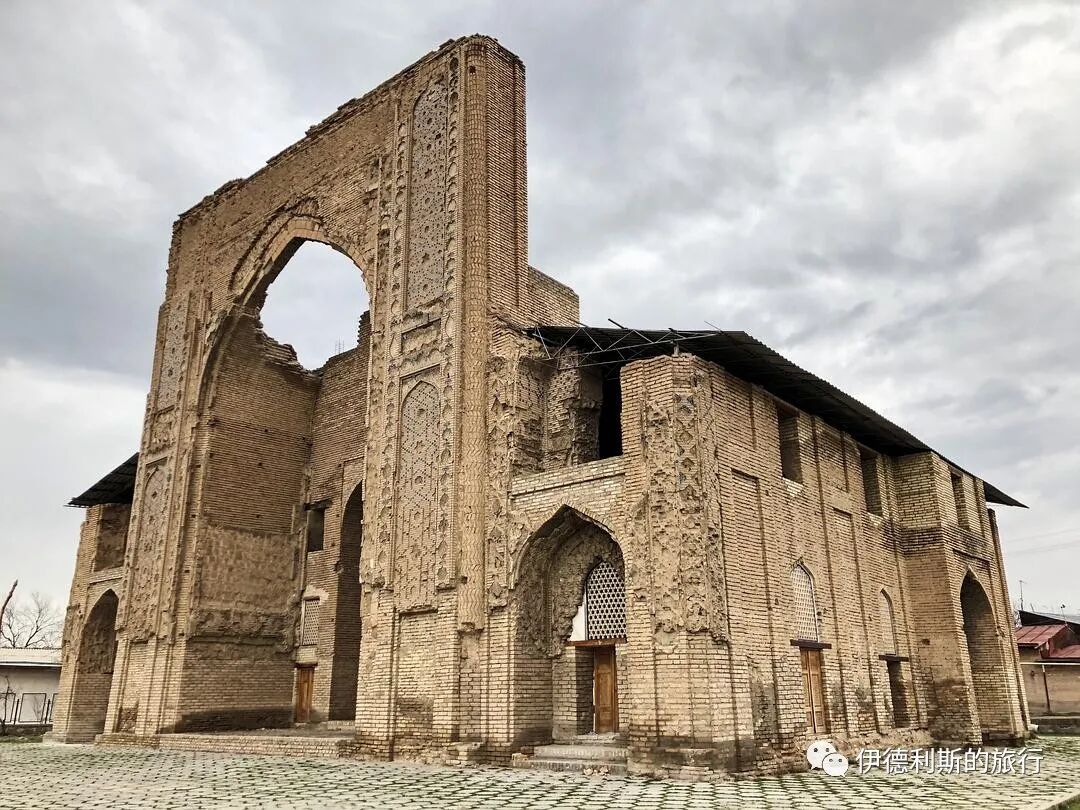
Ishrat-khana means "House of Pleasure." According to the discovery by archaeologist V. L. Vyatkin in 1896, this building was built in 1464 by Habiba Sultan, the wife of the Timurid ruler Abu Sa'id Mirza (reigned 1451-1469), for their daughter Havend Sultan-bika. In 1940, Professor M. E. Masson organized an archaeological excavation of the mausoleum and discovered an octagonal tomb under the hall, which contained 23 graves of women and children, all of whom were likely members of the Timurid royal family.
Abu Sa'id Mirza was the great-grandson of Timur the Great and the grandfather of Babur, the founder of the Mughal Empire. Abu Sa'id Mirza occupied Samarkand in 1451 with the help of the Uzbeks, defeated other Timurid princes in 1459, and conquered eastern Iran and most of Afghanistan in 1461, becoming the last monarch to unify the Timurid Empire.
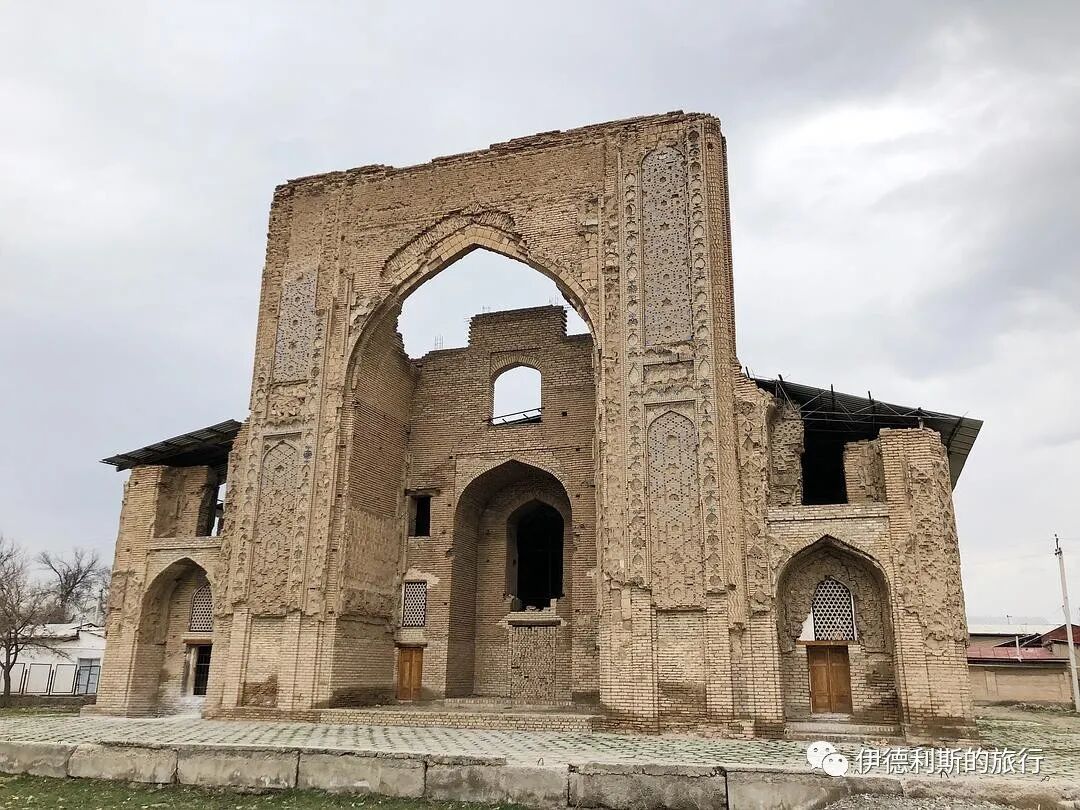
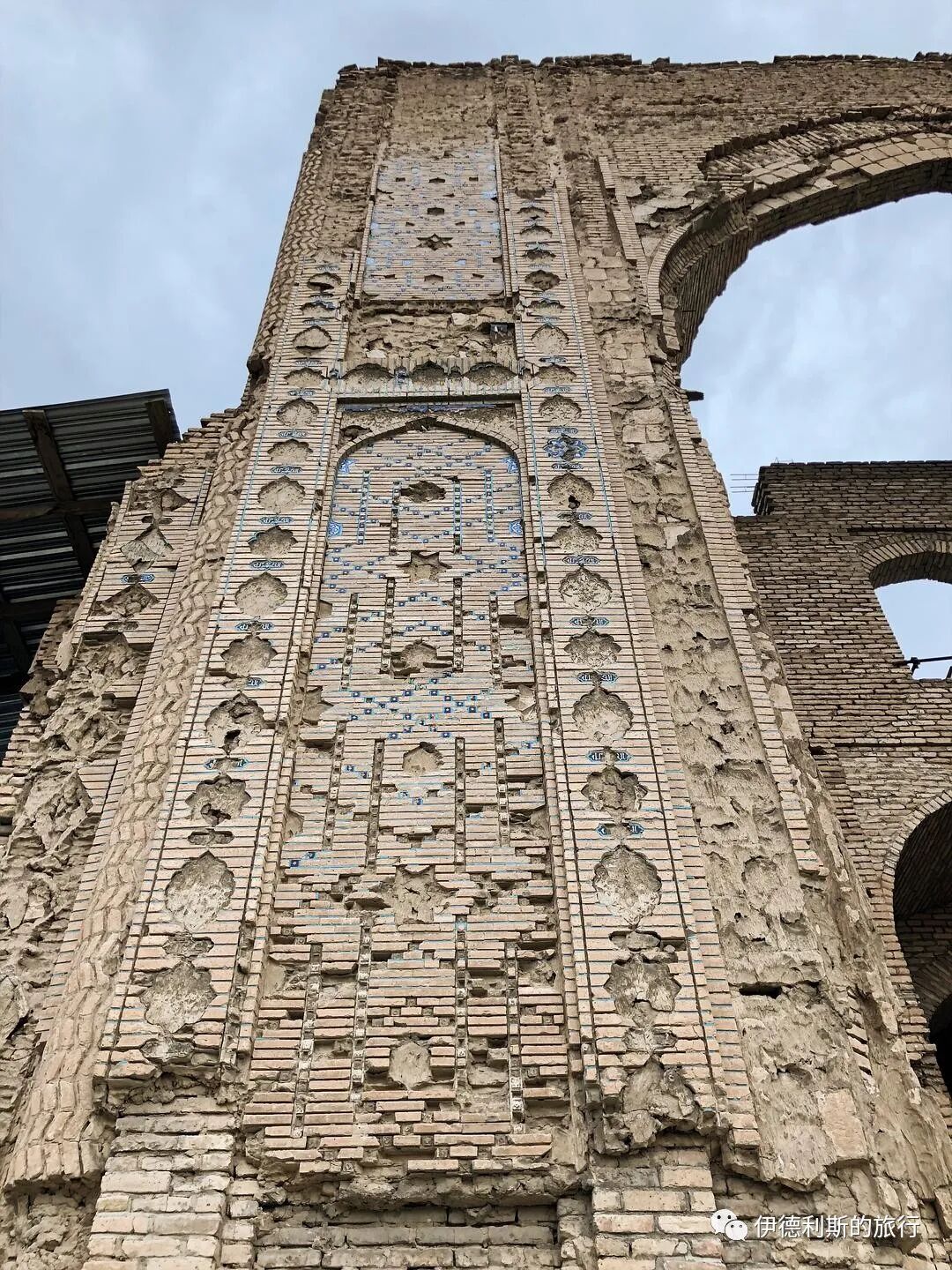
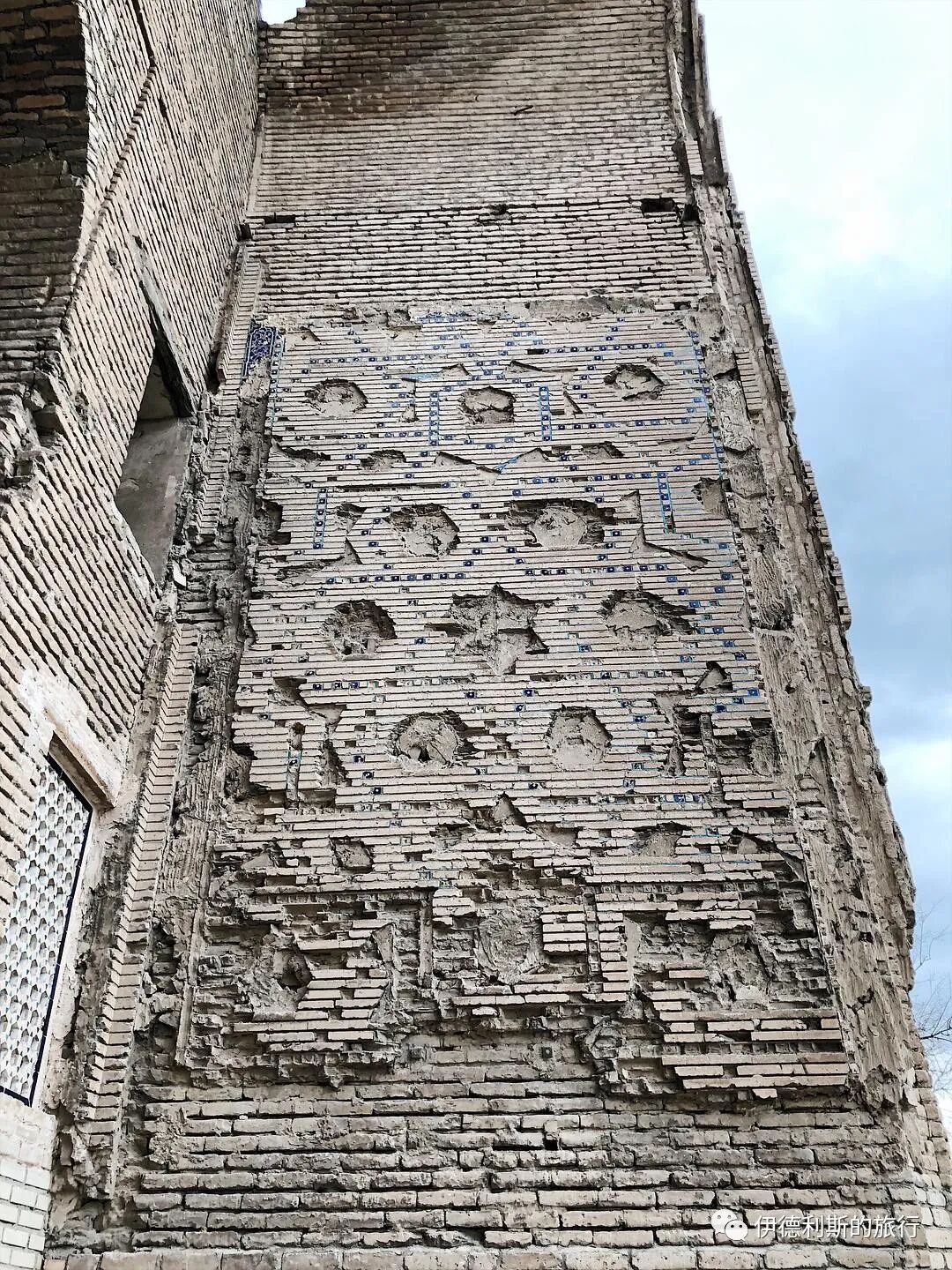
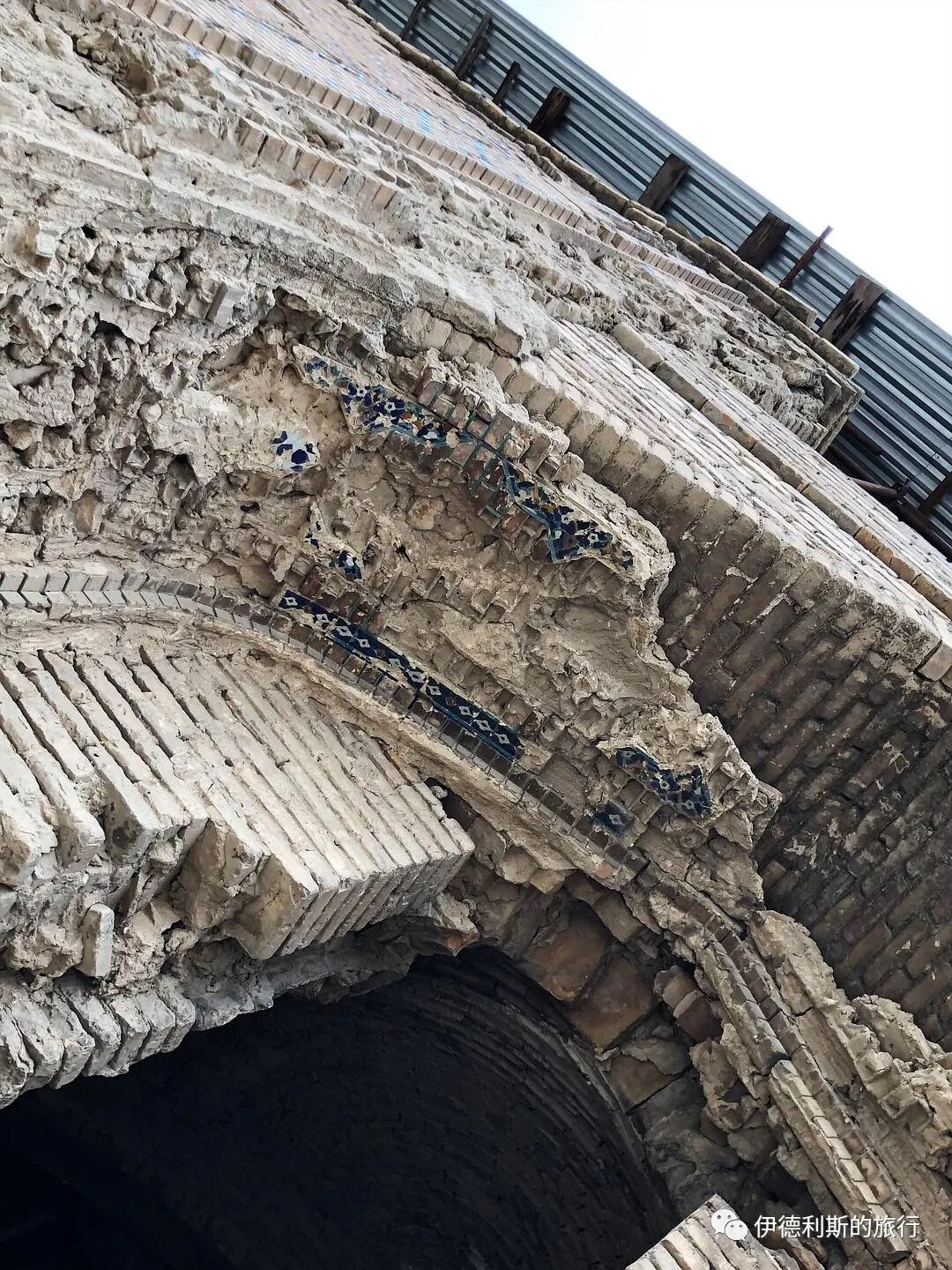
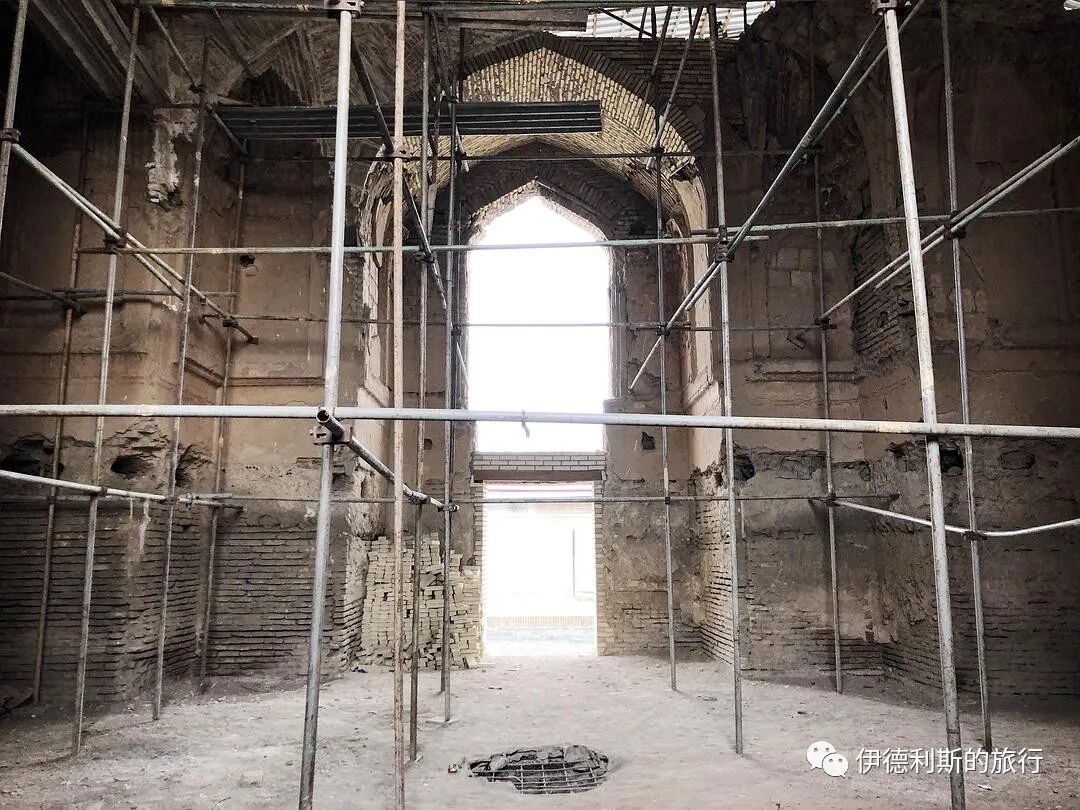
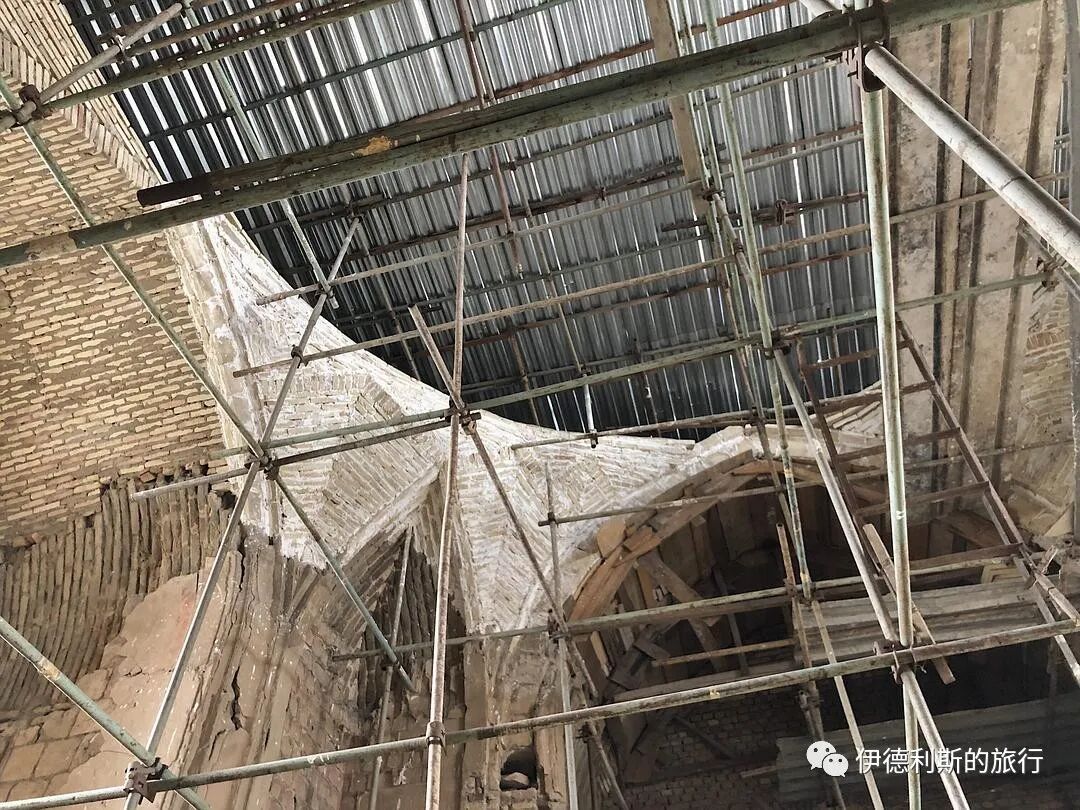
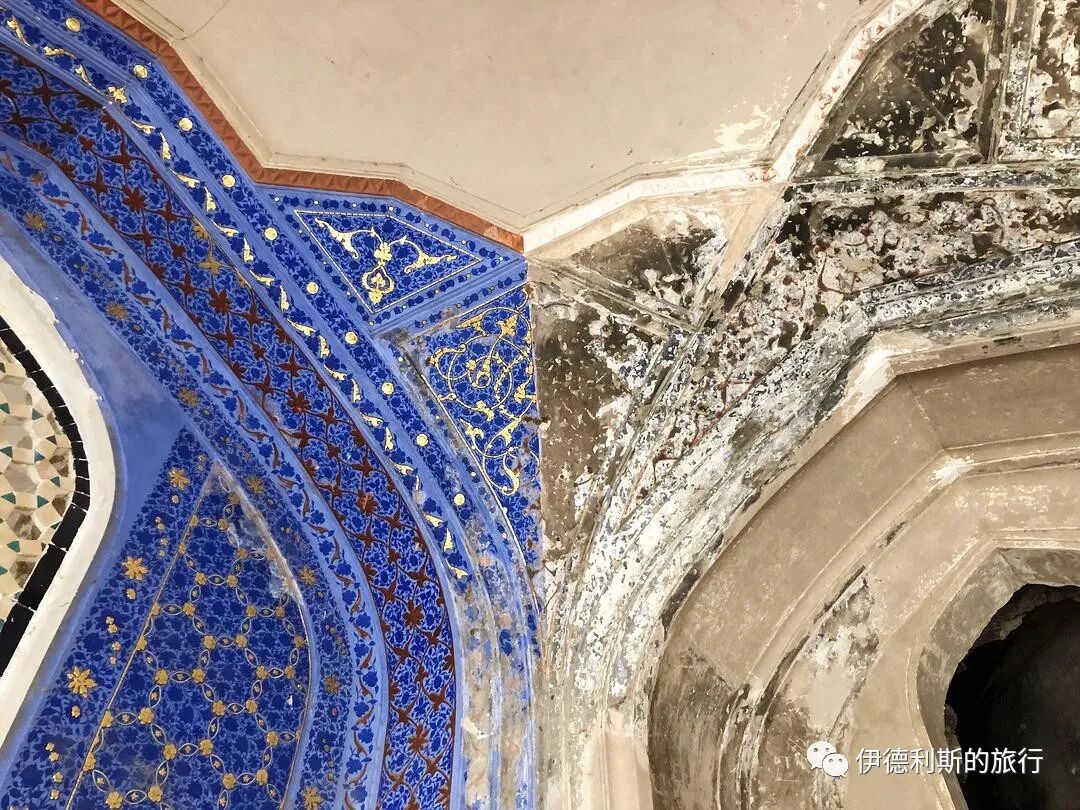
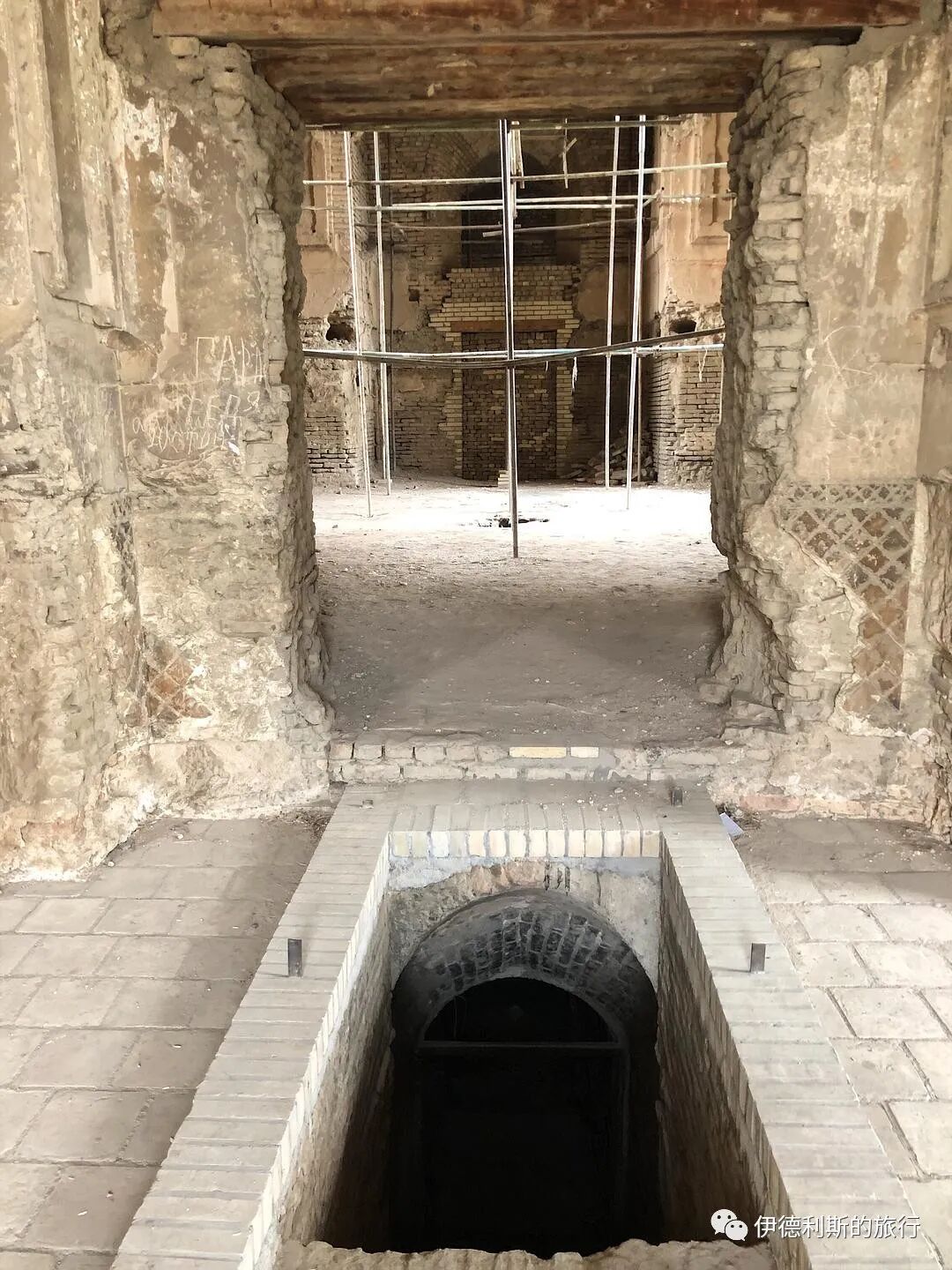
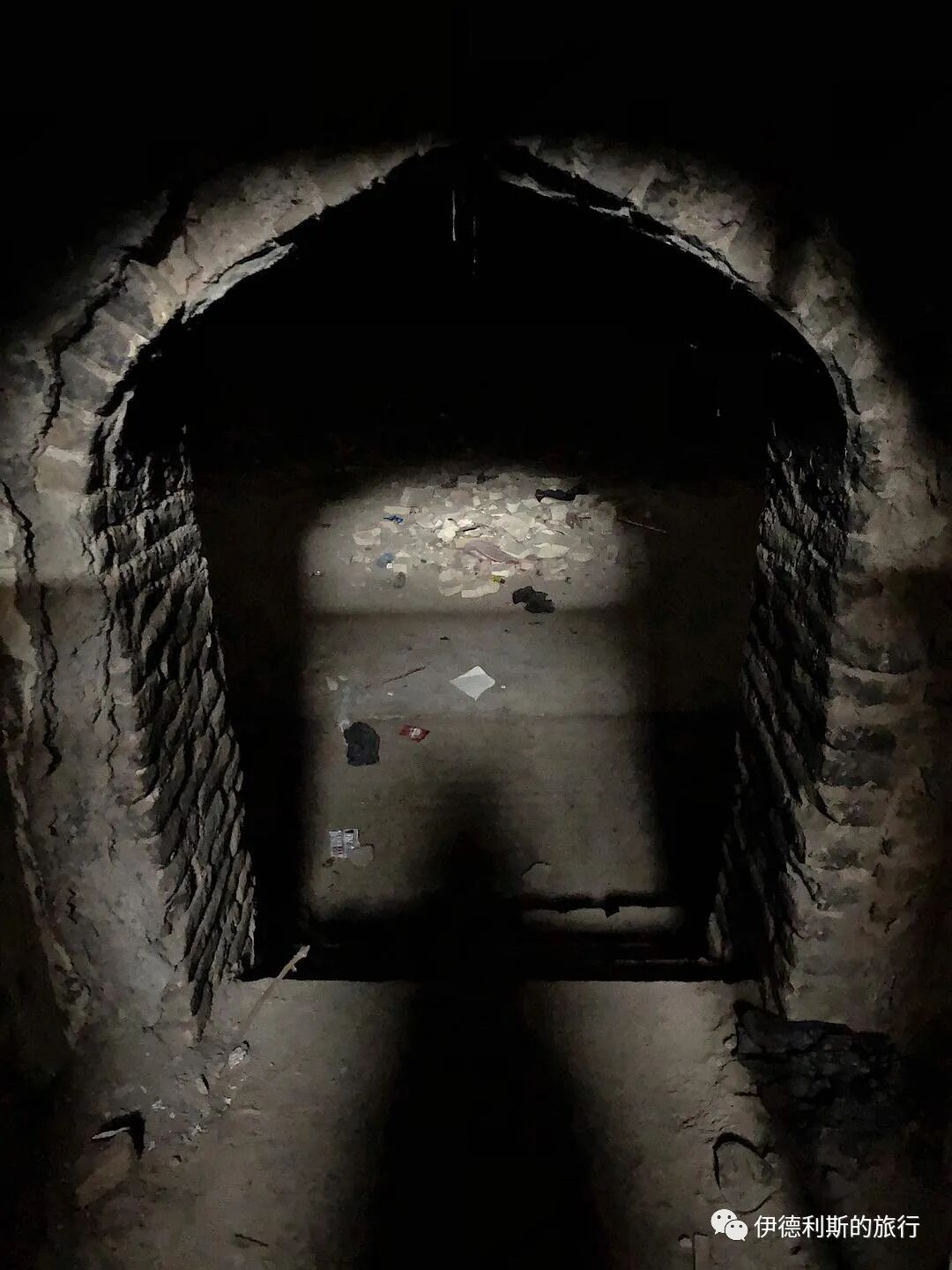
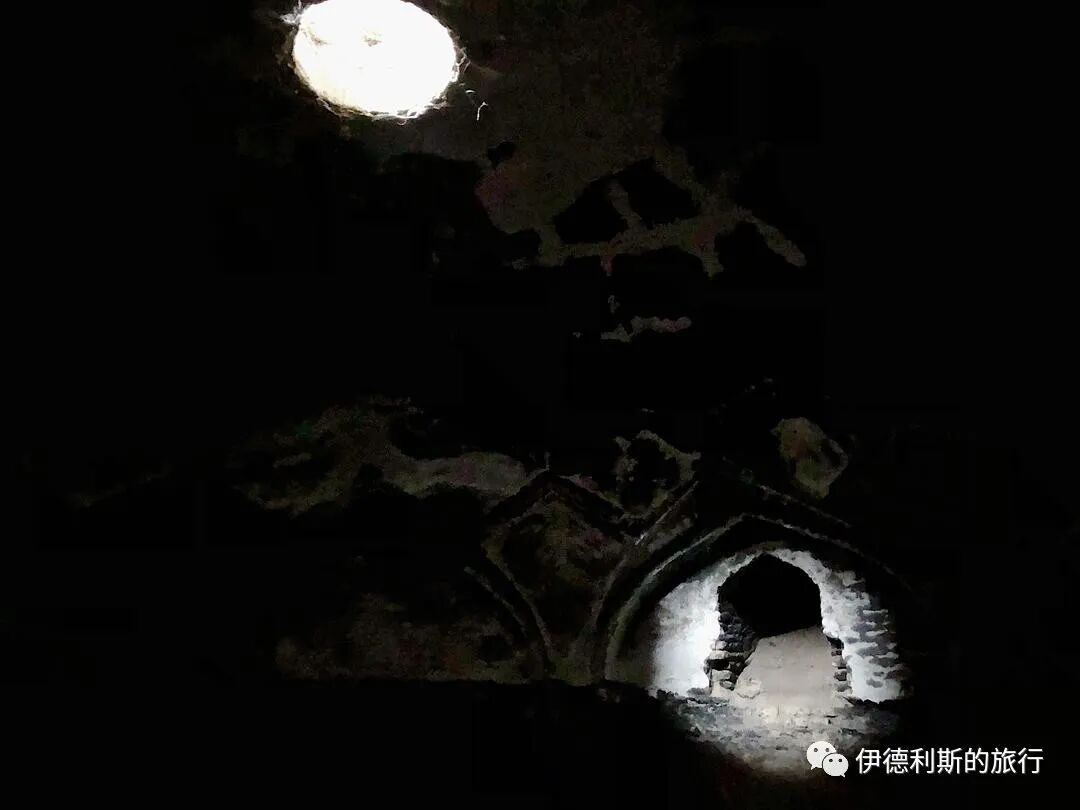
The Ishrat-khana Mausoleum was severely damaged in the 1903 earthquake, the dome was destroyed, and only an iron sheet roof was added later for protection. The archaeological section of the "Turkestan Album," produced by Russia between 1871 and 1872, contains photos of the Ishrat-khana Mausoleum before the earthquake, where the former dome of the mausoleum can be seen.
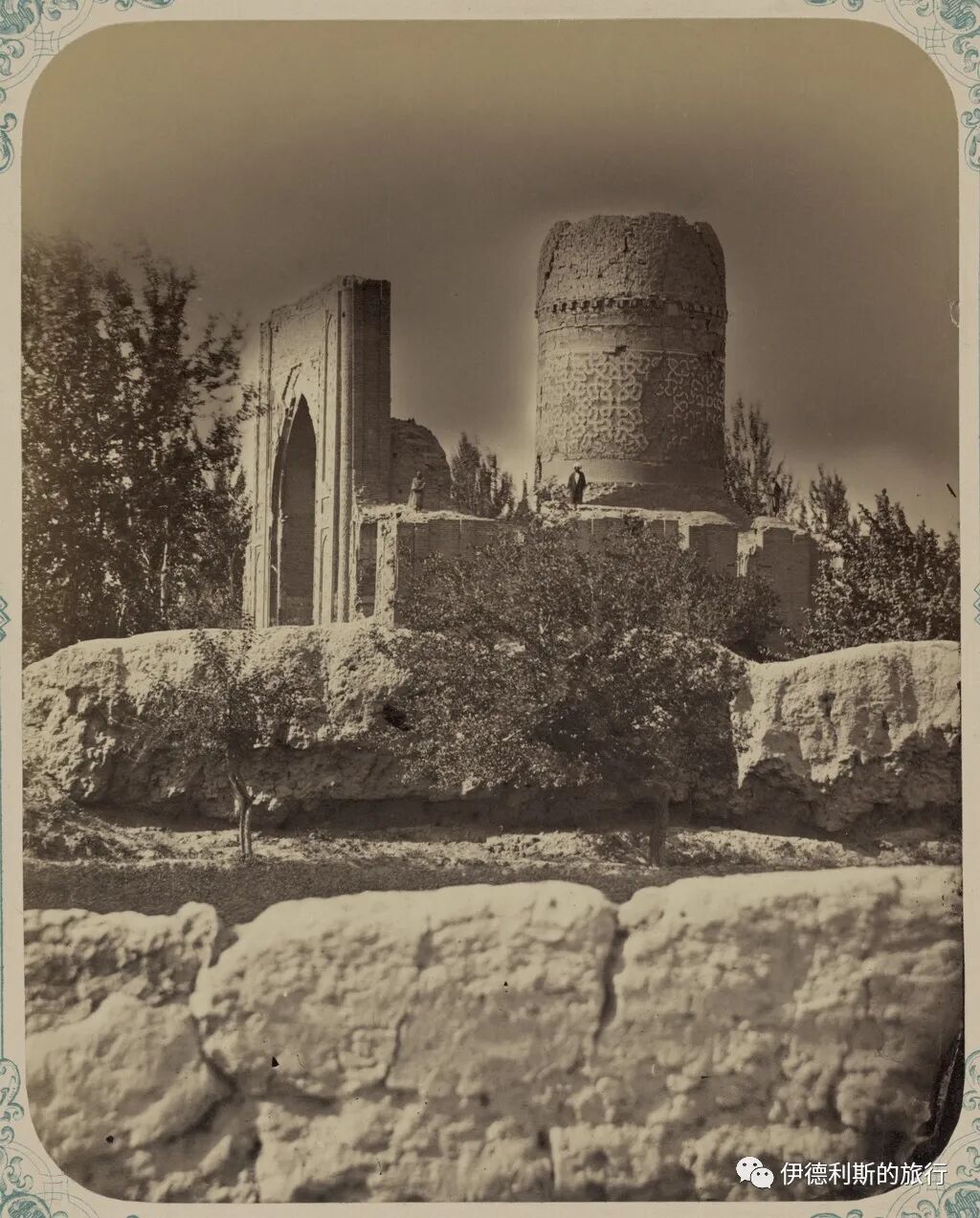
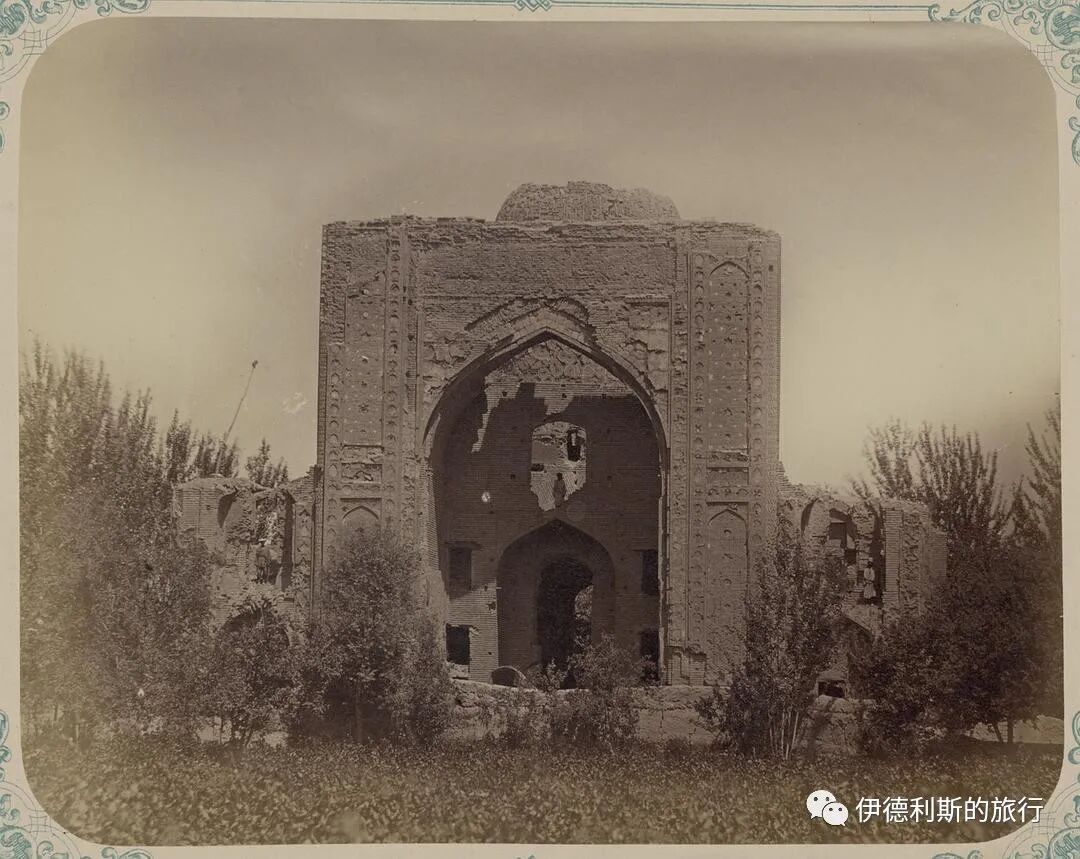
9. Ak-Saray Mausoleum: Presumed to be 1450s-1470s
The Ak-Saray Mausoleum is located right next to the Gur-e-Amir Mausoleum; it is a rectangular domed building with narrow stairs leading to an octagonal tomb underground.
"Ak-Saray" means "White Palace," and no information about the identity of the tomb owner was left inside the tomb. According to the speculation of Soviet historian and orientalist Mikhail Masson, the tomb owner is likely the Timurid ruler Abdal-Latif Mirza (reigned 1449-1450).
Abdal-Latif Mirza was the great-grandson of Timur the Great and the eldest son of Ulugh Beg. Abdal-Latif initially followed his father in battle and helped his father capture the city of Herat, but was later exiled by his father, allegedly because he was disloyal to his father; another theory is that Ulugh Beg predicted through astrology that he would be killed by his son. In 1449, Abdal-Latif launched a rebellion, captured Ulugh Beg near Samarkand, and subsequently murdered him; therefore, Abdal-Latif is also known as "Padarkush" (the patricide). A few days later, Abdal-Latif killed his brother to seize the throne, but he was killed after ruling for only 6 months. It is speculated that because Abdal-Latif was a patricide, he could not be buried in the Gur-e-Amir Mausoleum where his father Ulugh Beg was buried, so he could only be buried nearby.
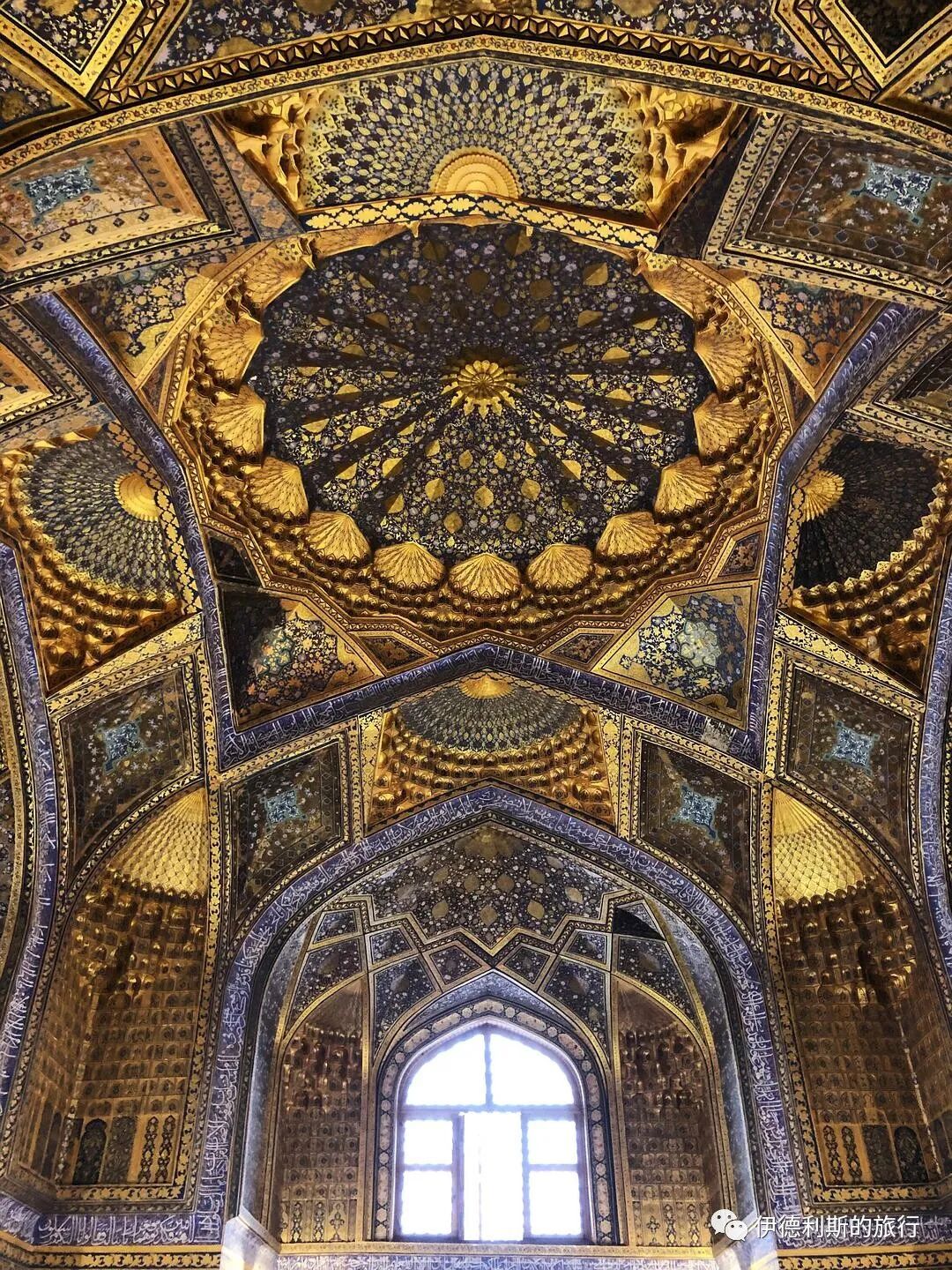
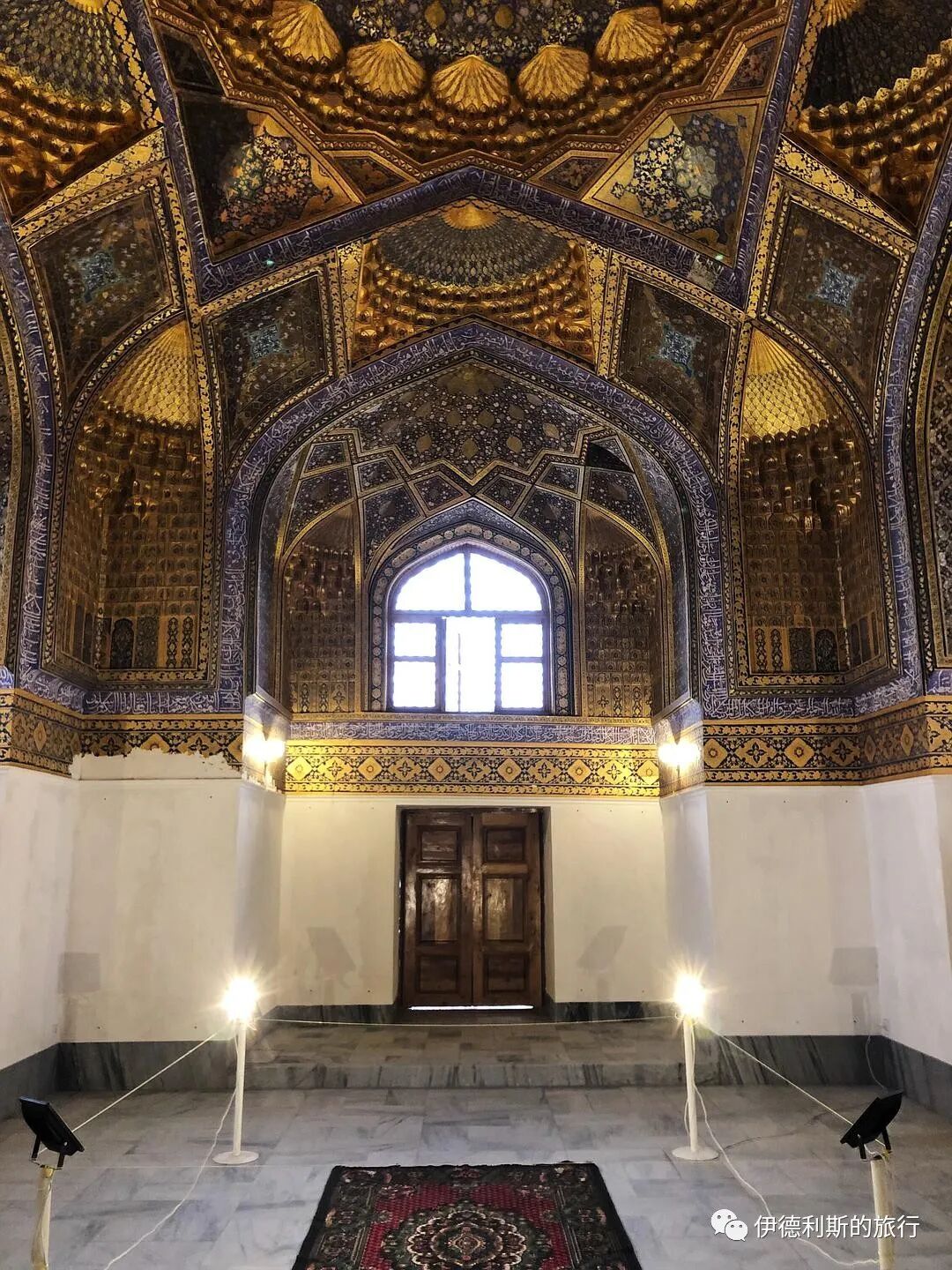
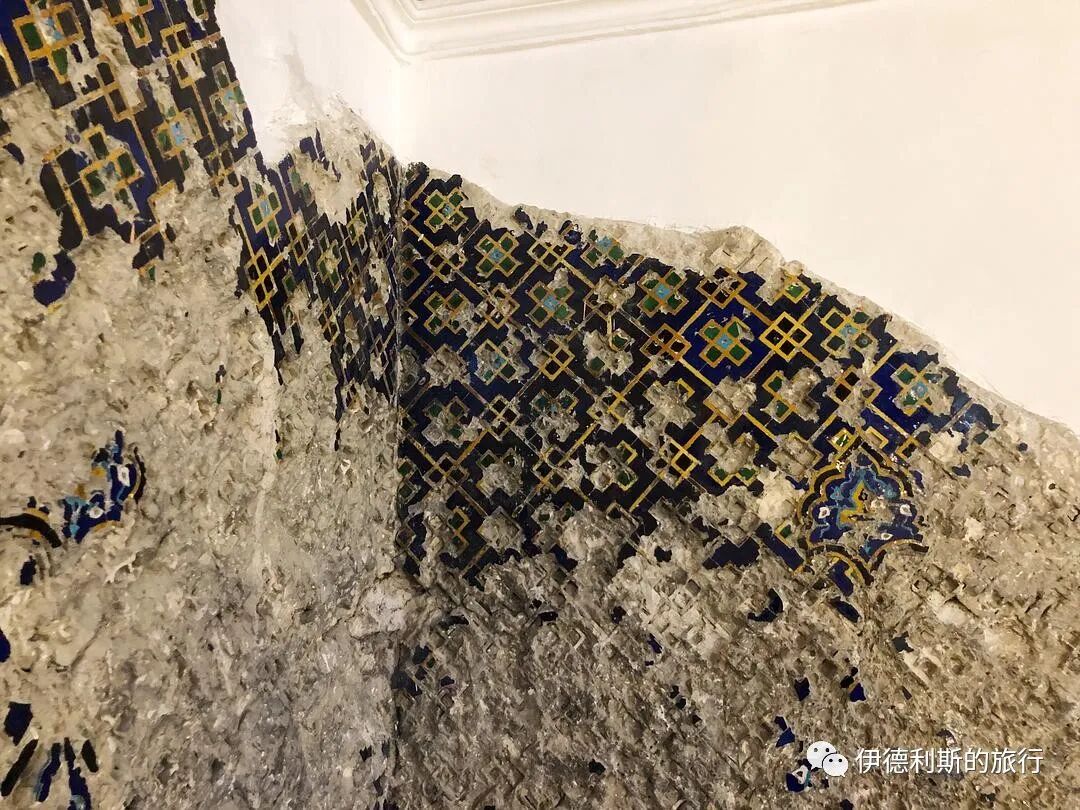
Another speculation is that the tomb owner is the Timurid ruler Abu Sa'id Mirza (reigned 1451-1469), who was Abdal-Latif's cousin. Abu Sa'id Mirza wanted to expand the scale of the Gur-e-Amir Mausoleum to continue burying male members of the Timurid royal family, so he planned to build this mausoleum. Abu Sa'id Mirza died in 1469, so this mausoleum may have been built in the 1470s. In addition, the Ishrat-khana Mausoleum, built by Abu Sa'id in 1464 to bury female and child royal family members, is very similar in architectural style to the Ak-Saray Mausoleum, which is also evidence for this view.
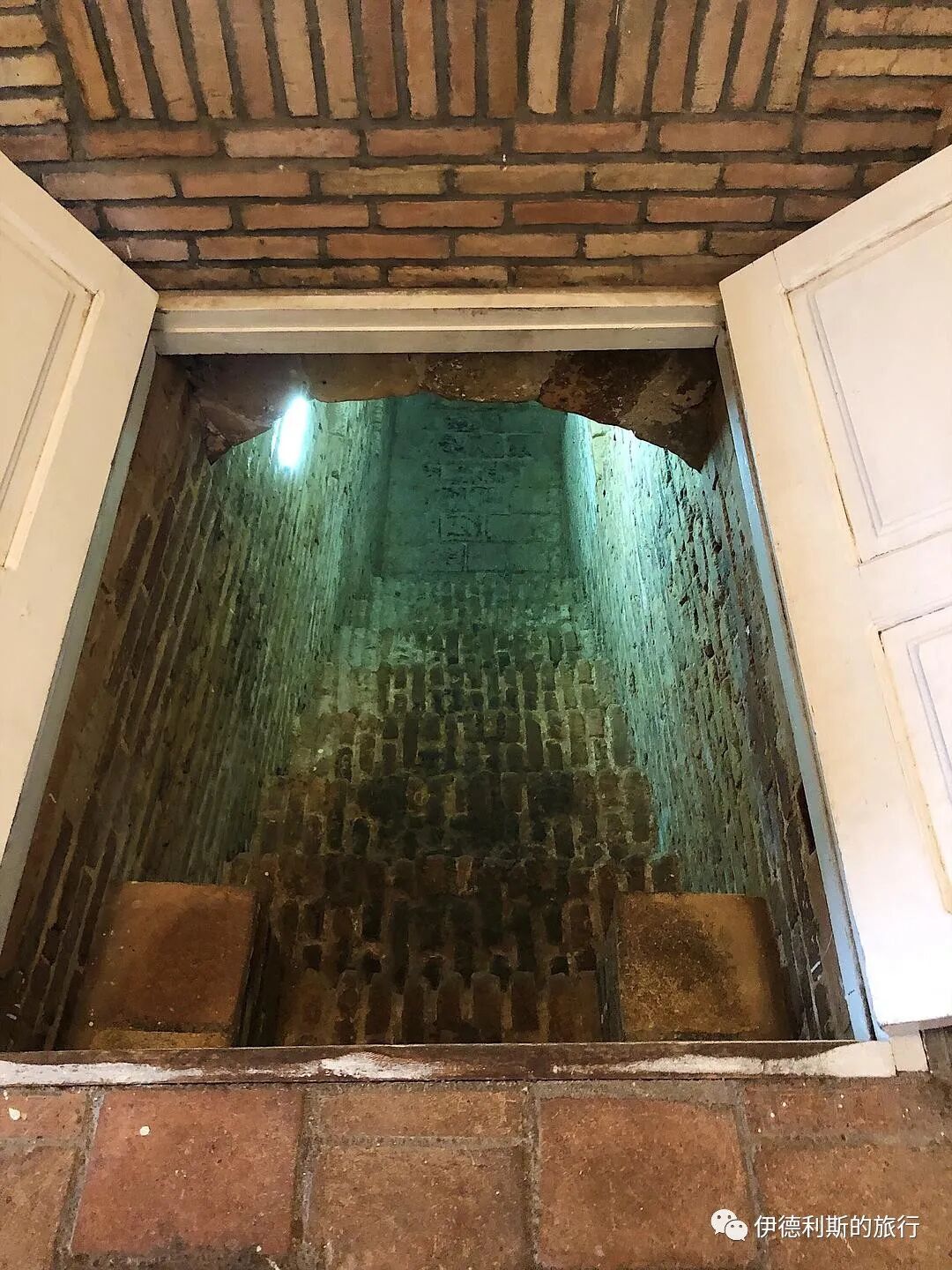
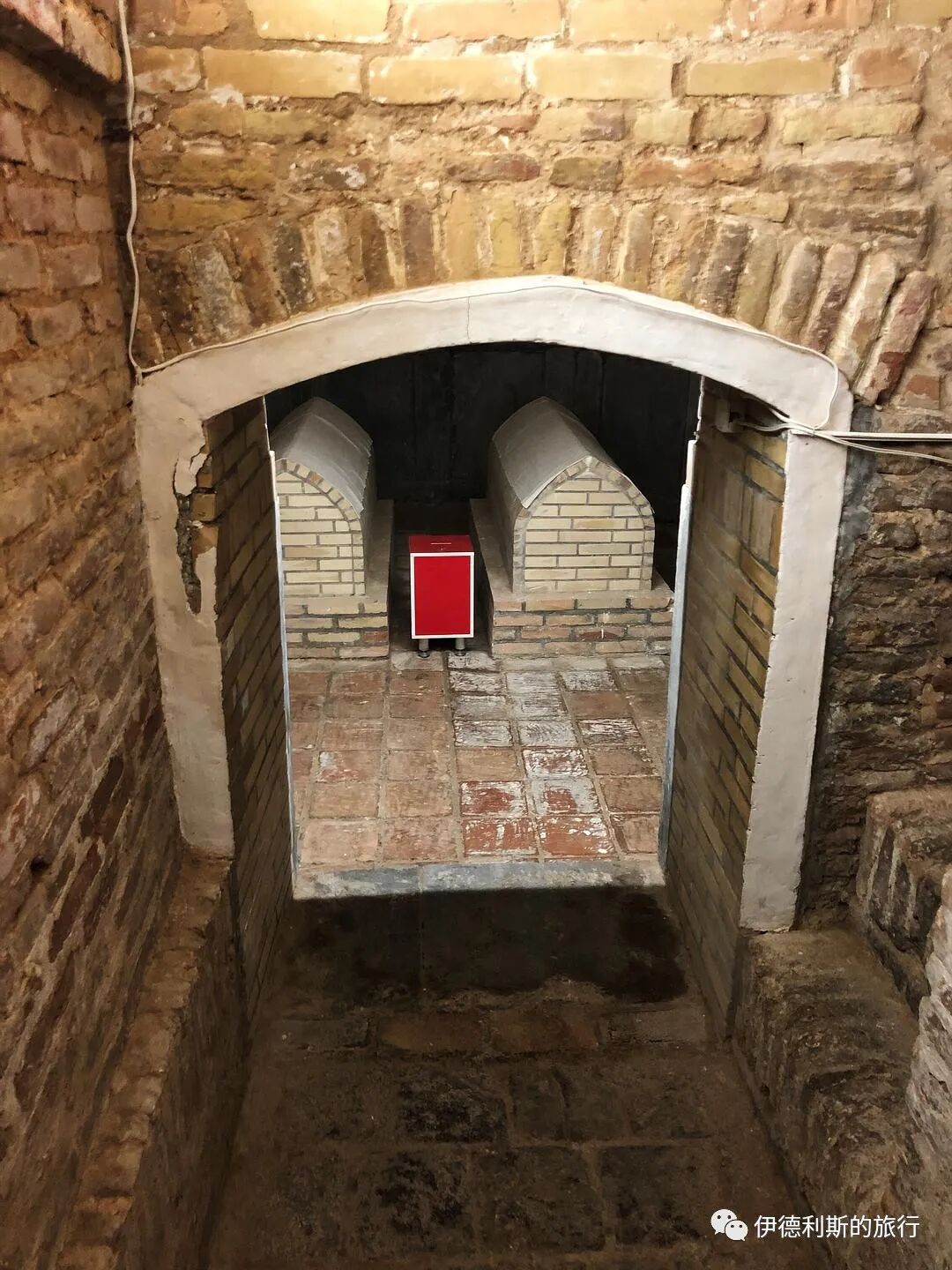
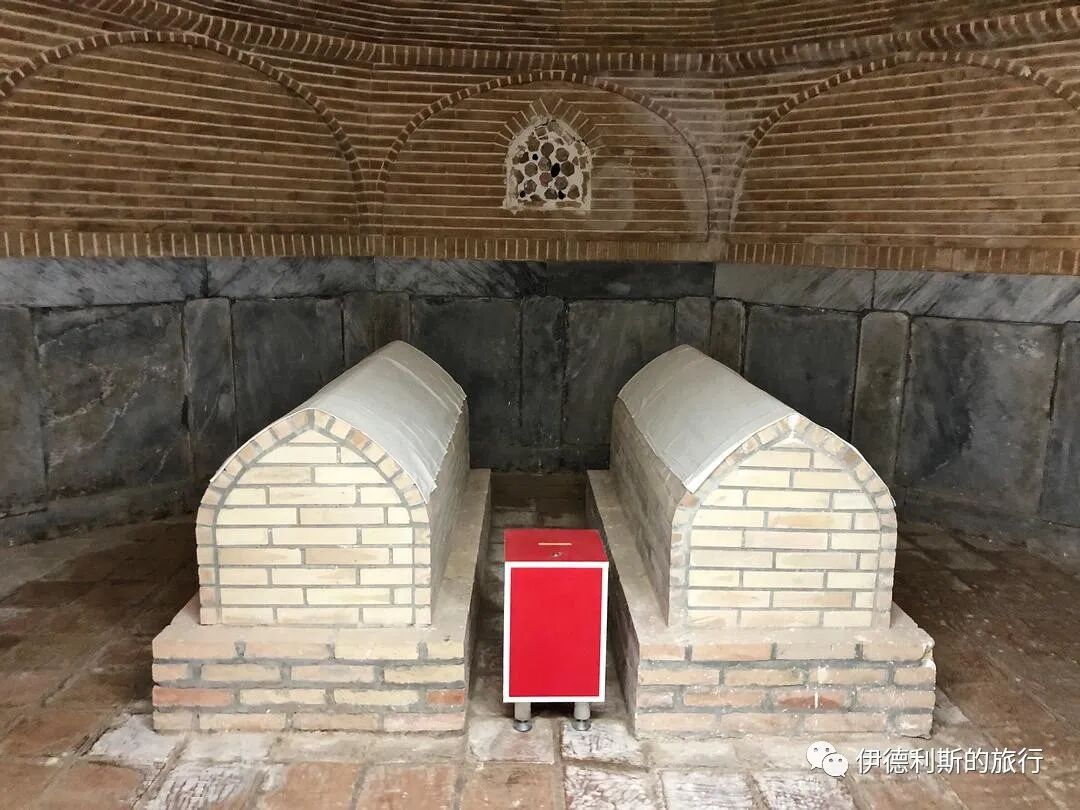
The Ak-Saray Mausoleum once fell into ruins, was later protectively restored between 1924 and 1925, renovated again in 2007, and is now open to tourists as an attraction. The archaeological section of the "Turkestan Album," produced by Russia between 1871 and 1872, contains old photos of the Ak-Saray Mausoleum, where it can be seen that the dome of the Ak-Saray Mausoleum had completely collapsed at that time.
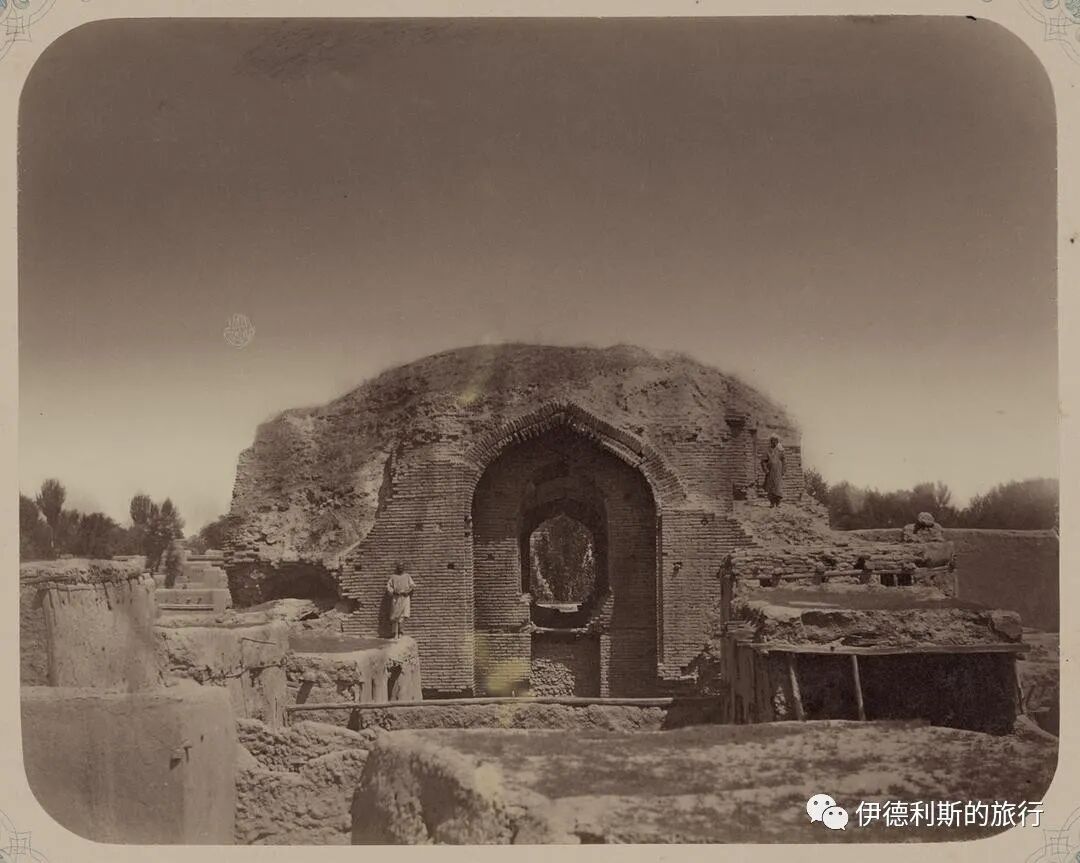
10. Khodja Abdu Derun Mausoleum: 15th century
The Khodja Abdu Derun Mausoleum was built to commemorate a 9th-century Arab judge, where "Derun" refers to the fact that the mausoleum is located inside the city of Samarkand.
The earliest domed mausoleum was built in the 12th century and was expanded in the 15th century into a complex including a pond, a mosque, and a gate.
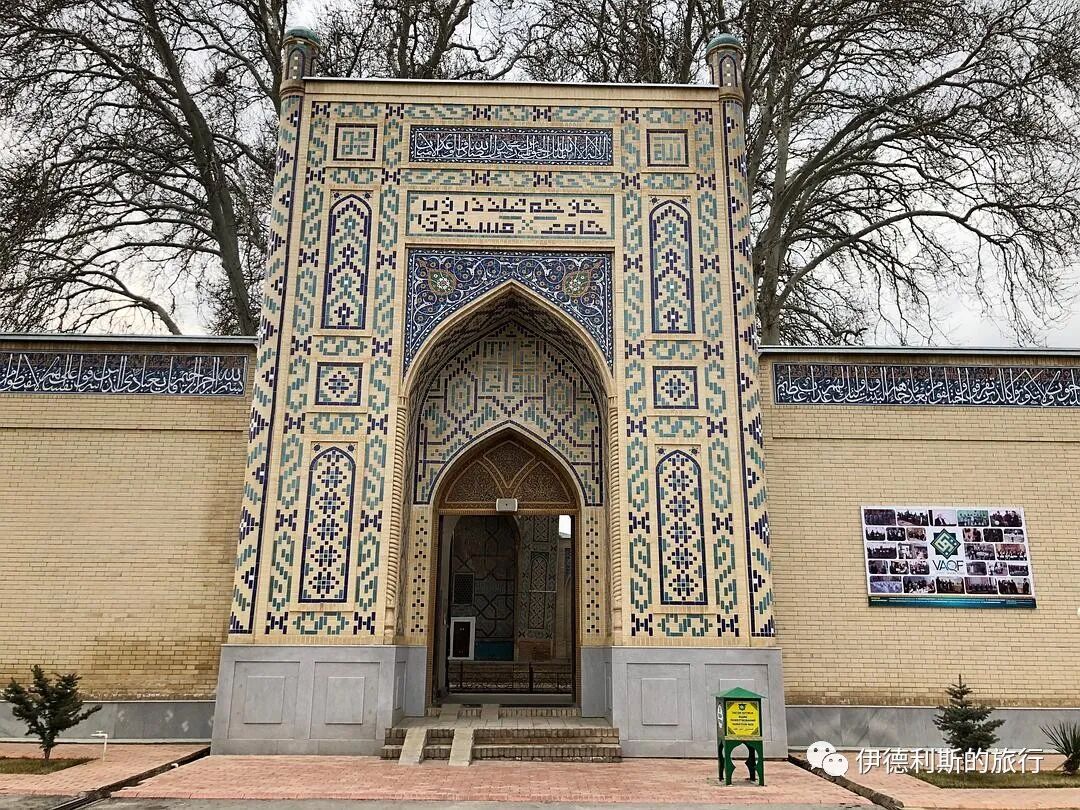
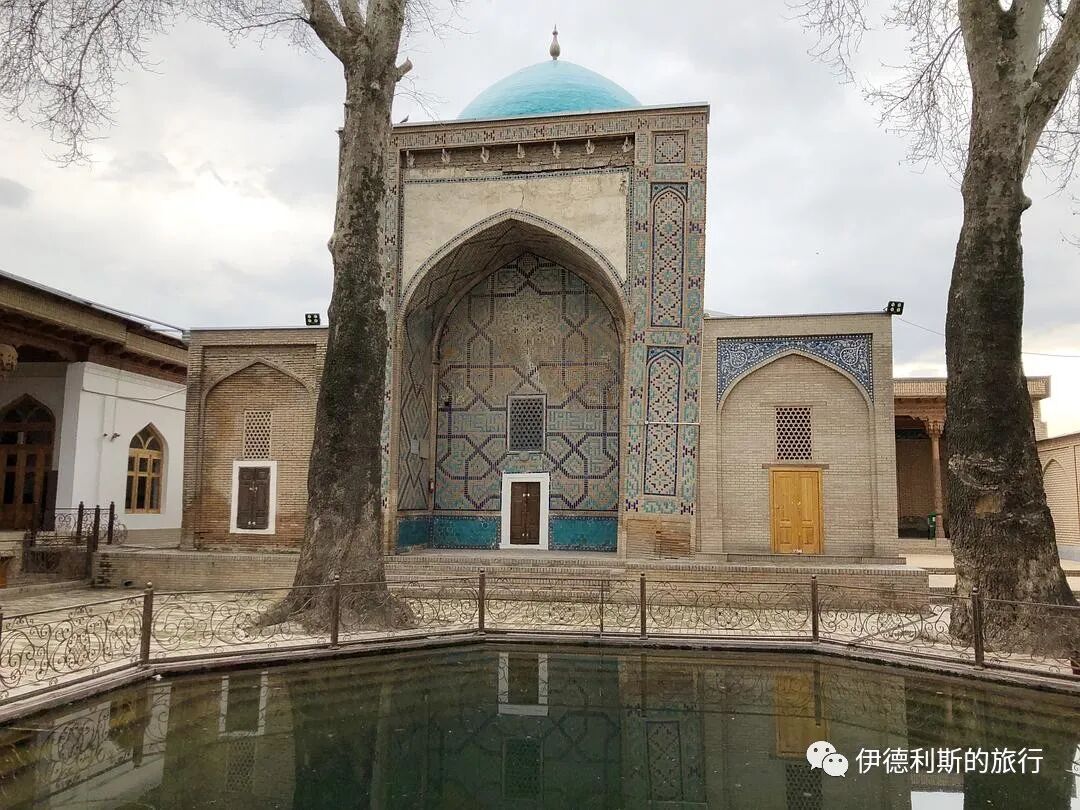
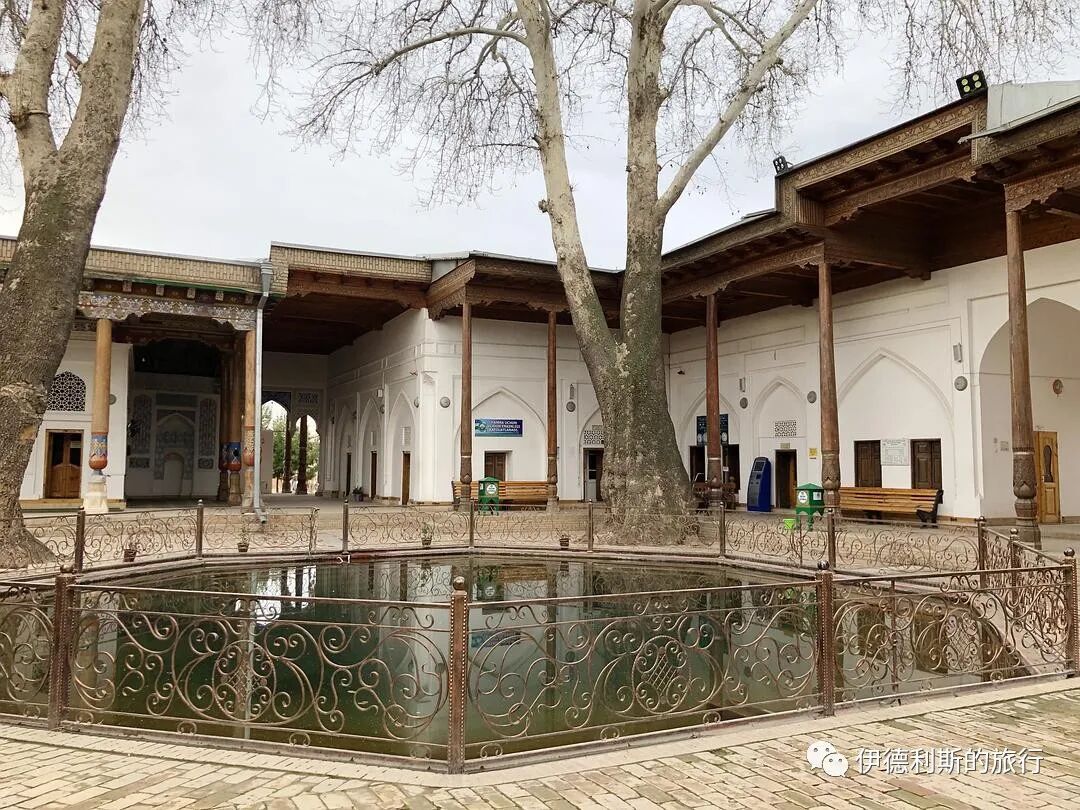
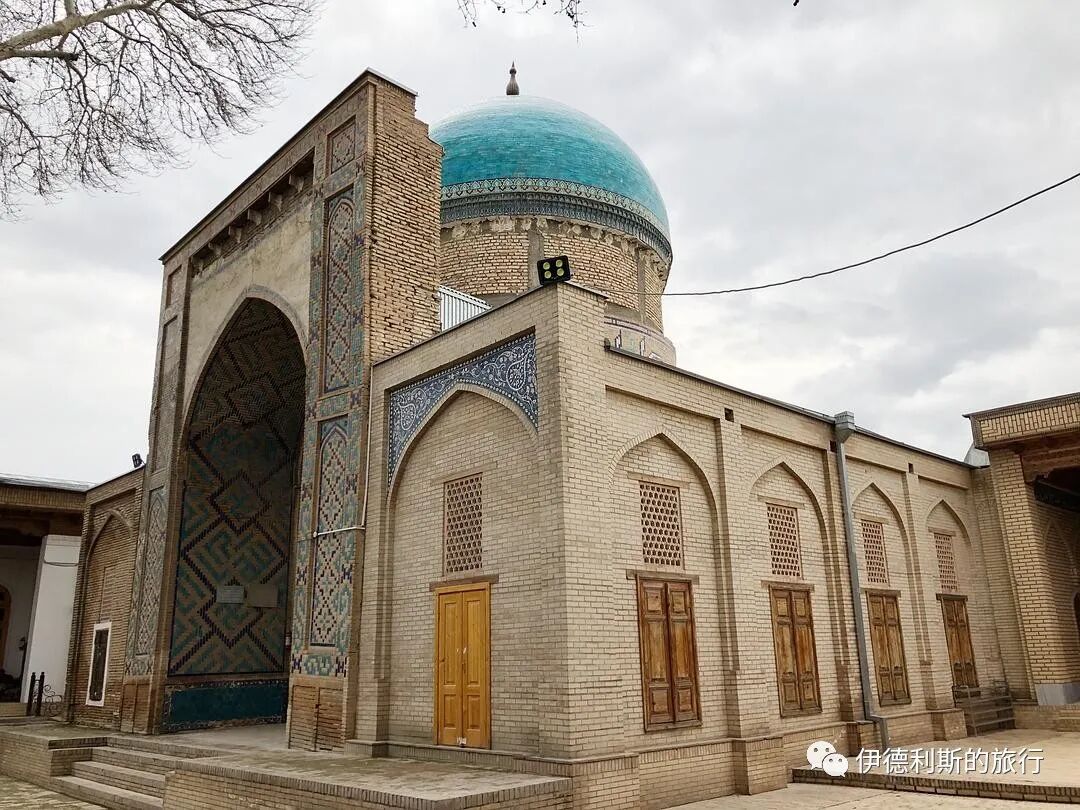
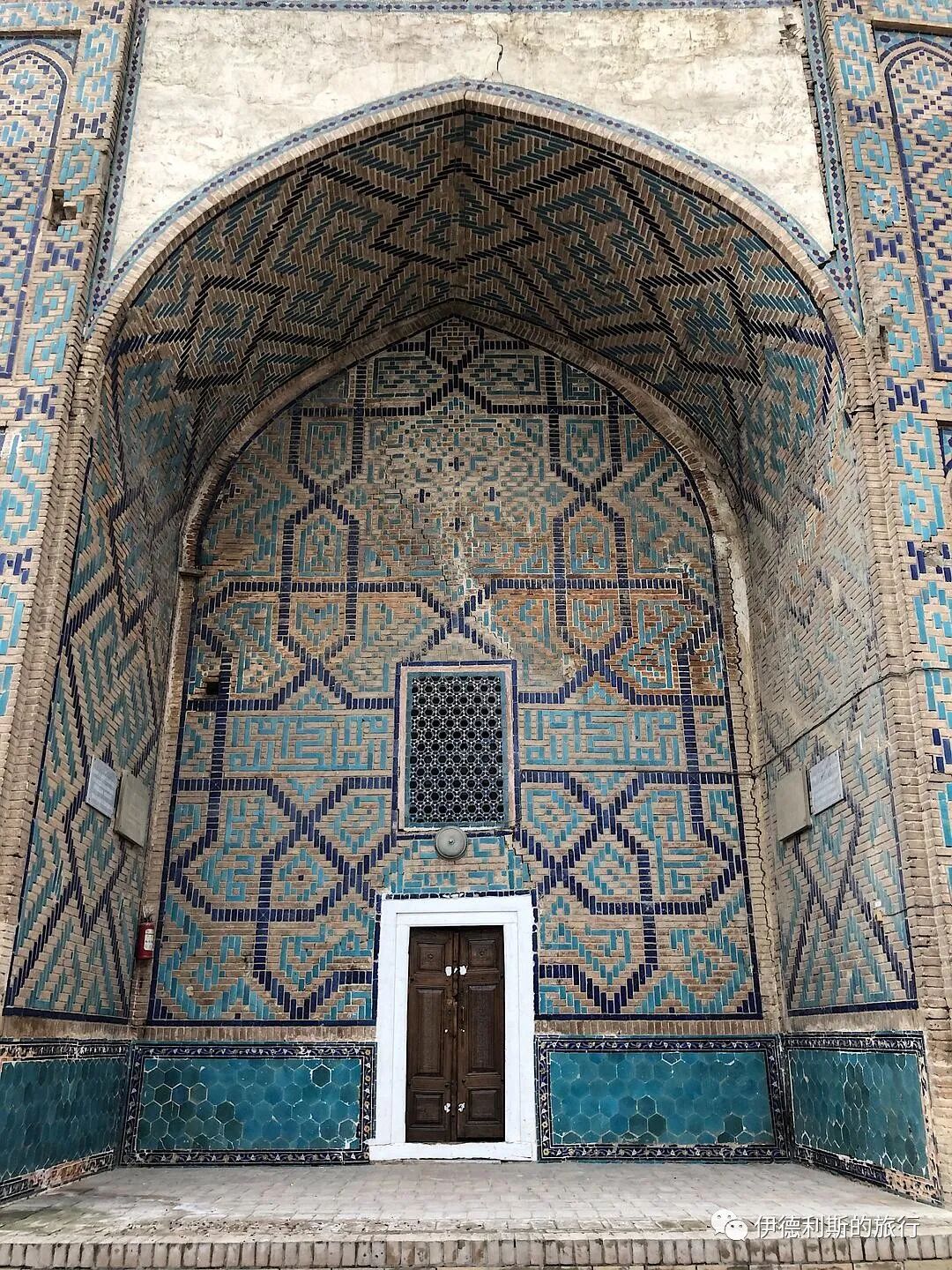
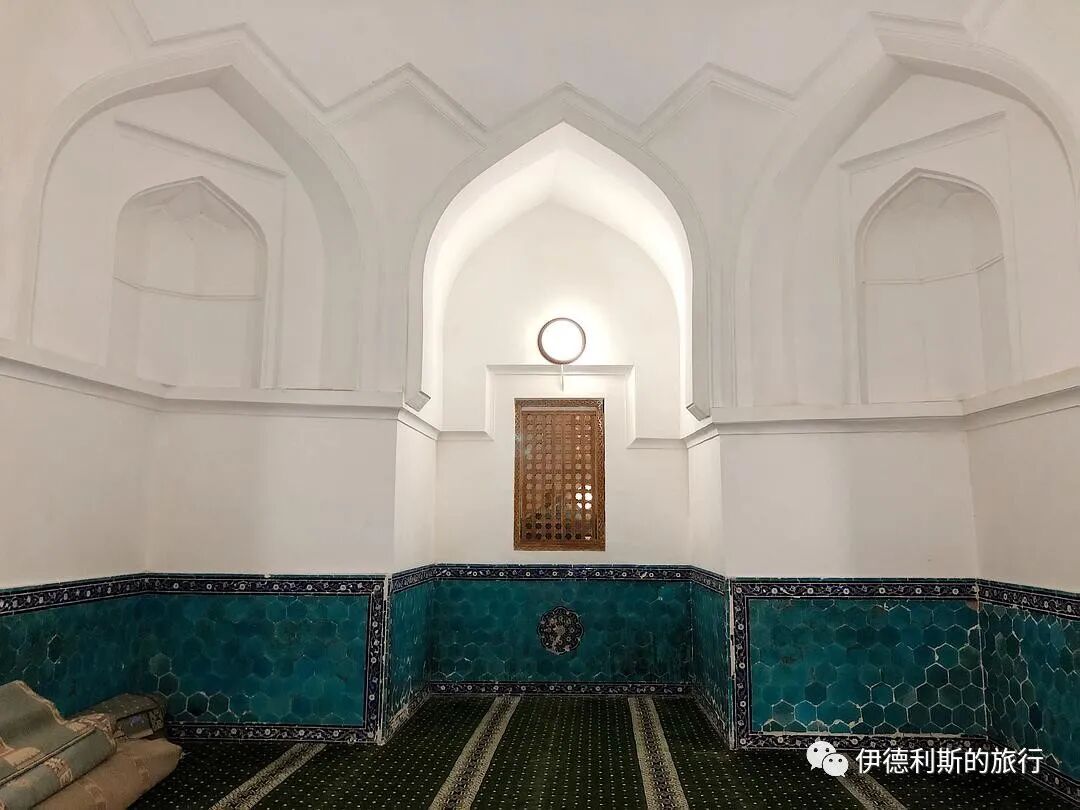
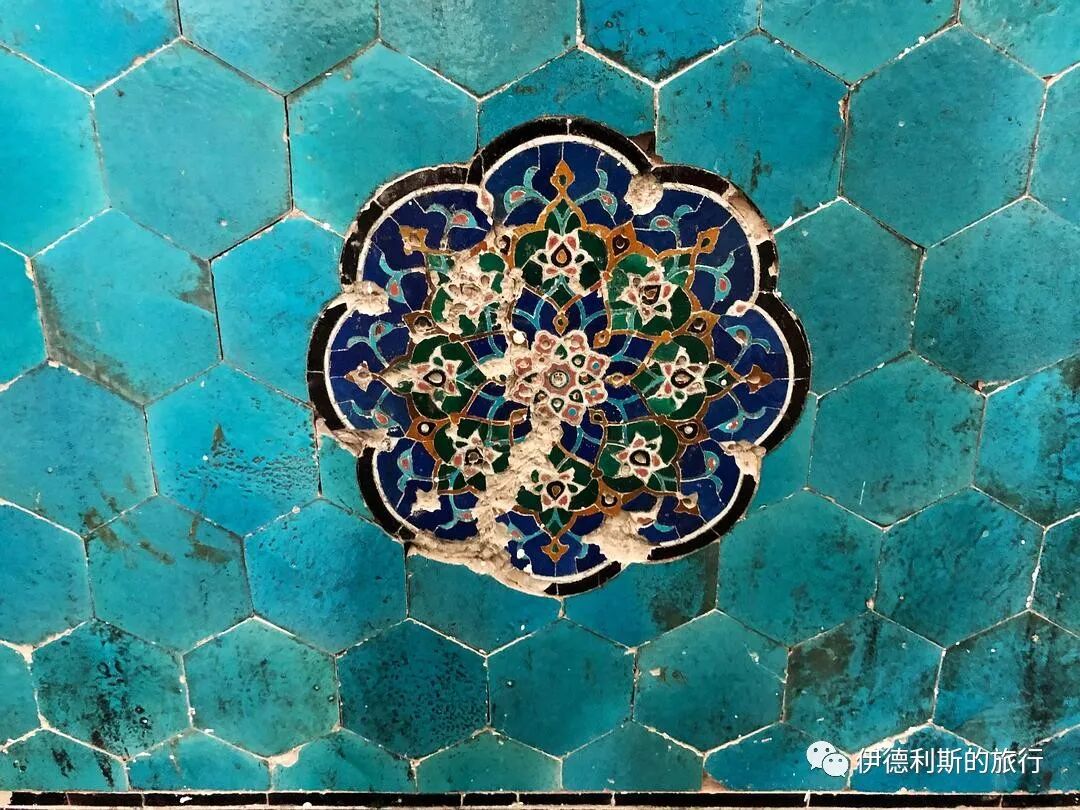
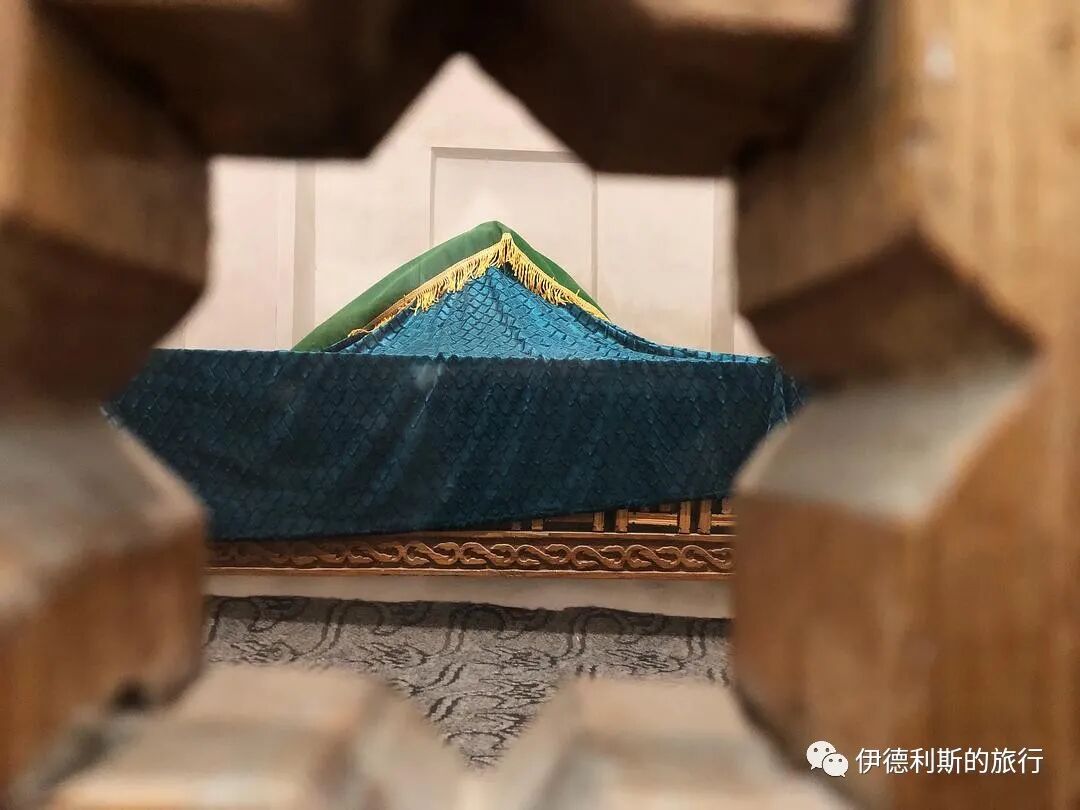
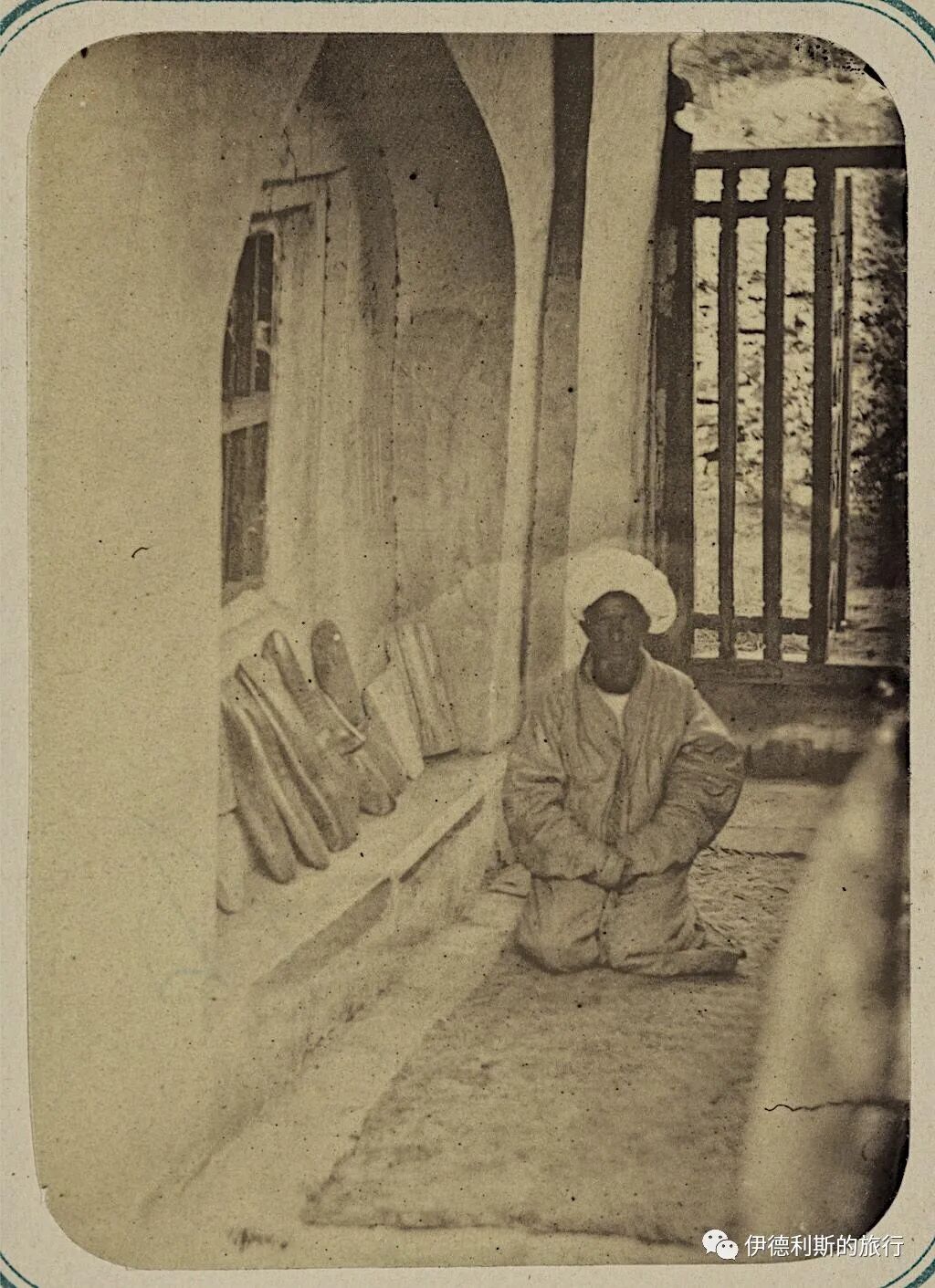
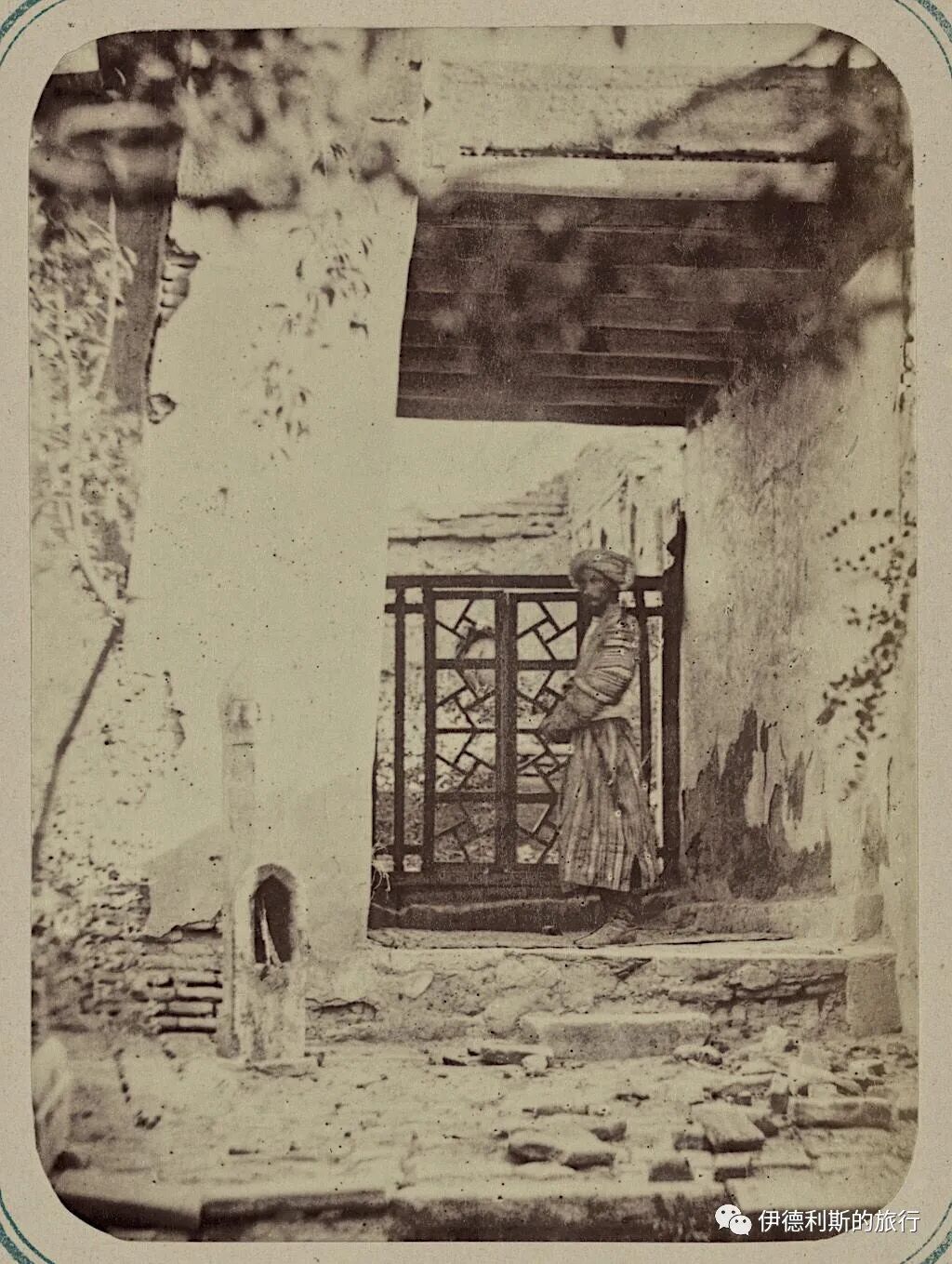
11. Mausoleum of Prophet Daniel: Rebuilt in the early 20th century
Daniel (Daniyar in Uzbek) is a prophet recorded in the Old Testament of the Bible, who lived between the 7th and 6th centuries BC and was buried in the ancient city of Susa in Persia after his death. Legend has it that when Timur passed through the city of Susa, he brought the right hand of the Prophet Daniel back to Samarkand and buried it next to a spring on the bank of the Siab River at the foot of Afrosiab Hill, which is the current Mausoleum of Khodja Daniyar.
The Mausoleum of the Prophet Daniel was originally just covered by stones by the river, with a sacred pillar inserted on top. Legend has it that the mausoleum kept growing, forcing people to continuously lengthen the marble sarcophagus. It was not until the early 20th century that people built the current mausoleum building, which contains an 18-meter-long sarcophagus.
In addition to Samarkand, there are mausoleums of the Prophet Daniel in Jerusalem, the ancient city of Susa, Istanbul, and the ancient city of Sumar in Iraq, but unfortunately, the prophet's mausoleum in the ancient city of Sumar was destroyed by ISIS not long ago.
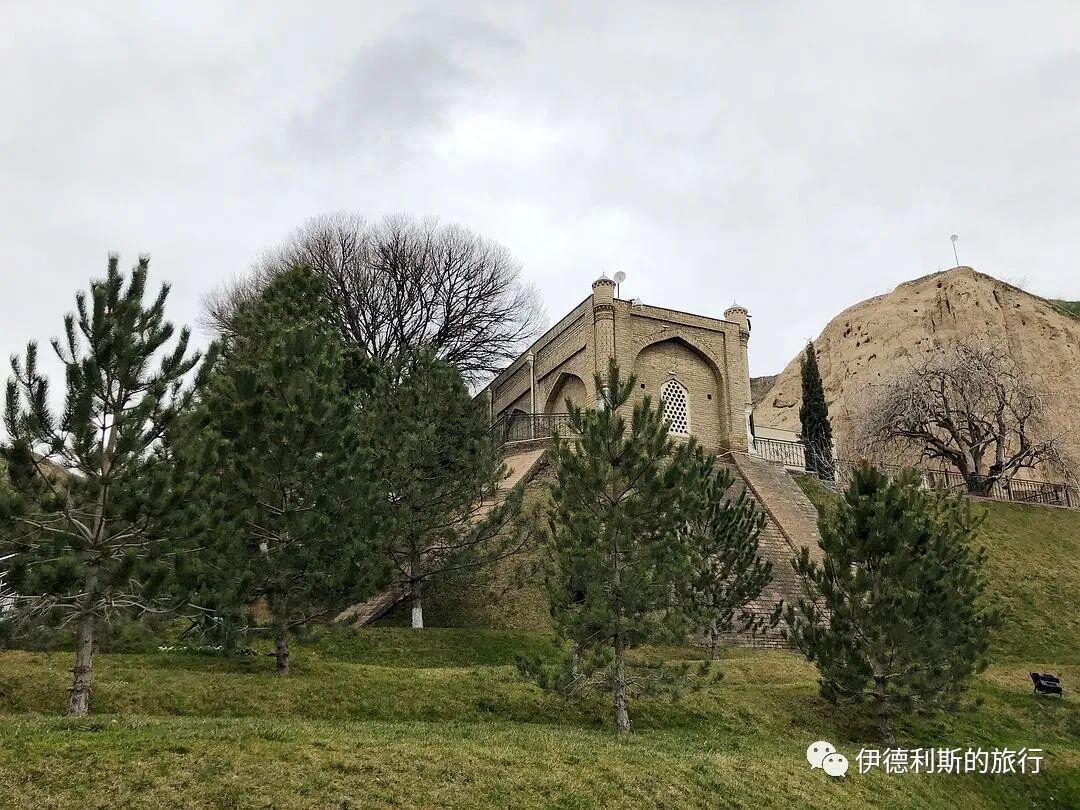
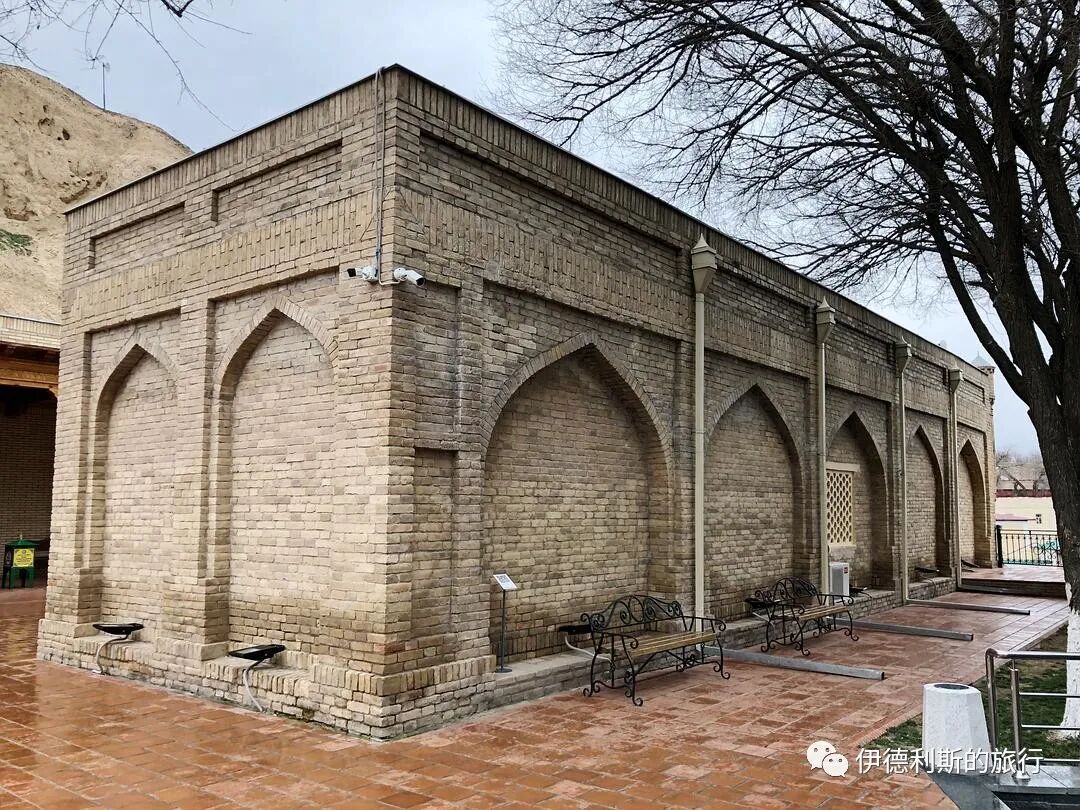
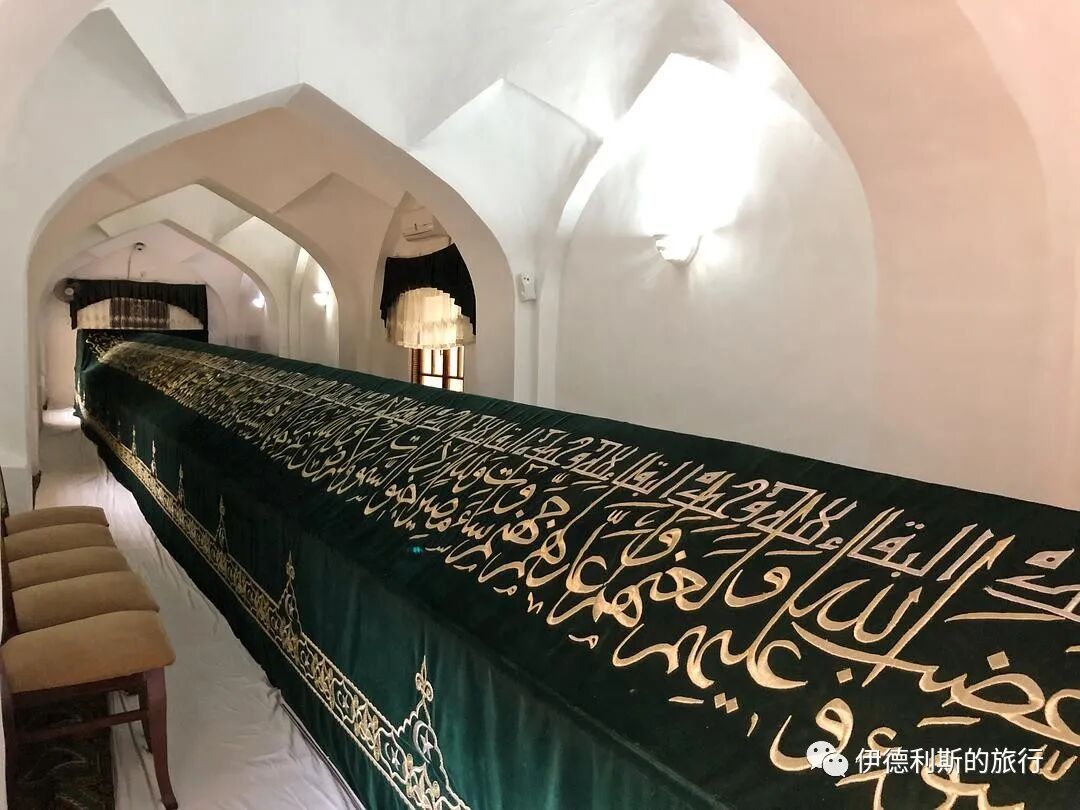
Furthermore, the spring next to the prophet's mausoleum is believed to have the power to heal the body and soul.
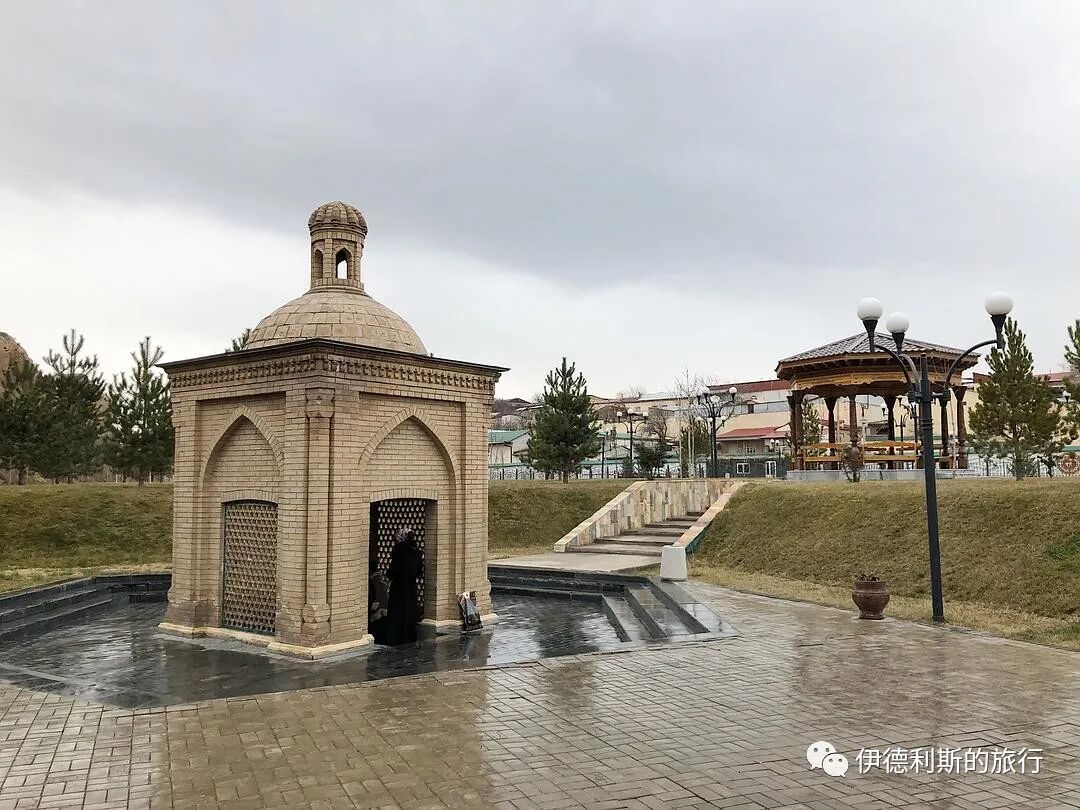
Timur's Hometown - Shahrisabz
Articles • ali2007fr posted the article • 0 comments • 201 views • 2026-05-16 23:50
Summary: This travel note introduces Timur's Hometown - Shahrisabz. Shahrisabz, formerly known as Kesh, is located south of Samarkand on the main route to Afghanistan. It is useful for readers interested in Uzbekistan Travel, Timurid History, Muslim Heritage.
Shahrisabz, formerly known as Kesh, is located south of Samarkand on the main route to Afghanistan. Kesh was originally a city founded by the Sogdians and was the capital of the state of Shi of the Nine Sogdian States. After the Mongol conquest of Central Asia in 1225, the Barlas tribe followed Genghis Khan's son Chagatai to establish the Chagatai Khanate and settled in the Kesh area.
In 1346, the last khan of Chagatai, Qazan Sultan, was killed, and the Chagatai Khanate fell into division, leading to wars of annexation among the tribes. In 1360, Tughlugh Timur, the founding great khan of the Eastern Chagatai Khanate, led his army on a western campaign. The original Barlas tribal leaders of Kesh fled upon hearing the news, while the collateral noble Amir Timur defected to the Eastern Chagatai Khanate and was granted Kesh. After 10 years of campaigning, Timur finally unified the entire Transoxiana region in 1370 and established the Timurid dynasty as the protector of the Chagatai khans.
After the establishment of the Timurid dynasty, Timur renamed his hometown Kesh to Shahrisabz, which means "green city" in Persian. Shahrisabz became an important city second only to Samarkand in status, with prosperous development in trade, handicrafts, arts, and sciences. Timur built a huge palace and family mausoleum here, many of which are preserved to this day. After Timur's death, his grandson Ulugh Beg continued to develop Shahrisabz, building a grand mosque and new mausoleums in the city.
Table of Contents
I. Crossing the Snow Mountains
II. North City Wall: 1378
III. Ak Saray - Timur's Summer Palace: 1380-1404
IV. Dorus Saodat Complex - Timurid Family Tombs: 1380-1404
1. Jahangir's Mausoleum
2. Timur's Mausoleum
V. Dorut Tilavat Complex - Timurid Family Religious Sanctuary: 14th-15th Centuries
1. Shams ud-Din Kulal's Mausoleum: 1374
2. Gumbazi Seidon: 1437
3. Kok Gumbaz Mosque: 1435
VI. Chubin Madrasah - Museum of Timurid History and Material Culture
VII. Later Buildings
1. Koba Madrasah - 16th Century
2. Domed Bazaar: Late 17th Century
3. Malik Ajdar Mosque: Late 19th Century
I. Crossing the Snow Mountains
The location for hiring a car from Samarkand to Shahrisabz is at the entrance of the Registon supermarket at the crossroads southeast of Registan. The round trip costs about 200 RMB, the one-way journey of 90 kilometers takes 1 hour, and it involves crossing a pass at an altitude of 1788 meters. This pass may be temporarily closed during winter snow.
There are stalls selling dried curd snacks at the pass. I tasted one, and it was super sour. Sour food lovers would like it!
II. North City Wall: 1378
After a 1-hour journey, the car stopped outside the north gate of Shahrisabz, and we began our tour of the city.
In 1378, Timur expanded the city walls of Shahrisabz. The newly built rammed earth city wall is 8 meters thick and 11 meters high, with a bastion every 50 meters. There was once a moat outside the wall. During the 18th and 19th centuries, this city wall withstood multiple sieges, as Shahrisabz waged several wars to resist the rule of the Emir of Bukhara.
The restored North City Wall
Unrestored rammed earth remains of the North City Wall
III. Ak Saray - Timur's Summer Palace: 1380-1404
Ak Saray (White Palace) is the ruins of Timur's summer palace, located inside the north gate of Shahrisabz. After Timur conquered Khwarazm in 1379, he brought many Khwarazmian craftsmen to Shahrisabz and officially began construction of his summer palace in the spring of 1380.
By 1396, the main structure of Ak Saray had been completed after 16 years of construction, while the exterior decoration was not finally finished until shortly before Timur's death in 1404. Based on the existing structure, the main gate of Ak Saray may have been as high as 50 meters, with minarets on both sides exceeding 65 meters (currently 38 meters remain), which is 1.5 times the height of the Kalyan Minaret in Bukhara. In addition to Khwarazmian craftsmen, many craftsmen from Transoxiana and Iran also participated in the construction. The name of Mohammed Jusufat Tebrizi, a craftsman from Tabriz, Iran, is repeated twice on the mosaic decoration of the main gate. In addition, the gate bears the inscription: "If you doubt our greatness, look at our buildings!" In addition, the gate bears the inscription:
In 1404, Clavijo, the ambassador of Castile, Spain, visited Ak Saray. According to his memoirs, behind the palace gate was a courtyard 300 paces wide, enclosed by two layers of residential areas. To the west of the courtyard was a mosque, to the south was the reception hall, and there was a mosaic-decorated pool in the middle of the courtyard. The reception hall was painted gold and blue, covered with tiles, the ceilings were gilded, and the main gate was inlaid with the coat of arms of a lion and a sun.
Legend has it that Ak Saray was ordered to be demolished by Abdullah Khan II, the last khan of the Shaybanid dynasty of the Khanate of Bukhara, at the end of the 16th century. However, it is more likely that the palace was gradually dismantled by local residents who took bricks to build their homes. It is said that bricks from the palace were used in half of the old city's houses.
Between 1973 and 1975, the Soviet Union conducted archaeological excavations of the palace ruins south of Ak Saray, unearthing a large number of architectural decorations, marble carvings, and mosaic tiles, as well as remains of richly decorated floors.
IV. Dorus Saodat Complex - Timurid Family Tombs: 1380-1404
Dorus Saodat is located south of Shahrisabz and is a mausoleum complex built by Timur for his family. Construction began in 1380, almost simultaneously with Timur's summer palace, Ak Saray.
After Dorus Saodat was completed, Jahangir Mirza, Timur's beloved son who died in 1376, was reburied here. In 1394, Timur's other son, Umar Shaikh Mirza I, was also buried here.
1. Jahangir's Mausoleum
Jahangir was Timur's most beloved son and heir. In 1368, Qamar ud-Din of the Dughlat tribe of the Chagatai Mongols launched a rebellion and ruled the Eastern Chagatai Khanate. After this, Timur launched multiple campaigns to conquer the Eastern Chagatai Khanate. In June 1375, Jahangir, as the vanguard, heavily defeated Qamar ud-Din's main forces and pursued them into the mountains near Kashgar, capturing Tuman Agha, Qamar ud-Din's wife, and Dilshad Agha, his daughter, achieving a great victory.
In 1376, Jahangir died of illness at the age of 19. Timur was heartbroken by the loss of his beloved son and even halted his military operations. Timur temporarily buried his beloved son in his hometown of Shahrisabz and later built a magnificent mausoleum for him.
Umar Shaikh Mirza I was another son of Timur. There is no clear evidence as to who was older between him and Jahangir. Umar Shaikh was an excellent military officer who followed his father on campaigns. In 1376, at the age of 20, he was appointed governor of Fergana.
In 1388, Tokhtamysh, the great khan of the Golden Horde, and Qamar ud-Din, the ruler of the Eastern Chagatai Khanate, attacked the Timurid dynasty from both sides, from Bukhara and Fergana respectively. Umar Shaikh was ordered to block the Eastern Chagatai army in Fergana and quickly defeated his opponents. That winter, Umar Shaikh again defeated the Golden Horde army led by Great Khan Tokhtamysh.
In 1391, Timur and Tokhtamysh clashed in the famous Battle of the Kondurcha River near the Volga River. Umar Shaikh was in command of Timur's left flank. During the battle, Umar Shaikh was almost defeated due to initial hesitation, but ultimately Timur himself, leading the army from the rear, defeated Tokhtamysh, and a large number of the Golden Horde army was routed and killed. The death toll in this battle is estimated to have reached 100,000.
In 1393, Timur destroyed the Muzaffarid dynasty in Persia and subsequently appointed Umar Shaikh as the governor of the Fars region of Persia. A year later, in 1394, Timur ordered Umar Shaikh to return to his side. While passing a castle near Baghdad, Umar Shaikh was killed by an arrow. It is said that Timur showed no emotion upon hearing of his son's death.
After Umar Shaikh's death, his body was transported back to his hometown of Shahrisabz and buried alongside his brother Jahangir.
Timur and Tokhtamysh in the decisive battle, painted by Pir 'Ali al-Jami of the Safavid dynasty of Persia in the 16th century
Next to the tomb is a mosque built in the late 19th and early 20th centuries.
2. Timur's Mausoleum
In 1943, Soviet archaeologists discovered another underground mausoleum next to the tomb of Jahangir, Timur's son. The sarcophagus in the tomb chamber bore Timur's name, suggesting this might be the mausoleum Timur had built for himself in his hometown during his lifetime. However, Timur was actually buried in Samarkand. Archaeologists found two bodies in the tomb whose identities remain unknown to this day.
V. Dorut Tilavat Complex - Timurid Family Religious Sanctuary: 14th-15th Centuries
The Dorut Tilavat complex is located south of Shahrisabz. It was originally a madrasah for the Sufi scholar Shams ud-Din Kulal and later became the religious center of Shahrisabz. It contains a mausoleum built by Timur in 1374 for his spiritual mentor, and it is said that Timur also buried his father there. In 1437, Timur's grandson Ulugh Beg, aiming to develop this place into a religious center, built new family mausoleums and a grand mosque.
1. Shams ud-Din Kulal's Mausoleum: 1374
Shams ud-Din Kulal, known as Sheikh Kulal, was a Sufi scholar from Bukhara. He preached in Shahrisabz for a long time and established the Dorut Tilavat madrasah south of the city. Due to Sheikh Kulal's profound knowledge, he gradually became the spiritual mentor of Timur's Barlas tribe and was highly respected by Timur's father, Turghai. Later, his grandson Amir Kulal also became Timur's spiritual mentor.
After Sheikh Kulal's death, he was buried within the Dorut Tilavat madrasah. In 1360, after Timur's father passed away, Timur requested Amir Kulal, Sheikh Kulal's grandson, to bury his father Turghai next to Sheikh Kulal. However, Amir Kulal refused this request. In 1370, Amir Kulal died, and in the same year, Timur established the Timurid dynasty. In the first year of Timur's reign, he began expanding Sheikh Kulal's mausoleum and also moved his father's remains to be buried next to Sheikh Kulal. The main structure was officially completed in 1374.
In fact, it was not until the latter half of the 20th century that this was identified as Sheikh Kulal's mausoleum, and there is no direct evidence. In the 20th century, only the walls, several marble tombstones, and a wooden door were original, and they bore no information about the tomb's occupant. In 1950, a flat ceiling was added to the mausoleum, and in 1996, the ceiling was restored, along with the damaged dome and tombstone.
2. Gumbazi Seidon: 1437
After Timur's death in 1405, his son Shah Rukh inherited the eastern part of the empire. Shah Rukh moved the capital of the Timurid Empire from Samarkand to Herat, Afghanistan, while allowing his son Ulugh Beg to rule the Transoxiana region.
As the "holy city" of the Timurid Empire, Ulugh Beg frequently visited Shahrisabz and wished to build a religious center in the city. In 1437, Ulugh Beg built a new mausoleum adjacent to Sheikh Kulal's tomb. Subsequently, respected Sufi masters were buried there. The most important of these Sufi masters was called Termez seyids, hence this mausoleum is also known as "Gumbazi Seidon" (Dome of the Seyids).
After the 17th century, a Khanaka (Sufi lodge) was built next to the mausoleum, and the passage to the mausoleum was sealed. This lodge was demolished in the mid-20th century. In 1973, the damaged dome of the mausoleum was restored, and in 1996, the interior murals were restored and preserved.
On the left is Shams ud-Din Kulal's Mausoleum, and on the right is Gumbazi Seidon.
3. Kok Gumbaz Mosque: 1435
In addition to the mausoleums, Ulugh Beg also built the main Friday mosque of Shahrisabz, Kok Gumbaz (Blue Dome), next to Kulal's tomb. This mosque is said to have been built on the foundation of an ancient Karakhanid mosque. To increase the prayer space, 40-domed corridors were built on both sides of the main hall of the mosque.
In the 19th century, a small minaret was added to the courtyard, but by then, the domes of both the mosque and the mausoleum had collapsed. In 1976, the facade of the mosque was restored, and between 1994 and 1996, the interior murals were restored and preserved.
VI. Chubin Madrasah - Museum of Timurid History and Material Culture
In 1996, marking the 660th anniversary of Timur's birth, the former site of the Chubin Madrasah in Shahrisabz was converted into the Museum of Timurid History and Material Culture, exhibiting many artifacts from the Timurid era unearthed during archaeological excavations in the ancient city.
VII. Later Buildings
1. Koba Madrasah - 16th Century
The Koba madrasah was built in the 16th century and has now been converted into a restaurant for tourists.
2. Domed Bazaar: Late 17th Century
At the intersection of the two main roads in Shahrisabz is the Chorsu (Domed Bazaar), rebuilt on the site of an original market in the late 17th century, in a typical Khanate of Bukhara style. Until a few years ago, this was a bustling market bazaar, but due to the government's efforts to turn the ancient city into a tourist attraction, all residential buildings were demolished to create a plaza, and the bazaar disappeared. Currently, the domed bazaar has become a souvenir shop. It was not open when I visited because it was the off-season.
3. Malik Ajdar Mosque: Late 19th Century
The Malik Ajdar Mosque is a typical 19th-century mosque in the area. The main hall is used for winter prayers and is heated by stoves. The adjacent shaded area is used for summer prayers.
After the tour, we took a tourist vehicle back to the north gate. view all
Summary: This travel note introduces Timur's Hometown - Shahrisabz. Shahrisabz, formerly known as Kesh, is located south of Samarkand on the main route to Afghanistan. It is useful for readers interested in Uzbekistan Travel, Timurid History, Muslim Heritage.
Shahrisabz, formerly known as Kesh, is located south of Samarkand on the main route to Afghanistan. Kesh was originally a city founded by the Sogdians and was the capital of the state of Shi of the Nine Sogdian States. After the Mongol conquest of Central Asia in 1225, the Barlas tribe followed Genghis Khan's son Chagatai to establish the Chagatai Khanate and settled in the Kesh area.
In 1346, the last khan of Chagatai, Qazan Sultan, was killed, and the Chagatai Khanate fell into division, leading to wars of annexation among the tribes. In 1360, Tughlugh Timur, the founding great khan of the Eastern Chagatai Khanate, led his army on a western campaign. The original Barlas tribal leaders of Kesh fled upon hearing the news, while the collateral noble Amir Timur defected to the Eastern Chagatai Khanate and was granted Kesh. After 10 years of campaigning, Timur finally unified the entire Transoxiana region in 1370 and established the Timurid dynasty as the protector of the Chagatai khans.
After the establishment of the Timurid dynasty, Timur renamed his hometown Kesh to Shahrisabz, which means "green city" in Persian. Shahrisabz became an important city second only to Samarkand in status, with prosperous development in trade, handicrafts, arts, and sciences. Timur built a huge palace and family mausoleum here, many of which are preserved to this day. After Timur's death, his grandson Ulugh Beg continued to develop Shahrisabz, building a grand mosque and new mausoleums in the city.
Table of Contents
I. Crossing the Snow Mountains
II. North City Wall: 1378
III. Ak Saray - Timur's Summer Palace: 1380-1404
IV. Dorus Saodat Complex - Timurid Family Tombs: 1380-1404
1. Jahangir's Mausoleum
2. Timur's Mausoleum
V. Dorut Tilavat Complex - Timurid Family Religious Sanctuary: 14th-15th Centuries
1. Shams ud-Din Kulal's Mausoleum: 1374
2. Gumbazi Seidon: 1437
3. Kok Gumbaz Mosque: 1435
VI. Chubin Madrasah - Museum of Timurid History and Material Culture
VII. Later Buildings
1. Koba Madrasah - 16th Century
2. Domed Bazaar: Late 17th Century
3. Malik Ajdar Mosque: Late 19th Century
I. Crossing the Snow Mountains
The location for hiring a car from Samarkand to Shahrisabz is at the entrance of the Registon supermarket at the crossroads southeast of Registan. The round trip costs about 200 RMB, the one-way journey of 90 kilometers takes 1 hour, and it involves crossing a pass at an altitude of 1788 meters. This pass may be temporarily closed during winter snow.
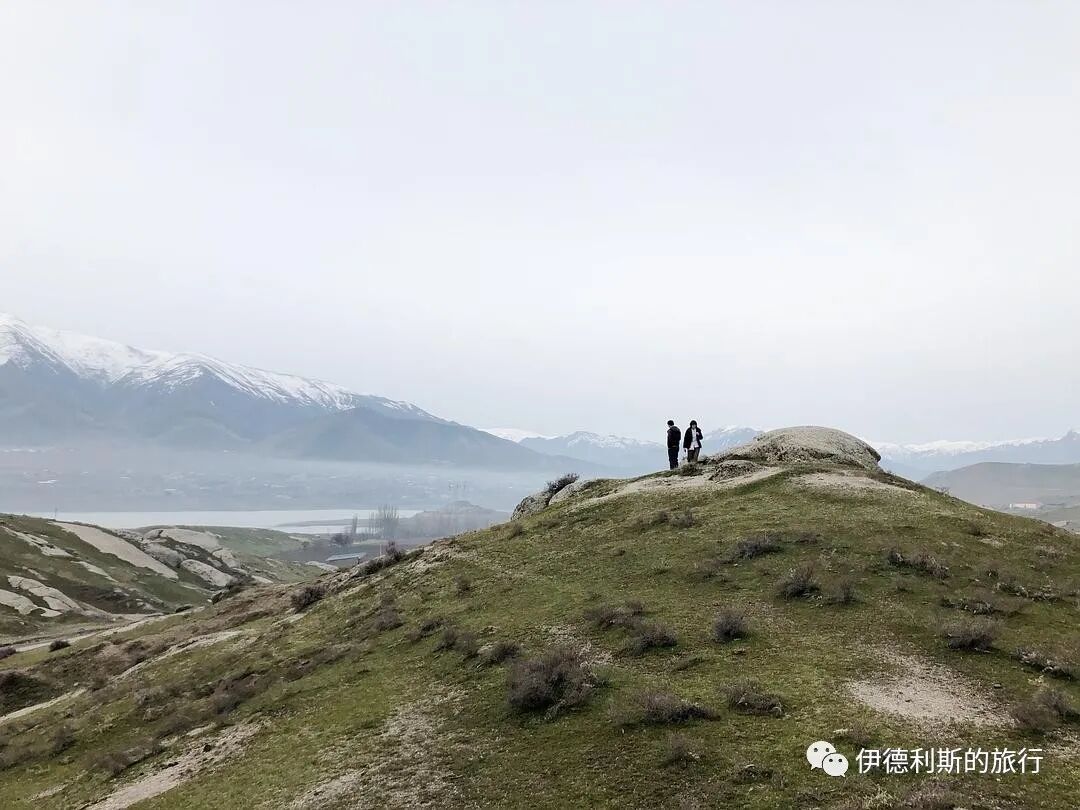
There are stalls selling dried curd snacks at the pass. I tasted one, and it was super sour. Sour food lovers would like it!
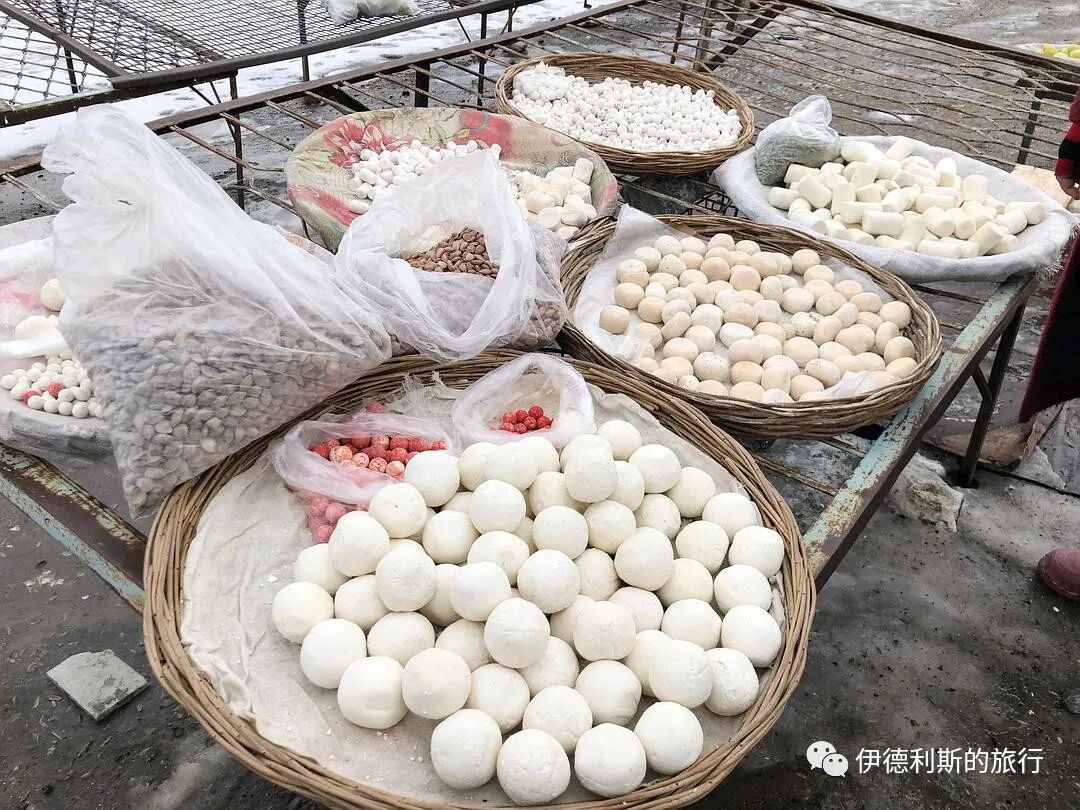
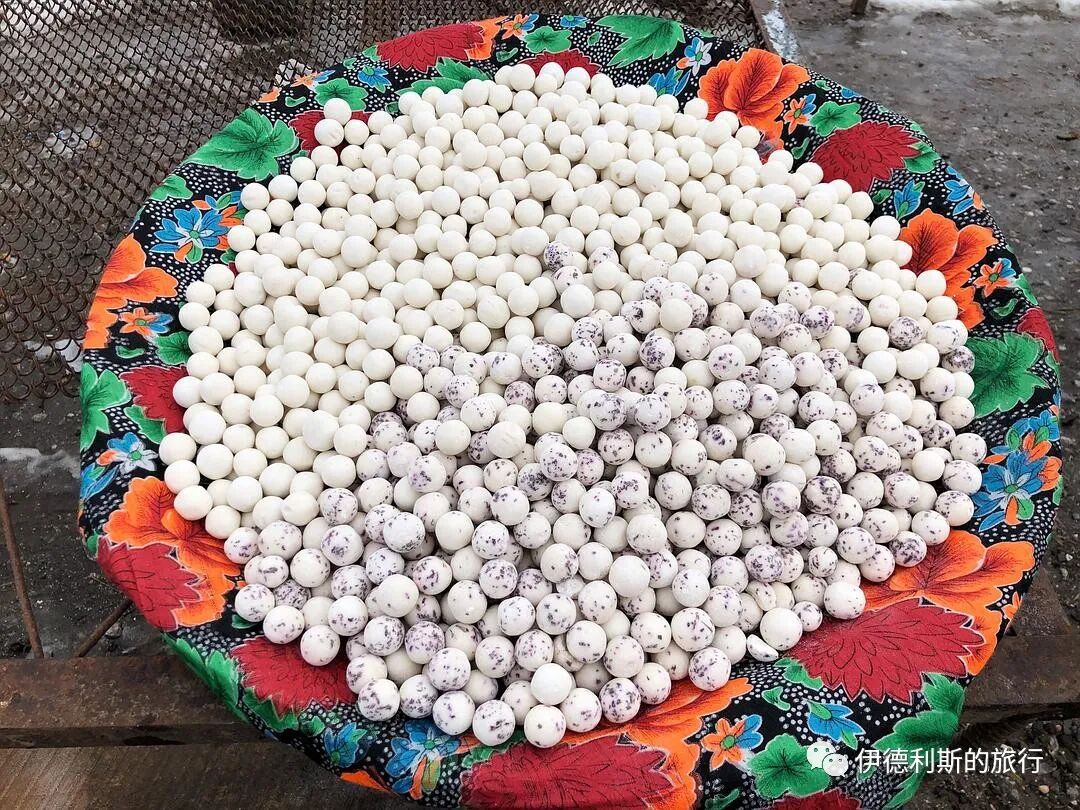
II. North City Wall: 1378
After a 1-hour journey, the car stopped outside the north gate of Shahrisabz, and we began our tour of the city.
In 1378, Timur expanded the city walls of Shahrisabz. The newly built rammed earth city wall is 8 meters thick and 11 meters high, with a bastion every 50 meters. There was once a moat outside the wall. During the 18th and 19th centuries, this city wall withstood multiple sieges, as Shahrisabz waged several wars to resist the rule of the Emir of Bukhara.
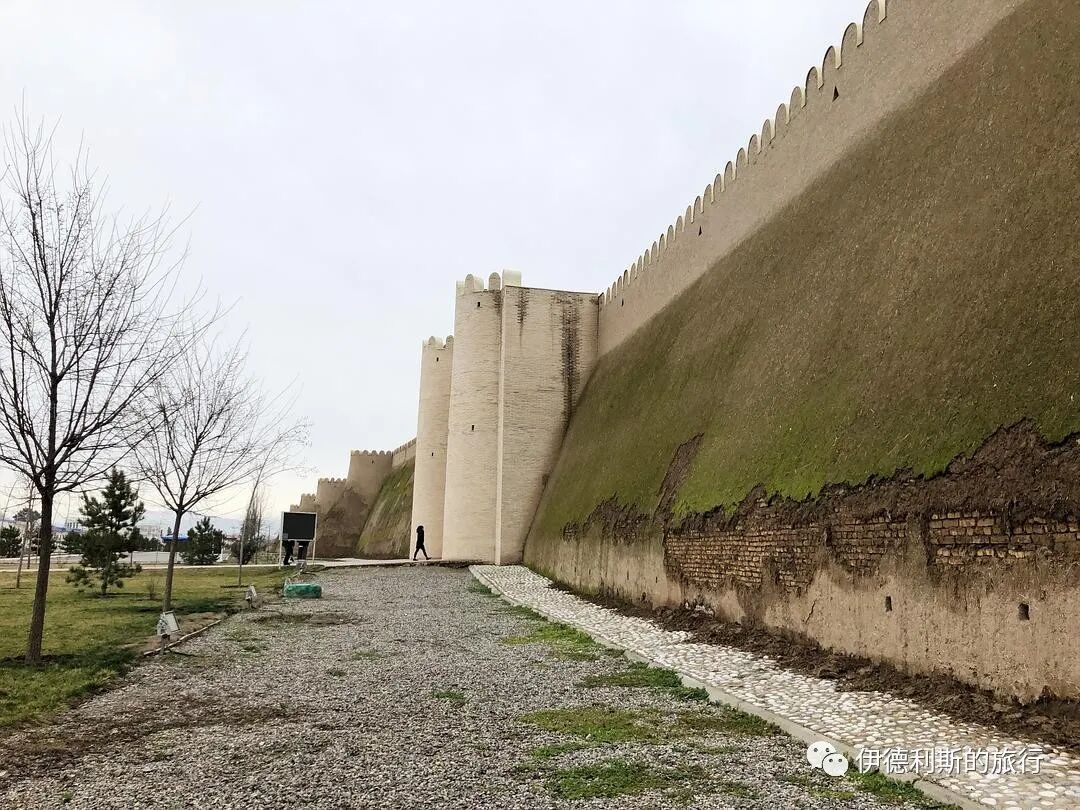
The restored North City Wall
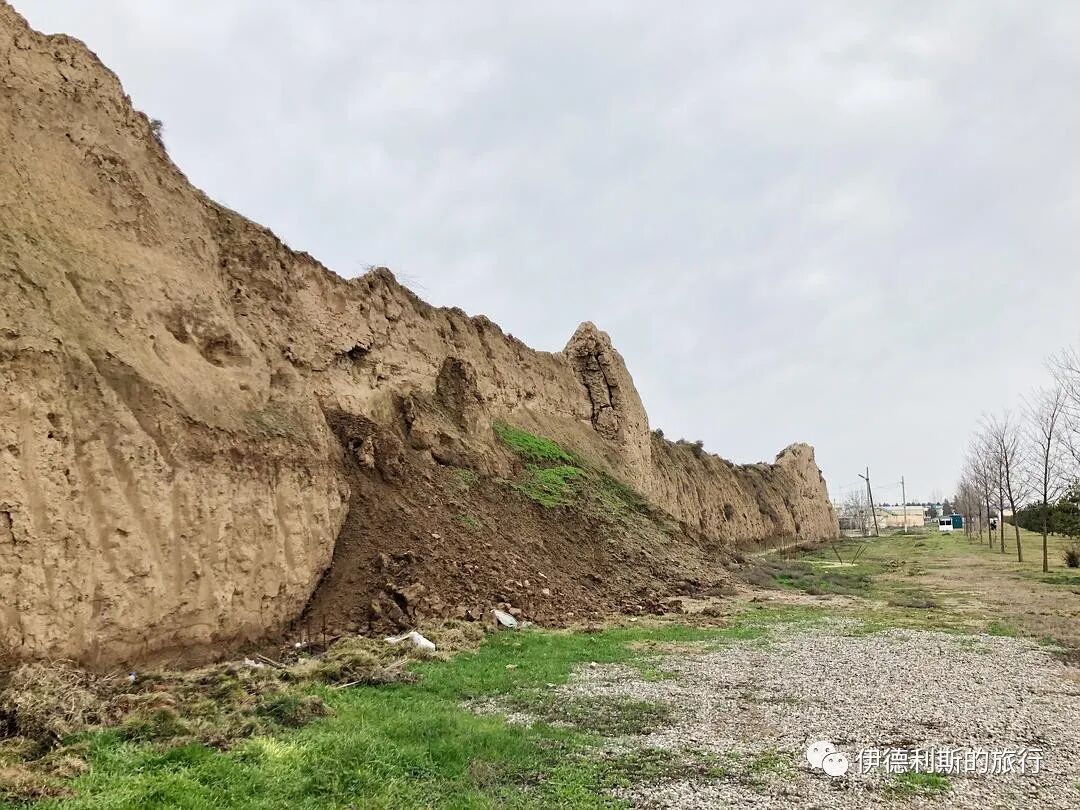
Unrestored rammed earth remains of the North City Wall
III. Ak Saray - Timur's Summer Palace: 1380-1404
Ak Saray (White Palace) is the ruins of Timur's summer palace, located inside the north gate of Shahrisabz. After Timur conquered Khwarazm in 1379, he brought many Khwarazmian craftsmen to Shahrisabz and officially began construction of his summer palace in the spring of 1380.
By 1396, the main structure of Ak Saray had been completed after 16 years of construction, while the exterior decoration was not finally finished until shortly before Timur's death in 1404. Based on the existing structure, the main gate of Ak Saray may have been as high as 50 meters, with minarets on both sides exceeding 65 meters (currently 38 meters remain), which is 1.5 times the height of the Kalyan Minaret in Bukhara. In addition to Khwarazmian craftsmen, many craftsmen from Transoxiana and Iran also participated in the construction. The name of Mohammed Jusufat Tebrizi, a craftsman from Tabriz, Iran, is repeated twice on the mosaic decoration of the main gate. In addition, the gate bears the inscription: "If you doubt our greatness, look at our buildings!" In addition, the gate bears the inscription:
In 1404, Clavijo, the ambassador of Castile, Spain, visited Ak Saray. According to his memoirs, behind the palace gate was a courtyard 300 paces wide, enclosed by two layers of residential areas. To the west of the courtyard was a mosque, to the south was the reception hall, and there was a mosaic-decorated pool in the middle of the courtyard. The reception hall was painted gold and blue, covered with tiles, the ceilings were gilded, and the main gate was inlaid with the coat of arms of a lion and a sun.
Legend has it that Ak Saray was ordered to be demolished by Abdullah Khan II, the last khan of the Shaybanid dynasty of the Khanate of Bukhara, at the end of the 16th century. However, it is more likely that the palace was gradually dismantled by local residents who took bricks to build their homes. It is said that bricks from the palace were used in half of the old city's houses.
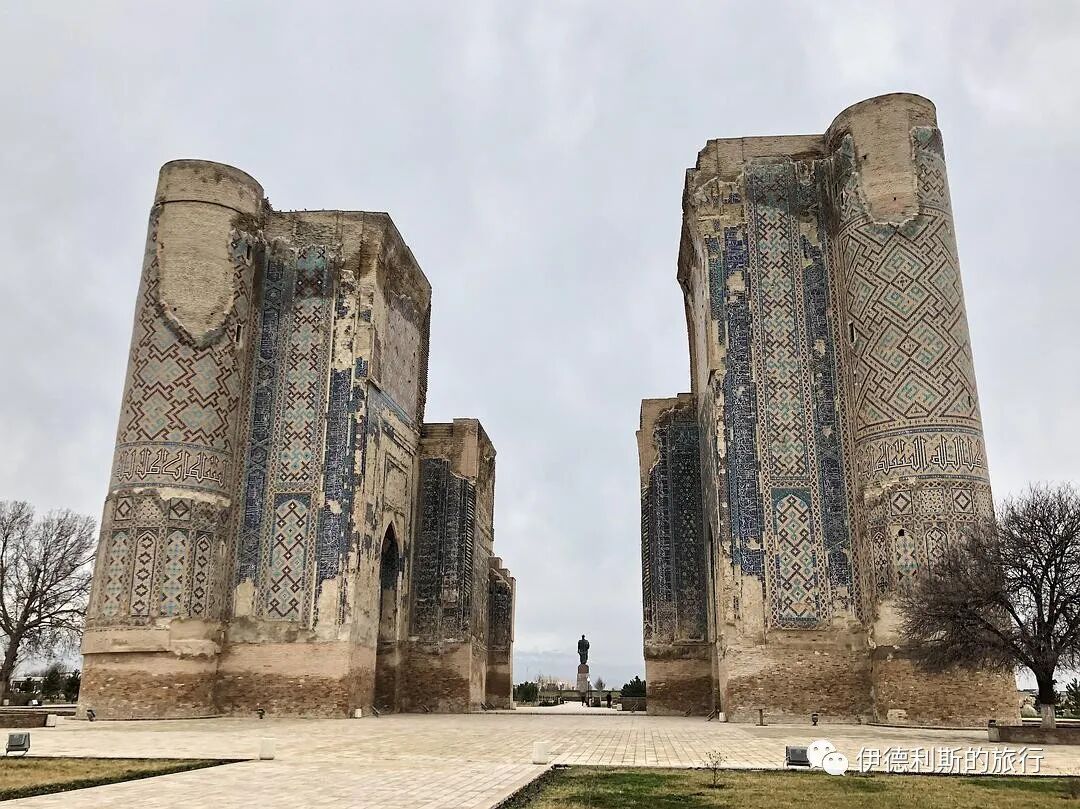
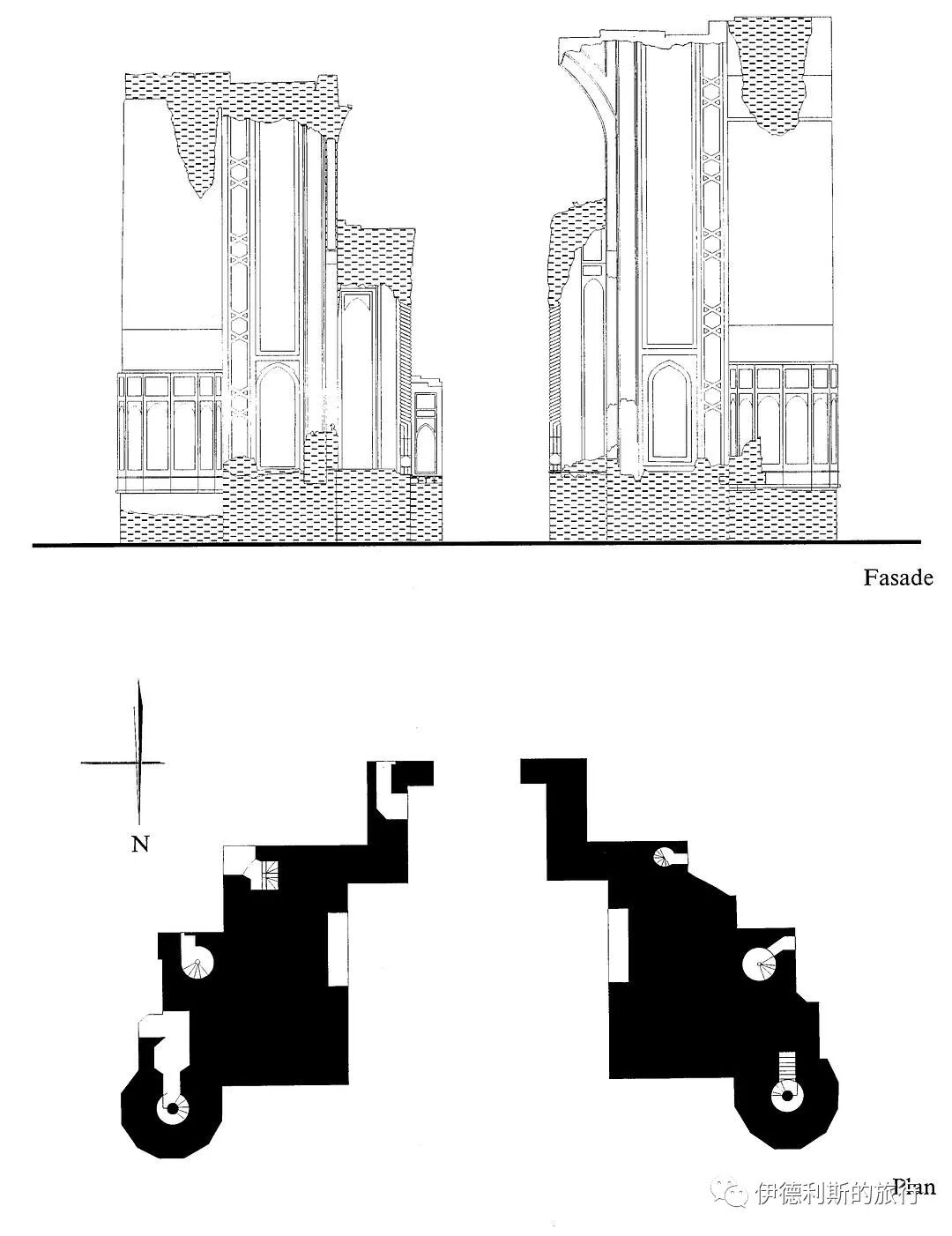
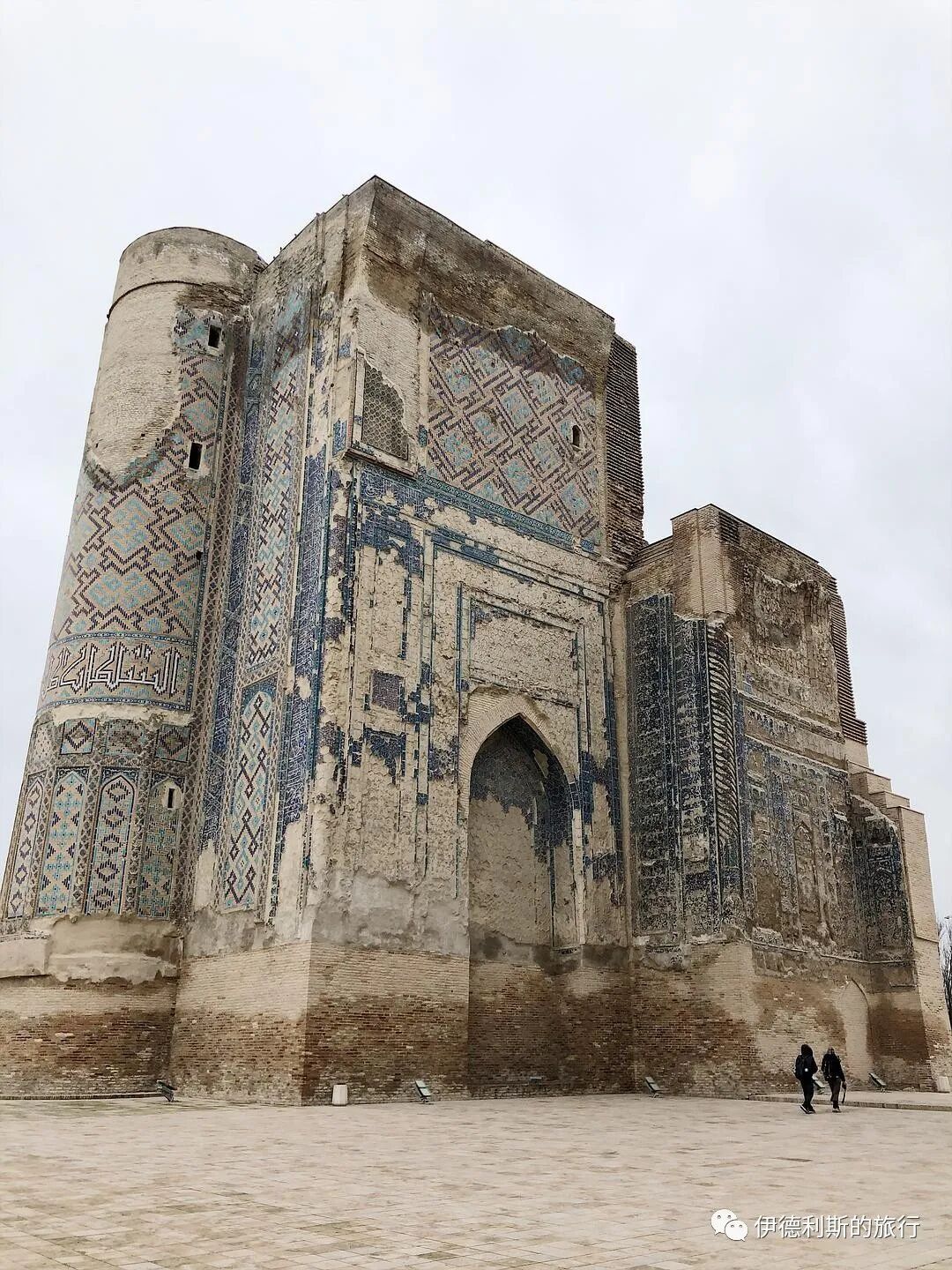
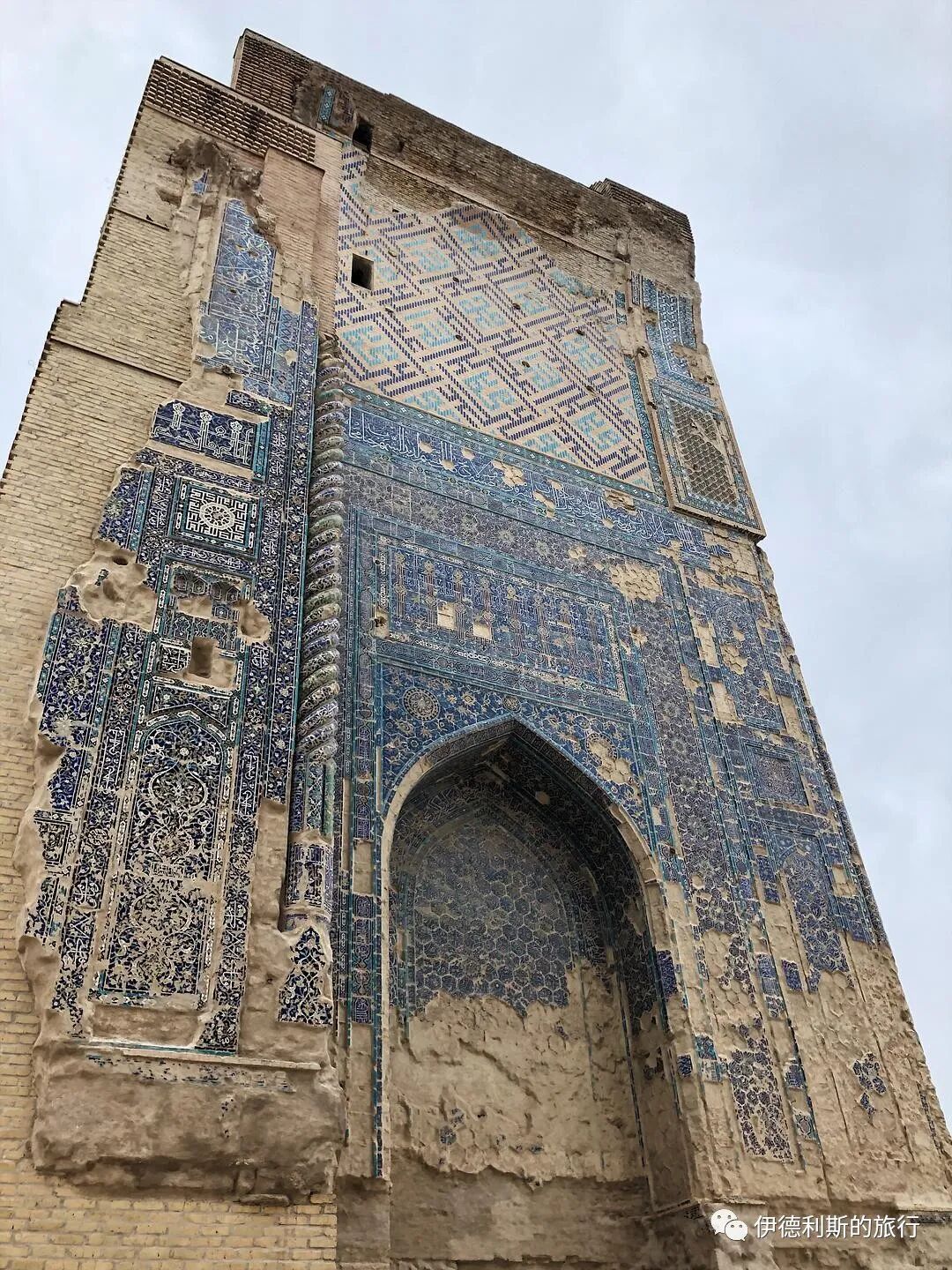
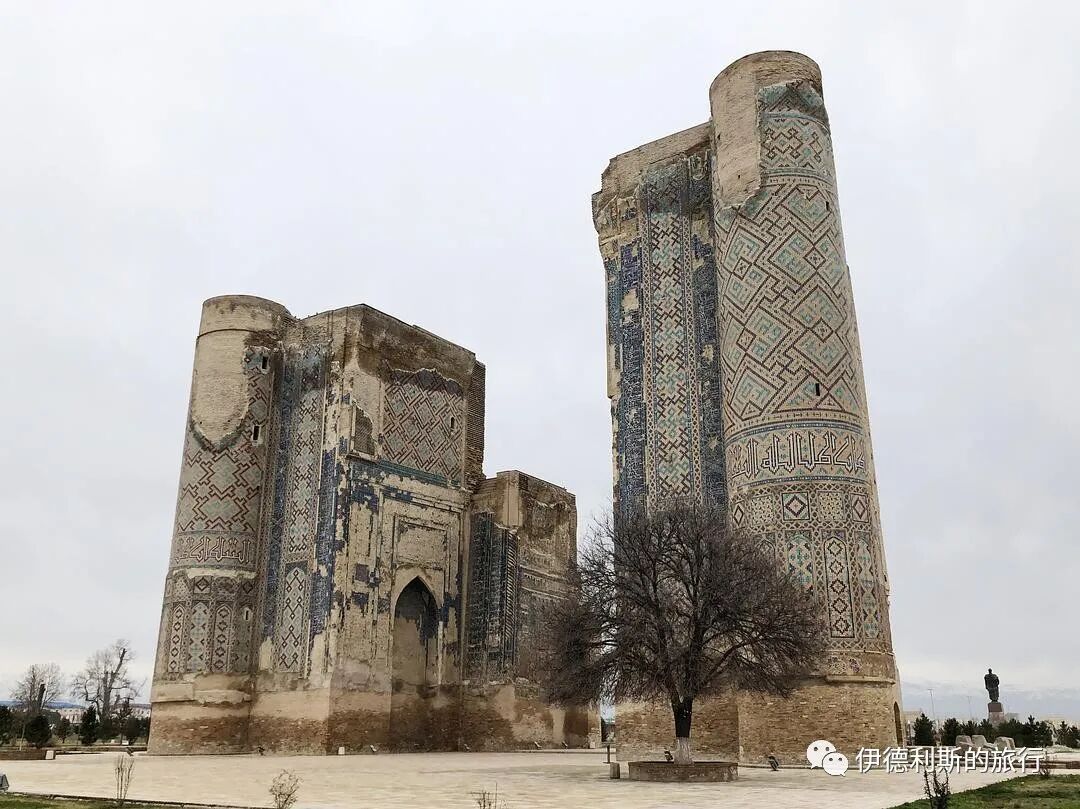
Between 1973 and 1975, the Soviet Union conducted archaeological excavations of the palace ruins south of Ak Saray, unearthing a large number of architectural decorations, marble carvings, and mosaic tiles, as well as remains of richly decorated floors.
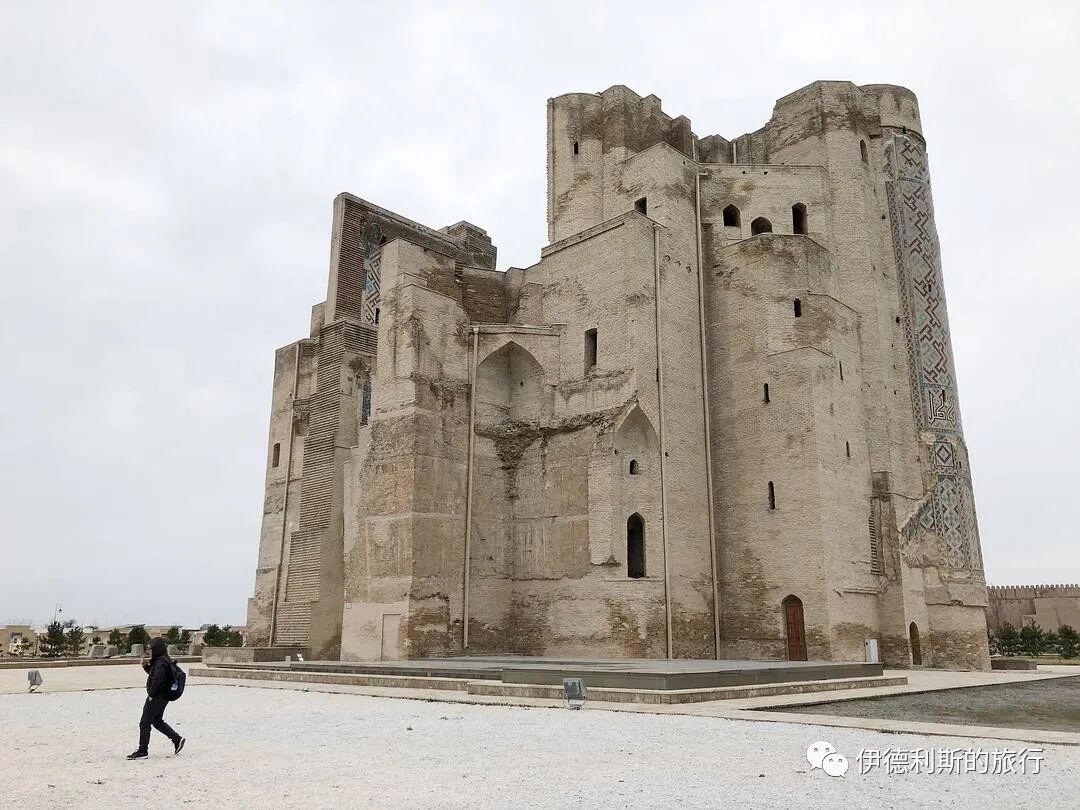
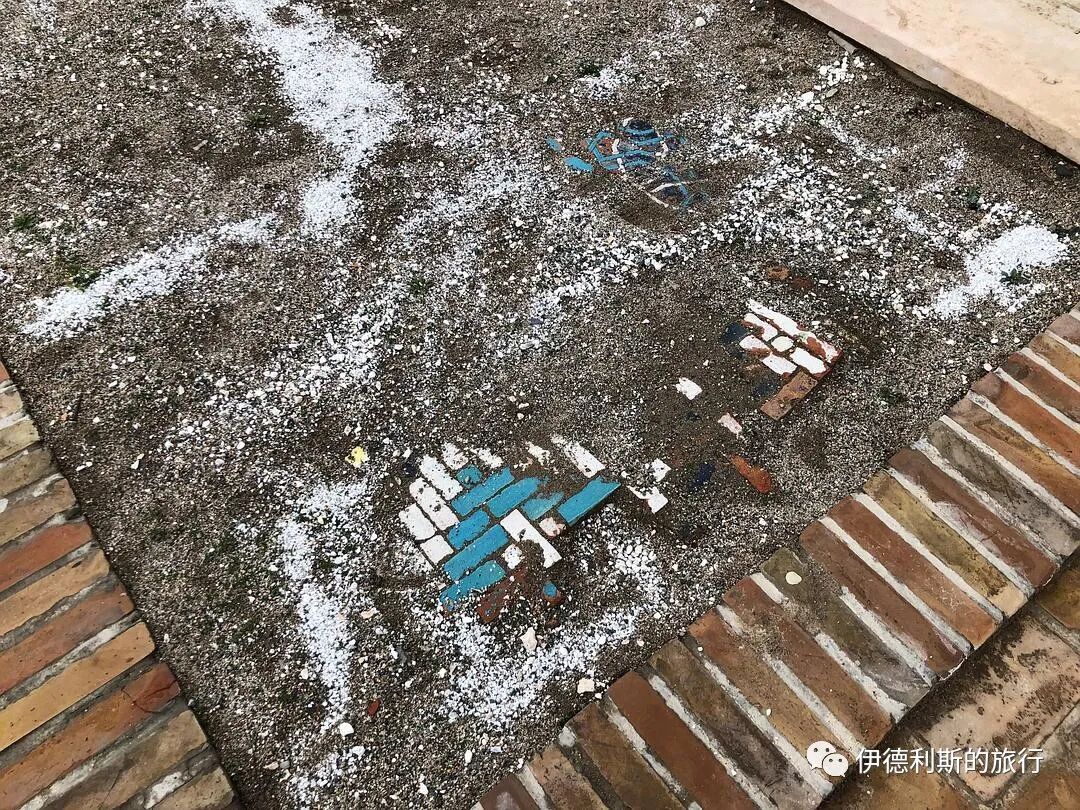
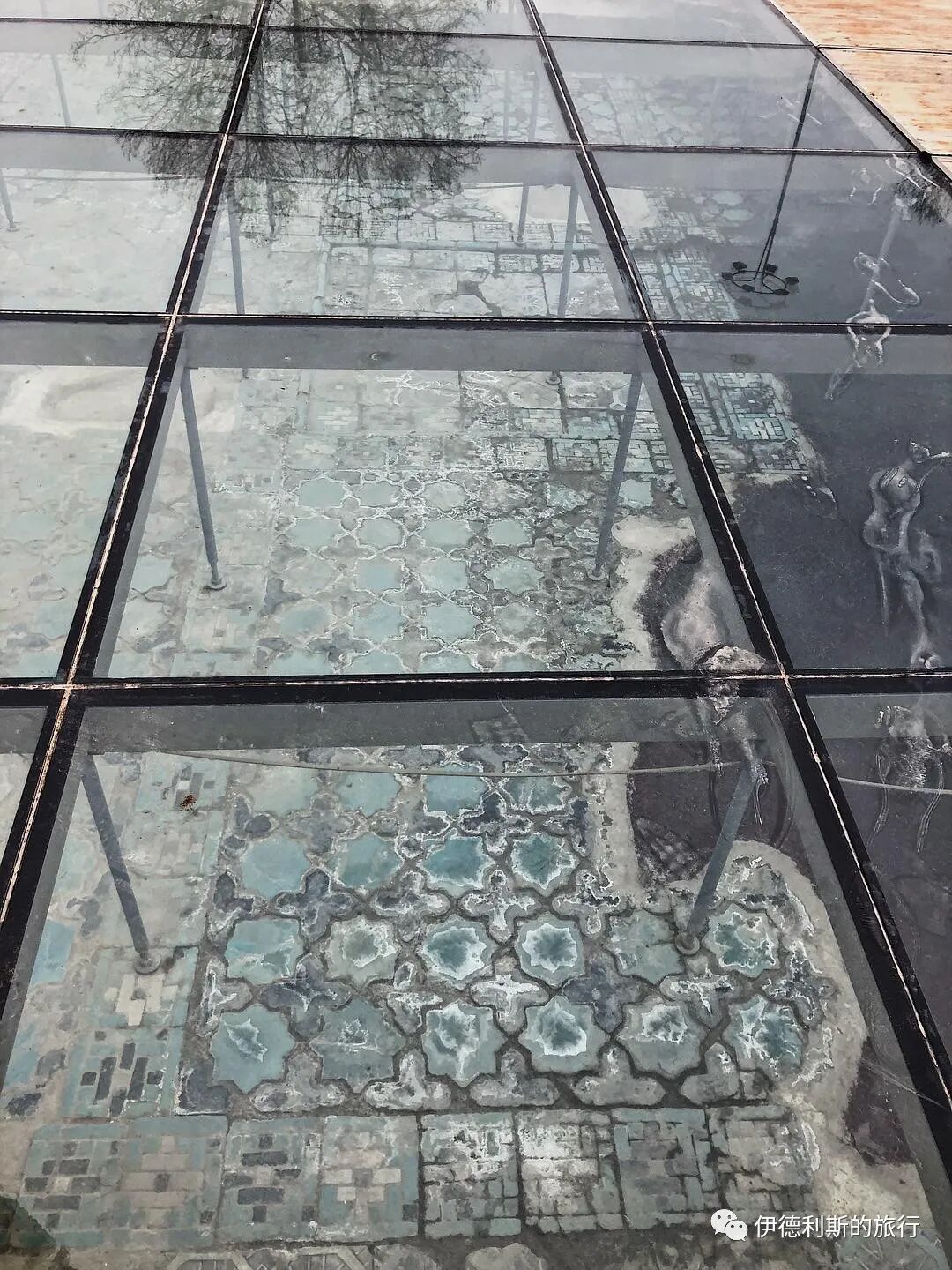
IV. Dorus Saodat Complex - Timurid Family Tombs: 1380-1404
Dorus Saodat is located south of Shahrisabz and is a mausoleum complex built by Timur for his family. Construction began in 1380, almost simultaneously with Timur's summer palace, Ak Saray.
After Dorus Saodat was completed, Jahangir Mirza, Timur's beloved son who died in 1376, was reburied here. In 1394, Timur's other son, Umar Shaikh Mirza I, was also buried here.
1. Jahangir's Mausoleum
Jahangir was Timur's most beloved son and heir. In 1368, Qamar ud-Din of the Dughlat tribe of the Chagatai Mongols launched a rebellion and ruled the Eastern Chagatai Khanate. After this, Timur launched multiple campaigns to conquer the Eastern Chagatai Khanate. In June 1375, Jahangir, as the vanguard, heavily defeated Qamar ud-Din's main forces and pursued them into the mountains near Kashgar, capturing Tuman Agha, Qamar ud-Din's wife, and Dilshad Agha, his daughter, achieving a great victory.
In 1376, Jahangir died of illness at the age of 19. Timur was heartbroken by the loss of his beloved son and even halted his military operations. Timur temporarily buried his beloved son in his hometown of Shahrisabz and later built a magnificent mausoleum for him.
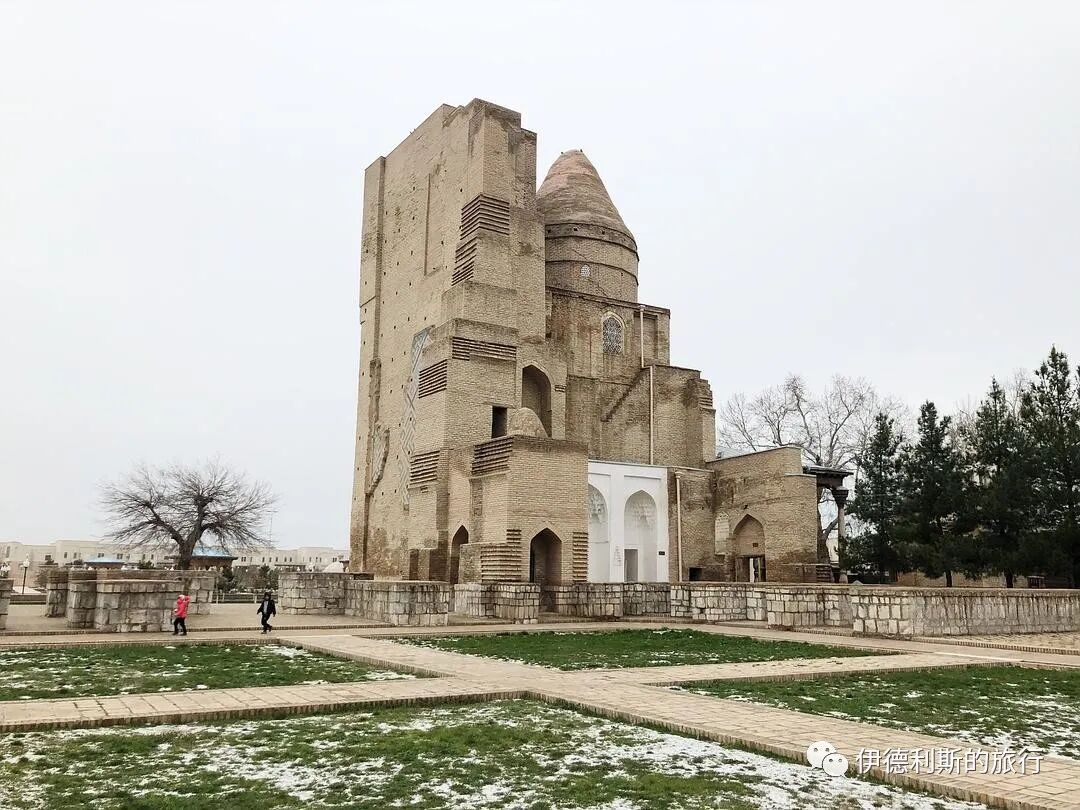
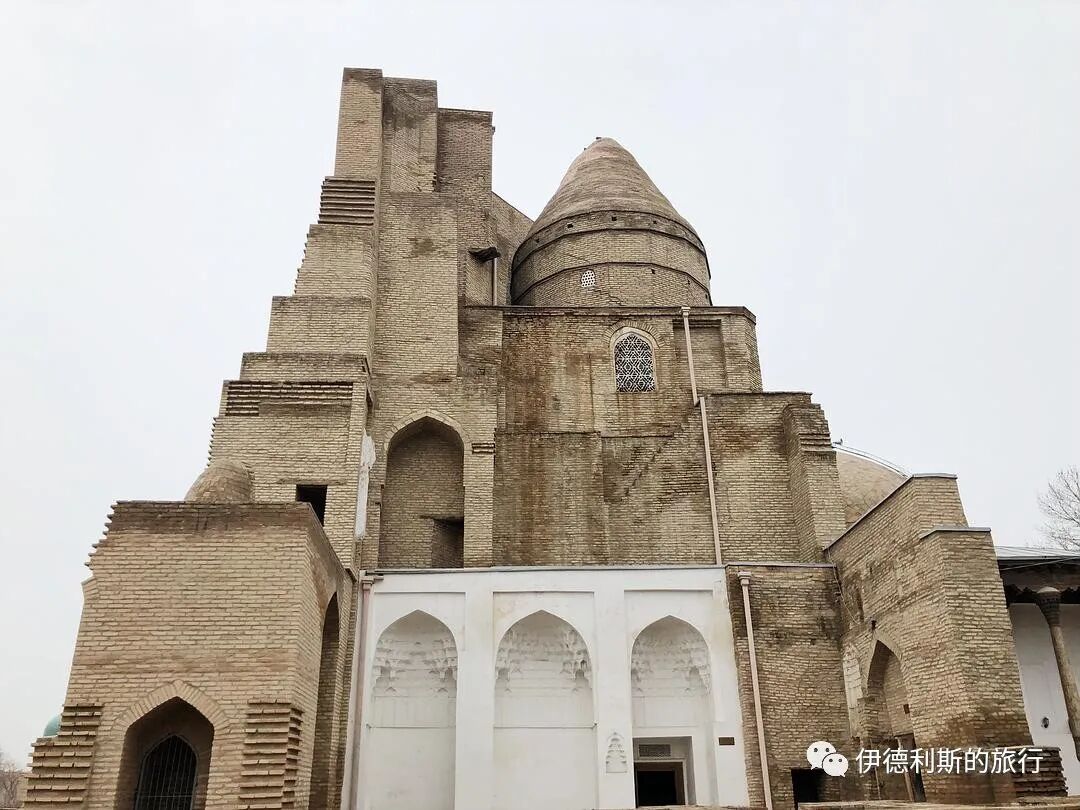
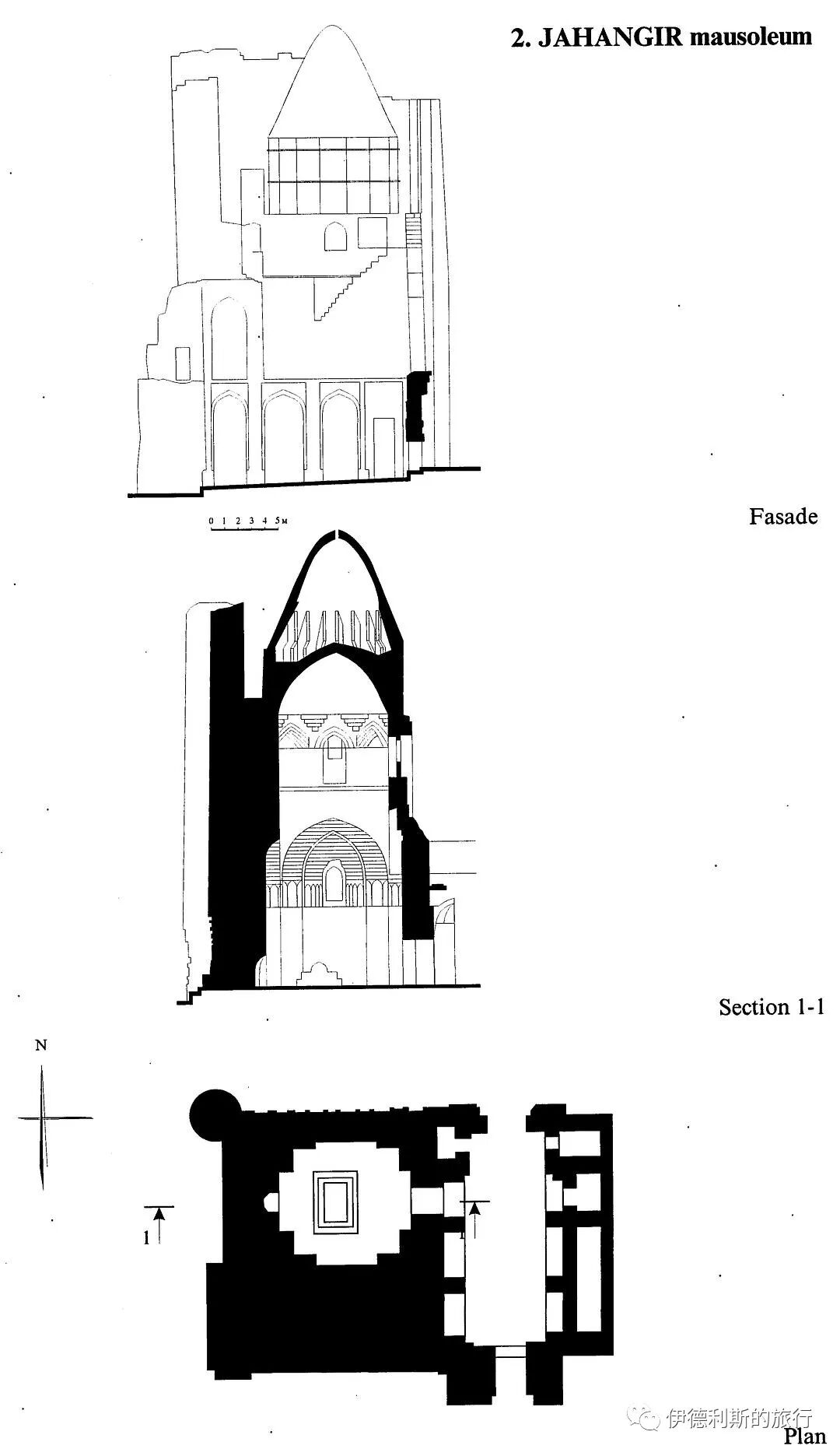
Umar Shaikh Mirza I was another son of Timur. There is no clear evidence as to who was older between him and Jahangir. Umar Shaikh was an excellent military officer who followed his father on campaigns. In 1376, at the age of 20, he was appointed governor of Fergana.
In 1388, Tokhtamysh, the great khan of the Golden Horde, and Qamar ud-Din, the ruler of the Eastern Chagatai Khanate, attacked the Timurid dynasty from both sides, from Bukhara and Fergana respectively. Umar Shaikh was ordered to block the Eastern Chagatai army in Fergana and quickly defeated his opponents. That winter, Umar Shaikh again defeated the Golden Horde army led by Great Khan Tokhtamysh.
In 1391, Timur and Tokhtamysh clashed in the famous Battle of the Kondurcha River near the Volga River. Umar Shaikh was in command of Timur's left flank. During the battle, Umar Shaikh was almost defeated due to initial hesitation, but ultimately Timur himself, leading the army from the rear, defeated Tokhtamysh, and a large number of the Golden Horde army was routed and killed. The death toll in this battle is estimated to have reached 100,000.
In 1393, Timur destroyed the Muzaffarid dynasty in Persia and subsequently appointed Umar Shaikh as the governor of the Fars region of Persia. A year later, in 1394, Timur ordered Umar Shaikh to return to his side. While passing a castle near Baghdad, Umar Shaikh was killed by an arrow. It is said that Timur showed no emotion upon hearing of his son's death.
After Umar Shaikh's death, his body was transported back to his hometown of Shahrisabz and buried alongside his brother Jahangir.
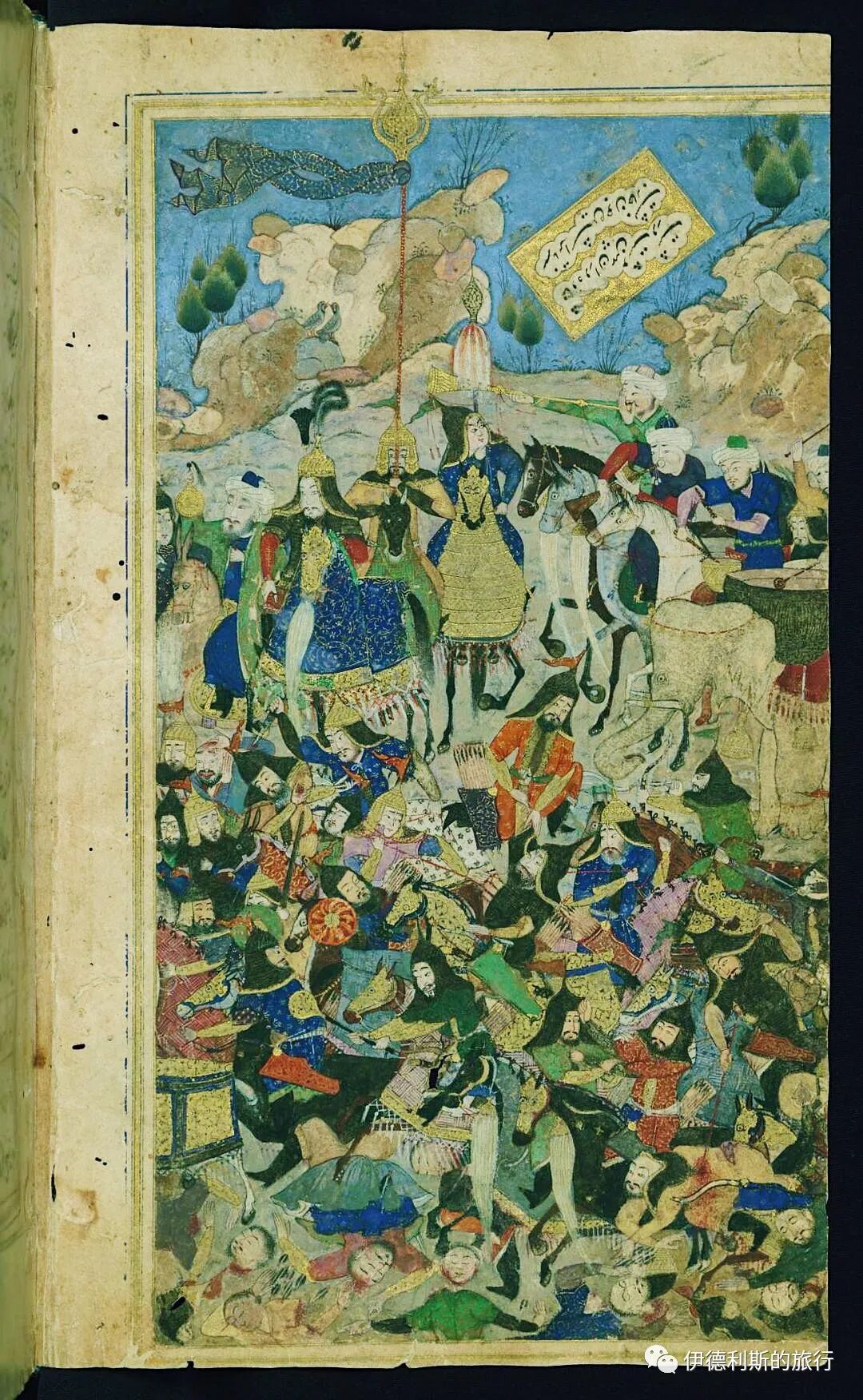
Timur and Tokhtamysh in the decisive battle, painted by Pir 'Ali al-Jami of the Safavid dynasty of Persia in the 16th century
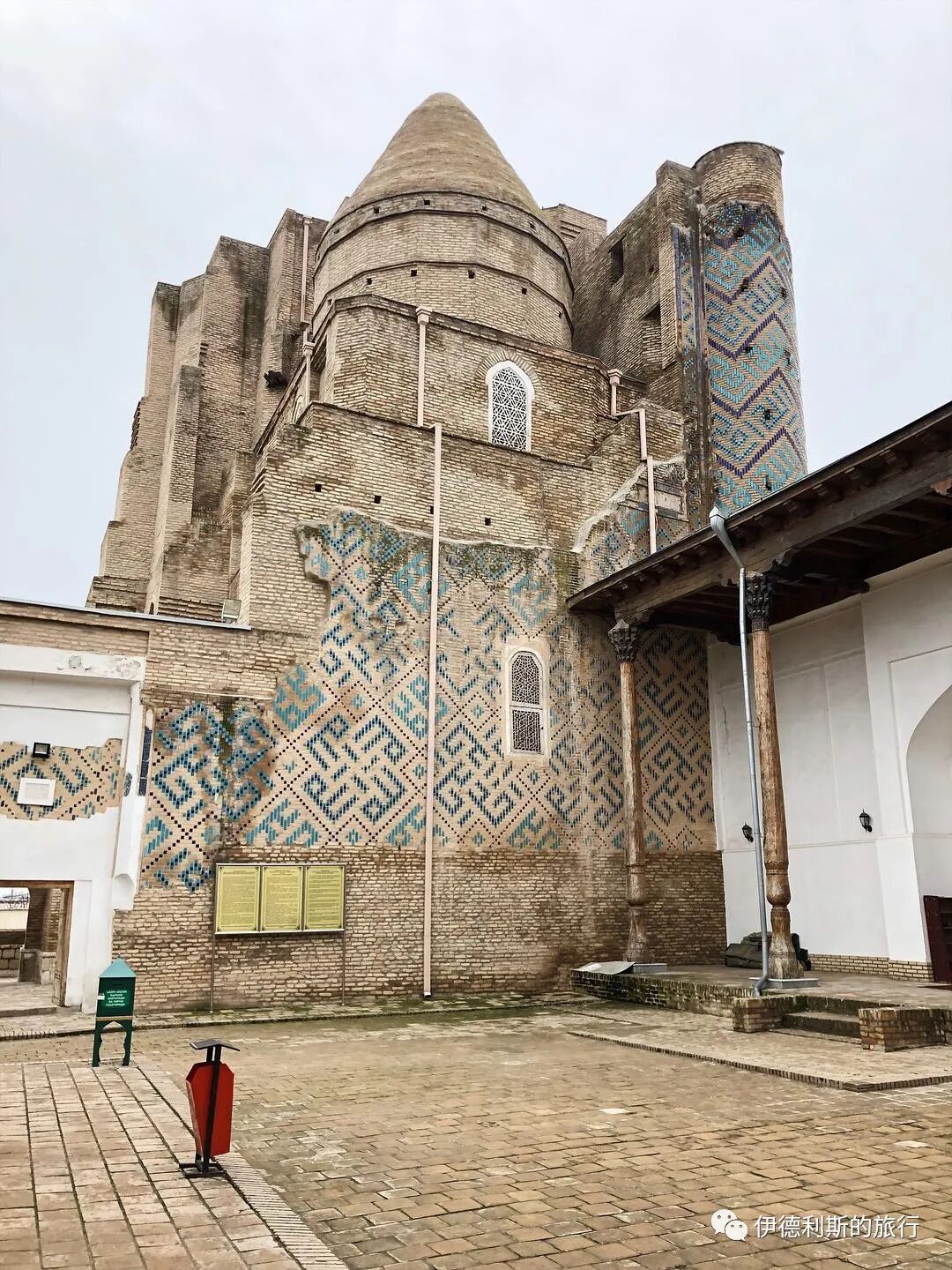
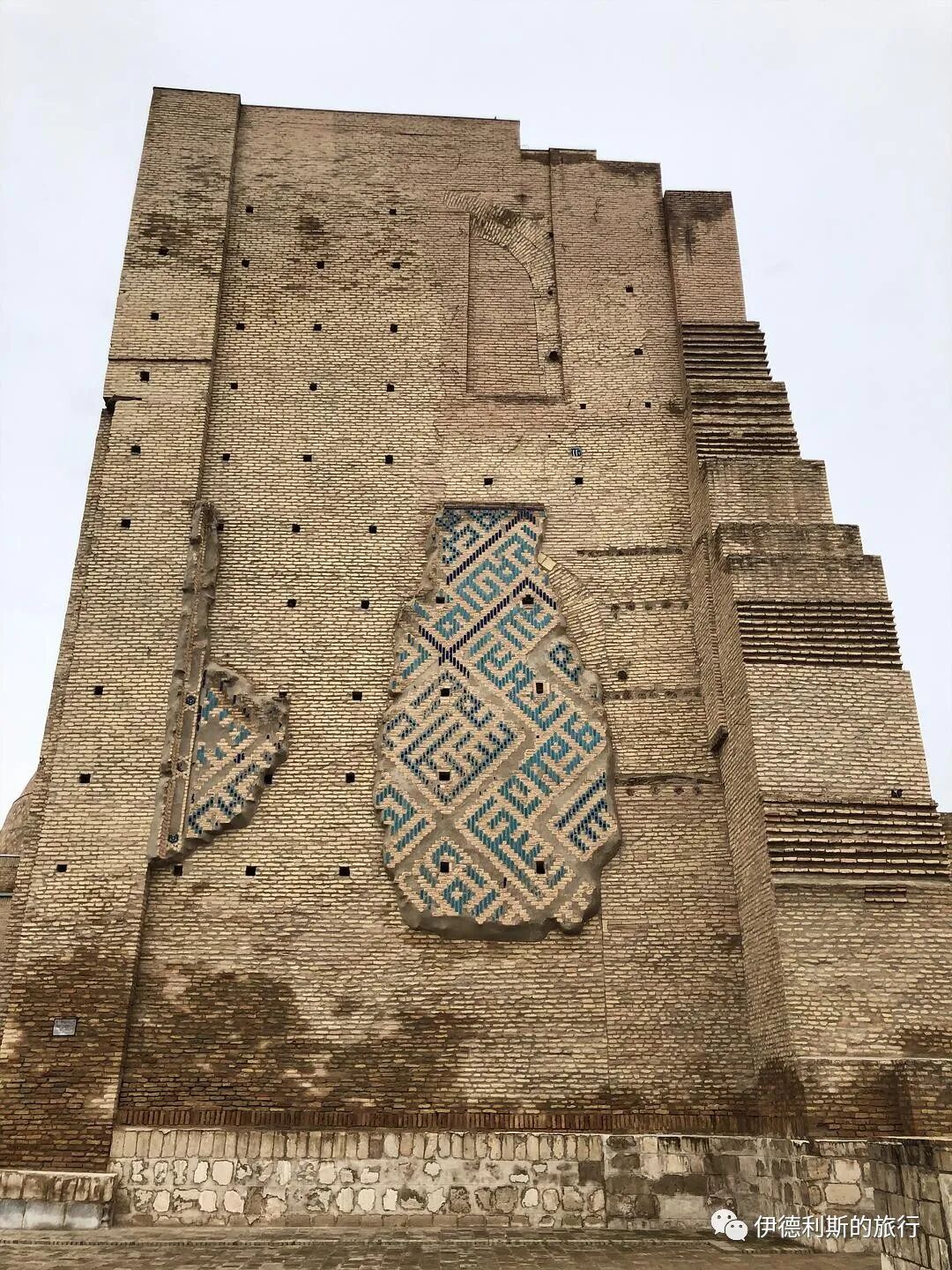
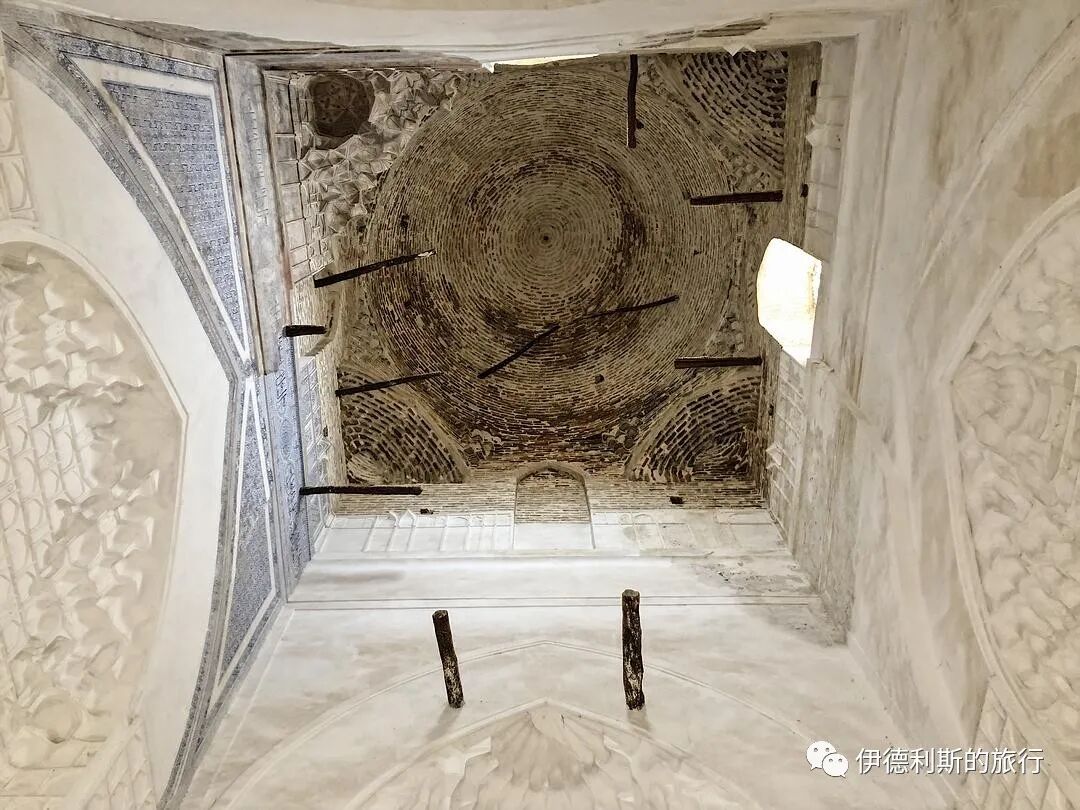
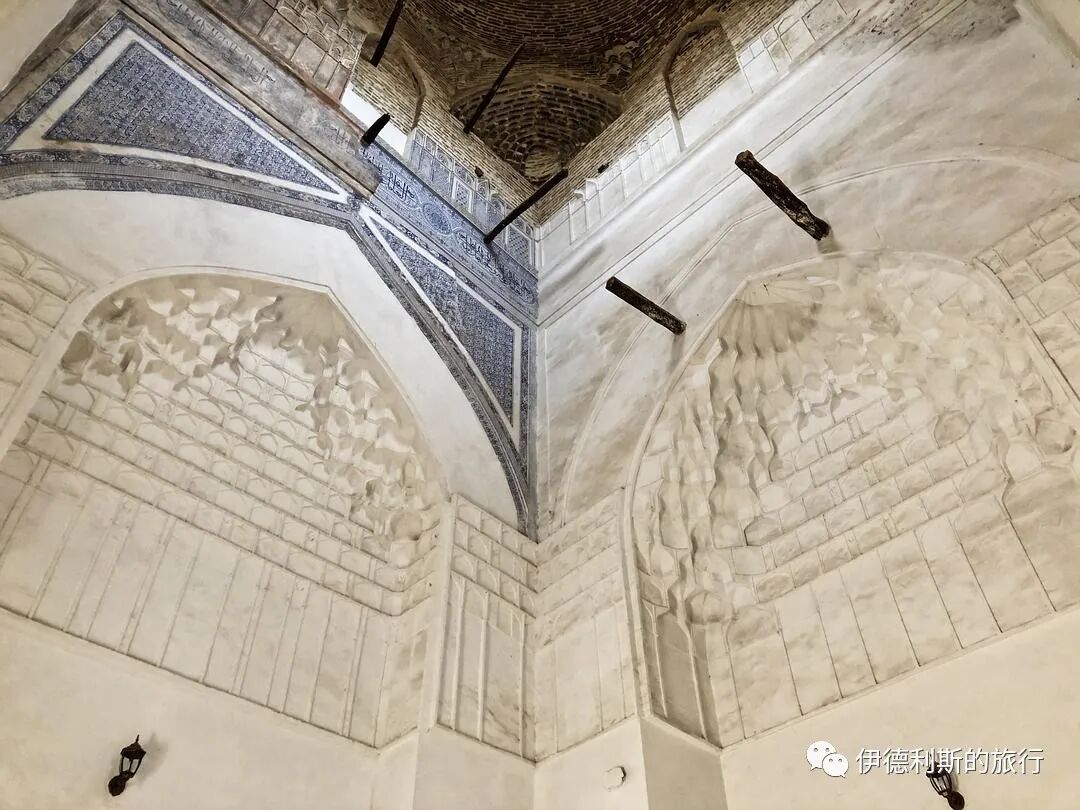
Next to the tomb is a mosque built in the late 19th and early 20th centuries.
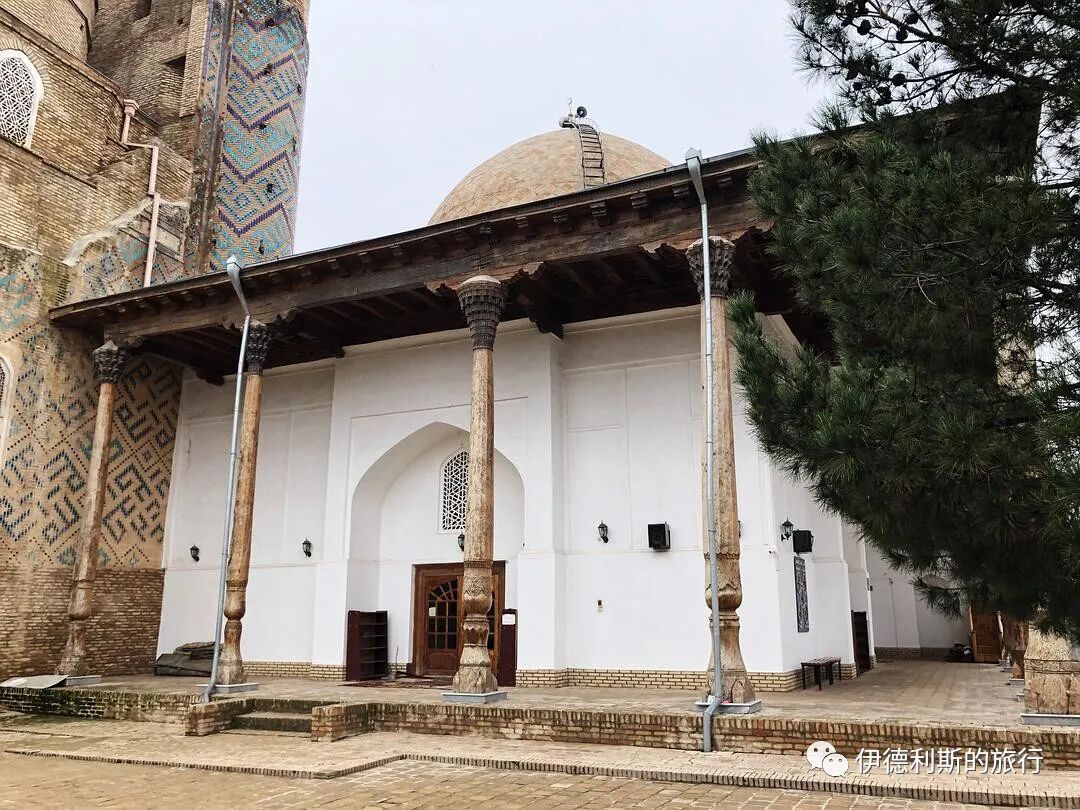
2. Timur's Mausoleum
In 1943, Soviet archaeologists discovered another underground mausoleum next to the tomb of Jahangir, Timur's son. The sarcophagus in the tomb chamber bore Timur's name, suggesting this might be the mausoleum Timur had built for himself in his hometown during his lifetime. However, Timur was actually buried in Samarkand. Archaeologists found two bodies in the tomb whose identities remain unknown to this day.
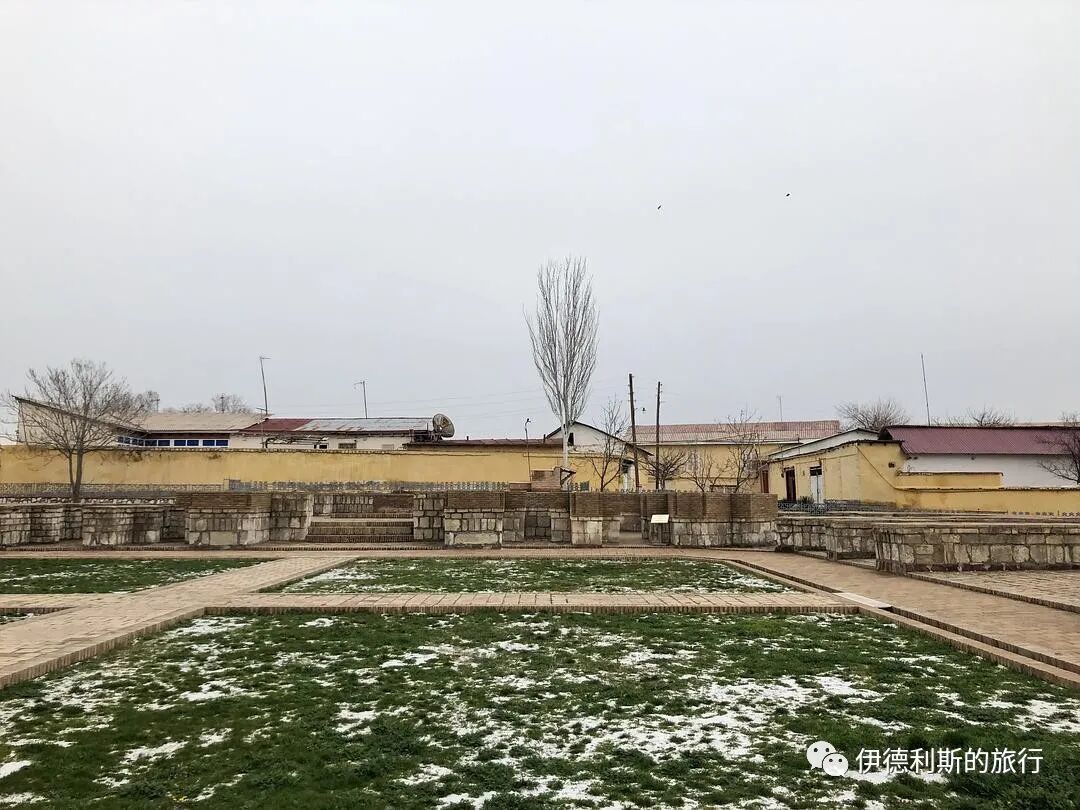
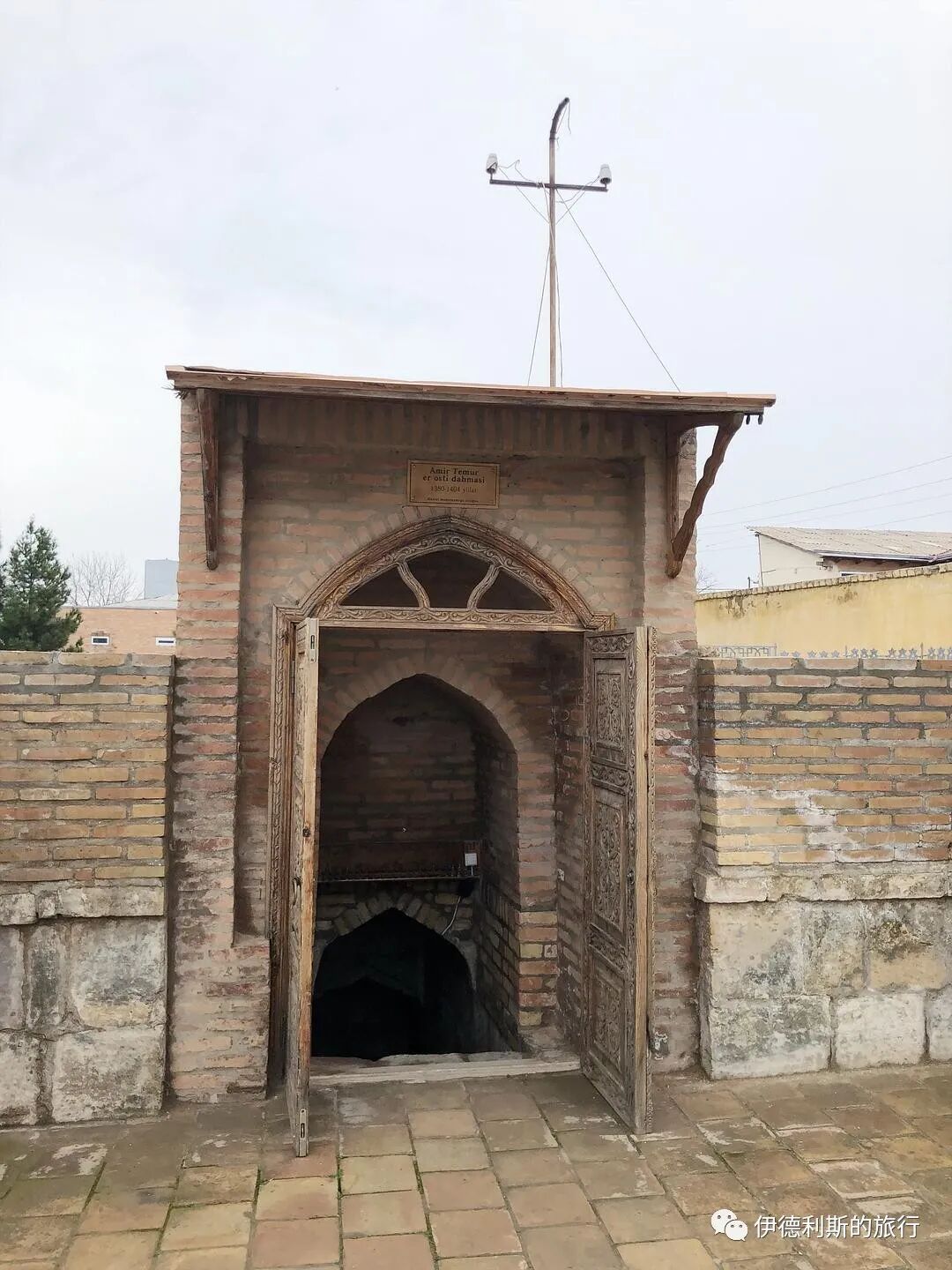
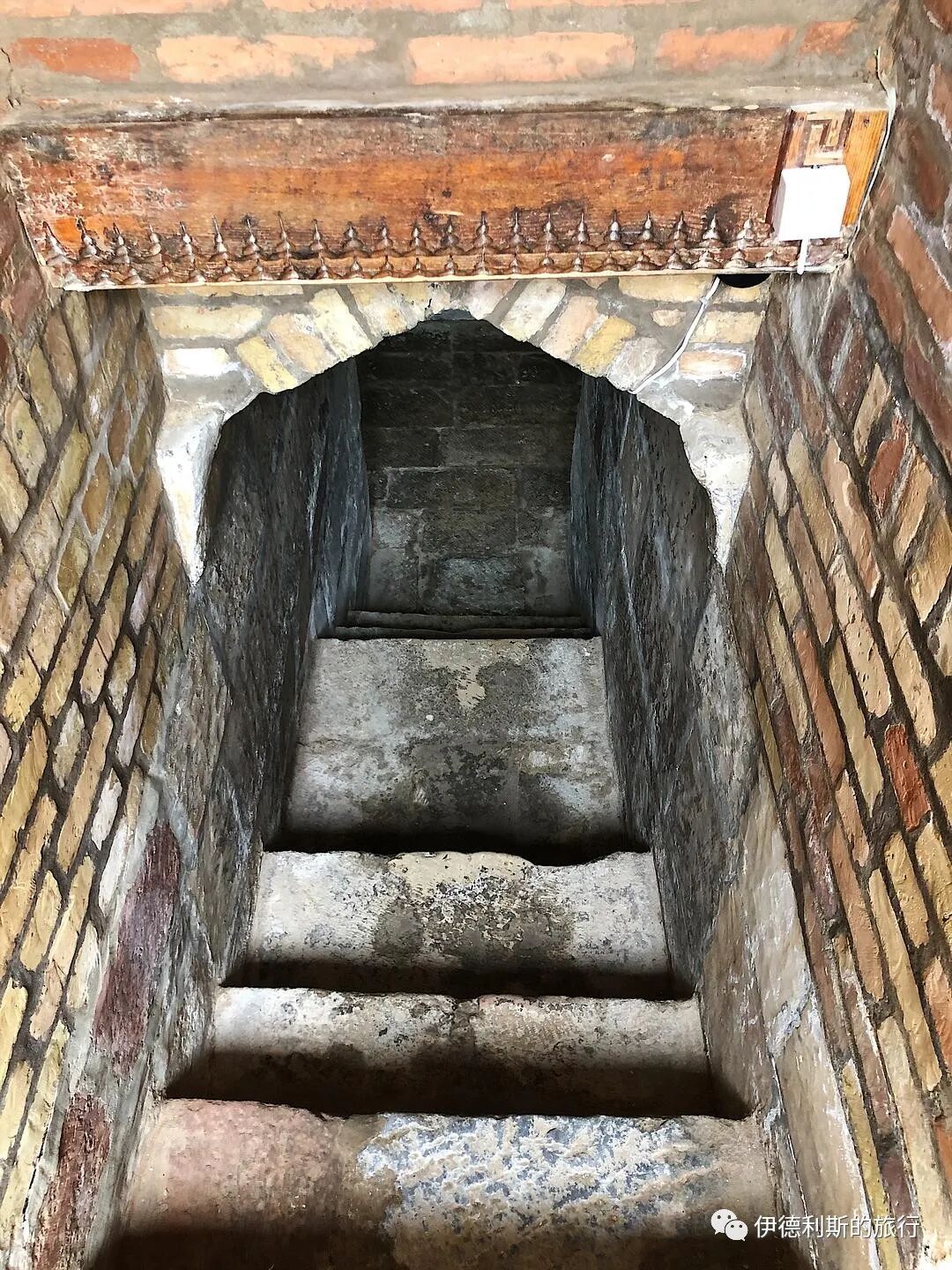
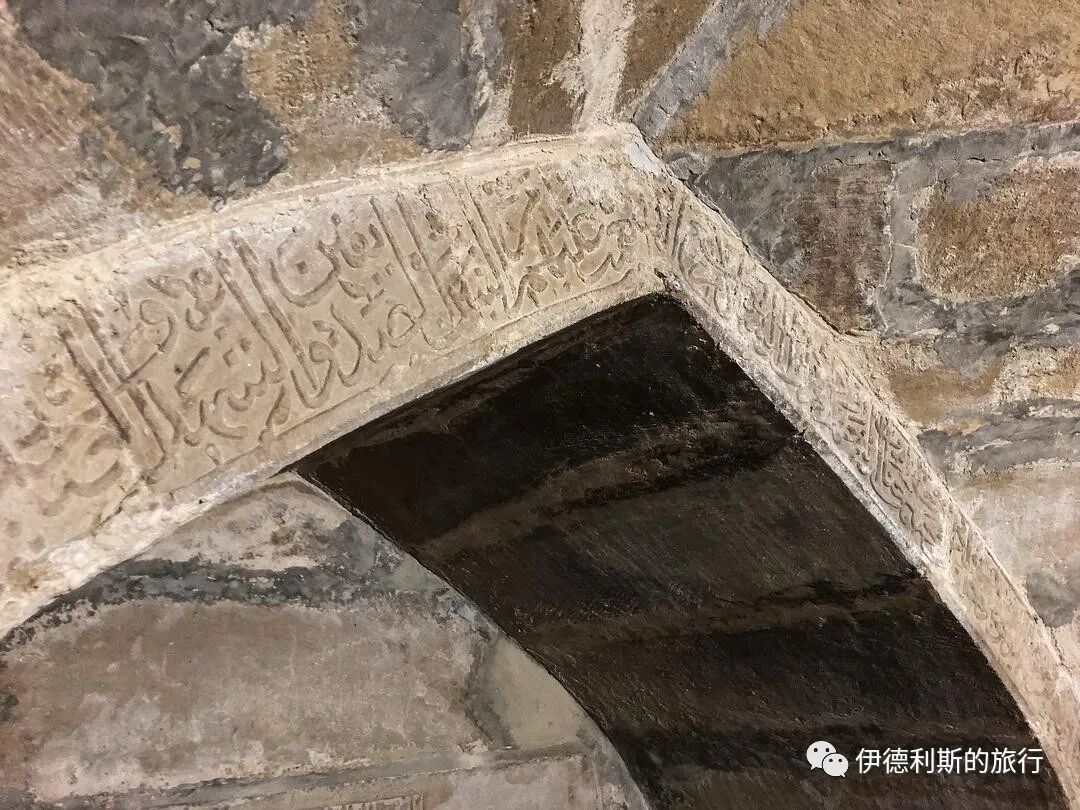
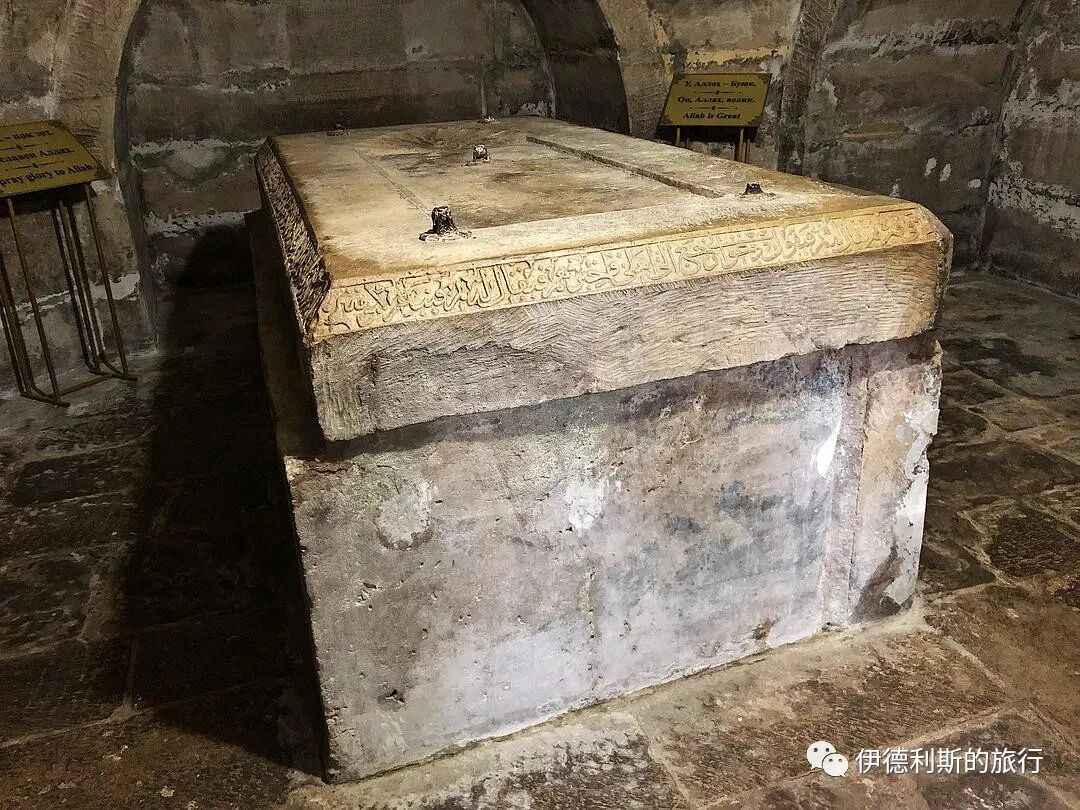
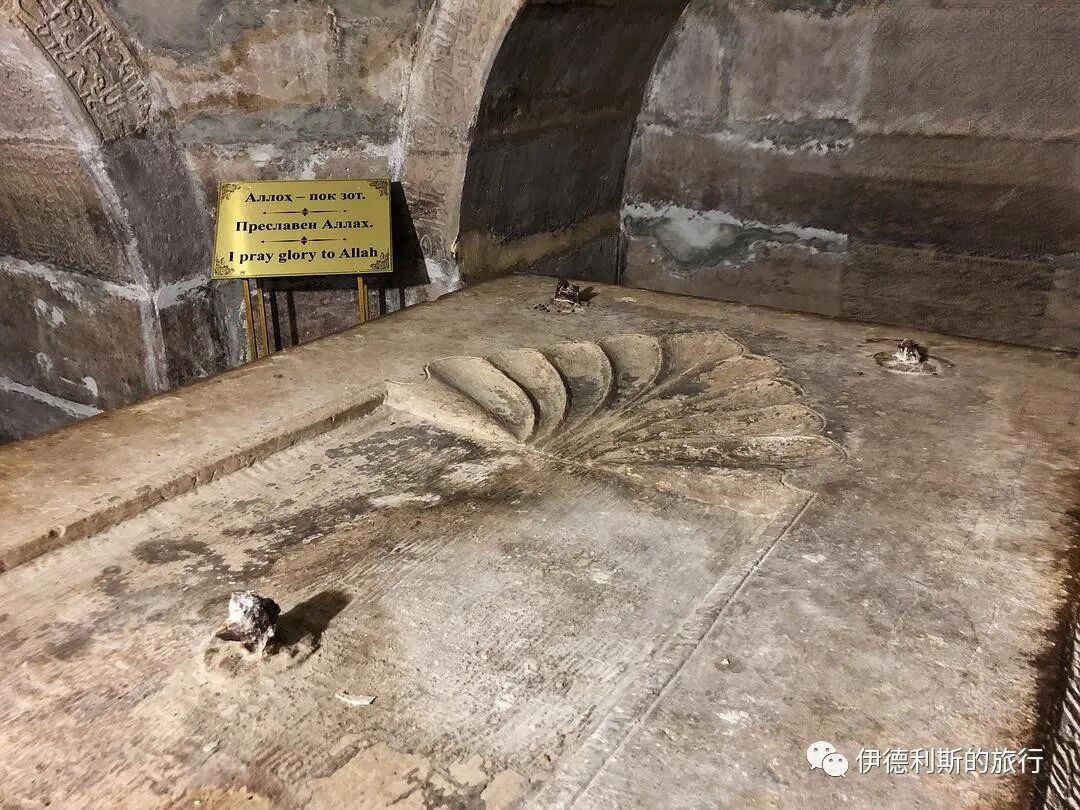
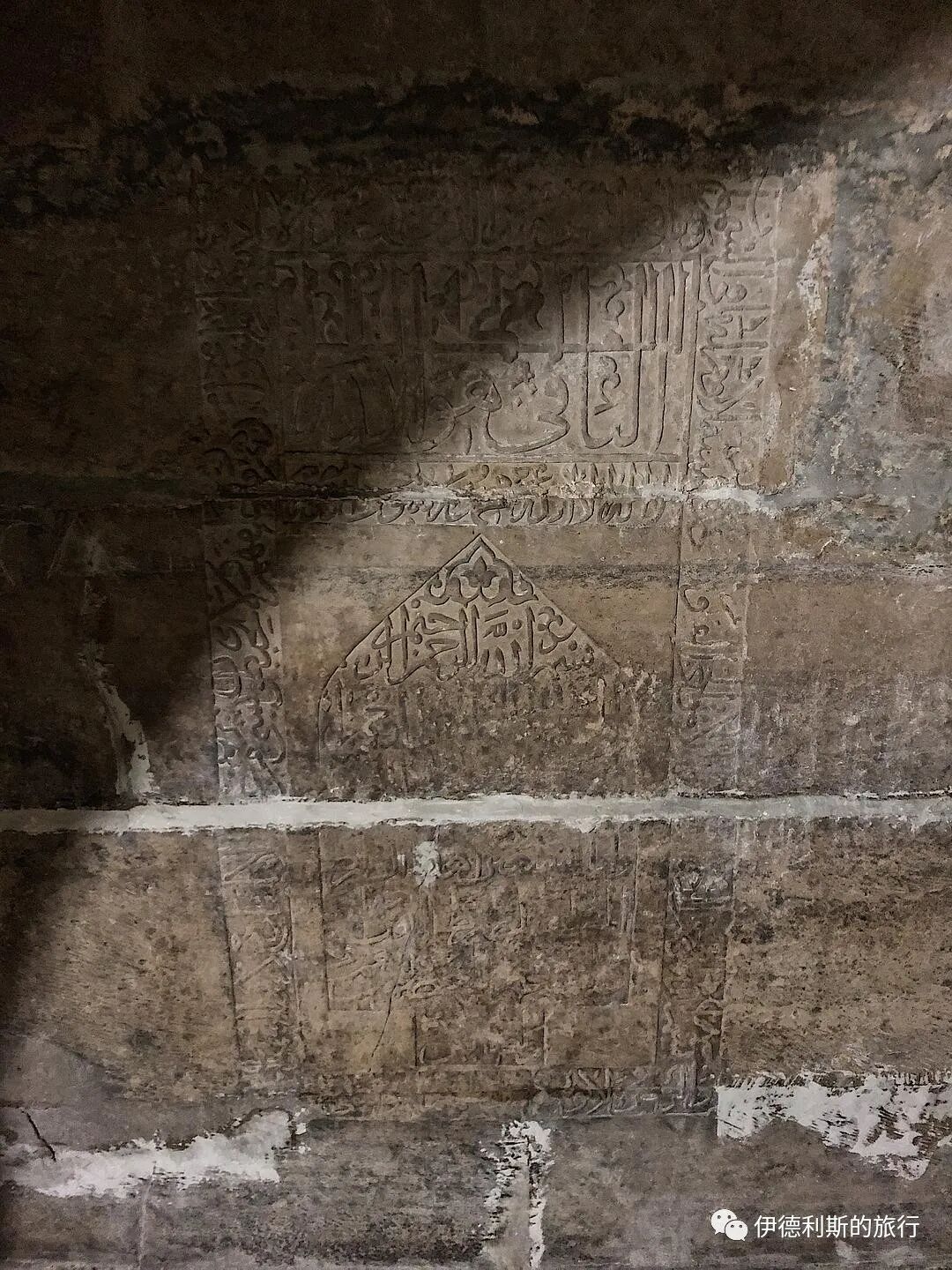
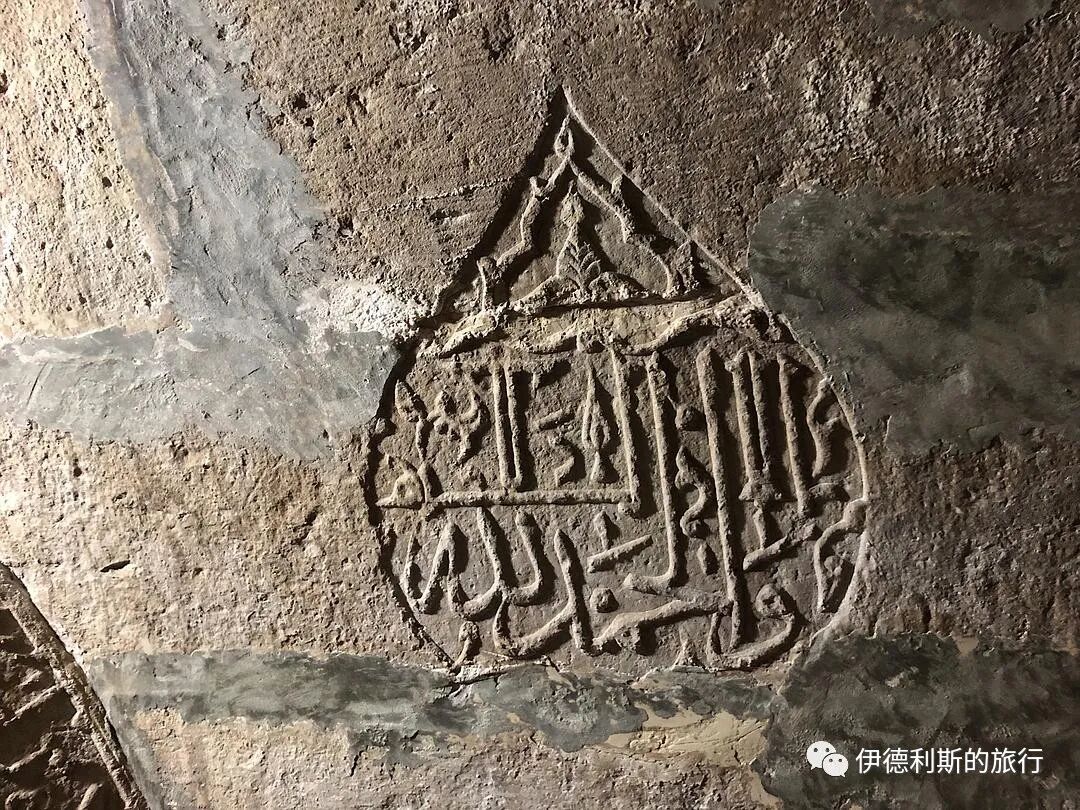
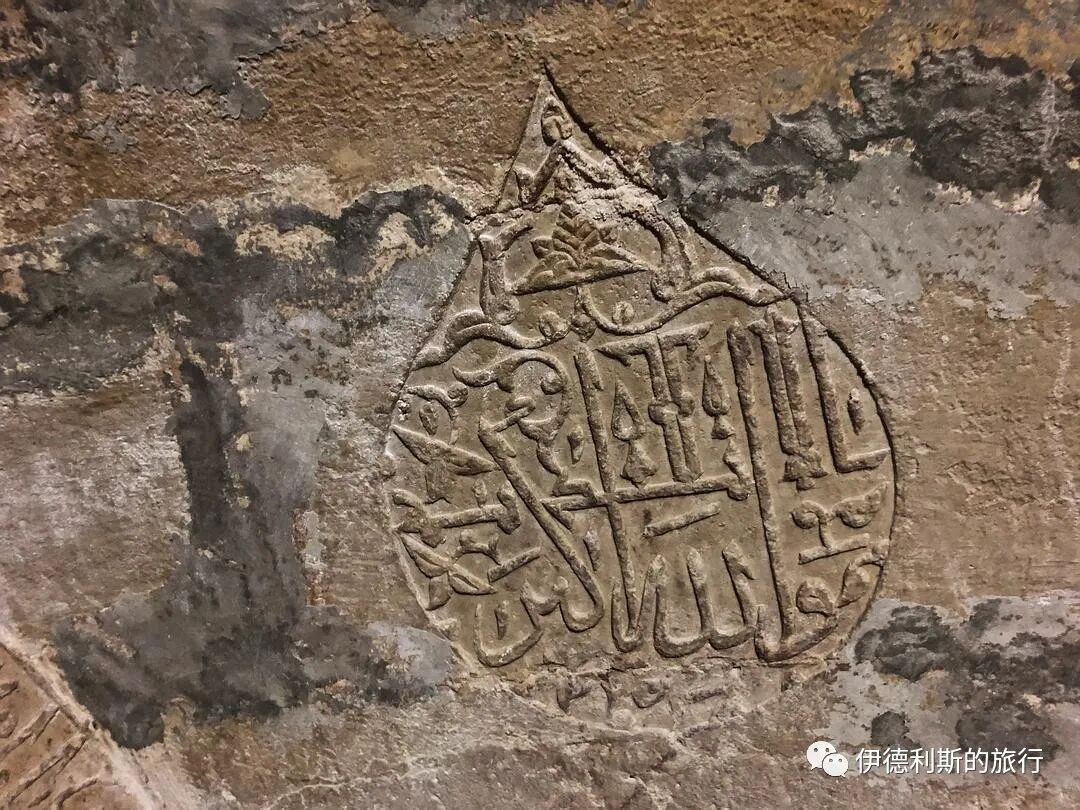
V. Dorut Tilavat Complex - Timurid Family Religious Sanctuary: 14th-15th Centuries
The Dorut Tilavat complex is located south of Shahrisabz. It was originally a madrasah for the Sufi scholar Shams ud-Din Kulal and later became the religious center of Shahrisabz. It contains a mausoleum built by Timur in 1374 for his spiritual mentor, and it is said that Timur also buried his father there. In 1437, Timur's grandson Ulugh Beg, aiming to develop this place into a religious center, built new family mausoleums and a grand mosque.
1. Shams ud-Din Kulal's Mausoleum: 1374
Shams ud-Din Kulal, known as Sheikh Kulal, was a Sufi scholar from Bukhara. He preached in Shahrisabz for a long time and established the Dorut Tilavat madrasah south of the city. Due to Sheikh Kulal's profound knowledge, he gradually became the spiritual mentor of Timur's Barlas tribe and was highly respected by Timur's father, Turghai. Later, his grandson Amir Kulal also became Timur's spiritual mentor.
After Sheikh Kulal's death, he was buried within the Dorut Tilavat madrasah. In 1360, after Timur's father passed away, Timur requested Amir Kulal, Sheikh Kulal's grandson, to bury his father Turghai next to Sheikh Kulal. However, Amir Kulal refused this request. In 1370, Amir Kulal died, and in the same year, Timur established the Timurid dynasty. In the first year of Timur's reign, he began expanding Sheikh Kulal's mausoleum and also moved his father's remains to be buried next to Sheikh Kulal. The main structure was officially completed in 1374.
In fact, it was not until the latter half of the 20th century that this was identified as Sheikh Kulal's mausoleum, and there is no direct evidence. In the 20th century, only the walls, several marble tombstones, and a wooden door were original, and they bore no information about the tomb's occupant. In 1950, a flat ceiling was added to the mausoleum, and in 1996, the ceiling was restored, along with the damaged dome and tombstone.
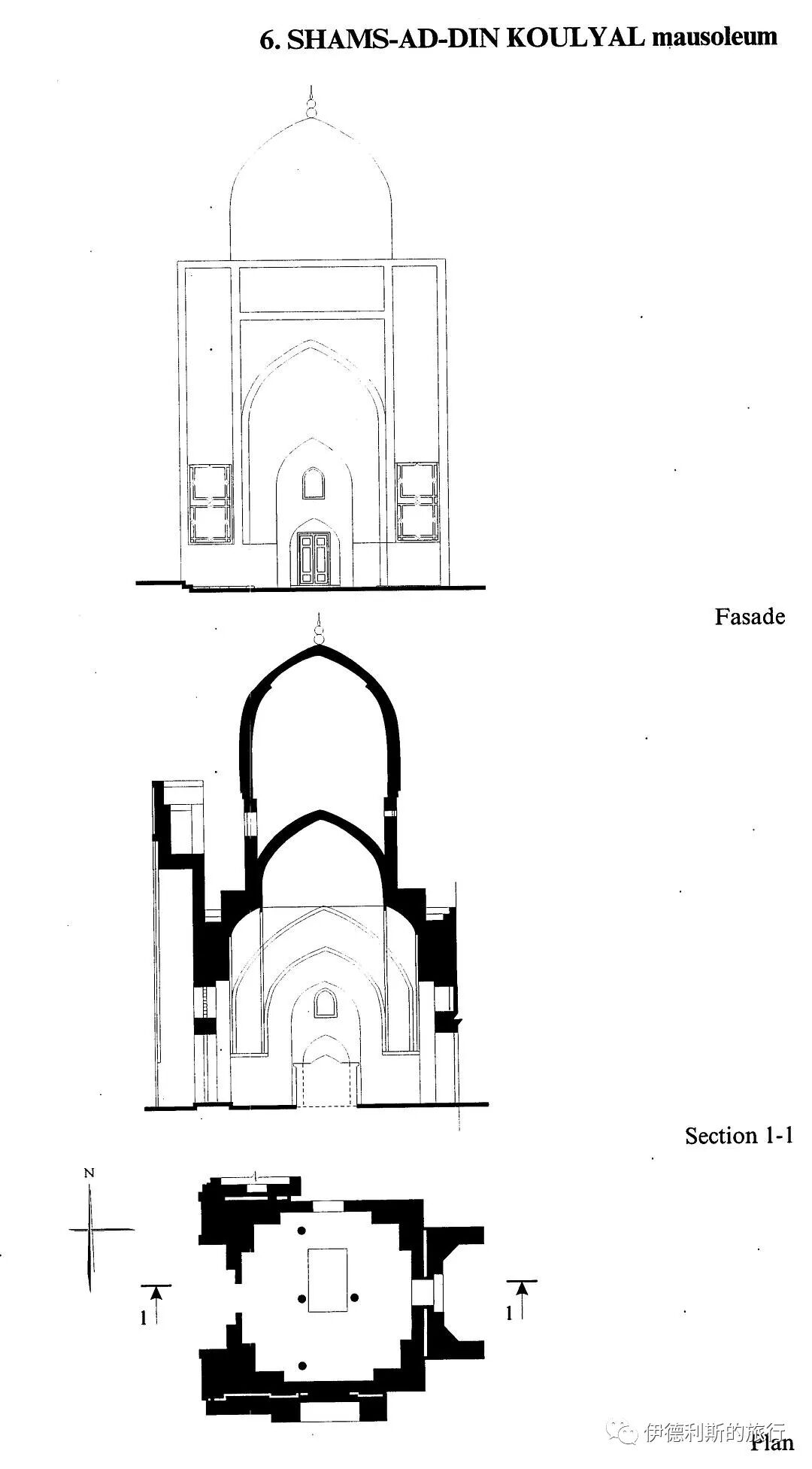
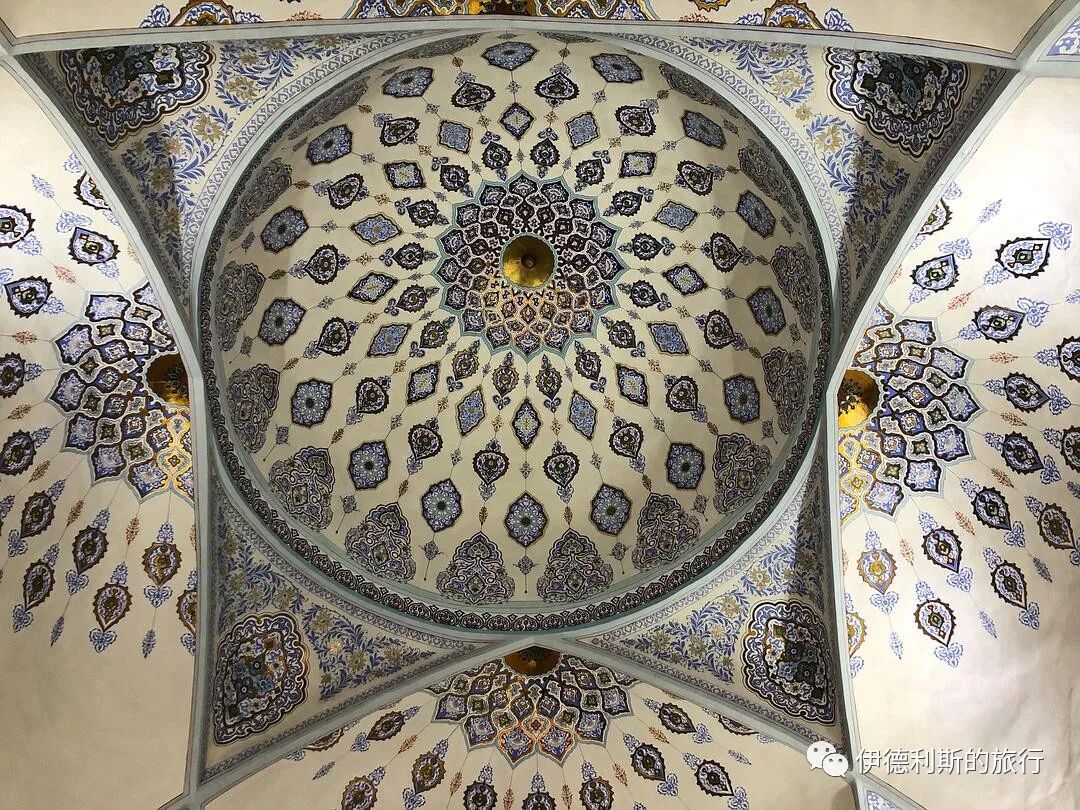
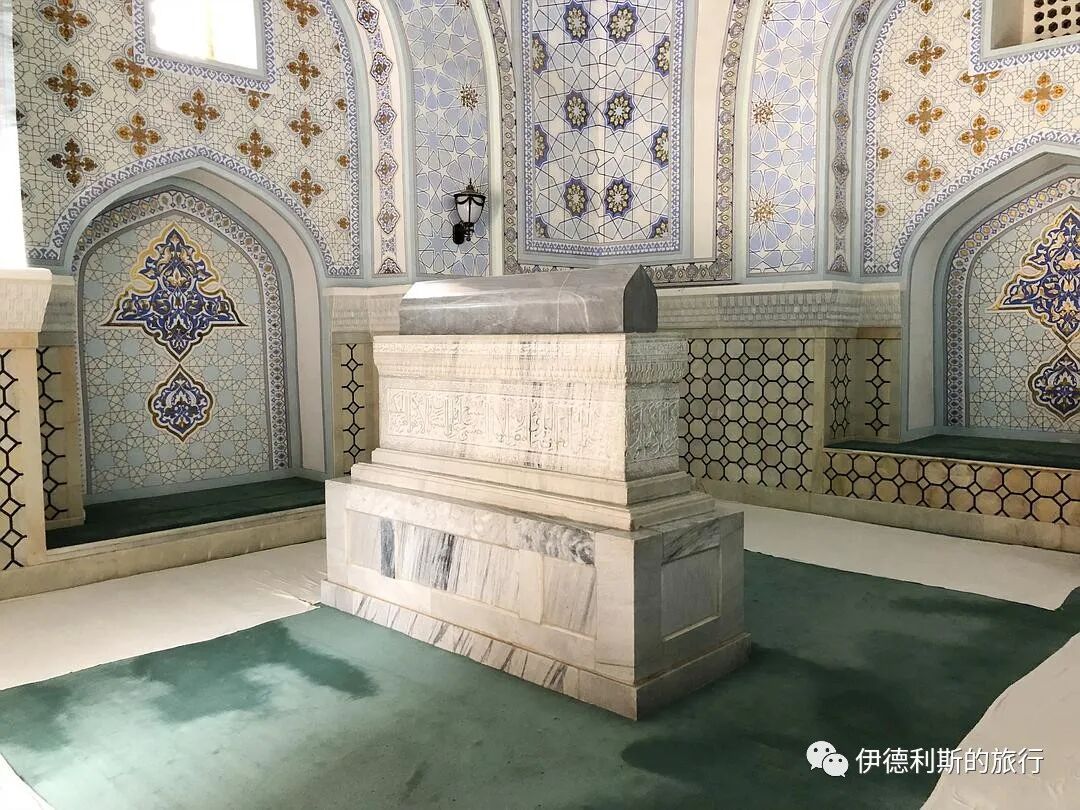
2. Gumbazi Seidon: 1437
After Timur's death in 1405, his son Shah Rukh inherited the eastern part of the empire. Shah Rukh moved the capital of the Timurid Empire from Samarkand to Herat, Afghanistan, while allowing his son Ulugh Beg to rule the Transoxiana region.
As the "holy city" of the Timurid Empire, Ulugh Beg frequently visited Shahrisabz and wished to build a religious center in the city. In 1437, Ulugh Beg built a new mausoleum adjacent to Sheikh Kulal's tomb. Subsequently, respected Sufi masters were buried there. The most important of these Sufi masters was called Termez seyids, hence this mausoleum is also known as "Gumbazi Seidon" (Dome of the Seyids).
After the 17th century, a Khanaka (Sufi lodge) was built next to the mausoleum, and the passage to the mausoleum was sealed. This lodge was demolished in the mid-20th century. In 1973, the damaged dome of the mausoleum was restored, and in 1996, the interior murals were restored and preserved.
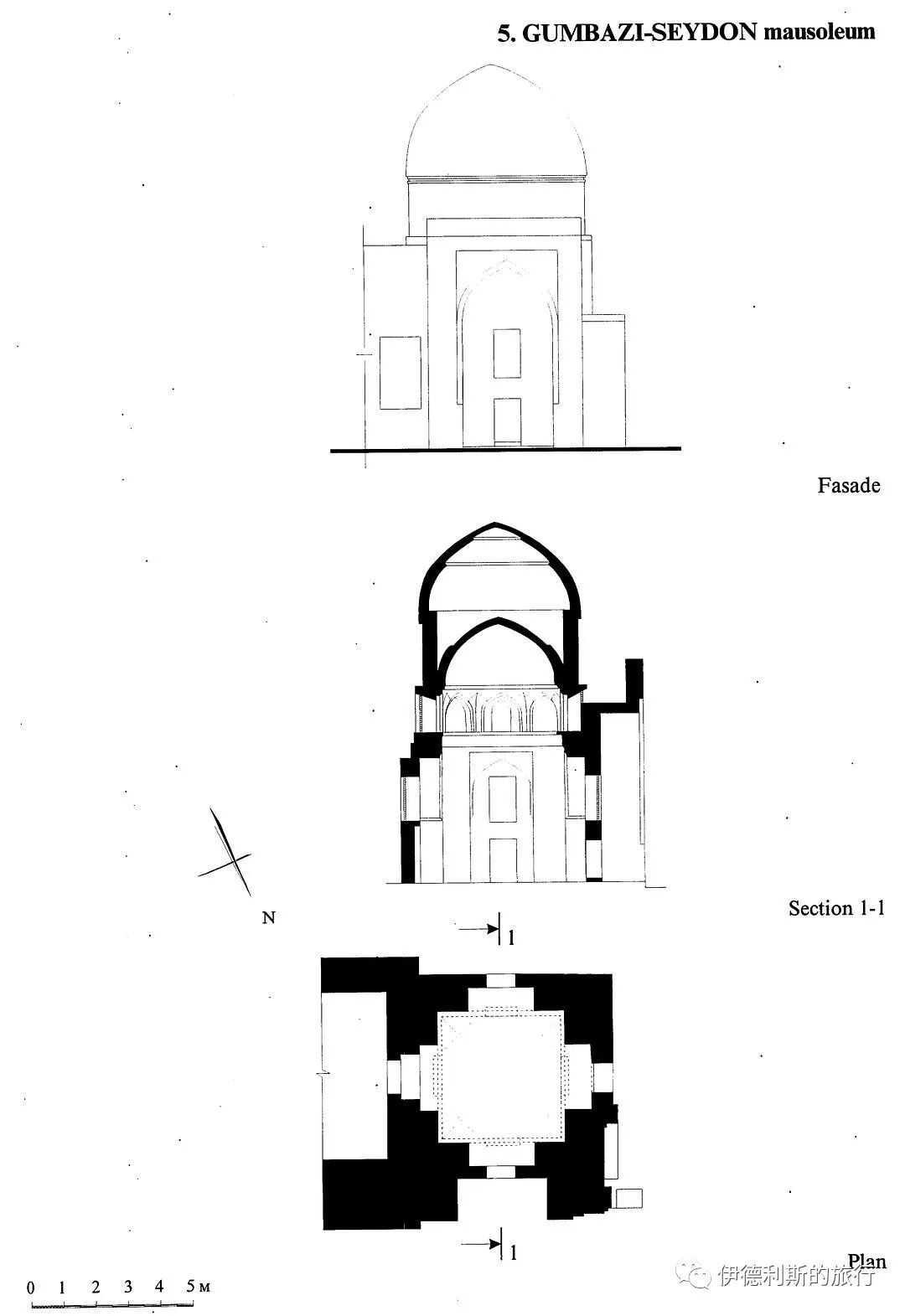
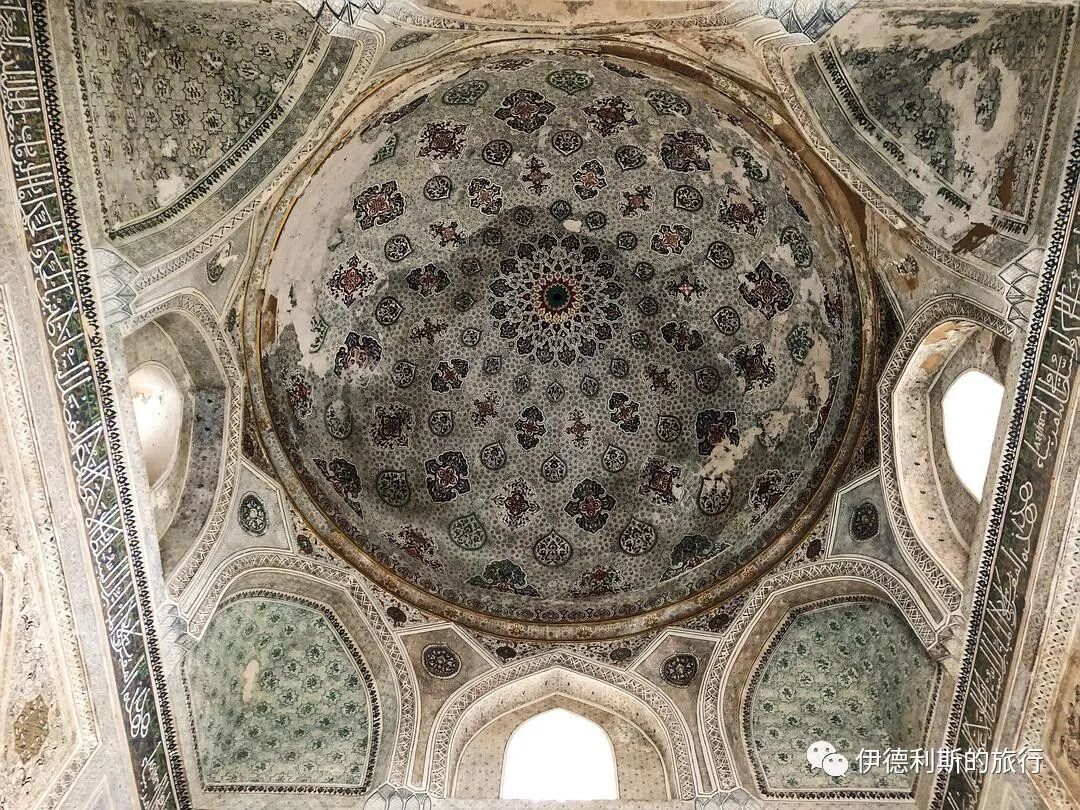
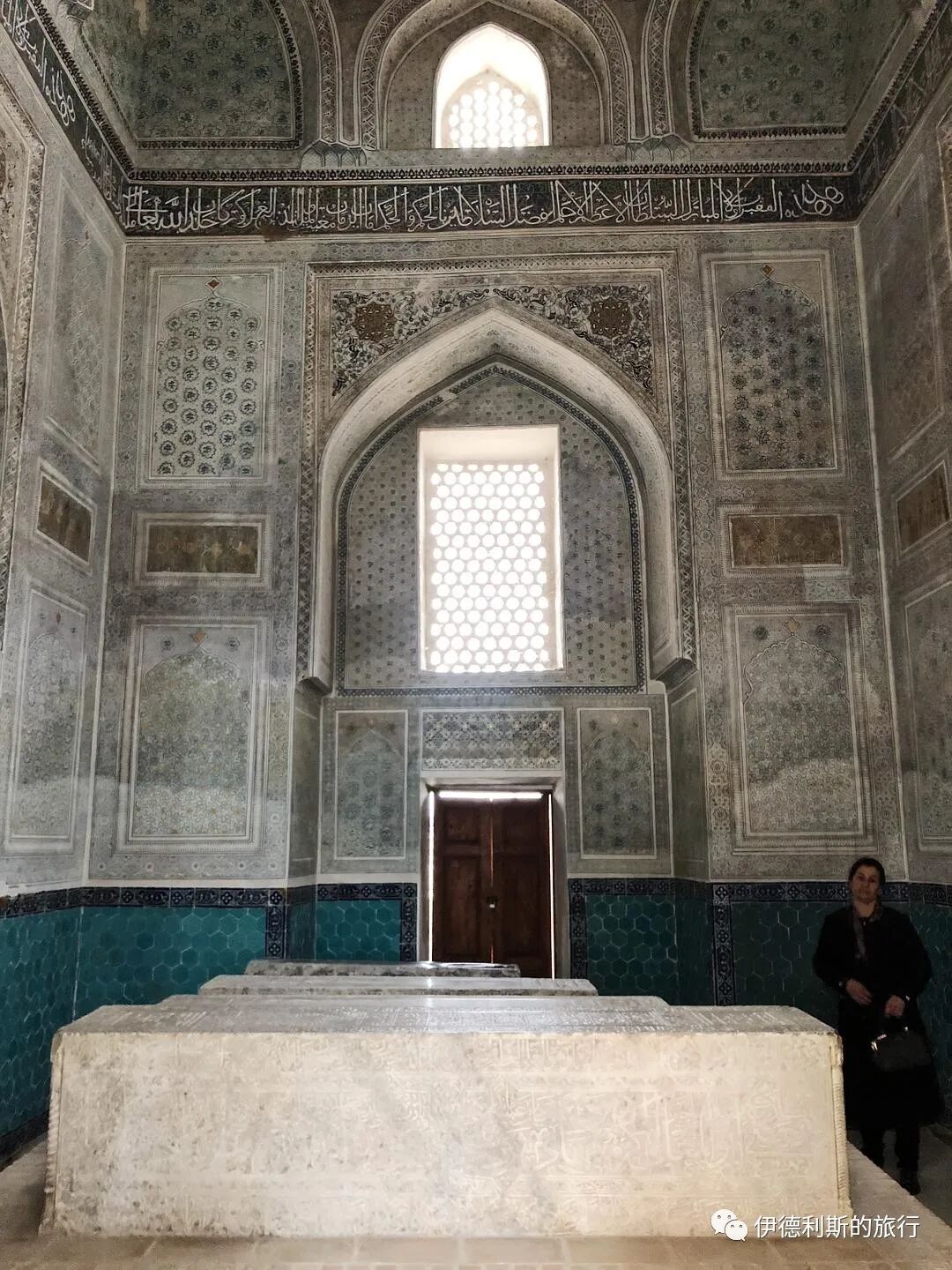
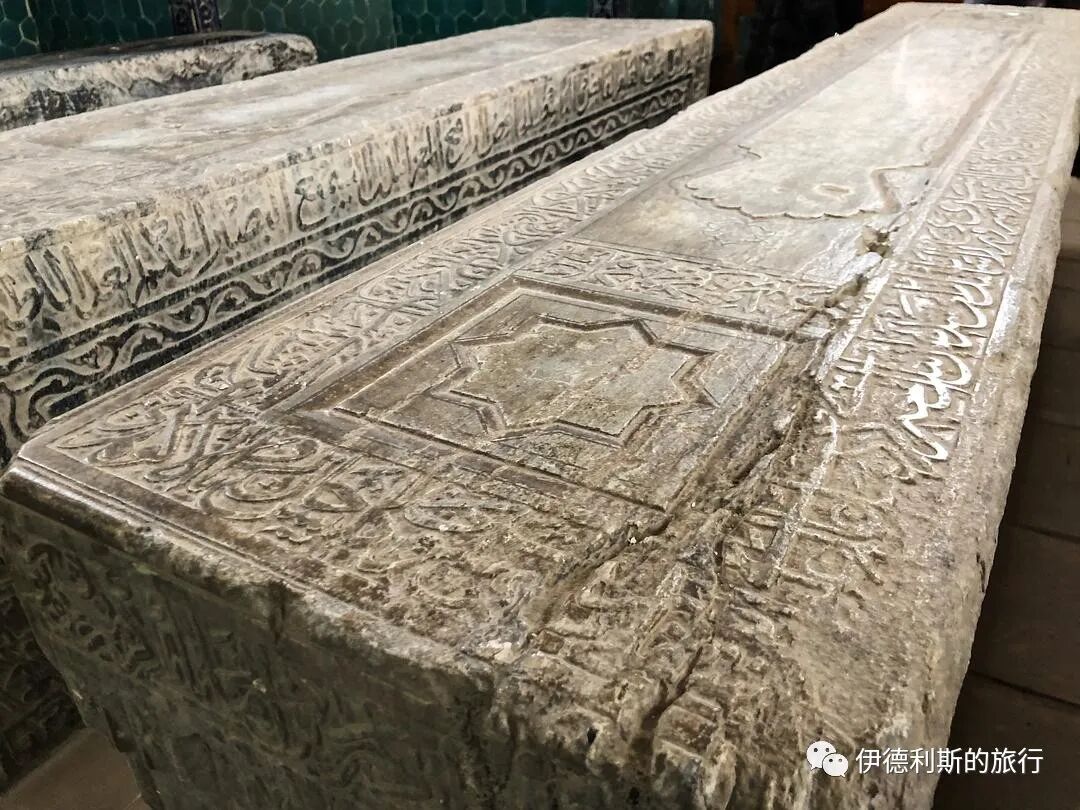
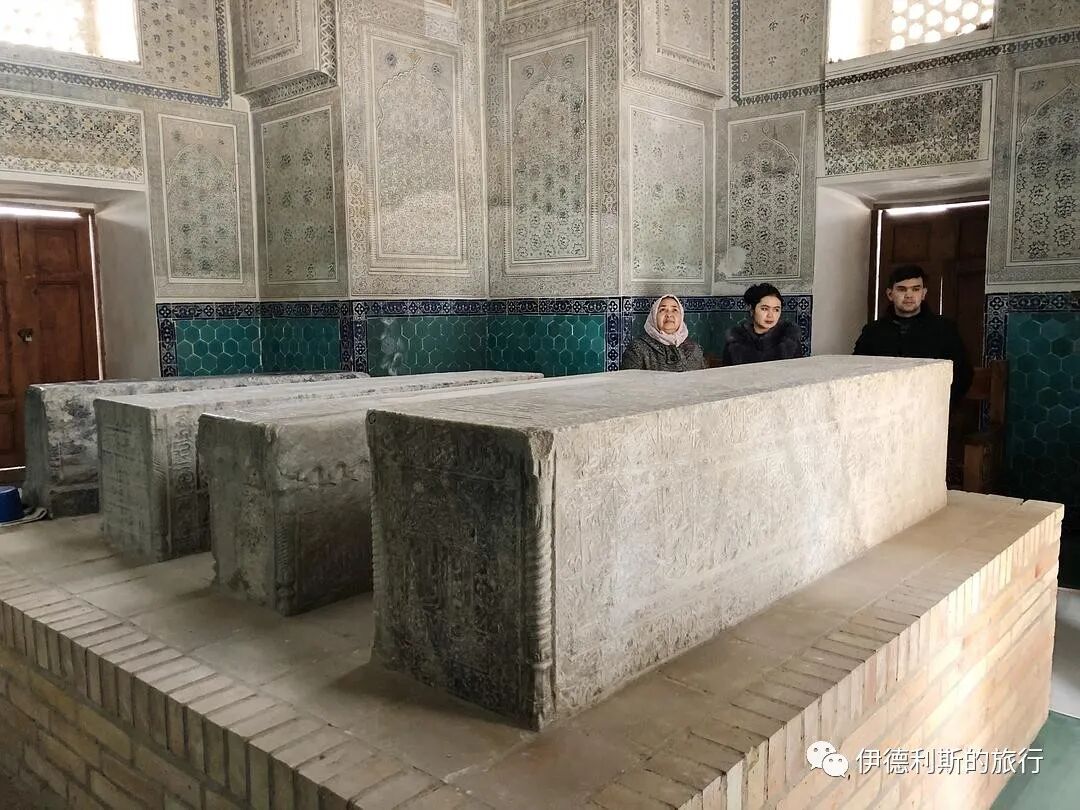
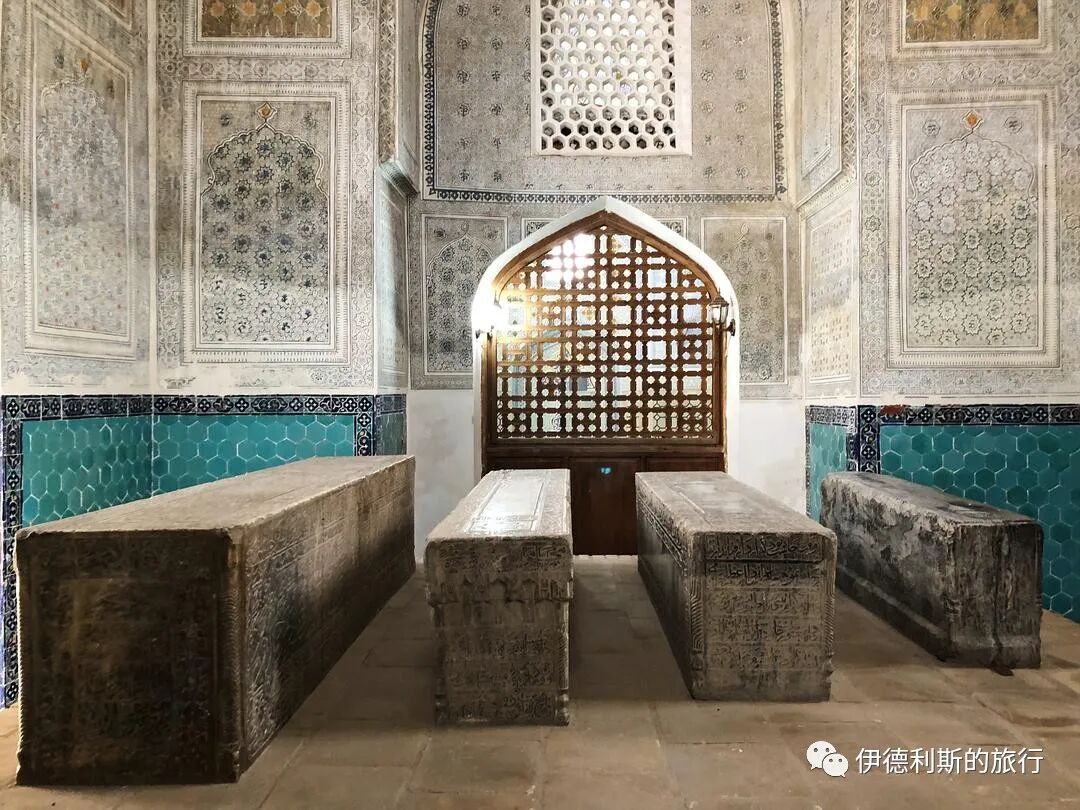
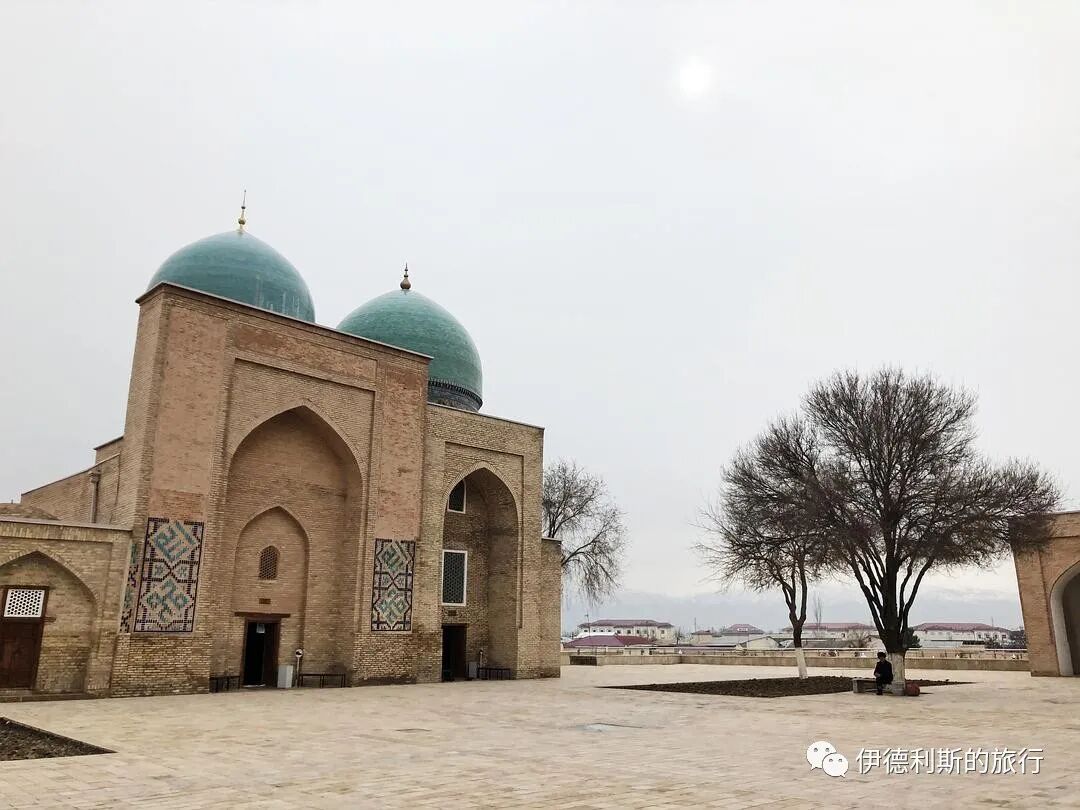
On the left is Shams ud-Din Kulal's Mausoleum, and on the right is Gumbazi Seidon.
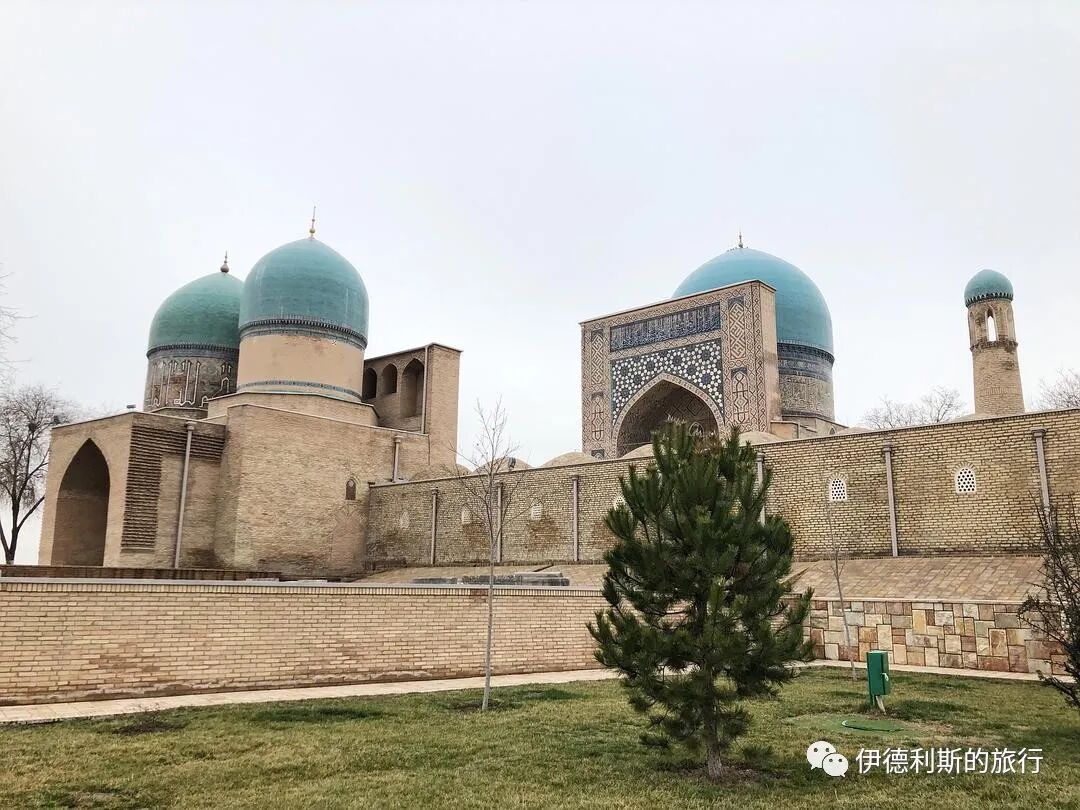
3. Kok Gumbaz Mosque: 1435
In addition to the mausoleums, Ulugh Beg also built the main Friday mosque of Shahrisabz, Kok Gumbaz (Blue Dome), next to Kulal's tomb. This mosque is said to have been built on the foundation of an ancient Karakhanid mosque. To increase the prayer space, 40-domed corridors were built on both sides of the main hall of the mosque.
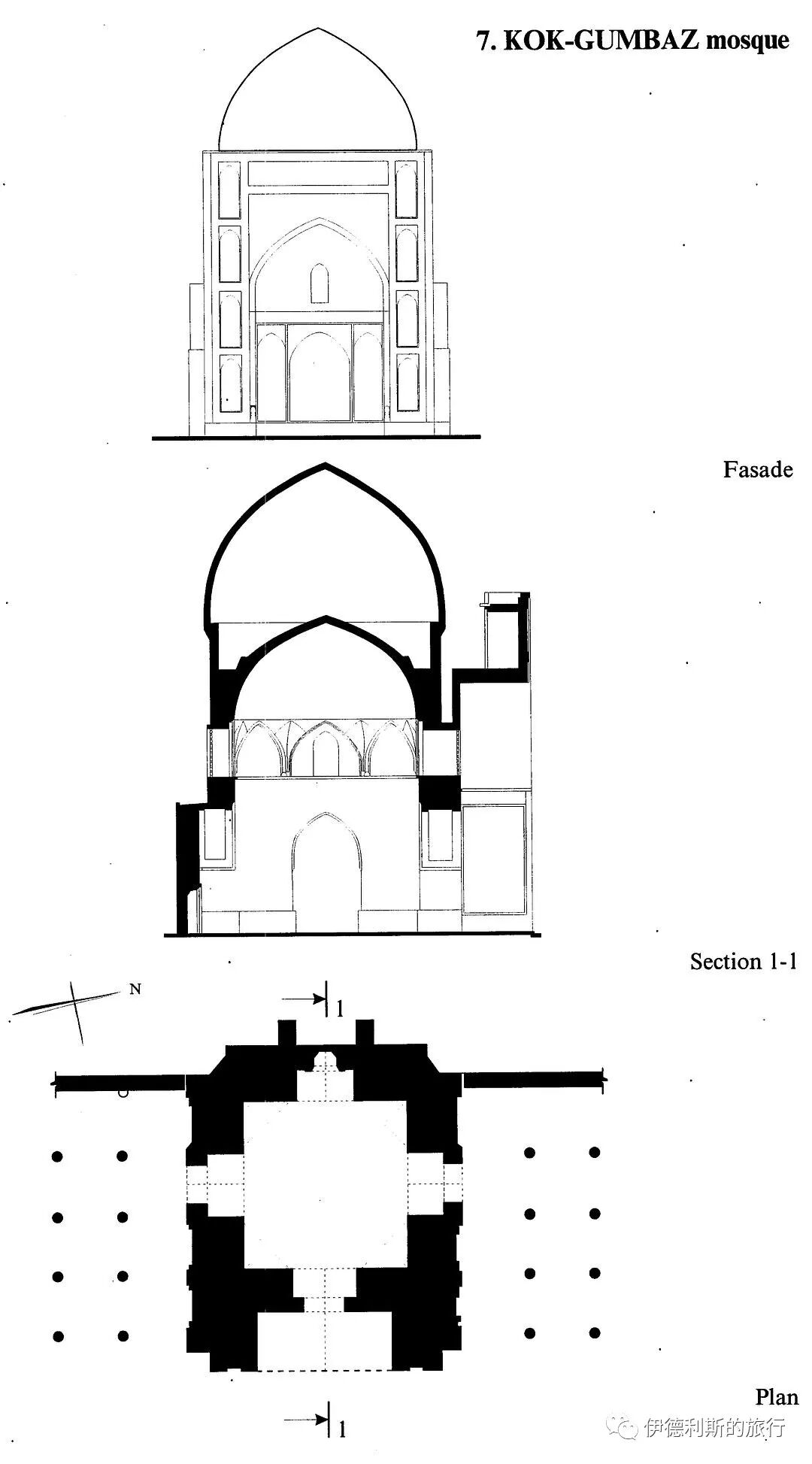
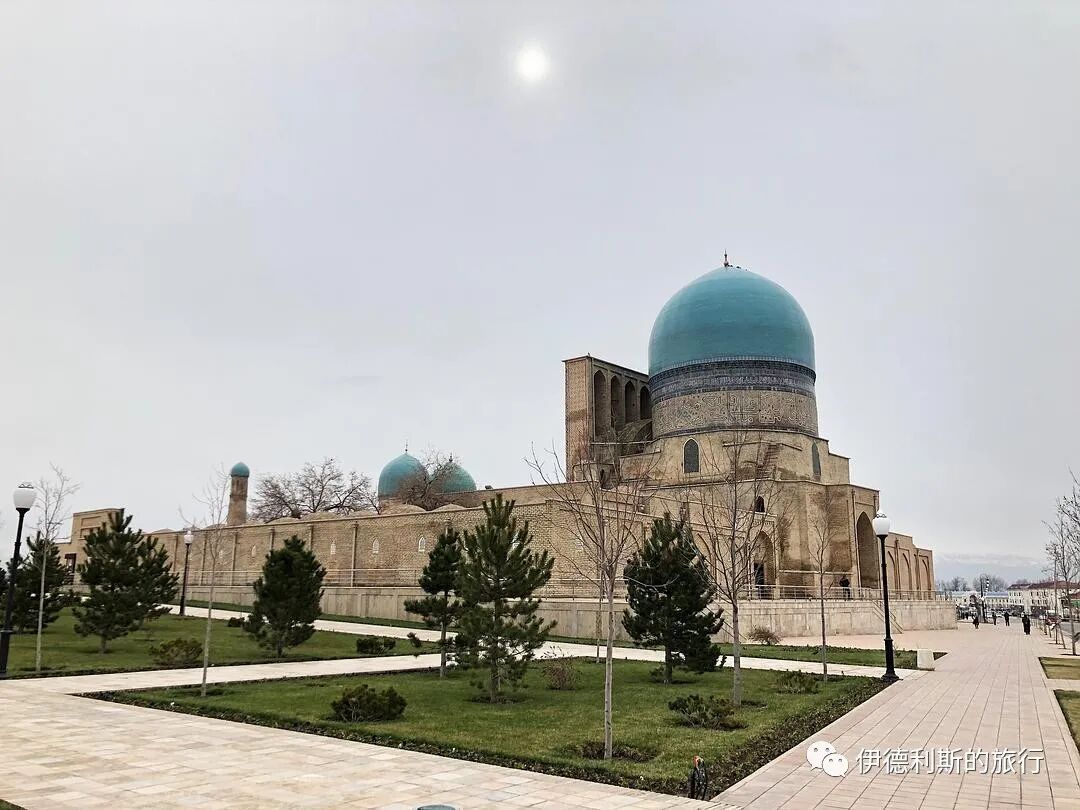
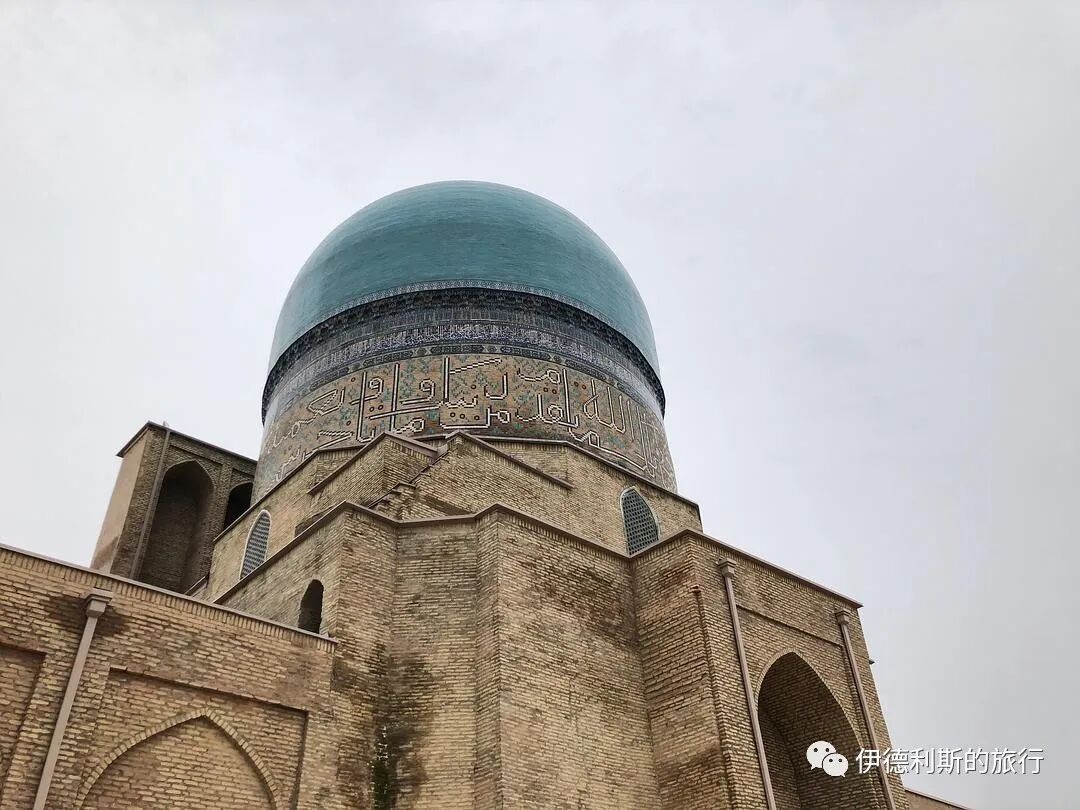
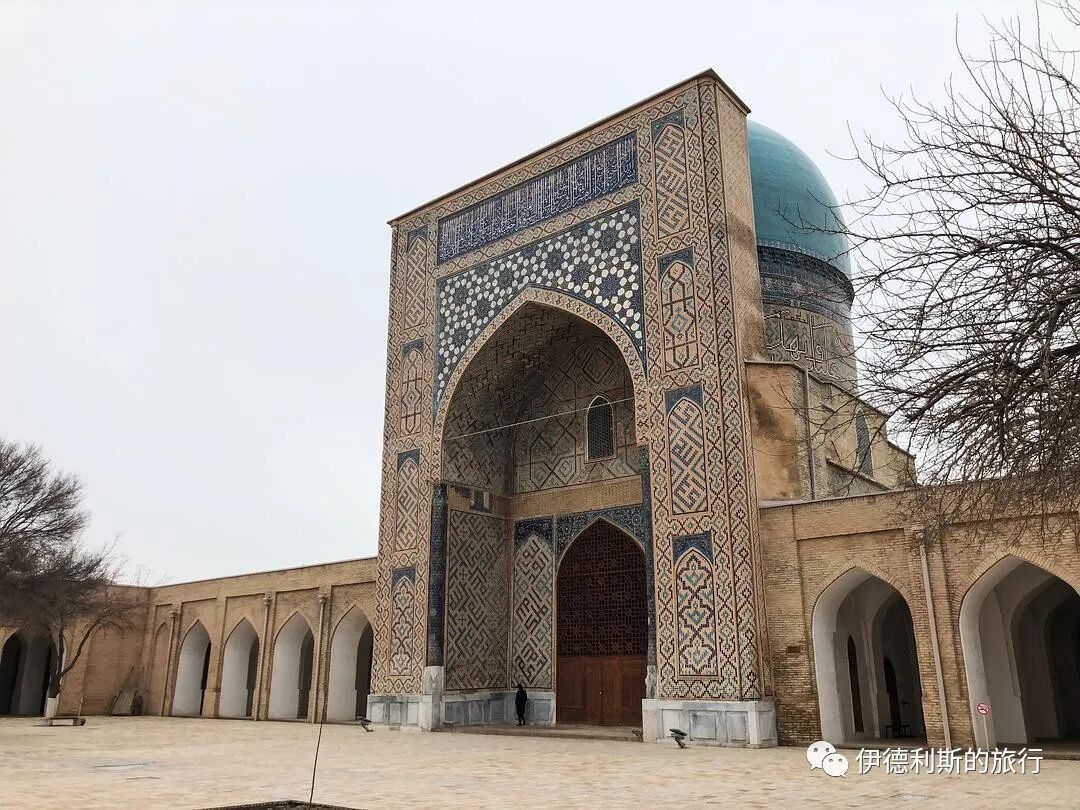
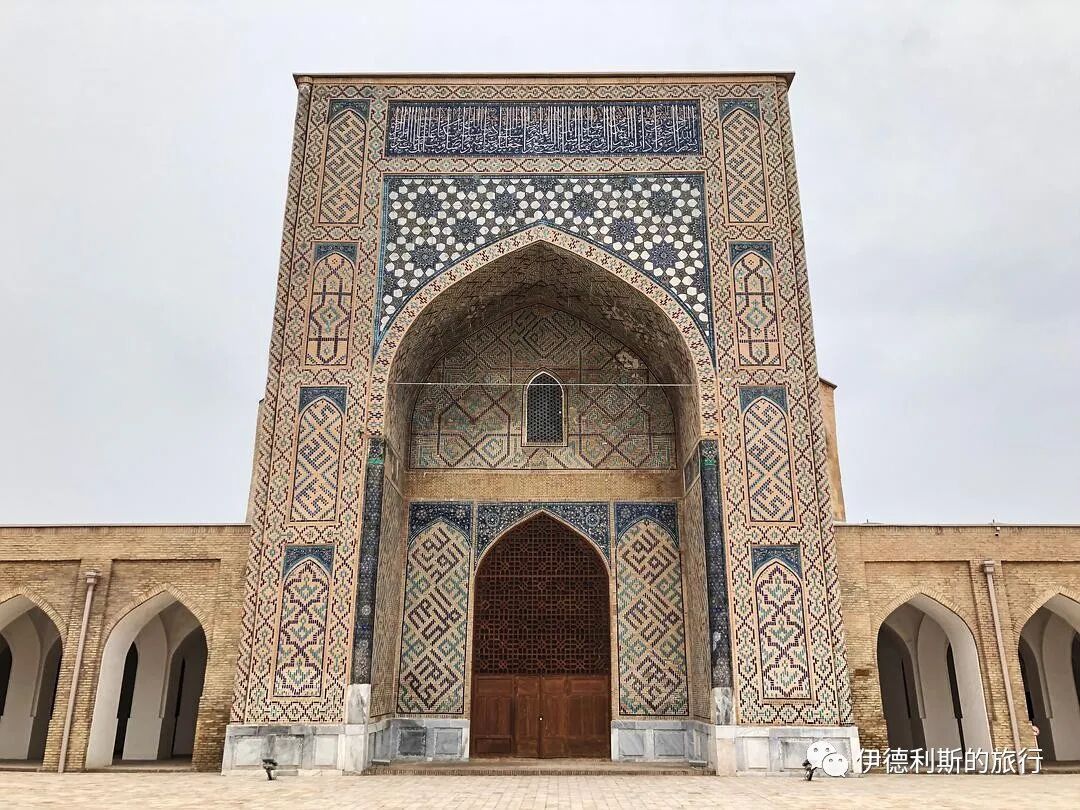
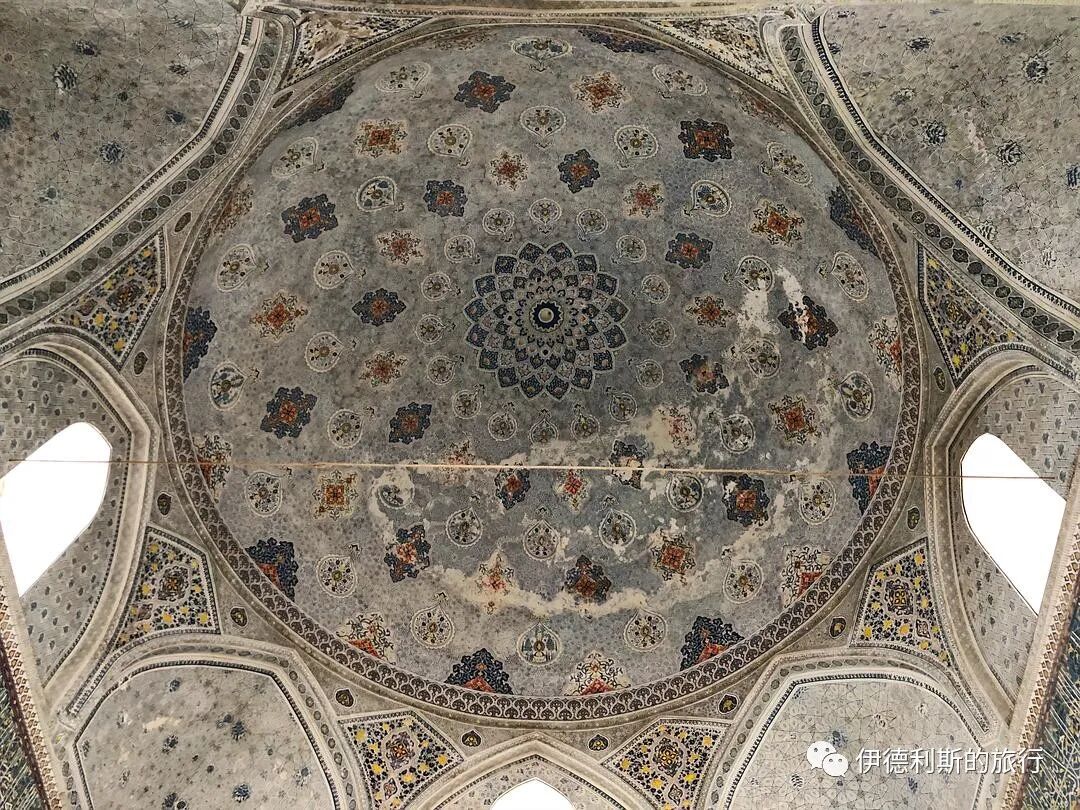
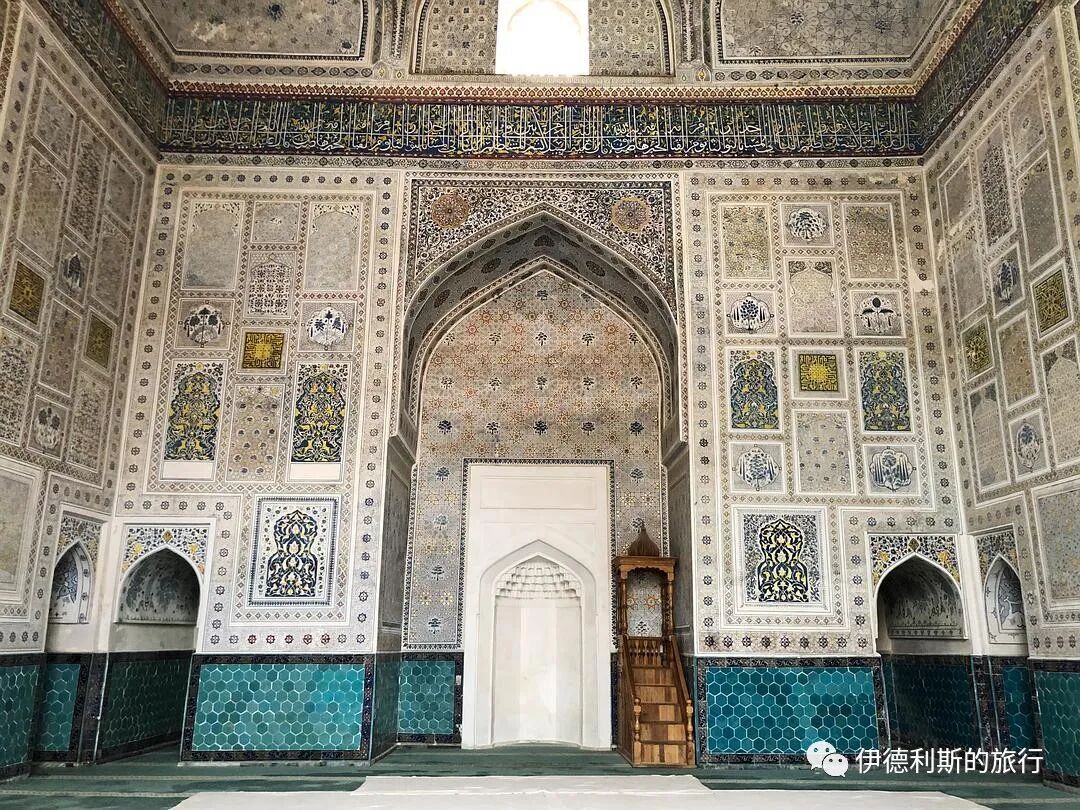
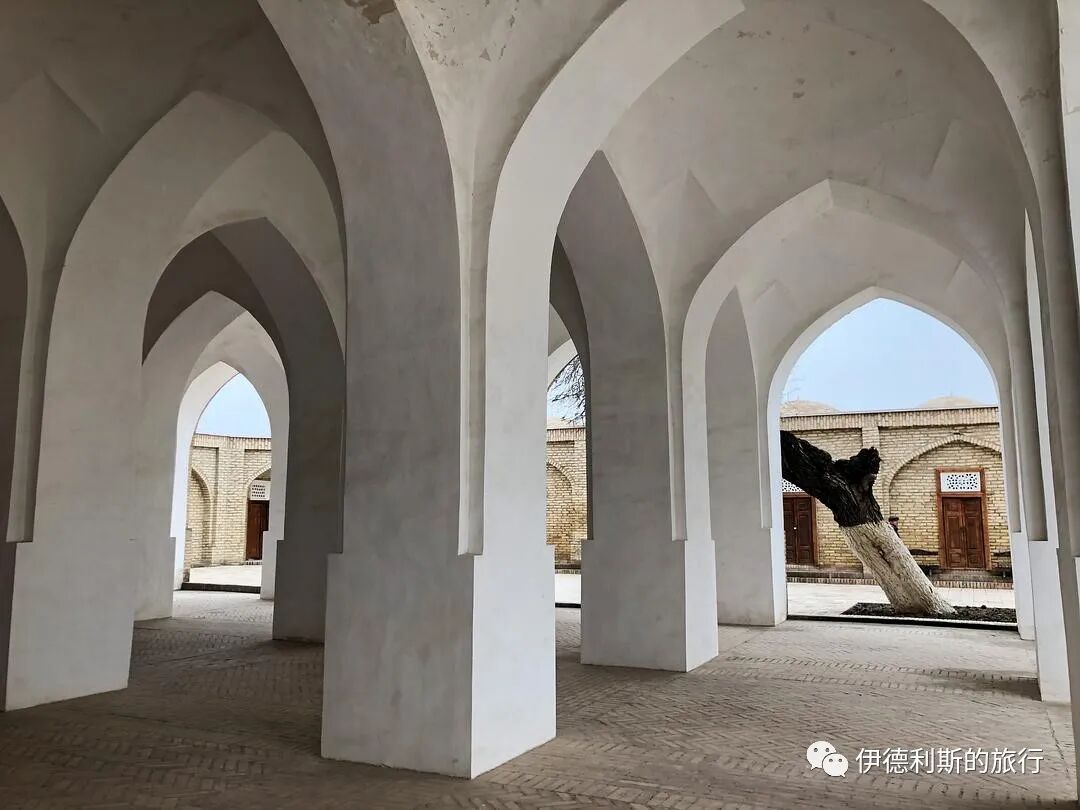
In the 19th century, a small minaret was added to the courtyard, but by then, the domes of both the mosque and the mausoleum had collapsed. In 1976, the facade of the mosque was restored, and between 1994 and 1996, the interior murals were restored and preserved.
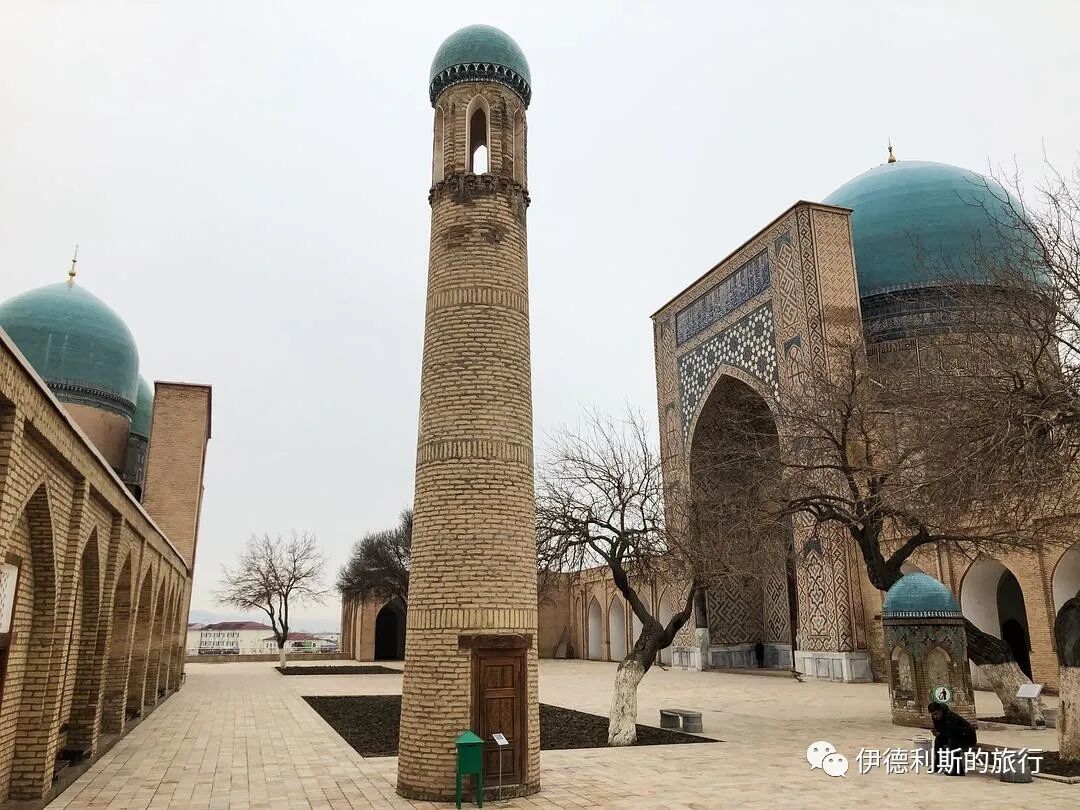
VI. Chubin Madrasah - Museum of Timurid History and Material Culture
In 1996, marking the 660th anniversary of Timur's birth, the former site of the Chubin Madrasah in Shahrisabz was converted into the Museum of Timurid History and Material Culture, exhibiting many artifacts from the Timurid era unearthed during archaeological excavations in the ancient city.
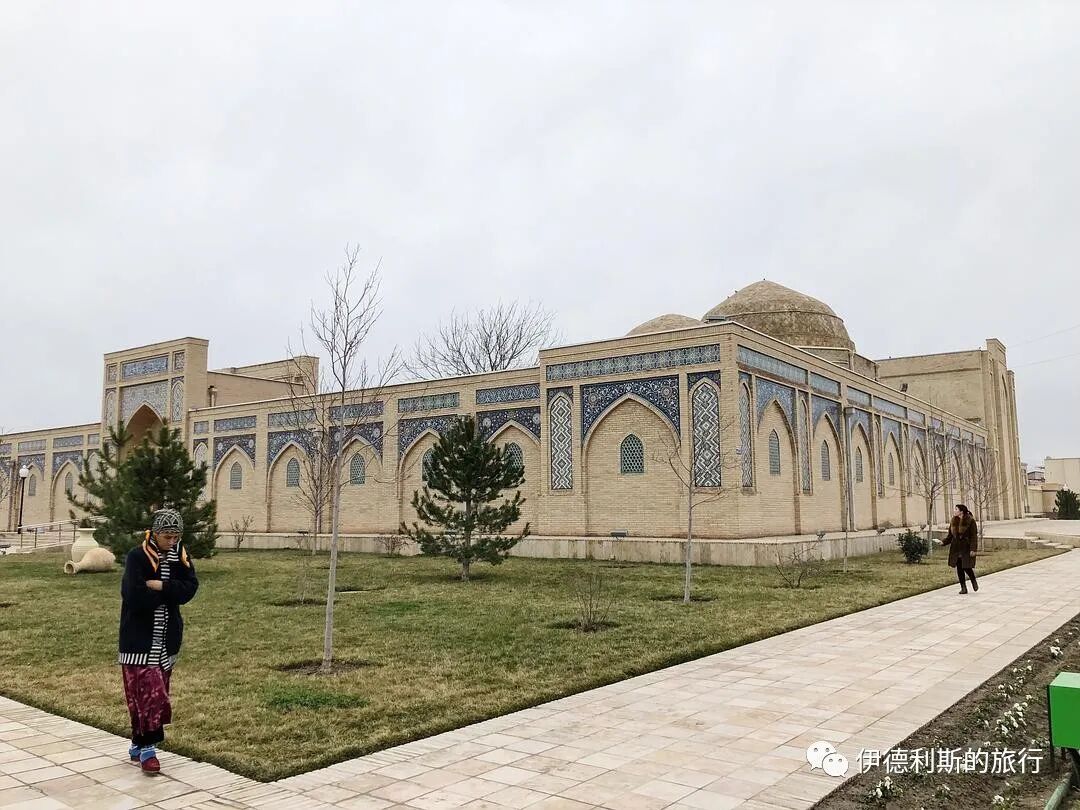
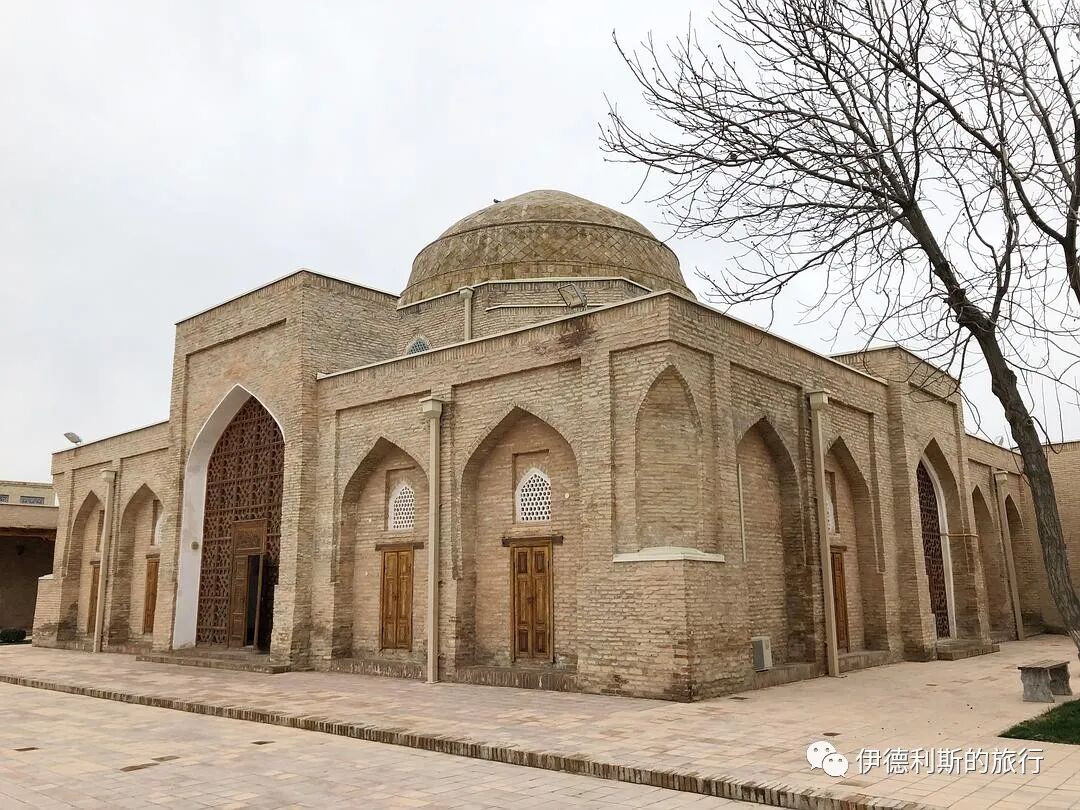
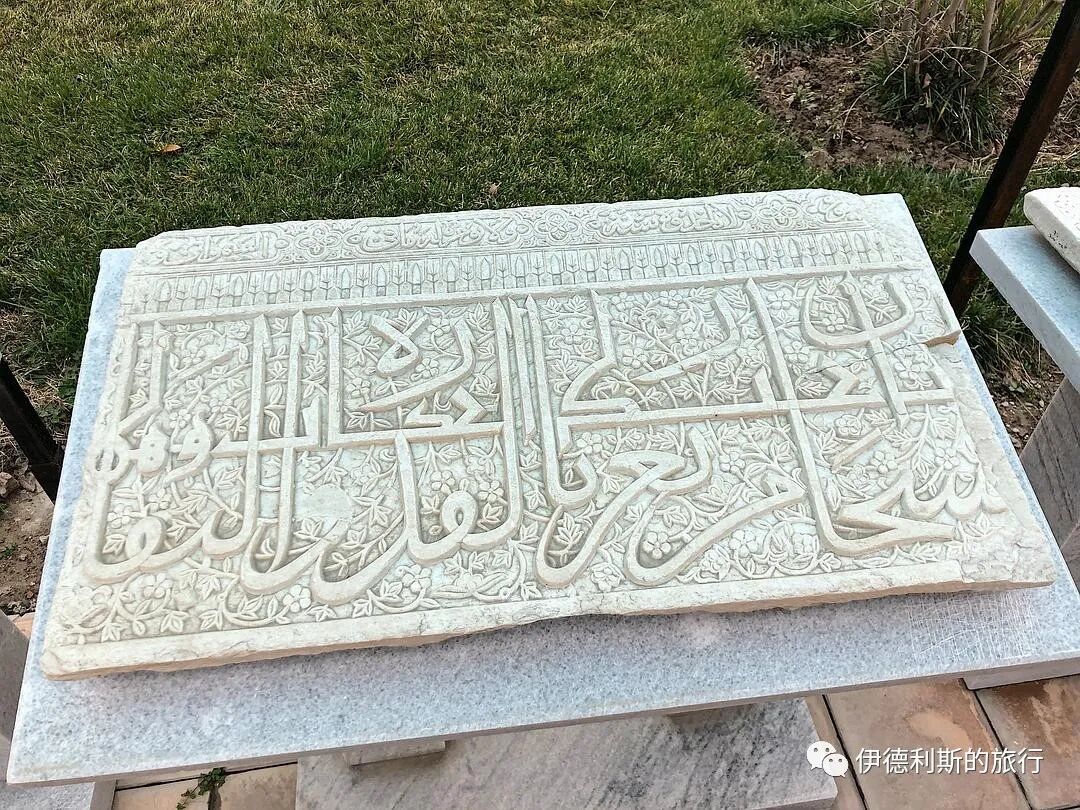
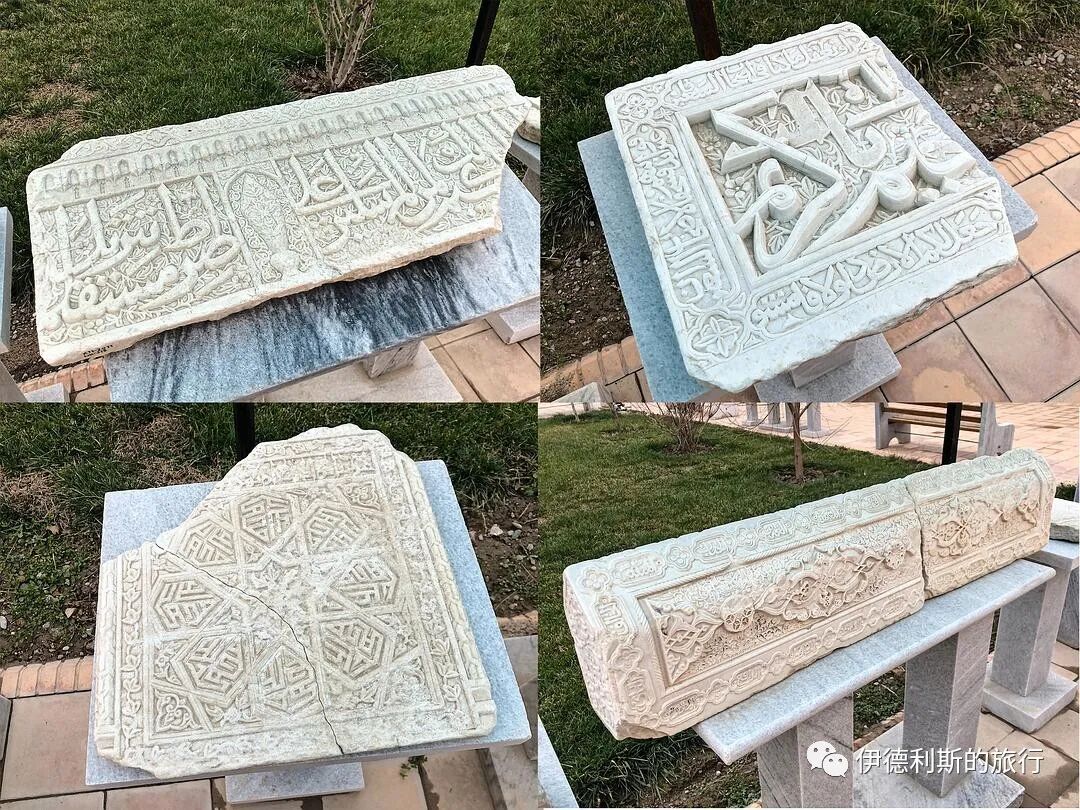
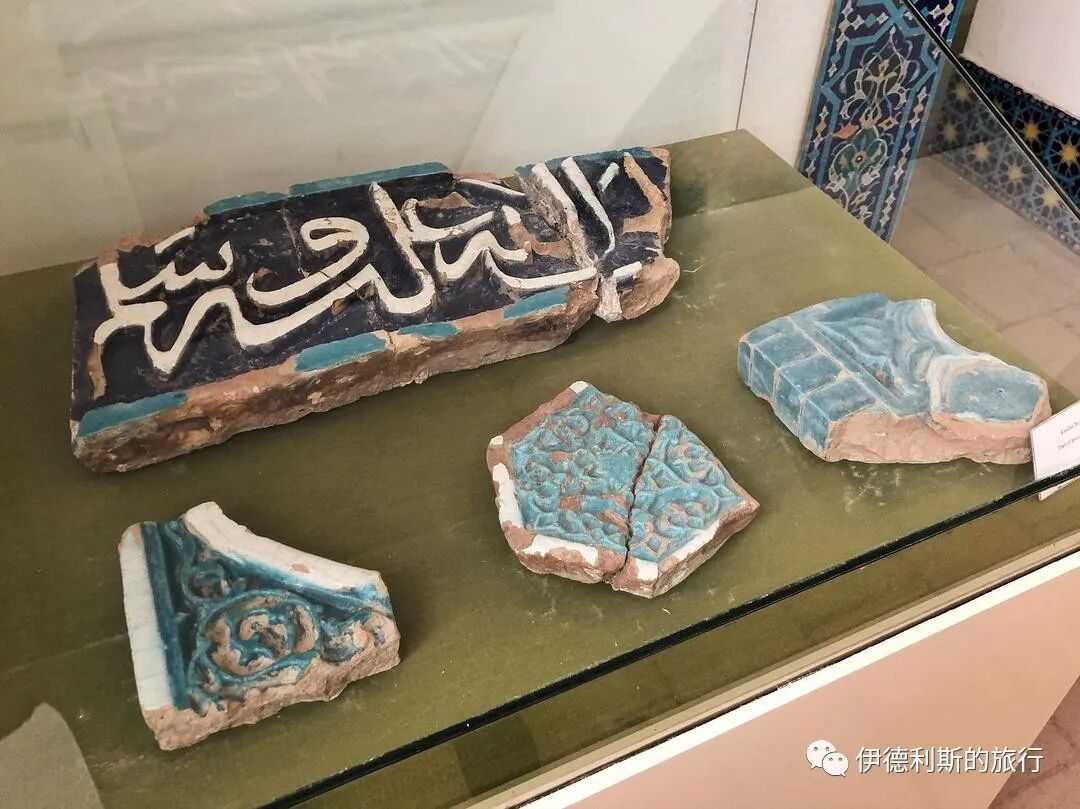
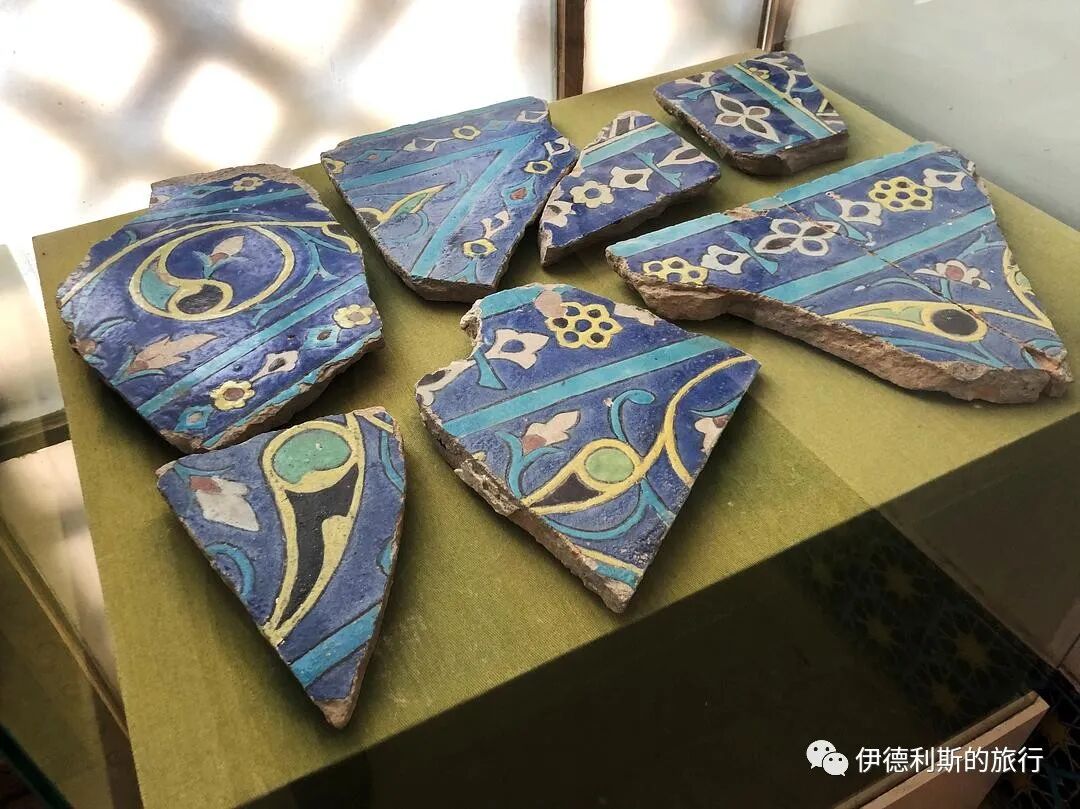
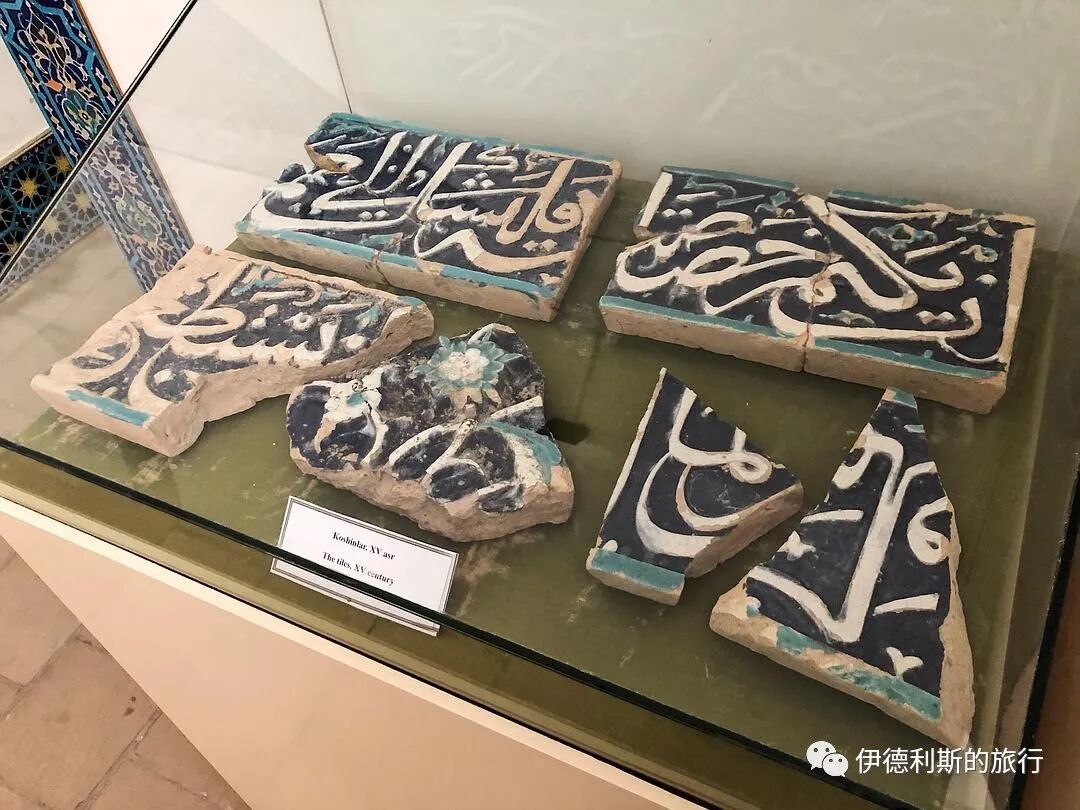
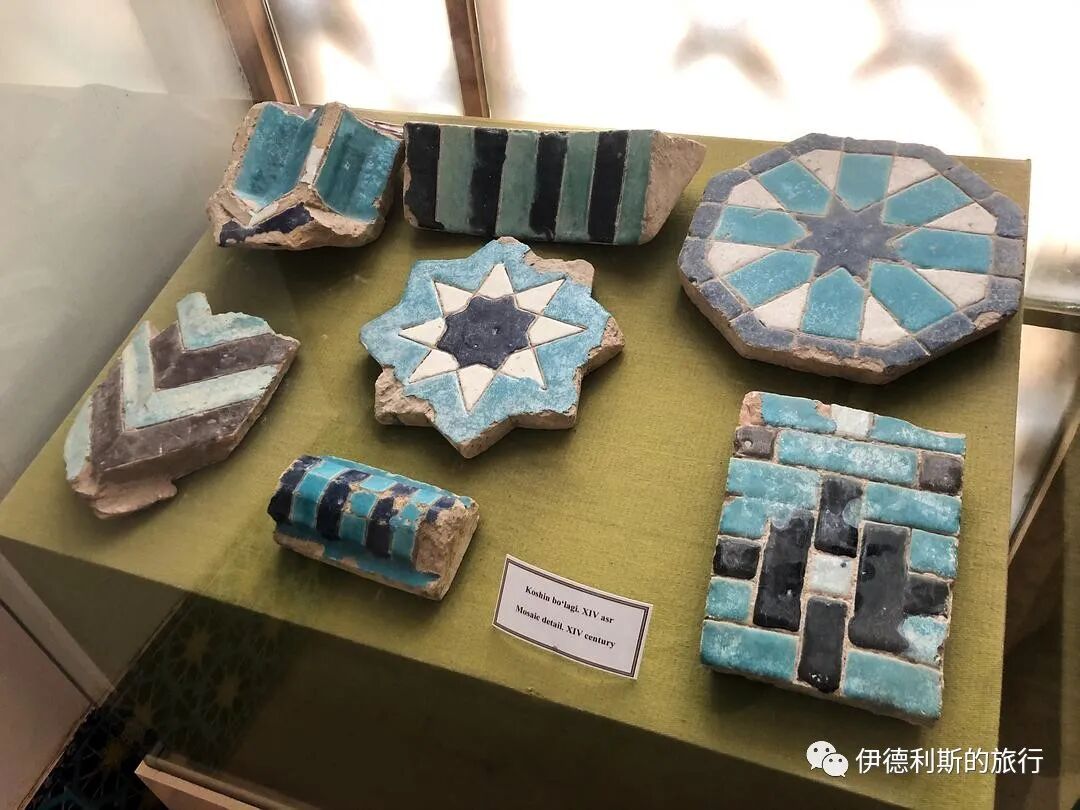
VII. Later Buildings
1. Koba Madrasah - 16th Century
The Koba madrasah was built in the 16th century and has now been converted into a restaurant for tourists.
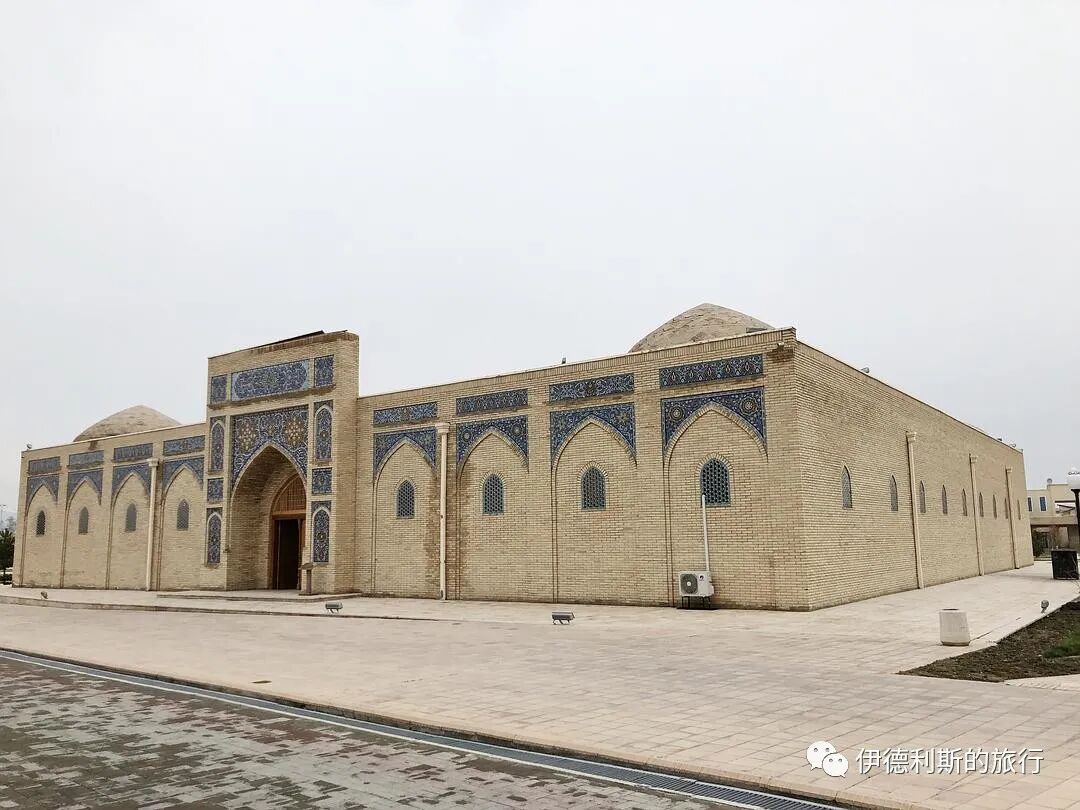
2. Domed Bazaar: Late 17th Century
At the intersection of the two main roads in Shahrisabz is the Chorsu (Domed Bazaar), rebuilt on the site of an original market in the late 17th century, in a typical Khanate of Bukhara style. Until a few years ago, this was a bustling market bazaar, but due to the government's efforts to turn the ancient city into a tourist attraction, all residential buildings were demolished to create a plaza, and the bazaar disappeared. Currently, the domed bazaar has become a souvenir shop. It was not open when I visited because it was the off-season.
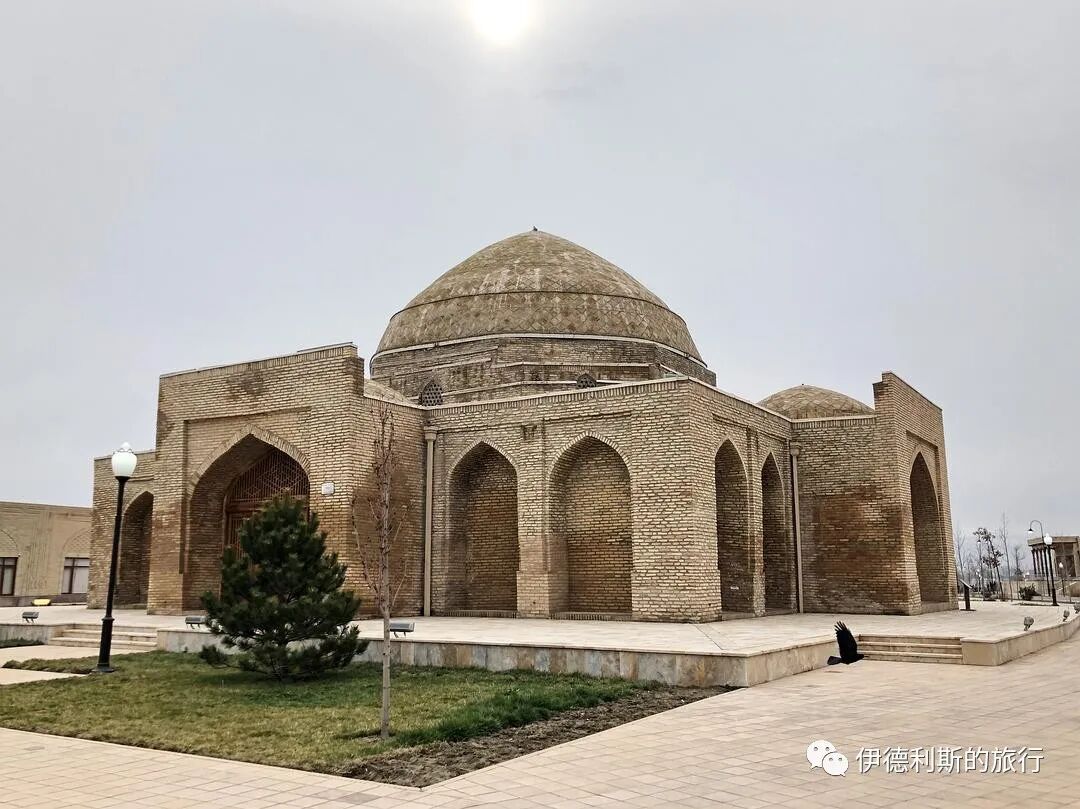
3. Malik Ajdar Mosque: Late 19th Century
The Malik Ajdar Mosque is a typical 19th-century mosque in the area. The main hall is used for winter prayers and is heated by stoves. The adjacent shaded area is used for summer prayers.
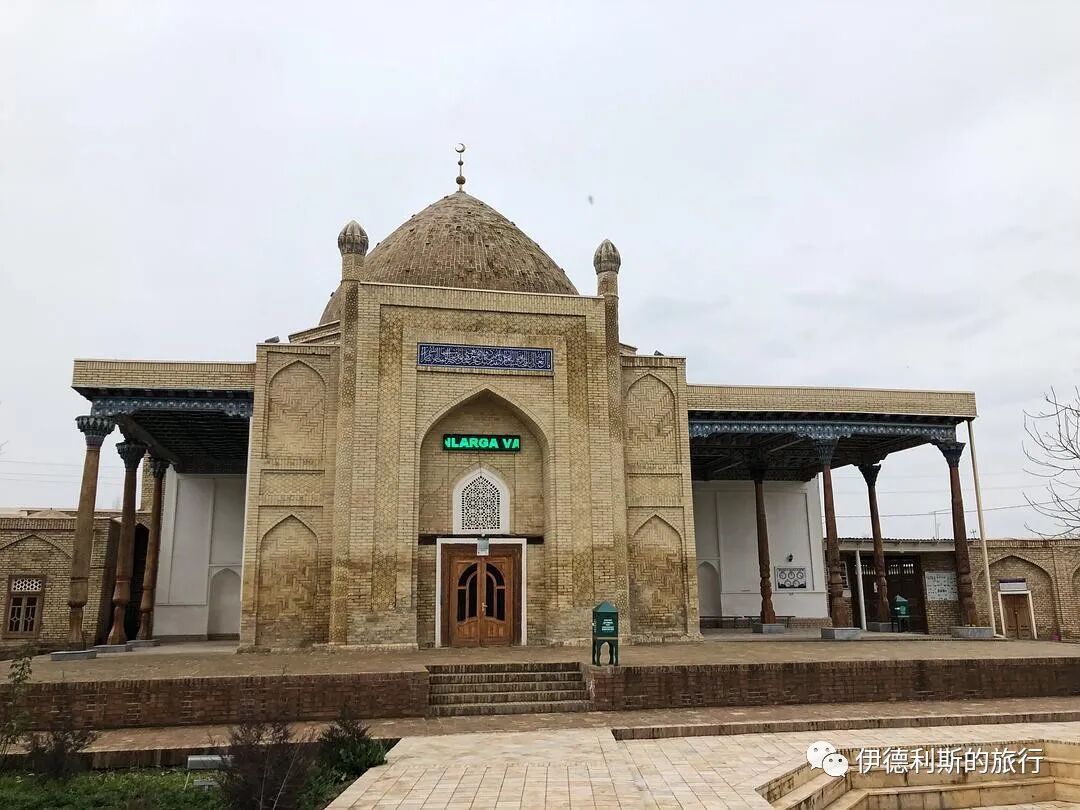
After the tour, we took a tourist vehicle back to the north gate.
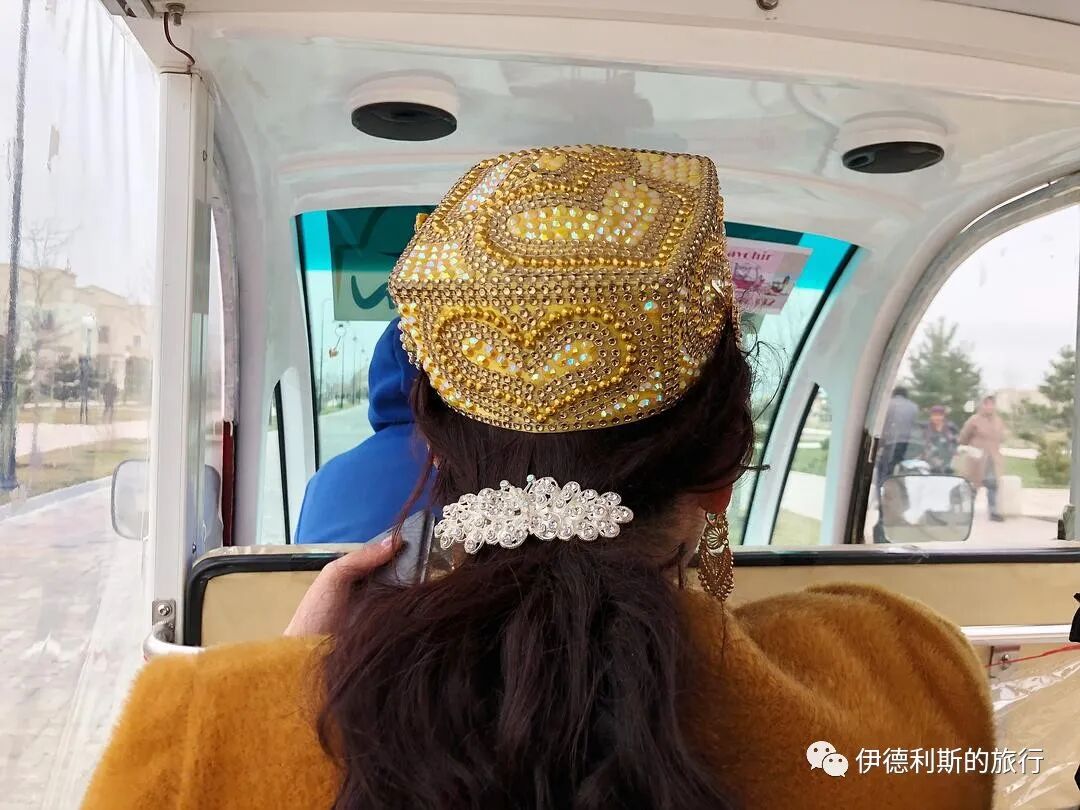
Uzbekistan Applied Arts Museum: Suzani Embroidery, Crafts and Central Asian Heritage
Articles • ali2007fr posted the article • 0 comments • 120 views • 2026-05-18 01:58
Summary: Uzbekistan Applied Arts Museum: Suzani Embroidery, Crafts and Central Asian Heritage is presented here as a firsthand travel account in clear English, beginning with this scene: The State Museum of Applied Arts of Uzbekistan is in Tashkent. It opened in 1937 and holds over 4,000 pieces of traditional crafts from across Uzbekistan, including wood carvings, ceramics, jewelry, and embroidery. The account keeps its focus on Uzbekistan Travel, Islamic Art, Central Asia while preserving the names, places, food, and historical details from the Chinese source.
The State Museum of Applied Arts of Uzbekistan is in Tashkent. It opened in 1937 and holds over 4,000 pieces of traditional crafts from across Uzbekistan, including wood carvings, ceramics, jewelry, and embroidery.
The museum building was once the home of a 19th-century Russian diplomat named Alexander Alexandrovich Polovtsev Jr. His secretary bought the house from a Tashkent merchant, and architect A. A. Burmeyster later renovated it.
This building is a classic example of late 19th-century Uzbek oriental architecture and decorative art. Folk artists worked together on the carvings and paintings, including Usta T. Arsankulov, A. Kazymdzhanov from Tashkent, Usta Shirin Muradov from Bukhara, Usta A. Palvanov from Khiva, and Usta Abdullah from Rishtan.
During World War I, the building held Austrian officer prisoners. After the October Revolution and until the mid-1930s, it served as an orphanage. In 1937, it became a training center for carving and embossing, as well as an embroidery workshop, eventually turning into a museum for handicrafts. In 1997, the museum was transferred to the Ministry of Culture of Uzbekistan and renamed the State Museum of Applied Arts.
Oil paintings
These are oil paintings by Uzbek craftspeople. The first two were painted by V. K. Razvadovsky in 1937.
Suzani embroidery
The word Suzani comes from the Persian word suzan, meaning needle. This type of embroidery is popular in the Transoxiana region of Central Asia. Girls in the Transoxiana region traditionally start learning to sew when they are very young. Before a wedding, the bride's female relatives gather to make a Suzani together. This gathering is called hashar, and they sing and dance while they work. At the wedding, the Suzani is first hung in the bride's home. When the wedding car is ready to leave, the Suzani is taken down, packed up, and brought to the new couple's home to be hung on the wall. After that, the Suzani is usually only hung up for important events and gatherings, and it is kept in a wooden chest at other times.
Suzani is usually made of cotton. Before sewing, the cotton fabric is soaked in tea or onion water to turn the background a light brown color, then colored with various natural dyes. Light yellow comes from saffron, bright yellow from onion skins, brown from nut shells, light purple from black mulberries, deep purple from cherries, gray-blue from raspberries, and orange from henna.
The artists who design the Suzani patterns are called kalamkash. They draw lines with black ink and use bowls and plates to trace circles. Once the pattern is designed, several women embroider it together.
Suzani art reached its peak during the 16th to 19th centuries under the Bukhara Khanate and the Kokand Khanate. By the 19th century, there were six major production centers: Nurota, Bukhara, Samarkand, Shahrisabz, Tashkent, and Fergana.
A 19th-century Suzani embroidery from Bukhara. Bukhara Suzani is the most exquisite of all, known for its beautiful colors and high-quality stitching.
A 19th-century Suzani embroidery from Nurota. Nurota is an ancient Central Asian city built by Alexander the Great in the 4th century BC. In the 19th century, Nurata belonged to the Khanate of Bukhara. Its embroidery (suzani) features clusters of flowers, birds, animals, and highly stylized figures on a white background.
An Andijan suzani embroidery from the 1950s. Andijan is in the southeast of the Fergana Valley. The Fergana Valley is very fertile and is an important cotton-producing region. This area is skilled at producing large decorative suzani. The embroidery is very fine and usually features circular rosettes.
A Gul'kurpa-style suzani embroidery from the Piskent region of Tashkent Province in the 19th century. This type of embroidery uses many floral patterns and is a specialty of the Tashkent region.
A 19th-century Tashkent suzani embroidery. This type of suzani is called 'oy-palak' (moon heaven). Many Tashkent suzani have themes of starry skies, the sun, and the moon.
A late 19th-century Shahrisabz suzani embroidery. Shahrisabz is the hometown of Tamerlane the Great. In the 19th century, it was a weaving center for the Khanate of Bukhara, where many artisans made suzani specifically for the royal court.
A 20th-century suzani embroidery from the Surxondaryo region in the far south of Uzbekistan, near Afghanistan.
A 20th-century Samarkand suzani embroidery. Samarkand has historically been a center for the weaving industry in Central Asia. The suzani here have larger and simpler patterns than those in Bukhara, often featuring deep red rose garlands wrapped in leaves.
Skullcap (doppa).
Various 19th to 20th-century Uzbek skullcaps (doppa) from Samarkand, Shahrisabz, and Andijan. The skullcaps we see on the streets of Uzbekistan today are much simpler than these.
A gold-thread embroidered skullcap (doppa) made in Bukhara between 1940 and 1975.
Jewelry.
On the right is a bracelet made by Azizov K. A. in Tashkent in 1977. On the left is an amulet made by Dzyuba A. in Tashkent in 1982.
An early 20th-century amulet from Bukhara.
An early 20th-century necklace from Bukhara.
A late 19th to early 20th-century chest ornament from Bukhara.
Late 19th to early 20th-century earrings from Samarkand.
Mid-20th-century earrings from Tashkent.
A late 19th to early 20th-century amulet from Tashkent.
Earrings from Fergana in the early 20th century.
Earrings from Surxondaryo Region in the late 19th to early 20th century.
A headpiece from Fergana in the late 19th century.
Earrings from Sirdaryo in the early 20th century.
Wooden door.
A beautiful traditional Uzbek wooden door from the museum collection. view all
Summary: Uzbekistan Applied Arts Museum: Suzani Embroidery, Crafts and Central Asian Heritage is presented here as a firsthand travel account in clear English, beginning with this scene: The State Museum of Applied Arts of Uzbekistan is in Tashkent. It opened in 1937 and holds over 4,000 pieces of traditional crafts from across Uzbekistan, including wood carvings, ceramics, jewelry, and embroidery. The account keeps its focus on Uzbekistan Travel, Islamic Art, Central Asia while preserving the names, places, food, and historical details from the Chinese source.
The State Museum of Applied Arts of Uzbekistan is in Tashkent. It opened in 1937 and holds over 4,000 pieces of traditional crafts from across Uzbekistan, including wood carvings, ceramics, jewelry, and embroidery.
The museum building was once the home of a 19th-century Russian diplomat named Alexander Alexandrovich Polovtsev Jr. His secretary bought the house from a Tashkent merchant, and architect A. A. Burmeyster later renovated it.
This building is a classic example of late 19th-century Uzbek oriental architecture and decorative art. Folk artists worked together on the carvings and paintings, including Usta T. Arsankulov, A. Kazymdzhanov from Tashkent, Usta Shirin Muradov from Bukhara, Usta A. Palvanov from Khiva, and Usta Abdullah from Rishtan.
During World War I, the building held Austrian officer prisoners. After the October Revolution and until the mid-1930s, it served as an orphanage. In 1937, it became a training center for carving and embossing, as well as an embroidery workshop, eventually turning into a museum for handicrafts. In 1997, the museum was transferred to the Ministry of Culture of Uzbekistan and renamed the State Museum of Applied Arts.
Oil paintings
These are oil paintings by Uzbek craftspeople. The first two were painted by V. K. Razvadovsky in 1937.
Suzani embroidery
The word Suzani comes from the Persian word suzan, meaning needle. This type of embroidery is popular in the Transoxiana region of Central Asia. Girls in the Transoxiana region traditionally start learning to sew when they are very young. Before a wedding, the bride's female relatives gather to make a Suzani together. This gathering is called hashar, and they sing and dance while they work. At the wedding, the Suzani is first hung in the bride's home. When the wedding car is ready to leave, the Suzani is taken down, packed up, and brought to the new couple's home to be hung on the wall. After that, the Suzani is usually only hung up for important events and gatherings, and it is kept in a wooden chest at other times.
Suzani is usually made of cotton. Before sewing, the cotton fabric is soaked in tea or onion water to turn the background a light brown color, then colored with various natural dyes. Light yellow comes from saffron, bright yellow from onion skins, brown from nut shells, light purple from black mulberries, deep purple from cherries, gray-blue from raspberries, and orange from henna.
The artists who design the Suzani patterns are called kalamkash. They draw lines with black ink and use bowls and plates to trace circles. Once the pattern is designed, several women embroider it together.
Suzani art reached its peak during the 16th to 19th centuries under the Bukhara Khanate and the Kokand Khanate. By the 19th century, there were six major production centers: Nurota, Bukhara, Samarkand, Shahrisabz, Tashkent, and Fergana.
A 19th-century Suzani embroidery from Bukhara. Bukhara Suzani is the most exquisite of all, known for its beautiful colors and high-quality stitching.
A 19th-century Suzani embroidery from Nurota. Nurota is an ancient Central Asian city built by Alexander the Great in the 4th century BC. In the 19th century, Nurata belonged to the Khanate of Bukhara. Its embroidery (suzani) features clusters of flowers, birds, animals, and highly stylized figures on a white background.
An Andijan suzani embroidery from the 1950s. Andijan is in the southeast of the Fergana Valley. The Fergana Valley is very fertile and is an important cotton-producing region. This area is skilled at producing large decorative suzani. The embroidery is very fine and usually features circular rosettes.
A Gul'kurpa-style suzani embroidery from the Piskent region of Tashkent Province in the 19th century. This type of embroidery uses many floral patterns and is a specialty of the Tashkent region.
A 19th-century Tashkent suzani embroidery. This type of suzani is called 'oy-palak' (moon heaven). Many Tashkent suzani have themes of starry skies, the sun, and the moon.
A late 19th-century Shahrisabz suzani embroidery. Shahrisabz is the hometown of Tamerlane the Great. In the 19th century, it was a weaving center for the Khanate of Bukhara, where many artisans made suzani specifically for the royal court.
A 20th-century suzani embroidery from the Surxondaryo region in the far south of Uzbekistan, near Afghanistan.
A 20th-century Samarkand suzani embroidery. Samarkand has historically been a center for the weaving industry in Central Asia. The suzani here have larger and simpler patterns than those in Bukhara, often featuring deep red rose garlands wrapped in leaves.
Skullcap (doppa).
Various 19th to 20th-century Uzbek skullcaps (doppa) from Samarkand, Shahrisabz, and Andijan. The skullcaps we see on the streets of Uzbekistan today are much simpler than these.
A gold-thread embroidered skullcap (doppa) made in Bukhara between 1940 and 1975.
Jewelry.
On the right is a bracelet made by Azizov K. A. in Tashkent in 1977. On the left is an amulet made by Dzyuba A. in Tashkent in 1982.
An early 20th-century amulet from Bukhara.
An early 20th-century necklace from Bukhara.
A late 19th to early 20th-century chest ornament from Bukhara.
Late 19th to early 20th-century earrings from Samarkand.
Mid-20th-century earrings from Tashkent.
A late 19th to early 20th-century amulet from Tashkent.
Earrings from Fergana in the early 20th century.
Earrings from Surxondaryo Region in the late 19th to early 20th century.
A headpiece from Fergana in the late 19th century.
Earrings from Sirdaryo in the early 20th century.
Wooden door.
A beautiful traditional Uzbek wooden door from the museum collection.
Samarkand Travel Guide: Timur's Capital, Mosques & Islamic History (Part 1)
Articles • ali2007fr posted the article • 0 comments • 167 views • 2026-05-17 05:44
Summary: This travel note introduces Samarkand Travel Guide: Timur's Capital, Mosques & Islamic History (Part 1). In 1220, Genghis Khan led the Mongol army to conquer the ancient Central Asian city of Samarkand, killed all the civilians who had taken refuge in the citadel and the mosque, and looted all the treasures in the city. It is useful for readers interested in Uzbekistan Travel, Timurid History, Muslim Heritage.
In 1220, Genghis Khan led the Mongol army to conquer the ancient Central Asian city of Samarkand, killed all the civilians who had taken refuge in the citadel and the mosque, and looted all the treasures in the city; Samarkand lost its former glory.
In 1370, Emperor Timur established the Timurid dynasty on the ruins of the Chagatai Khanate and made Samarkand his capital. Over the next 35 years, Timur employed craftsmen, artists, and architects from all over the Timurid Empire to rebuild the city of Samarkand, making it the undisputed center of Central Asia. During Timur's reign, the population of Samarkand exceeded 150,000, and important monuments such as the Shah-i-Zinda mausoleum complex and the Bibi-Khanym Mosque have been preserved to this day.
Between 1409 and 1449, a period of 40 years, the city of Samarkand continued to grow as a city of science and culture under the rule of Timur's grandson, Ulugh Beg. In addition to the completion of the Gur-e-Amir mausoleum for Emperor Timur, the Ulugh Beg Madrasah (Islamic school) and the Ulugh Beg Observatory are both important testaments to this.
After the death of Ulugh Beg, the Timurid dynasty went from prosperity to decline and fell into division. In the early 16th century, the Uzbeks occupied Samarkand and established the Shaybanid dynasty, later moving the capital to Bukhara in 1561. Since then, Samarkand gradually declined.
By the 19th century, most of the Timurid dynasty monuments in Samarkand were severely damaged. During the Soviet era, large-scale renovations were carried out on the Timurid monuments in Samarkand; unfortunately, the 'tear down the old and build the new' approach erased too much historical information and has been criticized by later generations.
In 2001, the ancient city of Samarkand was inscribed on the World Heritage List under the name 'Samarkand – Crossroad of Cultures'.
The old photos shared in this article, the black and white ones, come from the 'Turkestan Album', produced between 1871 and 1872 under the sponsorship of Konstantin P. von Kaufman, the first Governor-General of Russian Turkestan.
The color photos are from Sergei Mikhailovich Prokudin-Gorskii. Some of these photos date back to 1905, with most of the work coming from between 1909 and 1915. During this period, he traveled to many different regions of the Russian Empire with the support of Tsar Nicholas II and the Ministry of Transport.
Table of Contents
I. Shah-i-Zinda: 11th–15th centuries
II. Rukhabad Mausoleum: 1380s
III. Gur-e-Amir Mausoleum: 1404
4. Bibi-Khanym Mosque: 1404
5. Bibi-Khanym Mausoleum: 1404
6. Ulugh Beg Madrasah: 1420
7. Ulugh Beg Observatory: 1429
8. Ishrat-khana Mausoleum: 1464
9. Ak-Saray Mausoleum: Presumed to be 1450s-1470s
10. Khodja Abdu Derun Mausoleum: 15th century
11. Mausoleum of Prophet Daniel: Rebuilt in the early 20th century
I. Shah-i-Zinda: 11th–15th centuries
Shah-i-Zinda is the oldest and most important Islamic mausoleum complex in Samarkand. In the 11th century, the tomb of Kusam Ibn Abbas, a cousin of the Prophet Muhammad, was built here; during the Timurid dynasty in the 14th century, a large number of women from the Timurid family and Timur's confidants were also buried here.
The Shah-i-Zinda complex can be divided into three parts: south, middle, and north, each with its own gate. The southern complex is the latest in date, built by Timur's grandson, Ulugh Beg. The middle complex contains the tombs of Timur's ministers, generals, nieces, and sisters. The northern complex is the core part; in addition to the Prophet's cousin, two of Timur's wives and local religious leaders are also buried there.
(I) Southern Complex
1. Gate: 1435
The gate of Shah-i-Zinda (Chartak of Abdulaziz) was built in 1435 by Ulugh Beg, the third ruler of the Timurid dynasty, on behalf of his son Abdulaziz. Abdulaziz was Ulugh Beg's second son, raised by Ulugh Beg from childhood, deeply loved by him, and was also the designated heir of Ulugh Beg.
In 1449, Ulugh Beg's eldest son, Abdal-Latif Mirza, launched a rebellion against his father; Ulugh Beg led his army to meet him while ordering Abdal-Aziz to stay behind and guard Samarkand. Abdulaziz's poor management eventually led to an uprising in Samarkand; he locked himself in the citadel and sent a letter to his father for help, and Ulugh Beg had to return to Samarkand after receiving the letter. Abdal-Latif subsequently attacked Samarkand, and Ulugh Beg and Abdal-Aziz surrendered to him. Abdal-Latif arranged for Ulugh Beg and Abdulaziz to go on Hajj (pilgrimage) to Mecca and had them both killed on the way.
2. Double-domed Mausoleum: 1437
The Double-domed Mausoleum is the first mausoleum after entering the gate, believed to have been built by the third ruler of the Timurid dynasty, Ulugh Beg, in 1437. The occupant of the tomb may be Timur's benefactor Uldzk Inak and her daughter Bibi Zinet, but there is also a theory that the occupant is the astronomer Kazi Zadeh Al-Rumi, who worked under Ulugh Beg.
Kazi Zadeh Al-Rumi was a famous astronomer and mathematician of the 14th–15th centuries, born in Bursa, the capital of the Ottoman Empire in 1364, and came to work at the Ulugh Beg Observatory in Samarkand during Ulugh Beg's reign. At the observatory, he worked with Ulugh Beg and other astronomers to complete the famous 'Zīj-i Sultānī' (Ulugh Beg's astronomical tables).
(II) Middle Complex
After passing through the gate and the Double-domed Mausoleum and climbing the stairs, one enters the middle complex. The middle complex can also be divided into southern and northern parts. The southern part consists of five adjacent mausoleums, mainly for important figures in Timur's court: the mausoleum of Timur's minister Amirzade (1386), the mausoleum of Timur's niece Shadi Mulk Aka (1372), the mausoleum of Timur's sister Shirin Bika Aka (1386), and the mausoleum of Timur's general Tughlu Tekin (1376); there is also an octagonal mausoleum of unknown occupant, presumably built in the 1430s.
View of the gate of the middle complex from the Double-domed Mausoleum
Shot from west to east, from left to right are the mausoleum of niece Shadi Mulk Aka, the mausoleum of sister Shirin Bika Aka, the mausoleum of minister Amirzade, and the Double-domed Mausoleum.
Shot from northeast to southwest, the three domes from left to right are the mausoleum of sister Shirin Bika Aka, the octagonal tomb pavilion, and the mausoleum of niece Shadi Mulk Aka; on the right are three others rebuilt in modern times.
Shot from northeast to southwest, the three domes from left to right belong to the mausoleum of sister Shirin Bika Aka, the mausoleum of minister Amirzade, and the mausoleum of niece Shadi Mulk Aka; in the front is the octagonal tomb pavilion.
Shot from northwest to southeast, from left to right are the octagonal tomb pavilion, the mausoleum of sister Shirin Bika Aka, the mausoleum of niece Shadi Mulk Aka, the mausoleum of minister Amirzade, and the Double-domed Mausoleum.
Shot from north to south, from left to right are the mausoleum of Shirin Bika Aka, the mausoleum of Amirzade, and the mausoleum of Shadi Mulk Aka.
Shot from south to north, on the left is the octagonal tomb pavilion, and on the right is the mausoleum of Shadi Mulk Aka.
Shot from south to north, on the left are the mausoleum of Amirzade and the mausoleum of Shadi Mulk Aka.
The mausoleum of Amirzade shot from north to south.
Shot from north to south, from left to right are the mausoleum of Amirzade and the mausoleum of Shadi Mulk Aka.
1. Amirzade Mausoleum: 1386
Amirzade was a minister in Timur's court. In addition to geometric patterns and eight-petaled rose patterns, the Peshtak (portal) entrance of the mausoleum also features Kufic calligraphy and Thuluth calligraphy.
2. Shadi Mulk Aka Mausoleum: 1372
Shadi Mulk Aka was the daughter of Timur's eldest sister, Kutlug Turkan Aka.
3. Tughlu Tekin Mausoleum: 1376
Tughlu Tekin was the mother of Timur's general Amir Hussein, and later Amir Hussein was also buried here.
4. Shirin Bika Aka Mausoleum: 1386
The occupant of the tomb is Timur's sister.
5. Octagonal Tomb Pavilion: presumably 1430s
The occupant of this tomb pavilion has not been verified to this day.
6. Usto Ali Mausoleum: 1360s–1380s
On the north side of the middle complex is a separate mausoleum; the occupant is unknown, only that the architect was Usto Ali from Nasaf (Qarshi).
View from south to north
(III) Northern Complex
1. Passage of the Departed: 14th century
The Passage of the Departed (Yuqori Chortoq) is the gate to the northern complex.
2. Kusam Ibn Abbas Mausoleum: 11th century
The Kusam Ibn Abbas Mausoleum is the earliest building constructed in Shah-i-Zinda, dating back to the 11th century, and was renovated in the 14th and 15th centuries. Kusam is legendary as the cousin of the Prophet Muhammad and the son of the Prophet's uncle, Abbas ibn Abdul-Muttalib. Kusam is said to be one of the first people to come to Central Asia to spread Islam and eventually died in Samarkand.
In 1333, the famous Moroccan traveler Ibn Battuta passed through Samarkand and visited the Kusam mausoleum. The 'Rihla' (Travels of Ibn Battuta) records:
'The people of Samarkand come to visit this tomb every Monday and Friday eve; the Tatars also come to visit and make great vows to him, bringing cattle, sheep, dirhams, and dinars to be used as funds for the food and lodging of passing travelers and for the servants of the shrine.' 'On the tomb is a dome built on four pillars, each pillar flanked by two marble columns in green, black, white, and red.' 'The walls of the dome are carved and inlaid with gilded marble, and the ceiling is made of lead.' 'The tomb is inlaid with ebony, the four corners of the tomb are wrapped in silver leaf, three silver lamps are hung over the tomb, and wool and cotton carpets are spread inside the dome.' "
There are also some tombstones outside the mausoleum.
3. Tuman Aka Mausoleum: 1405
Opposite the Kusam Ibn Abbas Mausoleum is the mausoleum of Timur's wife, Tuman Aka. Tuman Aka, also written as Touman Agha, married Timur in 1377 and came from the family of the last Chagatai Khan, Qazan Sultan. She was Timur's favorite wife and a younger relative of Sarai Mulk Khanym, the daughter of Qazan Sultan.
Tuman Aka's mausoleum was built on the ruins of an Islamic madrasah destroyed in the 14th century; the inscription on the mausoleum bears the construction date of 1405 and the name of a calligrapher from Tabriz, Iran.
Next to the Tuman Aqa mausoleum is a Sufi khanaka (hospice) named after Tuman Aqa. It is speculated that the khanaka was built earlier than the mausoleum, probably around the end of the 14th century.
4. Khodja Ahmad Mausoleum: 1360s
The Khodja Ahmad Mausoleum is located at the northernmost part of the entire Shah-i-Zinda complex, built in the 1360s, and is the tomb of a local religious leader. The facade (Peshtak or Pischtak) of the mausoleum is decorated with a large number of floral, geometric patterns, and calligraphic tiles. The Kufic calligraphy tiles on the inside bear the name of the architect Fakhri-Ali, and the Thuluth calligraphy tiles on the outside read, 'May Allah perpetuate this eternity and make the mausoleum a garden of happiness for Khodja Ahmad.' "
5. Qutlugh Aka Mausoleum: 1361
To the east of the Khwaja Ahmad Mausoleum is the tomb of an unidentified woman, dating back to 1361. Some information indicates that Timur's wife, Qutlugh Aka, is buried here.
II. Rukhabad Mausoleum: 1380s
The Rukhabad Mausoleum is one of the earliest buildings built by Timur in Samarkand. Legend has it that after the Sufi sheikh Burkhan ad-Din Sagardji died during the Yuan Dynasty, his son Abu Said brought his remains to Samarkand for burial according to his father's last wish. During his stay in Samarkand, Abu Said became Timur's religious mentor, and Timur built a mausoleum for Sagardji in the 1380s, naming it 'Rukhabad' (House of the Spirit).
Behind the mausoleum are the ruins of a madrasah.
III. Gur-e-Amir Mausoleum: 1404
Gur-e-Amir is the mausoleum of Timur, which holds an important position in the history of Central Asian architecture and became the precursor and model for later Mughal architecture.
The complex was originally a Sufi khanqah and madrasah built by Timur's favorite grandson, Muhammad Sultan, at the end of the 14th century, called Khangah-i Muhammad Sultan; now only part of the foundation remains.
Muhammad Sultan died in 1403 while accompanying Timur on his expedition to the Ottoman Empire. He was initially buried in northwestern Iran, and it was not until a year later that he was transported to Samarkand and reburied in the Khangah-i Muhammad Sultan. In 1405, Timur died on his way to campaign against the Ming Dynasty; his body could not be transported back to his hometown of Shahrisabz due to heavy snow and was eventually buried with his grandson Muhammad Sultan.
After Timur's death, his son Shah Rukh inherited the eastern part of the empire. Shah Rukh moved the capital of the Timurid Empire from Samarkand to Herat in Afghanistan and had his son Ulugh Beg rule Samarkand starting in 1409. During Ulugh Beg's rule in Samarkand, he hired the architect Muhammad ibn Mahmud from Isfahan, Iran, to formally convert the Khangah-i Muhammad Sultan into the royal mausoleum of the Timurid dynasty, Gur-e-Amir, which means 'Tomb of the King' in Persian.
After the 17th century, as the center of Transoxiana shifted from Samarkand to Bukhara, Gur-e-Amir gradually fell into disrepair. It was not until the 1950s that renovations began on the dome, gate, and minarets, and the interior was renovated in the 1970s.
The alley behind Gur-e-Amir
The entrance to Gur-e-Amir is a huge Iwan arch, covered with glazed ceramic panels featuring complex plant and geometric patterns. In the 19th century, the upper part had collapsed and was later restored.
Back of the arch
After entering the arch is the main building of the mausoleum. The mausoleum was fortunately preserved, but unfortunately, only the northwestern one of the four minarets remained by the 19th century. The minaret has spiral-thickened Kufic Arabic calligraphy.
The main body of the mausoleum is divided into three levels: an octagonal base, a middle drum structure, and a large ribbed dome. The base is decorated with thickened Kufic Arabic calligraphy in blue tiles, while the drum structure is decorated with slender Persian-Arabic calligraphy in black and white tiles.
There is also a huge main arch on the west side of the mausoleum.
The current entrance is on the north side of the mausoleum.
The interior of the mausoleum is divided into two levels: the upper level contains the tombstones indicating the positions, and the lower level is the actual burial site. There are 9 people buried in the mausoleum: Timur himself, his sons Miran Shah and Shah Rukh, his grandsons Ulugh Beg and Muhammad Sultan, as well as Timur's spiritual mentor Mir Said Baraka and another Islamic master, Seyid Omar.
Ulugh Beg placed a hard, dark green jade stone over Timur's tomb, which is said to have come from the throne of the Chagatai Khanate. In 1740, Nader Shah, the emperor of the Persian Afsharid dynasty, took the tombstone back to Persia, but the stone cracked when it was moved, and Nader Shah immediately began to suffer misfortune. The tombstone was considered the cause of the misfortune, so he eventually returned it to its original place.
To the west of Timur's tombstone is Shah Rukh's tombstone. Shah Rukh was the second ruler of the Timurid dynasty. In 1447, Shah Rukh died of illness and was buried in Herat. The following year, Ulugh Beg occupied Herat, dug up his father's remains, brought them back to Samarkand, and reburied them in Gur-e-Amir.
To the south of Timur's tombstone is Ulugh Beg's tombstone. Ulugh Beg was the third ruler of the Timurid dynasty. In 1449, Ulugh Beg's eldest son, Abdal-Latif Mirza, launched a rebellion, captured Ulugh Beg near Samarkand, and subsequently had him killed. But Abdal-Latif only ruled for 6 months before being murdered, and Samarkand was then ruled by Ulugh Beg's nephew, Abdallah Mirza. Abdallah buried Ulugh Beg's remains in Gur-e-Amir, together with his grandfather Timur and father Shah Rukh.
To the east of Timur's tombstone is Muhammad Sultan's tombstone.
Muhammad Sultan's father was Timur's favorite son, Jahangir, but he died of illness in 1376, the year after Muhammad was born. In 1386, the 10-year-old Muhammad Sultan was appointed by Timur to rule the important Iranian city of Tabriz. Five years later, he began to accompany his grandfather on campaigns, performing well in two wars invading the Golden Horde, and grew into an excellent officer. In 1397, Muhammad Sultan was appointed to manage the Fergana region in the easternmost part of the Timurid Empire and was given an army of 40,000 men.
Just before Timur's invasion of India in 1398, Muhammad Sultan was appointed by Timur as the heir to the throne (Vali al-lakhd). It is said that when Timur preached the Khutbah (sermon) at the Jumu'ah (Friday) congregational prayer after conquering Delhi, he placed Muhammad Sultan's name alongside his own.
In 1402, Timur invaded the Ottoman Empire, and the two sides fought a decisive battle in Ankara. On the battlefield, Muhammad Sultan led the army to inflict heavy damage on the enemy and captured the Ottoman Sultan Bayezid I. After the war, Muhammad Sultan was sent to Bursa, the then-capital of the Ottoman Empire, and seized a large amount of treasure.
However, while returning from Bursa to the main force led by Timur, Muhammad Sultan was wounded in battle and eventually died in 1403. Timur felt immense grief over his grandson's death and ordered everyone in the army to wear dark clothes to mourn.
Further west of Timur's tombstone is the tombstone of Timur's third son, Miran Shah. After Timur conquered Iran in 1393, he granted the 'Hulagu Throne' to Miran Shah, with territories including Persia and the Caucasus region, such as Baghdad and Tabriz. However, after suffering a mental illness from falling off a horse, Miran Shah increasingly became a tyrant.
Miran Shah lived a dissolute life, including drinking in the mosque, throwing gold coins out of palace windows, and suffering successive military failures. Most importantly, he began to question Timur's ability to govern, which Timur learned about.
In 1399, Timur sent his nephew Sulaiman Shah to bring Miran Shah back to Samarkand, stripped him of all positions, and made him a follower of Timur.
After Timur died in 1405, Miran Shah supported his son Khalil Sultan to inherit the throne, launching a war of succession with his brother Shah Rukh. Miran Shah led an army to fight in western Persia but was defeated by the Turkmen Black Sheep dynasty in the battle for Tabriz in 1406. During the rout, Miran Shah was killed by the Turkmen, and his head was later cut off and hung on the walls of Tabriz.
After the war, the Turkmen handed over Miran Shah's head and body to Shah Rukh, who had ultimately won the war of succession, and Shah Rukh buried Miran Shah in Gur-e-Amir. view all
Summary: This travel note introduces Samarkand Travel Guide: Timur's Capital, Mosques & Islamic History (Part 1). In 1220, Genghis Khan led the Mongol army to conquer the ancient Central Asian city of Samarkand, killed all the civilians who had taken refuge in the citadel and the mosque, and looted all the treasures in the city. It is useful for readers interested in Uzbekistan Travel, Timurid History, Muslim Heritage.
In 1220, Genghis Khan led the Mongol army to conquer the ancient Central Asian city of Samarkand, killed all the civilians who had taken refuge in the citadel and the mosque, and looted all the treasures in the city; Samarkand lost its former glory.
In 1370, Emperor Timur established the Timurid dynasty on the ruins of the Chagatai Khanate and made Samarkand his capital. Over the next 35 years, Timur employed craftsmen, artists, and architects from all over the Timurid Empire to rebuild the city of Samarkand, making it the undisputed center of Central Asia. During Timur's reign, the population of Samarkand exceeded 150,000, and important monuments such as the Shah-i-Zinda mausoleum complex and the Bibi-Khanym Mosque have been preserved to this day.
Between 1409 and 1449, a period of 40 years, the city of Samarkand continued to grow as a city of science and culture under the rule of Timur's grandson, Ulugh Beg. In addition to the completion of the Gur-e-Amir mausoleum for Emperor Timur, the Ulugh Beg Madrasah (Islamic school) and the Ulugh Beg Observatory are both important testaments to this.
After the death of Ulugh Beg, the Timurid dynasty went from prosperity to decline and fell into division. In the early 16th century, the Uzbeks occupied Samarkand and established the Shaybanid dynasty, later moving the capital to Bukhara in 1561. Since then, Samarkand gradually declined.
By the 19th century, most of the Timurid dynasty monuments in Samarkand were severely damaged. During the Soviet era, large-scale renovations were carried out on the Timurid monuments in Samarkand; unfortunately, the 'tear down the old and build the new' approach erased too much historical information and has been criticized by later generations.
In 2001, the ancient city of Samarkand was inscribed on the World Heritage List under the name 'Samarkand – Crossroad of Cultures'.
The old photos shared in this article, the black and white ones, come from the 'Turkestan Album', produced between 1871 and 1872 under the sponsorship of Konstantin P. von Kaufman, the first Governor-General of Russian Turkestan.
The color photos are from Sergei Mikhailovich Prokudin-Gorskii. Some of these photos date back to 1905, with most of the work coming from between 1909 and 1915. During this period, he traveled to many different regions of the Russian Empire with the support of Tsar Nicholas II and the Ministry of Transport.
Table of Contents
I. Shah-i-Zinda: 11th–15th centuries
II. Rukhabad Mausoleum: 1380s
III. Gur-e-Amir Mausoleum: 1404
4. Bibi-Khanym Mosque: 1404
5. Bibi-Khanym Mausoleum: 1404
6. Ulugh Beg Madrasah: 1420
7. Ulugh Beg Observatory: 1429
8. Ishrat-khana Mausoleum: 1464
9. Ak-Saray Mausoleum: Presumed to be 1450s-1470s
10. Khodja Abdu Derun Mausoleum: 15th century
11. Mausoleum of Prophet Daniel: Rebuilt in the early 20th century
I. Shah-i-Zinda: 11th–15th centuries
Shah-i-Zinda is the oldest and most important Islamic mausoleum complex in Samarkand. In the 11th century, the tomb of Kusam Ibn Abbas, a cousin of the Prophet Muhammad, was built here; during the Timurid dynasty in the 14th century, a large number of women from the Timurid family and Timur's confidants were also buried here.
The Shah-i-Zinda complex can be divided into three parts: south, middle, and north, each with its own gate. The southern complex is the latest in date, built by Timur's grandson, Ulugh Beg. The middle complex contains the tombs of Timur's ministers, generals, nieces, and sisters. The northern complex is the core part; in addition to the Prophet's cousin, two of Timur's wives and local religious leaders are also buried there.
(I) Southern Complex
1. Gate: 1435
The gate of Shah-i-Zinda (Chartak of Abdulaziz) was built in 1435 by Ulugh Beg, the third ruler of the Timurid dynasty, on behalf of his son Abdulaziz. Abdulaziz was Ulugh Beg's second son, raised by Ulugh Beg from childhood, deeply loved by him, and was also the designated heir of Ulugh Beg.
In 1449, Ulugh Beg's eldest son, Abdal-Latif Mirza, launched a rebellion against his father; Ulugh Beg led his army to meet him while ordering Abdal-Aziz to stay behind and guard Samarkand. Abdulaziz's poor management eventually led to an uprising in Samarkand; he locked himself in the citadel and sent a letter to his father for help, and Ulugh Beg had to return to Samarkand after receiving the letter. Abdal-Latif subsequently attacked Samarkand, and Ulugh Beg and Abdal-Aziz surrendered to him. Abdal-Latif arranged for Ulugh Beg and Abdulaziz to go on Hajj (pilgrimage) to Mecca and had them both killed on the way.
2. Double-domed Mausoleum: 1437
The Double-domed Mausoleum is the first mausoleum after entering the gate, believed to have been built by the third ruler of the Timurid dynasty, Ulugh Beg, in 1437. The occupant of the tomb may be Timur's benefactor Uldzk Inak and her daughter Bibi Zinet, but there is also a theory that the occupant is the astronomer Kazi Zadeh Al-Rumi, who worked under Ulugh Beg.
Kazi Zadeh Al-Rumi was a famous astronomer and mathematician of the 14th–15th centuries, born in Bursa, the capital of the Ottoman Empire in 1364, and came to work at the Ulugh Beg Observatory in Samarkand during Ulugh Beg's reign. At the observatory, he worked with Ulugh Beg and other astronomers to complete the famous 'Zīj-i Sultānī' (Ulugh Beg's astronomical tables).
(II) Middle Complex
After passing through the gate and the Double-domed Mausoleum and climbing the stairs, one enters the middle complex. The middle complex can also be divided into southern and northern parts. The southern part consists of five adjacent mausoleums, mainly for important figures in Timur's court: the mausoleum of Timur's minister Amirzade (1386), the mausoleum of Timur's niece Shadi Mulk Aka (1372), the mausoleum of Timur's sister Shirin Bika Aka (1386), and the mausoleum of Timur's general Tughlu Tekin (1376); there is also an octagonal mausoleum of unknown occupant, presumably built in the 1430s.
View of the gate of the middle complex from the Double-domed Mausoleum
Shot from west to east, from left to right are the mausoleum of niece Shadi Mulk Aka, the mausoleum of sister Shirin Bika Aka, the mausoleum of minister Amirzade, and the Double-domed Mausoleum.
Shot from northeast to southwest, the three domes from left to right are the mausoleum of sister Shirin Bika Aka, the octagonal tomb pavilion, and the mausoleum of niece Shadi Mulk Aka; on the right are three others rebuilt in modern times.
Shot from northeast to southwest, the three domes from left to right belong to the mausoleum of sister Shirin Bika Aka, the mausoleum of minister Amirzade, and the mausoleum of niece Shadi Mulk Aka; in the front is the octagonal tomb pavilion.
Shot from northwest to southeast, from left to right are the octagonal tomb pavilion, the mausoleum of sister Shirin Bika Aka, the mausoleum of niece Shadi Mulk Aka, the mausoleum of minister Amirzade, and the Double-domed Mausoleum.
Shot from north to south, from left to right are the mausoleum of Shirin Bika Aka, the mausoleum of Amirzade, and the mausoleum of Shadi Mulk Aka.
Shot from south to north, on the left is the octagonal tomb pavilion, and on the right is the mausoleum of Shadi Mulk Aka.
Shot from south to north, on the left are the mausoleum of Amirzade and the mausoleum of Shadi Mulk Aka.
The mausoleum of Amirzade shot from north to south.
Shot from north to south, from left to right are the mausoleum of Amirzade and the mausoleum of Shadi Mulk Aka.
1. Amirzade Mausoleum: 1386
Amirzade was a minister in Timur's court. In addition to geometric patterns and eight-petaled rose patterns, the Peshtak (portal) entrance of the mausoleum also features Kufic calligraphy and Thuluth calligraphy.
2. Shadi Mulk Aka Mausoleum: 1372
Shadi Mulk Aka was the daughter of Timur's eldest sister, Kutlug Turkan Aka.
3. Tughlu Tekin Mausoleum: 1376
Tughlu Tekin was the mother of Timur's general Amir Hussein, and later Amir Hussein was also buried here.
4. Shirin Bika Aka Mausoleum: 1386
The occupant of the tomb is Timur's sister.
5. Octagonal Tomb Pavilion: presumably 1430s
The occupant of this tomb pavilion has not been verified to this day.
6. Usto Ali Mausoleum: 1360s–1380s
On the north side of the middle complex is a separate mausoleum; the occupant is unknown, only that the architect was Usto Ali from Nasaf (Qarshi).
View from south to north
(III) Northern Complex
1. Passage of the Departed: 14th century
The Passage of the Departed (Yuqori Chortoq) is the gate to the northern complex.
2. Kusam Ibn Abbas Mausoleum: 11th century
The Kusam Ibn Abbas Mausoleum is the earliest building constructed in Shah-i-Zinda, dating back to the 11th century, and was renovated in the 14th and 15th centuries. Kusam is legendary as the cousin of the Prophet Muhammad and the son of the Prophet's uncle, Abbas ibn Abdul-Muttalib. Kusam is said to be one of the first people to come to Central Asia to spread Islam and eventually died in Samarkand.
In 1333, the famous Moroccan traveler Ibn Battuta passed through Samarkand and visited the Kusam mausoleum. The 'Rihla' (Travels of Ibn Battuta) records:
'The people of Samarkand come to visit this tomb every Monday and Friday eve; the Tatars also come to visit and make great vows to him, bringing cattle, sheep, dirhams, and dinars to be used as funds for the food and lodging of passing travelers and for the servants of the shrine.' 'On the tomb is a dome built on four pillars, each pillar flanked by two marble columns in green, black, white, and red.' 'The walls of the dome are carved and inlaid with gilded marble, and the ceiling is made of lead.' 'The tomb is inlaid with ebony, the four corners of the tomb are wrapped in silver leaf, three silver lamps are hung over the tomb, and wool and cotton carpets are spread inside the dome.' "
There are also some tombstones outside the mausoleum.
3. Tuman Aka Mausoleum: 1405
Opposite the Kusam Ibn Abbas Mausoleum is the mausoleum of Timur's wife, Tuman Aka. Tuman Aka, also written as Touman Agha, married Timur in 1377 and came from the family of the last Chagatai Khan, Qazan Sultan. She was Timur's favorite wife and a younger relative of Sarai Mulk Khanym, the daughter of Qazan Sultan.
Tuman Aka's mausoleum was built on the ruins of an Islamic madrasah destroyed in the 14th century; the inscription on the mausoleum bears the construction date of 1405 and the name of a calligrapher from Tabriz, Iran.
Next to the Tuman Aqa mausoleum is a Sufi khanaka (hospice) named after Tuman Aqa. It is speculated that the khanaka was built earlier than the mausoleum, probably around the end of the 14th century.
4. Khodja Ahmad Mausoleum: 1360s
The Khodja Ahmad Mausoleum is located at the northernmost part of the entire Shah-i-Zinda complex, built in the 1360s, and is the tomb of a local religious leader. The facade (Peshtak or Pischtak) of the mausoleum is decorated with a large number of floral, geometric patterns, and calligraphic tiles. The Kufic calligraphy tiles on the inside bear the name of the architect Fakhri-Ali, and the Thuluth calligraphy tiles on the outside read, 'May Allah perpetuate this eternity and make the mausoleum a garden of happiness for Khodja Ahmad.' "
5. Qutlugh Aka Mausoleum: 1361
To the east of the Khwaja Ahmad Mausoleum is the tomb of an unidentified woman, dating back to 1361. Some information indicates that Timur's wife, Qutlugh Aka, is buried here.
II. Rukhabad Mausoleum: 1380s
The Rukhabad Mausoleum is one of the earliest buildings built by Timur in Samarkand. Legend has it that after the Sufi sheikh Burkhan ad-Din Sagardji died during the Yuan Dynasty, his son Abu Said brought his remains to Samarkand for burial according to his father's last wish. During his stay in Samarkand, Abu Said became Timur's religious mentor, and Timur built a mausoleum for Sagardji in the 1380s, naming it 'Rukhabad' (House of the Spirit).
Behind the mausoleum are the ruins of a madrasah.
III. Gur-e-Amir Mausoleum: 1404
Gur-e-Amir is the mausoleum of Timur, which holds an important position in the history of Central Asian architecture and became the precursor and model for later Mughal architecture.
The complex was originally a Sufi khanqah and madrasah built by Timur's favorite grandson, Muhammad Sultan, at the end of the 14th century, called Khangah-i Muhammad Sultan; now only part of the foundation remains.
Muhammad Sultan died in 1403 while accompanying Timur on his expedition to the Ottoman Empire. He was initially buried in northwestern Iran, and it was not until a year later that he was transported to Samarkand and reburied in the Khangah-i Muhammad Sultan. In 1405, Timur died on his way to campaign against the Ming Dynasty; his body could not be transported back to his hometown of Shahrisabz due to heavy snow and was eventually buried with his grandson Muhammad Sultan.
After Timur's death, his son Shah Rukh inherited the eastern part of the empire. Shah Rukh moved the capital of the Timurid Empire from Samarkand to Herat in Afghanistan and had his son Ulugh Beg rule Samarkand starting in 1409. During Ulugh Beg's rule in Samarkand, he hired the architect Muhammad ibn Mahmud from Isfahan, Iran, to formally convert the Khangah-i Muhammad Sultan into the royal mausoleum of the Timurid dynasty, Gur-e-Amir, which means 'Tomb of the King' in Persian.
After the 17th century, as the center of Transoxiana shifted from Samarkand to Bukhara, Gur-e-Amir gradually fell into disrepair. It was not until the 1950s that renovations began on the dome, gate, and minarets, and the interior was renovated in the 1970s.
The alley behind Gur-e-Amir
The entrance to Gur-e-Amir is a huge Iwan arch, covered with glazed ceramic panels featuring complex plant and geometric patterns. In the 19th century, the upper part had collapsed and was later restored.
Back of the arch
After entering the arch is the main building of the mausoleum. The mausoleum was fortunately preserved, but unfortunately, only the northwestern one of the four minarets remained by the 19th century. The minaret has spiral-thickened Kufic Arabic calligraphy.
The main body of the mausoleum is divided into three levels: an octagonal base, a middle drum structure, and a large ribbed dome. The base is decorated with thickened Kufic Arabic calligraphy in blue tiles, while the drum structure is decorated with slender Persian-Arabic calligraphy in black and white tiles.
There is also a huge main arch on the west side of the mausoleum.
The current entrance is on the north side of the mausoleum.
The interior of the mausoleum is divided into two levels: the upper level contains the tombstones indicating the positions, and the lower level is the actual burial site. There are 9 people buried in the mausoleum: Timur himself, his sons Miran Shah and Shah Rukh, his grandsons Ulugh Beg and Muhammad Sultan, as well as Timur's spiritual mentor Mir Said Baraka and another Islamic master, Seyid Omar.
Ulugh Beg placed a hard, dark green jade stone over Timur's tomb, which is said to have come from the throne of the Chagatai Khanate. In 1740, Nader Shah, the emperor of the Persian Afsharid dynasty, took the tombstone back to Persia, but the stone cracked when it was moved, and Nader Shah immediately began to suffer misfortune. The tombstone was considered the cause of the misfortune, so he eventually returned it to its original place.
To the west of Timur's tombstone is Shah Rukh's tombstone. Shah Rukh was the second ruler of the Timurid dynasty. In 1447, Shah Rukh died of illness and was buried in Herat. The following year, Ulugh Beg occupied Herat, dug up his father's remains, brought them back to Samarkand, and reburied them in Gur-e-Amir.
To the south of Timur's tombstone is Ulugh Beg's tombstone. Ulugh Beg was the third ruler of the Timurid dynasty. In 1449, Ulugh Beg's eldest son, Abdal-Latif Mirza, launched a rebellion, captured Ulugh Beg near Samarkand, and subsequently had him killed. But Abdal-Latif only ruled for 6 months before being murdered, and Samarkand was then ruled by Ulugh Beg's nephew, Abdallah Mirza. Abdallah buried Ulugh Beg's remains in Gur-e-Amir, together with his grandfather Timur and father Shah Rukh.
To the east of Timur's tombstone is Muhammad Sultan's tombstone.
Muhammad Sultan's father was Timur's favorite son, Jahangir, but he died of illness in 1376, the year after Muhammad was born. In 1386, the 10-year-old Muhammad Sultan was appointed by Timur to rule the important Iranian city of Tabriz. Five years later, he began to accompany his grandfather on campaigns, performing well in two wars invading the Golden Horde, and grew into an excellent officer. In 1397, Muhammad Sultan was appointed to manage the Fergana region in the easternmost part of the Timurid Empire and was given an army of 40,000 men.
Just before Timur's invasion of India in 1398, Muhammad Sultan was appointed by Timur as the heir to the throne (Vali al-lakhd). It is said that when Timur preached the Khutbah (sermon) at the Jumu'ah (Friday) congregational prayer after conquering Delhi, he placed Muhammad Sultan's name alongside his own.
In 1402, Timur invaded the Ottoman Empire, and the two sides fought a decisive battle in Ankara. On the battlefield, Muhammad Sultan led the army to inflict heavy damage on the enemy and captured the Ottoman Sultan Bayezid I. After the war, Muhammad Sultan was sent to Bursa, the then-capital of the Ottoman Empire, and seized a large amount of treasure.
However, while returning from Bursa to the main force led by Timur, Muhammad Sultan was wounded in battle and eventually died in 1403. Timur felt immense grief over his grandson's death and ordered everyone in the army to wear dark clothes to mourn.
Further west of Timur's tombstone is the tombstone of Timur's third son, Miran Shah. After Timur conquered Iran in 1393, he granted the 'Hulagu Throne' to Miran Shah, with territories including Persia and the Caucasus region, such as Baghdad and Tabriz. However, after suffering a mental illness from falling off a horse, Miran Shah increasingly became a tyrant.
Miran Shah lived a dissolute life, including drinking in the mosque, throwing gold coins out of palace windows, and suffering successive military failures. Most importantly, he began to question Timur's ability to govern, which Timur learned about.
In 1399, Timur sent his nephew Sulaiman Shah to bring Miran Shah back to Samarkand, stripped him of all positions, and made him a follower of Timur.
After Timur died in 1405, Miran Shah supported his son Khalil Sultan to inherit the throne, launching a war of succession with his brother Shah Rukh. Miran Shah led an army to fight in western Persia but was defeated by the Turkmen Black Sheep dynasty in the battle for Tabriz in 1406. During the rout, Miran Shah was killed by the Turkmen, and his head was later cut off and hung on the walls of Tabriz.
After the war, the Turkmen handed over Miran Shah's head and body to Shah Rukh, who had ultimately won the war of succession, and Shah Rukh buried Miran Shah in Gur-e-Amir.
Samarkand Travel Guide: Timur's Capital, Mosques & Islamic History (Part 2)
Articles • ali2007fr posted the article • 0 comments • 132 views • 2026-05-17 05:44
Summary: This travel note introduces Samarkand Travel Guide: Timur's Capital, Mosques & Islamic History (Part 2). The true burial chamber on the lower level is currently not open. It is useful for readers interested in Uzbekistan Travel, Timurid History, Muslim Heritage.
The true burial chamber on the lower level is currently not open.
4. Bibi-Khanym Mosque: 1404
The Bibi-Khanym Mosque is hailed as the most magnificent mosque architecture in 15th-century Central Asia and is the most important mosque of the Timurid dynasty, serving as a model for many later mosques.
The mosque was commissioned in 1399 after Timur conquered Delhi, India, to commemorate his wife, Sarai Mulk Khanym, the daughter of the last Chagatai Khan, Qazan Sultan. When Timur returned to Samarkand in 1404, the mosque was nearly complete, but he was dissatisfied with it, feeling the main dome was not grand enough, and ordered it to be rebuilt. However, during the reconstruction process, Timur passed away in 1405. Afterward, the mosque gradually revealed structural problems caused by its excessive size, and bricks began to fall from the dome; the Timurid dynasty never ceased its repairs on the mosque.
In the late 16th century, Abdullah Khan II (reigned 1583-1598) of the Bukhara Khanate ordered a halt to the maintenance of the Bibi-Khanym Mosque. Subsequently, the bricks and stones of the mosque were continuously taken by local residents to build houses, and the mosque gradually fell into ruins, with the arch of the main gate collapsing in the 1897 earthquake.
In 1974, the Soviet Union began restoring the Bibi-Khanym Mosque, and the restoration work continues to this day.
The Bibi-Khanym Mosque is a classic "Four-Iwan scheme" mosque, consisting of four buildings with Iwan (vaulted hall) arches: the east gate, the west main hall, and two classrooms to the north and south.
The mosque gate has a tall Pishtak (monumental portal) facade, with an Iwan arch in the center.
Front of the main gate
Details of the main gate
Back of the main gate
The main hall has a huge dome, but when viewed from the courtyard, the dome is blocked by the Pishtak facade; in reality, it can only be seen from the sides and the back.
The domes of the main hall and the side halls utilize the innovative "double dome" technique. The inner dome of the main hall is 30 meters high, and the outer dome is 40 meters high, with a 10-meter hollow space in between. This allows the proportion of the interior mihrab (niche indicating the direction of prayer) to the entire hall to be as harmonious as possible, while the exterior dome can be as tall as possible.
The two classrooms to the north and south of the mosque were once surrounded by a circle of 7.2-meter-high rooms forming a courtyard, composed of continuous arches and domes, but today all the rooms are in ruins, with only the foundations remaining.
North classroom
South classroom
In the middle of the courtyard is a marble Quran stand, which is an original artifact from the Timurid era.
5. Bibi-Khanym Mausoleum: 1404
The Bibi Khanym Mausoleum is located directly opposite the Bibi-Khanym Mosque, built at the same time as the mosque, and is connected to it by a path. In addition to Timur's wife, Sarai Mulk Khanym, other women of the Timurid family are buried in the mausoleum.
Sarai Mulk Khanym was the daughter of the last Khan of the Chagatai Khanate, Qazan Khan ibn Yasaur (reigned 1343-1346), and her first husband was the Chagatai warlord Amir Husayn. Husayn was once Timur's main ally before he came to power; in 1370, their alliance broke down, and Timur defeated and executed Husayn, taking over his harem and thus marrying Husayn's wife, Sarai Mulk Khanym.
As a direct descendant of Genghis Khan and a princess of the Chagatai Khanate, Sarai Mulk Khanym held a very high status in Timur's court. By marrying Sarai Mulk Khanym, Timur acquired the title of "Gurgan" (son-in-law), a title that was very important to Timur, indicating his relationship with the Genghis Khan-Chagatai family.
Sarai Mulk Khanym is referred to in historical records as Timur's favorite queen, and she always played a significant role in the court. When Timur was not in Samarkand, Sarai Mulk Khanym even managed state affairs as regent.
Sarai Mulk Khanym had no children, but she treated Timur's youngest son, Shah Rukh (the second ruler of the Timurid dynasty), as her own. After the birth of Shah Rukh's son, Ulugh Beg (the third ruler of the Timurid dynasty), in 1394, Sarai Mulk Khanym also raised and educated Ulugh Beg just as she did Shah Rukh.
6. Ulugh Beg Madrasah: 1420
The Ulugh Beg Madrasah (Islamic school) is located on the west side of Registan Square and was built by the Timurid ruler and famous astronomer Ulugh Beg (reigned 1447-1449) between 1417 and 1420.
After Timur's death in 1405, his son Shah Rukh inherited the eastern part of the empire. Shah Rukh moved the capital of the Timurid Empire from Samarkand to Herat in Afghanistan, and from 1409, he let his son Ulugh Beg rule Samarkand.
The Ulugh Beg Madrasah is hailed as the best Islamic school in 15th-century Central Asia, and it also made Samarkand the cultural center of 15th-century Central Asia. The school usually had about 100 students studying mathematics, geometry, logic, natural sciences, and theology. Ulugh Beg taught here himself; the great Persian poet and Sufi scholar Abdul-Rahman Jami studied here, and the school also produced many astronomers. After the establishment of the Bukhara Khanate in the 16th century, Samarkand lost its status as the capital, but the Ulugh Beg Madrasah remained one of the best schools in Central Asia.
The Ulugh Beg Madrasah was severely damaged in two major earthquakes in 1817 and 1818, and finally became a ruin after the 1897 earthquake. After the 1920s, the Ulugh Beg Madrasah began to be restored, a process that has lasted for more than 70 years. The first phase of work mainly focused on protecting the surviving parts of the building, and the northeast minaret was straightened in 1932. Major restoration work was carried out in the 1950s and 1960s; the ground level was lowered by two meters, doors, windows, and various architectural decorations were restored, and the southeast minaret was restored in 1965. In the 1990s, the second floor of the school building, which had been demolished in the 18th century, was restored.
The archaeological section of the "Turkestan Album," produced by Russia between 1871 and 1872, photographed the Ulugh Beg Madrasah at that time.
Russian photographer Prokudin-Gorskii photographed the Ulugh Beg Madrasah in 1905.
7. Ulugh Beg Observatory: 1429
The Ulugh Beg Observatory is located northeast of Samarkand and is hailed as one of the most famous observatories in the Islamic world.
After the Ulugh Beg Madrasah was completed in 1420, Ulugh Beg invited many astronomers to teach there. To further promote astronomical research, Ulugh Beg began building the observatory in 1424. After the observatory was officially completed in 1429, Ulugh Beg appointed his student Ali Qushji to be in charge of the main work, and many famous astronomers such as Qāḍīzāda al-Rūmī and Jamshid Kashani observed celestial movements here.
In 1437, under the sponsorship of Ulugh Beg, astronomers in Samarkand used the Ulugh Beg Observatory to map the coordinates of 1,018 stars, known as the "Zīj-i Sultānī" (Ulugh Beg Astronomical Tables), which was an important update to the star catalogs of predecessors like Ptolemy.
In 1449, Ulugh Beg was assassinated on his way to perform Hajj (pilgrimage), and the observatory was subsequently destroyed by religious fanatics, remaining unknown for more than 400 years thereafter. It was not until 1908 that a Samarkand archaeologist, V. L. Vyatkin, finally discovered the exact location of the observatory in a document from the Timurid period. He immediately began archaeological excavations and discovered a huge marble sextant.
Site of the marble sextant
Astronomical instruments unearthed during archaeological excavations
Unearthed stone column components of the observatory
Restoration model of the observatory
In 1970, the Ulugh Beg Observatory Museum was established on the site of the observatory, housing related artifacts.
The image below is a 1542 manuscript of the astronomical work of Ulugh Beg's student Ali Qushji; he was the main person in charge of the Ulugh Beg Observatory and a famous astronomer, mathematician, and physicist of the 15th century.
Porcelain plate from the era of Ulugh Beg.
14th-century ceramic tile.
14th-15th-century ceramic tiles and marble tiles
15th-century military drum.
8. Ishrat-khana Mausoleum: 1464
The Ishrat-khana Mausoleum is located in the southeast of the old city of Samarkand and is one of the few Timurid monuments in Samarkand that has not been renovated.
Ishrat-khana means "House of Pleasure." According to the discovery by archaeologist V. L. Vyatkin in 1896, this building was built in 1464 by Habiba Sultan, the wife of the Timurid ruler Abu Sa'id Mirza (reigned 1451-1469), for their daughter Havend Sultan-bika. In 1940, Professor M. E. Masson organized an archaeological excavation of the mausoleum and discovered an octagonal tomb under the hall, which contained 23 graves of women and children, all of whom were likely members of the Timurid royal family.
Abu Sa'id Mirza was the great-grandson of Timur the Great and the grandfather of Babur, the founder of the Mughal Empire. Abu Sa'id Mirza occupied Samarkand in 1451 with the help of the Uzbeks, defeated other Timurid princes in 1459, and conquered eastern Iran and most of Afghanistan in 1461, becoming the last monarch to unify the Timurid Empire.
The Ishrat-khana Mausoleum was severely damaged in the 1903 earthquake, the dome was destroyed, and only an iron sheet roof was added later for protection. The archaeological section of the "Turkestan Album," produced by Russia between 1871 and 1872, contains photos of the Ishrat-khana Mausoleum before the earthquake, where the former dome of the mausoleum can be seen.
9. Ak-Saray Mausoleum: Presumed to be 1450s-1470s
The Ak-Saray Mausoleum is located right next to the Gur-e-Amir Mausoleum; it is a rectangular domed building with narrow stairs leading to an octagonal tomb underground.
"Ak-Saray" means "White Palace," and no information about the identity of the tomb owner was left inside the tomb. According to the speculation of Soviet historian and orientalist Mikhail Masson, the tomb owner is likely the Timurid ruler Abdal-Latif Mirza (reigned 1449-1450).
Abdal-Latif Mirza was the great-grandson of Timur the Great and the eldest son of Ulugh Beg. Abdal-Latif initially followed his father in battle and helped his father capture the city of Herat, but was later exiled by his father, allegedly because he was disloyal to his father; another theory is that Ulugh Beg predicted through astrology that he would be killed by his son. In 1449, Abdal-Latif launched a rebellion, captured Ulugh Beg near Samarkand, and subsequently murdered him; therefore, Abdal-Latif is also known as "Padarkush" (the patricide). A few days later, Abdal-Latif killed his brother to seize the throne, but he was killed after ruling for only 6 months. It is speculated that because Abdal-Latif was a patricide, he could not be buried in the Gur-e-Amir Mausoleum where his father Ulugh Beg was buried, so he could only be buried nearby.
Another speculation is that the tomb owner is the Timurid ruler Abu Sa'id Mirza (reigned 1451-1469), who was Abdal-Latif's cousin. Abu Sa'id Mirza wanted to expand the scale of the Gur-e-Amir Mausoleum to continue burying male members of the Timurid royal family, so he planned to build this mausoleum. Abu Sa'id Mirza died in 1469, so this mausoleum may have been built in the 1470s. In addition, the Ishrat-khana Mausoleum, built by Abu Sa'id in 1464 to bury female and child royal family members, is very similar in architectural style to the Ak-Saray Mausoleum, which is also evidence for this view.
The Ak-Saray Mausoleum once fell into ruins, was later protectively restored between 1924 and 1925, renovated again in 2007, and is now open to tourists as an attraction. The archaeological section of the "Turkestan Album," produced by Russia between 1871 and 1872, contains old photos of the Ak-Saray Mausoleum, where it can be seen that the dome of the Ak-Saray Mausoleum had completely collapsed at that time.
10. Khodja Abdu Derun Mausoleum: 15th century
The Khodja Abdu Derun Mausoleum was built to commemorate a 9th-century Arab judge, where "Derun" refers to the fact that the mausoleum is located inside the city of Samarkand.
The earliest domed mausoleum was built in the 12th century and was expanded in the 15th century into a complex including a pond, a mosque, and a gate.
11. Mausoleum of Prophet Daniel: Rebuilt in the early 20th century
Daniel (Daniyar in Uzbek) is a prophet recorded in the Old Testament of the Bible, who lived between the 7th and 6th centuries BC and was buried in the ancient city of Susa in Persia after his death. Legend has it that when Timur passed through the city of Susa, he brought the right hand of the Prophet Daniel back to Samarkand and buried it next to a spring on the bank of the Siab River at the foot of Afrosiab Hill, which is the current Mausoleum of Khodja Daniyar.
The Mausoleum of the Prophet Daniel was originally just covered by stones by the river, with a sacred pillar inserted on top. Legend has it that the mausoleum kept growing, forcing people to continuously lengthen the marble sarcophagus. It was not until the early 20th century that people built the current mausoleum building, which contains an 18-meter-long sarcophagus.
In addition to Samarkand, there are mausoleums of the Prophet Daniel in Jerusalem, the ancient city of Susa, Istanbul, and the ancient city of Sumar in Iraq, but unfortunately, the prophet's mausoleum in the ancient city of Sumar was destroyed by ISIS not long ago.
Furthermore, the spring next to the prophet's mausoleum is believed to have the power to heal the body and soul. view all
Summary: This travel note introduces Samarkand Travel Guide: Timur's Capital, Mosques & Islamic History (Part 2). The true burial chamber on the lower level is currently not open. It is useful for readers interested in Uzbekistan Travel, Timurid History, Muslim Heritage.
The true burial chamber on the lower level is currently not open.
4. Bibi-Khanym Mosque: 1404
The Bibi-Khanym Mosque is hailed as the most magnificent mosque architecture in 15th-century Central Asia and is the most important mosque of the Timurid dynasty, serving as a model for many later mosques.
The mosque was commissioned in 1399 after Timur conquered Delhi, India, to commemorate his wife, Sarai Mulk Khanym, the daughter of the last Chagatai Khan, Qazan Sultan. When Timur returned to Samarkand in 1404, the mosque was nearly complete, but he was dissatisfied with it, feeling the main dome was not grand enough, and ordered it to be rebuilt. However, during the reconstruction process, Timur passed away in 1405. Afterward, the mosque gradually revealed structural problems caused by its excessive size, and bricks began to fall from the dome; the Timurid dynasty never ceased its repairs on the mosque.
In the late 16th century, Abdullah Khan II (reigned 1583-1598) of the Bukhara Khanate ordered a halt to the maintenance of the Bibi-Khanym Mosque. Subsequently, the bricks and stones of the mosque were continuously taken by local residents to build houses, and the mosque gradually fell into ruins, with the arch of the main gate collapsing in the 1897 earthquake.
In 1974, the Soviet Union began restoring the Bibi-Khanym Mosque, and the restoration work continues to this day.
The Bibi-Khanym Mosque is a classic "Four-Iwan scheme" mosque, consisting of four buildings with Iwan (vaulted hall) arches: the east gate, the west main hall, and two classrooms to the north and south.
The mosque gate has a tall Pishtak (monumental portal) facade, with an Iwan arch in the center.
Front of the main gate
Details of the main gate
Back of the main gate
The main hall has a huge dome, but when viewed from the courtyard, the dome is blocked by the Pishtak facade; in reality, it can only be seen from the sides and the back.
The domes of the main hall and the side halls utilize the innovative "double dome" technique. The inner dome of the main hall is 30 meters high, and the outer dome is 40 meters high, with a 10-meter hollow space in between. This allows the proportion of the interior mihrab (niche indicating the direction of prayer) to the entire hall to be as harmonious as possible, while the exterior dome can be as tall as possible.
The two classrooms to the north and south of the mosque were once surrounded by a circle of 7.2-meter-high rooms forming a courtyard, composed of continuous arches and domes, but today all the rooms are in ruins, with only the foundations remaining.
North classroom
South classroom
In the middle of the courtyard is a marble Quran stand, which is an original artifact from the Timurid era.
5. Bibi-Khanym Mausoleum: 1404
The Bibi Khanym Mausoleum is located directly opposite the Bibi-Khanym Mosque, built at the same time as the mosque, and is connected to it by a path. In addition to Timur's wife, Sarai Mulk Khanym, other women of the Timurid family are buried in the mausoleum.
Sarai Mulk Khanym was the daughter of the last Khan of the Chagatai Khanate, Qazan Khan ibn Yasaur (reigned 1343-1346), and her first husband was the Chagatai warlord Amir Husayn. Husayn was once Timur's main ally before he came to power; in 1370, their alliance broke down, and Timur defeated and executed Husayn, taking over his harem and thus marrying Husayn's wife, Sarai Mulk Khanym.
As a direct descendant of Genghis Khan and a princess of the Chagatai Khanate, Sarai Mulk Khanym held a very high status in Timur's court. By marrying Sarai Mulk Khanym, Timur acquired the title of "Gurgan" (son-in-law), a title that was very important to Timur, indicating his relationship with the Genghis Khan-Chagatai family.
Sarai Mulk Khanym is referred to in historical records as Timur's favorite queen, and she always played a significant role in the court. When Timur was not in Samarkand, Sarai Mulk Khanym even managed state affairs as regent.
Sarai Mulk Khanym had no children, but she treated Timur's youngest son, Shah Rukh (the second ruler of the Timurid dynasty), as her own. After the birth of Shah Rukh's son, Ulugh Beg (the third ruler of the Timurid dynasty), in 1394, Sarai Mulk Khanym also raised and educated Ulugh Beg just as she did Shah Rukh.
6. Ulugh Beg Madrasah: 1420
The Ulugh Beg Madrasah (Islamic school) is located on the west side of Registan Square and was built by the Timurid ruler and famous astronomer Ulugh Beg (reigned 1447-1449) between 1417 and 1420.
After Timur's death in 1405, his son Shah Rukh inherited the eastern part of the empire. Shah Rukh moved the capital of the Timurid Empire from Samarkand to Herat in Afghanistan, and from 1409, he let his son Ulugh Beg rule Samarkand.
The Ulugh Beg Madrasah is hailed as the best Islamic school in 15th-century Central Asia, and it also made Samarkand the cultural center of 15th-century Central Asia. The school usually had about 100 students studying mathematics, geometry, logic, natural sciences, and theology. Ulugh Beg taught here himself; the great Persian poet and Sufi scholar Abdul-Rahman Jami studied here, and the school also produced many astronomers. After the establishment of the Bukhara Khanate in the 16th century, Samarkand lost its status as the capital, but the Ulugh Beg Madrasah remained one of the best schools in Central Asia.
The Ulugh Beg Madrasah was severely damaged in two major earthquakes in 1817 and 1818, and finally became a ruin after the 1897 earthquake. After the 1920s, the Ulugh Beg Madrasah began to be restored, a process that has lasted for more than 70 years. The first phase of work mainly focused on protecting the surviving parts of the building, and the northeast minaret was straightened in 1932. Major restoration work was carried out in the 1950s and 1960s; the ground level was lowered by two meters, doors, windows, and various architectural decorations were restored, and the southeast minaret was restored in 1965. In the 1990s, the second floor of the school building, which had been demolished in the 18th century, was restored.
The archaeological section of the "Turkestan Album," produced by Russia between 1871 and 1872, photographed the Ulugh Beg Madrasah at that time.
Russian photographer Prokudin-Gorskii photographed the Ulugh Beg Madrasah in 1905.
7. Ulugh Beg Observatory: 1429
The Ulugh Beg Observatory is located northeast of Samarkand and is hailed as one of the most famous observatories in the Islamic world.
After the Ulugh Beg Madrasah was completed in 1420, Ulugh Beg invited many astronomers to teach there. To further promote astronomical research, Ulugh Beg began building the observatory in 1424. After the observatory was officially completed in 1429, Ulugh Beg appointed his student Ali Qushji to be in charge of the main work, and many famous astronomers such as Qāḍīzāda al-Rūmī and Jamshid Kashani observed celestial movements here.
In 1437, under the sponsorship of Ulugh Beg, astronomers in Samarkand used the Ulugh Beg Observatory to map the coordinates of 1,018 stars, known as the "Zīj-i Sultānī" (Ulugh Beg Astronomical Tables), which was an important update to the star catalogs of predecessors like Ptolemy.
In 1449, Ulugh Beg was assassinated on his way to perform Hajj (pilgrimage), and the observatory was subsequently destroyed by religious fanatics, remaining unknown for more than 400 years thereafter. It was not until 1908 that a Samarkand archaeologist, V. L. Vyatkin, finally discovered the exact location of the observatory in a document from the Timurid period. He immediately began archaeological excavations and discovered a huge marble sextant.
Site of the marble sextant
Astronomical instruments unearthed during archaeological excavations
Unearthed stone column components of the observatory
Restoration model of the observatory
In 1970, the Ulugh Beg Observatory Museum was established on the site of the observatory, housing related artifacts.
The image below is a 1542 manuscript of the astronomical work of Ulugh Beg's student Ali Qushji; he was the main person in charge of the Ulugh Beg Observatory and a famous astronomer, mathematician, and physicist of the 15th century.
Porcelain plate from the era of Ulugh Beg.
14th-century ceramic tile.
14th-15th-century ceramic tiles and marble tiles
15th-century military drum.
8. Ishrat-khana Mausoleum: 1464
The Ishrat-khana Mausoleum is located in the southeast of the old city of Samarkand and is one of the few Timurid monuments in Samarkand that has not been renovated.
Ishrat-khana means "House of Pleasure." According to the discovery by archaeologist V. L. Vyatkin in 1896, this building was built in 1464 by Habiba Sultan, the wife of the Timurid ruler Abu Sa'id Mirza (reigned 1451-1469), for their daughter Havend Sultan-bika. In 1940, Professor M. E. Masson organized an archaeological excavation of the mausoleum and discovered an octagonal tomb under the hall, which contained 23 graves of women and children, all of whom were likely members of the Timurid royal family.
Abu Sa'id Mirza was the great-grandson of Timur the Great and the grandfather of Babur, the founder of the Mughal Empire. Abu Sa'id Mirza occupied Samarkand in 1451 with the help of the Uzbeks, defeated other Timurid princes in 1459, and conquered eastern Iran and most of Afghanistan in 1461, becoming the last monarch to unify the Timurid Empire.
The Ishrat-khana Mausoleum was severely damaged in the 1903 earthquake, the dome was destroyed, and only an iron sheet roof was added later for protection. The archaeological section of the "Turkestan Album," produced by Russia between 1871 and 1872, contains photos of the Ishrat-khana Mausoleum before the earthquake, where the former dome of the mausoleum can be seen.
9. Ak-Saray Mausoleum: Presumed to be 1450s-1470s
The Ak-Saray Mausoleum is located right next to the Gur-e-Amir Mausoleum; it is a rectangular domed building with narrow stairs leading to an octagonal tomb underground.
"Ak-Saray" means "White Palace," and no information about the identity of the tomb owner was left inside the tomb. According to the speculation of Soviet historian and orientalist Mikhail Masson, the tomb owner is likely the Timurid ruler Abdal-Latif Mirza (reigned 1449-1450).
Abdal-Latif Mirza was the great-grandson of Timur the Great and the eldest son of Ulugh Beg. Abdal-Latif initially followed his father in battle and helped his father capture the city of Herat, but was later exiled by his father, allegedly because he was disloyal to his father; another theory is that Ulugh Beg predicted through astrology that he would be killed by his son. In 1449, Abdal-Latif launched a rebellion, captured Ulugh Beg near Samarkand, and subsequently murdered him; therefore, Abdal-Latif is also known as "Padarkush" (the patricide). A few days later, Abdal-Latif killed his brother to seize the throne, but he was killed after ruling for only 6 months. It is speculated that because Abdal-Latif was a patricide, he could not be buried in the Gur-e-Amir Mausoleum where his father Ulugh Beg was buried, so he could only be buried nearby.
Another speculation is that the tomb owner is the Timurid ruler Abu Sa'id Mirza (reigned 1451-1469), who was Abdal-Latif's cousin. Abu Sa'id Mirza wanted to expand the scale of the Gur-e-Amir Mausoleum to continue burying male members of the Timurid royal family, so he planned to build this mausoleum. Abu Sa'id Mirza died in 1469, so this mausoleum may have been built in the 1470s. In addition, the Ishrat-khana Mausoleum, built by Abu Sa'id in 1464 to bury female and child royal family members, is very similar in architectural style to the Ak-Saray Mausoleum, which is also evidence for this view.
The Ak-Saray Mausoleum once fell into ruins, was later protectively restored between 1924 and 1925, renovated again in 2007, and is now open to tourists as an attraction. The archaeological section of the "Turkestan Album," produced by Russia between 1871 and 1872, contains old photos of the Ak-Saray Mausoleum, where it can be seen that the dome of the Ak-Saray Mausoleum had completely collapsed at that time.
10. Khodja Abdu Derun Mausoleum: 15th century
The Khodja Abdu Derun Mausoleum was built to commemorate a 9th-century Arab judge, where "Derun" refers to the fact that the mausoleum is located inside the city of Samarkand.
The earliest domed mausoleum was built in the 12th century and was expanded in the 15th century into a complex including a pond, a mosque, and a gate.
11. Mausoleum of Prophet Daniel: Rebuilt in the early 20th century
Daniel (Daniyar in Uzbek) is a prophet recorded in the Old Testament of the Bible, who lived between the 7th and 6th centuries BC and was buried in the ancient city of Susa in Persia after his death. Legend has it that when Timur passed through the city of Susa, he brought the right hand of the Prophet Daniel back to Samarkand and buried it next to a spring on the bank of the Siab River at the foot of Afrosiab Hill, which is the current Mausoleum of Khodja Daniyar.
The Mausoleum of the Prophet Daniel was originally just covered by stones by the river, with a sacred pillar inserted on top. Legend has it that the mausoleum kept growing, forcing people to continuously lengthen the marble sarcophagus. It was not until the early 20th century that people built the current mausoleum building, which contains an 18-meter-long sarcophagus.
In addition to Samarkand, there are mausoleums of the Prophet Daniel in Jerusalem, the ancient city of Susa, Istanbul, and the ancient city of Sumar in Iraq, but unfortunately, the prophet's mausoleum in the ancient city of Sumar was destroyed by ISIS not long ago.
Furthermore, the spring next to the prophet's mausoleum is believed to have the power to heal the body and soul.
Timur's Hometown - Shahrisabz
Articles • ali2007fr posted the article • 0 comments • 201 views • 2026-05-16 23:50
Summary: This travel note introduces Timur's Hometown - Shahrisabz. Shahrisabz, formerly known as Kesh, is located south of Samarkand on the main route to Afghanistan. It is useful for readers interested in Uzbekistan Travel, Timurid History, Muslim Heritage.
Shahrisabz, formerly known as Kesh, is located south of Samarkand on the main route to Afghanistan. Kesh was originally a city founded by the Sogdians and was the capital of the state of Shi of the Nine Sogdian States. After the Mongol conquest of Central Asia in 1225, the Barlas tribe followed Genghis Khan's son Chagatai to establish the Chagatai Khanate and settled in the Kesh area.
In 1346, the last khan of Chagatai, Qazan Sultan, was killed, and the Chagatai Khanate fell into division, leading to wars of annexation among the tribes. In 1360, Tughlugh Timur, the founding great khan of the Eastern Chagatai Khanate, led his army on a western campaign. The original Barlas tribal leaders of Kesh fled upon hearing the news, while the collateral noble Amir Timur defected to the Eastern Chagatai Khanate and was granted Kesh. After 10 years of campaigning, Timur finally unified the entire Transoxiana region in 1370 and established the Timurid dynasty as the protector of the Chagatai khans.
After the establishment of the Timurid dynasty, Timur renamed his hometown Kesh to Shahrisabz, which means "green city" in Persian. Shahrisabz became an important city second only to Samarkand in status, with prosperous development in trade, handicrafts, arts, and sciences. Timur built a huge palace and family mausoleum here, many of which are preserved to this day. After Timur's death, his grandson Ulugh Beg continued to develop Shahrisabz, building a grand mosque and new mausoleums in the city.
Table of Contents
I. Crossing the Snow Mountains
II. North City Wall: 1378
III. Ak Saray - Timur's Summer Palace: 1380-1404
IV. Dorus Saodat Complex - Timurid Family Tombs: 1380-1404
1. Jahangir's Mausoleum
2. Timur's Mausoleum
V. Dorut Tilavat Complex - Timurid Family Religious Sanctuary: 14th-15th Centuries
1. Shams ud-Din Kulal's Mausoleum: 1374
2. Gumbazi Seidon: 1437
3. Kok Gumbaz Mosque: 1435
VI. Chubin Madrasah - Museum of Timurid History and Material Culture
VII. Later Buildings
1. Koba Madrasah - 16th Century
2. Domed Bazaar: Late 17th Century
3. Malik Ajdar Mosque: Late 19th Century
I. Crossing the Snow Mountains
The location for hiring a car from Samarkand to Shahrisabz is at the entrance of the Registon supermarket at the crossroads southeast of Registan. The round trip costs about 200 RMB, the one-way journey of 90 kilometers takes 1 hour, and it involves crossing a pass at an altitude of 1788 meters. This pass may be temporarily closed during winter snow.
There are stalls selling dried curd snacks at the pass. I tasted one, and it was super sour. Sour food lovers would like it!
II. North City Wall: 1378
After a 1-hour journey, the car stopped outside the north gate of Shahrisabz, and we began our tour of the city.
In 1378, Timur expanded the city walls of Shahrisabz. The newly built rammed earth city wall is 8 meters thick and 11 meters high, with a bastion every 50 meters. There was once a moat outside the wall. During the 18th and 19th centuries, this city wall withstood multiple sieges, as Shahrisabz waged several wars to resist the rule of the Emir of Bukhara.
The restored North City Wall
Unrestored rammed earth remains of the North City Wall
III. Ak Saray - Timur's Summer Palace: 1380-1404
Ak Saray (White Palace) is the ruins of Timur's summer palace, located inside the north gate of Shahrisabz. After Timur conquered Khwarazm in 1379, he brought many Khwarazmian craftsmen to Shahrisabz and officially began construction of his summer palace in the spring of 1380.
By 1396, the main structure of Ak Saray had been completed after 16 years of construction, while the exterior decoration was not finally finished until shortly before Timur's death in 1404. Based on the existing structure, the main gate of Ak Saray may have been as high as 50 meters, with minarets on both sides exceeding 65 meters (currently 38 meters remain), which is 1.5 times the height of the Kalyan Minaret in Bukhara. In addition to Khwarazmian craftsmen, many craftsmen from Transoxiana and Iran also participated in the construction. The name of Mohammed Jusufat Tebrizi, a craftsman from Tabriz, Iran, is repeated twice on the mosaic decoration of the main gate. In addition, the gate bears the inscription: "If you doubt our greatness, look at our buildings!" In addition, the gate bears the inscription:
In 1404, Clavijo, the ambassador of Castile, Spain, visited Ak Saray. According to his memoirs, behind the palace gate was a courtyard 300 paces wide, enclosed by two layers of residential areas. To the west of the courtyard was a mosque, to the south was the reception hall, and there was a mosaic-decorated pool in the middle of the courtyard. The reception hall was painted gold and blue, covered with tiles, the ceilings were gilded, and the main gate was inlaid with the coat of arms of a lion and a sun.
Legend has it that Ak Saray was ordered to be demolished by Abdullah Khan II, the last khan of the Shaybanid dynasty of the Khanate of Bukhara, at the end of the 16th century. However, it is more likely that the palace was gradually dismantled by local residents who took bricks to build their homes. It is said that bricks from the palace were used in half of the old city's houses.
Between 1973 and 1975, the Soviet Union conducted archaeological excavations of the palace ruins south of Ak Saray, unearthing a large number of architectural decorations, marble carvings, and mosaic tiles, as well as remains of richly decorated floors.
IV. Dorus Saodat Complex - Timurid Family Tombs: 1380-1404
Dorus Saodat is located south of Shahrisabz and is a mausoleum complex built by Timur for his family. Construction began in 1380, almost simultaneously with Timur's summer palace, Ak Saray.
After Dorus Saodat was completed, Jahangir Mirza, Timur's beloved son who died in 1376, was reburied here. In 1394, Timur's other son, Umar Shaikh Mirza I, was also buried here.
1. Jahangir's Mausoleum
Jahangir was Timur's most beloved son and heir. In 1368, Qamar ud-Din of the Dughlat tribe of the Chagatai Mongols launched a rebellion and ruled the Eastern Chagatai Khanate. After this, Timur launched multiple campaigns to conquer the Eastern Chagatai Khanate. In June 1375, Jahangir, as the vanguard, heavily defeated Qamar ud-Din's main forces and pursued them into the mountains near Kashgar, capturing Tuman Agha, Qamar ud-Din's wife, and Dilshad Agha, his daughter, achieving a great victory.
In 1376, Jahangir died of illness at the age of 19. Timur was heartbroken by the loss of his beloved son and even halted his military operations. Timur temporarily buried his beloved son in his hometown of Shahrisabz and later built a magnificent mausoleum for him.
Umar Shaikh Mirza I was another son of Timur. There is no clear evidence as to who was older between him and Jahangir. Umar Shaikh was an excellent military officer who followed his father on campaigns. In 1376, at the age of 20, he was appointed governor of Fergana.
In 1388, Tokhtamysh, the great khan of the Golden Horde, and Qamar ud-Din, the ruler of the Eastern Chagatai Khanate, attacked the Timurid dynasty from both sides, from Bukhara and Fergana respectively. Umar Shaikh was ordered to block the Eastern Chagatai army in Fergana and quickly defeated his opponents. That winter, Umar Shaikh again defeated the Golden Horde army led by Great Khan Tokhtamysh.
In 1391, Timur and Tokhtamysh clashed in the famous Battle of the Kondurcha River near the Volga River. Umar Shaikh was in command of Timur's left flank. During the battle, Umar Shaikh was almost defeated due to initial hesitation, but ultimately Timur himself, leading the army from the rear, defeated Tokhtamysh, and a large number of the Golden Horde army was routed and killed. The death toll in this battle is estimated to have reached 100,000.
In 1393, Timur destroyed the Muzaffarid dynasty in Persia and subsequently appointed Umar Shaikh as the governor of the Fars region of Persia. A year later, in 1394, Timur ordered Umar Shaikh to return to his side. While passing a castle near Baghdad, Umar Shaikh was killed by an arrow. It is said that Timur showed no emotion upon hearing of his son's death.
After Umar Shaikh's death, his body was transported back to his hometown of Shahrisabz and buried alongside his brother Jahangir.
Timur and Tokhtamysh in the decisive battle, painted by Pir 'Ali al-Jami of the Safavid dynasty of Persia in the 16th century
Next to the tomb is a mosque built in the late 19th and early 20th centuries.
2. Timur's Mausoleum
In 1943, Soviet archaeologists discovered another underground mausoleum next to the tomb of Jahangir, Timur's son. The sarcophagus in the tomb chamber bore Timur's name, suggesting this might be the mausoleum Timur had built for himself in his hometown during his lifetime. However, Timur was actually buried in Samarkand. Archaeologists found two bodies in the tomb whose identities remain unknown to this day.
V. Dorut Tilavat Complex - Timurid Family Religious Sanctuary: 14th-15th Centuries
The Dorut Tilavat complex is located south of Shahrisabz. It was originally a madrasah for the Sufi scholar Shams ud-Din Kulal and later became the religious center of Shahrisabz. It contains a mausoleum built by Timur in 1374 for his spiritual mentor, and it is said that Timur also buried his father there. In 1437, Timur's grandson Ulugh Beg, aiming to develop this place into a religious center, built new family mausoleums and a grand mosque.
1. Shams ud-Din Kulal's Mausoleum: 1374
Shams ud-Din Kulal, known as Sheikh Kulal, was a Sufi scholar from Bukhara. He preached in Shahrisabz for a long time and established the Dorut Tilavat madrasah south of the city. Due to Sheikh Kulal's profound knowledge, he gradually became the spiritual mentor of Timur's Barlas tribe and was highly respected by Timur's father, Turghai. Later, his grandson Amir Kulal also became Timur's spiritual mentor.
After Sheikh Kulal's death, he was buried within the Dorut Tilavat madrasah. In 1360, after Timur's father passed away, Timur requested Amir Kulal, Sheikh Kulal's grandson, to bury his father Turghai next to Sheikh Kulal. However, Amir Kulal refused this request. In 1370, Amir Kulal died, and in the same year, Timur established the Timurid dynasty. In the first year of Timur's reign, he began expanding Sheikh Kulal's mausoleum and also moved his father's remains to be buried next to Sheikh Kulal. The main structure was officially completed in 1374.
In fact, it was not until the latter half of the 20th century that this was identified as Sheikh Kulal's mausoleum, and there is no direct evidence. In the 20th century, only the walls, several marble tombstones, and a wooden door were original, and they bore no information about the tomb's occupant. In 1950, a flat ceiling was added to the mausoleum, and in 1996, the ceiling was restored, along with the damaged dome and tombstone.
2. Gumbazi Seidon: 1437
After Timur's death in 1405, his son Shah Rukh inherited the eastern part of the empire. Shah Rukh moved the capital of the Timurid Empire from Samarkand to Herat, Afghanistan, while allowing his son Ulugh Beg to rule the Transoxiana region.
As the "holy city" of the Timurid Empire, Ulugh Beg frequently visited Shahrisabz and wished to build a religious center in the city. In 1437, Ulugh Beg built a new mausoleum adjacent to Sheikh Kulal's tomb. Subsequently, respected Sufi masters were buried there. The most important of these Sufi masters was called Termez seyids, hence this mausoleum is also known as "Gumbazi Seidon" (Dome of the Seyids).
After the 17th century, a Khanaka (Sufi lodge) was built next to the mausoleum, and the passage to the mausoleum was sealed. This lodge was demolished in the mid-20th century. In 1973, the damaged dome of the mausoleum was restored, and in 1996, the interior murals were restored and preserved.
On the left is Shams ud-Din Kulal's Mausoleum, and on the right is Gumbazi Seidon.
3. Kok Gumbaz Mosque: 1435
In addition to the mausoleums, Ulugh Beg also built the main Friday mosque of Shahrisabz, Kok Gumbaz (Blue Dome), next to Kulal's tomb. This mosque is said to have been built on the foundation of an ancient Karakhanid mosque. To increase the prayer space, 40-domed corridors were built on both sides of the main hall of the mosque.
In the 19th century, a small minaret was added to the courtyard, but by then, the domes of both the mosque and the mausoleum had collapsed. In 1976, the facade of the mosque was restored, and between 1994 and 1996, the interior murals were restored and preserved.
VI. Chubin Madrasah - Museum of Timurid History and Material Culture
In 1996, marking the 660th anniversary of Timur's birth, the former site of the Chubin Madrasah in Shahrisabz was converted into the Museum of Timurid History and Material Culture, exhibiting many artifacts from the Timurid era unearthed during archaeological excavations in the ancient city.
VII. Later Buildings
1. Koba Madrasah - 16th Century
The Koba madrasah was built in the 16th century and has now been converted into a restaurant for tourists.
2. Domed Bazaar: Late 17th Century
At the intersection of the two main roads in Shahrisabz is the Chorsu (Domed Bazaar), rebuilt on the site of an original market in the late 17th century, in a typical Khanate of Bukhara style. Until a few years ago, this was a bustling market bazaar, but due to the government's efforts to turn the ancient city into a tourist attraction, all residential buildings were demolished to create a plaza, and the bazaar disappeared. Currently, the domed bazaar has become a souvenir shop. It was not open when I visited because it was the off-season.
3. Malik Ajdar Mosque: Late 19th Century
The Malik Ajdar Mosque is a typical 19th-century mosque in the area. The main hall is used for winter prayers and is heated by stoves. The adjacent shaded area is used for summer prayers.
After the tour, we took a tourist vehicle back to the north gate. view all
Summary: This travel note introduces Timur's Hometown - Shahrisabz. Shahrisabz, formerly known as Kesh, is located south of Samarkand on the main route to Afghanistan. It is useful for readers interested in Uzbekistan Travel, Timurid History, Muslim Heritage.
Shahrisabz, formerly known as Kesh, is located south of Samarkand on the main route to Afghanistan. Kesh was originally a city founded by the Sogdians and was the capital of the state of Shi of the Nine Sogdian States. After the Mongol conquest of Central Asia in 1225, the Barlas tribe followed Genghis Khan's son Chagatai to establish the Chagatai Khanate and settled in the Kesh area.
In 1346, the last khan of Chagatai, Qazan Sultan, was killed, and the Chagatai Khanate fell into division, leading to wars of annexation among the tribes. In 1360, Tughlugh Timur, the founding great khan of the Eastern Chagatai Khanate, led his army on a western campaign. The original Barlas tribal leaders of Kesh fled upon hearing the news, while the collateral noble Amir Timur defected to the Eastern Chagatai Khanate and was granted Kesh. After 10 years of campaigning, Timur finally unified the entire Transoxiana region in 1370 and established the Timurid dynasty as the protector of the Chagatai khans.
After the establishment of the Timurid dynasty, Timur renamed his hometown Kesh to Shahrisabz, which means "green city" in Persian. Shahrisabz became an important city second only to Samarkand in status, with prosperous development in trade, handicrafts, arts, and sciences. Timur built a huge palace and family mausoleum here, many of which are preserved to this day. After Timur's death, his grandson Ulugh Beg continued to develop Shahrisabz, building a grand mosque and new mausoleums in the city.
Table of Contents
I. Crossing the Snow Mountains
II. North City Wall: 1378
III. Ak Saray - Timur's Summer Palace: 1380-1404
IV. Dorus Saodat Complex - Timurid Family Tombs: 1380-1404
1. Jahangir's Mausoleum
2. Timur's Mausoleum
V. Dorut Tilavat Complex - Timurid Family Religious Sanctuary: 14th-15th Centuries
1. Shams ud-Din Kulal's Mausoleum: 1374
2. Gumbazi Seidon: 1437
3. Kok Gumbaz Mosque: 1435
VI. Chubin Madrasah - Museum of Timurid History and Material Culture
VII. Later Buildings
1. Koba Madrasah - 16th Century
2. Domed Bazaar: Late 17th Century
3. Malik Ajdar Mosque: Late 19th Century
I. Crossing the Snow Mountains
The location for hiring a car from Samarkand to Shahrisabz is at the entrance of the Registon supermarket at the crossroads southeast of Registan. The round trip costs about 200 RMB, the one-way journey of 90 kilometers takes 1 hour, and it involves crossing a pass at an altitude of 1788 meters. This pass may be temporarily closed during winter snow.
There are stalls selling dried curd snacks at the pass. I tasted one, and it was super sour. Sour food lovers would like it!
II. North City Wall: 1378
After a 1-hour journey, the car stopped outside the north gate of Shahrisabz, and we began our tour of the city.
In 1378, Timur expanded the city walls of Shahrisabz. The newly built rammed earth city wall is 8 meters thick and 11 meters high, with a bastion every 50 meters. There was once a moat outside the wall. During the 18th and 19th centuries, this city wall withstood multiple sieges, as Shahrisabz waged several wars to resist the rule of the Emir of Bukhara.
The restored North City Wall
Unrestored rammed earth remains of the North City Wall
III. Ak Saray - Timur's Summer Palace: 1380-1404
Ak Saray (White Palace) is the ruins of Timur's summer palace, located inside the north gate of Shahrisabz. After Timur conquered Khwarazm in 1379, he brought many Khwarazmian craftsmen to Shahrisabz and officially began construction of his summer palace in the spring of 1380.
By 1396, the main structure of Ak Saray had been completed after 16 years of construction, while the exterior decoration was not finally finished until shortly before Timur's death in 1404. Based on the existing structure, the main gate of Ak Saray may have been as high as 50 meters, with minarets on both sides exceeding 65 meters (currently 38 meters remain), which is 1.5 times the height of the Kalyan Minaret in Bukhara. In addition to Khwarazmian craftsmen, many craftsmen from Transoxiana and Iran also participated in the construction. The name of Mohammed Jusufat Tebrizi, a craftsman from Tabriz, Iran, is repeated twice on the mosaic decoration of the main gate. In addition, the gate bears the inscription: "If you doubt our greatness, look at our buildings!" In addition, the gate bears the inscription:
In 1404, Clavijo, the ambassador of Castile, Spain, visited Ak Saray. According to his memoirs, behind the palace gate was a courtyard 300 paces wide, enclosed by two layers of residential areas. To the west of the courtyard was a mosque, to the south was the reception hall, and there was a mosaic-decorated pool in the middle of the courtyard. The reception hall was painted gold and blue, covered with tiles, the ceilings were gilded, and the main gate was inlaid with the coat of arms of a lion and a sun.
Legend has it that Ak Saray was ordered to be demolished by Abdullah Khan II, the last khan of the Shaybanid dynasty of the Khanate of Bukhara, at the end of the 16th century. However, it is more likely that the palace was gradually dismantled by local residents who took bricks to build their homes. It is said that bricks from the palace were used in half of the old city's houses.
Between 1973 and 1975, the Soviet Union conducted archaeological excavations of the palace ruins south of Ak Saray, unearthing a large number of architectural decorations, marble carvings, and mosaic tiles, as well as remains of richly decorated floors.
IV. Dorus Saodat Complex - Timurid Family Tombs: 1380-1404
Dorus Saodat is located south of Shahrisabz and is a mausoleum complex built by Timur for his family. Construction began in 1380, almost simultaneously with Timur's summer palace, Ak Saray.
After Dorus Saodat was completed, Jahangir Mirza, Timur's beloved son who died in 1376, was reburied here. In 1394, Timur's other son, Umar Shaikh Mirza I, was also buried here.
1. Jahangir's Mausoleum
Jahangir was Timur's most beloved son and heir. In 1368, Qamar ud-Din of the Dughlat tribe of the Chagatai Mongols launched a rebellion and ruled the Eastern Chagatai Khanate. After this, Timur launched multiple campaigns to conquer the Eastern Chagatai Khanate. In June 1375, Jahangir, as the vanguard, heavily defeated Qamar ud-Din's main forces and pursued them into the mountains near Kashgar, capturing Tuman Agha, Qamar ud-Din's wife, and Dilshad Agha, his daughter, achieving a great victory.
In 1376, Jahangir died of illness at the age of 19. Timur was heartbroken by the loss of his beloved son and even halted his military operations. Timur temporarily buried his beloved son in his hometown of Shahrisabz and later built a magnificent mausoleum for him.
Umar Shaikh Mirza I was another son of Timur. There is no clear evidence as to who was older between him and Jahangir. Umar Shaikh was an excellent military officer who followed his father on campaigns. In 1376, at the age of 20, he was appointed governor of Fergana.
In 1388, Tokhtamysh, the great khan of the Golden Horde, and Qamar ud-Din, the ruler of the Eastern Chagatai Khanate, attacked the Timurid dynasty from both sides, from Bukhara and Fergana respectively. Umar Shaikh was ordered to block the Eastern Chagatai army in Fergana and quickly defeated his opponents. That winter, Umar Shaikh again defeated the Golden Horde army led by Great Khan Tokhtamysh.
In 1391, Timur and Tokhtamysh clashed in the famous Battle of the Kondurcha River near the Volga River. Umar Shaikh was in command of Timur's left flank. During the battle, Umar Shaikh was almost defeated due to initial hesitation, but ultimately Timur himself, leading the army from the rear, defeated Tokhtamysh, and a large number of the Golden Horde army was routed and killed. The death toll in this battle is estimated to have reached 100,000.
In 1393, Timur destroyed the Muzaffarid dynasty in Persia and subsequently appointed Umar Shaikh as the governor of the Fars region of Persia. A year later, in 1394, Timur ordered Umar Shaikh to return to his side. While passing a castle near Baghdad, Umar Shaikh was killed by an arrow. It is said that Timur showed no emotion upon hearing of his son's death.
After Umar Shaikh's death, his body was transported back to his hometown of Shahrisabz and buried alongside his brother Jahangir.
Timur and Tokhtamysh in the decisive battle, painted by Pir 'Ali al-Jami of the Safavid dynasty of Persia in the 16th century
Next to the tomb is a mosque built in the late 19th and early 20th centuries.
2. Timur's Mausoleum
In 1943, Soviet archaeologists discovered another underground mausoleum next to the tomb of Jahangir, Timur's son. The sarcophagus in the tomb chamber bore Timur's name, suggesting this might be the mausoleum Timur had built for himself in his hometown during his lifetime. However, Timur was actually buried in Samarkand. Archaeologists found two bodies in the tomb whose identities remain unknown to this day.
V. Dorut Tilavat Complex - Timurid Family Religious Sanctuary: 14th-15th Centuries
The Dorut Tilavat complex is located south of Shahrisabz. It was originally a madrasah for the Sufi scholar Shams ud-Din Kulal and later became the religious center of Shahrisabz. It contains a mausoleum built by Timur in 1374 for his spiritual mentor, and it is said that Timur also buried his father there. In 1437, Timur's grandson Ulugh Beg, aiming to develop this place into a religious center, built new family mausoleums and a grand mosque.
1. Shams ud-Din Kulal's Mausoleum: 1374
Shams ud-Din Kulal, known as Sheikh Kulal, was a Sufi scholar from Bukhara. He preached in Shahrisabz for a long time and established the Dorut Tilavat madrasah south of the city. Due to Sheikh Kulal's profound knowledge, he gradually became the spiritual mentor of Timur's Barlas tribe and was highly respected by Timur's father, Turghai. Later, his grandson Amir Kulal also became Timur's spiritual mentor.
After Sheikh Kulal's death, he was buried within the Dorut Tilavat madrasah. In 1360, after Timur's father passed away, Timur requested Amir Kulal, Sheikh Kulal's grandson, to bury his father Turghai next to Sheikh Kulal. However, Amir Kulal refused this request. In 1370, Amir Kulal died, and in the same year, Timur established the Timurid dynasty. In the first year of Timur's reign, he began expanding Sheikh Kulal's mausoleum and also moved his father's remains to be buried next to Sheikh Kulal. The main structure was officially completed in 1374.
In fact, it was not until the latter half of the 20th century that this was identified as Sheikh Kulal's mausoleum, and there is no direct evidence. In the 20th century, only the walls, several marble tombstones, and a wooden door were original, and they bore no information about the tomb's occupant. In 1950, a flat ceiling was added to the mausoleum, and in 1996, the ceiling was restored, along with the damaged dome and tombstone.
2. Gumbazi Seidon: 1437
After Timur's death in 1405, his son Shah Rukh inherited the eastern part of the empire. Shah Rukh moved the capital of the Timurid Empire from Samarkand to Herat, Afghanistan, while allowing his son Ulugh Beg to rule the Transoxiana region.
As the "holy city" of the Timurid Empire, Ulugh Beg frequently visited Shahrisabz and wished to build a religious center in the city. In 1437, Ulugh Beg built a new mausoleum adjacent to Sheikh Kulal's tomb. Subsequently, respected Sufi masters were buried there. The most important of these Sufi masters was called Termez seyids, hence this mausoleum is also known as "Gumbazi Seidon" (Dome of the Seyids).
After the 17th century, a Khanaka (Sufi lodge) was built next to the mausoleum, and the passage to the mausoleum was sealed. This lodge was demolished in the mid-20th century. In 1973, the damaged dome of the mausoleum was restored, and in 1996, the interior murals were restored and preserved.
On the left is Shams ud-Din Kulal's Mausoleum, and on the right is Gumbazi Seidon.
3. Kok Gumbaz Mosque: 1435
In addition to the mausoleums, Ulugh Beg also built the main Friday mosque of Shahrisabz, Kok Gumbaz (Blue Dome), next to Kulal's tomb. This mosque is said to have been built on the foundation of an ancient Karakhanid mosque. To increase the prayer space, 40-domed corridors were built on both sides of the main hall of the mosque.
In the 19th century, a small minaret was added to the courtyard, but by then, the domes of both the mosque and the mausoleum had collapsed. In 1976, the facade of the mosque was restored, and between 1994 and 1996, the interior murals were restored and preserved.
VI. Chubin Madrasah - Museum of Timurid History and Material Culture
In 1996, marking the 660th anniversary of Timur's birth, the former site of the Chubin Madrasah in Shahrisabz was converted into the Museum of Timurid History and Material Culture, exhibiting many artifacts from the Timurid era unearthed during archaeological excavations in the ancient city.
VII. Later Buildings
1. Koba Madrasah - 16th Century
The Koba madrasah was built in the 16th century and has now been converted into a restaurant for tourists.
2. Domed Bazaar: Late 17th Century
At the intersection of the two main roads in Shahrisabz is the Chorsu (Domed Bazaar), rebuilt on the site of an original market in the late 17th century, in a typical Khanate of Bukhara style. Until a few years ago, this was a bustling market bazaar, but due to the government's efforts to turn the ancient city into a tourist attraction, all residential buildings were demolished to create a plaza, and the bazaar disappeared. Currently, the domed bazaar has become a souvenir shop. It was not open when I visited because it was the off-season.
3. Malik Ajdar Mosque: Late 19th Century
The Malik Ajdar Mosque is a typical 19th-century mosque in the area. The main hall is used for winter prayers and is heated by stoves. The adjacent shaded area is used for summer prayers.
After the tour, we took a tourist vehicle back to the north gate.