
Mosque Stele at Beijing Wuta Temple: Ma Linyi, Ma Xiyuan and Muslim Heritage
Reposted from the web
Summary: This travel note introduces Mosque Stele at Beijing Wuta Temple: Ma Linyi, Ma Xiyuan and Muslim Heritage. Outside the northwest gate of the Beijing Zoo, there is the Wuta Si (Five Pagoda Mosque) built during the Ming Dynasty, which became the Beijing Stone Carving Art Museum after 1987. It is useful for readers interested in Wuta Temple, Mosque Stele, Beijing Muslims.
Outside the northwest gate of the Beijing Zoo, there is the Wuta Si (Five Pagoda Mosque) built during the Ming Dynasty, which became the Beijing Stone Carving Art Museum after 1987. June 11th happened to be the Cultural and Natural Heritage Day, and Zaynab and I went to visit the museum. In a corner of the stele forest, we discovered a precious stele from the Republic of China era belonging to a mosque. It records how in 1934, the famous educator of the Republic of China, Ma Linyi, and Ma Xiyuan, the father of the famous Peking opera master Ma Lianliang, funded the students and teachers of Islamic studies at the Sanlihe Mosque outside Fuchengmen in Beijing.
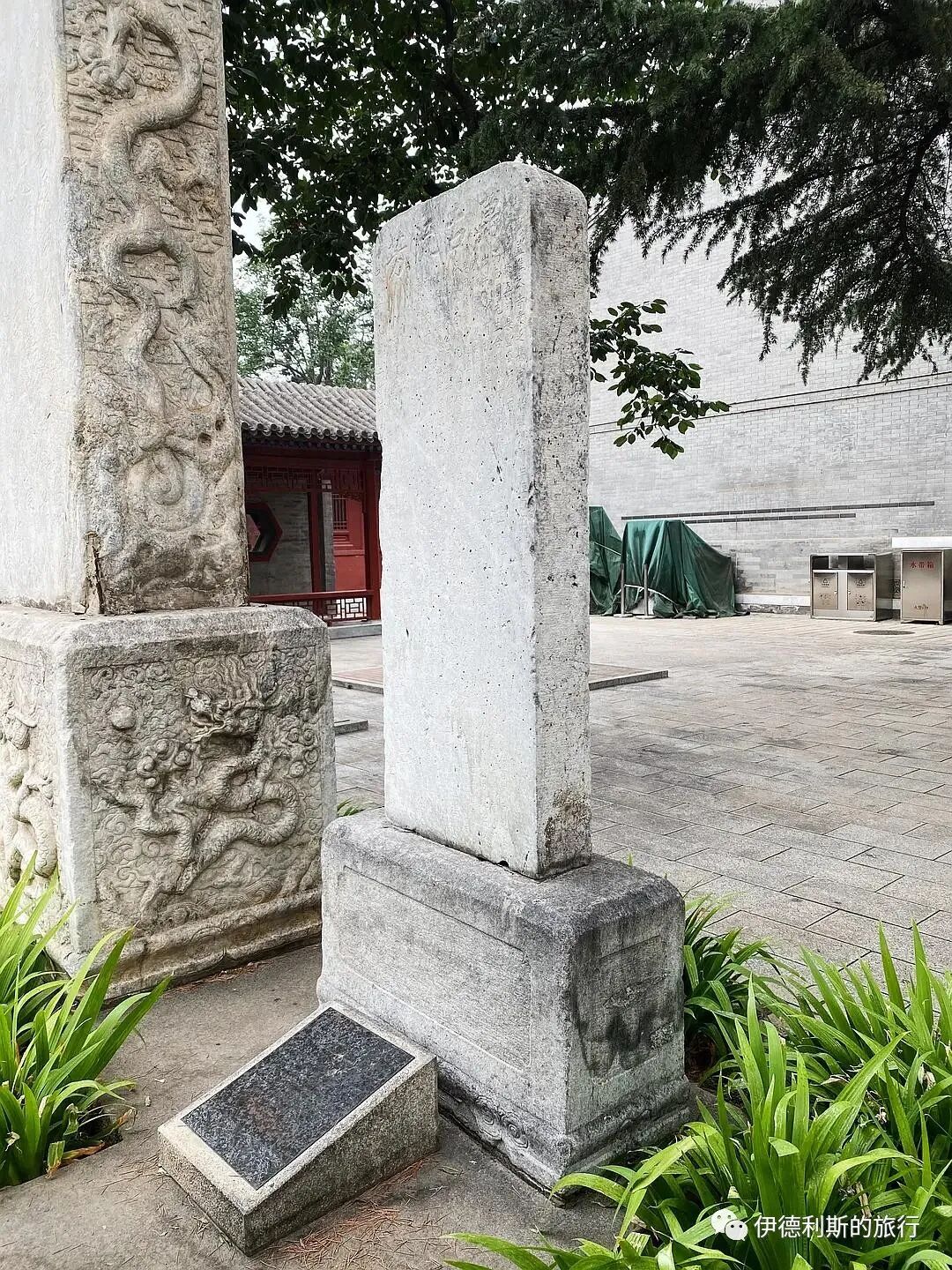
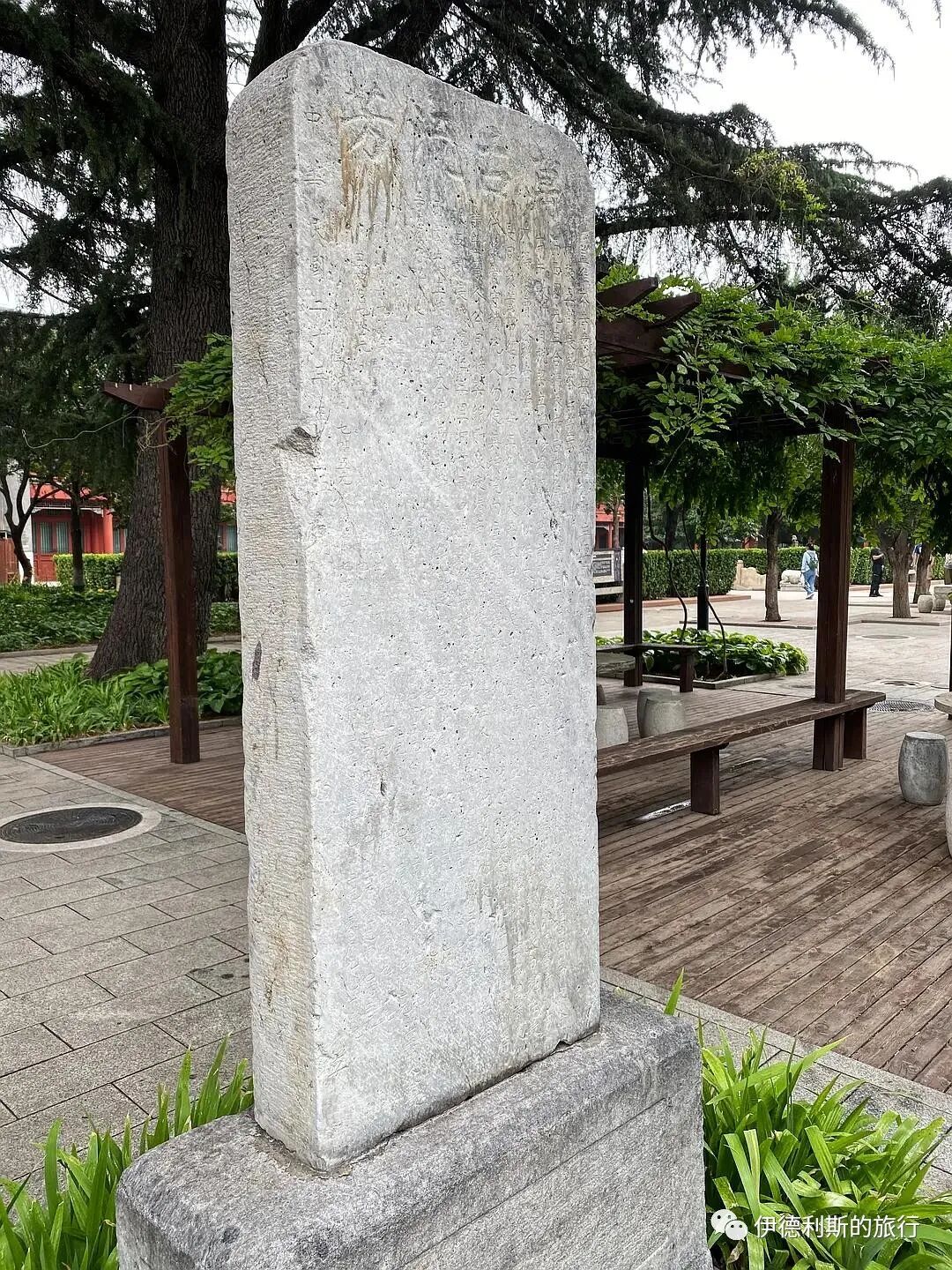
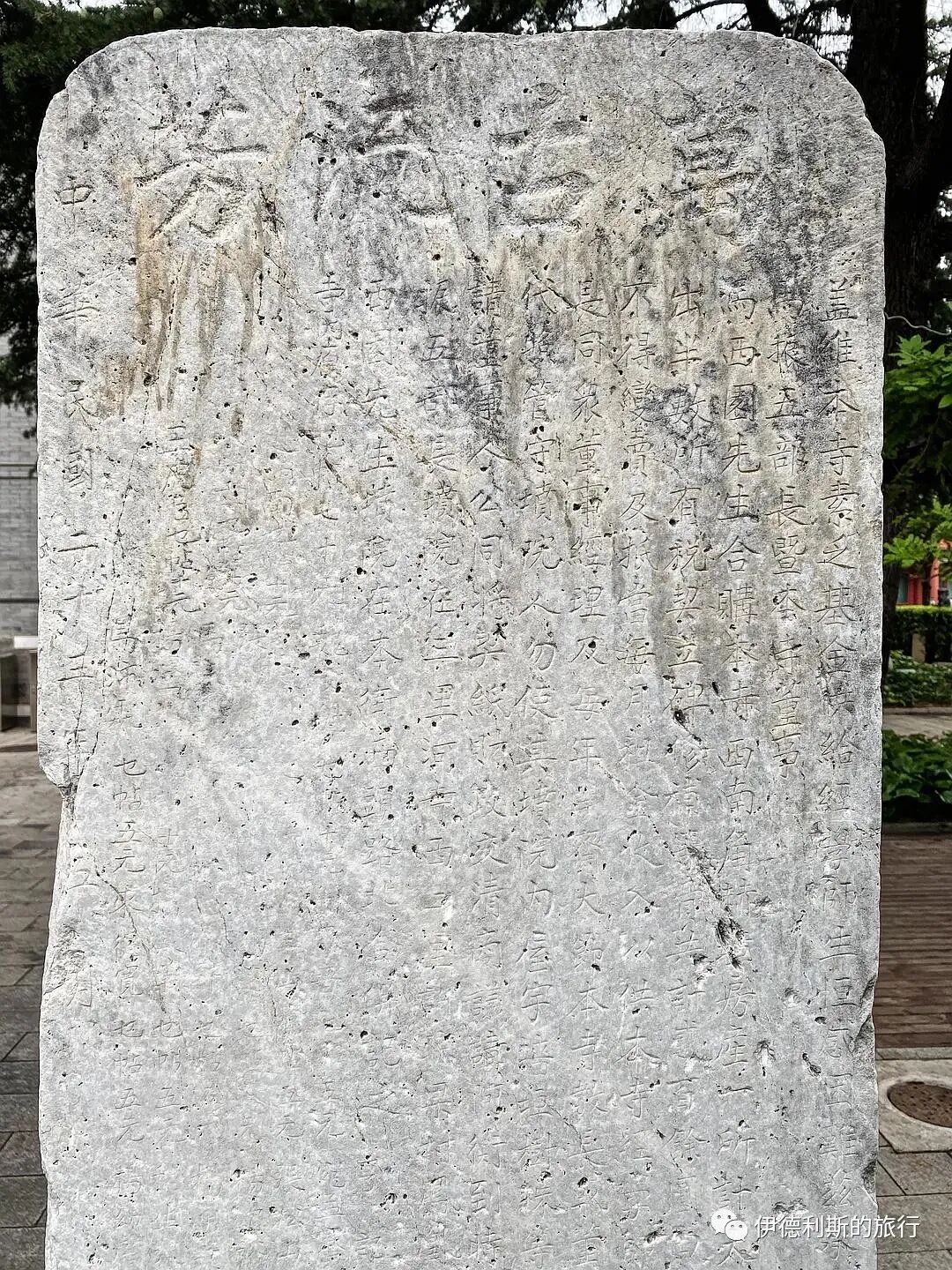
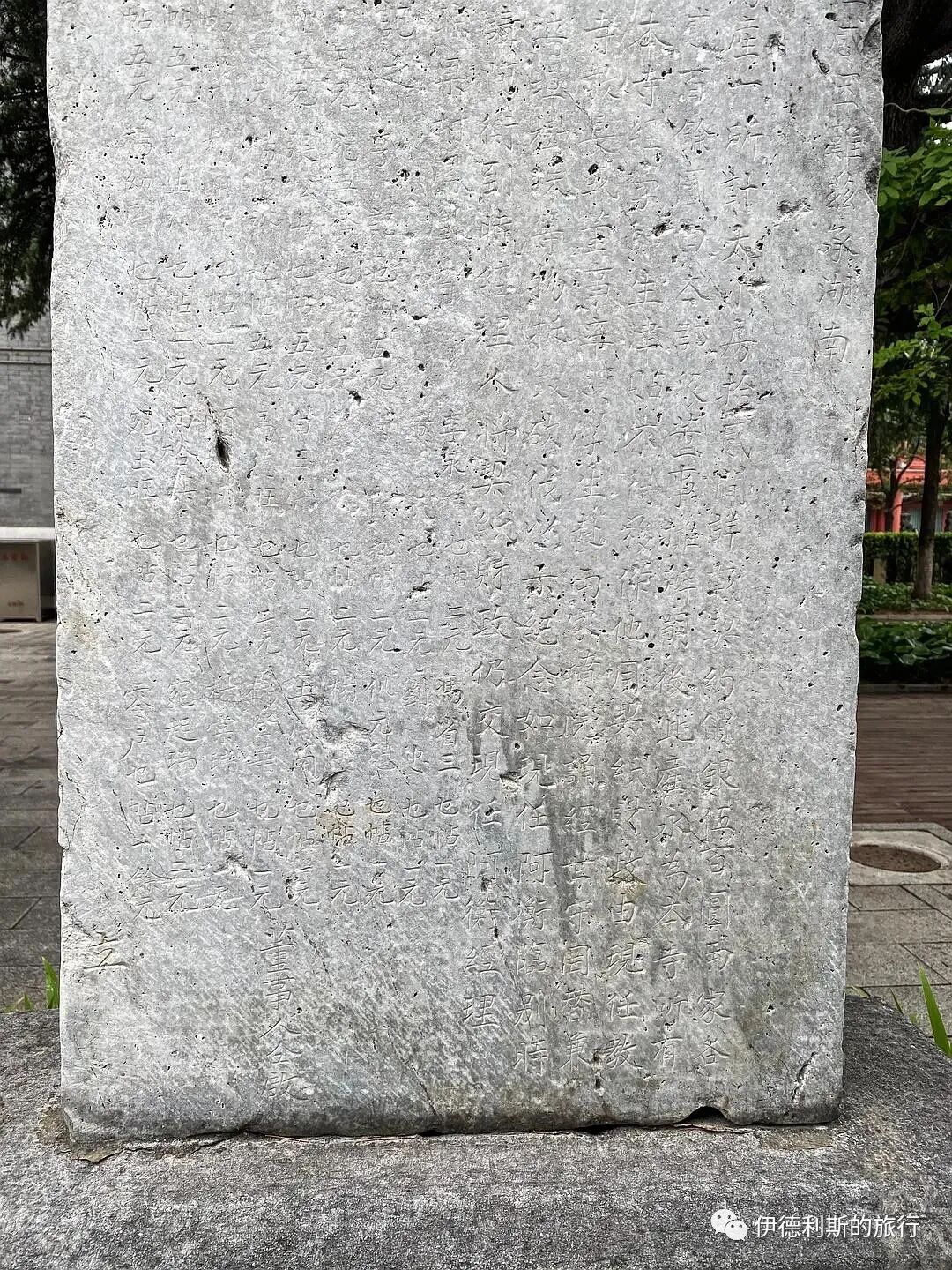
After returning home and looking up some information, I found that most articles introducing the Sanlihe Mosque do not seem to mention this stele. I also do not know why this stele was not kept in the mosque but was moved to the museum instead. I will transcribe the inscription here to share with everyone. There are a few characters I cannot see clearly, so I ask for everyone's help in identifying them:
Because our mosque has always lacked funds to support the teachers and students of Islamic studies, we have constantly felt the difficulty. Now, thanks to Minister Ma Zhenwu from Hunan and Mr. Ma Xiyuan, a board member of this mosque, we have jointly purchased a property at the southwest corner of our mosque, totaling twelve rooms of various sizes, as detailed in the contract. The price was five hundred silver yuan, with each party paying half. All expenses for tax deeds, erecting the stele, repairs, etc., totaling over two hundred yuan, were shared by the board members of this community. From now on, this property shall forever belong to this mosque and may not be sold or mortgaged. The monthly rental income shall be used to provide subsidies for the teachers and students of Islamic studies at this mosque and may not be used for other purposes. The contract documents and finances shall be managed by the current Imam and the board members. Every year during the major festival of Eid al-Fitr, the Imam or board members of this mosque shall lead the students to recite the Quran at the two families' cemeteries, a tradition to be kept forever. Furthermore, the board members have collectively agreed to hand over the contract documents and finances when appointing a new Imam; at that time, the manager will hand over the contract documents and finances to the current Imam to manage.
Minister Zhenwu's cemetery is at Fenghuang [location] in [location] village, about two li west of Sanlihe Mosque; Mr. Xiyuan's cemetery is on the north side of the road at the west end of this street, recorded as [location].
Inside the mosque, the original [donations] were 70 yuan... Hengji mietie (charitable donation) 5 yuan... Zhang Songshan mietie 5 yuan... Ma Peilin mietie 5 yuan... Wan Yuwang mietie 2 yuan, Xi Yuxing mietie 2 yuan, Ma Dewang mietie 2 yuan, Li Yongxiang mietie 2 yuan, Feng Shengshan mietie 1 yuan, Liu Zhong mietie 1 yuan, Cang Yuan[X] mietie 1 yuan, Yang Denghua mietie 1 yuan, Yang Tangrui mietie 1 yuan, Wan Qirui mietie 3 yuan, and over 10 yuan from individual households. Signed by the board members.
Erected in May of the 23rd year of the Republic of China.
The 'Minister Ma Zhenwu from Hunan' mentioned in the stele is the famous educator Ma Linyi. Ma Linyi was born in Shaoyang, Hunan, in 1864, and his father was the great Islamic scholar Imam Ma Yanxi. He passed the imperial examination in 1902, was sent to Japan for study in 1904, and later returned to Hunan to actively run schools. In 1906, he founded the Qingzhen Xiejin Primary School in Shaoyang, and later added the Xiejin Middle School, which were the earliest modern schools for Hui Muslims in Hunan.
In 1908, Ma Linyi was transferred to the Qing Dynasty Ministry of Education as a secretary, and thus came to Beijing. In 1908, Wang Kuan founded the Jingshi Qingzhen First Primary School inside the Niujie Mosque, and Ma Linyi actively planned it and served as the supervisor. He applied for subsidies from the Beijing Education Bureau in the name of the school and was finally approved to receive 40 taels per month as operating funds for the school. In 1909, Ma Linyi again assisted Wang Kuan in reporting to the Beijing Education Supervision Bureau to establish the Islamic Education Association.
In 1912, while serving as Vice Minister of Education, Ma Linyi founded the China Islamic Progressive Association with the support of Sun Yat-sen and served as its president. He changed his courtesy name from 'Zhenwu' to 'Zhenwu' (using a different character for 'wu'), meaning 'revitalizing the five ethnic groups'. Between 1912 and 1919, Ma Linyi spent 7 years running schools in Gansu, founding over one hundred schools for Hui Muslims and cultivating a large number of talents. In 1919, he was transferred to be the Director of the Zhili Education Department, where he secured 300,000 yuan for the Hui Muslim education fund, making a huge contribution.
In the 1920s, Ma Linyi held various positions in the Nationalist Government, including Minister of Education. After the success of the Northern Expedition in 1928, Hui Muslim intellectuals in Beijing were determined to establish their own middle school so that Hui Muslim youth could continue their studies after graduating from primary school. In the same year, Ma Linyi participated in the founding of the Qingzhen Middle School on the site of the old Niujie garrison office and served as vice chairman, receiving support from various Nationalist Party figures in Beijing. In 1929, Ma Linyi served as a school board member of the Beiping Chengda Normal School, actively updating the curriculum and improving teaching methods, which allowed Chengda Normal School to develop into a modern school. In his later years, Ma Linyi devoted himself to the faith and served as an advisor to Wang Jingzhai for his translation of the Quran.
In 1938, Ma Linyi passed away in Beiping and was buried in the Sanlihe Hui Muslim cemetery.
The 'Mr. Ma Xiyuan, a board member of this mosque' mentioned in the stele is the father of the Peking opera master Ma Lianliang. Ma Xiyuan was born in 1868, with ancestral roots in Shandong. His father, Ma Yongxiang, settled in Beijing during the Xianfeng period and opened a teahouse opposite the Fuchengmen Arrow Tower, known as the 'Menma Teahouse'. The Menma Teahouse had a stage for music, and Peking opera enthusiasts and famous performers often came to sing there. It was very lively and a famous venue for Peking opera. Influenced by Peking opera, Ma Xiyuan sent his son Ma Lianliang to the Xiliancheng opera troupe to learn acting, which eventually made Ma Lianliang a master of his generation, the founder of the Ma school of old male roles, and the head of the 'Four Great Male Role Actors'.
Ma Xiyuan himself was very pious, never missing his five daily prayers, and he sent his son Ma Lianliang to the Sanlihe Mosque to study the Quran when he was 5 years old. In 1930, Ma Lianliang bought the entire courtyard at No. 7 Dongdoufu Lane outside Chongwenmen and renovated the west room of the front courtyard into a prayer hall for Ma Xiyuan to perform his five daily prayers, which was very rare in Hui Muslim families at that time.
Ma Xiyuan was enthusiastic about public welfare for the faith and was known as 'Ma the Philanthropist'. In 1908, he participated in the founding of the Qingzhen Public Fifth Primary School inside the Huashi Mosque outside Chongwenmen. It was renamed the Qingzhen Culture Primary School in 1912 and the Beiping Qingzhen Second Primary School in 1929. Ma Xiyuan actively donated funds and served as chairman of the board. In 1928, Hui Muslim youth in the Niujie area founded the private Zhongcai Primary School in Madao Hutong. It received the praise and support of Ma Xiyuan, who served as a school board member and lent the school an organ he had treasured for many years for music teaching. Every Jumu'ah (Friday), Ma Xiyuan would cook porridge at his doorstep to give as charity to poor Hui Muslims, and he would also give out warm clothes in the winter. In 1935, Ma Xiyuan passed away due to illness and was buried in the Sanlihe Hui Muslim cemetery.
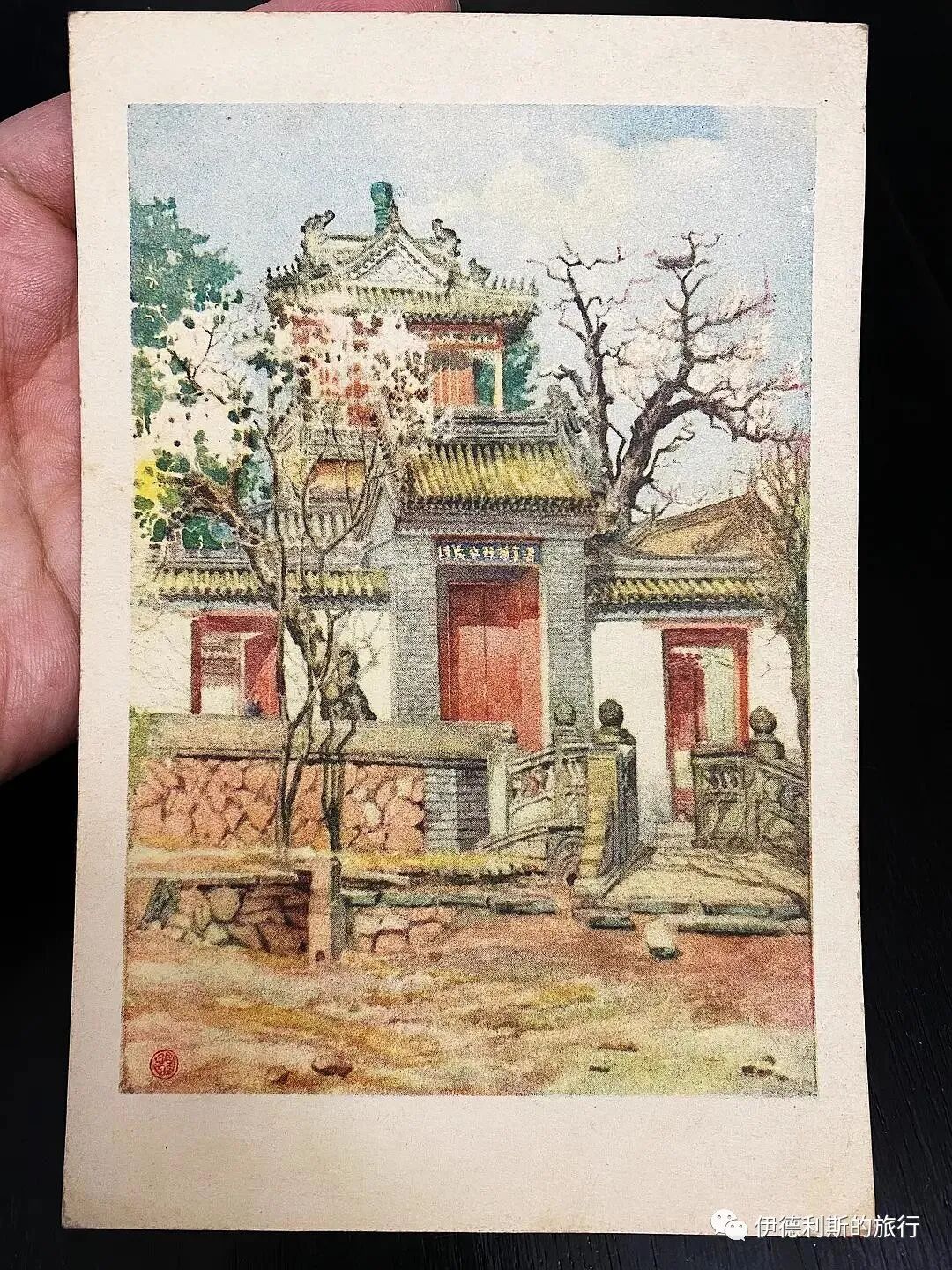
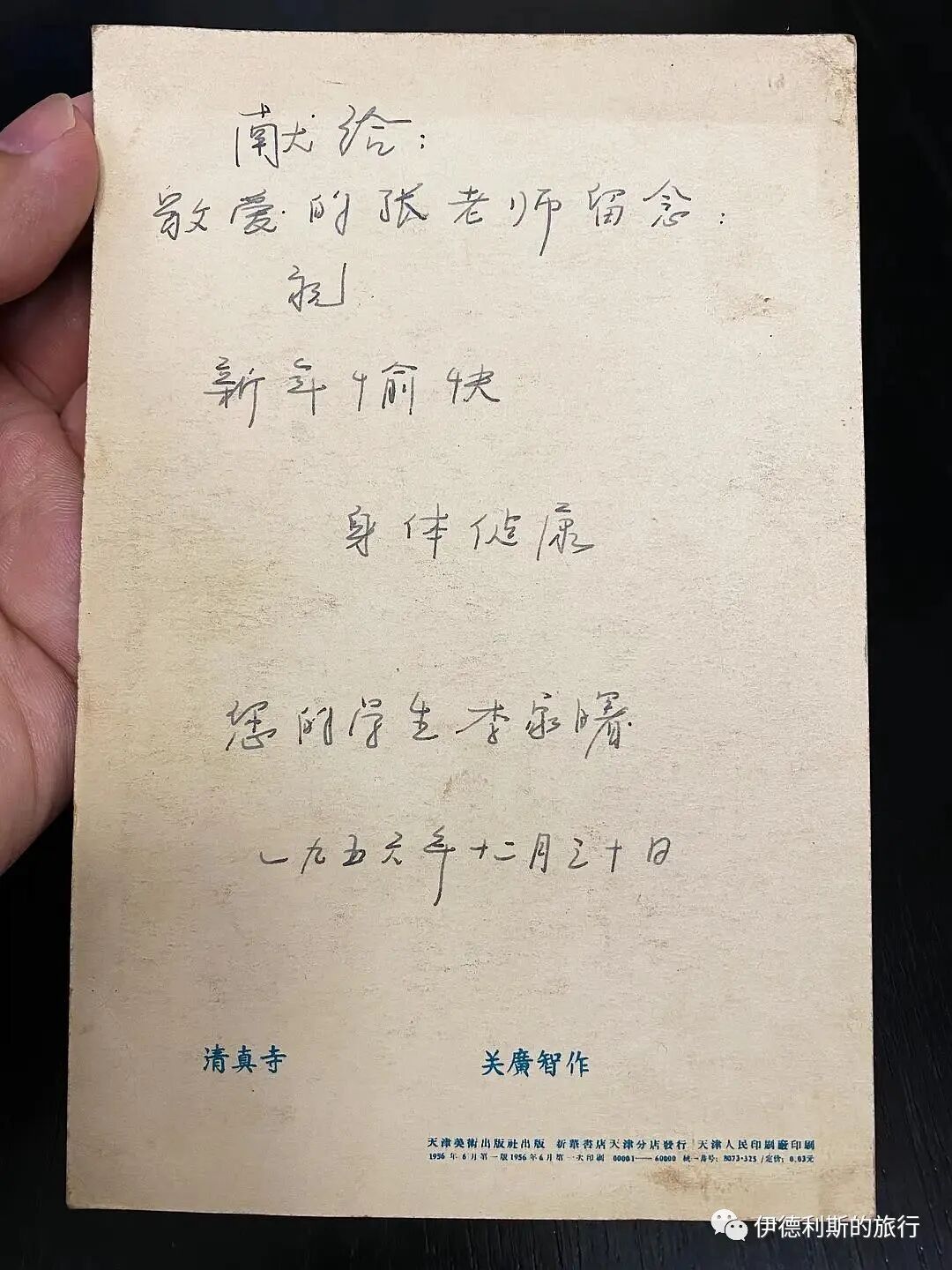
I will also share a postcard of a watercolor painting of the Sanlihe Mosque issued in 1956 from my collection. On the back, there is a New Year's greeting written by a student to their teacher 66 years ago. The artist of this painting is Guan Guangzhi, a first-generation master of watercolor painting in China, who painted many landscapes of the ancient capital, Beijing.
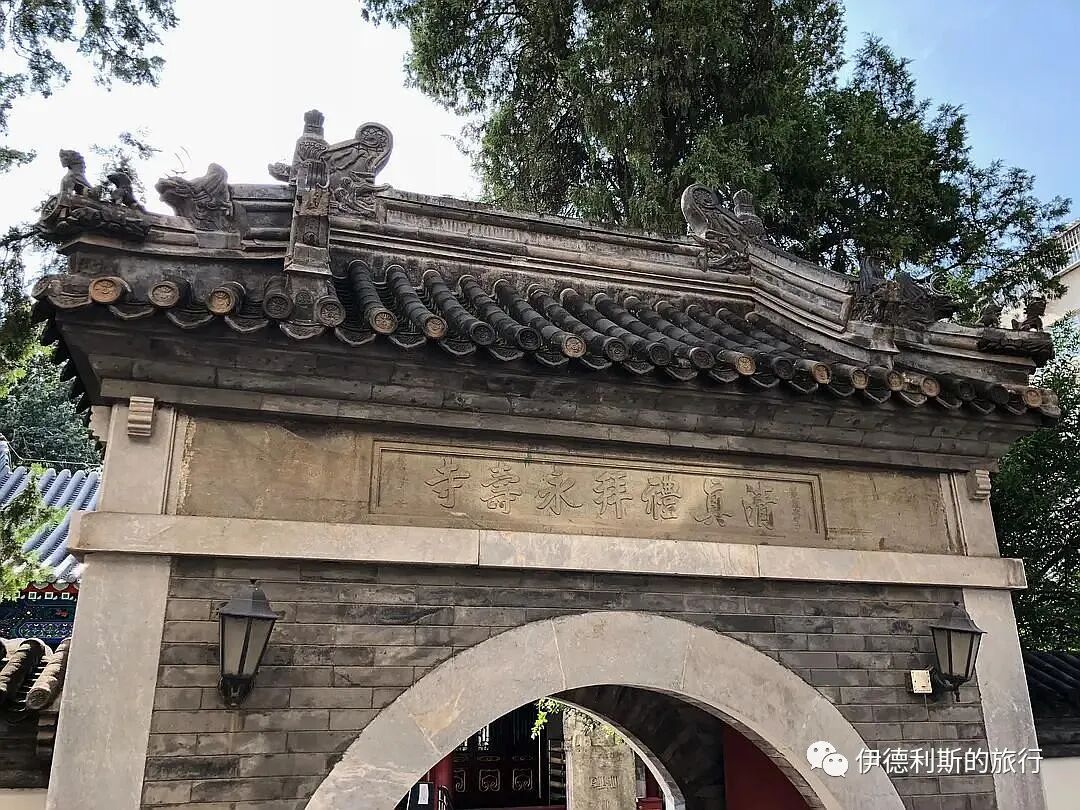
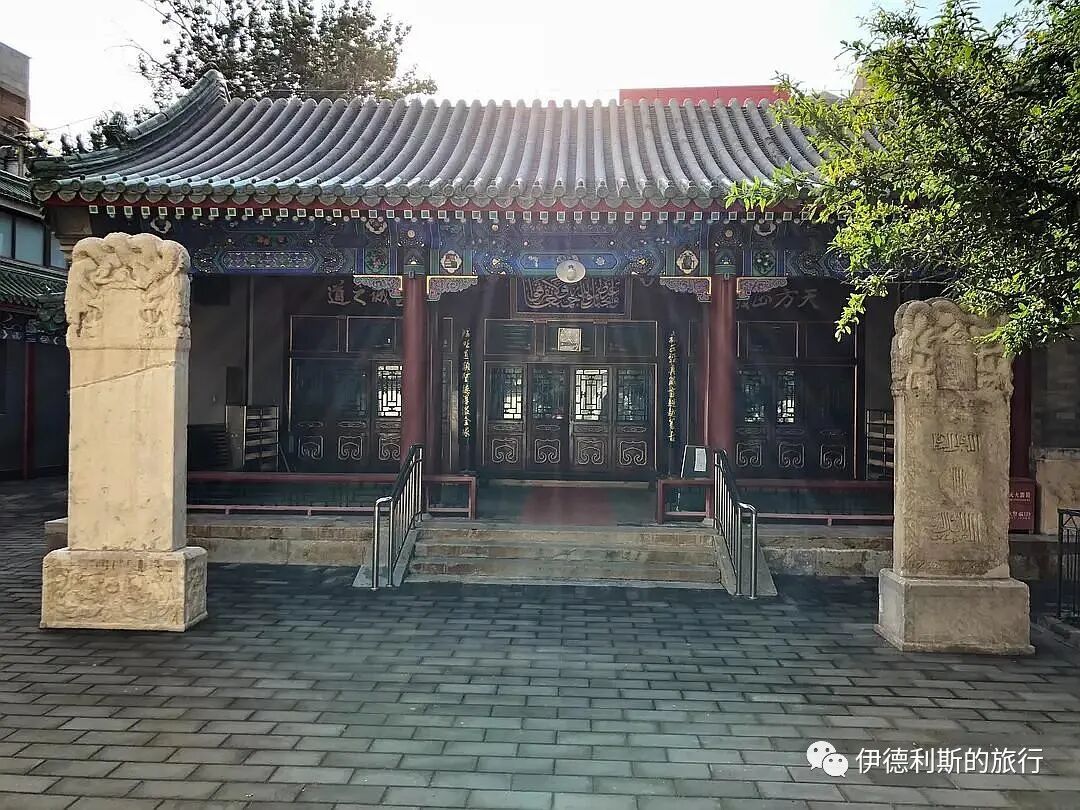
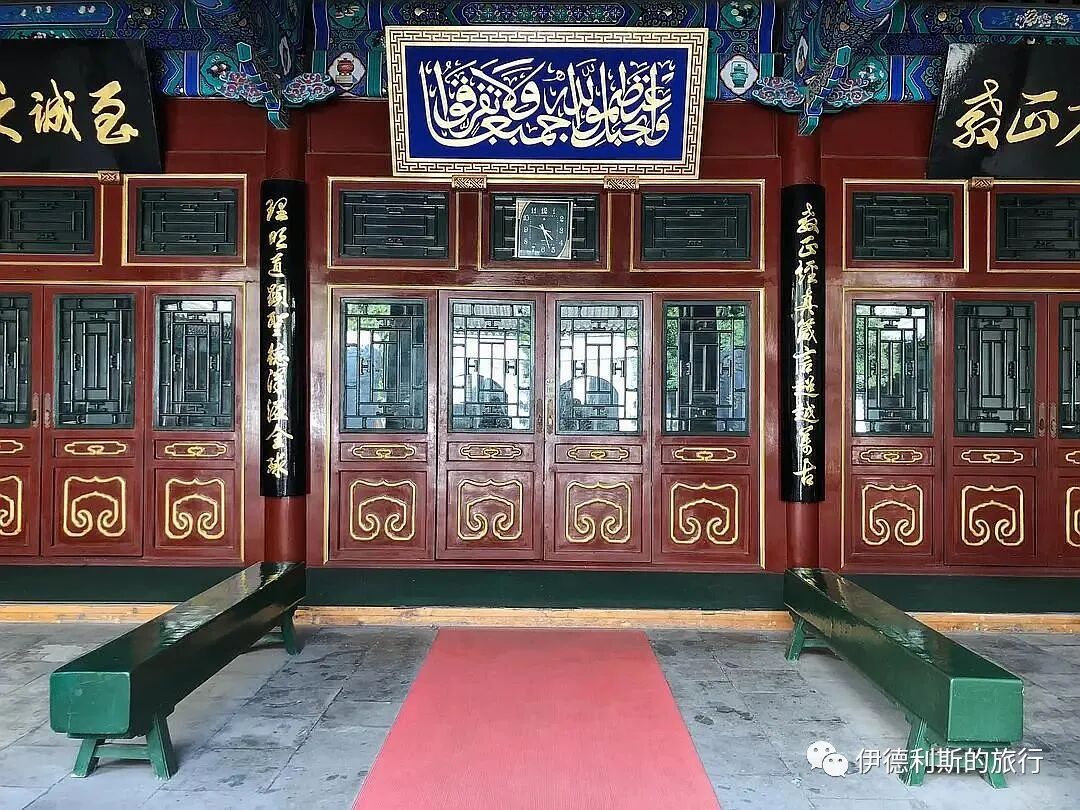
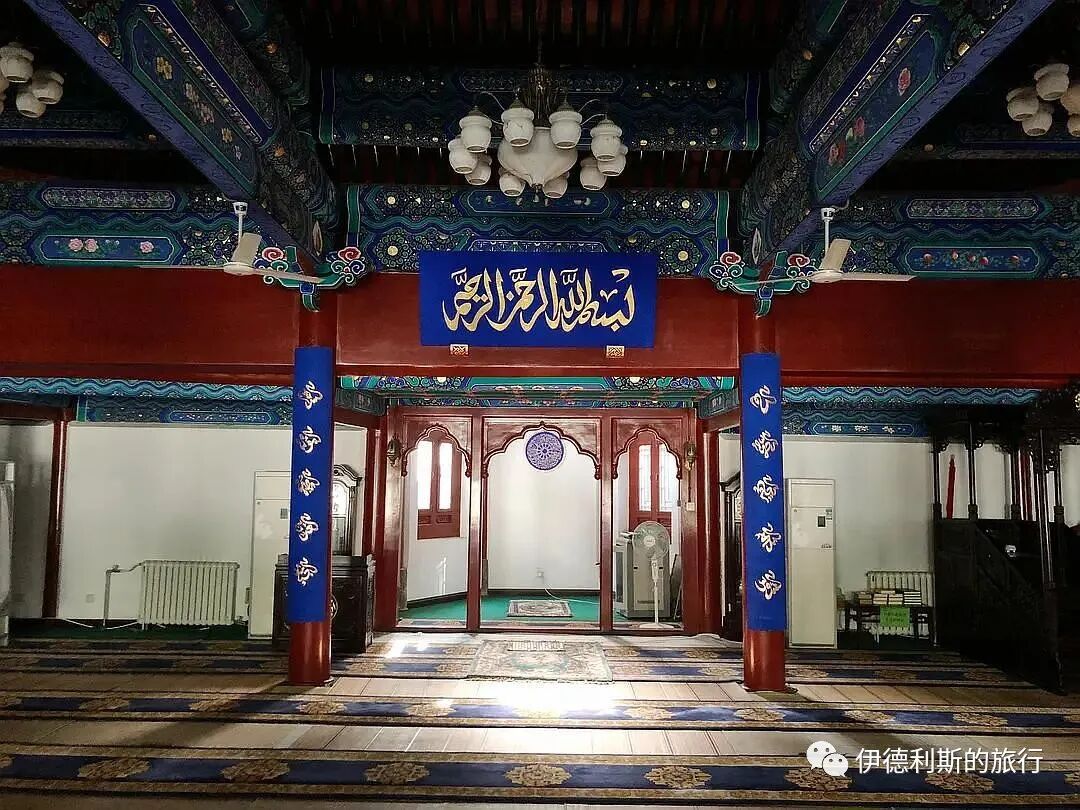
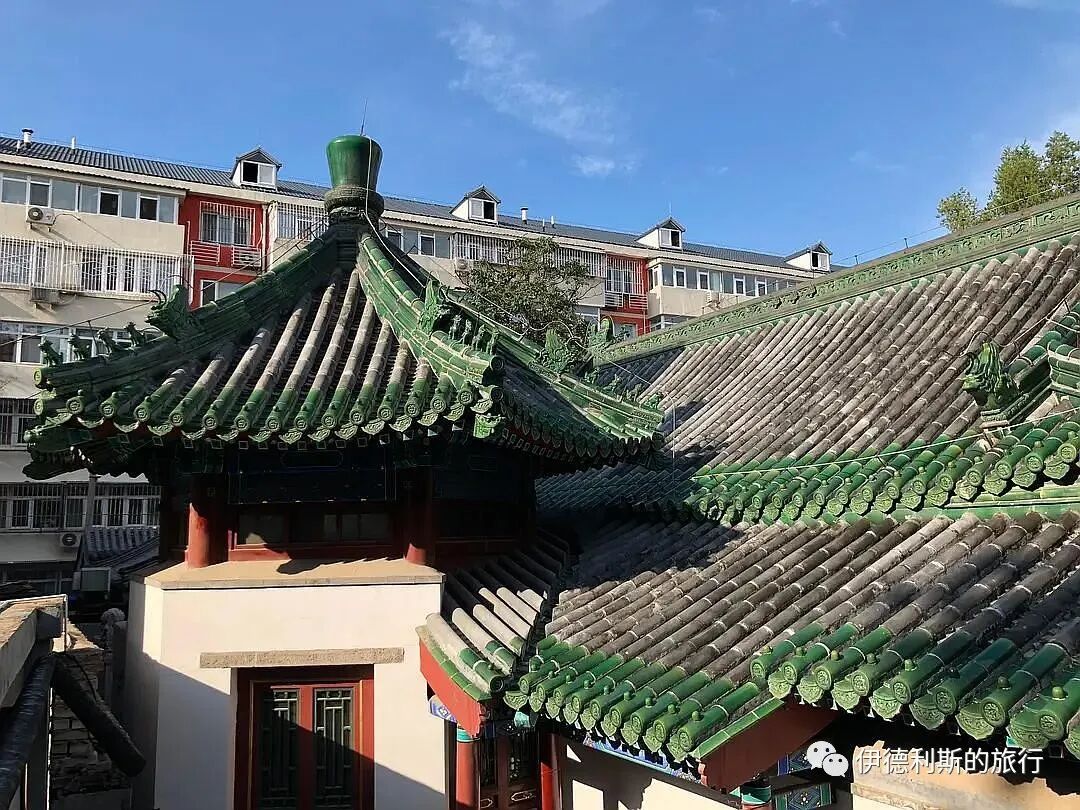
I took photos of the Sanlihe Mosque before, but unfortunately, it was in the afternoon and there was some backlight. I will go back to take photos again when the mosque reopens.
Summary: This travel note introduces Mosque Stele at Beijing Wuta Temple: Ma Linyi, Ma Xiyuan and Muslim Heritage. Outside the northwest gate of the Beijing Zoo, there is the Wuta Si (Five Pagoda Mosque) built during the Ming Dynasty, which became the Beijing Stone Carving Art Museum after 1987. It is useful for readers interested in Wuta Temple, Mosque Stele, Beijing Muslims.
Outside the northwest gate of the Beijing Zoo, there is the Wuta Si (Five Pagoda Mosque) built during the Ming Dynasty, which became the Beijing Stone Carving Art Museum after 1987. June 11th happened to be the Cultural and Natural Heritage Day, and Zaynab and I went to visit the museum. In a corner of the stele forest, we discovered a precious stele from the Republic of China era belonging to a mosque. It records how in 1934, the famous educator of the Republic of China, Ma Linyi, and Ma Xiyuan, the father of the famous Peking opera master Ma Lianliang, funded the students and teachers of Islamic studies at the Sanlihe Mosque outside Fuchengmen in Beijing.
After returning home and looking up some information, I found that most articles introducing the Sanlihe Mosque do not seem to mention this stele. I also do not know why this stele was not kept in the mosque but was moved to the museum instead. I will transcribe the inscription here to share with everyone. There are a few characters I cannot see clearly, so I ask for everyone's help in identifying them:
Because our mosque has always lacked funds to support the teachers and students of Islamic studies, we have constantly felt the difficulty. Now, thanks to Minister Ma Zhenwu from Hunan and Mr. Ma Xiyuan, a board member of this mosque, we have jointly purchased a property at the southwest corner of our mosque, totaling twelve rooms of various sizes, as detailed in the contract. The price was five hundred silver yuan, with each party paying half. All expenses for tax deeds, erecting the stele, repairs, etc., totaling over two hundred yuan, were shared by the board members of this community. From now on, this property shall forever belong to this mosque and may not be sold or mortgaged. The monthly rental income shall be used to provide subsidies for the teachers and students of Islamic studies at this mosque and may not be used for other purposes. The contract documents and finances shall be managed by the current Imam and the board members. Every year during the major festival of Eid al-Fitr, the Imam or board members of this mosque shall lead the students to recite the Quran at the two families' cemeteries, a tradition to be kept forever. Furthermore, the board members have collectively agreed to hand over the contract documents and finances when appointing a new Imam; at that time, the manager will hand over the contract documents and finances to the current Imam to manage.
Minister Zhenwu's cemetery is at Fenghuang [location] in [location] village, about two li west of Sanlihe Mosque; Mr. Xiyuan's cemetery is on the north side of the road at the west end of this street, recorded as [location].
Inside the mosque, the original [donations] were 70 yuan... Hengji mietie (charitable donation) 5 yuan... Zhang Songshan mietie 5 yuan... Ma Peilin mietie 5 yuan... Wan Yuwang mietie 2 yuan, Xi Yuxing mietie 2 yuan, Ma Dewang mietie 2 yuan, Li Yongxiang mietie 2 yuan, Feng Shengshan mietie 1 yuan, Liu Zhong mietie 1 yuan, Cang Yuan[X] mietie 1 yuan, Yang Denghua mietie 1 yuan, Yang Tangrui mietie 1 yuan, Wan Qirui mietie 3 yuan, and over 10 yuan from individual households. Signed by the board members.
Erected in May of the 23rd year of the Republic of China.
The 'Minister Ma Zhenwu from Hunan' mentioned in the stele is the famous educator Ma Linyi. Ma Linyi was born in Shaoyang, Hunan, in 1864, and his father was the great Islamic scholar Imam Ma Yanxi. He passed the imperial examination in 1902, was sent to Japan for study in 1904, and later returned to Hunan to actively run schools. In 1906, he founded the Qingzhen Xiejin Primary School in Shaoyang, and later added the Xiejin Middle School, which were the earliest modern schools for Hui Muslims in Hunan.
In 1908, Ma Linyi was transferred to the Qing Dynasty Ministry of Education as a secretary, and thus came to Beijing. In 1908, Wang Kuan founded the Jingshi Qingzhen First Primary School inside the Niujie Mosque, and Ma Linyi actively planned it and served as the supervisor. He applied for subsidies from the Beijing Education Bureau in the name of the school and was finally approved to receive 40 taels per month as operating funds for the school. In 1909, Ma Linyi again assisted Wang Kuan in reporting to the Beijing Education Supervision Bureau to establish the Islamic Education Association.
In 1912, while serving as Vice Minister of Education, Ma Linyi founded the China Islamic Progressive Association with the support of Sun Yat-sen and served as its president. He changed his courtesy name from 'Zhenwu' to 'Zhenwu' (using a different character for 'wu'), meaning 'revitalizing the five ethnic groups'. Between 1912 and 1919, Ma Linyi spent 7 years running schools in Gansu, founding over one hundred schools for Hui Muslims and cultivating a large number of talents. In 1919, he was transferred to be the Director of the Zhili Education Department, where he secured 300,000 yuan for the Hui Muslim education fund, making a huge contribution.
In the 1920s, Ma Linyi held various positions in the Nationalist Government, including Minister of Education. After the success of the Northern Expedition in 1928, Hui Muslim intellectuals in Beijing were determined to establish their own middle school so that Hui Muslim youth could continue their studies after graduating from primary school. In the same year, Ma Linyi participated in the founding of the Qingzhen Middle School on the site of the old Niujie garrison office and served as vice chairman, receiving support from various Nationalist Party figures in Beijing. In 1929, Ma Linyi served as a school board member of the Beiping Chengda Normal School, actively updating the curriculum and improving teaching methods, which allowed Chengda Normal School to develop into a modern school. In his later years, Ma Linyi devoted himself to the faith and served as an advisor to Wang Jingzhai for his translation of the Quran.
In 1938, Ma Linyi passed away in Beiping and was buried in the Sanlihe Hui Muslim cemetery.
The 'Mr. Ma Xiyuan, a board member of this mosque' mentioned in the stele is the father of the Peking opera master Ma Lianliang. Ma Xiyuan was born in 1868, with ancestral roots in Shandong. His father, Ma Yongxiang, settled in Beijing during the Xianfeng period and opened a teahouse opposite the Fuchengmen Arrow Tower, known as the 'Menma Teahouse'. The Menma Teahouse had a stage for music, and Peking opera enthusiasts and famous performers often came to sing there. It was very lively and a famous venue for Peking opera. Influenced by Peking opera, Ma Xiyuan sent his son Ma Lianliang to the Xiliancheng opera troupe to learn acting, which eventually made Ma Lianliang a master of his generation, the founder of the Ma school of old male roles, and the head of the 'Four Great Male Role Actors'.
Ma Xiyuan himself was very pious, never missing his five daily prayers, and he sent his son Ma Lianliang to the Sanlihe Mosque to study the Quran when he was 5 years old. In 1930, Ma Lianliang bought the entire courtyard at No. 7 Dongdoufu Lane outside Chongwenmen and renovated the west room of the front courtyard into a prayer hall for Ma Xiyuan to perform his five daily prayers, which was very rare in Hui Muslim families at that time.
Ma Xiyuan was enthusiastic about public welfare for the faith and was known as 'Ma the Philanthropist'. In 1908, he participated in the founding of the Qingzhen Public Fifth Primary School inside the Huashi Mosque outside Chongwenmen. It was renamed the Qingzhen Culture Primary School in 1912 and the Beiping Qingzhen Second Primary School in 1929. Ma Xiyuan actively donated funds and served as chairman of the board. In 1928, Hui Muslim youth in the Niujie area founded the private Zhongcai Primary School in Madao Hutong. It received the praise and support of Ma Xiyuan, who served as a school board member and lent the school an organ he had treasured for many years for music teaching. Every Jumu'ah (Friday), Ma Xiyuan would cook porridge at his doorstep to give as charity to poor Hui Muslims, and he would also give out warm clothes in the winter. In 1935, Ma Xiyuan passed away due to illness and was buried in the Sanlihe Hui Muslim cemetery.
I will also share a postcard of a watercolor painting of the Sanlihe Mosque issued in 1956 from my collection. On the back, there is a New Year's greeting written by a student to their teacher 66 years ago. The artist of this painting is Guan Guangzhi, a first-generation master of watercolor painting in China, who painted many landscapes of the ancient capital, Beijing.
I took photos of the Sanlihe Mosque before, but unfortunately, it was in the afternoon and there was some backlight. I will go back to take photos again when the mosque reopens.
