

Beijing Muslims
Hidden Muslim Heritage in Changping: Sheikh Baba Tomb and Beijing Hui Memorial Gathering
Articles • ali2007fr posted the article • 0 comments • 214 views • 2026-05-21 08:03
Summary: This Changping article records the annual gathering at Sheikh Baba’s tomb in Heying, Beijing, including the saint’s story, Hui Muslim visitors, dua, and community remembrance.
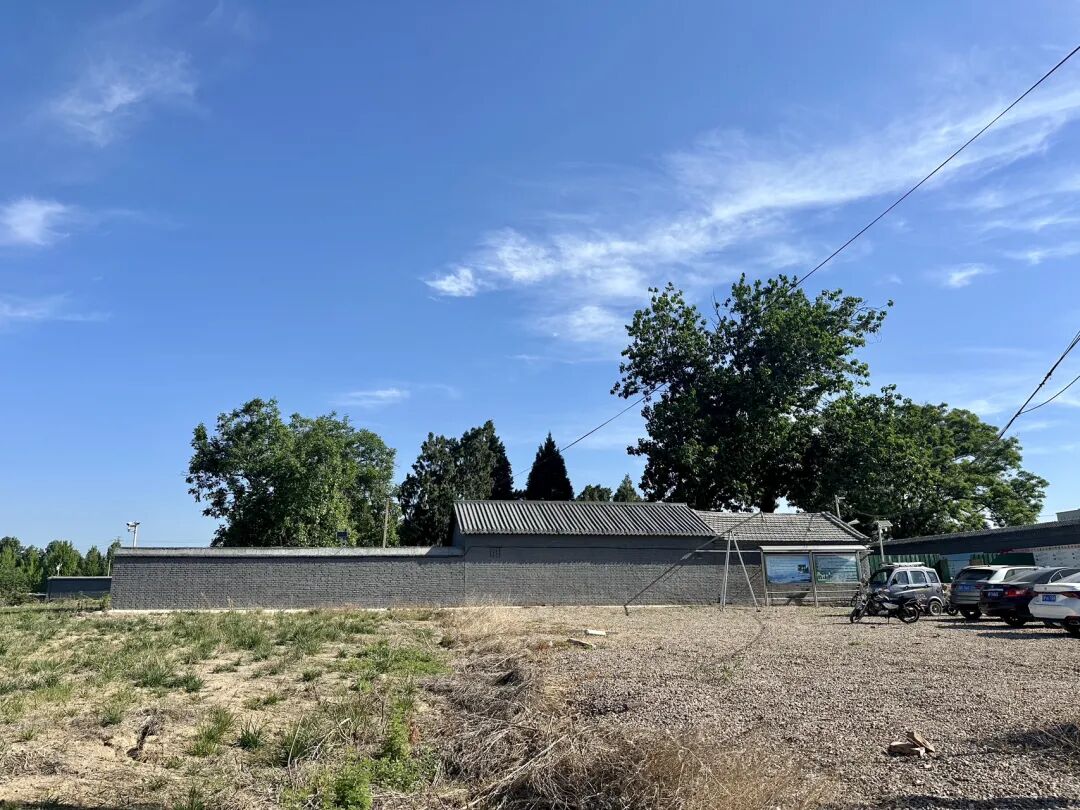
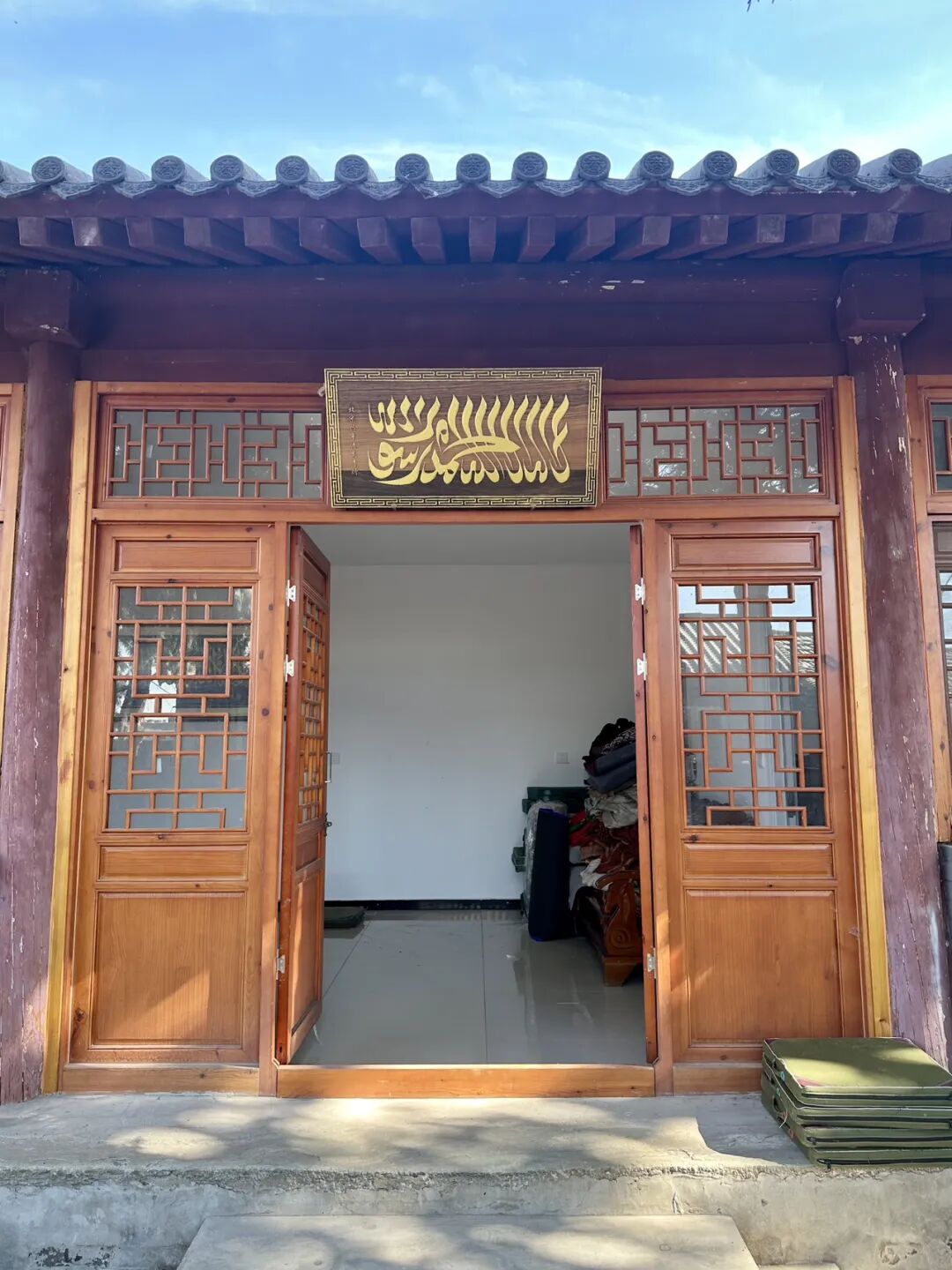
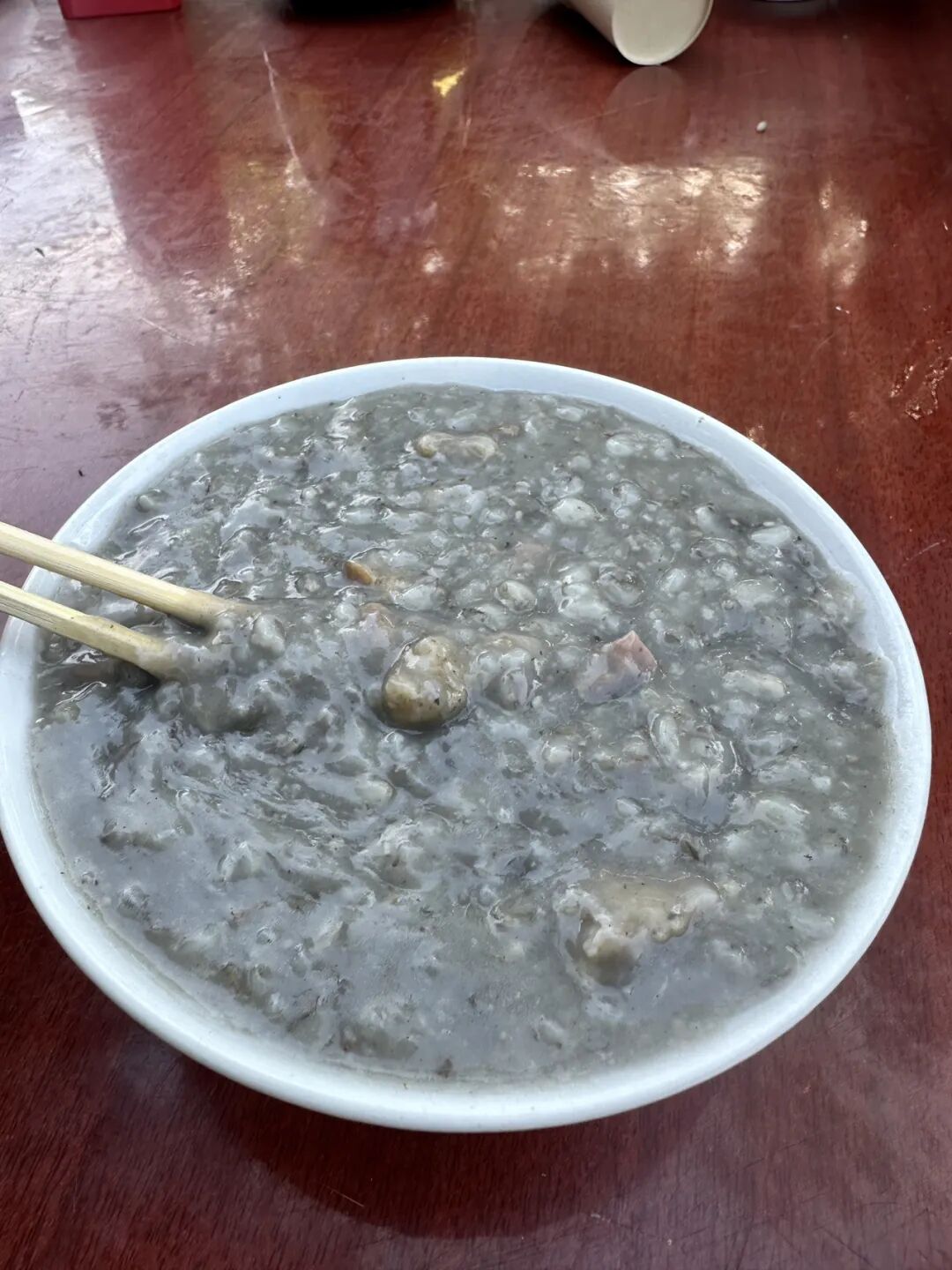
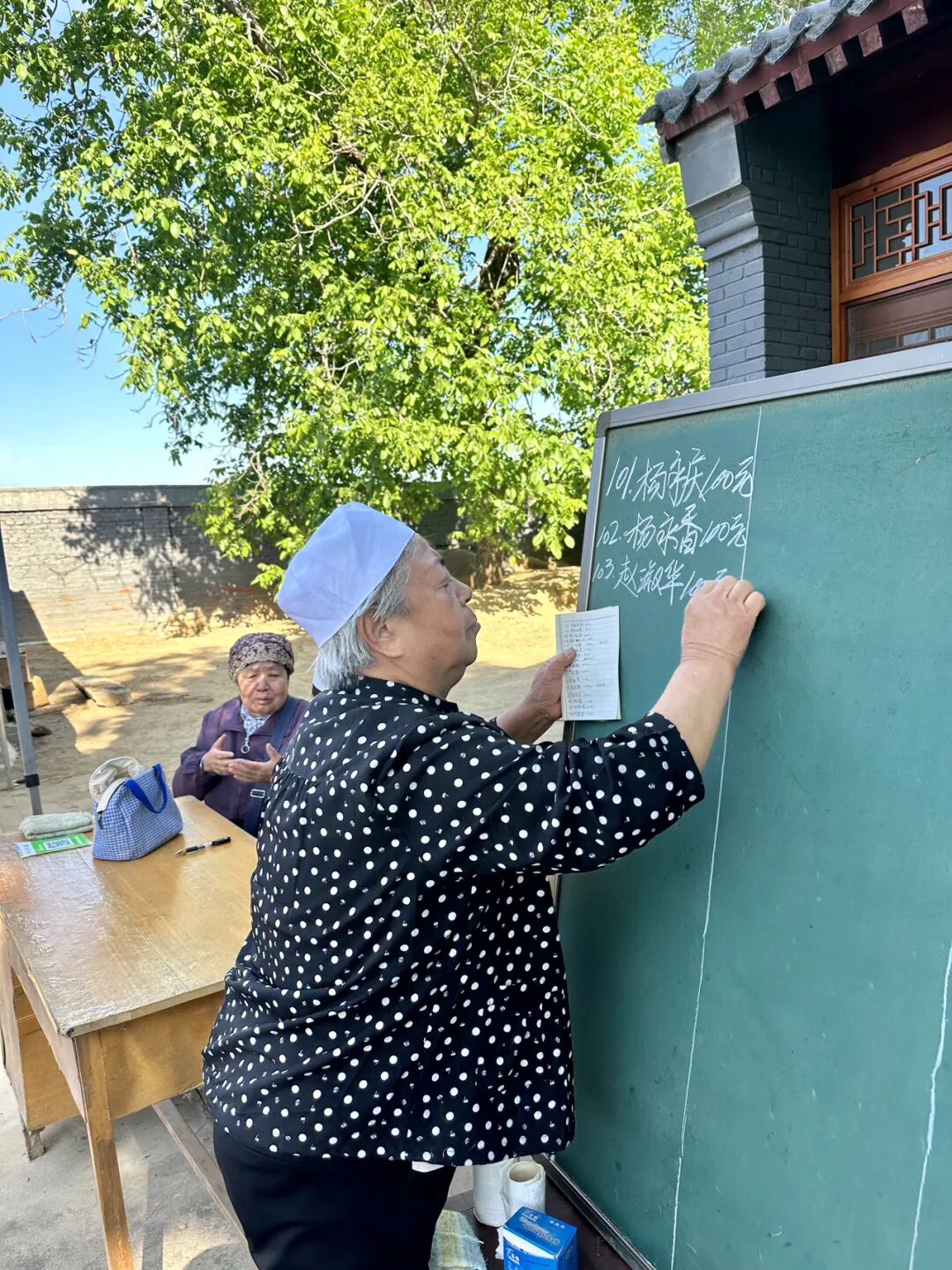
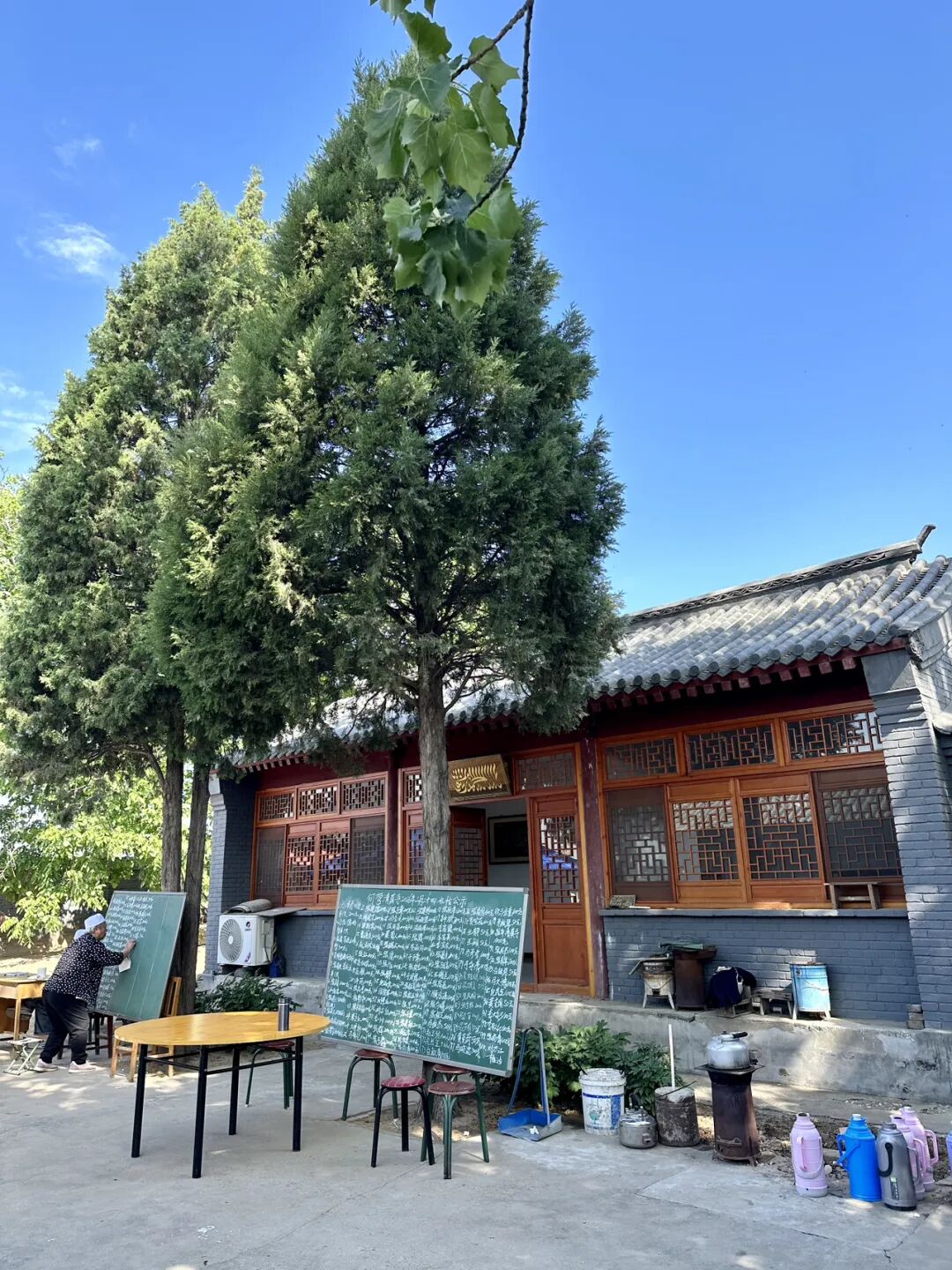
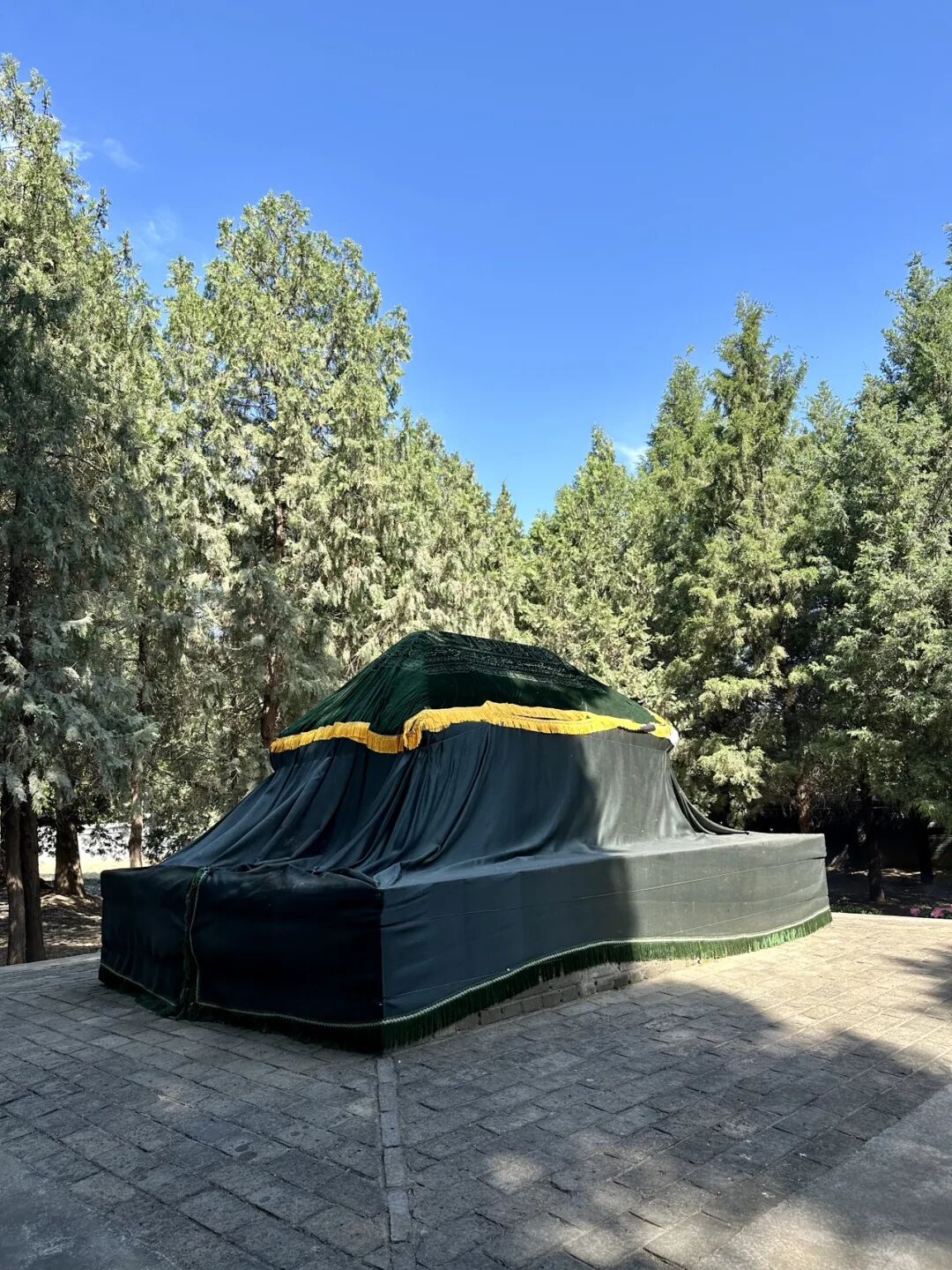
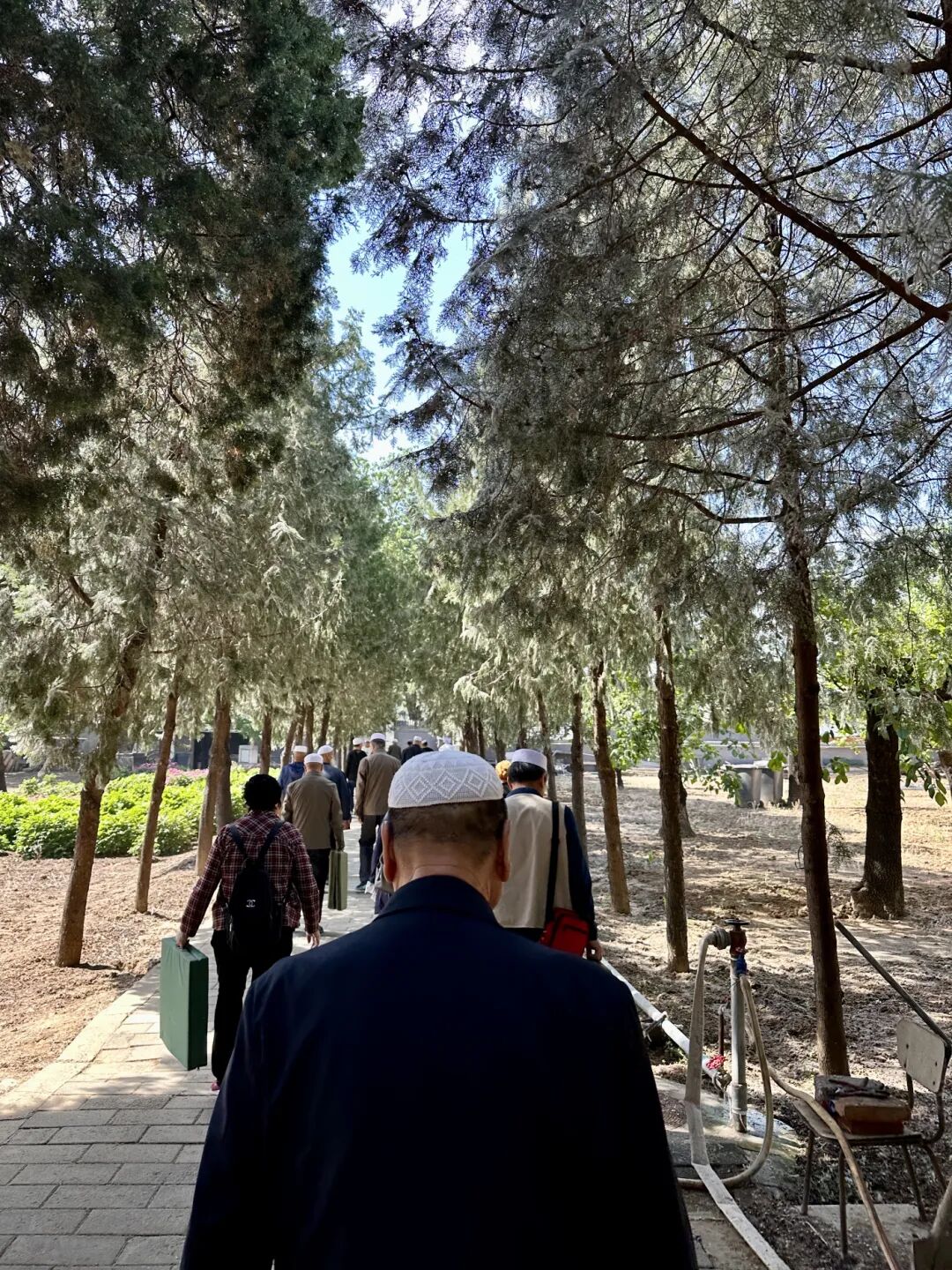
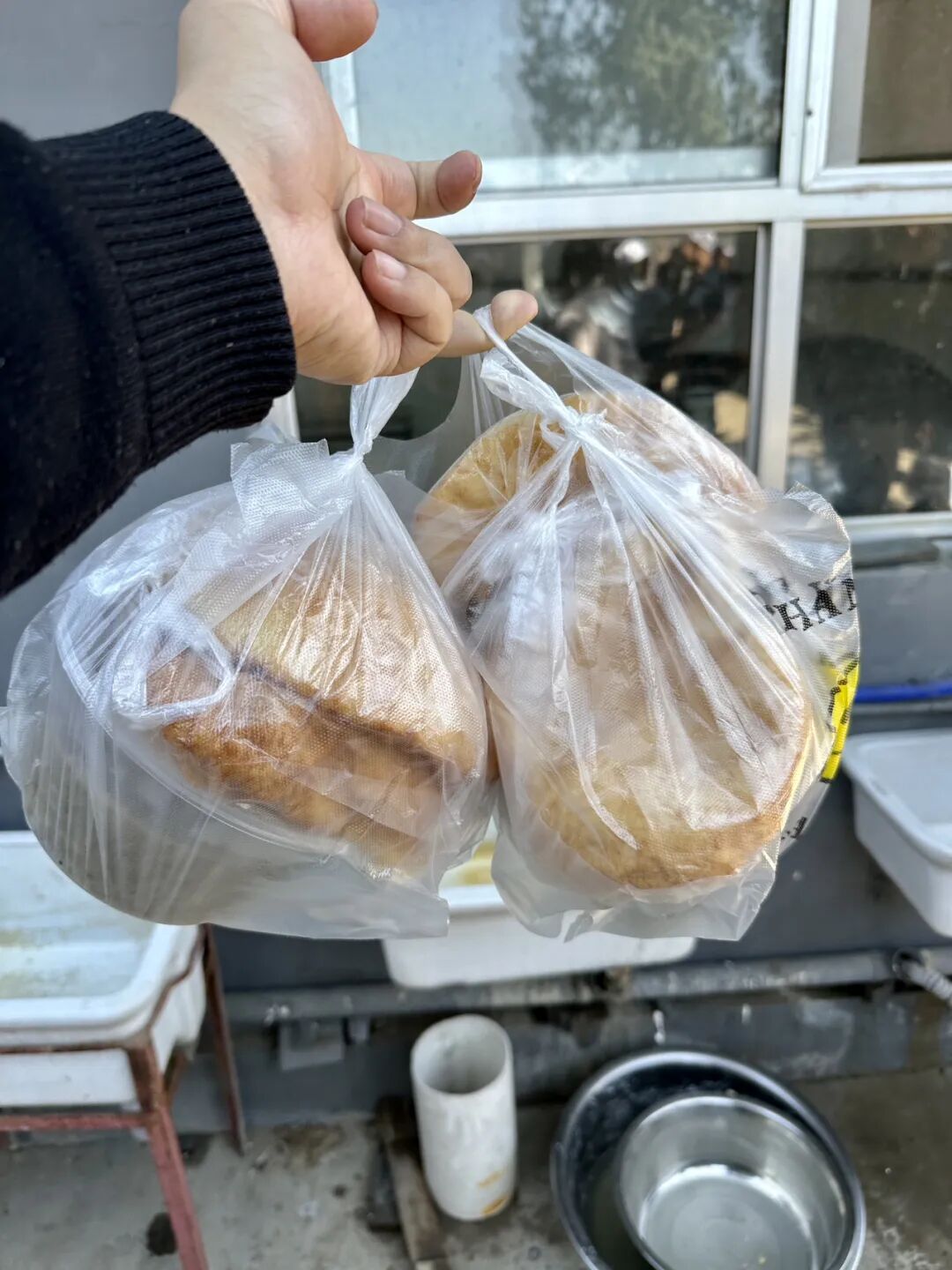
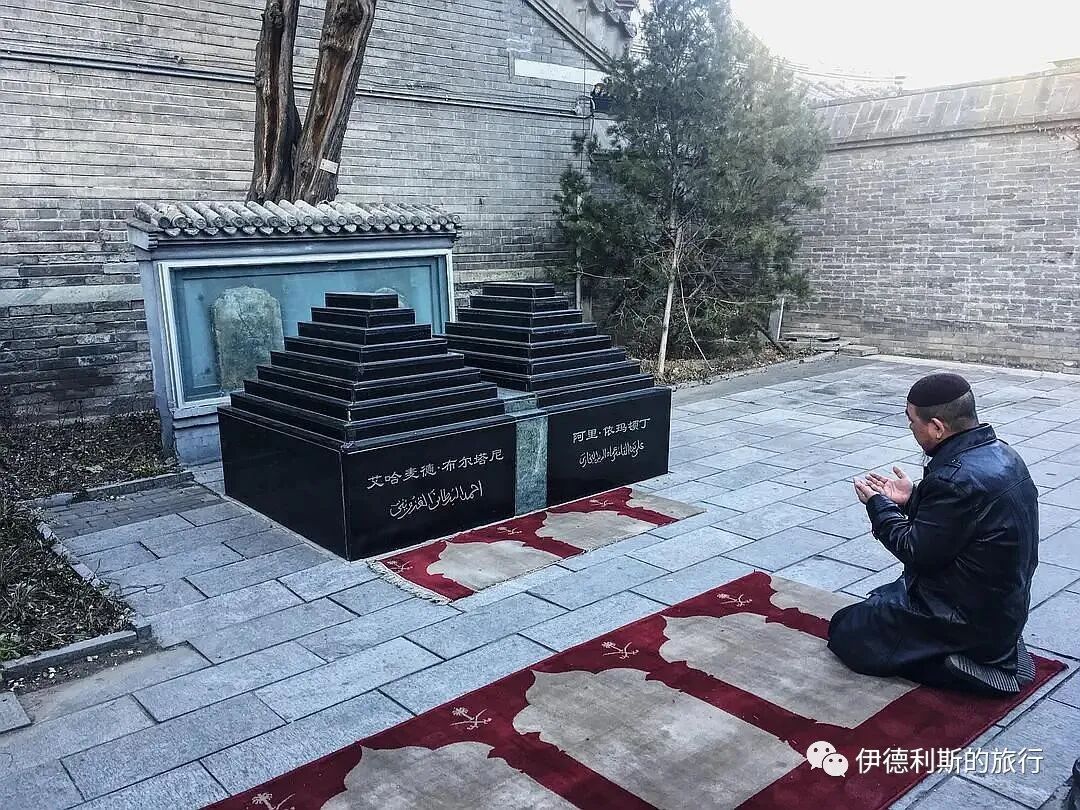
Yesterday was the 24th day of the third lunar month, the date of the annual memorial gathering (gan'ermaili) at the tomb of the saintly elder Baha Haji Sheikh Baba in Heying, Changping, Beijing. On this day, friends (dost) from Gansu, Ningxia, Inner Mongolia, and across Beijing gathered here to remember the saint, learn about his life, and reflect on his great virtues and lasting influence on future generations.
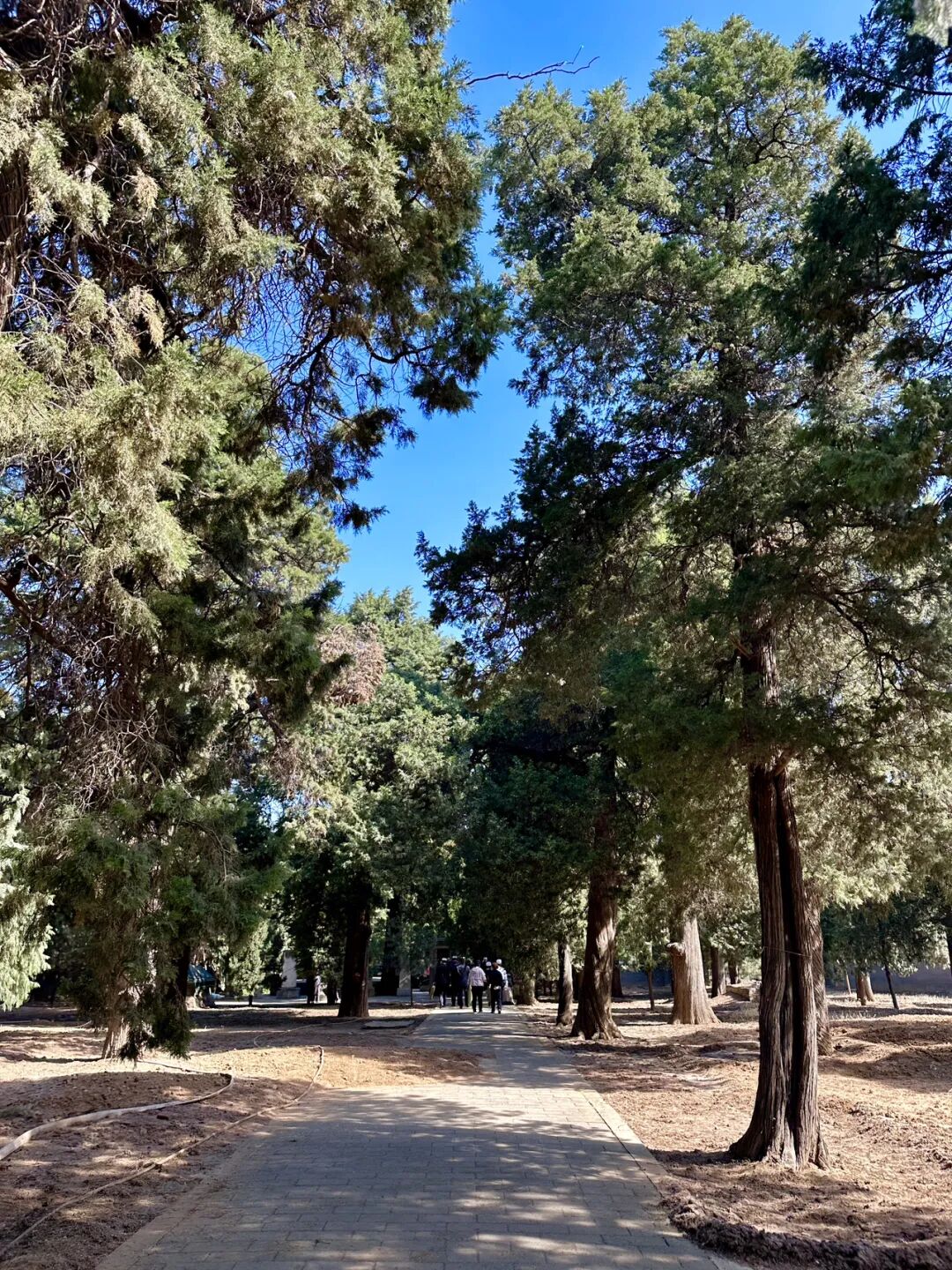
The saint came to China from Medina during the Hongwu reign of the Ming Dynasty to offer advice to the capital, where he was highly respected by the Ming Emperor Taizu. He refused the official titles offered to him, asking only to travel and teach the faith to the local people. The saint traveled everywhere on a white camel, living with strict discipline and high moral character, winning people over through his virtuous deeds. The saint eventually arrived in Heying, Changping, where he taught, preached, and performed many acts of kindness before passing away and being buried there. For hundreds of years, local villagers have told the story of how the saint killed a python on Mangshan Mountain to protect the people, a righteous act that brought blessings to the area and earned him lasting fame.
We are here to learn from the saint's indifference to fame and wealth, his humility, his integrity, and his lack of interest in vanity. We learn from the saint's kindness and love, his dedication to teaching others, his devotion to Allah, his love for people, and his friendly relations with neighbors. We learn from the saint's perseverance in spreading the true path, his steadfast faith, and his service to the community. May we work together with one heart to bring the saint's virtues into our daily lives, respect education, help those in need, live in harmony, and ensure the light of the true path continues forever. view all
Summary: This Changping article records the annual gathering at Sheikh Baba’s tomb in Heying, Beijing, including the saint’s story, Hui Muslim visitors, dua, and community remembrance.
Yesterday was the 24th day of the third lunar month, the date of the annual memorial gathering (gan'ermaili) at the tomb of the saintly elder Baha Haji Sheikh Baba in Heying, Changping, Beijing. On this day, friends (dost) from Gansu, Ningxia, Inner Mongolia, and across Beijing gathered here to remember the saint, learn about his life, and reflect on his great virtues and lasting influence on future generations.
The saint came to China from Medina during the Hongwu reign of the Ming Dynasty to offer advice to the capital, where he was highly respected by the Ming Emperor Taizu. He refused the official titles offered to him, asking only to travel and teach the faith to the local people. The saint traveled everywhere on a white camel, living with strict discipline and high moral character, winning people over through his virtuous deeds. The saint eventually arrived in Heying, Changping, where he taught, preached, and performed many acts of kindness before passing away and being buried there. For hundreds of years, local villagers have told the story of how the saint killed a python on Mangshan Mountain to protect the people, a righteous act that brought blessings to the area and earned him lasting fame.
We are here to learn from the saint's indifference to fame and wealth, his humility, his integrity, and his lack of interest in vanity. We learn from the saint's kindness and love, his dedication to teaching others, his devotion to Allah, his love for people, and his friendly relations with neighbors. We learn from the saint's perseverance in spreading the true path, his steadfast faith, and his service to the community. May we work together with one heart to bring the saint's virtues into our daily lives, respect education, help those in need, live in harmony, and ensure the light of the true path continues forever.
Nowruz in Beijing: Persian New Year Food, Music and Muslim Community Celebration
Articles • ali2007fr posted the article • 0 comments • 194 views • 2026-05-21 06:45
Summary: This Beijing Nowruz account records a Persian New Year gathering with food, music, guests from many countries, and the cultural details of the celebration as described in the source.
March 21st this year is the Persian New Year. Many countries influenced by Persian culture celebrate the Nowruz festival during this time, including Afghanistan, Albania, Azerbaijan, India, Iran, Iraq (Kurdish region), Syria (Kurdish region), Kazakhstan, Kyrgyzstan, Pakistan, Tajikistan, Turkey (Kurdish region), Turkmenistan, and Uzbekistan.
After the Afghan Taliban came to power in 2022, they stated that Nowruz would not be a public holiday, but they still allowed celebrations to take place. In Albania, Sunni Muslims, Catholics, and Orthodox Christians celebrate Nowruz together to welcome the arrival of spring. Shia Muslims believe that Nowruz is the day Imam Ali became Caliph, so they place special importance on it, performing special acts of worship and offering blessings.
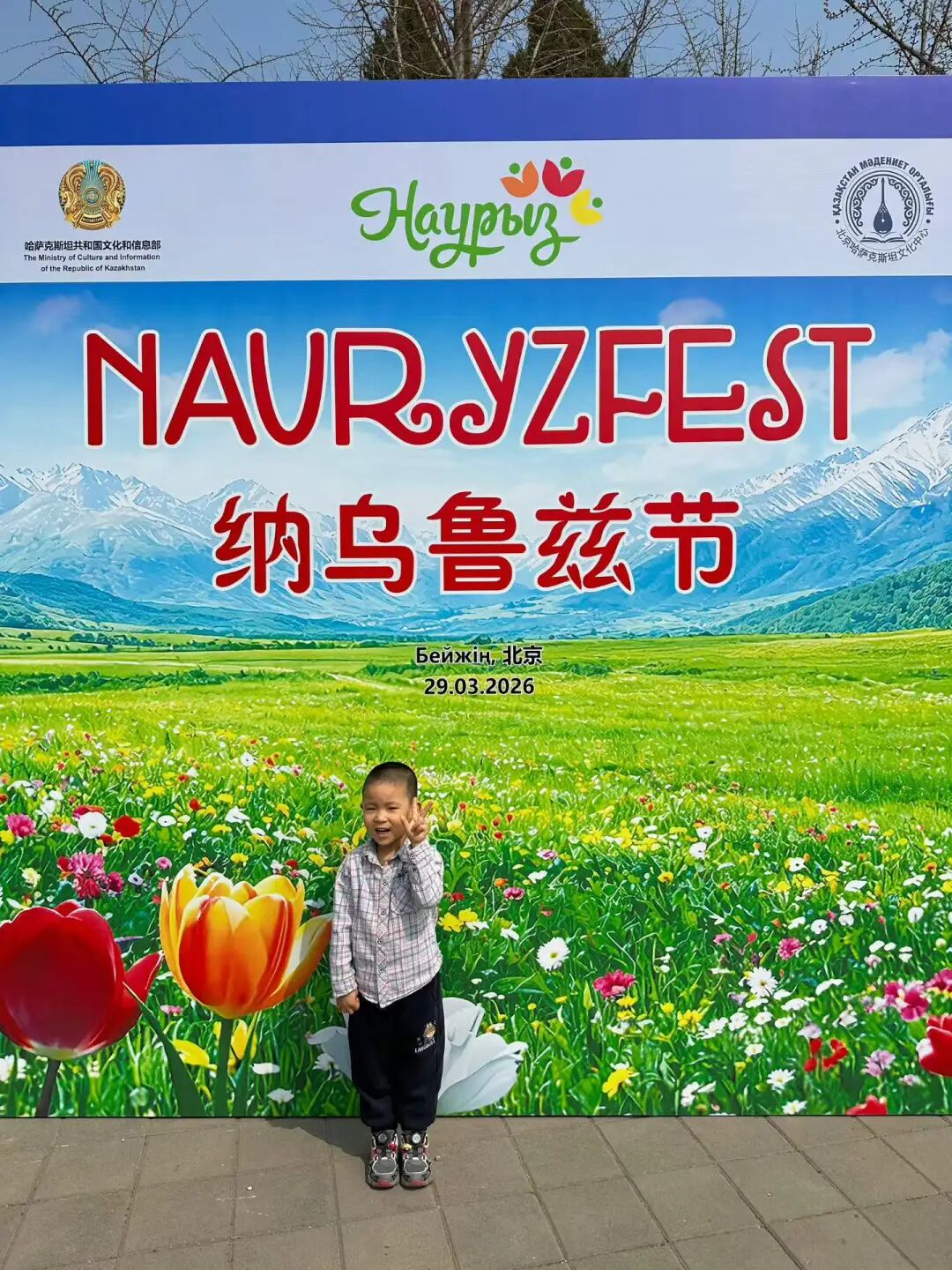
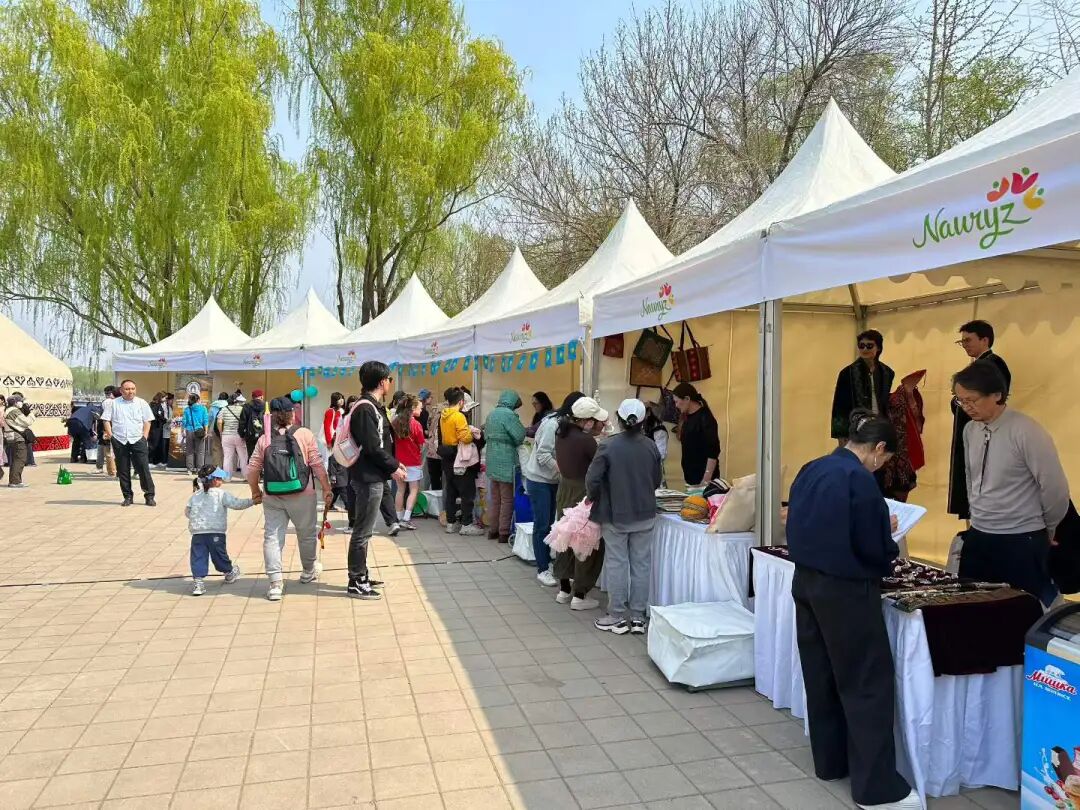
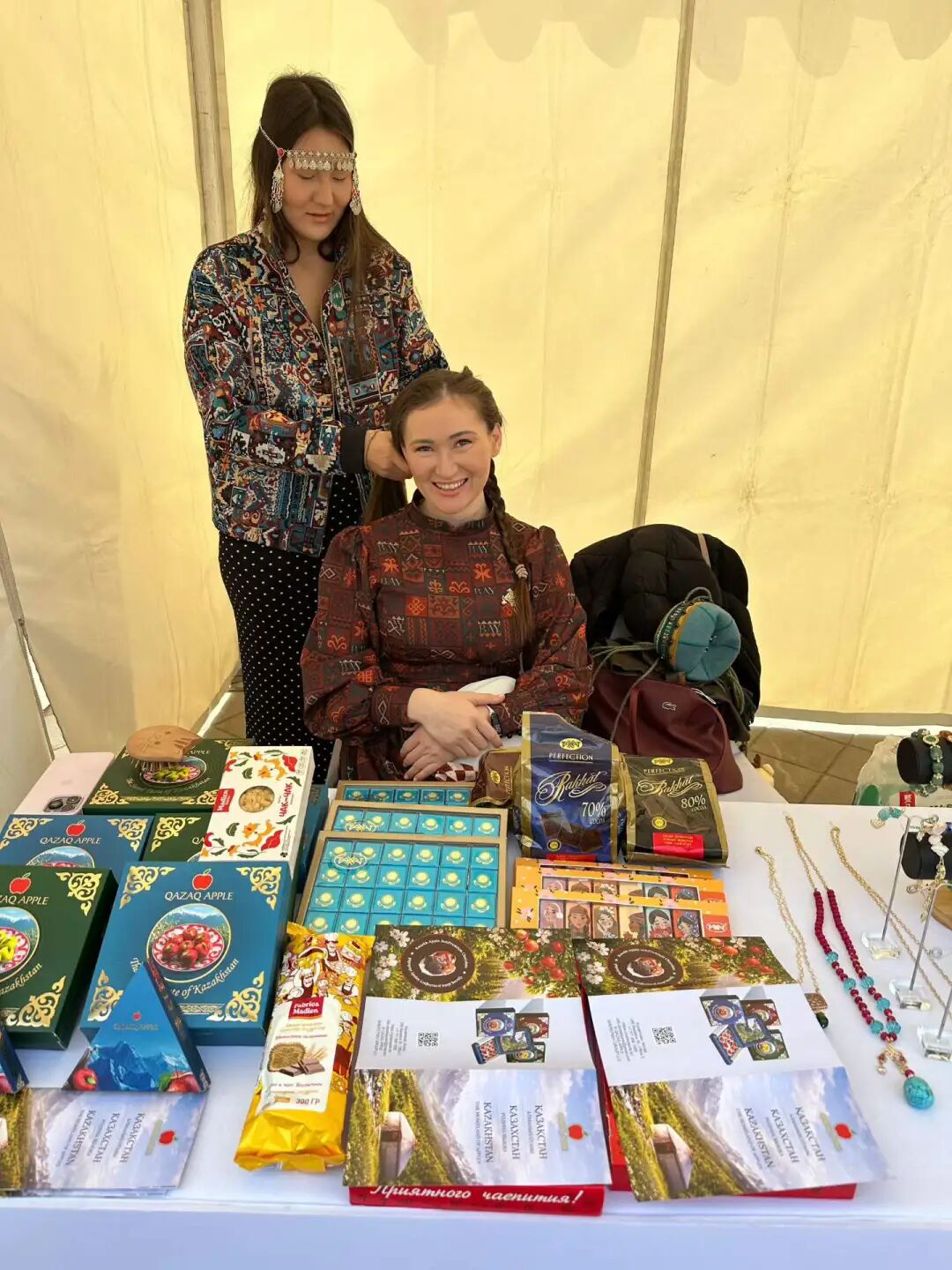
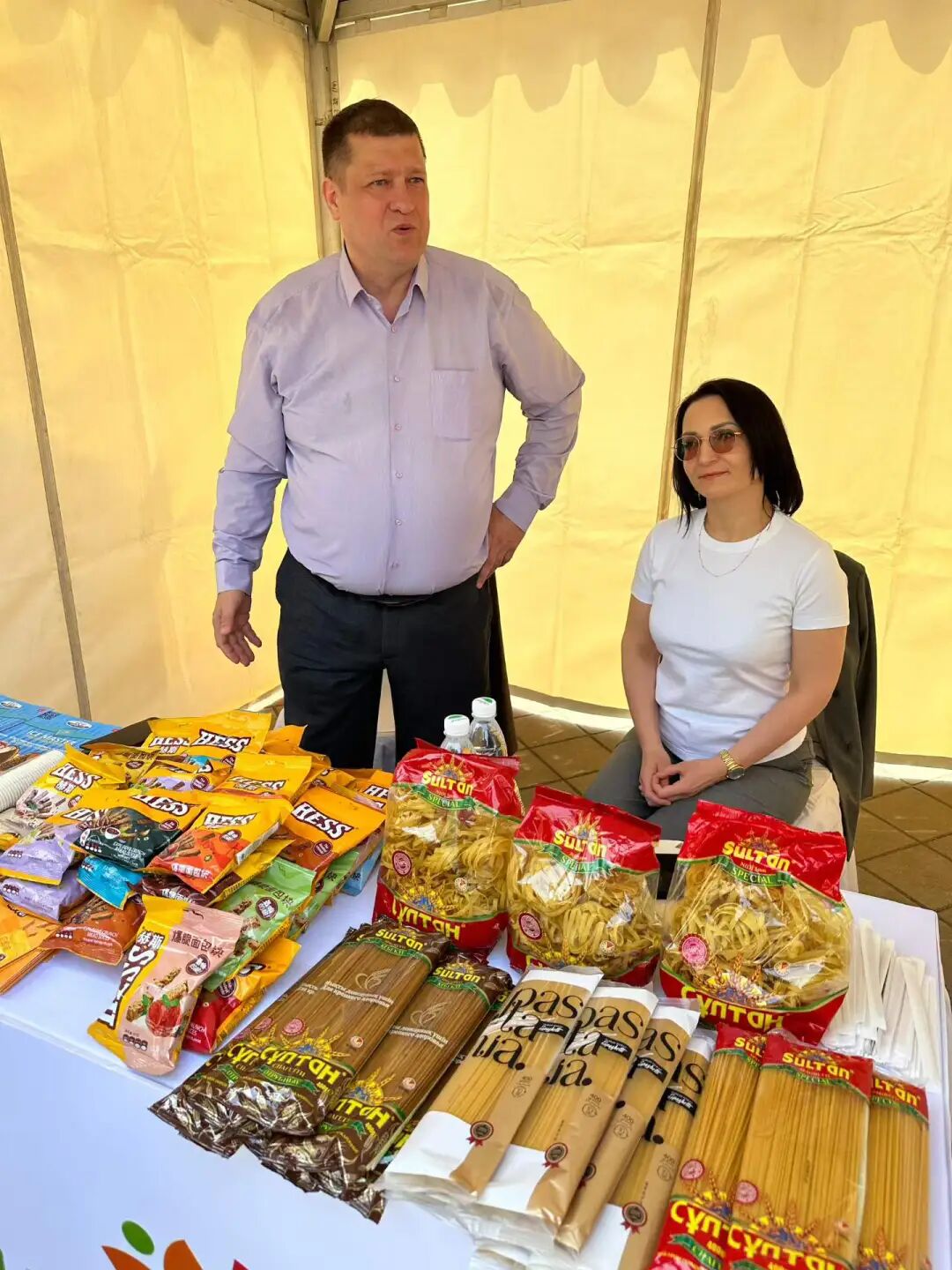
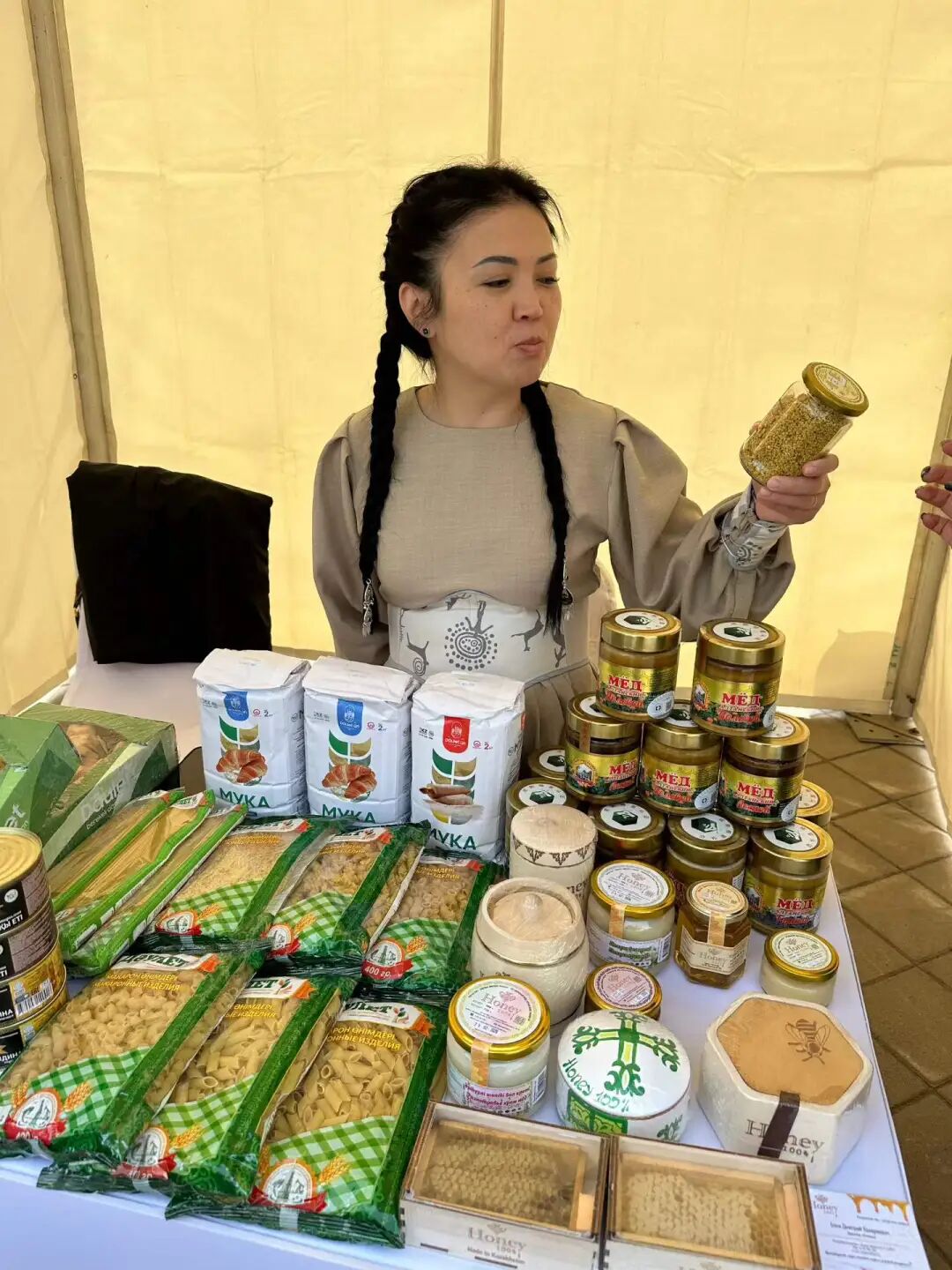
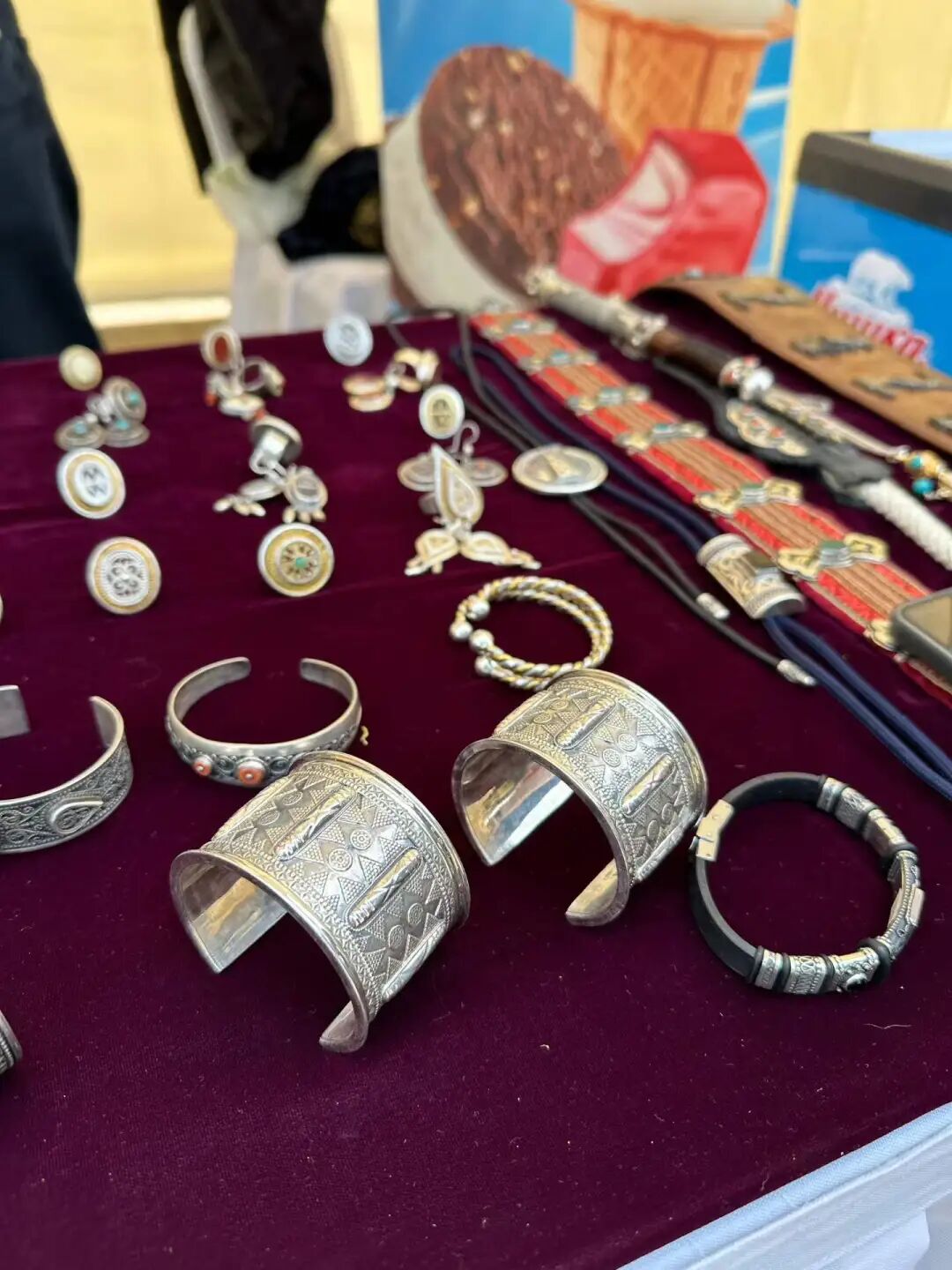
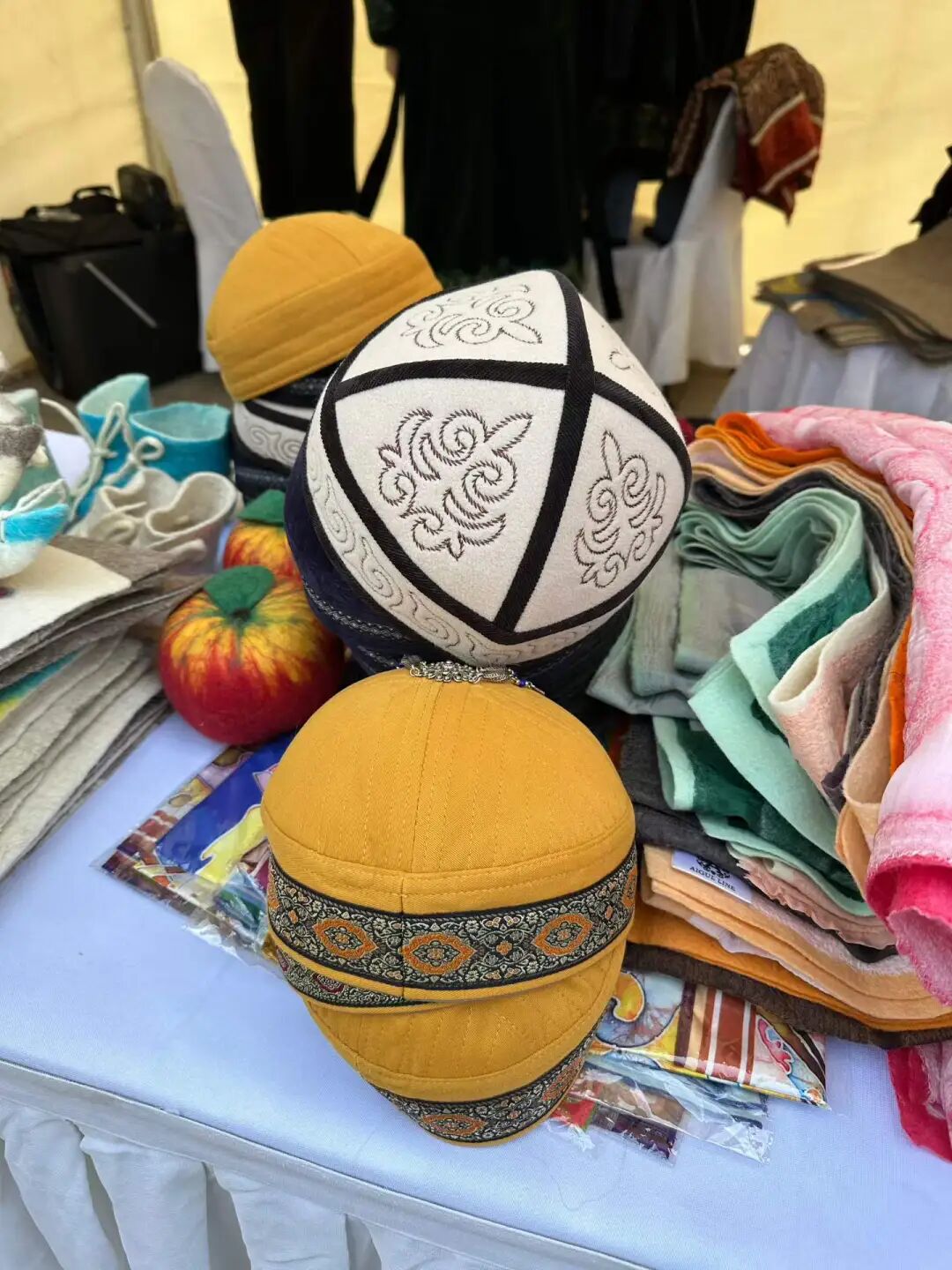
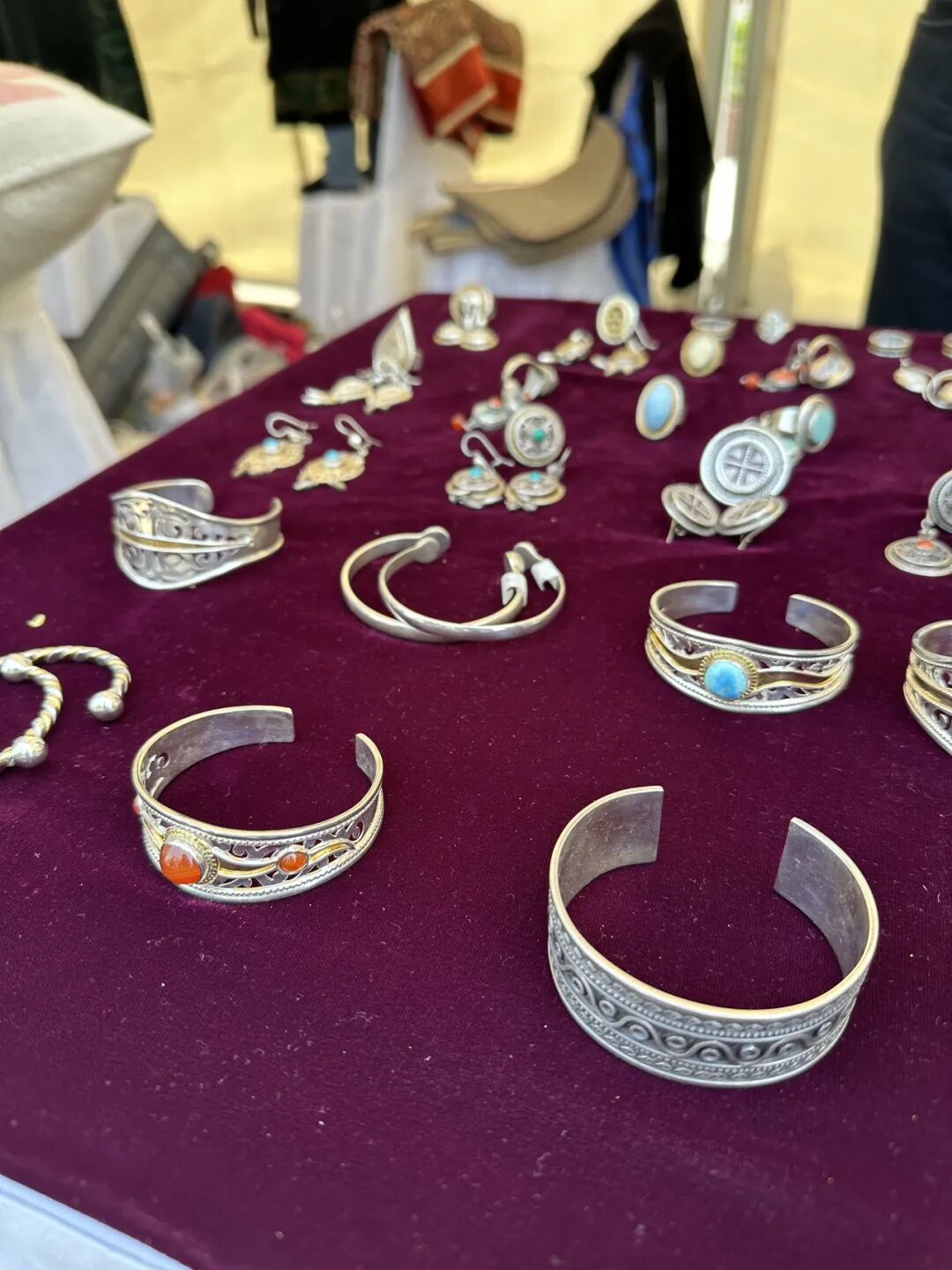
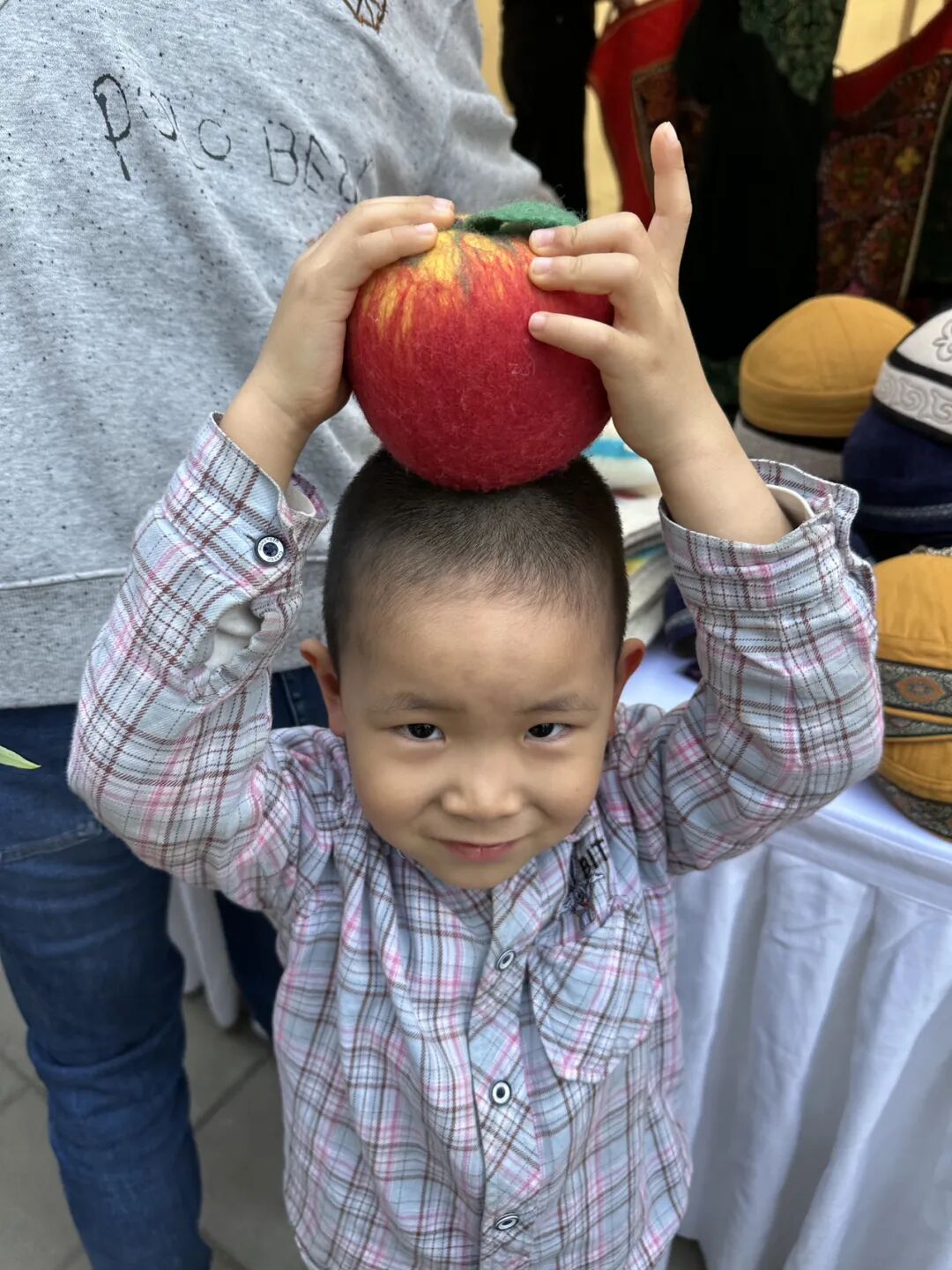
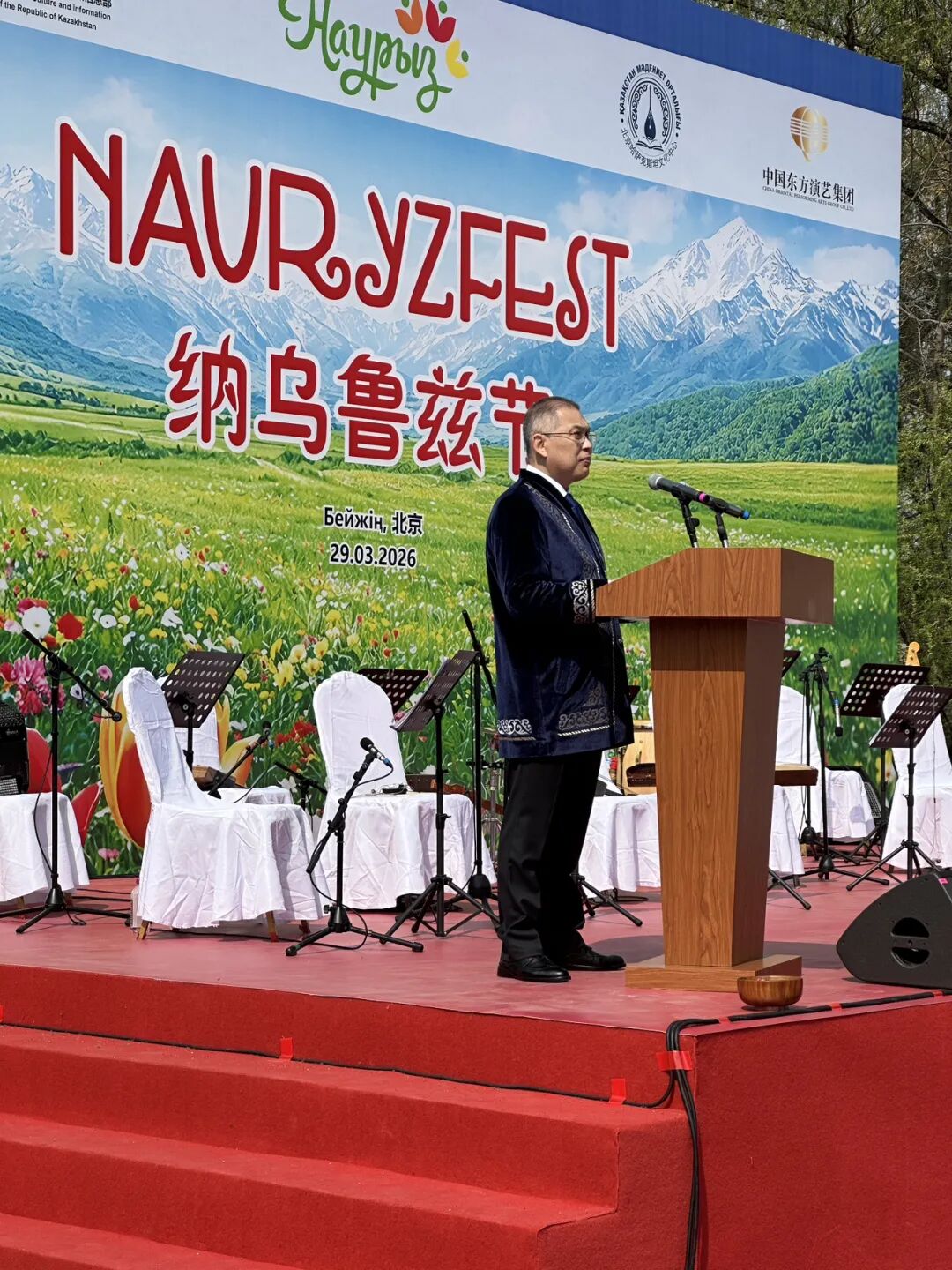
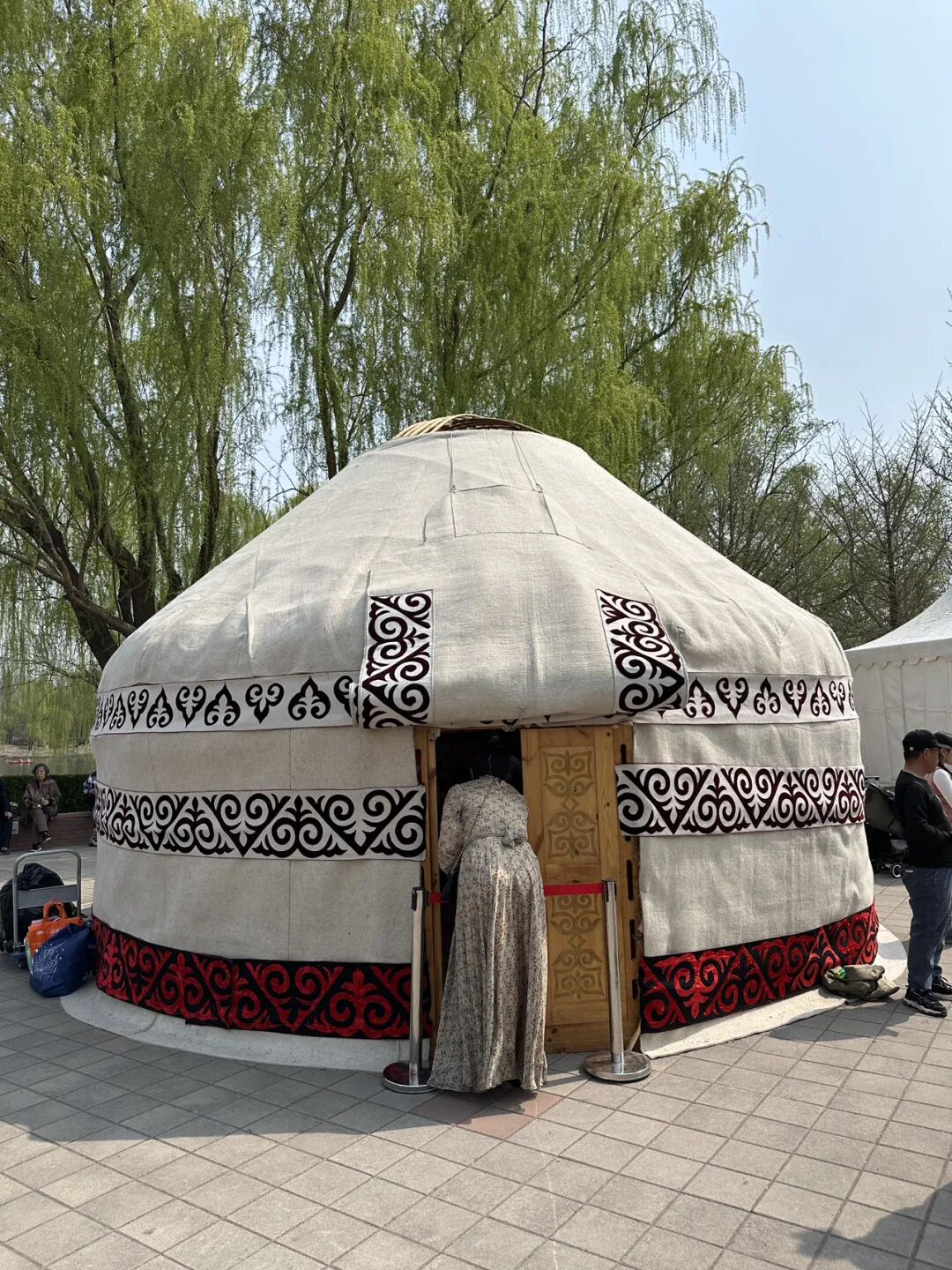
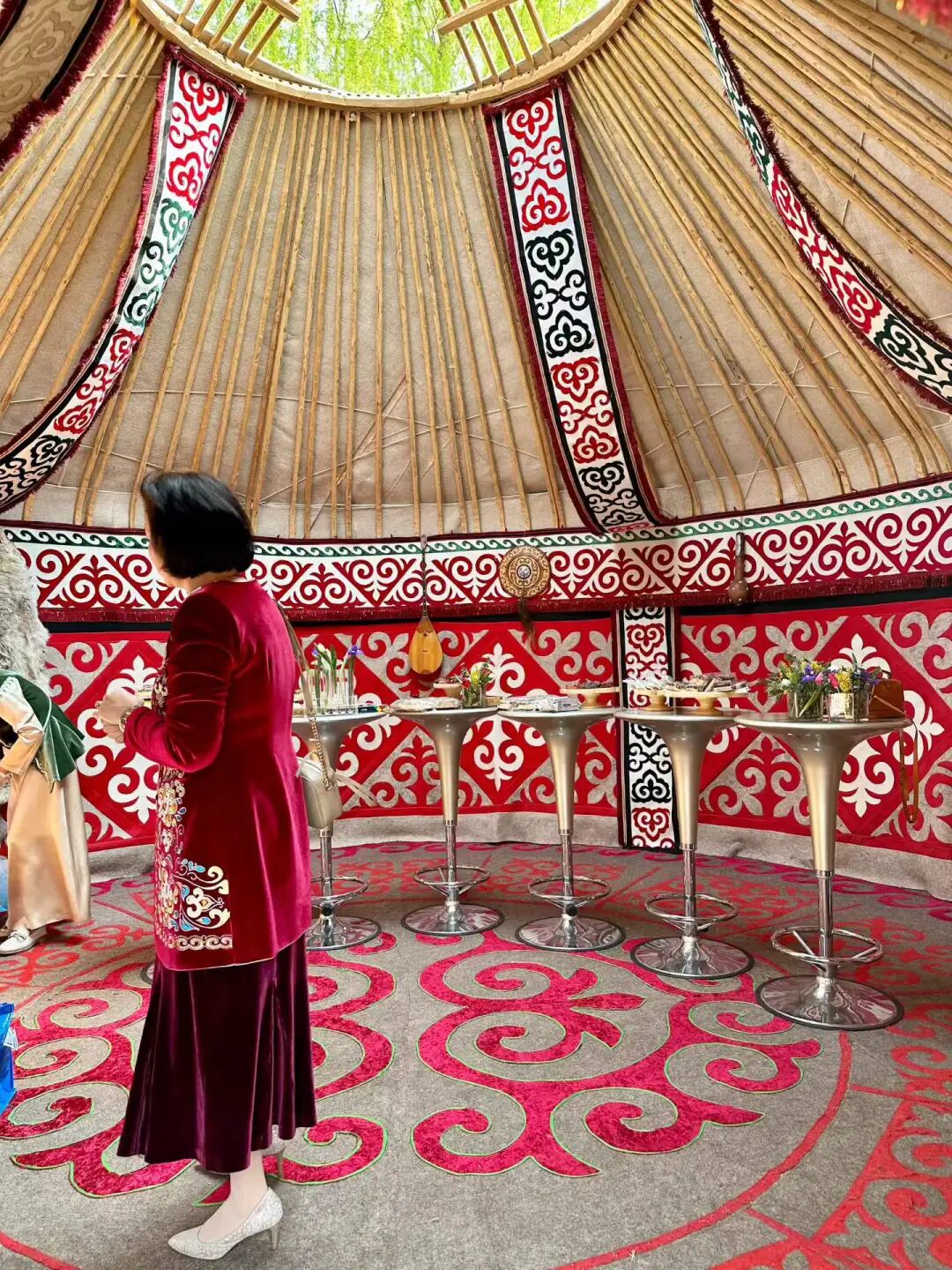
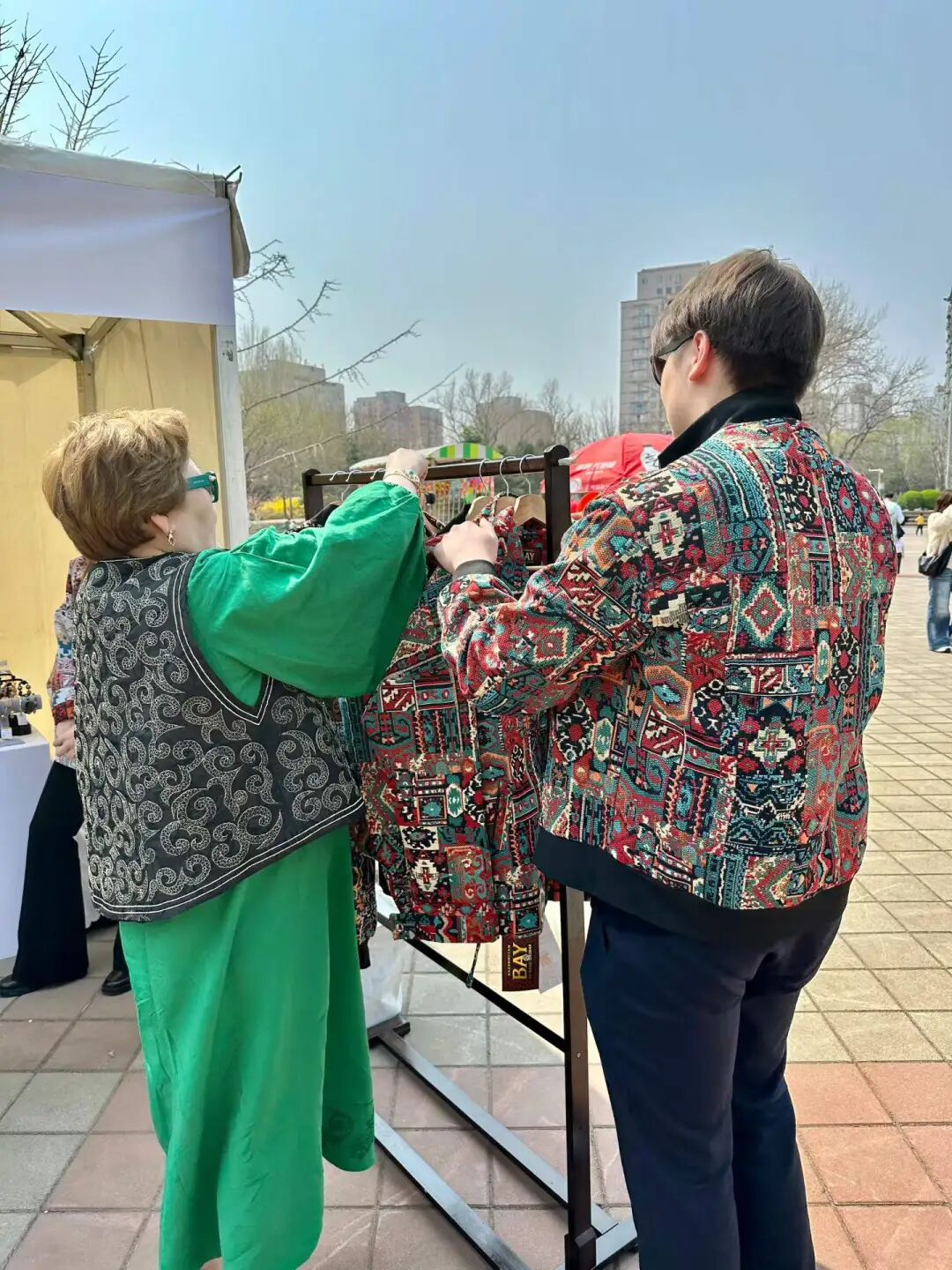
On Sunday, March 29th, the Embassy of Kazakhstan in China, the Ministry of Culture and Information of Kazakhstan, and the Kazakhstan Cultural Center in Beijing held a Nowruz festival event at Chaoyang Park in Beijing. They invited national-level orchestras and dance troupes from Kazakhstan, along with many Kazakh cultural products, festive foods, and traditional clothing. It was a great opportunity to learn about Nowruz and Kazakh culture.
Speech by the Ambassador of Kazakhstan to China.
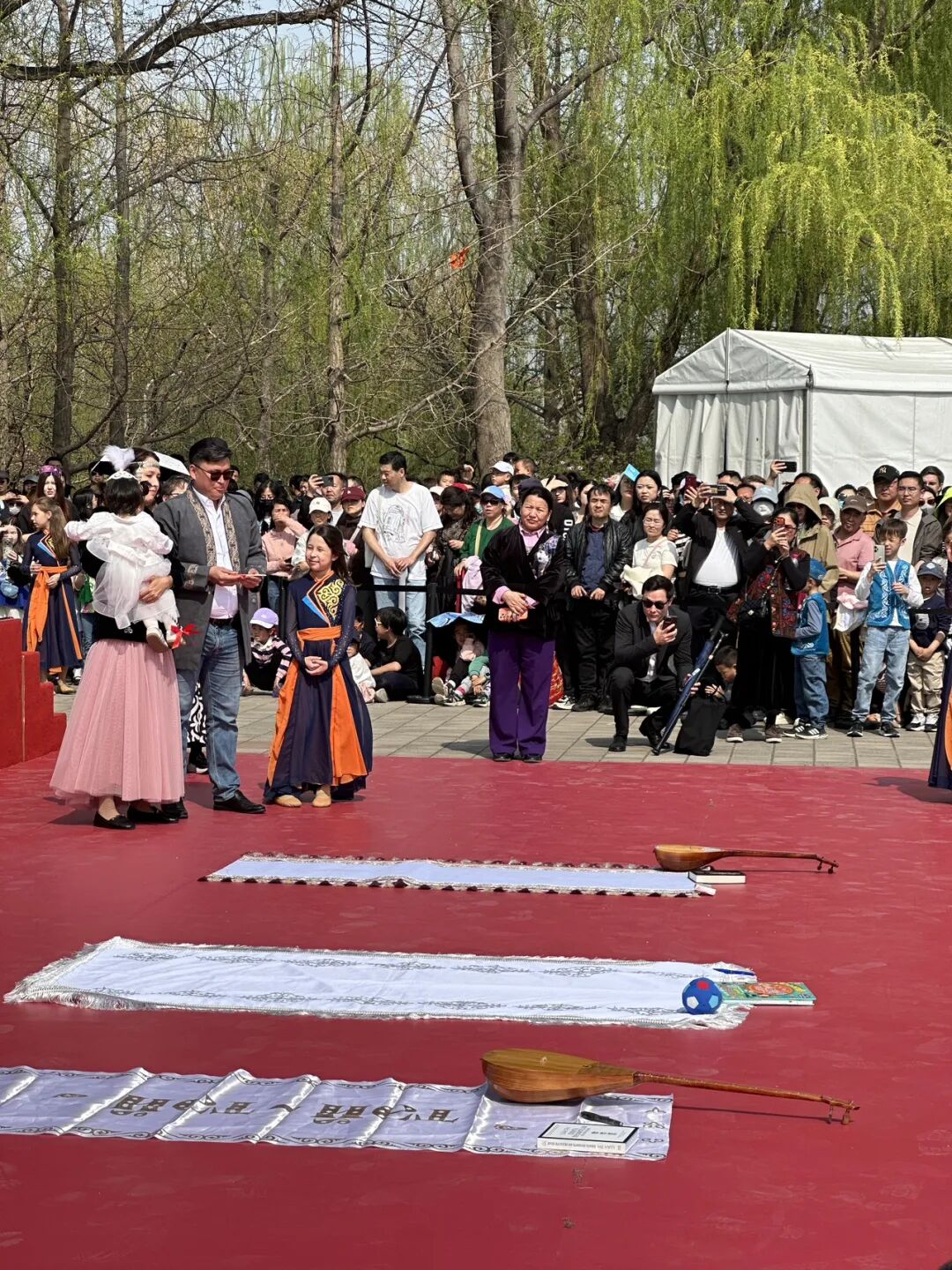
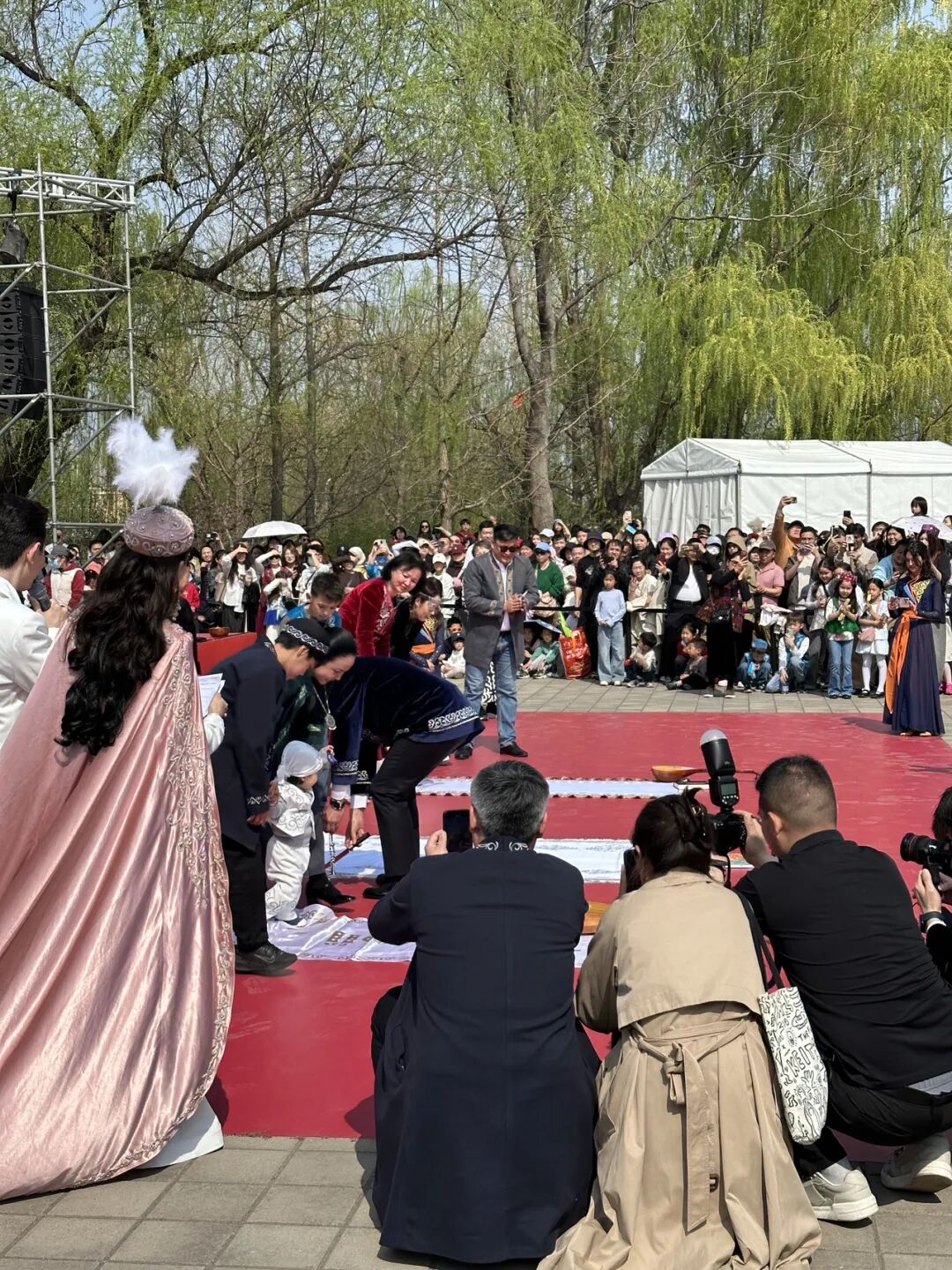
This shows the Kazakh first-steps ceremony (Tusau Keser). It is a life-initiation ritual held when a Kazakh baby turns one year old. The core of the ceremony is cutting the rope tied to the child's legs, which symbolizes breaking free from constraints and starting a path toward an independent life. After the rope is cut, an elder leads the child forward. Items like books, pens, a two-stringed lute (dombra), coins, and knives are placed on the ground for the child to grab, similar to the traditional 'grabbing the first birthday gift' custom. Finally, everyone offers blessings to the child and tosses candies, dried yogurt balls (kurt), and coins into the air.
The event featured Kazakhstan's top orchestra, Astana Sazy (Rhythm of Astana). Here are a few clips of them accompanying excellent Kazakh singers.
Astana Sazy is the national folk orchestra of Kazakhstan, affiliated with the state performance organization 'Kazakh Concert.' It is the core group for promoting traditional music and cultural diplomacy in Kazakhstan. The orchestra uses traditional Kazakh instruments like the zither (jetigen), the two-stringed lute (dombra), and the bowed string instrument (kobyz). Rooted in Kazakh nomadic culture, they are famous for playing folk music.
A wonderful performance by two Kazakh musicians playing and singing with the two-stringed lute (dombra).
The event featured the national-level Kazakh folk song and dance troupe, Gulder Ensemble. The troupe was formed in 1969. It started as an all-female group and debuted with the dance drama 'Steppe Movement,' which was praised as 'a bouquet picked from the snowy peaks of Alatau scattered across the stage.' In the 1970s, the troupe traveled throughout the Soviet Union and later went abroad, touring in Belgium, Germany, Malaysia, and Cuba, training a group of legendary Kazakh dancers. The troupe was quiet for a time until it was relaunched in 2023 with a new lineup at the Kazakhstan Central Concert Hall, allowing a new generation of audiences to experience the charm of traditional Kazakh folk dance.
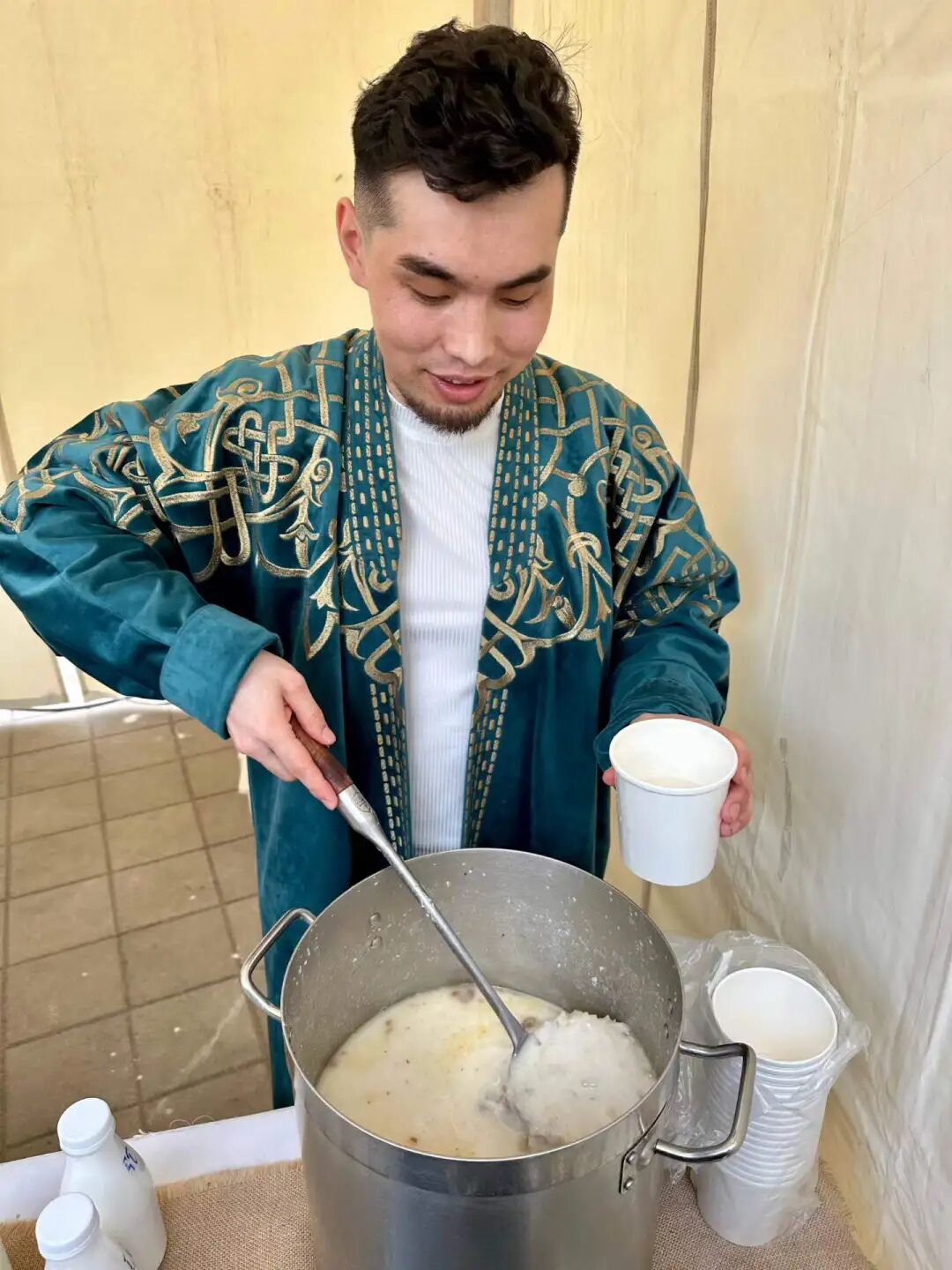
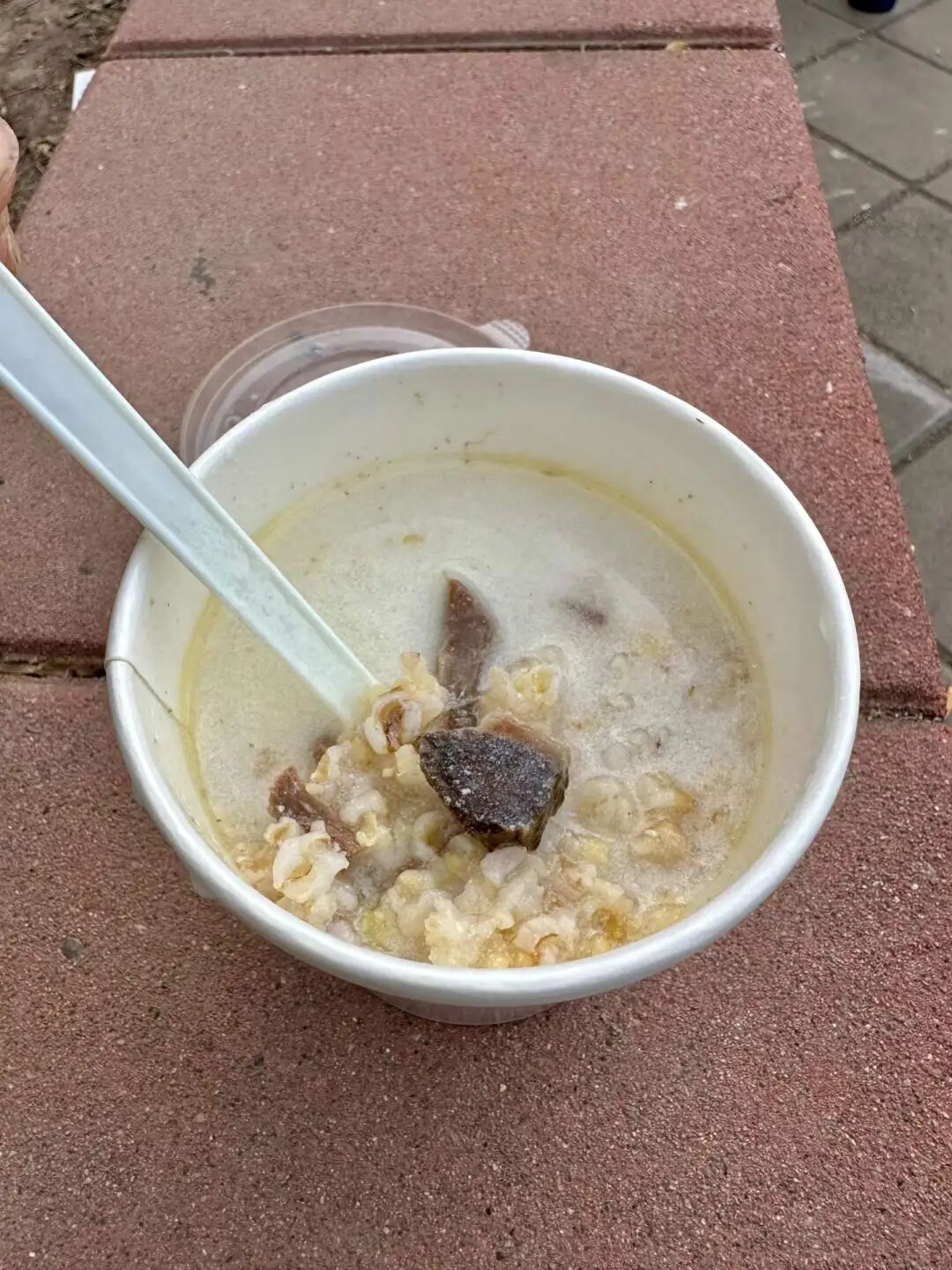
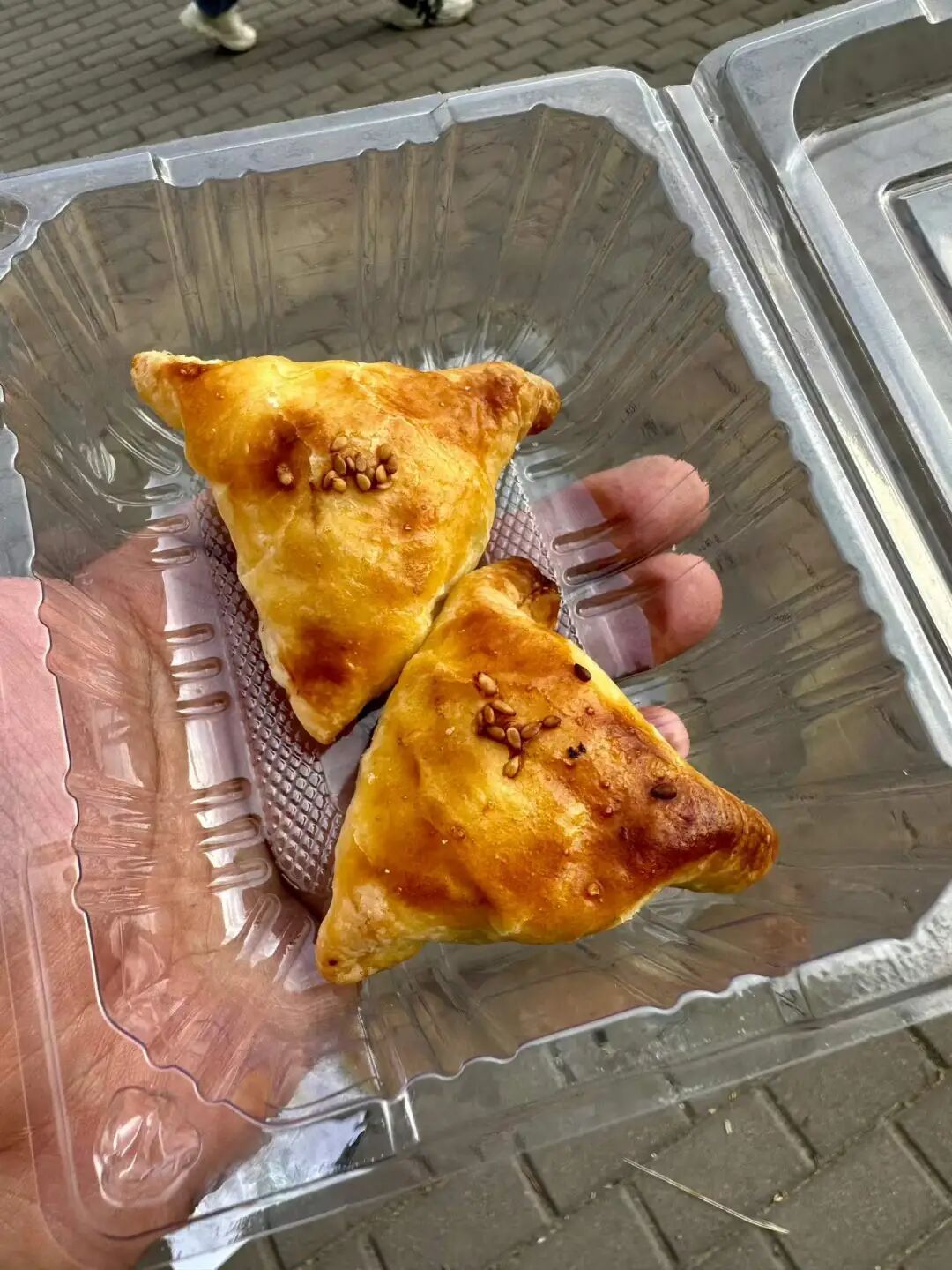
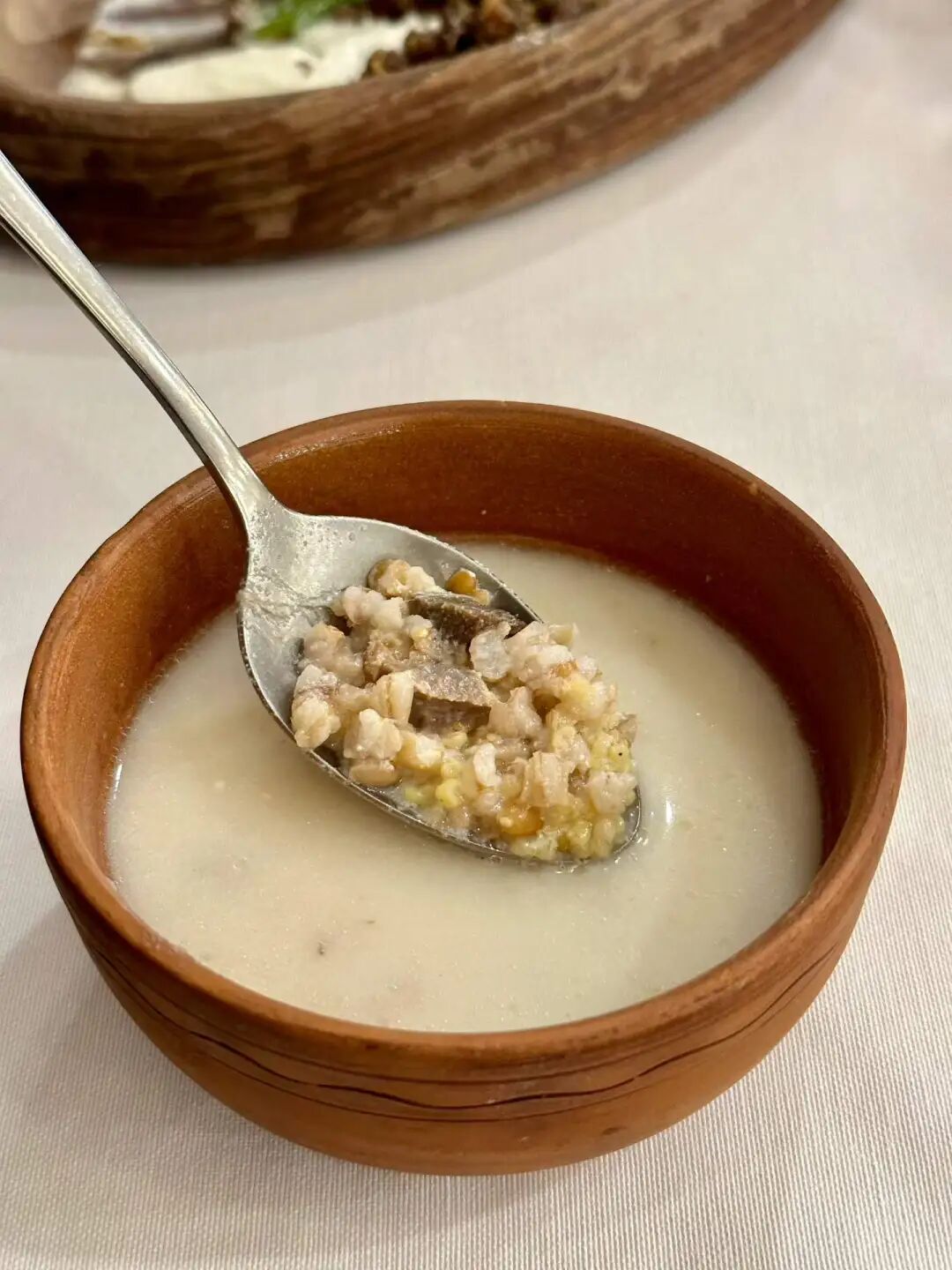
We drank Nowruz porridge (Nauryz Kozhe) and boiled fruit drink (Compote), and ate Kazakh fried dough pastry (Shek-Shek) and chicken baked buns (Samsa).
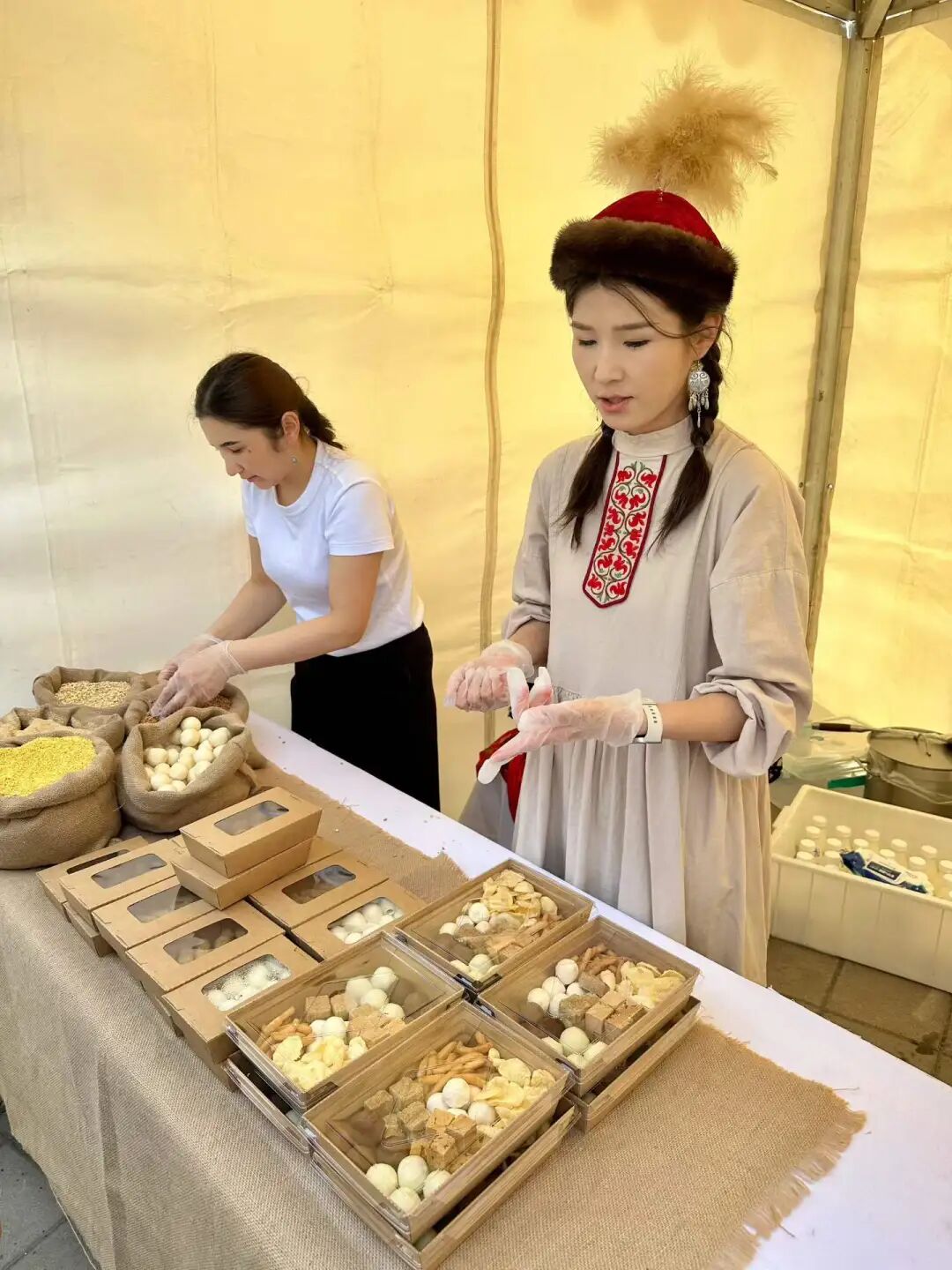
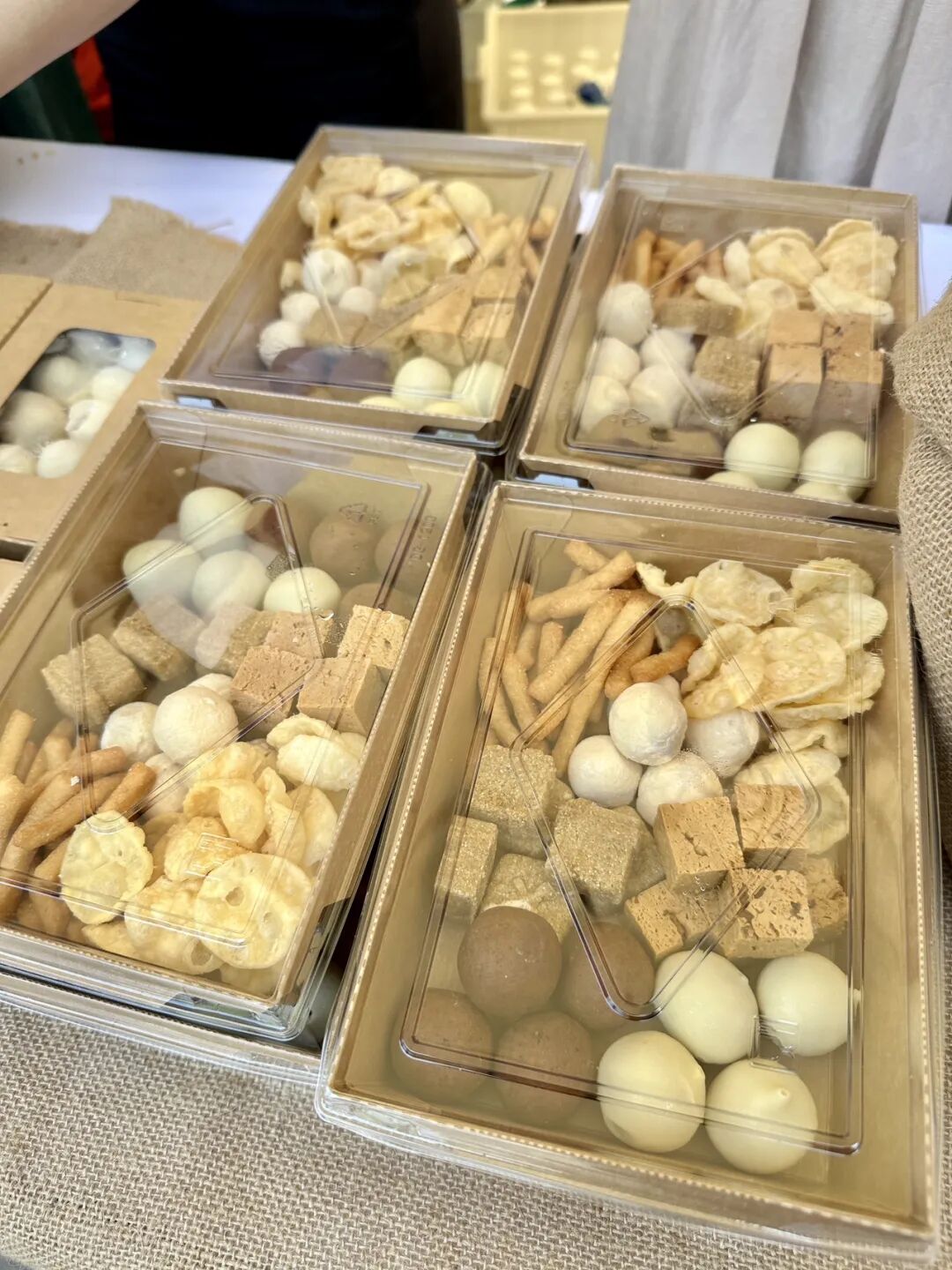
Nowruz porridge can only be eaten once a year during the Nowruz festival. Kazakh Nowruz porridge must contain at least seven ingredients, including barley, rice, wheat, smoked horse meat, dried yogurt balls (kurt), salt, and water. These foods are made with winter-slaughtered meat and stored grain, expressing the wish for abundance year after year.
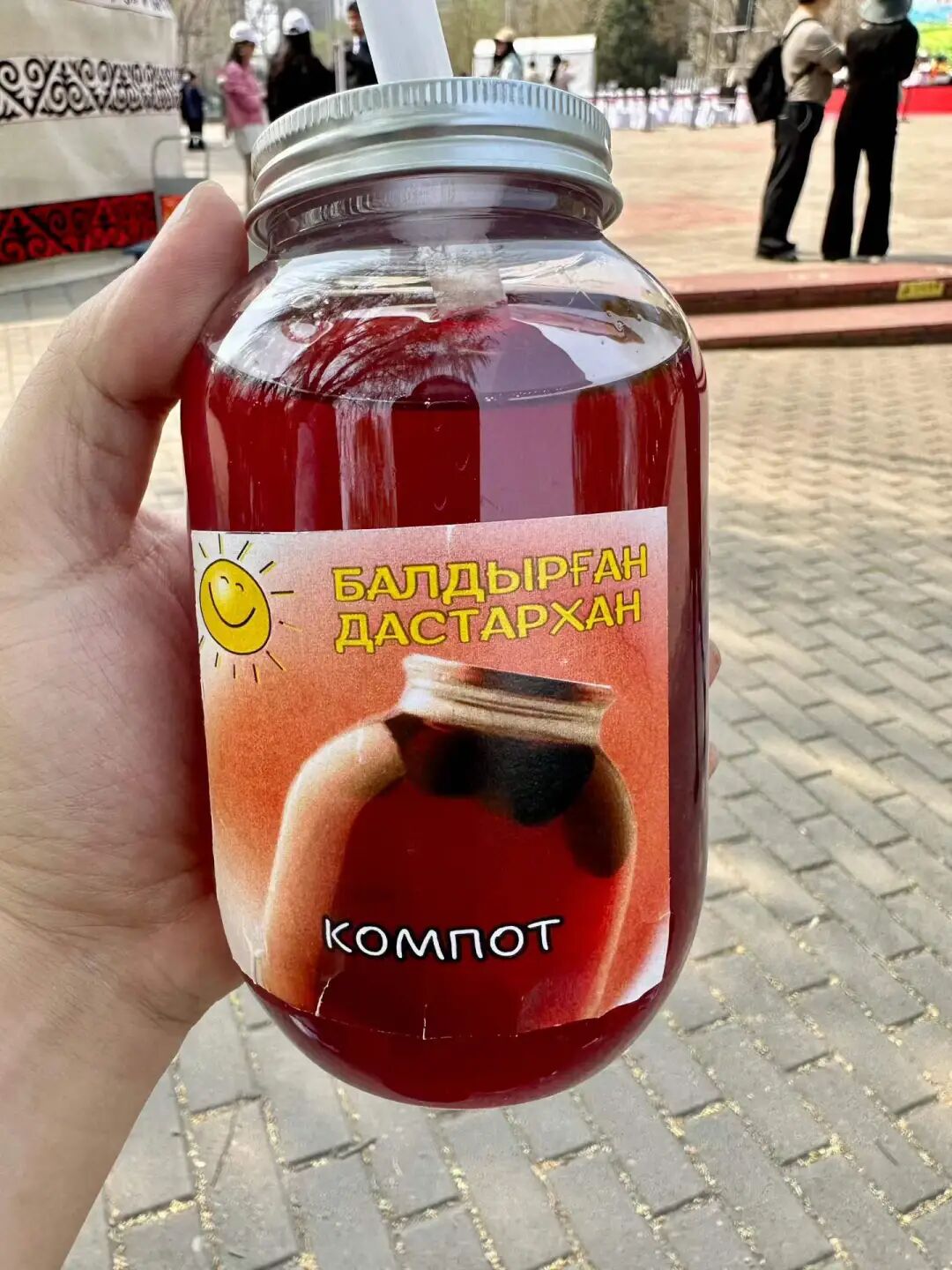
Compote is made by boiling water with sugar and fruits like plums, cherries, or apples. In summer, fresh fruit is used, and in winter, dried fruit is used. I drank water boiled with dried apples, which is a drink frequently served at Kazakh banquets and in daily life.
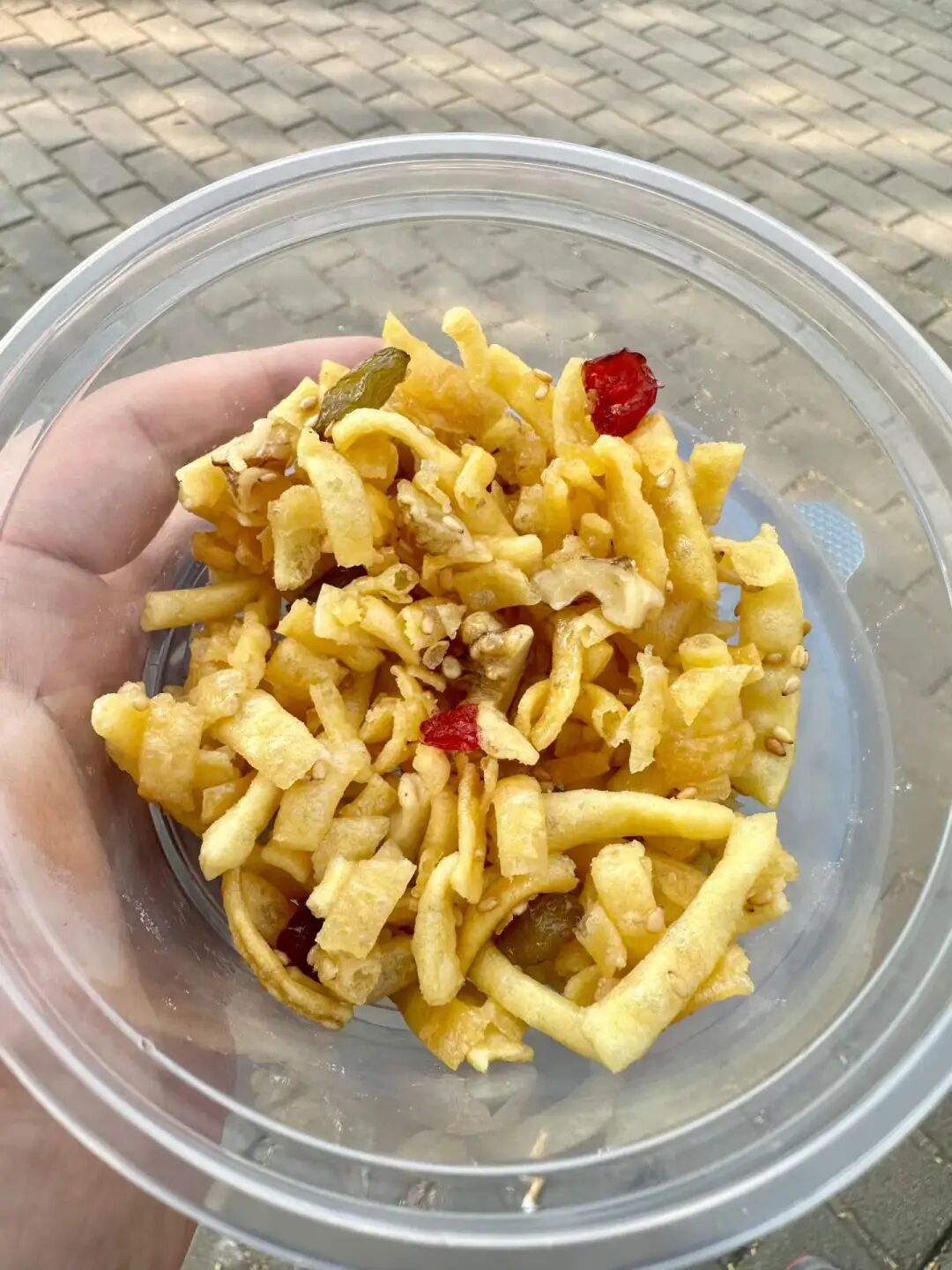
Fried dough pastry (Shek-Shek) is a must-have snack for Kazakh weddings, Nowruz, and other festivals, symbolizing sweetness, reunion, and a good harvest. To make it, flour is mixed with eggs, rolled into strips, cut into pieces, and fried until golden and crispy. Then, honey syrup is drizzled over it, and it is sprinkled with nuts and dried fruit after cooling. Honey cake (chak-chak) is very common in Tatarstan and among other Central Asian peoples. The Tatars call it chak-chak, and I even visited a chak-chak museum in Kazan.
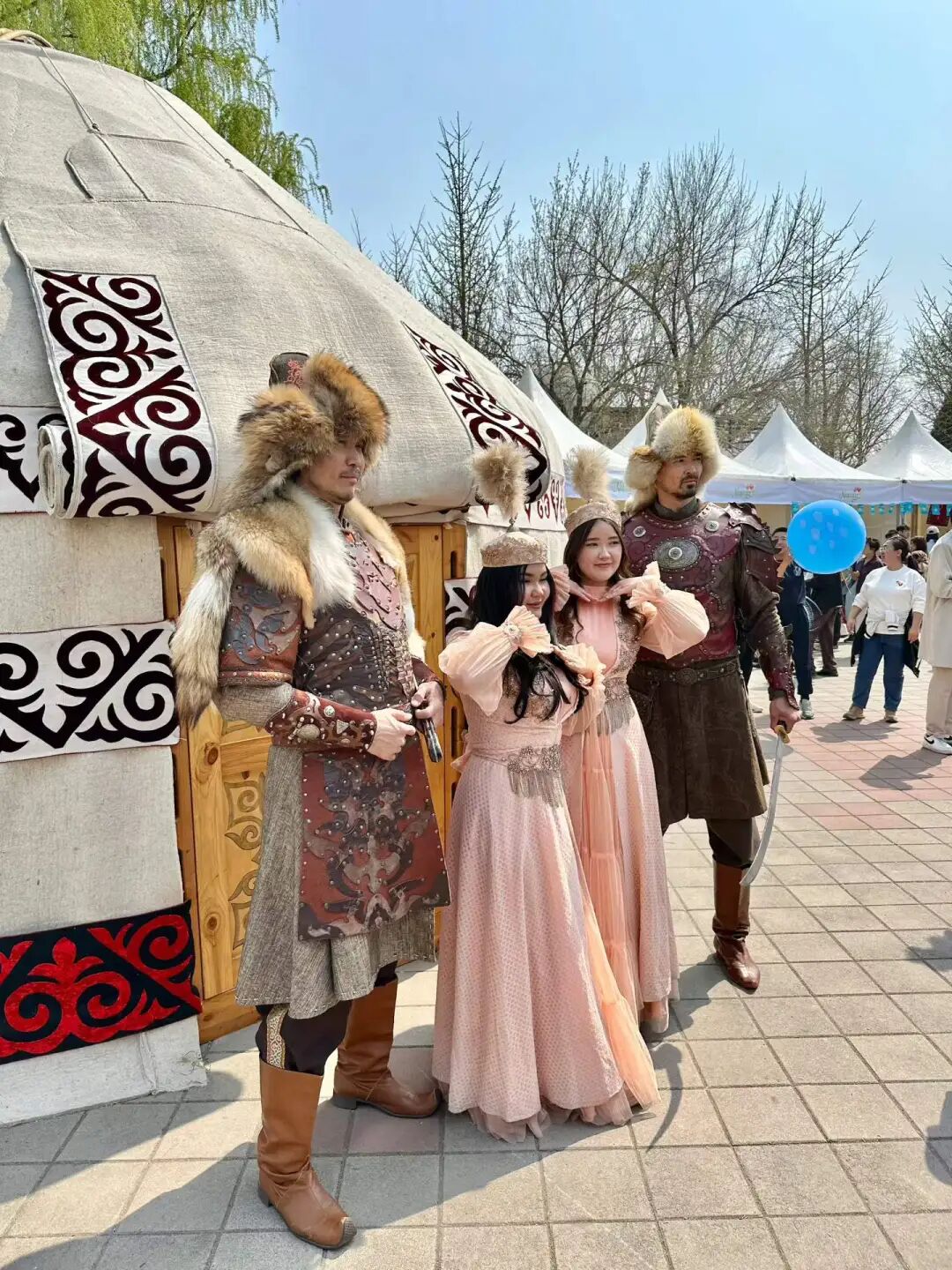
Everyone took turns taking photos with the Kazakh warriors, who were at least two meters tall.
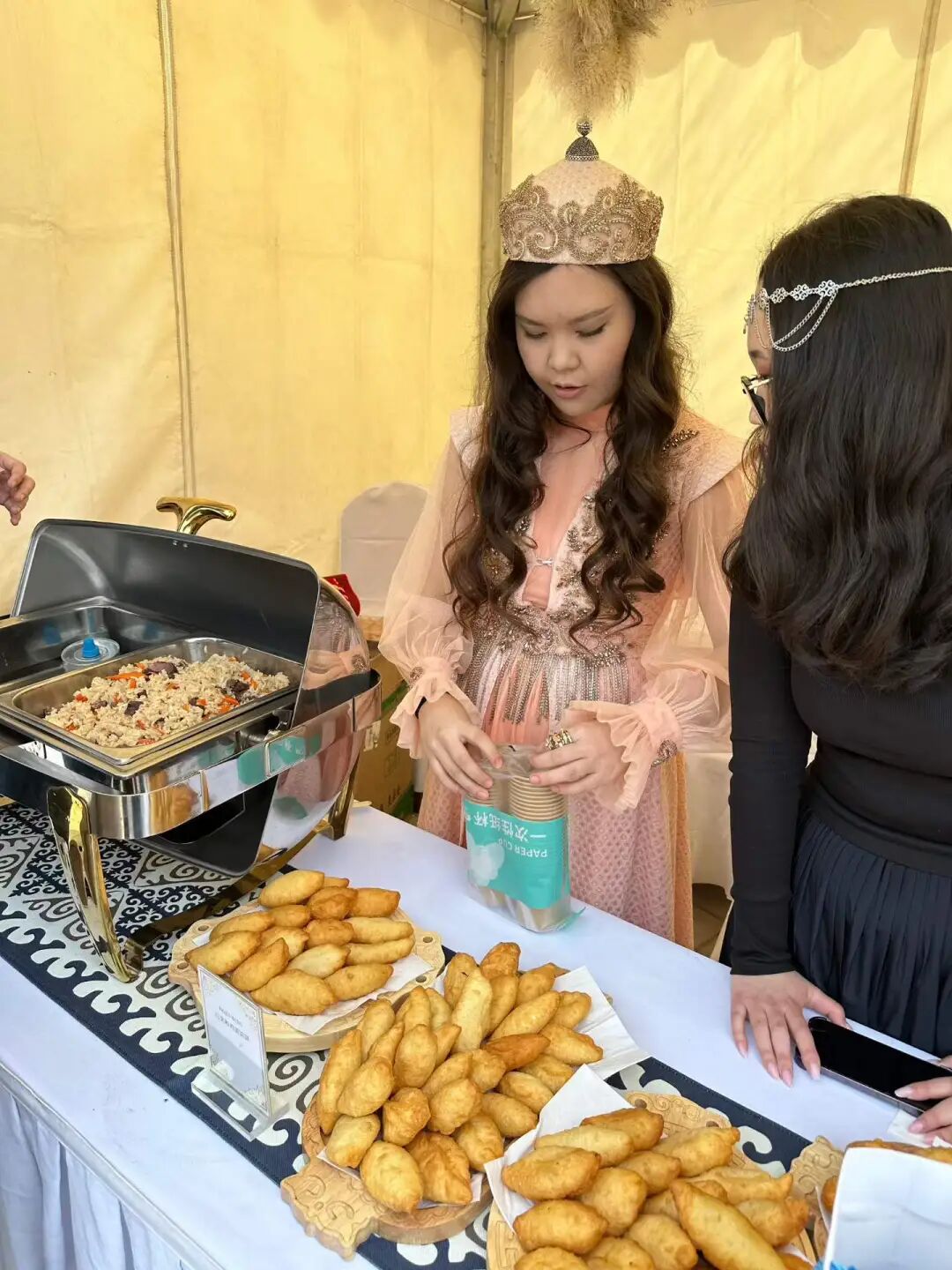
Kazakh shredded meat pilaf (plov) is full of carrots.
Fried dough puffs (baursak).
During the Nowruz festival, the Kazakh restaurant Sandyq in Beijing hosts traditional Kazakh music performances every night at 7:30, and they give away free fried dough puffs (baursak) and Nowruz porridge.
We also ate sheep tail and liver (kuyryk bauyr), meat-filled pies (baramysh), horse meat noodle soup (tomyrtqa), and millet milk tea (talqan), which are all classic Kazakh dishes.
Kuyryk bauyr literally means sheep tail and liver. It is stir-fried with only salt and served with yogurt. This is a classic dish for Kazakh engagement ceremonies. After the bride's family slaughters a sheep, the elders serve the sheep tail and liver to the groom's guests while singing blessings. If you don't eat it, they might jokingly pretend to sew your clothes to the felt mat or smear oil on your face, symbolizing that the two families are officially joined and cannot back out. There is a Kazakh proverb that says, 'Only after eating the sheep tail and liver is the marriage officially set.'
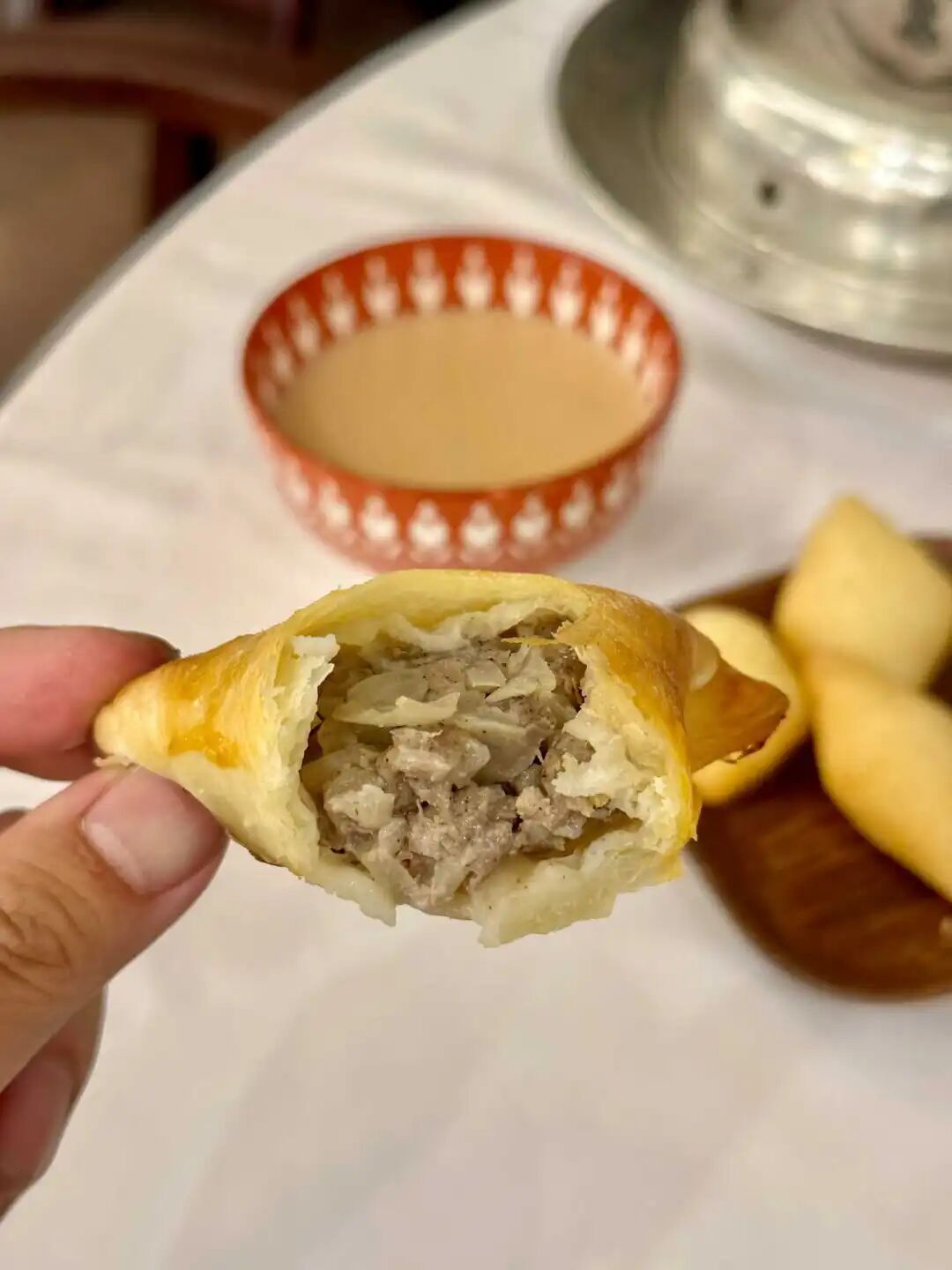
Meat-filled pie (baramysh) is a leavened dough pastry that originated with the Tatars and Bashkirs. It spread to the Kazakhs in the 19th century and became a classic street food during the Soviet era. Like baked buns (samsa), baramysh is filled with lamb and onions, but it uses leavened dough. The top is left open, the edges are pinched shut, and it is deep-fried until golden. It is best eaten dipped in tomato sauce and paired with milk tea.
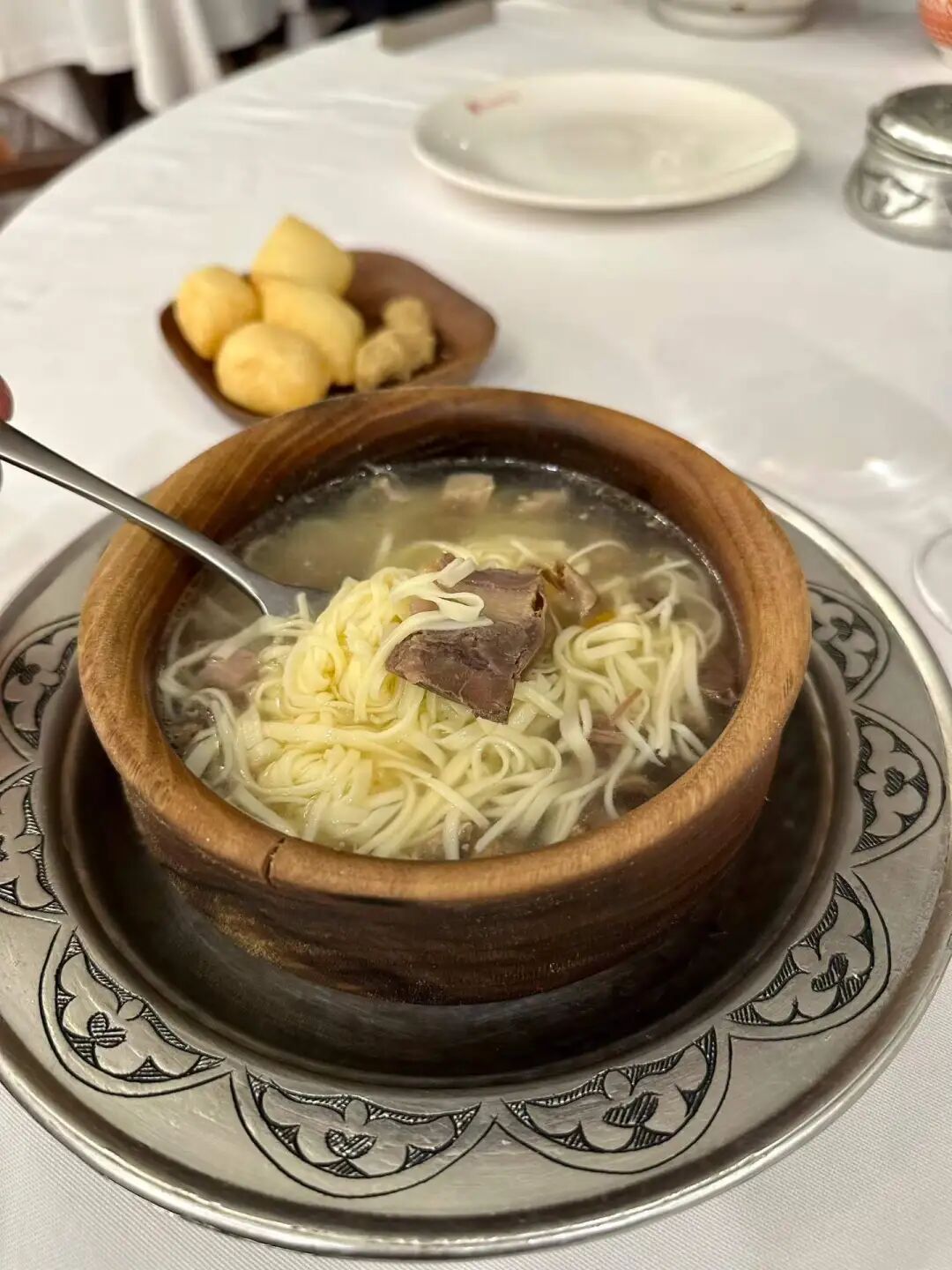
Horse meat noodle soup (tomyrtqa sorpasy) is the noodle soup version of meat and noodles (naryn), making it perfect for winter. This one-pot dish of boiled meat and noodles is perfect for festivals, hosting guests, and moving between nomadic pastures. To make it, boil the horse meat first, then cook the noodles in the broth. It is rich, salty, and savory, with the unique smoky flavor of smoked horse meat.
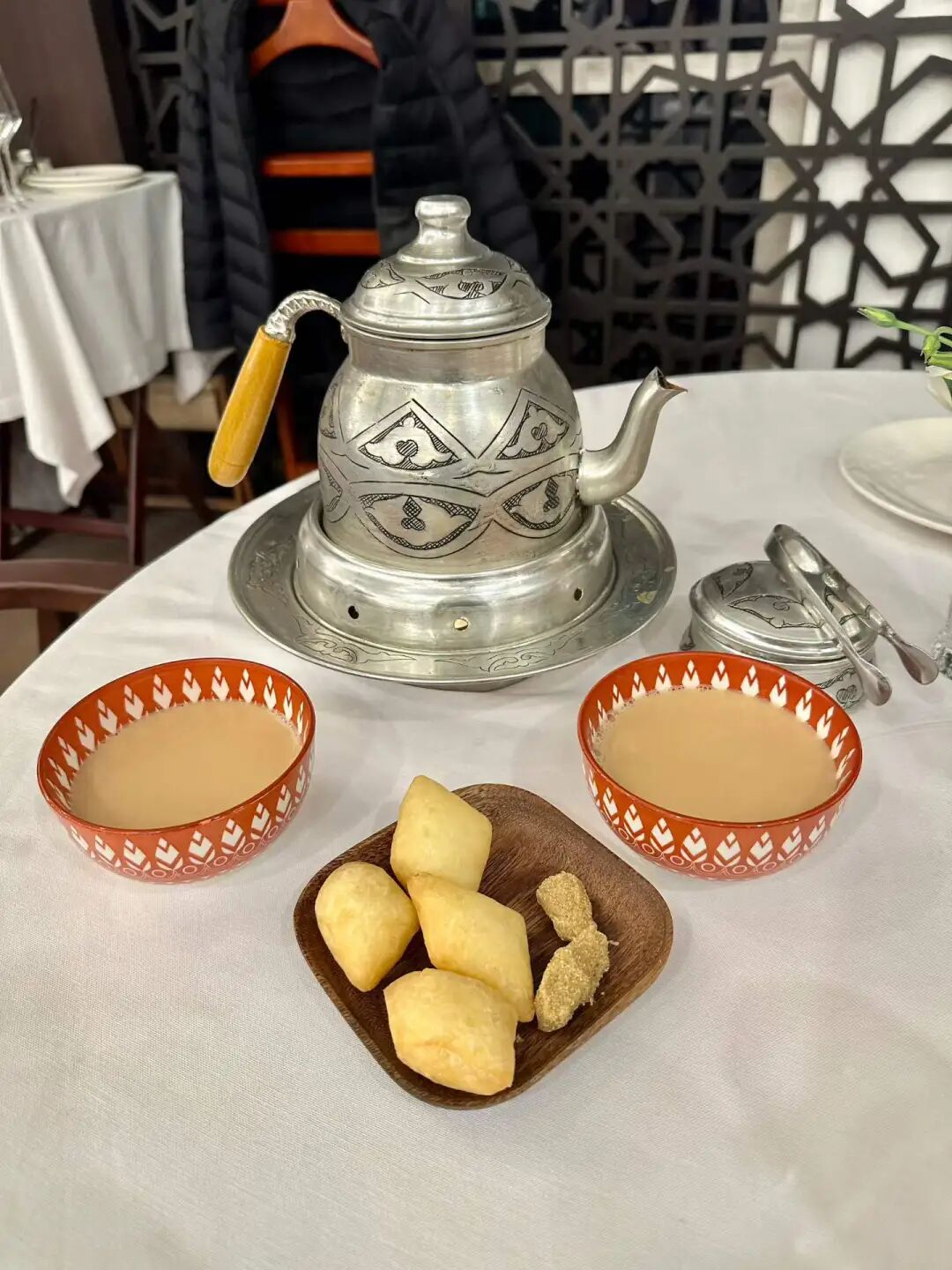
Kazakh millet milk tea (talqan) is made by boiling broomcorn millet, brick tea, milk, and salt. The golden millet grains are washed, roasted, and hulled to become crispy, adding a toasted grain aroma to the milk tea. view all
Summary: This Beijing Nowruz account records a Persian New Year gathering with food, music, guests from many countries, and the cultural details of the celebration as described in the source.
March 21st this year is the Persian New Year. Many countries influenced by Persian culture celebrate the Nowruz festival during this time, including Afghanistan, Albania, Azerbaijan, India, Iran, Iraq (Kurdish region), Syria (Kurdish region), Kazakhstan, Kyrgyzstan, Pakistan, Tajikistan, Turkey (Kurdish region), Turkmenistan, and Uzbekistan.
After the Afghan Taliban came to power in 2022, they stated that Nowruz would not be a public holiday, but they still allowed celebrations to take place. In Albania, Sunni Muslims, Catholics, and Orthodox Christians celebrate Nowruz together to welcome the arrival of spring. Shia Muslims believe that Nowruz is the day Imam Ali became Caliph, so they place special importance on it, performing special acts of worship and offering blessings.
On Sunday, March 29th, the Embassy of Kazakhstan in China, the Ministry of Culture and Information of Kazakhstan, and the Kazakhstan Cultural Center in Beijing held a Nowruz festival event at Chaoyang Park in Beijing. They invited national-level orchestras and dance troupes from Kazakhstan, along with many Kazakh cultural products, festive foods, and traditional clothing. It was a great opportunity to learn about Nowruz and Kazakh culture.
Speech by the Ambassador of Kazakhstan to China.
This shows the Kazakh first-steps ceremony (Tusau Keser). It is a life-initiation ritual held when a Kazakh baby turns one year old. The core of the ceremony is cutting the rope tied to the child's legs, which symbolizes breaking free from constraints and starting a path toward an independent life. After the rope is cut, an elder leads the child forward. Items like books, pens, a two-stringed lute (dombra), coins, and knives are placed on the ground for the child to grab, similar to the traditional 'grabbing the first birthday gift' custom. Finally, everyone offers blessings to the child and tosses candies, dried yogurt balls (kurt), and coins into the air.
The event featured Kazakhstan's top orchestra, Astana Sazy (Rhythm of Astana). Here are a few clips of them accompanying excellent Kazakh singers.
Astana Sazy is the national folk orchestra of Kazakhstan, affiliated with the state performance organization 'Kazakh Concert.' It is the core group for promoting traditional music and cultural diplomacy in Kazakhstan. The orchestra uses traditional Kazakh instruments like the zither (jetigen), the two-stringed lute (dombra), and the bowed string instrument (kobyz). Rooted in Kazakh nomadic culture, they are famous for playing folk music.
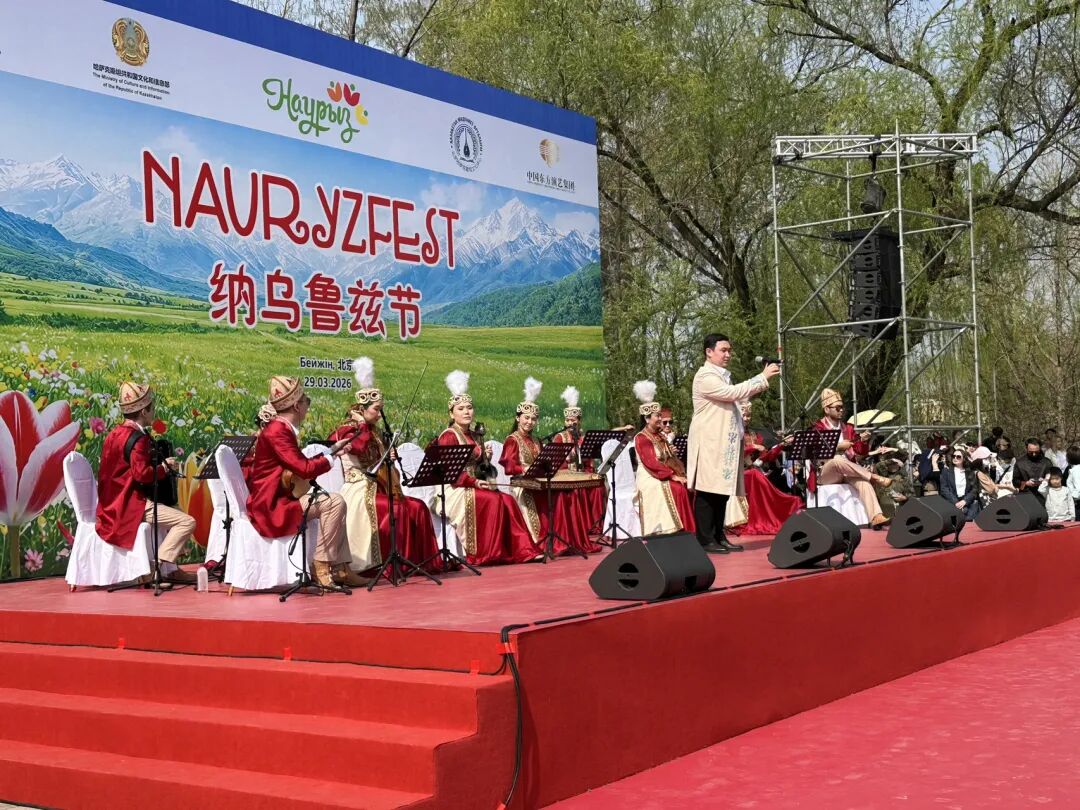
A wonderful performance by two Kazakh musicians playing and singing with the two-stringed lute (dombra).
The event featured the national-level Kazakh folk song and dance troupe, Gulder Ensemble. The troupe was formed in 1969. It started as an all-female group and debuted with the dance drama 'Steppe Movement,' which was praised as 'a bouquet picked from the snowy peaks of Alatau scattered across the stage.' In the 1970s, the troupe traveled throughout the Soviet Union and later went abroad, touring in Belgium, Germany, Malaysia, and Cuba, training a group of legendary Kazakh dancers. The troupe was quiet for a time until it was relaunched in 2023 with a new lineup at the Kazakhstan Central Concert Hall, allowing a new generation of audiences to experience the charm of traditional Kazakh folk dance.
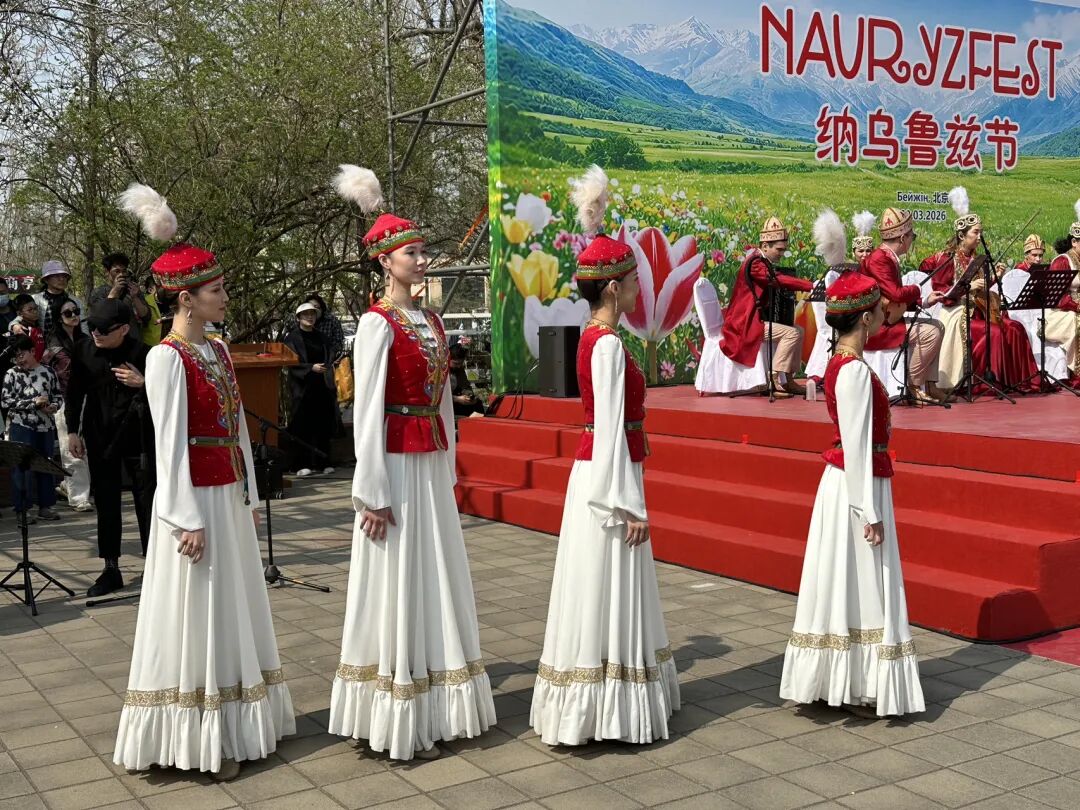
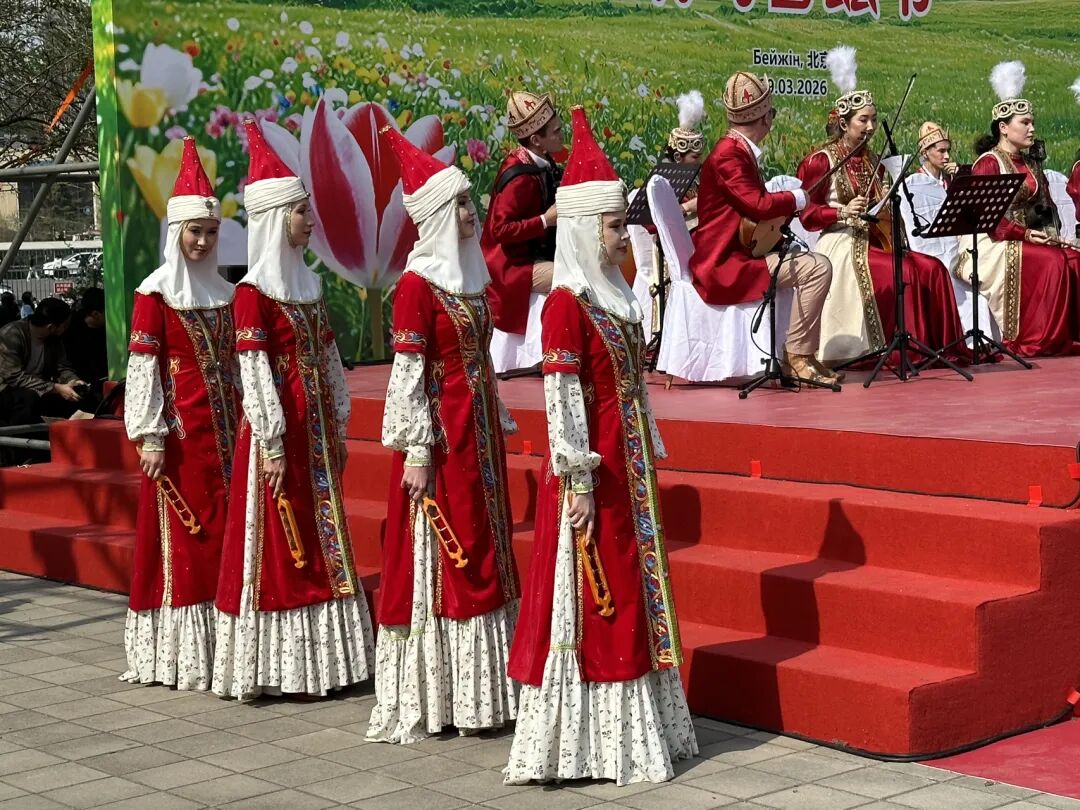
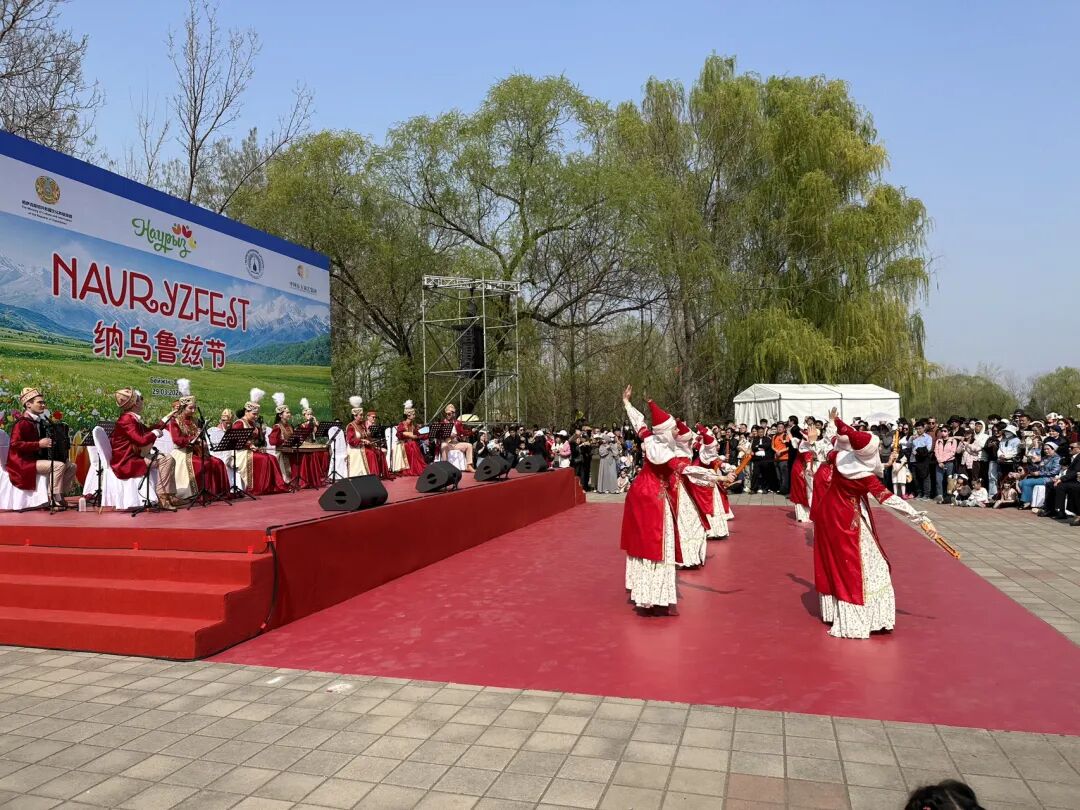
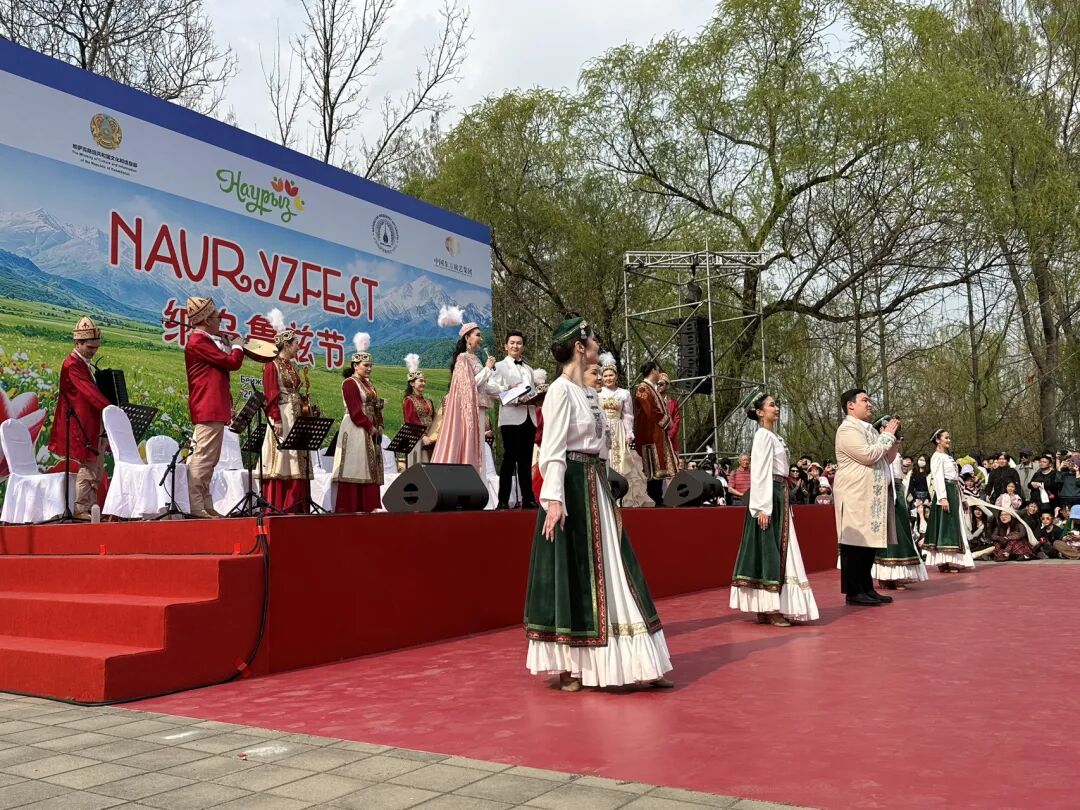
We drank Nowruz porridge (Nauryz Kozhe) and boiled fruit drink (Compote), and ate Kazakh fried dough pastry (Shek-Shek) and chicken baked buns (Samsa).
Nowruz porridge can only be eaten once a year during the Nowruz festival. Kazakh Nowruz porridge must contain at least seven ingredients, including barley, rice, wheat, smoked horse meat, dried yogurt balls (kurt), salt, and water. These foods are made with winter-slaughtered meat and stored grain, expressing the wish for abundance year after year.
Compote is made by boiling water with sugar and fruits like plums, cherries, or apples. In summer, fresh fruit is used, and in winter, dried fruit is used. I drank water boiled with dried apples, which is a drink frequently served at Kazakh banquets and in daily life.
Fried dough pastry (Shek-Shek) is a must-have snack for Kazakh weddings, Nowruz, and other festivals, symbolizing sweetness, reunion, and a good harvest. To make it, flour is mixed with eggs, rolled into strips, cut into pieces, and fried until golden and crispy. Then, honey syrup is drizzled over it, and it is sprinkled with nuts and dried fruit after cooling. Honey cake (chak-chak) is very common in Tatarstan and among other Central Asian peoples. The Tatars call it chak-chak, and I even visited a chak-chak museum in Kazan.
Everyone took turns taking photos with the Kazakh warriors, who were at least two meters tall.
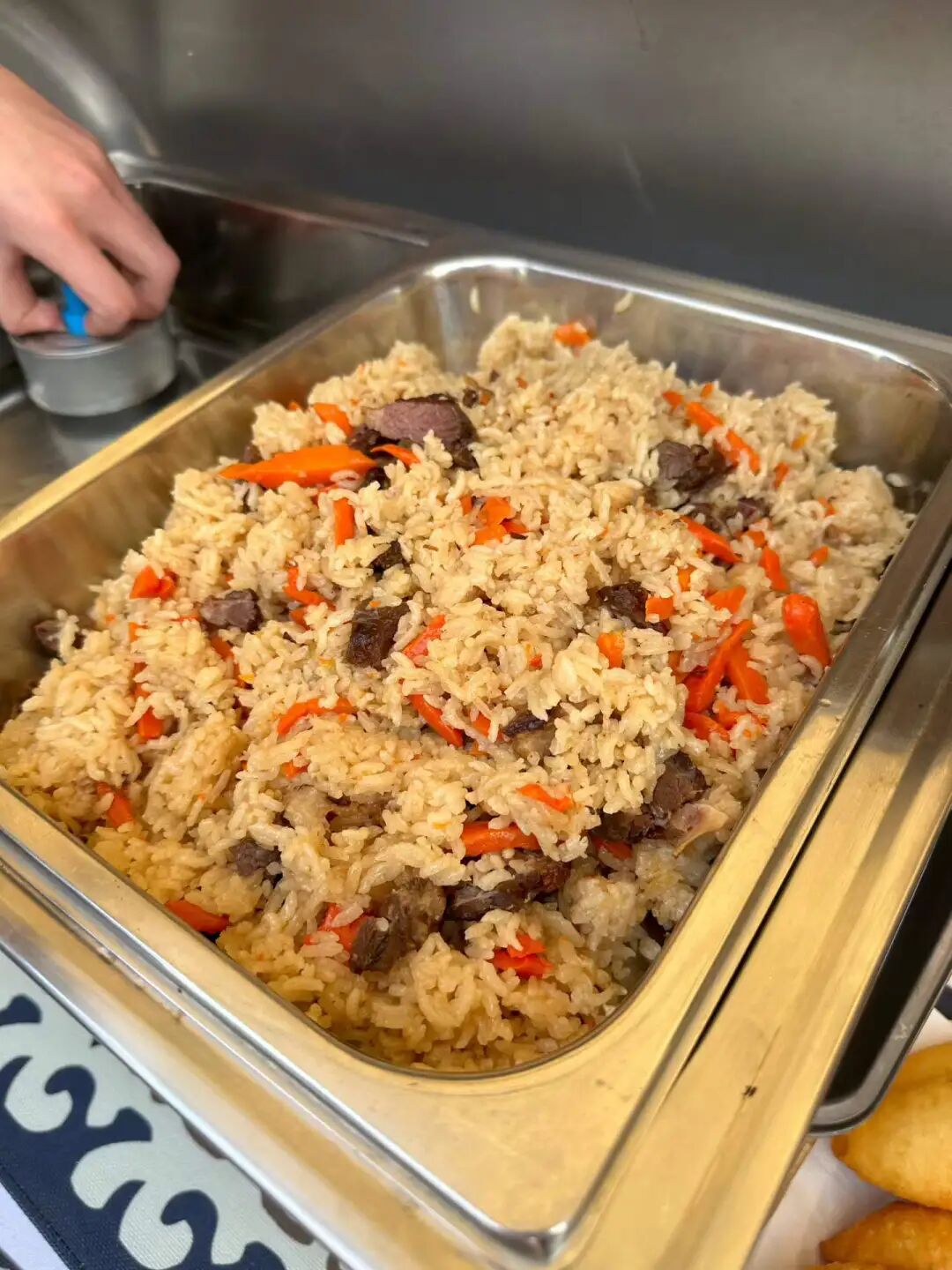
Kazakh shredded meat pilaf (plov) is full of carrots.
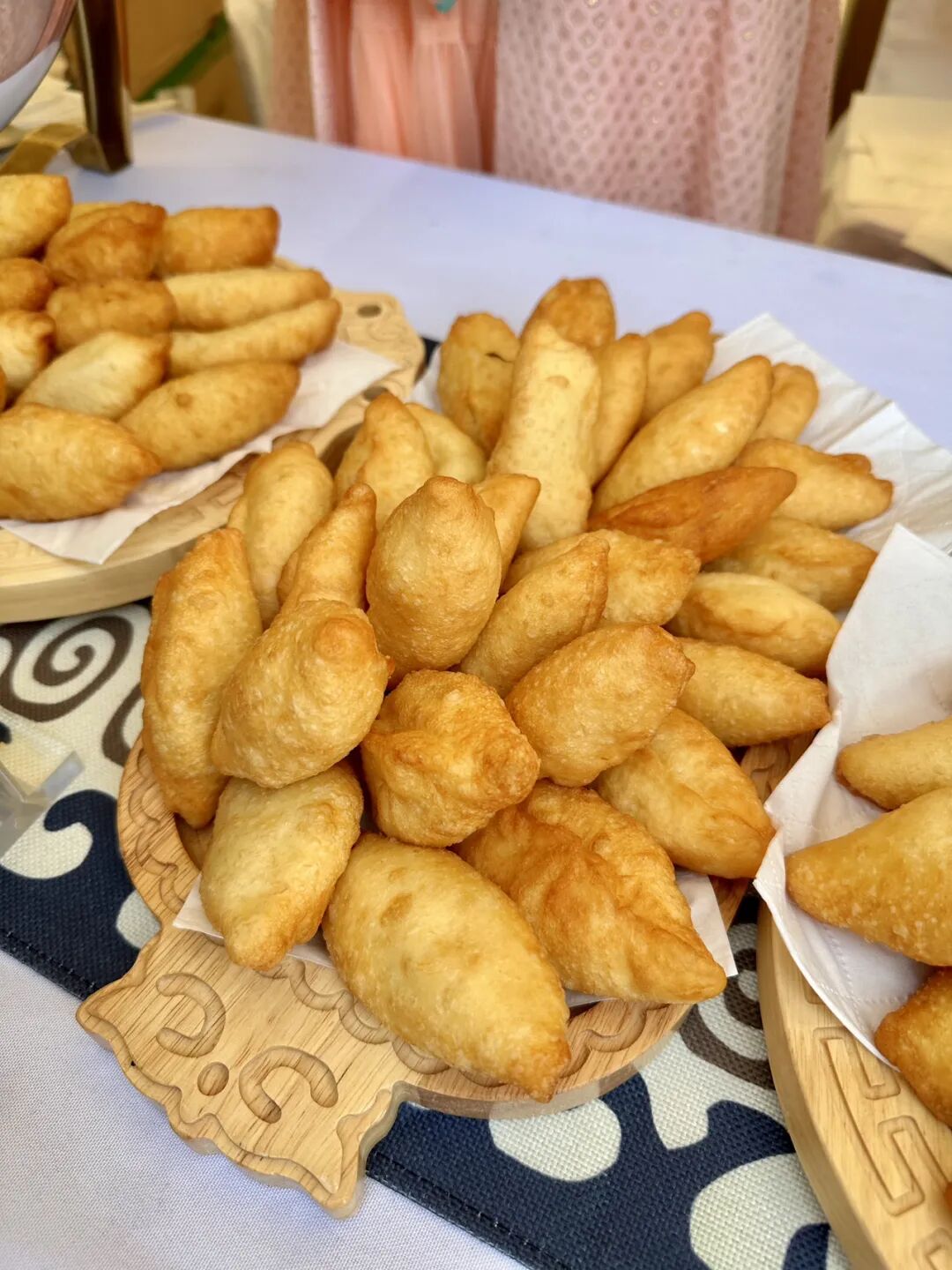
Fried dough puffs (baursak).
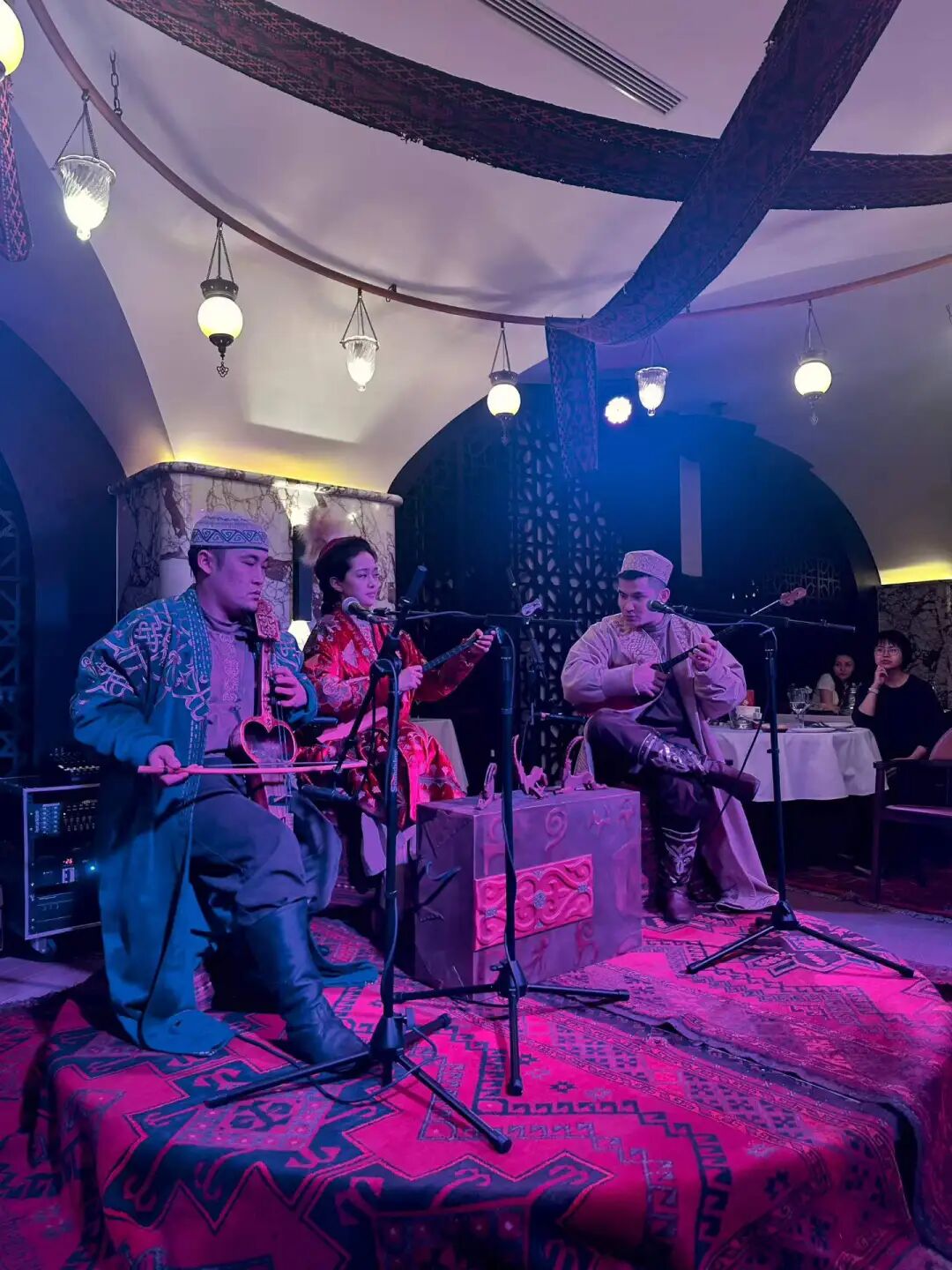
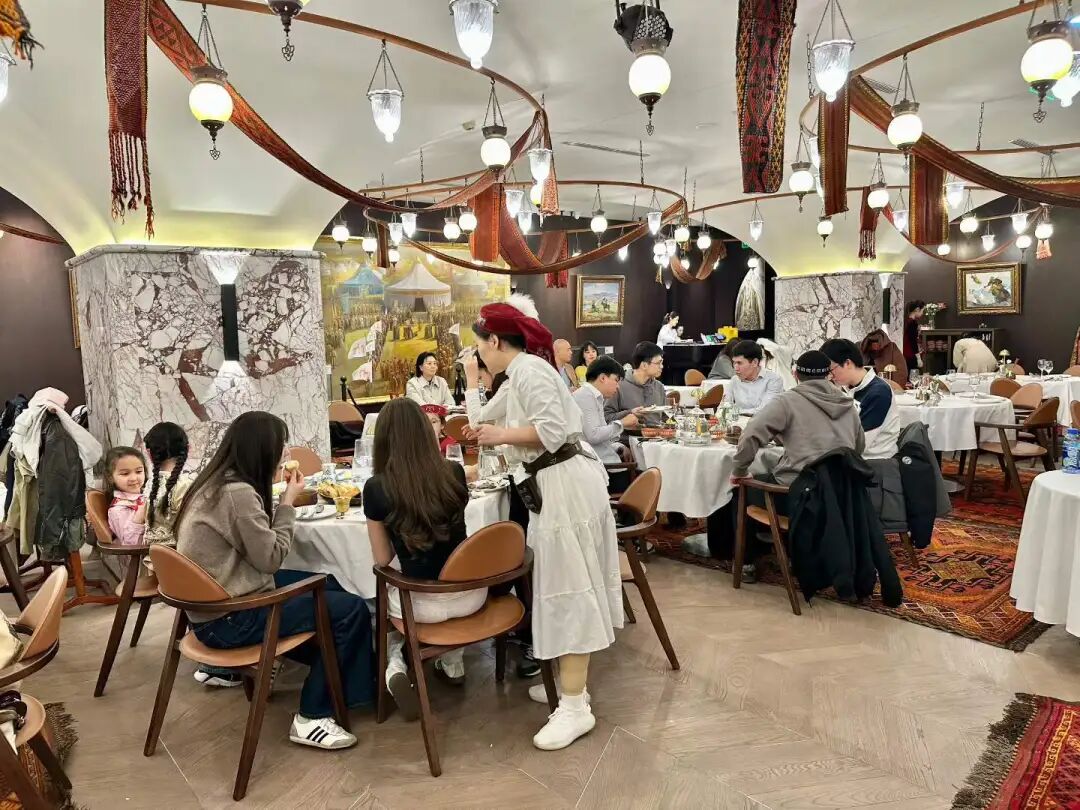
During the Nowruz festival, the Kazakh restaurant Sandyq in Beijing hosts traditional Kazakh music performances every night at 7:30, and they give away free fried dough puffs (baursak) and Nowruz porridge.
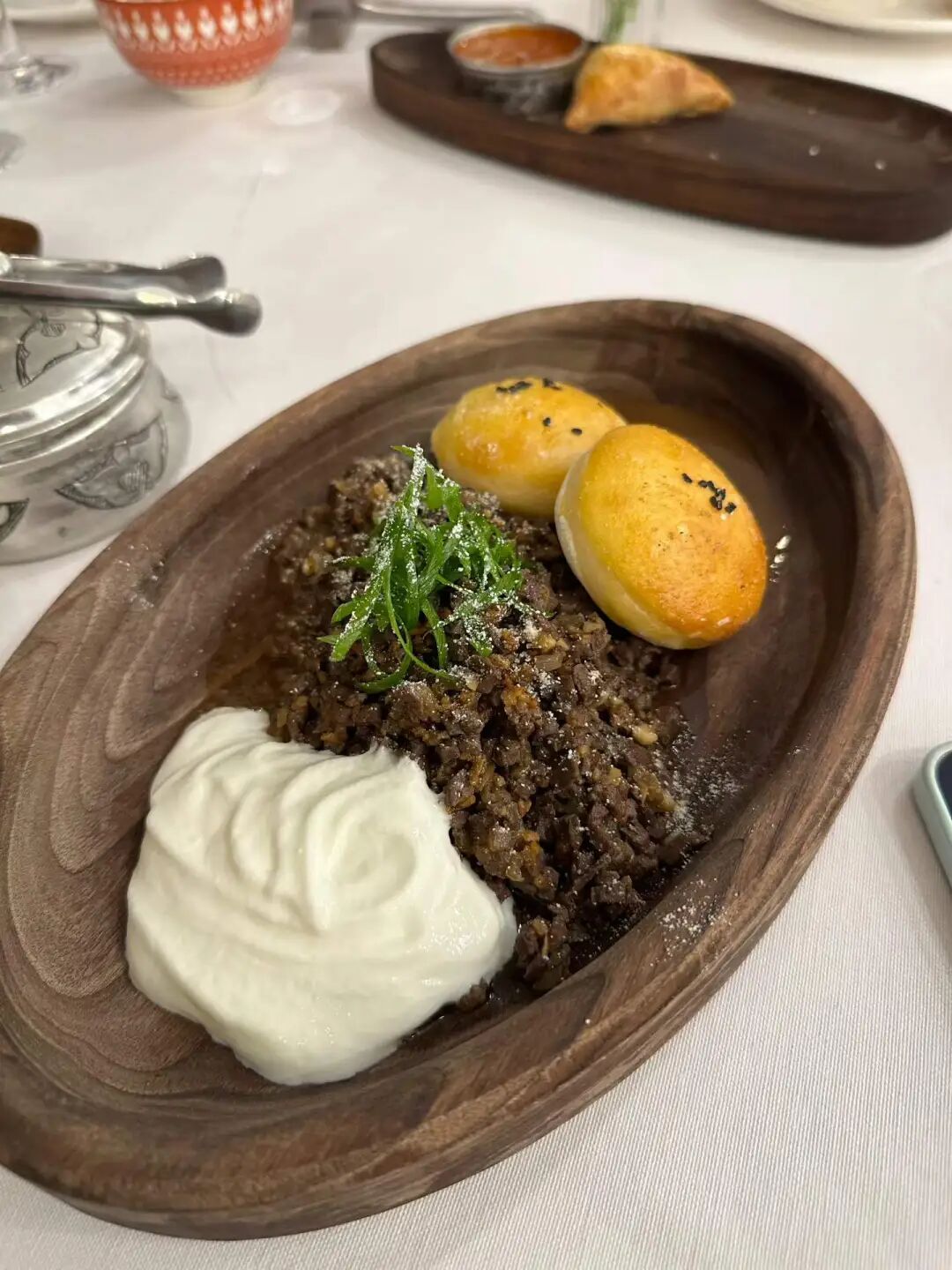
We also ate sheep tail and liver (kuyryk bauyr), meat-filled pies (baramysh), horse meat noodle soup (tomyrtqa), and millet milk tea (talqan), which are all classic Kazakh dishes.
Kuyryk bauyr literally means sheep tail and liver. It is stir-fried with only salt and served with yogurt. This is a classic dish for Kazakh engagement ceremonies. After the bride's family slaughters a sheep, the elders serve the sheep tail and liver to the groom's guests while singing blessings. If you don't eat it, they might jokingly pretend to sew your clothes to the felt mat or smear oil on your face, symbolizing that the two families are officially joined and cannot back out. There is a Kazakh proverb that says, 'Only after eating the sheep tail and liver is the marriage officially set.'
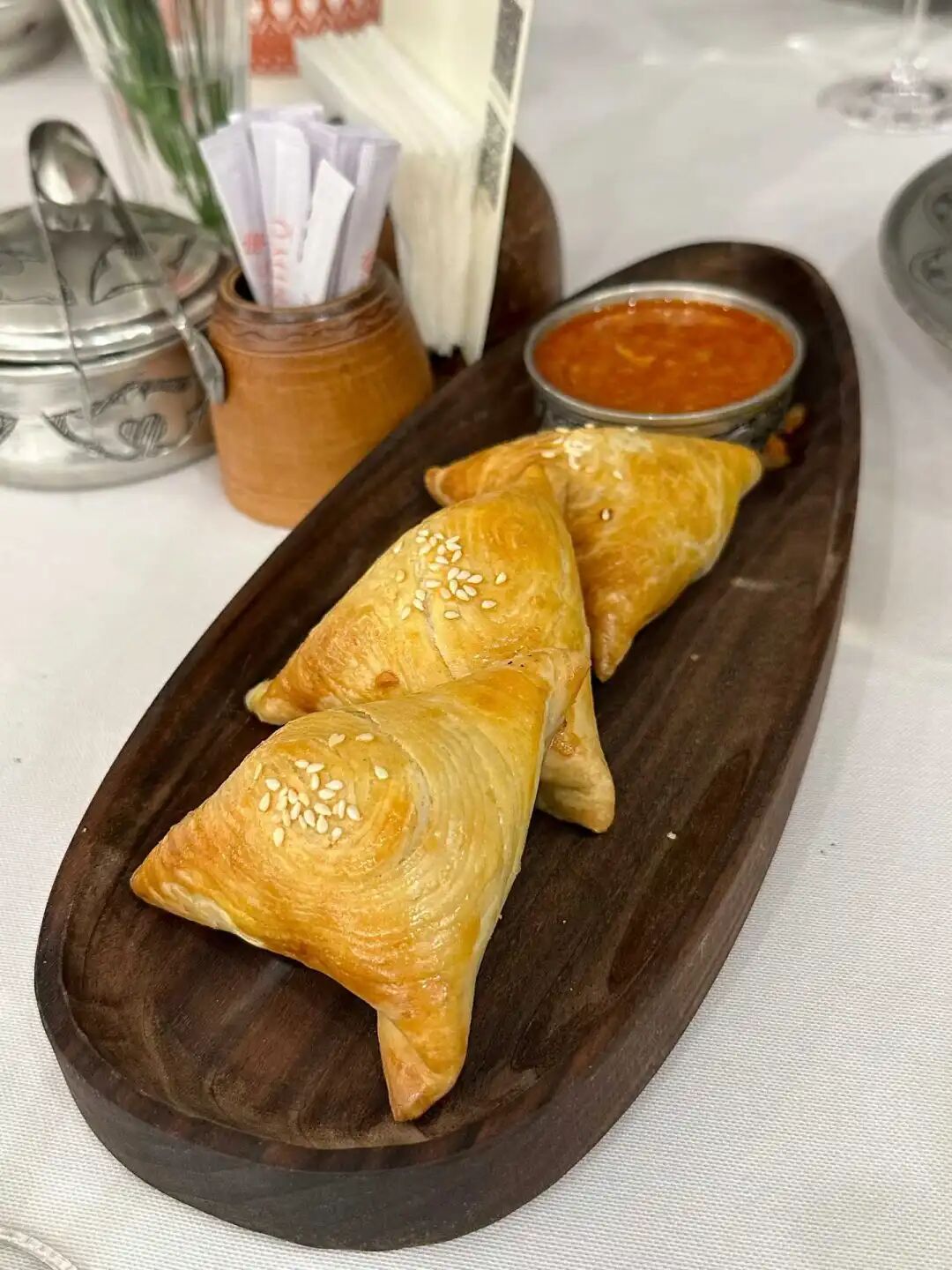
Meat-filled pie (baramysh) is a leavened dough pastry that originated with the Tatars and Bashkirs. It spread to the Kazakhs in the 19th century and became a classic street food during the Soviet era. Like baked buns (samsa), baramysh is filled with lamb and onions, but it uses leavened dough. The top is left open, the edges are pinched shut, and it is deep-fried until golden. It is best eaten dipped in tomato sauce and paired with milk tea.
Horse meat noodle soup (tomyrtqa sorpasy) is the noodle soup version of meat and noodles (naryn), making it perfect for winter. This one-pot dish of boiled meat and noodles is perfect for festivals, hosting guests, and moving between nomadic pastures. To make it, boil the horse meat first, then cook the noodles in the broth. It is rich, salty, and savory, with the unique smoky flavor of smoked horse meat.
Kazakh millet milk tea (talqan) is made by boiling broomcorn millet, brick tea, milk, and salt. The golden millet grains are washed, roasted, and hulled to become crispy, adding a toasted grain aroma to the milk tea.
Halal Travel Guide: Ramadan 2025 at Beijing Balizhuang Mosque
Articles • ali2007fr posted the article • 0 comments • 140 views • 2026-05-20 02:20
Summary: This article looks back at Ramadan 2025 at Balizhuang Mosque in Beijing. It keeps the original community scenes, iftar details, prayers, people, and photographs in a clean English layout.
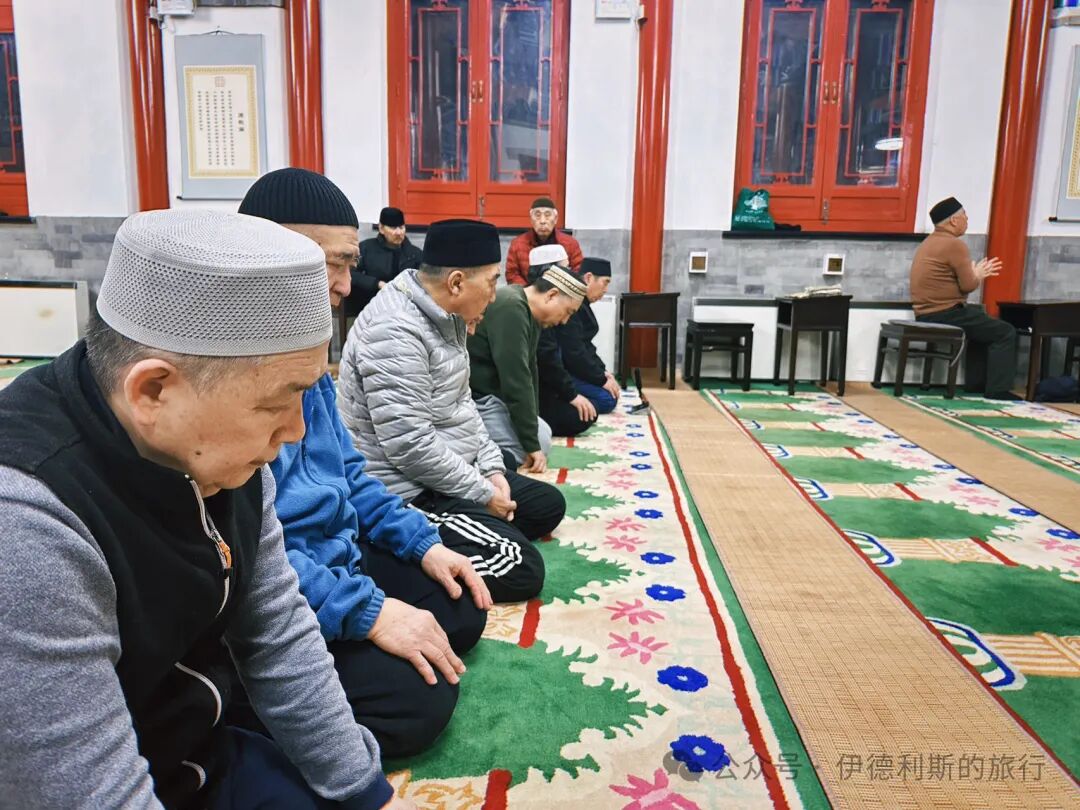
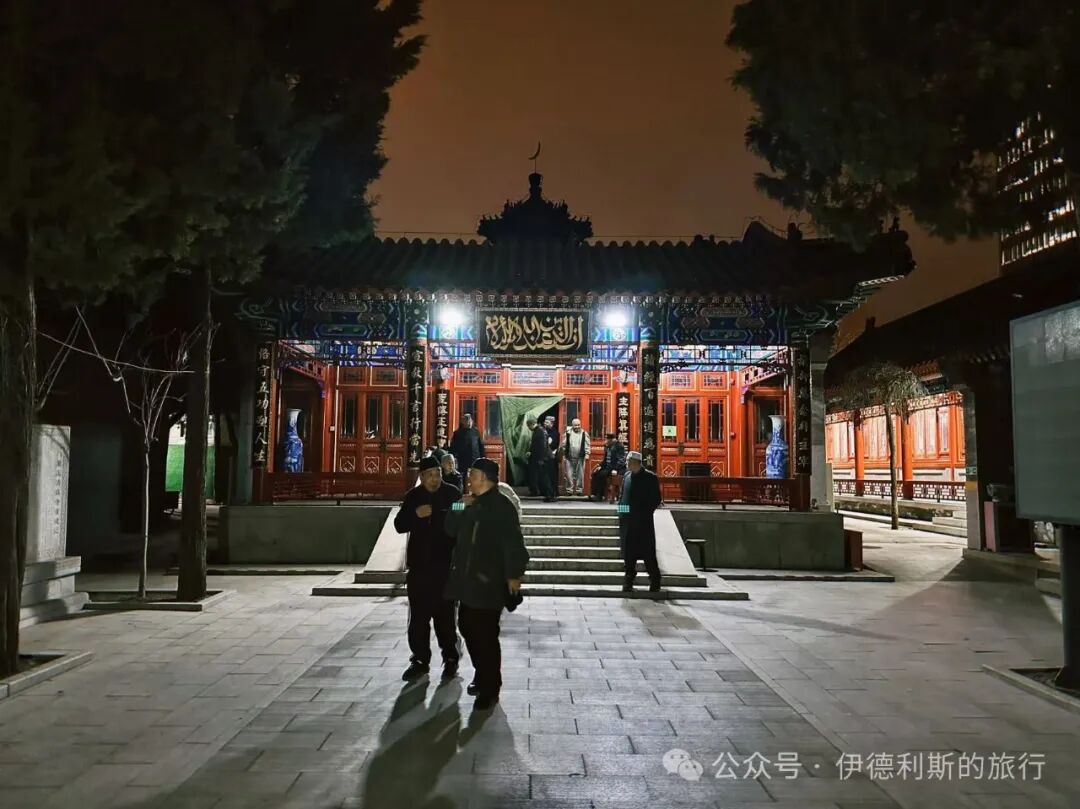
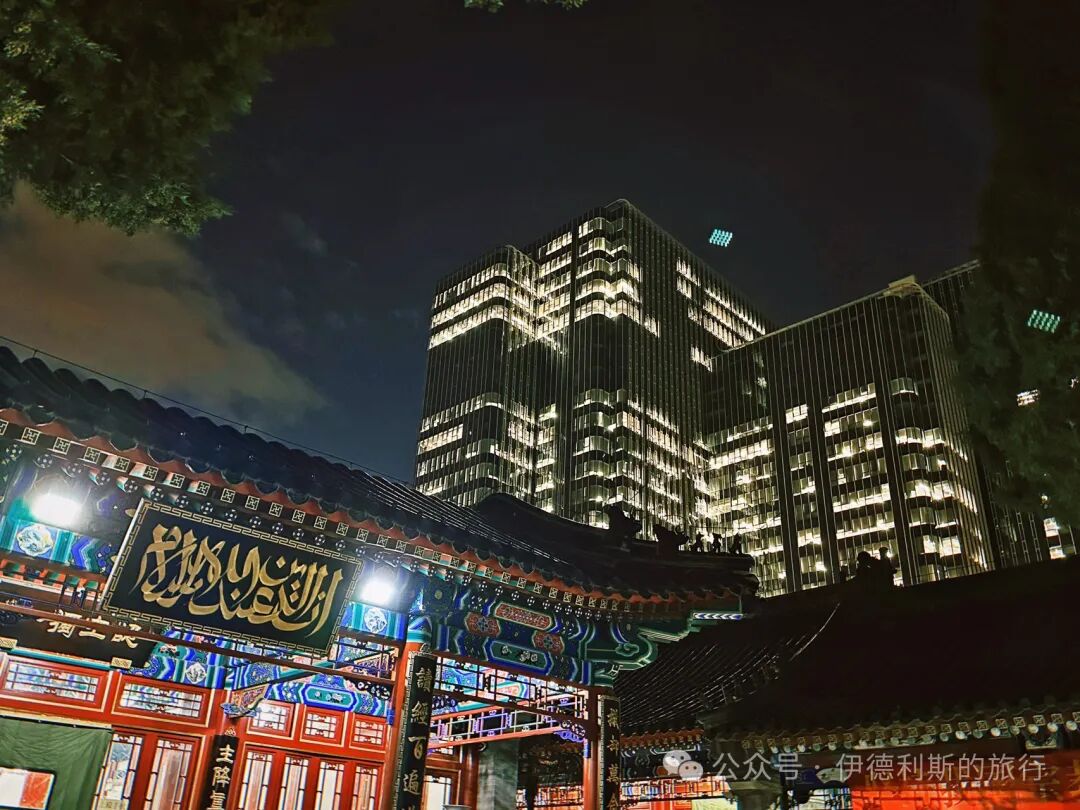
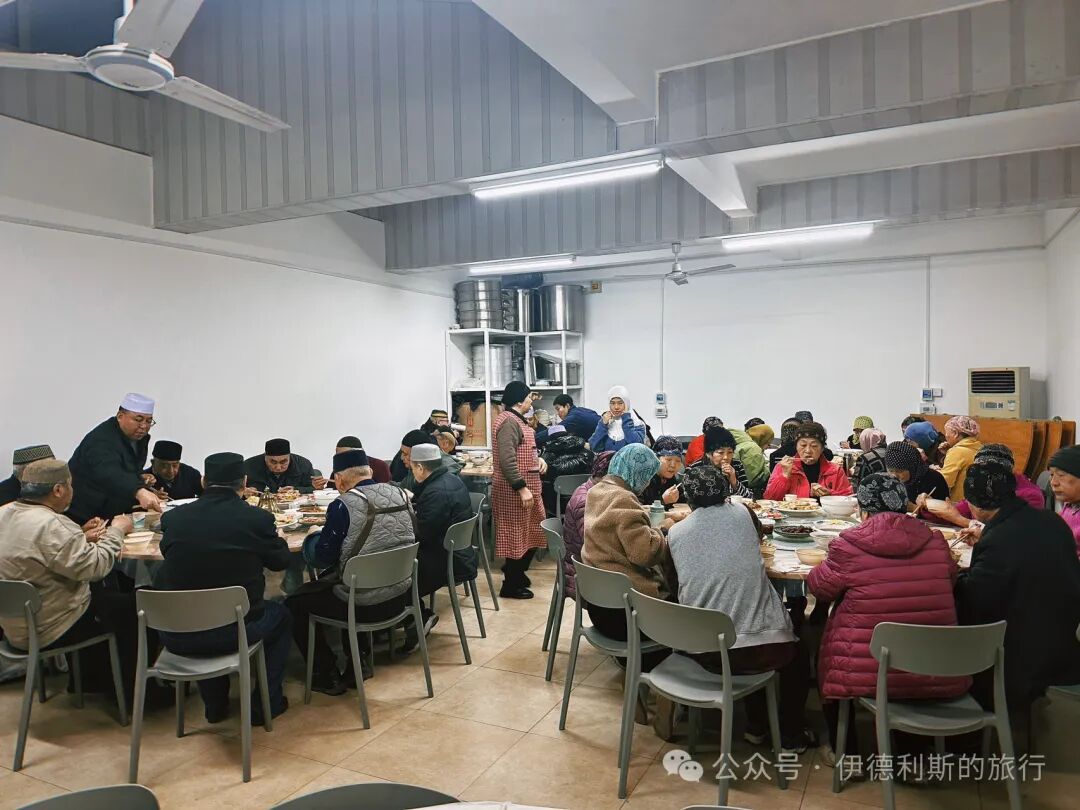
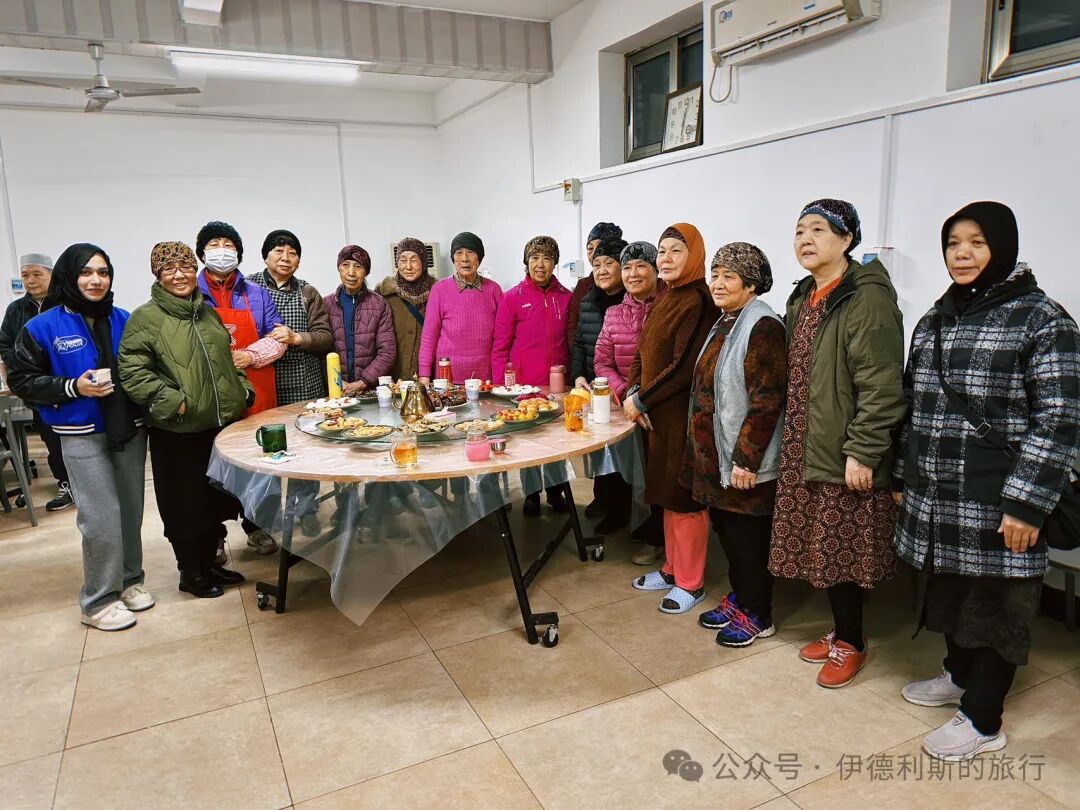
This is my third Ramadan at the Balizhuang mosque in Beijing. The atmosphere at the mosque is great and the food is delicious, so it feels worth it even when I have to squeeze onto the subway during the evening rush hour on workdays.
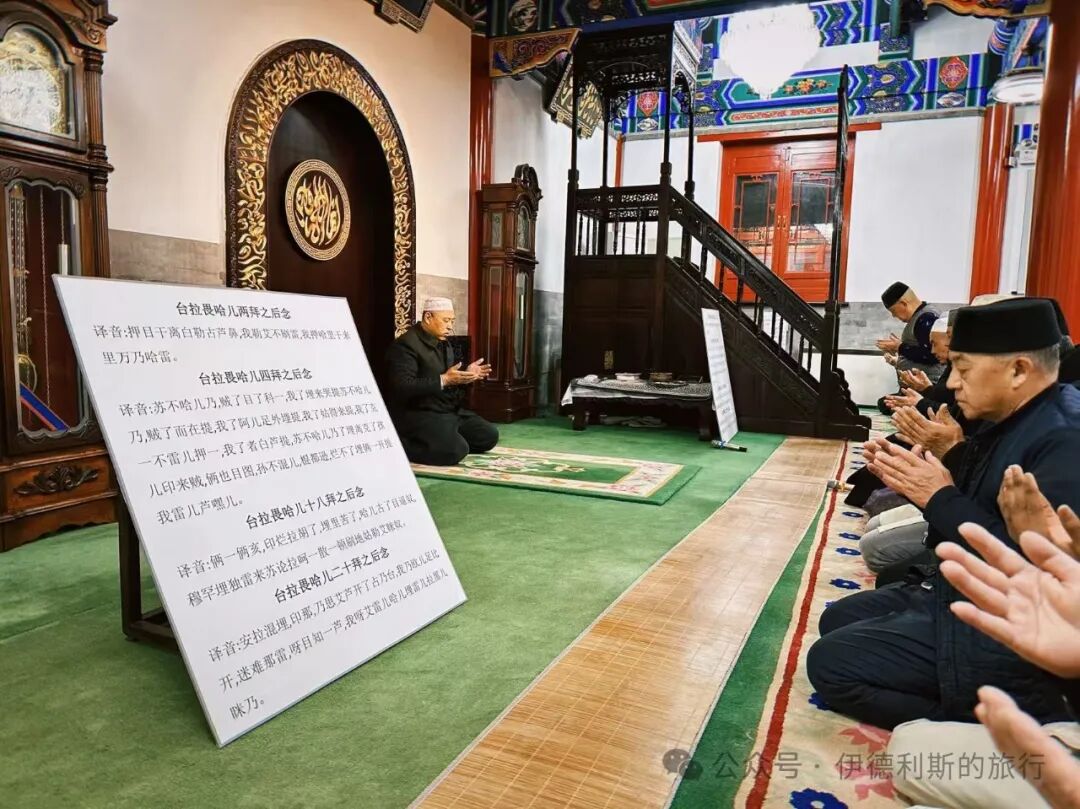
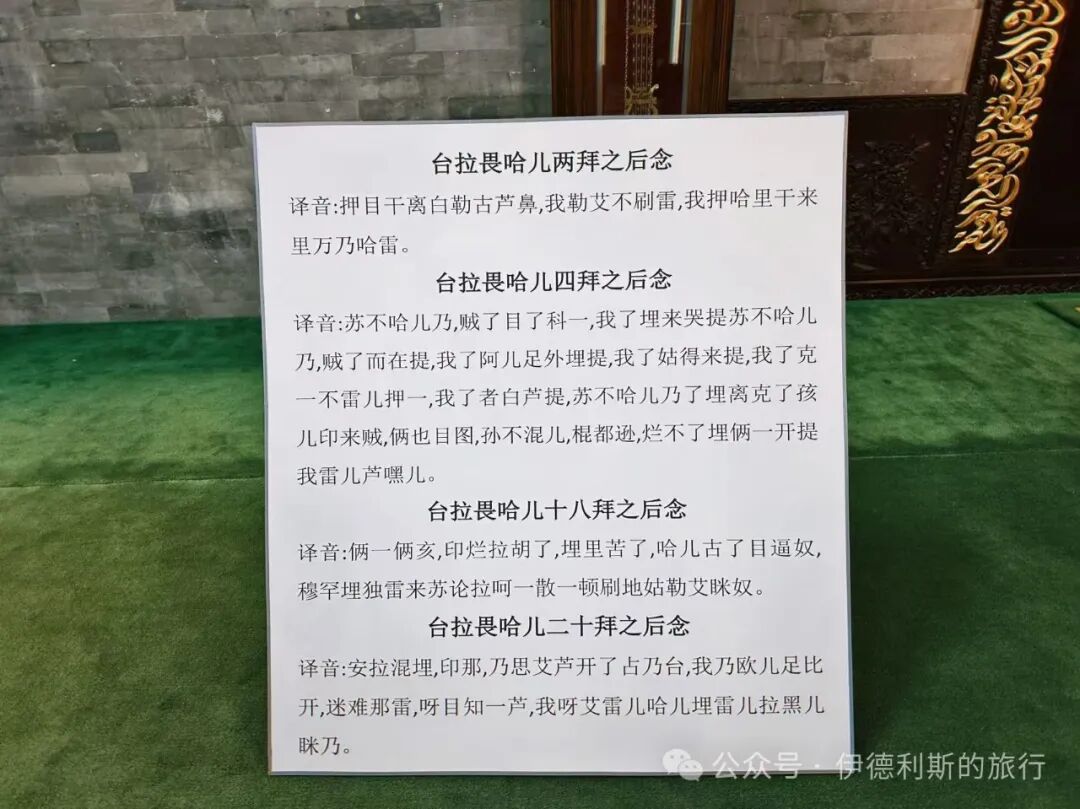
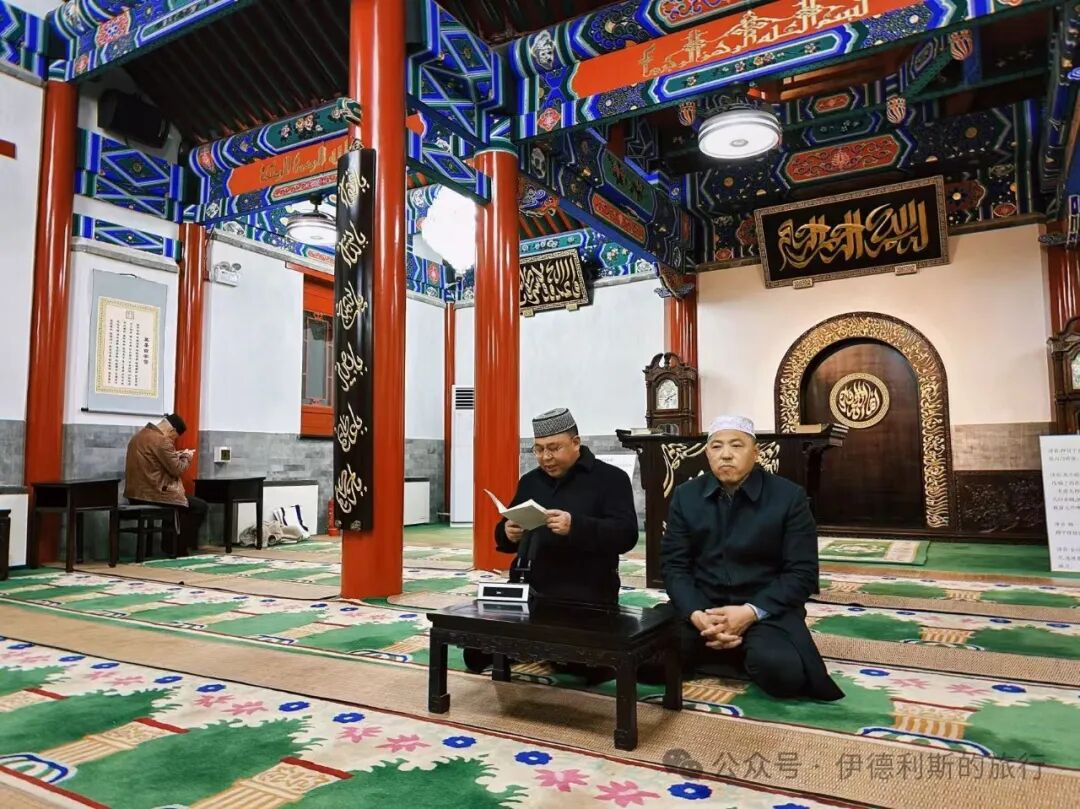
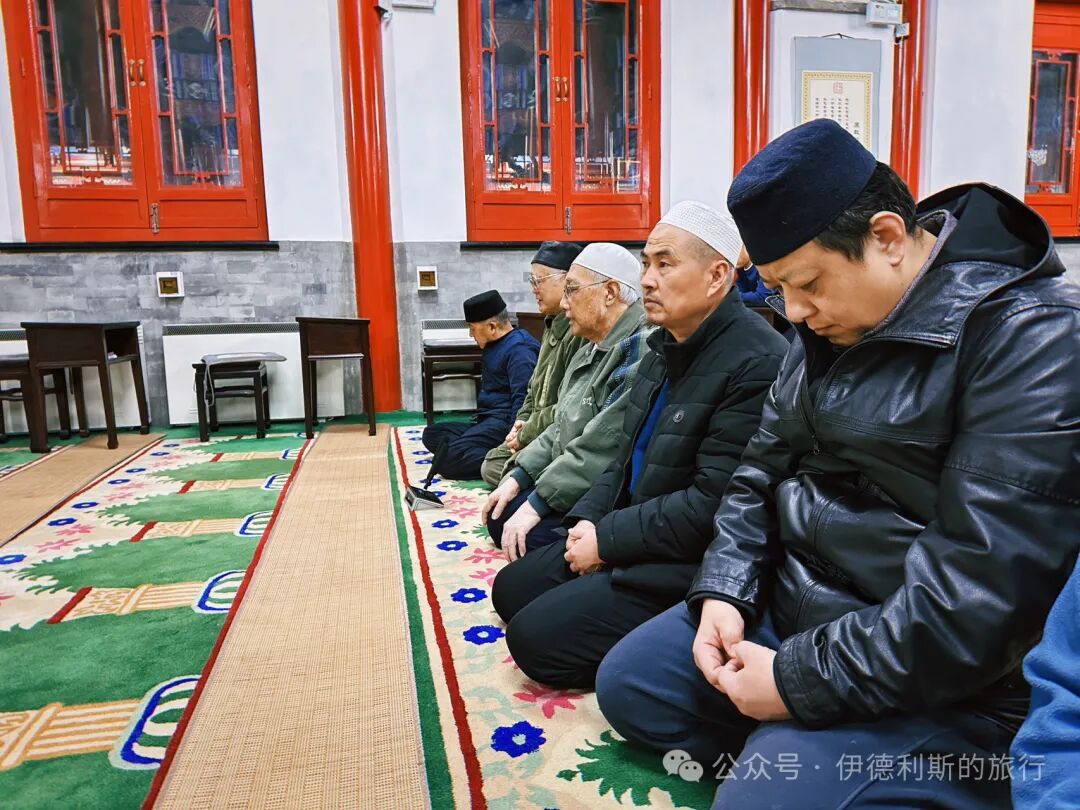
This year, the mosque put the post-prayer recitations for Taraweeh on a large whiteboard, which helps everyone recite together more smoothly. The benefit of praying Taraweeh at the mosque is that you follow the imam and do not make mistakes, whereas I sometimes lose focus when praying alone. Another benefit is the strong sense of community when we break our fast together, and it is very powerful when we all recite the post-prayer words together.
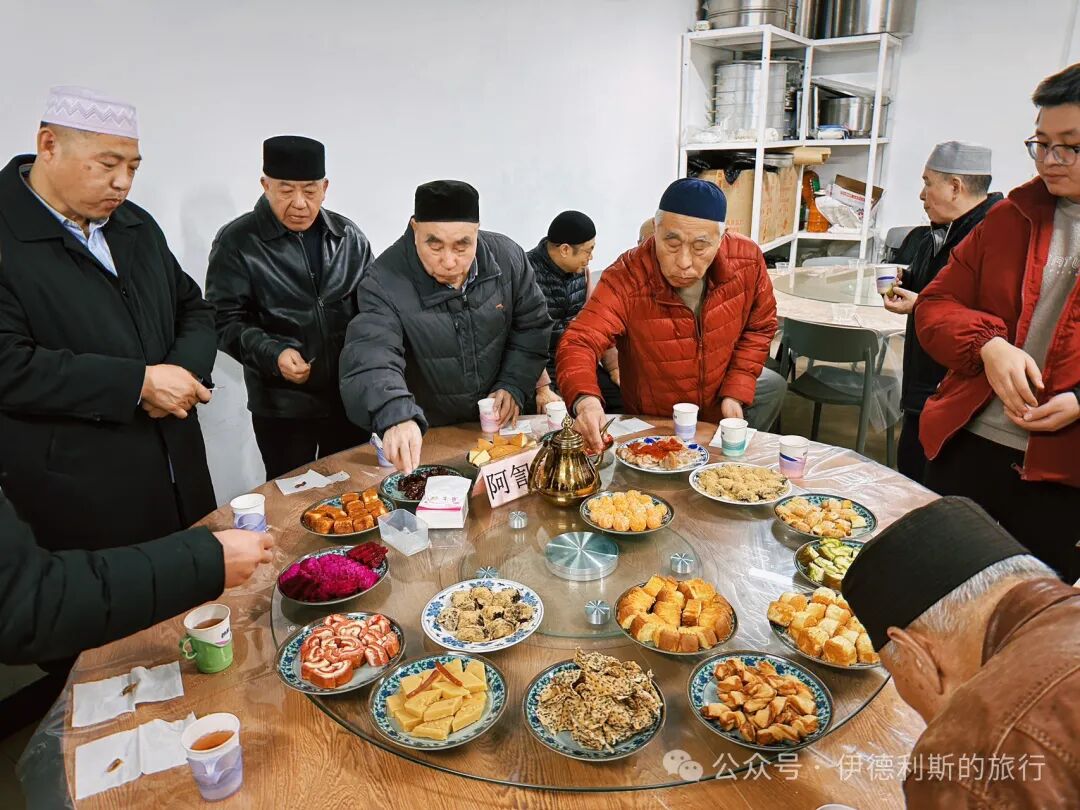
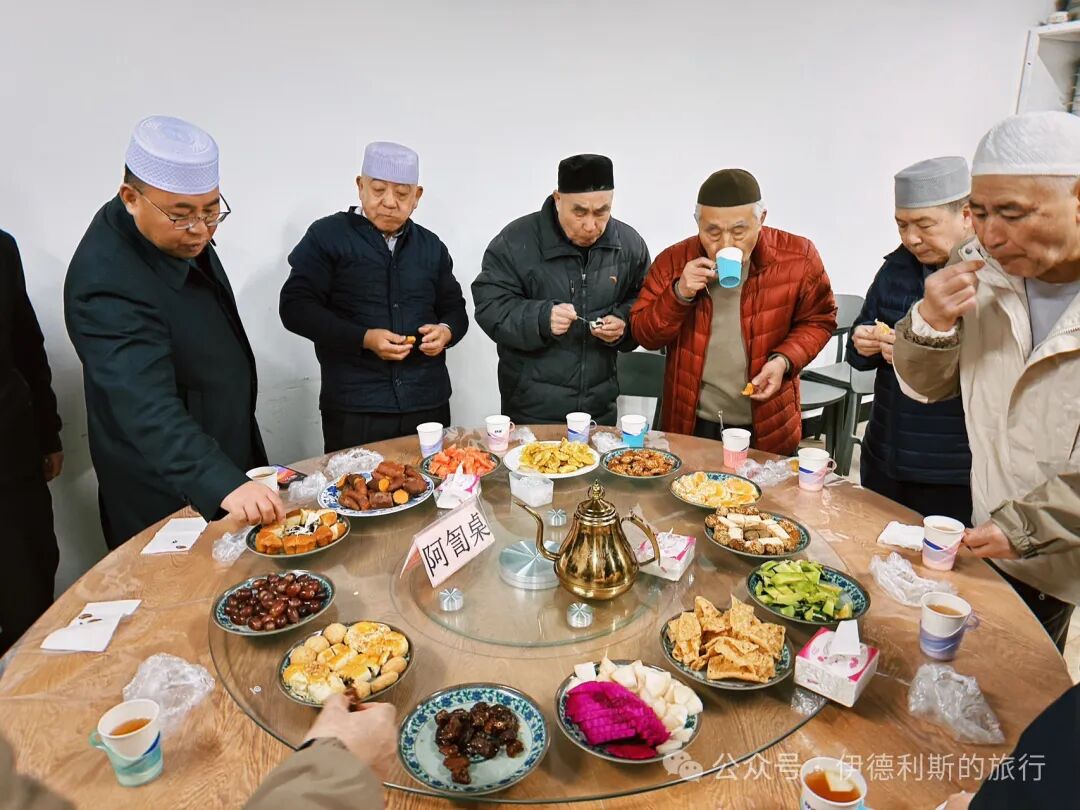
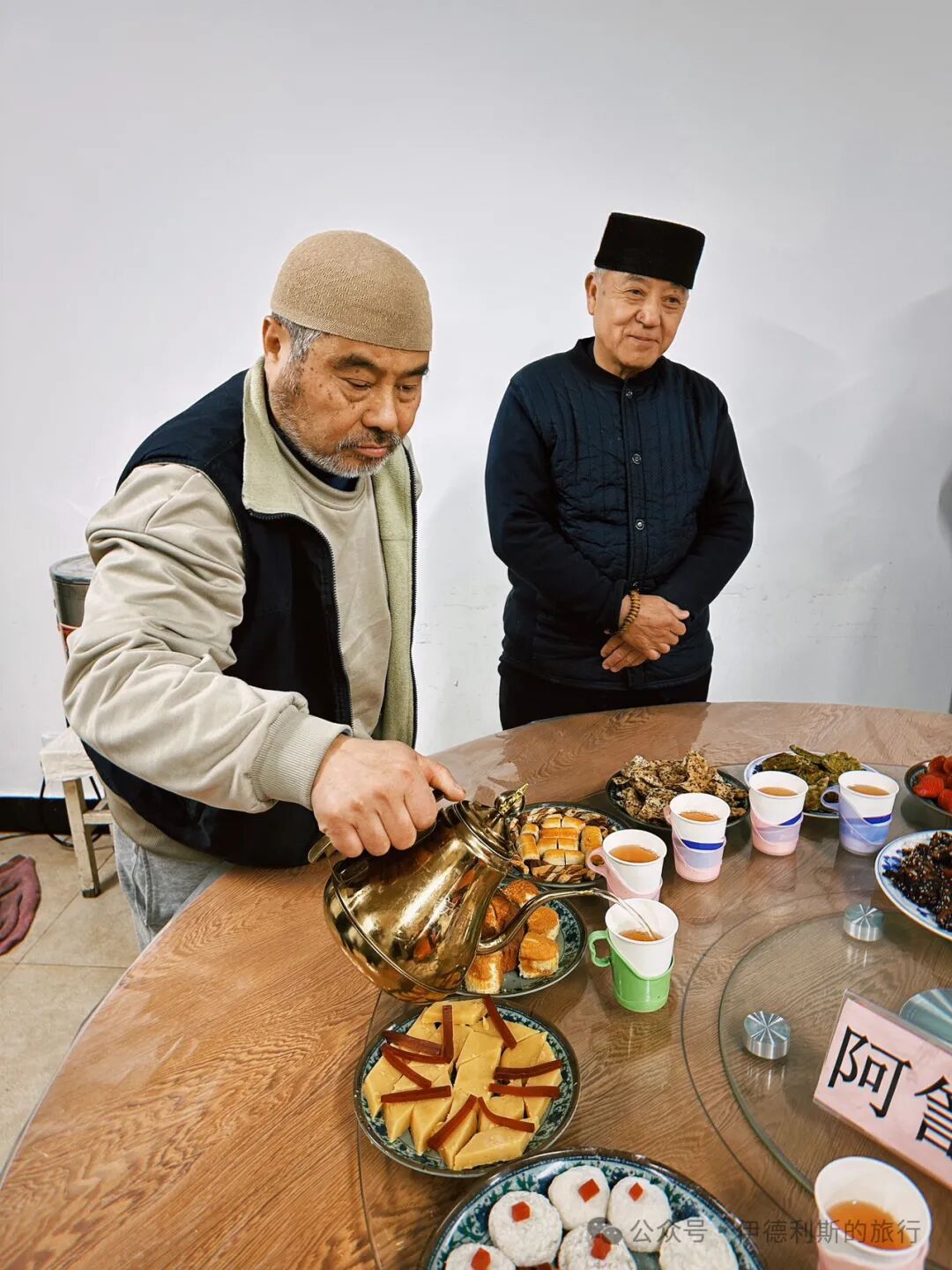
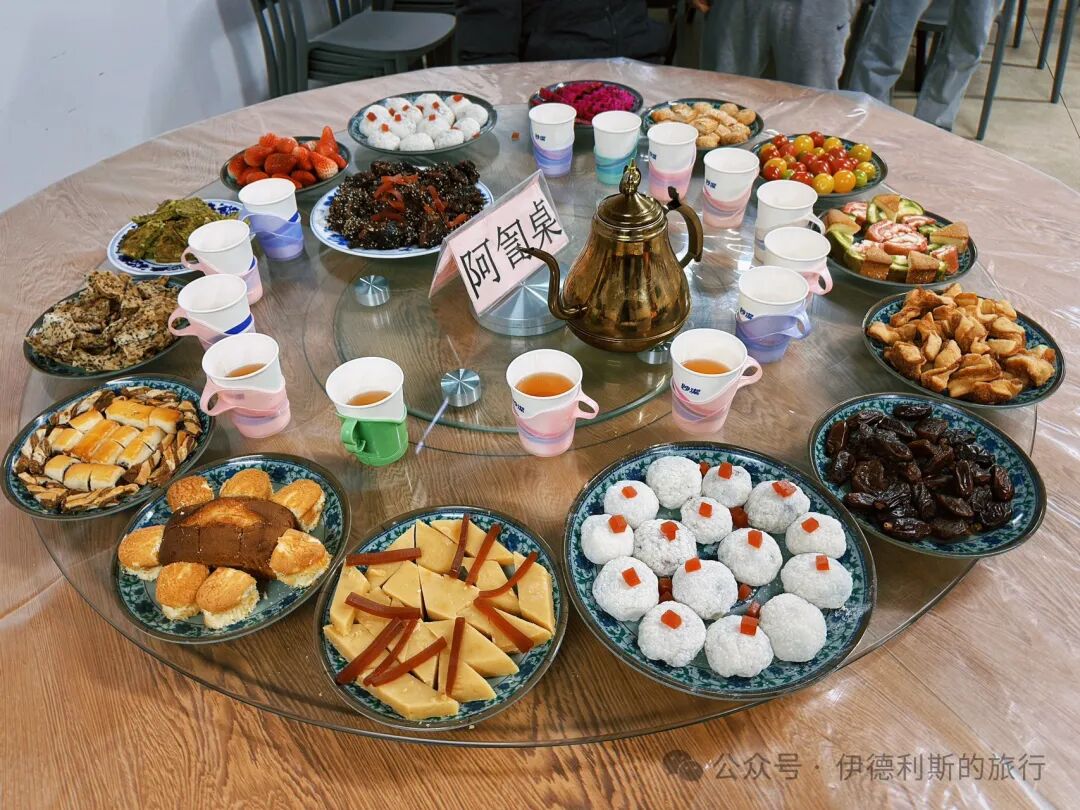
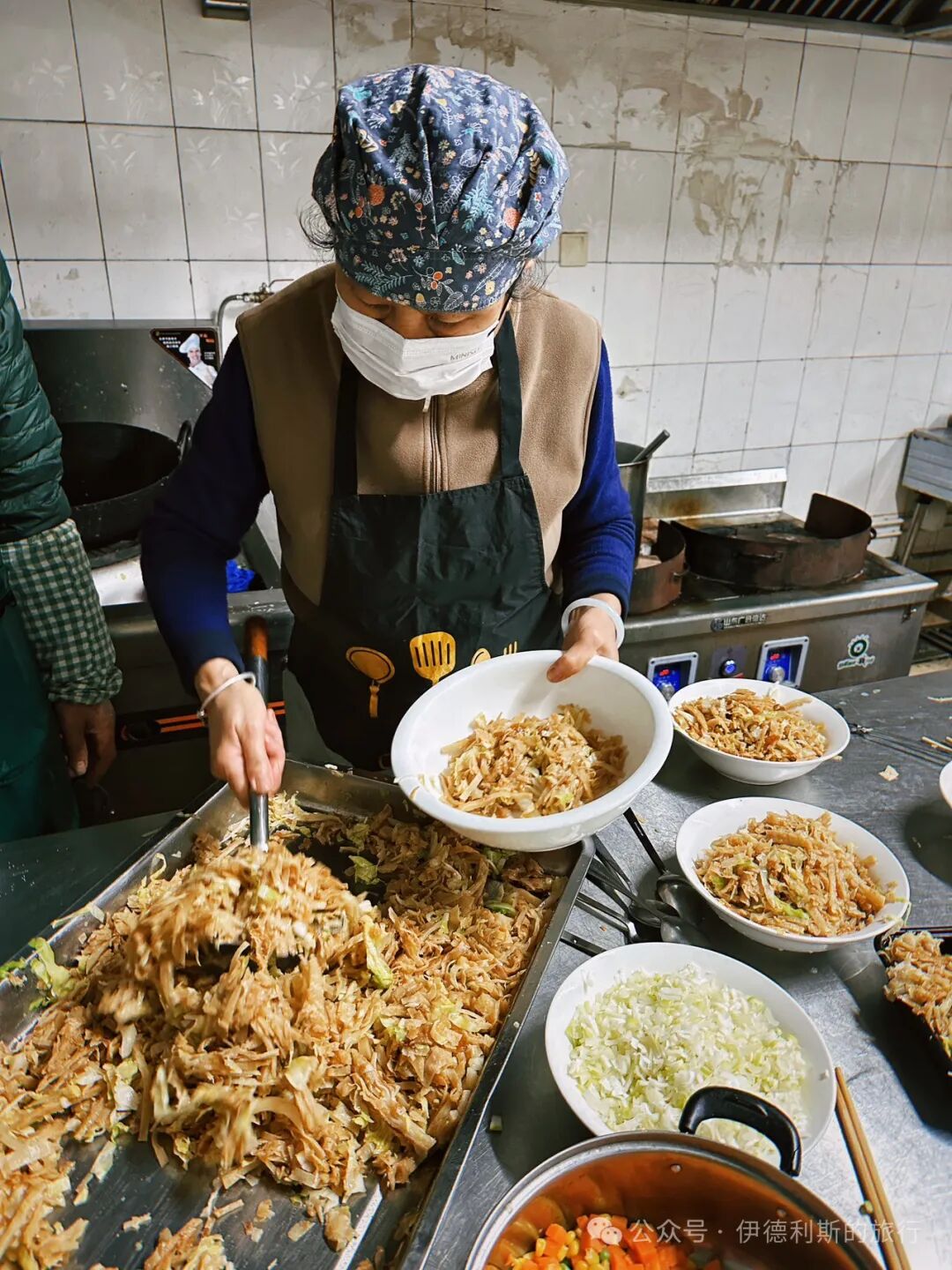
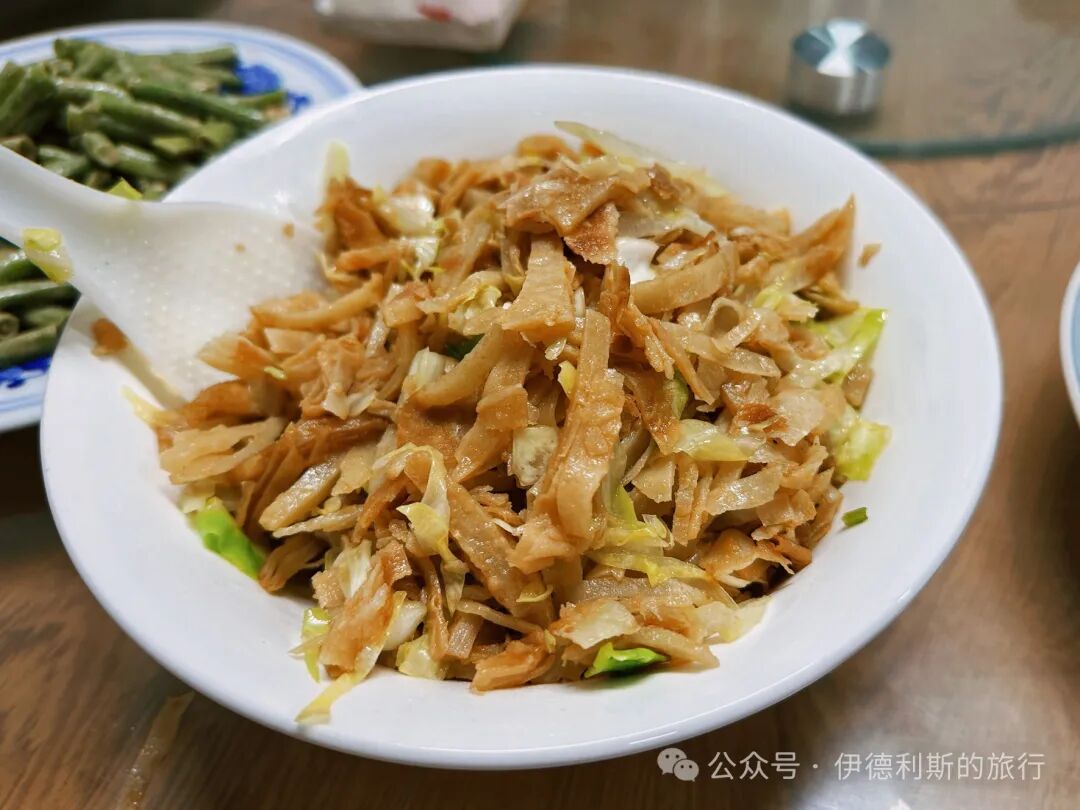
First, let me share the snacks and fruits for breaking the fast. You can eat various traditional Beijing snacks carefully made by the elders here, such as steamed rice cakes (aiwowo), candied yam rolls (tangjuanguo), glutinous rice rolls with bean flour (lvdagun), fried sweet potato (zha baishu), ginger juice fried dough crisps (jiangzhi paicha), salt and pepper fried dough crisps (jiaoyan paicha), lotus root with glutinous rice (nuomi ou), sticky rice cake (niangao), yellow rice cake (huangmi gao), jujube corn buns (zao wotou), pea flour cake (wandouhuang), and sugar ear pastries (tang erduo).
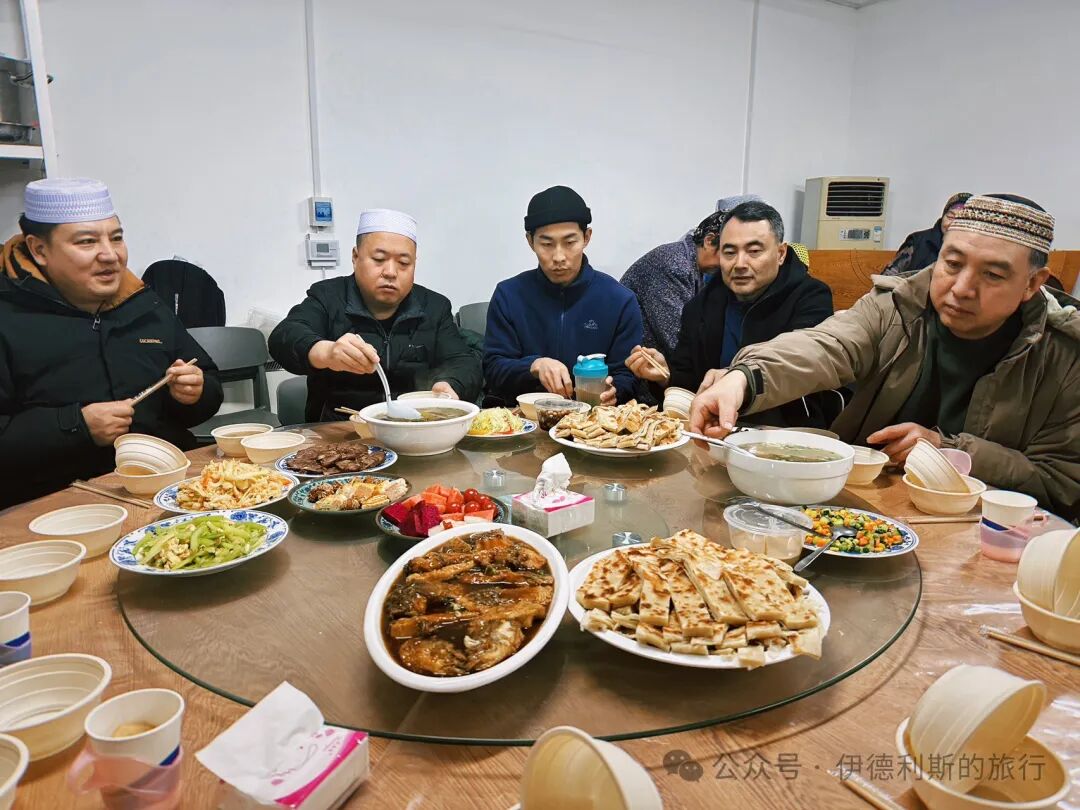
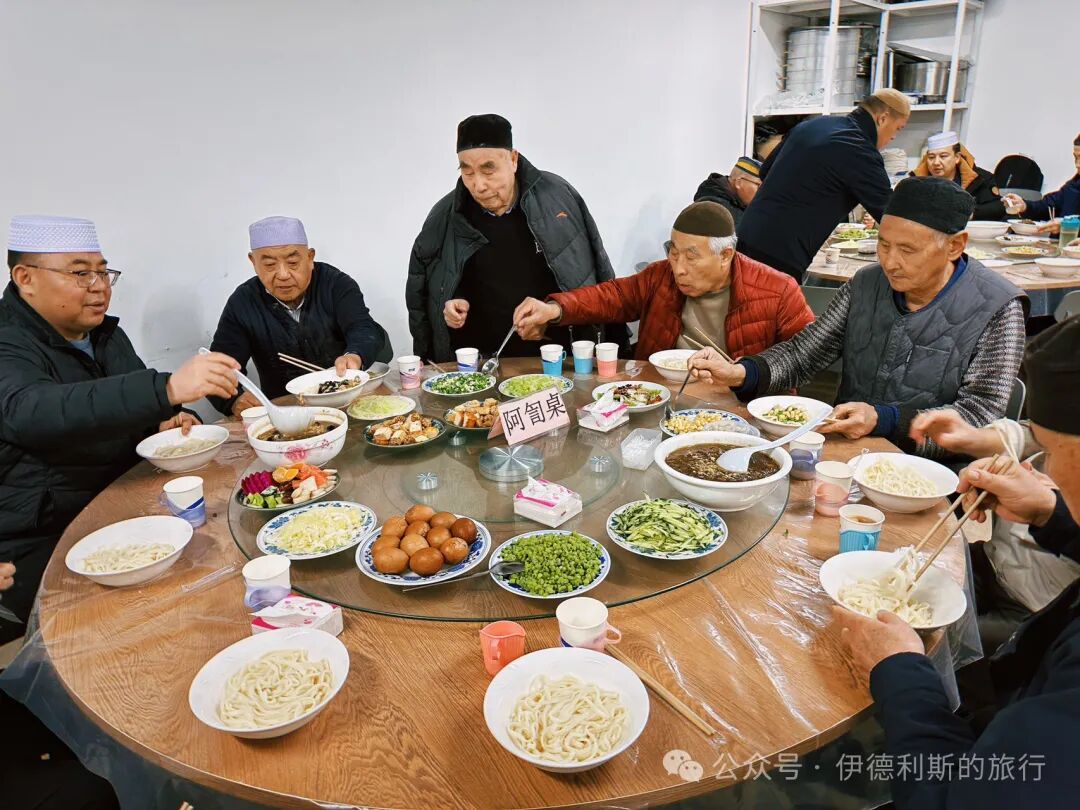
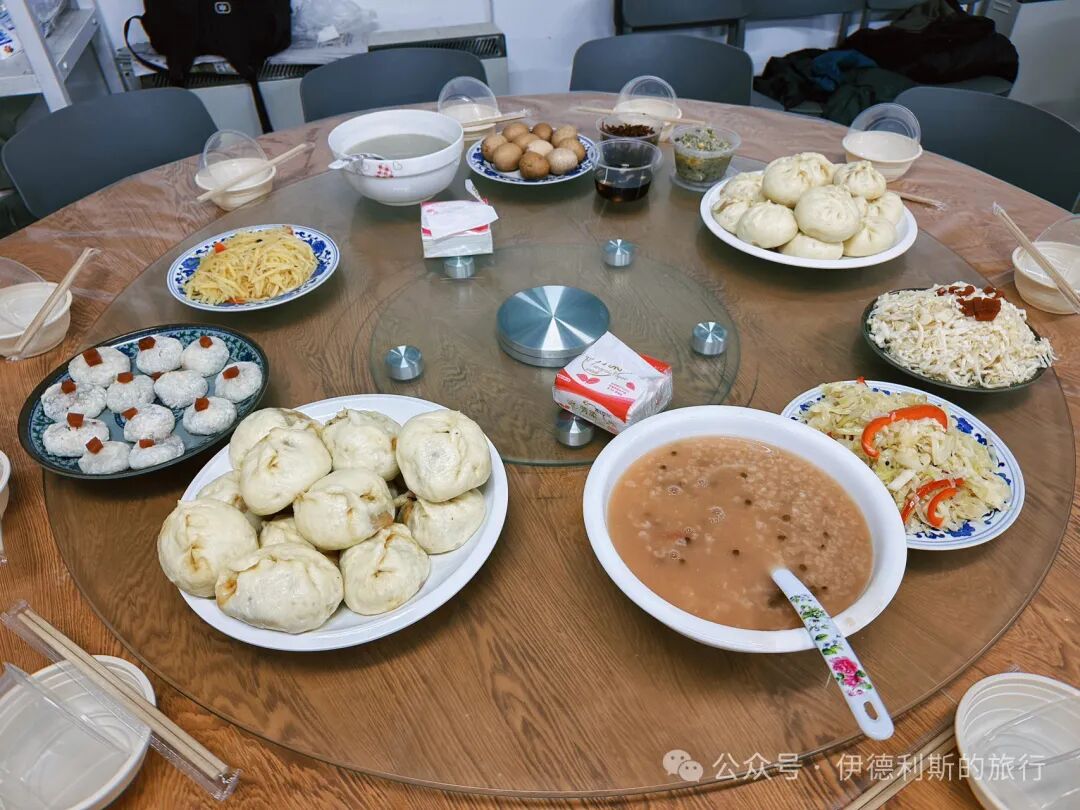
The dinner after the sunset prayer (maghrib) is also wonderful, featuring rice with stir-fried dishes, noodles with gravy (dalu mian), steamed buns (baozi), and fish head with flatbread (yutou paobing), which rotate daily.
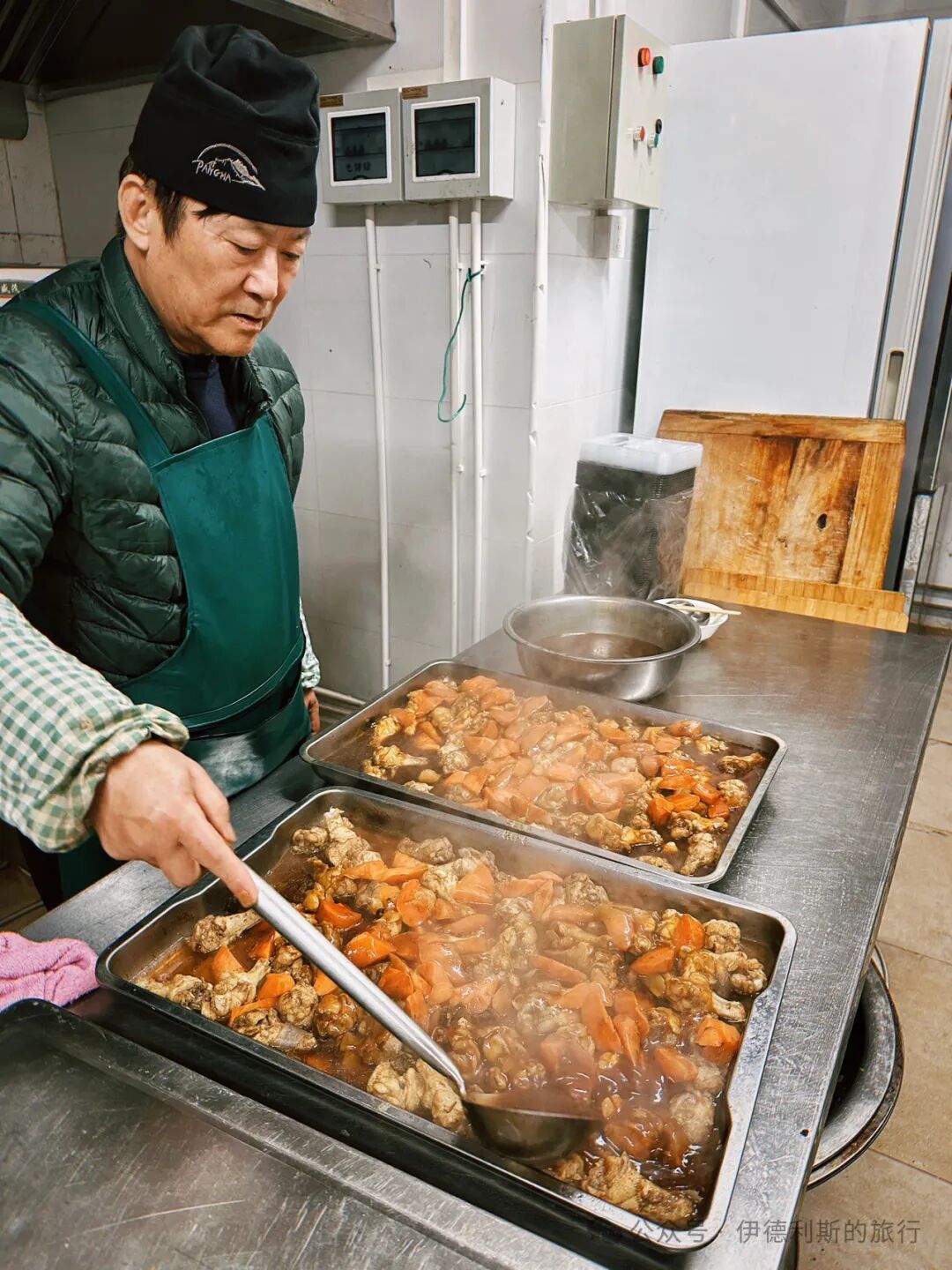
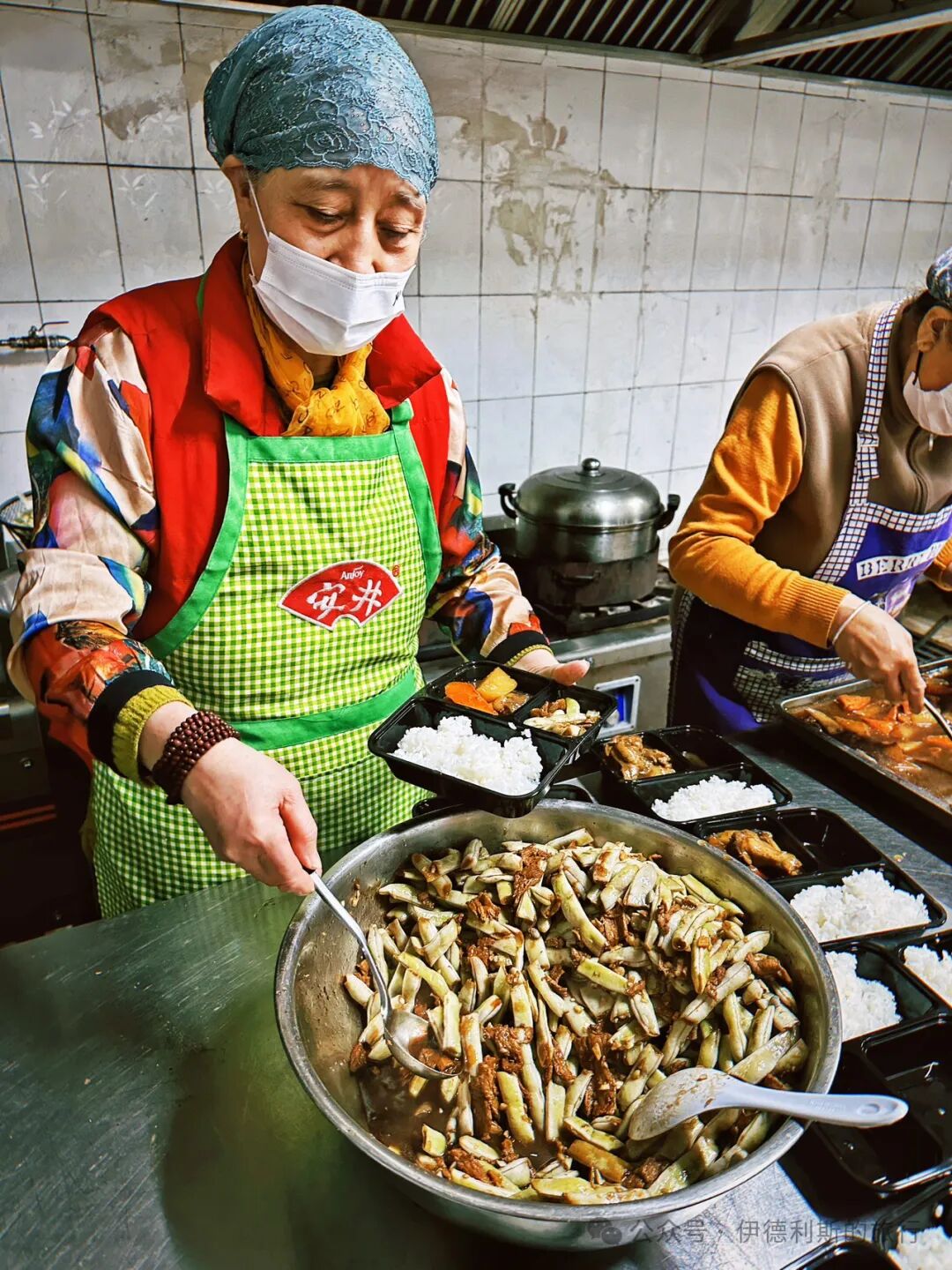
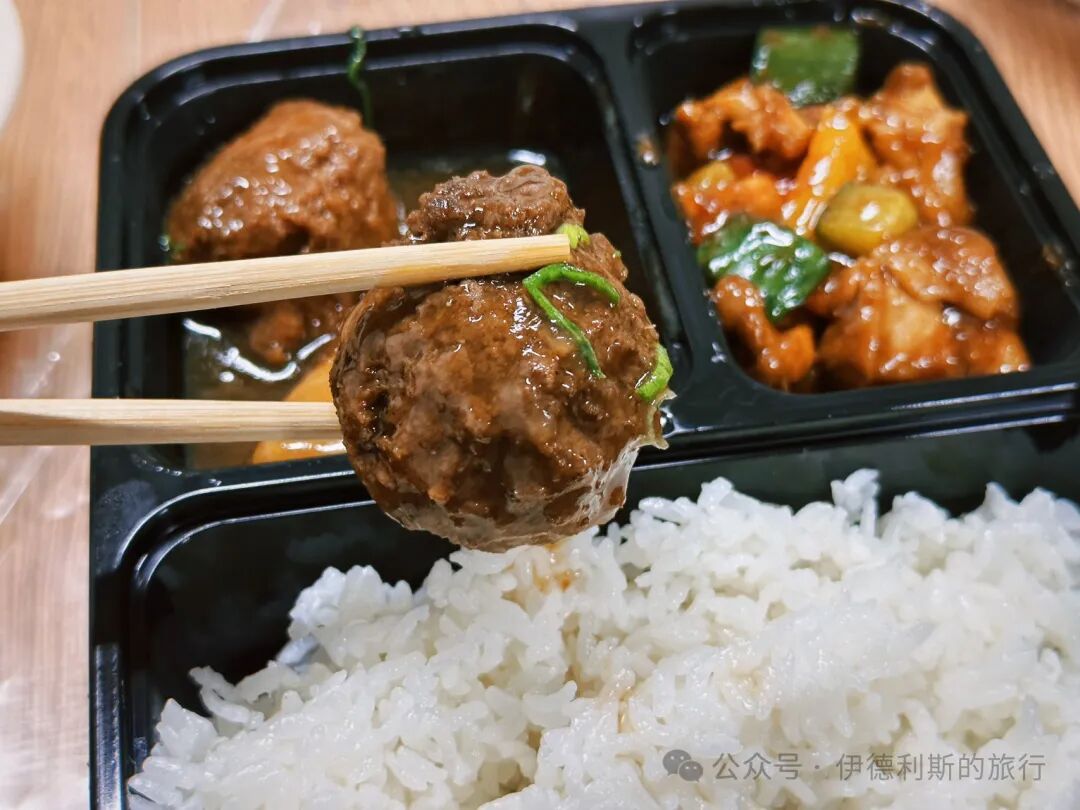
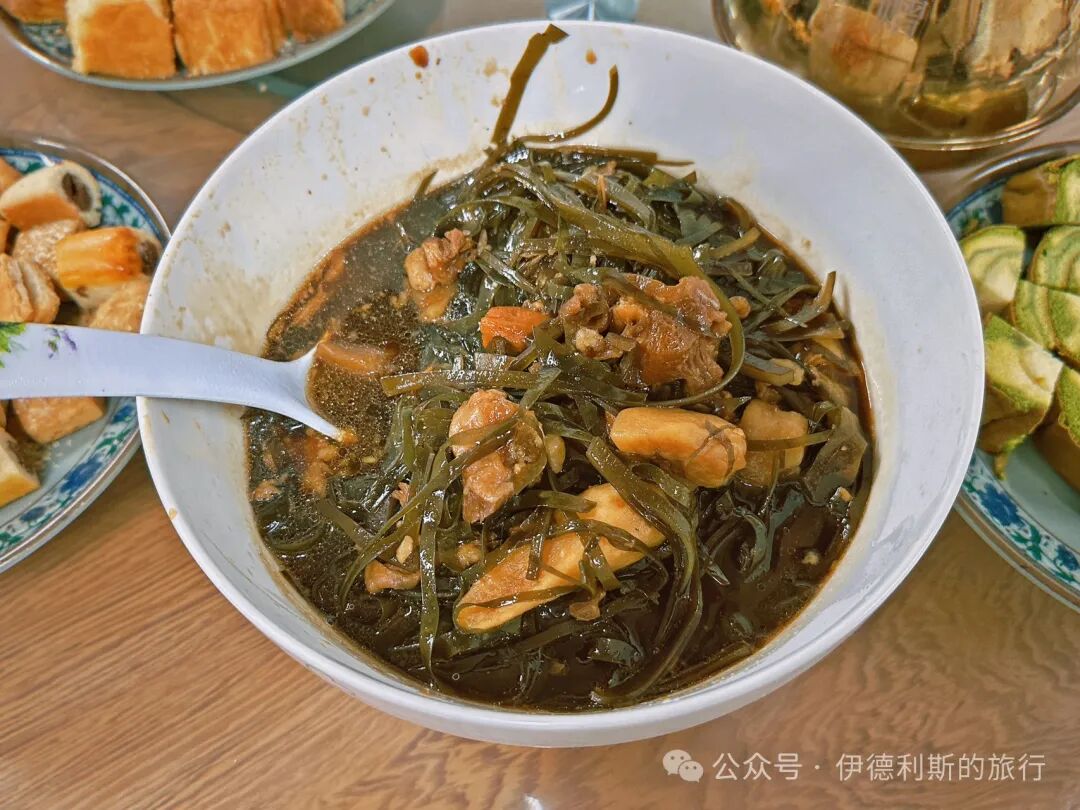
Side dishes for the rice include fried meat (songrou), braised chicken legs (huangmen jitu), minced meat with green beans, braised eggplant, and braised meatballs. For soups and porridge, there is winter melon meatball soup, tofu puff soup, and mung bean porridge. Of course, fermented bean drink (douzhi) with fermented bean curd (ma doufu) is also a major Beijing specialty!
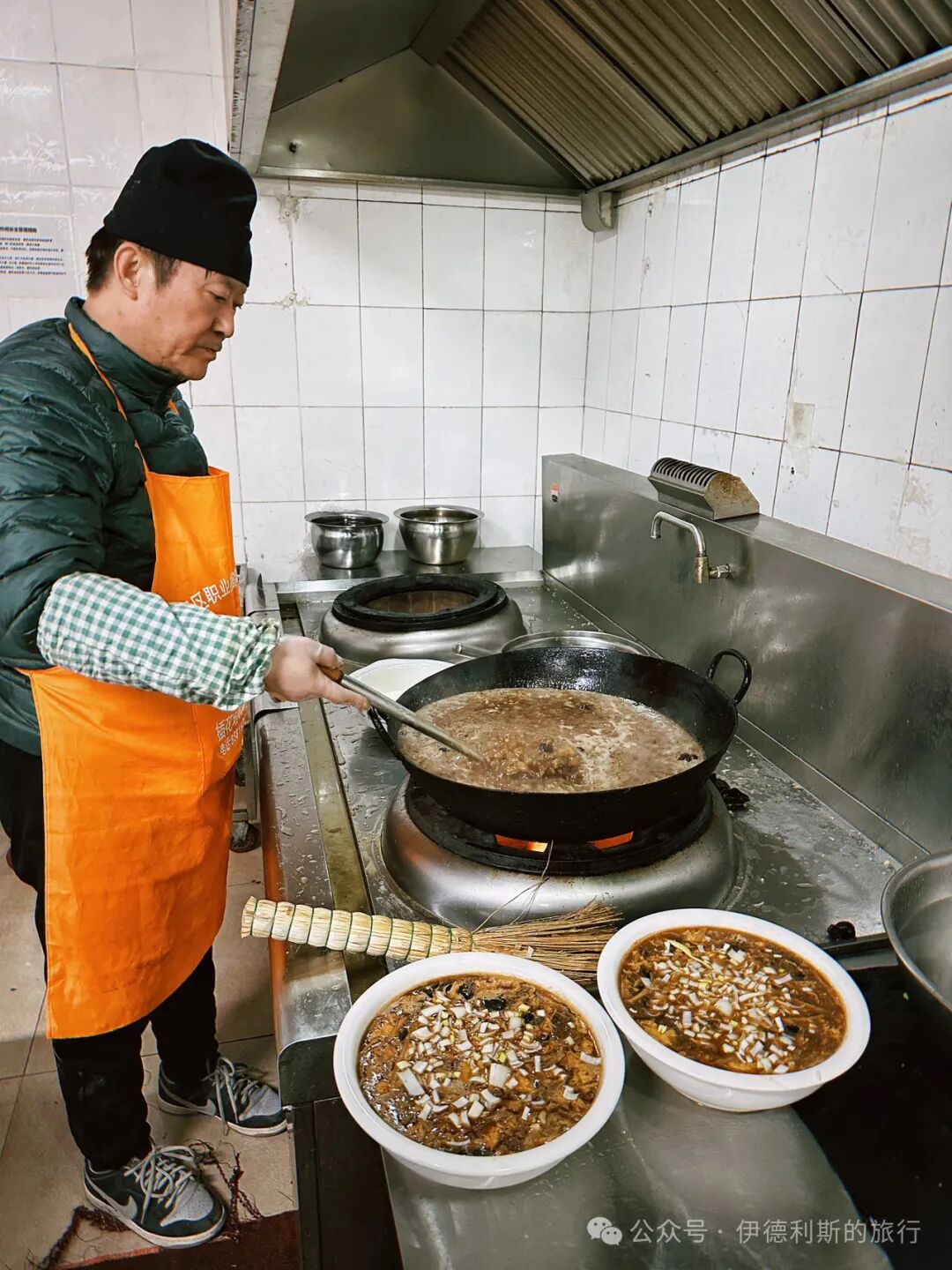
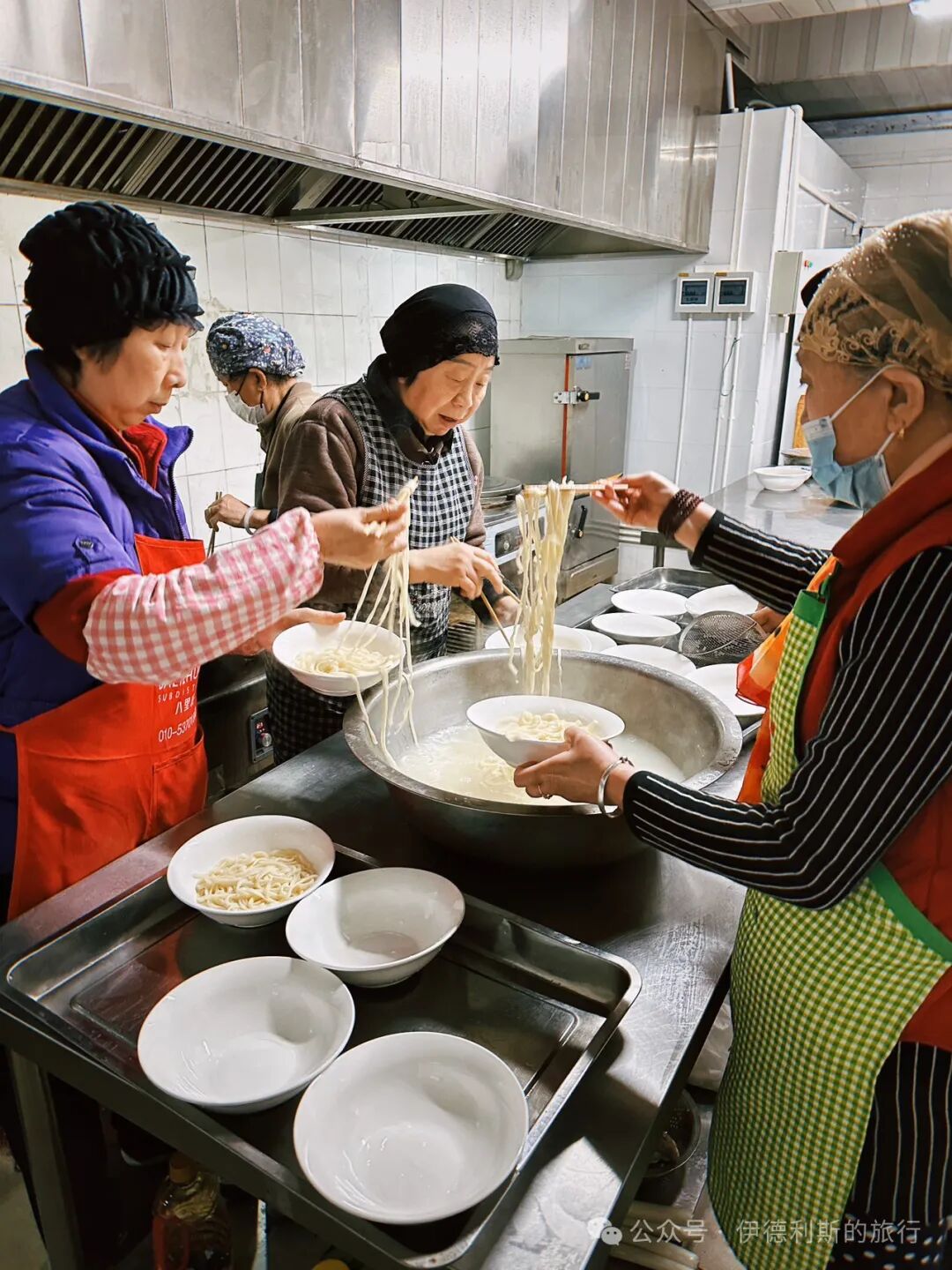
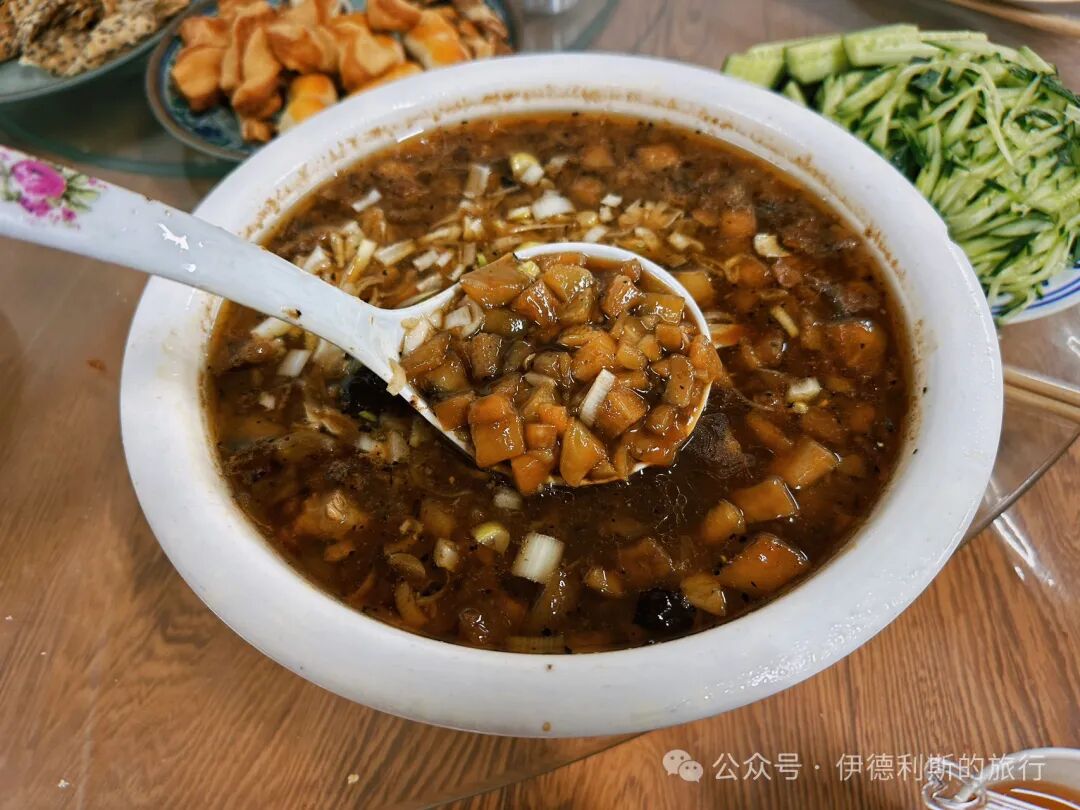
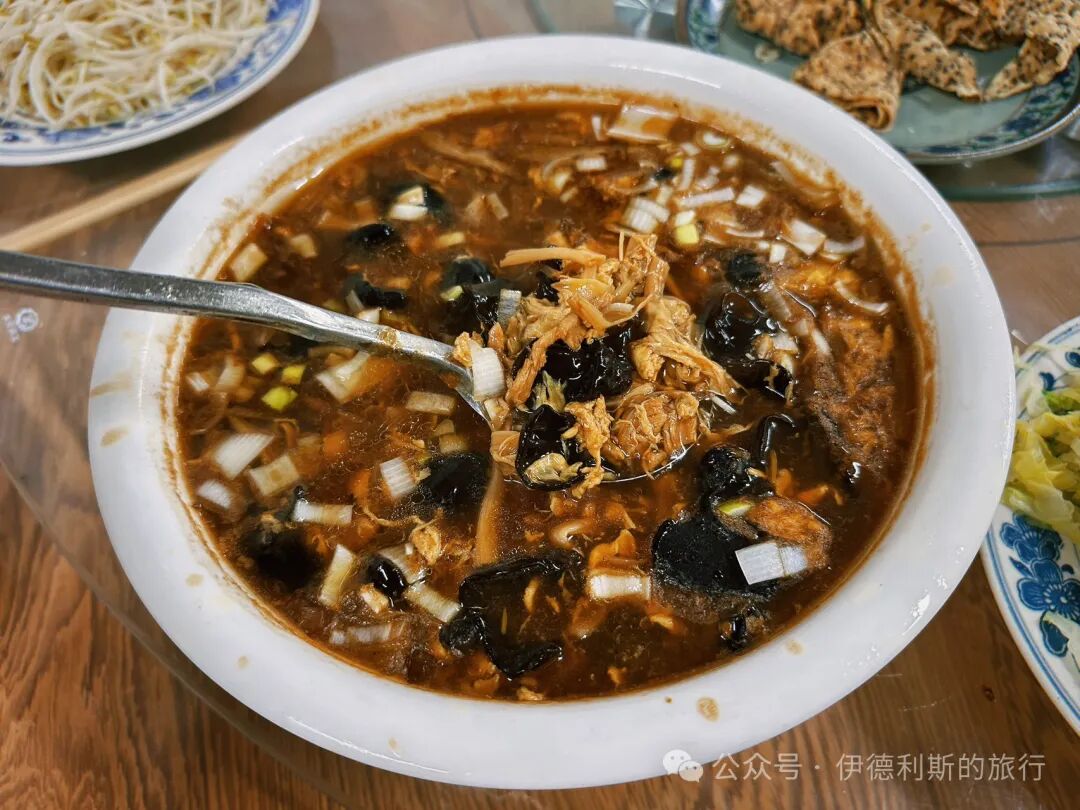
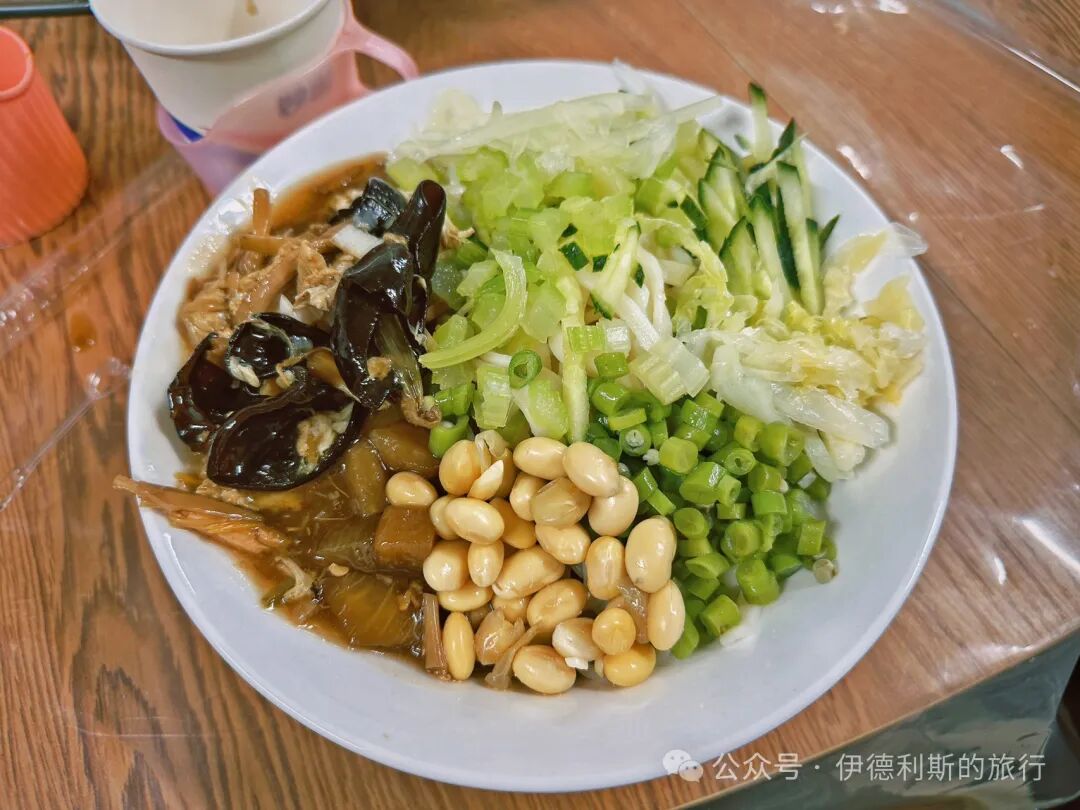
Once a week, we have noodles with gravy (dalu mian) and noodles with eggplant (qieding mian). The vegetable toppings include blanched cabbage, celery, cowpeas, bean sprouts, soybeans, cucumber, and garlic sprouts. The gravy is not too salty, which is perfect for breaking the fast.
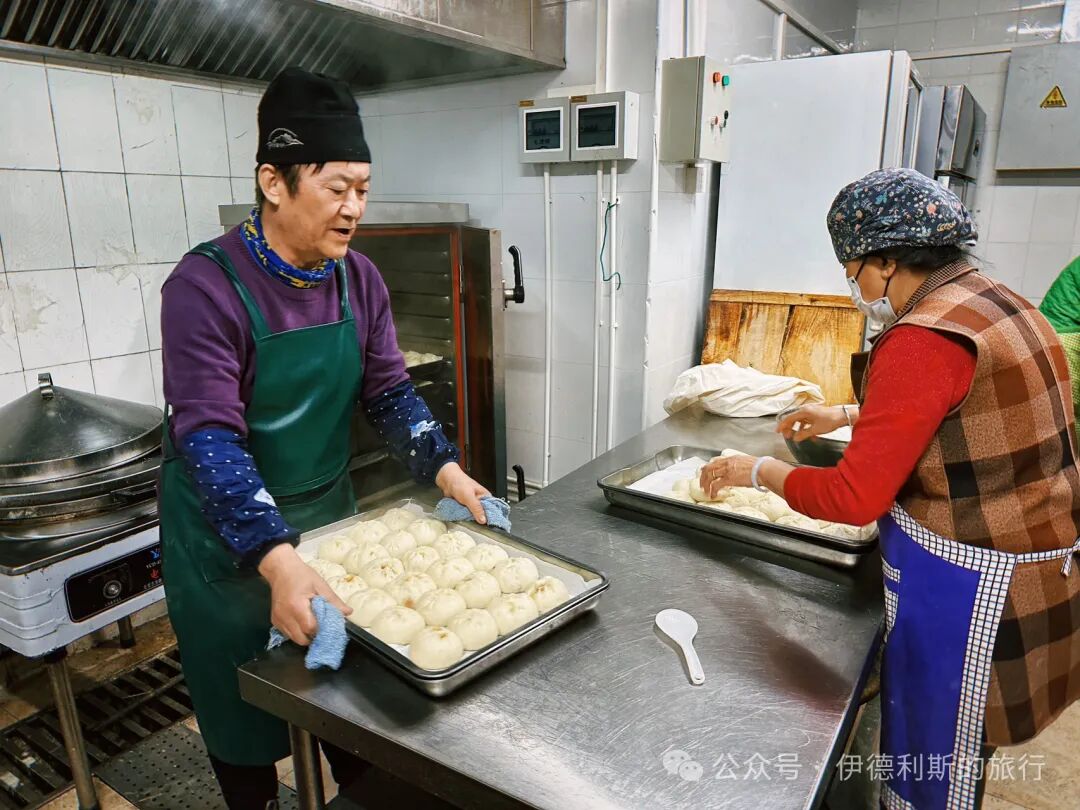
The steamed buns (baozi) served once a week come in beef and green onion, beef and cabbage, and beef and fennel fillings. My favorite is the beef and fennel filling. Many shops now only sell fennel and egg steamed buns, so it is not easy to find beef and fennel ones.
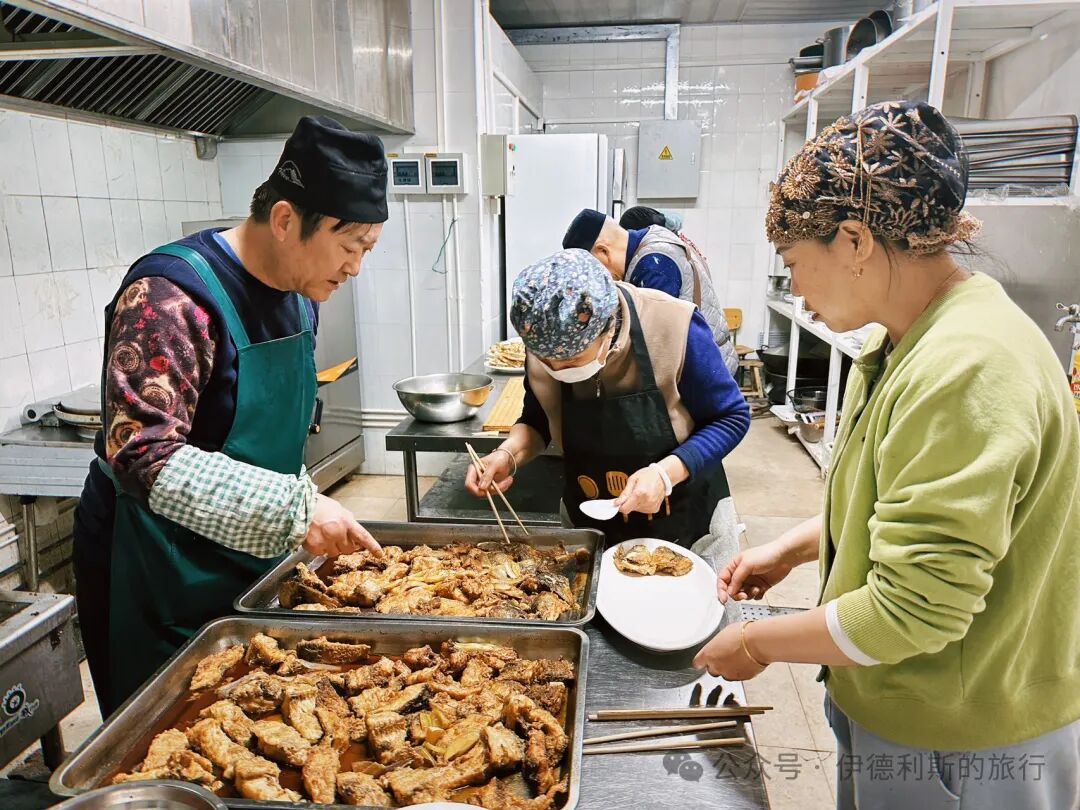
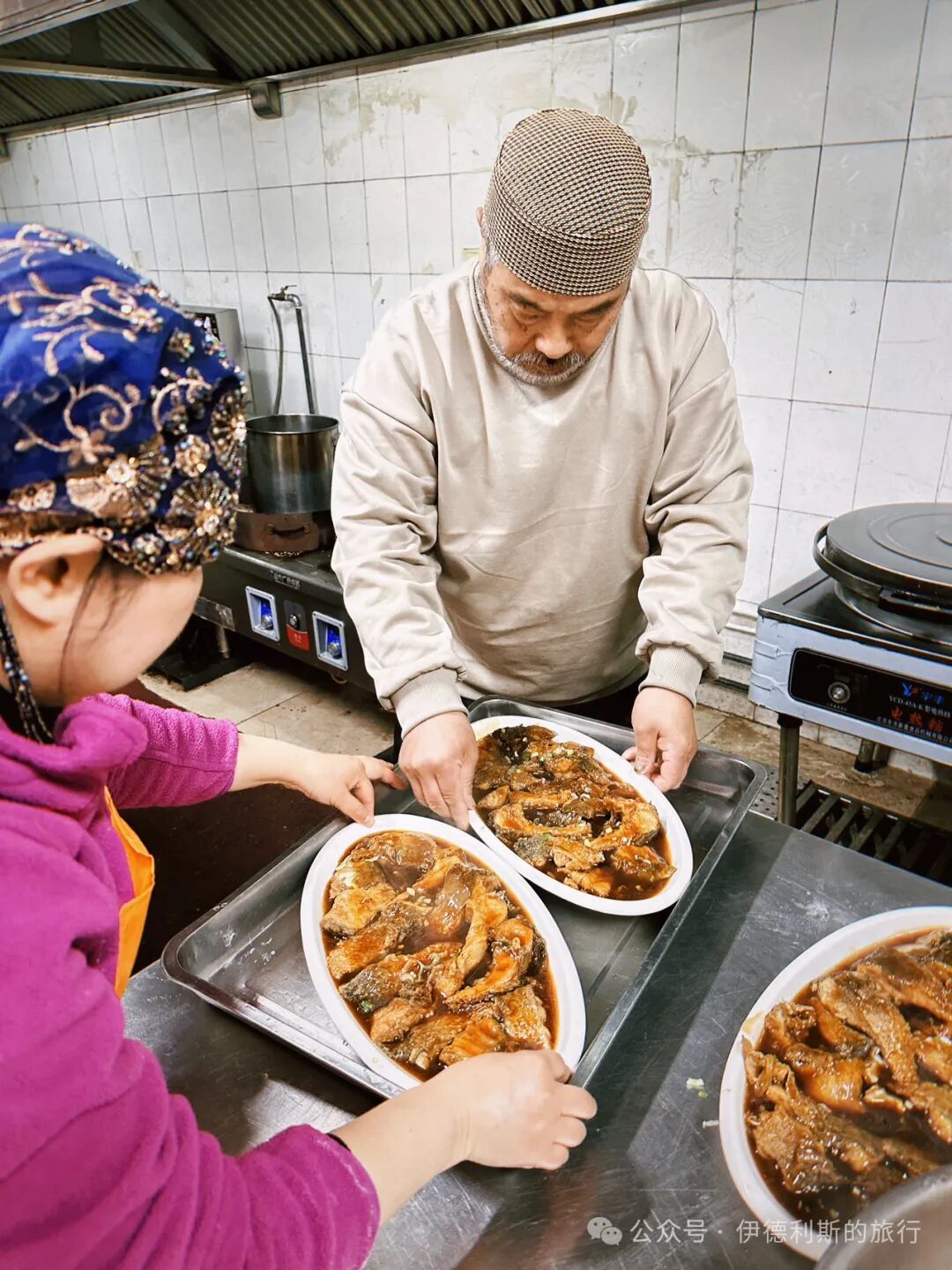
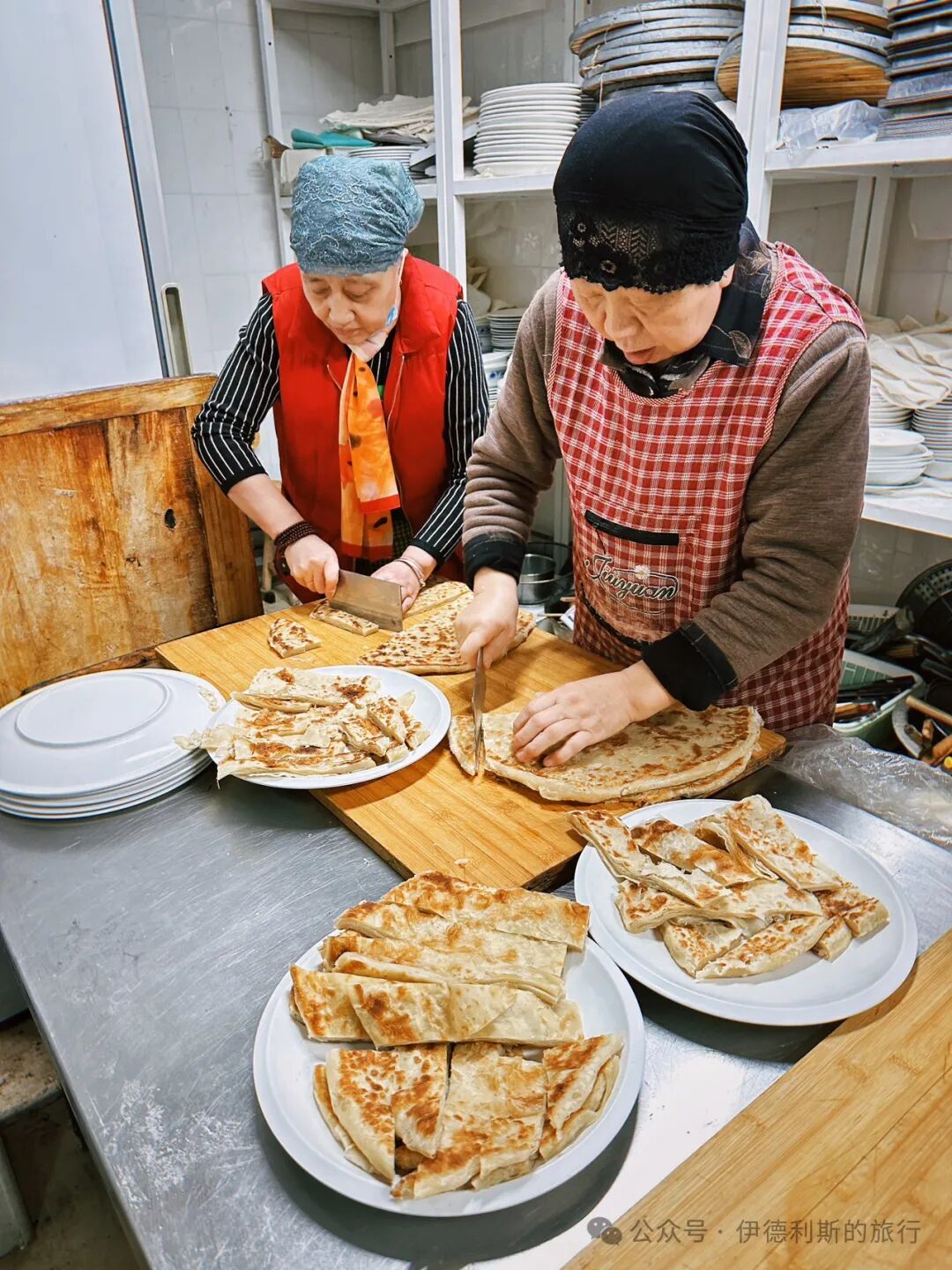
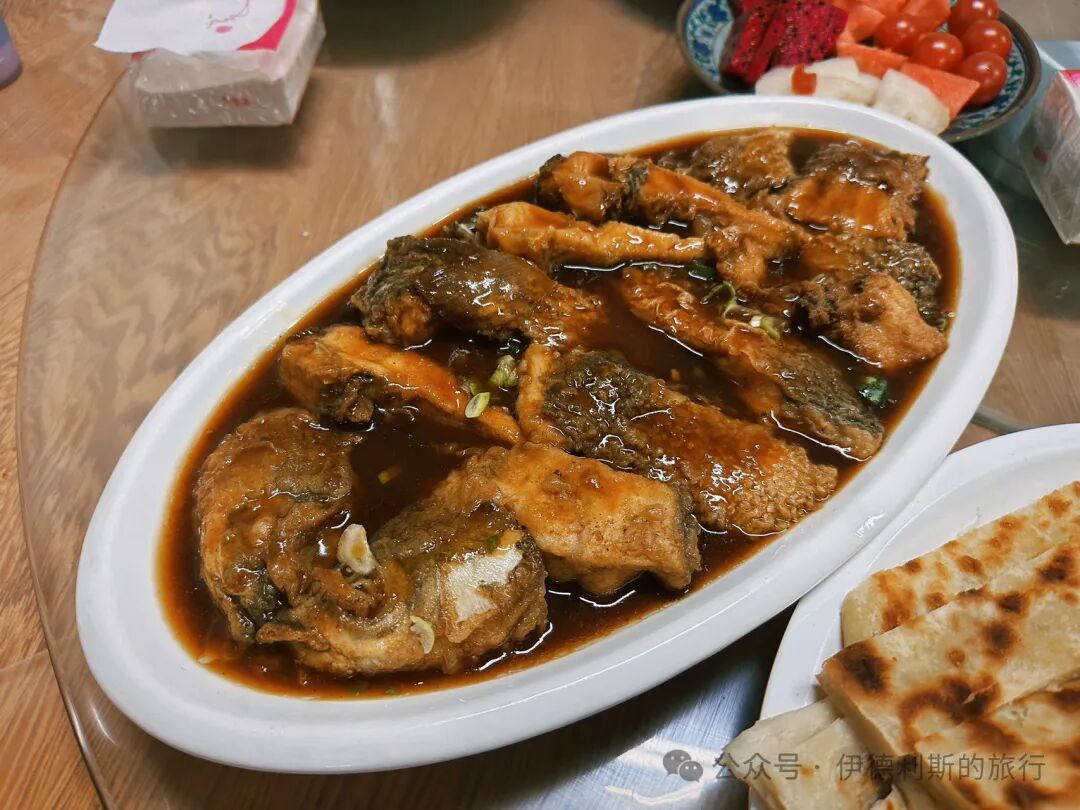
Fish head with flatbread (yutou paobing) is also a Beijing specialty. The flatbreads (laobing) are made by the elders themselves and are very dense; they are delicious when dipped in the fish head broth.
After eating the fish head with flatbread, the leftover flatbread can be made into stir-fried flatbread (chaobing), which is also a favorite for Beijingers. view all
Summary: This article looks back at Ramadan 2025 at Balizhuang Mosque in Beijing. It keeps the original community scenes, iftar details, prayers, people, and photographs in a clean English layout.
This is my third Ramadan at the Balizhuang mosque in Beijing. The atmosphere at the mosque is great and the food is delicious, so it feels worth it even when I have to squeeze onto the subway during the evening rush hour on workdays.
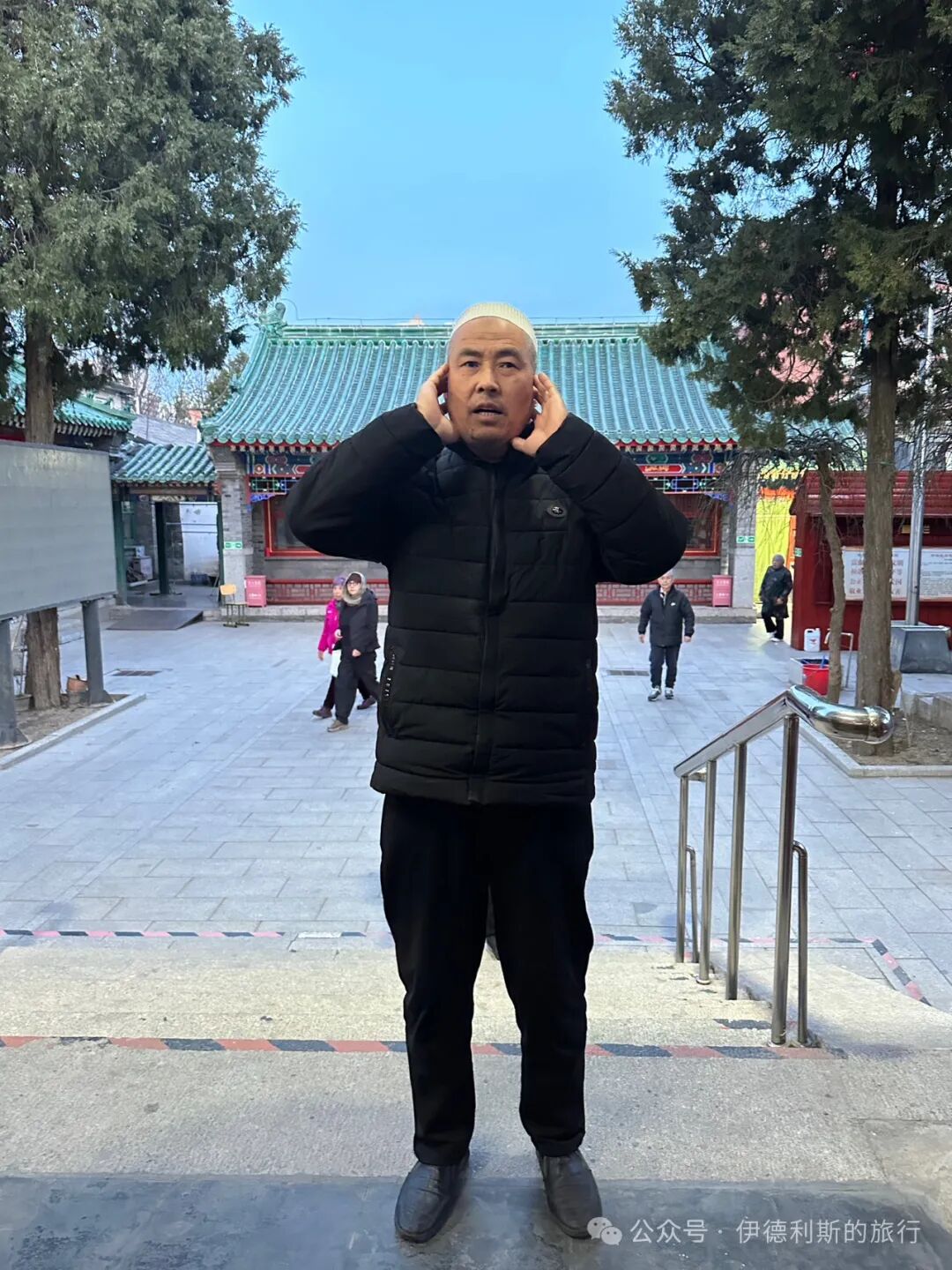
This year, the mosque put the post-prayer recitations for Taraweeh on a large whiteboard, which helps everyone recite together more smoothly. The benefit of praying Taraweeh at the mosque is that you follow the imam and do not make mistakes, whereas I sometimes lose focus when praying alone. Another benefit is the strong sense of community when we break our fast together, and it is very powerful when we all recite the post-prayer words together.
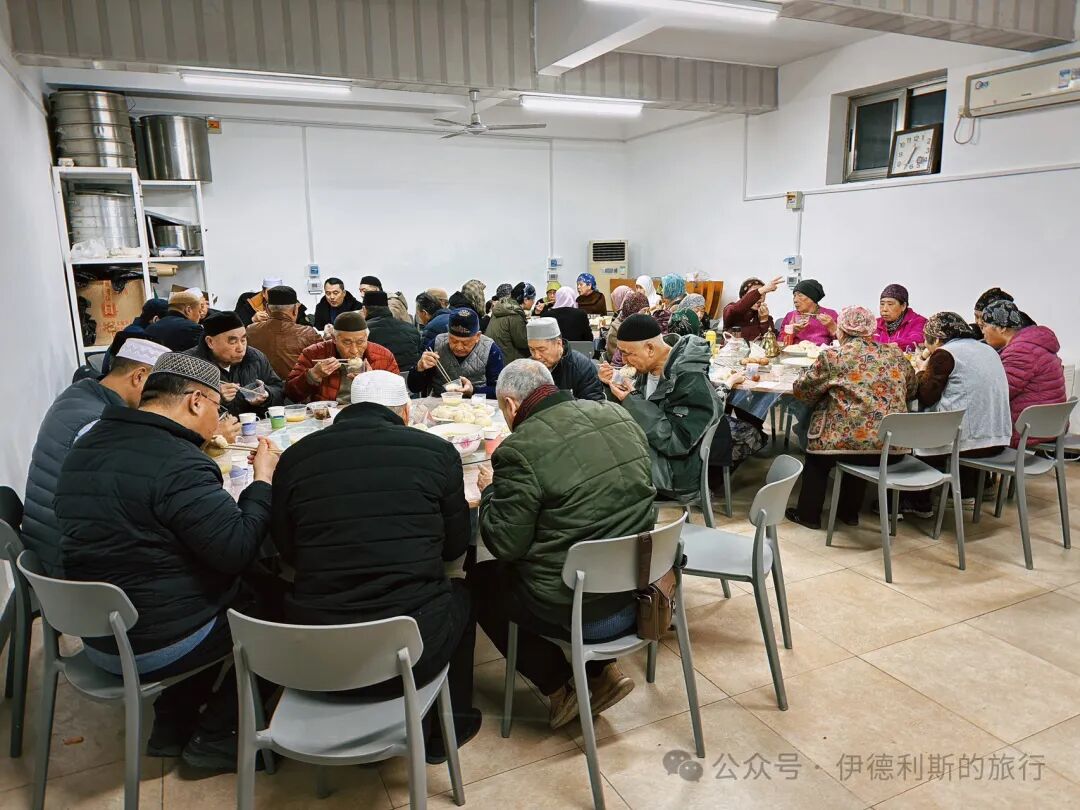
First, let me share the snacks and fruits for breaking the fast. You can eat various traditional Beijing snacks carefully made by the elders here, such as steamed rice cakes (aiwowo), candied yam rolls (tangjuanguo), glutinous rice rolls with bean flour (lvdagun), fried sweet potato (zha baishu), ginger juice fried dough crisps (jiangzhi paicha), salt and pepper fried dough crisps (jiaoyan paicha), lotus root with glutinous rice (nuomi ou), sticky rice cake (niangao), yellow rice cake (huangmi gao), jujube corn buns (zao wotou), pea flour cake (wandouhuang), and sugar ear pastries (tang erduo).
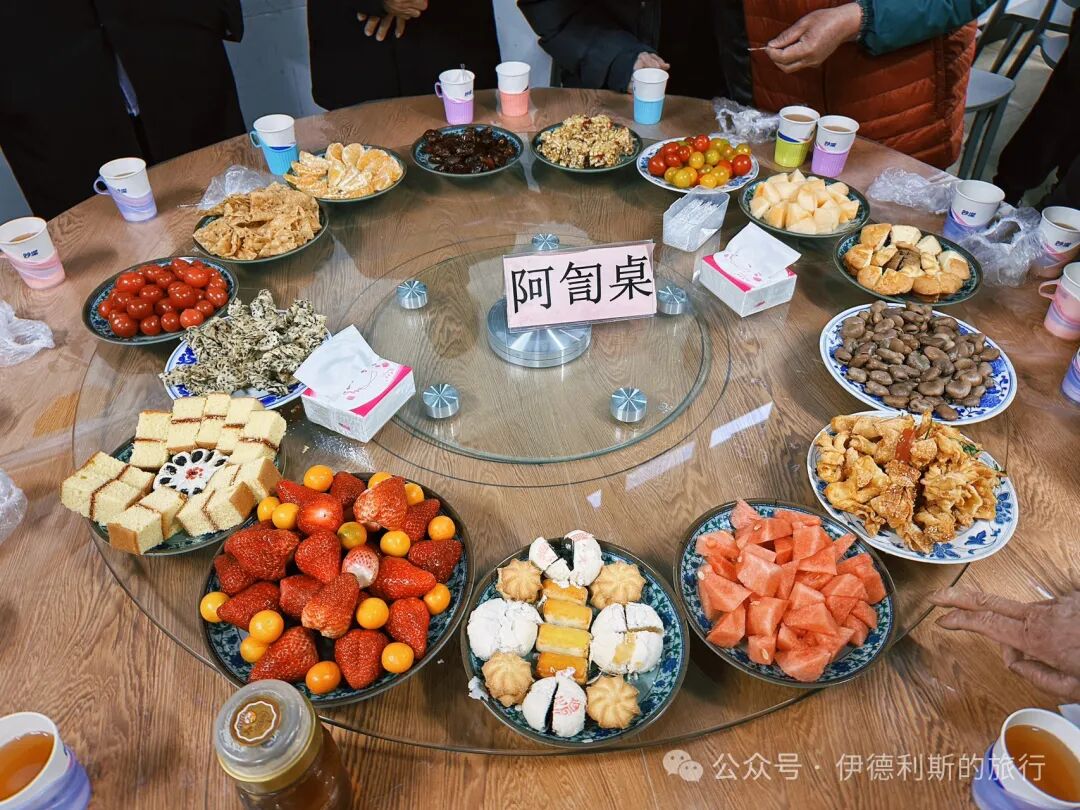
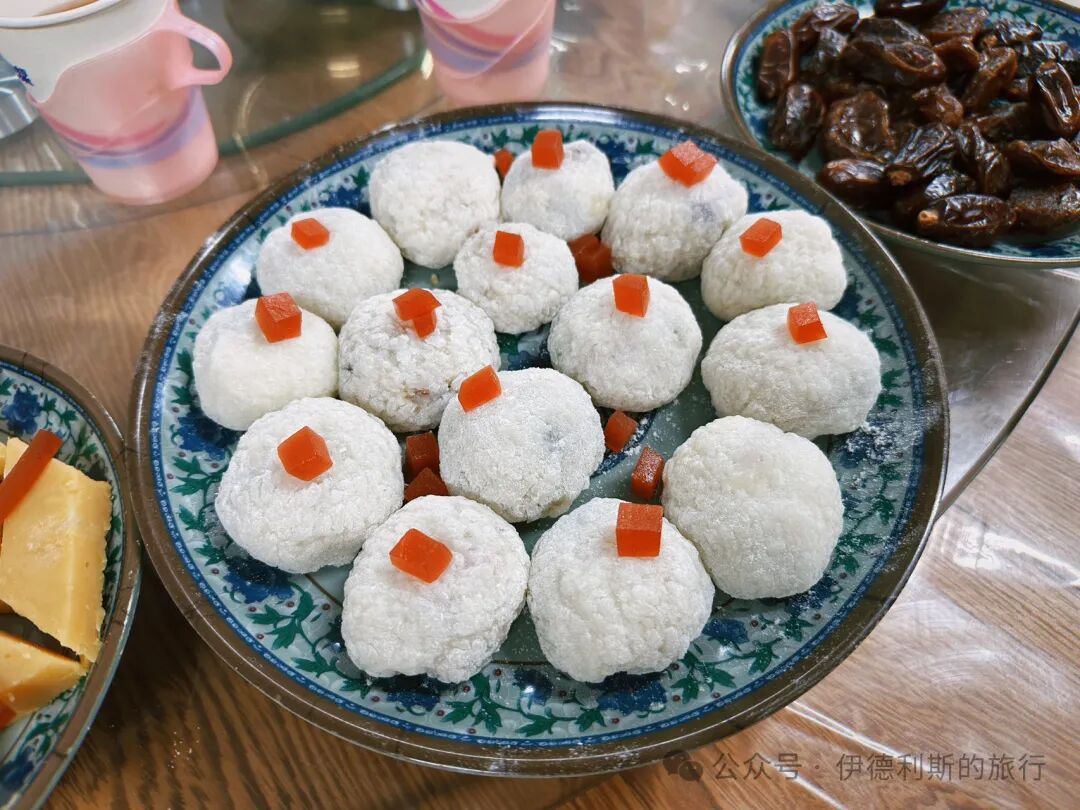
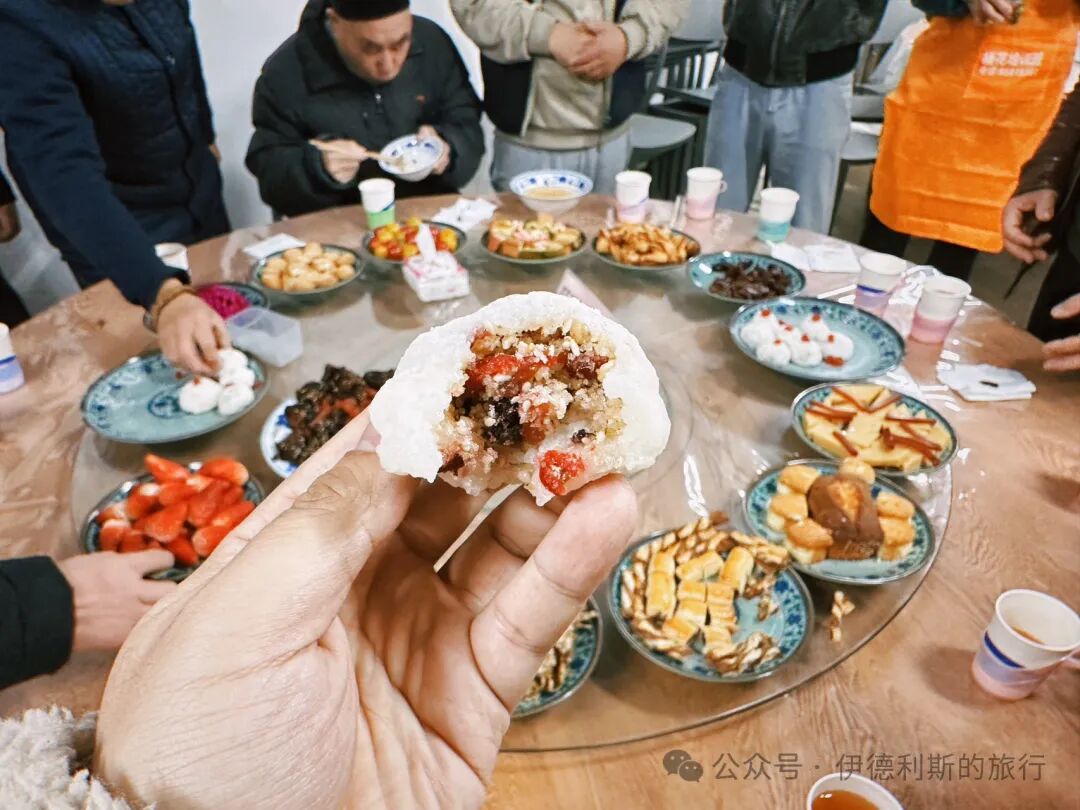
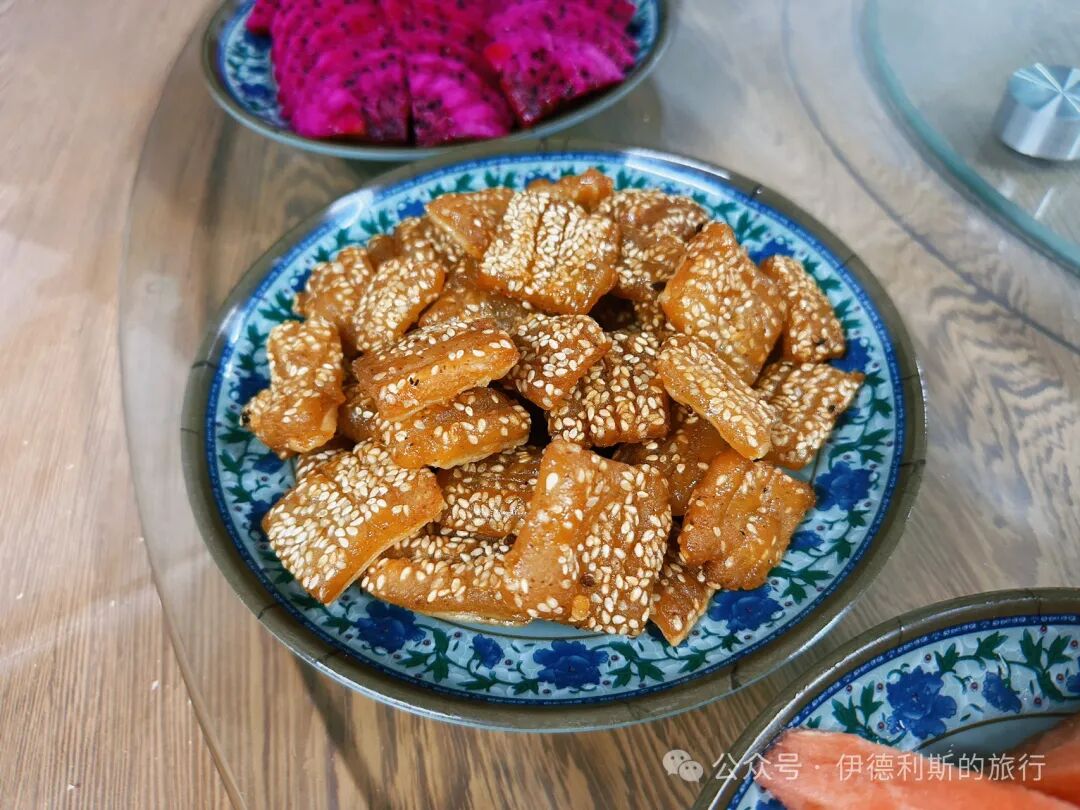
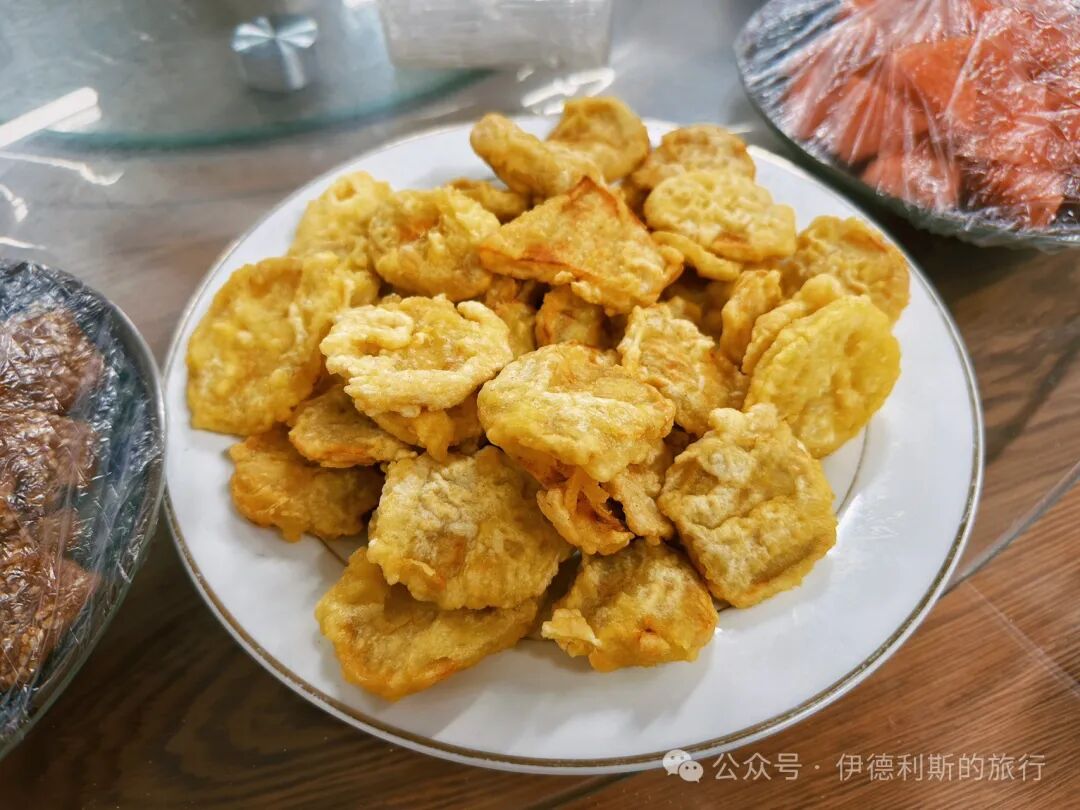
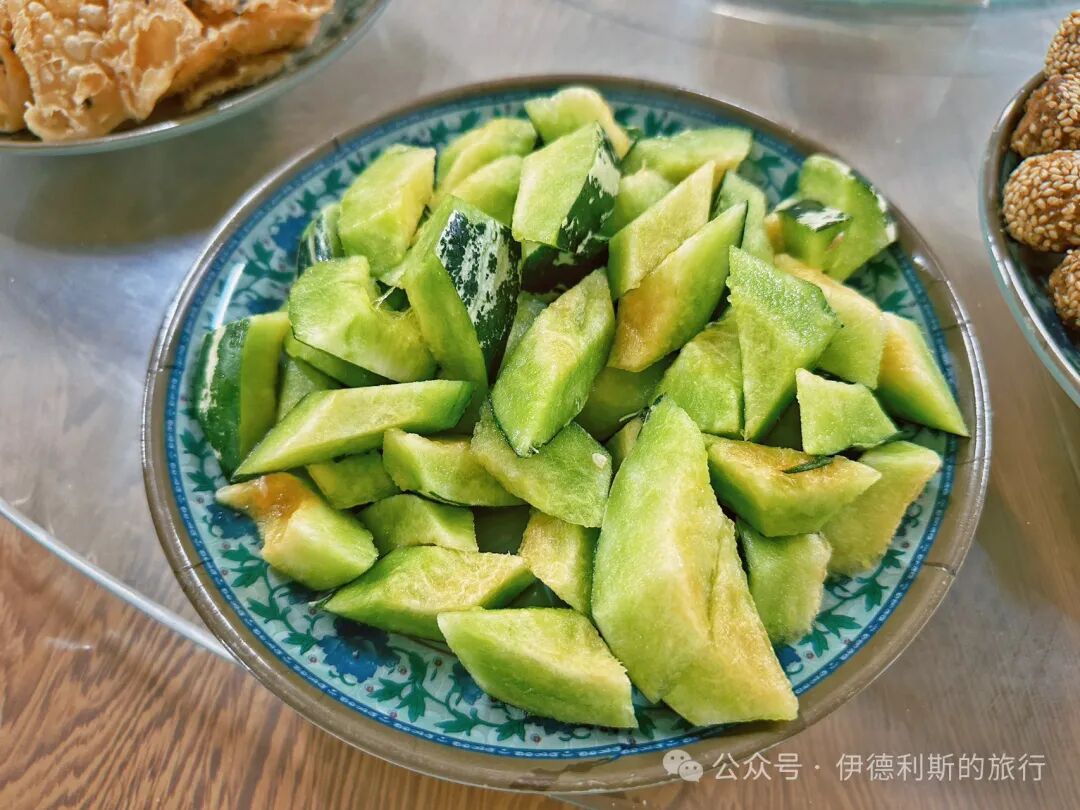
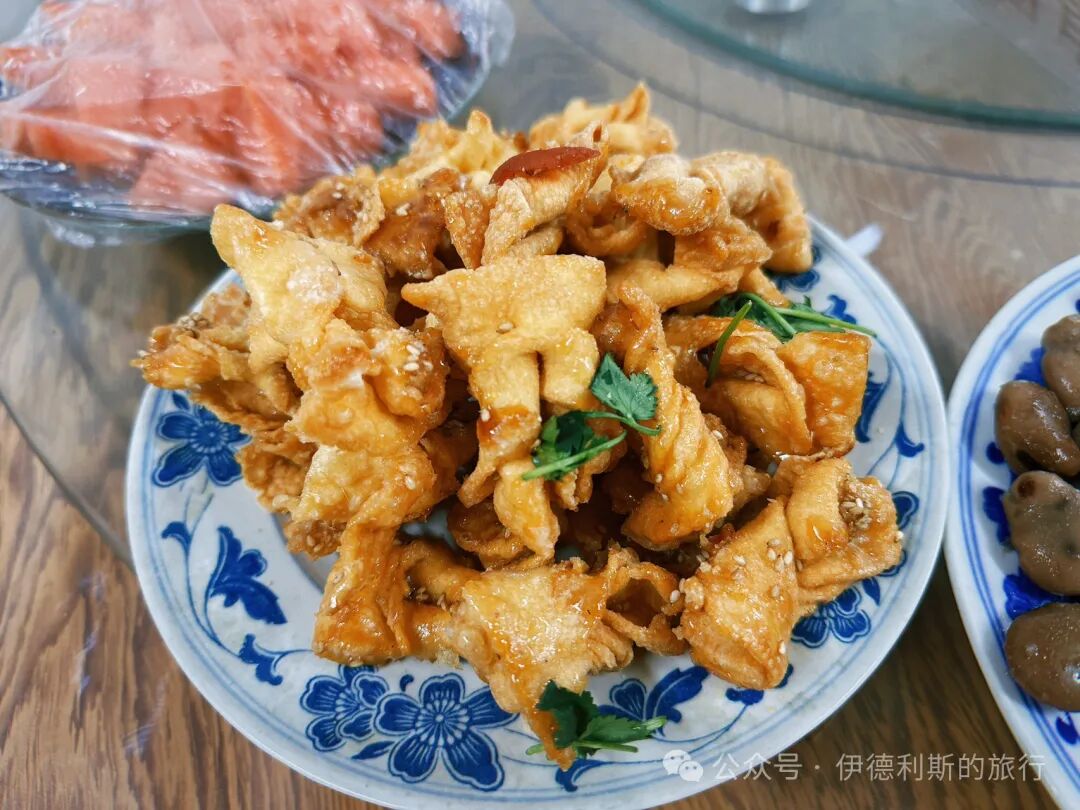
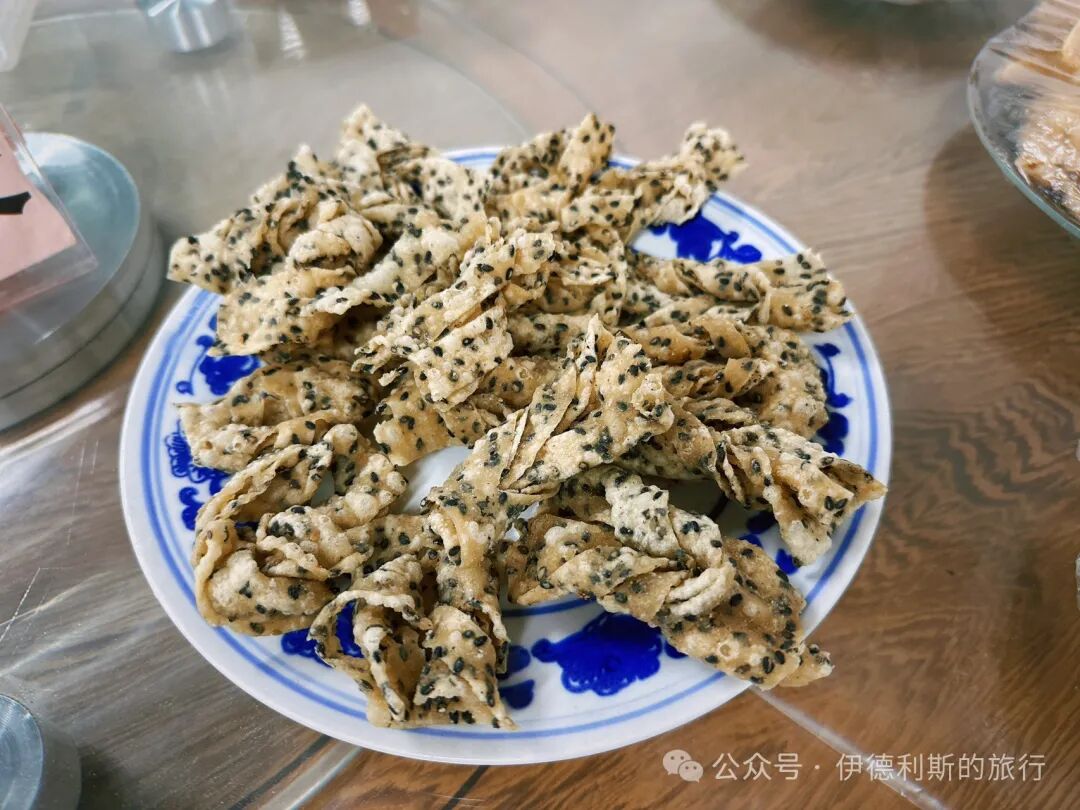
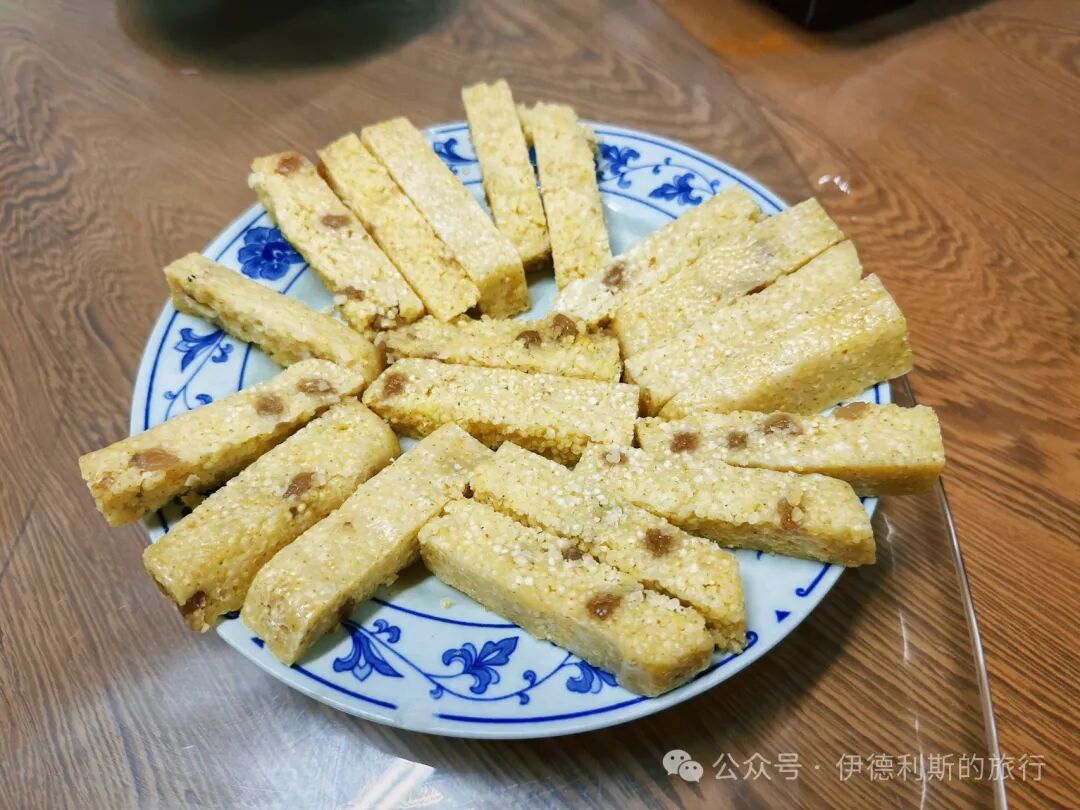
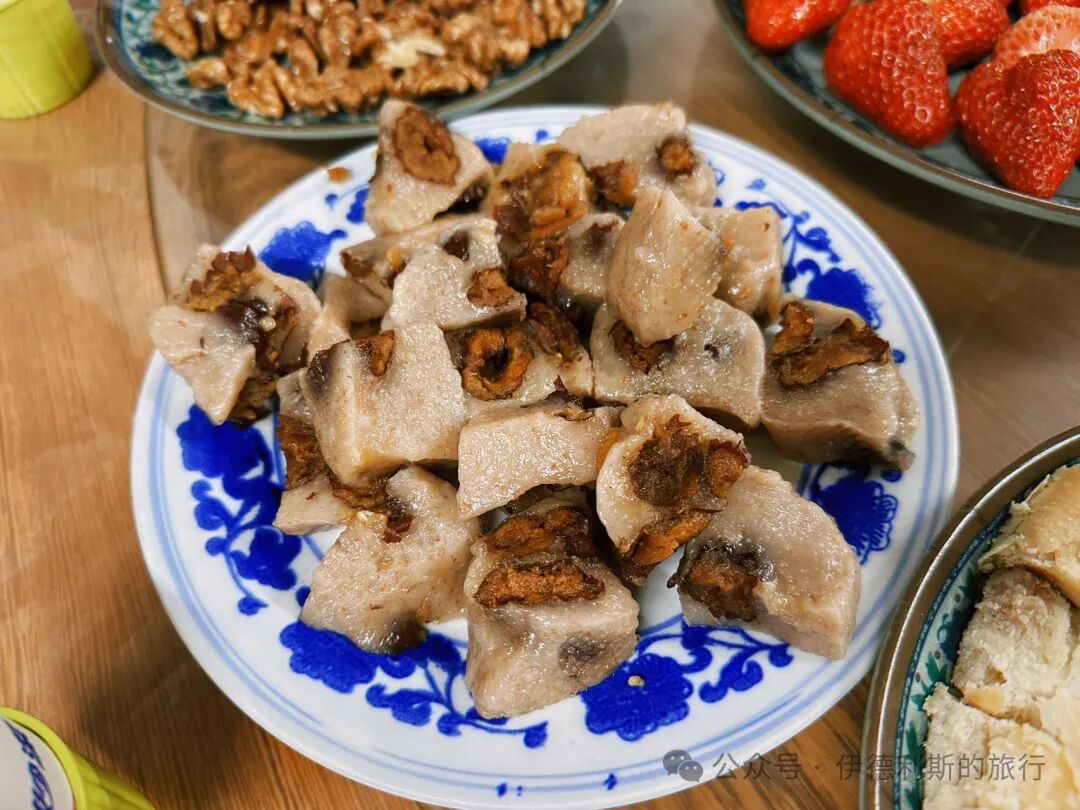
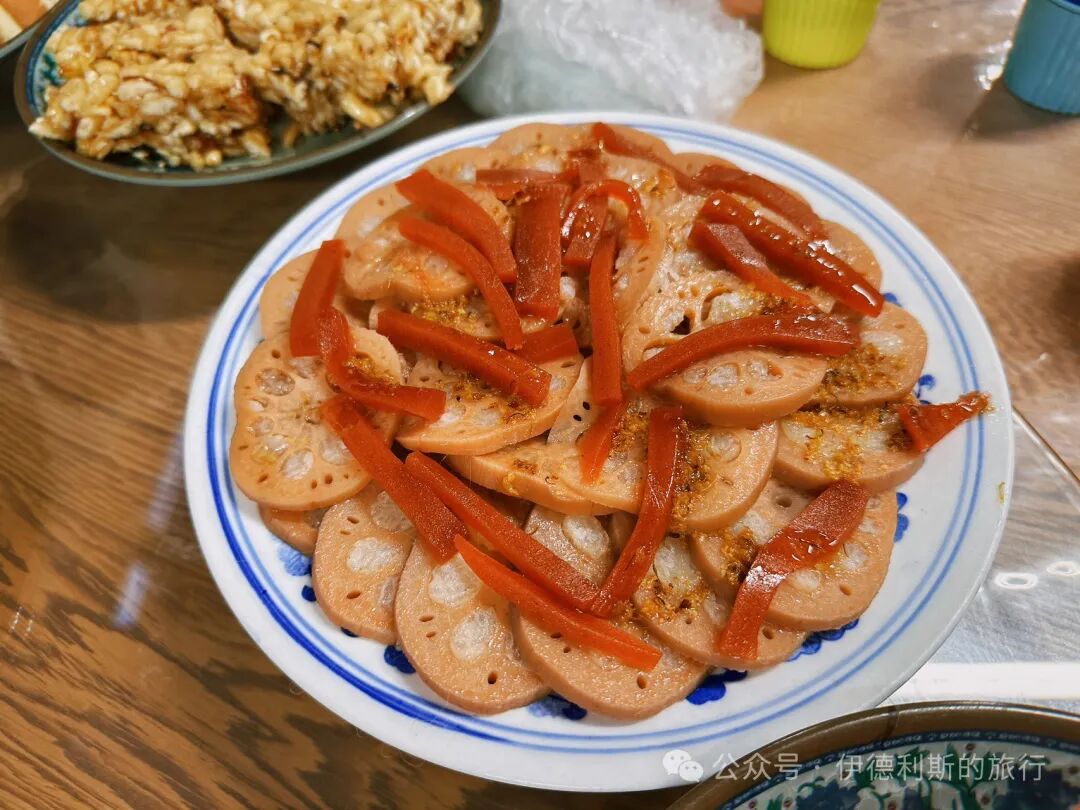
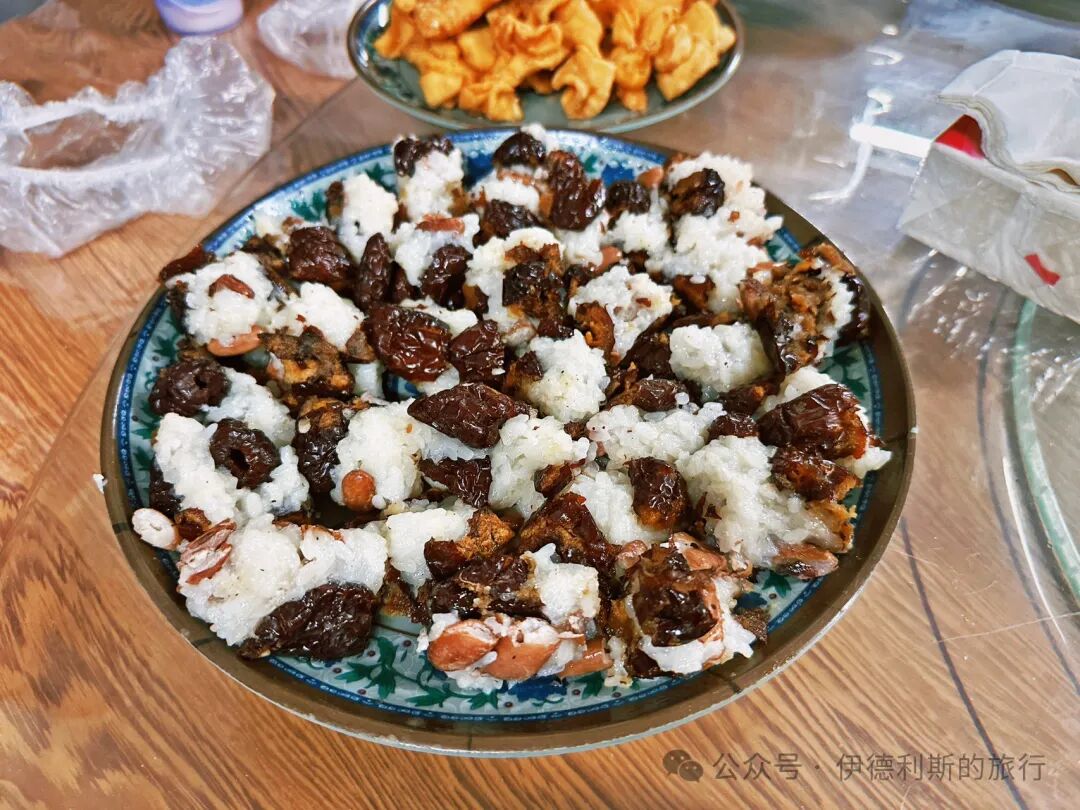
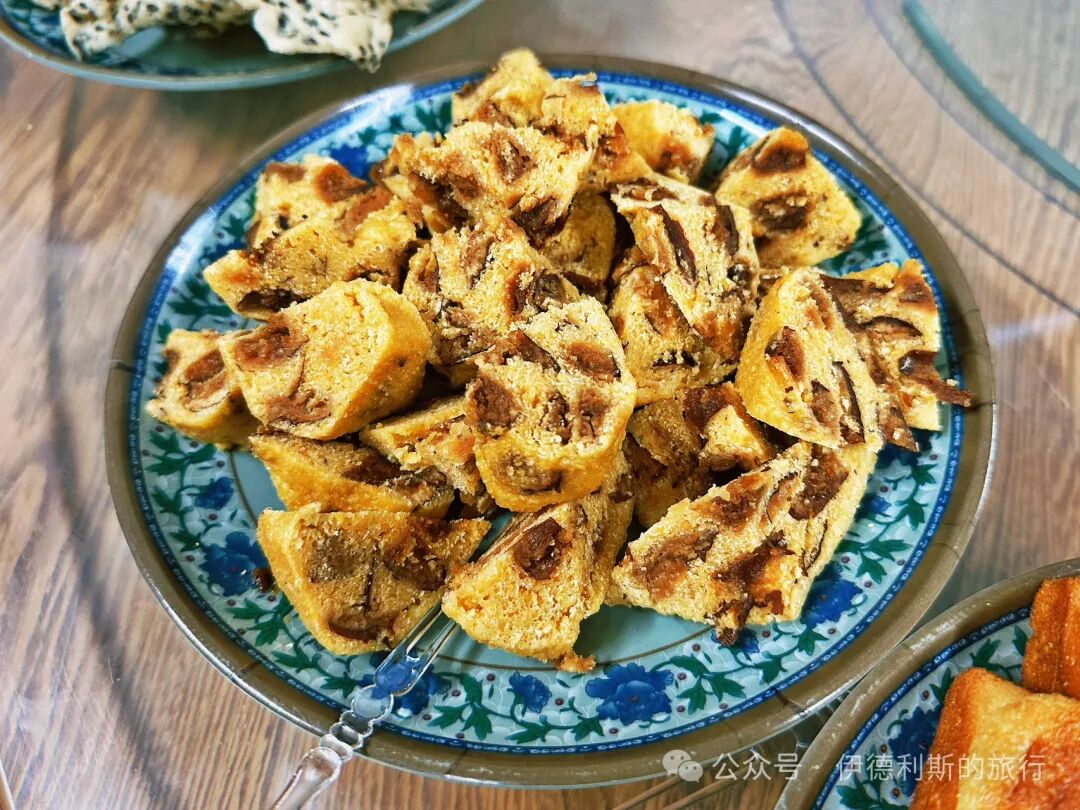
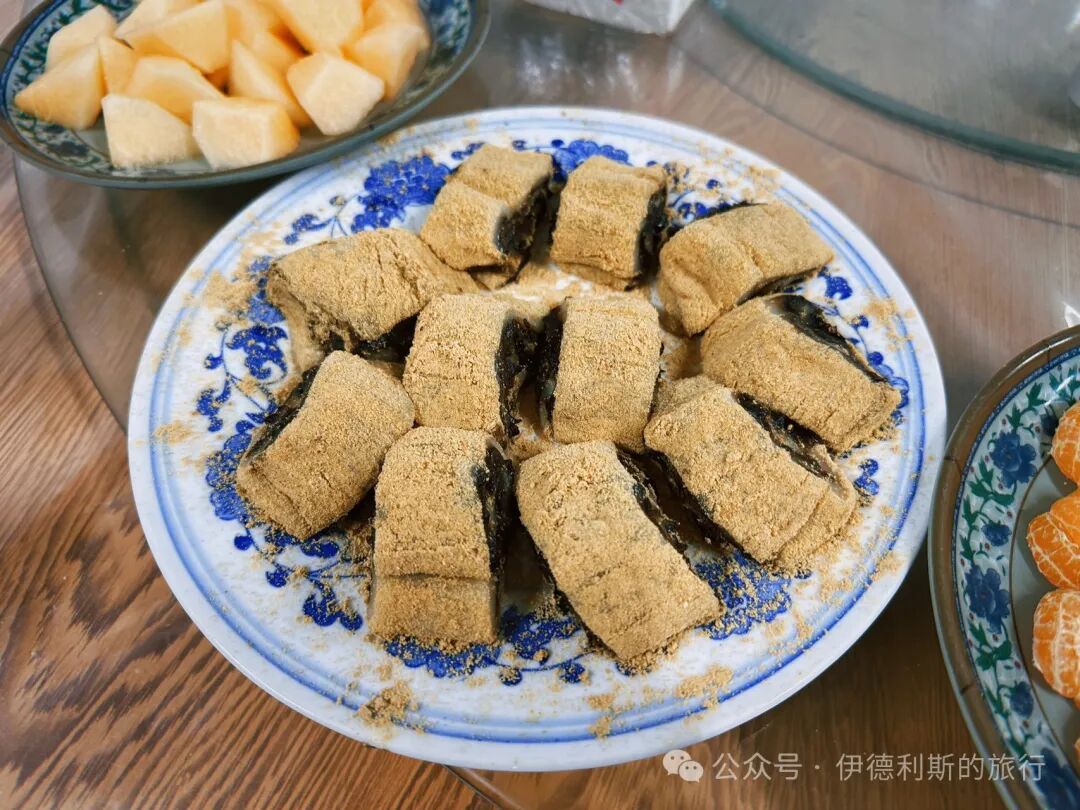
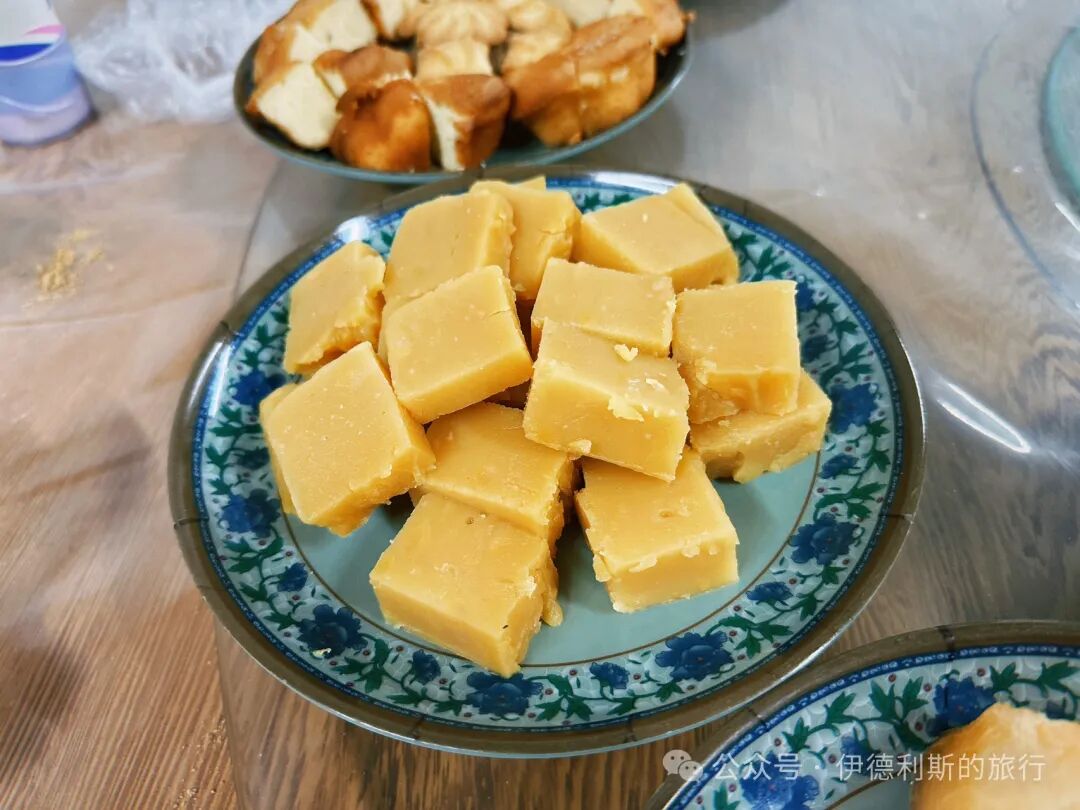
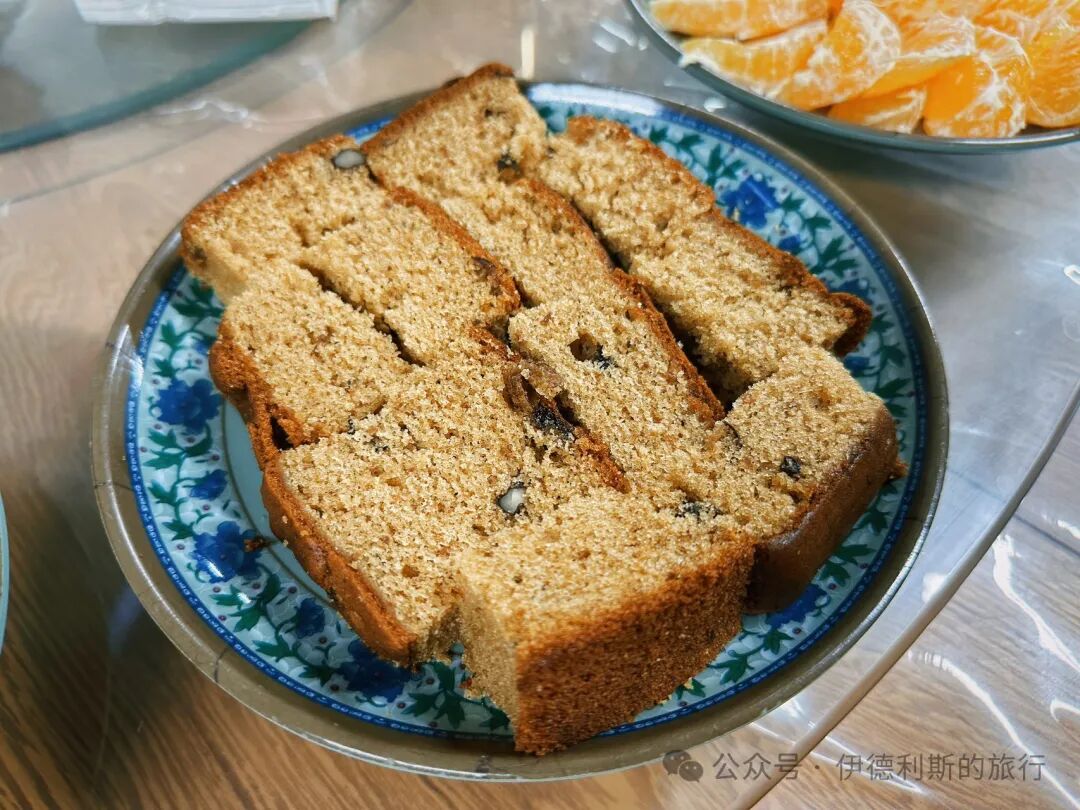
The dinner after the sunset prayer (maghrib) is also wonderful, featuring rice with stir-fried dishes, noodles with gravy (dalu mian), steamed buns (baozi), and fish head with flatbread (yutou paobing), which rotate daily.
Side dishes for the rice include fried meat (songrou), braised chicken legs (huangmen jitu), minced meat with green beans, braised eggplant, and braised meatballs. For soups and porridge, there is winter melon meatball soup, tofu puff soup, and mung bean porridge. Of course, fermented bean drink (douzhi) with fermented bean curd (ma doufu) is also a major Beijing specialty!
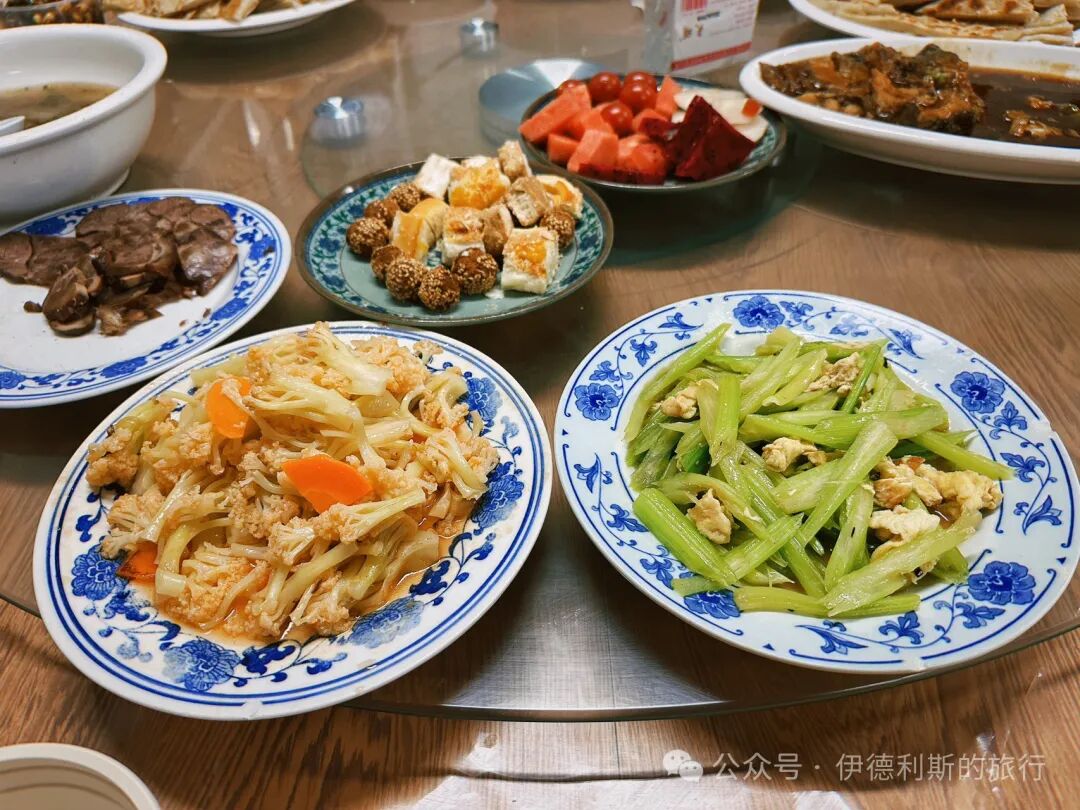
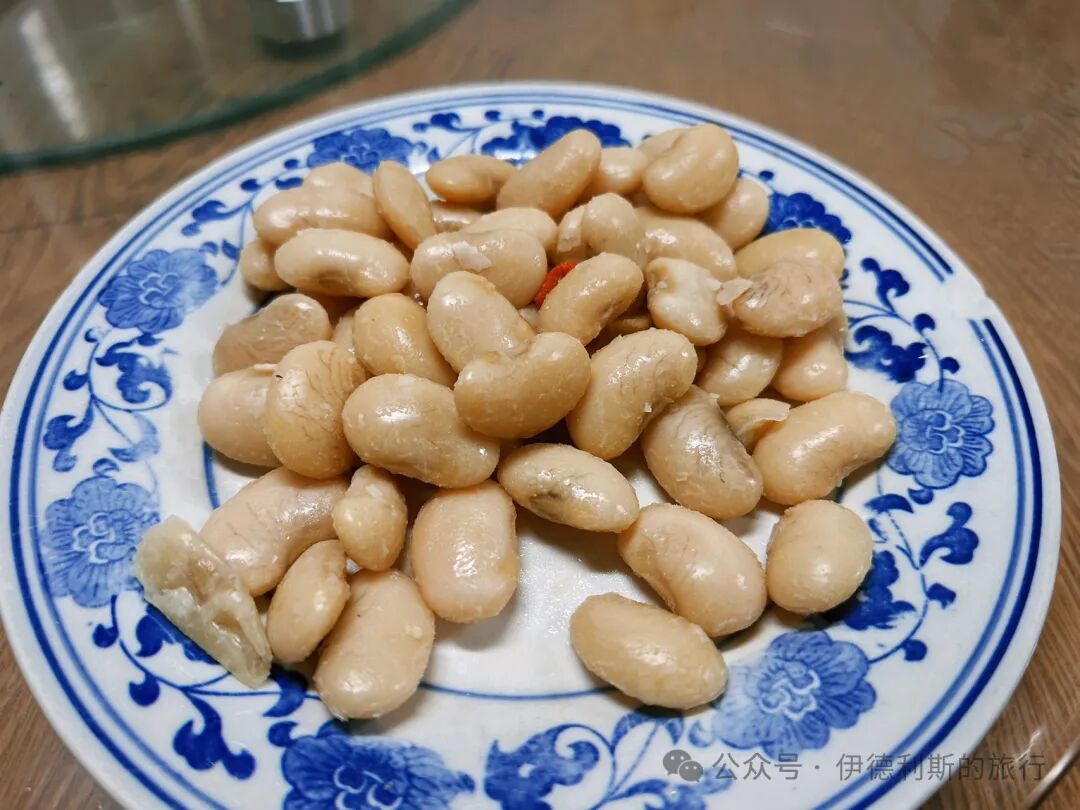
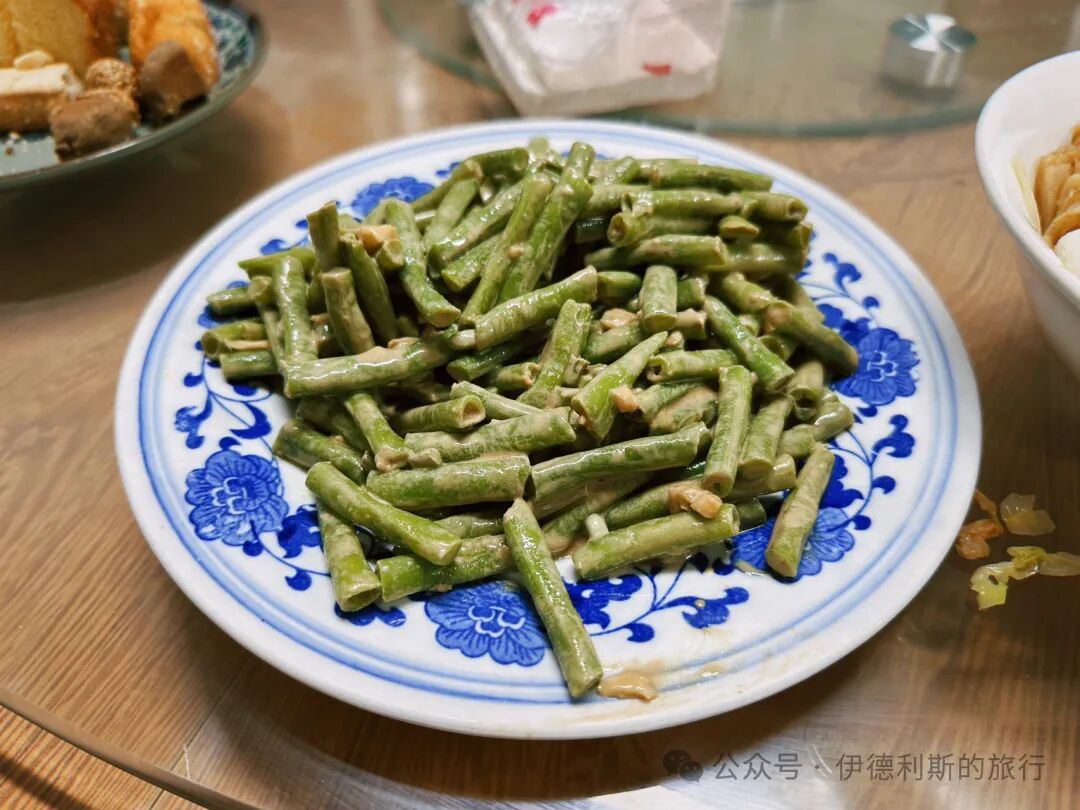
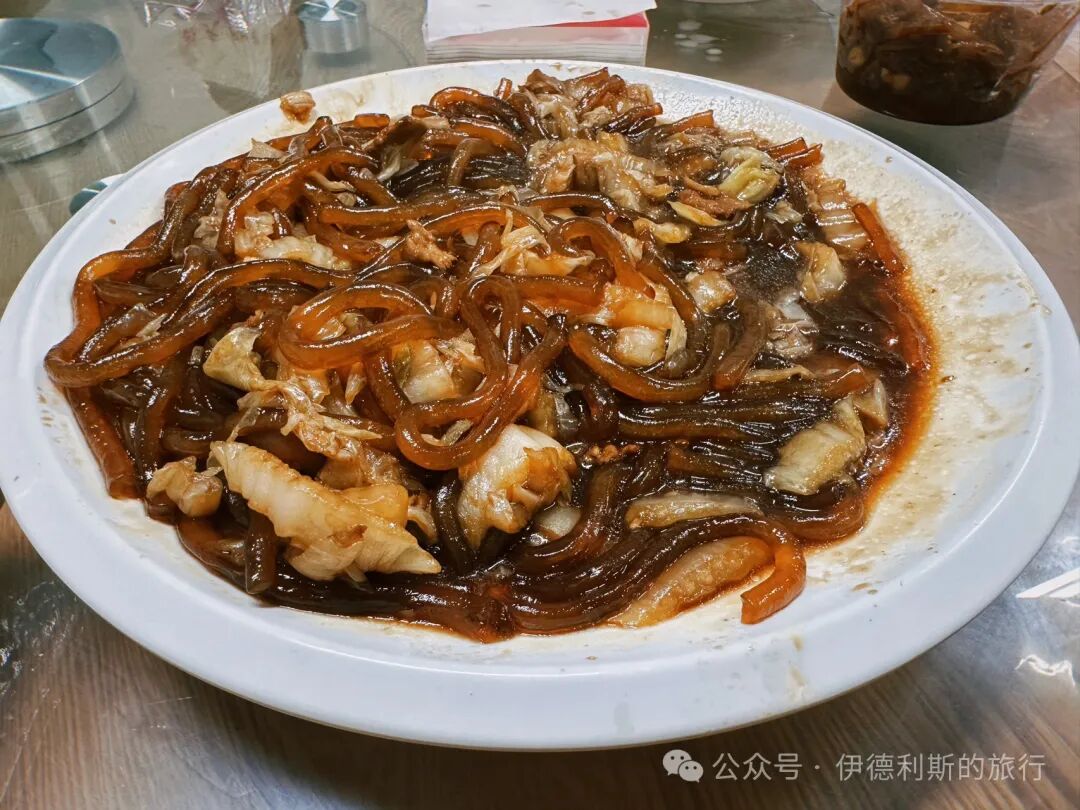
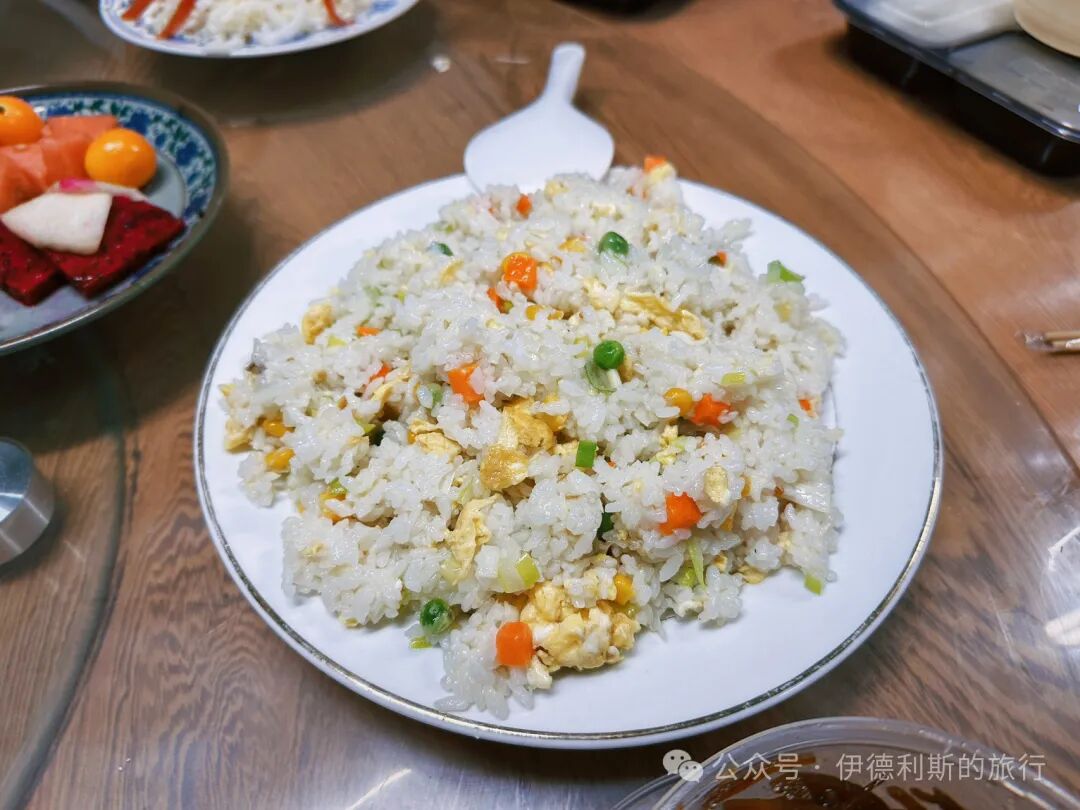
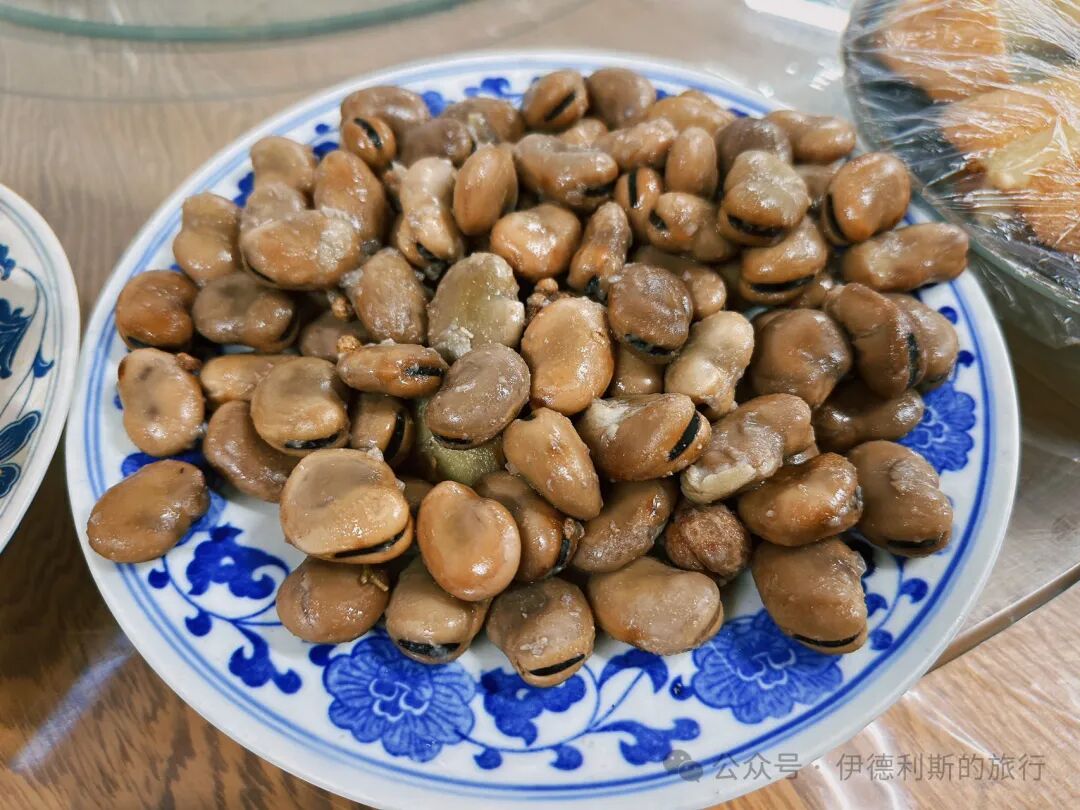
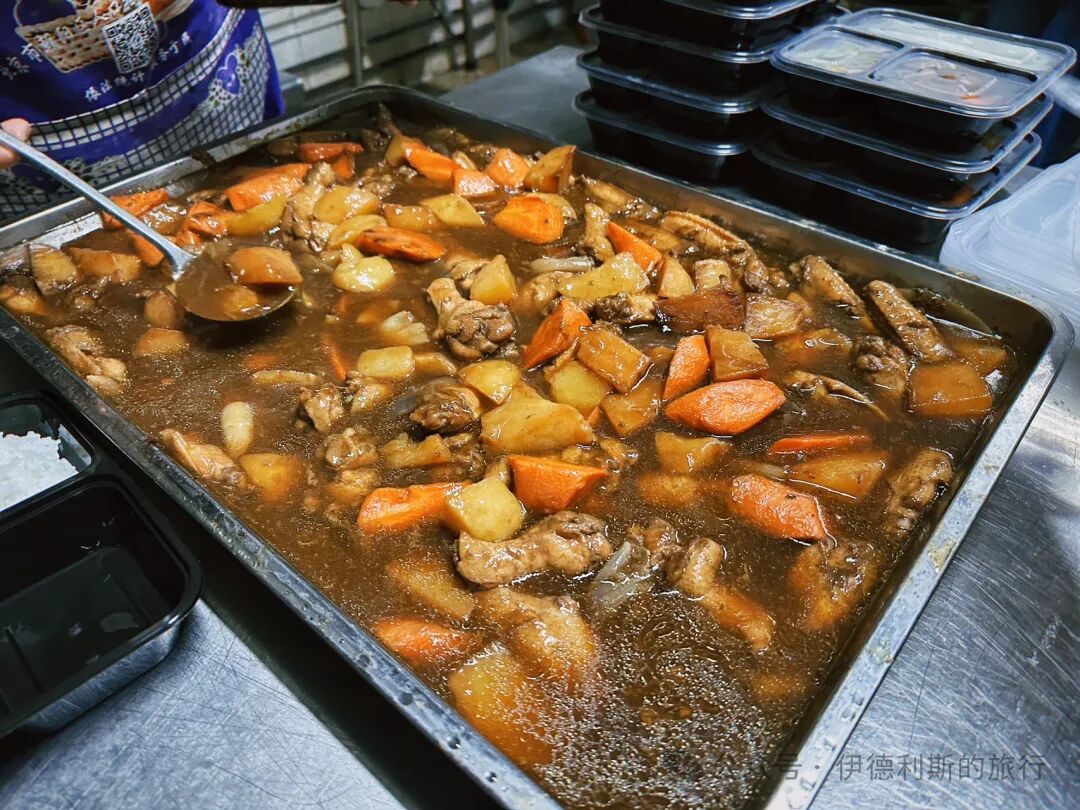
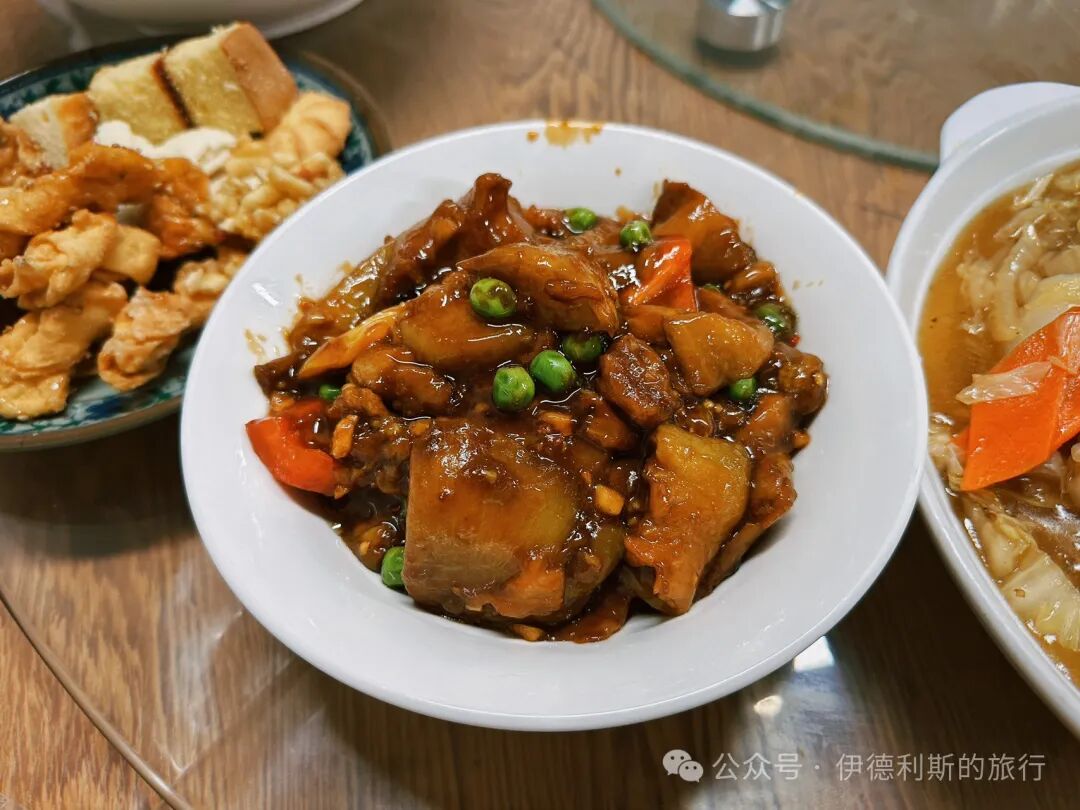
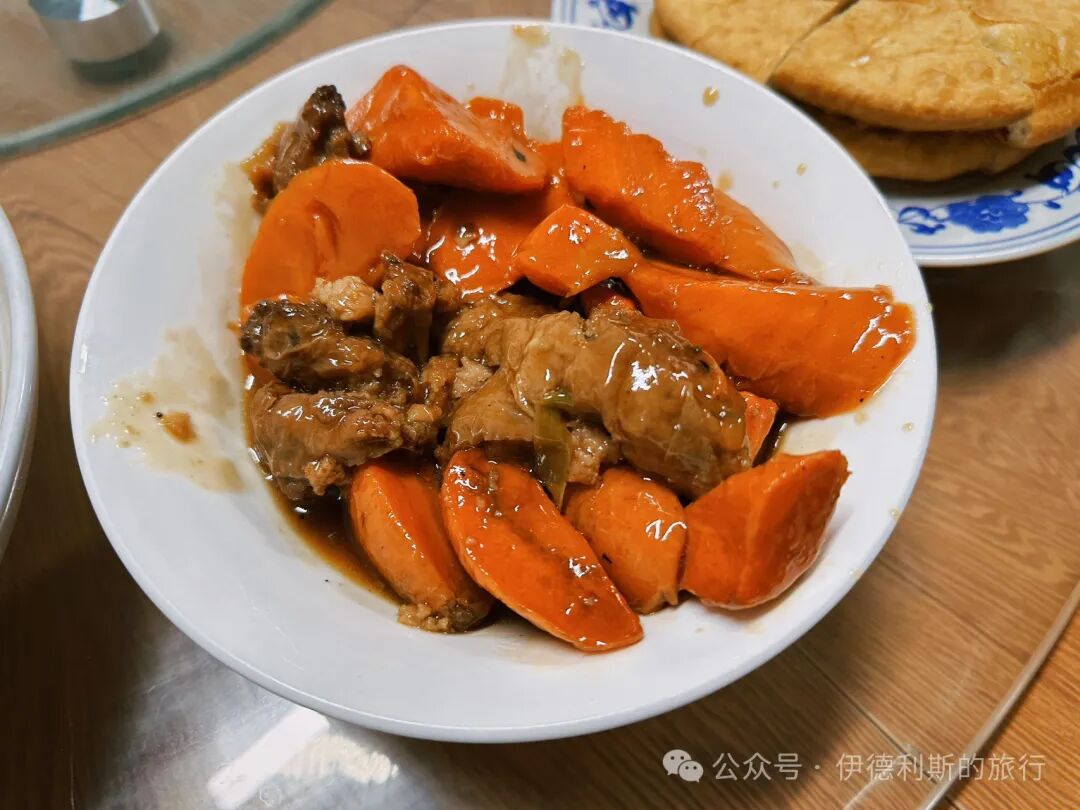
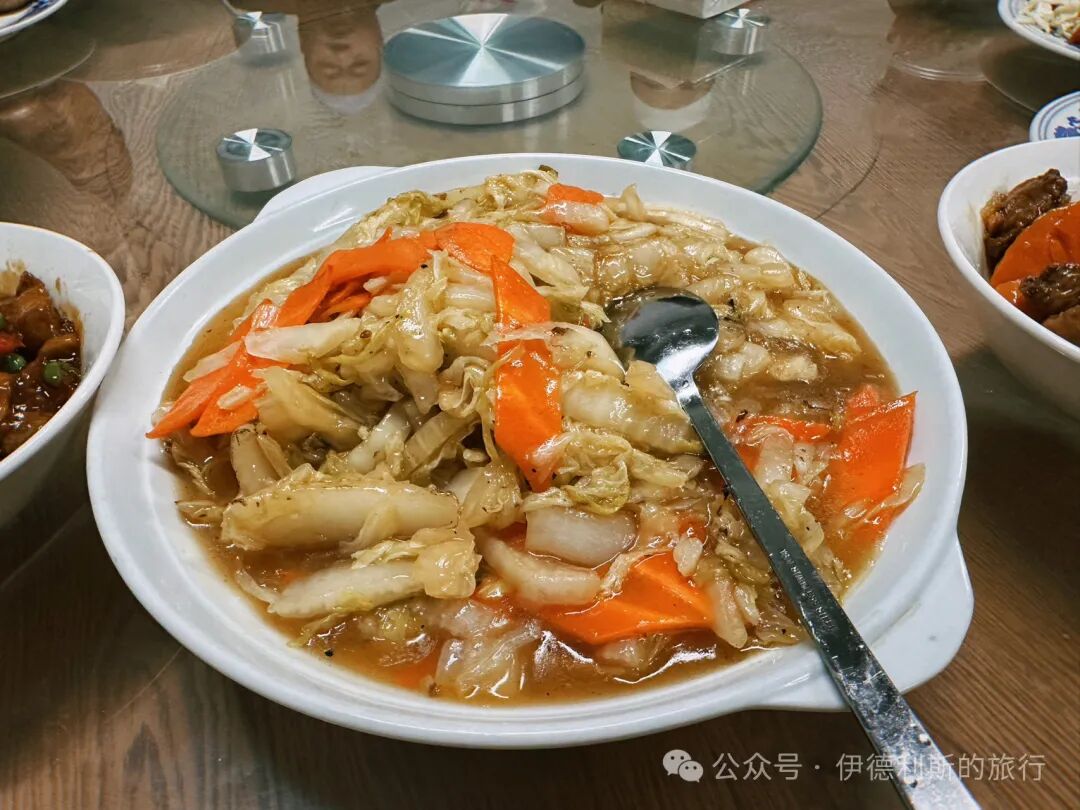
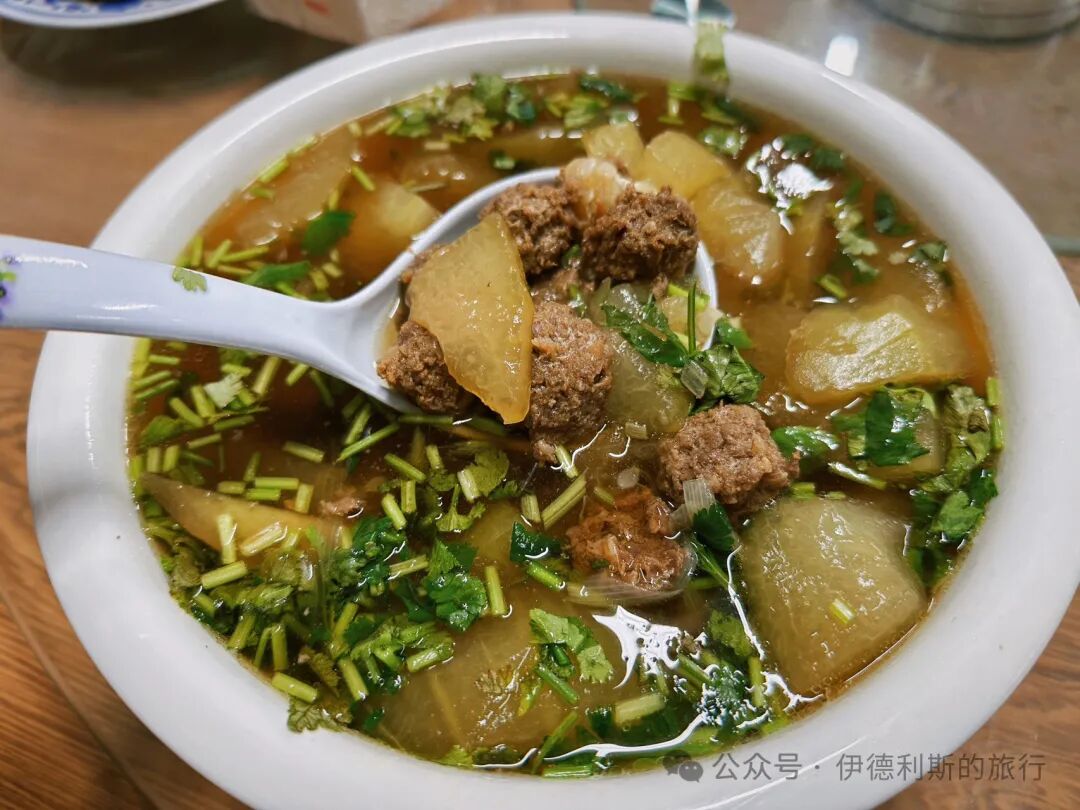
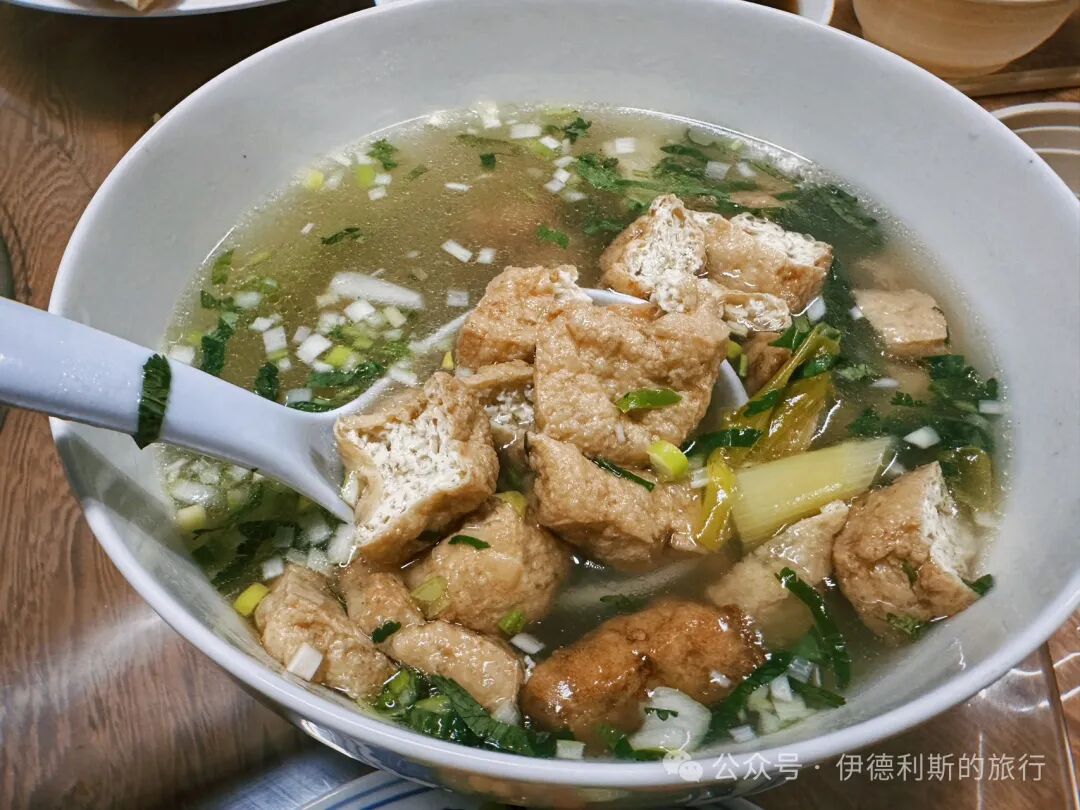
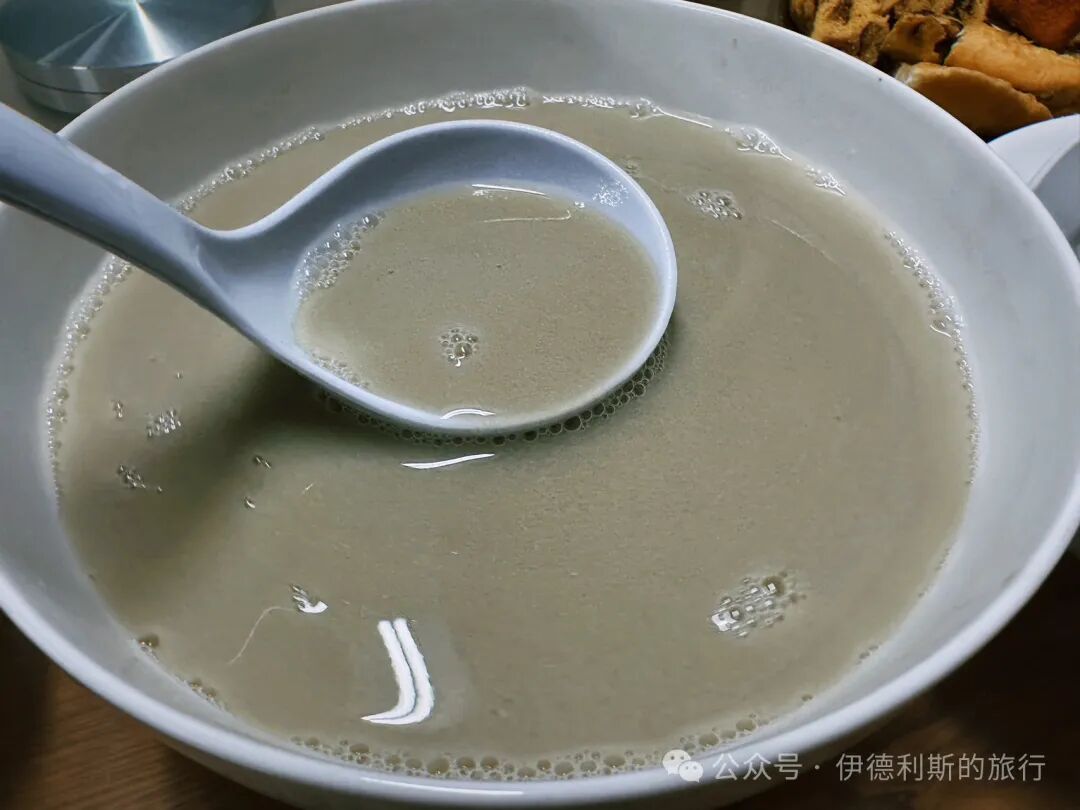
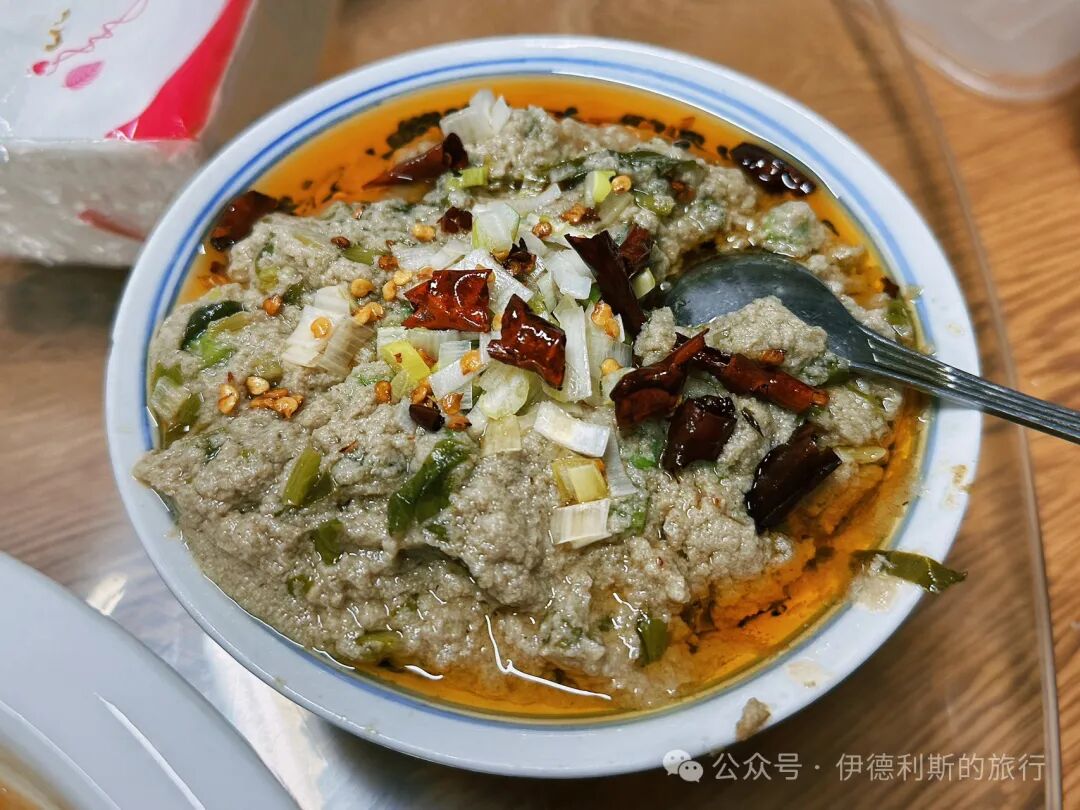
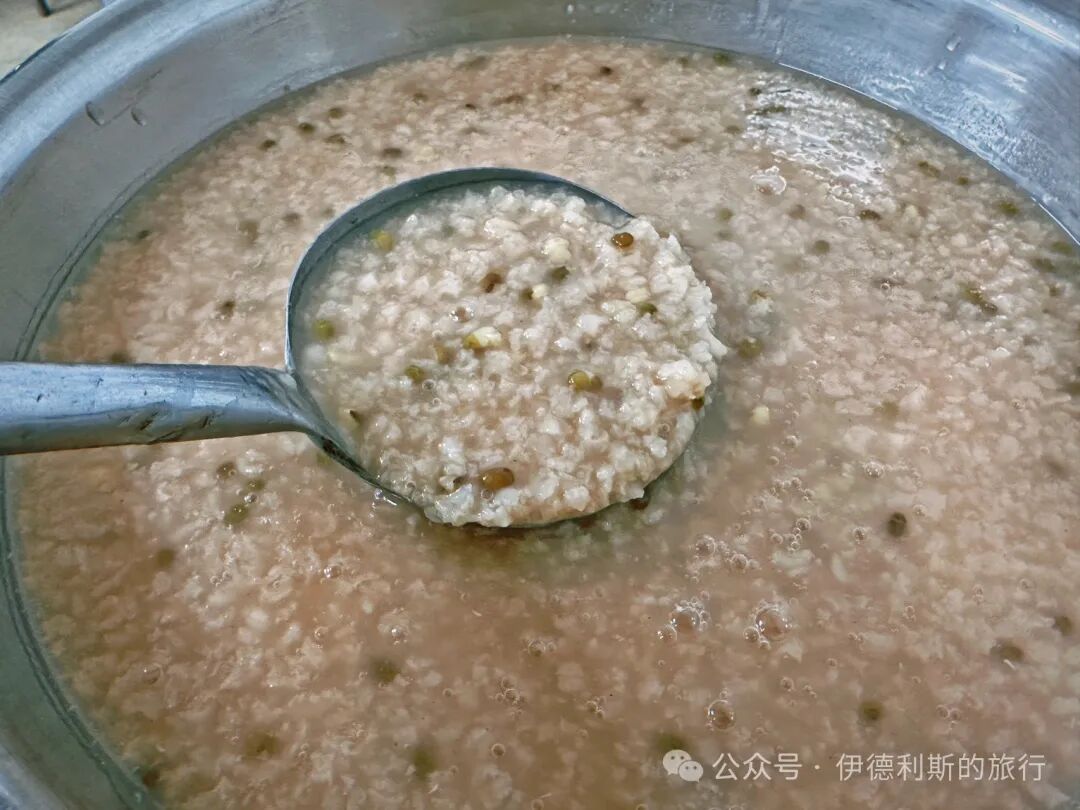
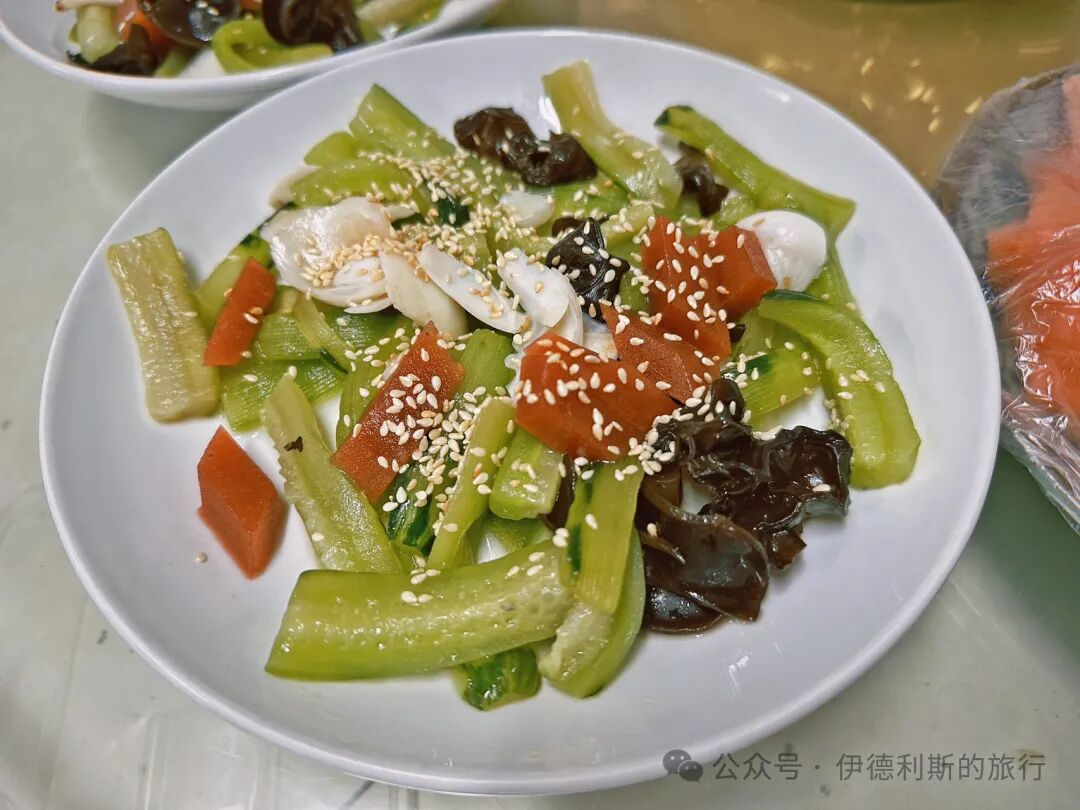
Once a week, we have noodles with gravy (dalu mian) and noodles with eggplant (qieding mian). The vegetable toppings include blanched cabbage, celery, cowpeas, bean sprouts, soybeans, cucumber, and garlic sprouts. The gravy is not too salty, which is perfect for breaking the fast.
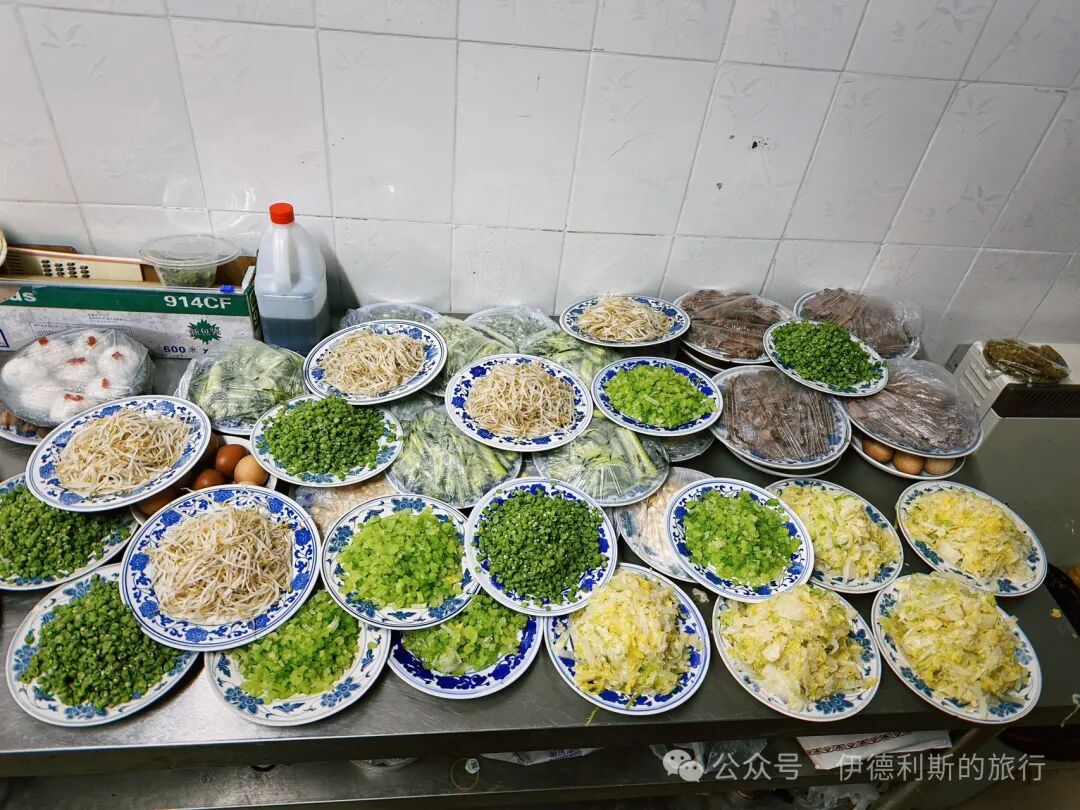
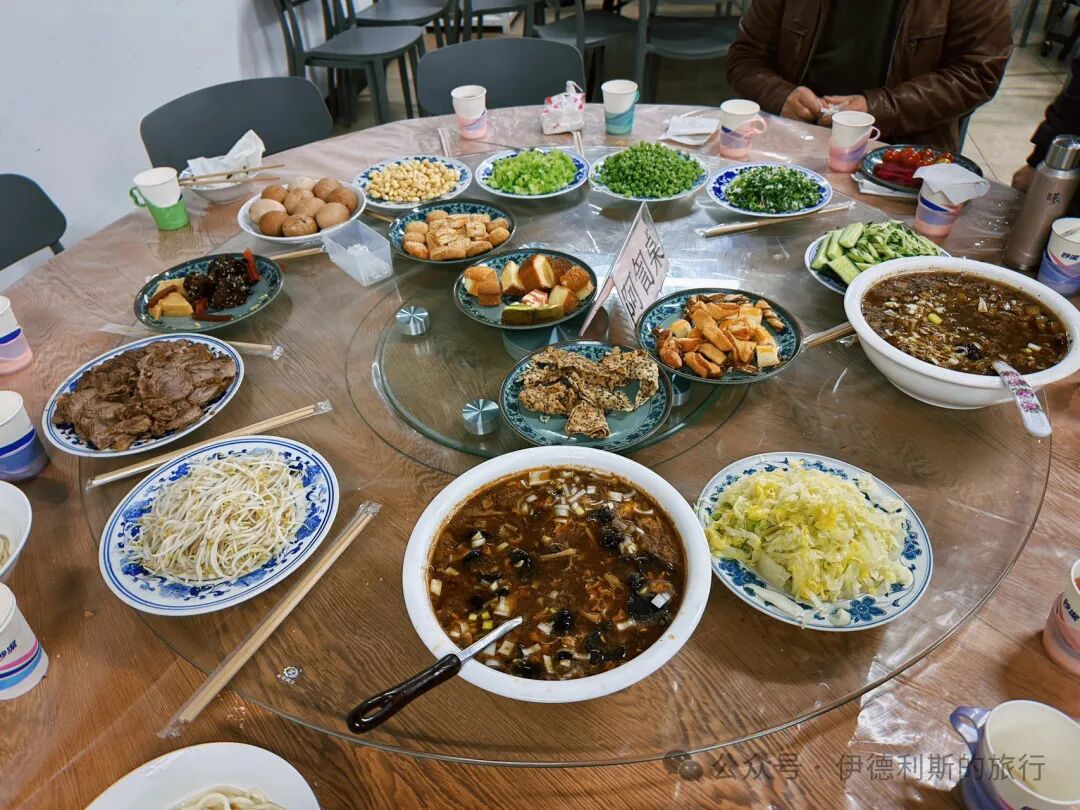
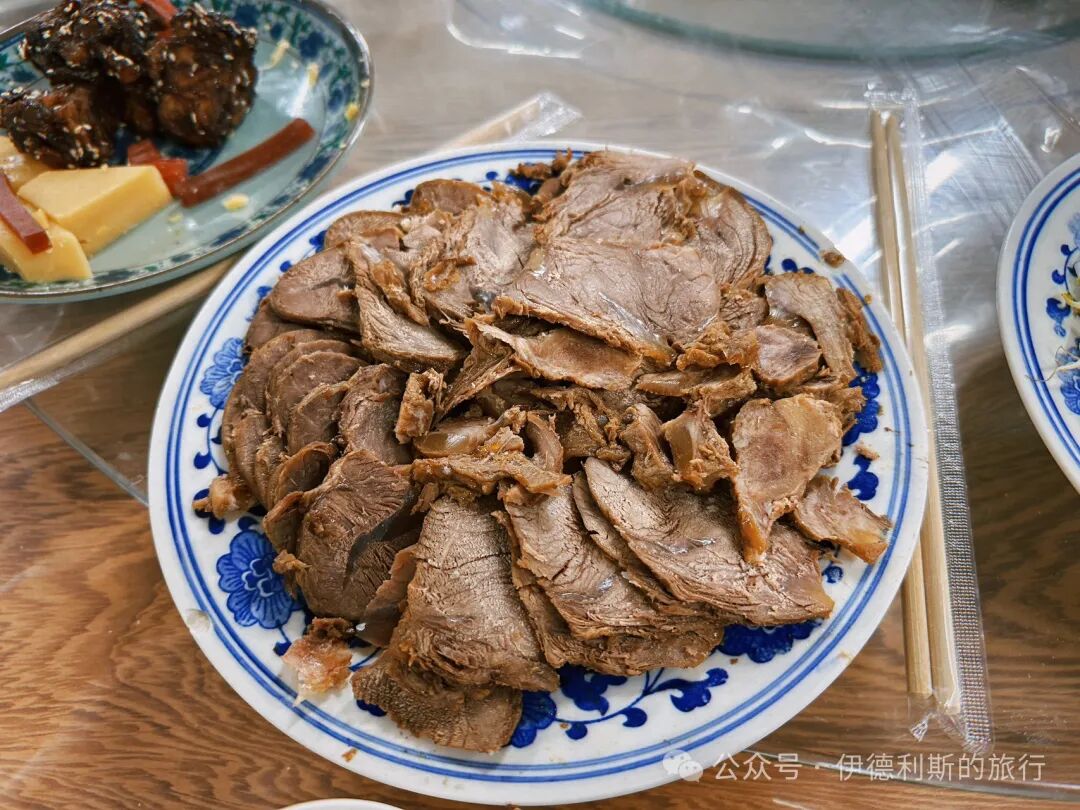
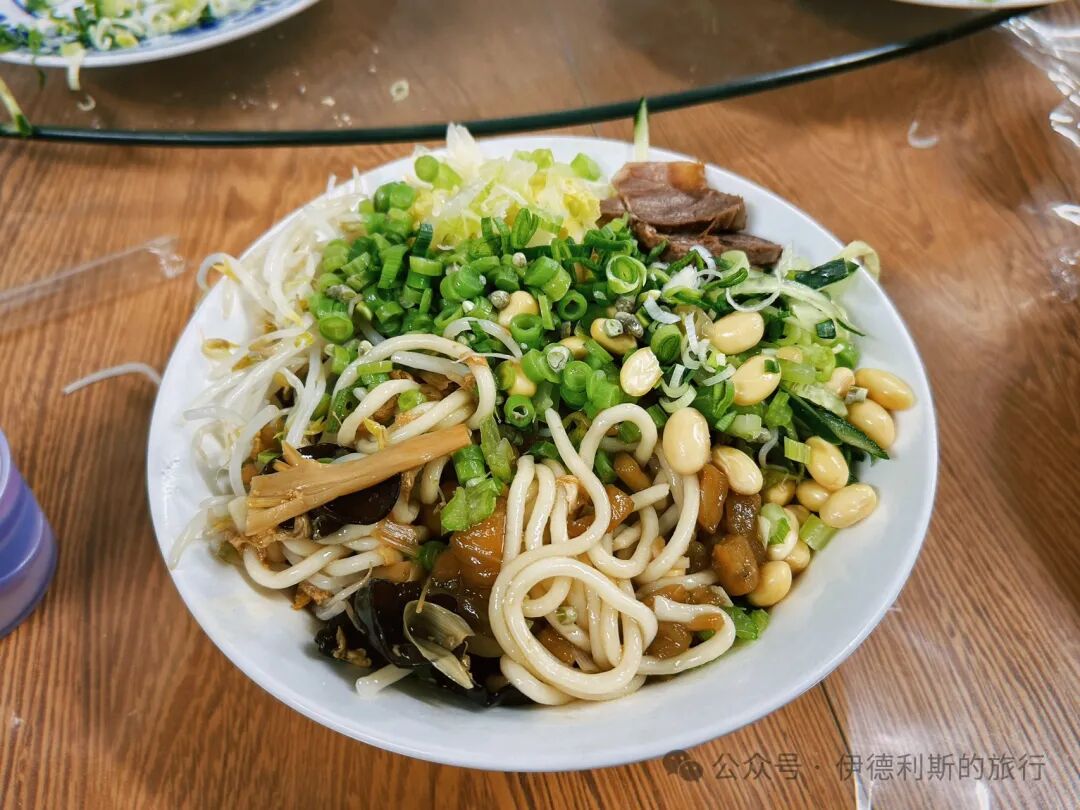
The steamed buns (baozi) served once a week come in beef and green onion, beef and cabbage, and beef and fennel fillings. My favorite is the beef and fennel filling. Many shops now only sell fennel and egg steamed buns, so it is not easy to find beef and fennel ones.
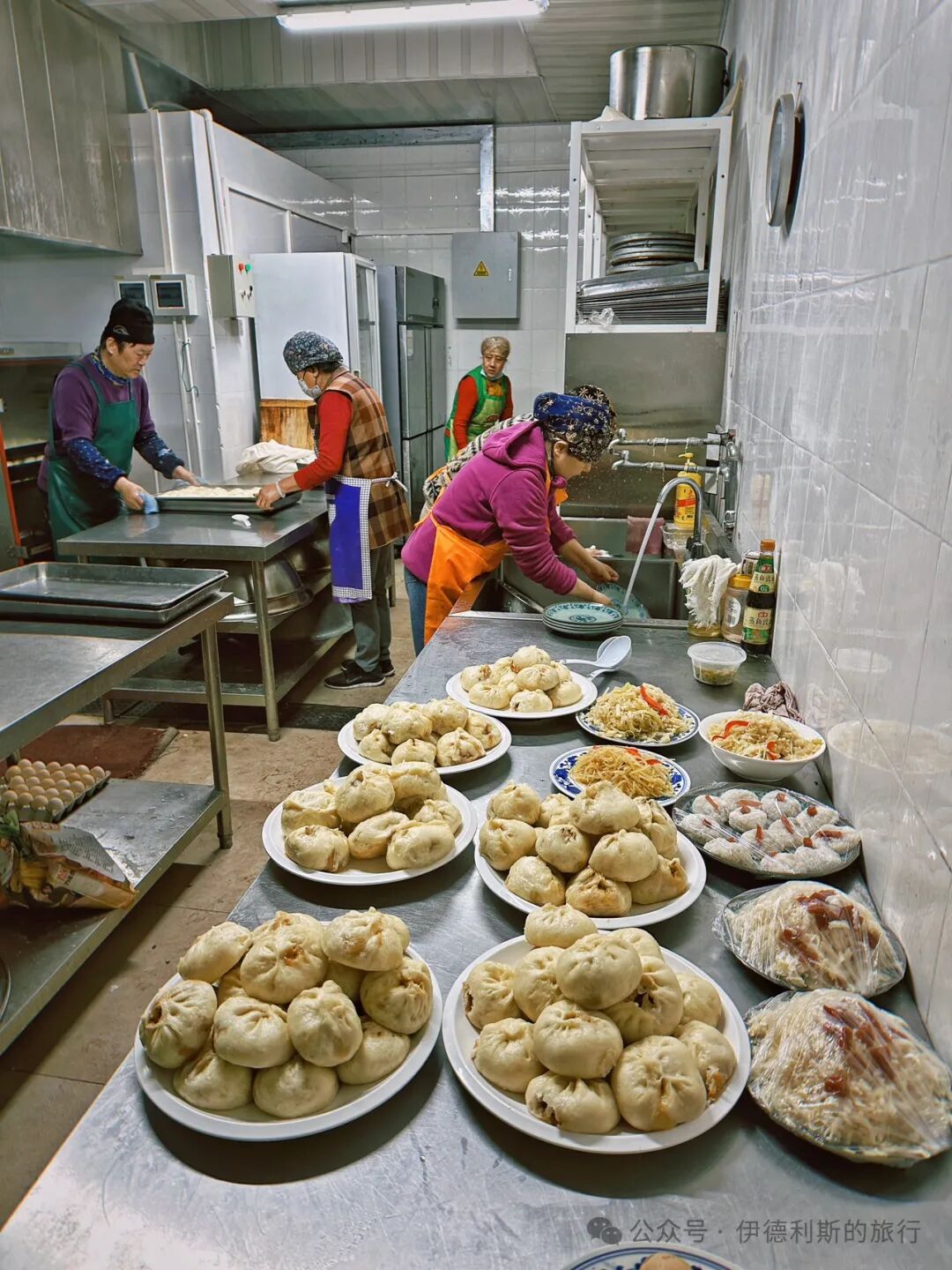
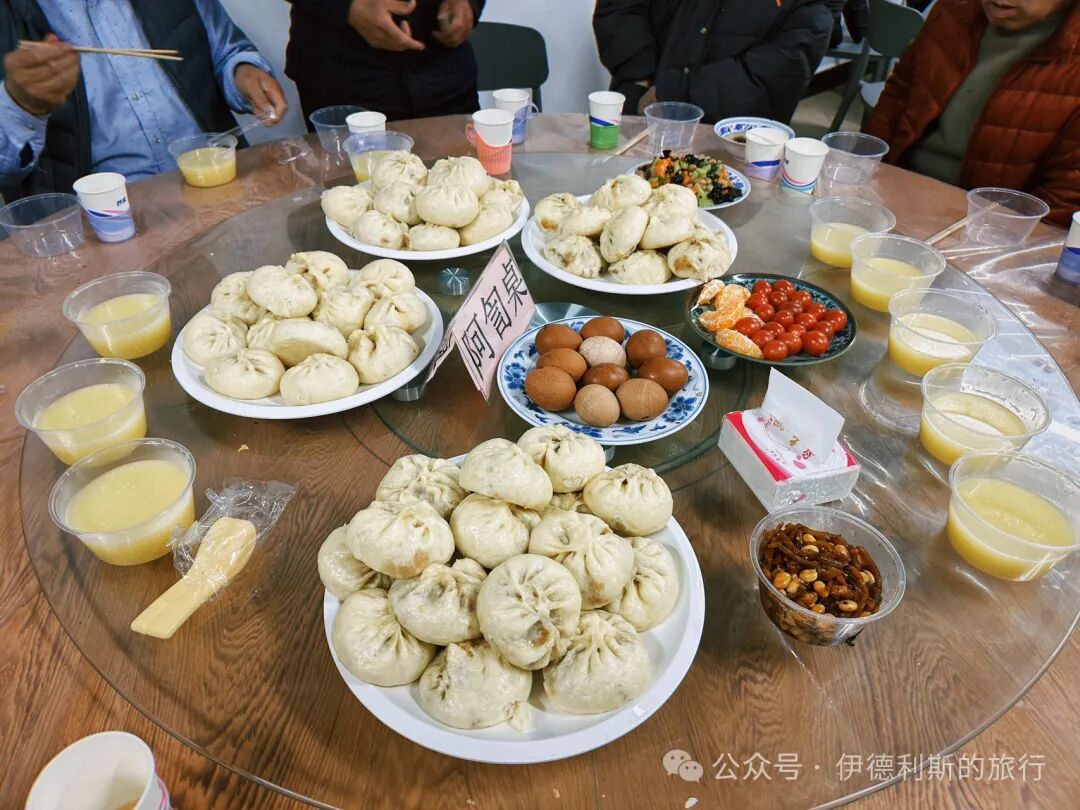
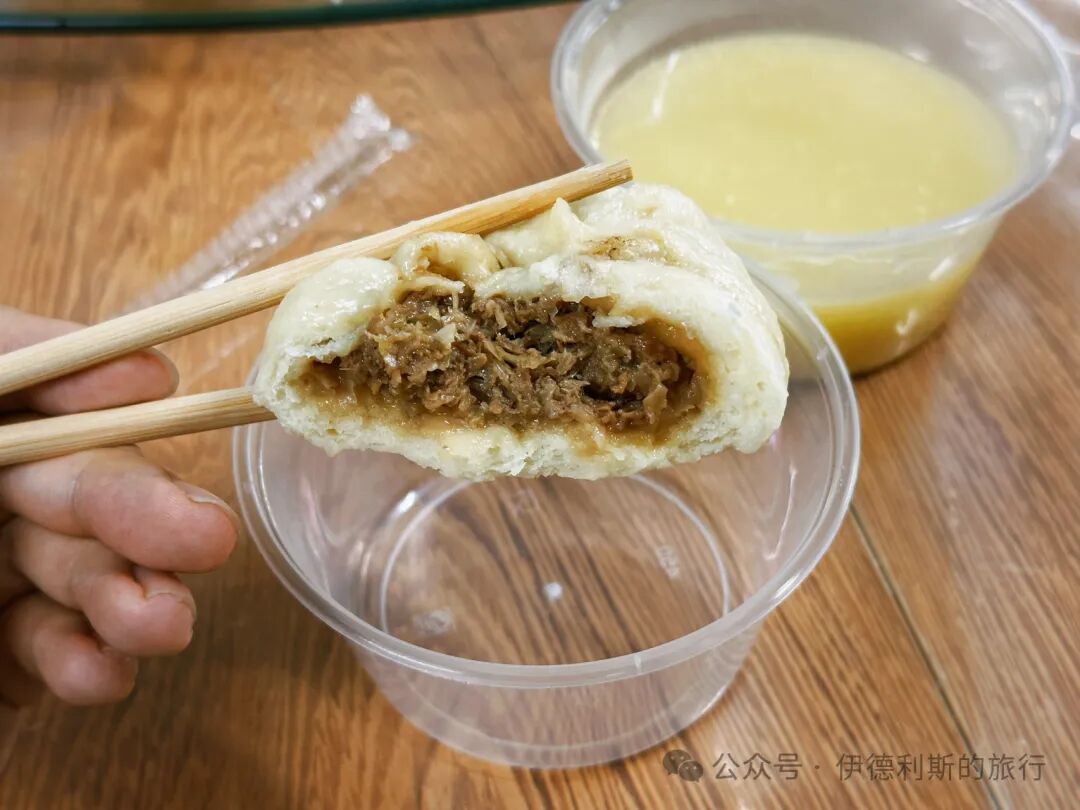
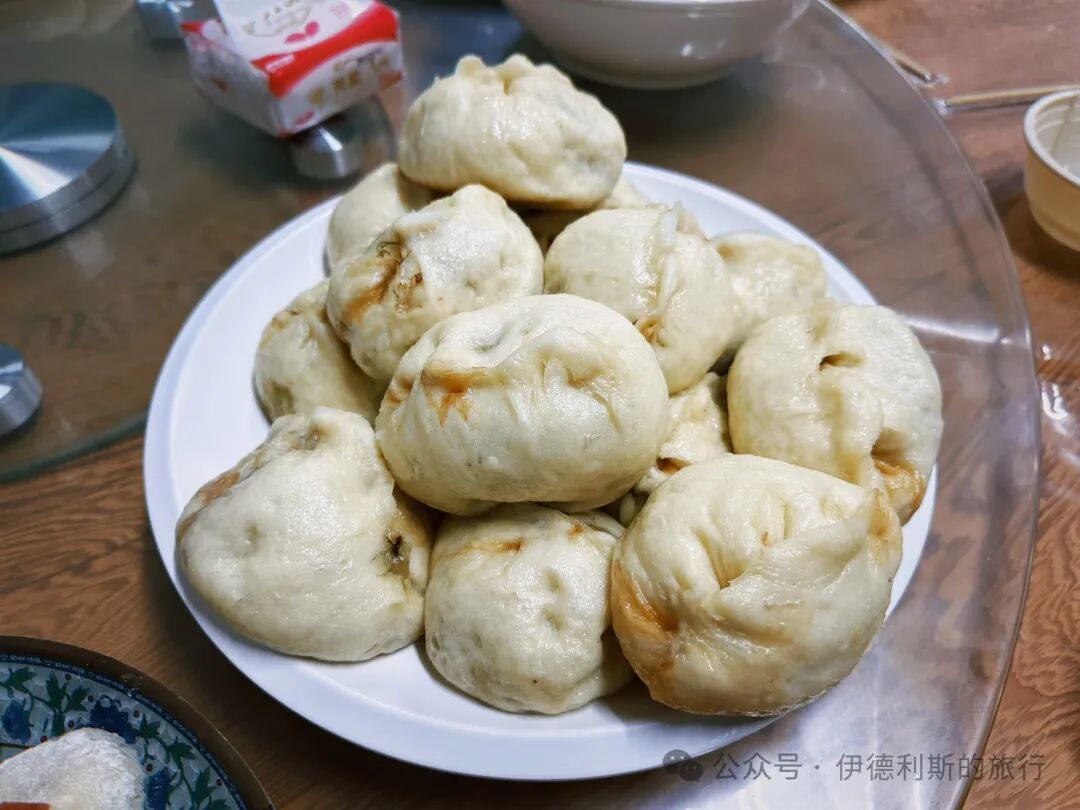
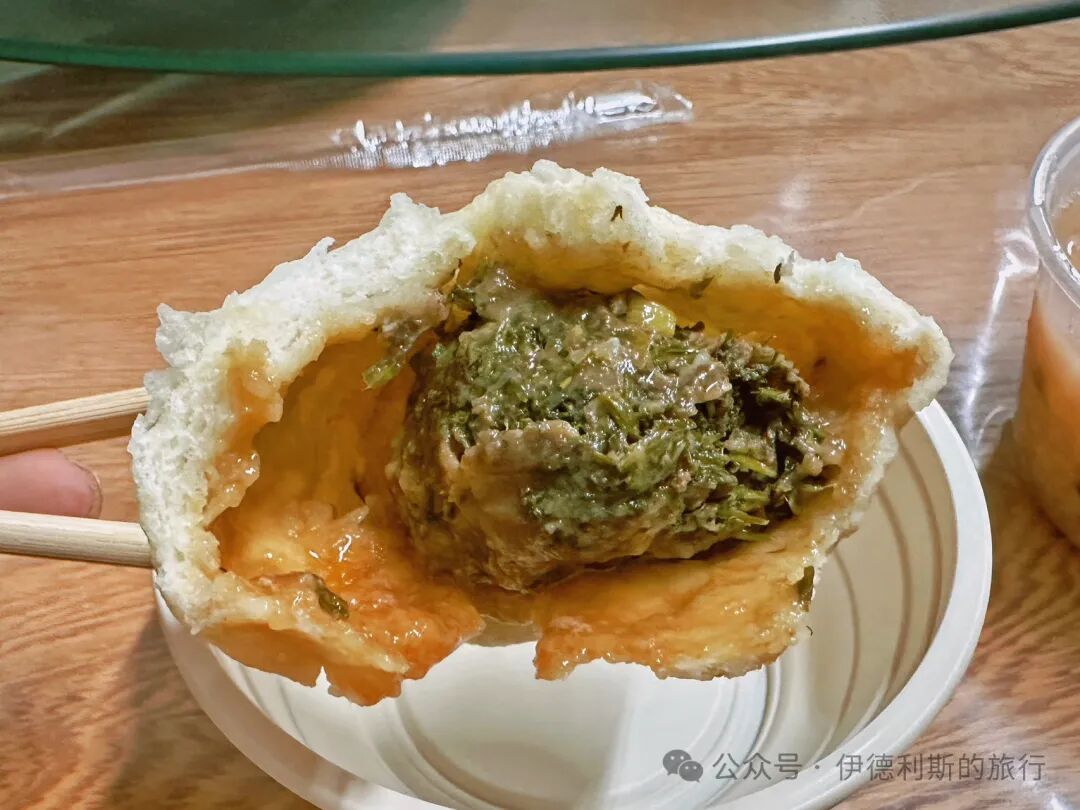
Fish head with flatbread (yutou paobing) is also a Beijing specialty. The flatbreads (laobing) are made by the elders themselves and are very dense; they are delicious when dipped in the fish head broth.
After eating the fish head with flatbread, the leftover flatbread can be made into stir-fried flatbread (chaobing), which is also a favorite for Beijingers.
Halal Travel Guide: Eid al-Fitr in Beijing
Articles • ali2007fr posted the article • 0 comments • 156 views • 2026-05-20 01:48
Summary: This article records Eid al-Fitr celebrations in Beijing from the viewpoint of a Muslim traveler. It keeps the original scenes, prayers, food, people, and photographs while avoiding extra commentary not found in the Chinese source.
Because of a bad pollen allergy, fasting this year was very difficult. My brain often felt like it was shutting down in the afternoon. After keeping at it, I finally finished my duties and welcomed the noble Eid al-Fitr.
Before the Eid prayer, there are seven recommended acts (mustahabb). At dawn (fajr), I made sure to eat one thing, so I ate a date. I performed the full ritual wash (ghusl), brushed my teeth, put on clean clothes before leaving, lit some incense (balan xiang), recited the takbir quietly on the way to the mosque, and paid my zakat al-fitr upon entering.
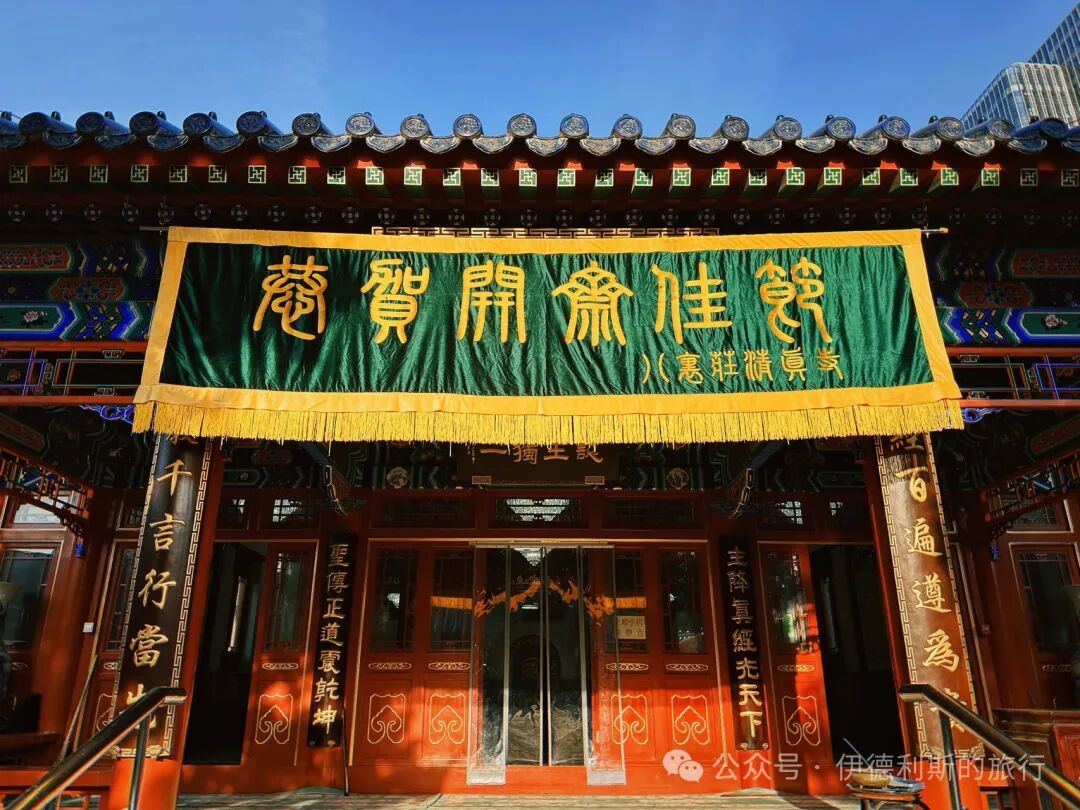
This year, I went to the Balizhuang Mosque just like in previous years. By seven in the morning, the mosque was already full of friends (dosti). There were international friends, brothers visiting Beijing from other places, local residents of Balizhuang, and the elders who broke their fast at the mosque every day during Ramadan.
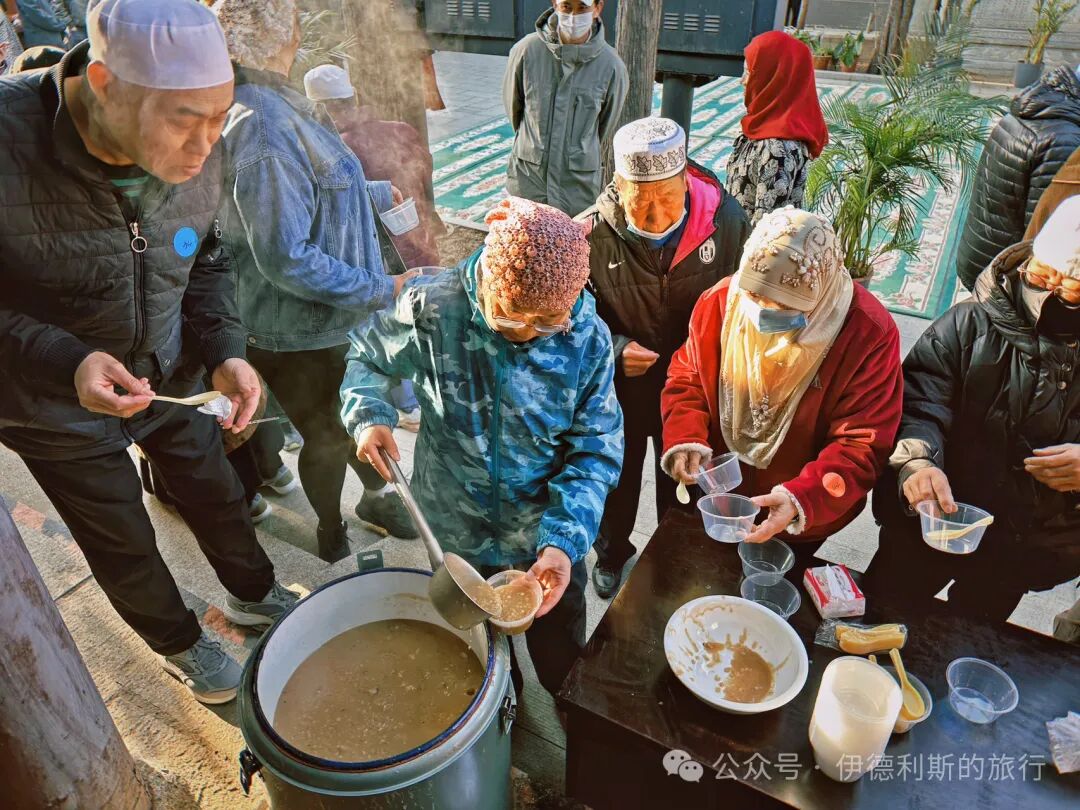
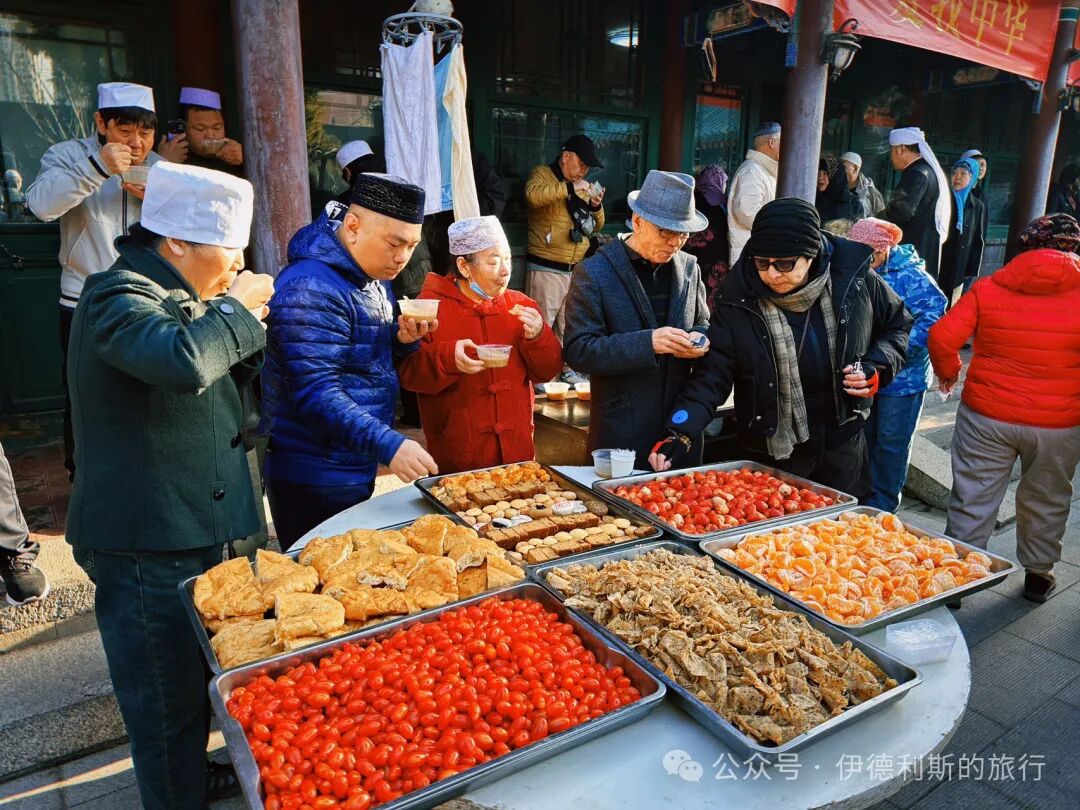
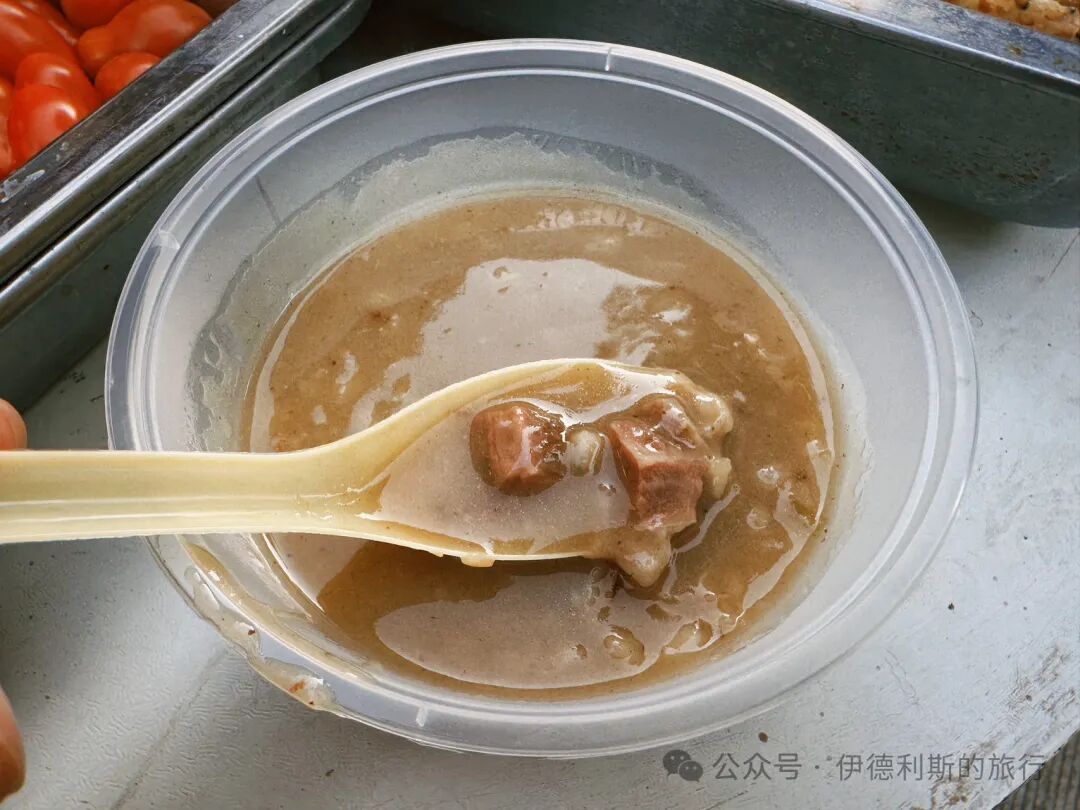
The mosque had already prepared meat porridge, fried dough (youxiang), and various pastries and fruits. To make the meat porridge, you must crush the oil out of beef or lamb bones a day in advance, remove the bone fragments, and then simmer it with barley kernels. Drinking a bowl on the morning of Eid al-Fitr is very comforting for the stomach.
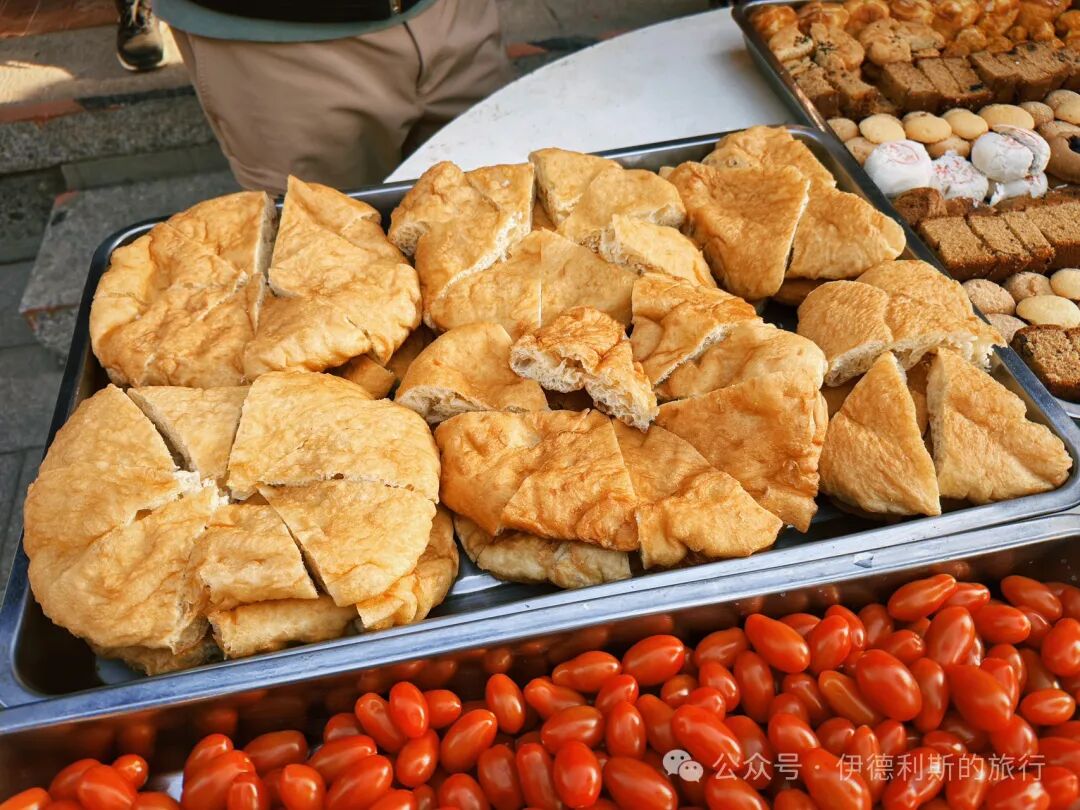
Beijing-style fried dough (youxiang) is made with leavened dough. It puffs up when fried and becomes very fluffy. After draining the oil, you should tear it apart to eat it.
After everyone caught up, chatted, and drank the good meat porridge, it was time for the ceremony of welcoming the imam to the main hall. Everyone held a stick of incense (balan xiang), followed the imam, recited the takbir, and walked slowly into the main hall.
After entering the hall, we began the opening scripture recitation, which consisted of the eighteen traditional surahs (suole) of North China. Each person in the front recited one surah, and the last person recited the Al-Fatiha and the first five verses of Al-Baqarah.
After the scripture reading, Imam Yang gave a sermon (wa'z) about the meaning of Eid al-Fitr, encouraged good deeds, warned against evil, and explained the procedure for the Eid prayer.
Then, we began the two-unit (rak'ah) Eid prayer. After the prayer, Imam Jin stood on the pulpit (minbar), held a wooden staff (al-asa), and recited the sermon (khutbah). Then we prayed four units of voluntary prayer (nafl). After finishing, we recited Al-Fatiha twice, followed by two duas. Finally, everyone gathered in a circle to shake hands. In North China, it is customary to recite blessings upon the Prophet (salawat) while shaking hands, while some friends from other places say 'salam' when shaking hands.
When the prayer ended, everyone lined up at the door to receive meat porridge and fried dough (youxiang). After that, we went out to the vegetable market near the mosque to buy ingredients for making starch noodle soup (fen tang).
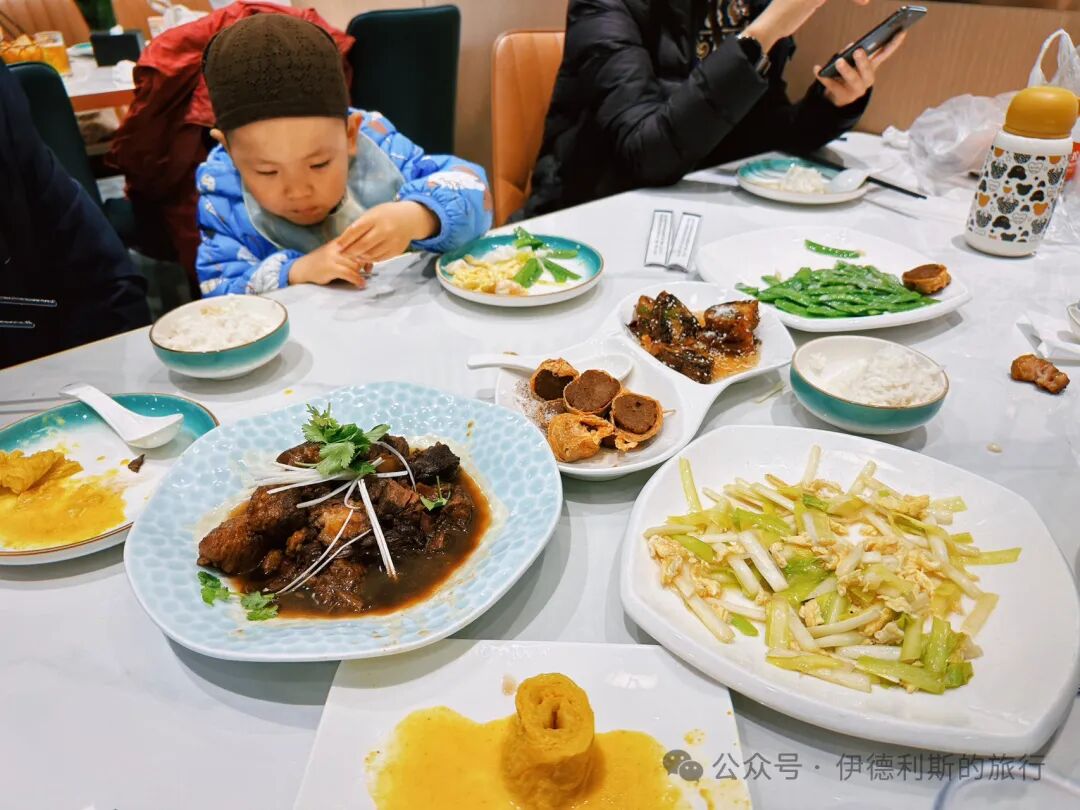
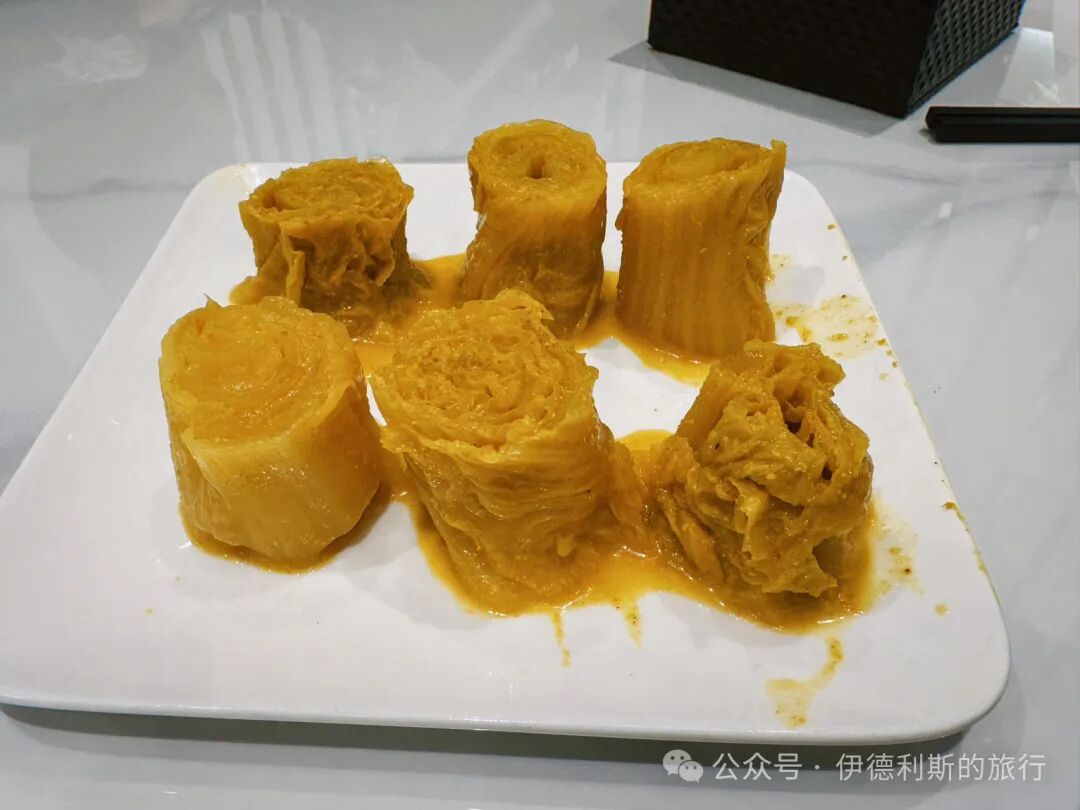
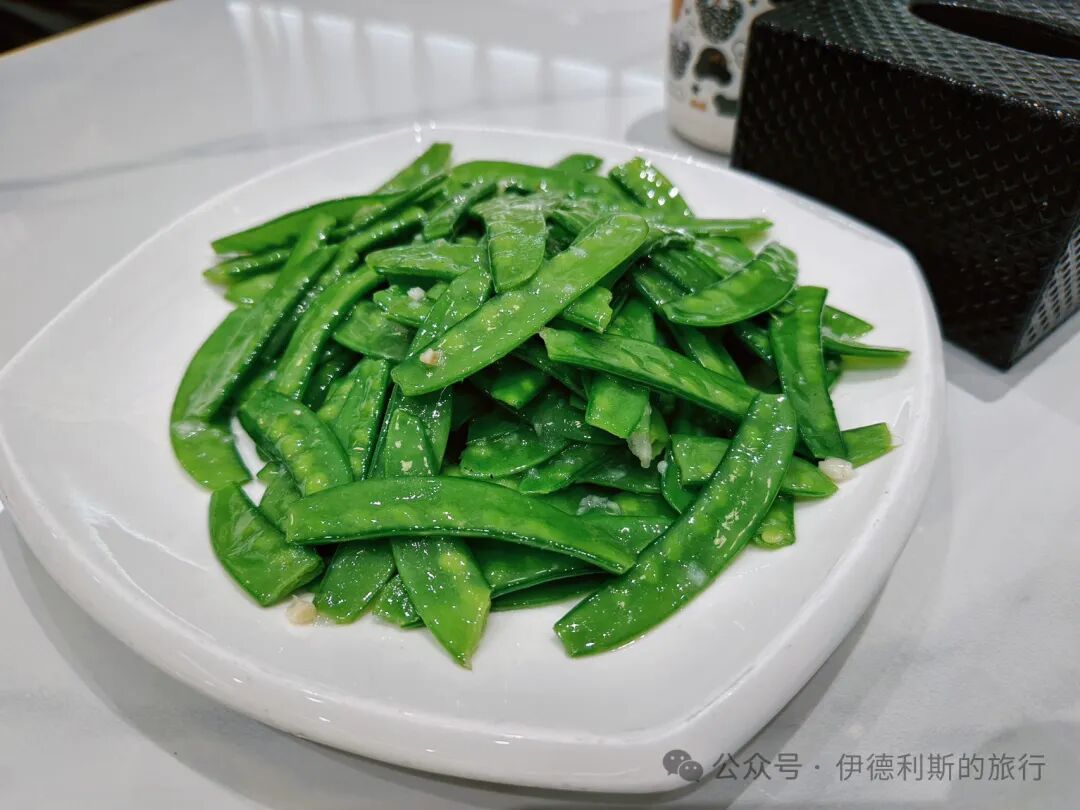
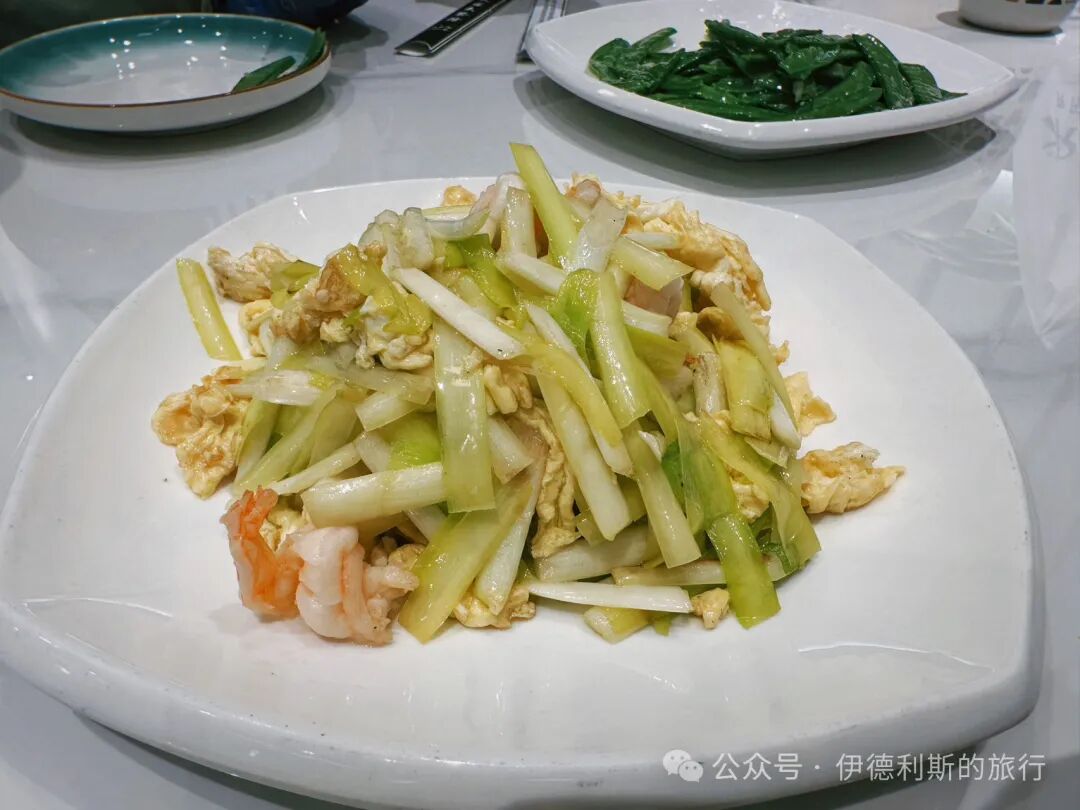
After leaving the mosque, we went to Tiankelai at Jintai Road intersection for a meal. We ordered stir-fried eggs with yellow chives and shrimp, snow peas with garlic, mustard-marinated cabbage (jiemodun), a platter of savory and sweet fried yam rolls (juan-guo), slow-cooked beef (wei niurou), and roast duck. The stir-fried dishes are not pre-made, so you can ask them to leave out sugar or MSG. The slow-cooked beef was very tender, and my family loved it. The mustard-marinated cabbage was very pungent and a great appetizer. The roast duck is roasted to order. We waited an hour for it, but it tasted pretty good.
There are not many traditional Beijing-style stir-fry restaurants around the East Fourth Ring Road, so it is impressive that the old Niujie brand Tiankelai opened a branch here. The restaurant is right next to Jintai Road subway station. It is not crowded on weekday lunchtimes, and the environment is nice. The only regret is that many dishes on the menu were marked as unavailable, perhaps due to the chef, which limited our choices quite a bit.
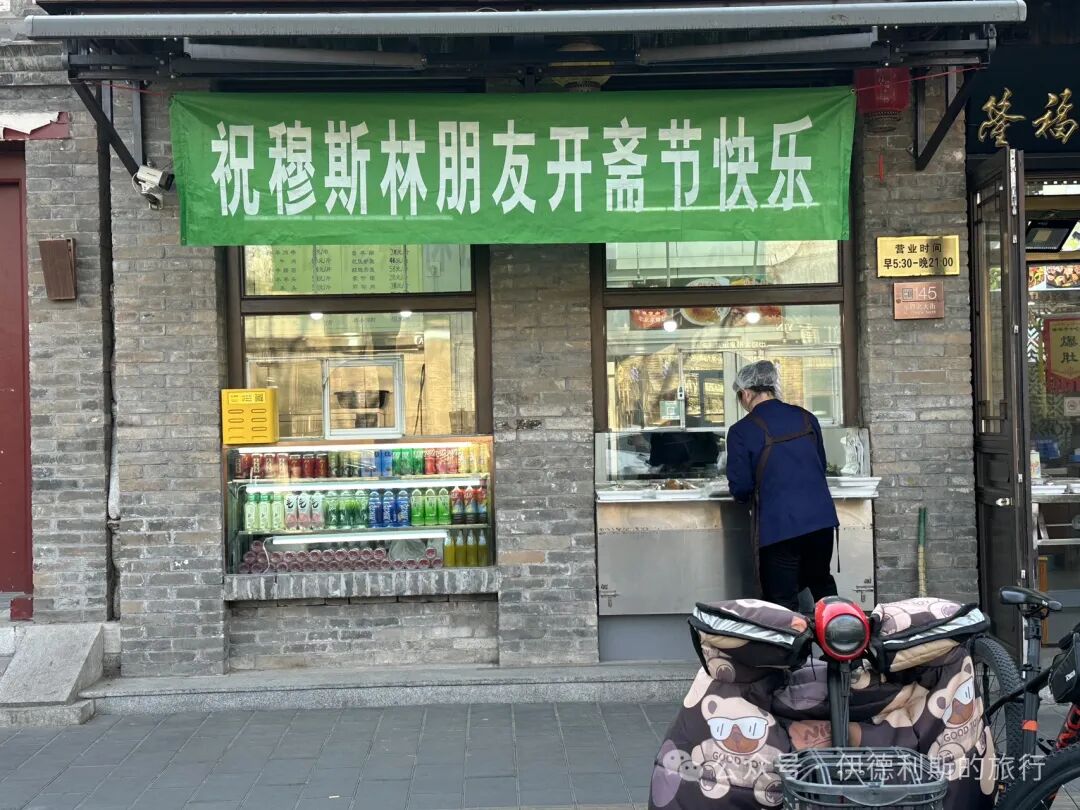
We passed by the Longfu Mosque snack shop on Dongsi North Street.
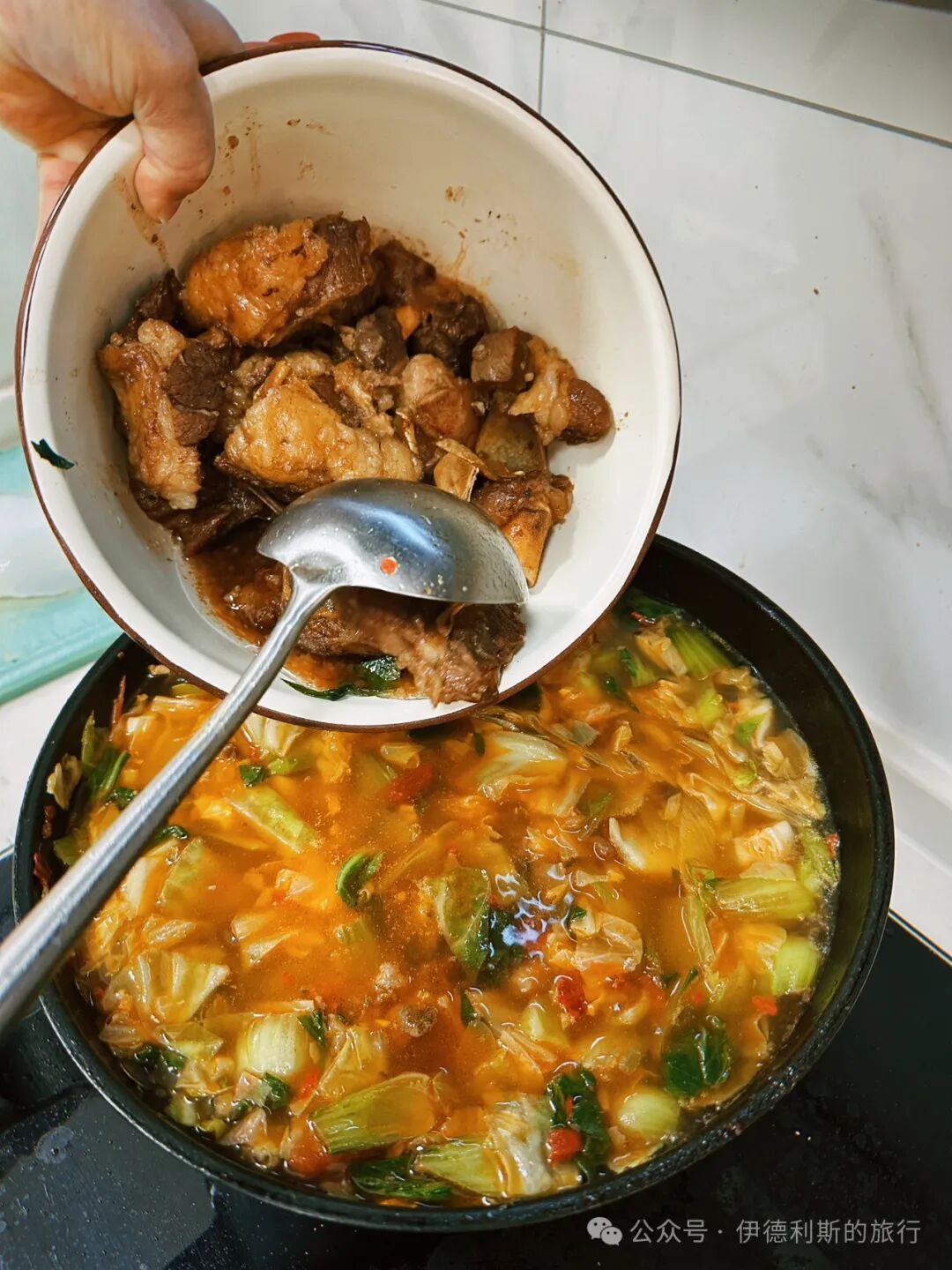
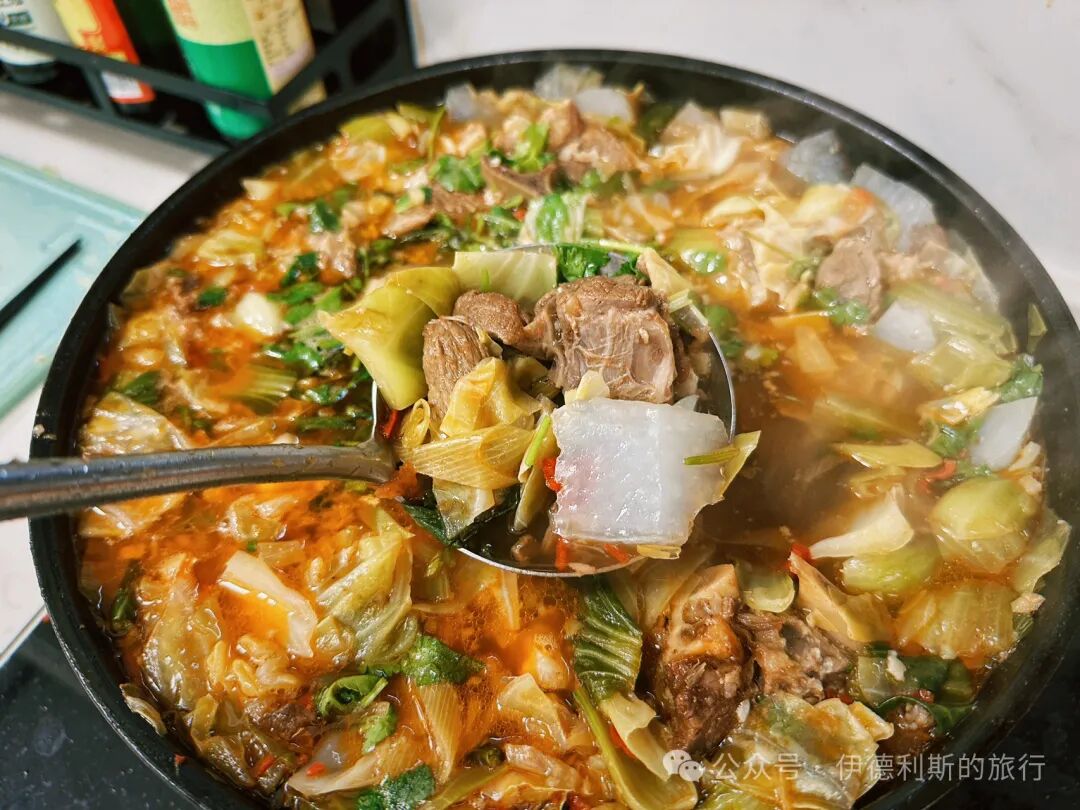
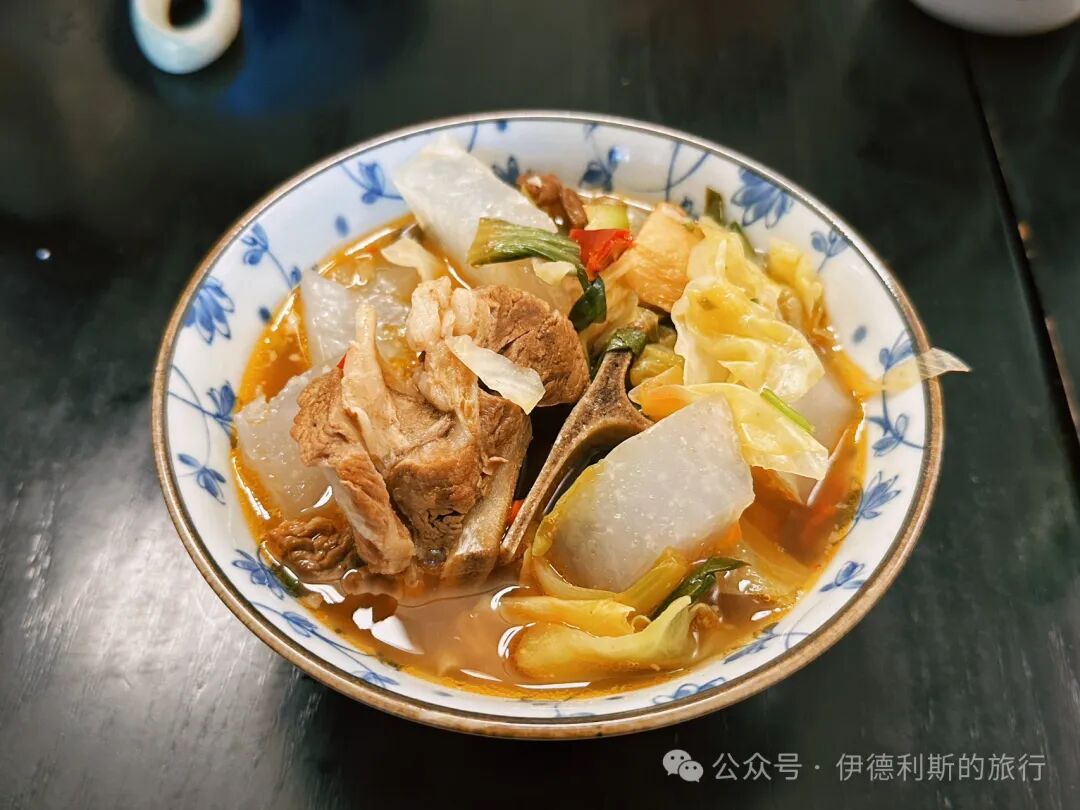
I came home after work and had some noodle soup (fen tang). On this day, all Xinjiang Hui Muslims make festive noodle soup. They prepare pea starch in advance and then cook braised lamb chops. Stir-fry meat slices, cabbage, greens, and tomatoes, add water, then mix in the braised lamb chops and starch cubes to finish. One bowl is simply not enough. It tastes best when served with fried dough (youxiang). view all
Summary: This article records Eid al-Fitr celebrations in Beijing from the viewpoint of a Muslim traveler. It keeps the original scenes, prayers, food, people, and photographs while avoiding extra commentary not found in the Chinese source.
Because of a bad pollen allergy, fasting this year was very difficult. My brain often felt like it was shutting down in the afternoon. After keeping at it, I finally finished my duties and welcomed the noble Eid al-Fitr.
Before the Eid prayer, there are seven recommended acts (mustahabb). At dawn (fajr), I made sure to eat one thing, so I ate a date. I performed the full ritual wash (ghusl), brushed my teeth, put on clean clothes before leaving, lit some incense (balan xiang), recited the takbir quietly on the way to the mosque, and paid my zakat al-fitr upon entering.
This year, I went to the Balizhuang Mosque just like in previous years. By seven in the morning, the mosque was already full of friends (dosti). There were international friends, brothers visiting Beijing from other places, local residents of Balizhuang, and the elders who broke their fast at the mosque every day during Ramadan.
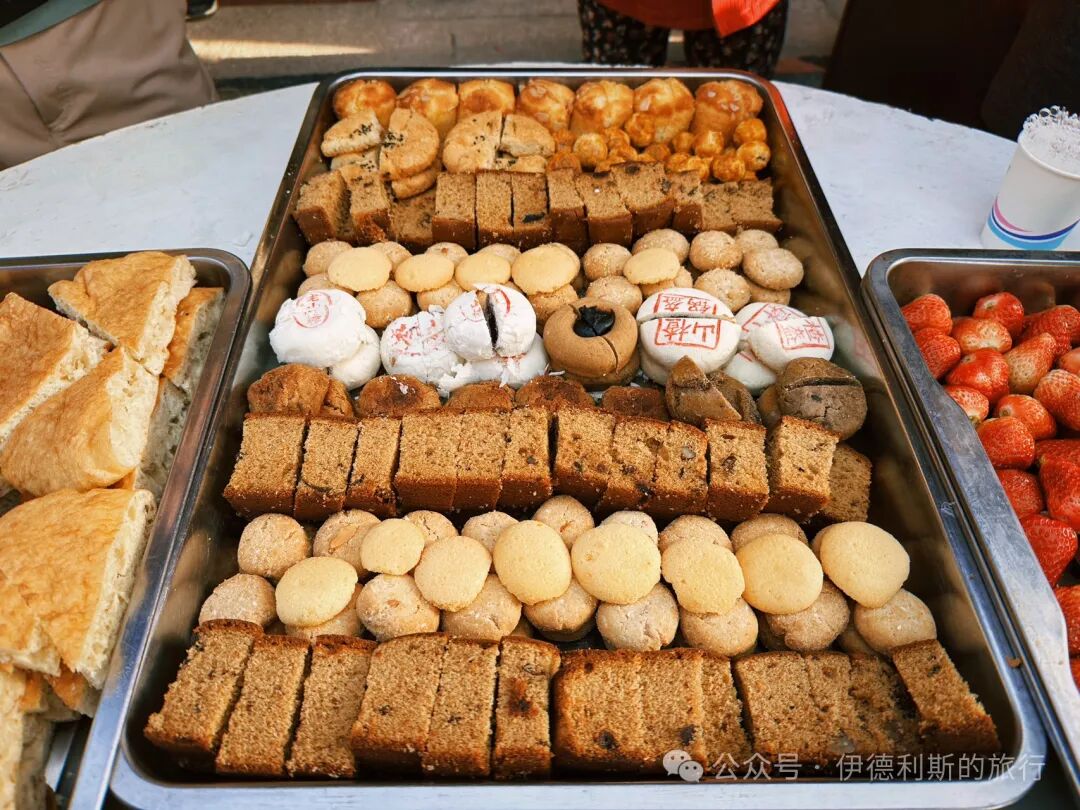
The mosque had already prepared meat porridge, fried dough (youxiang), and various pastries and fruits. To make the meat porridge, you must crush the oil out of beef or lamb bones a day in advance, remove the bone fragments, and then simmer it with barley kernels. Drinking a bowl on the morning of Eid al-Fitr is very comforting for the stomach.
Beijing-style fried dough (youxiang) is made with leavened dough. It puffs up when fried and becomes very fluffy. After draining the oil, you should tear it apart to eat it.
After everyone caught up, chatted, and drank the good meat porridge, it was time for the ceremony of welcoming the imam to the main hall. Everyone held a stick of incense (balan xiang), followed the imam, recited the takbir, and walked slowly into the main hall.
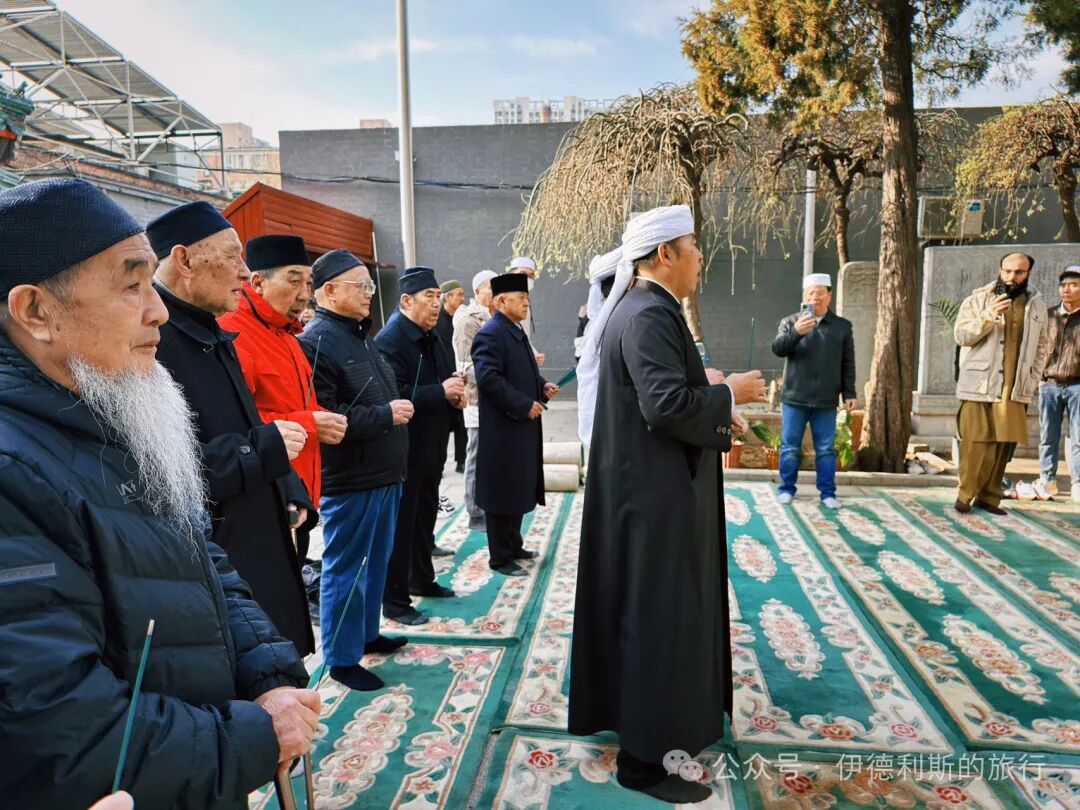
After entering the hall, we began the opening scripture recitation, which consisted of the eighteen traditional surahs (suole) of North China. Each person in the front recited one surah, and the last person recited the Al-Fatiha and the first five verses of Al-Baqarah.
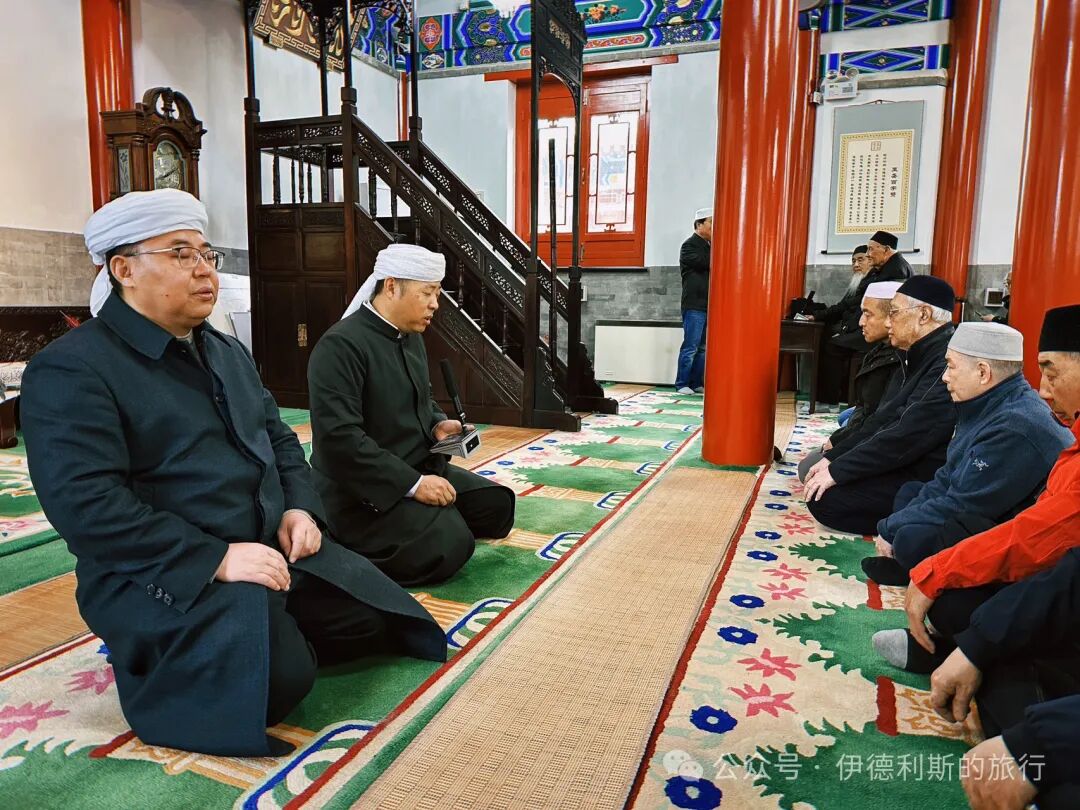
After the scripture reading, Imam Yang gave a sermon (wa'z) about the meaning of Eid al-Fitr, encouraged good deeds, warned against evil, and explained the procedure for the Eid prayer.
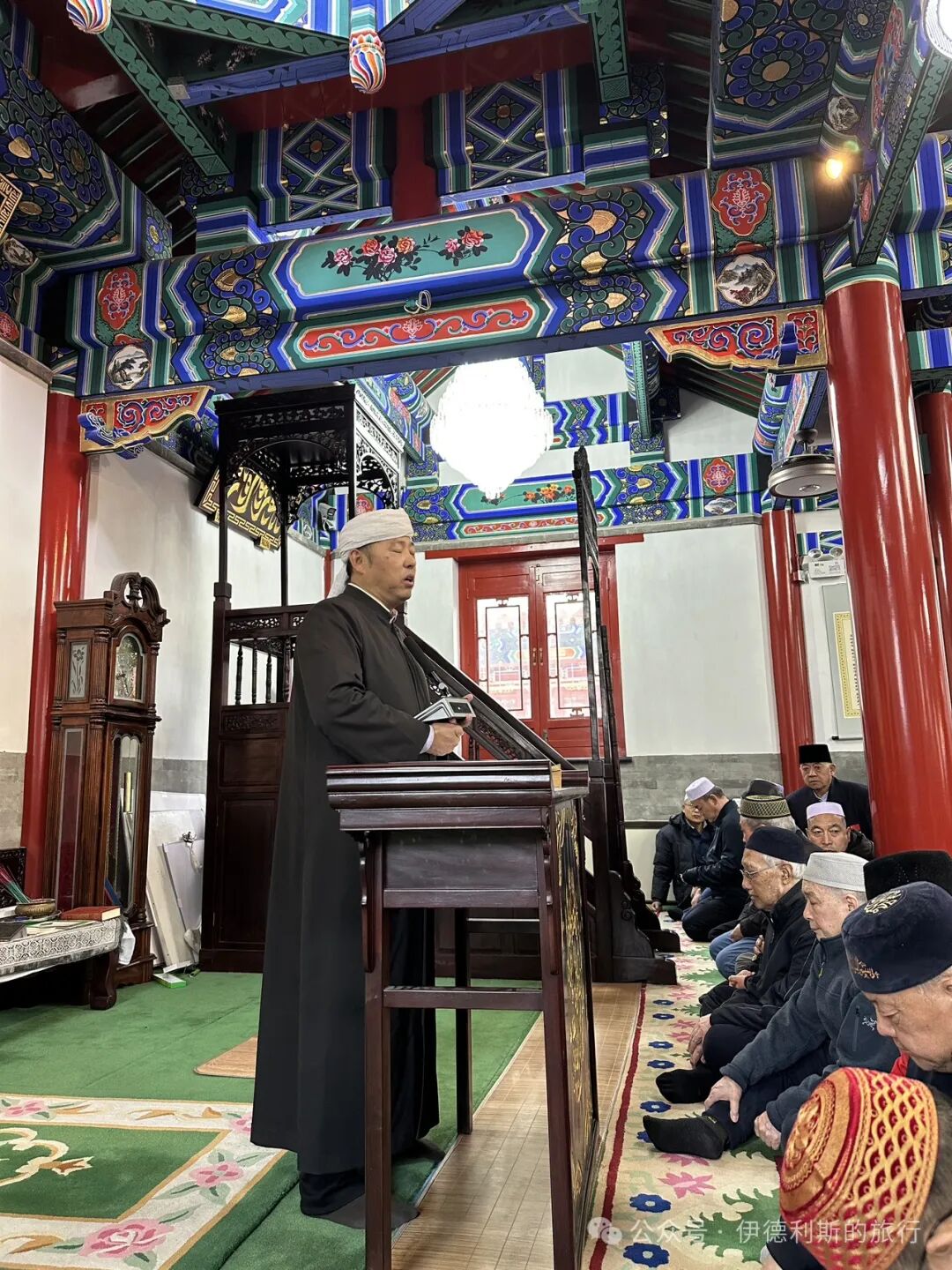
Then, we began the two-unit (rak'ah) Eid prayer. After the prayer, Imam Jin stood on the pulpit (minbar), held a wooden staff (al-asa), and recited the sermon (khutbah). Then we prayed four units of voluntary prayer (nafl). After finishing, we recited Al-Fatiha twice, followed by two duas. Finally, everyone gathered in a circle to shake hands. In North China, it is customary to recite blessings upon the Prophet (salawat) while shaking hands, while some friends from other places say 'salam' when shaking hands.
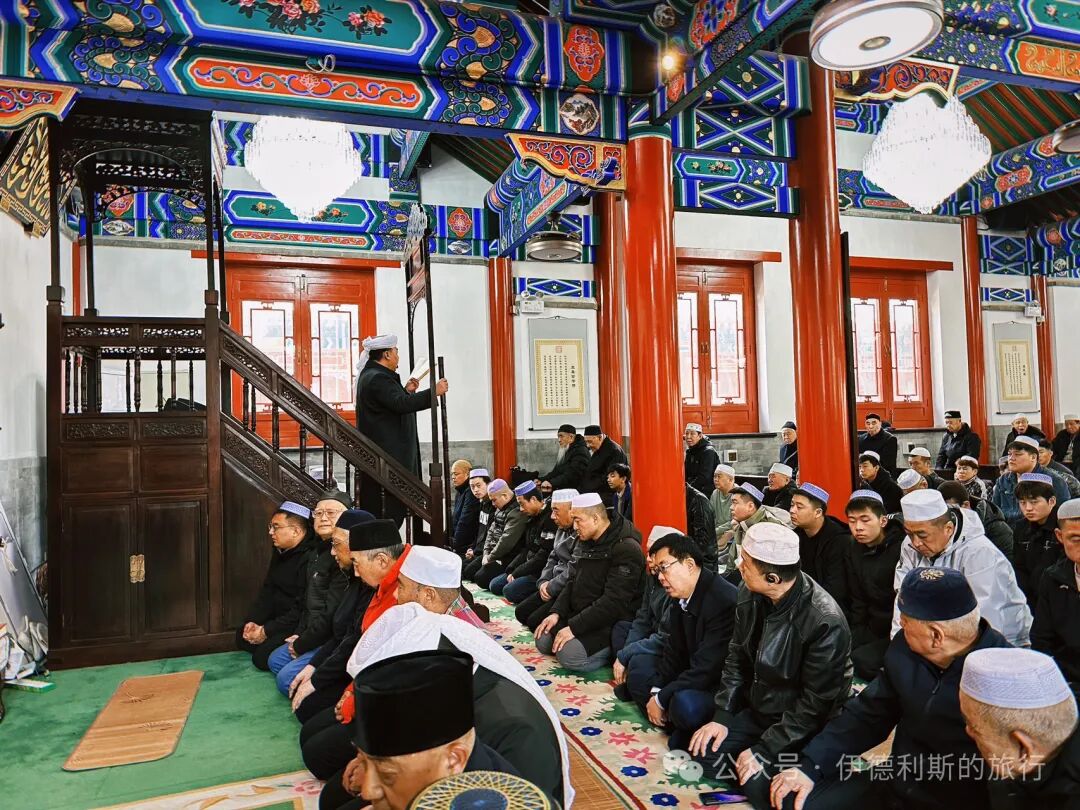
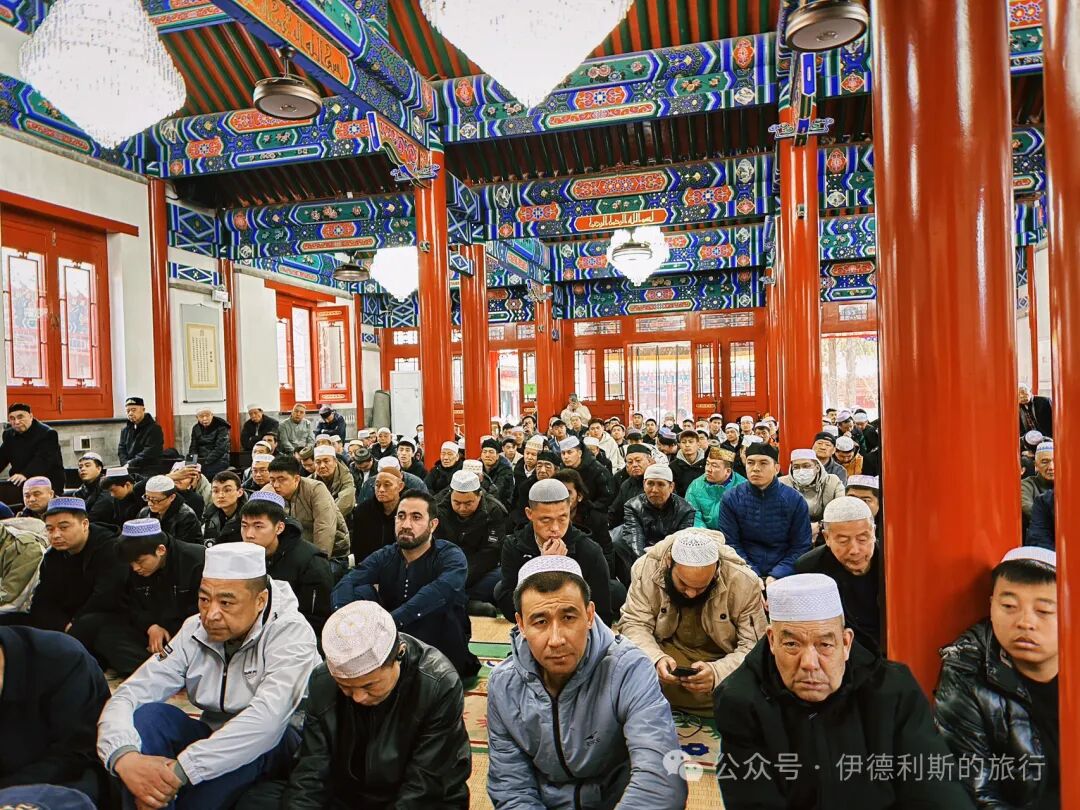
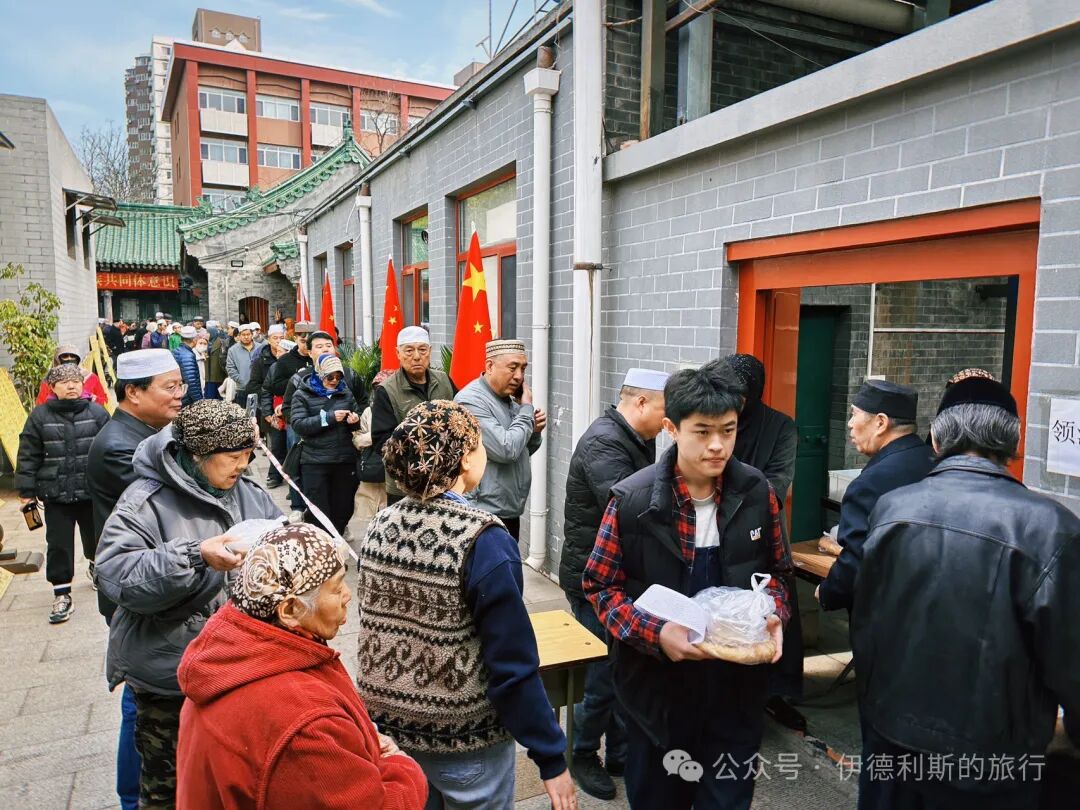
When the prayer ended, everyone lined up at the door to receive meat porridge and fried dough (youxiang). After that, we went out to the vegetable market near the mosque to buy ingredients for making starch noodle soup (fen tang).
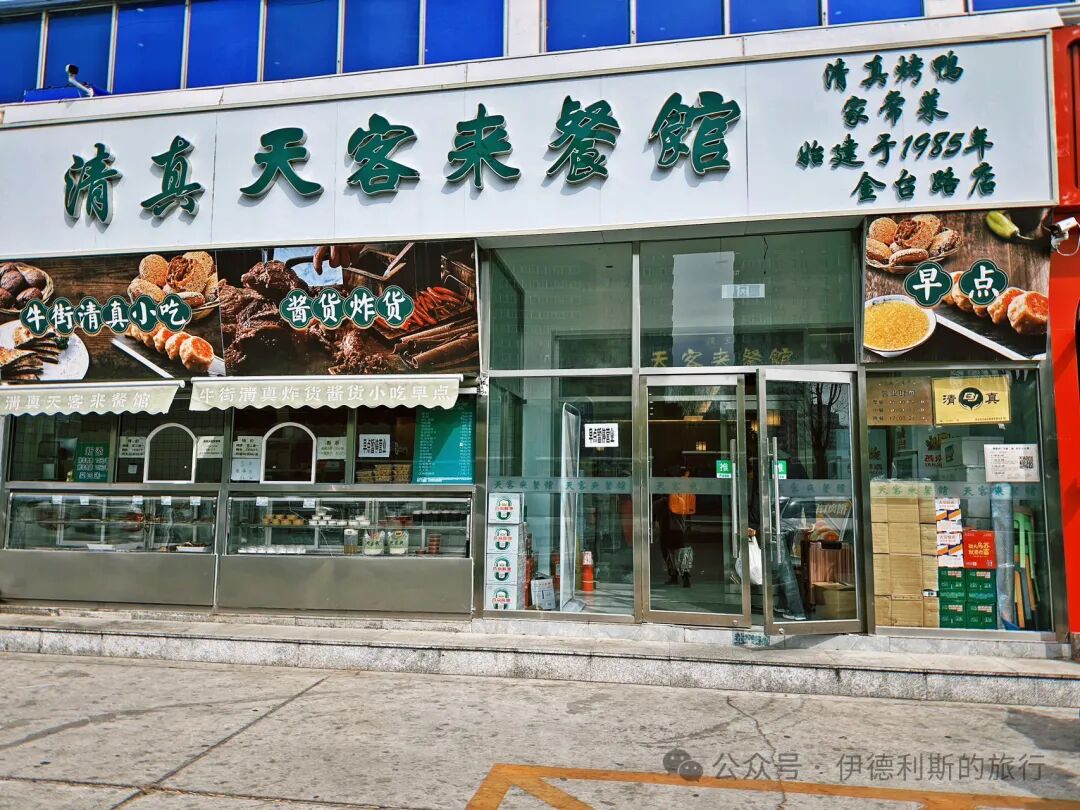
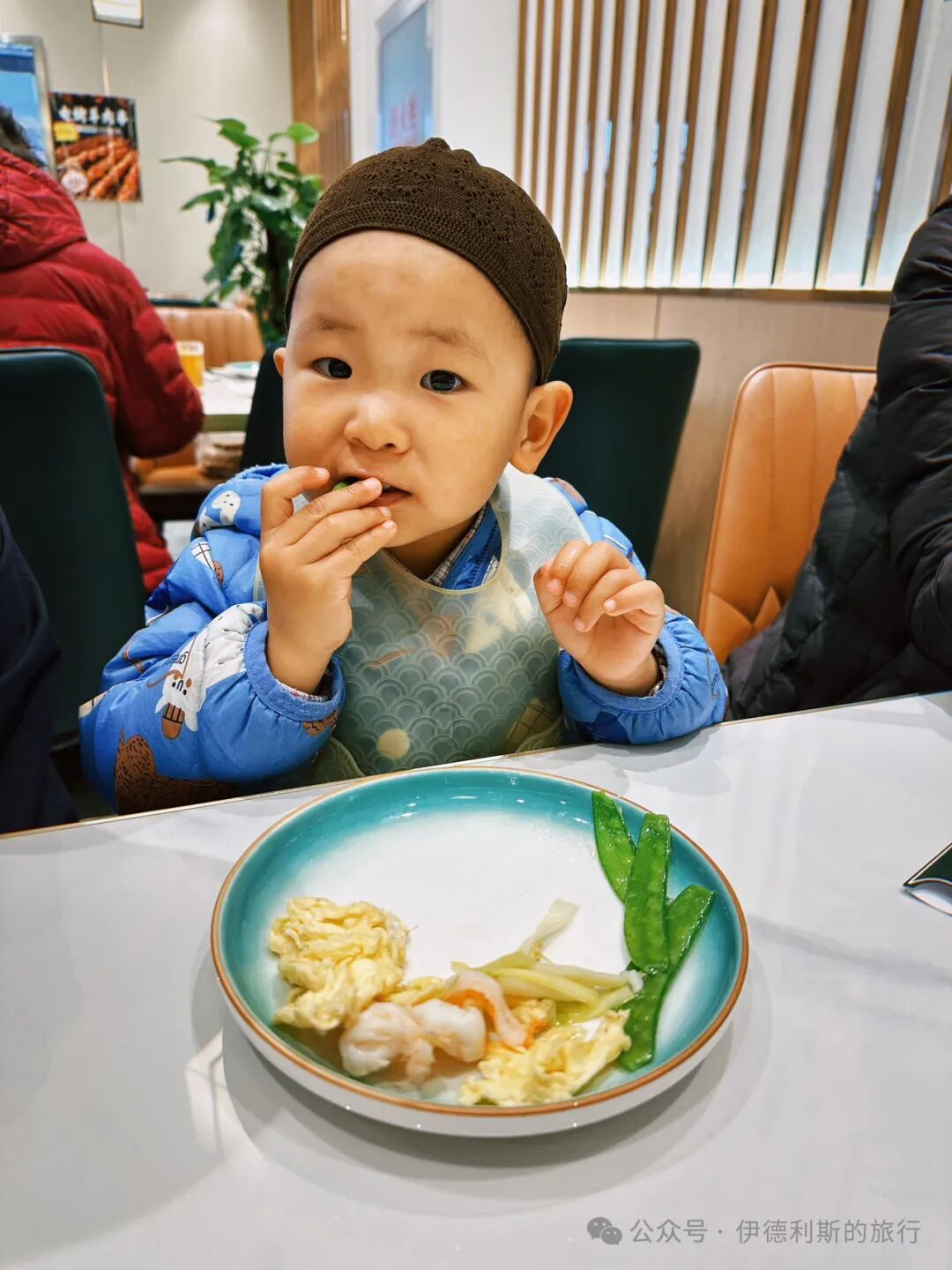
After leaving the mosque, we went to Tiankelai at Jintai Road intersection for a meal. We ordered stir-fried eggs with yellow chives and shrimp, snow peas with garlic, mustard-marinated cabbage (jiemodun), a platter of savory and sweet fried yam rolls (juan-guo), slow-cooked beef (wei niurou), and roast duck. The stir-fried dishes are not pre-made, so you can ask them to leave out sugar or MSG. The slow-cooked beef was very tender, and my family loved it. The mustard-marinated cabbage was very pungent and a great appetizer. The roast duck is roasted to order. We waited an hour for it, but it tasted pretty good.
There are not many traditional Beijing-style stir-fry restaurants around the East Fourth Ring Road, so it is impressive that the old Niujie brand Tiankelai opened a branch here. The restaurant is right next to Jintai Road subway station. It is not crowded on weekday lunchtimes, and the environment is nice. The only regret is that many dishes on the menu were marked as unavailable, perhaps due to the chef, which limited our choices quite a bit.
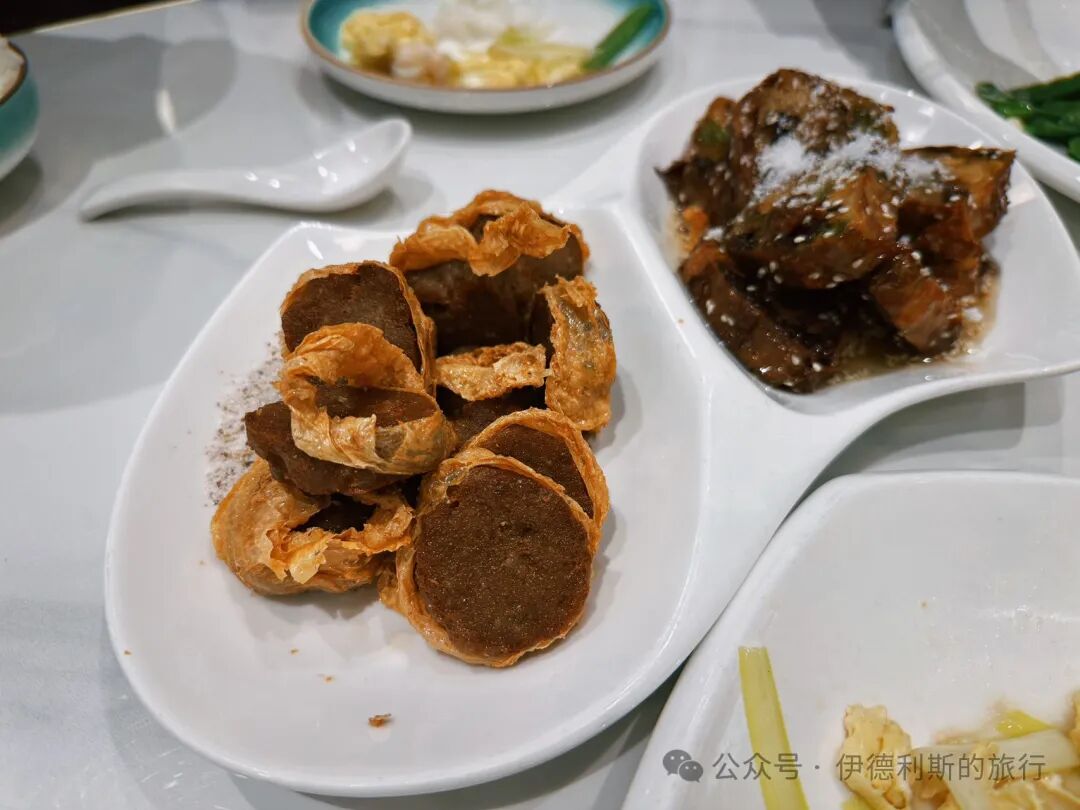
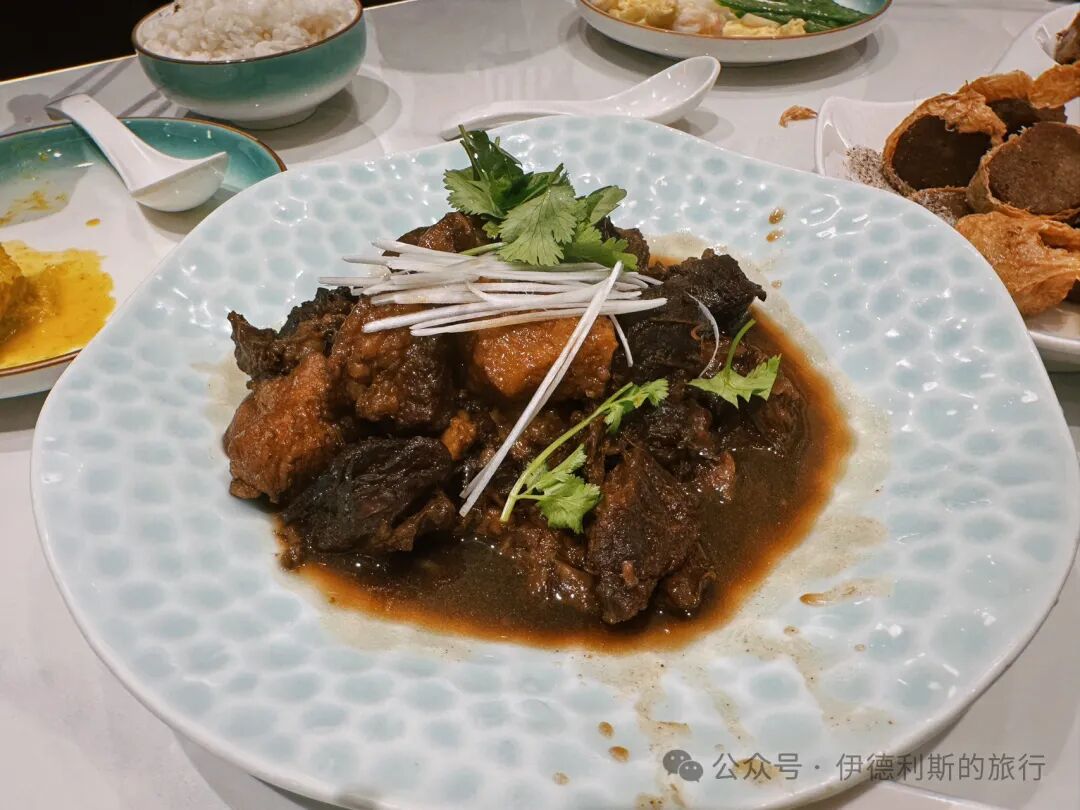
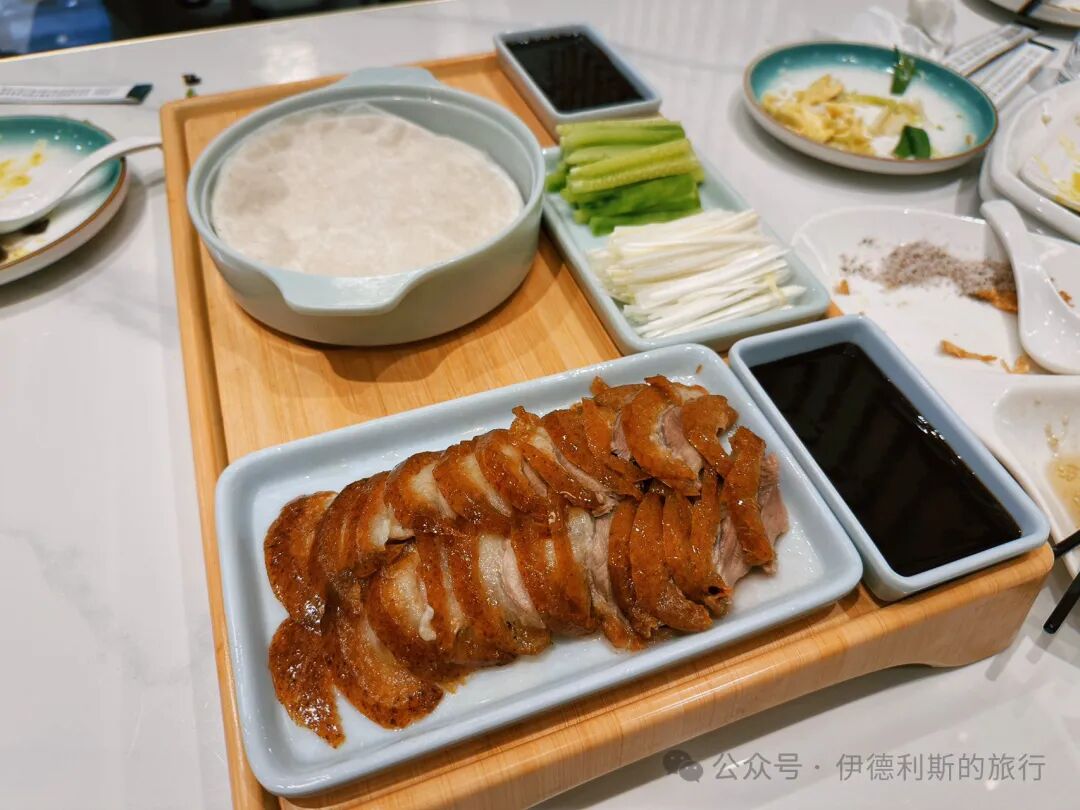
We passed by the Longfu Mosque snack shop on Dongsi North Street.
I came home after work and had some noodle soup (fen tang). On this day, all Xinjiang Hui Muslims make festive noodle soup. They prepare pea starch in advance and then cook braised lamb chops. Stir-fry meat slices, cabbage, greens, and tomatoes, add water, then mix in the braised lamb chops and starch cubes to finish. One bowl is simply not enough. It tastes best when served with fried dough (youxiang).
Mosque Stele at Beijing Wuta Temple: Ma Linyi, Ma Xiyuan and Muslim Heritage
Articles • ali2007fr posted the article • 0 comments • 158 views • 2026-05-17 07:58
Summary: This travel note introduces Mosque Stele at Beijing Wuta Temple: Ma Linyi, Ma Xiyuan and Muslim Heritage. Outside the northwest gate of the Beijing Zoo, there is the Wuta Si (Five Pagoda Mosque) built during the Ming Dynasty, which became the Beijing Stone Carving Art Museum after 1987. It is useful for readers interested in Wuta Temple, Mosque Stele, Beijing Muslims.
Outside the northwest gate of the Beijing Zoo, there is the Wuta Si (Five Pagoda Mosque) built during the Ming Dynasty, which became the Beijing Stone Carving Art Museum after 1987. June 11th happened to be the Cultural and Natural Heritage Day, and Zaynab and I went to visit the museum. In a corner of the stele forest, we discovered a precious stele from the Republic of China era belonging to a mosque. It records how in 1934, the famous educator of the Republic of China, Ma Linyi, and Ma Xiyuan, the father of the famous Peking opera master Ma Lianliang, funded the students and teachers of Islamic studies at the Sanlihe Mosque outside Fuchengmen in Beijing.
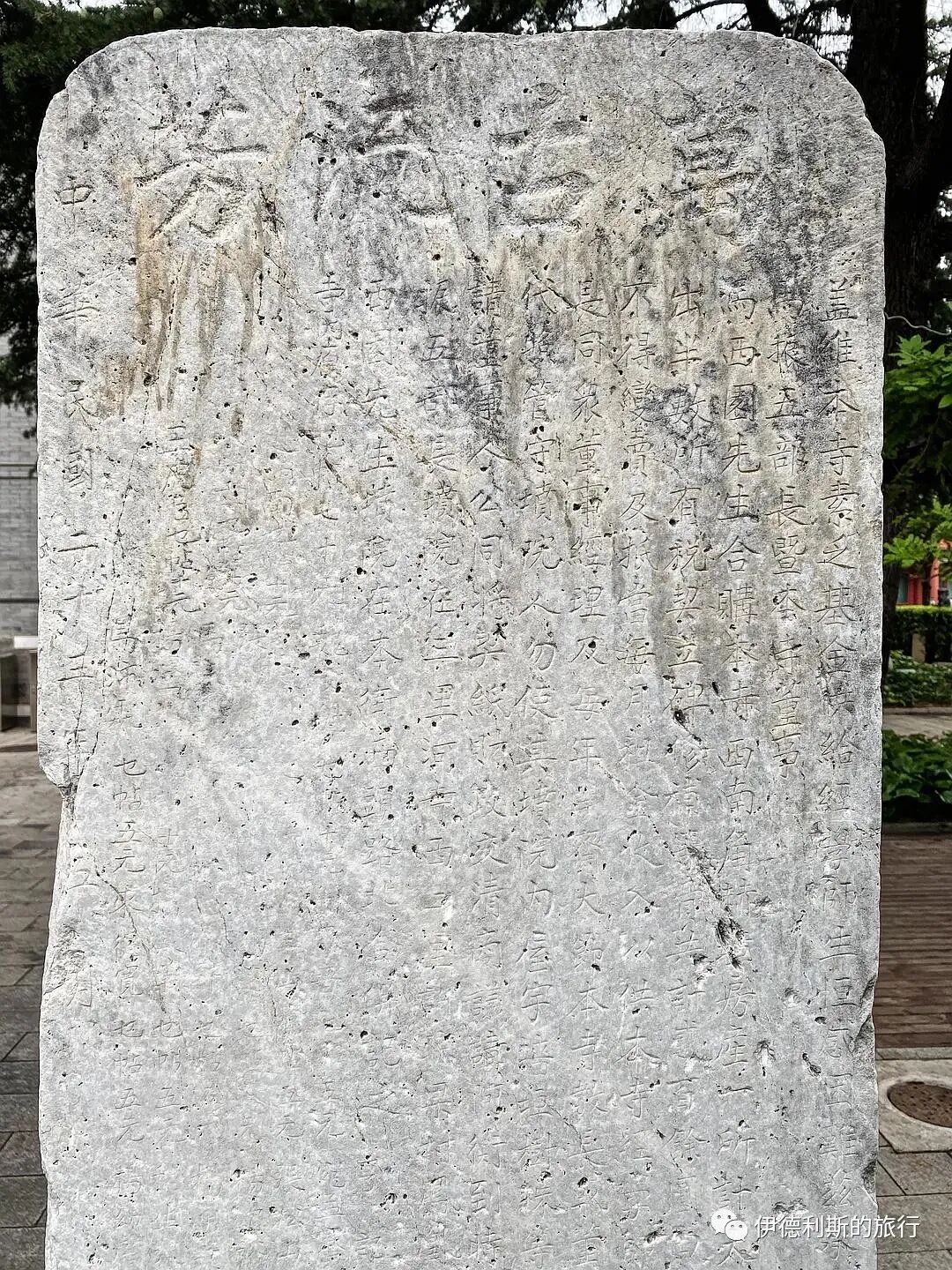
After returning home and looking up some information, I found that most articles introducing the Sanlihe Mosque do not seem to mention this stele. I also do not know why this stele was not kept in the mosque but was moved to the museum instead. I will transcribe the inscription here to share with everyone. There are a few characters I cannot see clearly, so I ask for everyone's help in identifying them:
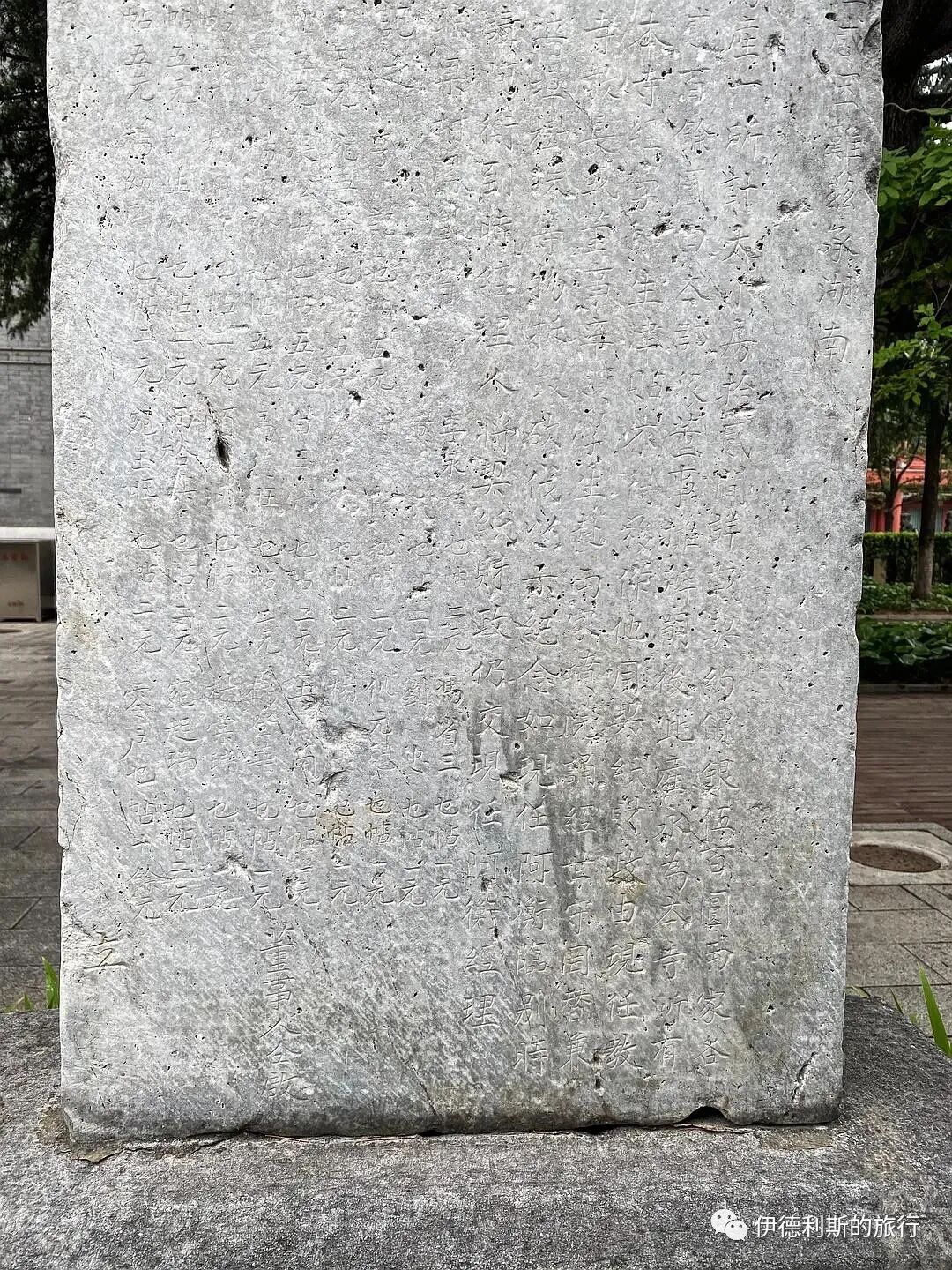
Because our mosque has always lacked funds to support the teachers and students of Islamic studies, we have constantly felt the difficulty. Now, thanks to Minister Ma Zhenwu from Hunan and Mr. Ma Xiyuan, a board member of this mosque, we have jointly purchased a property at the southwest corner of our mosque, totaling twelve rooms of various sizes, as detailed in the contract. The price was five hundred silver yuan, with each party paying half. All expenses for tax deeds, erecting the stele, repairs, etc., totaling over two hundred yuan, were shared by the board members of this community. From now on, this property shall forever belong to this mosque and may not be sold or mortgaged. The monthly rental income shall be used to provide subsidies for the teachers and students of Islamic studies at this mosque and may not be used for other purposes. The contract documents and finances shall be managed by the current Imam and the board members. Every year during the major festival of Eid al-Fitr, the Imam or board members of this mosque shall lead the students to recite the Quran at the two families' cemeteries, a tradition to be kept forever. Furthermore, the board members have collectively agreed to hand over the contract documents and finances when appointing a new Imam; at that time, the manager will hand over the contract documents and finances to the current Imam to manage.
Minister Zhenwu's cemetery is at Fenghuang [location] in [location] village, about two li west of Sanlihe Mosque; Mr. Xiyuan's cemetery is on the north side of the road at the west end of this street, recorded as [location].
Inside the mosque, the original [donations] were 70 yuan... Hengji mietie (charitable donation) 5 yuan... Zhang Songshan mietie 5 yuan... Ma Peilin mietie 5 yuan... Wan Yuwang mietie 2 yuan, Xi Yuxing mietie 2 yuan, Ma Dewang mietie 2 yuan, Li Yongxiang mietie 2 yuan, Feng Shengshan mietie 1 yuan, Liu Zhong mietie 1 yuan, Cang Yuan[X] mietie 1 yuan, Yang Denghua mietie 1 yuan, Yang Tangrui mietie 1 yuan, Wan Qirui mietie 3 yuan, and over 10 yuan from individual households. Signed by the board members.
Erected in May of the 23rd year of the Republic of China.
The 'Minister Ma Zhenwu from Hunan' mentioned in the stele is the famous educator Ma Linyi. Ma Linyi was born in Shaoyang, Hunan, in 1864, and his father was the great Islamic scholar Imam Ma Yanxi. He passed the imperial examination in 1902, was sent to Japan for study in 1904, and later returned to Hunan to actively run schools. In 1906, he founded the Qingzhen Xiejin Primary School in Shaoyang, and later added the Xiejin Middle School, which were the earliest modern schools for Hui Muslims in Hunan.
In 1908, Ma Linyi was transferred to the Qing Dynasty Ministry of Education as a secretary, and thus came to Beijing. In 1908, Wang Kuan founded the Jingshi Qingzhen First Primary School inside the Niujie Mosque, and Ma Linyi actively planned it and served as the supervisor. He applied for subsidies from the Beijing Education Bureau in the name of the school and was finally approved to receive 40 taels per month as operating funds for the school. In 1909, Ma Linyi again assisted Wang Kuan in reporting to the Beijing Education Supervision Bureau to establish the Islamic Education Association.
In 1912, while serving as Vice Minister of Education, Ma Linyi founded the China Islamic Progressive Association with the support of Sun Yat-sen and served as its president. He changed his courtesy name from 'Zhenwu' to 'Zhenwu' (using a different character for 'wu'), meaning 'revitalizing the five ethnic groups'. Between 1912 and 1919, Ma Linyi spent 7 years running schools in Gansu, founding over one hundred schools for Hui Muslims and cultivating a large number of talents. In 1919, he was transferred to be the Director of the Zhili Education Department, where he secured 300,000 yuan for the Hui Muslim education fund, making a huge contribution.
In the 1920s, Ma Linyi held various positions in the Nationalist Government, including Minister of Education. After the success of the Northern Expedition in 1928, Hui Muslim intellectuals in Beijing were determined to establish their own middle school so that Hui Muslim youth could continue their studies after graduating from primary school. In the same year, Ma Linyi participated in the founding of the Qingzhen Middle School on the site of the old Niujie garrison office and served as vice chairman, receiving support from various Nationalist Party figures in Beijing. In 1929, Ma Linyi served as a school board member of the Beiping Chengda Normal School, actively updating the curriculum and improving teaching methods, which allowed Chengda Normal School to develop into a modern school. In his later years, Ma Linyi devoted himself to the faith and served as an advisor to Wang Jingzhai for his translation of the Quran.
In 1938, Ma Linyi passed away in Beiping and was buried in the Sanlihe Hui Muslim cemetery.
The 'Mr. Ma Xiyuan, a board member of this mosque' mentioned in the stele is the father of the Peking opera master Ma Lianliang. Ma Xiyuan was born in 1868, with ancestral roots in Shandong. His father, Ma Yongxiang, settled in Beijing during the Xianfeng period and opened a teahouse opposite the Fuchengmen Arrow Tower, known as the 'Menma Teahouse'. The Menma Teahouse had a stage for music, and Peking opera enthusiasts and famous performers often came to sing there. It was very lively and a famous venue for Peking opera. Influenced by Peking opera, Ma Xiyuan sent his son Ma Lianliang to the Xiliancheng opera troupe to learn acting, which eventually made Ma Lianliang a master of his generation, the founder of the Ma school of old male roles, and the head of the 'Four Great Male Role Actors'.
Ma Xiyuan himself was very pious, never missing his five daily prayers, and he sent his son Ma Lianliang to the Sanlihe Mosque to study the Quran when he was 5 years old. In 1930, Ma Lianliang bought the entire courtyard at No. 7 Dongdoufu Lane outside Chongwenmen and renovated the west room of the front courtyard into a prayer hall for Ma Xiyuan to perform his five daily prayers, which was very rare in Hui Muslim families at that time.
Ma Xiyuan was enthusiastic about public welfare for the faith and was known as 'Ma the Philanthropist'. In 1908, he participated in the founding of the Qingzhen Public Fifth Primary School inside the Huashi Mosque outside Chongwenmen. It was renamed the Qingzhen Culture Primary School in 1912 and the Beiping Qingzhen Second Primary School in 1929. Ma Xiyuan actively donated funds and served as chairman of the board. In 1928, Hui Muslim youth in the Niujie area founded the private Zhongcai Primary School in Madao Hutong. It received the praise and support of Ma Xiyuan, who served as a school board member and lent the school an organ he had treasured for many years for music teaching. Every Jumu'ah (Friday), Ma Xiyuan would cook porridge at his doorstep to give as charity to poor Hui Muslims, and he would also give out warm clothes in the winter. In 1935, Ma Xiyuan passed away due to illness and was buried in the Sanlihe Hui Muslim cemetery.
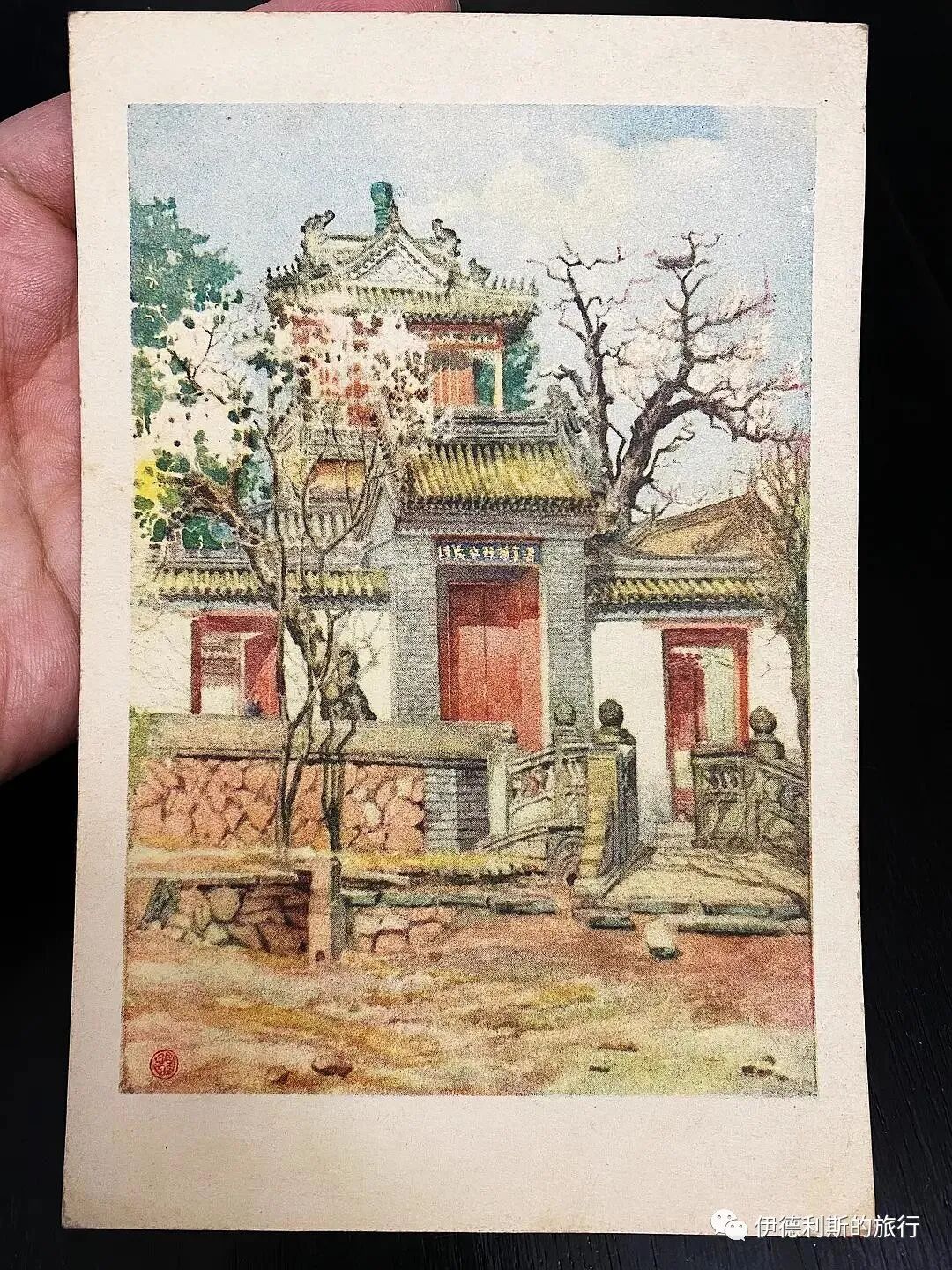
I will also share a postcard of a watercolor painting of the Sanlihe Mosque issued in 1956 from my collection. On the back, there is a New Year's greeting written by a student to their teacher 66 years ago. The artist of this painting is Guan Guangzhi, a first-generation master of watercolor painting in China, who painted many landscapes of the ancient capital, Beijing.
I took photos of the Sanlihe Mosque before, but unfortunately, it was in the afternoon and there was some backlight. I will go back to take photos again when the mosque reopens. view all
Summary: This travel note introduces Mosque Stele at Beijing Wuta Temple: Ma Linyi, Ma Xiyuan and Muslim Heritage. Outside the northwest gate of the Beijing Zoo, there is the Wuta Si (Five Pagoda Mosque) built during the Ming Dynasty, which became the Beijing Stone Carving Art Museum after 1987. It is useful for readers interested in Wuta Temple, Mosque Stele, Beijing Muslims.
Outside the northwest gate of the Beijing Zoo, there is the Wuta Si (Five Pagoda Mosque) built during the Ming Dynasty, which became the Beijing Stone Carving Art Museum after 1987. June 11th happened to be the Cultural and Natural Heritage Day, and Zaynab and I went to visit the museum. In a corner of the stele forest, we discovered a precious stele from the Republic of China era belonging to a mosque. It records how in 1934, the famous educator of the Republic of China, Ma Linyi, and Ma Xiyuan, the father of the famous Peking opera master Ma Lianliang, funded the students and teachers of Islamic studies at the Sanlihe Mosque outside Fuchengmen in Beijing.
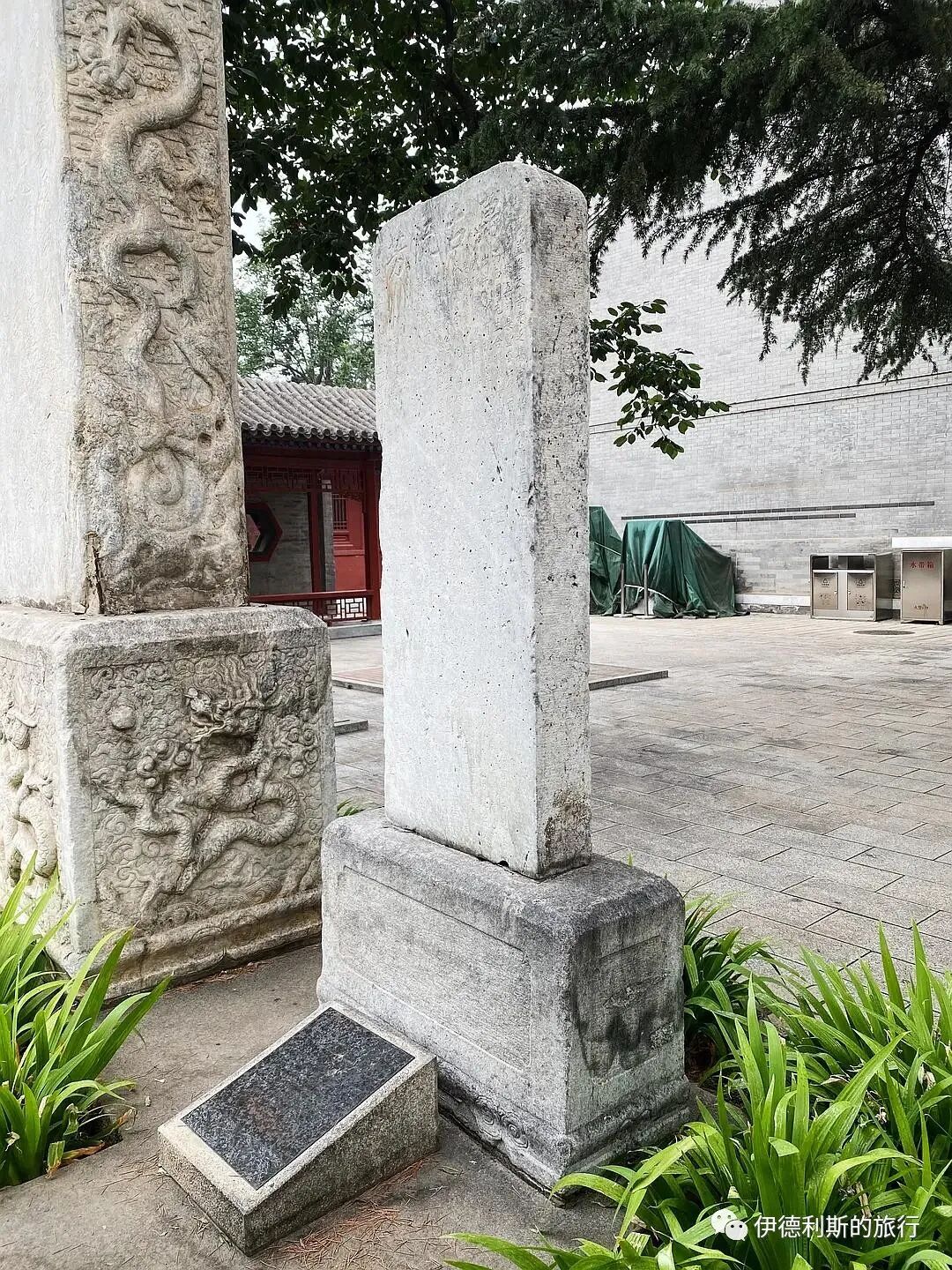
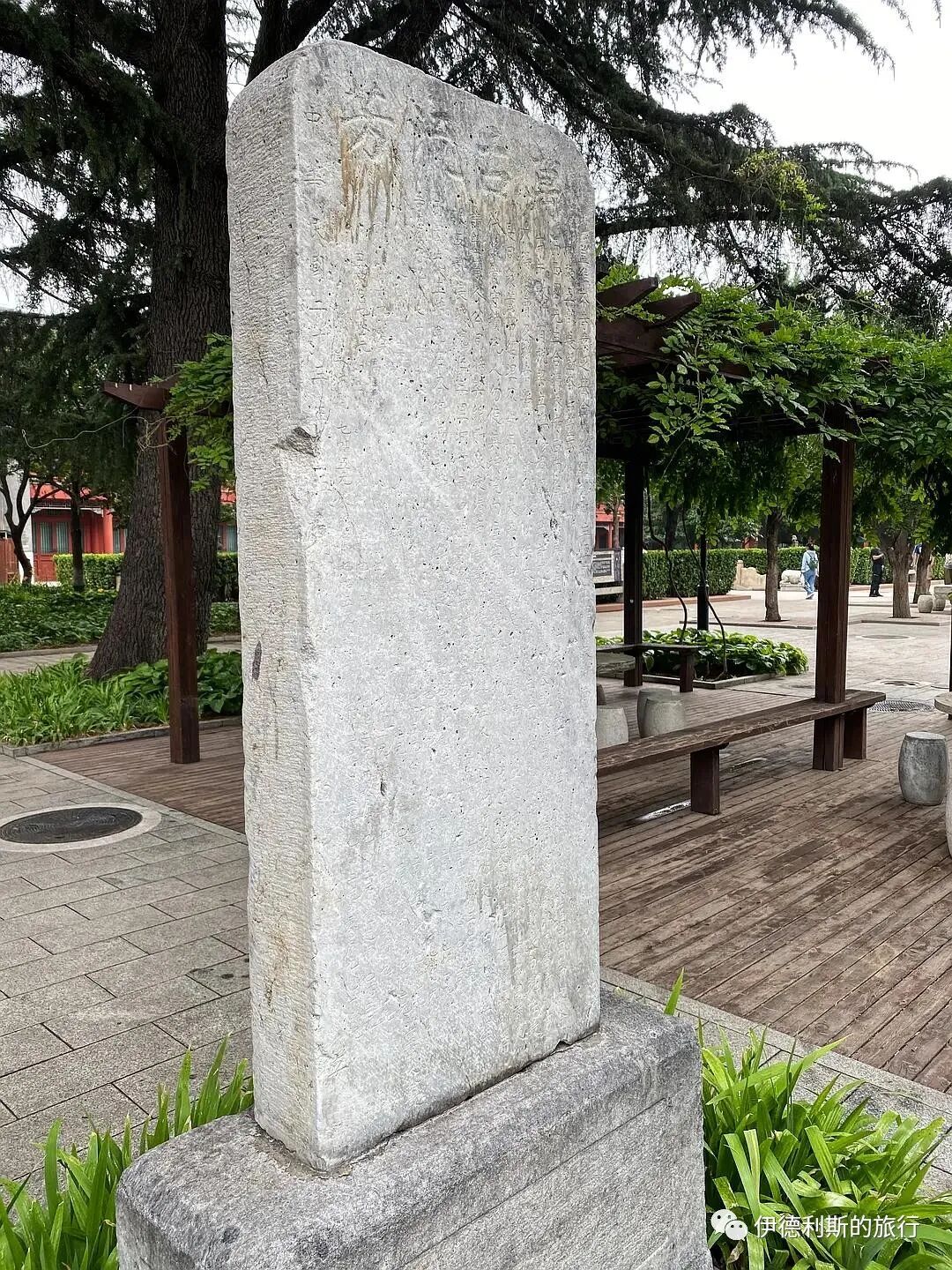
After returning home and looking up some information, I found that most articles introducing the Sanlihe Mosque do not seem to mention this stele. I also do not know why this stele was not kept in the mosque but was moved to the museum instead. I will transcribe the inscription here to share with everyone. There are a few characters I cannot see clearly, so I ask for everyone's help in identifying them:
Because our mosque has always lacked funds to support the teachers and students of Islamic studies, we have constantly felt the difficulty. Now, thanks to Minister Ma Zhenwu from Hunan and Mr. Ma Xiyuan, a board member of this mosque, we have jointly purchased a property at the southwest corner of our mosque, totaling twelve rooms of various sizes, as detailed in the contract. The price was five hundred silver yuan, with each party paying half. All expenses for tax deeds, erecting the stele, repairs, etc., totaling over two hundred yuan, were shared by the board members of this community. From now on, this property shall forever belong to this mosque and may not be sold or mortgaged. The monthly rental income shall be used to provide subsidies for the teachers and students of Islamic studies at this mosque and may not be used for other purposes. The contract documents and finances shall be managed by the current Imam and the board members. Every year during the major festival of Eid al-Fitr, the Imam or board members of this mosque shall lead the students to recite the Quran at the two families' cemeteries, a tradition to be kept forever. Furthermore, the board members have collectively agreed to hand over the contract documents and finances when appointing a new Imam; at that time, the manager will hand over the contract documents and finances to the current Imam to manage.
Minister Zhenwu's cemetery is at Fenghuang [location] in [location] village, about two li west of Sanlihe Mosque; Mr. Xiyuan's cemetery is on the north side of the road at the west end of this street, recorded as [location].
Inside the mosque, the original [donations] were 70 yuan... Hengji mietie (charitable donation) 5 yuan... Zhang Songshan mietie 5 yuan... Ma Peilin mietie 5 yuan... Wan Yuwang mietie 2 yuan, Xi Yuxing mietie 2 yuan, Ma Dewang mietie 2 yuan, Li Yongxiang mietie 2 yuan, Feng Shengshan mietie 1 yuan, Liu Zhong mietie 1 yuan, Cang Yuan[X] mietie 1 yuan, Yang Denghua mietie 1 yuan, Yang Tangrui mietie 1 yuan, Wan Qirui mietie 3 yuan, and over 10 yuan from individual households. Signed by the board members.
Erected in May of the 23rd year of the Republic of China.
The 'Minister Ma Zhenwu from Hunan' mentioned in the stele is the famous educator Ma Linyi. Ma Linyi was born in Shaoyang, Hunan, in 1864, and his father was the great Islamic scholar Imam Ma Yanxi. He passed the imperial examination in 1902, was sent to Japan for study in 1904, and later returned to Hunan to actively run schools. In 1906, he founded the Qingzhen Xiejin Primary School in Shaoyang, and later added the Xiejin Middle School, which were the earliest modern schools for Hui Muslims in Hunan.
In 1908, Ma Linyi was transferred to the Qing Dynasty Ministry of Education as a secretary, and thus came to Beijing. In 1908, Wang Kuan founded the Jingshi Qingzhen First Primary School inside the Niujie Mosque, and Ma Linyi actively planned it and served as the supervisor. He applied for subsidies from the Beijing Education Bureau in the name of the school and was finally approved to receive 40 taels per month as operating funds for the school. In 1909, Ma Linyi again assisted Wang Kuan in reporting to the Beijing Education Supervision Bureau to establish the Islamic Education Association.
In 1912, while serving as Vice Minister of Education, Ma Linyi founded the China Islamic Progressive Association with the support of Sun Yat-sen and served as its president. He changed his courtesy name from 'Zhenwu' to 'Zhenwu' (using a different character for 'wu'), meaning 'revitalizing the five ethnic groups'. Between 1912 and 1919, Ma Linyi spent 7 years running schools in Gansu, founding over one hundred schools for Hui Muslims and cultivating a large number of talents. In 1919, he was transferred to be the Director of the Zhili Education Department, where he secured 300,000 yuan for the Hui Muslim education fund, making a huge contribution.
In the 1920s, Ma Linyi held various positions in the Nationalist Government, including Minister of Education. After the success of the Northern Expedition in 1928, Hui Muslim intellectuals in Beijing were determined to establish their own middle school so that Hui Muslim youth could continue their studies after graduating from primary school. In the same year, Ma Linyi participated in the founding of the Qingzhen Middle School on the site of the old Niujie garrison office and served as vice chairman, receiving support from various Nationalist Party figures in Beijing. In 1929, Ma Linyi served as a school board member of the Beiping Chengda Normal School, actively updating the curriculum and improving teaching methods, which allowed Chengda Normal School to develop into a modern school. In his later years, Ma Linyi devoted himself to the faith and served as an advisor to Wang Jingzhai for his translation of the Quran.
In 1938, Ma Linyi passed away in Beiping and was buried in the Sanlihe Hui Muslim cemetery.
The 'Mr. Ma Xiyuan, a board member of this mosque' mentioned in the stele is the father of the Peking opera master Ma Lianliang. Ma Xiyuan was born in 1868, with ancestral roots in Shandong. His father, Ma Yongxiang, settled in Beijing during the Xianfeng period and opened a teahouse opposite the Fuchengmen Arrow Tower, known as the 'Menma Teahouse'. The Menma Teahouse had a stage for music, and Peking opera enthusiasts and famous performers often came to sing there. It was very lively and a famous venue for Peking opera. Influenced by Peking opera, Ma Xiyuan sent his son Ma Lianliang to the Xiliancheng opera troupe to learn acting, which eventually made Ma Lianliang a master of his generation, the founder of the Ma school of old male roles, and the head of the 'Four Great Male Role Actors'.
Ma Xiyuan himself was very pious, never missing his five daily prayers, and he sent his son Ma Lianliang to the Sanlihe Mosque to study the Quran when he was 5 years old. In 1930, Ma Lianliang bought the entire courtyard at No. 7 Dongdoufu Lane outside Chongwenmen and renovated the west room of the front courtyard into a prayer hall for Ma Xiyuan to perform his five daily prayers, which was very rare in Hui Muslim families at that time.
Ma Xiyuan was enthusiastic about public welfare for the faith and was known as 'Ma the Philanthropist'. In 1908, he participated in the founding of the Qingzhen Public Fifth Primary School inside the Huashi Mosque outside Chongwenmen. It was renamed the Qingzhen Culture Primary School in 1912 and the Beiping Qingzhen Second Primary School in 1929. Ma Xiyuan actively donated funds and served as chairman of the board. In 1928, Hui Muslim youth in the Niujie area founded the private Zhongcai Primary School in Madao Hutong. It received the praise and support of Ma Xiyuan, who served as a school board member and lent the school an organ he had treasured for many years for music teaching. Every Jumu'ah (Friday), Ma Xiyuan would cook porridge at his doorstep to give as charity to poor Hui Muslims, and he would also give out warm clothes in the winter. In 1935, Ma Xiyuan passed away due to illness and was buried in the Sanlihe Hui Muslim cemetery.
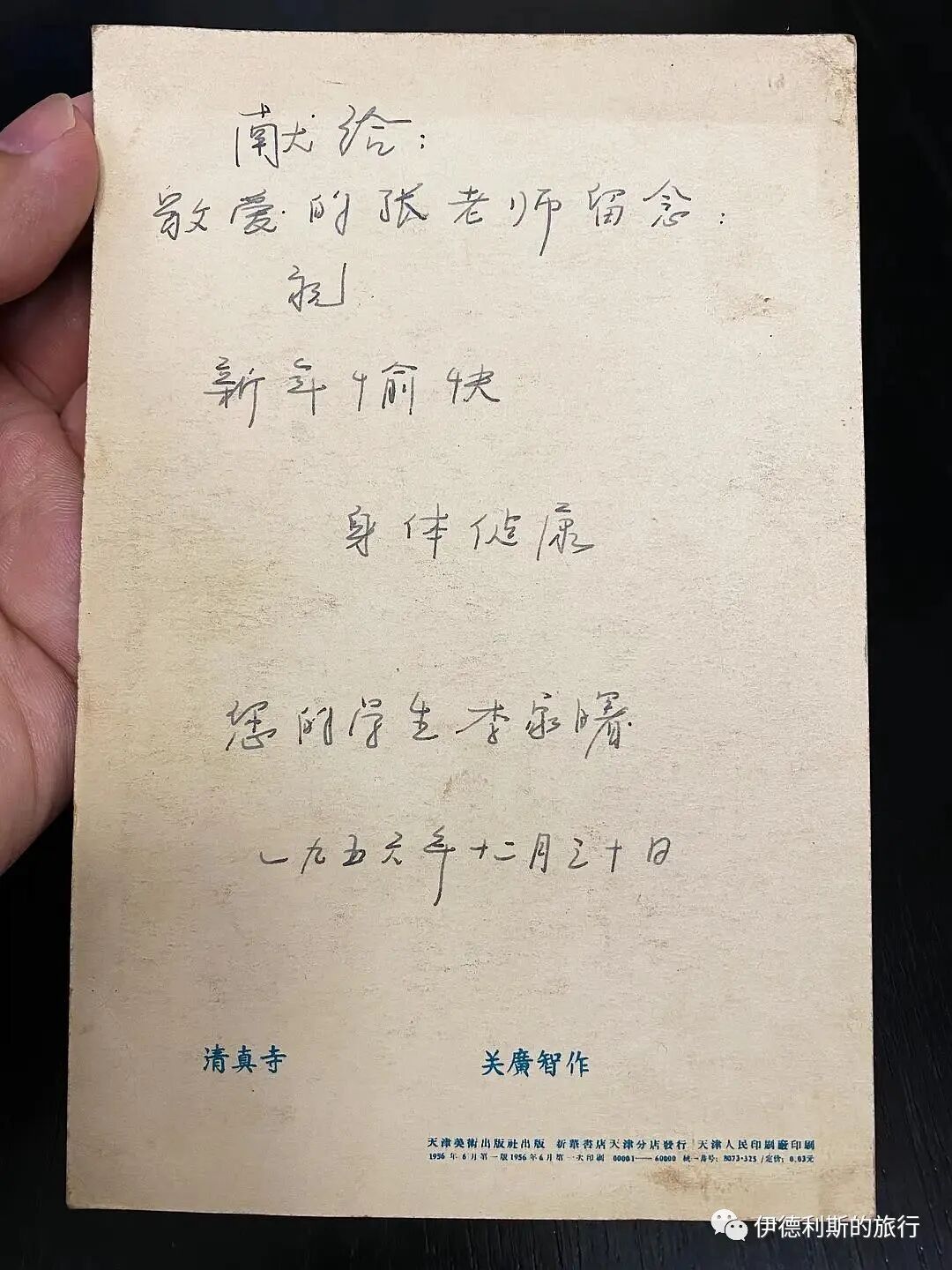
I will also share a postcard of a watercolor painting of the Sanlihe Mosque issued in 1956 from my collection. On the back, there is a New Year's greeting written by a student to their teacher 66 years ago. The artist of this painting is Guan Guangzhi, a first-generation master of watercolor painting in China, who painted many landscapes of the ancient capital, Beijing.
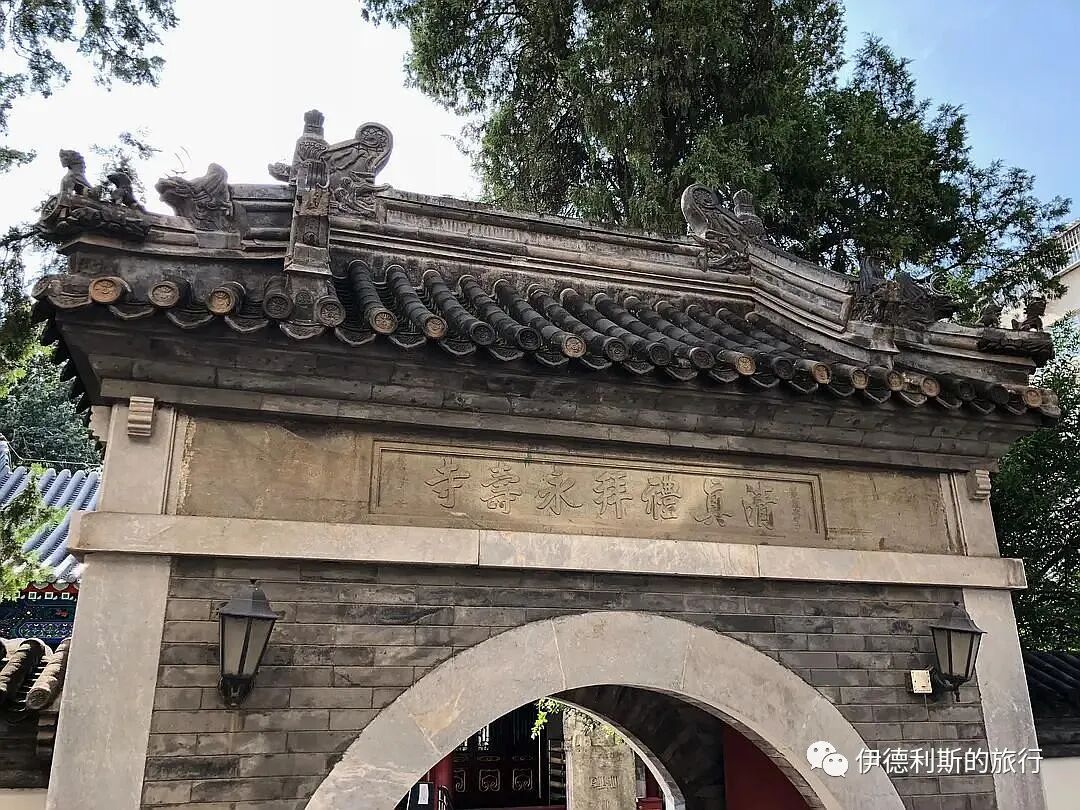
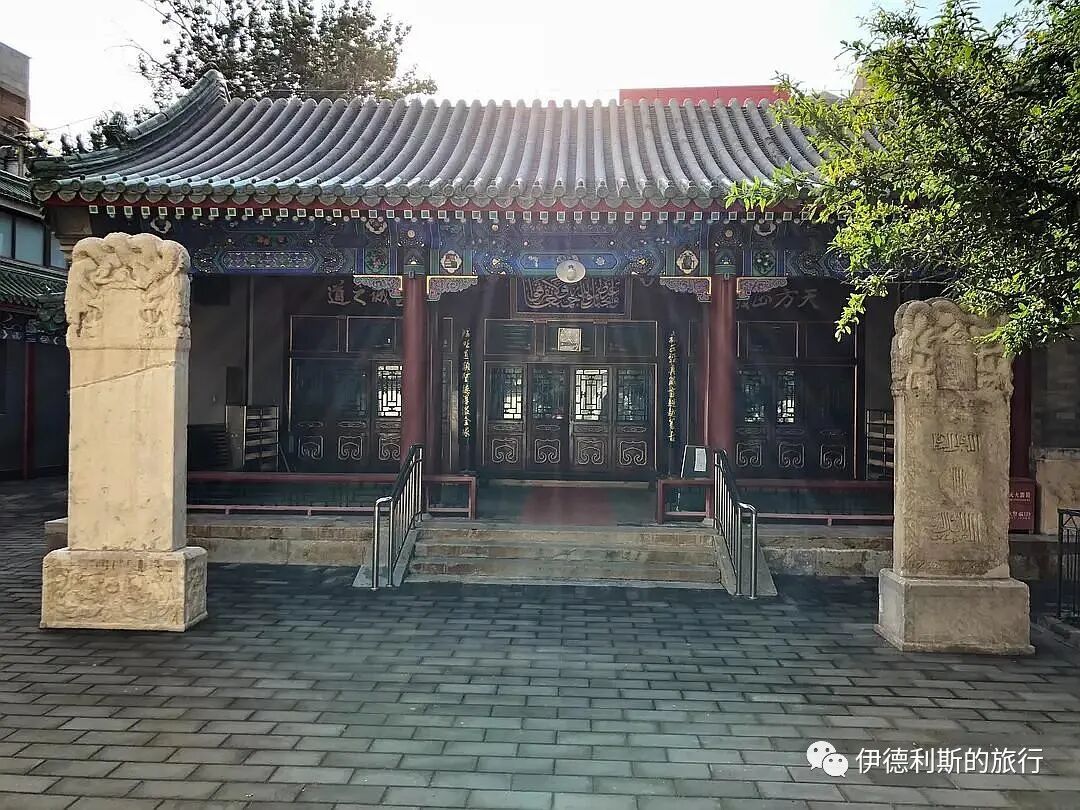
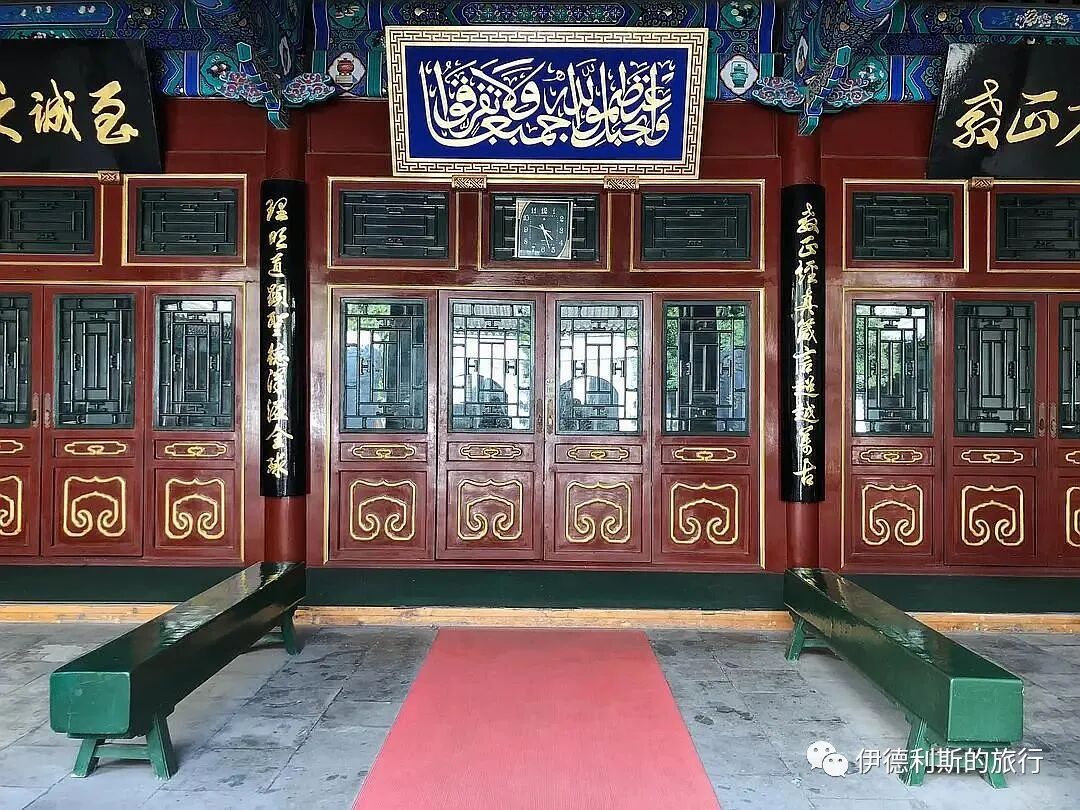
I took photos of the Sanlihe Mosque before, but unfortunately, it was in the afternoon and there was some backlight. I will go back to take photos again when the mosque reopens.
Imperially Granted Faming Mosque: The Last Surviving Stone Stele in Beijing
Articles • ali2007fr posted the article • 0 comments • 133 views • 2026-05-17 07:58
Summary: This travel note introduces Imperially Granted Faming Mosque: The Last Surviving Stone Stele in Beijing. In front of the main hall of the Dongsi Mosque in Beijing, there is a stone tablet erected in 1579 (the seventh year of the Wanli reign of the Ming Dynasty) titled 'The Hundred-Word Eulogy of the Pure and True. It is useful for readers interested in Faming Mosque, Stone Stele, Beijing Muslims.
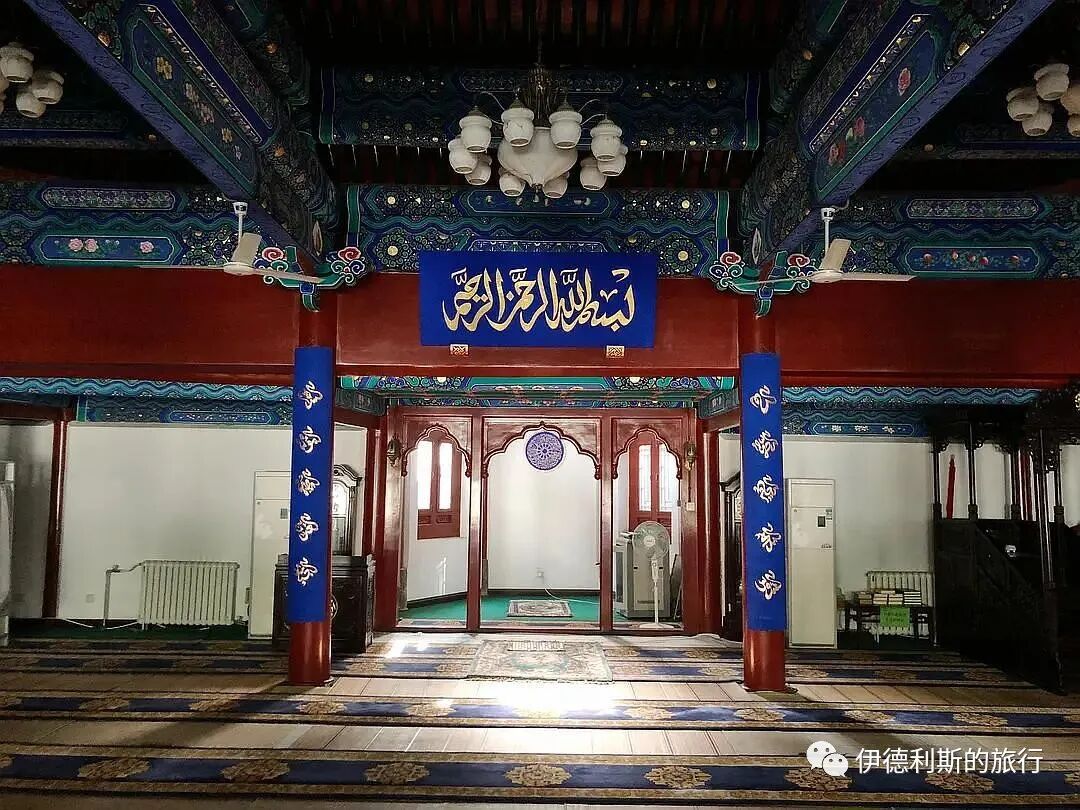
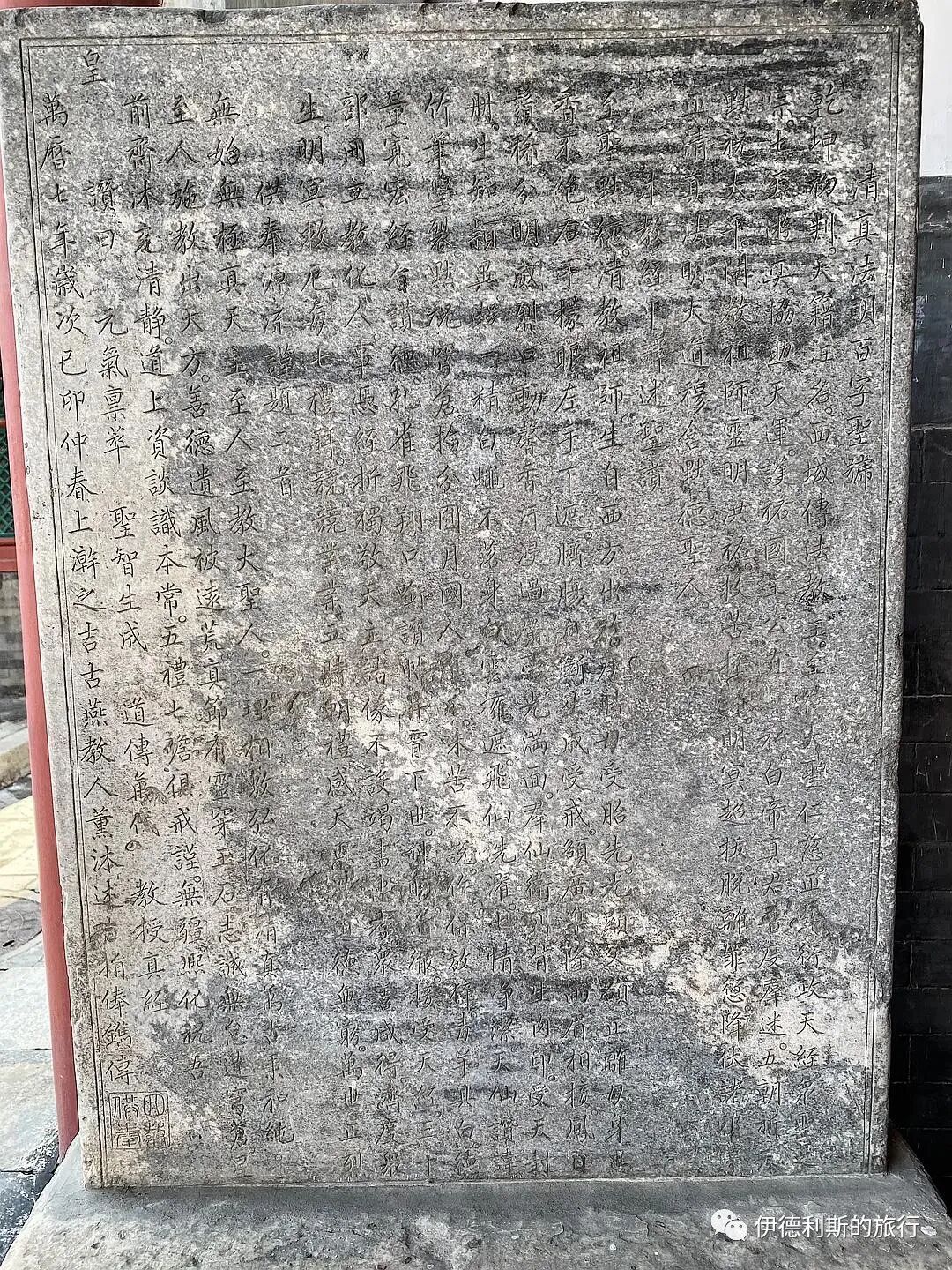
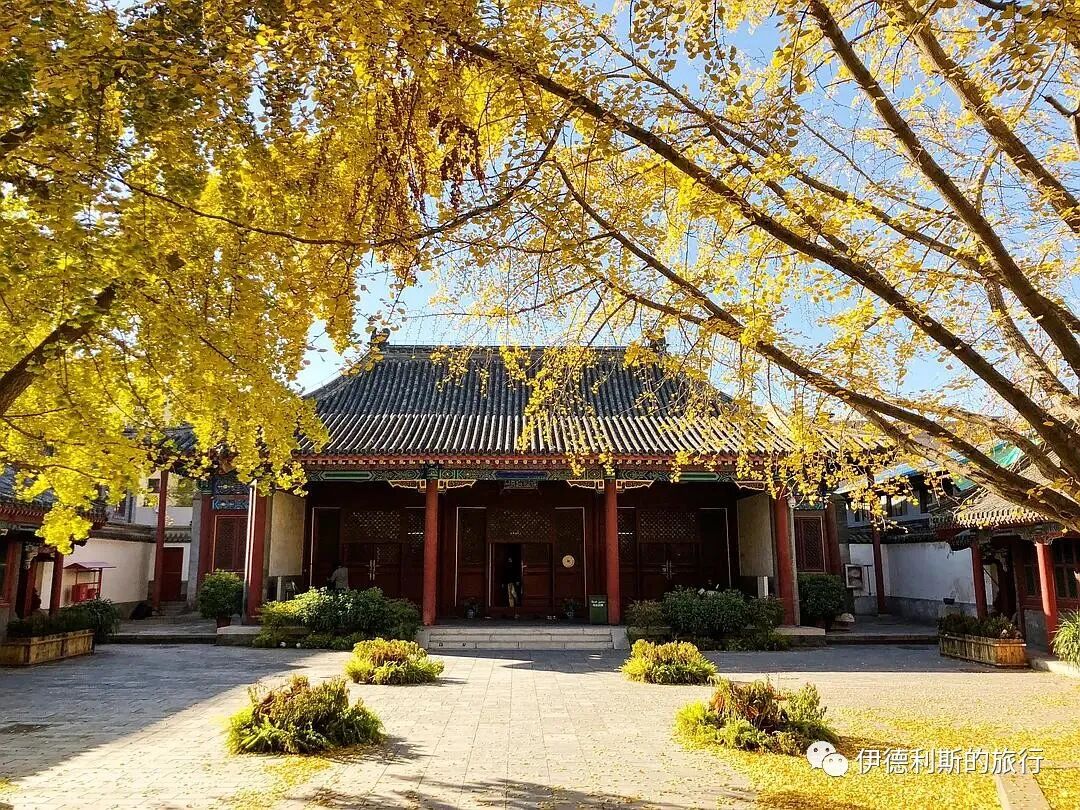
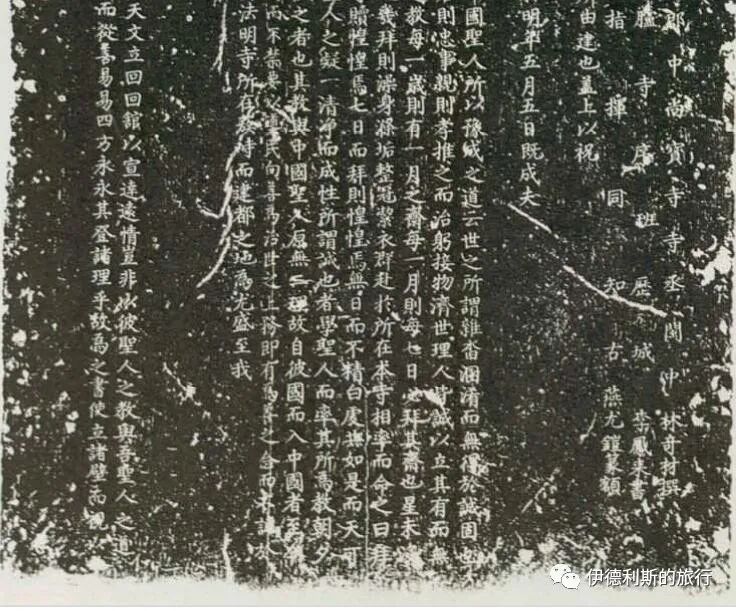
In front of the main hall of the Dongsi Mosque in Beijing, there is a stone tablet erected in 1579 (the seventh year of the Wanli reign of the Ming Dynasty) titled 'The Hundred-Word Eulogy of the Pure and True Dharma-Illuminating' (Qingzhen Faming Baizi Shengzan). The content of the inscription is largely similar to the 'Imperial Hundred-Word Eulogy of the Most Holy' (Yuzhi Zhisheng Baizi Zan) from the Hongwu reign of the Ming Dynasty. The signature reads 'Written by the teacher of the ancient Yan faith, who bathed and purified himself to describe it, and donated his salary for the carving,' and the side of the tablet is inscribed with 'Donated by You Kai, Regional Military Commissioner of the Shandong Regional Military Commission.' This stone tablet, which does not look particularly conspicuous, is the only remaining relic of the Faming Mosque, which was bestowed by imperial decree during the Ming Dynasty. It is said that after a fire at Faming Mosque in the early Qing Dynasty, the stone tablet was moved to the Dongsi Mosque.
Faming Mosque was located at No. 43, Beiertiao, Jiaodaokou, inside Andingmen; its old address was No. 22, Datiertiao, Andingmen, which is why it was also called the Datiertiao Mosque. It is said that Faming Mosque was first built in 1348 (the eighth year of the Zhizheng reign of the Yuan Dynasty) and was initially called a mosque. After being rebuilt in 1448 (the thirteenth year of the Zhengtong reign of the Ming Dynasty), it was bestowed the name Faming Mosque by imperial decree. Together with the Dongsi Mosque, the Niujie Mosque, and the Pushou Mosque inside Fuchengmen, it was known as one of the 'Four Great Official Mosques of Ming Dynasty Beijing'. Official mosques refer to those where the Department of Sacrificial Rites under the Ministry of Rites issued 'Zhafu' (official certificates of appointment) to the imams of the mosques. According to Wang Daiyu's 'Zhengjiao Zhenquan: Qunshu Jikao' (True Interpretation of the Orthodox Faith: Collected Examinations of Various Books), after receiving the Zhafu, the imam would 'wear official robes and headwear to honor his body, and was also permitted to be exempt from corvée labor.' "
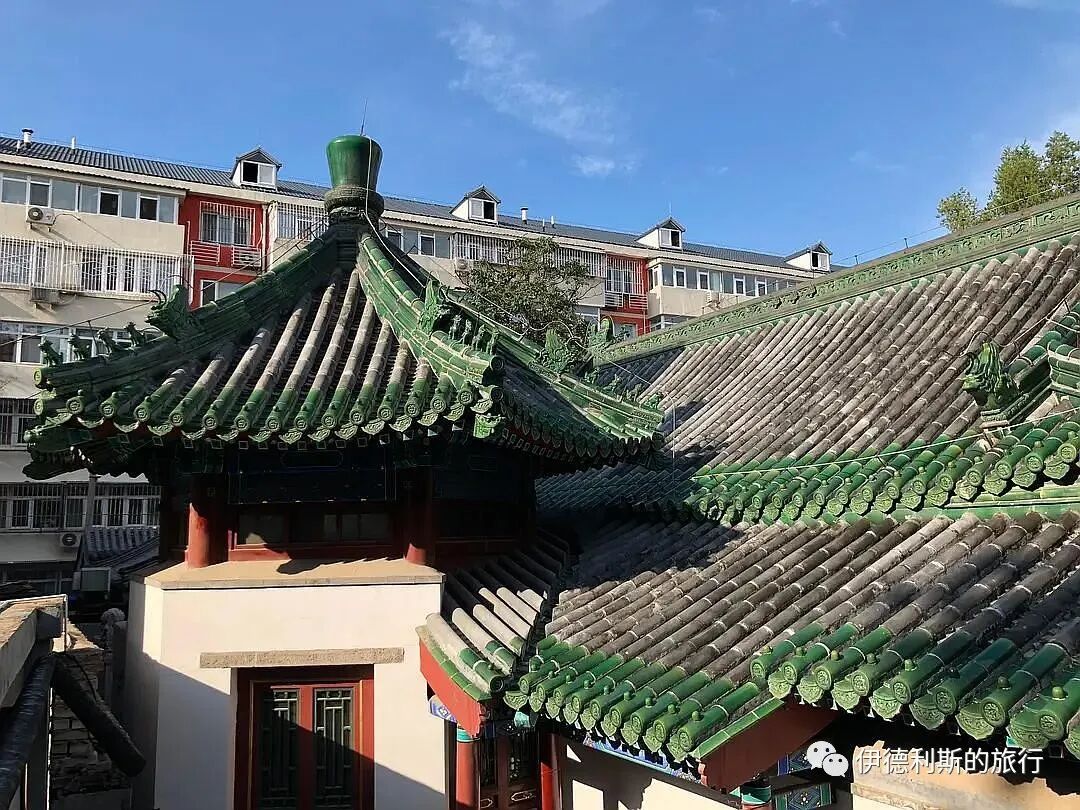
Faming Mosque was rebuilt many times during the Ming, Qing, and Republican periods, but it still maintained its Ming Dynasty layout, which was quite similar to the Dongsi Mosque. On the 'Complete Map of the Capital during the Qianlong Reign' (Qianlong Jingcheng Quantu), completed in 1750 (the fifteenth year of the Qianlong reign), one can see that the main body of Faming Mosque consisted of a main hall, northern and southern lecture halls, and a minaret (bangkelou). Like the Dongsi Mosque, the main hall of Faming Mosque consisted of a front porch, a middle hall with a hip roof, and a rear kiln-style hall, but its scale was slightly smaller.
In addition, the National Library of China holds a rubbing of the 'Stele Record of the Reconstruction of the Imperial Faming Mosque' from 1580 (the eighth year of the Wanli reign of the Ming Dynasty), which can be viewed on the National Library's official website. The person who wrote the tablet header was You Kai, the same as for the 'Hundred-Word Eulogy of the Pure and True Dharma-Illuminating' in the Dongsi Mosque, but within a year he had been promoted to 'Imperial Envoy and Vice Regional Military Commissioner of the Shandong Regional Military Commission.' In fact, the imperial construction of official mosques in Ming Dynasty Beijing was related to the Hui Muslim military personnel in the regional military commission and garrison system.
The person who wrote the tablet, Lin Qicai, was a cousin of the great Ming Dynasty thinker Li Zhi. Lin Qicai's ancestral home was Jinjiang, Fujian, and he became a Jinshi (a successful candidate in the highest imperial examinations) in the thirty-eighth year of the Jiajing reign of the Ming Dynasty (1559). According to the 'Fengchi Lin-Li Genealogy,' Lin Qicai's second-generation ancestor, Lin Nu, 'married a Semu woman... and subsequently followed her faith, receiving the precepts of the Qingjing Mosque sect.' When Lin Qicai wrote the tablet, he signed it as 'Lin Qicai, a Jinshi by imperial favor, Fengyi Grand Master, former Director of the Ministry of Revenue, and Assistant Director of the Seal Office (Shangbaosi Sicheng).' 'Shangbaosi Sicheng' (Assistant Director of the Seal Office), according to the 'History of Ming,' was a 'rank 6b official... in charge of imperial seals, tallies, and stamps, and distinguishing their usage.' "
In addition, the Beijing Municipal Administration of Cultural Heritage also holds two rubbings of the 'Stele Record of the Reconstruction of Faming Mosque' from 1880 and 1921. The 1880 stele record notes that it was built by the Heshun Timber Factory at the time, with funds donated by Ma Deming from Beixinqiao East, and that two plaques were hung in the mosque: 'Built in the Ming, Repaired in the Qing' and 'Founded in the Previous Dynasty.' The 1921 stele record was written by Xia Deqing from Daxing, an army colonel and commander of the southern route of the Jingzhao Garrison, with the calligraphy by Xu Yili from Hangxian, the Jingzhao Yin (Mayor of Beijing), and the header written by Chen Zhenjia from Daxing, a first-class clerk at the Shanxi Hedong Circuit Administrative Office.
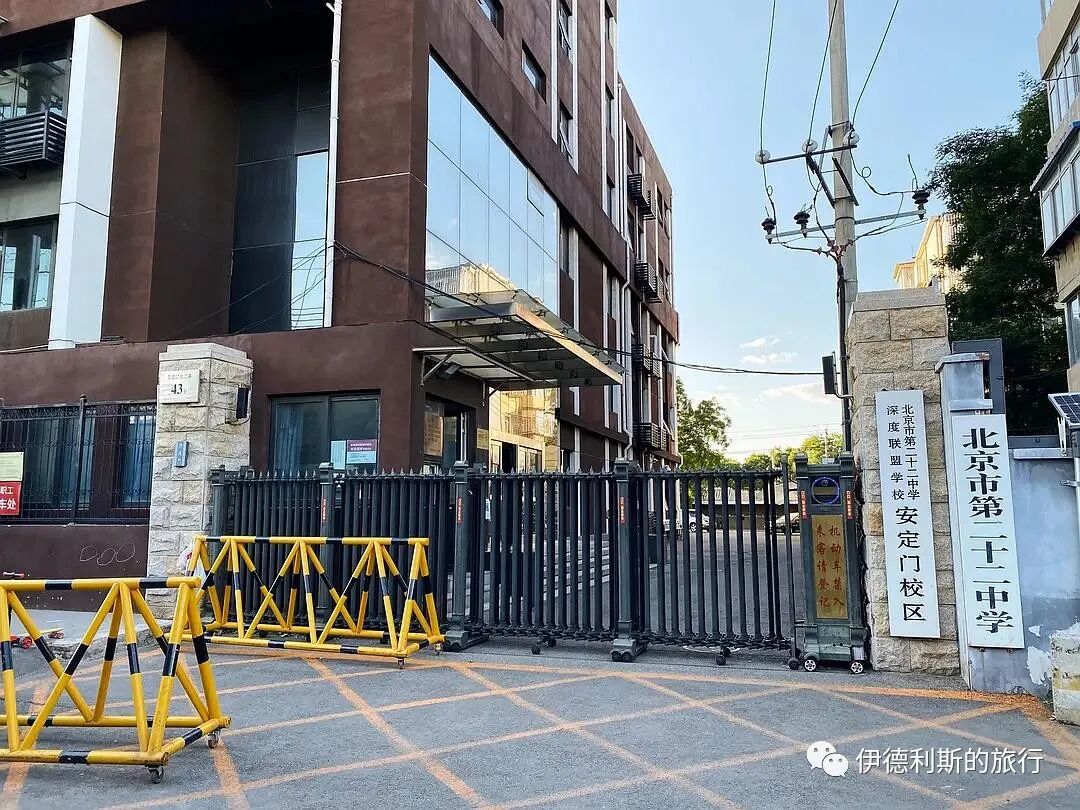
In 1966, Faming Mosque was occupied by a factory and later converted into a school. In 1984, the 600-year-old mosque was demolished by the Jiaodaokou Middle School to make way for a teaching building and playground. Now, this site has become the Andingmen campus of the No. 22 Middle School and a dormitory for the Sixth Hospital.
Behind it is Jiaodaokou Beitiao, where the school playground can be seen.
The only old house next to the playground; it is unknown if it was an old building of Faming Mosque. view all
Summary: This travel note introduces Imperially Granted Faming Mosque: The Last Surviving Stone Stele in Beijing. In front of the main hall of the Dongsi Mosque in Beijing, there is a stone tablet erected in 1579 (the seventh year of the Wanli reign of the Ming Dynasty) titled 'The Hundred-Word Eulogy of the Pure and True. It is useful for readers interested in Faming Mosque, Stone Stele, Beijing Muslims.
In front of the main hall of the Dongsi Mosque in Beijing, there is a stone tablet erected in 1579 (the seventh year of the Wanli reign of the Ming Dynasty) titled 'The Hundred-Word Eulogy of the Pure and True Dharma-Illuminating' (Qingzhen Faming Baizi Shengzan). The content of the inscription is largely similar to the 'Imperial Hundred-Word Eulogy of the Most Holy' (Yuzhi Zhisheng Baizi Zan) from the Hongwu reign of the Ming Dynasty. The signature reads 'Written by the teacher of the ancient Yan faith, who bathed and purified himself to describe it, and donated his salary for the carving,' and the side of the tablet is inscribed with 'Donated by You Kai, Regional Military Commissioner of the Shandong Regional Military Commission.' This stone tablet, which does not look particularly conspicuous, is the only remaining relic of the Faming Mosque, which was bestowed by imperial decree during the Ming Dynasty. It is said that after a fire at Faming Mosque in the early Qing Dynasty, the stone tablet was moved to the Dongsi Mosque.
Faming Mosque was located at No. 43, Beiertiao, Jiaodaokou, inside Andingmen; its old address was No. 22, Datiertiao, Andingmen, which is why it was also called the Datiertiao Mosque. It is said that Faming Mosque was first built in 1348 (the eighth year of the Zhizheng reign of the Yuan Dynasty) and was initially called a mosque. After being rebuilt in 1448 (the thirteenth year of the Zhengtong reign of the Ming Dynasty), it was bestowed the name Faming Mosque by imperial decree. Together with the Dongsi Mosque, the Niujie Mosque, and the Pushou Mosque inside Fuchengmen, it was known as one of the 'Four Great Official Mosques of Ming Dynasty Beijing'. Official mosques refer to those where the Department of Sacrificial Rites under the Ministry of Rites issued 'Zhafu' (official certificates of appointment) to the imams of the mosques. According to Wang Daiyu's 'Zhengjiao Zhenquan: Qunshu Jikao' (True Interpretation of the Orthodox Faith: Collected Examinations of Various Books), after receiving the Zhafu, the imam would 'wear official robes and headwear to honor his body, and was also permitted to be exempt from corvée labor.' "
Faming Mosque was rebuilt many times during the Ming, Qing, and Republican periods, but it still maintained its Ming Dynasty layout, which was quite similar to the Dongsi Mosque. On the 'Complete Map of the Capital during the Qianlong Reign' (Qianlong Jingcheng Quantu), completed in 1750 (the fifteenth year of the Qianlong reign), one can see that the main body of Faming Mosque consisted of a main hall, northern and southern lecture halls, and a minaret (bangkelou). Like the Dongsi Mosque, the main hall of Faming Mosque consisted of a front porch, a middle hall with a hip roof, and a rear kiln-style hall, but its scale was slightly smaller.
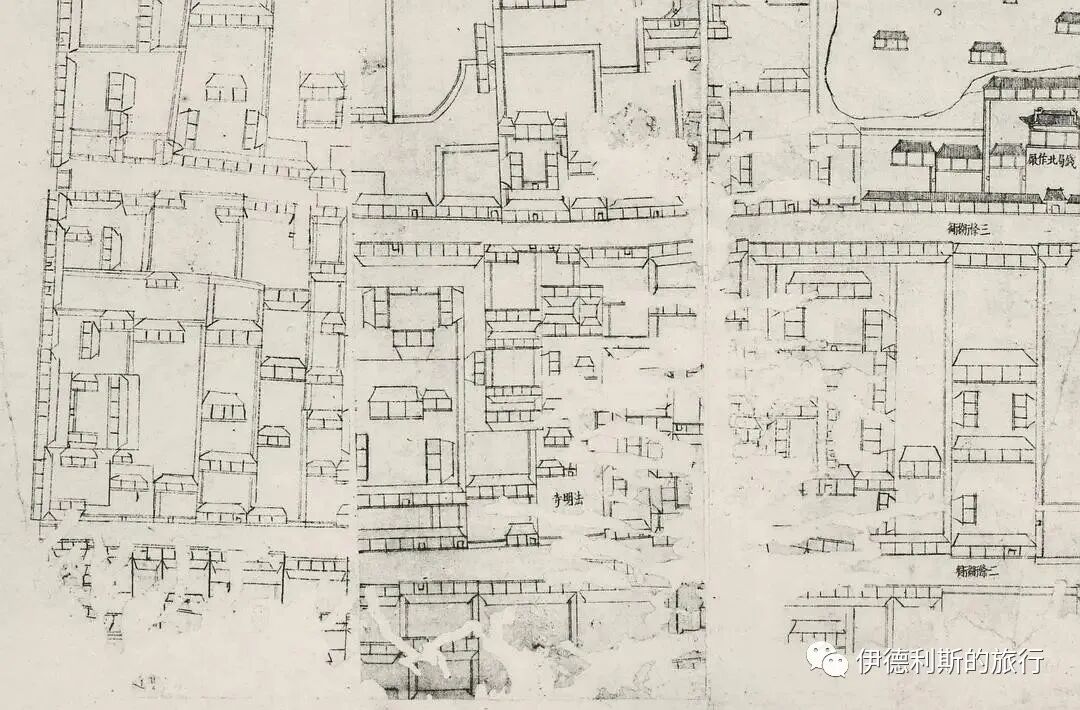
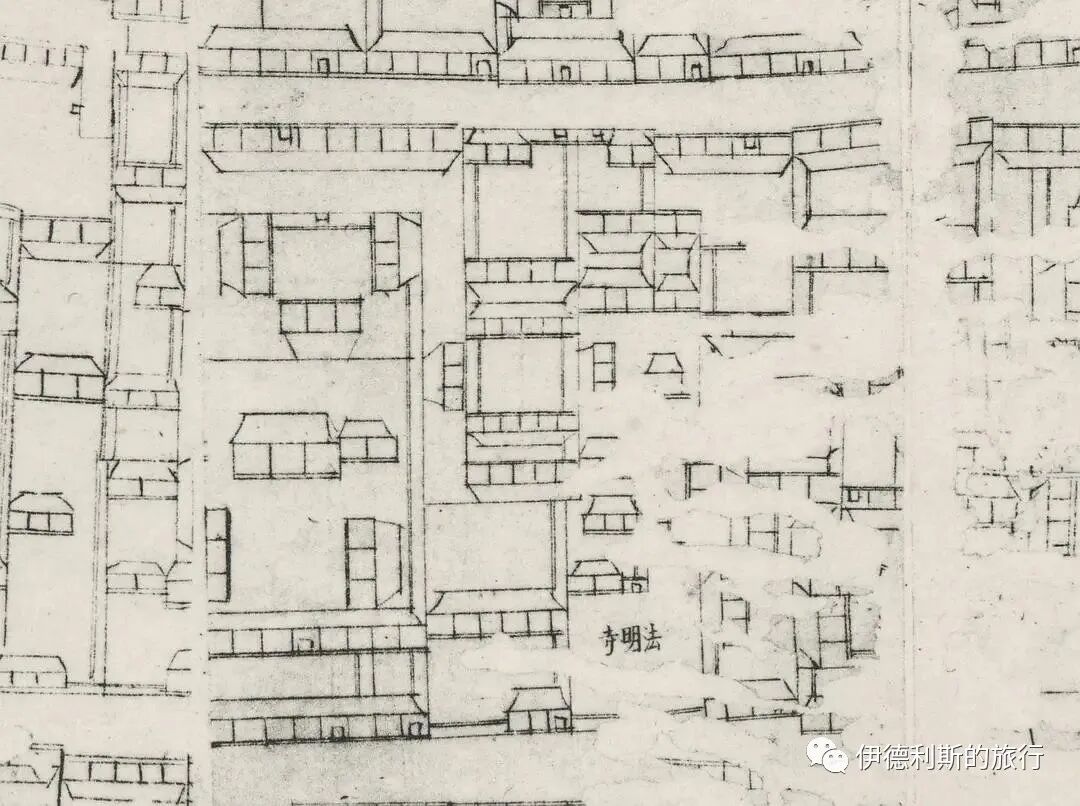
In addition, the National Library of China holds a rubbing of the 'Stele Record of the Reconstruction of the Imperial Faming Mosque' from 1580 (the eighth year of the Wanli reign of the Ming Dynasty), which can be viewed on the National Library's official website. The person who wrote the tablet header was You Kai, the same as for the 'Hundred-Word Eulogy of the Pure and True Dharma-Illuminating' in the Dongsi Mosque, but within a year he had been promoted to 'Imperial Envoy and Vice Regional Military Commissioner of the Shandong Regional Military Commission.' In fact, the imperial construction of official mosques in Ming Dynasty Beijing was related to the Hui Muslim military personnel in the regional military commission and garrison system.
The person who wrote the tablet, Lin Qicai, was a cousin of the great Ming Dynasty thinker Li Zhi. Lin Qicai's ancestral home was Jinjiang, Fujian, and he became a Jinshi (a successful candidate in the highest imperial examinations) in the thirty-eighth year of the Jiajing reign of the Ming Dynasty (1559). According to the 'Fengchi Lin-Li Genealogy,' Lin Qicai's second-generation ancestor, Lin Nu, 'married a Semu woman... and subsequently followed her faith, receiving the precepts of the Qingjing Mosque sect.' When Lin Qicai wrote the tablet, he signed it as 'Lin Qicai, a Jinshi by imperial favor, Fengyi Grand Master, former Director of the Ministry of Revenue, and Assistant Director of the Seal Office (Shangbaosi Sicheng).' 'Shangbaosi Sicheng' (Assistant Director of the Seal Office), according to the 'History of Ming,' was a 'rank 6b official... in charge of imperial seals, tallies, and stamps, and distinguishing their usage.' "
In addition, the Beijing Municipal Administration of Cultural Heritage also holds two rubbings of the 'Stele Record of the Reconstruction of Faming Mosque' from 1880 and 1921. The 1880 stele record notes that it was built by the Heshun Timber Factory at the time, with funds donated by Ma Deming from Beixinqiao East, and that two plaques were hung in the mosque: 'Built in the Ming, Repaired in the Qing' and 'Founded in the Previous Dynasty.' The 1921 stele record was written by Xia Deqing from Daxing, an army colonel and commander of the southern route of the Jingzhao Garrison, with the calligraphy by Xu Yili from Hangxian, the Jingzhao Yin (Mayor of Beijing), and the header written by Chen Zhenjia from Daxing, a first-class clerk at the Shanxi Hedong Circuit Administrative Office.
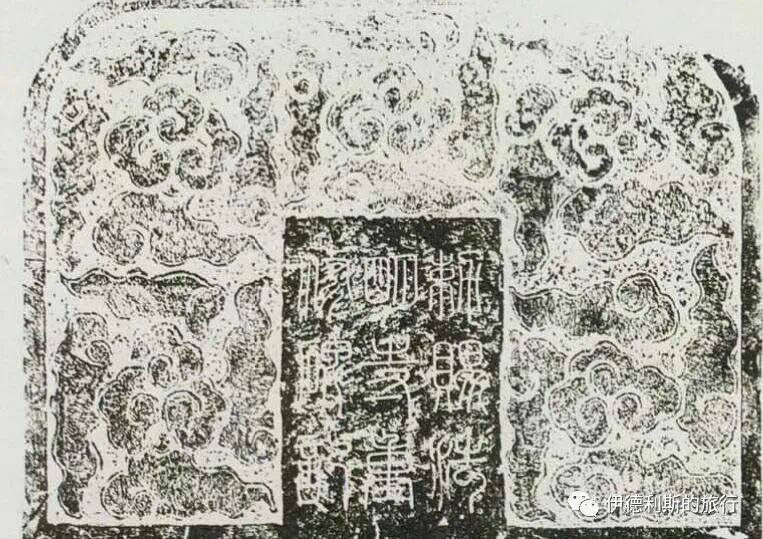
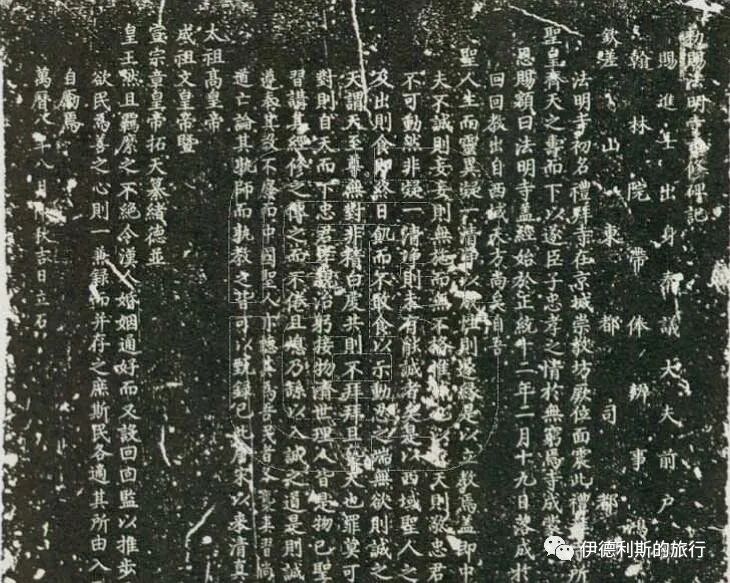
In 1966, Faming Mosque was occupied by a factory and later converted into a school. In 1984, the 600-year-old mosque was demolished by the Jiaodaokou Middle School to make way for a teaching building and playground. Now, this site has become the Andingmen campus of the No. 22 Middle School and a dormitory for the Sixth Hospital.
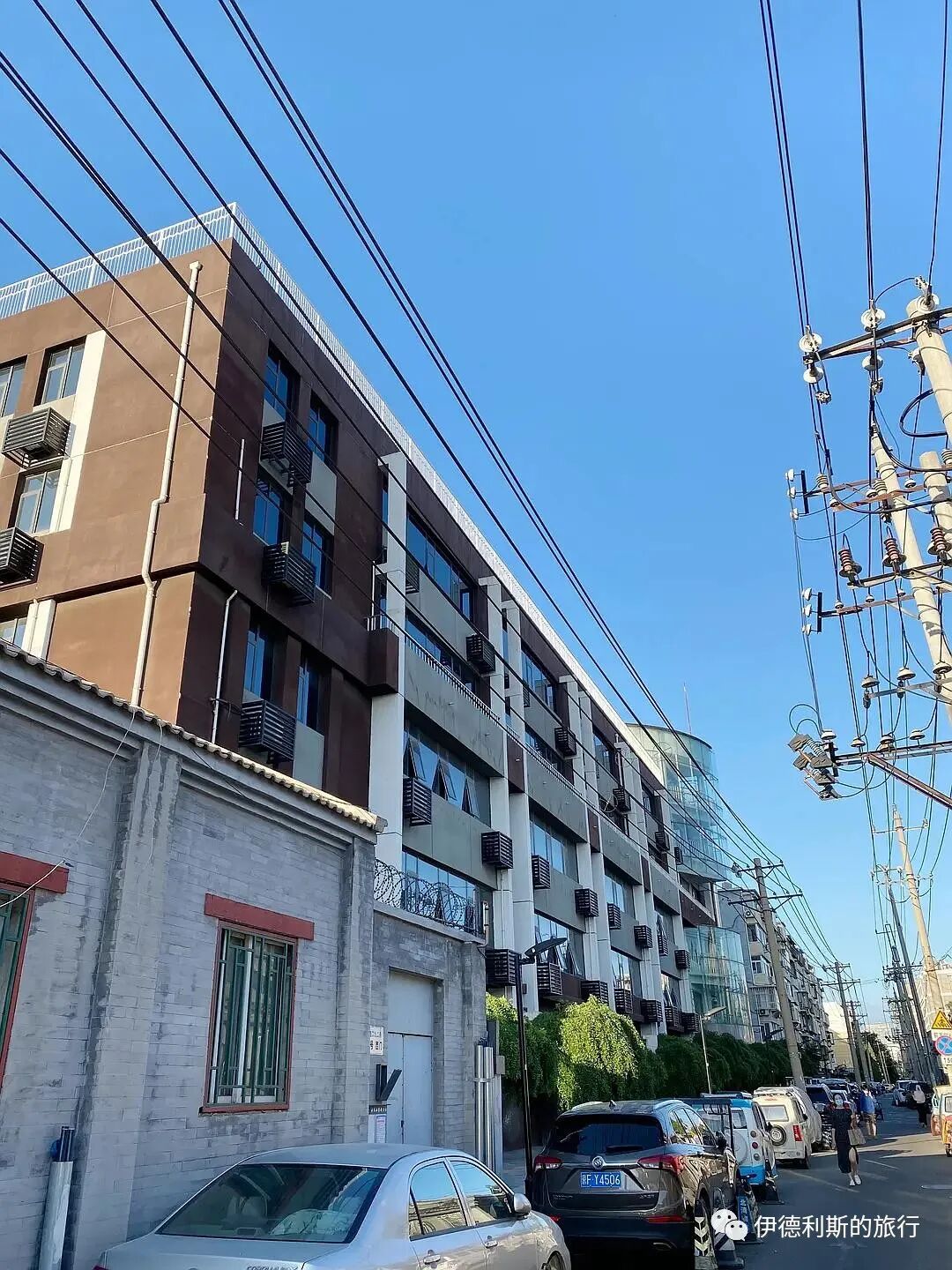
Behind it is Jiaodaokou Beitiao, where the school playground can be seen.
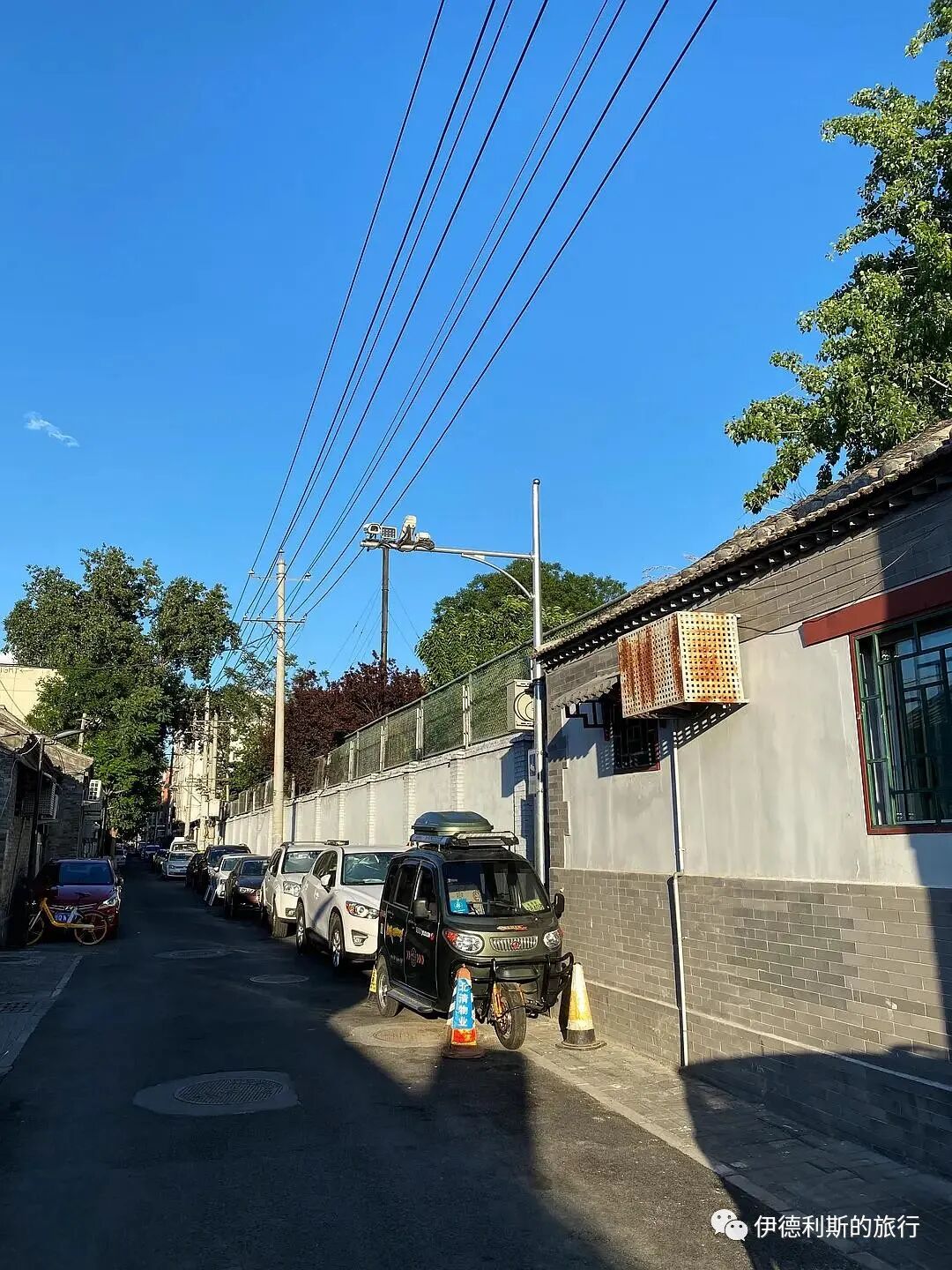
The only old house next to the playground; it is unknown if it was an old building of Faming Mosque.
From the Ilkhanate to Yuan Dadu: A Sufi Traveler and Beijing Muslim Heritage
Articles • ali2007fr posted the article • 0 comments • 176 views • 2026-05-17 07:58
Summary: This travel note introduces From the Ilkhanate to Yuan Dadu: A Sufi Traveler and Beijing Muslim Heritage. Regarding the Muslims who came to Beijing from Central and Western Asia during the Yuan Dynasty, the most famous are the tombs of the Shaykhs in the small courtyard on the south side of the Niujie Mosque, where Ahmad. It is useful for readers interested in Yuan Dadu, Sufi Heritage, Beijing Muslims.
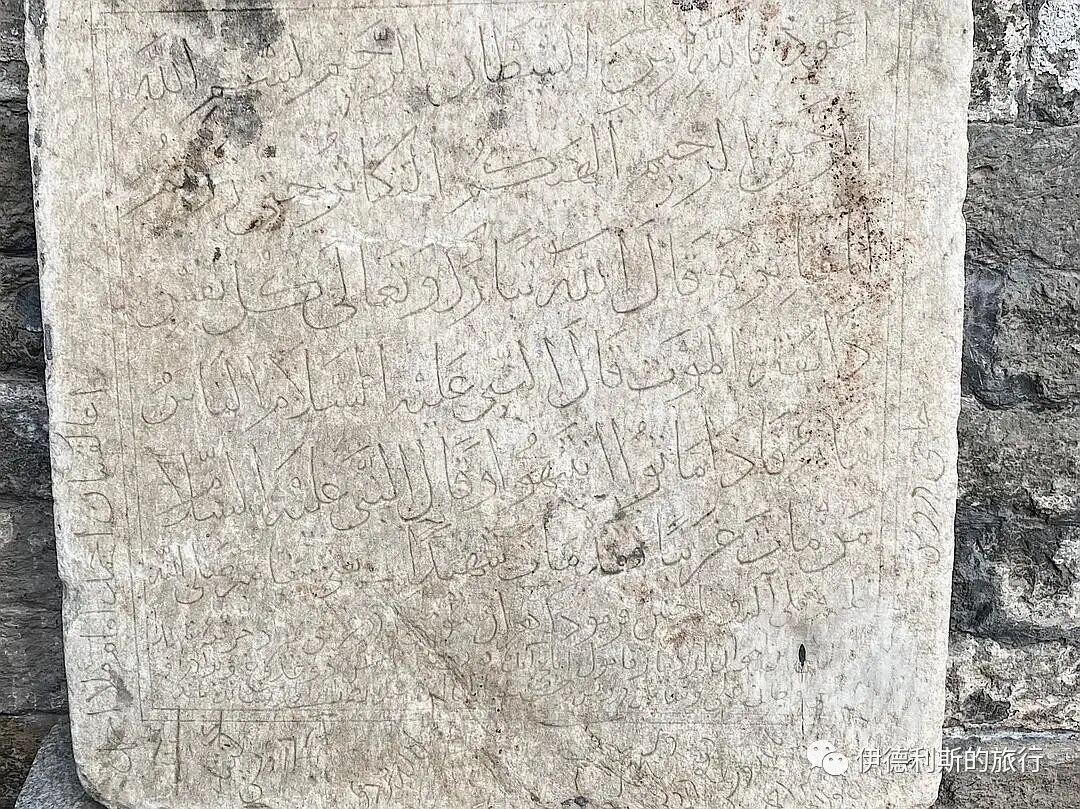
Regarding the Muslims who came to Beijing from Central and Western Asia during the Yuan Dynasty, the most famous are the tombs of the Shaykhs in the small courtyard on the south side of the Niujie Mosque, where Ahmad Burtani, who passed away in 1280, and Ali Imad al-Din, who passed away in 1283, are buried. In fact, the Qingzhen Pushou Mosque inside Fuchengmen also preserves a Yuan Dynasty tombstone of a Muslim who came to Yuan Dadu from the Ilkhanate, and the inscription contains precious records about Sufis of the Yuan Dynasty.
The tombs of the sages from the Western Regions of the Yuan Dynasty at the Niujie Mosque.
According to the interpretation by Ma Baoquan in 'An Overlooked Yuan Dynasty Arabic and Persian Tombstone of Hui Muslims in Beijing—The Tombstone of an Ilkhanate Person Formerly Collected by Beijing Qingzhen Pushou Mosque', the inscription first uses Arabic to engrave the prayer for protection, the Basmala, verses from the Quran, and Hadith, and then uses Persian to briefly introduce the life of the tombstone's owner. The owner of the tombstone was a young man from a place called Qanul in the Ilkhanate (1256-1335). He came to Yuan Dadu (Dughdugh) together with his brothers Darvish, Jan Ali, and X. Darvish. A series of names are listed afterwards: Darvish Yulad, Javahir Ahmad, Man Darvish, Fangh Darvish, Shaykh Muhammad, Aghalaqsan Ahmad, Imam Mula Ahmad, Haj Darvish, and others.
According to the memorial 'Petition Regarding Hui Muslim Households in the Capital Not Paying Taxes' from the Yuan Dynasty, by 1263, the number of Hui Muslims in Beijing had reached 2,953 households, and most of them were wealthy merchants. In 1285, the Yuan Dynasty completed the construction of Yuan Dadu and issued an imperial decree to move residents from the old city of Zhongdu of the Jin Dynasty to Yuan Dadu, leading a large number of Hui Muslim officials, merchants, and craftsmen to settle in Yuan Dadu.
The inscription very preciously mentions several 'Darvish', which means Sufi practitioners, referred to as 'Diliweishi' in the 'Yuan Dianzhang' (Statutes of the Yuan Dynasty). Yang Zhijiu introduced in 'Draft History of the Hui Muslims in the Yuan Dynasty' that when Chen Cheng arrived in Herat, Afghanistan, in 1414 (the 12th year of the Yongle reign of the Ming Dynasty), he met local Sufi ascetics. He recorded in 'Xiyu Fanguo Zhi' (Record of the Barbarian Countries in the Western Regions) that 'there are those who abandon their family businesses and livelihoods, with disheveled hair and bare feet, wearing tattered clothes or sheepskins, holding strange staffs, with bones hanging from their bodies, looking very strange, not avoiding cold or heat, begging on the road, muttering to themselves when meeting people, appearing pitiful, as if it is very difficult for them to survive.' 'Some gather at people's graves, or live in caves, calling it spiritual practice.' 'They are called Dilimishi.' "
In addition, according to the 'Travels of Ibn Battuta' from the end of the Yuan Dynasty, Ibn Battuta met local Sufi practitioners in both Guangzhou and Hangzhou. He visited an old man in Guangzhou who was practicing in a cave, who was very strong despite not eating or drinking. When he was in Hangzhou, he stayed in the home of an Egyptian merchant, and this family had built a magnificent Daotang (Sufi lodge) for Sufi practitioners to live in.
Qingzhen Pushou Mosque is located on Jinshifang Street in the Xicheng District of Beijing, which was called Jinchengfang Street during the Yuan Dynasty. Although it preserves a precious Yuan Dynasty tombstone, no records have been found so far indicating that the Pushou Mosque was built during the Yuan Dynasty. Because a plaque with the seal 'Built in the Fourth Year of Xuande of the Great Ming' once hung above the Chuihuamen (hanging flower gate) of the mosque, it is generally believed that the Pushou Mosque was founded in 1429 (the fourth year of the Xuande reign of the Ming Dynasty), and it was renovated many times during the Zhengton, Wanli, Tianqi, and Chongzhen reigns of the Ming Dynasty.
During the Ming Dynasty, the Pushou Mosque, along with the Niujie Mosque, the Dongsi Mosque, and the Faming Mosque inside Andingmen, were known as the four great official mosques of Beijing in the Ming Dynasty, and held a very high status. According to the inscription on the 'Record of the Reconstruction of the Mosque' from 1521 (the 16th year of the Zhengde reign) at the Dingzhou Mosque, during the Hongzhi reign of the Ming Dynasty, Wuping Bo (Count of Wuping) Chen Xun sought help from the congregation at the Pushou Mosque to renovate the Dingzhou Mosque and received great support, as the mosque was filled with 'gentry and scholars' at that time.
After the end of the Qing Dynasty and the beginning of the Republic of China, the Pushou Mosque gradually fell into disrepair, and it was renovated between 1931 and 1934 with funds donated by Jiang Baiwan from Nanjing. After 1966, the mosque was closed again and converted into a workshop for the Jinlong Watchband Factory, and it was restored after 1982. After the demolition of Jinshifang Street in 2008, the mosque was torn down, and it was rebuilt into its current form between 2010 and 2014, but it has remained closed ever since.
There are two stone tablets in front of the main hall of the Pushou Mosque; the one on the south side is in Chinese, mainly praising the merits of those who donated funds to renovate the mosque, signed by 'Jincheng Shushi Ma Zhiji', and the back has the words 'Renovated in the Sixth Year of Tianqi'. The one on the north side is an Arabic tablet, and the writing has already eroded and become illegible.
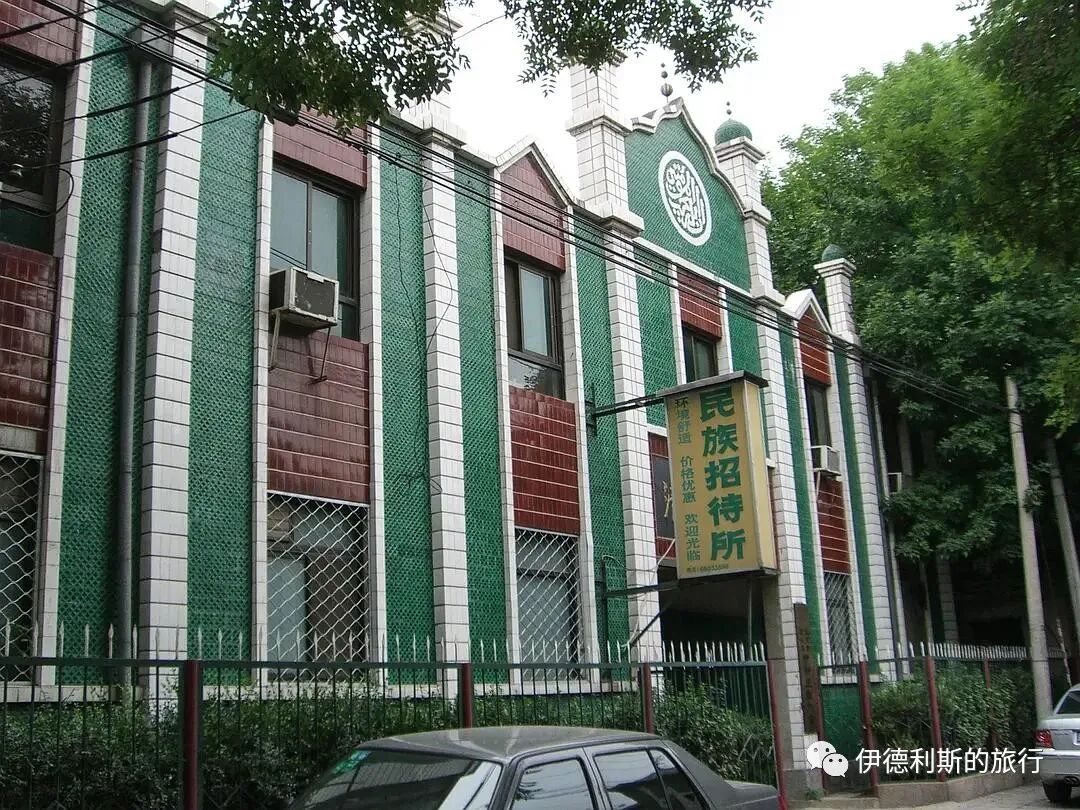
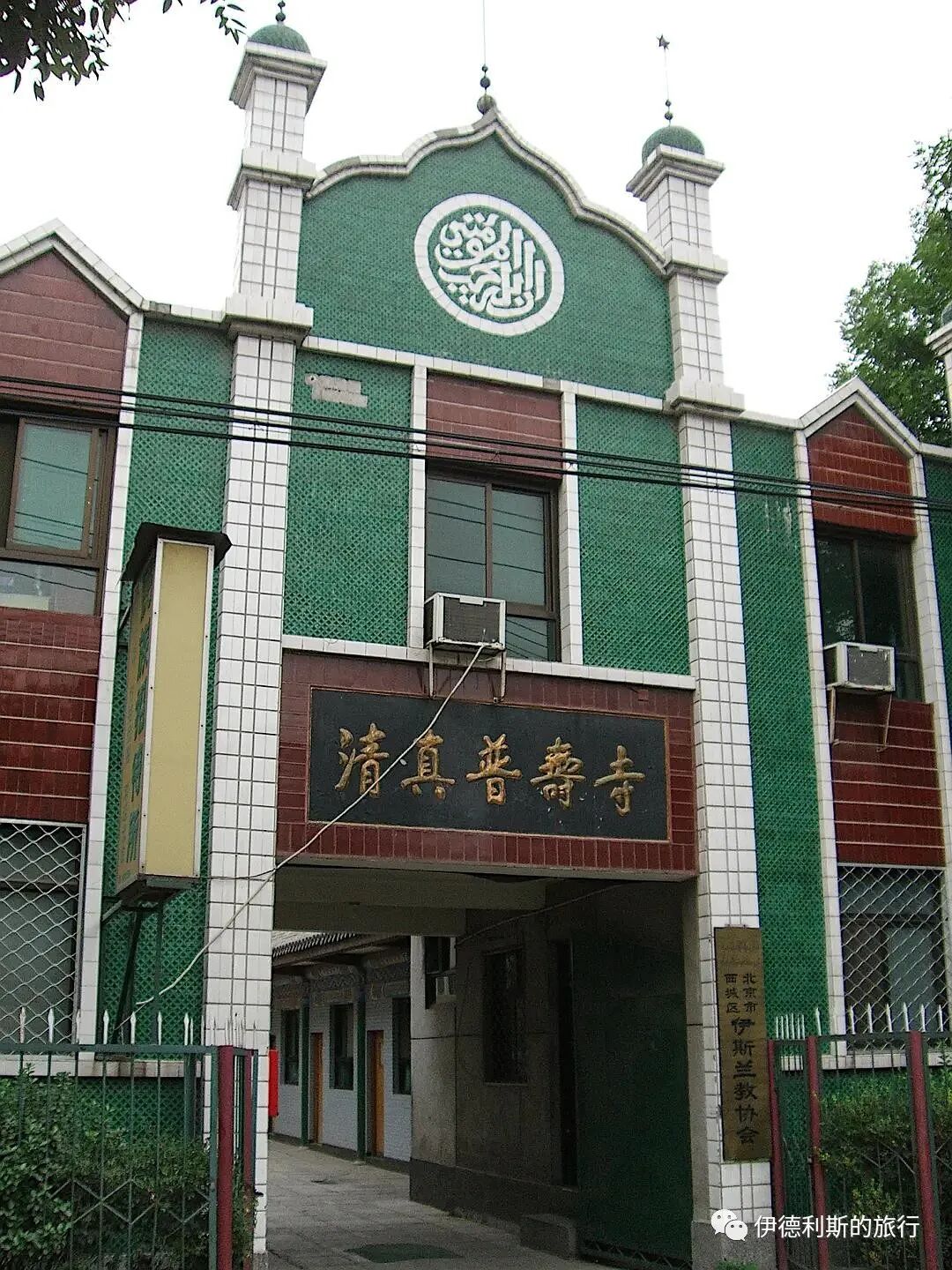
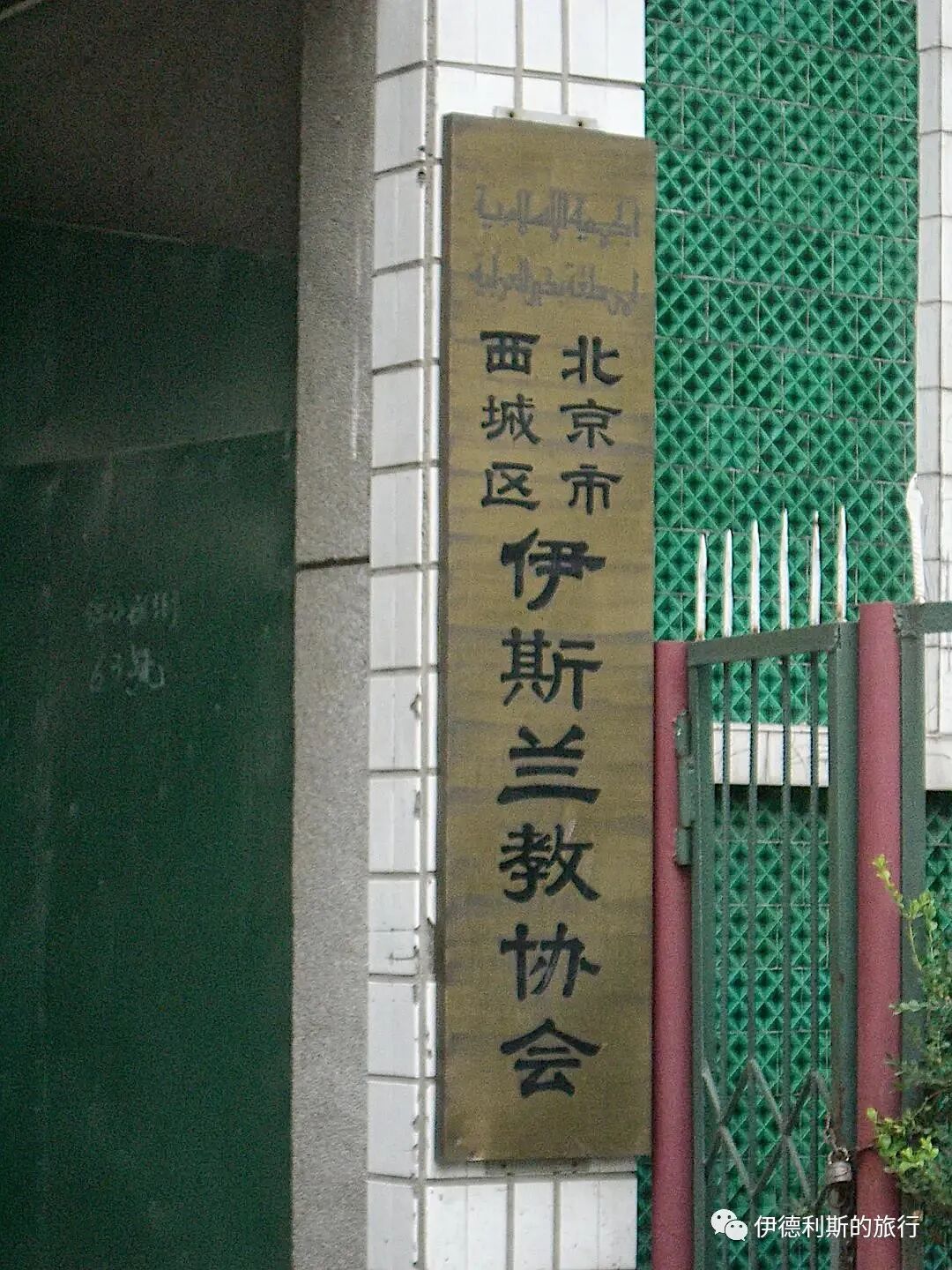
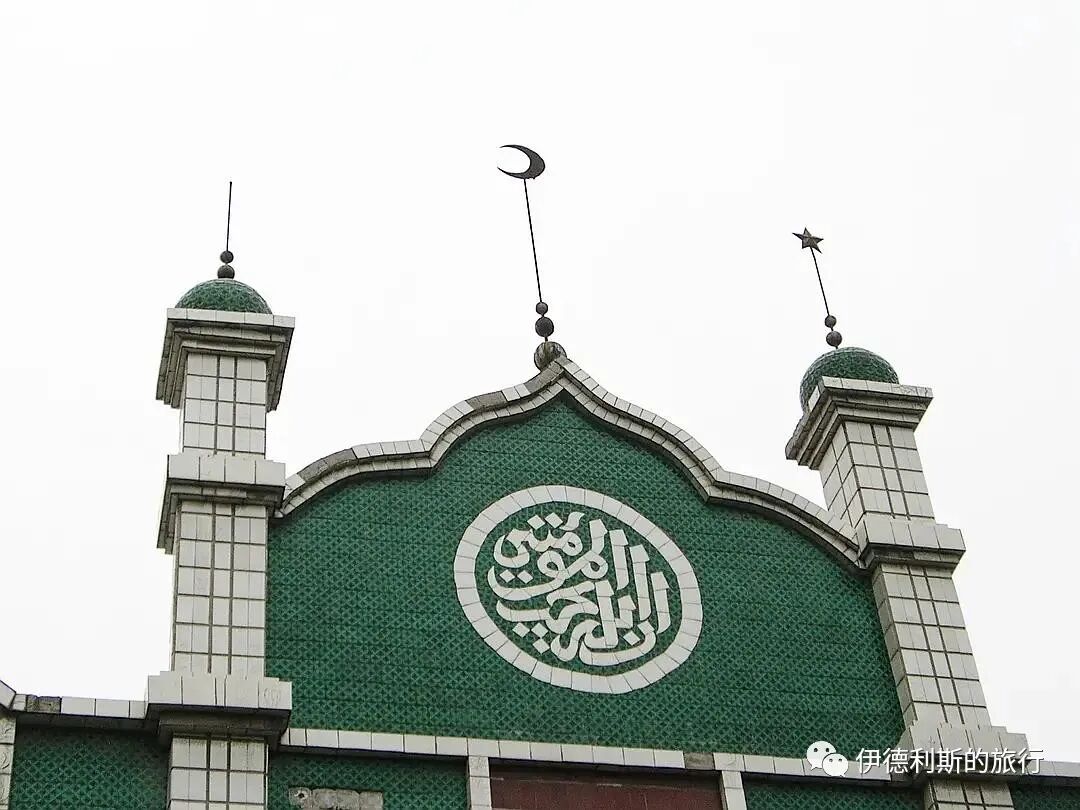
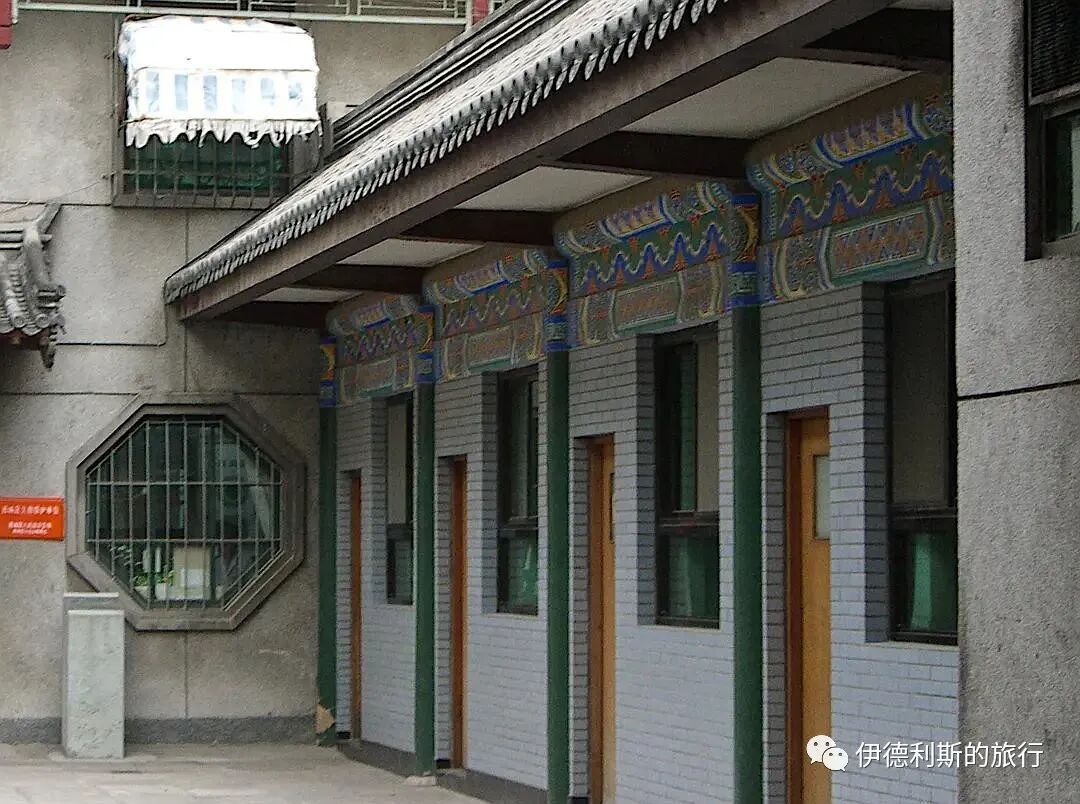
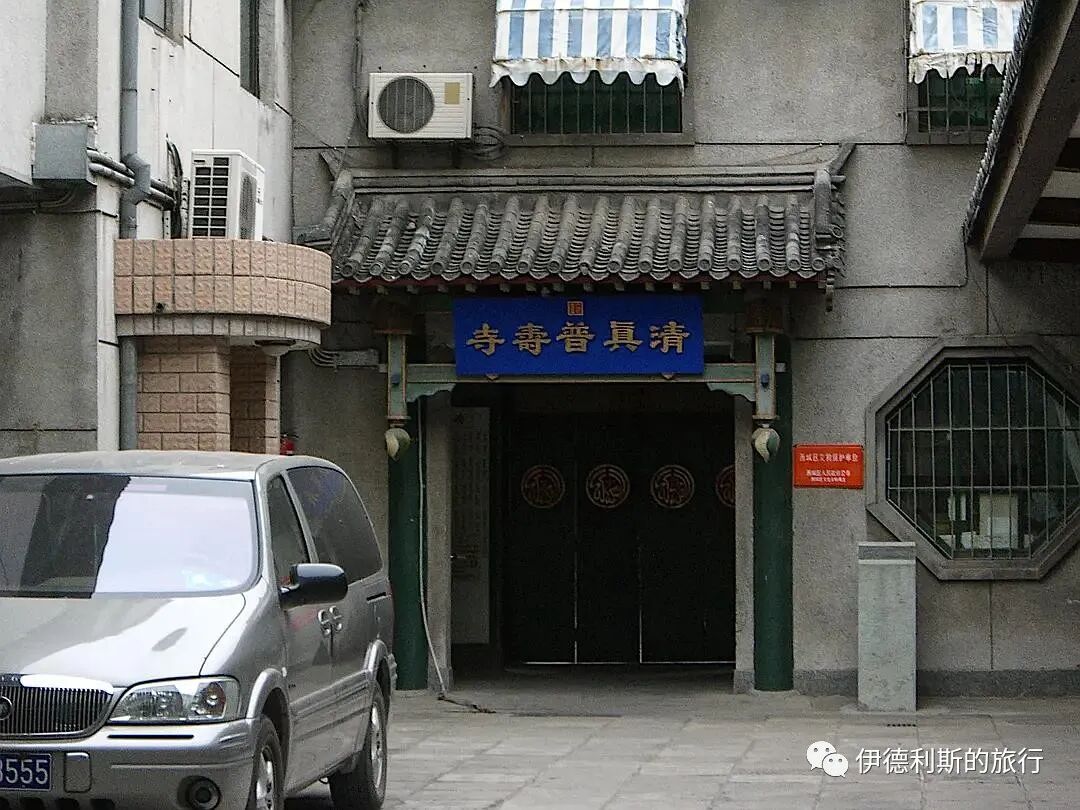
The Pushou Mosque I photographed in 2006 when I was in middle school; two years later, in 2008, it was demolished and rebuilt. view all
Summary: This travel note introduces From the Ilkhanate to Yuan Dadu: A Sufi Traveler and Beijing Muslim Heritage. Regarding the Muslims who came to Beijing from Central and Western Asia during the Yuan Dynasty, the most famous are the tombs of the Shaykhs in the small courtyard on the south side of the Niujie Mosque, where Ahmad. It is useful for readers interested in Yuan Dadu, Sufi Heritage, Beijing Muslims.
Regarding the Muslims who came to Beijing from Central and Western Asia during the Yuan Dynasty, the most famous are the tombs of the Shaykhs in the small courtyard on the south side of the Niujie Mosque, where Ahmad Burtani, who passed away in 1280, and Ali Imad al-Din, who passed away in 1283, are buried. In fact, the Qingzhen Pushou Mosque inside Fuchengmen also preserves a Yuan Dynasty tombstone of a Muslim who came to Yuan Dadu from the Ilkhanate, and the inscription contains precious records about Sufis of the Yuan Dynasty.
The tombs of the sages from the Western Regions of the Yuan Dynasty at the Niujie Mosque.
According to the interpretation by Ma Baoquan in 'An Overlooked Yuan Dynasty Arabic and Persian Tombstone of Hui Muslims in Beijing—The Tombstone of an Ilkhanate Person Formerly Collected by Beijing Qingzhen Pushou Mosque', the inscription first uses Arabic to engrave the prayer for protection, the Basmala, verses from the Quran, and Hadith, and then uses Persian to briefly introduce the life of the tombstone's owner. The owner of the tombstone was a young man from a place called Qanul in the Ilkhanate (1256-1335). He came to Yuan Dadu (Dughdugh) together with his brothers Darvish, Jan Ali, and X. Darvish. A series of names are listed afterwards: Darvish Yulad, Javahir Ahmad, Man Darvish, Fangh Darvish, Shaykh Muhammad, Aghalaqsan Ahmad, Imam Mula Ahmad, Haj Darvish, and others.
According to the memorial 'Petition Regarding Hui Muslim Households in the Capital Not Paying Taxes' from the Yuan Dynasty, by 1263, the number of Hui Muslims in Beijing had reached 2,953 households, and most of them were wealthy merchants. In 1285, the Yuan Dynasty completed the construction of Yuan Dadu and issued an imperial decree to move residents from the old city of Zhongdu of the Jin Dynasty to Yuan Dadu, leading a large number of Hui Muslim officials, merchants, and craftsmen to settle in Yuan Dadu.
The inscription very preciously mentions several 'Darvish', which means Sufi practitioners, referred to as 'Diliweishi' in the 'Yuan Dianzhang' (Statutes of the Yuan Dynasty). Yang Zhijiu introduced in 'Draft History of the Hui Muslims in the Yuan Dynasty' that when Chen Cheng arrived in Herat, Afghanistan, in 1414 (the 12th year of the Yongle reign of the Ming Dynasty), he met local Sufi ascetics. He recorded in 'Xiyu Fanguo Zhi' (Record of the Barbarian Countries in the Western Regions) that 'there are those who abandon their family businesses and livelihoods, with disheveled hair and bare feet, wearing tattered clothes or sheepskins, holding strange staffs, with bones hanging from their bodies, looking very strange, not avoiding cold or heat, begging on the road, muttering to themselves when meeting people, appearing pitiful, as if it is very difficult for them to survive.' 'Some gather at people's graves, or live in caves, calling it spiritual practice.' 'They are called Dilimishi.' "
In addition, according to the 'Travels of Ibn Battuta' from the end of the Yuan Dynasty, Ibn Battuta met local Sufi practitioners in both Guangzhou and Hangzhou. He visited an old man in Guangzhou who was practicing in a cave, who was very strong despite not eating or drinking. When he was in Hangzhou, he stayed in the home of an Egyptian merchant, and this family had built a magnificent Daotang (Sufi lodge) for Sufi practitioners to live in.
Qingzhen Pushou Mosque is located on Jinshifang Street in the Xicheng District of Beijing, which was called Jinchengfang Street during the Yuan Dynasty. Although it preserves a precious Yuan Dynasty tombstone, no records have been found so far indicating that the Pushou Mosque was built during the Yuan Dynasty. Because a plaque with the seal 'Built in the Fourth Year of Xuande of the Great Ming' once hung above the Chuihuamen (hanging flower gate) of the mosque, it is generally believed that the Pushou Mosque was founded in 1429 (the fourth year of the Xuande reign of the Ming Dynasty), and it was renovated many times during the Zhengton, Wanli, Tianqi, and Chongzhen reigns of the Ming Dynasty.
During the Ming Dynasty, the Pushou Mosque, along with the Niujie Mosque, the Dongsi Mosque, and the Faming Mosque inside Andingmen, were known as the four great official mosques of Beijing in the Ming Dynasty, and held a very high status. According to the inscription on the 'Record of the Reconstruction of the Mosque' from 1521 (the 16th year of the Zhengde reign) at the Dingzhou Mosque, during the Hongzhi reign of the Ming Dynasty, Wuping Bo (Count of Wuping) Chen Xun sought help from the congregation at the Pushou Mosque to renovate the Dingzhou Mosque and received great support, as the mosque was filled with 'gentry and scholars' at that time.
After the end of the Qing Dynasty and the beginning of the Republic of China, the Pushou Mosque gradually fell into disrepair, and it was renovated between 1931 and 1934 with funds donated by Jiang Baiwan from Nanjing. After 1966, the mosque was closed again and converted into a workshop for the Jinlong Watchband Factory, and it was restored after 1982. After the demolition of Jinshifang Street in 2008, the mosque was torn down, and it was rebuilt into its current form between 2010 and 2014, but it has remained closed ever since.
There are two stone tablets in front of the main hall of the Pushou Mosque; the one on the south side is in Chinese, mainly praising the merits of those who donated funds to renovate the mosque, signed by 'Jincheng Shushi Ma Zhiji', and the back has the words 'Renovated in the Sixth Year of Tianqi'. The one on the north side is an Arabic tablet, and the writing has already eroded and become illegible.
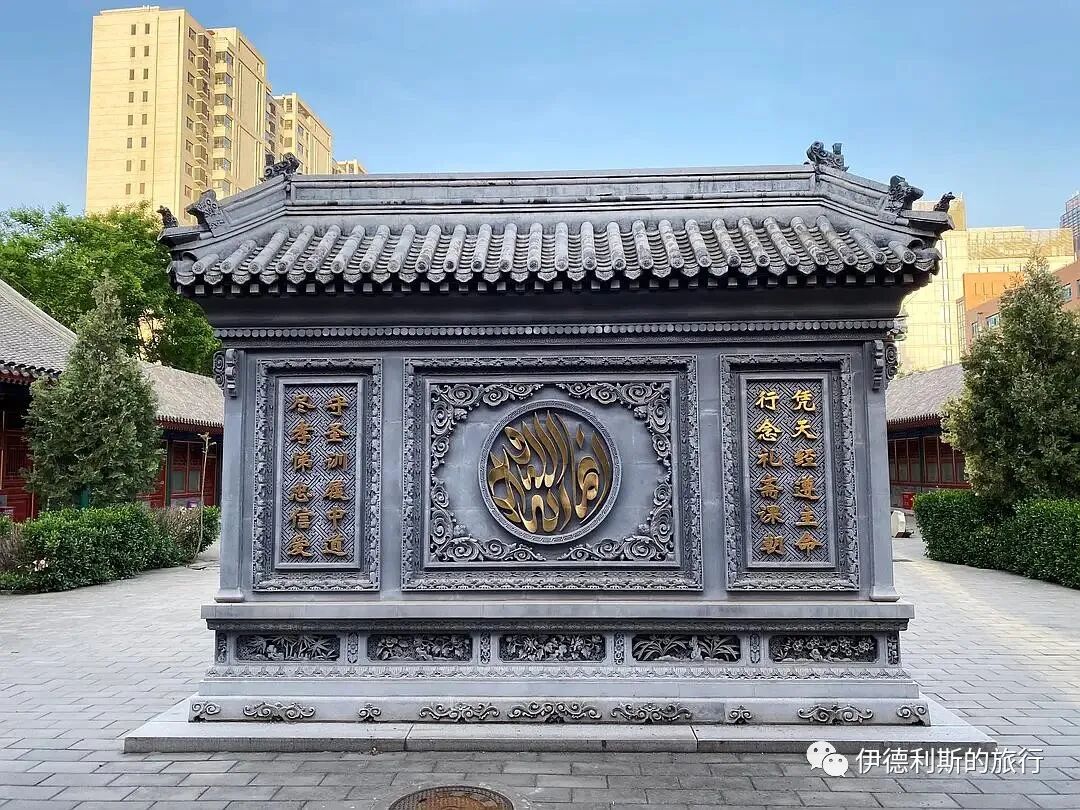
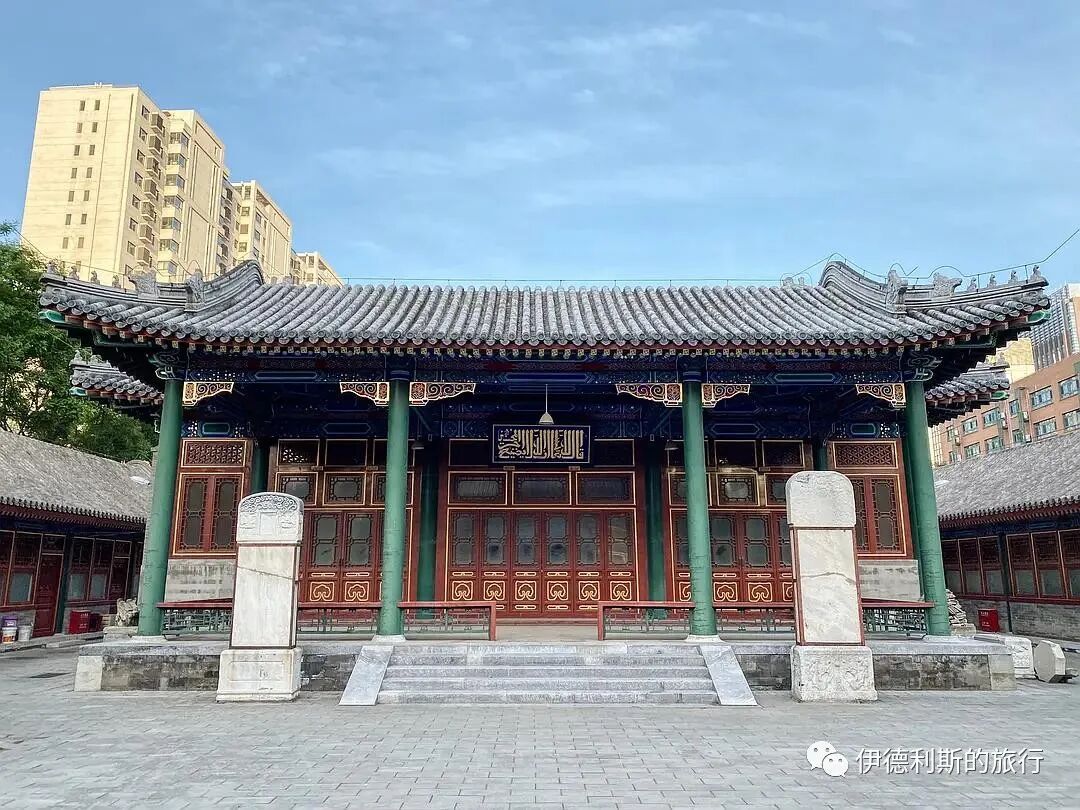
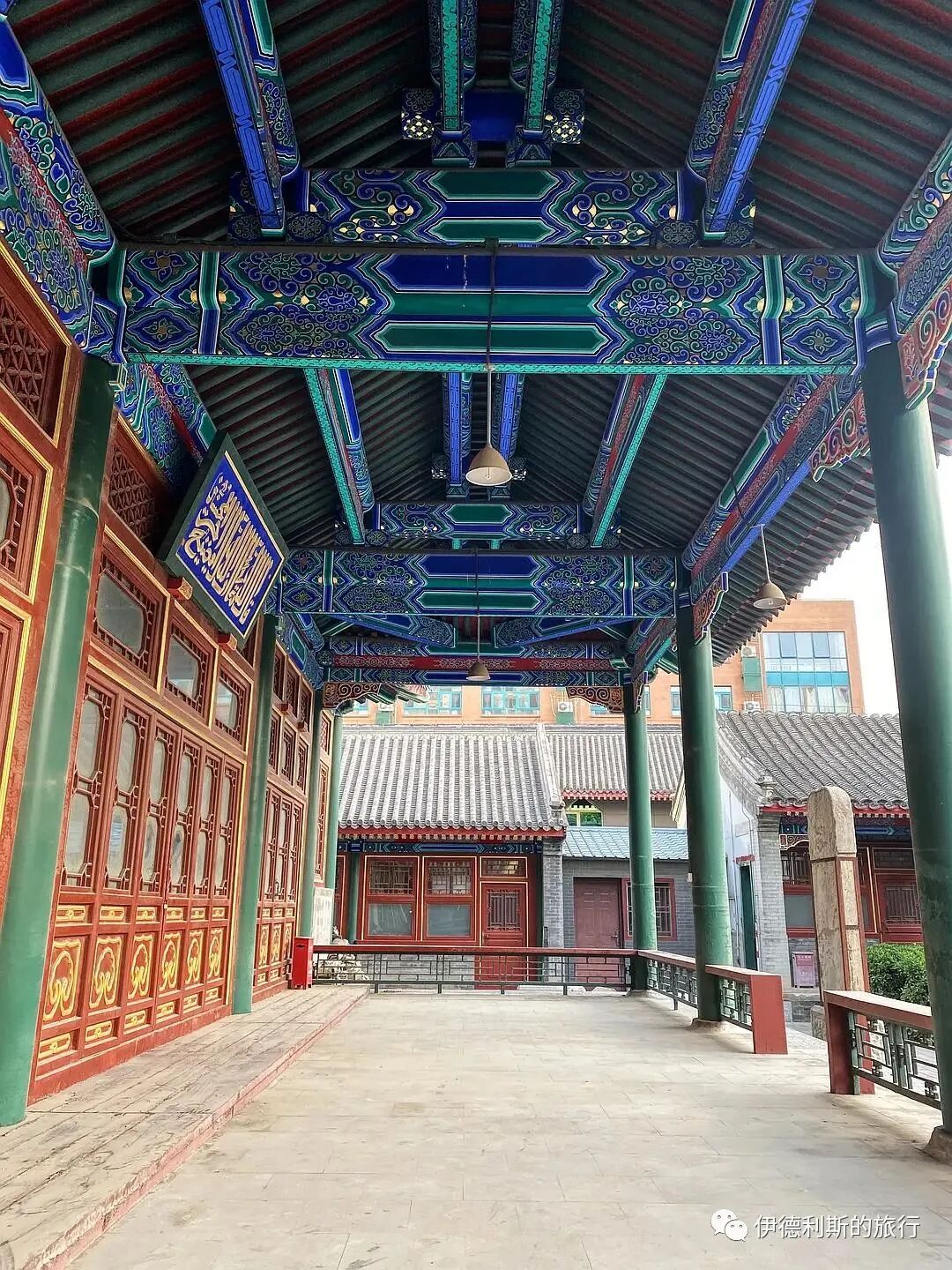
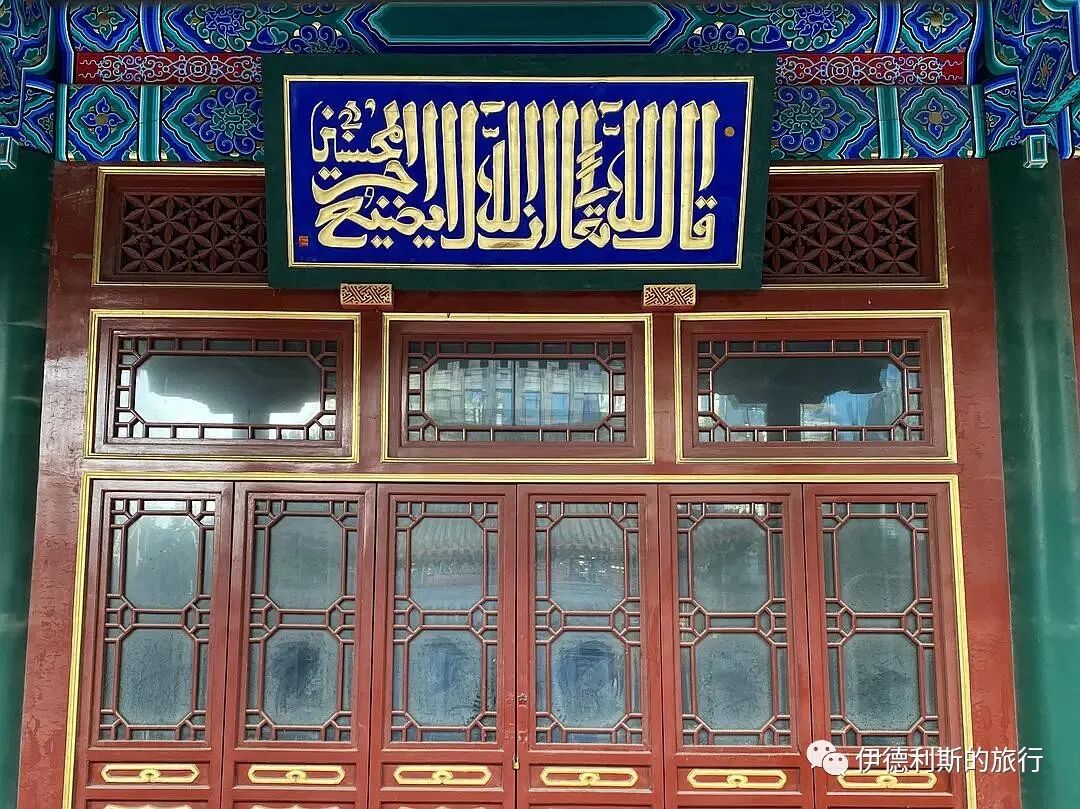
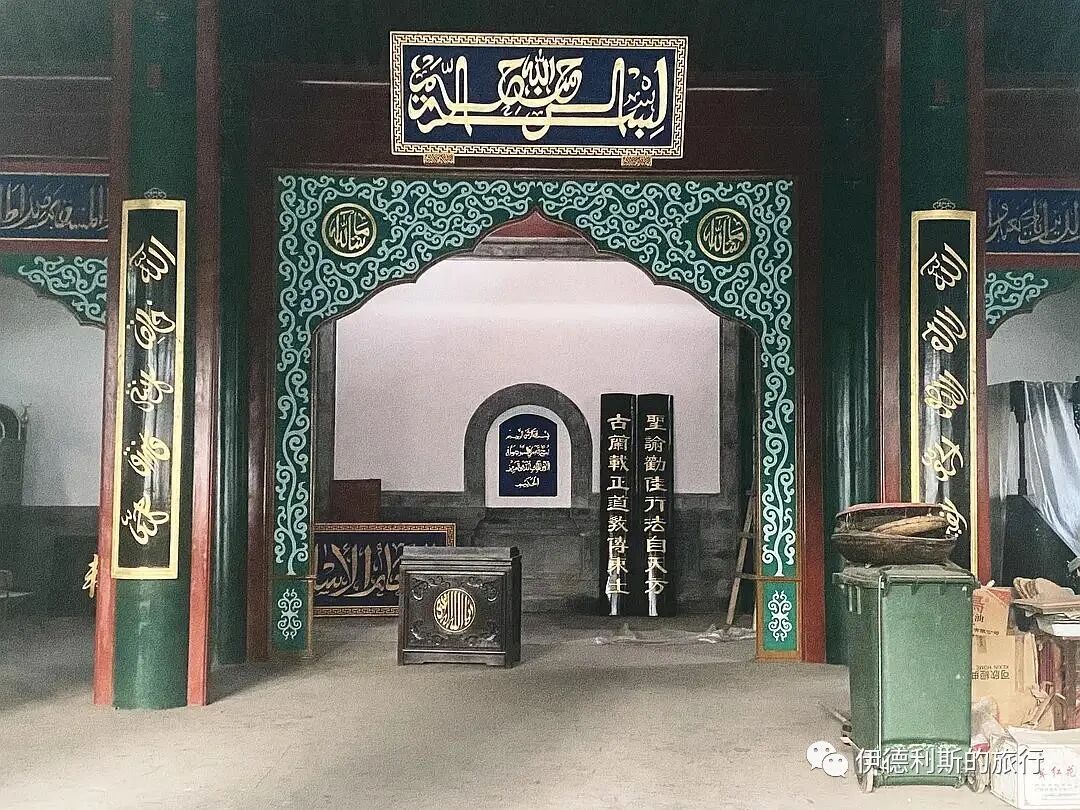
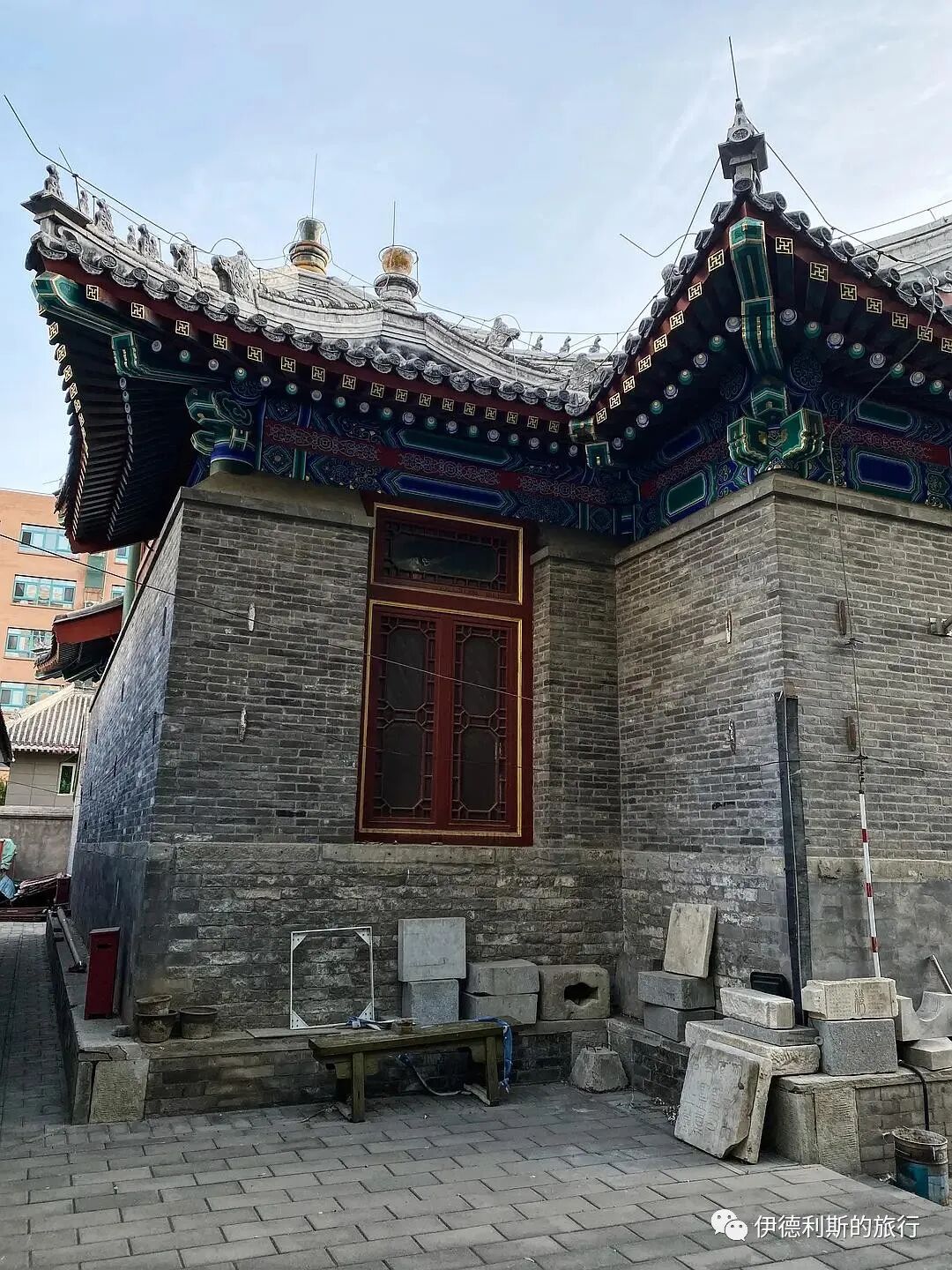
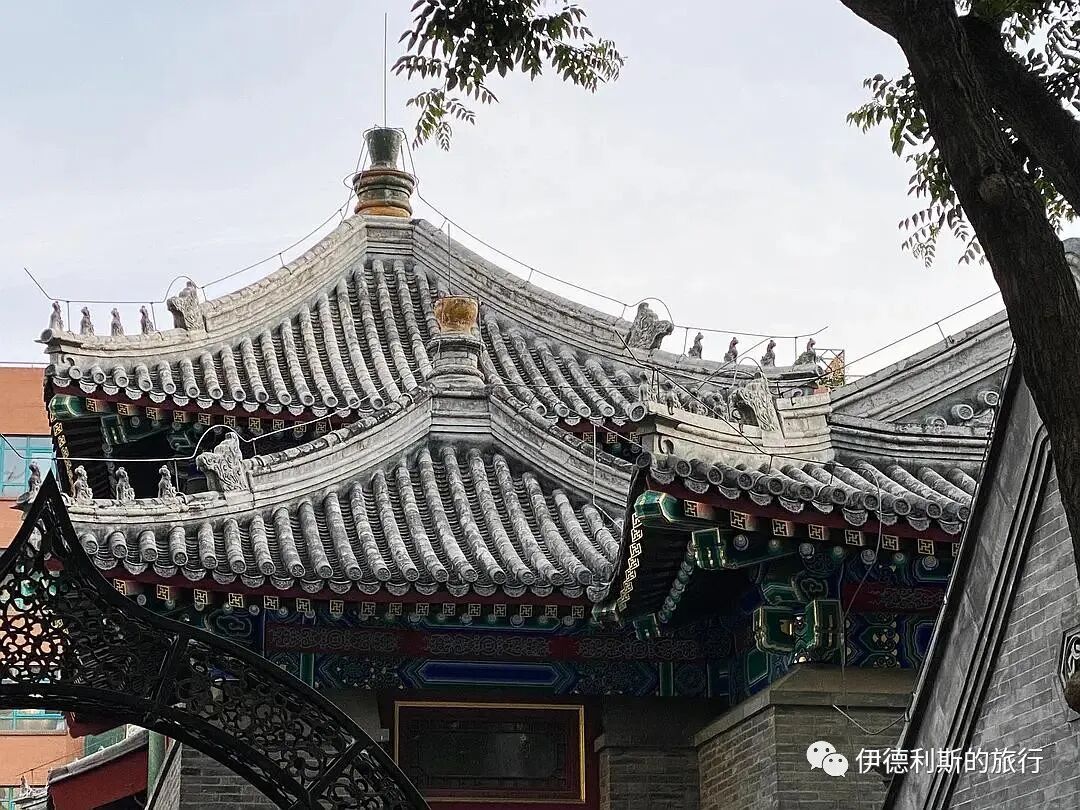
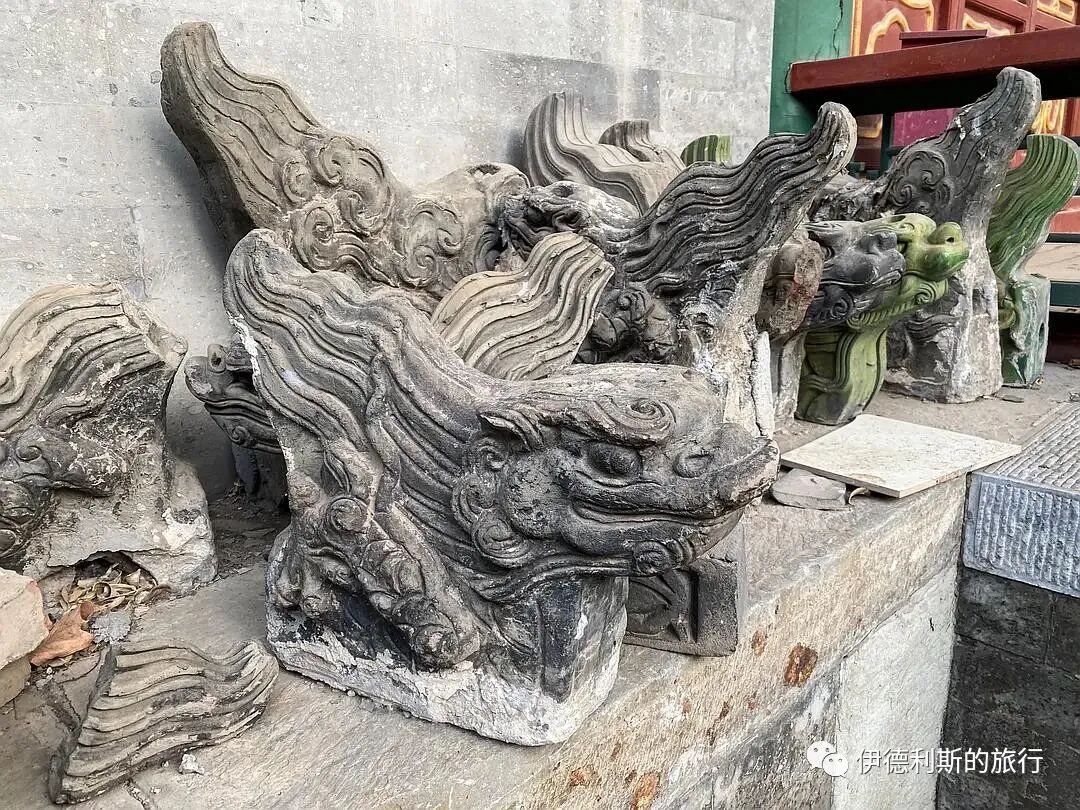
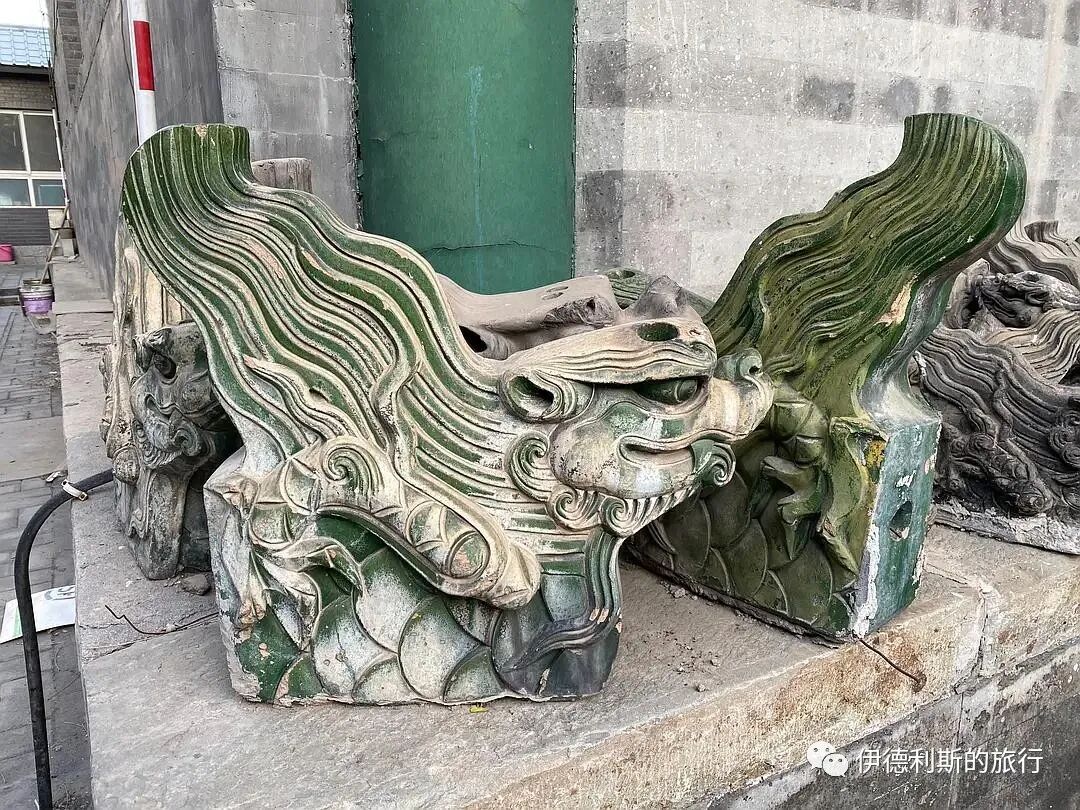
The Pushou Mosque I photographed in 2006 when I was in middle school; two years later, in 2008, it was demolished and rebuilt.
Hidden Muslim Heritage in Changping: Sheikh Baba Tomb and Beijing Hui Memorial Gathering
Articles • ali2007fr posted the article • 0 comments • 214 views • 2026-05-21 08:03
Summary: This Changping article records the annual gathering at Sheikh Baba’s tomb in Heying, Beijing, including the saint’s story, Hui Muslim visitors, dua, and community remembrance.
Yesterday was the 24th day of the third lunar month, the date of the annual memorial gathering (gan'ermaili) at the tomb of the saintly elder Baha Haji Sheikh Baba in Heying, Changping, Beijing. On this day, friends (dost) from Gansu, Ningxia, Inner Mongolia, and across Beijing gathered here to remember the saint, learn about his life, and reflect on his great virtues and lasting influence on future generations.
The saint came to China from Medina during the Hongwu reign of the Ming Dynasty to offer advice to the capital, where he was highly respected by the Ming Emperor Taizu. He refused the official titles offered to him, asking only to travel and teach the faith to the local people. The saint traveled everywhere on a white camel, living with strict discipline and high moral character, winning people over through his virtuous deeds. The saint eventually arrived in Heying, Changping, where he taught, preached, and performed many acts of kindness before passing away and being buried there. For hundreds of years, local villagers have told the story of how the saint killed a python on Mangshan Mountain to protect the people, a righteous act that brought blessings to the area and earned him lasting fame.
We are here to learn from the saint's indifference to fame and wealth, his humility, his integrity, and his lack of interest in vanity. We learn from the saint's kindness and love, his dedication to teaching others, his devotion to Allah, his love for people, and his friendly relations with neighbors. We learn from the saint's perseverance in spreading the true path, his steadfast faith, and his service to the community. May we work together with one heart to bring the saint's virtues into our daily lives, respect education, help those in need, live in harmony, and ensure the light of the true path continues forever. view all
Summary: This Changping article records the annual gathering at Sheikh Baba’s tomb in Heying, Beijing, including the saint’s story, Hui Muslim visitors, dua, and community remembrance.
Yesterday was the 24th day of the third lunar month, the date of the annual memorial gathering (gan'ermaili) at the tomb of the saintly elder Baha Haji Sheikh Baba in Heying, Changping, Beijing. On this day, friends (dost) from Gansu, Ningxia, Inner Mongolia, and across Beijing gathered here to remember the saint, learn about his life, and reflect on his great virtues and lasting influence on future generations.
The saint came to China from Medina during the Hongwu reign of the Ming Dynasty to offer advice to the capital, where he was highly respected by the Ming Emperor Taizu. He refused the official titles offered to him, asking only to travel and teach the faith to the local people. The saint traveled everywhere on a white camel, living with strict discipline and high moral character, winning people over through his virtuous deeds. The saint eventually arrived in Heying, Changping, where he taught, preached, and performed many acts of kindness before passing away and being buried there. For hundreds of years, local villagers have told the story of how the saint killed a python on Mangshan Mountain to protect the people, a righteous act that brought blessings to the area and earned him lasting fame.
We are here to learn from the saint's indifference to fame and wealth, his humility, his integrity, and his lack of interest in vanity. We learn from the saint's kindness and love, his dedication to teaching others, his devotion to Allah, his love for people, and his friendly relations with neighbors. We learn from the saint's perseverance in spreading the true path, his steadfast faith, and his service to the community. May we work together with one heart to bring the saint's virtues into our daily lives, respect education, help those in need, live in harmony, and ensure the light of the true path continues forever.
Nowruz in Beijing: Persian New Year Food, Music and Muslim Community Celebration
Articles • ali2007fr posted the article • 0 comments • 194 views • 2026-05-21 06:45
Summary: This Beijing Nowruz account records a Persian New Year gathering with food, music, guests from many countries, and the cultural details of the celebration as described in the source.
March 21st this year is the Persian New Year. Many countries influenced by Persian culture celebrate the Nowruz festival during this time, including Afghanistan, Albania, Azerbaijan, India, Iran, Iraq (Kurdish region), Syria (Kurdish region), Kazakhstan, Kyrgyzstan, Pakistan, Tajikistan, Turkey (Kurdish region), Turkmenistan, and Uzbekistan.
After the Afghan Taliban came to power in 2022, they stated that Nowruz would not be a public holiday, but they still allowed celebrations to take place. In Albania, Sunni Muslims, Catholics, and Orthodox Christians celebrate Nowruz together to welcome the arrival of spring. Shia Muslims believe that Nowruz is the day Imam Ali became Caliph, so they place special importance on it, performing special acts of worship and offering blessings.
On Sunday, March 29th, the Embassy of Kazakhstan in China, the Ministry of Culture and Information of Kazakhstan, and the Kazakhstan Cultural Center in Beijing held a Nowruz festival event at Chaoyang Park in Beijing. They invited national-level orchestras and dance troupes from Kazakhstan, along with many Kazakh cultural products, festive foods, and traditional clothing. It was a great opportunity to learn about Nowruz and Kazakh culture.
Speech by the Ambassador of Kazakhstan to China.
This shows the Kazakh first-steps ceremony (Tusau Keser). It is a life-initiation ritual held when a Kazakh baby turns one year old. The core of the ceremony is cutting the rope tied to the child's legs, which symbolizes breaking free from constraints and starting a path toward an independent life. After the rope is cut, an elder leads the child forward. Items like books, pens, a two-stringed lute (dombra), coins, and knives are placed on the ground for the child to grab, similar to the traditional 'grabbing the first birthday gift' custom. Finally, everyone offers blessings to the child and tosses candies, dried yogurt balls (kurt), and coins into the air.
The event featured Kazakhstan's top orchestra, Astana Sazy (Rhythm of Astana). Here are a few clips of them accompanying excellent Kazakh singers.
Astana Sazy is the national folk orchestra of Kazakhstan, affiliated with the state performance organization 'Kazakh Concert.' It is the core group for promoting traditional music and cultural diplomacy in Kazakhstan. The orchestra uses traditional Kazakh instruments like the zither (jetigen), the two-stringed lute (dombra), and the bowed string instrument (kobyz). Rooted in Kazakh nomadic culture, they are famous for playing folk music.
A wonderful performance by two Kazakh musicians playing and singing with the two-stringed lute (dombra).
The event featured the national-level Kazakh folk song and dance troupe, Gulder Ensemble. The troupe was formed in 1969. It started as an all-female group and debuted with the dance drama 'Steppe Movement,' which was praised as 'a bouquet picked from the snowy peaks of Alatau scattered across the stage.' In the 1970s, the troupe traveled throughout the Soviet Union and later went abroad, touring in Belgium, Germany, Malaysia, and Cuba, training a group of legendary Kazakh dancers. The troupe was quiet for a time until it was relaunched in 2023 with a new lineup at the Kazakhstan Central Concert Hall, allowing a new generation of audiences to experience the charm of traditional Kazakh folk dance.
We drank Nowruz porridge (Nauryz Kozhe) and boiled fruit drink (Compote), and ate Kazakh fried dough pastry (Shek-Shek) and chicken baked buns (Samsa).
Nowruz porridge can only be eaten once a year during the Nowruz festival. Kazakh Nowruz porridge must contain at least seven ingredients, including barley, rice, wheat, smoked horse meat, dried yogurt balls (kurt), salt, and water. These foods are made with winter-slaughtered meat and stored grain, expressing the wish for abundance year after year.
Compote is made by boiling water with sugar and fruits like plums, cherries, or apples. In summer, fresh fruit is used, and in winter, dried fruit is used. I drank water boiled with dried apples, which is a drink frequently served at Kazakh banquets and in daily life.
Fried dough pastry (Shek-Shek) is a must-have snack for Kazakh weddings, Nowruz, and other festivals, symbolizing sweetness, reunion, and a good harvest. To make it, flour is mixed with eggs, rolled into strips, cut into pieces, and fried until golden and crispy. Then, honey syrup is drizzled over it, and it is sprinkled with nuts and dried fruit after cooling. Honey cake (chak-chak) is very common in Tatarstan and among other Central Asian peoples. The Tatars call it chak-chak, and I even visited a chak-chak museum in Kazan.
Everyone took turns taking photos with the Kazakh warriors, who were at least two meters tall.
Kazakh shredded meat pilaf (plov) is full of carrots.
Fried dough puffs (baursak).
During the Nowruz festival, the Kazakh restaurant Sandyq in Beijing hosts traditional Kazakh music performances every night at 7:30, and they give away free fried dough puffs (baursak) and Nowruz porridge.
We also ate sheep tail and liver (kuyryk bauyr), meat-filled pies (baramysh), horse meat noodle soup (tomyrtqa), and millet milk tea (talqan), which are all classic Kazakh dishes.
Kuyryk bauyr literally means sheep tail and liver. It is stir-fried with only salt and served with yogurt. This is a classic dish for Kazakh engagement ceremonies. After the bride's family slaughters a sheep, the elders serve the sheep tail and liver to the groom's guests while singing blessings. If you don't eat it, they might jokingly pretend to sew your clothes to the felt mat or smear oil on your face, symbolizing that the two families are officially joined and cannot back out. There is a Kazakh proverb that says, 'Only after eating the sheep tail and liver is the marriage officially set.'
Meat-filled pie (baramysh) is a leavened dough pastry that originated with the Tatars and Bashkirs. It spread to the Kazakhs in the 19th century and became a classic street food during the Soviet era. Like baked buns (samsa), baramysh is filled with lamb and onions, but it uses leavened dough. The top is left open, the edges are pinched shut, and it is deep-fried until golden. It is best eaten dipped in tomato sauce and paired with milk tea.
Horse meat noodle soup (tomyrtqa sorpasy) is the noodle soup version of meat and noodles (naryn), making it perfect for winter. This one-pot dish of boiled meat and noodles is perfect for festivals, hosting guests, and moving between nomadic pastures. To make it, boil the horse meat first, then cook the noodles in the broth. It is rich, salty, and savory, with the unique smoky flavor of smoked horse meat.
Kazakh millet milk tea (talqan) is made by boiling broomcorn millet, brick tea, milk, and salt. The golden millet grains are washed, roasted, and hulled to become crispy, adding a toasted grain aroma to the milk tea. view all
Summary: This Beijing Nowruz account records a Persian New Year gathering with food, music, guests from many countries, and the cultural details of the celebration as described in the source.
March 21st this year is the Persian New Year. Many countries influenced by Persian culture celebrate the Nowruz festival during this time, including Afghanistan, Albania, Azerbaijan, India, Iran, Iraq (Kurdish region), Syria (Kurdish region), Kazakhstan, Kyrgyzstan, Pakistan, Tajikistan, Turkey (Kurdish region), Turkmenistan, and Uzbekistan.
After the Afghan Taliban came to power in 2022, they stated that Nowruz would not be a public holiday, but they still allowed celebrations to take place. In Albania, Sunni Muslims, Catholics, and Orthodox Christians celebrate Nowruz together to welcome the arrival of spring. Shia Muslims believe that Nowruz is the day Imam Ali became Caliph, so they place special importance on it, performing special acts of worship and offering blessings.
On Sunday, March 29th, the Embassy of Kazakhstan in China, the Ministry of Culture and Information of Kazakhstan, and the Kazakhstan Cultural Center in Beijing held a Nowruz festival event at Chaoyang Park in Beijing. They invited national-level orchestras and dance troupes from Kazakhstan, along with many Kazakh cultural products, festive foods, and traditional clothing. It was a great opportunity to learn about Nowruz and Kazakh culture.
Speech by the Ambassador of Kazakhstan to China.
This shows the Kazakh first-steps ceremony (Tusau Keser). It is a life-initiation ritual held when a Kazakh baby turns one year old. The core of the ceremony is cutting the rope tied to the child's legs, which symbolizes breaking free from constraints and starting a path toward an independent life. After the rope is cut, an elder leads the child forward. Items like books, pens, a two-stringed lute (dombra), coins, and knives are placed on the ground for the child to grab, similar to the traditional 'grabbing the first birthday gift' custom. Finally, everyone offers blessings to the child and tosses candies, dried yogurt balls (kurt), and coins into the air.
The event featured Kazakhstan's top orchestra, Astana Sazy (Rhythm of Astana). Here are a few clips of them accompanying excellent Kazakh singers.
Astana Sazy is the national folk orchestra of Kazakhstan, affiliated with the state performance organization 'Kazakh Concert.' It is the core group for promoting traditional music and cultural diplomacy in Kazakhstan. The orchestra uses traditional Kazakh instruments like the zither (jetigen), the two-stringed lute (dombra), and the bowed string instrument (kobyz). Rooted in Kazakh nomadic culture, they are famous for playing folk music.
A wonderful performance by two Kazakh musicians playing and singing with the two-stringed lute (dombra).
The event featured the national-level Kazakh folk song and dance troupe, Gulder Ensemble. The troupe was formed in 1969. It started as an all-female group and debuted with the dance drama 'Steppe Movement,' which was praised as 'a bouquet picked from the snowy peaks of Alatau scattered across the stage.' In the 1970s, the troupe traveled throughout the Soviet Union and later went abroad, touring in Belgium, Germany, Malaysia, and Cuba, training a group of legendary Kazakh dancers. The troupe was quiet for a time until it was relaunched in 2023 with a new lineup at the Kazakhstan Central Concert Hall, allowing a new generation of audiences to experience the charm of traditional Kazakh folk dance.
We drank Nowruz porridge (Nauryz Kozhe) and boiled fruit drink (Compote), and ate Kazakh fried dough pastry (Shek-Shek) and chicken baked buns (Samsa).
Nowruz porridge can only be eaten once a year during the Nowruz festival. Kazakh Nowruz porridge must contain at least seven ingredients, including barley, rice, wheat, smoked horse meat, dried yogurt balls (kurt), salt, and water. These foods are made with winter-slaughtered meat and stored grain, expressing the wish for abundance year after year.
Compote is made by boiling water with sugar and fruits like plums, cherries, or apples. In summer, fresh fruit is used, and in winter, dried fruit is used. I drank water boiled with dried apples, which is a drink frequently served at Kazakh banquets and in daily life.
Fried dough pastry (Shek-Shek) is a must-have snack for Kazakh weddings, Nowruz, and other festivals, symbolizing sweetness, reunion, and a good harvest. To make it, flour is mixed with eggs, rolled into strips, cut into pieces, and fried until golden and crispy. Then, honey syrup is drizzled over it, and it is sprinkled with nuts and dried fruit after cooling. Honey cake (chak-chak) is very common in Tatarstan and among other Central Asian peoples. The Tatars call it chak-chak, and I even visited a chak-chak museum in Kazan.
Everyone took turns taking photos with the Kazakh warriors, who were at least two meters tall.
Kazakh shredded meat pilaf (plov) is full of carrots.
Fried dough puffs (baursak).
During the Nowruz festival, the Kazakh restaurant Sandyq in Beijing hosts traditional Kazakh music performances every night at 7:30, and they give away free fried dough puffs (baursak) and Nowruz porridge.
We also ate sheep tail and liver (kuyryk bauyr), meat-filled pies (baramysh), horse meat noodle soup (tomyrtqa), and millet milk tea (talqan), which are all classic Kazakh dishes.
Kuyryk bauyr literally means sheep tail and liver. It is stir-fried with only salt and served with yogurt. This is a classic dish for Kazakh engagement ceremonies. After the bride's family slaughters a sheep, the elders serve the sheep tail and liver to the groom's guests while singing blessings. If you don't eat it, they might jokingly pretend to sew your clothes to the felt mat or smear oil on your face, symbolizing that the two families are officially joined and cannot back out. There is a Kazakh proverb that says, 'Only after eating the sheep tail and liver is the marriage officially set.'
Meat-filled pie (baramysh) is a leavened dough pastry that originated with the Tatars and Bashkirs. It spread to the Kazakhs in the 19th century and became a classic street food during the Soviet era. Like baked buns (samsa), baramysh is filled with lamb and onions, but it uses leavened dough. The top is left open, the edges are pinched shut, and it is deep-fried until golden. It is best eaten dipped in tomato sauce and paired with milk tea.
Horse meat noodle soup (tomyrtqa sorpasy) is the noodle soup version of meat and noodles (naryn), making it perfect for winter. This one-pot dish of boiled meat and noodles is perfect for festivals, hosting guests, and moving between nomadic pastures. To make it, boil the horse meat first, then cook the noodles in the broth. It is rich, salty, and savory, with the unique smoky flavor of smoked horse meat.
Kazakh millet milk tea (talqan) is made by boiling broomcorn millet, brick tea, milk, and salt. The golden millet grains are washed, roasted, and hulled to become crispy, adding a toasted grain aroma to the milk tea.
Halal Travel Guide: Ramadan 2025 at Beijing Balizhuang Mosque
Articles • ali2007fr posted the article • 0 comments • 140 views • 2026-05-20 02:20
Summary: This article looks back at Ramadan 2025 at Balizhuang Mosque in Beijing. It keeps the original community scenes, iftar details, prayers, people, and photographs in a clean English layout.
This is my third Ramadan at the Balizhuang mosque in Beijing. The atmosphere at the mosque is great and the food is delicious, so it feels worth it even when I have to squeeze onto the subway during the evening rush hour on workdays.
This year, the mosque put the post-prayer recitations for Taraweeh on a large whiteboard, which helps everyone recite together more smoothly. The benefit of praying Taraweeh at the mosque is that you follow the imam and do not make mistakes, whereas I sometimes lose focus when praying alone. Another benefit is the strong sense of community when we break our fast together, and it is very powerful when we all recite the post-prayer words together.
First, let me share the snacks and fruits for breaking the fast. You can eat various traditional Beijing snacks carefully made by the elders here, such as steamed rice cakes (aiwowo), candied yam rolls (tangjuanguo), glutinous rice rolls with bean flour (lvdagun), fried sweet potato (zha baishu), ginger juice fried dough crisps (jiangzhi paicha), salt and pepper fried dough crisps (jiaoyan paicha), lotus root with glutinous rice (nuomi ou), sticky rice cake (niangao), yellow rice cake (huangmi gao), jujube corn buns (zao wotou), pea flour cake (wandouhuang), and sugar ear pastries (tang erduo).
The dinner after the sunset prayer (maghrib) is also wonderful, featuring rice with stir-fried dishes, noodles with gravy (dalu mian), steamed buns (baozi), and fish head with flatbread (yutou paobing), which rotate daily.
Side dishes for the rice include fried meat (songrou), braised chicken legs (huangmen jitu), minced meat with green beans, braised eggplant, and braised meatballs. For soups and porridge, there is winter melon meatball soup, tofu puff soup, and mung bean porridge. Of course, fermented bean drink (douzhi) with fermented bean curd (ma doufu) is also a major Beijing specialty!
Once a week, we have noodles with gravy (dalu mian) and noodles with eggplant (qieding mian). The vegetable toppings include blanched cabbage, celery, cowpeas, bean sprouts, soybeans, cucumber, and garlic sprouts. The gravy is not too salty, which is perfect for breaking the fast.
The steamed buns (baozi) served once a week come in beef and green onion, beef and cabbage, and beef and fennel fillings. My favorite is the beef and fennel filling. Many shops now only sell fennel and egg steamed buns, so it is not easy to find beef and fennel ones.
Fish head with flatbread (yutou paobing) is also a Beijing specialty. The flatbreads (laobing) are made by the elders themselves and are very dense; they are delicious when dipped in the fish head broth.
After eating the fish head with flatbread, the leftover flatbread can be made into stir-fried flatbread (chaobing), which is also a favorite for Beijingers. view all
Summary: This article looks back at Ramadan 2025 at Balizhuang Mosque in Beijing. It keeps the original community scenes, iftar details, prayers, people, and photographs in a clean English layout.
This is my third Ramadan at the Balizhuang mosque in Beijing. The atmosphere at the mosque is great and the food is delicious, so it feels worth it even when I have to squeeze onto the subway during the evening rush hour on workdays.
This year, the mosque put the post-prayer recitations for Taraweeh on a large whiteboard, which helps everyone recite together more smoothly. The benefit of praying Taraweeh at the mosque is that you follow the imam and do not make mistakes, whereas I sometimes lose focus when praying alone. Another benefit is the strong sense of community when we break our fast together, and it is very powerful when we all recite the post-prayer words together.
First, let me share the snacks and fruits for breaking the fast. You can eat various traditional Beijing snacks carefully made by the elders here, such as steamed rice cakes (aiwowo), candied yam rolls (tangjuanguo), glutinous rice rolls with bean flour (lvdagun), fried sweet potato (zha baishu), ginger juice fried dough crisps (jiangzhi paicha), salt and pepper fried dough crisps (jiaoyan paicha), lotus root with glutinous rice (nuomi ou), sticky rice cake (niangao), yellow rice cake (huangmi gao), jujube corn buns (zao wotou), pea flour cake (wandouhuang), and sugar ear pastries (tang erduo).
The dinner after the sunset prayer (maghrib) is also wonderful, featuring rice with stir-fried dishes, noodles with gravy (dalu mian), steamed buns (baozi), and fish head with flatbread (yutou paobing), which rotate daily.
Side dishes for the rice include fried meat (songrou), braised chicken legs (huangmen jitu), minced meat with green beans, braised eggplant, and braised meatballs. For soups and porridge, there is winter melon meatball soup, tofu puff soup, and mung bean porridge. Of course, fermented bean drink (douzhi) with fermented bean curd (ma doufu) is also a major Beijing specialty!
Once a week, we have noodles with gravy (dalu mian) and noodles with eggplant (qieding mian). The vegetable toppings include blanched cabbage, celery, cowpeas, bean sprouts, soybeans, cucumber, and garlic sprouts. The gravy is not too salty, which is perfect for breaking the fast.
The steamed buns (baozi) served once a week come in beef and green onion, beef and cabbage, and beef and fennel fillings. My favorite is the beef and fennel filling. Many shops now only sell fennel and egg steamed buns, so it is not easy to find beef and fennel ones.
Fish head with flatbread (yutou paobing) is also a Beijing specialty. The flatbreads (laobing) are made by the elders themselves and are very dense; they are delicious when dipped in the fish head broth.
After eating the fish head with flatbread, the leftover flatbread can be made into stir-fried flatbread (chaobing), which is also a favorite for Beijingers.
Halal Travel Guide: Eid al-Fitr in Beijing
Articles • ali2007fr posted the article • 0 comments • 156 views • 2026-05-20 01:48
Summary: This article records Eid al-Fitr celebrations in Beijing from the viewpoint of a Muslim traveler. It keeps the original scenes, prayers, food, people, and photographs while avoiding extra commentary not found in the Chinese source.
Because of a bad pollen allergy, fasting this year was very difficult. My brain often felt like it was shutting down in the afternoon. After keeping at it, I finally finished my duties and welcomed the noble Eid al-Fitr.
Before the Eid prayer, there are seven recommended acts (mustahabb). At dawn (fajr), I made sure to eat one thing, so I ate a date. I performed the full ritual wash (ghusl), brushed my teeth, put on clean clothes before leaving, lit some incense (balan xiang), recited the takbir quietly on the way to the mosque, and paid my zakat al-fitr upon entering.
This year, I went to the Balizhuang Mosque just like in previous years. By seven in the morning, the mosque was already full of friends (dosti). There were international friends, brothers visiting Beijing from other places, local residents of Balizhuang, and the elders who broke their fast at the mosque every day during Ramadan.
The mosque had already prepared meat porridge, fried dough (youxiang), and various pastries and fruits. To make the meat porridge, you must crush the oil out of beef or lamb bones a day in advance, remove the bone fragments, and then simmer it with barley kernels. Drinking a bowl on the morning of Eid al-Fitr is very comforting for the stomach.
Beijing-style fried dough (youxiang) is made with leavened dough. It puffs up when fried and becomes very fluffy. After draining the oil, you should tear it apart to eat it.
After everyone caught up, chatted, and drank the good meat porridge, it was time for the ceremony of welcoming the imam to the main hall. Everyone held a stick of incense (balan xiang), followed the imam, recited the takbir, and walked slowly into the main hall.
After entering the hall, we began the opening scripture recitation, which consisted of the eighteen traditional surahs (suole) of North China. Each person in the front recited one surah, and the last person recited the Al-Fatiha and the first five verses of Al-Baqarah.
After the scripture reading, Imam Yang gave a sermon (wa'z) about the meaning of Eid al-Fitr, encouraged good deeds, warned against evil, and explained the procedure for the Eid prayer.
Then, we began the two-unit (rak'ah) Eid prayer. After the prayer, Imam Jin stood on the pulpit (minbar), held a wooden staff (al-asa), and recited the sermon (khutbah). Then we prayed four units of voluntary prayer (nafl). After finishing, we recited Al-Fatiha twice, followed by two duas. Finally, everyone gathered in a circle to shake hands. In North China, it is customary to recite blessings upon the Prophet (salawat) while shaking hands, while some friends from other places say 'salam' when shaking hands.
When the prayer ended, everyone lined up at the door to receive meat porridge and fried dough (youxiang). After that, we went out to the vegetable market near the mosque to buy ingredients for making starch noodle soup (fen tang).
After leaving the mosque, we went to Tiankelai at Jintai Road intersection for a meal. We ordered stir-fried eggs with yellow chives and shrimp, snow peas with garlic, mustard-marinated cabbage (jiemodun), a platter of savory and sweet fried yam rolls (juan-guo), slow-cooked beef (wei niurou), and roast duck. The stir-fried dishes are not pre-made, so you can ask them to leave out sugar or MSG. The slow-cooked beef was very tender, and my family loved it. The mustard-marinated cabbage was very pungent and a great appetizer. The roast duck is roasted to order. We waited an hour for it, but it tasted pretty good.
There are not many traditional Beijing-style stir-fry restaurants around the East Fourth Ring Road, so it is impressive that the old Niujie brand Tiankelai opened a branch here. The restaurant is right next to Jintai Road subway station. It is not crowded on weekday lunchtimes, and the environment is nice. The only regret is that many dishes on the menu were marked as unavailable, perhaps due to the chef, which limited our choices quite a bit.
We passed by the Longfu Mosque snack shop on Dongsi North Street.
I came home after work and had some noodle soup (fen tang). On this day, all Xinjiang Hui Muslims make festive noodle soup. They prepare pea starch in advance and then cook braised lamb chops. Stir-fry meat slices, cabbage, greens, and tomatoes, add water, then mix in the braised lamb chops and starch cubes to finish. One bowl is simply not enough. It tastes best when served with fried dough (youxiang). view all
Summary: This article records Eid al-Fitr celebrations in Beijing from the viewpoint of a Muslim traveler. It keeps the original scenes, prayers, food, people, and photographs while avoiding extra commentary not found in the Chinese source.
Because of a bad pollen allergy, fasting this year was very difficult. My brain often felt like it was shutting down in the afternoon. After keeping at it, I finally finished my duties and welcomed the noble Eid al-Fitr.
Before the Eid prayer, there are seven recommended acts (mustahabb). At dawn (fajr), I made sure to eat one thing, so I ate a date. I performed the full ritual wash (ghusl), brushed my teeth, put on clean clothes before leaving, lit some incense (balan xiang), recited the takbir quietly on the way to the mosque, and paid my zakat al-fitr upon entering.
This year, I went to the Balizhuang Mosque just like in previous years. By seven in the morning, the mosque was already full of friends (dosti). There were international friends, brothers visiting Beijing from other places, local residents of Balizhuang, and the elders who broke their fast at the mosque every day during Ramadan.
The mosque had already prepared meat porridge, fried dough (youxiang), and various pastries and fruits. To make the meat porridge, you must crush the oil out of beef or lamb bones a day in advance, remove the bone fragments, and then simmer it with barley kernels. Drinking a bowl on the morning of Eid al-Fitr is very comforting for the stomach.
Beijing-style fried dough (youxiang) is made with leavened dough. It puffs up when fried and becomes very fluffy. After draining the oil, you should tear it apart to eat it.
After everyone caught up, chatted, and drank the good meat porridge, it was time for the ceremony of welcoming the imam to the main hall. Everyone held a stick of incense (balan xiang), followed the imam, recited the takbir, and walked slowly into the main hall.
After entering the hall, we began the opening scripture recitation, which consisted of the eighteen traditional surahs (suole) of North China. Each person in the front recited one surah, and the last person recited the Al-Fatiha and the first five verses of Al-Baqarah.
After the scripture reading, Imam Yang gave a sermon (wa'z) about the meaning of Eid al-Fitr, encouraged good deeds, warned against evil, and explained the procedure for the Eid prayer.
Then, we began the two-unit (rak'ah) Eid prayer. After the prayer, Imam Jin stood on the pulpit (minbar), held a wooden staff (al-asa), and recited the sermon (khutbah). Then we prayed four units of voluntary prayer (nafl). After finishing, we recited Al-Fatiha twice, followed by two duas. Finally, everyone gathered in a circle to shake hands. In North China, it is customary to recite blessings upon the Prophet (salawat) while shaking hands, while some friends from other places say 'salam' when shaking hands.
When the prayer ended, everyone lined up at the door to receive meat porridge and fried dough (youxiang). After that, we went out to the vegetable market near the mosque to buy ingredients for making starch noodle soup (fen tang).
After leaving the mosque, we went to Tiankelai at Jintai Road intersection for a meal. We ordered stir-fried eggs with yellow chives and shrimp, snow peas with garlic, mustard-marinated cabbage (jiemodun), a platter of savory and sweet fried yam rolls (juan-guo), slow-cooked beef (wei niurou), and roast duck. The stir-fried dishes are not pre-made, so you can ask them to leave out sugar or MSG. The slow-cooked beef was very tender, and my family loved it. The mustard-marinated cabbage was very pungent and a great appetizer. The roast duck is roasted to order. We waited an hour for it, but it tasted pretty good.
There are not many traditional Beijing-style stir-fry restaurants around the East Fourth Ring Road, so it is impressive that the old Niujie brand Tiankelai opened a branch here. The restaurant is right next to Jintai Road subway station. It is not crowded on weekday lunchtimes, and the environment is nice. The only regret is that many dishes on the menu were marked as unavailable, perhaps due to the chef, which limited our choices quite a bit.
We passed by the Longfu Mosque snack shop on Dongsi North Street.
I came home after work and had some noodle soup (fen tang). On this day, all Xinjiang Hui Muslims make festive noodle soup. They prepare pea starch in advance and then cook braised lamb chops. Stir-fry meat slices, cabbage, greens, and tomatoes, add water, then mix in the braised lamb chops and starch cubes to finish. One bowl is simply not enough. It tastes best when served with fried dough (youxiang).
Mosque Stele at Beijing Wuta Temple: Ma Linyi, Ma Xiyuan and Muslim Heritage
Articles • ali2007fr posted the article • 0 comments • 158 views • 2026-05-17 07:58
Summary: This travel note introduces Mosque Stele at Beijing Wuta Temple: Ma Linyi, Ma Xiyuan and Muslim Heritage. Outside the northwest gate of the Beijing Zoo, there is the Wuta Si (Five Pagoda Mosque) built during the Ming Dynasty, which became the Beijing Stone Carving Art Museum after 1987. It is useful for readers interested in Wuta Temple, Mosque Stele, Beijing Muslims.
Outside the northwest gate of the Beijing Zoo, there is the Wuta Si (Five Pagoda Mosque) built during the Ming Dynasty, which became the Beijing Stone Carving Art Museum after 1987. June 11th happened to be the Cultural and Natural Heritage Day, and Zaynab and I went to visit the museum. In a corner of the stele forest, we discovered a precious stele from the Republic of China era belonging to a mosque. It records how in 1934, the famous educator of the Republic of China, Ma Linyi, and Ma Xiyuan, the father of the famous Peking opera master Ma Lianliang, funded the students and teachers of Islamic studies at the Sanlihe Mosque outside Fuchengmen in Beijing.
After returning home and looking up some information, I found that most articles introducing the Sanlihe Mosque do not seem to mention this stele. I also do not know why this stele was not kept in the mosque but was moved to the museum instead. I will transcribe the inscription here to share with everyone. There are a few characters I cannot see clearly, so I ask for everyone's help in identifying them:
Because our mosque has always lacked funds to support the teachers and students of Islamic studies, we have constantly felt the difficulty. Now, thanks to Minister Ma Zhenwu from Hunan and Mr. Ma Xiyuan, a board member of this mosque, we have jointly purchased a property at the southwest corner of our mosque, totaling twelve rooms of various sizes, as detailed in the contract. The price was five hundred silver yuan, with each party paying half. All expenses for tax deeds, erecting the stele, repairs, etc., totaling over two hundred yuan, were shared by the board members of this community. From now on, this property shall forever belong to this mosque and may not be sold or mortgaged. The monthly rental income shall be used to provide subsidies for the teachers and students of Islamic studies at this mosque and may not be used for other purposes. The contract documents and finances shall be managed by the current Imam and the board members. Every year during the major festival of Eid al-Fitr, the Imam or board members of this mosque shall lead the students to recite the Quran at the two families' cemeteries, a tradition to be kept forever. Furthermore, the board members have collectively agreed to hand over the contract documents and finances when appointing a new Imam; at that time, the manager will hand over the contract documents and finances to the current Imam to manage.
Minister Zhenwu's cemetery is at Fenghuang [location] in [location] village, about two li west of Sanlihe Mosque; Mr. Xiyuan's cemetery is on the north side of the road at the west end of this street, recorded as [location].
Inside the mosque, the original [donations] were 70 yuan... Hengji mietie (charitable donation) 5 yuan... Zhang Songshan mietie 5 yuan... Ma Peilin mietie 5 yuan... Wan Yuwang mietie 2 yuan, Xi Yuxing mietie 2 yuan, Ma Dewang mietie 2 yuan, Li Yongxiang mietie 2 yuan, Feng Shengshan mietie 1 yuan, Liu Zhong mietie 1 yuan, Cang Yuan[X] mietie 1 yuan, Yang Denghua mietie 1 yuan, Yang Tangrui mietie 1 yuan, Wan Qirui mietie 3 yuan, and over 10 yuan from individual households. Signed by the board members.
Erected in May of the 23rd year of the Republic of China.
The 'Minister Ma Zhenwu from Hunan' mentioned in the stele is the famous educator Ma Linyi. Ma Linyi was born in Shaoyang, Hunan, in 1864, and his father was the great Islamic scholar Imam Ma Yanxi. He passed the imperial examination in 1902, was sent to Japan for study in 1904, and later returned to Hunan to actively run schools. In 1906, he founded the Qingzhen Xiejin Primary School in Shaoyang, and later added the Xiejin Middle School, which were the earliest modern schools for Hui Muslims in Hunan.
In 1908, Ma Linyi was transferred to the Qing Dynasty Ministry of Education as a secretary, and thus came to Beijing. In 1908, Wang Kuan founded the Jingshi Qingzhen First Primary School inside the Niujie Mosque, and Ma Linyi actively planned it and served as the supervisor. He applied for subsidies from the Beijing Education Bureau in the name of the school and was finally approved to receive 40 taels per month as operating funds for the school. In 1909, Ma Linyi again assisted Wang Kuan in reporting to the Beijing Education Supervision Bureau to establish the Islamic Education Association.
In 1912, while serving as Vice Minister of Education, Ma Linyi founded the China Islamic Progressive Association with the support of Sun Yat-sen and served as its president. He changed his courtesy name from 'Zhenwu' to 'Zhenwu' (using a different character for 'wu'), meaning 'revitalizing the five ethnic groups'. Between 1912 and 1919, Ma Linyi spent 7 years running schools in Gansu, founding over one hundred schools for Hui Muslims and cultivating a large number of talents. In 1919, he was transferred to be the Director of the Zhili Education Department, where he secured 300,000 yuan for the Hui Muslim education fund, making a huge contribution.
In the 1920s, Ma Linyi held various positions in the Nationalist Government, including Minister of Education. After the success of the Northern Expedition in 1928, Hui Muslim intellectuals in Beijing were determined to establish their own middle school so that Hui Muslim youth could continue their studies after graduating from primary school. In the same year, Ma Linyi participated in the founding of the Qingzhen Middle School on the site of the old Niujie garrison office and served as vice chairman, receiving support from various Nationalist Party figures in Beijing. In 1929, Ma Linyi served as a school board member of the Beiping Chengda Normal School, actively updating the curriculum and improving teaching methods, which allowed Chengda Normal School to develop into a modern school. In his later years, Ma Linyi devoted himself to the faith and served as an advisor to Wang Jingzhai for his translation of the Quran.
In 1938, Ma Linyi passed away in Beiping and was buried in the Sanlihe Hui Muslim cemetery.
The 'Mr. Ma Xiyuan, a board member of this mosque' mentioned in the stele is the father of the Peking opera master Ma Lianliang. Ma Xiyuan was born in 1868, with ancestral roots in Shandong. His father, Ma Yongxiang, settled in Beijing during the Xianfeng period and opened a teahouse opposite the Fuchengmen Arrow Tower, known as the 'Menma Teahouse'. The Menma Teahouse had a stage for music, and Peking opera enthusiasts and famous performers often came to sing there. It was very lively and a famous venue for Peking opera. Influenced by Peking opera, Ma Xiyuan sent his son Ma Lianliang to the Xiliancheng opera troupe to learn acting, which eventually made Ma Lianliang a master of his generation, the founder of the Ma school of old male roles, and the head of the 'Four Great Male Role Actors'.
Ma Xiyuan himself was very pious, never missing his five daily prayers, and he sent his son Ma Lianliang to the Sanlihe Mosque to study the Quran when he was 5 years old. In 1930, Ma Lianliang bought the entire courtyard at No. 7 Dongdoufu Lane outside Chongwenmen and renovated the west room of the front courtyard into a prayer hall for Ma Xiyuan to perform his five daily prayers, which was very rare in Hui Muslim families at that time.
Ma Xiyuan was enthusiastic about public welfare for the faith and was known as 'Ma the Philanthropist'. In 1908, he participated in the founding of the Qingzhen Public Fifth Primary School inside the Huashi Mosque outside Chongwenmen. It was renamed the Qingzhen Culture Primary School in 1912 and the Beiping Qingzhen Second Primary School in 1929. Ma Xiyuan actively donated funds and served as chairman of the board. In 1928, Hui Muslim youth in the Niujie area founded the private Zhongcai Primary School in Madao Hutong. It received the praise and support of Ma Xiyuan, who served as a school board member and lent the school an organ he had treasured for many years for music teaching. Every Jumu'ah (Friday), Ma Xiyuan would cook porridge at his doorstep to give as charity to poor Hui Muslims, and he would also give out warm clothes in the winter. In 1935, Ma Xiyuan passed away due to illness and was buried in the Sanlihe Hui Muslim cemetery.
I will also share a postcard of a watercolor painting of the Sanlihe Mosque issued in 1956 from my collection. On the back, there is a New Year's greeting written by a student to their teacher 66 years ago. The artist of this painting is Guan Guangzhi, a first-generation master of watercolor painting in China, who painted many landscapes of the ancient capital, Beijing.
I took photos of the Sanlihe Mosque before, but unfortunately, it was in the afternoon and there was some backlight. I will go back to take photos again when the mosque reopens. view all
Summary: This travel note introduces Mosque Stele at Beijing Wuta Temple: Ma Linyi, Ma Xiyuan and Muslim Heritage. Outside the northwest gate of the Beijing Zoo, there is the Wuta Si (Five Pagoda Mosque) built during the Ming Dynasty, which became the Beijing Stone Carving Art Museum after 1987. It is useful for readers interested in Wuta Temple, Mosque Stele, Beijing Muslims.
Outside the northwest gate of the Beijing Zoo, there is the Wuta Si (Five Pagoda Mosque) built during the Ming Dynasty, which became the Beijing Stone Carving Art Museum after 1987. June 11th happened to be the Cultural and Natural Heritage Day, and Zaynab and I went to visit the museum. In a corner of the stele forest, we discovered a precious stele from the Republic of China era belonging to a mosque. It records how in 1934, the famous educator of the Republic of China, Ma Linyi, and Ma Xiyuan, the father of the famous Peking opera master Ma Lianliang, funded the students and teachers of Islamic studies at the Sanlihe Mosque outside Fuchengmen in Beijing.
After returning home and looking up some information, I found that most articles introducing the Sanlihe Mosque do not seem to mention this stele. I also do not know why this stele was not kept in the mosque but was moved to the museum instead. I will transcribe the inscription here to share with everyone. There are a few characters I cannot see clearly, so I ask for everyone's help in identifying them:
Because our mosque has always lacked funds to support the teachers and students of Islamic studies, we have constantly felt the difficulty. Now, thanks to Minister Ma Zhenwu from Hunan and Mr. Ma Xiyuan, a board member of this mosque, we have jointly purchased a property at the southwest corner of our mosque, totaling twelve rooms of various sizes, as detailed in the contract. The price was five hundred silver yuan, with each party paying half. All expenses for tax deeds, erecting the stele, repairs, etc., totaling over two hundred yuan, were shared by the board members of this community. From now on, this property shall forever belong to this mosque and may not be sold or mortgaged. The monthly rental income shall be used to provide subsidies for the teachers and students of Islamic studies at this mosque and may not be used for other purposes. The contract documents and finances shall be managed by the current Imam and the board members. Every year during the major festival of Eid al-Fitr, the Imam or board members of this mosque shall lead the students to recite the Quran at the two families' cemeteries, a tradition to be kept forever. Furthermore, the board members have collectively agreed to hand over the contract documents and finances when appointing a new Imam; at that time, the manager will hand over the contract documents and finances to the current Imam to manage.
Minister Zhenwu's cemetery is at Fenghuang [location] in [location] village, about two li west of Sanlihe Mosque; Mr. Xiyuan's cemetery is on the north side of the road at the west end of this street, recorded as [location].
Inside the mosque, the original [donations] were 70 yuan... Hengji mietie (charitable donation) 5 yuan... Zhang Songshan mietie 5 yuan... Ma Peilin mietie 5 yuan... Wan Yuwang mietie 2 yuan, Xi Yuxing mietie 2 yuan, Ma Dewang mietie 2 yuan, Li Yongxiang mietie 2 yuan, Feng Shengshan mietie 1 yuan, Liu Zhong mietie 1 yuan, Cang Yuan[X] mietie 1 yuan, Yang Denghua mietie 1 yuan, Yang Tangrui mietie 1 yuan, Wan Qirui mietie 3 yuan, and over 10 yuan from individual households. Signed by the board members.
Erected in May of the 23rd year of the Republic of China.
The 'Minister Ma Zhenwu from Hunan' mentioned in the stele is the famous educator Ma Linyi. Ma Linyi was born in Shaoyang, Hunan, in 1864, and his father was the great Islamic scholar Imam Ma Yanxi. He passed the imperial examination in 1902, was sent to Japan for study in 1904, and later returned to Hunan to actively run schools. In 1906, he founded the Qingzhen Xiejin Primary School in Shaoyang, and later added the Xiejin Middle School, which were the earliest modern schools for Hui Muslims in Hunan.
In 1908, Ma Linyi was transferred to the Qing Dynasty Ministry of Education as a secretary, and thus came to Beijing. In 1908, Wang Kuan founded the Jingshi Qingzhen First Primary School inside the Niujie Mosque, and Ma Linyi actively planned it and served as the supervisor. He applied for subsidies from the Beijing Education Bureau in the name of the school and was finally approved to receive 40 taels per month as operating funds for the school. In 1909, Ma Linyi again assisted Wang Kuan in reporting to the Beijing Education Supervision Bureau to establish the Islamic Education Association.
In 1912, while serving as Vice Minister of Education, Ma Linyi founded the China Islamic Progressive Association with the support of Sun Yat-sen and served as its president. He changed his courtesy name from 'Zhenwu' to 'Zhenwu' (using a different character for 'wu'), meaning 'revitalizing the five ethnic groups'. Between 1912 and 1919, Ma Linyi spent 7 years running schools in Gansu, founding over one hundred schools for Hui Muslims and cultivating a large number of talents. In 1919, he was transferred to be the Director of the Zhili Education Department, where he secured 300,000 yuan for the Hui Muslim education fund, making a huge contribution.
In the 1920s, Ma Linyi held various positions in the Nationalist Government, including Minister of Education. After the success of the Northern Expedition in 1928, Hui Muslim intellectuals in Beijing were determined to establish their own middle school so that Hui Muslim youth could continue their studies after graduating from primary school. In the same year, Ma Linyi participated in the founding of the Qingzhen Middle School on the site of the old Niujie garrison office and served as vice chairman, receiving support from various Nationalist Party figures in Beijing. In 1929, Ma Linyi served as a school board member of the Beiping Chengda Normal School, actively updating the curriculum and improving teaching methods, which allowed Chengda Normal School to develop into a modern school. In his later years, Ma Linyi devoted himself to the faith and served as an advisor to Wang Jingzhai for his translation of the Quran.
In 1938, Ma Linyi passed away in Beiping and was buried in the Sanlihe Hui Muslim cemetery.
The 'Mr. Ma Xiyuan, a board member of this mosque' mentioned in the stele is the father of the Peking opera master Ma Lianliang. Ma Xiyuan was born in 1868, with ancestral roots in Shandong. His father, Ma Yongxiang, settled in Beijing during the Xianfeng period and opened a teahouse opposite the Fuchengmen Arrow Tower, known as the 'Menma Teahouse'. The Menma Teahouse had a stage for music, and Peking opera enthusiasts and famous performers often came to sing there. It was very lively and a famous venue for Peking opera. Influenced by Peking opera, Ma Xiyuan sent his son Ma Lianliang to the Xiliancheng opera troupe to learn acting, which eventually made Ma Lianliang a master of his generation, the founder of the Ma school of old male roles, and the head of the 'Four Great Male Role Actors'.
Ma Xiyuan himself was very pious, never missing his five daily prayers, and he sent his son Ma Lianliang to the Sanlihe Mosque to study the Quran when he was 5 years old. In 1930, Ma Lianliang bought the entire courtyard at No. 7 Dongdoufu Lane outside Chongwenmen and renovated the west room of the front courtyard into a prayer hall for Ma Xiyuan to perform his five daily prayers, which was very rare in Hui Muslim families at that time.
Ma Xiyuan was enthusiastic about public welfare for the faith and was known as 'Ma the Philanthropist'. In 1908, he participated in the founding of the Qingzhen Public Fifth Primary School inside the Huashi Mosque outside Chongwenmen. It was renamed the Qingzhen Culture Primary School in 1912 and the Beiping Qingzhen Second Primary School in 1929. Ma Xiyuan actively donated funds and served as chairman of the board. In 1928, Hui Muslim youth in the Niujie area founded the private Zhongcai Primary School in Madao Hutong. It received the praise and support of Ma Xiyuan, who served as a school board member and lent the school an organ he had treasured for many years for music teaching. Every Jumu'ah (Friday), Ma Xiyuan would cook porridge at his doorstep to give as charity to poor Hui Muslims, and he would also give out warm clothes in the winter. In 1935, Ma Xiyuan passed away due to illness and was buried in the Sanlihe Hui Muslim cemetery.
I will also share a postcard of a watercolor painting of the Sanlihe Mosque issued in 1956 from my collection. On the back, there is a New Year's greeting written by a student to their teacher 66 years ago. The artist of this painting is Guan Guangzhi, a first-generation master of watercolor painting in China, who painted many landscapes of the ancient capital, Beijing.
I took photos of the Sanlihe Mosque before, but unfortunately, it was in the afternoon and there was some backlight. I will go back to take photos again when the mosque reopens.
Imperially Granted Faming Mosque: The Last Surviving Stone Stele in Beijing
Articles • ali2007fr posted the article • 0 comments • 133 views • 2026-05-17 07:58
Summary: This travel note introduces Imperially Granted Faming Mosque: The Last Surviving Stone Stele in Beijing. In front of the main hall of the Dongsi Mosque in Beijing, there is a stone tablet erected in 1579 (the seventh year of the Wanli reign of the Ming Dynasty) titled 'The Hundred-Word Eulogy of the Pure and True. It is useful for readers interested in Faming Mosque, Stone Stele, Beijing Muslims.
In front of the main hall of the Dongsi Mosque in Beijing, there is a stone tablet erected in 1579 (the seventh year of the Wanli reign of the Ming Dynasty) titled 'The Hundred-Word Eulogy of the Pure and True Dharma-Illuminating' (Qingzhen Faming Baizi Shengzan). The content of the inscription is largely similar to the 'Imperial Hundred-Word Eulogy of the Most Holy' (Yuzhi Zhisheng Baizi Zan) from the Hongwu reign of the Ming Dynasty. The signature reads 'Written by the teacher of the ancient Yan faith, who bathed and purified himself to describe it, and donated his salary for the carving,' and the side of the tablet is inscribed with 'Donated by You Kai, Regional Military Commissioner of the Shandong Regional Military Commission.' This stone tablet, which does not look particularly conspicuous, is the only remaining relic of the Faming Mosque, which was bestowed by imperial decree during the Ming Dynasty. It is said that after a fire at Faming Mosque in the early Qing Dynasty, the stone tablet was moved to the Dongsi Mosque.
Faming Mosque was located at No. 43, Beiertiao, Jiaodaokou, inside Andingmen; its old address was No. 22, Datiertiao, Andingmen, which is why it was also called the Datiertiao Mosque. It is said that Faming Mosque was first built in 1348 (the eighth year of the Zhizheng reign of the Yuan Dynasty) and was initially called a mosque. After being rebuilt in 1448 (the thirteenth year of the Zhengtong reign of the Ming Dynasty), it was bestowed the name Faming Mosque by imperial decree. Together with the Dongsi Mosque, the Niujie Mosque, and the Pushou Mosque inside Fuchengmen, it was known as one of the 'Four Great Official Mosques of Ming Dynasty Beijing'. Official mosques refer to those where the Department of Sacrificial Rites under the Ministry of Rites issued 'Zhafu' (official certificates of appointment) to the imams of the mosques. According to Wang Daiyu's 'Zhengjiao Zhenquan: Qunshu Jikao' (True Interpretation of the Orthodox Faith: Collected Examinations of Various Books), after receiving the Zhafu, the imam would 'wear official robes and headwear to honor his body, and was also permitted to be exempt from corvée labor.' "
Faming Mosque was rebuilt many times during the Ming, Qing, and Republican periods, but it still maintained its Ming Dynasty layout, which was quite similar to the Dongsi Mosque. On the 'Complete Map of the Capital during the Qianlong Reign' (Qianlong Jingcheng Quantu), completed in 1750 (the fifteenth year of the Qianlong reign), one can see that the main body of Faming Mosque consisted of a main hall, northern and southern lecture halls, and a minaret (bangkelou). Like the Dongsi Mosque, the main hall of Faming Mosque consisted of a front porch, a middle hall with a hip roof, and a rear kiln-style hall, but its scale was slightly smaller.
In addition, the National Library of China holds a rubbing of the 'Stele Record of the Reconstruction of the Imperial Faming Mosque' from 1580 (the eighth year of the Wanli reign of the Ming Dynasty), which can be viewed on the National Library's official website. The person who wrote the tablet header was You Kai, the same as for the 'Hundred-Word Eulogy of the Pure and True Dharma-Illuminating' in the Dongsi Mosque, but within a year he had been promoted to 'Imperial Envoy and Vice Regional Military Commissioner of the Shandong Regional Military Commission.' In fact, the imperial construction of official mosques in Ming Dynasty Beijing was related to the Hui Muslim military personnel in the regional military commission and garrison system.
The person who wrote the tablet, Lin Qicai, was a cousin of the great Ming Dynasty thinker Li Zhi. Lin Qicai's ancestral home was Jinjiang, Fujian, and he became a Jinshi (a successful candidate in the highest imperial examinations) in the thirty-eighth year of the Jiajing reign of the Ming Dynasty (1559). According to the 'Fengchi Lin-Li Genealogy,' Lin Qicai's second-generation ancestor, Lin Nu, 'married a Semu woman... and subsequently followed her faith, receiving the precepts of the Qingjing Mosque sect.' When Lin Qicai wrote the tablet, he signed it as 'Lin Qicai, a Jinshi by imperial favor, Fengyi Grand Master, former Director of the Ministry of Revenue, and Assistant Director of the Seal Office (Shangbaosi Sicheng).' 'Shangbaosi Sicheng' (Assistant Director of the Seal Office), according to the 'History of Ming,' was a 'rank 6b official... in charge of imperial seals, tallies, and stamps, and distinguishing their usage.' "
In addition, the Beijing Municipal Administration of Cultural Heritage also holds two rubbings of the 'Stele Record of the Reconstruction of Faming Mosque' from 1880 and 1921. The 1880 stele record notes that it was built by the Heshun Timber Factory at the time, with funds donated by Ma Deming from Beixinqiao East, and that two plaques were hung in the mosque: 'Built in the Ming, Repaired in the Qing' and 'Founded in the Previous Dynasty.' The 1921 stele record was written by Xia Deqing from Daxing, an army colonel and commander of the southern route of the Jingzhao Garrison, with the calligraphy by Xu Yili from Hangxian, the Jingzhao Yin (Mayor of Beijing), and the header written by Chen Zhenjia from Daxing, a first-class clerk at the Shanxi Hedong Circuit Administrative Office.
In 1966, Faming Mosque was occupied by a factory and later converted into a school. In 1984, the 600-year-old mosque was demolished by the Jiaodaokou Middle School to make way for a teaching building and playground. Now, this site has become the Andingmen campus of the No. 22 Middle School and a dormitory for the Sixth Hospital.
Behind it is Jiaodaokou Beitiao, where the school playground can be seen.
The only old house next to the playground; it is unknown if it was an old building of Faming Mosque. view all
Summary: This travel note introduces Imperially Granted Faming Mosque: The Last Surviving Stone Stele in Beijing. In front of the main hall of the Dongsi Mosque in Beijing, there is a stone tablet erected in 1579 (the seventh year of the Wanli reign of the Ming Dynasty) titled 'The Hundred-Word Eulogy of the Pure and True. It is useful for readers interested in Faming Mosque, Stone Stele, Beijing Muslims.
In front of the main hall of the Dongsi Mosque in Beijing, there is a stone tablet erected in 1579 (the seventh year of the Wanli reign of the Ming Dynasty) titled 'The Hundred-Word Eulogy of the Pure and True Dharma-Illuminating' (Qingzhen Faming Baizi Shengzan). The content of the inscription is largely similar to the 'Imperial Hundred-Word Eulogy of the Most Holy' (Yuzhi Zhisheng Baizi Zan) from the Hongwu reign of the Ming Dynasty. The signature reads 'Written by the teacher of the ancient Yan faith, who bathed and purified himself to describe it, and donated his salary for the carving,' and the side of the tablet is inscribed with 'Donated by You Kai, Regional Military Commissioner of the Shandong Regional Military Commission.' This stone tablet, which does not look particularly conspicuous, is the only remaining relic of the Faming Mosque, which was bestowed by imperial decree during the Ming Dynasty. It is said that after a fire at Faming Mosque in the early Qing Dynasty, the stone tablet was moved to the Dongsi Mosque.
Faming Mosque was located at No. 43, Beiertiao, Jiaodaokou, inside Andingmen; its old address was No. 22, Datiertiao, Andingmen, which is why it was also called the Datiertiao Mosque. It is said that Faming Mosque was first built in 1348 (the eighth year of the Zhizheng reign of the Yuan Dynasty) and was initially called a mosque. After being rebuilt in 1448 (the thirteenth year of the Zhengtong reign of the Ming Dynasty), it was bestowed the name Faming Mosque by imperial decree. Together with the Dongsi Mosque, the Niujie Mosque, and the Pushou Mosque inside Fuchengmen, it was known as one of the 'Four Great Official Mosques of Ming Dynasty Beijing'. Official mosques refer to those where the Department of Sacrificial Rites under the Ministry of Rites issued 'Zhafu' (official certificates of appointment) to the imams of the mosques. According to Wang Daiyu's 'Zhengjiao Zhenquan: Qunshu Jikao' (True Interpretation of the Orthodox Faith: Collected Examinations of Various Books), after receiving the Zhafu, the imam would 'wear official robes and headwear to honor his body, and was also permitted to be exempt from corvée labor.' "
Faming Mosque was rebuilt many times during the Ming, Qing, and Republican periods, but it still maintained its Ming Dynasty layout, which was quite similar to the Dongsi Mosque. On the 'Complete Map of the Capital during the Qianlong Reign' (Qianlong Jingcheng Quantu), completed in 1750 (the fifteenth year of the Qianlong reign), one can see that the main body of Faming Mosque consisted of a main hall, northern and southern lecture halls, and a minaret (bangkelou). Like the Dongsi Mosque, the main hall of Faming Mosque consisted of a front porch, a middle hall with a hip roof, and a rear kiln-style hall, but its scale was slightly smaller.
In addition, the National Library of China holds a rubbing of the 'Stele Record of the Reconstruction of the Imperial Faming Mosque' from 1580 (the eighth year of the Wanli reign of the Ming Dynasty), which can be viewed on the National Library's official website. The person who wrote the tablet header was You Kai, the same as for the 'Hundred-Word Eulogy of the Pure and True Dharma-Illuminating' in the Dongsi Mosque, but within a year he had been promoted to 'Imperial Envoy and Vice Regional Military Commissioner of the Shandong Regional Military Commission.' In fact, the imperial construction of official mosques in Ming Dynasty Beijing was related to the Hui Muslim military personnel in the regional military commission and garrison system.
The person who wrote the tablet, Lin Qicai, was a cousin of the great Ming Dynasty thinker Li Zhi. Lin Qicai's ancestral home was Jinjiang, Fujian, and he became a Jinshi (a successful candidate in the highest imperial examinations) in the thirty-eighth year of the Jiajing reign of the Ming Dynasty (1559). According to the 'Fengchi Lin-Li Genealogy,' Lin Qicai's second-generation ancestor, Lin Nu, 'married a Semu woman... and subsequently followed her faith, receiving the precepts of the Qingjing Mosque sect.' When Lin Qicai wrote the tablet, he signed it as 'Lin Qicai, a Jinshi by imperial favor, Fengyi Grand Master, former Director of the Ministry of Revenue, and Assistant Director of the Seal Office (Shangbaosi Sicheng).' 'Shangbaosi Sicheng' (Assistant Director of the Seal Office), according to the 'History of Ming,' was a 'rank 6b official... in charge of imperial seals, tallies, and stamps, and distinguishing their usage.' "
In addition, the Beijing Municipal Administration of Cultural Heritage also holds two rubbings of the 'Stele Record of the Reconstruction of Faming Mosque' from 1880 and 1921. The 1880 stele record notes that it was built by the Heshun Timber Factory at the time, with funds donated by Ma Deming from Beixinqiao East, and that two plaques were hung in the mosque: 'Built in the Ming, Repaired in the Qing' and 'Founded in the Previous Dynasty.' The 1921 stele record was written by Xia Deqing from Daxing, an army colonel and commander of the southern route of the Jingzhao Garrison, with the calligraphy by Xu Yili from Hangxian, the Jingzhao Yin (Mayor of Beijing), and the header written by Chen Zhenjia from Daxing, a first-class clerk at the Shanxi Hedong Circuit Administrative Office.
In 1966, Faming Mosque was occupied by a factory and later converted into a school. In 1984, the 600-year-old mosque was demolished by the Jiaodaokou Middle School to make way for a teaching building and playground. Now, this site has become the Andingmen campus of the No. 22 Middle School and a dormitory for the Sixth Hospital.
Behind it is Jiaodaokou Beitiao, where the school playground can be seen.
The only old house next to the playground; it is unknown if it was an old building of Faming Mosque.
From the Ilkhanate to Yuan Dadu: A Sufi Traveler and Beijing Muslim Heritage
Articles • ali2007fr posted the article • 0 comments • 176 views • 2026-05-17 07:58
Summary: This travel note introduces From the Ilkhanate to Yuan Dadu: A Sufi Traveler and Beijing Muslim Heritage. Regarding the Muslims who came to Beijing from Central and Western Asia during the Yuan Dynasty, the most famous are the tombs of the Shaykhs in the small courtyard on the south side of the Niujie Mosque, where Ahmad. It is useful for readers interested in Yuan Dadu, Sufi Heritage, Beijing Muslims.
Regarding the Muslims who came to Beijing from Central and Western Asia during the Yuan Dynasty, the most famous are the tombs of the Shaykhs in the small courtyard on the south side of the Niujie Mosque, where Ahmad Burtani, who passed away in 1280, and Ali Imad al-Din, who passed away in 1283, are buried. In fact, the Qingzhen Pushou Mosque inside Fuchengmen also preserves a Yuan Dynasty tombstone of a Muslim who came to Yuan Dadu from the Ilkhanate, and the inscription contains precious records about Sufis of the Yuan Dynasty.
The tombs of the sages from the Western Regions of the Yuan Dynasty at the Niujie Mosque.
According to the interpretation by Ma Baoquan in 'An Overlooked Yuan Dynasty Arabic and Persian Tombstone of Hui Muslims in Beijing—The Tombstone of an Ilkhanate Person Formerly Collected by Beijing Qingzhen Pushou Mosque', the inscription first uses Arabic to engrave the prayer for protection, the Basmala, verses from the Quran, and Hadith, and then uses Persian to briefly introduce the life of the tombstone's owner. The owner of the tombstone was a young man from a place called Qanul in the Ilkhanate (1256-1335). He came to Yuan Dadu (Dughdugh) together with his brothers Darvish, Jan Ali, and X. Darvish. A series of names are listed afterwards: Darvish Yulad, Javahir Ahmad, Man Darvish, Fangh Darvish, Shaykh Muhammad, Aghalaqsan Ahmad, Imam Mula Ahmad, Haj Darvish, and others.
According to the memorial 'Petition Regarding Hui Muslim Households in the Capital Not Paying Taxes' from the Yuan Dynasty, by 1263, the number of Hui Muslims in Beijing had reached 2,953 households, and most of them were wealthy merchants. In 1285, the Yuan Dynasty completed the construction of Yuan Dadu and issued an imperial decree to move residents from the old city of Zhongdu of the Jin Dynasty to Yuan Dadu, leading a large number of Hui Muslim officials, merchants, and craftsmen to settle in Yuan Dadu.
The inscription very preciously mentions several 'Darvish', which means Sufi practitioners, referred to as 'Diliweishi' in the 'Yuan Dianzhang' (Statutes of the Yuan Dynasty). Yang Zhijiu introduced in 'Draft History of the Hui Muslims in the Yuan Dynasty' that when Chen Cheng arrived in Herat, Afghanistan, in 1414 (the 12th year of the Yongle reign of the Ming Dynasty), he met local Sufi ascetics. He recorded in 'Xiyu Fanguo Zhi' (Record of the Barbarian Countries in the Western Regions) that 'there are those who abandon their family businesses and livelihoods, with disheveled hair and bare feet, wearing tattered clothes or sheepskins, holding strange staffs, with bones hanging from their bodies, looking very strange, not avoiding cold or heat, begging on the road, muttering to themselves when meeting people, appearing pitiful, as if it is very difficult for them to survive.' 'Some gather at people's graves, or live in caves, calling it spiritual practice.' 'They are called Dilimishi.' "
In addition, according to the 'Travels of Ibn Battuta' from the end of the Yuan Dynasty, Ibn Battuta met local Sufi practitioners in both Guangzhou and Hangzhou. He visited an old man in Guangzhou who was practicing in a cave, who was very strong despite not eating or drinking. When he was in Hangzhou, he stayed in the home of an Egyptian merchant, and this family had built a magnificent Daotang (Sufi lodge) for Sufi practitioners to live in.
Qingzhen Pushou Mosque is located on Jinshifang Street in the Xicheng District of Beijing, which was called Jinchengfang Street during the Yuan Dynasty. Although it preserves a precious Yuan Dynasty tombstone, no records have been found so far indicating that the Pushou Mosque was built during the Yuan Dynasty. Because a plaque with the seal 'Built in the Fourth Year of Xuande of the Great Ming' once hung above the Chuihuamen (hanging flower gate) of the mosque, it is generally believed that the Pushou Mosque was founded in 1429 (the fourth year of the Xuande reign of the Ming Dynasty), and it was renovated many times during the Zhengton, Wanli, Tianqi, and Chongzhen reigns of the Ming Dynasty.
During the Ming Dynasty, the Pushou Mosque, along with the Niujie Mosque, the Dongsi Mosque, and the Faming Mosque inside Andingmen, were known as the four great official mosques of Beijing in the Ming Dynasty, and held a very high status. According to the inscription on the 'Record of the Reconstruction of the Mosque' from 1521 (the 16th year of the Zhengde reign) at the Dingzhou Mosque, during the Hongzhi reign of the Ming Dynasty, Wuping Bo (Count of Wuping) Chen Xun sought help from the congregation at the Pushou Mosque to renovate the Dingzhou Mosque and received great support, as the mosque was filled with 'gentry and scholars' at that time.
After the end of the Qing Dynasty and the beginning of the Republic of China, the Pushou Mosque gradually fell into disrepair, and it was renovated between 1931 and 1934 with funds donated by Jiang Baiwan from Nanjing. After 1966, the mosque was closed again and converted into a workshop for the Jinlong Watchband Factory, and it was restored after 1982. After the demolition of Jinshifang Street in 2008, the mosque was torn down, and it was rebuilt into its current form between 2010 and 2014, but it has remained closed ever since.
There are two stone tablets in front of the main hall of the Pushou Mosque; the one on the south side is in Chinese, mainly praising the merits of those who donated funds to renovate the mosque, signed by 'Jincheng Shushi Ma Zhiji', and the back has the words 'Renovated in the Sixth Year of Tianqi'. The one on the north side is an Arabic tablet, and the writing has already eroded and become illegible.
The Pushou Mosque I photographed in 2006 when I was in middle school; two years later, in 2008, it was demolished and rebuilt. view all
Summary: This travel note introduces From the Ilkhanate to Yuan Dadu: A Sufi Traveler and Beijing Muslim Heritage. Regarding the Muslims who came to Beijing from Central and Western Asia during the Yuan Dynasty, the most famous are the tombs of the Shaykhs in the small courtyard on the south side of the Niujie Mosque, where Ahmad. It is useful for readers interested in Yuan Dadu, Sufi Heritage, Beijing Muslims.
Regarding the Muslims who came to Beijing from Central and Western Asia during the Yuan Dynasty, the most famous are the tombs of the Shaykhs in the small courtyard on the south side of the Niujie Mosque, where Ahmad Burtani, who passed away in 1280, and Ali Imad al-Din, who passed away in 1283, are buried. In fact, the Qingzhen Pushou Mosque inside Fuchengmen also preserves a Yuan Dynasty tombstone of a Muslim who came to Yuan Dadu from the Ilkhanate, and the inscription contains precious records about Sufis of the Yuan Dynasty.
The tombs of the sages from the Western Regions of the Yuan Dynasty at the Niujie Mosque.
According to the interpretation by Ma Baoquan in 'An Overlooked Yuan Dynasty Arabic and Persian Tombstone of Hui Muslims in Beijing—The Tombstone of an Ilkhanate Person Formerly Collected by Beijing Qingzhen Pushou Mosque', the inscription first uses Arabic to engrave the prayer for protection, the Basmala, verses from the Quran, and Hadith, and then uses Persian to briefly introduce the life of the tombstone's owner. The owner of the tombstone was a young man from a place called Qanul in the Ilkhanate (1256-1335). He came to Yuan Dadu (Dughdugh) together with his brothers Darvish, Jan Ali, and X. Darvish. A series of names are listed afterwards: Darvish Yulad, Javahir Ahmad, Man Darvish, Fangh Darvish, Shaykh Muhammad, Aghalaqsan Ahmad, Imam Mula Ahmad, Haj Darvish, and others.
According to the memorial 'Petition Regarding Hui Muslim Households in the Capital Not Paying Taxes' from the Yuan Dynasty, by 1263, the number of Hui Muslims in Beijing had reached 2,953 households, and most of them were wealthy merchants. In 1285, the Yuan Dynasty completed the construction of Yuan Dadu and issued an imperial decree to move residents from the old city of Zhongdu of the Jin Dynasty to Yuan Dadu, leading a large number of Hui Muslim officials, merchants, and craftsmen to settle in Yuan Dadu.
The inscription very preciously mentions several 'Darvish', which means Sufi practitioners, referred to as 'Diliweishi' in the 'Yuan Dianzhang' (Statutes of the Yuan Dynasty). Yang Zhijiu introduced in 'Draft History of the Hui Muslims in the Yuan Dynasty' that when Chen Cheng arrived in Herat, Afghanistan, in 1414 (the 12th year of the Yongle reign of the Ming Dynasty), he met local Sufi ascetics. He recorded in 'Xiyu Fanguo Zhi' (Record of the Barbarian Countries in the Western Regions) that 'there are those who abandon their family businesses and livelihoods, with disheveled hair and bare feet, wearing tattered clothes or sheepskins, holding strange staffs, with bones hanging from their bodies, looking very strange, not avoiding cold or heat, begging on the road, muttering to themselves when meeting people, appearing pitiful, as if it is very difficult for them to survive.' 'Some gather at people's graves, or live in caves, calling it spiritual practice.' 'They are called Dilimishi.' "
In addition, according to the 'Travels of Ibn Battuta' from the end of the Yuan Dynasty, Ibn Battuta met local Sufi practitioners in both Guangzhou and Hangzhou. He visited an old man in Guangzhou who was practicing in a cave, who was very strong despite not eating or drinking. When he was in Hangzhou, he stayed in the home of an Egyptian merchant, and this family had built a magnificent Daotang (Sufi lodge) for Sufi practitioners to live in.
Qingzhen Pushou Mosque is located on Jinshifang Street in the Xicheng District of Beijing, which was called Jinchengfang Street during the Yuan Dynasty. Although it preserves a precious Yuan Dynasty tombstone, no records have been found so far indicating that the Pushou Mosque was built during the Yuan Dynasty. Because a plaque with the seal 'Built in the Fourth Year of Xuande of the Great Ming' once hung above the Chuihuamen (hanging flower gate) of the mosque, it is generally believed that the Pushou Mosque was founded in 1429 (the fourth year of the Xuande reign of the Ming Dynasty), and it was renovated many times during the Zhengton, Wanli, Tianqi, and Chongzhen reigns of the Ming Dynasty.
During the Ming Dynasty, the Pushou Mosque, along with the Niujie Mosque, the Dongsi Mosque, and the Faming Mosque inside Andingmen, were known as the four great official mosques of Beijing in the Ming Dynasty, and held a very high status. According to the inscription on the 'Record of the Reconstruction of the Mosque' from 1521 (the 16th year of the Zhengde reign) at the Dingzhou Mosque, during the Hongzhi reign of the Ming Dynasty, Wuping Bo (Count of Wuping) Chen Xun sought help from the congregation at the Pushou Mosque to renovate the Dingzhou Mosque and received great support, as the mosque was filled with 'gentry and scholars' at that time.
After the end of the Qing Dynasty and the beginning of the Republic of China, the Pushou Mosque gradually fell into disrepair, and it was renovated between 1931 and 1934 with funds donated by Jiang Baiwan from Nanjing. After 1966, the mosque was closed again and converted into a workshop for the Jinlong Watchband Factory, and it was restored after 1982. After the demolition of Jinshifang Street in 2008, the mosque was torn down, and it was rebuilt into its current form between 2010 and 2014, but it has remained closed ever since.
There are two stone tablets in front of the main hall of the Pushou Mosque; the one on the south side is in Chinese, mainly praising the merits of those who donated funds to renovate the mosque, signed by 'Jincheng Shushi Ma Zhiji', and the back has the words 'Renovated in the Sixth Year of Tianqi'. The one on the north side is an Arabic tablet, and the writing has already eroded and become illegible.
The Pushou Mosque I photographed in 2006 when I was in middle school; two years later, in 2008, it was demolished and rebuilt.