
Halal Travel Guide: Delhi — Firoz Shah Kotla, Jinns and Ashoka Pillar
Reposted from the web
Summary: Delhi — Firoz Shah Kotla, Jinns and Ashoka Pillar is presented here as a firsthand travel account in clear English, beginning with this scene: Continuing the Seven Cities of Delhi series. The Seven Cities of Delhi refers to the seven historical cities built in Delhi, including Lal Kot, Siri, Tughlaqabad, Jahanpanah, Ferozabad, Purana Qila, and Shahjahanabad. The account keeps its focus on Delhi Travel, Firoz Shah Kotla, Muslim Heritage while preserving the names, places, food, and historical details from the Chinese source.
Continuing the Seven Cities of Delhi series. The Seven Cities of Delhi refers to the seven historical cities built in Delhi, including Lal Kot, Siri, Tughlaqabad, Jahanpanah, Ferozabad, Purana Qila, and Shahjahanabad.
I have already written about four of them, and this article introduces the fifth city, Ferozabad. The city is named after its builder, Sultan Firuz Shah Tughlaq (reigned 1351-1388), who was the successor to Muhammad, the builder of the fourth city, and the nephew of Ghazi Malik, the builder of the third city.
Founding the City
During the late reign of Sultan Muhammad bin Tughluq (reigned 1325-1351) of the Tughlaq dynasty, the Delhi Sultanate fell into chaos. Not only Hindu forces but even his own generals broke away from the Sultanate to become independent. In 1351, Muhammad died while on his way to Sindh to resolve tribal wars in Gujarat.
After Muhammad died, no one wanted to take over the mess of the Delhi Sultanate. Eventually, after much persuasion from his ministers, Muhammad's cousin Firuz Shah Tughlaq reluctantly agreed to succeed him as Sultan.
During Firuz's reign, the Sultanate's territory had shrunk significantly, and he had to face numerous rebellions from Gujarat in the west, Bengal in the east, and Warangal in the south. Firuz kept in mind the mistakes his cousin Muhammad made, so he stopped trying to reconquer lost lands and focused on consolidating his current rule.
To do this, Firuz worked on infrastructure, including digging canals, building reservoirs, and constructing nursing homes and hospitals. In 1354, three years after taking the throne, Firuz built a new capital in northern Delhi, which later generations called Ferozabad, the fifth city of Delhi.
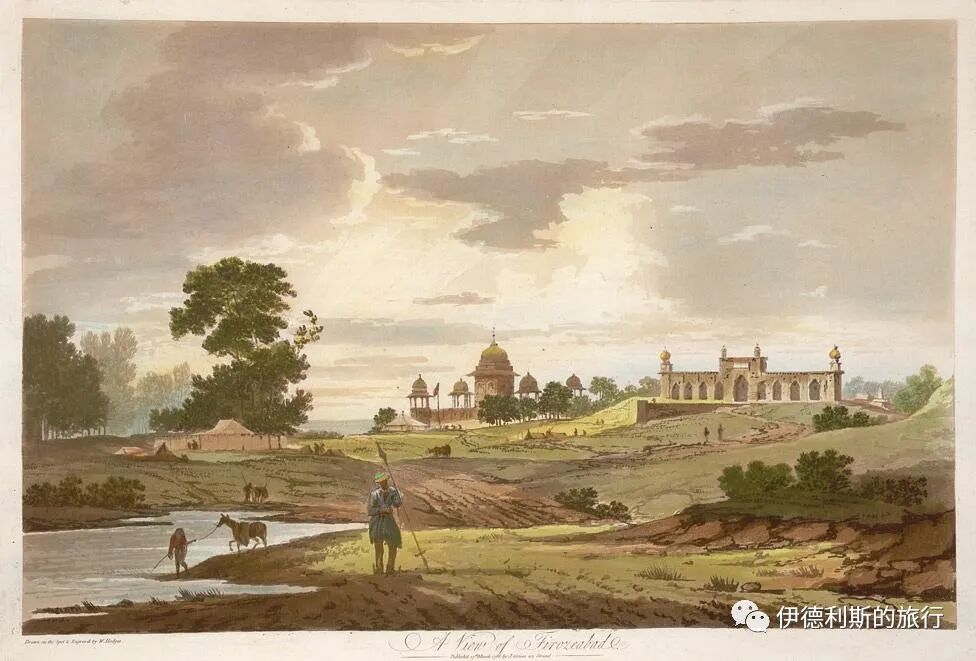
The ruins of Ferozabad drawn by William Hodges in 1780.
Feroz Shah Kotla: 1354.
People say before New Delhi was built in the 20th century, many architectural ruins of Ferozabad remained, but today only the core part, Feroz Shah Kotla, is clearly visible.
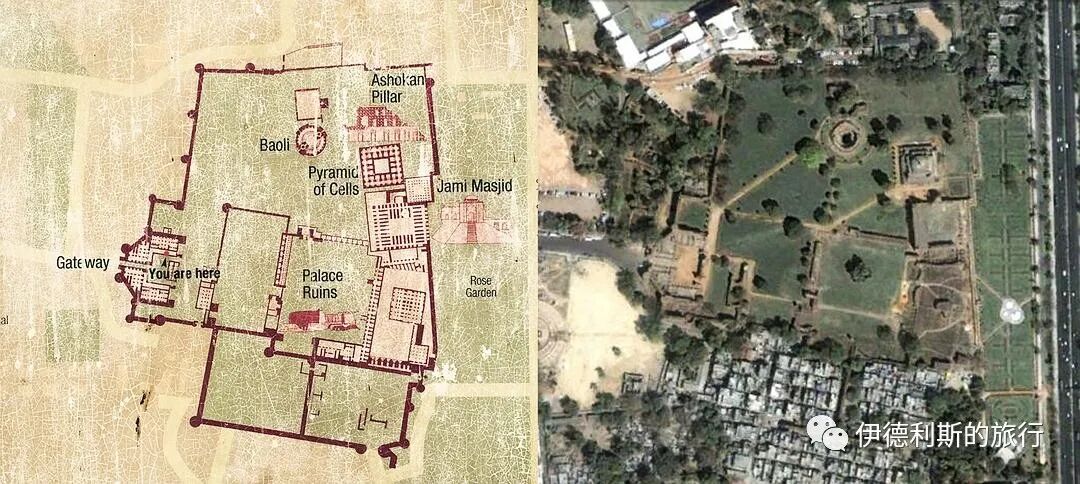
A map of Feroz Shah Kotla, with a diagram of the site on the left and a view from Google Earth on the right.
Rather than a fortress, this place is more like a palace surrounded by walls. Although the castle has tall walls, there are no platforms for soldiers to fight from, and the arrow slits on the walls look more decorative than functional for battle. Perhaps Firuz never considered using this castle for war, but instead used it as a symbol of power.
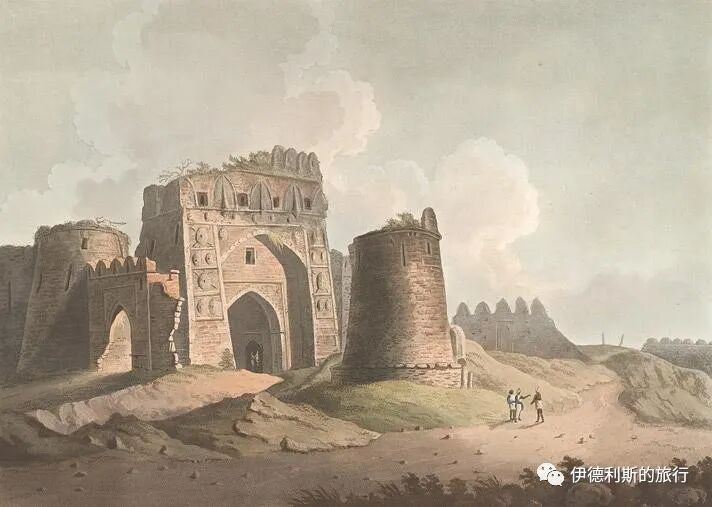
The gate of Feroz Shah Kotla drawn by William Orme and Thomas Daniell in 1802.
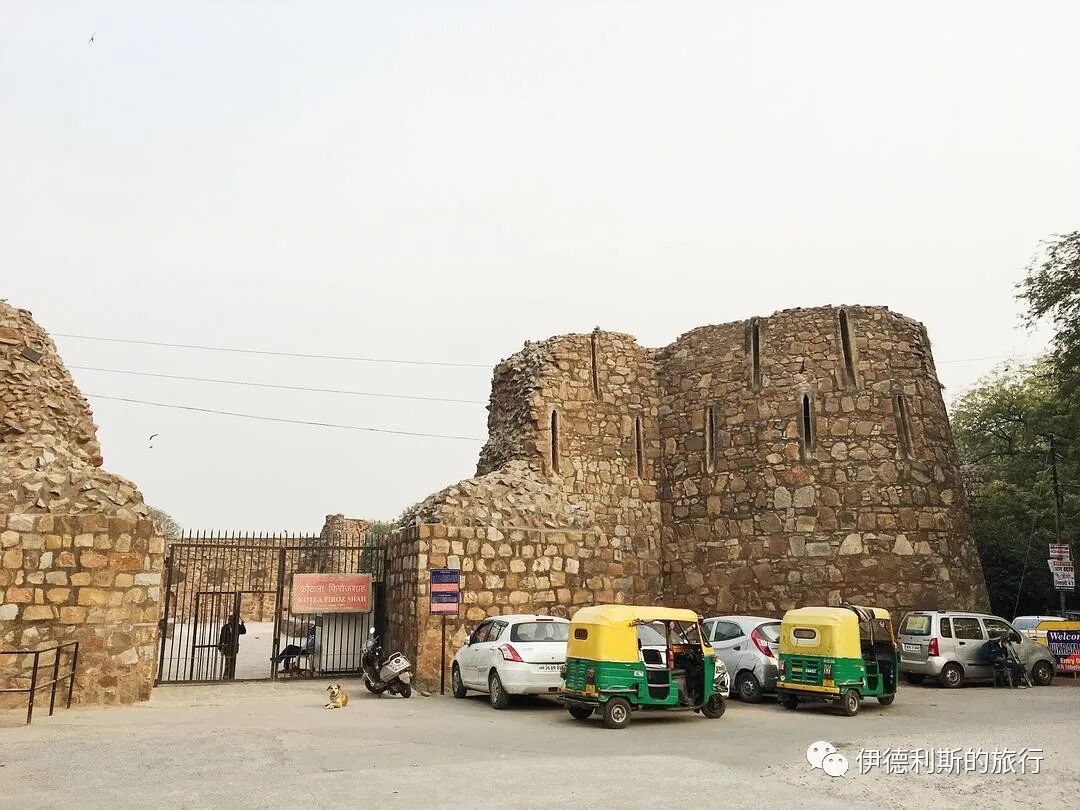
The gate of Feroz Shah Kotla today.
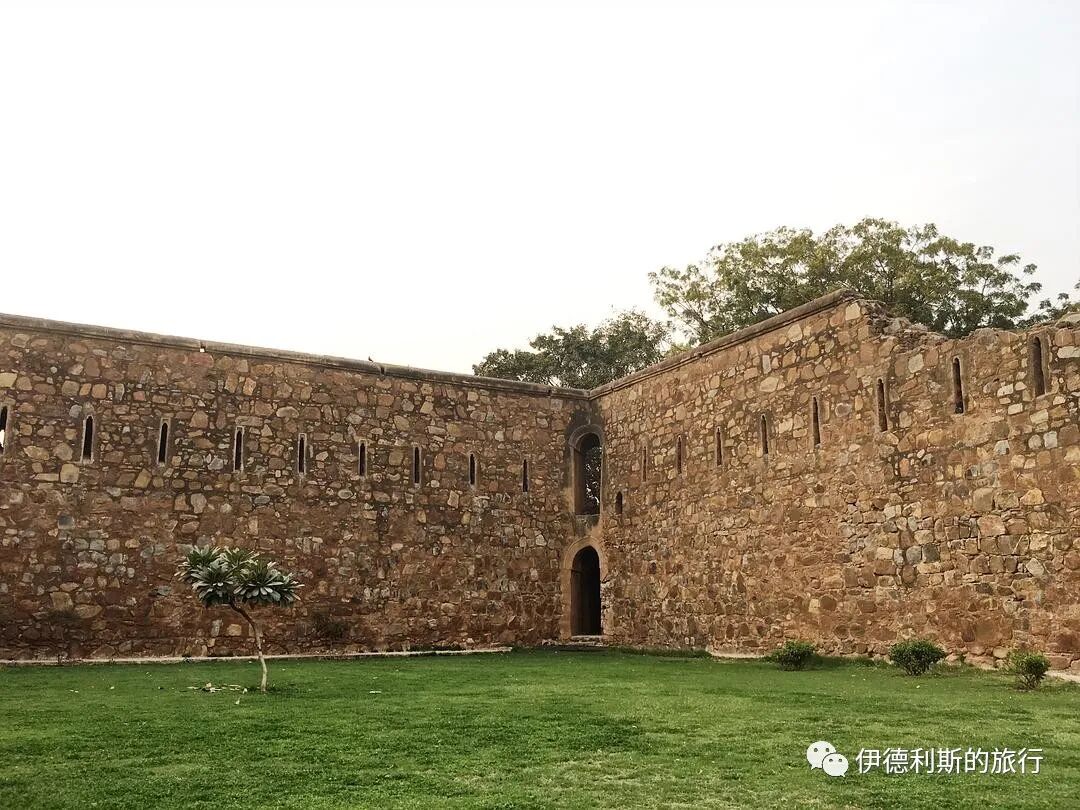
Arrow slits used only for decoration, with no platform for archers to stand on.
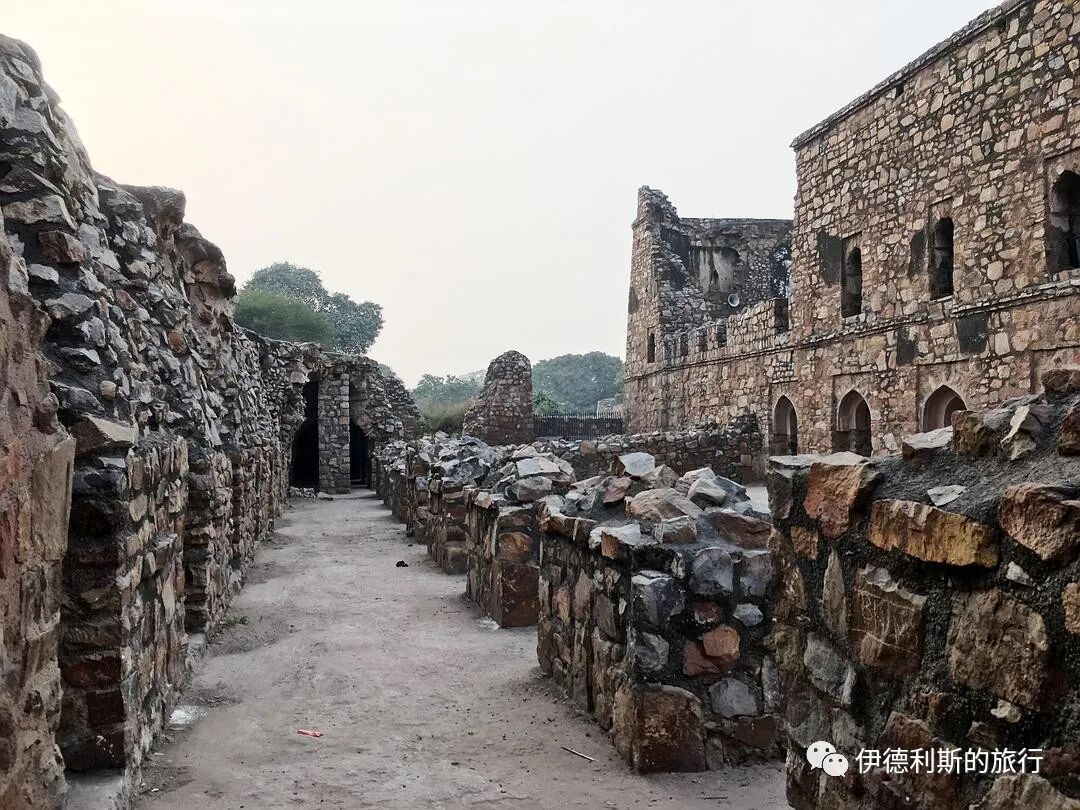
The palace ruins after passing through the gate.
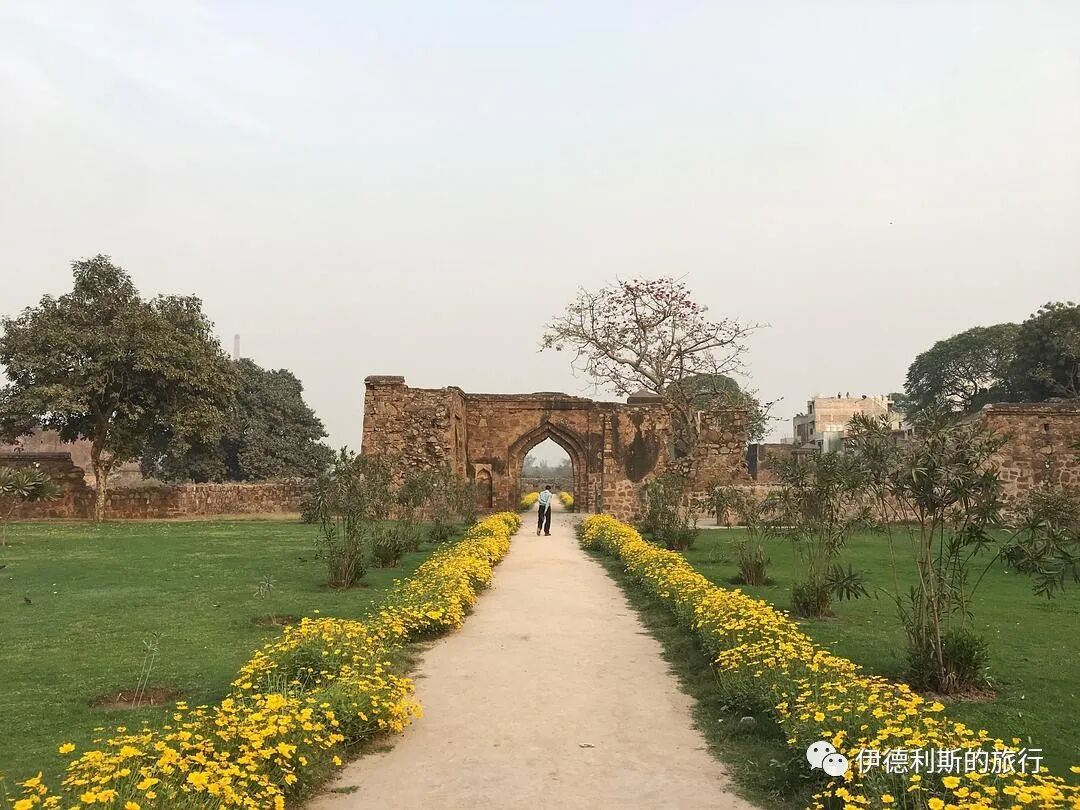
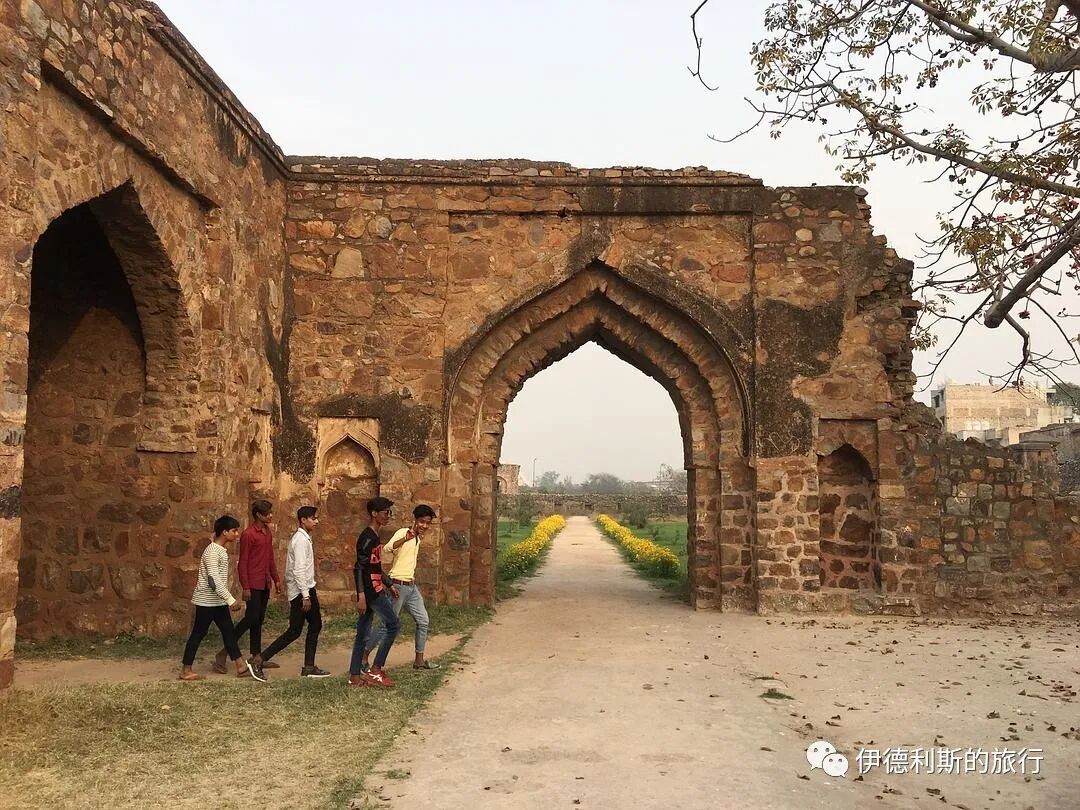
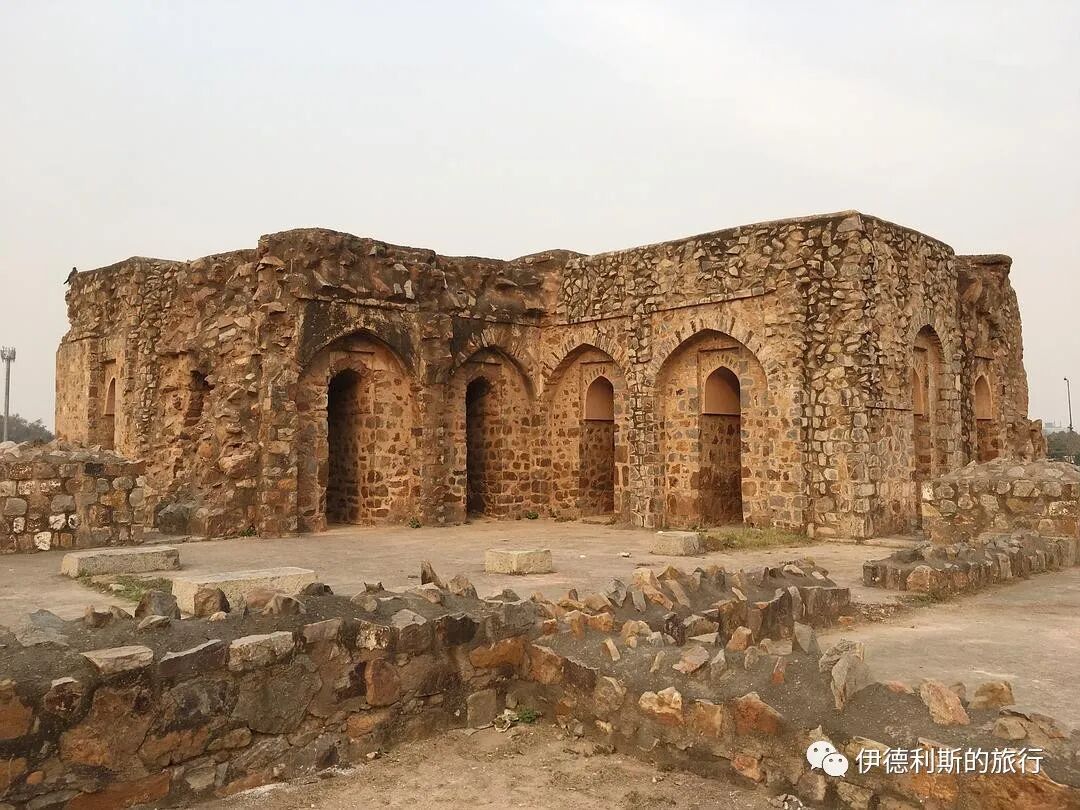
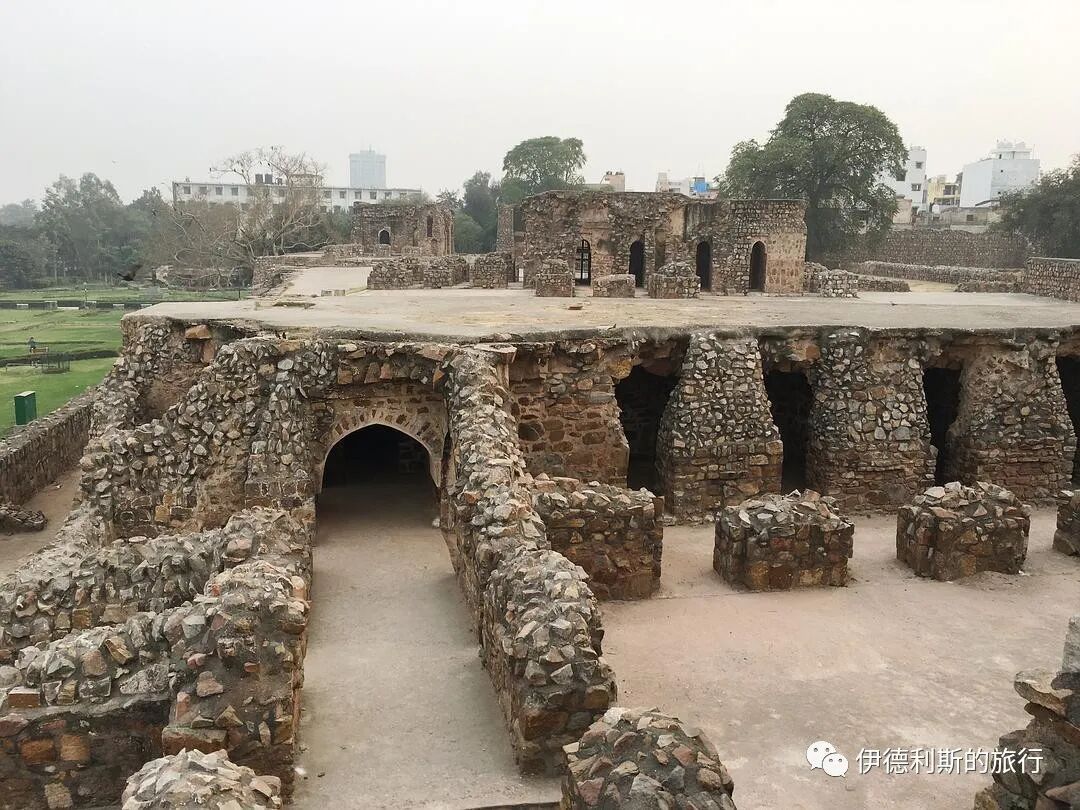
The Jinn in the Castle
Every Thursday afternoon, many people come to Feroz Shah Kotla to light candles and incense by the walls, write their wishes on paper, and pray that the Jinn in the castle will make their wishes come true.
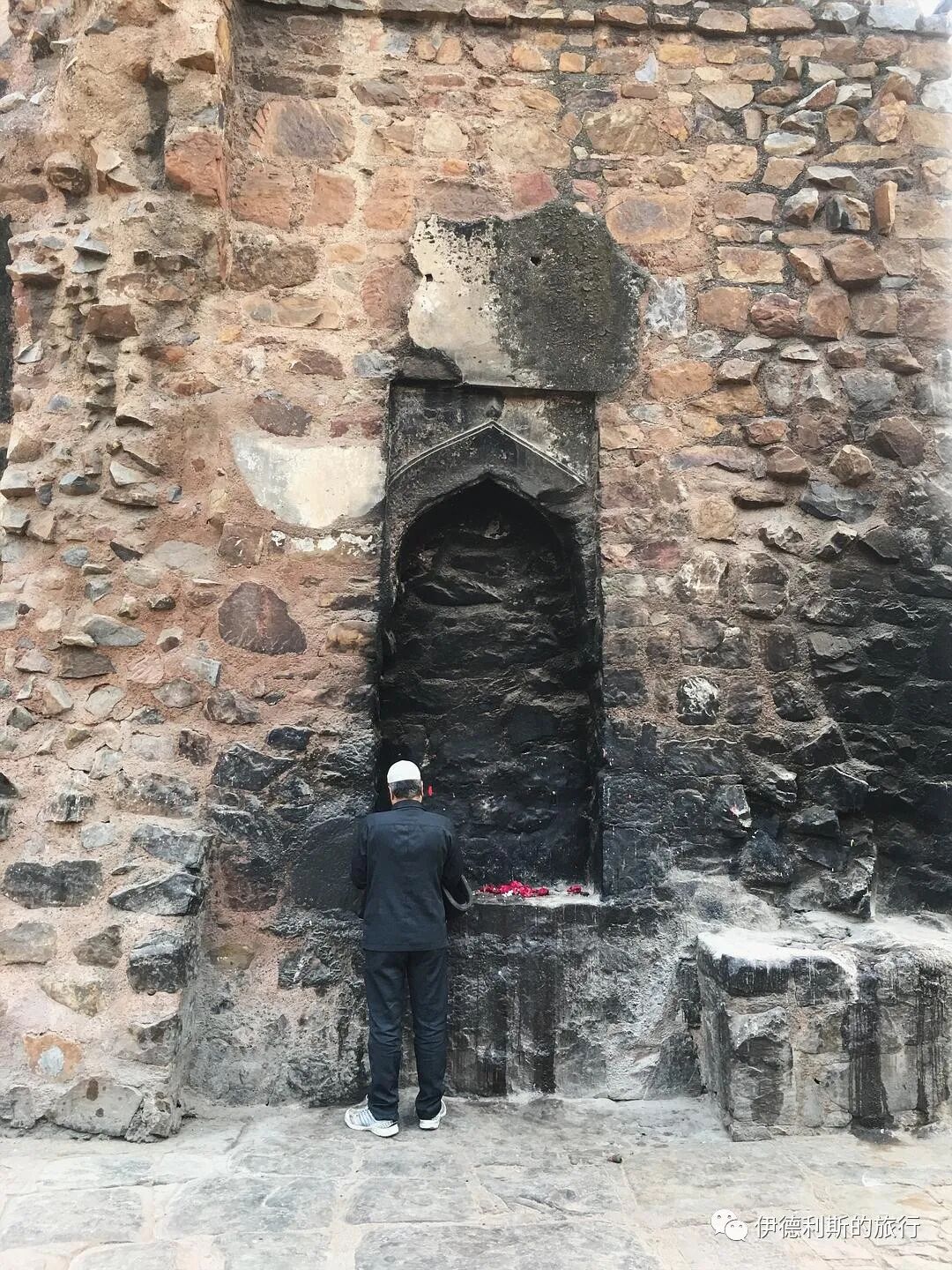
In Islam, Jinn are invisible to the naked eye and, along with angels and devils, are one of the three spiritual entities in the Islamic system. According to the Quran, Jinn were created from fire before Allah created humans; they have a lifestyle similar to humans but have more powerful abilities. There are many descriptions of Jinn in One Thousand and One Nights, the most famous being the genie in Aladdin's lamp.
In pre-Islamic Arabia, Jinn were guardian spirits worshipped by people. But as the early Islamic concept of monotheism solidified, Jinn were placed on an equal footing with humans, subject to judgment and capable of entering heaven or hell.
As Islam spread, the concept of Jinn spread to North Africa, Persia, Central Asia, and India. During the Abbasid era, the concept of Jinn was introduced to India from the Sindh region, gradually becoming part of local folk beliefs and spawning many legends.
The image below shows the Two-Horned One, Zulqarnayn, mentioned in the Quran, who used iron blocks to melt steel and build a barrier with the help of Jinn to protect people from invasion. This story originates from the legend of Alexander the Great and spread to the Arab region through Syria.
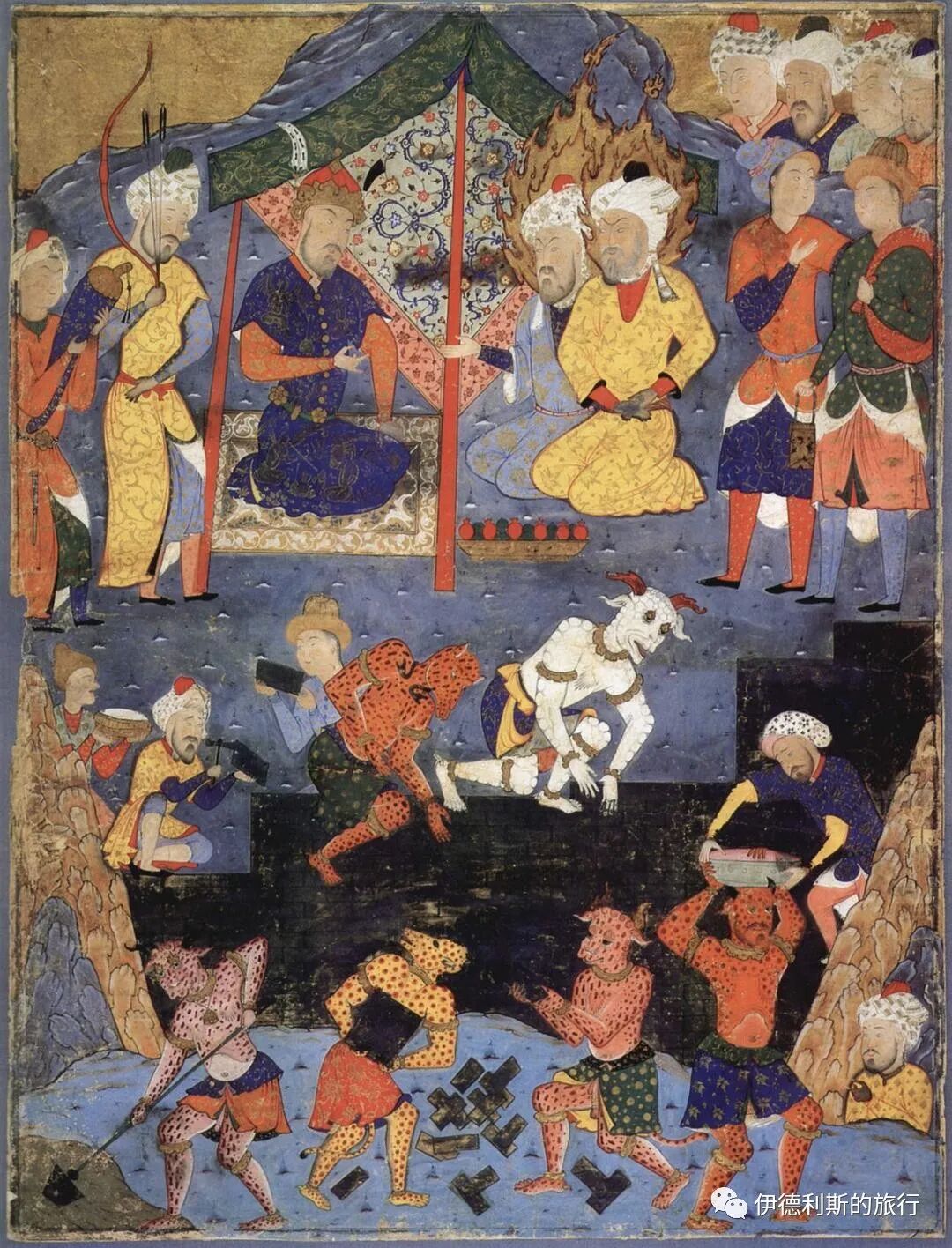
An illustration from The Art of Divination, painted by Ja'far al-Sadiq in the 1550s, kept at the Chester Beatty Library.
The image below shows the story of Imam Ali defeating a Jinn.
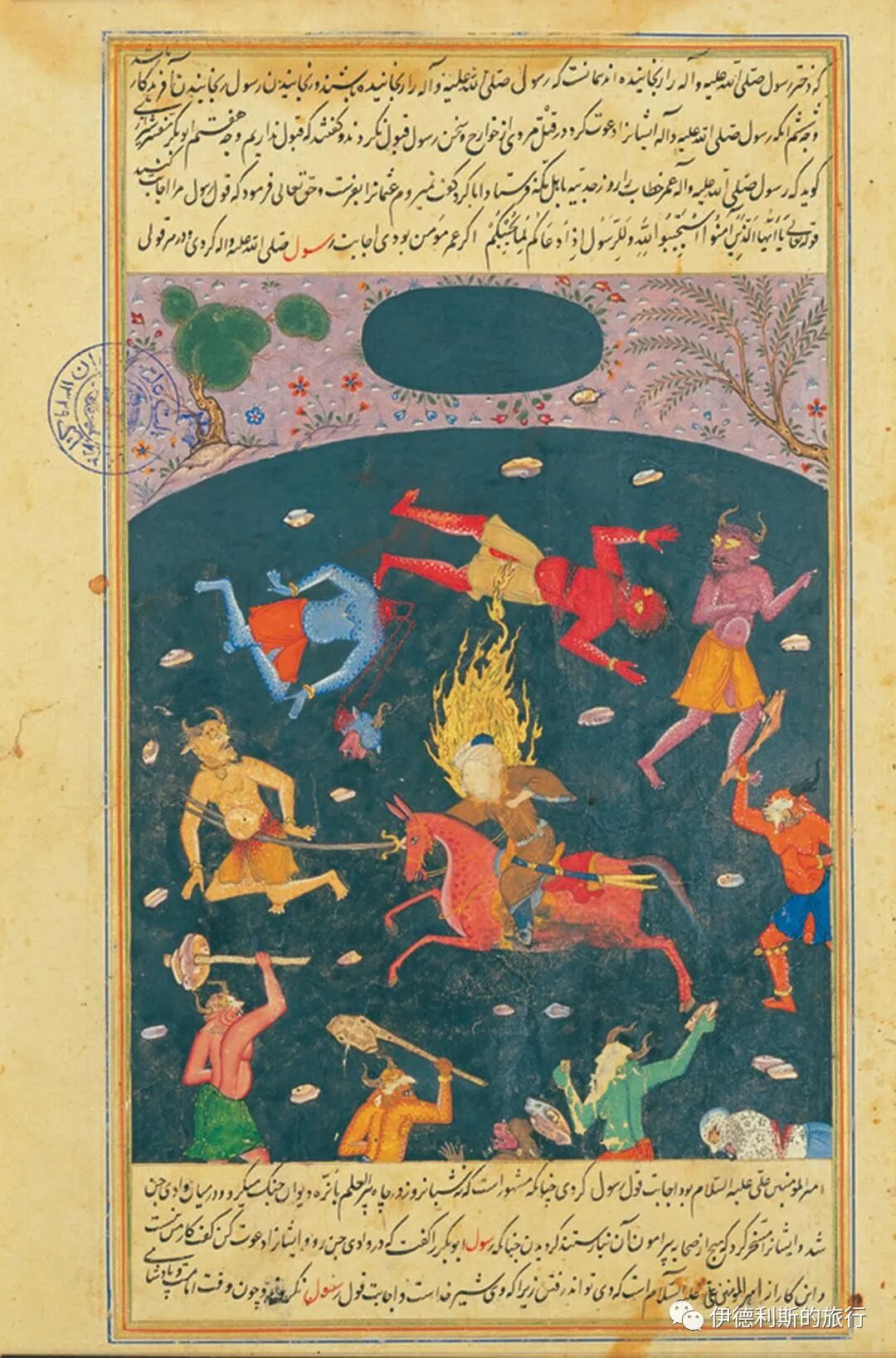
An illustration from the book Ahsan-ol-Kobar, painted in 1568, kept at the Golestan Palace in Tehran.
Feroz Shah Mosque: 1354.
Legend has it that after Timur the Great occupied Delhi in 1398, he performed namaz in a Jami Masjid. Timur loved this mosque so much that he ordered a mosque of the same design to be built in Samarkand. Many people believe this Jami Mosque is the great mosque inside Feroz Shah Kotla.
In fact, after Emperor Timur returned to Samarkand, he did build a famous Bibi-Khanym Mosque. However, this mosque does not look like the Feroz Shah Mosque; it looks more like the Begampur Mosque in Jahanpanah, the fourth city of Delhi. According to historical records, Emperor Timur mainly lived in Jahanpanah while he was in Delhi. Therefore, the Feroz Shah Mosque may not be the Jami Mosque that legend says Timur loved.
But a major event did happen at the Feroz Shah Mosque. In 1759, the Mughal Empire's vizier Imad-ul-Mulk planned to murder the entire family of the fourteenth Mughal emperor, Alamgir II. On November 29, the vizier told the emperor that a holy man had come to greet him. The emperor was very excited and immediately set off for the Feroz Shah Mosque to meet the holy man, where he was then assassinated. The death of Alamgir II caused great grief among Muslims in the Mughal Empire. Armies from various places soon rose up to attack the vizier Imad-ul-Mulk, and he had to flee Delhi.
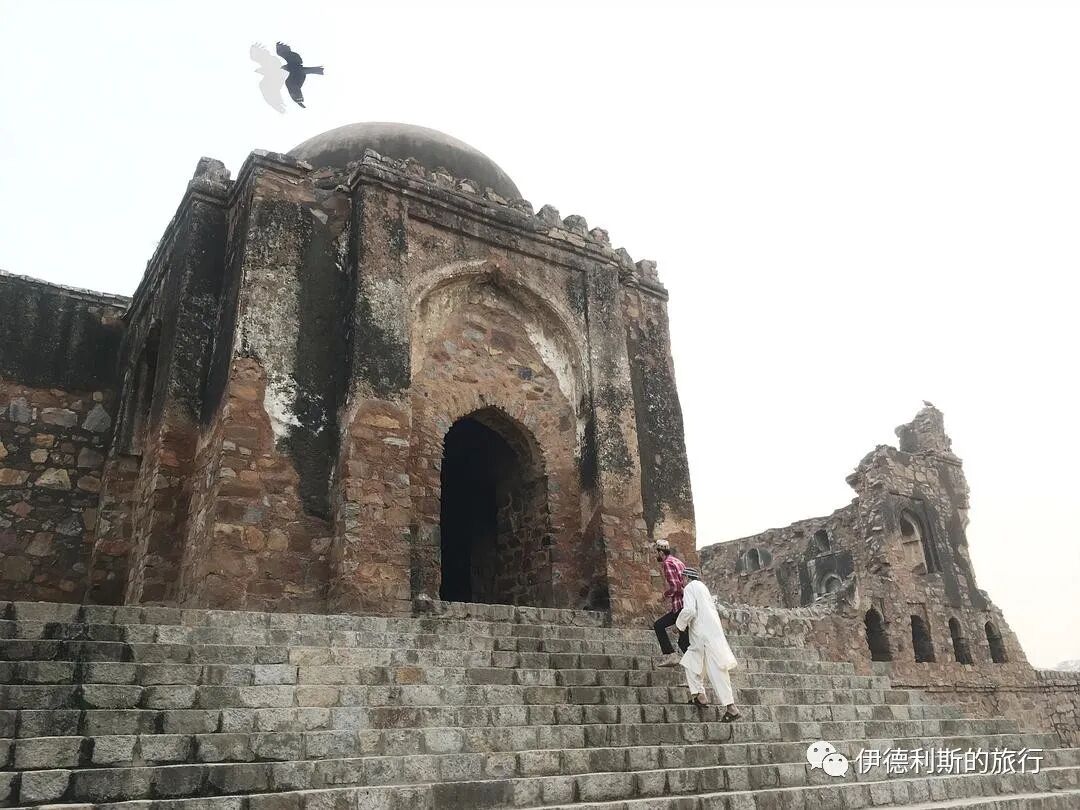
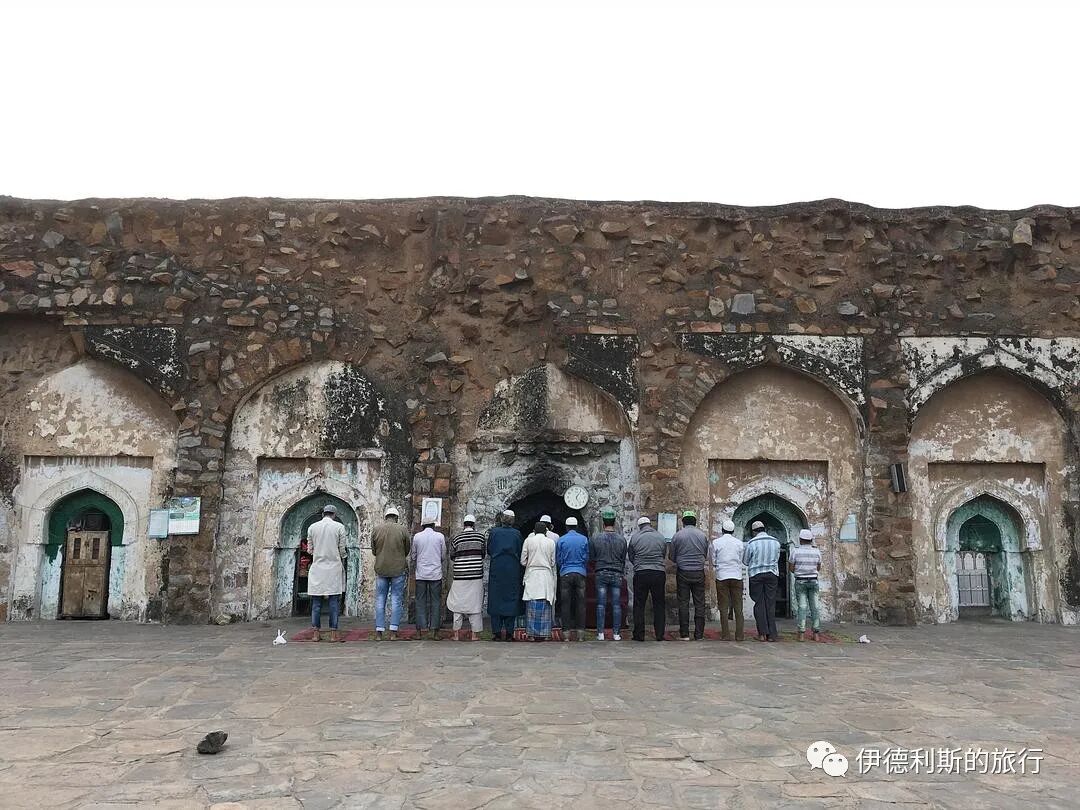
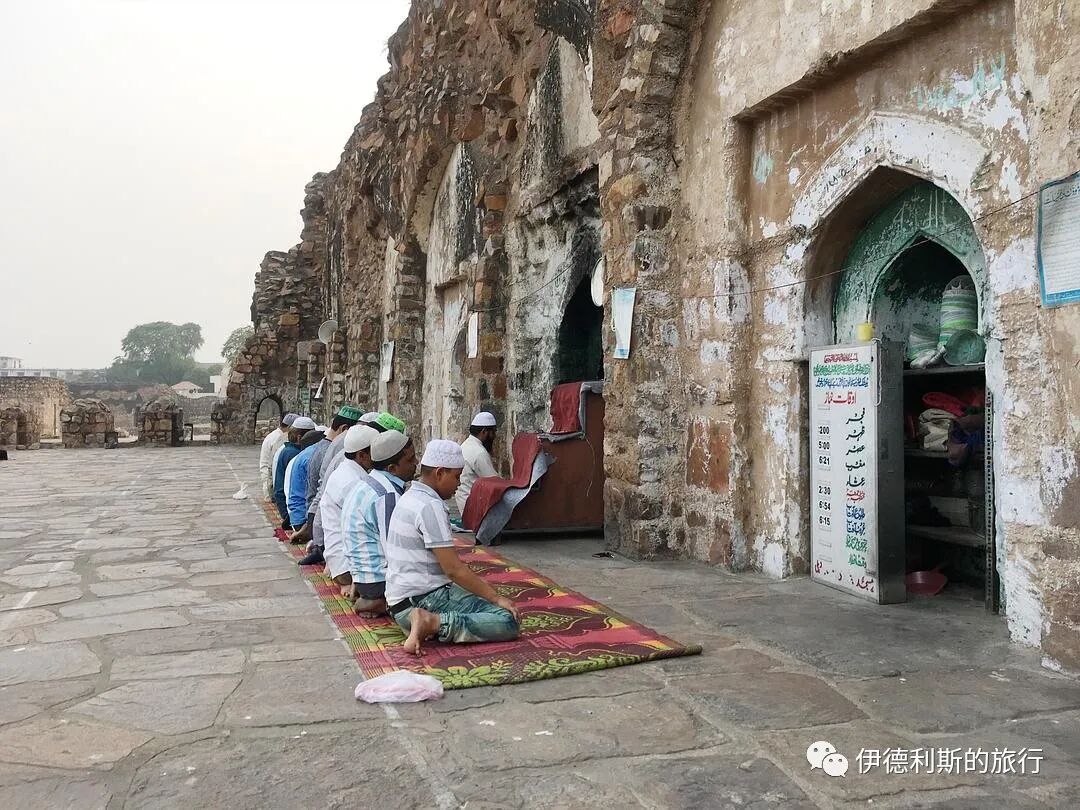
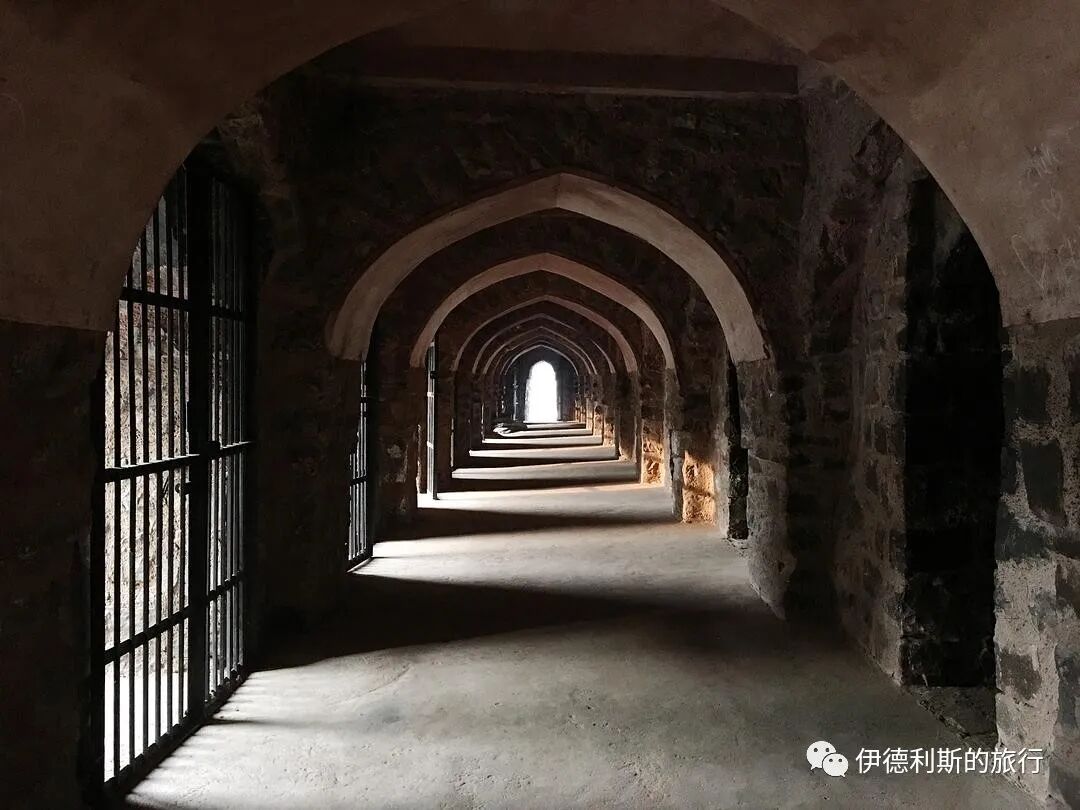
The Feroz Shah Mosque has the typical architectural style of the Tughlaq dynasty. The main prayer hall has almost collapsed, but the ground floor is still well-preserved.
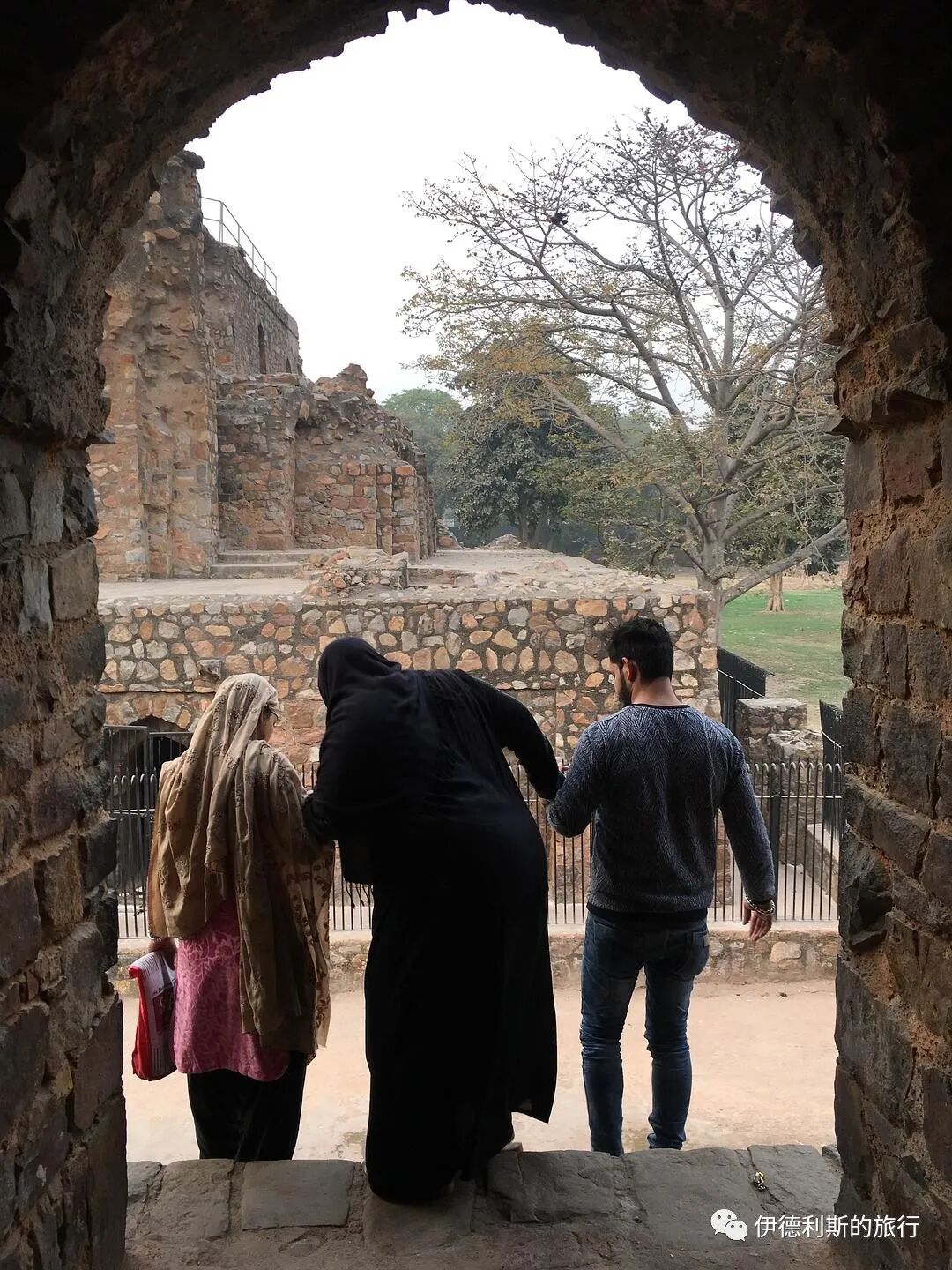
Outside the mosque
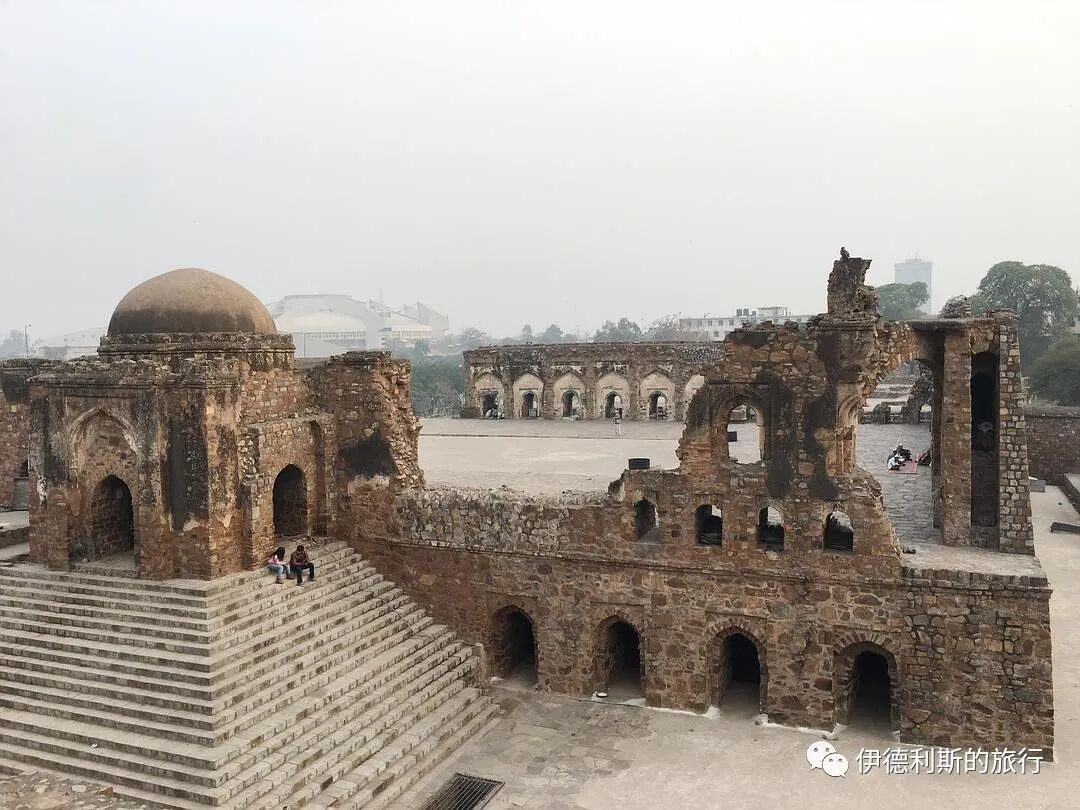
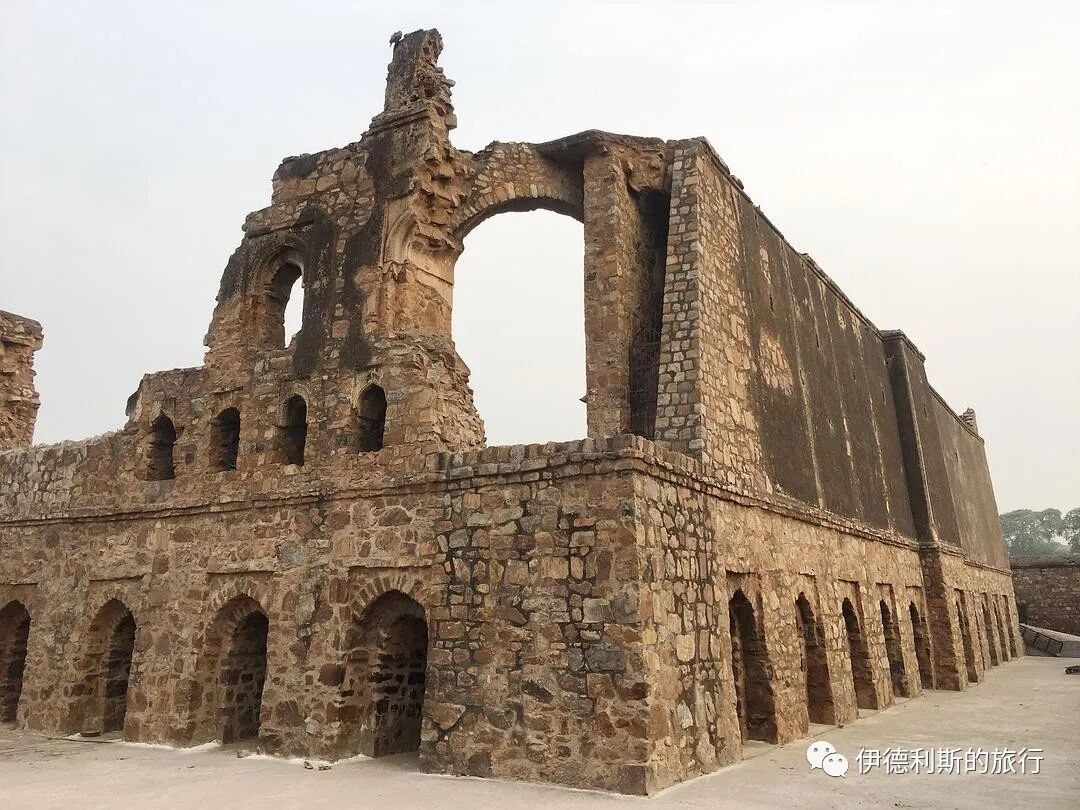
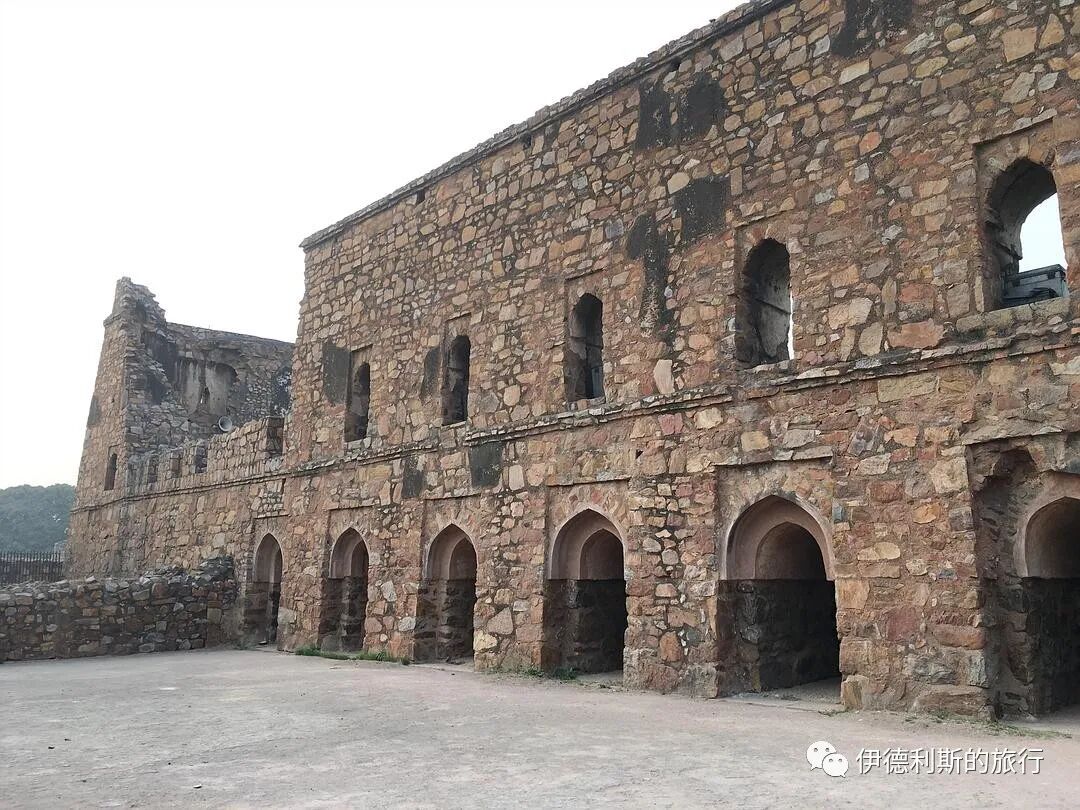
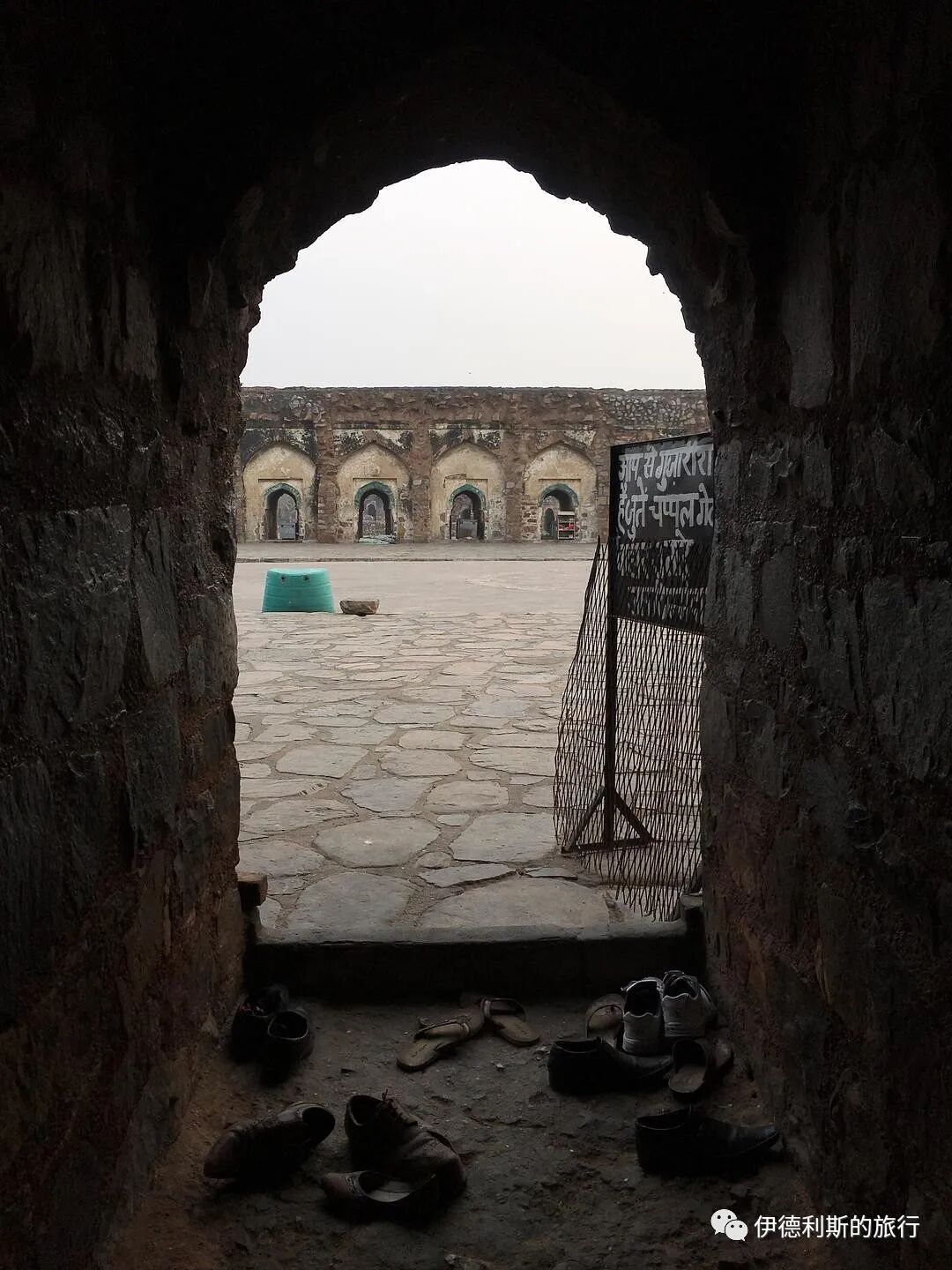
Mosque gate
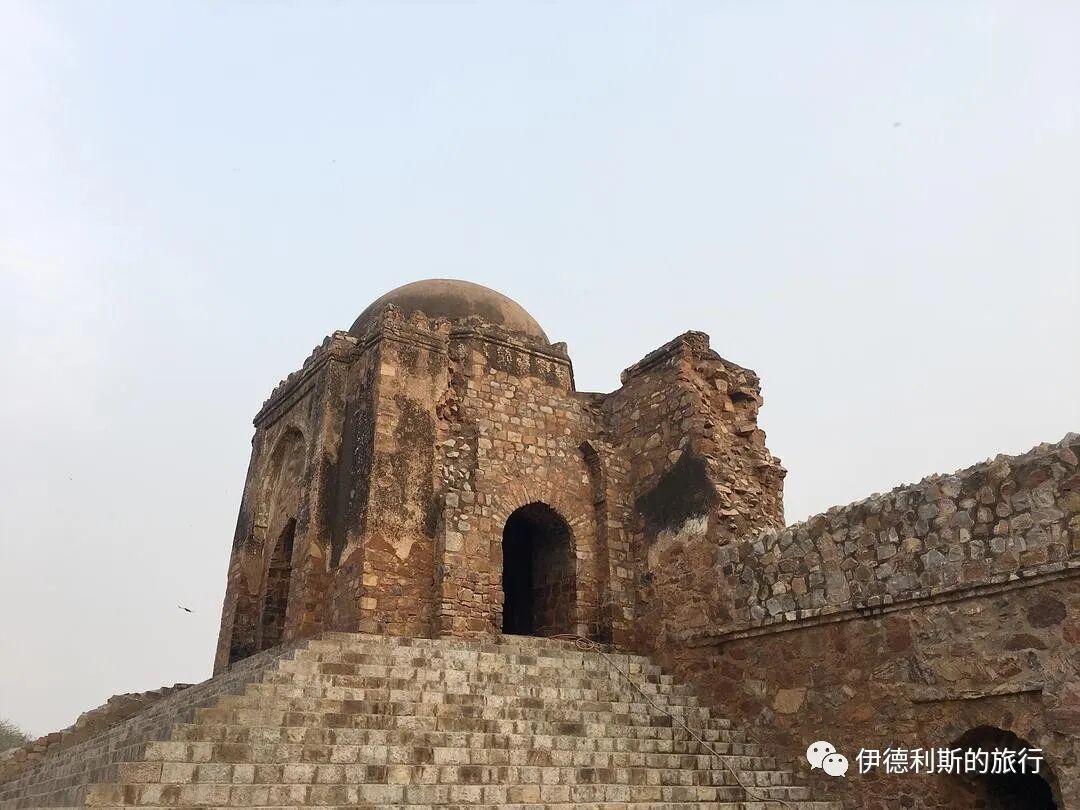
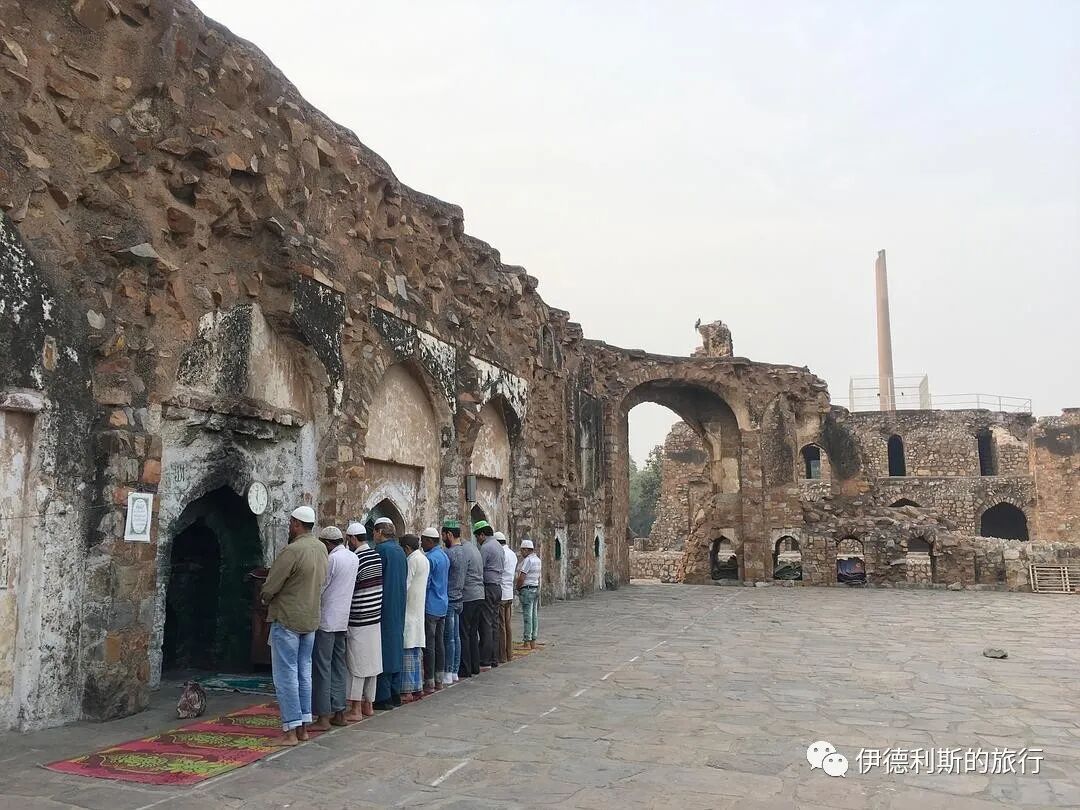
People performing namaz
Ashoka Pillar: 1356
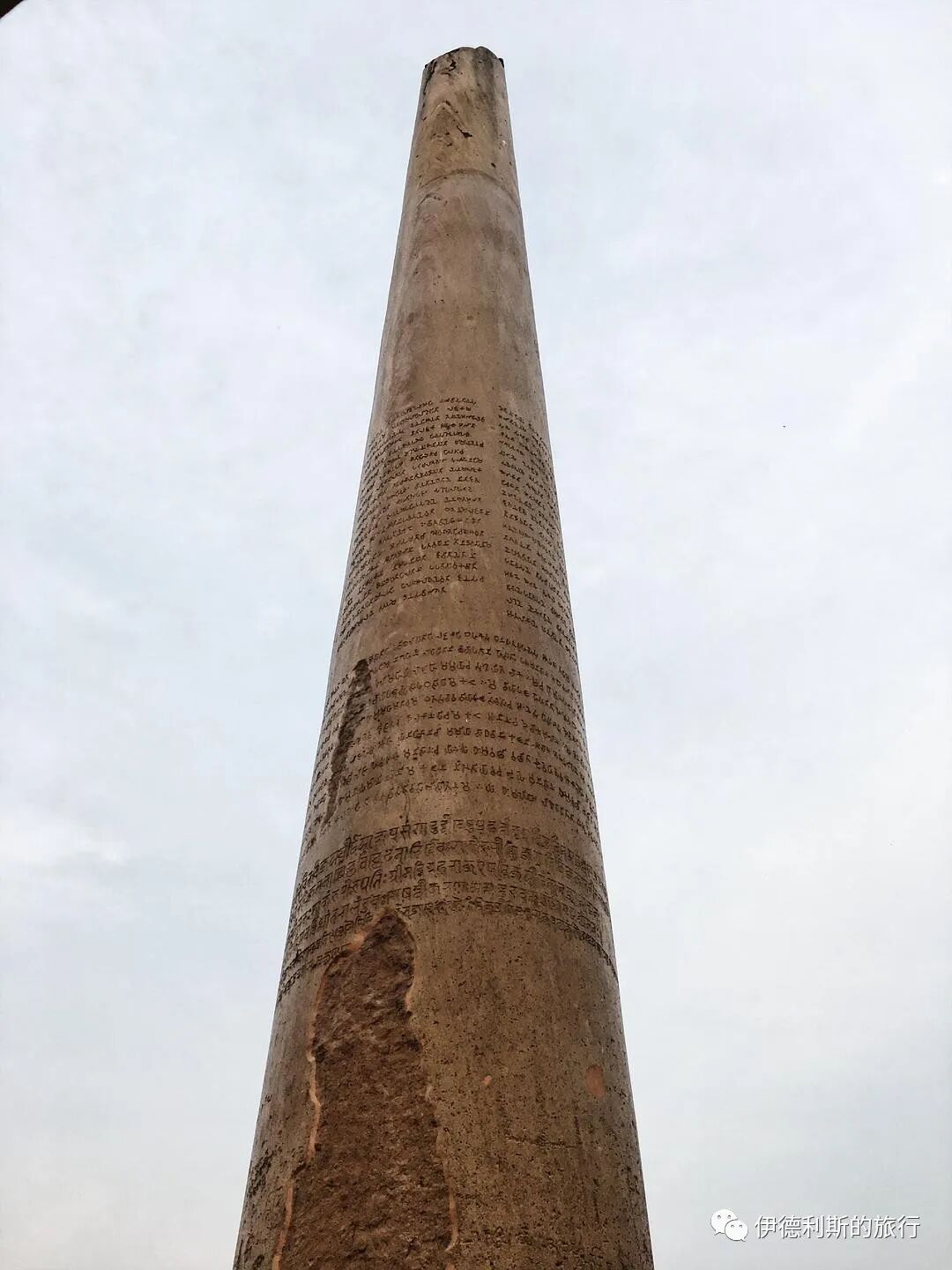
Right next to the mosque is the famous Delhi-Topra Ashokan Pillar.
In 1356, while Feroz Shah was passing through a place called Topra in northern India during an expedition, he discovered a famous Ashoka pillar. Feroz Shah transported this pillar back to the capital, Firozabad, and built a pyramid-shaped structure right next to the mosque to house it.
The Ashoka pillar is one of the columns inscribed with edicts that the famous King Ashoka (reigned 273–232 BC) of the ancient Indian Maurya Empire erected across South Asia. There are 20 remaining today, two of which were brought to Delhi by Feroz Shah. Besides the Delhi-Topra pillar, another pillar called the Delhi-Meerut pillar was placed in Feroz Shah's hunting palace.
The original inscriptions on the pillar were in the Prakrit language written in Brahmi script. When Feroz Shah found the pillar, the Brahmi script could no longer be read. It was not until 1837 that the famous Indian antiquities scholar James Princep fully deciphered the Brahmi script and translated its meaning. to the Buddhist teachings similar to other Ashoka pillars, the biggest difference with this pillar is that it mentions tax issues.
around the Brahmi script, there are some Sanskrit records of the victory in war by Visala Deva Vigraharaja IV of the Chauhan dynasty.
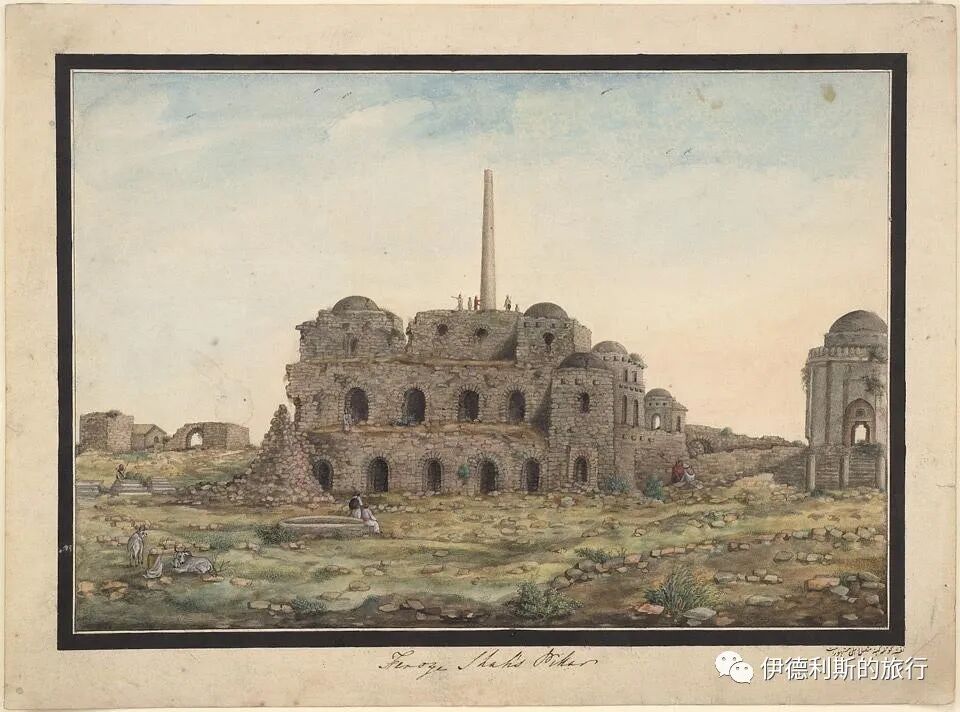
The Ashoka pillar drawn by a Delhi artist between 1820 and 1825
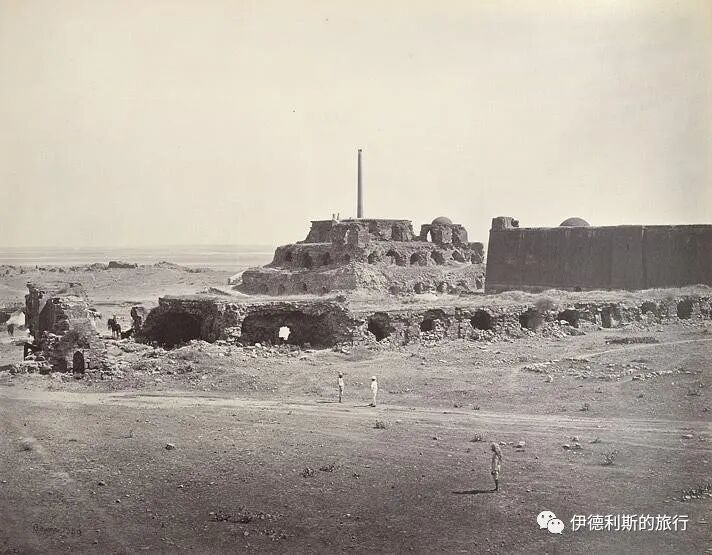
The Ashoka pillar photographed by Samuel Bourne in 1860
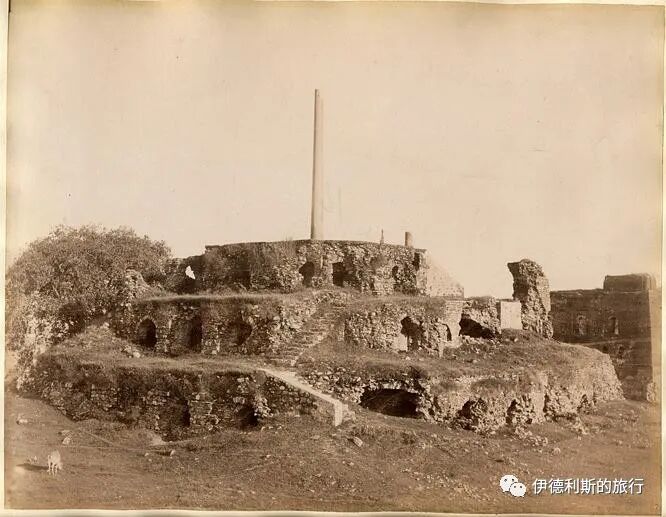
The Ashoka pillar photographed in 1880 by an unknown photographer
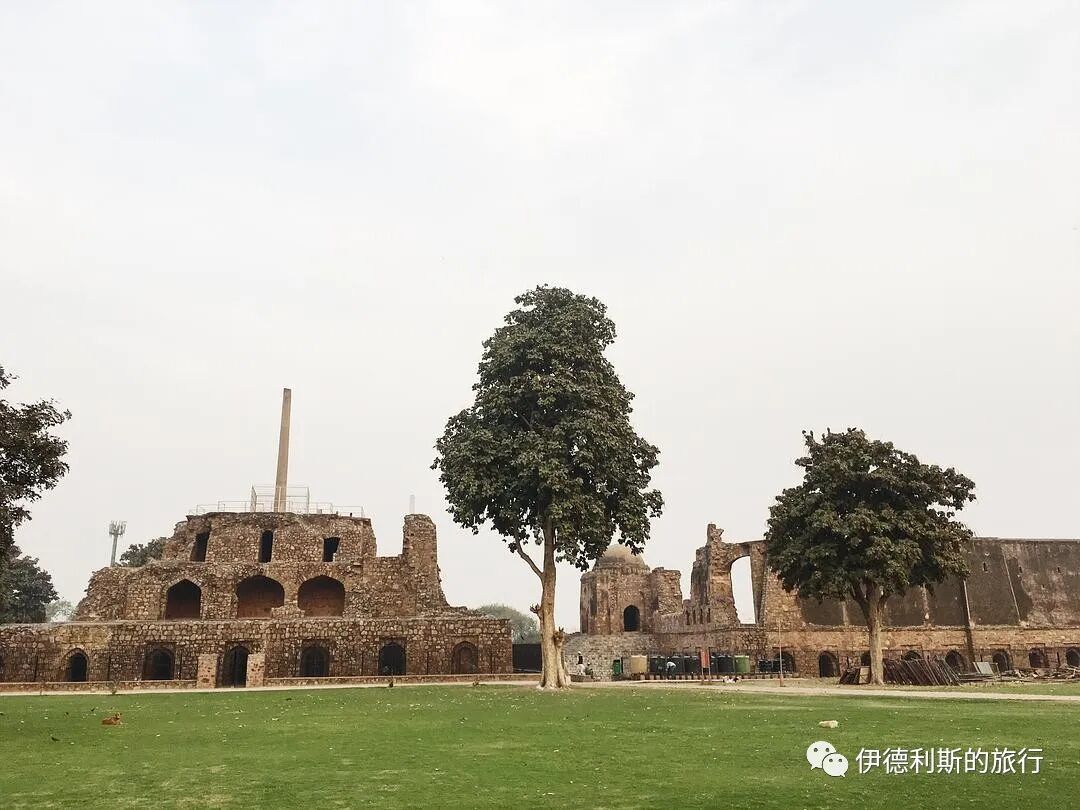
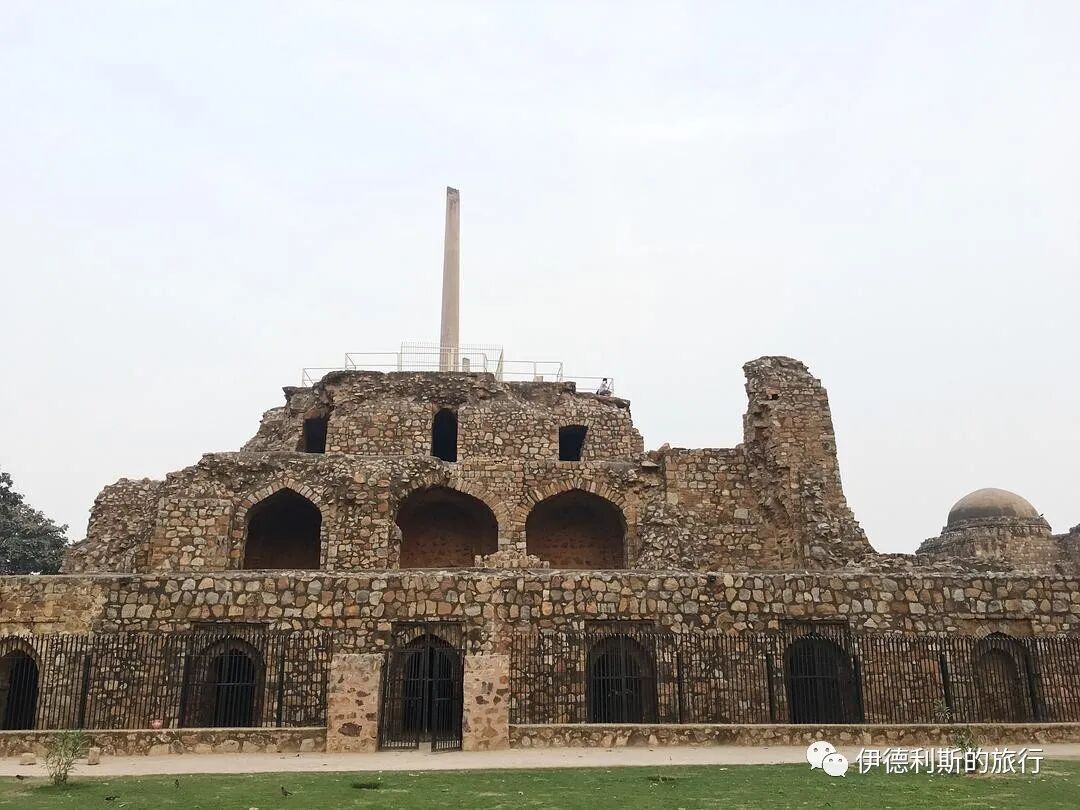
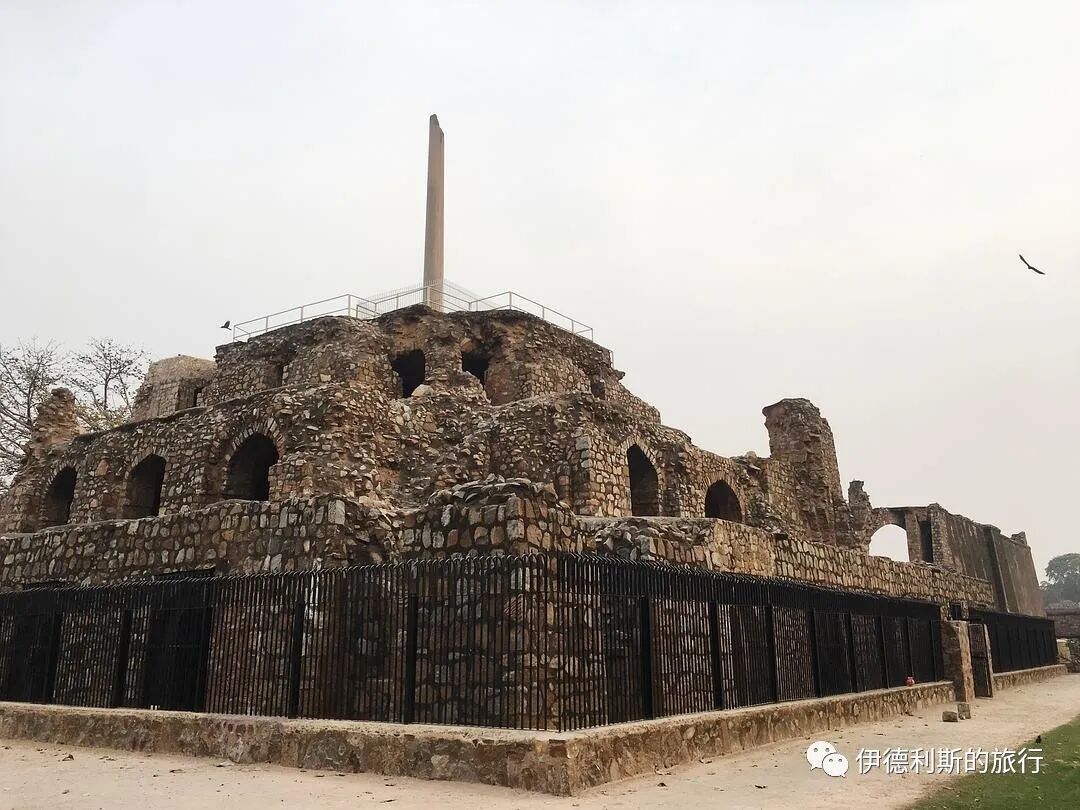
The Ashoka pillar today
Water tank
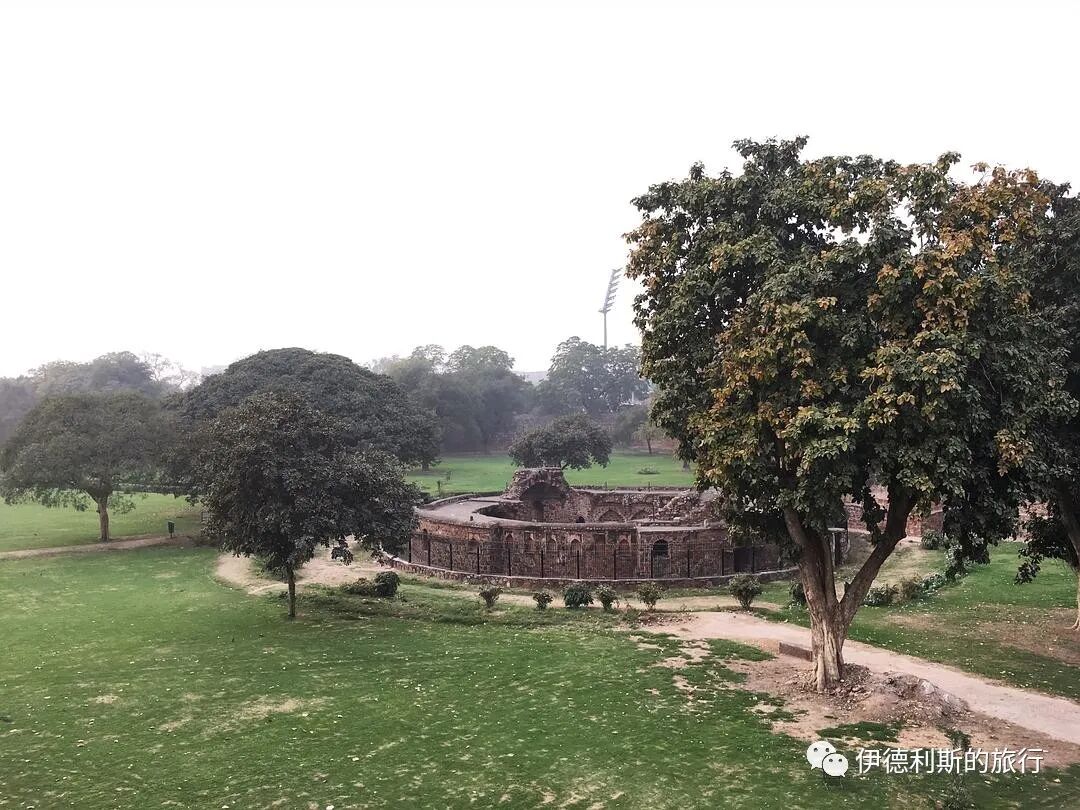
In the center of the garden on the northwest side of the Ashoka pillar, there is a circular water tank (boli). There is a large underground canal on the east side of the tank, and water flows into the tank through this canal. In the era of Feroz Shah, this was a summer retreat for the Sultan's court, and people used the water in the tank to cool off and bathe.
Today, the water tank is still used to irrigate the garden, but it has been locked and is closed to visitors after a suicide occurred here in early 2014.
Summary: Delhi — Firoz Shah Kotla, Jinns and Ashoka Pillar is presented here as a firsthand travel account in clear English, beginning with this scene: Continuing the Seven Cities of Delhi series. The Seven Cities of Delhi refers to the seven historical cities built in Delhi, including Lal Kot, Siri, Tughlaqabad, Jahanpanah, Ferozabad, Purana Qila, and Shahjahanabad. The account keeps its focus on Delhi Travel, Firoz Shah Kotla, Muslim Heritage while preserving the names, places, food, and historical details from the Chinese source.
Continuing the Seven Cities of Delhi series. The Seven Cities of Delhi refers to the seven historical cities built in Delhi, including Lal Kot, Siri, Tughlaqabad, Jahanpanah, Ferozabad, Purana Qila, and Shahjahanabad.
I have already written about four of them, and this article introduces the fifth city, Ferozabad. The city is named after its builder, Sultan Firuz Shah Tughlaq (reigned 1351-1388), who was the successor to Muhammad, the builder of the fourth city, and the nephew of Ghazi Malik, the builder of the third city.
Founding the City
During the late reign of Sultan Muhammad bin Tughluq (reigned 1325-1351) of the Tughlaq dynasty, the Delhi Sultanate fell into chaos. Not only Hindu forces but even his own generals broke away from the Sultanate to become independent. In 1351, Muhammad died while on his way to Sindh to resolve tribal wars in Gujarat.
After Muhammad died, no one wanted to take over the mess of the Delhi Sultanate. Eventually, after much persuasion from his ministers, Muhammad's cousin Firuz Shah Tughlaq reluctantly agreed to succeed him as Sultan.
During Firuz's reign, the Sultanate's territory had shrunk significantly, and he had to face numerous rebellions from Gujarat in the west, Bengal in the east, and Warangal in the south. Firuz kept in mind the mistakes his cousin Muhammad made, so he stopped trying to reconquer lost lands and focused on consolidating his current rule.
To do this, Firuz worked on infrastructure, including digging canals, building reservoirs, and constructing nursing homes and hospitals. In 1354, three years after taking the throne, Firuz built a new capital in northern Delhi, which later generations called Ferozabad, the fifth city of Delhi.
The ruins of Ferozabad drawn by William Hodges in 1780.
Feroz Shah Kotla: 1354.
People say before New Delhi was built in the 20th century, many architectural ruins of Ferozabad remained, but today only the core part, Feroz Shah Kotla, is clearly visible.
A map of Feroz Shah Kotla, with a diagram of the site on the left and a view from Google Earth on the right.
Rather than a fortress, this place is more like a palace surrounded by walls. Although the castle has tall walls, there are no platforms for soldiers to fight from, and the arrow slits on the walls look more decorative than functional for battle. Perhaps Firuz never considered using this castle for war, but instead used it as a symbol of power.
The gate of Feroz Shah Kotla drawn by William Orme and Thomas Daniell in 1802.
The gate of Feroz Shah Kotla today.
Arrow slits used only for decoration, with no platform for archers to stand on.
The palace ruins after passing through the gate.
The Jinn in the Castle
Every Thursday afternoon, many people come to Feroz Shah Kotla to light candles and incense by the walls, write their wishes on paper, and pray that the Jinn in the castle will make their wishes come true.
In Islam, Jinn are invisible to the naked eye and, along with angels and devils, are one of the three spiritual entities in the Islamic system. According to the Quran, Jinn were created from fire before Allah created humans; they have a lifestyle similar to humans but have more powerful abilities. There are many descriptions of Jinn in One Thousand and One Nights, the most famous being the genie in Aladdin's lamp.
In pre-Islamic Arabia, Jinn were guardian spirits worshipped by people. But as the early Islamic concept of monotheism solidified, Jinn were placed on an equal footing with humans, subject to judgment and capable of entering heaven or hell.
As Islam spread, the concept of Jinn spread to North Africa, Persia, Central Asia, and India. During the Abbasid era, the concept of Jinn was introduced to India from the Sindh region, gradually becoming part of local folk beliefs and spawning many legends.
The image below shows the Two-Horned One, Zulqarnayn, mentioned in the Quran, who used iron blocks to melt steel and build a barrier with the help of Jinn to protect people from invasion. This story originates from the legend of Alexander the Great and spread to the Arab region through Syria.
An illustration from The Art of Divination, painted by Ja'far al-Sadiq in the 1550s, kept at the Chester Beatty Library.
The image below shows the story of Imam Ali defeating a Jinn.
An illustration from the book Ahsan-ol-Kobar, painted in 1568, kept at the Golestan Palace in Tehran.
Feroz Shah Mosque: 1354.
Legend has it that after Timur the Great occupied Delhi in 1398, he performed namaz in a Jami Masjid. Timur loved this mosque so much that he ordered a mosque of the same design to be built in Samarkand. Many people believe this Jami Mosque is the great mosque inside Feroz Shah Kotla.
In fact, after Emperor Timur returned to Samarkand, he did build a famous Bibi-Khanym Mosque. However, this mosque does not look like the Feroz Shah Mosque; it looks more like the Begampur Mosque in Jahanpanah, the fourth city of Delhi. According to historical records, Emperor Timur mainly lived in Jahanpanah while he was in Delhi. Therefore, the Feroz Shah Mosque may not be the Jami Mosque that legend says Timur loved.
But a major event did happen at the Feroz Shah Mosque. In 1759, the Mughal Empire's vizier Imad-ul-Mulk planned to murder the entire family of the fourteenth Mughal emperor, Alamgir II. On November 29, the vizier told the emperor that a holy man had come to greet him. The emperor was very excited and immediately set off for the Feroz Shah Mosque to meet the holy man, where he was then assassinated. The death of Alamgir II caused great grief among Muslims in the Mughal Empire. Armies from various places soon rose up to attack the vizier Imad-ul-Mulk, and he had to flee Delhi.
The Feroz Shah Mosque has the typical architectural style of the Tughlaq dynasty. The main prayer hall has almost collapsed, but the ground floor is still well-preserved.
Outside the mosque
Mosque gate
People performing namaz
Ashoka Pillar: 1356
Right next to the mosque is the famous Delhi-Topra Ashokan Pillar.
In 1356, while Feroz Shah was passing through a place called Topra in northern India during an expedition, he discovered a famous Ashoka pillar. Feroz Shah transported this pillar back to the capital, Firozabad, and built a pyramid-shaped structure right next to the mosque to house it.
The Ashoka pillar is one of the columns inscribed with edicts that the famous King Ashoka (reigned 273–232 BC) of the ancient Indian Maurya Empire erected across South Asia. There are 20 remaining today, two of which were brought to Delhi by Feroz Shah. Besides the Delhi-Topra pillar, another pillar called the Delhi-Meerut pillar was placed in Feroz Shah's hunting palace.
The original inscriptions on the pillar were in the Prakrit language written in Brahmi script. When Feroz Shah found the pillar, the Brahmi script could no longer be read. It was not until 1837 that the famous Indian antiquities scholar James Princep fully deciphered the Brahmi script and translated its meaning. to the Buddhist teachings similar to other Ashoka pillars, the biggest difference with this pillar is that it mentions tax issues.
around the Brahmi script, there are some Sanskrit records of the victory in war by Visala Deva Vigraharaja IV of the Chauhan dynasty.
The Ashoka pillar drawn by a Delhi artist between 1820 and 1825
The Ashoka pillar photographed by Samuel Bourne in 1860
The Ashoka pillar photographed in 1880 by an unknown photographer
The Ashoka pillar today
Water tank
In the center of the garden on the northwest side of the Ashoka pillar, there is a circular water tank (boli). There is a large underground canal on the east side of the tank, and water flows into the tank through this canal. In the era of Feroz Shah, this was a summer retreat for the Sultan's court, and people used the water in the tank to cool off and bathe.
Today, the water tank is still used to irrigate the garden, but it has been locked and is closed to visitors after a suicide occurred here in early 2014.
