

Delhi Travel
Halal Travel Guide: Delhi Lodhi Garden — Sultanate Tombs and Muslim History
Articles • ali2007fr posted the article • 0 comments • 232 views • 2026-05-18 09:02
Summary: Delhi Lodhi Garden — Sultanate Tombs and Muslim History is presented here as a firsthand travel account in clear English, beginning with this scene: The Lodhi dynasty was the last of the five dynasties of the Delhi Sultanate. It was founded by the Pashtun Lodhi family in 1451 and lasted 75 years until it was conquered by the Mughal Empire in 1526. The account keeps its focus on Delhi Travel, Lodhi Dynasty, Muslim Heritage while preserving the names, places, food, and historical details from the Chinese source.
The Lodhi dynasty was the last of the five dynasties of the Delhi Sultanate. It was founded by the Pashtun Lodhi family in 1451 and lasted 75 years until it was conquered by the Mughal Empire in 1526. The Lodhi dynasty did not build a new capital in Delhi, so no large palaces remain. However, many tombs and mosques from the Lodhi period are preserved in the southern suburbs of Delhi, serving as the best examples for studying the history and architectural art of the Lodhi dynasty.
If you want to experience the history of the Lodhi dynasty firsthand, the best place to go is Lodhi Garden on the south side of New Delhi. The entire garden covers 360,000 square meters. Major buildings include the tomb of Sultan Muhammad Shah (reigned 1434-1445) of the Sayyid dynasty, the tomb of Sultan Sikandar Lodi (reigned 1489-1517) of the Lodhi dynasty, the Bara Gumbad (Big Dome), and the Shish Gumbad (Glass Dome), which is suspected to be the tomb of Sultan Bahlul Lodi (reigned 1451-1489). Some relics from the Mughal period are also preserved there.
Tomb of Muhammad Shah
Entering from the south gate of Lodhi Garden, the first thing you see is the tomb of Muhammad Shah (reigned 1434-1445), the third sultan of the Sayyid dynasty of the Delhi Sultanate.
The Sayyid family claimed to be descendants of the Prophet Muhammad and originally lived in the Punjab region. The founder, Khizr Khan, became the governor of Multan after Timur invaded the Delhi Sultanate in 1398, and he officially established the Sayyid Sultanate after occupying Delhi in 1414. Muhammad Shah was the grand-nephew of Khizr Khan. During his reign, the territory of the Delhi Sultanate continued to shrink. Sunni Islam was no longer the dominant force, Shia Islam began to rise, and Indian Islamic culture started to take root in areas outside of Delhi.
During the reign of Muhammad Shah, Bahlul Lodi, the leader of the Pashtun Lodi tribe, was highly favored by the Sultan. Thanks to his military achievements, he gained control over most of the Punjab region, laying the foundation for the establishment of the Lodhi dynasty.
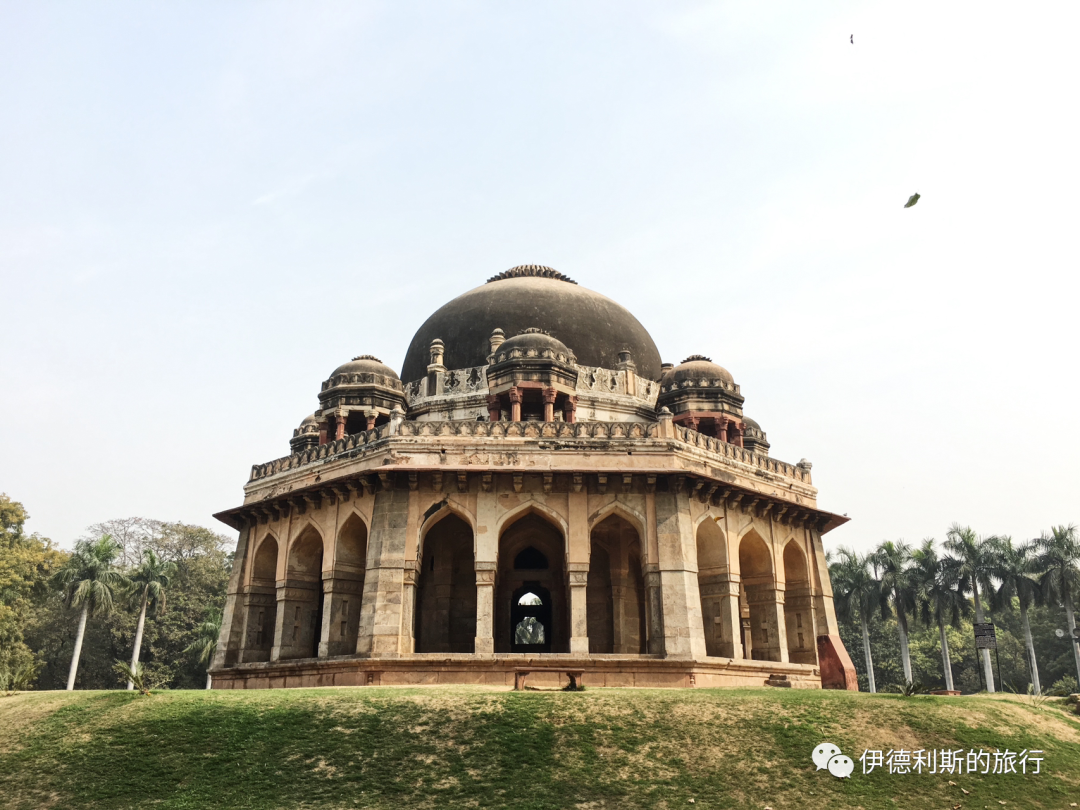
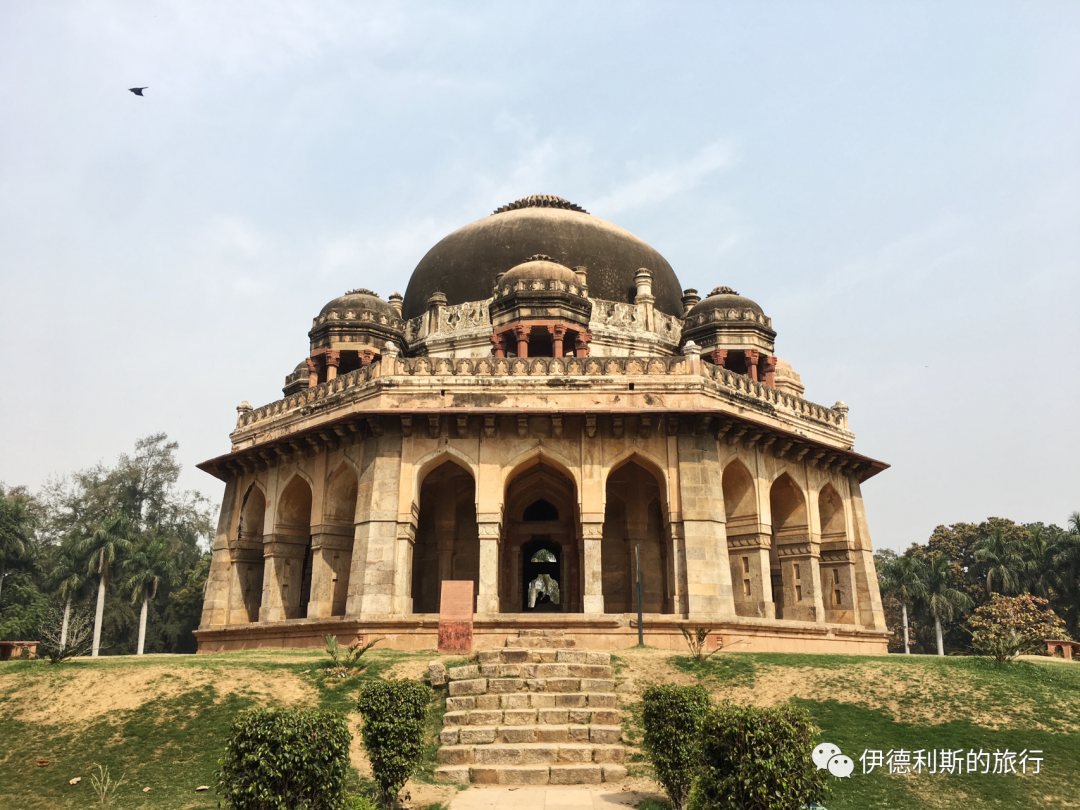
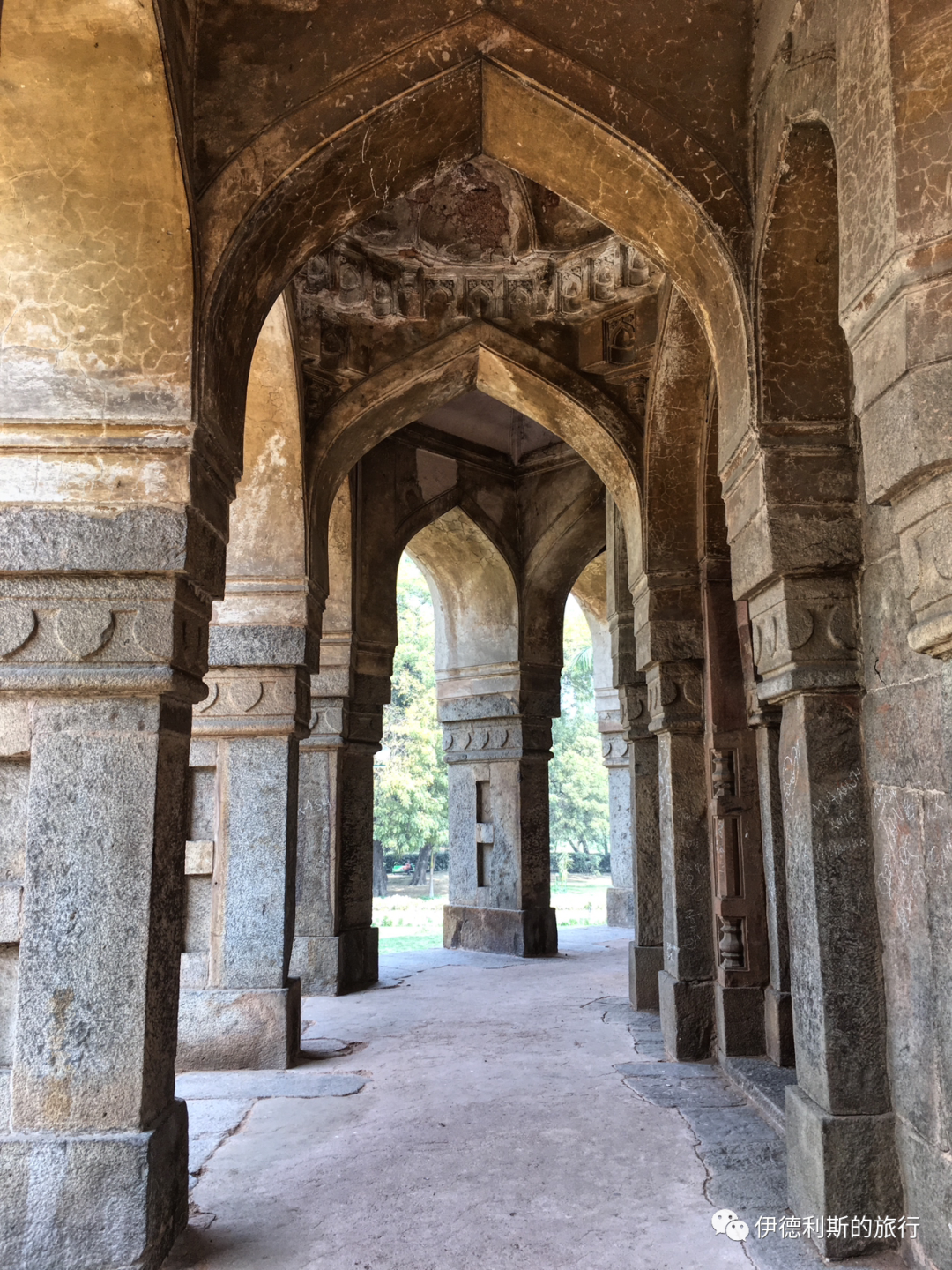
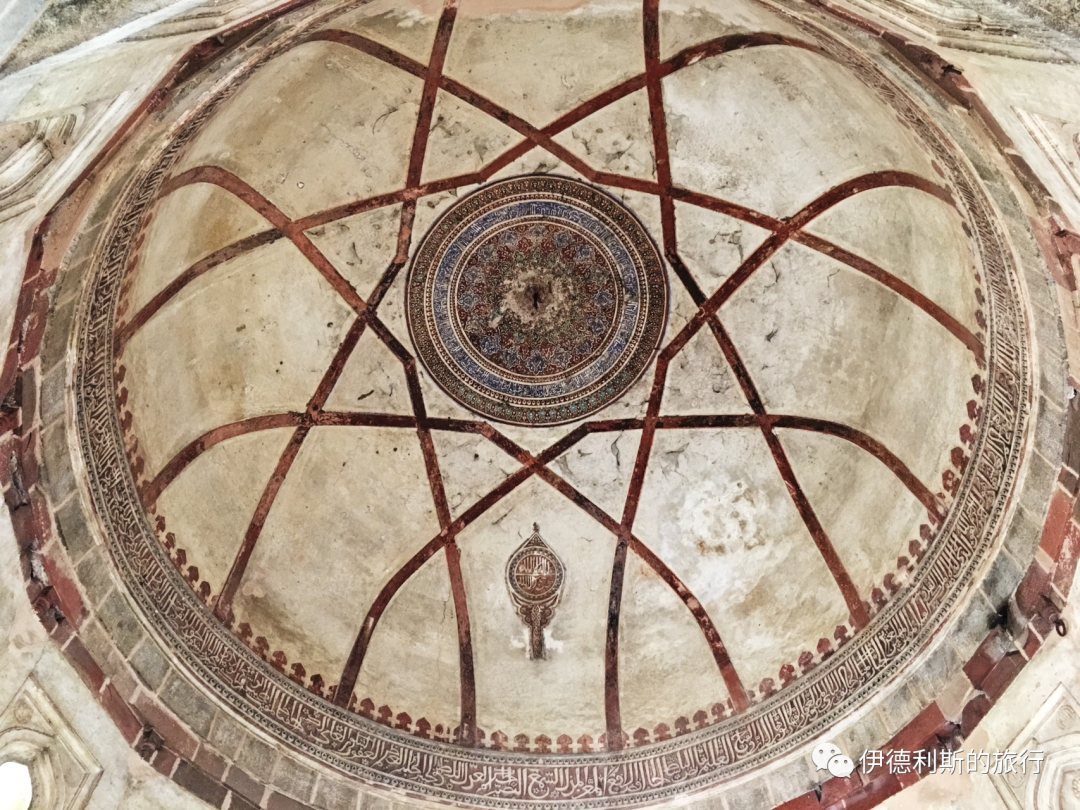
The tomb of Muhammad Shah is an octagonal domed building, which is more magnificent than the tomb of the previous sultan, Mubarak Shah. It is very strange that this tomb has no outer walls. Some speculate it was due to a lack of funds, while others think the outer walls likely collapsed later.
This building has a very typical Indo-Islamic architectural style. The central dome (gumbad) is surrounded by decorative spires (guldasta), then by domed pavilions (chhatri), and finally by eaves (chhajja).
Guldasta means 'tied bouquet' in Persian, and in Indo-Islamic architecture, it is usually shaped like a flower. The domed pavilion (chhatri) first appeared on early Indian Sufi tombs in the 12th century. It was later popularized by the Mughal Empire and became a signature feature of Indo-Islamic architecture. In fact, both the guldasta and the chhatri are a fusion of Persian pavilions and the indigenous Indian roof tower (sikhara).
The eaves (chhajja) were relatively rare during the Delhi Sultanate period. They did not become popular until the Mughal period and were later incorporated into Hindu architecture.
Bara Gumbad
Walking northeast from the tomb of Muhammad Shah, you reach the largest building from the Lodhi period: the Bara Gumbad (Big Dome).
The Bara Gumbad was built in 1490 by Sultan Sikandar Lodi (reigned 1489-1517) of the Lodhi dynasty. It consists of three buildings on a 4-meter-high platform. In the middle of the platform is a tombstone, with the Bara Gumbad on the south side, a Friday mosque (Juma Masjid) on the west side, and a guest house (mehman khana) on the east side. Judging by its shape, the Bara Gumbad looks like a tomb, but no burial has been found underneath, so it is likely the south gate of the platform.
The Bara Gumbad is 29 meters high and features Delhi's first 'full dome,' which is a complete semi-circular dome. The outer wall looks like it has two layers from the outside, but it is actually a single-layer structure inside. This design is very clever. The building is made of gray quartzite and decorated with red sandstone and black stone. All the stones were trimmed and polished, with no plaster used at all.
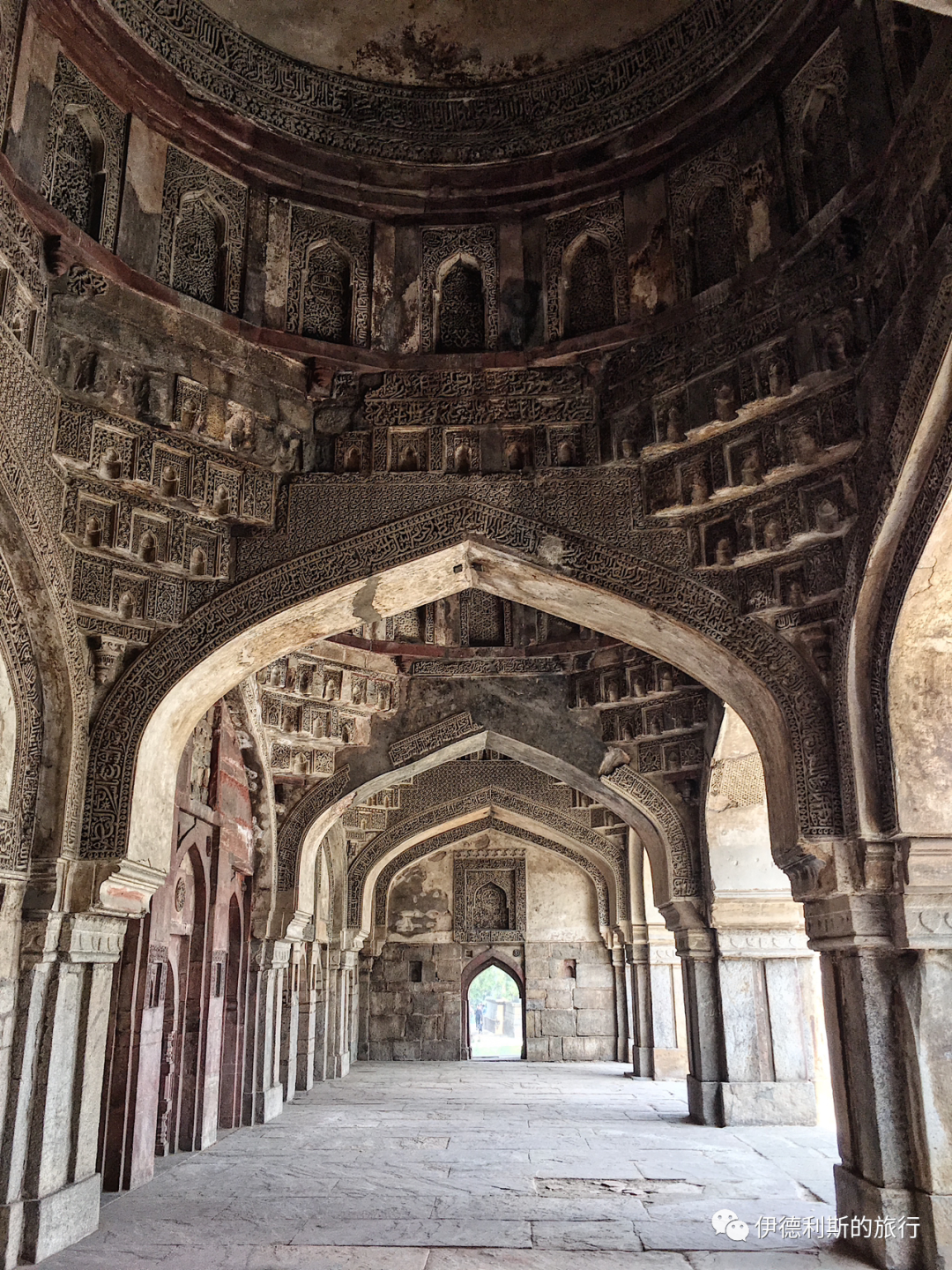
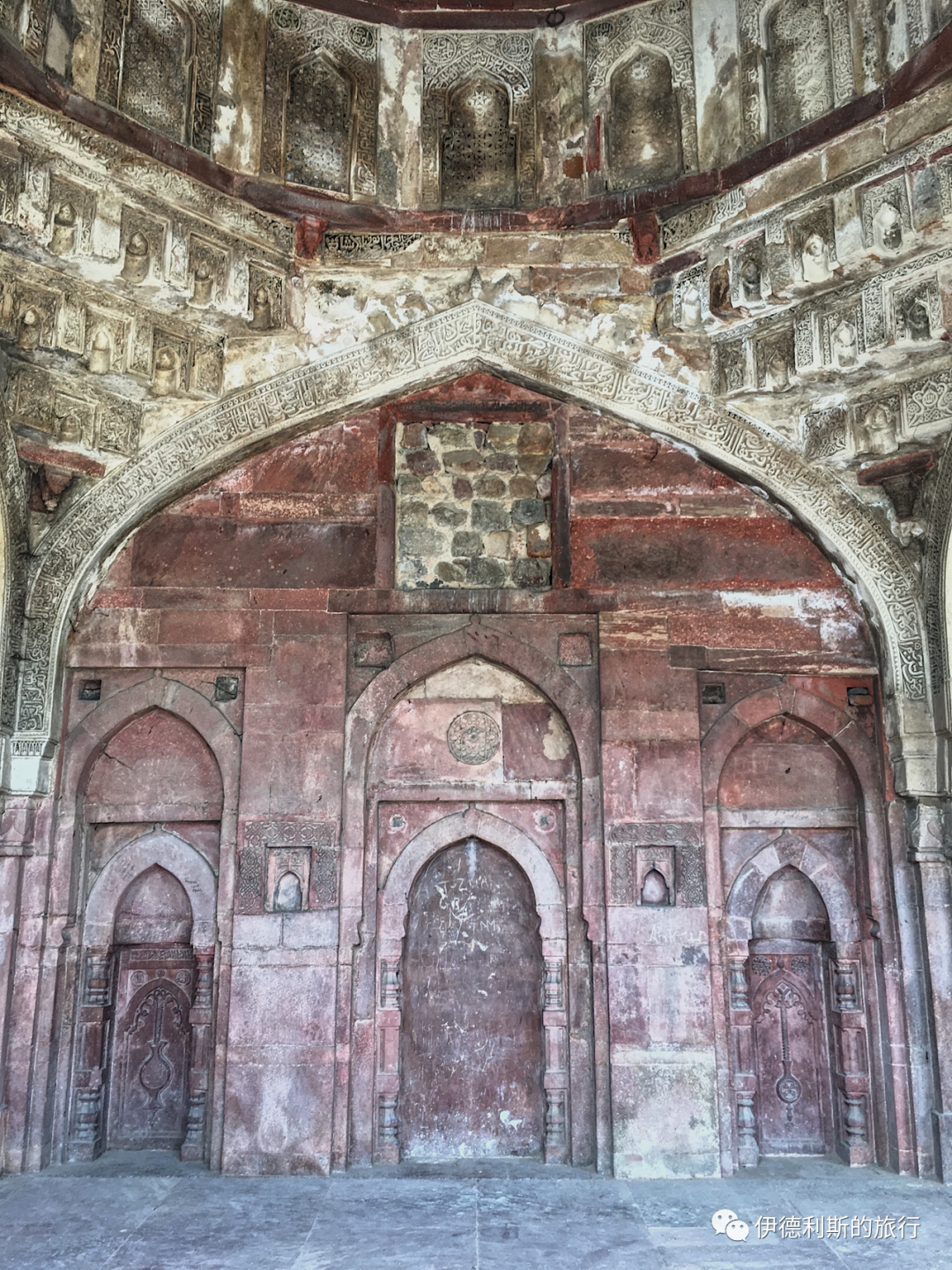
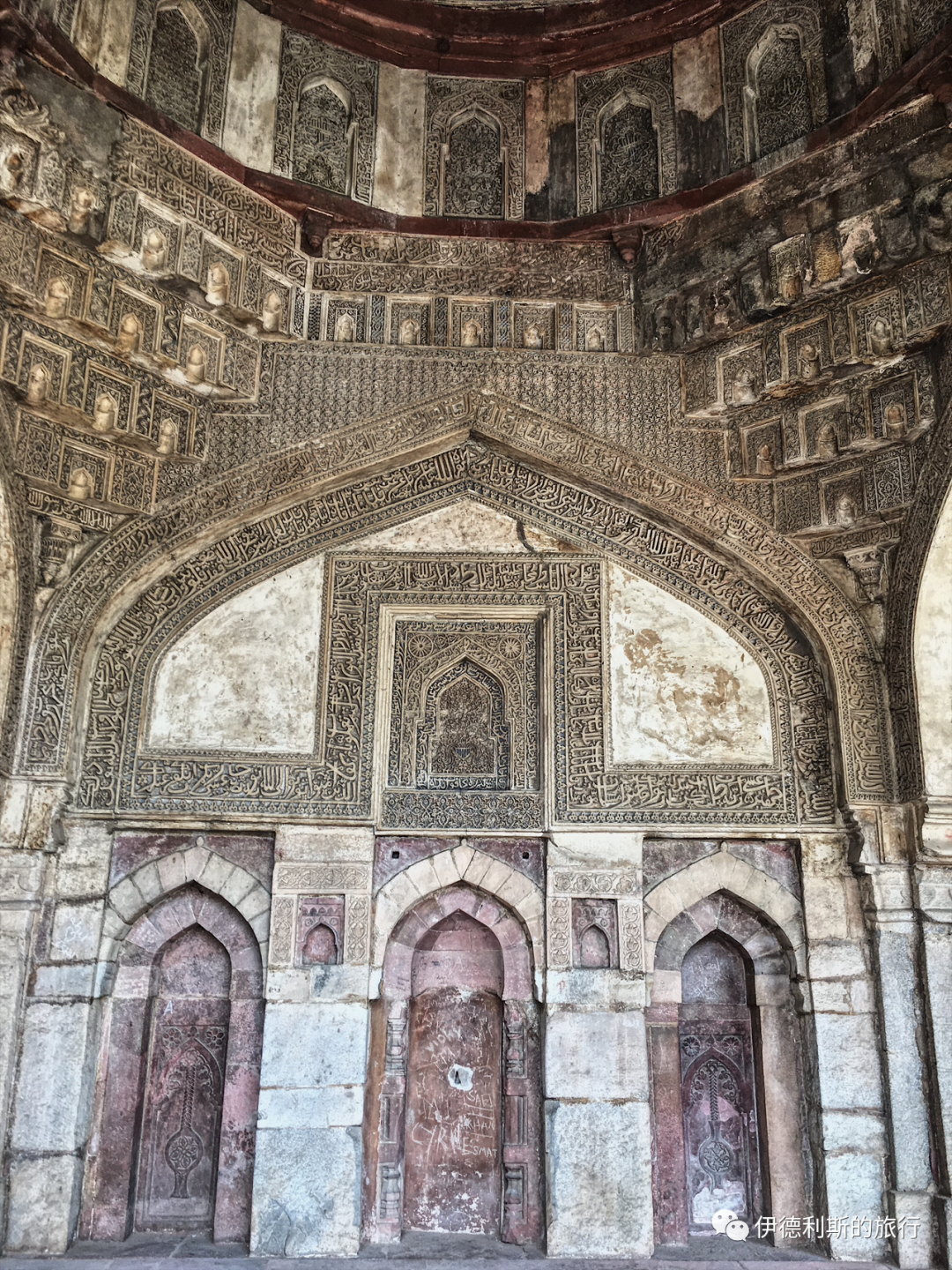
The Friday mosque on the west side of the Bara Gumbad was built in 1494. It is in the classic Lodhi style, with three large and two small arches, three domes on top, corner towers on both sides, and stone windows (jharokha) on the sides and back. This design had a great influence on later Mughal architecture.
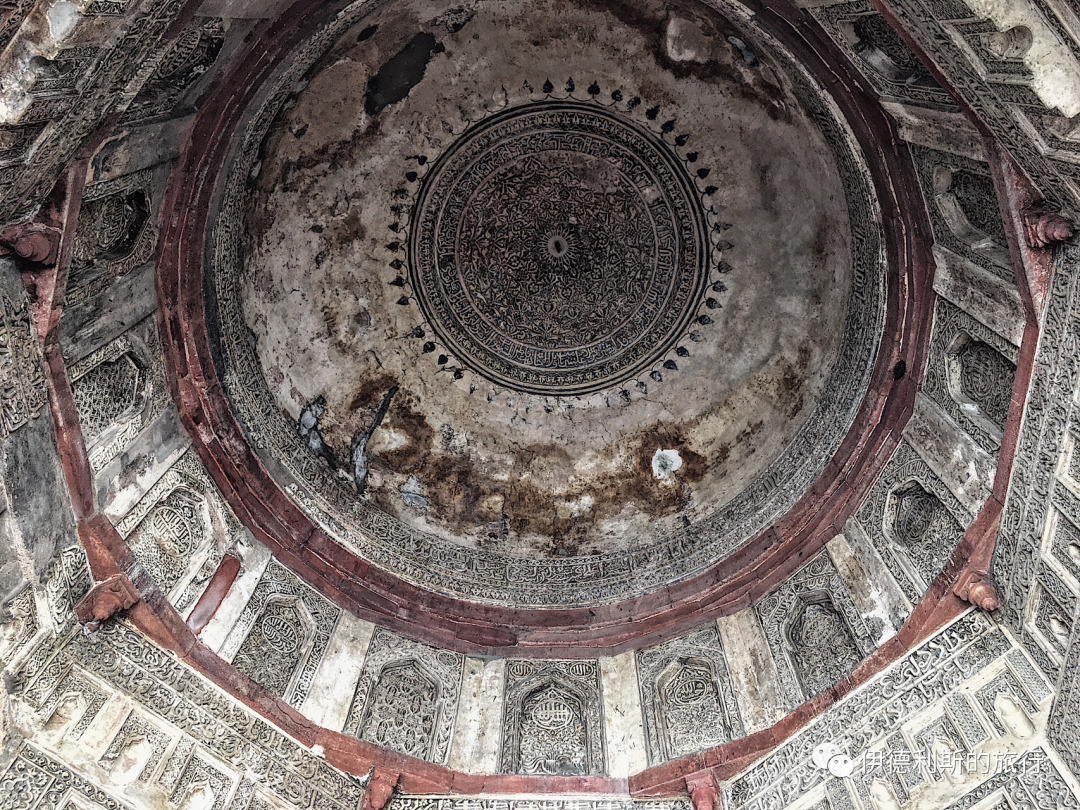
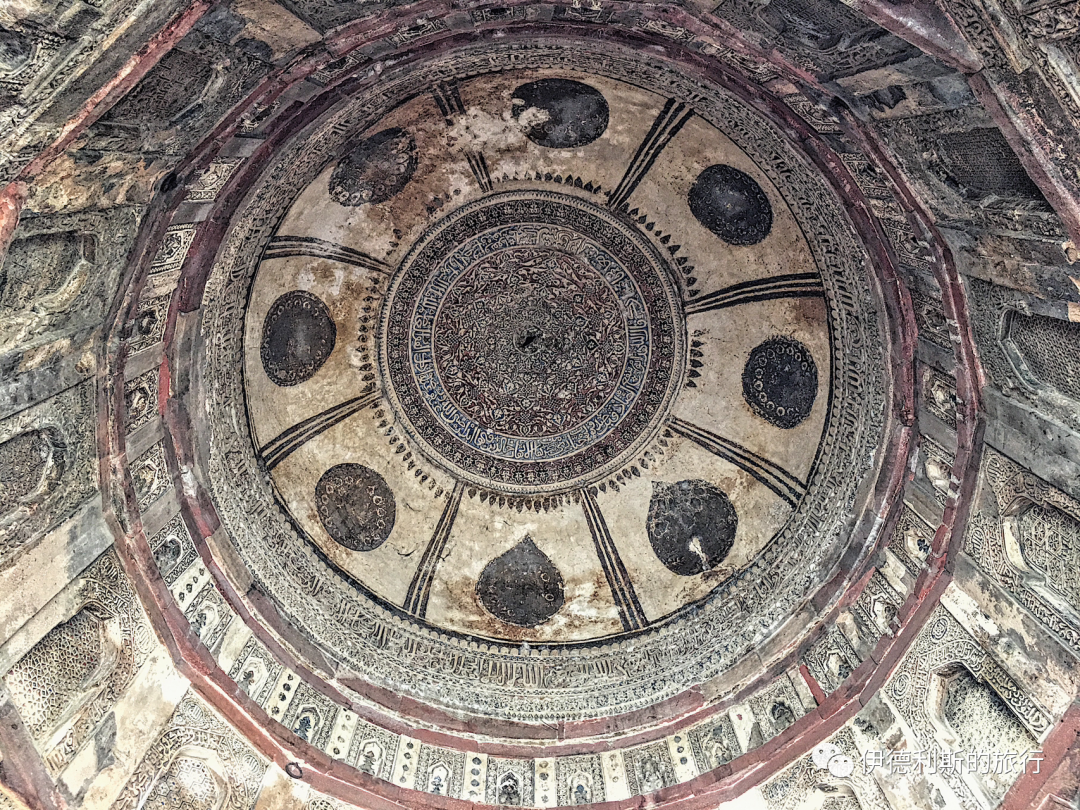
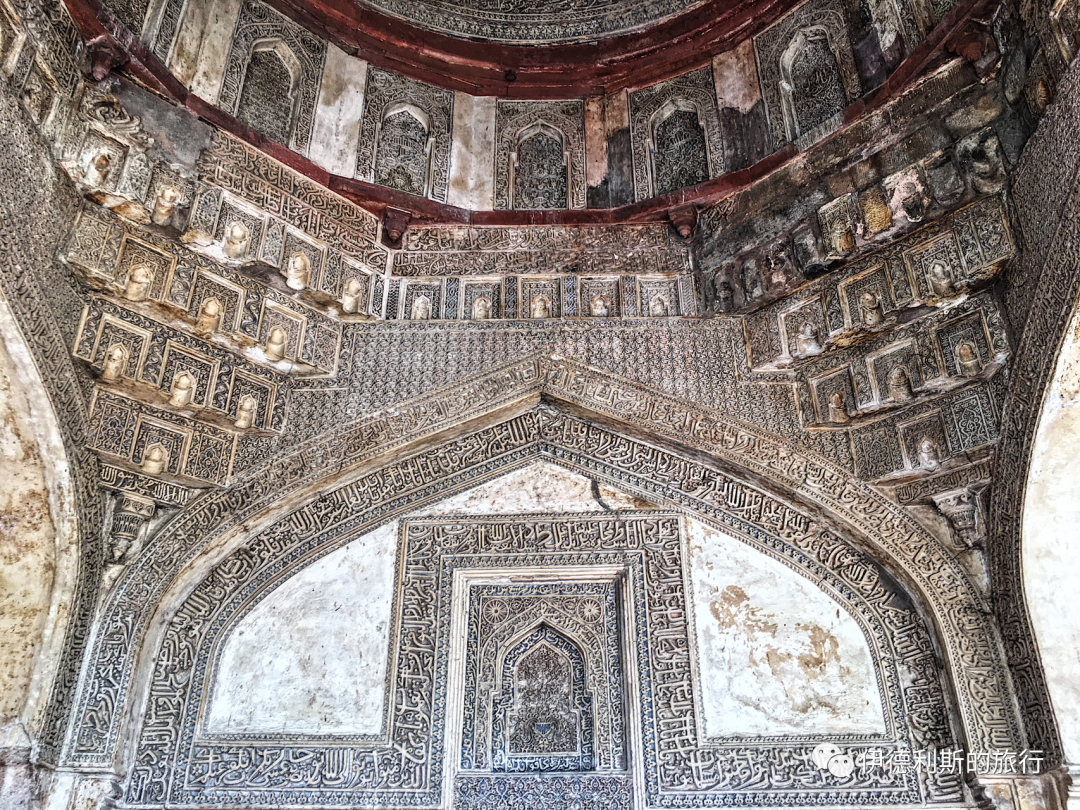
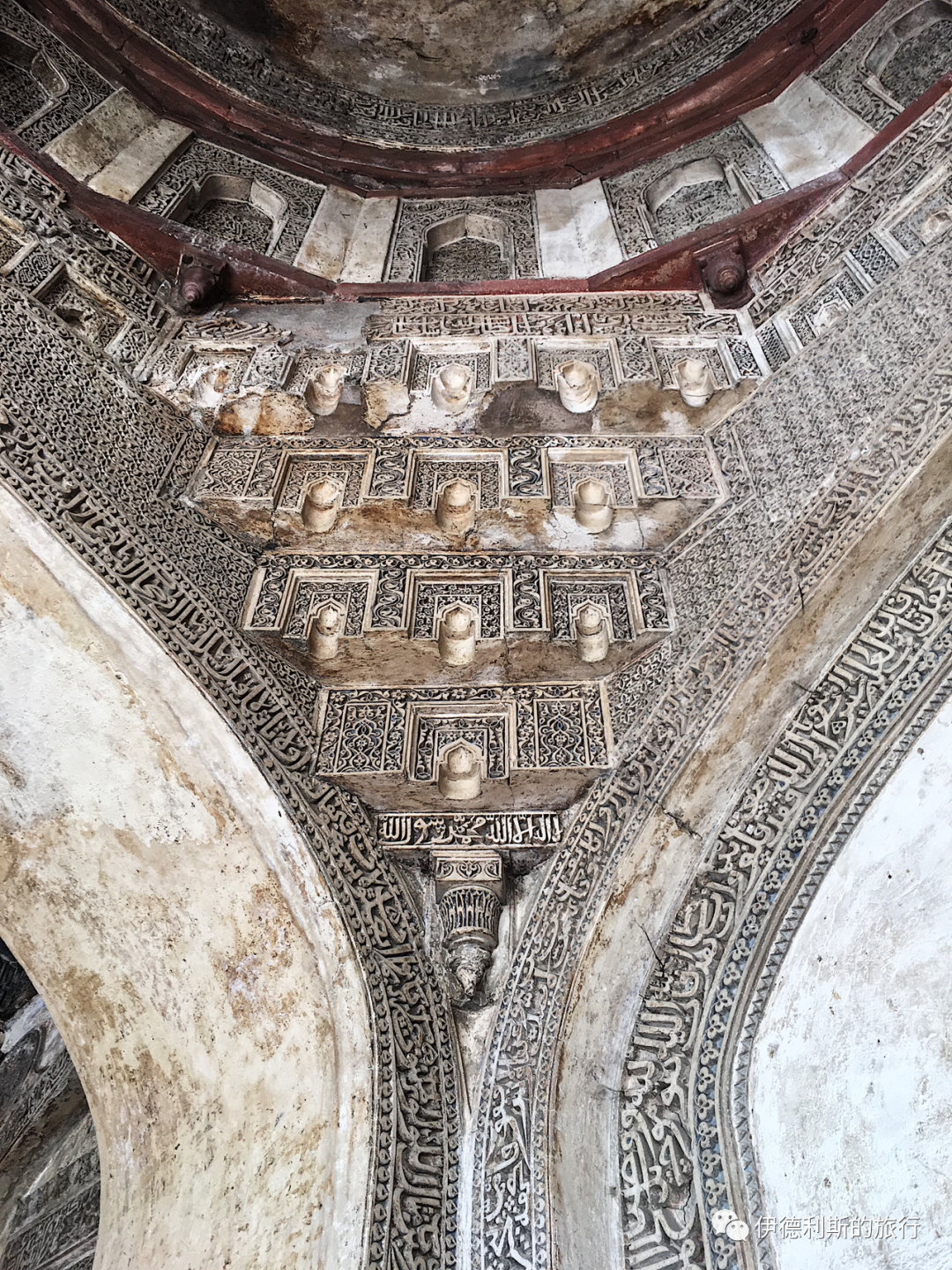
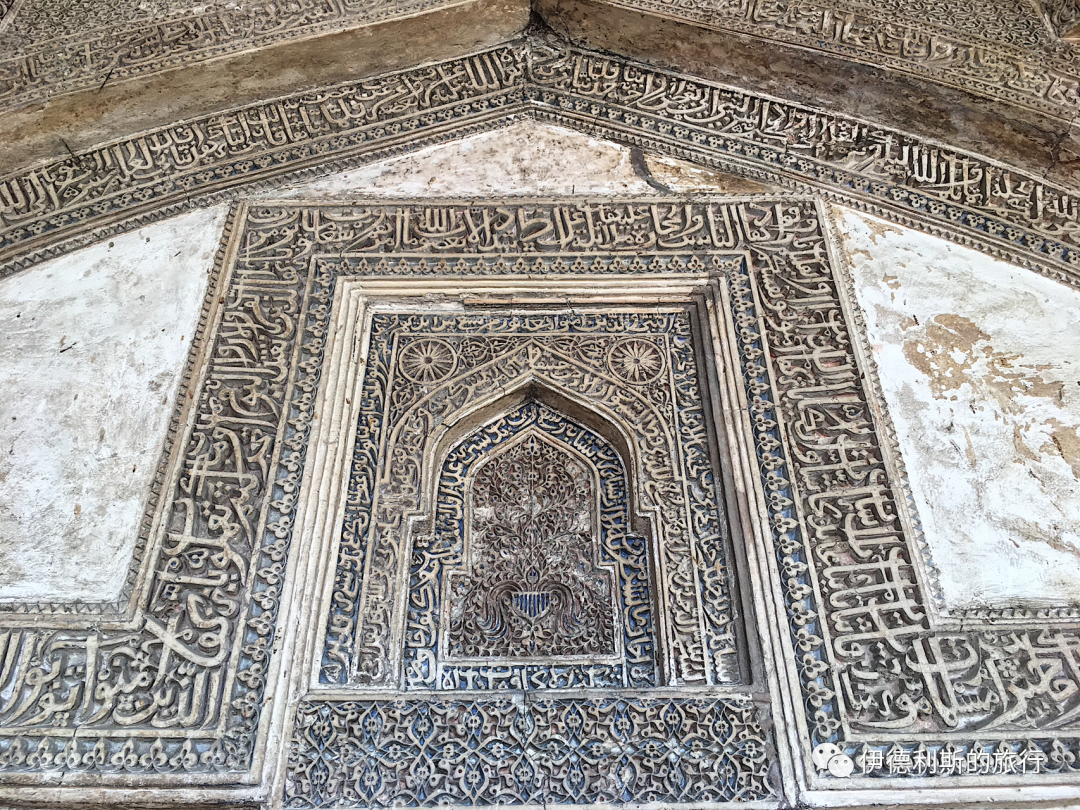
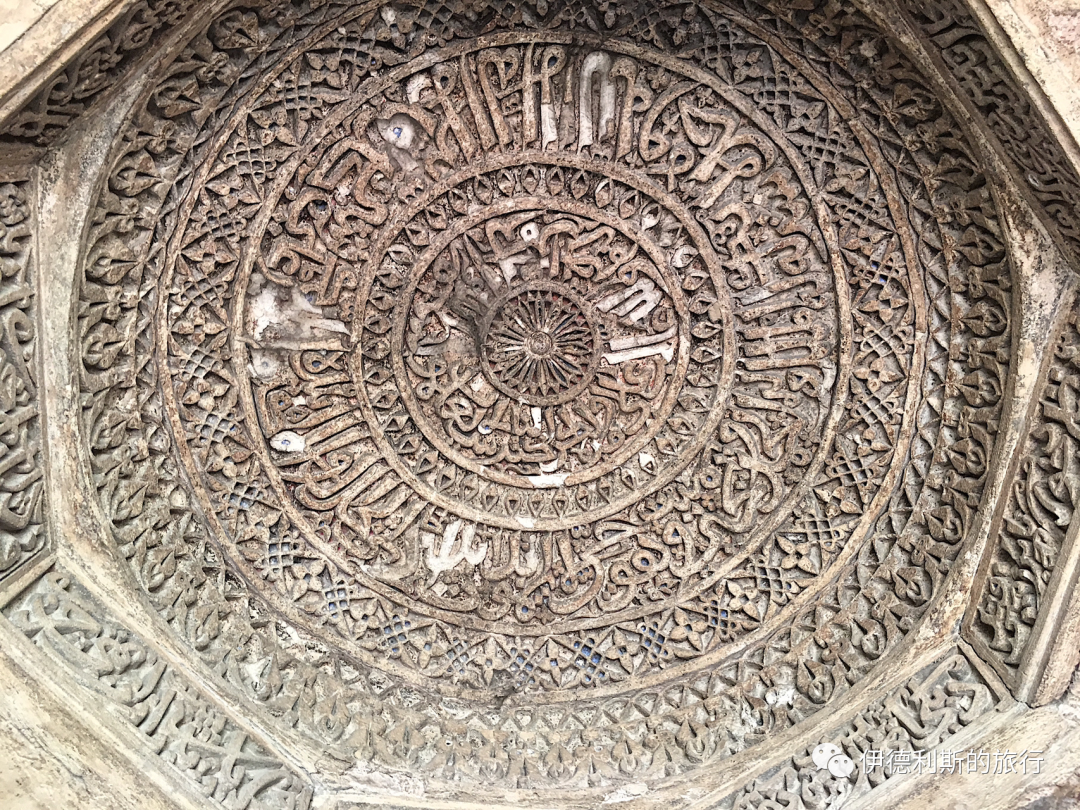
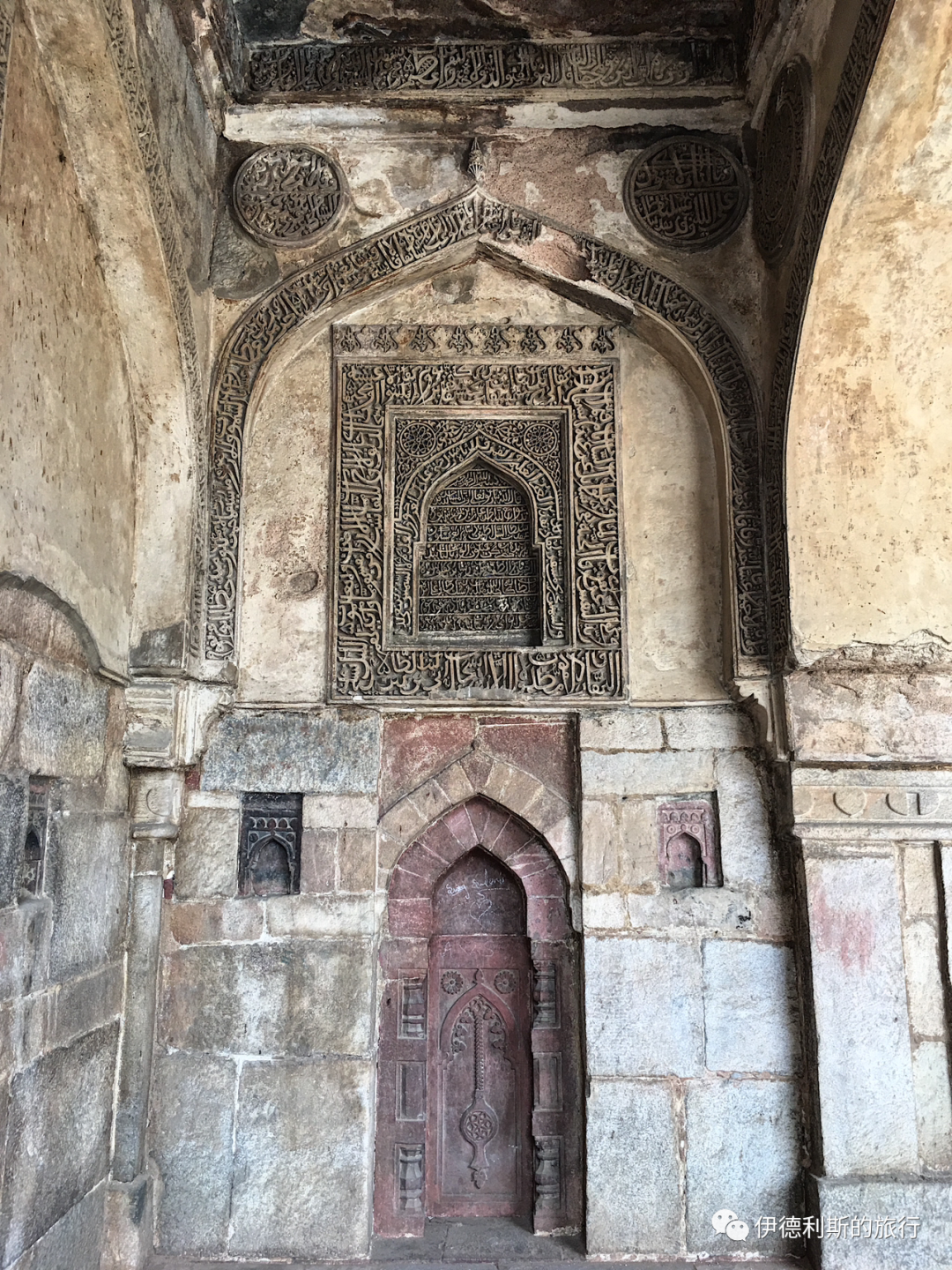
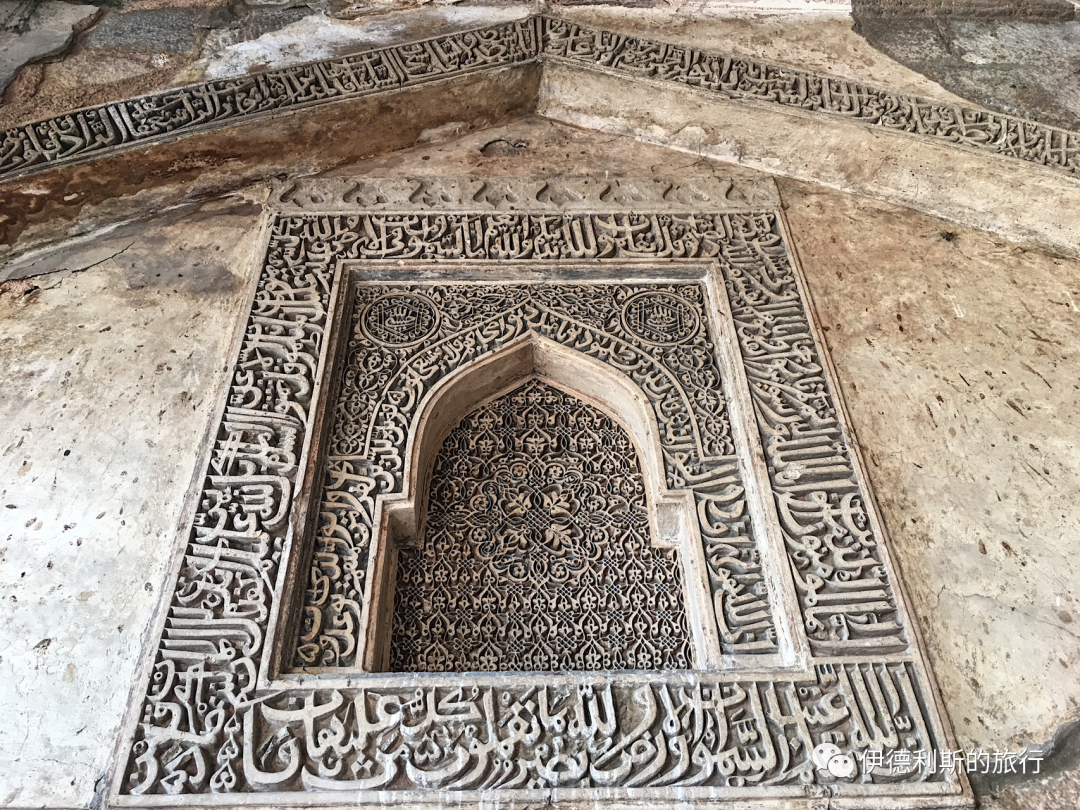
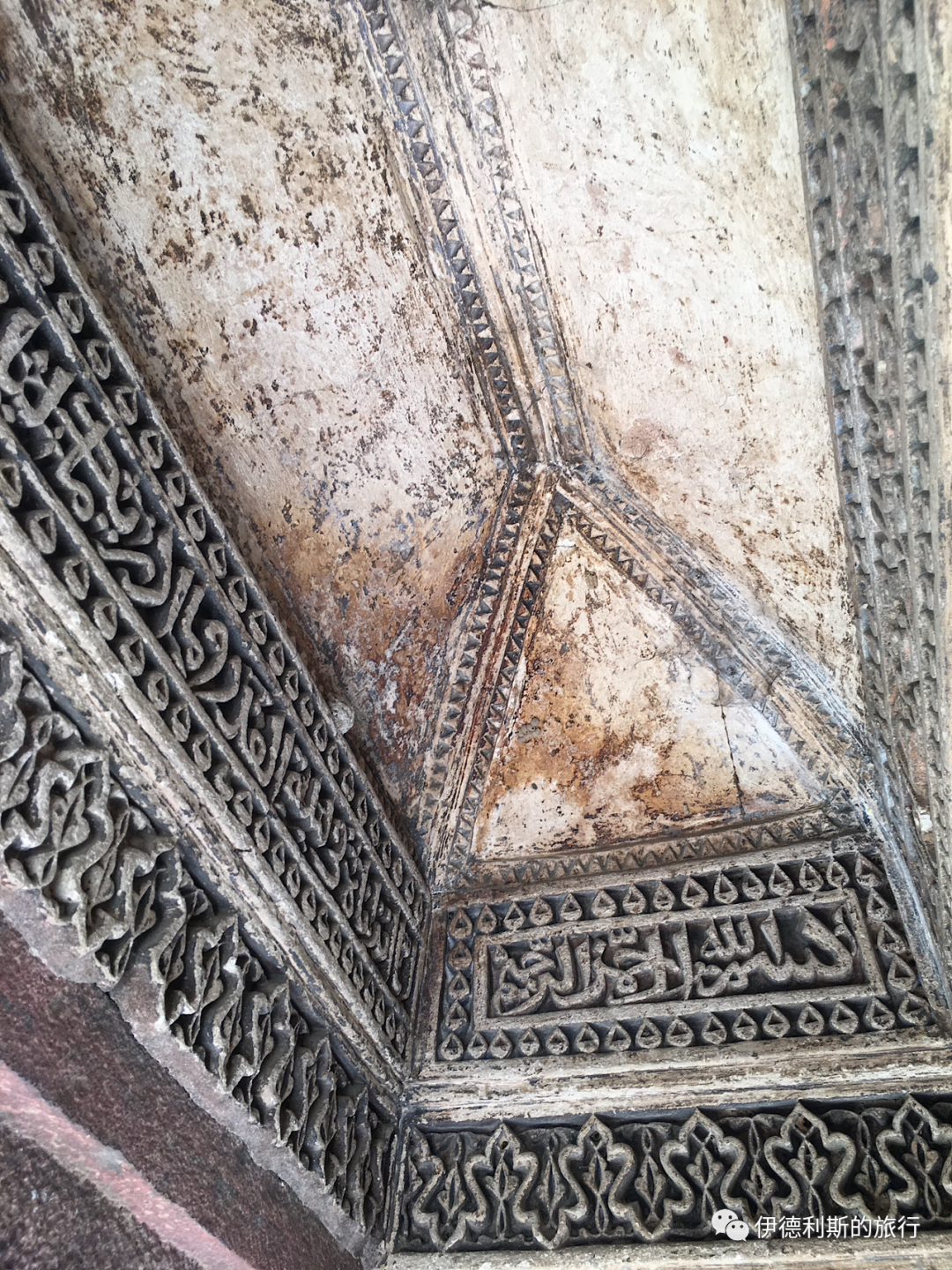
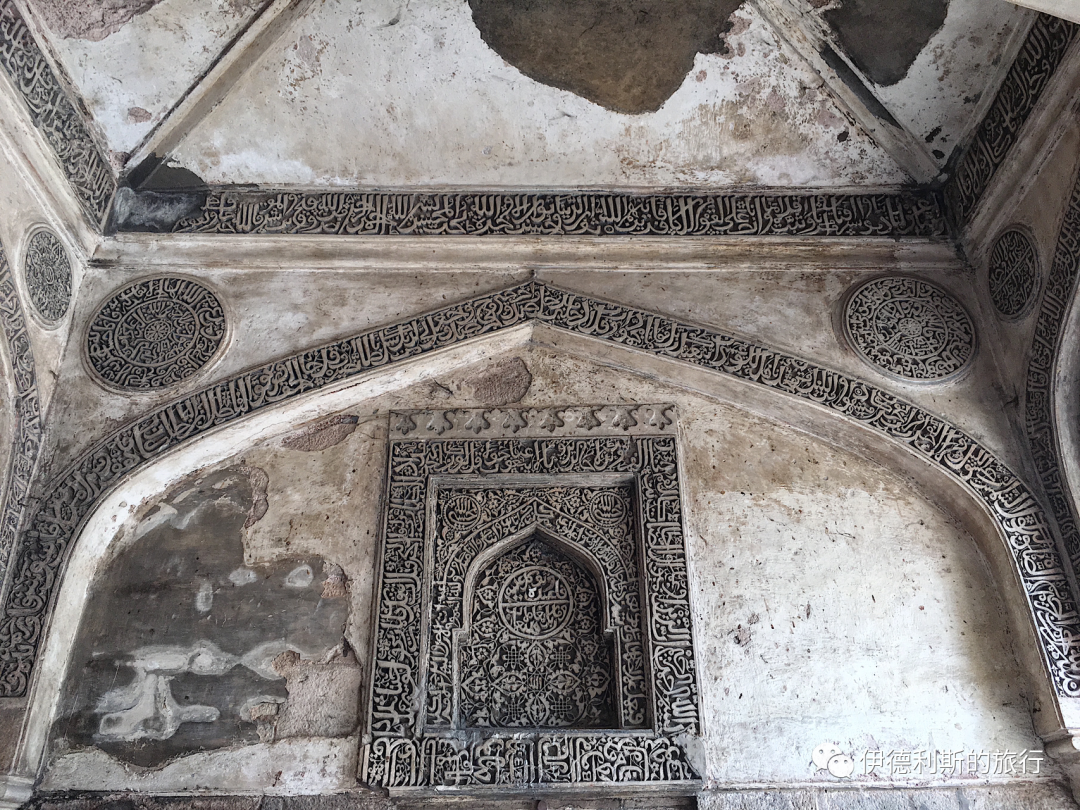
The plaster carvings inside the Friday mosque of the Bara Gumbad are perhaps the richest of the Lodhi period. The abundance of floral patterns, geometric designs, and scriptures is overwhelming, making this mosque occupy an important place among mosques in India.
Shish Gumbad
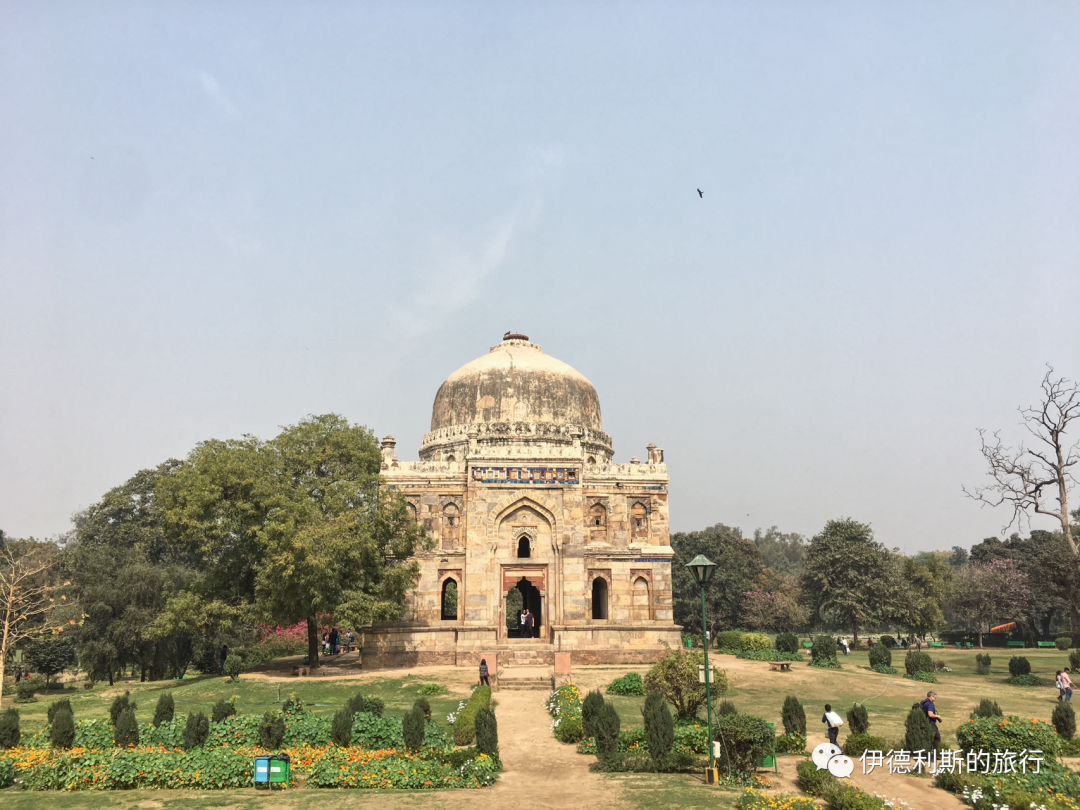
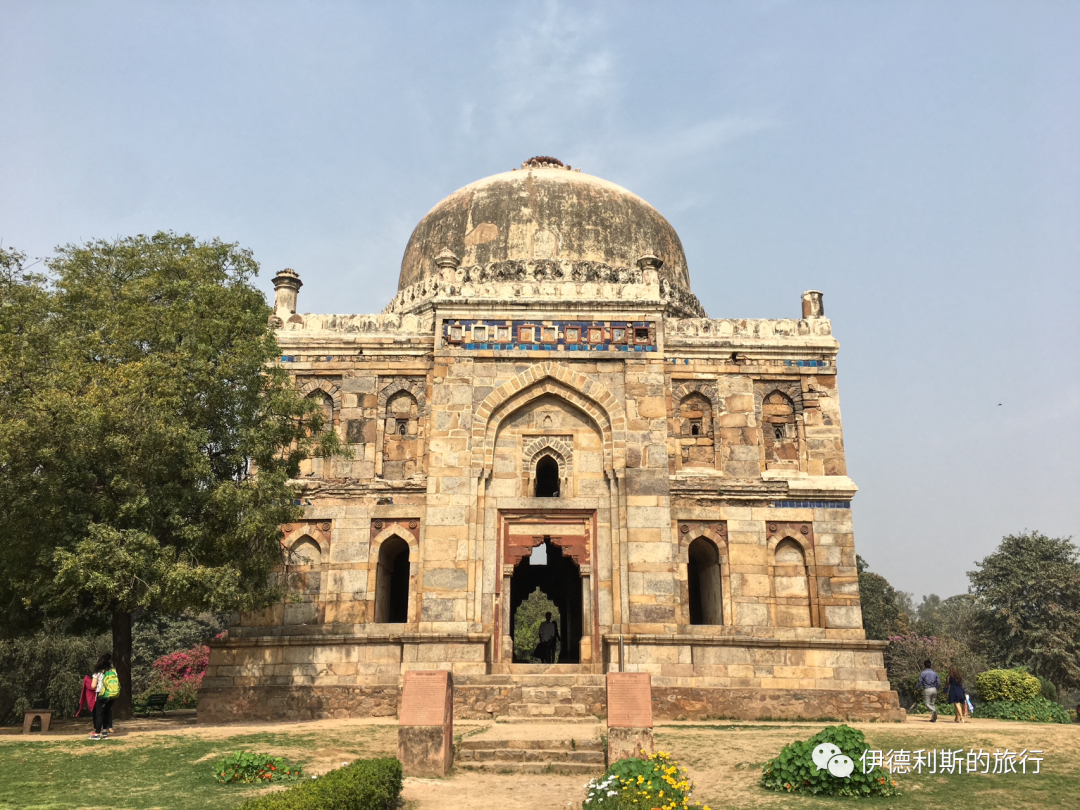
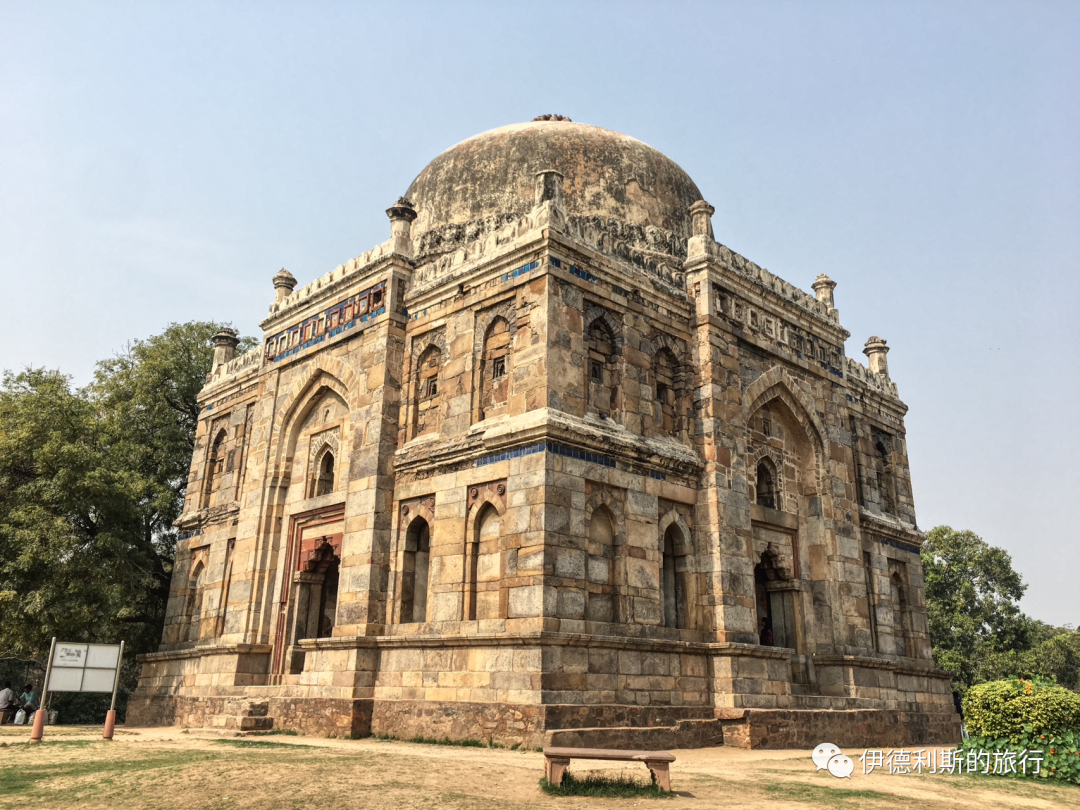
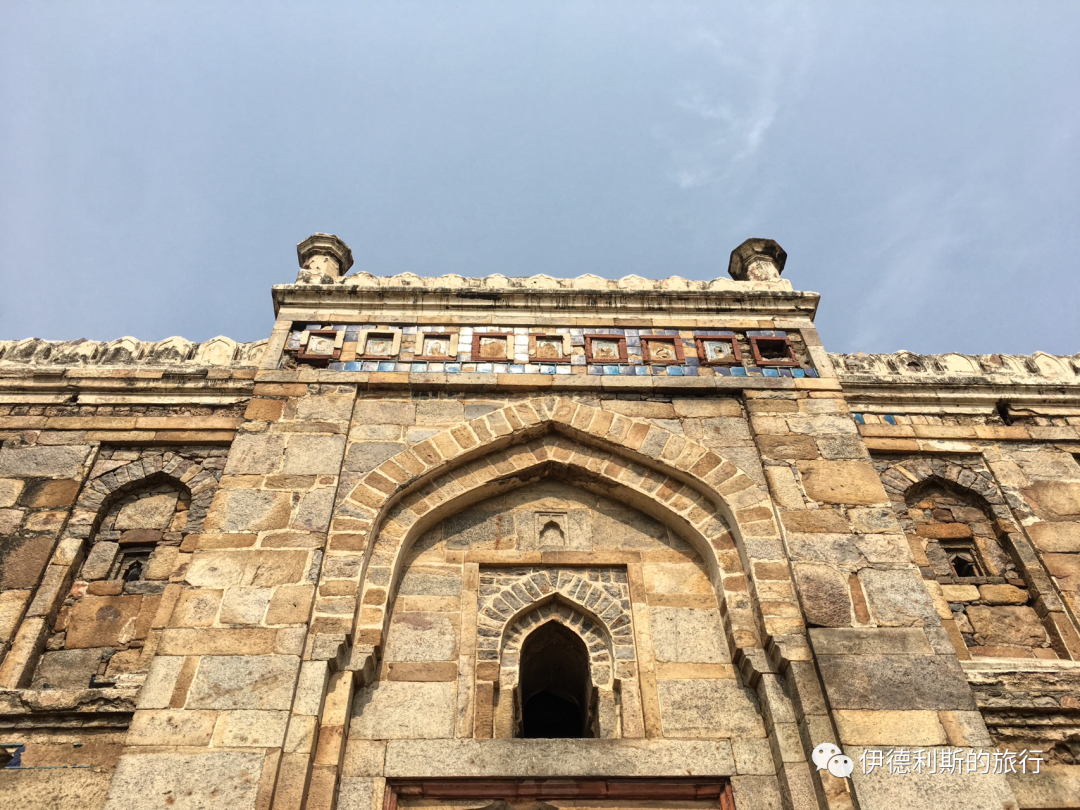
Directly north of the Bara Gumbad is the Shish Gumbad (Glass Dome), which is said to have been built by Sultan Sikandar Lodi (reigned 1489-1517). The ownership of this dome is still debated. One theory is that it belonged to a nobleman of the Lodhi dynasty, while another suggests it was for the founder of the Lodhi dynasty, Bahlul Lodi (reigned 1451-1489).
The Glass Dome gets its name from the blue tiles that once decorated the exterior of the tomb, making it shine like glass. Currently, only a few blue tiles remain.
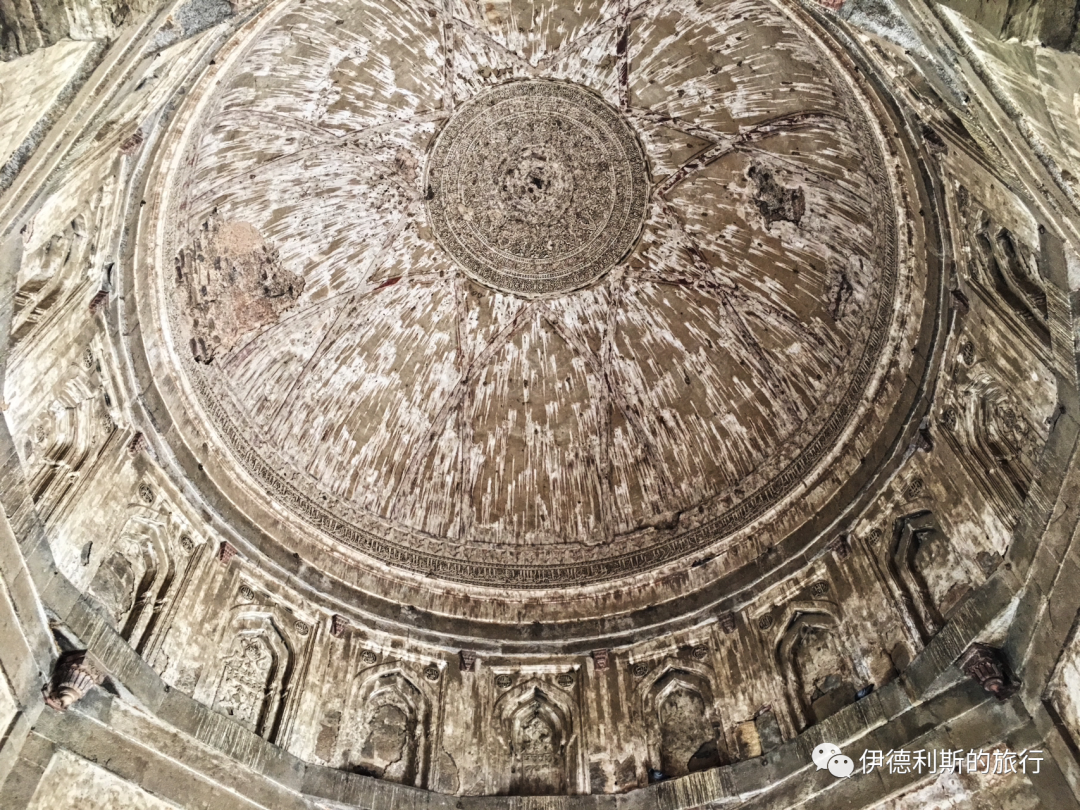
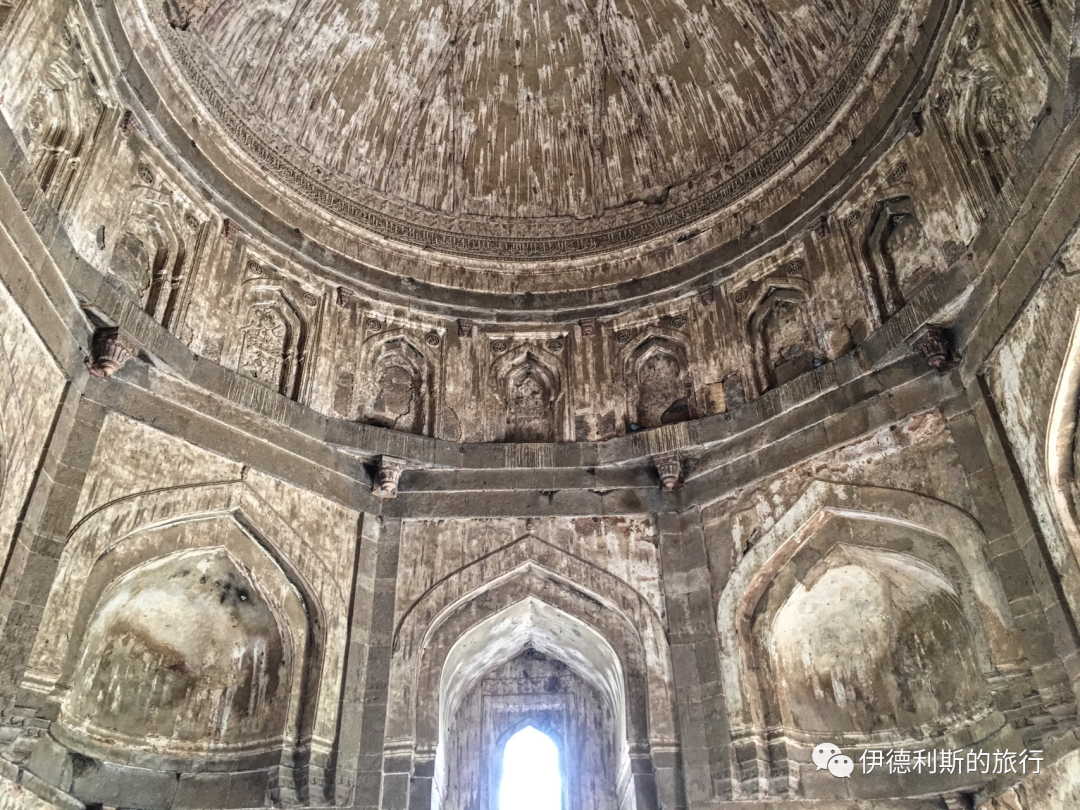
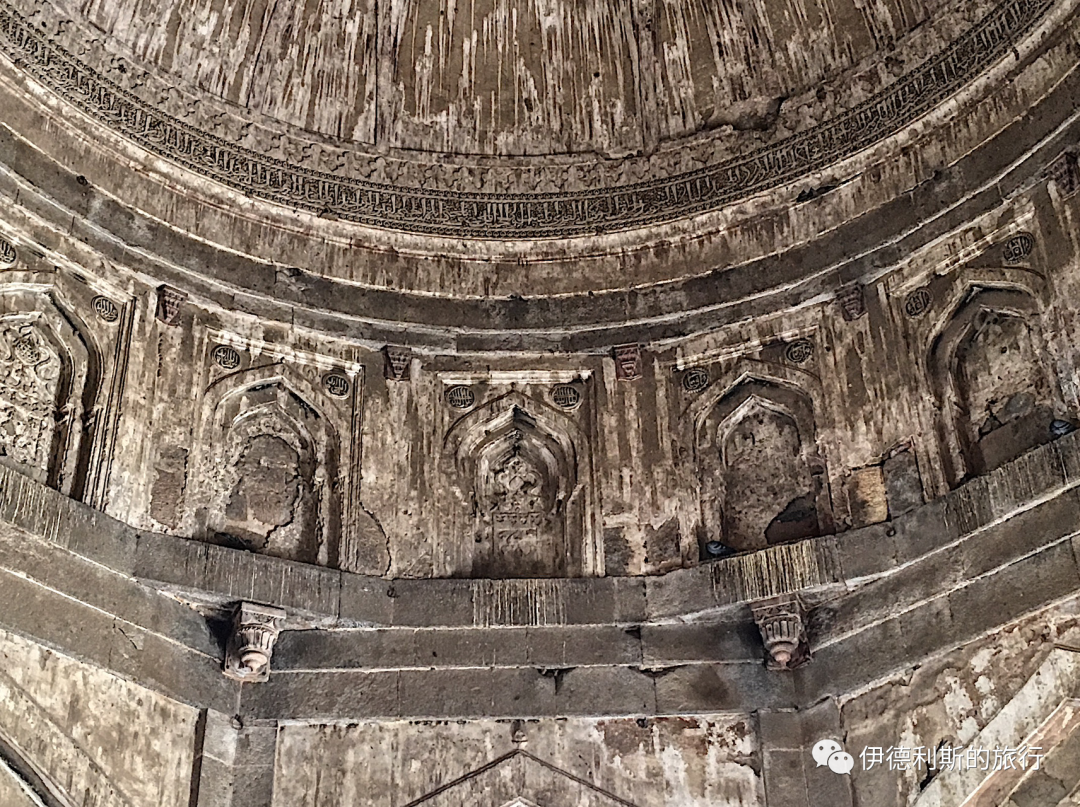
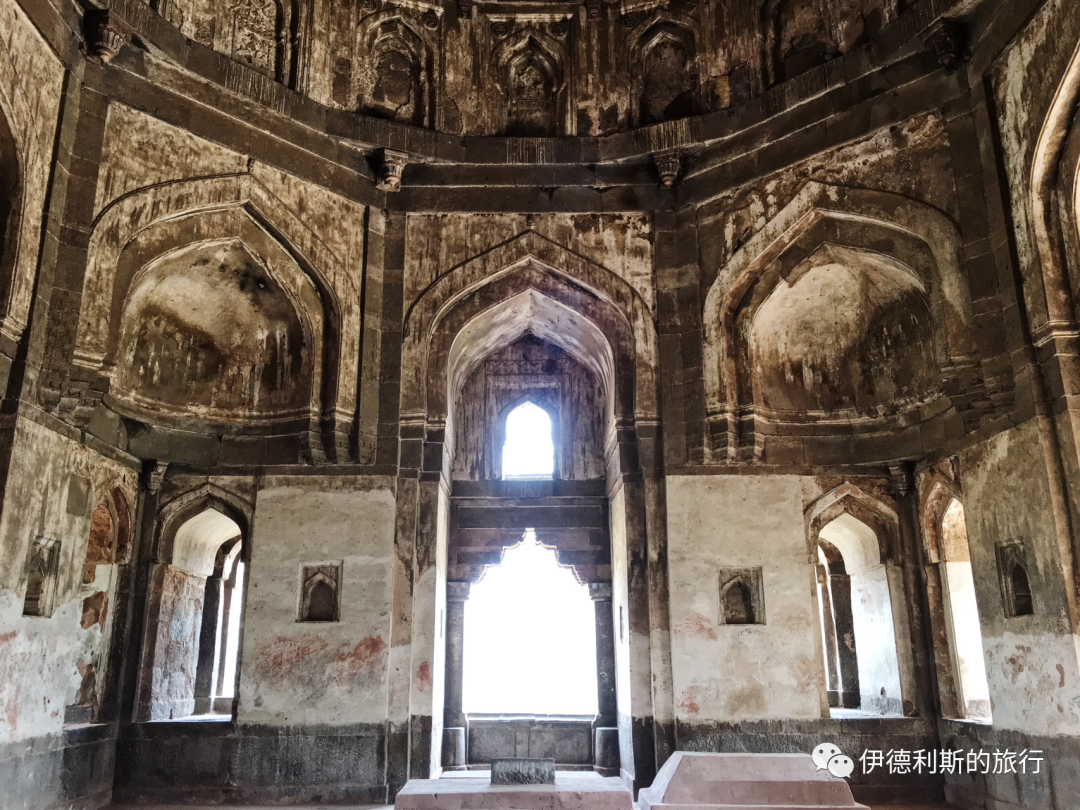
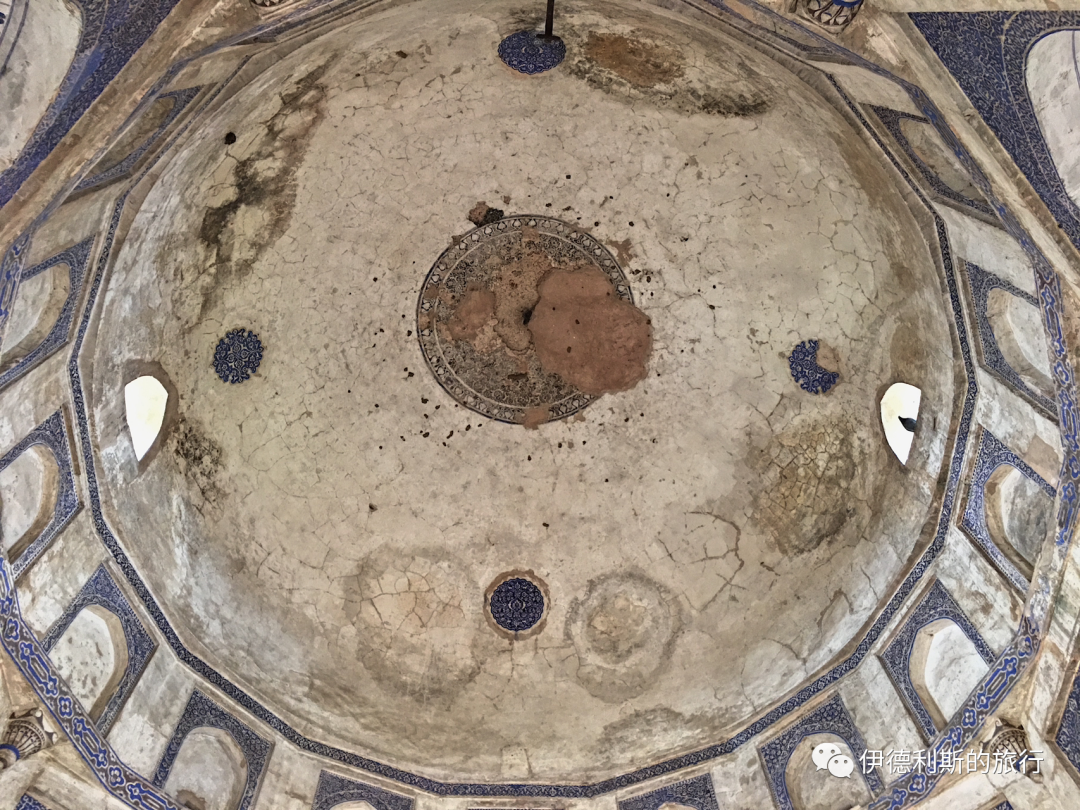
The Glass Tomb (Shisha Gumbad) and the Big Tomb (Bara Gumbad) have similar structures. Both look like two stories from the outside, but they are actually only one story inside. The dome is also surrounded by decorative spires called guldasta. However, the interior of the Glass Tomb (Shisha Gumbad) is poorly preserved and covered in bird droppings.
Tomb of Sikandar Lodi
Northeast of the Glass Tomb (Shisha Gumbad) stands the tomb of the Lodi Dynasty Sultan Sikandar Lodi (reigned 1489-1517). It was built between 1517 and 1518 by his successor, Sultan Ibrahim Lodi (reigned 1517-1526), and is India's first enclosed garden tomb.
Sikandar Lodi was a capable ruler. He expanded the Lodi Dynasty's territory and built the city of Agra between 1504 and 1505, which is the same city where the Taj Mahal is located today. The Lodi Dynasty officially moved its capital to Agra after that, but after Sikandar passed away, his son still buried his father in Delhi.
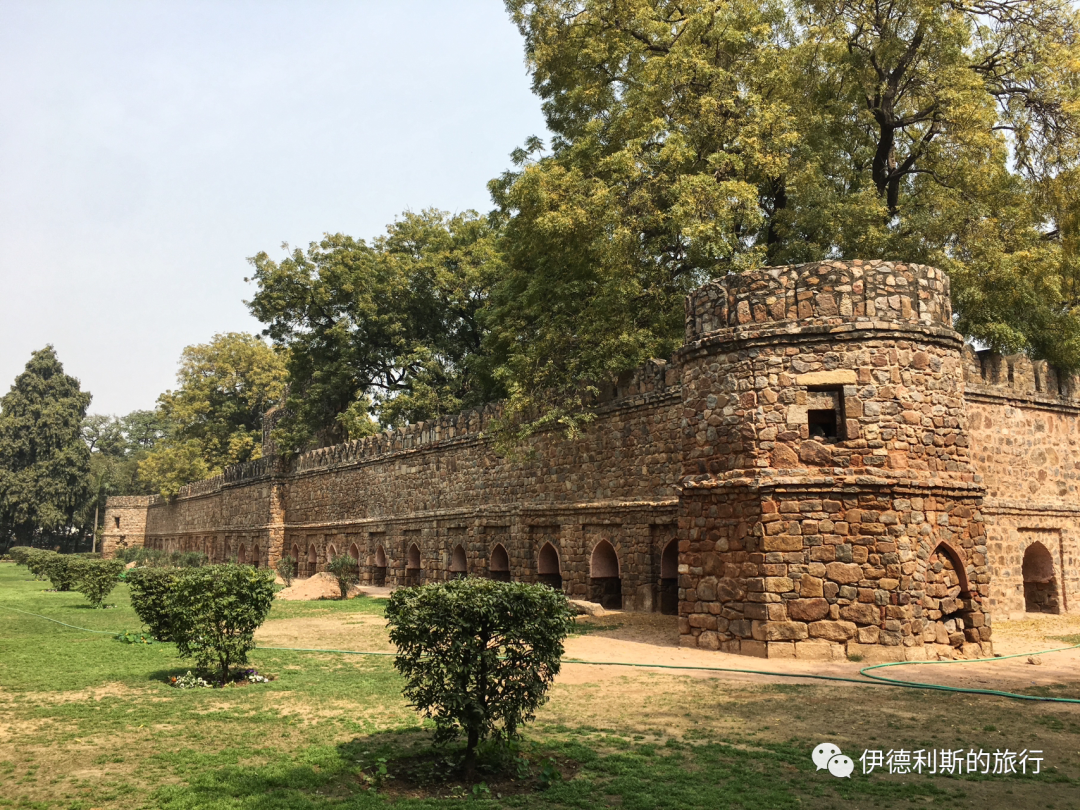
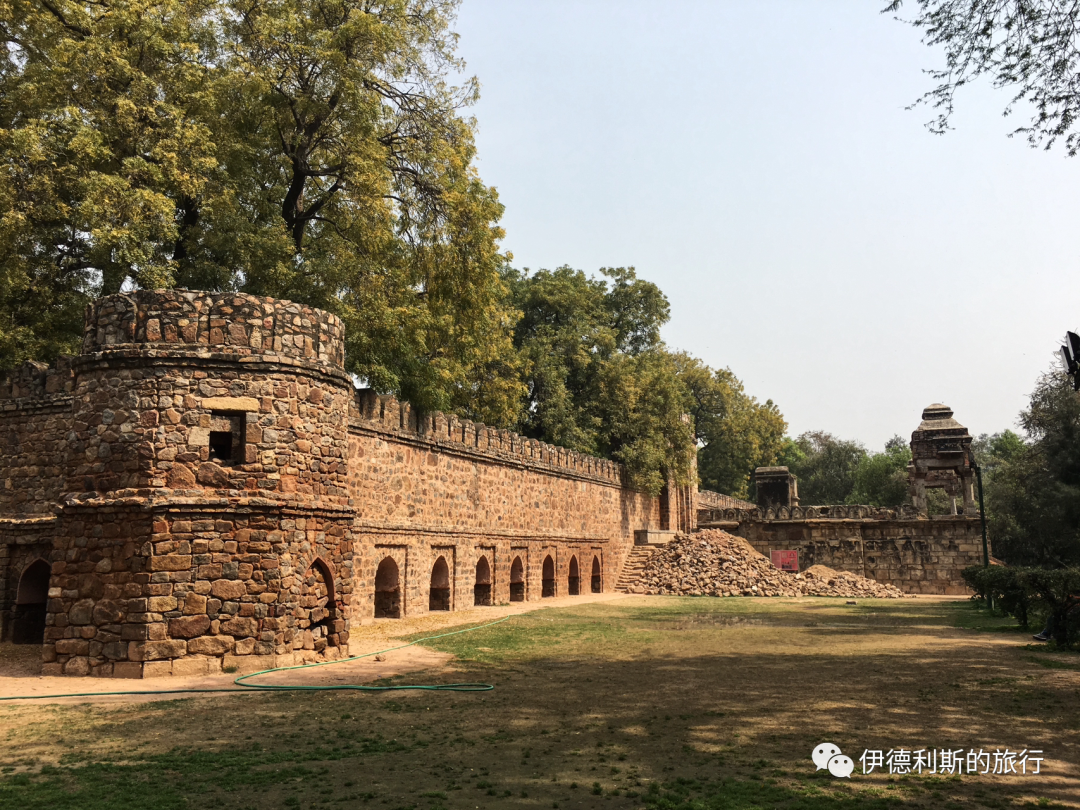
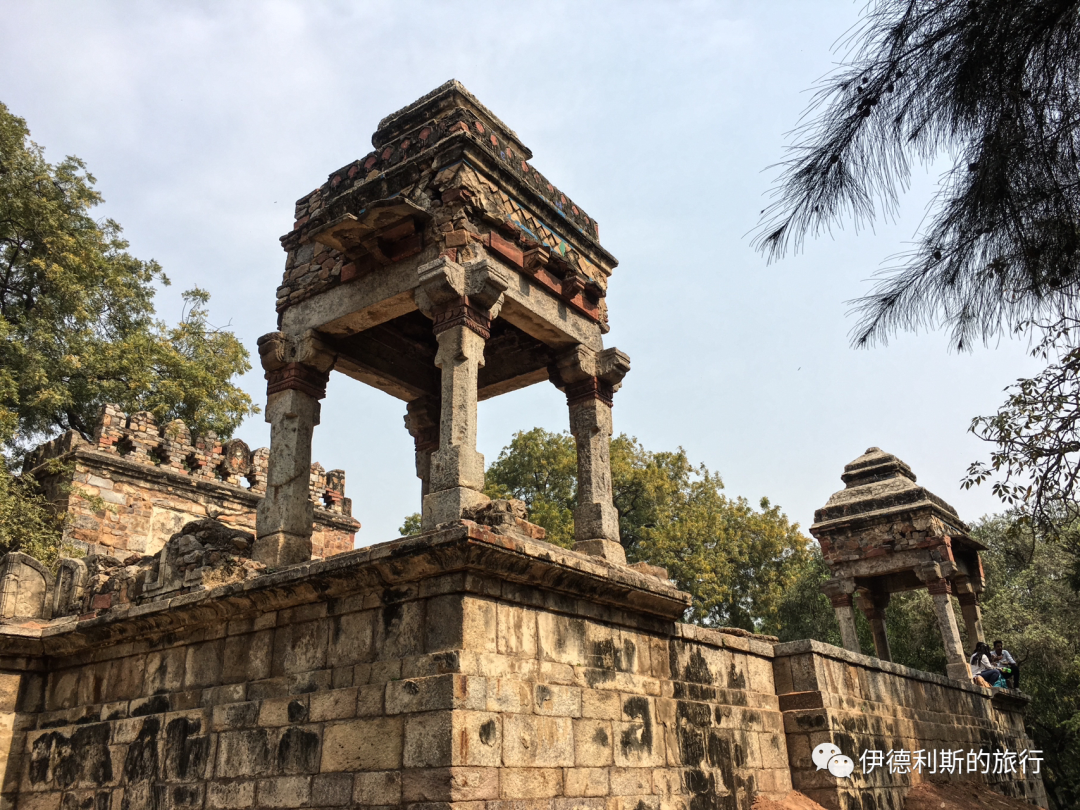
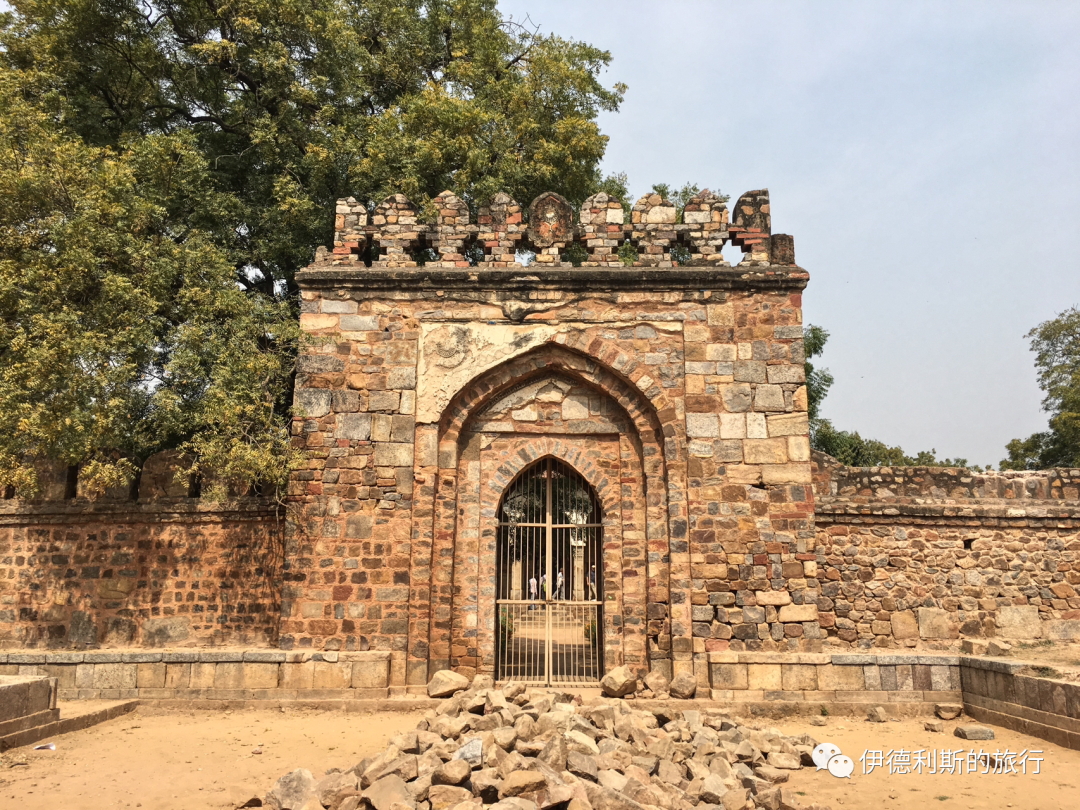
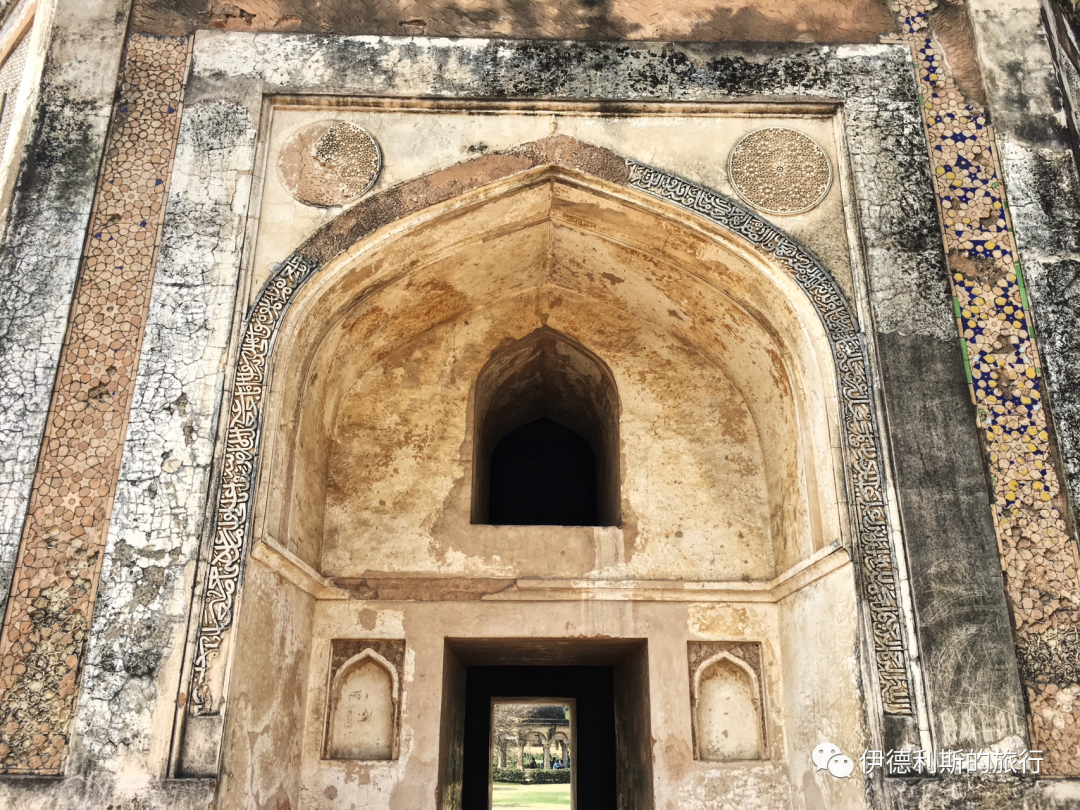
The tomb is surrounded by a 3.6-meter-high wall with corner towers. The west wall features a prayer wall and three mihrab niches—one large and two small. The south gate is shaped like a convex character and has two domed pavilions (chhatris) inlaid with tiles.
The main building's design follows the tomb of the previous Sultan, Muhammad Shah. Both are octagonal domed buildings, but the main difference is that Sikandar Lodi's tomb lacks the domed pavilions (chhatris).
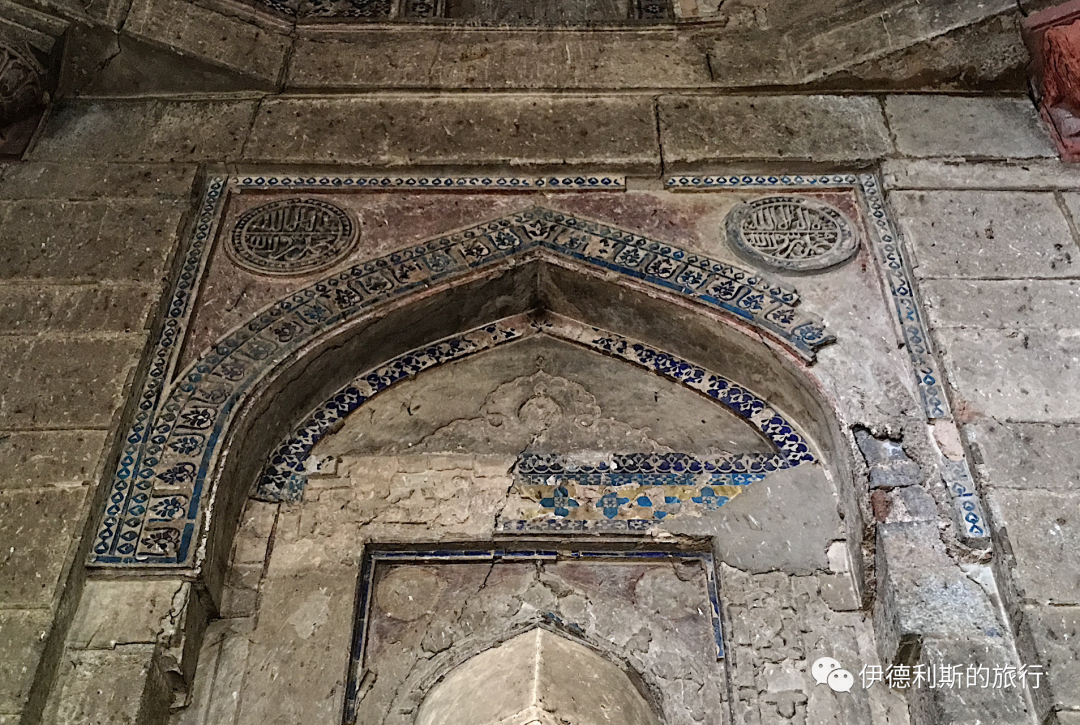
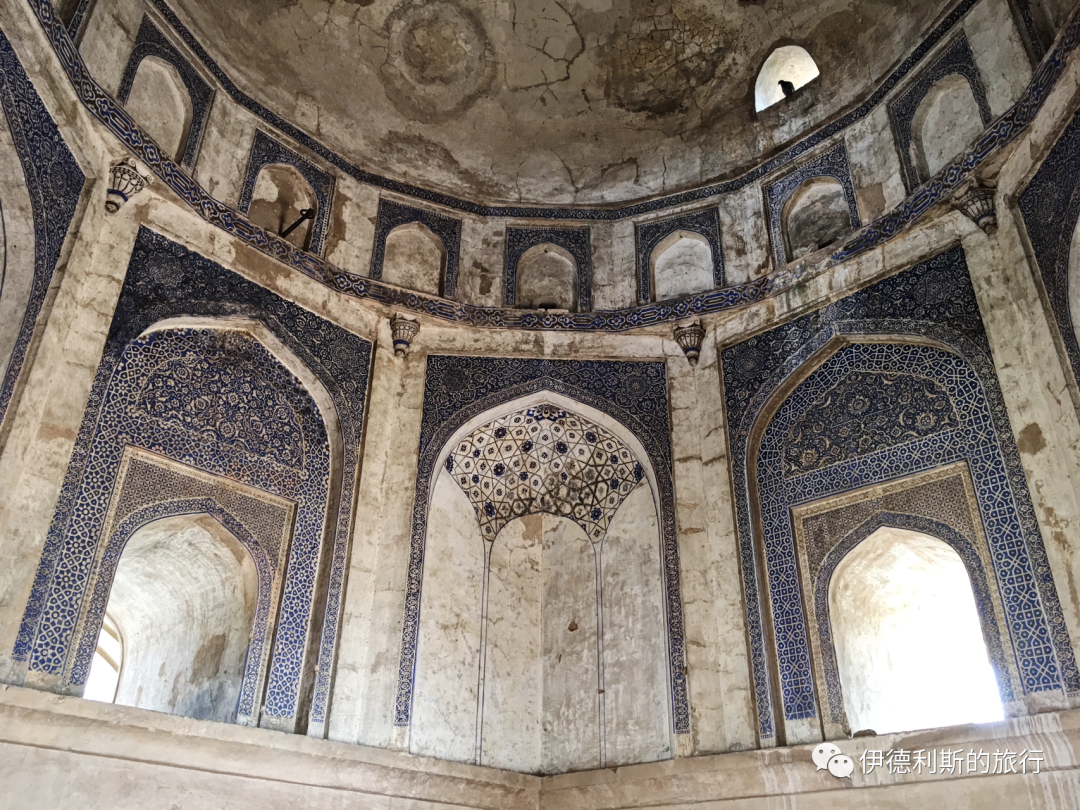
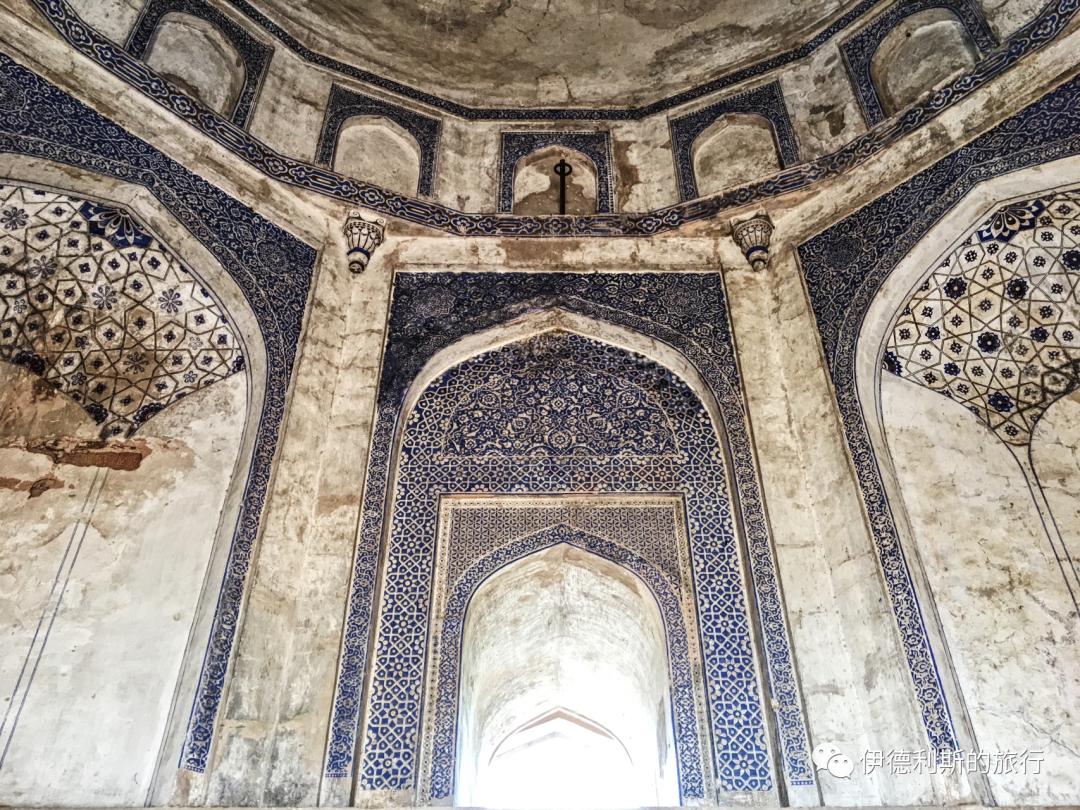
The biggest feature of Sikandar Lodi's tomb is the colorful tile decoration inside, which is extremely rare in Lodi Dynasty architecture.
Example of a small Lodi Dynasty mosque
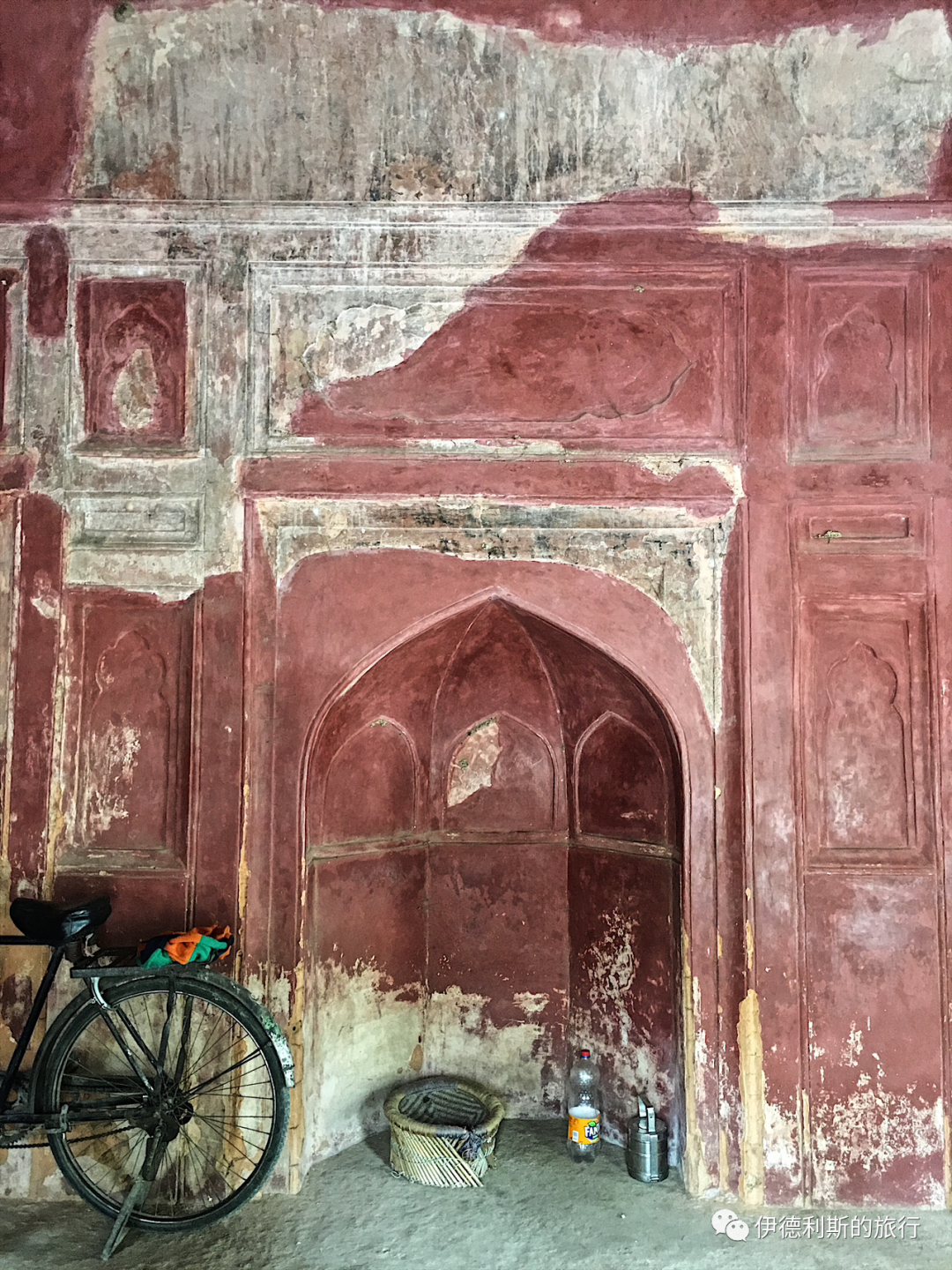
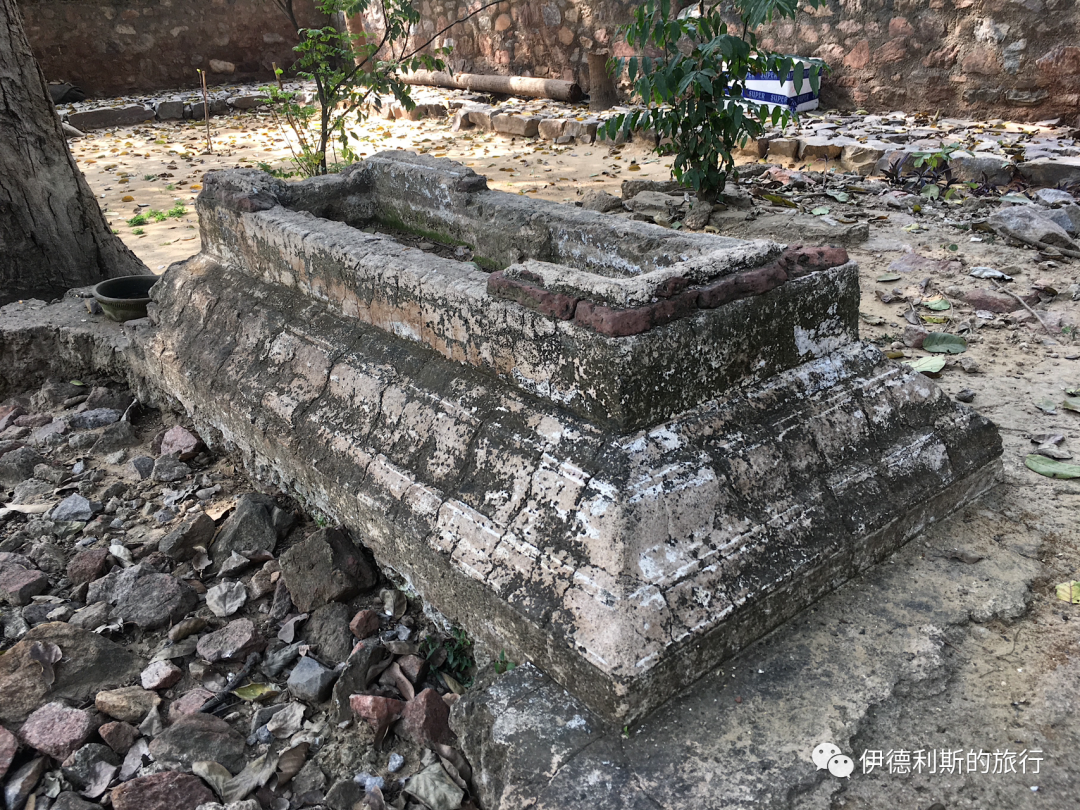
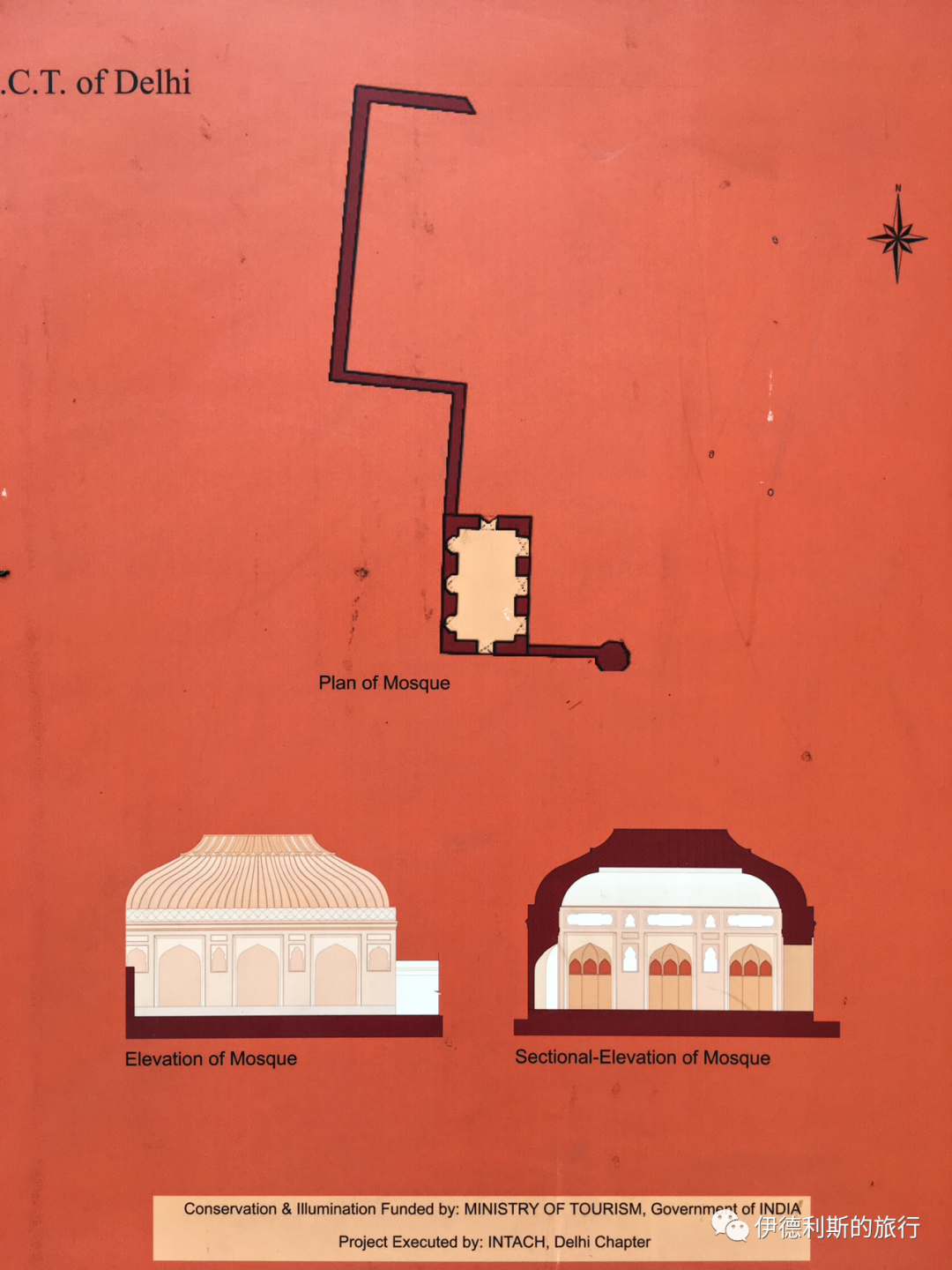
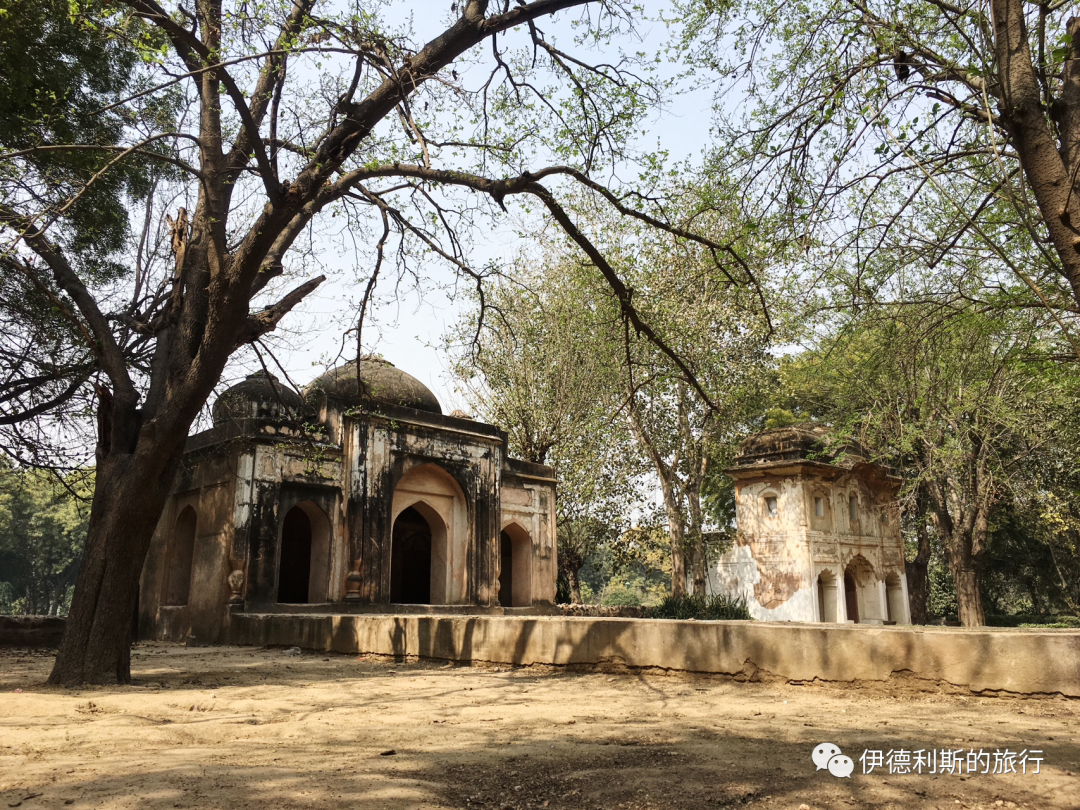
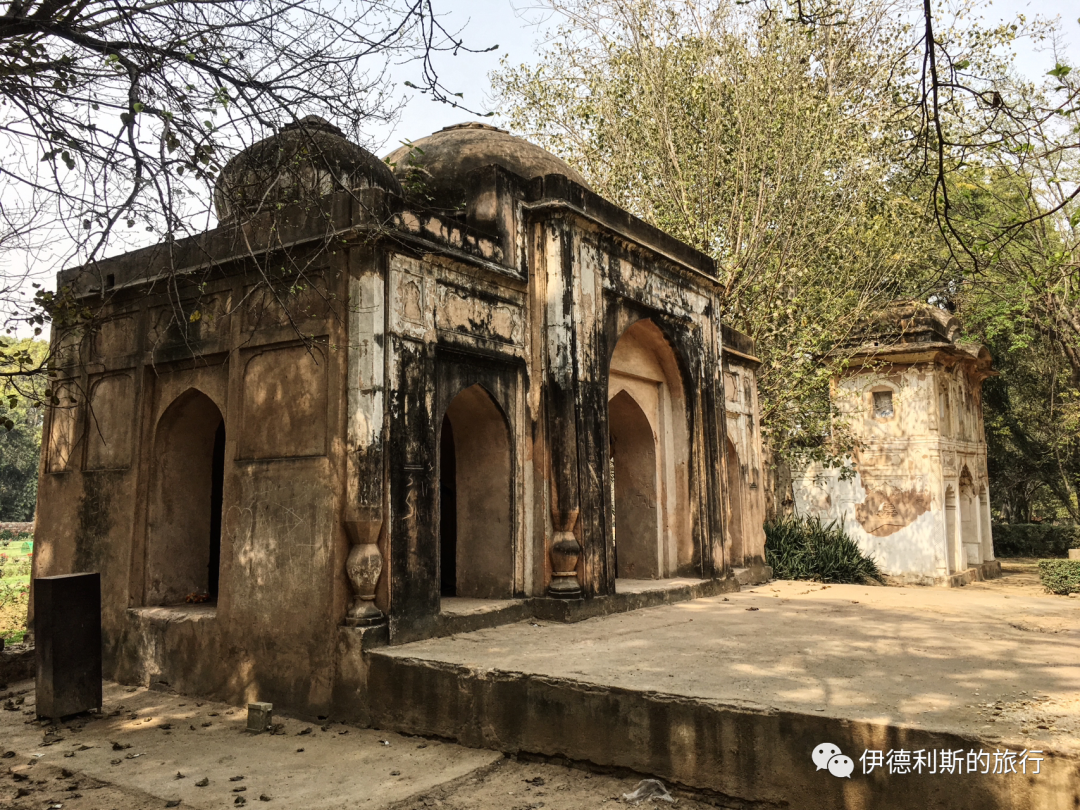
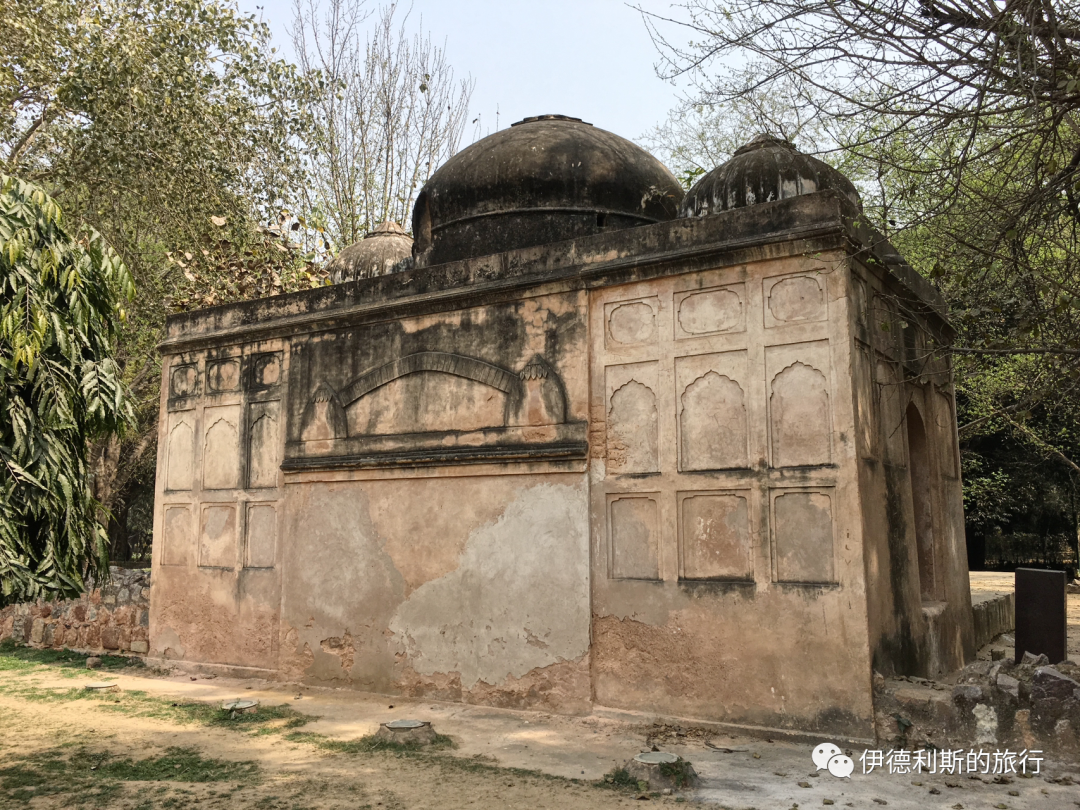
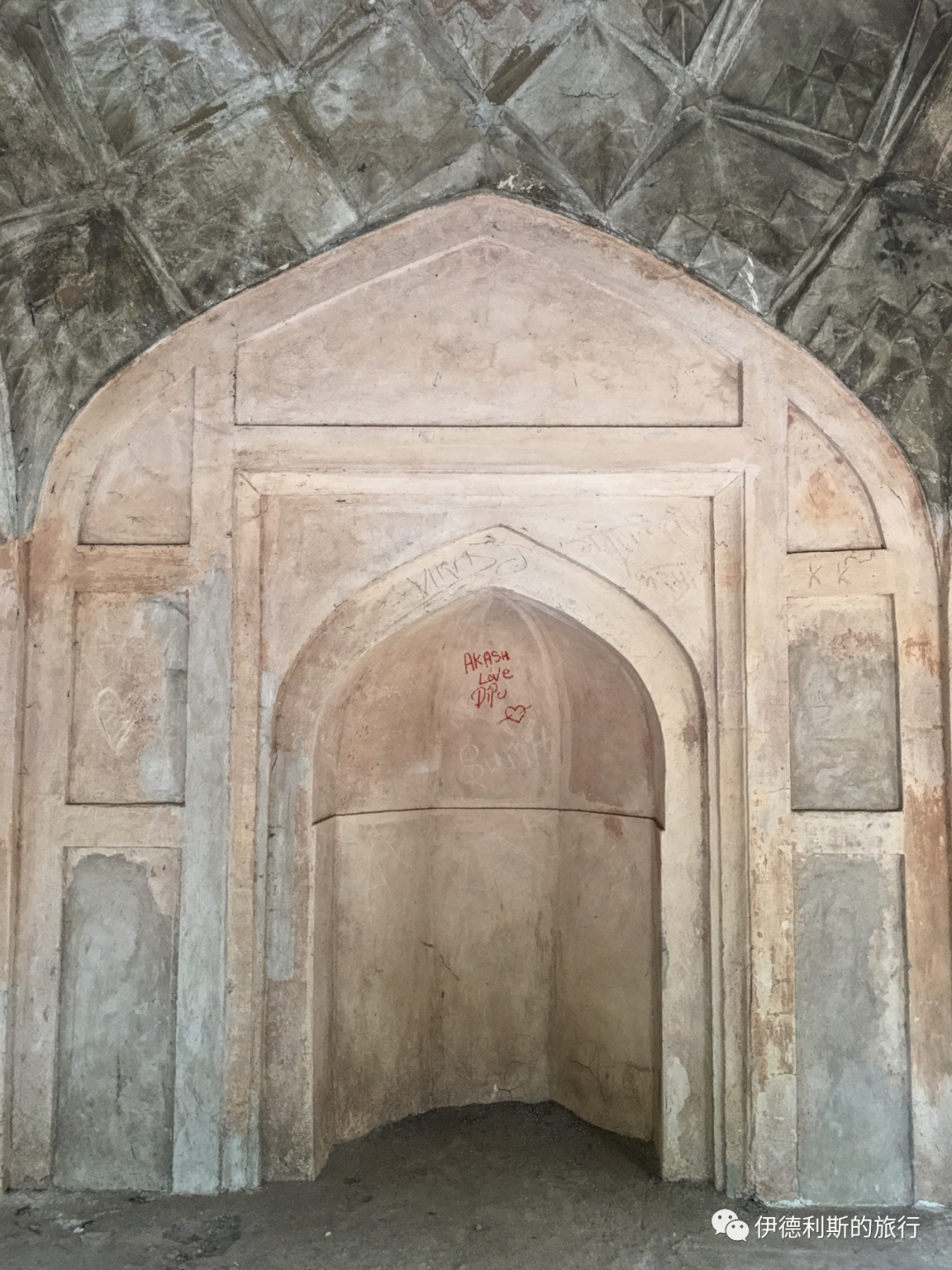
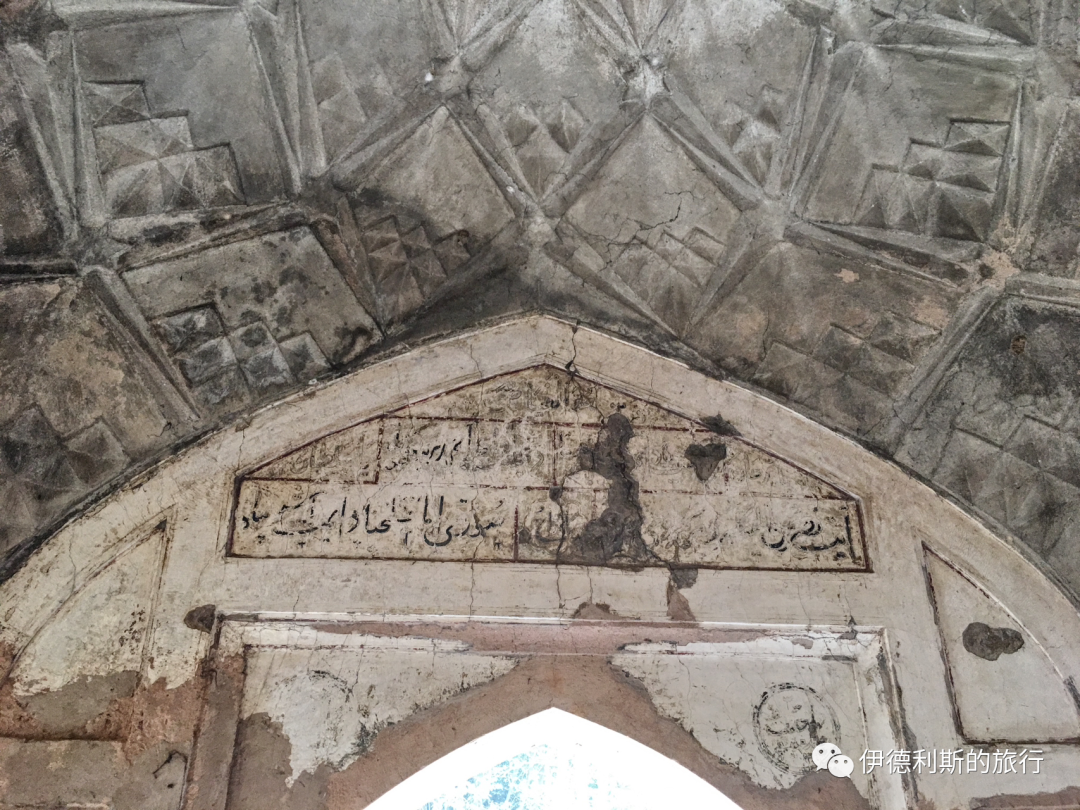
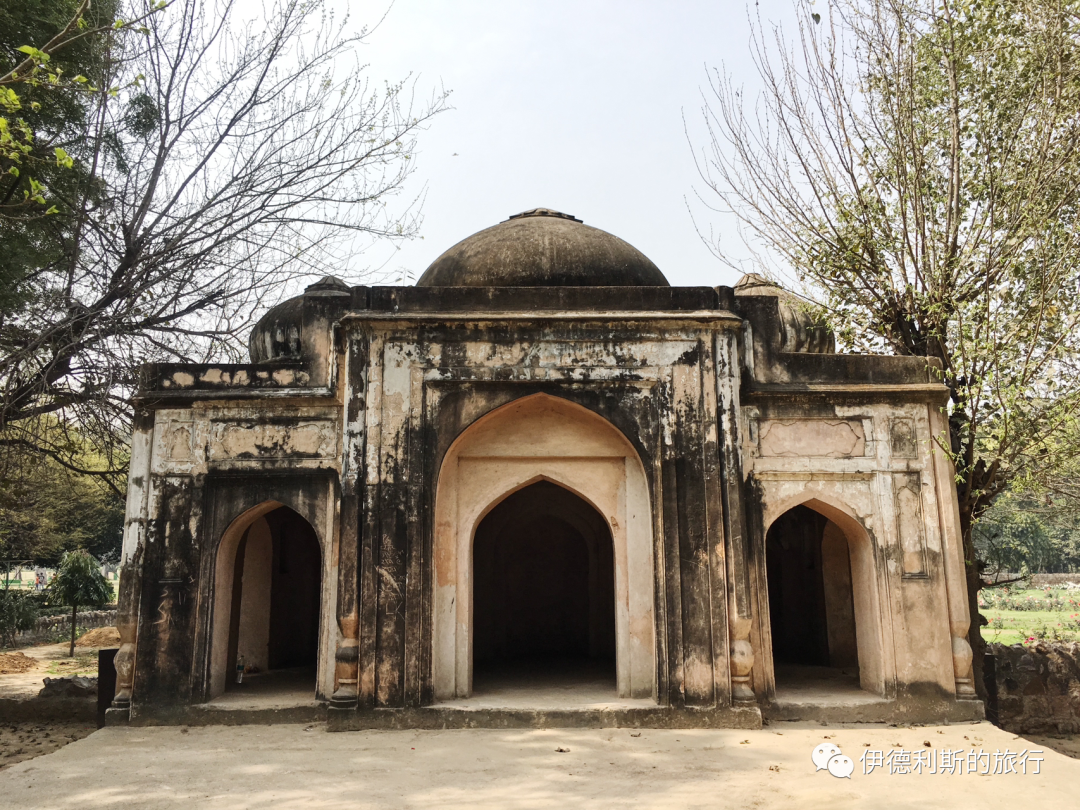
Inside the garden is an example of a small Lodi Dynasty mosque, with the remains of walls and tombs nearby. The mosque has three arched entrances, and the top is decorated with inverted lotus flowers. Unlike the brick buildings of the Mughal era, the Lodi Dynasty used stone even for small structures and applied bright red plaster using traditional fresco techniques.
Mughal Rose Garden
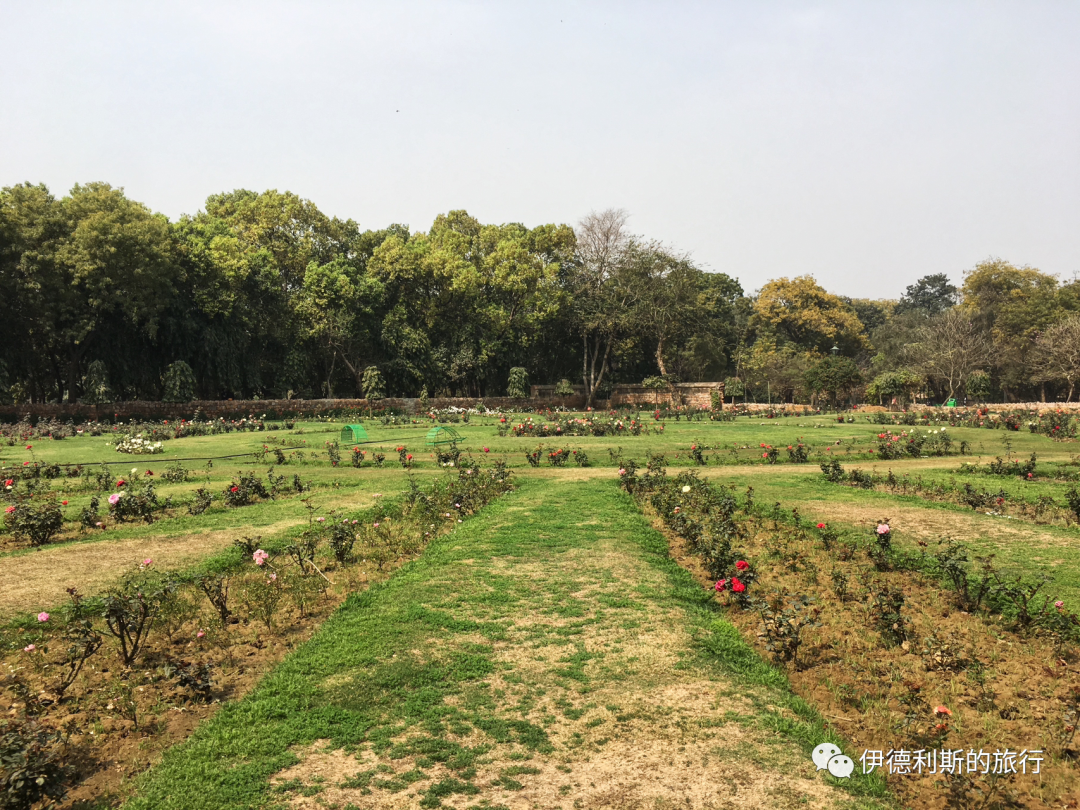
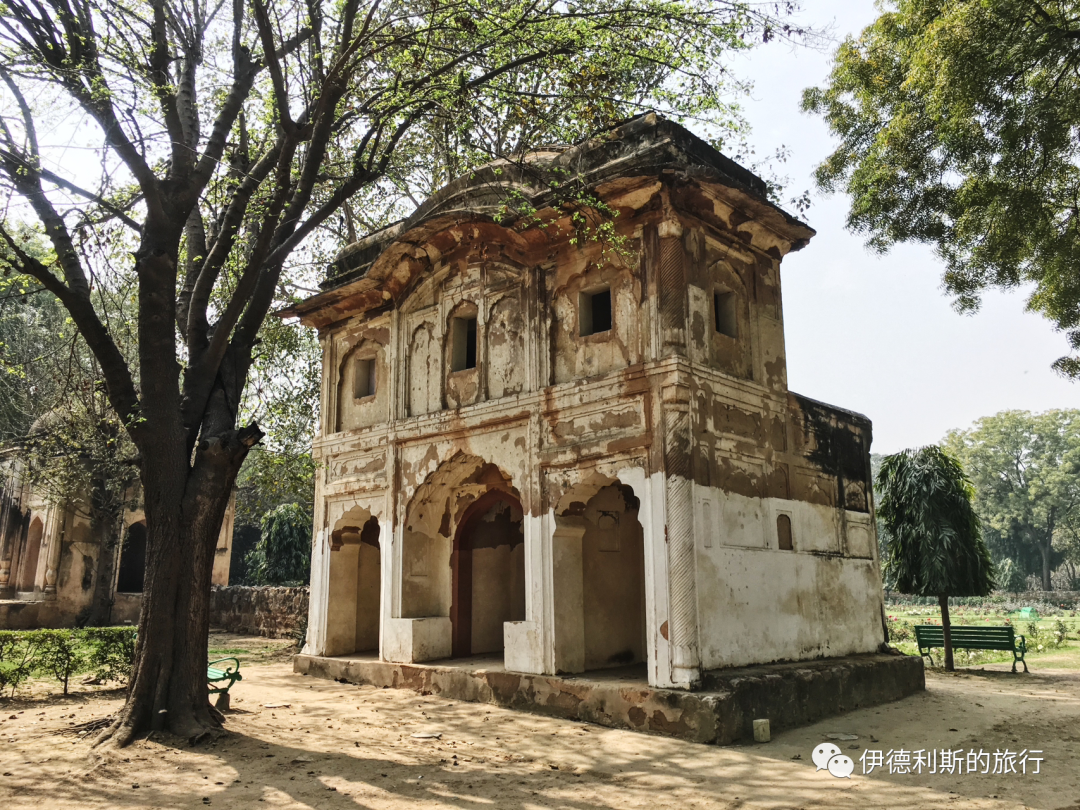
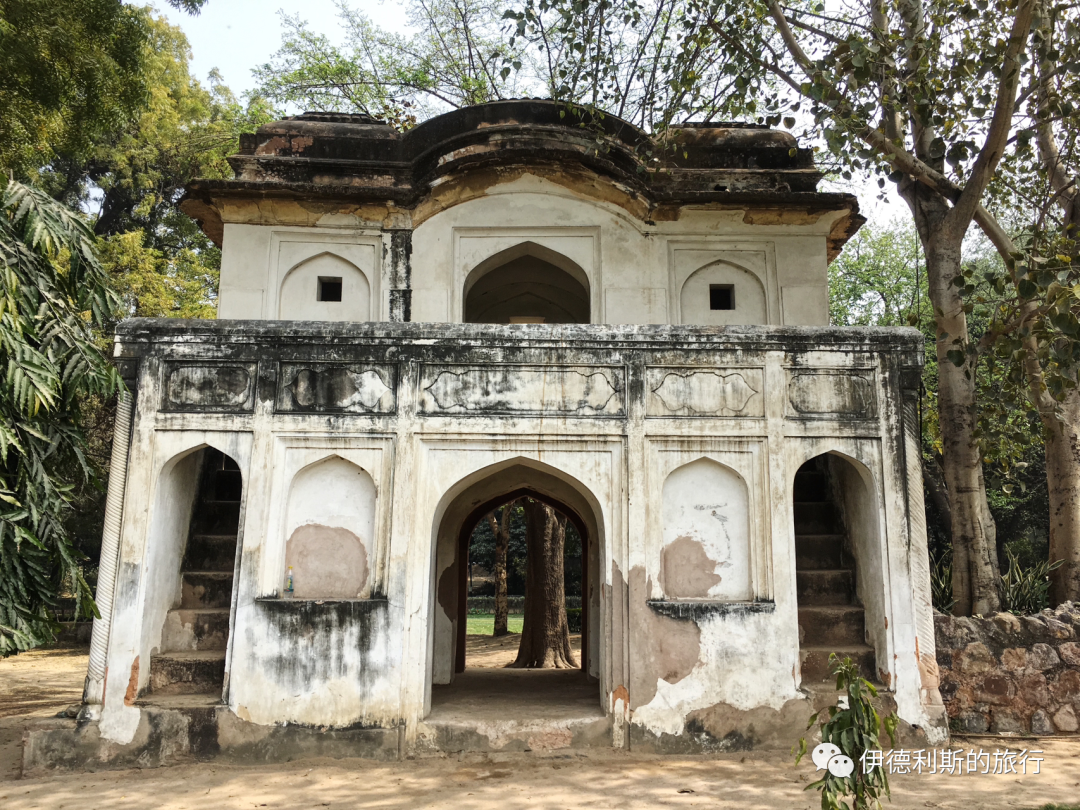
On the south side of Sikandar Lodi's tomb is a group of Mughal-era buildings surrounded by walls, with a two-story gate and a three-arched mosque on the east side. Today this is a rose garden, but there was likely a Mughal tomb in the center of the garden in the past.
The two-story gate features a Bengal-style roof, traditional Indo-Islamic eaves (chhajja), and Mughal-style Lakhori bricks.
The Bengal-style roof mimics the thatched, reed roofs of rural areas in the rainy Bengal region. It first appeared in Bengal in the 16th century and was introduced to Delhi in the 17th century, so it is only seen in buildings from the Mughal era and later.
Lakhori bricks are relatively flat red bricks that were popular from the time of the 17th-century Mughal Emperor Shah Jahan until the early 20th century. During the Delhi Sultanate period, buildings were mainly supported by pillars and beams made of large stone blocks, without the need for mortar. By the time of Shah Jahan, Lakhori bricks were used on a large scale to build houses. These bricks are smaller in size, which allows for more complex architectural decorations. view all
Summary: Delhi Lodhi Garden — Sultanate Tombs and Muslim History is presented here as a firsthand travel account in clear English, beginning with this scene: The Lodhi dynasty was the last of the five dynasties of the Delhi Sultanate. It was founded by the Pashtun Lodhi family in 1451 and lasted 75 years until it was conquered by the Mughal Empire in 1526. The account keeps its focus on Delhi Travel, Lodhi Dynasty, Muslim Heritage while preserving the names, places, food, and historical details from the Chinese source.
The Lodhi dynasty was the last of the five dynasties of the Delhi Sultanate. It was founded by the Pashtun Lodhi family in 1451 and lasted 75 years until it was conquered by the Mughal Empire in 1526. The Lodhi dynasty did not build a new capital in Delhi, so no large palaces remain. However, many tombs and mosques from the Lodhi period are preserved in the southern suburbs of Delhi, serving as the best examples for studying the history and architectural art of the Lodhi dynasty.
If you want to experience the history of the Lodhi dynasty firsthand, the best place to go is Lodhi Garden on the south side of New Delhi. The entire garden covers 360,000 square meters. Major buildings include the tomb of Sultan Muhammad Shah (reigned 1434-1445) of the Sayyid dynasty, the tomb of Sultan Sikandar Lodi (reigned 1489-1517) of the Lodhi dynasty, the Bara Gumbad (Big Dome), and the Shish Gumbad (Glass Dome), which is suspected to be the tomb of Sultan Bahlul Lodi (reigned 1451-1489). Some relics from the Mughal period are also preserved there.
Tomb of Muhammad Shah
Entering from the south gate of Lodhi Garden, the first thing you see is the tomb of Muhammad Shah (reigned 1434-1445), the third sultan of the Sayyid dynasty of the Delhi Sultanate.
The Sayyid family claimed to be descendants of the Prophet Muhammad and originally lived in the Punjab region. The founder, Khizr Khan, became the governor of Multan after Timur invaded the Delhi Sultanate in 1398, and he officially established the Sayyid Sultanate after occupying Delhi in 1414. Muhammad Shah was the grand-nephew of Khizr Khan. During his reign, the territory of the Delhi Sultanate continued to shrink. Sunni Islam was no longer the dominant force, Shia Islam began to rise, and Indian Islamic culture started to take root in areas outside of Delhi.
During the reign of Muhammad Shah, Bahlul Lodi, the leader of the Pashtun Lodi tribe, was highly favored by the Sultan. Thanks to his military achievements, he gained control over most of the Punjab region, laying the foundation for the establishment of the Lodhi dynasty.
The tomb of Muhammad Shah is an octagonal domed building, which is more magnificent than the tomb of the previous sultan, Mubarak Shah. It is very strange that this tomb has no outer walls. Some speculate it was due to a lack of funds, while others think the outer walls likely collapsed later.
This building has a very typical Indo-Islamic architectural style. The central dome (gumbad) is surrounded by decorative spires (guldasta), then by domed pavilions (chhatri), and finally by eaves (chhajja).
Guldasta means 'tied bouquet' in Persian, and in Indo-Islamic architecture, it is usually shaped like a flower. The domed pavilion (chhatri) first appeared on early Indian Sufi tombs in the 12th century. It was later popularized by the Mughal Empire and became a signature feature of Indo-Islamic architecture. In fact, both the guldasta and the chhatri are a fusion of Persian pavilions and the indigenous Indian roof tower (sikhara).
The eaves (chhajja) were relatively rare during the Delhi Sultanate period. They did not become popular until the Mughal period and were later incorporated into Hindu architecture.
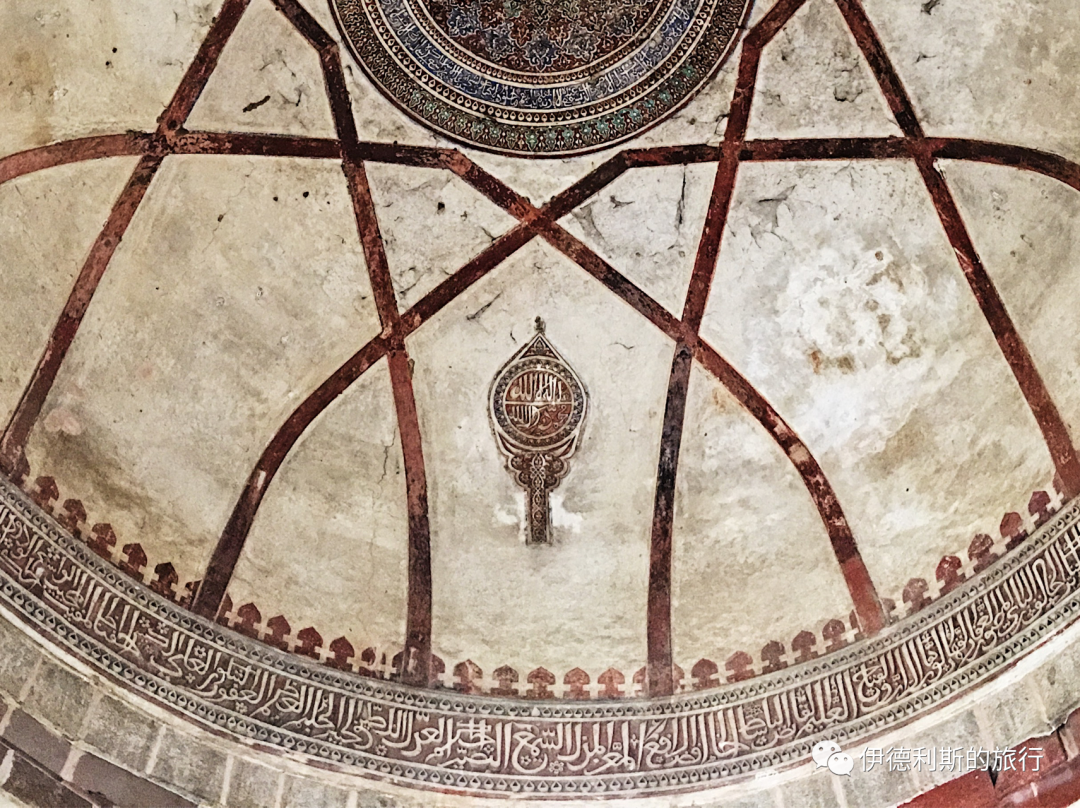
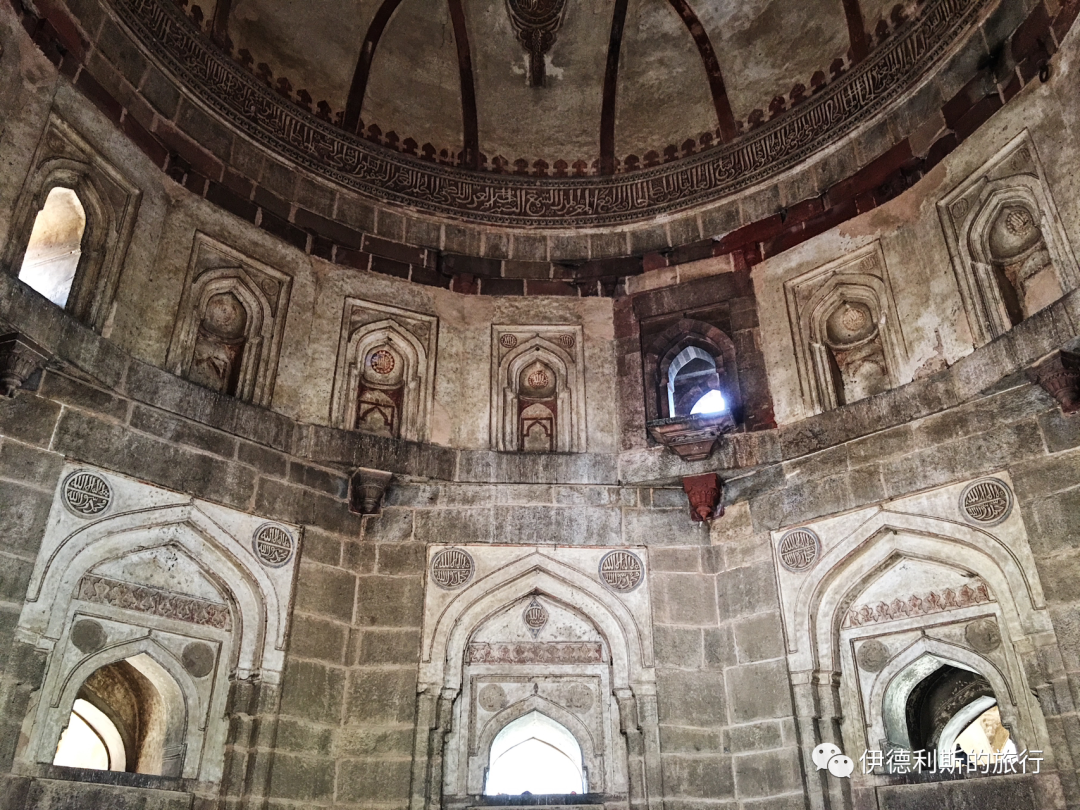
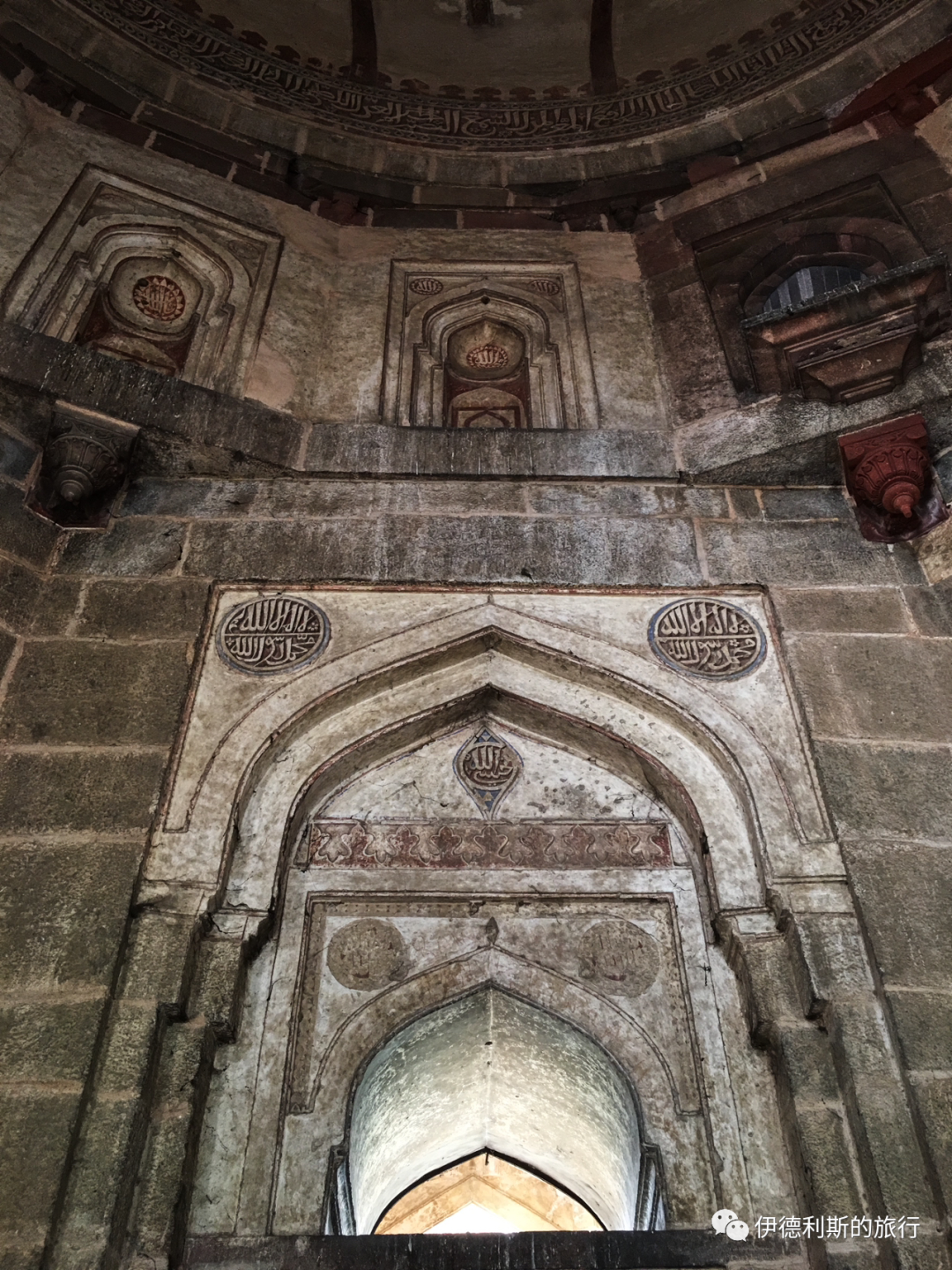
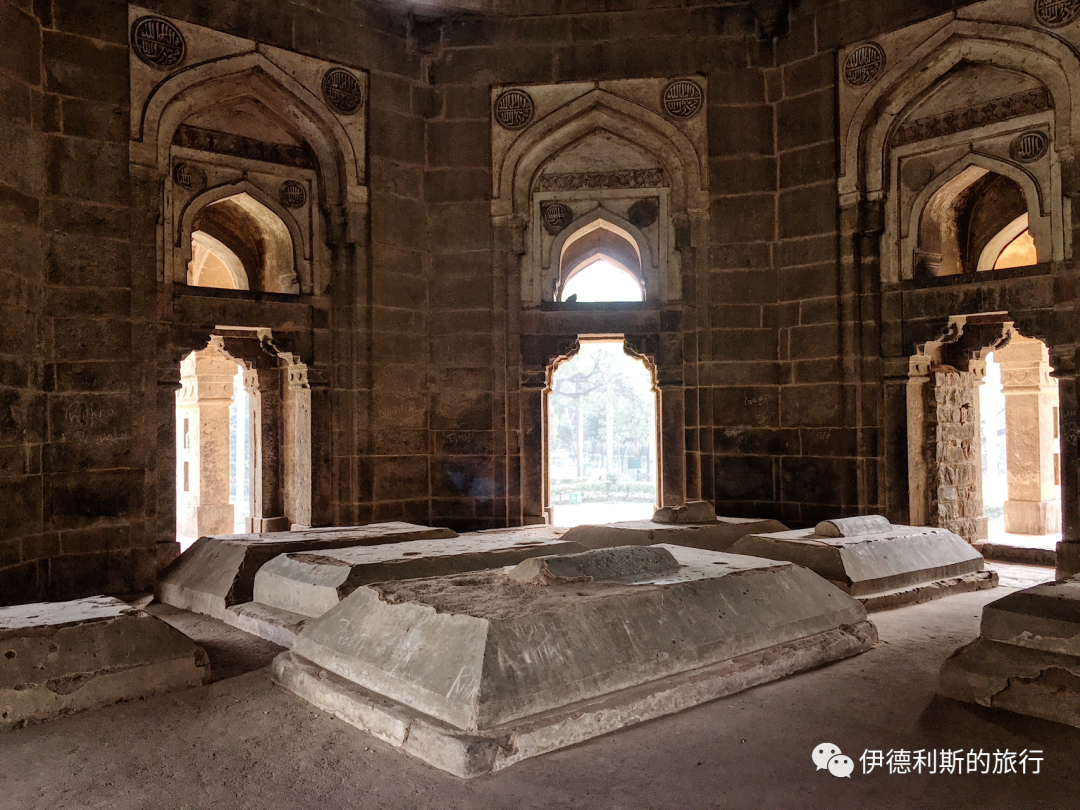
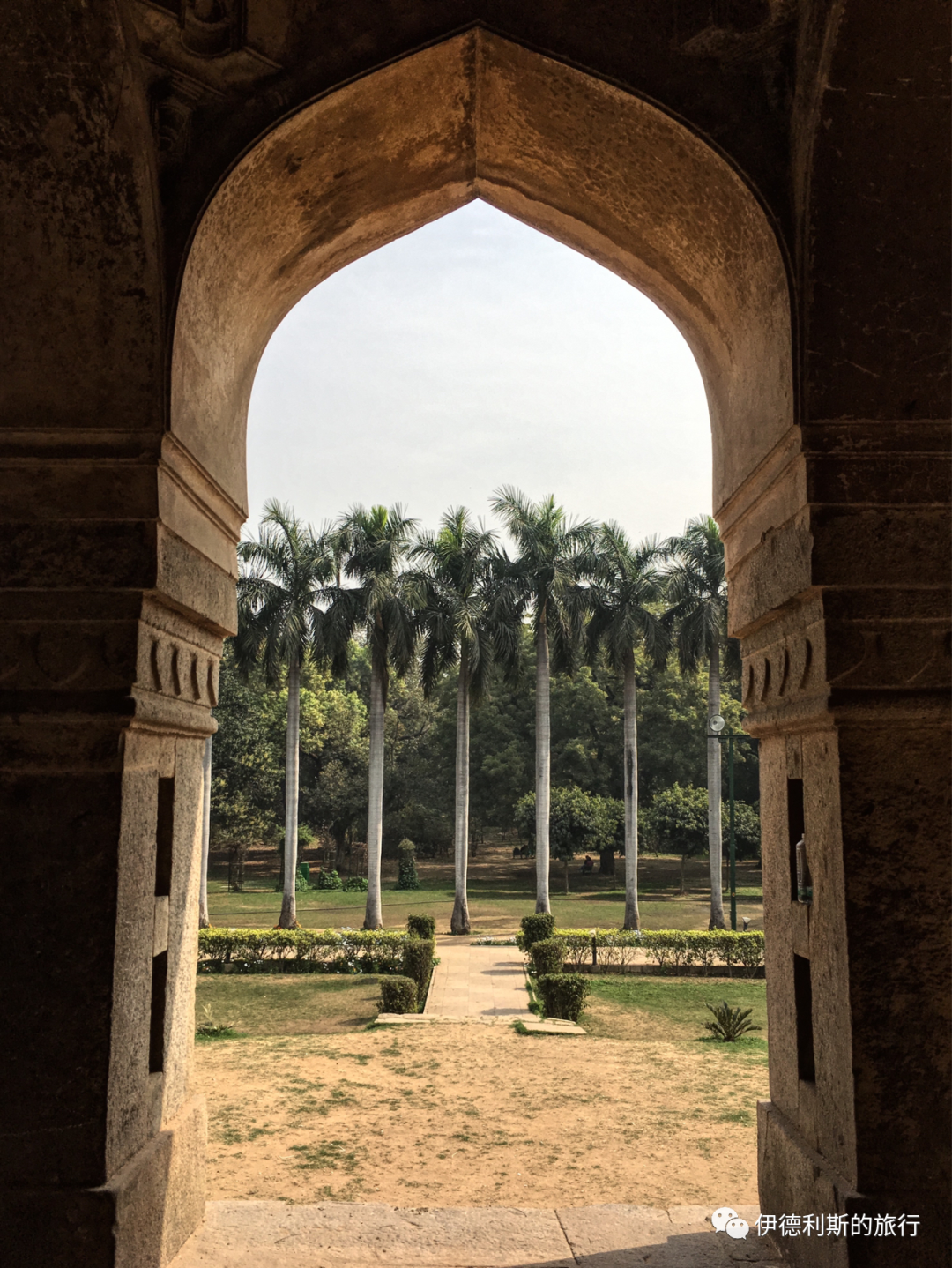
Bara Gumbad
Walking northeast from the tomb of Muhammad Shah, you reach the largest building from the Lodhi period: the Bara Gumbad (Big Dome).
The Bara Gumbad was built in 1490 by Sultan Sikandar Lodi (reigned 1489-1517) of the Lodhi dynasty. It consists of three buildings on a 4-meter-high platform. In the middle of the platform is a tombstone, with the Bara Gumbad on the south side, a Friday mosque (Juma Masjid) on the west side, and a guest house (mehman khana) on the east side. Judging by its shape, the Bara Gumbad looks like a tomb, but no burial has been found underneath, so it is likely the south gate of the platform.
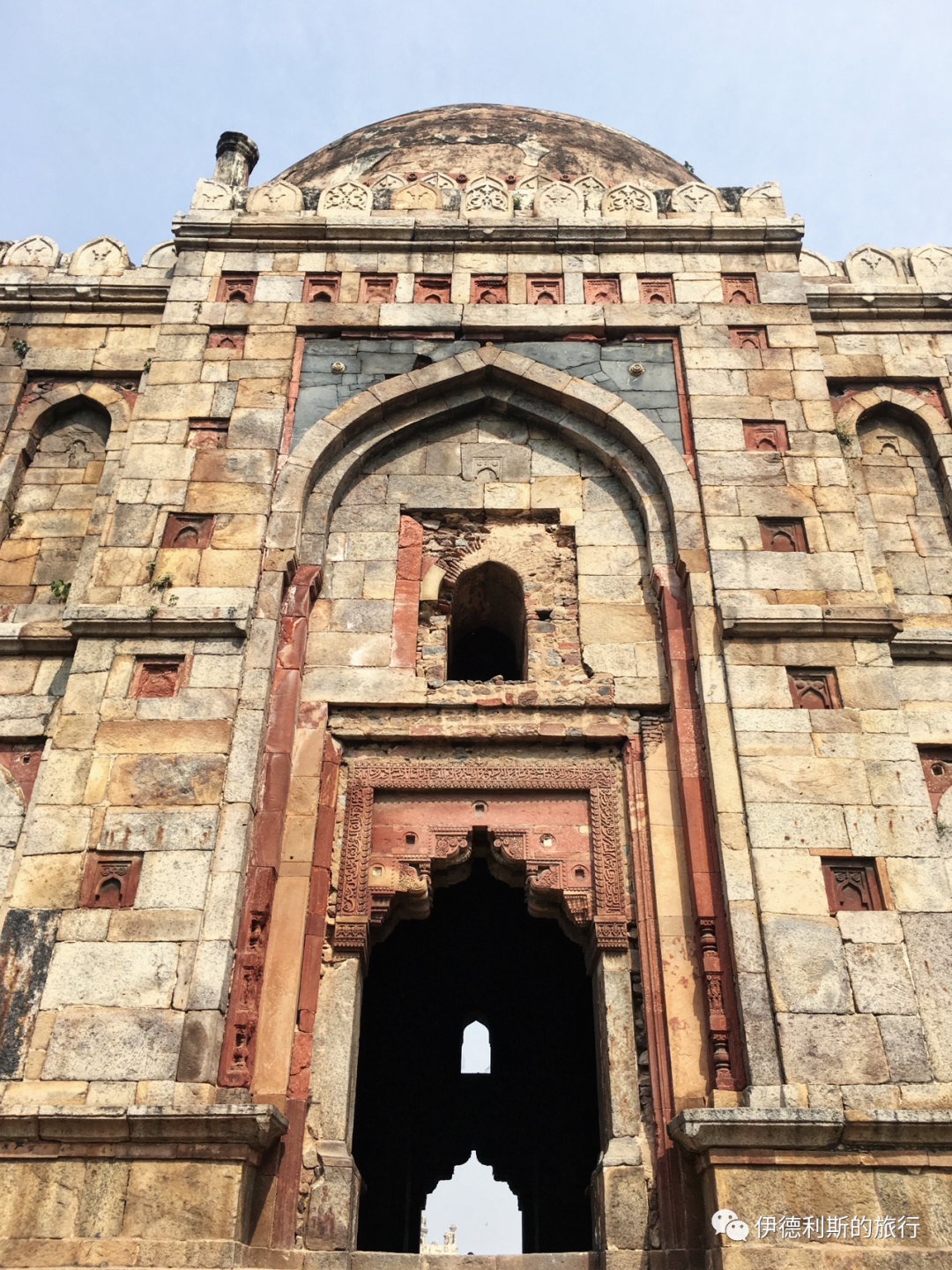
The Bara Gumbad is 29 meters high and features Delhi's first 'full dome,' which is a complete semi-circular dome. The outer wall looks like it has two layers from the outside, but it is actually a single-layer structure inside. This design is very clever. The building is made of gray quartzite and decorated with red sandstone and black stone. All the stones were trimmed and polished, with no plaster used at all.
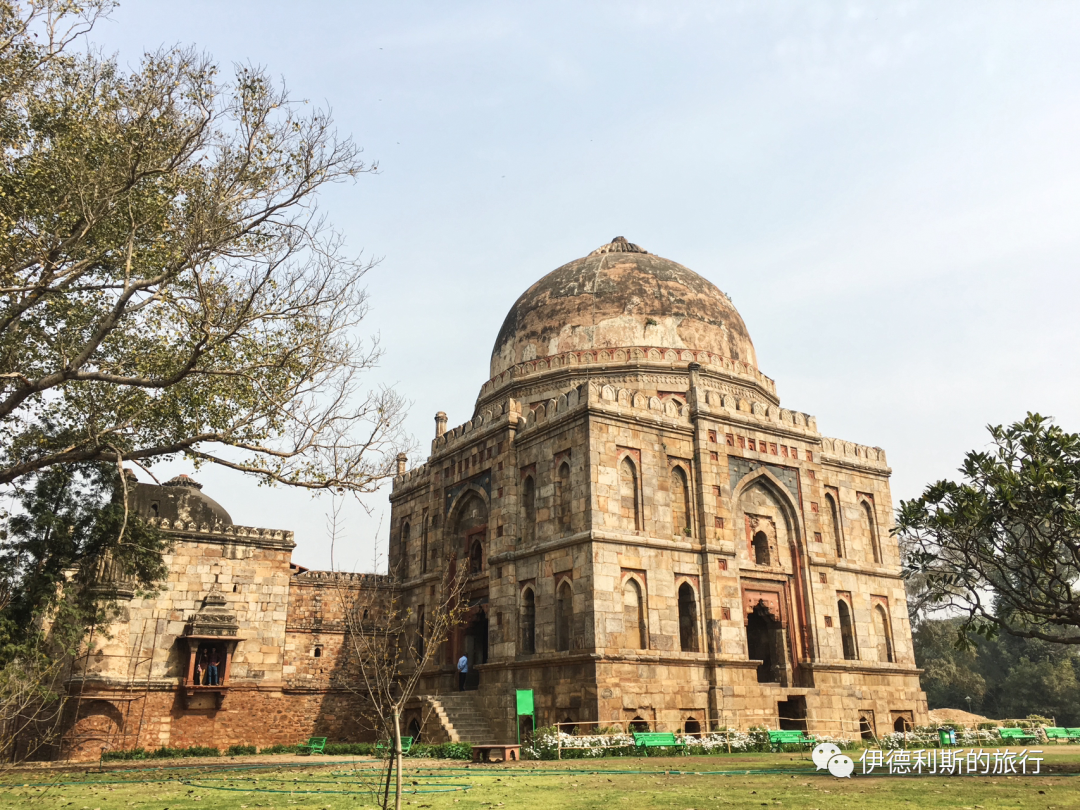
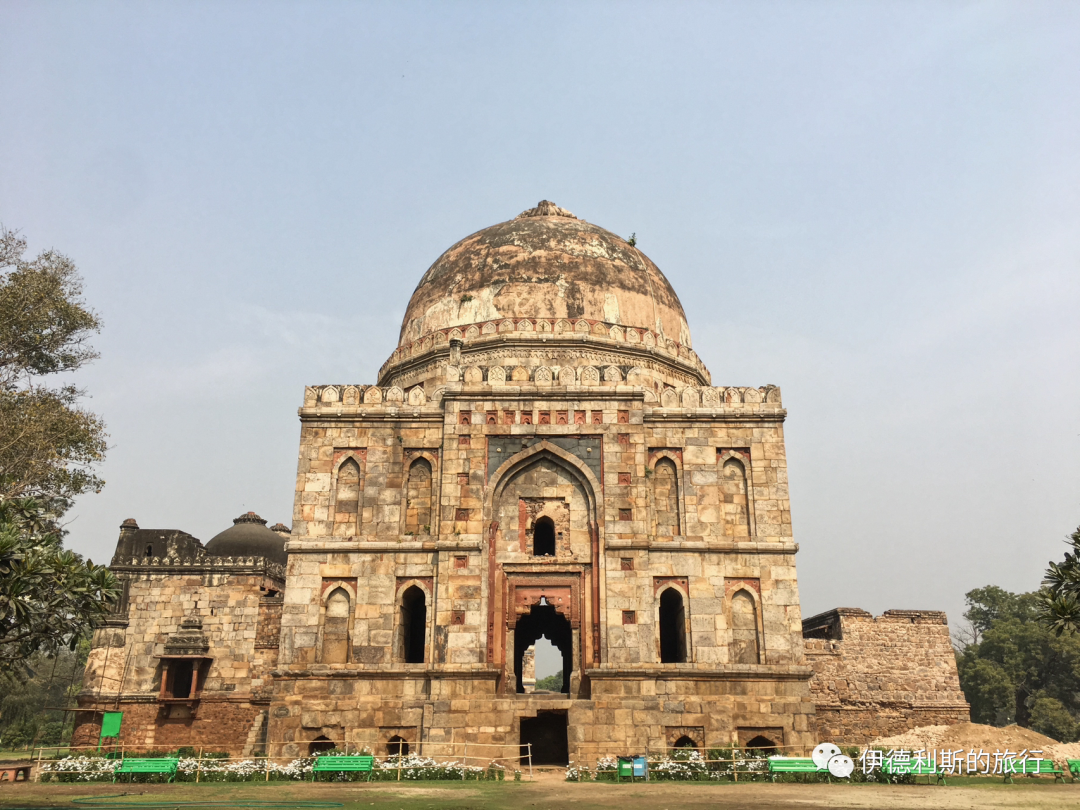
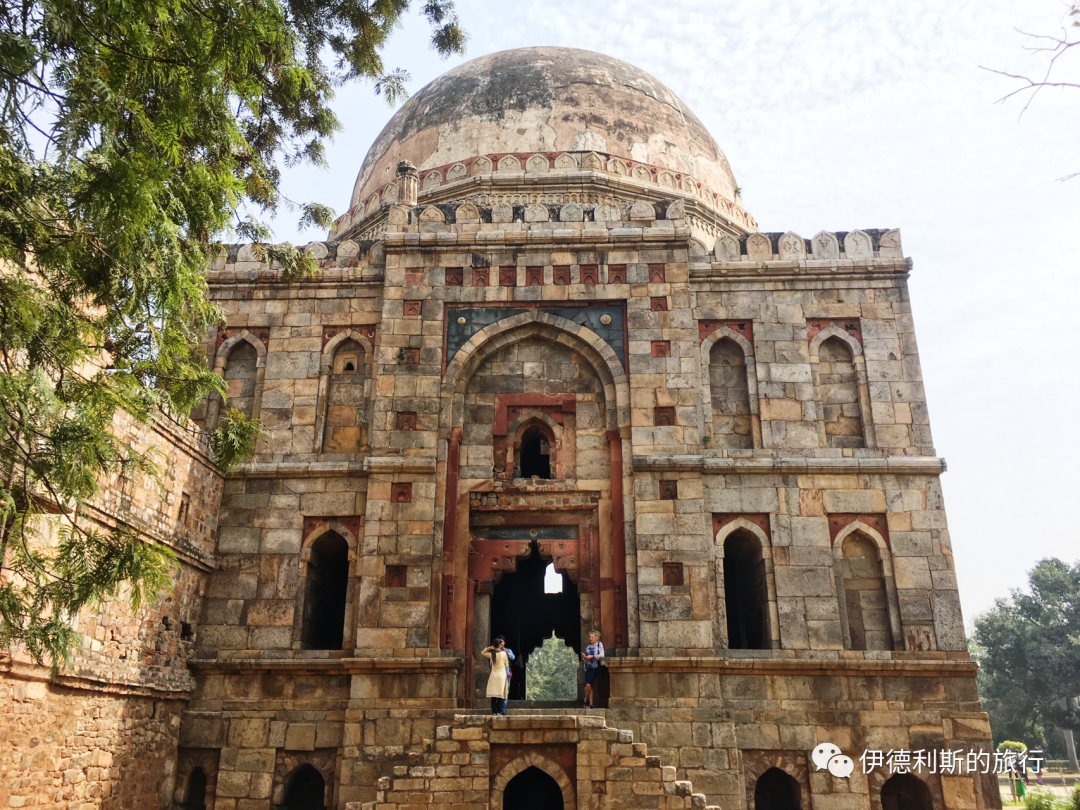
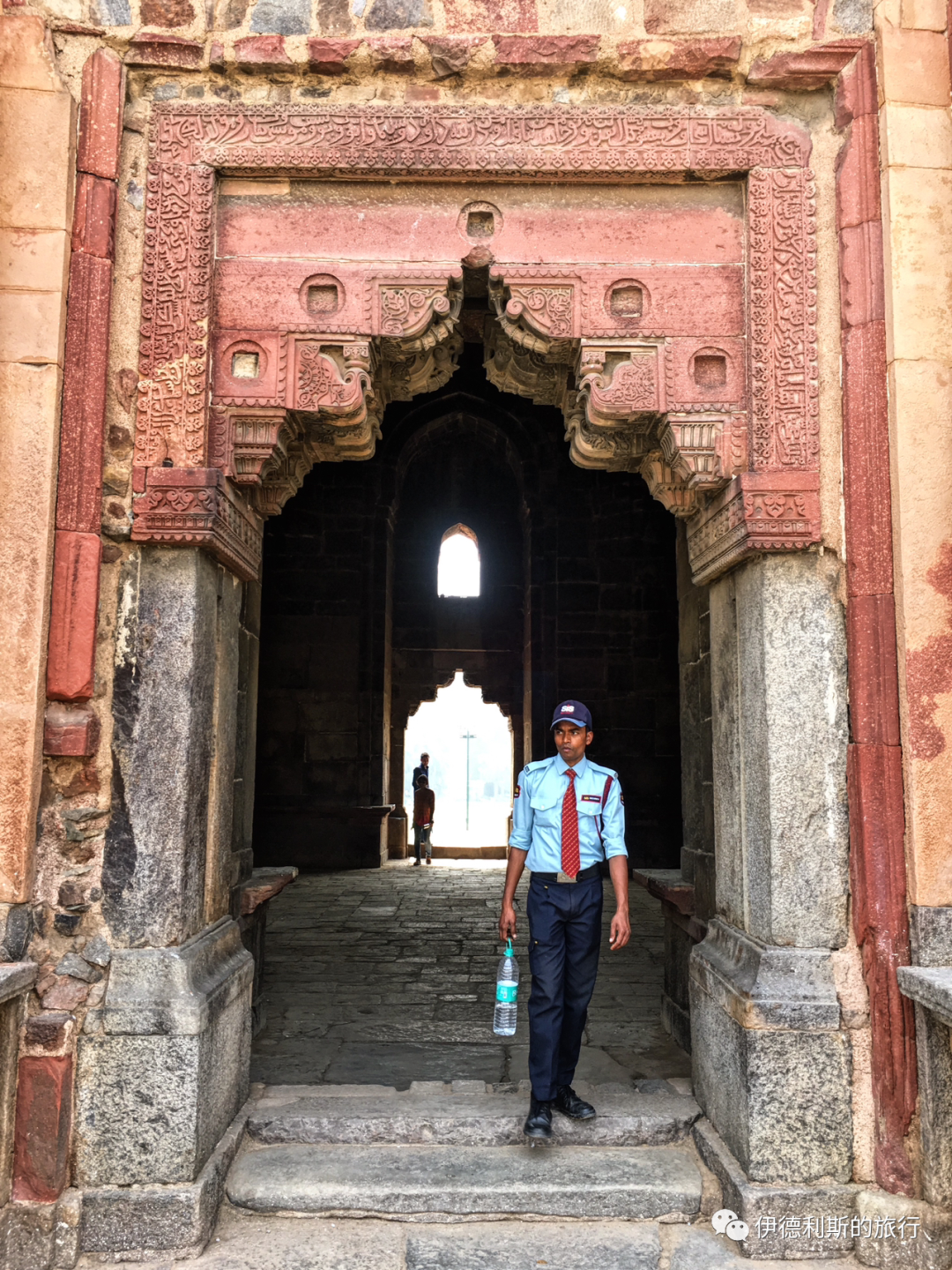
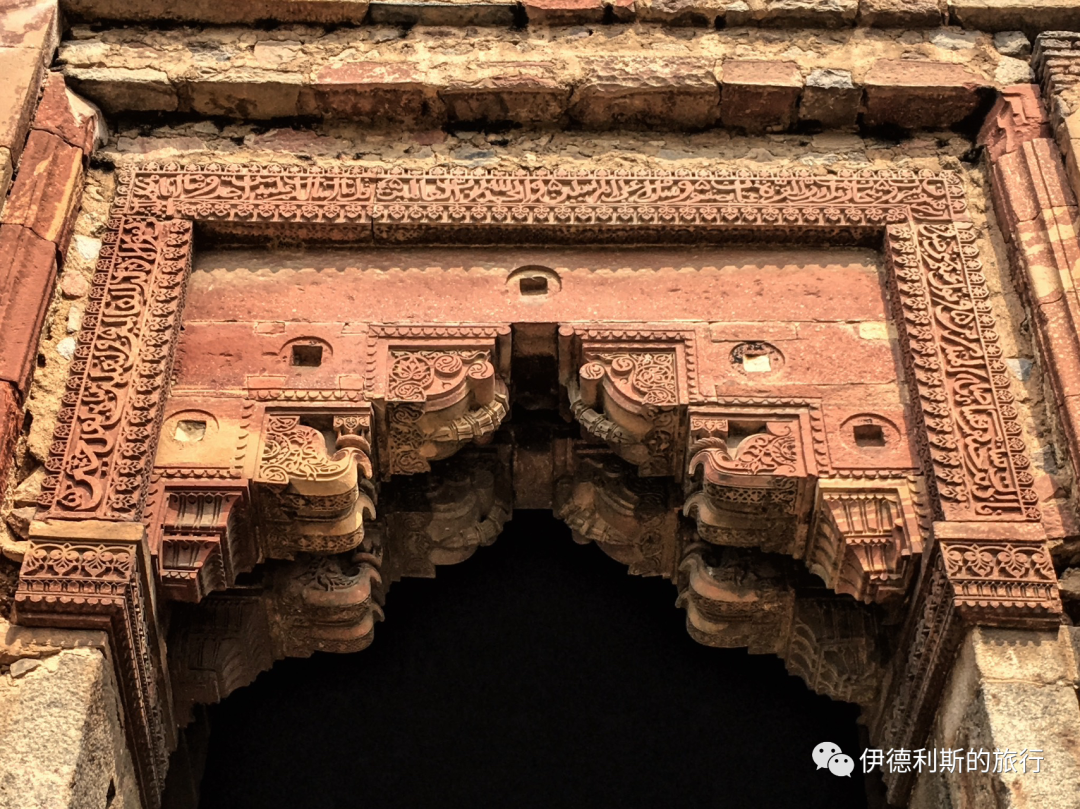
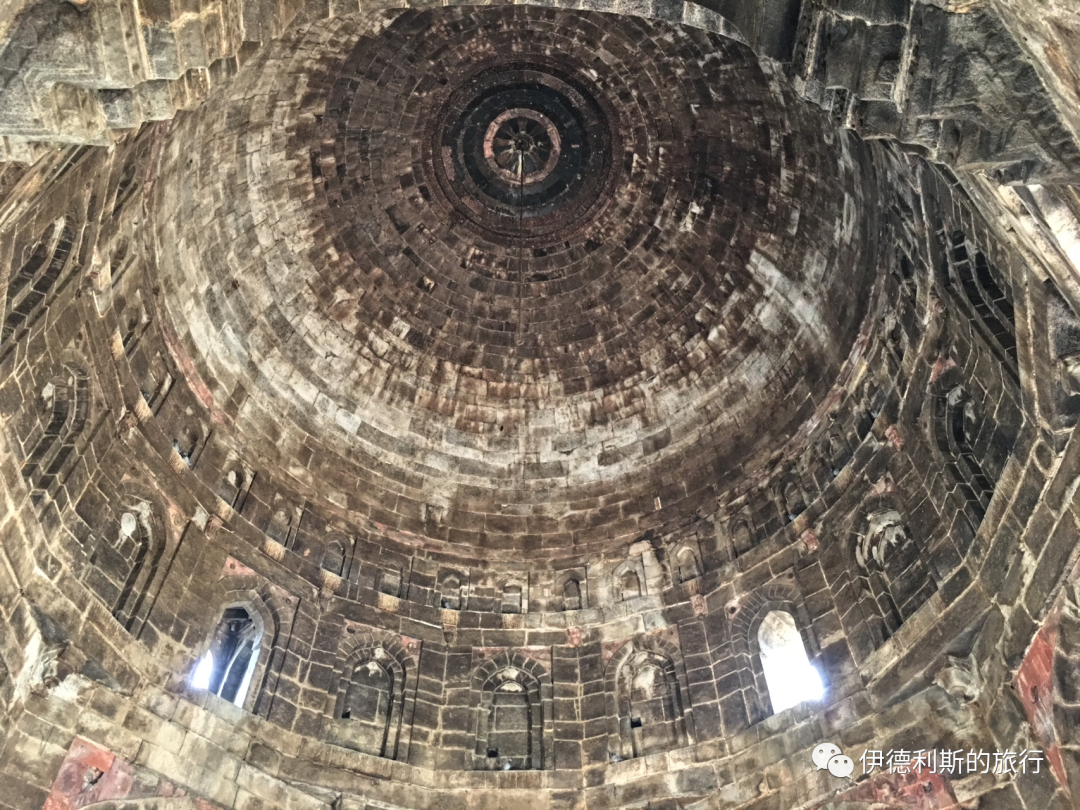
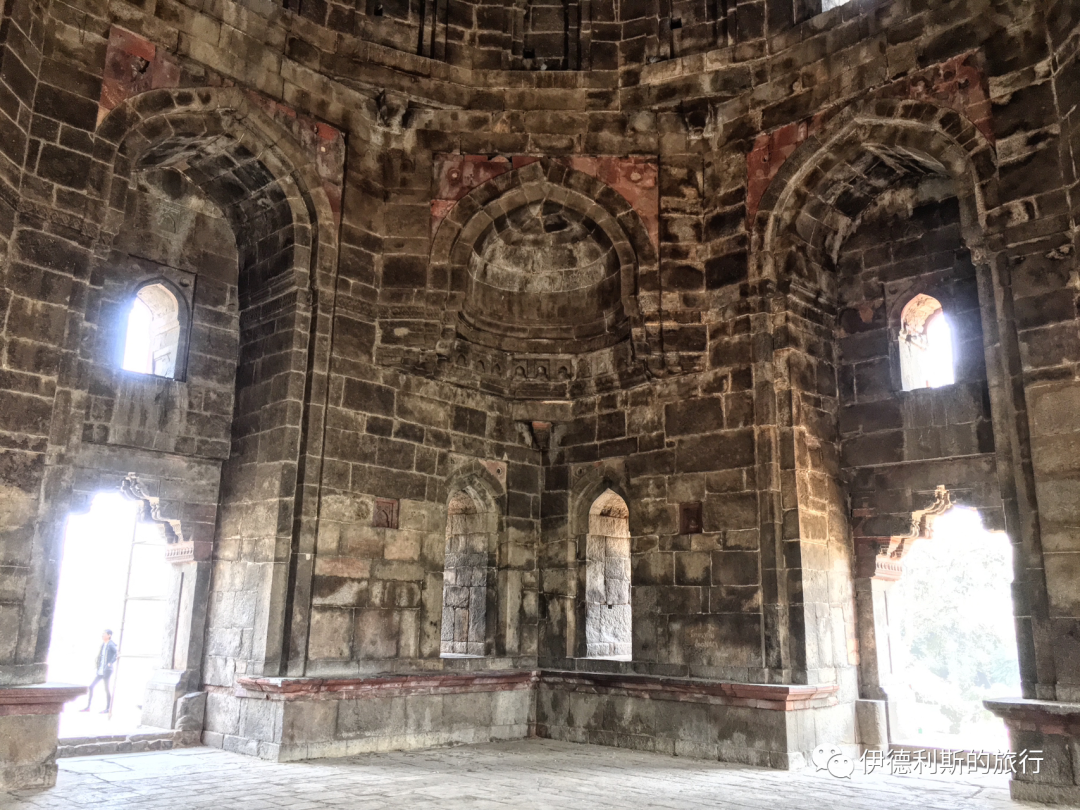
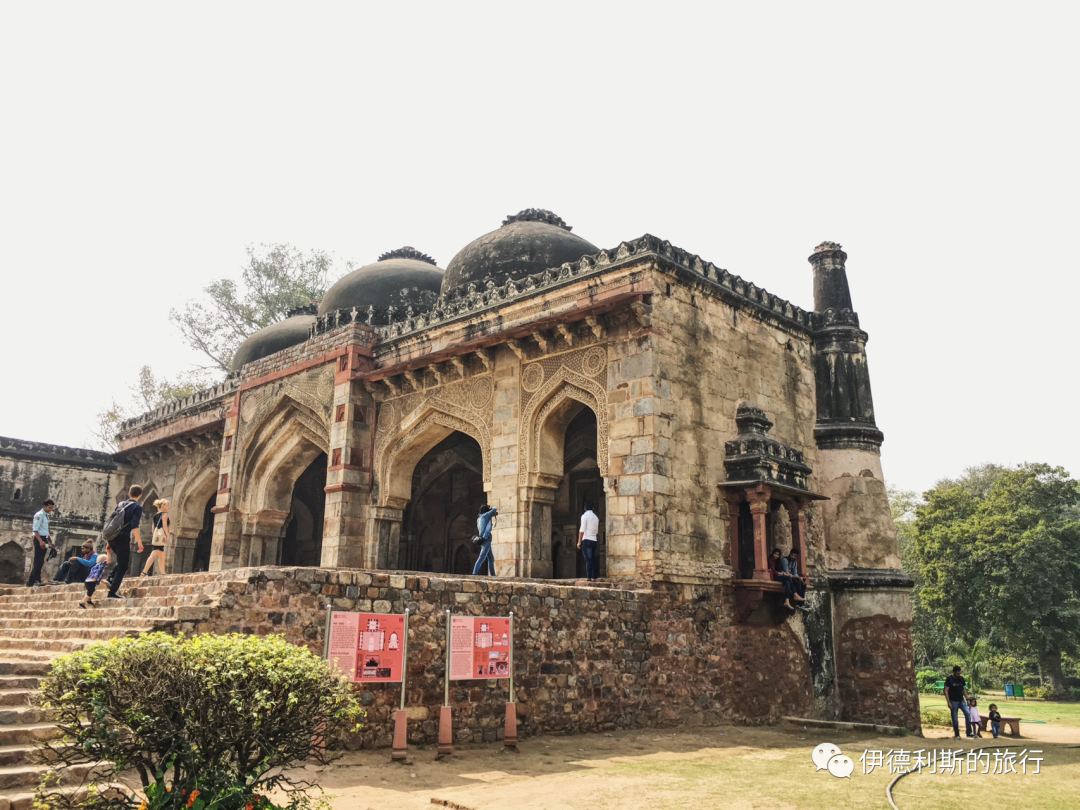
The Friday mosque on the west side of the Bara Gumbad was built in 1494. It is in the classic Lodhi style, with three large and two small arches, three domes on top, corner towers on both sides, and stone windows (jharokha) on the sides and back. This design had a great influence on later Mughal architecture.
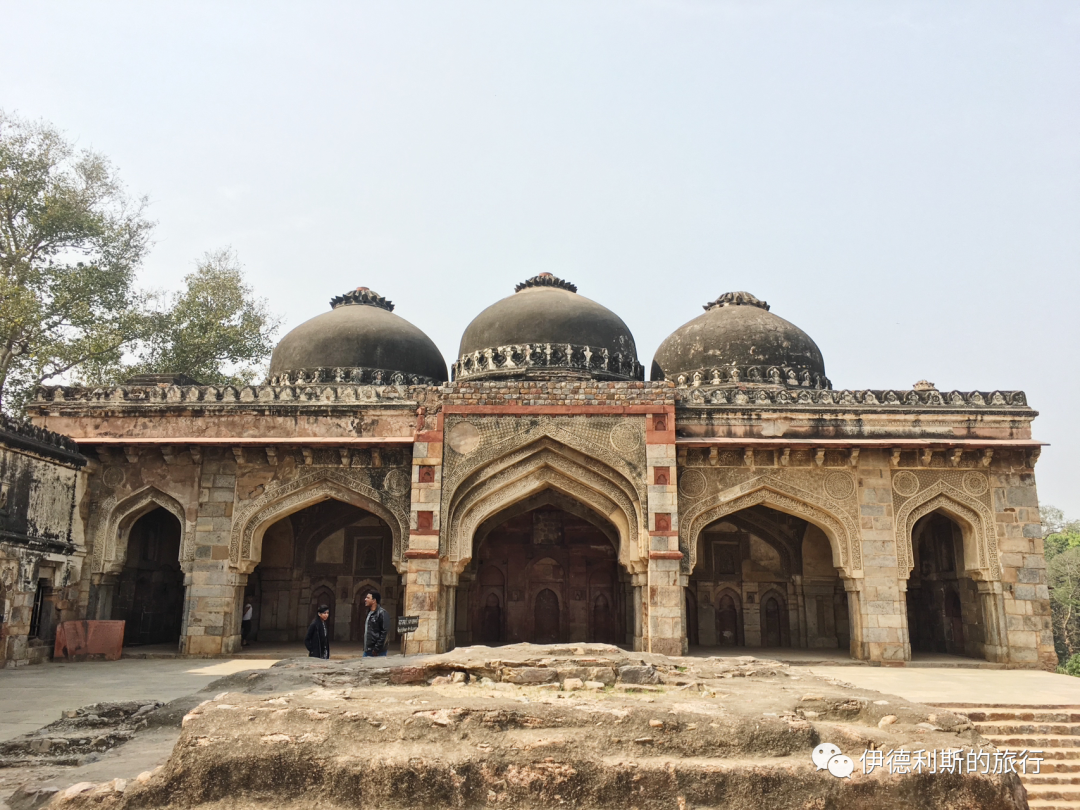
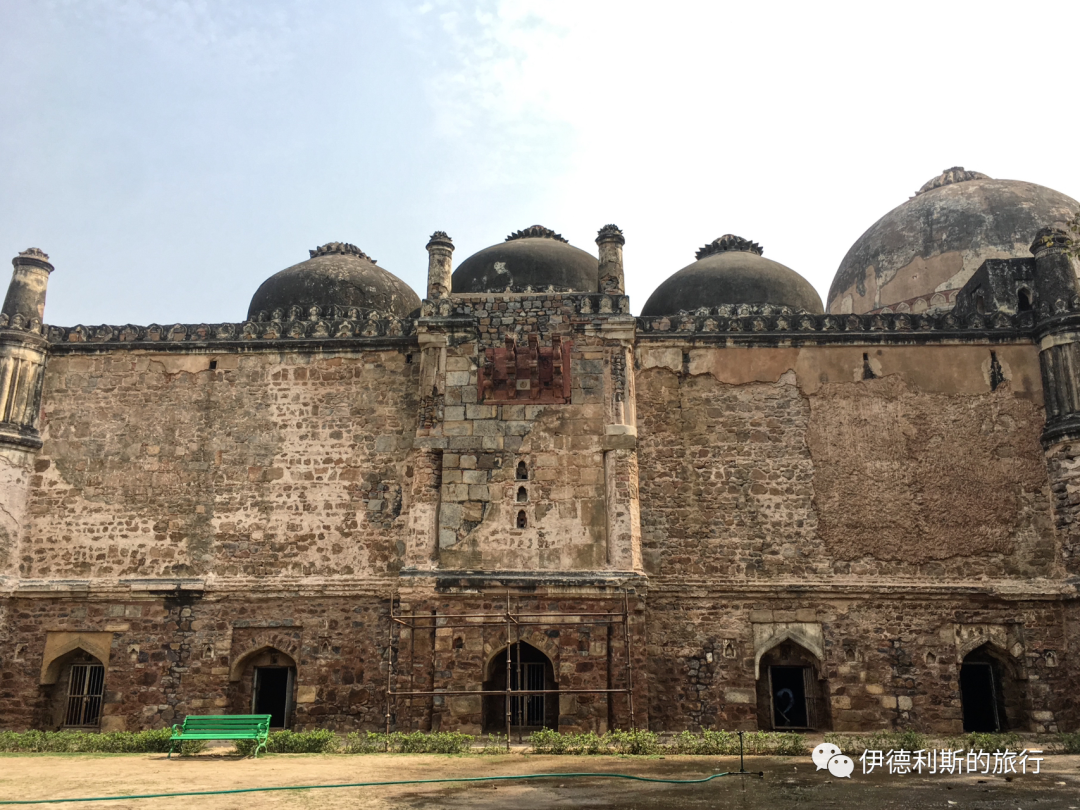
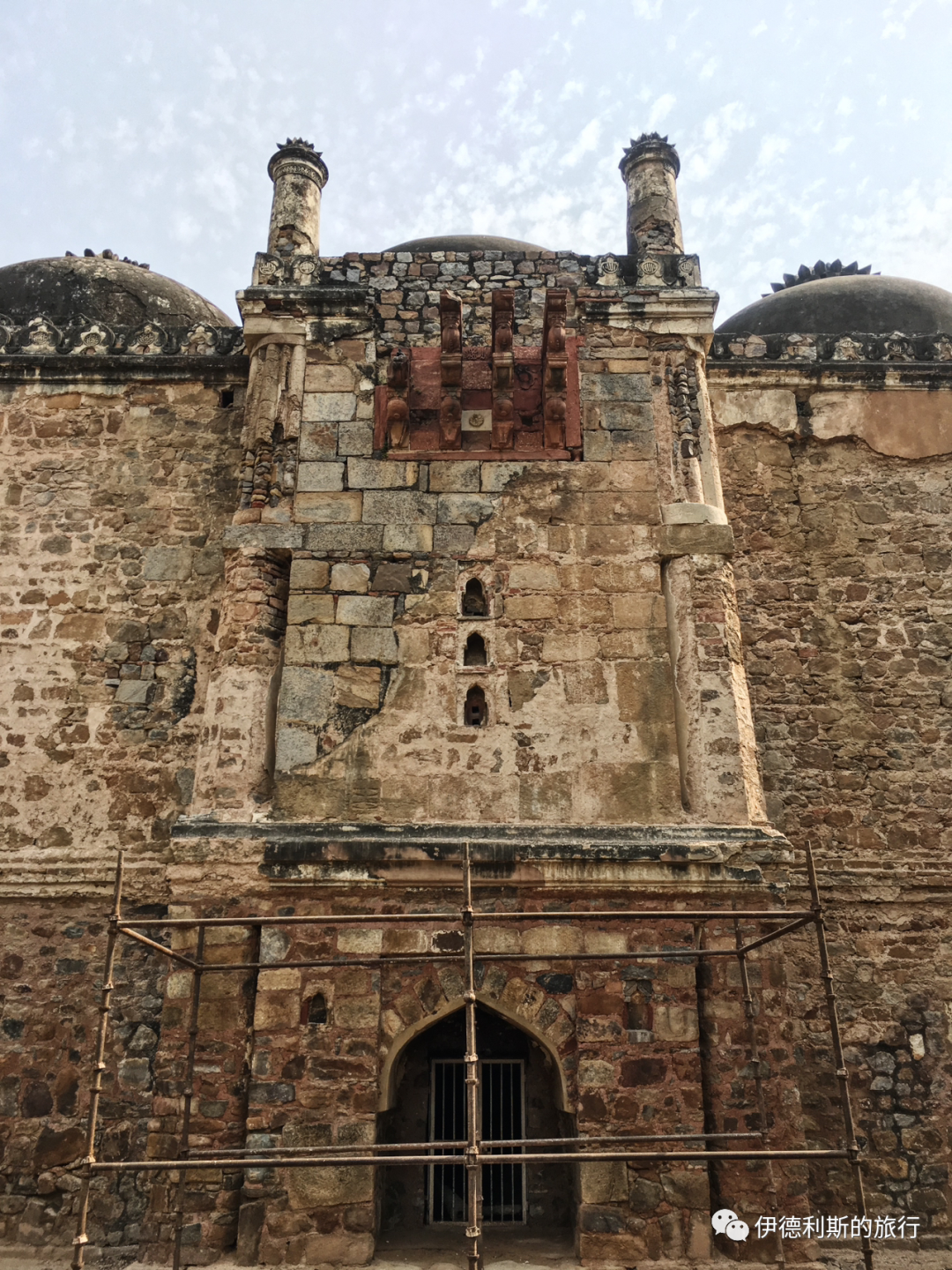
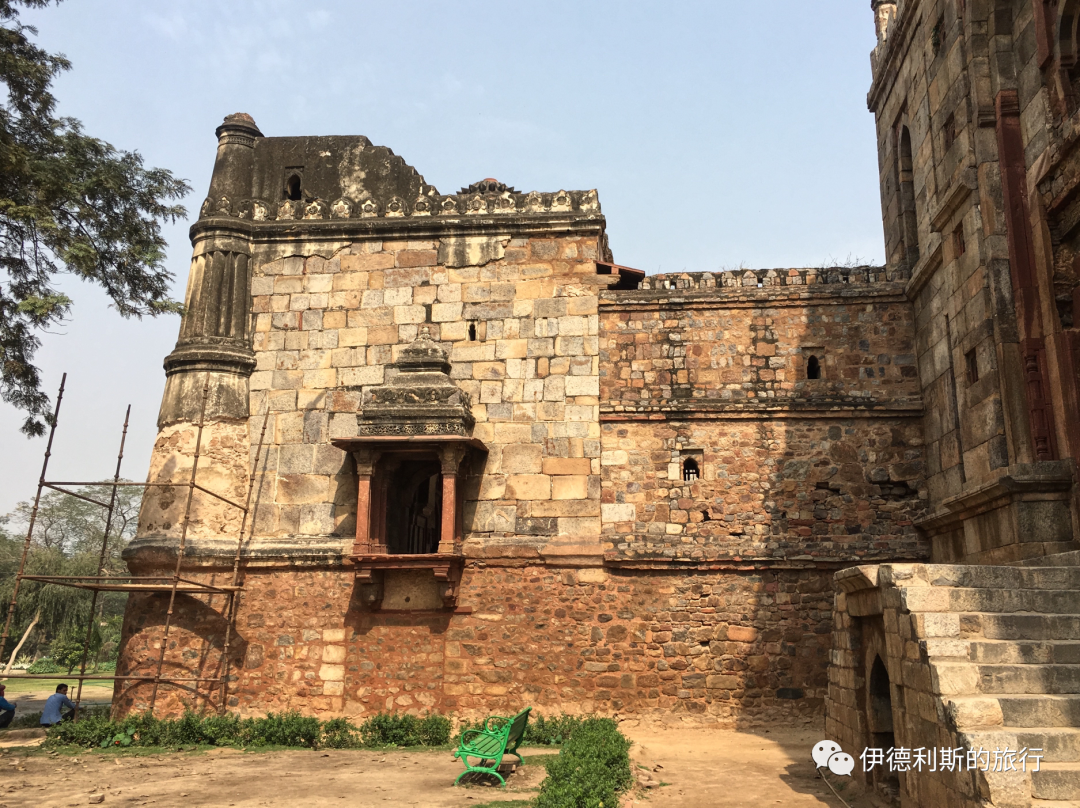
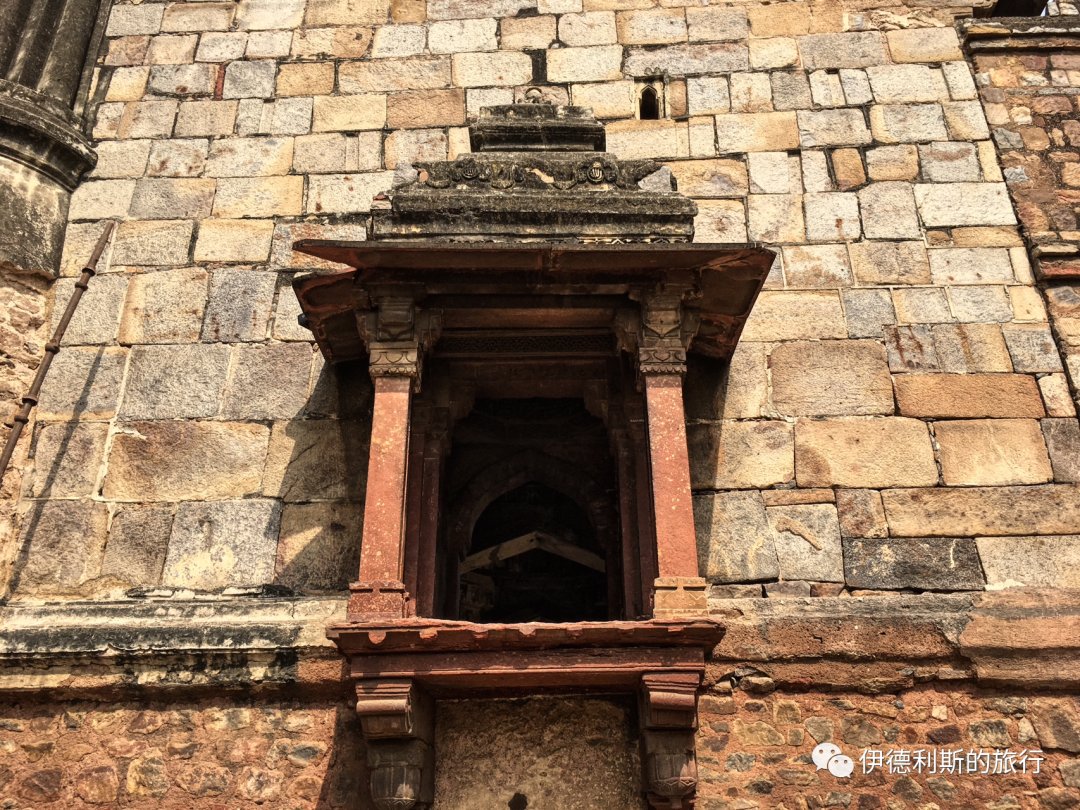
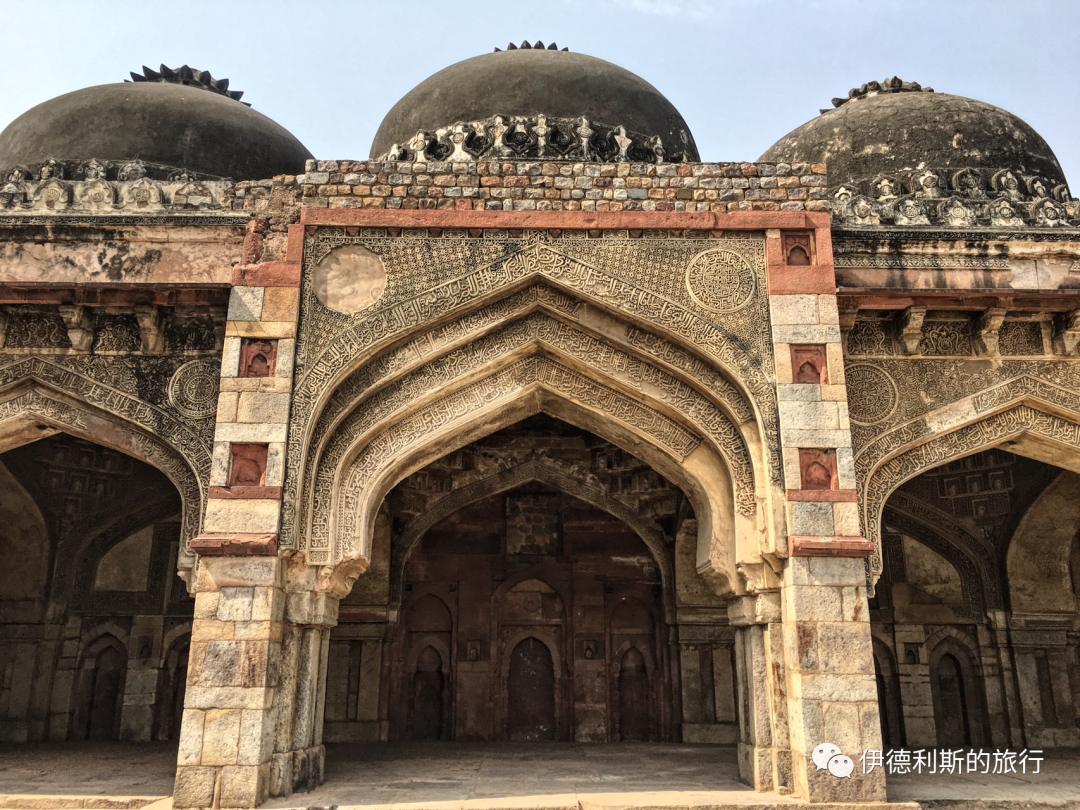
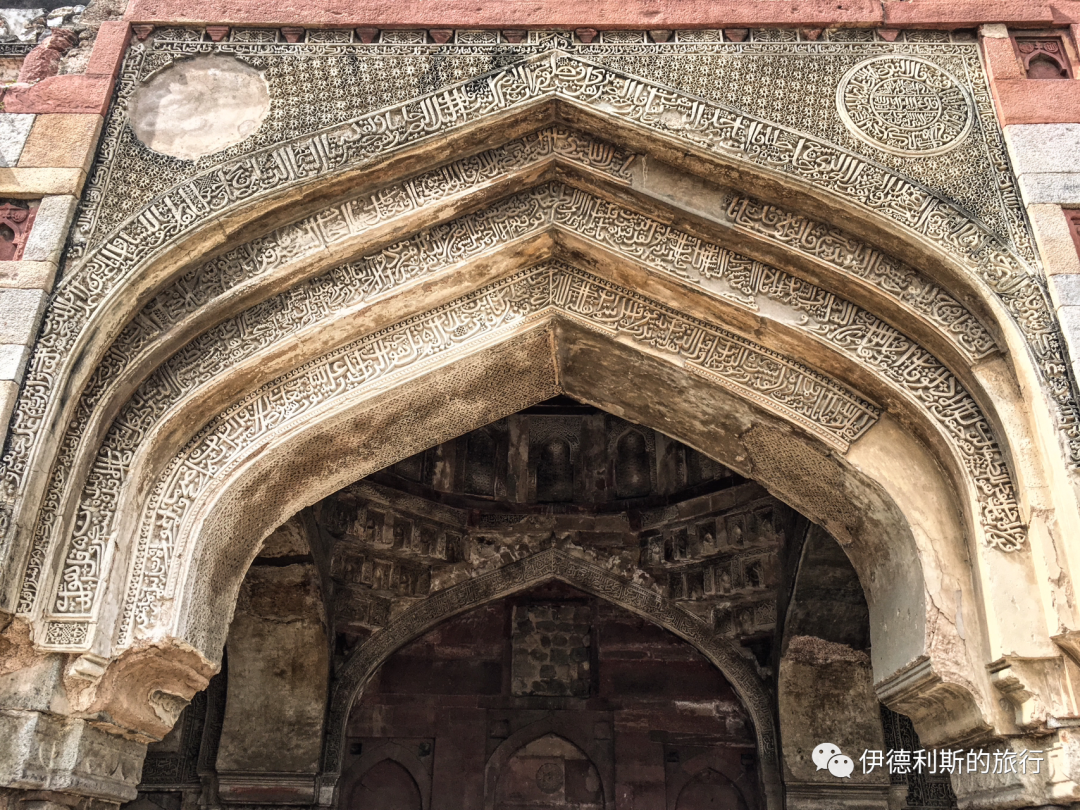
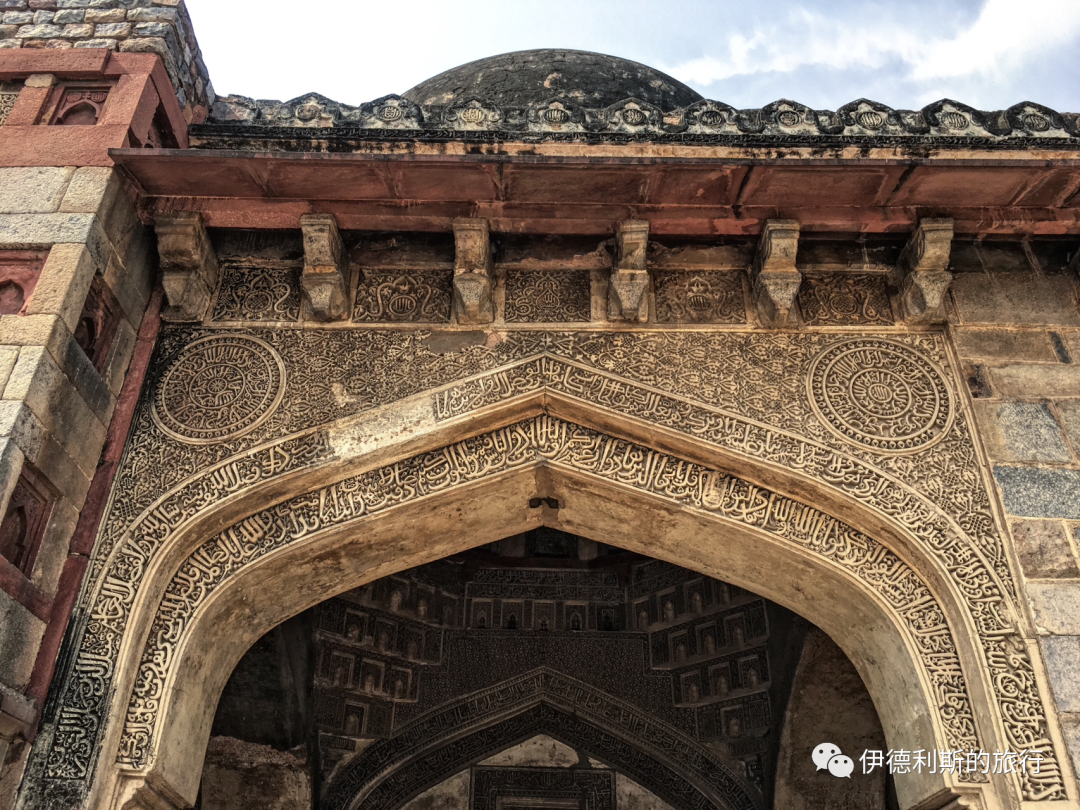
The plaster carvings inside the Friday mosque of the Bara Gumbad are perhaps the richest of the Lodhi period. The abundance of floral patterns, geometric designs, and scriptures is overwhelming, making this mosque occupy an important place among mosques in India.
Shish Gumbad
Directly north of the Bara Gumbad is the Shish Gumbad (Glass Dome), which is said to have been built by Sultan Sikandar Lodi (reigned 1489-1517). The ownership of this dome is still debated. One theory is that it belonged to a nobleman of the Lodhi dynasty, while another suggests it was for the founder of the Lodhi dynasty, Bahlul Lodi (reigned 1451-1489).
The Glass Dome gets its name from the blue tiles that once decorated the exterior of the tomb, making it shine like glass. Currently, only a few blue tiles remain.
The Glass Tomb (Shisha Gumbad) and the Big Tomb (Bara Gumbad) have similar structures. Both look like two stories from the outside, but they are actually only one story inside. The dome is also surrounded by decorative spires called guldasta. However, the interior of the Glass Tomb (Shisha Gumbad) is poorly preserved and covered in bird droppings.
Tomb of Sikandar Lodi
Northeast of the Glass Tomb (Shisha Gumbad) stands the tomb of the Lodi Dynasty Sultan Sikandar Lodi (reigned 1489-1517). It was built between 1517 and 1518 by his successor, Sultan Ibrahim Lodi (reigned 1517-1526), and is India's first enclosed garden tomb.
Sikandar Lodi was a capable ruler. He expanded the Lodi Dynasty's territory and built the city of Agra between 1504 and 1505, which is the same city where the Taj Mahal is located today. The Lodi Dynasty officially moved its capital to Agra after that, but after Sikandar passed away, his son still buried his father in Delhi.
The tomb is surrounded by a 3.6-meter-high wall with corner towers. The west wall features a prayer wall and three mihrab niches—one large and two small. The south gate is shaped like a convex character and has two domed pavilions (chhatris) inlaid with tiles.
The main building's design follows the tomb of the previous Sultan, Muhammad Shah. Both are octagonal domed buildings, but the main difference is that Sikandar Lodi's tomb lacks the domed pavilions (chhatris).
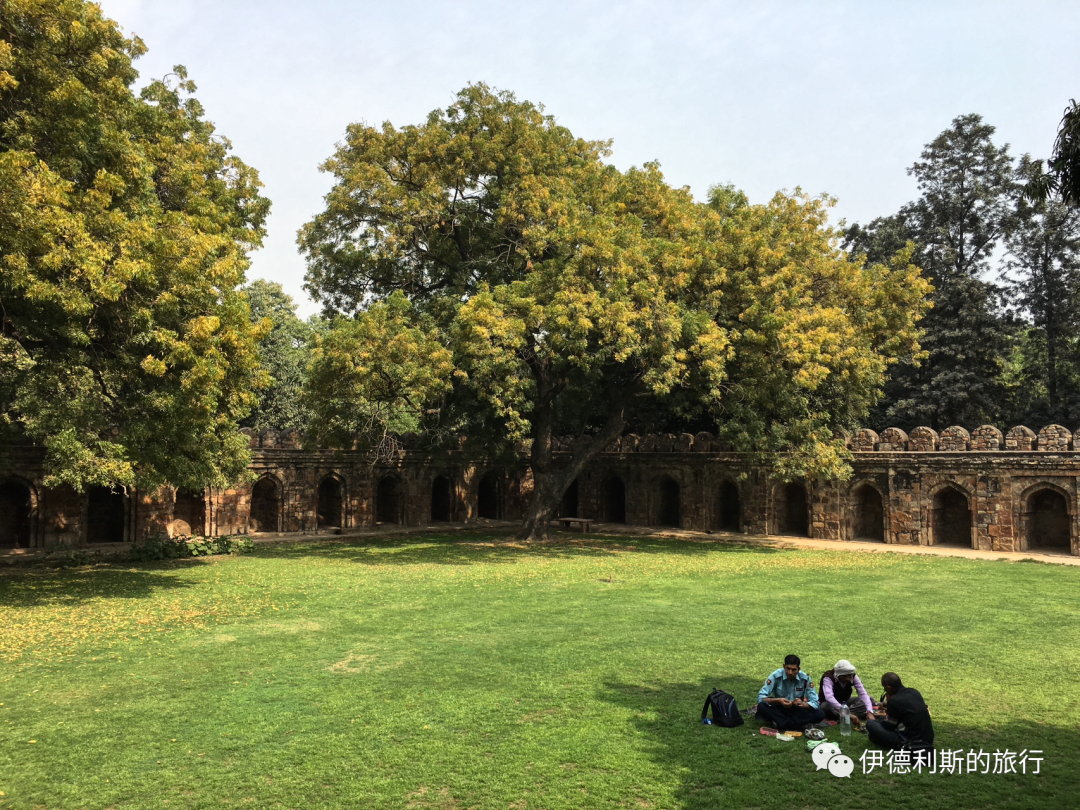
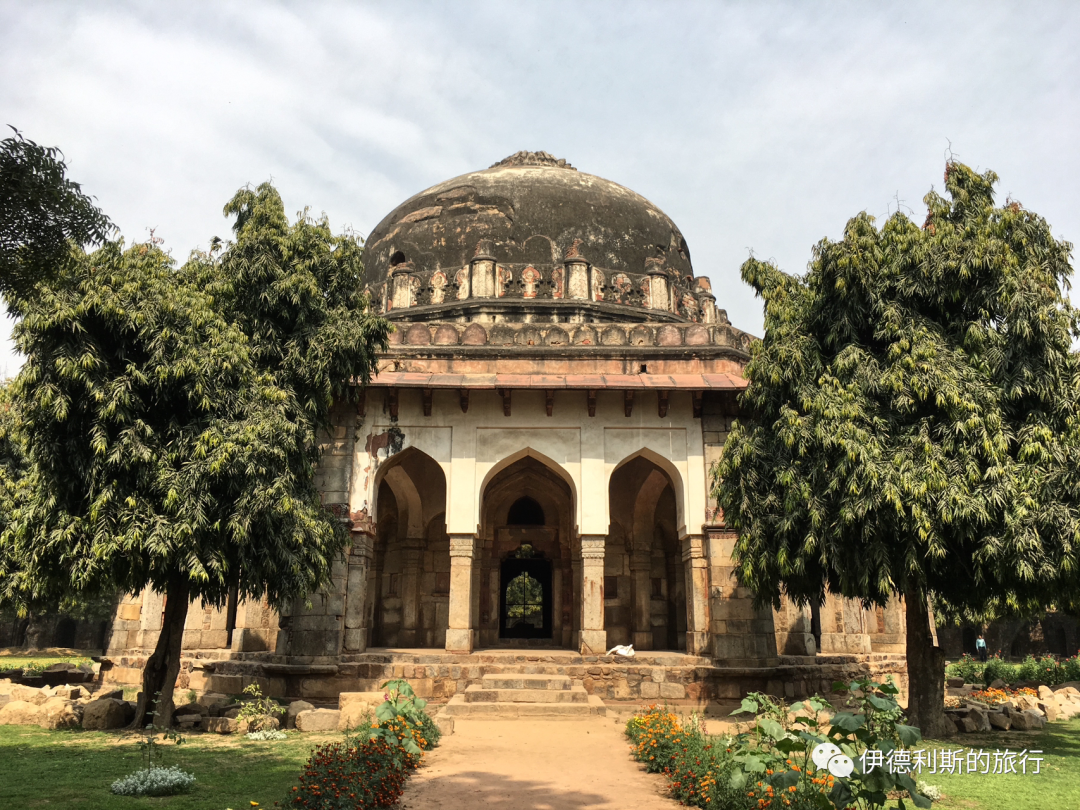
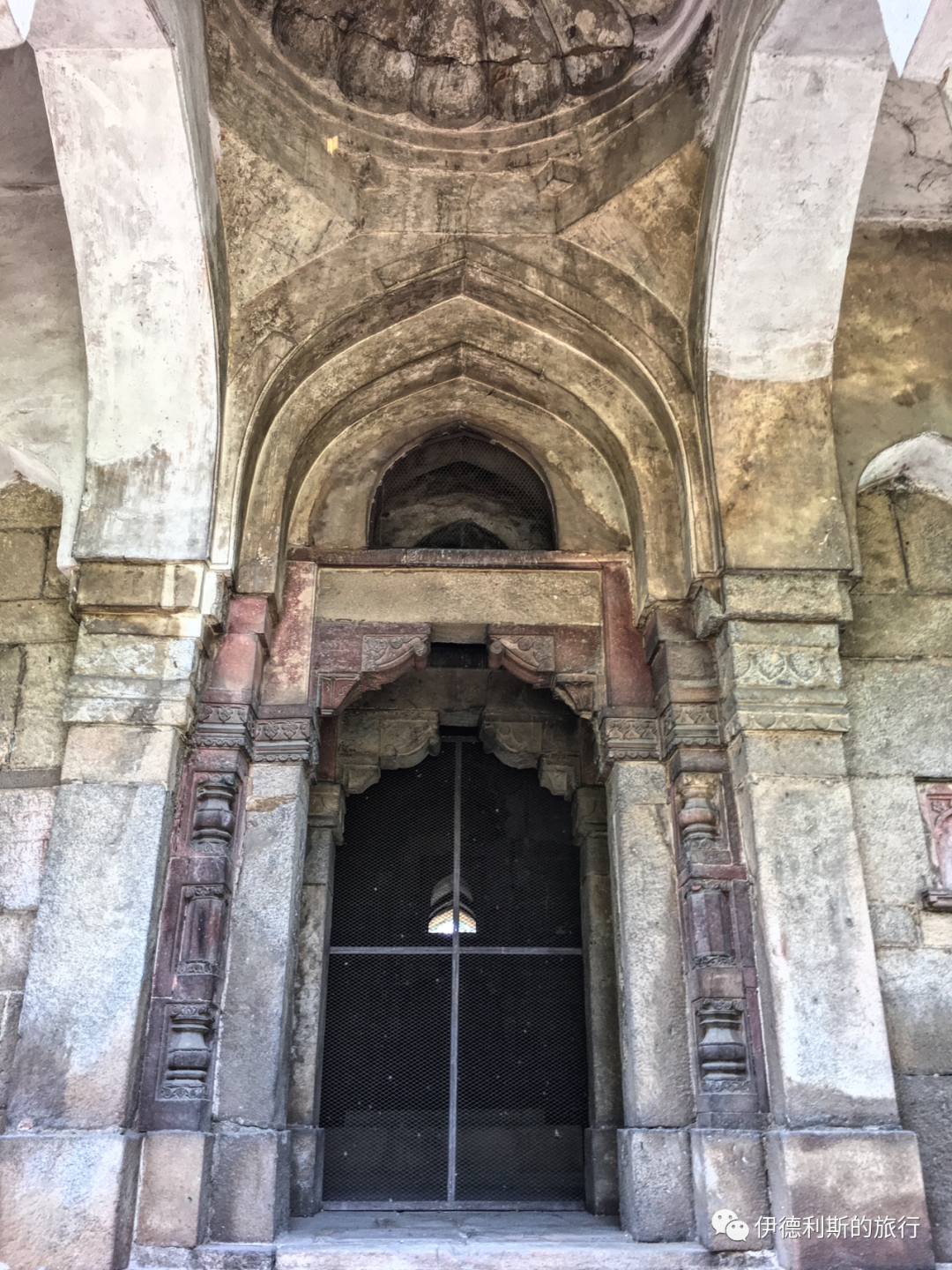
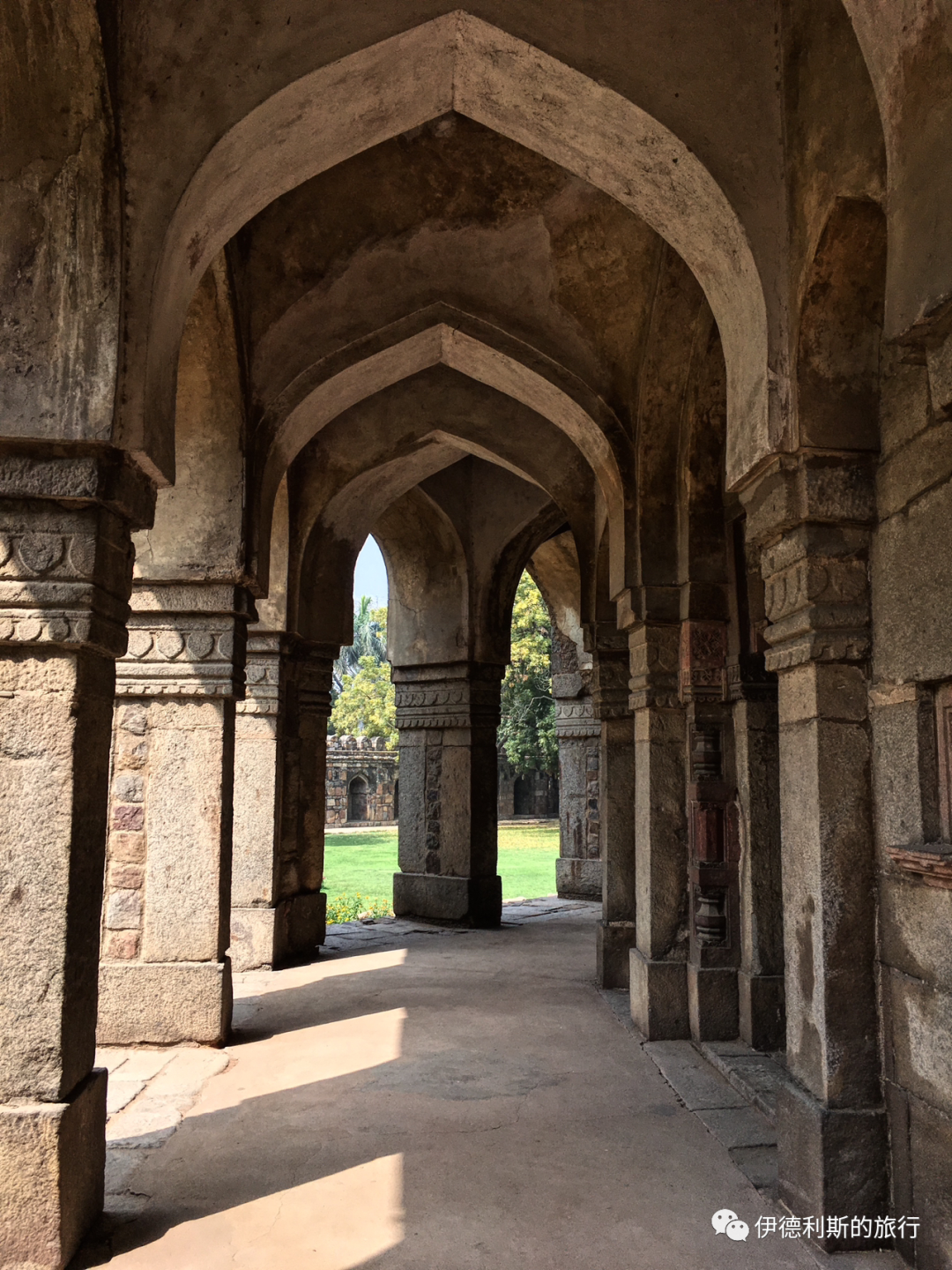
The biggest feature of Sikandar Lodi's tomb is the colorful tile decoration inside, which is extremely rare in Lodi Dynasty architecture.
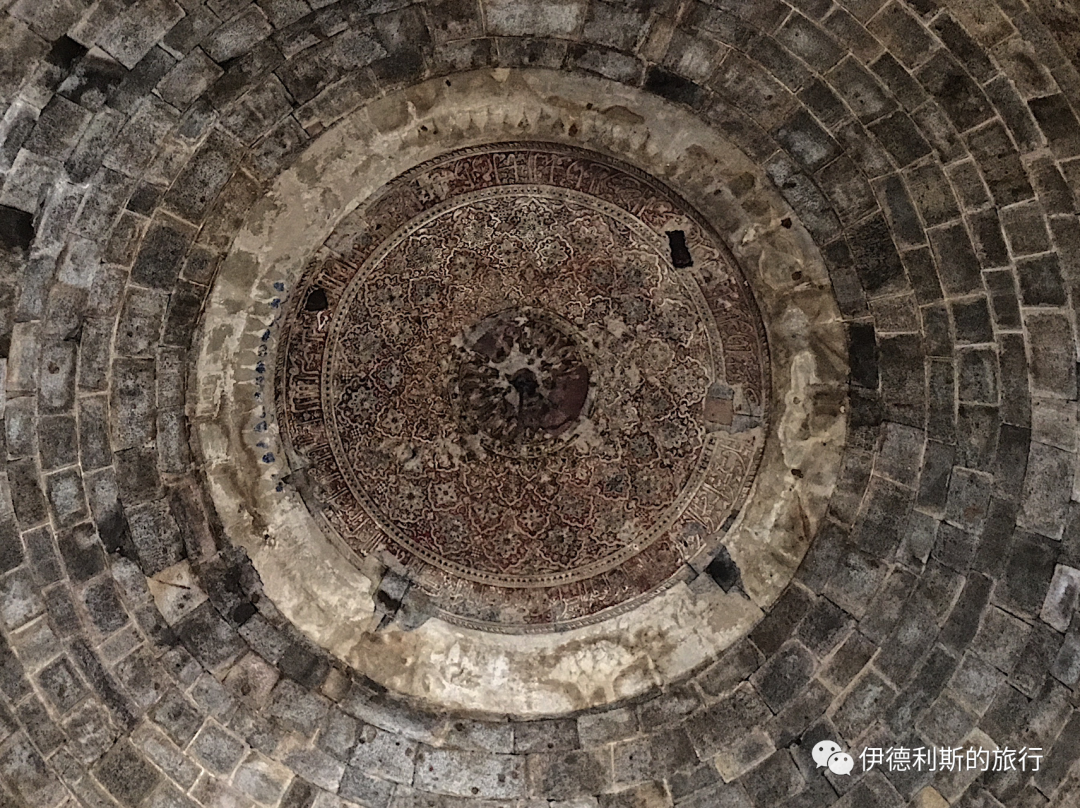
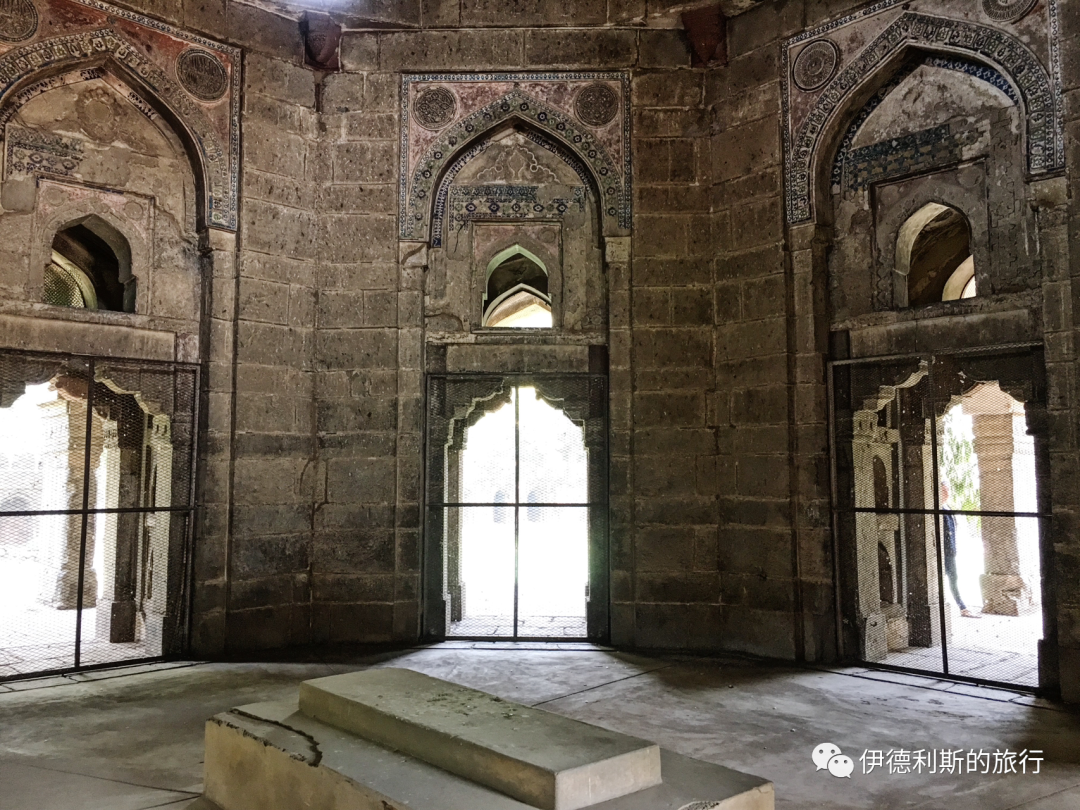
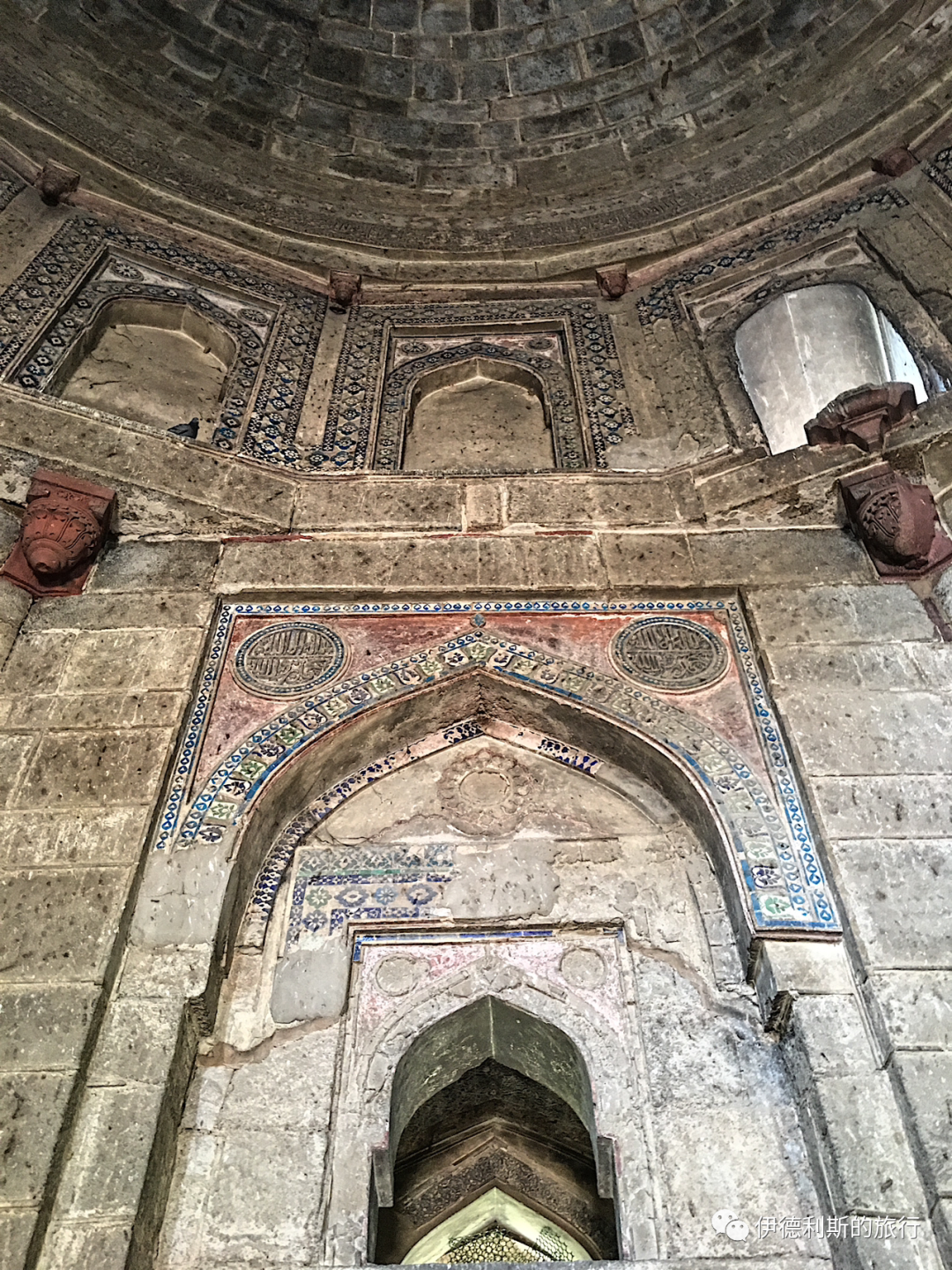
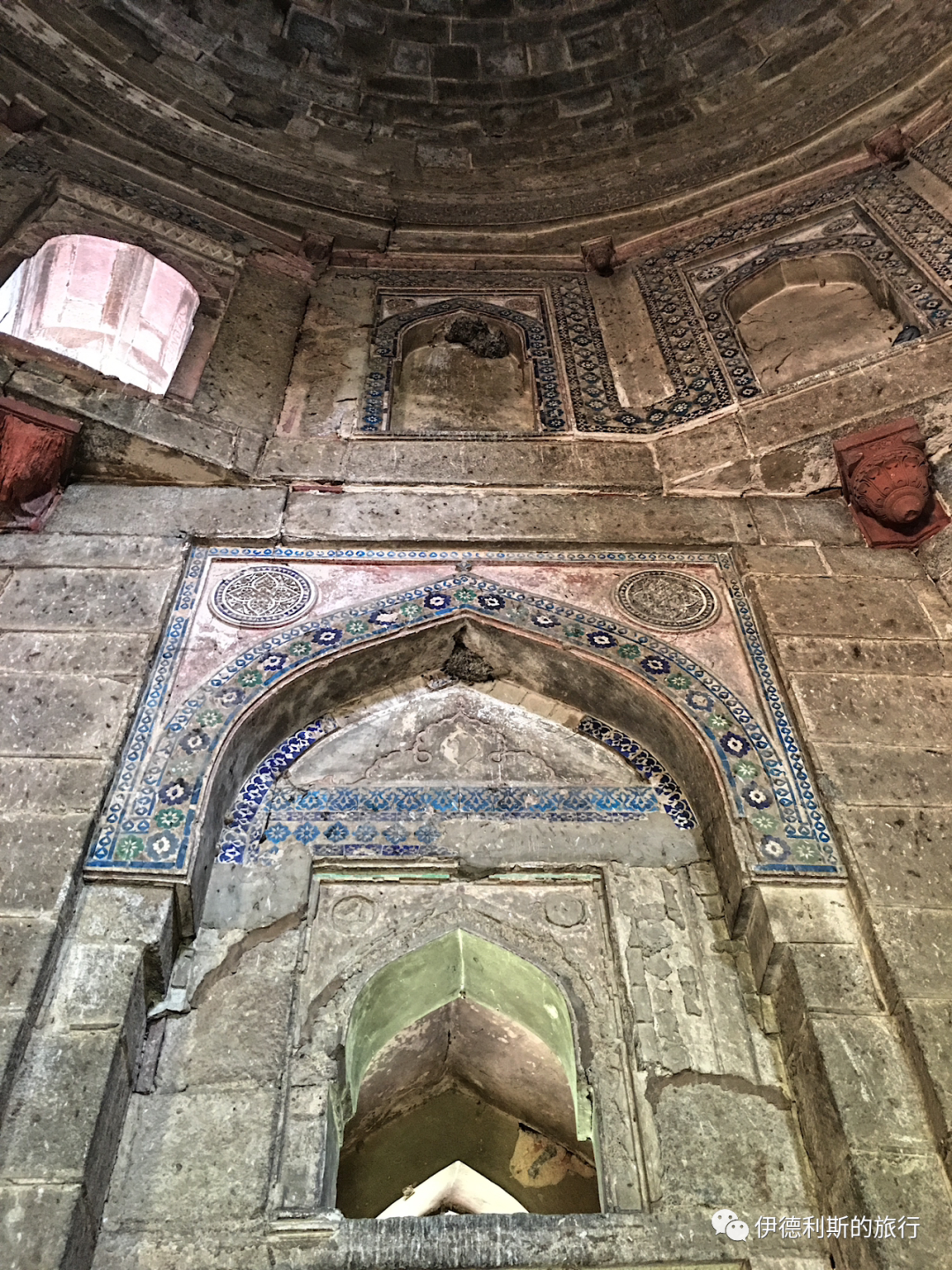
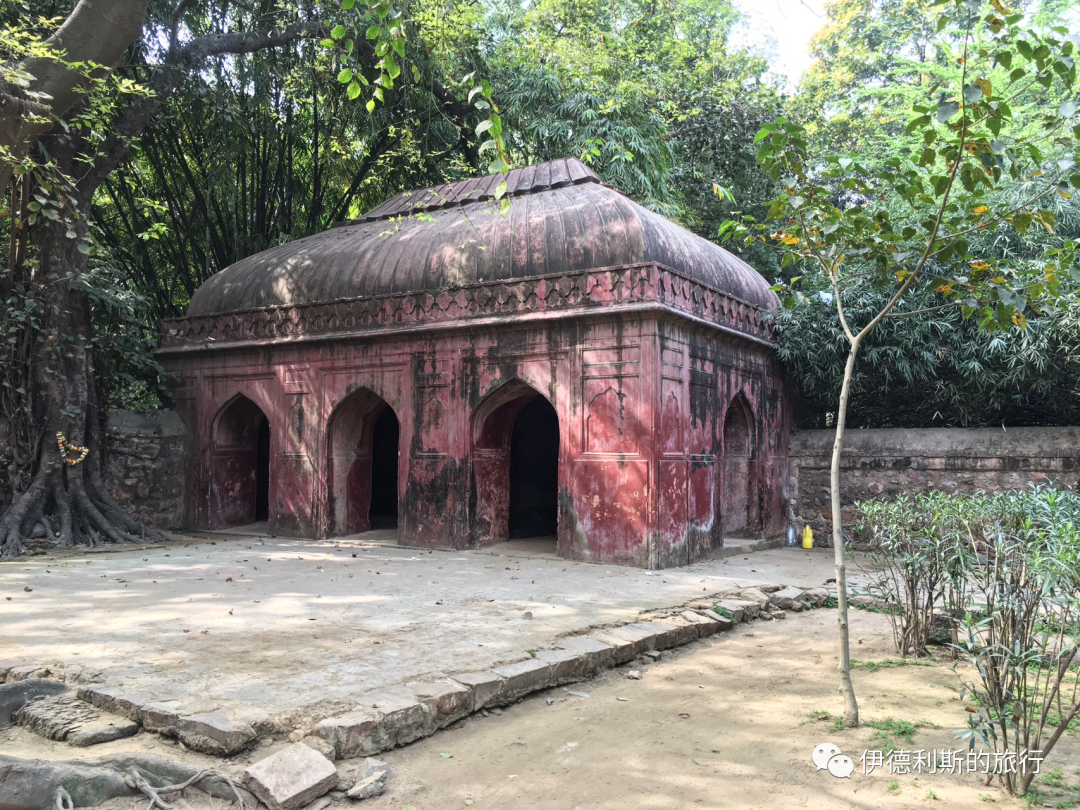
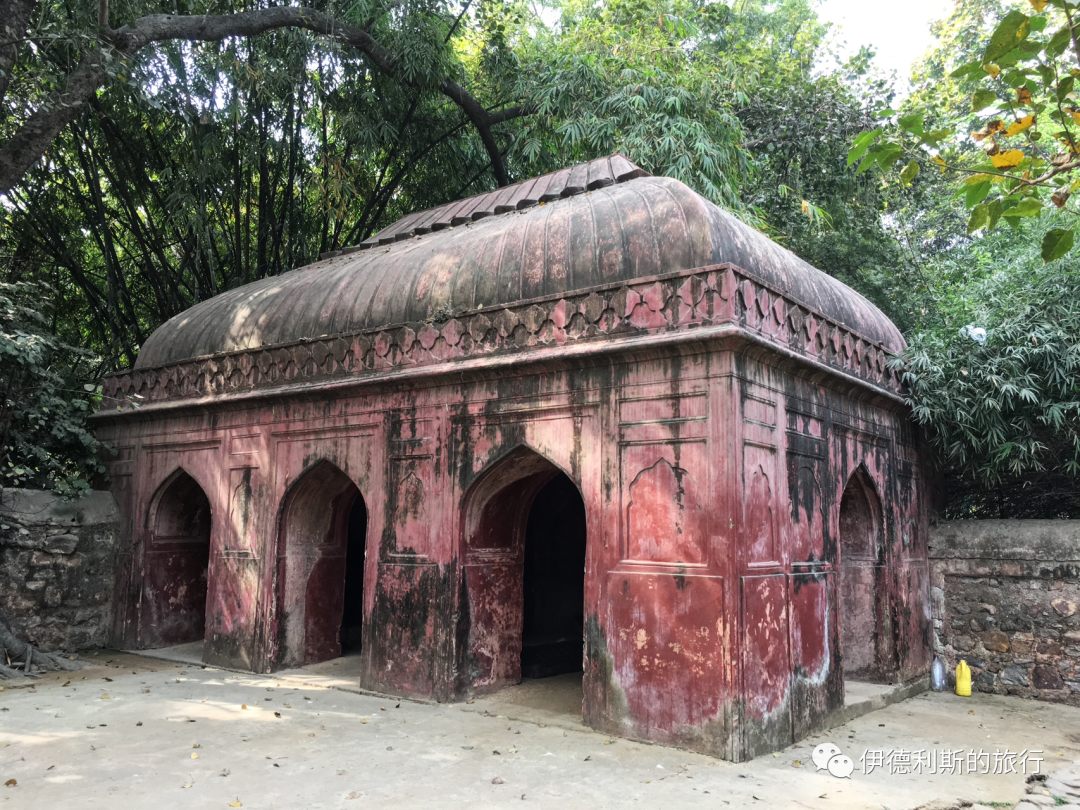
Example of a small Lodi Dynasty mosque
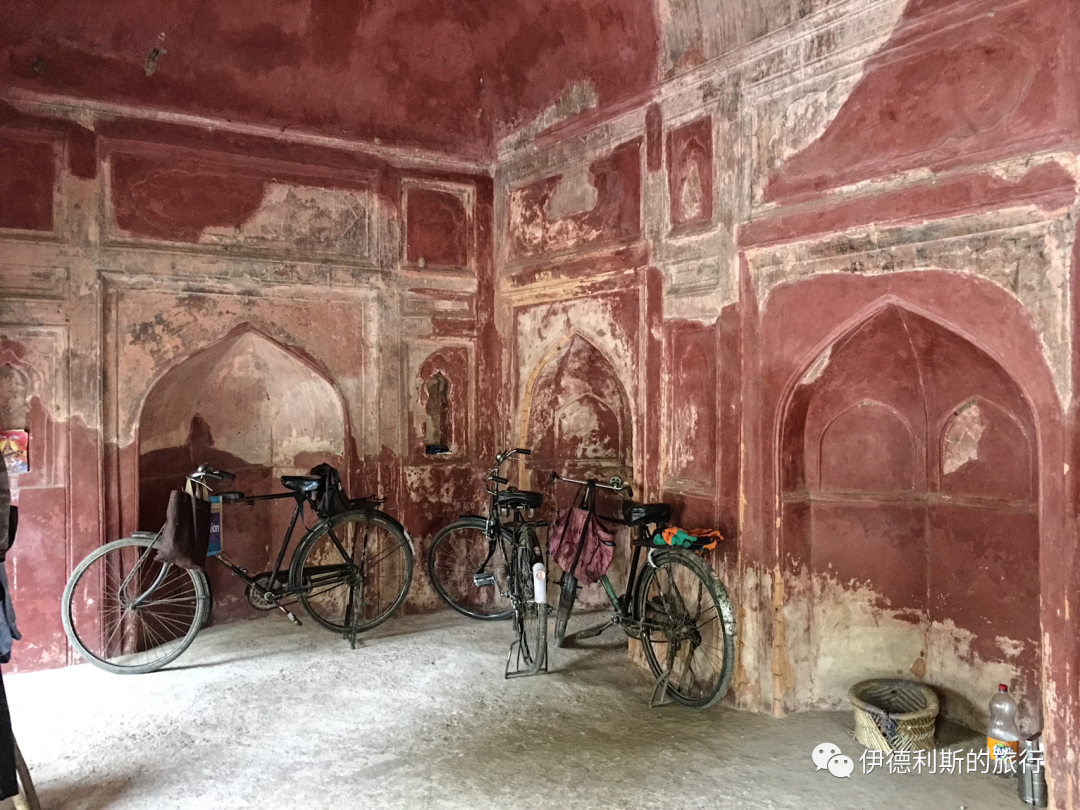
Inside the garden is an example of a small Lodi Dynasty mosque, with the remains of walls and tombs nearby. The mosque has three arched entrances, and the top is decorated with inverted lotus flowers. Unlike the brick buildings of the Mughal era, the Lodi Dynasty used stone even for small structures and applied bright red plaster using traditional fresco techniques.
Mughal Rose Garden
On the south side of Sikandar Lodi's tomb is a group of Mughal-era buildings surrounded by walls, with a two-story gate and a three-arched mosque on the east side. Today this is a rose garden, but there was likely a Mughal tomb in the center of the garden in the past.
The two-story gate features a Bengal-style roof, traditional Indo-Islamic eaves (chhajja), and Mughal-style Lakhori bricks.
The Bengal-style roof mimics the thatched, reed roofs of rural areas in the rainy Bengal region. It first appeared in Bengal in the 16th century and was introduced to Delhi in the 17th century, so it is only seen in buildings from the Mughal era and later.
Lakhori bricks are relatively flat red bricks that were popular from the time of the 17th-century Mughal Emperor Shah Jahan until the early 20th century. During the Delhi Sultanate period, buildings were mainly supported by pillars and beams made of large stone blocks, without the need for mortar. By the time of Shah Jahan, Lakhori bricks were used on a large scale to build houses. These bricks are smaller in size, which allows for more complex architectural decorations.
Halal Travel Guide: Mehrauli Archaeological Park — Delhi Muslim History (Part 1)
Articles • ali2007fr posted the article • 0 comments • 143 views • 2026-05-18 09:01
Summary: Mehrauli Archaeological Park — Delhi Muslim History is presented here as a firsthand travel account in clear English, beginning with this scene: Today I am introducing an archaeological park in the southern suburbs of Delhi that is well worth a visit. The account keeps its focus on Delhi Travel, Mehrauli, Muslim Heritage while preserving the names, places, food, and historical details from the Chinese source.
Today I am introducing an archaeological park in the southern suburbs of Delhi that is well worth a visit.
I previously mentioned in 'The First City of Delhi—The Minaret Reaching the Clouds' that in 1193, the Ghurid dynasty general Qutb al-Din Aibak became the governor of northern India. He ruled from the city of Lal Kot in Delhi and officially established the Delhi Sultanate in 1206.
Qutb al-Din Aibak built a massive mosque in Lal Kot, and the Qutb Minar is known as the tallest ancient minaret. Later, two large-scale expansions by his successors, Iltutmish in 1225 and Alauddin Khalji in 1310, made Lal Kot the political, religious, and cultural center of the Delhi Sultanate.
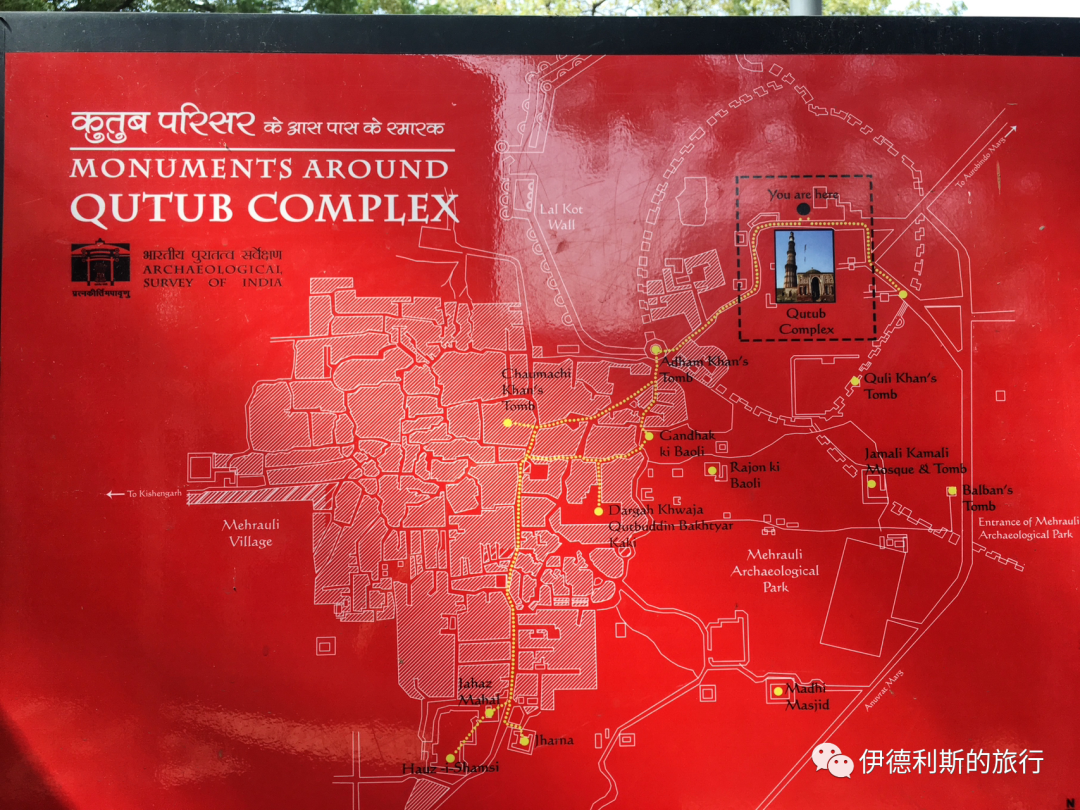
The Qutb Minar site was listed as a UNESCO World Heritage site in 1993, and many tourists visit it for its fame. However, on the south side of the site, there is also the 80-hectare Mehrauli Archaeological Park. Although it is not as famous as the Qutb Minar site, it is dotted with over 100 historical monuments spanning a thousand years hidden in the forest, making it equally worth exploring.
The heart of Mehrauli Archaeological Park is the gongbei (shrine) of the famous South Asian Sufi sheikh Qutbuddin Bakhtiyar Kaki (1173-1235). This is the first Sufi gongbei in Delhi and is very prestigious. Around the Qutbuddin gongbei are buried many nobles from the Delhi Sultanate and Mughal Empire periods, spanning from the 13th to the 19th century. These include the son and nephew of a Mamluk sultan, the Sufi mentor of a Lodi sultan, and the foster mother and a general of the Mughal Emperor Akbar. In the 18th century, the Mughal dynasty even built a summer palace right next to the Qutbuddin gongbei, where three Mughal emperors are buried. The tomb of the last emperor, Bahadur Shah II, was also prepared, but he died in exile in Myanmar after being banished by the British.
There are also many mosques in the park. The 15th-century Madhi Mosque combines the styles of an open-air prayer wall mosque and a roofed indoor mosque, making its architectural structure unique. The 16th-century Jamali Kamali Mosque is considered a transition between the Lodi and Mughal architectural styles and holds an important place in the history of Indian architecture. The 18th-century Moti Mosque was built by the Mughal Emperor Bahadur Shah I using pure white marble, representing the Mughal dynasty's respect for the Sufi sheikh.
Looking out at Delhi's landmark, the Qutb Minar, from within the park.
Mehrauli Village
The Sufi sheikh Qutbuddin Bakhtiyar Kaki (1173-1235) was born in Osh, in present-day Kyrgyzstan. After inheriting the Sufi tradition of Sheikh Mu'in al-Din Chishti in Osh, he began leading the Chishti Order and came to Delhi to preach during the reign of Iltutmish (reigned 1211-1236), the third sultan of the Mamluk dynasty of the Delhi Sultanate. The sheikh's khanqah (spiritual retreat) was built outside the southwest wall of the Delhi Sultanate capital, Lal Kot, and his dargah (gongbei) was also built there after he returned to Allah.
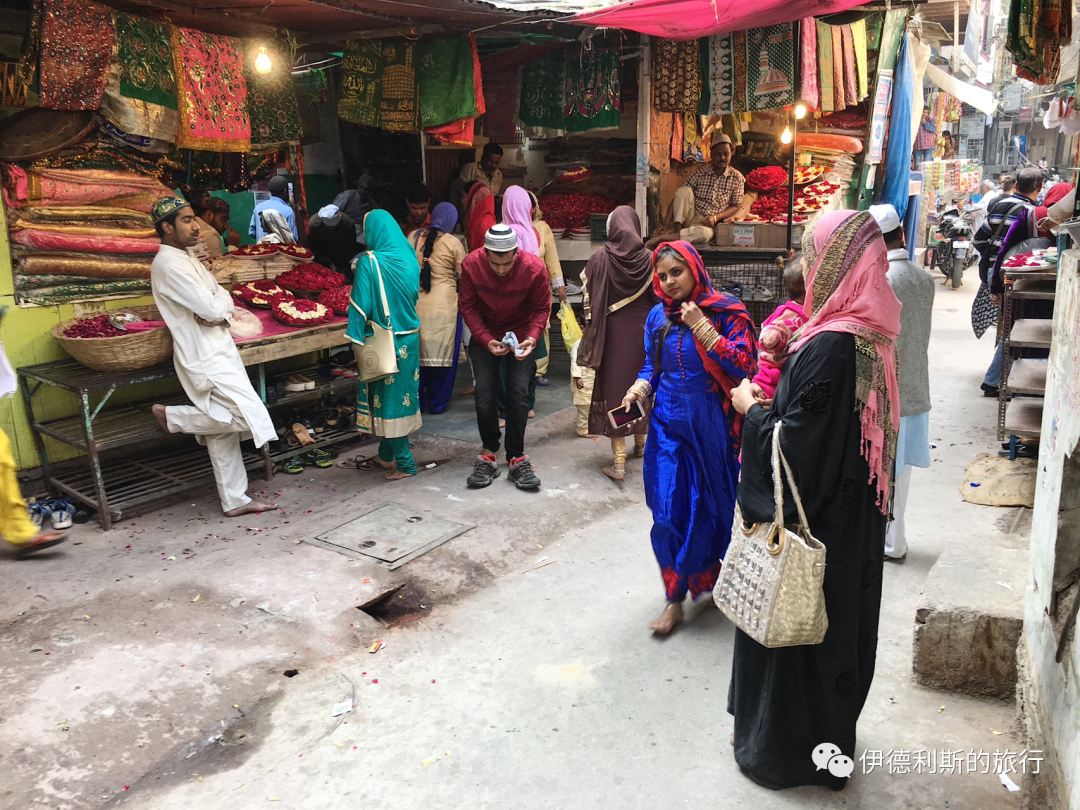
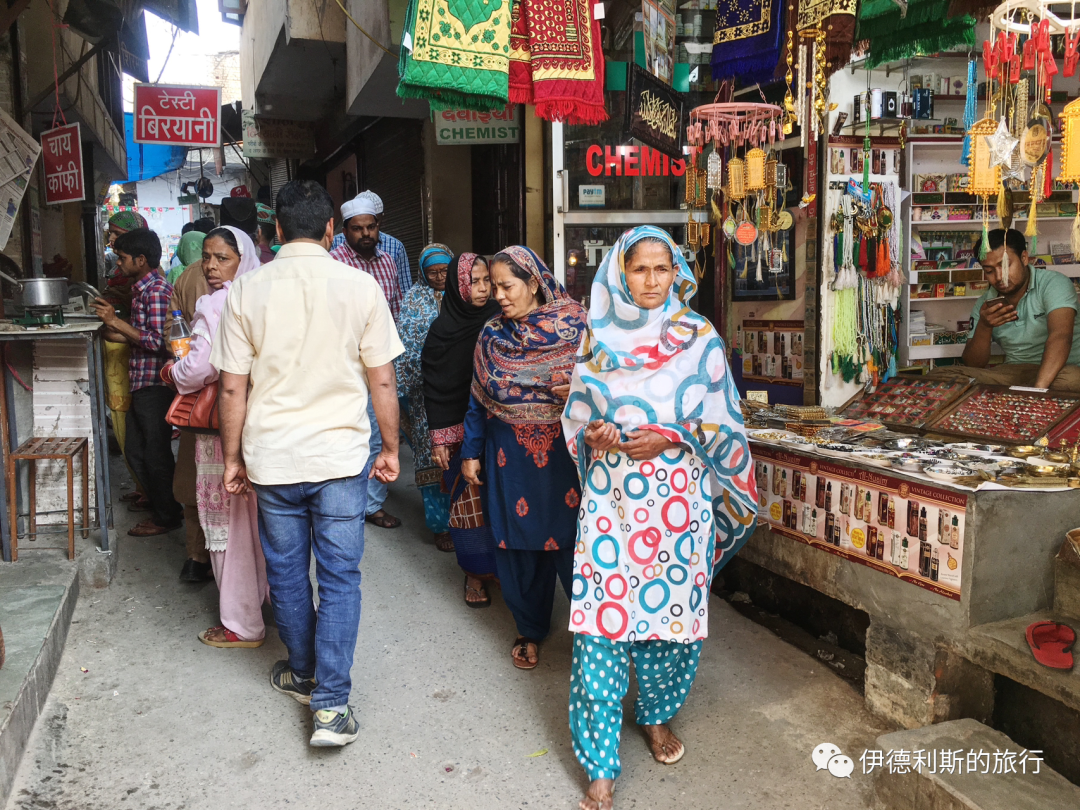
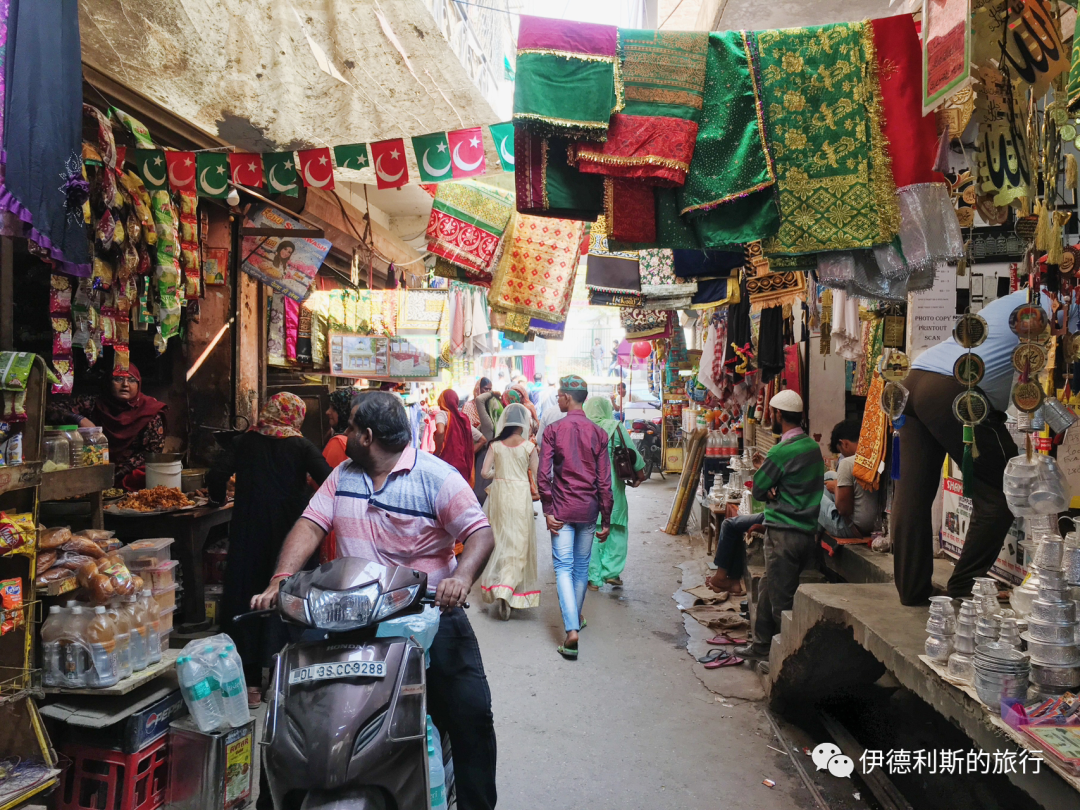
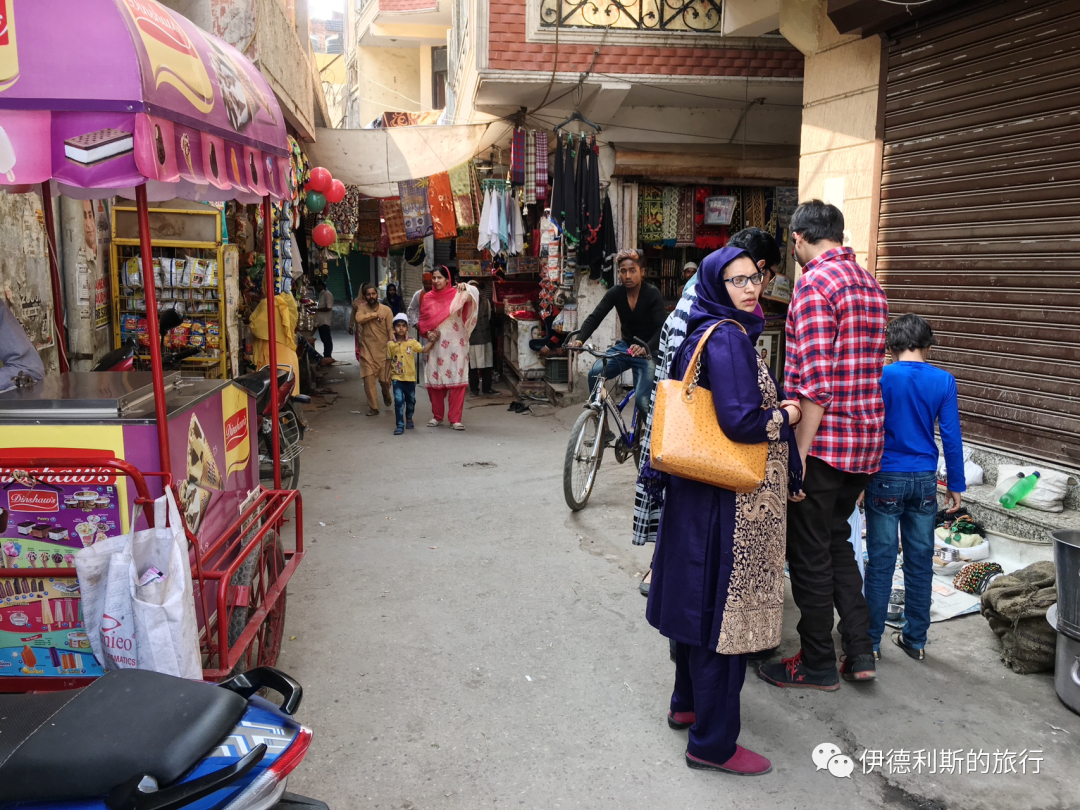
After the gongbei was built, the Mehrauli village, primarily inhabited by Muslims, gradually formed around it. Because Qutbuddin had a major influence on the development of Sufism in South Asia, his ideas of love and charity influenced not only Muslims but also Hindus, Christians, and Sikhs. Therefore, not only is a grand ceremony held every year on the sheikh's death anniversary (Urs), but believers of various religions also visit the sheikh's gongbei every week. Mehrauli village is very lively every day. On the street, you can see various shops selling Sufi supplies, mainly burial shrouds and fresh flowers for offerings, as well as various scripture amulets and perfumes.
Interestingly, Mehrauli village is also the venue for Delhi's famous interfaith festival, Phool Waalon Ki Sair. This is a celebration attended by both Muslims and Hindus, usually held in September after the rainy season. Led by musicians and dancers, people walk 32 kilometers from Old Delhi, carrying giant fans made of fresh flowers called pankhas, to offer them to both the Qutbuddin Bakhtiyar Kaki gongbei and the nearby Hindu mosque, Yogmaya. This festival originated in 1812. At that time, the Mughal Emperor Akbar II (reigned 1806-1837) had his youngest son, Mirza Jahangir, exiled after a conflict with an East India Company official. His mother, Mumtaz Mahal Begum, made a dua that if her son returned safely, she would offer flowers at the Qutbuddin Bakhtiyar Kaki gongbei. A few years later, Mirza Jahangir returned safely, so his mother went to the gongbei to offer flowers and held a grand celebration in Mehrauli village. to cockfighting, kite flying, wrestling, and swimming, the Mughal court also offered flowers to the Hindu mosque in the village.
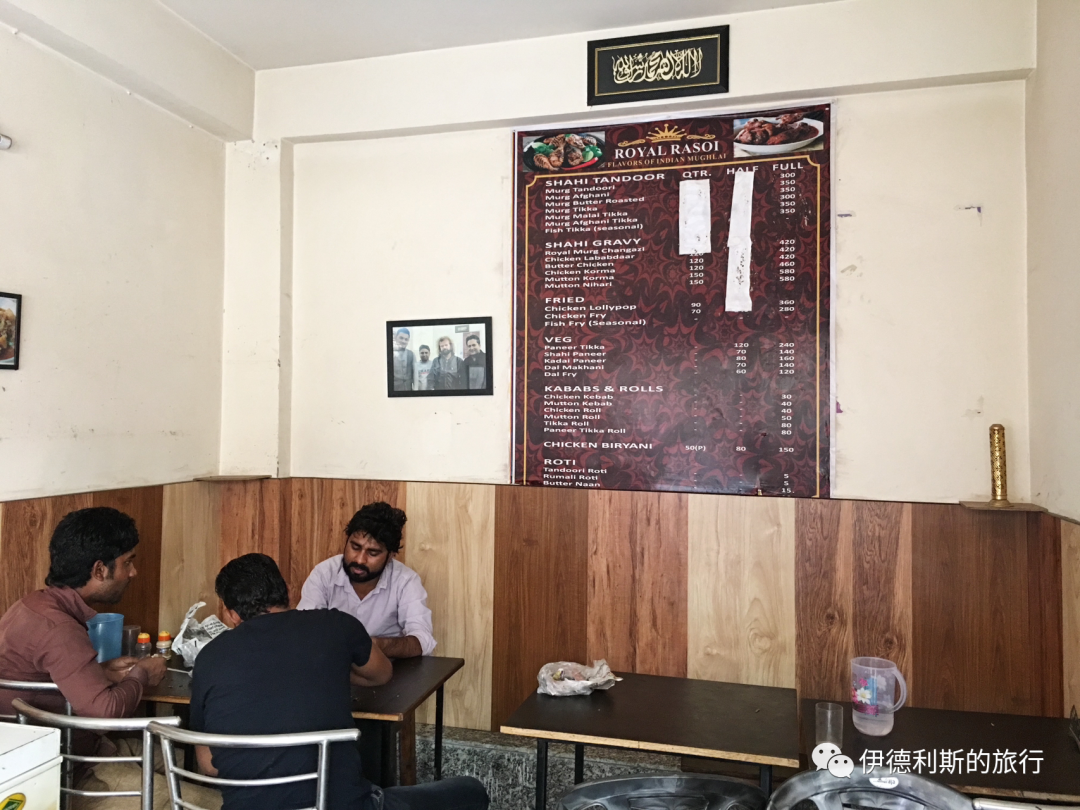
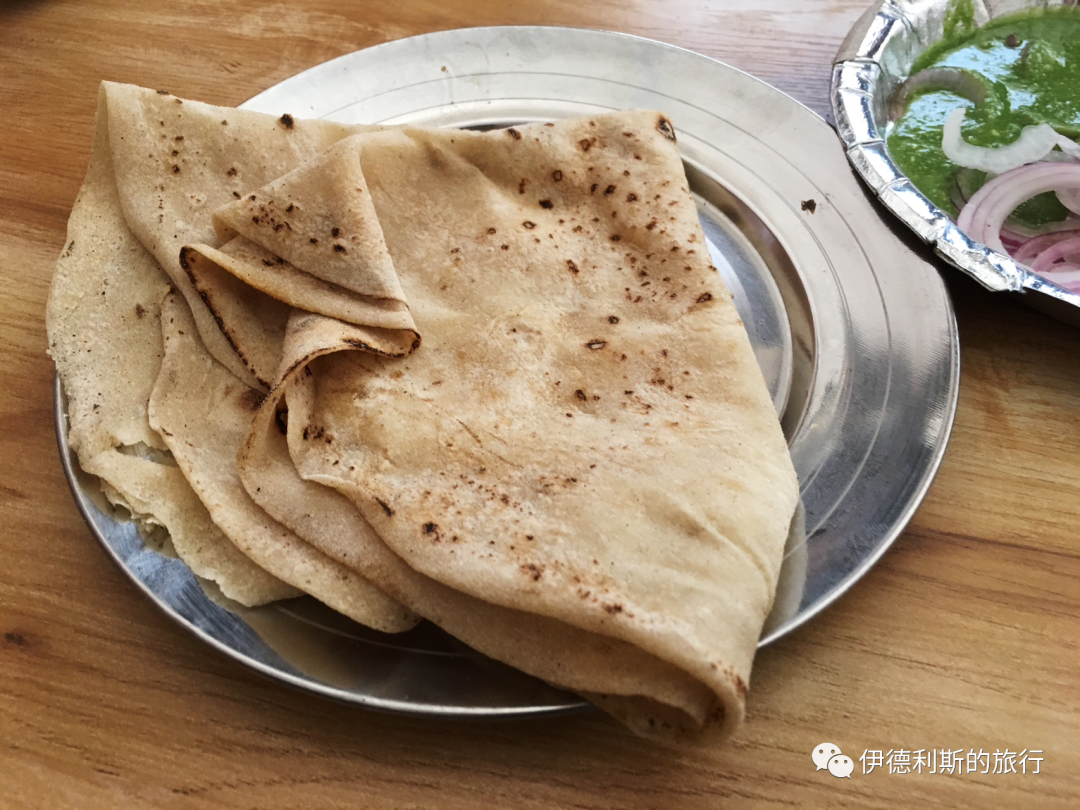
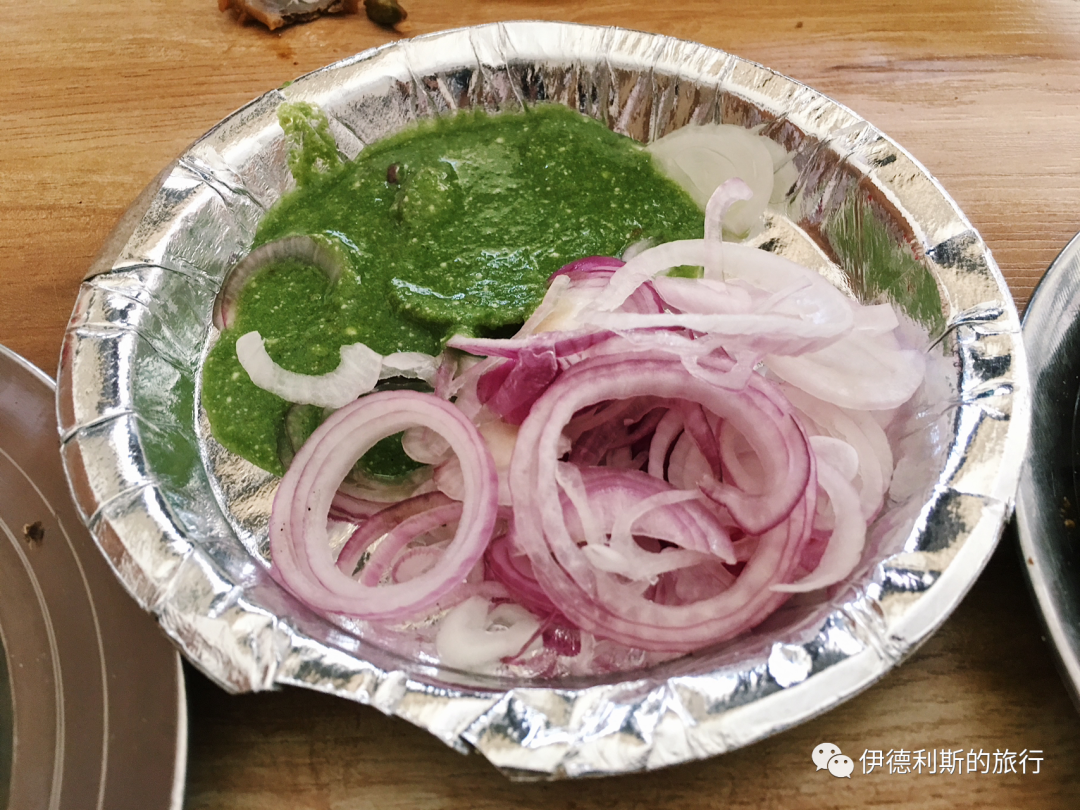
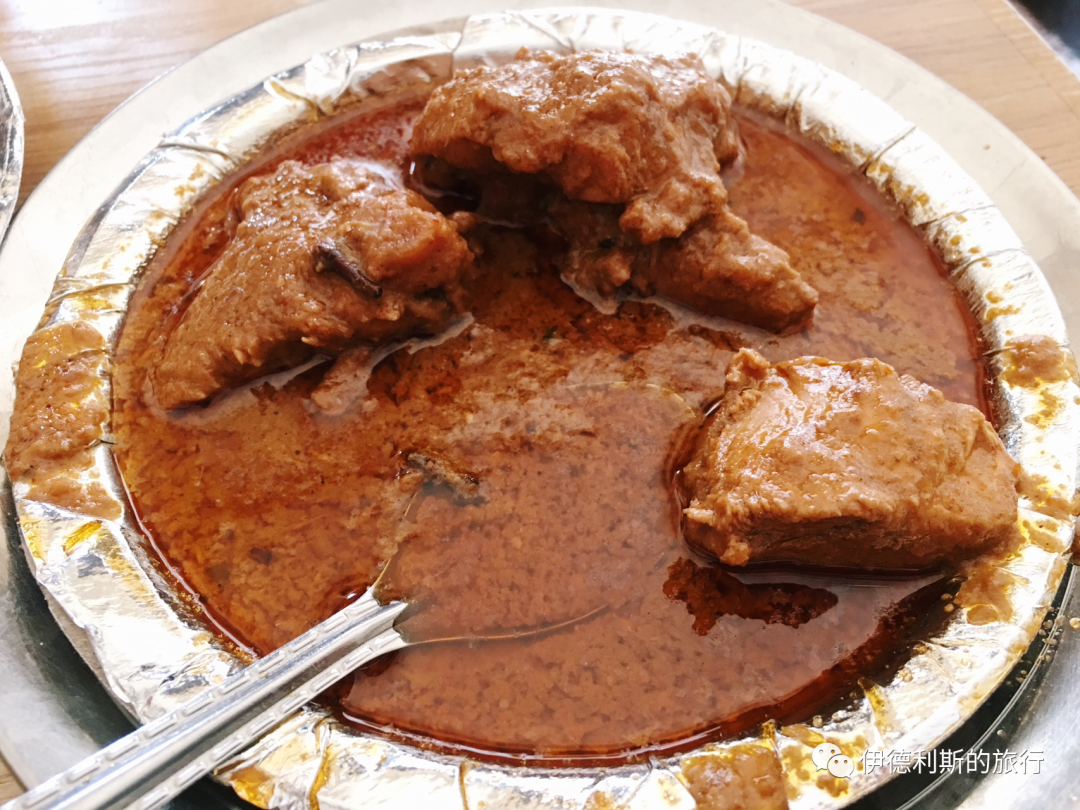
There are also many small halal snack shops here. I ate curry with roti bread at one of them, along with onions (piyaz) and a mint-garlic sauce.
The last summer palace of the Mughal dynasty—Zafar Mahal
Right next to the Sufi sheikh Qutbuddin gongbei is the last summer palace of the Mughal dynasty—Zafar Mahal.
Both the Delhi Sultanate and the Mughal dynasty attached great importance to the Qutbuddin gongbei, so much so that the Mughal Emperor Akbar II (reigned 1806-1837) built a summer palace right next to it, later known as Zafar Mahal, meaning 'Palace of Victory'.
The entrance to the palace was rebuilt in 1842 by the last Mughal emperor, Bahadur Shah II (reigned 1837-1857). This red sandstone gate was built in the style of a Hathi gate, designed specifically for riding elephants carrying a Howdah throne to pass through.
The top floor of the gatehouse is an arched room where the court band performed ceremonies, known as Naqqar Khana, which translates to drum house. This type of arched gallery overlooking a courtyard is called a Dalan in Indian architecture. At the very top is the traditional Indian roof eave known as a Chhajja.
Looking down from the Dalan, you see the management committee for the gongbei of Sheikh Qutbuddin to the north. The courtyard contains a 19th-century mosque and several Mughal-era tombs. One of these, the tomb of Empress Murad Bakht, wife of Mughal Emperor Shah Alam II (reigned 1759-1806), has now been turned into a residence.
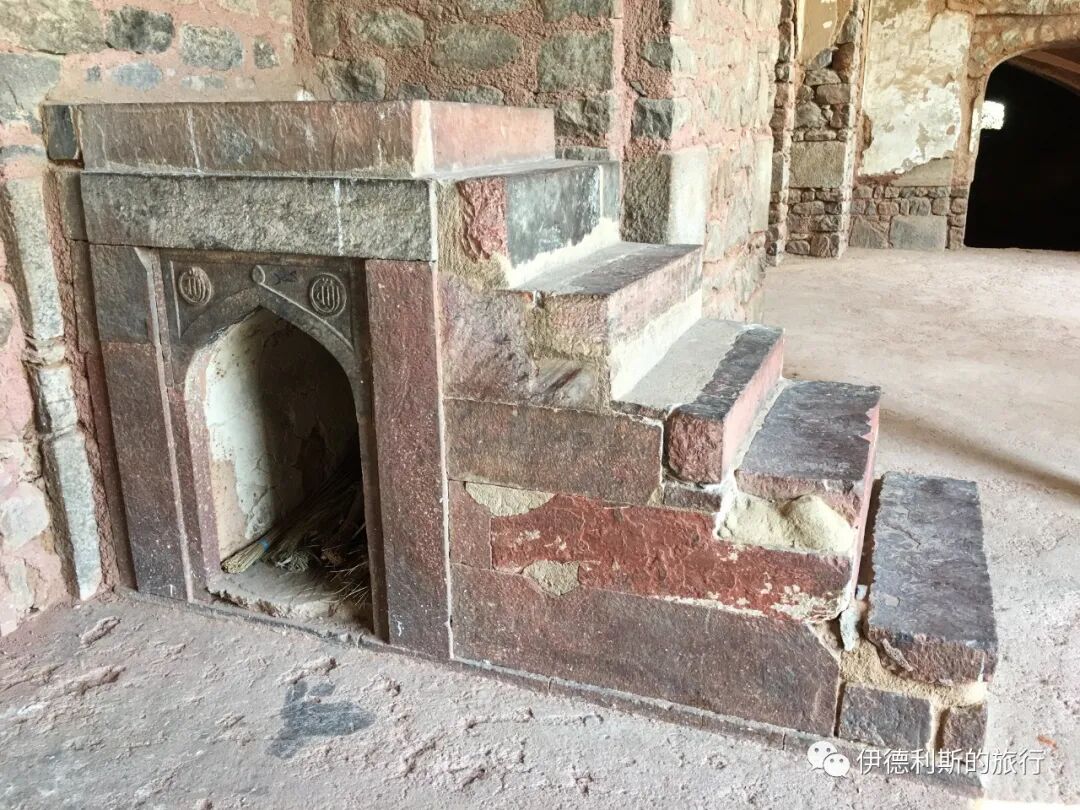
To the east of the gate are rows of palace ruins. The nearby houses were once built in a European style and featured classic fireplaces. The houses further to the right were built using the traditional Indian Dalan arched structure.
The tomb garden of four Mughal emperors: 1713-1857.
At the far east of Zafar Mahal are two pure white marble buildings, right next to the gongbei of the Sufi Sheikh Qutbuddin. The marble screen enclosure inside was built by Mughal Emperor Jahandar Shah (reigned 1712-1713) as a tomb garden for his father, Bahadur Shah I (reigned 1707-1712). Later Mughal emperors Shah Alam II (reigned 1759-1806) and Akbar II (reigned 1806-1837) are also buried here. It is arguably the best place to experience the history of the late Mughal Empire. The tomb of the last emperor, Bahadur Shah II (reigned 1837-1857), was already prepared, but because he was held under house arrest by the British in Myanmar after 1857 and died far from home, only an empty grave remains for him in Zafar Mahal.
As a follower of Sheikh Qutbuddin, Bahadur Shah II felt a special attachment to this place. Shortly before he passed away, he wrote several Urdu Ghazal lyric poems expressing his sorrow at not being able to be buried here.
Moti Mosque: 1709.
North of the tomb garden is the Moti Mosque, built in 1709 by Mughal Emperor Bahadur Shah I, representing the respect the Mughal court held for the Sufi Sheikh Qutbuddin at the time. Bahadur Shah I's father, Mughal Emperor Aurangzeb (reigned 1658-1707), also built a white marble Moti Mosque inside the Red Fort in Delhi. It is larger than the one in Zafar Mahal, but both share the same design of three arches and three domes.
Tomb of Alauddin: 13th century.
In the courtyard of Zafar Mahal lies the tomb of Alauddin, the nephew of Iltutmish (reigned 1211-1236), the third sultan of the Mamluk dynasty of the Delhi Sultanate. He was a loyal follower of the Sufi Sheikh Qutbuddin and was buried next to the Sheikh's gongbei after he passed away.
Jamali Kamali Mosque: 1528-29.
In the southeast of Mehrauli Archaeological Park stands the Jamali Kamali Mosque and tomb, built between 1528 and 1529. The tomb belongs to the famous South Asian Sufi Sheikh and Persian poet Jamali Kamboh, who was a mentor to Sultan Sikandar Khan Lodi (reigned 1489-1517) of the Delhi Sultanate's Lodi dynasty.
The name Jamali comes from the Urdu word Jamal, which means beauty. Jamali belonged to the Suhrawardiyya Sufi order. He traveled widely in his youth and later became a court poet for the Lodi dynasty. Sultan Sikandar Khan Lodi also enjoyed writing poetry, so he often asked Jamali for advice on his work.
After the Lodi dynasty fell in 1526, the first two Mughal emperors, Babur and Humayun, continued to support Jamali. Between 1530 and 1536, Jamali wrote the book Siyar-l-Arifin in Persian, which documented the two major South Asian Sufi orders of the time, the Chishti and the Suhrawardiyya. In 1536, Jamali passed away while accompanying Mughal Emperor Humayun on a military campaign to Gujarat.
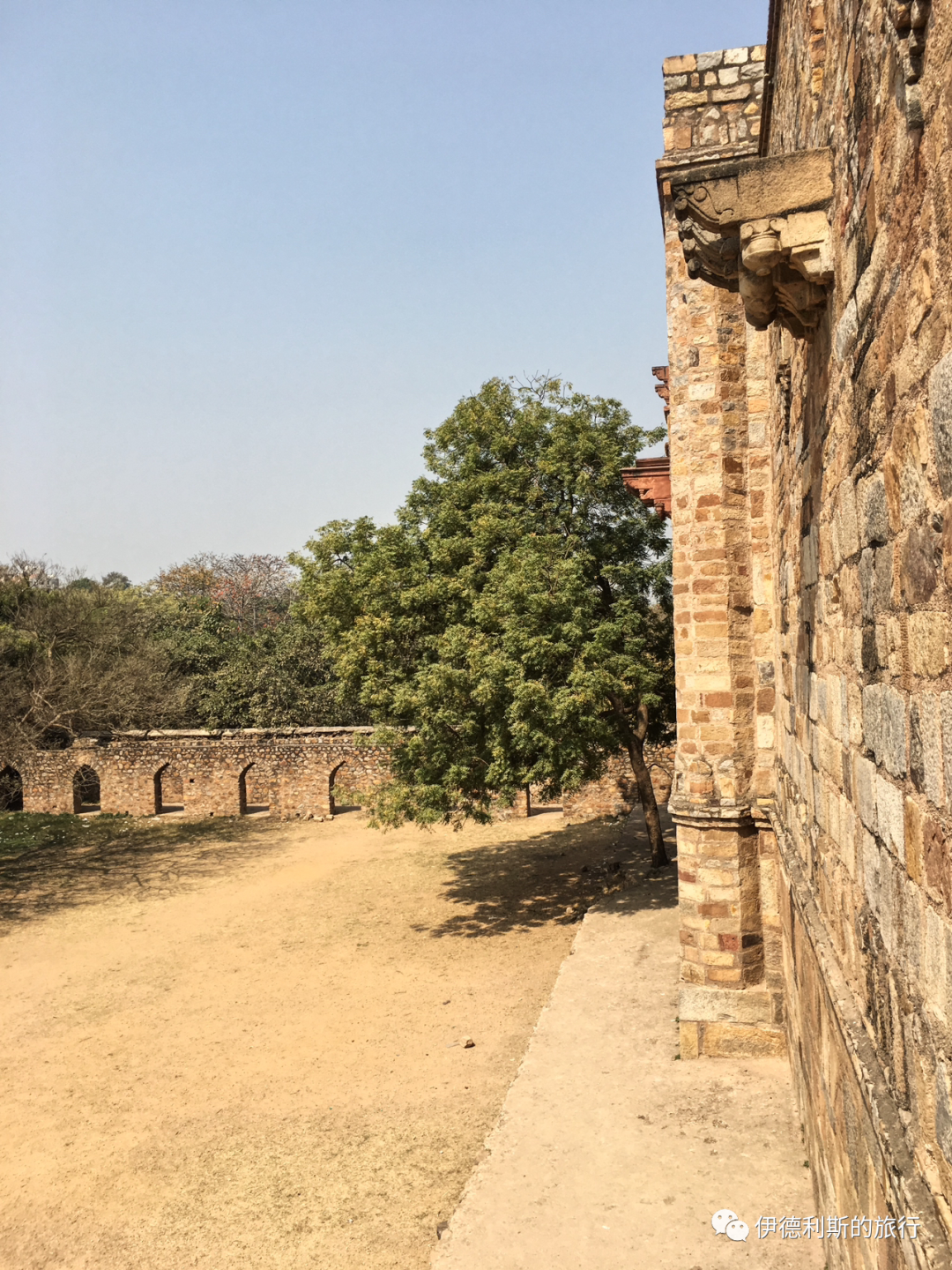
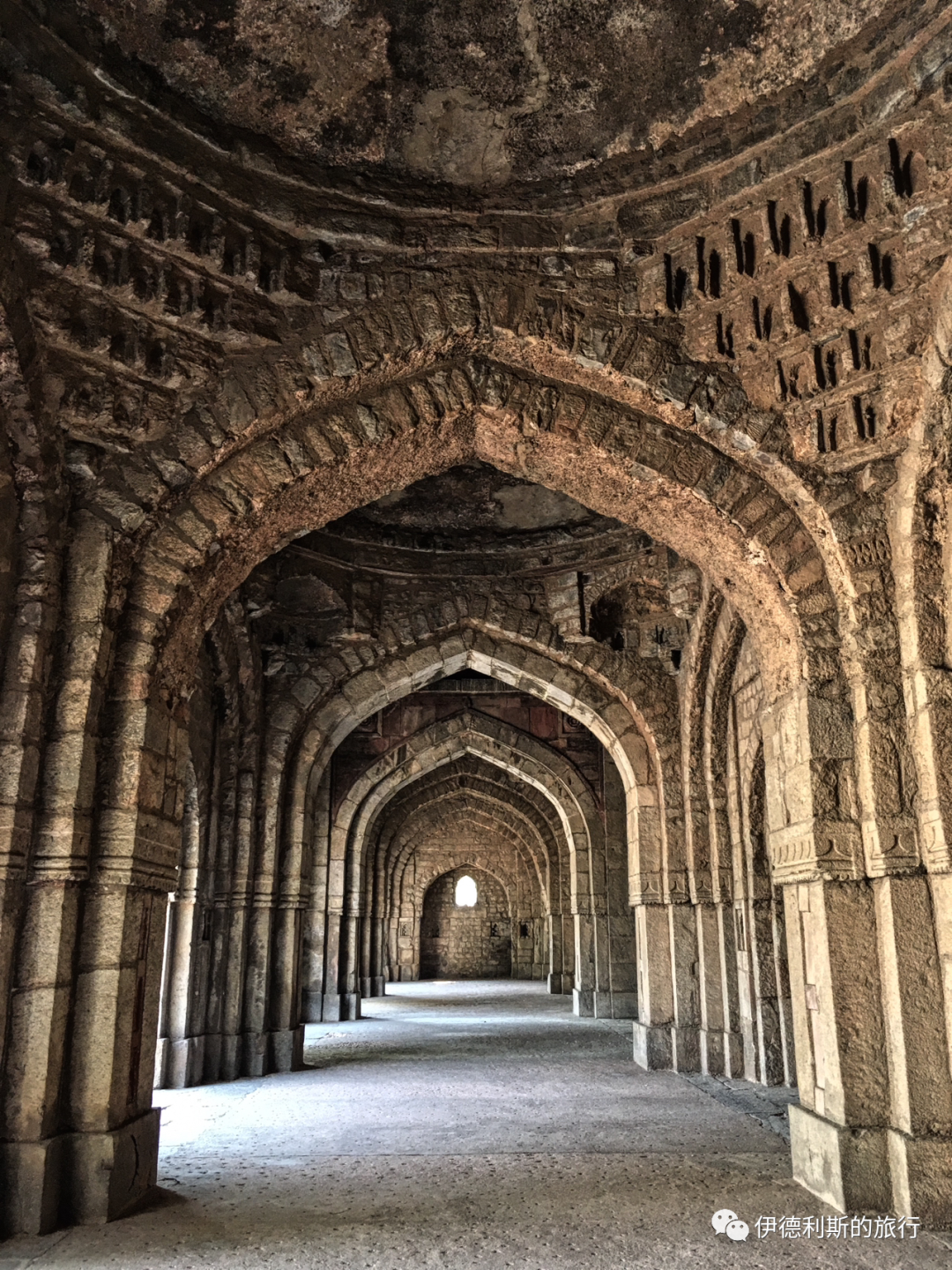
The mosque is built of red sandstone and white marble. It is considered a transition between the architectural styles of the Lodi and Mughal dynasties and holds an important place in the history of Indian architecture. The overall design continues the five-arch style of the Lodi dynasty, with the middle arch being the largest and topped by a Lodi-style dome. The mosque sits on a platform, making it look taller from the back, where you can also see octagonal towers and traditional Indian Jharokha stone windows.
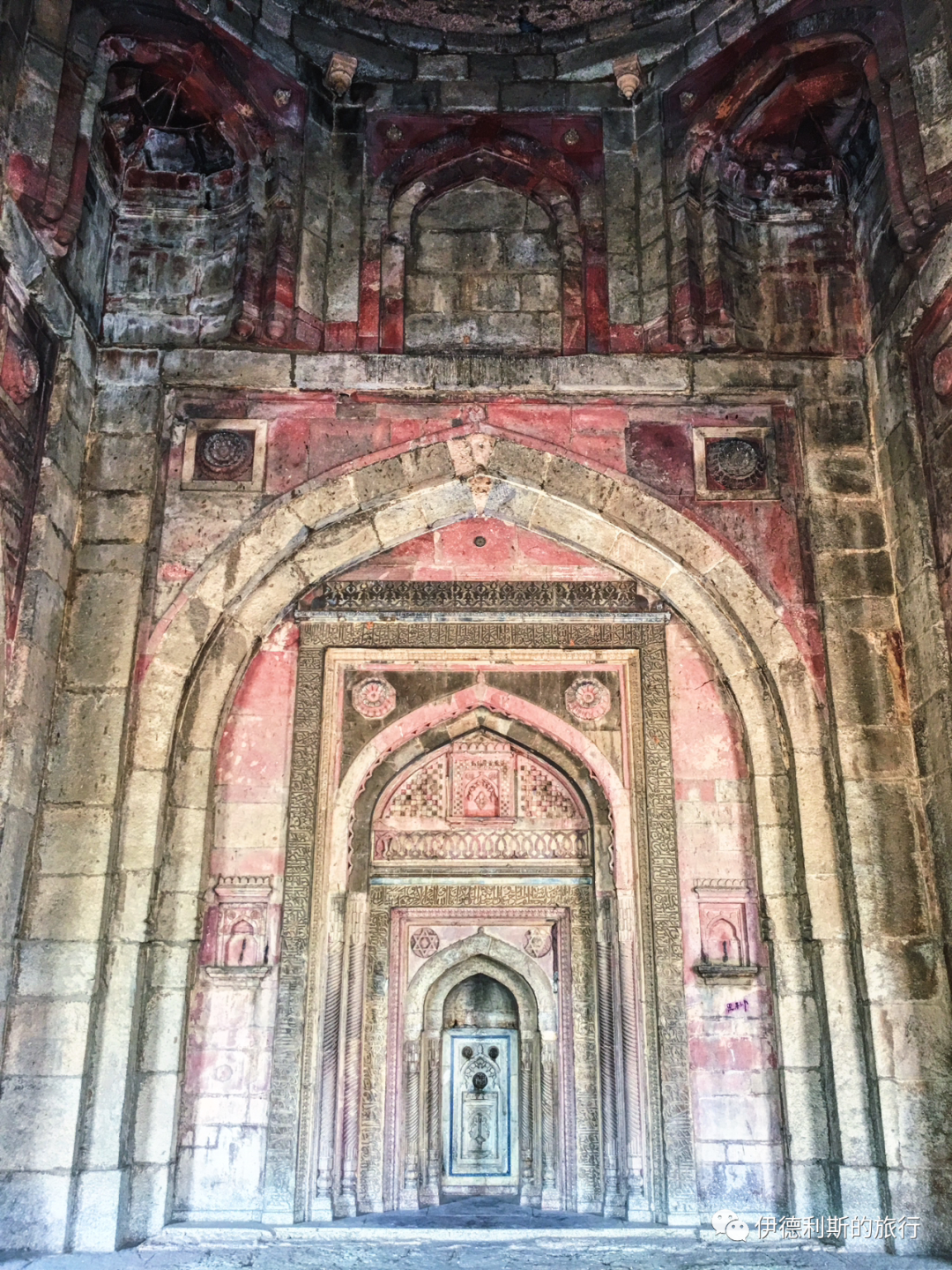
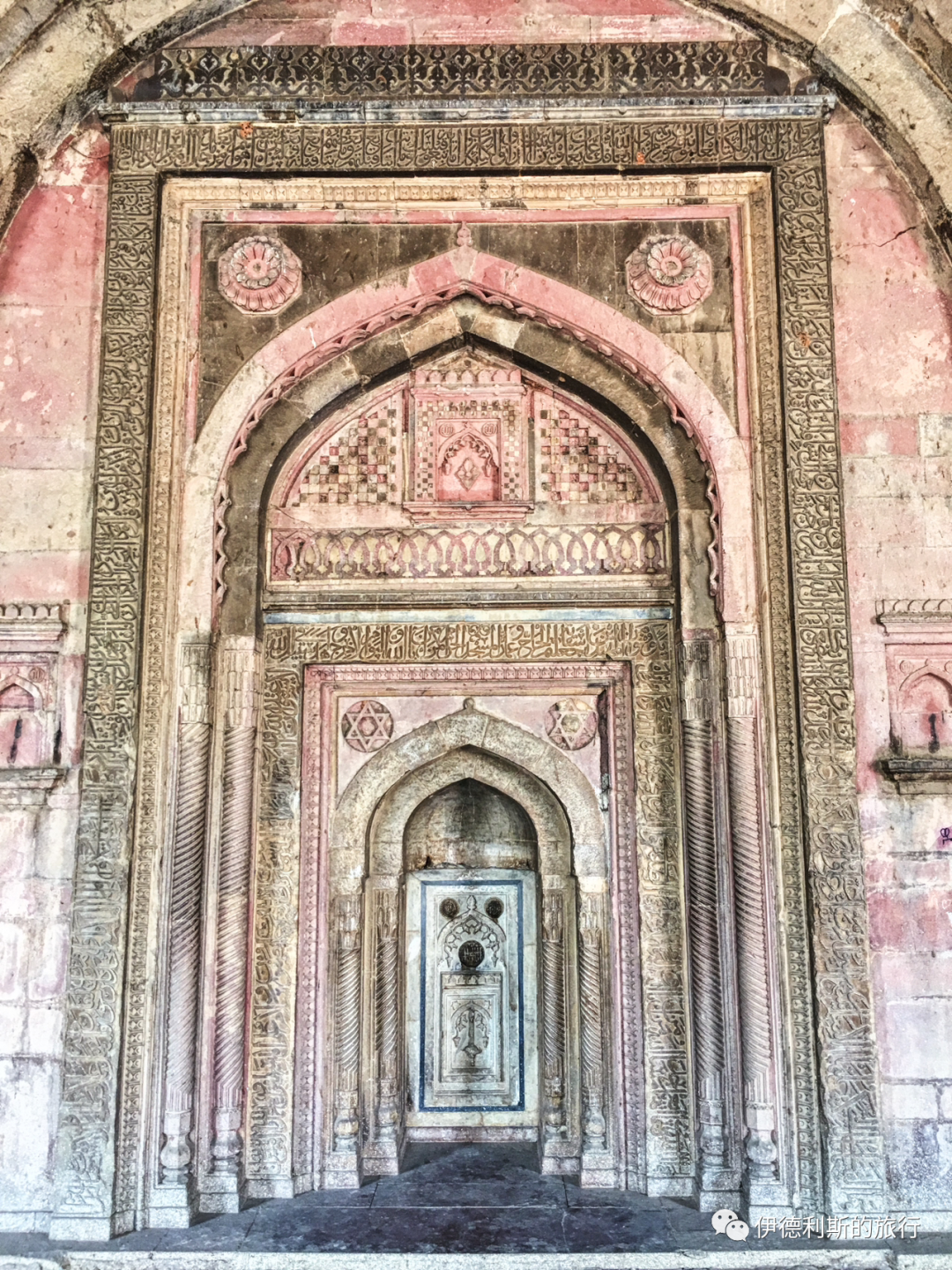
The pilasters inside the mosque have a unique grooved design. The five arches correspond to five mihrabs, with the central mihrab being the most exquisite.
The south gate of the mosque is built of red sandstone and marble and is one of the earliest examples of Mughal architecture.
The tomb has a flat roof decorated with colorful tiles and plaster patterns, carved with inscriptions written by Jamali himself. The decorations inside are said to be beautiful, but unfortunately, the door was locked when I visited, so I could not see them.
Tomb of Khan Shahid: 1286
Further south of Jamali Kamali mosque is a 13th-century tomb. It belongs to Khan Shahid, the son of Ghiyas ud din Balban, the ninth sultan of the Mamluk dynasty of the Delhi Sultanate, who reigned from 1266 to 1286. Khan Shahid died in battle against the Chagatai Mongols in 1286, which is how he earned the title Khan Shahid.
The entire site has a 5-meter-high wall, three gates, and two heavily collapsed tomb structures inside.
Today, it is a simple and tidy open-air mosque. I had never seen an open-air mosque among ancient ruins deep in the woods back home, and this was my first time seeing one in India. I was deeply moved the moment I walked through the gate, a feeling you cannot get just by looking at photos. It lacks the grandeur and bustle of a large mosque, but it has a unique charm that drew me in. Time seems to stand still here, free from outside interference, with only the centuries-old devotion of the Muslim community. No matter the environment, as long as you have faith in your heart, even ruins can be a place for prayer.
Madhi mosque: Lodi dynasty, 15th century
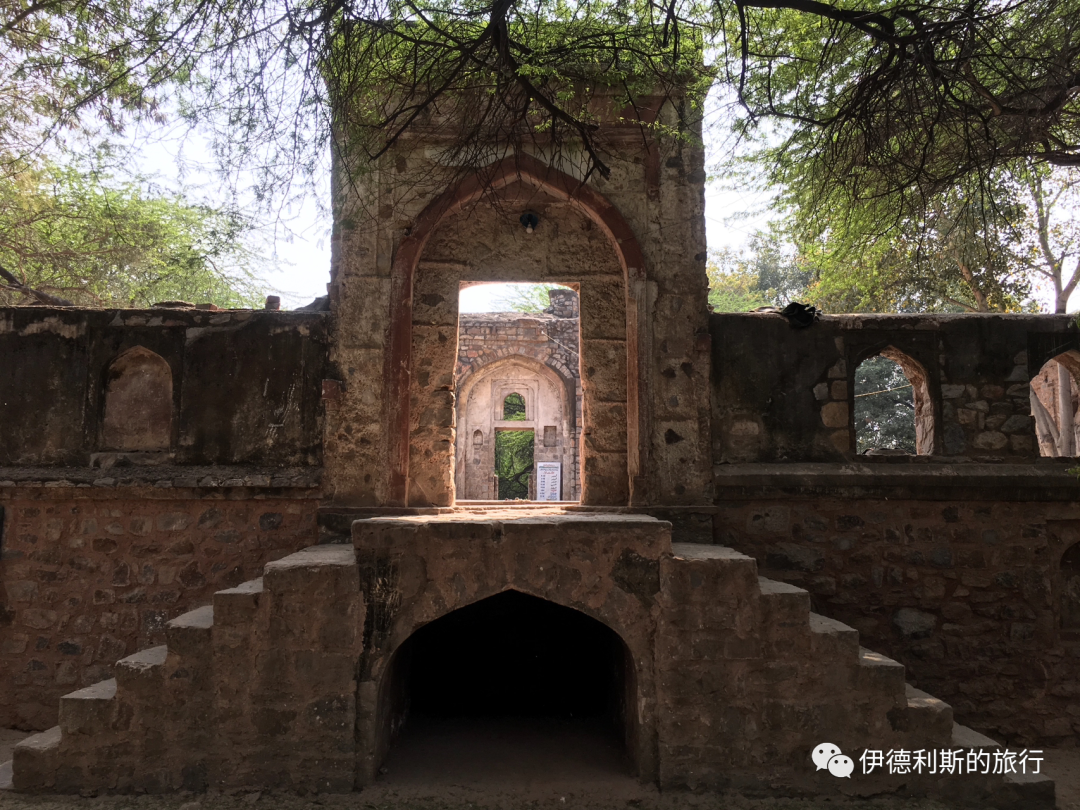
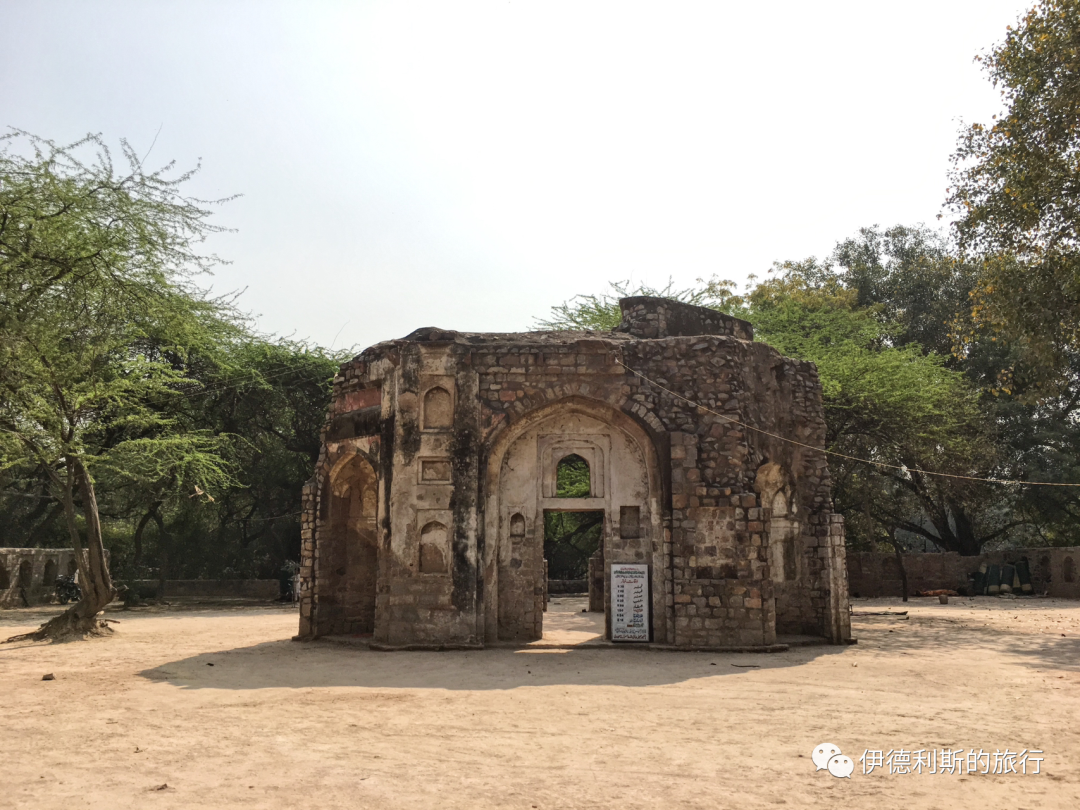
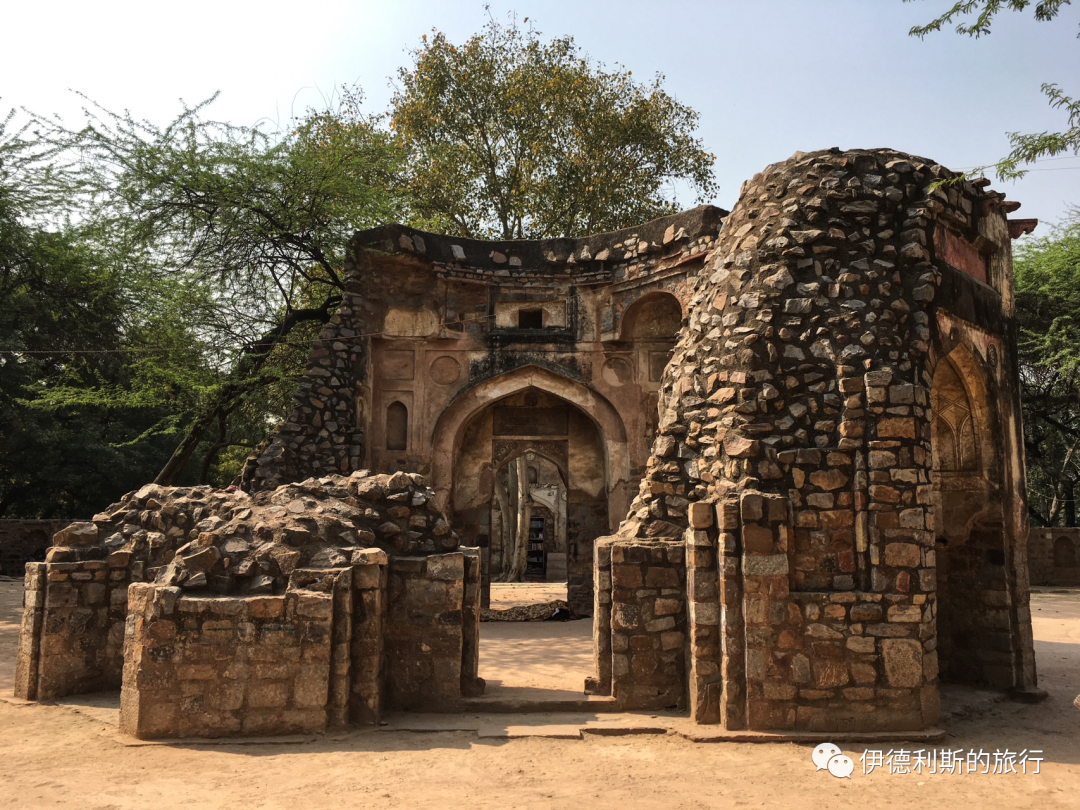
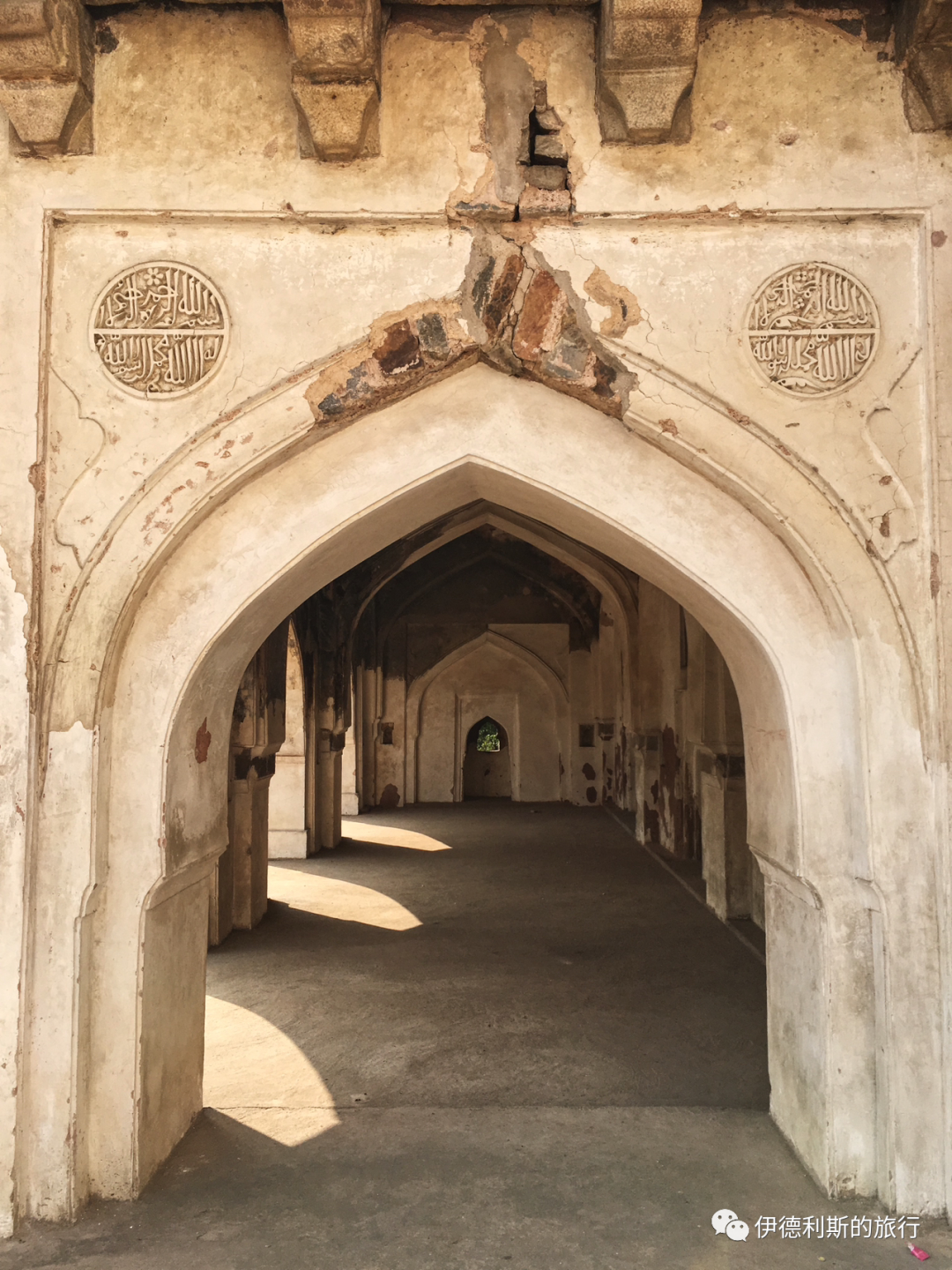
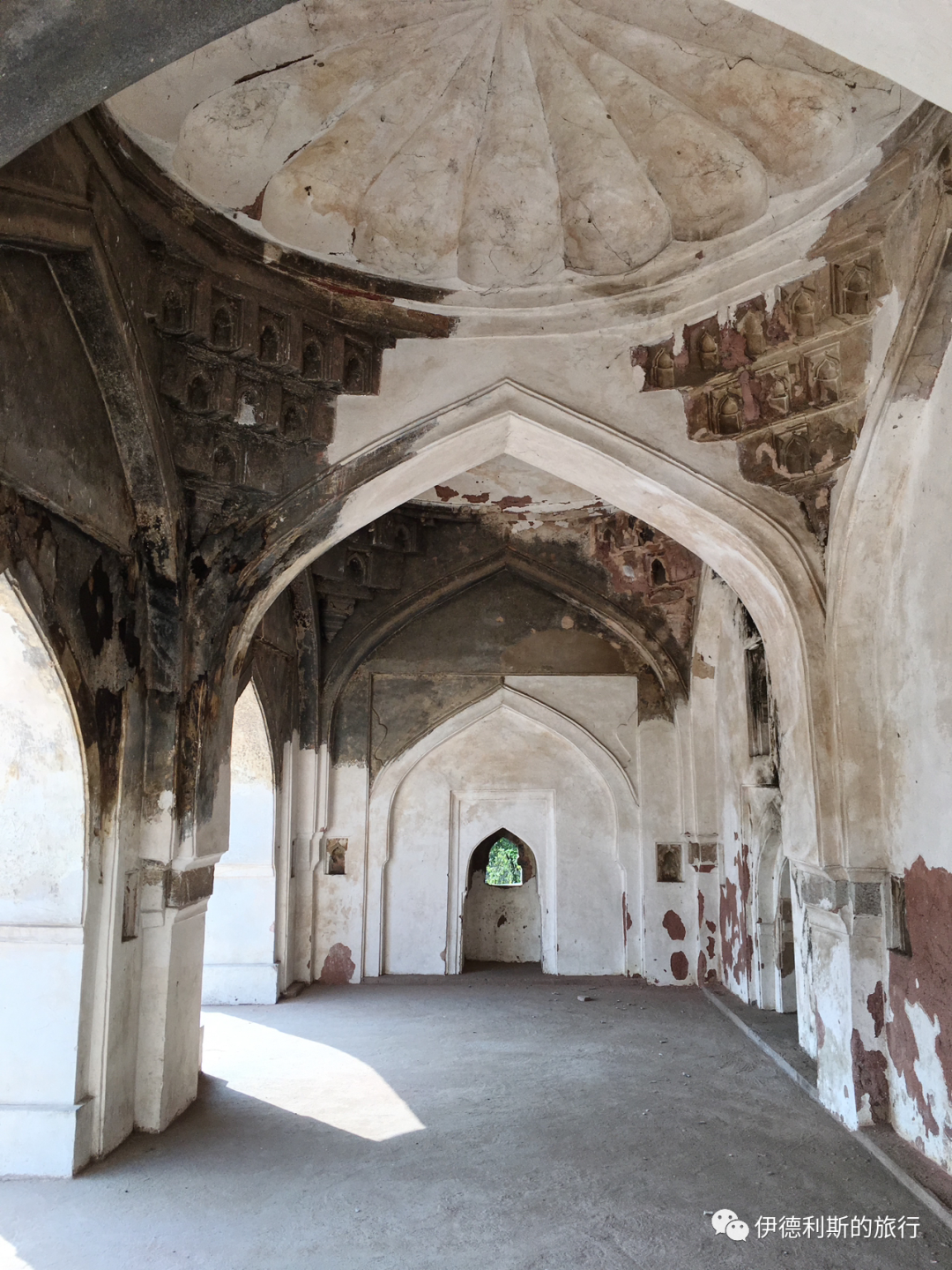
Continuing south from Jamali Kamali mosque, you reach Madhi mosque, built during the Lodi dynasty in the 15th century. The mosque is hidden in a mango orchard and is now a playground for pigeons and monkeys.
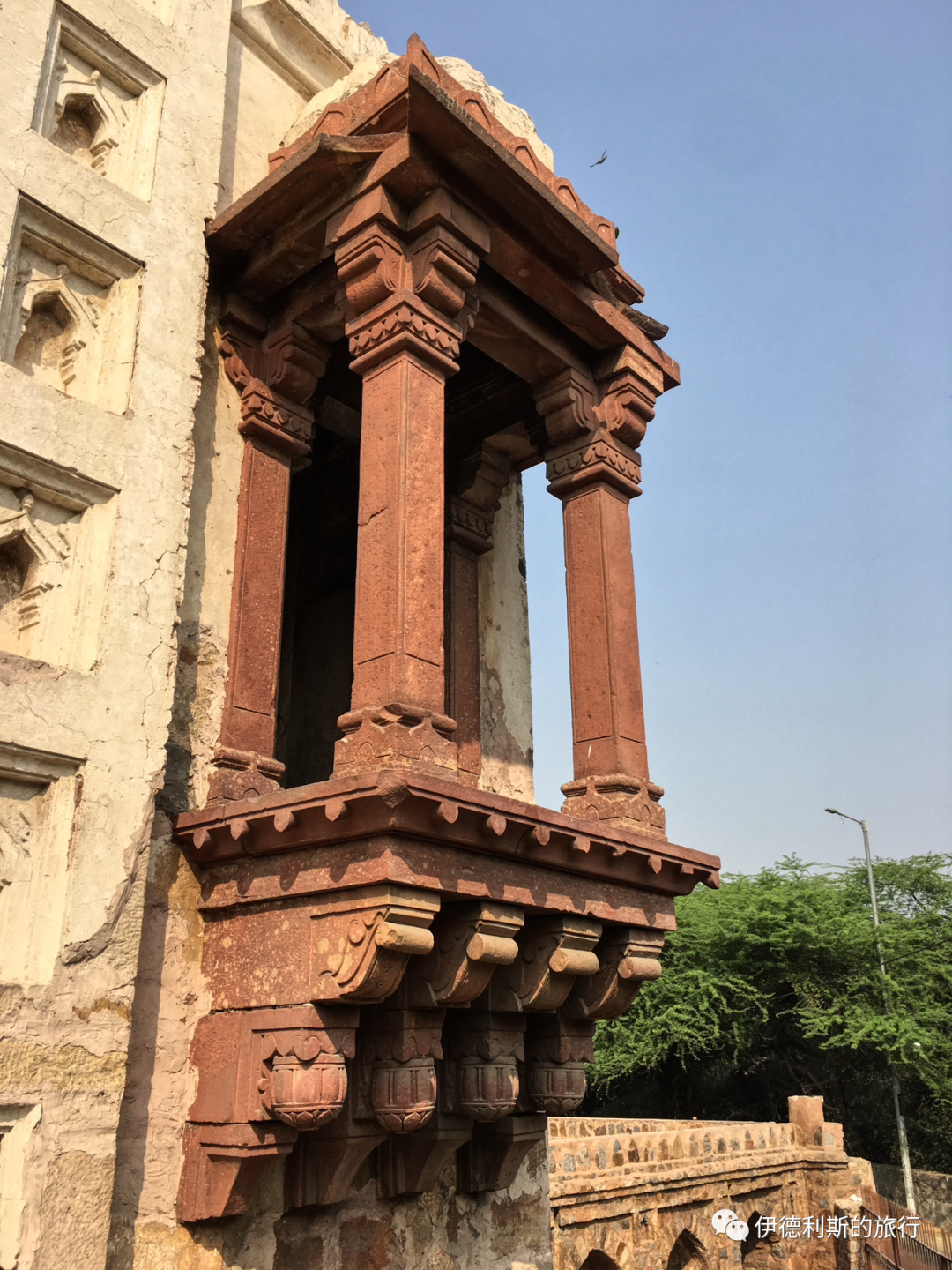
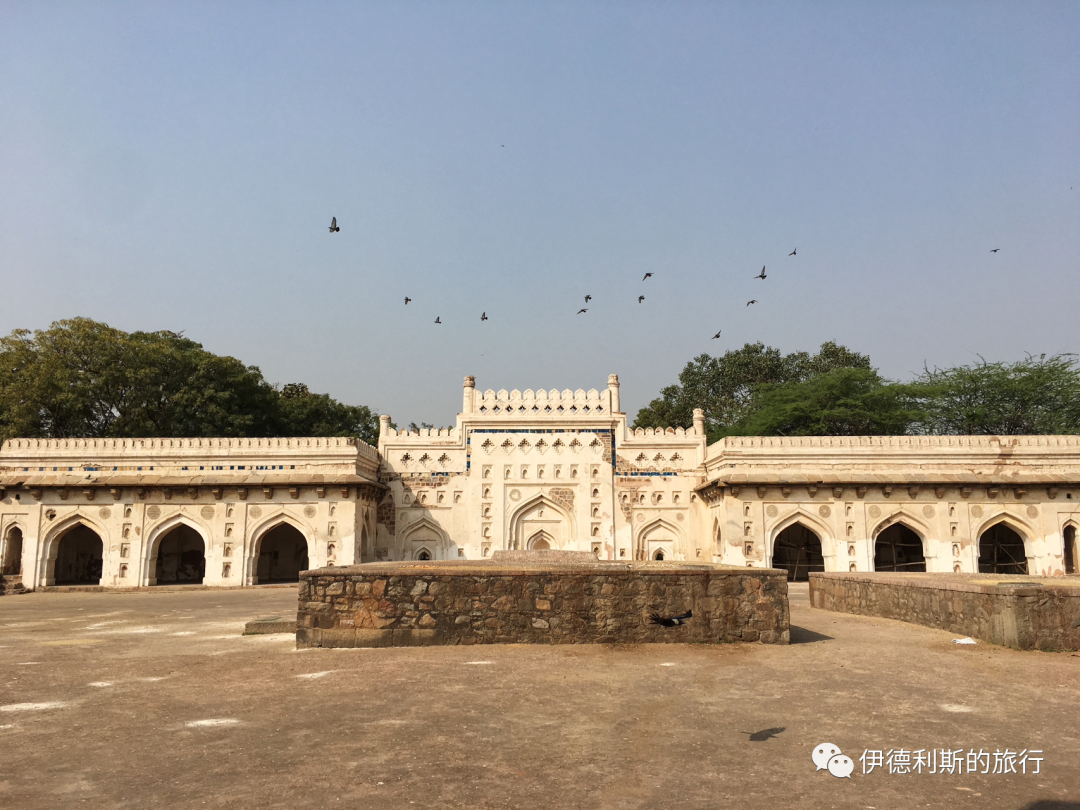
The design of this mosque is unique and very distinctive. The mosque sits on a platform. On the east side is a Lodi-style domed gate featuring stone windows (jharokha) in a very local Indian style. After climbing the steps and passing through the gate, you can see a spacious courtyard. There used to be graves in the middle of the courtyard, but most are gone now.
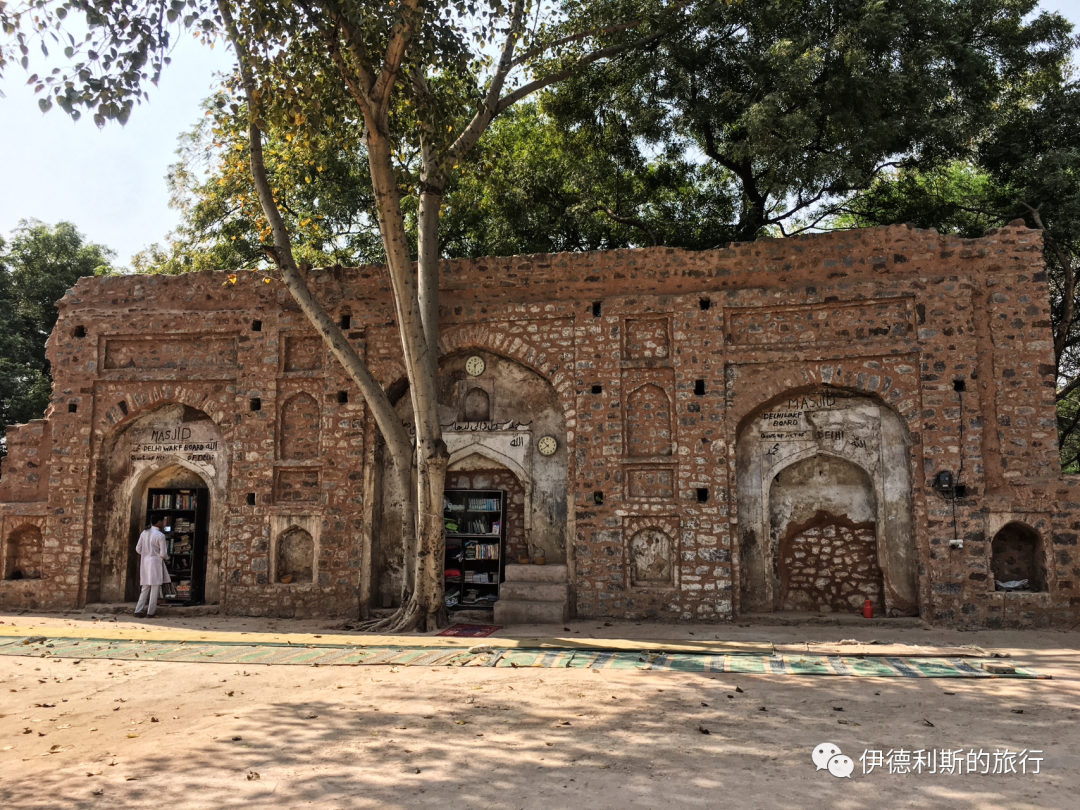
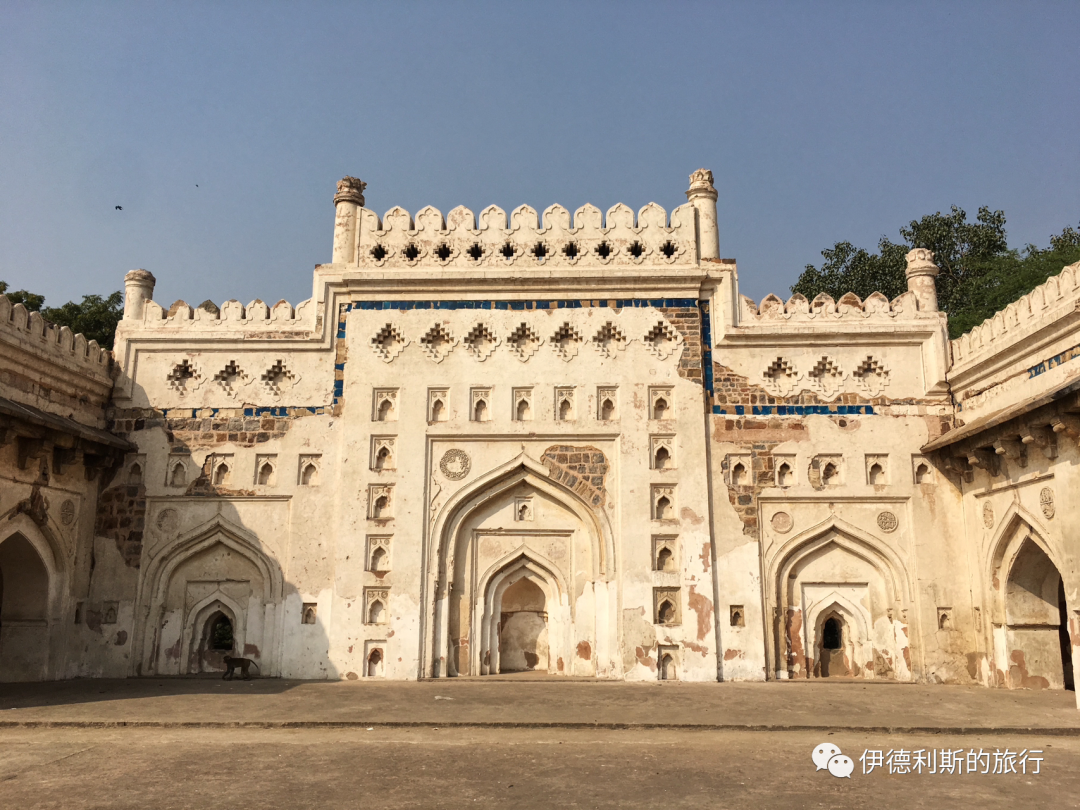
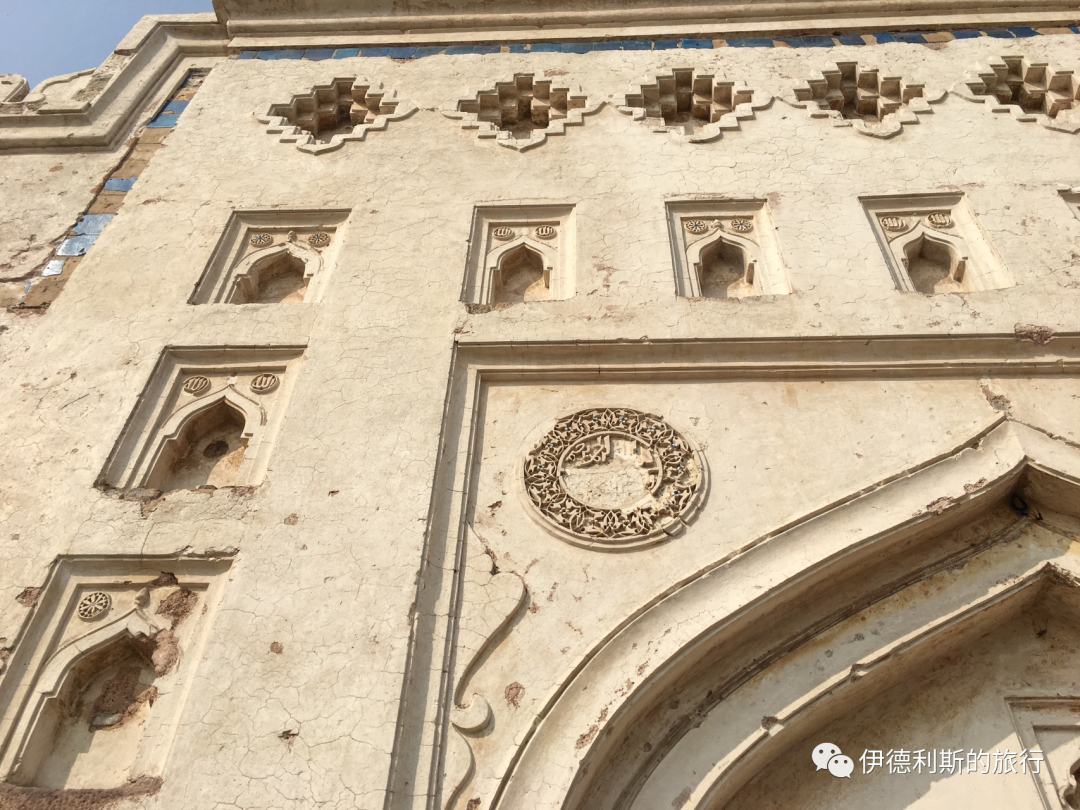
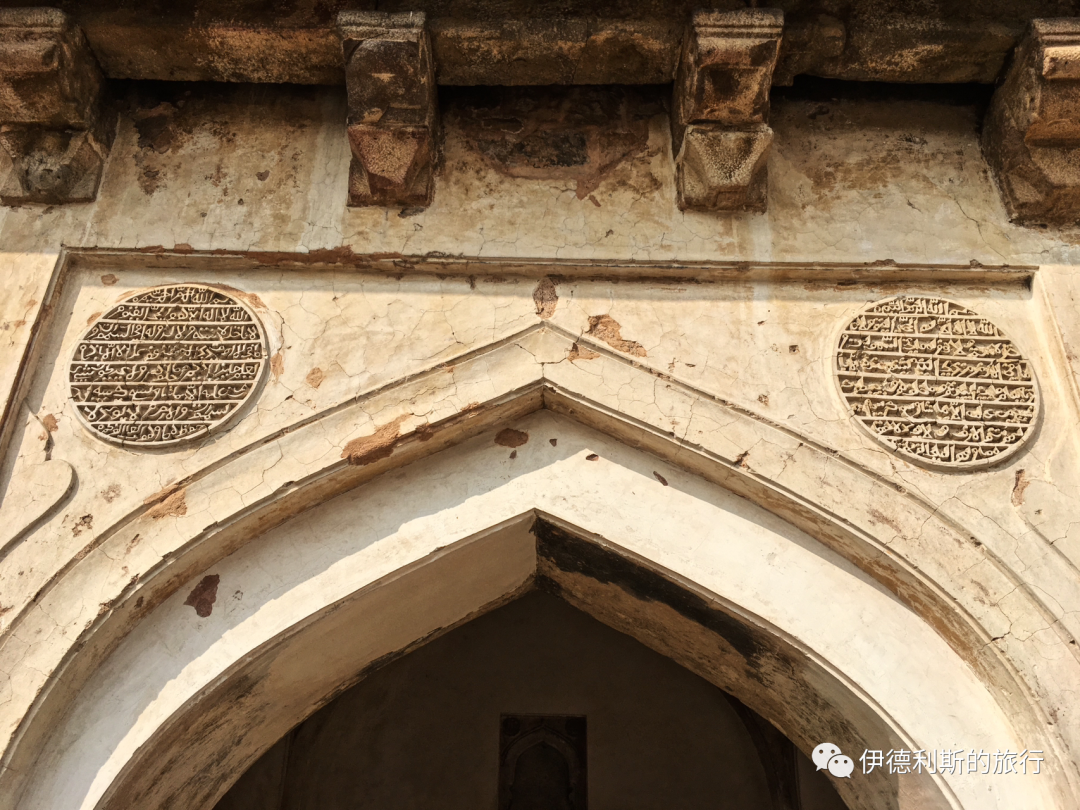
On the west side of the courtyard is an open-air prayer wall (qibla wall) consisting of three mihrabs, one large and two small. There were once carvings of scriptures on it, but almost nothing remains. Around the mihrabs are a series of small niches, and the top still has blue tiles often seen on Lodi dynasty buildings.
Interestingly, two roofed arcades were built on both sides of the prayer wall. This structure, which sits between an open-air prayer wall mosque and a roofed indoor mosque, is extremely rare, and there is still no definitive research explaining why it was built this way.
Bagichi mosque: Lodi dynasty, 15th century
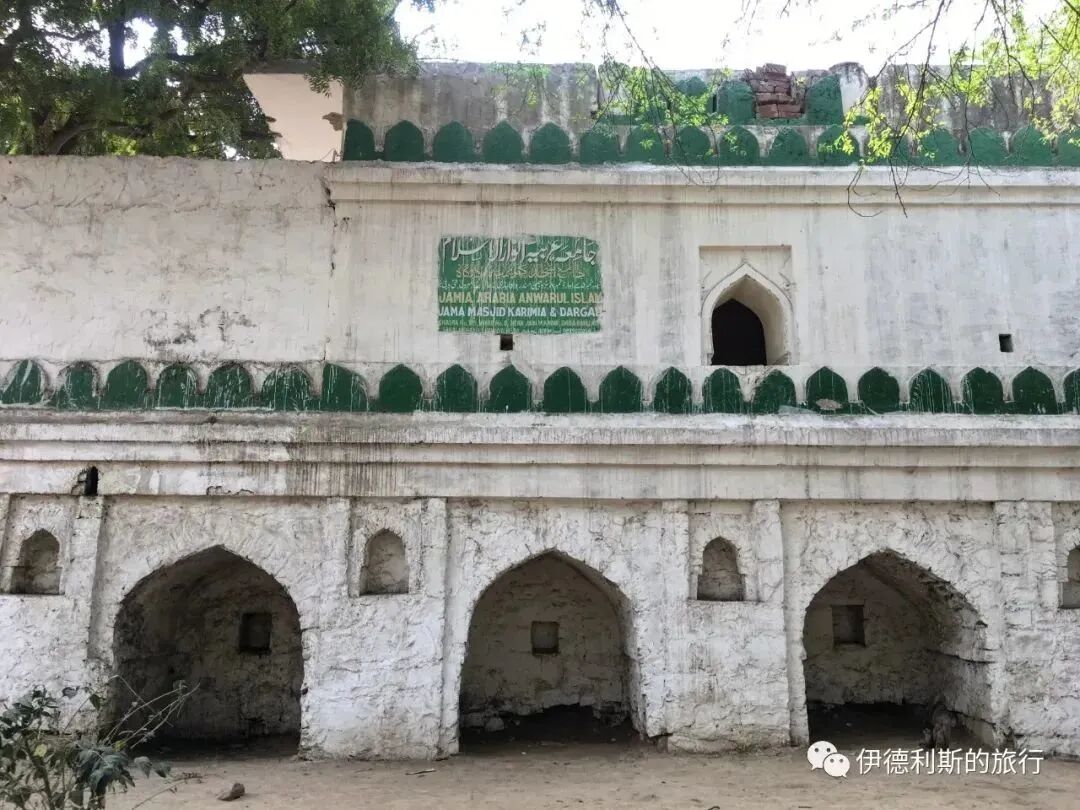
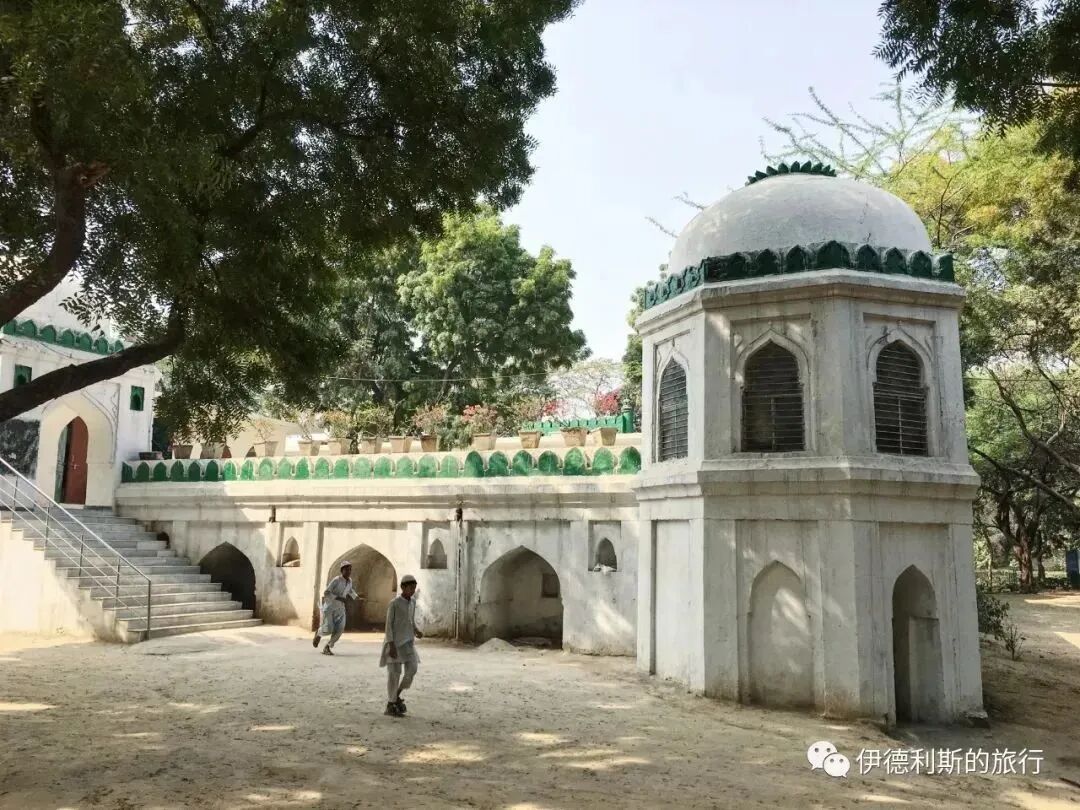
To the west of Madhi mosque is another Lodi-era open-air prayer wall mosque called Bagichi. These two mosques are very similar in shape, both on large platforms, and the mihrabs are almost identical.
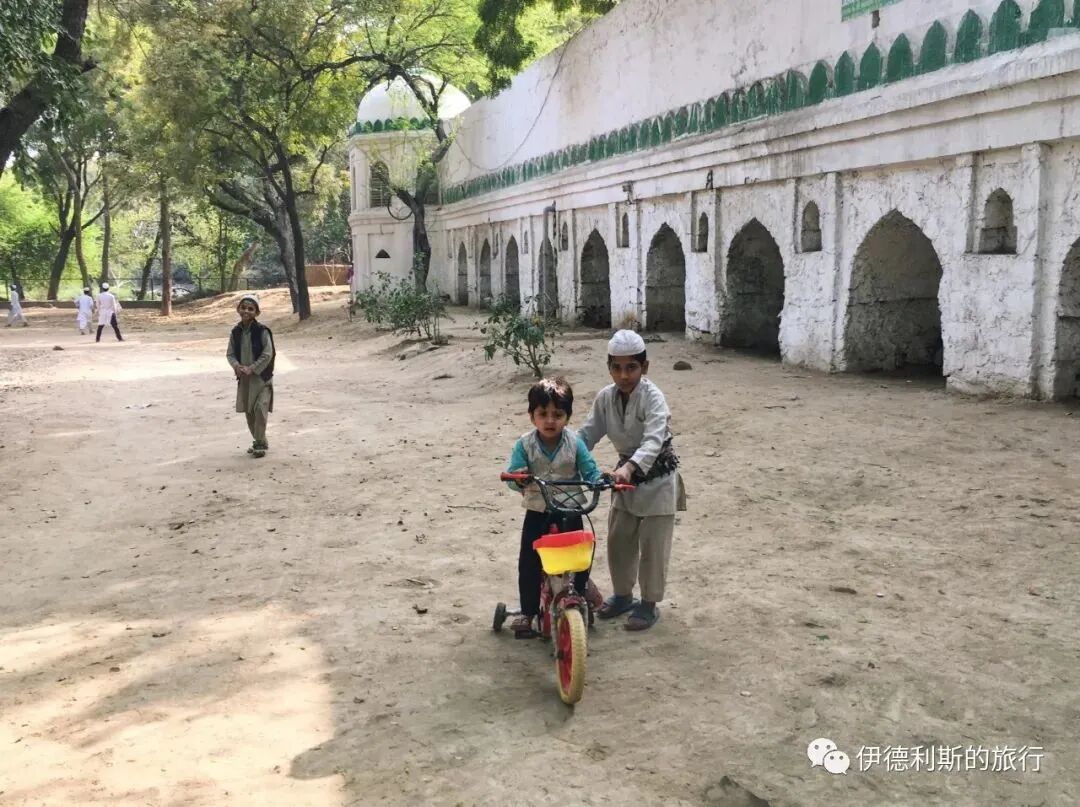
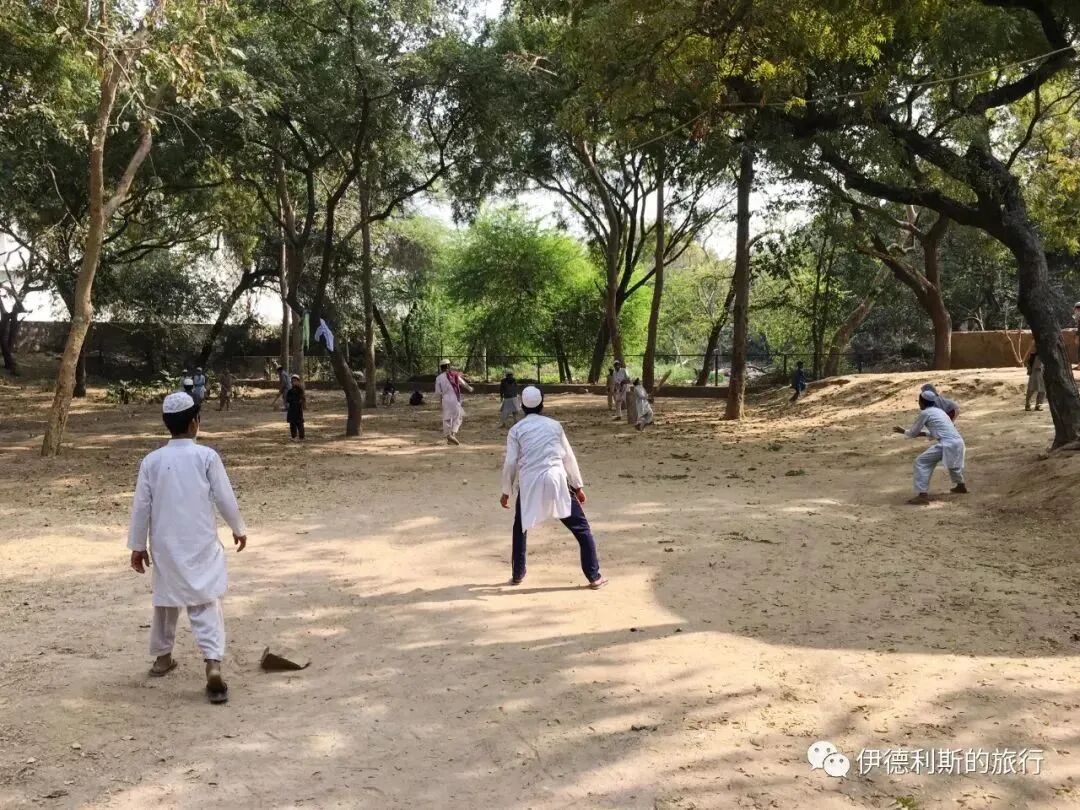
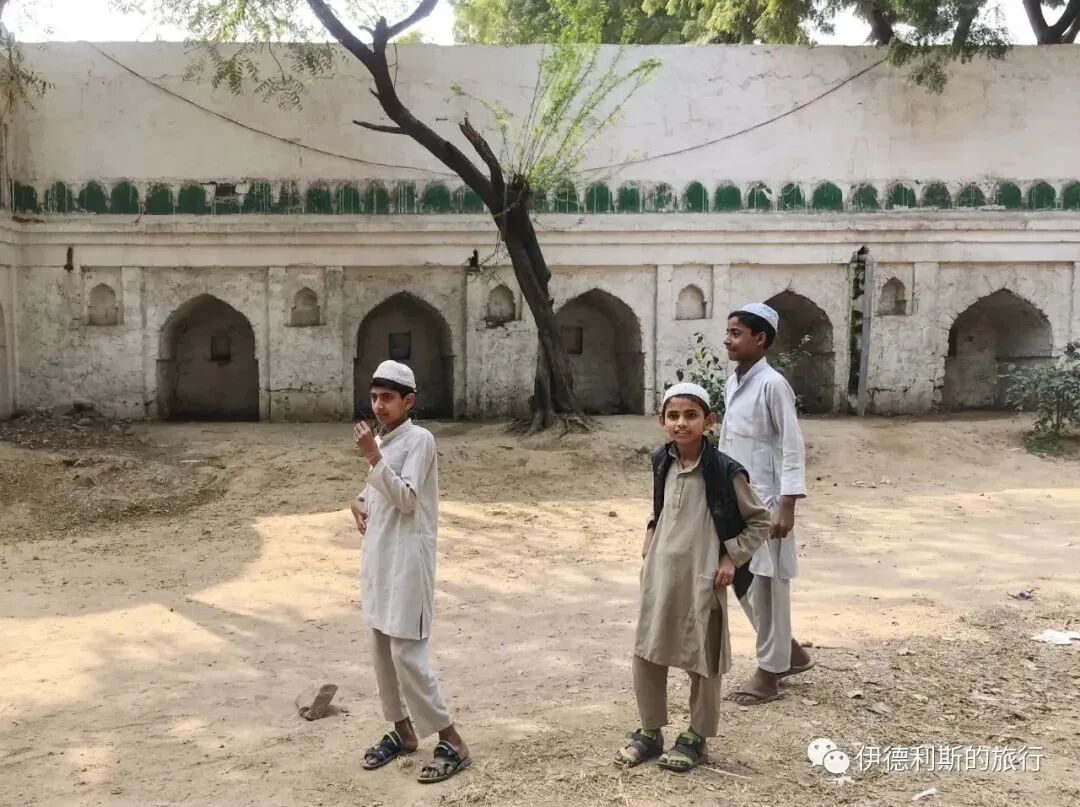
As a historical site in the archaeological park, it should be managed by the Archaeological Survey of India (ASI) like Madhi mosque. However, to address the education of local Muslim children, the Wakf board, which manages the mosque, currently uses it as a madrasa where local children can come to study.
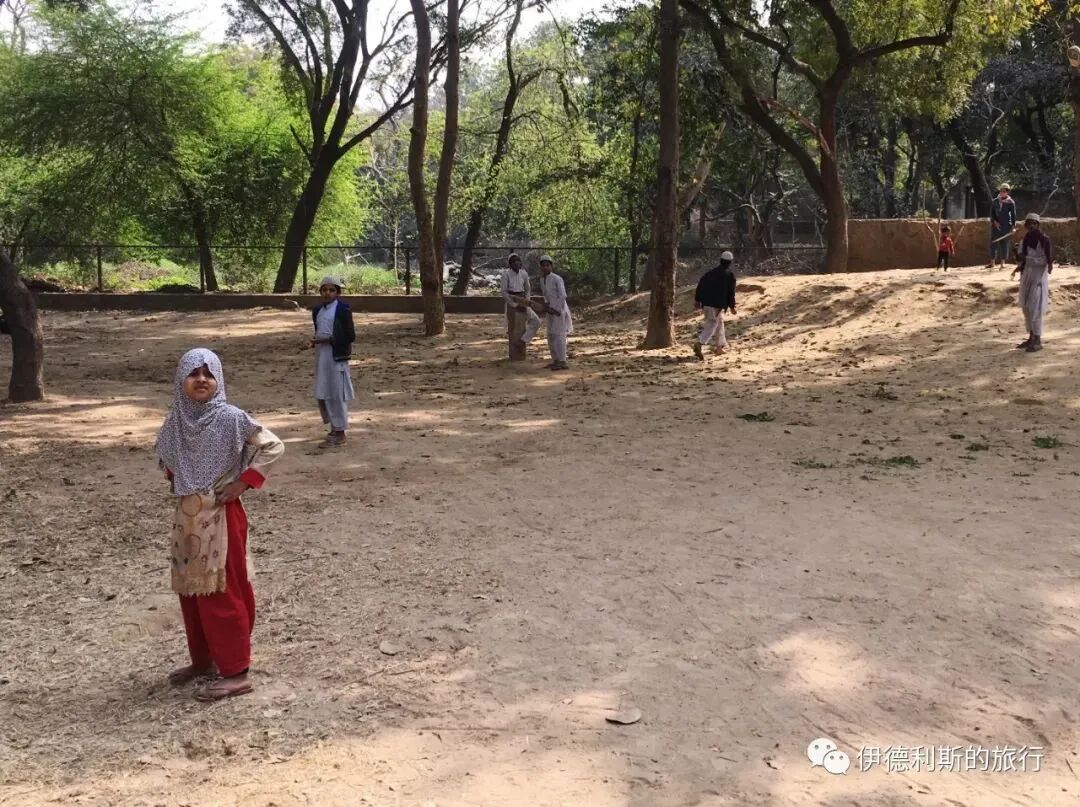
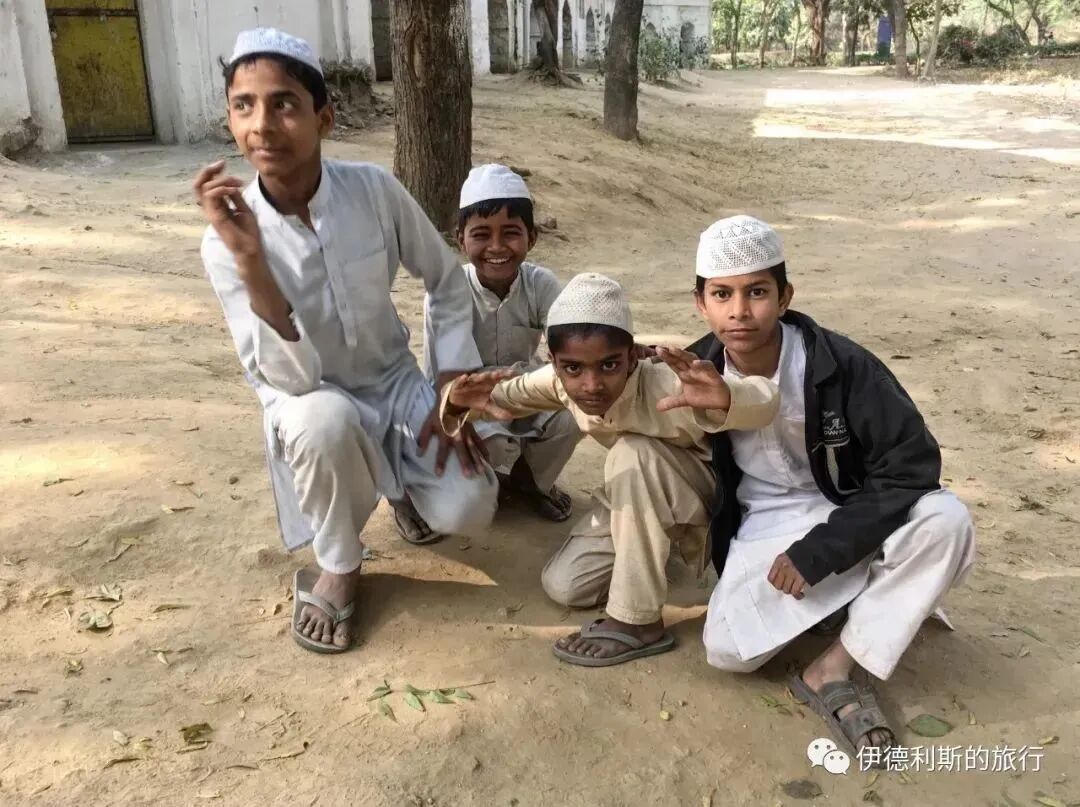
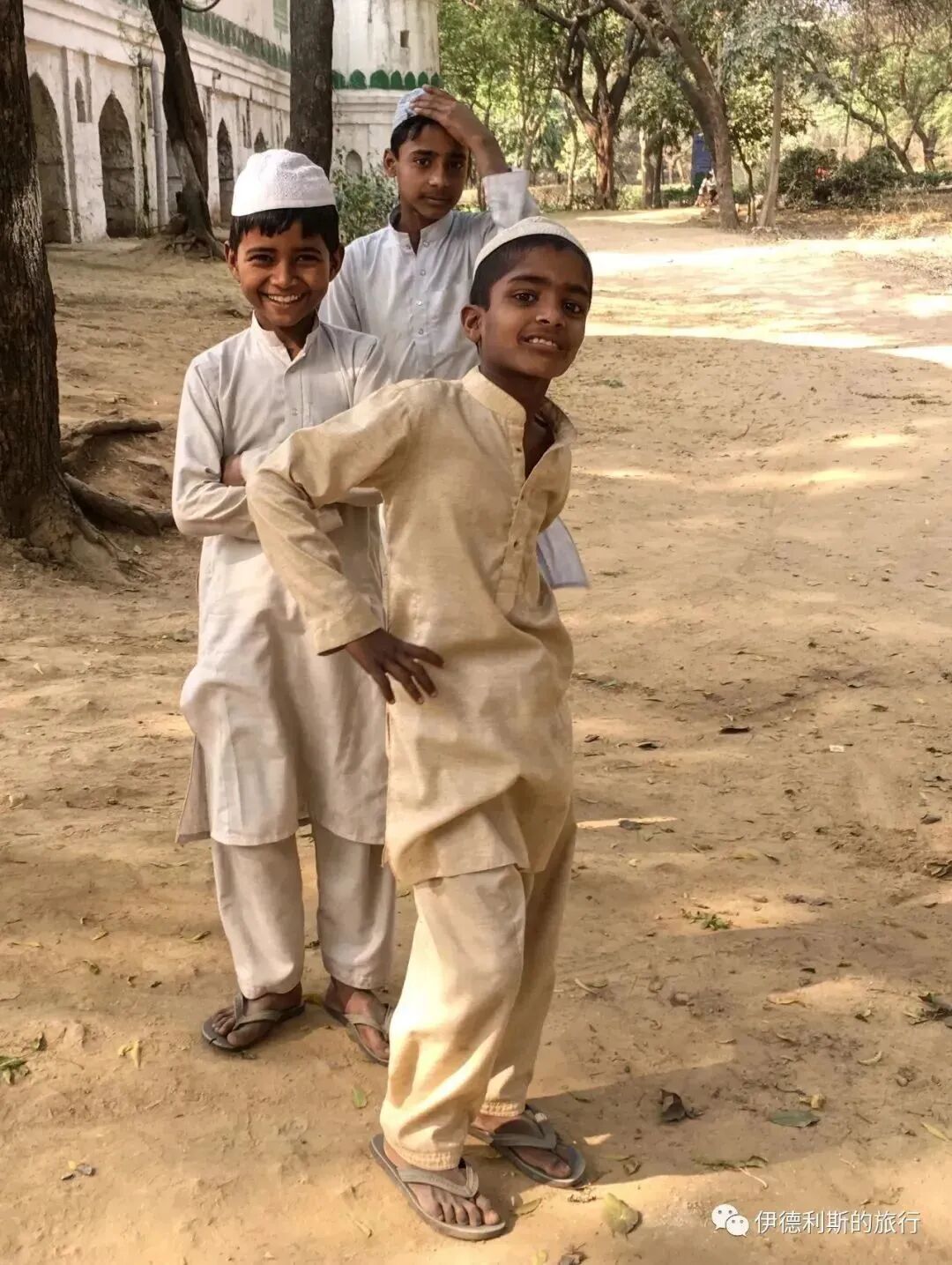
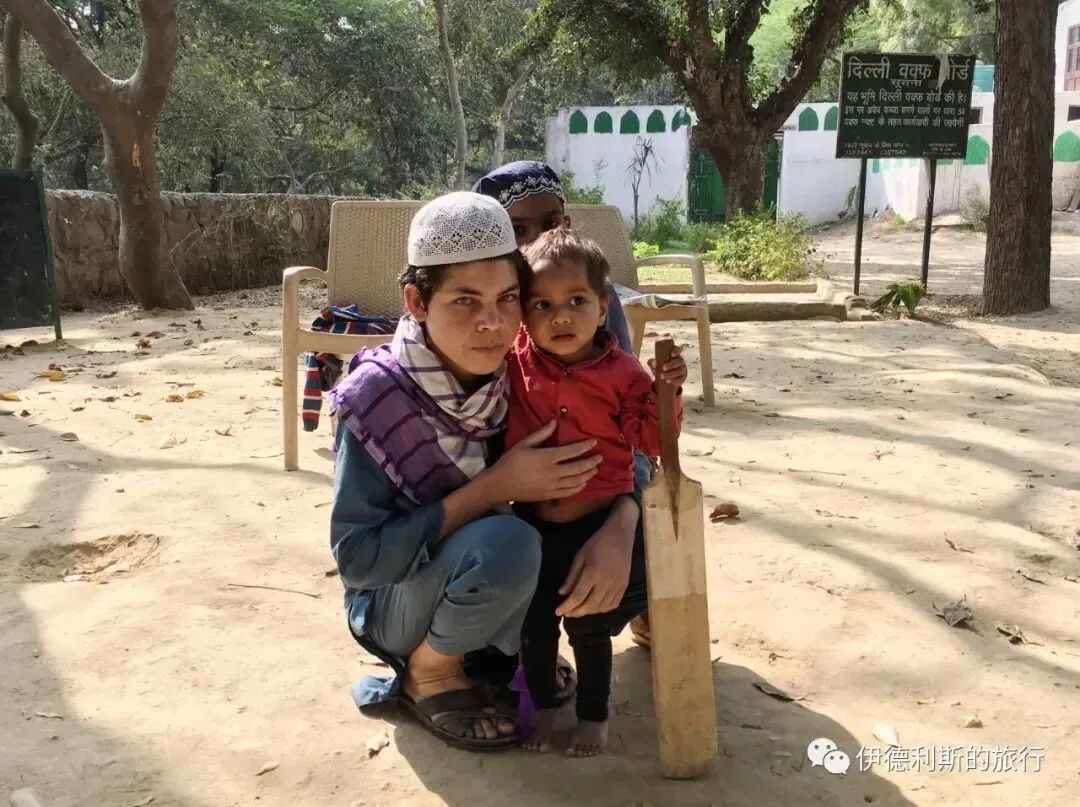
After being kindly reminded that photography is prohibited inside the courtyard, I stayed outside and filmed the students playing cricket. The children here are all very cute and love to have their photos taken.
Rajon ki Boli stepwell: 1506
In the forest of the Mehrauli Archaeological Park in Delhi, there is a very beautiful stepwell (boli) called Rajon ki Boli, built in 1506 during the Lodi dynasty (1451-1526). The name Rojan likely comes from the stonemason Raj.
This Boli stepwell has four levels, including arched walkways and inner rooms, but you can usually only see three levels because the bottom one holds water. The Boli stepwell was not just for storing water; it was also a great place to cool off during the summer.
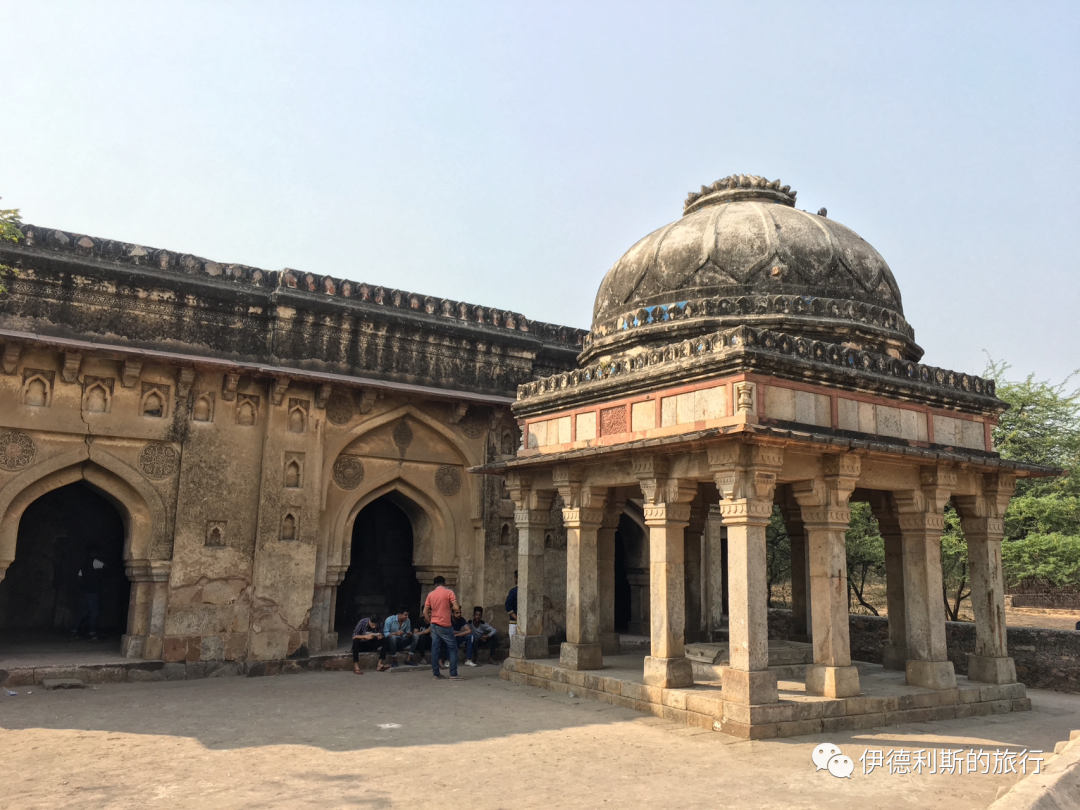
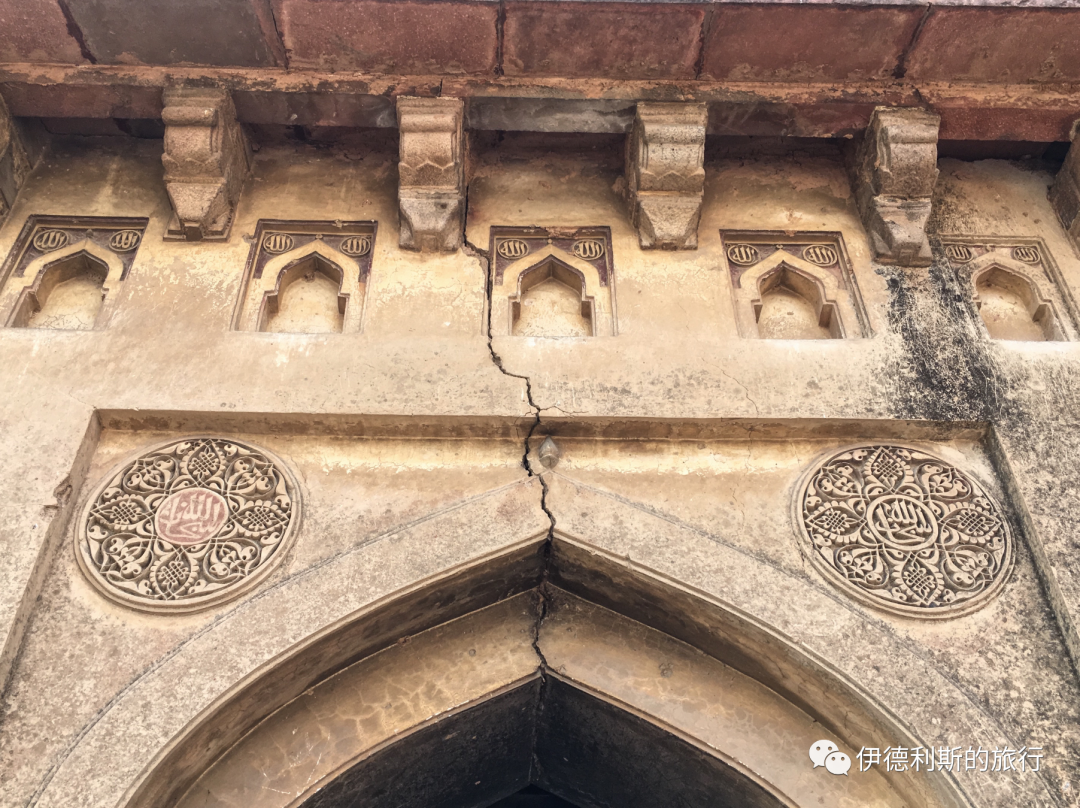
Above the Boli, there is a mosque and a tomb with a twelve-pillared domed pavilion (chhatri). The inscription says it was built in 1506 by Daulat Khan Khwaja Muhammad. The mosque features rich calligraphy carvings, and the top of the tomb has the classic petal design of the Lodi dynasty.
This combination of a stepwell, mosque, and tomb represents the Muslim view of the two worlds. The stepwell was built to help the neighborhood in this life, while the mosque and tomb were built to help reach Paradise in the next life.
Adham Khan's Tomb: 1562
At the intersection southwest of the Qutub Minar area stands an octagonal tomb (gongbei) from the Mughal dynasty, built in 1562. It sits on the southern wall of Lal Kot, the first city of Delhi. The tomb belongs to Maham Anga, the foster mother of the Mughal Emperor Akbar, and her son, Adham Khan.
Maham Anga was very skilled at improving her own status and her son's position in the Mughal court. In 1560, Akbar had a falling out with his regent, Bairam Khan. For the next two years, Maham Anga became the actual regent of the Mughal dynasty, and her son became a top general.
In 1562, Adham Khan tried to murder his rival, Atagh Khan, who was Akbar's favorite general. Akbar caught him immediately. Akbar ordered his men to throw Adham Khan off the city wall twice until he died. Maham Anga was heartbroken when she heard the news of her son's death and died of grief just forty days later.
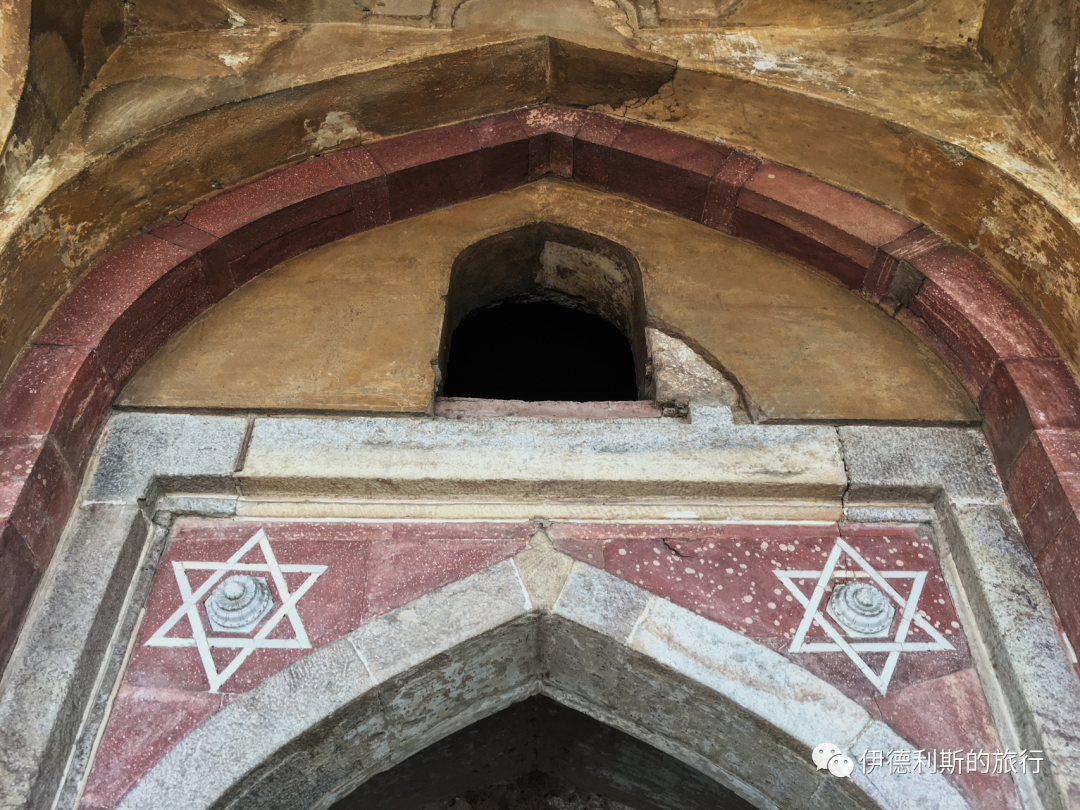
After Maham Anga and her son died, Akbar ordered a tomb to be built for them. Although it was built at the same time as Humayun's Tomb, this is the last octagonal tomb (gongbei) in the Lodi dynasty style in Indian history. Some say it was designed specifically for a traitor because octagonal shapes do not appear in any other Mughal buildings of that time, though they were common in the earlier Sur dynasty and the Lodi dynasty of the Delhi Sultanate. Adham Khan's tomb also has some early Mughal features, such as the six-pointed star patterns on the outer wall, which are exactly the same as those on Humayun's Tomb.
In the 1830s, a British officer named Blake turned this place into a dining hall and removed the tombstones of Maham Anga and her son. After Blake died, the site was used as a guesthouse, a police station, and a post office. Between 1899 and 1905, Viceroy George Nathaniel Curzon ordered the tomb to be restored and Adham Khan's tombstone replaced, but his mother Maham Anga's tombstone was never found.
Chaumukha Darwaza: 14th-15th century
When you exit the southeast gate of the Qutub Minar area and take the small path into the archaeological park, the first monument you see is the ruins called Chaumukha Darwaza. It is believed that this was once a gate to the city of Lal Kot. It has the style of the Tughlaq dynasty (1320-1413) of the Delhi Sultanate and may have been repaired during the Lodi dynasty.
Muhammad Quli Khan's Tomb: Early 17th century
South of Chaumukha Darwaza is an octagonal Mughal tomb from the early 17th century with beautiful calligraphy carvings. The tomb belongs to Muhammad Quli Khan, who was the son of Maham Anga, the foster mother of the Mughal Emperor Akbar (reigned 1556-1605), and the younger brother of Adham Khan.
After the 19th century, the site was bought by Sir Thomas Metcalfe, an agent to the court of the last Mughal Emperor Bahadur Shah II (reigned 1837-1857). He converted it into a vacation garden in the European style called Dilkhusha, which means 'joy of the heart' in Urdu.
Sir Metcalfe turned the tomb into a dining hall and added wings as living rooms, bedrooms, and bathrooms. Today, only the ruins of one wing remain. Besides this, Sir Metcalfe converted other nearby buildings into guest rooms, staff quarters, and stables, but many of these have not survived.
Other Lodi Dynasty Tombs: 15th-16th century
South of Adham Khan's tomb is a tomb from the Lodi dynasty (1451-1526) of the Delhi Sultanate. The person buried here is unknown. The tomb sits on a platform. In the center is a domed pavilion (chhatri) made of twelve pillars, surrounded by more than twenty graves. There is an octagonal corner platform on each side of the terrace.
Stroll along the forest paths in the eastern part of the archaeological park to see a series of tombs from the Lodi dynasty. These structures were once half-buried in silt, but the Indian National Trust for Art and Cultural Heritage (INTACH) recently cleaned and restored them.
The park contains many other Lodi dynasty tombs and prayer wall mosques, including many ancient monuments with no clear historical records.
A simple and classic Lodi dynasty tomb and prayer wall design. The tomb connects to the prayer wall, which features three mihrabs—one large and two small. view all
Summary: Mehrauli Archaeological Park — Delhi Muslim History is presented here as a firsthand travel account in clear English, beginning with this scene: Today I am introducing an archaeological park in the southern suburbs of Delhi that is well worth a visit. The account keeps its focus on Delhi Travel, Mehrauli, Muslim Heritage while preserving the names, places, food, and historical details from the Chinese source.
Today I am introducing an archaeological park in the southern suburbs of Delhi that is well worth a visit.
I previously mentioned in 'The First City of Delhi—The Minaret Reaching the Clouds' that in 1193, the Ghurid dynasty general Qutb al-Din Aibak became the governor of northern India. He ruled from the city of Lal Kot in Delhi and officially established the Delhi Sultanate in 1206.
Qutb al-Din Aibak built a massive mosque in Lal Kot, and the Qutb Minar is known as the tallest ancient minaret. Later, two large-scale expansions by his successors, Iltutmish in 1225 and Alauddin Khalji in 1310, made Lal Kot the political, religious, and cultural center of the Delhi Sultanate.
The Qutb Minar site was listed as a UNESCO World Heritage site in 1993, and many tourists visit it for its fame. However, on the south side of the site, there is also the 80-hectare Mehrauli Archaeological Park. Although it is not as famous as the Qutb Minar site, it is dotted with over 100 historical monuments spanning a thousand years hidden in the forest, making it equally worth exploring.
The heart of Mehrauli Archaeological Park is the gongbei (shrine) of the famous South Asian Sufi sheikh Qutbuddin Bakhtiyar Kaki (1173-1235). This is the first Sufi gongbei in Delhi and is very prestigious. Around the Qutbuddin gongbei are buried many nobles from the Delhi Sultanate and Mughal Empire periods, spanning from the 13th to the 19th century. These include the son and nephew of a Mamluk sultan, the Sufi mentor of a Lodi sultan, and the foster mother and a general of the Mughal Emperor Akbar. In the 18th century, the Mughal dynasty even built a summer palace right next to the Qutbuddin gongbei, where three Mughal emperors are buried. The tomb of the last emperor, Bahadur Shah II, was also prepared, but he died in exile in Myanmar after being banished by the British.
There are also many mosques in the park. The 15th-century Madhi Mosque combines the styles of an open-air prayer wall mosque and a roofed indoor mosque, making its architectural structure unique. The 16th-century Jamali Kamali Mosque is considered a transition between the Lodi and Mughal architectural styles and holds an important place in the history of Indian architecture. The 18th-century Moti Mosque was built by the Mughal Emperor Bahadur Shah I using pure white marble, representing the Mughal dynasty's respect for the Sufi sheikh.
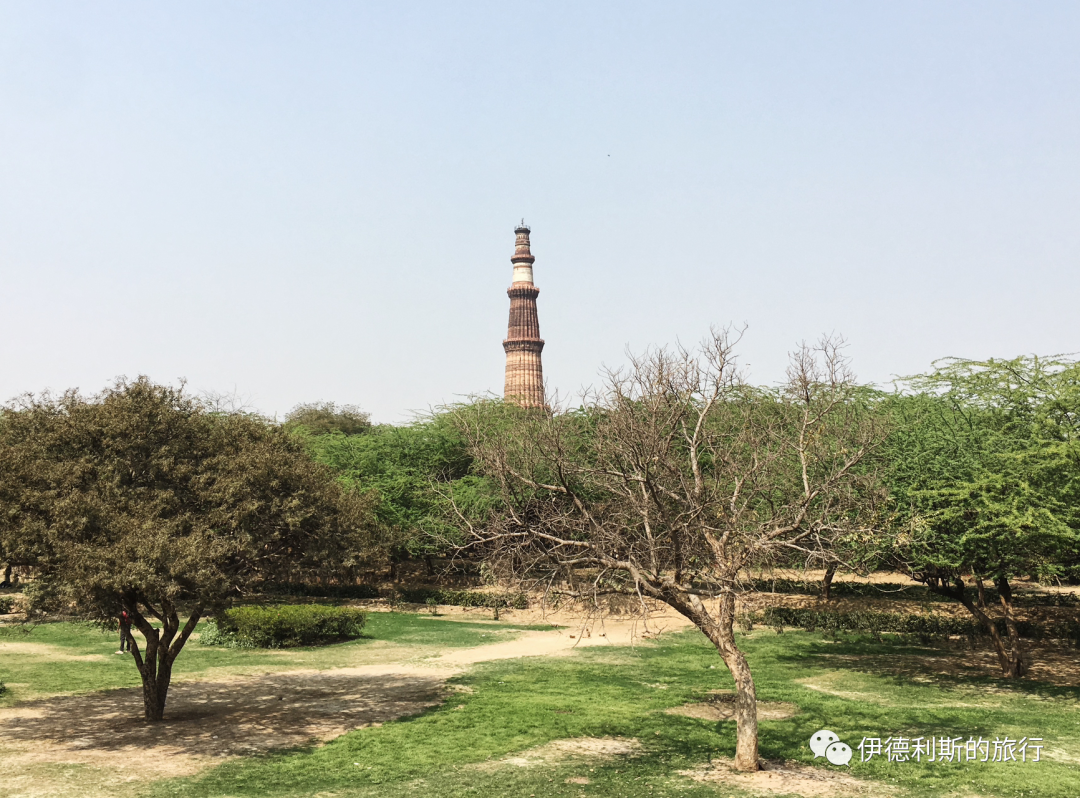
Looking out at Delhi's landmark, the Qutb Minar, from within the park.
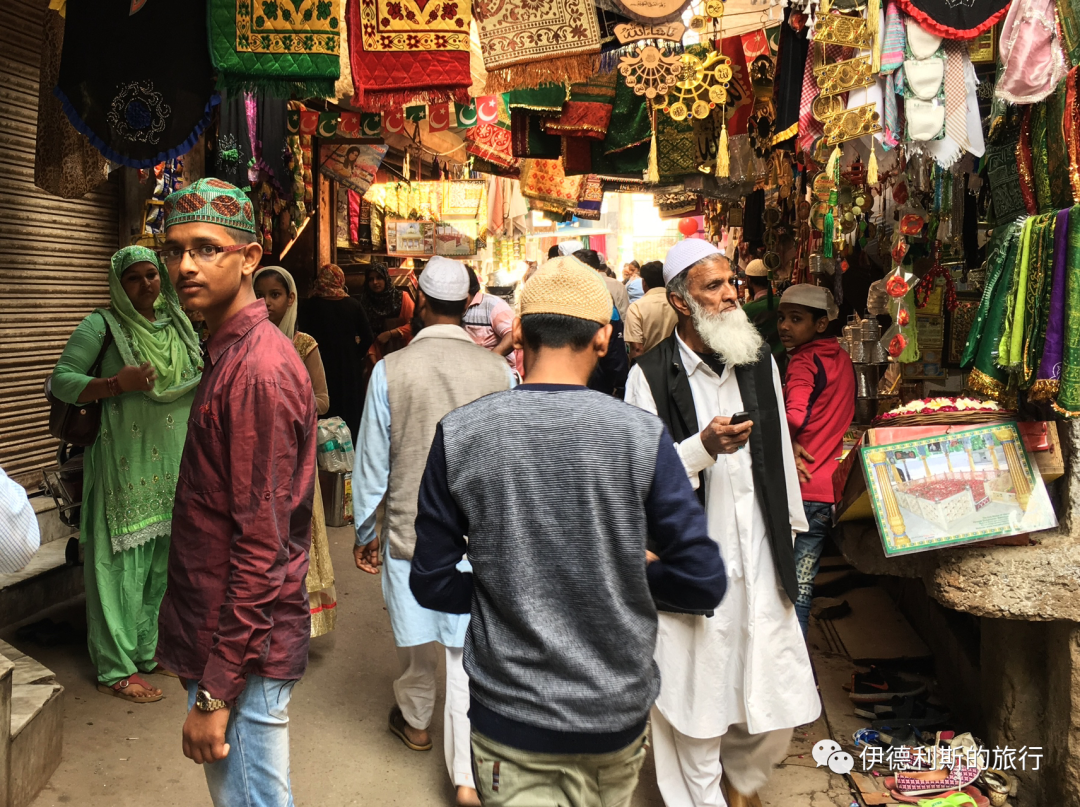
Mehrauli Village
The Sufi sheikh Qutbuddin Bakhtiyar Kaki (1173-1235) was born in Osh, in present-day Kyrgyzstan. After inheriting the Sufi tradition of Sheikh Mu'in al-Din Chishti in Osh, he began leading the Chishti Order and came to Delhi to preach during the reign of Iltutmish (reigned 1211-1236), the third sultan of the Mamluk dynasty of the Delhi Sultanate. The sheikh's khanqah (spiritual retreat) was built outside the southwest wall of the Delhi Sultanate capital, Lal Kot, and his dargah (gongbei) was also built there after he returned to Allah.
After the gongbei was built, the Mehrauli village, primarily inhabited by Muslims, gradually formed around it. Because Qutbuddin had a major influence on the development of Sufism in South Asia, his ideas of love and charity influenced not only Muslims but also Hindus, Christians, and Sikhs. Therefore, not only is a grand ceremony held every year on the sheikh's death anniversary (Urs), but believers of various religions also visit the sheikh's gongbei every week. Mehrauli village is very lively every day. On the street, you can see various shops selling Sufi supplies, mainly burial shrouds and fresh flowers for offerings, as well as various scripture amulets and perfumes.
Interestingly, Mehrauli village is also the venue for Delhi's famous interfaith festival, Phool Waalon Ki Sair. This is a celebration attended by both Muslims and Hindus, usually held in September after the rainy season. Led by musicians and dancers, people walk 32 kilometers from Old Delhi, carrying giant fans made of fresh flowers called pankhas, to offer them to both the Qutbuddin Bakhtiyar Kaki gongbei and the nearby Hindu mosque, Yogmaya. This festival originated in 1812. At that time, the Mughal Emperor Akbar II (reigned 1806-1837) had his youngest son, Mirza Jahangir, exiled after a conflict with an East India Company official. His mother, Mumtaz Mahal Begum, made a dua that if her son returned safely, she would offer flowers at the Qutbuddin Bakhtiyar Kaki gongbei. A few years later, Mirza Jahangir returned safely, so his mother went to the gongbei to offer flowers and held a grand celebration in Mehrauli village. to cockfighting, kite flying, wrestling, and swimming, the Mughal court also offered flowers to the Hindu mosque in the village.
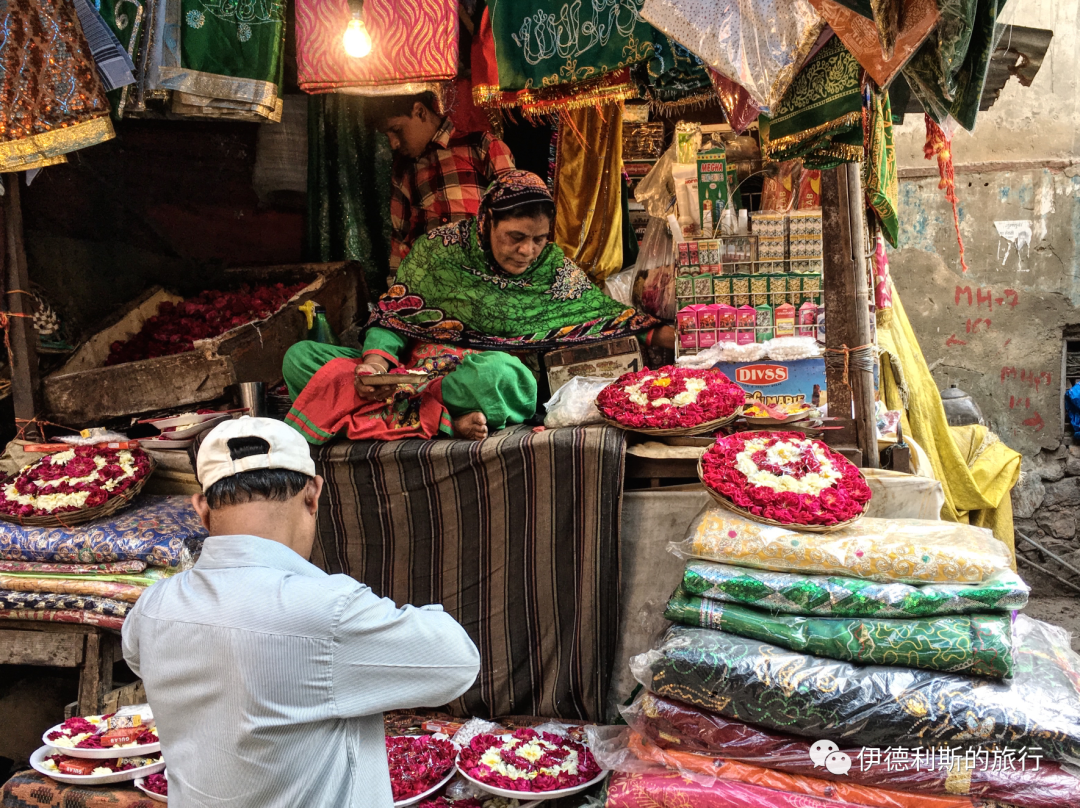
There are also many small halal snack shops here. I ate curry with roti bread at one of them, along with onions (piyaz) and a mint-garlic sauce.
The last summer palace of the Mughal dynasty—Zafar Mahal
Right next to the Sufi sheikh Qutbuddin gongbei is the last summer palace of the Mughal dynasty—Zafar Mahal.
Both the Delhi Sultanate and the Mughal dynasty attached great importance to the Qutbuddin gongbei, so much so that the Mughal Emperor Akbar II (reigned 1806-1837) built a summer palace right next to it, later known as Zafar Mahal, meaning 'Palace of Victory'.
The entrance to the palace was rebuilt in 1842 by the last Mughal emperor, Bahadur Shah II (reigned 1837-1857). This red sandstone gate was built in the style of a Hathi gate, designed specifically for riding elephants carrying a Howdah throne to pass through.
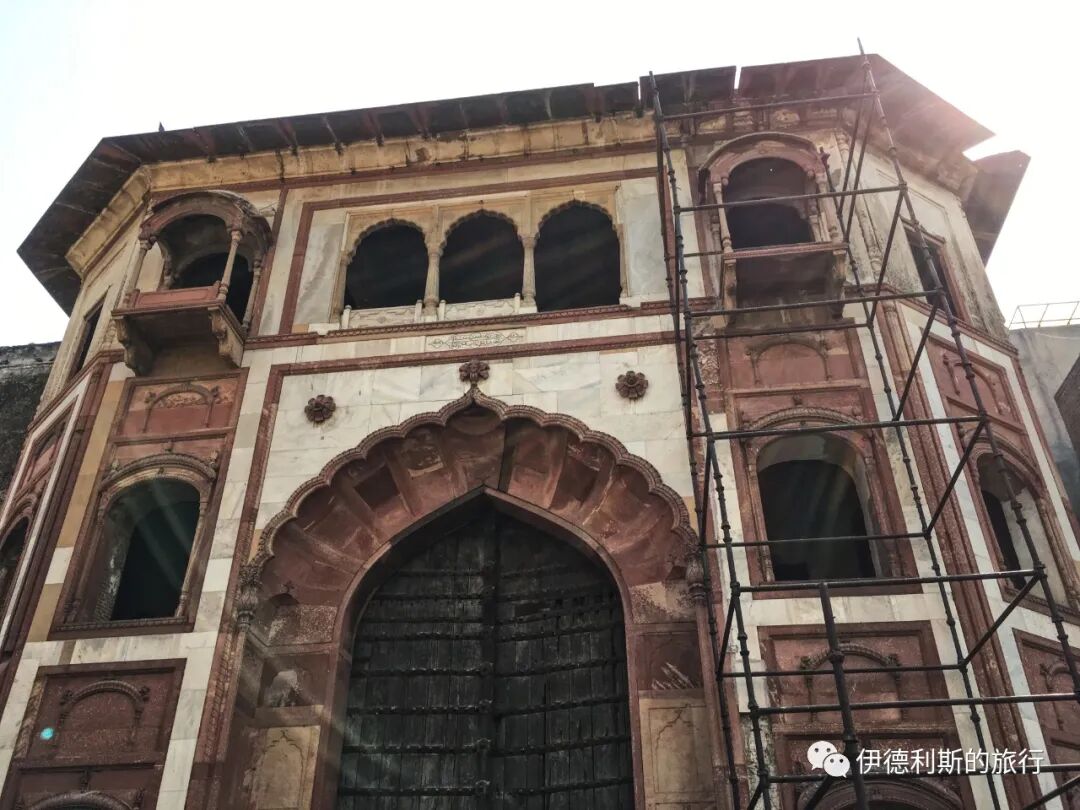
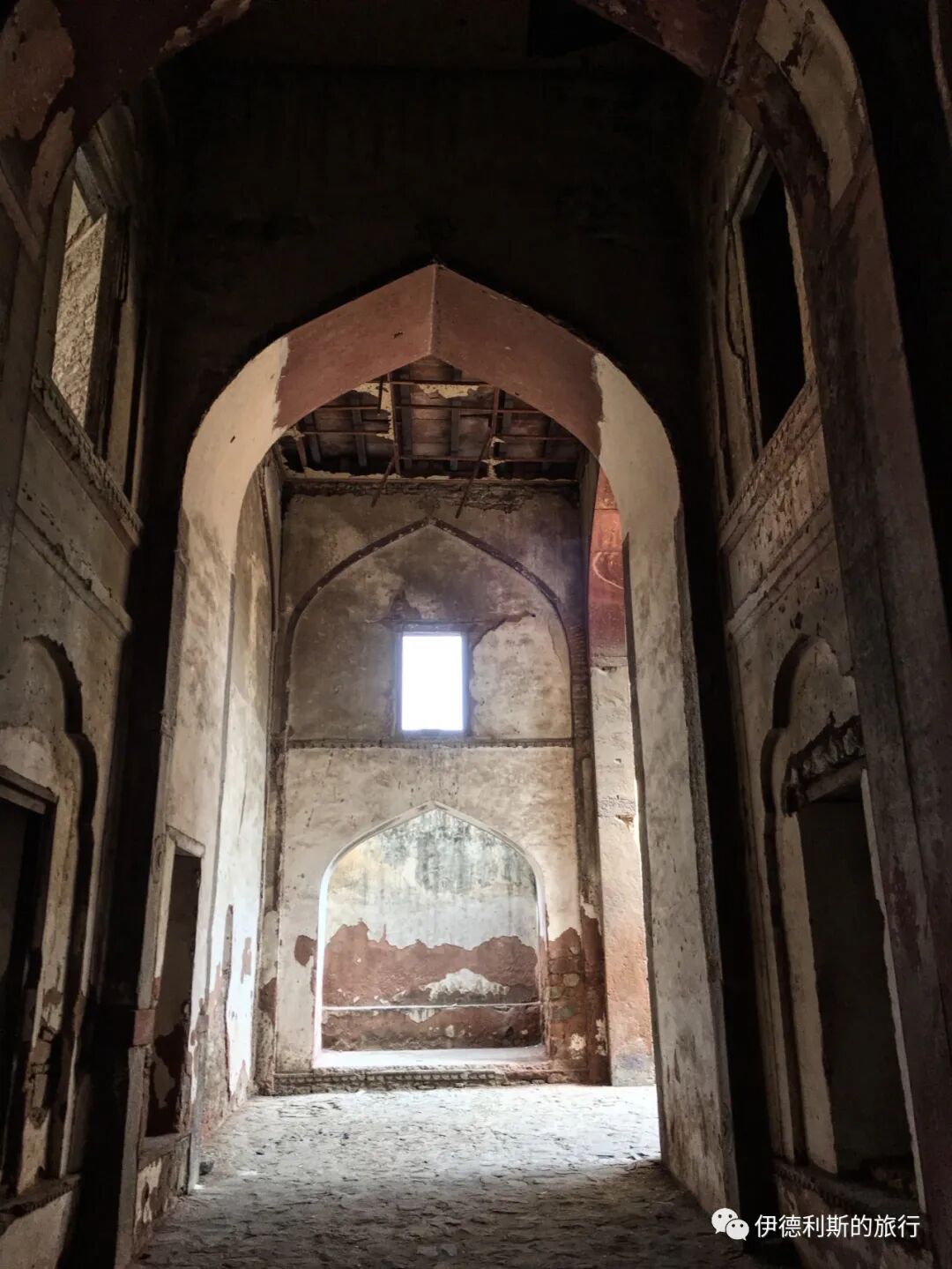
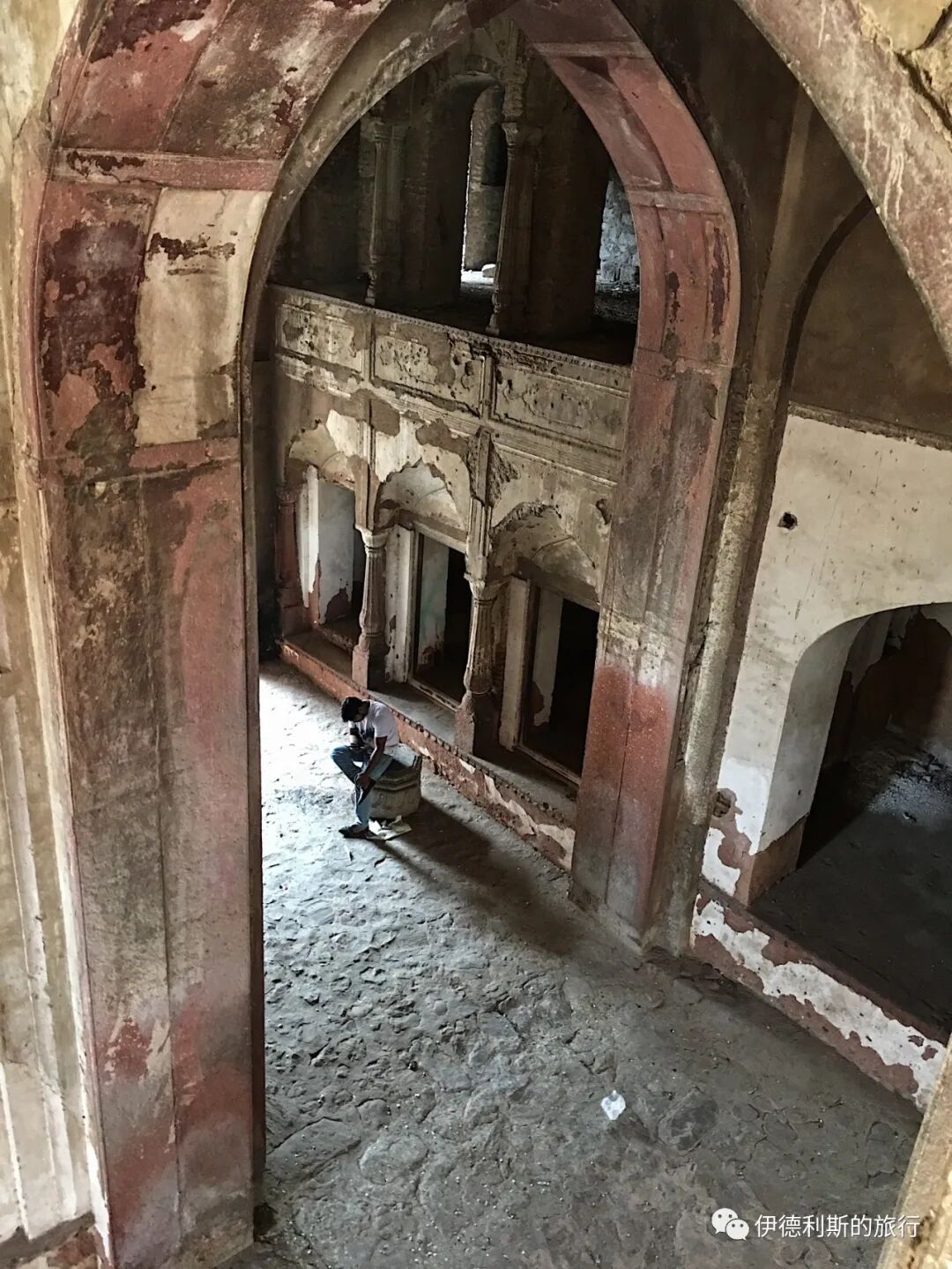
The top floor of the gatehouse is an arched room where the court band performed ceremonies, known as Naqqar Khana, which translates to drum house. This type of arched gallery overlooking a courtyard is called a Dalan in Indian architecture. At the very top is the traditional Indian roof eave known as a Chhajja.
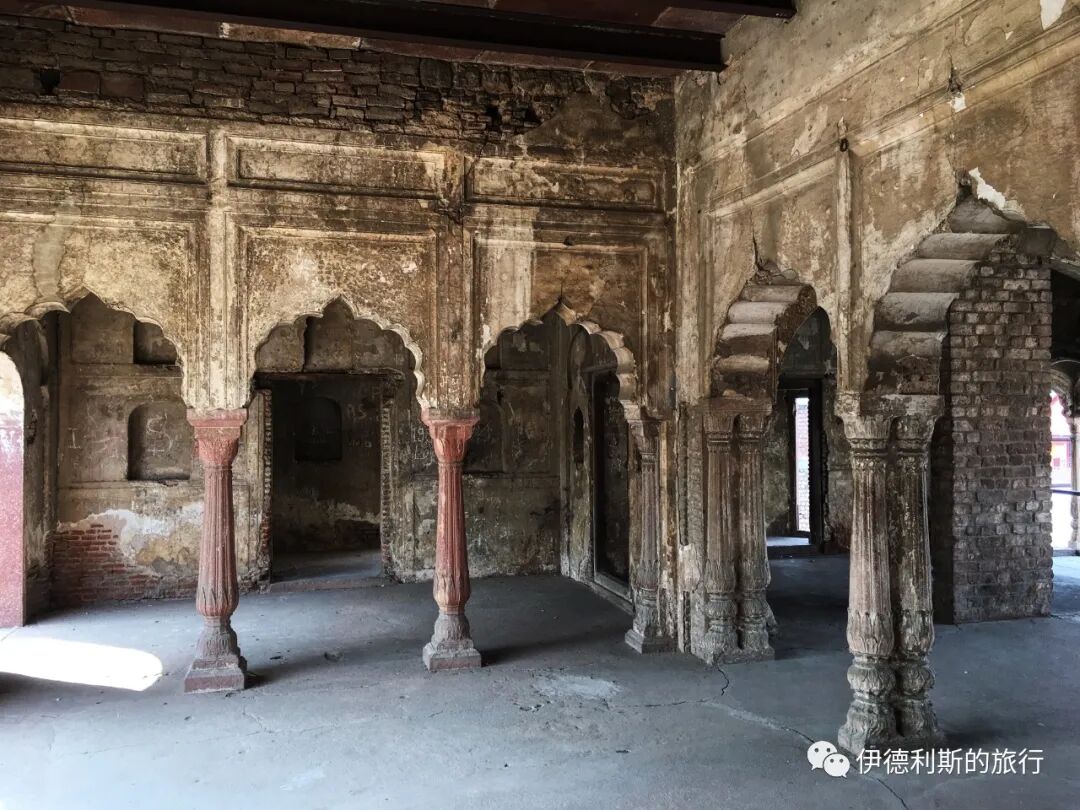
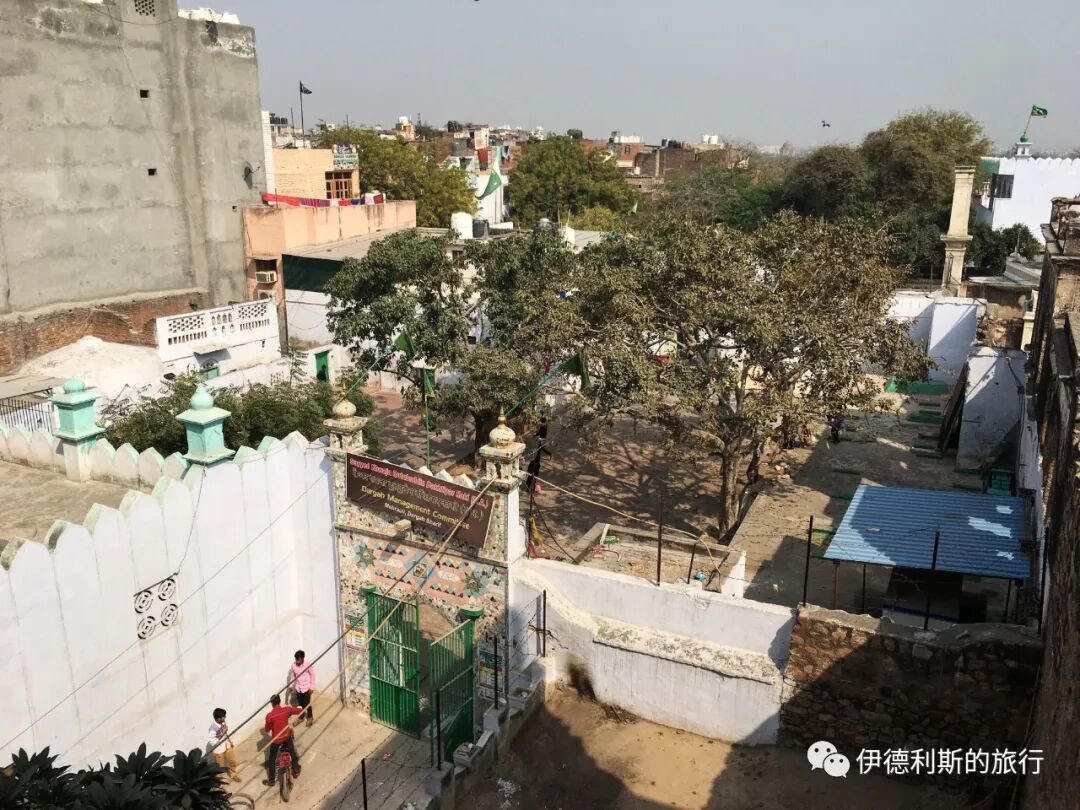
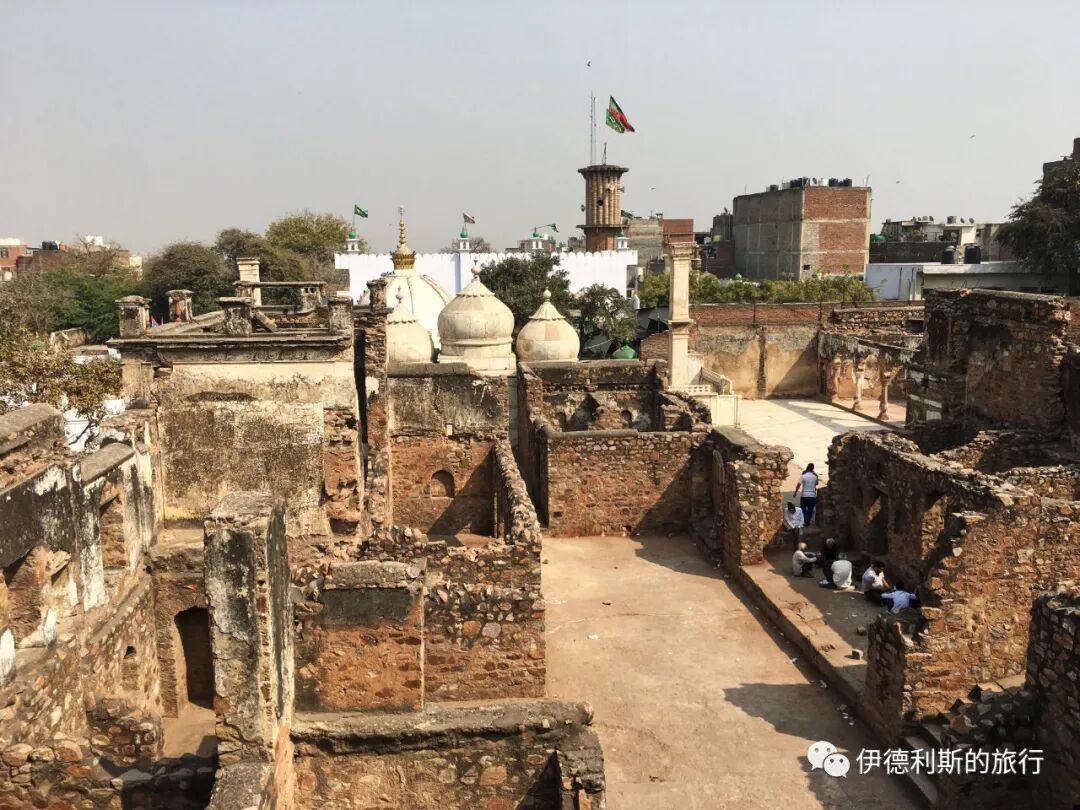
Looking down from the Dalan, you see the management committee for the gongbei of Sheikh Qutbuddin to the north. The courtyard contains a 19th-century mosque and several Mughal-era tombs. One of these, the tomb of Empress Murad Bakht, wife of Mughal Emperor Shah Alam II (reigned 1759-1806), has now been turned into a residence.
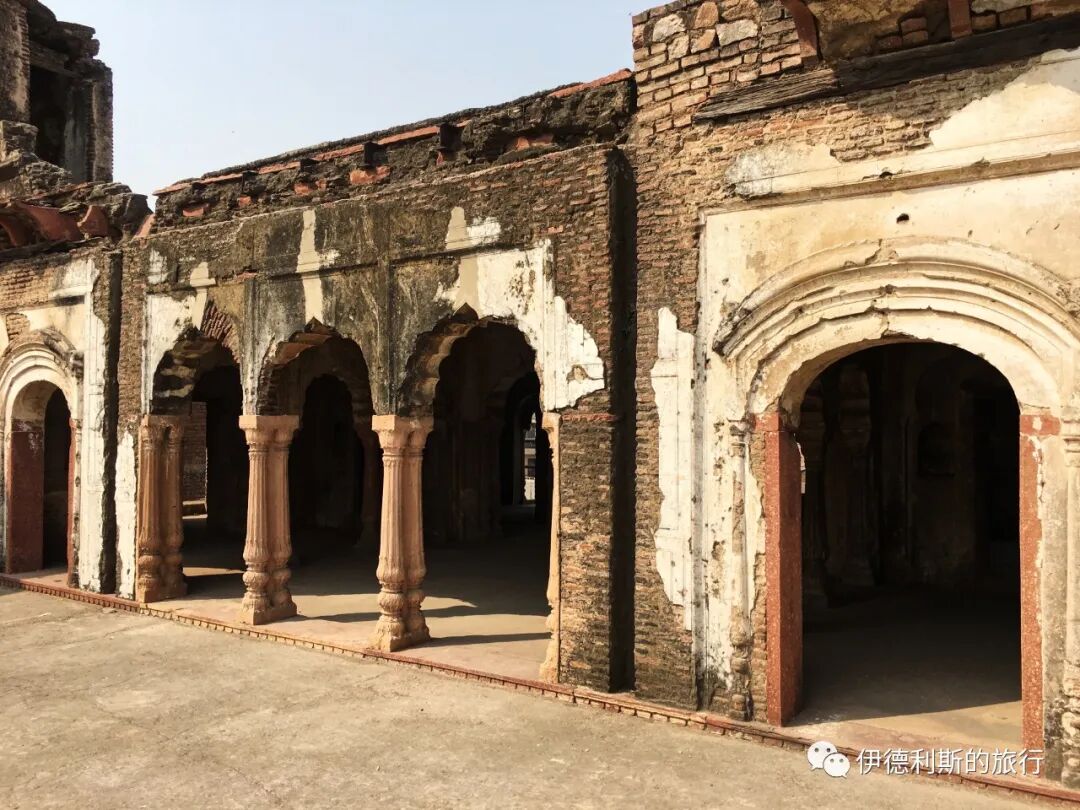
To the east of the gate are rows of palace ruins. The nearby houses were once built in a European style and featured classic fireplaces. The houses further to the right were built using the traditional Indian Dalan arched structure.
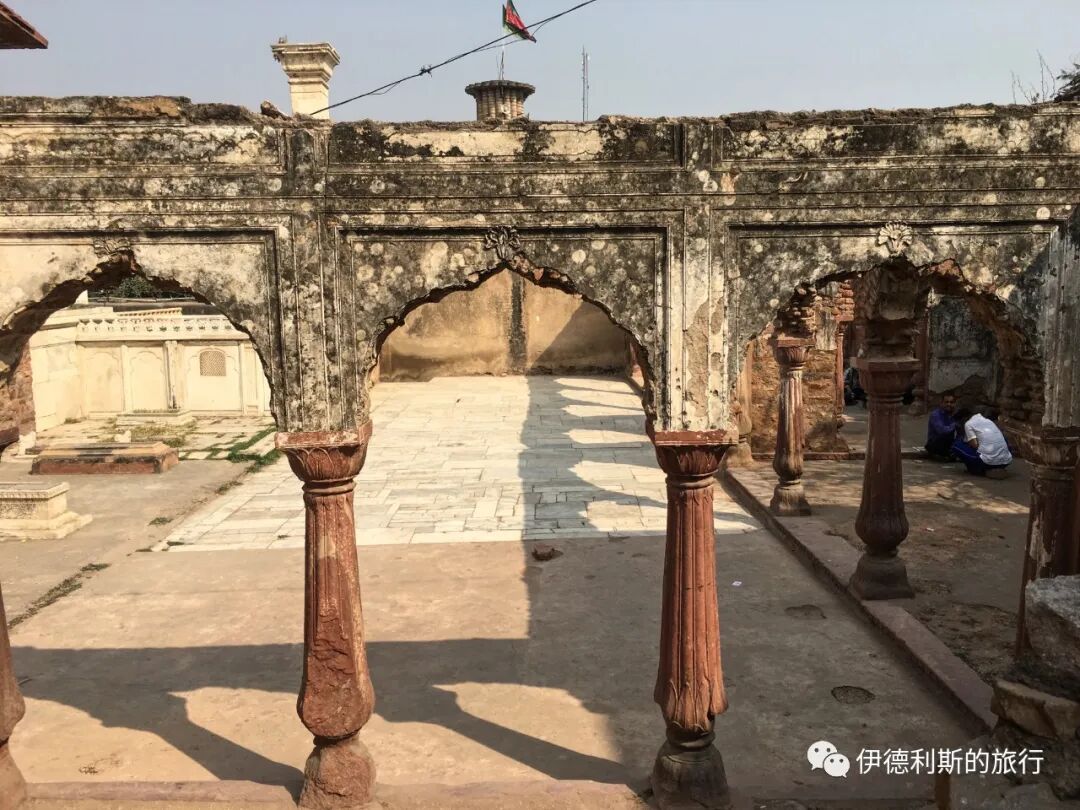
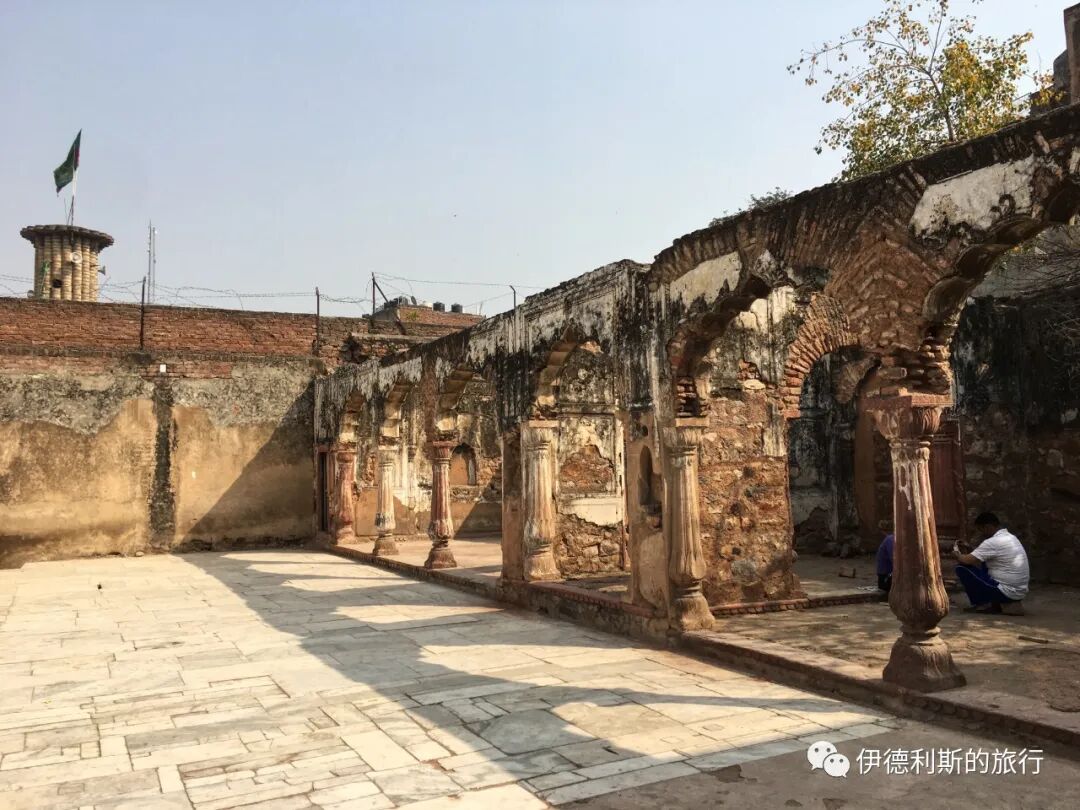
The tomb garden of four Mughal emperors: 1713-1857.
At the far east of Zafar Mahal are two pure white marble buildings, right next to the gongbei of the Sufi Sheikh Qutbuddin. The marble screen enclosure inside was built by Mughal Emperor Jahandar Shah (reigned 1712-1713) as a tomb garden for his father, Bahadur Shah I (reigned 1707-1712). Later Mughal emperors Shah Alam II (reigned 1759-1806) and Akbar II (reigned 1806-1837) are also buried here. It is arguably the best place to experience the history of the late Mughal Empire. The tomb of the last emperor, Bahadur Shah II (reigned 1837-1857), was already prepared, but because he was held under house arrest by the British in Myanmar after 1857 and died far from home, only an empty grave remains for him in Zafar Mahal.
As a follower of Sheikh Qutbuddin, Bahadur Shah II felt a special attachment to this place. Shortly before he passed away, he wrote several Urdu Ghazal lyric poems expressing his sorrow at not being able to be buried here.
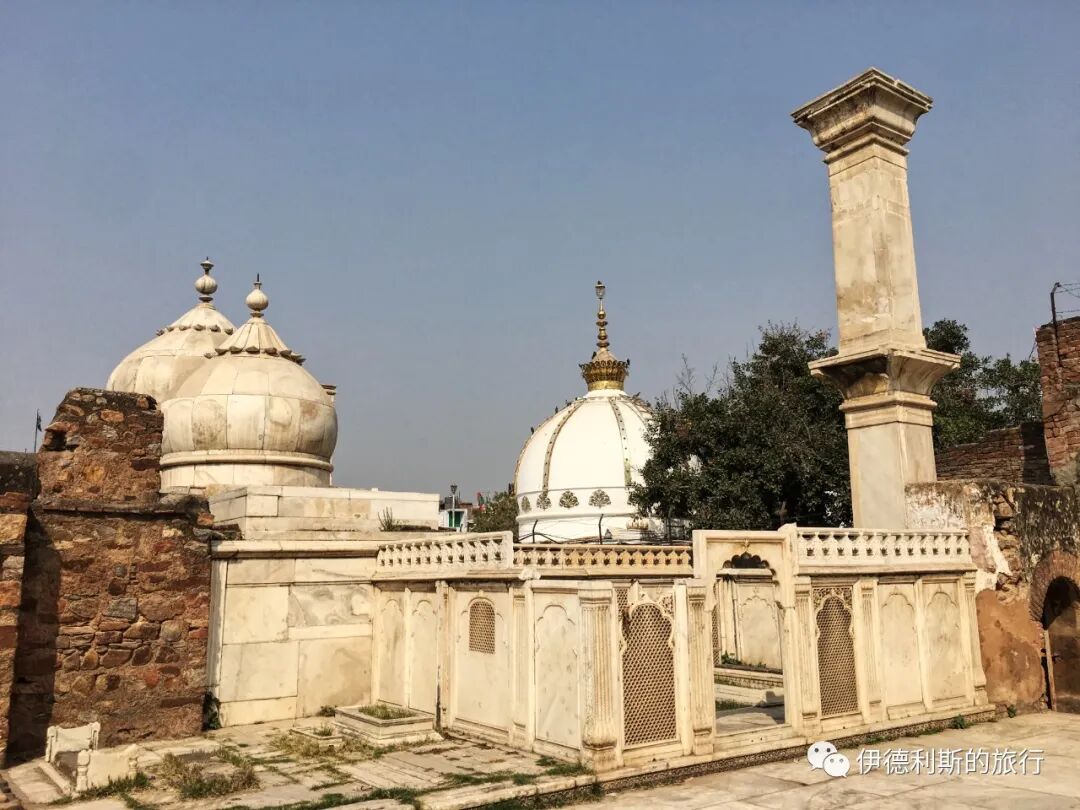
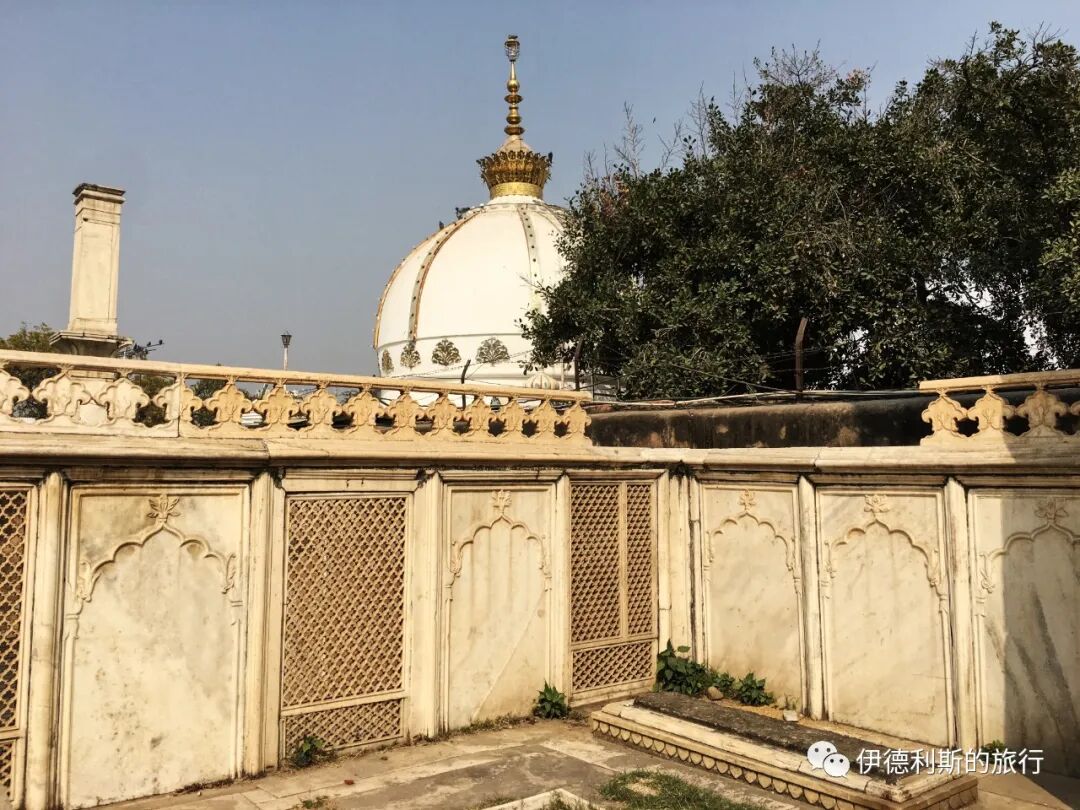
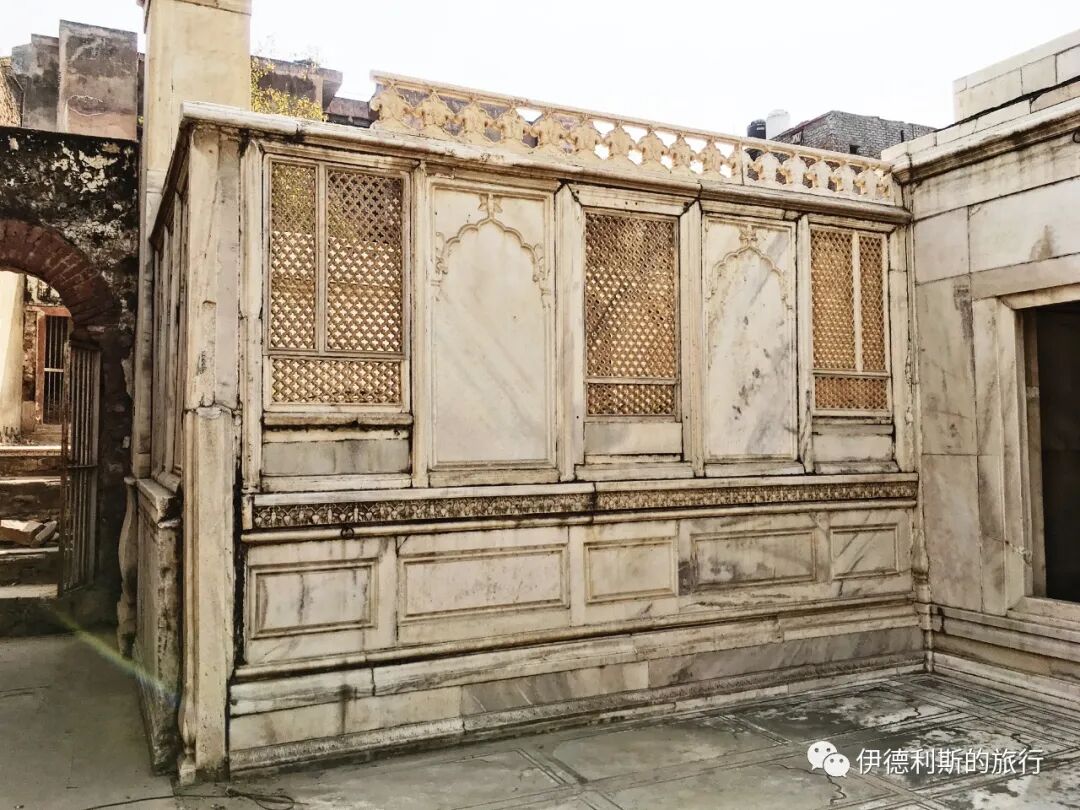
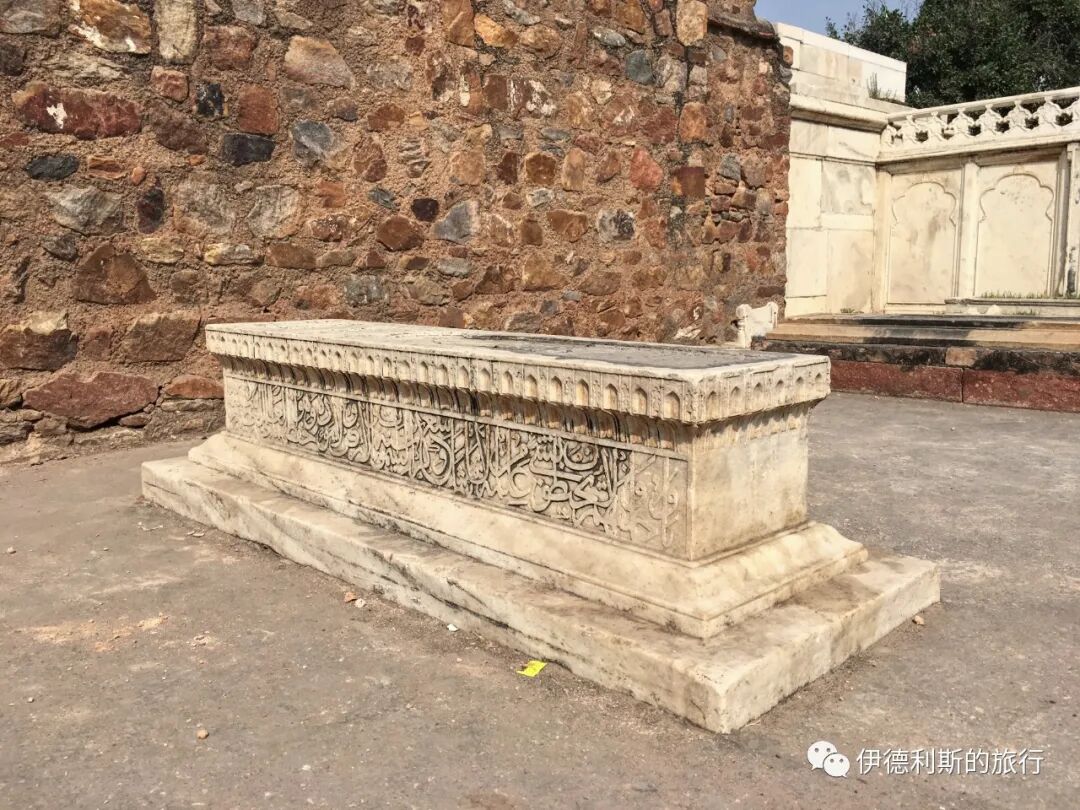
Moti Mosque: 1709.
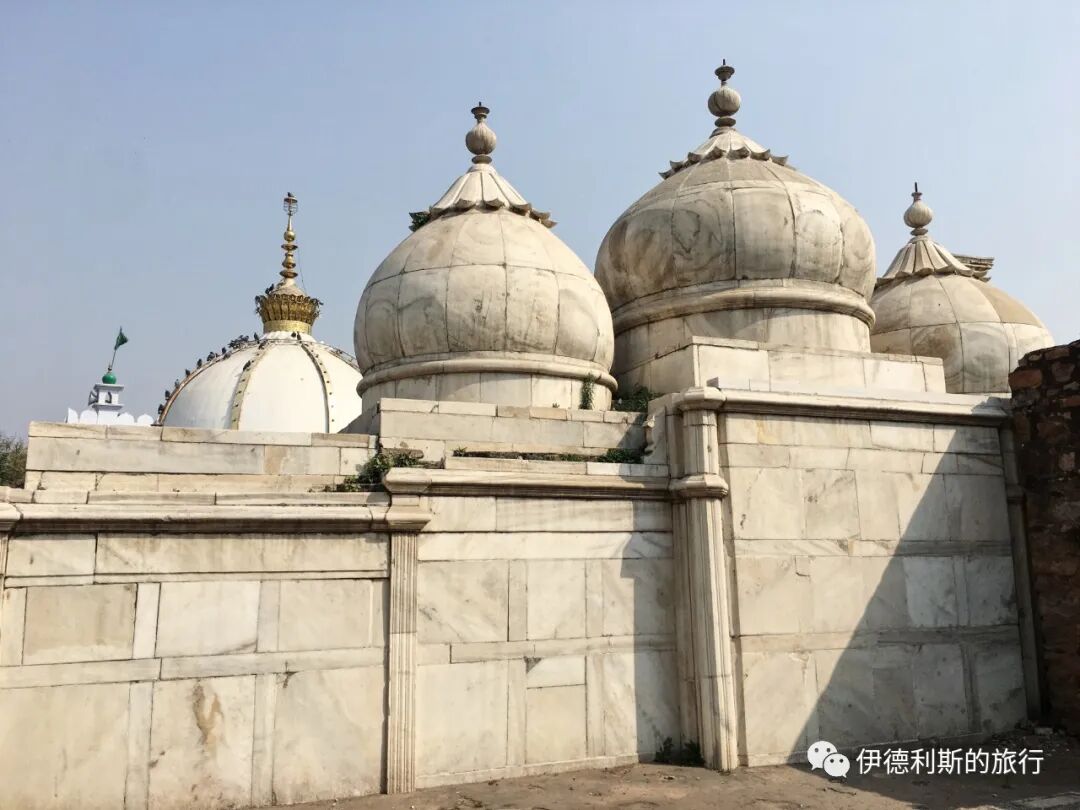
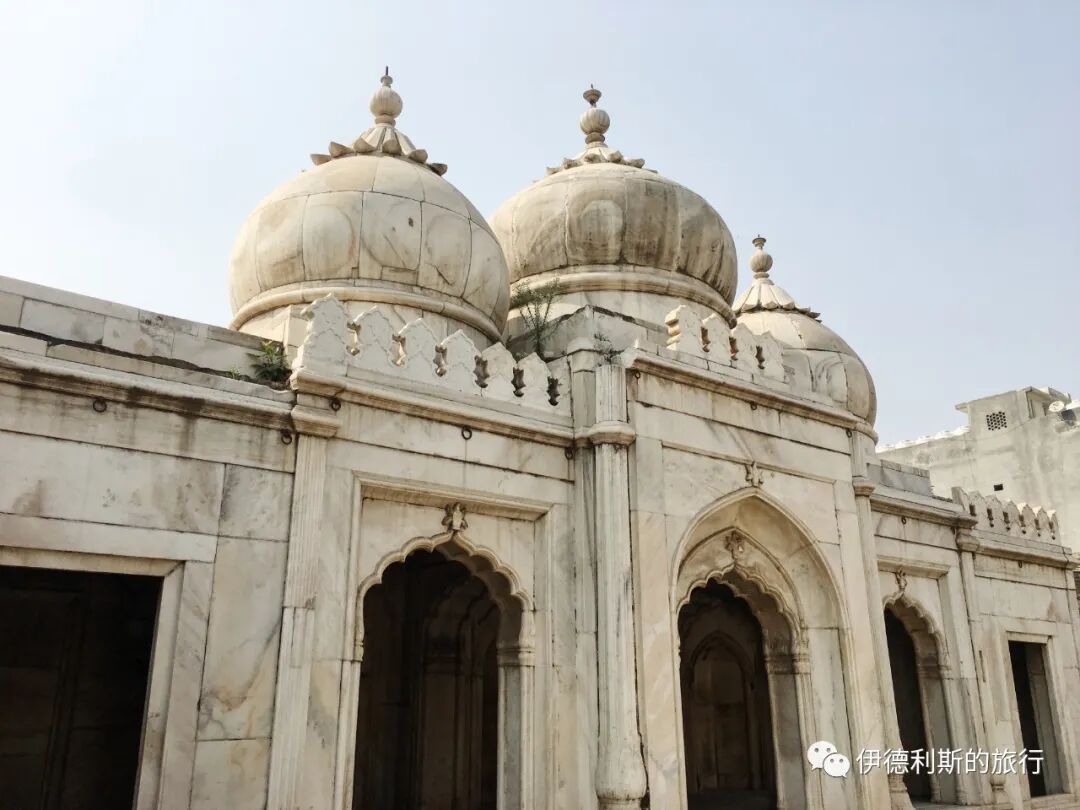
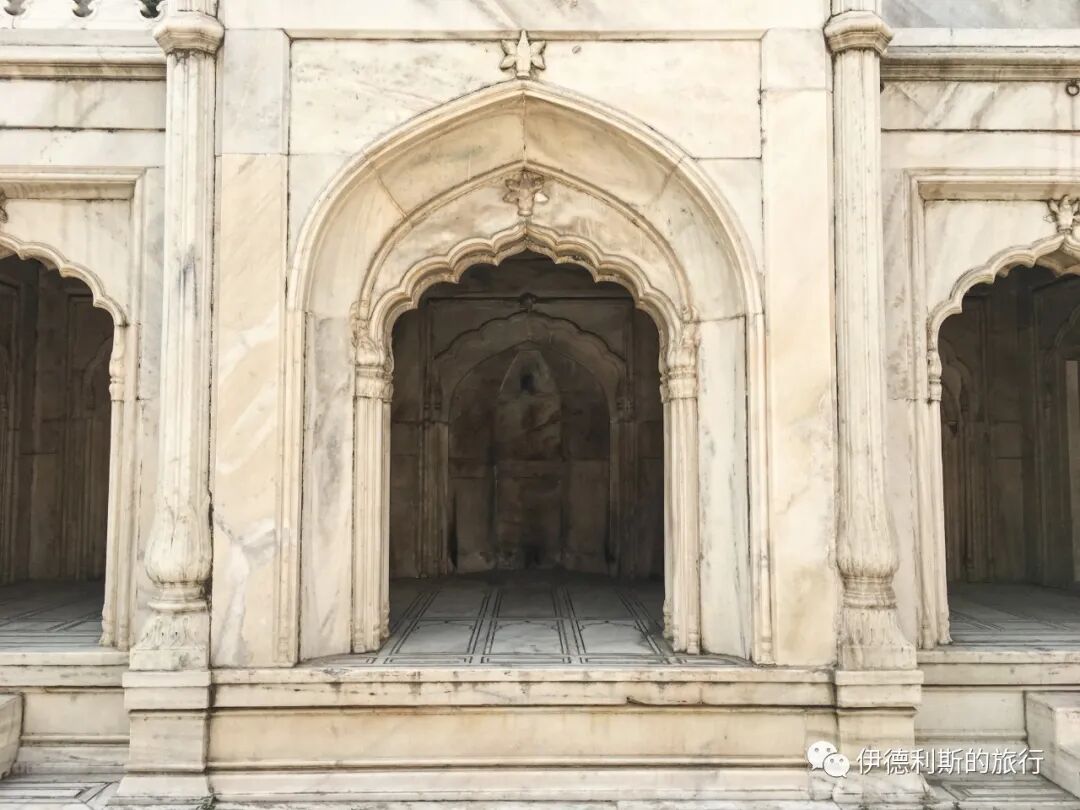
North of the tomb garden is the Moti Mosque, built in 1709 by Mughal Emperor Bahadur Shah I, representing the respect the Mughal court held for the Sufi Sheikh Qutbuddin at the time. Bahadur Shah I's father, Mughal Emperor Aurangzeb (reigned 1658-1707), also built a white marble Moti Mosque inside the Red Fort in Delhi. It is larger than the one in Zafar Mahal, but both share the same design of three arches and three domes.
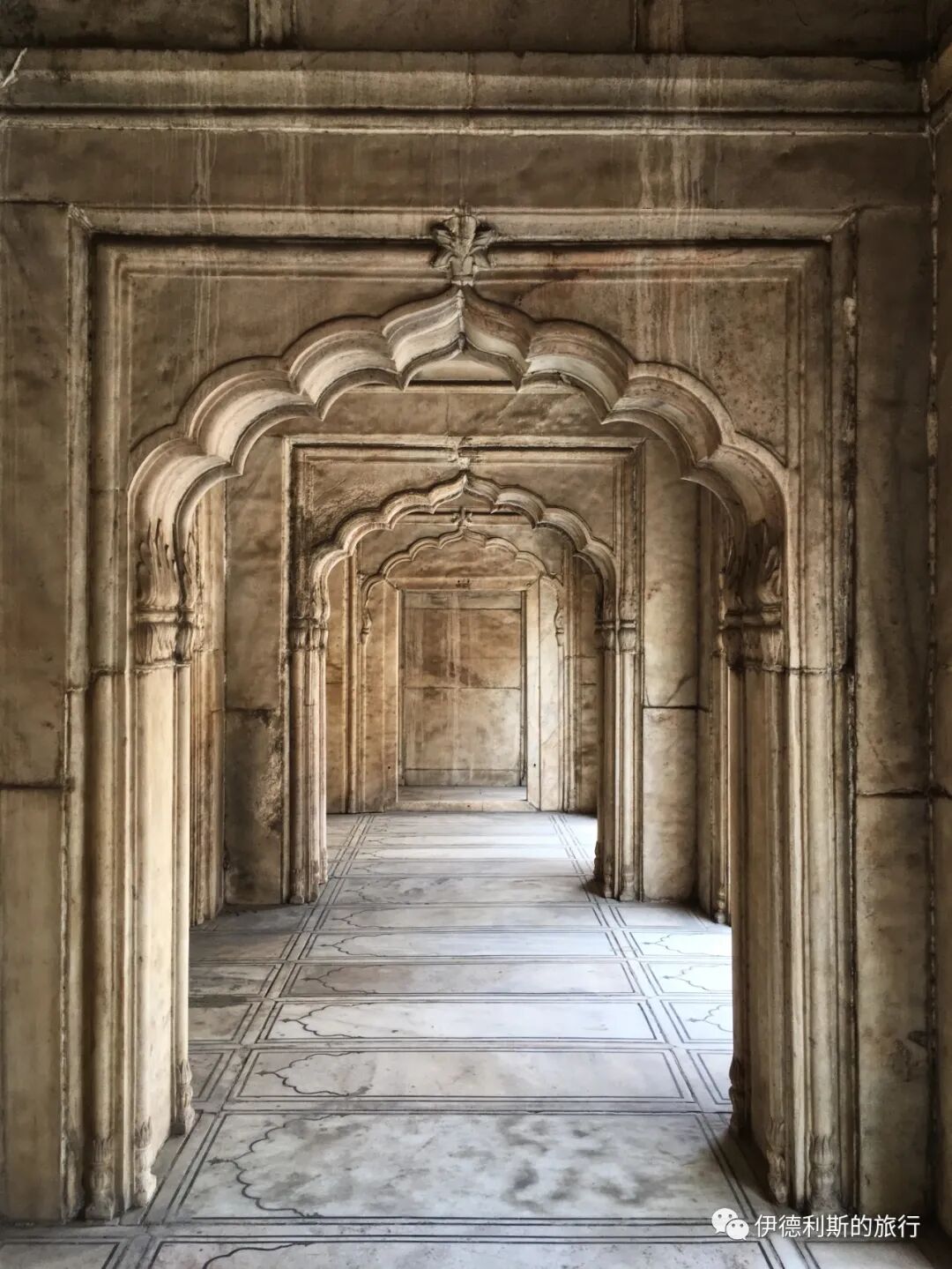
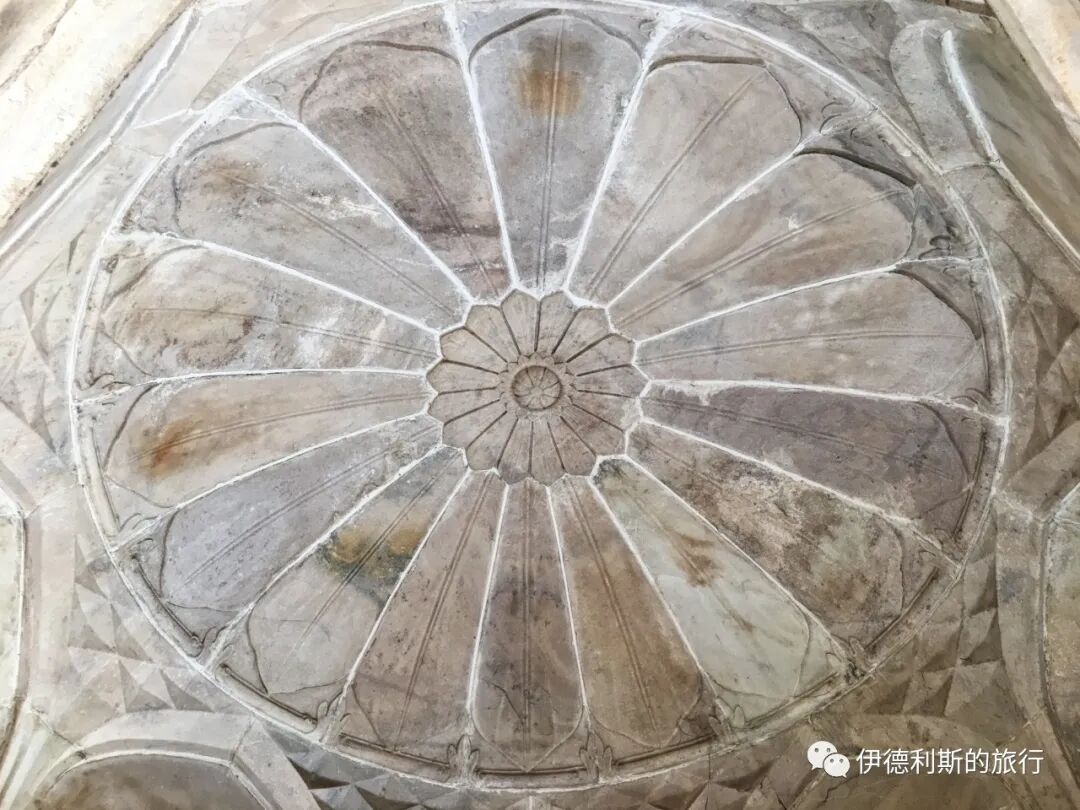
Tomb of Alauddin: 13th century.
In the courtyard of Zafar Mahal lies the tomb of Alauddin, the nephew of Iltutmish (reigned 1211-1236), the third sultan of the Mamluk dynasty of the Delhi Sultanate. He was a loyal follower of the Sufi Sheikh Qutbuddin and was buried next to the Sheikh's gongbei after he passed away.
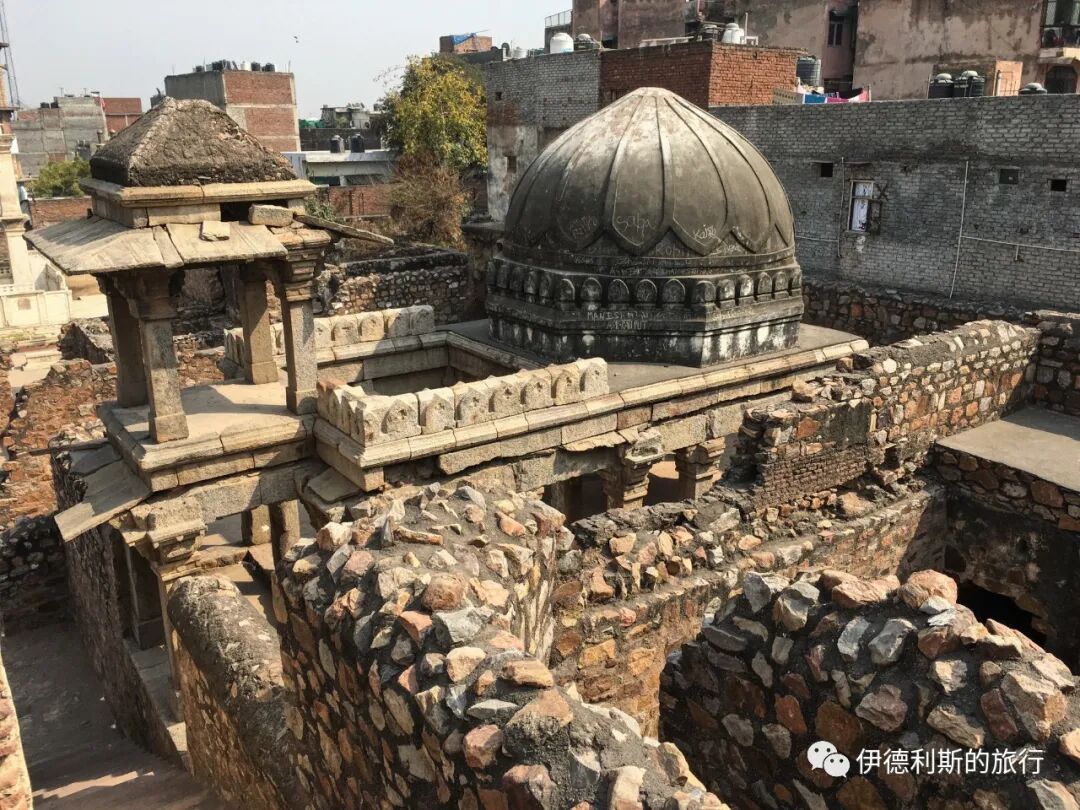
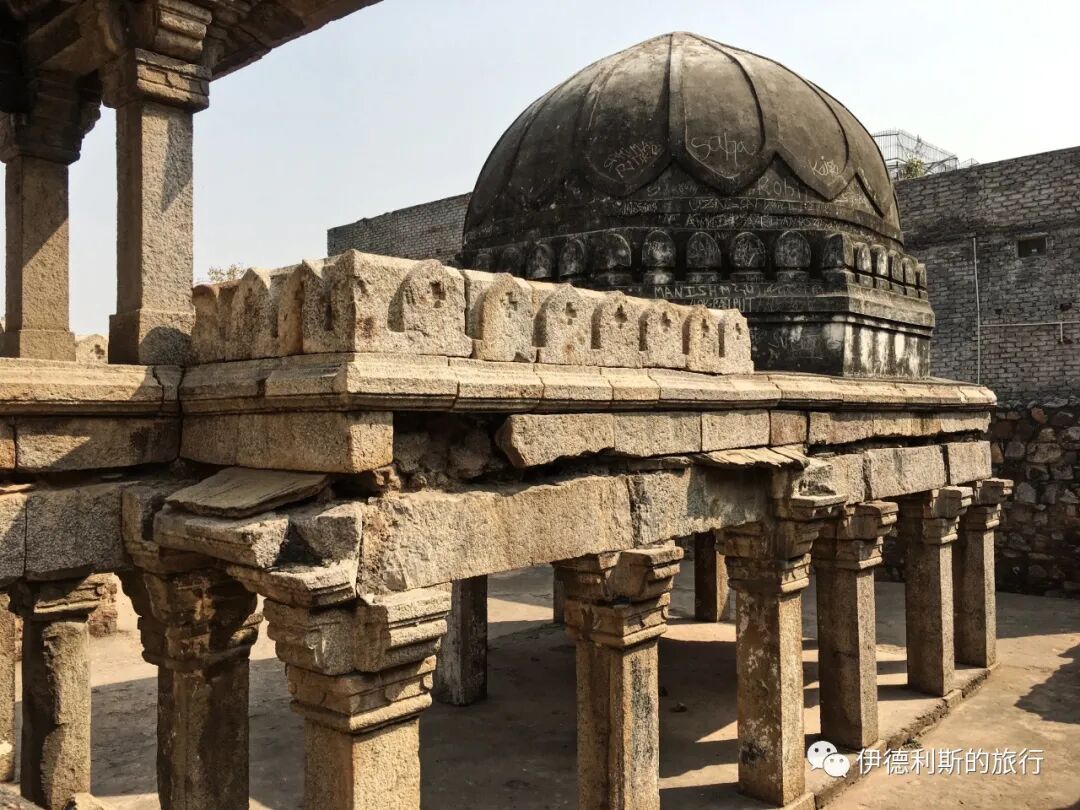
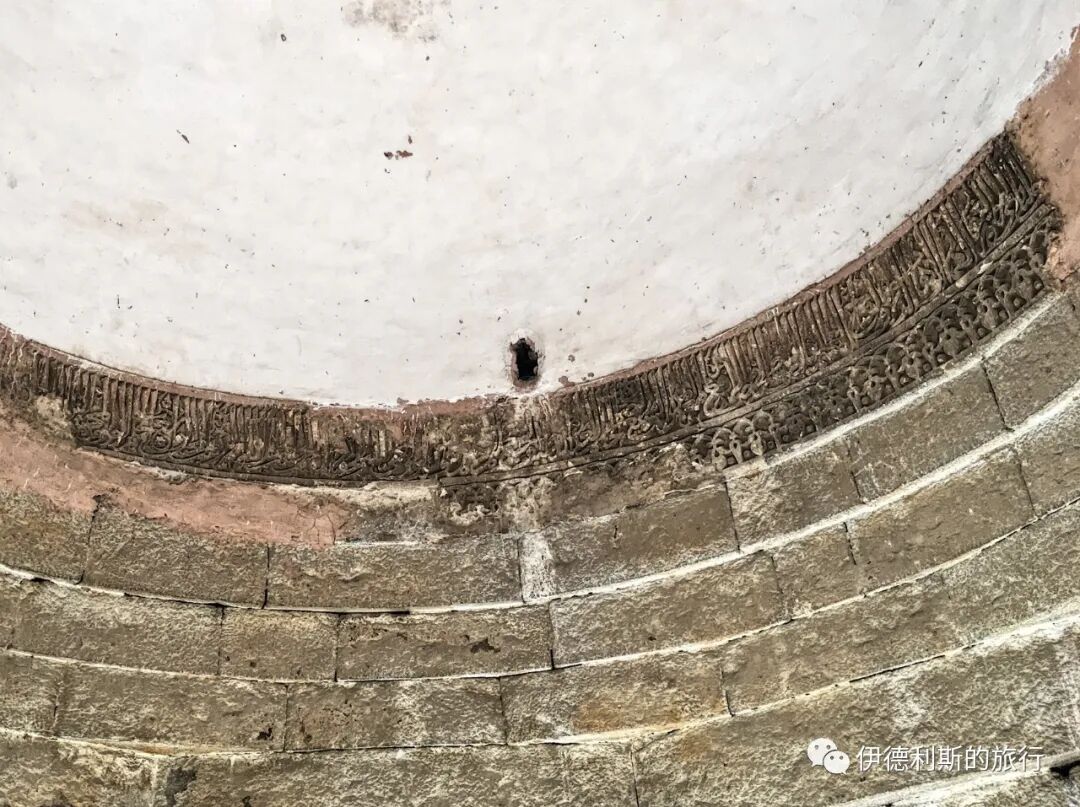
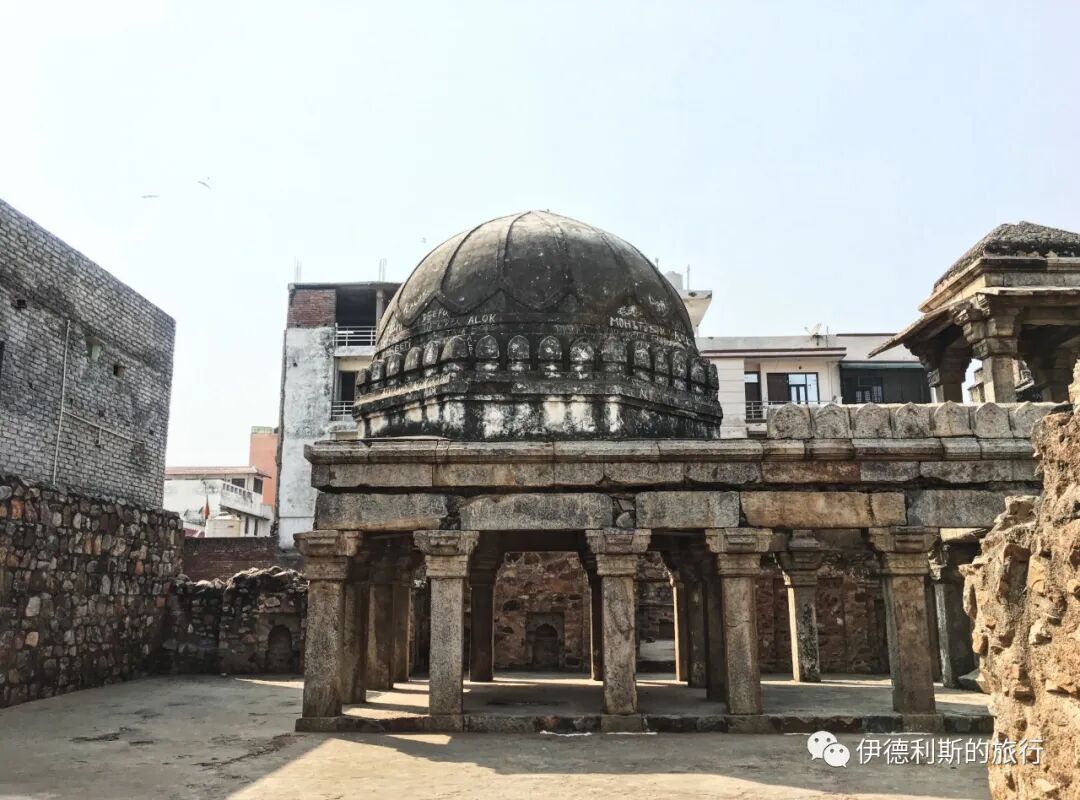
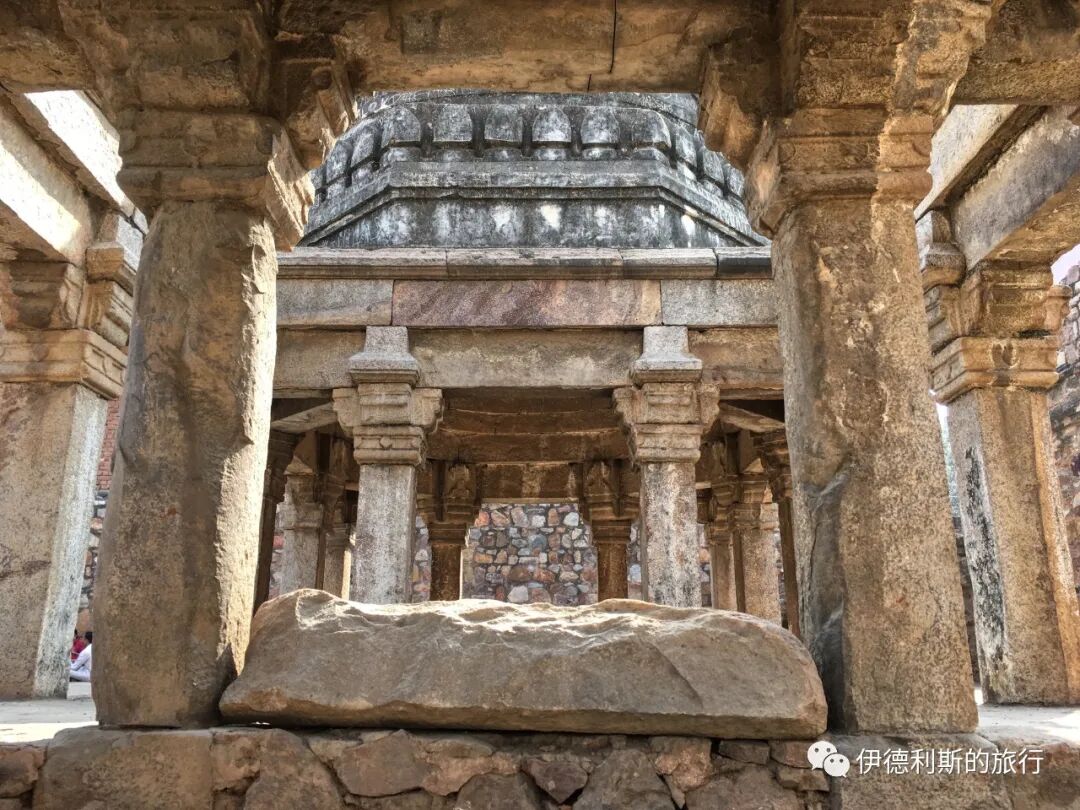
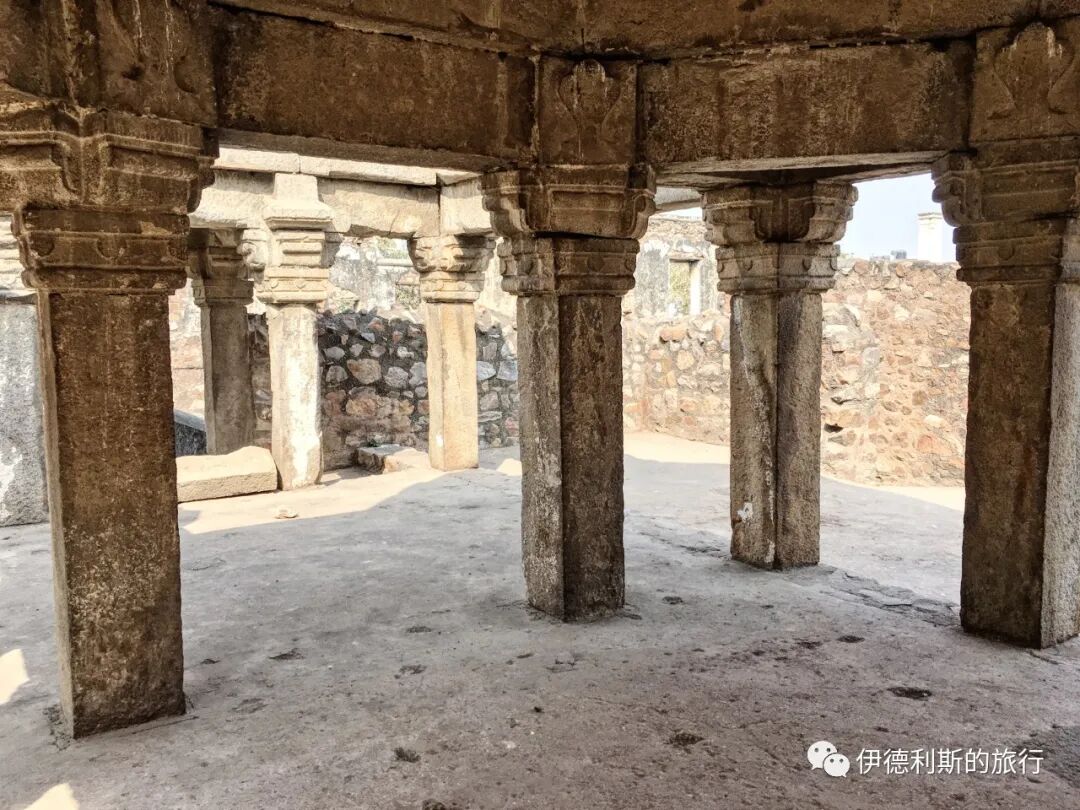
Jamali Kamali Mosque: 1528-29.
In the southeast of Mehrauli Archaeological Park stands the Jamali Kamali Mosque and tomb, built between 1528 and 1529. The tomb belongs to the famous South Asian Sufi Sheikh and Persian poet Jamali Kamboh, who was a mentor to Sultan Sikandar Khan Lodi (reigned 1489-1517) of the Delhi Sultanate's Lodi dynasty.
The name Jamali comes from the Urdu word Jamal, which means beauty. Jamali belonged to the Suhrawardiyya Sufi order. He traveled widely in his youth and later became a court poet for the Lodi dynasty. Sultan Sikandar Khan Lodi also enjoyed writing poetry, so he often asked Jamali for advice on his work.
After the Lodi dynasty fell in 1526, the first two Mughal emperors, Babur and Humayun, continued to support Jamali. Between 1530 and 1536, Jamali wrote the book Siyar-l-Arifin in Persian, which documented the two major South Asian Sufi orders of the time, the Chishti and the Suhrawardiyya. In 1536, Jamali passed away while accompanying Mughal Emperor Humayun on a military campaign to Gujarat.
The mosque is built of red sandstone and white marble. It is considered a transition between the architectural styles of the Lodi and Mughal dynasties and holds an important place in the history of Indian architecture. The overall design continues the five-arch style of the Lodi dynasty, with the middle arch being the largest and topped by a Lodi-style dome. The mosque sits on a platform, making it look taller from the back, where you can also see octagonal towers and traditional Indian Jharokha stone windows.
The pilasters inside the mosque have a unique grooved design. The five arches correspond to five mihrabs, with the central mihrab being the most exquisite.
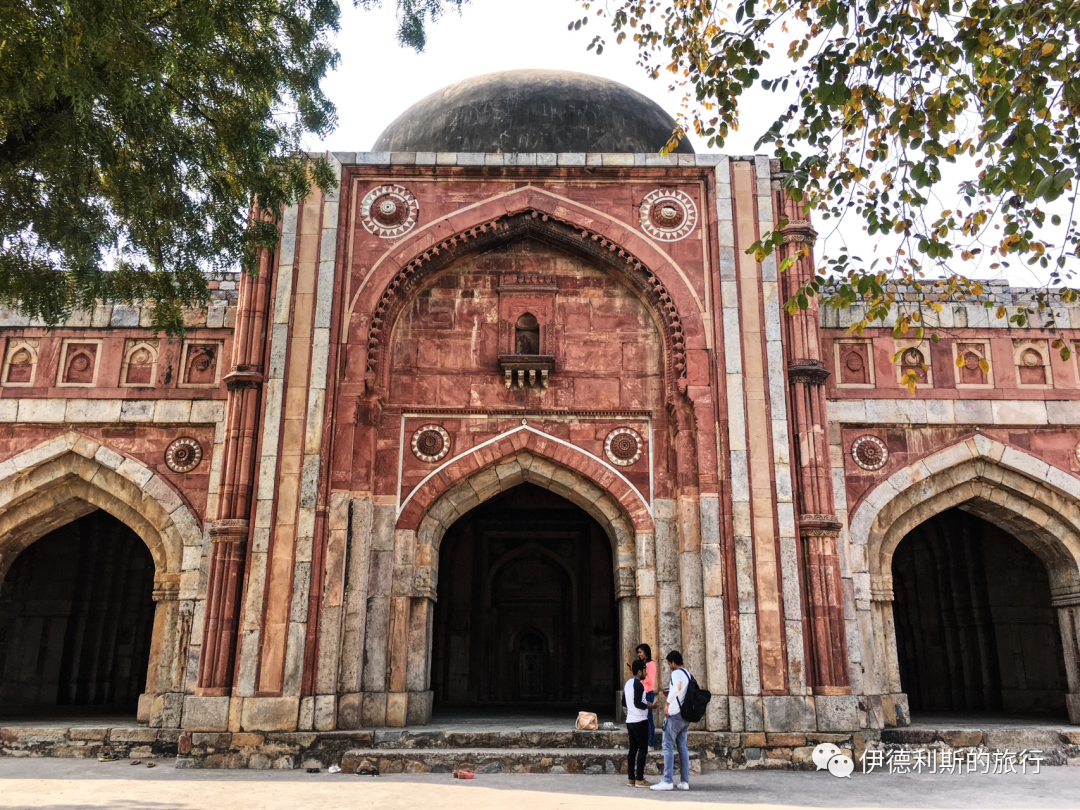
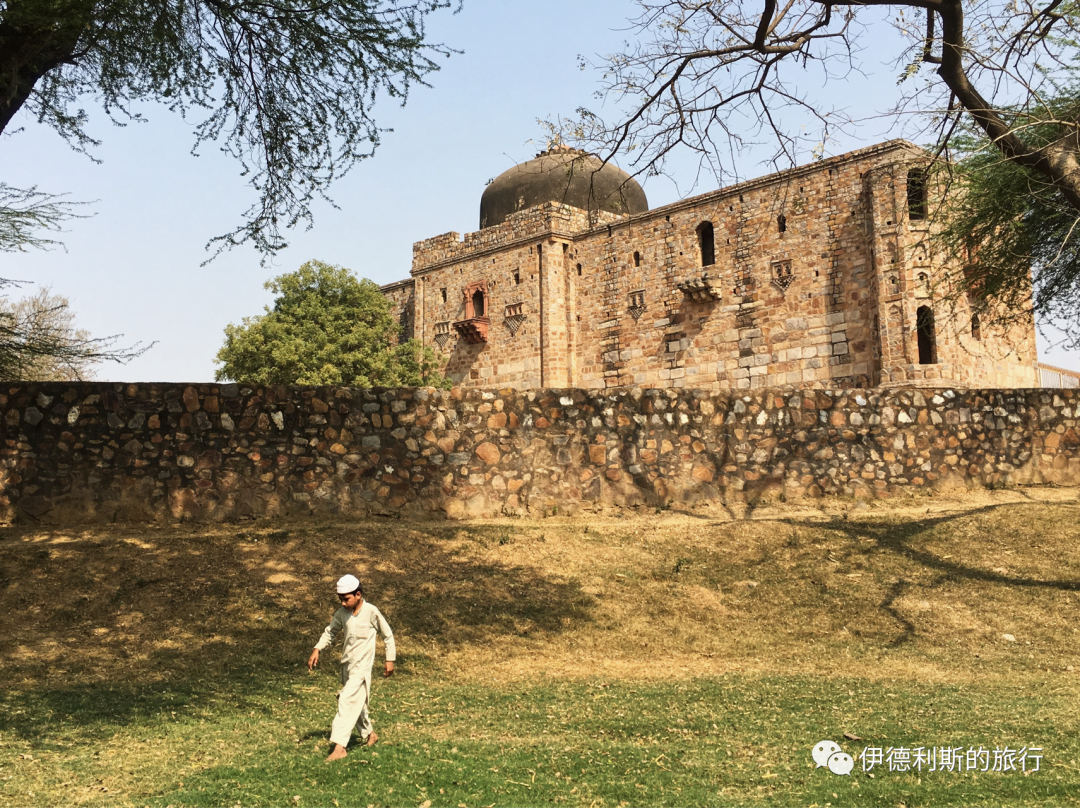
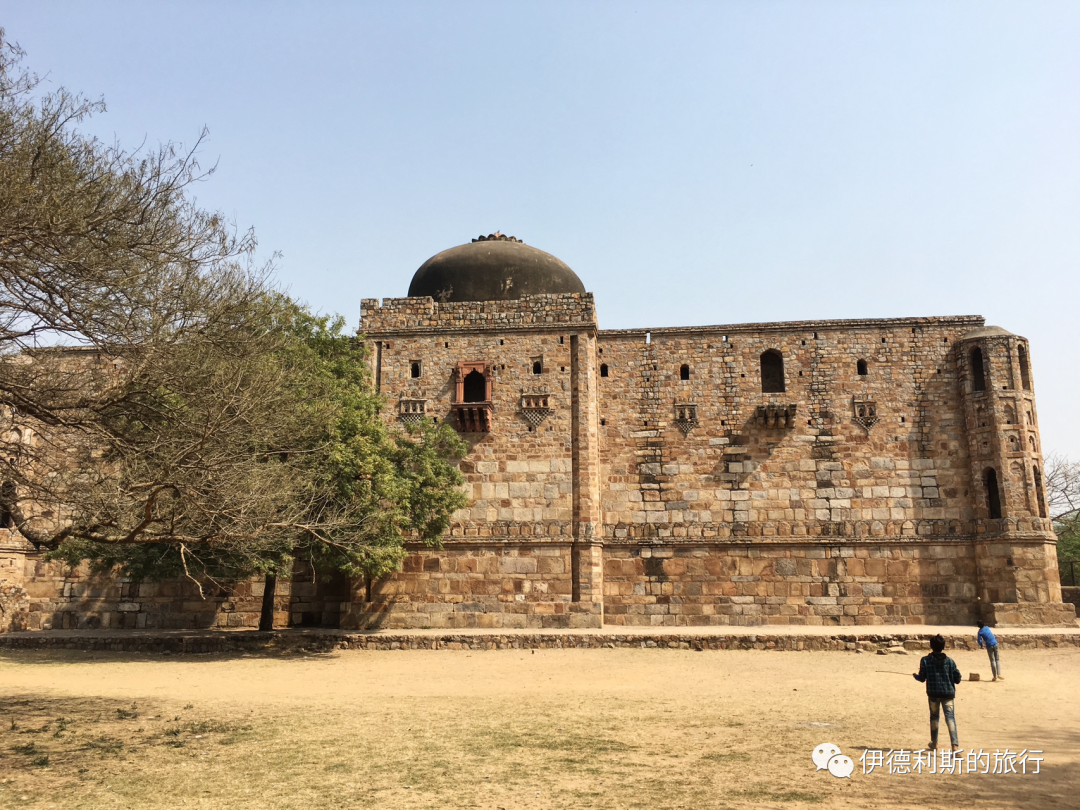
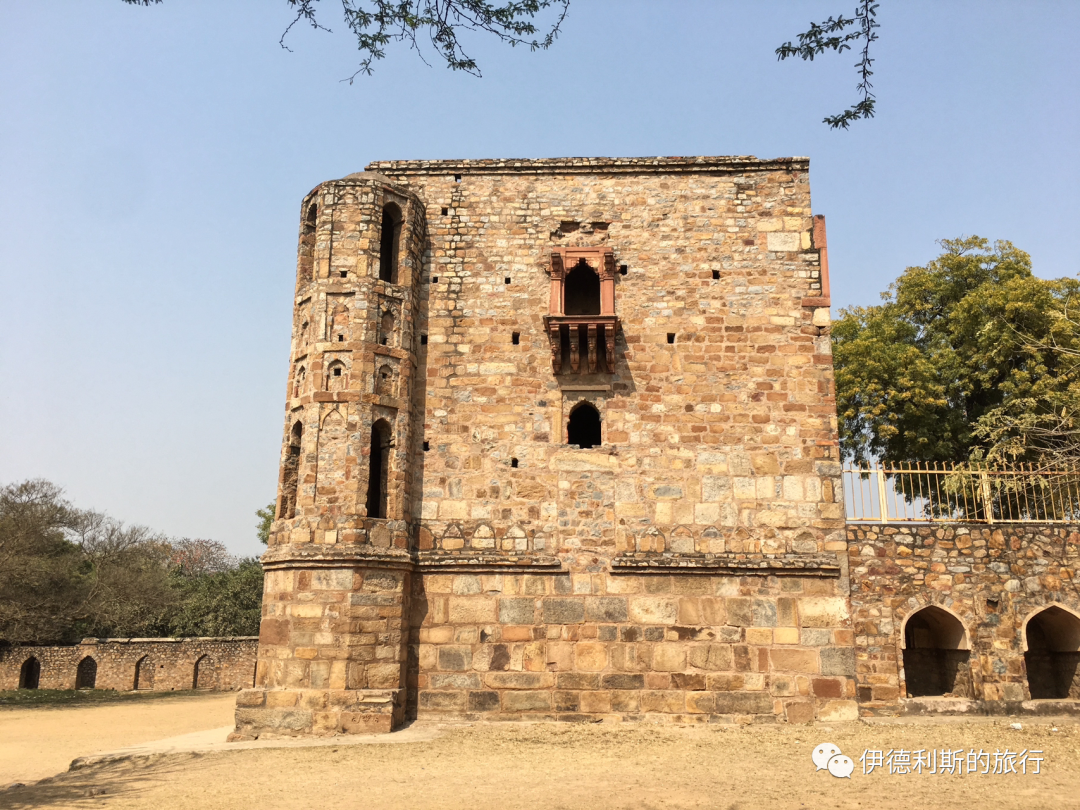
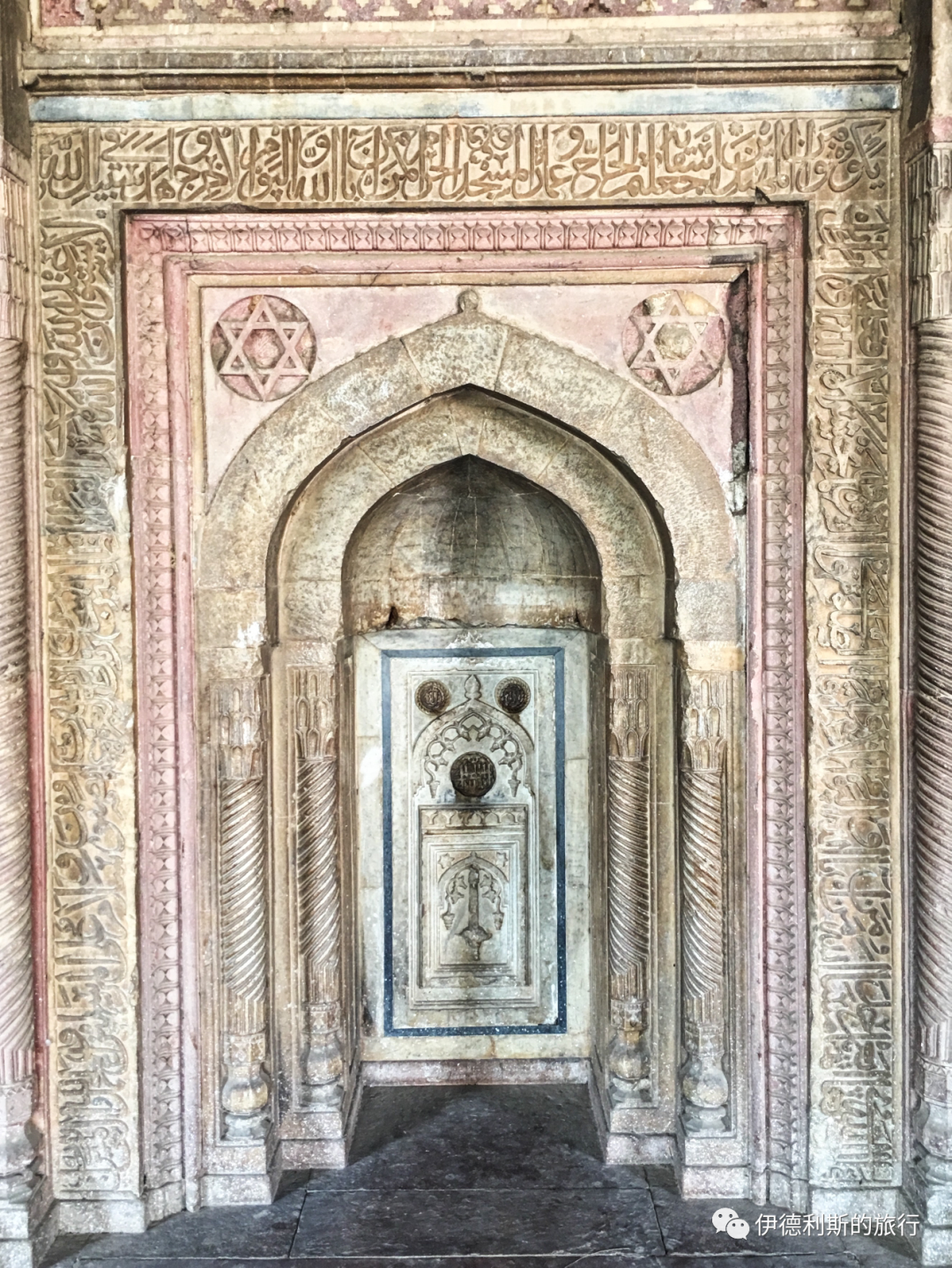
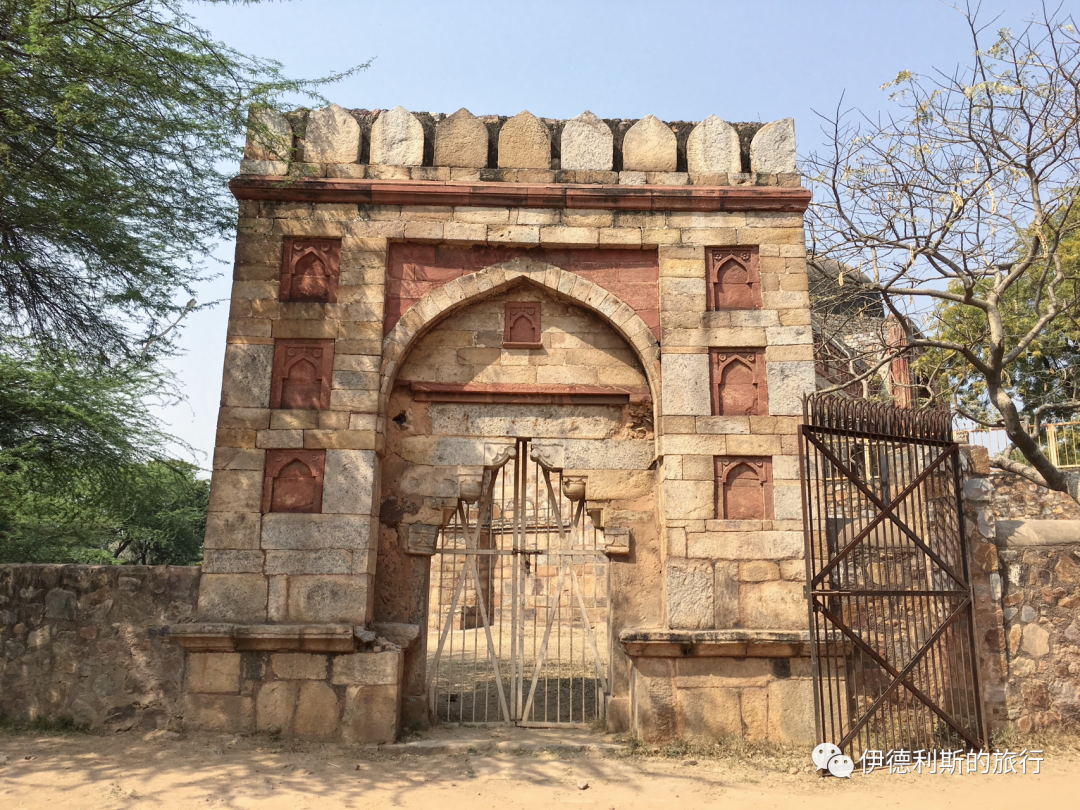
The south gate of the mosque is built of red sandstone and marble and is one of the earliest examples of Mughal architecture.
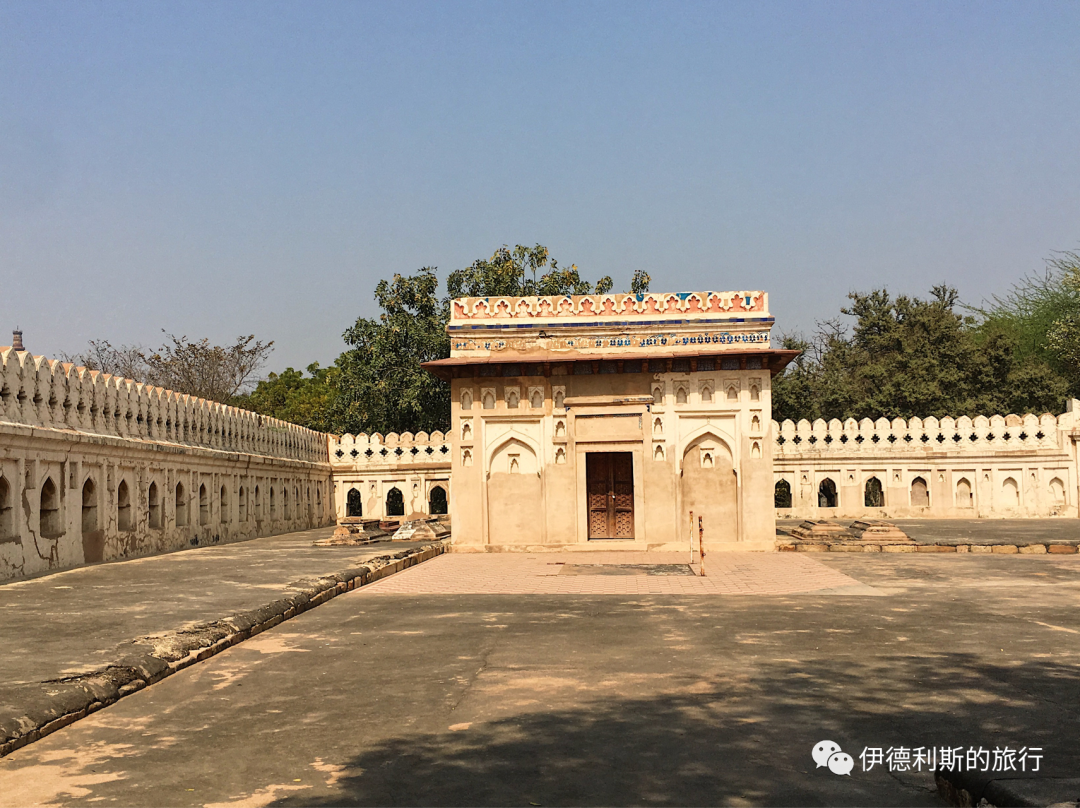
The tomb has a flat roof decorated with colorful tiles and plaster patterns, carved with inscriptions written by Jamali himself. The decorations inside are said to be beautiful, but unfortunately, the door was locked when I visited, so I could not see them.
Tomb of Khan Shahid: 1286
Further south of Jamali Kamali mosque is a 13th-century tomb. It belongs to Khan Shahid, the son of Ghiyas ud din Balban, the ninth sultan of the Mamluk dynasty of the Delhi Sultanate, who reigned from 1266 to 1286. Khan Shahid died in battle against the Chagatai Mongols in 1286, which is how he earned the title Khan Shahid.
The entire site has a 5-meter-high wall, three gates, and two heavily collapsed tomb structures inside.
Today, it is a simple and tidy open-air mosque. I had never seen an open-air mosque among ancient ruins deep in the woods back home, and this was my first time seeing one in India. I was deeply moved the moment I walked through the gate, a feeling you cannot get just by looking at photos. It lacks the grandeur and bustle of a large mosque, but it has a unique charm that drew me in. Time seems to stand still here, free from outside interference, with only the centuries-old devotion of the Muslim community. No matter the environment, as long as you have faith in your heart, even ruins can be a place for prayer.
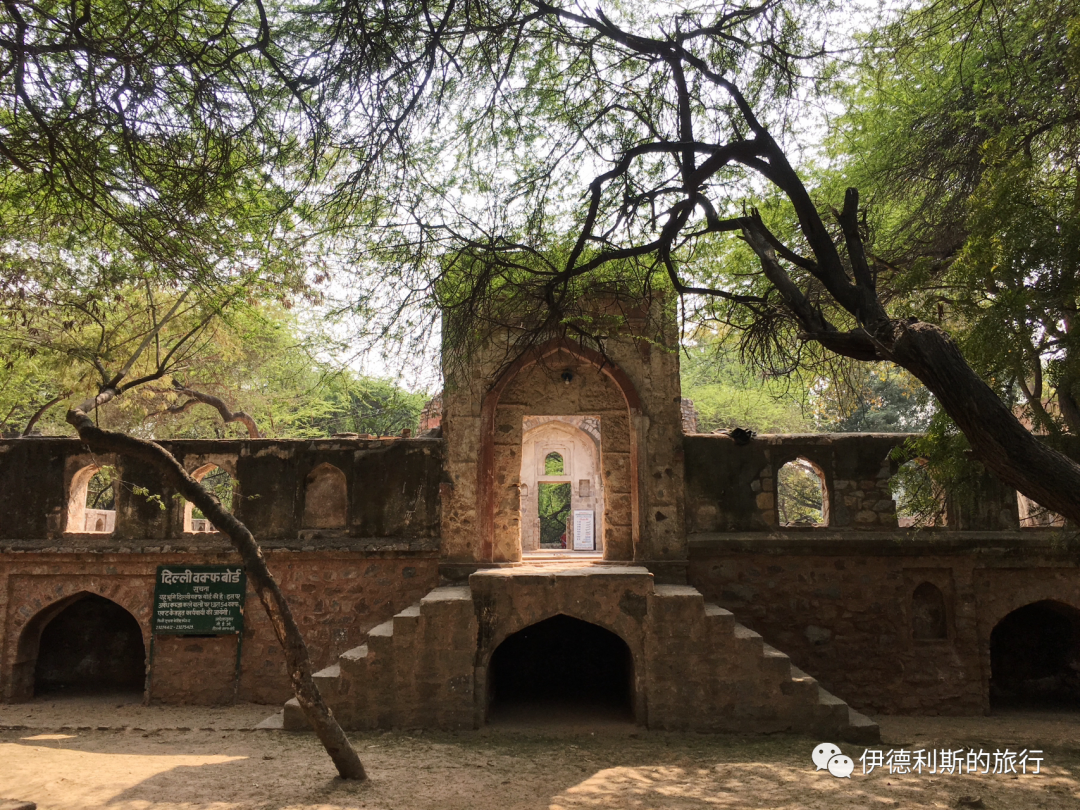
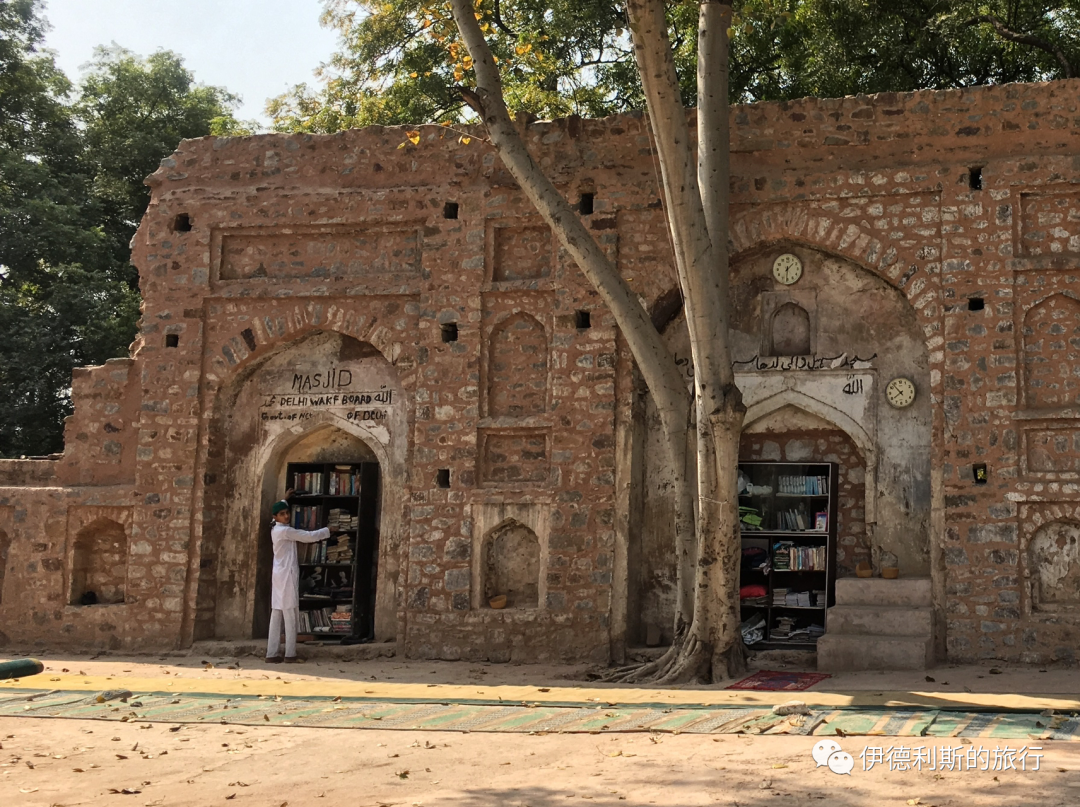
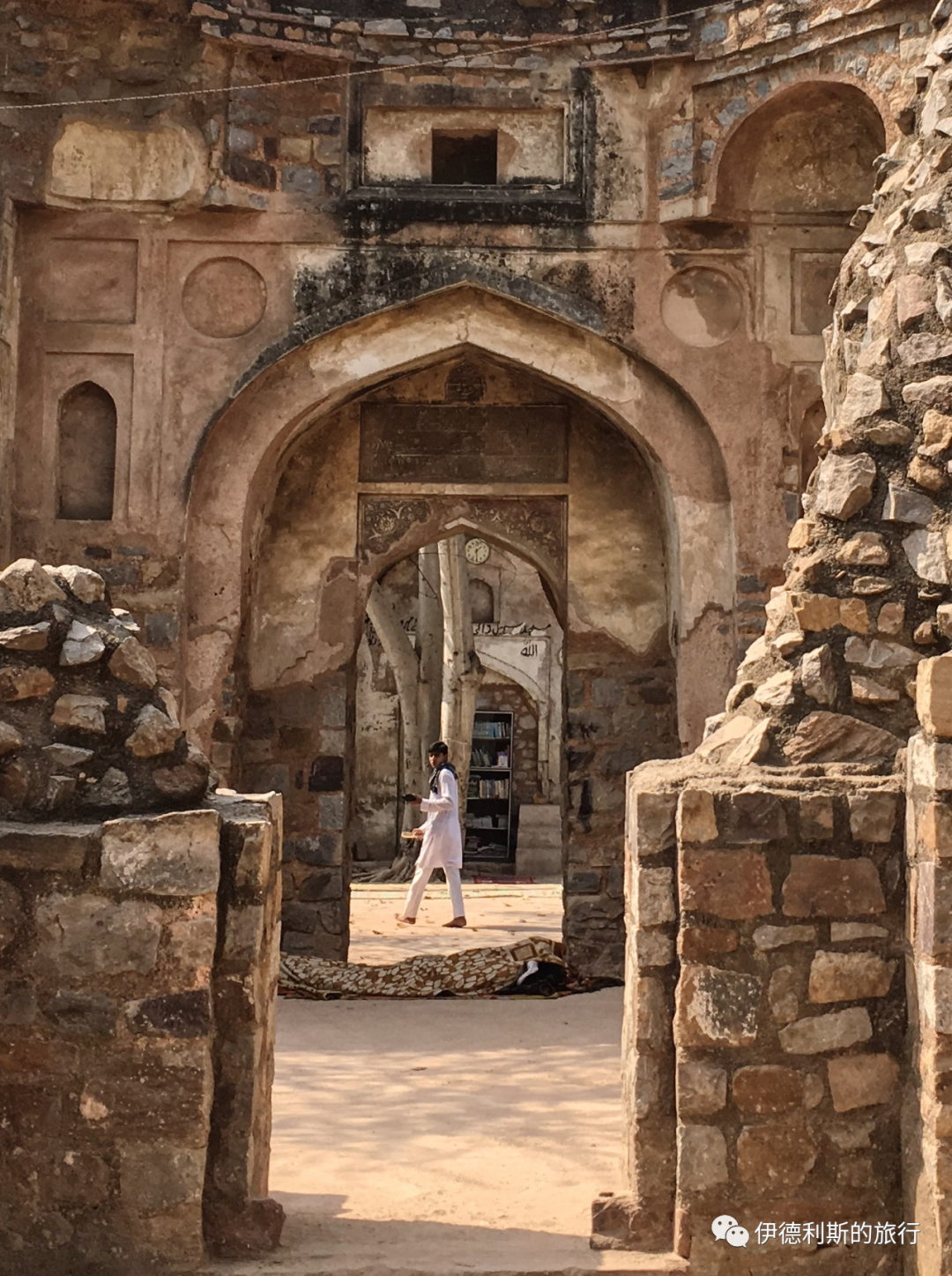
Madhi mosque: Lodi dynasty, 15th century
Continuing south from Jamali Kamali mosque, you reach Madhi mosque, built during the Lodi dynasty in the 15th century. The mosque is hidden in a mango orchard and is now a playground for pigeons and monkeys.
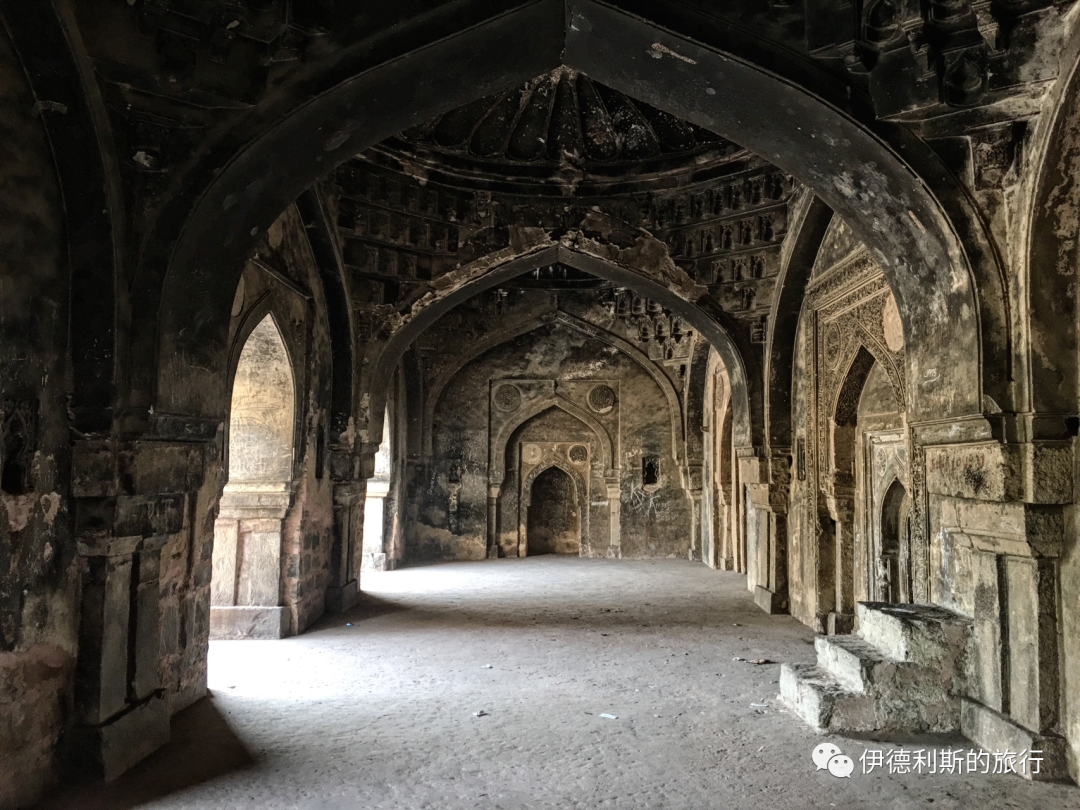
The design of this mosque is unique and very distinctive. The mosque sits on a platform. On the east side is a Lodi-style domed gate featuring stone windows (jharokha) in a very local Indian style. After climbing the steps and passing through the gate, you can see a spacious courtyard. There used to be graves in the middle of the courtyard, but most are gone now.
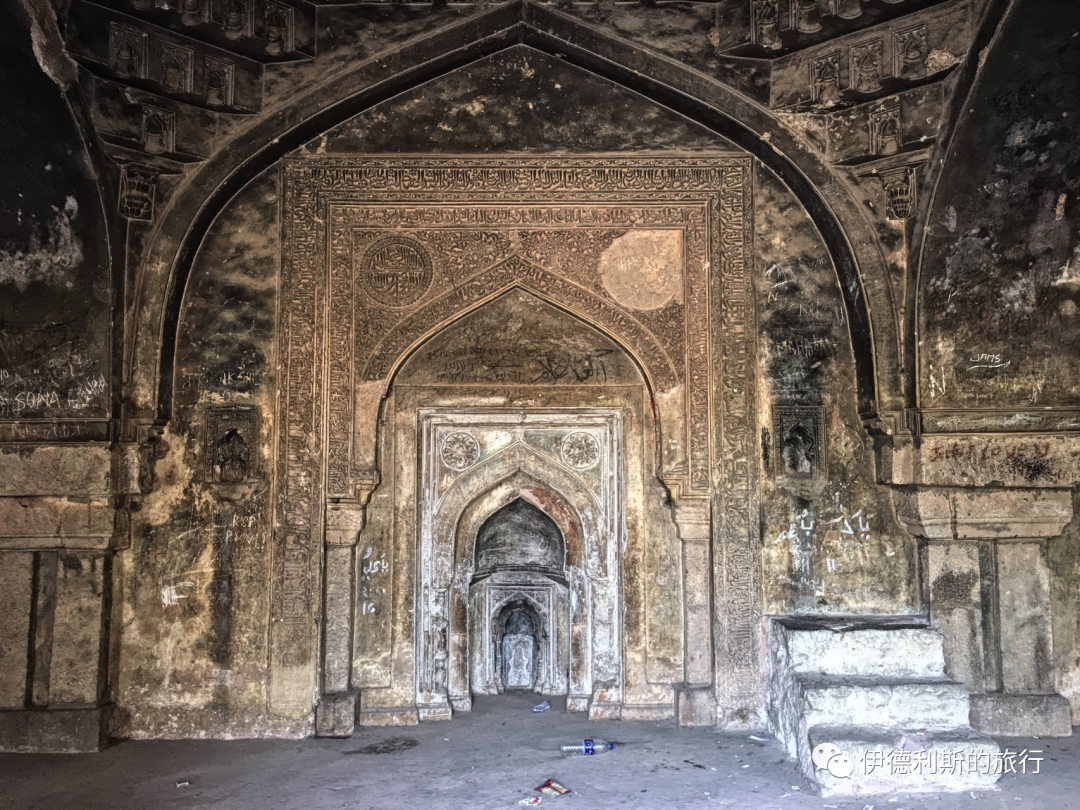
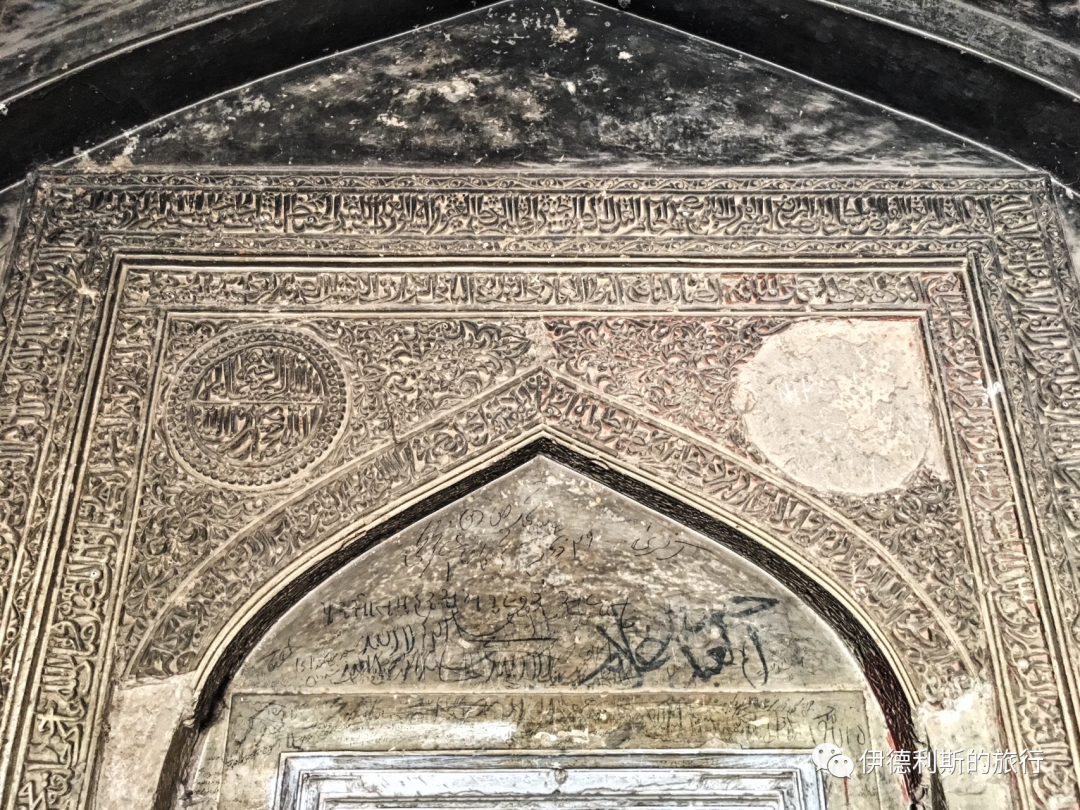
On the west side of the courtyard is an open-air prayer wall (qibla wall) consisting of three mihrabs, one large and two small. There were once carvings of scriptures on it, but almost nothing remains. Around the mihrabs are a series of small niches, and the top still has blue tiles often seen on Lodi dynasty buildings.
Interestingly, two roofed arcades were built on both sides of the prayer wall. This structure, which sits between an open-air prayer wall mosque and a roofed indoor mosque, is extremely rare, and there is still no definitive research explaining why it was built this way.
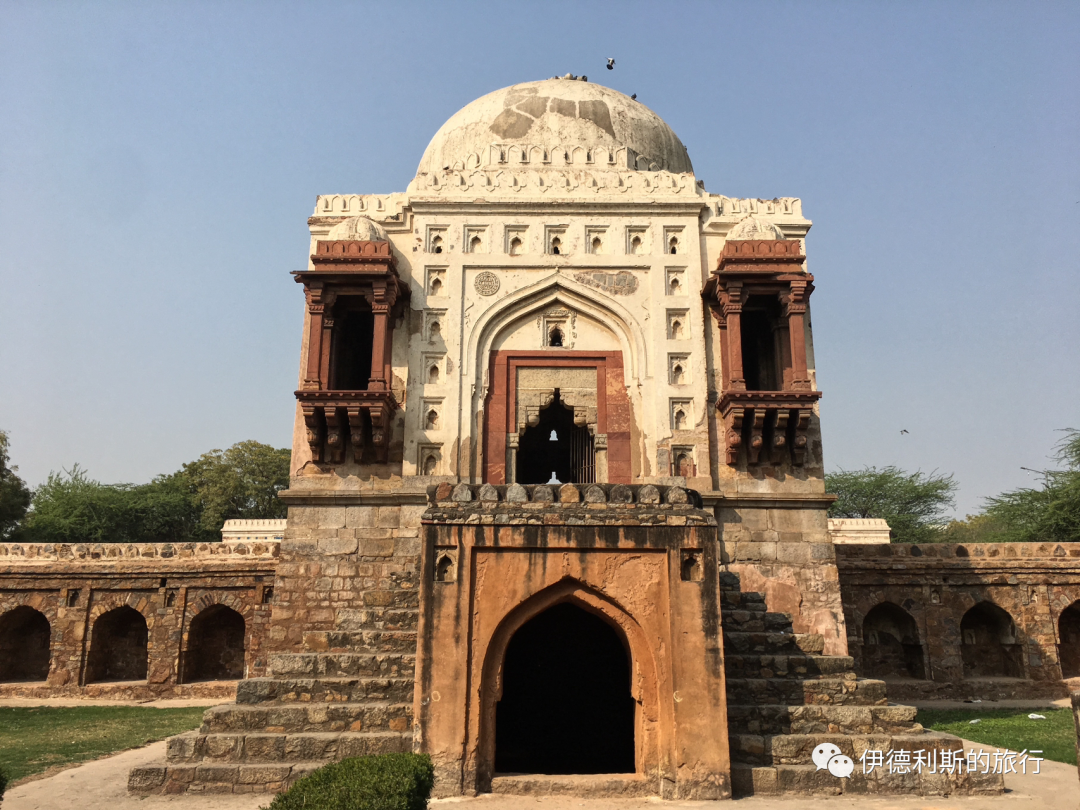
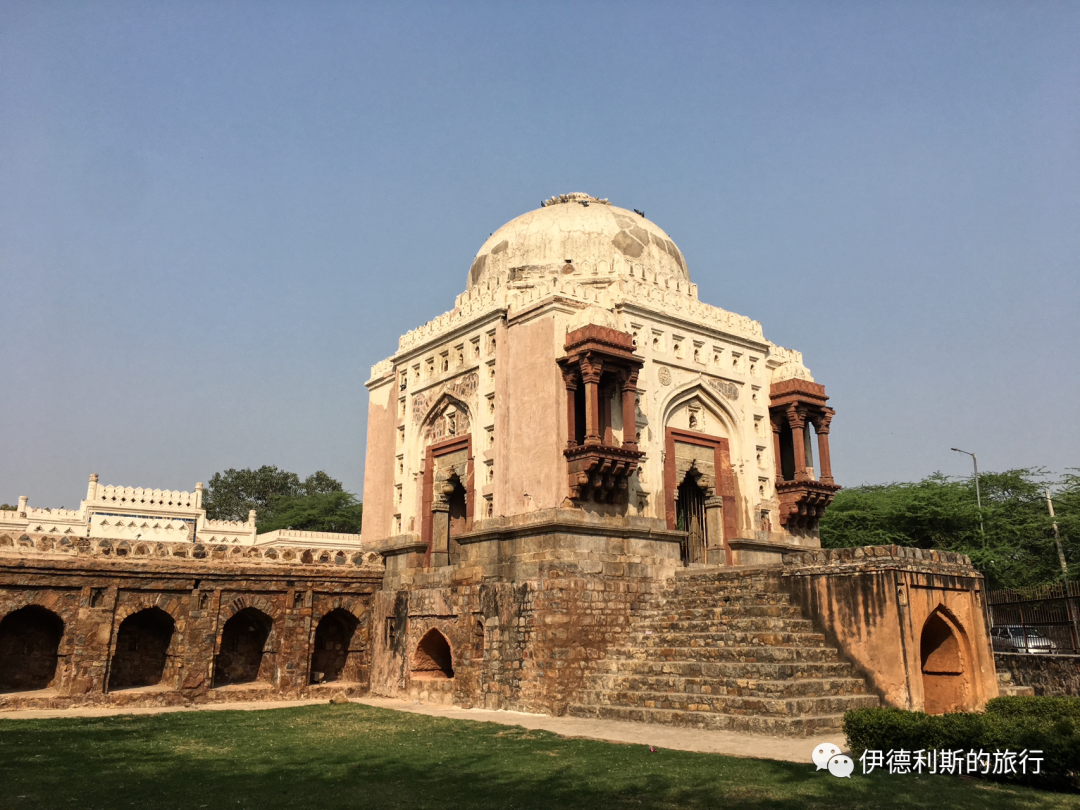
Bagichi mosque: Lodi dynasty, 15th century
To the west of Madhi mosque is another Lodi-era open-air prayer wall mosque called Bagichi. These two mosques are very similar in shape, both on large platforms, and the mihrabs are almost identical.
As a historical site in the archaeological park, it should be managed by the Archaeological Survey of India (ASI) like Madhi mosque. However, to address the education of local Muslim children, the Wakf board, which manages the mosque, currently uses it as a madrasa where local children can come to study.
After being kindly reminded that photography is prohibited inside the courtyard, I stayed outside and filmed the students playing cricket. The children here are all very cute and love to have their photos taken.
Rajon ki Boli stepwell: 1506
In the forest of the Mehrauli Archaeological Park in Delhi, there is a very beautiful stepwell (boli) called Rajon ki Boli, built in 1506 during the Lodi dynasty (1451-1526). The name Rojan likely comes from the stonemason Raj.
This Boli stepwell has four levels, including arched walkways and inner rooms, but you can usually only see three levels because the bottom one holds water. The Boli stepwell was not just for storing water; it was also a great place to cool off during the summer.
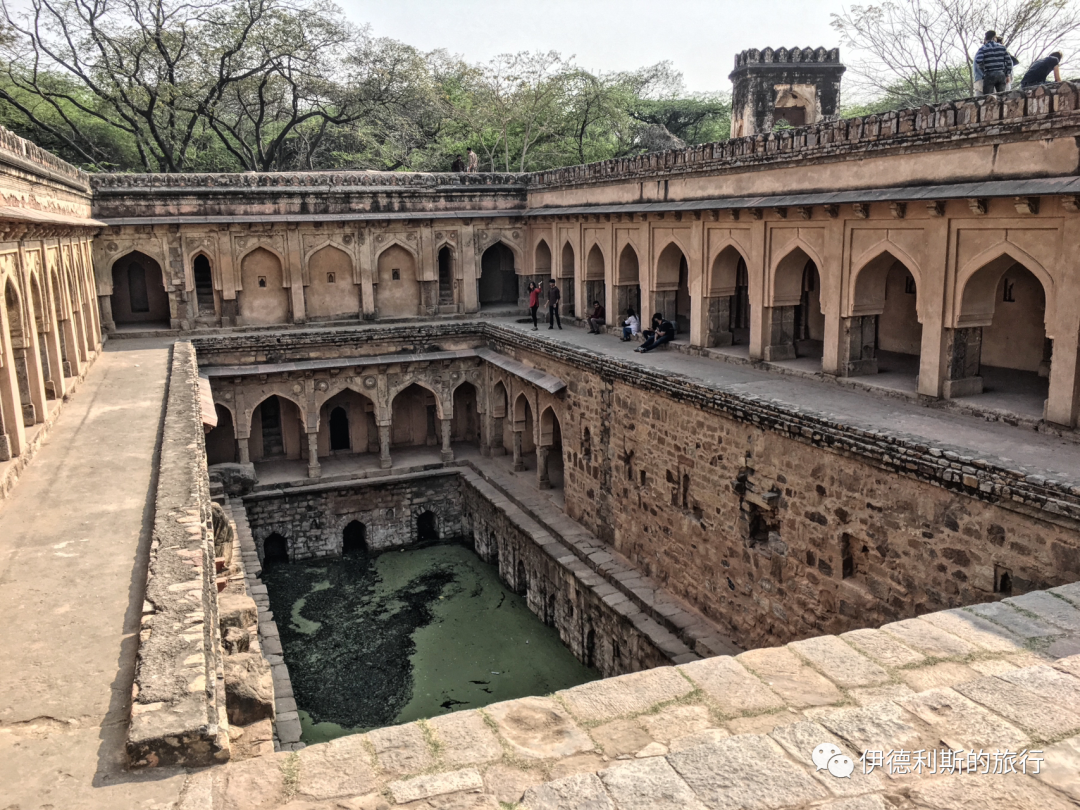
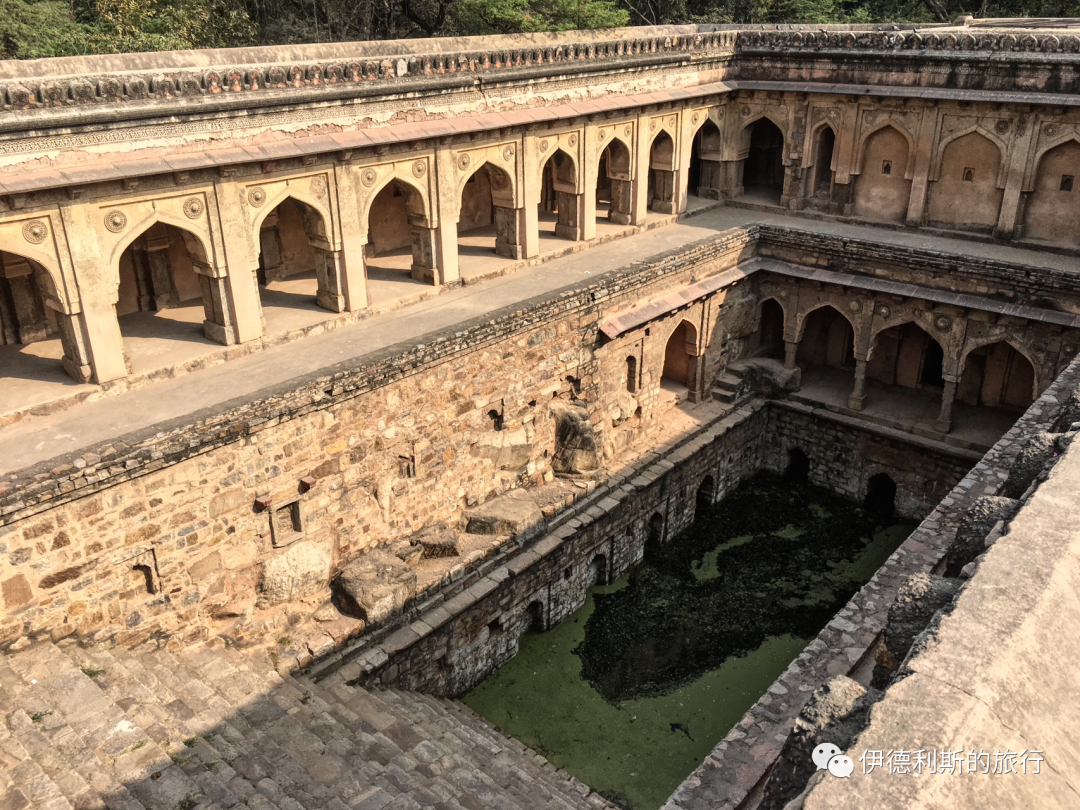
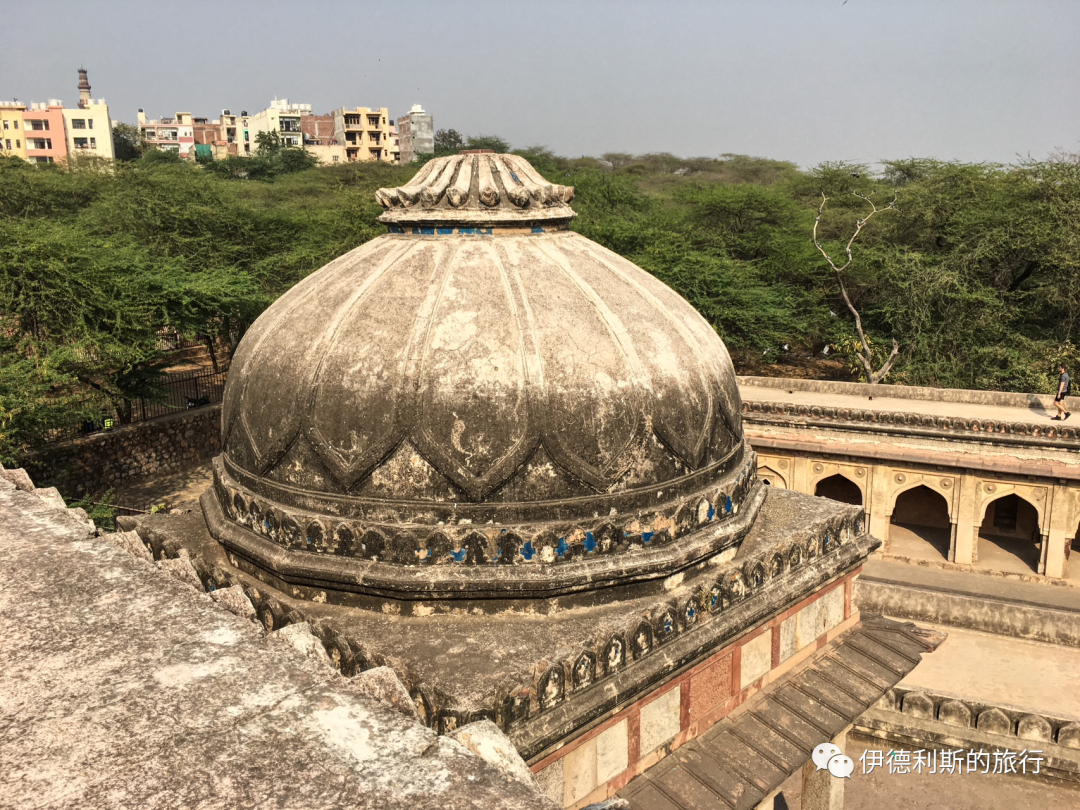
Above the Boli, there is a mosque and a tomb with a twelve-pillared domed pavilion (chhatri). The inscription says it was built in 1506 by Daulat Khan Khwaja Muhammad. The mosque features rich calligraphy carvings, and the top of the tomb has the classic petal design of the Lodi dynasty.
This combination of a stepwell, mosque, and tomb represents the Muslim view of the two worlds. The stepwell was built to help the neighborhood in this life, while the mosque and tomb were built to help reach Paradise in the next life.
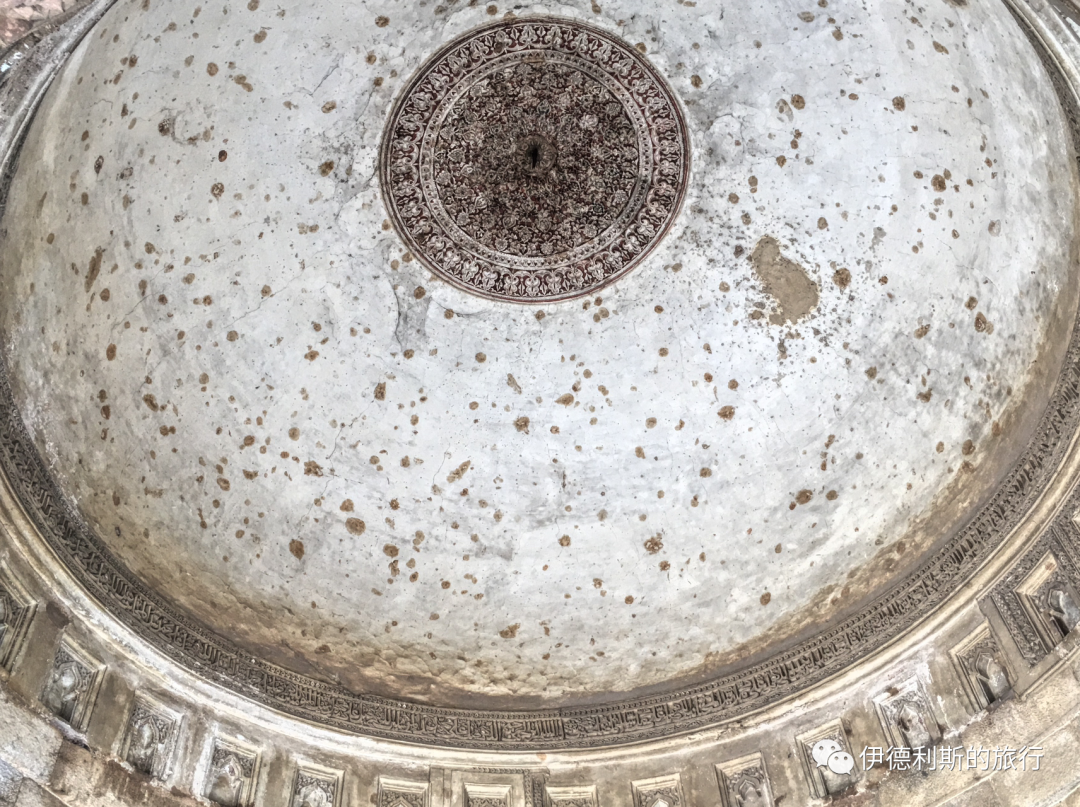
Adham Khan's Tomb: 1562
At the intersection southwest of the Qutub Minar area stands an octagonal tomb (gongbei) from the Mughal dynasty, built in 1562. It sits on the southern wall of Lal Kot, the first city of Delhi. The tomb belongs to Maham Anga, the foster mother of the Mughal Emperor Akbar, and her son, Adham Khan.
Maham Anga was very skilled at improving her own status and her son's position in the Mughal court. In 1560, Akbar had a falling out with his regent, Bairam Khan. For the next two years, Maham Anga became the actual regent of the Mughal dynasty, and her son became a top general.
In 1562, Adham Khan tried to murder his rival, Atagh Khan, who was Akbar's favorite general. Akbar caught him immediately. Akbar ordered his men to throw Adham Khan off the city wall twice until he died. Maham Anga was heartbroken when she heard the news of her son's death and died of grief just forty days later.
After Maham Anga and her son died, Akbar ordered a tomb to be built for them. Although it was built at the same time as Humayun's Tomb, this is the last octagonal tomb (gongbei) in the Lodi dynasty style in Indian history. Some say it was designed specifically for a traitor because octagonal shapes do not appear in any other Mughal buildings of that time, though they were common in the earlier Sur dynasty and the Lodi dynasty of the Delhi Sultanate. Adham Khan's tomb also has some early Mughal features, such as the six-pointed star patterns on the outer wall, which are exactly the same as those on Humayun's Tomb.
In the 1830s, a British officer named Blake turned this place into a dining hall and removed the tombstones of Maham Anga and her son. After Blake died, the site was used as a guesthouse, a police station, and a post office. Between 1899 and 1905, Viceroy George Nathaniel Curzon ordered the tomb to be restored and Adham Khan's tombstone replaced, but his mother Maham Anga's tombstone was never found.
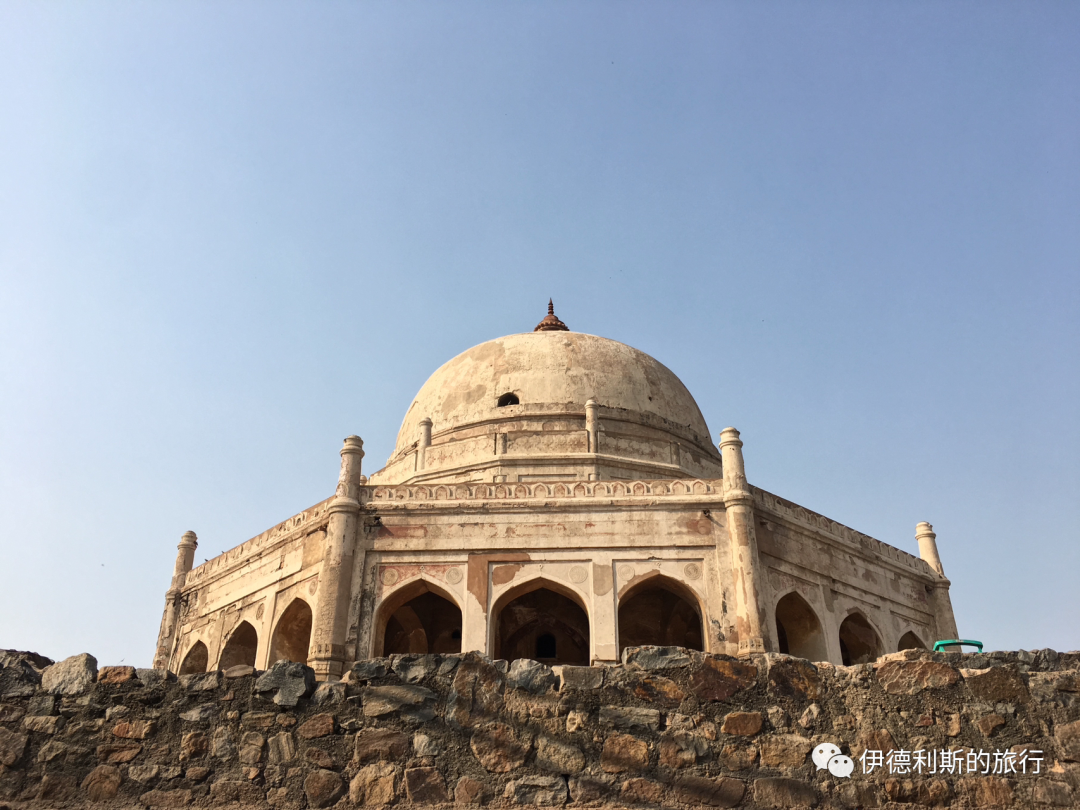
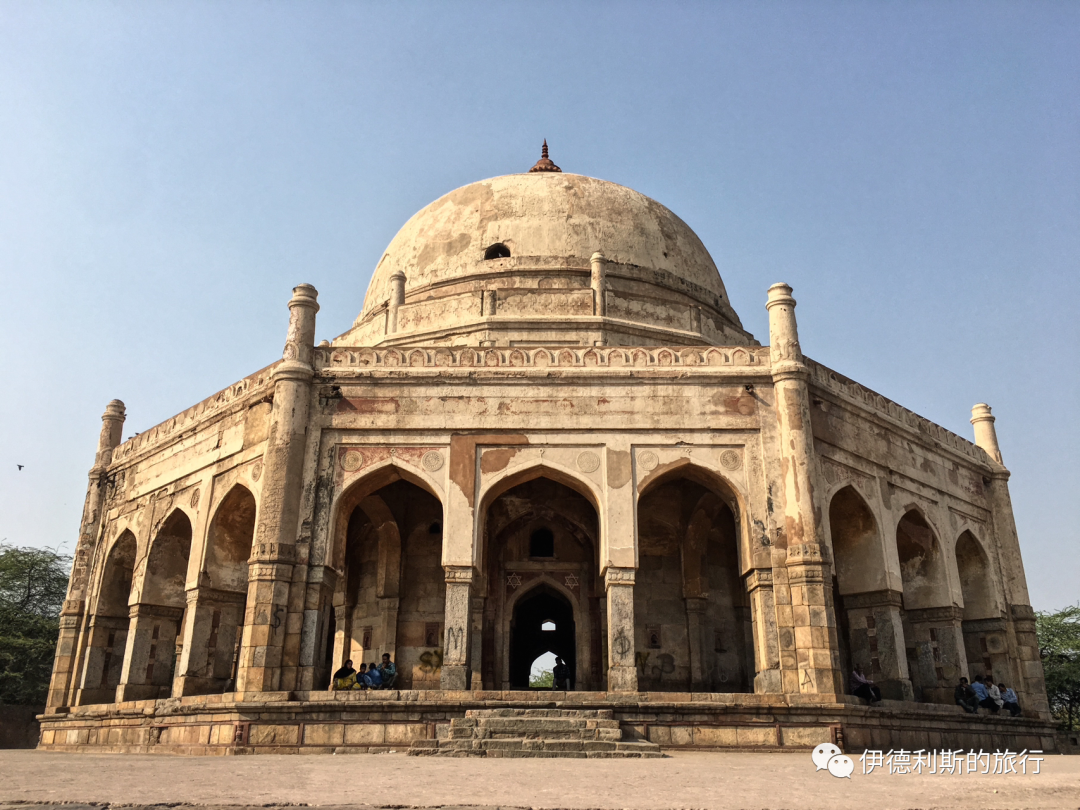
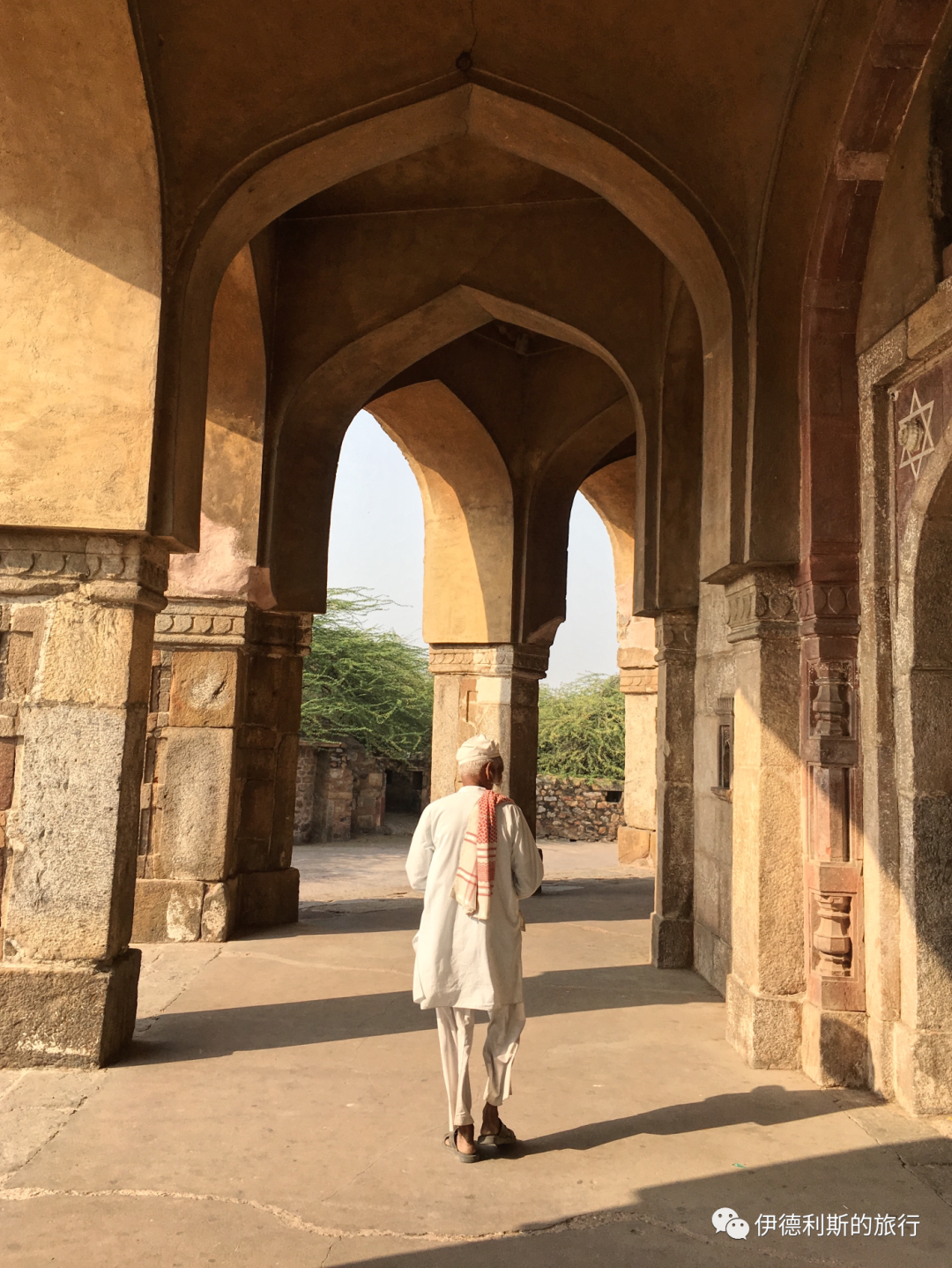
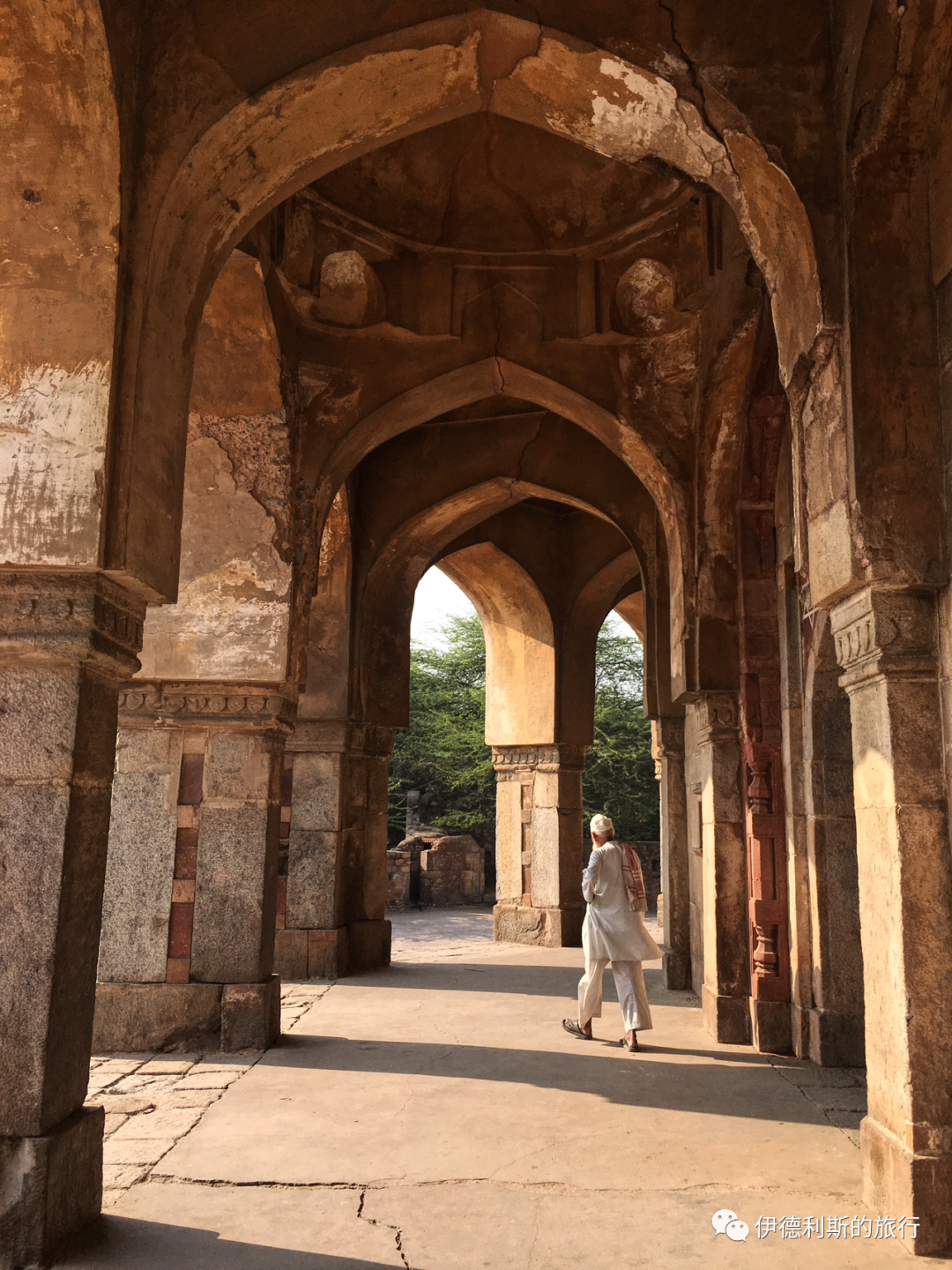
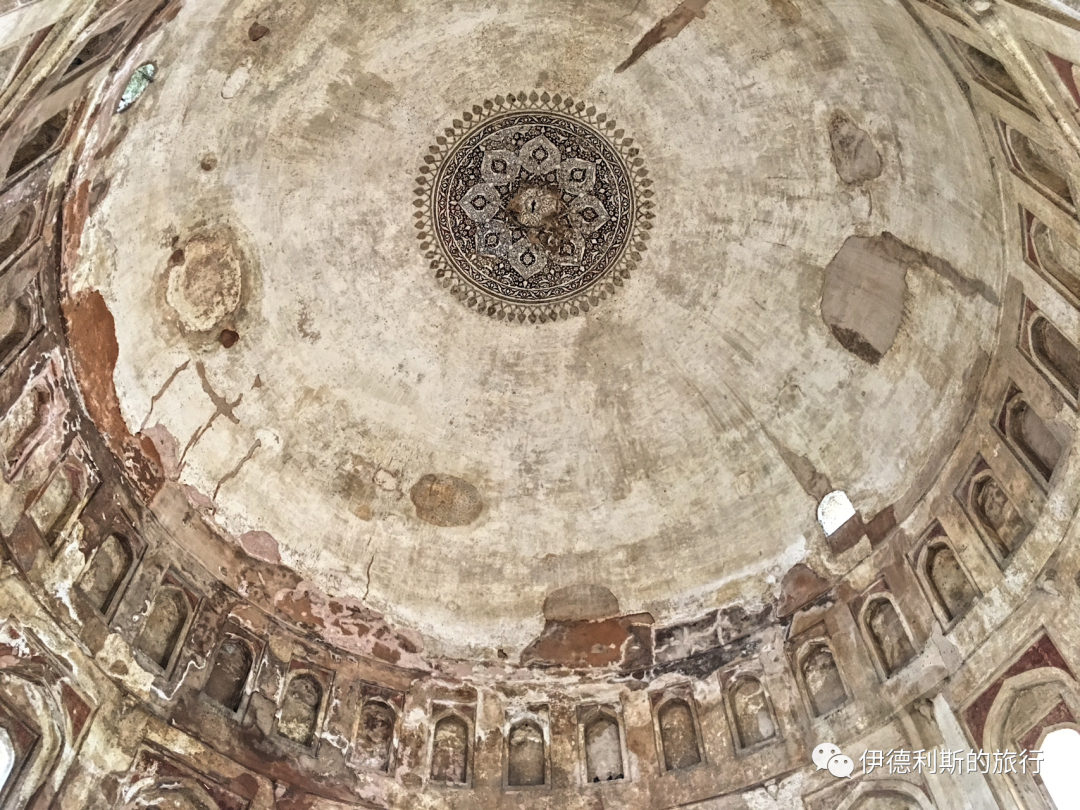
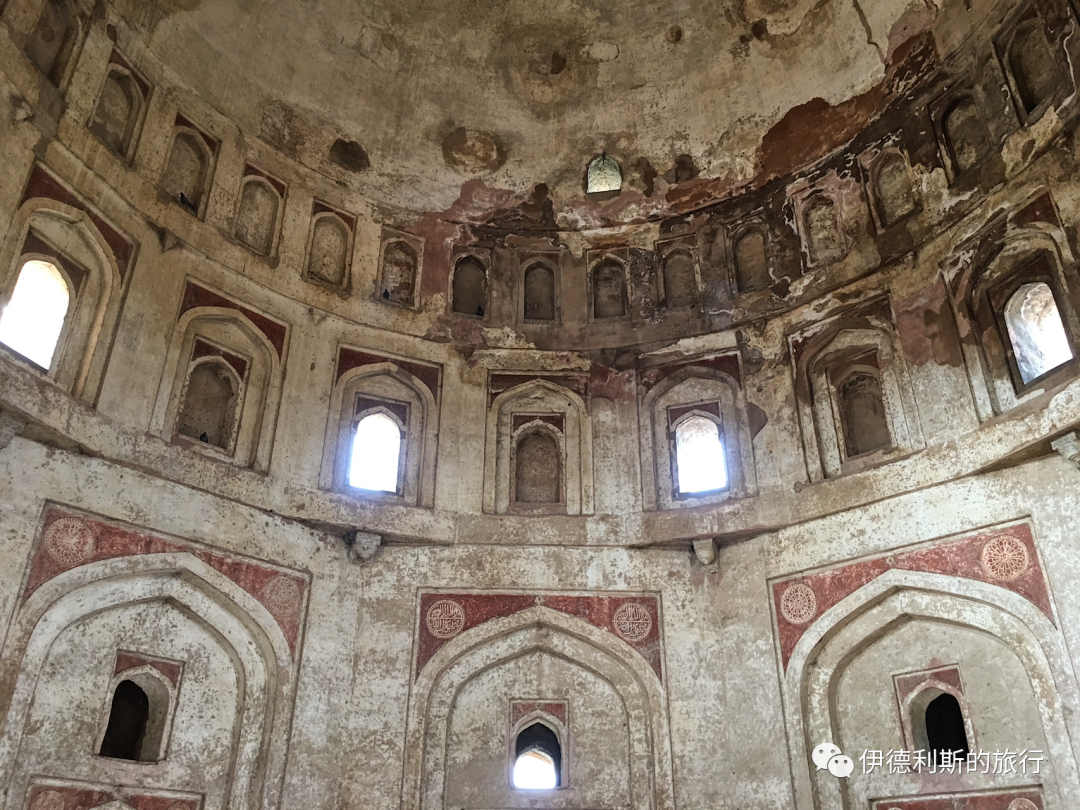
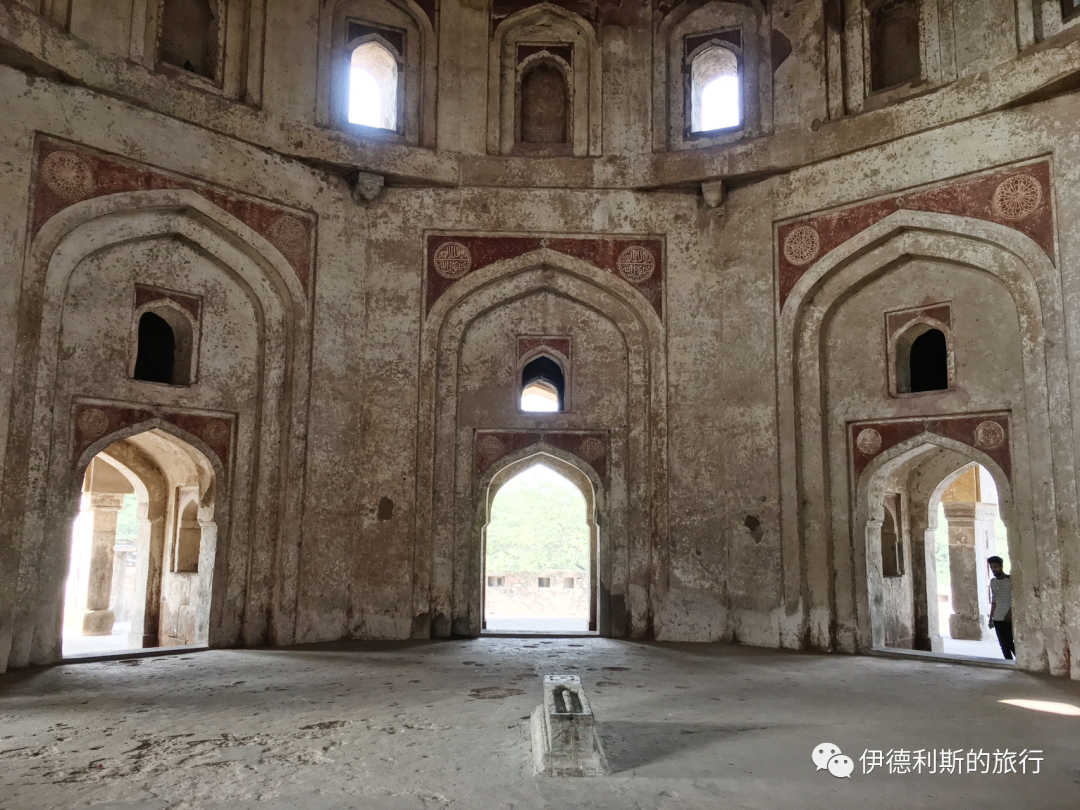
Chaumukha Darwaza: 14th-15th century
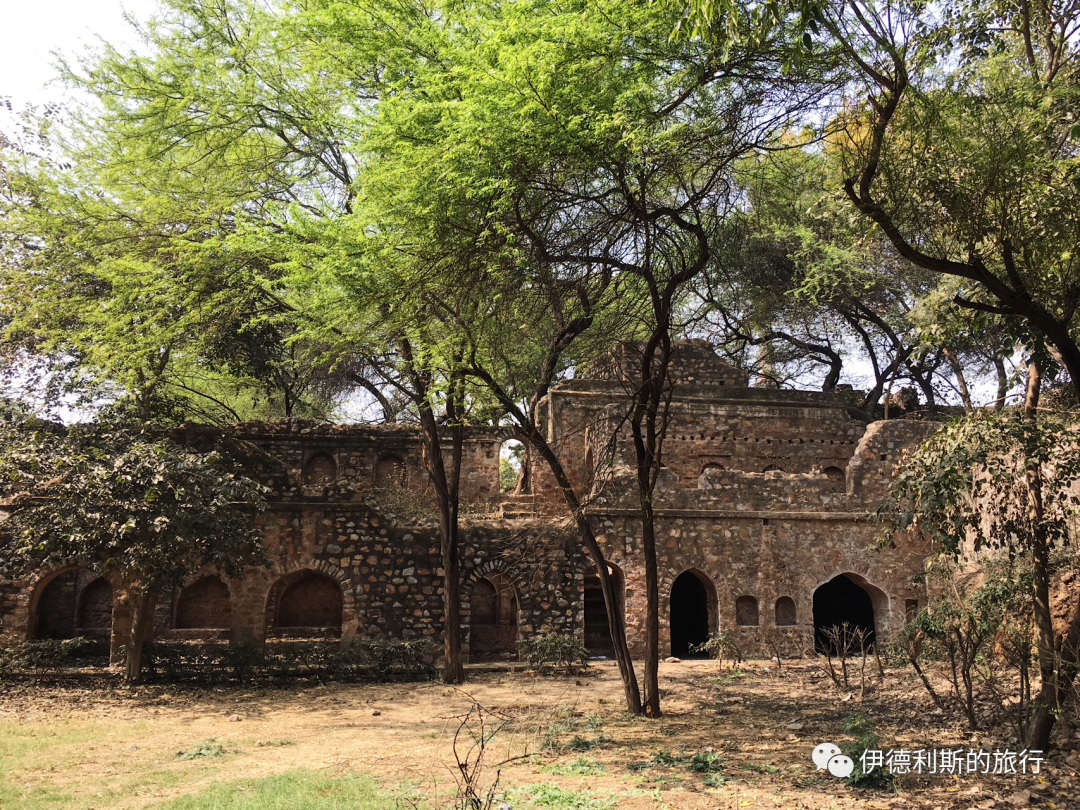
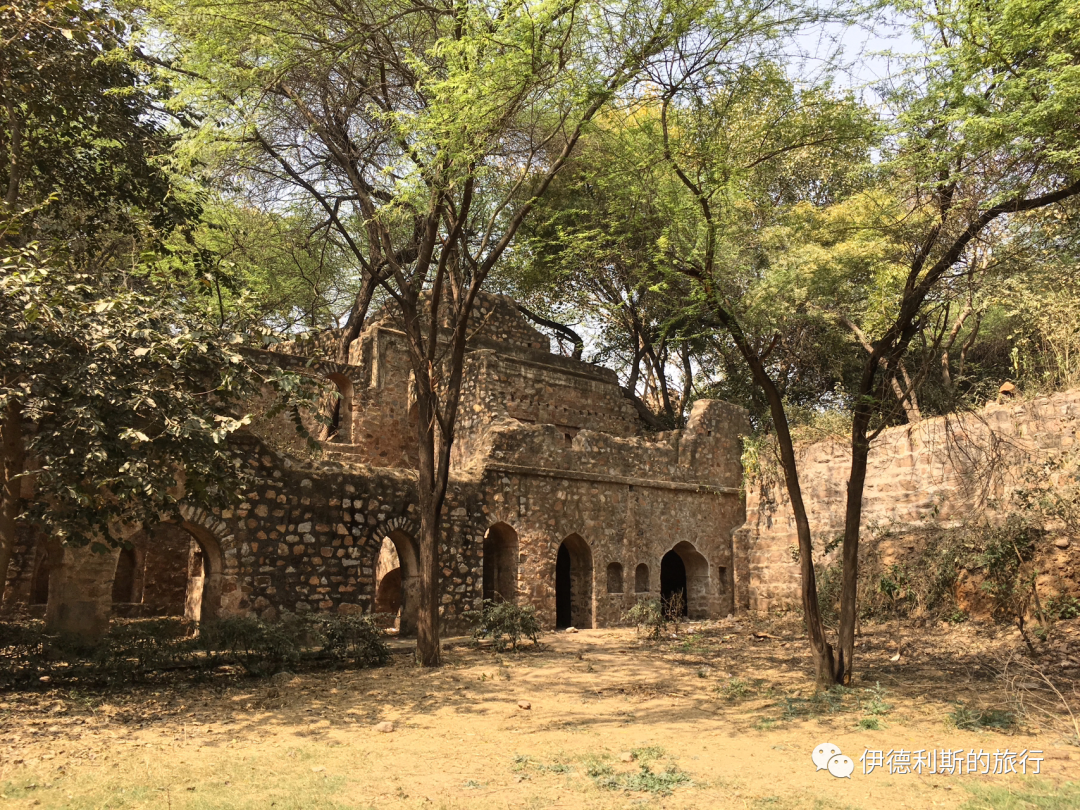
When you exit the southeast gate of the Qutub Minar area and take the small path into the archaeological park, the first monument you see is the ruins called Chaumukha Darwaza. It is believed that this was once a gate to the city of Lal Kot. It has the style of the Tughlaq dynasty (1320-1413) of the Delhi Sultanate and may have been repaired during the Lodi dynasty.
Muhammad Quli Khan's Tomb: Early 17th century
South of Chaumukha Darwaza is an octagonal Mughal tomb from the early 17th century with beautiful calligraphy carvings. The tomb belongs to Muhammad Quli Khan, who was the son of Maham Anga, the foster mother of the Mughal Emperor Akbar (reigned 1556-1605), and the younger brother of Adham Khan.
After the 19th century, the site was bought by Sir Thomas Metcalfe, an agent to the court of the last Mughal Emperor Bahadur Shah II (reigned 1837-1857). He converted it into a vacation garden in the European style called Dilkhusha, which means 'joy of the heart' in Urdu.
Sir Metcalfe turned the tomb into a dining hall and added wings as living rooms, bedrooms, and bathrooms. Today, only the ruins of one wing remain. Besides this, Sir Metcalfe converted other nearby buildings into guest rooms, staff quarters, and stables, but many of these have not survived.
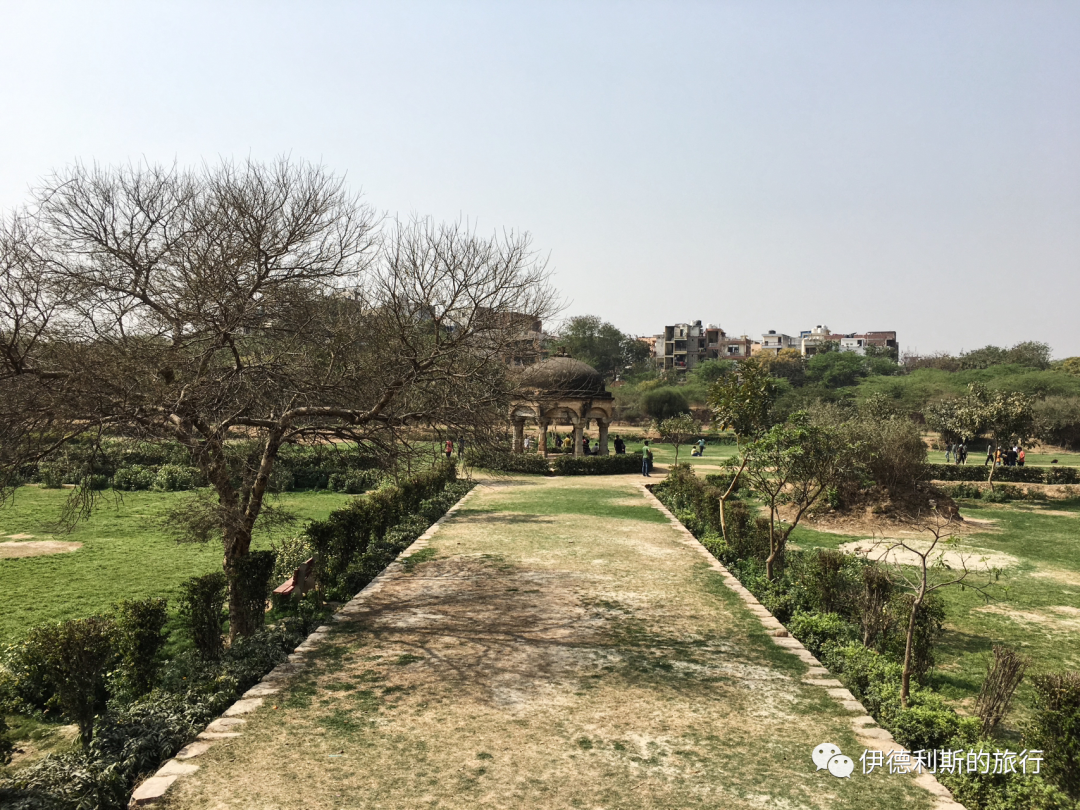
Other Lodi Dynasty Tombs: 15th-16th century
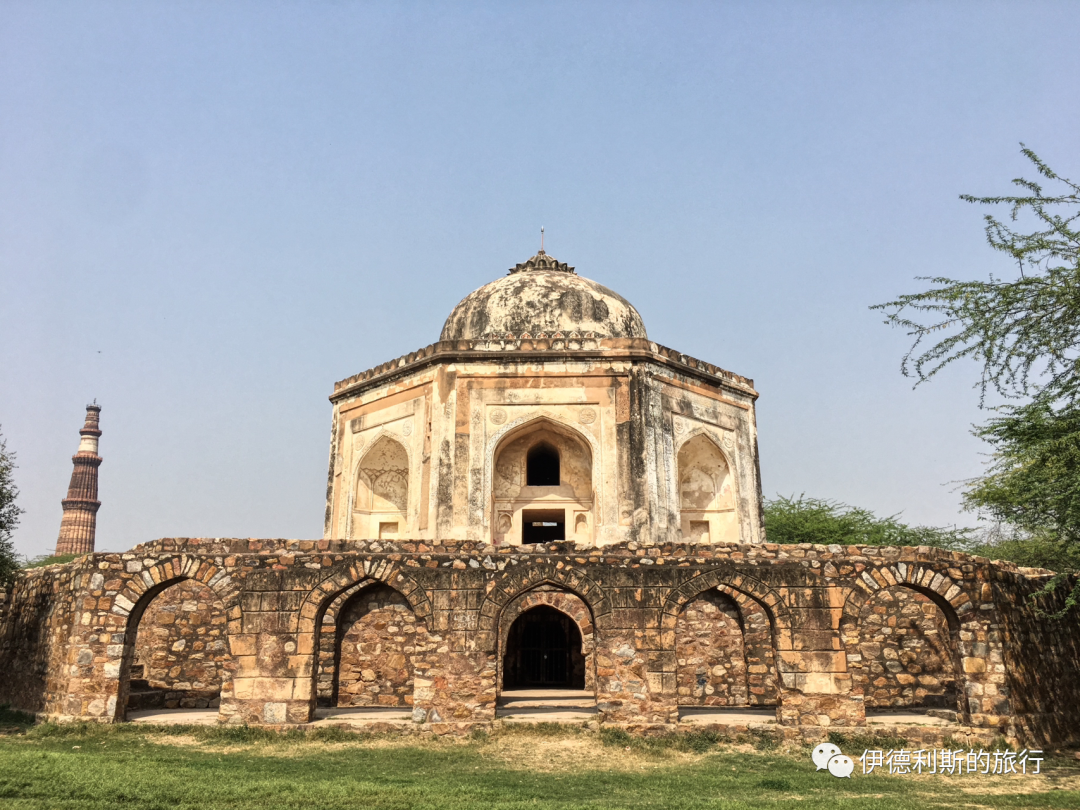
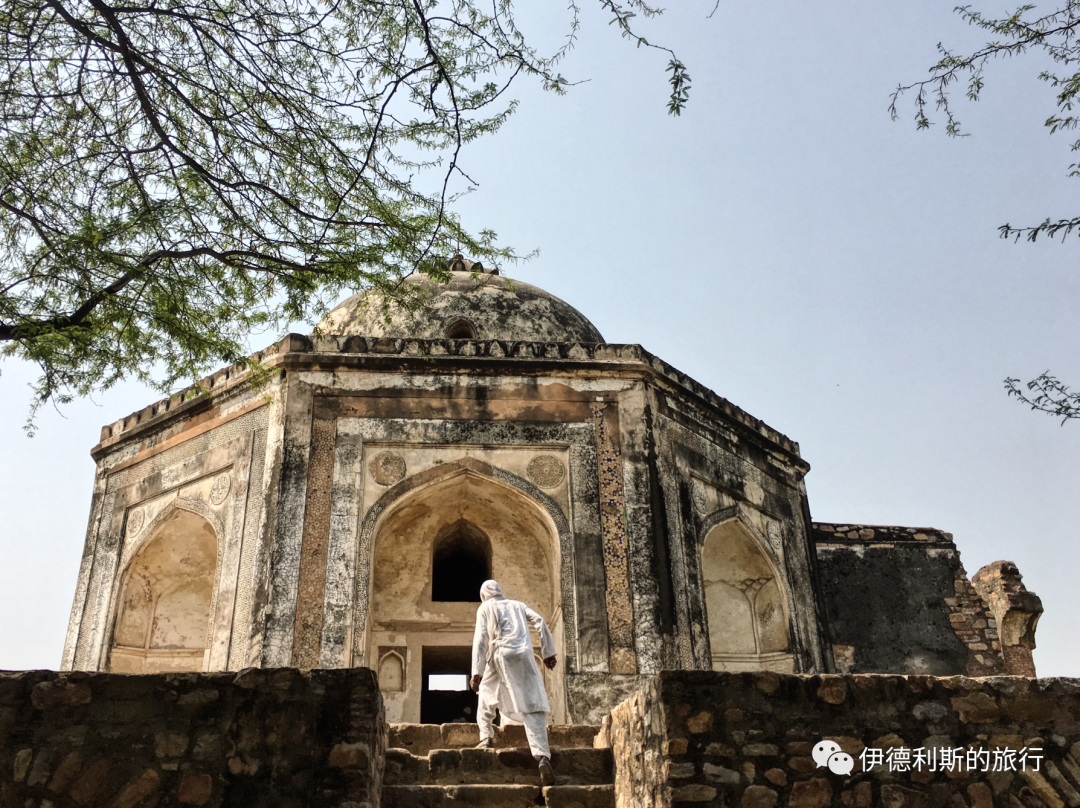
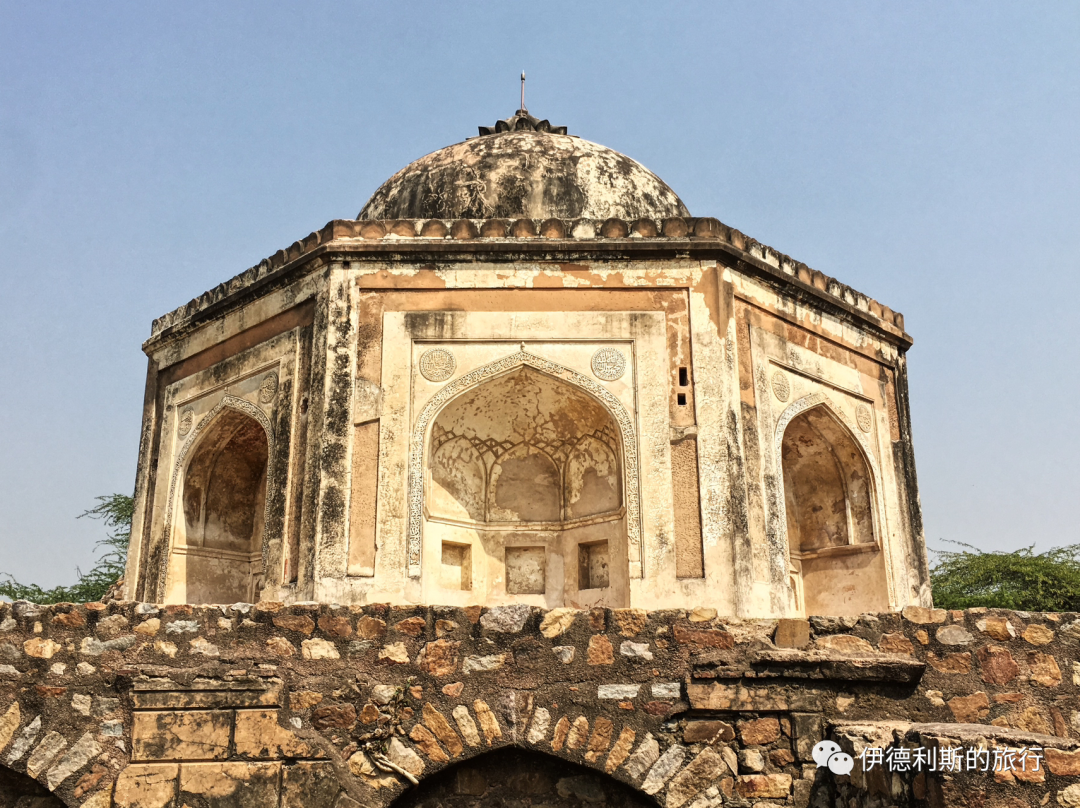
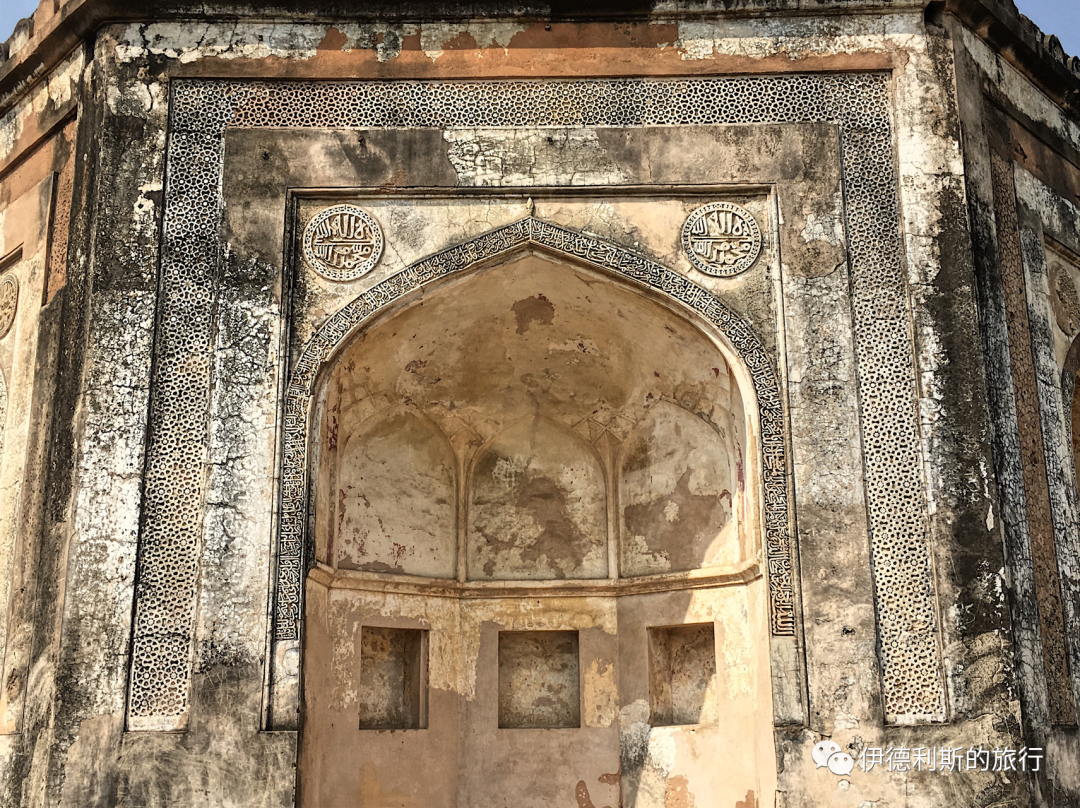
South of Adham Khan's tomb is a tomb from the Lodi dynasty (1451-1526) of the Delhi Sultanate. The person buried here is unknown. The tomb sits on a platform. In the center is a domed pavilion (chhatri) made of twelve pillars, surrounded by more than twenty graves. There is an octagonal corner platform on each side of the terrace.
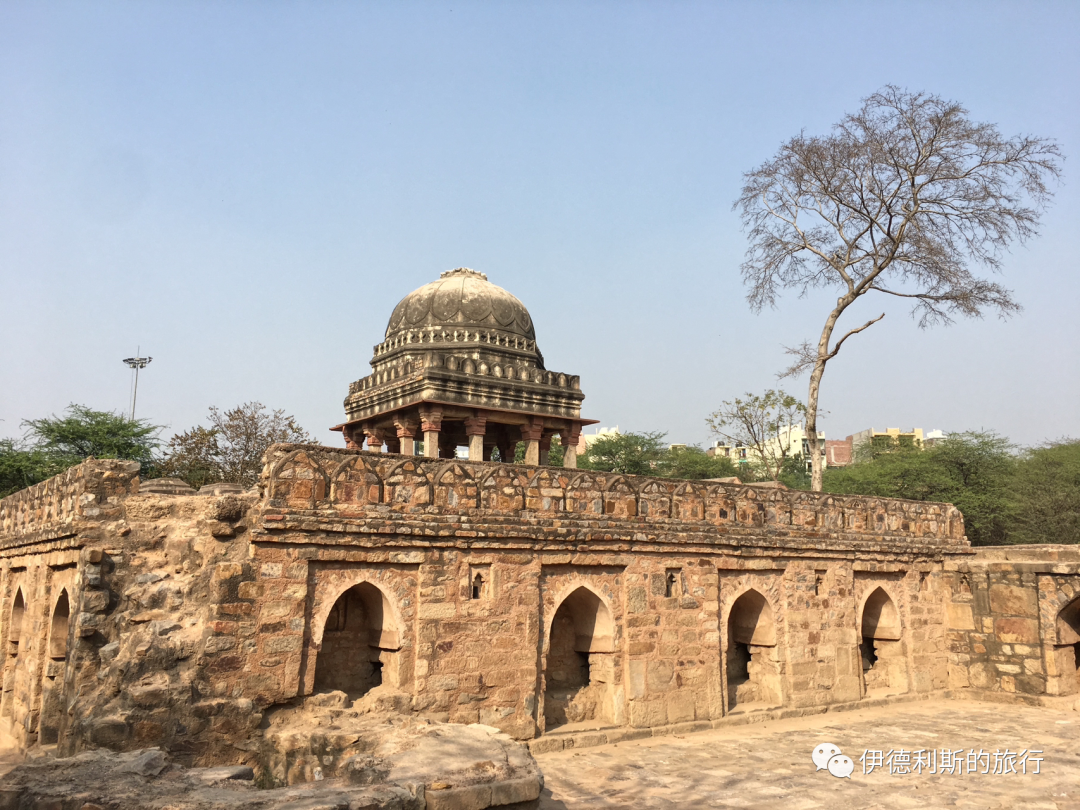
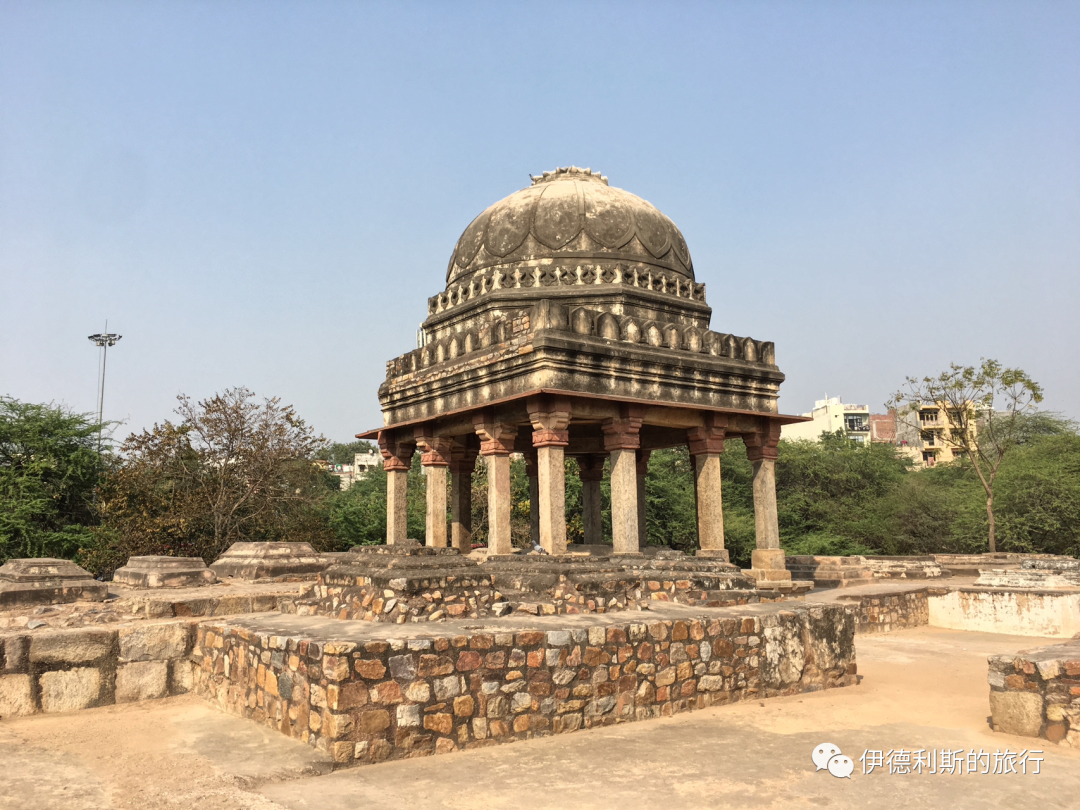
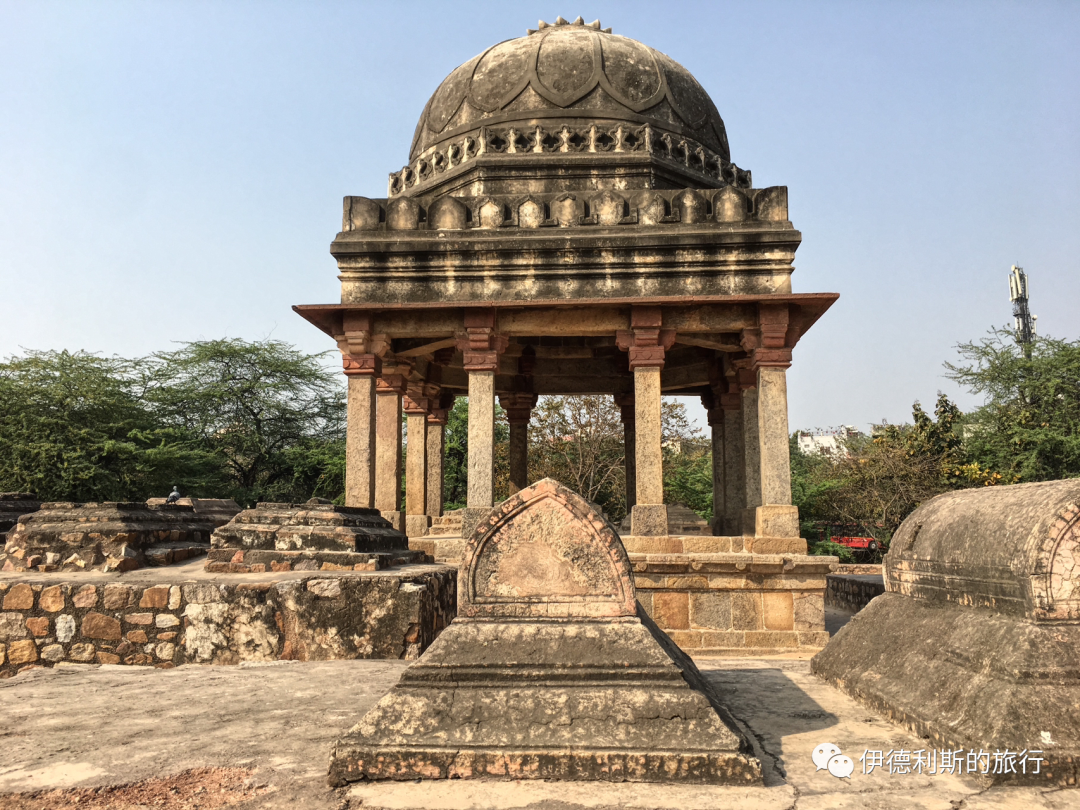
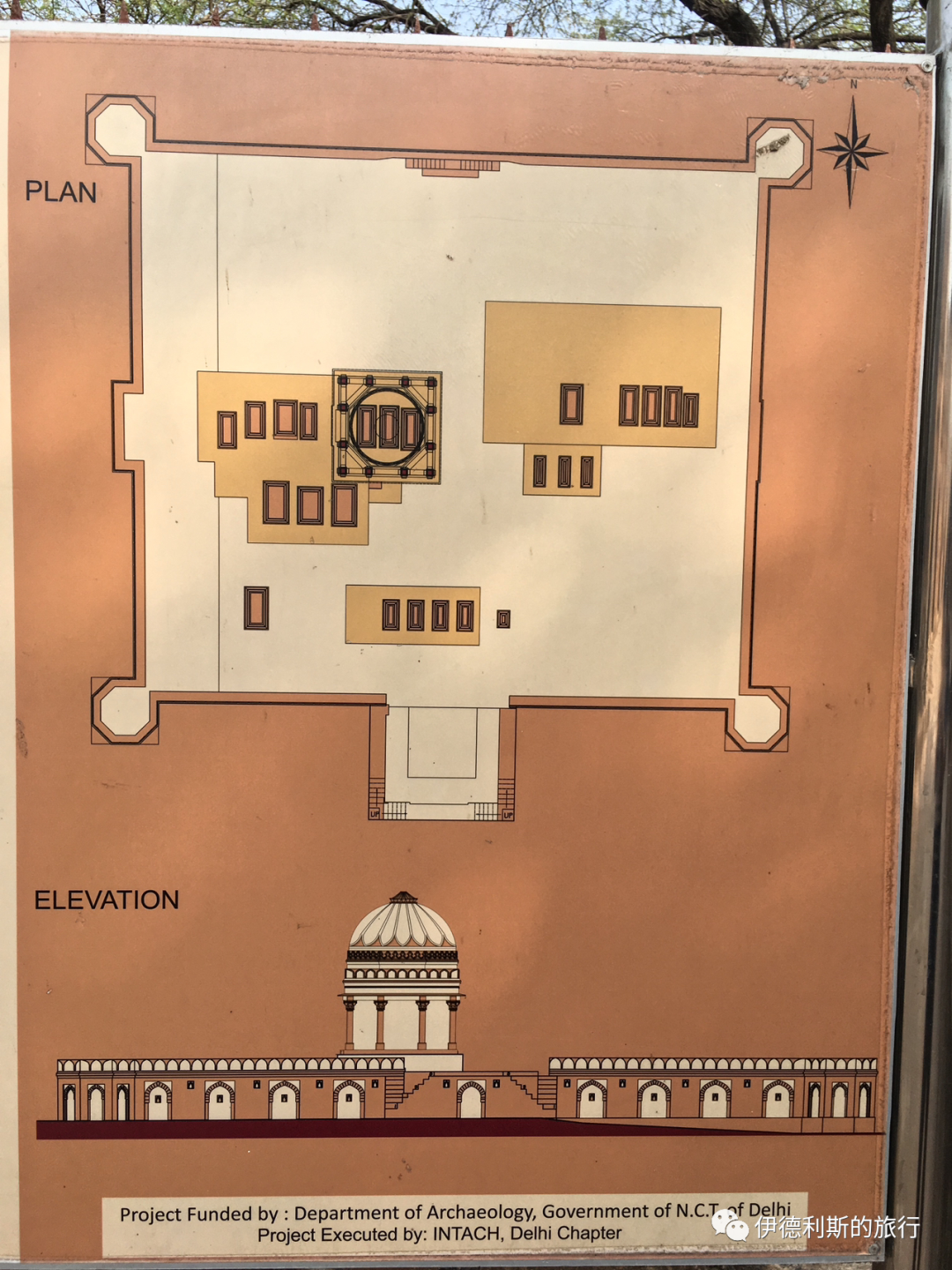
Stroll along the forest paths in the eastern part of the archaeological park to see a series of tombs from the Lodi dynasty. These structures were once half-buried in silt, but the Indian National Trust for Art and Cultural Heritage (INTACH) recently cleaned and restored them.
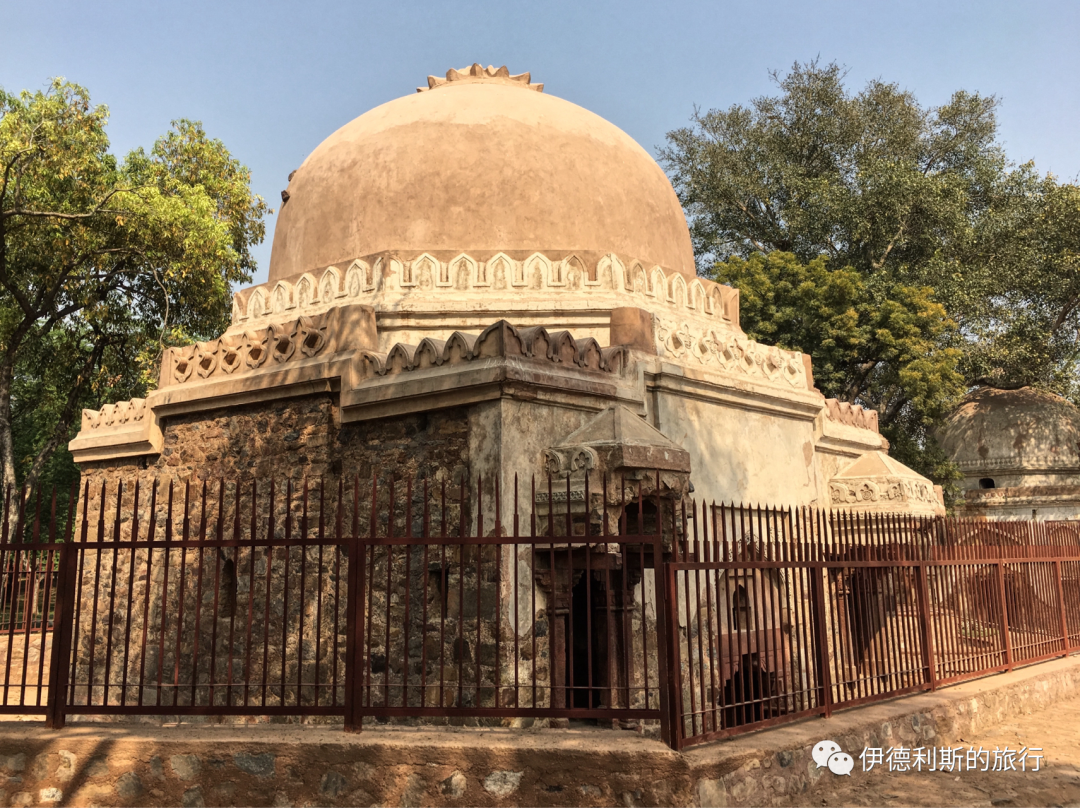
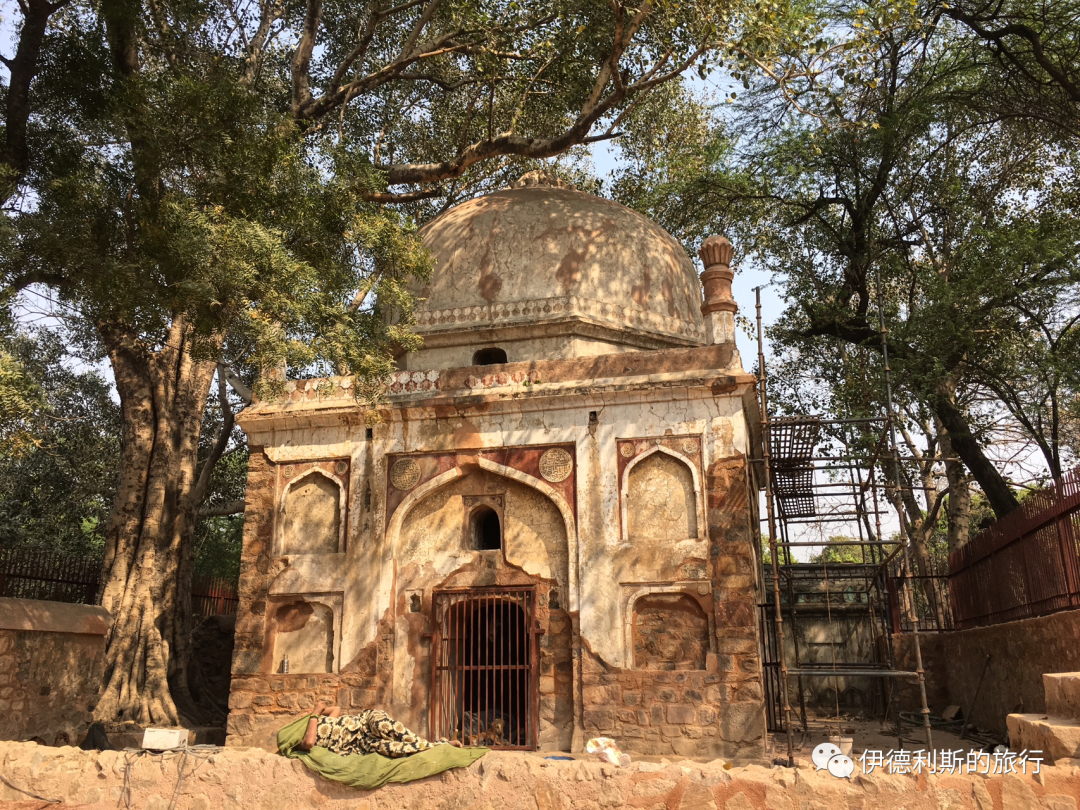
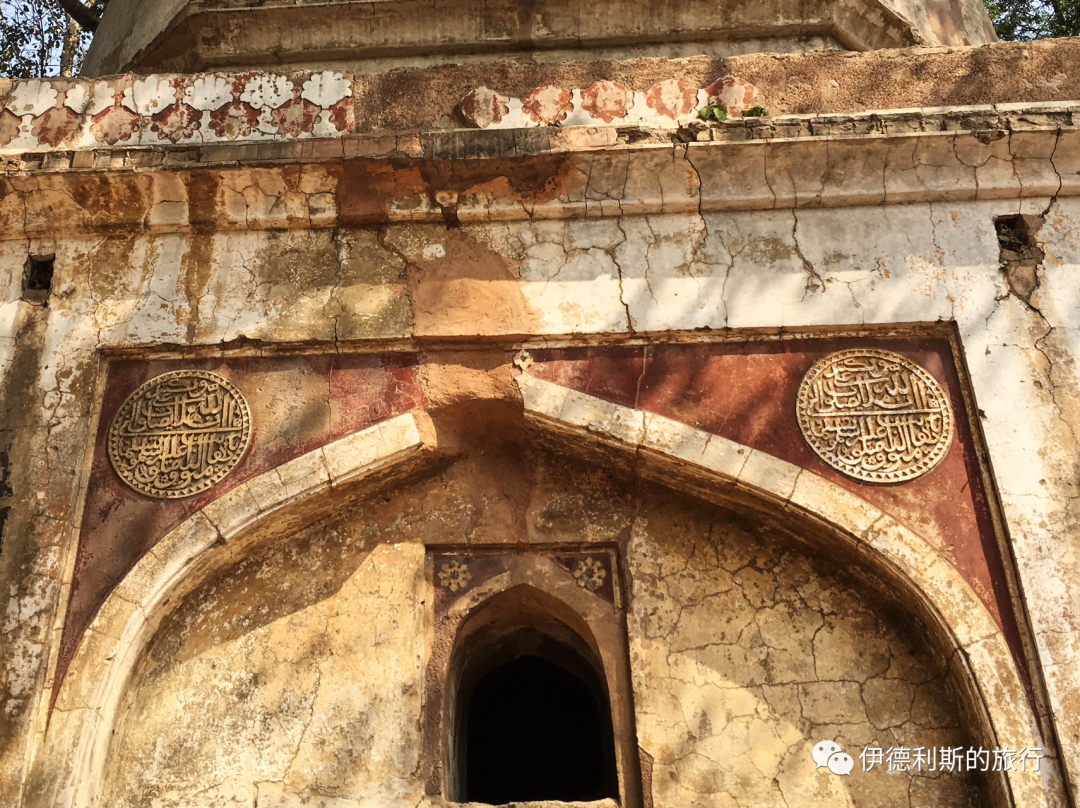
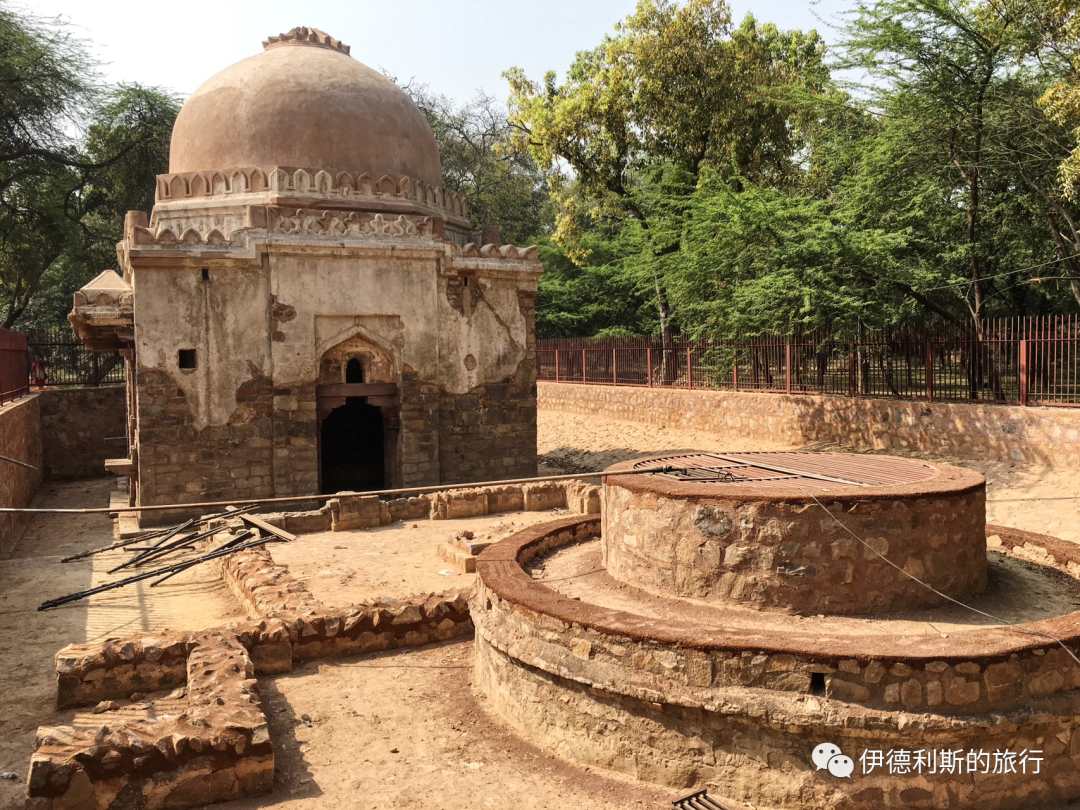
The park contains many other Lodi dynasty tombs and prayer wall mosques, including many ancient monuments with no clear historical records.
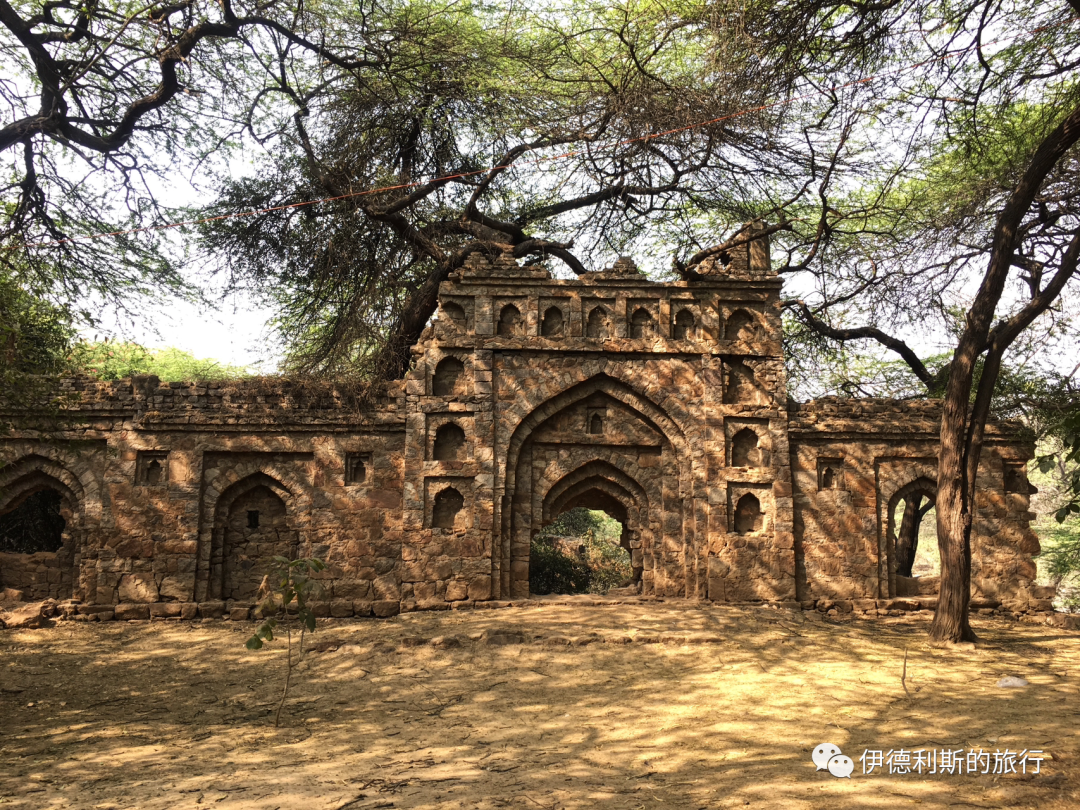
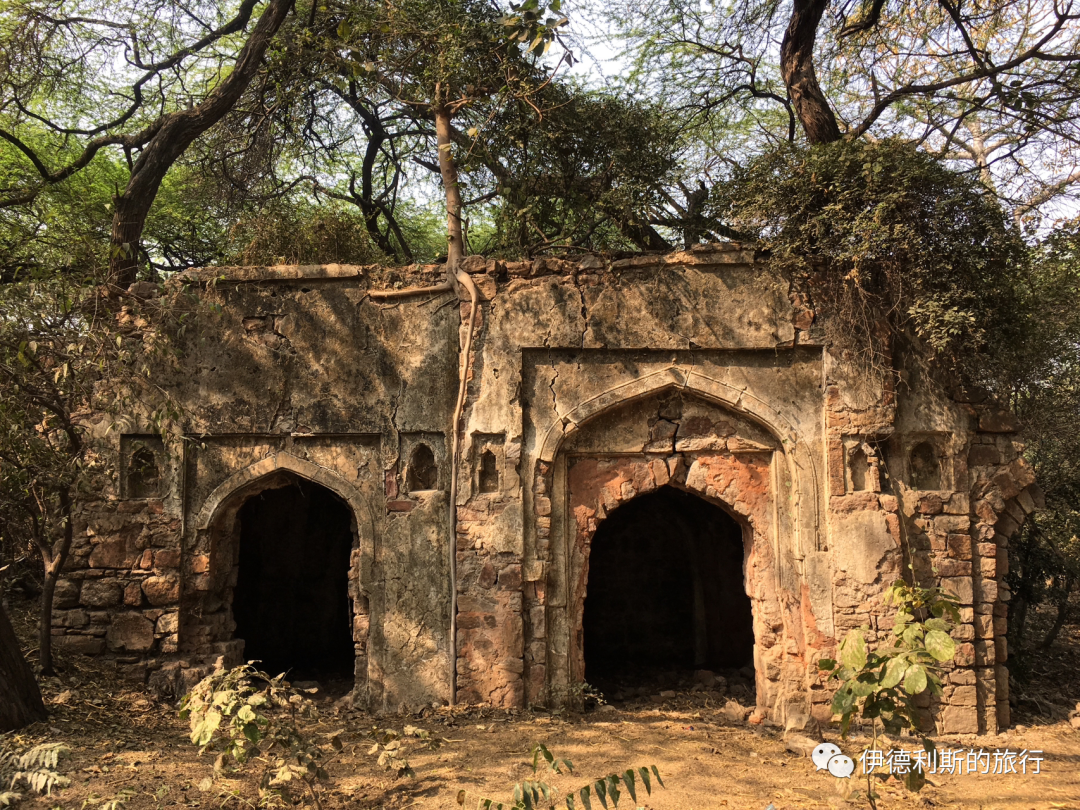
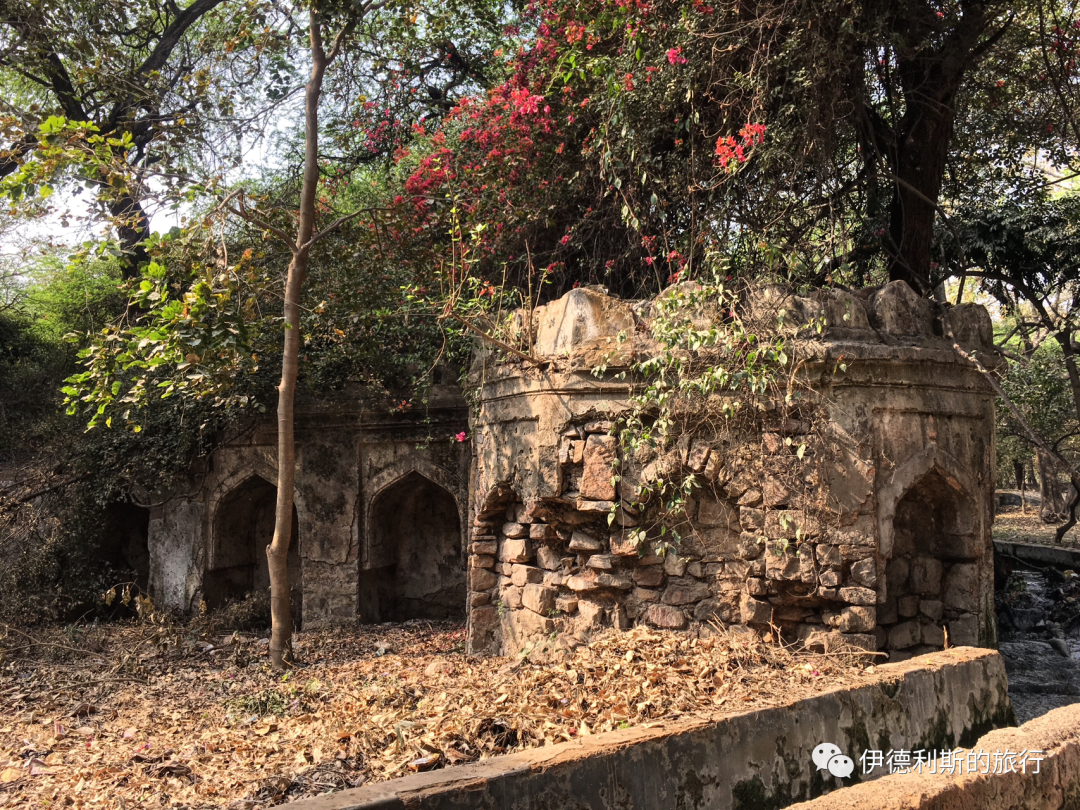
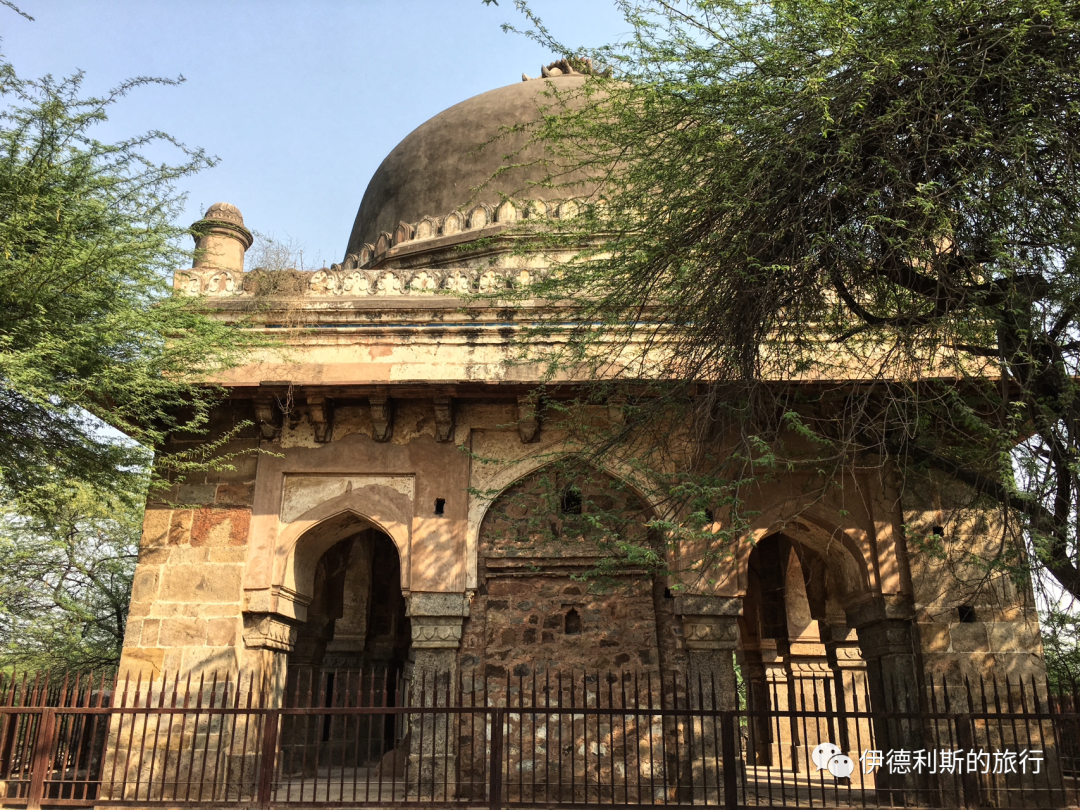
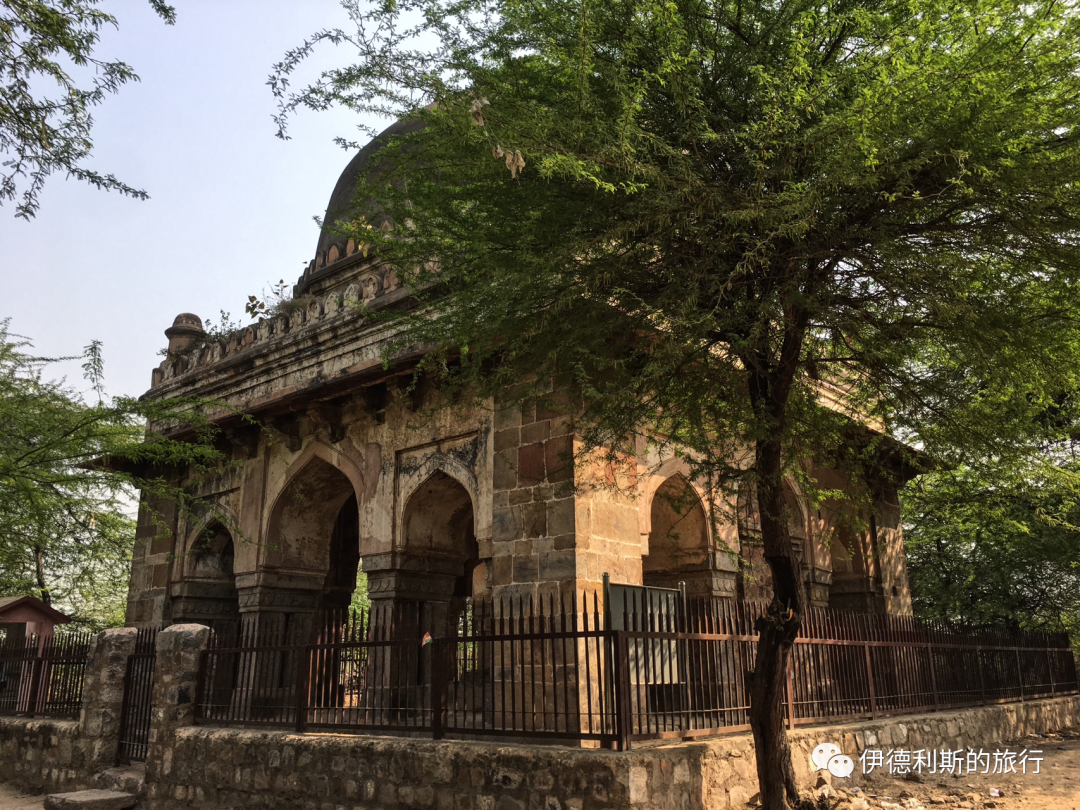
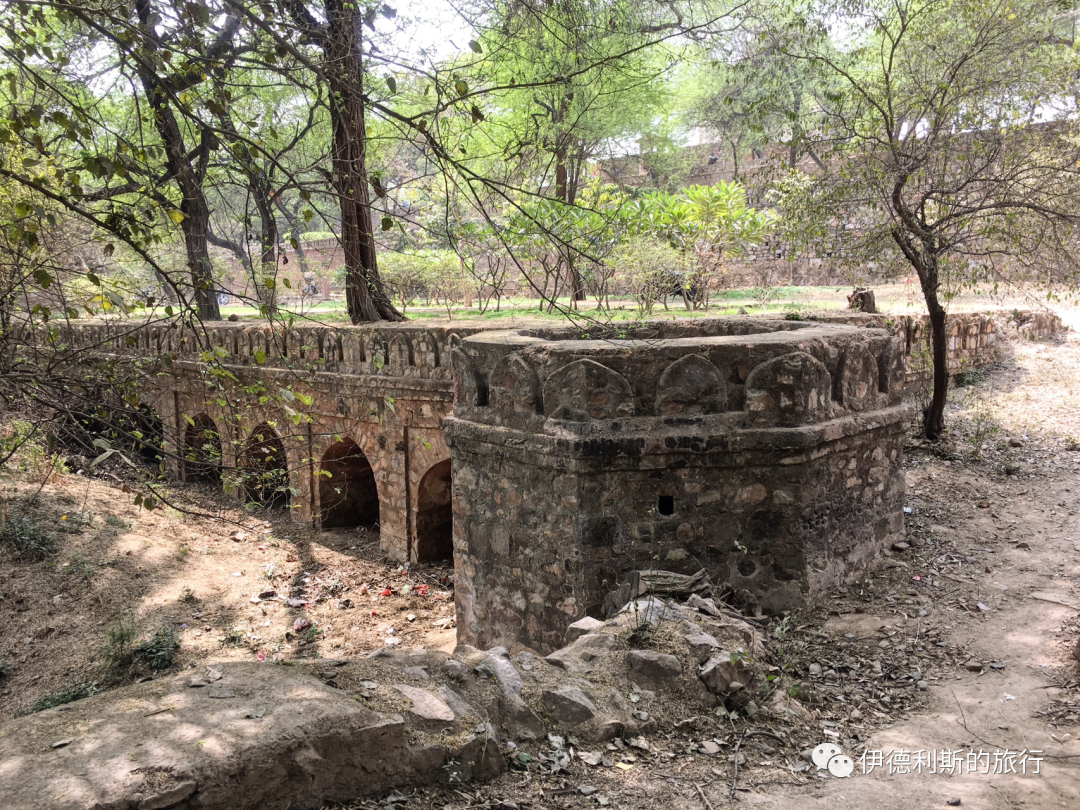
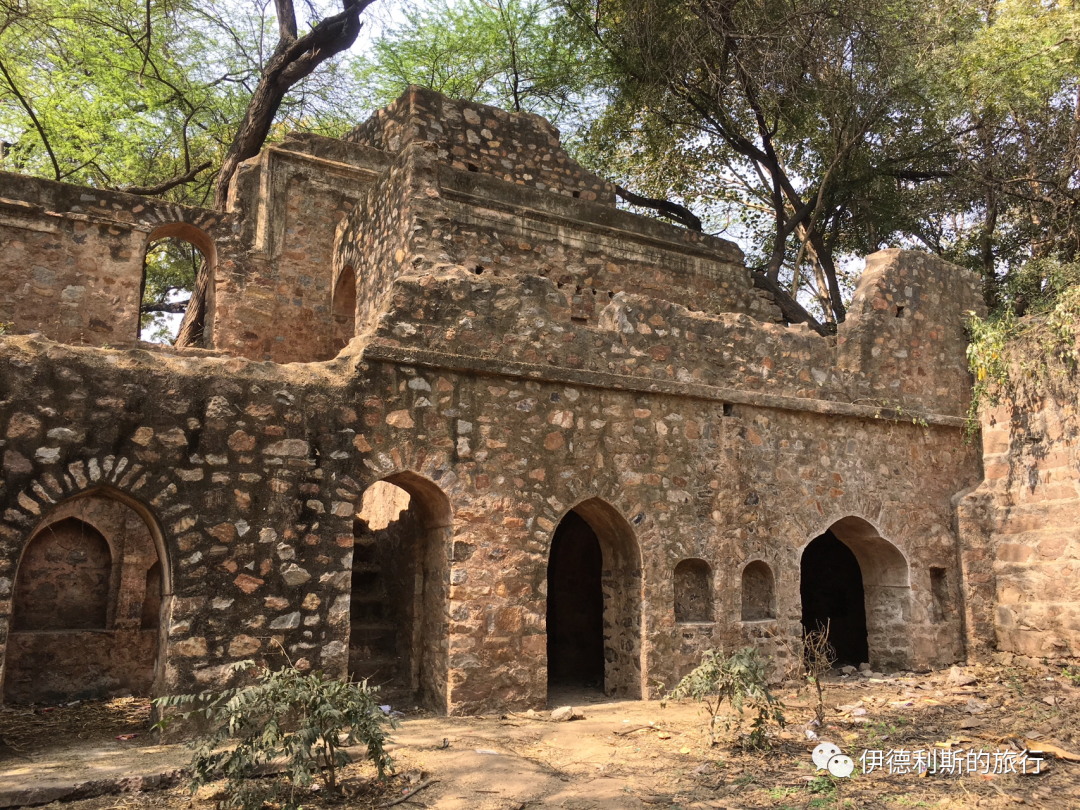
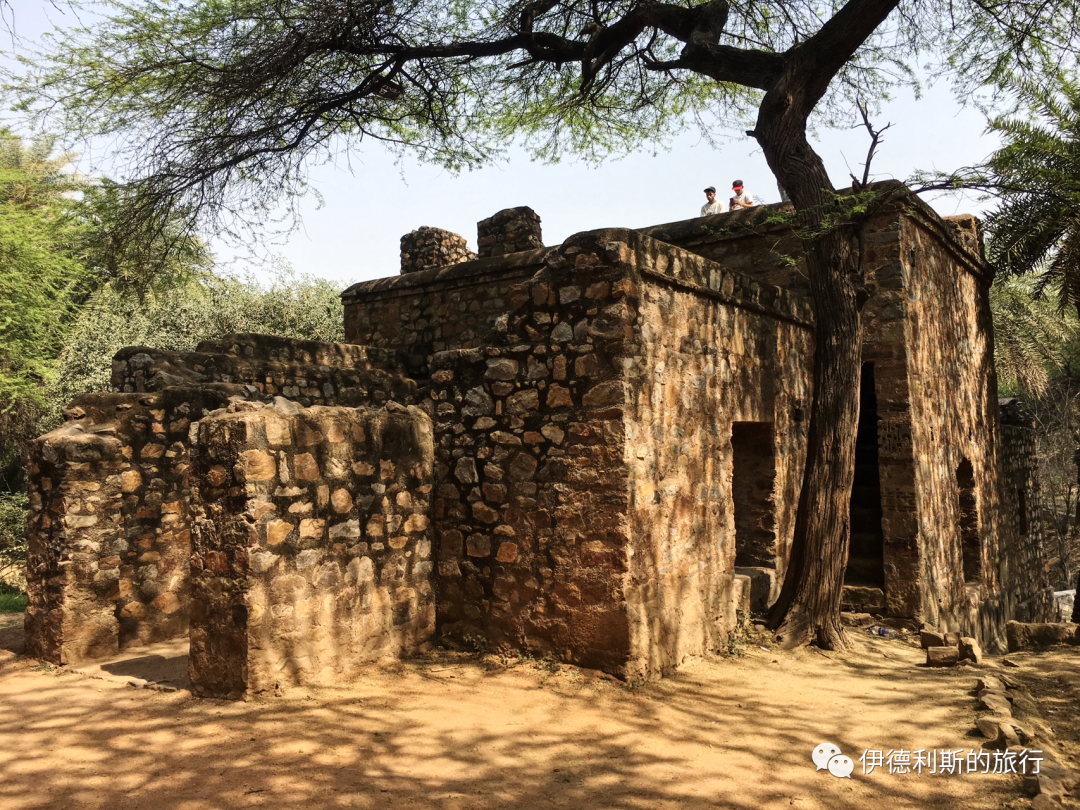
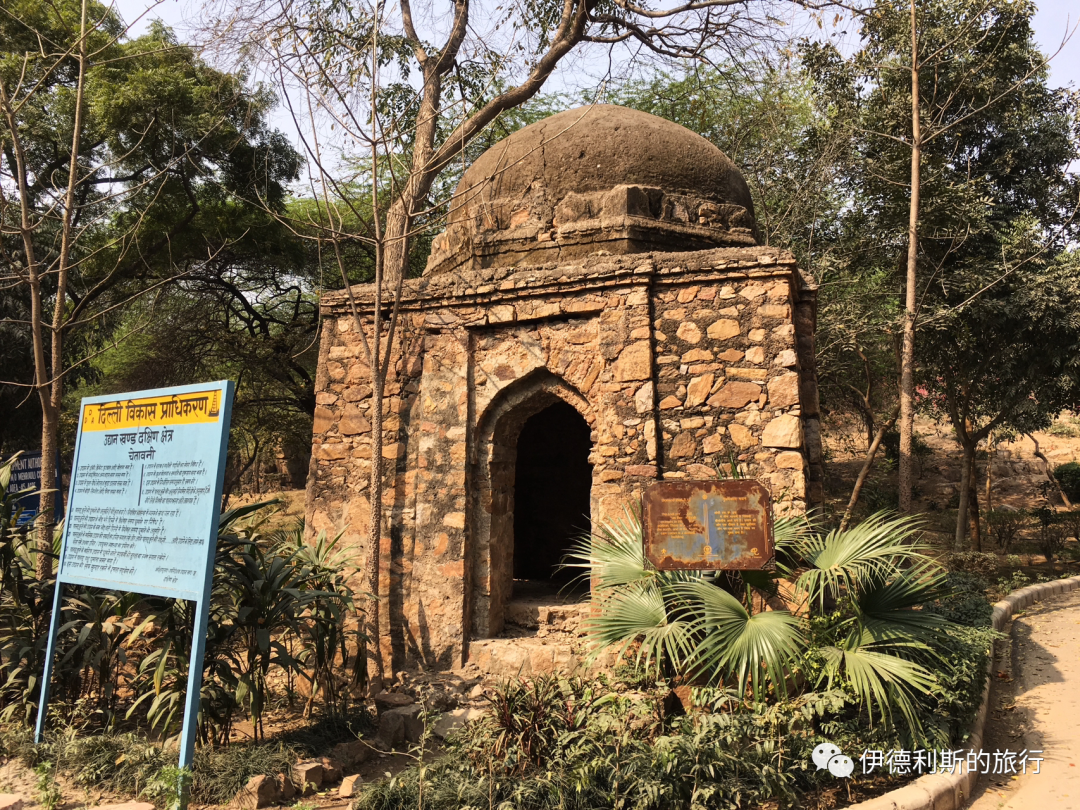
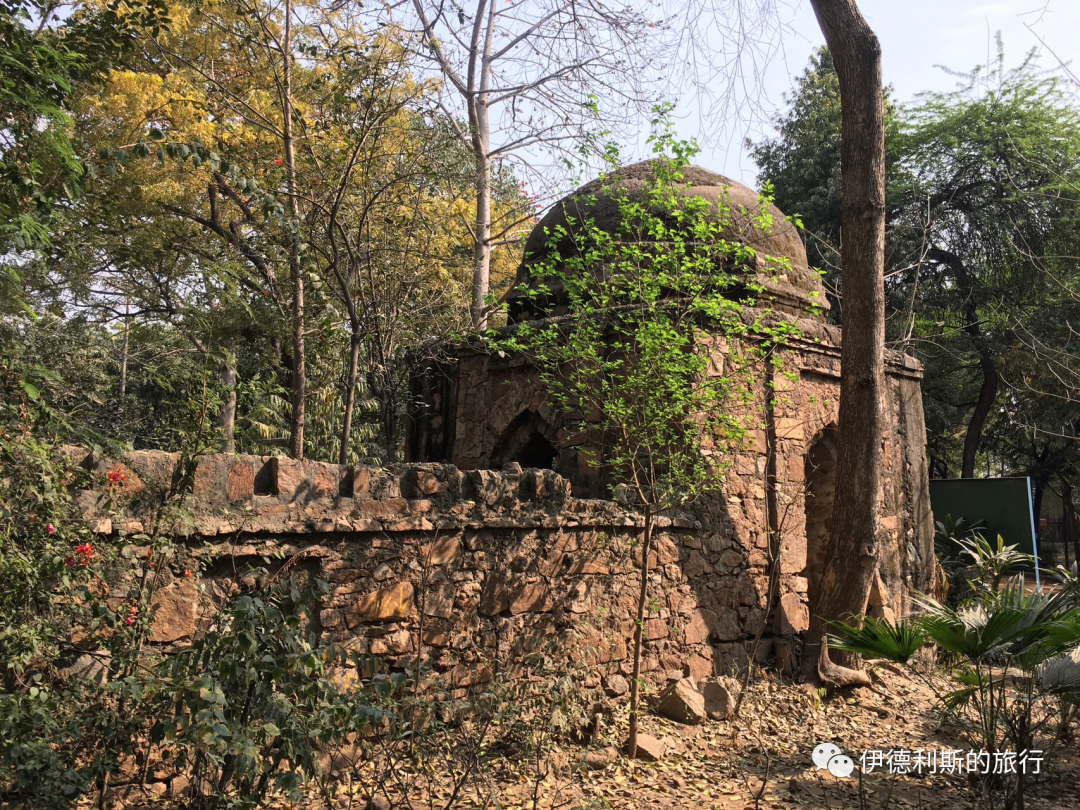
A simple and classic Lodi dynasty tomb and prayer wall design. The tomb connects to the prayer wall, which features three mihrabs—one large and two small.
Halal Travel Guide: Mehrauli Archaeological Park — Delhi Muslim History (Part 2)
Articles • ali2007fr posted the article • 0 comments • 167 views • 2026-05-18 09:01
Summary: Mehrauli Archaeological Park — Delhi Muslim History is presented here as a firsthand travel account in clear English. The account keeps its focus on Delhi Travel, Mehrauli, Muslim Heritage while preserving the names, places, food, and historical details from the Chinese source. view all
Summary: Mehrauli Archaeological Park — Delhi Muslim History is presented here as a firsthand travel account in clear English. The account keeps its focus on Delhi Travel, Mehrauli, Muslim Heritage while preserving the names, places, food, and historical details from the Chinese source.
Halal Travel Guide: Delhi Humayun's Tomb — Mughal Architecture and History
Articles • ali2007fr posted the article • 0 comments • 158 views • 2026-05-18 09:01
Summary: Delhi Humayun's Tomb — Mughal Architecture and History is presented here as a firsthand travel account in clear English, beginning with this scene: Humayun's Tomb (Maqbara-i Humayun) is the final resting place of Humayun, the second emperor of the Mughal Empire. The account keeps its focus on Humayun's Tomb, Mughal History, Delhi Travel while preserving the names, places, food, and historical details from the Chinese source.
Humayun's Tomb (Maqbara-i Humayun) is the final resting place of Humayun, the second emperor of the Mughal Empire. It was commissioned in 1558 by his wife, Bega Begum, and designed by a Persian architect. It is the first garden-style tomb in South Asia and the first grand red sandstone imperial tomb of the Mughal Empire. It was added to the World Heritage List in 1993.
In my book, The Sixth City of Delhi: The Birth of the Mughal Dynasty, I wrote about how Humayun built a new capital in Delhi in 1533 called Din Panah, which means 'Refuge of the Faith'. On January 24, 1556, Humayun was reading on the second floor of the library inside Din Panah. When the muezzin called the adhan, Humayun hurried downstairs to perform namaz. He tripped on the stairs, fell, and passed away. His 13-year-old son, Akbar, then took the throne.
Humayun's Tomb is located south of Din Panah, right next to the famous South Asian Sufi shrine, the Nizamuddin Dargah (Nizamuddin Mazar). Construction began in 1556 and finished in 1572, taking 16 years to complete. Records show that after Queen Bega Begum returned from Hajj, she dedicated herself to building the tomb. She chose the Persian architect Mirak Mirza Ghiyas from the ancient city of Herat to design it. Mirak Mirza Ghiyas had designed buildings in Herat, Bukhara, and other parts of India. He passed away before the tomb was finished, and his son, Sayyed Muhammad, completed the project.
Humayun's Tomb
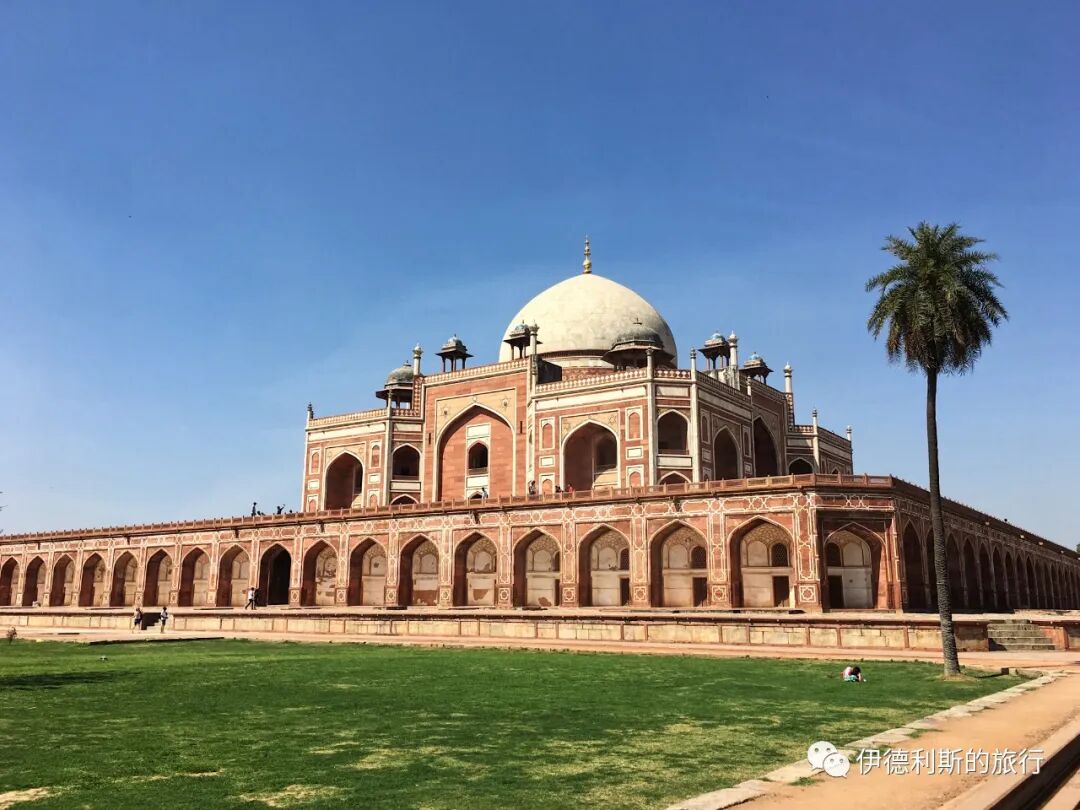
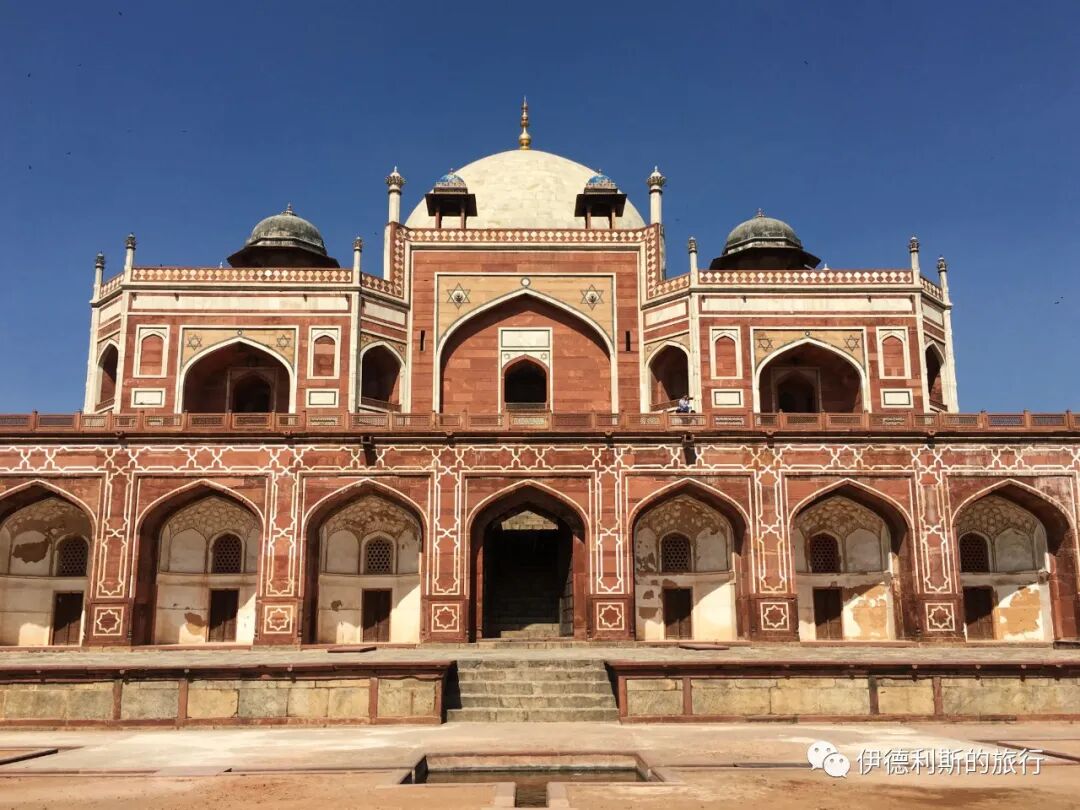
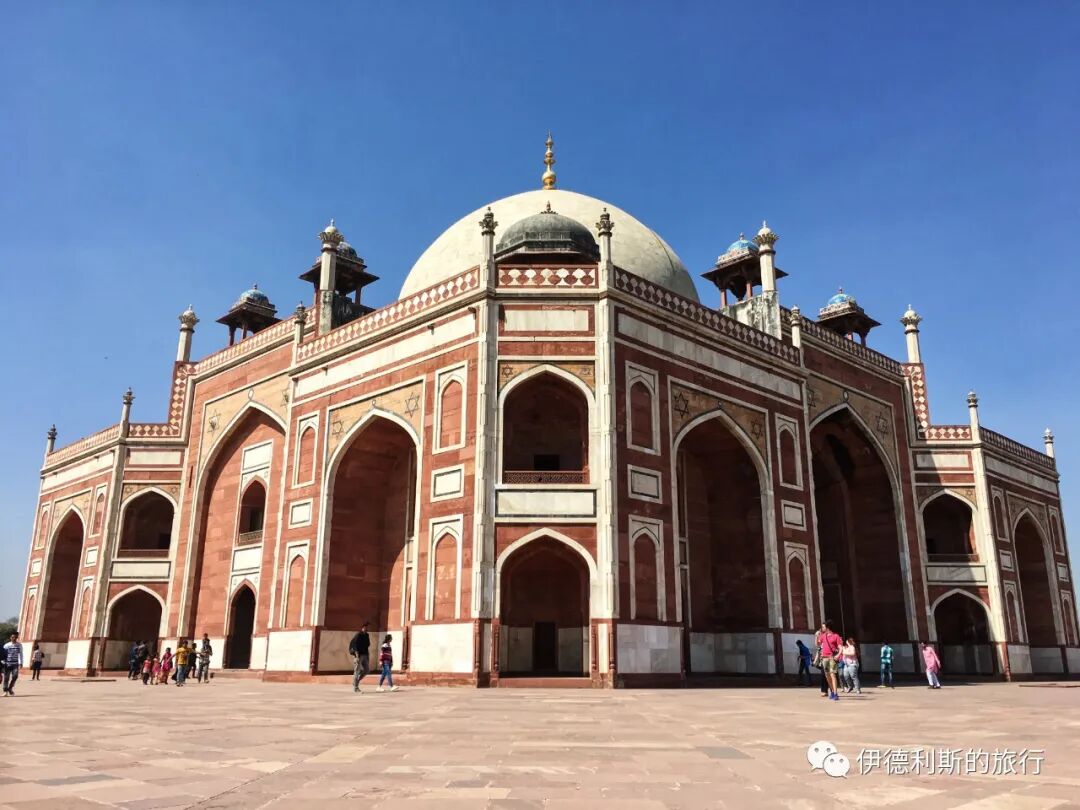
Humayun's Tomb carries on the Indo-Islamic architectural style developed since the Delhi Sultanate. It is the first Indian building to use a Persian double dome, which consists of an inner and outer Persian hemispherical dome.
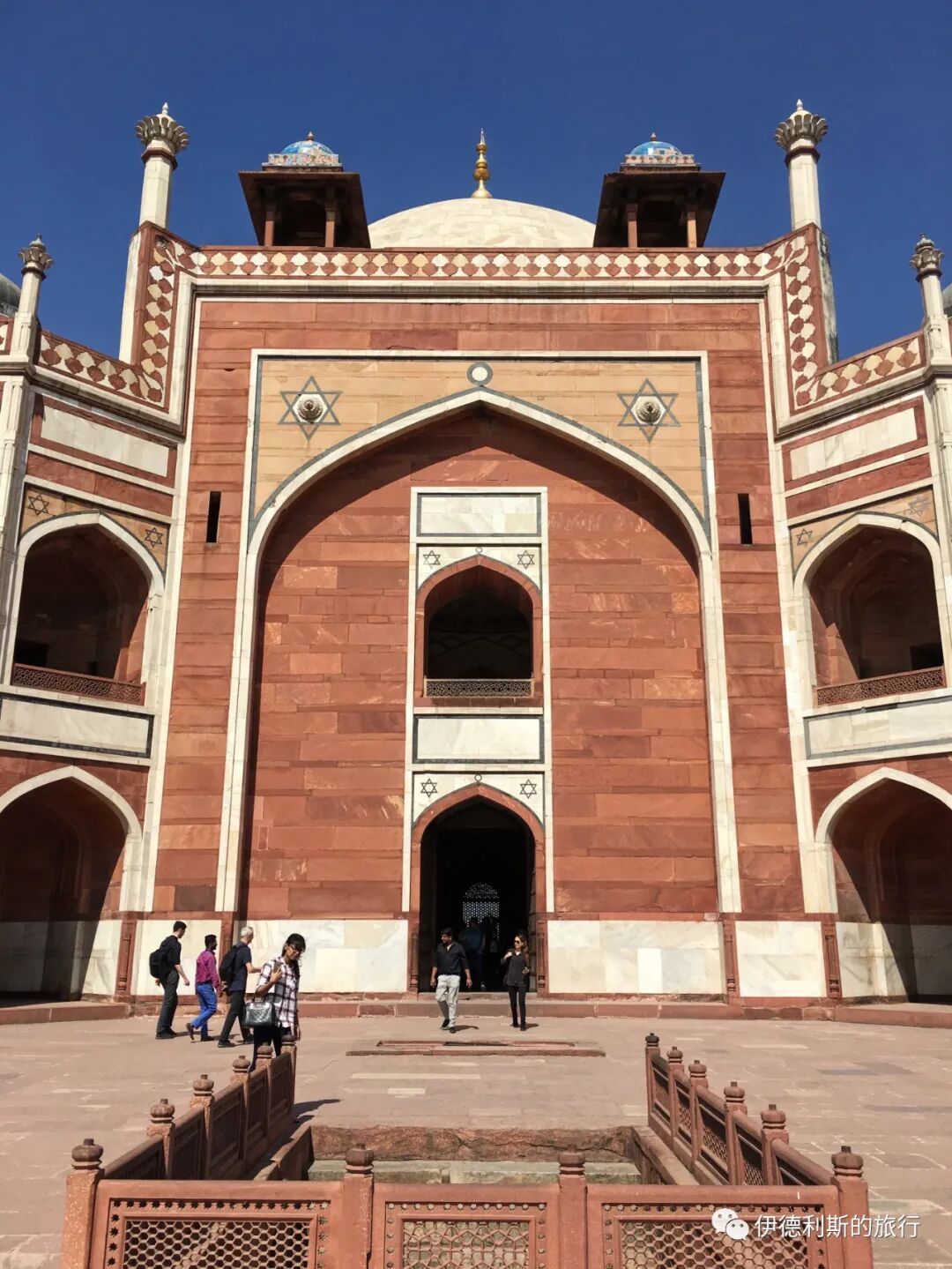
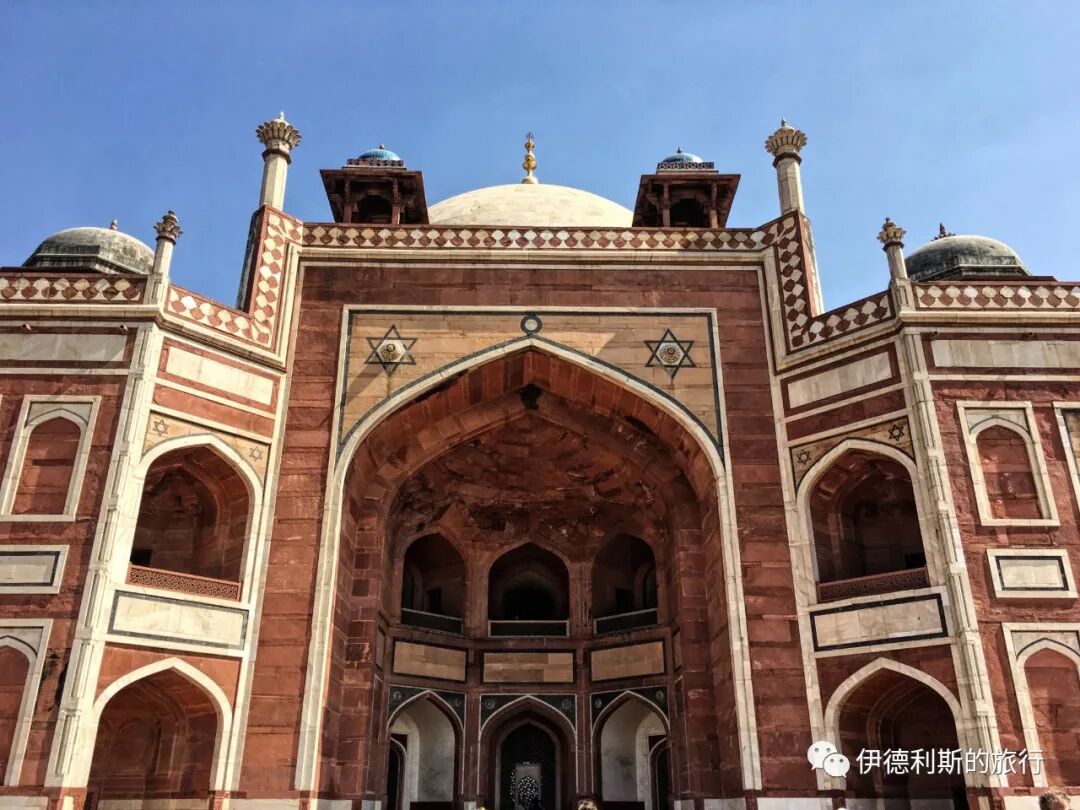
The main dome is surrounded by Chhatri (domed pavilions) and smaller decorative spires called Guldasta, both of which are unique to Indo-Islamic architecture. Guldasta means 'bundled bouquet' in Persian, and in Indo-Islamic architecture, it usually takes the shape of a flower. Both of these designs are a fusion of Persian pavilions and the Hindu roof tower known as a Sikhara.
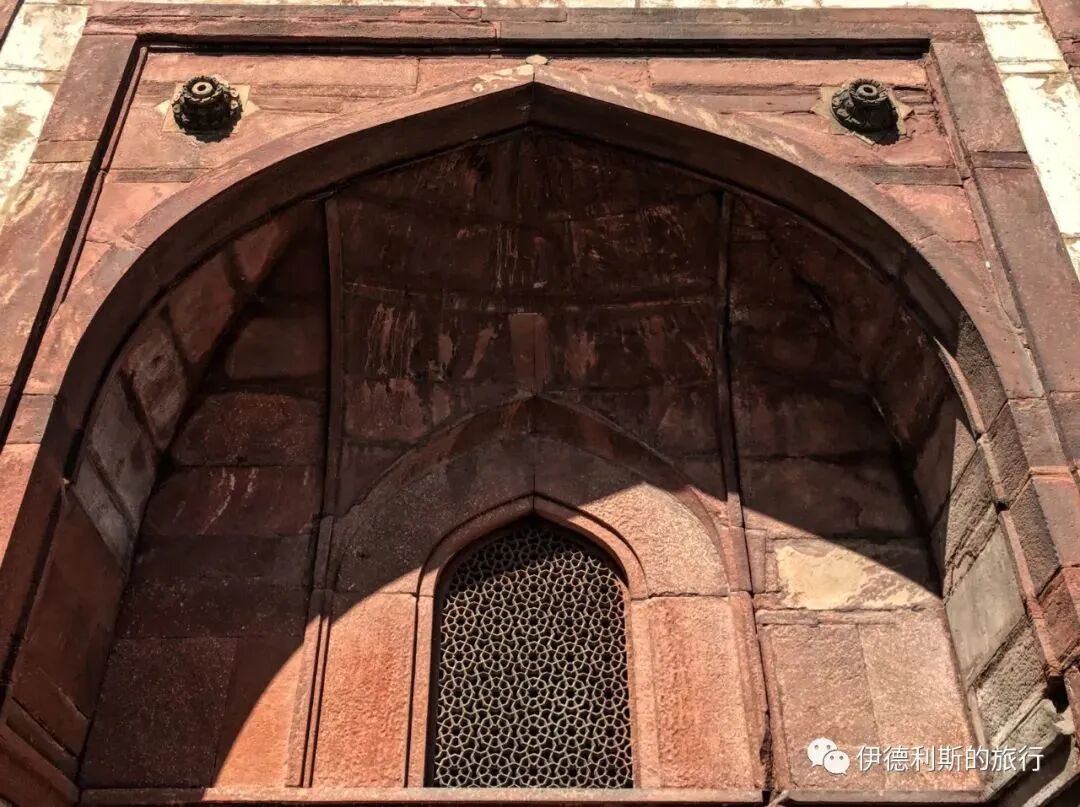
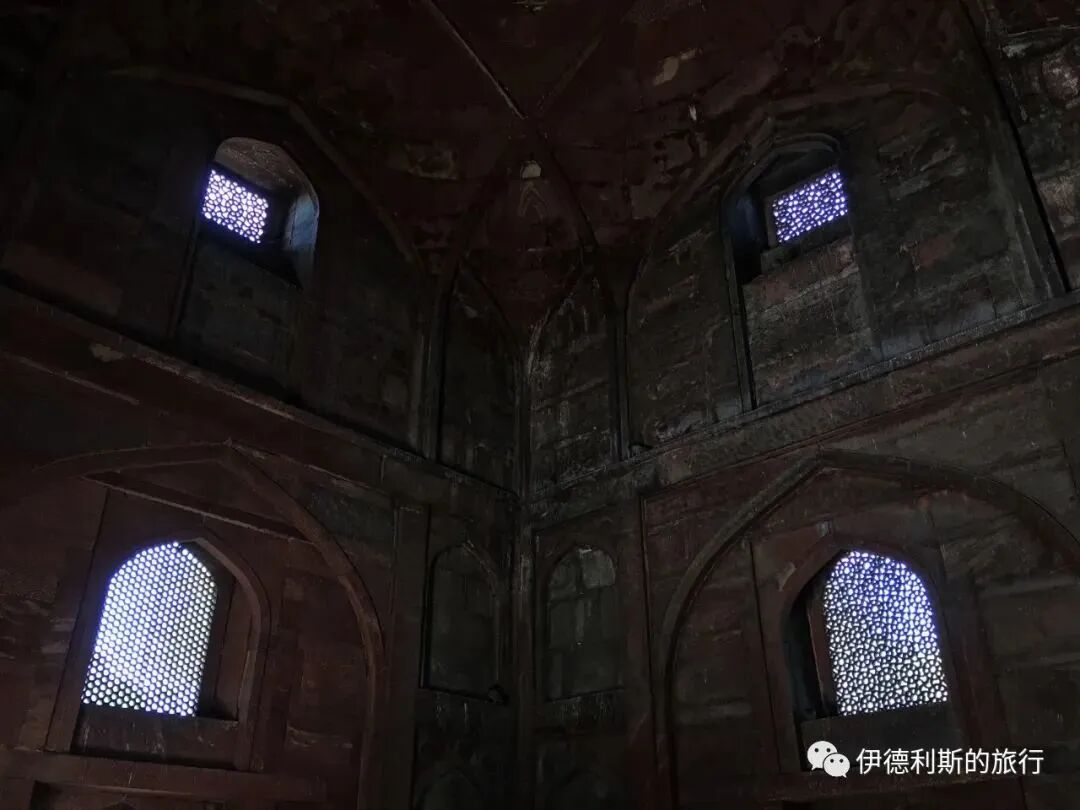
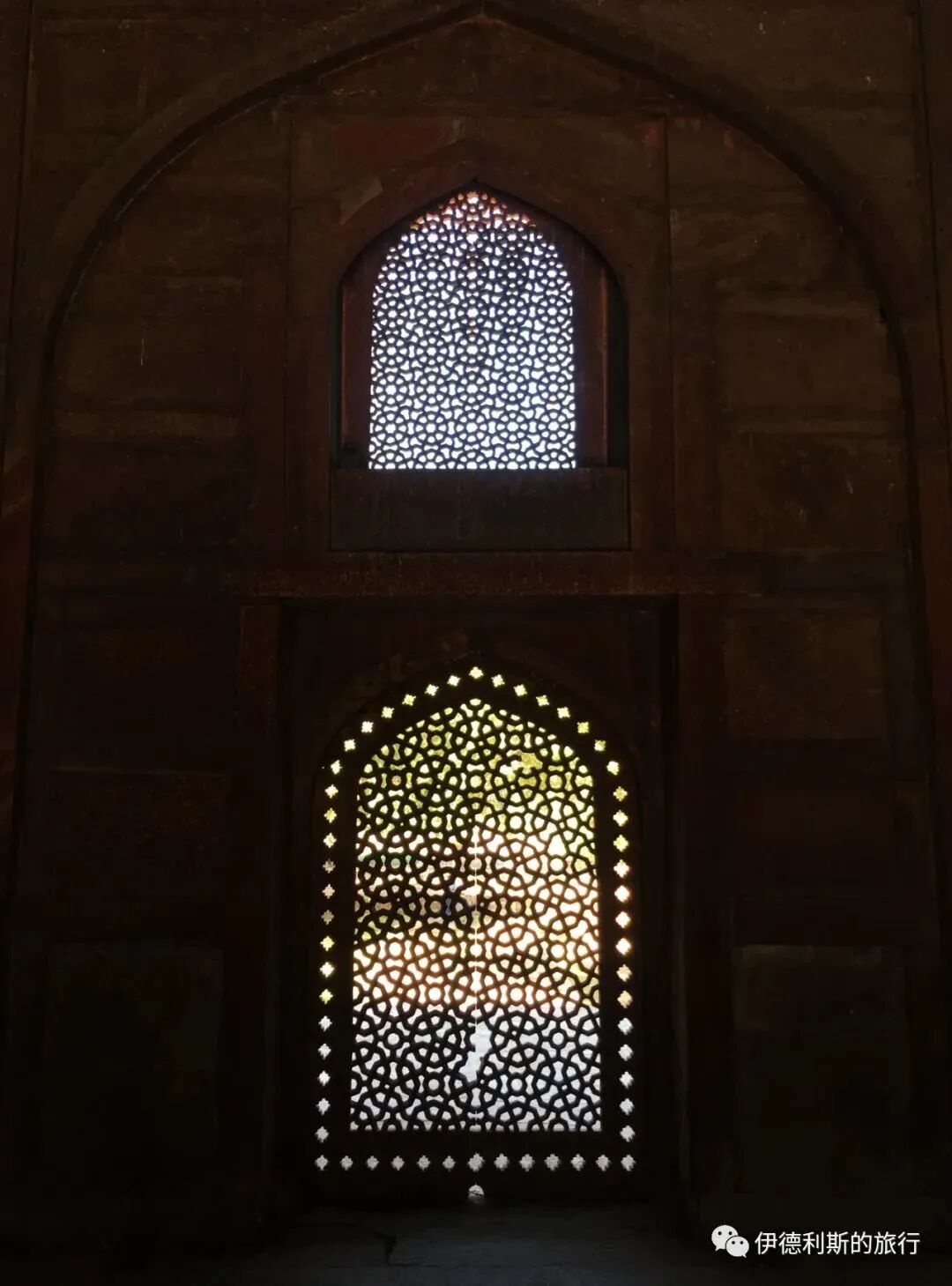
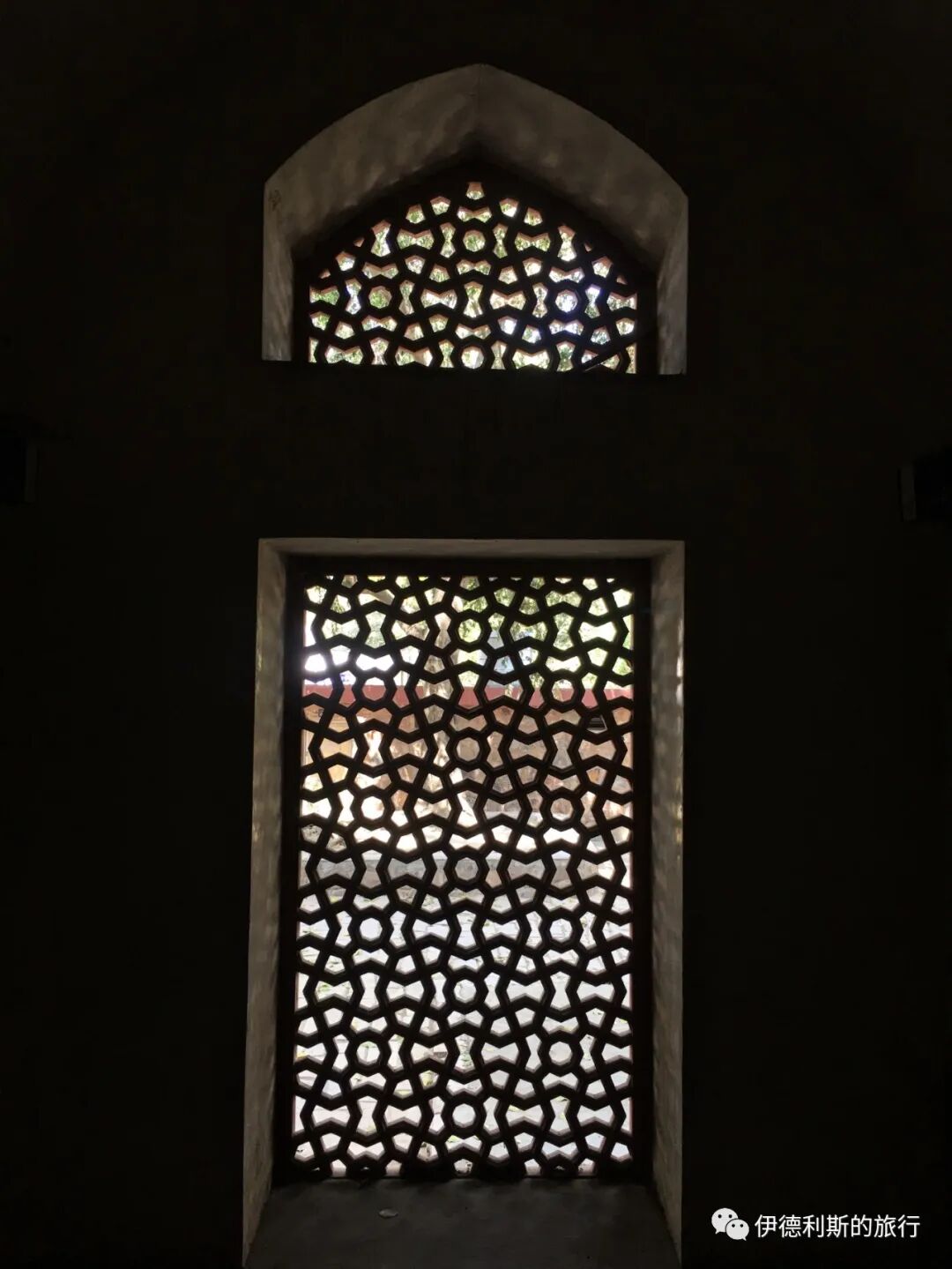
Below the pure white marble main dome, the main body of the structure is built from a mix of white marble and red and yellow sandstone. In the center is a Persian-style Iwan (arched gateway), surrounded by many Jali (lattice screens) typical of Indo-Islamic architecture. These windows are said to be closely related to the Mashrabiya lattice windows that originated in Arabia.
The main building sits on a massive 8-meter-high terrace, with its sides also decorated by a series of arched Iwan.
Humayun's Tomb is surrounded by a traditional Persian four-part garden called a Charbagh. The name means 'four gardens' in Persian and comes from the 'four gardens' mentioned in the Quran (55:46): 'But for he who has feared the position of his Lord are two gardens.' And (55:62): 'And below them both are two gardens.' The hallmark of a Charbagh garden is two axes that intersect at the center, dividing the garden into four sections. Babur, the founder of the Mughal Empire, used a Charbagh garden for his tomb in Kabul, Afghanistan, but Humayun's Tomb was the first time this Persian garden style was brought to India.
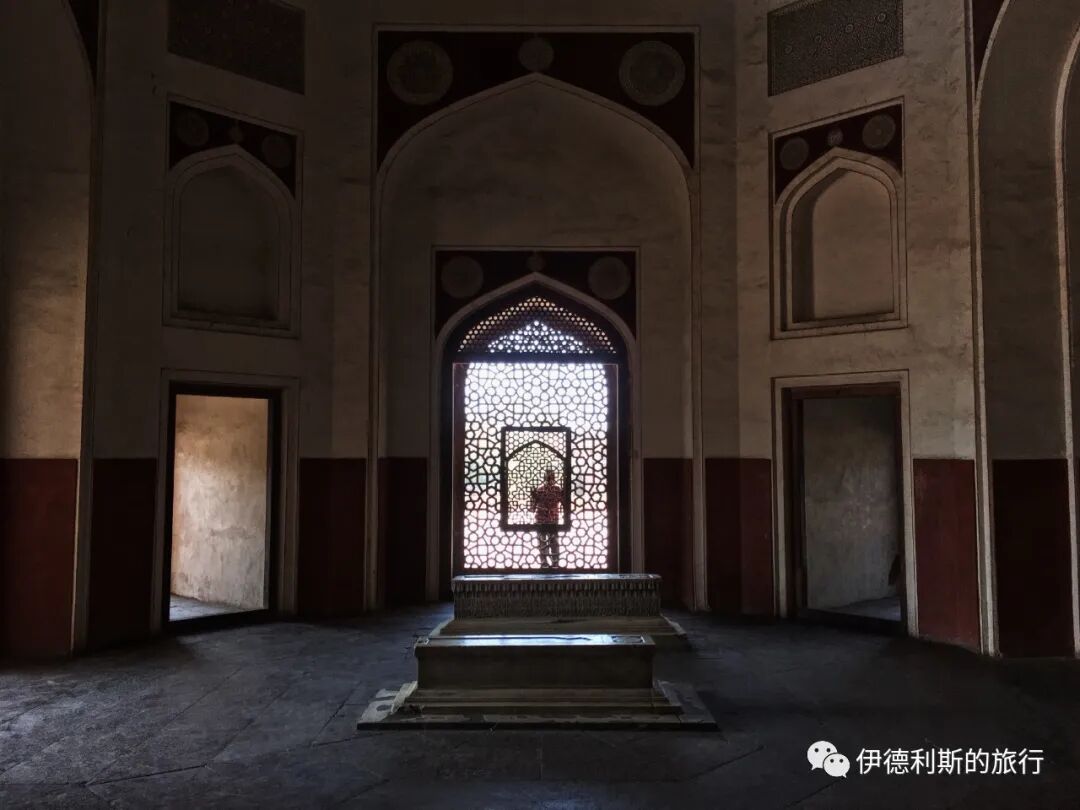
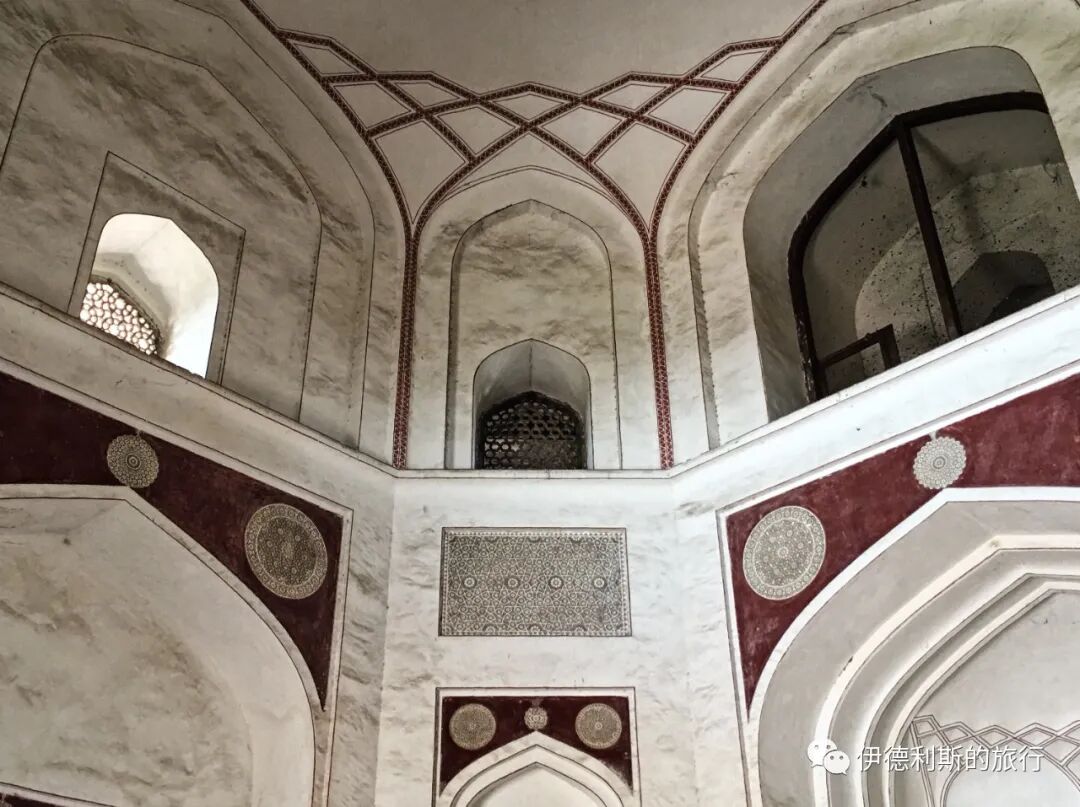
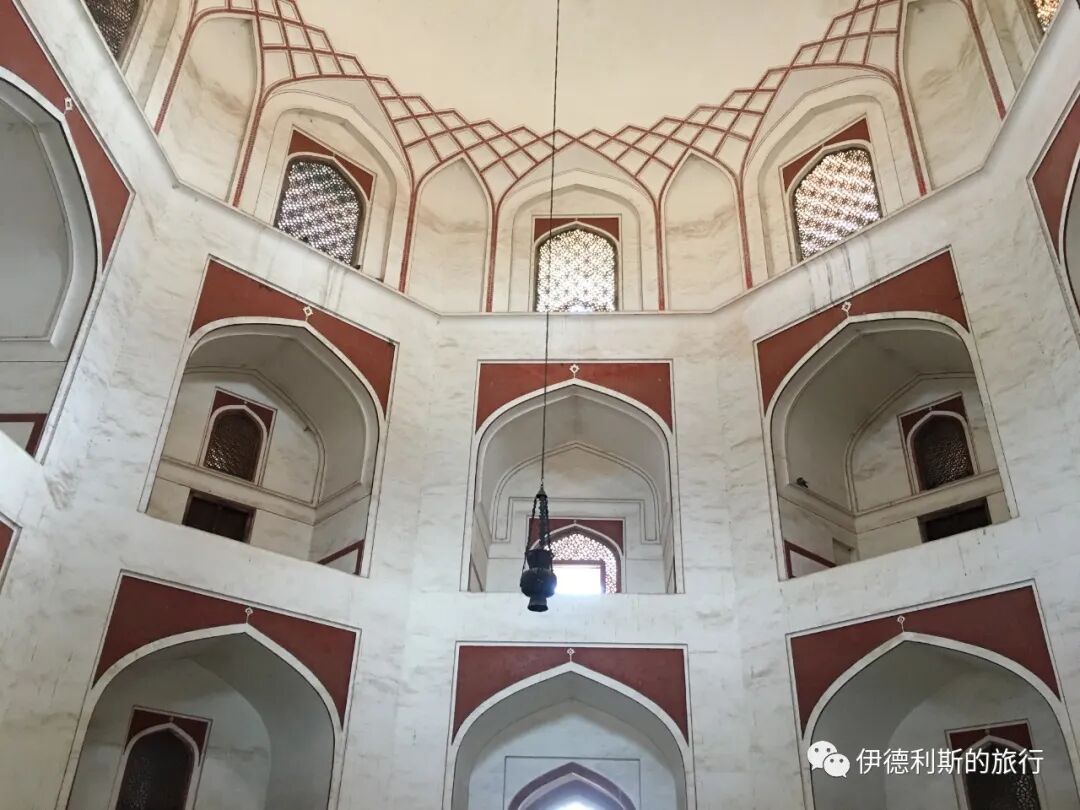
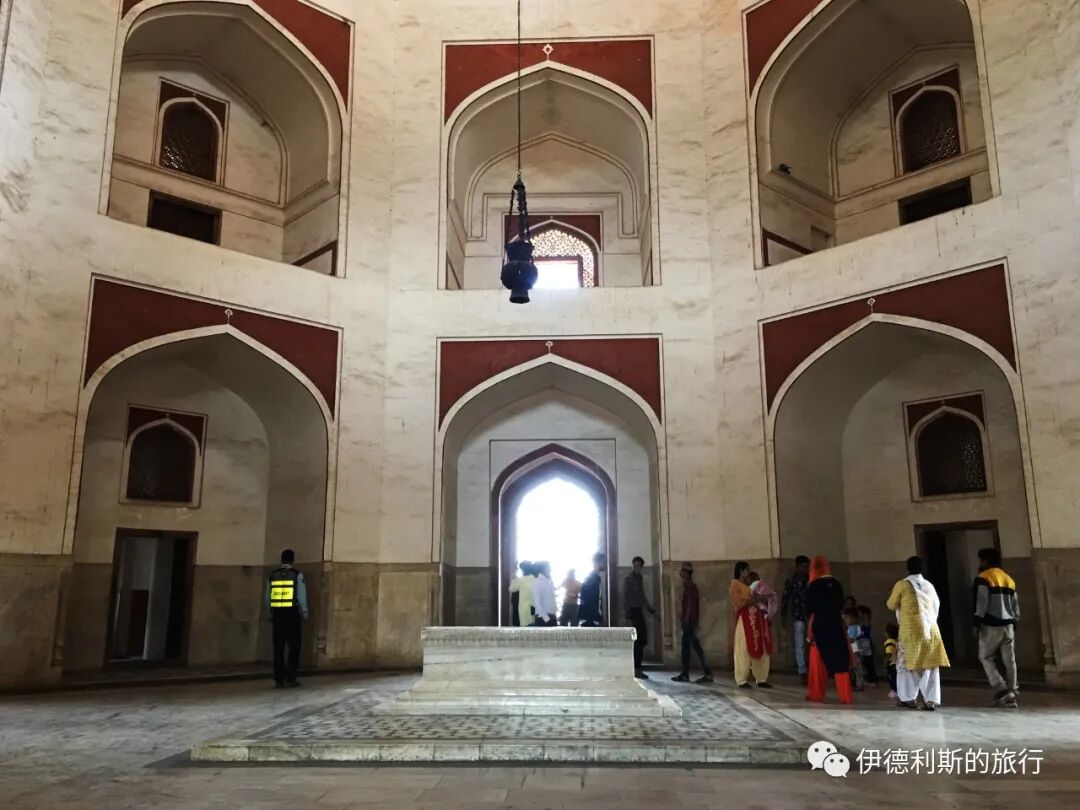
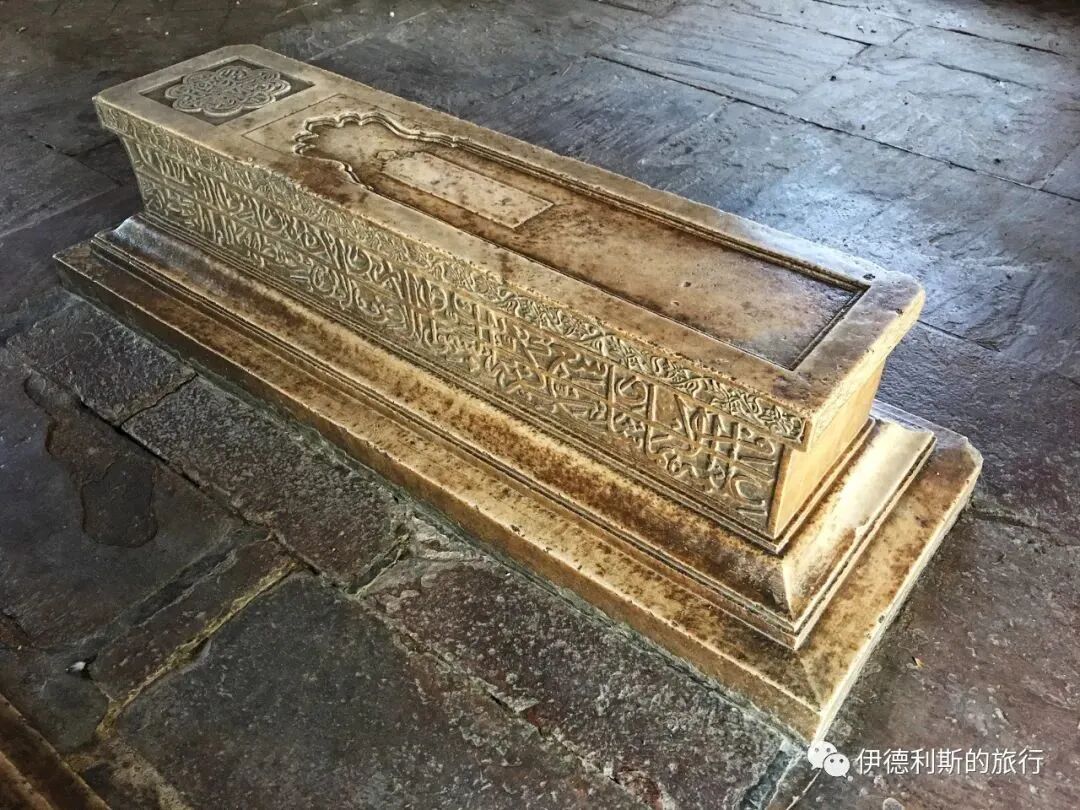
The interior of Humayun's Tomb consists of a main hall under the central dome and eight rooms arranged in two levels around it. Humayun's tombstone is in the center of the main hall, while his actual burial site is in a basement below the tombstone, accessible only through a separate passage outside the main structure. In 1611, English merchant William Finch visited Humayun's Tomb. He recorded that the interior had rich decorations and carpets, and the tombstone was covered by a Shamiana (ceremonial tent). He also noted that a Quran, Humayun's sword, turban, and shoes were on display, though none of these can be seen today.
Other rooms contain the graves of members of the Mughal court, including Humayun's queens Bega Begum and Hamida Begum, several of his daughters, and the seventh Mughal emperor, Bahadur Shah I. Unlike the Delhi Sultanate period, which built elaborate mihrab (prayer niches) on the west side of tombs, Humayun's Tomb cleverly uses Jali lattice screens as a mihrab. Light shines through the screens into the room, creating areas of brightness and shadow depending on the angle. The tomb also carefully displays the process of making Jali lattice screens.
The terrace outside the main building also holds many tombstones of Mughal royalty and nobles, including Dara Shikoh, the eldest son of Shah Jahan who was murdered by Aurangzeb. Because of this, the area is also called the 'dormitory of the Mughals'.
Barber's Tomb
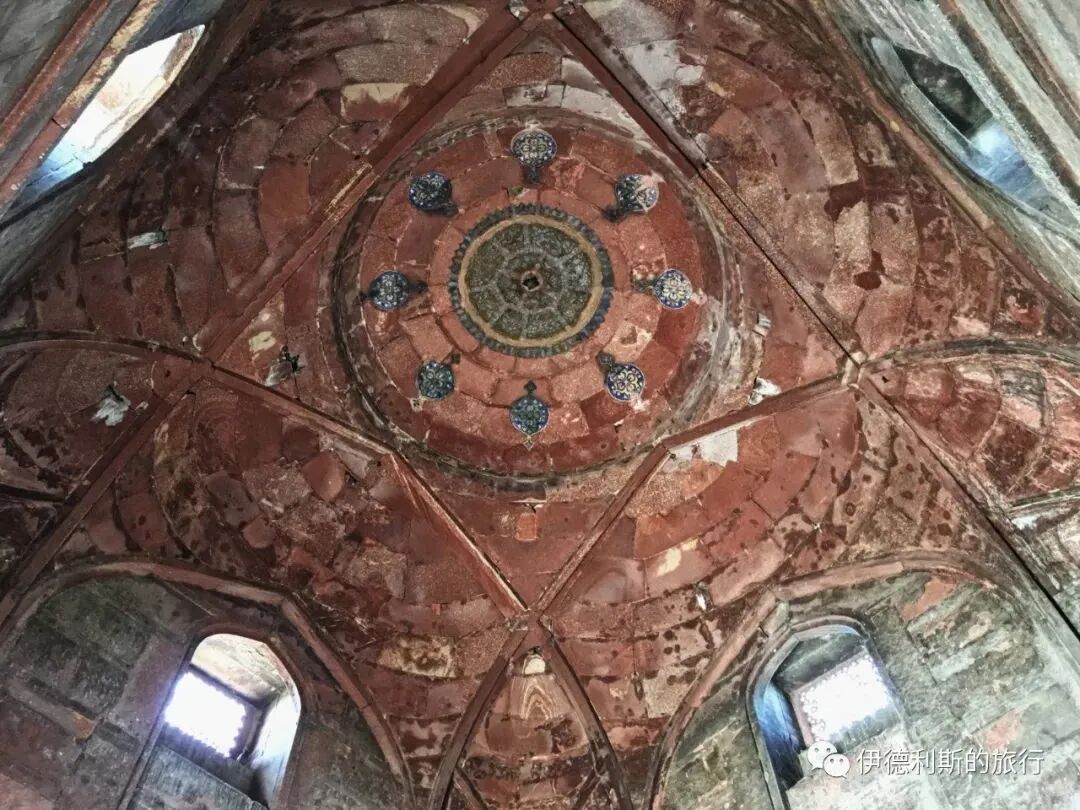
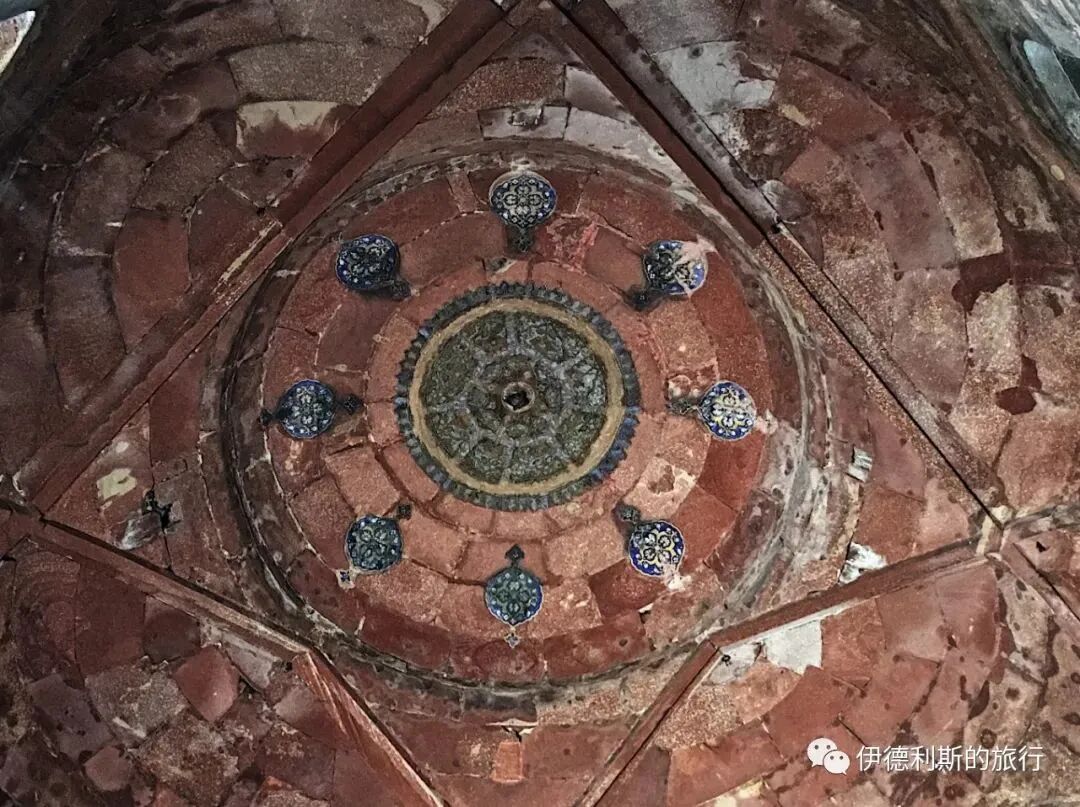
On the southeast side of Humayun's Tomb is the 'Barber's Tomb', built in 1590. It holds the grave of the personal barber to the third Mughal emperor, Akbar, who was also one of Akbar's closest servants. This tomb also features a Persian double-dome structure, appearing as two domes from the inside and outside, and has a Chhatri domed pavilion at each of the four corners.
West Gate
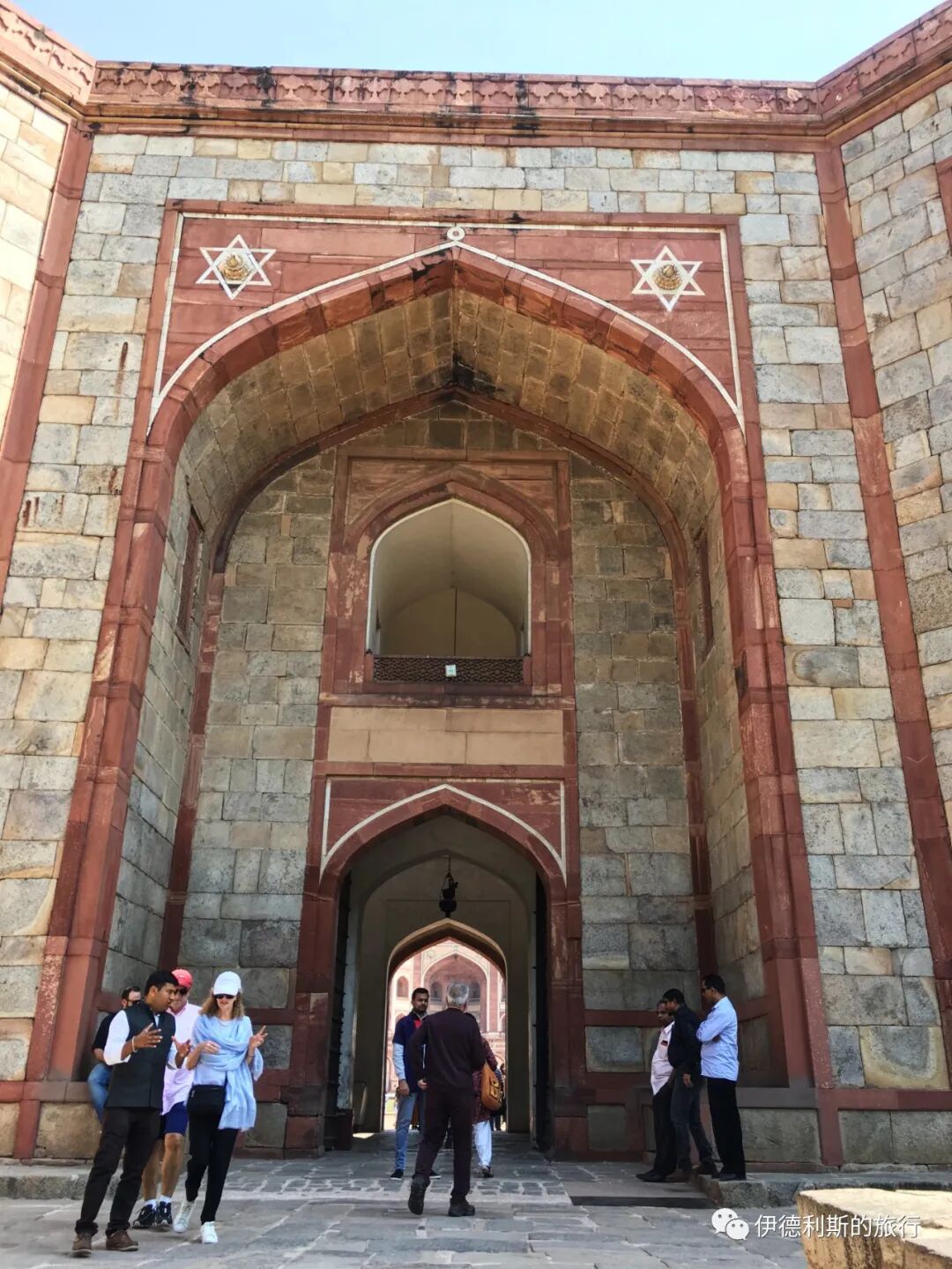
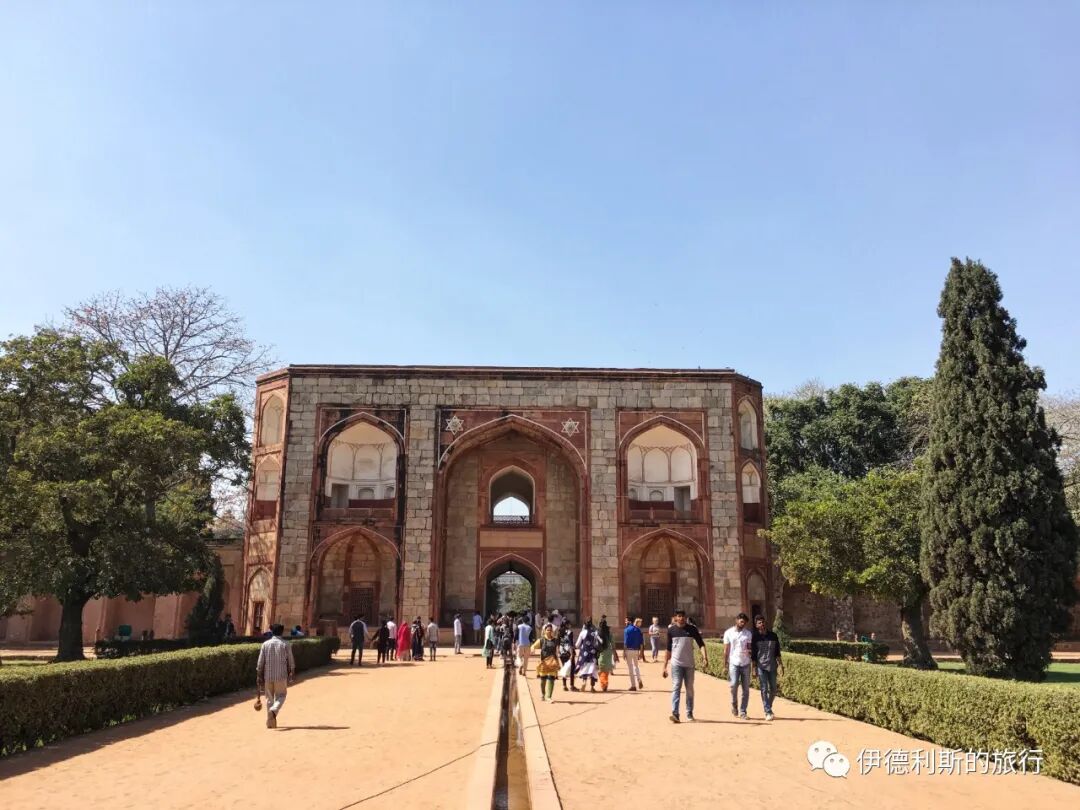
The Persian garden surrounding Humayun's Tomb has a gate on each side. The West Gate is the main entrance; it has an I-shaped structure with splayed walls on the west side and two Chhatri domed pavilions on top.
Bu Halima Garden Tomb Gate
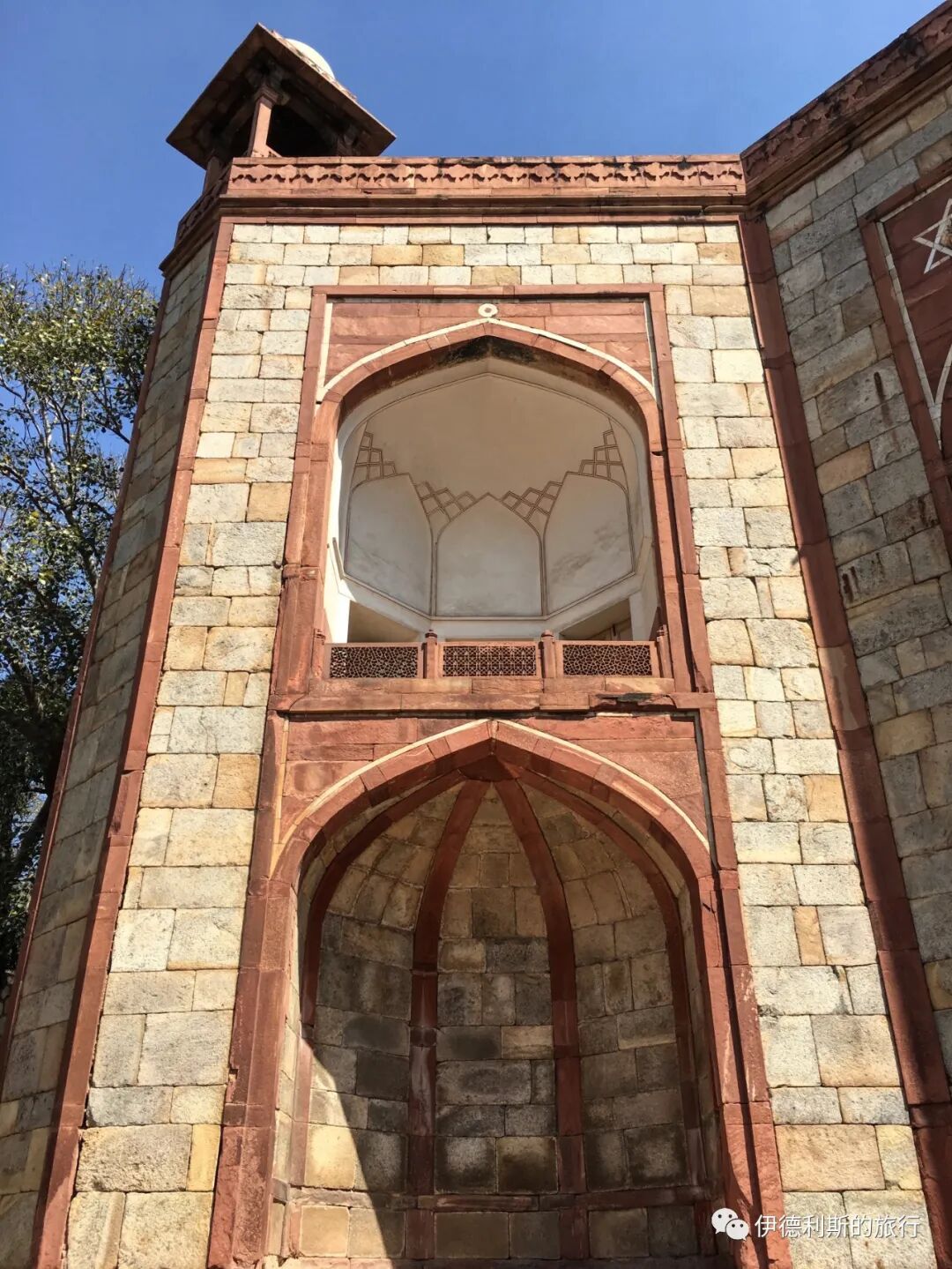
Directly across from the west gate of Humayun's Tomb stands the 16th-century gate of the Bu Halima Garden Tomb. There are no records identifying who Bu Halima was. The gate features a classic Indian-style stone window (jharokha), which is a signature element of ancient Indian building facades.
Between 2012 and 2013, the Aga Khan Trust for Culture hired craftsmen to restore the site using traditional techniques and materials. They replaced missing glazed tiles and mosaics and swapped modern cement for traditional lime mortar.
Afsarwala Tomb and Mosque
The Afsarwala Tomb and Mosque are located southwest of Humayun's Tomb and were built between 1566 and 1567. Unfortunately, the tombstone only lists the construction date and nothing about the person buried there. It is believed they were likely a noble in the court of the Mughal Emperor Akbar, as the name 'Afsarwala' suggests the person was a military officer.
North Gate of Arab Sarai
On the main road west of Humayun's Tomb stands the north gate of Arab Sarai. The original site of Arab Sarai is now an industrial training institute.
The gate originally included a main entrance and arched rooms on both sides, but most of it has collapsed, leaving only the facade well-preserved. The gate is built from light-colored quartzite and red sandstone, matching the style of Humayun's Tomb. The gate features exquisite traditional Indian stone windows (jharokha) decorated with colorful tiles.
Some say this was where the Persian craftsmen who built Humayun's Tomb lived, while legend has it that it housed 300 reciters brought back by Humayun's queen, Haji Begum, after her pilgrimage.
In recent years, the Aga Khan Trust for Culture restored the site, reinforcing the main structure and replacing missing tiles.
Sufi shrine (gongbei) Dargah Patte Waali
Northwest of Humayun's Tomb is a Sufi shrine (gongbei) called Dargah Patte Waali. It holds the graves of the famous Indian Sufi saints Hazrat Shamshuddin Patty Shah and Hazrat Maulana Abdul Qadir Jahangiri. They were said to be contemporaries of the famous nearby Sufi saint Nizamuddin, and the shrine was first ordered to be built in 1325 by the Tughlaq dynasty of the Delhi Sultanate.
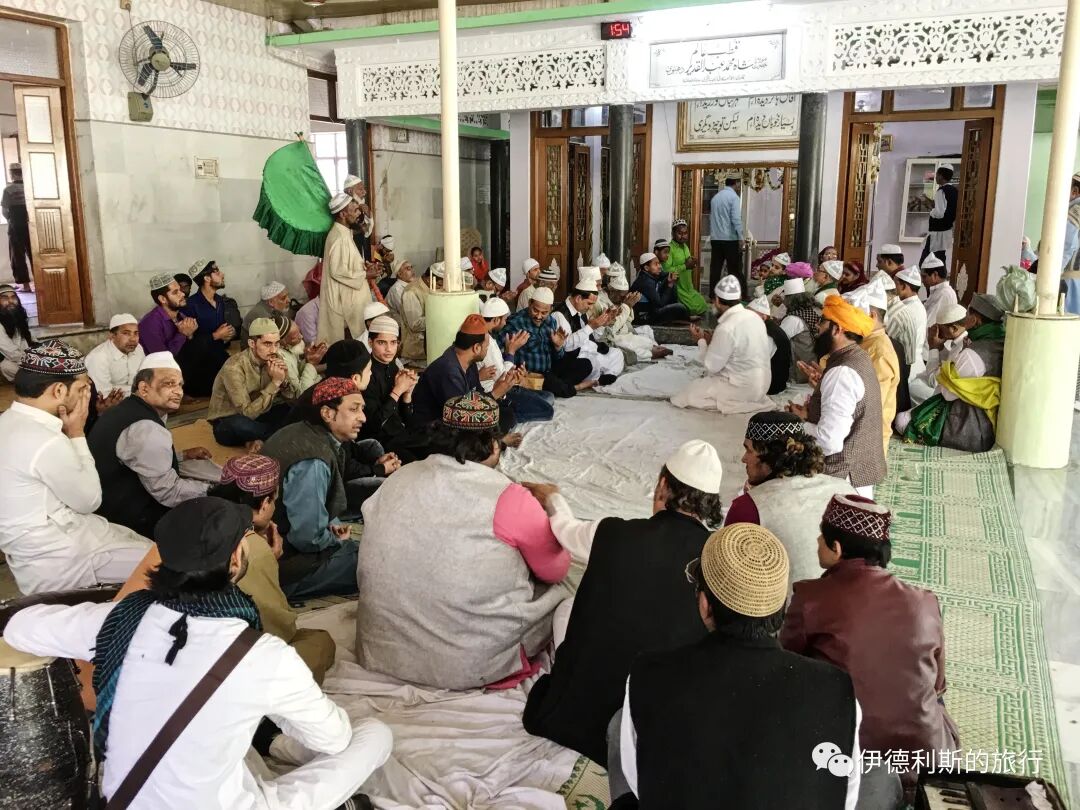
While walking through the Humayun's Tomb area, I faintly heard music outside the walls. I quickly left the site and went to Dargah Patte Waali outside the wall. Everyone was holding a gathering (mehfil) and performing Qawwali, the most distinctive form of devotional singing in South Asia. It was my first time hearing Qawwali live, and it was very moving. Unfortunately, I didn't have much information at the time. In fact, the nearby Nizamuddin Dargah hosts Qawwali performances every evening, and that is the birthplace of Qawwali. After returning home and looking it up, I realized I really want to go back to South Asia and experience the charm of Qawwali again. view all
Summary: Delhi Humayun's Tomb — Mughal Architecture and History is presented here as a firsthand travel account in clear English, beginning with this scene: Humayun's Tomb (Maqbara-i Humayun) is the final resting place of Humayun, the second emperor of the Mughal Empire. The account keeps its focus on Humayun's Tomb, Mughal History, Delhi Travel while preserving the names, places, food, and historical details from the Chinese source.
Humayun's Tomb (Maqbara-i Humayun) is the final resting place of Humayun, the second emperor of the Mughal Empire. It was commissioned in 1558 by his wife, Bega Begum, and designed by a Persian architect. It is the first garden-style tomb in South Asia and the first grand red sandstone imperial tomb of the Mughal Empire. It was added to the World Heritage List in 1993.
In my book, The Sixth City of Delhi: The Birth of the Mughal Dynasty, I wrote about how Humayun built a new capital in Delhi in 1533 called Din Panah, which means 'Refuge of the Faith'. On January 24, 1556, Humayun was reading on the second floor of the library inside Din Panah. When the muezzin called the adhan, Humayun hurried downstairs to perform namaz. He tripped on the stairs, fell, and passed away. His 13-year-old son, Akbar, then took the throne.
Humayun's Tomb is located south of Din Panah, right next to the famous South Asian Sufi shrine, the Nizamuddin Dargah (Nizamuddin Mazar). Construction began in 1556 and finished in 1572, taking 16 years to complete. Records show that after Queen Bega Begum returned from Hajj, she dedicated herself to building the tomb. She chose the Persian architect Mirak Mirza Ghiyas from the ancient city of Herat to design it. Mirak Mirza Ghiyas had designed buildings in Herat, Bukhara, and other parts of India. He passed away before the tomb was finished, and his son, Sayyed Muhammad, completed the project.
Humayun's Tomb
Humayun's Tomb carries on the Indo-Islamic architectural style developed since the Delhi Sultanate. It is the first Indian building to use a Persian double dome, which consists of an inner and outer Persian hemispherical dome.
The main dome is surrounded by Chhatri (domed pavilions) and smaller decorative spires called Guldasta, both of which are unique to Indo-Islamic architecture. Guldasta means 'bundled bouquet' in Persian, and in Indo-Islamic architecture, it usually takes the shape of a flower. Both of these designs are a fusion of Persian pavilions and the Hindu roof tower known as a Sikhara.
Below the pure white marble main dome, the main body of the structure is built from a mix of white marble and red and yellow sandstone. In the center is a Persian-style Iwan (arched gateway), surrounded by many Jali (lattice screens) typical of Indo-Islamic architecture. These windows are said to be closely related to the Mashrabiya lattice windows that originated in Arabia.
The main building sits on a massive 8-meter-high terrace, with its sides also decorated by a series of arched Iwan.
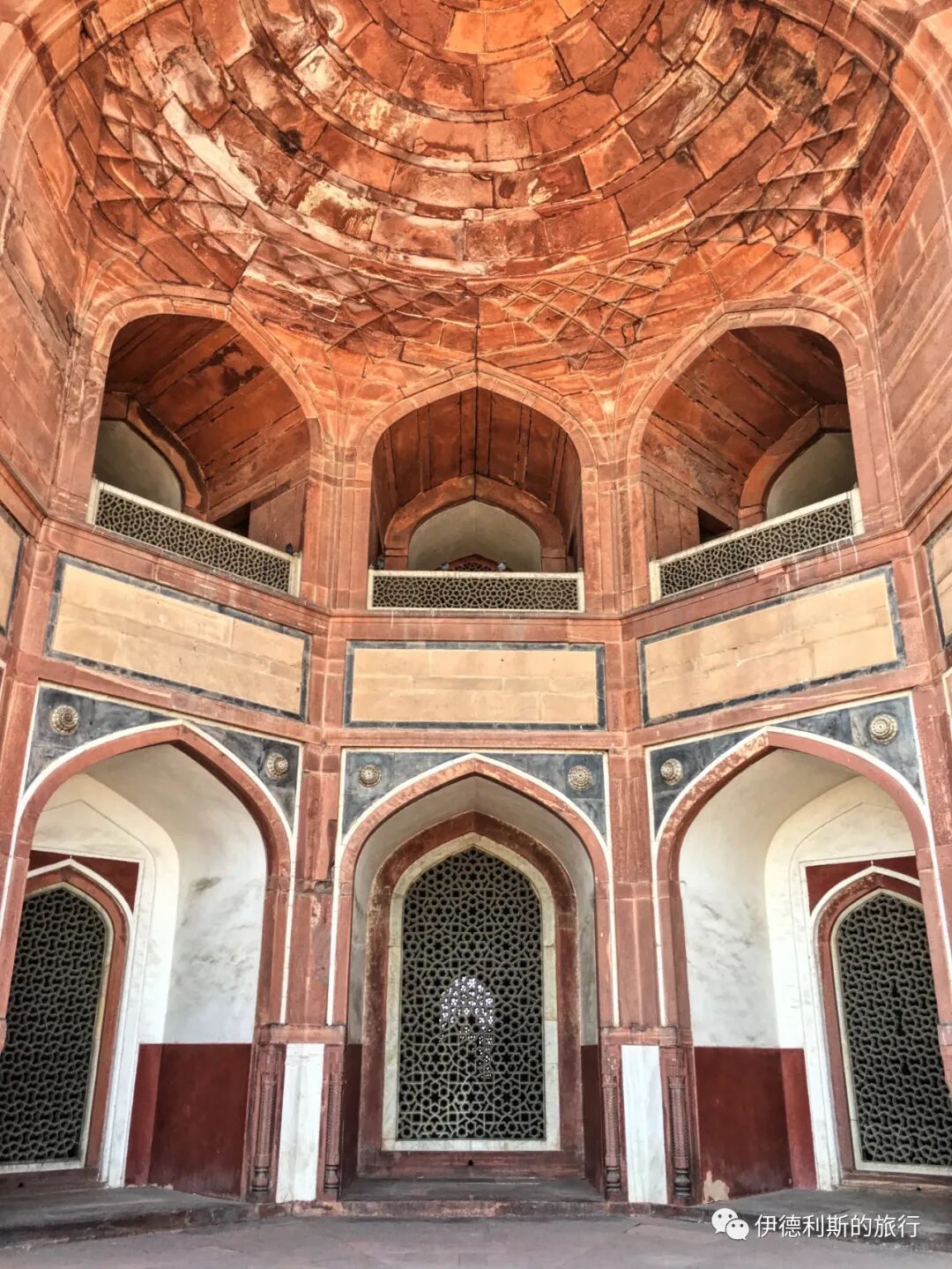
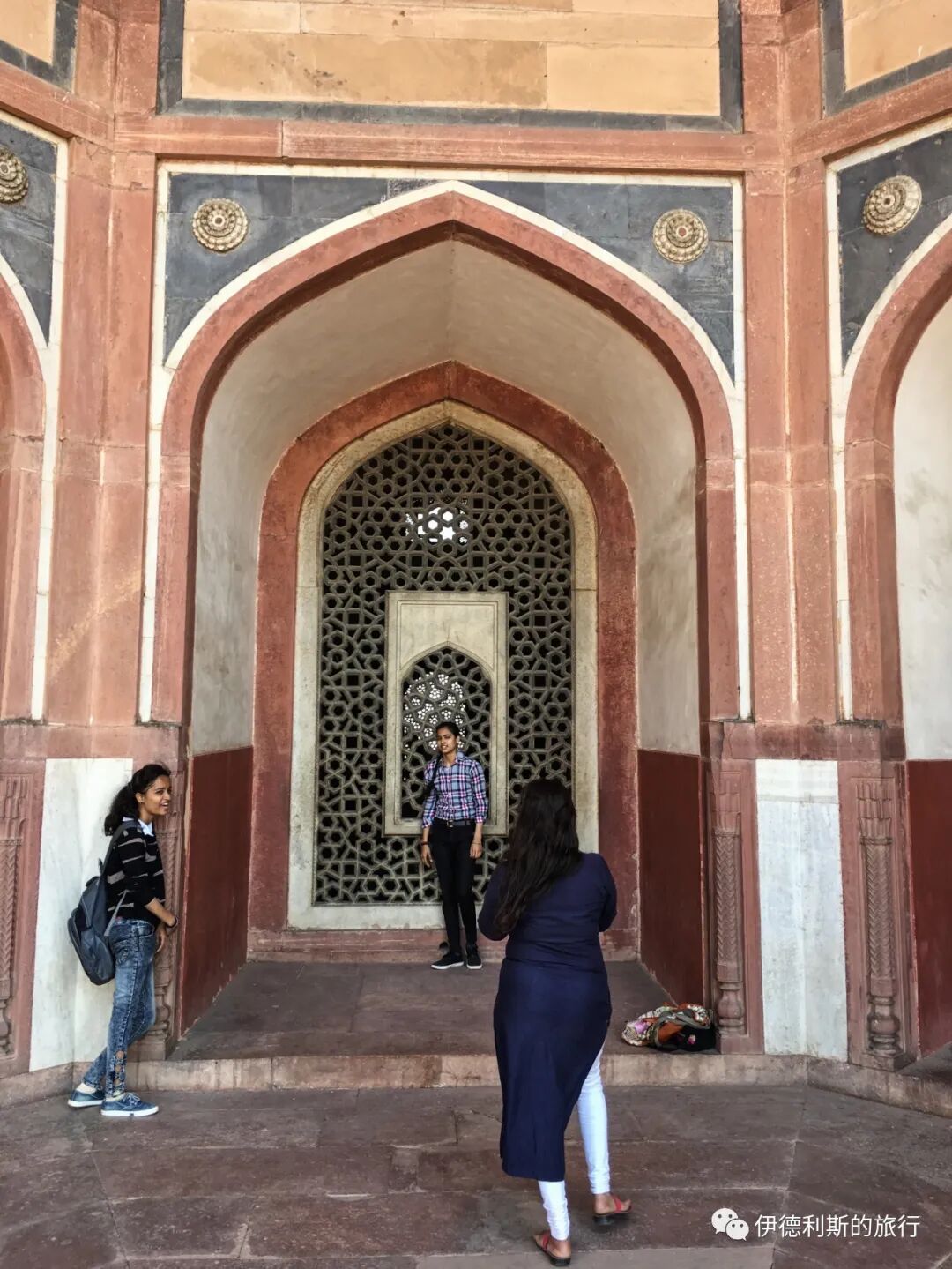
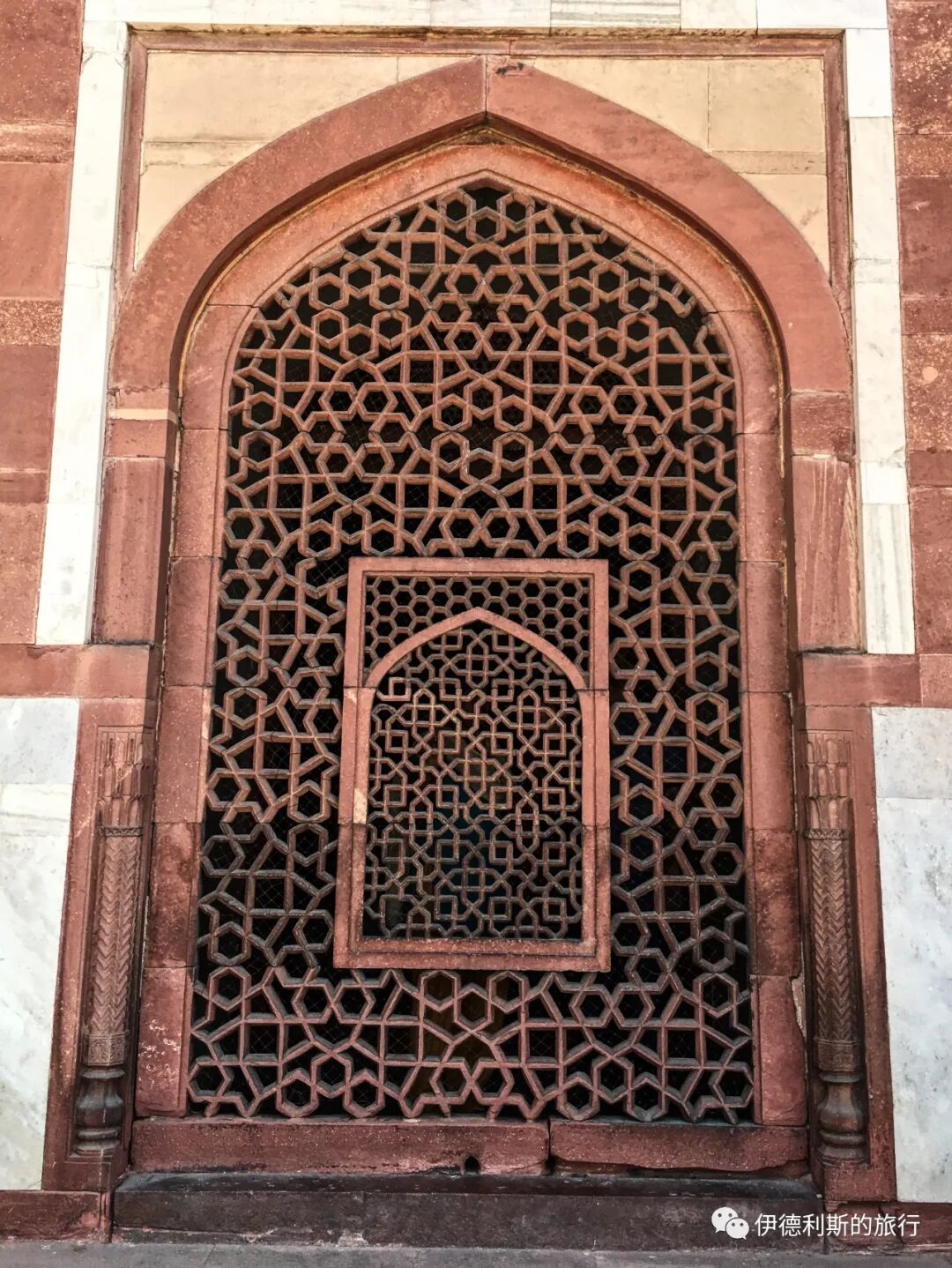
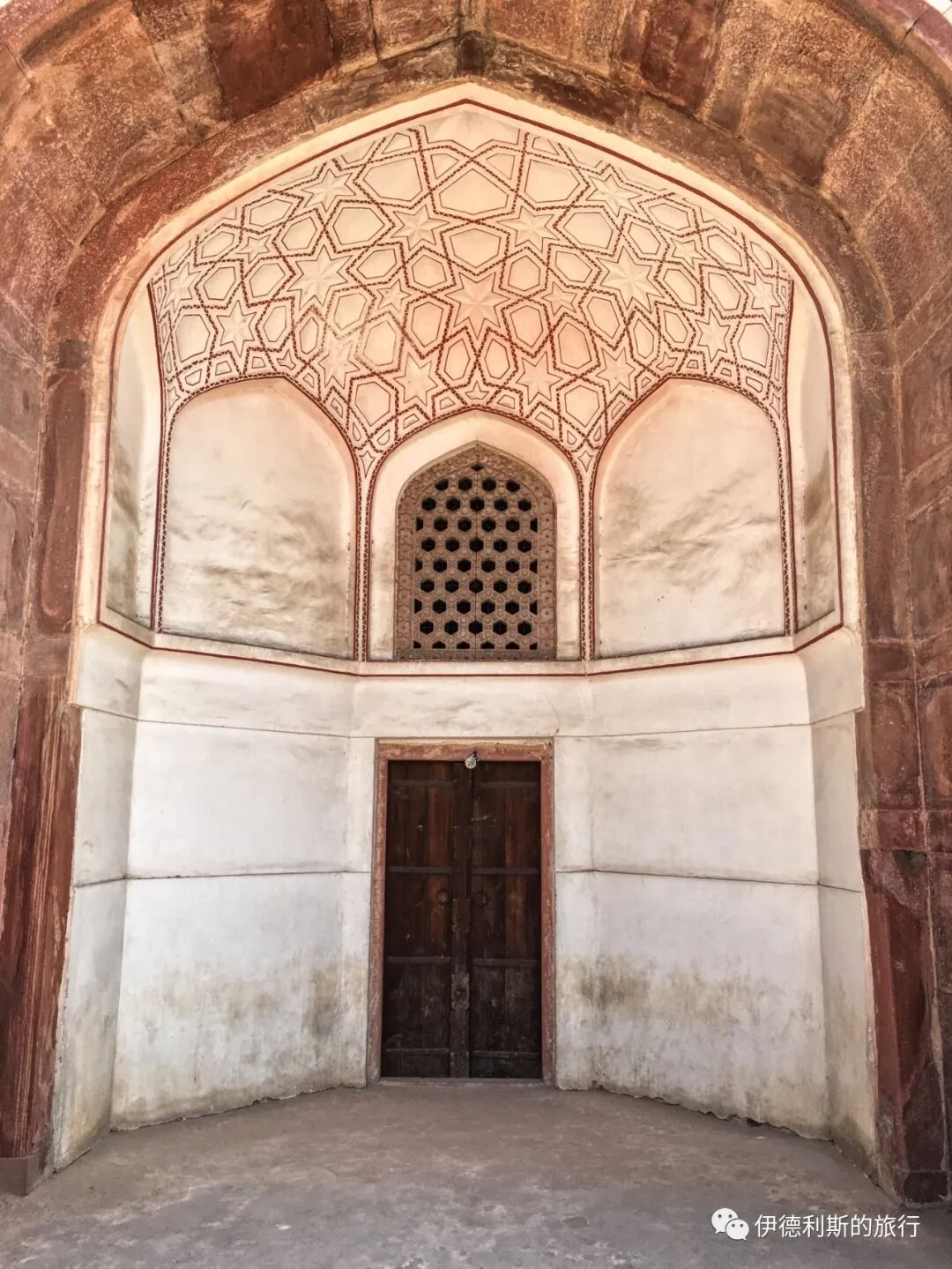
Humayun's Tomb is surrounded by a traditional Persian four-part garden called a Charbagh. The name means 'four gardens' in Persian and comes from the 'four gardens' mentioned in the Quran (55:46): 'But for he who has feared the position of his Lord are two gardens.' And (55:62): 'And below them both are two gardens.' The hallmark of a Charbagh garden is two axes that intersect at the center, dividing the garden into four sections. Babur, the founder of the Mughal Empire, used a Charbagh garden for his tomb in Kabul, Afghanistan, but Humayun's Tomb was the first time this Persian garden style was brought to India.
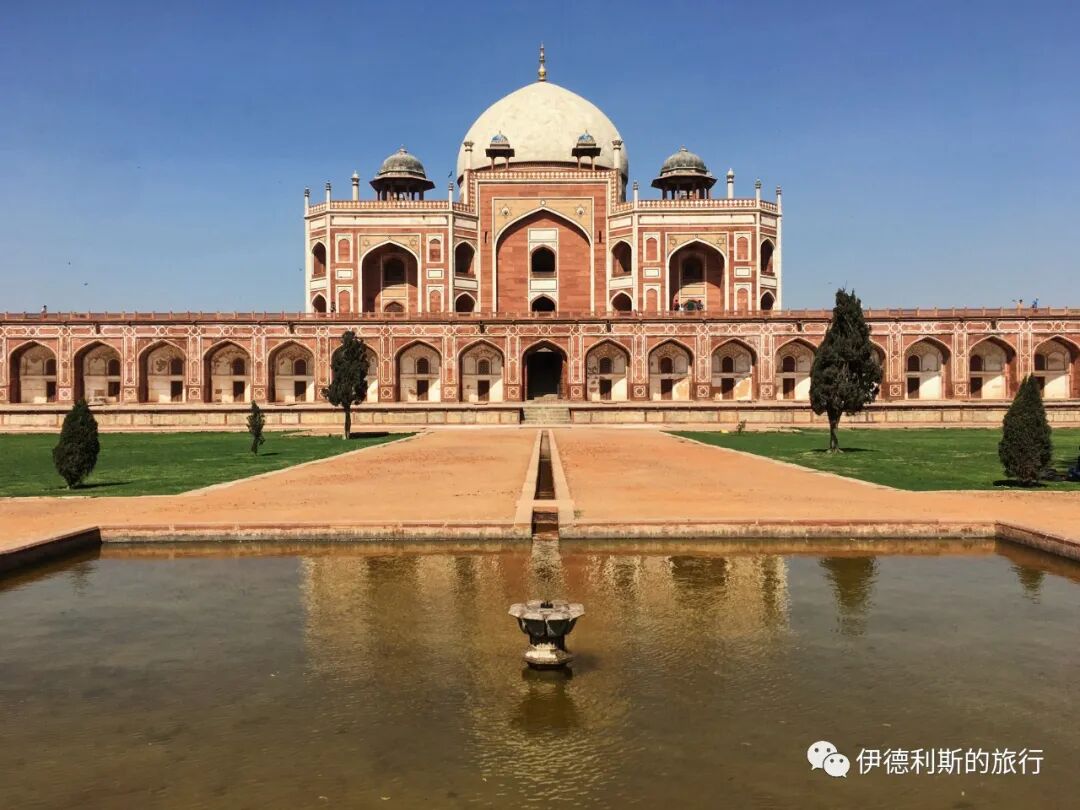
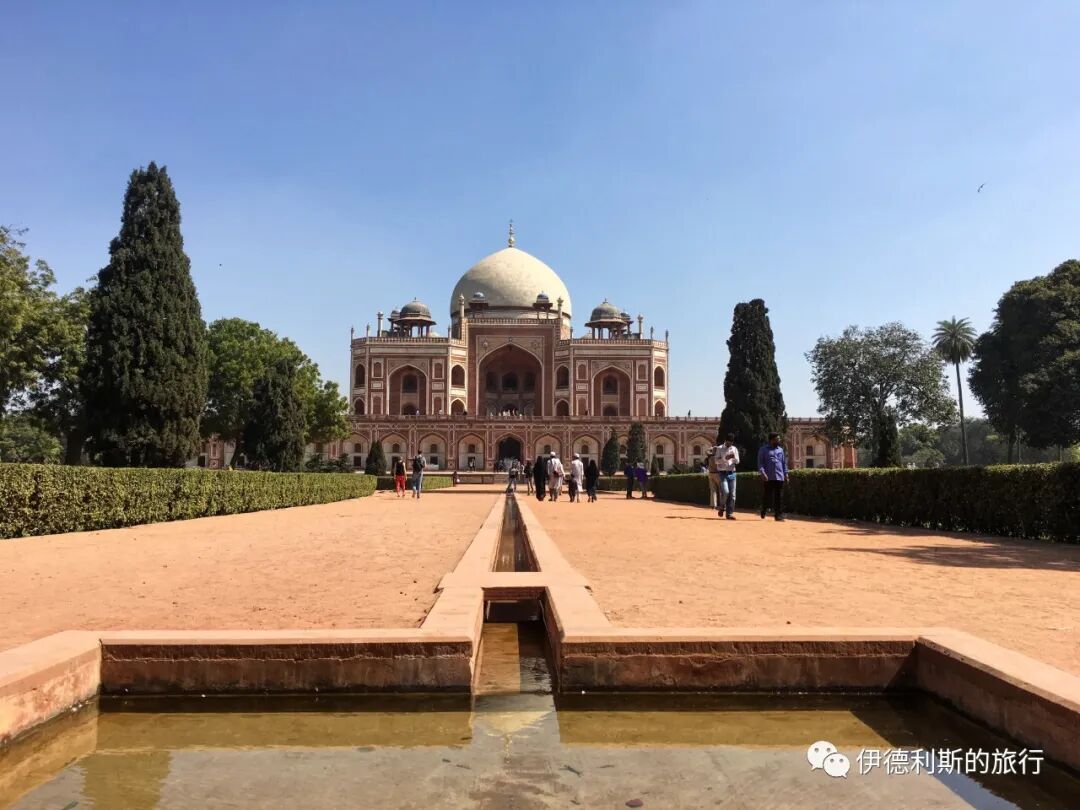
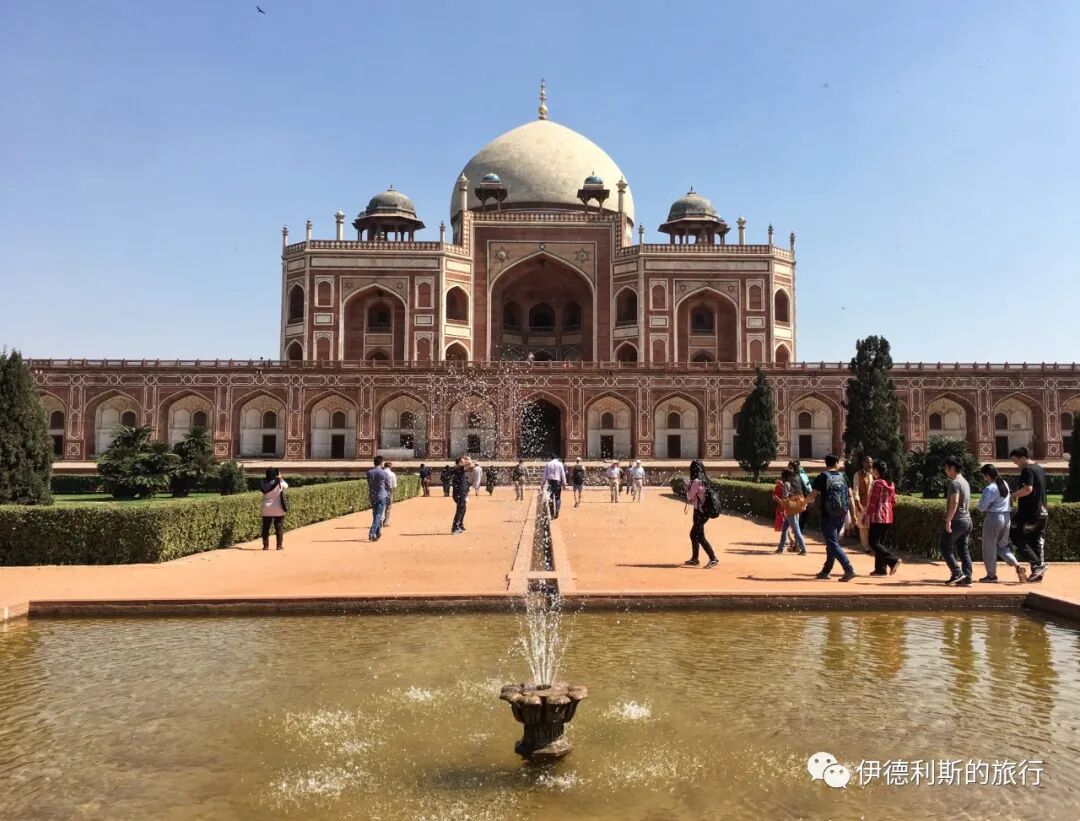
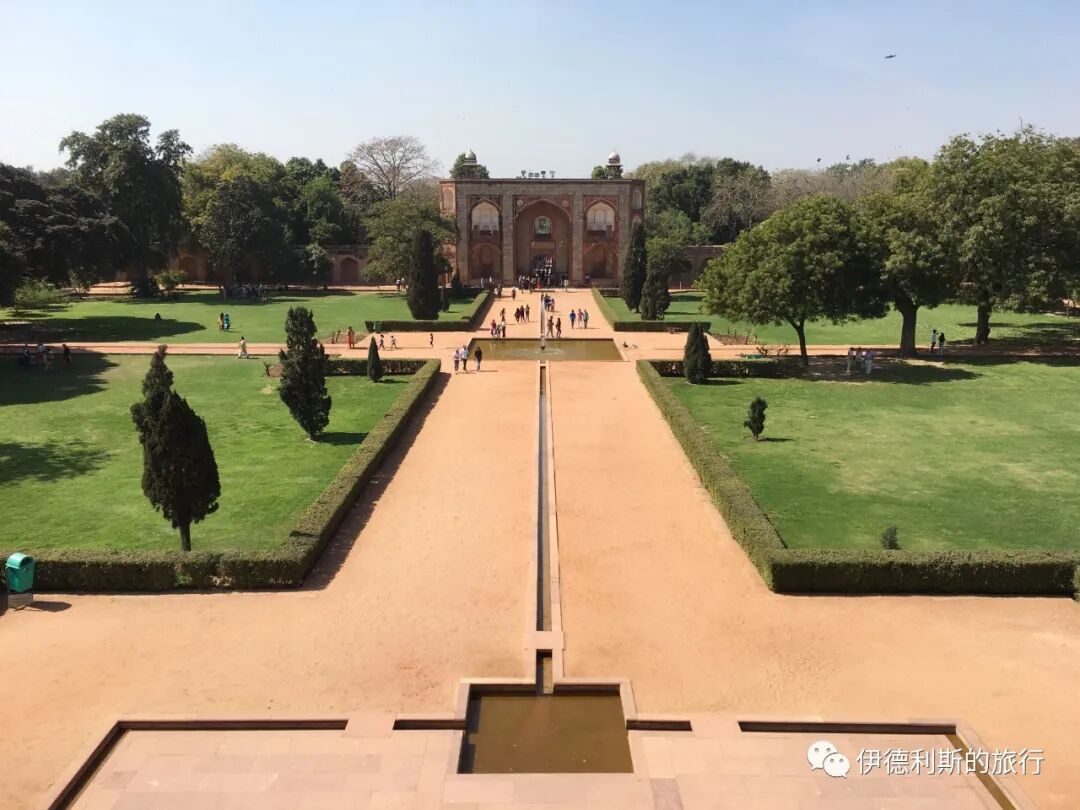
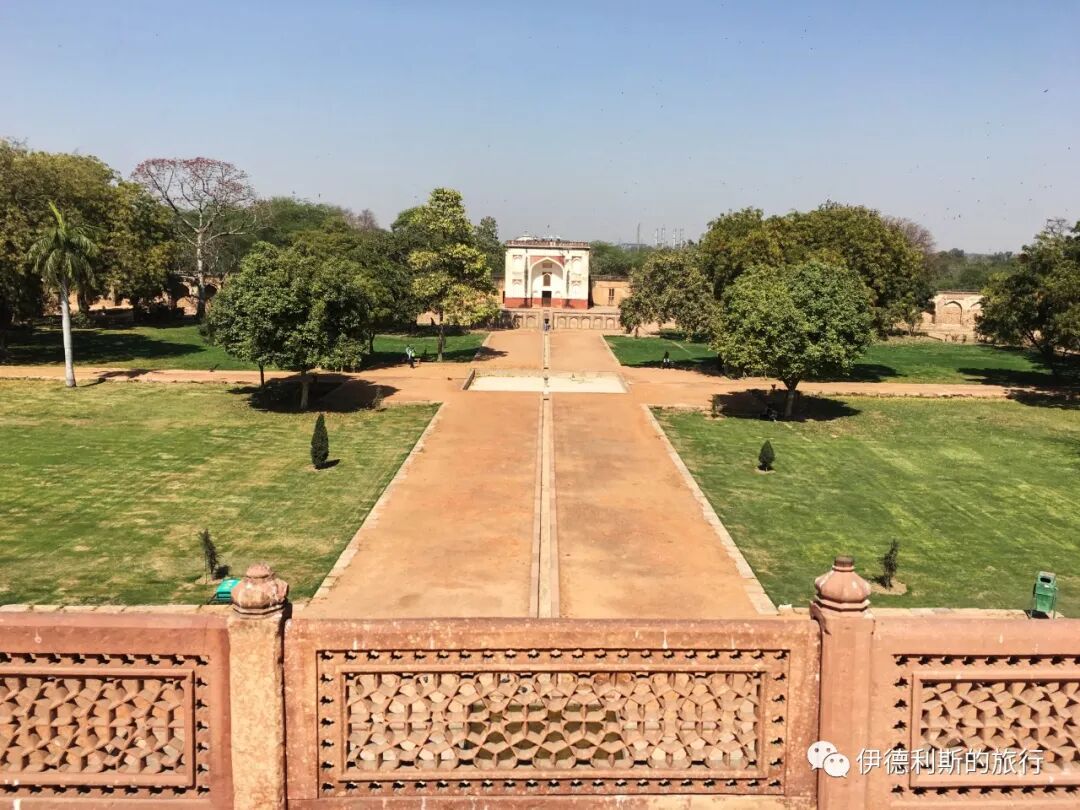
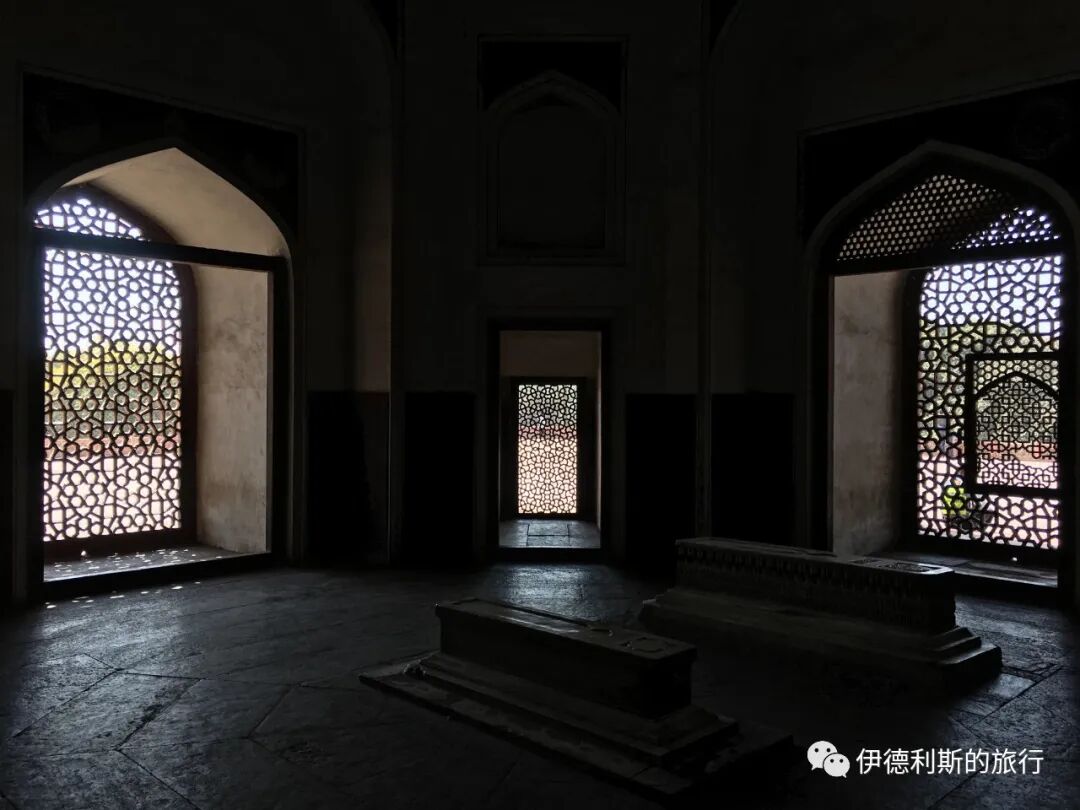
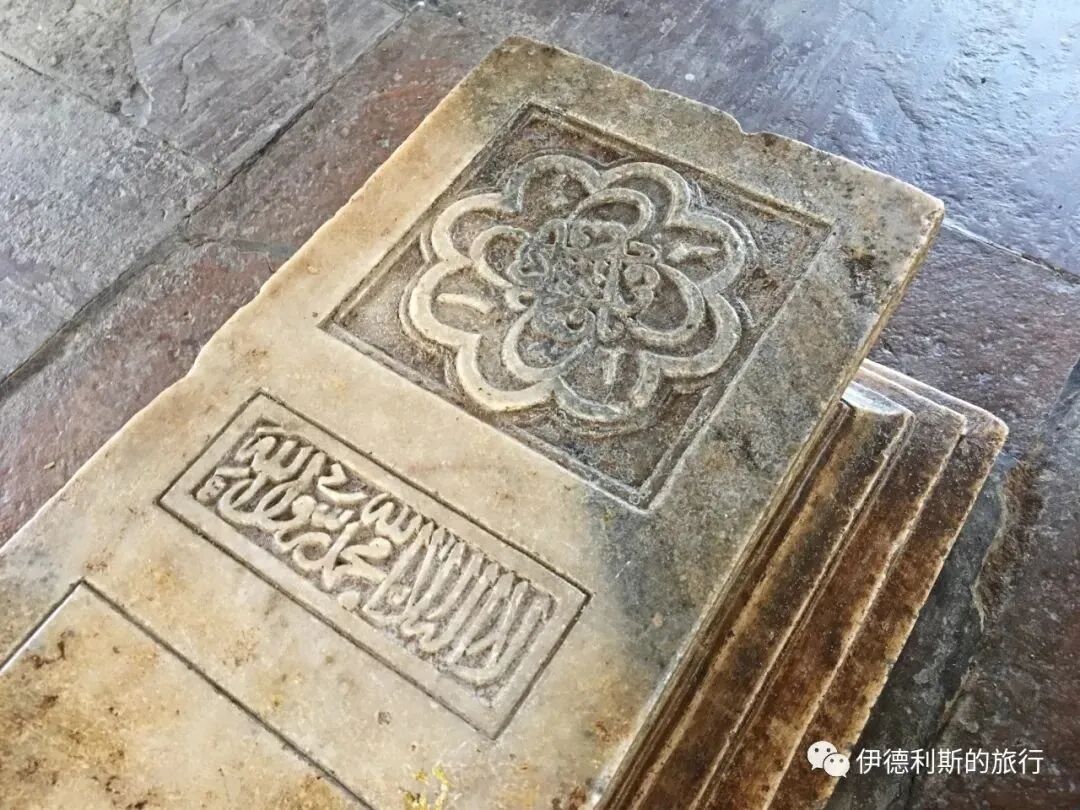
The interior of Humayun's Tomb consists of a main hall under the central dome and eight rooms arranged in two levels around it. Humayun's tombstone is in the center of the main hall, while his actual burial site is in a basement below the tombstone, accessible only through a separate passage outside the main structure. In 1611, English merchant William Finch visited Humayun's Tomb. He recorded that the interior had rich decorations and carpets, and the tombstone was covered by a Shamiana (ceremonial tent). He also noted that a Quran, Humayun's sword, turban, and shoes were on display, though none of these can be seen today.
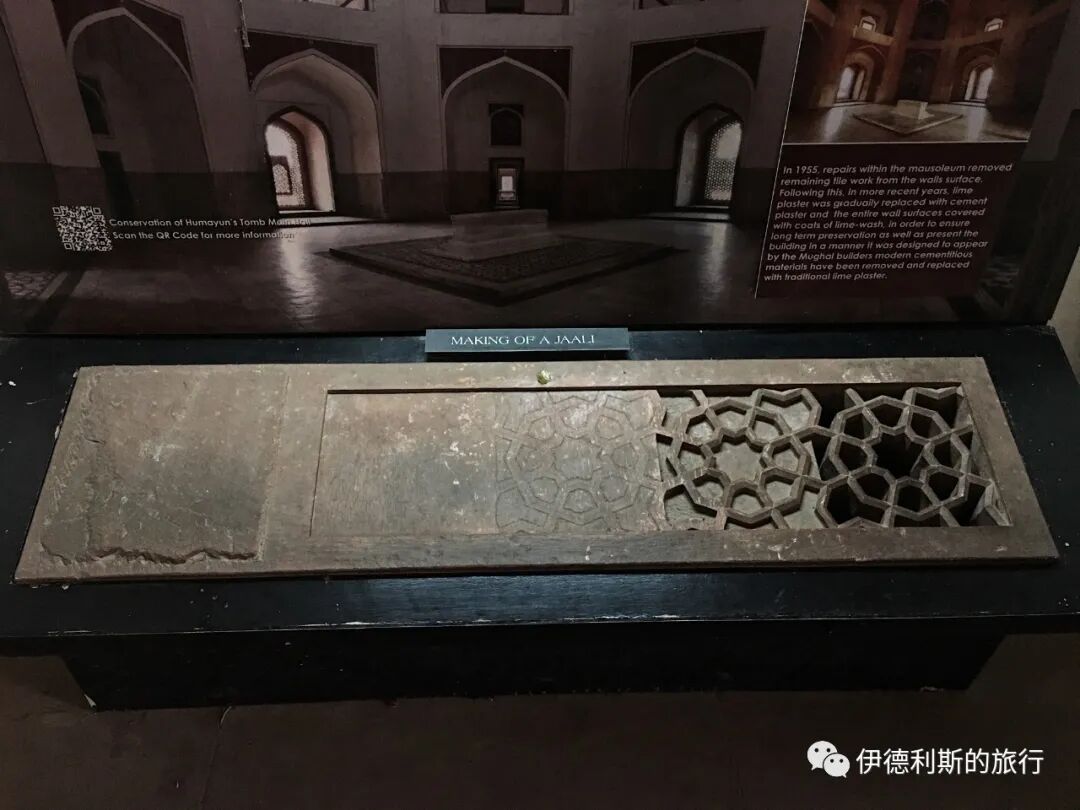
Other rooms contain the graves of members of the Mughal court, including Humayun's queens Bega Begum and Hamida Begum, several of his daughters, and the seventh Mughal emperor, Bahadur Shah I. Unlike the Delhi Sultanate period, which built elaborate mihrab (prayer niches) on the west side of tombs, Humayun's Tomb cleverly uses Jali lattice screens as a mihrab. Light shines through the screens into the room, creating areas of brightness and shadow depending on the angle. The tomb also carefully displays the process of making Jali lattice screens.
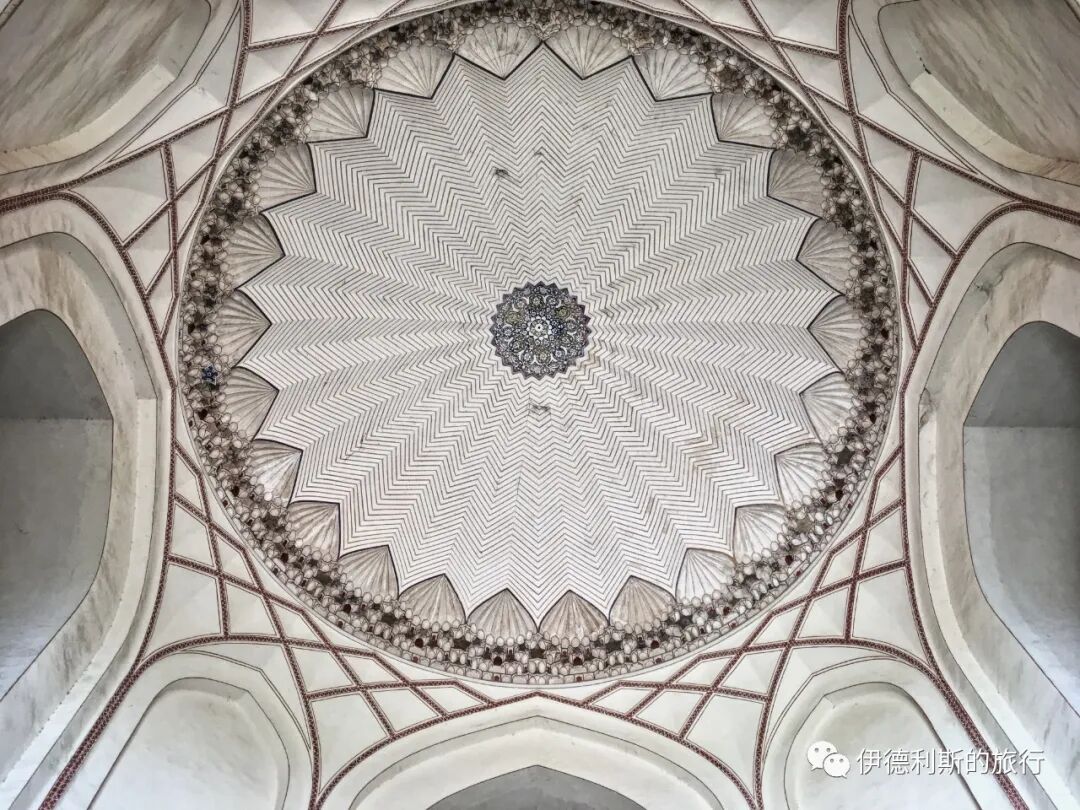
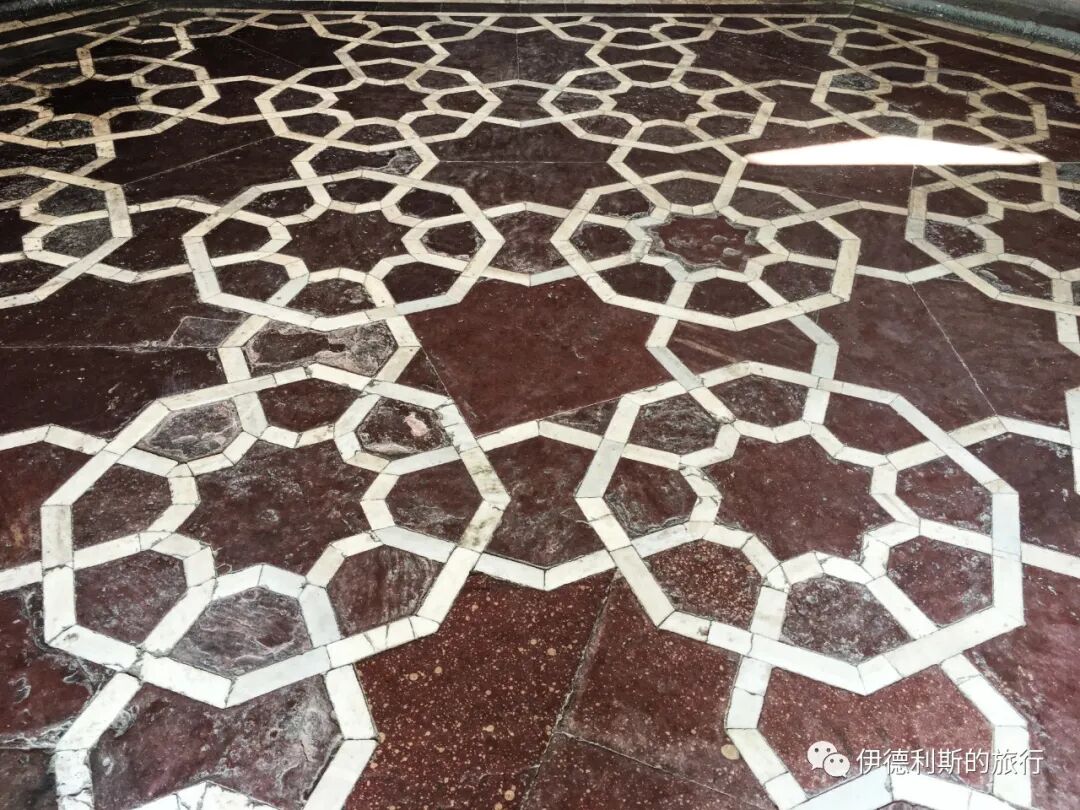
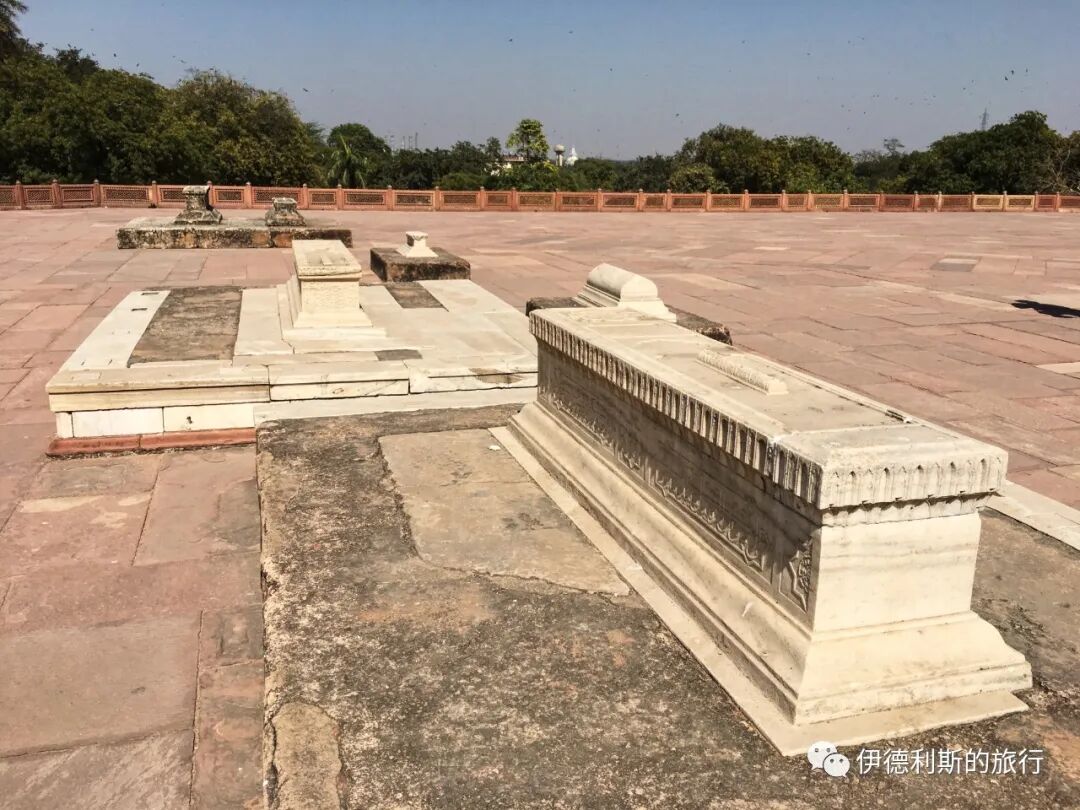
The terrace outside the main building also holds many tombstones of Mughal royalty and nobles, including Dara Shikoh, the eldest son of Shah Jahan who was murdered by Aurangzeb. Because of this, the area is also called the 'dormitory of the Mughals'.
Barber's Tomb
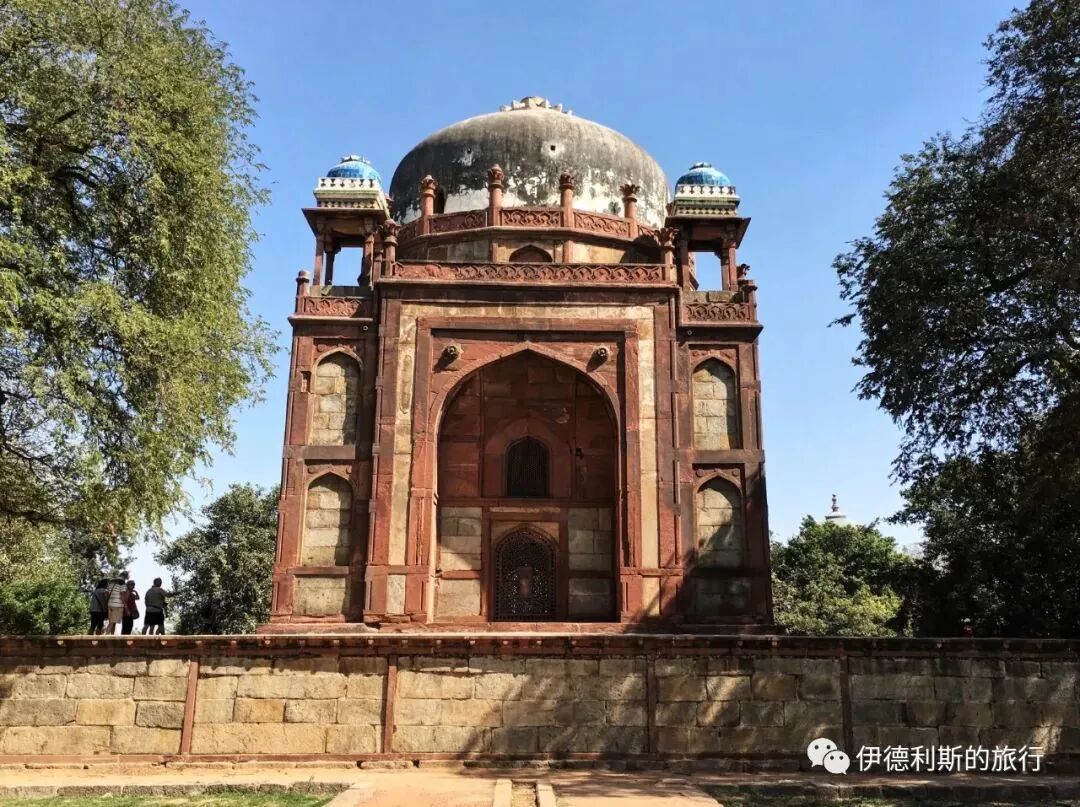
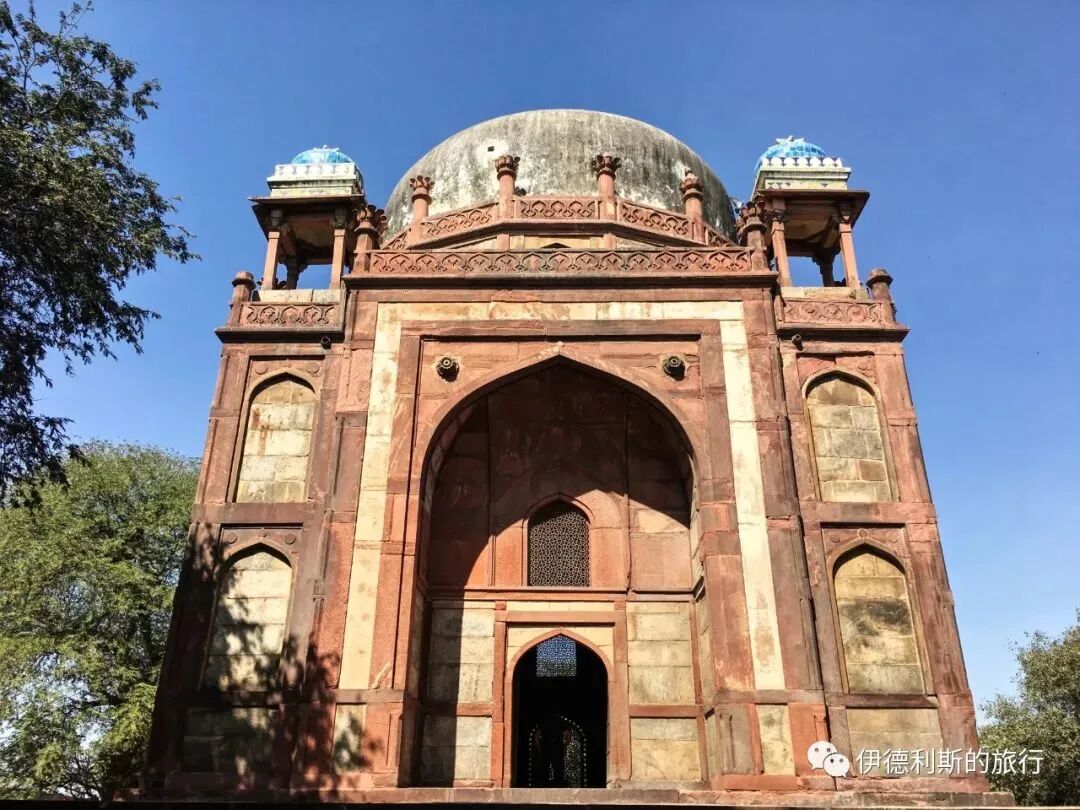
On the southeast side of Humayun's Tomb is the 'Barber's Tomb', built in 1590. It holds the grave of the personal barber to the third Mughal emperor, Akbar, who was also one of Akbar's closest servants. This tomb also features a Persian double-dome structure, appearing as two domes from the inside and outside, and has a Chhatri domed pavilion at each of the four corners.
West Gate
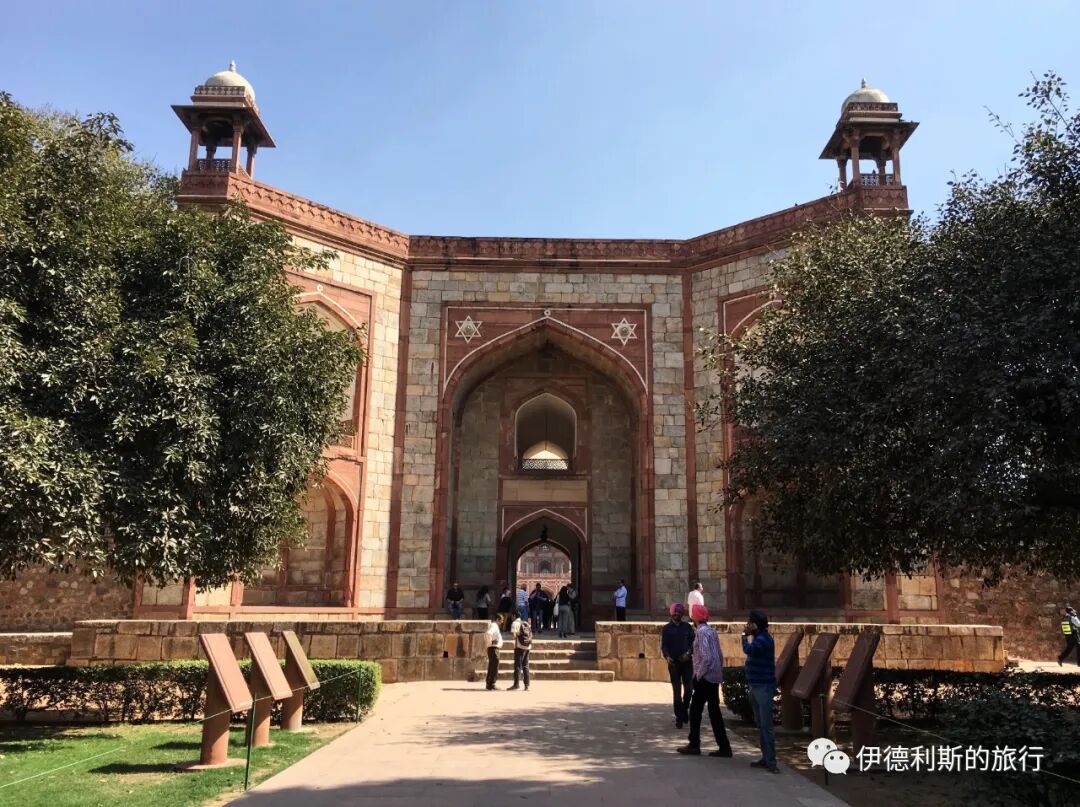
The Persian garden surrounding Humayun's Tomb has a gate on each side. The West Gate is the main entrance; it has an I-shaped structure with splayed walls on the west side and two Chhatri domed pavilions on top.
Bu Halima Garden Tomb Gate
Directly across from the west gate of Humayun's Tomb stands the 16th-century gate of the Bu Halima Garden Tomb. There are no records identifying who Bu Halima was. The gate features a classic Indian-style stone window (jharokha), which is a signature element of ancient Indian building facades.
Between 2012 and 2013, the Aga Khan Trust for Culture hired craftsmen to restore the site using traditional techniques and materials. They replaced missing glazed tiles and mosaics and swapped modern cement for traditional lime mortar.
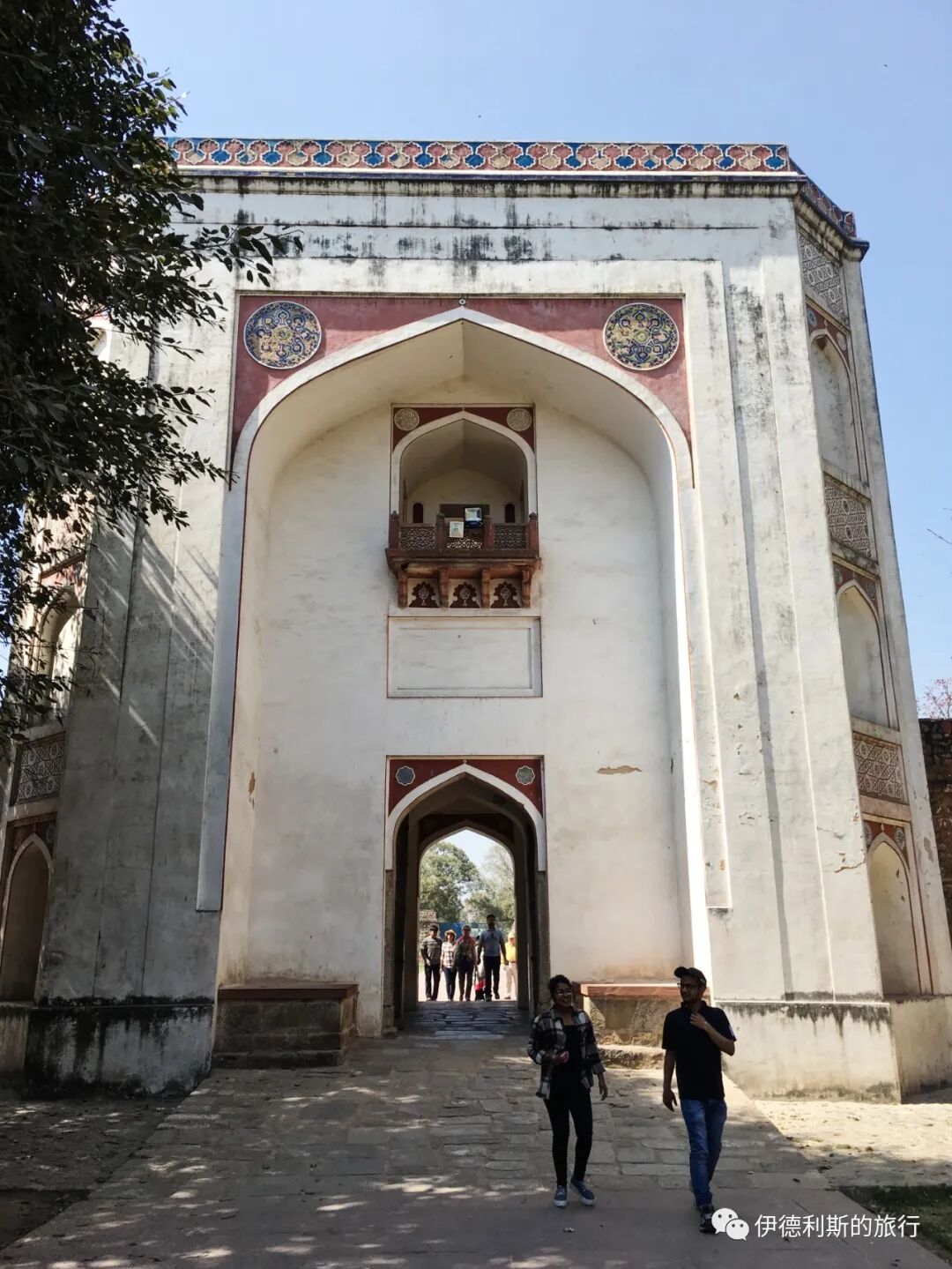
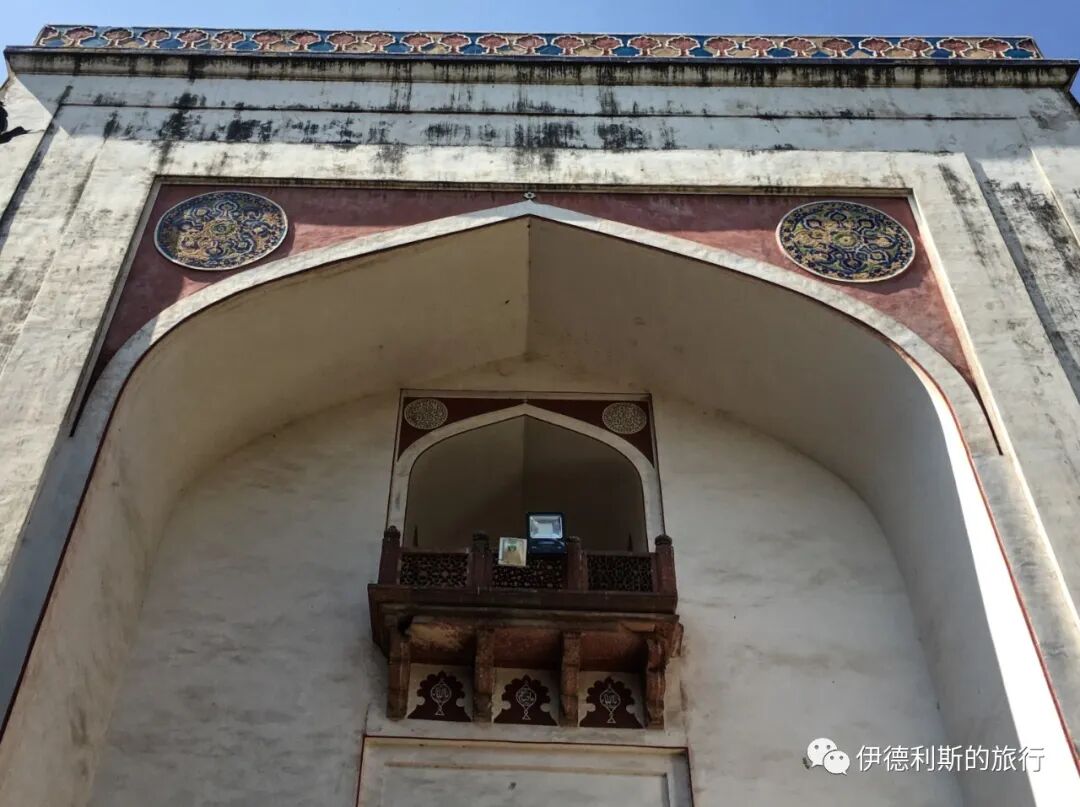
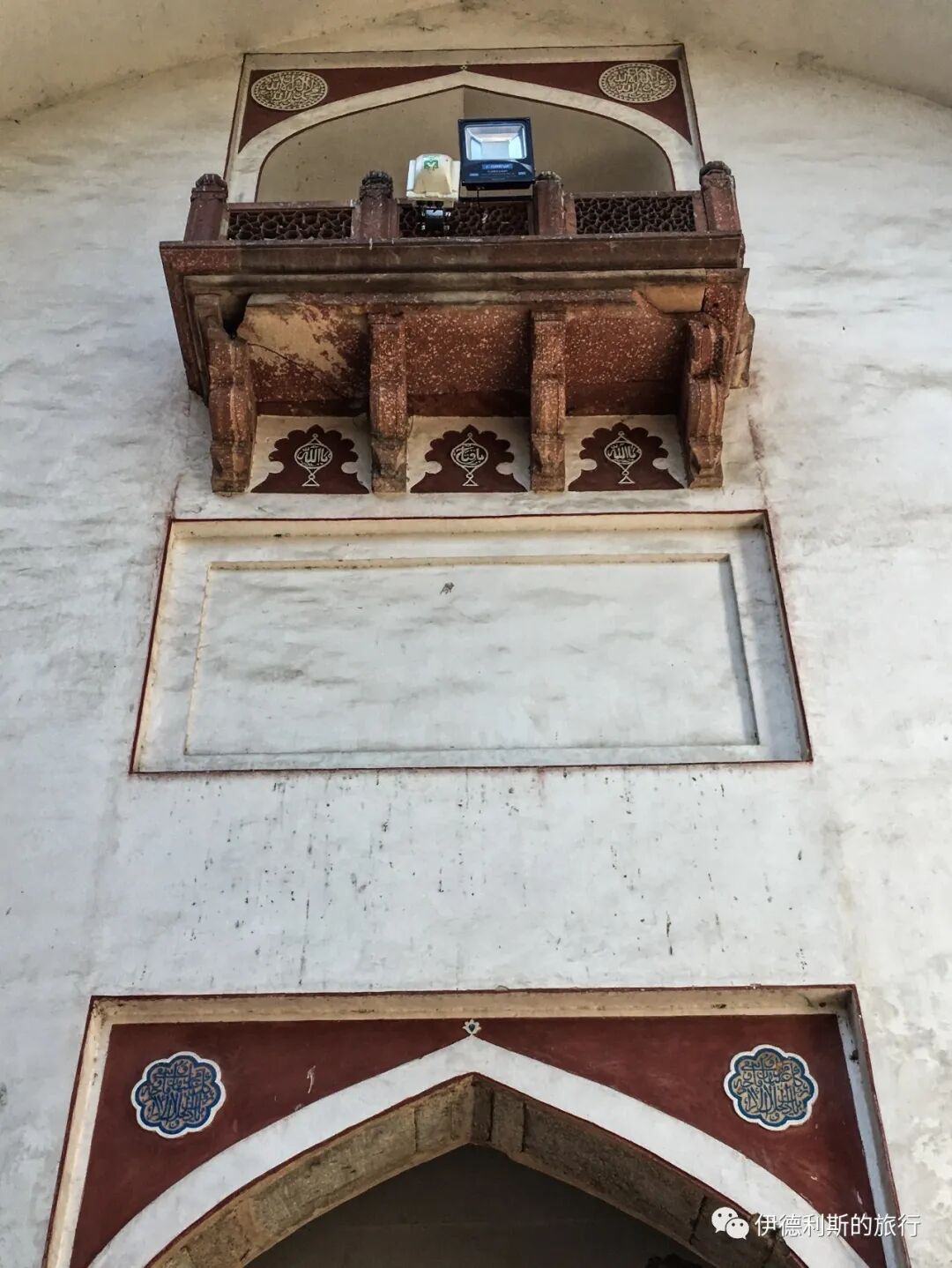
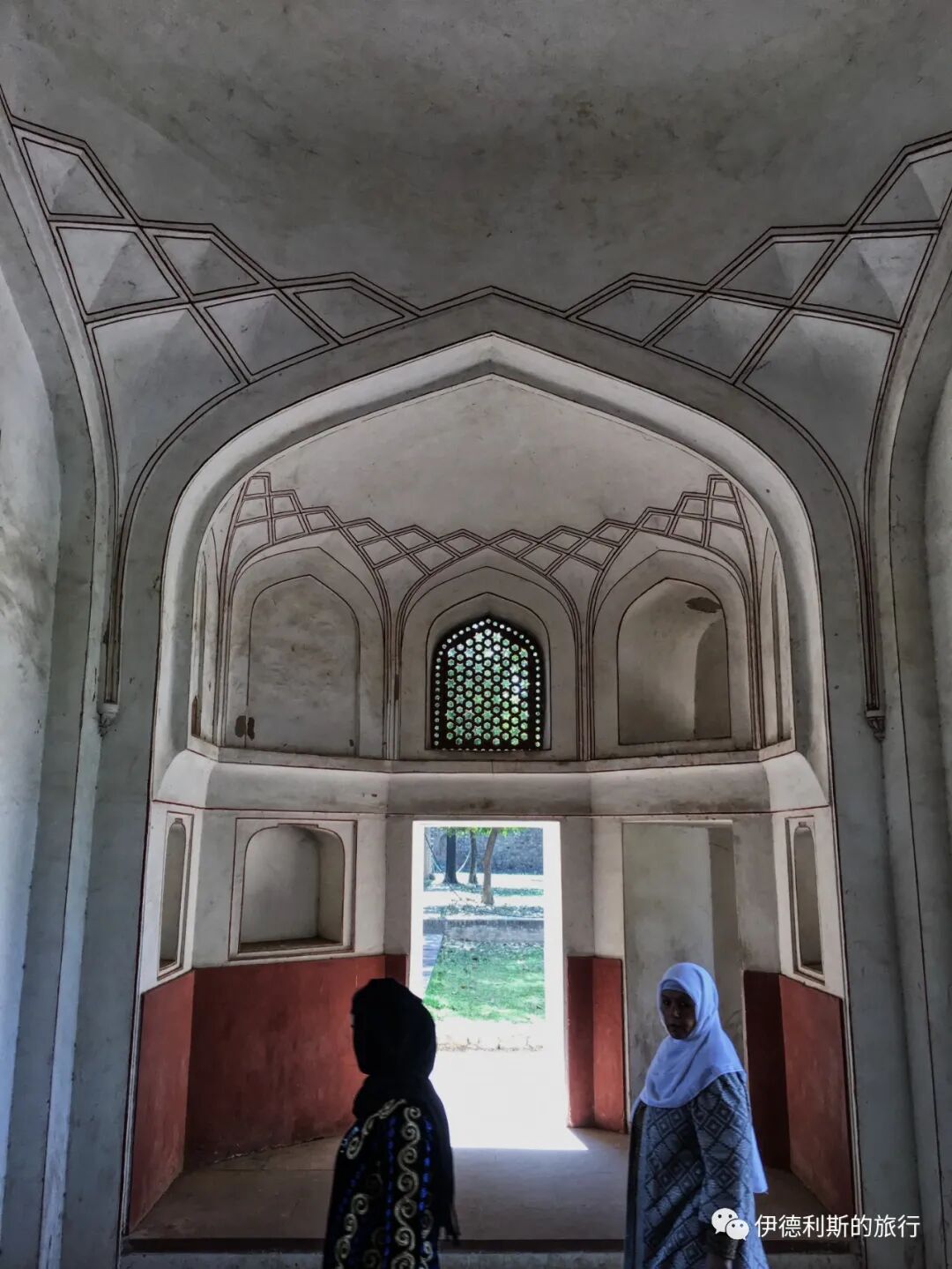
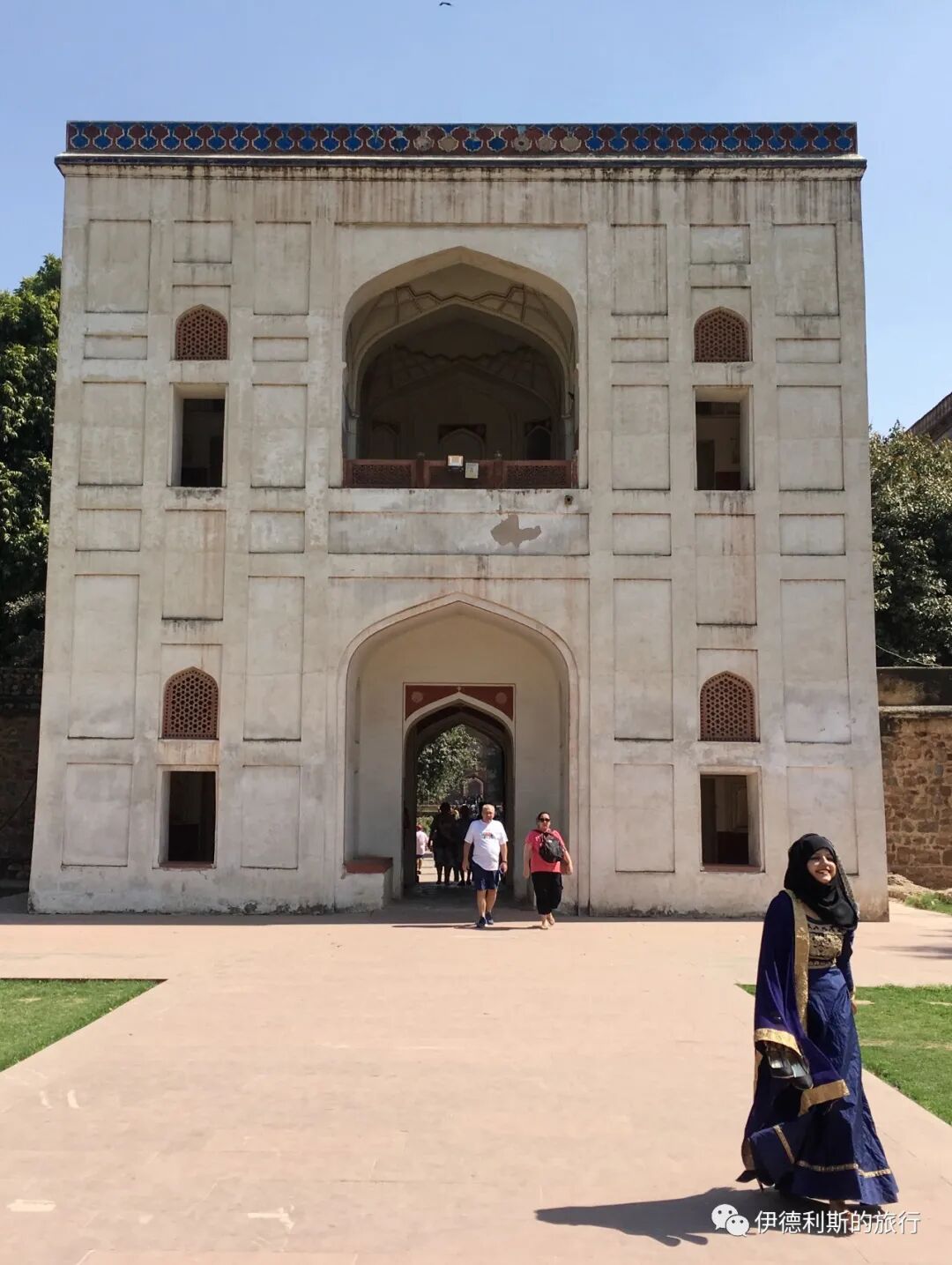
Afsarwala Tomb and Mosque
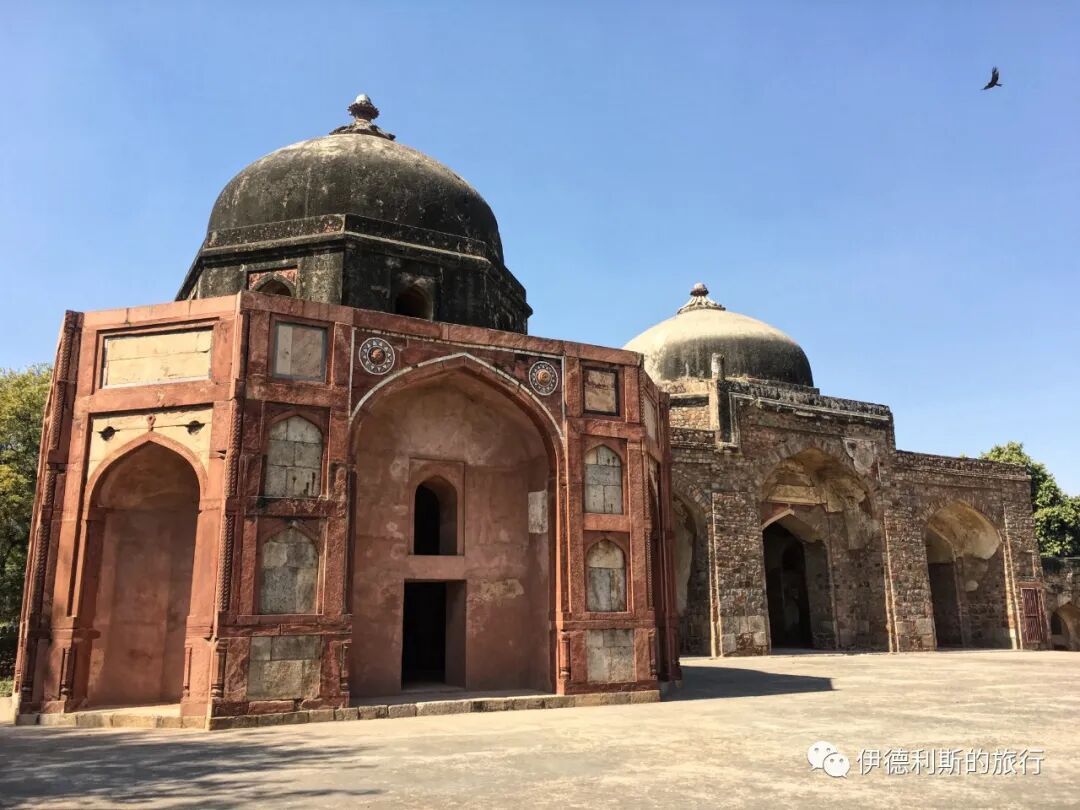
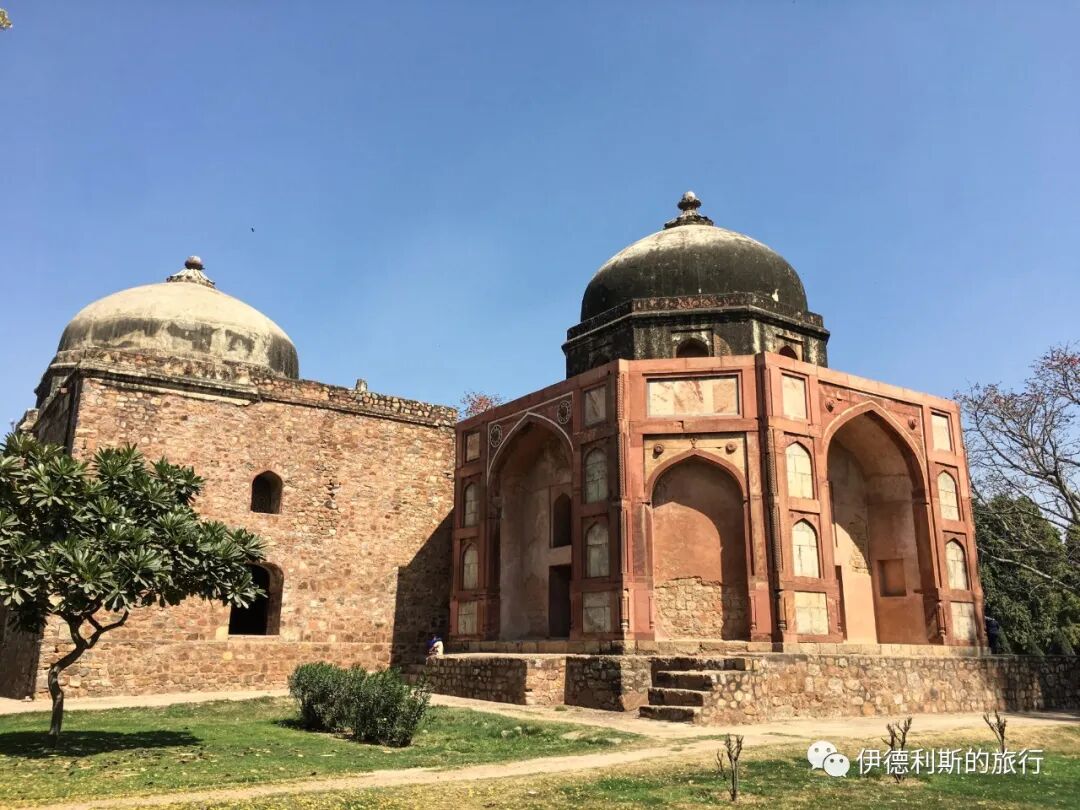
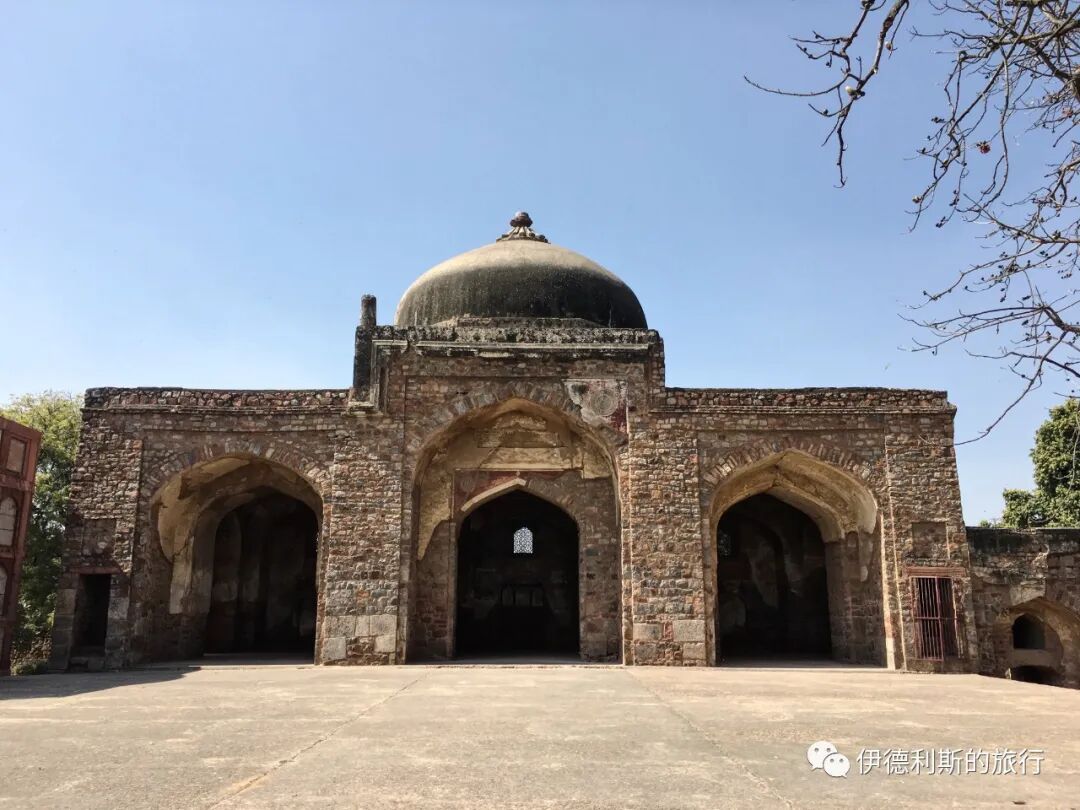
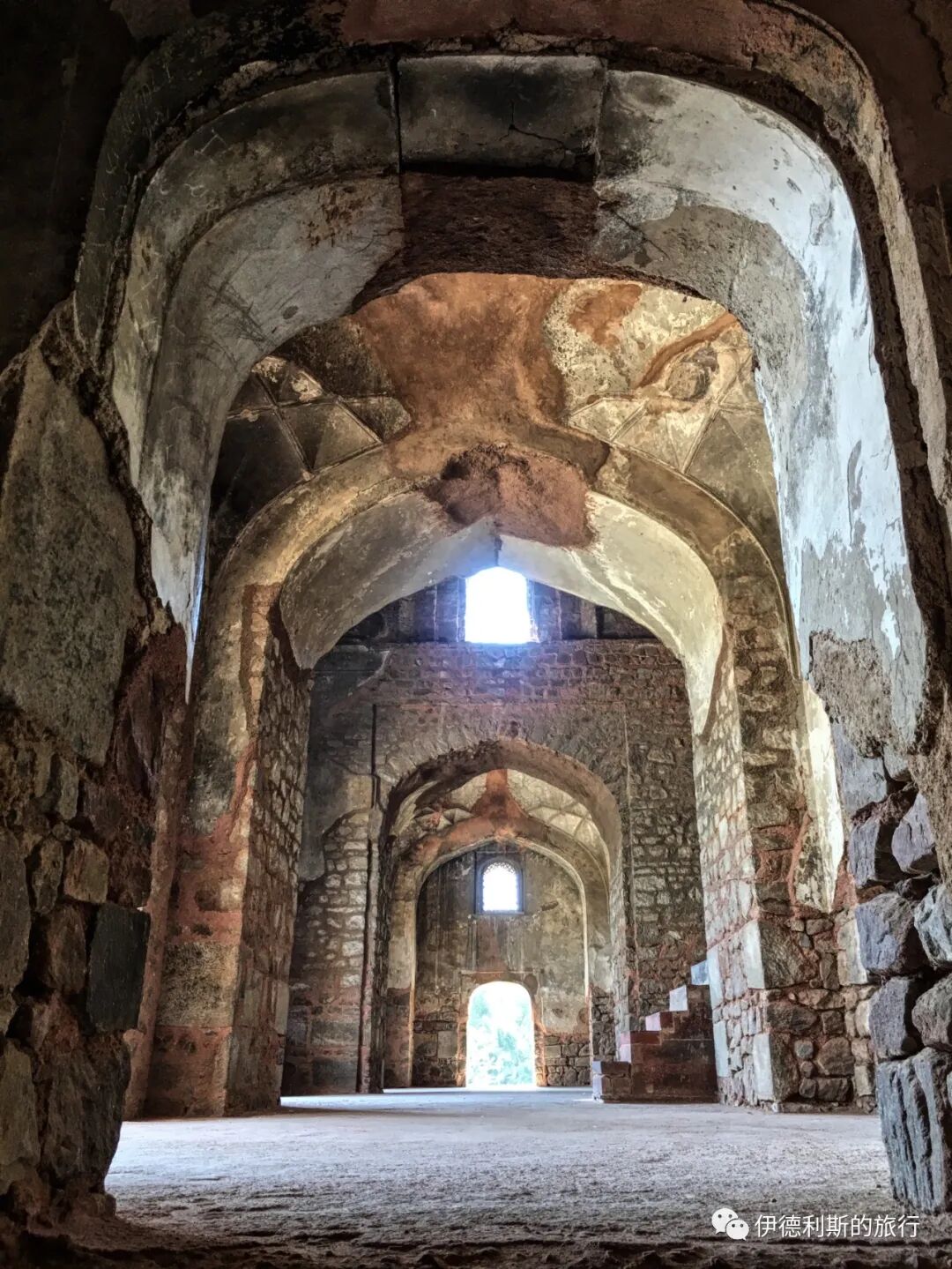
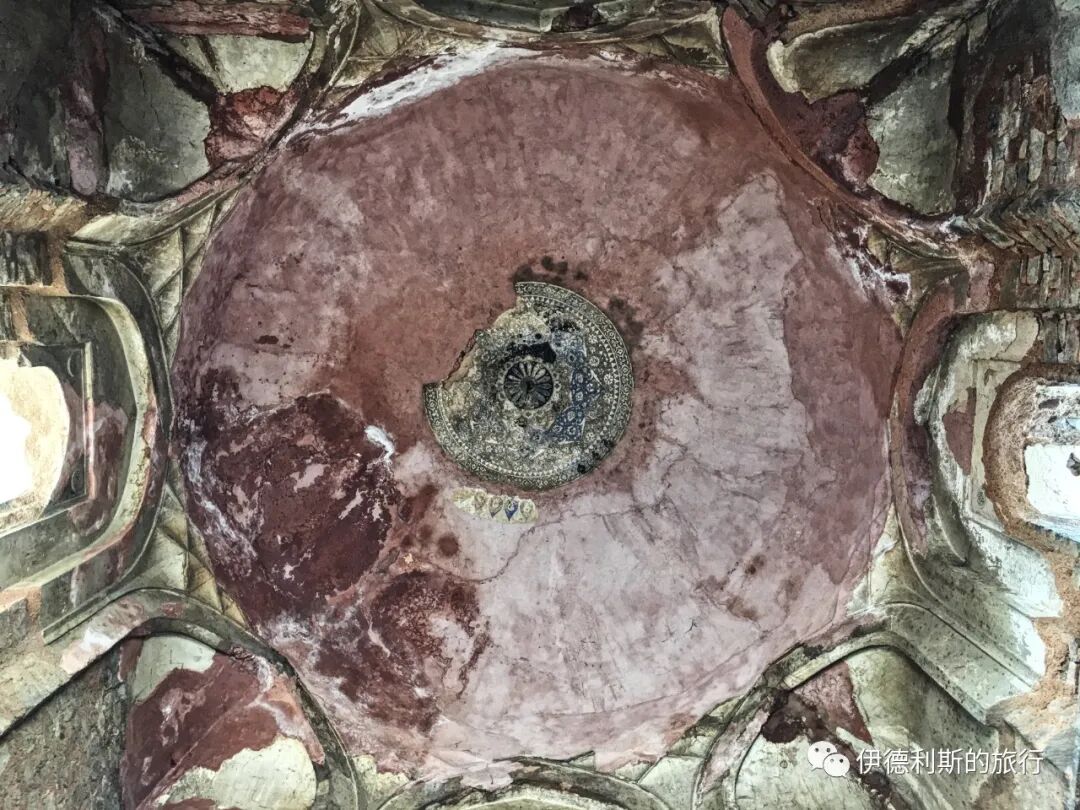
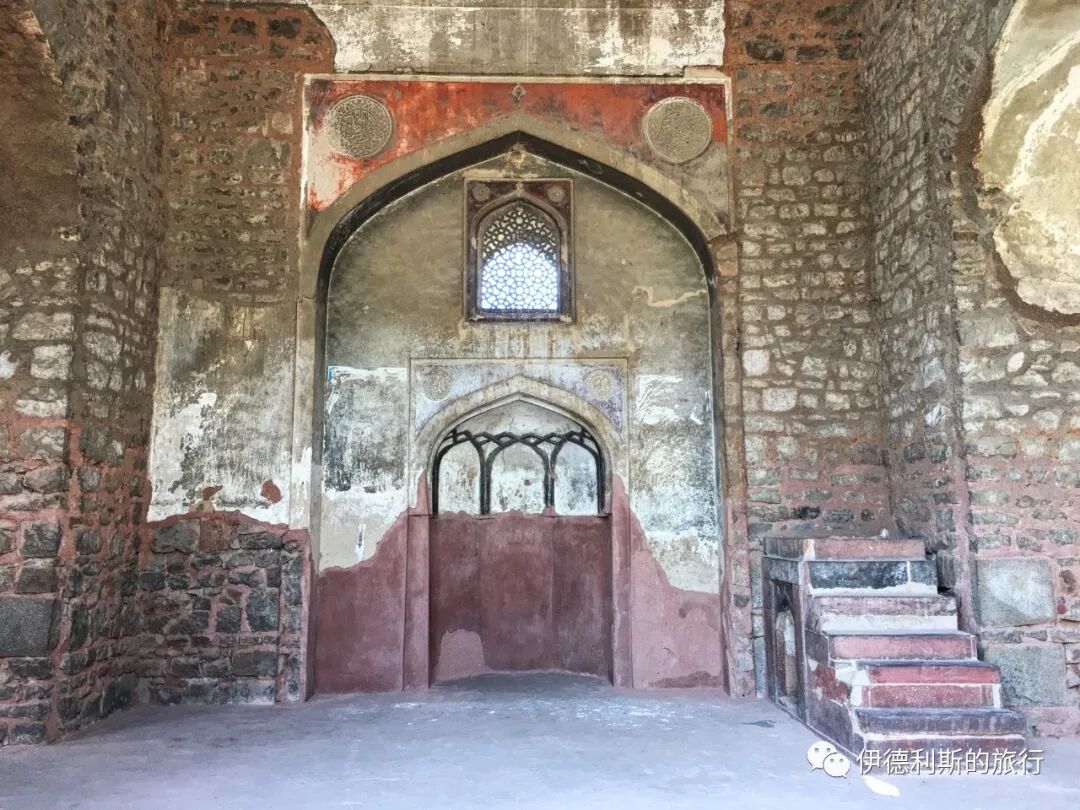
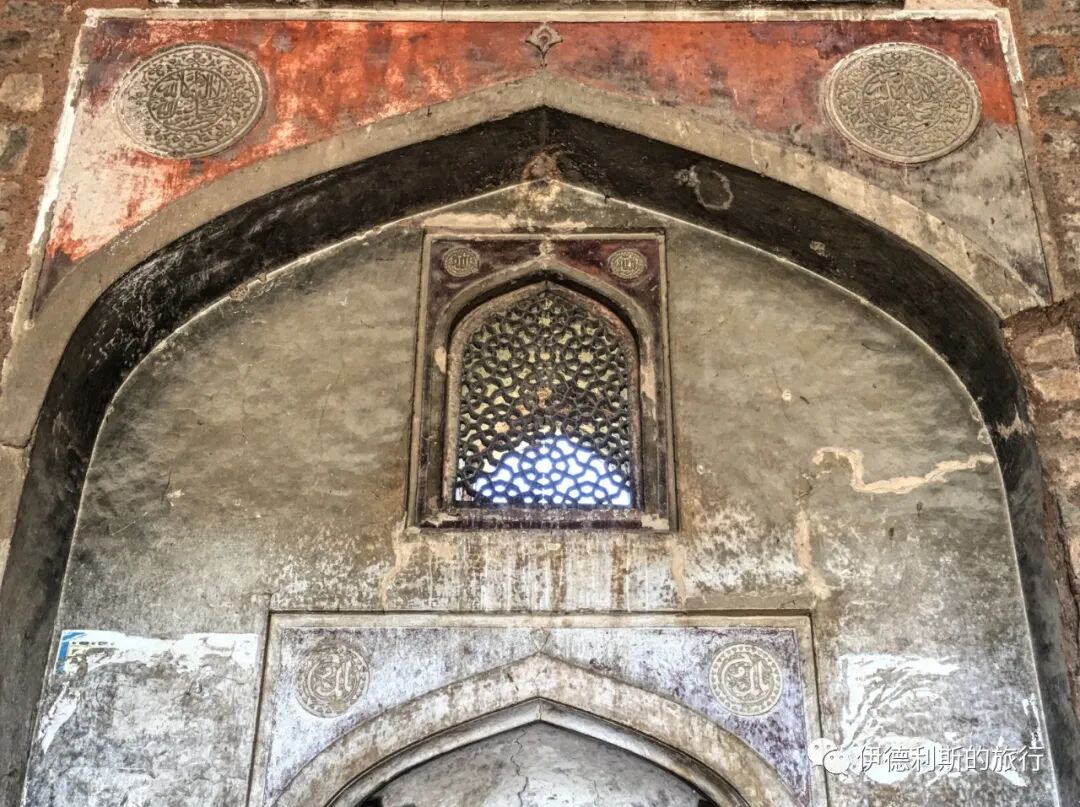
The Afsarwala Tomb and Mosque are located southwest of Humayun's Tomb and were built between 1566 and 1567. Unfortunately, the tombstone only lists the construction date and nothing about the person buried there. It is believed they were likely a noble in the court of the Mughal Emperor Akbar, as the name 'Afsarwala' suggests the person was a military officer.
North Gate of Arab Sarai
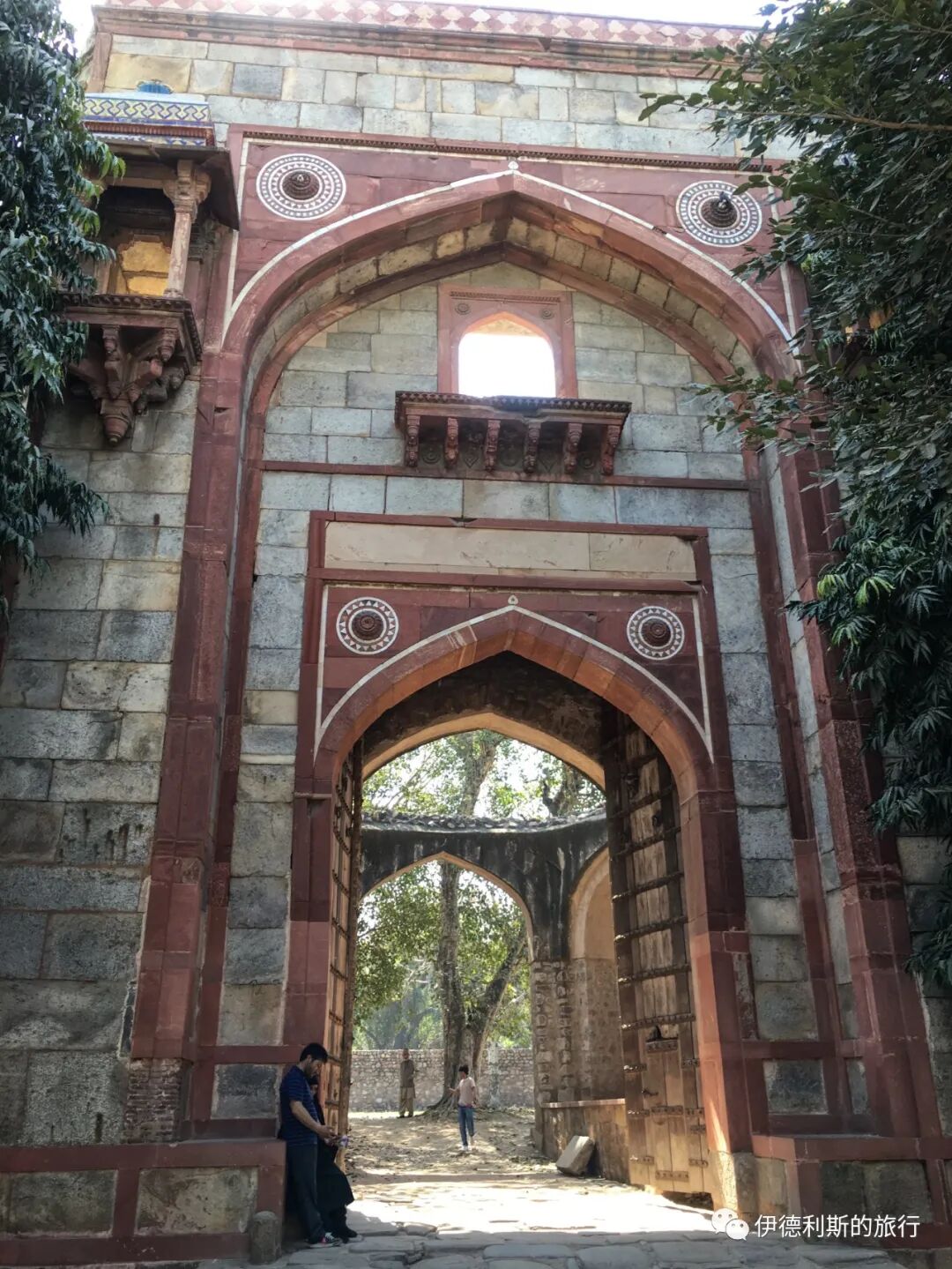
On the main road west of Humayun's Tomb stands the north gate of Arab Sarai. The original site of Arab Sarai is now an industrial training institute.
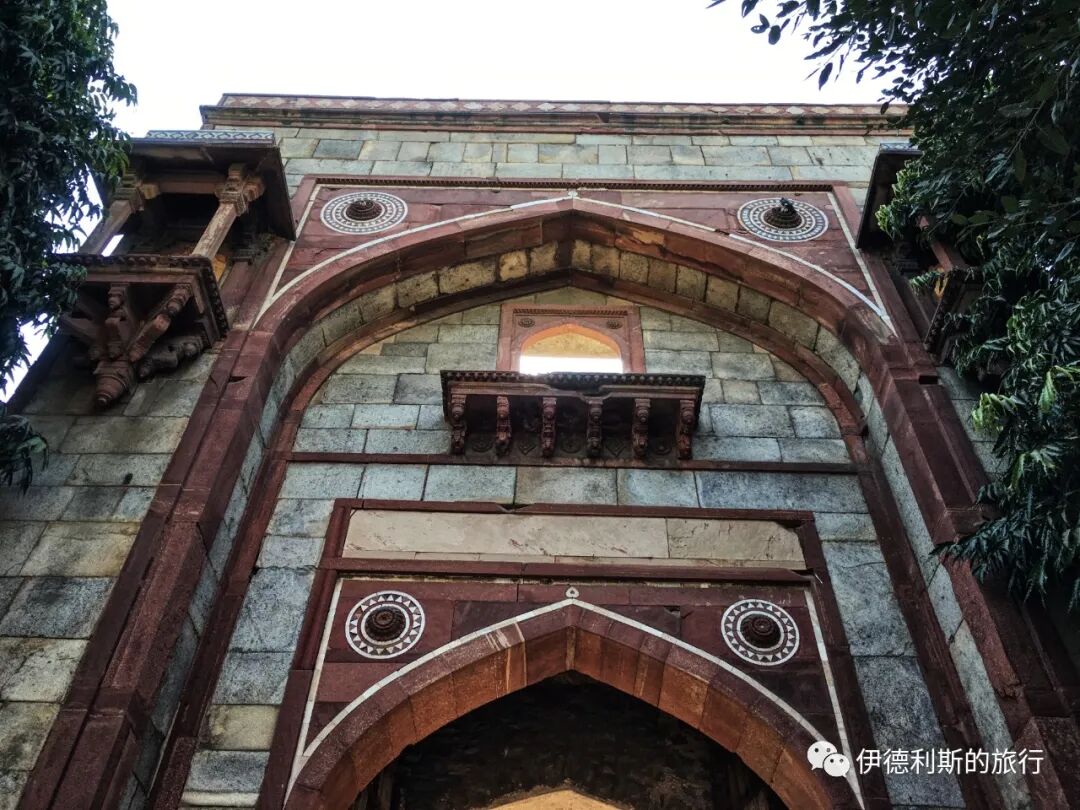
The gate originally included a main entrance and arched rooms on both sides, but most of it has collapsed, leaving only the facade well-preserved. The gate is built from light-colored quartzite and red sandstone, matching the style of Humayun's Tomb. The gate features exquisite traditional Indian stone windows (jharokha) decorated with colorful tiles.
Some say this was where the Persian craftsmen who built Humayun's Tomb lived, while legend has it that it housed 300 reciters brought back by Humayun's queen, Haji Begum, after her pilgrimage.
In recent years, the Aga Khan Trust for Culture restored the site, reinforcing the main structure and replacing missing tiles.
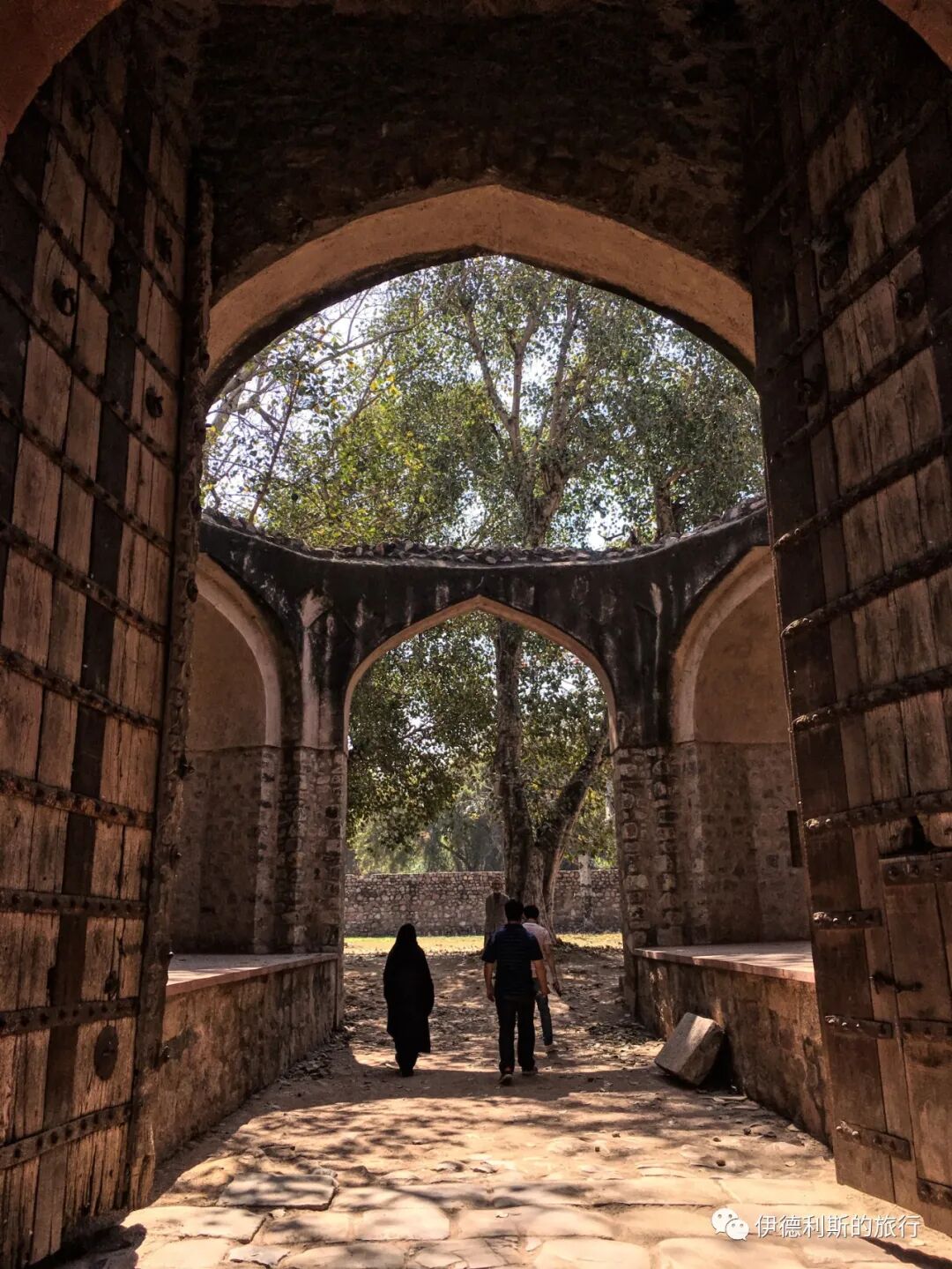
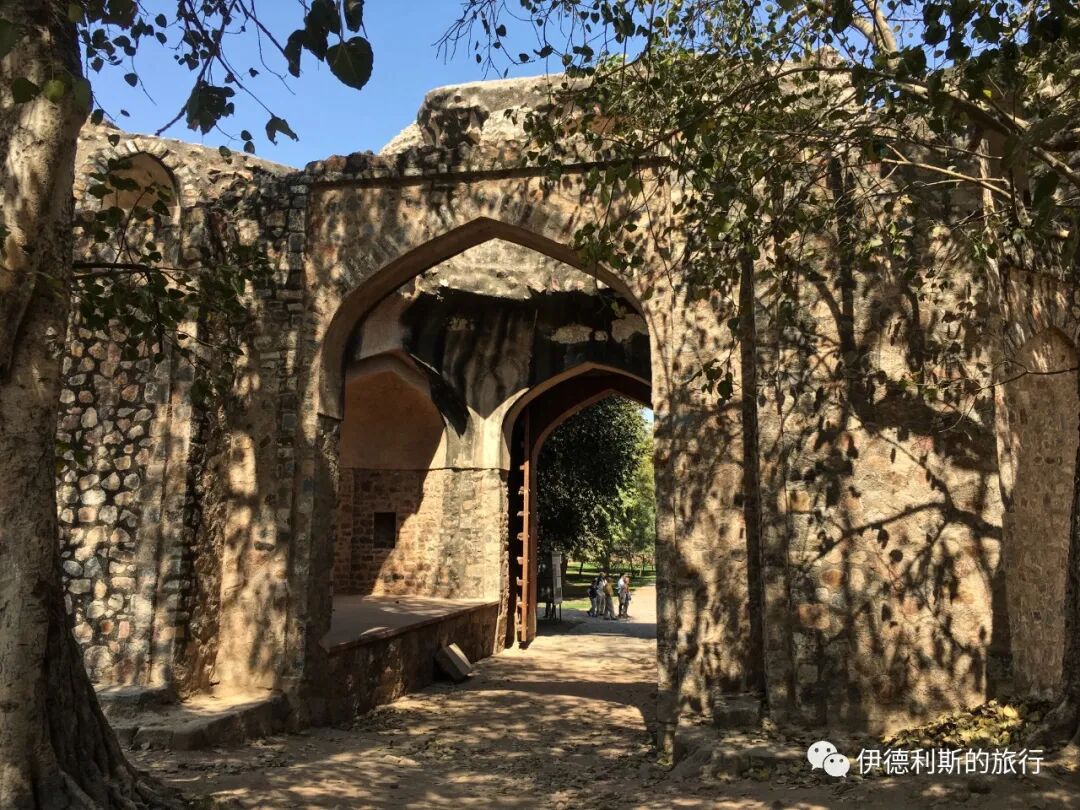
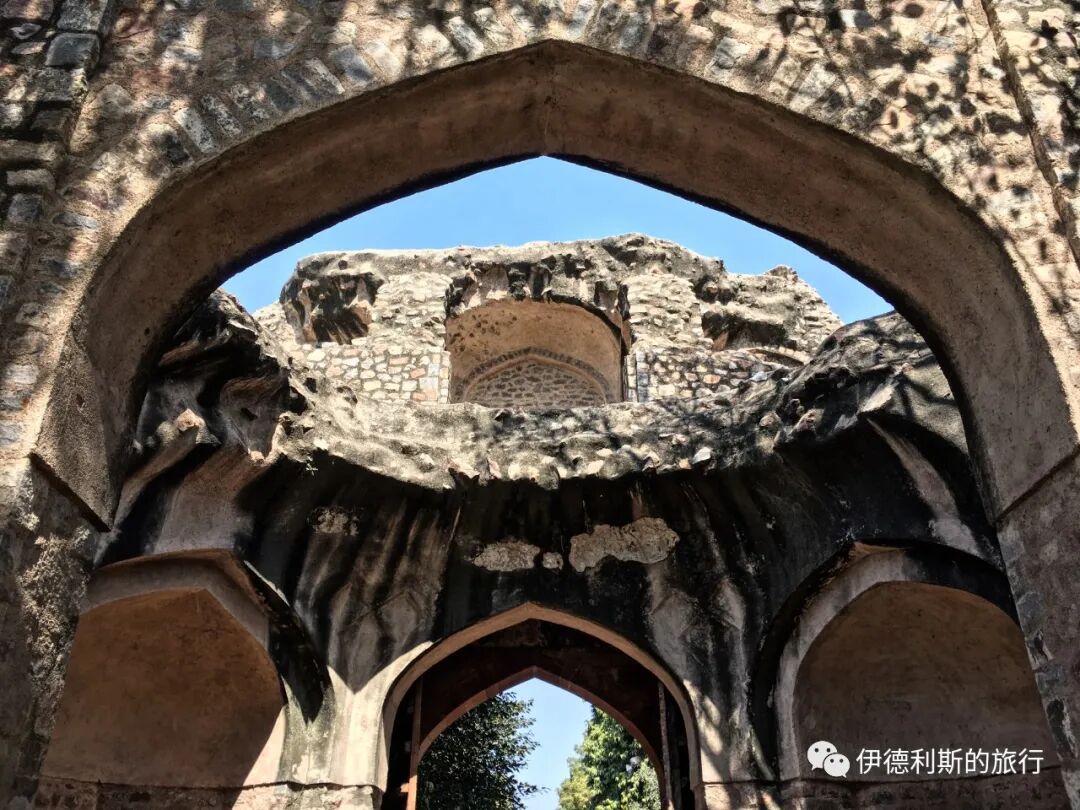
Sufi shrine (gongbei) Dargah Patte Waali
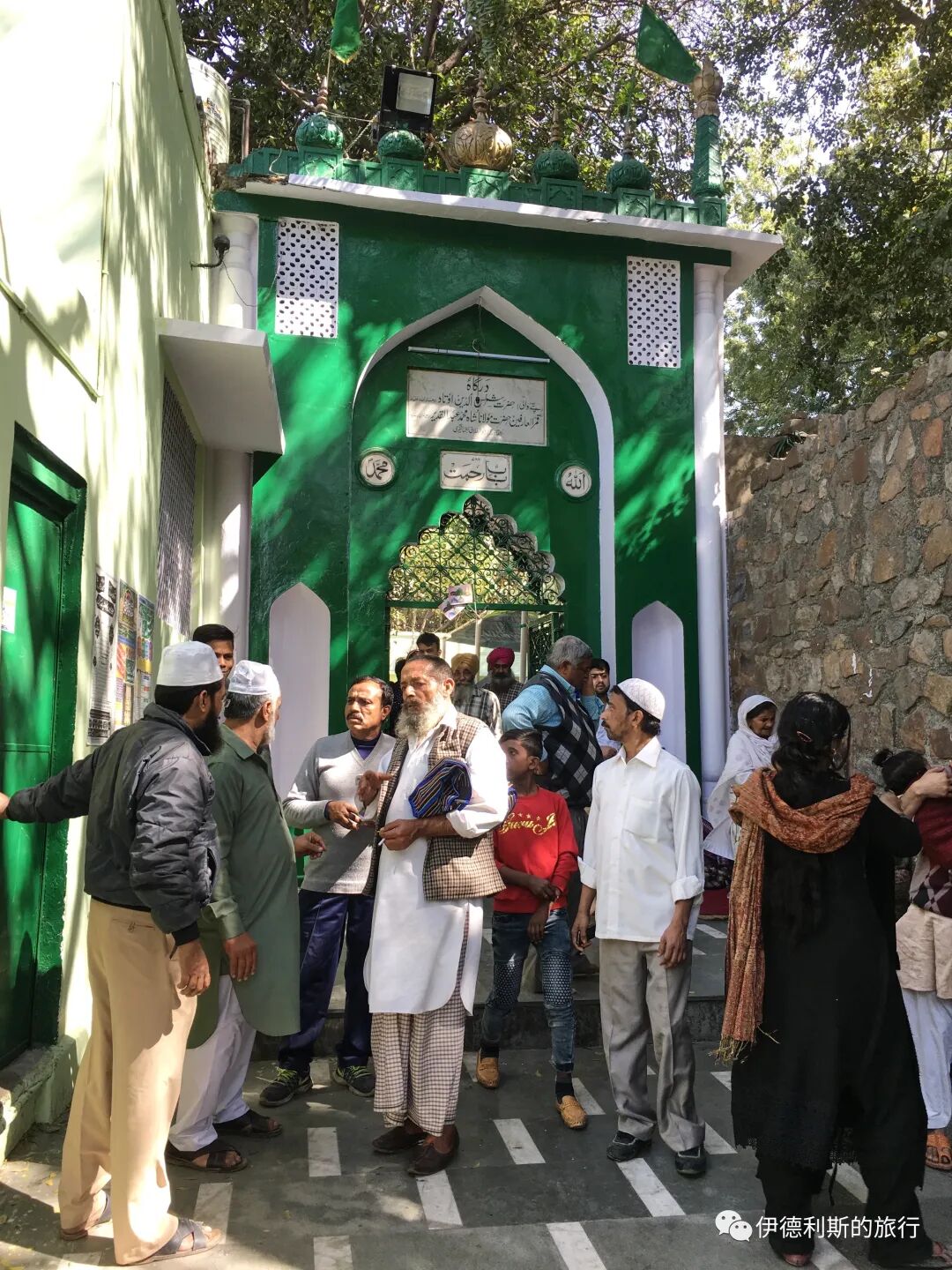
Northwest of Humayun's Tomb is a Sufi shrine (gongbei) called Dargah Patte Waali. It holds the graves of the famous Indian Sufi saints Hazrat Shamshuddin Patty Shah and Hazrat Maulana Abdul Qadir Jahangiri. They were said to be contemporaries of the famous nearby Sufi saint Nizamuddin, and the shrine was first ordered to be built in 1325 by the Tughlaq dynasty of the Delhi Sultanate.
While walking through the Humayun's Tomb area, I faintly heard music outside the walls. I quickly left the site and went to Dargah Patte Waali outside the wall. Everyone was holding a gathering (mehfil) and performing Qawwali, the most distinctive form of devotional singing in South Asia. It was my first time hearing Qawwali live, and it was very moving. Unfortunately, I didn't have much information at the time. In fact, the nearby Nizamuddin Dargah hosts Qawwali performances every evening, and that is the birthplace of Qawwali. After returning home and looking it up, I realized I really want to go back to South Asia and experience the charm of Qawwali again.
Halal Travel Guide: Delhi's Seventh City — Mughal Capital and Muslim History
Articles • ali2007fr posted the article • 0 comments • 157 views • 2026-05-18 03:19
Summary: Delhi's Seventh City — Mughal Capital and Muslim History is presented here as a firsthand travel account in clear English, beginning with this scene: In my last article, The Sixth City of Delhi: The Birth of the Mughal Empire, I wrote about how Humayun, the second Mughal emperor, fell to his death from his library in the sixth city of Delhi, Dinpanah, in 1556. The account keeps its focus on Delhi Travel, Mughal History, Muslim Heritage while preserving the names, places, food, and historical details from the Chinese source.
In my last article, The Sixth City of Delhi: The Birth of the Mughal Empire, I wrote about how Humayun, the second Mughal emperor, fell to his death from his library in the sixth city of Delhi, Dinpanah, in 1556. His son, Emperor Akbar, moved the Mughal capital to Agra in 1558, and Delhi lost its status as the capital.
In 1628, Shah Jahan became the fifth emperor of the Mughal Empire. Under his rule, Mughal architectural aesthetics reached a new height, and this period is widely recognized as the golden age of Mughal architecture. Besides building the Taj Mahal, Shah Jahan built the seventh city of Delhi between 1639 and 1648, naming it Shahjahanabad after himself. Shah Jahan made Shahjahanabad the capital of the Mughal Empire, aiming to show the grandeur and power of the empire.
Shahjahanabad is now known as Old Delhi and still keeps many historical sites and traditional neighborhoods. The most important site inside the city, the Red Fort, was added to the UNESCO World Heritage list in 2007.
The layout of Shahjahanabad was inspired by the ancient Persian city of Isfahan and inherited urban planning ideas from the Agra Fort and Fatehpur Sikri, which were built by the previous Mughal emperor, Akbar. The city has an irregular shape, with the eastern wall built along the course of the Yamuna River. The Yamuna River later changed its course and moved away from the walls, and the original riverbed is now the Delhi Inner Ring Road.
The city has two main roads: Chandni Chowk running east-west and Faiz Bazaar running north-south, with major commercial areas on both sides of the streets. The Red Fort, where the Mughal royal family lived, is located at the junction of these two main roads.
1858
1914
Table of Contents
1. Red Fort: 1639-1648
1. Lahore Gate
2. Chhatta Chowk (market)
3. Naubat Khana (drum house)
4. Diwan-i-Aam (public audience hall)
5. Rang Mahal (palace of the empresses)
6. Khas Mahal (emperor's private palace)
7. Diwan-i-Khas (private audience hall)
8. Hammam-e-Lal Qila (bathhouse)
9. Pearl Mosque (Moti Masjid)
10. King's Tower (Shah Burj)
11. Life-Giving Garden (Hayat Bakhsh Bagh)
2. Jama Mosque: 1650-1656
3. Fatehpuri Mosque: 1650
4. Golden Mosque (Sunehri Masjid): 1751
5. Great Mosque (Kalan Masjid): 1387
6. Hauzwali Mosque: 15th century
1. Red Fort: 1639-1648
Shah Jahan decided to move the capital from Agra back to Delhi in 1638. On May 12, 1639, he ordered the construction of the Red Fort. The designer was Ustad Ahmad Lahauri, the architect who built the Taj Mahal.
On the north side of the Red Fort is the Salimgarh Fort, built by the Sur dynasty in 1546 (I introduced this in my previous article, 'The Sixth City of Delhi: The Birth of the Mughal Empire'). The Red Fort was designed to connect to Salimgarh Fort via a bridge, joining the two castles together.
In 1857, the last Mughal emperor, Bahadur Shah II, left the Red Fort and was arrested by the British army. He was tried at the Red Fort in 1858 and exiled to Yangon, marking the end of the Mughal Empire. Afterward, the Red Fort was used as a British military barracks. Most of the buildings were demolished. Only the marble structures in the far east survived because they were repurposed as barracks, offices, dormitories, and canteens.
After India's independence, the Red Fort continued to be used as an Indian Army barracks until 2003, when the Archaeological Survey of India was finally authorized to begin restoration. In 2009, the Archaeological Survey of India developed a comprehensive protection and management plan for the Red Fort under the direction of the Supreme Court.
The Red Fort viewed from east to west, painted in 1785.
The Red Fort viewed from east to west, painted by Ghulam Ali Khan between 1852 and 1854.
1. Lahore Gate
The Lahore Gate is the west gate of the Red Fort. It is named for facing the city of Lahore. During the reign of the sixth Mughal emperor, Aurangzeb (reigned 1658-1707), a barbican was added to the outside of the gate. Since 1947, the Prime Minister of India has stood at the Lahore Gate to deliver a speech every Indian Independence Day.
Painted by Ghulam Ali Khan between 1852 and 1854.
2. Chhatta Chowk (market)
After entering the Lahore Gate, you find a market called Chhatta Chowk. During the Mughal era, this was where silk and jewelry were sold to members of the royal family.
Painted by Ghulam Ali Khan between 1852 and 1854.
(Optional) Image description
3. Naubat Khana (drum house)
After walking through the Chhatta Chowk market, you reach the outer courtyard of the Red Fort. The building in the center of the outer courtyard is called the Naubat Khana, which serves as the main gate to the inner court. Naubat Khana means 'drum house.' During the Mughal era, ceremonial music was played here five times a day, and everyone except members of the royal family had to dismount from their horses when they reached this point. After 1857, the British army destroyed the arcades on both sides of the Naubat Khana and the central pool, leaving only the central building.
Photographed in 1858 by British army officer Robert Christopher Tytler and his wife Harriet.
4. Diwan-i-Aam (public audience hall)
After passing through the Naubat Khana, you enter the inner courtyard of the Red Fort, where the Diwan-i-Aam stands directly in front of you. Diwan-i-Aam means 'Hall of Public Audience.' It was the place where the Mughal emperor met with the public to hear their concerns.
In the center of the hall is the throne where the emperor sat. The marble steps below the throne were where the prime minister (wazir) received petitions from the public.
The door behind the throne, painted by Ghulam Ali Khan between 1852 and 1854.
5. Rang Mahal (palace of the empresses)
After entering the Diwan-i-Aam, you reach the harem section of the Red Fort. Rang Mahal means 'Palace of Colors.' It was the living quarters for the concubines of the Mughal emperor.
Painted by Ghulam Ali Khan between 1852 and 1854.
A shallow canal called the Stream of Paradise (Nahr-i-Bihist) flows into the marble pool in front of the Rang Mahal. During the hot summer, the women of the Mughal royal family would stay in the basement of the Diwan-i-Aam to escape the heat.
Painted by Ghulam Ali Khan between 1852 and 1854.
6. Khas Mahal (emperor's private palace)
To the north of the Rang Mahal is the Khass Mahal, which was the sleeping quarters of the Mughal emperor. The Rang Mahal was built of white marble. Its walls were originally inlaid with various jewels and the ceiling was gilded, but these features have not been preserved.
Painted by Sir Thomas Theophilus Metcalfe in 1843.
The last Mughal emperor, Bahadur Shah II, ascends the throne in the Khas Mahal, painted by Ghulam Ali Khan between 1837 and 1838.
7. Hall of Private Audience (Diwan-i-Khas)
North of the Khas Mahal is the Hall of Private Audience (Diwan-i-Khas), where the Mughal emperor met with courtiers and state guests. The Hall of Private Audience (Diwan-i-Khas) means "private reception room." It is built of white marble and was once inlaid with various jewels, featuring the exquisite Peacock Throne in the center. The hall once had a ceiling inlaid with gold and silver, but these were later removed. The current ceiling was installed in 1911.
Outside the hall, there used to be red awnings, and the arches below were inscribed with verses by the famous Sufi master Amir Khusrow:
If there is a paradise on earth,
It is this, it is this, it is this.
Painted by Ghulam 'Ali Khan in 1817.
Painted by Ghulam Ali Khan between 1852 and 1854.
The Peacock Throne in 1850.
8. Hammam-e-Lal Qila (bathhouse)
North of the Hall of Private Audience (Diwan-i-Khas) is the Red Fort Bathhouse (Hammam-e-Lal Qila), which was used by the Mughal royal family. The Red Fort Bathhouse (Hammam-e-Lal Qila) is a Turkish-style bath consisting of three sections: a children's bath, a dressing room, and a hot bath. Legend has it that the water flowing from the taps at that time was mixed with rose perfume.
Painted by Ghulam Ali Khan between 1852 and 1854.
9. Pearl Mosque (Moti Masjid)
The Pearl Mosque (Moti Masjid) is west of the bathhouse. It was built by the sixth Mughal emperor, Aurangzeb, between 1659 and 1660 for his second wife, Nawab Bai. Pearl (Moti) means "pearl." It is built of white marble, and its three domes were originally covered with gilded copper plates, which were lost after 1857.
Painted by Ghulam Ali Khan between 1852 and 1854.
Painted by Vasily Vereshchagin in the late 1880s.
10. King's Tower (Shah Burj)
The northernmost part of the harem is a white marble pavilion built during the Aurangzeb period. Behind the pavilion is the Shahi Burj, the northeast corner tower of the Red Fort, which means "Imperial Tower." Inside the tower is a hydraulic system that carries water from outside the Red Fort into its gardens and buildings.
Painted by Sir Thomas Metcalfe in 1843.
11. Life-Giving Garden (Hayat Bakhsh Bagh)
In the northwest part of the harem is the royal water garden Hayat Bakhsh Bagh, which means 'Life-Giving Garden'. Most of the garden's buildings were destroyed after 1857, and only three survive today.
At the center of the garden is the red sandstone building Zafar Mahal, built in 1842 by the last Mughal emperor, Bahadur Shah II. The building sits in a pool and was originally connected to the shore by a red sandstone bridge, but it was destroyed after 1857. After 1857, the British army used this area as a swimming pool.
Painted by Ghulam Ali Khan between 1852 and 1854.
To the north and south of the garden are two white marble pavilions called Sawan and Bhadon, named after the months of July and August in the Indian rainy season, as the ladies of the Mughal palace loved to visit the garden during these two months. The pavilions have wall niches that held vases with golden flowers during the day and small oil lamps at night.
To the west of Hayat Bakhsh Bagh, there was originally another water garden called Mehtab Bagh, meaning 'Moon Garden,' but after 1857, the site was turned into a British military barracks, and now only ruins remain.
2. Jama Mosque: 1650-1656
The Jama Masjid mosque is located southwest of the Red Fort; it was built between 1650 and 1656 by order of Shah Jahan and served as the royal mosque of the Mughal Empire.
The mosque was built by more than 5,000 workers under the leadership of Shah Jahan's vizier (wazir) Saadullah Khan, costing over 1 million rupees. The mosque stands on a platform more than 9 meters above the ground and is made of red sandstone and marble, featuring a main hall connected by colonnades, two 40-meter-high minarets, and three gates. The east gate was reserved for the Mughal royal family and had a path that connected directly to the Delhi Gate of the Red Fort.
After 1857, the British seized the Jama Masjid mosque and stationed troops inside. They originally wanted to demolish the mosque, but they failed due to strong opposition, though the madrasa (Islamic school) on the south side of the mosque was destroyed as a result.
The mihrab in the center of the main hall indicates the direction of prayer toward Mecca:
Besides the main mihrab in the center, there is a smaller mihrab on each side.
During Jumu'ah, the imam stands on this stone platform to deliver the khutbah.
There is a tower at each of the four corners of the colonnade.
The east gate is the main entrance:
South Gate
North Gate
The water pool in the courtyard for wudu:
Jama means Jumu'ah, which refers to the Friday congregational prayer. The Jumu'ah mosque is usually the largest in the community, and the most important weekly prayer is held here every Friday at noon. I was lucky enough to attend a Friday Jumu'ah prayer at the Jama Mosque.
On the morning of Jumu'ah, more prayer rugs were already laid out in the courtyard.
People are performing wudu for the Jumu'ah prayer:
More and more people are arriving.
The imam leading the prayer climbs onto the stone platform.
After the prayer, people take photos:
3. Fatehpuri Mosque: 1650
Fatehpuri Mosque is located at the western end of Chandni Chowk, the main east-west road in Shahjahanabad. It was built in 1650 under the direction of Fatehpuri Begum, the wife of Shah Jahan. The mosque is in the classic Mughal style, built with red sandstone, featuring minarets on both sides and a main prayer hall in the middle. The main hall has seven arched bays, and the central iwan arch is topped with a Mughal-style dome.
4. Golden Mosque (Sunehri Masjid): 1751
Sunehri Mosque is located south of the Red Fort. It was built in 1751 by Qudsia Begum, the wife of the twelfth Mughal Emperor, Muhammad Shah. After Muhammad Shah died, Qudsia Begum's son, Ahmad Shah Bahadur, succeeded to the throne, making Qudsia Begum the de facto ruler of the Mughal Empire between 1748 and 1754.
During her rule, Qudsia Begum built a series of structures in Delhi, and the Sunehri Mosque is the most understated in its architectural style. The mosque's dome was originally copper-plated, but during renovations in 1852, sandstone replaced the damaged copper plates.
5. Great Mosque (Kalan Masjid): 1387
Kalan Mosque is one of the very few mosques in Shahjahanabad that existed before the city was built. It was constructed in 1387 by Khan-i-Jahan Maqbul, the vizier of Sultan Feroz Shah Tughlaq (reigned 1351-1388) of the Delhi Sultanate's Tughlaq dynasty. It is believed to have been built to commemorate a Sufi saint.
The mosque has been in continuous use, so the interior has changed significantly.
6. Hauzwali Mosque: 15th century
Hauzwali Mosque is another mosque that existed before the city of Shahjahanabad was built. Because the ground level has changed so much over time, the bottom half of the mosque is now underground, leaving only the top parts of the arches and the mihrab visible. view all
Summary: Delhi's Seventh City — Mughal Capital and Muslim History is presented here as a firsthand travel account in clear English, beginning with this scene: In my last article, The Sixth City of Delhi: The Birth of the Mughal Empire, I wrote about how Humayun, the second Mughal emperor, fell to his death from his library in the sixth city of Delhi, Dinpanah, in 1556. The account keeps its focus on Delhi Travel, Mughal History, Muslim Heritage while preserving the names, places, food, and historical details from the Chinese source.
In my last article, The Sixth City of Delhi: The Birth of the Mughal Empire, I wrote about how Humayun, the second Mughal emperor, fell to his death from his library in the sixth city of Delhi, Dinpanah, in 1556. His son, Emperor Akbar, moved the Mughal capital to Agra in 1558, and Delhi lost its status as the capital.
In 1628, Shah Jahan became the fifth emperor of the Mughal Empire. Under his rule, Mughal architectural aesthetics reached a new height, and this period is widely recognized as the golden age of Mughal architecture. Besides building the Taj Mahal, Shah Jahan built the seventh city of Delhi between 1639 and 1648, naming it Shahjahanabad after himself. Shah Jahan made Shahjahanabad the capital of the Mughal Empire, aiming to show the grandeur and power of the empire.
Shahjahanabad is now known as Old Delhi and still keeps many historical sites and traditional neighborhoods. The most important site inside the city, the Red Fort, was added to the UNESCO World Heritage list in 2007.
The layout of Shahjahanabad was inspired by the ancient Persian city of Isfahan and inherited urban planning ideas from the Agra Fort and Fatehpur Sikri, which were built by the previous Mughal emperor, Akbar. The city has an irregular shape, with the eastern wall built along the course of the Yamuna River. The Yamuna River later changed its course and moved away from the walls, and the original riverbed is now the Delhi Inner Ring Road.
The city has two main roads: Chandni Chowk running east-west and Faiz Bazaar running north-south, with major commercial areas on both sides of the streets. The Red Fort, where the Mughal royal family lived, is located at the junction of these two main roads.
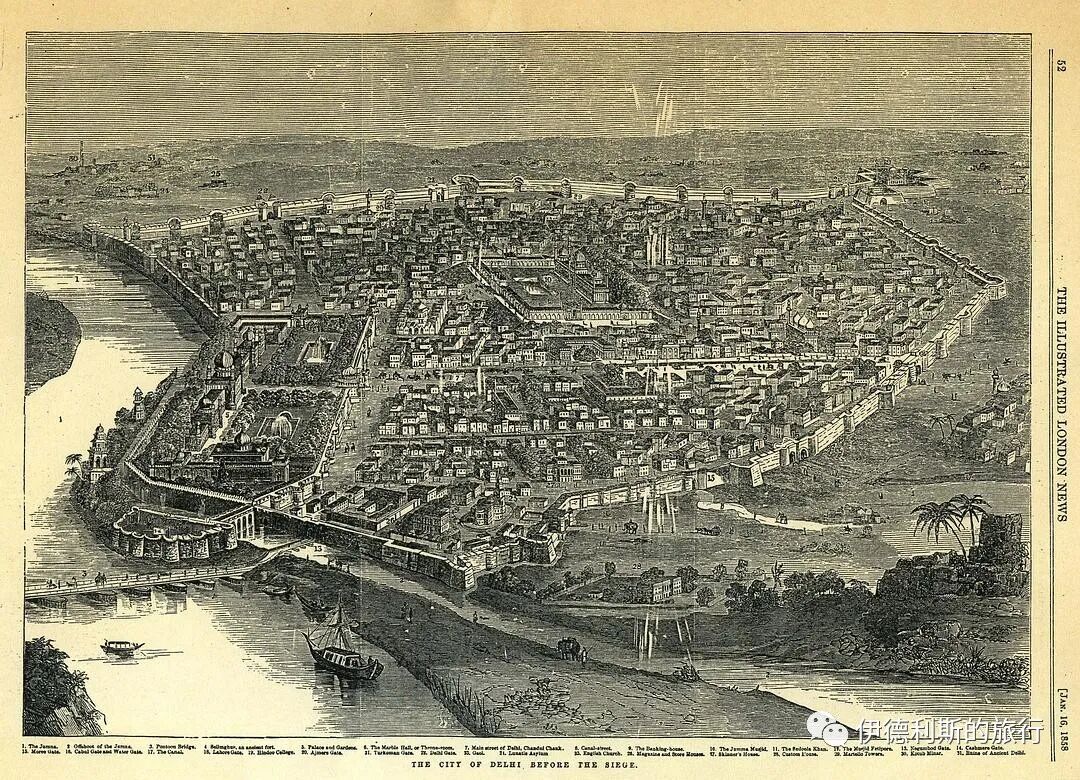
1858
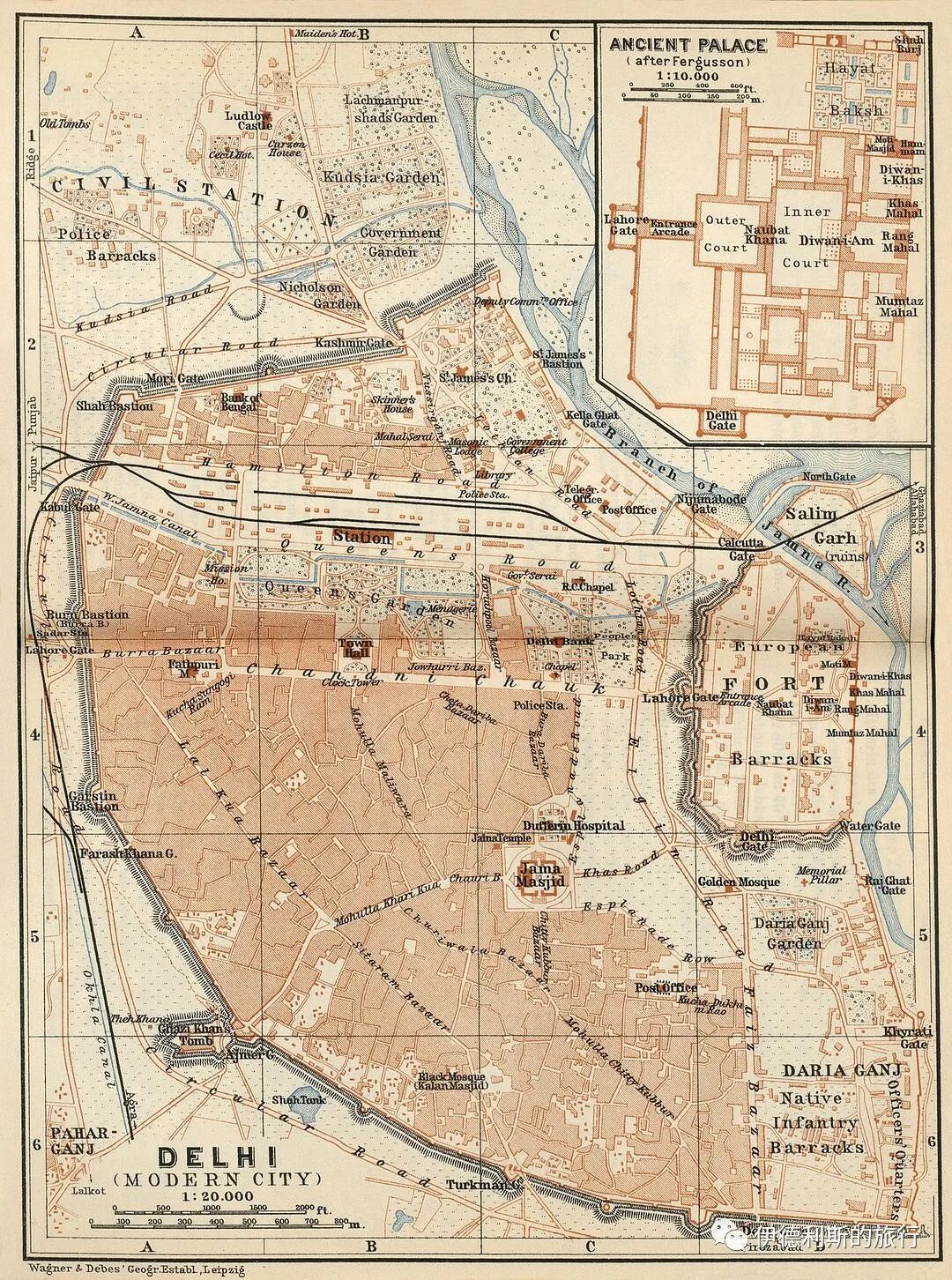
1914
Table of Contents
1. Red Fort: 1639-1648
1. Lahore Gate
2. Chhatta Chowk (market)
3. Naubat Khana (drum house)
4. Diwan-i-Aam (public audience hall)
5. Rang Mahal (palace of the empresses)
6. Khas Mahal (emperor's private palace)
7. Diwan-i-Khas (private audience hall)
8. Hammam-e-Lal Qila (bathhouse)
9. Pearl Mosque (Moti Masjid)
10. King's Tower (Shah Burj)
11. Life-Giving Garden (Hayat Bakhsh Bagh)
2. Jama Mosque: 1650-1656
3. Fatehpuri Mosque: 1650
4. Golden Mosque (Sunehri Masjid): 1751
5. Great Mosque (Kalan Masjid): 1387
6. Hauzwali Mosque: 15th century
1. Red Fort: 1639-1648
Shah Jahan decided to move the capital from Agra back to Delhi in 1638. On May 12, 1639, he ordered the construction of the Red Fort. The designer was Ustad Ahmad Lahauri, the architect who built the Taj Mahal.
On the north side of the Red Fort is the Salimgarh Fort, built by the Sur dynasty in 1546 (I introduced this in my previous article, 'The Sixth City of Delhi: The Birth of the Mughal Empire'). The Red Fort was designed to connect to Salimgarh Fort via a bridge, joining the two castles together.
In 1857, the last Mughal emperor, Bahadur Shah II, left the Red Fort and was arrested by the British army. He was tried at the Red Fort in 1858 and exiled to Yangon, marking the end of the Mughal Empire. Afterward, the Red Fort was used as a British military barracks. Most of the buildings were demolished. Only the marble structures in the far east survived because they were repurposed as barracks, offices, dormitories, and canteens.
After India's independence, the Red Fort continued to be used as an Indian Army barracks until 2003, when the Archaeological Survey of India was finally authorized to begin restoration. In 2009, the Archaeological Survey of India developed a comprehensive protection and management plan for the Red Fort under the direction of the Supreme Court.
The Red Fort viewed from east to west, painted in 1785.
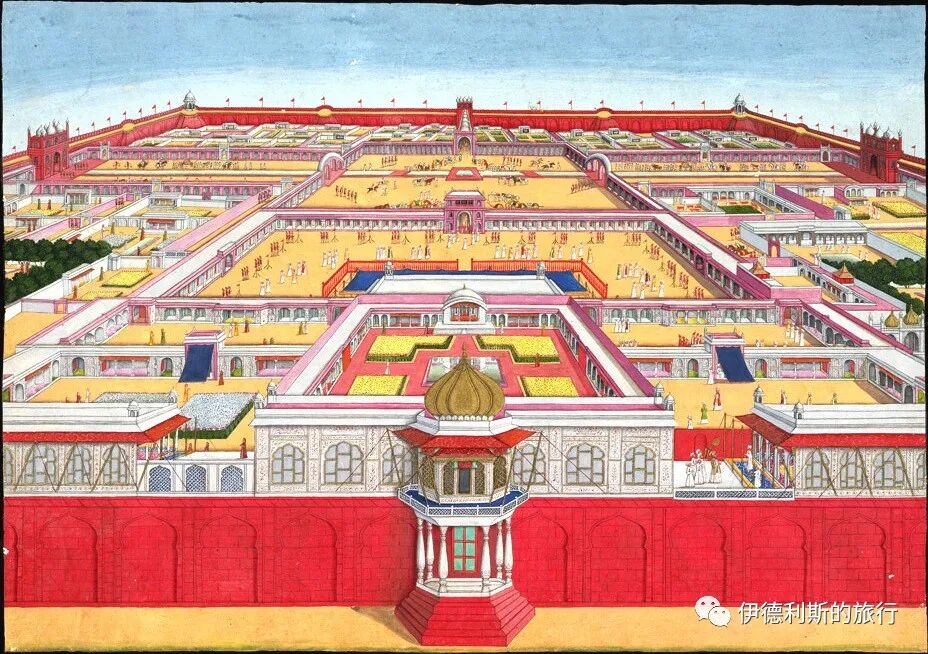
The Red Fort viewed from east to west, painted by Ghulam Ali Khan between 1852 and 1854.
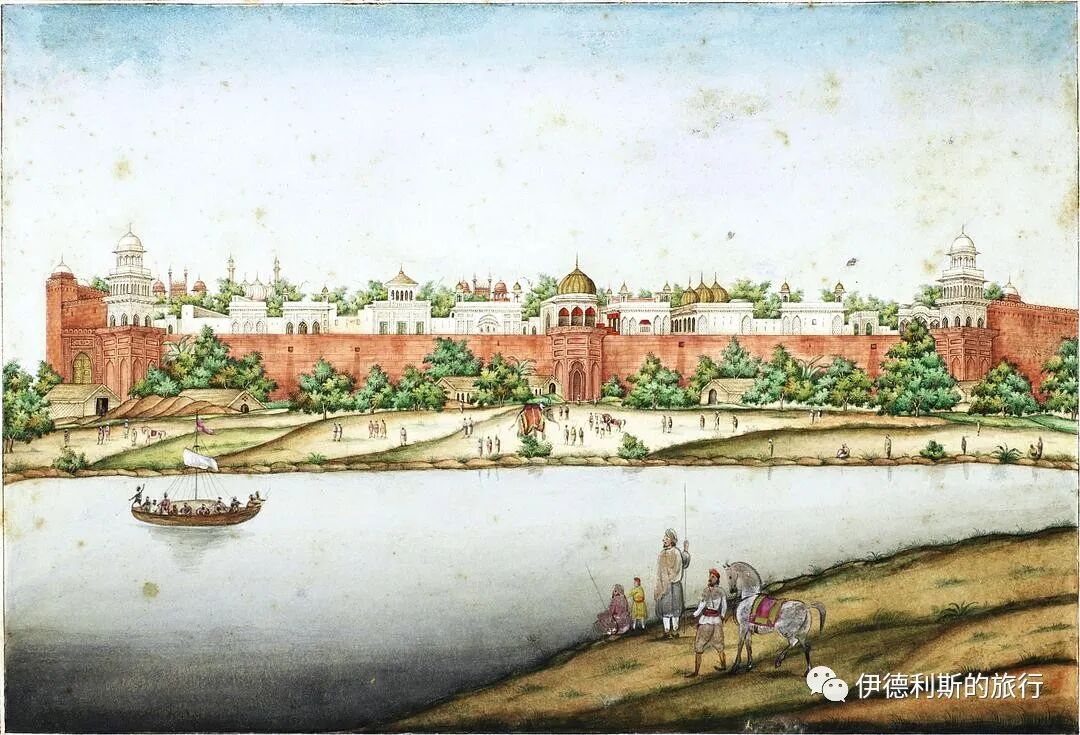
1. Lahore Gate
The Lahore Gate is the west gate of the Red Fort. It is named for facing the city of Lahore. During the reign of the sixth Mughal emperor, Aurangzeb (reigned 1658-1707), a barbican was added to the outside of the gate. Since 1947, the Prime Minister of India has stood at the Lahore Gate to deliver a speech every Indian Independence Day.
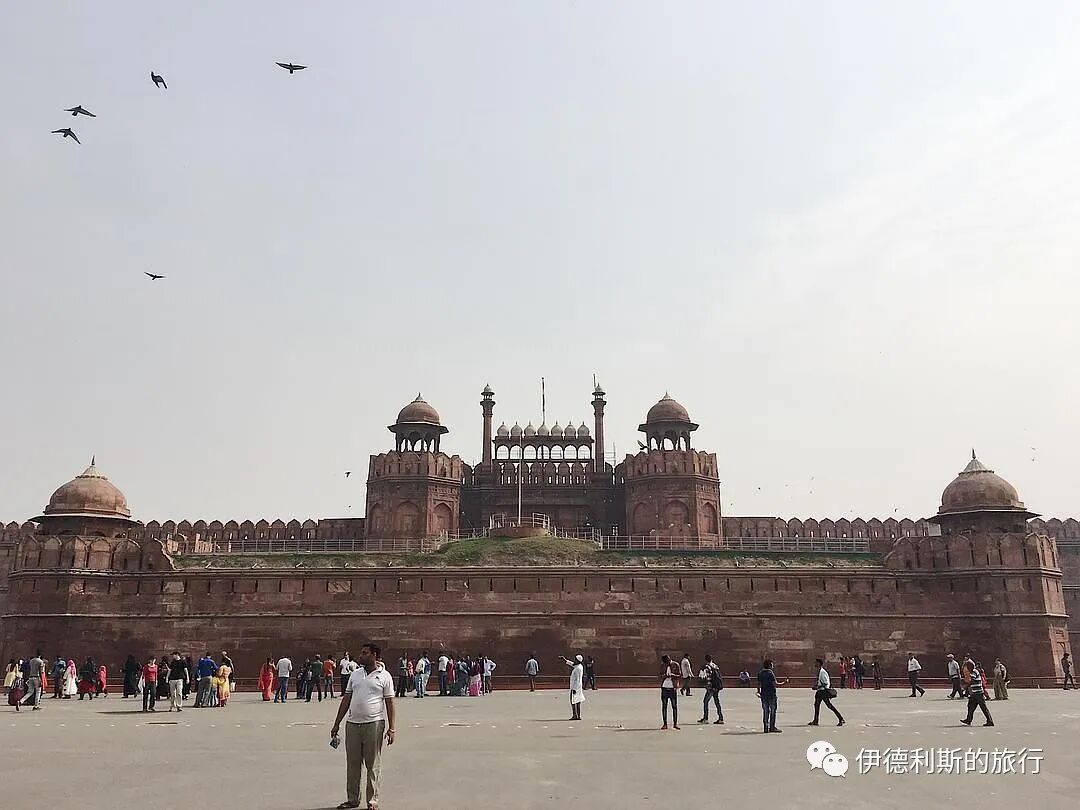
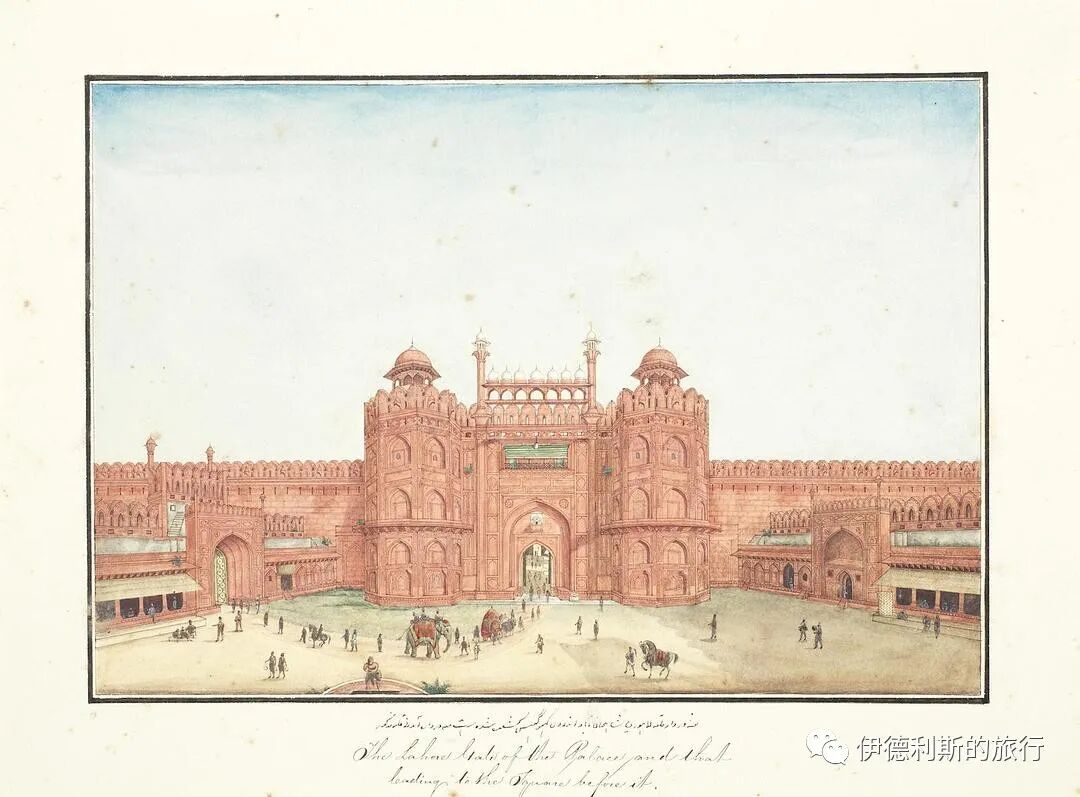
Painted by Ghulam Ali Khan between 1852 and 1854.
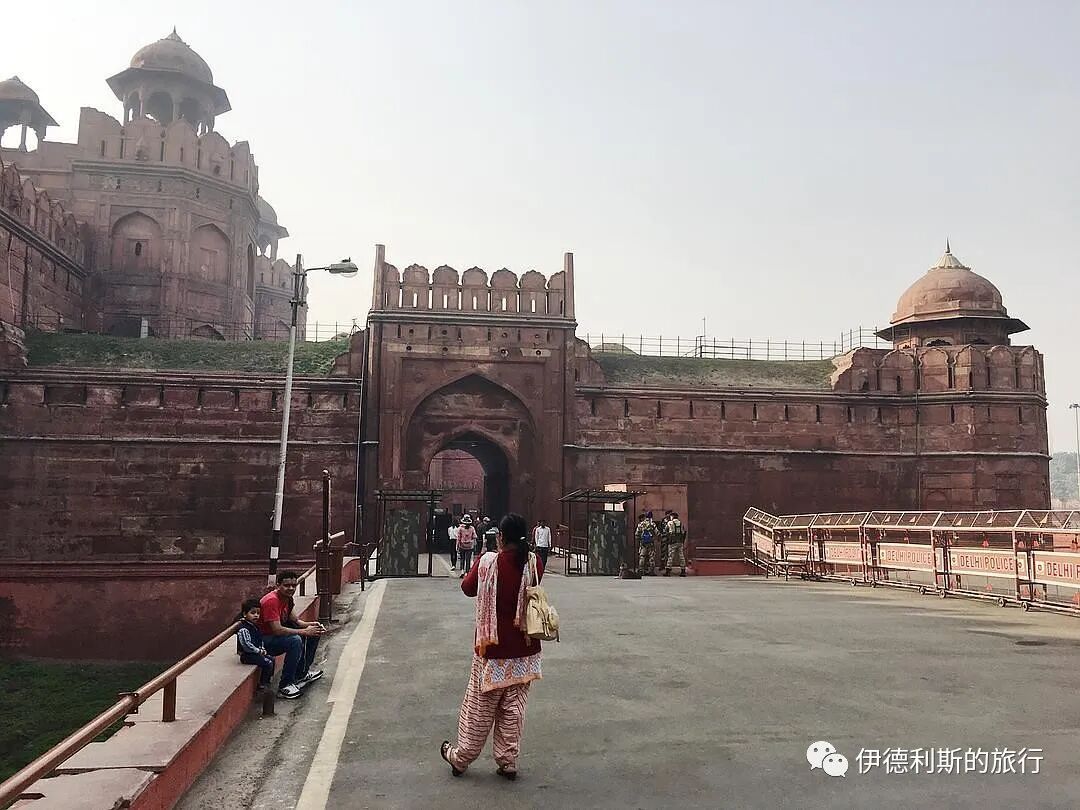
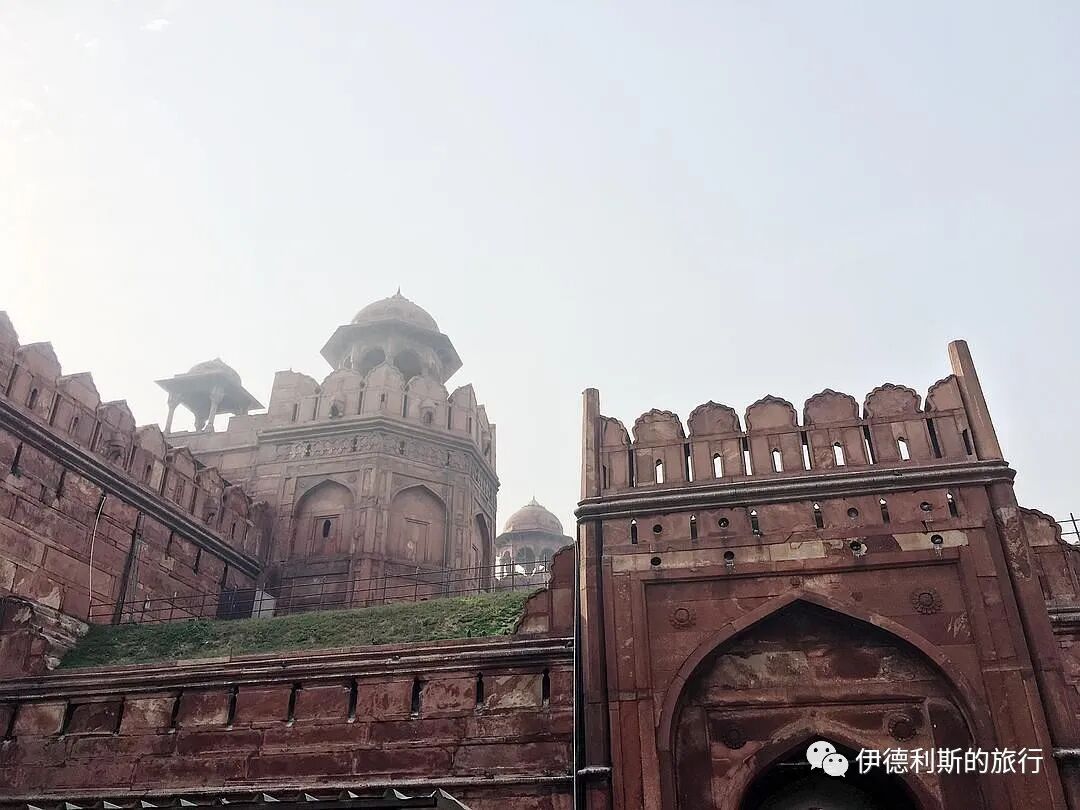
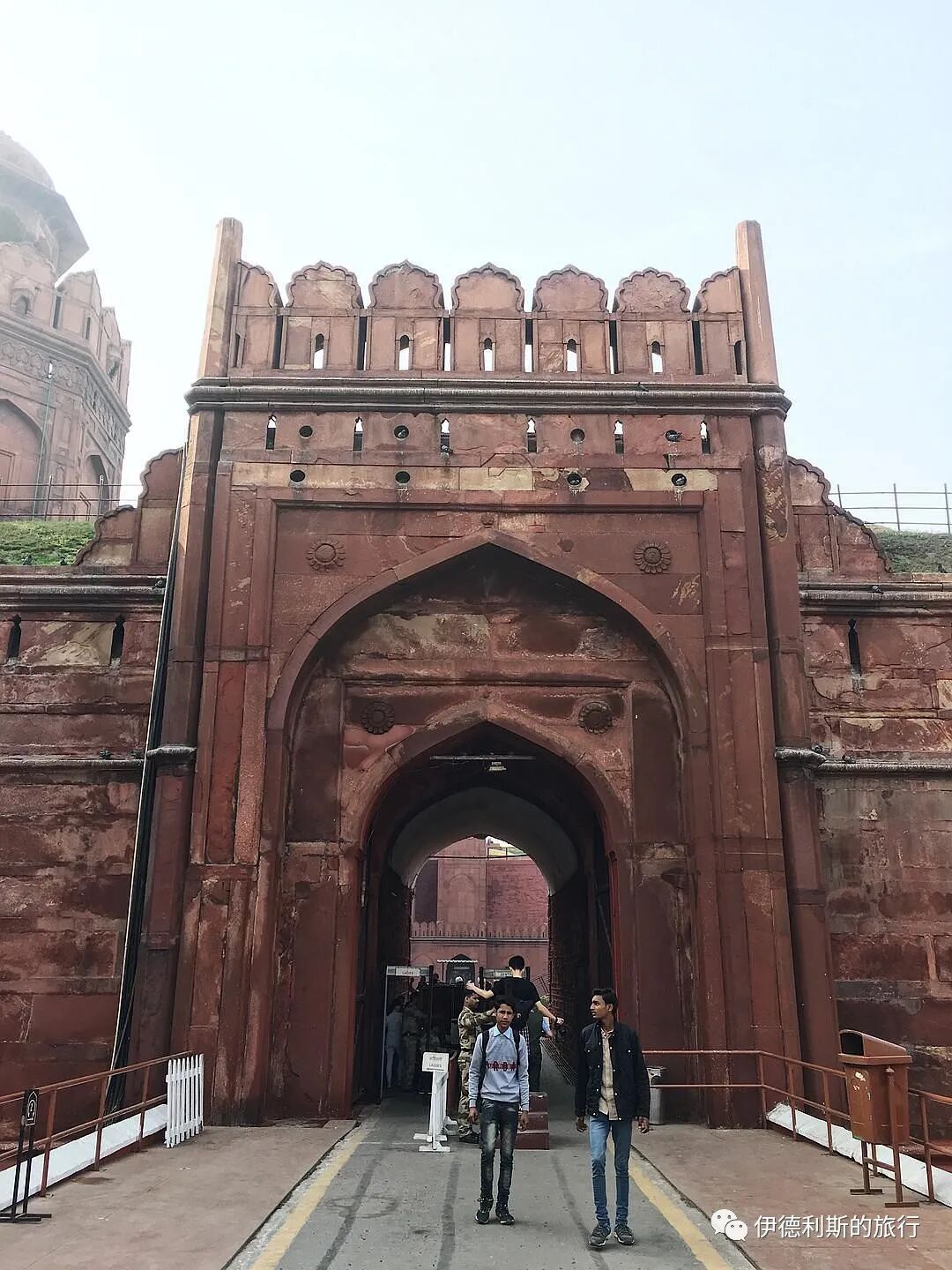
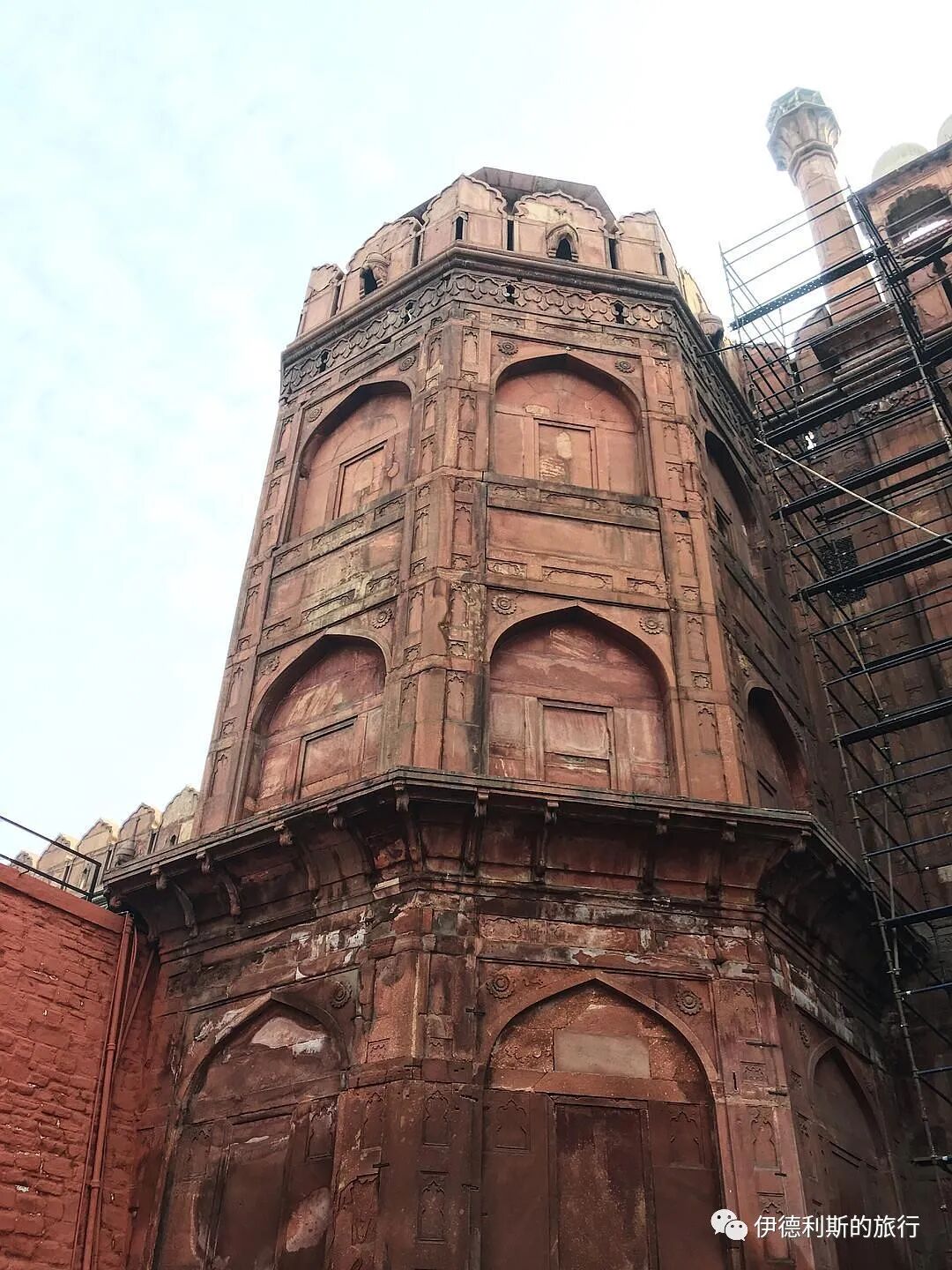
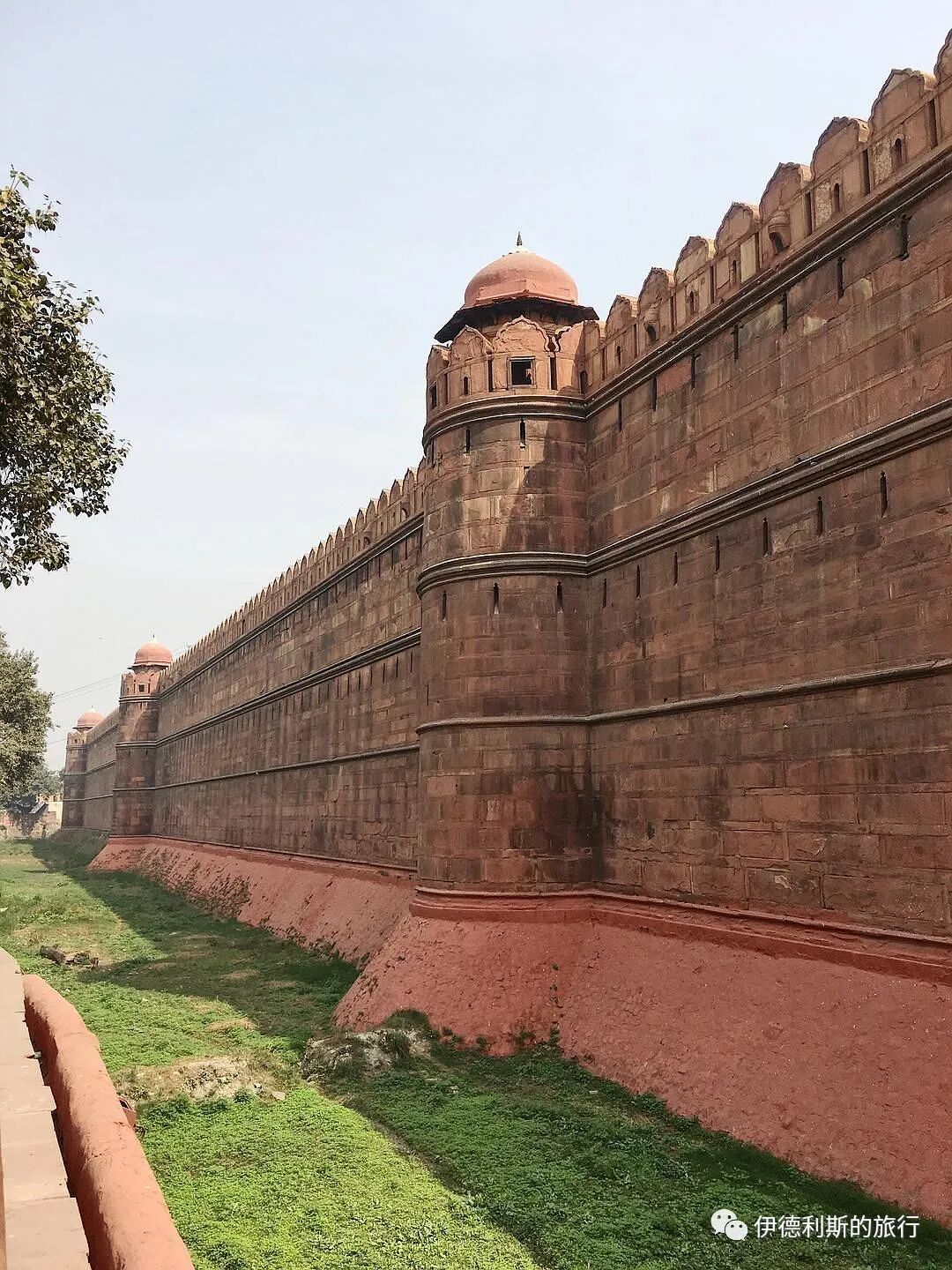
2. Chhatta Chowk (market)
After entering the Lahore Gate, you find a market called Chhatta Chowk. During the Mughal era, this was where silk and jewelry were sold to members of the royal family.
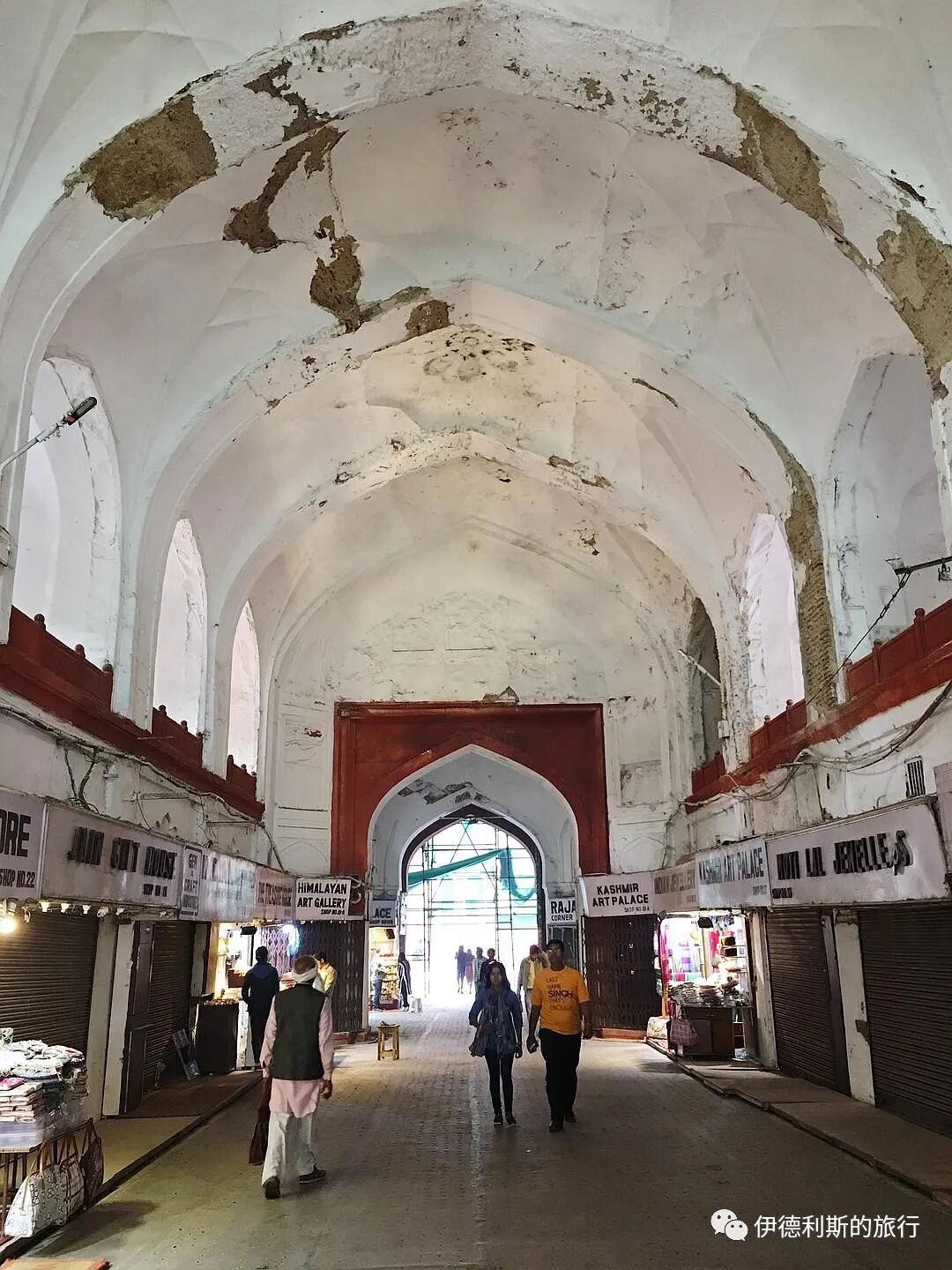
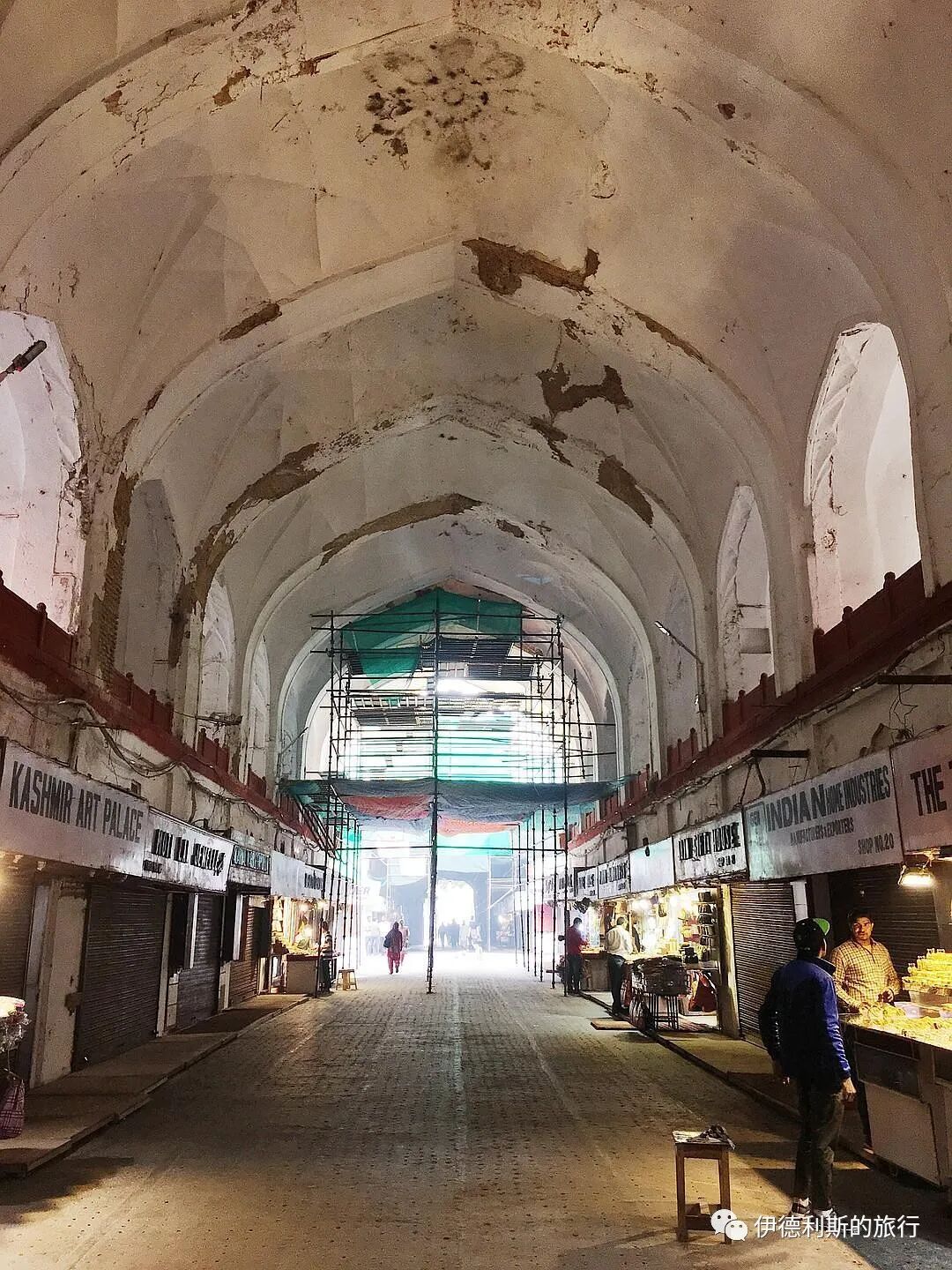
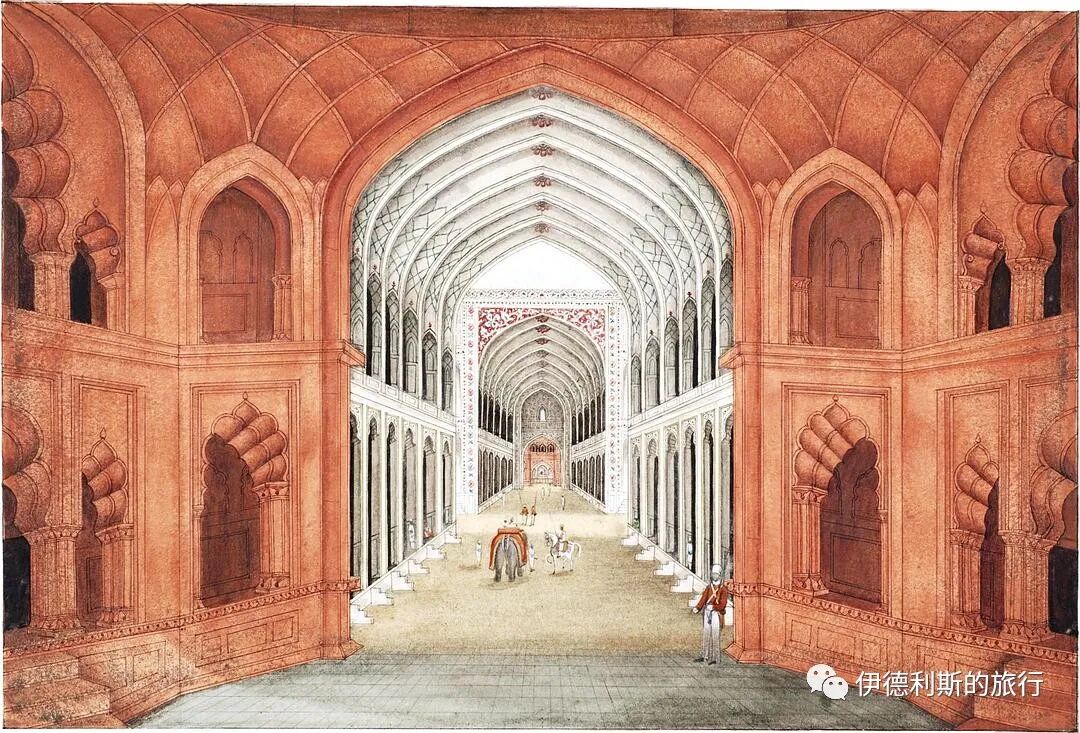
Painted by Ghulam Ali Khan between 1852 and 1854.
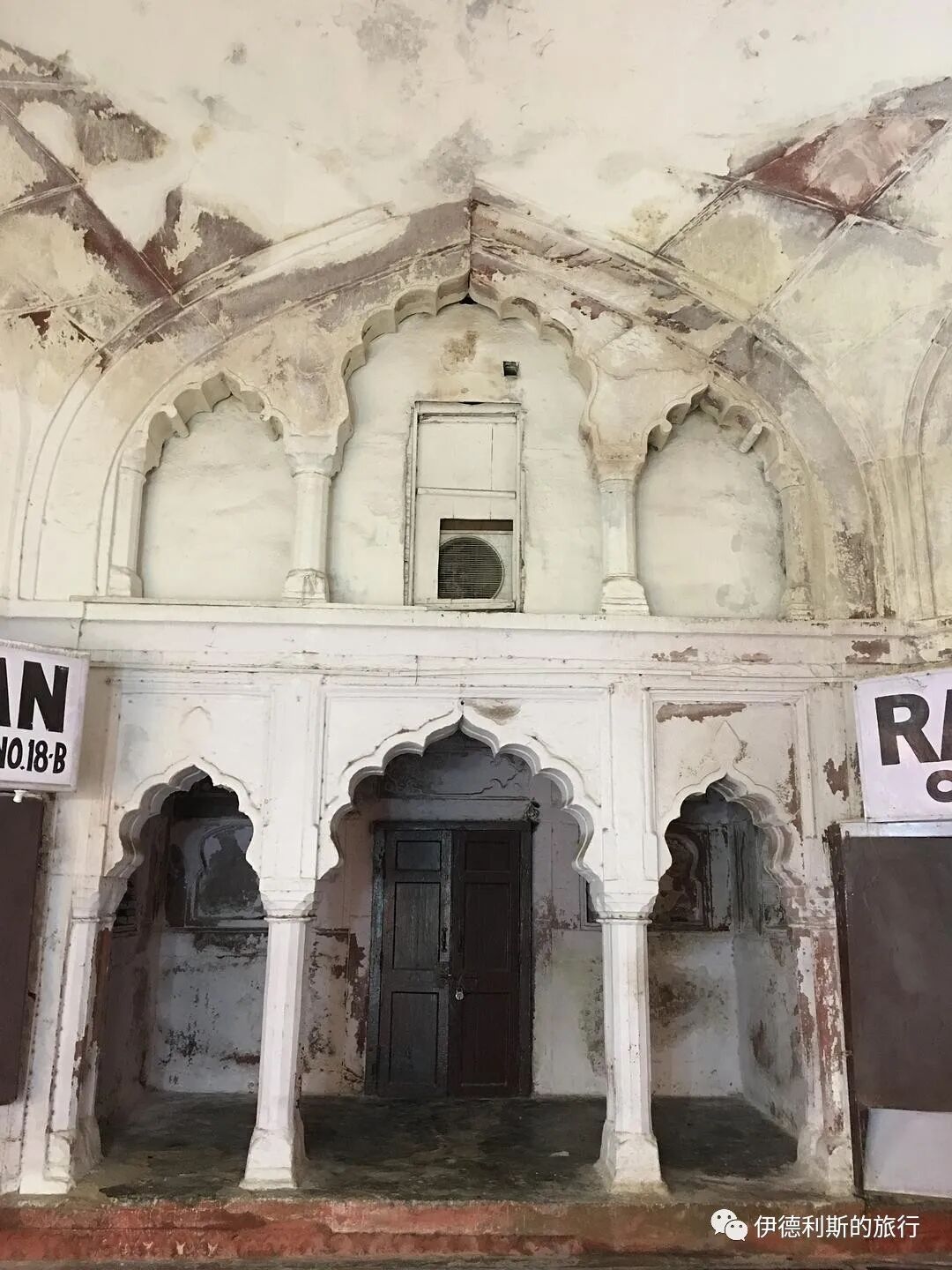
(Optional) Image description
3. Naubat Khana (drum house)
After walking through the Chhatta Chowk market, you reach the outer courtyard of the Red Fort. The building in the center of the outer courtyard is called the Naubat Khana, which serves as the main gate to the inner court. Naubat Khana means 'drum house.' During the Mughal era, ceremonial music was played here five times a day, and everyone except members of the royal family had to dismount from their horses when they reached this point. After 1857, the British army destroyed the arcades on both sides of the Naubat Khana and the central pool, leaving only the central building.
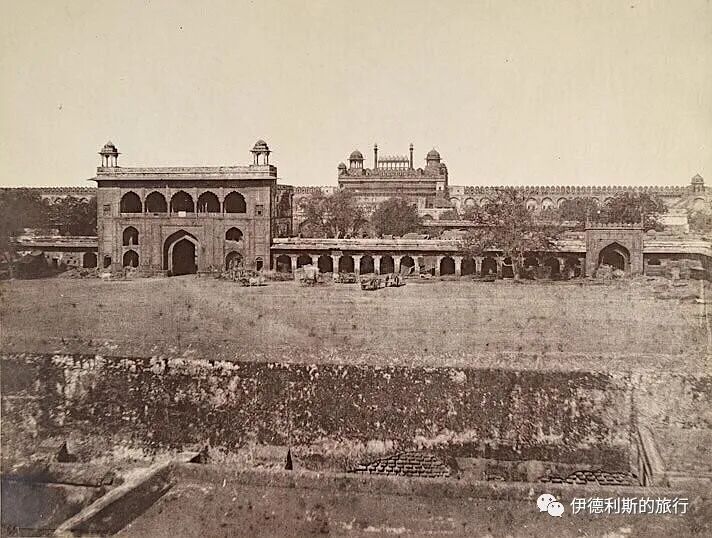
Photographed in 1858 by British army officer Robert Christopher Tytler and his wife Harriet.
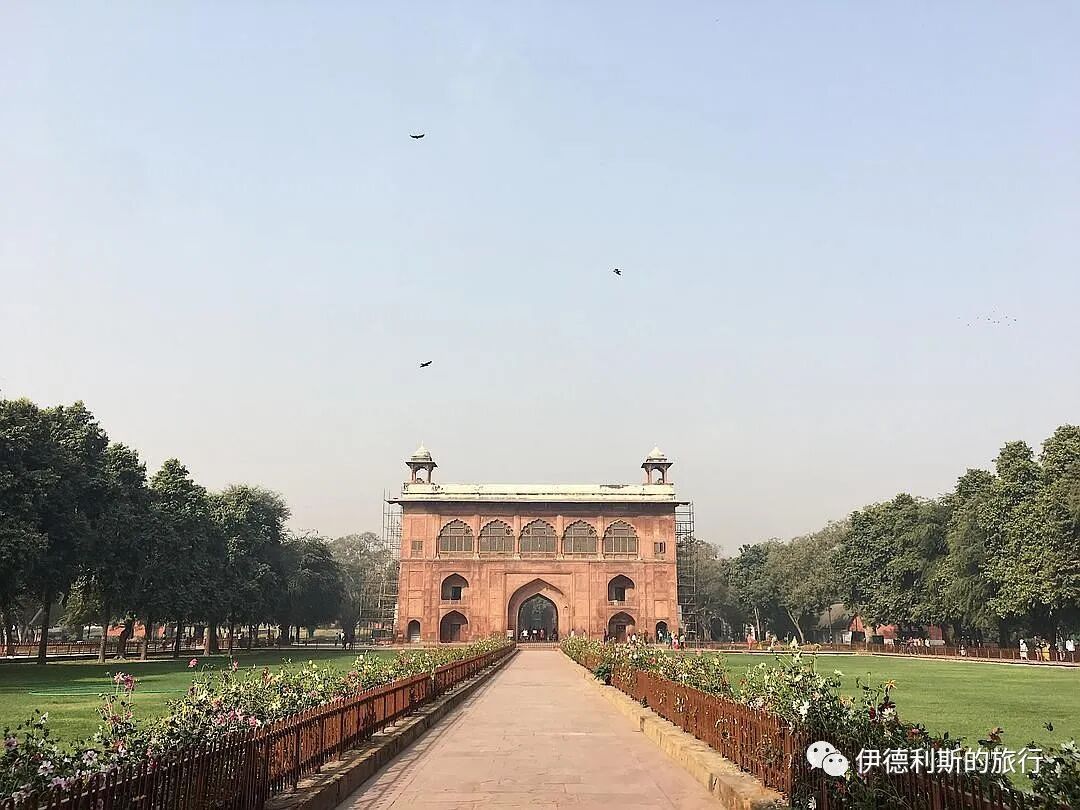
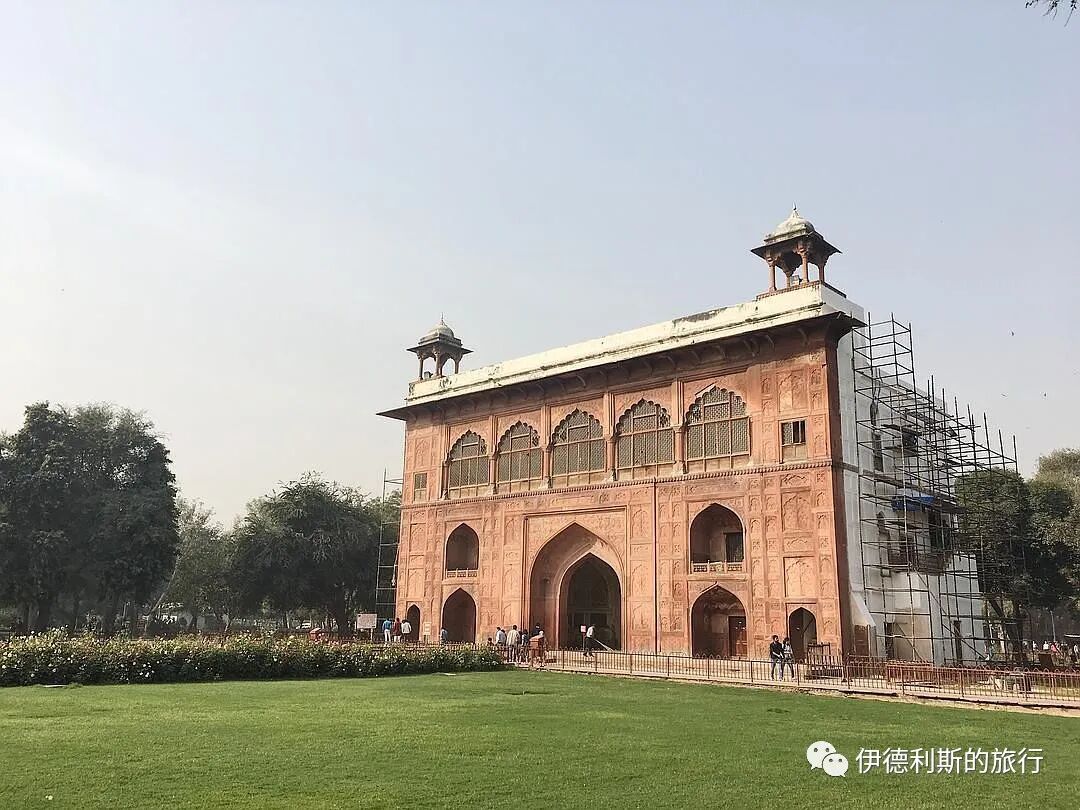
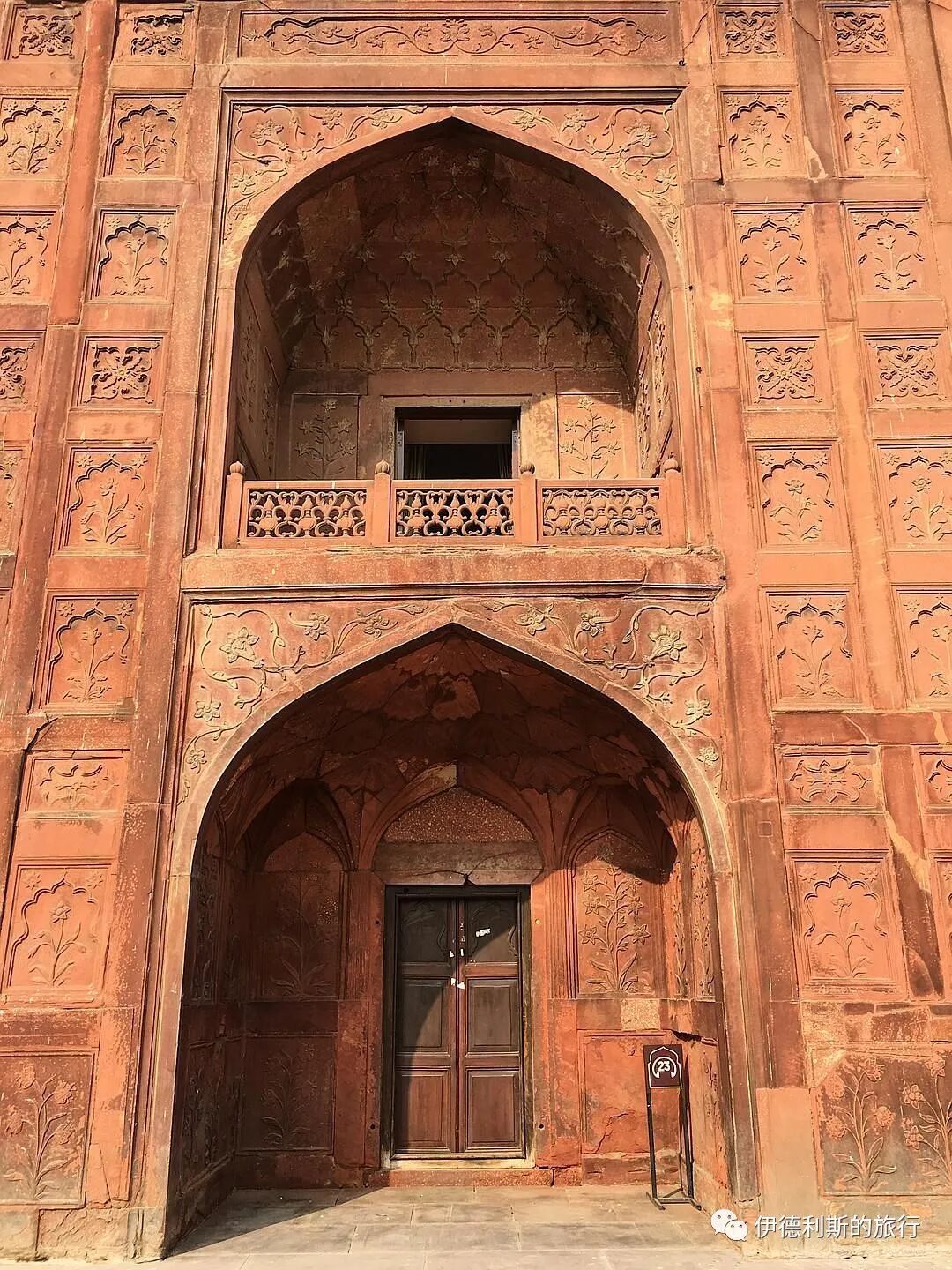
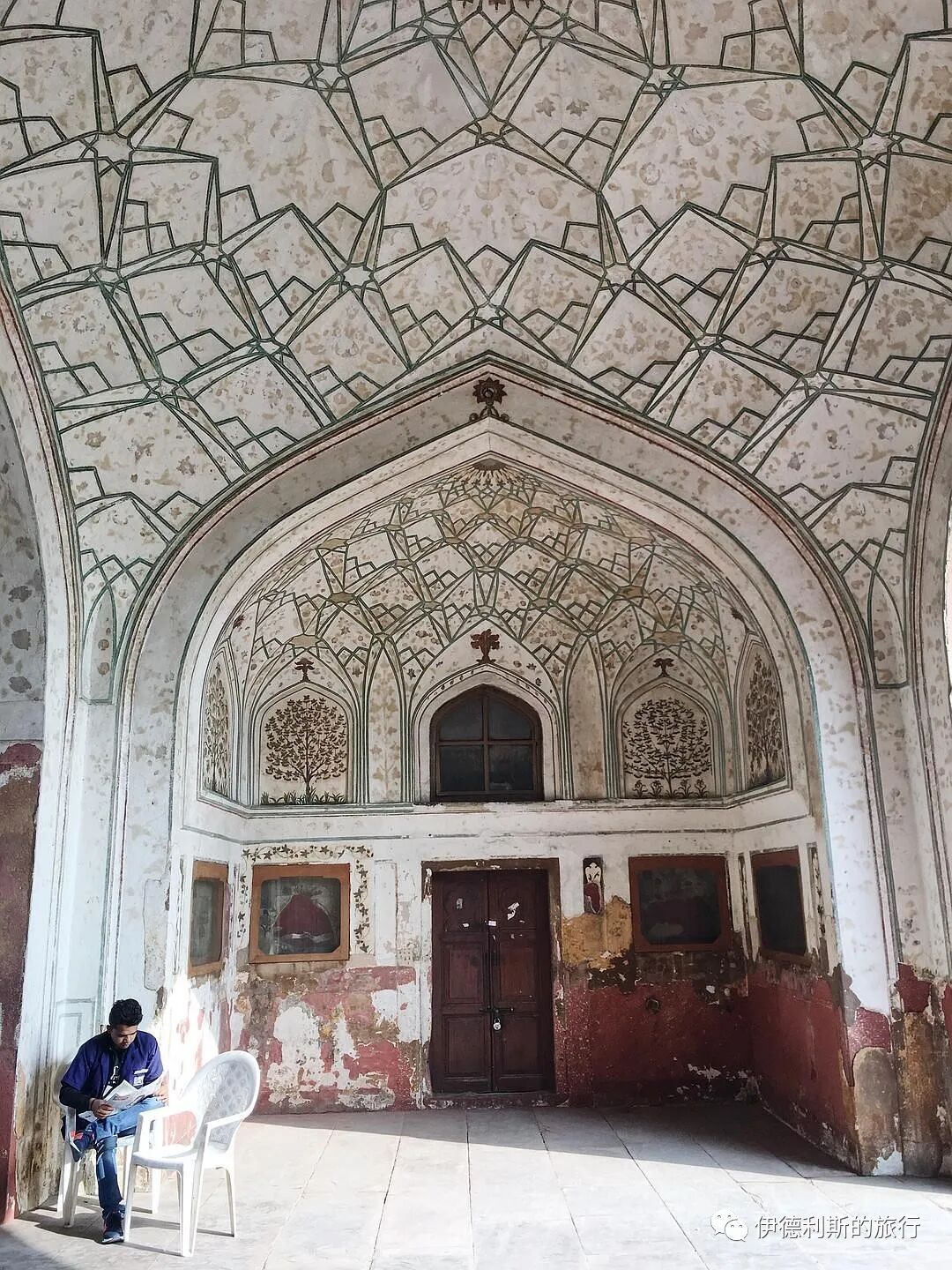
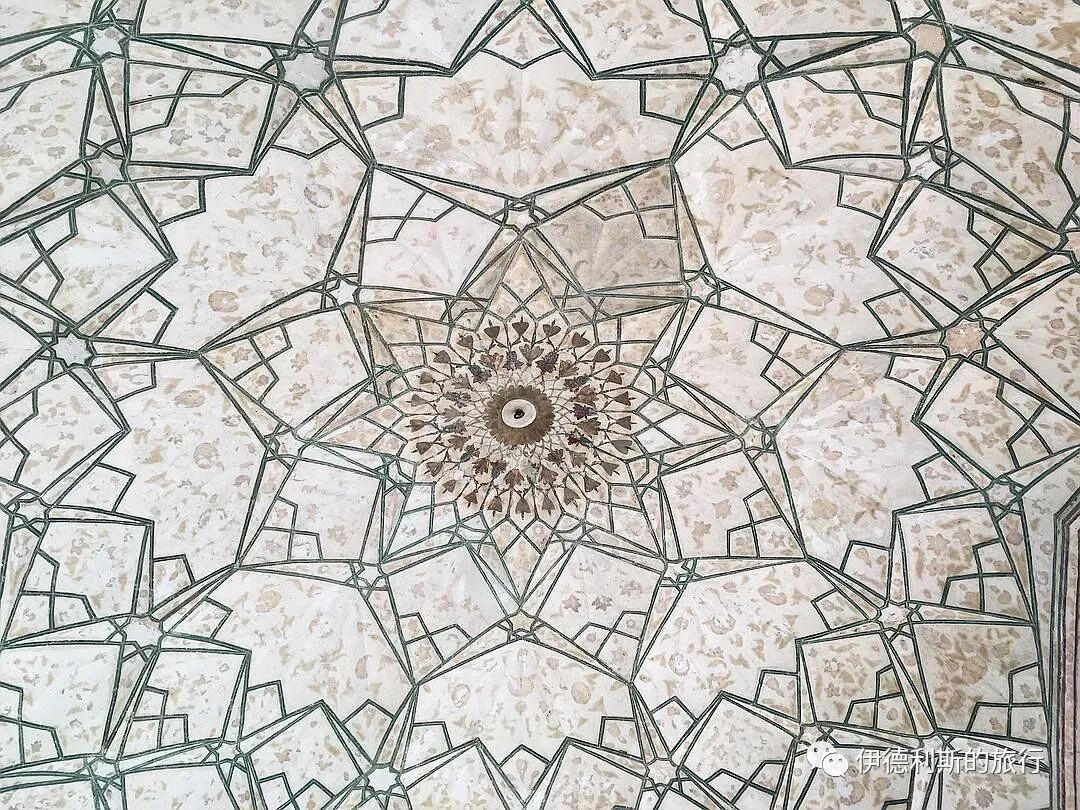
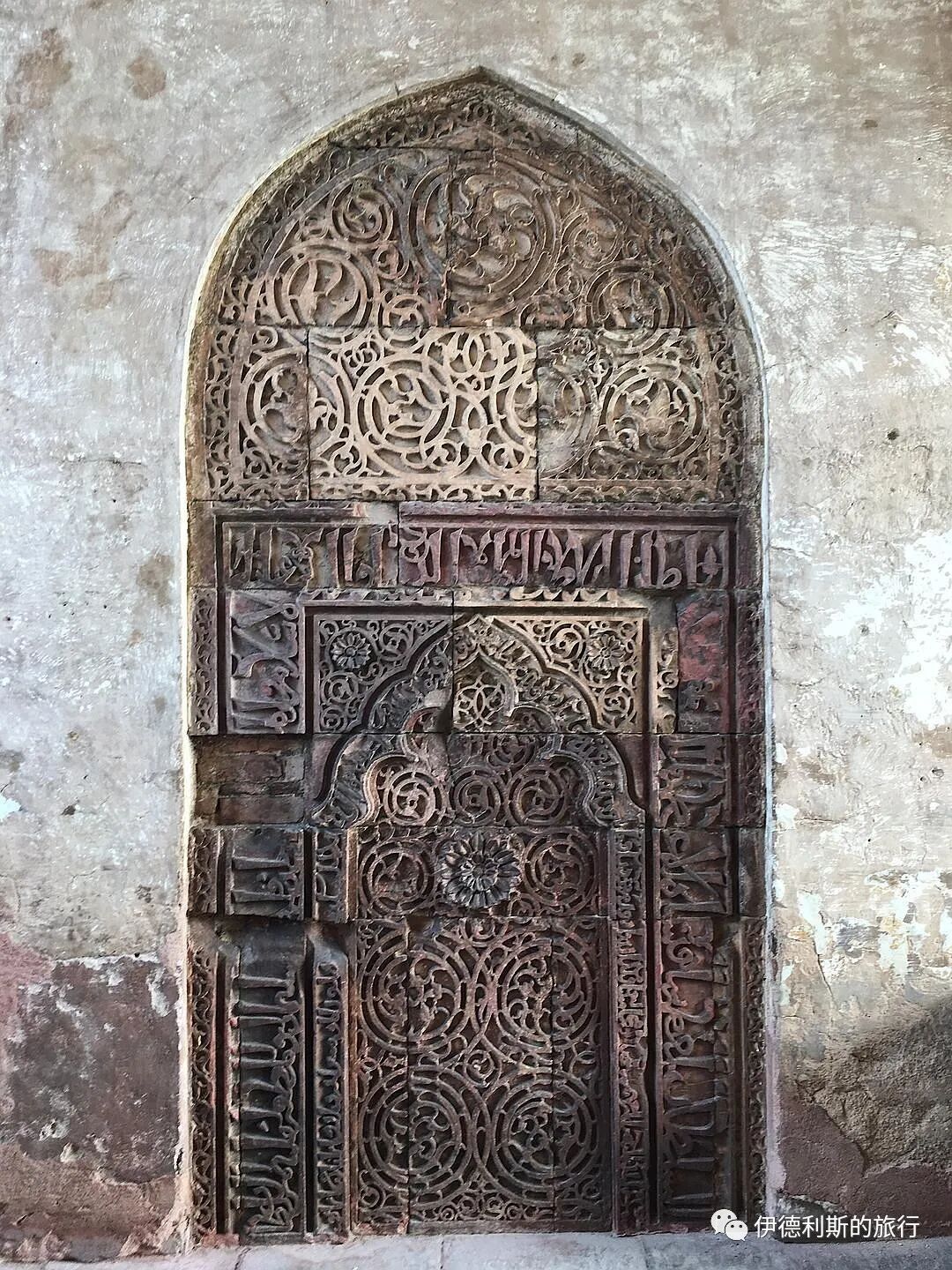
4. Diwan-i-Aam (public audience hall)
After passing through the Naubat Khana, you enter the inner courtyard of the Red Fort, where the Diwan-i-Aam stands directly in front of you. Diwan-i-Aam means 'Hall of Public Audience.' It was the place where the Mughal emperor met with the public to hear their concerns.
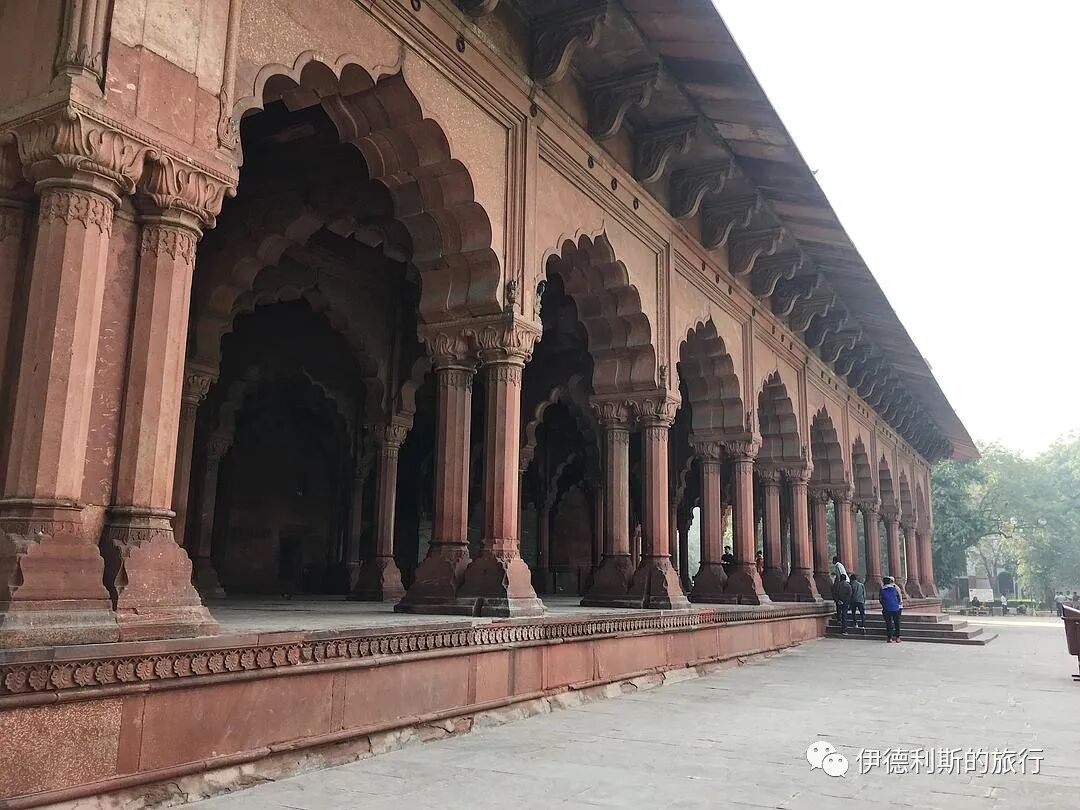
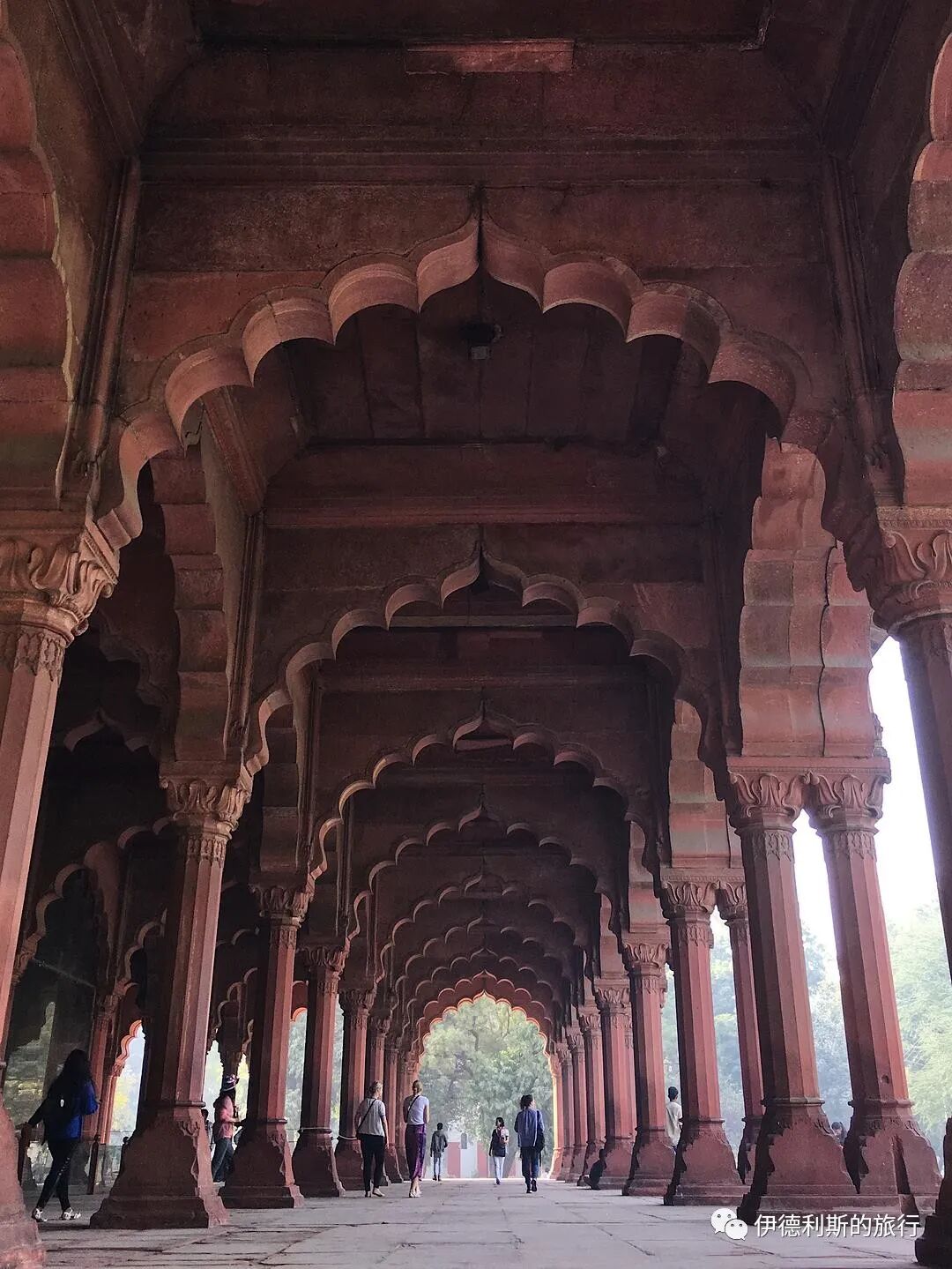
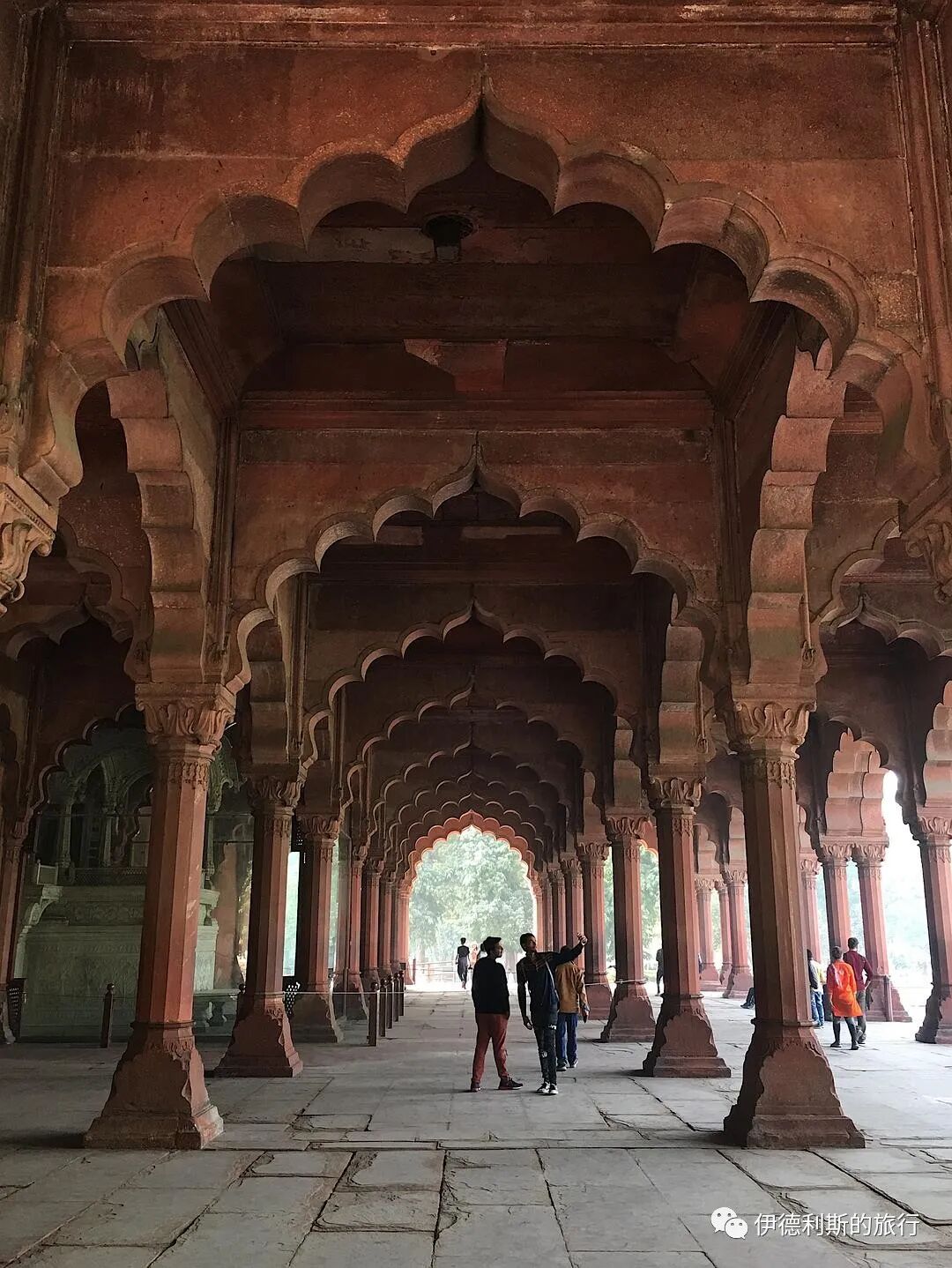
In the center of the hall is the throne where the emperor sat. The marble steps below the throne were where the prime minister (wazir) received petitions from the public.
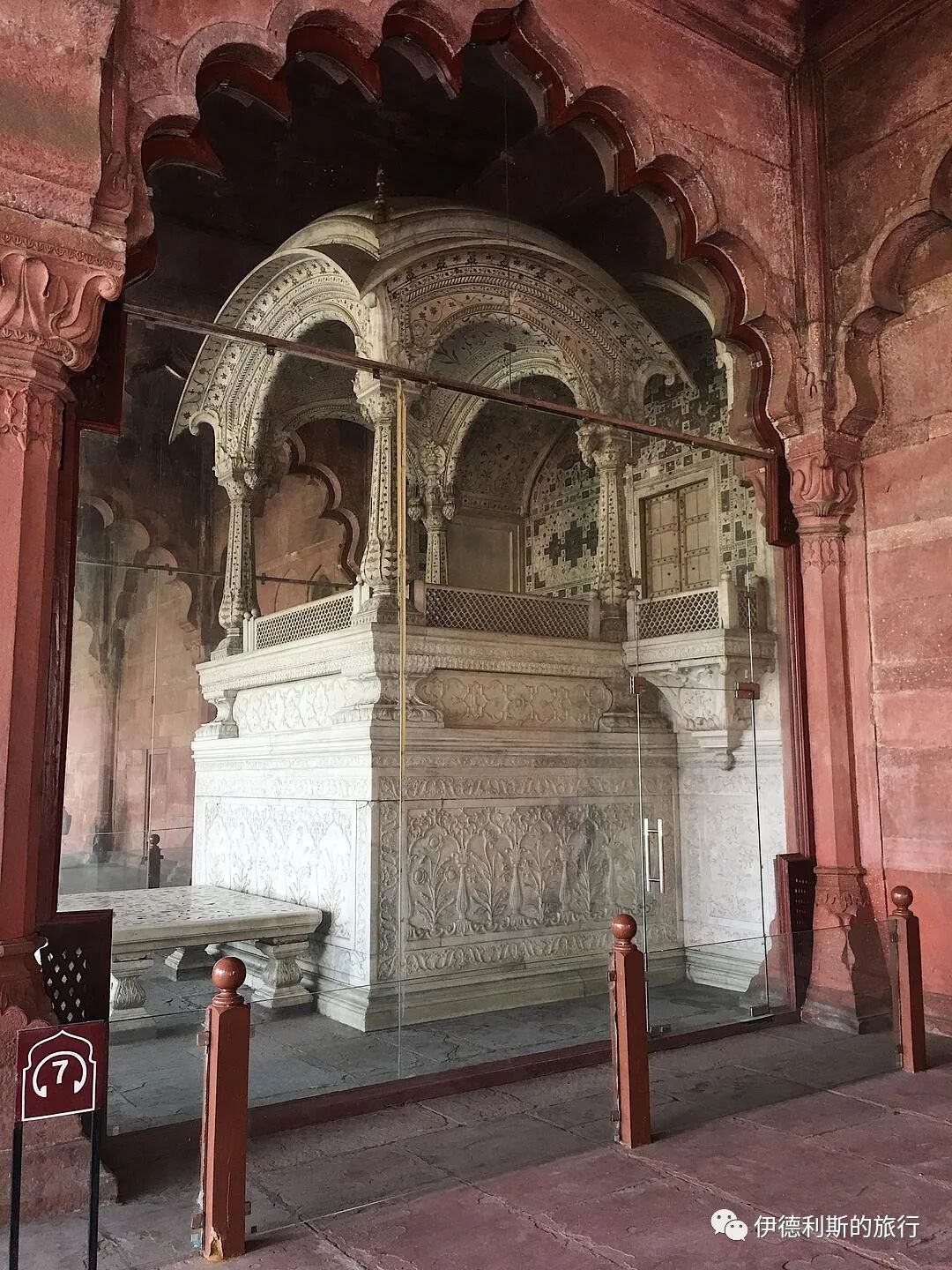
The door behind the throne, painted by Ghulam Ali Khan between 1852 and 1854.
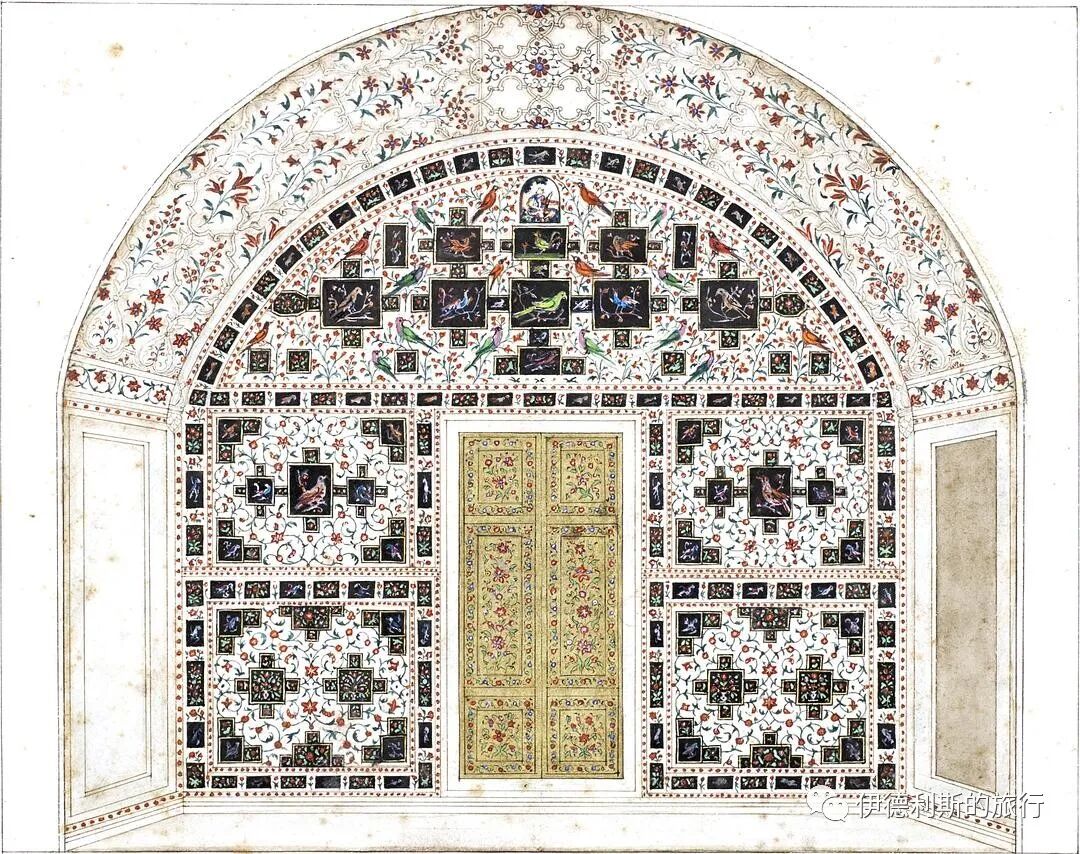
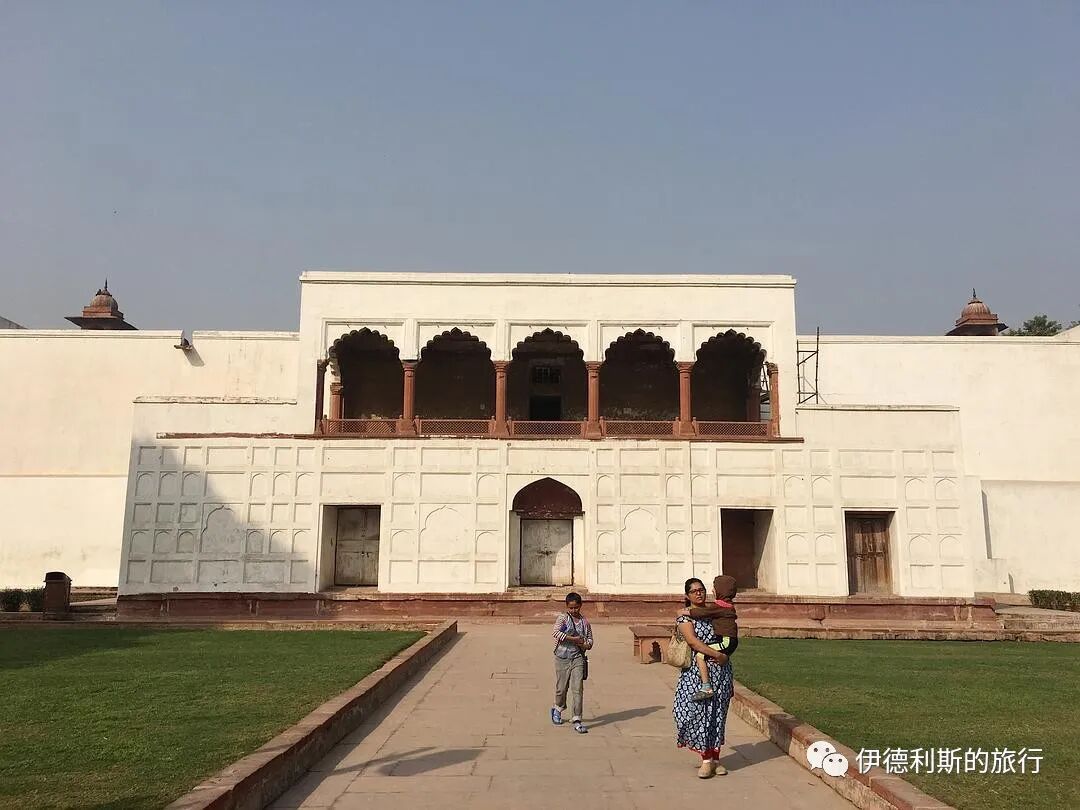
5. Rang Mahal (palace of the empresses)
After entering the Diwan-i-Aam, you reach the harem section of the Red Fort. Rang Mahal means 'Palace of Colors.' It was the living quarters for the concubines of the Mughal emperor.
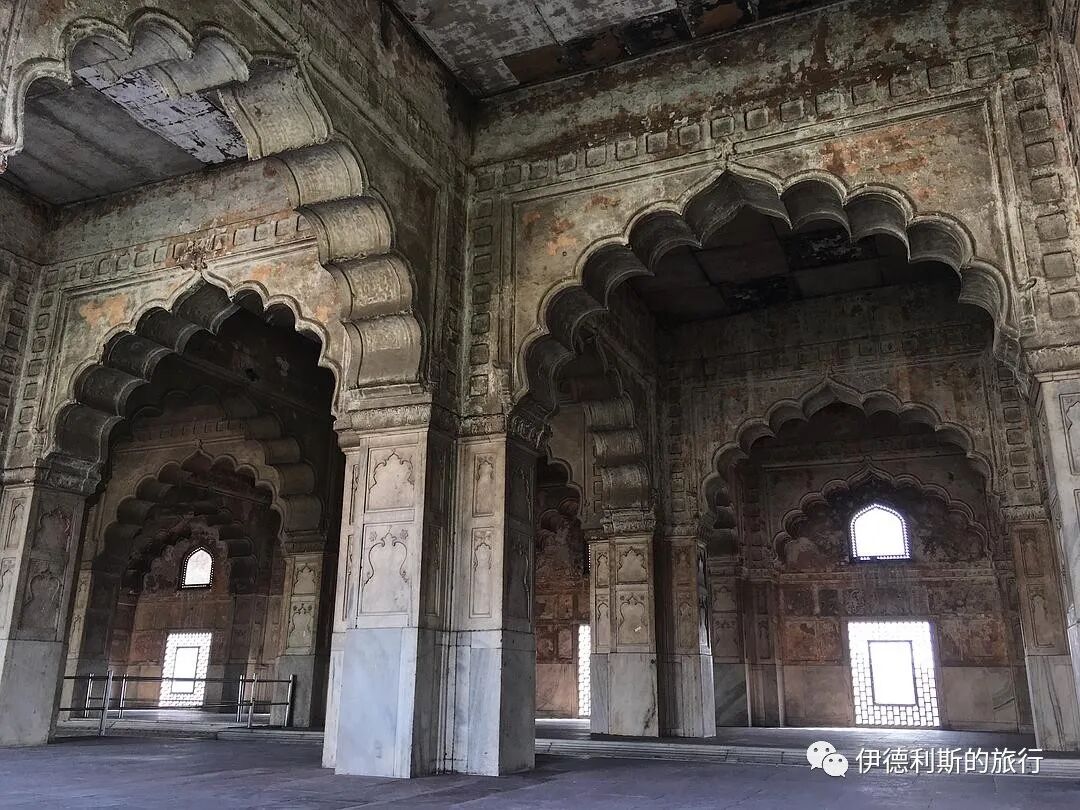
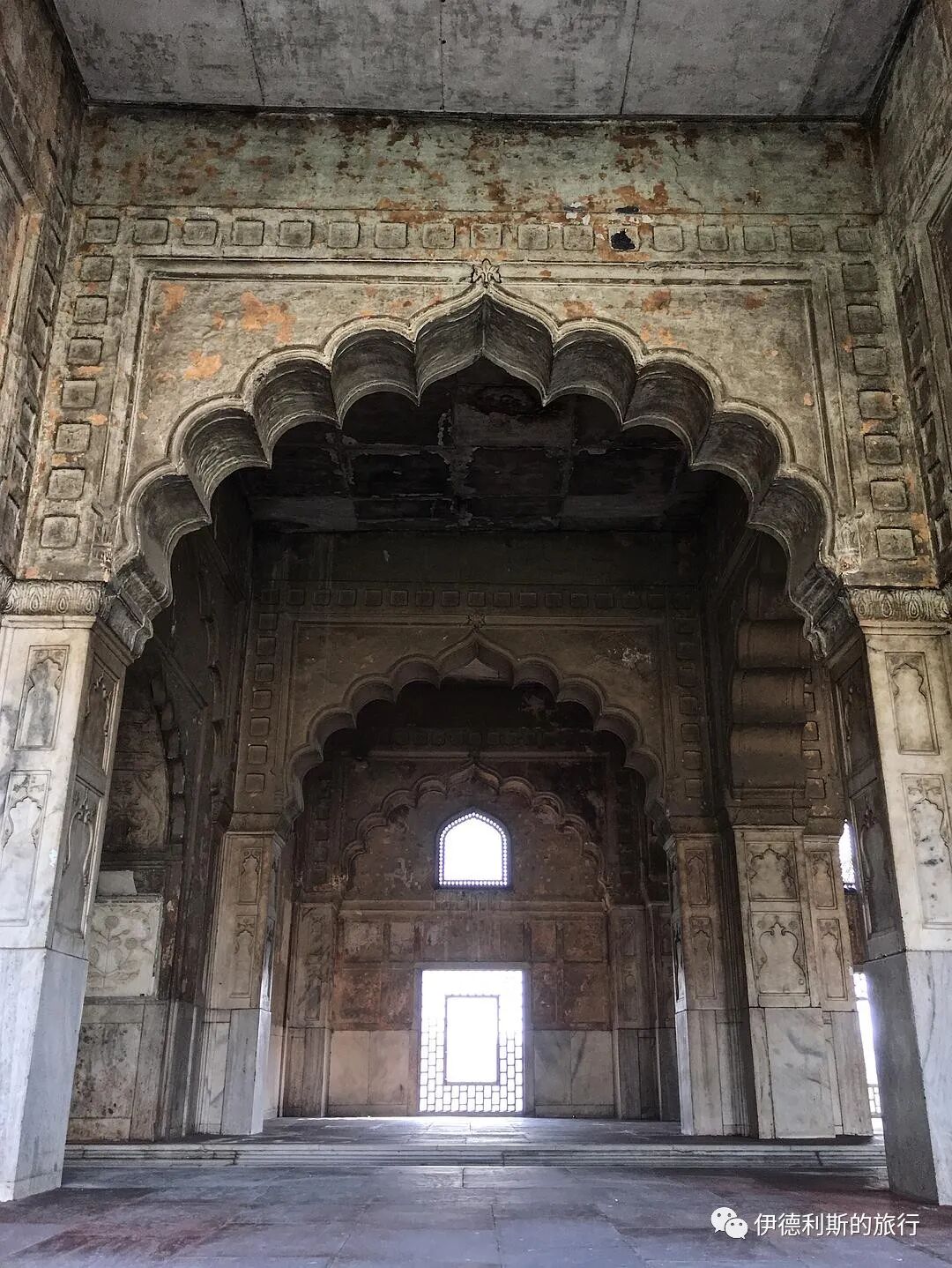

Painted by Ghulam Ali Khan between 1852 and 1854.
A shallow canal called the Stream of Paradise (Nahr-i-Bihist) flows into the marble pool in front of the Rang Mahal. During the hot summer, the women of the Mughal royal family would stay in the basement of the Diwan-i-Aam to escape the heat.
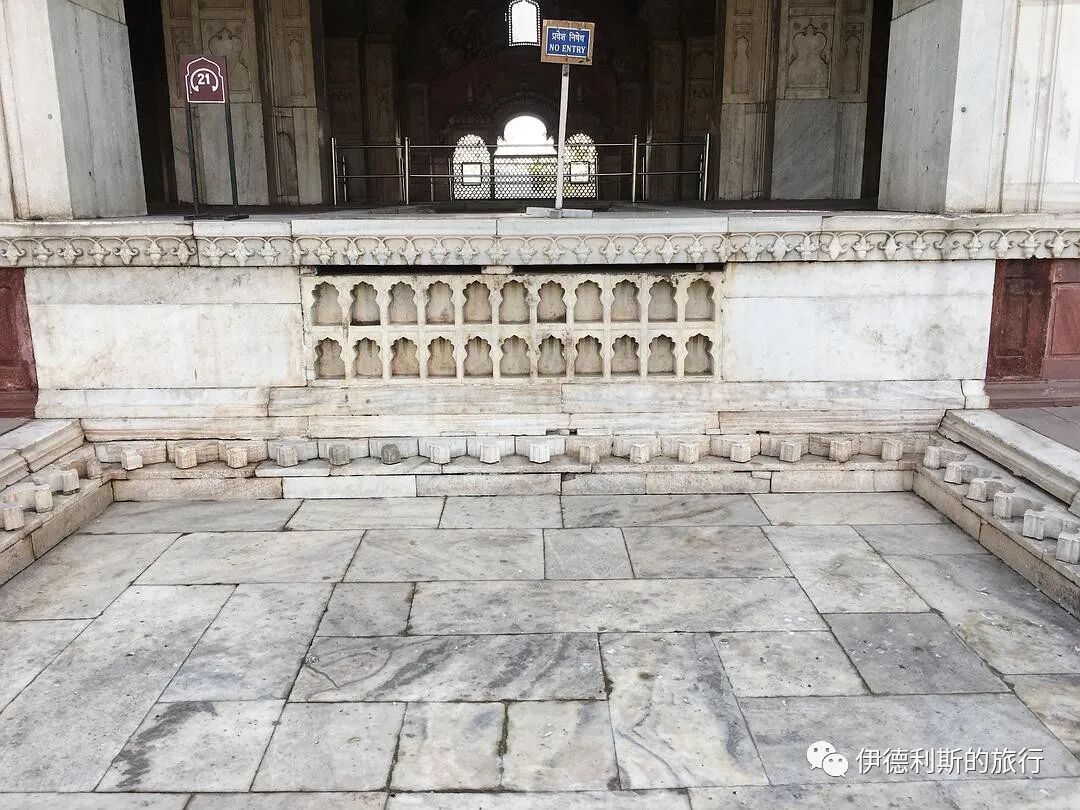
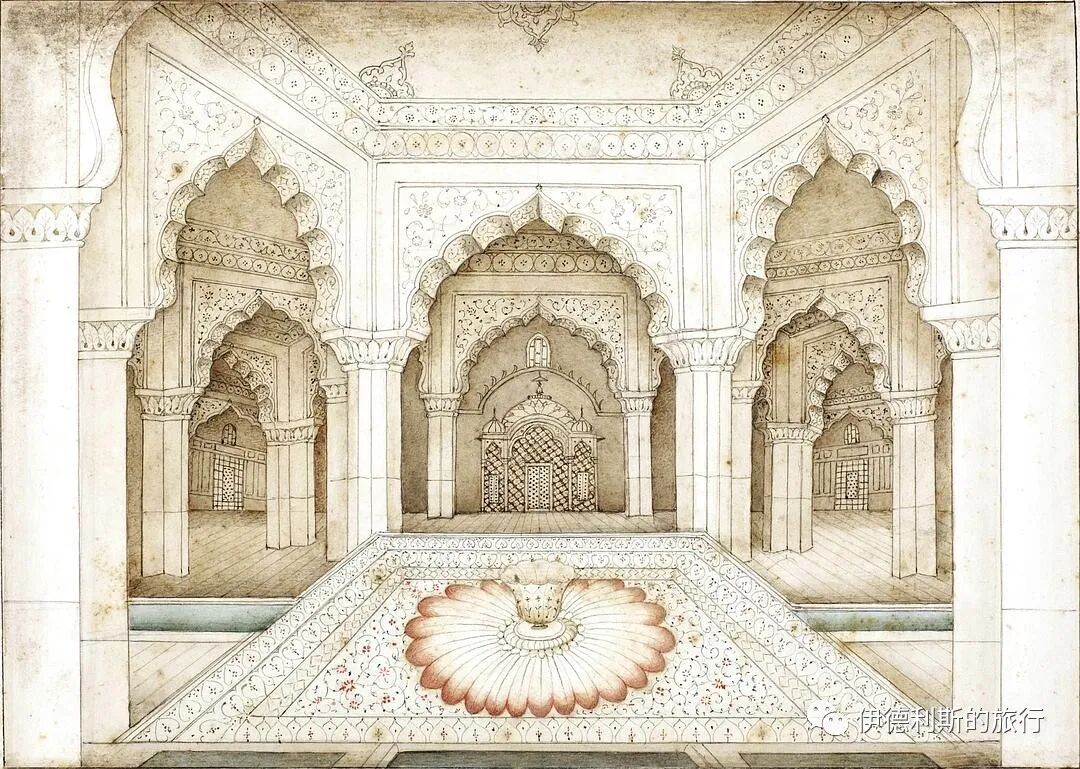
Painted by Ghulam Ali Khan between 1852 and 1854.
6. Khas Mahal (emperor's private palace)
To the north of the Rang Mahal is the Khass Mahal, which was the sleeping quarters of the Mughal emperor. The Rang Mahal was built of white marble. Its walls were originally inlaid with various jewels and the ceiling was gilded, but these features have not been preserved.
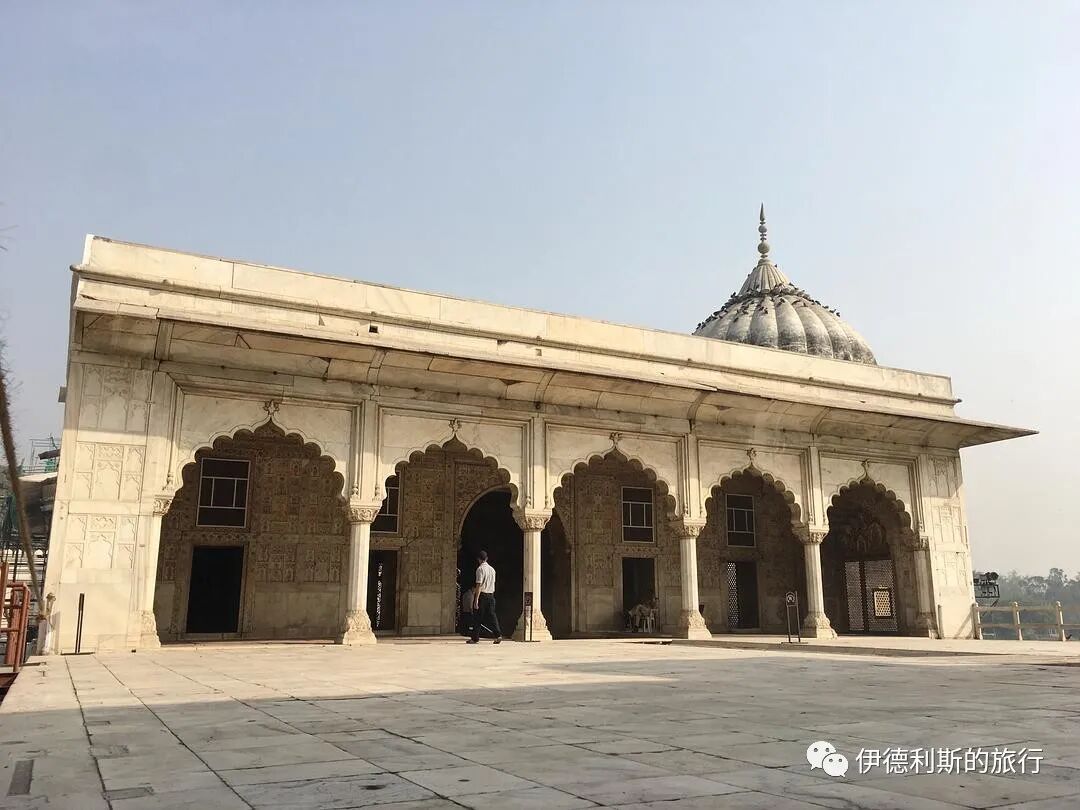
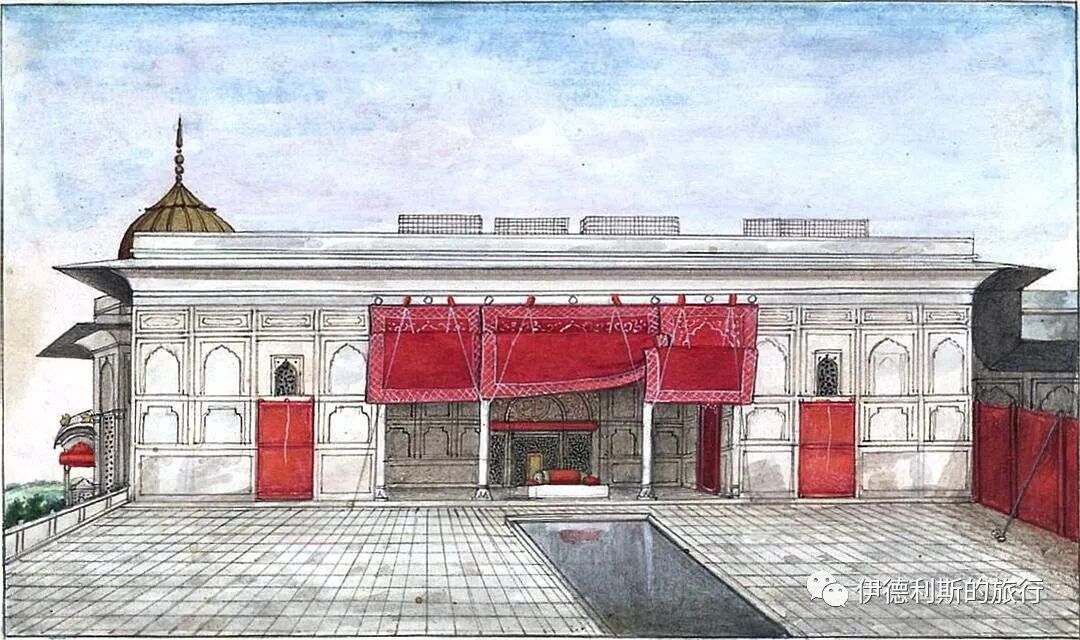
Painted by Sir Thomas Theophilus Metcalfe in 1843.
The last Mughal emperor, Bahadur Shah II, ascends the throne in the Khas Mahal, painted by Ghulam Ali Khan between 1837 and 1838.
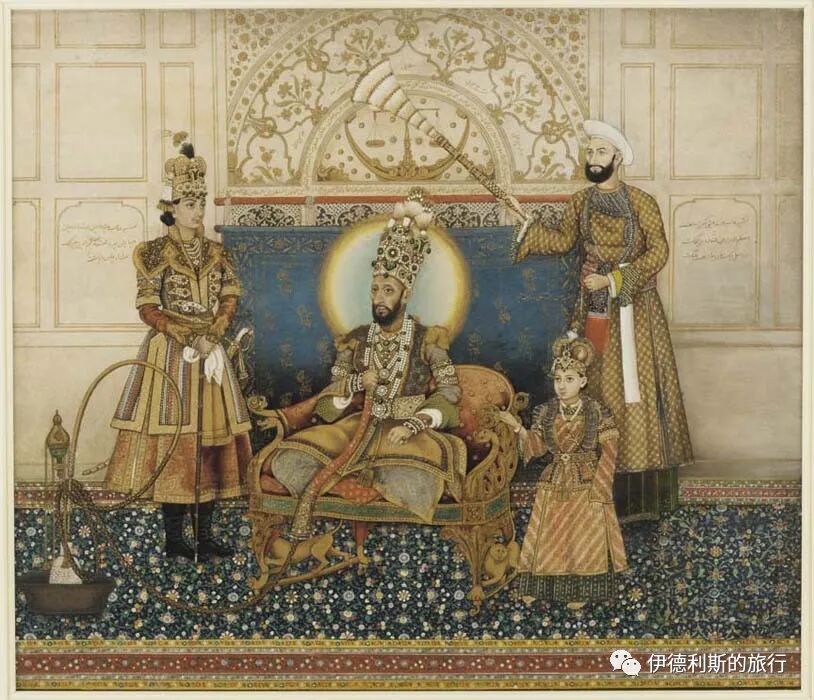
7. Hall of Private Audience (Diwan-i-Khas)
North of the Khas Mahal is the Hall of Private Audience (Diwan-i-Khas), where the Mughal emperor met with courtiers and state guests. The Hall of Private Audience (Diwan-i-Khas) means "private reception room." It is built of white marble and was once inlaid with various jewels, featuring the exquisite Peacock Throne in the center. The hall once had a ceiling inlaid with gold and silver, but these were later removed. The current ceiling was installed in 1911.
Outside the hall, there used to be red awnings, and the arches below were inscribed with verses by the famous Sufi master Amir Khusrow:
If there is a paradise on earth,
It is this, it is this, it is this.
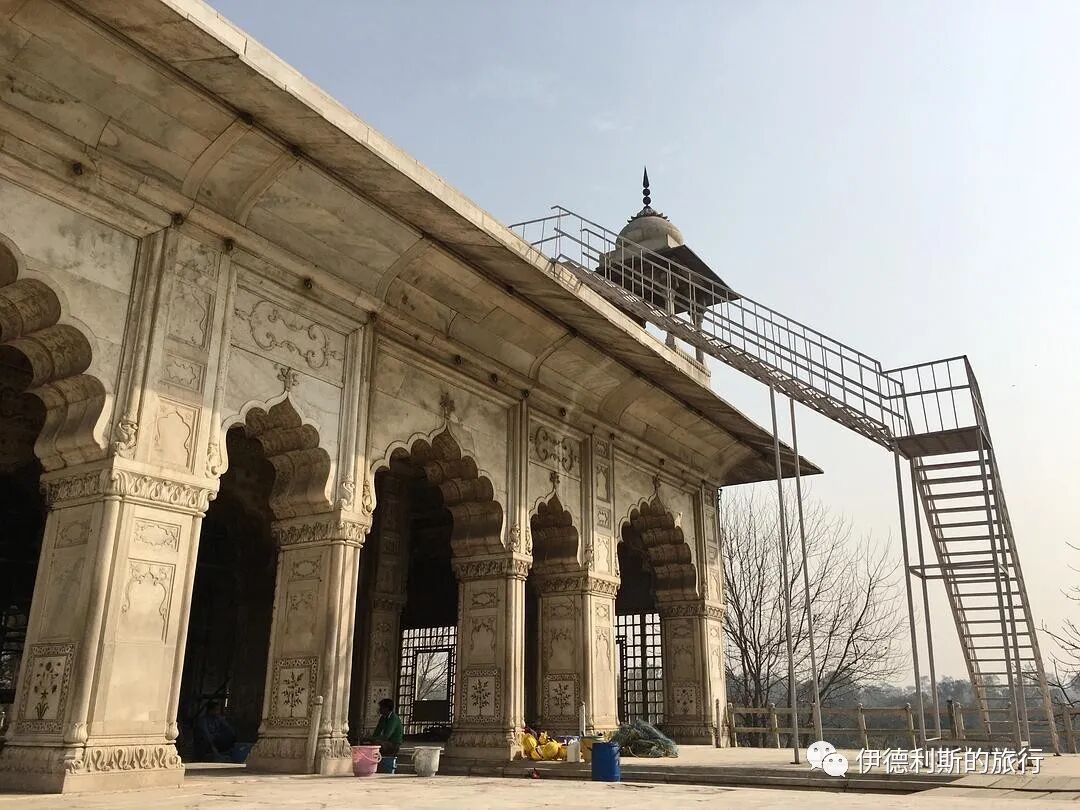
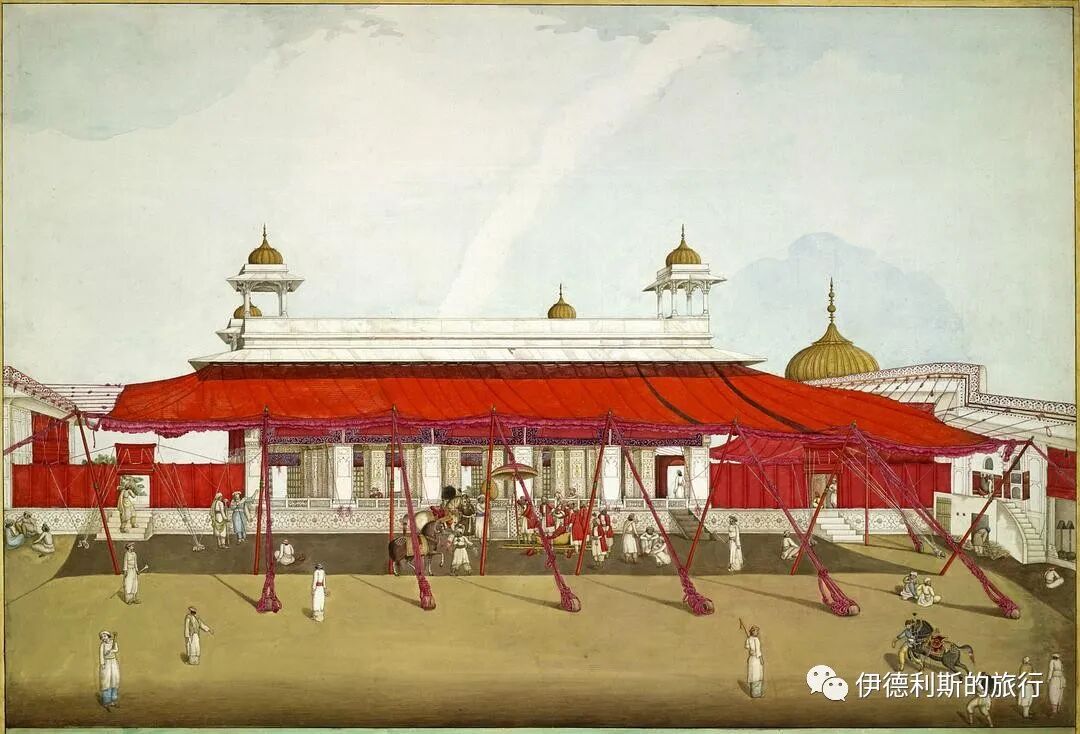
Painted by Ghulam 'Ali Khan in 1817.
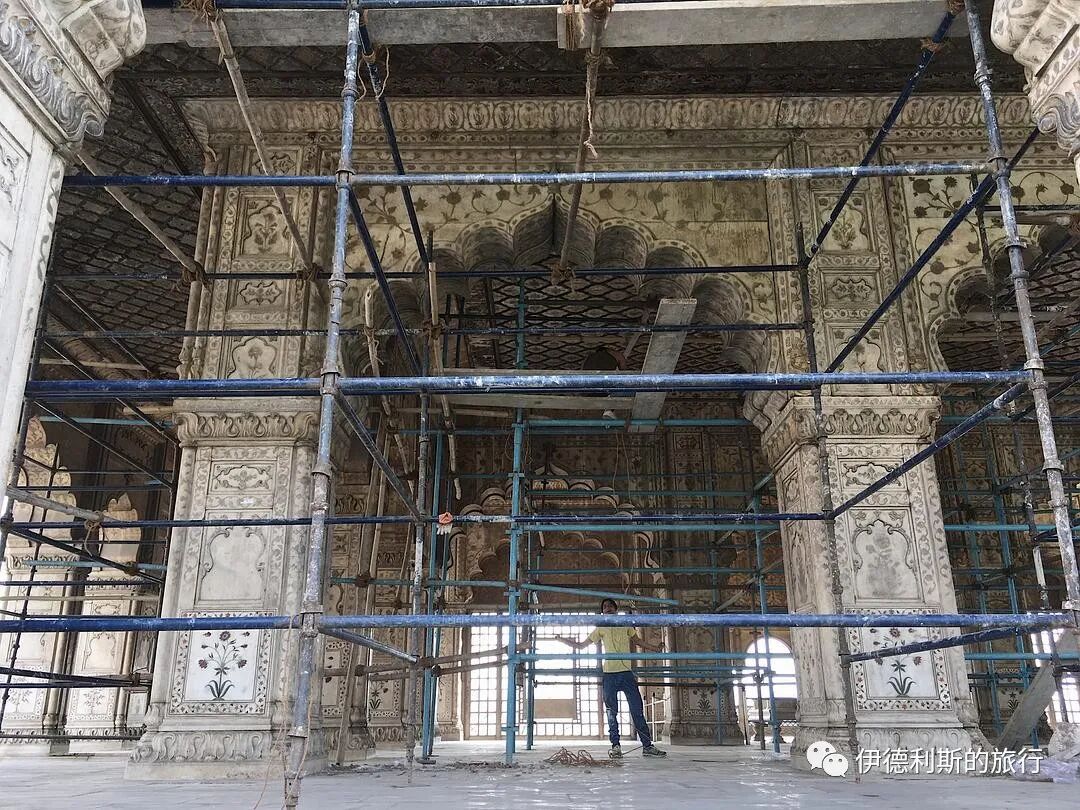
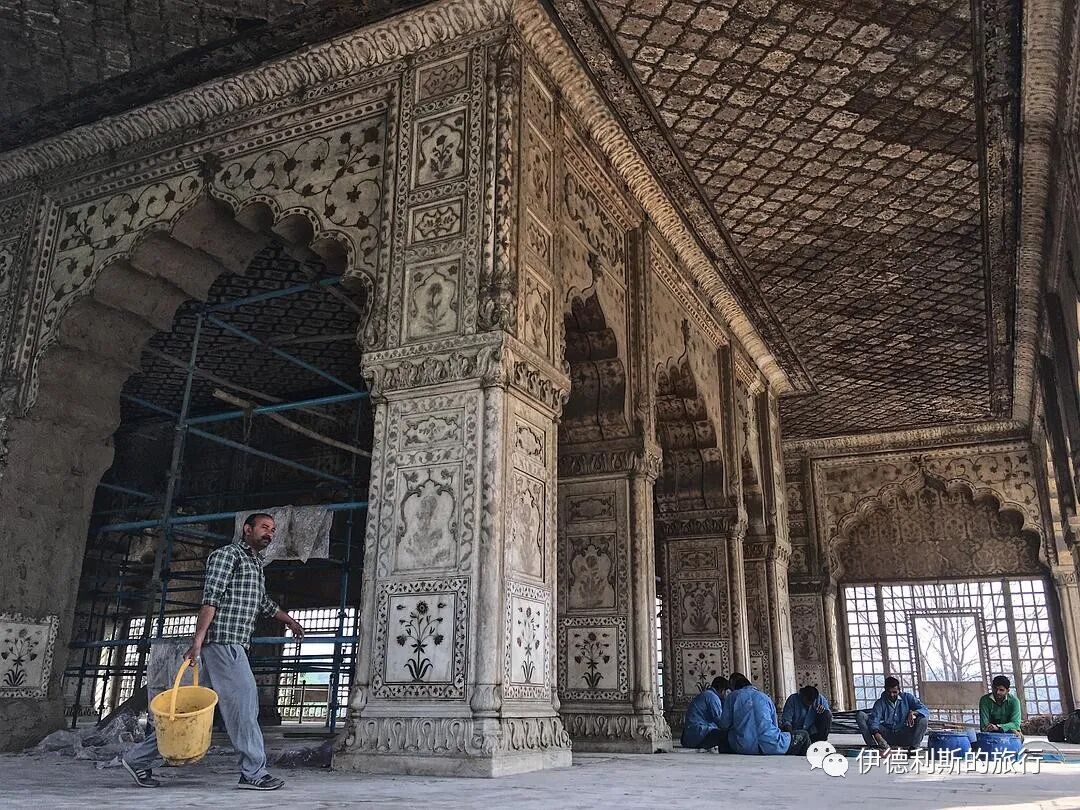
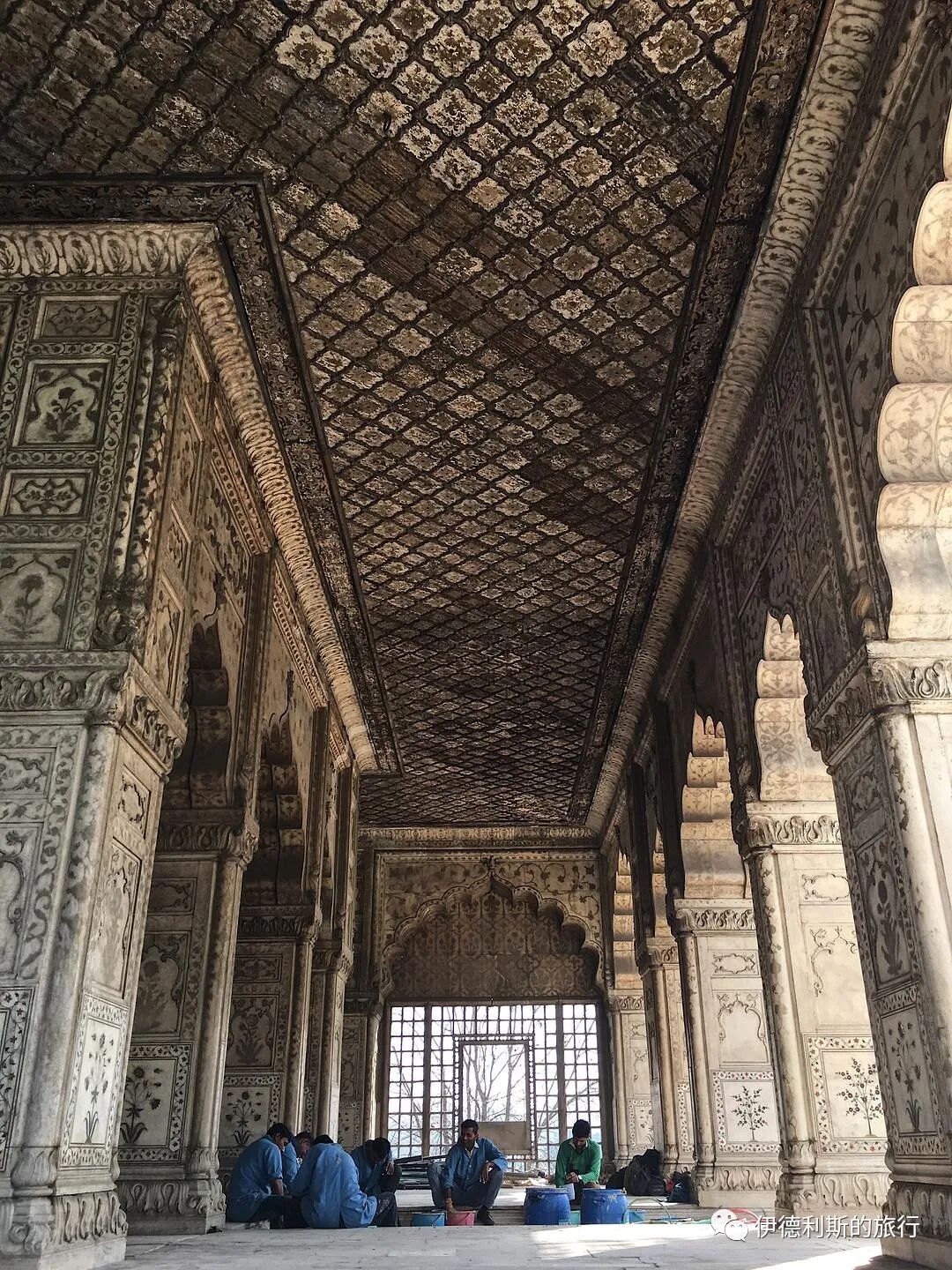
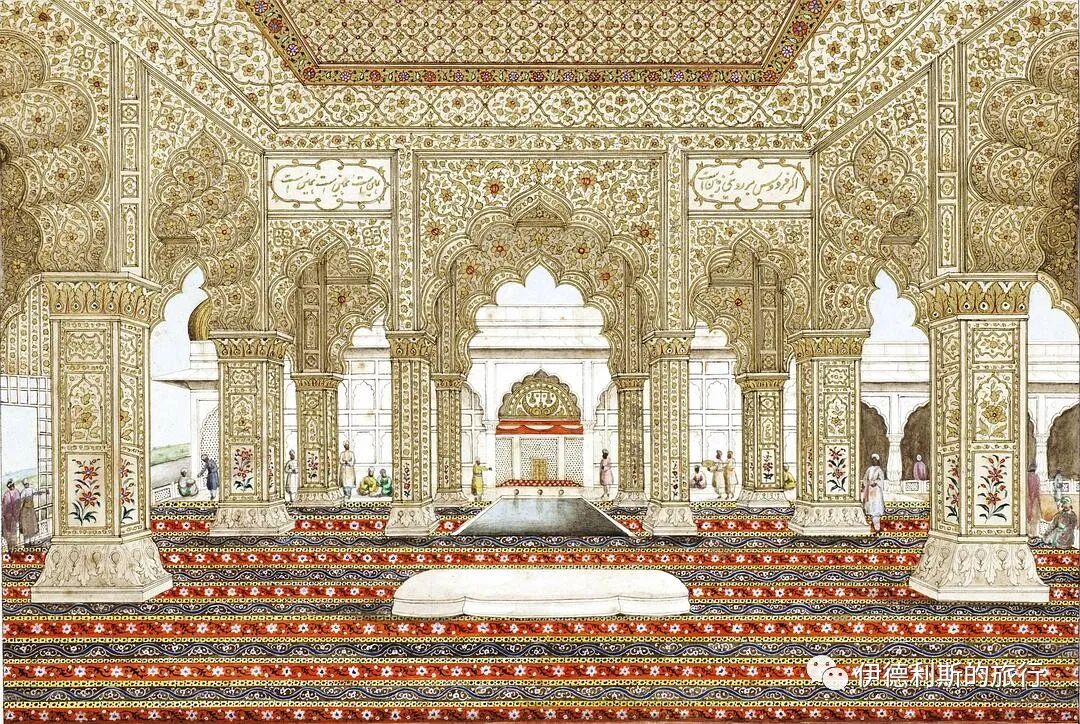
Painted by Ghulam Ali Khan between 1852 and 1854.
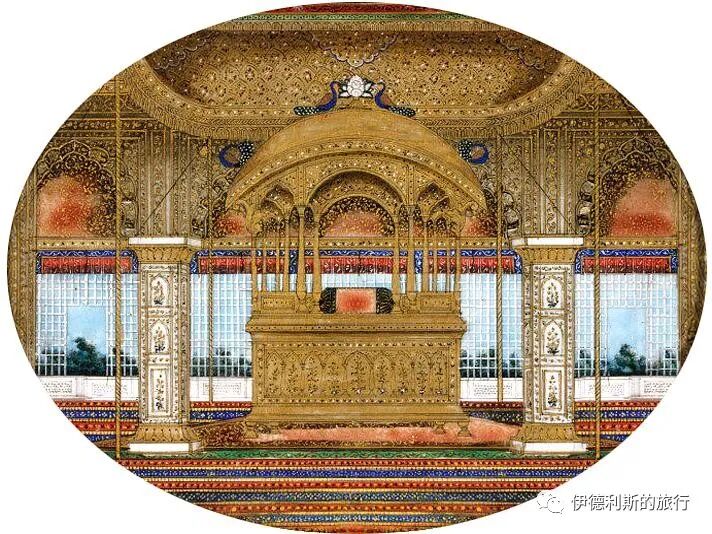
The Peacock Throne in 1850.
8. Hammam-e-Lal Qila (bathhouse)
North of the Hall of Private Audience (Diwan-i-Khas) is the Red Fort Bathhouse (Hammam-e-Lal Qila), which was used by the Mughal royal family. The Red Fort Bathhouse (Hammam-e-Lal Qila) is a Turkish-style bath consisting of three sections: a children's bath, a dressing room, and a hot bath. Legend has it that the water flowing from the taps at that time was mixed with rose perfume.
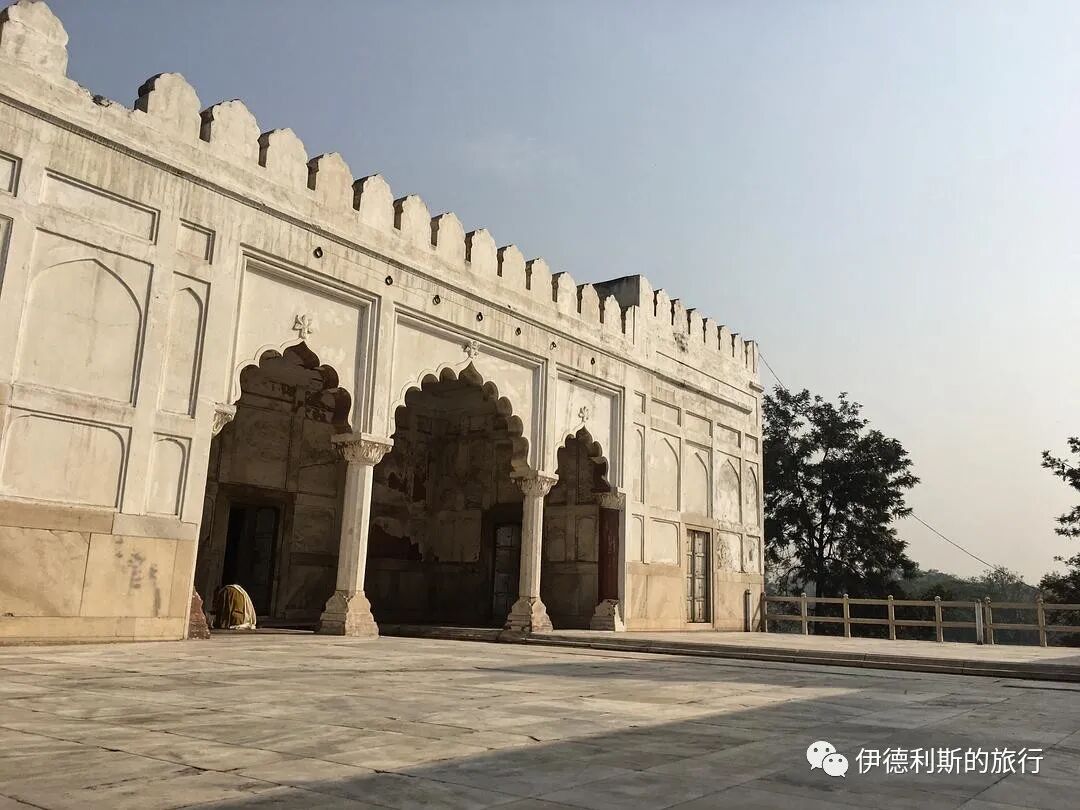
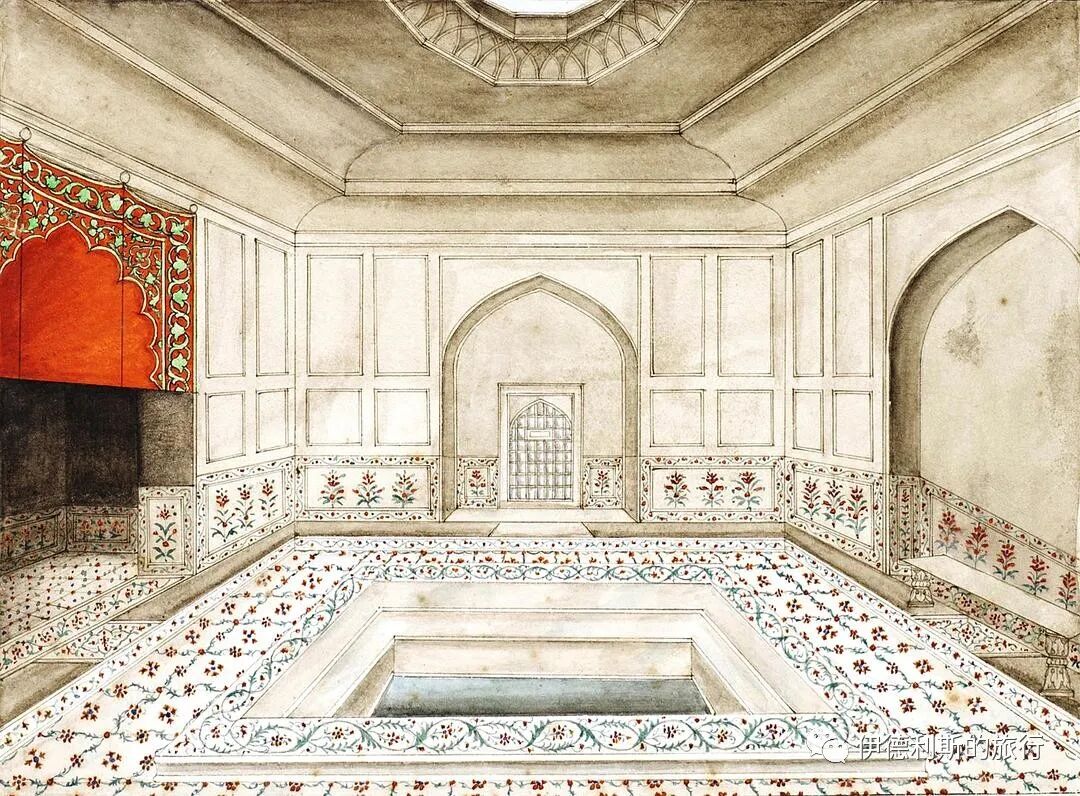
Painted by Ghulam Ali Khan between 1852 and 1854.
9. Pearl Mosque (Moti Masjid)
The Pearl Mosque (Moti Masjid) is west of the bathhouse. It was built by the sixth Mughal emperor, Aurangzeb, between 1659 and 1660 for his second wife, Nawab Bai. Pearl (Moti) means "pearl." It is built of white marble, and its three domes were originally covered with gilded copper plates, which were lost after 1857.
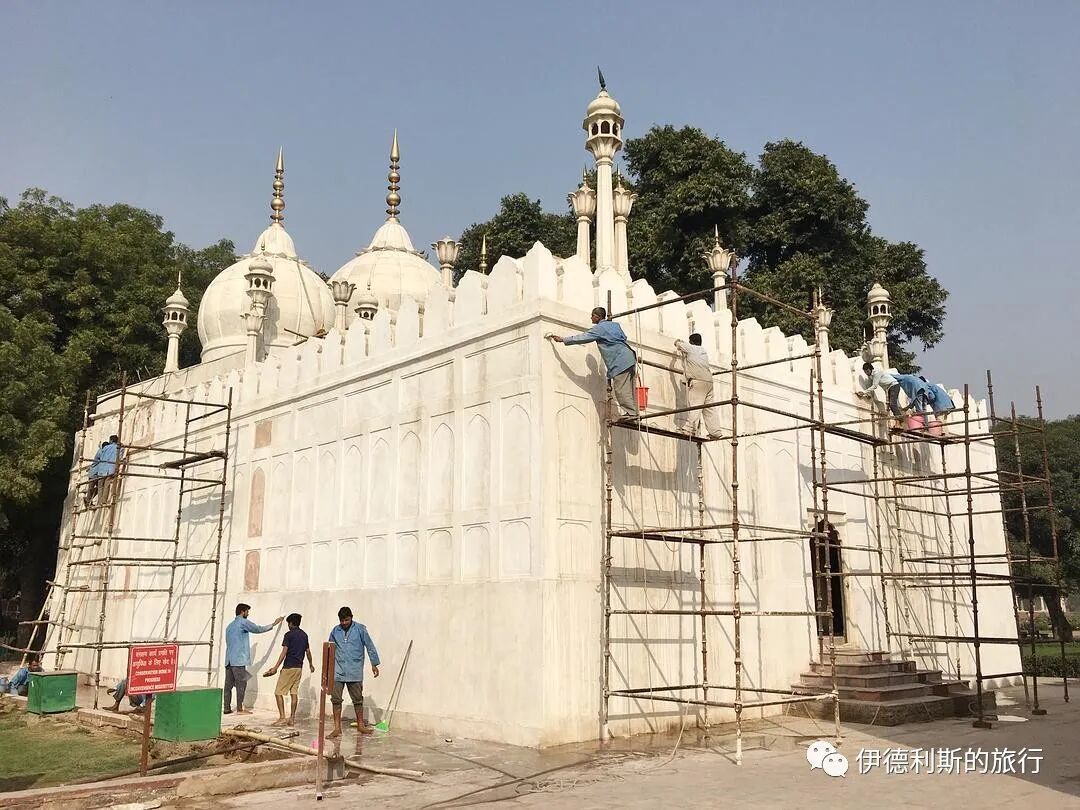
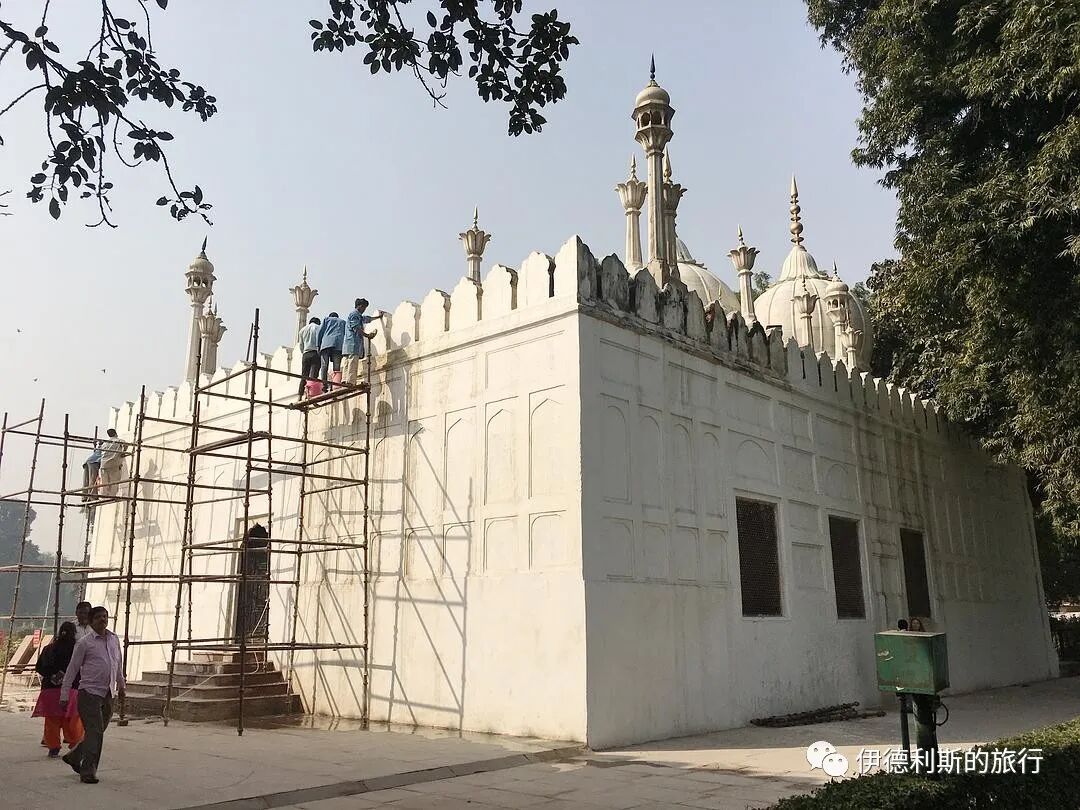
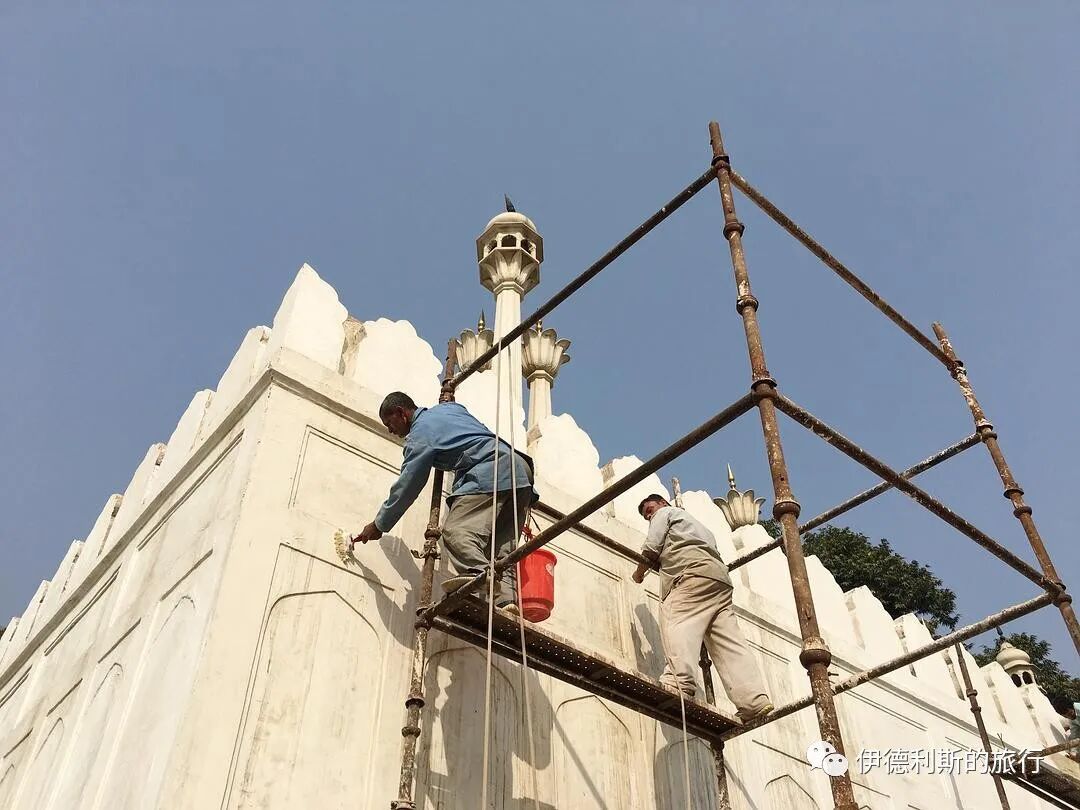
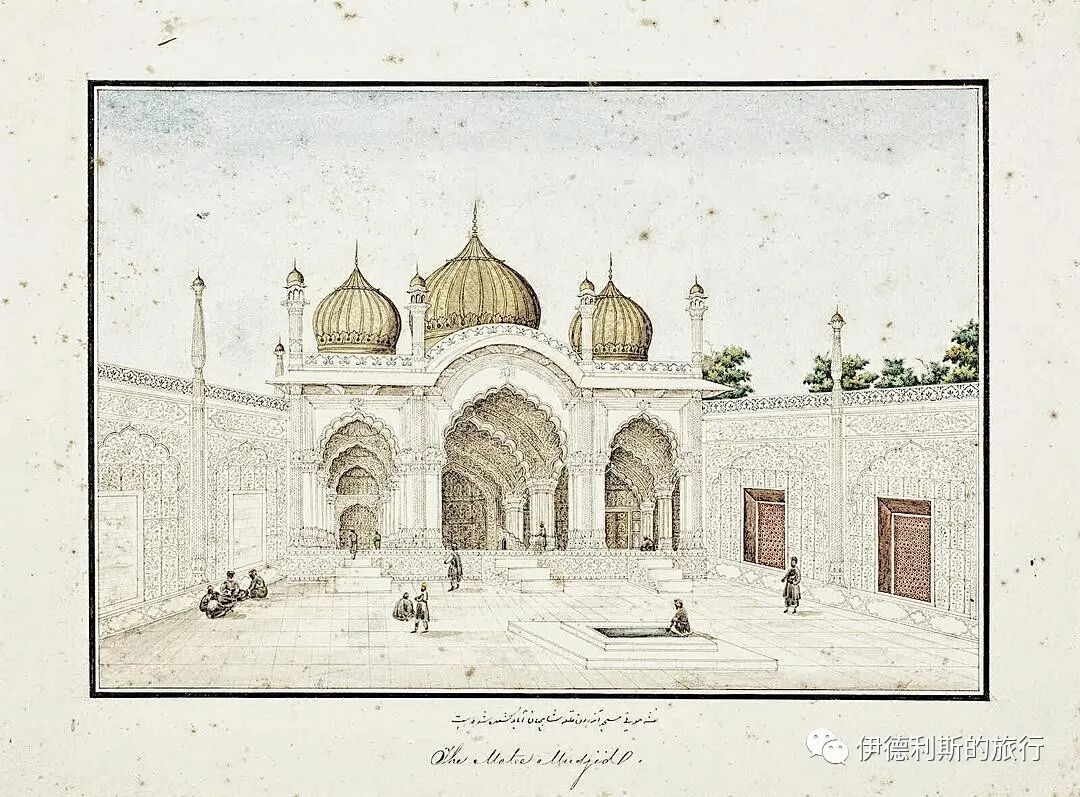
Painted by Ghulam Ali Khan between 1852 and 1854.
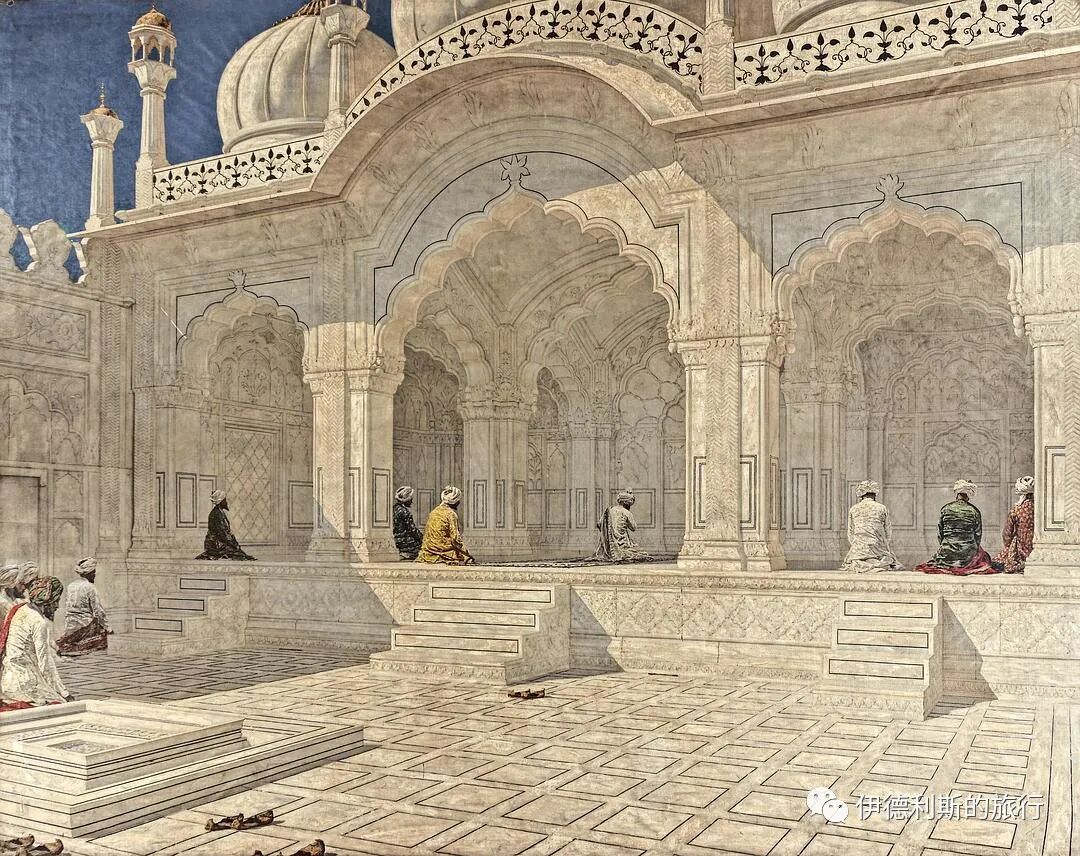
Painted by Vasily Vereshchagin in the late 1880s.
10. King's Tower (Shah Burj)
The northernmost part of the harem is a white marble pavilion built during the Aurangzeb period. Behind the pavilion is the Shahi Burj, the northeast corner tower of the Red Fort, which means "Imperial Tower." Inside the tower is a hydraulic system that carries water from outside the Red Fort into its gardens and buildings.
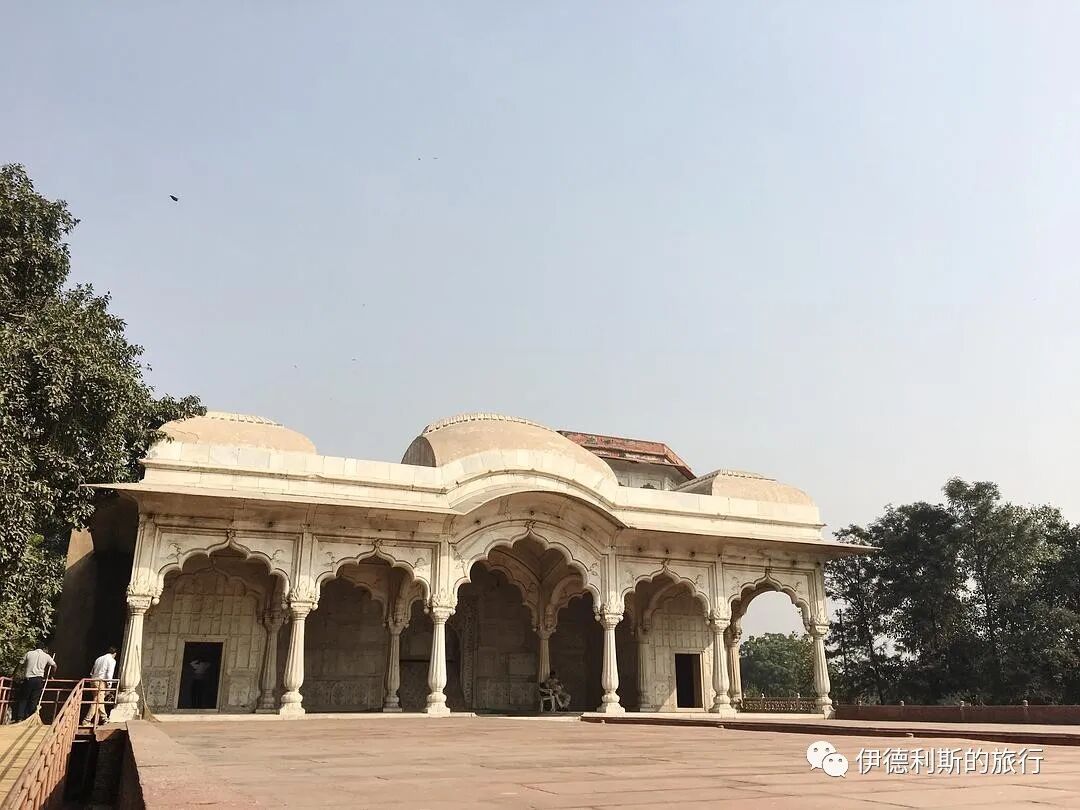
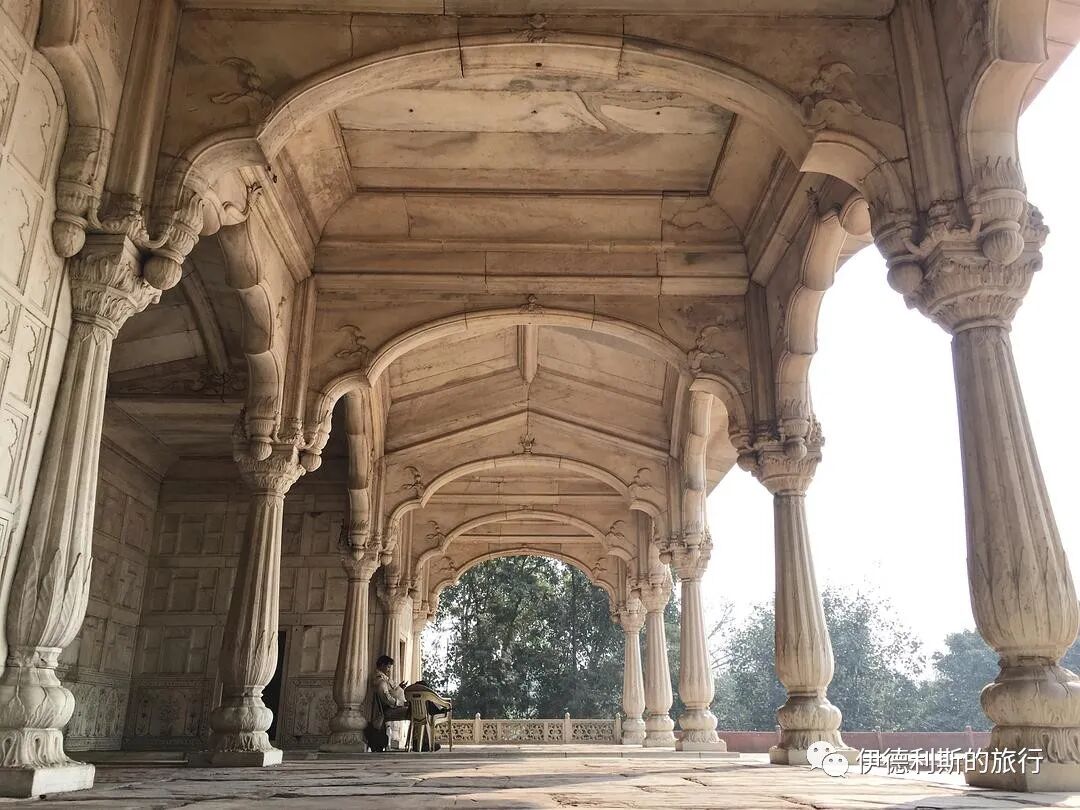
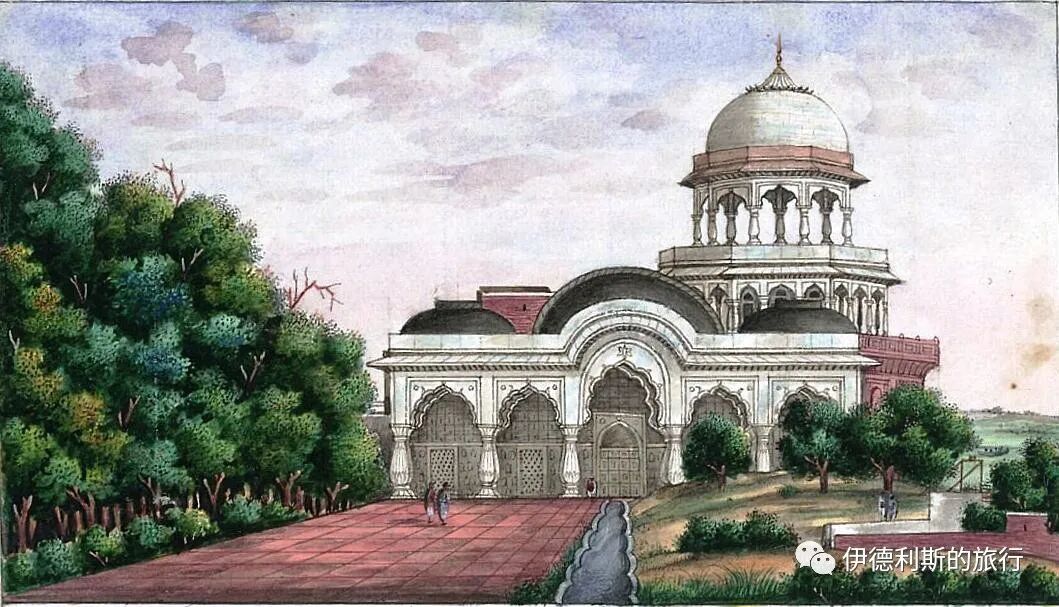
Painted by Sir Thomas Metcalfe in 1843.
11. Life-Giving Garden (Hayat Bakhsh Bagh)
In the northwest part of the harem is the royal water garden Hayat Bakhsh Bagh, which means 'Life-Giving Garden'. Most of the garden's buildings were destroyed after 1857, and only three survive today.
At the center of the garden is the red sandstone building Zafar Mahal, built in 1842 by the last Mughal emperor, Bahadur Shah II. The building sits in a pool and was originally connected to the shore by a red sandstone bridge, but it was destroyed after 1857. After 1857, the British army used this area as a swimming pool.
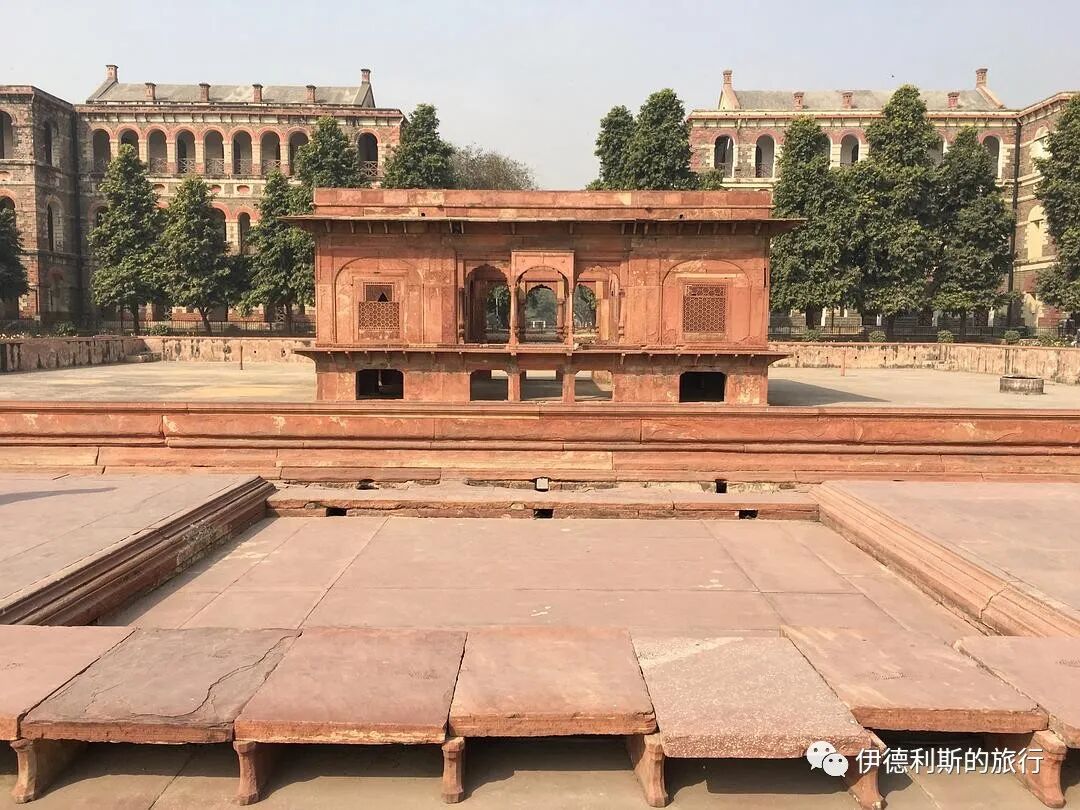
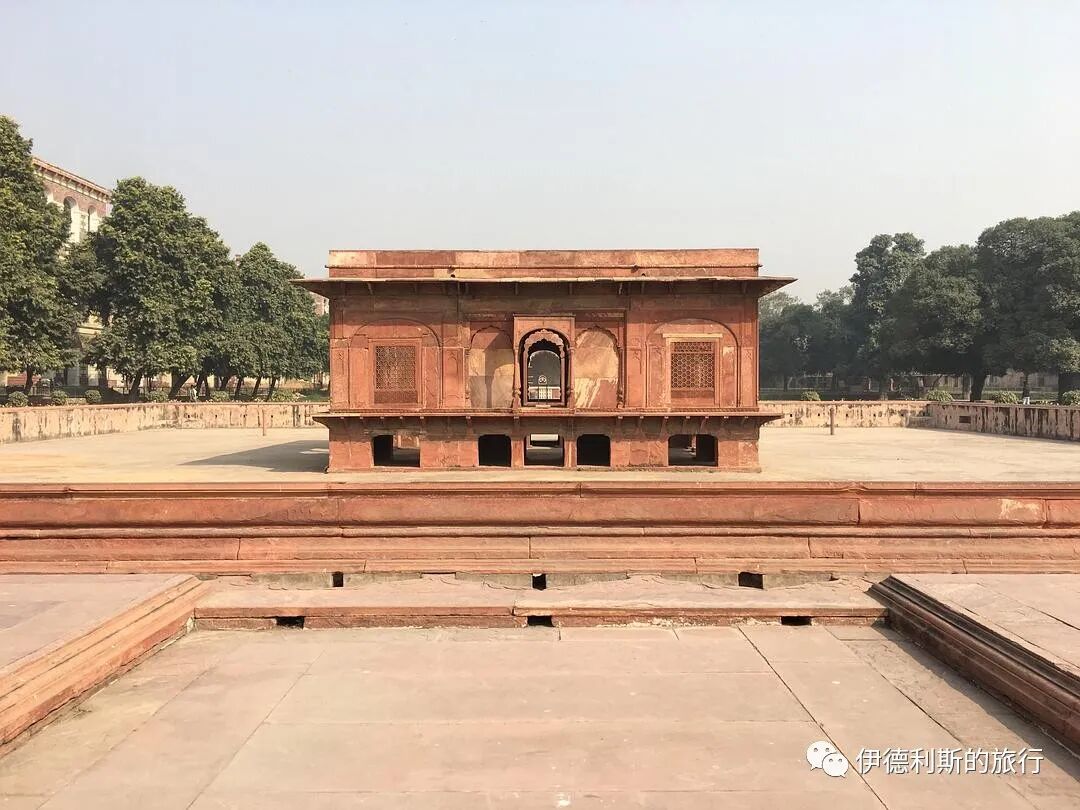
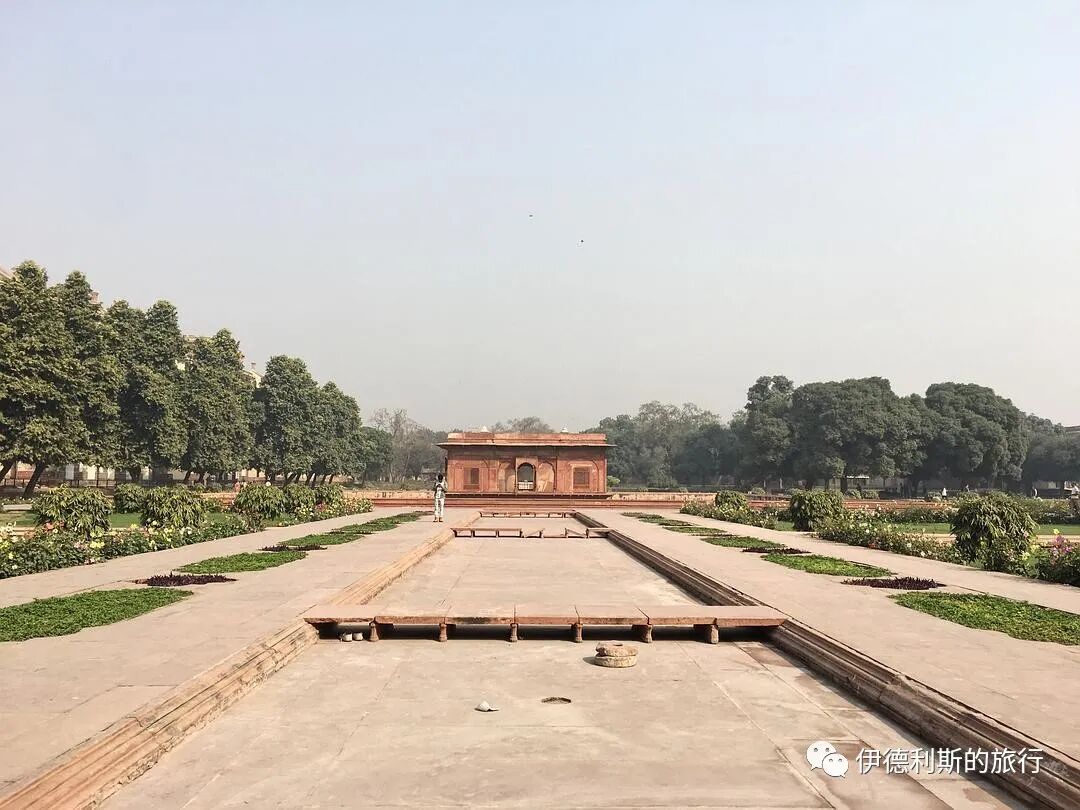
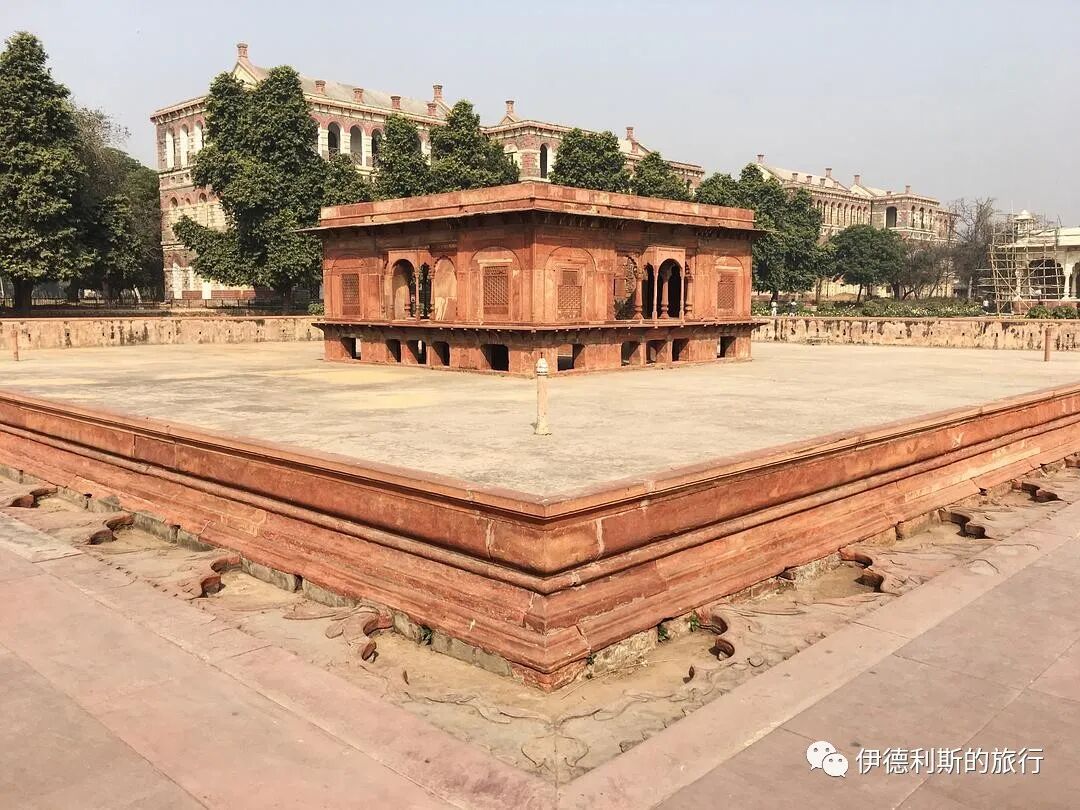
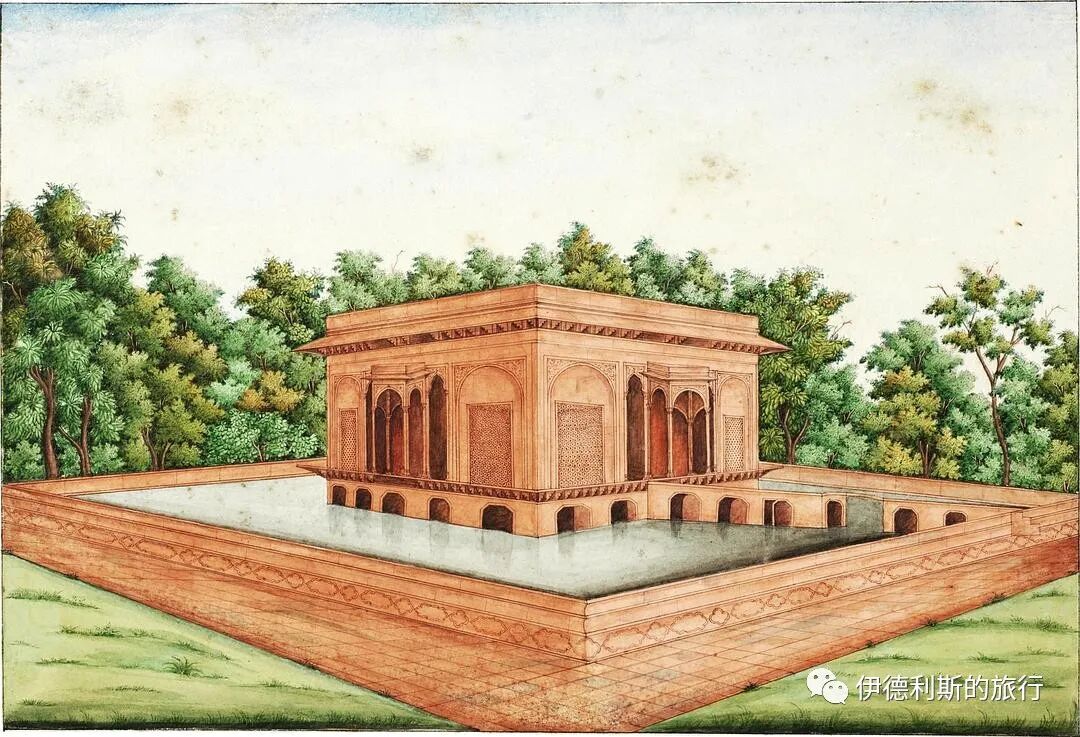
Painted by Ghulam Ali Khan between 1852 and 1854.
To the north and south of the garden are two white marble pavilions called Sawan and Bhadon, named after the months of July and August in the Indian rainy season, as the ladies of the Mughal palace loved to visit the garden during these two months. The pavilions have wall niches that held vases with golden flowers during the day and small oil lamps at night.
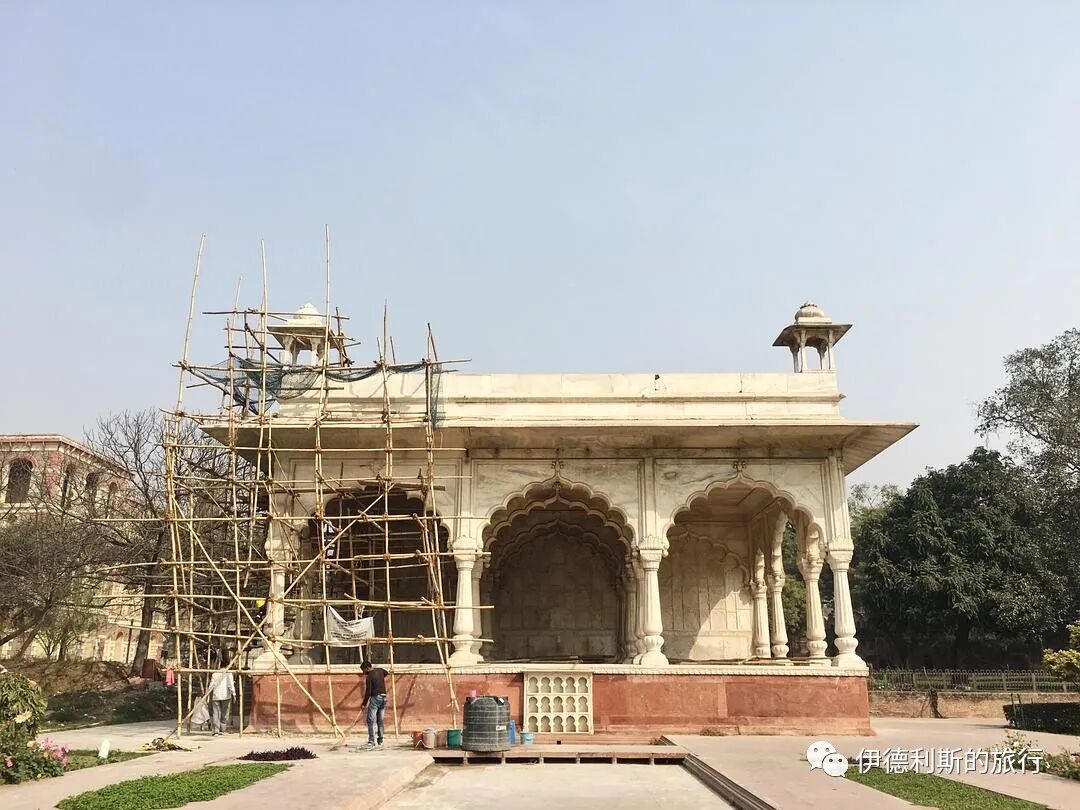
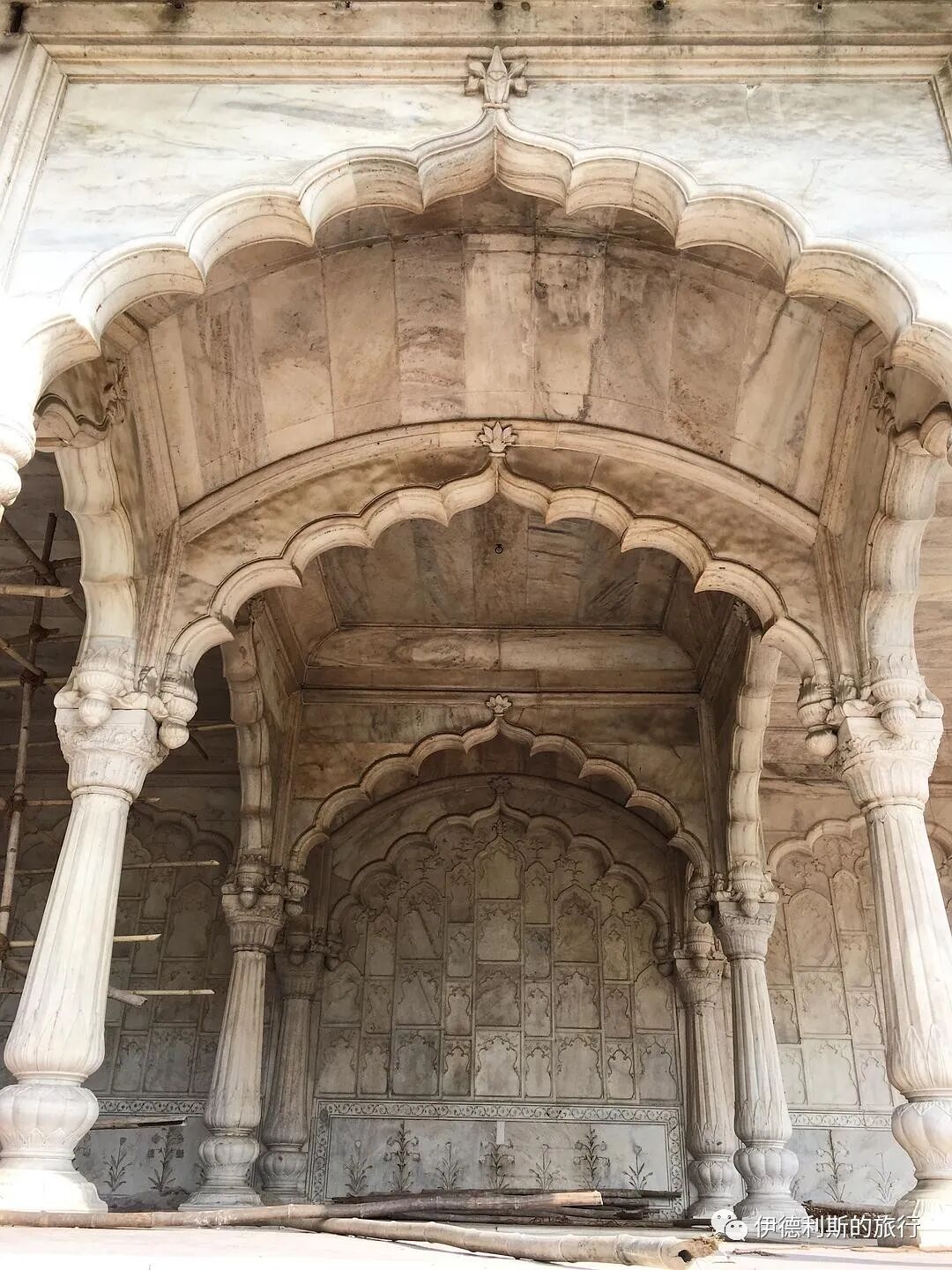
To the west of Hayat Bakhsh Bagh, there was originally another water garden called Mehtab Bagh, meaning 'Moon Garden,' but after 1857, the site was turned into a British military barracks, and now only ruins remain.
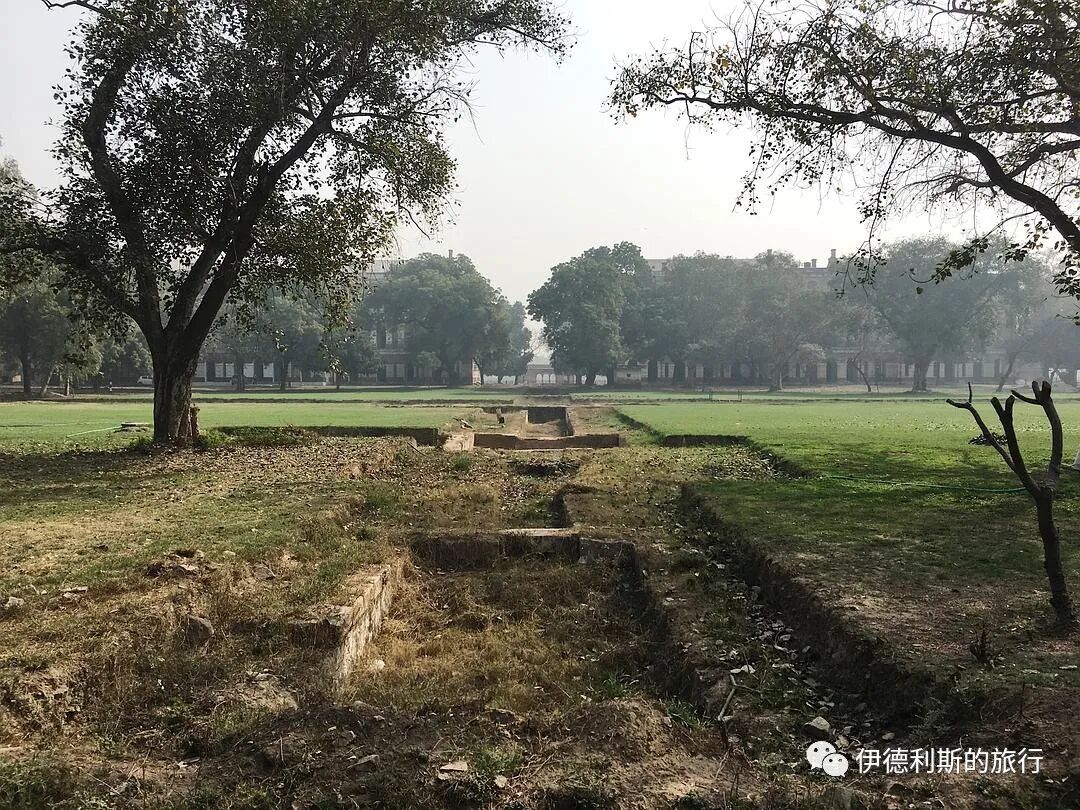
2. Jama Mosque: 1650-1656
The Jama Masjid mosque is located southwest of the Red Fort; it was built between 1650 and 1656 by order of Shah Jahan and served as the royal mosque of the Mughal Empire.
The mosque was built by more than 5,000 workers under the leadership of Shah Jahan's vizier (wazir) Saadullah Khan, costing over 1 million rupees. The mosque stands on a platform more than 9 meters above the ground and is made of red sandstone and marble, featuring a main hall connected by colonnades, two 40-meter-high minarets, and three gates. The east gate was reserved for the Mughal royal family and had a path that connected directly to the Delhi Gate of the Red Fort.
After 1857, the British seized the Jama Masjid mosque and stationed troops inside. They originally wanted to demolish the mosque, but they failed due to strong opposition, though the madrasa (Islamic school) on the south side of the mosque was destroyed as a result.
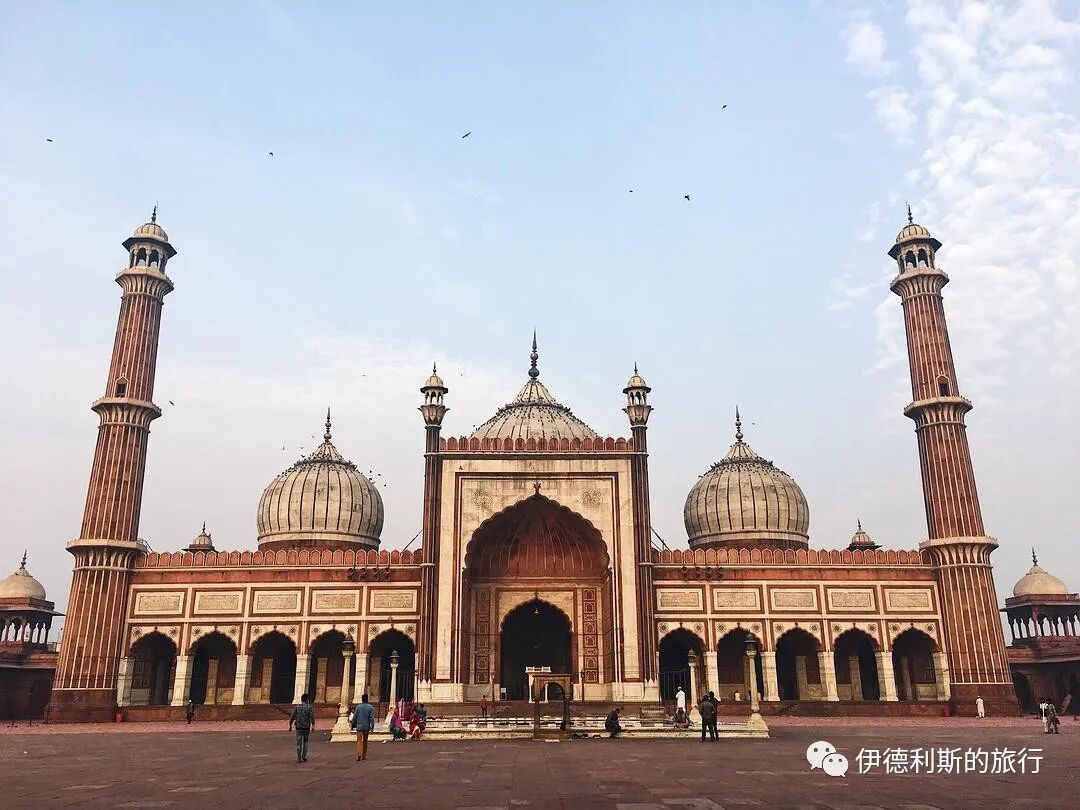
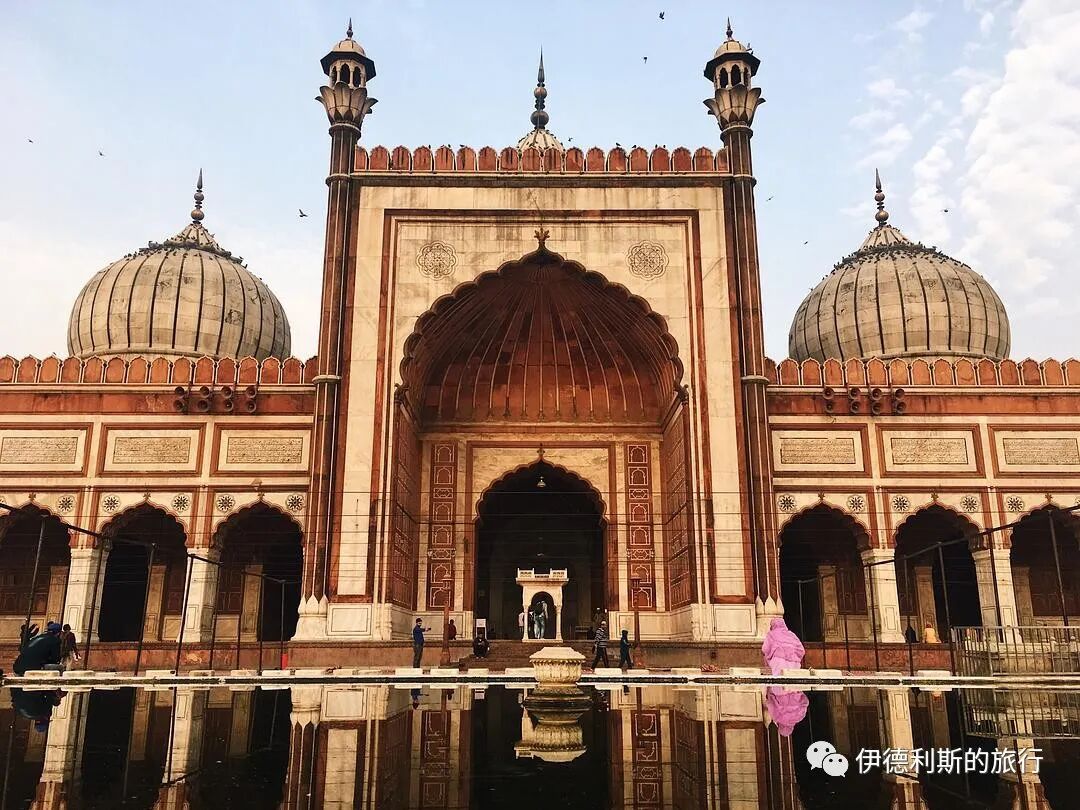
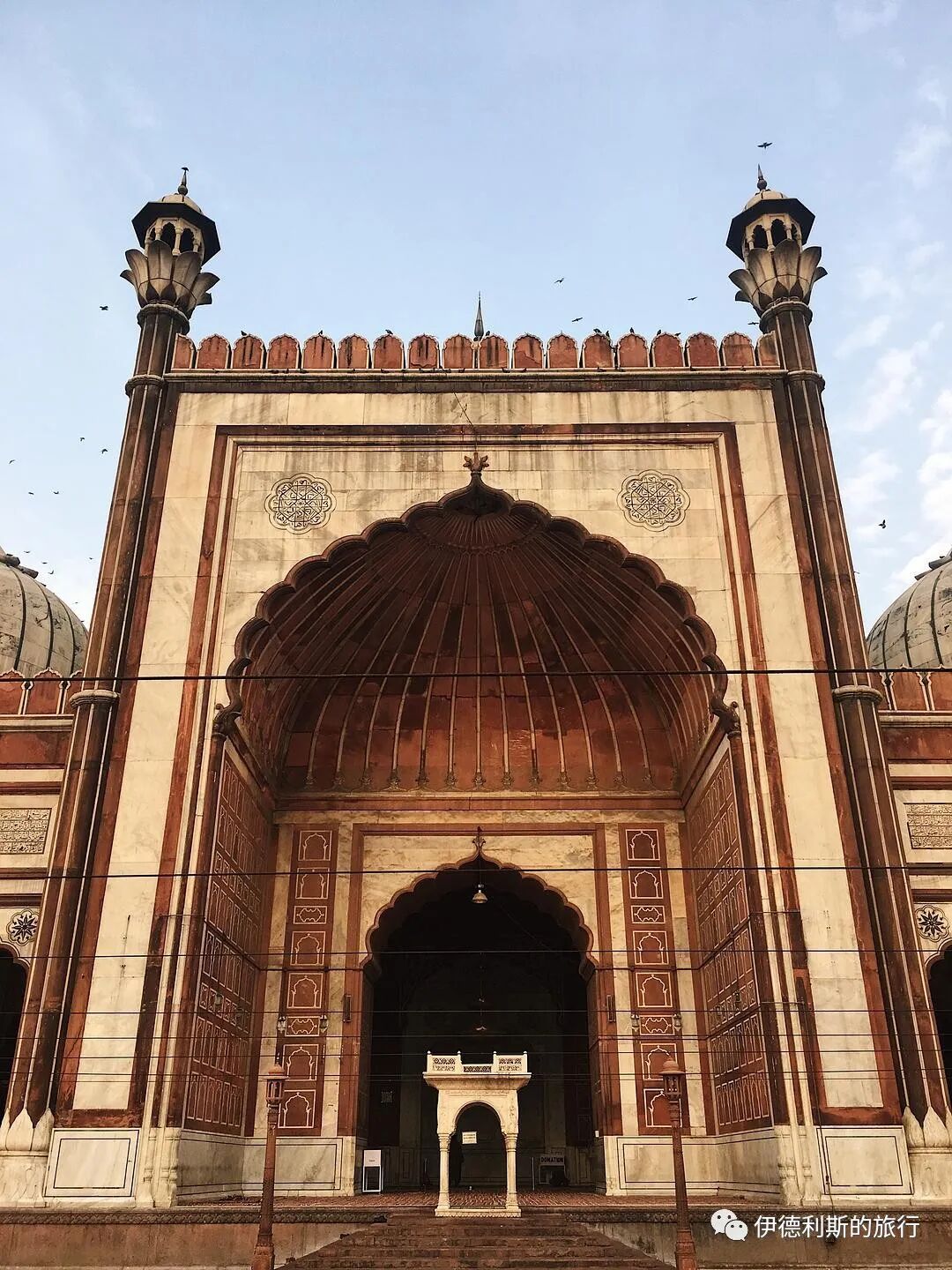
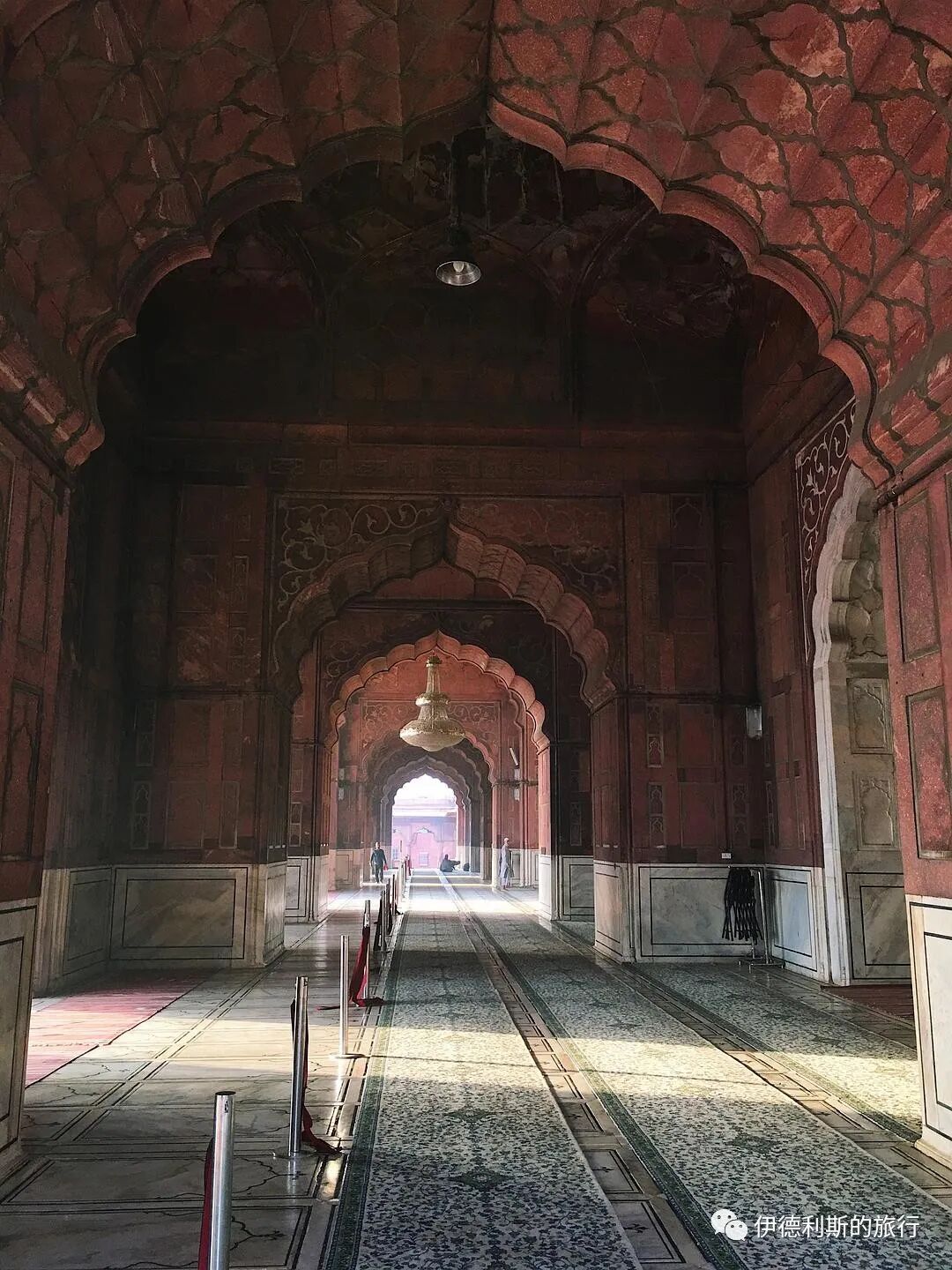
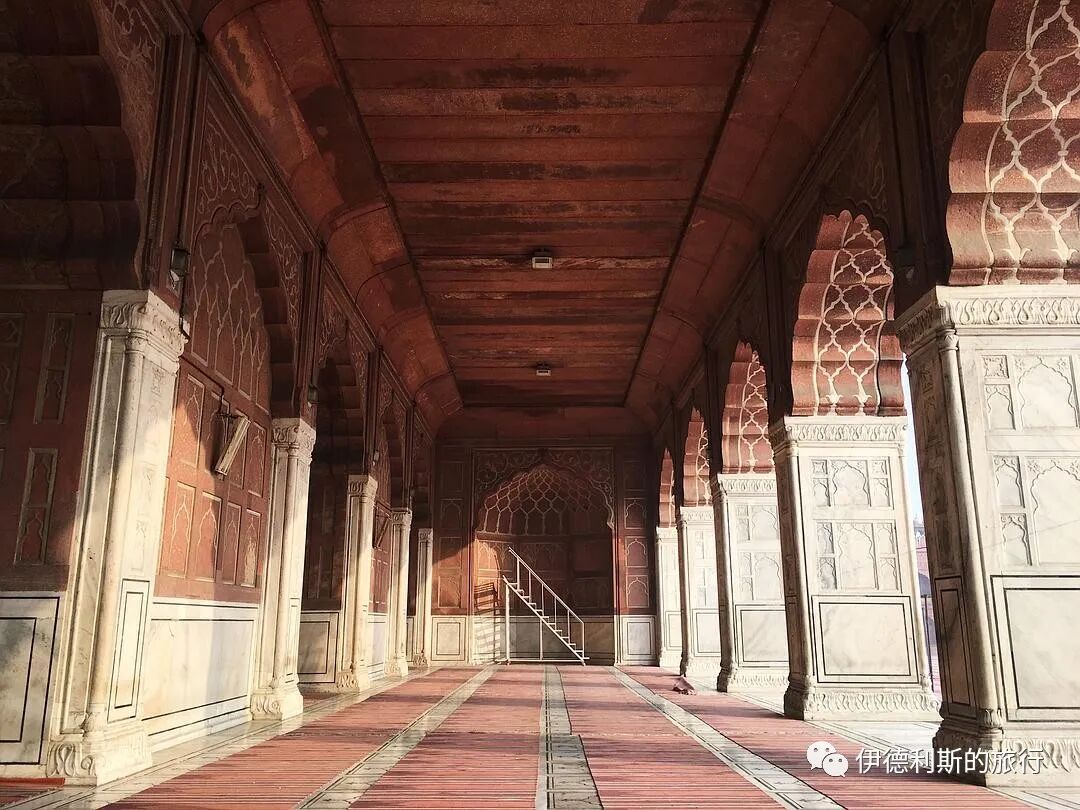
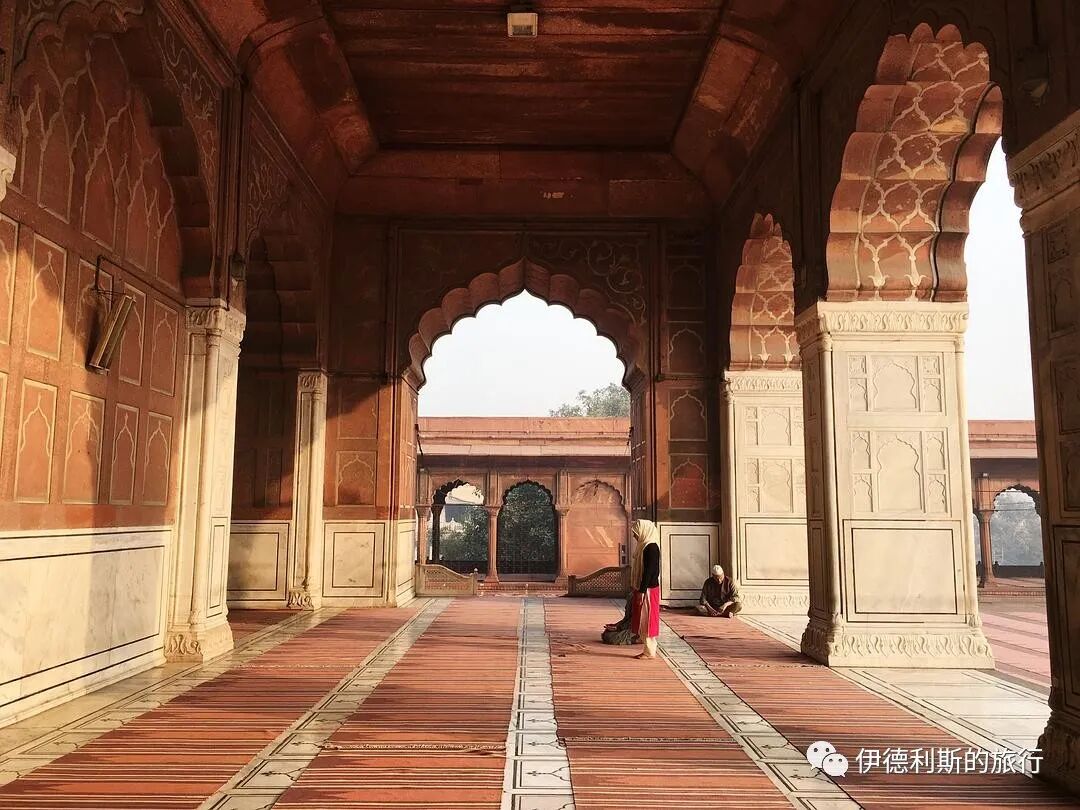
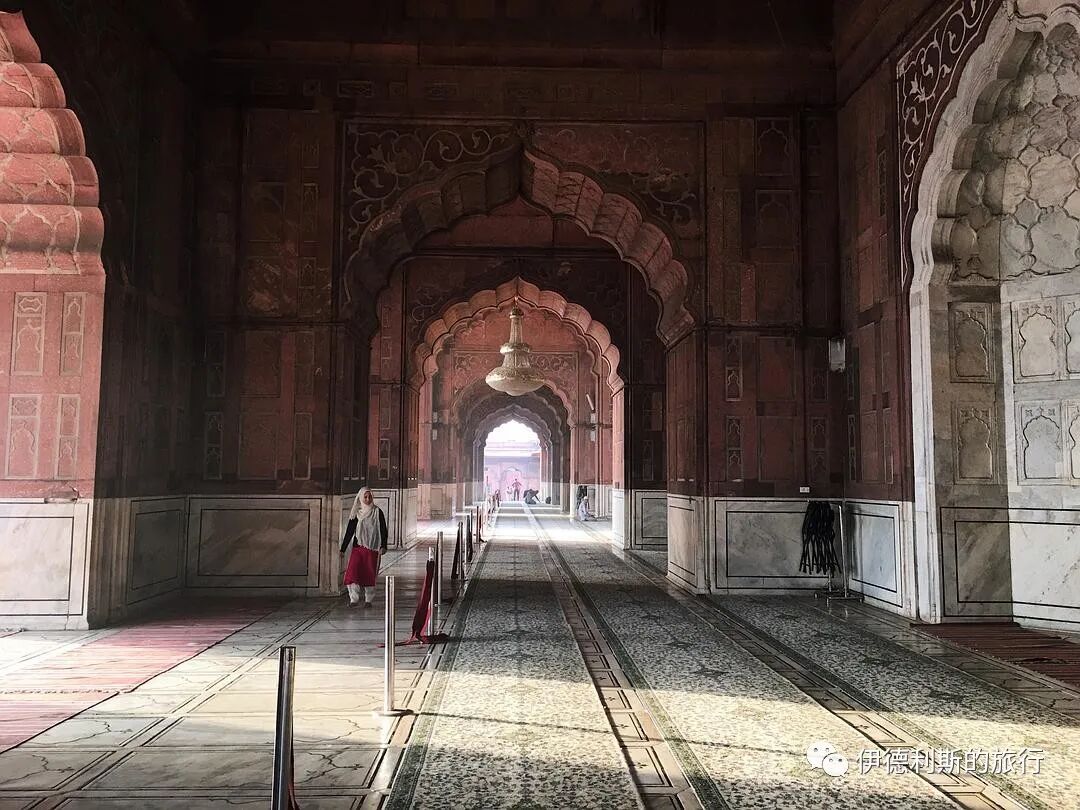
The mihrab in the center of the main hall indicates the direction of prayer toward Mecca:
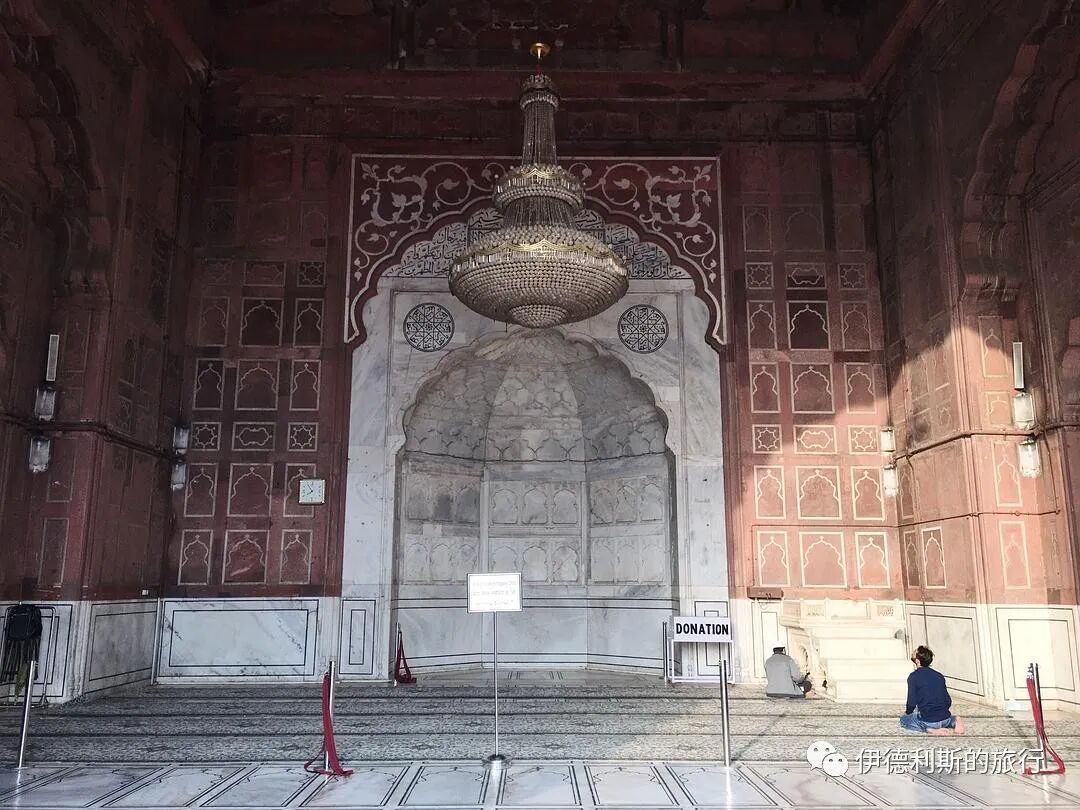
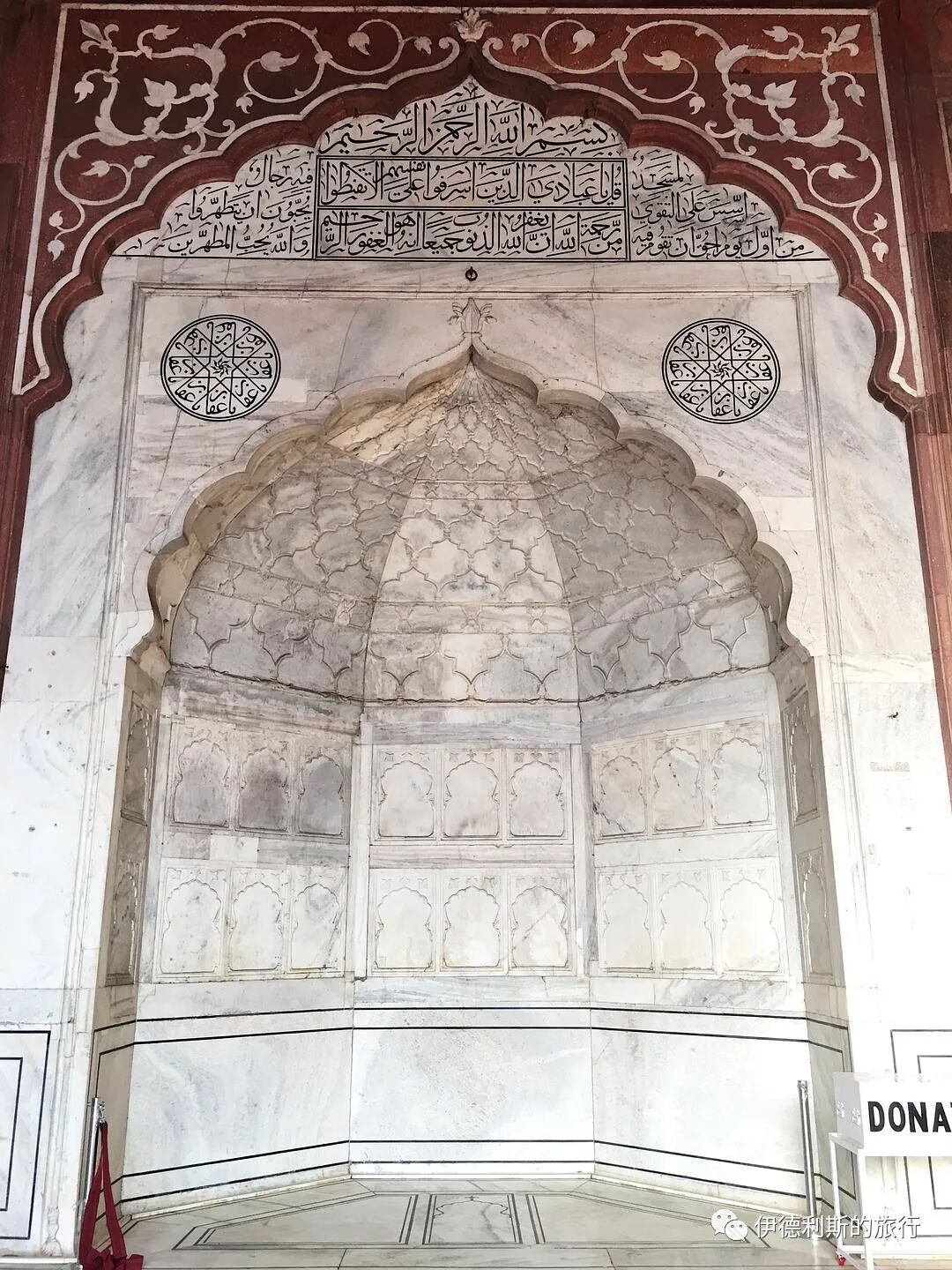
Besides the main mihrab in the center, there is a smaller mihrab on each side.
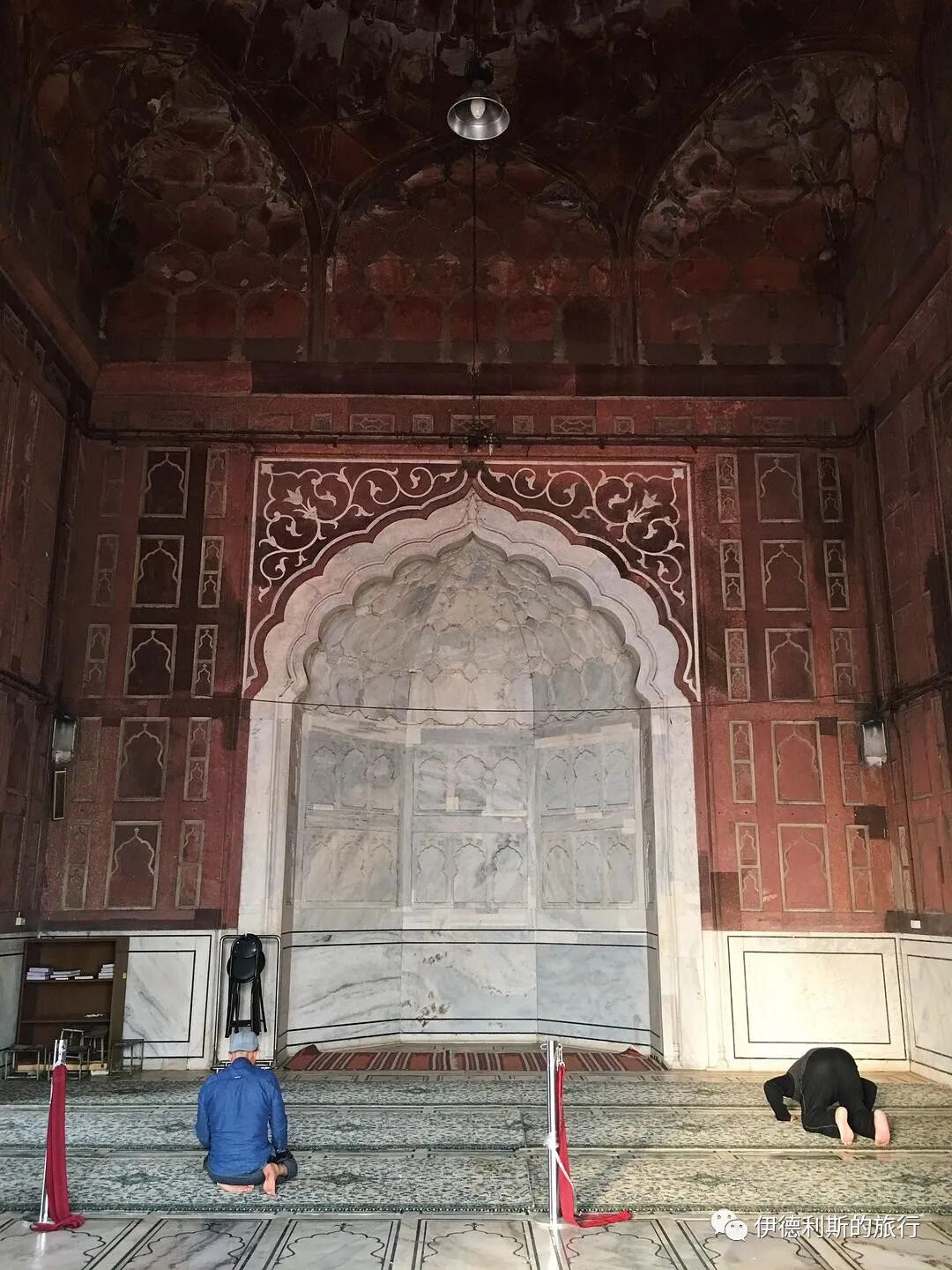
During Jumu'ah, the imam stands on this stone platform to deliver the khutbah.
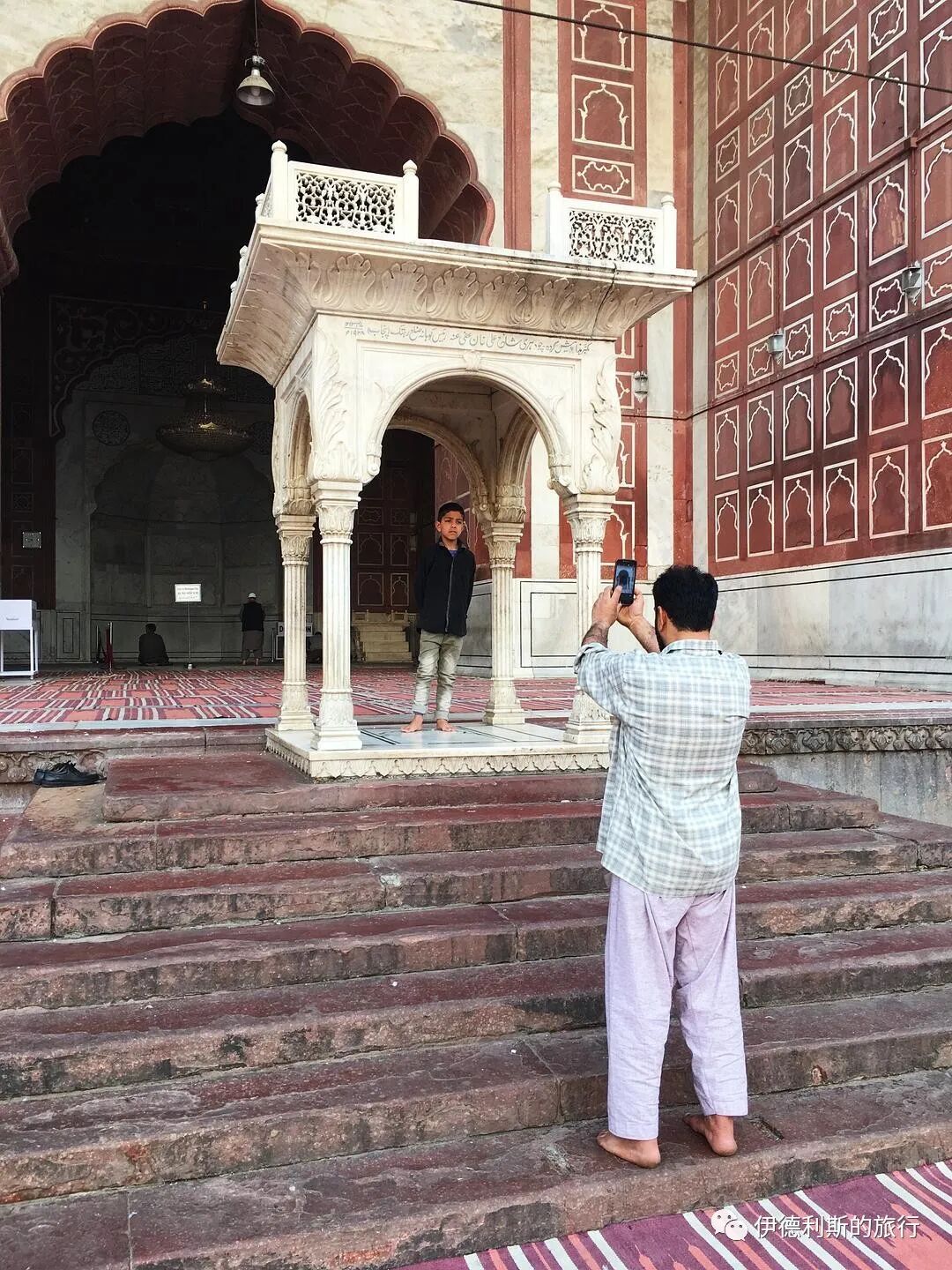
There is a tower at each of the four corners of the colonnade.
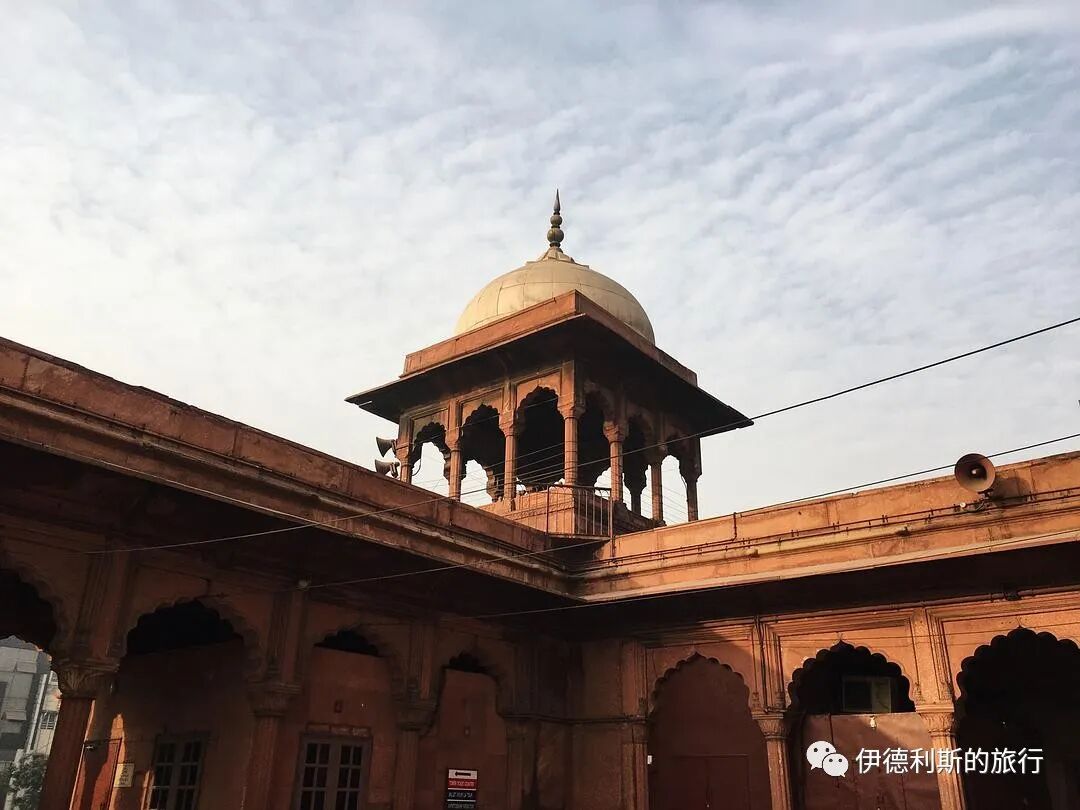
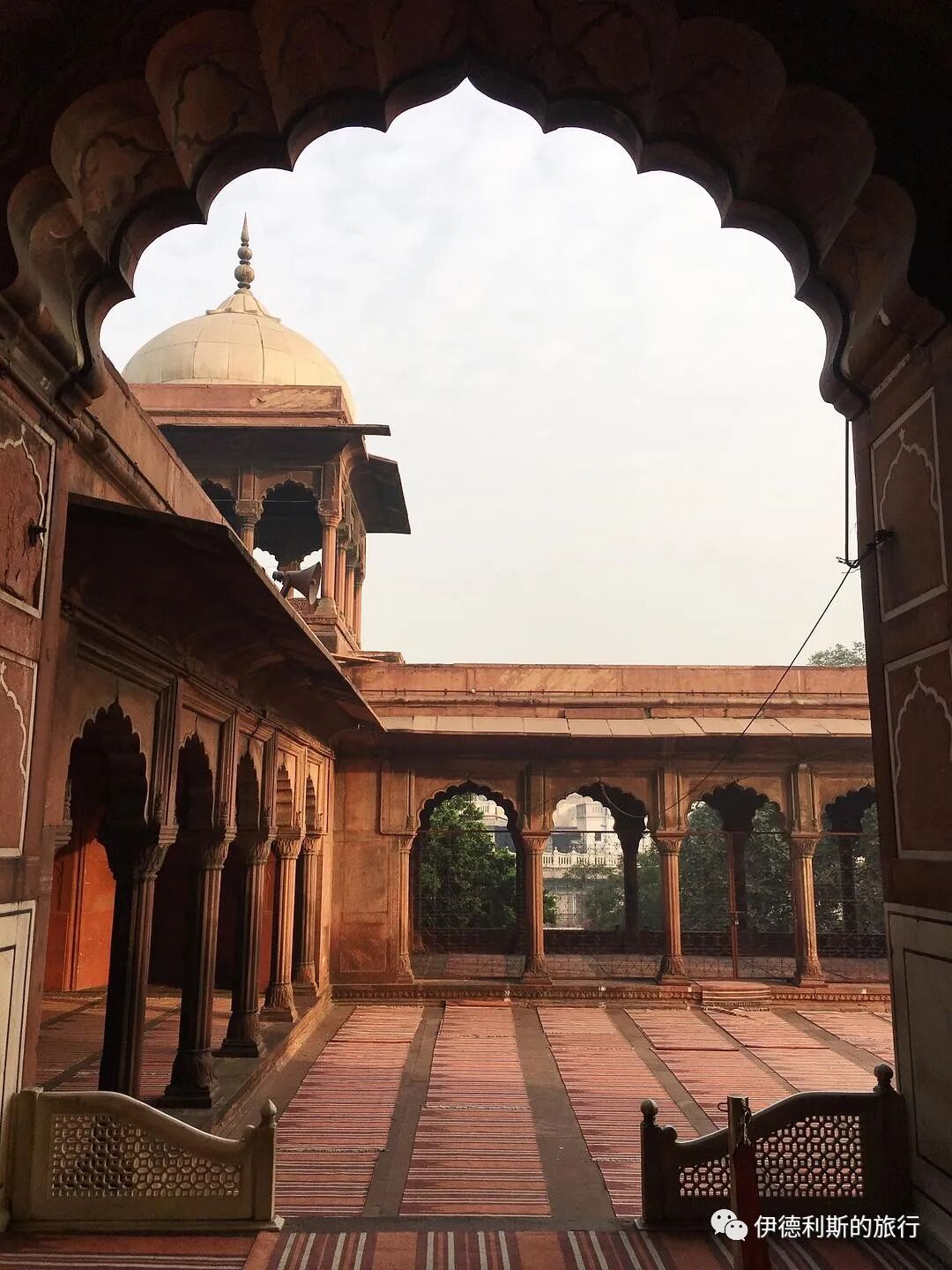
The east gate is the main entrance:
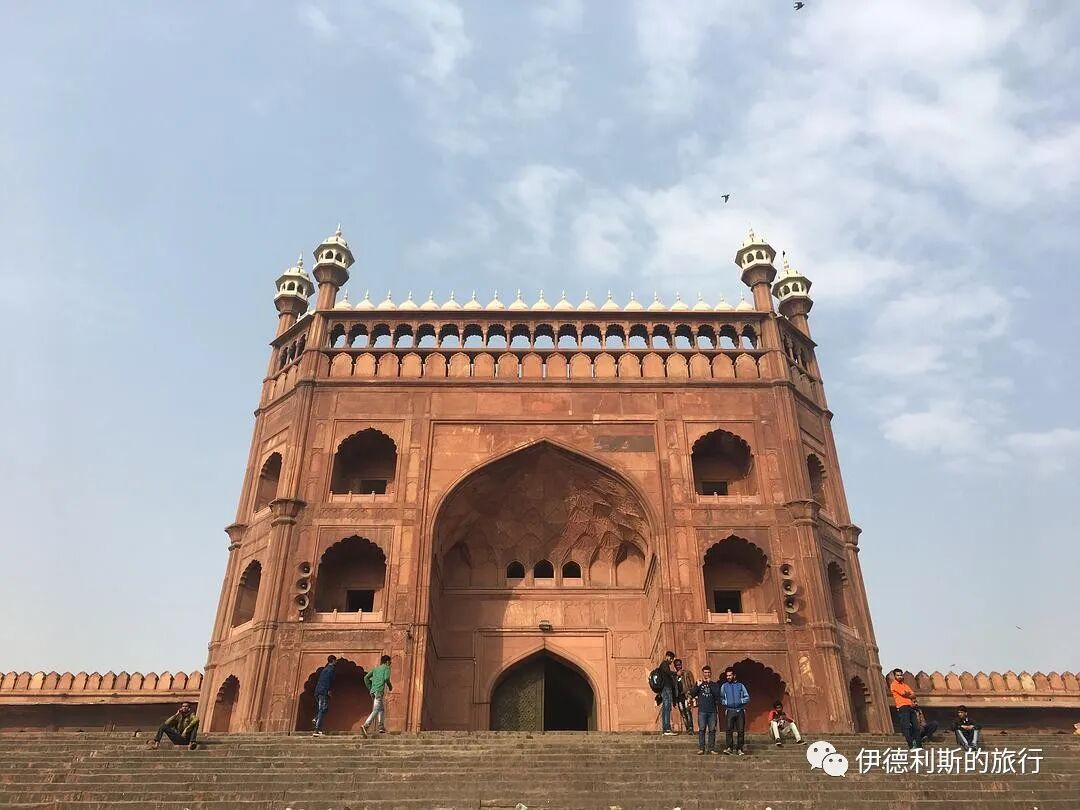
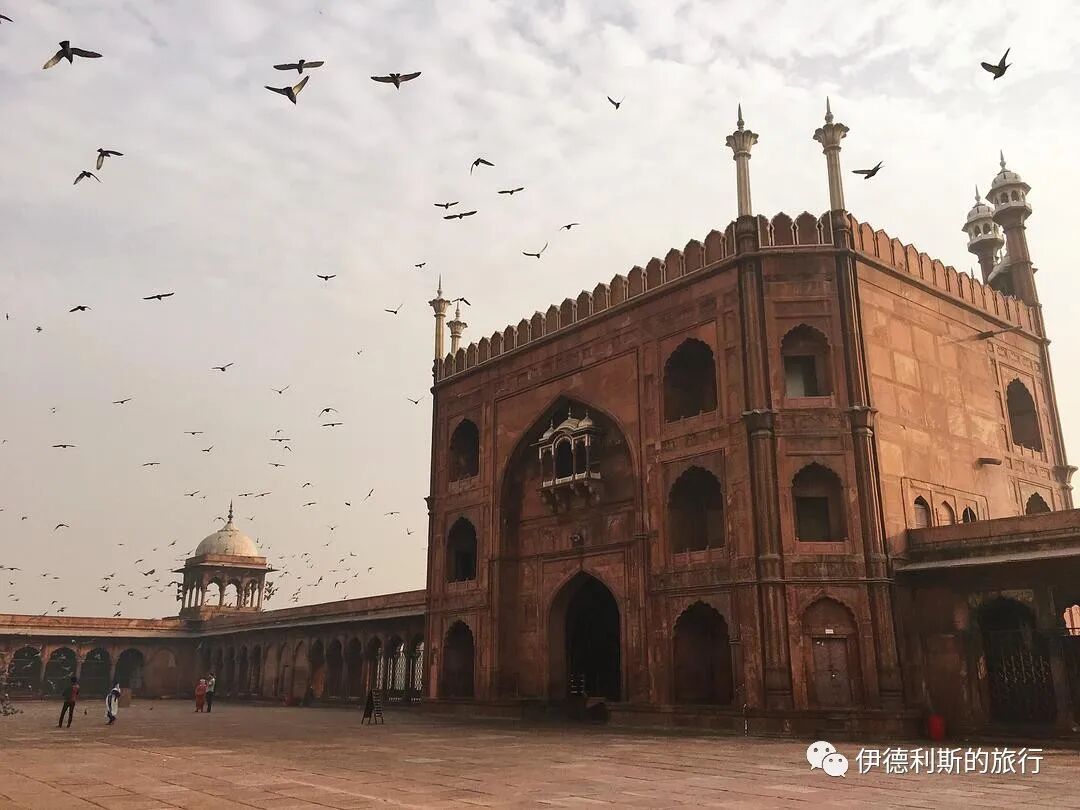
South Gate
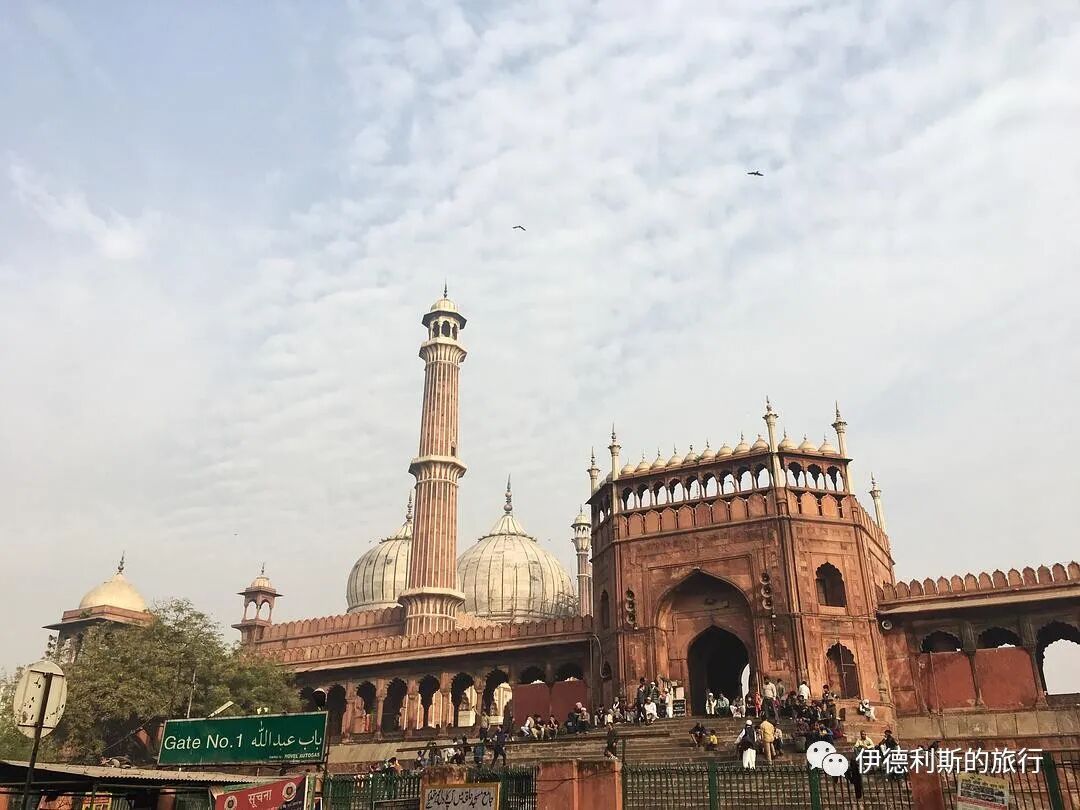
North Gate
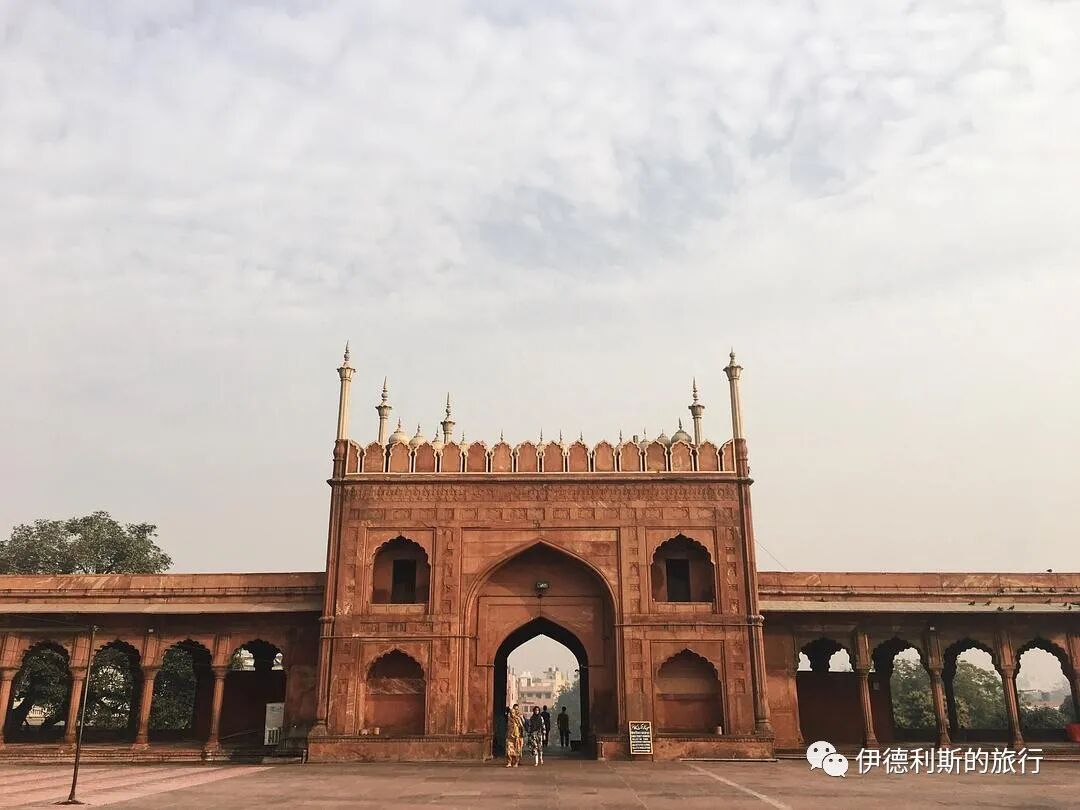
The water pool in the courtyard for wudu:
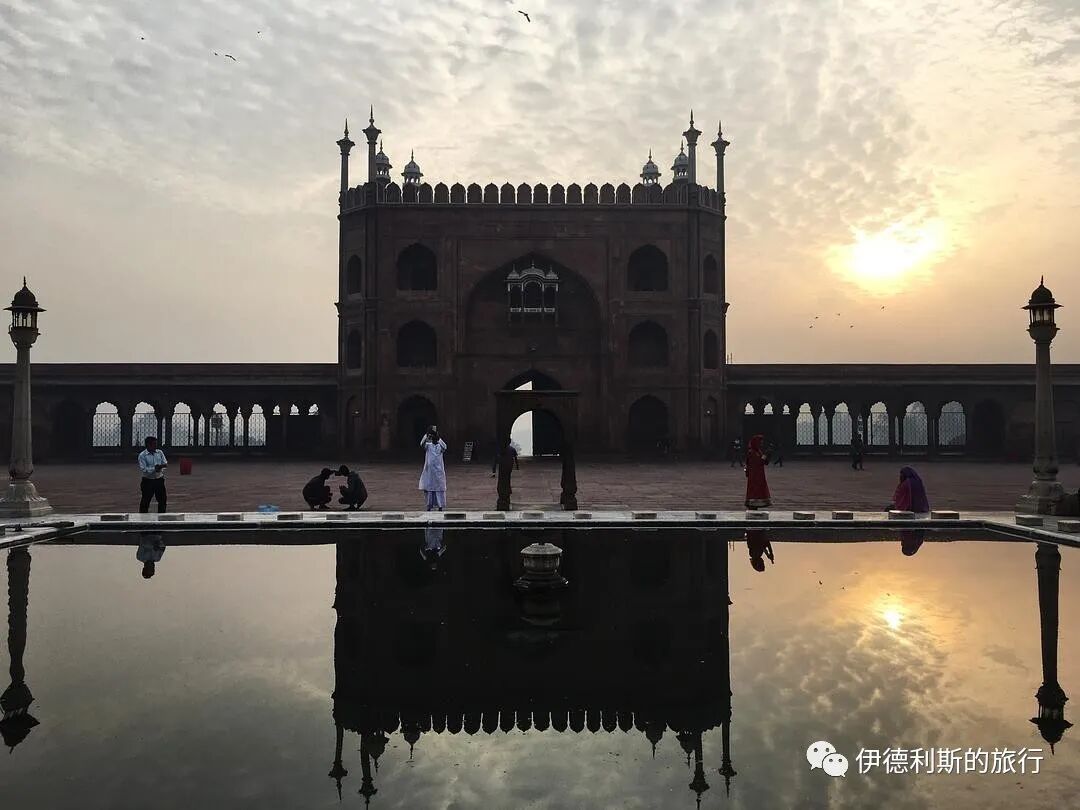
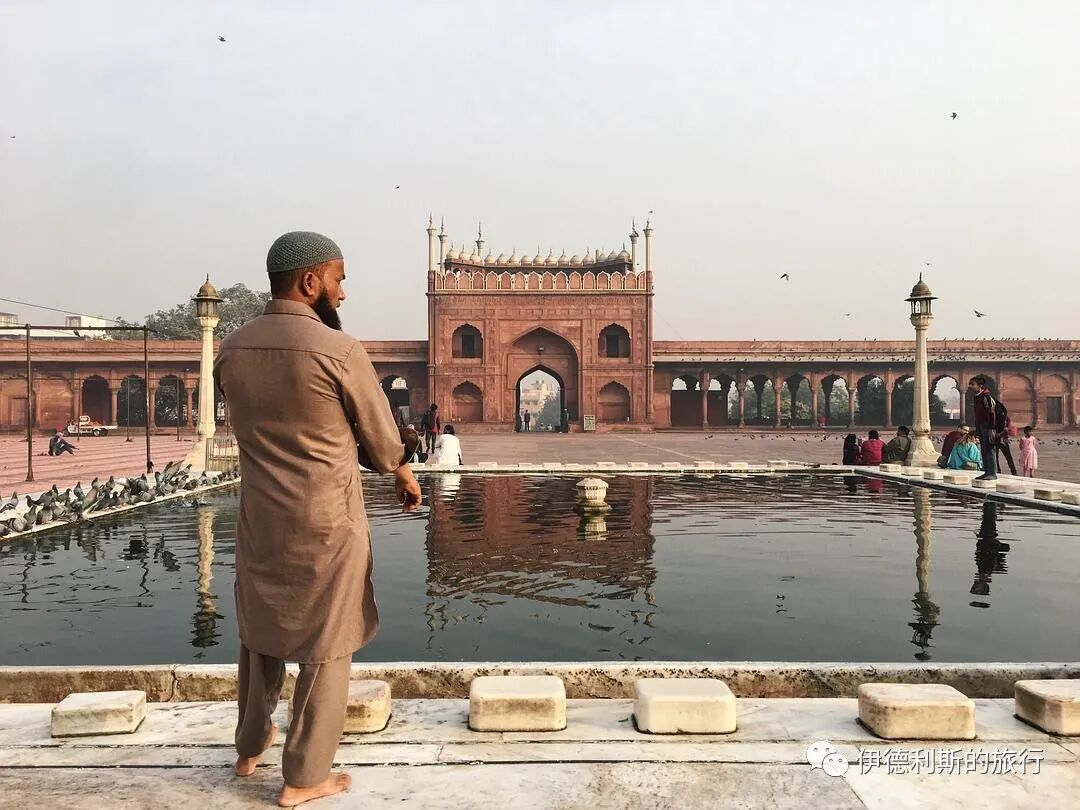
Jama means Jumu'ah, which refers to the Friday congregational prayer. The Jumu'ah mosque is usually the largest in the community, and the most important weekly prayer is held here every Friday at noon. I was lucky enough to attend a Friday Jumu'ah prayer at the Jama Mosque.
On the morning of Jumu'ah, more prayer rugs were already laid out in the courtyard.
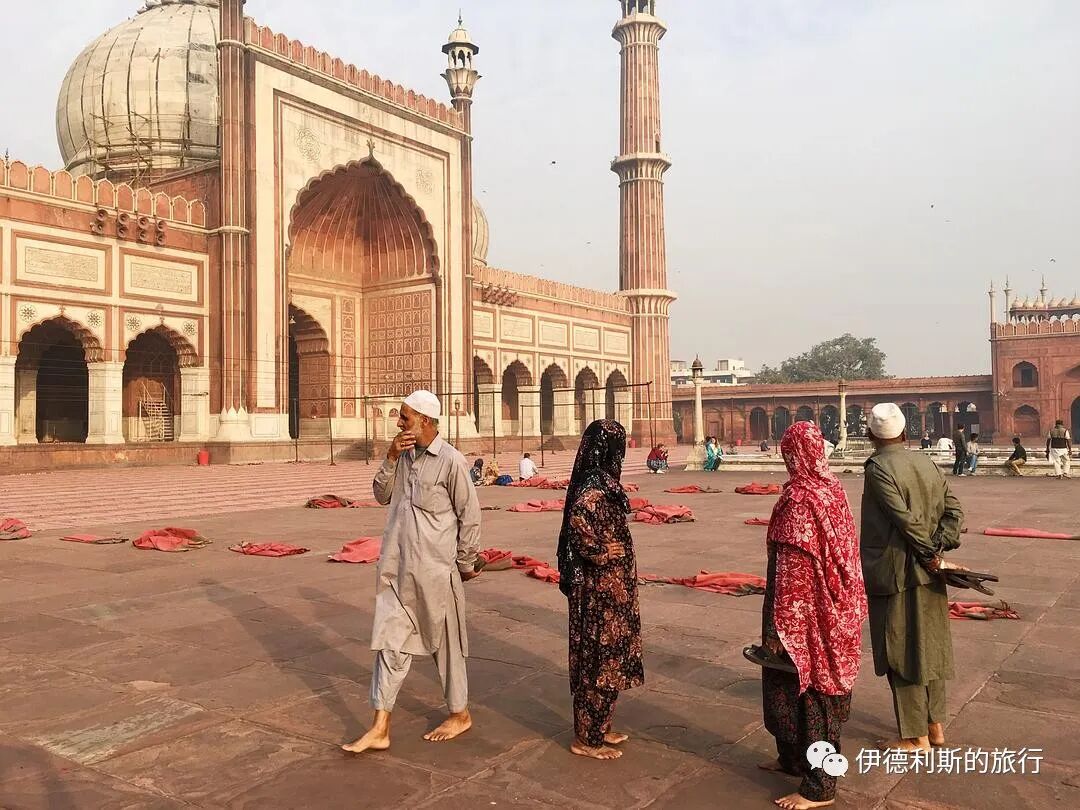
People are performing wudu for the Jumu'ah prayer:
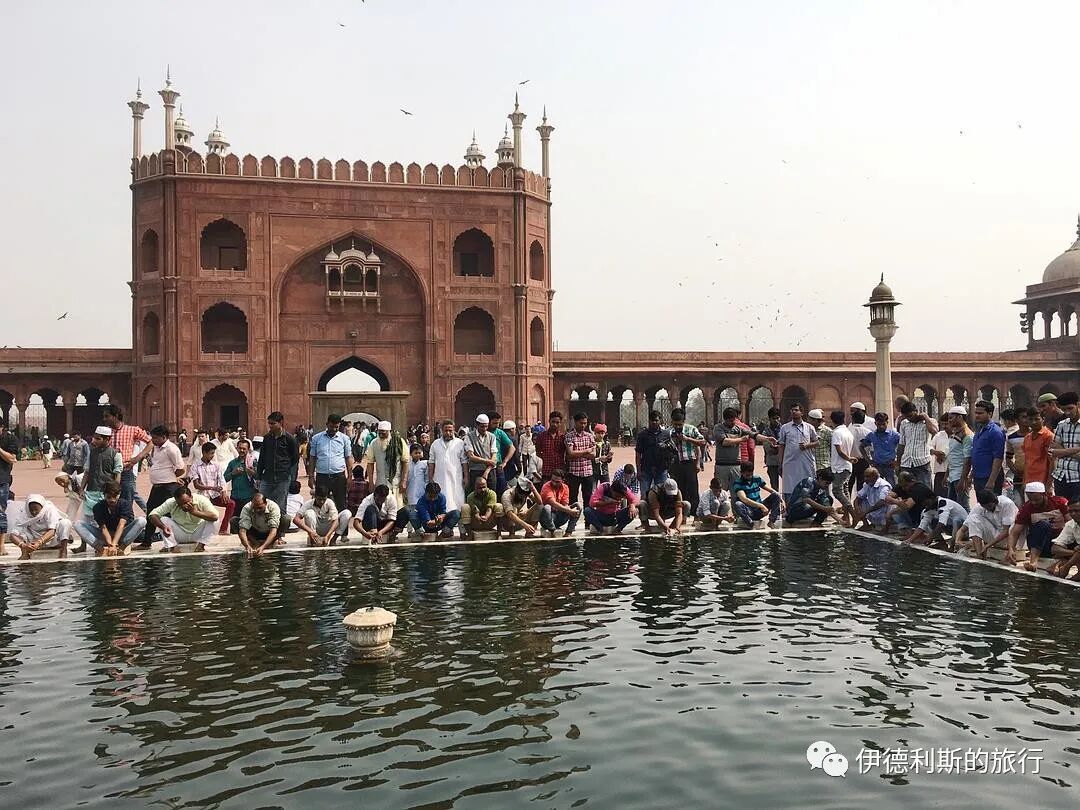
More and more people are arriving.
The imam leading the prayer climbs onto the stone platform.
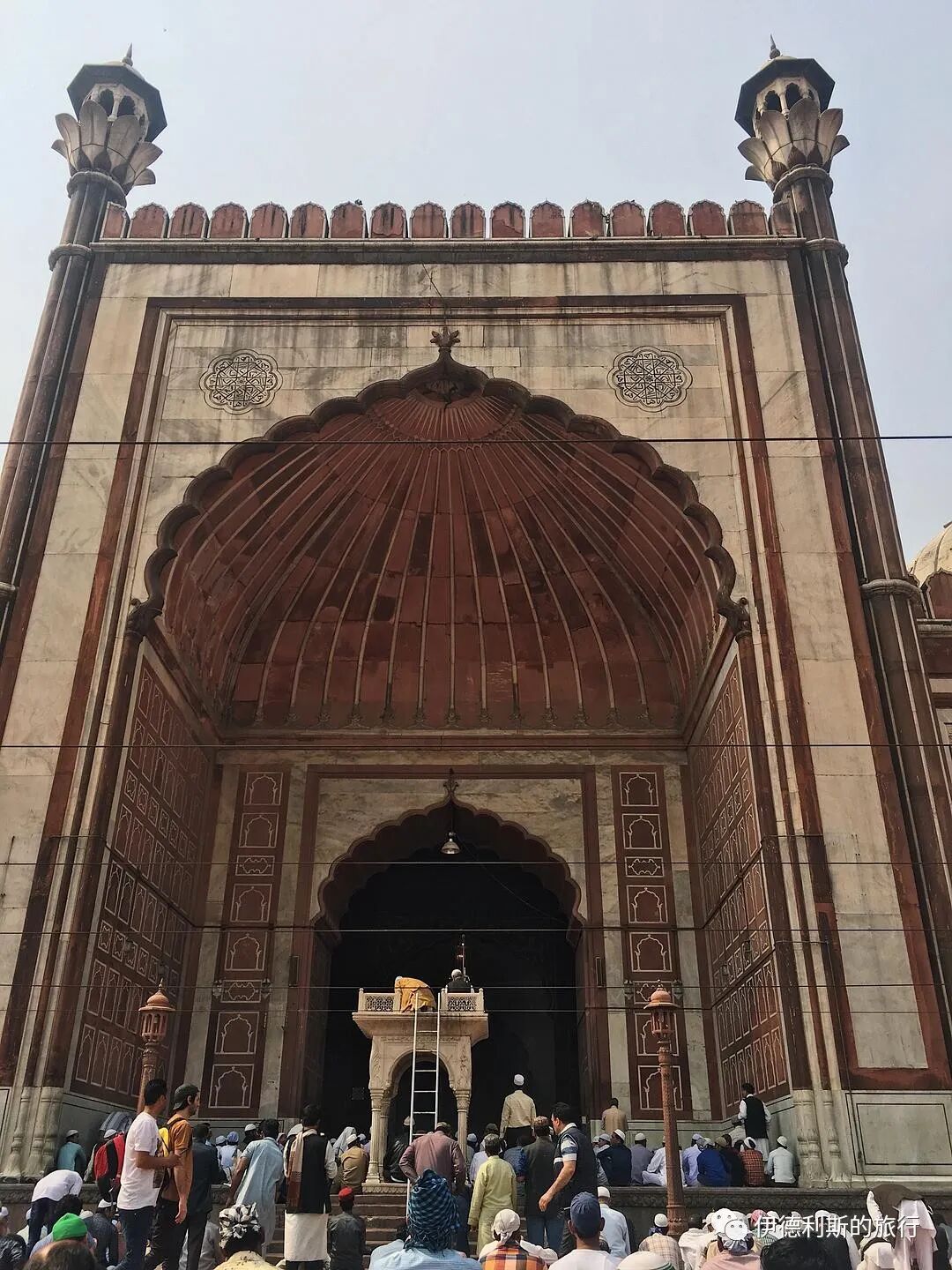
After the prayer, people take photos:
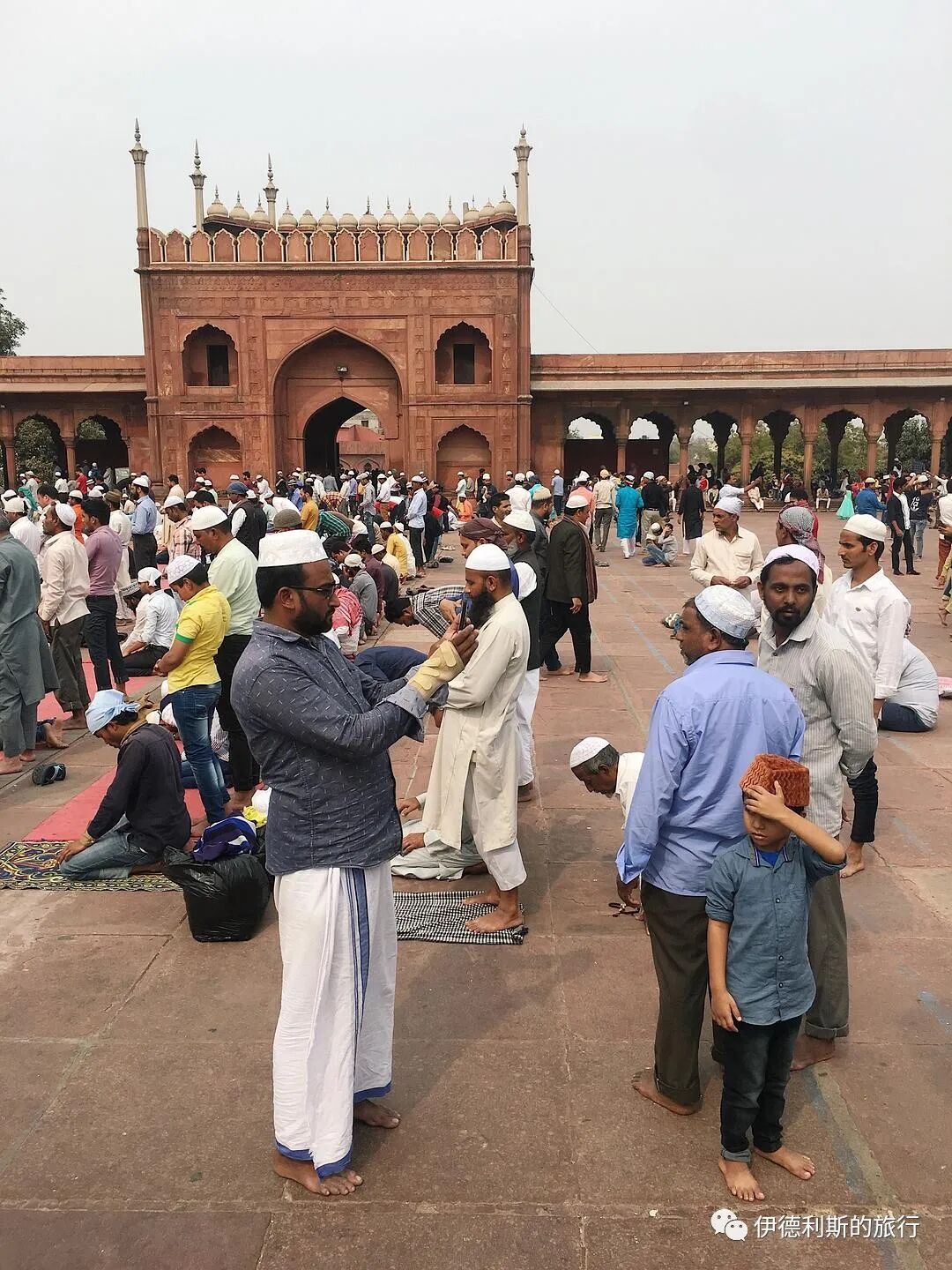
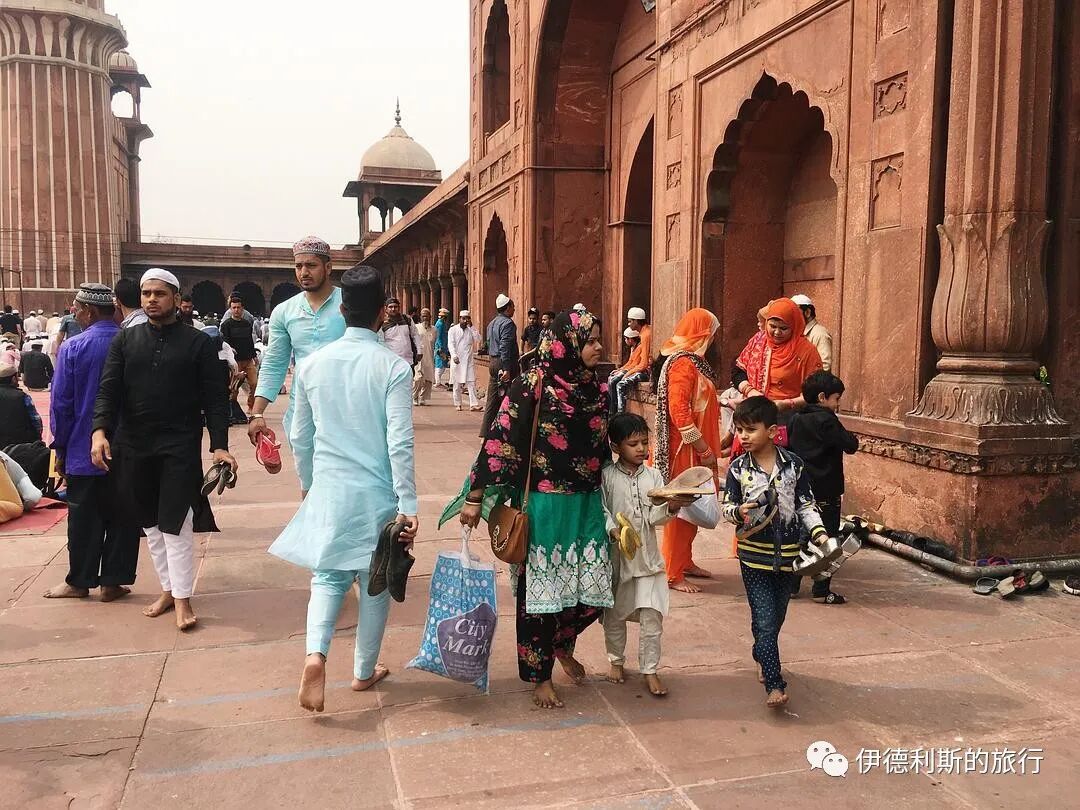
3. Fatehpuri Mosque: 1650
Fatehpuri Mosque is located at the western end of Chandni Chowk, the main east-west road in Shahjahanabad. It was built in 1650 under the direction of Fatehpuri Begum, the wife of Shah Jahan. The mosque is in the classic Mughal style, built with red sandstone, featuring minarets on both sides and a main prayer hall in the middle. The main hall has seven arched bays, and the central iwan arch is topped with a Mughal-style dome.
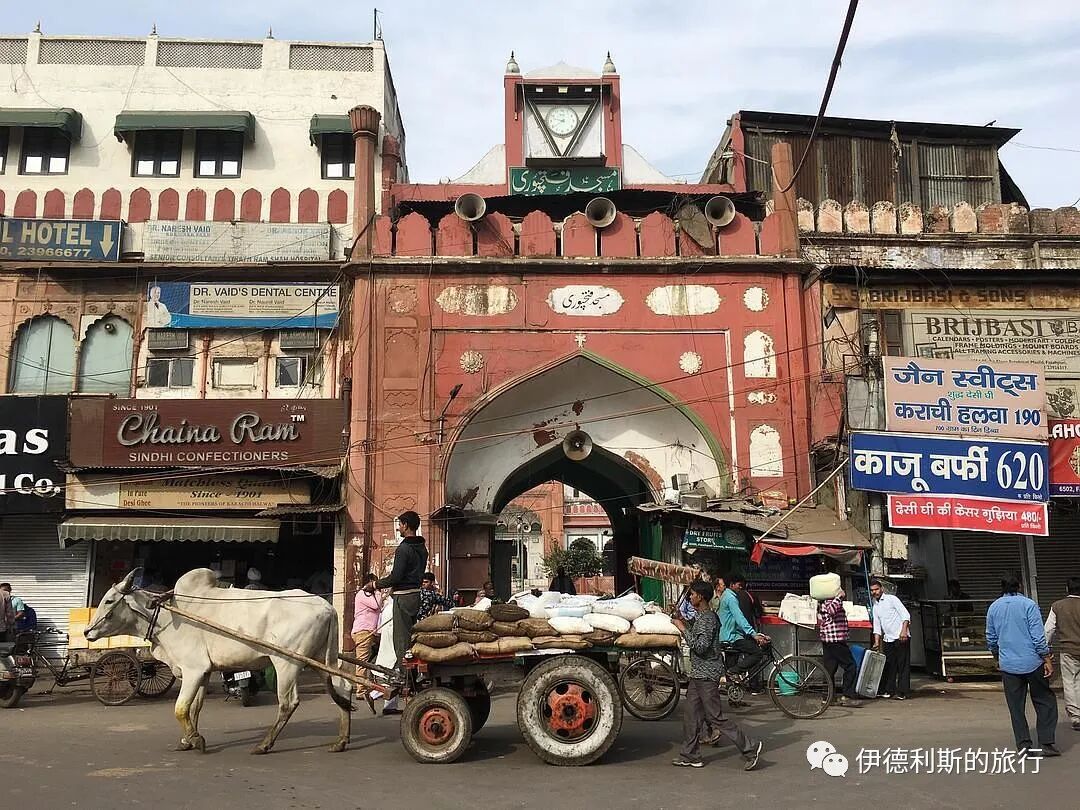
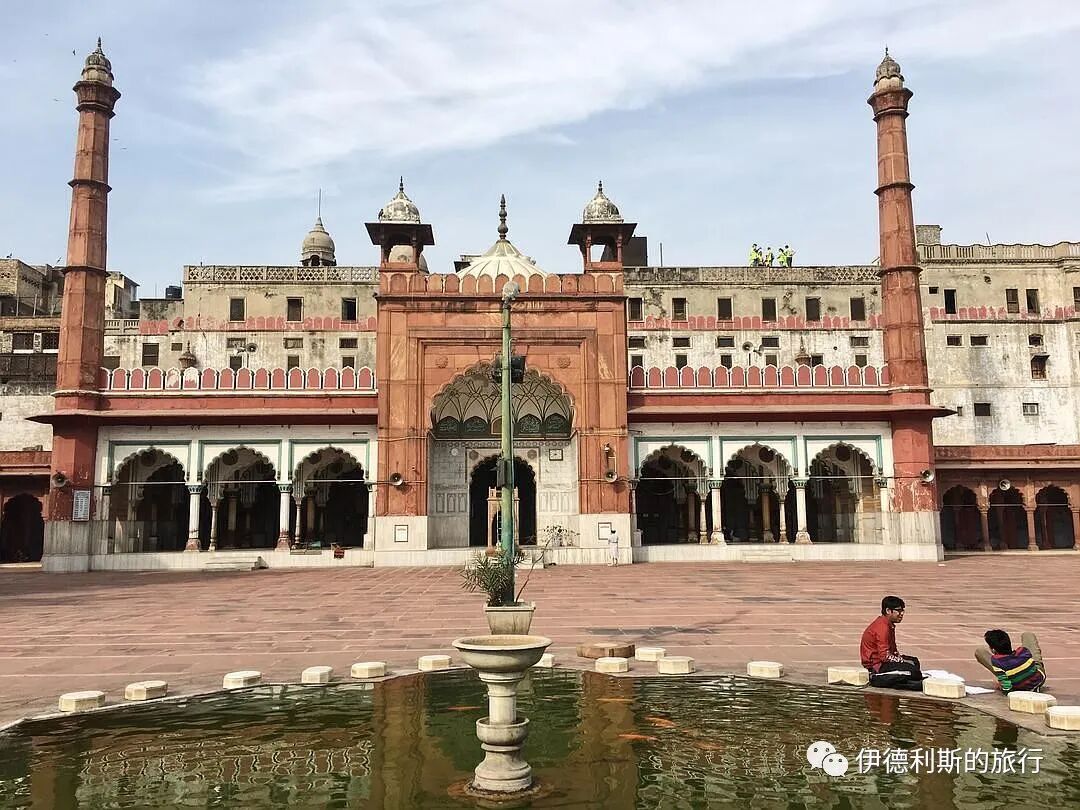
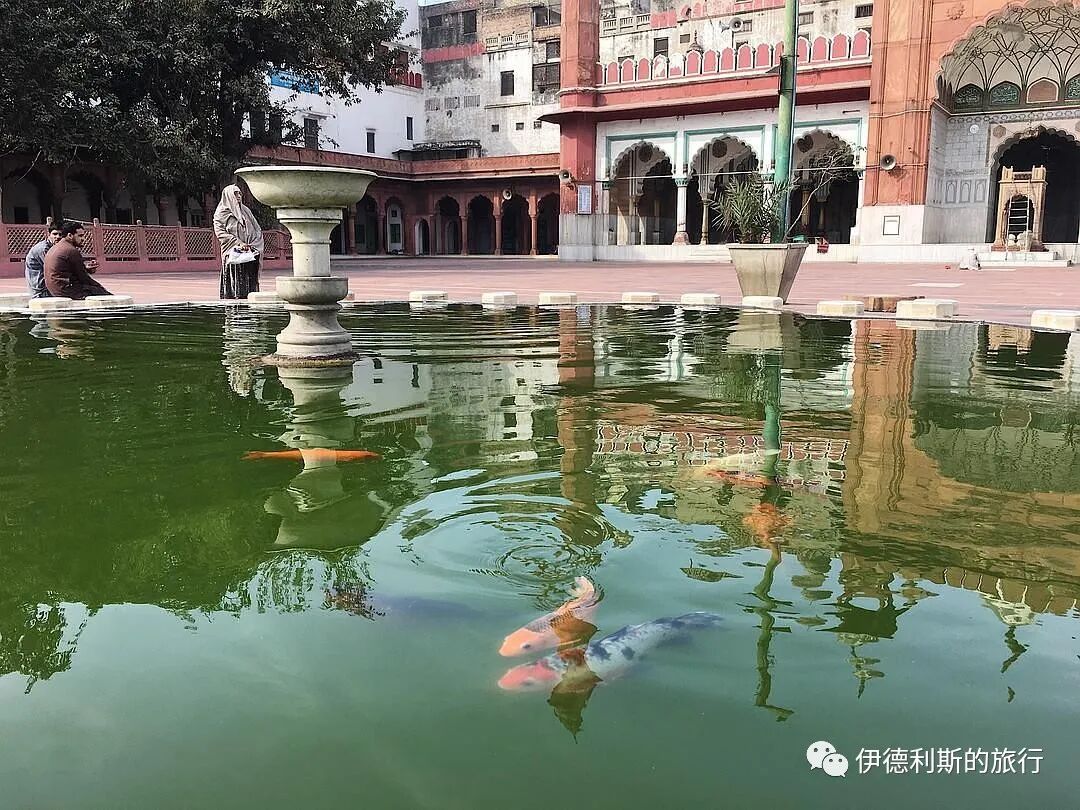
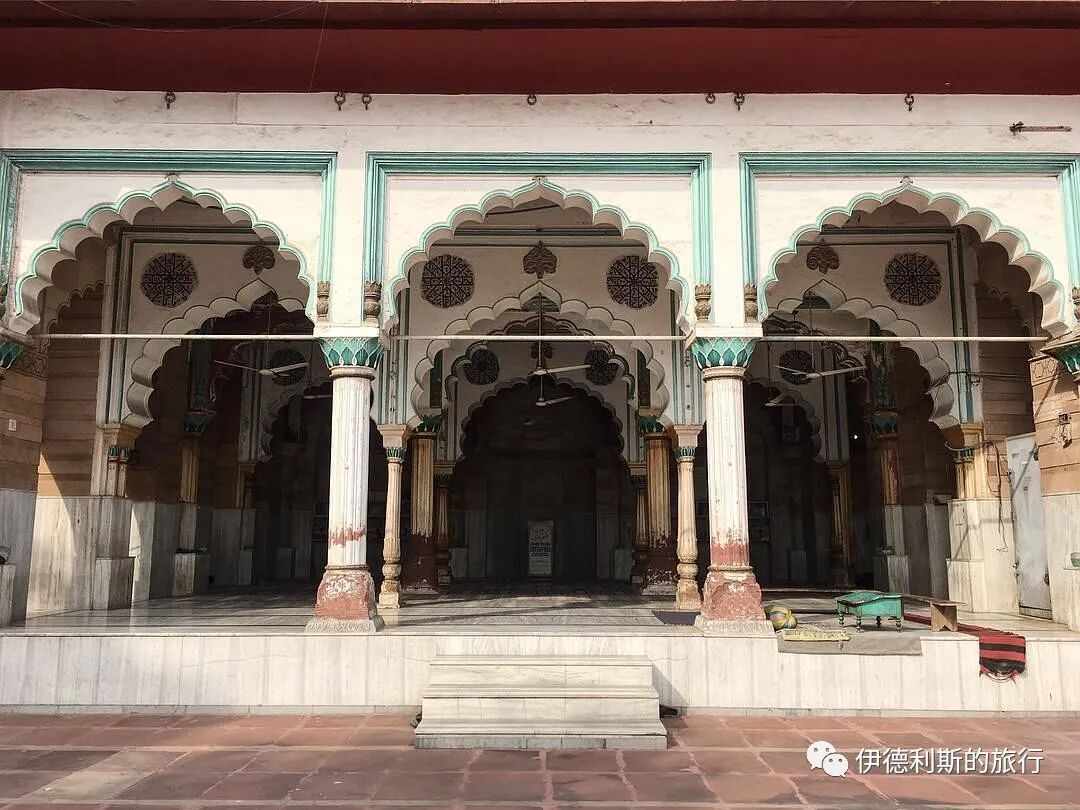
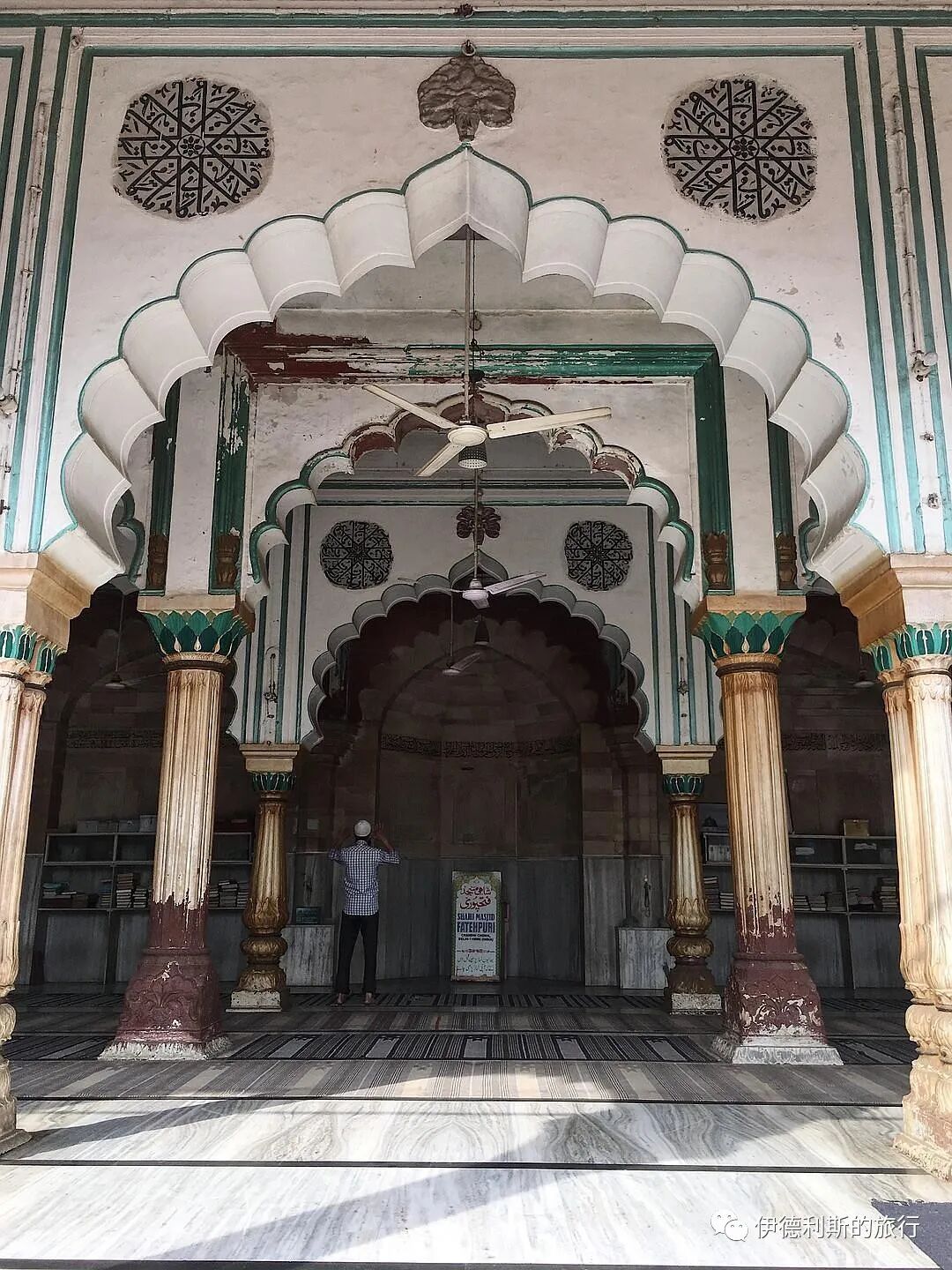
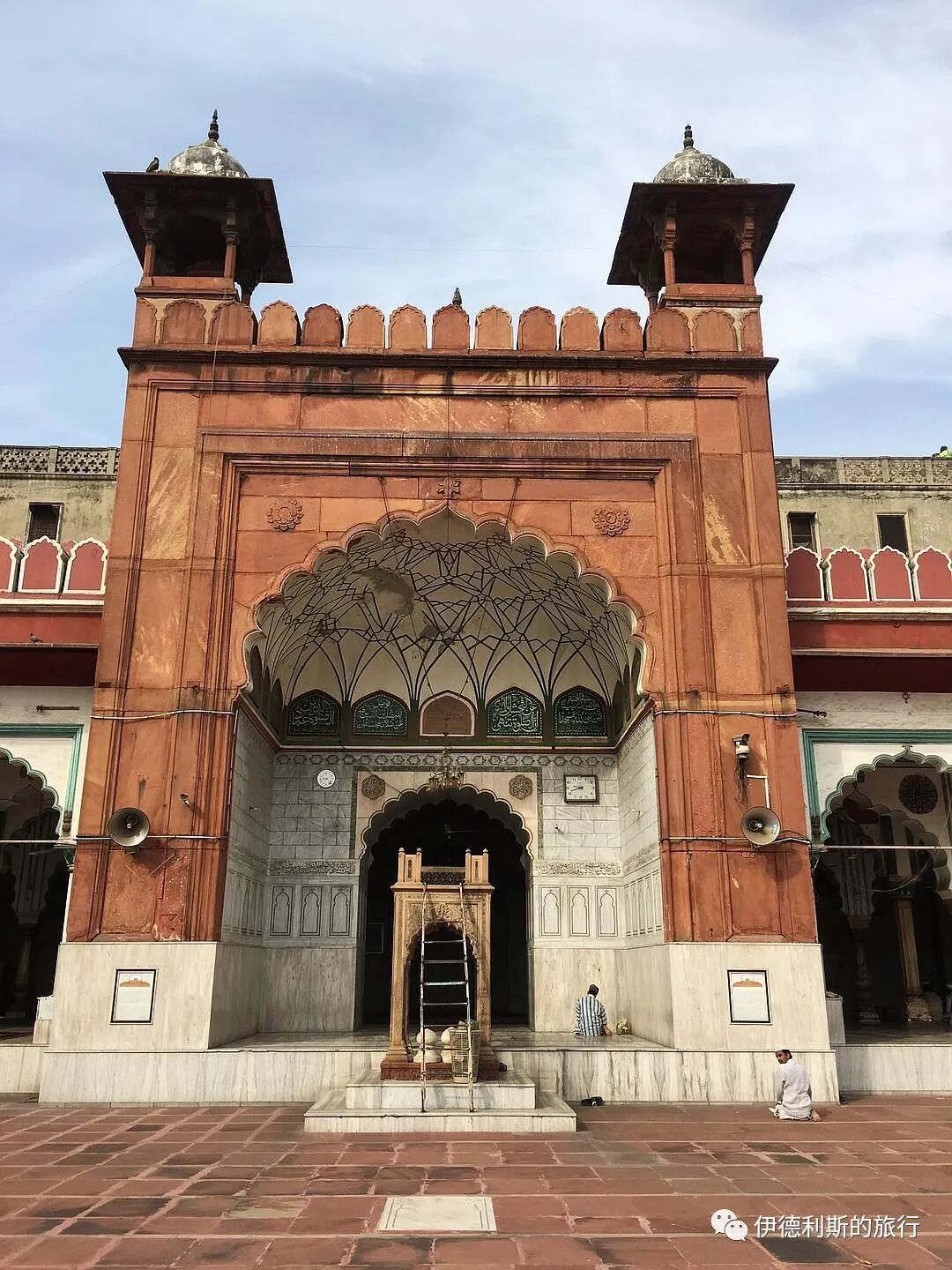
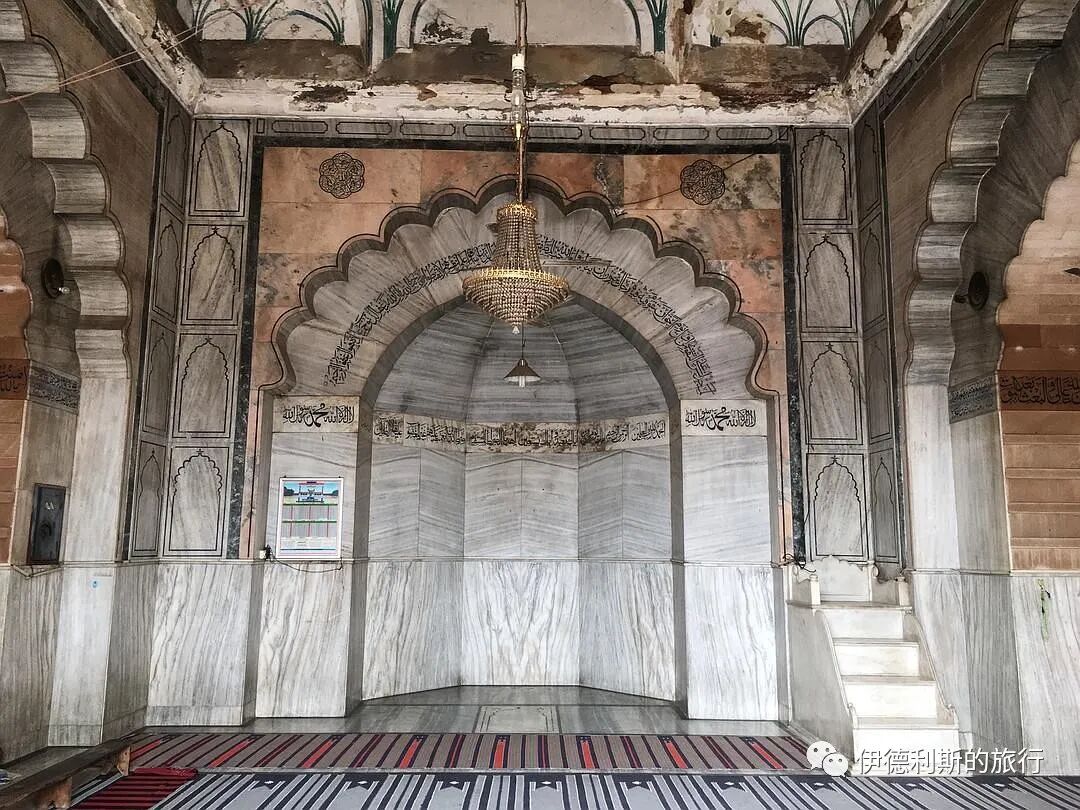
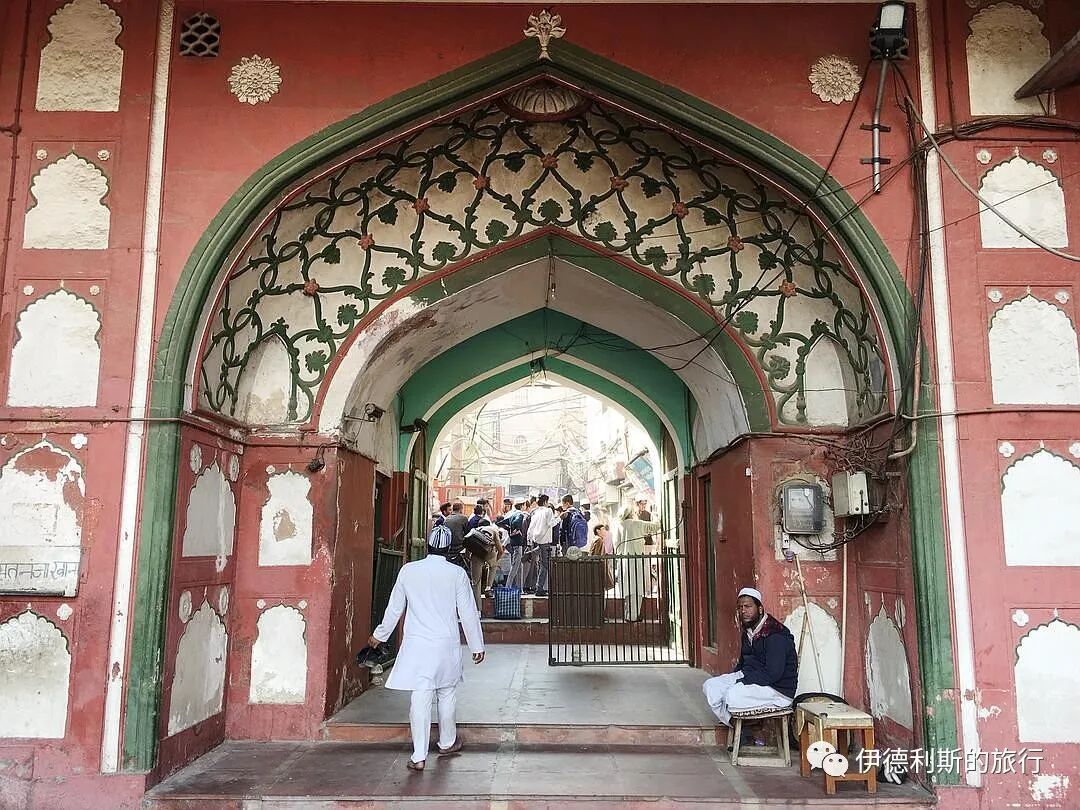
4. Golden Mosque (Sunehri Masjid): 1751
Sunehri Mosque is located south of the Red Fort. It was built in 1751 by Qudsia Begum, the wife of the twelfth Mughal Emperor, Muhammad Shah. After Muhammad Shah died, Qudsia Begum's son, Ahmad Shah Bahadur, succeeded to the throne, making Qudsia Begum the de facto ruler of the Mughal Empire between 1748 and 1754.
During her rule, Qudsia Begum built a series of structures in Delhi, and the Sunehri Mosque is the most understated in its architectural style. The mosque's dome was originally copper-plated, but during renovations in 1852, sandstone replaced the damaged copper plates.
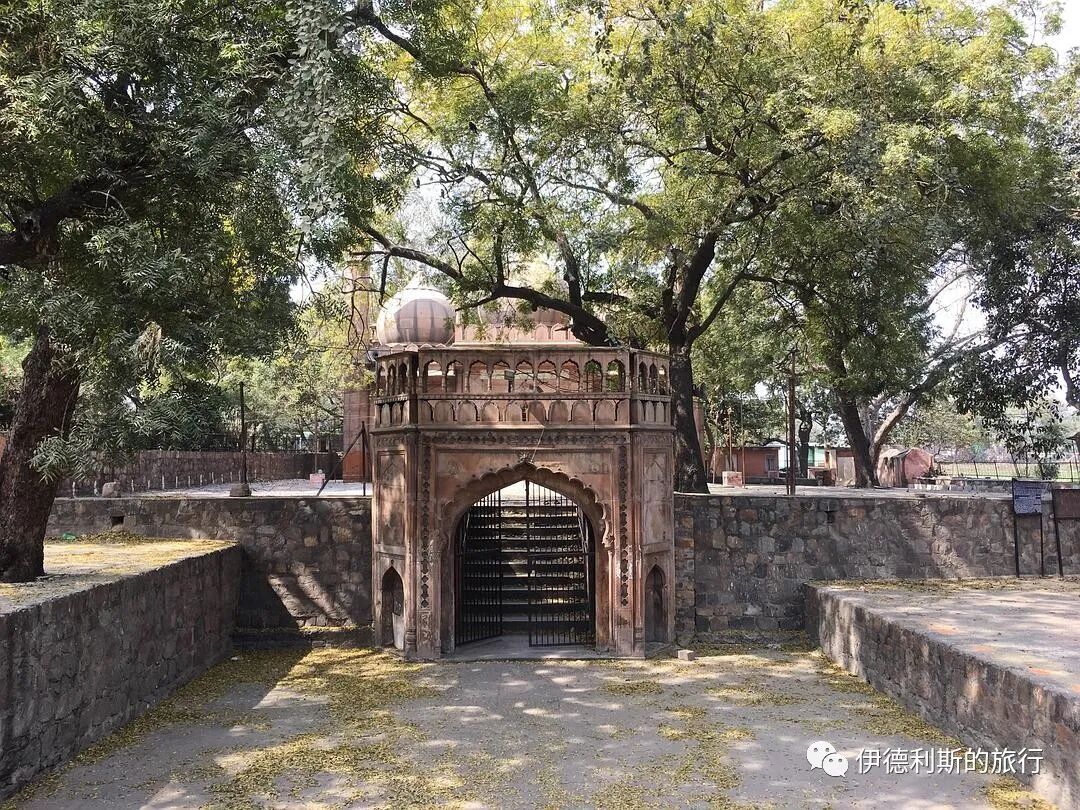
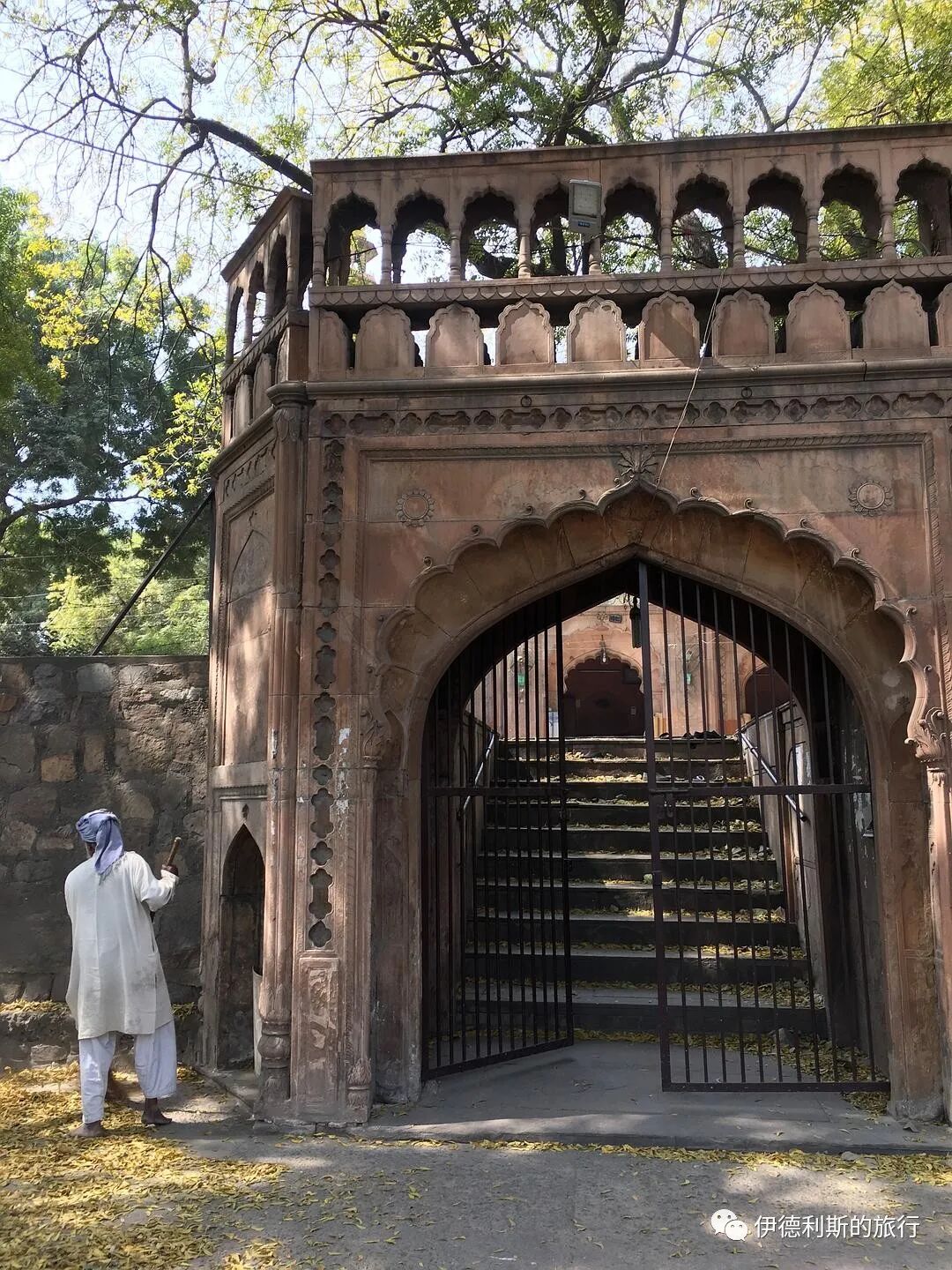
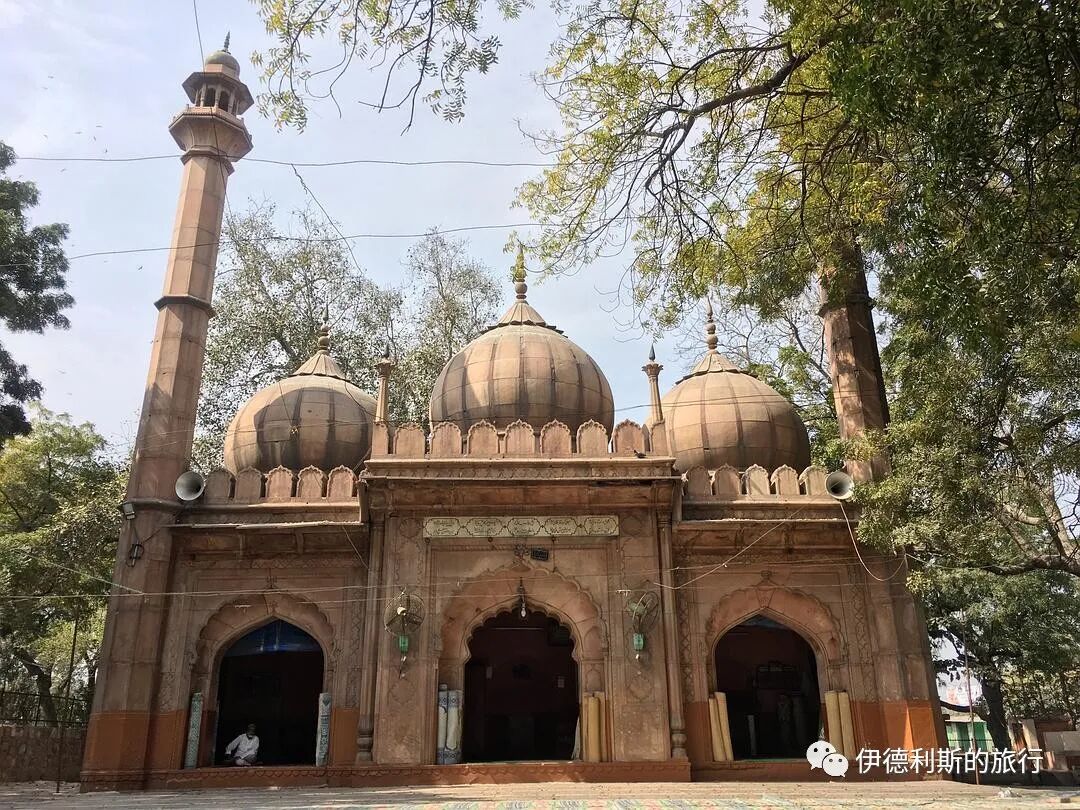
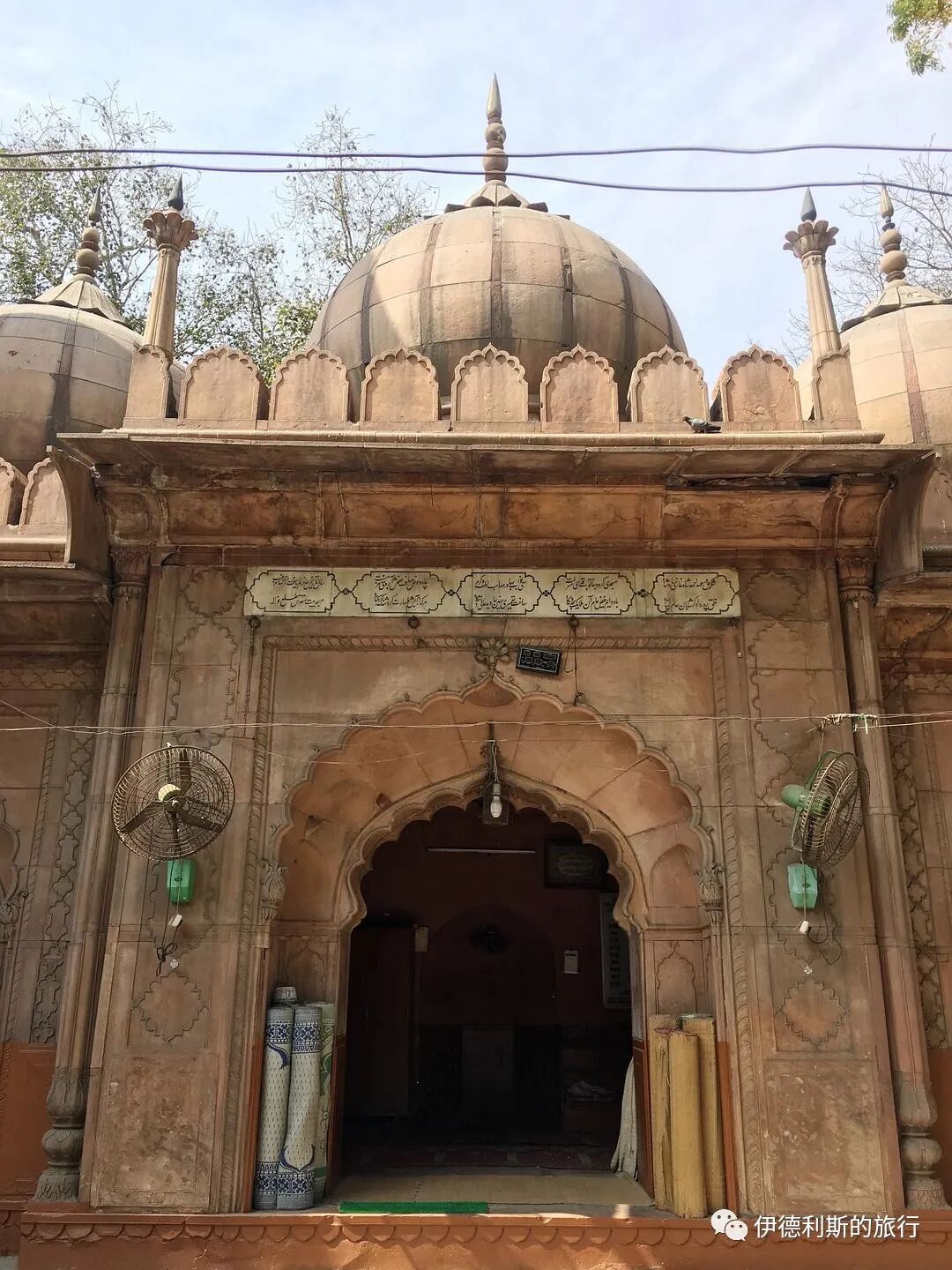
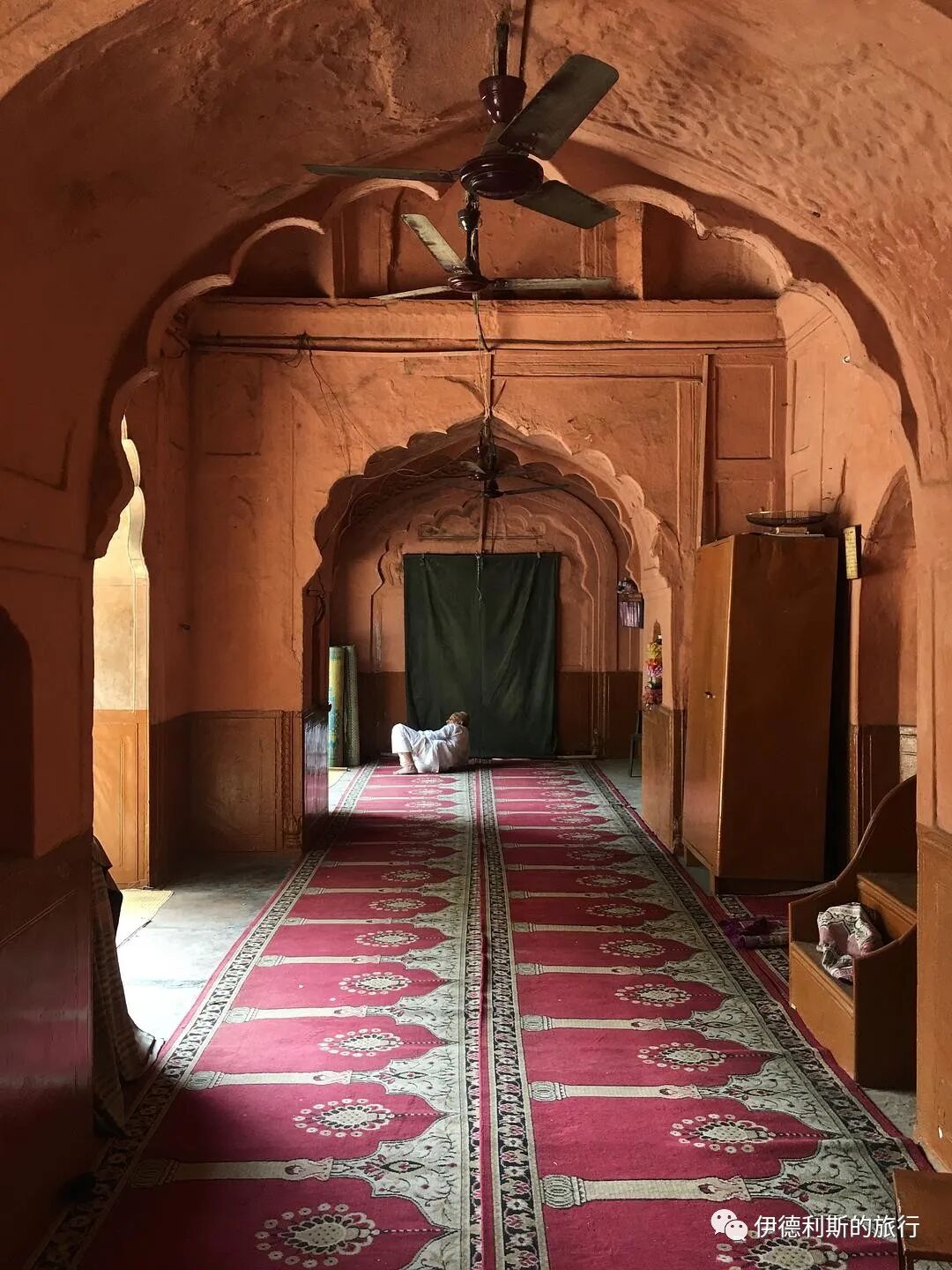
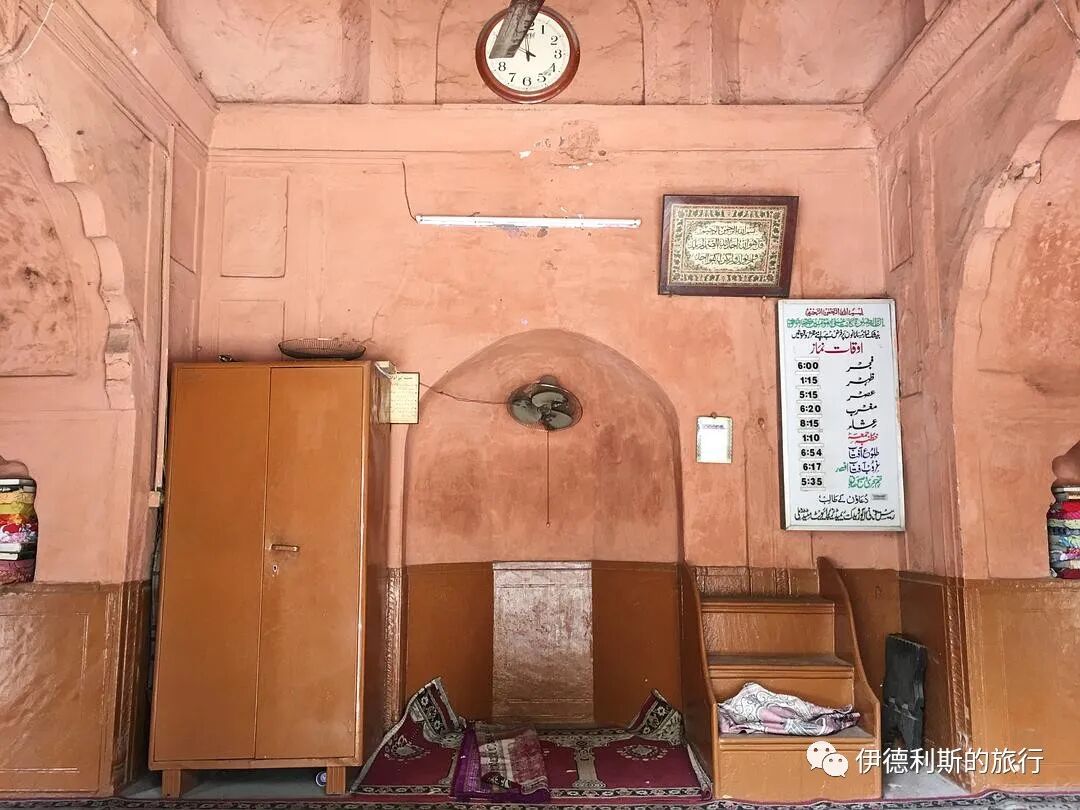
5. Great Mosque (Kalan Masjid): 1387
Kalan Mosque is one of the very few mosques in Shahjahanabad that existed before the city was built. It was constructed in 1387 by Khan-i-Jahan Maqbul, the vizier of Sultan Feroz Shah Tughlaq (reigned 1351-1388) of the Delhi Sultanate's Tughlaq dynasty. It is believed to have been built to commemorate a Sufi saint.
The mosque has been in continuous use, so the interior has changed significantly.
6. Hauzwali Mosque: 15th century
Hauzwali Mosque is another mosque that existed before the city of Shahjahanabad was built. Because the ground level has changed so much over time, the bottom half of the mosque is now underground, leaving only the top parts of the arches and the mihrab visible.
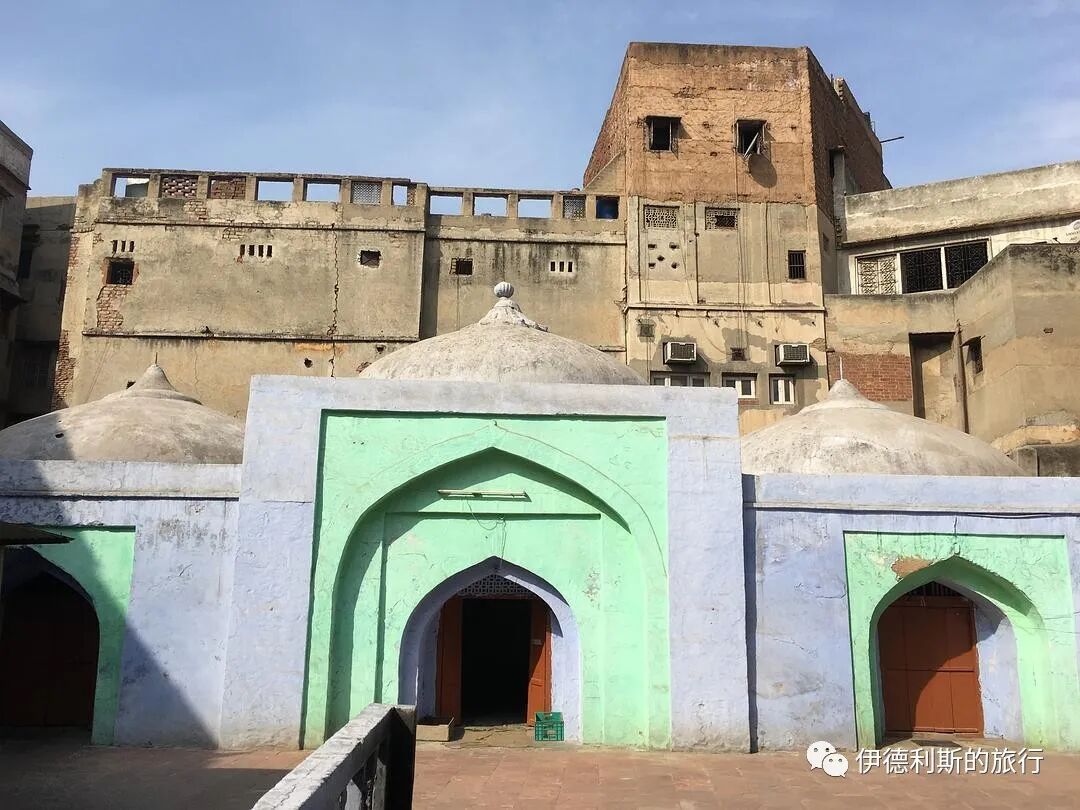
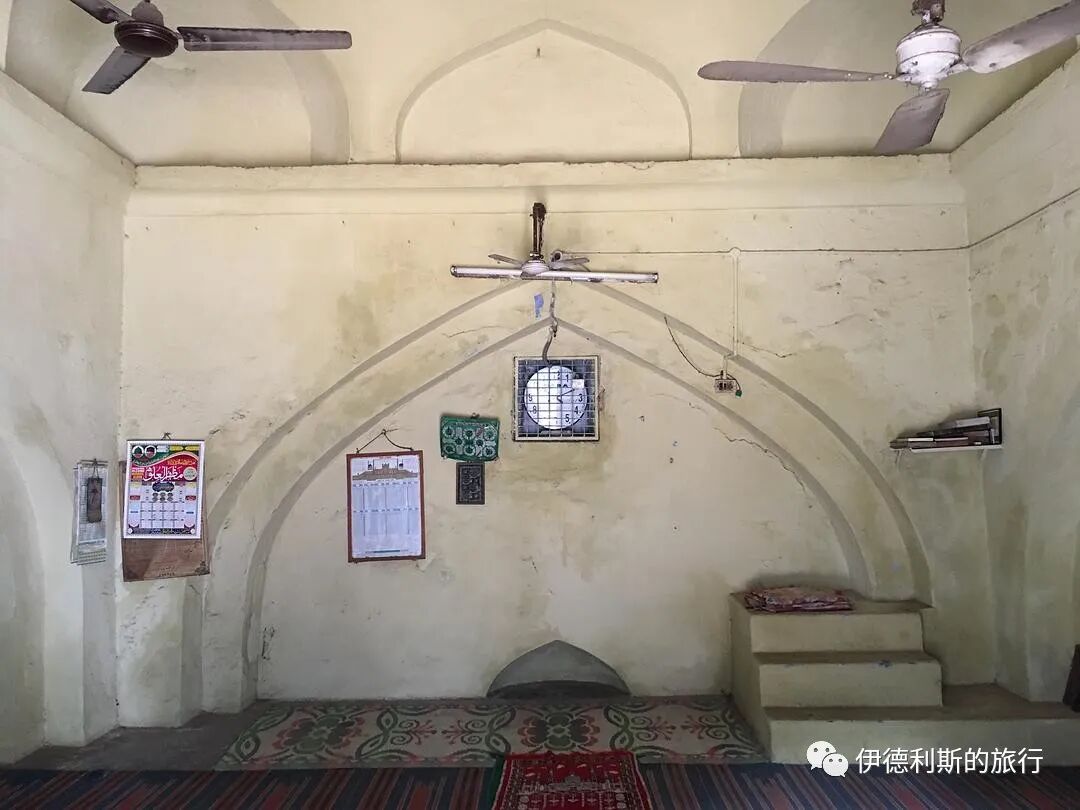
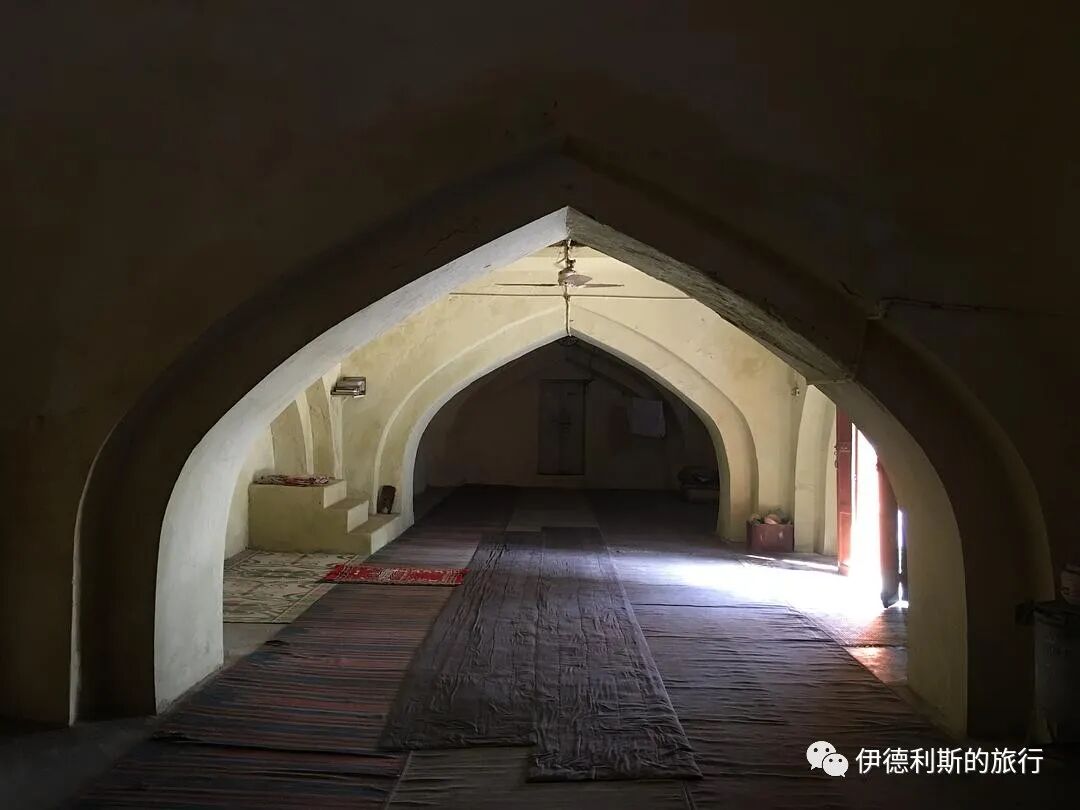
Halal Travel Guide: Delhi's Sixth City — Mughal Beginnings and Muslim History
Articles • ali2007fr posted the article • 0 comments • 151 views • 2026-05-18 03:18
Summary: Delhi's Sixth City — Mughal Beginnings and Muslim History is presented here as a firsthand travel account in clear English, beginning with this scene: Din Panah is known as the sixth historical city of Delhi. It was the first city built by the Mughal Empire in Delhi and served as the capital for the Afghan-led Sur Empire. The account keeps its focus on Delhi Travel, Mughal History, Muslim Heritage while preserving the names, places, food, and historical details from the Chinese source.
Din Panah is known as the sixth historical city of Delhi. It was the first city built by the Mughal Empire in Delhi and served as the capital for the Afghan-led Sur Empire. Most of the original site of Din Panah is now covered by New Delhi, which was built in the early 20th century. Very little of the outer city remains, but the inner city walls, known as the Old Fort (Purana Qila), are still well-preserved. Inside the Old Fort, you can find significant historical buildings like the royal mosque of the Sur Empire and the library where Humayun fell to his death. These are vital historical sites for understanding the early Mughal and Sur periods.
Table of Contents
I. The Origins of Din Panah
1. The First City of the Mughal Empire
2. The Capital of the Sur Empire
3. The Mughal Return to Din Panah
4. Losing Capital Status
5. Modern Changes to the Ancient City
II. Old Fort Gates
III. Qila-i-Kuhna Mosque: 1541
IV. Sher Mandal
V. Bathhouse Ruins
VI. Water Reservoir
VII. Outer City Gates
VIII. Khairul Manazil Mosque: 1561
IX. Sur Empire Architecture Around Din Panah
1. Salimgarh Fort: 1546
2. Tomb and Mosque of Isa Khan: 1547
I. The Origins of Din Panah
1. The First City of the Mughal Empire
In 1526, Babur, a Chagatai Mongol noble and descendant of Tamerlane, invaded India from Afghanistan. He defeated the 100,000-strong army and 100 war elephants of the Delhi Sultanate's Lodi Dynasty. The last Sultan, Ibrahim Lodi, was killed in battle. This ended the 320-year-old Delhi Sultanate and marked the official birth of the Mughal Empire.
Emperor Babur died in 1530, and his son Humayun succeeded him as the second emperor of the Mughal Empire. When Emperor Babur ruled India, he kept Agra as his capital, just as the Lodi dynasty of the Delhi Sultanate had done. After Humayun took the throne, he officially moved the capital to Delhi. In 1533, Humayun began building the Mughal capital of Din Panah in Delhi, which means 'Refuge of the Faith'. Just ten months later, the city walls, gates, and the inner city were all finished.
A 1590 miniature painting of Humayun in battle, held by the Los Angeles County Museum of Art.
2. The Capital of the Sur Empire
In 1539, Humayun led a large army east to Bengal, but he was defeated by Sher Shah, a general from the Afghan Pashtun Sur tribe. In 1540, Sher Shah followed up his victory and completely crushed Humayun. Humayun fled to Persia, and Sher Shah established the Suri Dynasty in Delhi.
After taking Delhi, Sher Shah immediately started building his own capital on the site of Din Panah and named the new inner city Shergarh.
There is still no reliable evidence to show if Sher Shah renovated the Din Panah city built by Humayun or rebuilt it entirely. Historical records about Sher Shah suggest he ordered the construction of the walls and inner city of Din Panah, and that the work was still unfinished when he died. However, the biography of Sher Shah's son, Salim Shah, records that in 1546, after finishing another Delhi fortress called Salimgarh, Salim Shah ordered new walls built around the castle Humayun had constructed. One theory is that Salim Shah renovated the walls of Din Panah or finished the final construction.
3. The Mughal Return to Din Panah
In 1554, the second Sultan of the Suri Dynasty, Islam Shah, died. His twelve-year-old son, Firuz Shah, took the throne but was killed immediately. The empire fell into chaos with lords fighting each other, and four different rulers took power in just one year. Meanwhile, with help from the Safavid dynasty of Persia, Humayun had established a base in Afghanistan and built up a strong army.
In 1555, the ruler of Lahore, Sikandar Shah, led an army to occupy Delhi. Taking advantage of Lahore's weak defenses, Humayun sent his commander Bairam Khan to lead an official military campaign into India with help from the Persian Safavid dynasty. On June 22, 1555, the Mughal army completely defeated the 80,000-horse army led by Sikandar Shah. On July 23, 1555, Humayun returned to the city of Din Panah in Delhi after fifteen years, and the Mughal Empire began ruling northern India once again.
An 18th-century portrait of Humayun, held by the Victoria and Albert Museum in London.
4. Losing Capital Status
On January 24, 1556, Humayun was reading in the library on the second floor of the city of Din Panah. When the muezzin called the adhan, Humayun hurried downstairs to prepare for namaz, but he tripped on the stairs and died. Humayun's thirteen-year-old son, Akbar, succeeded to the throne with Bairam Khan serving as regent.
After Humayun passed away, he was initially buried inside the palace at Din Panah. However, the Sur dynasty general Hemu soon traveled through the night from Bengal to quickly sweep across Mughal territory. On October 7, 1556, Hemu captured Delhi after a fierce battle, and Humayun's remains were dug up and transported to Punjab.
On November 5, 1556, Delhi was recaptured by Akbar and Bairam Khan, who had arrived from Punjab. Hemu was struck by an arrow and fell unconscious during the decisive battle, and he was killed shortly after. Akbar only stayed in Delhi for one month before returning to Punjab to continue fighting the Sur dynasty army.
In 1558, Akbar officially moved the capital from Din Panah to Agra, ending Din Panah's history as the capital of the Mughal Empire.
A portrait of Akbar in his youth.
5. Modern Changes to the Ancient City
The inner city of Din Panah, Shergarh, is now known as the Old Fort (Purana Qila). In the early 20th century, 1,900 people lived here. They were moved out in 1913, and the site became a historical heritage site.
During the 1947 partition of India and Pakistan, the Old Fort and the nearby Humayun's Tomb housed 200,000 Indian Muslims waiting to go to Pakistan. Trains transported them one after another until early 1948.
In the 1970s, the Old Fort began to be used as an open-air theater by the National School of Drama, and it has since become an important venue in Delhi for plays, concerts, and cultural events.
Today, it is a paid historical site open to all visitors.
A map of the attractions at the Old Fort.
II. Old Fort Gates
The walls of the Old Fort are 18 meters high and 1.5 kilometers long, with three gates. The west gate is the main entrance to the fort and the scenic area, called Bara Darwaza. The south gate is called Humayun Darwaza. One theory is that this gate was built by Humayun, while another is that it faces Humayun's Tomb. The north gate is called Talaqi Darwaza, also known as the Forbidden Gate.
All three gates are double-layered sandstone structures with two massive semi-circular towers on either side. The gates feature overhanging balconies and small pavilions (chhatris) on top, a style that would be repeated throughout later Mughal architecture.
The main gate was likely built by Humayun and stands 20 meters high.
Inside the main gate.
Outside the corner tower, with the moat below.
Inside the west city wall.
III. Qila-i-Kuhna Mosque: 1541
The Qila-i-Kuna mosque was built by Sher Shah in 1541 and served as the royal mosque for the Suri dynasty. This mosque with its semi-domed design is known as a key marker in the transition of Indian Islamic architecture from the Lodi style to the Mughal style, and it is the largest and most exquisite five-arched mosque in India.
The five-arched mosque is a style of mosque architecture that developed during the Sayyid and Lodi dynasties of the Delhi Sultanate. The main hall of the mosque is divided into five sections by five arches, and each section has a mihrab. The mihrab inside the central arch is the largest, topped by a Lodi-style semi-domed vault.
Main dome.
Small dome.
Mihrab.
Mihrab.
There are two octagonal towers on both sides of the main hall, featuring the style of the Tughlaq dynasty.
A small door specifically for royal family members to enter for namaz.
IV. Sher Mandal
Sher Mandal is an octagonal pavilion with a very simple style. This simple beauty comes from a return to Persian style, which is quite different from the architectural forms of the late Lodi dynasty of the Delhi Sultanate, and it is the earliest building of this style in Delhi.
Although it looks very much like an early Mughal building, it is actually recognized as part of a palace built by Sher Shah, which was later converted by Humayun into a library and observatory, and it is also known as the first observatory in Delhi.
On January 24, 1556, when the call to prayer sounded, Humayun hurried down the stairs from the second floor of Sher Mandal to prepare for namaz, but he slipped and fell to his death.
V. Bathhouse Ruins
Next to Sher Mandal are the ruins of a bathhouse (hammam), likely built in the late 16th century. Steps lead into a room with decorative niches, and one side has a channel for flowing water.
VI. Water Reservoir
The water reservoir (baoli) used for storing water in the city.
VII. Outer City Gates
After exiting through the main gate of the Old Fort, you can see the historical ruins of the outer city of Dinpanah. Among the seven cities of Delhi, Dinpanah is the one we know the least about. Some early descriptions suggest that Dinpanah was an extension to the south of Ferozabad, the fifth city of Delhi.
Only two gates remain of the outer city walls of Dinpanah. The north gate of the outer city (Khuni Darwaza) is located near Ferozabad. It is also called the "Bloody Gate" because Mughal princes were shot there in 1857.
The south gate of the outer city (Lal Darwaza) is right next to the main gate of the Old Fort. Outside the gate is a wide road with the ruins of shops on both sides.
The relationship between the outer city walls of Dinpanah and the Old Fort walls is still unclear. However, judging by the moat outside the Old Fort, the outer walls were likely not connected to the Old Fort walls. In the 19th century, the archaeologist Cunningham speculated that the walls of Dinpanah should have covered a much larger area than these two gates suggest, possibly reaching over 14 kilometers. However, there was not enough archaeological evidence at the time to prove this.
Unfortunately, the south gate of the outer city was under renovation when I visited, so I could only look at it from a distance.
The ruins of the shops on both sides of the road outside the gate.
VIII. Khairul Manazil Mosque: 1561
Right next to the south gate of Dinpanah is the Khairul Manazil mosque, built in 1561 by Maham Anga, the wet nurse of the Mughal Emperor Akbar the Great. Between 1560 and 1562, she was the de facto regent of the Mughal Empire.
The gate of the mosque is a typical Mughal-style building, while the main hall with its semi-domed roof is in the Delhi Sultanate style. This is a characteristic of the transitional period in the early Mughal dynasty.
There is a water pool in the center of the courtyard, surrounded by a two-story madrasa.
The main gate.
Looking inside from the main gate.
The mosque is on the left and the madrasa is on the right.
The madrasa is on the left and the main gate is on the right.
The main hall and the water pool in the courtyard.
Inside the main hall.
Mihrab.
The patterns on the mihrab.
IX. Sur Empire Architecture Around Din Panah
On the north and south sides of Dinpanah, there are two very important buildings from the Sur dynasty. To the north is Salimgarh Fort, and to the south is the tomb and mosque of Isa Khan.
1. Salimgarh Fort: 1546
Salimgarh Fort is located on the north side of the Red Fort in Delhi. It was built in 1546 by Salim Shah, the son of the Sur dynasty ruler Sher Shah. People say in 1555, Humayun stayed here for three days before recapturing Delhi. In 1639, when the Mughal Emperor Shahjahan was building the seventh city of Delhi, Shahjahanabad, he also camped here.
The place turned dark after the Mughal Emperor Aurangzeb turned it into a prison. Aurangzeb imprisoned his brother Murad Baksh here, and it is said he also held his favorite eldest daughter, Zebunnisa, captive here for twenty-one years.
In 1857, an anti-British uprising broke out in India, eventually leading to the fall of the Mughals. From August to early September 1857, the last Mughal Emperor, Bahadur Shah Zafar, held strategic meetings at Salimgarh Fort and announced that the Mughal Emperor would lead the Indian people in their resistance against the British. He called on all Indian people, regardless of caste or faith, to join the resistance together.
But by mid-September, the British army began to surround the fort. The emperor's men urged him to retreat to a safe place, but the emperor refused. The emperor ordered his army to evacuate the fort, while he went to the tomb of Humayun. Therefore, when the British army entered the fort, they only encountered one sentry. On September 20, the emperor was arrested by the British army at Humayun's Tomb, marking the end of the Mughal Empire, which had lasted for over three hundred years.
After the uprising ended, the fort was used as an artillery camp for the British army and later became a prison. Between 1945 and 1947, leading up to India's independence, many members of the Indian National Army (INA) were tortured to death here, and many more disappeared forever. Because of this, Salimgarh Fort is now also called Swatantrata Senani Smarak to commemorate the prisoners who were treated cruelly within the fort.
There are many legends about ghosts haunting Salimgarh Fort. The most famous ghost is the Mughal Emperor Aurangzeb's daughter, Zebunnisa. Legend says she wears a black veil and sings poems she wrote herself under the moonlight. Additionally, some people claim they can hear the groans of the Indian National Army soldiers who were tortured to death here at night.
In 2007, this place became a UNESCO World Heritage site.
Salimgarh Fort in 1866, drawn by Alfred Frederick Pollock Harcourt.
The mosque by the city wall.
Inside the mosque.
The other side of the city wall.
Some scattered architectural pieces inside the fortress.
2. Tomb and Mosque of Isa Khan: 1547
Isa Khan was a nobleman of the Sur Empire, coming from the Niazi tribe of the Pashtuns in Afghanistan. Isa Khan died in 1548. Before he passed away, he built his own tomb and mosque in the southern suburbs of Dinpanah, near the shrine of Nizamuddin. Later, this place also became the site of Humayun's tomb.
As a prominent figure in the Sur Empire, Isa Khan was one of the last nobles of the dynasty to be buried in an Afghan-style tomb.
On August 5, 2011, the oldest sunken garden in India was discovered during the restoration of the tomb. This is considered the first Indian-style sunken garden attached to a tomb in India. This design was later further developed at Akbar's Tomb and the Taj Mahal.
The dome of the outer corridor.
The dome inside.
The mihrab of the tomb.
The Isa Khan Mosque was built during the same period as the tomb, and its biggest feature is the use of two pavilions instead of a dome. many details in the mosque were further developed in the later Humayun's Tomb. view all
Summary: Delhi's Sixth City — Mughal Beginnings and Muslim History is presented here as a firsthand travel account in clear English, beginning with this scene: Din Panah is known as the sixth historical city of Delhi. It was the first city built by the Mughal Empire in Delhi and served as the capital for the Afghan-led Sur Empire. The account keeps its focus on Delhi Travel, Mughal History, Muslim Heritage while preserving the names, places, food, and historical details from the Chinese source.
Din Panah is known as the sixth historical city of Delhi. It was the first city built by the Mughal Empire in Delhi and served as the capital for the Afghan-led Sur Empire. Most of the original site of Din Panah is now covered by New Delhi, which was built in the early 20th century. Very little of the outer city remains, but the inner city walls, known as the Old Fort (Purana Qila), are still well-preserved. Inside the Old Fort, you can find significant historical buildings like the royal mosque of the Sur Empire and the library where Humayun fell to his death. These are vital historical sites for understanding the early Mughal and Sur periods.
Table of Contents
I. The Origins of Din Panah
1. The First City of the Mughal Empire
2. The Capital of the Sur Empire
3. The Mughal Return to Din Panah
4. Losing Capital Status
5. Modern Changes to the Ancient City
II. Old Fort Gates
III. Qila-i-Kuhna Mosque: 1541
IV. Sher Mandal
V. Bathhouse Ruins
VI. Water Reservoir
VII. Outer City Gates
VIII. Khairul Manazil Mosque: 1561
IX. Sur Empire Architecture Around Din Panah
1. Salimgarh Fort: 1546
2. Tomb and Mosque of Isa Khan: 1547
I. The Origins of Din Panah
1. The First City of the Mughal Empire
In 1526, Babur, a Chagatai Mongol noble and descendant of Tamerlane, invaded India from Afghanistan. He defeated the 100,000-strong army and 100 war elephants of the Delhi Sultanate's Lodi Dynasty. The last Sultan, Ibrahim Lodi, was killed in battle. This ended the 320-year-old Delhi Sultanate and marked the official birth of the Mughal Empire.
Emperor Babur died in 1530, and his son Humayun succeeded him as the second emperor of the Mughal Empire. When Emperor Babur ruled India, he kept Agra as his capital, just as the Lodi dynasty of the Delhi Sultanate had done. After Humayun took the throne, he officially moved the capital to Delhi. In 1533, Humayun began building the Mughal capital of Din Panah in Delhi, which means 'Refuge of the Faith'. Just ten months later, the city walls, gates, and the inner city were all finished.
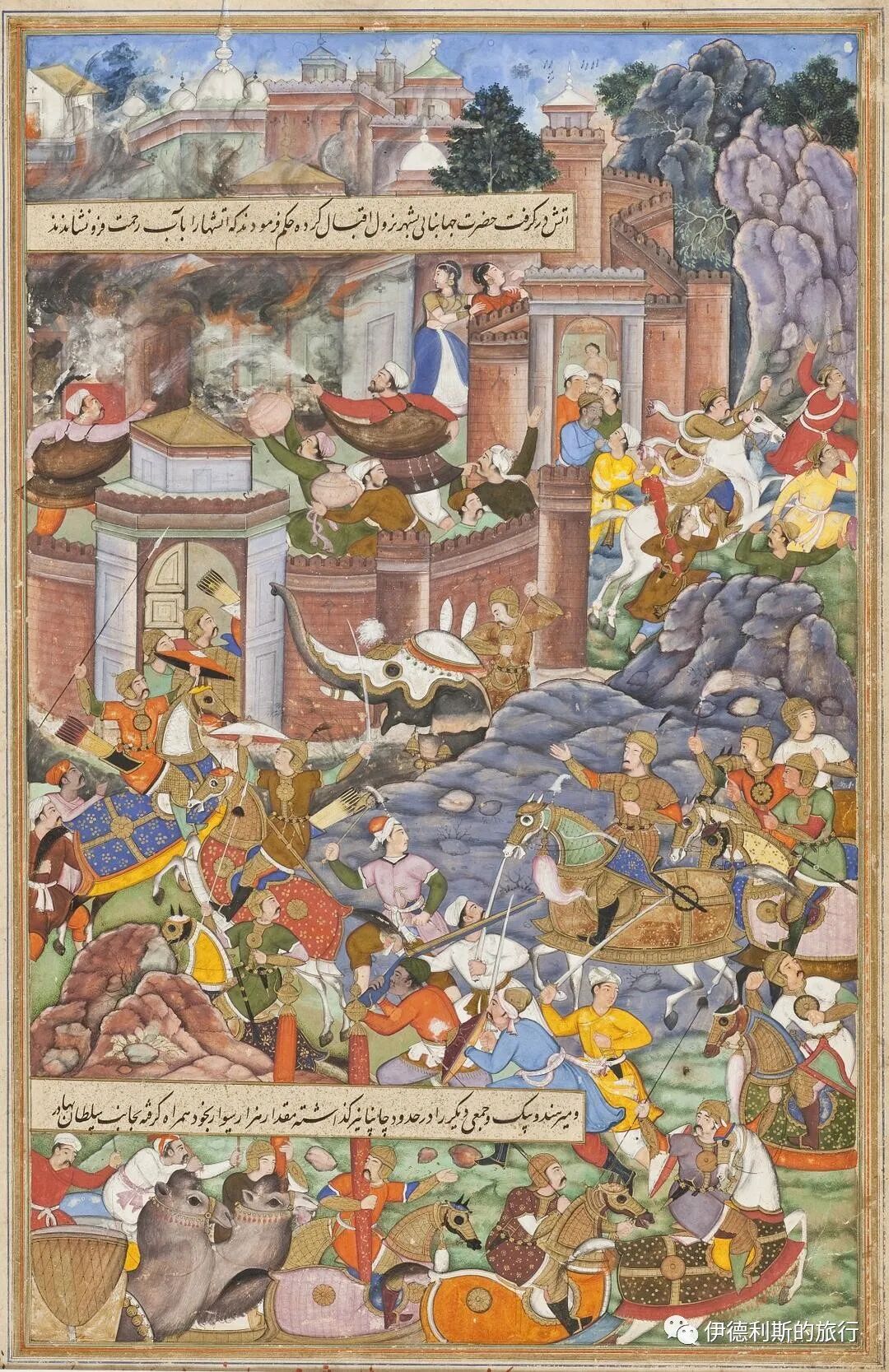
A 1590 miniature painting of Humayun in battle, held by the Los Angeles County Museum of Art.
2. The Capital of the Sur Empire
In 1539, Humayun led a large army east to Bengal, but he was defeated by Sher Shah, a general from the Afghan Pashtun Sur tribe. In 1540, Sher Shah followed up his victory and completely crushed Humayun. Humayun fled to Persia, and Sher Shah established the Suri Dynasty in Delhi.
After taking Delhi, Sher Shah immediately started building his own capital on the site of Din Panah and named the new inner city Shergarh.
There is still no reliable evidence to show if Sher Shah renovated the Din Panah city built by Humayun or rebuilt it entirely. Historical records about Sher Shah suggest he ordered the construction of the walls and inner city of Din Panah, and that the work was still unfinished when he died. However, the biography of Sher Shah's son, Salim Shah, records that in 1546, after finishing another Delhi fortress called Salimgarh, Salim Shah ordered new walls built around the castle Humayun had constructed. One theory is that Salim Shah renovated the walls of Din Panah or finished the final construction.
3. The Mughal Return to Din Panah
In 1554, the second Sultan of the Suri Dynasty, Islam Shah, died. His twelve-year-old son, Firuz Shah, took the throne but was killed immediately. The empire fell into chaos with lords fighting each other, and four different rulers took power in just one year. Meanwhile, with help from the Safavid dynasty of Persia, Humayun had established a base in Afghanistan and built up a strong army.
In 1555, the ruler of Lahore, Sikandar Shah, led an army to occupy Delhi. Taking advantage of Lahore's weak defenses, Humayun sent his commander Bairam Khan to lead an official military campaign into India with help from the Persian Safavid dynasty. On June 22, 1555, the Mughal army completely defeated the 80,000-horse army led by Sikandar Shah. On July 23, 1555, Humayun returned to the city of Din Panah in Delhi after fifteen years, and the Mughal Empire began ruling northern India once again.
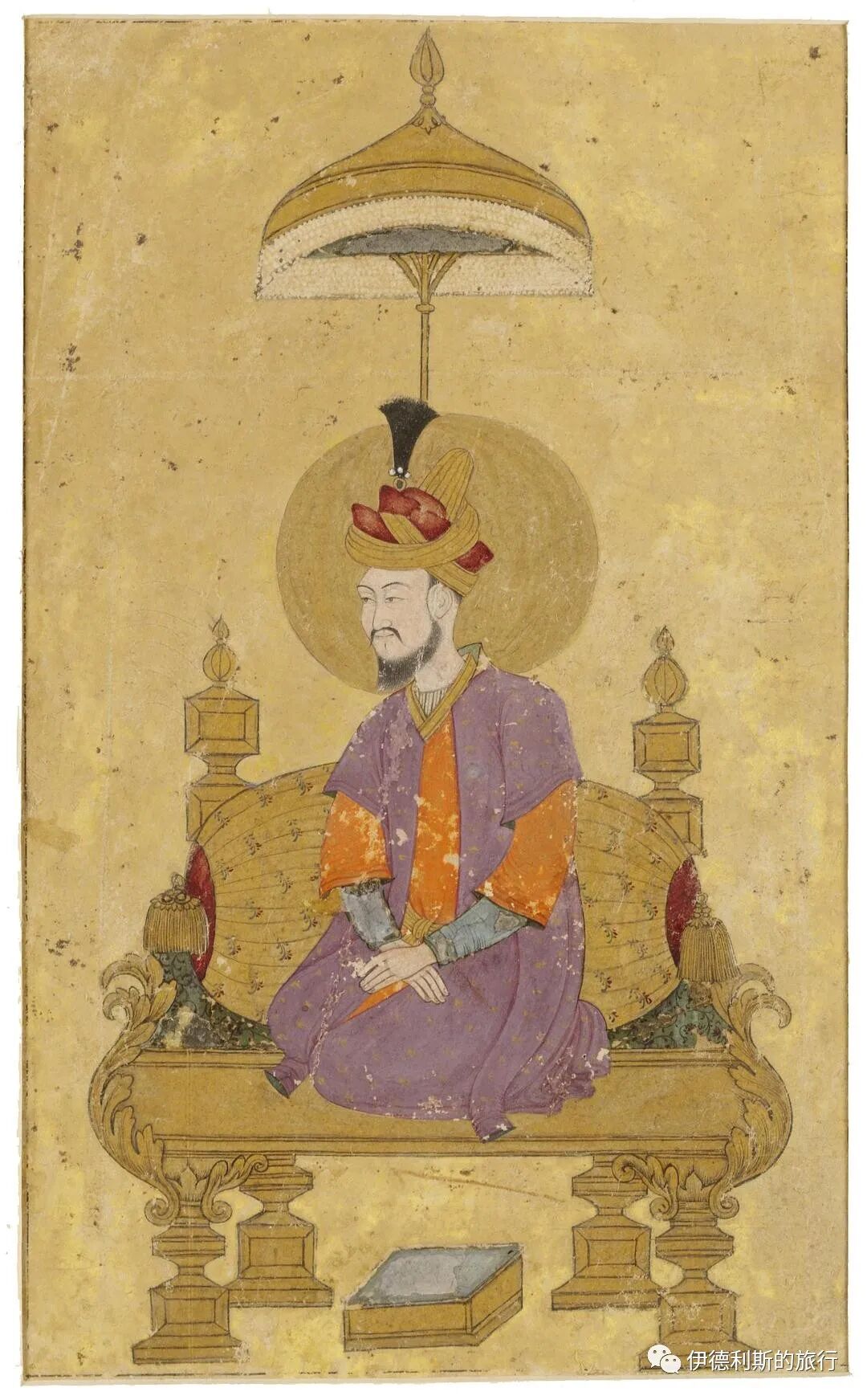
An 18th-century portrait of Humayun, held by the Victoria and Albert Museum in London.
4. Losing Capital Status
On January 24, 1556, Humayun was reading in the library on the second floor of the city of Din Panah. When the muezzin called the adhan, Humayun hurried downstairs to prepare for namaz, but he tripped on the stairs and died. Humayun's thirteen-year-old son, Akbar, succeeded to the throne with Bairam Khan serving as regent.
After Humayun passed away, he was initially buried inside the palace at Din Panah. However, the Sur dynasty general Hemu soon traveled through the night from Bengal to quickly sweep across Mughal territory. On October 7, 1556, Hemu captured Delhi after a fierce battle, and Humayun's remains were dug up and transported to Punjab.
On November 5, 1556, Delhi was recaptured by Akbar and Bairam Khan, who had arrived from Punjab. Hemu was struck by an arrow and fell unconscious during the decisive battle, and he was killed shortly after. Akbar only stayed in Delhi for one month before returning to Punjab to continue fighting the Sur dynasty army.
In 1558, Akbar officially moved the capital from Din Panah to Agra, ending Din Panah's history as the capital of the Mughal Empire.
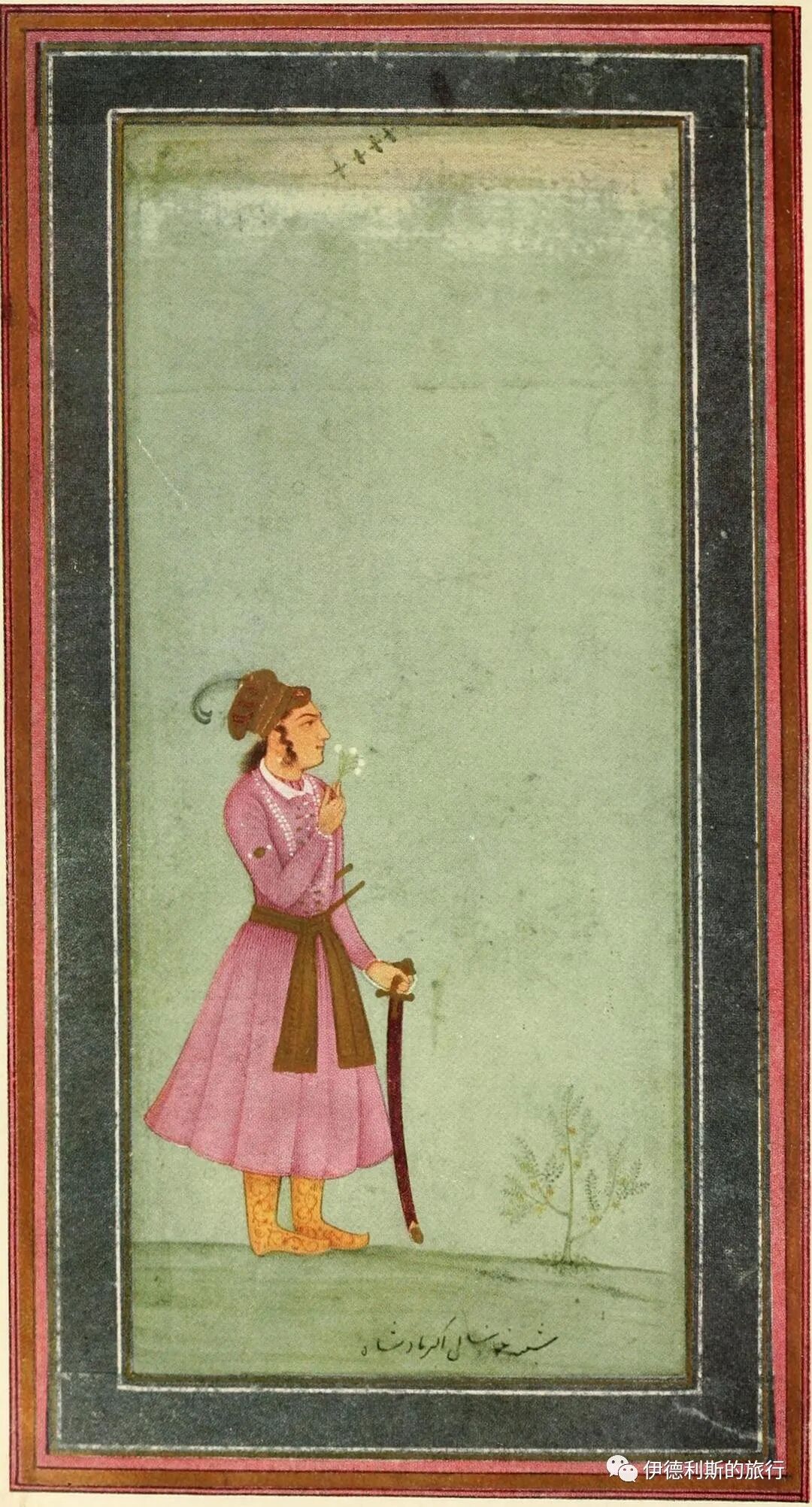
A portrait of Akbar in his youth.
5. Modern Changes to the Ancient City
The inner city of Din Panah, Shergarh, is now known as the Old Fort (Purana Qila). In the early 20th century, 1,900 people lived here. They were moved out in 1913, and the site became a historical heritage site.
During the 1947 partition of India and Pakistan, the Old Fort and the nearby Humayun's Tomb housed 200,000 Indian Muslims waiting to go to Pakistan. Trains transported them one after another until early 1948.
In the 1970s, the Old Fort began to be used as an open-air theater by the National School of Drama, and it has since become an important venue in Delhi for plays, concerts, and cultural events.
Today, it is a paid historical site open to all visitors.
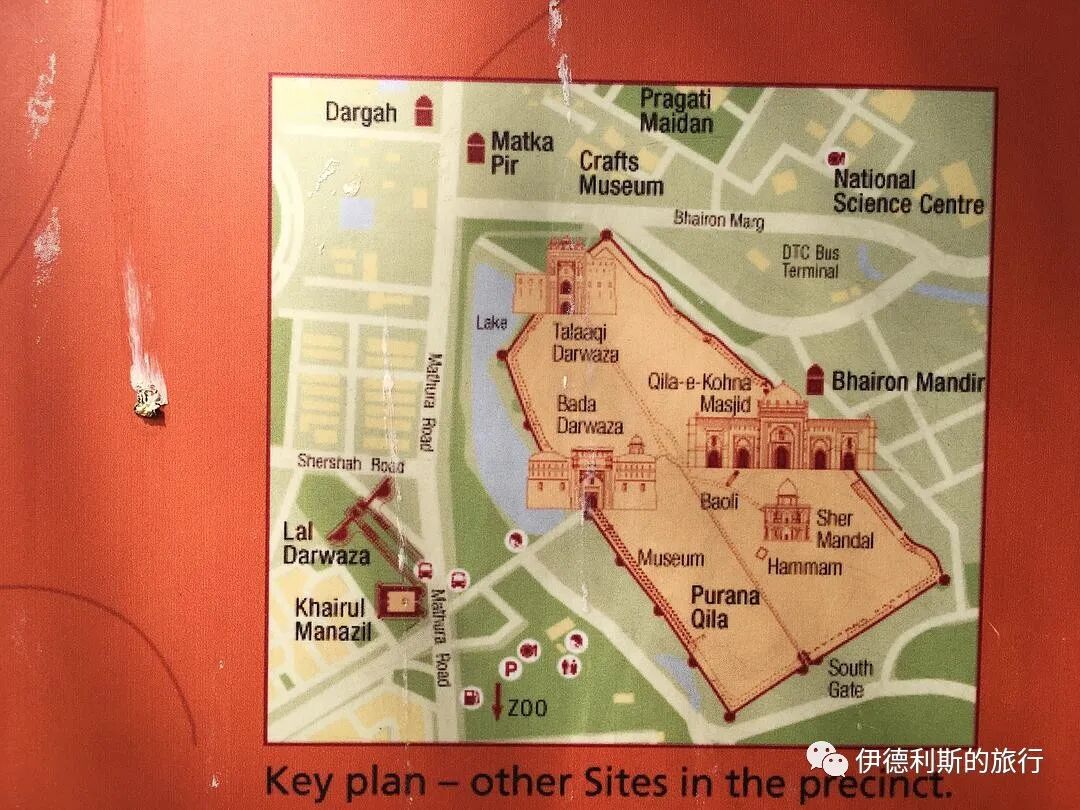
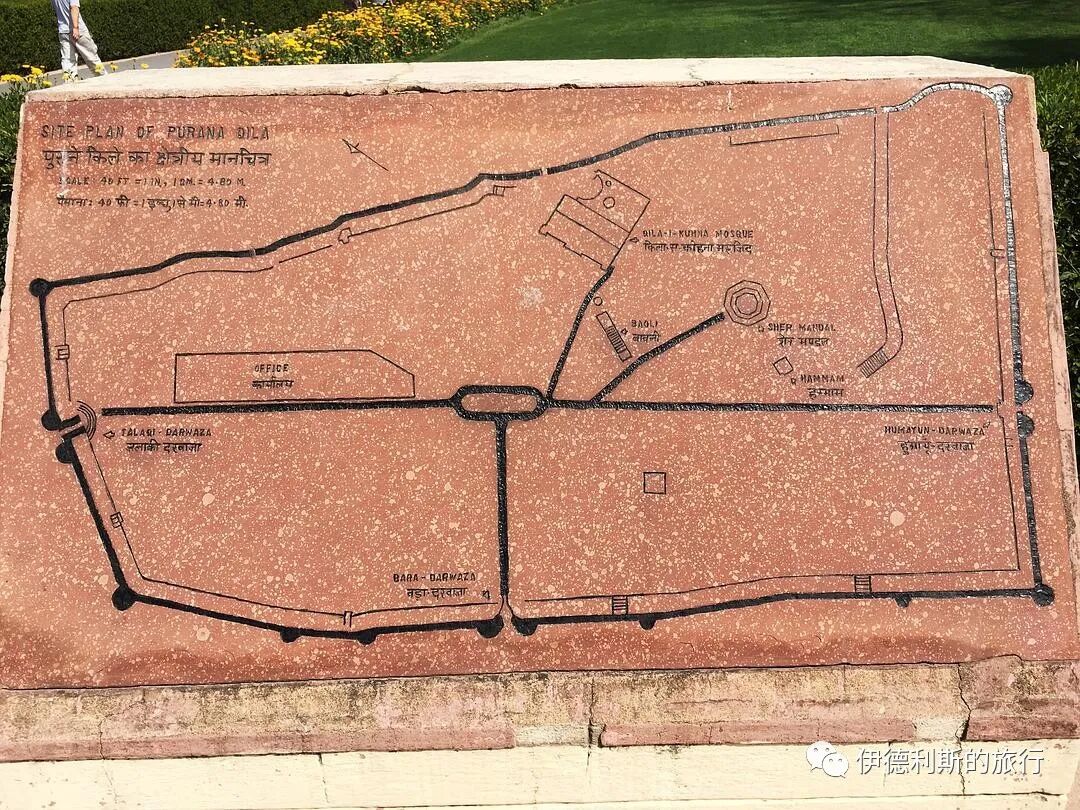
A map of the attractions at the Old Fort.
II. Old Fort Gates
The walls of the Old Fort are 18 meters high and 1.5 kilometers long, with three gates. The west gate is the main entrance to the fort and the scenic area, called Bara Darwaza. The south gate is called Humayun Darwaza. One theory is that this gate was built by Humayun, while another is that it faces Humayun's Tomb. The north gate is called Talaqi Darwaza, also known as the Forbidden Gate.
All three gates are double-layered sandstone structures with two massive semi-circular towers on either side. The gates feature overhanging balconies and small pavilions (chhatris) on top, a style that would be repeated throughout later Mughal architecture.
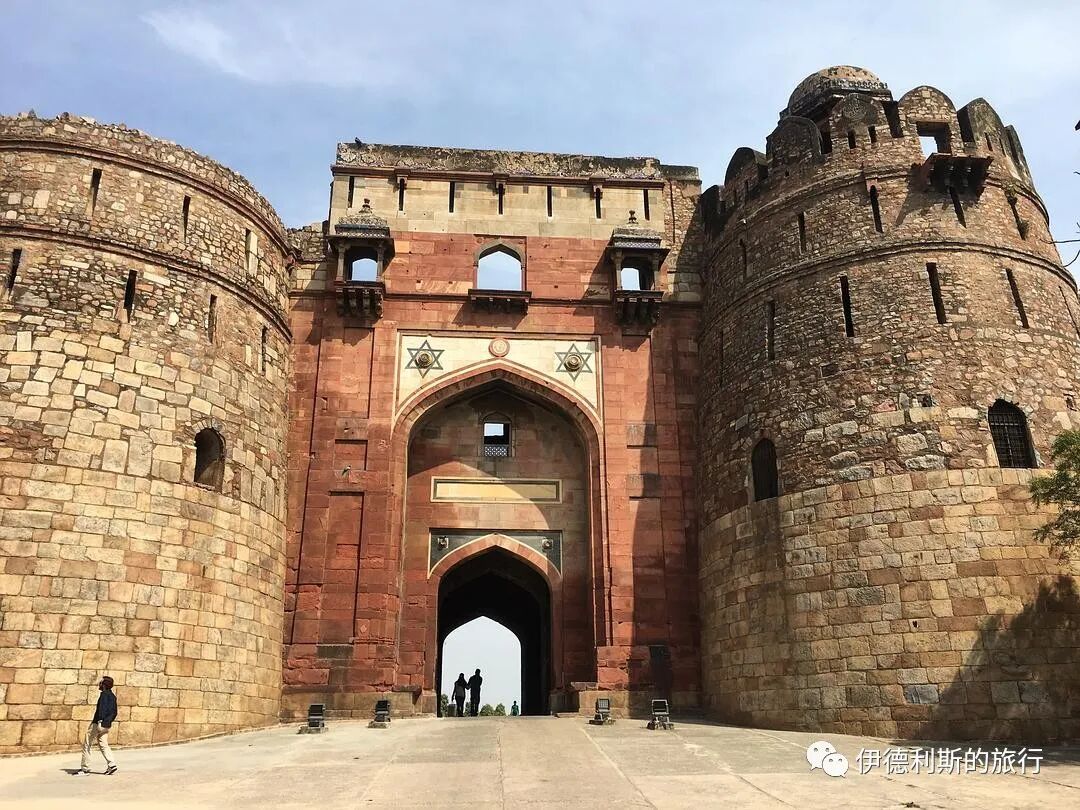
The main gate was likely built by Humayun and stands 20 meters high.
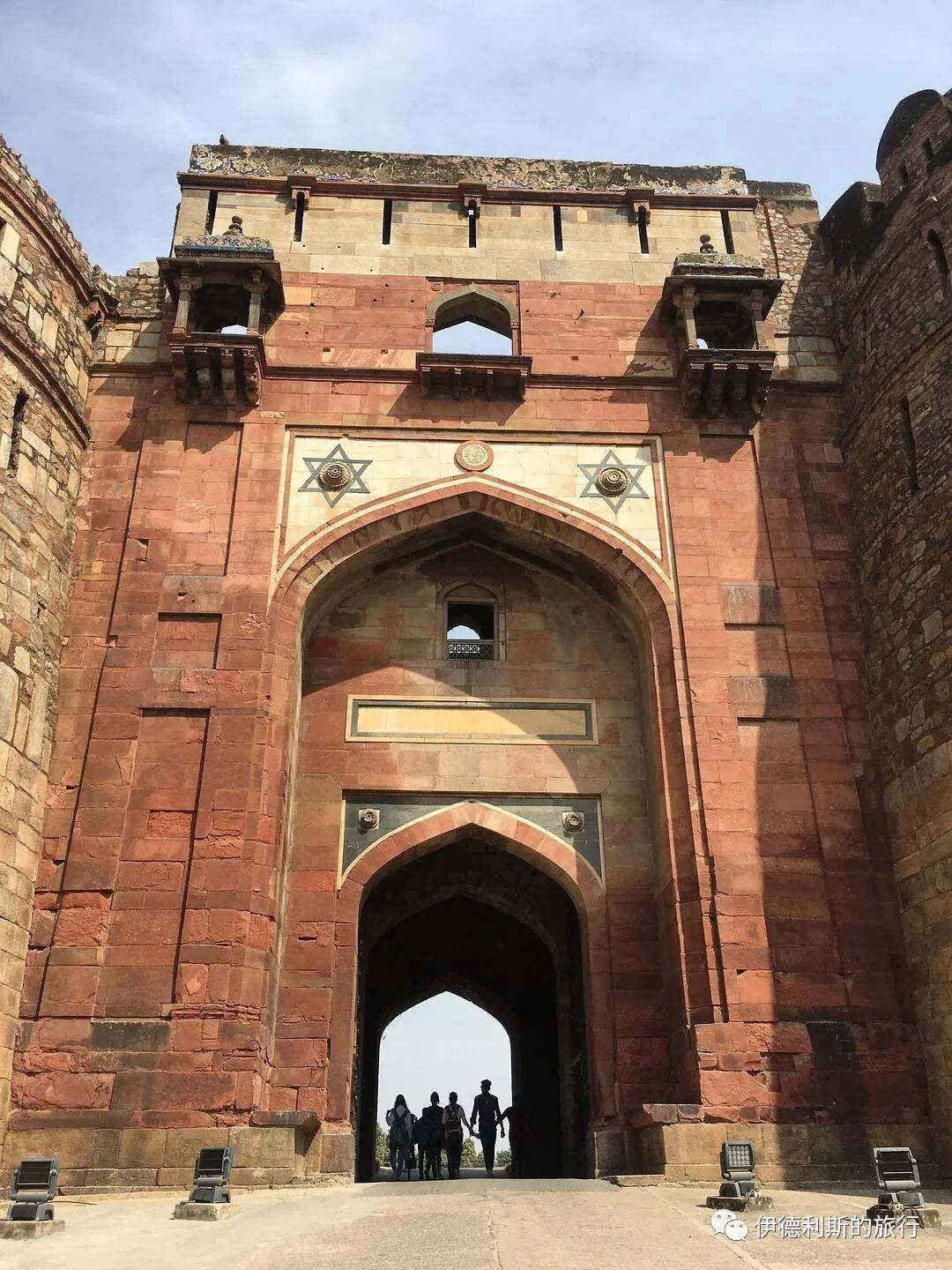
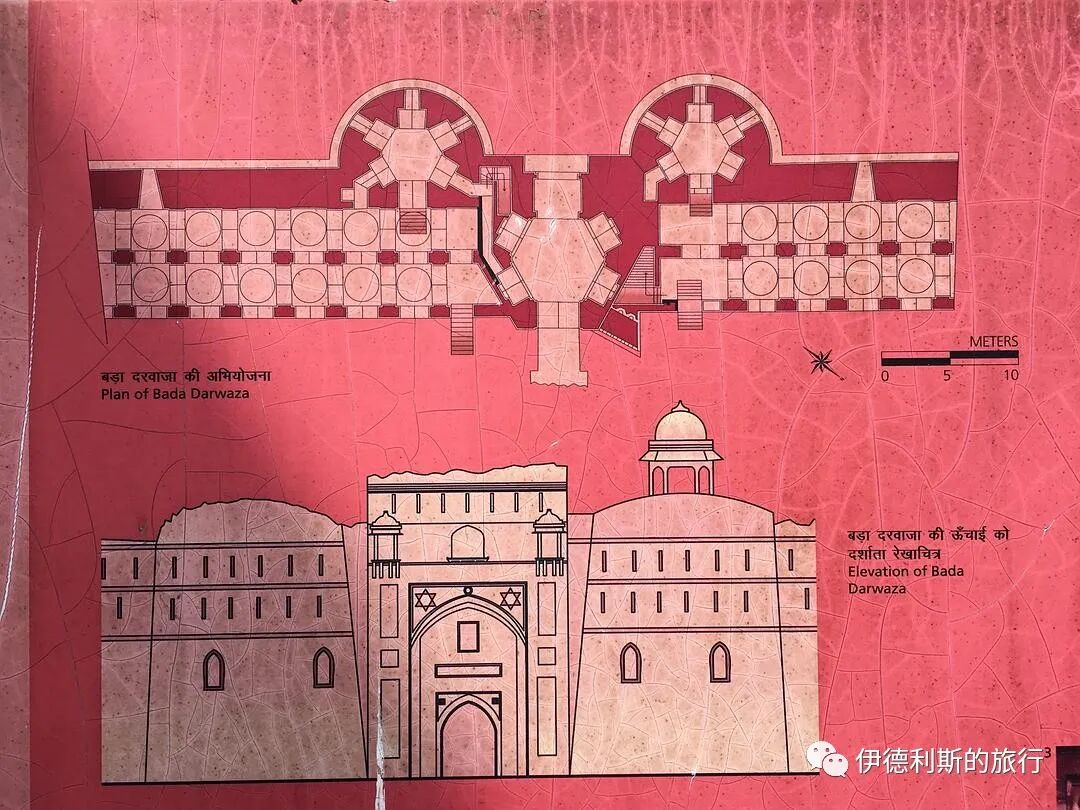
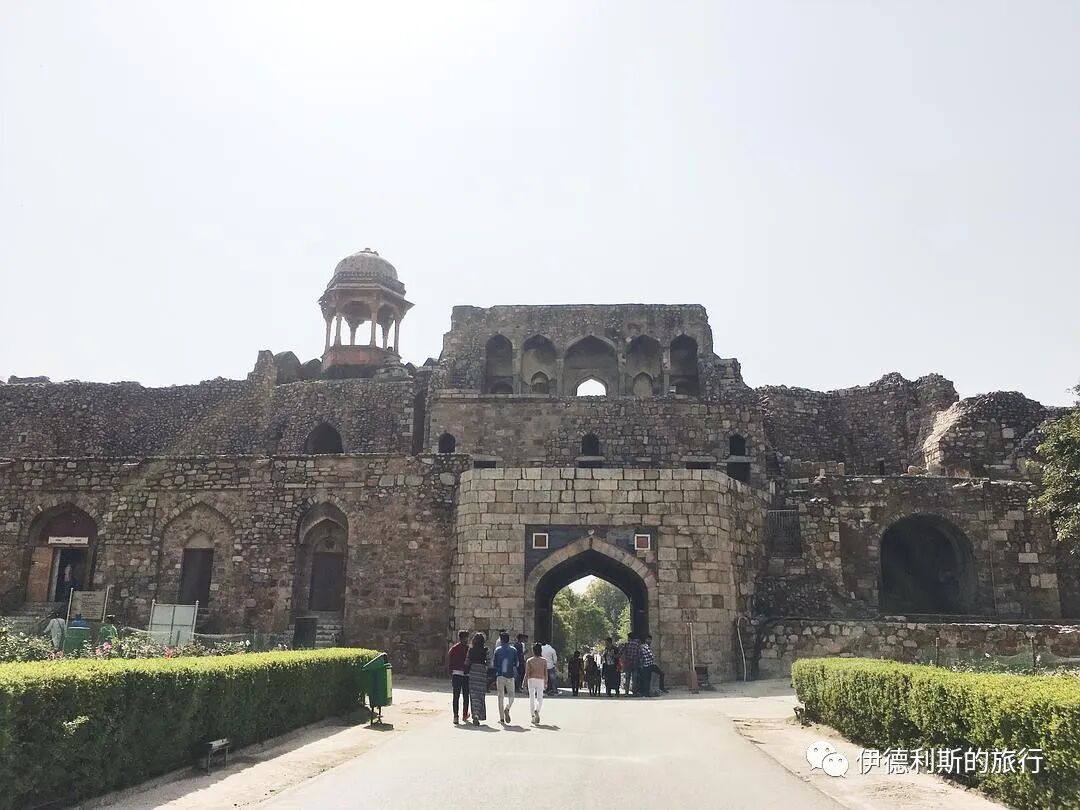
Inside the main gate.
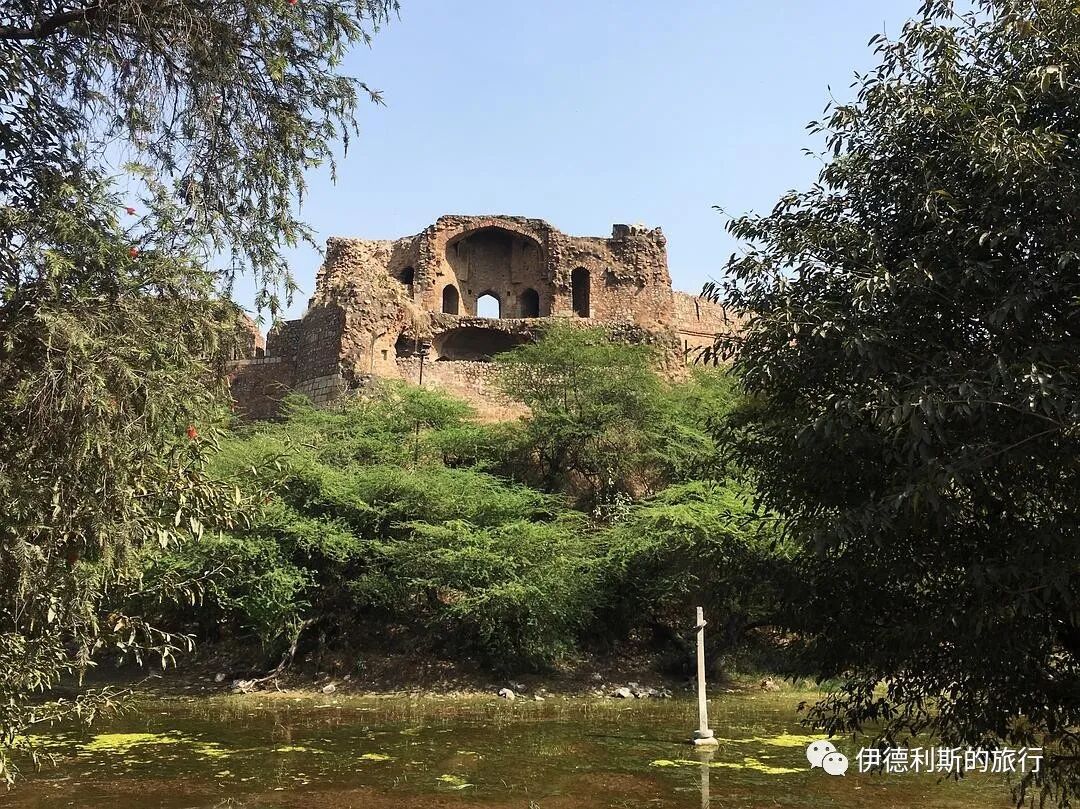
Outside the corner tower, with the moat below.
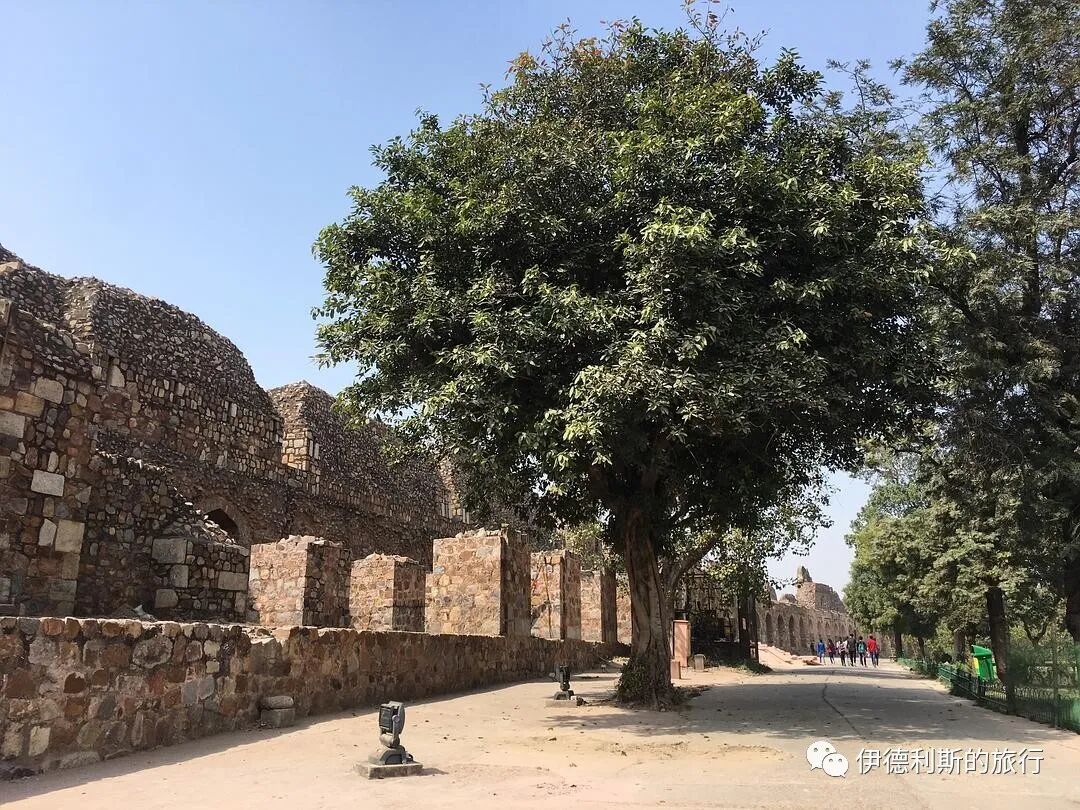
Inside the west city wall.
III. Qila-i-Kuhna Mosque: 1541
The Qila-i-Kuna mosque was built by Sher Shah in 1541 and served as the royal mosque for the Suri dynasty. This mosque with its semi-domed design is known as a key marker in the transition of Indian Islamic architecture from the Lodi style to the Mughal style, and it is the largest and most exquisite five-arched mosque in India.
The five-arched mosque is a style of mosque architecture that developed during the Sayyid and Lodi dynasties of the Delhi Sultanate. The main hall of the mosque is divided into five sections by five arches, and each section has a mihrab. The mihrab inside the central arch is the largest, topped by a Lodi-style semi-domed vault.
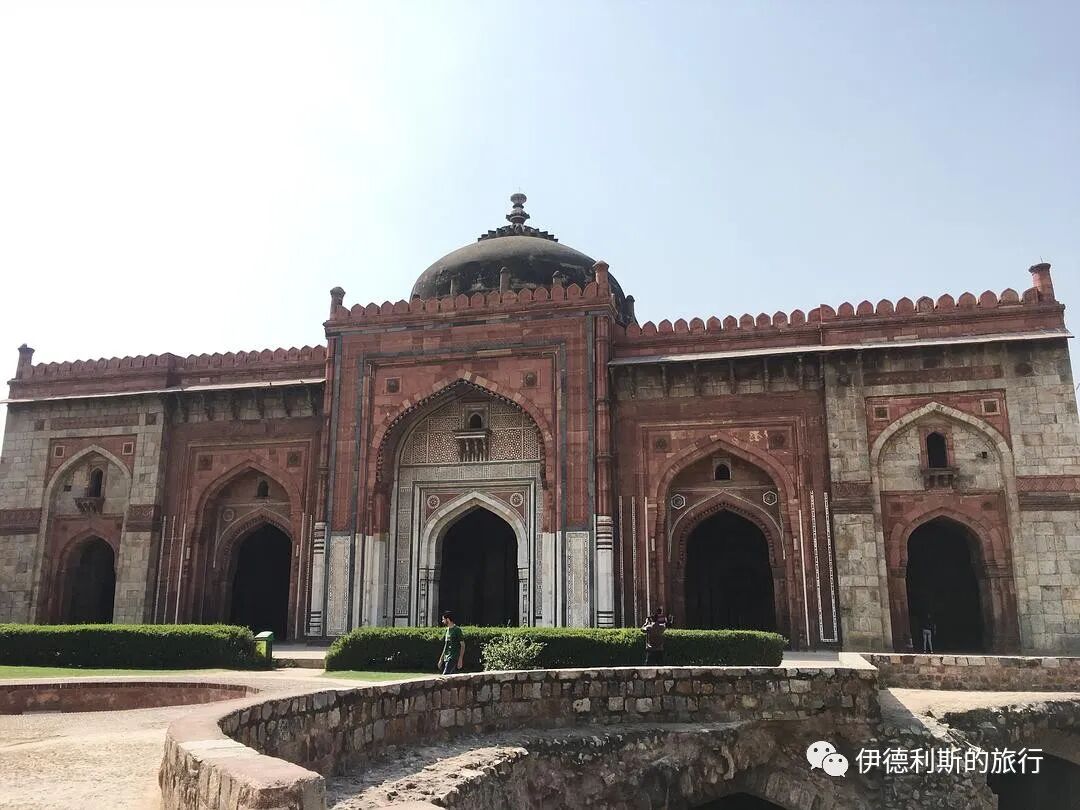
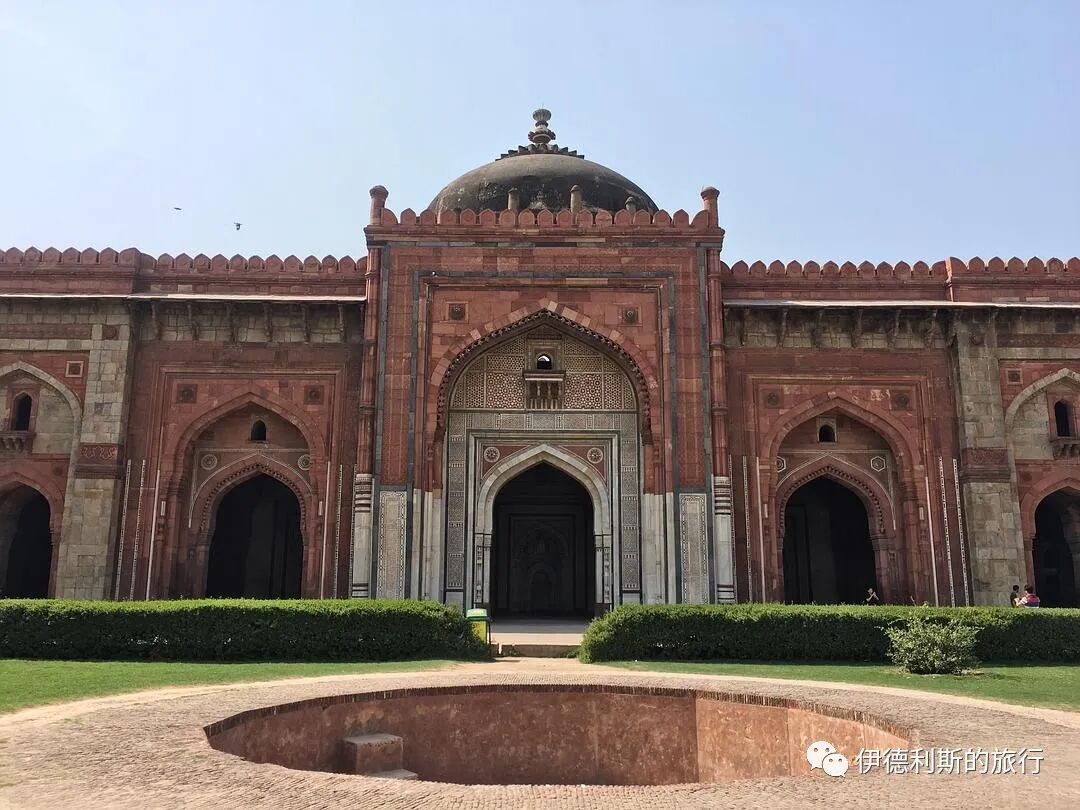
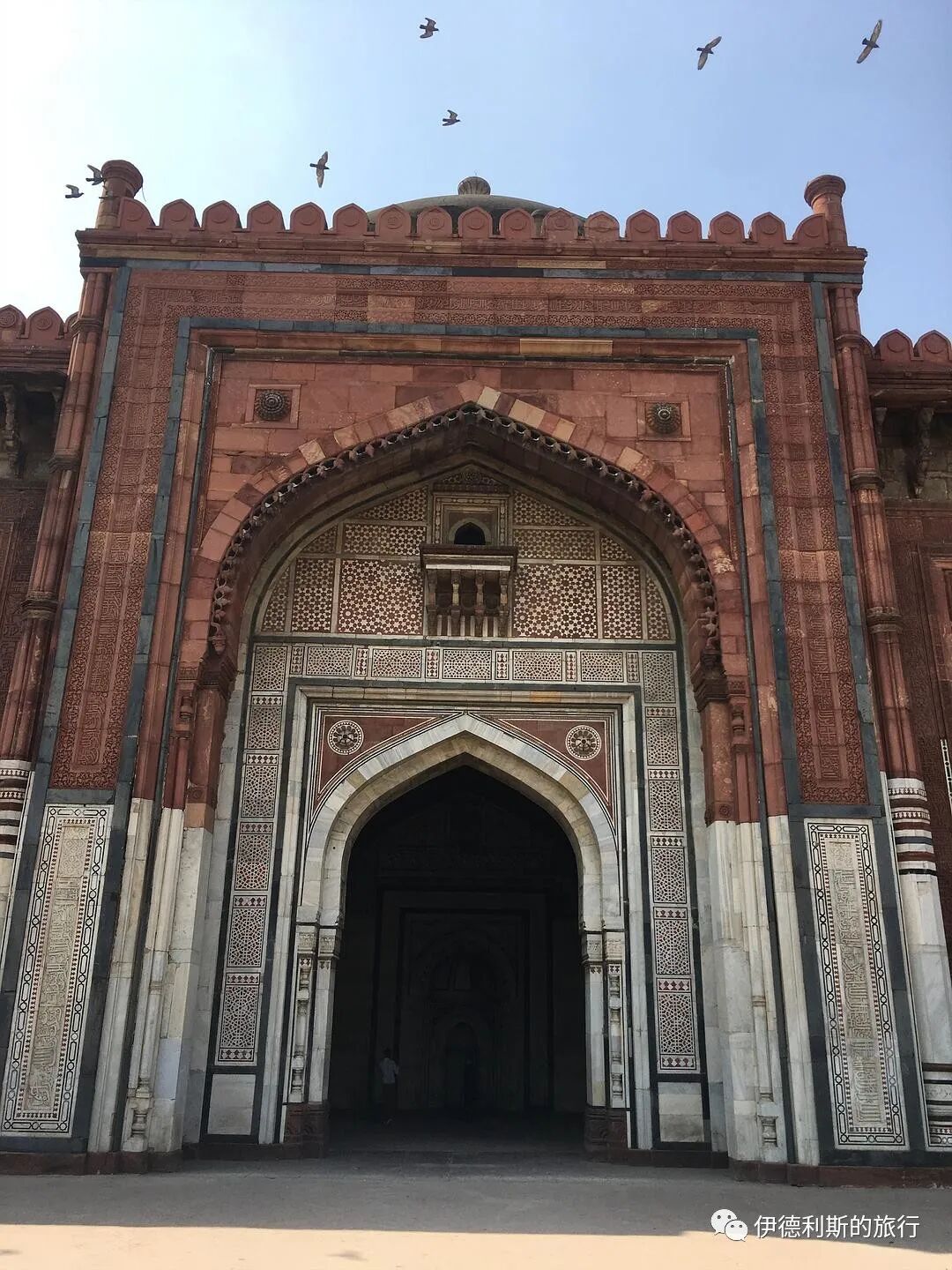
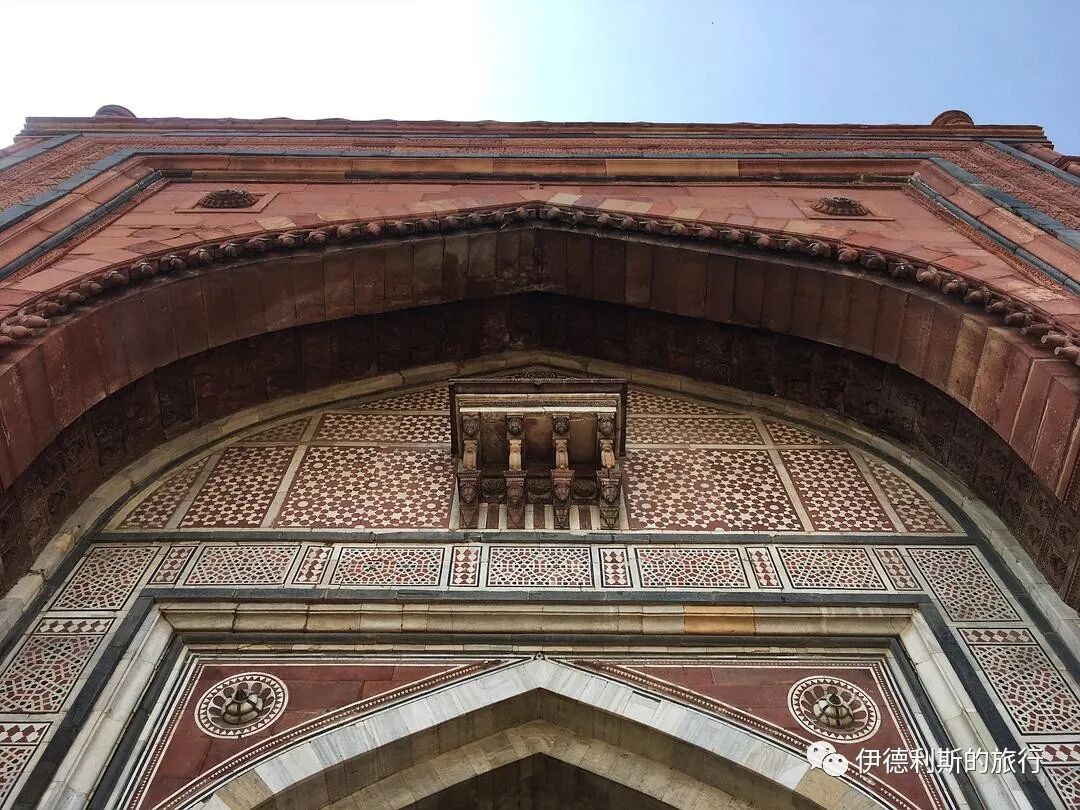
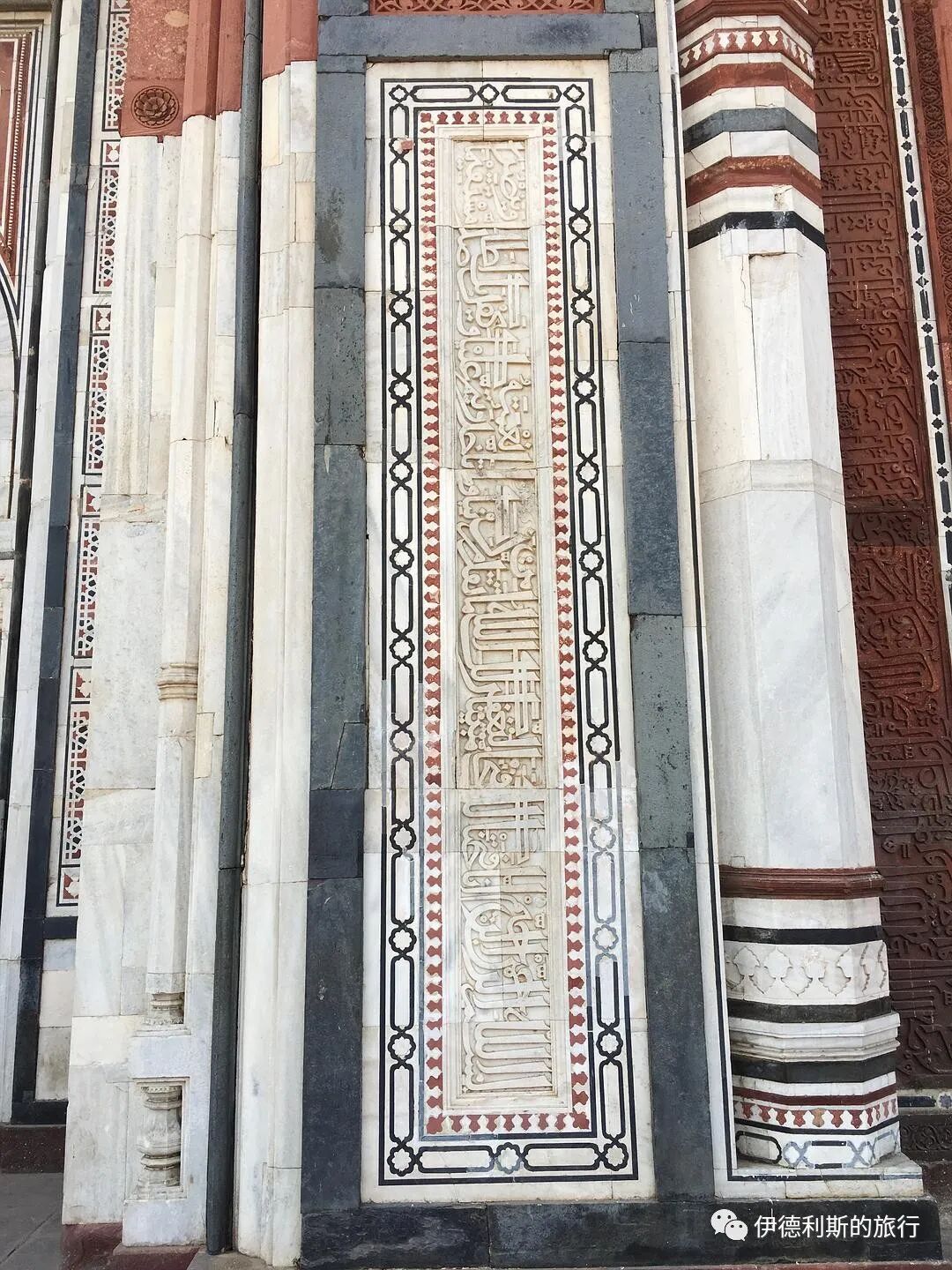
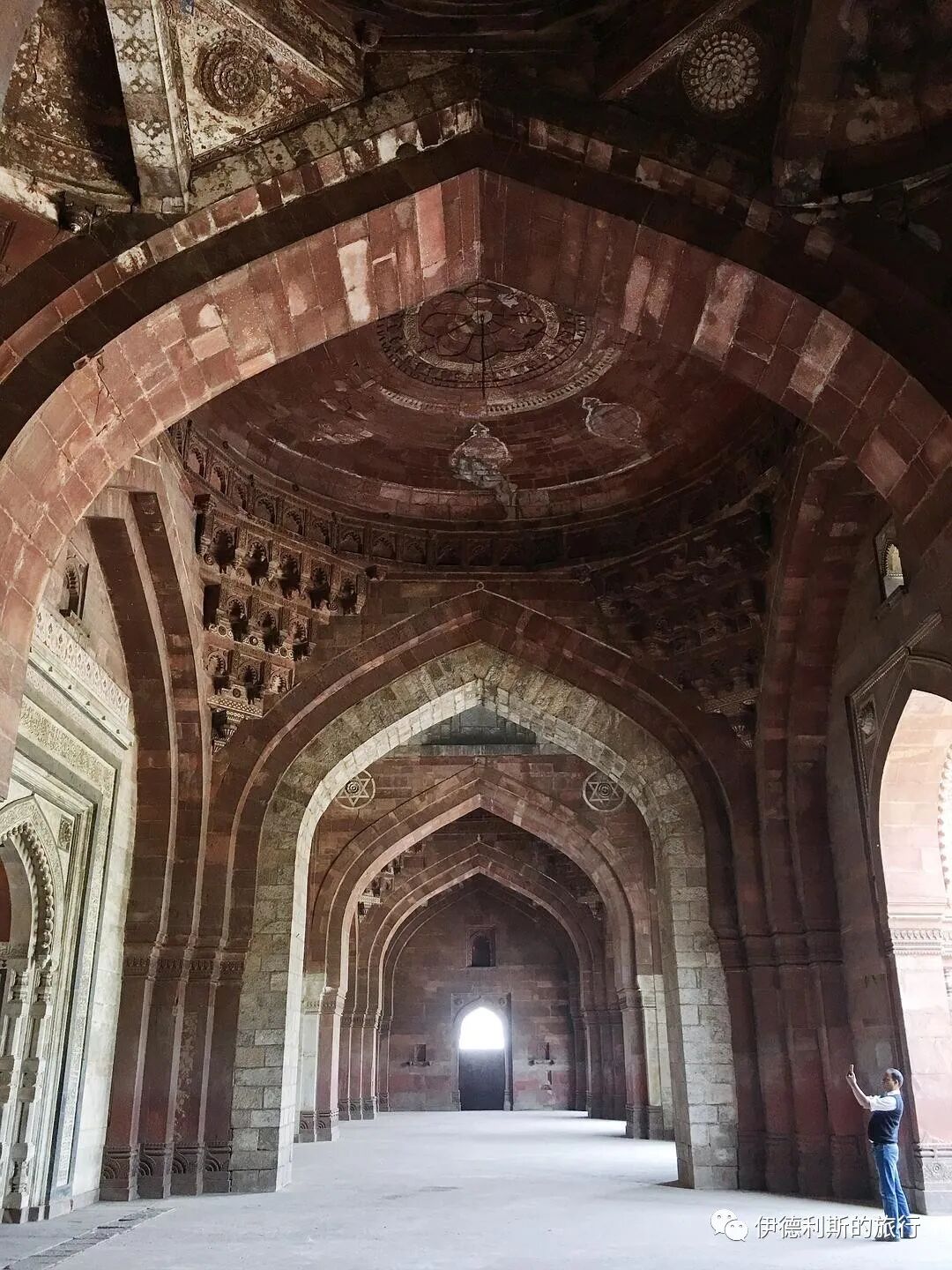
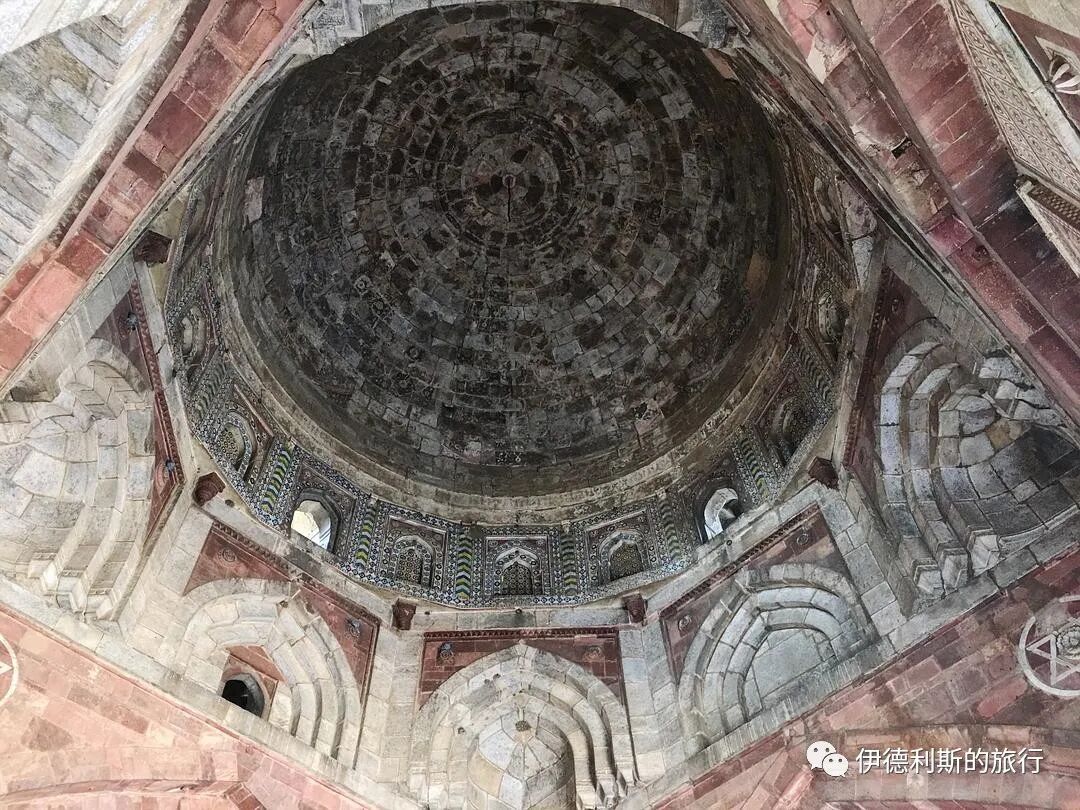
Main dome.
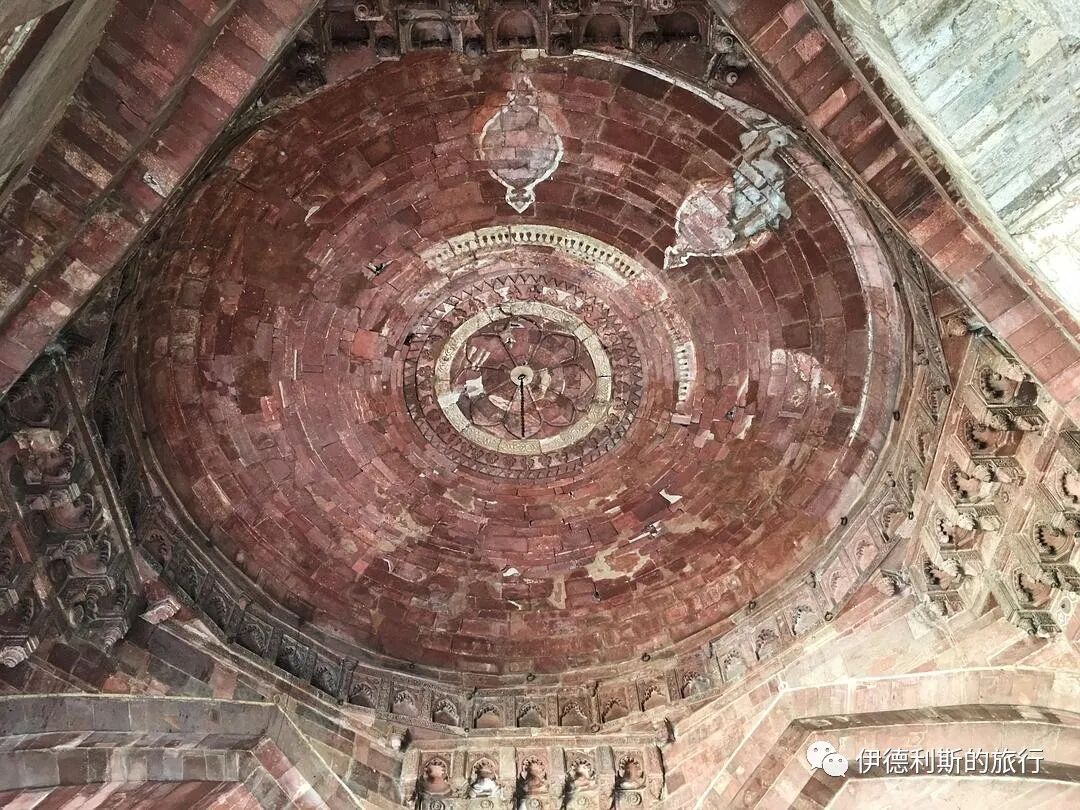
Small dome.
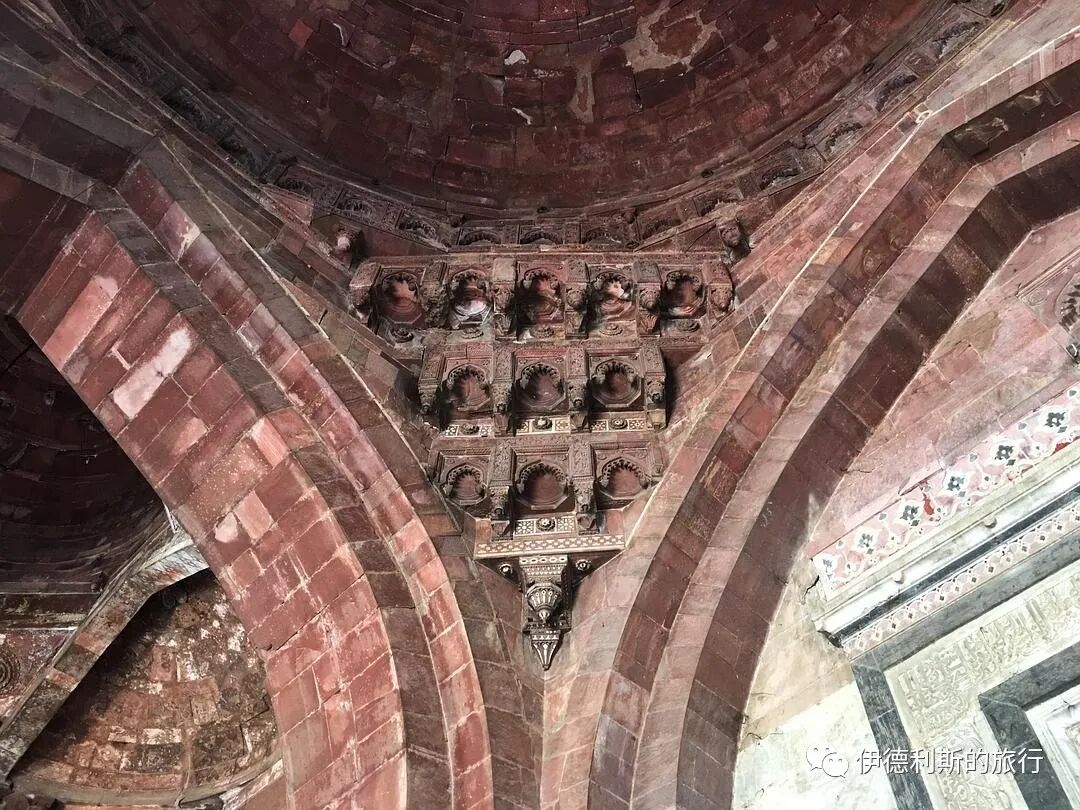
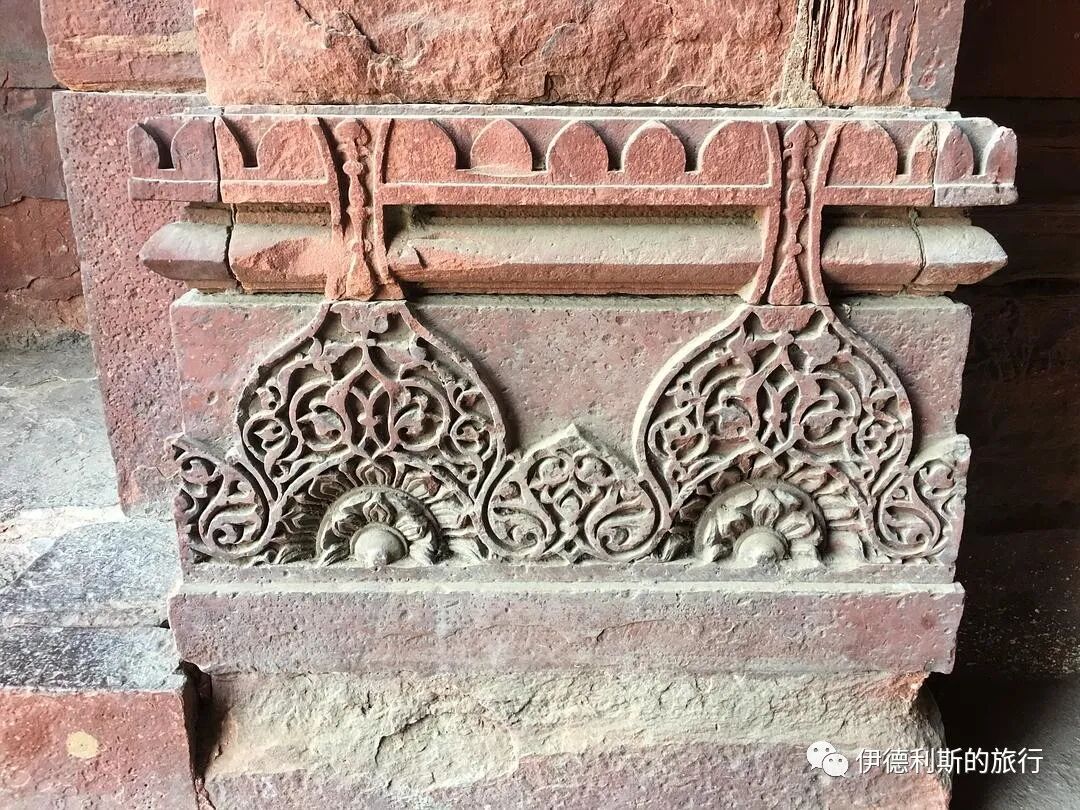
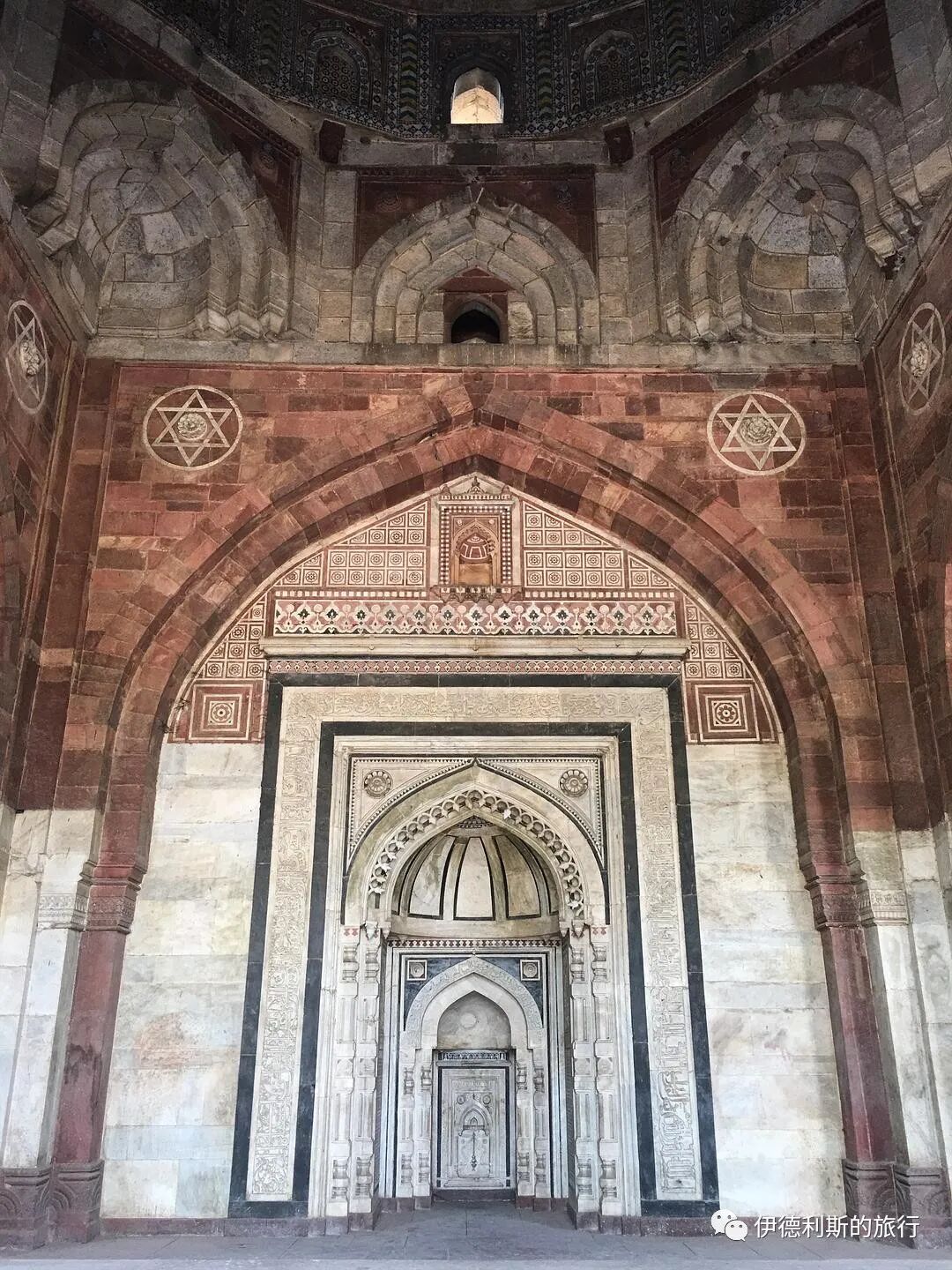
Mihrab.
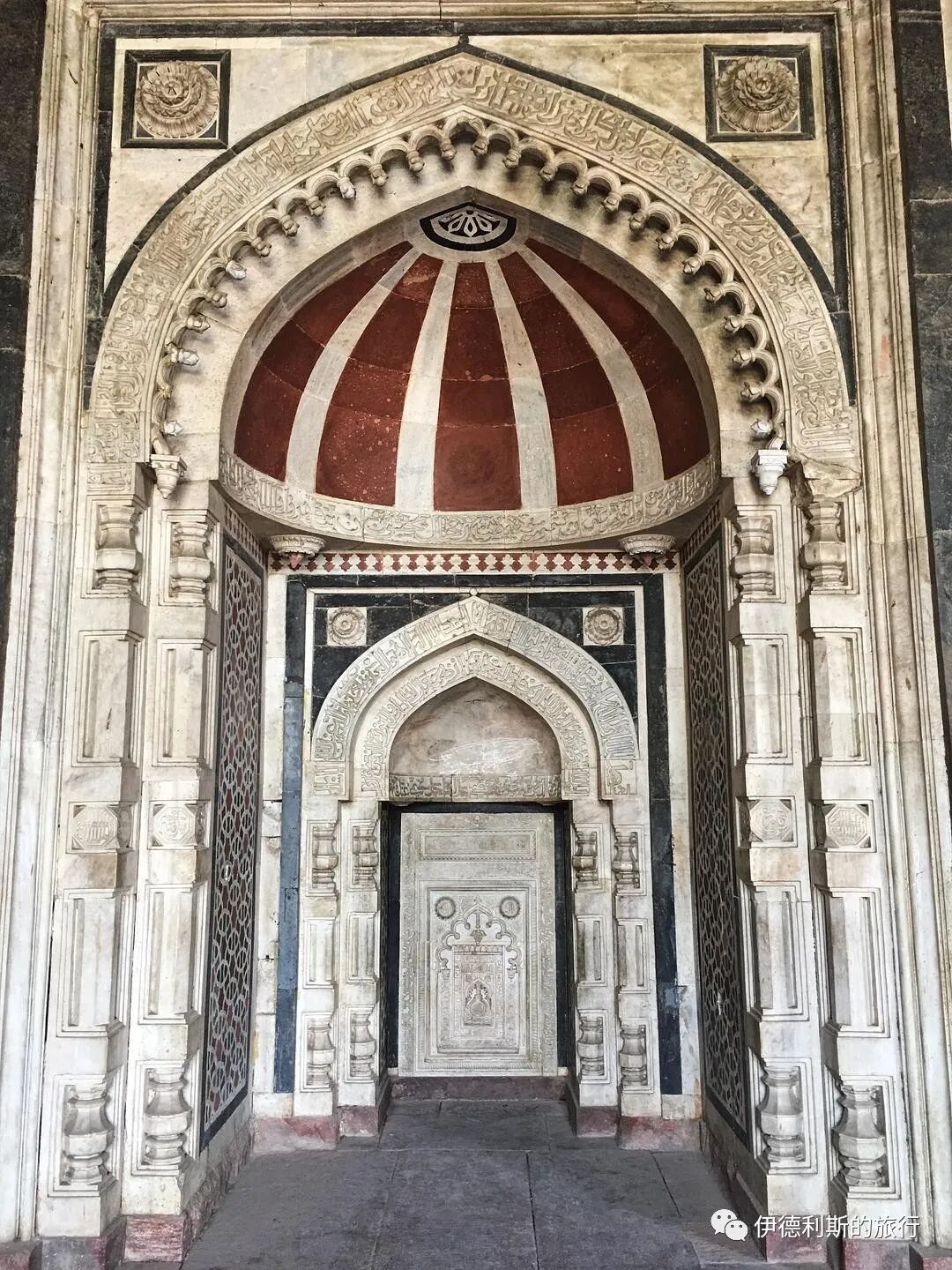
Mihrab.
There are two octagonal towers on both sides of the main hall, featuring the style of the Tughlaq dynasty.
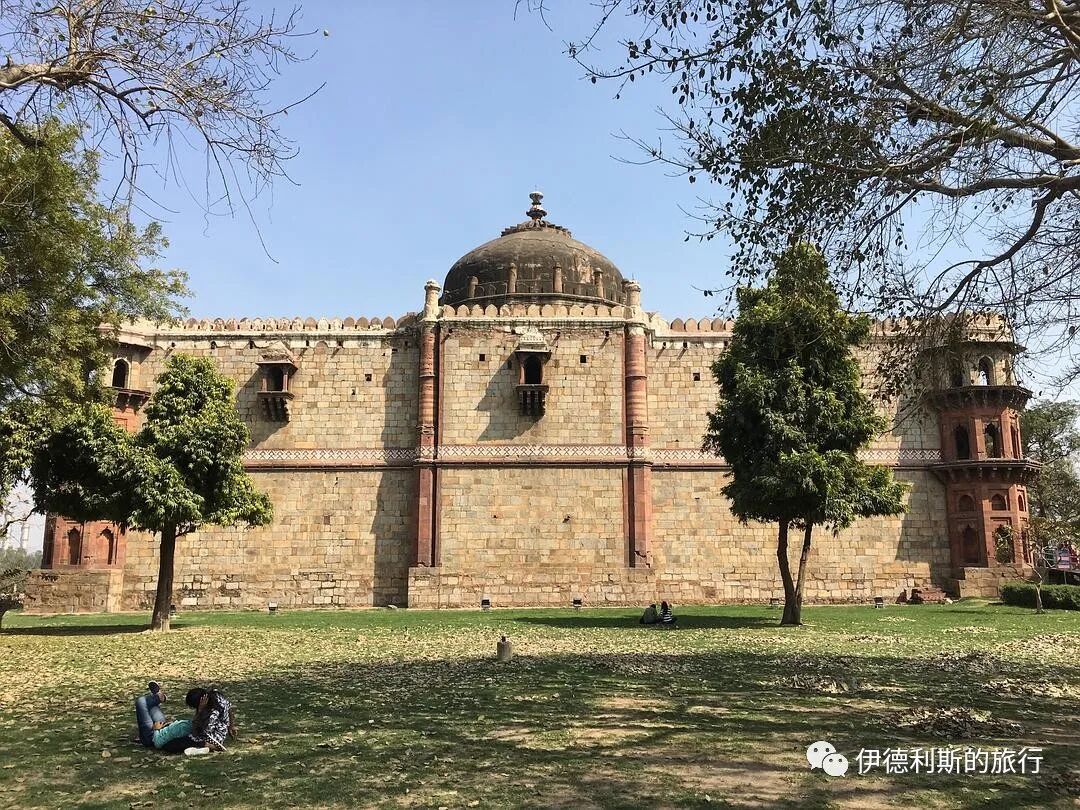
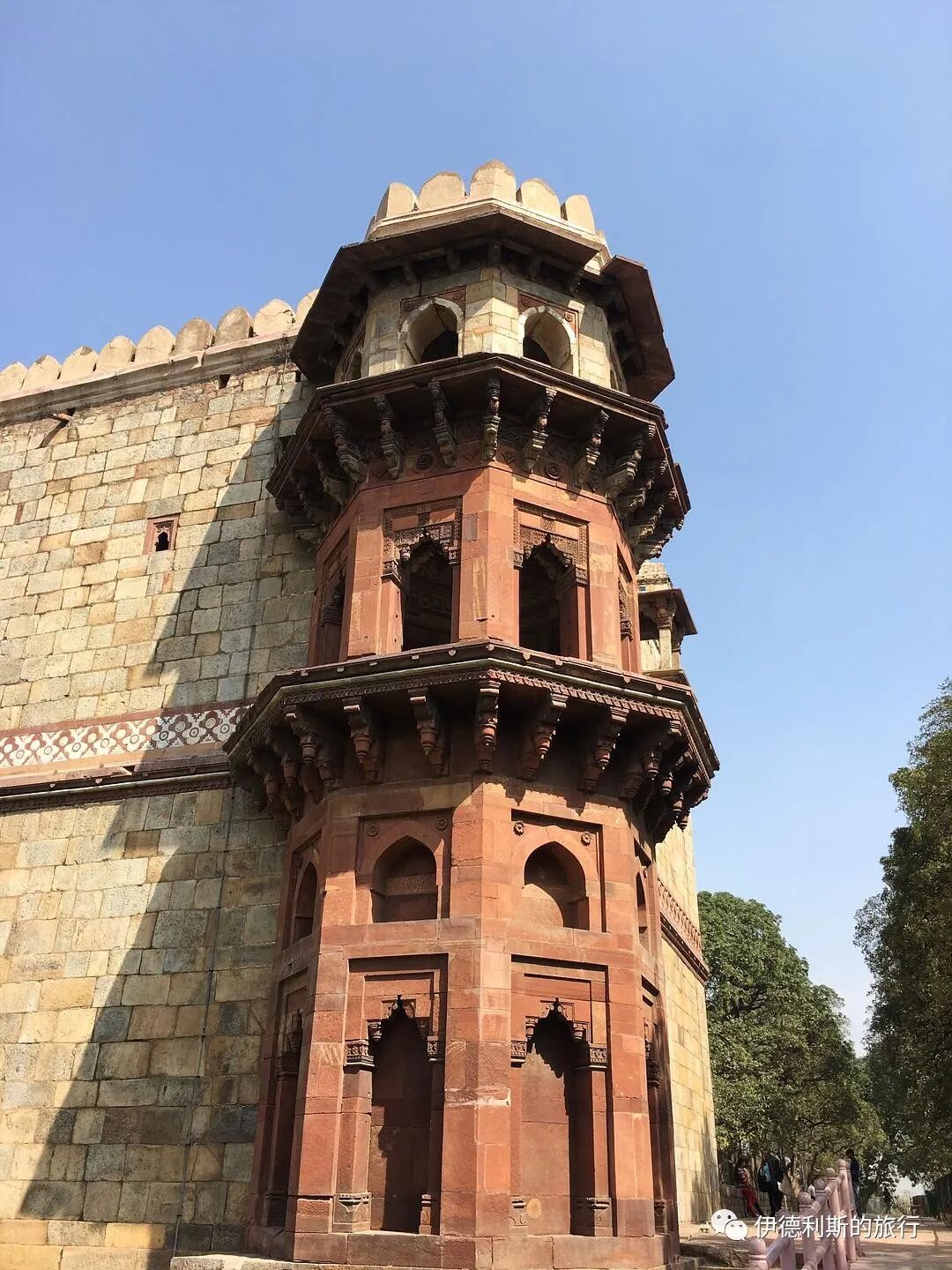
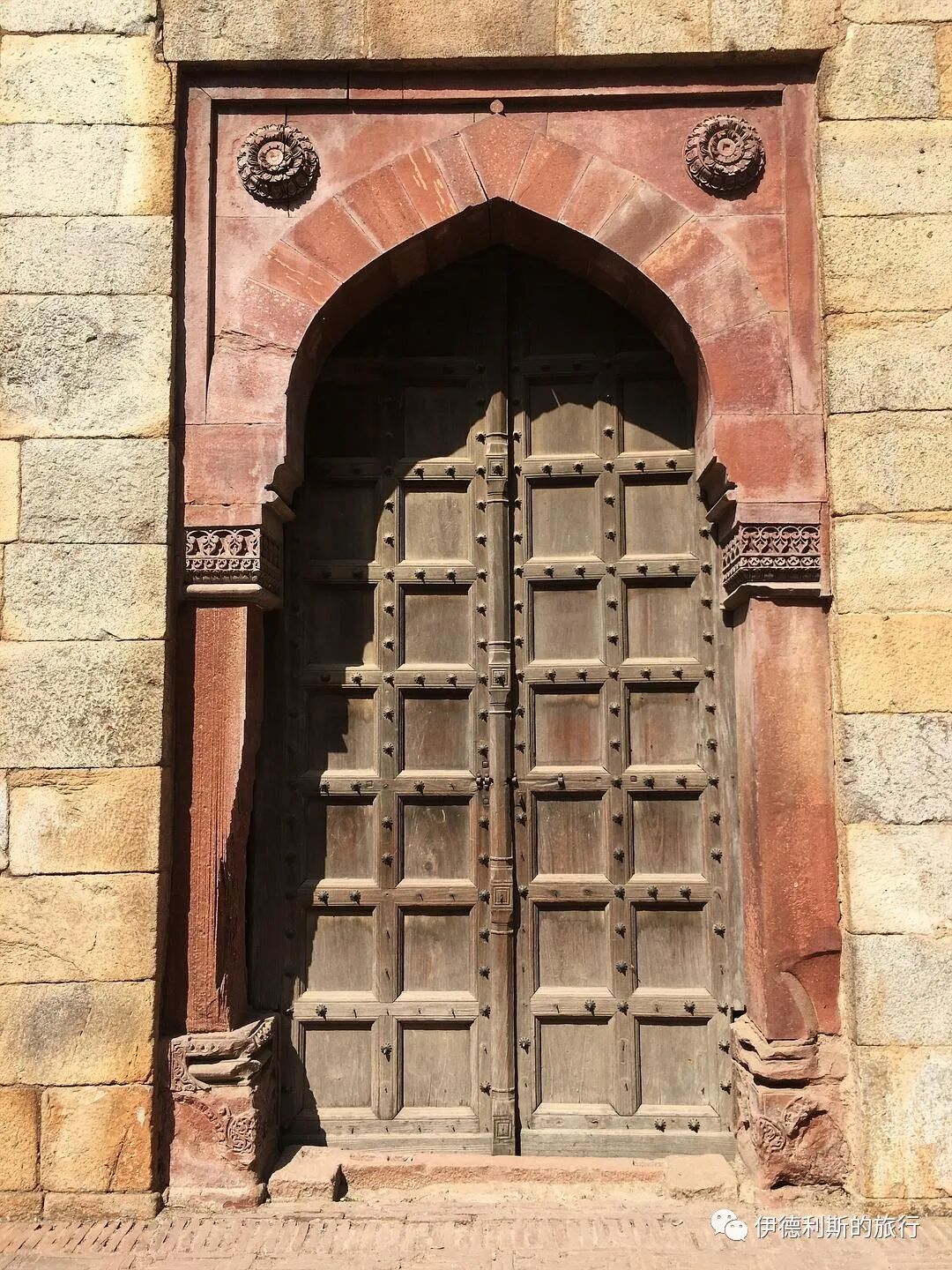
A small door specifically for royal family members to enter for namaz.
IV. Sher Mandal
Sher Mandal is an octagonal pavilion with a very simple style. This simple beauty comes from a return to Persian style, which is quite different from the architectural forms of the late Lodi dynasty of the Delhi Sultanate, and it is the earliest building of this style in Delhi.
Although it looks very much like an early Mughal building, it is actually recognized as part of a palace built by Sher Shah, which was later converted by Humayun into a library and observatory, and it is also known as the first observatory in Delhi.
On January 24, 1556, when the call to prayer sounded, Humayun hurried down the stairs from the second floor of Sher Mandal to prepare for namaz, but he slipped and fell to his death.
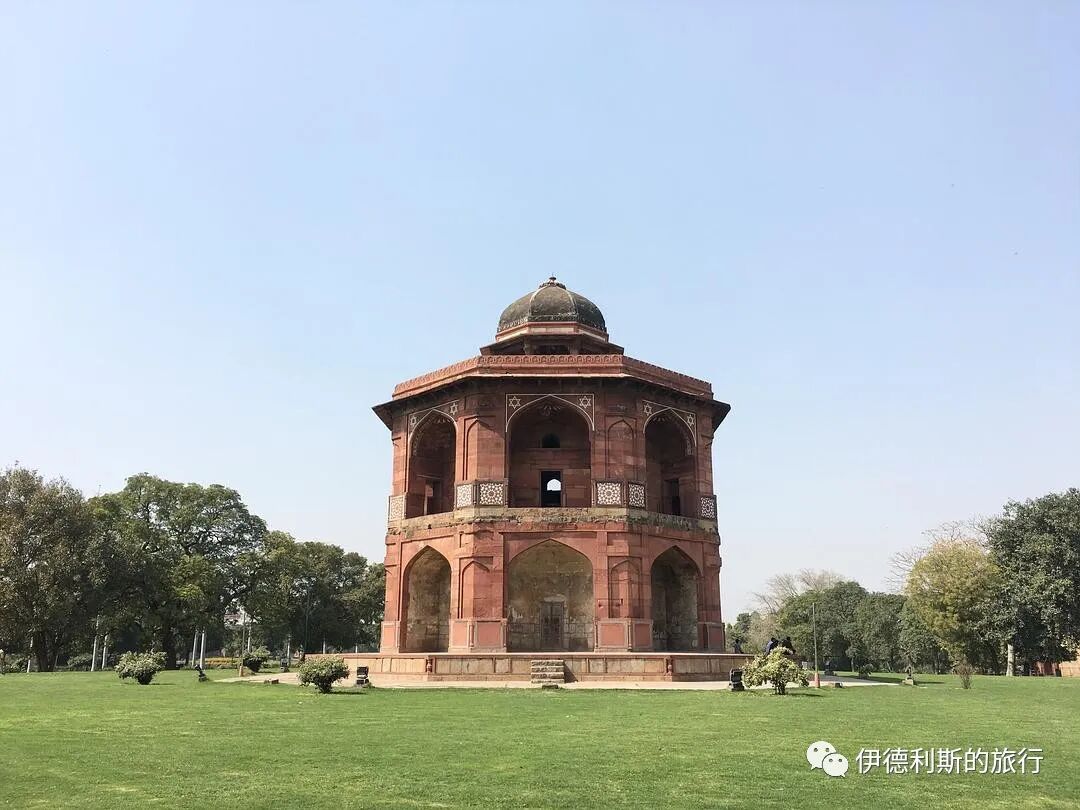
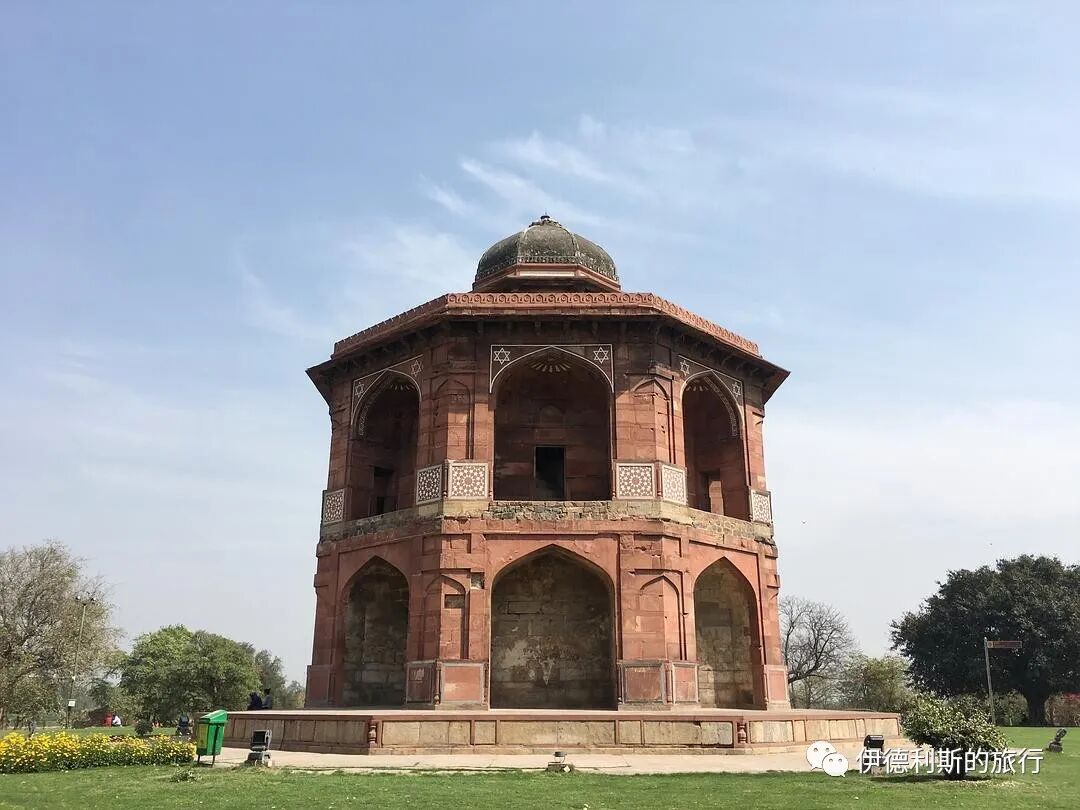
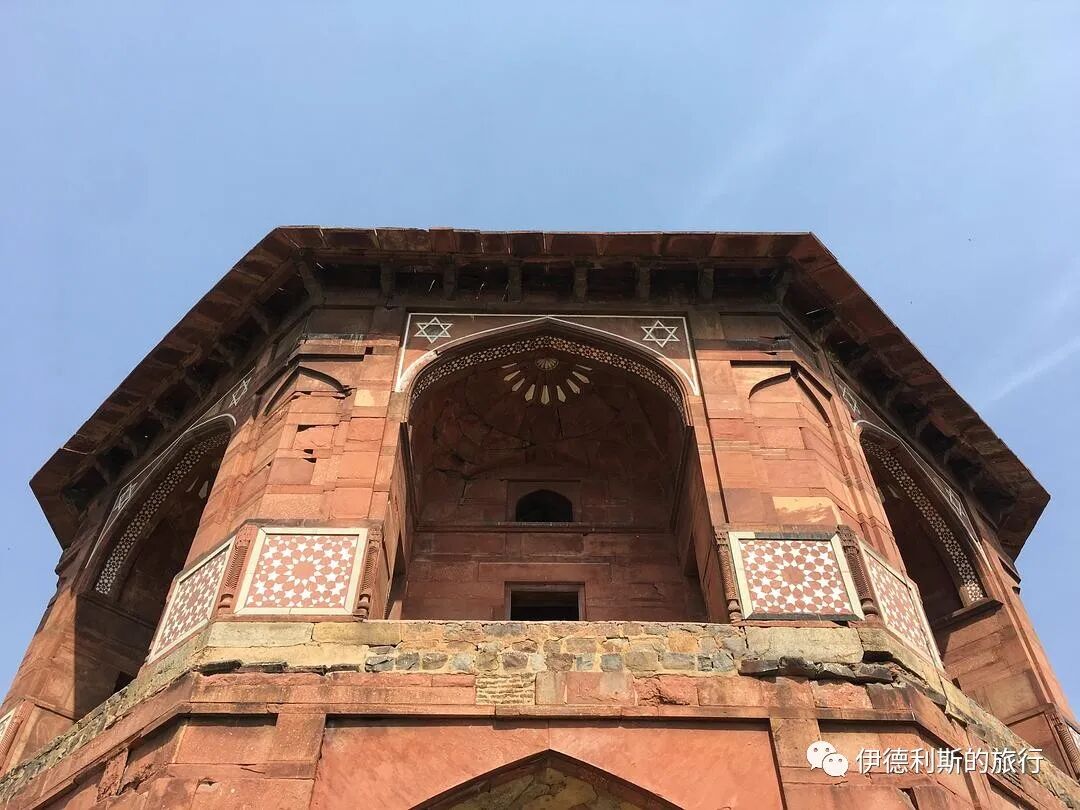
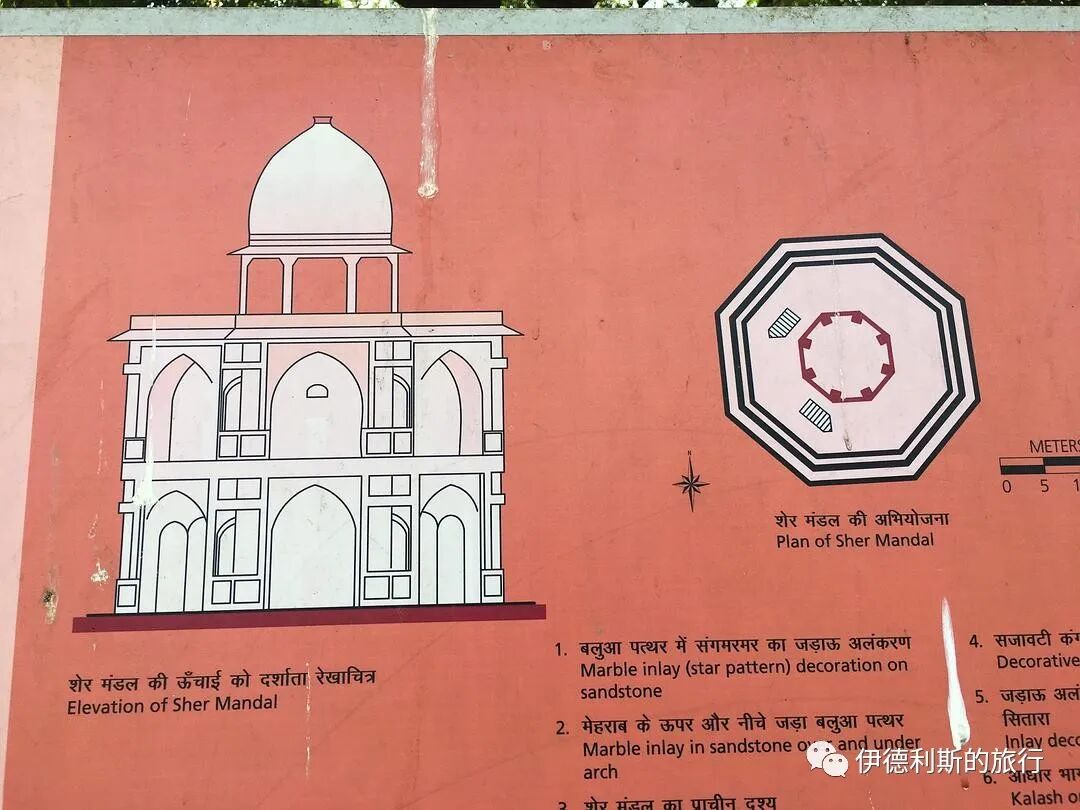
V. Bathhouse Ruins
Next to Sher Mandal are the ruins of a bathhouse (hammam), likely built in the late 16th century. Steps lead into a room with decorative niches, and one side has a channel for flowing water.
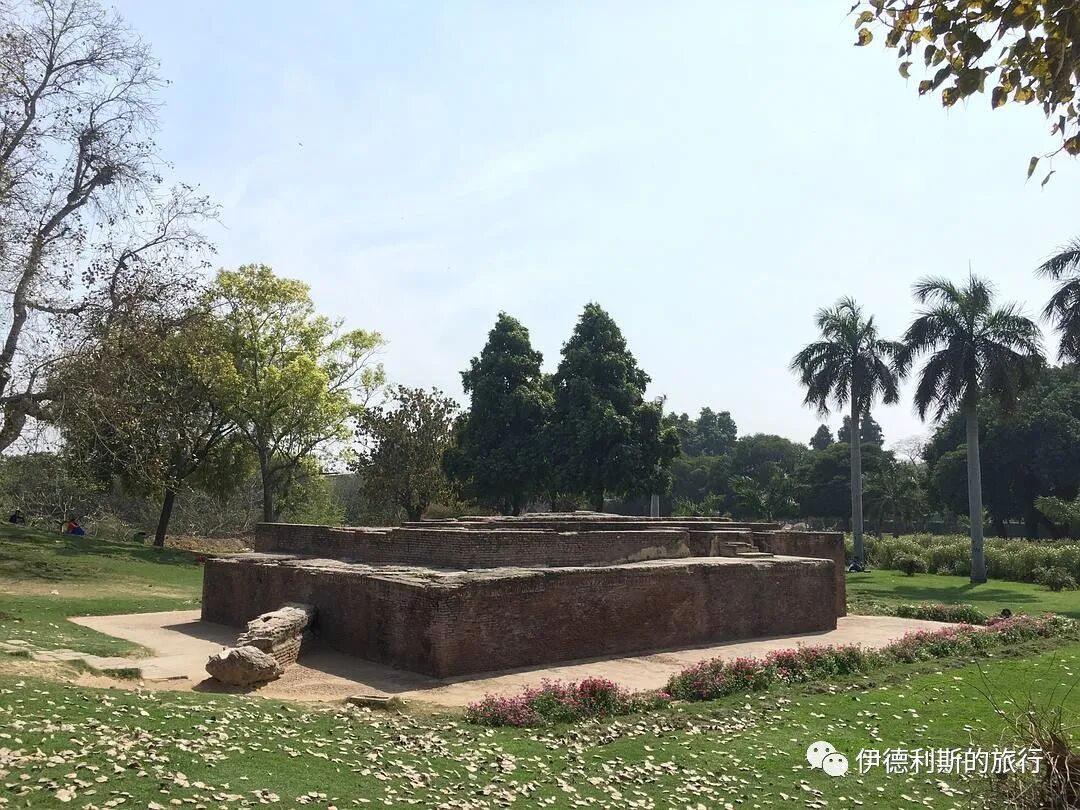
VI. Water Reservoir
The water reservoir (baoli) used for storing water in the city.
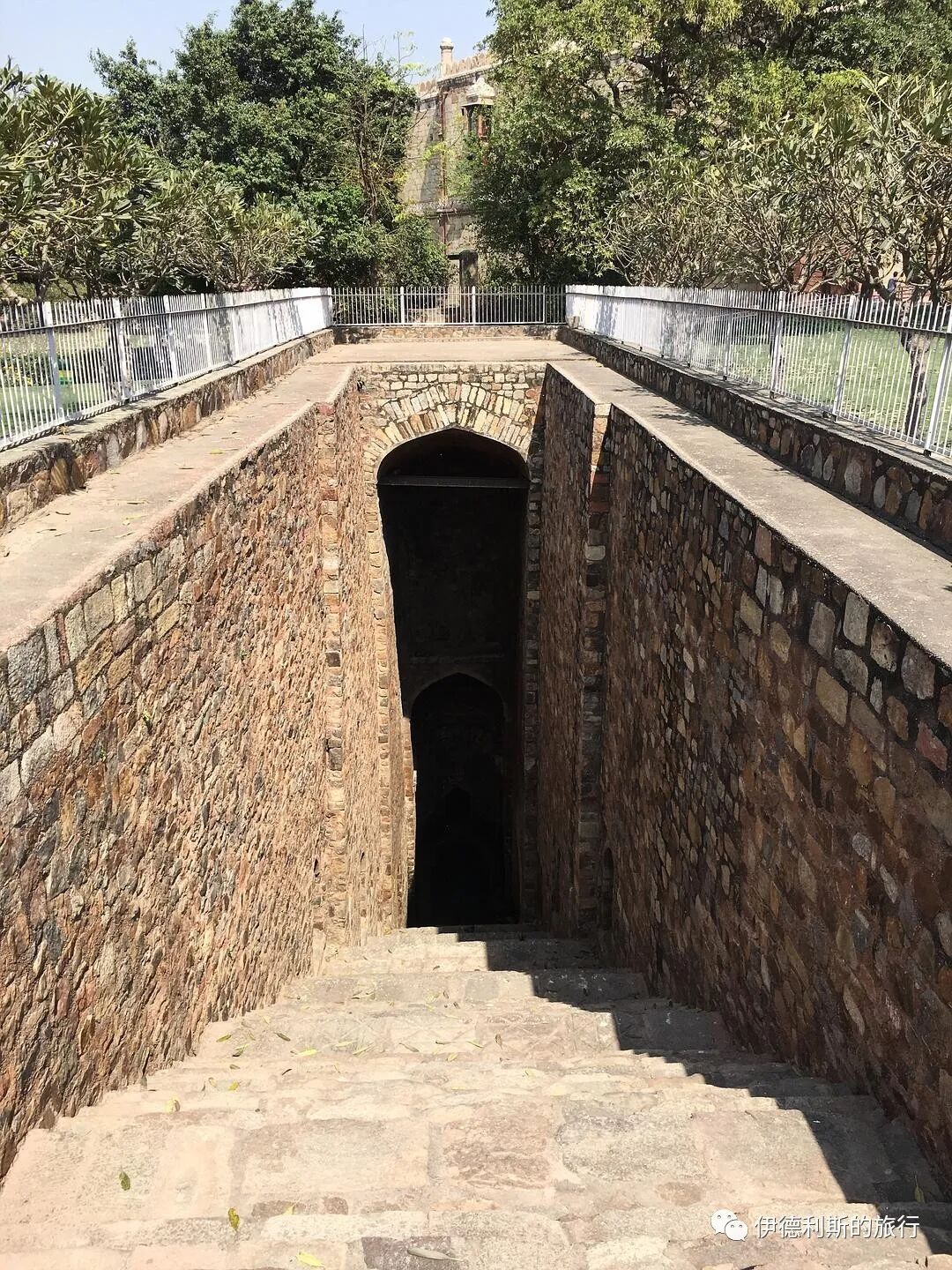
VII. Outer City Gates
After exiting through the main gate of the Old Fort, you can see the historical ruins of the outer city of Dinpanah. Among the seven cities of Delhi, Dinpanah is the one we know the least about. Some early descriptions suggest that Dinpanah was an extension to the south of Ferozabad, the fifth city of Delhi.
Only two gates remain of the outer city walls of Dinpanah. The north gate of the outer city (Khuni Darwaza) is located near Ferozabad. It is also called the "Bloody Gate" because Mughal princes were shot there in 1857.
The south gate of the outer city (Lal Darwaza) is right next to the main gate of the Old Fort. Outside the gate is a wide road with the ruins of shops on both sides.
The relationship between the outer city walls of Dinpanah and the Old Fort walls is still unclear. However, judging by the moat outside the Old Fort, the outer walls were likely not connected to the Old Fort walls. In the 19th century, the archaeologist Cunningham speculated that the walls of Dinpanah should have covered a much larger area than these two gates suggest, possibly reaching over 14 kilometers. However, there was not enough archaeological evidence at the time to prove this.
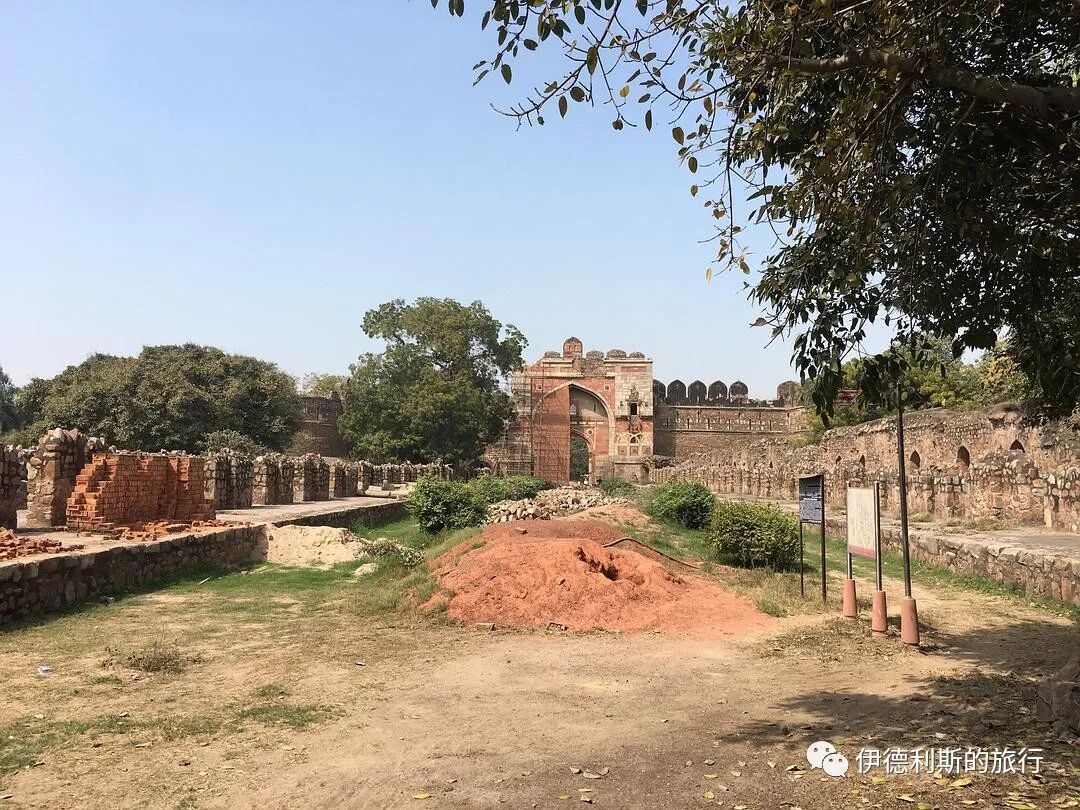
Unfortunately, the south gate of the outer city was under renovation when I visited, so I could only look at it from a distance.
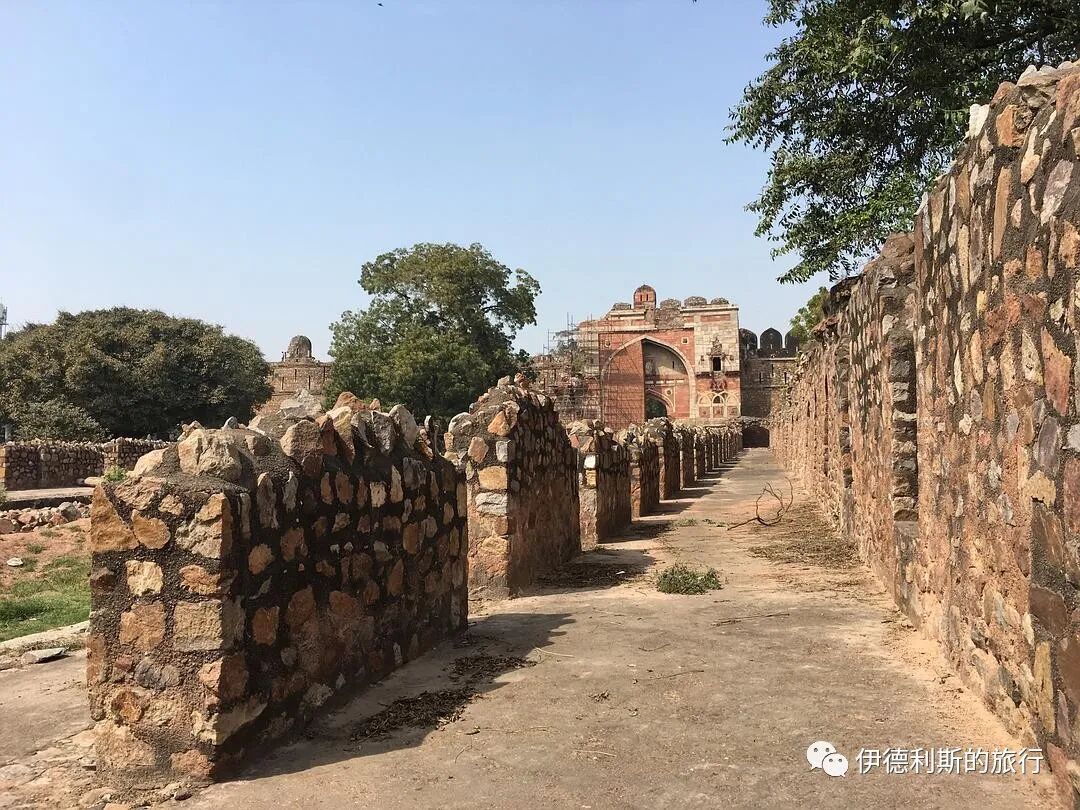
The ruins of the shops on both sides of the road outside the gate.
VIII. Khairul Manazil Mosque: 1561
Right next to the south gate of Dinpanah is the Khairul Manazil mosque, built in 1561 by Maham Anga, the wet nurse of the Mughal Emperor Akbar the Great. Between 1560 and 1562, she was the de facto regent of the Mughal Empire.
The gate of the mosque is a typical Mughal-style building, while the main hall with its semi-domed roof is in the Delhi Sultanate style. This is a characteristic of the transitional period in the early Mughal dynasty.
There is a water pool in the center of the courtyard, surrounded by a two-story madrasa.
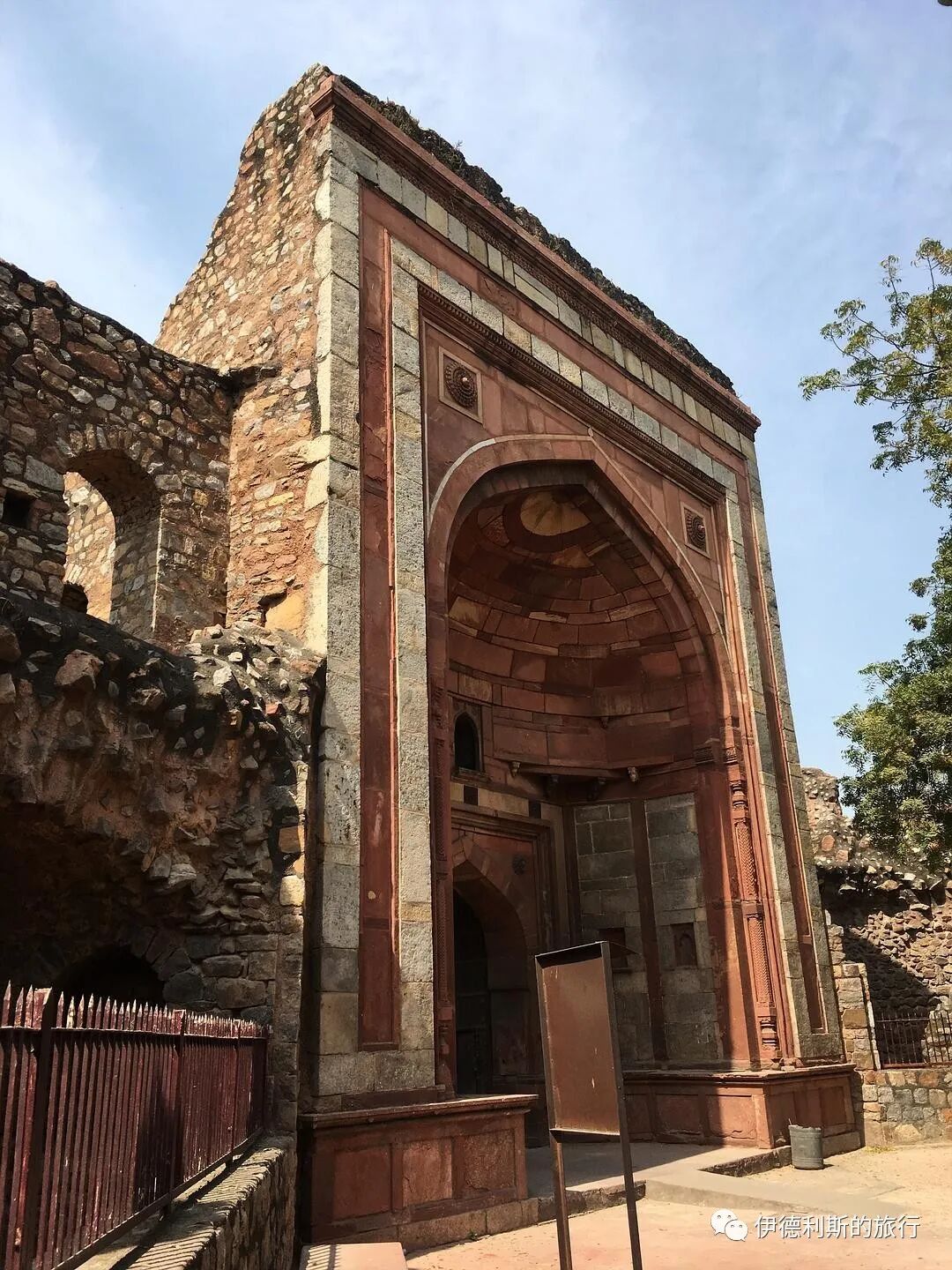
The main gate.
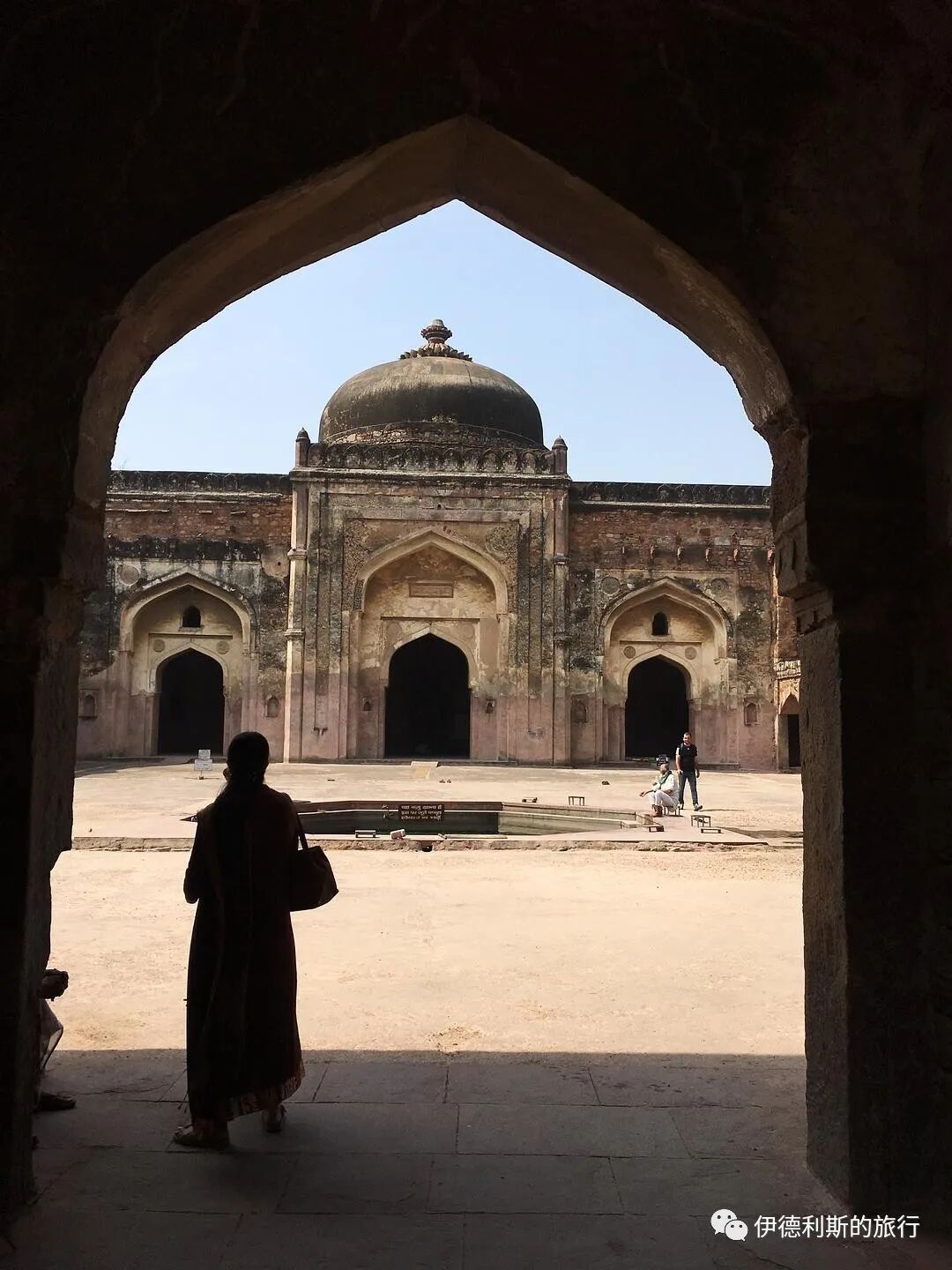
Looking inside from the main gate.
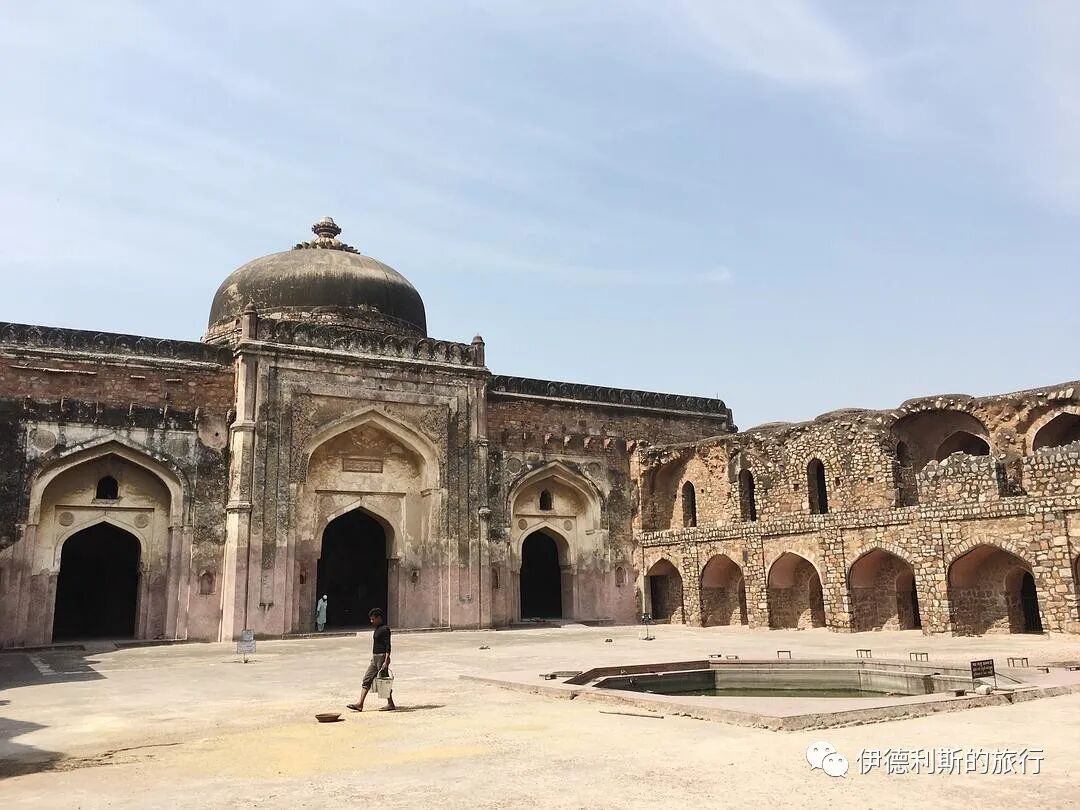
The mosque is on the left and the madrasa is on the right.
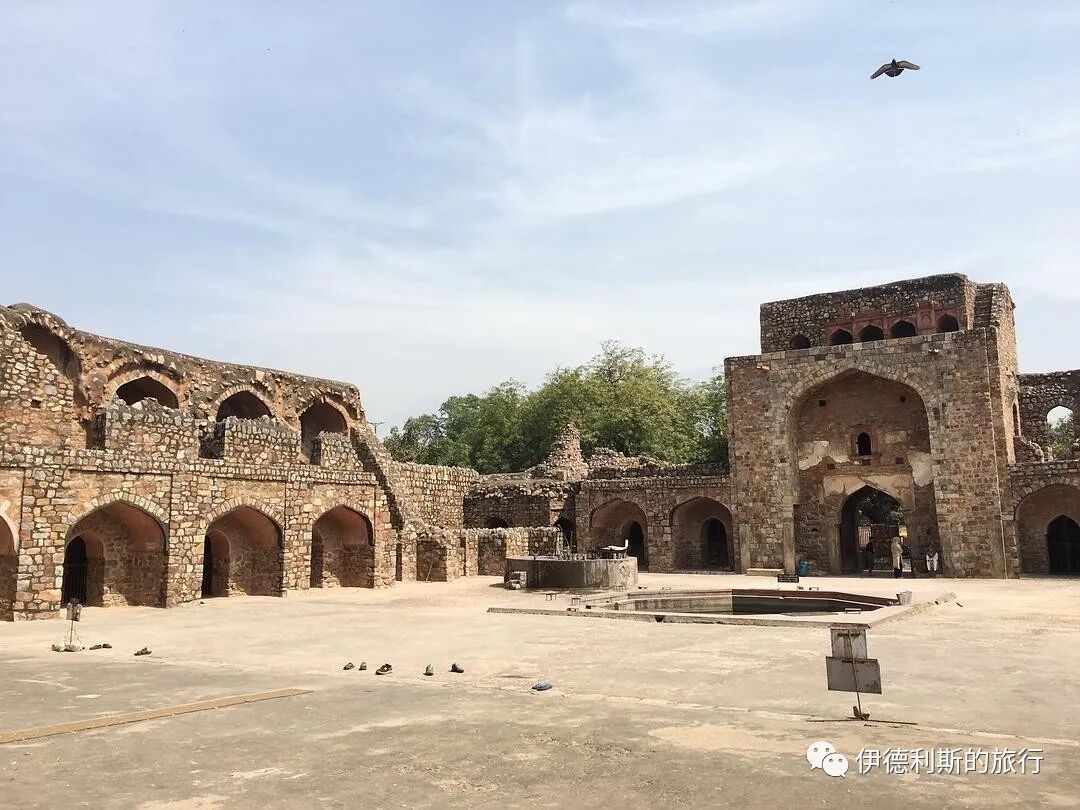
The madrasa is on the left and the main gate is on the right.
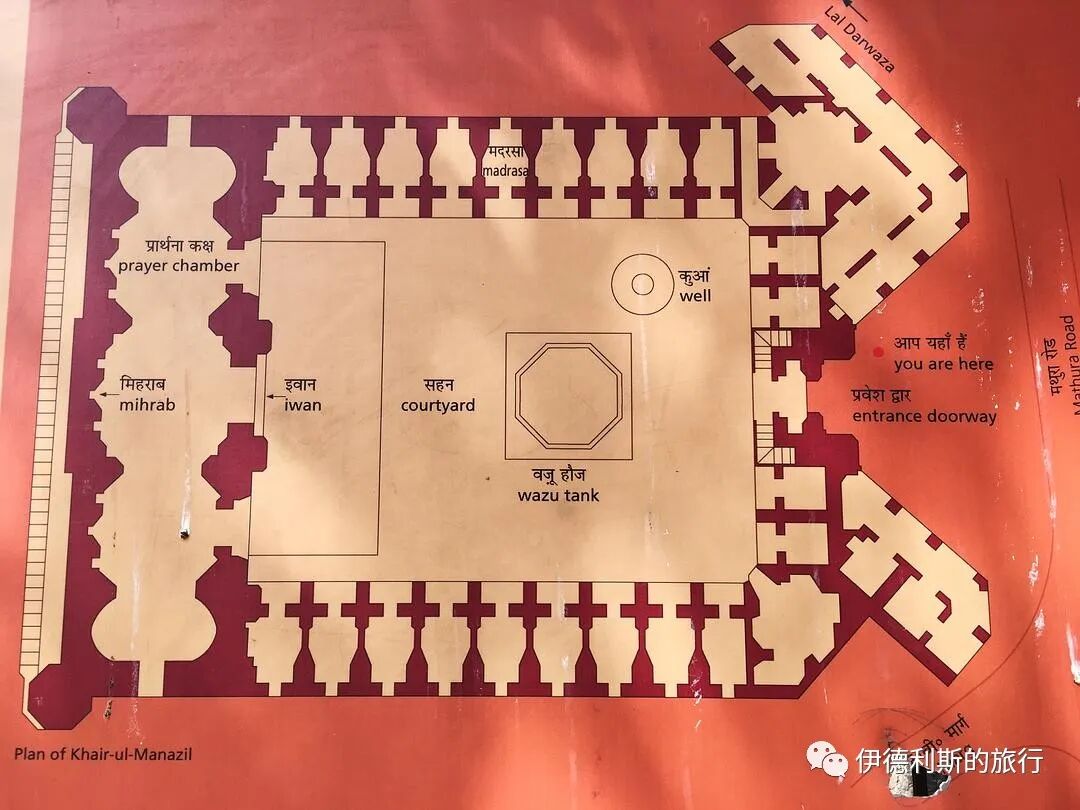
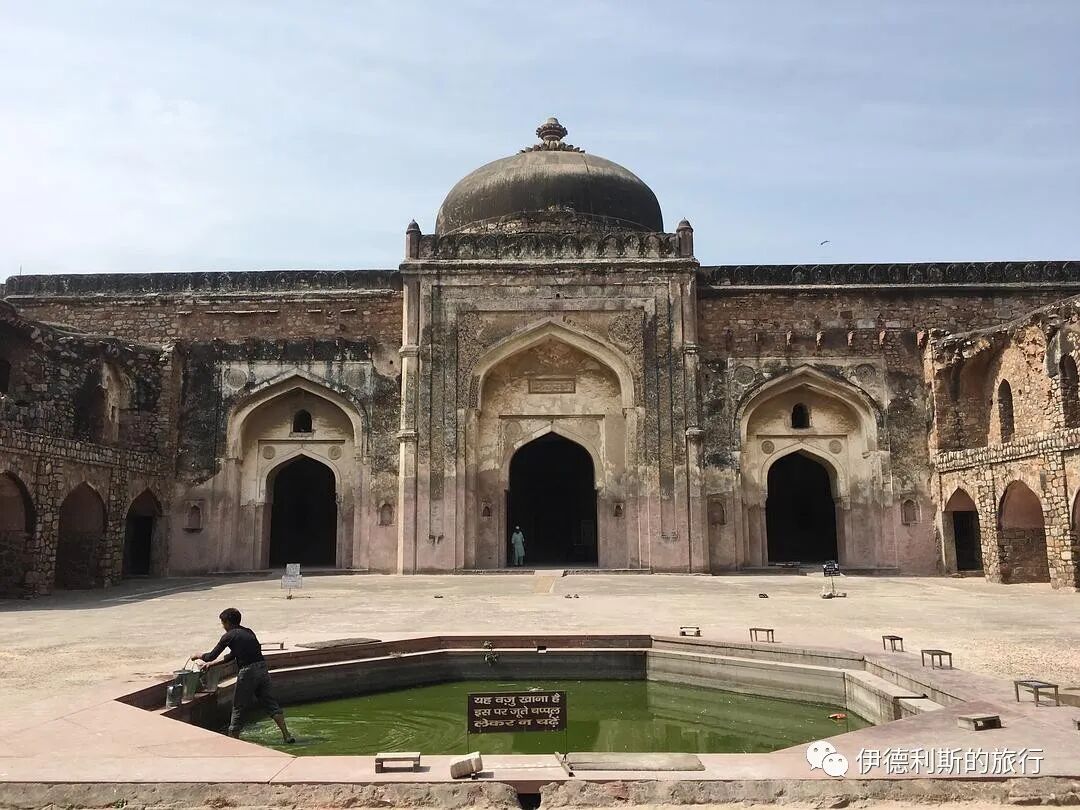
The main hall and the water pool in the courtyard.
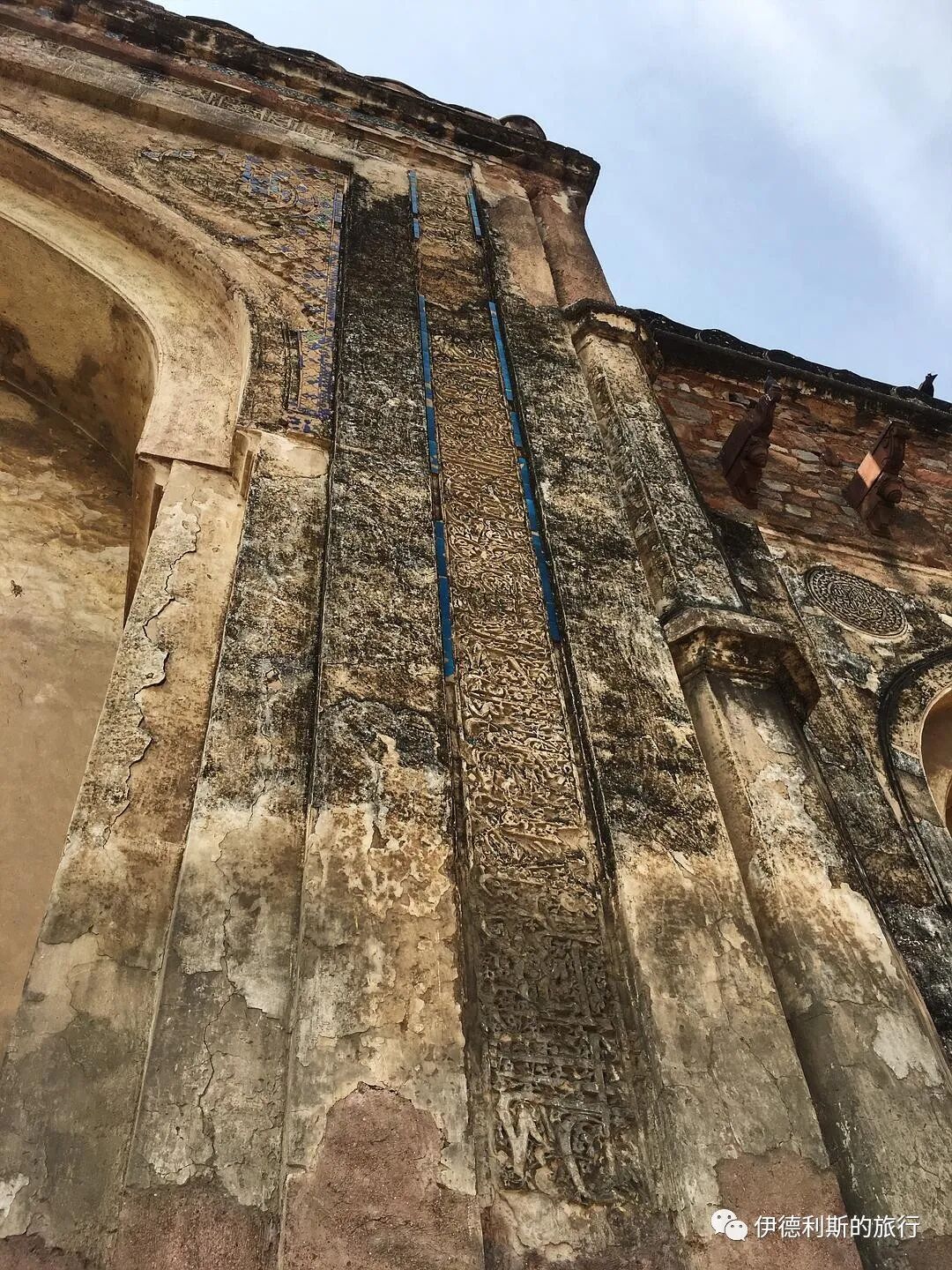
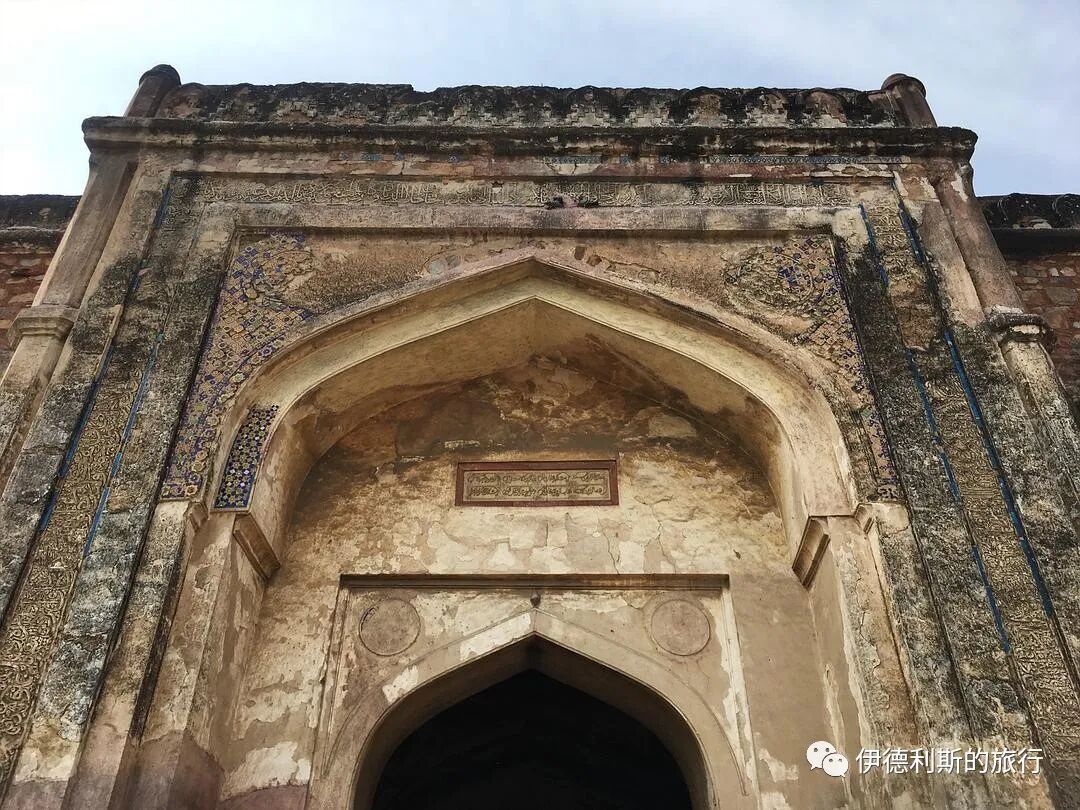
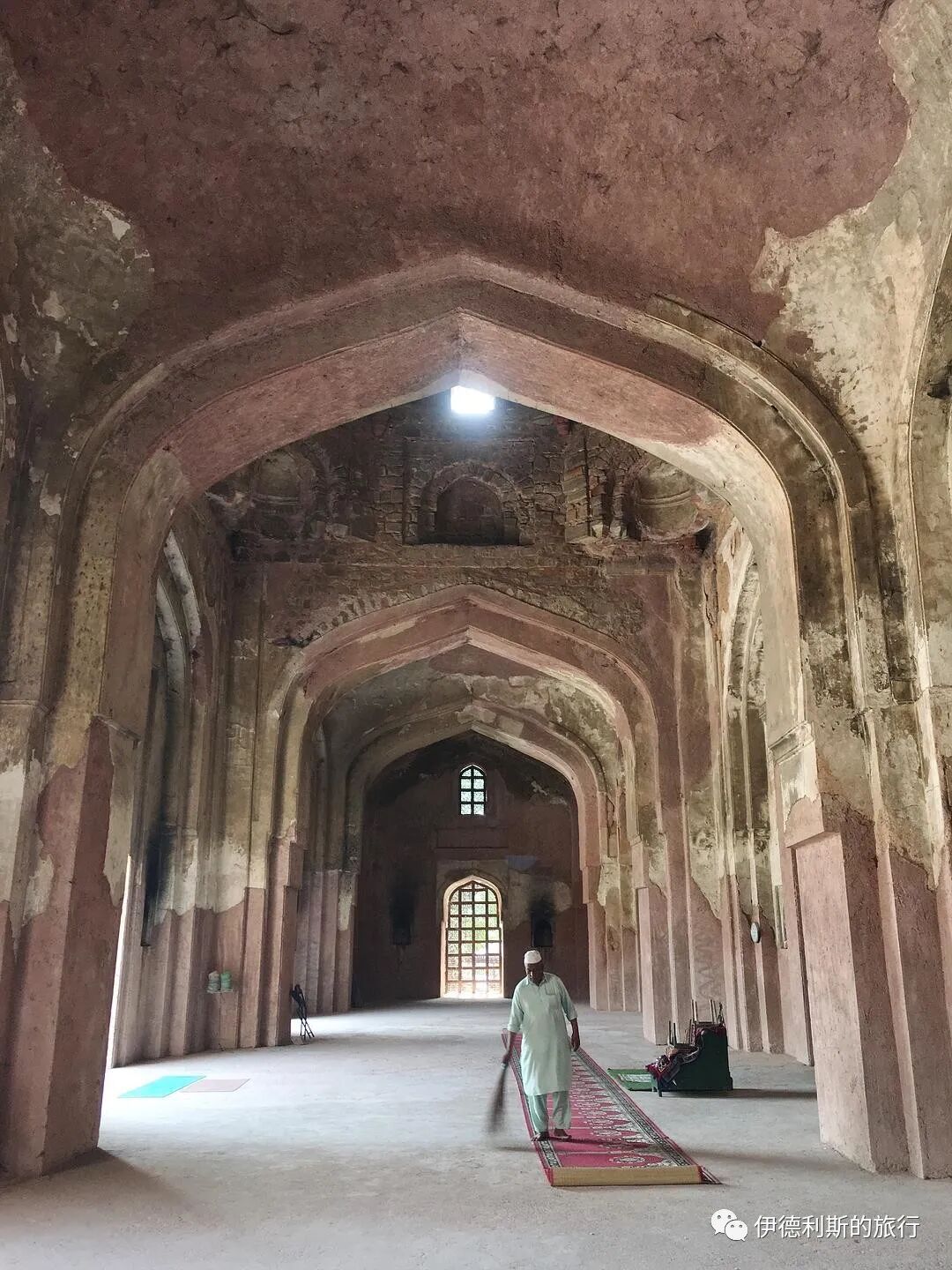
Inside the main hall.
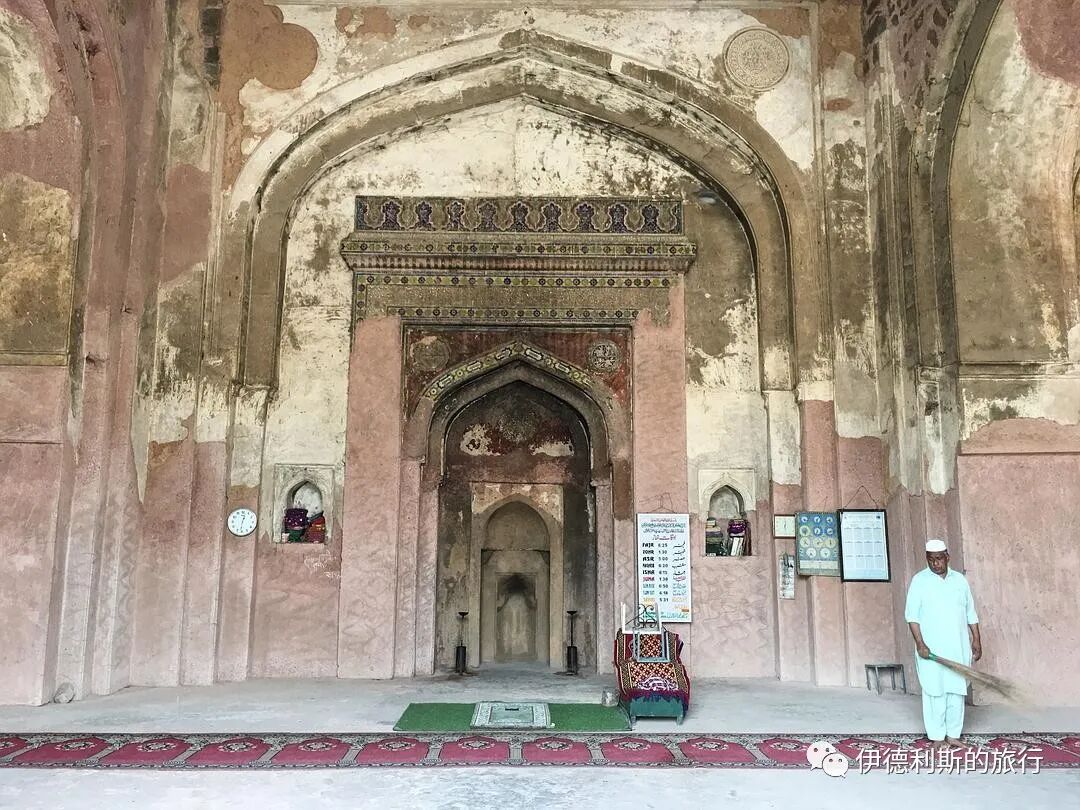
Mihrab.
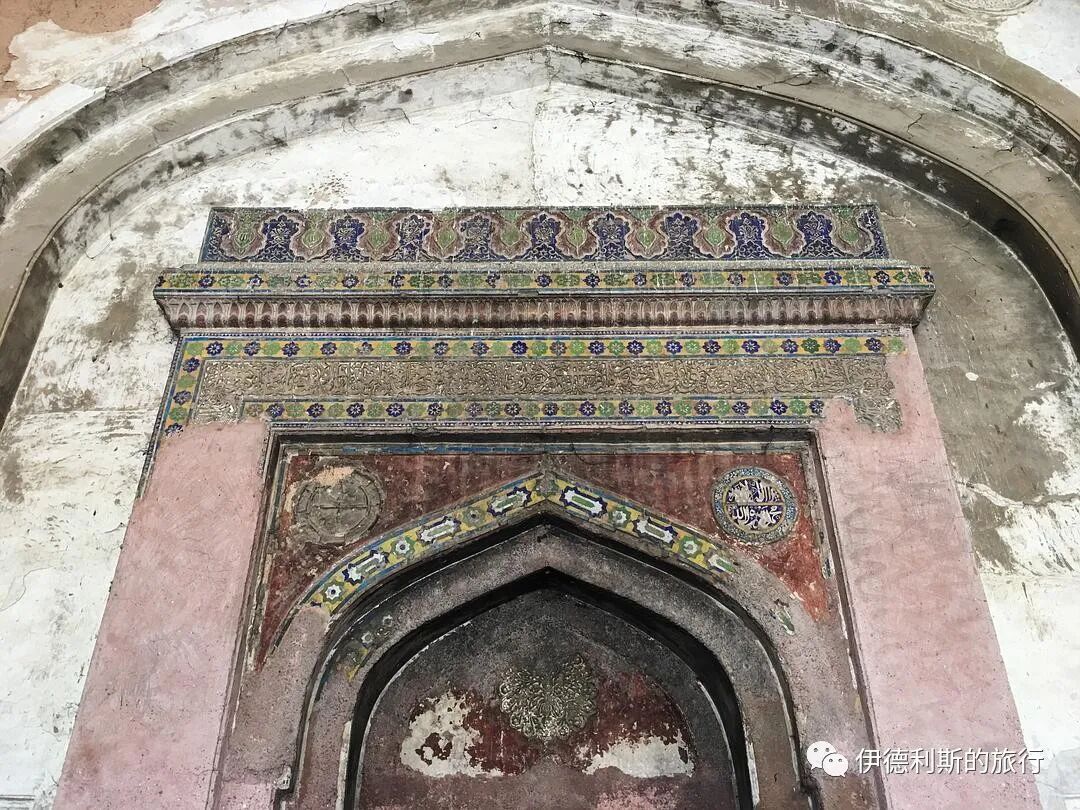
The patterns on the mihrab.
IX. Sur Empire Architecture Around Din Panah
On the north and south sides of Dinpanah, there are two very important buildings from the Sur dynasty. To the north is Salimgarh Fort, and to the south is the tomb and mosque of Isa Khan.
1. Salimgarh Fort: 1546
Salimgarh Fort is located on the north side of the Red Fort in Delhi. It was built in 1546 by Salim Shah, the son of the Sur dynasty ruler Sher Shah. People say in 1555, Humayun stayed here for three days before recapturing Delhi. In 1639, when the Mughal Emperor Shahjahan was building the seventh city of Delhi, Shahjahanabad, he also camped here.
The place turned dark after the Mughal Emperor Aurangzeb turned it into a prison. Aurangzeb imprisoned his brother Murad Baksh here, and it is said he also held his favorite eldest daughter, Zebunnisa, captive here for twenty-one years.
In 1857, an anti-British uprising broke out in India, eventually leading to the fall of the Mughals. From August to early September 1857, the last Mughal Emperor, Bahadur Shah Zafar, held strategic meetings at Salimgarh Fort and announced that the Mughal Emperor would lead the Indian people in their resistance against the British. He called on all Indian people, regardless of caste or faith, to join the resistance together.
But by mid-September, the British army began to surround the fort. The emperor's men urged him to retreat to a safe place, but the emperor refused. The emperor ordered his army to evacuate the fort, while he went to the tomb of Humayun. Therefore, when the British army entered the fort, they only encountered one sentry. On September 20, the emperor was arrested by the British army at Humayun's Tomb, marking the end of the Mughal Empire, which had lasted for over three hundred years.
After the uprising ended, the fort was used as an artillery camp for the British army and later became a prison. Between 1945 and 1947, leading up to India's independence, many members of the Indian National Army (INA) were tortured to death here, and many more disappeared forever. Because of this, Salimgarh Fort is now also called Swatantrata Senani Smarak to commemorate the prisoners who were treated cruelly within the fort.
There are many legends about ghosts haunting Salimgarh Fort. The most famous ghost is the Mughal Emperor Aurangzeb's daughter, Zebunnisa. Legend says she wears a black veil and sings poems she wrote herself under the moonlight. Additionally, some people claim they can hear the groans of the Indian National Army soldiers who were tortured to death here at night.
In 2007, this place became a UNESCO World Heritage site.
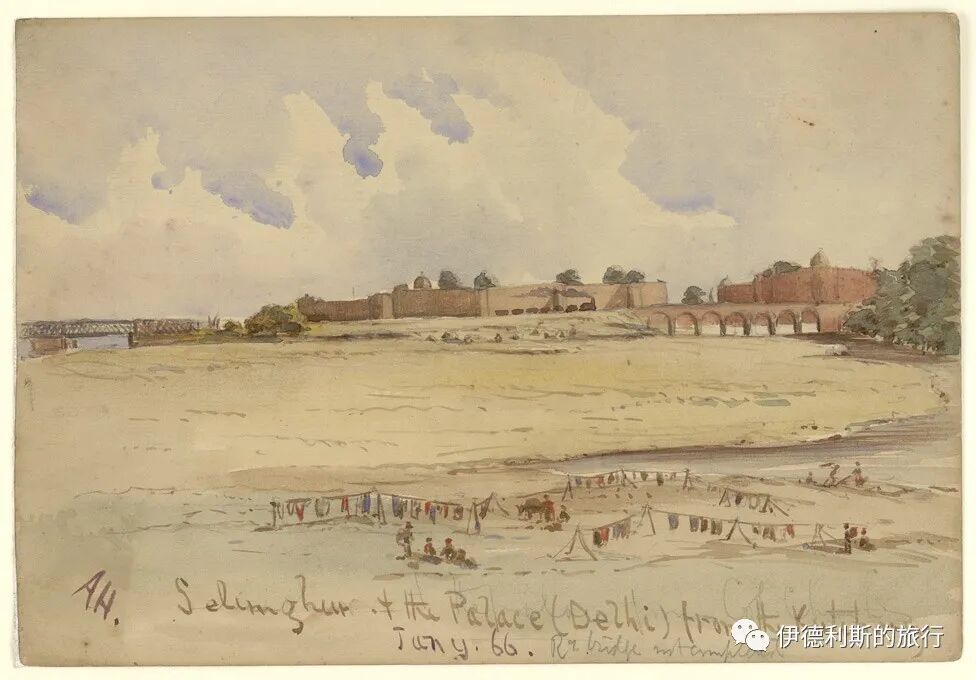
Salimgarh Fort in 1866, drawn by Alfred Frederick Pollock Harcourt.
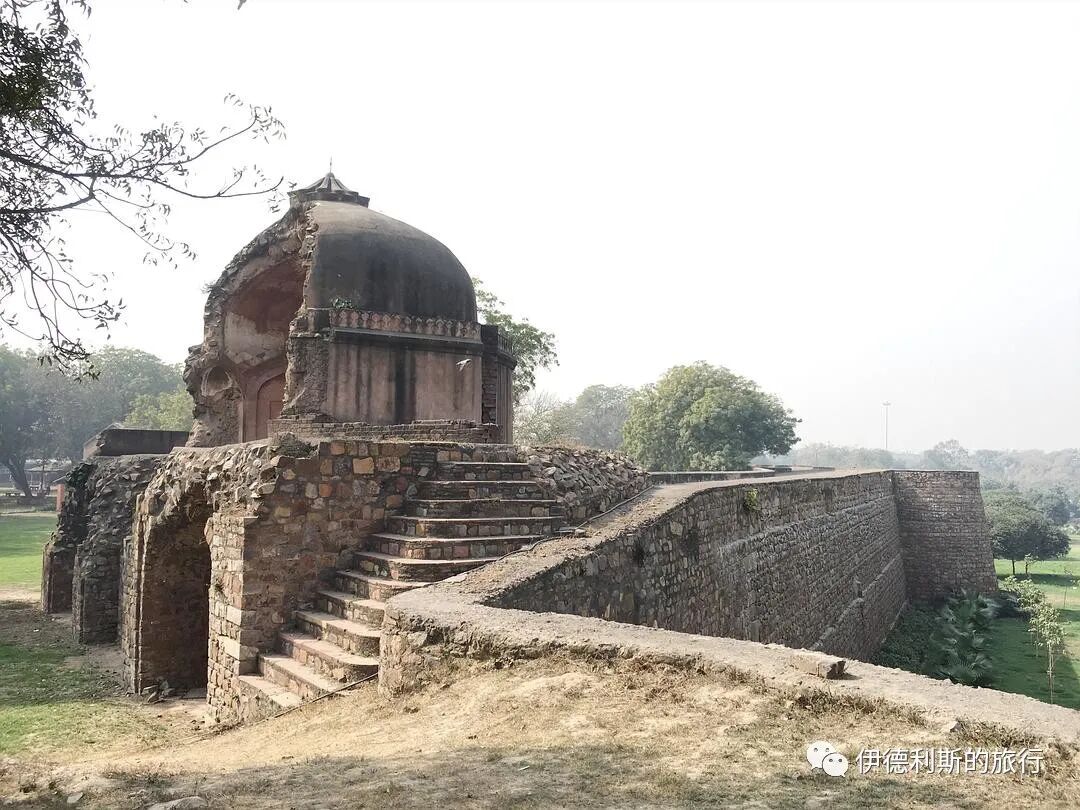
The mosque by the city wall.
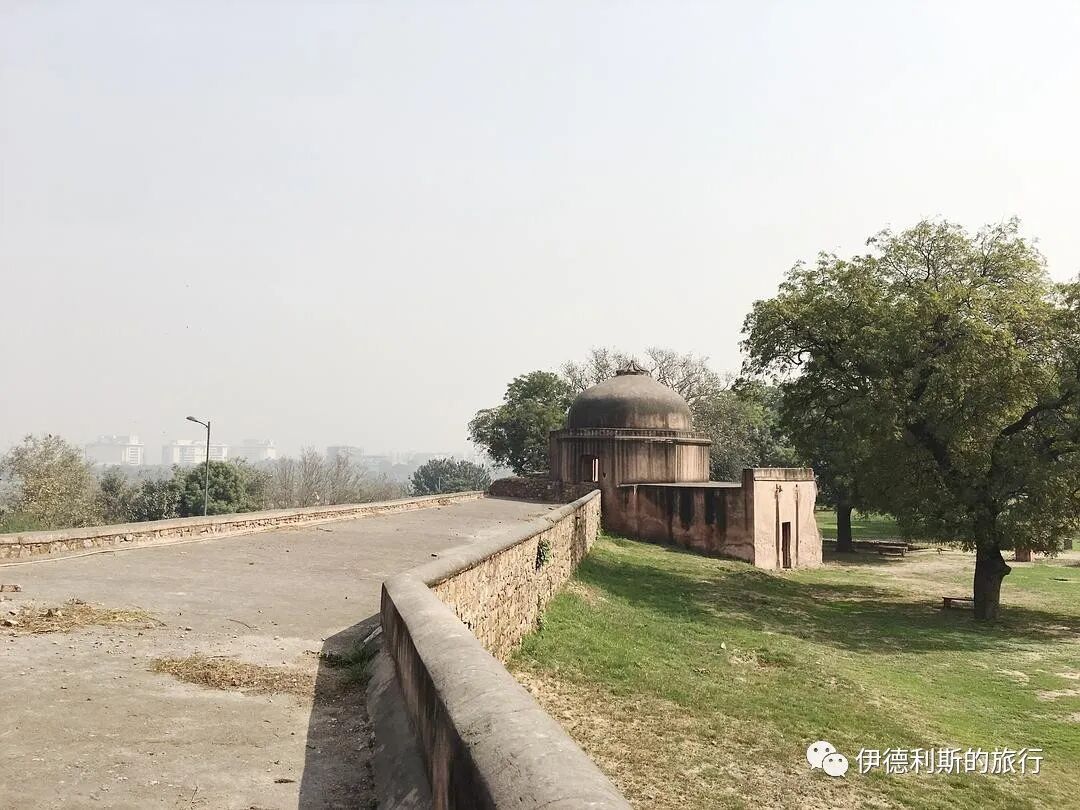
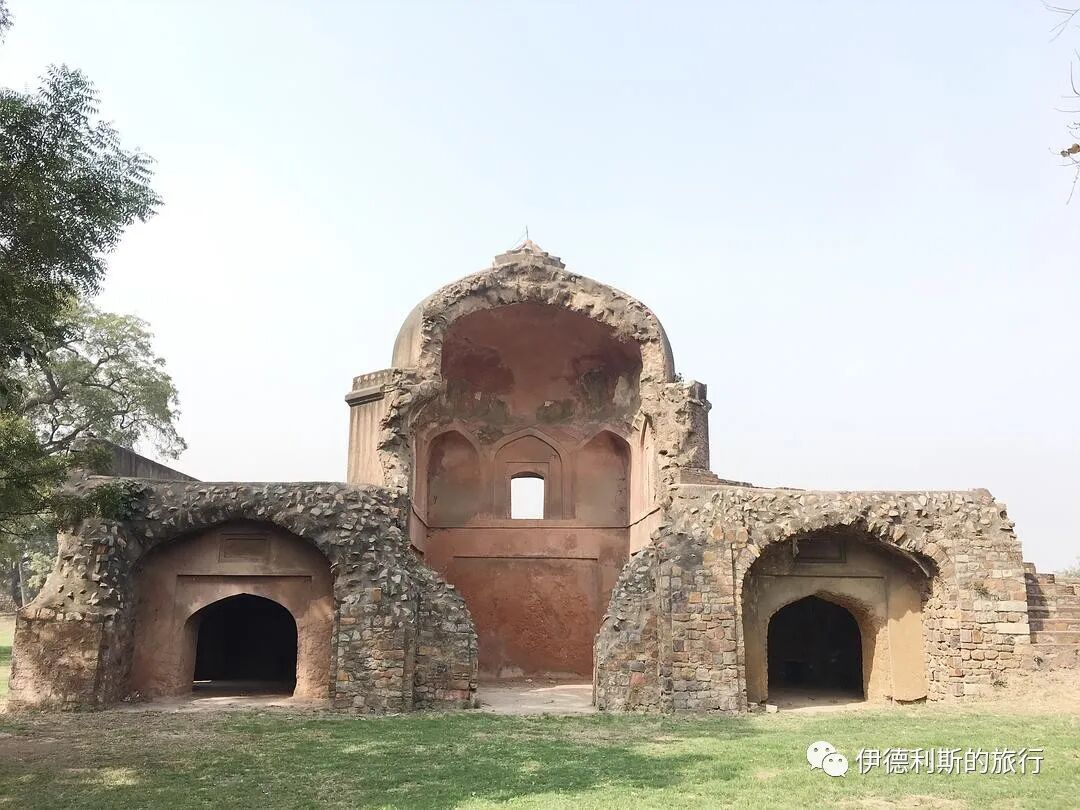
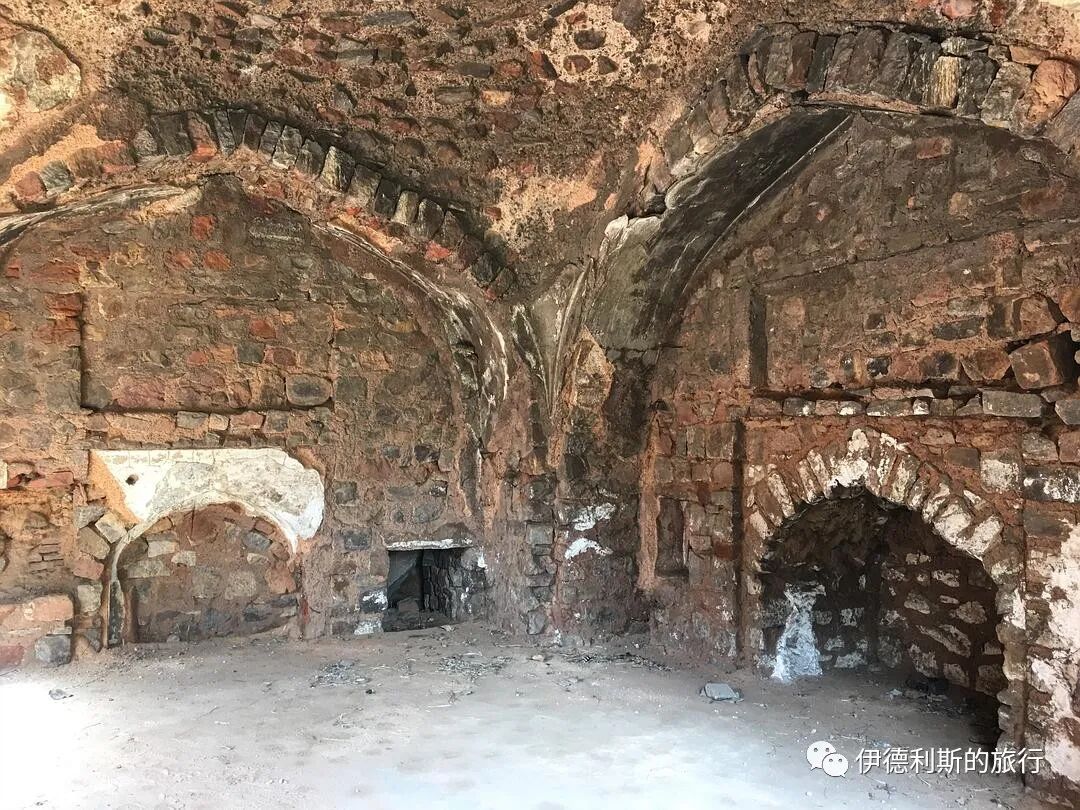
Inside the mosque.
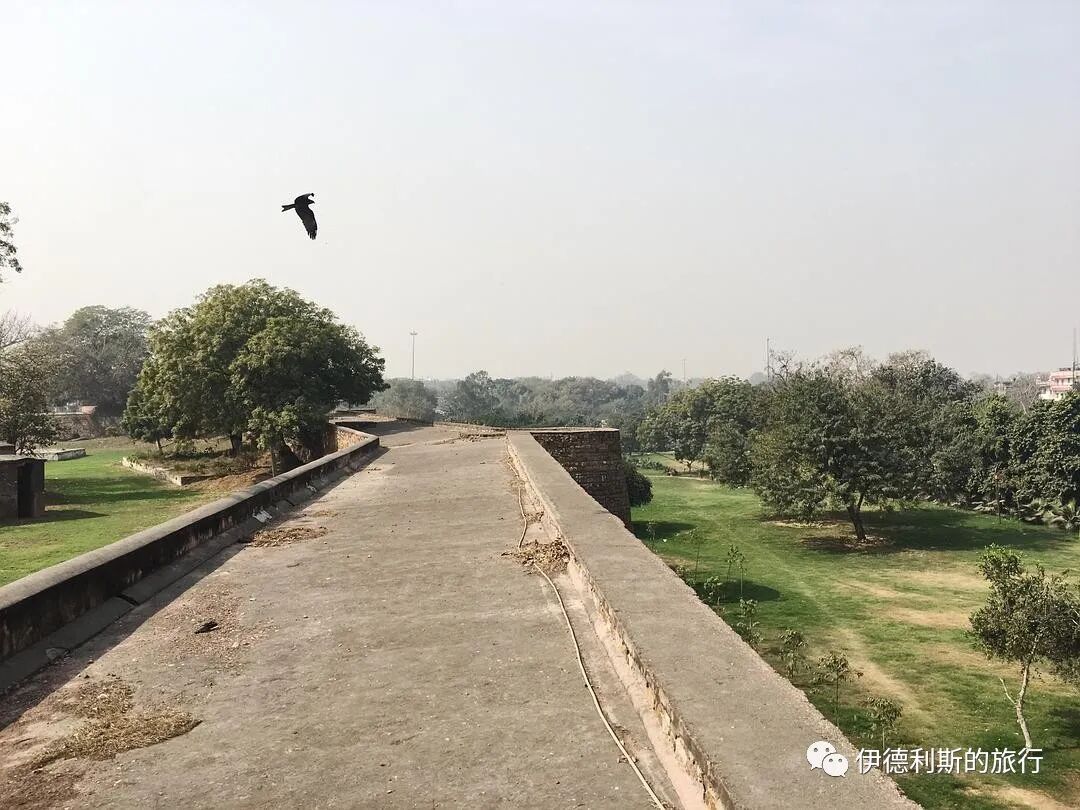
The other side of the city wall.
Some scattered architectural pieces inside the fortress.
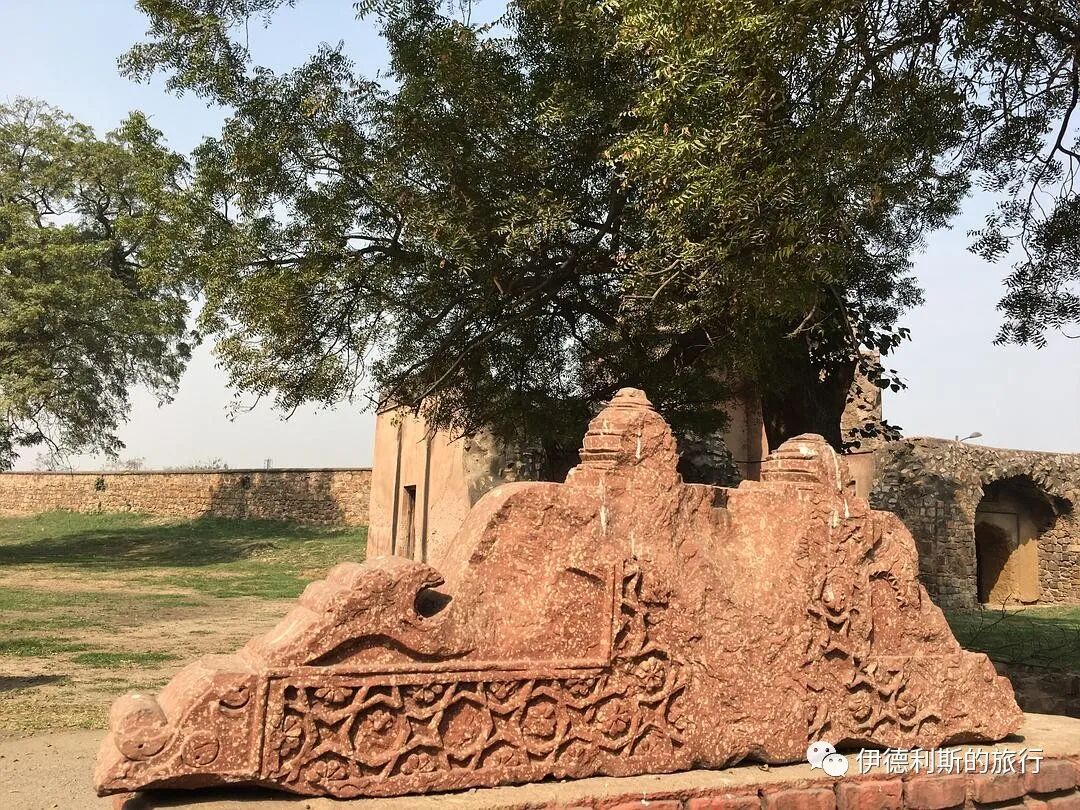
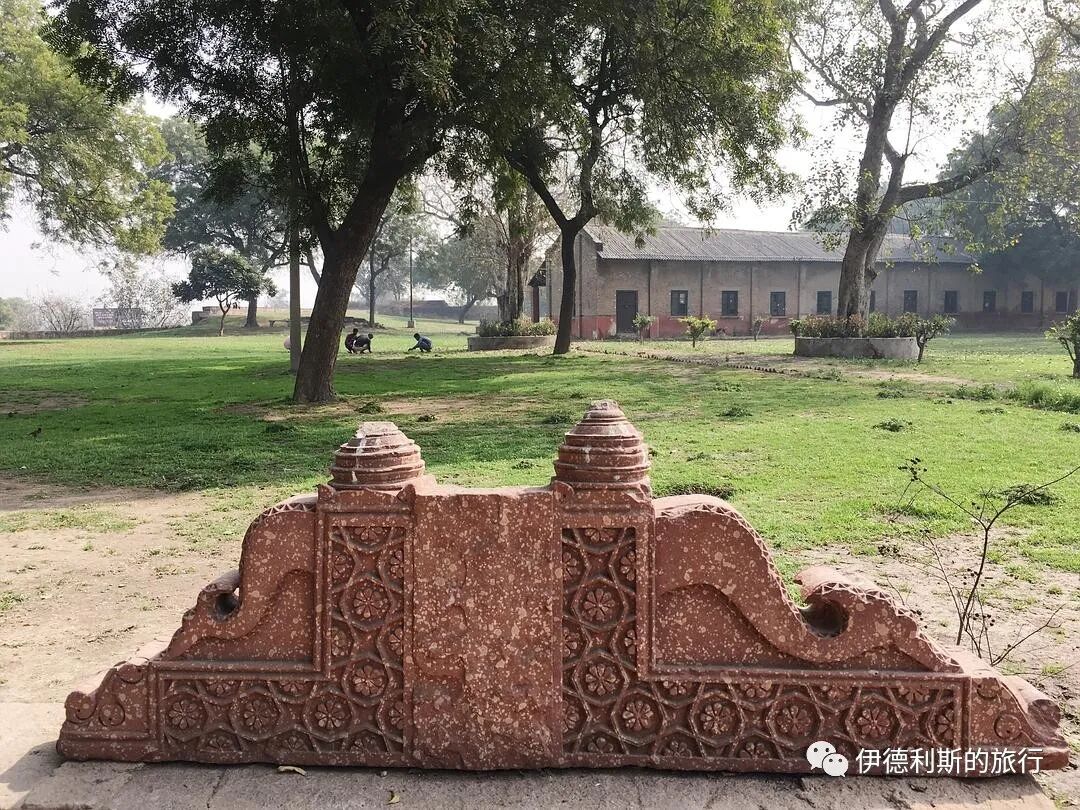
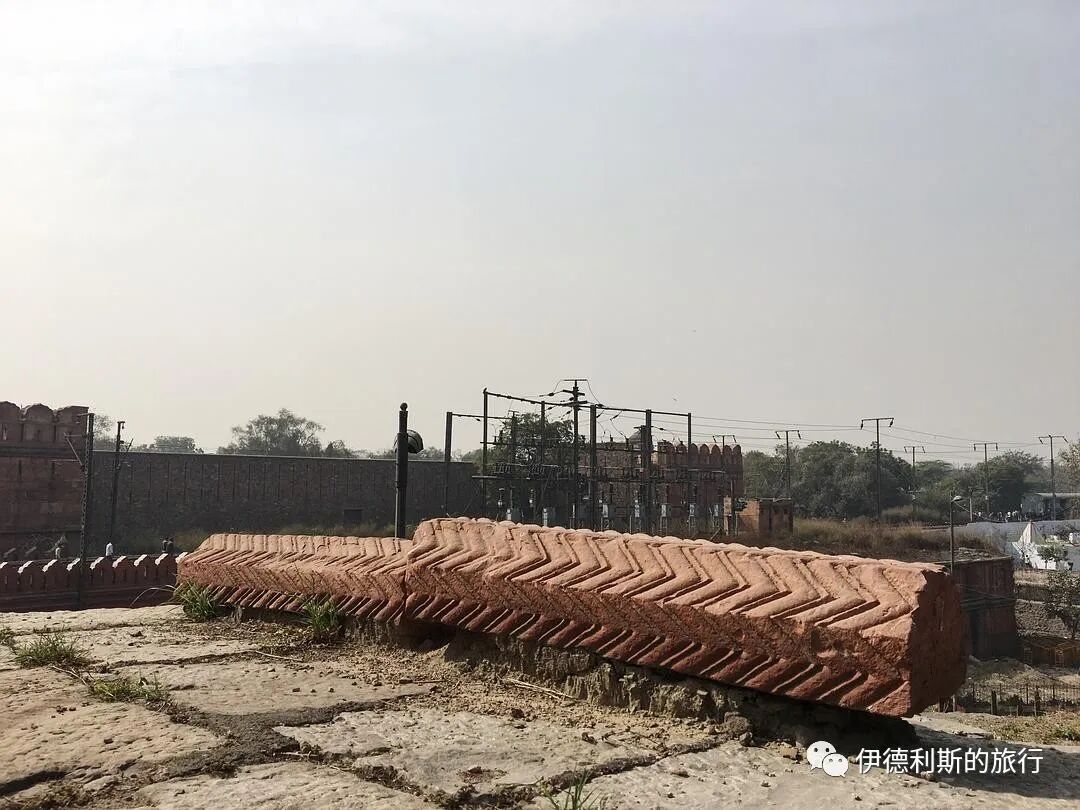
2. Tomb and Mosque of Isa Khan: 1547
Isa Khan was a nobleman of the Sur Empire, coming from the Niazi tribe of the Pashtuns in Afghanistan. Isa Khan died in 1548. Before he passed away, he built his own tomb and mosque in the southern suburbs of Dinpanah, near the shrine of Nizamuddin. Later, this place also became the site of Humayun's tomb.
As a prominent figure in the Sur Empire, Isa Khan was one of the last nobles of the dynasty to be buried in an Afghan-style tomb.
On August 5, 2011, the oldest sunken garden in India was discovered during the restoration of the tomb. This is considered the first Indian-style sunken garden attached to a tomb in India. This design was later further developed at Akbar's Tomb and the Taj Mahal.
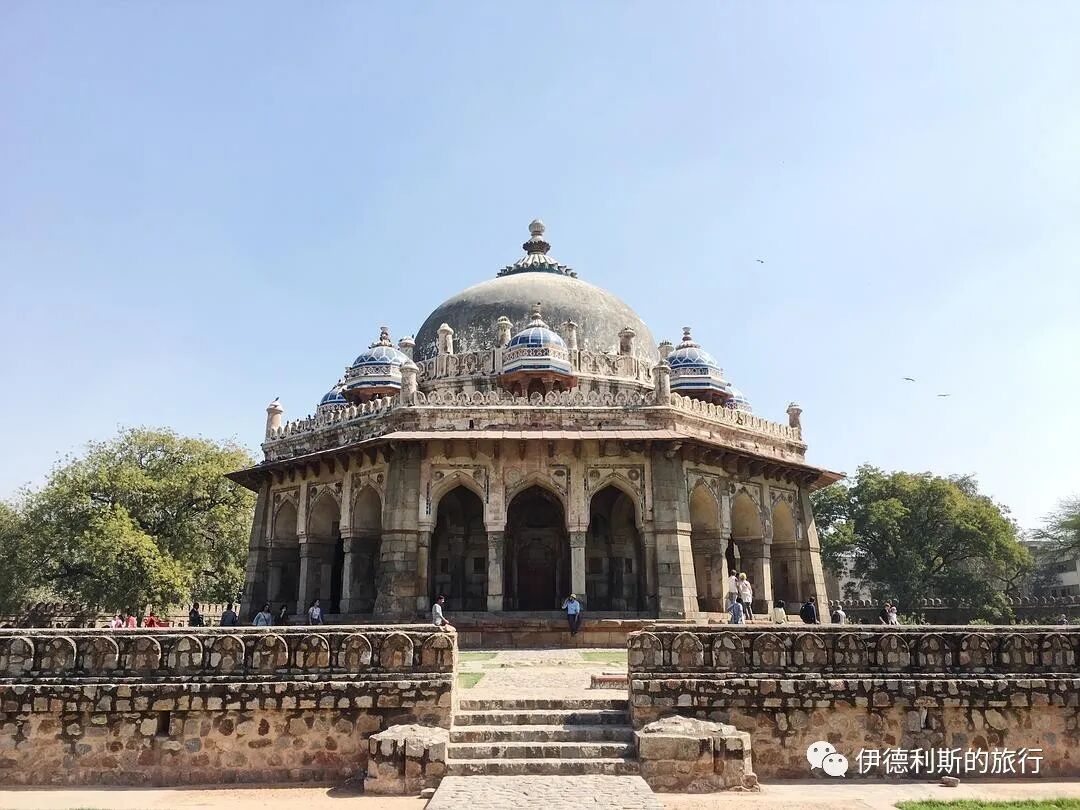
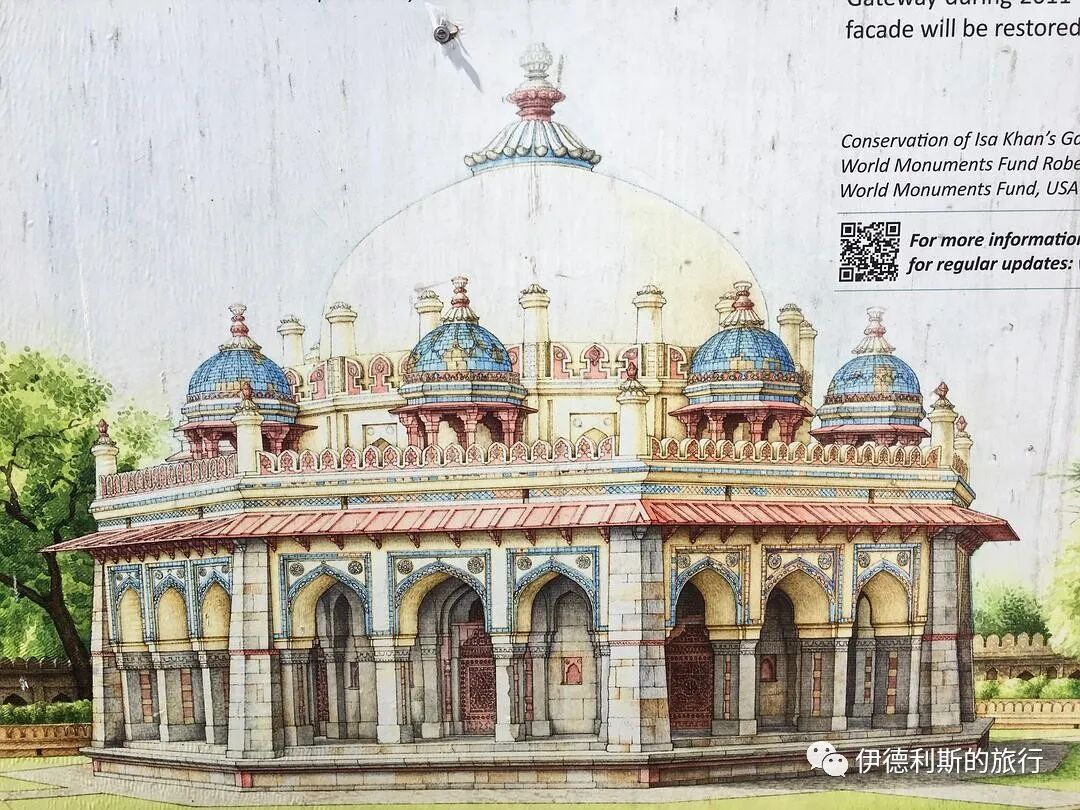
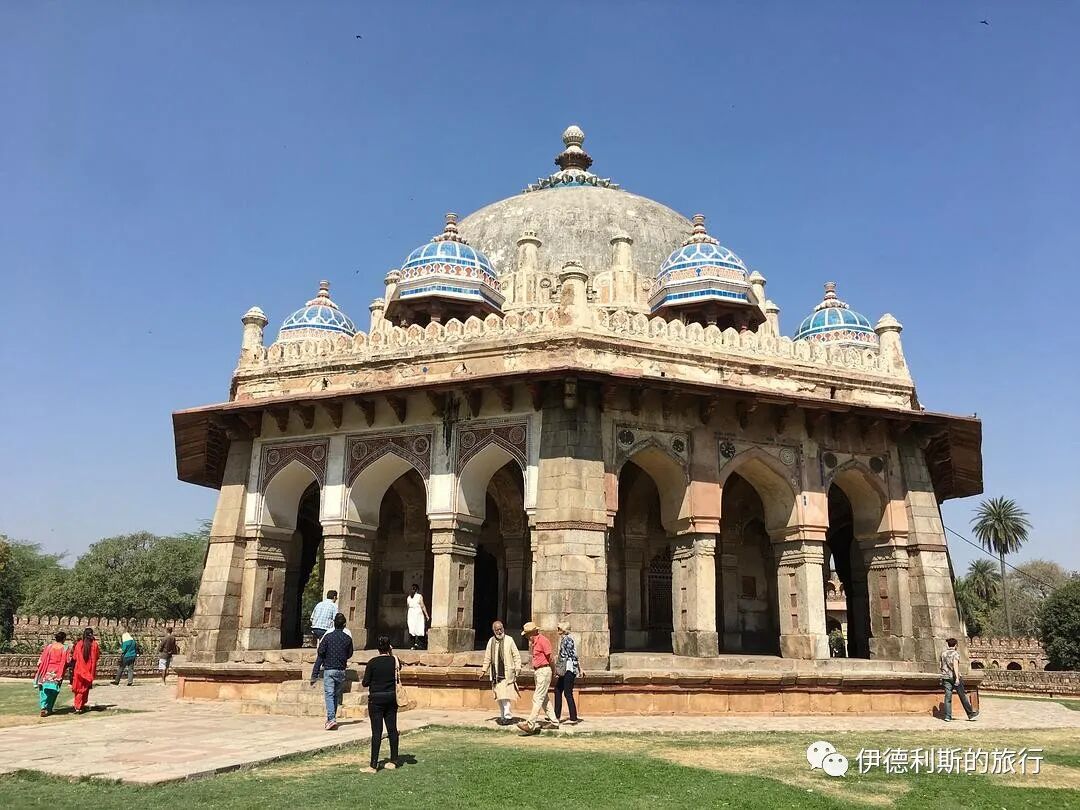
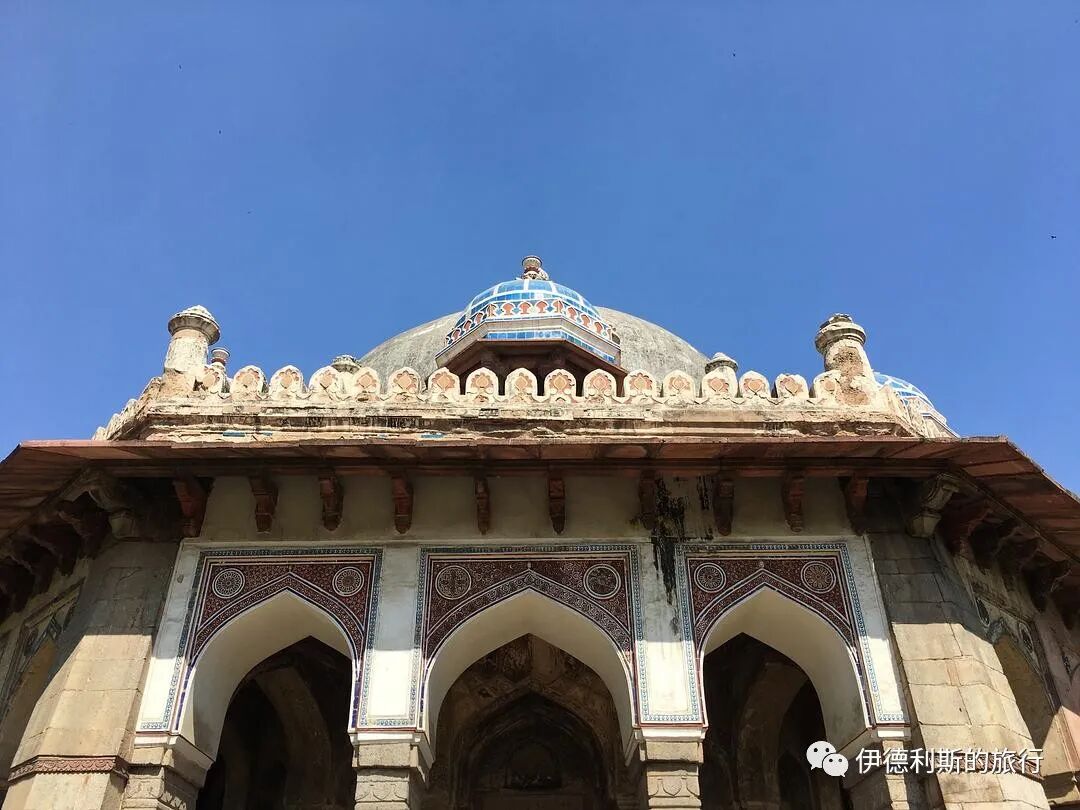
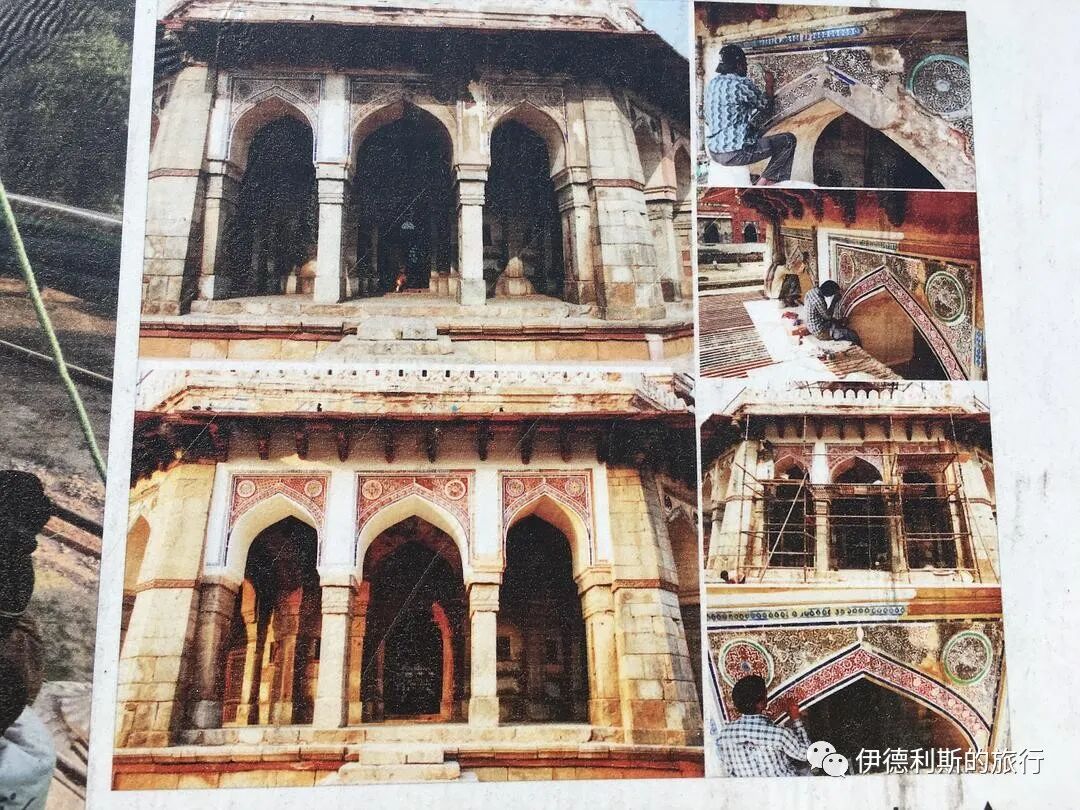
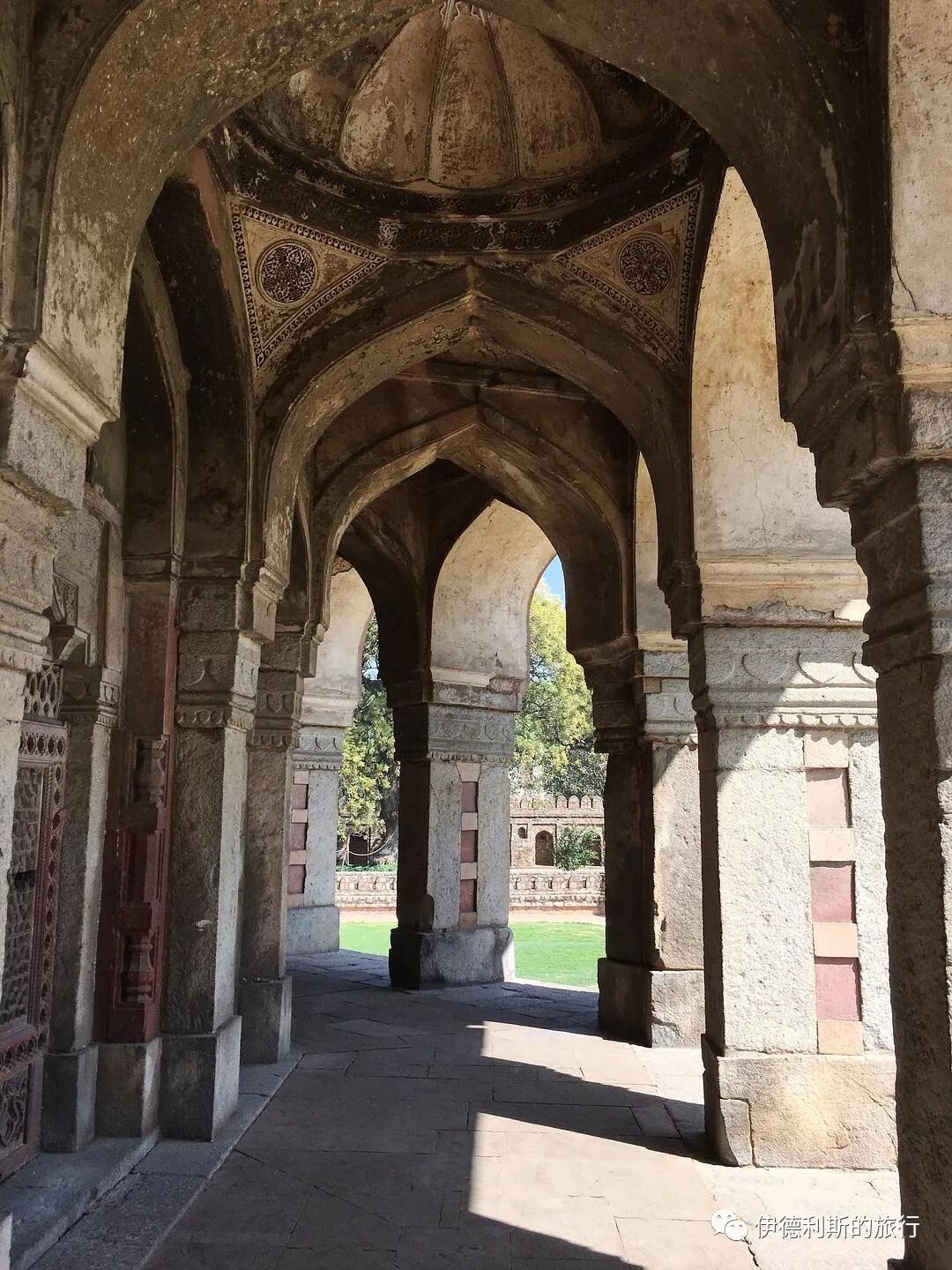
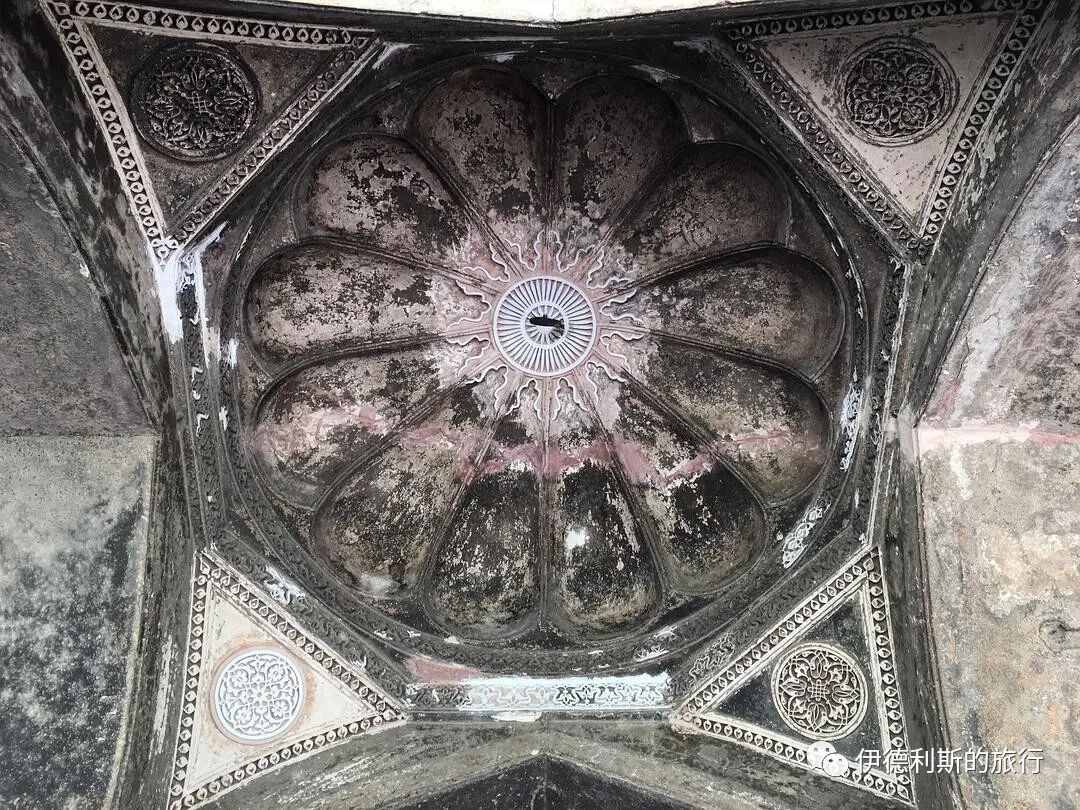
The dome of the outer corridor.
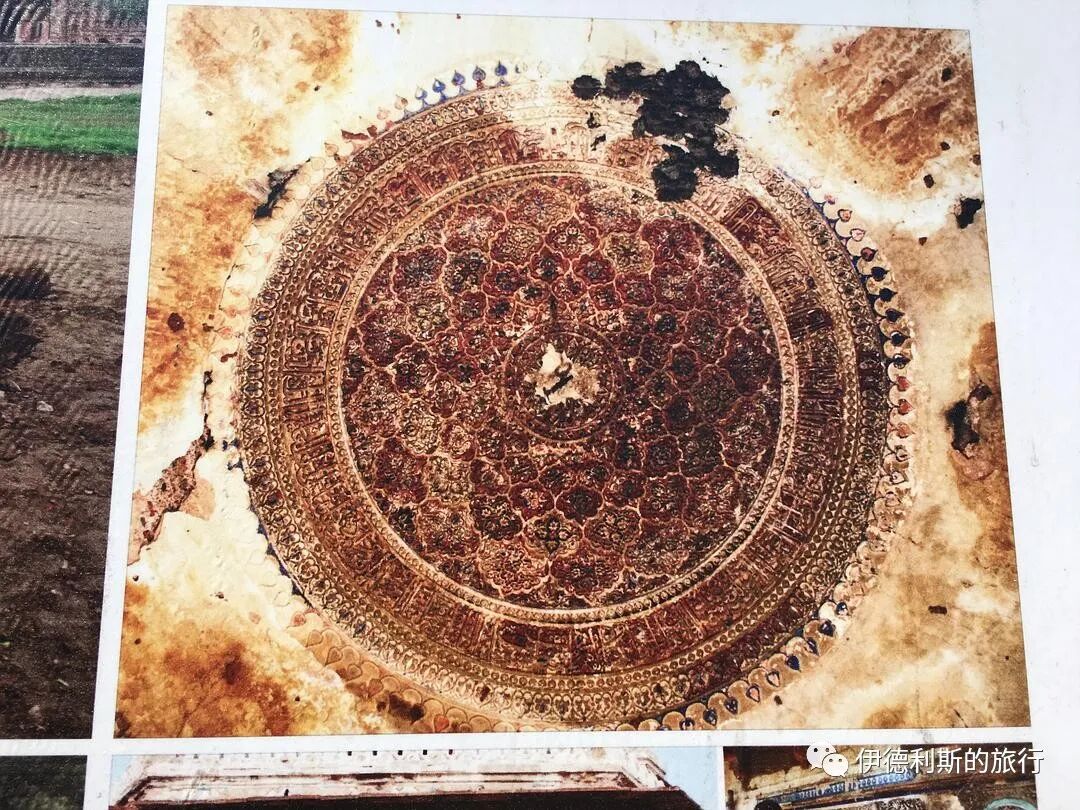
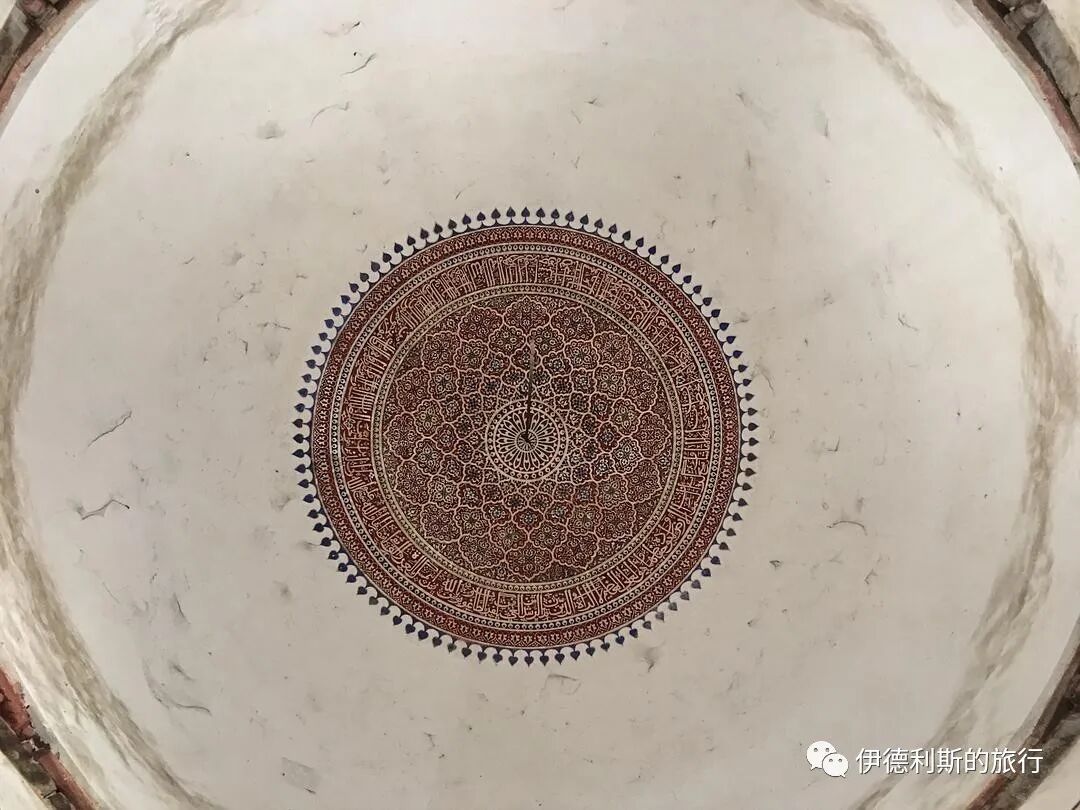
The dome inside.
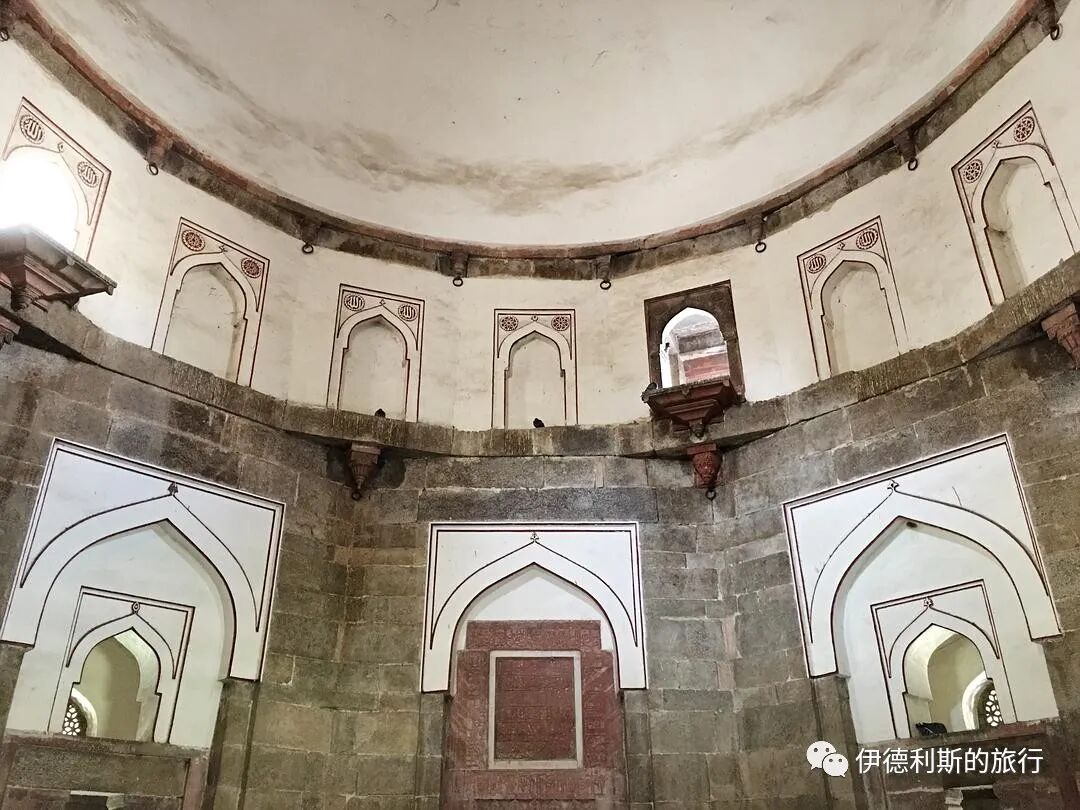
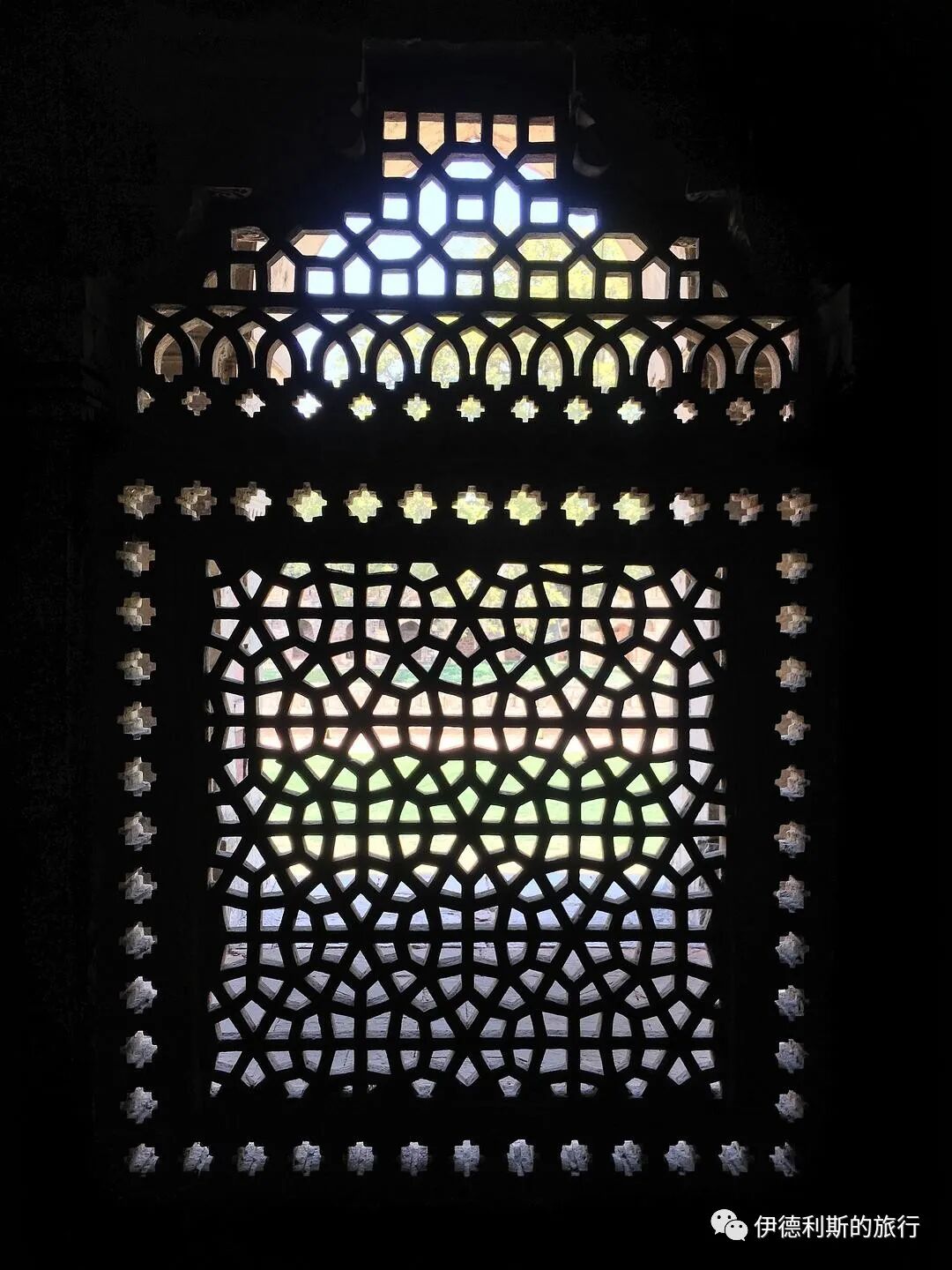
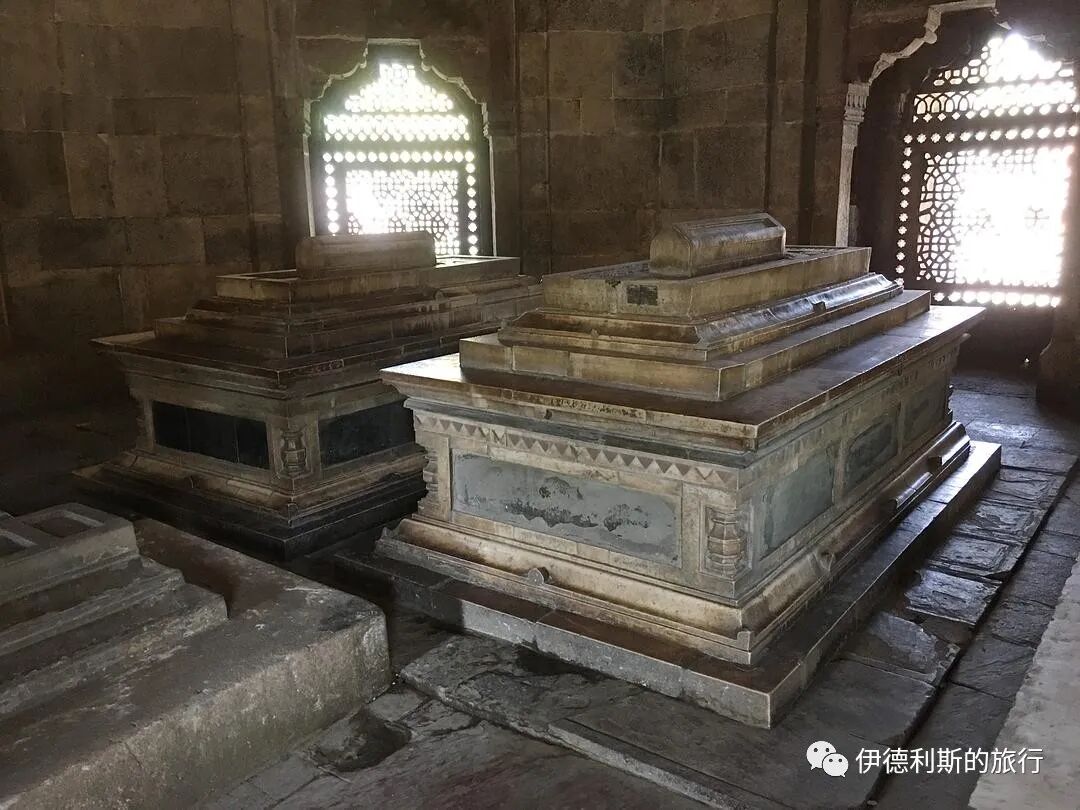
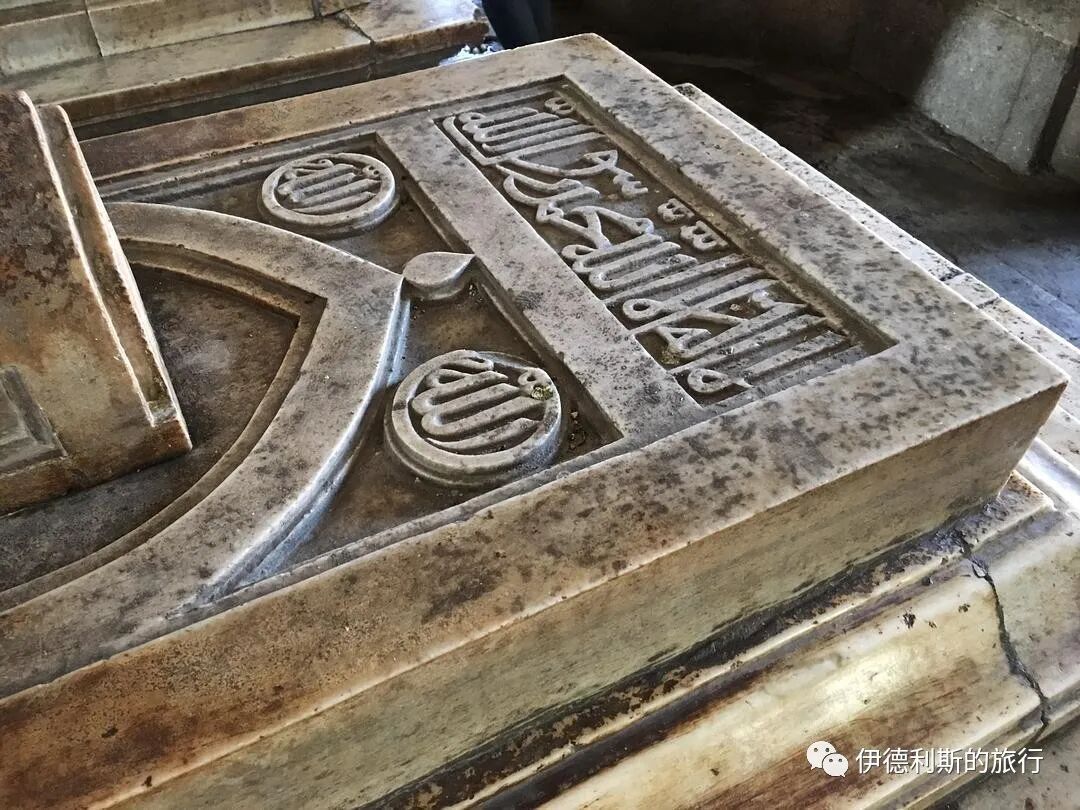
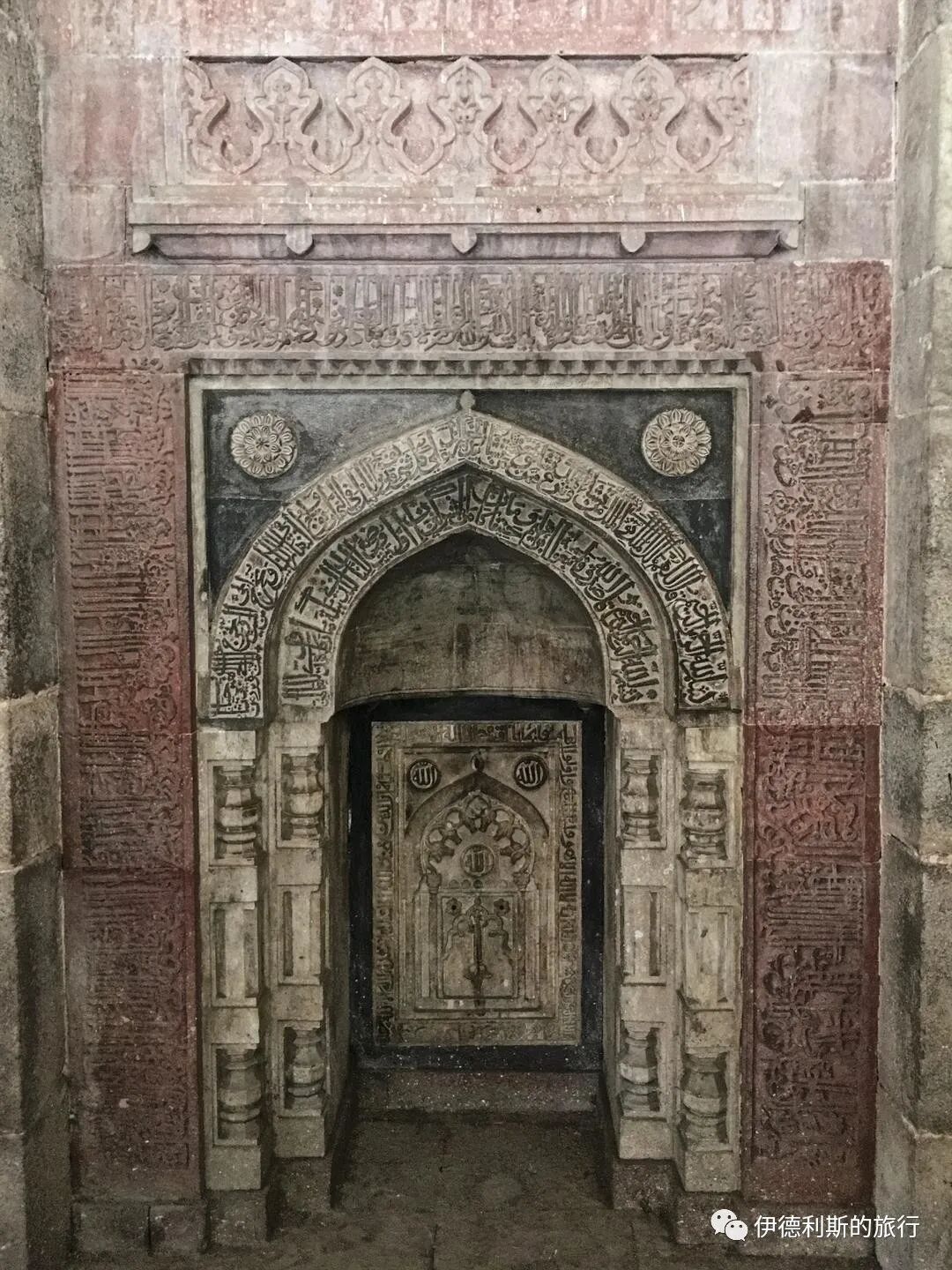
The mihrab of the tomb.
The Isa Khan Mosque was built during the same period as the tomb, and its biggest feature is the use of two pavilions instead of a dome. many details in the mosque were further developed in the later Humayun's Tomb.
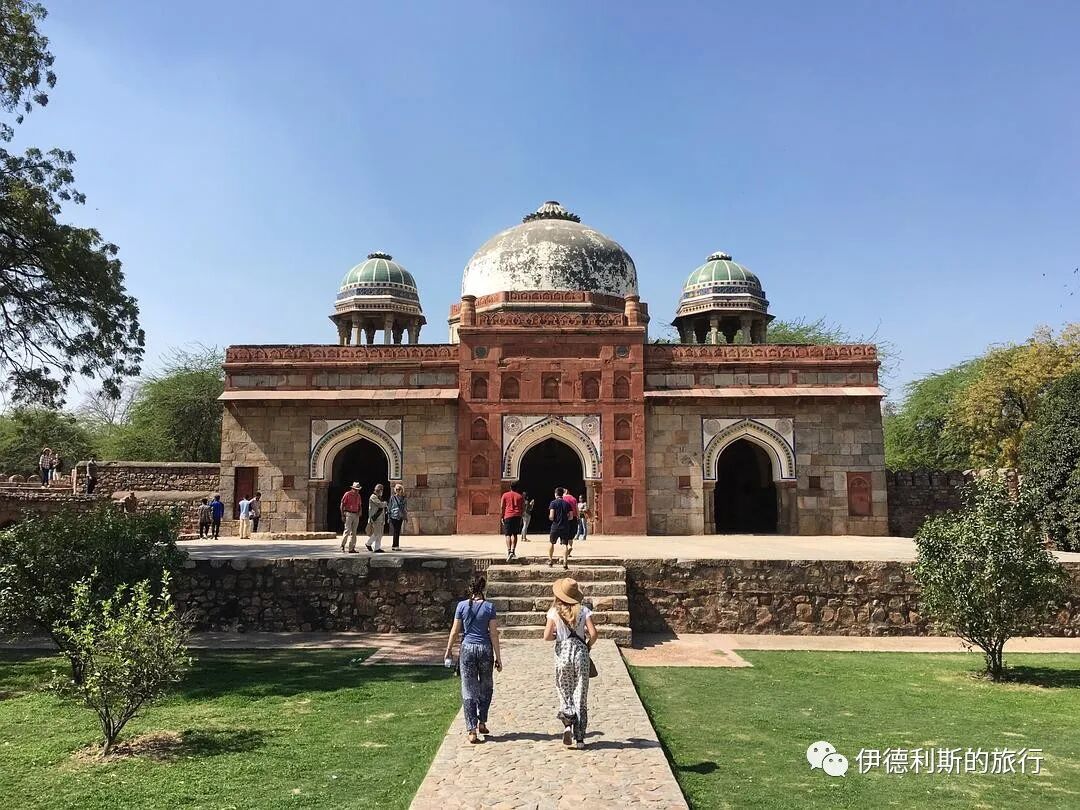
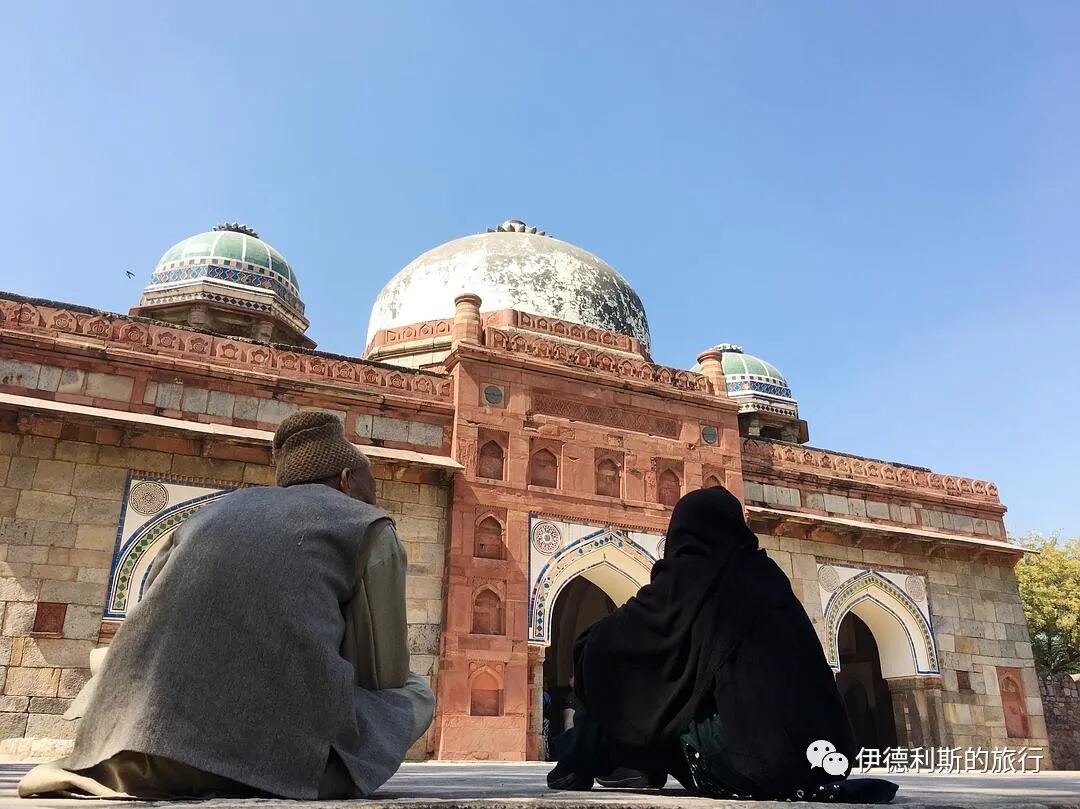
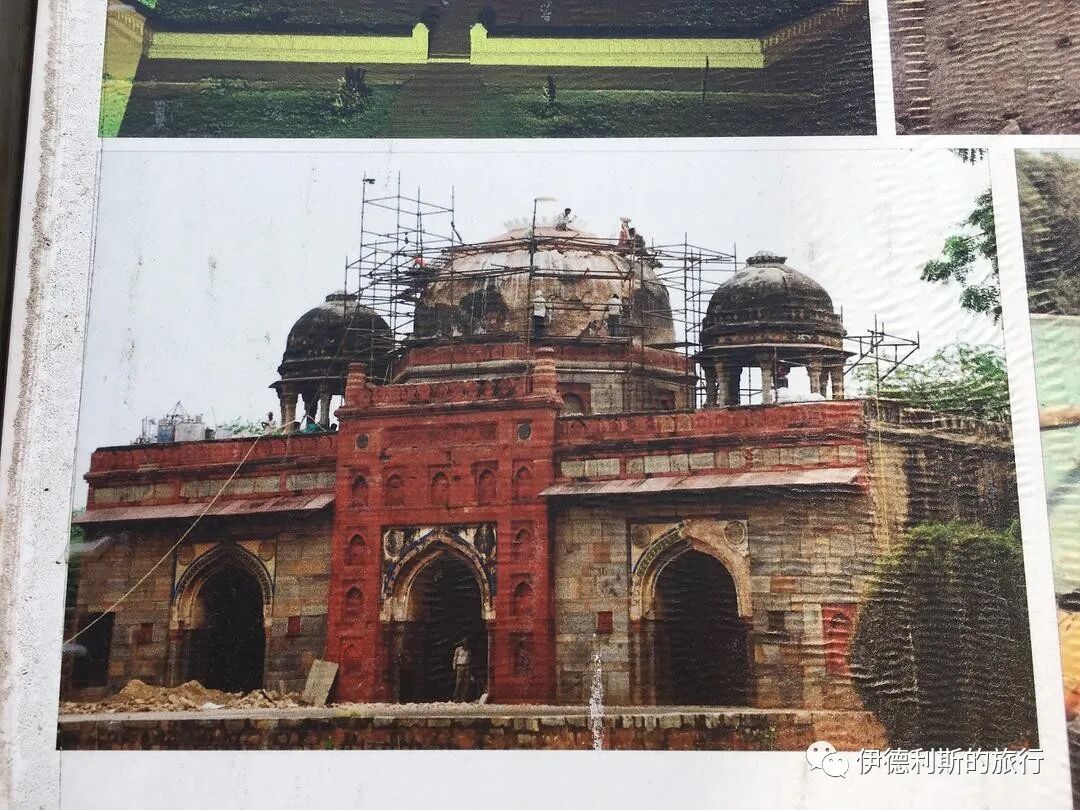
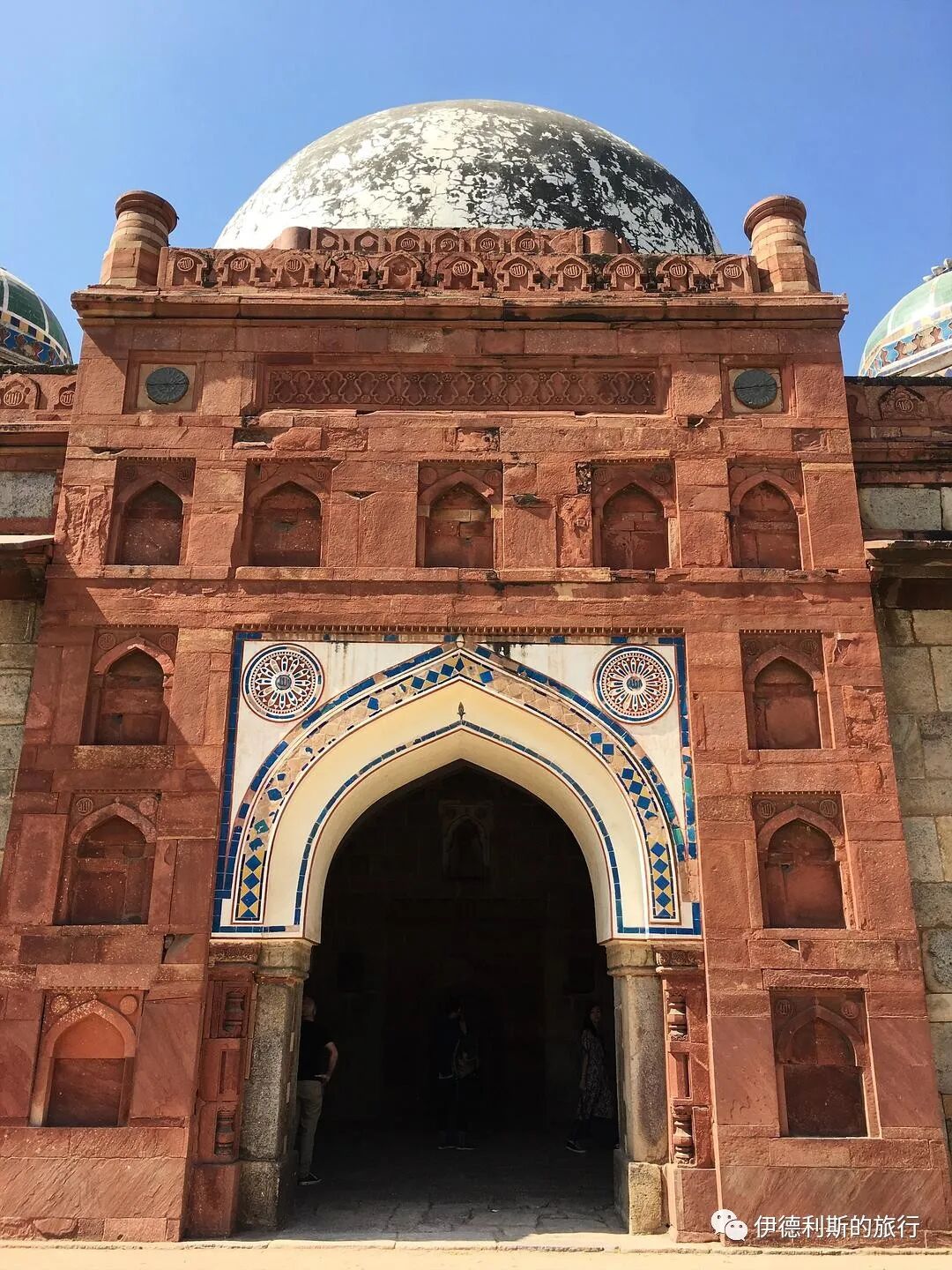
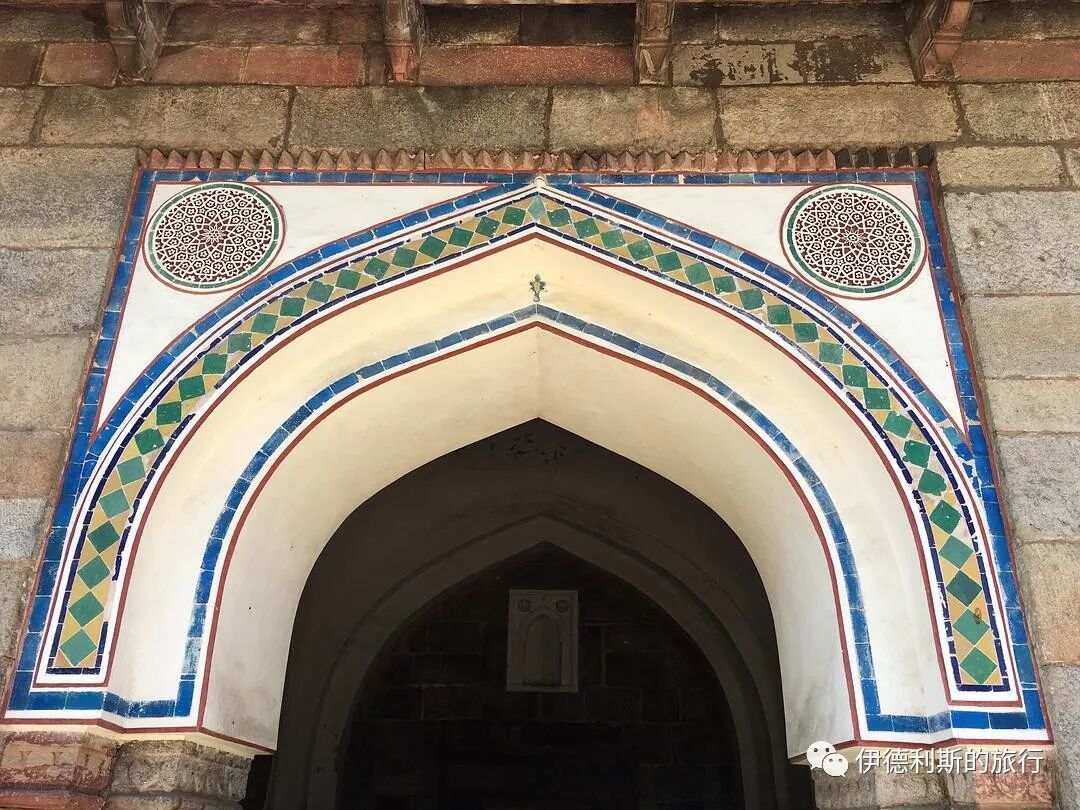
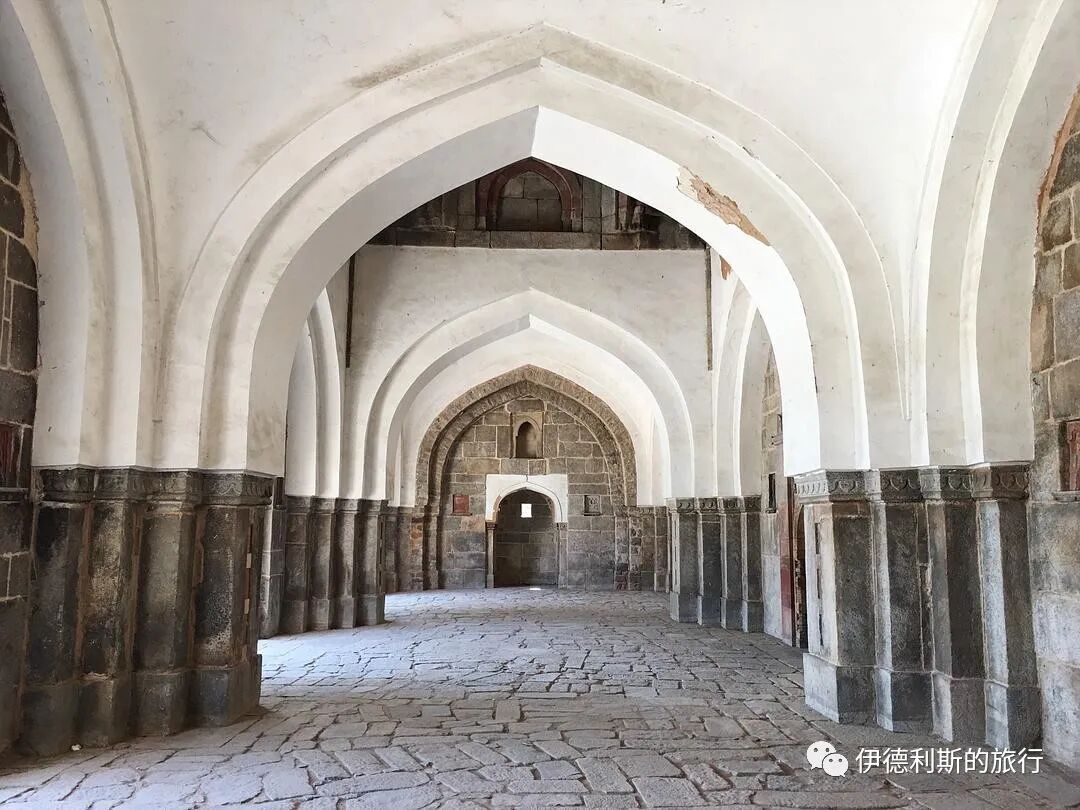
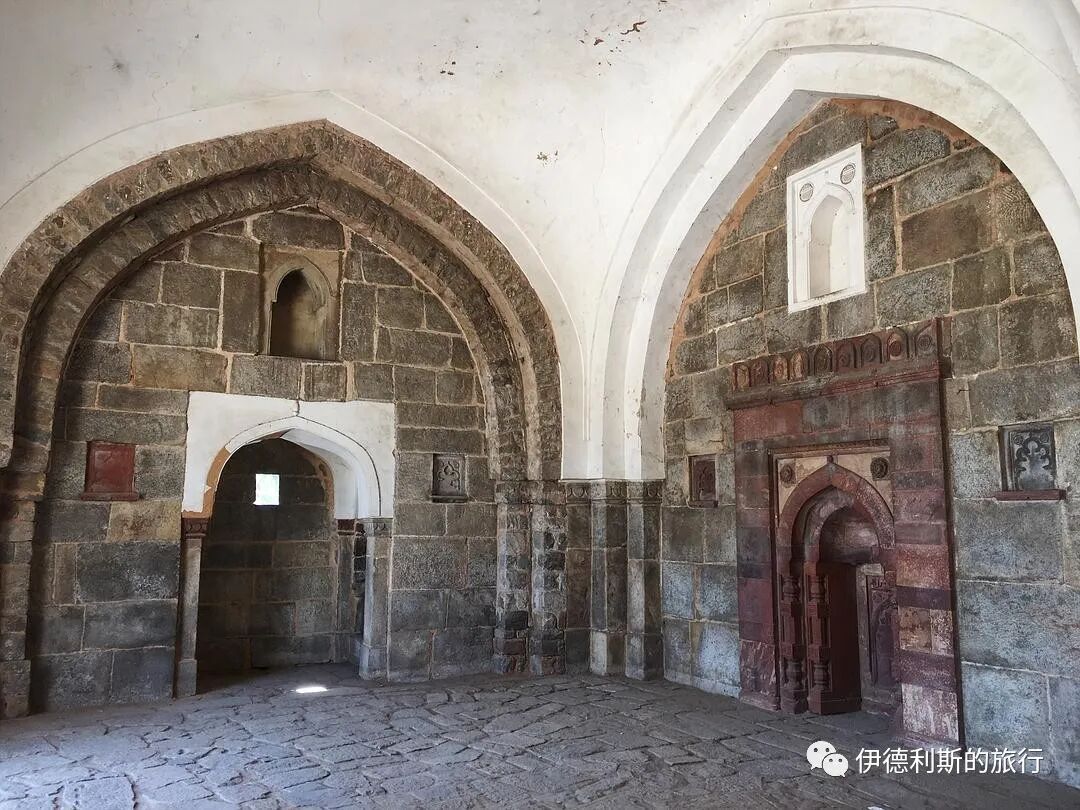
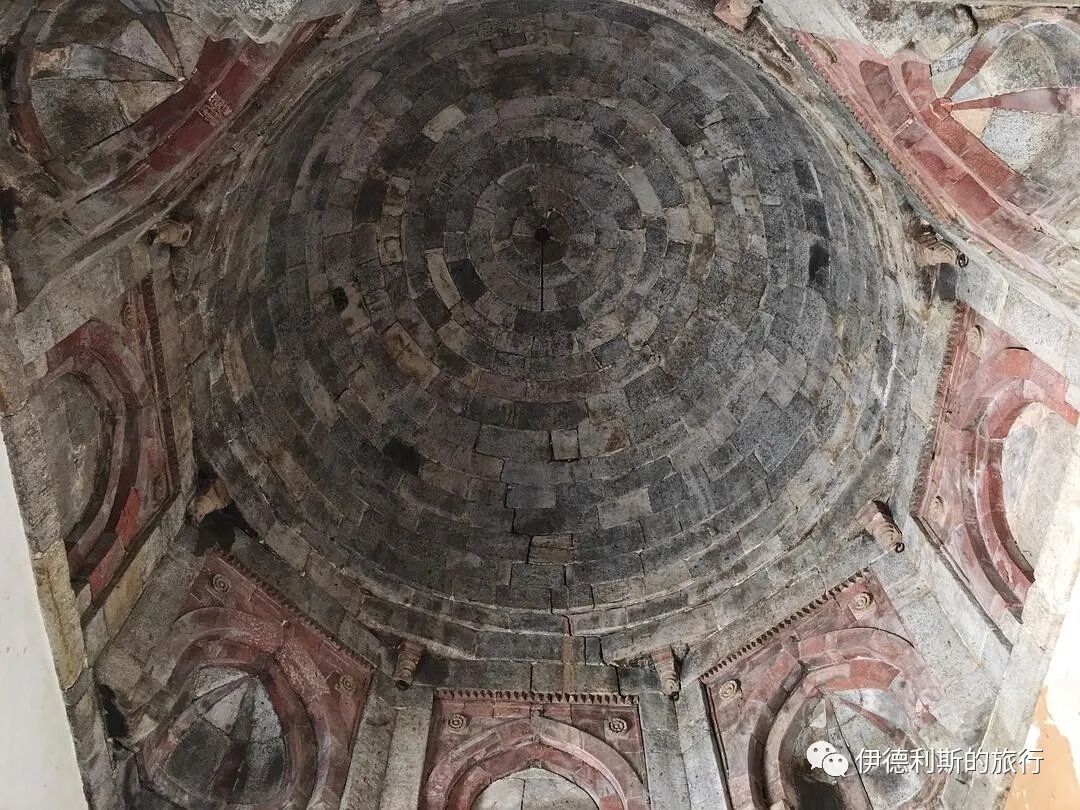
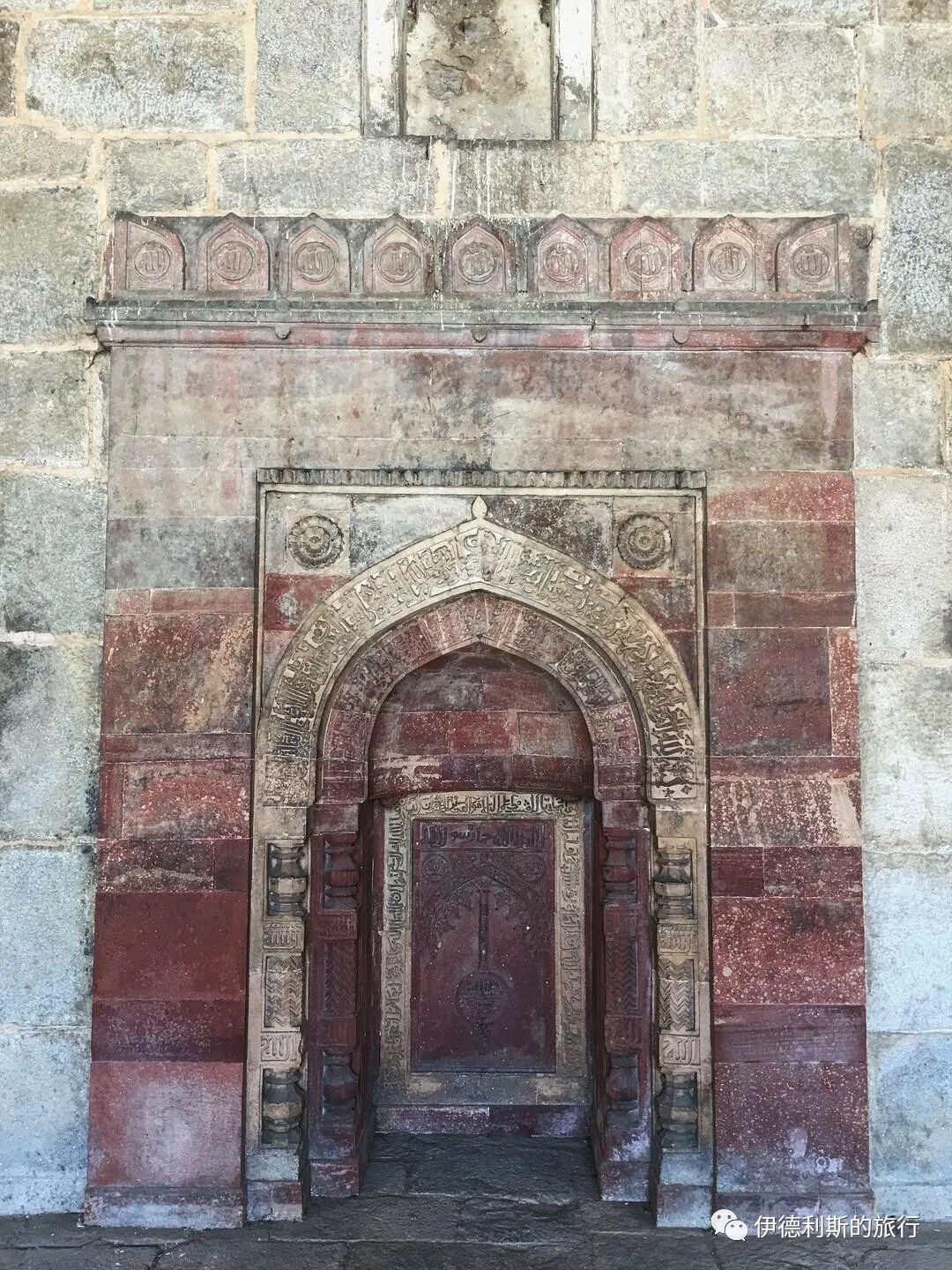
Halal Travel Guide: Delhi — Firoz Shah Kotla, Jinns and Ashoka Pillar
Articles • ali2007fr posted the article • 0 comments • 162 views • 2026-05-17 12:22
Summary: Delhi — Firoz Shah Kotla, Jinns and Ashoka Pillar is presented here as a firsthand travel account in clear English, beginning with this scene: Continuing the Seven Cities of Delhi series. The Seven Cities of Delhi refers to the seven historical cities built in Delhi, including Lal Kot, Siri, Tughlaqabad, Jahanpanah, Ferozabad, Purana Qila, and Shahjahanabad. The account keeps its focus on Delhi Travel, Firoz Shah Kotla, Muslim Heritage while preserving the names, places, food, and historical details from the Chinese source.
Continuing the Seven Cities of Delhi series. The Seven Cities of Delhi refers to the seven historical cities built in Delhi, including Lal Kot, Siri, Tughlaqabad, Jahanpanah, Ferozabad, Purana Qila, and Shahjahanabad.
I have already written about four of them, and this article introduces the fifth city, Ferozabad. The city is named after its builder, Sultan Firuz Shah Tughlaq (reigned 1351-1388), who was the successor to Muhammad, the builder of the fourth city, and the nephew of Ghazi Malik, the builder of the third city.
Founding the City
During the late reign of Sultan Muhammad bin Tughluq (reigned 1325-1351) of the Tughlaq dynasty, the Delhi Sultanate fell into chaos. Not only Hindu forces but even his own generals broke away from the Sultanate to become independent. In 1351, Muhammad died while on his way to Sindh to resolve tribal wars in Gujarat.
After Muhammad died, no one wanted to take over the mess of the Delhi Sultanate. Eventually, after much persuasion from his ministers, Muhammad's cousin Firuz Shah Tughlaq reluctantly agreed to succeed him as Sultan.
During Firuz's reign, the Sultanate's territory had shrunk significantly, and he had to face numerous rebellions from Gujarat in the west, Bengal in the east, and Warangal in the south. Firuz kept in mind the mistakes his cousin Muhammad made, so he stopped trying to reconquer lost lands and focused on consolidating his current rule.
To do this, Firuz worked on infrastructure, including digging canals, building reservoirs, and constructing nursing homes and hospitals. In 1354, three years after taking the throne, Firuz built a new capital in northern Delhi, which later generations called Ferozabad, the fifth city of Delhi.
The ruins of Ferozabad drawn by William Hodges in 1780.
Feroz Shah Kotla: 1354.
People say before New Delhi was built in the 20th century, many architectural ruins of Ferozabad remained, but today only the core part, Feroz Shah Kotla, is clearly visible.
A map of Feroz Shah Kotla, with a diagram of the site on the left and a view from Google Earth on the right.
Rather than a fortress, this place is more like a palace surrounded by walls. Although the castle has tall walls, there are no platforms for soldiers to fight from, and the arrow slits on the walls look more decorative than functional for battle. Perhaps Firuz never considered using this castle for war, but instead used it as a symbol of power.
The gate of Feroz Shah Kotla drawn by William Orme and Thomas Daniell in 1802.
The gate of Feroz Shah Kotla today.
Arrow slits used only for decoration, with no platform for archers to stand on.
The palace ruins after passing through the gate.
The Jinn in the Castle
Every Thursday afternoon, many people come to Feroz Shah Kotla to light candles and incense by the walls, write their wishes on paper, and pray that the Jinn in the castle will make their wishes come true.
In Islam, Jinn are invisible to the naked eye and, along with angels and devils, are one of the three spiritual entities in the Islamic system. According to the Quran, Jinn were created from fire before Allah created humans; they have a lifestyle similar to humans but have more powerful abilities. There are many descriptions of Jinn in One Thousand and One Nights, the most famous being the genie in Aladdin's lamp.
In pre-Islamic Arabia, Jinn were guardian spirits worshipped by people. But as the early Islamic concept of monotheism solidified, Jinn were placed on an equal footing with humans, subject to judgment and capable of entering heaven or hell.
As Islam spread, the concept of Jinn spread to North Africa, Persia, Central Asia, and India. During the Abbasid era, the concept of Jinn was introduced to India from the Sindh region, gradually becoming part of local folk beliefs and spawning many legends.
The image below shows the Two-Horned One, Zulqarnayn, mentioned in the Quran, who used iron blocks to melt steel and build a barrier with the help of Jinn to protect people from invasion. This story originates from the legend of Alexander the Great and spread to the Arab region through Syria.
An illustration from The Art of Divination, painted by Ja'far al-Sadiq in the 1550s, kept at the Chester Beatty Library.
The image below shows the story of Imam Ali defeating a Jinn.
An illustration from the book Ahsan-ol-Kobar, painted in 1568, kept at the Golestan Palace in Tehran.
Feroz Shah Mosque: 1354.
Legend has it that after Timur the Great occupied Delhi in 1398, he performed namaz in a Jami Masjid. Timur loved this mosque so much that he ordered a mosque of the same design to be built in Samarkand. Many people believe this Jami Mosque is the great mosque inside Feroz Shah Kotla.
In fact, after Emperor Timur returned to Samarkand, he did build a famous Bibi-Khanym Mosque. However, this mosque does not look like the Feroz Shah Mosque; it looks more like the Begampur Mosque in Jahanpanah, the fourth city of Delhi. According to historical records, Emperor Timur mainly lived in Jahanpanah while he was in Delhi. Therefore, the Feroz Shah Mosque may not be the Jami Mosque that legend says Timur loved.
But a major event did happen at the Feroz Shah Mosque. In 1759, the Mughal Empire's vizier Imad-ul-Mulk planned to murder the entire family of the fourteenth Mughal emperor, Alamgir II. On November 29, the vizier told the emperor that a holy man had come to greet him. The emperor was very excited and immediately set off for the Feroz Shah Mosque to meet the holy man, where he was then assassinated. The death of Alamgir II caused great grief among Muslims in the Mughal Empire. Armies from various places soon rose up to attack the vizier Imad-ul-Mulk, and he had to flee Delhi.
The Feroz Shah Mosque has the typical architectural style of the Tughlaq dynasty. The main prayer hall has almost collapsed, but the ground floor is still well-preserved.
Outside the mosque
Mosque gate
People performing namaz
Ashoka Pillar: 1356
Right next to the mosque is the famous Delhi-Topra Ashokan Pillar.
In 1356, while Feroz Shah was passing through a place called Topra in northern India during an expedition, he discovered a famous Ashoka pillar. Feroz Shah transported this pillar back to the capital, Firozabad, and built a pyramid-shaped structure right next to the mosque to house it.
The Ashoka pillar is one of the columns inscribed with edicts that the famous King Ashoka (reigned 273–232 BC) of the ancient Indian Maurya Empire erected across South Asia. There are 20 remaining today, two of which were brought to Delhi by Feroz Shah. Besides the Delhi-Topra pillar, another pillar called the Delhi-Meerut pillar was placed in Feroz Shah's hunting palace.
The original inscriptions on the pillar were in the Prakrit language written in Brahmi script. When Feroz Shah found the pillar, the Brahmi script could no longer be read. It was not until 1837 that the famous Indian antiquities scholar James Princep fully deciphered the Brahmi script and translated its meaning. to the Buddhist teachings similar to other Ashoka pillars, the biggest difference with this pillar is that it mentions tax issues.
around the Brahmi script, there are some Sanskrit records of the victory in war by Visala Deva Vigraharaja IV of the Chauhan dynasty.
The Ashoka pillar drawn by a Delhi artist between 1820 and 1825
The Ashoka pillar photographed by Samuel Bourne in 1860
The Ashoka pillar photographed in 1880 by an unknown photographer
The Ashoka pillar today
Water tank
In the center of the garden on the northwest side of the Ashoka pillar, there is a circular water tank (boli). There is a large underground canal on the east side of the tank, and water flows into the tank through this canal. In the era of Feroz Shah, this was a summer retreat for the Sultan's court, and people used the water in the tank to cool off and bathe.
Today, the water tank is still used to irrigate the garden, but it has been locked and is closed to visitors after a suicide occurred here in early 2014. view all
Summary: Delhi — Firoz Shah Kotla, Jinns and Ashoka Pillar is presented here as a firsthand travel account in clear English, beginning with this scene: Continuing the Seven Cities of Delhi series. The Seven Cities of Delhi refers to the seven historical cities built in Delhi, including Lal Kot, Siri, Tughlaqabad, Jahanpanah, Ferozabad, Purana Qila, and Shahjahanabad. The account keeps its focus on Delhi Travel, Firoz Shah Kotla, Muslim Heritage while preserving the names, places, food, and historical details from the Chinese source.
Continuing the Seven Cities of Delhi series. The Seven Cities of Delhi refers to the seven historical cities built in Delhi, including Lal Kot, Siri, Tughlaqabad, Jahanpanah, Ferozabad, Purana Qila, and Shahjahanabad.
I have already written about four of them, and this article introduces the fifth city, Ferozabad. The city is named after its builder, Sultan Firuz Shah Tughlaq (reigned 1351-1388), who was the successor to Muhammad, the builder of the fourth city, and the nephew of Ghazi Malik, the builder of the third city.
Founding the City
During the late reign of Sultan Muhammad bin Tughluq (reigned 1325-1351) of the Tughlaq dynasty, the Delhi Sultanate fell into chaos. Not only Hindu forces but even his own generals broke away from the Sultanate to become independent. In 1351, Muhammad died while on his way to Sindh to resolve tribal wars in Gujarat.
After Muhammad died, no one wanted to take over the mess of the Delhi Sultanate. Eventually, after much persuasion from his ministers, Muhammad's cousin Firuz Shah Tughlaq reluctantly agreed to succeed him as Sultan.
During Firuz's reign, the Sultanate's territory had shrunk significantly, and he had to face numerous rebellions from Gujarat in the west, Bengal in the east, and Warangal in the south. Firuz kept in mind the mistakes his cousin Muhammad made, so he stopped trying to reconquer lost lands and focused on consolidating his current rule.
To do this, Firuz worked on infrastructure, including digging canals, building reservoirs, and constructing nursing homes and hospitals. In 1354, three years after taking the throne, Firuz built a new capital in northern Delhi, which later generations called Ferozabad, the fifth city of Delhi.
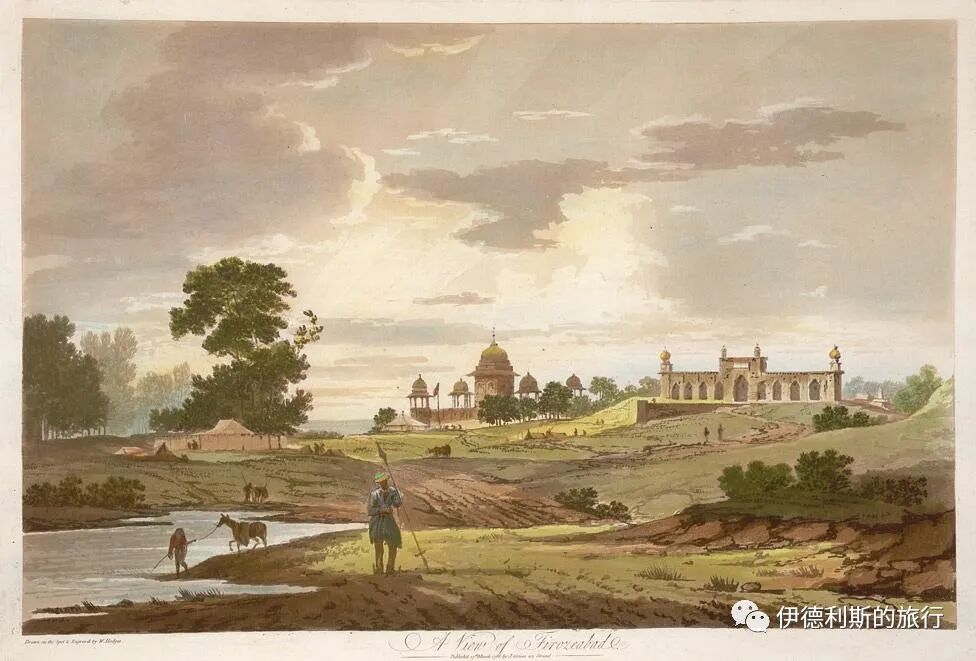
The ruins of Ferozabad drawn by William Hodges in 1780.
Feroz Shah Kotla: 1354.
People say before New Delhi was built in the 20th century, many architectural ruins of Ferozabad remained, but today only the core part, Feroz Shah Kotla, is clearly visible.
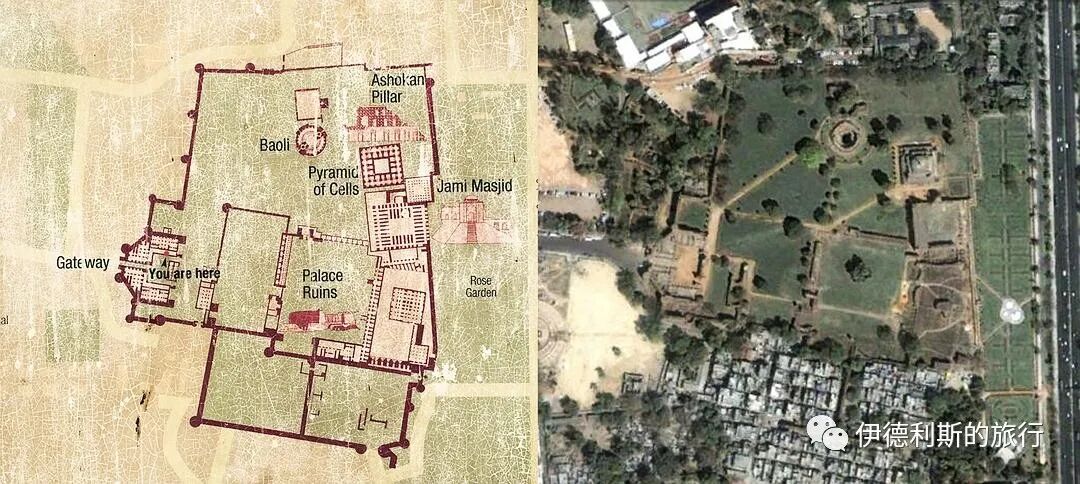
A map of Feroz Shah Kotla, with a diagram of the site on the left and a view from Google Earth on the right.
Rather than a fortress, this place is more like a palace surrounded by walls. Although the castle has tall walls, there are no platforms for soldiers to fight from, and the arrow slits on the walls look more decorative than functional for battle. Perhaps Firuz never considered using this castle for war, but instead used it as a symbol of power.
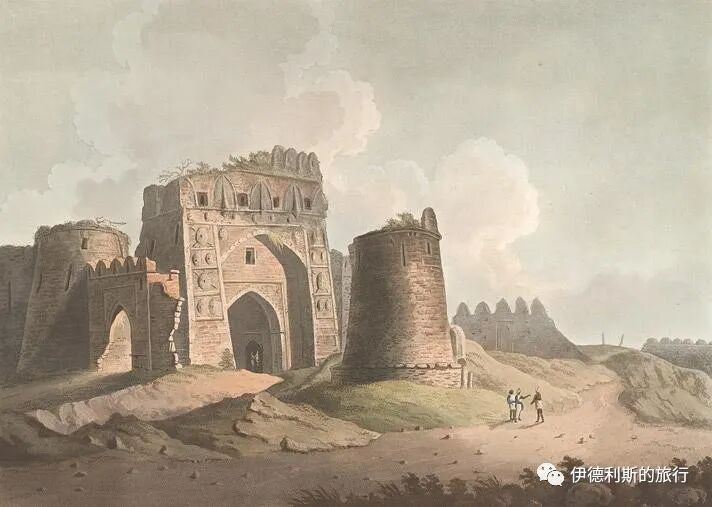
The gate of Feroz Shah Kotla drawn by William Orme and Thomas Daniell in 1802.
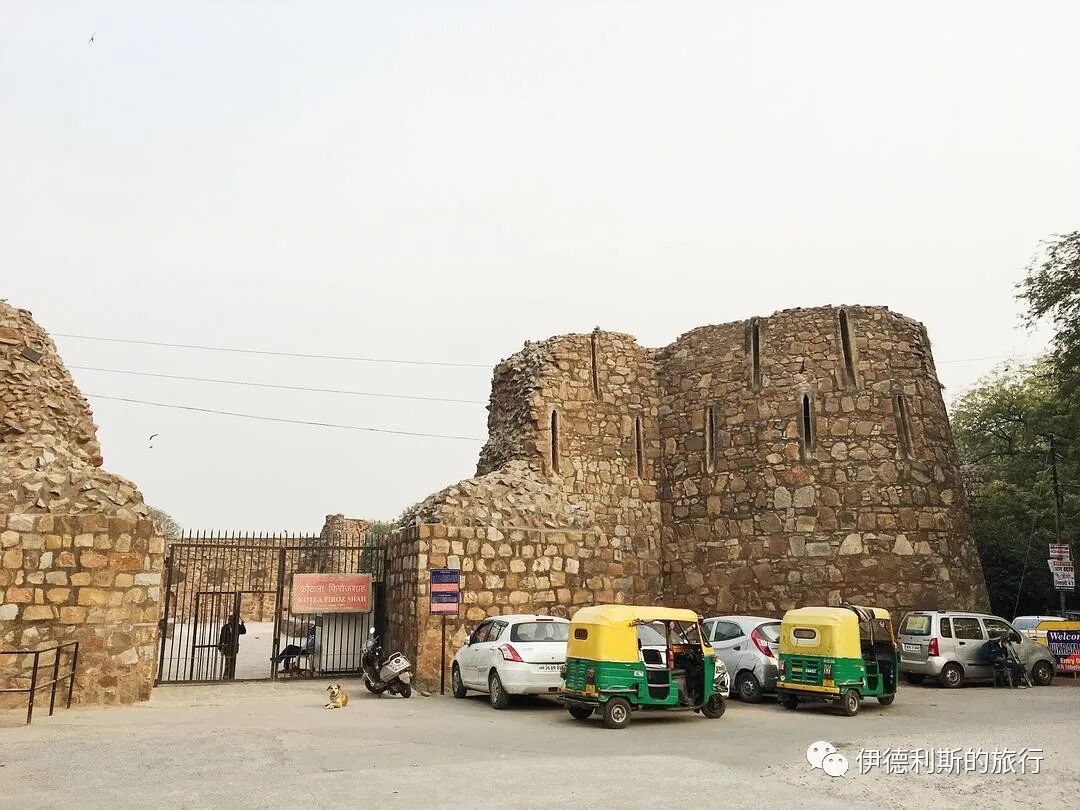
The gate of Feroz Shah Kotla today.
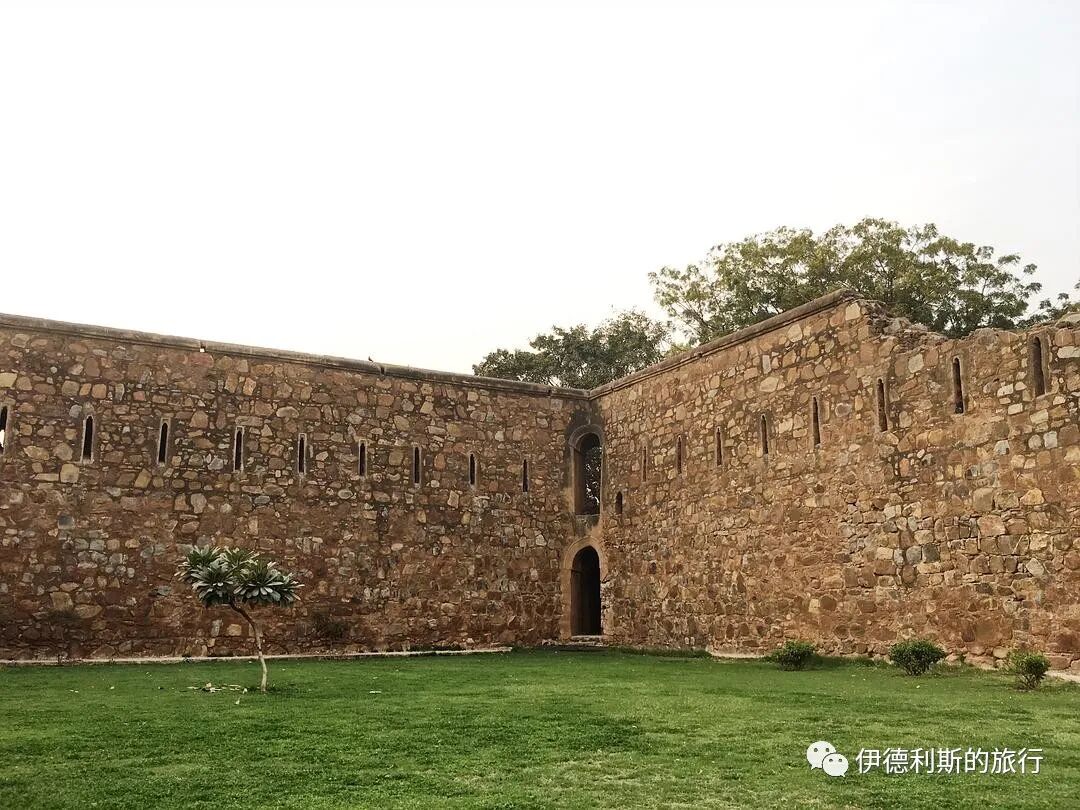
Arrow slits used only for decoration, with no platform for archers to stand on.
The palace ruins after passing through the gate.
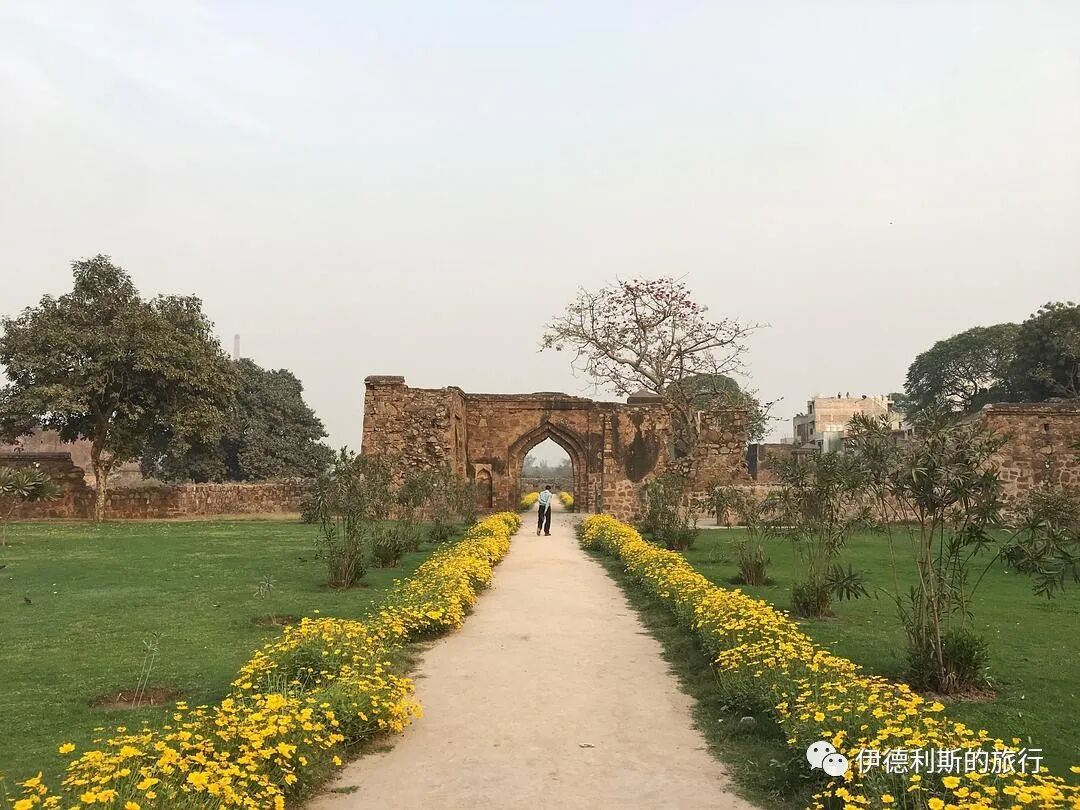
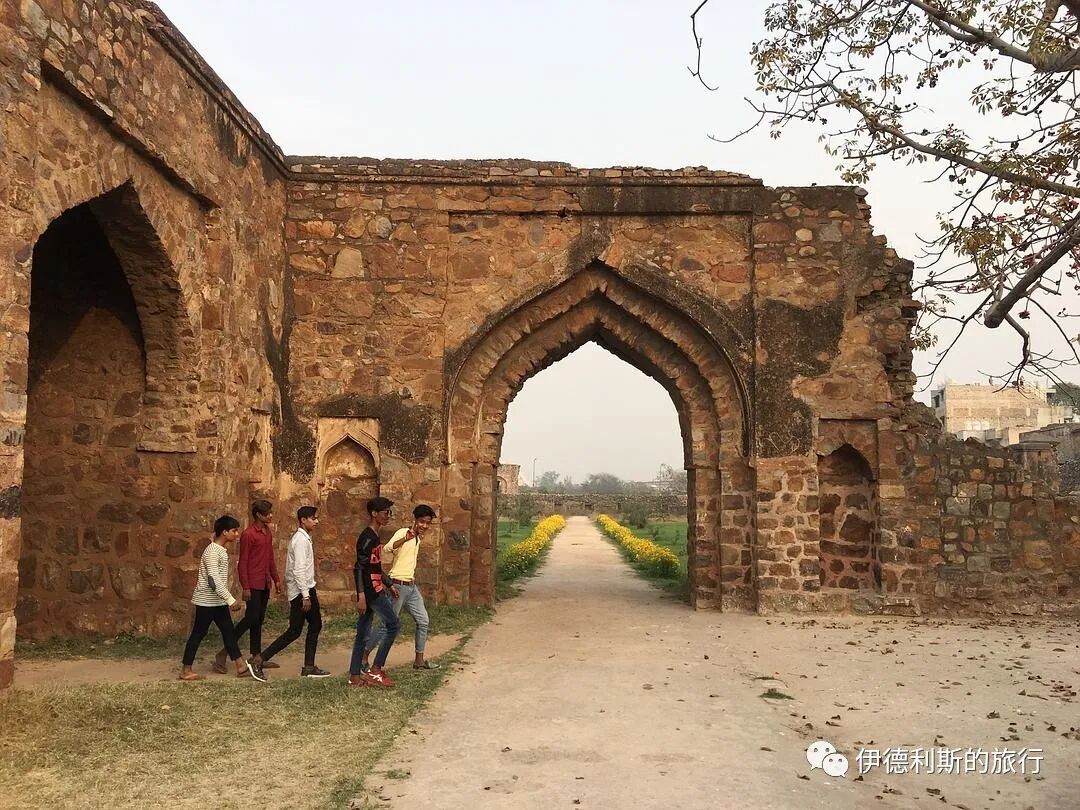
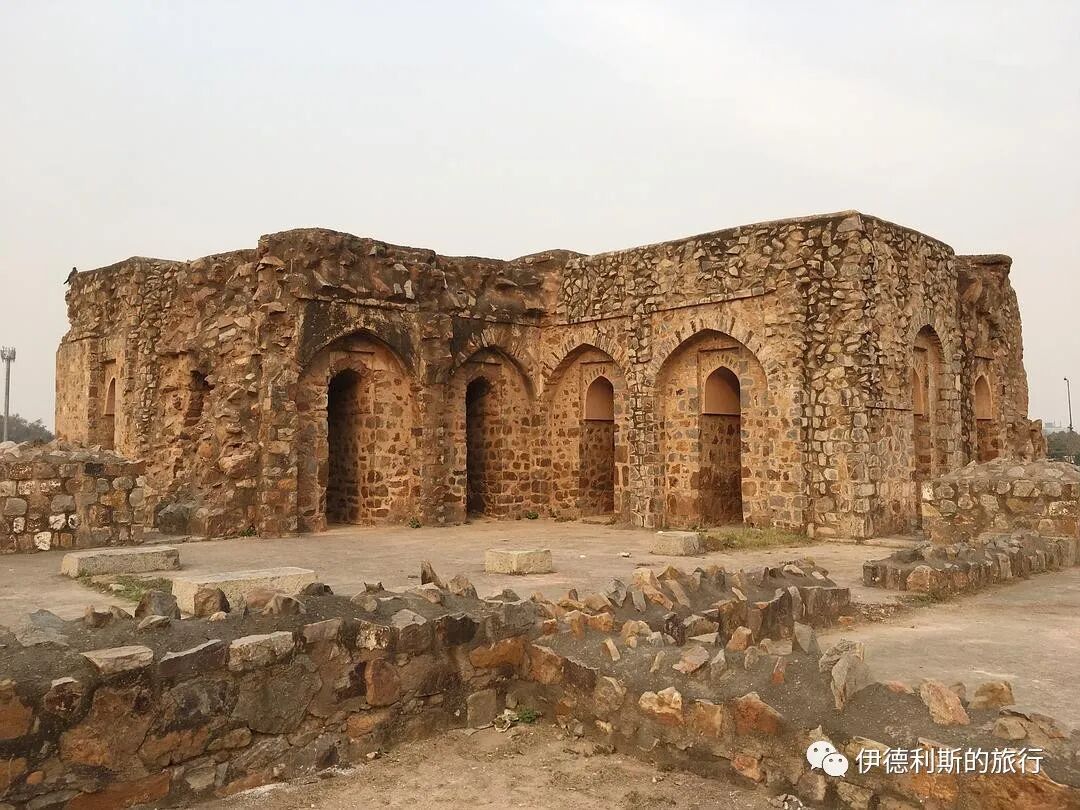
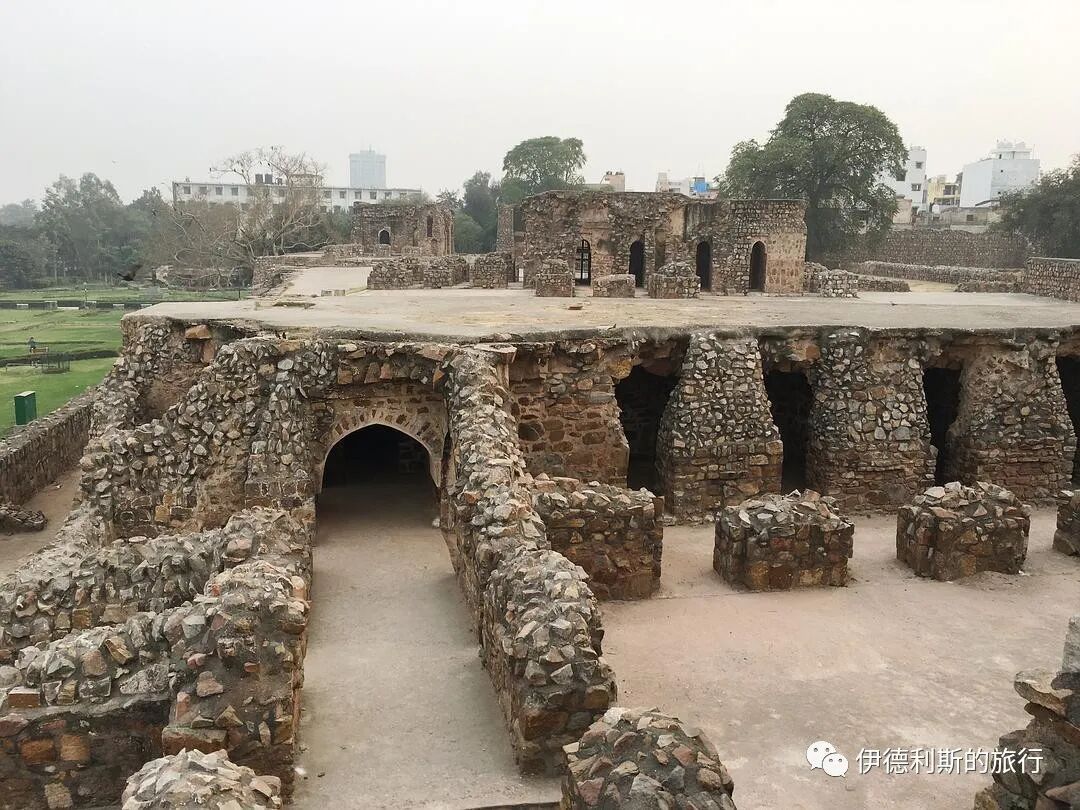
The Jinn in the Castle
Every Thursday afternoon, many people come to Feroz Shah Kotla to light candles and incense by the walls, write their wishes on paper, and pray that the Jinn in the castle will make their wishes come true.
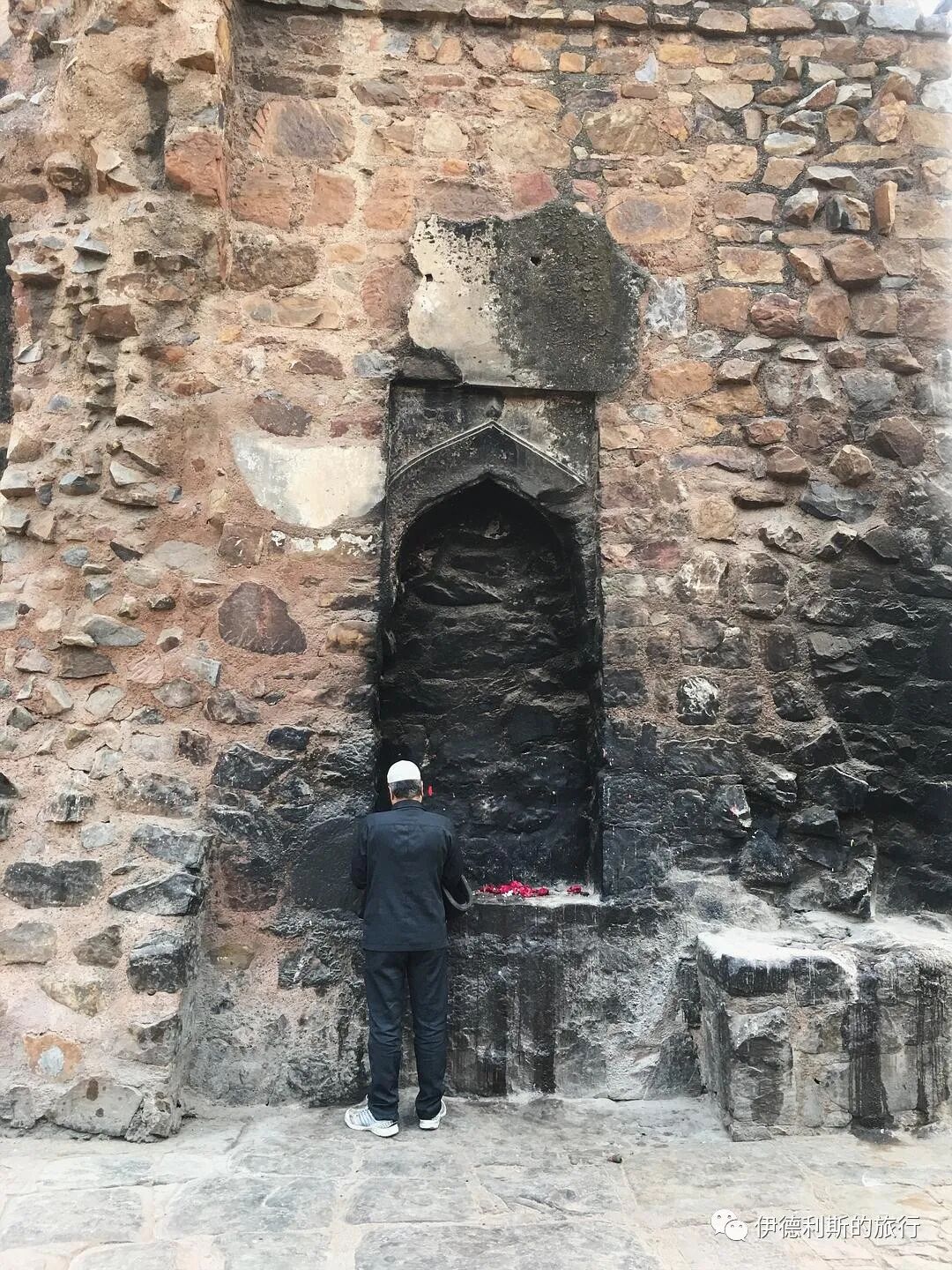
In Islam, Jinn are invisible to the naked eye and, along with angels and devils, are one of the three spiritual entities in the Islamic system. According to the Quran, Jinn were created from fire before Allah created humans; they have a lifestyle similar to humans but have more powerful abilities. There are many descriptions of Jinn in One Thousand and One Nights, the most famous being the genie in Aladdin's lamp.
In pre-Islamic Arabia, Jinn were guardian spirits worshipped by people. But as the early Islamic concept of monotheism solidified, Jinn were placed on an equal footing with humans, subject to judgment and capable of entering heaven or hell.
As Islam spread, the concept of Jinn spread to North Africa, Persia, Central Asia, and India. During the Abbasid era, the concept of Jinn was introduced to India from the Sindh region, gradually becoming part of local folk beliefs and spawning many legends.
The image below shows the Two-Horned One, Zulqarnayn, mentioned in the Quran, who used iron blocks to melt steel and build a barrier with the help of Jinn to protect people from invasion. This story originates from the legend of Alexander the Great and spread to the Arab region through Syria.
An illustration from The Art of Divination, painted by Ja'far al-Sadiq in the 1550s, kept at the Chester Beatty Library.
The image below shows the story of Imam Ali defeating a Jinn.
An illustration from the book Ahsan-ol-Kobar, painted in 1568, kept at the Golestan Palace in Tehran.
Feroz Shah Mosque: 1354.
Legend has it that after Timur the Great occupied Delhi in 1398, he performed namaz in a Jami Masjid. Timur loved this mosque so much that he ordered a mosque of the same design to be built in Samarkand. Many people believe this Jami Mosque is the great mosque inside Feroz Shah Kotla.
In fact, after Emperor Timur returned to Samarkand, he did build a famous Bibi-Khanym Mosque. However, this mosque does not look like the Feroz Shah Mosque; it looks more like the Begampur Mosque in Jahanpanah, the fourth city of Delhi. According to historical records, Emperor Timur mainly lived in Jahanpanah while he was in Delhi. Therefore, the Feroz Shah Mosque may not be the Jami Mosque that legend says Timur loved.
But a major event did happen at the Feroz Shah Mosque. In 1759, the Mughal Empire's vizier Imad-ul-Mulk planned to murder the entire family of the fourteenth Mughal emperor, Alamgir II. On November 29, the vizier told the emperor that a holy man had come to greet him. The emperor was very excited and immediately set off for the Feroz Shah Mosque to meet the holy man, where he was then assassinated. The death of Alamgir II caused great grief among Muslims in the Mughal Empire. Armies from various places soon rose up to attack the vizier Imad-ul-Mulk, and he had to flee Delhi.
The Feroz Shah Mosque has the typical architectural style of the Tughlaq dynasty. The main prayer hall has almost collapsed, but the ground floor is still well-preserved.
Outside the mosque
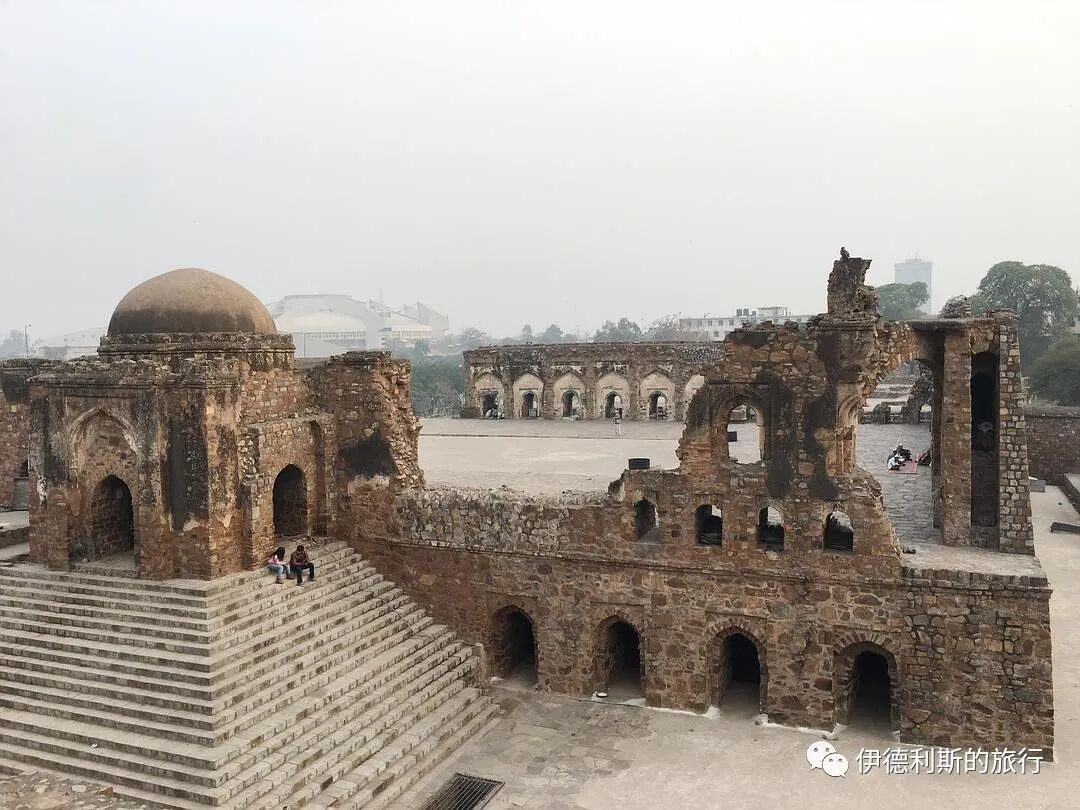
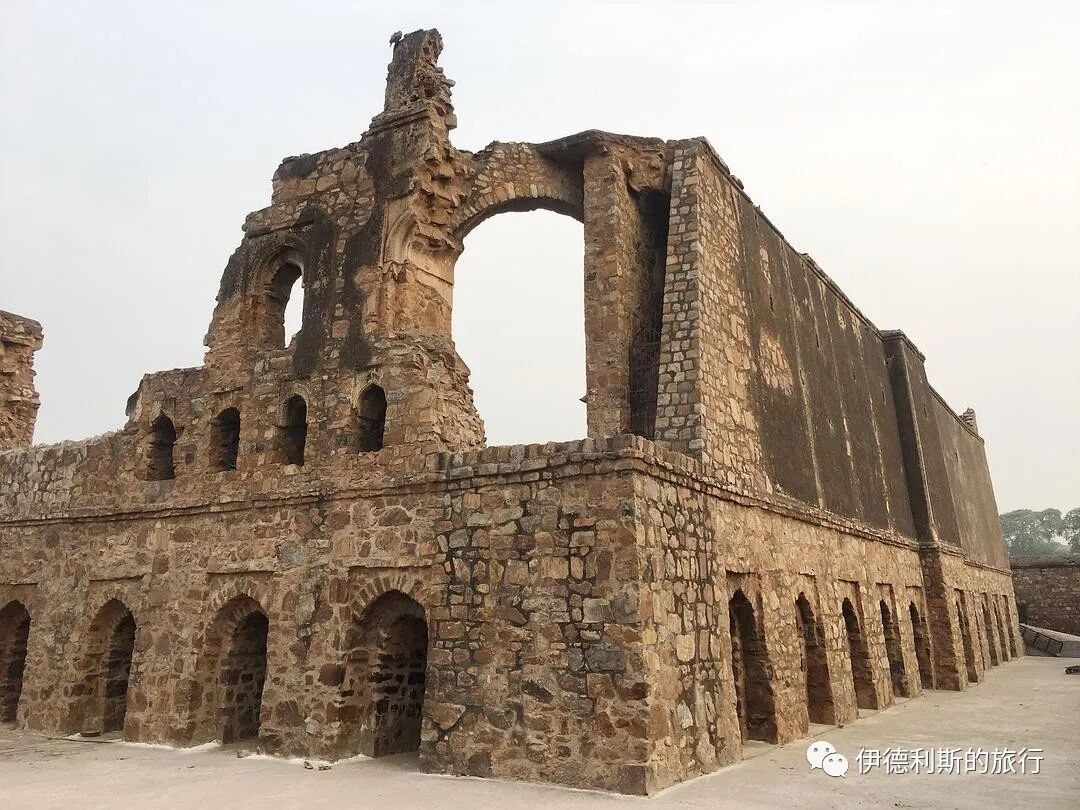
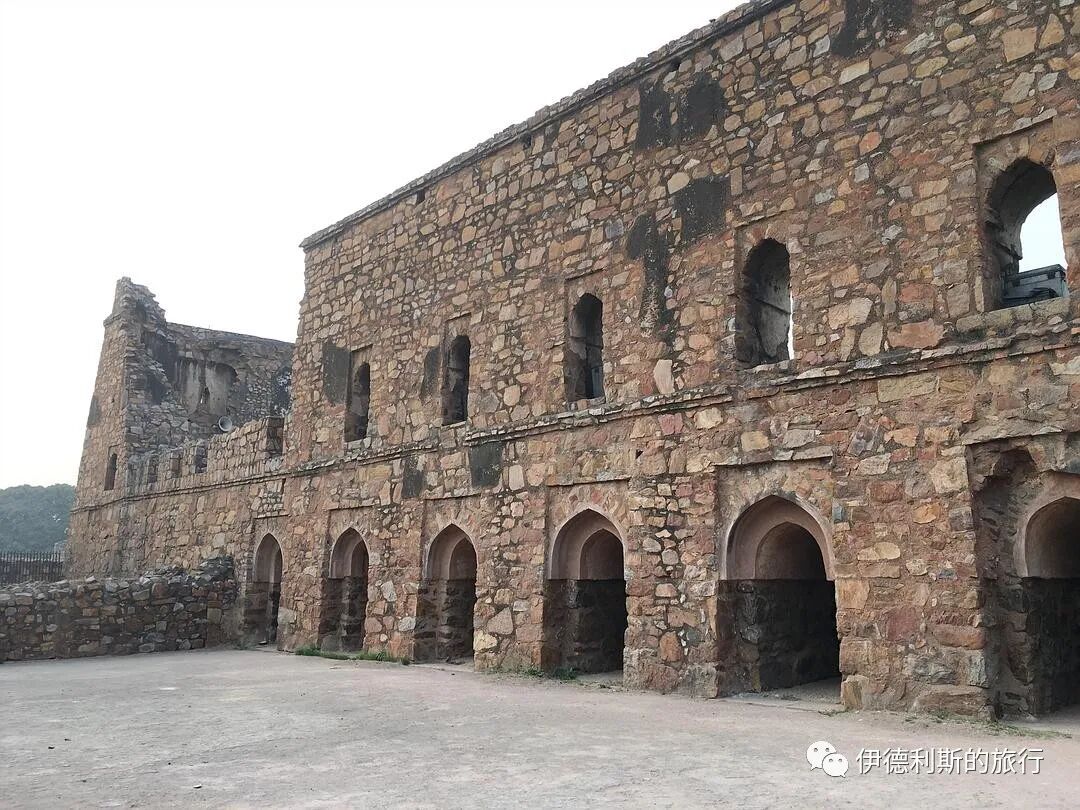
Mosque gate
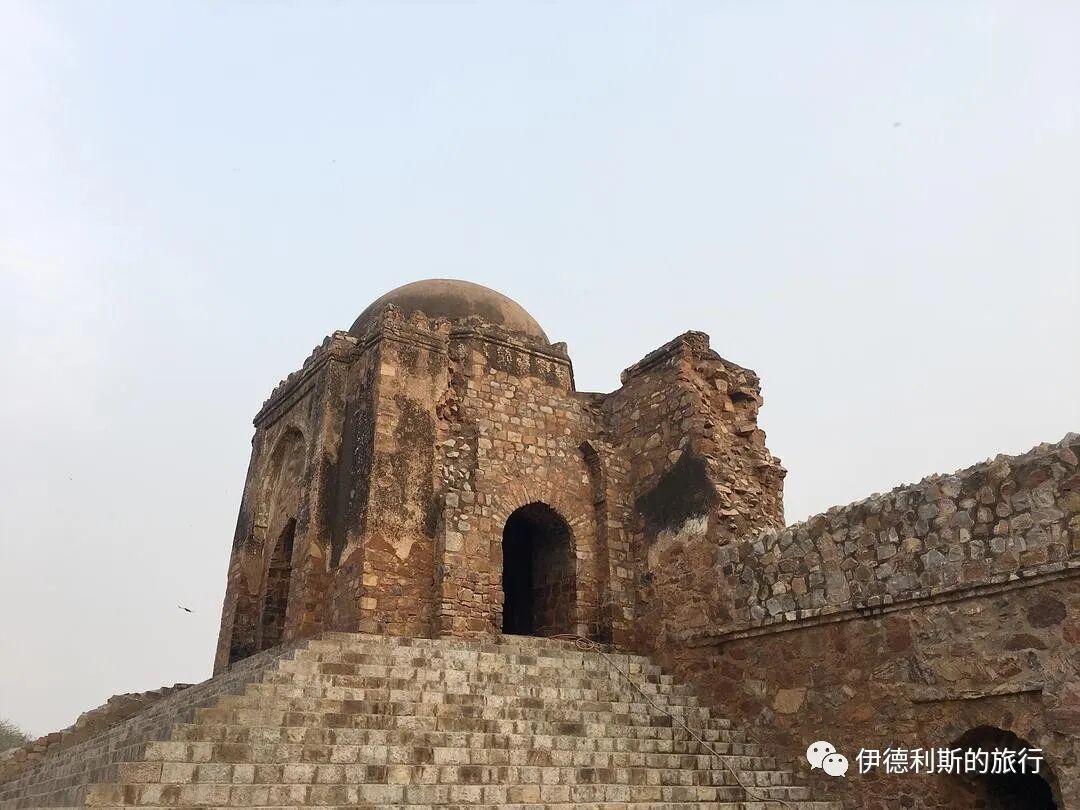
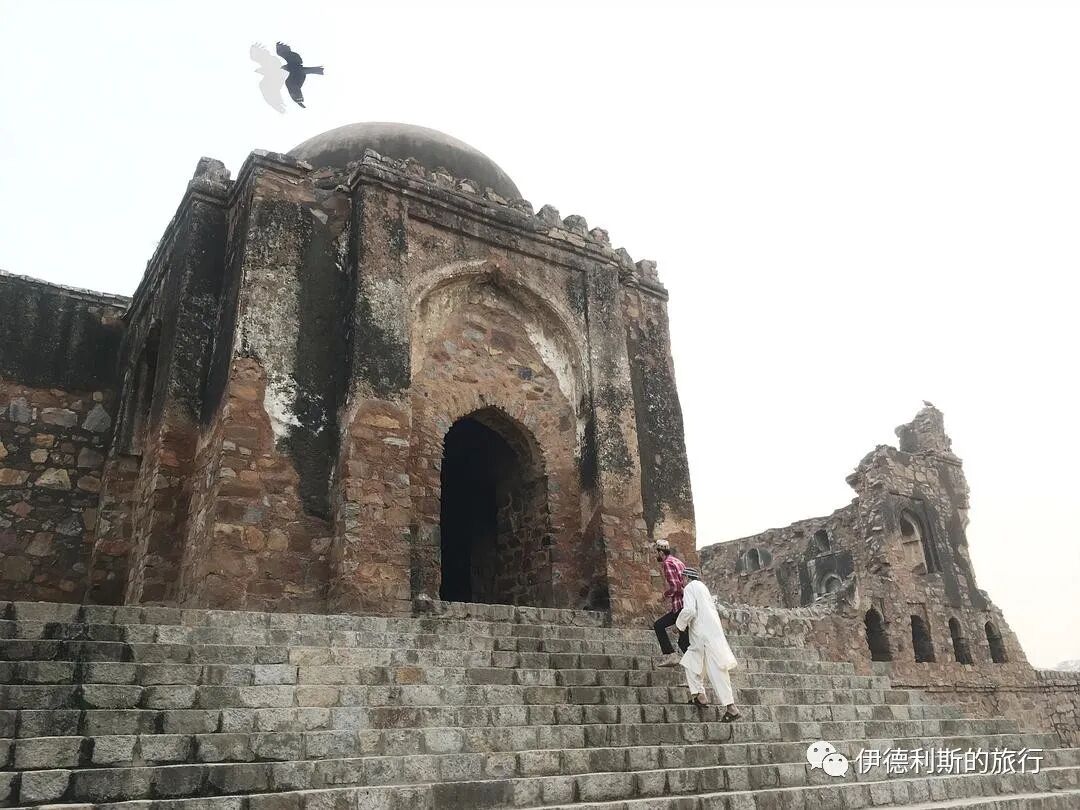
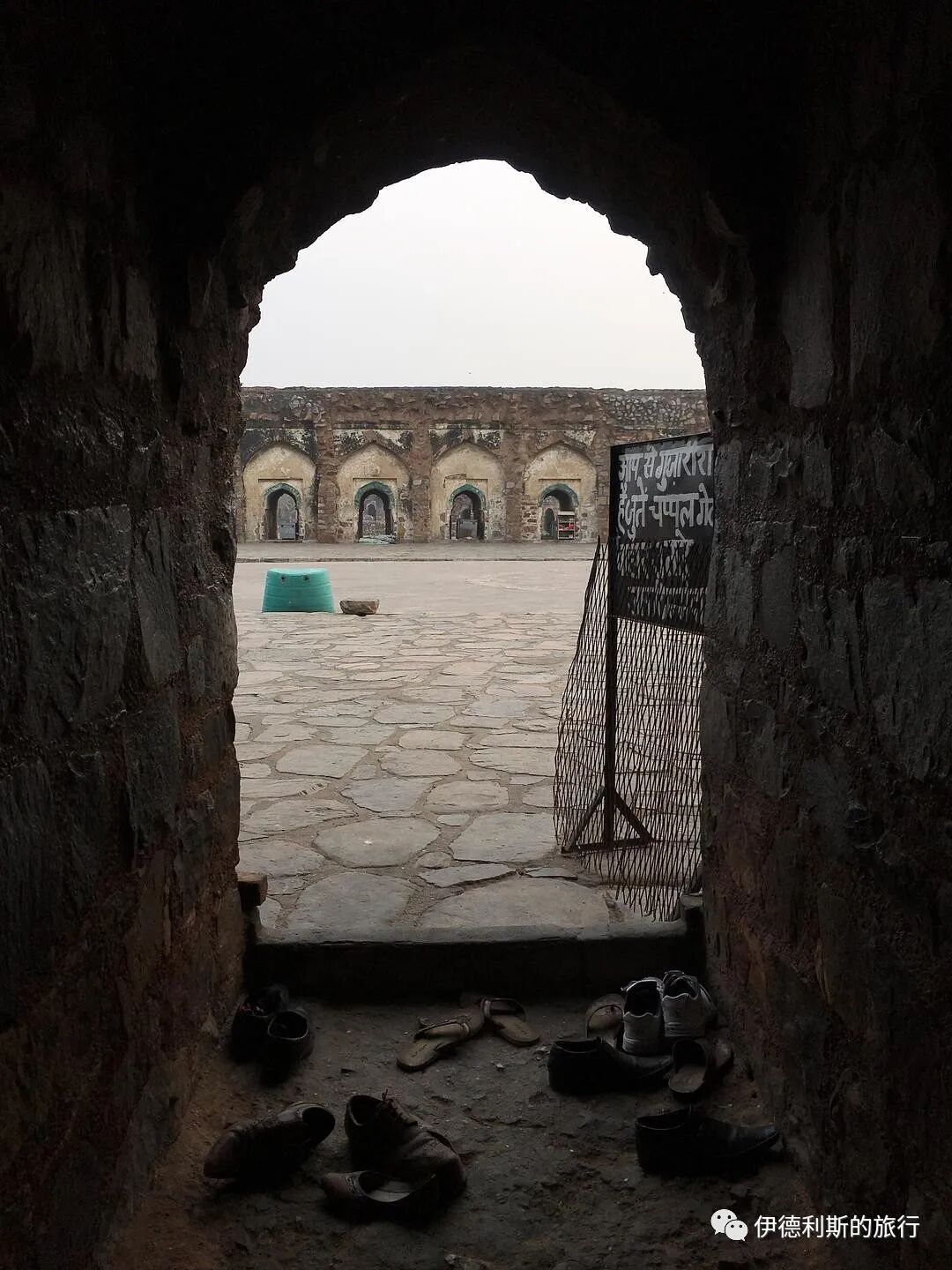
People performing namaz
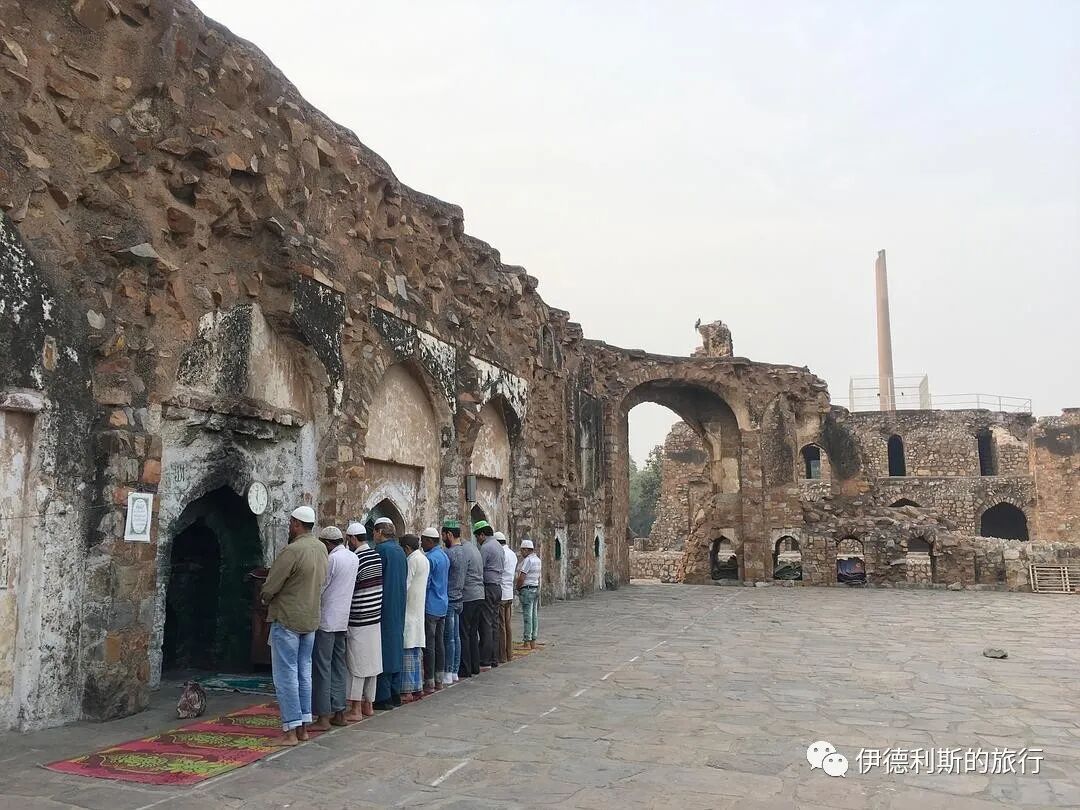
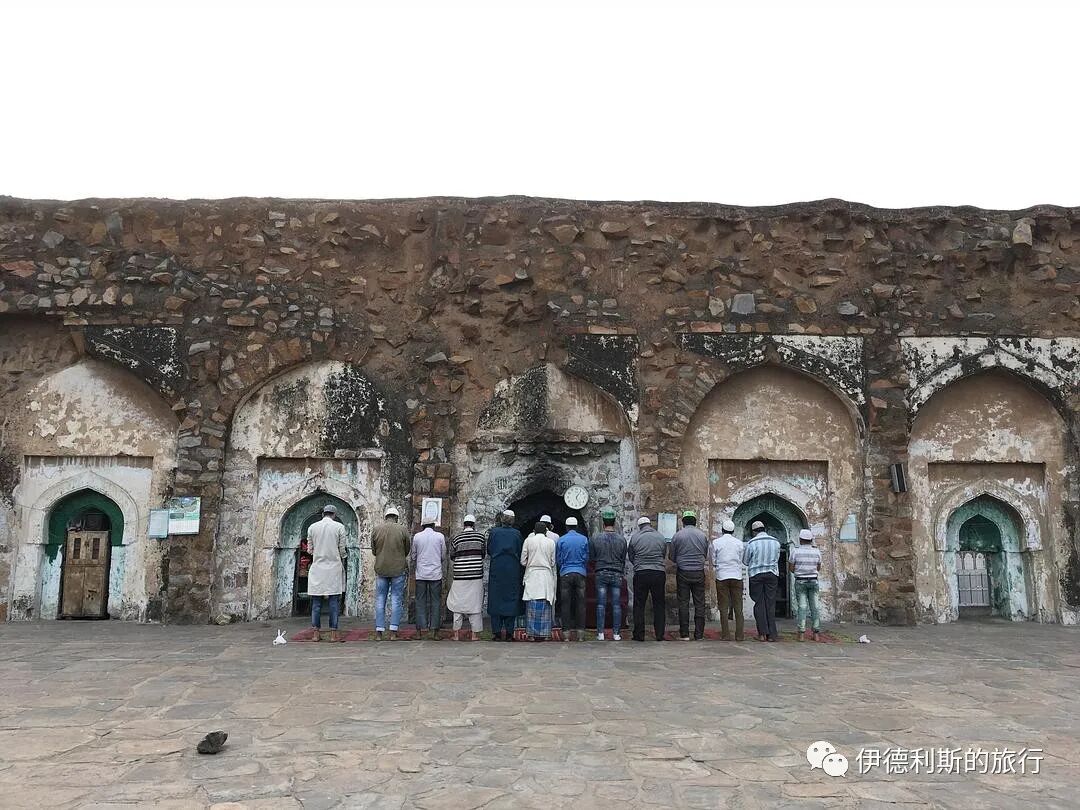
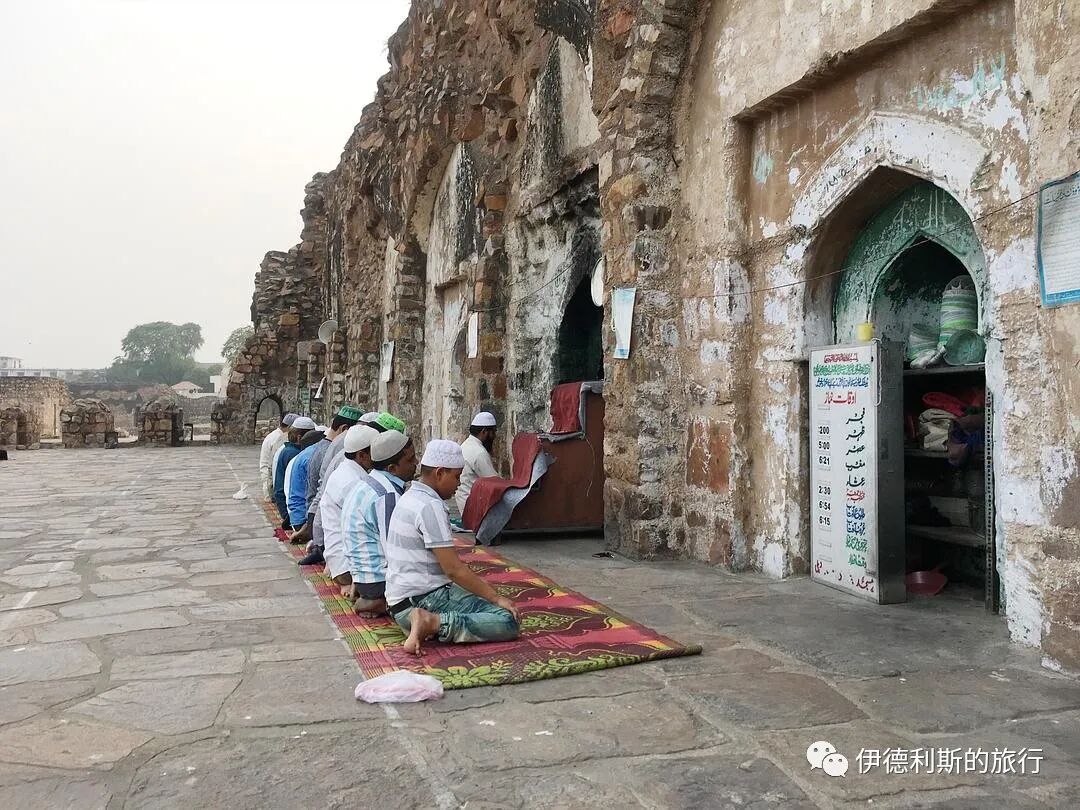
Ashoka Pillar: 1356
Right next to the mosque is the famous Delhi-Topra Ashokan Pillar.
In 1356, while Feroz Shah was passing through a place called Topra in northern India during an expedition, he discovered a famous Ashoka pillar. Feroz Shah transported this pillar back to the capital, Firozabad, and built a pyramid-shaped structure right next to the mosque to house it.
The Ashoka pillar is one of the columns inscribed with edicts that the famous King Ashoka (reigned 273–232 BC) of the ancient Indian Maurya Empire erected across South Asia. There are 20 remaining today, two of which were brought to Delhi by Feroz Shah. Besides the Delhi-Topra pillar, another pillar called the Delhi-Meerut pillar was placed in Feroz Shah's hunting palace.
The original inscriptions on the pillar were in the Prakrit language written in Brahmi script. When Feroz Shah found the pillar, the Brahmi script could no longer be read. It was not until 1837 that the famous Indian antiquities scholar James Princep fully deciphered the Brahmi script and translated its meaning. to the Buddhist teachings similar to other Ashoka pillars, the biggest difference with this pillar is that it mentions tax issues.
around the Brahmi script, there are some Sanskrit records of the victory in war by Visala Deva Vigraharaja IV of the Chauhan dynasty.
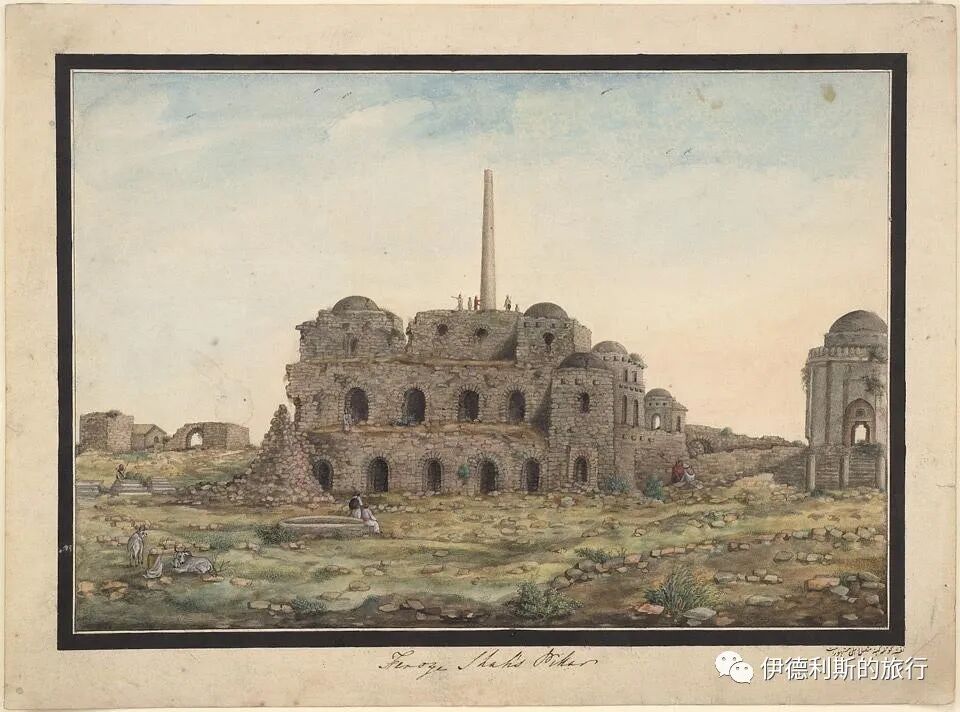
The Ashoka pillar drawn by a Delhi artist between 1820 and 1825
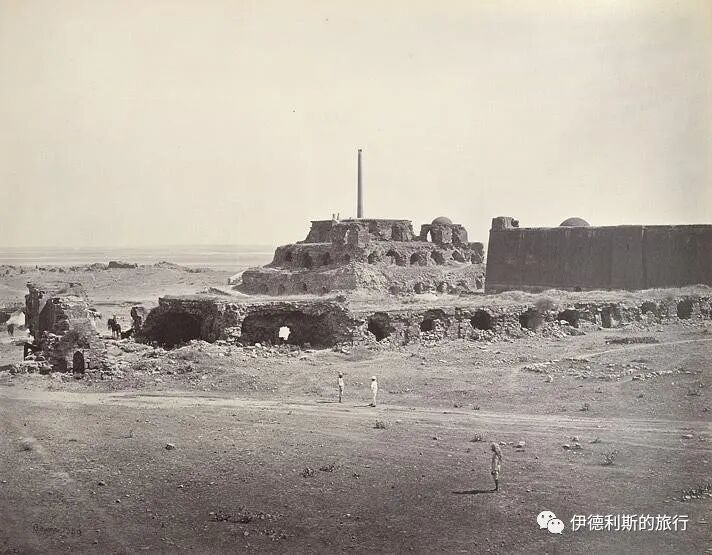
The Ashoka pillar photographed by Samuel Bourne in 1860
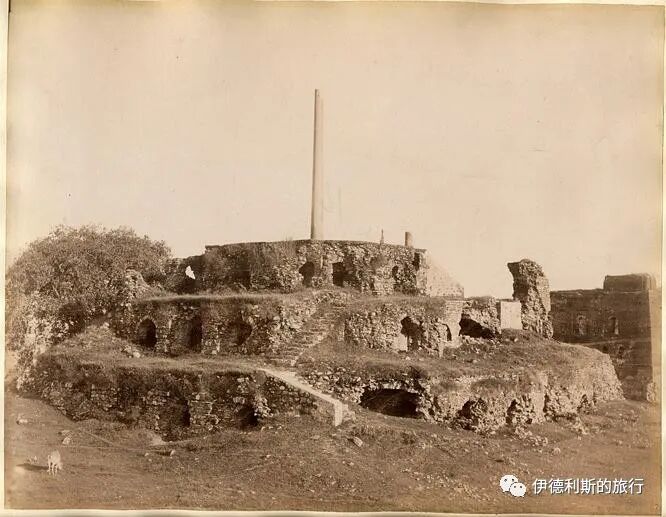
The Ashoka pillar photographed in 1880 by an unknown photographer
The Ashoka pillar today
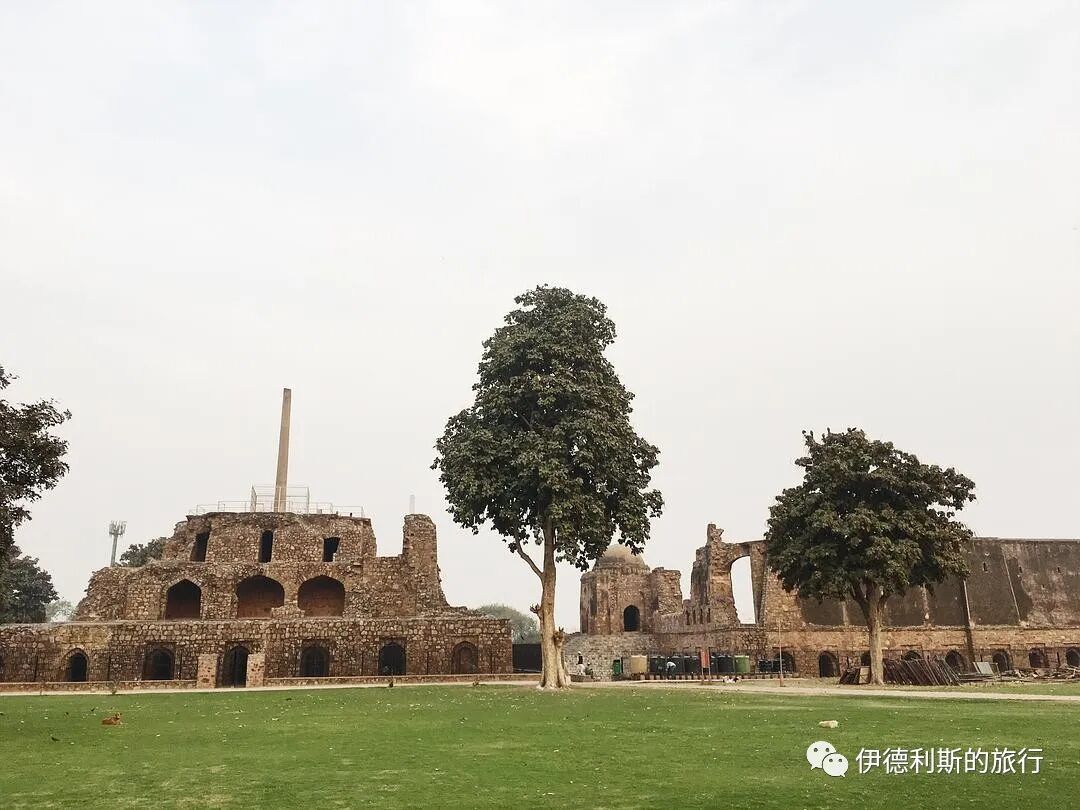
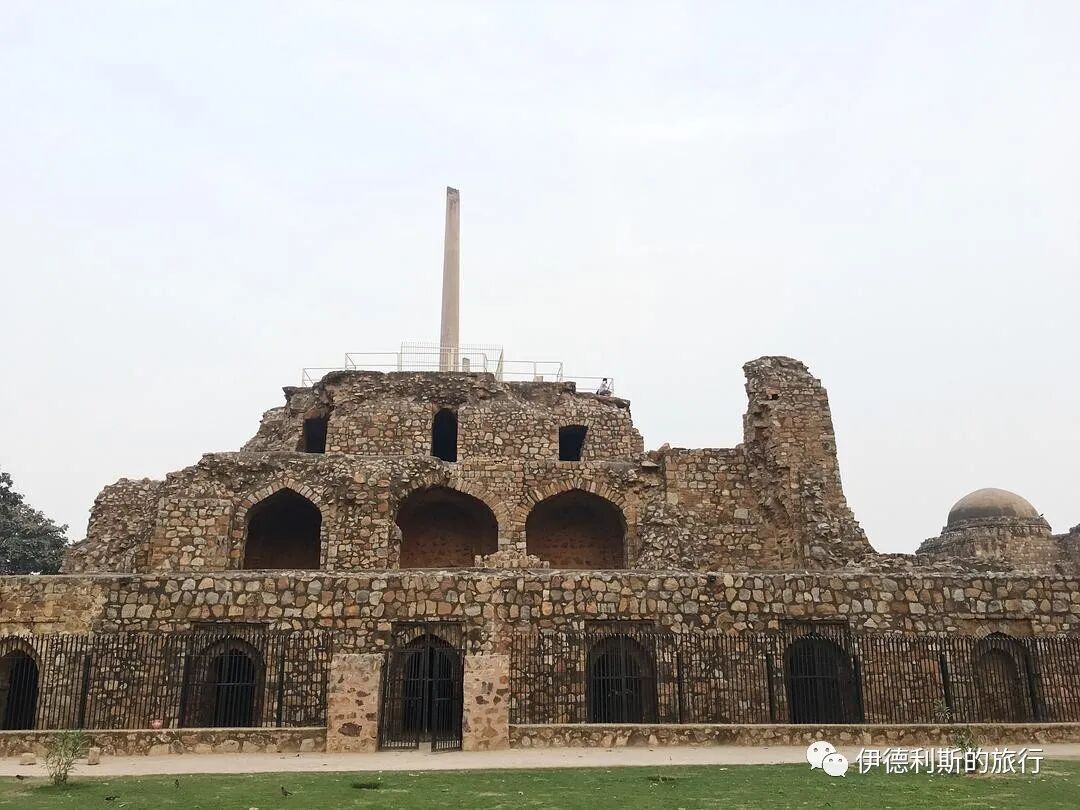
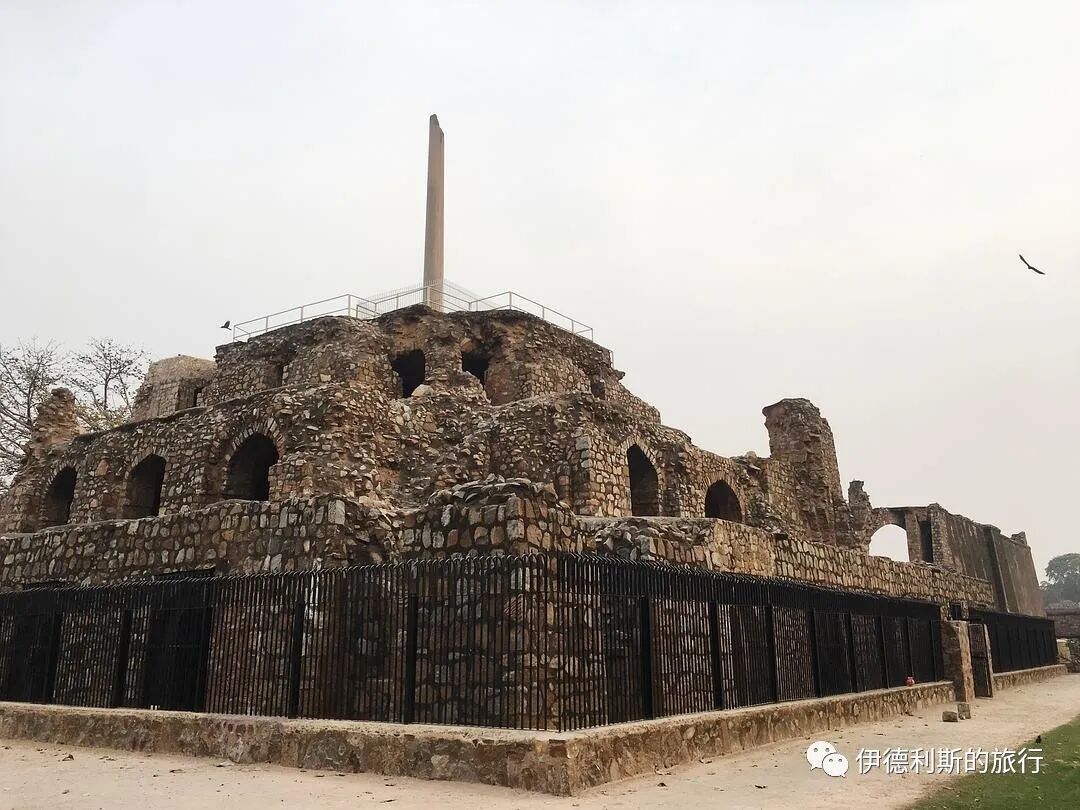
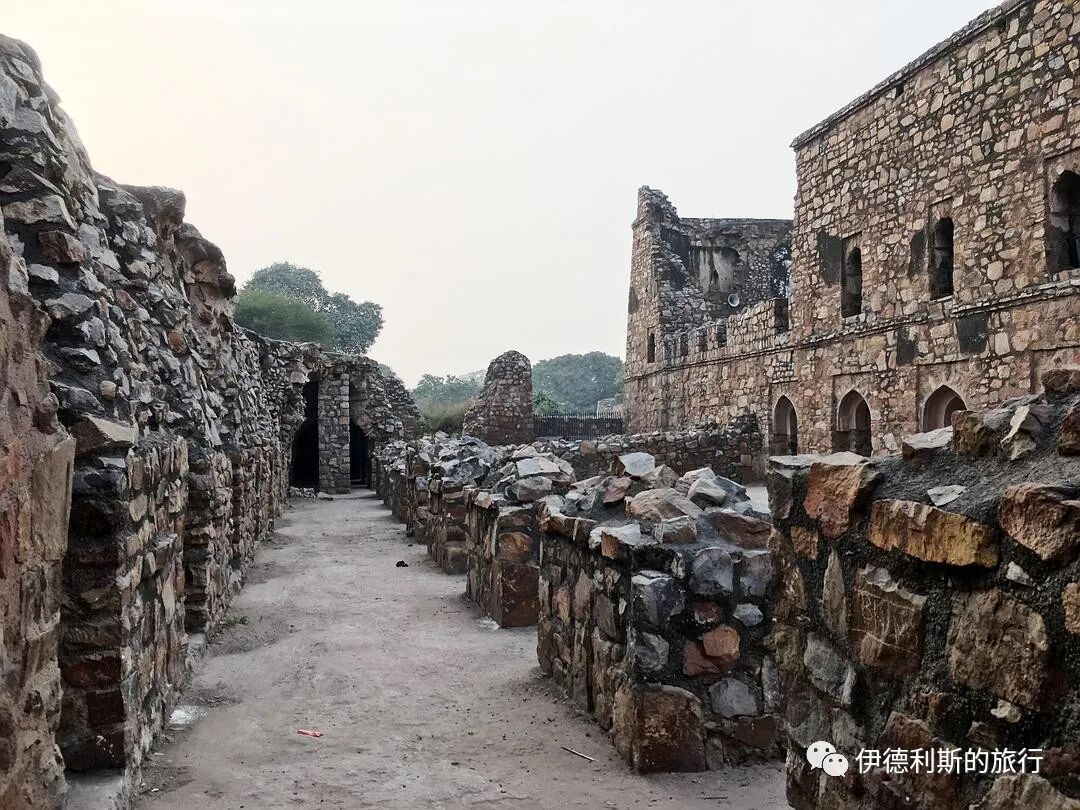
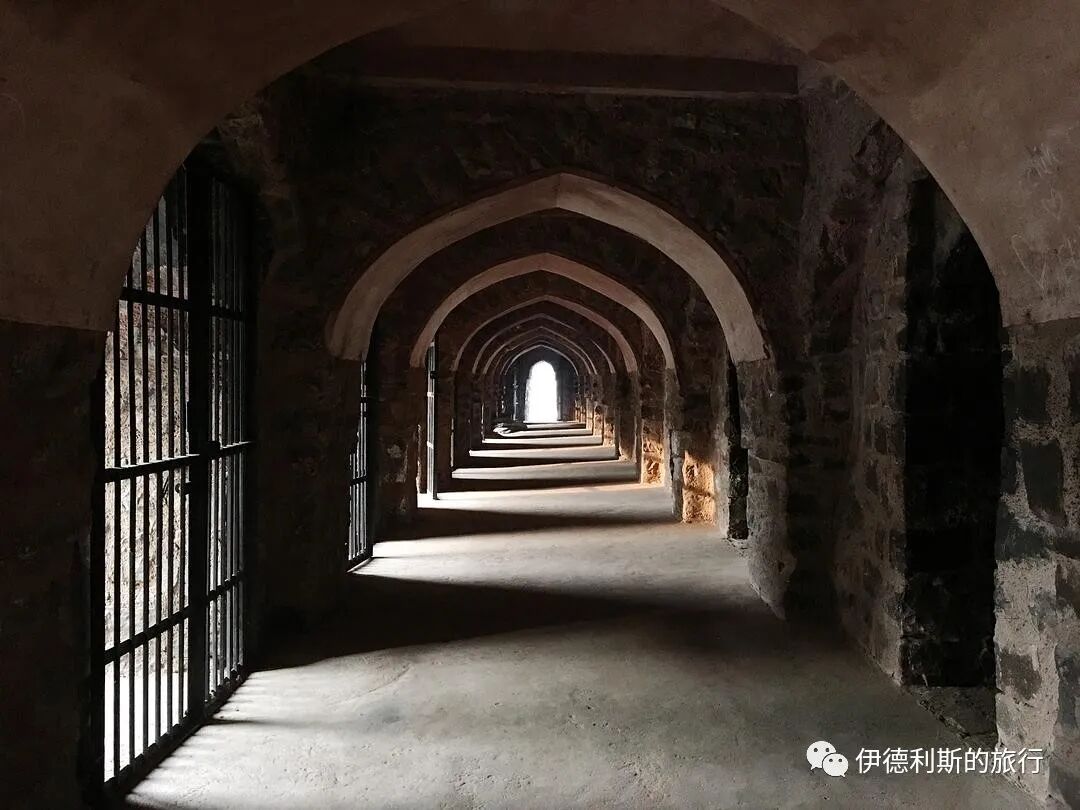
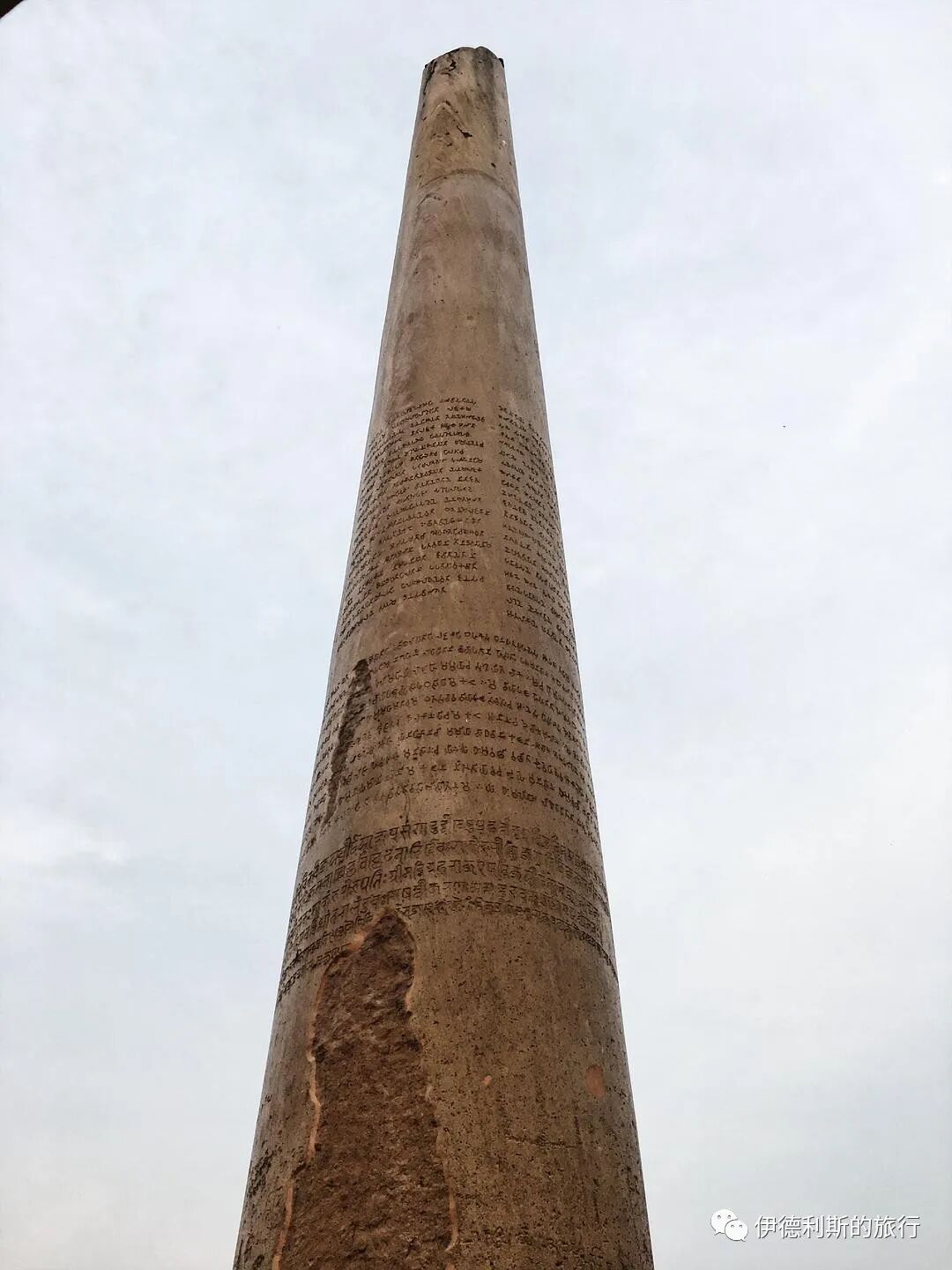
Water tank
In the center of the garden on the northwest side of the Ashoka pillar, there is a circular water tank (boli). There is a large underground canal on the east side of the tank, and water flows into the tank through this canal. In the era of Feroz Shah, this was a summer retreat for the Sultan's court, and people used the water in the tank to cool off and bathe.
Today, the water tank is still used to irrigate the garden, but it has been locked and is closed to visitors after a suicide occurred here in early 2014.
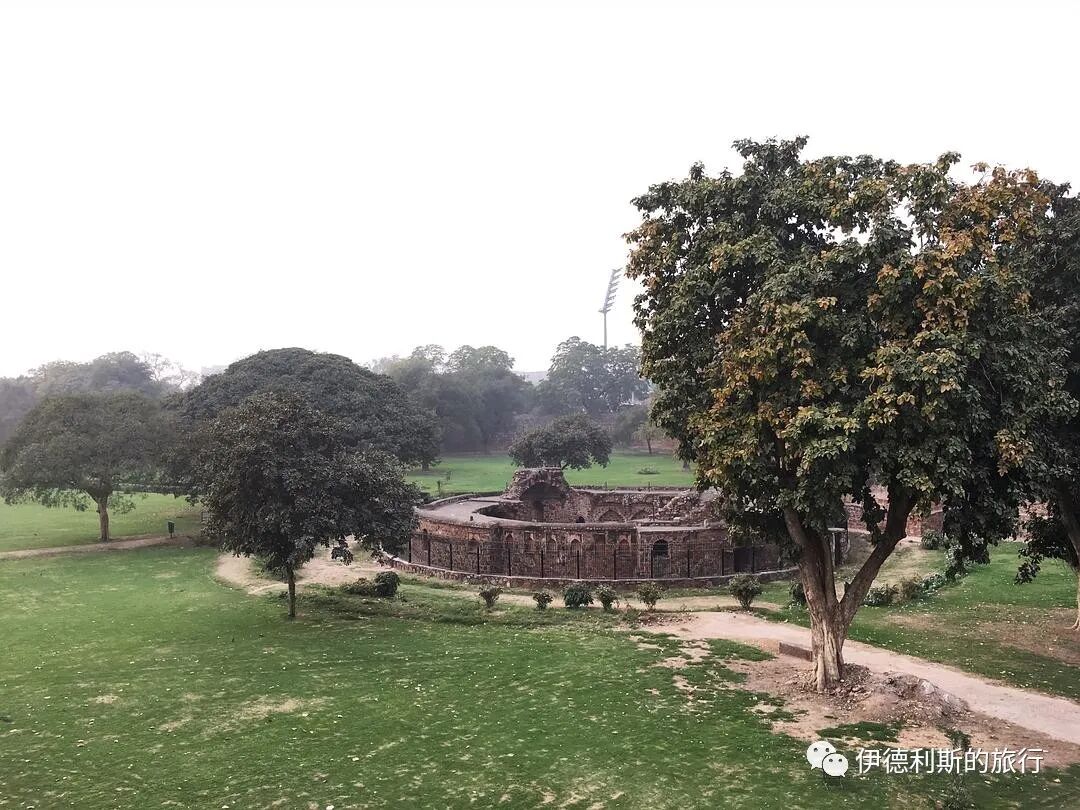
Halal Travel Guide: Delhi — Sultanate Palaces and Muslim History
Articles • ali2007fr posted the article • 0 comments • 149 views • 2026-05-17 12:22
Summary: Delhi — Sultanate Palaces and Muslim History is presented here as a firsthand travel account in clear English, beginning with this scene: In our last post, The Third City of Delhi—Indestructible Beautiful Ruins, we discussed how Ghiyath al-Din Tughluq founded the Tughlaq dynasty, the third dynasty of the Delhi Sultanate, in 1320. The account keeps its focus on Delhi Travel, Sultanate History, Muslim Heritage while preserving the names, places, food, and historical details from the Chinese source.
In our last post, The Third City of Delhi—Indestructible Beautiful Ruins, we discussed how Ghiyath al-Din Tughluq founded the Tughlaq dynasty, the third dynasty of the Delhi Sultanate, in 1320. In February 1325, Ghiyath al-Din died when a pavilion collapsed on him while he was returning to Delhi from Bengal. His son, Sultan Muhammad bin Tughluq, succeeded him, and he is the main character of this post.
Table of Contents
1. The Founding of Jahanpanah
2. The Mysterious Sultan's Palace
1. Upper Platform: Khalji Dynasty
2. Single-story Hall: Khalji Dynasty
3. Octagonal Tower: Early Tughlaq Dynasty
4. Lower Platform: Late Tughlaq Dynasty
5. Cemetery and Religious Site: Lodi Dynasty
6. Circular Dome: Lodi Dynasty
3. Begampur Mosque
4. Khirki Mosque
5. Kalusarai Mosque
1. The Founding of Jahanpanah
Between 1326 and 1327, to prevent invasion by the Mongol army, Muhammad bin Tughluq connected Delhi's first city, Lal Kot, and its second city, Siri, with walls to create the fourth city of Delhi, Jahanpanah.
For information on Lal Kot and Siri, please see my previous two posts: The First City of Delhi—Minarets Reaching the Clouds and The Second City of Delhi—Turkic Fortress Against the Mongol Army.
The term Jahanpanah consists of two Persian words: Jahan means world, and panah means refuge, shelter, or sanctuary.
Muhammad bin Tughluq did not just expand the capital; he also greatly expanded the territory of the Delhi Sultanate. In the image below, dark green shows the territory in 1320, and light green shows the territory in 1330.
The famous Moroccan traveler Ibn Battuta lived in Delhi between 1333 and 1341. Based on his travelogues, we can infer that at the time, Lal Kot was the city center, Siri was a military camp, and Jahanpanah in the middle was the palace area. Ibn Battuta said the Tughlaq Sultan originally wanted to build a super-city connecting Delhi's existing Lal Kot, Siri, and the third city, Tughlaqabad, but he did not carry it out due to limited funds.
The following is from The Travels of Ibn Battuta (Complete Translation).
The maps and hand-drawn illustrations scanned for this diary are all from the book Delhi—A Thousand Years of Building, which is an excellent resource on the history of Delhi.
Map of Jahanpanah:
From the book Delhi—A Thousand Years of Building
Shortly after Jahanpanah was completed, Muhammad bin Tughluq suddenly decided to move the capital to the Deccan Plateau in the south and established a new capital called Daulatabad.
Muhammad bin Tughluq forced the population of Delhi to migrate on a large scale, and those who refused were killed. However, the move failed because Daulatabad lacked enough drinking water due to drought, and Muhammad bin Tughluq eventually moved back to Delhi. Although this relocation failed, it significantly influenced history because many Muslims who moved to the Deccan region did not return to Delhi, leading to a large increase in the Muslim population in central and southern India.
2. The Mysterious Sultan's Palace
Within the ruins of Jahanpanah, there is a huge building site called Bijaya Mandal, which means Victory Platform in Hindi. Bijaya Mandal may be the most puzzling historical building in Delhi. On one hand, we know very little about secular architecture from the Delhi Sultanate period, and on the other, the building changed significantly across different eras.
Much evidence suggests this was likely the palace site of Sultan Muhammad bin Tughluq, but without systematic archaeological excavation, we still cannot be certain about the functions of the existing structures.
Ibn Battuta did not describe the Sultan's palace in much detail. He only mentioned that people had to pass through three gates to reach a palace called bazar suntun, which means thousand pillars. He said these wooden pillars were painted and supported a beautifully carved wooden roof.
It is hard to imagine the appearance of this hall because most buildings preserved from this period are mosques, tombs, and madrasas, with almost no secular buildings remaining. Based on Ibn Battuta's description, this hall likely had long colonnades and a flat roof. One question remains: how did they keep a wooden flat roof waterproof? Regarding the interior of the hall, we only know it had exquisite carvings and the walls were likely decorated with paintings, which were probably removed later during the iconoclastic movement of Firuz Shah Tughlaq (reigned 1351–1388).
Archaeological digs show this building was used for a very long time. Historical records mention that both Sultan Alauddin Khalji (reigned 1296-1316) and Sultan Muhammad bin Tughlaq (reigned 1325-1351) had a palace called bazar suntun. Although Ibn Battuta wrote that Alauddin Khalji’s palace was in the city of Siri, these two palaces are likely the same place, and they are probably Bijaya Mandal.
The stone hall at Bijaya Mandal likely dates back to the time of Alauddin Khalji, while the tower next to it was almost certainly built by Muhammad bin Tughlaq. Archaeological findings show these buildings were still in use after the time of Firoz Shah Tughlaq (1351-1388). In the early 16th century, during the Lodi dynasty (1451-1526), the site was used by a Sufi sheikh named Sheikh Hasan Tahir.
1. Upper Platform: Khalji Dynasty
From the book Delhi—A Thousand Years of Building
The oldest part of this complex is likely the upper platform, which may have been built by Alauddin Khalji (reigned 1296-1316). You can see damaged, sloping retaining walls on the west, east, and south sides of the platform. There are two levels of arched basements visible from the east end of the platform, and a similar structure exists on the west end. The main building likely stood in the middle of the slightly raised area of the platform.
A view from the lower platform looking up at the upper platform, the single-story hall, and the octagonal tower.
2. Single-story Hall: Khalji Dynasty
On top of the platform sits a single-story hall, and above that is an octagonal tower. The hall was also likely built during the time of Alauddin Khalji. There are remains of a balcony in front of the hall, and the bases of the pillars are still there. You can walk from the pillars into the main room, where the roof is held up by stone columns. Behind the first row of stone columns are two large pits half a meter deep. In the early 20th century, the Archaeological Survey of India found many items here, including ivory, porcelain, glass necklaces, pearls, red coral, rubies, and coins dating from 1296 to 1390. This place was likely a treasure storage room at the time.
The hall seems to have had entrances on all four sides, but they were likely blocked when Muhammad bin Tughlaq built the heavy platform under the octagonal tower. The first entrance on the north wall next to the platform also seems to have been changed. Different foundation remains show there was once another room on the edge of the platform on the north side of the hall.
Below is the upper platform, and above is the single-story hall.
Looking down at the upper platform from the roof of the single-story hall.
3. Octagonal Tower: Early Tughlaq Dynasty
From the book Delhi—A Thousand Years of Building
The octagonal tower above the single-story hall was reportedly built by Muhammad bin Tughlaq (reigned 1325-1351). A slope followed by shallow, wide steps leads to the base of the octagonal tower. There is much evidence that the octagonal tower once extended further to the north. The three doors with quartzite frames and the narrow stairs leading to the roof were added later during the late Tughlaq dynasty.
Inside the octagonal tower is a symmetrical, cross-shaped room with the same openings on each side. In the middle of summer, the inside of the tower stays cooler and catches a breeze.
On the roof of the tower, there are two well-preserved sockets. One still has a groove around the edge, which suggests it likely held something on top. Besides these two sockets, there are actually traces of sockets on every level of the stairs. Based on the depth of these sockets, they likely held heavy, tall pillars. It is thought that there might have once been a pavilion (baradari) on top of the tower. There is also a row of small sockets along the edge of the roof, which may have held smaller upright posts.
We can guess that this tower was likely a viewing platform for Sultan Muhammad bin Tughlaq, but the biggest question is how the Sultan got up there, as his fancy clothes would have been hard to wear through the narrow stairs that exist today. It is very likely there was another staircase at the time, although Indian palaces usually did not have fancy stairs and kept them inside thick walls.
The narrow stairs leading to the octagonal tower.
The octagonal tower.
Inside the octagonal tower.
4. Lower Platform: Late Tughlaq Dynasty
From the book Delhi—A Thousand Years of Building
You can go down from the upper platform to a larger lower platform. There are retaining walls on the east and west sides of the lower platform. The buildings on the lower platform date to two periods: the wall foundations are made of large quartzite, while the upper parts feature masonry typical of the Tughlaq dynasty. Archaeological excavations in the 1920s uncovered stone pillar bases on the lower platform, some of which are still visible in the southwest corner today. On the other side of the platform, near the crumbling east retaining wall, you can still see delicate plaster flooring. These ruins may all be part of the palace Ibn Battuta called the bazar sutun.
There is a tall retaining wall between the two platforms, featuring a series of vertical slots that were likely used to hold wooden pillars or decorations. Except for the ramp on the east side of the upper platform, there is no other way to connect the two platforms. The wooden pillars in the lower vertical slots may have supported a higher floor, forming the Sultan's palace along with the stone hall on the south side. Another theory is that the lower platform was the Sultan's palace and the upper platform was his sleeping quarters, which is why the two levels are separate.
Wall foundations of the lower platform.
Wall foundations of the lower platform.
5. Cemetery and Religious Site: Lodi Dynasty
About halfway across the platform, the ground level rises significantly, which likely marks the general area of the palace. Far from the palace is a small cemetery where Sheikh Hasan Tahir and his descendants are buried. This sheikh lived during the Lodi dynasty (1451–1526) and died in 1503. It is said he lived in Bijay Mandal for a long time.
There is an arcade-style building at the very edge of the outer platform of the cemetery. On the north side of the building, there are remains of a long arcade wall, with pillars and arches in the Lodi dynasty style. There are also two sturdy towers, with black plaster coatings on top that reflect the Tughlaq dynasty style. It is believed that this may have been a khanqah (a place for Sufi gatherings) built by Sheikh Hasan Tahir.
Looking out at the lower platform and the sheikh's tomb from the single-story hall.
6. Circular Dome: Lodi Dynasty
Next to Bijaya Mandal is a building with a circular dome, thought to have been built in the 15th century. The purpose of this building remains unknown, and its structure is quite unique: it has two openings on each of the north, south, and west sides, while the east side is sealed. Foundation evidence shows there was once another building on the west side of this structure.
3. Begampur Mosque
Begampur Mosque is the most important mosque in the city of Jahanpanah and the most representative mosque of the Tughlaq dynasty of the Delhi Sultanate still standing today; it is said to have been designed by the Iranian architect Zahir al-Din al-Jayush.
There are two theories about when the mosque was built: one suggests it is one of the seven mosques built by Khan-i-Jahan Maqbul, the wazir (prime minister) of Sultan Firuz Shah Tughlaq (reigned 1351–1388), while the other suggests it was built when Muhammad bin Tughlaq died in 1351.
In 1921, the Archaeological Survey of India cleared out the residents living inside the mosque, giving it the appearance it has today.
Begampur Mosque is magnificent, with a spacious courtyard surrounded by arcades. There is a circular domed building in the center of each of the four sides; the east, north, and west ones are gates, and the largest one on the west side is the main prayer hall.
The mosque is very simple, with only a few carvings inside the main prayer hall. These stone carvings and the dome were once covered in shimmering white plaster, but most of it has fallen off and turned black.
The gate.
Looking inside from the gate.
Inside the gate.
The corridor on the northeast side.
Southwest corridor
Courtyard
Overlook
North gate
South gate
The corridor on the north side of the main prayer hall has collapsed.
Main prayer hall
Mihrab
Main prayer hall dome
Minimal decoration
4. Khirki Mosque
Khirki Mosque is another important mosque from the Tughlaq dynasty besides Begumpur Mosque, but its design is very different from Begumpur Mosque. This mosque is undoubtedly one of the seven mosques built by the prime minister Khan-i-Jahan Maqbul, and it was likely built in the 1370s.
Khirki Mosque sits much higher than the ground, and a trench has now formed around it. The mosque has a large gate on the north, east, and south sides, each with small minarets on top, and there is a large minaret at each of the four corners of the mosque.
From the book Delhi—A Thousand Years of Building
Mosque facade
From the book Delhi—A Thousand Years of Building
The gate.
The biggest feature of Khirki Mosque is that its roof is almost completely covered, with only four small square courtyards, which is very rare in the Delhi Sultanate. Because there are only four small open-air courtyards, the mosque cannot be fully lit even during the day, and it is darkest in front of the mihrab in the prayer hall.
The structure made of square pillars and circular domes gives this mosque a strong sense of geometric beauty. I arrived at dusk, and even though it was very dark, I was still stunned.
Courtyard
Mihrab
Collapsed dome in the northeast corner
Corner tower
5. Kalusarai Mosque
Kalusarai Mosque is one of the seven mosques built by the aforementioned prime minister Khan-i-Jahan Maqbul. It is currently badly damaged and several families live inside, so the door was locked when I went and I could not enter. This mosque has a more complex structure than the other six mosques built by Khan-i-Jahan Maqbul, but it is still in the typical Tughlaq dynasty style. view all
Summary: Delhi — Sultanate Palaces and Muslim History is presented here as a firsthand travel account in clear English, beginning with this scene: In our last post, The Third City of Delhi—Indestructible Beautiful Ruins, we discussed how Ghiyath al-Din Tughluq founded the Tughlaq dynasty, the third dynasty of the Delhi Sultanate, in 1320. The account keeps its focus on Delhi Travel, Sultanate History, Muslim Heritage while preserving the names, places, food, and historical details from the Chinese source.
In our last post, The Third City of Delhi—Indestructible Beautiful Ruins, we discussed how Ghiyath al-Din Tughluq founded the Tughlaq dynasty, the third dynasty of the Delhi Sultanate, in 1320. In February 1325, Ghiyath al-Din died when a pavilion collapsed on him while he was returning to Delhi from Bengal. His son, Sultan Muhammad bin Tughluq, succeeded him, and he is the main character of this post.
Table of Contents
1. The Founding of Jahanpanah
2. The Mysterious Sultan's Palace
1. Upper Platform: Khalji Dynasty
2. Single-story Hall: Khalji Dynasty
3. Octagonal Tower: Early Tughlaq Dynasty
4. Lower Platform: Late Tughlaq Dynasty
5. Cemetery and Religious Site: Lodi Dynasty
6. Circular Dome: Lodi Dynasty
3. Begampur Mosque
4. Khirki Mosque
5. Kalusarai Mosque
1. The Founding of Jahanpanah
Between 1326 and 1327, to prevent invasion by the Mongol army, Muhammad bin Tughluq connected Delhi's first city, Lal Kot, and its second city, Siri, with walls to create the fourth city of Delhi, Jahanpanah.
For information on Lal Kot and Siri, please see my previous two posts: The First City of Delhi—Minarets Reaching the Clouds and The Second City of Delhi—Turkic Fortress Against the Mongol Army.
The term Jahanpanah consists of two Persian words: Jahan means world, and panah means refuge, shelter, or sanctuary.
Muhammad bin Tughluq did not just expand the capital; he also greatly expanded the territory of the Delhi Sultanate. In the image below, dark green shows the territory in 1320, and light green shows the territory in 1330.
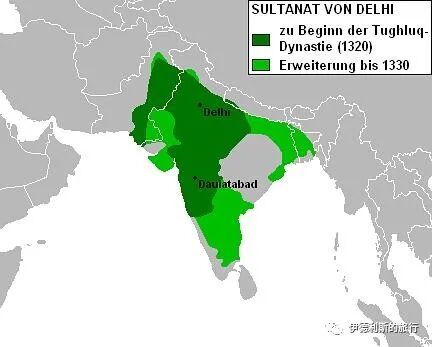
The famous Moroccan traveler Ibn Battuta lived in Delhi between 1333 and 1341. Based on his travelogues, we can infer that at the time, Lal Kot was the city center, Siri was a military camp, and Jahanpanah in the middle was the palace area. Ibn Battuta said the Tughlaq Sultan originally wanted to build a super-city connecting Delhi's existing Lal Kot, Siri, and the third city, Tughlaqabad, but he did not carry it out due to limited funds.
The following is from The Travels of Ibn Battuta (Complete Translation).

The maps and hand-drawn illustrations scanned for this diary are all from the book Delhi—A Thousand Years of Building, which is an excellent resource on the history of Delhi.
Map of Jahanpanah:
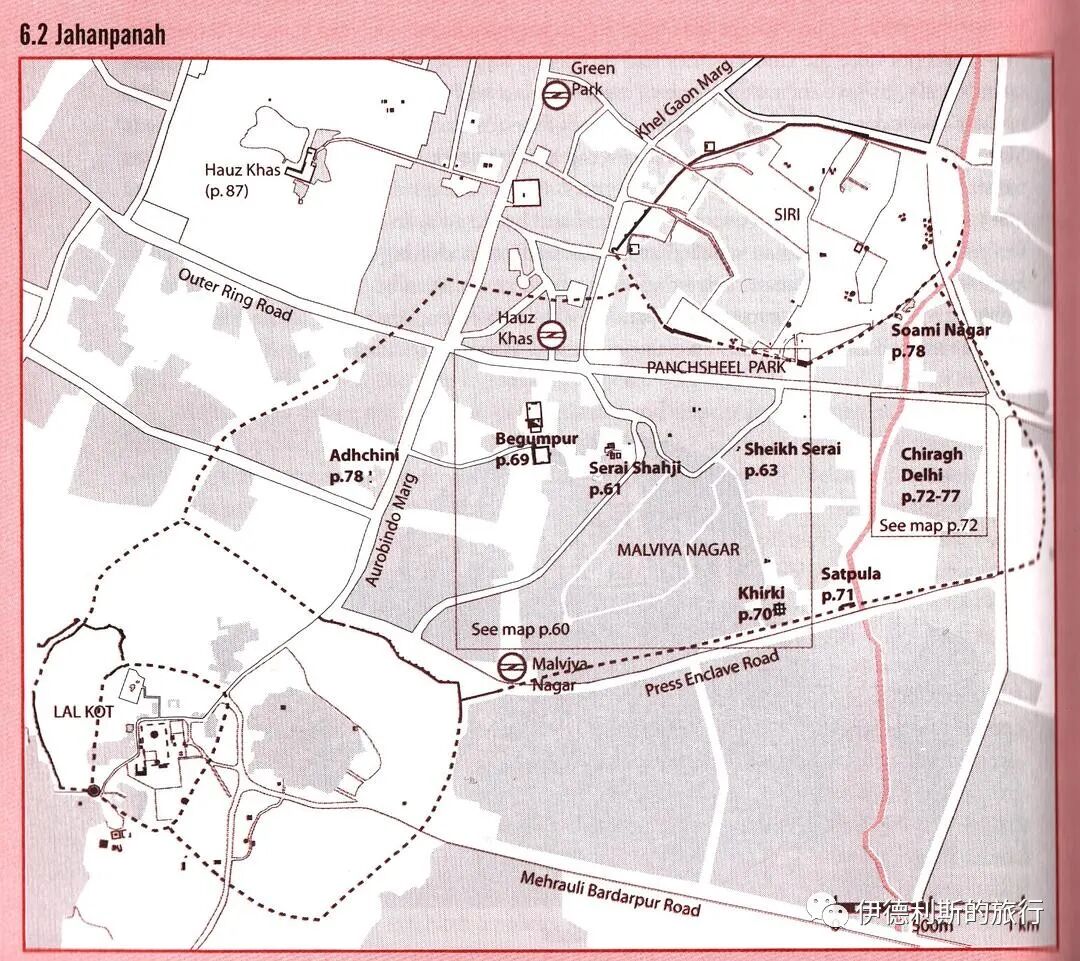
From the book Delhi—A Thousand Years of Building
Shortly after Jahanpanah was completed, Muhammad bin Tughluq suddenly decided to move the capital to the Deccan Plateau in the south and established a new capital called Daulatabad.
Muhammad bin Tughluq forced the population of Delhi to migrate on a large scale, and those who refused were killed. However, the move failed because Daulatabad lacked enough drinking water due to drought, and Muhammad bin Tughluq eventually moved back to Delhi. Although this relocation failed, it significantly influenced history because many Muslims who moved to the Deccan region did not return to Delhi, leading to a large increase in the Muslim population in central and southern India.
2. The Mysterious Sultan's Palace
Within the ruins of Jahanpanah, there is a huge building site called Bijaya Mandal, which means Victory Platform in Hindi. Bijaya Mandal may be the most puzzling historical building in Delhi. On one hand, we know very little about secular architecture from the Delhi Sultanate period, and on the other, the building changed significantly across different eras.
Much evidence suggests this was likely the palace site of Sultan Muhammad bin Tughluq, but without systematic archaeological excavation, we still cannot be certain about the functions of the existing structures.
Ibn Battuta did not describe the Sultan's palace in much detail. He only mentioned that people had to pass through three gates to reach a palace called bazar suntun, which means thousand pillars. He said these wooden pillars were painted and supported a beautifully carved wooden roof.
It is hard to imagine the appearance of this hall because most buildings preserved from this period are mosques, tombs, and madrasas, with almost no secular buildings remaining. Based on Ibn Battuta's description, this hall likely had long colonnades and a flat roof. One question remains: how did they keep a wooden flat roof waterproof? Regarding the interior of the hall, we only know it had exquisite carvings and the walls were likely decorated with paintings, which were probably removed later during the iconoclastic movement of Firuz Shah Tughlaq (reigned 1351–1388).
Archaeological digs show this building was used for a very long time. Historical records mention that both Sultan Alauddin Khalji (reigned 1296-1316) and Sultan Muhammad bin Tughlaq (reigned 1325-1351) had a palace called bazar suntun. Although Ibn Battuta wrote that Alauddin Khalji’s palace was in the city of Siri, these two palaces are likely the same place, and they are probably Bijaya Mandal.
The stone hall at Bijaya Mandal likely dates back to the time of Alauddin Khalji, while the tower next to it was almost certainly built by Muhammad bin Tughlaq. Archaeological findings show these buildings were still in use after the time of Firoz Shah Tughlaq (1351-1388). In the early 16th century, during the Lodi dynasty (1451-1526), the site was used by a Sufi sheikh named Sheikh Hasan Tahir.
1. Upper Platform: Khalji Dynasty
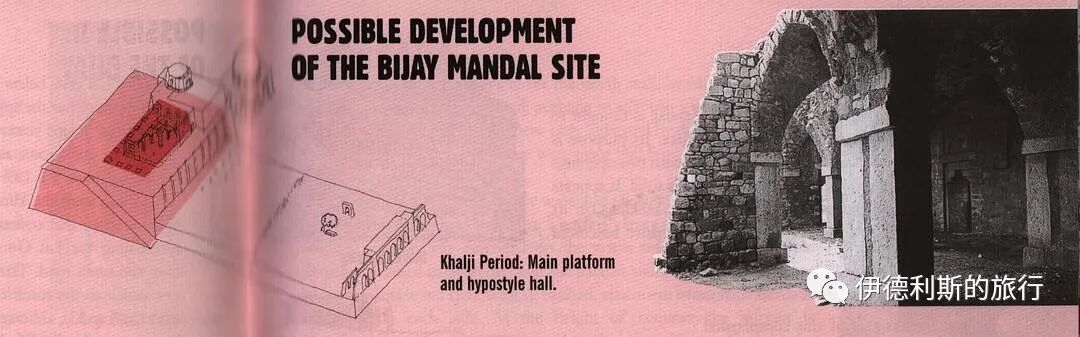
From the book Delhi—A Thousand Years of Building
The oldest part of this complex is likely the upper platform, which may have been built by Alauddin Khalji (reigned 1296-1316). You can see damaged, sloping retaining walls on the west, east, and south sides of the platform. There are two levels of arched basements visible from the east end of the platform, and a similar structure exists on the west end. The main building likely stood in the middle of the slightly raised area of the platform.
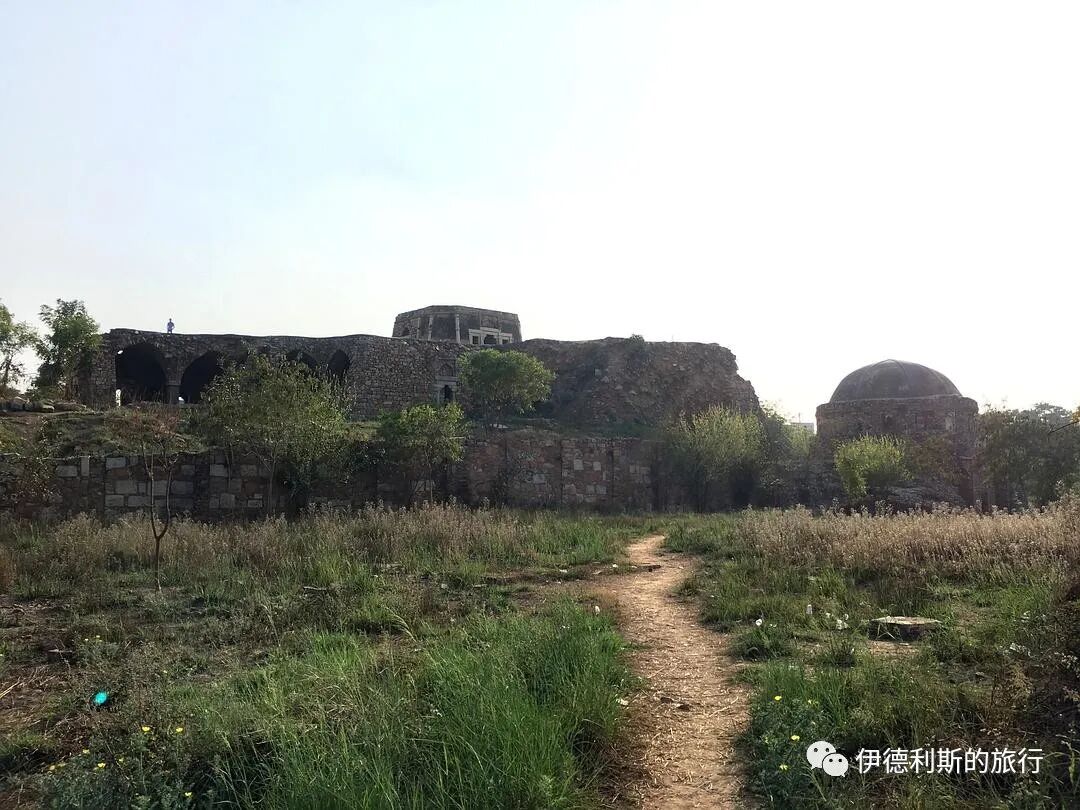
A view from the lower platform looking up at the upper platform, the single-story hall, and the octagonal tower.
2. Single-story Hall: Khalji Dynasty
On top of the platform sits a single-story hall, and above that is an octagonal tower. The hall was also likely built during the time of Alauddin Khalji. There are remains of a balcony in front of the hall, and the bases of the pillars are still there. You can walk from the pillars into the main room, where the roof is held up by stone columns. Behind the first row of stone columns are two large pits half a meter deep. In the early 20th century, the Archaeological Survey of India found many items here, including ivory, porcelain, glass necklaces, pearls, red coral, rubies, and coins dating from 1296 to 1390. This place was likely a treasure storage room at the time.
The hall seems to have had entrances on all four sides, but they were likely blocked when Muhammad bin Tughlaq built the heavy platform under the octagonal tower. The first entrance on the north wall next to the platform also seems to have been changed. Different foundation remains show there was once another room on the edge of the platform on the north side of the hall.
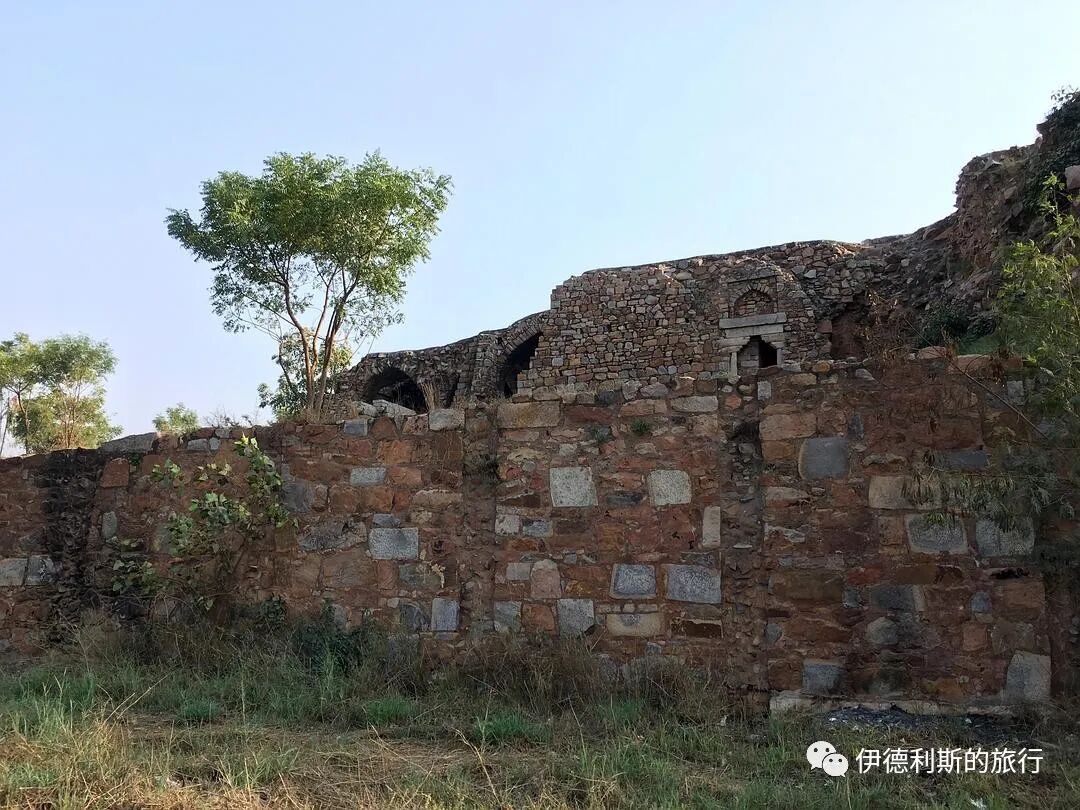
Below is the upper platform, and above is the single-story hall.
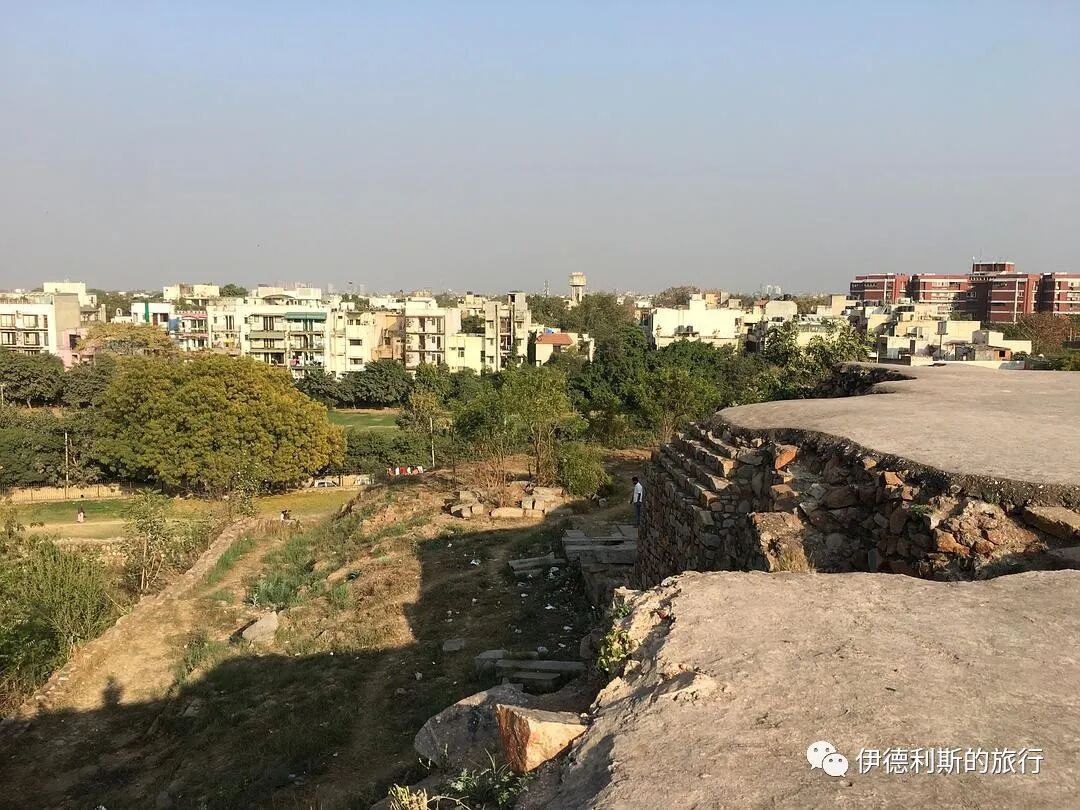
Looking down at the upper platform from the roof of the single-story hall.
3. Octagonal Tower: Early Tughlaq Dynasty
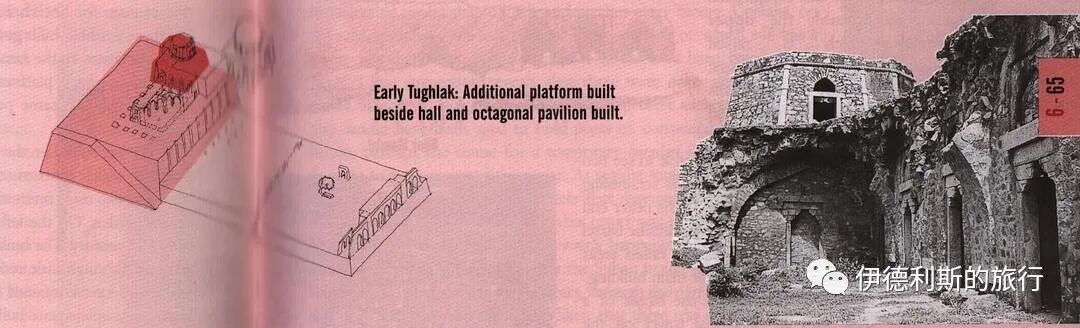
From the book Delhi—A Thousand Years of Building
The octagonal tower above the single-story hall was reportedly built by Muhammad bin Tughlaq (reigned 1325-1351). A slope followed by shallow, wide steps leads to the base of the octagonal tower. There is much evidence that the octagonal tower once extended further to the north. The three doors with quartzite frames and the narrow stairs leading to the roof were added later during the late Tughlaq dynasty.
Inside the octagonal tower is a symmetrical, cross-shaped room with the same openings on each side. In the middle of summer, the inside of the tower stays cooler and catches a breeze.
On the roof of the tower, there are two well-preserved sockets. One still has a groove around the edge, which suggests it likely held something on top. Besides these two sockets, there are actually traces of sockets on every level of the stairs. Based on the depth of these sockets, they likely held heavy, tall pillars. It is thought that there might have once been a pavilion (baradari) on top of the tower. There is also a row of small sockets along the edge of the roof, which may have held smaller upright posts.
We can guess that this tower was likely a viewing platform for Sultan Muhammad bin Tughlaq, but the biggest question is how the Sultan got up there, as his fancy clothes would have been hard to wear through the narrow stairs that exist today. It is very likely there was another staircase at the time, although Indian palaces usually did not have fancy stairs and kept them inside thick walls.
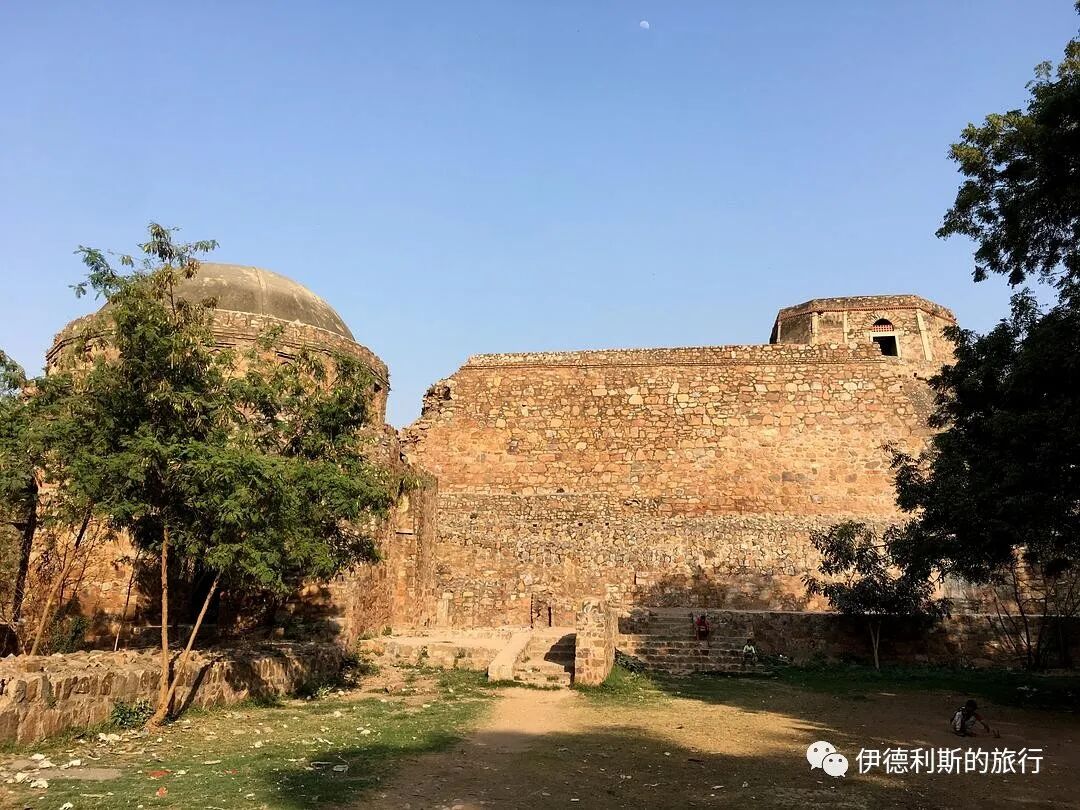
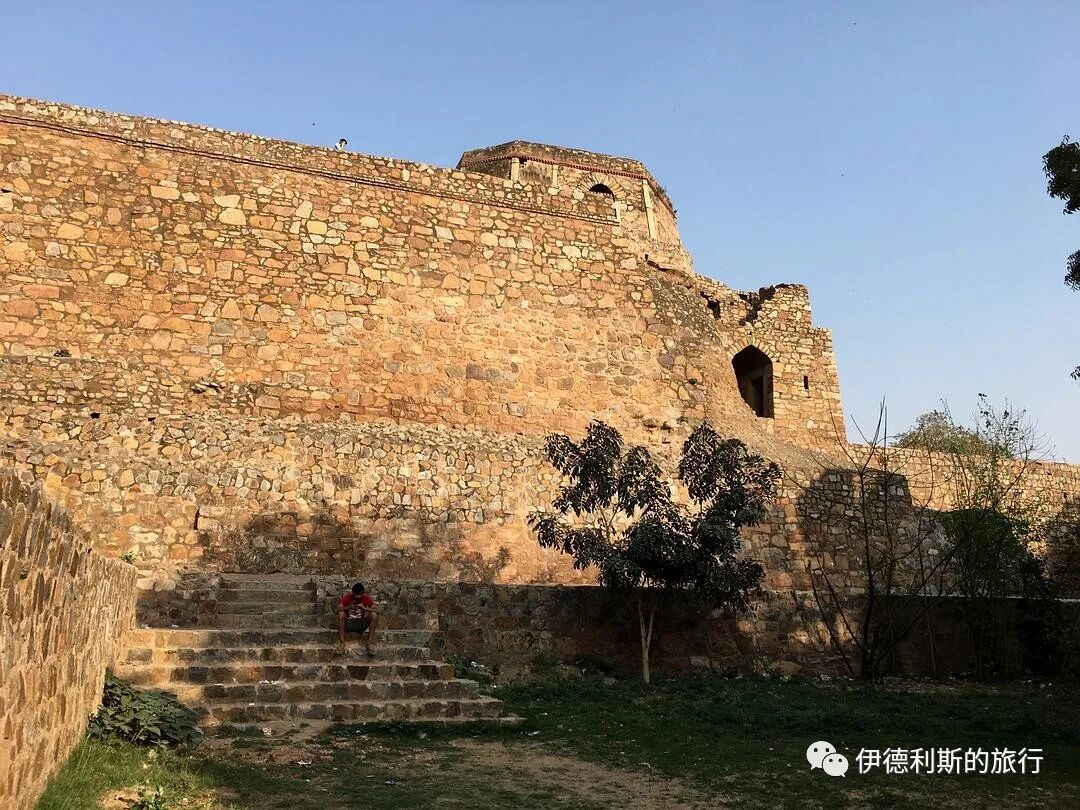
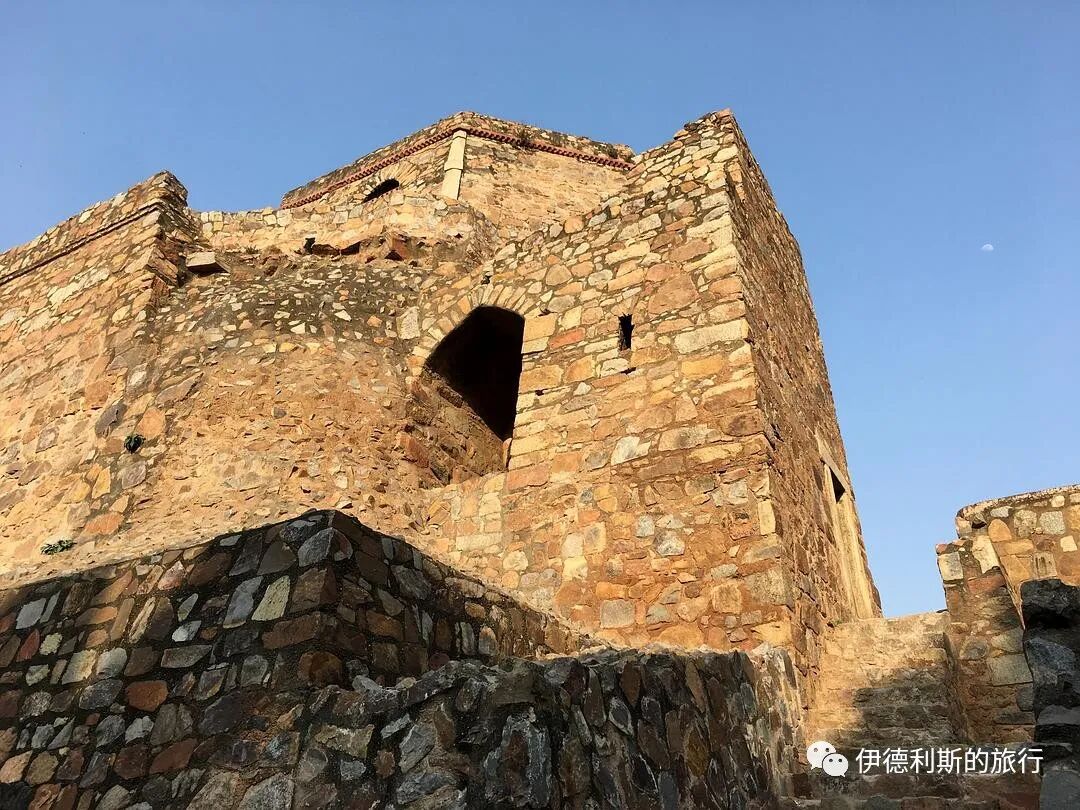
The narrow stairs leading to the octagonal tower.
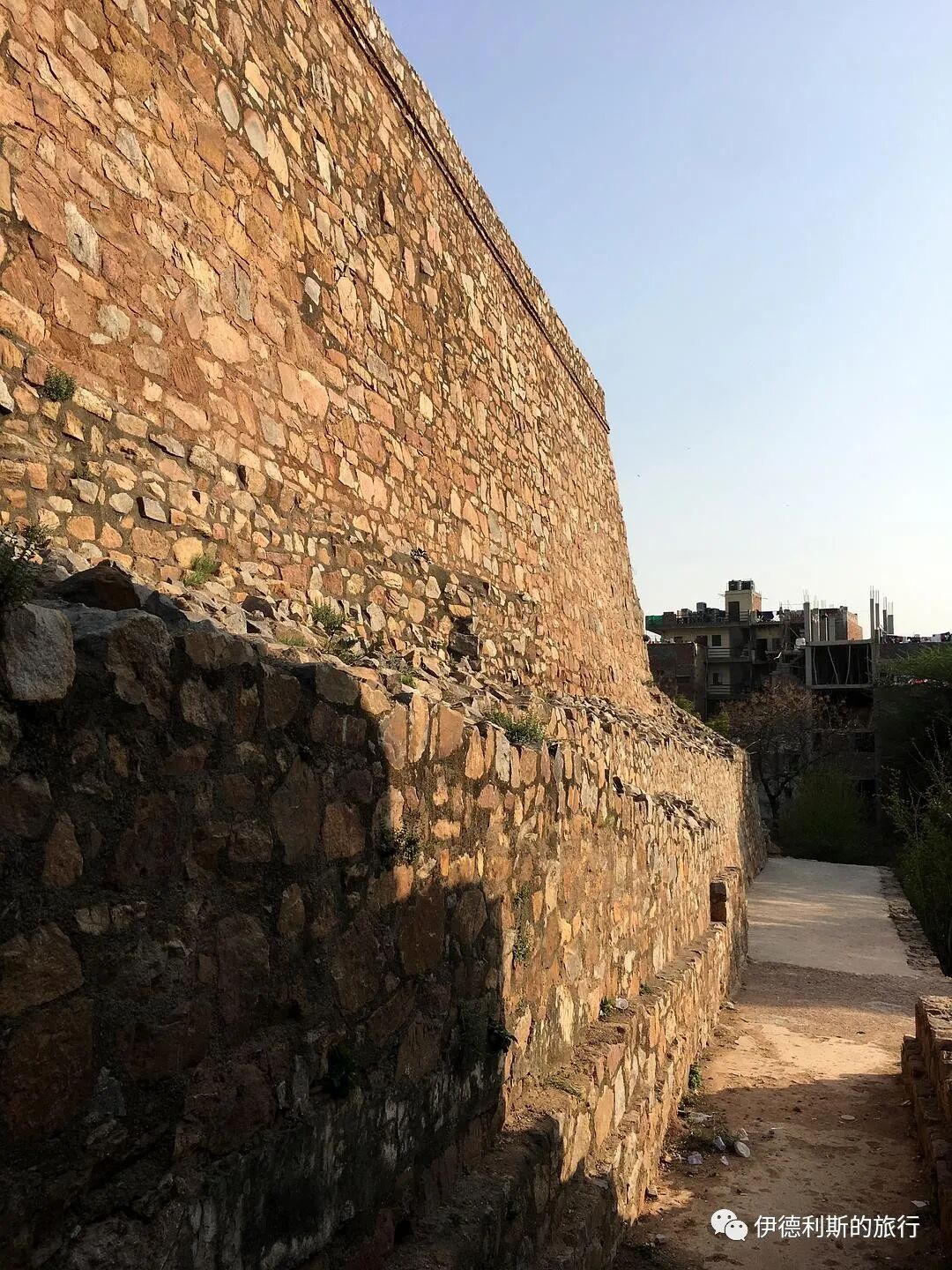
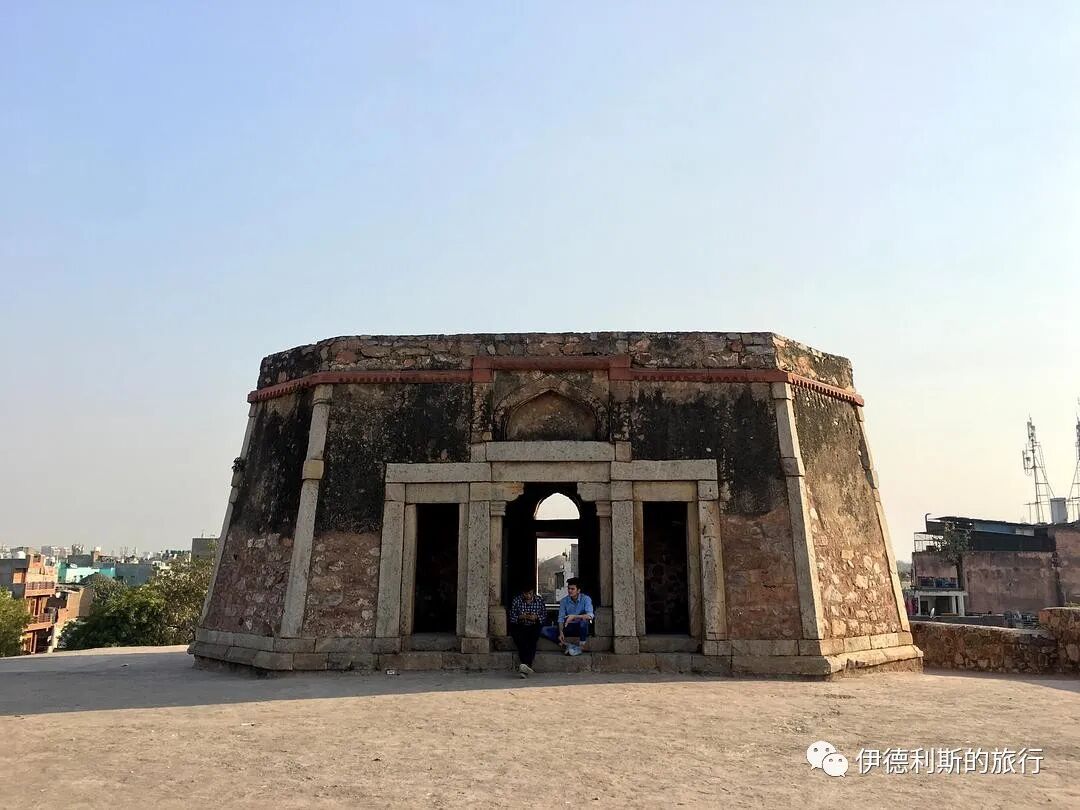
The octagonal tower.
Inside the octagonal tower.
4. Lower Platform: Late Tughlaq Dynasty
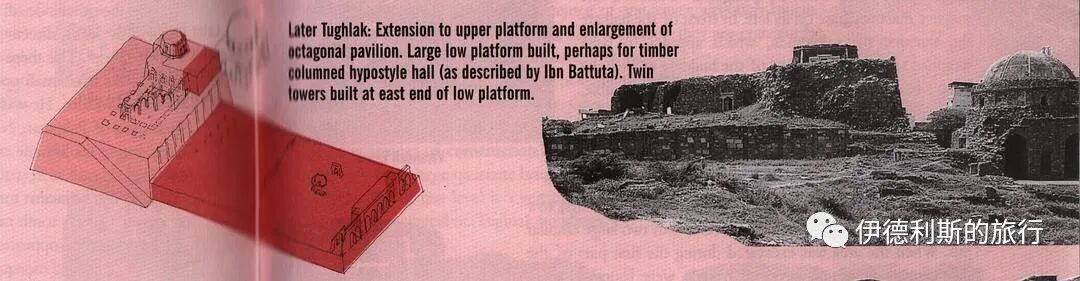
From the book Delhi—A Thousand Years of Building
You can go down from the upper platform to a larger lower platform. There are retaining walls on the east and west sides of the lower platform. The buildings on the lower platform date to two periods: the wall foundations are made of large quartzite, while the upper parts feature masonry typical of the Tughlaq dynasty. Archaeological excavations in the 1920s uncovered stone pillar bases on the lower platform, some of which are still visible in the southwest corner today. On the other side of the platform, near the crumbling east retaining wall, you can still see delicate plaster flooring. These ruins may all be part of the palace Ibn Battuta called the bazar sutun.
There is a tall retaining wall between the two platforms, featuring a series of vertical slots that were likely used to hold wooden pillars or decorations. Except for the ramp on the east side of the upper platform, there is no other way to connect the two platforms. The wooden pillars in the lower vertical slots may have supported a higher floor, forming the Sultan's palace along with the stone hall on the south side. Another theory is that the lower platform was the Sultan's palace and the upper platform was his sleeping quarters, which is why the two levels are separate.
Wall foundations of the lower platform.
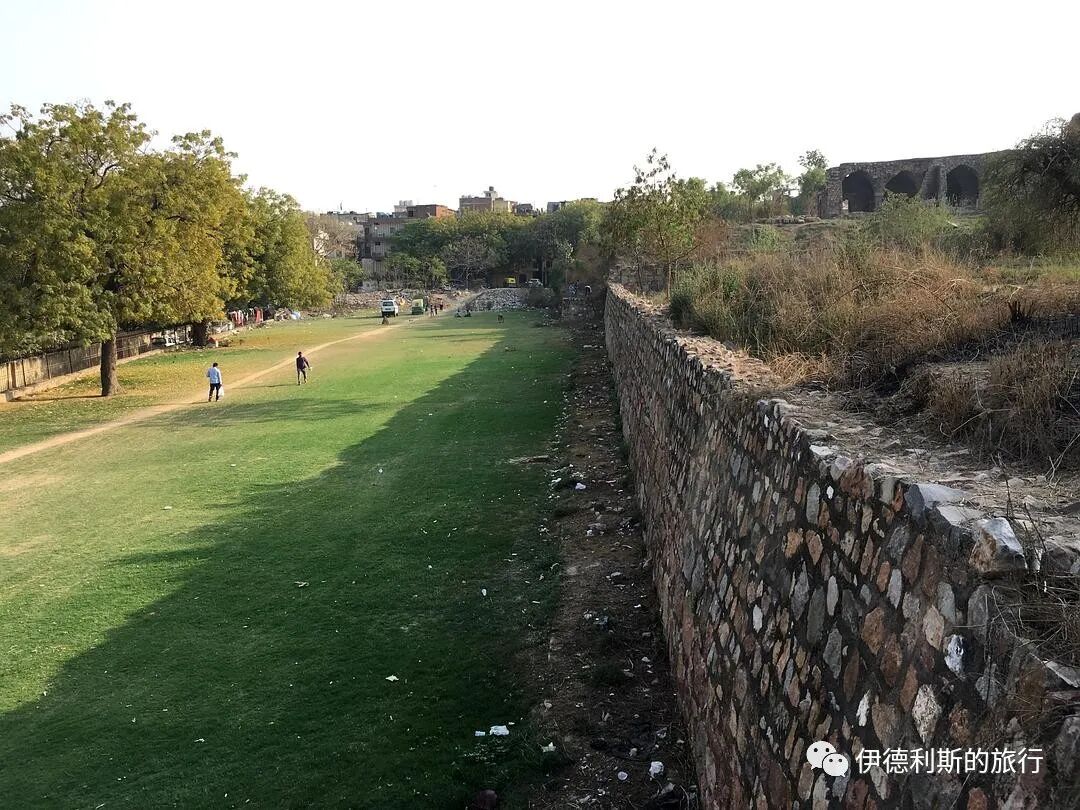
Wall foundations of the lower platform.
5. Cemetery and Religious Site: Lodi Dynasty
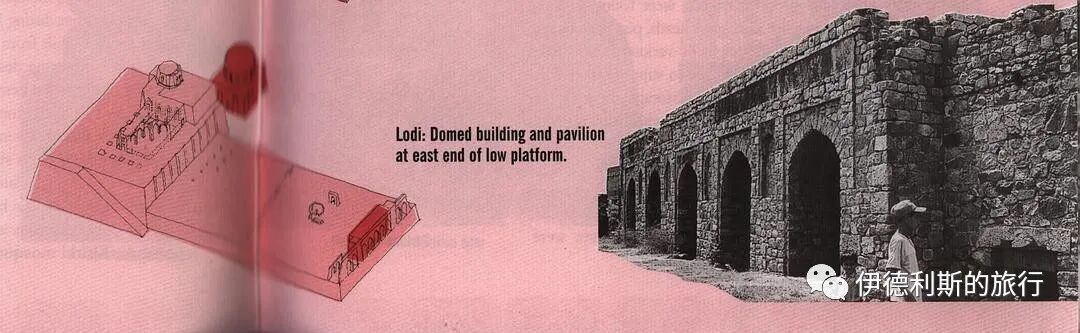
About halfway across the platform, the ground level rises significantly, which likely marks the general area of the palace. Far from the palace is a small cemetery where Sheikh Hasan Tahir and his descendants are buried. This sheikh lived during the Lodi dynasty (1451–1526) and died in 1503. It is said he lived in Bijay Mandal for a long time.
There is an arcade-style building at the very edge of the outer platform of the cemetery. On the north side of the building, there are remains of a long arcade wall, with pillars and arches in the Lodi dynasty style. There are also two sturdy towers, with black plaster coatings on top that reflect the Tughlaq dynasty style. It is believed that this may have been a khanqah (a place for Sufi gatherings) built by Sheikh Hasan Tahir.
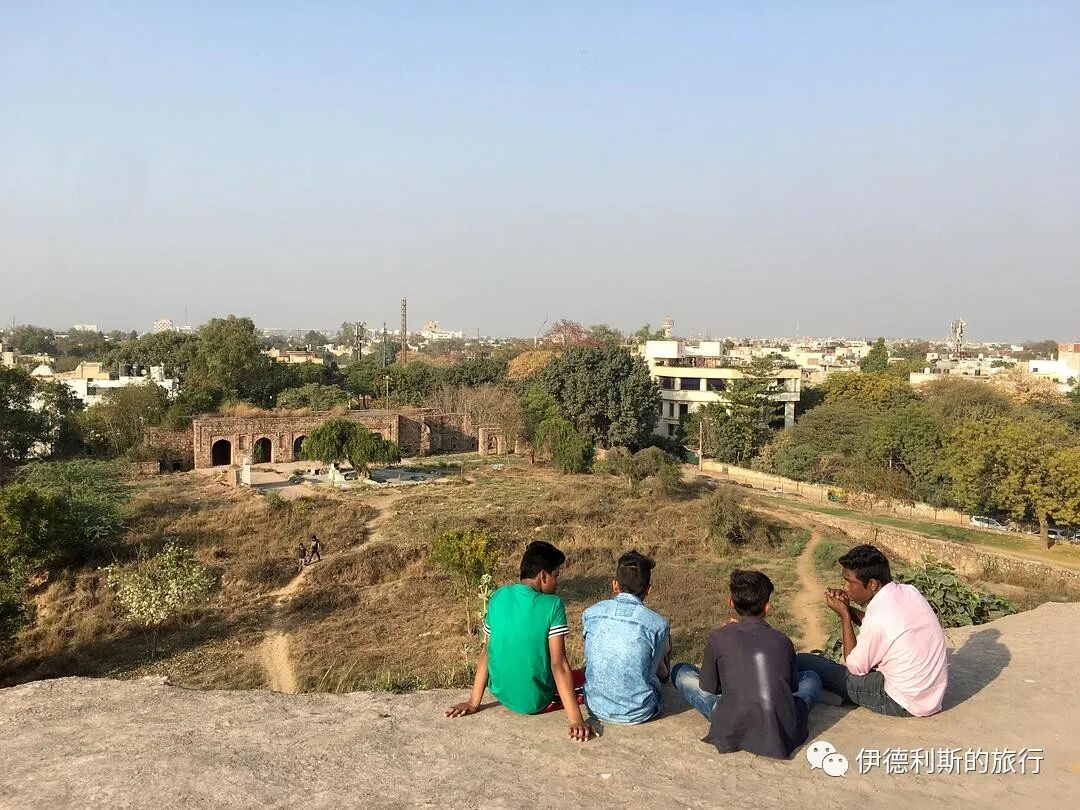
Looking out at the lower platform and the sheikh's tomb from the single-story hall.
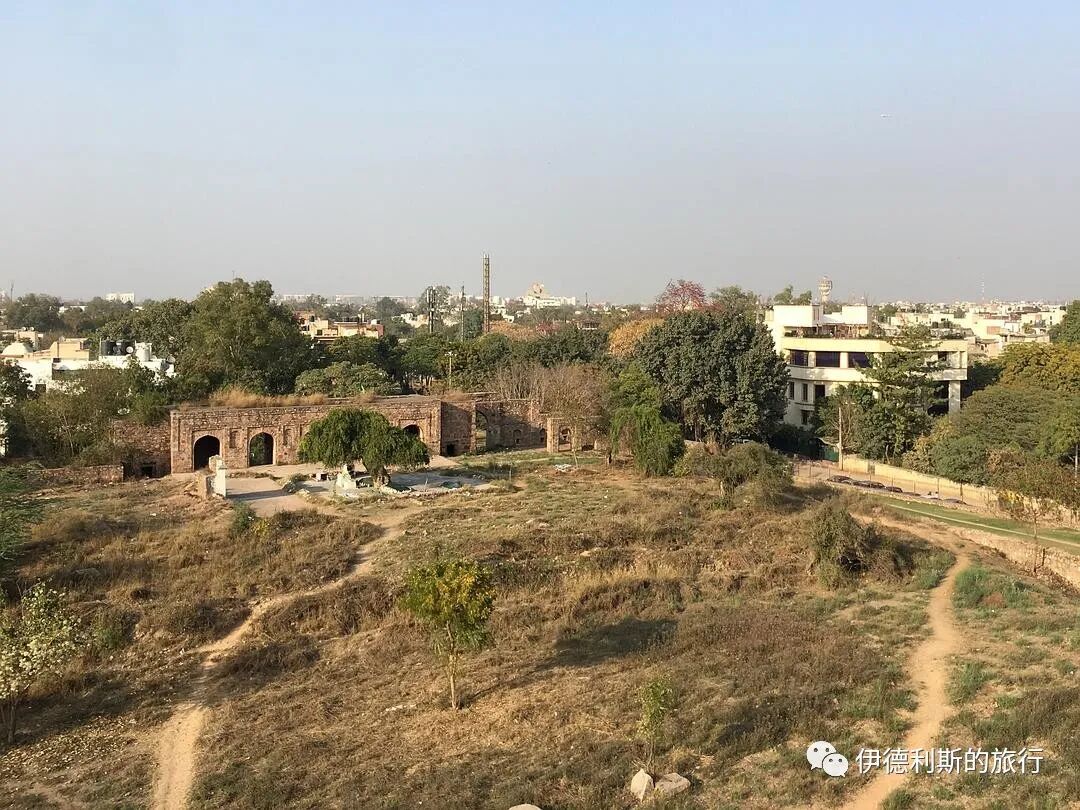
6. Circular Dome: Lodi Dynasty
Next to Bijaya Mandal is a building with a circular dome, thought to have been built in the 15th century. The purpose of this building remains unknown, and its structure is quite unique: it has two openings on each of the north, south, and west sides, while the east side is sealed. Foundation evidence shows there was once another building on the west side of this structure.
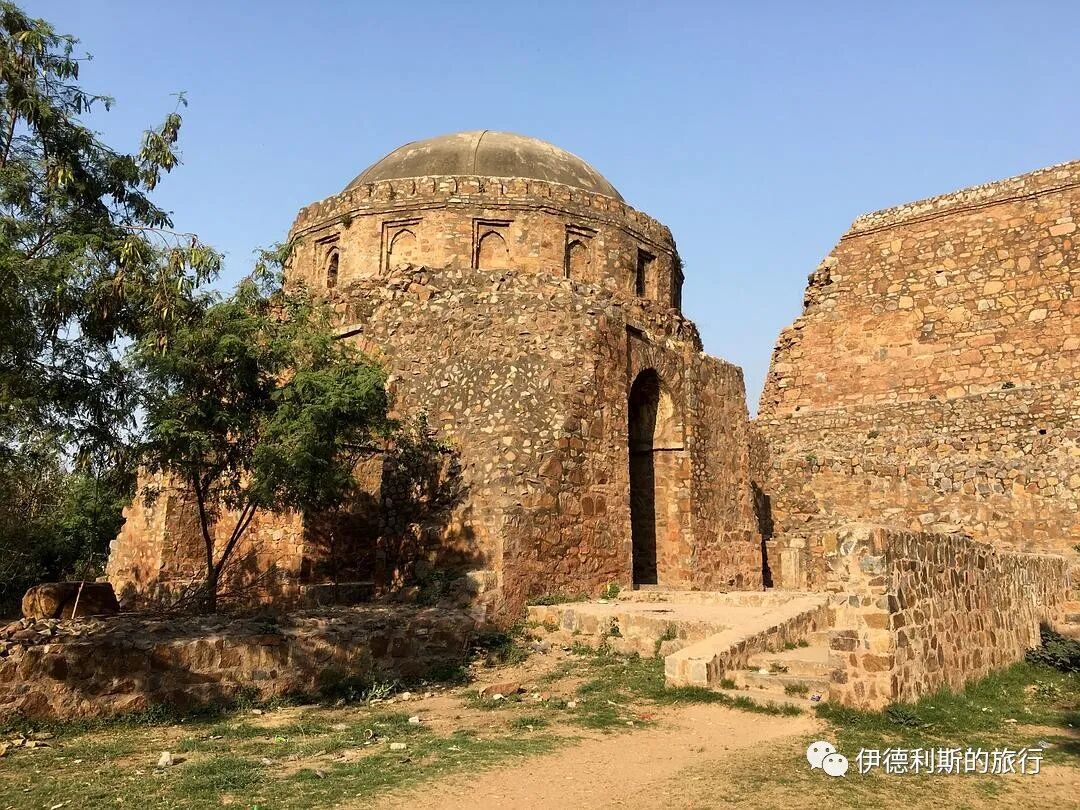
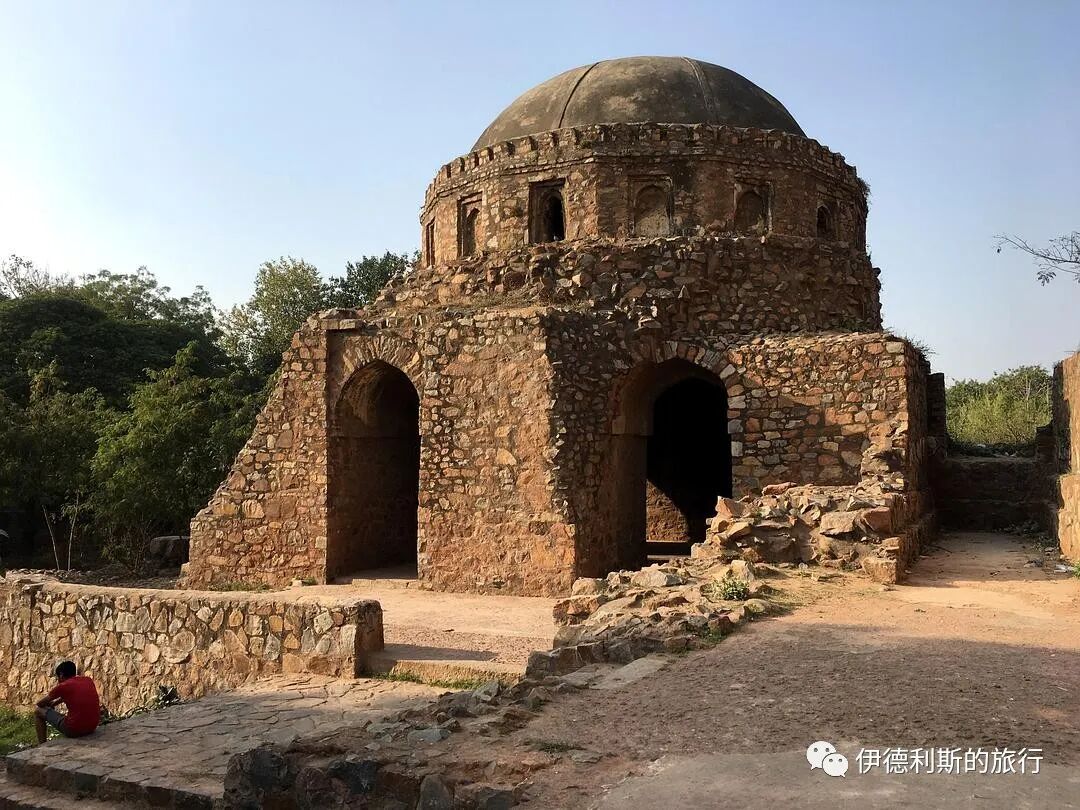
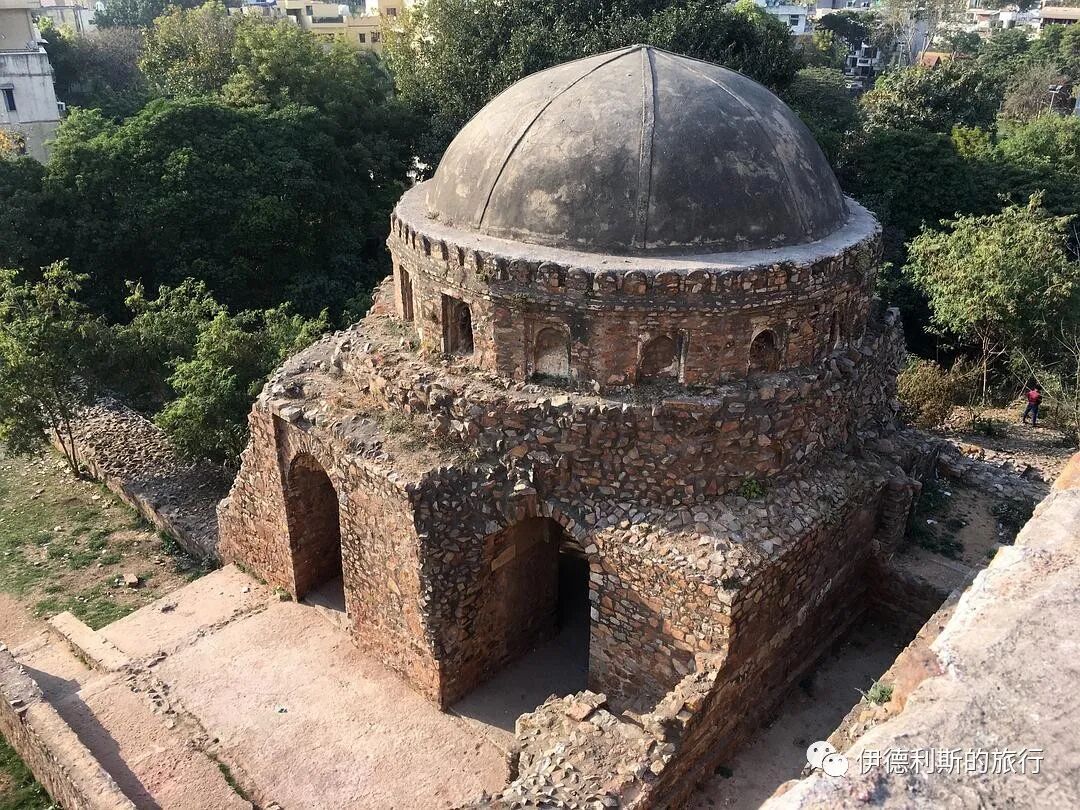
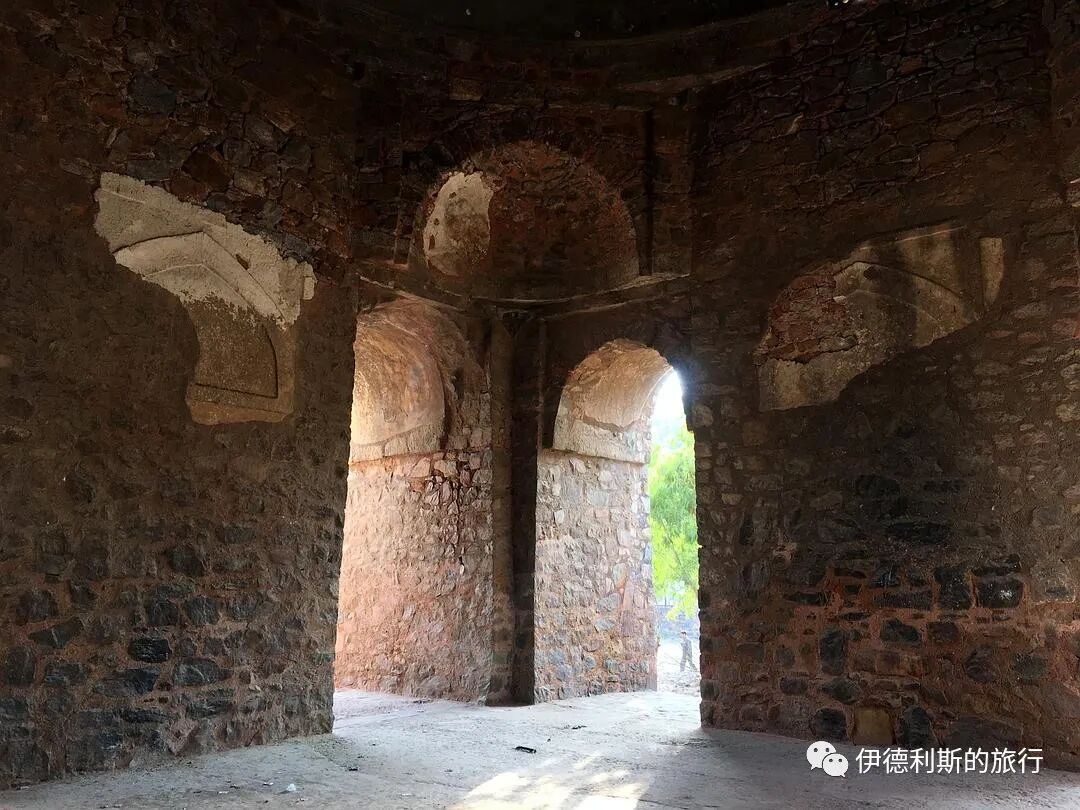
3. Begampur Mosque
Begampur Mosque is the most important mosque in the city of Jahanpanah and the most representative mosque of the Tughlaq dynasty of the Delhi Sultanate still standing today; it is said to have been designed by the Iranian architect Zahir al-Din al-Jayush.
There are two theories about when the mosque was built: one suggests it is one of the seven mosques built by Khan-i-Jahan Maqbul, the wazir (prime minister) of Sultan Firuz Shah Tughlaq (reigned 1351–1388), while the other suggests it was built when Muhammad bin Tughlaq died in 1351.
In 1921, the Archaeological Survey of India cleared out the residents living inside the mosque, giving it the appearance it has today.
Begampur Mosque is magnificent, with a spacious courtyard surrounded by arcades. There is a circular domed building in the center of each of the four sides; the east, north, and west ones are gates, and the largest one on the west side is the main prayer hall.
The mosque is very simple, with only a few carvings inside the main prayer hall. These stone carvings and the dome were once covered in shimmering white plaster, but most of it has fallen off and turned black.
The gate.
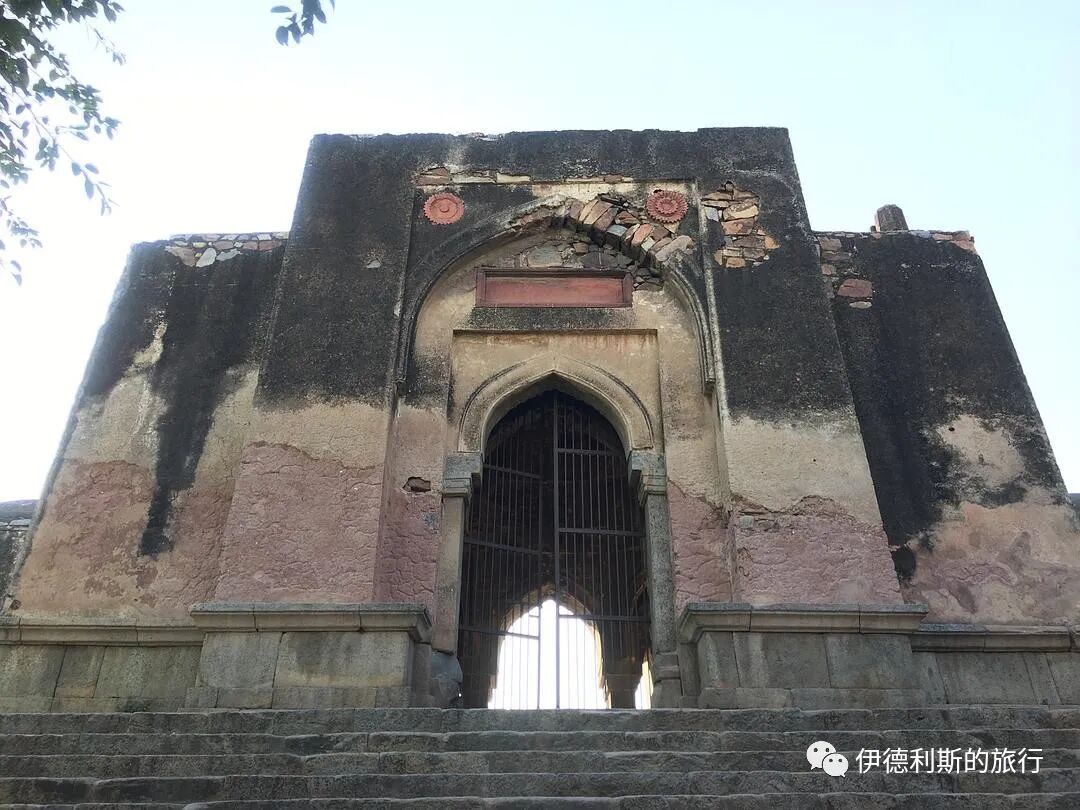
Looking inside from the gate.
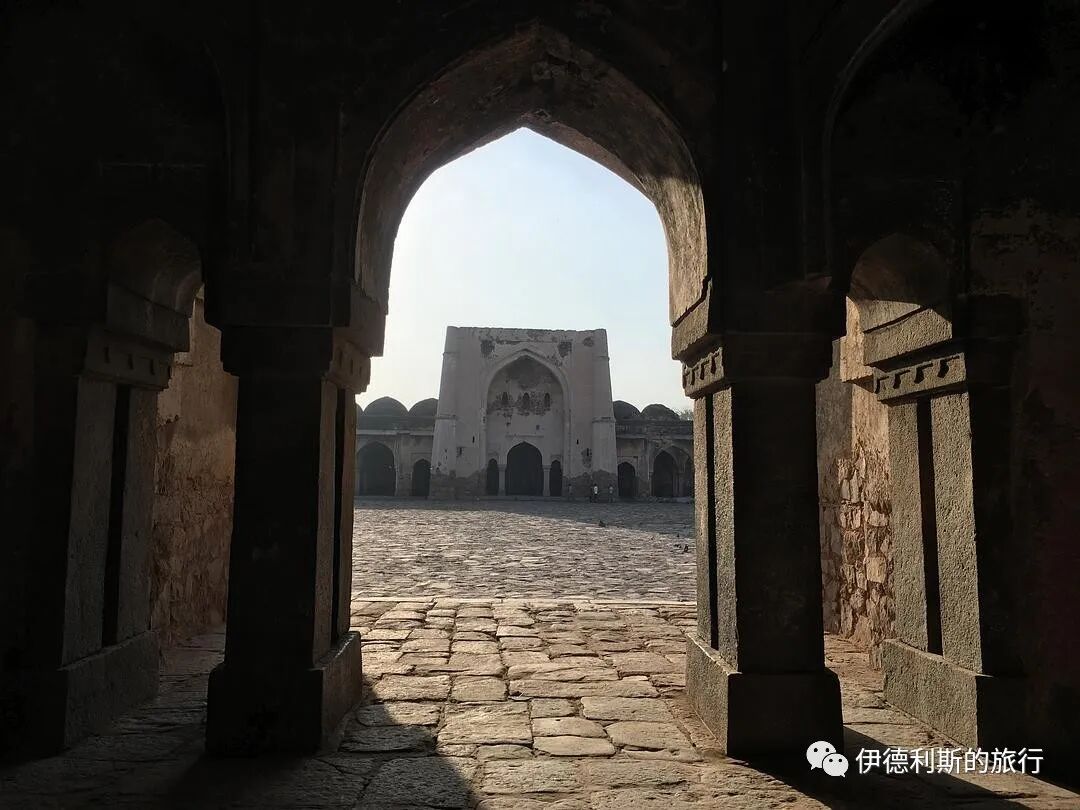
Inside the gate.
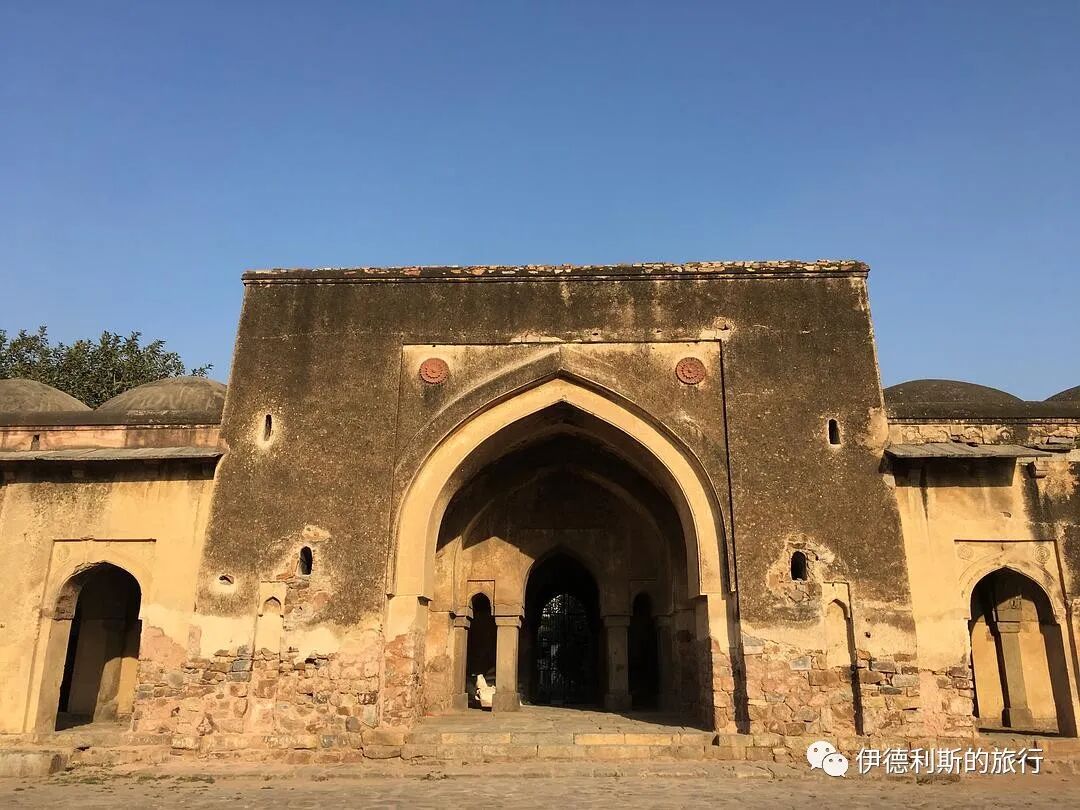
The corridor on the northeast side.
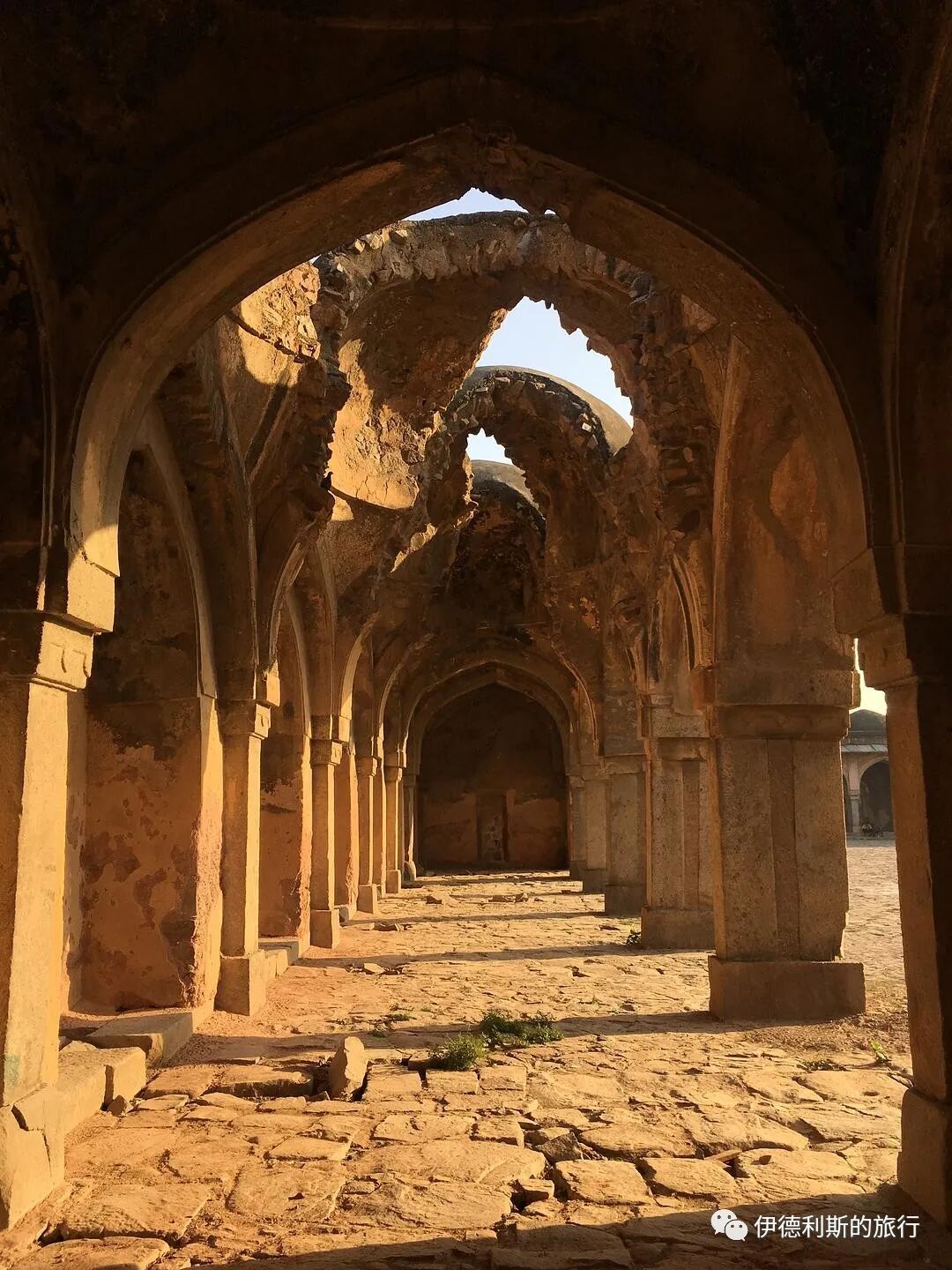
Southwest corridor
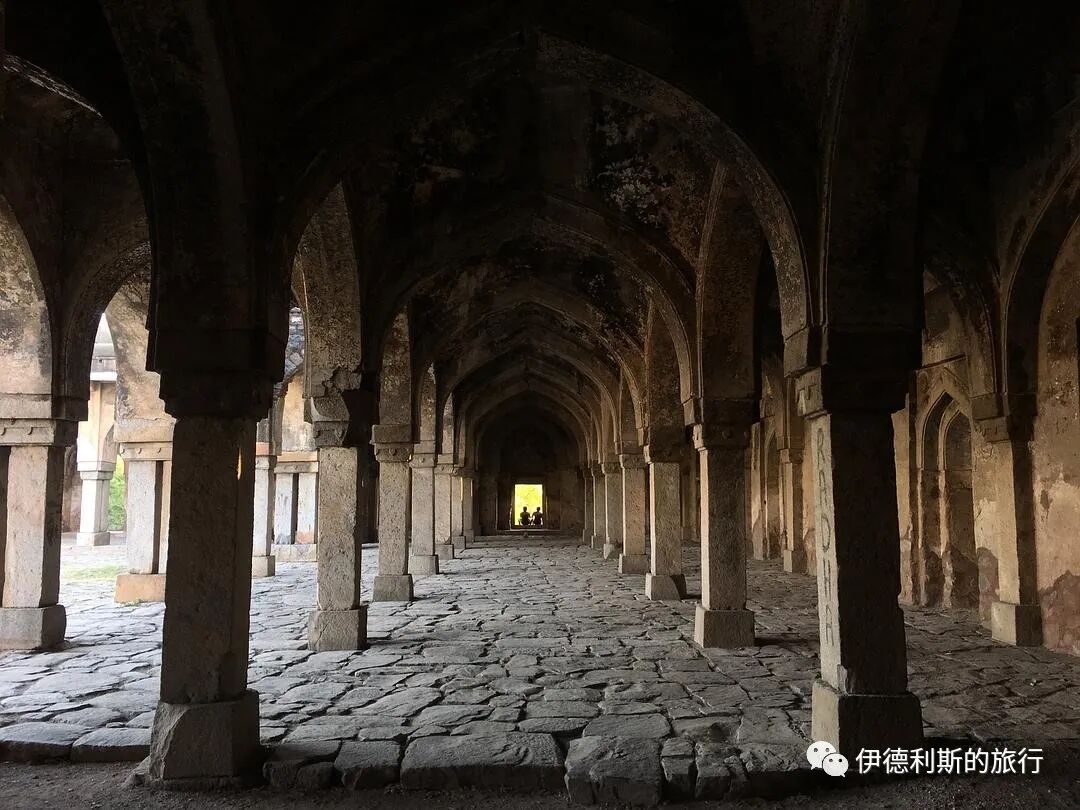
Courtyard
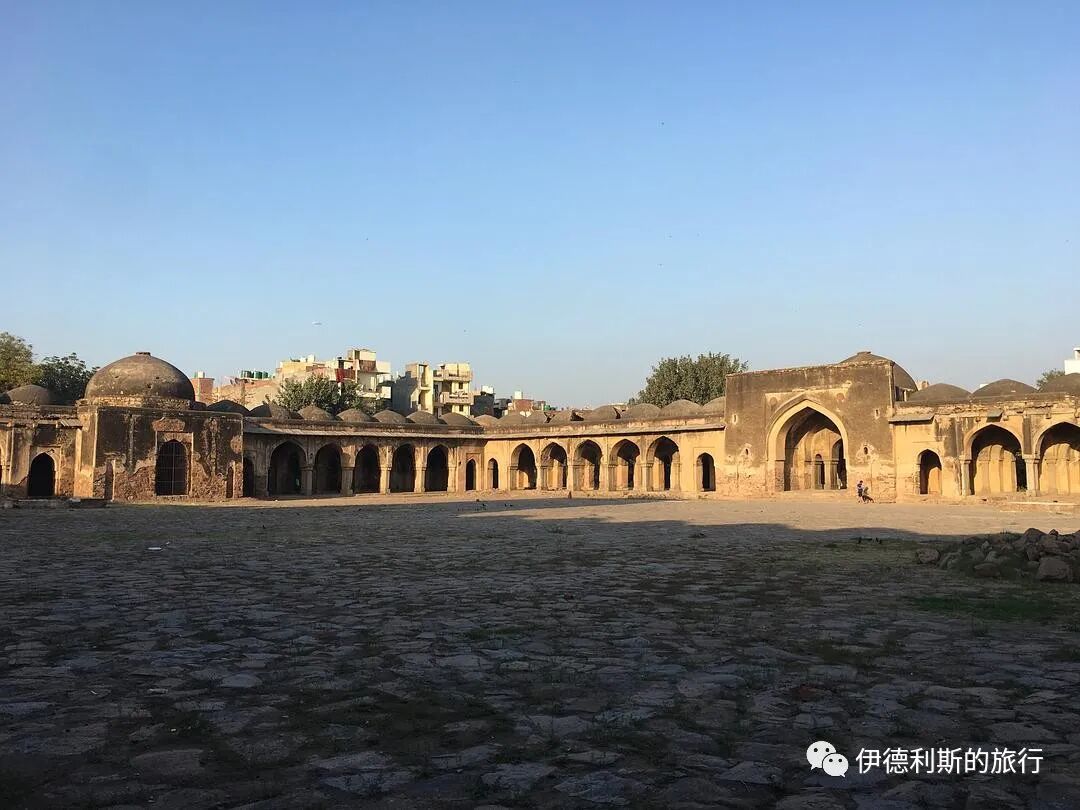
Overlook
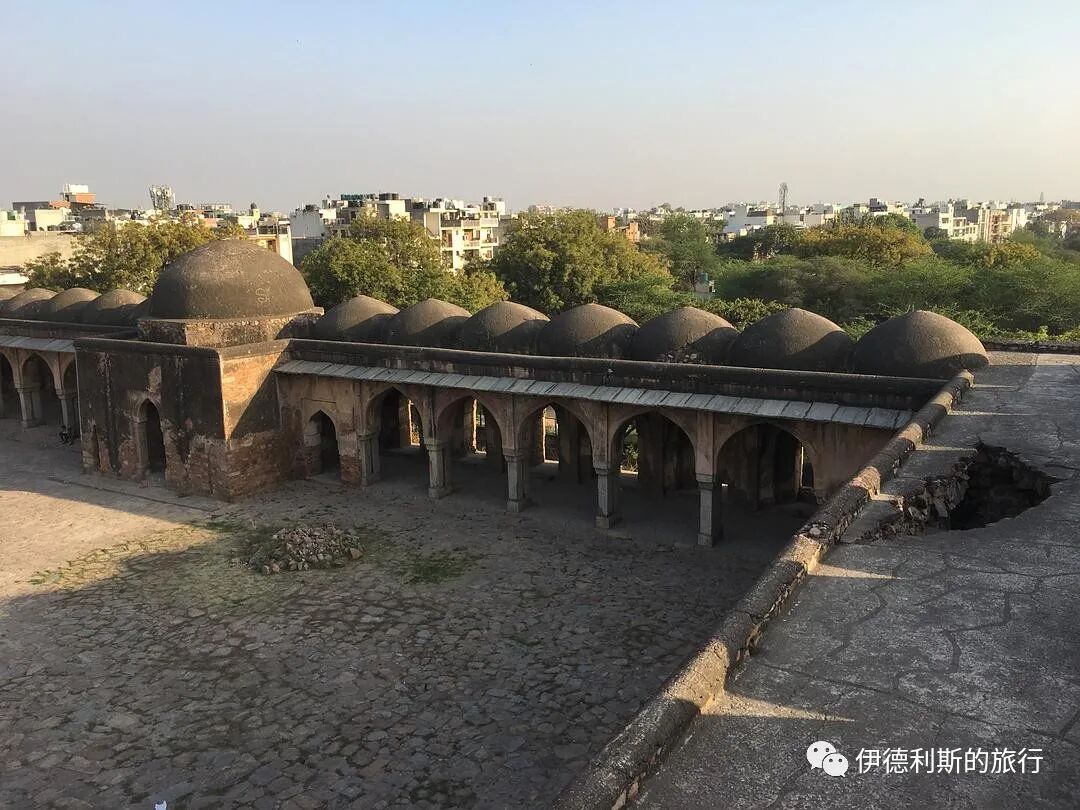
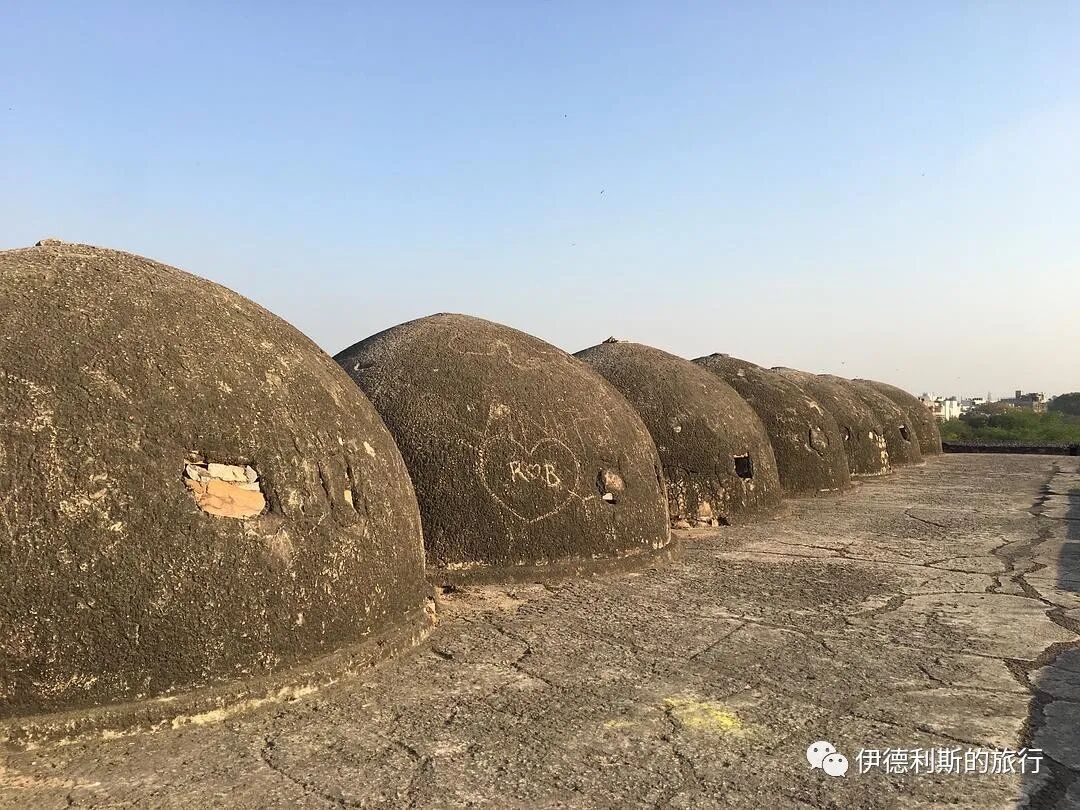
North gate
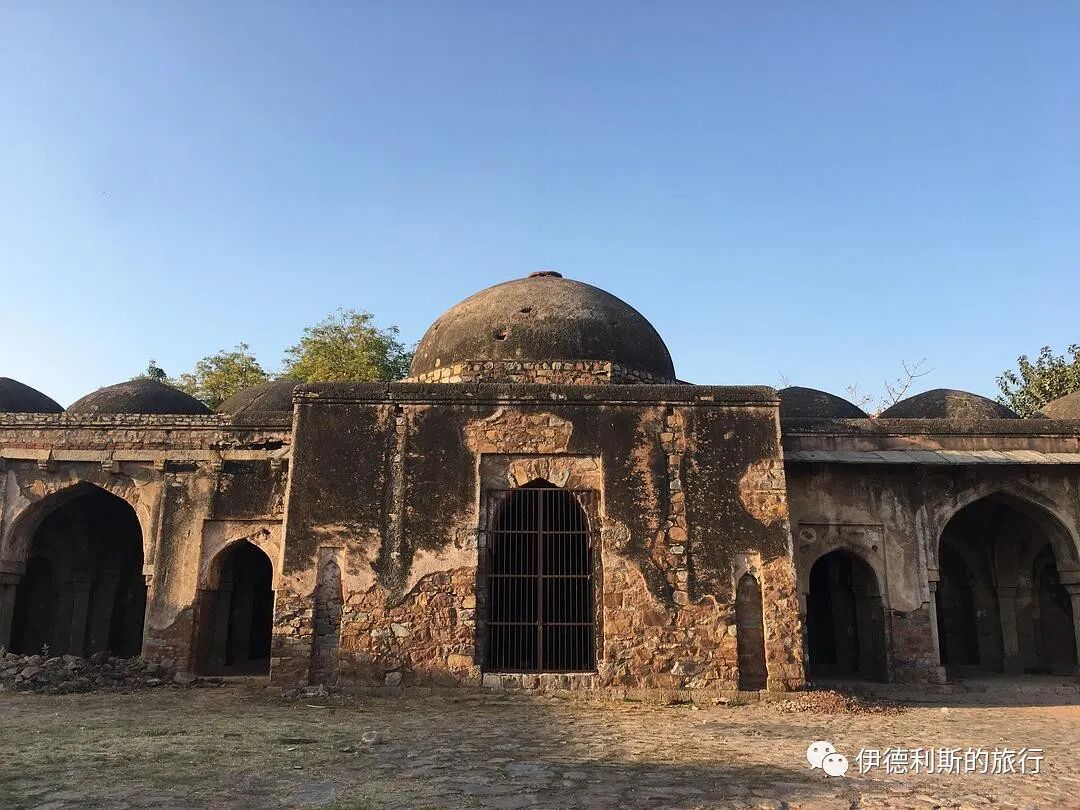
South gate
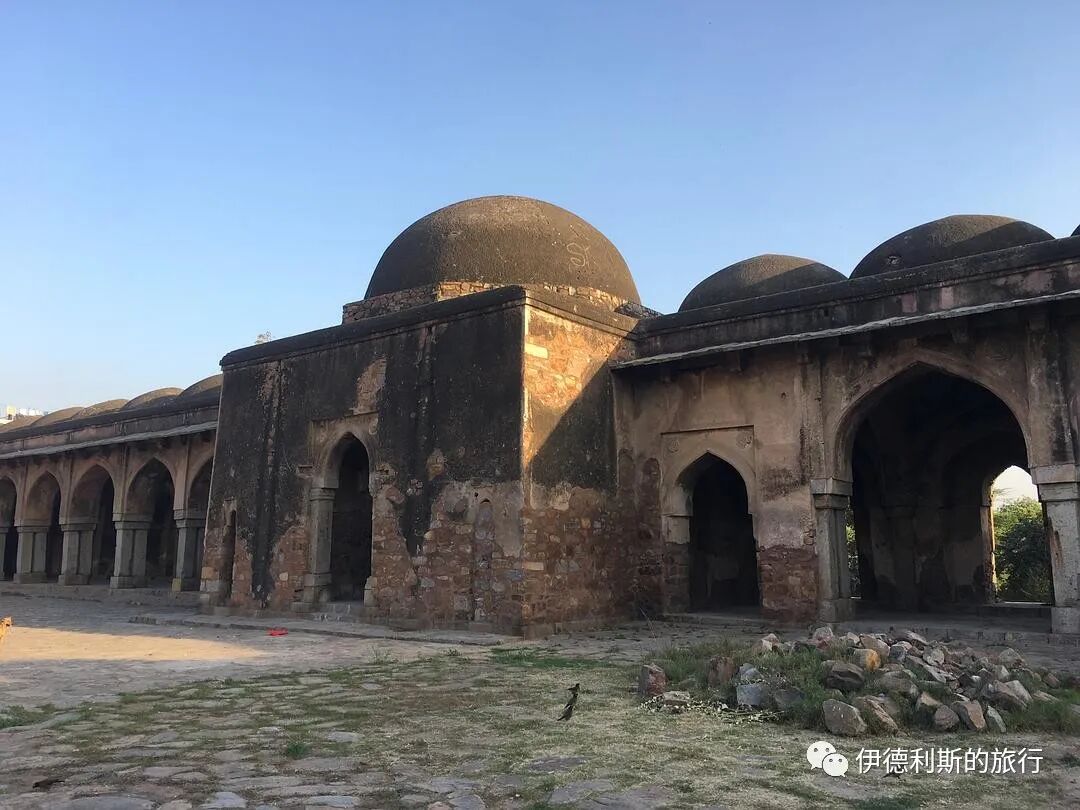
The corridor on the north side of the main prayer hall has collapsed.
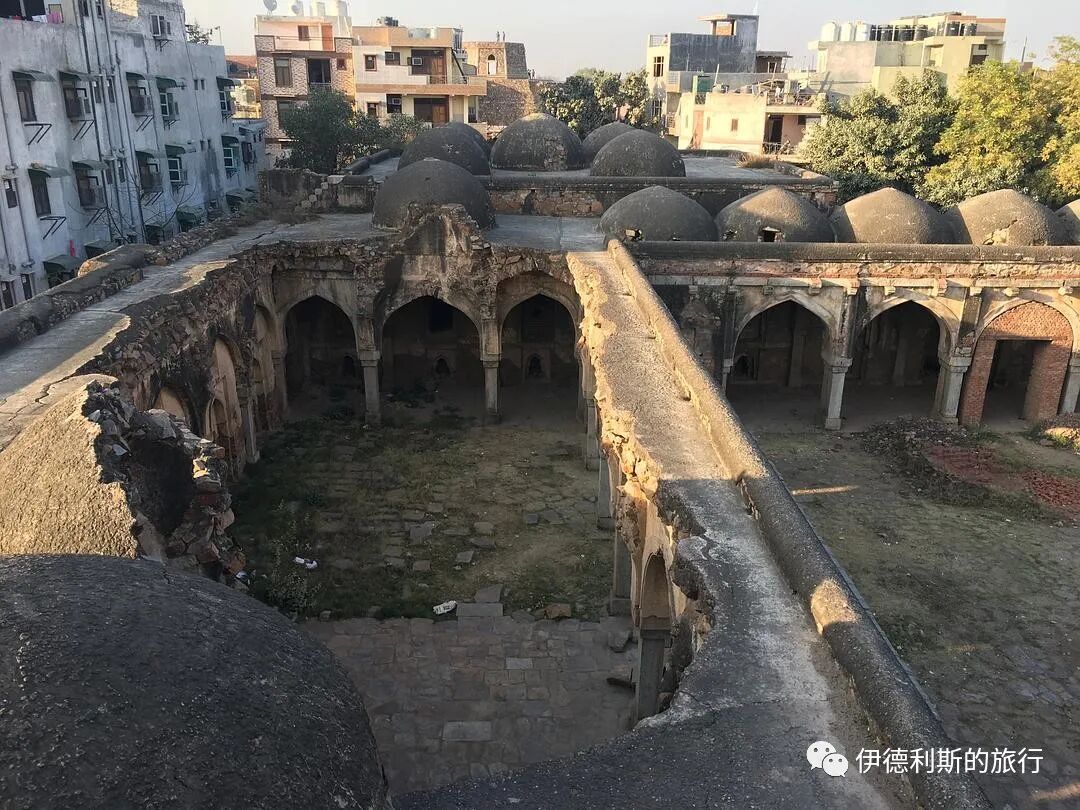
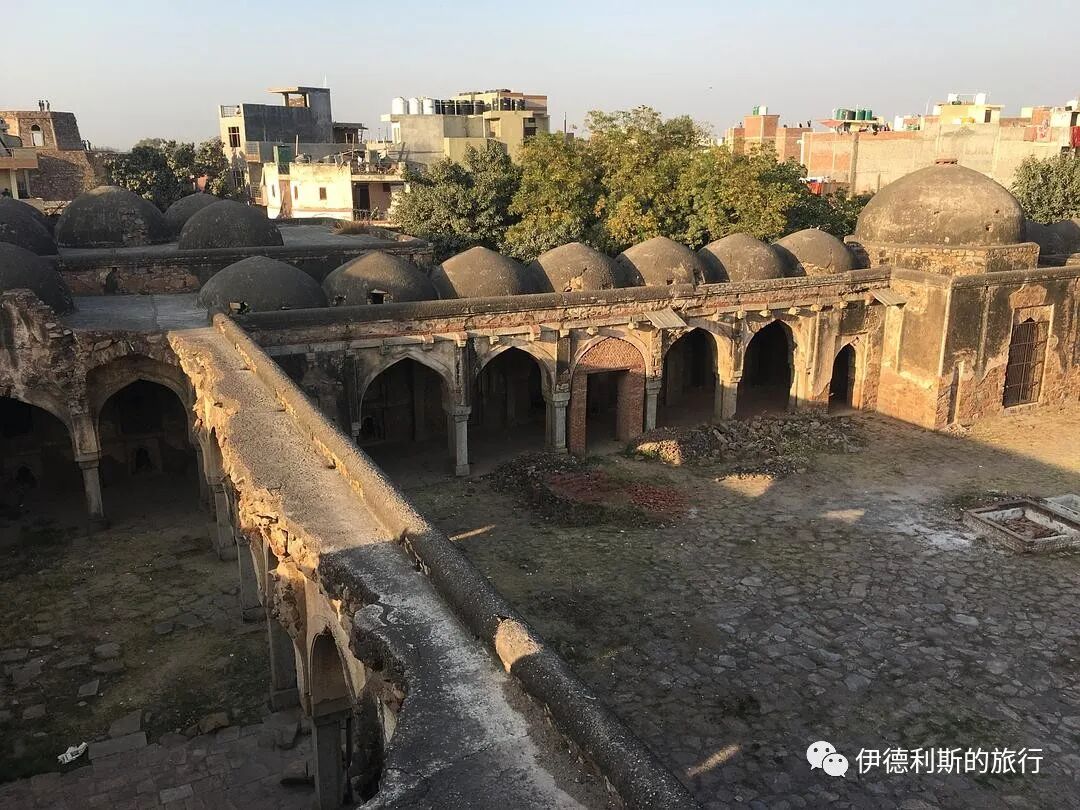
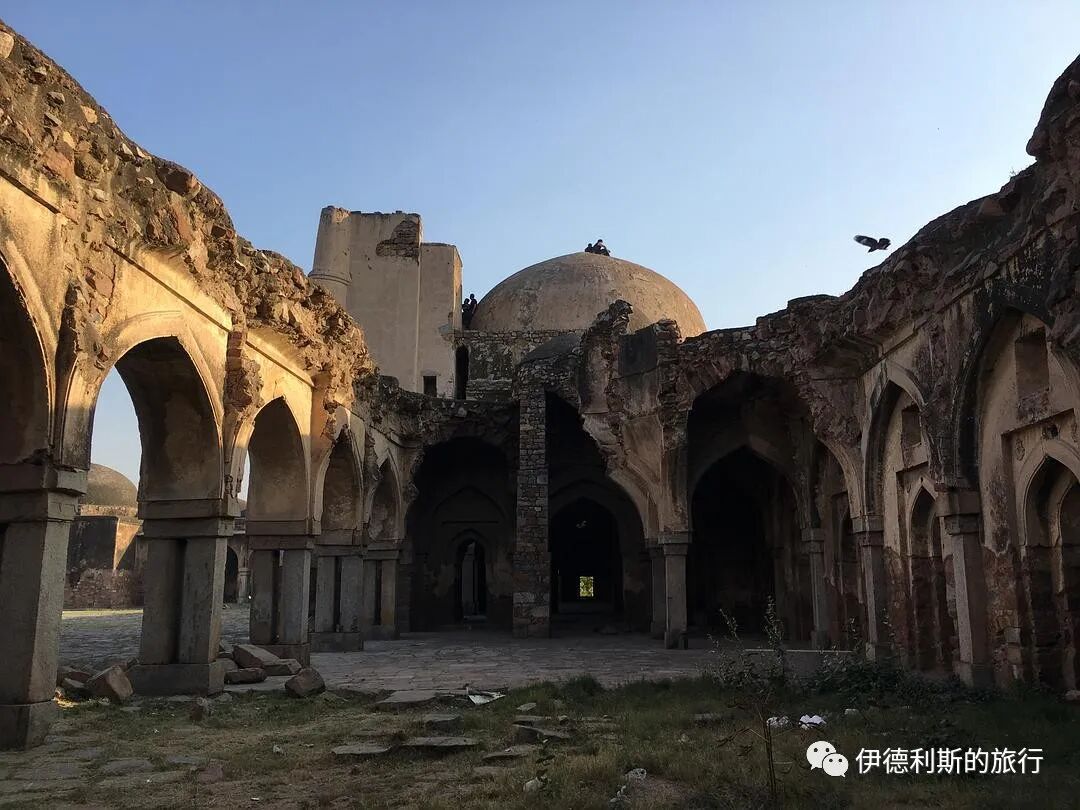
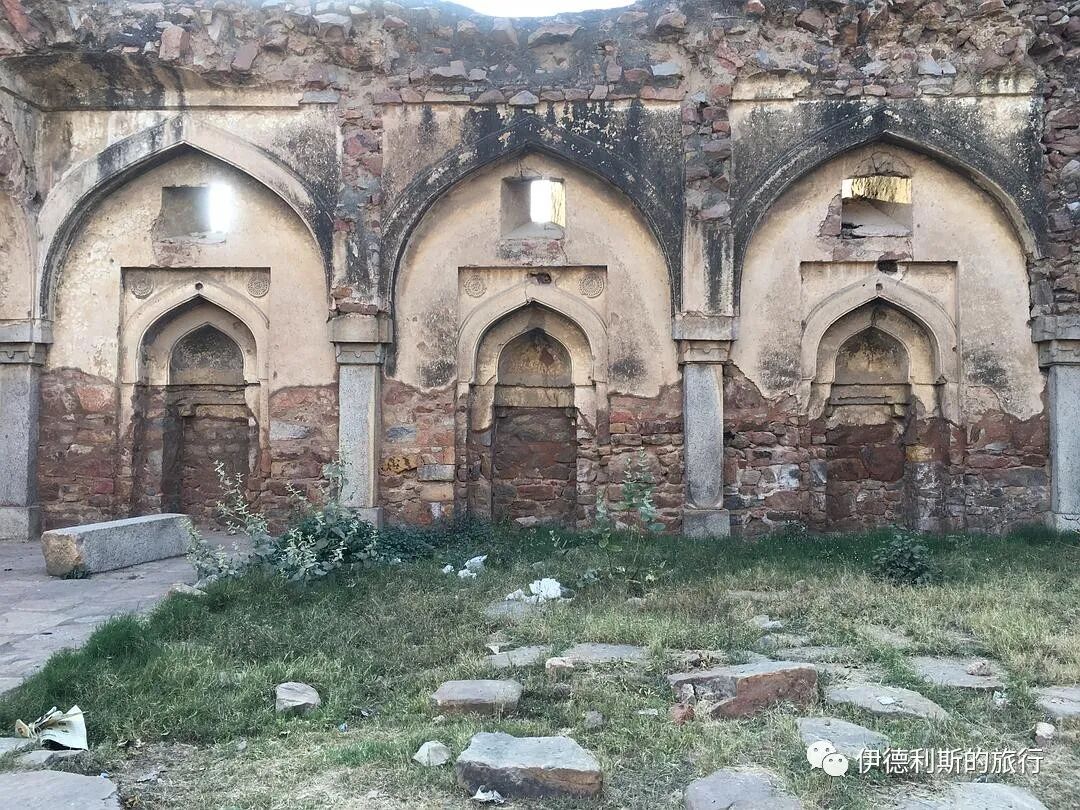
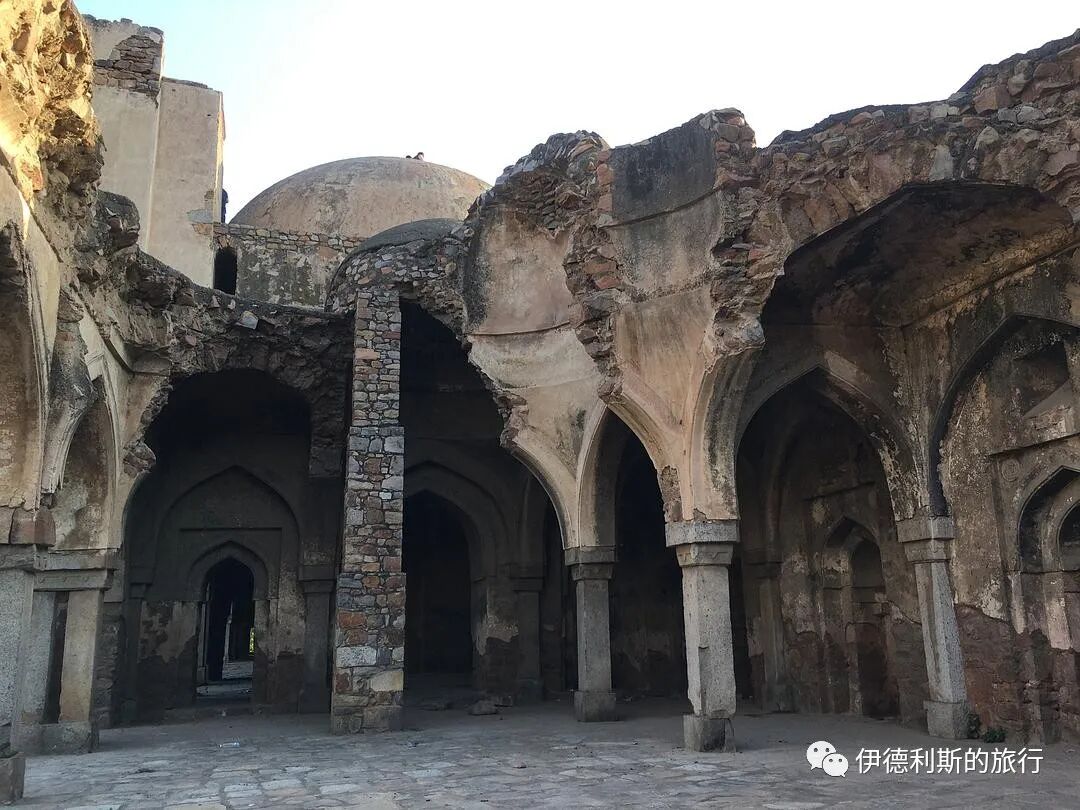
Main prayer hall
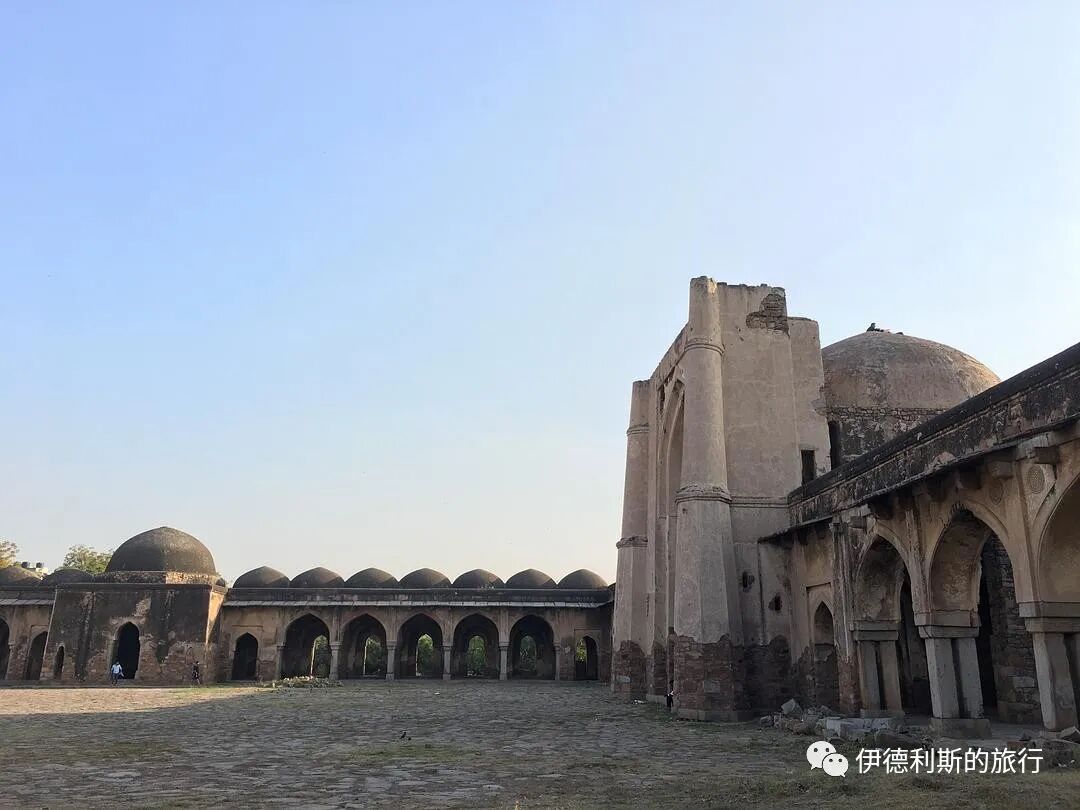
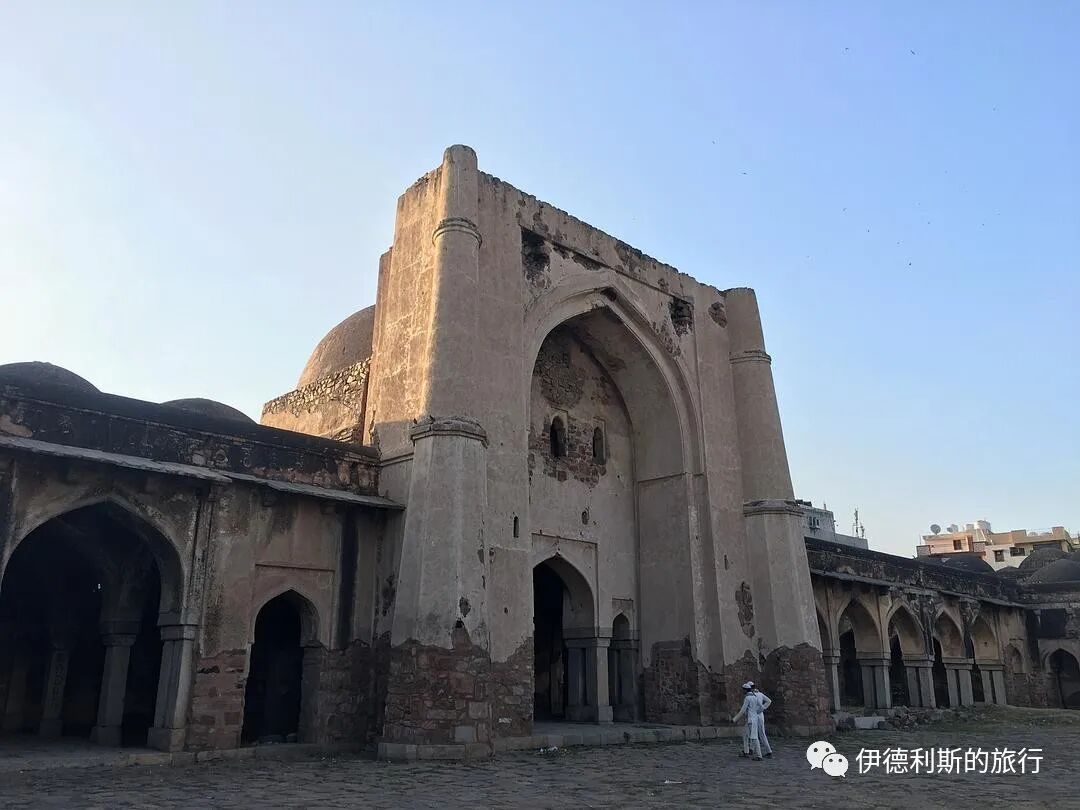
Mihrab
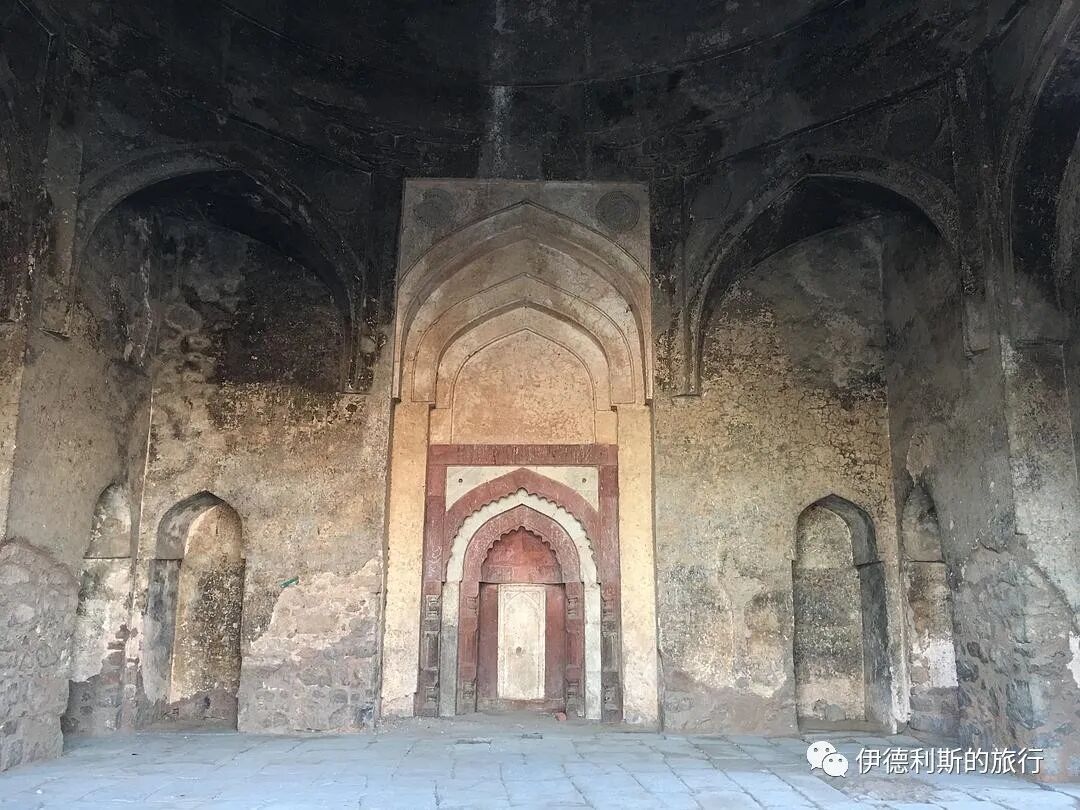
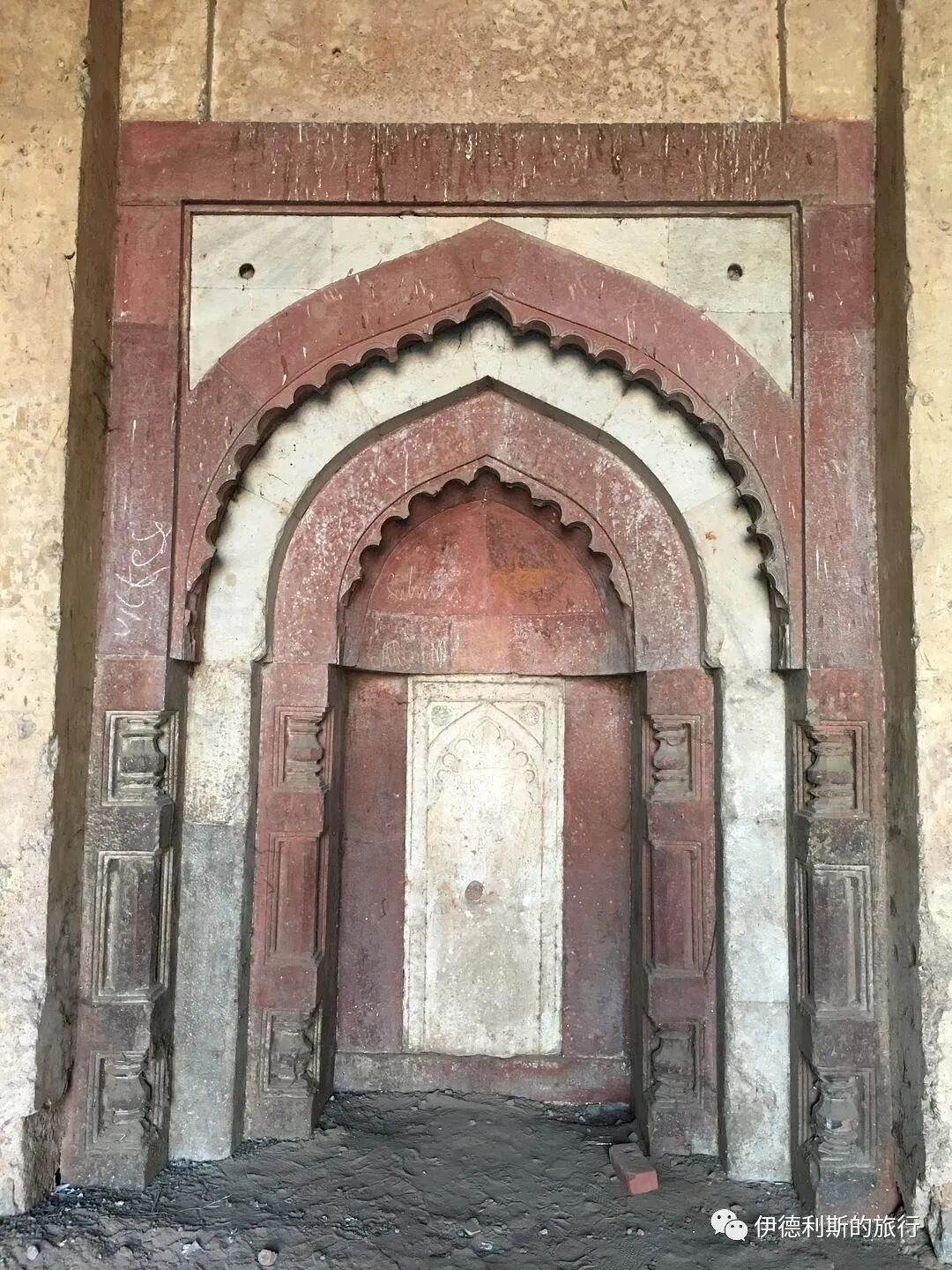
Main prayer hall dome
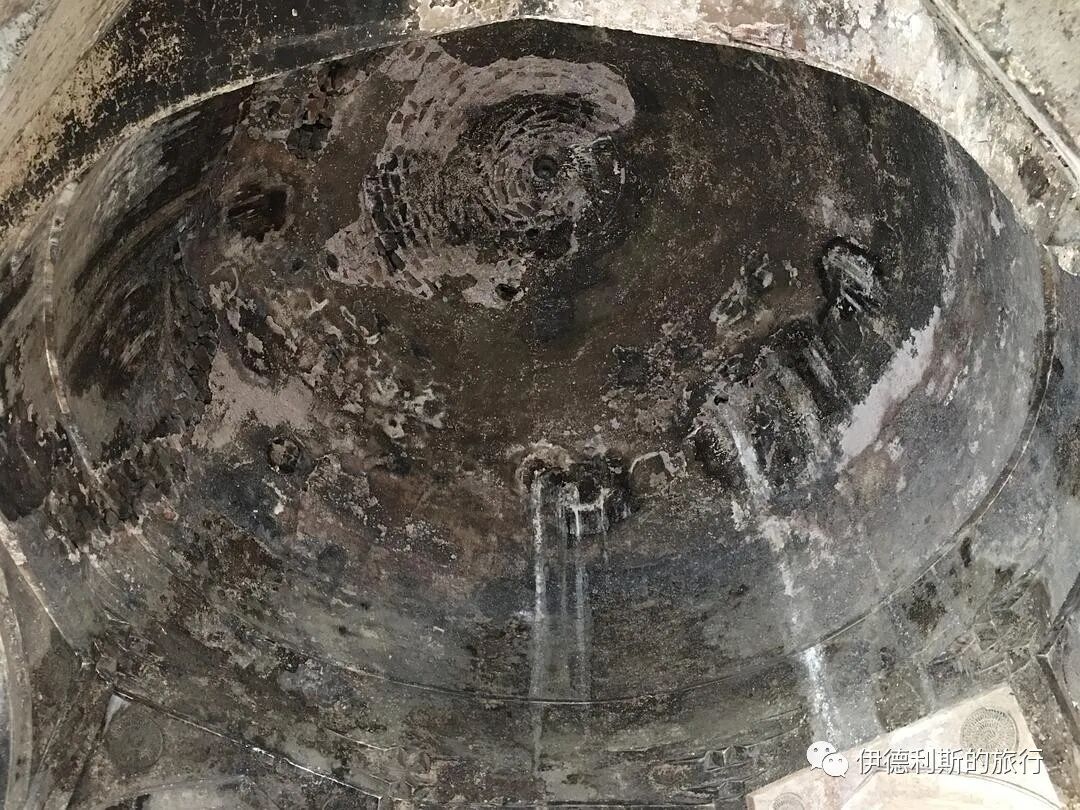
Minimal decoration
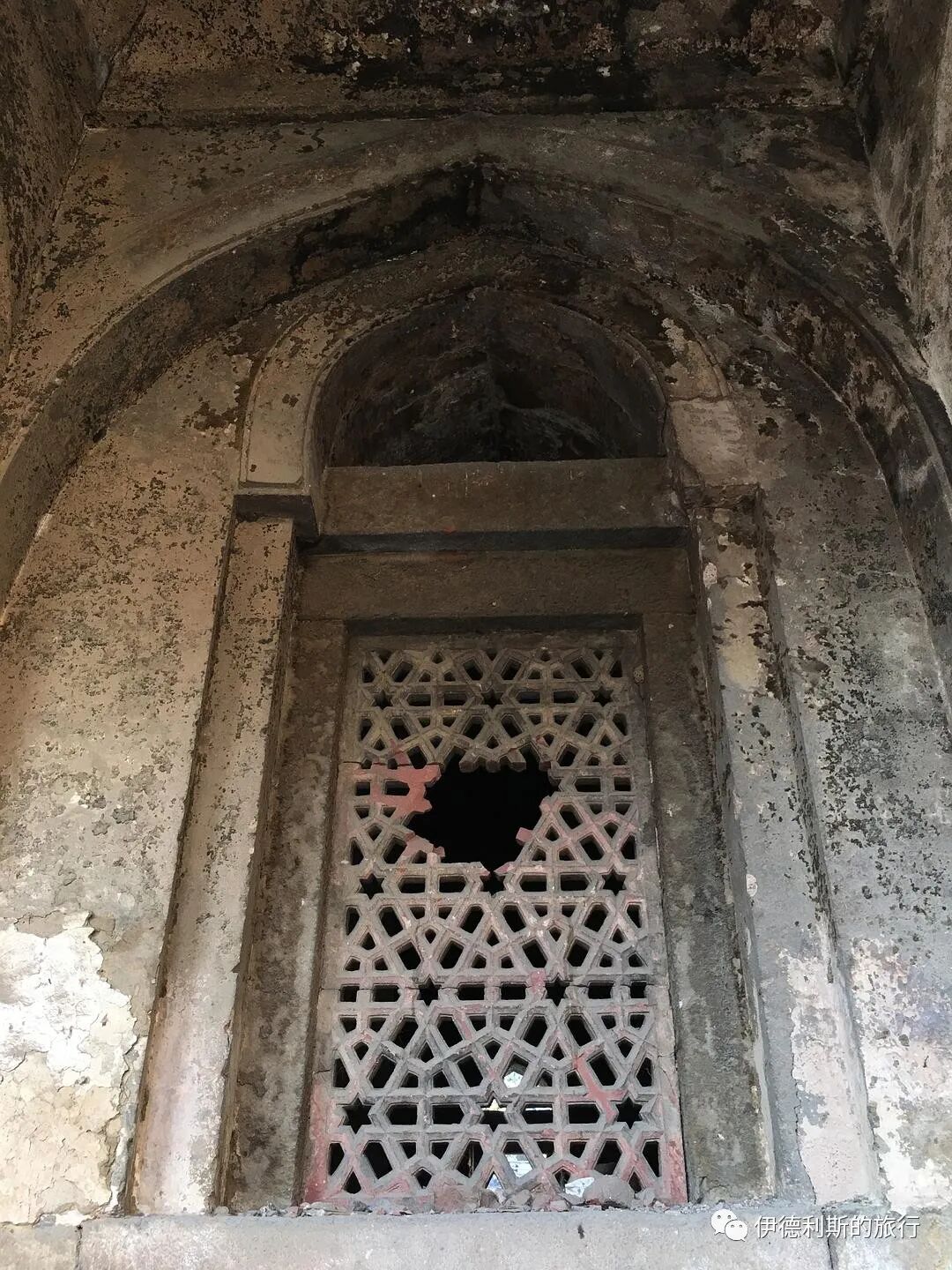
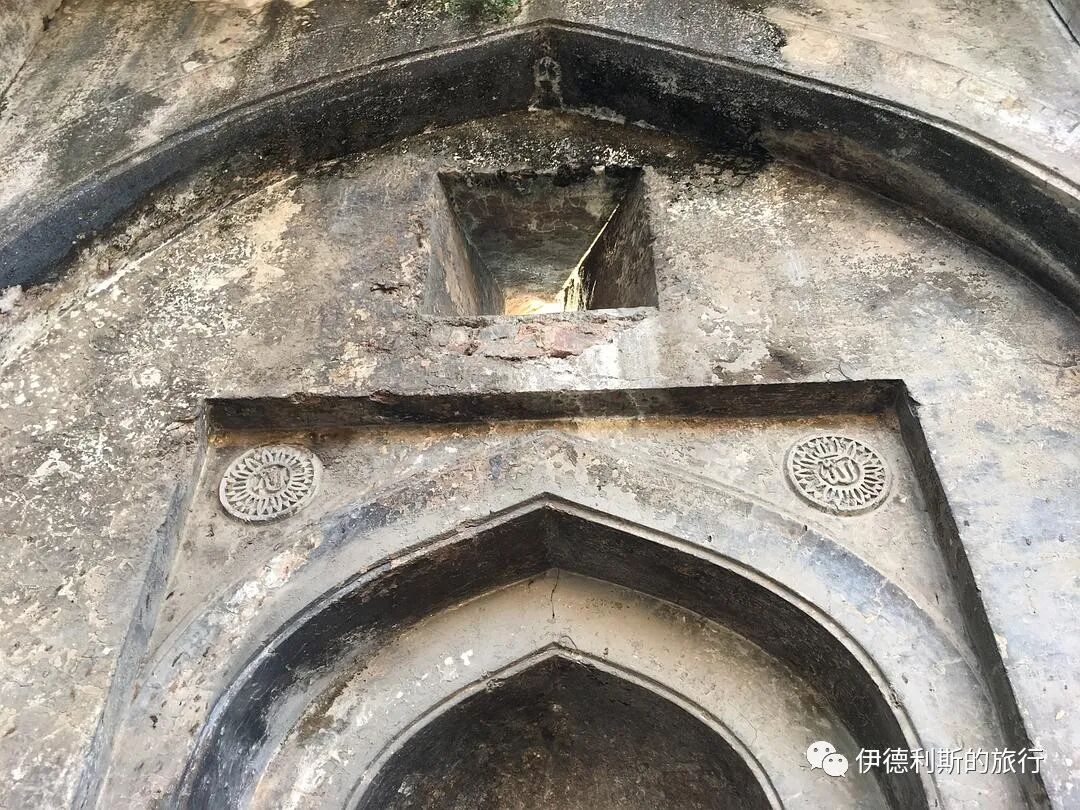
4. Khirki Mosque
Khirki Mosque is another important mosque from the Tughlaq dynasty besides Begumpur Mosque, but its design is very different from Begumpur Mosque. This mosque is undoubtedly one of the seven mosques built by the prime minister Khan-i-Jahan Maqbul, and it was likely built in the 1370s.
Khirki Mosque sits much higher than the ground, and a trench has now formed around it. The mosque has a large gate on the north, east, and south sides, each with small minarets on top, and there is a large minaret at each of the four corners of the mosque.
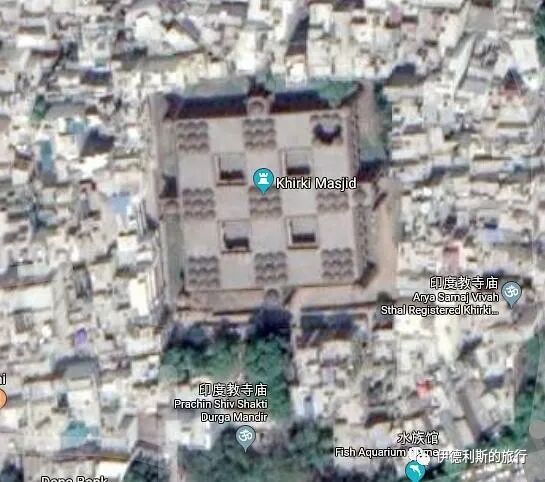
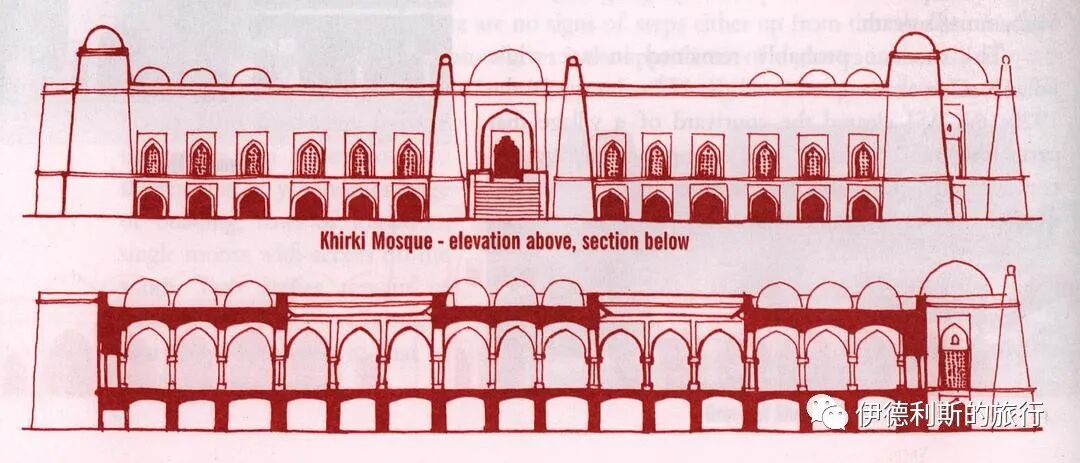
From the book Delhi—A Thousand Years of Building
Mosque facade
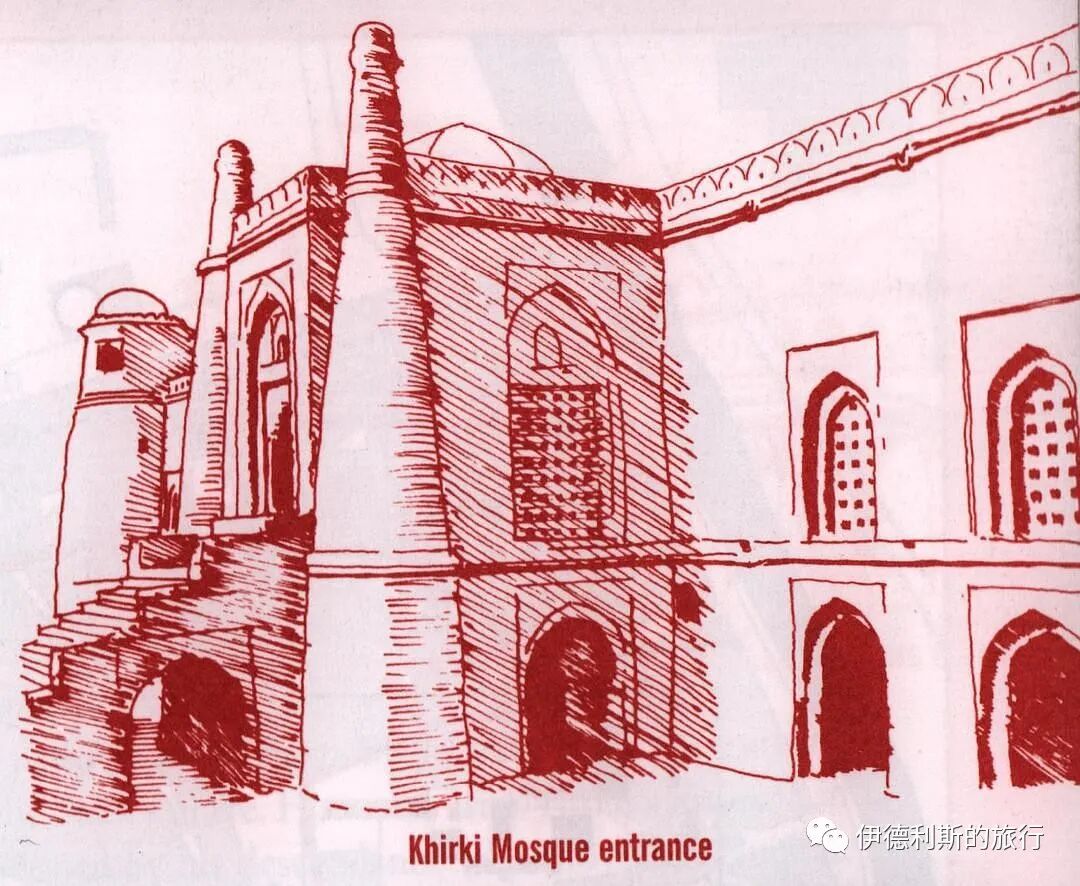
From the book Delhi—A Thousand Years of Building
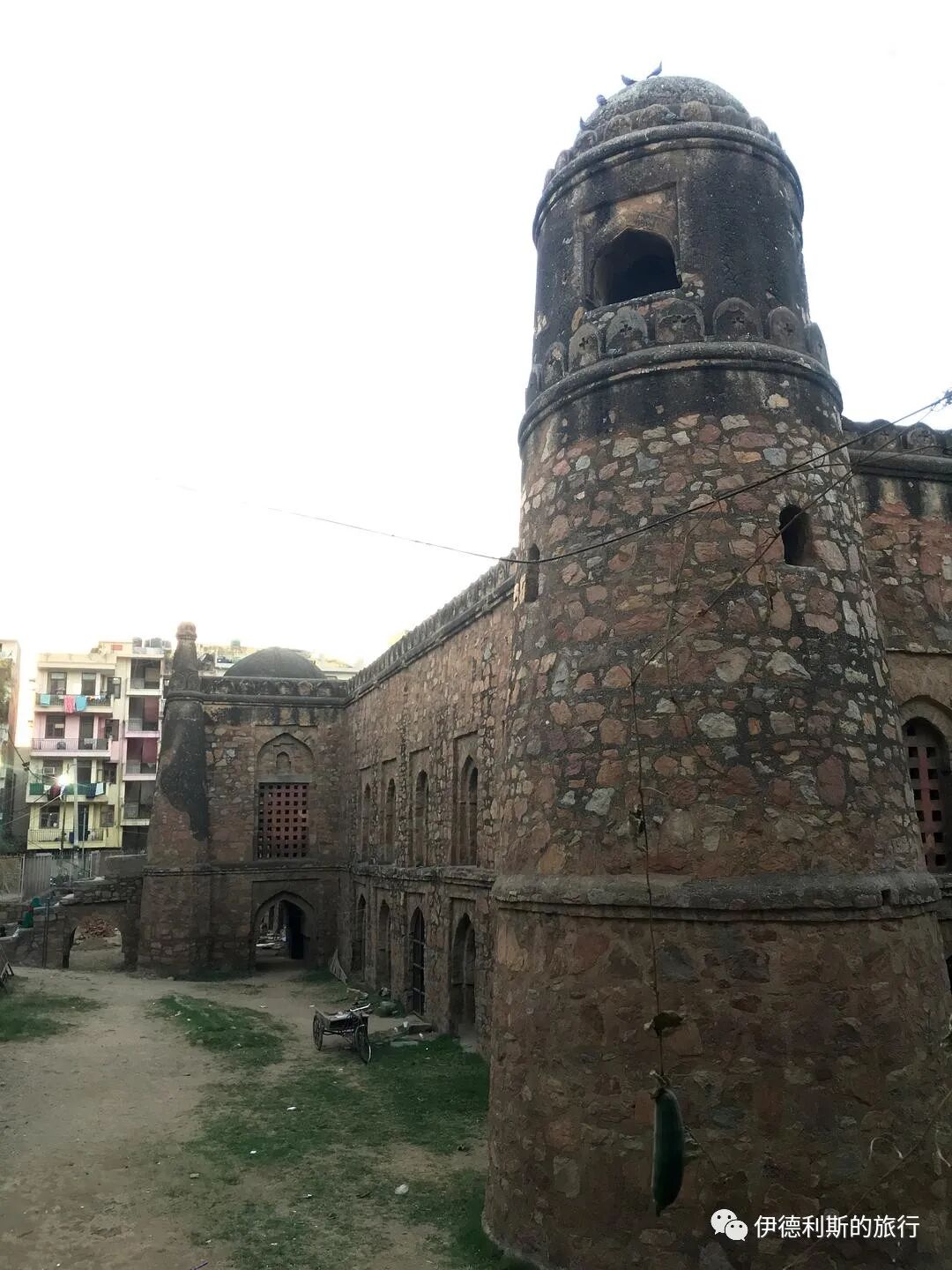
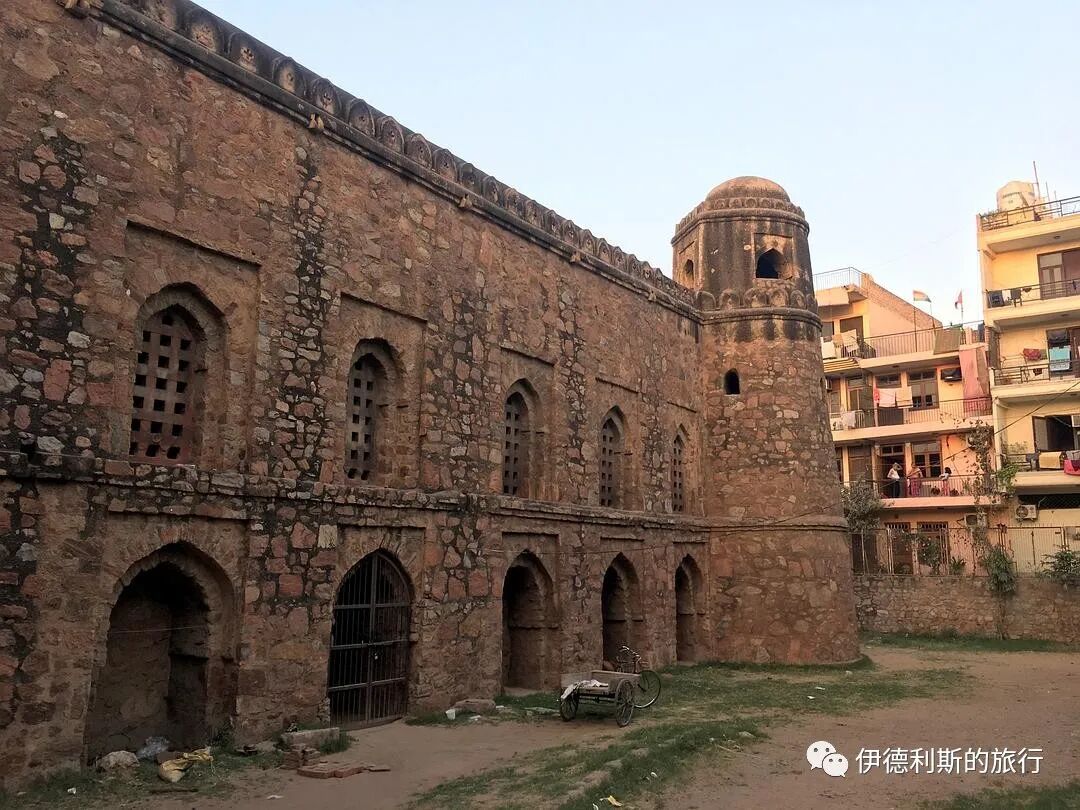
The gate.
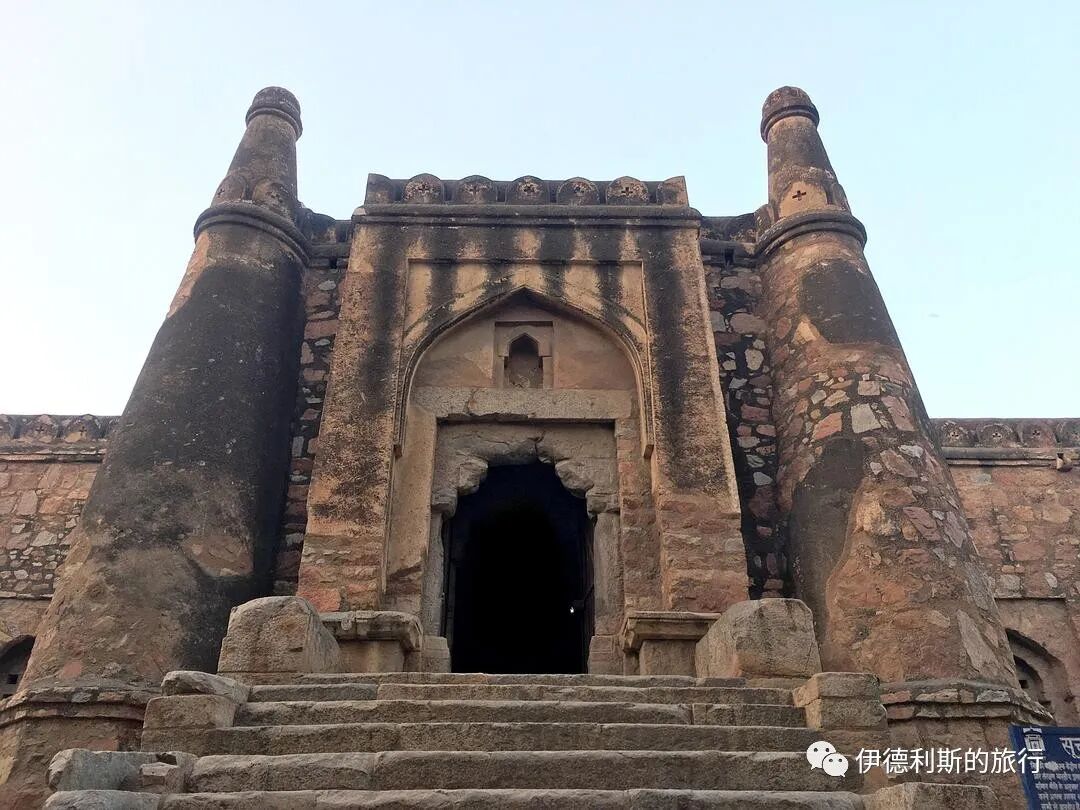
The biggest feature of Khirki Mosque is that its roof is almost completely covered, with only four small square courtyards, which is very rare in the Delhi Sultanate. Because there are only four small open-air courtyards, the mosque cannot be fully lit even during the day, and it is darkest in front of the mihrab in the prayer hall.
The structure made of square pillars and circular domes gives this mosque a strong sense of geometric beauty. I arrived at dusk, and even though it was very dark, I was still stunned.
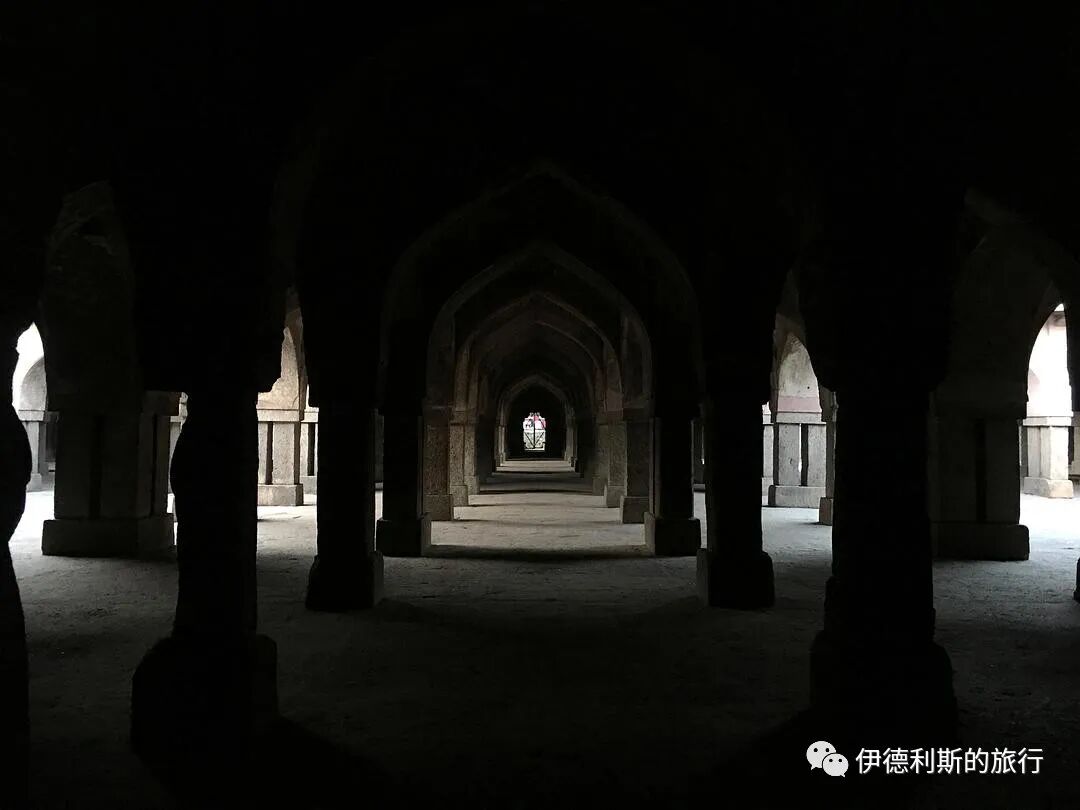
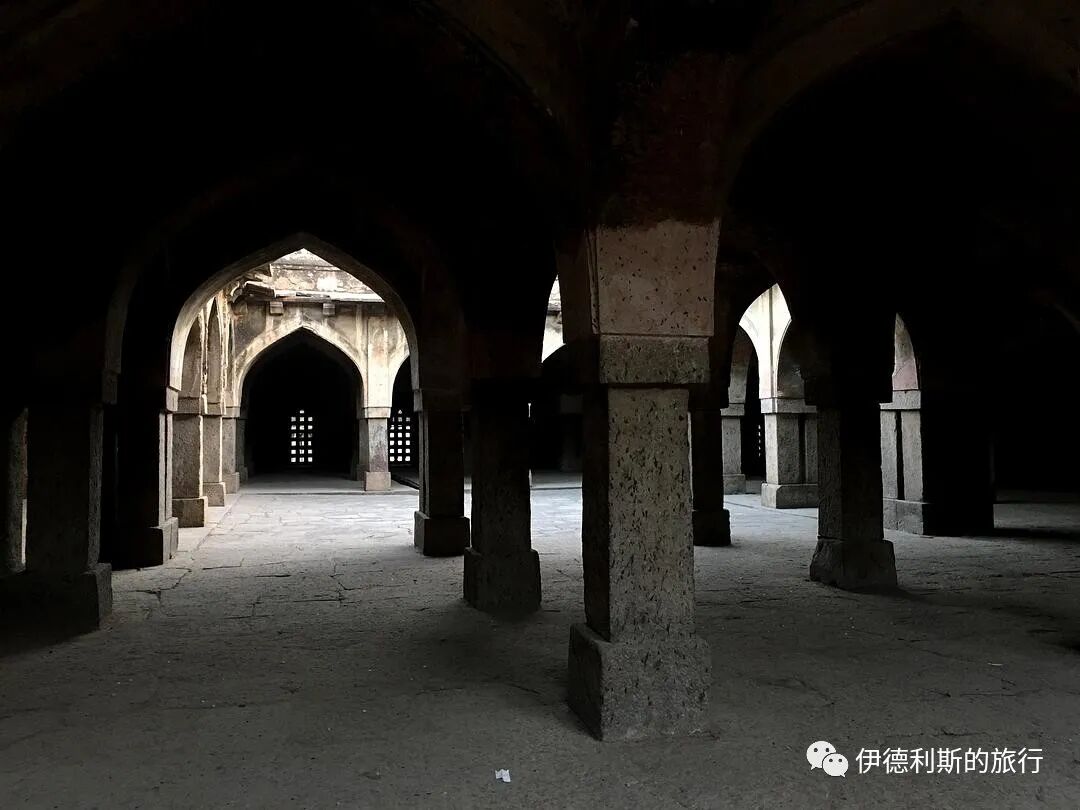
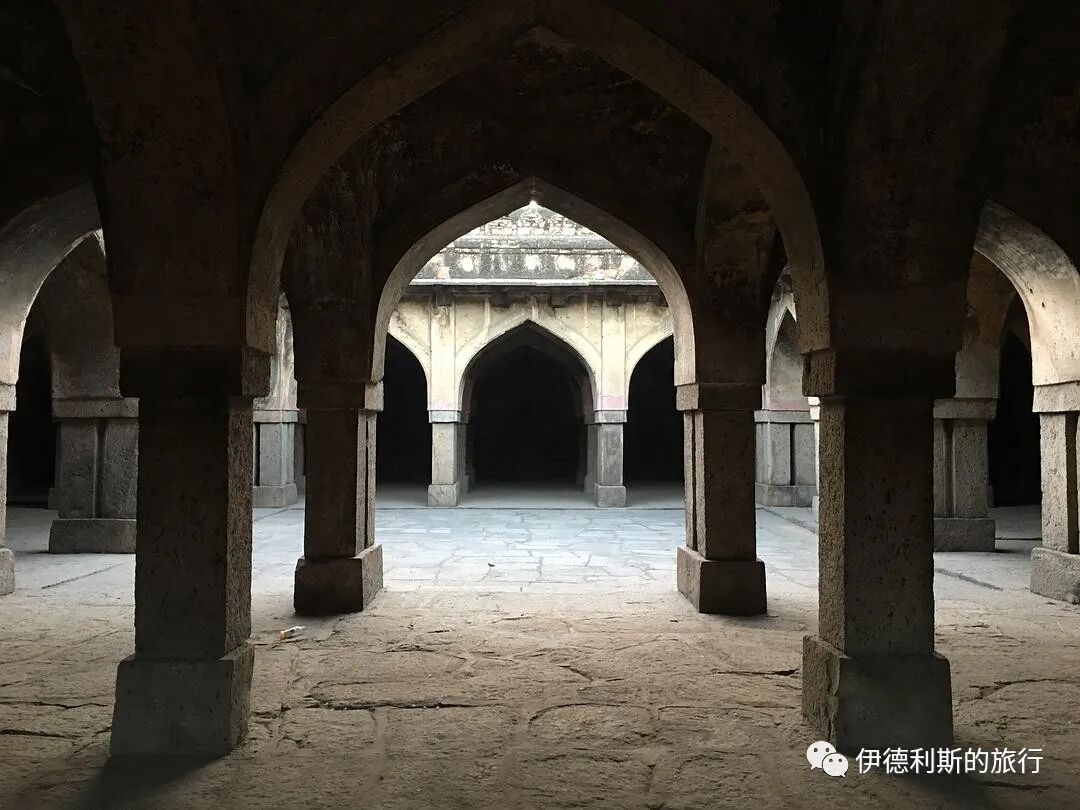
Courtyard
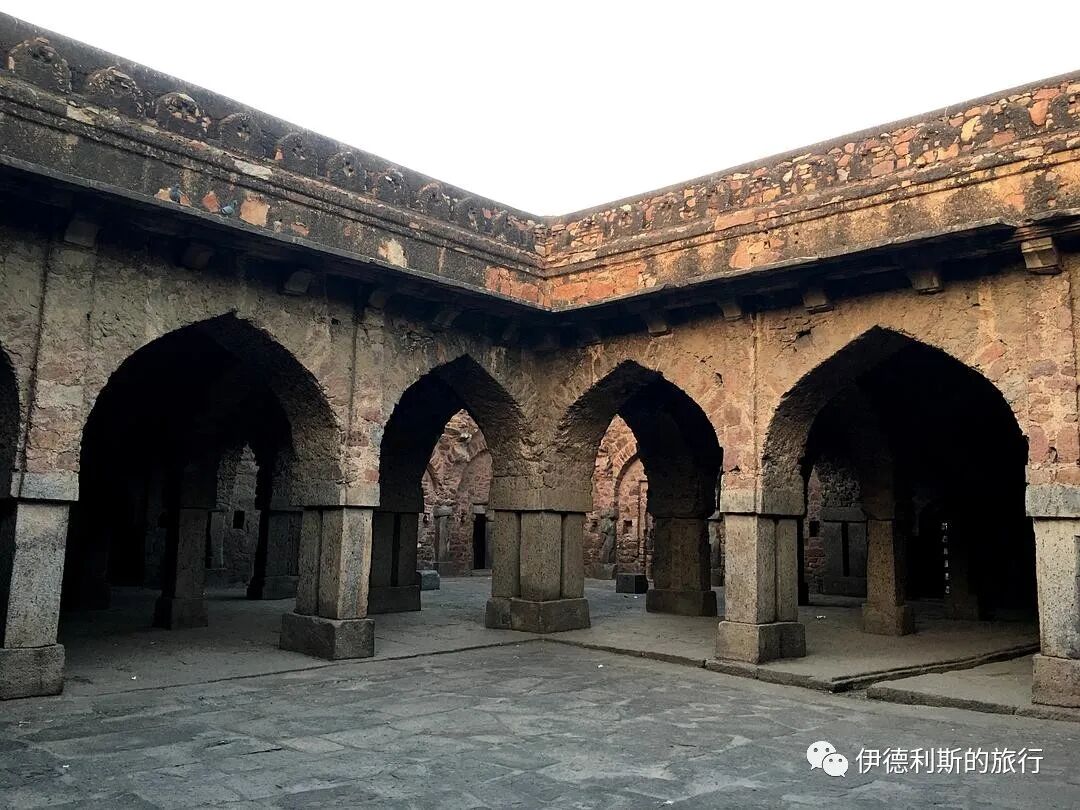
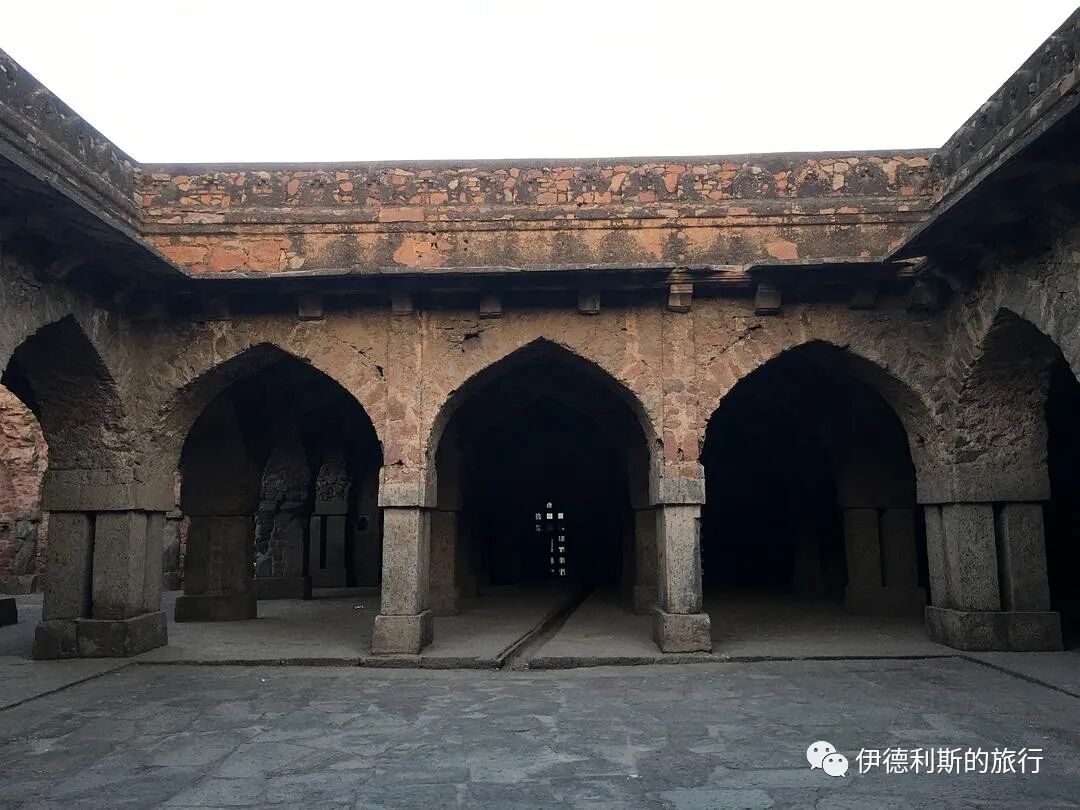
Mihrab
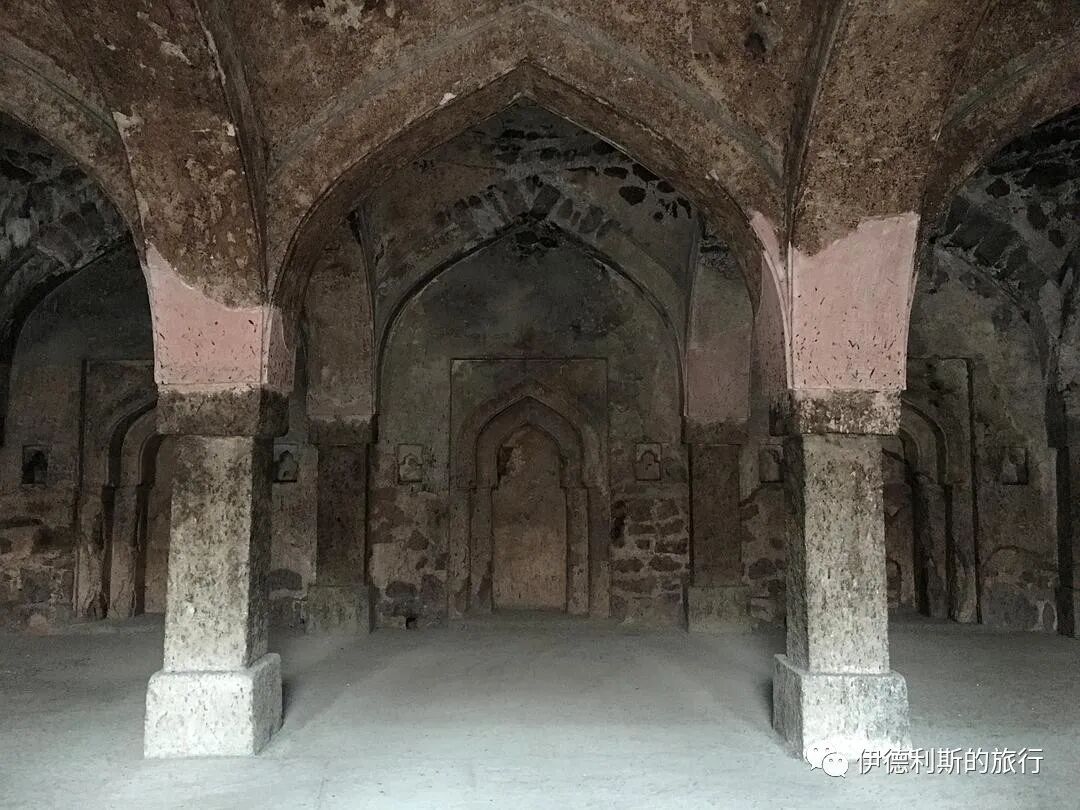
Collapsed dome in the northeast corner
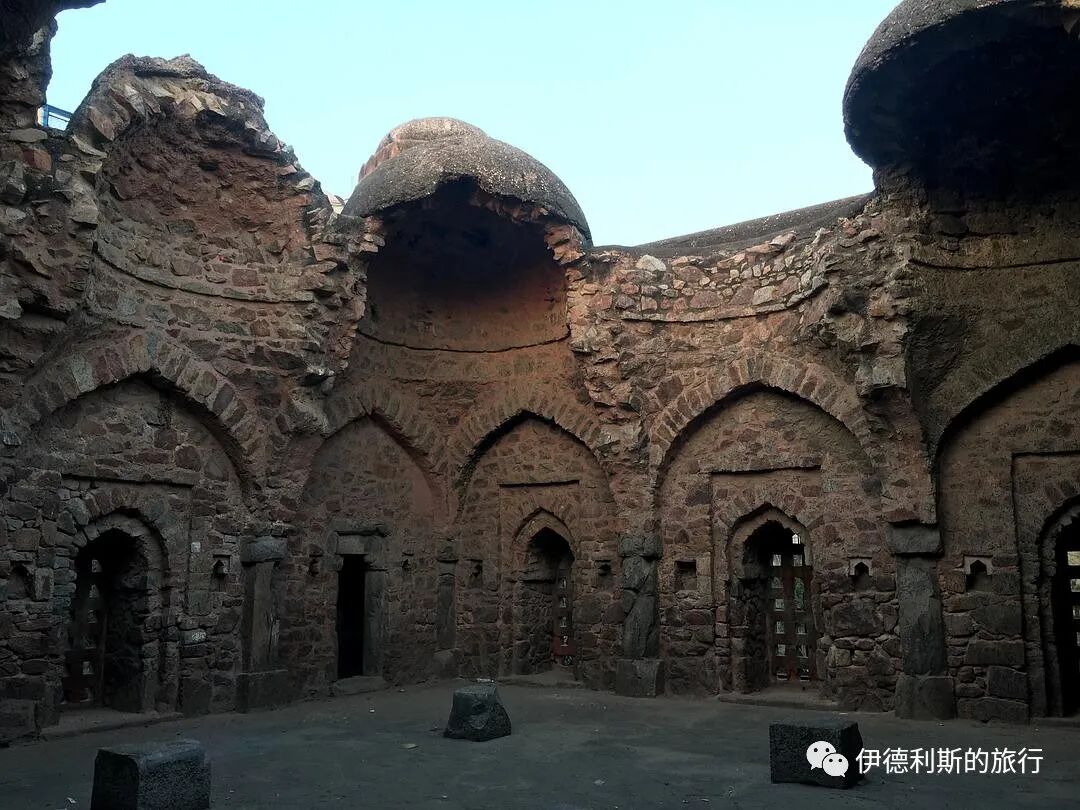
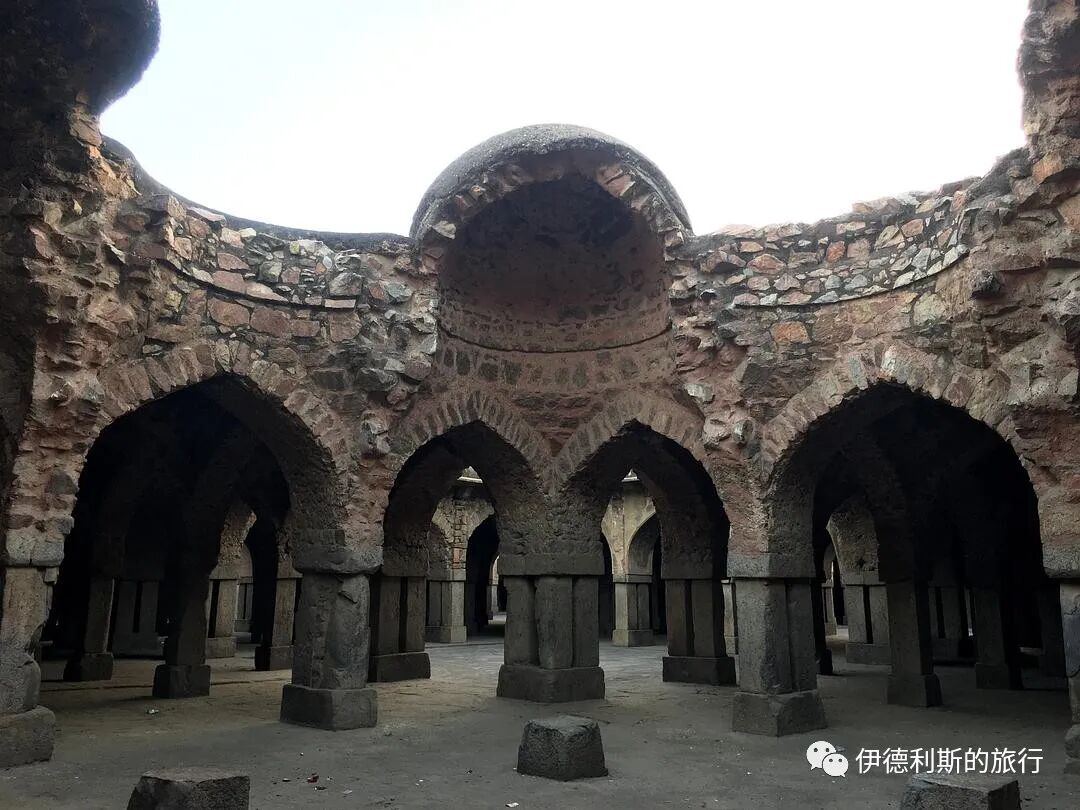
Corner tower
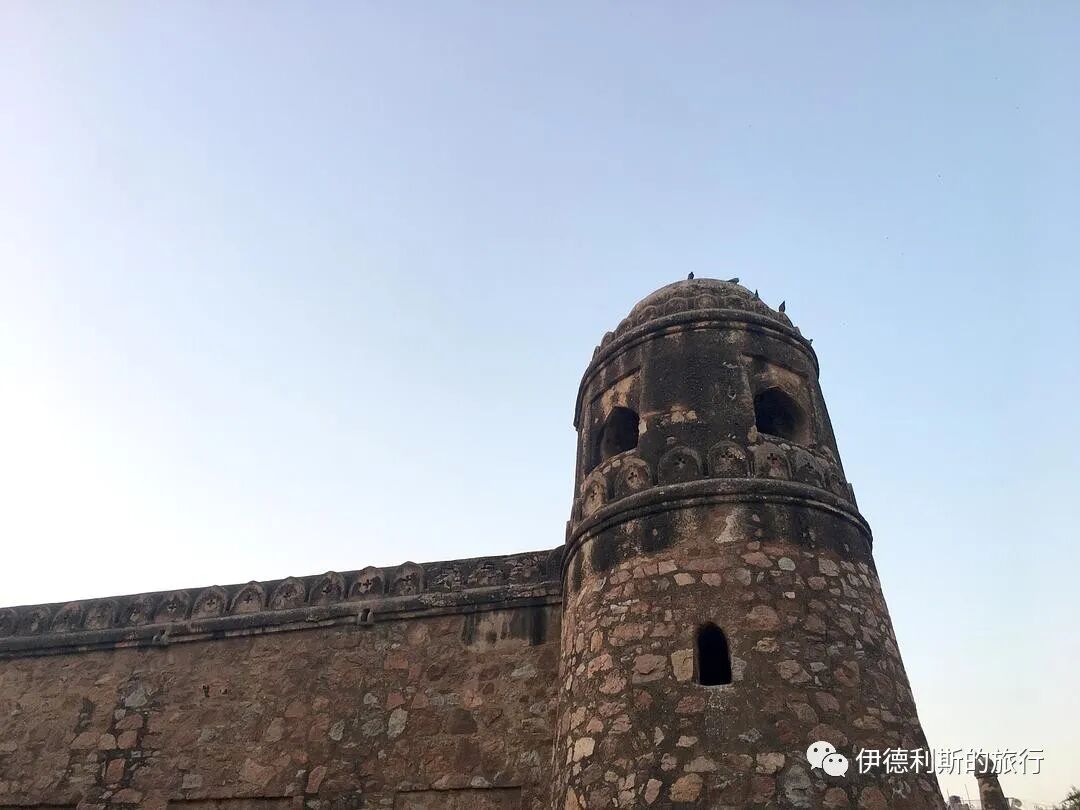
5. Kalusarai Mosque
Kalusarai Mosque is one of the seven mosques built by the aforementioned prime minister Khan-i-Jahan Maqbul. It is currently badly damaged and several families live inside, so the door was locked when I went and I could not enter. This mosque has a more complex structure than the other six mosques built by Khan-i-Jahan Maqbul, but it is still in the typical Tughlaq dynasty style.
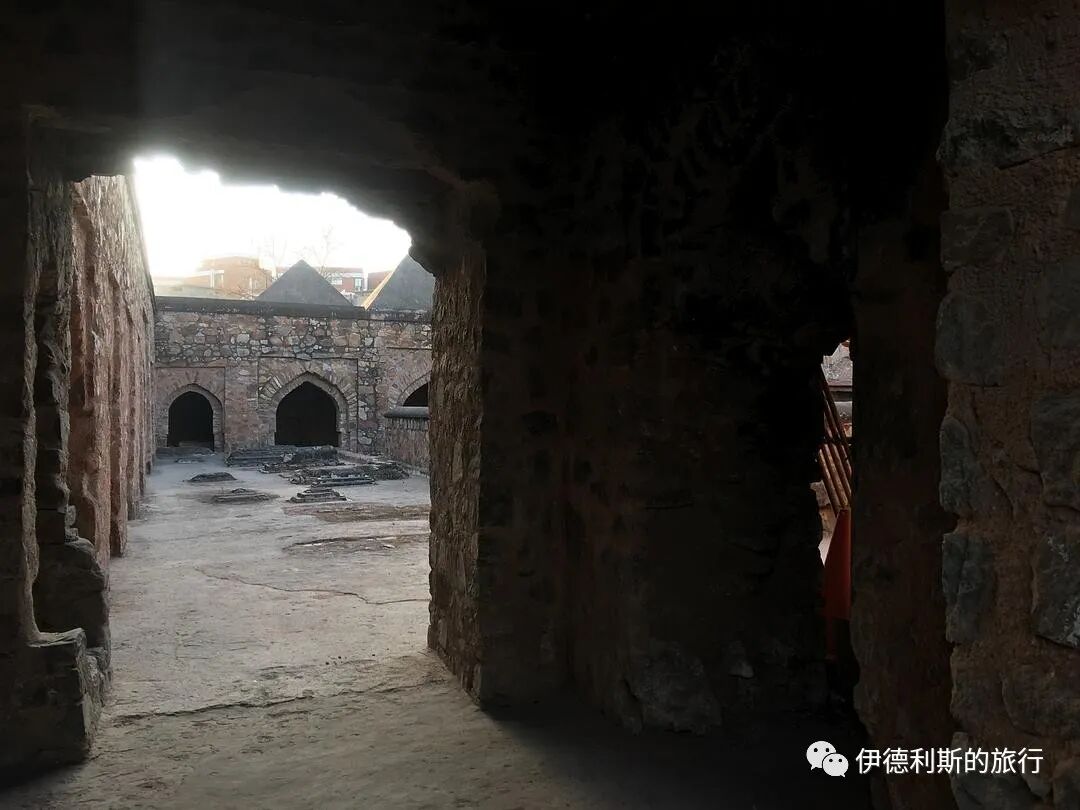
Halal Travel Guide: Delhi — Tughlaqabad Fort, Ruins and Muslim History
Articles • ali2007fr posted the article • 0 comments • 141 views • 2026-05-17 12:22
Summary: Delhi — Tughlaqabad Fort, Ruins and Muslim History is presented here as a firsthand travel account in clear English, beginning with this scene: In my first article, The First City of Delhi: The Tower Reaching the Clouds, I wrote about the Delhi Sultanate's Mamluk dynasty building the Qutub Minar. The account keeps its focus on Delhi Travel, Tughlaqabad Fort, Muslim Heritage while preserving the names, places, food, and historical details from the Chinese source.
In my first article, The First City of Delhi: The Tower Reaching the Clouds, I wrote about the Delhi Sultanate's Mamluk dynasty building the Qutub Minar. In the second article, The Second City of Delhi: The Turkic Fortress Defending Against the Mongol Army, I covered how the Khalji dynasty built a fortress to stop the Mongols. In this article, the Delhi Sultanate enters its third era: the Tughlaq dynasty.
Table of Contents
1. The Nemesis of the Afghan Mongols
1. Ghiyath al-Din Tughluq
2. Defeating the Mongols Twice
3. Taking the Fight to the Mongols
2. The Rise of the Tughlaq Dynasty
1. The Death of Alauddin Khalji
2. The Fall of the Khalji Dynasty
3. The Founding of the Tughlaq Dynasty
3. Building the City of Tughlaqabad
1. Legends of the Fortress Construction
2. The Curse of the Sufi Saint
4. Tughlaqabad Fortress
1. City Layout
2. The City Walls
3. The Palace District
4. The Citadel Area
5. The Tomb of Ghiyath al-Din Tughluq
6. Adilabad Fort
1. The Nemesis of the Afghan Mongols
1. Ghiyath al-Din Tughluq
Ghiyath al-Din Tughluq (Ghiyath al-Din Tughluq or Ghiyasuddin Tughlaq) was originally named Ghazi Malik. The title Ghazi refers to a warrior for Islam.
Ghazi came from a humble background. His father was a slave from the Qaraunah Turkic tribe, and his mother was a Hindu. The Qaraunah were a Turkic tribe living in Afghanistan under the Mongol Empire. In 1238, the Mongols moved them to the northwest border of India to defend against the Delhi Sultanate. This tribe took part in almost every Mongol invasion of India after 1241. Many were captured by the Delhi Sultanate and became slaves, which is how Ghazi's father arrived in the Delhi Sultanate.
Ghazi was a talented military leader. During the reign of Alauddin Khalji of the Khalji dynasty, he became the military governor of Dipalpur on the northwest border of the Delhi Sultanate and began fighting the Mongols.
The location of Dipalpur
2. Defeating the Mongols Twice
In my previous article, The Second City of Delhi: The Turkic Fortress Defending Against the Mongol Army, I mentioned that Ghazi served as a general during the two attacks on the Delhi Sultanate by the Chagatai Khanate Mongol army in 1305 and 1306.
During the 1305 Mongol invasion, the 14th-century Delhi chronicler Amir Khusrau wrote that the Mongol army was defeated as miserably as a swarm of mosquitoes trying to resist a strong wind. However, historical records do not provide many details about Ghazi's specific role in that battle.
When the Mongols invaded in 1306, the commander of the Delhi Sultanate was Malik Kafur, and Ghazi served as deputy commander, leading the vanguard. After the Sultanate's main army set out, Ghazi's vanguard quickly reached the northwest border and spotted the Mongol scouts. He reported the Mongol army's position to Kafur. The Delhi Sultanate's army moved at full speed and completely crushed the Chagatai Mongol army on the banks of the Ravi River, a tributary of the Indus River. A large number of Mongols were killed or captured.
The Chor Minar, a tower of heads built during the Delhi Khalji dynasty. The 225 holes on it are said to have once held the heads of killed Mongol captives.
3. Taking the Fight to the Mongols
According to the chronicler Amir Khusrau, the crushing defeat of the Mongols in 1306 caused the Mongols in Afghanistan to fear the Delhi Sultanate. They retreated to the mountains near the famous ancient city of Ghazni in southeastern Afghanistan. In 1307, Duwa, the Khan of the Chagatai Khanate, died, and Central Asia fell into chaos. His successors were unable to organize any more large-scale invasions.
On the other hand, defeating the Mongols repeatedly gave Ghazi a huge boost in confidence. He changed the Khalji dynasty's defensive policy against the Mongols and began to actively invade the Chagatai Khanate's territory in Afghanistan. Every year, Ghazi raided important Mongol cities in Afghanistan such as Kabul, Ghazni, Kandahar, and Garmsir, and even briefly recaptured Lahore, the early capital of the Delhi Sultanate.
The chronicler Amir Khusrau wrote in his book Tughluq-Nama that Ghazi won 20 battles, mostly against the Mongols. The famous Moroccan traveler Ibn Battuta passed by a mosque in Multan in the 14th century, where a stone tablet was inscribed with the claim that Ghazi had defeated the Mongols 29 times.
In this way, Ghazi became the military commander of the Punjab region on the northwestern frontier of the Delhi Sultanate.
Afghan cities under Mongol rule that were attacked by Ghazi.
2. The Rise of the Tughlaq Dynasty
1. The Death of Alauddin Khalji
In his final years, Sultan Alauddin Khalji grew to distrust his officers and favored only the eunuch slave general Malik Kafur.
In 1315, Alauddin fell seriously ill and appointed Kafur as regent (Na'ib), giving him real power.
Alauddin died on the night of January 4, 1316. The next day, Kafur gathered all the important officials and nobles to read the will, which named Alauddin's 6-year-old son Shihabuddin as the new Sultan, with Kafur as regent.
2. The Fall of the Khalji Dynasty
Kafur was regent for only about a month, during which he constantly persecuted Alauddin's family, upsetting some of Alauddin's former armed guards (paiks). Led by Mubashshir, the guards beheaded Kafur. They released Alauddin's older son Mubarak Shah, who had been imprisoned by Kafur, and named him the new regent.
On April 14, 1316, Mubarak Shah deposed his younger brother to become the new Sultan, taking the title Qutubuddin.
Mubarak Shah was bisexual and had same-sex relationships with the brothers Hasan and Husamuddin. Hasan and Husamuddin were brought to the Delhi Sultanate court as Hindu slaves in 1305. To survive, the brothers converted to Islam and served Mubarak Shah.
The relationship between Mubarak Shah and Hasan was no secret. They hugged and kissed in public, and Mubarak Shah gave Hasan the title Khusrau Khan.
In 1320, Mubarak Shah was killed by Khusrau Khan, ending the Khalji dynasty of the Delhi Sultanate.
Siri, the capital of the Delhi Sultanate's Khalji dynasty.
3. The Founding of the Tughlaq Dynasty
After Mubarak Shah was killed by Khusrau Khan, Khusrau Khan returned to his Hindu identity, which caused great dissatisfaction among Muslim officers and nobles. These officers and nobles supported Ghazi, the Punjab military commander who held a large army, to attack Khusrau Khan.
After Alauddin died, Ghazi gained military control over the Multan and Sindh regions. After receiving invitations from the Muslim officers and nobles, he and his son Fakhr Malik gathered a large army in Multan and Sindh and marched toward Delhi.
In September 1320, Ghazi defeated Khusrau Khan west of Siri in Delhi and established the Tughlaq dynasty, the third dynasty of the Delhi Sultanate. Ghazi received the title Ghiyath al-Din Tughluq, and his son received the title Muhammad Shah Tughluq.
3. Building the City of Tughlaqabad
After establishing the Tughlaq dynasty, Ghazi began building Tughlaqabad Fort in 1321. The massive 6.5-kilometer-long city was completed in just two years.
1. Legends of the Fortress Construction
There is a famous legend about the construction of Tughlaqabad Fort. Once, while walking with the last Sultan of the Khalji dynasty, Mubarak Shah, Ghazi suggested that the Sultan build a stronger fortress in Delhi. The Sultan joked that if you ever become Sultan, you can build the fortress yourself. As it turned out, his words came true.
2. The Curse of the Sufi Saint
Ghazi dreamed of building a fortress so strong that it could withstand the fiercest attacks from the Mongol army. However, fate did not go as he wished.
Ghazi was passionate about his fortress and ordered all laborers in Delhi to help build it. At the time, the famous Sufi saint Nizamuddin Auliya was building a water tank (baoli), and his laborers were forced to go build the fortress instead. But these people preferred to work for the saint, so they built the fortress for Ghazi during the day and the water tank for Nizamuddin at night. When Ghazi found out, he was very angry and forbade the laborers from working for Nizamuddin. Nizamuddin issued a curse: 'Ya rahey ujjar, ya basey gujjar'. It roughly means 'Either it will remain desolate, or it will be inhabited by the Gujjar people.' "
After the sultanate fell, the nomadic Gujjar people (gujjar) took over the castle, and it turned into a wilderness.
Nizamuddin Dargah in Delhi
4. Tughlaqabad Fortress
1. City Layout
The entire city is divided into three parts:
The largest part is the residential area in the north. Old photos from the 1940s show streets and the ruins of the Friday mosque (Juma Masjid), but they are hard to recognize now.
The southwest side is the palace area, where the buildings have collapsed significantly, though there is one well-preserved water well.
The southeast side is the smallest but most interesting part, the fortress area, which has many architectural ruins like houses, storage rooms, and a mosque.
The blue line shows the existing city walls.
2. The City Walls
Tughlaqabad City features the sloped rubble walls typical of the Tughlaq dynasty. The walls are 10 to 15 meters high and reinforced by two-story circular bastions. The city is said to have had as many as 52 gates, but only 13 remain today.
The southeast corner tower of the fortress area wall
The south city wall
The inside of the south city wall
The picture below shows the view from the northwest corner tower of the fortress area looking toward the east wall of the palace area.
In the picture below, the lower wall is the east wall of the palace area, and the higher one is the west wall of the fortress area.
Standing on the fortress area wall looking west toward the palace area wall.
The east wall of the palace area
The west wall of the fortress area
The collapsed west gate of the fortress area
The interior of the high platform on the west wall of the fortress area
3. The Palace District
The palace ruins of Tughlaqabad City have collapsed badly, so you can only imagine their former glory.
West of the palace is a water tank (baoli) that provided water for the castle.
4. The Citadel Area
The fortress area is the part of the city with the richest ruins.
Looking down at the entire fortress area:
A small mosque in the fortress area
The mihrab that indicates the direction of Mecca
The fortress area has a classic underground storage room:
The north entrance of the storage room
The south entrance of the storage room
The passage of the storage room, with individual warehouses on both sides.
There are also some residential ruins inside the fortress area.
5. The Tomb of Ghiyath al-Din Tughluq
I mentioned earlier the curse that the Sufi saint Nizamuddin placed on Ghiyas-ud-din. Another famous curse is "Hunuz Dilli dur ast". It means "Delhi is still far away." "
In 1324, Ghazi led an expedition to Bengal and succeeded. On the way back in February 1325, a wooden pavilion collapsed, crushing Ghazi and his second son, Mahmud Khan, to death. The famous 14th-century Moroccan traveler Ibn Battuta believed that his eldest son, Muhammad bin Tughluq, killed his father.
After Ghazi died, his eldest son Muhammad succeeded him as Sultan and buried Ghazi in a tomb south of the city of Tughlaqabad.
The Mausoleum of Ghiyas ud-Din Tughluq connects to the city of Tughlaqabad to the north via a causeway. This 182-meter causeway has 27 arches, and there used to be an artificial lake underneath. The lake has now been filled in to become flat land, and the middle of the causeway is split in two by a road.
Ghazi's tomb sits atop a granite fortress. The tomb has a square dome and is built of red sandstone, inlaid with white marble slabs.
Inside the tomb are three grave markers; the middle one belongs to Ghazi himself, and the other two belong to his wife and his son Muhammad.
Dome
Fortress corridors and architectural pieces on the ground
In the northwest corner of the fortress, there is another tomb containing an octagonal burial chamber. According to the stone inscription on the south gate, this tomb belongs to Zafar Khan.
Zafar Khan was a general of the Khalji dynasty of the Delhi Sultanate, and he died in 1299 during a decisive battle between the Mongol army of the Chagatai Khanate and the Delhi Sultanate on the outskirts of Delhi.
One theory is that Zafar Khan's tomb was already built on the current site before this, and Ghazi incorporated it into the fortress when building his own tomb. Another theory is that Zafar Khan's tomb was intentionally built by Ghazi next to his own.
6. Adilabad Fort
After Muhammad took the throne in 1325, he built a medium-sized castle called Adilabad fort to the southeast of Tughlaqabad.
People say Adilabad fort was connected to Tughlaqabad by a 1-kilometer-long causeway, but the causeway has now disappeared.
Compared to the majestic Tughlaqabad, Adilabad fort is much smaller in scale and is divided into inner and outer walls.
West gate
East gate, which takes a bit of effort to climb up to
Looking down inside the city
The core area is the palace district
City wall
Besides the inner wall, there is also an outer wall view all
Summary: Delhi — Tughlaqabad Fort, Ruins and Muslim History is presented here as a firsthand travel account in clear English, beginning with this scene: In my first article, The First City of Delhi: The Tower Reaching the Clouds, I wrote about the Delhi Sultanate's Mamluk dynasty building the Qutub Minar. The account keeps its focus on Delhi Travel, Tughlaqabad Fort, Muslim Heritage while preserving the names, places, food, and historical details from the Chinese source.
In my first article, The First City of Delhi: The Tower Reaching the Clouds, I wrote about the Delhi Sultanate's Mamluk dynasty building the Qutub Minar. In the second article, The Second City of Delhi: The Turkic Fortress Defending Against the Mongol Army, I covered how the Khalji dynasty built a fortress to stop the Mongols. In this article, the Delhi Sultanate enters its third era: the Tughlaq dynasty.
Table of Contents
1. The Nemesis of the Afghan Mongols
1. Ghiyath al-Din Tughluq
2. Defeating the Mongols Twice
3. Taking the Fight to the Mongols
2. The Rise of the Tughlaq Dynasty
1. The Death of Alauddin Khalji
2. The Fall of the Khalji Dynasty
3. The Founding of the Tughlaq Dynasty
3. Building the City of Tughlaqabad
1. Legends of the Fortress Construction
2. The Curse of the Sufi Saint
4. Tughlaqabad Fortress
1. City Layout
2. The City Walls
3. The Palace District
4. The Citadel Area
5. The Tomb of Ghiyath al-Din Tughluq
6. Adilabad Fort
1. The Nemesis of the Afghan Mongols
1. Ghiyath al-Din Tughluq
Ghiyath al-Din Tughluq (Ghiyath al-Din Tughluq or Ghiyasuddin Tughlaq) was originally named Ghazi Malik. The title Ghazi refers to a warrior for Islam.
Ghazi came from a humble background. His father was a slave from the Qaraunah Turkic tribe, and his mother was a Hindu. The Qaraunah were a Turkic tribe living in Afghanistan under the Mongol Empire. In 1238, the Mongols moved them to the northwest border of India to defend against the Delhi Sultanate. This tribe took part in almost every Mongol invasion of India after 1241. Many were captured by the Delhi Sultanate and became slaves, which is how Ghazi's father arrived in the Delhi Sultanate.
Ghazi was a talented military leader. During the reign of Alauddin Khalji of the Khalji dynasty, he became the military governor of Dipalpur on the northwest border of the Delhi Sultanate and began fighting the Mongols.
The location of Dipalpur
2. Defeating the Mongols Twice
In my previous article, The Second City of Delhi: The Turkic Fortress Defending Against the Mongol Army, I mentioned that Ghazi served as a general during the two attacks on the Delhi Sultanate by the Chagatai Khanate Mongol army in 1305 and 1306.
During the 1305 Mongol invasion, the 14th-century Delhi chronicler Amir Khusrau wrote that the Mongol army was defeated as miserably as a swarm of mosquitoes trying to resist a strong wind. However, historical records do not provide many details about Ghazi's specific role in that battle.
When the Mongols invaded in 1306, the commander of the Delhi Sultanate was Malik Kafur, and Ghazi served as deputy commander, leading the vanguard. After the Sultanate's main army set out, Ghazi's vanguard quickly reached the northwest border and spotted the Mongol scouts. He reported the Mongol army's position to Kafur. The Delhi Sultanate's army moved at full speed and completely crushed the Chagatai Mongol army on the banks of the Ravi River, a tributary of the Indus River. A large number of Mongols were killed or captured.
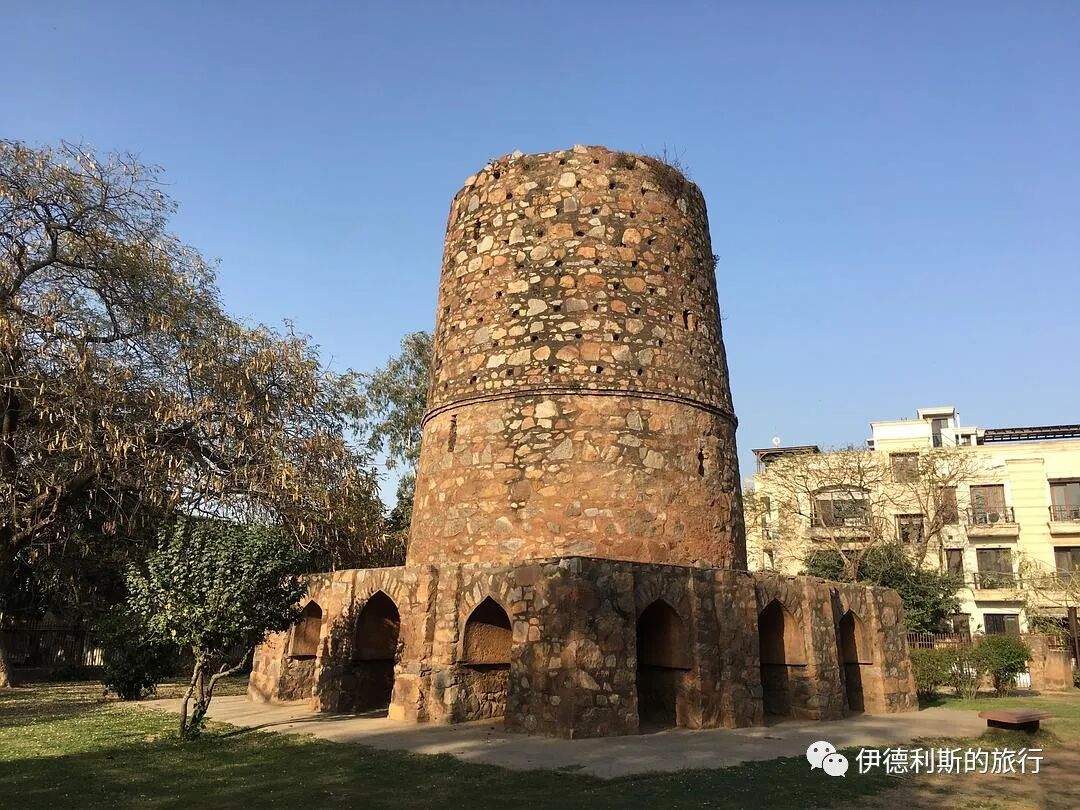
The Chor Minar, a tower of heads built during the Delhi Khalji dynasty. The 225 holes on it are said to have once held the heads of killed Mongol captives.
3. Taking the Fight to the Mongols
According to the chronicler Amir Khusrau, the crushing defeat of the Mongols in 1306 caused the Mongols in Afghanistan to fear the Delhi Sultanate. They retreated to the mountains near the famous ancient city of Ghazni in southeastern Afghanistan. In 1307, Duwa, the Khan of the Chagatai Khanate, died, and Central Asia fell into chaos. His successors were unable to organize any more large-scale invasions.
On the other hand, defeating the Mongols repeatedly gave Ghazi a huge boost in confidence. He changed the Khalji dynasty's defensive policy against the Mongols and began to actively invade the Chagatai Khanate's territory in Afghanistan. Every year, Ghazi raided important Mongol cities in Afghanistan such as Kabul, Ghazni, Kandahar, and Garmsir, and even briefly recaptured Lahore, the early capital of the Delhi Sultanate.
The chronicler Amir Khusrau wrote in his book Tughluq-Nama that Ghazi won 20 battles, mostly against the Mongols. The famous Moroccan traveler Ibn Battuta passed by a mosque in Multan in the 14th century, where a stone tablet was inscribed with the claim that Ghazi had defeated the Mongols 29 times.
In this way, Ghazi became the military commander of the Punjab region on the northwestern frontier of the Delhi Sultanate.
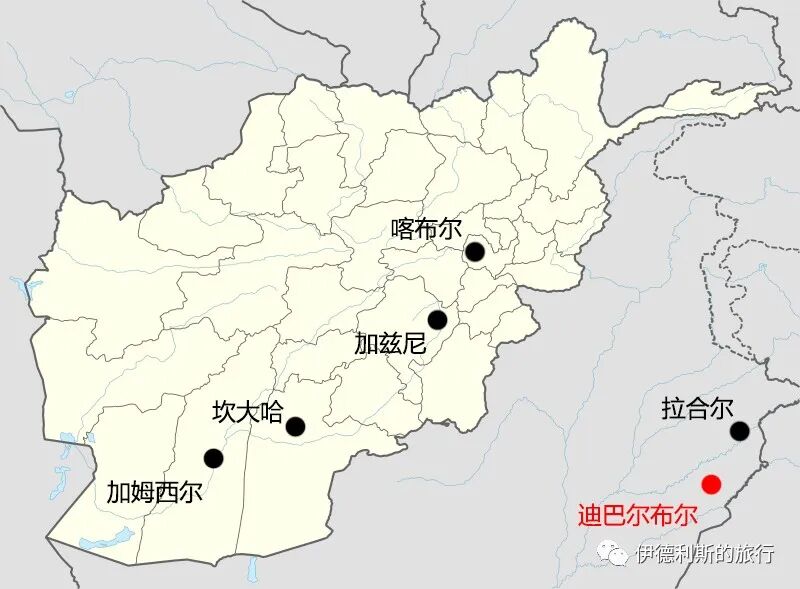
Afghan cities under Mongol rule that were attacked by Ghazi.
2. The Rise of the Tughlaq Dynasty
1. The Death of Alauddin Khalji
In his final years, Sultan Alauddin Khalji grew to distrust his officers and favored only the eunuch slave general Malik Kafur.
In 1315, Alauddin fell seriously ill and appointed Kafur as regent (Na'ib), giving him real power.
Alauddin died on the night of January 4, 1316. The next day, Kafur gathered all the important officials and nobles to read the will, which named Alauddin's 6-year-old son Shihabuddin as the new Sultan, with Kafur as regent.
2. The Fall of the Khalji Dynasty
Kafur was regent for only about a month, during which he constantly persecuted Alauddin's family, upsetting some of Alauddin's former armed guards (paiks). Led by Mubashshir, the guards beheaded Kafur. They released Alauddin's older son Mubarak Shah, who had been imprisoned by Kafur, and named him the new regent.
On April 14, 1316, Mubarak Shah deposed his younger brother to become the new Sultan, taking the title Qutubuddin.
Mubarak Shah was bisexual and had same-sex relationships with the brothers Hasan and Husamuddin. Hasan and Husamuddin were brought to the Delhi Sultanate court as Hindu slaves in 1305. To survive, the brothers converted to Islam and served Mubarak Shah.
The relationship between Mubarak Shah and Hasan was no secret. They hugged and kissed in public, and Mubarak Shah gave Hasan the title Khusrau Khan.
In 1320, Mubarak Shah was killed by Khusrau Khan, ending the Khalji dynasty of the Delhi Sultanate.
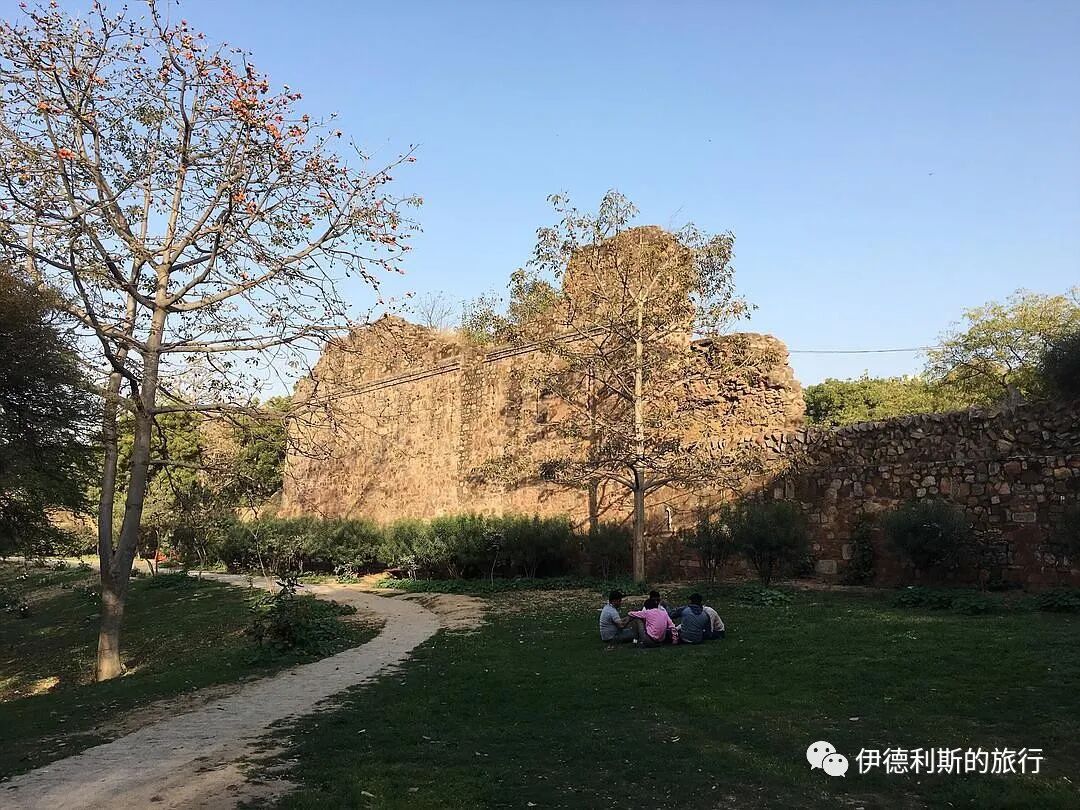
Siri, the capital of the Delhi Sultanate's Khalji dynasty.
3. The Founding of the Tughlaq Dynasty
After Mubarak Shah was killed by Khusrau Khan, Khusrau Khan returned to his Hindu identity, which caused great dissatisfaction among Muslim officers and nobles. These officers and nobles supported Ghazi, the Punjab military commander who held a large army, to attack Khusrau Khan.
After Alauddin died, Ghazi gained military control over the Multan and Sindh regions. After receiving invitations from the Muslim officers and nobles, he and his son Fakhr Malik gathered a large army in Multan and Sindh and marched toward Delhi.
In September 1320, Ghazi defeated Khusrau Khan west of Siri in Delhi and established the Tughlaq dynasty, the third dynasty of the Delhi Sultanate. Ghazi received the title Ghiyath al-Din Tughluq, and his son received the title Muhammad Shah Tughluq.
3. Building the City of Tughlaqabad
After establishing the Tughlaq dynasty, Ghazi began building Tughlaqabad Fort in 1321. The massive 6.5-kilometer-long city was completed in just two years.
1. Legends of the Fortress Construction
There is a famous legend about the construction of Tughlaqabad Fort. Once, while walking with the last Sultan of the Khalji dynasty, Mubarak Shah, Ghazi suggested that the Sultan build a stronger fortress in Delhi. The Sultan joked that if you ever become Sultan, you can build the fortress yourself. As it turned out, his words came true.
2. The Curse of the Sufi Saint
Ghazi dreamed of building a fortress so strong that it could withstand the fiercest attacks from the Mongol army. However, fate did not go as he wished.
Ghazi was passionate about his fortress and ordered all laborers in Delhi to help build it. At the time, the famous Sufi saint Nizamuddin Auliya was building a water tank (baoli), and his laborers were forced to go build the fortress instead. But these people preferred to work for the saint, so they built the fortress for Ghazi during the day and the water tank for Nizamuddin at night. When Ghazi found out, he was very angry and forbade the laborers from working for Nizamuddin. Nizamuddin issued a curse: 'Ya rahey ujjar, ya basey gujjar'. It roughly means 'Either it will remain desolate, or it will be inhabited by the Gujjar people.' "
After the sultanate fell, the nomadic Gujjar people (gujjar) took over the castle, and it turned into a wilderness.
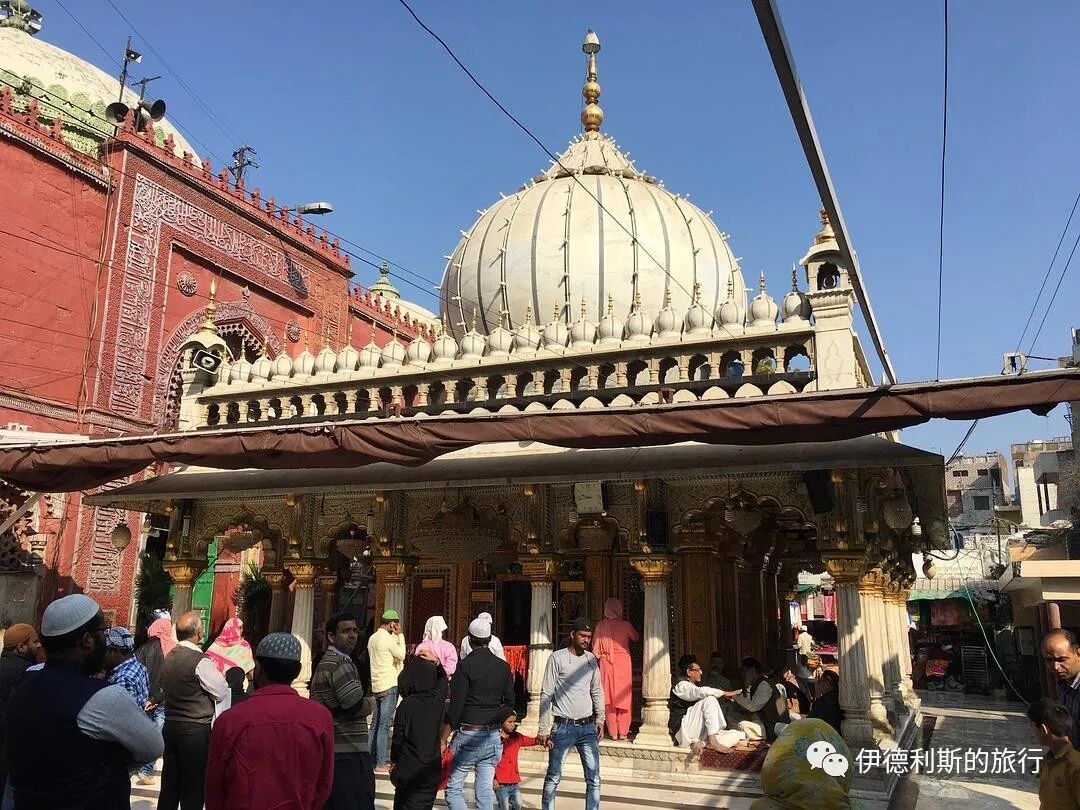
Nizamuddin Dargah in Delhi
4. Tughlaqabad Fortress
1. City Layout
The entire city is divided into three parts:
The largest part is the residential area in the north. Old photos from the 1940s show streets and the ruins of the Friday mosque (Juma Masjid), but they are hard to recognize now.
The southwest side is the palace area, where the buildings have collapsed significantly, though there is one well-preserved water well.
The southeast side is the smallest but most interesting part, the fortress area, which has many architectural ruins like houses, storage rooms, and a mosque.
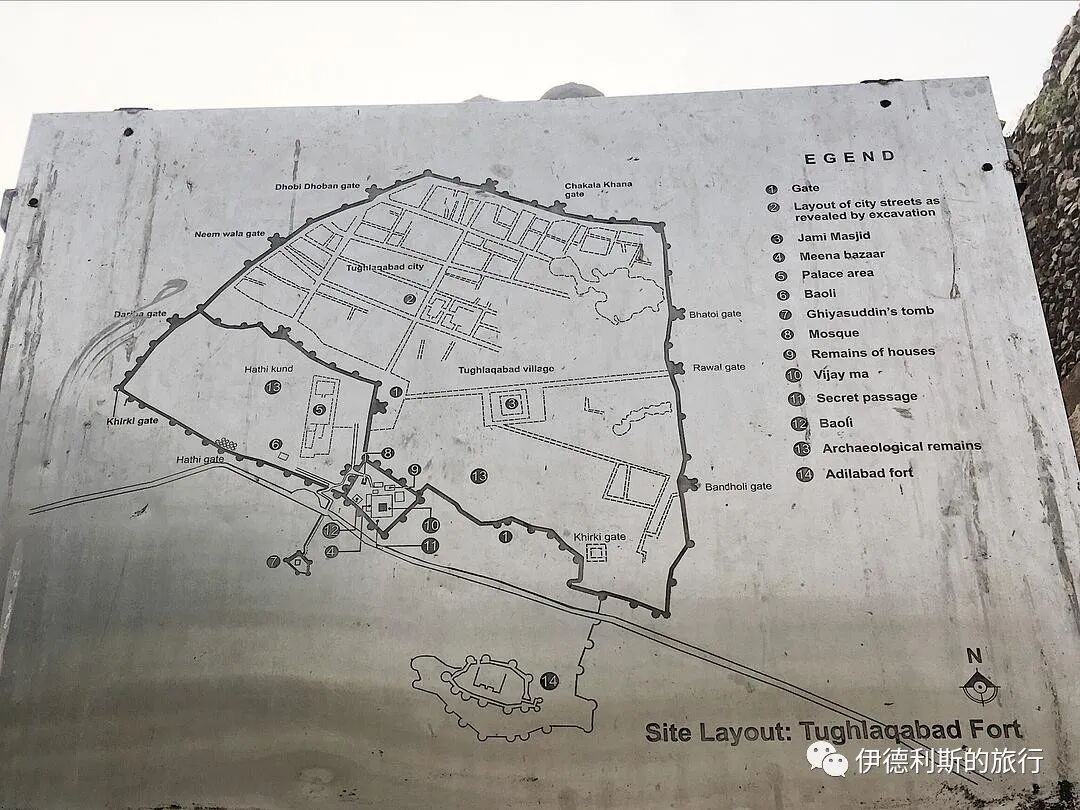
The blue line shows the existing city walls.
2. The City Walls
Tughlaqabad City features the sloped rubble walls typical of the Tughlaq dynasty. The walls are 10 to 15 meters high and reinforced by two-story circular bastions. The city is said to have had as many as 52 gates, but only 13 remain today.
The southeast corner tower of the fortress area wall
The south city wall
The inside of the south city wall
The picture below shows the view from the northwest corner tower of the fortress area looking toward the east wall of the palace area.
In the picture below, the lower wall is the east wall of the palace area, and the higher one is the west wall of the fortress area.
Standing on the fortress area wall looking west toward the palace area wall.
The east wall of the palace area
The west wall of the fortress area
The collapsed west gate of the fortress area
The interior of the high platform on the west wall of the fortress area
3. The Palace District
The palace ruins of Tughlaqabad City have collapsed badly, so you can only imagine their former glory.
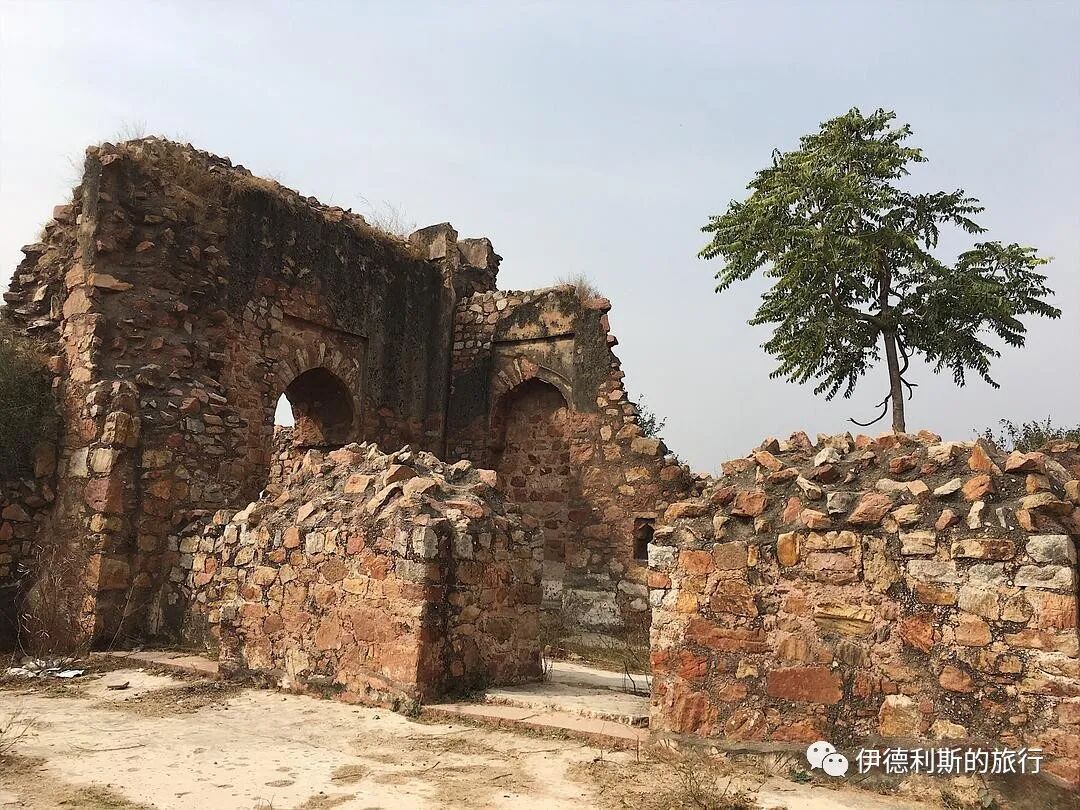
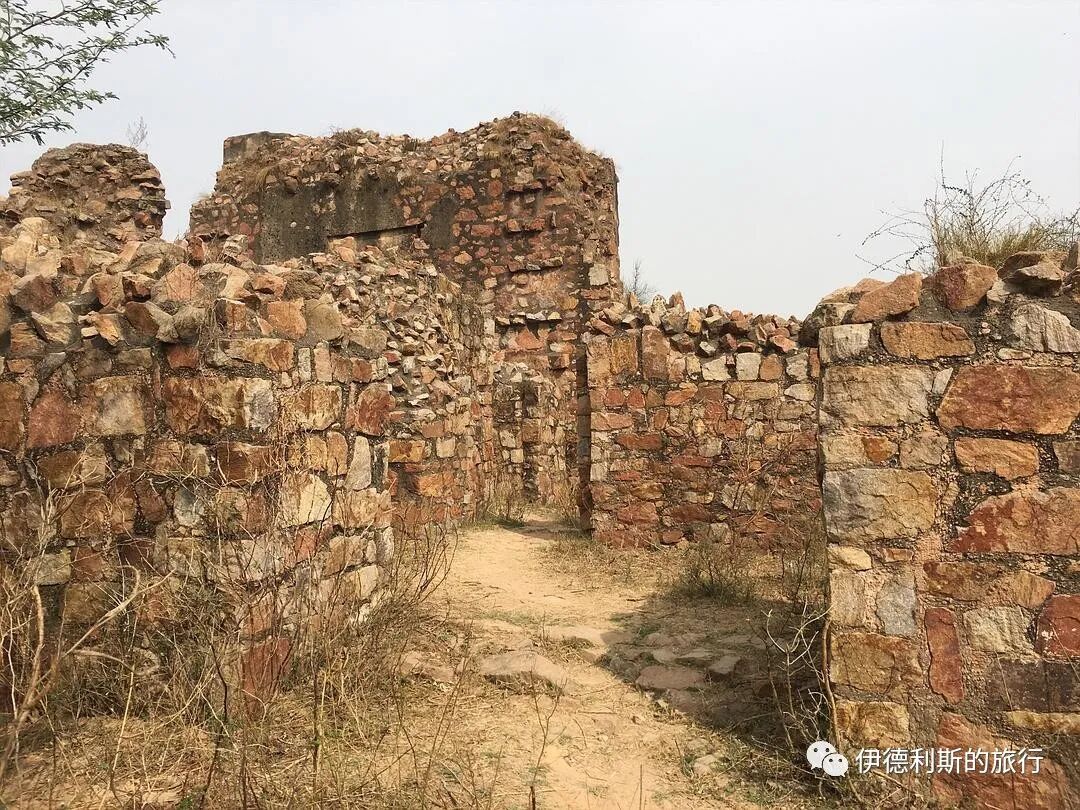
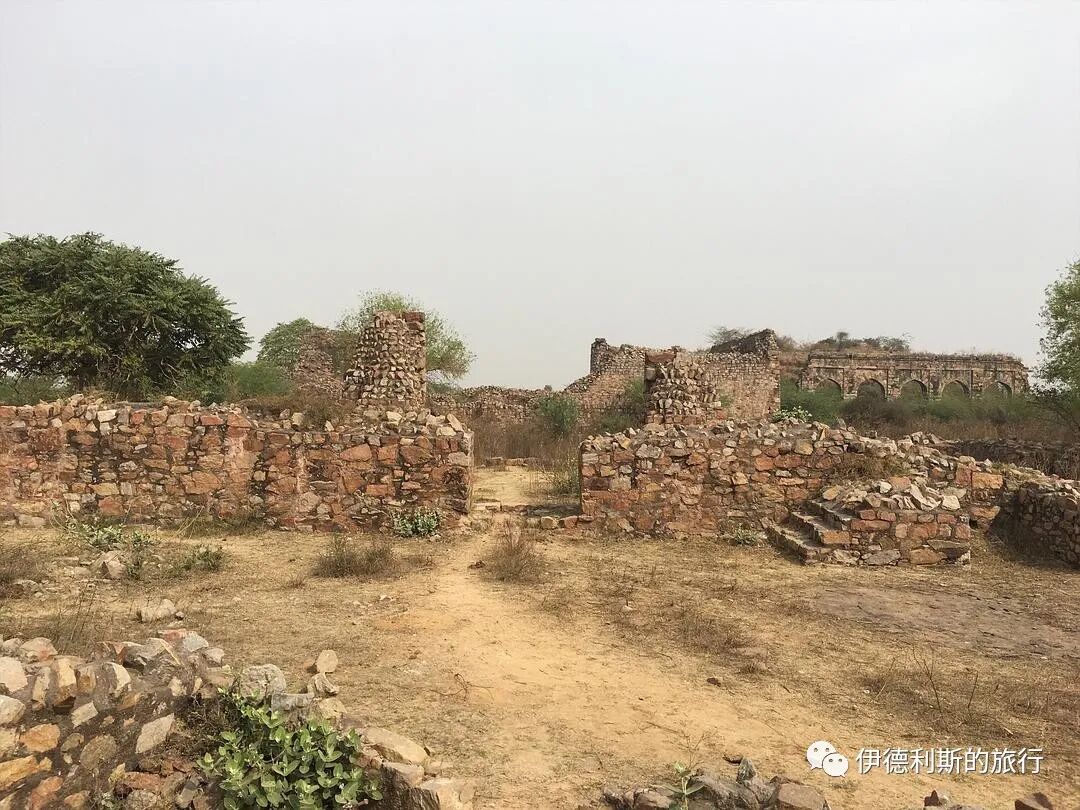
West of the palace is a water tank (baoli) that provided water for the castle.
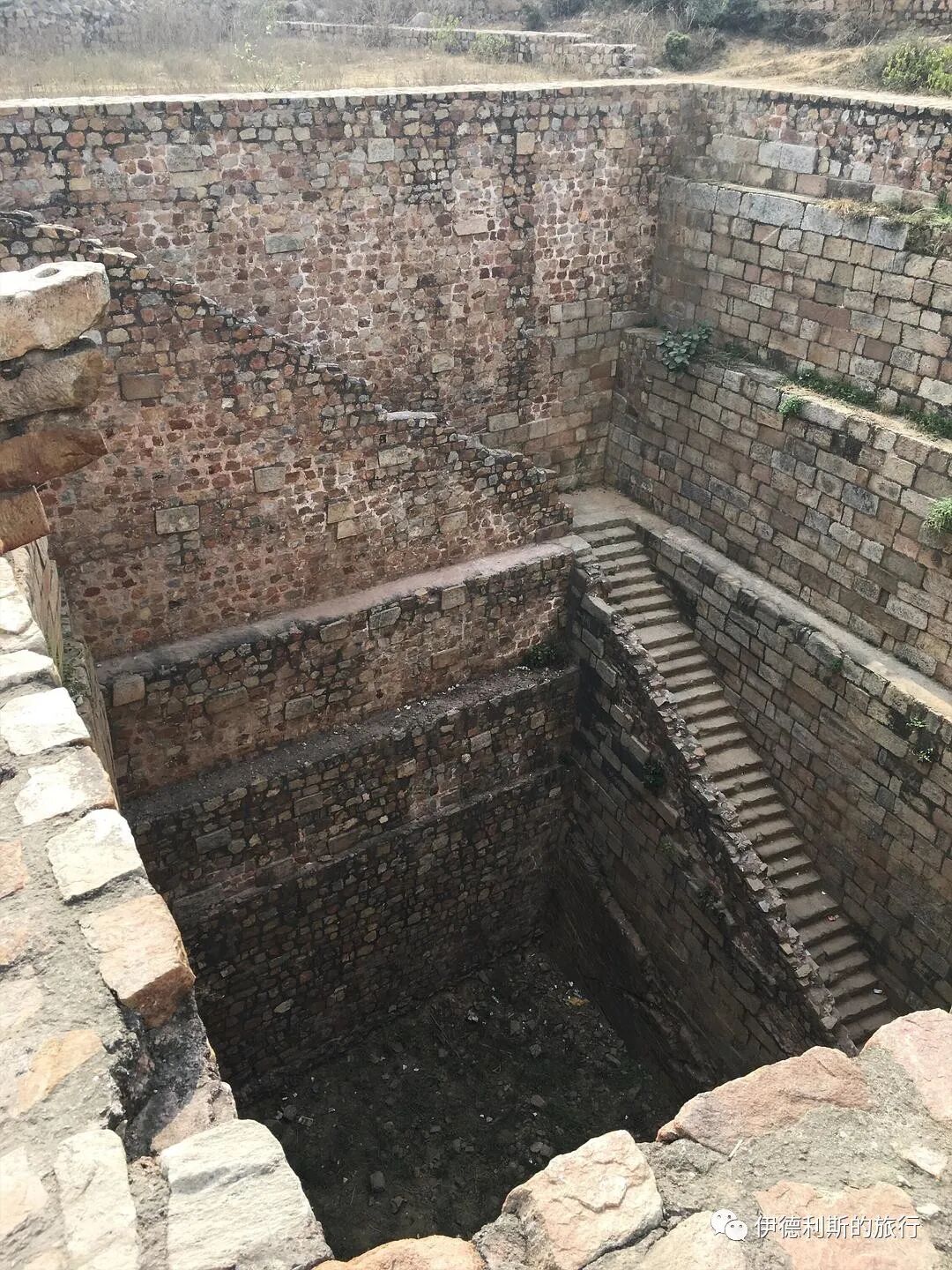
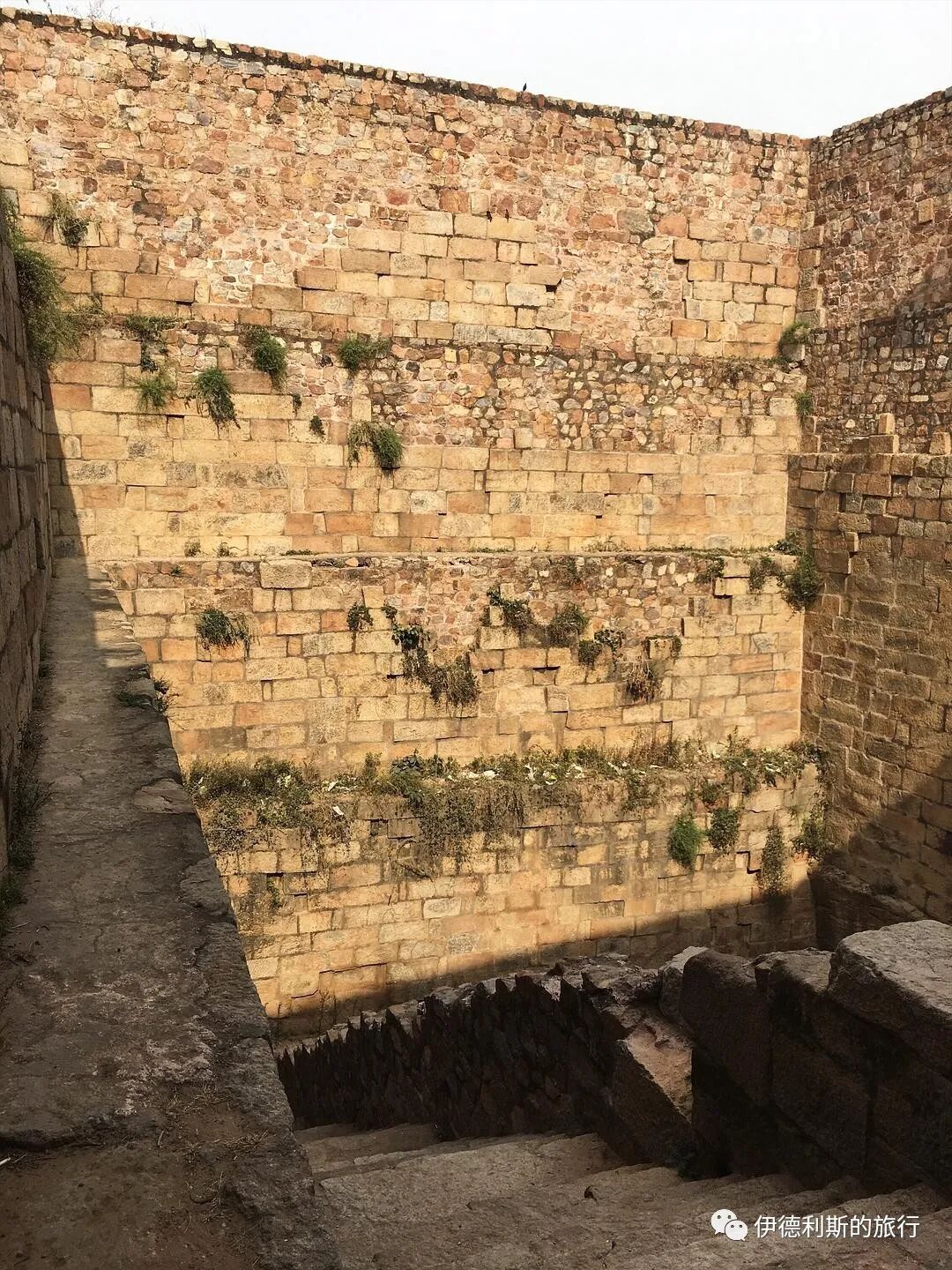
4. The Citadel Area
The fortress area is the part of the city with the richest ruins.
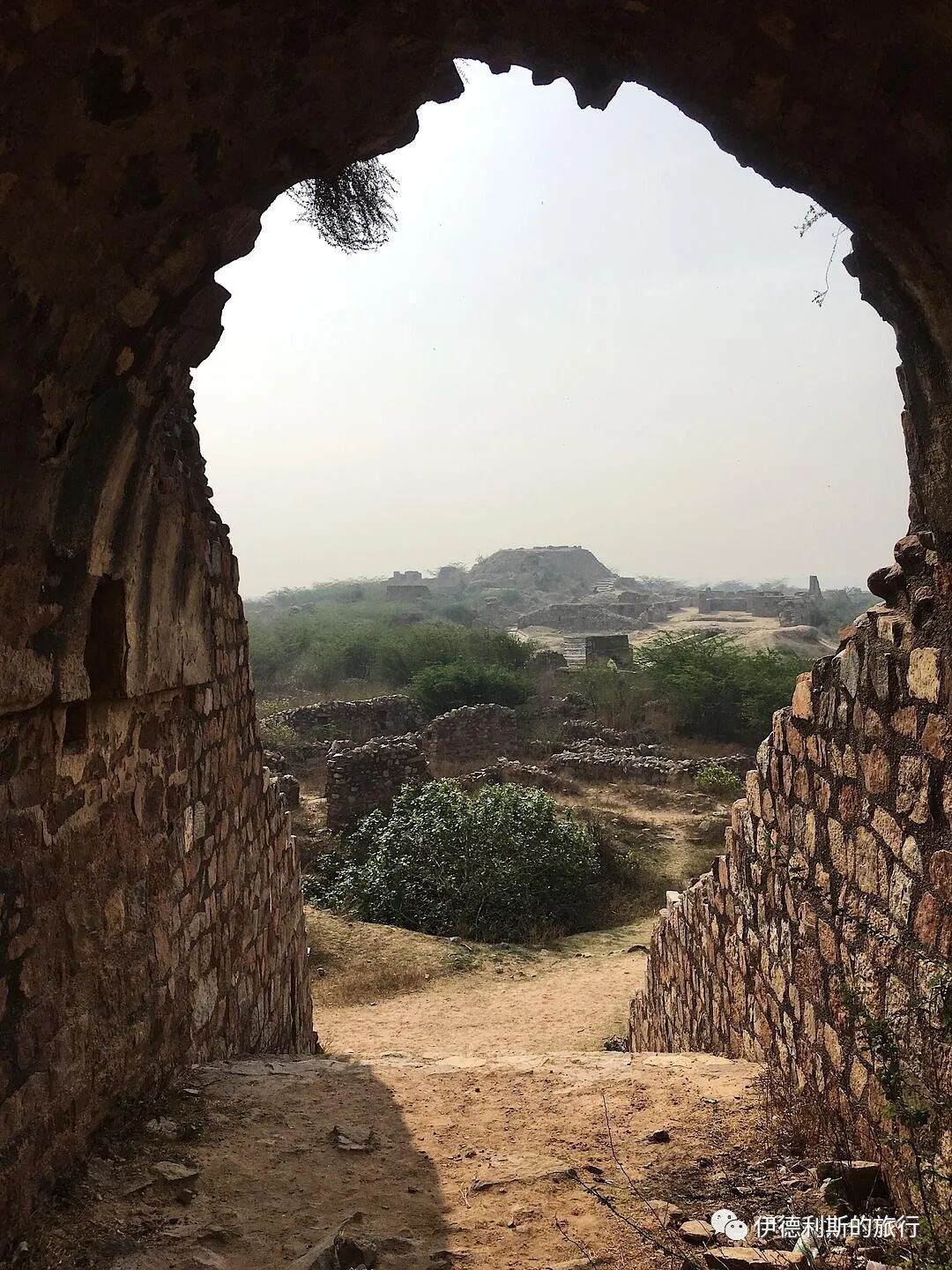
Looking down at the entire fortress area:
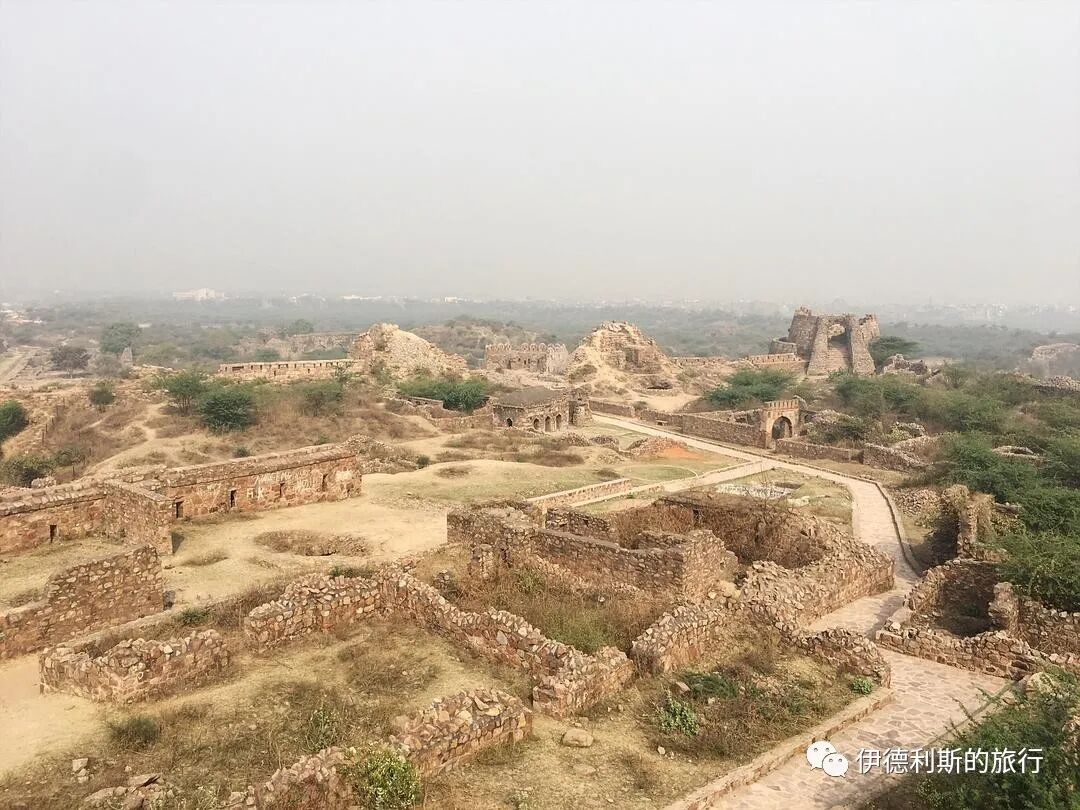
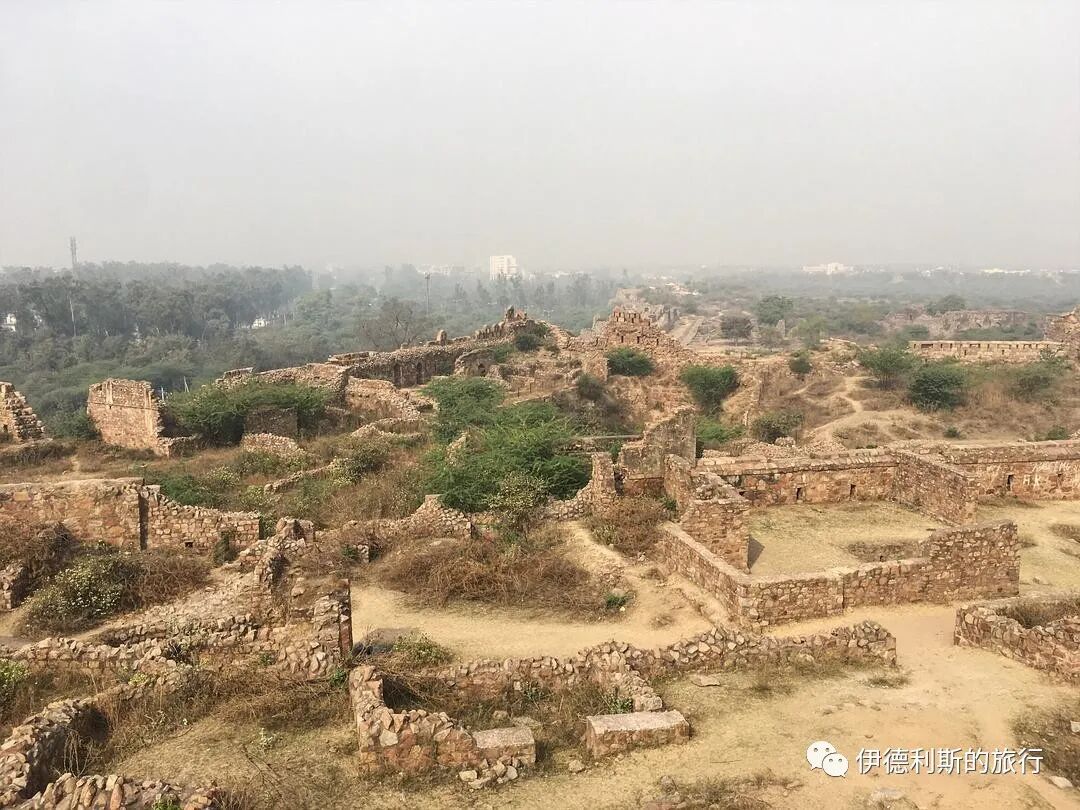
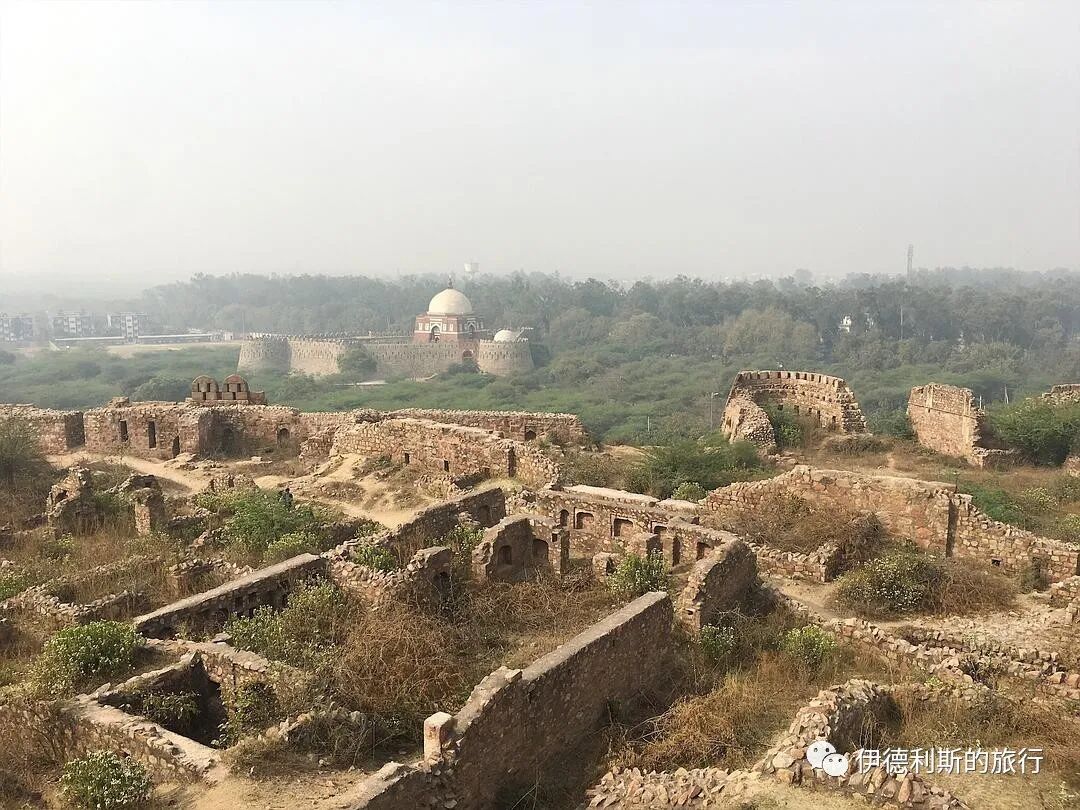
A small mosque in the fortress area
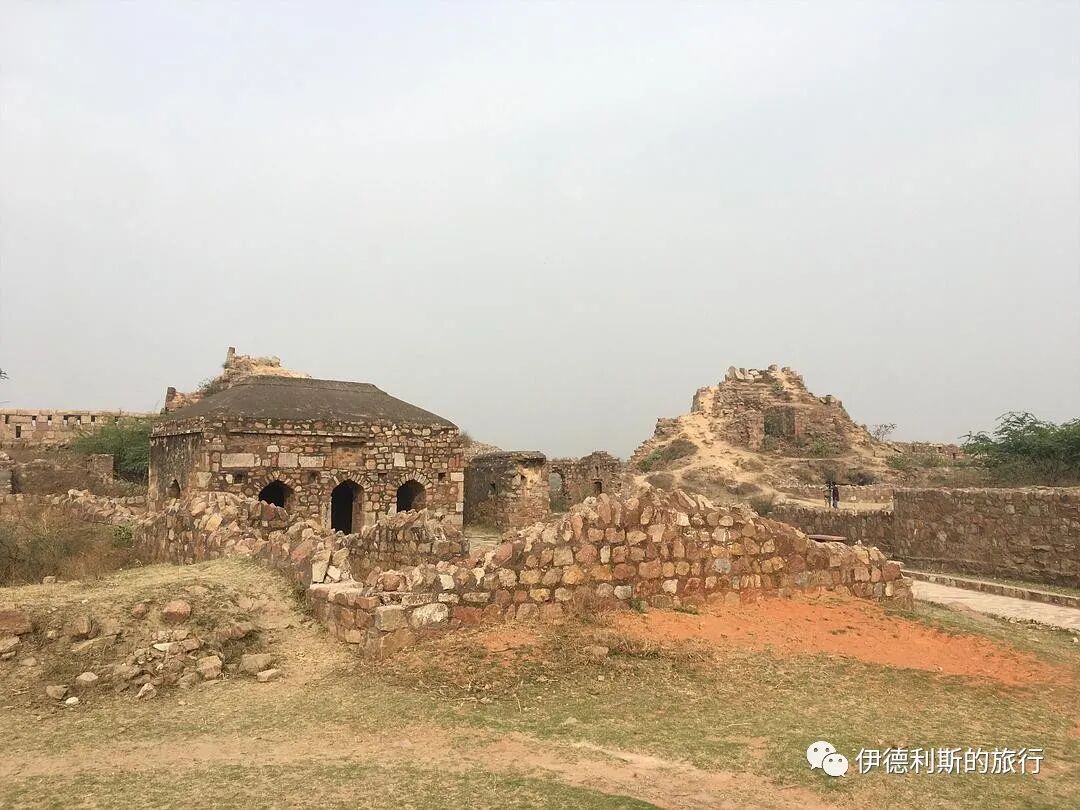
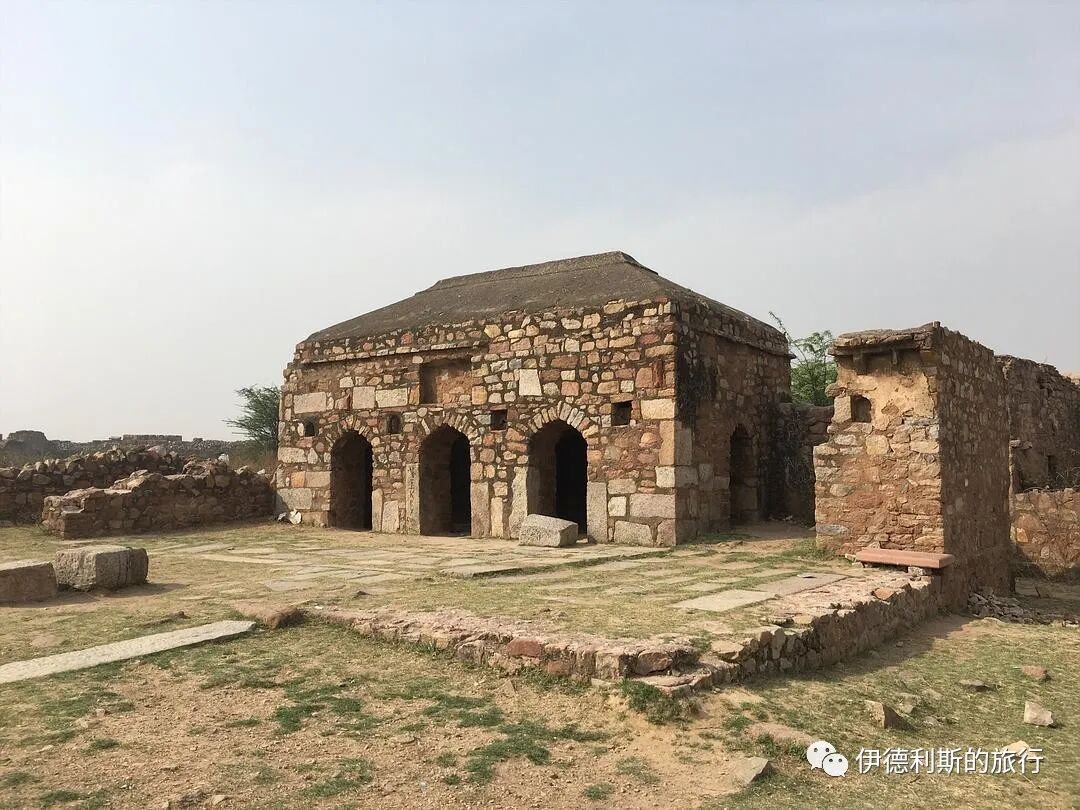
The mihrab that indicates the direction of Mecca
The fortress area has a classic underground storage room:
The north entrance of the storage room
The south entrance of the storage room
The passage of the storage room, with individual warehouses on both sides.
There are also some residential ruins inside the fortress area.
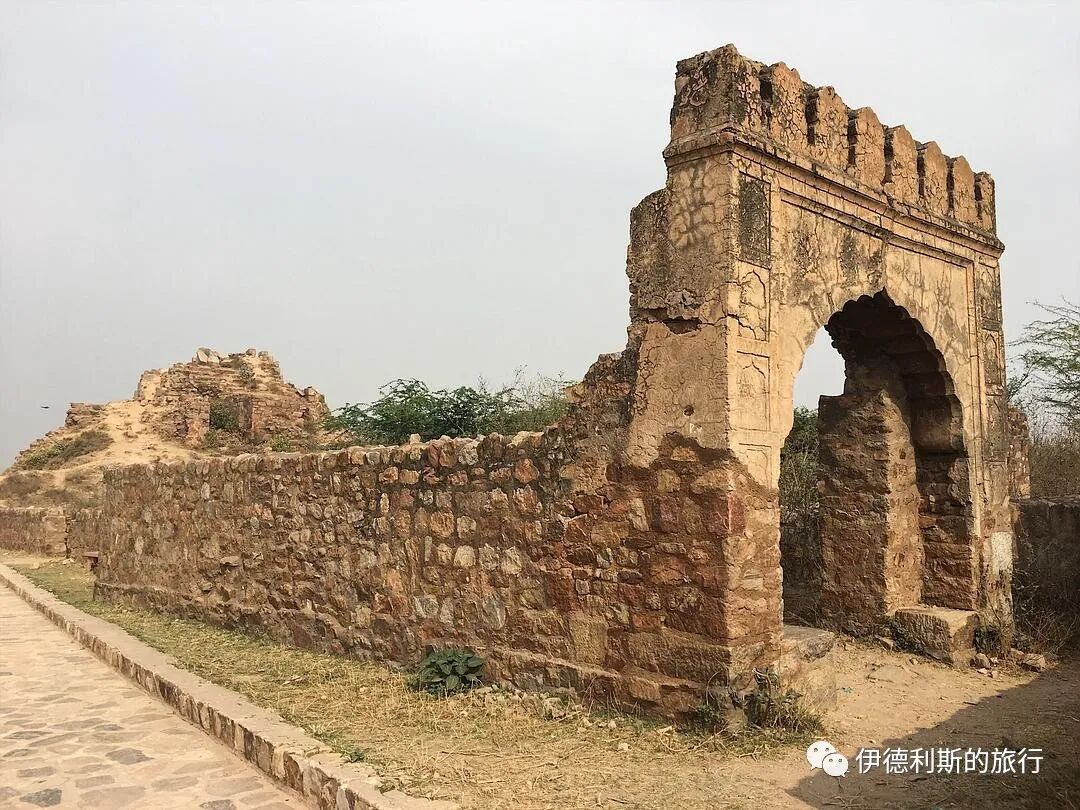
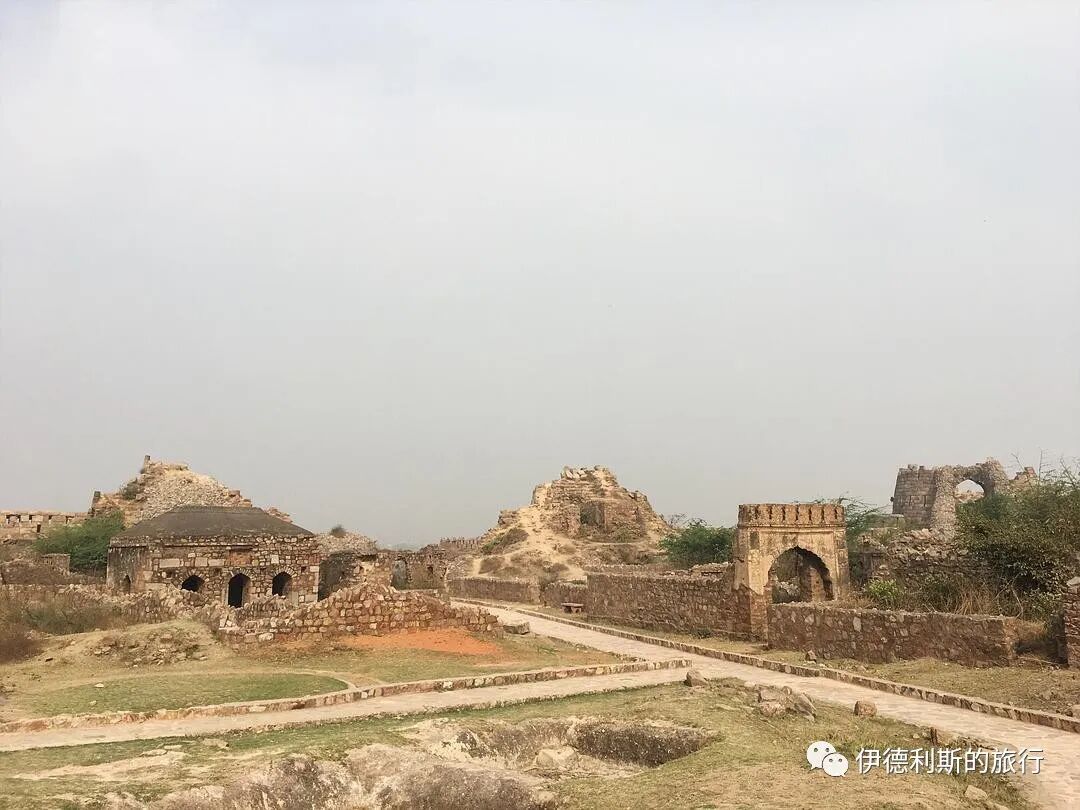
5. The Tomb of Ghiyath al-Din Tughluq
I mentioned earlier the curse that the Sufi saint Nizamuddin placed on Ghiyas-ud-din. Another famous curse is "Hunuz Dilli dur ast". It means "Delhi is still far away." "
In 1324, Ghazi led an expedition to Bengal and succeeded. On the way back in February 1325, a wooden pavilion collapsed, crushing Ghazi and his second son, Mahmud Khan, to death. The famous 14th-century Moroccan traveler Ibn Battuta believed that his eldest son, Muhammad bin Tughluq, killed his father.
After Ghazi died, his eldest son Muhammad succeeded him as Sultan and buried Ghazi in a tomb south of the city of Tughlaqabad.
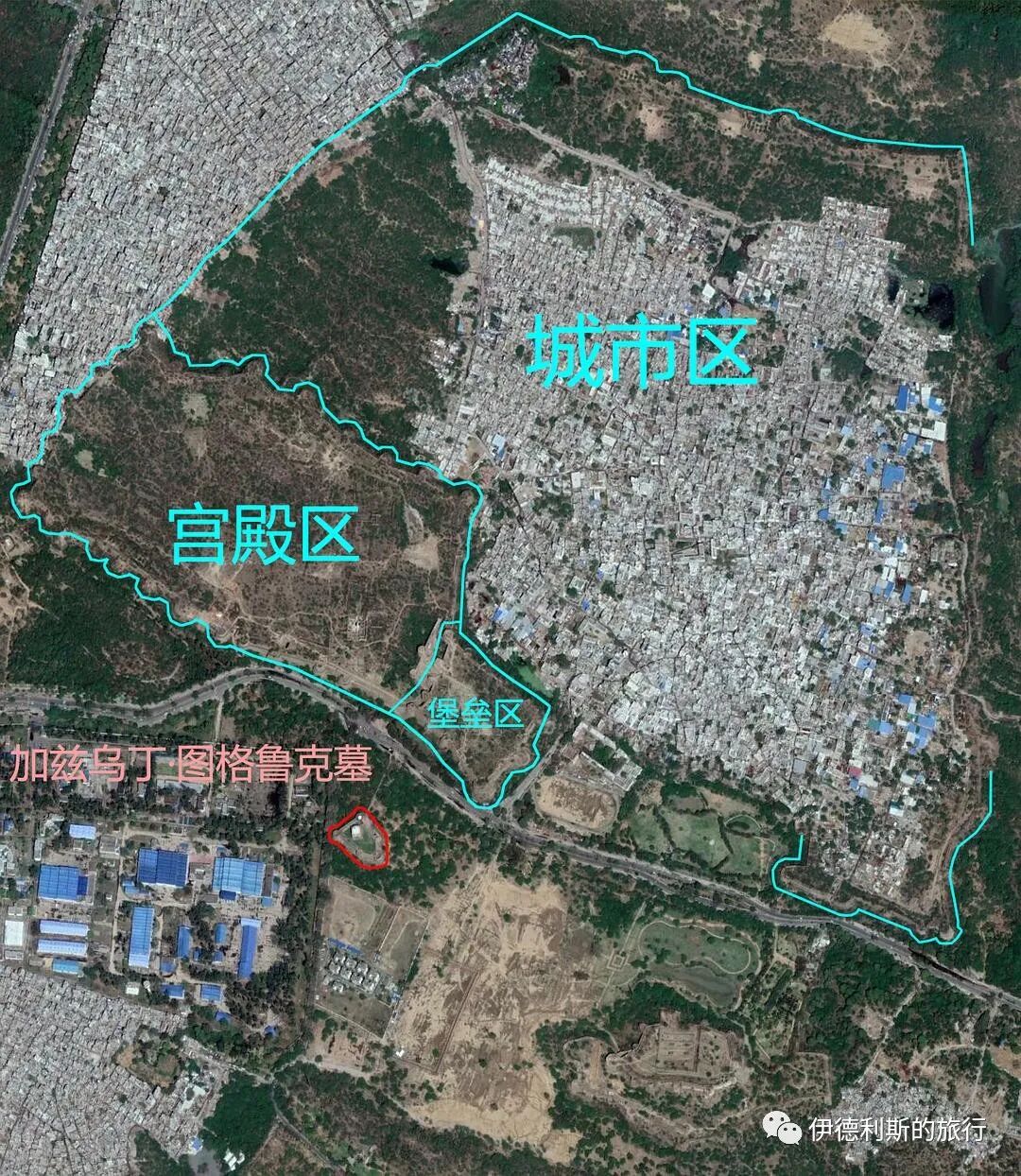
The Mausoleum of Ghiyas ud-Din Tughluq connects to the city of Tughlaqabad to the north via a causeway. This 182-meter causeway has 27 arches, and there used to be an artificial lake underneath. The lake has now been filled in to become flat land, and the middle of the causeway is split in two by a road.
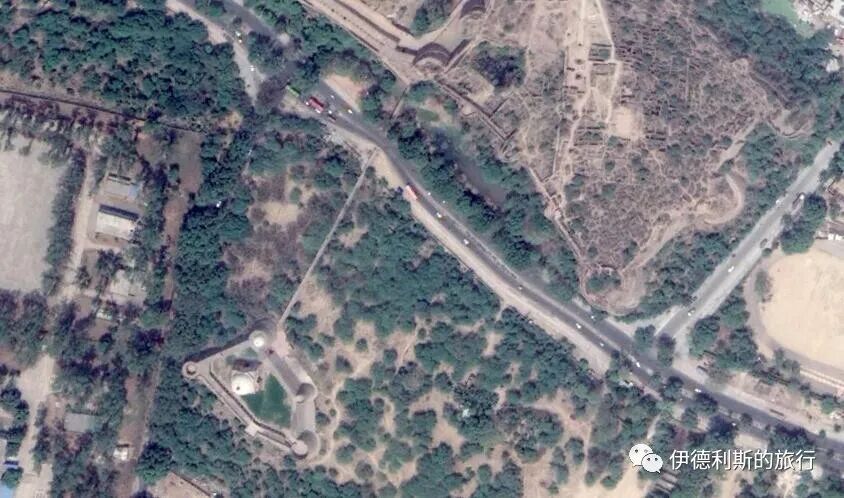
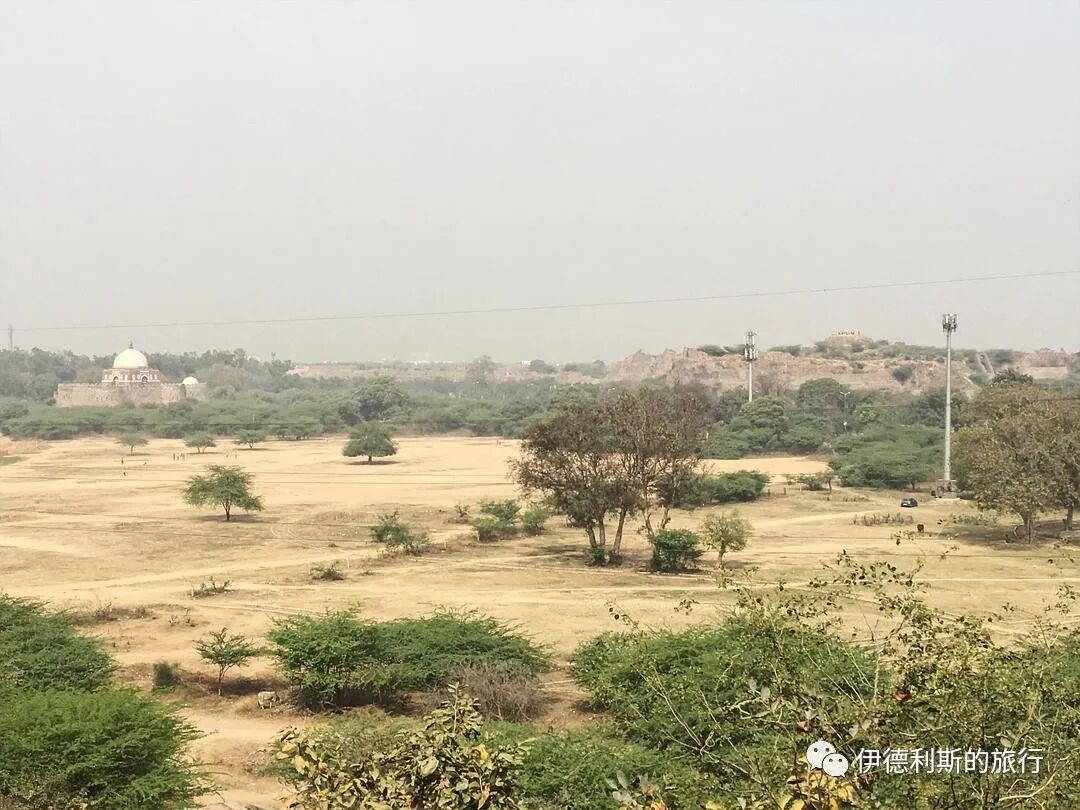
Ghazi's tomb sits atop a granite fortress. The tomb has a square dome and is built of red sandstone, inlaid with white marble slabs.
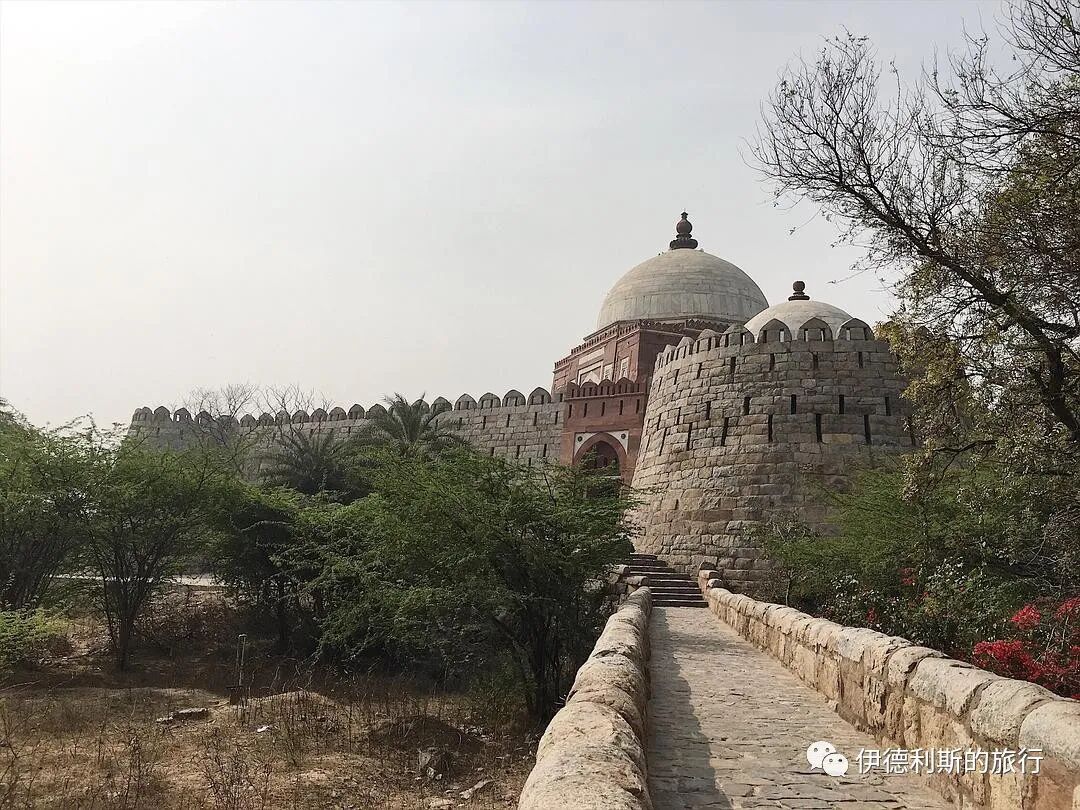
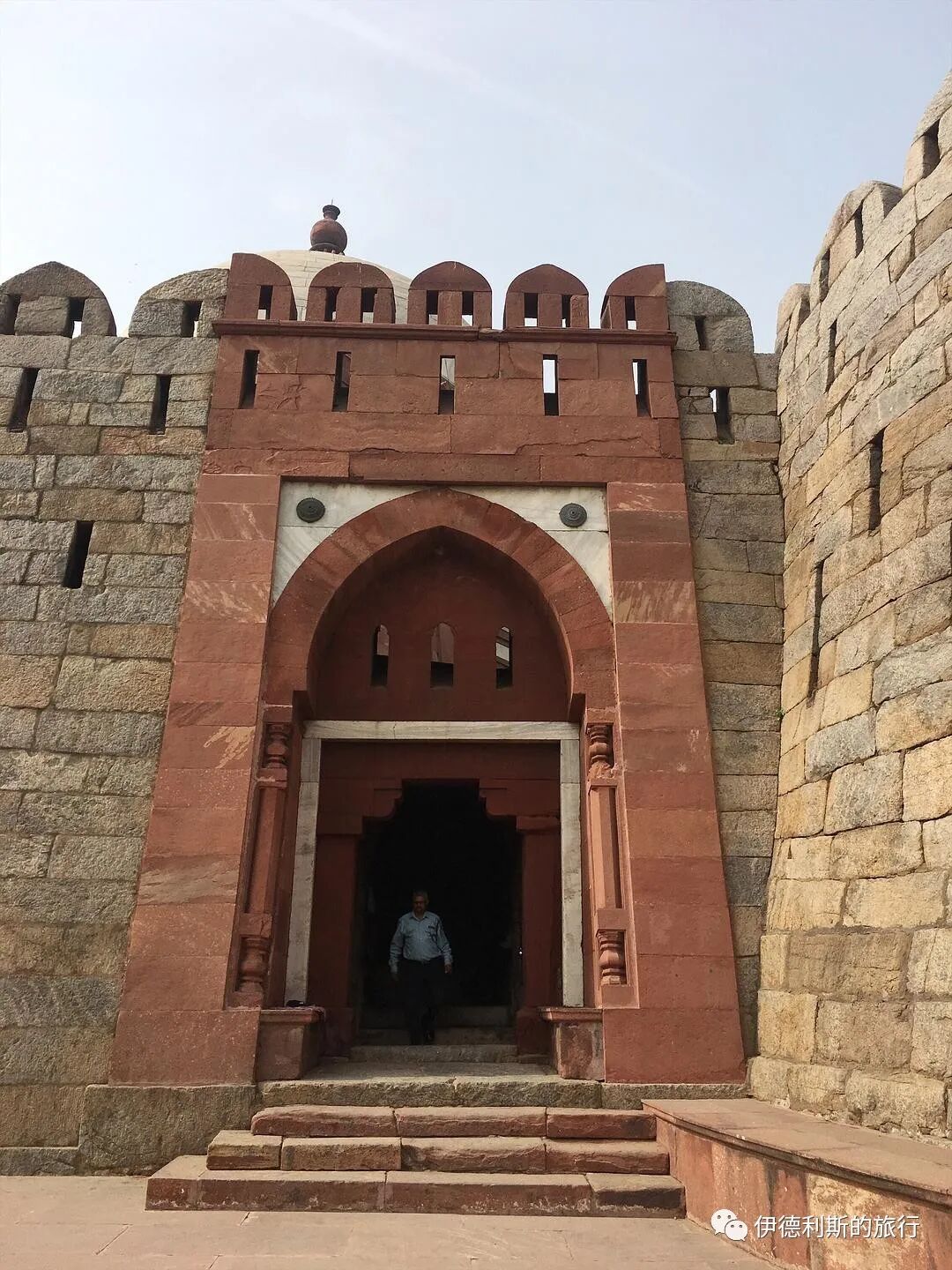
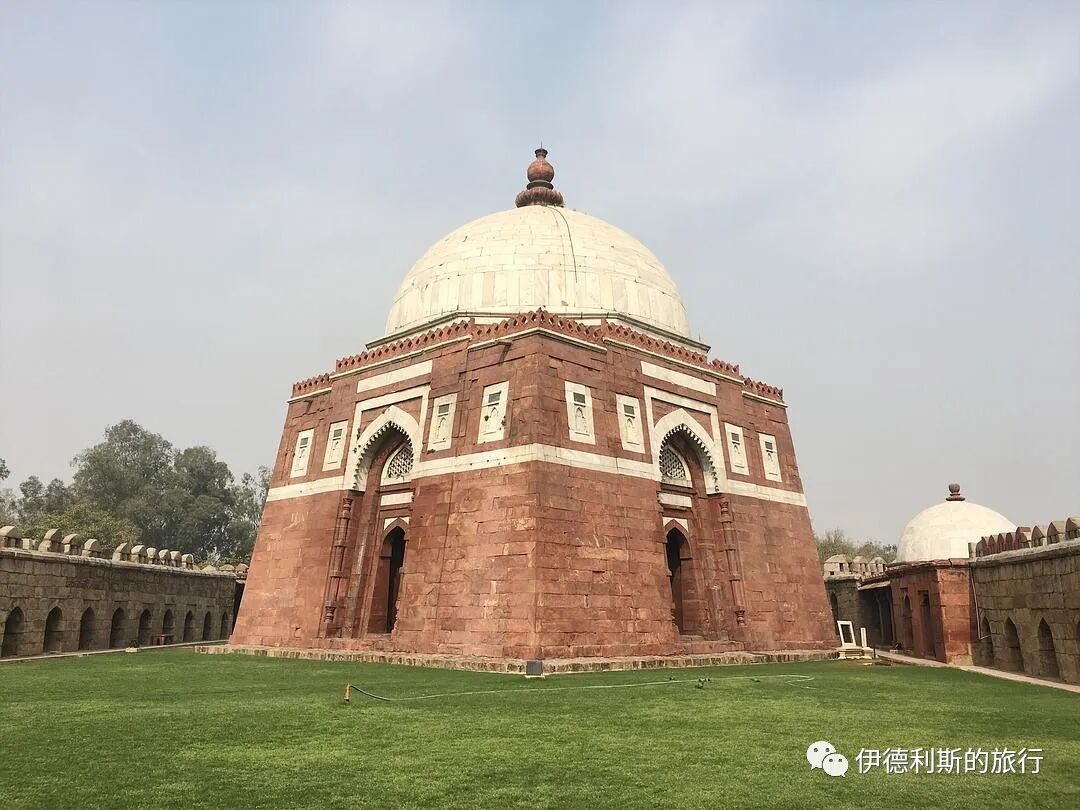
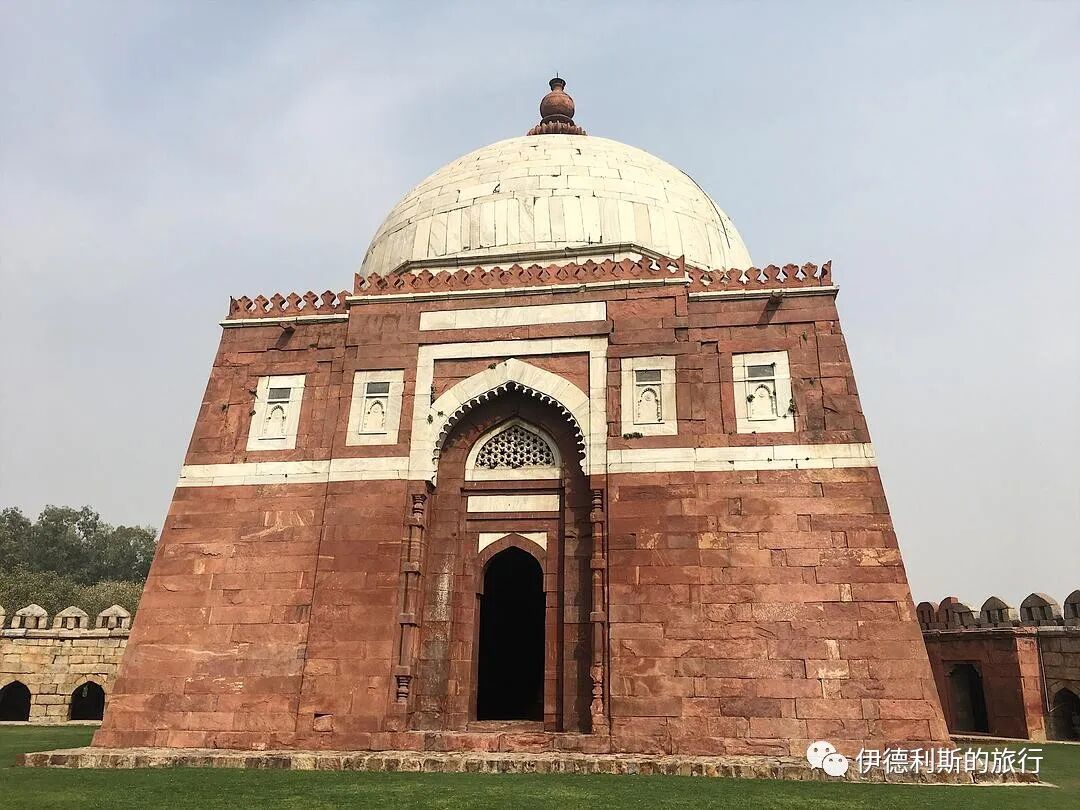
Inside the tomb are three grave markers; the middle one belongs to Ghazi himself, and the other two belong to his wife and his son Muhammad.
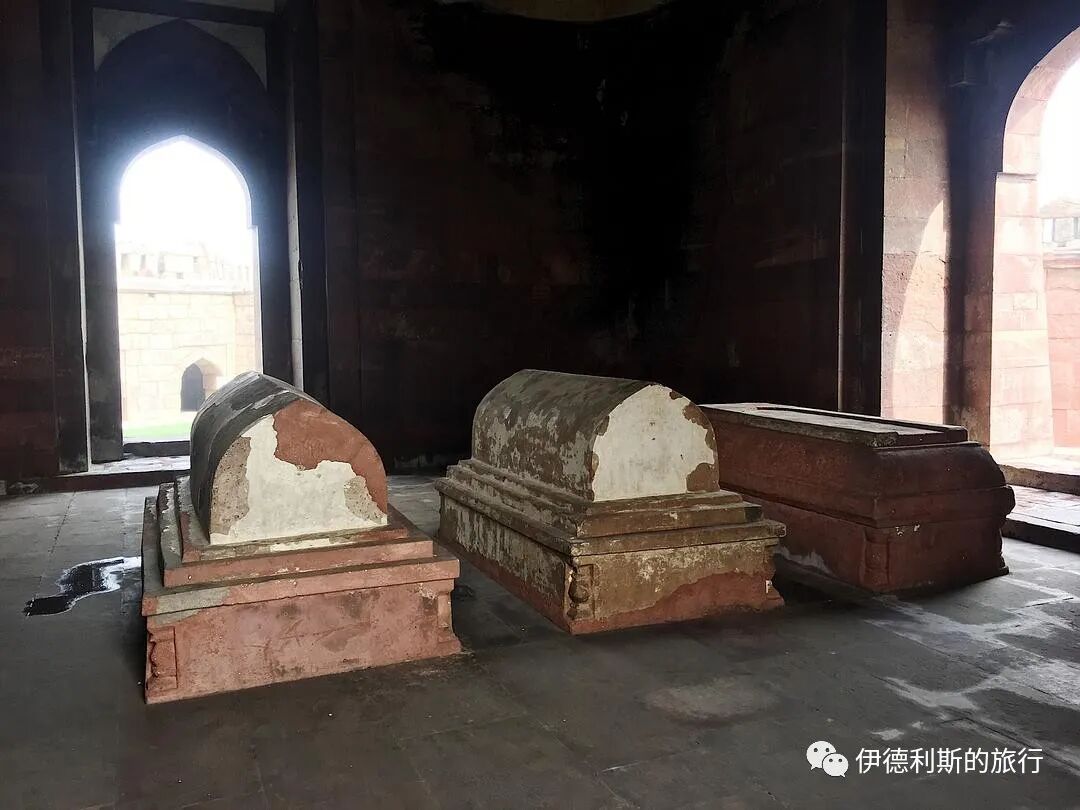
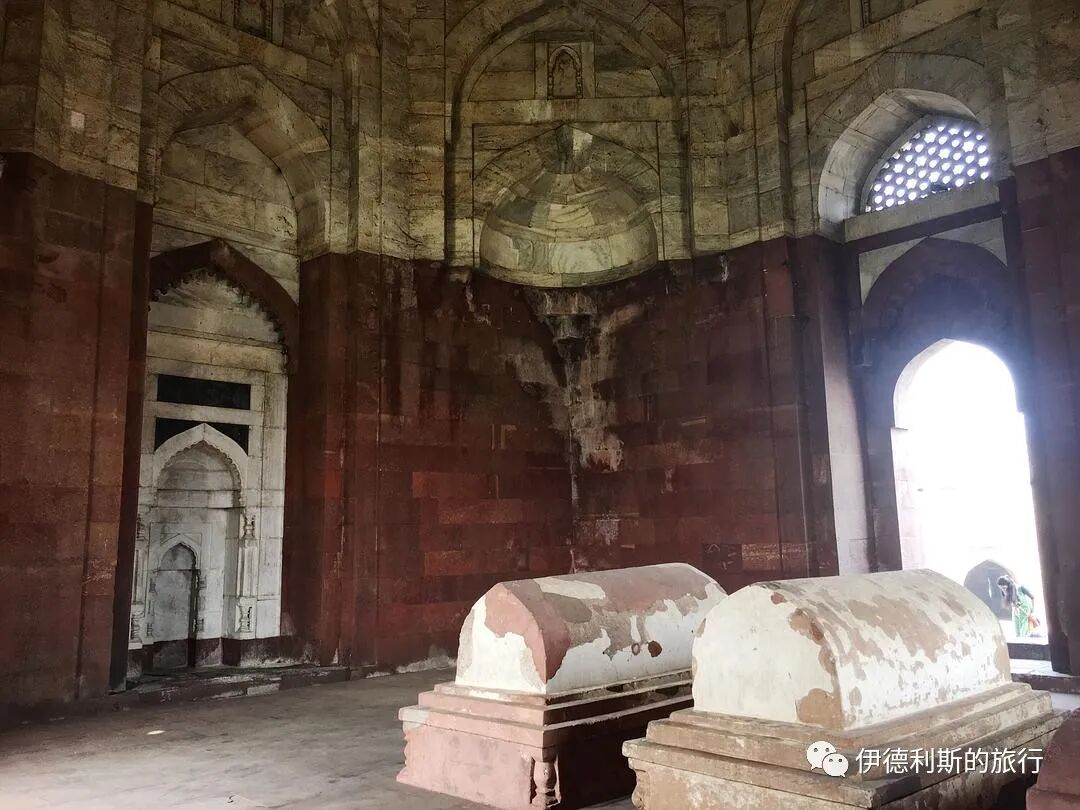
Dome
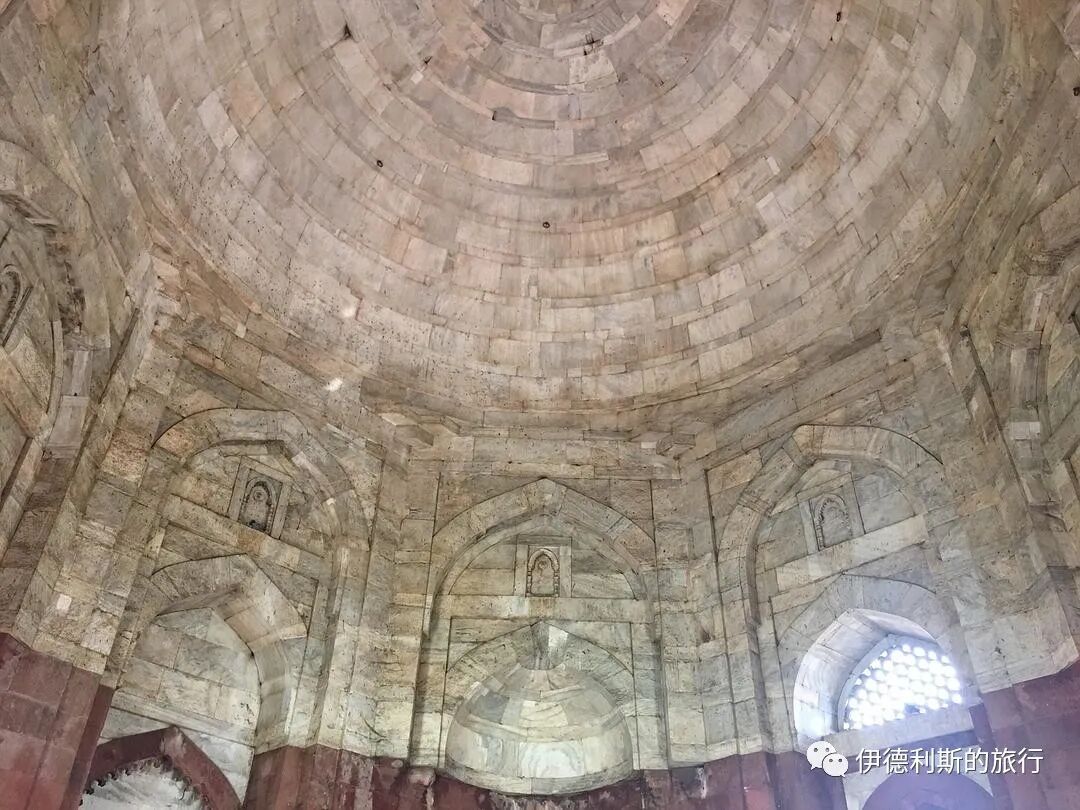
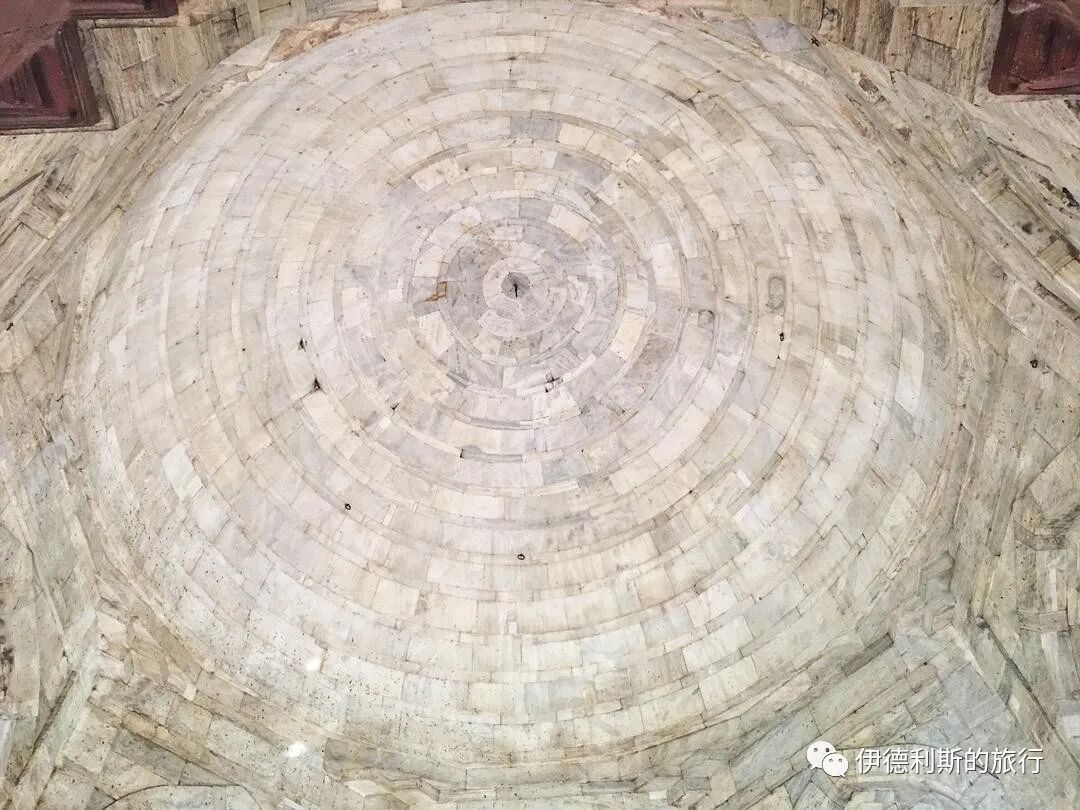
Fortress corridors and architectural pieces on the ground
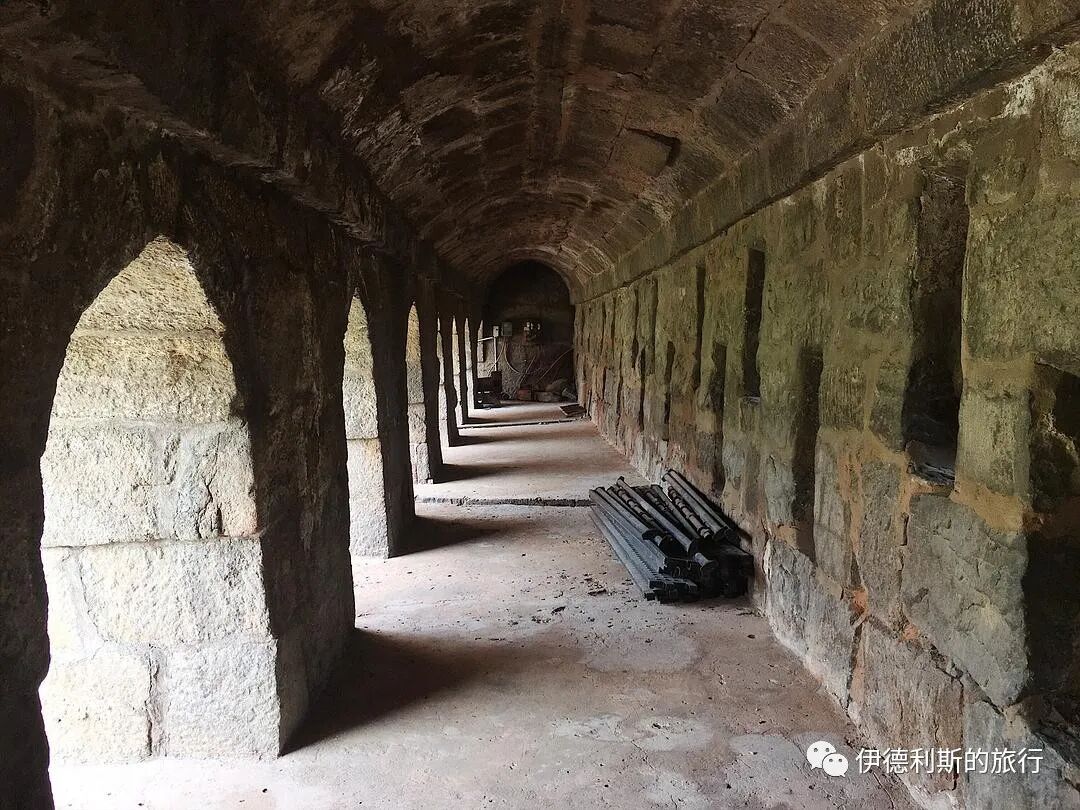
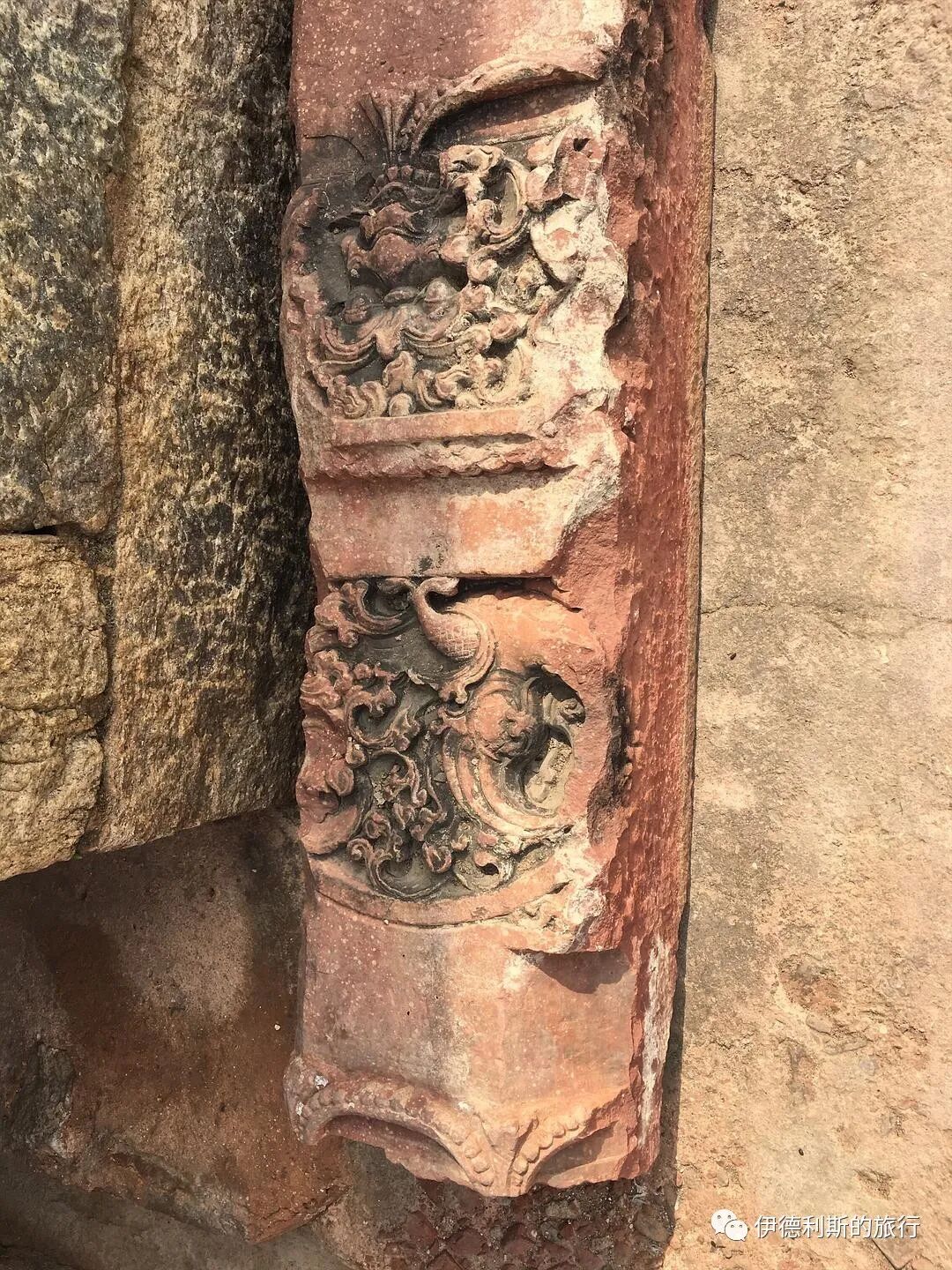
In the northwest corner of the fortress, there is another tomb containing an octagonal burial chamber. According to the stone inscription on the south gate, this tomb belongs to Zafar Khan.
Zafar Khan was a general of the Khalji dynasty of the Delhi Sultanate, and he died in 1299 during a decisive battle between the Mongol army of the Chagatai Khanate and the Delhi Sultanate on the outskirts of Delhi.
One theory is that Zafar Khan's tomb was already built on the current site before this, and Ghazi incorporated it into the fortress when building his own tomb. Another theory is that Zafar Khan's tomb was intentionally built by Ghazi next to his own.
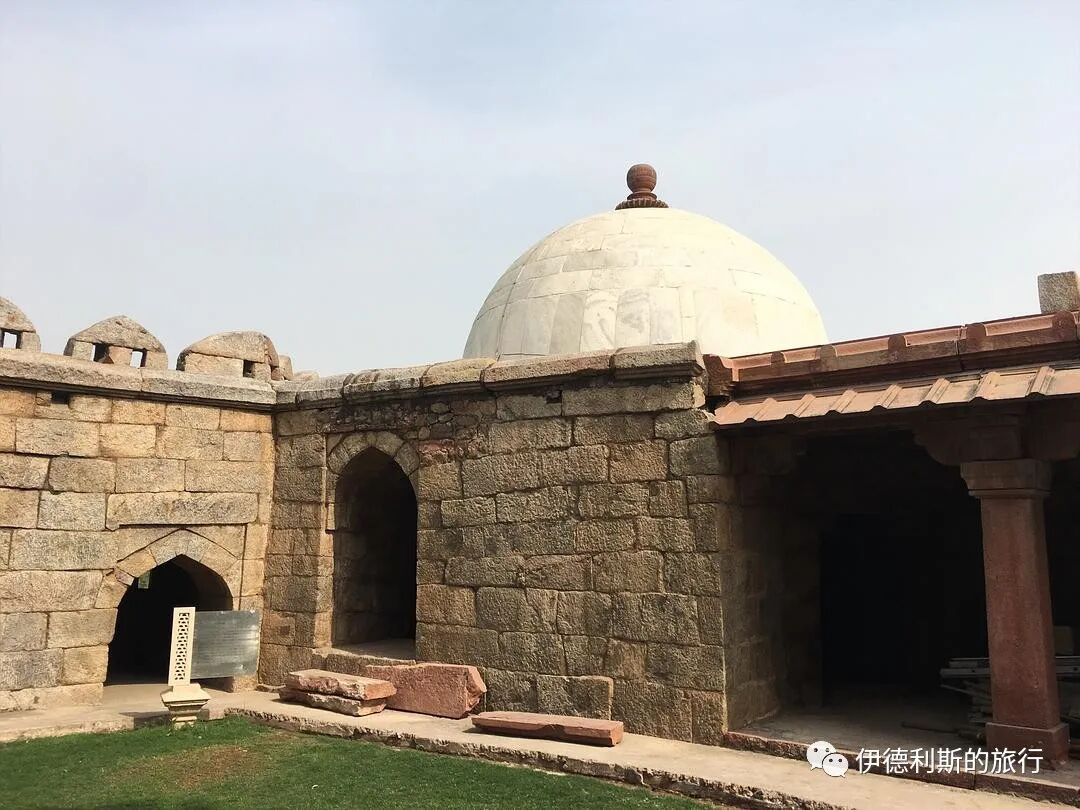
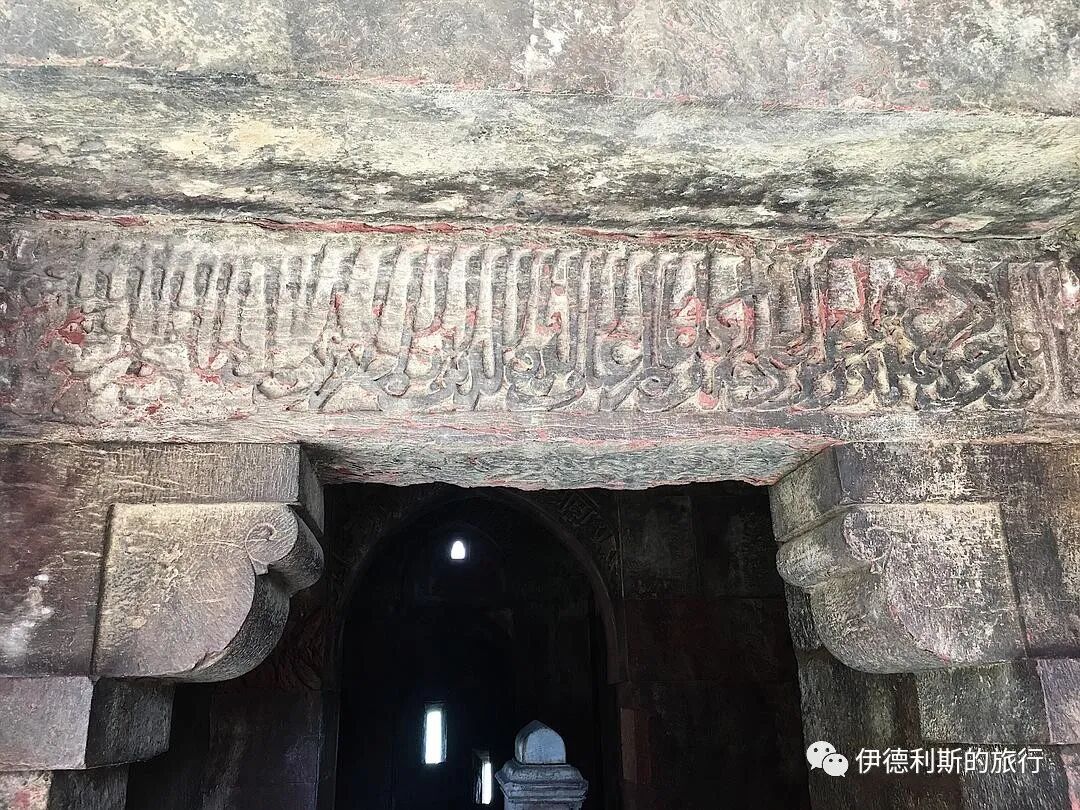
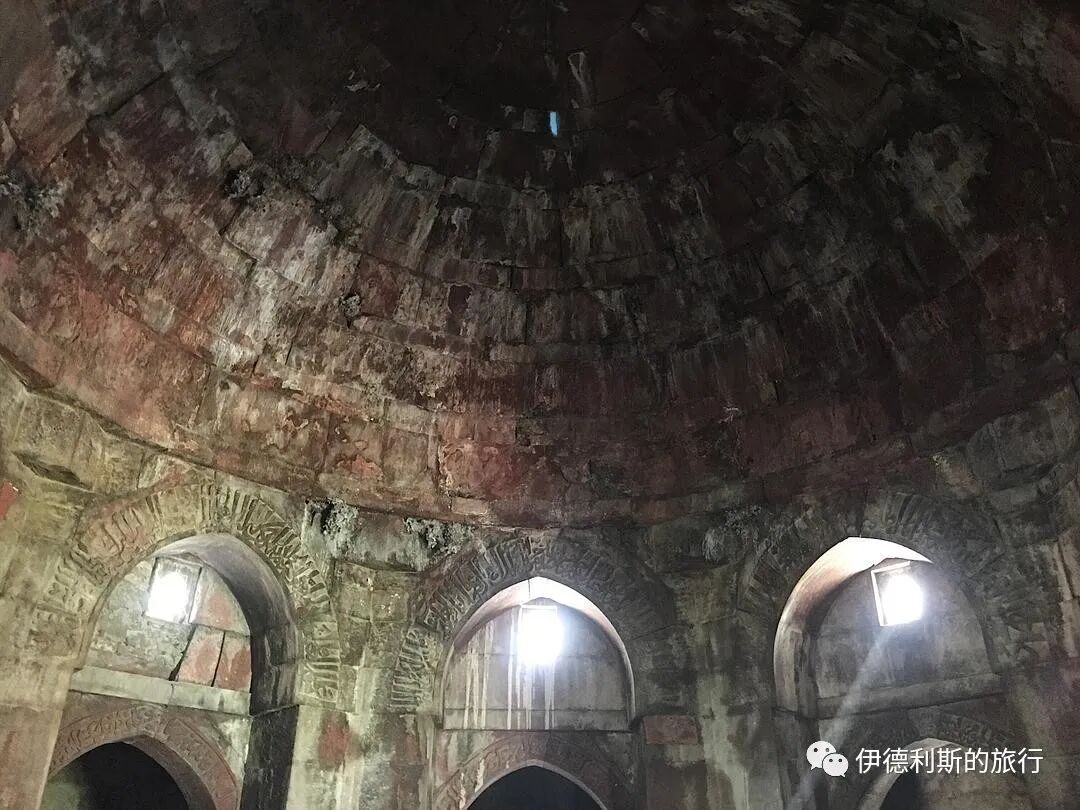
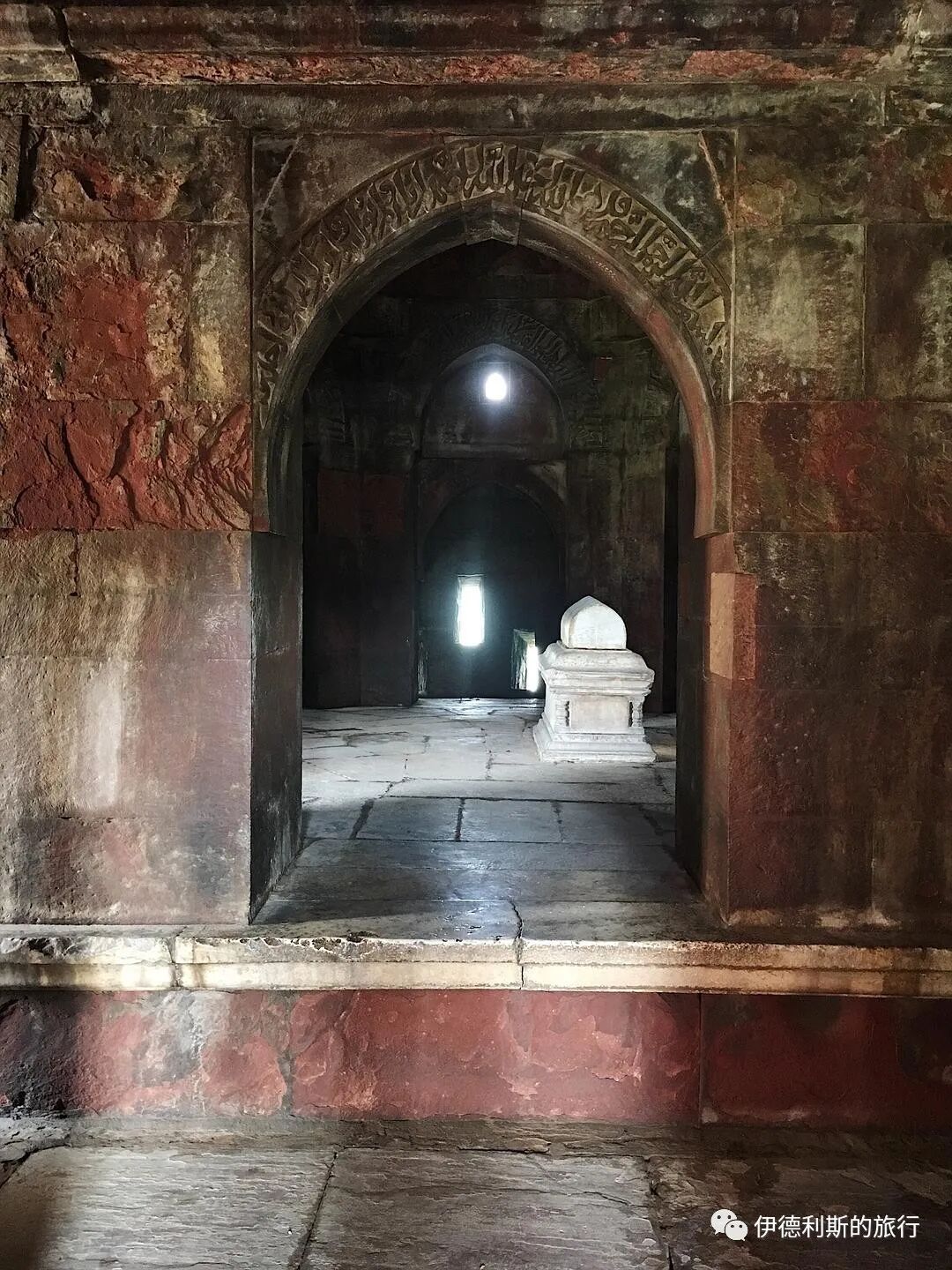
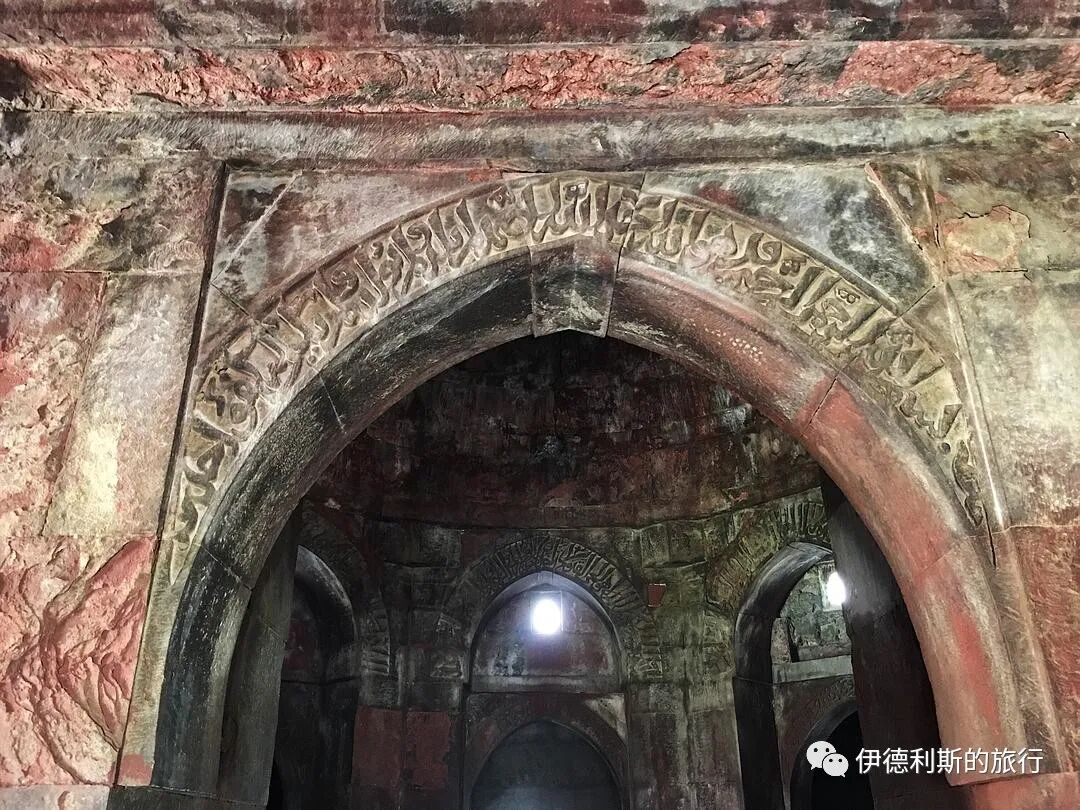
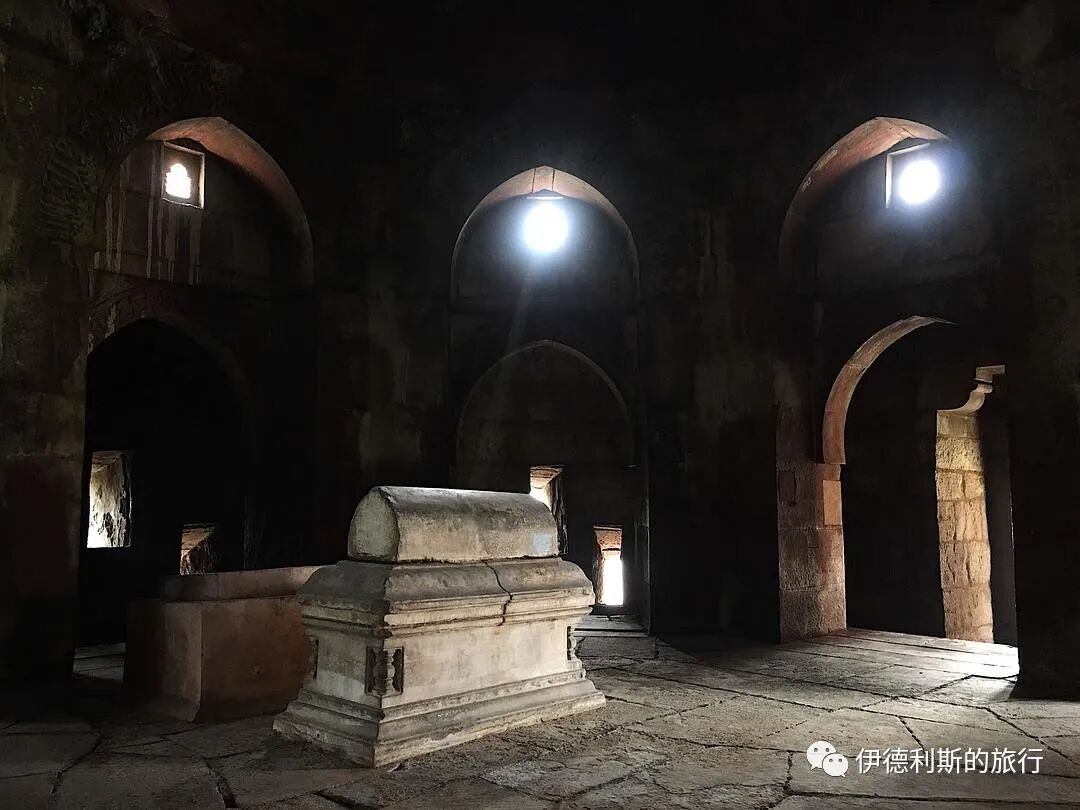
6. Adilabad Fort
After Muhammad took the throne in 1325, he built a medium-sized castle called Adilabad fort to the southeast of Tughlaqabad.
People say Adilabad fort was connected to Tughlaqabad by a 1-kilometer-long causeway, but the causeway has now disappeared.
Compared to the majestic Tughlaqabad, Adilabad fort is much smaller in scale and is divided into inner and outer walls.
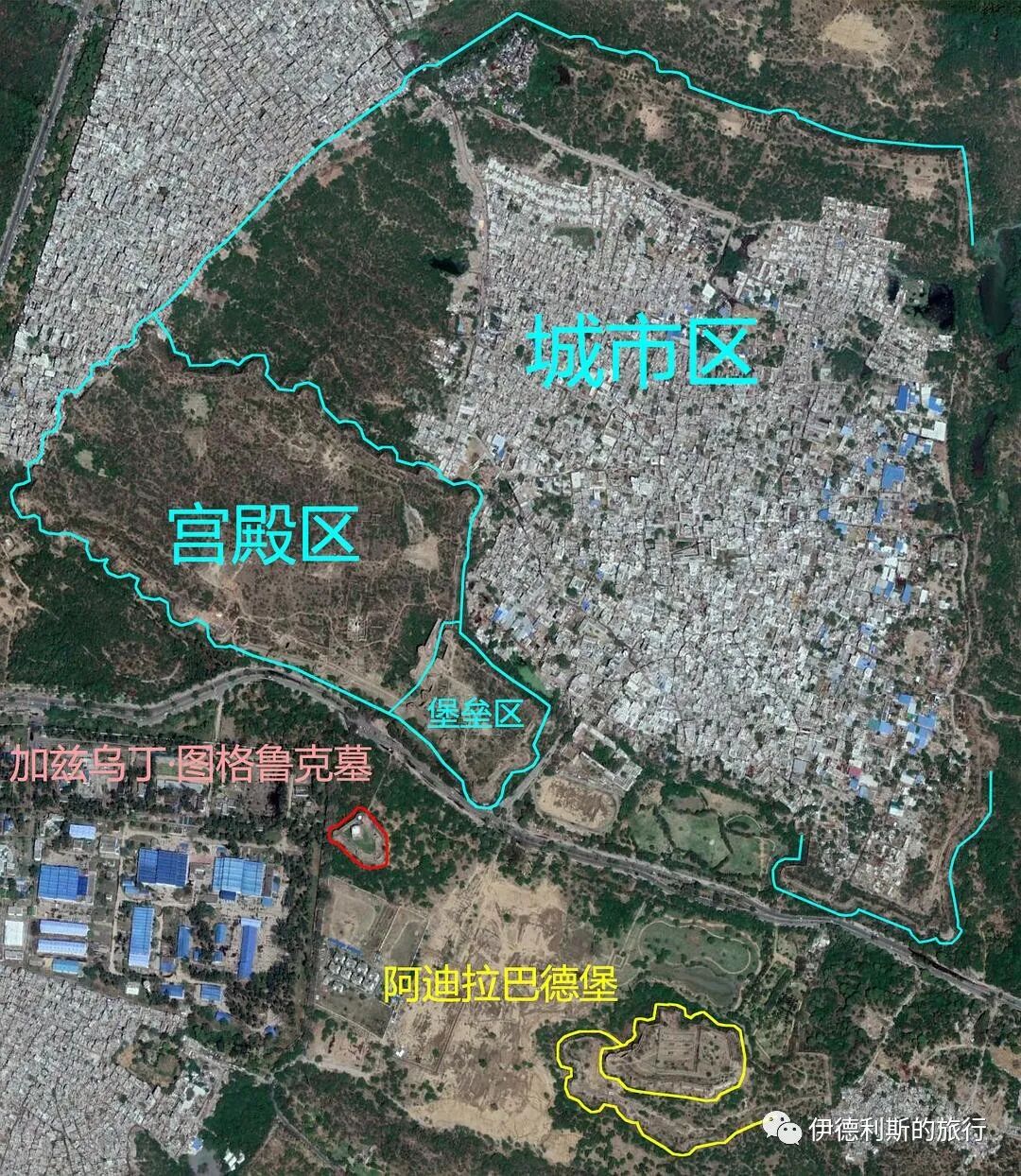
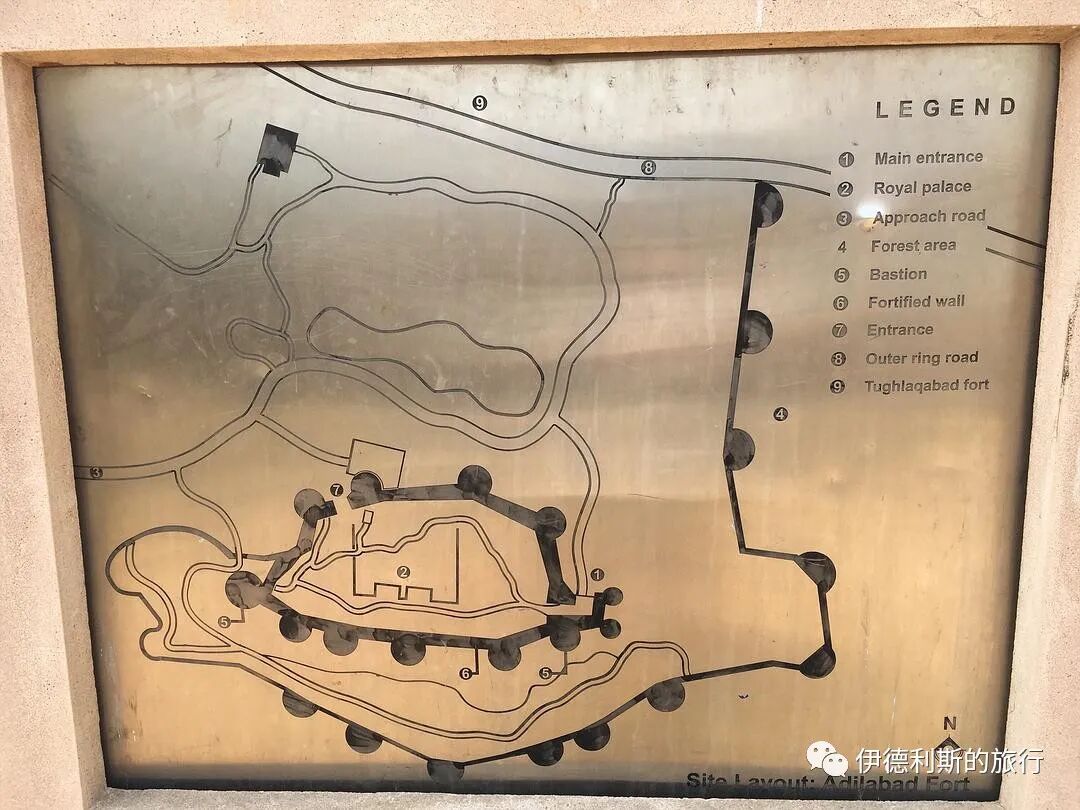
West gate
East gate, which takes a bit of effort to climb up to
Looking down inside the city
The core area is the palace district
City wall
Besides the inner wall, there is also an outer wall
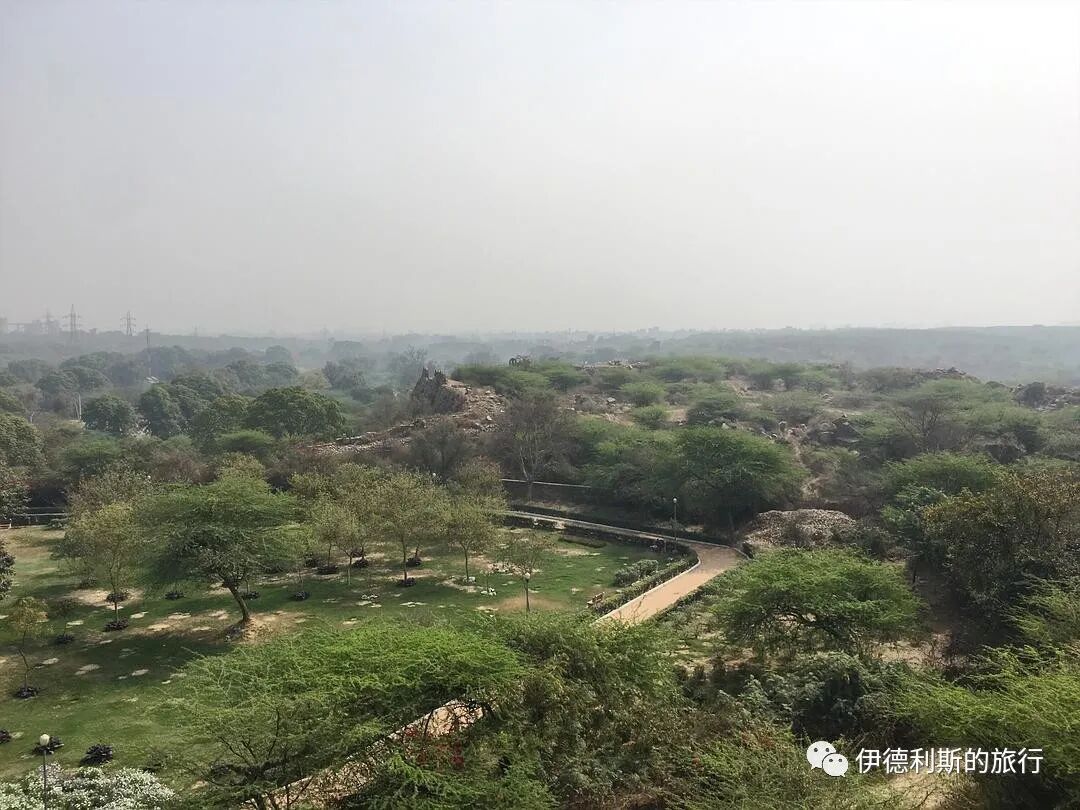
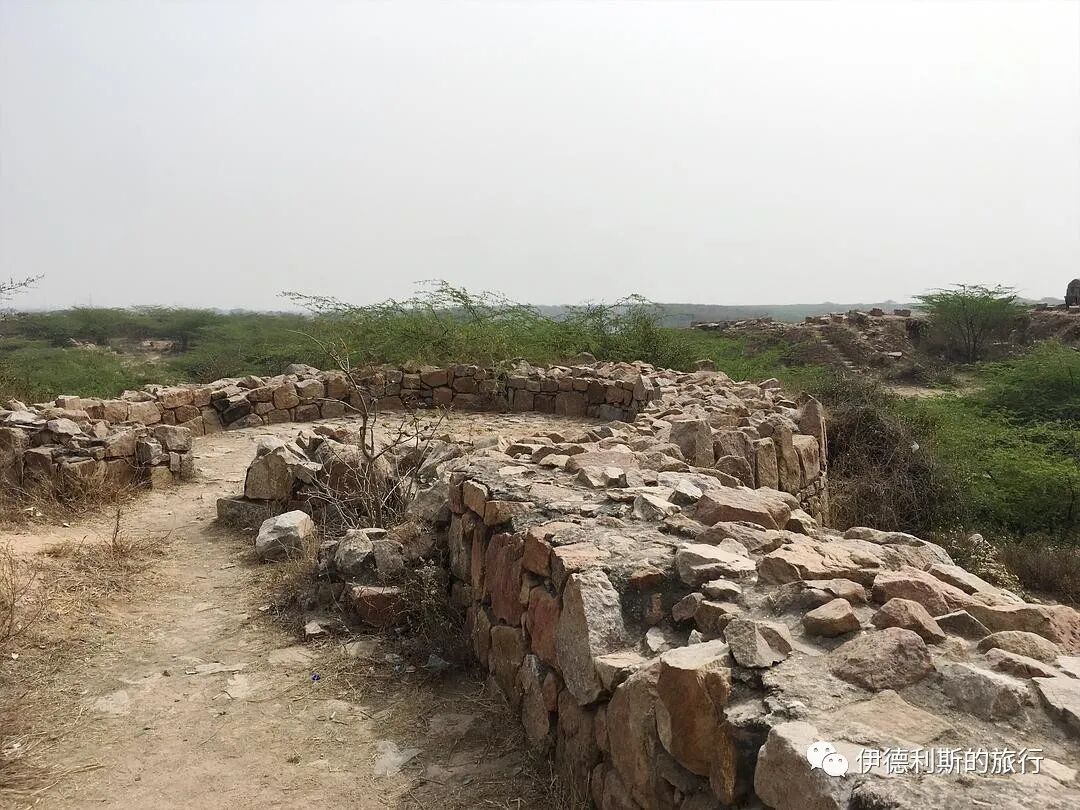
Halal Travel Guide: Delhi — Siri Fort, Mongol Wars and Muslim History
Articles • ali2007fr posted the article • 0 comments • 170 views • 2026-05-17 10:56
Summary: Delhi — Siri Fort, Mongol Wars and Muslim History is presented here as a firsthand travel account in clear English, beginning with this scene: In my previous article, The First City of Delhi—The Minaret Reaching the Clouds, I mentioned that in 1221, Genghis Khan sent a large army to chase the last Sultan of the Khwarazmian Empire, Jalal ad-Din Mingburnu, all. The account keeps its focus on Delhi Travel, Siri Fort, Muslim Heritage while preserving the names, places, food, and historical details from the Chinese source.
Contents
1. Mongol invasion of India
2. Chagatai Khanate's broken dreams in Delhi
1. Chagatai Khanate invades the Khalji Dynasty
2. Qutlugh Khwaja's expedition to Delhi
3. Deploying troops and setting up formations
4. Zafar Khan dies in battle
5. Tomb of Zafar Khan
3. Building Siri City
4. Siege of Siri City
1. The Chagatai army attacks
2. Besieging Siri
5. Siri becomes the capital
1. Tohfe Wala Gumbad mosque
2. Hauz Khas royal reservoir
6. Mongol defeat
1. The first crushing defeat
2. The final failure
3. The Tower of Skulls
7. Reasons for the Mongol failure
1. Mongol invasion of India
In my previous article, The First City of Delhi—The Minaret Reaching the Clouds, I mentioned that in 1221, Genghis Khan sent a large army to chase the last Sultan of the Khwarazmian Empire, Jalal ad-Din Mingburnu, all the way to the banks of the Indus River. Jalal ad-Din asked the Sultan of the Mamluk Dynasty of the Delhi Sultanate, Shams ud-Din Iltutmish, for help, but he was refused.
In 1223, after forming an alliance with local people, Jalal ad-Din captured Lahore, the former capital of the Delhi Sultanate, but Iltutmish took it back in 1228. In the winter of 1241, the Mongol army invaded the Indus Valley again, captured Lahore, and slaughtered the city.
It was not until the 1250s, during the reign of Mongke Khan, that large-scale invasions of the Delhi Sultanate stopped because the commander of the western expedition, Hulagu, was busy invading the Abbasid Caliphate and Syria. The Mongols and the Delhi Sultanate entered a period of peace that lasted for decades.
Because the Mongol army sacked Lahore, the early political center of the Delhi Sultanate, the strategic importance of Delhi continued to rise.
The locations of Delhi, Lahore, and important cities in Central Asia; this map is not to scale but is an overhead view.
2. Chagatai Khanate's broken dreams in Delhi
1. Chagatai Khanate invades the Khalji Dynasty
Starting in the 1280s, Kaidu, the grandson of Ögedei Khan, and Duwa, the Khan of the Chagatai Khanate, fought together in Central Asia and then invaded India from Afghanistan.
In 1296, Alauddin Khalji succeeded as the Sultan of the Khalji Dynasty of the Delhi Sultanate. In my previous article, The First City of Delhi—The Minaret Reaching the Clouds, I described in detail how Alauddin expanded the mosque in the city of Lal Kot in Delhi. In this article, I will introduce how Alauddin built a new fortress to defend against the Chagatai Mongol army.
A portrait of Alauddin drawn in the late 17th century.
2. Qutlugh Khwaja's expedition to Delhi
In the winter of 1297, the Mongol army of the Chagatai Khanate first attacked Punjab on the northwestern border of the Delhi Sultanate. Alauddin sent troops to defeat the Mongol army in February 1298. People say 20,000 Mongol soldiers were killed, and many more were captured and killed in Delhi.
In late 1298 and early 1299, another Chagatai army invaded Sindh and was defeated again by Alauddin's general, Zafar Khan.
After the shame of two defeats, the Chagatai Khanate made full preparations and finally launched a third invasion in 1299. This time, the Great Khan Duwa of the Chagatai Khanate sent his son, Qutlugh Khwaja, to march directly to the capital, Delhi, determined to completely conquer the Delhi Sultanate.
During their expedition, the Chagatai army did not loot cities or destroy fortresses. They avoided all confrontations with the Delhi Sultanate's northwestern border guards, trying to save their strength for a final battle against the main Delhi Sultanate forces in Delhi. During this time, Alauddin's general Zafar Khan sent a letter to Qutlugh Khwaja inviting him to a decisive battle, but Qutlugh Khwaja refused. Qutlugh Khwaja replied that a king only fights a king. He demanded that Zafar Khan come to Delhi to fight him alongside Alauddin's main army.
Finally, the Chagatai army camped at a place called Kili, 10 kilometers from the city of Lal Kot in Delhi. Residents around Delhi heard the news and flooded into Lal Kot. The city's streets, markets, and mosques became extremely crowded. The Chagatai army blocked trade routes to Delhi, causing prices inside Lal Kot to skyrocket.
Lal Kot city
3. Deploying troops and setting up formations
According to the 14th-century Indian chronicler Abdul Malik Isami, Alauddin only received the news after the Chagatai army had crossed the Indus River. He had only one or two weeks to prepare for battle, so he immediately sent messages everywhere to quickly reinforce Delhi.
Alauddin set up his military camp northeast of Lal Kot. His uncle Alaul Mulk suggested that Alauddin negotiate with the Chagatai Khanate, but Alauddin rejected this advice. He believed that if he showed weakness, the people and the army would lose respect for him. So, he publicly announced a decisive battle against the Chagatai army.
Alauddin had his uncle Alaul Mulk manage Lal Kot during this time and gave him the keys to the royal palace, telling him to hand them over to the final winner of the battle once the war ended.
According to the 14th-century historian Ziauddin Barani, the Chagatai army in this battle numbered 100,000 or even 200,000, but in reality, there were likely not that many.
According to the 16th-century historian Firishta, the Delhi Sultanate army had 300,000 horses and 2,700 elephants, but this figure is clearly exaggerated. The Delhi Sultanate's massive army stretched for several kilometers and was very difficult to control. Therefore, Alauddin issued an order before the battle that any officer who left their post without authorization would be beheaded.
Alauddin's army, drawn by Rajputs in 1825
4. Zafar Khan dies in battle
Because the preparations were too rushed, Alauddin kept trying to delay the battle to wait for reinforcements. He also hoped that the delay would make the Chagatai army more exhausted.
However, the Delhi Sultanate general in charge of the right wing, Zafar Khan, attacked the Chagatai left wing without orders. The Chagatai commander of the left wing, Hijlak, feigned a retreat, and Zafar Khan rashly pursued him.
Both sides marched quickly for 55 kilometers. Zafar Khan's infantry and cavalry fell behind, leaving only 1,000 cavalrymen at the end. Meanwhile, 10,000 ambush troops commanded by Noyan Taghai had already hidden 3 kilometers away from Zafar Khan, blocking his path back to the camp.
After consulting with his officers, Zafar Khan decided that even if he broke through to return to the main camp, he would be severely punished by Alauddin for acting without orders, so he chose to fight the Chagatai army to the death.
According to the chronicler Isami, Zafar Khan led his 1,000 cavalrymen to kill 5,000 Chagatai soldiers, and he was eventually reduced to only 200 men. Zafar Khan's warhorse was killed, so he dismounted to duel the Chagatai general Hijlak one-on-one. Finally, an arrow pierced his armor and struck his heart.
On the other side of the battlefield, Zafar Khan's son Diler Khan led his troops to bravely repel the Chagatai right wing commanded by Temur Buqa. The main Chagatai force attacked Alauddin but was repelled, and a large number of Mongols were killed.
Zafar Khan's death caused pessimism among the Delhi Sultanate officers. The next morning, many officers suggested that Alauddin retreat to Lal Kot to defend the city. Alauddin refused, saying that Zafar Khan's death was due to acting without orders, and he would not take a single step back. Meanwhile, the Chagatai army remained still, so no fighting occurred on the second day.
On the night of the third day, the Chagatai army began to retreat. Alauddin did not pursue them and returned to Lal Kot.
Some Indian scholars believe that Zafar Khan's heroic fighting caused the Chagatai army to retreat out of fear. However, the real reason was that the Chagatai commander Qutlugh Khwaja was seriously wounded in the battle and died from his injuries on the way back.
5. Tomb of Zafar Khan
After Zafar Khan died, Alauddin was very angry about his unauthorized actions. He ordered his name to be removed from various records, which made Zafar Khan's life story mysterious.
Zafar Khan's tomb is currently part of the high-platform fortress of the Mausoleum of Ghiyas ud-Din Tughluq, the founder of the Tughlaq dynasty of the Delhi Sultanate.
Ghazi died in 1325. One theory is that the Tomb of Zafar Khan was already built on the current site before his death, and Ghazi incorporated it into the fortress while building his own tomb. Another theory is that Ghazi specifically built the Tomb of Zafar Khan next to his own tomb.
The smaller dome nearby is the Tomb of Zafar Khan.
Inside the Tomb of Zafar Khan is an octagonal burial chamber, and the name Zafar Khan is carved into the stone on the south gate.
3. Building Siri City
To defend against the next invasion by the Chagatai army, Alauddin began building a new fortress, Siri Fort, northeast of the city of Lal Kot.
Unlike the city of Lal Kot built by Hindus, the construction of Siri Fort used many Turkic craftsmen. Due to the Mongol invasions of Central and West Asia, large numbers of Turkic people came to settle in Delhi. Turkic craftsmen from the Seljuq dynasty had excellent fortress-building skills and contributed greatly to the construction of Siri Fort.
In 1398, the famous Timur invaded Delhi and recalled that Siri was a circular city with very tall buildings. These buildings were surrounded by walls made of stone and brick, which were very sturdy.
The yellow circle in the image below shows the location of the Siri Fort walls.
Siri Fort is northeast of Lal Kot. In the image, the green area is Lal Kot built in the mid-11th century, the red area is the Qila Rai Pithora city expanded in 1160 (or 1180), and the blue area is the Qutb Mosque, which was started in 1193. The yellow area is Siri Fort.
Legend says Siri Fort had seven gates, but only the ruins of the southeast gate remain today.
Today, only broken walls remain of Siri Fort. The main reason for the city's destruction is that later rulers constantly took bricks and stones from it to build new structures. The greatest destruction came from Sher Shah Suri (reigned 1540-1545), the founder of the Sur dynasty, who moved large amounts of bricks and building components from Siri Fort to build a new city.
West wall of Siri Fort.
Ruins of the northwest wall.
4. Siege of Siri City
1. The Chagatai army attacks
In early 1303, both of Alauddin's armies were attacking Hindu regions in the south. The Chagatai Khanate scouted that Delhi was undefended, so the Chagatai army led by Nayan Targhi launched an invasion of Delhi in August 1303. Nayan Targhi had served as a commander during the 1299 invasion of Delhi.
According to the 14th-century chronicler Ziauddin Barani, the Chagatai army had 30,000 to 40,000 soldiers at the time. They did not encounter much resistance along the way, and the Delhi Sultanate troops they passed were not strong enough to attack the Chagatai army.
Alauddin rushed back to Delhi one month before the Chagatai army arrived, but he still did not have time to prepare strong defenses. The weapons of his army had been corroded by the rainy season in South India, and he had also lost too many horses and supplies while campaigning in the south.
Alauddin quickly sent people to ask for reinforcements from various places, but the Mongols set up blockades on all roads leading to Delhi. Not only could information not get out, but all trade routes were cut off, and Delhi once again faced a shortage of goods.
Another army Alauddin had sent to South India returned to Delhi after a long journey, but they were blocked by the Mongol army and had to stay southeast of Delhi.
2. Besieging Siri
Given these conditions, Alauddin decided to set up his main camp inside the unfinished Siri Fort.
At that time, Siri Fort had dense forests and rivers on its east, west, and south sides, with only the north side having no natural defenses. Alauddin dug a trench outside his camp at Siri Fort and used door panels taken from houses in Lal Kot to build a fence along the trench. The entire defensive line was guarded by several squads of soldiers, with five fully armed elephants in front of each squad.
The Chagatai army launched two or three charges against Siri Fort but were repelled, so they turned to looting the areas around Delhi. The Chagatai army captured the Sultan's warehouses and sold goods to local residents at low prices.
After a two-month siege, Nayan Targhi could not break into Siri Fort and finally retreated with the loot he had gathered.
Ziauddin Barani, a Delhi resident who experienced the siege, later recalled, "This was the first time the citizens of Delhi felt such great fear of the Mongols. If Nayan Targhi had besieged the city for one more month, the entire city would have fallen." ”
5. Siri becomes the capital
Before the 1303 Chagatai siege of Siri Fort, Alauddin often went into battle himself. He became much more cautious after this siege. Afterward, he left almost all military operations to his generals and stayed behind to build the city of Siri.
Alauddin built a palace in Siri, making it the new capital of the Delhi Sultanate instead of Lal Kot, and the population grew quickly.
1. Tohfe Wala Gumbad mosque
The Tohfe Wala Gumbad mosque sits right next to the western wall of Siri and is one of the few buildings inside the city that still stands today. There are no records showing when it was built. This mosque looks very different from other buildings from Alauddin's time, but some of its wall structures have features typical of Khalji dynasty architecture.
The mihrab facing west.
2. Hauz Khas royal reservoir
The term Hauz Khas comes from Persian, where 'Hauz' means a pool or lake and 'Khas' means royal.
Located west of Siri, Hauz Khas is a royal reservoir that Alauddin ordered to be dug to provide water for the city. The reservoir later silted up, but Sultan Firuz Shah Tughlaq (reigned 1351–1388) of the Tughlaq dynasty cleared it out and built many structures around it, which I will describe in detail in later diary entries.
6. Mongol defeat
1. The first crushing defeat
In 1305, Ali Beg and Tartaq of the Khongirad tribe led the Chagatai army to invade India again. The Mongols had already seen Delhi's strong defenses, so they chose to bypass the city and head southeast along the foothills of the Himalayas into the Ganges Plain. On December 20, 1305, the two armies met, and the Chagatai army suffered a crushing defeat. Alauddin warmly welcomed his victorious army back at his palace in Siri. Malik Nayak's army marched in two rows, and the line was so long you could not see the end of it.
After that, 9,000 captured Mongol soldiers were presented, including top commanders like Ali Beg and Tartaq. The historian Ziauddin Barani claimed that Alauddin ordered all the prisoners to be trampled to death by elephants. The 16th-century historian Firishta stated that the skulls of 8,000 of these prisoners were used to build the city of Siri.
2. The final failure
In 1306, Duwa, the Khan of the Chagatai Khanate, sent another large army to avenge the defeat of 1305. According to the chronicler Isami, the Chagatai sent 100,000 troops, though this number is certainly exaggerated. Alauddin sent a large army led by General Malik Kafur, with Malik Tughluq—who would later establish the Tughlaq dynasty of the Delhi Sultanate—serving as the vanguard.
The two armies faced each other for a long time, with neither side willing to attack first. Eventually, the Chagatai army attacked and scattered the Delhi Sultanate's forces. However, the Delhi Sultanate quickly regrouped and completely crushed the Chagatai army. The remaining Chagatai troops fled toward the Indus River, and many Mongol cavalrymen were captured or killed. According to the Persian historian Wassaf, about 60,000 Mongols were killed, and Alauddin ordered a tower made of skulls to be built in front of the Badaun Gate in the city of Lal Kot. In his book Tarikh-i-Firuz Shahi, written in 1357, the historian Ziauddin Barani mentioned that this tower could still be seen in his time.
3. The Tower of Skulls
Today, not far west of Siri, there is a tower called the Chor Minar, which was built by order of Alauddin and has 225 holes in it. According to locals, this is the 'Tower of Thieves,' where the heads of beheaded thieves were placed on spears and stuck into the holes to scare other thieves.
However, some historians believe these skulls were actually those of the Mongol Muslims massacred by Alauddin's order. Another possibility is that they were part of the 8,000 Mongol prisoner skulls used to build Siri after the Mongol defeat in 1305.
7. Reasons for the Mongol failure
The book History of the Mongol Empire's Conquest of Central Asia includes a valuable analysis in the section 'Reasons for the Mongol Defeat' regarding why the Mongol army ultimately lost to the Delhi Sultanate. I have summarized it here:
Conflicts and civil wars between the Mongol khanates made it impossible for them to send an overwhelming joint army to invade India. Duwa Khan of the Chagatai Khanate spent his life fighting in Central Asia, so he could only send one expeditionary force after another to India.
Although the number of Mongol troops was exaggerated, they included many women and children, so the actual number of combatants was not that high. Alauddin often captured many Mongol women and children, who were then sold in the markets of Delhi or killed.
The quality and toughness of the Mongol elite declined significantly by the late 13th and early 14th centuries compared to the eras of Genghis Khan and Ogedei Khan. In 1303, they retreated from the siege of Siri in Delhi without fighting a single hard battle, which would have been unthinkable under Genghis or Ogedei.
Duwa Khan of the Chagatai Khanate was the powerful ruler who ensured the Mongol expeditions to India. After Duwa died in 1307, his successors were weak. They could barely protect their core territories in Central Asia, let alone worry about India.
Sultan Alauddin Khalji of the Delhi Sultanate had excellent military skills. He mostly chose a defensive policy, especially in his later years, by focusing on castle defense. This made the Mongol army, which wanted to use cavalry in open fields, lose all its patience. view all
Summary: Delhi — Siri Fort, Mongol Wars and Muslim History is presented here as a firsthand travel account in clear English, beginning with this scene: In my previous article, The First City of Delhi—The Minaret Reaching the Clouds, I mentioned that in 1221, Genghis Khan sent a large army to chase the last Sultan of the Khwarazmian Empire, Jalal ad-Din Mingburnu, all. The account keeps its focus on Delhi Travel, Siri Fort, Muslim Heritage while preserving the names, places, food, and historical details from the Chinese source.
Contents
1. Mongol invasion of India
2. Chagatai Khanate's broken dreams in Delhi
1. Chagatai Khanate invades the Khalji Dynasty
2. Qutlugh Khwaja's expedition to Delhi
3. Deploying troops and setting up formations
4. Zafar Khan dies in battle
5. Tomb of Zafar Khan
3. Building Siri City
4. Siege of Siri City
1. The Chagatai army attacks
2. Besieging Siri
5. Siri becomes the capital
1. Tohfe Wala Gumbad mosque
2. Hauz Khas royal reservoir
6. Mongol defeat
1. The first crushing defeat
2. The final failure
3. The Tower of Skulls
7. Reasons for the Mongol failure
1. Mongol invasion of India
In my previous article, The First City of Delhi—The Minaret Reaching the Clouds, I mentioned that in 1221, Genghis Khan sent a large army to chase the last Sultan of the Khwarazmian Empire, Jalal ad-Din Mingburnu, all the way to the banks of the Indus River. Jalal ad-Din asked the Sultan of the Mamluk Dynasty of the Delhi Sultanate, Shams ud-Din Iltutmish, for help, but he was refused.
In 1223, after forming an alliance with local people, Jalal ad-Din captured Lahore, the former capital of the Delhi Sultanate, but Iltutmish took it back in 1228. In the winter of 1241, the Mongol army invaded the Indus Valley again, captured Lahore, and slaughtered the city.
It was not until the 1250s, during the reign of Mongke Khan, that large-scale invasions of the Delhi Sultanate stopped because the commander of the western expedition, Hulagu, was busy invading the Abbasid Caliphate and Syria. The Mongols and the Delhi Sultanate entered a period of peace that lasted for decades.
Because the Mongol army sacked Lahore, the early political center of the Delhi Sultanate, the strategic importance of Delhi continued to rise.
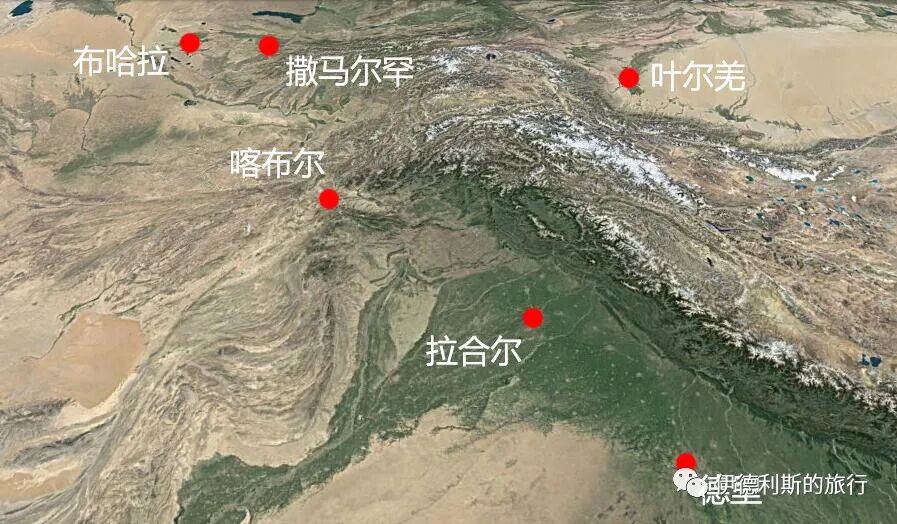
The locations of Delhi, Lahore, and important cities in Central Asia; this map is not to scale but is an overhead view.
2. Chagatai Khanate's broken dreams in Delhi
1. Chagatai Khanate invades the Khalji Dynasty
Starting in the 1280s, Kaidu, the grandson of Ögedei Khan, and Duwa, the Khan of the Chagatai Khanate, fought together in Central Asia and then invaded India from Afghanistan.
In 1296, Alauddin Khalji succeeded as the Sultan of the Khalji Dynasty of the Delhi Sultanate. In my previous article, The First City of Delhi—The Minaret Reaching the Clouds, I described in detail how Alauddin expanded the mosque in the city of Lal Kot in Delhi. In this article, I will introduce how Alauddin built a new fortress to defend against the Chagatai Mongol army.
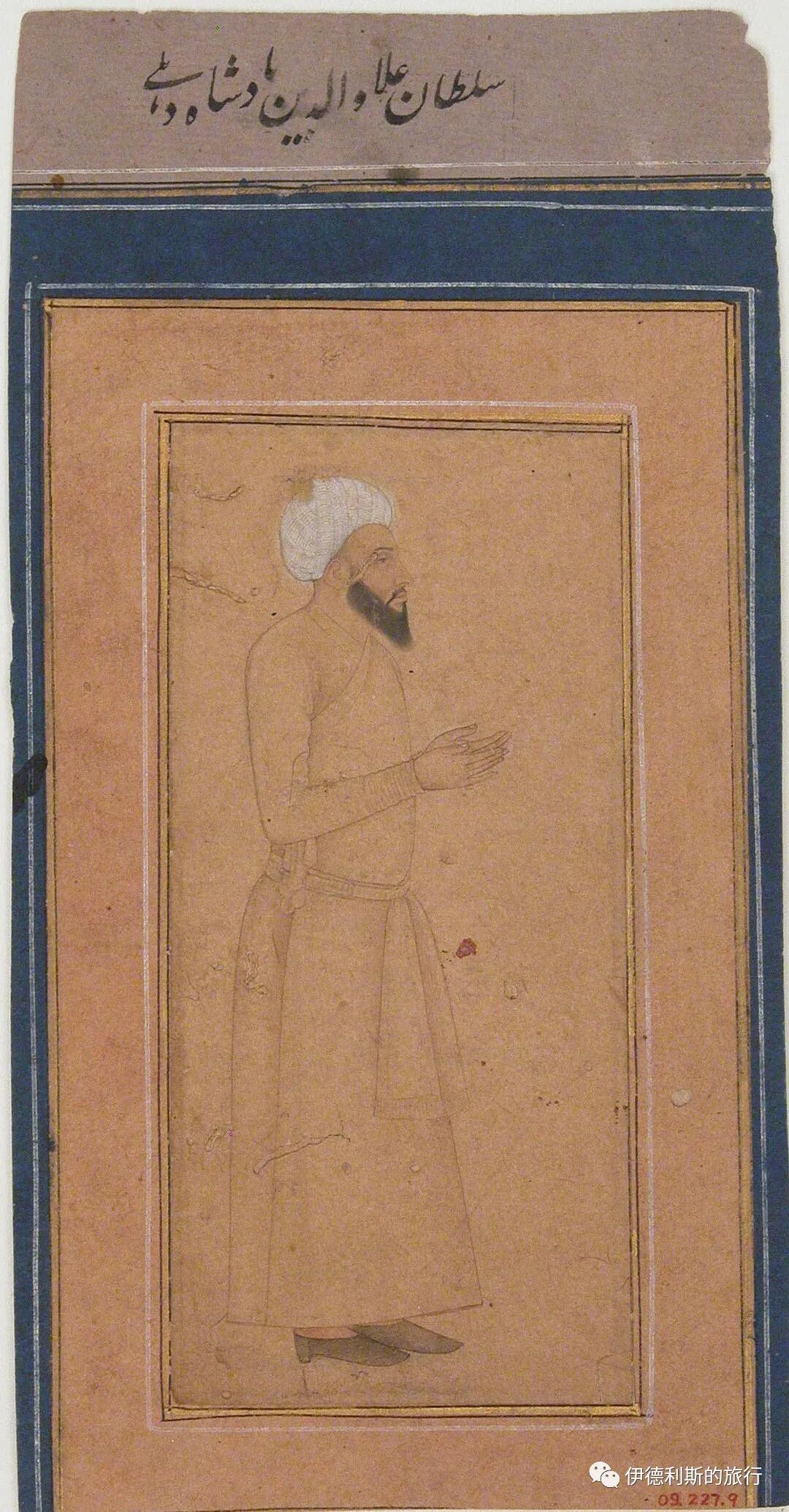
A portrait of Alauddin drawn in the late 17th century.
2. Qutlugh Khwaja's expedition to Delhi
In the winter of 1297, the Mongol army of the Chagatai Khanate first attacked Punjab on the northwestern border of the Delhi Sultanate. Alauddin sent troops to defeat the Mongol army in February 1298. People say 20,000 Mongol soldiers were killed, and many more were captured and killed in Delhi.
In late 1298 and early 1299, another Chagatai army invaded Sindh and was defeated again by Alauddin's general, Zafar Khan.
After the shame of two defeats, the Chagatai Khanate made full preparations and finally launched a third invasion in 1299. This time, the Great Khan Duwa of the Chagatai Khanate sent his son, Qutlugh Khwaja, to march directly to the capital, Delhi, determined to completely conquer the Delhi Sultanate.
During their expedition, the Chagatai army did not loot cities or destroy fortresses. They avoided all confrontations with the Delhi Sultanate's northwestern border guards, trying to save their strength for a final battle against the main Delhi Sultanate forces in Delhi. During this time, Alauddin's general Zafar Khan sent a letter to Qutlugh Khwaja inviting him to a decisive battle, but Qutlugh Khwaja refused. Qutlugh Khwaja replied that a king only fights a king. He demanded that Zafar Khan come to Delhi to fight him alongside Alauddin's main army.
Finally, the Chagatai army camped at a place called Kili, 10 kilometers from the city of Lal Kot in Delhi. Residents around Delhi heard the news and flooded into Lal Kot. The city's streets, markets, and mosques became extremely crowded. The Chagatai army blocked trade routes to Delhi, causing prices inside Lal Kot to skyrocket.
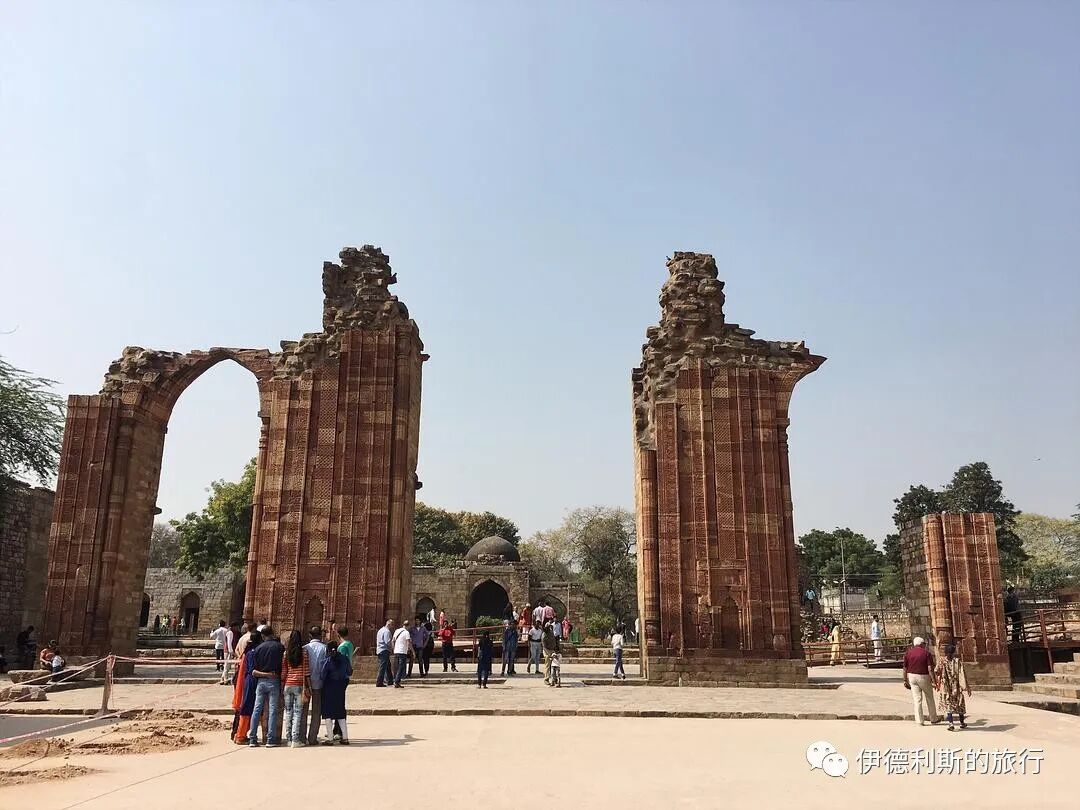
Lal Kot city
3. Deploying troops and setting up formations
According to the 14th-century Indian chronicler Abdul Malik Isami, Alauddin only received the news after the Chagatai army had crossed the Indus River. He had only one or two weeks to prepare for battle, so he immediately sent messages everywhere to quickly reinforce Delhi.
Alauddin set up his military camp northeast of Lal Kot. His uncle Alaul Mulk suggested that Alauddin negotiate with the Chagatai Khanate, but Alauddin rejected this advice. He believed that if he showed weakness, the people and the army would lose respect for him. So, he publicly announced a decisive battle against the Chagatai army.
Alauddin had his uncle Alaul Mulk manage Lal Kot during this time and gave him the keys to the royal palace, telling him to hand them over to the final winner of the battle once the war ended.
According to the 14th-century historian Ziauddin Barani, the Chagatai army in this battle numbered 100,000 or even 200,000, but in reality, there were likely not that many.
According to the 16th-century historian Firishta, the Delhi Sultanate army had 300,000 horses and 2,700 elephants, but this figure is clearly exaggerated. The Delhi Sultanate's massive army stretched for several kilometers and was very difficult to control. Therefore, Alauddin issued an order before the battle that any officer who left their post without authorization would be beheaded.
Alauddin's army, drawn by Rajputs in 1825
4. Zafar Khan dies in battle
Because the preparations were too rushed, Alauddin kept trying to delay the battle to wait for reinforcements. He also hoped that the delay would make the Chagatai army more exhausted.
However, the Delhi Sultanate general in charge of the right wing, Zafar Khan, attacked the Chagatai left wing without orders. The Chagatai commander of the left wing, Hijlak, feigned a retreat, and Zafar Khan rashly pursued him.
Both sides marched quickly for 55 kilometers. Zafar Khan's infantry and cavalry fell behind, leaving only 1,000 cavalrymen at the end. Meanwhile, 10,000 ambush troops commanded by Noyan Taghai had already hidden 3 kilometers away from Zafar Khan, blocking his path back to the camp.
After consulting with his officers, Zafar Khan decided that even if he broke through to return to the main camp, he would be severely punished by Alauddin for acting without orders, so he chose to fight the Chagatai army to the death.
According to the chronicler Isami, Zafar Khan led his 1,000 cavalrymen to kill 5,000 Chagatai soldiers, and he was eventually reduced to only 200 men. Zafar Khan's warhorse was killed, so he dismounted to duel the Chagatai general Hijlak one-on-one. Finally, an arrow pierced his armor and struck his heart.
On the other side of the battlefield, Zafar Khan's son Diler Khan led his troops to bravely repel the Chagatai right wing commanded by Temur Buqa. The main Chagatai force attacked Alauddin but was repelled, and a large number of Mongols were killed.
Zafar Khan's death caused pessimism among the Delhi Sultanate officers. The next morning, many officers suggested that Alauddin retreat to Lal Kot to defend the city. Alauddin refused, saying that Zafar Khan's death was due to acting without orders, and he would not take a single step back. Meanwhile, the Chagatai army remained still, so no fighting occurred on the second day.
On the night of the third day, the Chagatai army began to retreat. Alauddin did not pursue them and returned to Lal Kot.
Some Indian scholars believe that Zafar Khan's heroic fighting caused the Chagatai army to retreat out of fear. However, the real reason was that the Chagatai commander Qutlugh Khwaja was seriously wounded in the battle and died from his injuries on the way back.
5. Tomb of Zafar Khan
After Zafar Khan died, Alauddin was very angry about his unauthorized actions. He ordered his name to be removed from various records, which made Zafar Khan's life story mysterious.
Zafar Khan's tomb is currently part of the high-platform fortress of the Mausoleum of Ghiyas ud-Din Tughluq, the founder of the Tughlaq dynasty of the Delhi Sultanate.
Ghazi died in 1325. One theory is that the Tomb of Zafar Khan was already built on the current site before his death, and Ghazi incorporated it into the fortress while building his own tomb. Another theory is that Ghazi specifically built the Tomb of Zafar Khan next to his own tomb.
The smaller dome nearby is the Tomb of Zafar Khan.
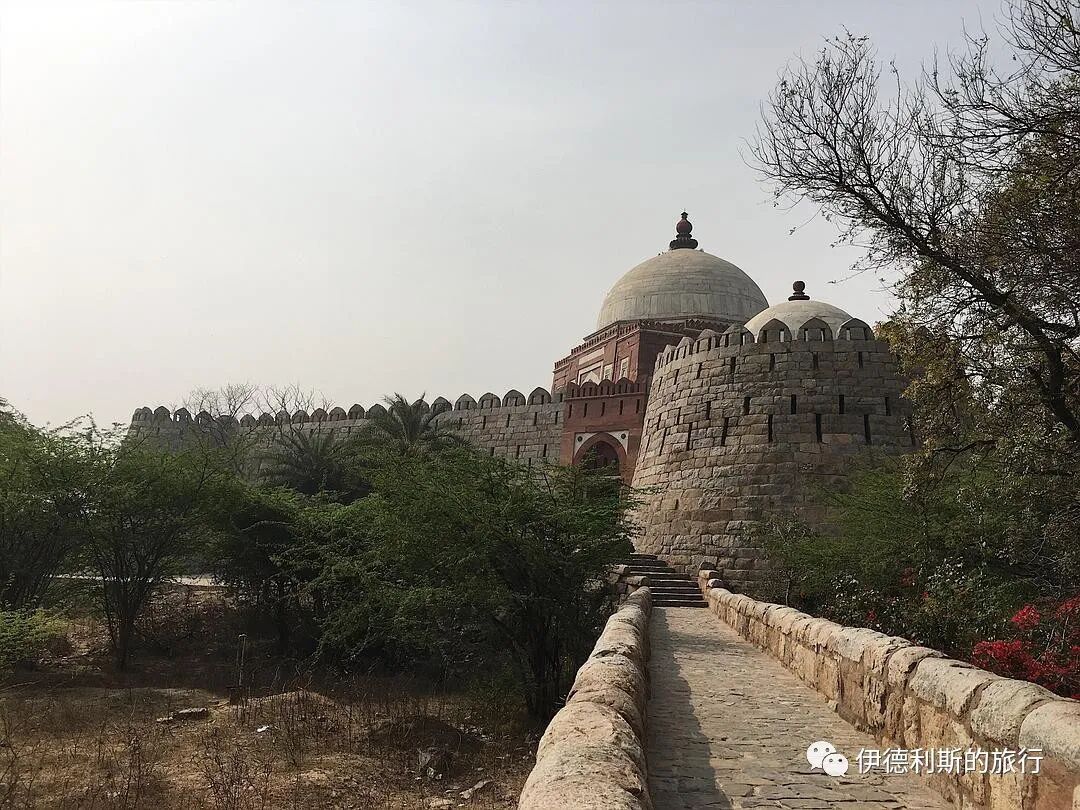
Inside the Tomb of Zafar Khan is an octagonal burial chamber, and the name Zafar Khan is carved into the stone on the south gate.
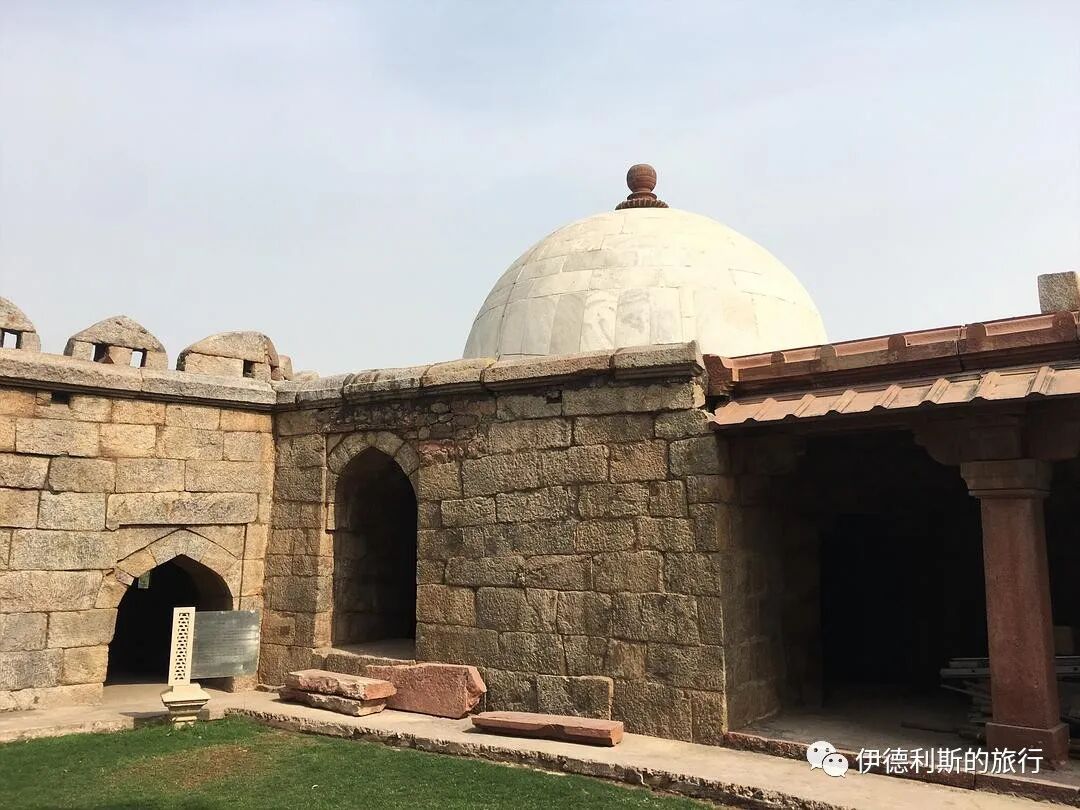
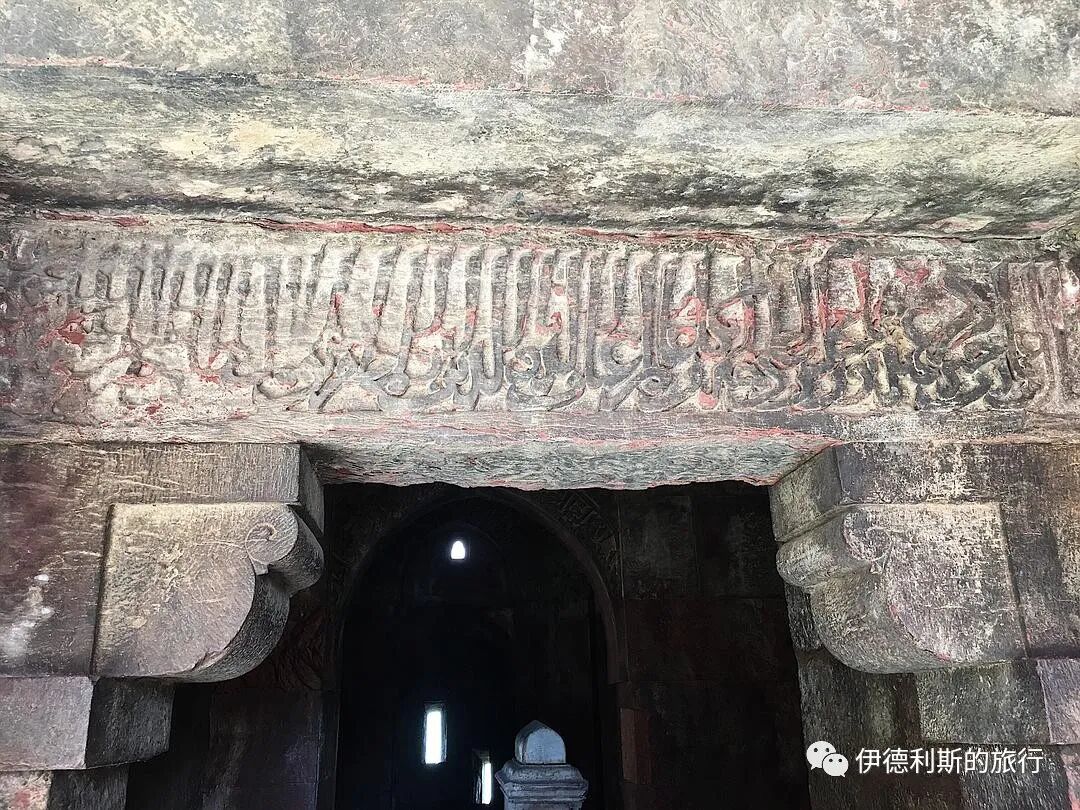
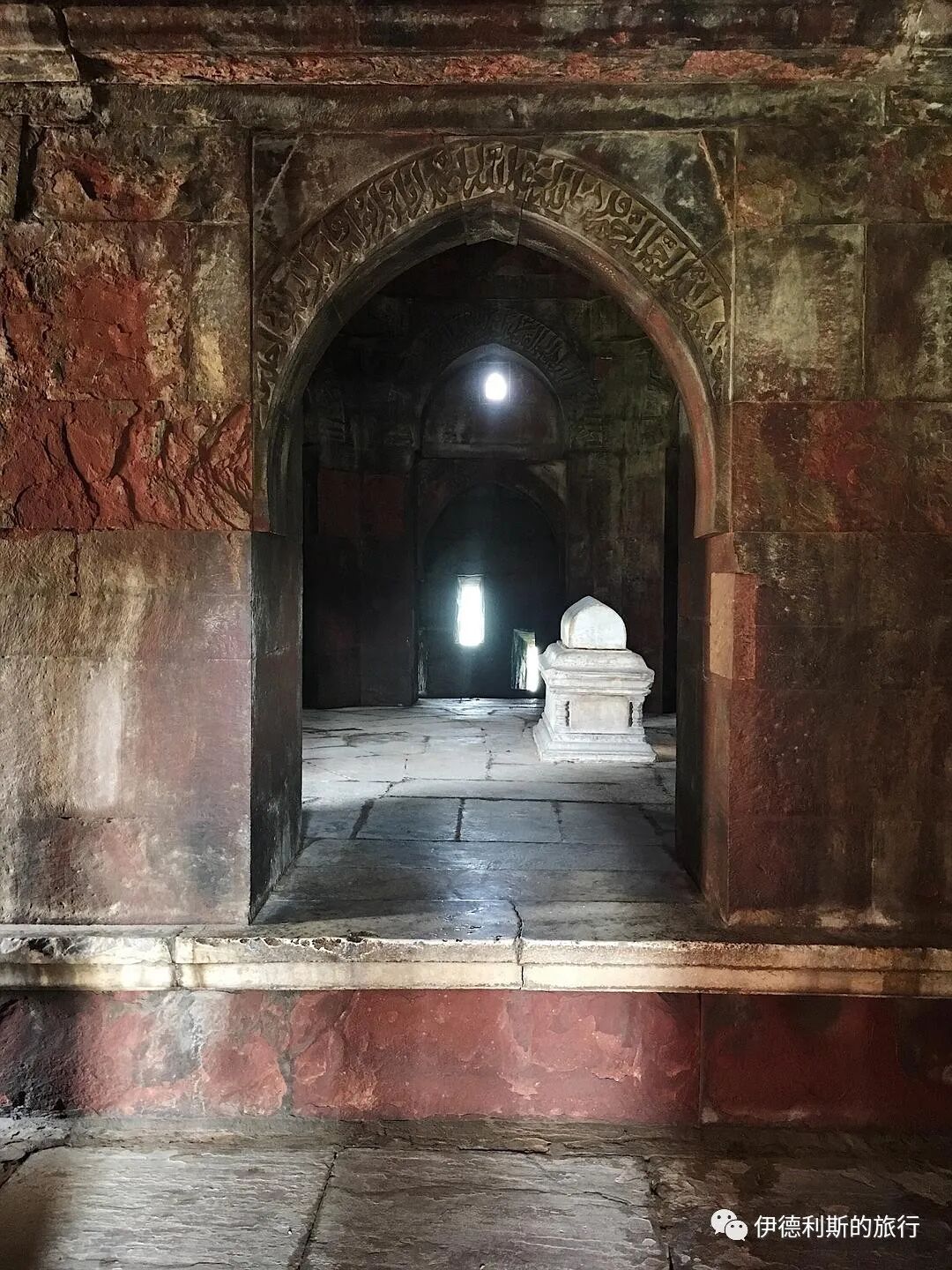
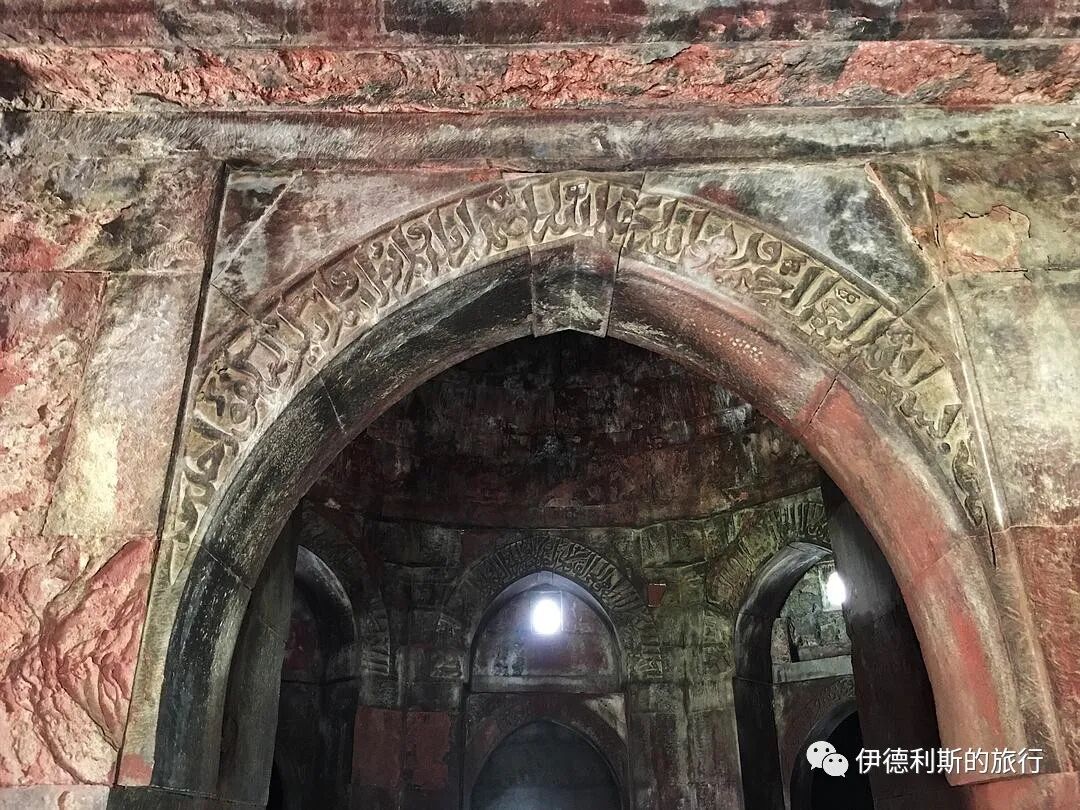
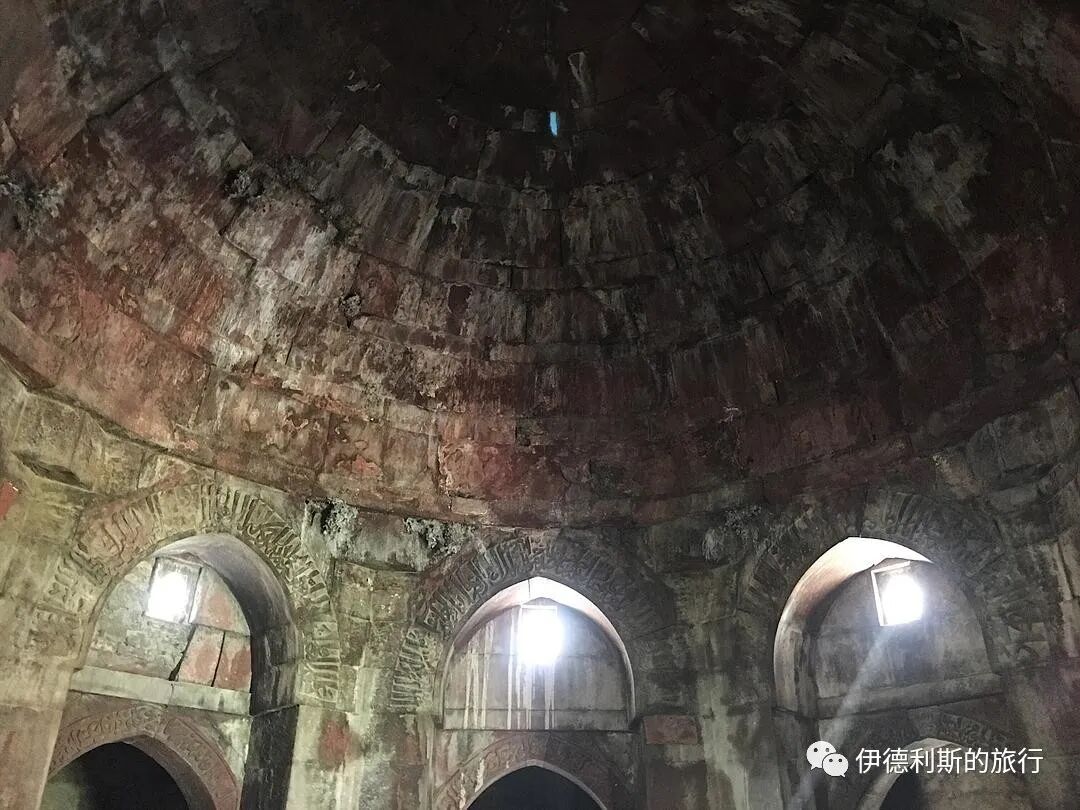
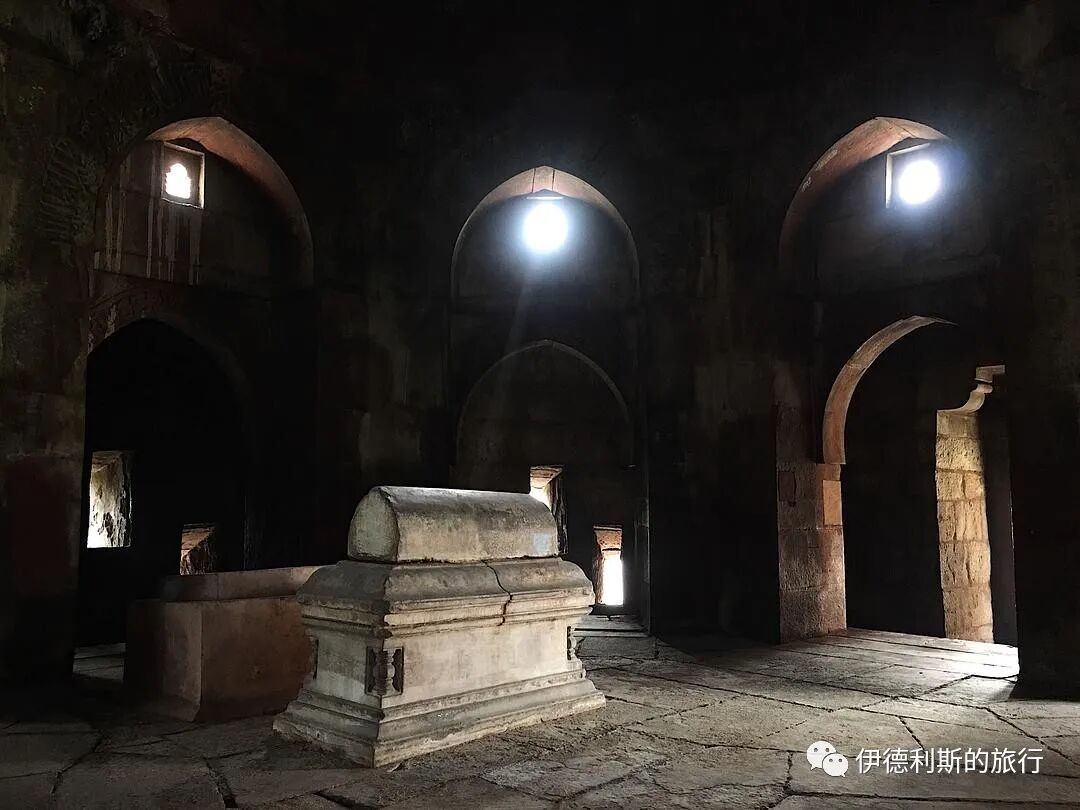
3. Building Siri City
To defend against the next invasion by the Chagatai army, Alauddin began building a new fortress, Siri Fort, northeast of the city of Lal Kot.
Unlike the city of Lal Kot built by Hindus, the construction of Siri Fort used many Turkic craftsmen. Due to the Mongol invasions of Central and West Asia, large numbers of Turkic people came to settle in Delhi. Turkic craftsmen from the Seljuq dynasty had excellent fortress-building skills and contributed greatly to the construction of Siri Fort.
In 1398, the famous Timur invaded Delhi and recalled that Siri was a circular city with very tall buildings. These buildings were surrounded by walls made of stone and brick, which were very sturdy.
The yellow circle in the image below shows the location of the Siri Fort walls.
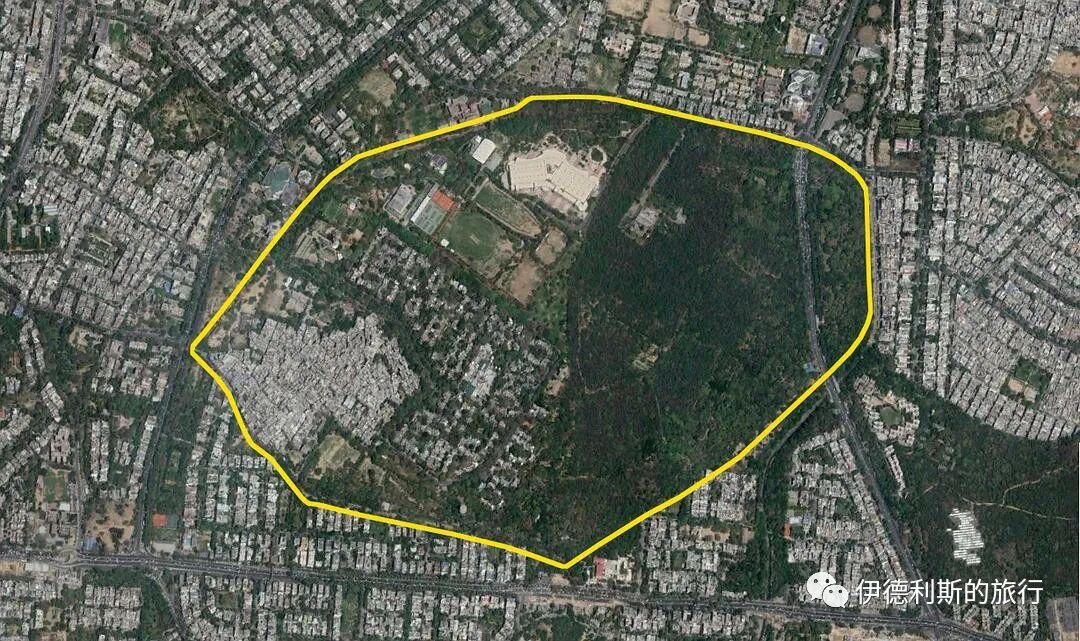
Siri Fort is northeast of Lal Kot. In the image, the green area is Lal Kot built in the mid-11th century, the red area is the Qila Rai Pithora city expanded in 1160 (or 1180), and the blue area is the Qutb Mosque, which was started in 1193. The yellow area is Siri Fort.
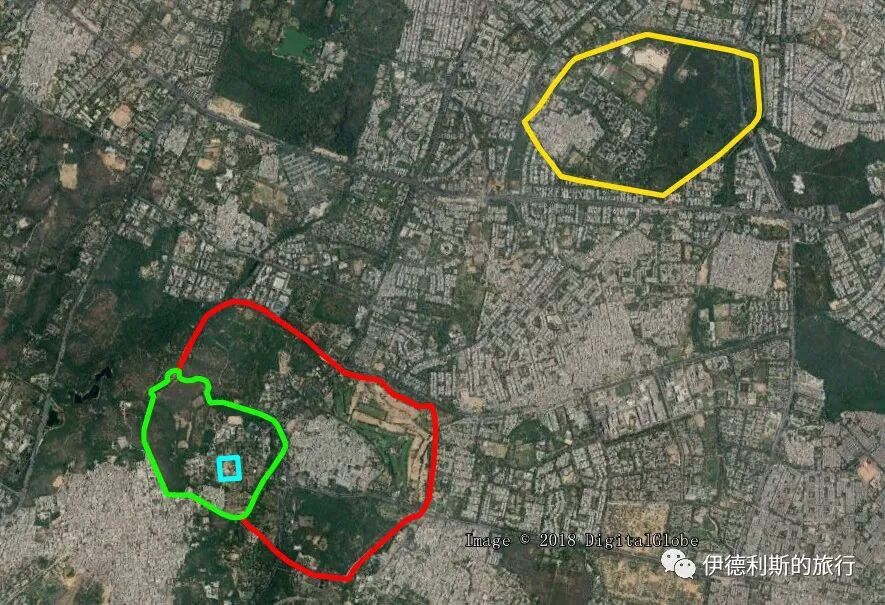
Legend says Siri Fort had seven gates, but only the ruins of the southeast gate remain today.
Today, only broken walls remain of Siri Fort. The main reason for the city's destruction is that later rulers constantly took bricks and stones from it to build new structures. The greatest destruction came from Sher Shah Suri (reigned 1540-1545), the founder of the Sur dynasty, who moved large amounts of bricks and building components from Siri Fort to build a new city.
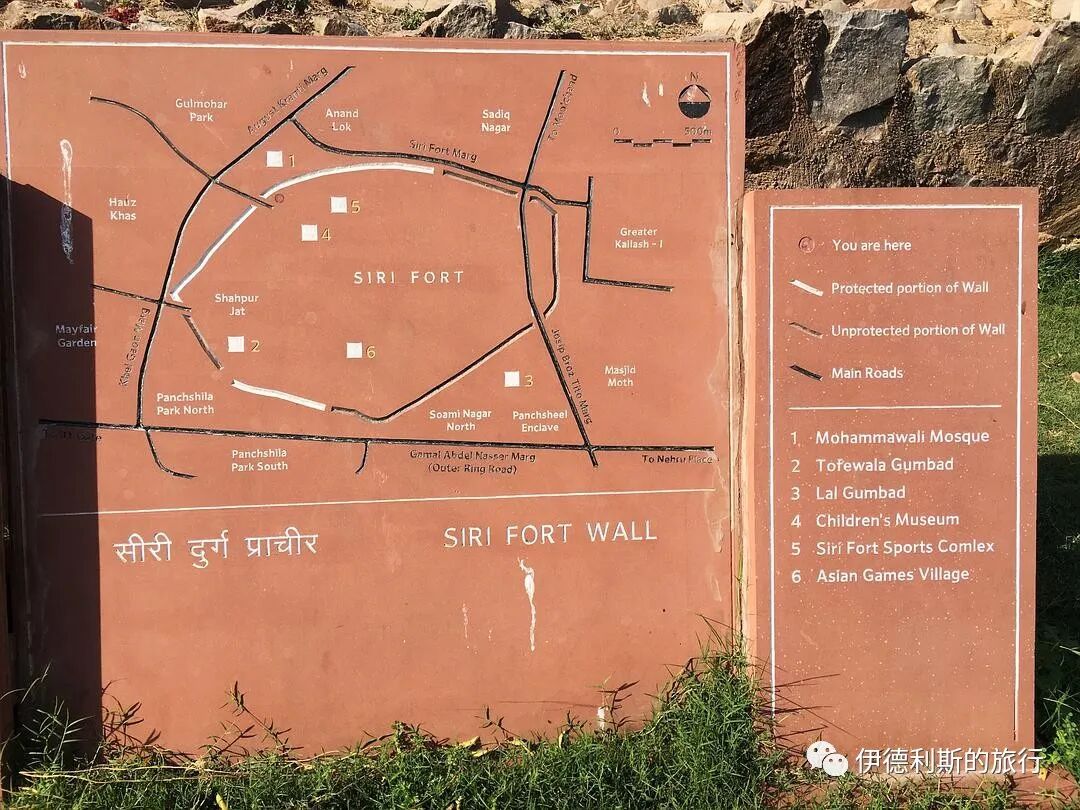
West wall of Siri Fort.
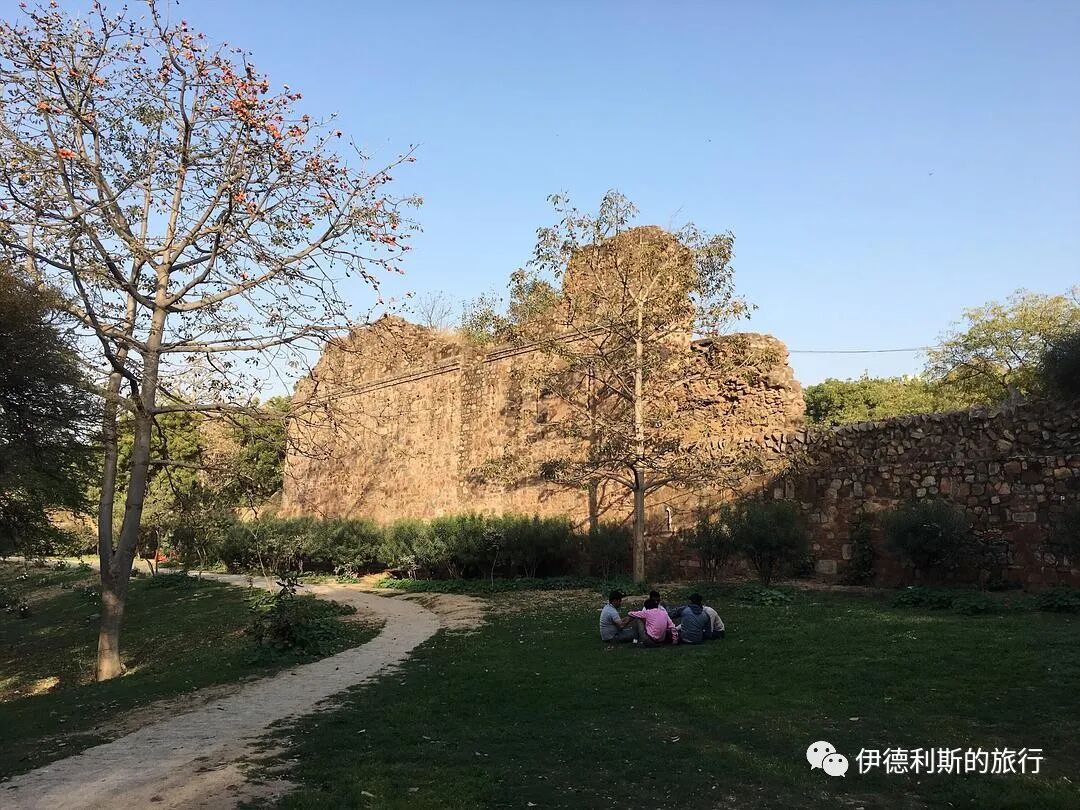
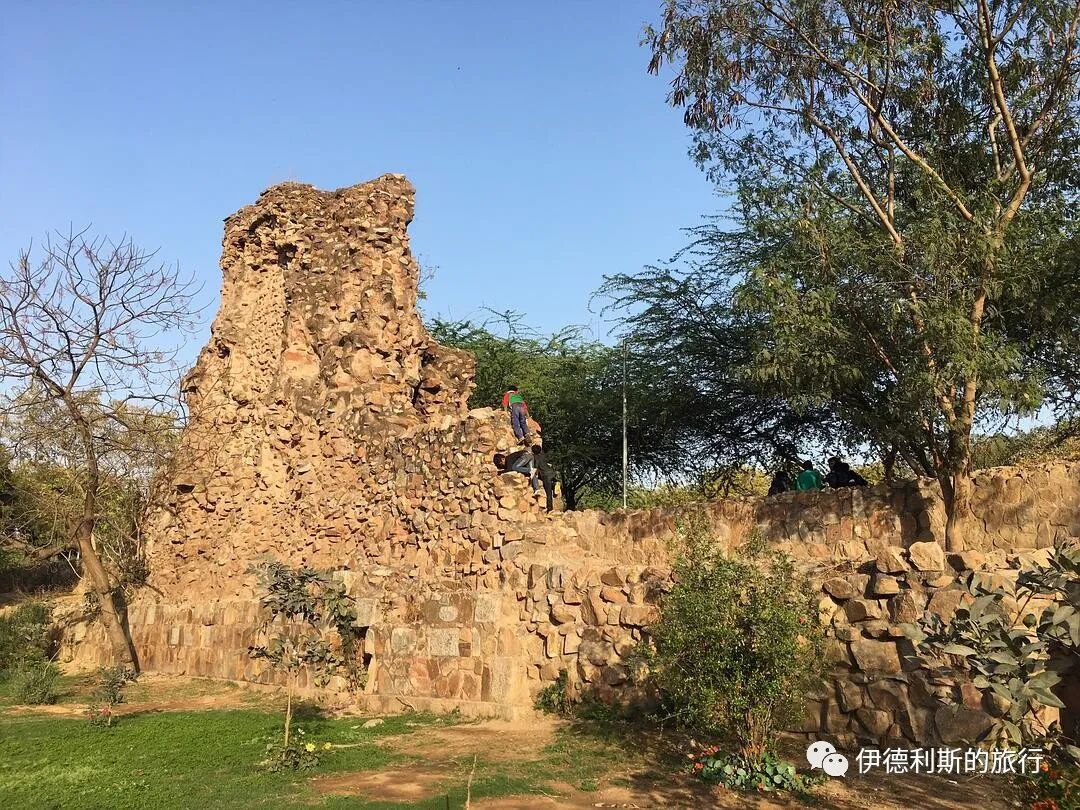
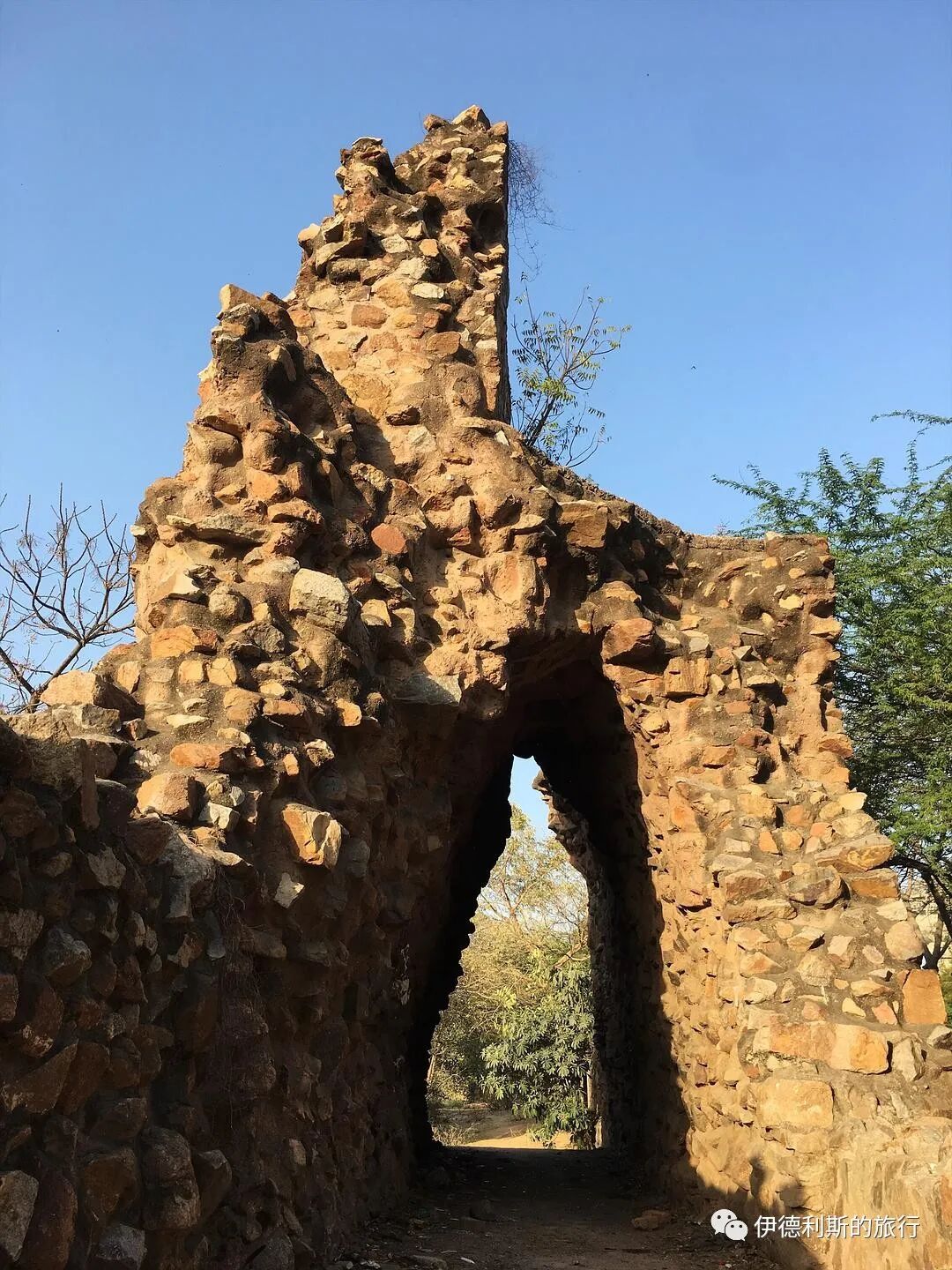
Ruins of the northwest wall.
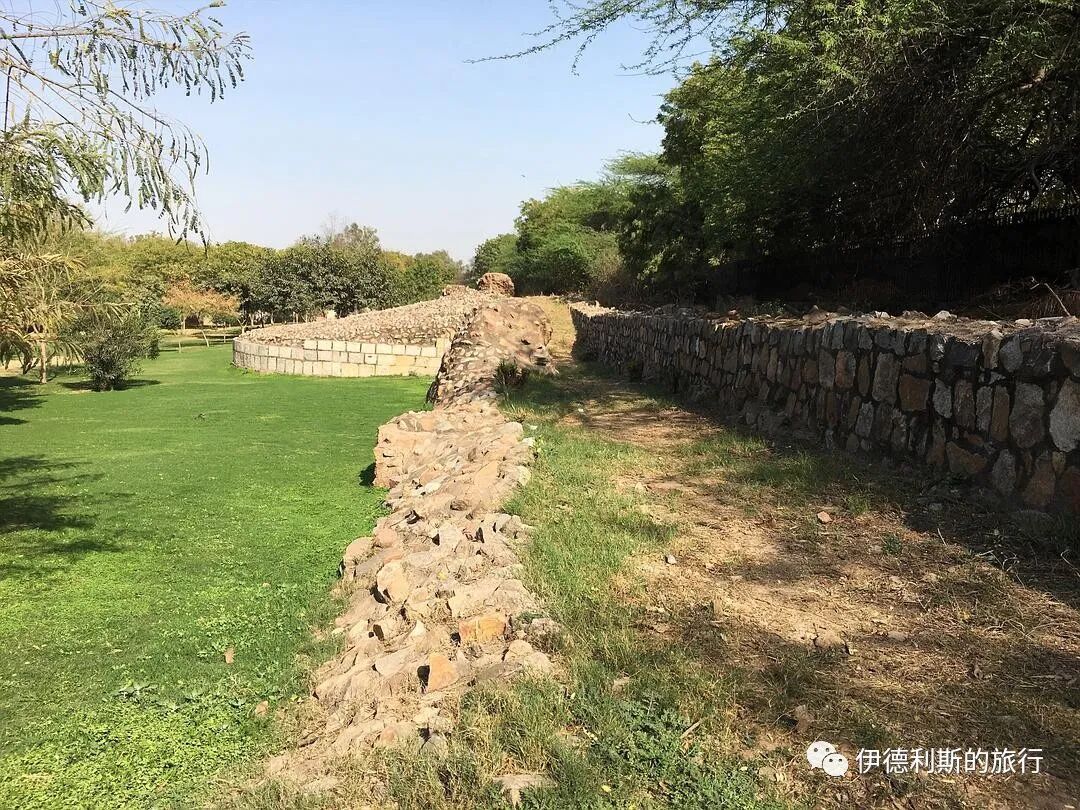
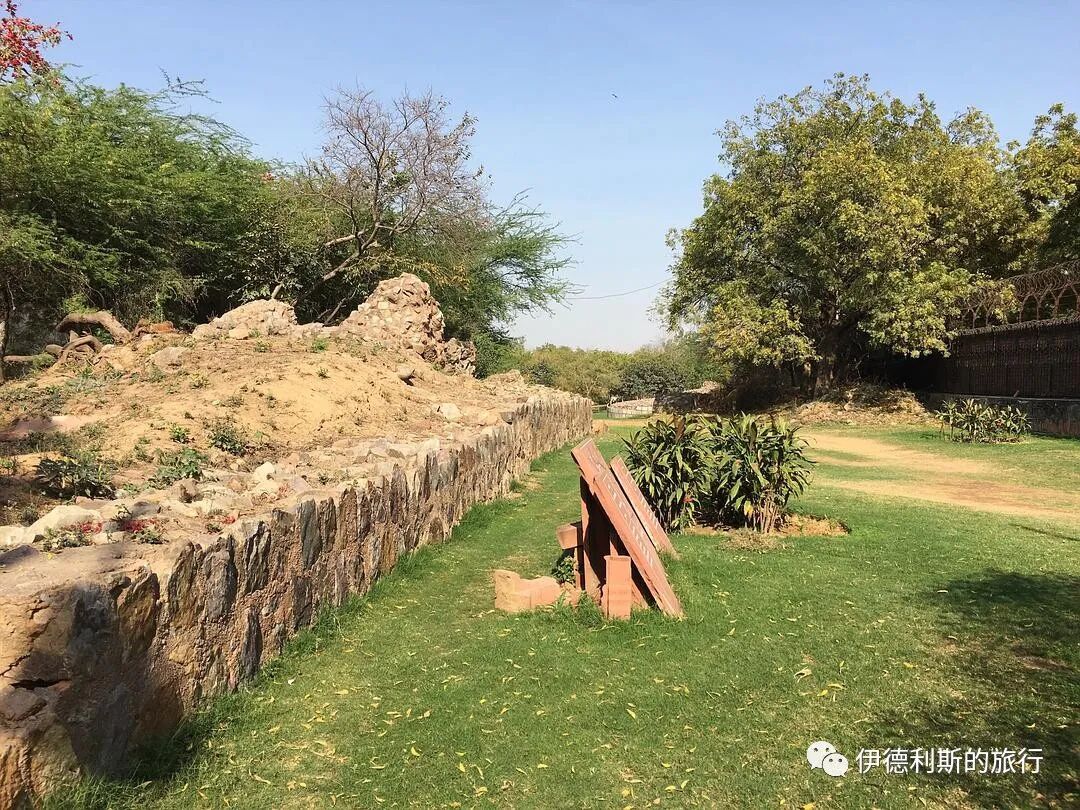
4. Siege of Siri City
1. The Chagatai army attacks
In early 1303, both of Alauddin's armies were attacking Hindu regions in the south. The Chagatai Khanate scouted that Delhi was undefended, so the Chagatai army led by Nayan Targhi launched an invasion of Delhi in August 1303. Nayan Targhi had served as a commander during the 1299 invasion of Delhi.
According to the 14th-century chronicler Ziauddin Barani, the Chagatai army had 30,000 to 40,000 soldiers at the time. They did not encounter much resistance along the way, and the Delhi Sultanate troops they passed were not strong enough to attack the Chagatai army.
Alauddin rushed back to Delhi one month before the Chagatai army arrived, but he still did not have time to prepare strong defenses. The weapons of his army had been corroded by the rainy season in South India, and he had also lost too many horses and supplies while campaigning in the south.
Alauddin quickly sent people to ask for reinforcements from various places, but the Mongols set up blockades on all roads leading to Delhi. Not only could information not get out, but all trade routes were cut off, and Delhi once again faced a shortage of goods.
Another army Alauddin had sent to South India returned to Delhi after a long journey, but they were blocked by the Mongol army and had to stay southeast of Delhi.
2. Besieging Siri
Given these conditions, Alauddin decided to set up his main camp inside the unfinished Siri Fort.
At that time, Siri Fort had dense forests and rivers on its east, west, and south sides, with only the north side having no natural defenses. Alauddin dug a trench outside his camp at Siri Fort and used door panels taken from houses in Lal Kot to build a fence along the trench. The entire defensive line was guarded by several squads of soldiers, with five fully armed elephants in front of each squad.
The Chagatai army launched two or three charges against Siri Fort but were repelled, so they turned to looting the areas around Delhi. The Chagatai army captured the Sultan's warehouses and sold goods to local residents at low prices.
After a two-month siege, Nayan Targhi could not break into Siri Fort and finally retreated with the loot he had gathered.
Ziauddin Barani, a Delhi resident who experienced the siege, later recalled, "This was the first time the citizens of Delhi felt such great fear of the Mongols. If Nayan Targhi had besieged the city for one more month, the entire city would have fallen." ”
5. Siri becomes the capital
Before the 1303 Chagatai siege of Siri Fort, Alauddin often went into battle himself. He became much more cautious after this siege. Afterward, he left almost all military operations to his generals and stayed behind to build the city of Siri.
Alauddin built a palace in Siri, making it the new capital of the Delhi Sultanate instead of Lal Kot, and the population grew quickly.
1. Tohfe Wala Gumbad mosque
The Tohfe Wala Gumbad mosque sits right next to the western wall of Siri and is one of the few buildings inside the city that still stands today. There are no records showing when it was built. This mosque looks very different from other buildings from Alauddin's time, but some of its wall structures have features typical of Khalji dynasty architecture.
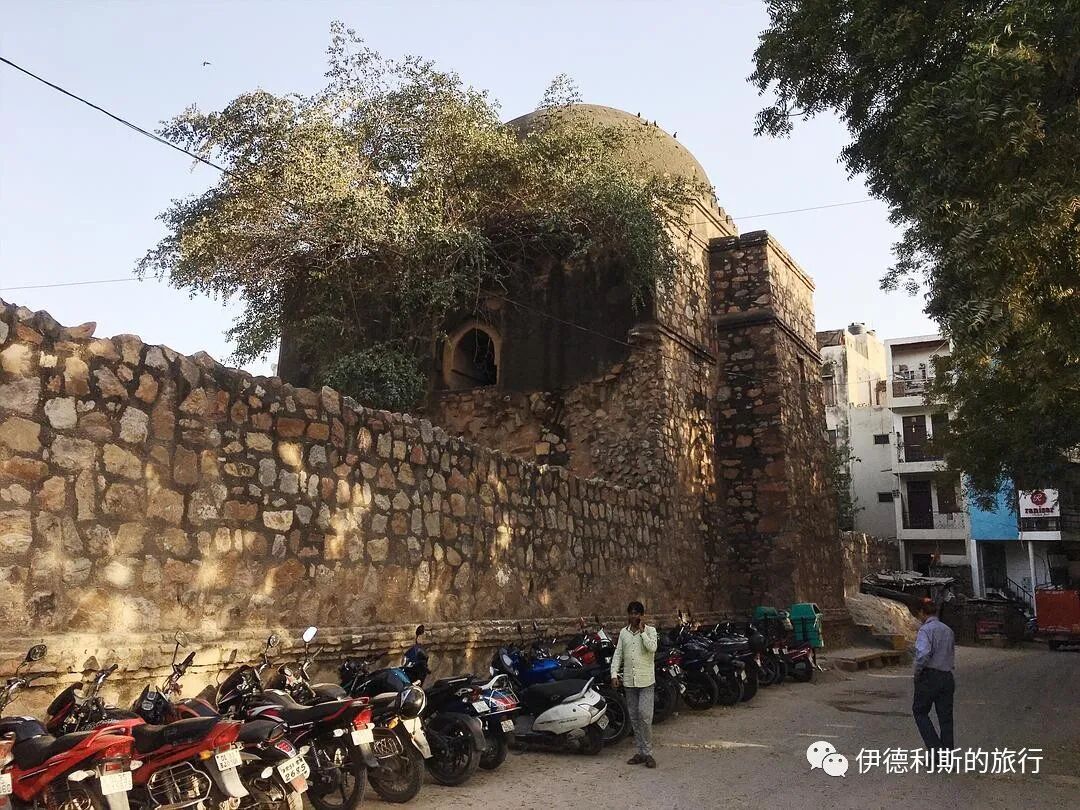
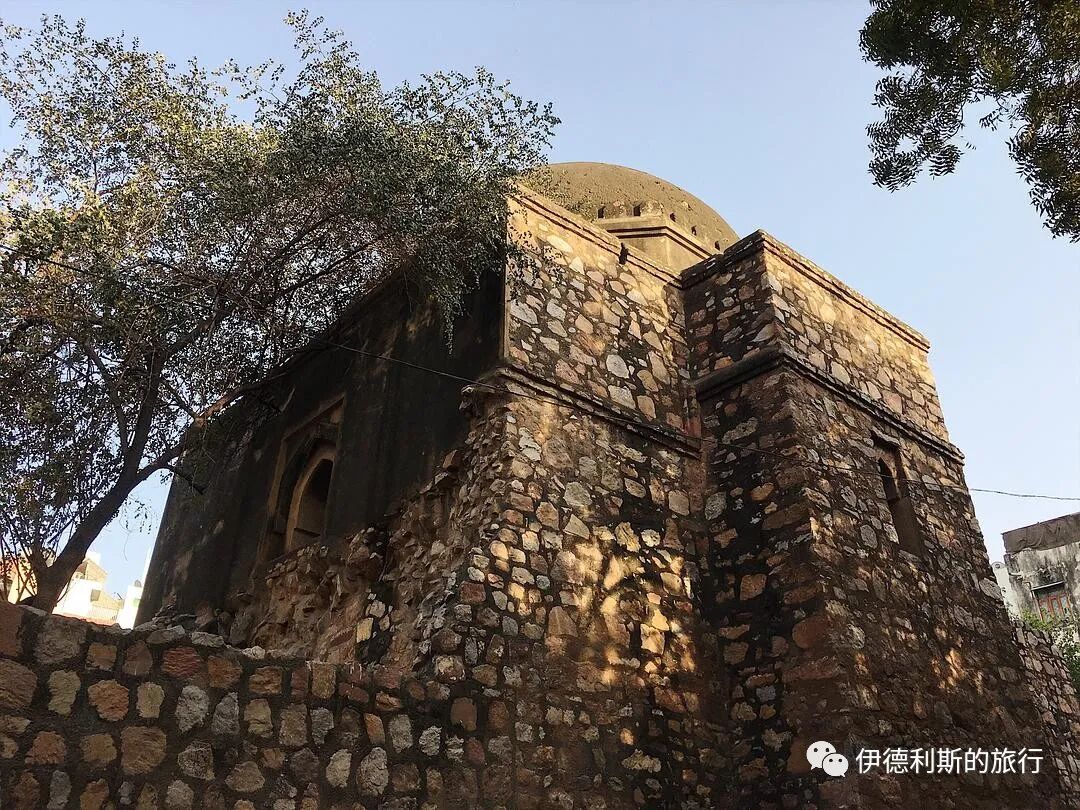
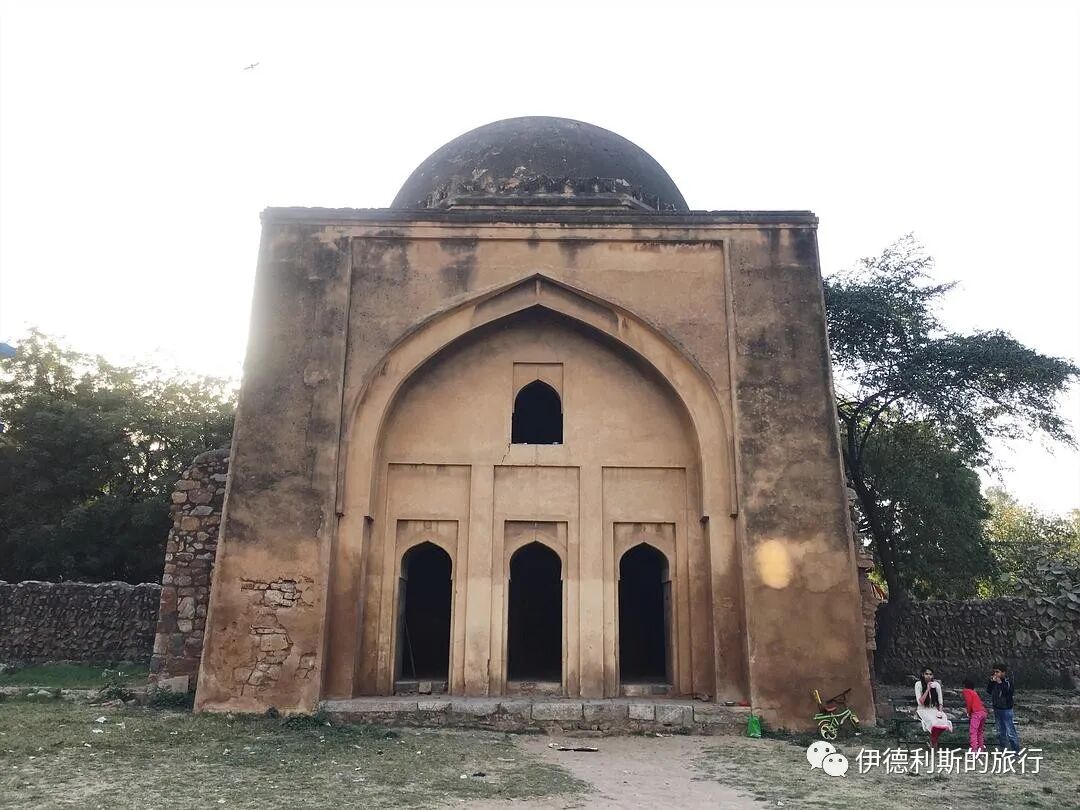
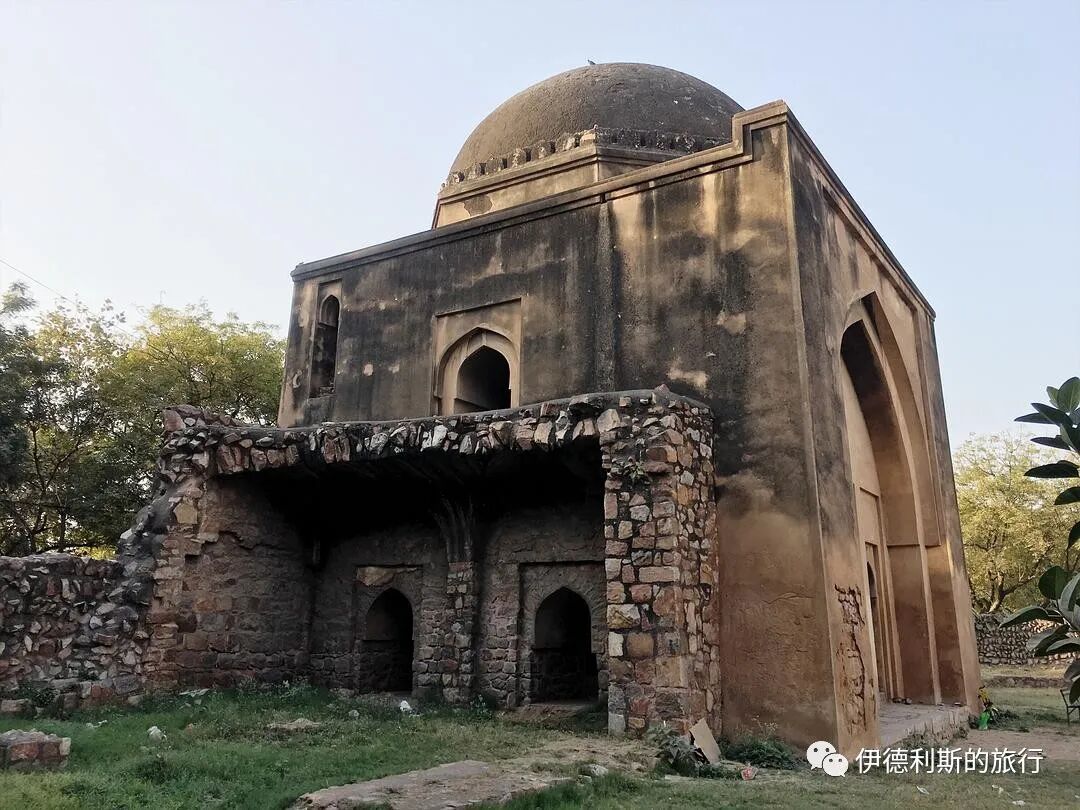
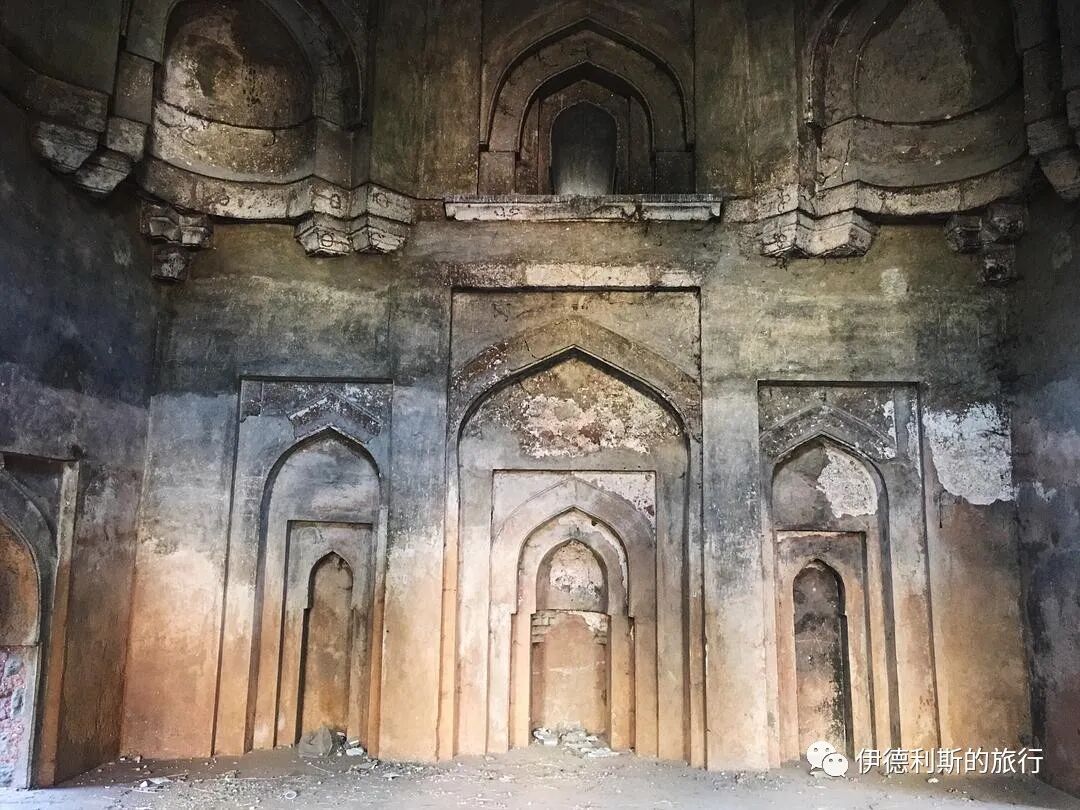
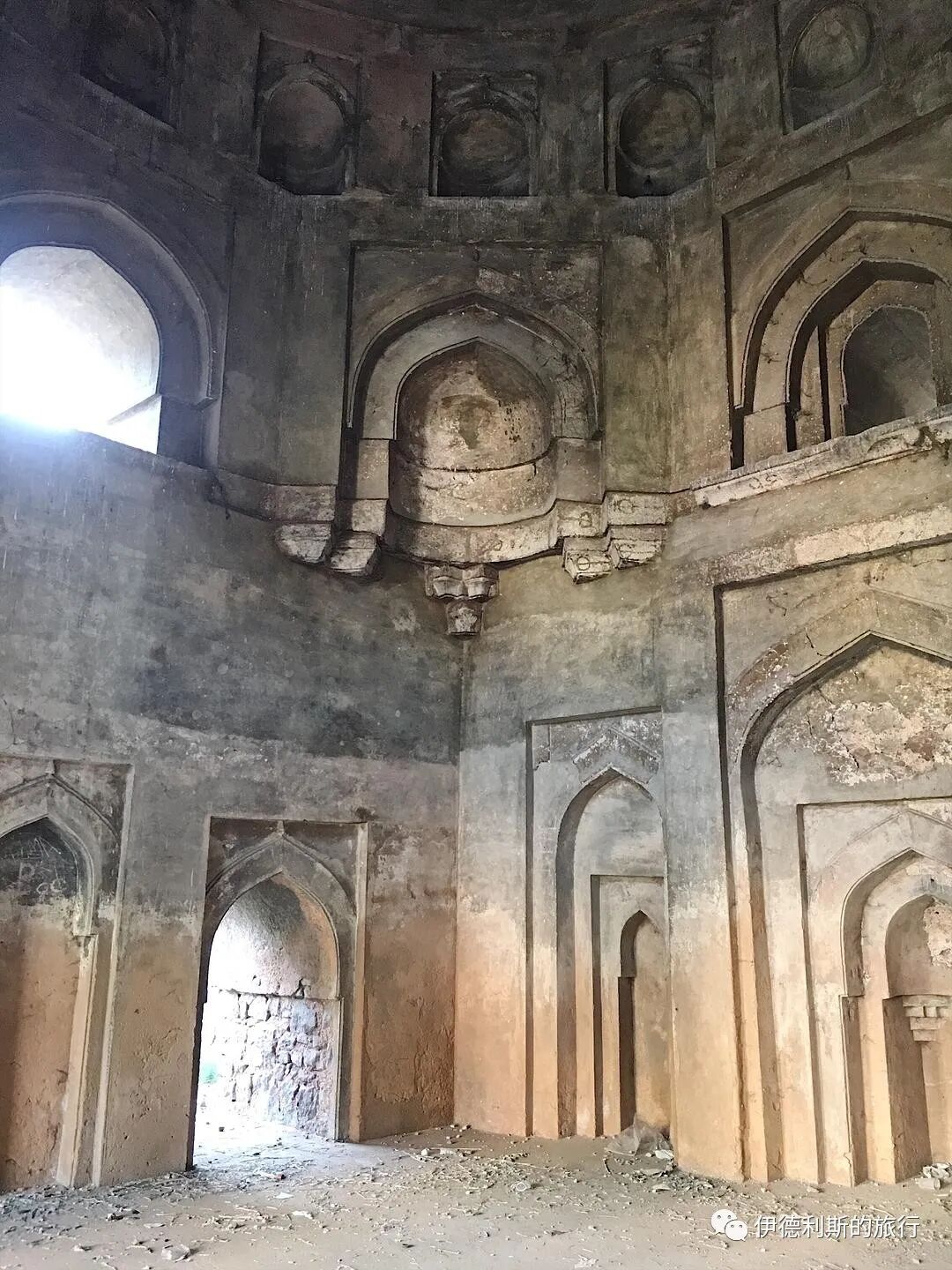
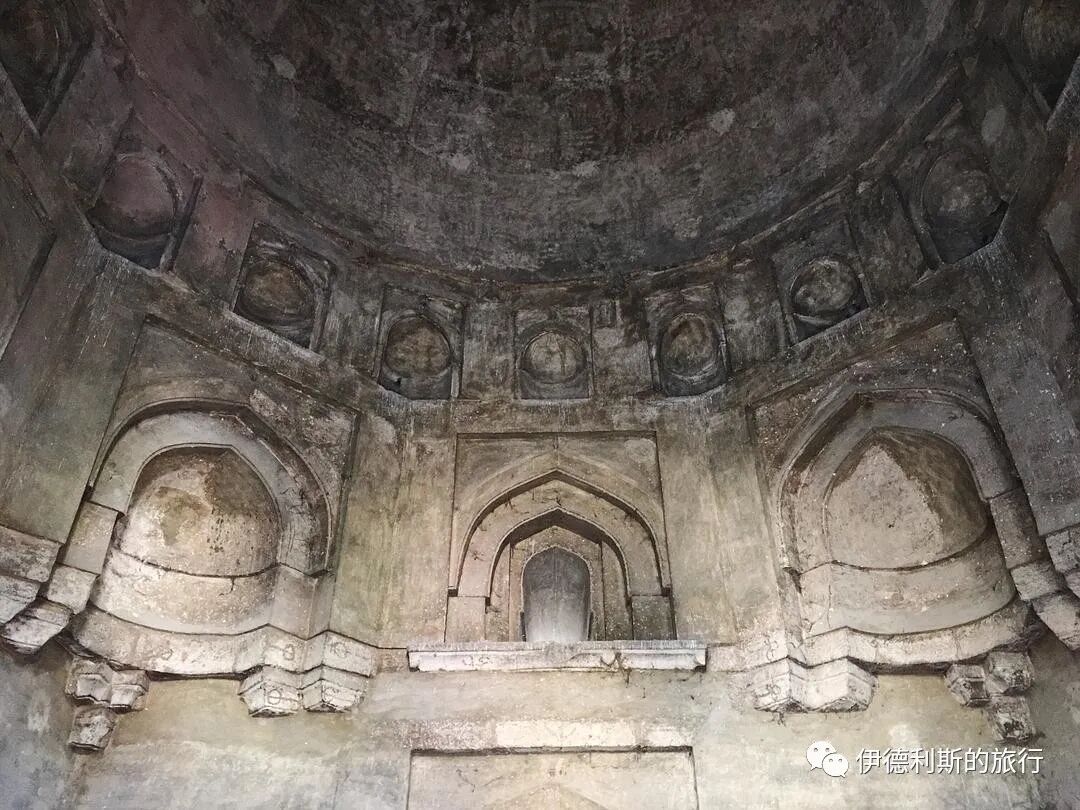
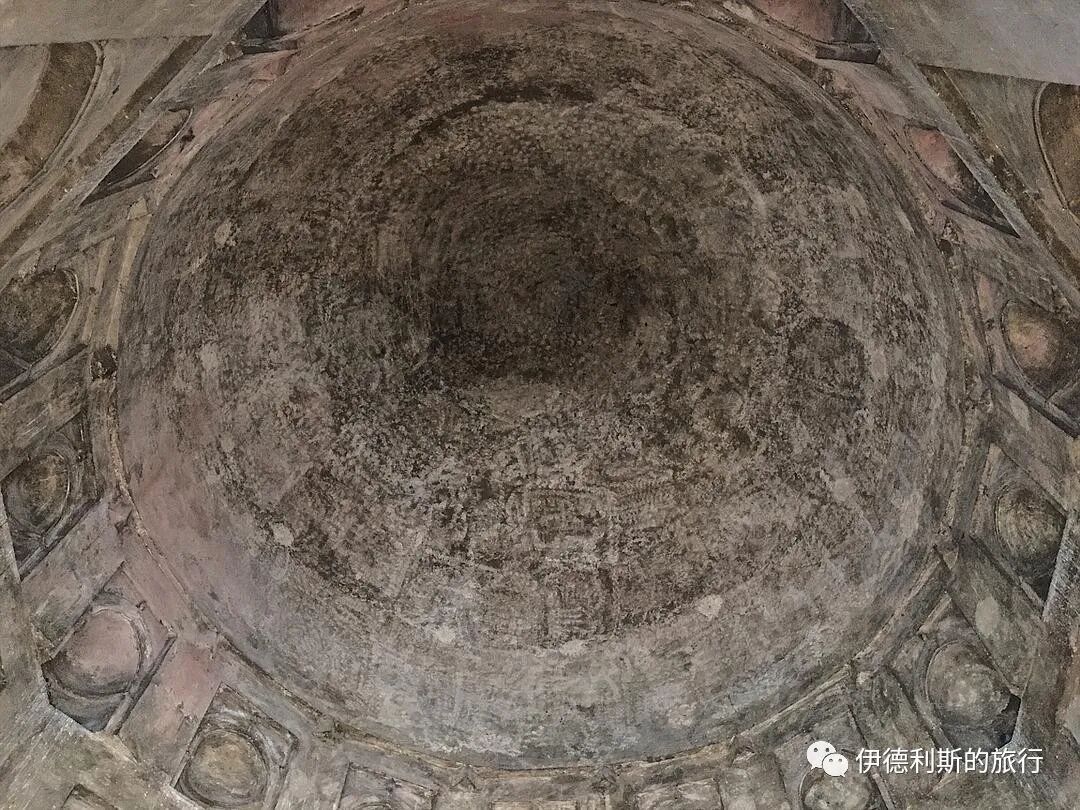
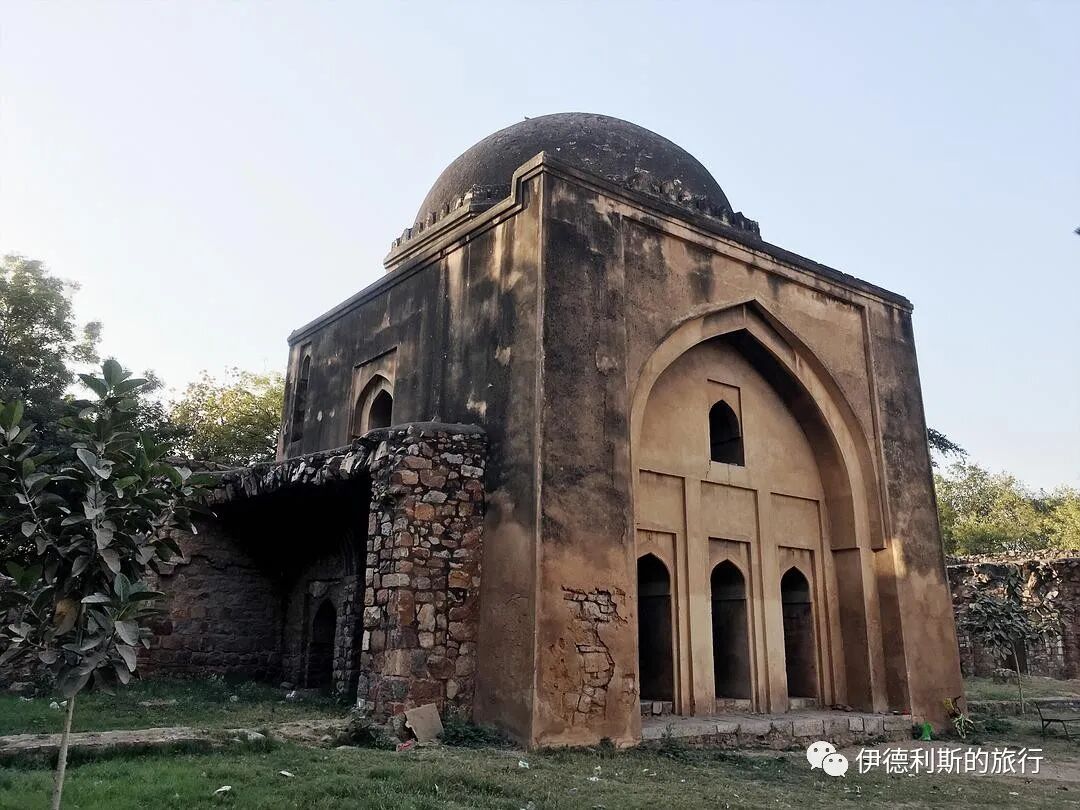
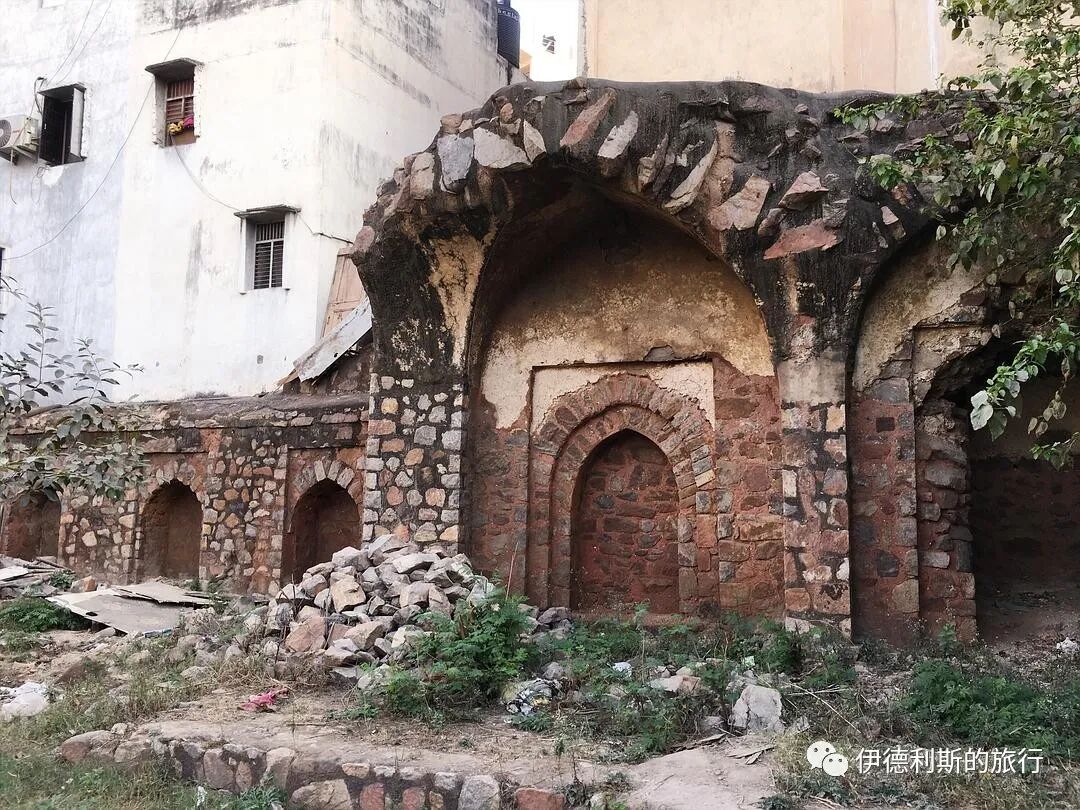
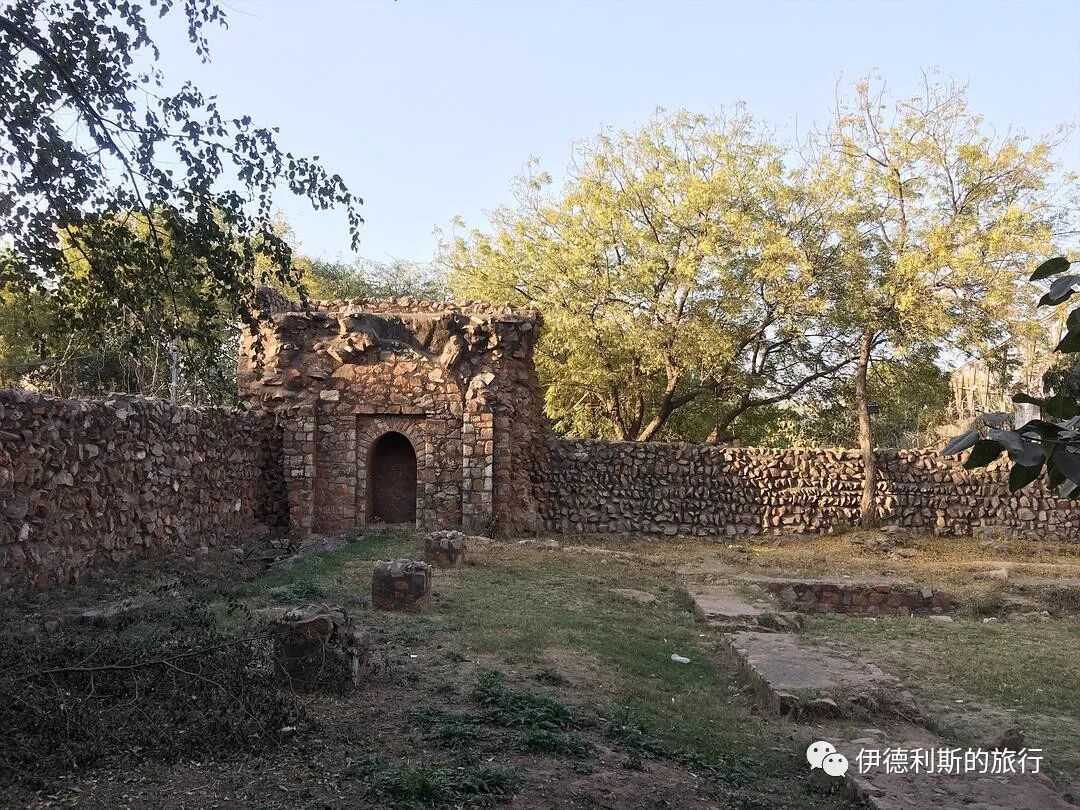
The mihrab facing west.
2. Hauz Khas royal reservoir
The term Hauz Khas comes from Persian, where 'Hauz' means a pool or lake and 'Khas' means royal.
Located west of Siri, Hauz Khas is a royal reservoir that Alauddin ordered to be dug to provide water for the city. The reservoir later silted up, but Sultan Firuz Shah Tughlaq (reigned 1351–1388) of the Tughlaq dynasty cleared it out and built many structures around it, which I will describe in detail in later diary entries.
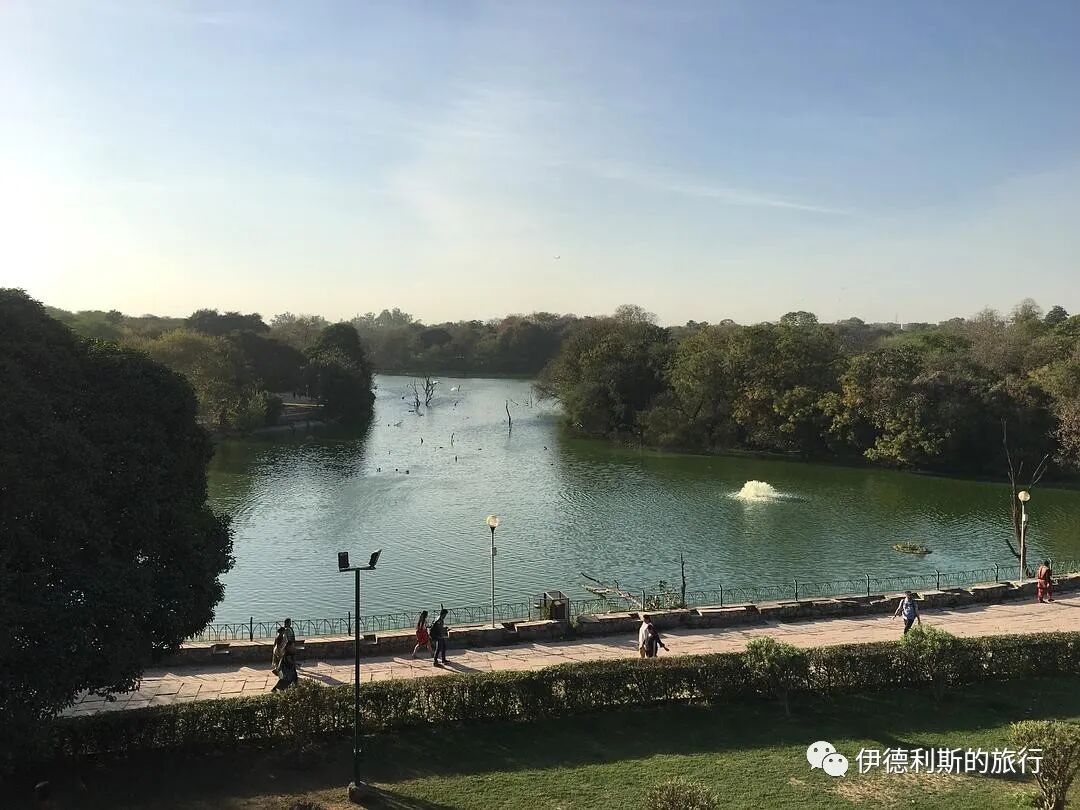
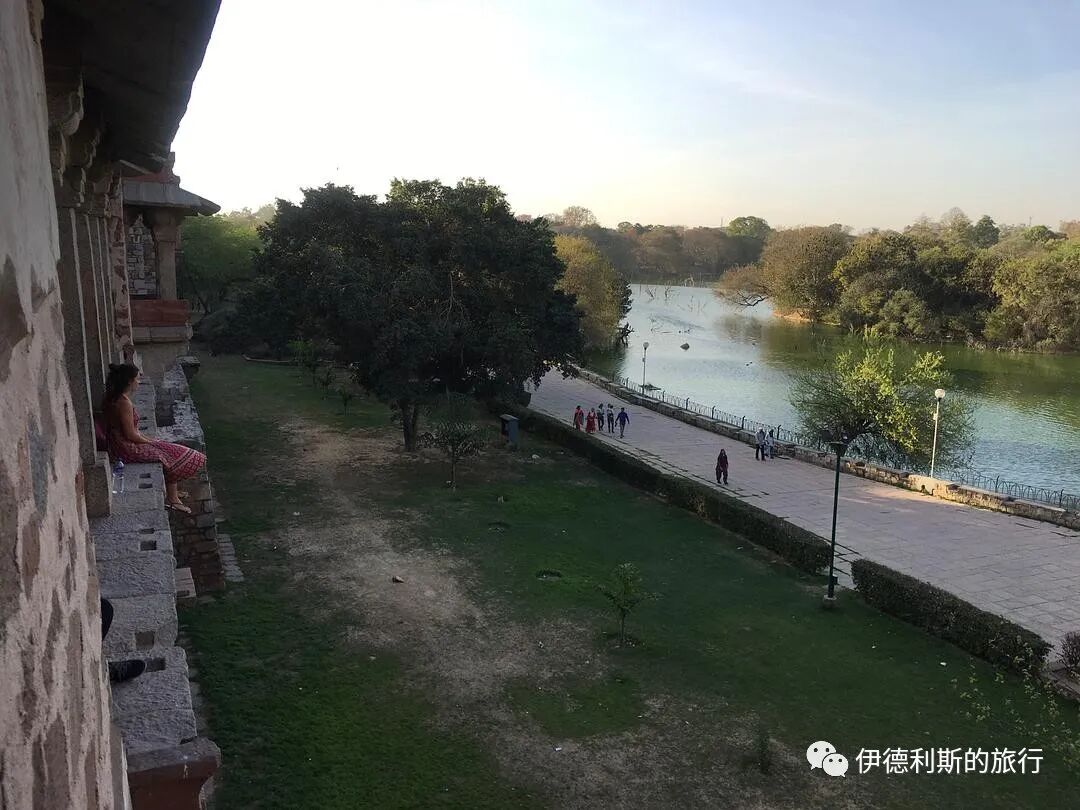
6. Mongol defeat
1. The first crushing defeat
In 1305, Ali Beg and Tartaq of the Khongirad tribe led the Chagatai army to invade India again. The Mongols had already seen Delhi's strong defenses, so they chose to bypass the city and head southeast along the foothills of the Himalayas into the Ganges Plain. On December 20, 1305, the two armies met, and the Chagatai army suffered a crushing defeat. Alauddin warmly welcomed his victorious army back at his palace in Siri. Malik Nayak's army marched in two rows, and the line was so long you could not see the end of it.
After that, 9,000 captured Mongol soldiers were presented, including top commanders like Ali Beg and Tartaq. The historian Ziauddin Barani claimed that Alauddin ordered all the prisoners to be trampled to death by elephants. The 16th-century historian Firishta stated that the skulls of 8,000 of these prisoners were used to build the city of Siri.
2. The final failure
In 1306, Duwa, the Khan of the Chagatai Khanate, sent another large army to avenge the defeat of 1305. According to the chronicler Isami, the Chagatai sent 100,000 troops, though this number is certainly exaggerated. Alauddin sent a large army led by General Malik Kafur, with Malik Tughluq—who would later establish the Tughlaq dynasty of the Delhi Sultanate—serving as the vanguard.
The two armies faced each other for a long time, with neither side willing to attack first. Eventually, the Chagatai army attacked and scattered the Delhi Sultanate's forces. However, the Delhi Sultanate quickly regrouped and completely crushed the Chagatai army. The remaining Chagatai troops fled toward the Indus River, and many Mongol cavalrymen were captured or killed. According to the Persian historian Wassaf, about 60,000 Mongols were killed, and Alauddin ordered a tower made of skulls to be built in front of the Badaun Gate in the city of Lal Kot. In his book Tarikh-i-Firuz Shahi, written in 1357, the historian Ziauddin Barani mentioned that this tower could still be seen in his time.
3. The Tower of Skulls
Today, not far west of Siri, there is a tower called the Chor Minar, which was built by order of Alauddin and has 225 holes in it. According to locals, this is the 'Tower of Thieves,' where the heads of beheaded thieves were placed on spears and stuck into the holes to scare other thieves.
However, some historians believe these skulls were actually those of the Mongol Muslims massacred by Alauddin's order. Another possibility is that they were part of the 8,000 Mongol prisoner skulls used to build Siri after the Mongol defeat in 1305.
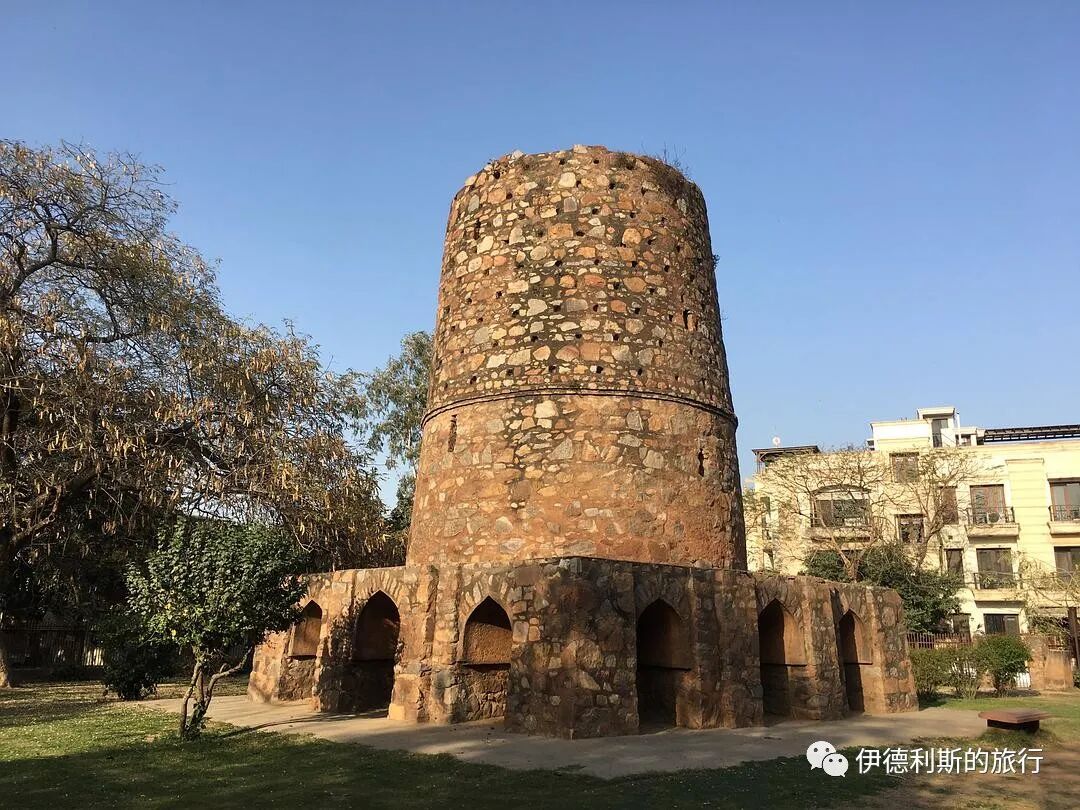
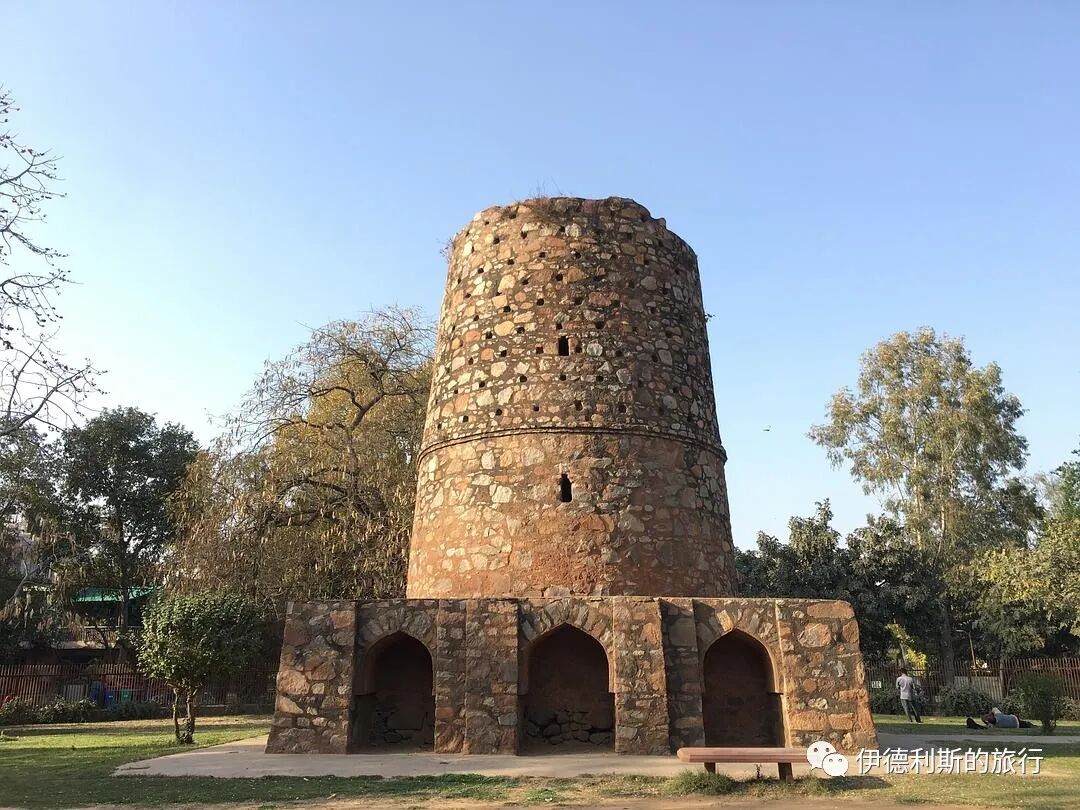
7. Reasons for the Mongol failure
The book History of the Mongol Empire's Conquest of Central Asia includes a valuable analysis in the section 'Reasons for the Mongol Defeat' regarding why the Mongol army ultimately lost to the Delhi Sultanate. I have summarized it here:
Conflicts and civil wars between the Mongol khanates made it impossible for them to send an overwhelming joint army to invade India. Duwa Khan of the Chagatai Khanate spent his life fighting in Central Asia, so he could only send one expeditionary force after another to India.
Although the number of Mongol troops was exaggerated, they included many women and children, so the actual number of combatants was not that high. Alauddin often captured many Mongol women and children, who were then sold in the markets of Delhi or killed.
The quality and toughness of the Mongol elite declined significantly by the late 13th and early 14th centuries compared to the eras of Genghis Khan and Ogedei Khan. In 1303, they retreated from the siege of Siri in Delhi without fighting a single hard battle, which would have been unthinkable under Genghis or Ogedei.
Duwa Khan of the Chagatai Khanate was the powerful ruler who ensured the Mongol expeditions to India. After Duwa died in 1307, his successors were weak. They could barely protect their core territories in Central Asia, let alone worry about India.
Sultan Alauddin Khalji of the Delhi Sultanate had excellent military skills. He mostly chose a defensive policy, especially in his later years, by focusing on castle defense. This made the Mongol army, which wanted to use cavalry in open fields, lose all its patience.
Halal Travel Guide: Delhi — Qutb Minar, Mosques and Muslim History
Articles • ali2007fr posted the article • 0 comments • 150 views • 2026-05-17 10:56
Summary: Delhi — Qutb Minar, Mosques and Muslim History is presented here as a firsthand travel account in clear English, beginning with this scene: In the Indian epic Prithviraj Raso, Anangpal Tomar, the founder of the Tomar Dynasty, built Delhi's first city, Lal Kot, in 736 AD. The account keeps its focus on Delhi Travel, Qutb Minar, Muslim Heritage while preserving the names, places, food, and historical details from the Chinese source.
Contents
1. Delhi in the Hindu Era
2. Entering the Islamic Age
1. Ghurid Dynasty
2. Muhammad of Ghor conquers Delhi
3. Qutb rules Delhi
3. The first mosque in Delhi
1. Hindu and Jain architectural components
2. Iron Pillar of Delhi
3. The Qutb Minar reaching into the clouds
4. Iltutmish expands the mosque
1. Mamluk Dynasty of the Delhi Sultanate
2. Iltutmish takes over as Sultan
3. Territorial expansion
4. Expansion of the Qutb Mosque
5. Tomb of Iltutmish
5. Alauddin Khalji expands the mosque again
1. Khalji Dynasty of the Delhi Sultanate
2. Alauddin Khalji launches a coup
3. Accumulating wealth
4. Expanding the mosque
5. Alai Minar
6. Tomb of Alauddin Khalji
6. Mughal Dynasty architecture at the Qutb Mosque
1. Tomb of Imam Zamin
2. Late Mughal Dynasty mosque
3. Mughal Dynasty era gate
1. Delhi in the Hindu Era
In the Indian epic Prithviraj Raso, Anangpal Tomar, the founder of the Tomar Dynasty, built Delhi's first city, Lal Kot, in 736 AD. However, the history in this epic is not reliable, and some modern research suggests Lal Kot was more likely built in the mid-11th century. At that time, the city of Lal Kot had a perimeter of 3.6 kilometers and was home to about five or six thousand residents.
In 1160 (some say 1180), the Chauhan (Chahamanas) Dynasty from Rajasthan defeated the Tomar Dynasty, occupied Lal Kot, and expanded it into Qila Rai Pithora. The new city was four times larger than the original, with a perimeter reaching 8 kilometers, but later generations still tended to call the city Lal Kot.
The Chauhan Dynasty was later classified as one of the Rajput dynasties, although the identity of Rajput did not exist at that time. The term Rajput comes from the Sanskrit "raja-putra," meaning "son of a king." These tribes later became a group within the Kshatriya caste and linked their origins to myths and legends.
In the image below, the blue part is the city of Lal Kot, and the yellow part is the city of Qila Rai Pithora.
2. Entering the Islamic Age
In 1193, the Ghurid Dynasty defeated the Chauhan Dynasty and occupied the city of Lal Kot in Delhi, marking Delhi's entry into the Islamic age.
1. Ghurid Dynasty
The Ghurid Dynasty appeared in eastern Iran and the Afghanistan region starting in the 9th century. Whether the rulers were Pashtun or Tajik is still a matter of debate. In 1011, the Ghurid dynasty was conquered by the Persianized Turkic Muslim Ghaznavid dynasty, shifting from Buddhism to Islam.
In 1163, Ghiyath ad-Din Muhammad became the Sultan of the Ghurid dynasty. He and his brother, Mu'izz ad-Din Muhammad Ghori, launched a series of wars, attacking from Afghanistan all the way into northwestern India. In 1186, the two brothers captured the ancient city of Lahore in Punjab and took the last Ghaznavid Sultan, Khusrau Malik, prisoner, marking the end of the Ghaznavid dynasty.
2. Muhammad of Ghor conquers Delhi
In 1192, Muhammad Ghori led a large army to fight a decisive battle against the Rajput forces of the Chauhan dynasty. Exaggerated accounts claim that Muhammad Ghori brought 120,000 fully armed soldiers, while the Rajput army consisted of 300,000 cavalry and infantry, plus 3,000 elephants. Muhammad Ghori launched a surprise attack on the Rajput army before dawn, capturing and executing Prithviraj III.
In 1193, Muhammad Ghori conquered the city of Lal Kot in Delhi, then returned to Iran to deal with threats on his western border. Before leaving, he appointed General Qutb al-Din Aibak as the governor of northern India.
3. Qutb rules Delhi
Qutb al-Din Aibak was born into a Turkic family and was sold into slavery in Persia during his childhood. After his master died, he was sold again by the master's son, eventually becoming a slave to Muhammad Ghori. Qutb al-Din Aibak was highly valued by Muhammad Ghori, who appointed him as a military commander, and he later became a general of the Ghurid dynasty.
Starting in the 9th century, as the Arab Caliphate fractured, many Islamic rulers began using Turkic military slaves from Central Asia. These Turkic slave soldiers who converted to Islam were usually called Mamluk, a word meaning 'owned' in Arabic. Many Turkic Mamluks used their superior military skills to become generals and even rulers.
After becoming governor, Qutb al-Din Aibak used Delhi as his headquarters to gradually conquer all the Rajput dynasties in northern and central India, becoming the de facto ruler of northern India.
3. The first mosque in Delhi
After capturing Delhi in 1193, Qutb al-Din Aibak began building the first mosque on the ruins of the city of Lal Kot.
The red sections in the two images below show the location of the mosque built by Qutb al-Din Aibak.
1. Hindu and Jain architectural components
The Qutb mosque is known to later generations as the Quwwat-ul-Islam mosque and is one of the oldest surviving mosques in India. According to a Persian inscription on the mosque's east gate, the mosque was built after tearing down 27 Hindu and Jain temples from the Tomar and Chauhan dynasties. Because of this, many of the mosque's building components are original pieces from those Hindu and Jain temples.
The mosque gate.
The dome likely came from the construction of a Hindu or Jain temple.
The cloister inside the mosque.
The arch in front of the prayer hall.
The prayer hall has already collapsed.
The well-preserved east wall of the mosque.
2. Iron Pillar of Delhi
The famous Iron Pillar of Delhi stands in the center of the mosque courtyard. The pillar was cast between the 3rd and 4th centuries, and the time it was moved to the mosque is still debated. The oldest Sanskrit inscription on the iron pillar is from a king named Chandra. The most common view is that this king was Chandragupta II, who ruled the Gupta Empire from 380 to 415. This period was the peak of the Gupta Empire and is considered the 'Golden Age' of ancient India, when architecture and sculpture reached their height.
The high corrosion resistance of this iron pillar has attracted great interest from scientists and archaeologists, and it is considered a the highest level of ancient Indian iron-smelting technology. The pillar's corrosion resistance is believed to come from its high phosphorus content and Delhi's alternating wet and dry climate, which allowed a protective passivation film to form on the pillar.
3. The Qutb Minar reaching into the clouds
The most striking part of the Qutb mosque is the Qutb Minar, which later generations hailed as the tallest minaret in the ancient Islamic world.
The Qutb Minar is located outside the southeast side of the mosque courtyard. It is built of red sandstone, follows the style of Iranian minarets, and its patterns were influenced by the famous Minaret of Jam in contemporary Afghanistan. The tower is 72.5 meters high and divided into 5 levels. Each level has a protruding balcony, and there are 379 spiral stairs inside.
The first level of the Qutb Minar was built under the personal supervision of Qutb al-Din Aibak himself, so it contains many praises for Muhammad Ghori. The top three levels were finished in 1220 by his son-in-law Shams ud-Din Iltutmish (who I will introduce in detail later), and the style is basically the same as the Qutb period. The Qutb Minar from this period is made of red sandstone and carved with Kufic script.
In 1369, lightning destroyed the top of the Qutb Minar, and the Sultan of the Delhi Sultanate, Firoz Shah Tughlaq, rebuilt two more levels on top. The two new levels include marble, and you can now see a clear difference in architectural style between the bottom three levels and the top two.
4. Iltutmish expands the mosque
1. Mamluk Dynasty of the Delhi Sultanate
In 1202, Muhammad Ghori became the Sultan of the Ghurid dynasty after his brother passed away. In 1206, Muhammad Ghori handed over all affairs in India to Qutb and set off from India to return to Afghanistan. On March 15, while his carriage was traveling through Punjab, Pakistan, Muhammad Ghori was assassinated.
Muhammad Ghori had no children, so he treated his Mamluk slaves like his own sons during his lifetime. After he died, the country split into several parts, and Qutb established his own sultanate with Lahore as the capital. Because this sultanate later made Delhi its capital for nearly 300 years, later generations called it the Delhi Sultanate. Also, because Qutb was a Mamluk slave, the first dynasty of the Delhi Sultanate is known to later generations as the Mamluk Dynasty or the Slave Dynasty.
In 1210, Qutb died in an accident. The Delhi Sultanate did not have a fixed rule for succession. After Qutb died, the Turkic nobles in Lahore elected Aram Shah to succeed as Sultan. But Aram Shah was not good at governing the country, so a group of forty nobles called Chihalgani soon betrayed him and elected Shams ud-Din Iltutmish to succeed as Sultan.
In 1211, Iltutmish defeated Aram Shah on the plains near Delhi and seized the throne.
2. Iltutmish takes over as Sultan
Iltutmish came from the Turkic Ilbari tribe and was sold as a Mamluk slave during his childhood. He was first taken to the slave market in the ancient Central Asian city of Bukhara, then transferred to the Ghurid dynasty and bought by Muhammad Ghori's court.
Iltutmish quickly gained the appreciation of Muhammad Ghori and became his personal attendant. Qutb, who was the governor of Lahore at the time, also took a liking to Iltutmish, so he bought him from Muhammad Ghori in Delhi for a high price.
Iltutmish was also deeply appreciated by Qutb; he married Qutb's daughter and was entrusted by Qutb with the governorship of several important regions. After Qutb died in 1210, he defeated the successor Aram Shah in 1211 and became the third Sultan of the Mamluk Dynasty of the Delhi Sultanate.
3. Territorial expansion
At the beginning of his reign, Iltutmish consolidated the territory around Delhi through a series of wars. In 1214, Iltutmish officially moved the capital to the city of Lal Kot in Delhi.
In 1221, the Mongol army under Genghis Khan arrived at the banks of the Indus River. Iltutmish did not want a direct conflict with the Mongols, so he turned eastward and conquered the Bengal region.
The upheaval caused by the Mongol invasion of Central Asia led a large number of Turkic officers to come to India, so Iltutmish recruited a powerful army and conquered Sindh and Multan in 1228.
In 1228, Iltutmish received recognition from the Caliph of the Abbasid Caliphate and was granted a robe and gifts by the Caliph, which gave the Delhi Sultanate legitimacy in the Islamic world.
4. Expansion of the Qutb Mosque
In 1225, as the political situation stabilized, Iltutmish began to expand the Qutb Mosque, and the expanded part is also called the Iltutmish Mosque.
The green part in the picture below shows the scope of the mosque expansion by Iltutmish.
During Iltutmish's expansion, Muslim craftsmen replaced the Hindu craftsmen of the Qutb era, and they no longer used components from the original temples, so the architectural style of this period is more Islamic than the Qutb period.
The best-preserved part of Iltutmish's expansion is the beautifully carved archway.
Behind the archway, in the lower right corner, is the south cloister of the Iltutmish expansion.
The east cloister is visibly simpler than the cloister built by Qutb.
The west colonnade has already collapsed.
5. Tomb of Iltutmish
Iltutmish passed away in 1236. In 1235, the year before he died, he built his own tomb next to the Qutb Mosque.
The stone carvings on the walls are very ornate, featuring bells, tassels, lotus flowers, and diamond emblems, all of which are elements from Hinduism.
The structure at the corner of the tomb's ceiling is called a squinch, which is used to connect the walls to the dome. The earliest squinches appeared in the Sassanid Empire of Persia and were later used in Islamic architecture, becoming most common in Iran.
The squinches in the Tomb of Iltutmish indicate that there was once a dome on top of the tomb, but it later collapsed.
The ornate mihrab on the west side.
The tombstone in the center is made of white marble.
The actual grave of Iltutmish is not inside this building. In 1914, Gordon Sanderson of the Archaeological Survey of India (ASI) excavated the real burial chamber 20 steps north of the Tomb of Iltutmish.
5. Alauddin Khalji expands the mosque again
In 1310, Sultan Alauddin Khalji of the Khalji dynasty of the Delhi Sultanate expanded the Qutb Mosque for the third time.
1. Khalji Dynasty of the Delhi Sultanate
The Khaljis were a Turkic people who had lived among the Pashtun tribes in Afghanistan for over 200 years. By the time they arrived in Delhi in the 13th century, their customs had become Pashtunized, leading the Turkic nobility in India to even regard them as Afghans.
The Khaljis came to Delhi to serve the Sultan during the reign of Ghiyas ud din Balban, the ninth sultan of the Mamluk dynasty of the Delhi Sultanate (1266–1287). During Balban's era, the Delhi Sultanate stabilized after being on the verge of collapse, with its territory covering most of northern India.
After Balban died in 1287, his young successor became addicted to wine and women, and the Turkic nobility fell into factional fighting. In 1290, the military officer Jalal ud din Firuz Khalji launched a coup to overthrow the Mamluk dynasty, founding the second dynasty of the Delhi Sultanate—the Khalji dynasty.
2. Alauddin Khalji launches a coup
Firuz Khalji was already 70 years old when he took the throne. He was recognized as a gentle and humble monarch, but because he was not considered a Turk, Turkic nobles always tried to overthrow him.
Firuz pardoned one person after another who tried to overthrow him, but he eventually died at the hands of his nephew and son-in-law, Alauddin Khalji. Alauddin's original name was Ali Gurshasp. His father was Firuz's eldest brother, but he died early, so Alauddin was raised by Firuz. Firuz not only raised his nephew but also married his daughter to him.
After Firuz became Sultan, Alauddin's wife suddenly became a princess and began to act very arrogantly, wanting to dominate Alauddin. Her mother also indulged her daughter's arrogant behavior, so Alauddin had a very poor relationship with both his wife and his mother-in-law.
In 1291, Alauddin became the new governor of Kara. In Kara, people who had previously wanted to overthrow Firuz began to incite Alauddin to overthrow his uncle. Combined with his miserable marriage, he began to resolve to get rid of Firuz.
After five years of raising funds and hiring an army, in 1296, Alauddin led an army of 8,000 cavalry to loot Devagiri, the capital of the Yadava dynasty in southern India, and obtained a massive amount of wealth. When Firuz heard the news, he was very happy and set out from Delhi, intending to meet Alauddin on the way to see the spoils, but Alauddin took a detour and returned directly to Kara. One of Firuz's subordinates suggested that the Sultan go to intercept Alauddin, but Firuz believed that Alauddin would bring the wealth to Delhi, so he returned to Delhi instead.
In Delhi, Alauddin's younger brother Almas Beg assured his uncle of Alauddin's loyalty and begged him to pardon Alauddin's mistakes, saying that Alauddin would likely commit suicide out of guilt. Firuz, who cared for his nephew, immediately sent someone to Kara with a letter of pardon and promised to travel to Kara afterward.
During Ramadan in 1296, Firuz led a large army to Kara to meet Alauddin. He ordered his commanders to lead the main army directly to Kara, while he crossed the Ganges River with 1,000 soldiers. As they neared Kara, Alauddin sent his brother Almas to meet his uncle and persuade him to come alone, saying that otherwise, Alauddin would commit suicide out of fear.
When he arrived at Kara, Alauddin threw himself at Firuz's feet. Firuz caressed Alauddin, kissed his cheek, and scolded him for doubting his uncle's affection for him. At that moment, Alauddin signaled his subordinate Muhammad Salim, who swung his sword at Firuz. After being struck by the first blow, Firuz struggled to run toward the boat, but Muhammad swung a second time, and Firuz was finally killed. Alauddin immediately put on the crown and declared himself the new Sultan.
Alauddin then started moving toward Delhi, recruiting as many soldiers as he could along the way. Meanwhile in Delhi, Firoz's widow named her young son Qadr Khan as the new Sultan. This made the eldest son, Arkali Khan, who was the governor of Multan, furious, and he refused to help his mother defend against Alauddin's army.
In October 1296, Alauddin reached Delhi, defeated his mother-in-law's army, and took the city. On October 21, Alauddin officially became the Sultan of the Khalji dynasty of the Delhi Sultanate.
3. Accumulating wealth
During his first year on the throne, Alauddin used generous gifts to secure his power while balancing the influence of various nobles, which quickly brought stability to Delhi. By his second year, Alauddin began arresting and killing the nobles who had served Firoz. He seized their property to gain massive wealth and replaced the old nobles with new ones loyal to him.
Starting in 1297, Alauddin defended against the Mongol armies of the Chagatai Khanate while constantly conquering Hindu kingdoms in the south. In 1306, Alauddin defeated the last Mongol army sent by the Chagatai Khan, Duwa. After that, he began regular raids into Mongol territory in Afghanistan.
Alauddin's conquest of southern India was also very successful. In 1311, Alauddin sent an army to the Pandyan dynasty at the southern tip of the Indian peninsula. They seized a huge amount of treasure, elephants, and horses, which was considered the greatest haul of wealth since Muslims first occupied Delhi.
Besides looting the Hindu kingdoms, Alauddin carried out a series of economic reforms. Regarding land, he collected land taxes directly from Hindu rural areas without using any middlemen. Regarding income, he hired many accountants in the court and gave heavy punishments for bribery. Regarding markets, Alauddin used market inspectors and spies to strictly control the prices of goods. He also built state-owned grain warehouses and banned farmers and merchants from storing grain privately. By strictly controlling market prices, he was able to maintain a massive army while paying his soldiers lower wages.
4. Expanding the mosque
After accumulating great wealth, Alauddin began expanding the Qutb Mosque in 1310. The new mosque was much larger than the one expanded by Iltutmish.
The blue section in the image below shows the area of Alauddin's mosque expansion.
The most famous part of Alauddin's mosque expansion that still stands today is the southern gate, later called the Alai Darwaza. This building uses red sandstone and white marble inlaid with beautiful Naskh (a style of Arabic calligraphy) script. The geometric, openwork marble window screens show the high skill of the Turkic craftsmen.
This building is also known as the first structure in India built strictly according to Islamic architectural principles. During the Mamluk dynasty, the domes and arches were not strictly Islamic in form and were called false domes and false arches. This building is considered the first in India to use true Islamic domes and arches, though the patterns on the building are still full of Hindu elements.
5. Alai Minar
After doubling the size of the Qutb Mosque, Alauddin Khalji began building the Alai Minar, which was planned to be twice as tall as the Qutb Minar. However, the project was abandoned after the first level reached 24.5 meters. Today, only a huge core of rubble and stone remains of the tower.
6. Tomb of Alauddin Khalji
In his final years, Alauddin grew to distrust his officers and only favored the eunuch slave general Malik Kafur. Some scholars believe Alauddin and Kafur had a homosexual relationship, but others think their bond was not sexual.
In 1315, Alauddin became seriously ill. He appointed Kafur as the regent (Na'ib), giving him actual power. Kafur convinced Alauddin to purge many capable ministers and kept outsiders from seeing him during his final days.
As Alauddin lay dying, Kafur gathered all the important officials at his bedside to announce that Alauddin's 6-year-old son, Shihabuddin Omar, was the new heir and that he himself was the regent. According to the 14th-century Indian chronicler Abdul Malik Isami, Alauddin said nothing while in bed, and his silence was taken as consent.
Alauddin died on the night of January 4, 1316. Kafur buried him in the tomb already built in the southwest corner of the Qutb Mosque. According to the 14th-century historian Ziauddin Barani, it was Kafur who killed Alauddin.
Alauddin's tomb is connected to the madrasa (Islamic school) he built during his lifetime. This is also the first building in India where an Islamic madrasa and a tomb are connected. The madrasa is well-preserved today, but the tomb is badly damaged and has lost its dome.
Madrasa
Dome
A tomb with a completely collapsed roof.
The room in the middle is likely where Alauddin is buried.
The image below shows a satellite view and a reconstruction of the Qutb Mosque. The red circle marks the mosque built by Qutb in 1193, the green circle marks the expansion by Iltutmish in 1225, and the blue circle marks the expansion by Alauddin in 1310. The Alauddin tomb and madrasa are inside the blue circle at the southwest corner.
Reconstruction image link: https://visual.ly/community/in ... mplex
6. Mughal Dynasty architecture at the Qutb Mosque
1. Tomb of Imam Zamin
Next to the south gate, Alai Darwaza, is the tomb of Imam Zamin, built in 1539. Not much is known about this imam's life, but he was likely an imam at the Qutb Mosque.
Door lintel.
The mihrab on the west side.
2. Late Mughal Dynasty mosque
This is a small mosque built during the late Mughal Empire, located northeast of the Qutb Mosque.
Prayer hall.
The mihrab on the west side.
3. Mughal Dynasty era gate
There are also some Mughal-era tombs scattered around the mosque. view all
Summary: Delhi — Qutb Minar, Mosques and Muslim History is presented here as a firsthand travel account in clear English, beginning with this scene: In the Indian epic Prithviraj Raso, Anangpal Tomar, the founder of the Tomar Dynasty, built Delhi's first city, Lal Kot, in 736 AD. The account keeps its focus on Delhi Travel, Qutb Minar, Muslim Heritage while preserving the names, places, food, and historical details from the Chinese source.
Contents
1. Delhi in the Hindu Era
2. Entering the Islamic Age
1. Ghurid Dynasty
2. Muhammad of Ghor conquers Delhi
3. Qutb rules Delhi
3. The first mosque in Delhi
1. Hindu and Jain architectural components
2. Iron Pillar of Delhi
3. The Qutb Minar reaching into the clouds
4. Iltutmish expands the mosque
1. Mamluk Dynasty of the Delhi Sultanate
2. Iltutmish takes over as Sultan
3. Territorial expansion
4. Expansion of the Qutb Mosque
5. Tomb of Iltutmish
5. Alauddin Khalji expands the mosque again
1. Khalji Dynasty of the Delhi Sultanate
2. Alauddin Khalji launches a coup
3. Accumulating wealth
4. Expanding the mosque
5. Alai Minar
6. Tomb of Alauddin Khalji
6. Mughal Dynasty architecture at the Qutb Mosque
1. Tomb of Imam Zamin
2. Late Mughal Dynasty mosque
3. Mughal Dynasty era gate
1. Delhi in the Hindu Era
In the Indian epic Prithviraj Raso, Anangpal Tomar, the founder of the Tomar Dynasty, built Delhi's first city, Lal Kot, in 736 AD. However, the history in this epic is not reliable, and some modern research suggests Lal Kot was more likely built in the mid-11th century. At that time, the city of Lal Kot had a perimeter of 3.6 kilometers and was home to about five or six thousand residents.
In 1160 (some say 1180), the Chauhan (Chahamanas) Dynasty from Rajasthan defeated the Tomar Dynasty, occupied Lal Kot, and expanded it into Qila Rai Pithora. The new city was four times larger than the original, with a perimeter reaching 8 kilometers, but later generations still tended to call the city Lal Kot.
The Chauhan Dynasty was later classified as one of the Rajput dynasties, although the identity of Rajput did not exist at that time. The term Rajput comes from the Sanskrit "raja-putra," meaning "son of a king." These tribes later became a group within the Kshatriya caste and linked their origins to myths and legends.
In the image below, the blue part is the city of Lal Kot, and the yellow part is the city of Qila Rai Pithora.
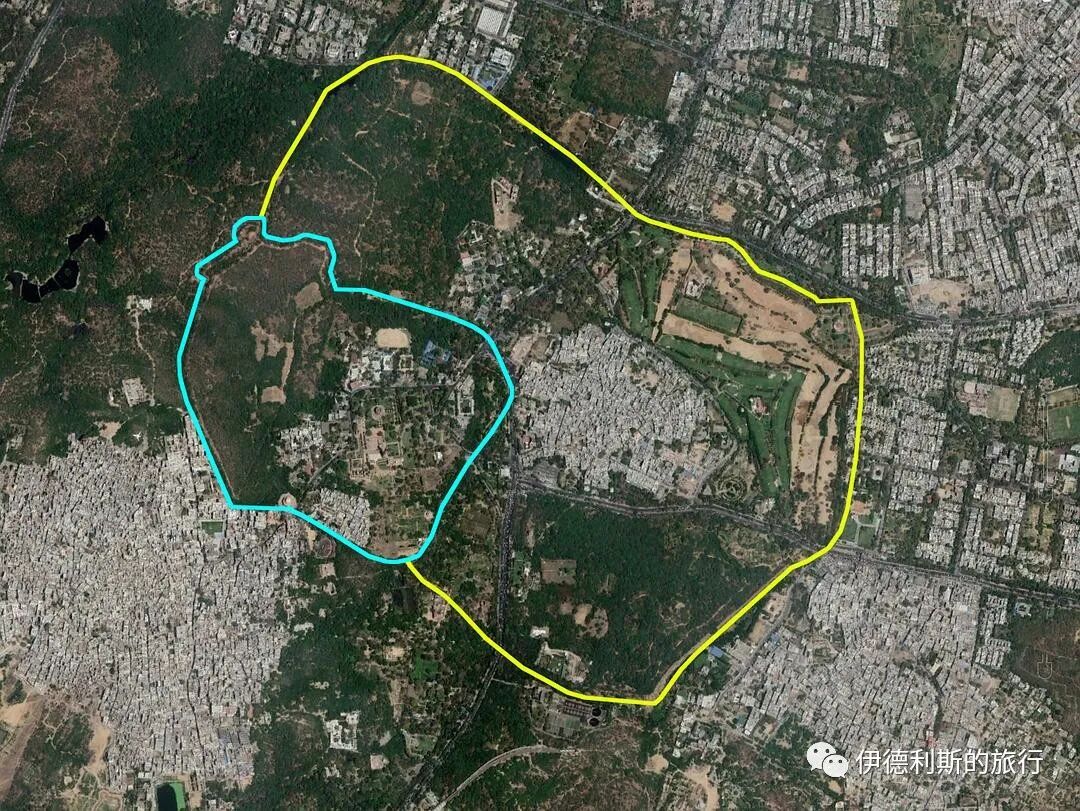
2. Entering the Islamic Age
In 1193, the Ghurid Dynasty defeated the Chauhan Dynasty and occupied the city of Lal Kot in Delhi, marking Delhi's entry into the Islamic age.
1. Ghurid Dynasty
The Ghurid Dynasty appeared in eastern Iran and the Afghanistan region starting in the 9th century. Whether the rulers were Pashtun or Tajik is still a matter of debate. In 1011, the Ghurid dynasty was conquered by the Persianized Turkic Muslim Ghaznavid dynasty, shifting from Buddhism to Islam.
In 1163, Ghiyath ad-Din Muhammad became the Sultan of the Ghurid dynasty. He and his brother, Mu'izz ad-Din Muhammad Ghori, launched a series of wars, attacking from Afghanistan all the way into northwestern India. In 1186, the two brothers captured the ancient city of Lahore in Punjab and took the last Ghaznavid Sultan, Khusrau Malik, prisoner, marking the end of the Ghaznavid dynasty.
2. Muhammad of Ghor conquers Delhi
In 1192, Muhammad Ghori led a large army to fight a decisive battle against the Rajput forces of the Chauhan dynasty. Exaggerated accounts claim that Muhammad Ghori brought 120,000 fully armed soldiers, while the Rajput army consisted of 300,000 cavalry and infantry, plus 3,000 elephants. Muhammad Ghori launched a surprise attack on the Rajput army before dawn, capturing and executing Prithviraj III.
In 1193, Muhammad Ghori conquered the city of Lal Kot in Delhi, then returned to Iran to deal with threats on his western border. Before leaving, he appointed General Qutb al-Din Aibak as the governor of northern India.
3. Qutb rules Delhi
Qutb al-Din Aibak was born into a Turkic family and was sold into slavery in Persia during his childhood. After his master died, he was sold again by the master's son, eventually becoming a slave to Muhammad Ghori. Qutb al-Din Aibak was highly valued by Muhammad Ghori, who appointed him as a military commander, and he later became a general of the Ghurid dynasty.
Starting in the 9th century, as the Arab Caliphate fractured, many Islamic rulers began using Turkic military slaves from Central Asia. These Turkic slave soldiers who converted to Islam were usually called Mamluk, a word meaning 'owned' in Arabic. Many Turkic Mamluks used their superior military skills to become generals and even rulers.
After becoming governor, Qutb al-Din Aibak used Delhi as his headquarters to gradually conquer all the Rajput dynasties in northern and central India, becoming the de facto ruler of northern India.
3. The first mosque in Delhi
After capturing Delhi in 1193, Qutb al-Din Aibak began building the first mosque on the ruins of the city of Lal Kot.
The red sections in the two images below show the location of the mosque built by Qutb al-Din Aibak.
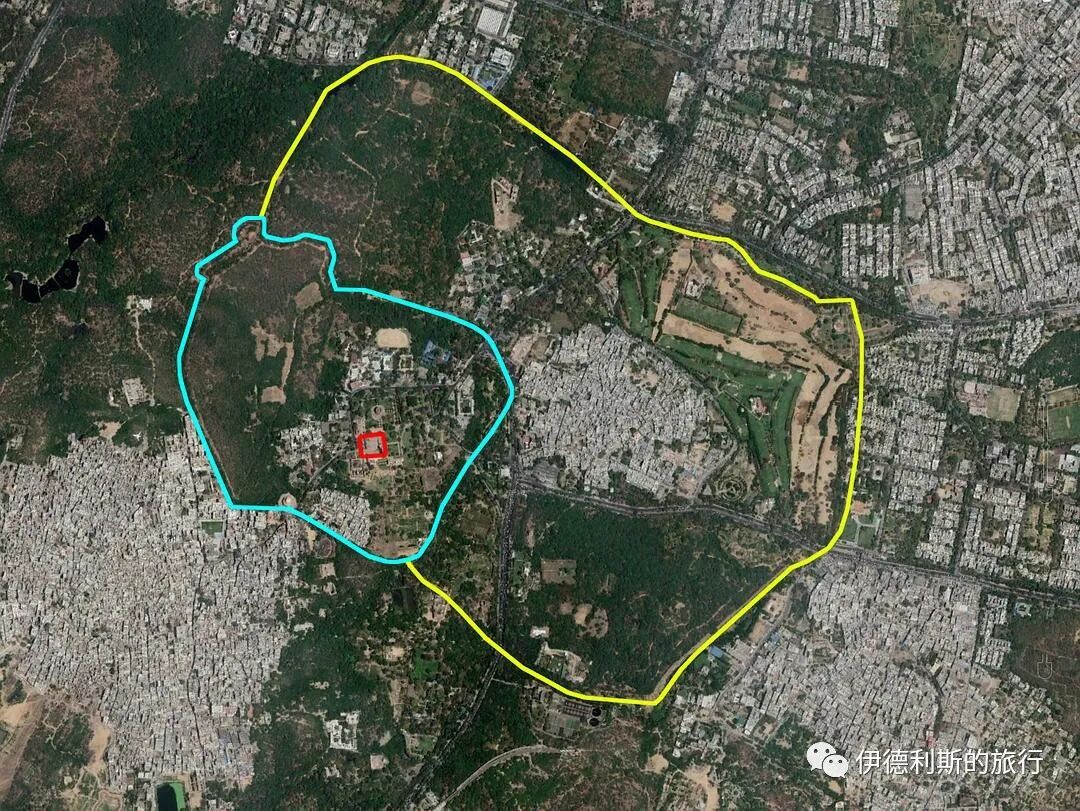
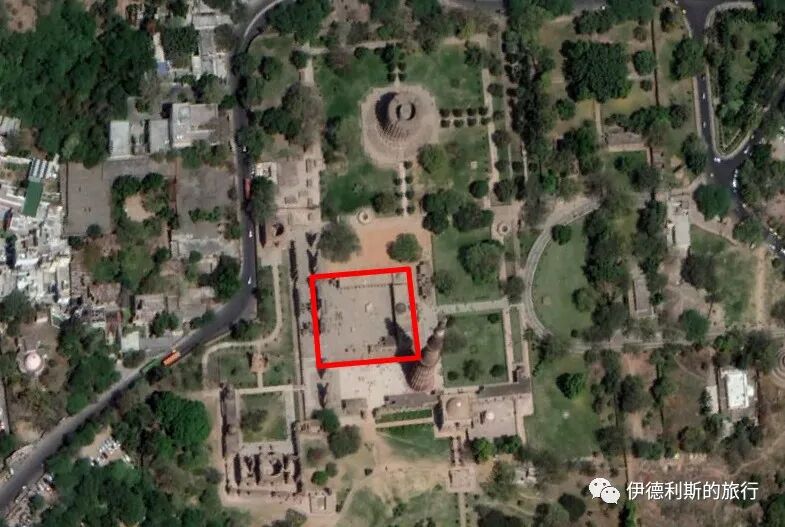
1. Hindu and Jain architectural components
The Qutb mosque is known to later generations as the Quwwat-ul-Islam mosque and is one of the oldest surviving mosques in India. According to a Persian inscription on the mosque's east gate, the mosque was built after tearing down 27 Hindu and Jain temples from the Tomar and Chauhan dynasties. Because of this, many of the mosque's building components are original pieces from those Hindu and Jain temples.
The mosque gate.
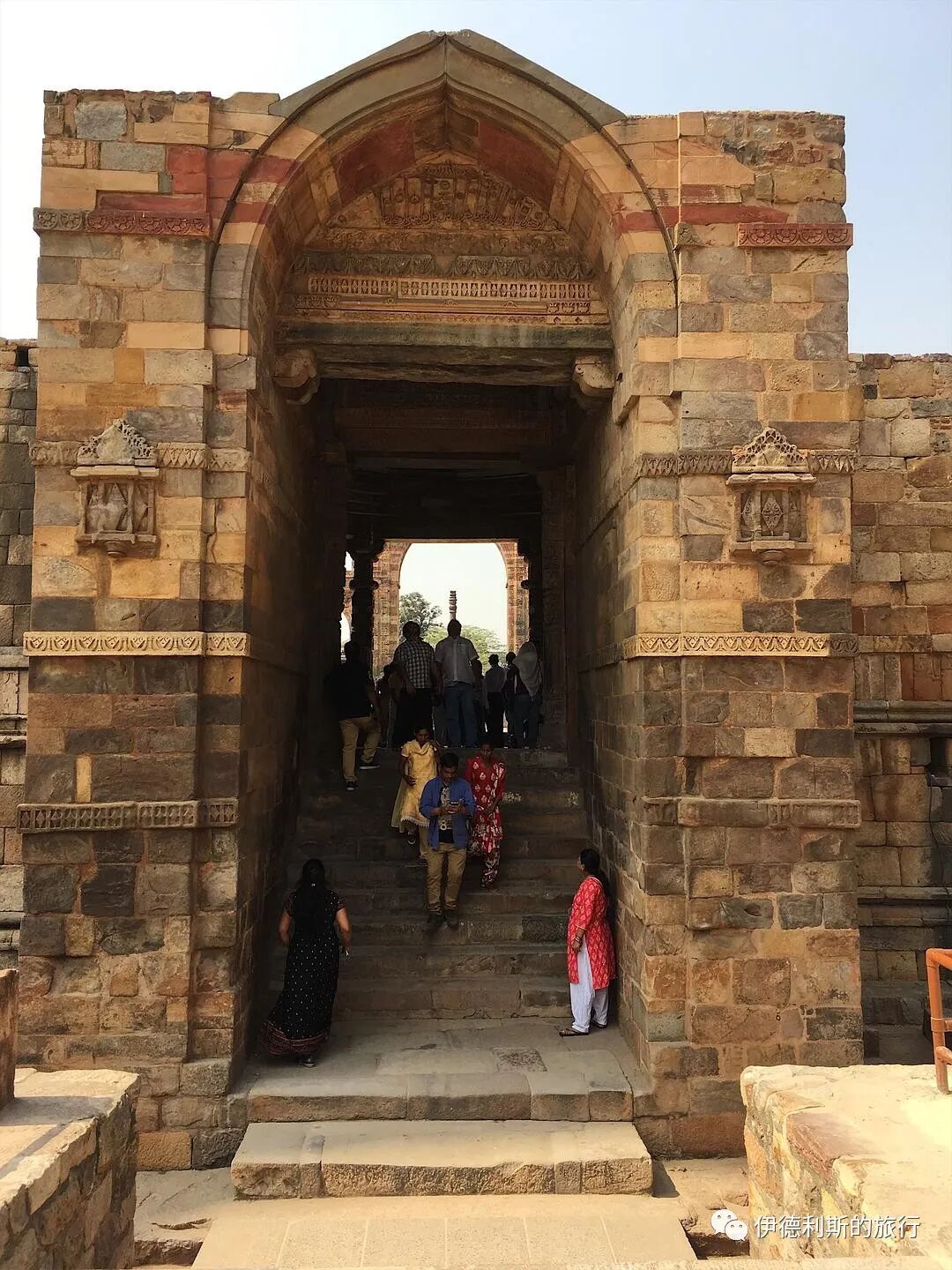
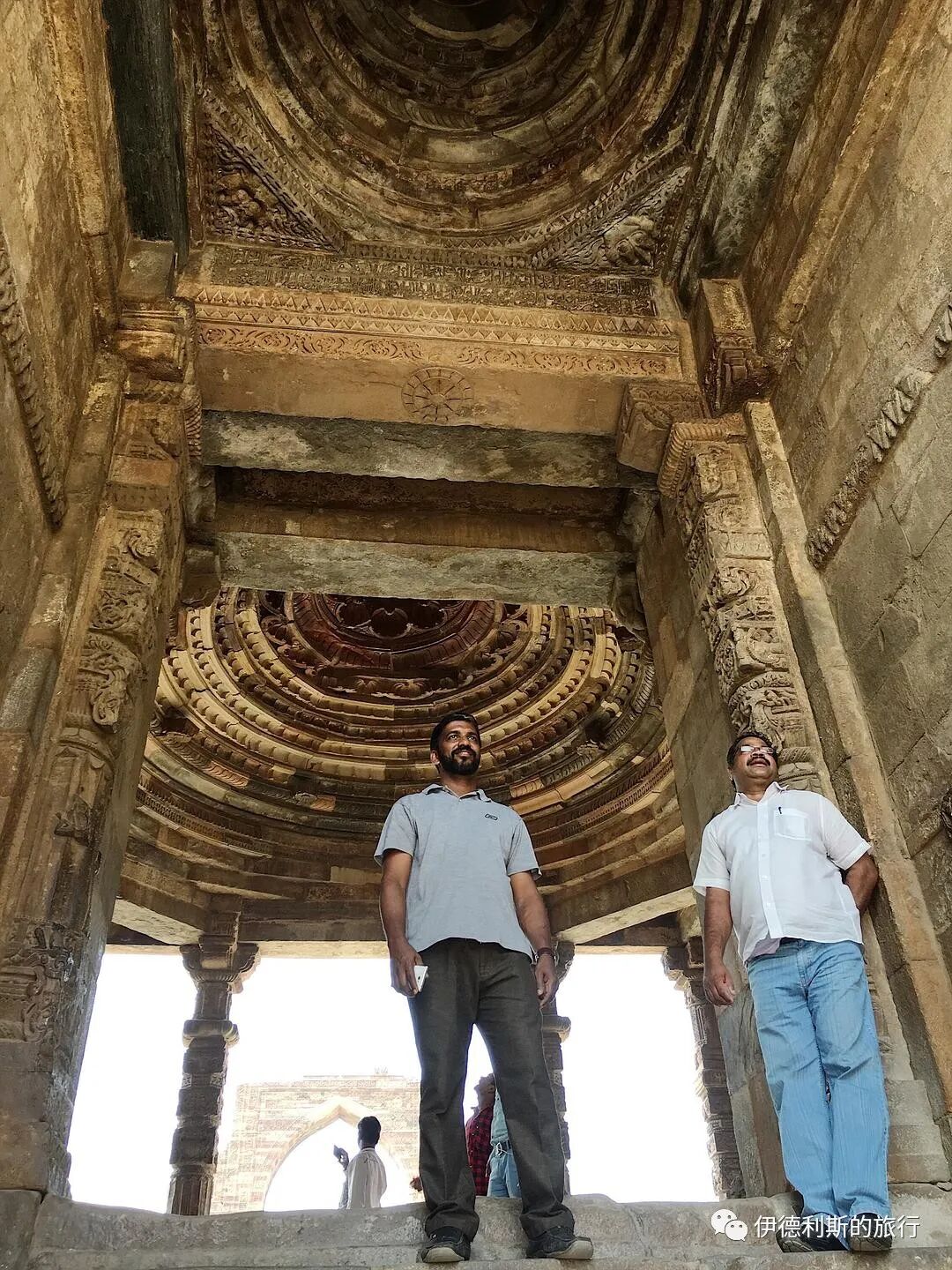
The dome likely came from the construction of a Hindu or Jain temple.
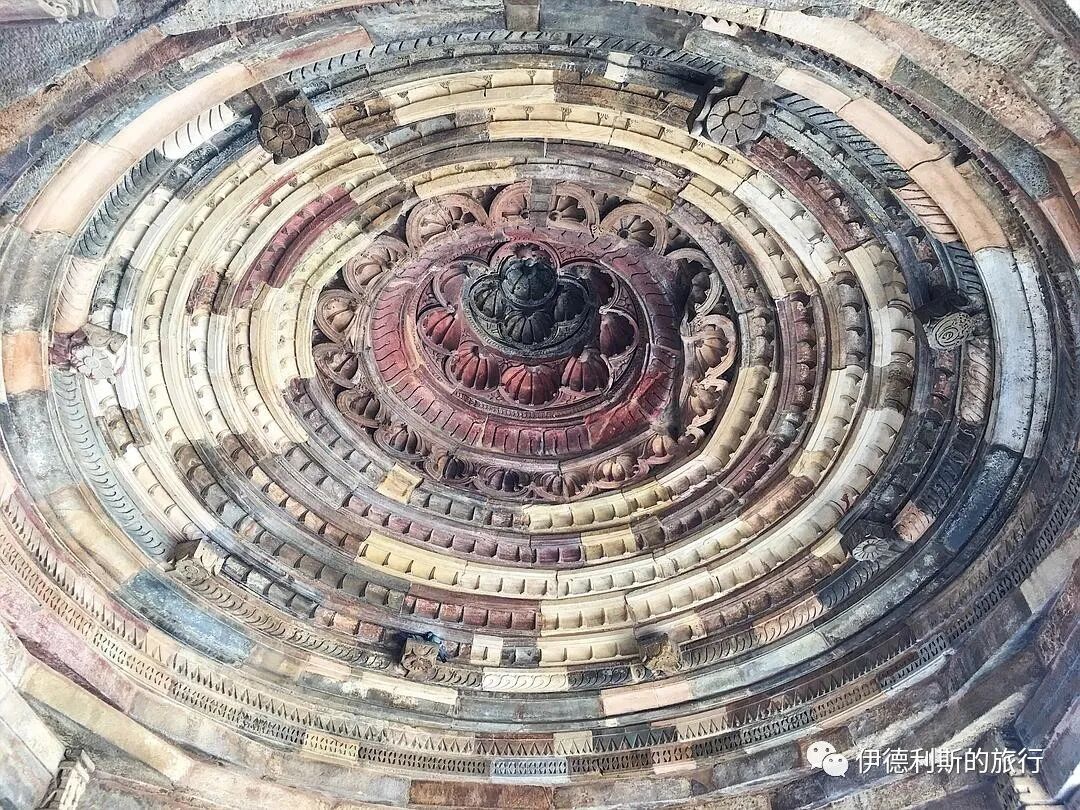
The cloister inside the mosque.
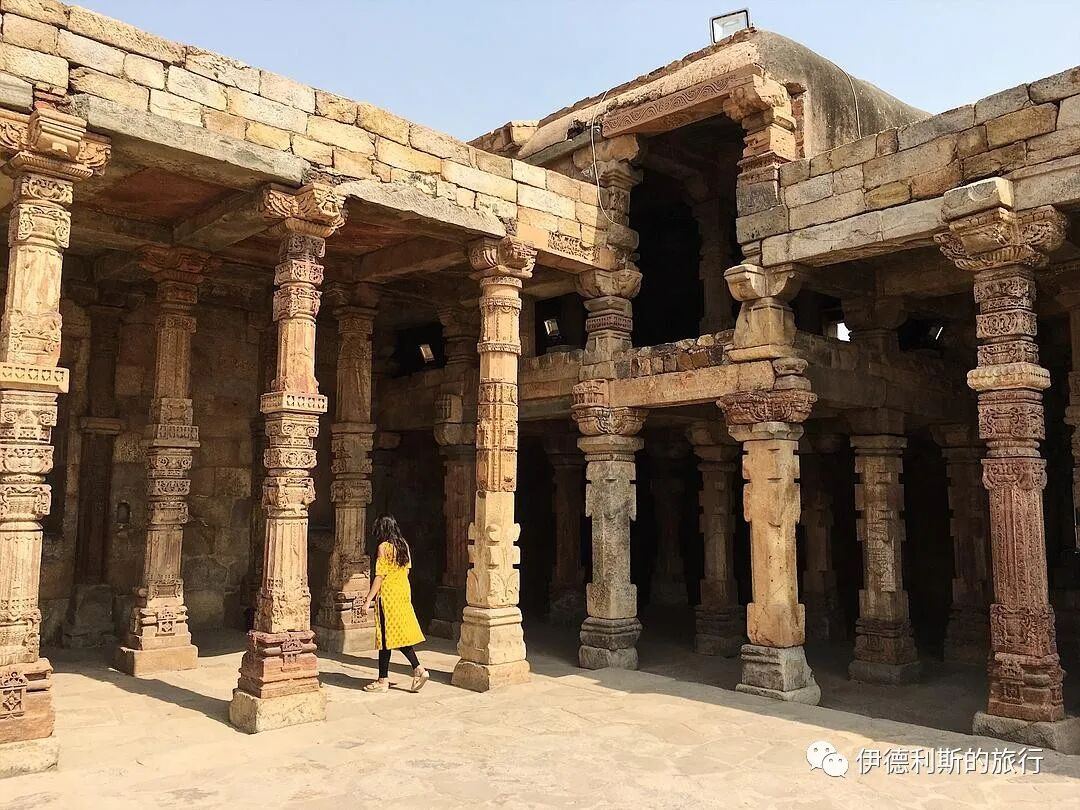
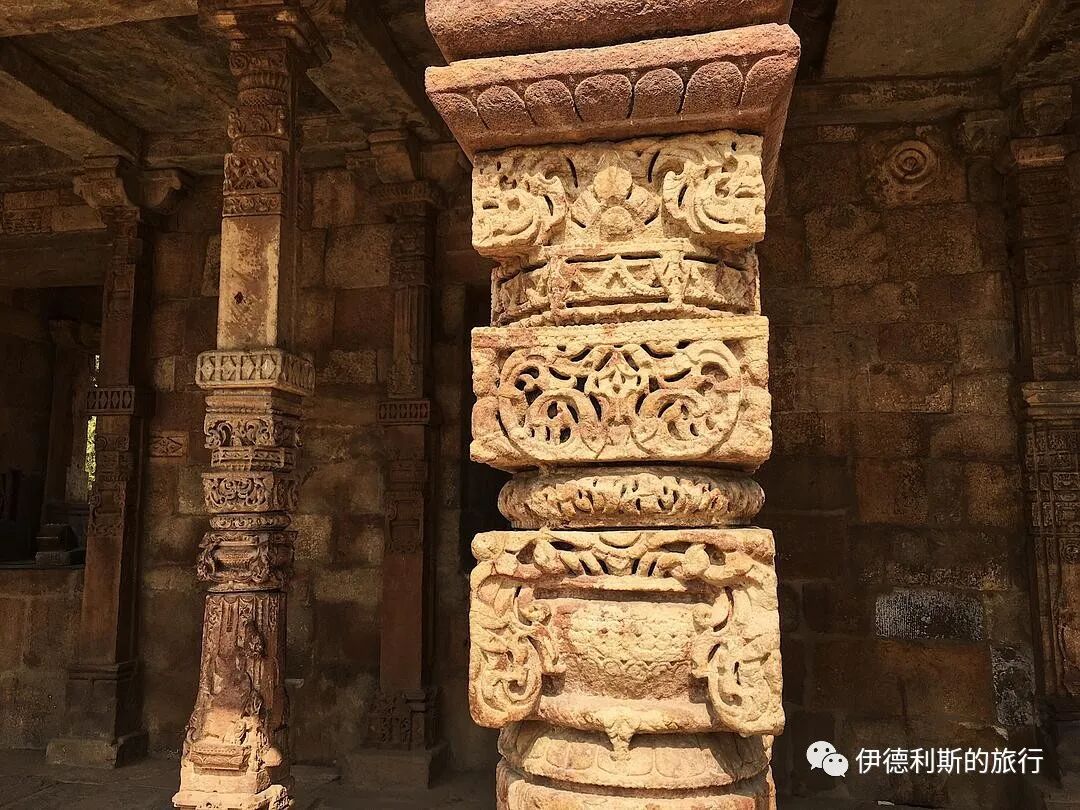
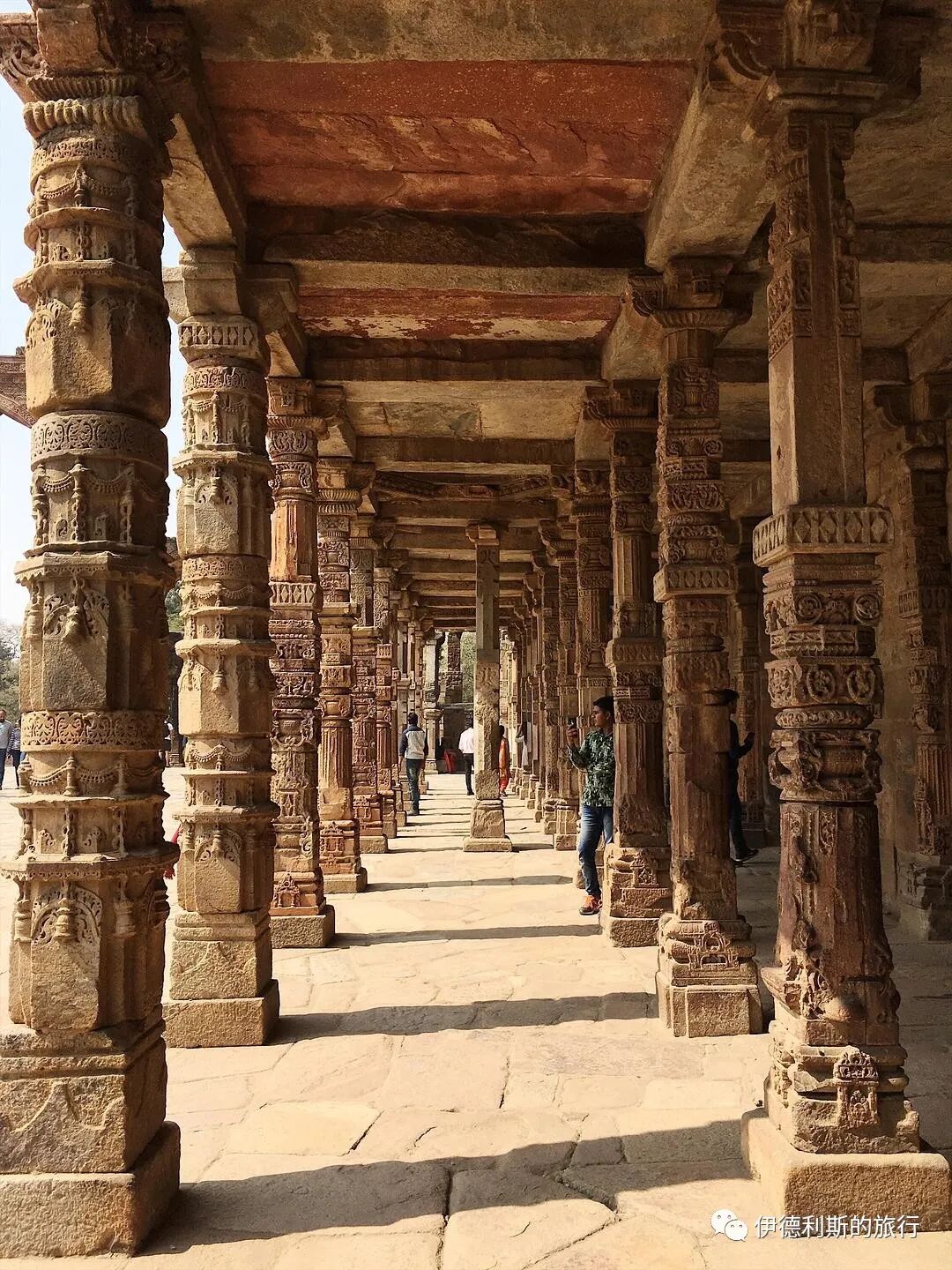
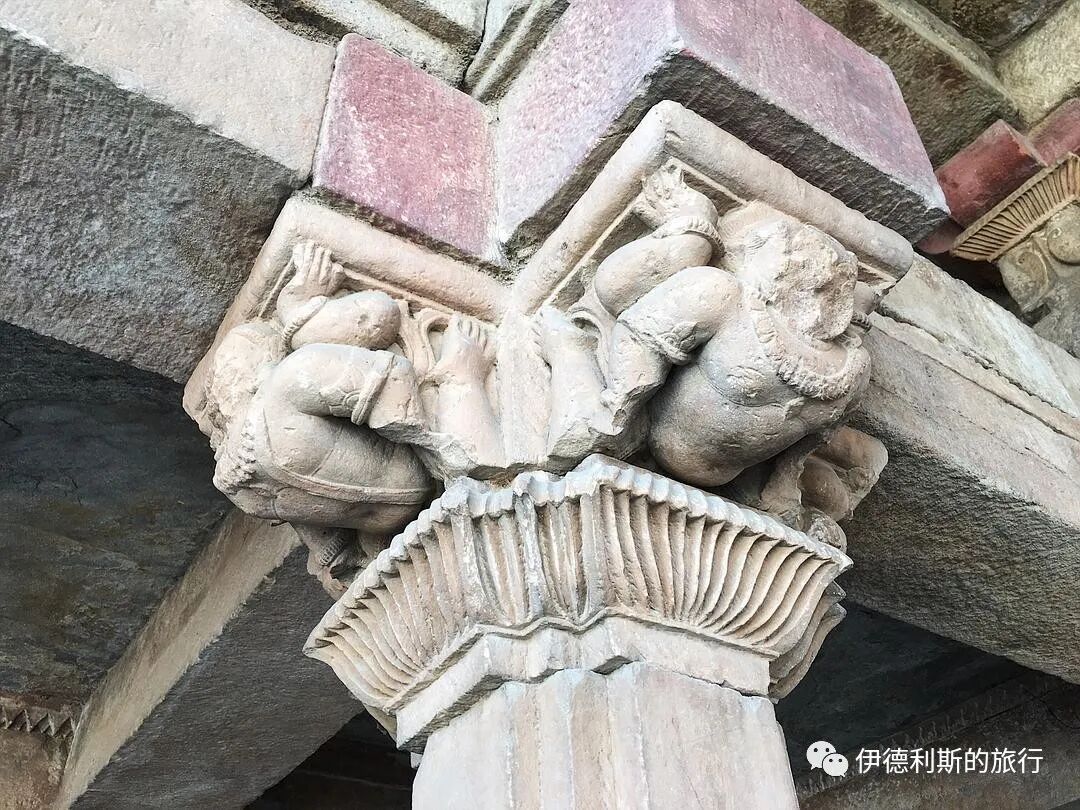
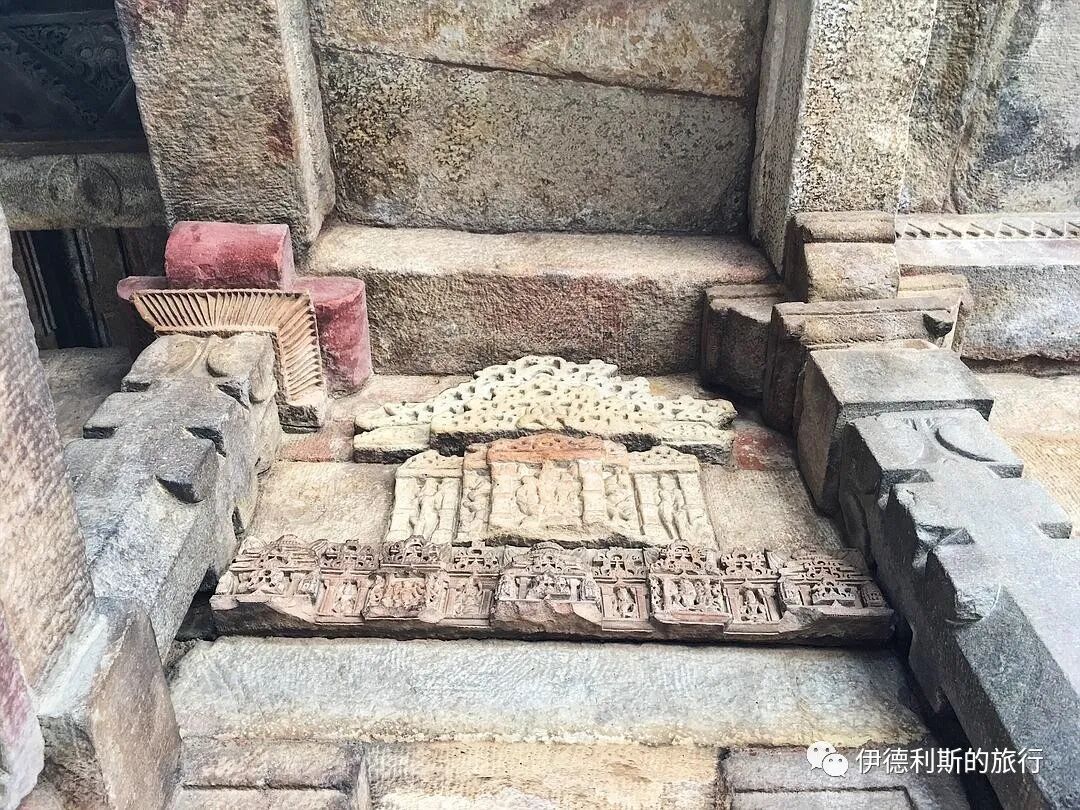
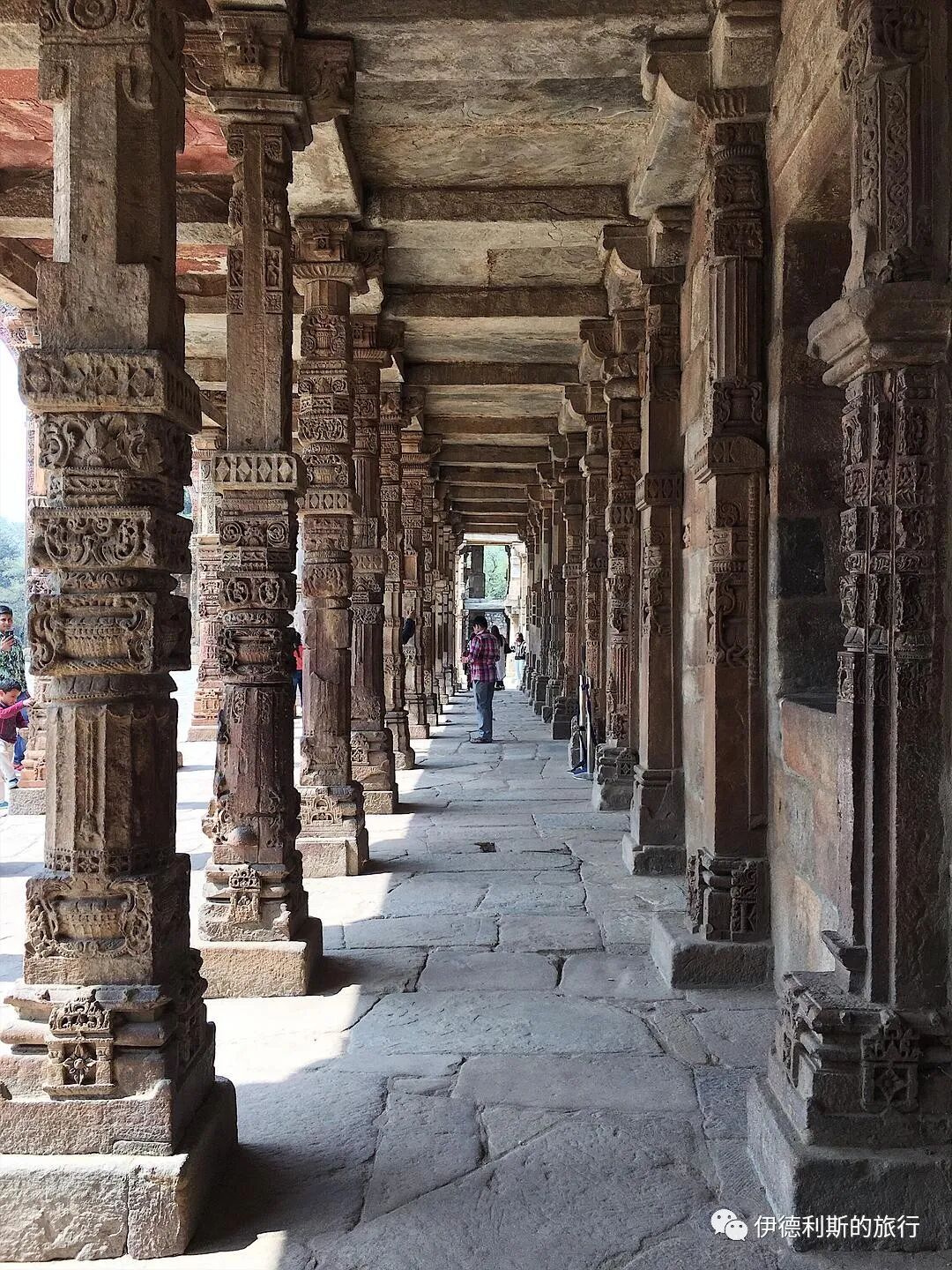
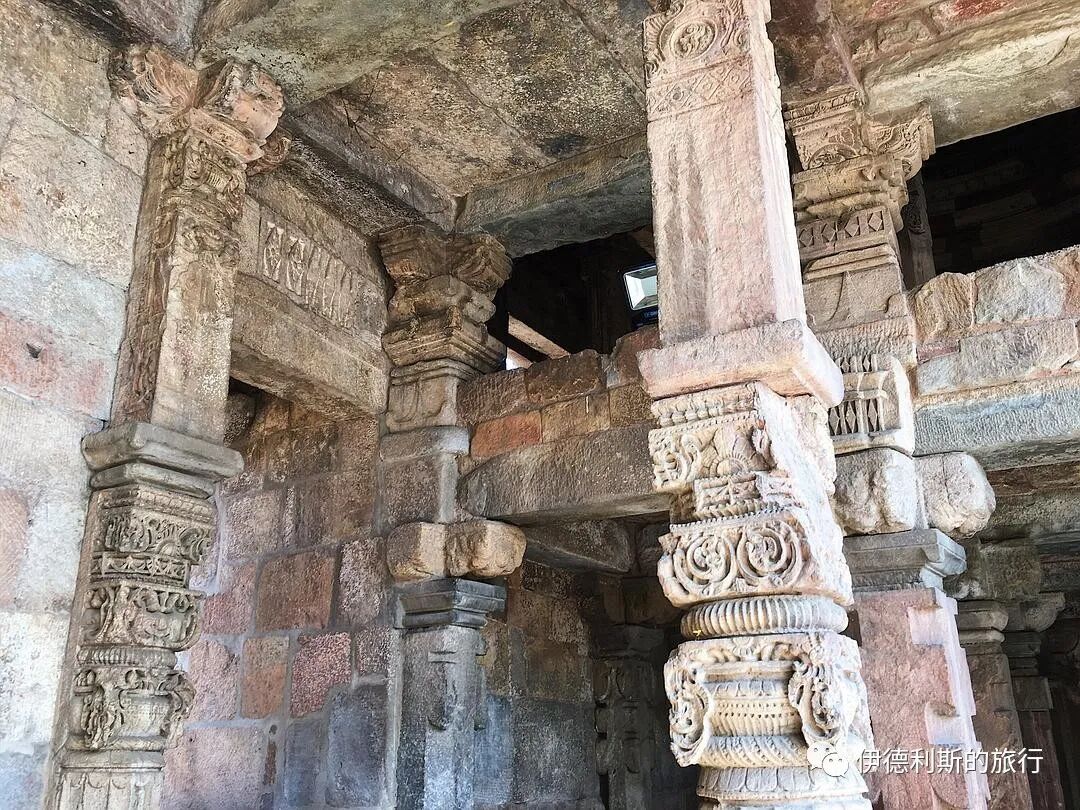
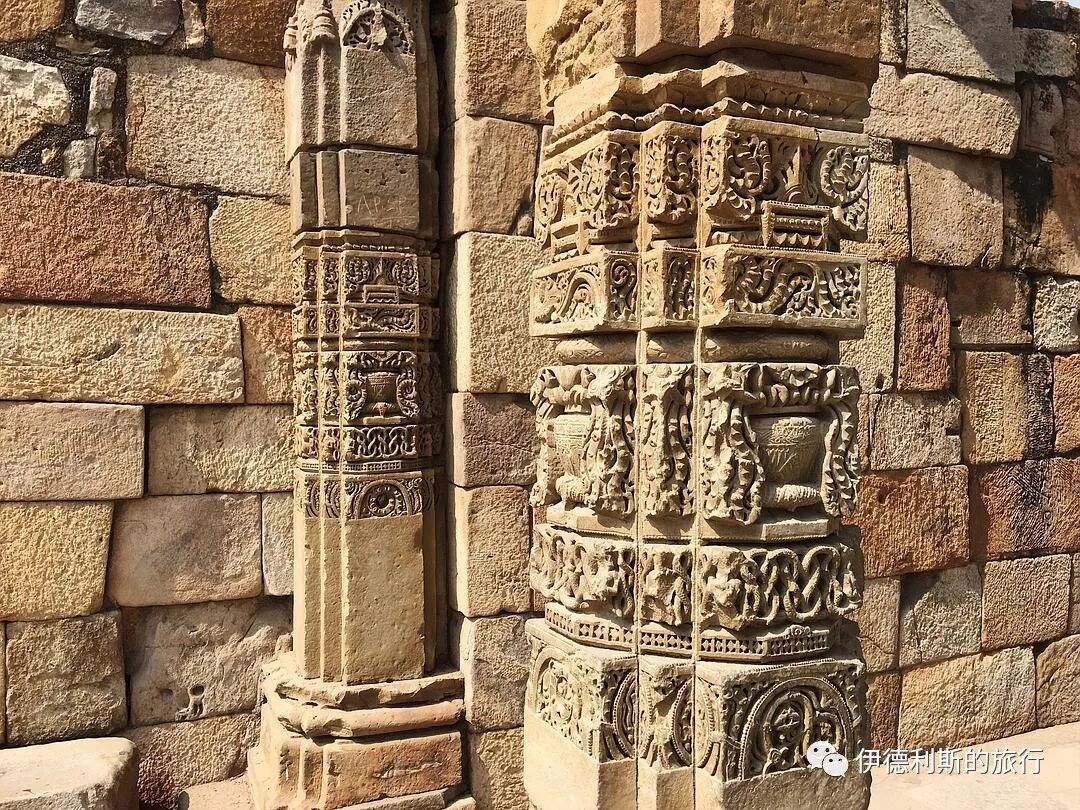
The arch in front of the prayer hall.
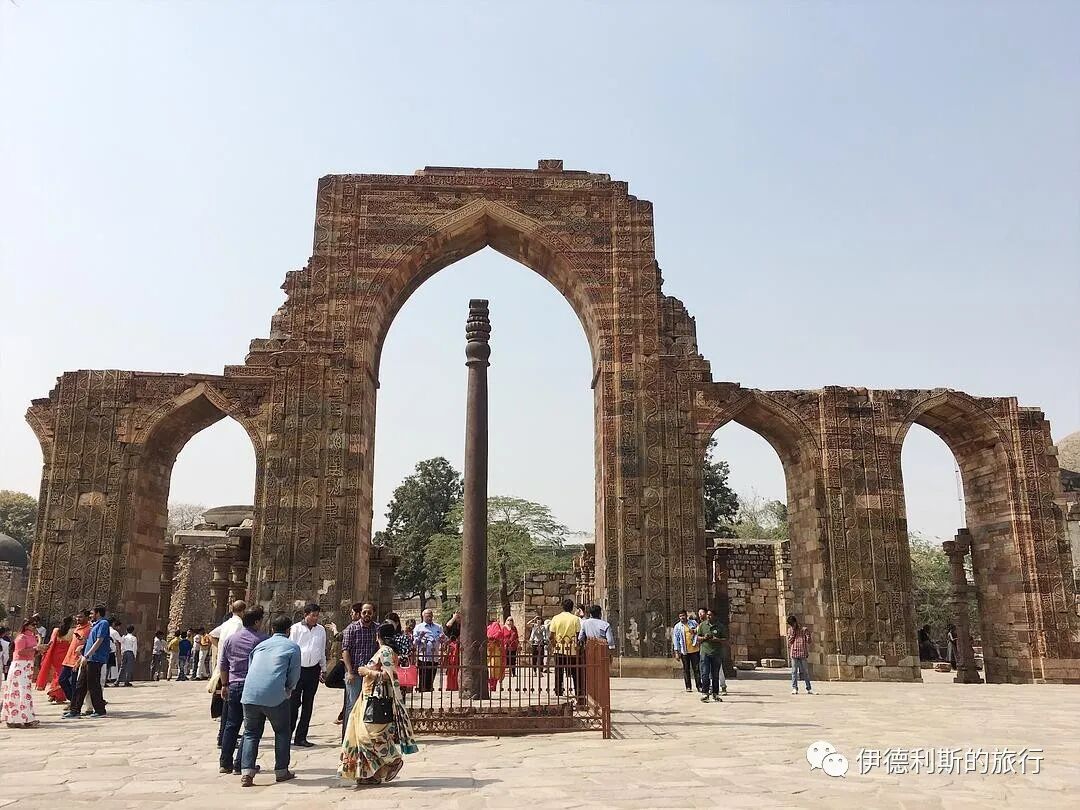
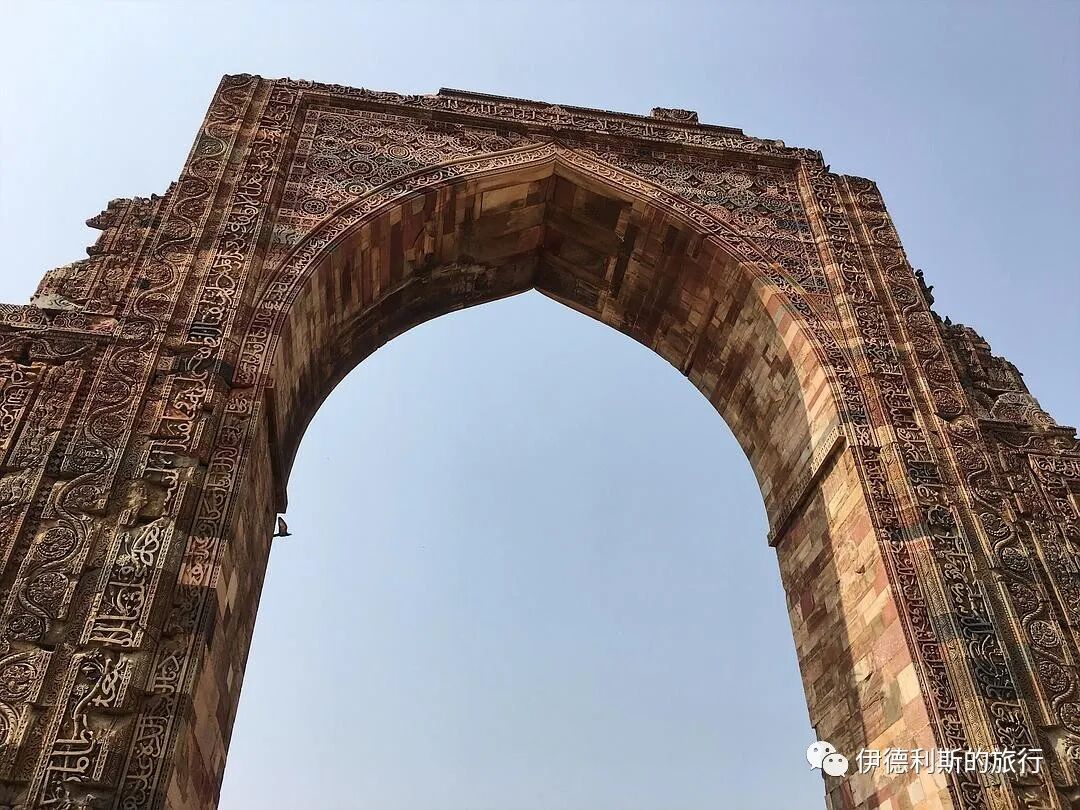
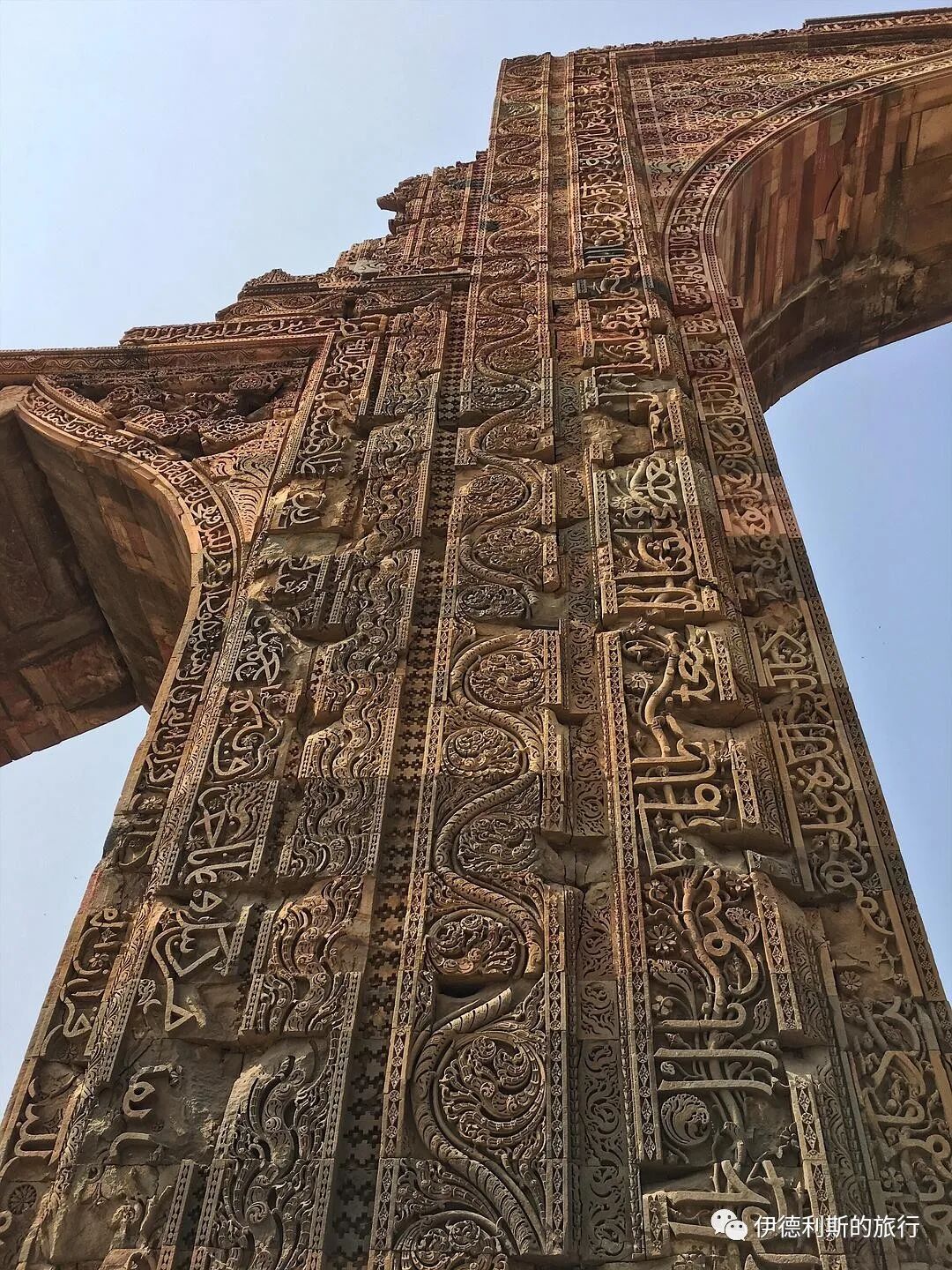
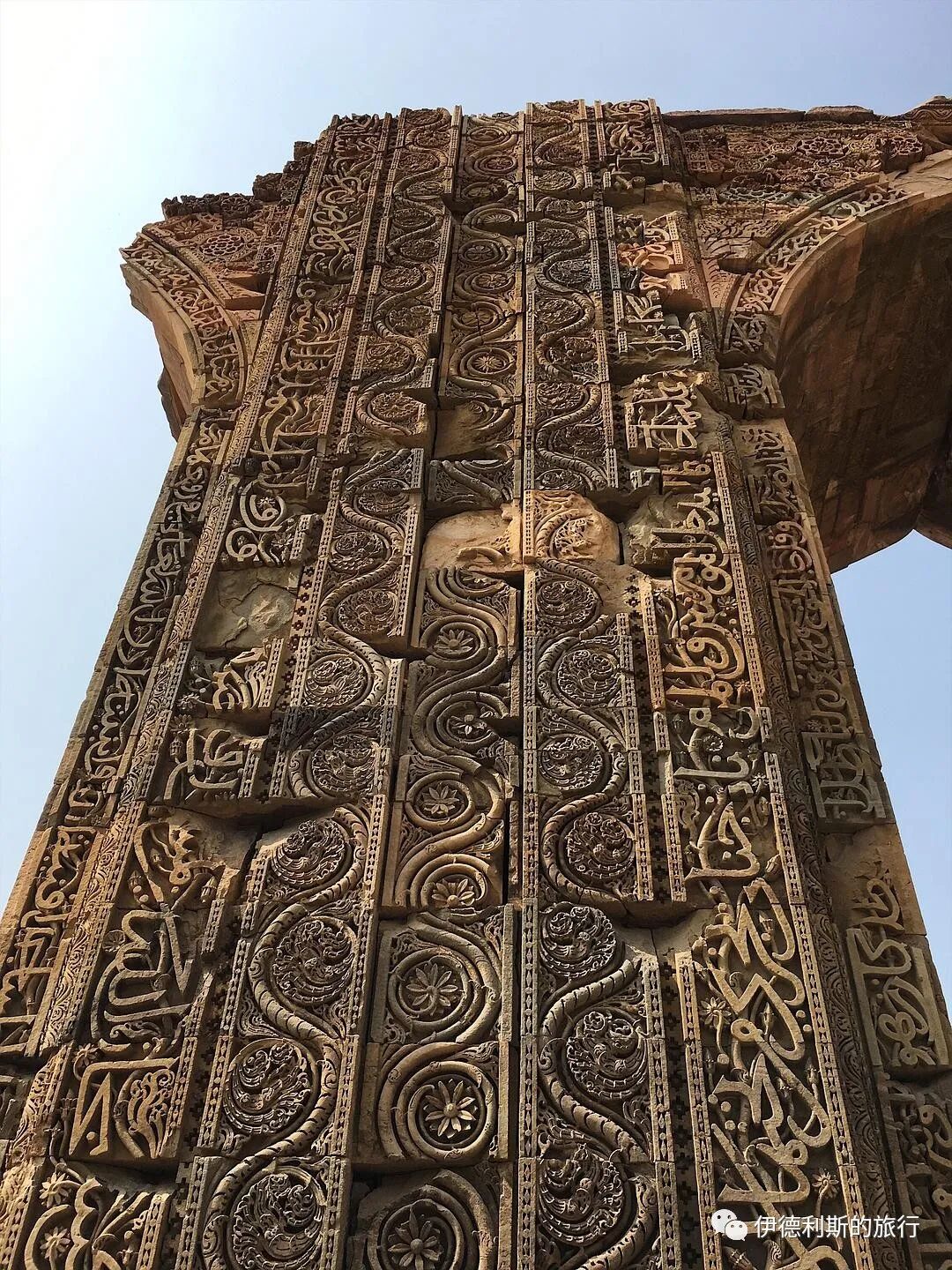
The prayer hall has already collapsed.
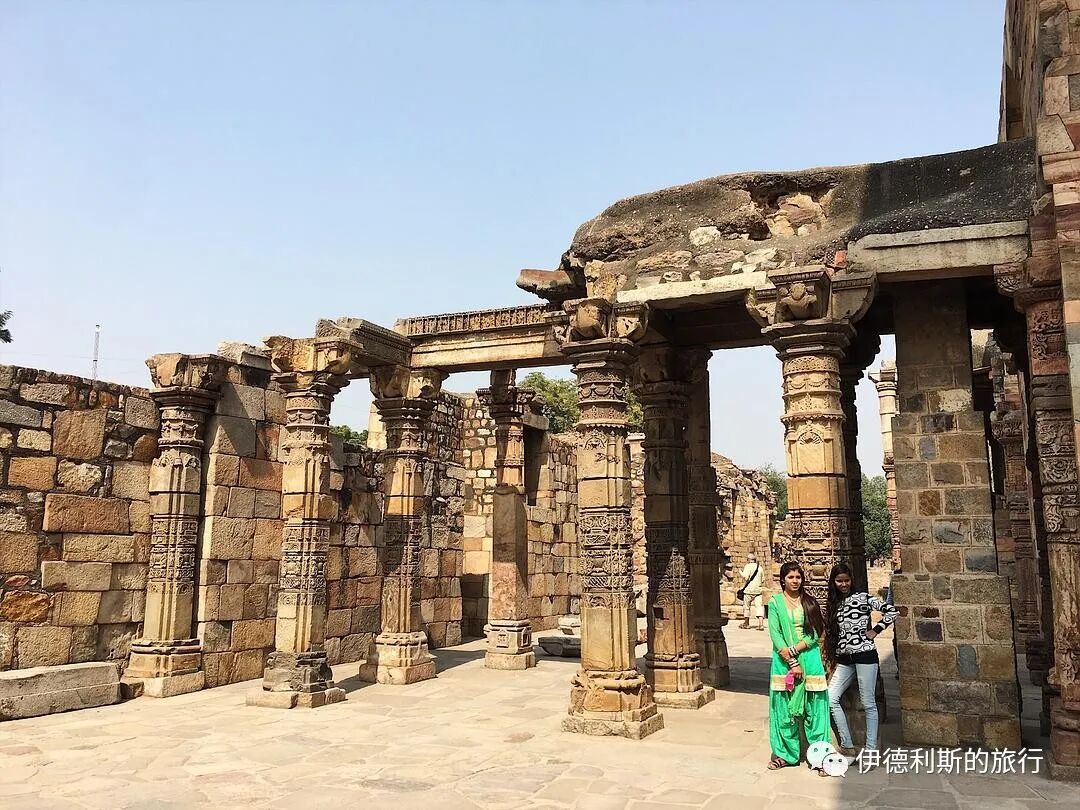
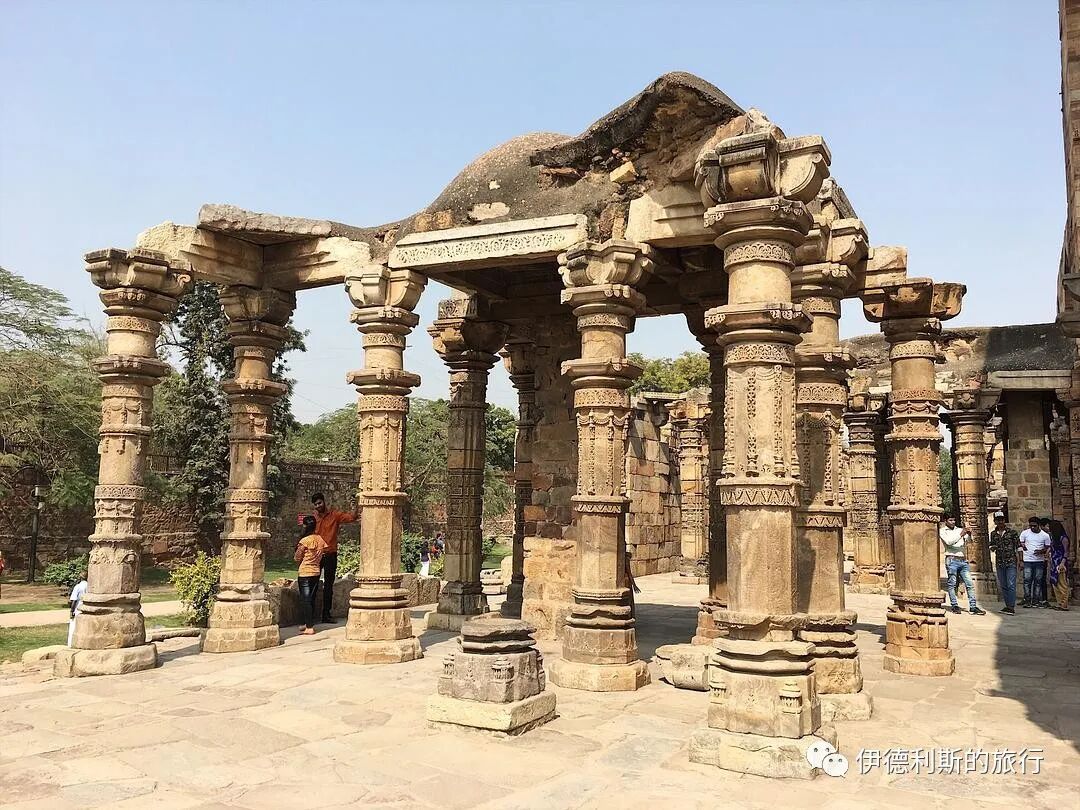
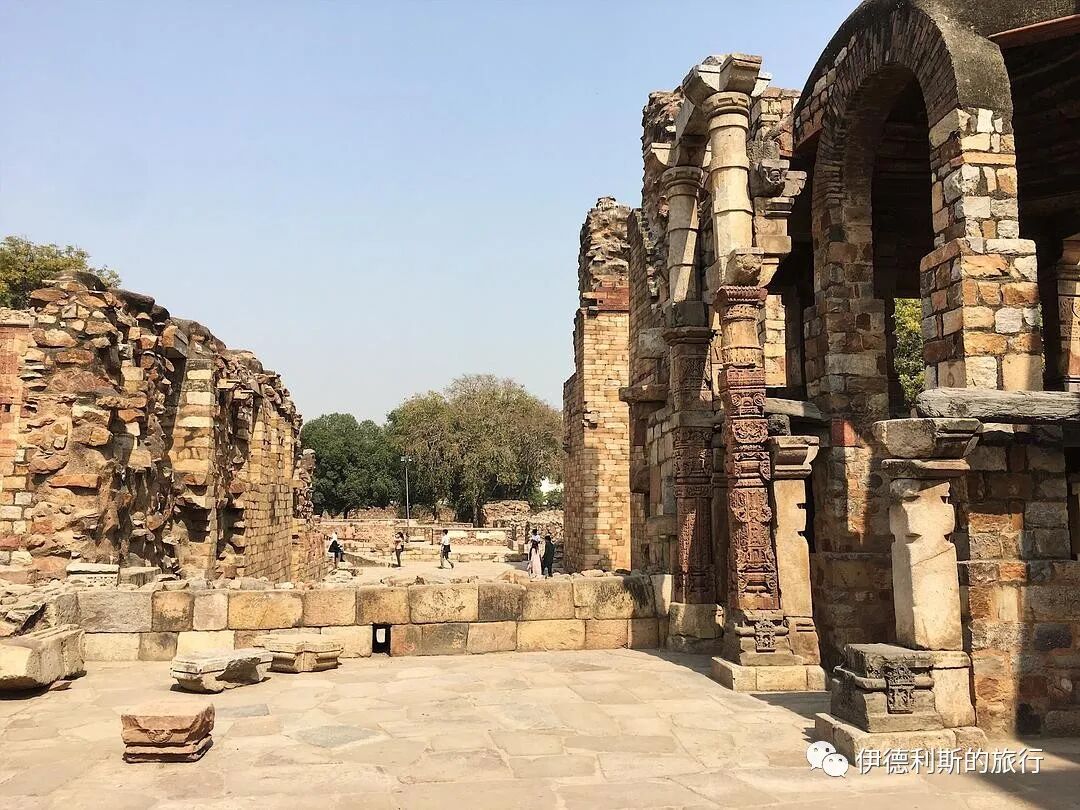
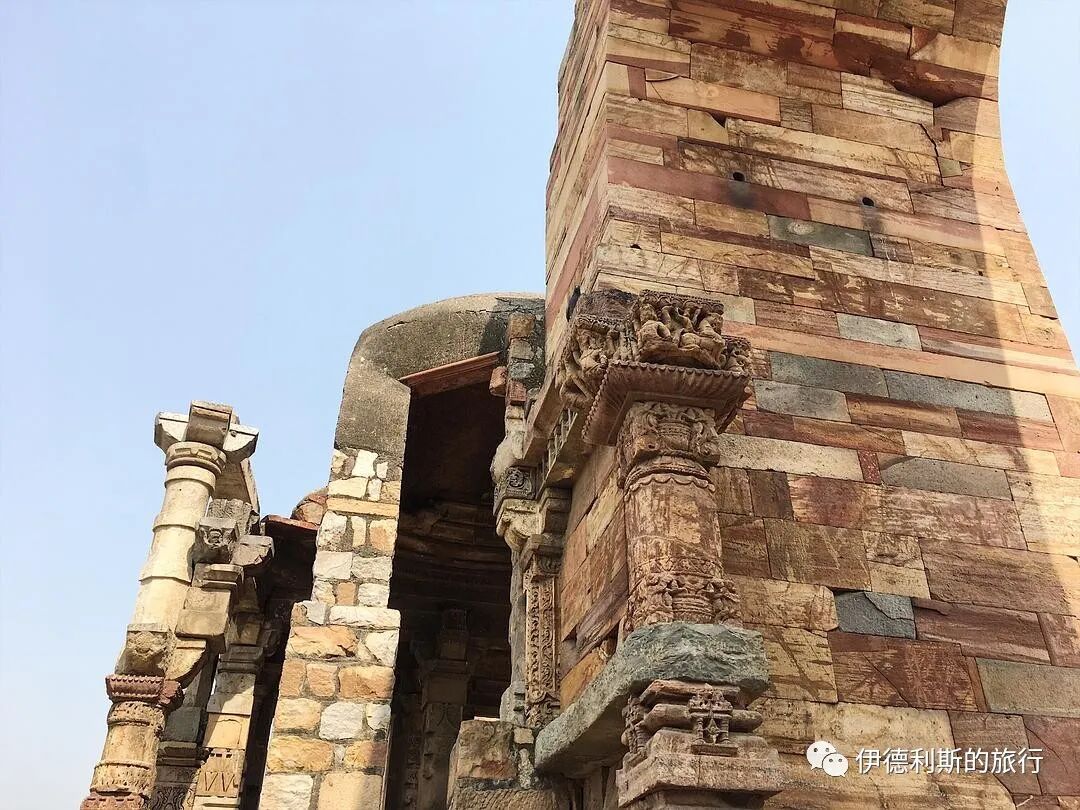
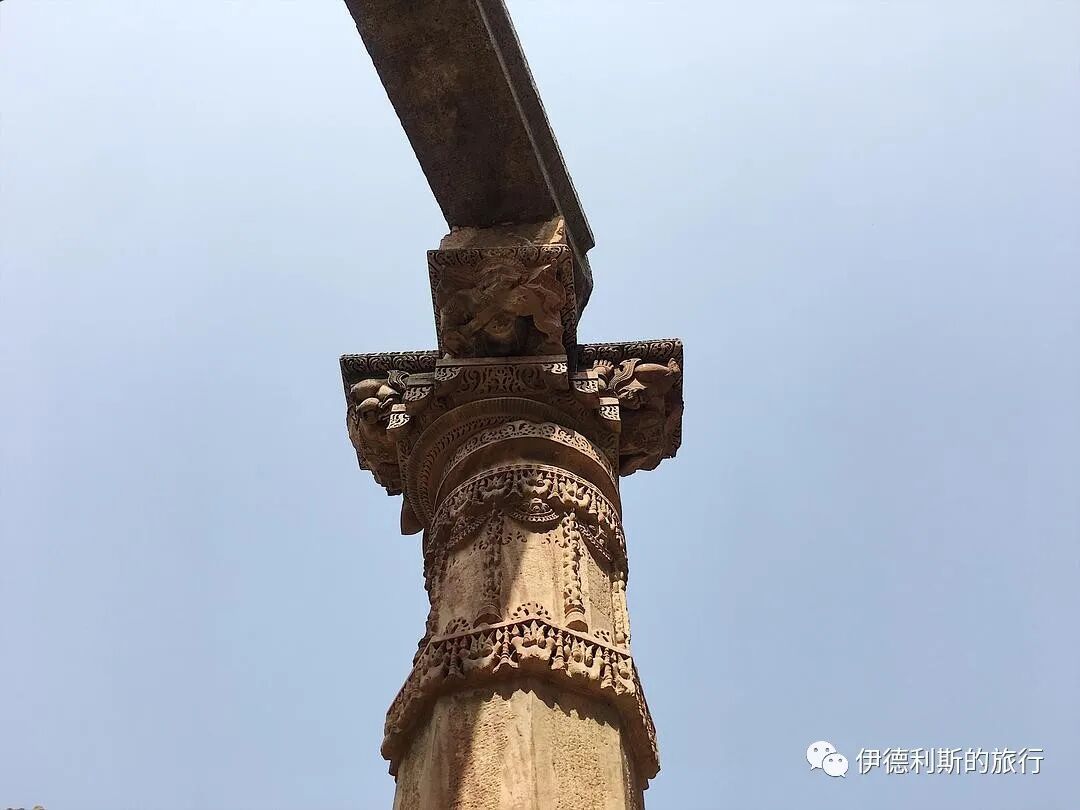
The well-preserved east wall of the mosque.
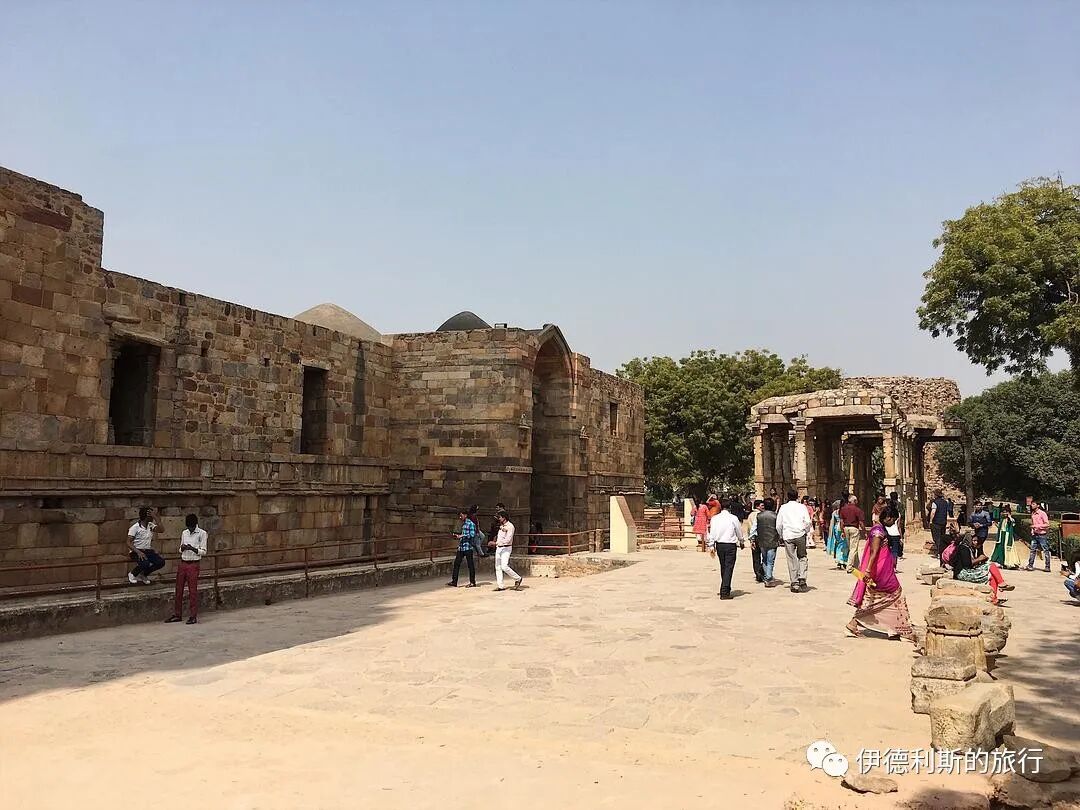
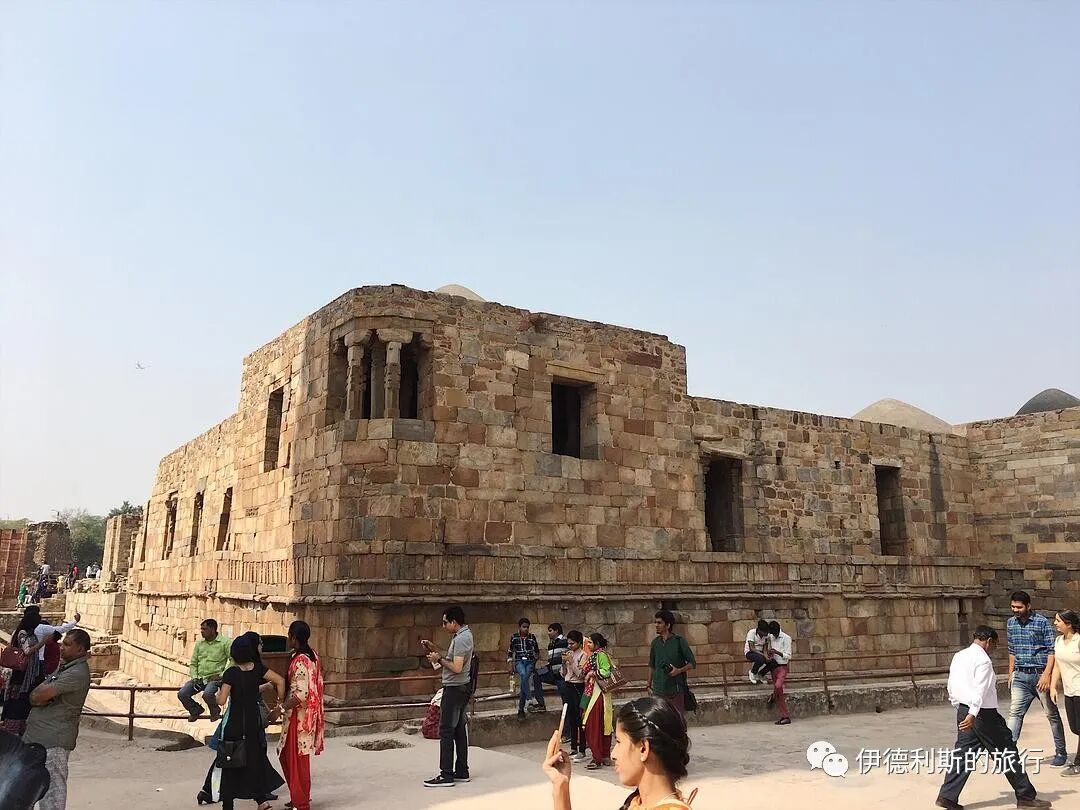
2. Iron Pillar of Delhi
The famous Iron Pillar of Delhi stands in the center of the mosque courtyard. The pillar was cast between the 3rd and 4th centuries, and the time it was moved to the mosque is still debated. The oldest Sanskrit inscription on the iron pillar is from a king named Chandra. The most common view is that this king was Chandragupta II, who ruled the Gupta Empire from 380 to 415. This period was the peak of the Gupta Empire and is considered the 'Golden Age' of ancient India, when architecture and sculpture reached their height.
The high corrosion resistance of this iron pillar has attracted great interest from scientists and archaeologists, and it is considered a the highest level of ancient Indian iron-smelting technology. The pillar's corrosion resistance is believed to come from its high phosphorus content and Delhi's alternating wet and dry climate, which allowed a protective passivation film to form on the pillar.
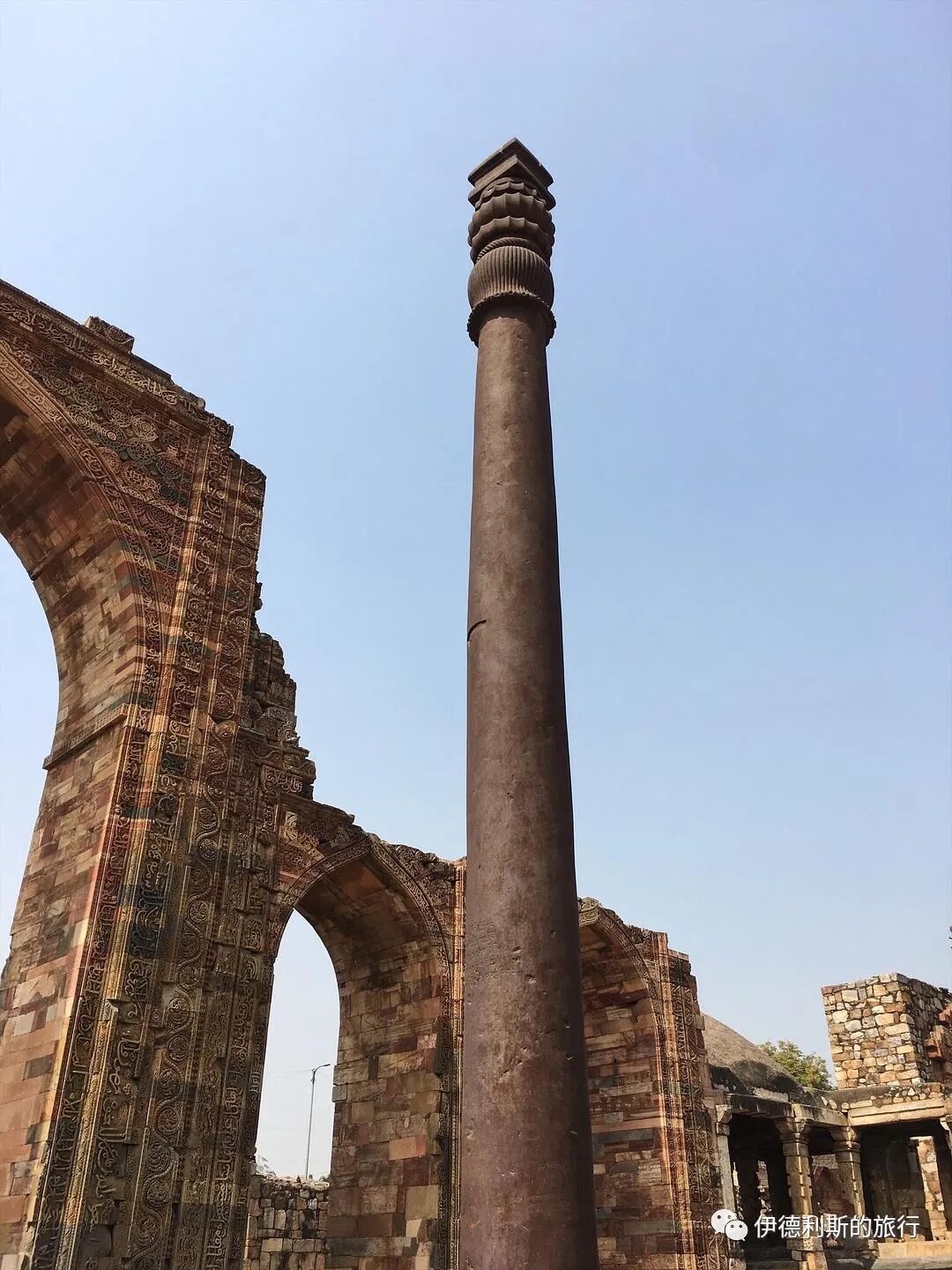
3. The Qutb Minar reaching into the clouds
The most striking part of the Qutb mosque is the Qutb Minar, which later generations hailed as the tallest minaret in the ancient Islamic world.
The Qutb Minar is located outside the southeast side of the mosque courtyard. It is built of red sandstone, follows the style of Iranian minarets, and its patterns were influenced by the famous Minaret of Jam in contemporary Afghanistan. The tower is 72.5 meters high and divided into 5 levels. Each level has a protruding balcony, and there are 379 spiral stairs inside.
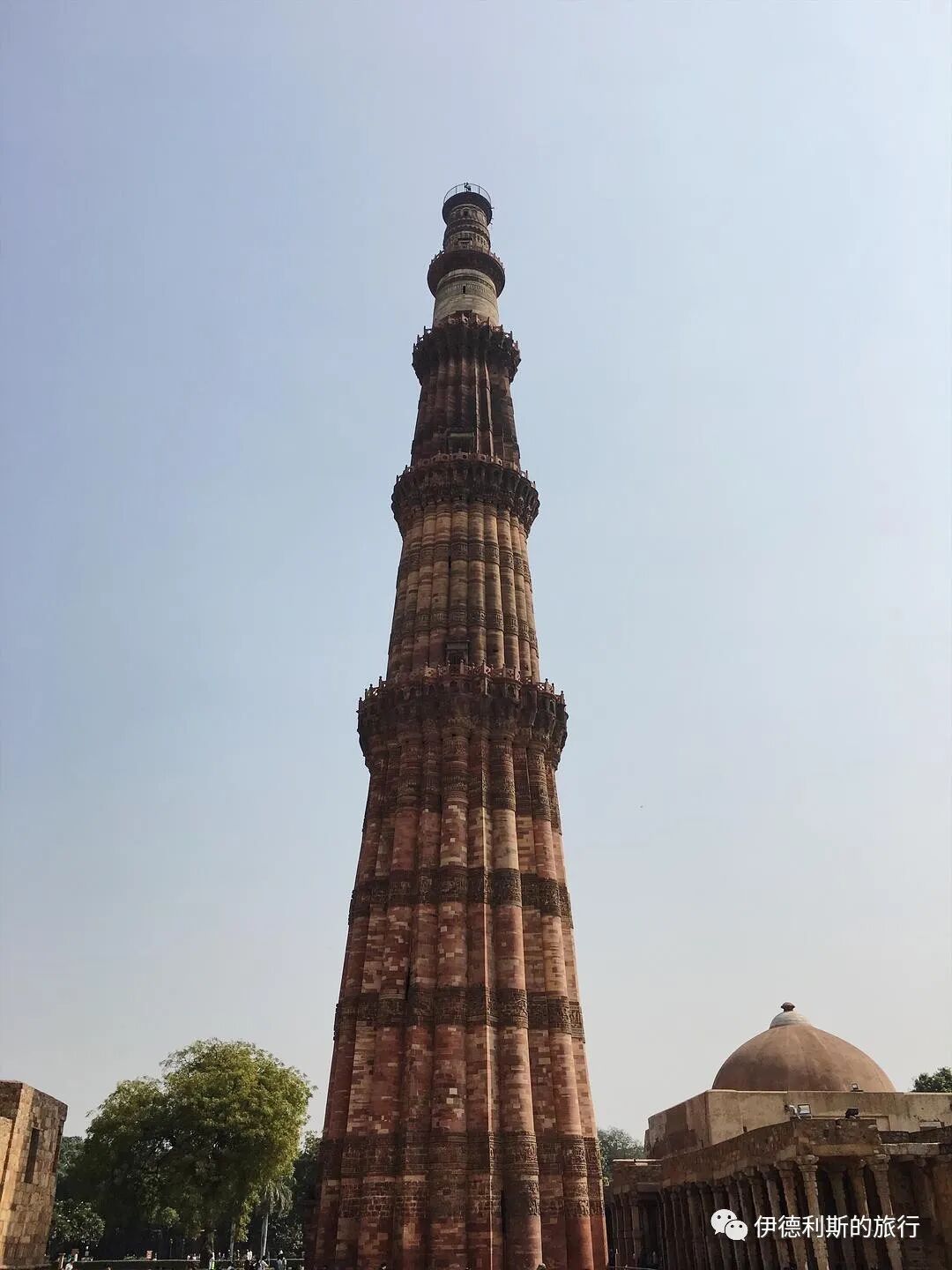
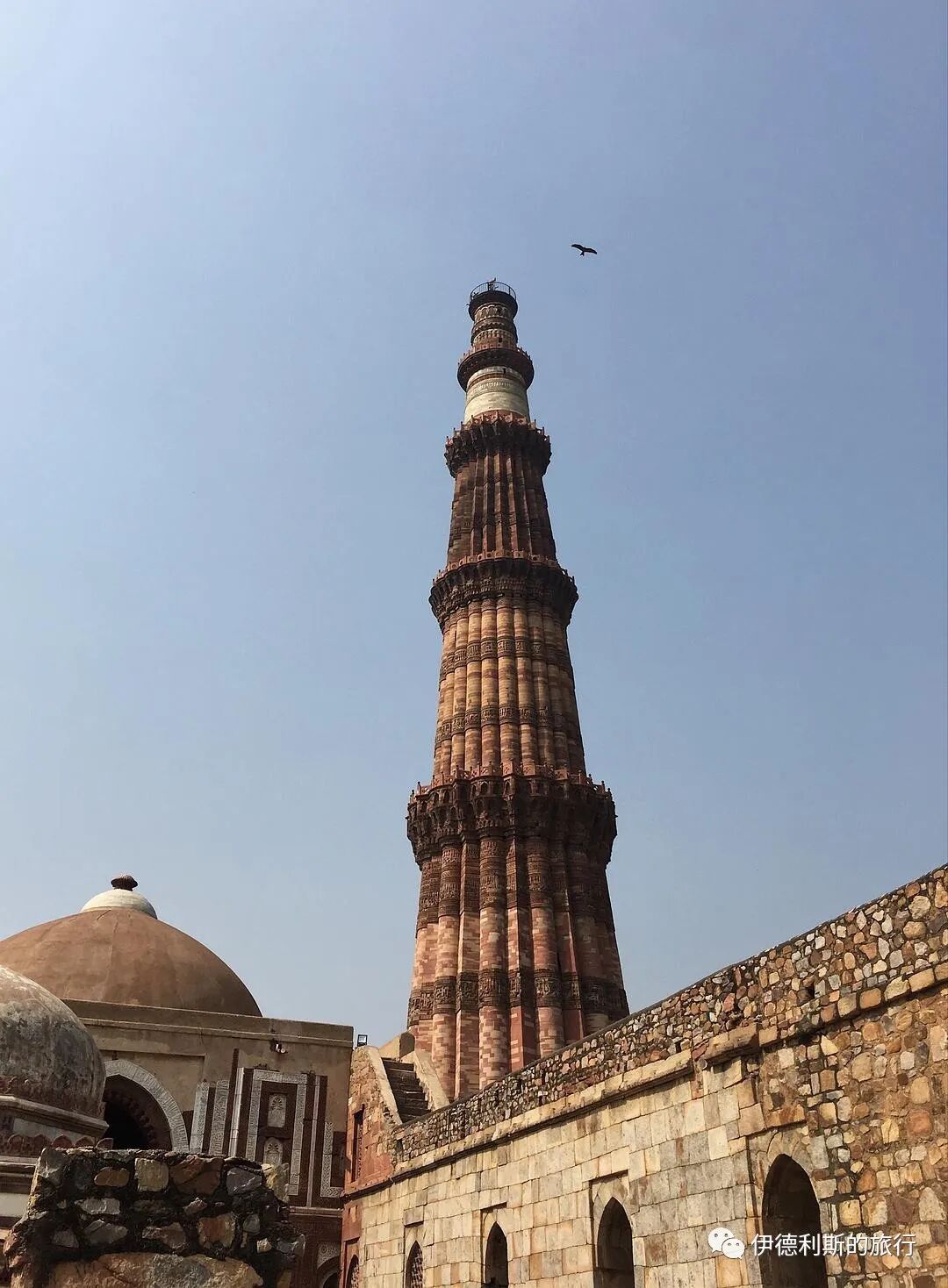
The first level of the Qutb Minar was built under the personal supervision of Qutb al-Din Aibak himself, so it contains many praises for Muhammad Ghori. The top three levels were finished in 1220 by his son-in-law Shams ud-Din Iltutmish (who I will introduce in detail later), and the style is basically the same as the Qutb period. The Qutb Minar from this period is made of red sandstone and carved with Kufic script.
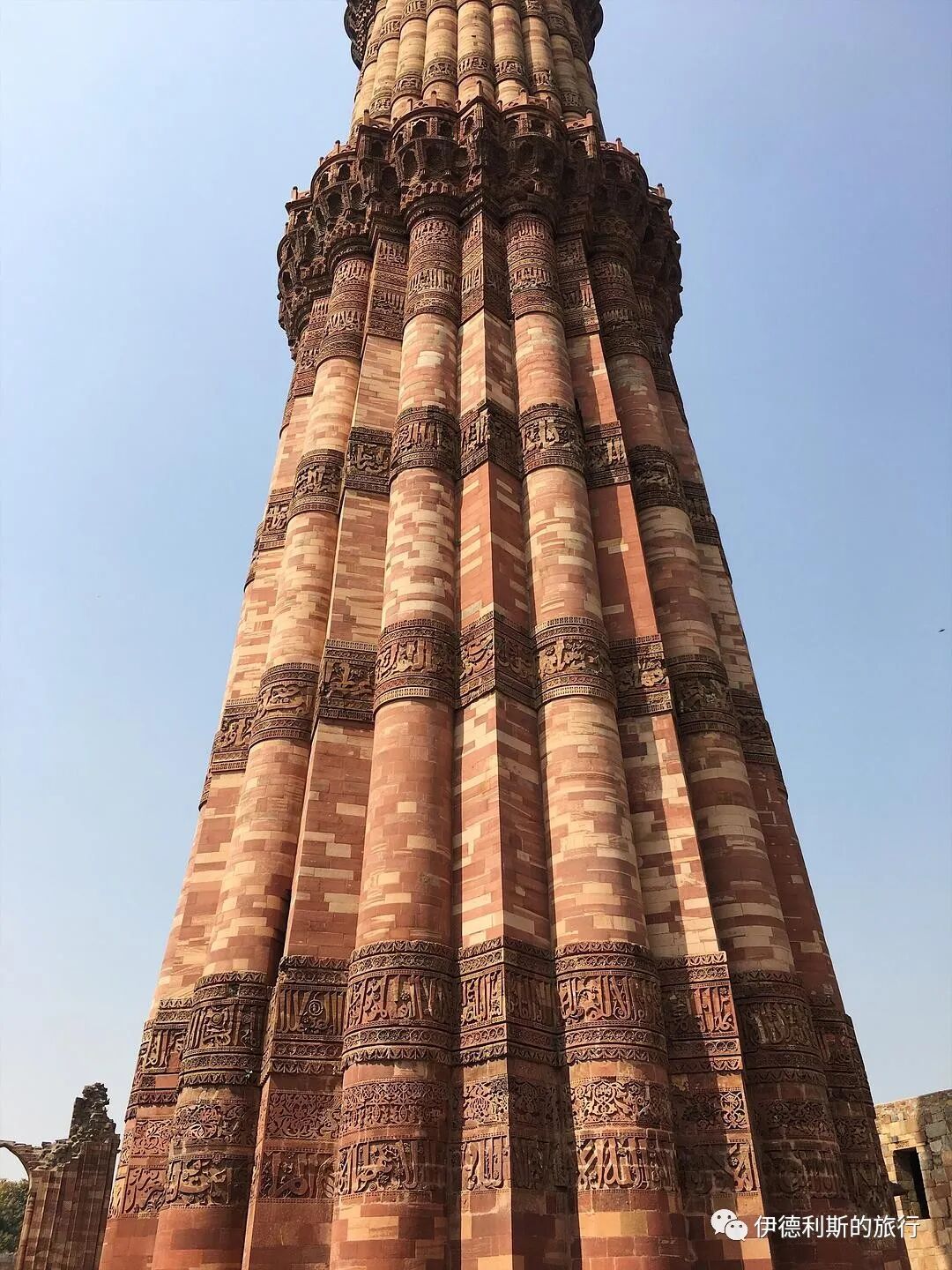
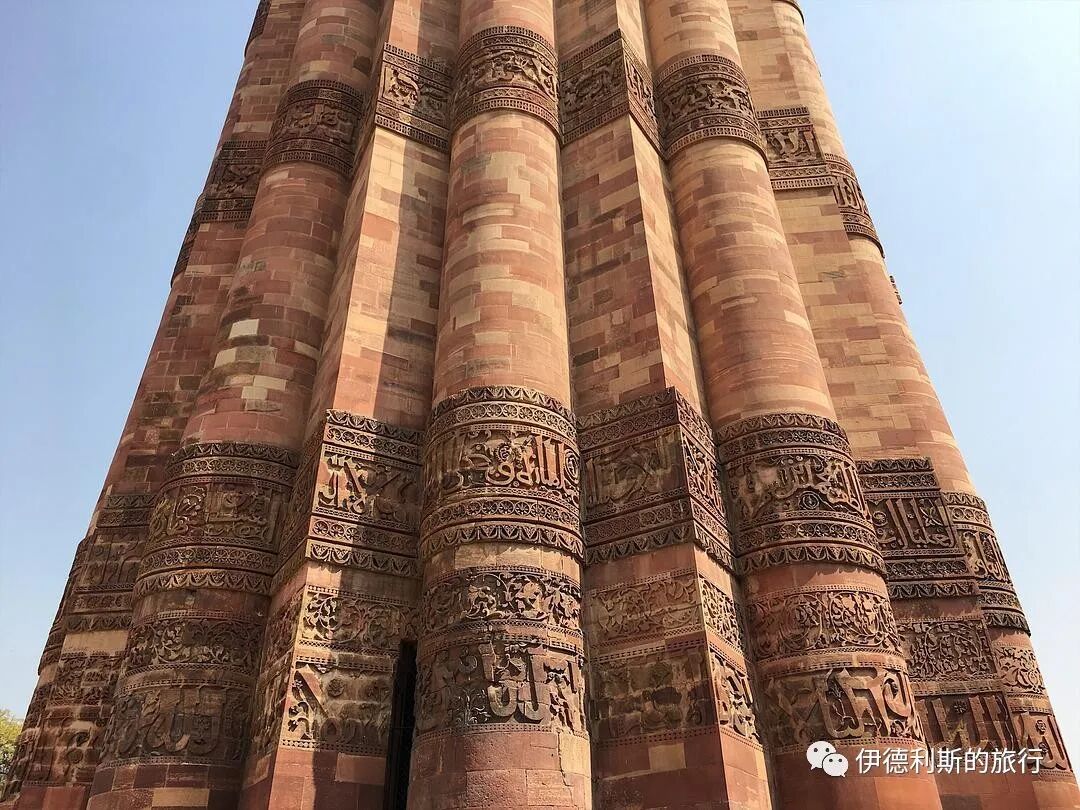
In 1369, lightning destroyed the top of the Qutb Minar, and the Sultan of the Delhi Sultanate, Firoz Shah Tughlaq, rebuilt two more levels on top. The two new levels include marble, and you can now see a clear difference in architectural style between the bottom three levels and the top two.
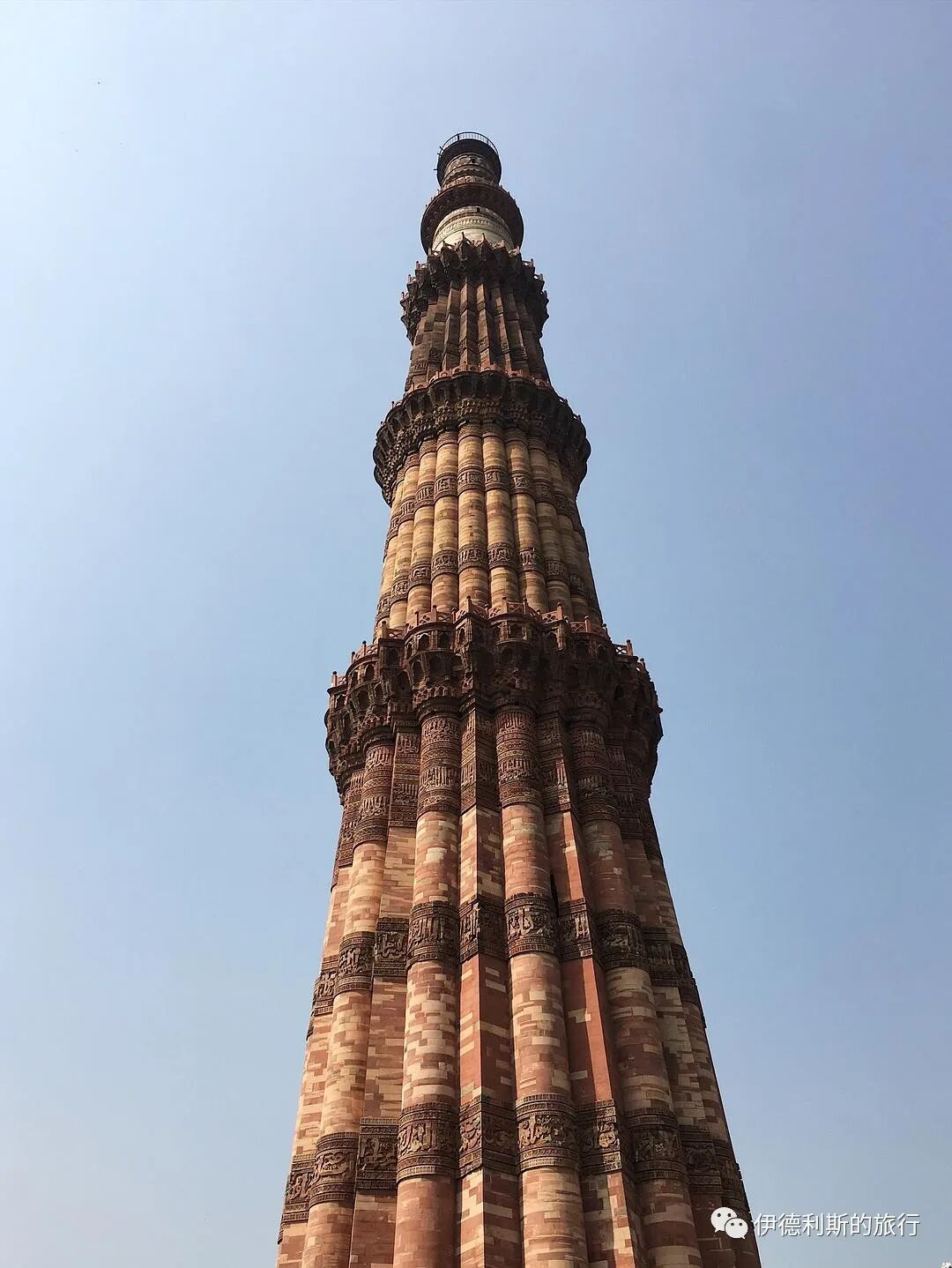
4. Iltutmish expands the mosque
1. Mamluk Dynasty of the Delhi Sultanate
In 1202, Muhammad Ghori became the Sultan of the Ghurid dynasty after his brother passed away. In 1206, Muhammad Ghori handed over all affairs in India to Qutb and set off from India to return to Afghanistan. On March 15, while his carriage was traveling through Punjab, Pakistan, Muhammad Ghori was assassinated.
Muhammad Ghori had no children, so he treated his Mamluk slaves like his own sons during his lifetime. After he died, the country split into several parts, and Qutb established his own sultanate with Lahore as the capital. Because this sultanate later made Delhi its capital for nearly 300 years, later generations called it the Delhi Sultanate. Also, because Qutb was a Mamluk slave, the first dynasty of the Delhi Sultanate is known to later generations as the Mamluk Dynasty or the Slave Dynasty.
In 1210, Qutb died in an accident. The Delhi Sultanate did not have a fixed rule for succession. After Qutb died, the Turkic nobles in Lahore elected Aram Shah to succeed as Sultan. But Aram Shah was not good at governing the country, so a group of forty nobles called Chihalgani soon betrayed him and elected Shams ud-Din Iltutmish to succeed as Sultan.
In 1211, Iltutmish defeated Aram Shah on the plains near Delhi and seized the throne.
2. Iltutmish takes over as Sultan
Iltutmish came from the Turkic Ilbari tribe and was sold as a Mamluk slave during his childhood. He was first taken to the slave market in the ancient Central Asian city of Bukhara, then transferred to the Ghurid dynasty and bought by Muhammad Ghori's court.
Iltutmish quickly gained the appreciation of Muhammad Ghori and became his personal attendant. Qutb, who was the governor of Lahore at the time, also took a liking to Iltutmish, so he bought him from Muhammad Ghori in Delhi for a high price.
Iltutmish was also deeply appreciated by Qutb; he married Qutb's daughter and was entrusted by Qutb with the governorship of several important regions. After Qutb died in 1210, he defeated the successor Aram Shah in 1211 and became the third Sultan of the Mamluk Dynasty of the Delhi Sultanate.
3. Territorial expansion
At the beginning of his reign, Iltutmish consolidated the territory around Delhi through a series of wars. In 1214, Iltutmish officially moved the capital to the city of Lal Kot in Delhi.
In 1221, the Mongol army under Genghis Khan arrived at the banks of the Indus River. Iltutmish did not want a direct conflict with the Mongols, so he turned eastward and conquered the Bengal region.
The upheaval caused by the Mongol invasion of Central Asia led a large number of Turkic officers to come to India, so Iltutmish recruited a powerful army and conquered Sindh and Multan in 1228.
In 1228, Iltutmish received recognition from the Caliph of the Abbasid Caliphate and was granted a robe and gifts by the Caliph, which gave the Delhi Sultanate legitimacy in the Islamic world.
4. Expansion of the Qutb Mosque
In 1225, as the political situation stabilized, Iltutmish began to expand the Qutb Mosque, and the expanded part is also called the Iltutmish Mosque.
The green part in the picture below shows the scope of the mosque expansion by Iltutmish.
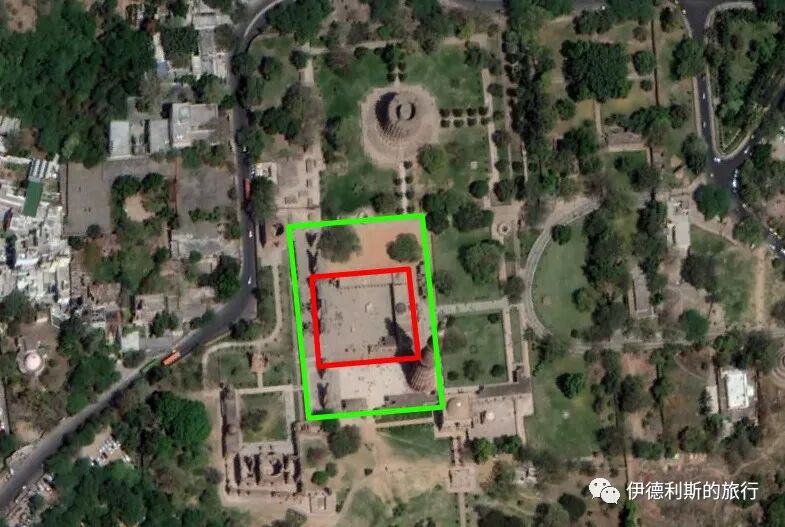
During Iltutmish's expansion, Muslim craftsmen replaced the Hindu craftsmen of the Qutb era, and they no longer used components from the original temples, so the architectural style of this period is more Islamic than the Qutb period.
The best-preserved part of Iltutmish's expansion is the beautifully carved archway.
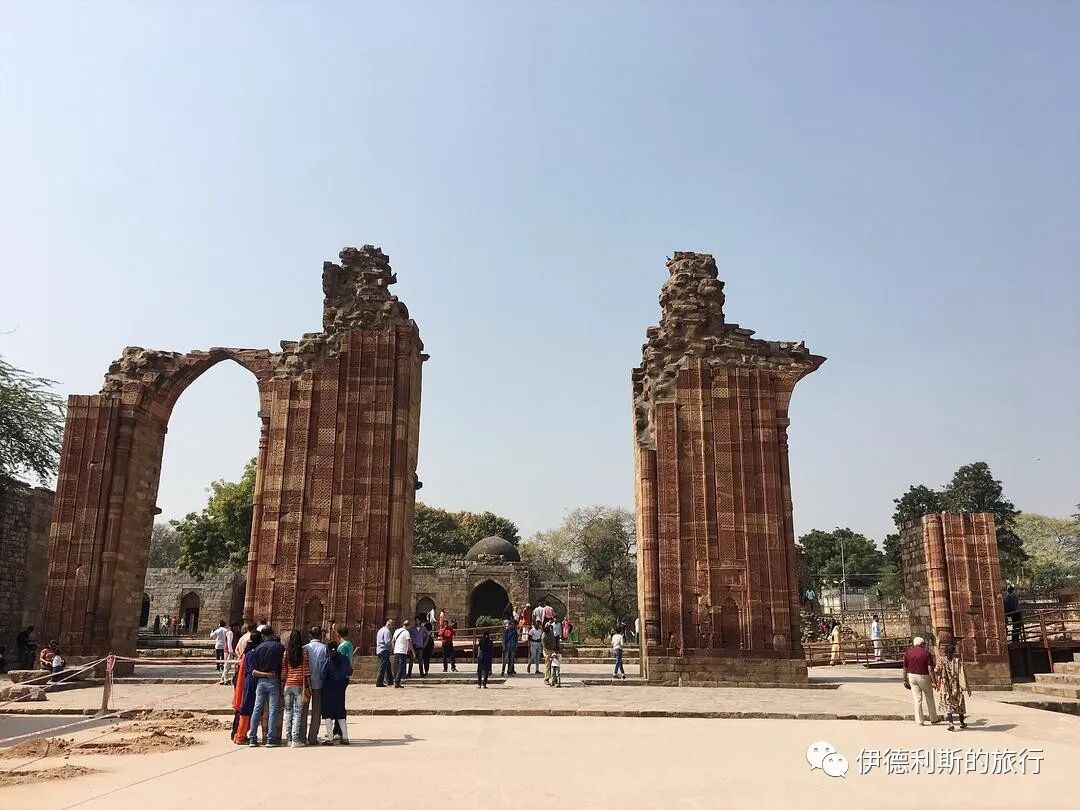
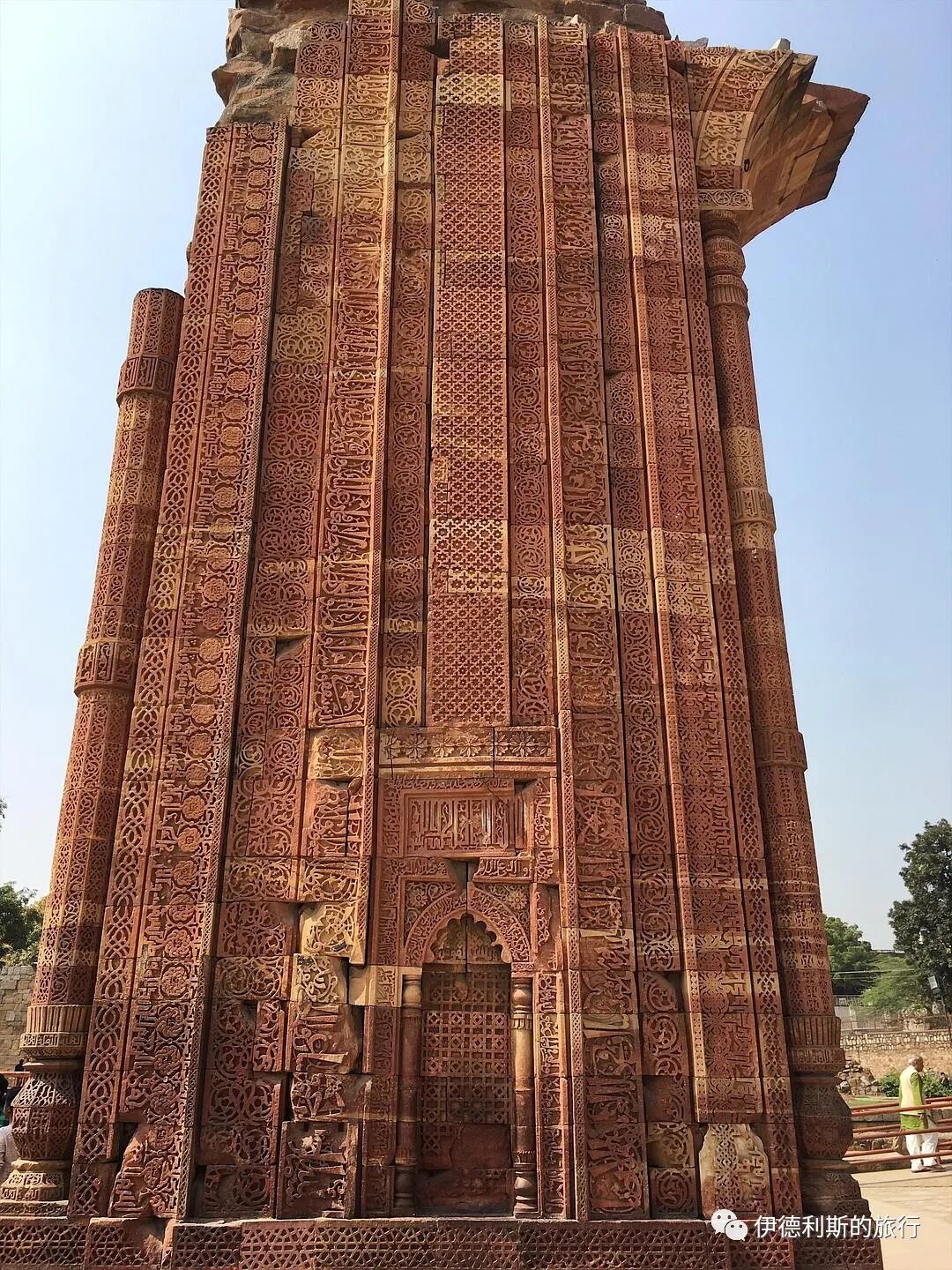
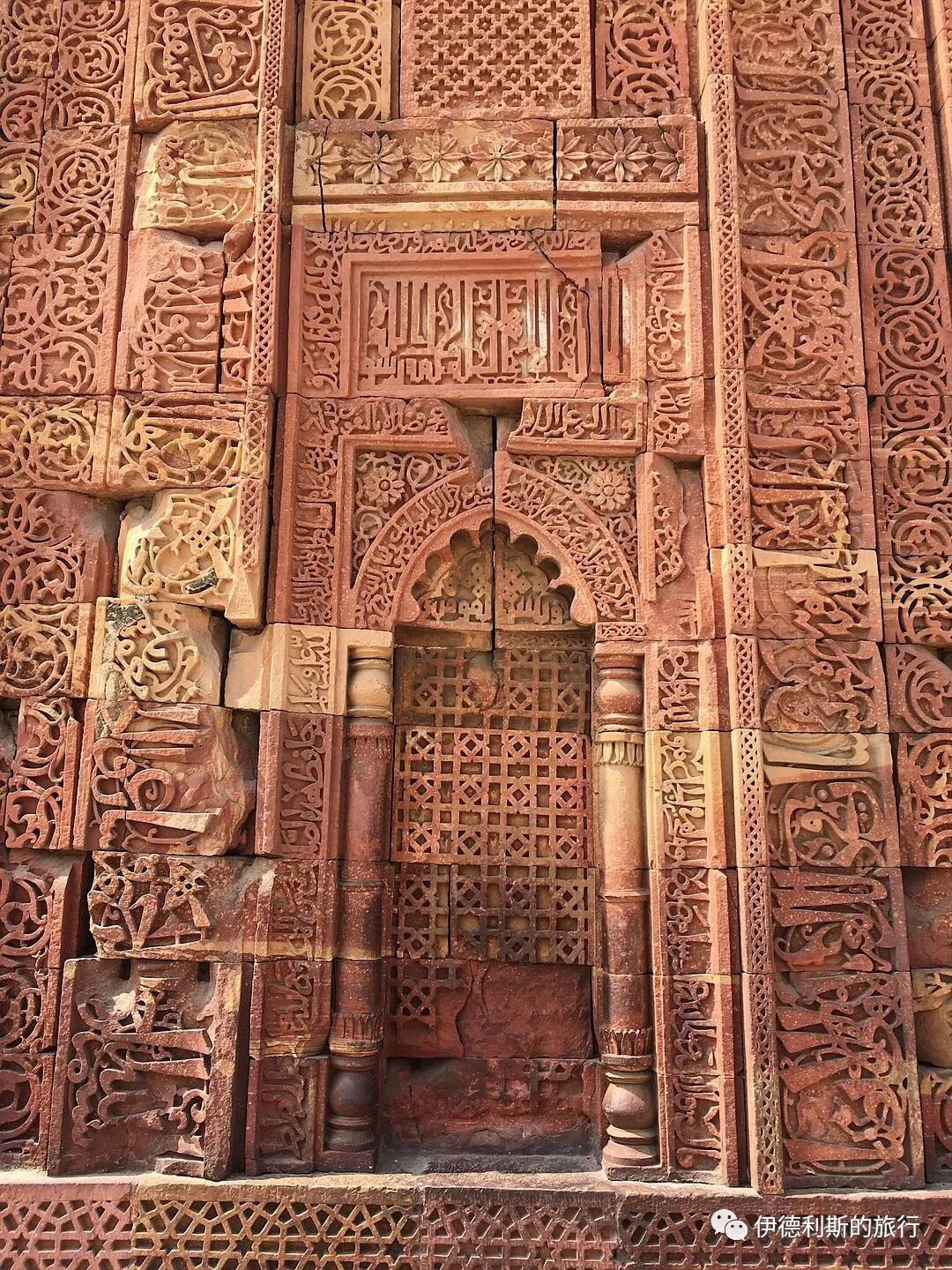
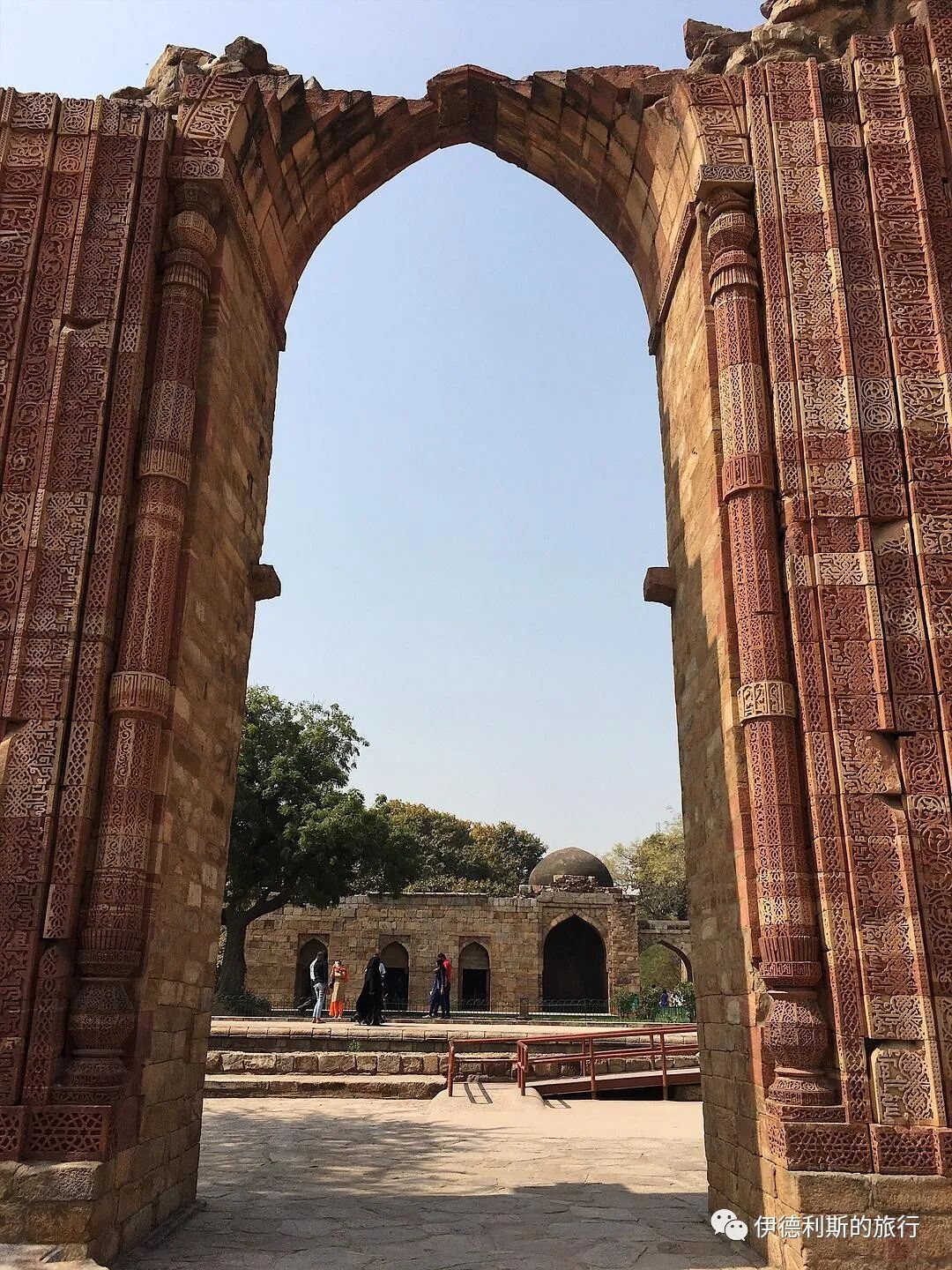
Behind the archway, in the lower right corner, is the south cloister of the Iltutmish expansion.
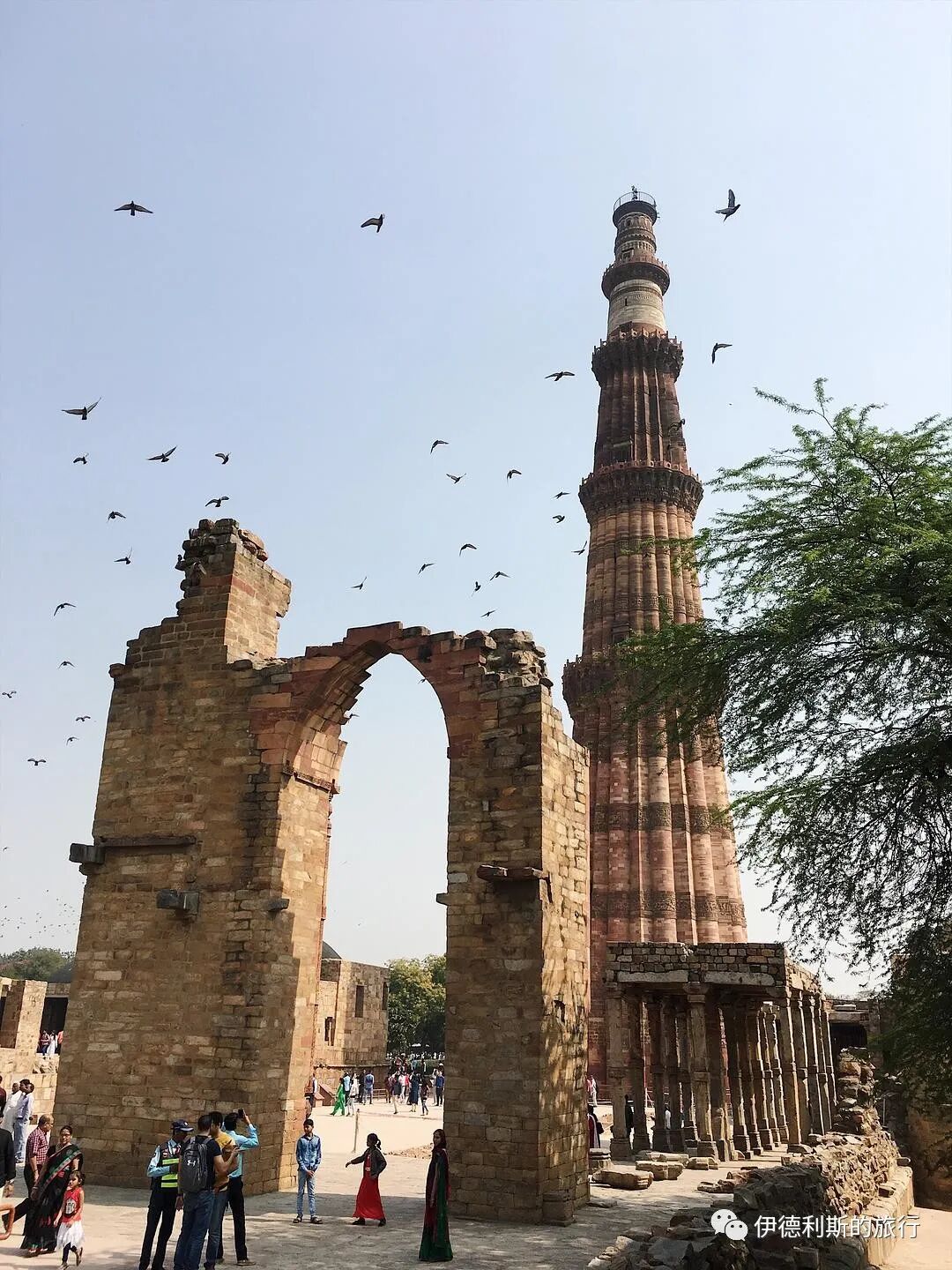
The east cloister is visibly simpler than the cloister built by Qutb.
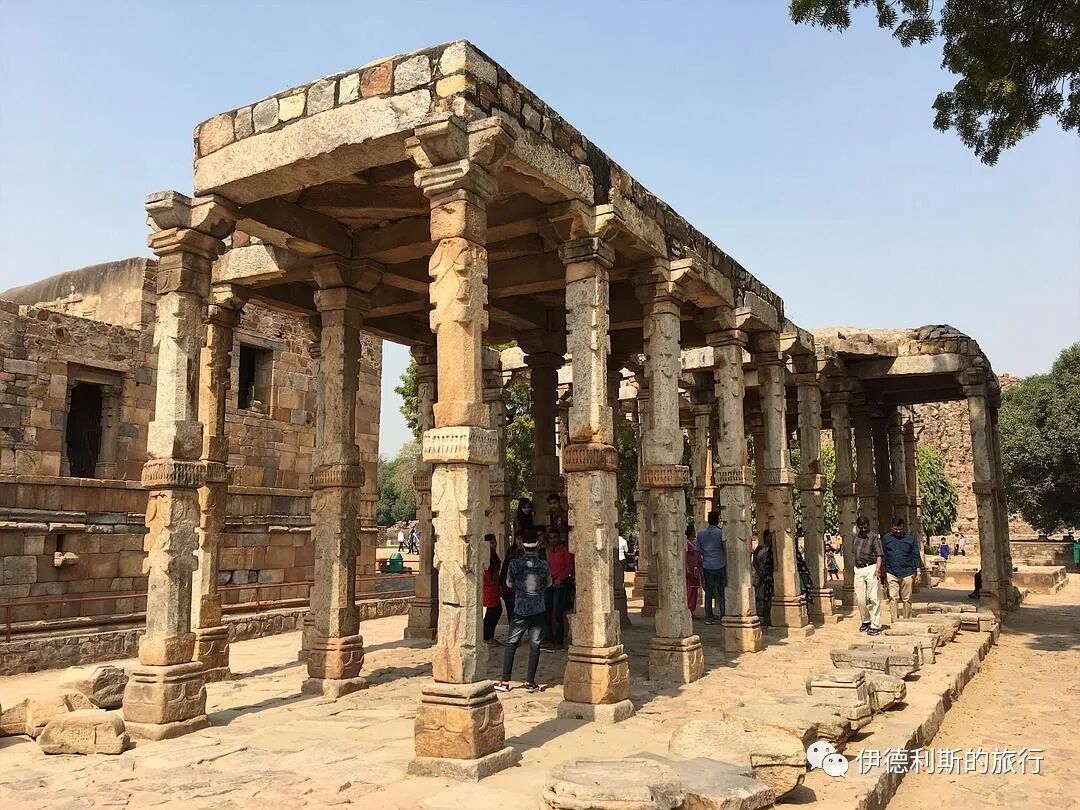
The west colonnade has already collapsed.
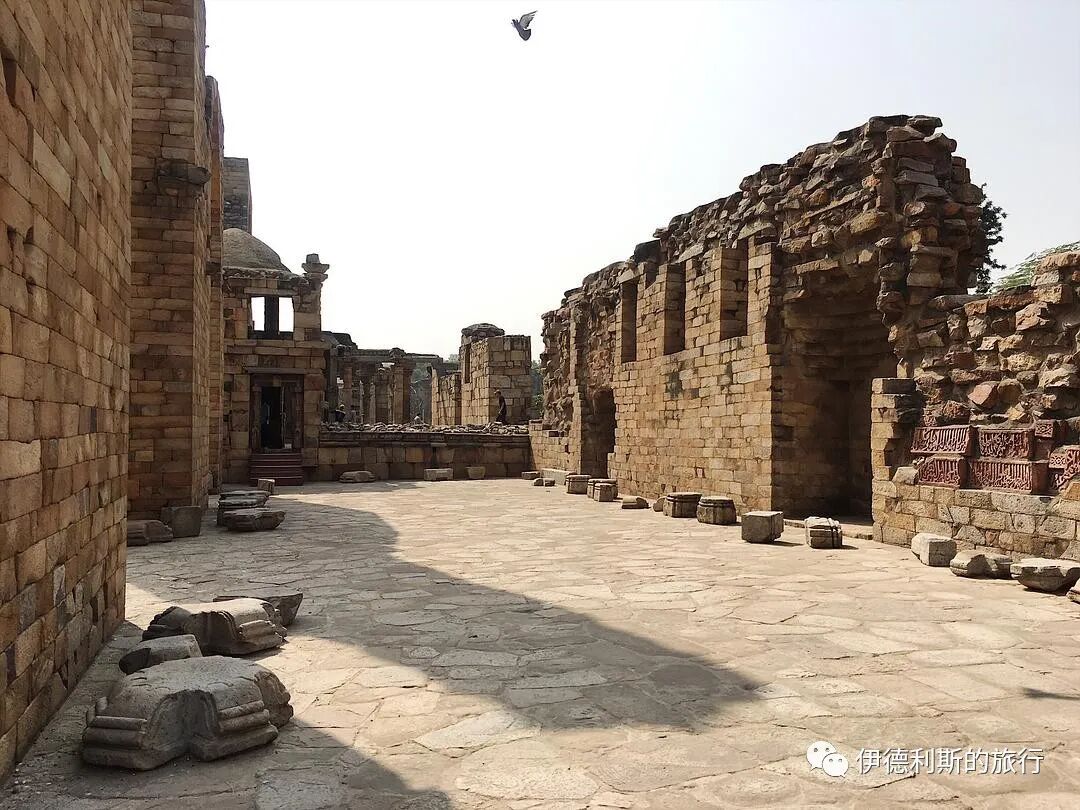
5. Tomb of Iltutmish
Iltutmish passed away in 1236. In 1235, the year before he died, he built his own tomb next to the Qutb Mosque.
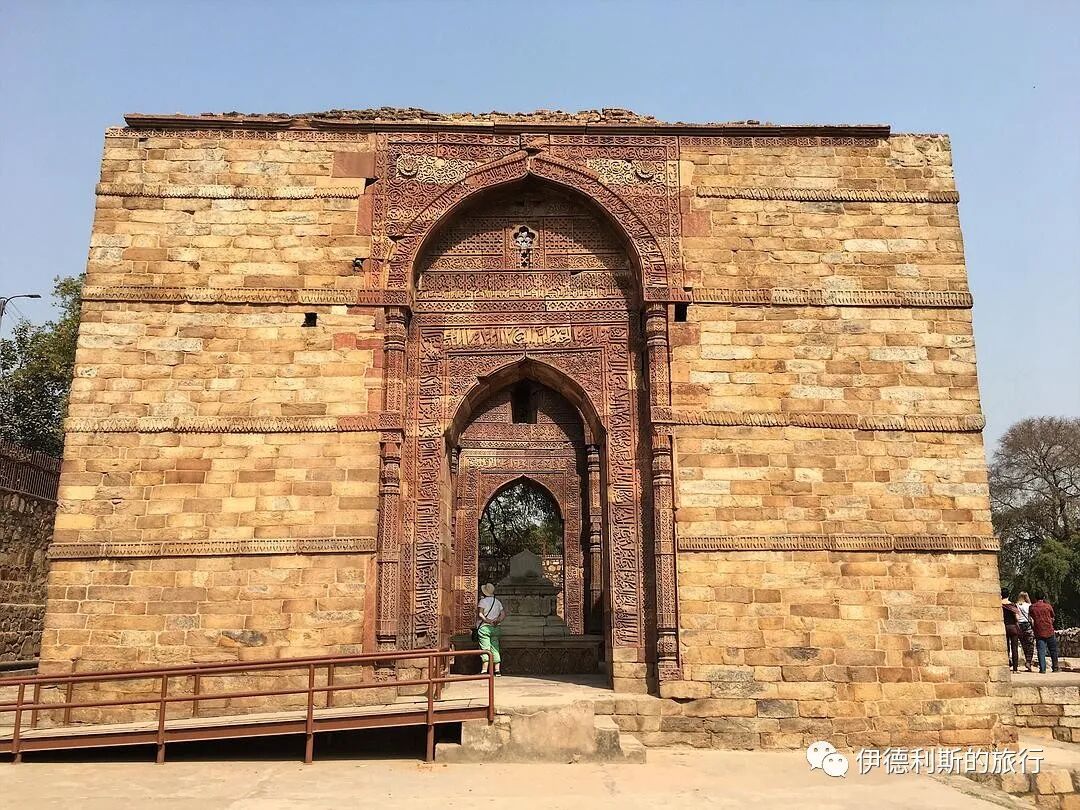
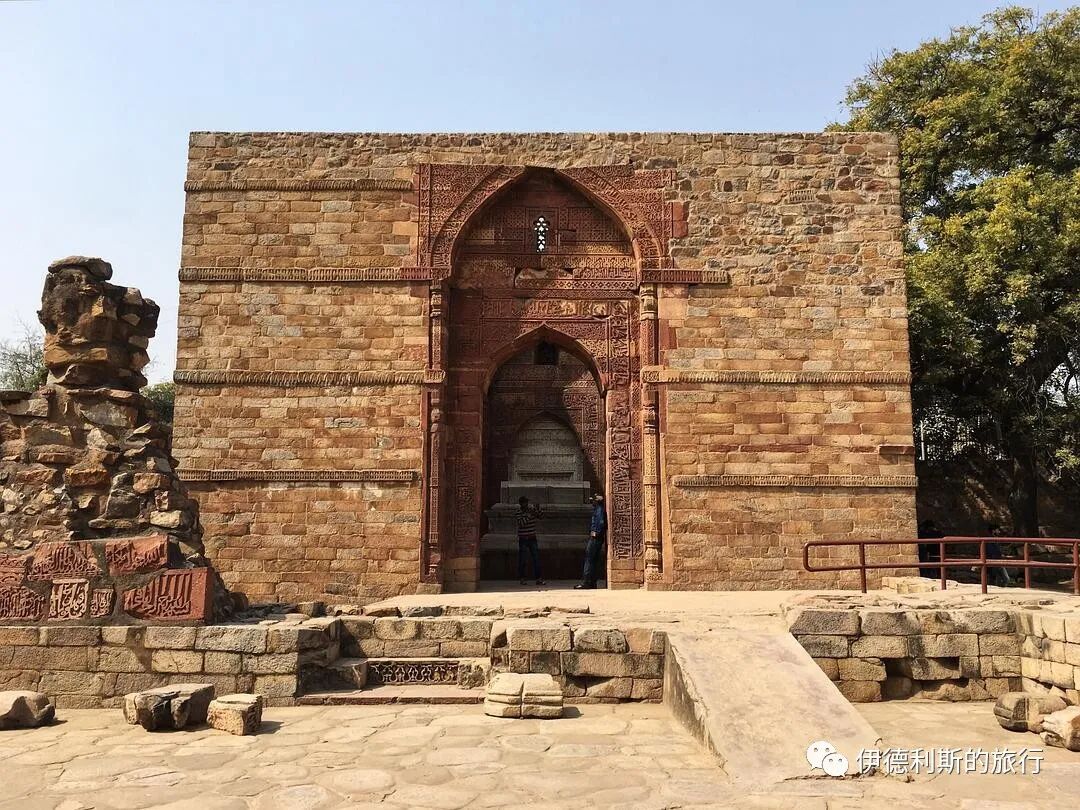
The stone carvings on the walls are very ornate, featuring bells, tassels, lotus flowers, and diamond emblems, all of which are elements from Hinduism.
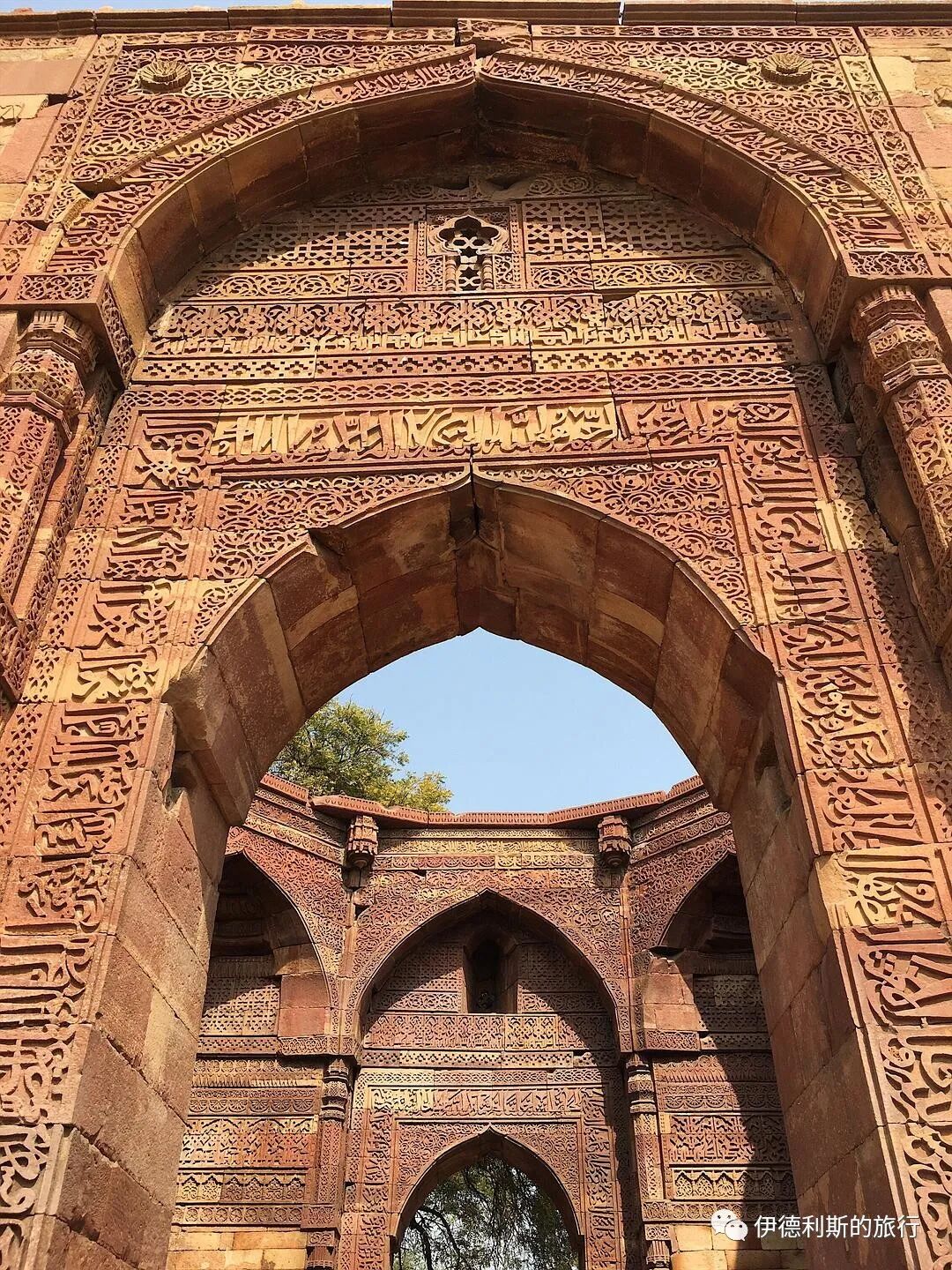
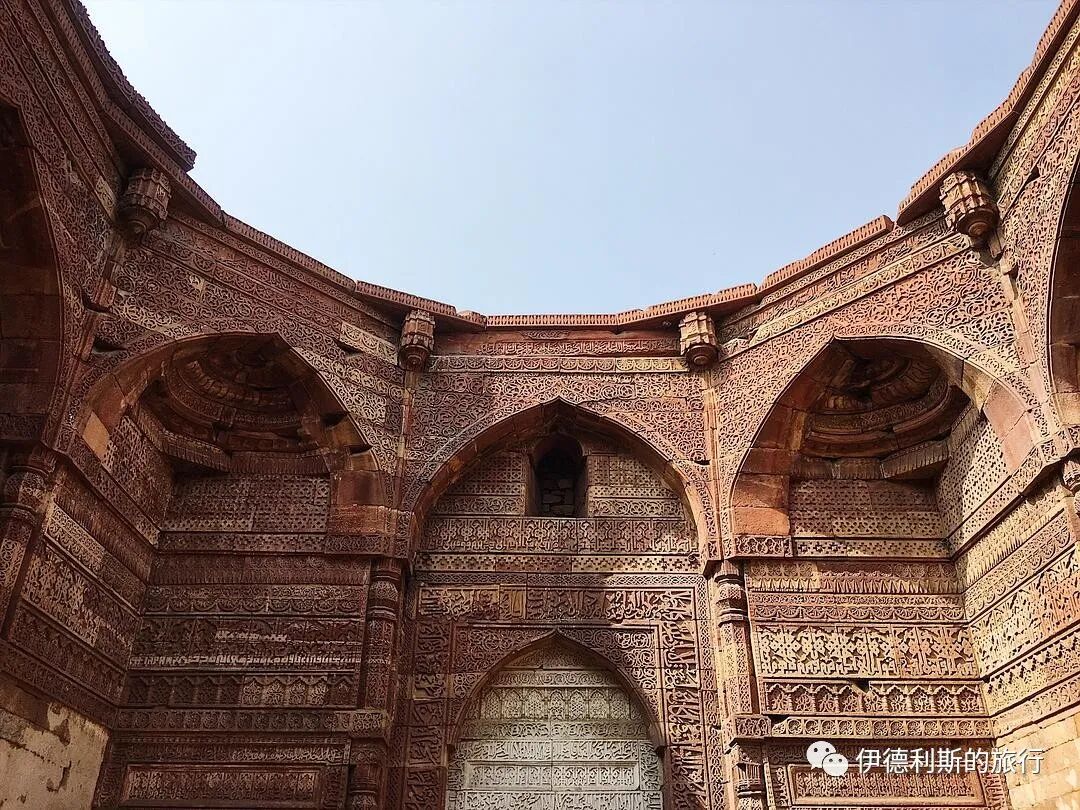
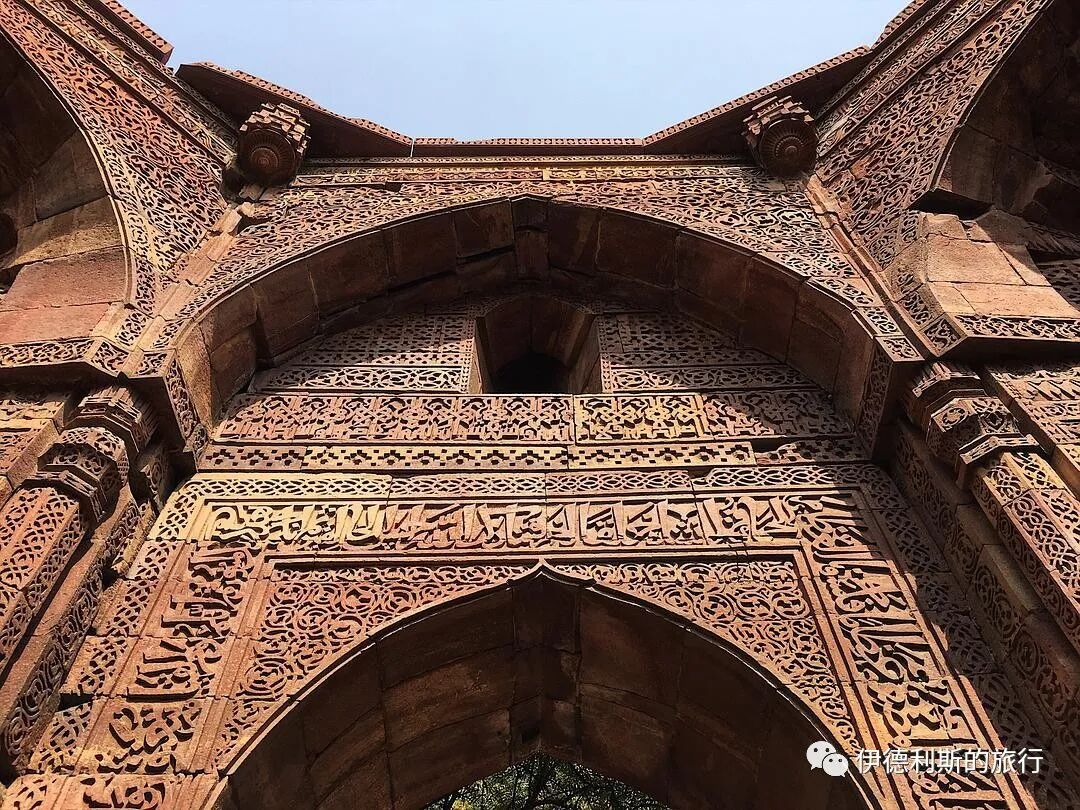
The structure at the corner of the tomb's ceiling is called a squinch, which is used to connect the walls to the dome. The earliest squinches appeared in the Sassanid Empire of Persia and were later used in Islamic architecture, becoming most common in Iran.
The squinches in the Tomb of Iltutmish indicate that there was once a dome on top of the tomb, but it later collapsed.
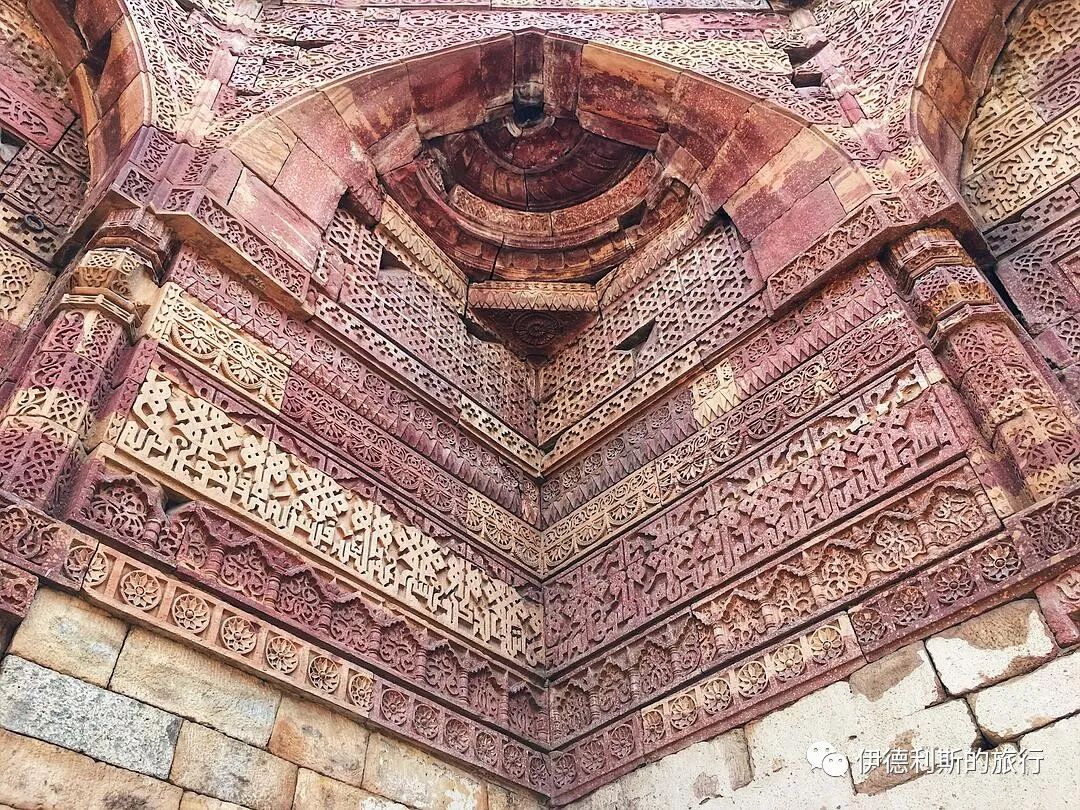
The ornate mihrab on the west side.
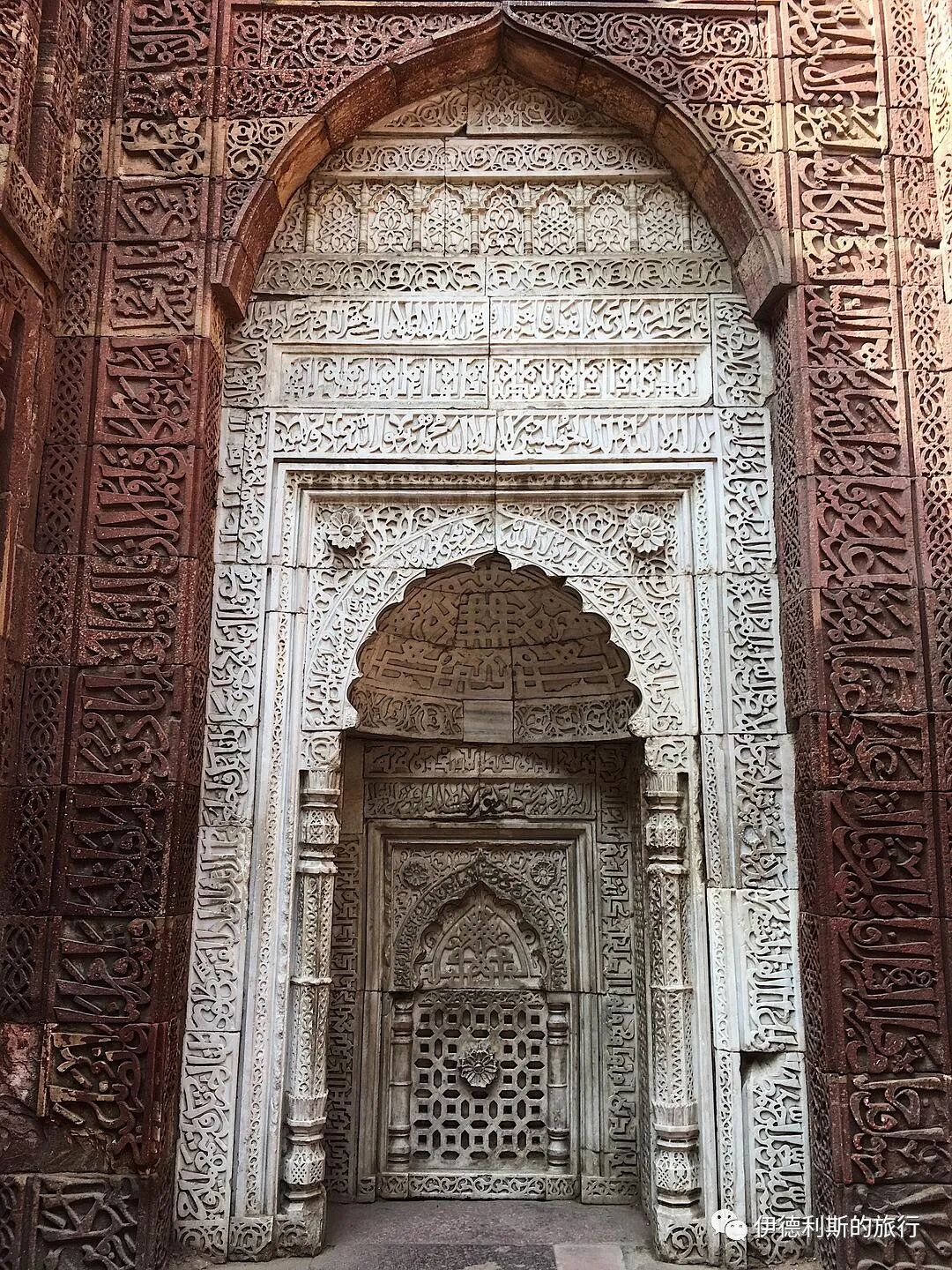
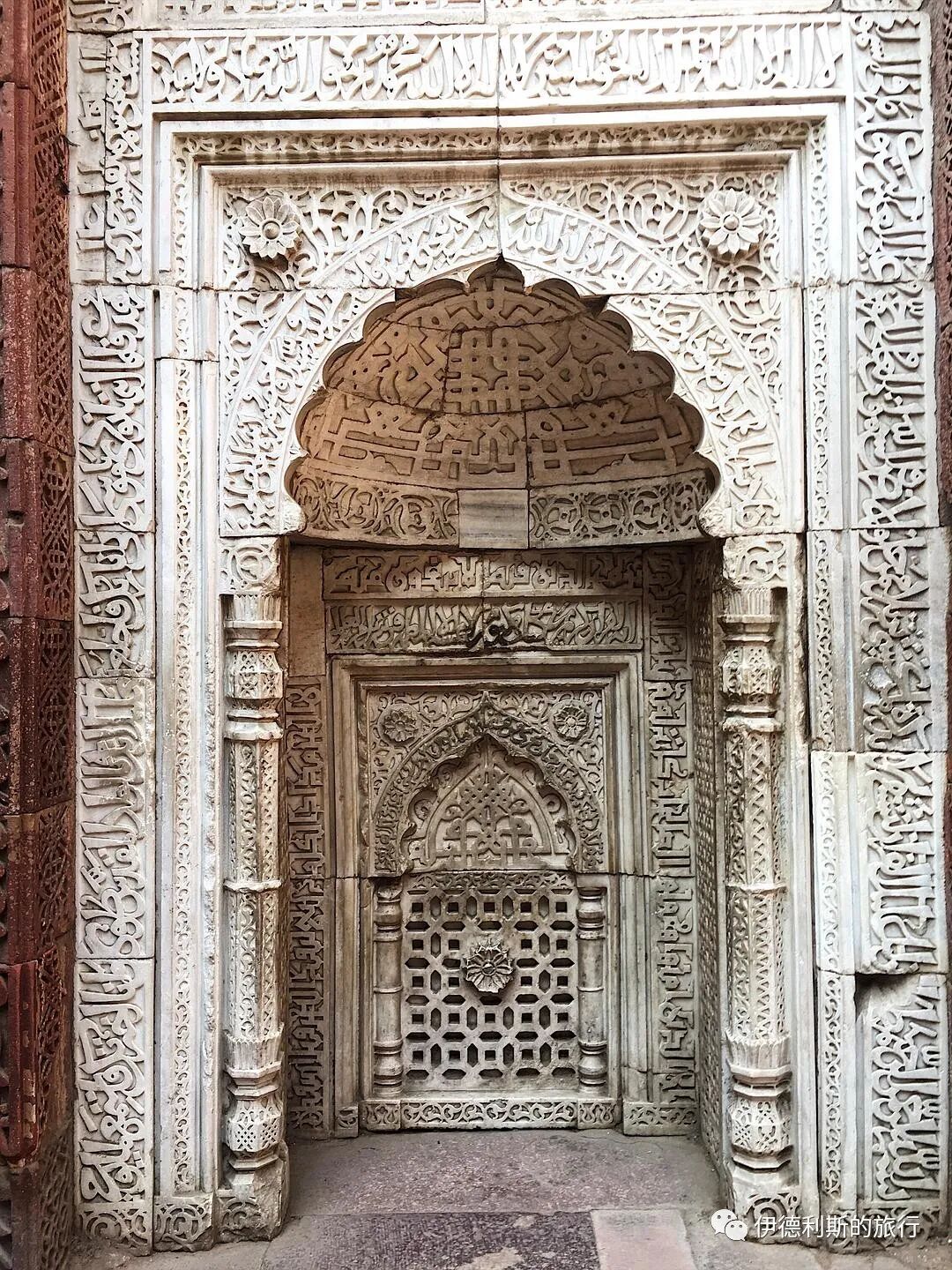
The tombstone in the center is made of white marble.
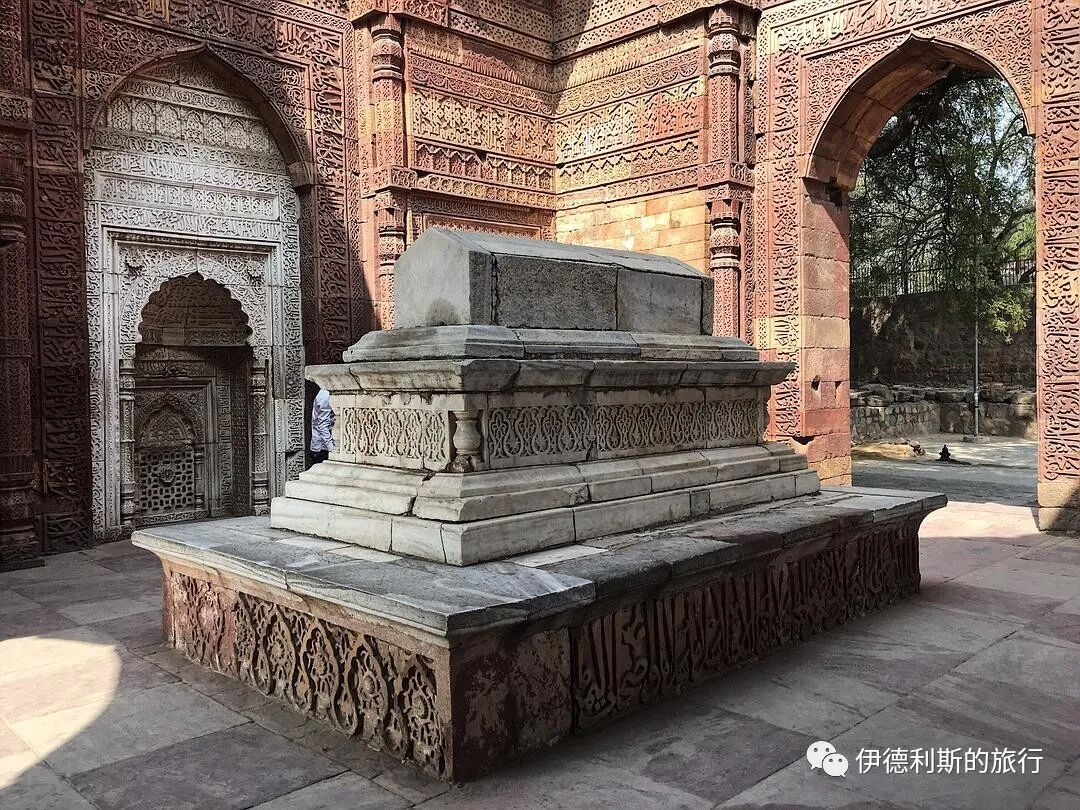
The actual grave of Iltutmish is not inside this building. In 1914, Gordon Sanderson of the Archaeological Survey of India (ASI) excavated the real burial chamber 20 steps north of the Tomb of Iltutmish.
5. Alauddin Khalji expands the mosque again
In 1310, Sultan Alauddin Khalji of the Khalji dynasty of the Delhi Sultanate expanded the Qutb Mosque for the third time.
1. Khalji Dynasty of the Delhi Sultanate
The Khaljis were a Turkic people who had lived among the Pashtun tribes in Afghanistan for over 200 years. By the time they arrived in Delhi in the 13th century, their customs had become Pashtunized, leading the Turkic nobility in India to even regard them as Afghans.
The Khaljis came to Delhi to serve the Sultan during the reign of Ghiyas ud din Balban, the ninth sultan of the Mamluk dynasty of the Delhi Sultanate (1266–1287). During Balban's era, the Delhi Sultanate stabilized after being on the verge of collapse, with its territory covering most of northern India.
After Balban died in 1287, his young successor became addicted to wine and women, and the Turkic nobility fell into factional fighting. In 1290, the military officer Jalal ud din Firuz Khalji launched a coup to overthrow the Mamluk dynasty, founding the second dynasty of the Delhi Sultanate—the Khalji dynasty.
2. Alauddin Khalji launches a coup
Firuz Khalji was already 70 years old when he took the throne. He was recognized as a gentle and humble monarch, but because he was not considered a Turk, Turkic nobles always tried to overthrow him.
Firuz pardoned one person after another who tried to overthrow him, but he eventually died at the hands of his nephew and son-in-law, Alauddin Khalji. Alauddin's original name was Ali Gurshasp. His father was Firuz's eldest brother, but he died early, so Alauddin was raised by Firuz. Firuz not only raised his nephew but also married his daughter to him.
After Firuz became Sultan, Alauddin's wife suddenly became a princess and began to act very arrogantly, wanting to dominate Alauddin. Her mother also indulged her daughter's arrogant behavior, so Alauddin had a very poor relationship with both his wife and his mother-in-law.
In 1291, Alauddin became the new governor of Kara. In Kara, people who had previously wanted to overthrow Firuz began to incite Alauddin to overthrow his uncle. Combined with his miserable marriage, he began to resolve to get rid of Firuz.
After five years of raising funds and hiring an army, in 1296, Alauddin led an army of 8,000 cavalry to loot Devagiri, the capital of the Yadava dynasty in southern India, and obtained a massive amount of wealth. When Firuz heard the news, he was very happy and set out from Delhi, intending to meet Alauddin on the way to see the spoils, but Alauddin took a detour and returned directly to Kara. One of Firuz's subordinates suggested that the Sultan go to intercept Alauddin, but Firuz believed that Alauddin would bring the wealth to Delhi, so he returned to Delhi instead.
In Delhi, Alauddin's younger brother Almas Beg assured his uncle of Alauddin's loyalty and begged him to pardon Alauddin's mistakes, saying that Alauddin would likely commit suicide out of guilt. Firuz, who cared for his nephew, immediately sent someone to Kara with a letter of pardon and promised to travel to Kara afterward.
During Ramadan in 1296, Firuz led a large army to Kara to meet Alauddin. He ordered his commanders to lead the main army directly to Kara, while he crossed the Ganges River with 1,000 soldiers. As they neared Kara, Alauddin sent his brother Almas to meet his uncle and persuade him to come alone, saying that otherwise, Alauddin would commit suicide out of fear.
When he arrived at Kara, Alauddin threw himself at Firuz's feet. Firuz caressed Alauddin, kissed his cheek, and scolded him for doubting his uncle's affection for him. At that moment, Alauddin signaled his subordinate Muhammad Salim, who swung his sword at Firuz. After being struck by the first blow, Firuz struggled to run toward the boat, but Muhammad swung a second time, and Firuz was finally killed. Alauddin immediately put on the crown and declared himself the new Sultan.
Alauddin then started moving toward Delhi, recruiting as many soldiers as he could along the way. Meanwhile in Delhi, Firoz's widow named her young son Qadr Khan as the new Sultan. This made the eldest son, Arkali Khan, who was the governor of Multan, furious, and he refused to help his mother defend against Alauddin's army.
In October 1296, Alauddin reached Delhi, defeated his mother-in-law's army, and took the city. On October 21, Alauddin officially became the Sultan of the Khalji dynasty of the Delhi Sultanate.
3. Accumulating wealth
During his first year on the throne, Alauddin used generous gifts to secure his power while balancing the influence of various nobles, which quickly brought stability to Delhi. By his second year, Alauddin began arresting and killing the nobles who had served Firoz. He seized their property to gain massive wealth and replaced the old nobles with new ones loyal to him.
Starting in 1297, Alauddin defended against the Mongol armies of the Chagatai Khanate while constantly conquering Hindu kingdoms in the south. In 1306, Alauddin defeated the last Mongol army sent by the Chagatai Khan, Duwa. After that, he began regular raids into Mongol territory in Afghanistan.
Alauddin's conquest of southern India was also very successful. In 1311, Alauddin sent an army to the Pandyan dynasty at the southern tip of the Indian peninsula. They seized a huge amount of treasure, elephants, and horses, which was considered the greatest haul of wealth since Muslims first occupied Delhi.
Besides looting the Hindu kingdoms, Alauddin carried out a series of economic reforms. Regarding land, he collected land taxes directly from Hindu rural areas without using any middlemen. Regarding income, he hired many accountants in the court and gave heavy punishments for bribery. Regarding markets, Alauddin used market inspectors and spies to strictly control the prices of goods. He also built state-owned grain warehouses and banned farmers and merchants from storing grain privately. By strictly controlling market prices, he was able to maintain a massive army while paying his soldiers lower wages.
4. Expanding the mosque
After accumulating great wealth, Alauddin began expanding the Qutb Mosque in 1310. The new mosque was much larger than the one expanded by Iltutmish.
The blue section in the image below shows the area of Alauddin's mosque expansion.
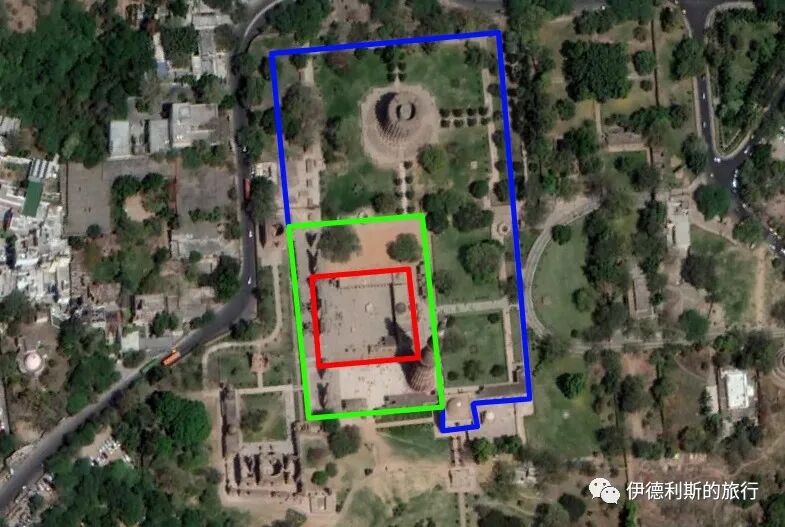
The most famous part of Alauddin's mosque expansion that still stands today is the southern gate, later called the Alai Darwaza. This building uses red sandstone and white marble inlaid with beautiful Naskh (a style of Arabic calligraphy) script. The geometric, openwork marble window screens show the high skill of the Turkic craftsmen.
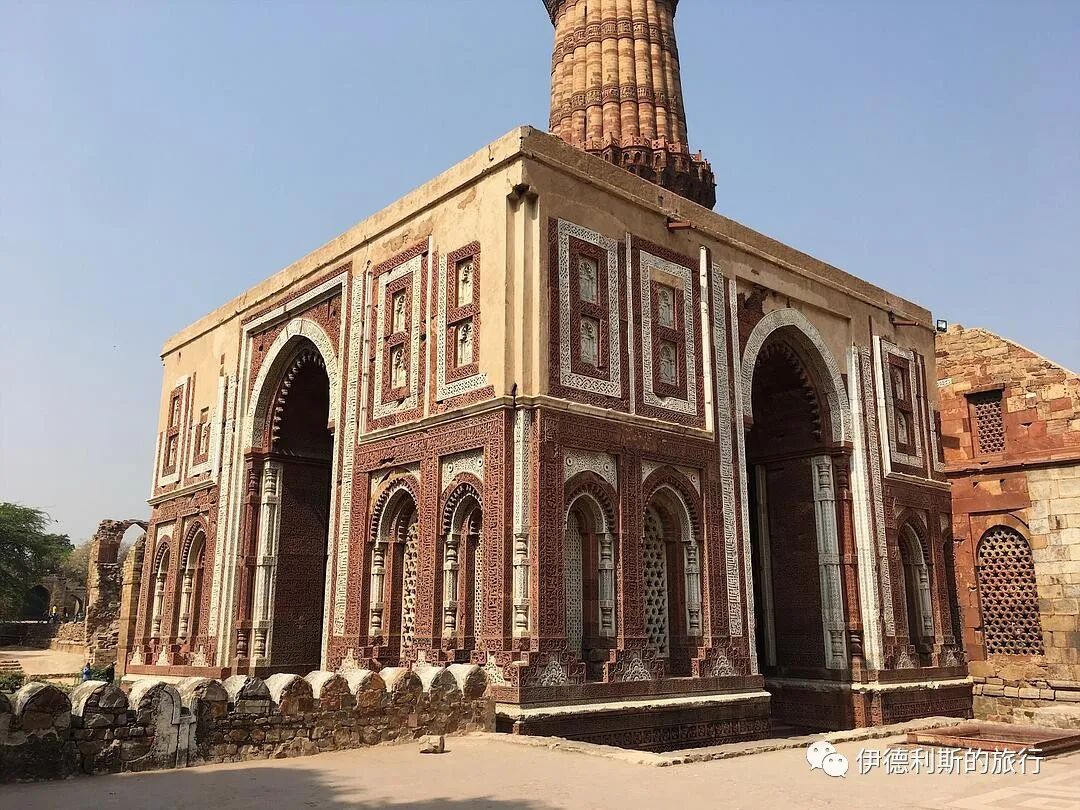
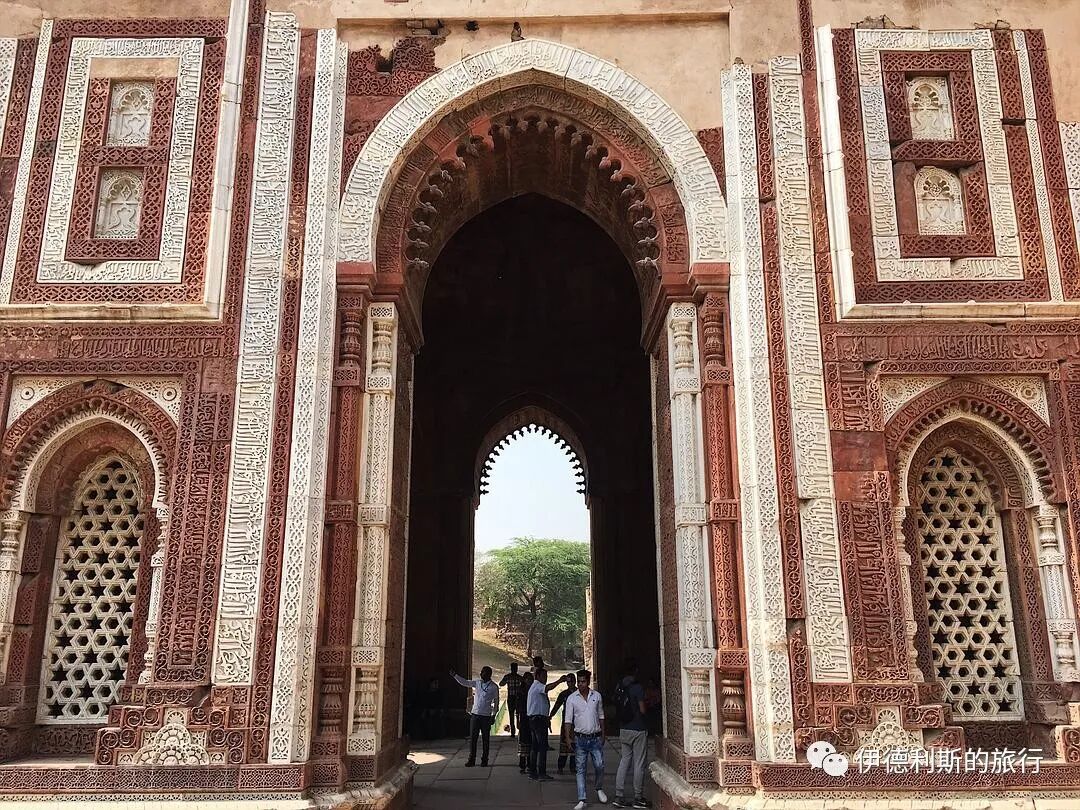
This building is also known as the first structure in India built strictly according to Islamic architectural principles. During the Mamluk dynasty, the domes and arches were not strictly Islamic in form and were called false domes and false arches. This building is considered the first in India to use true Islamic domes and arches, though the patterns on the building are still full of Hindu elements.
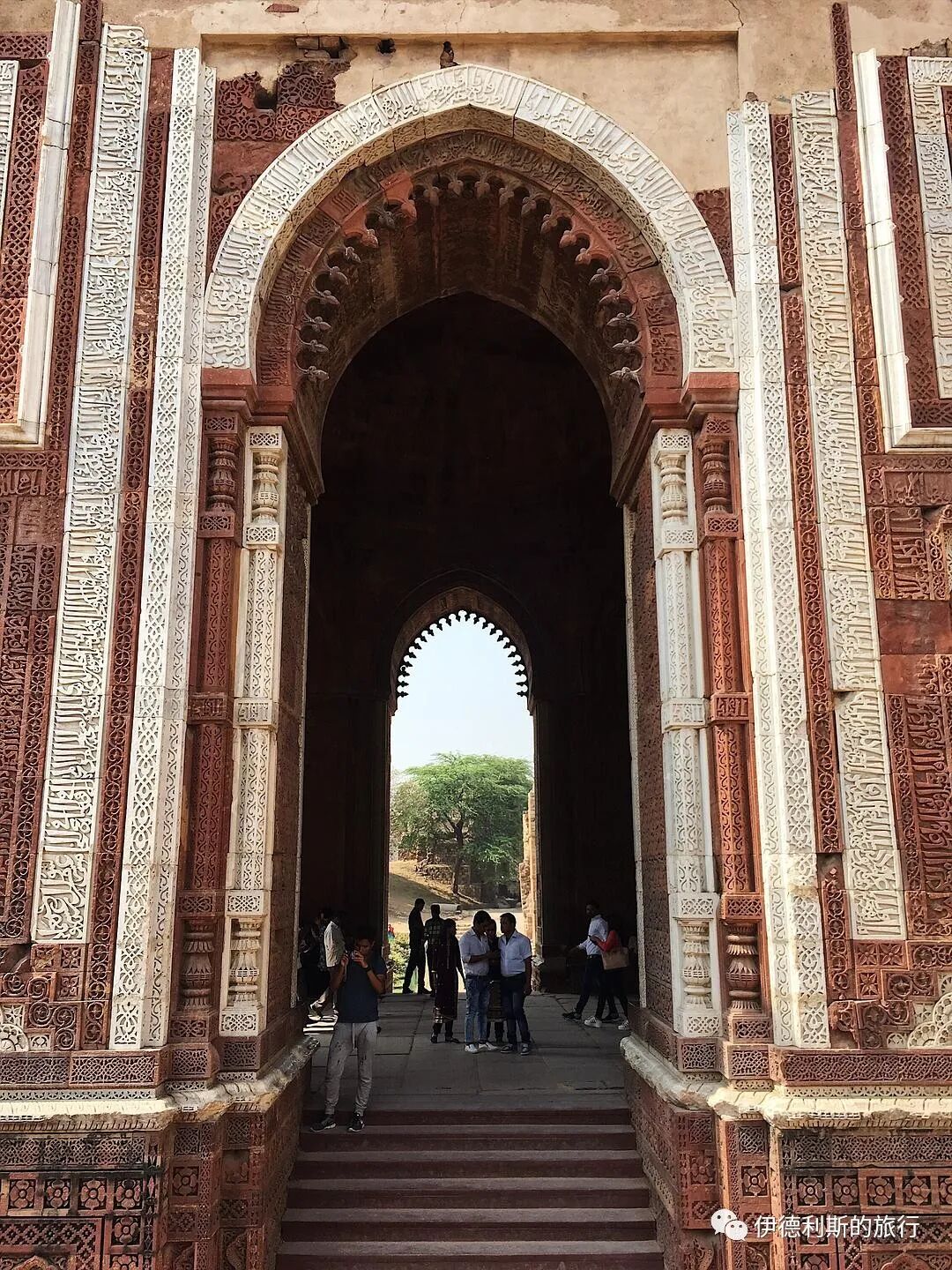
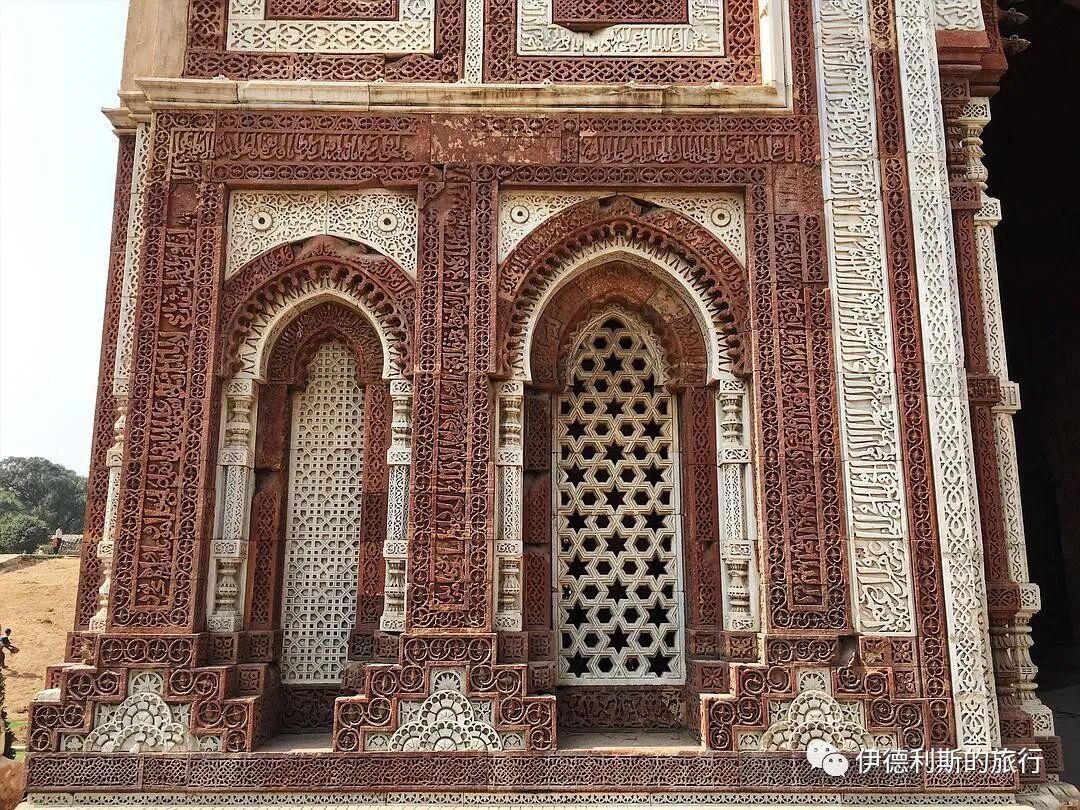
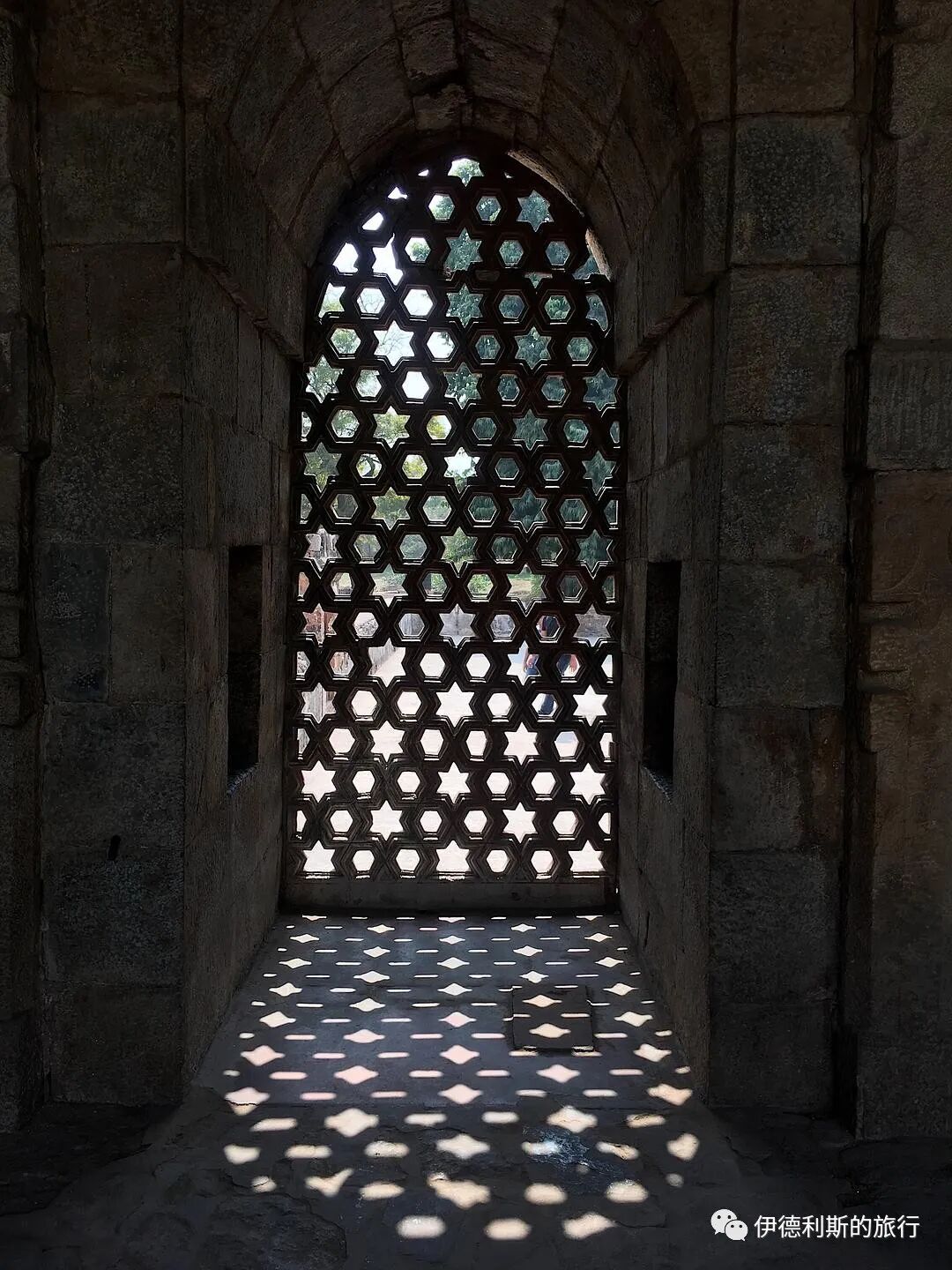
5. Alai Minar
After doubling the size of the Qutb Mosque, Alauddin Khalji began building the Alai Minar, which was planned to be twice as tall as the Qutb Minar. However, the project was abandoned after the first level reached 24.5 meters. Today, only a huge core of rubble and stone remains of the tower.
6. Tomb of Alauddin Khalji
In his final years, Alauddin grew to distrust his officers and only favored the eunuch slave general Malik Kafur. Some scholars believe Alauddin and Kafur had a homosexual relationship, but others think their bond was not sexual.
In 1315, Alauddin became seriously ill. He appointed Kafur as the regent (Na'ib), giving him actual power. Kafur convinced Alauddin to purge many capable ministers and kept outsiders from seeing him during his final days.
As Alauddin lay dying, Kafur gathered all the important officials at his bedside to announce that Alauddin's 6-year-old son, Shihabuddin Omar, was the new heir and that he himself was the regent. According to the 14th-century Indian chronicler Abdul Malik Isami, Alauddin said nothing while in bed, and his silence was taken as consent.
Alauddin died on the night of January 4, 1316. Kafur buried him in the tomb already built in the southwest corner of the Qutb Mosque. According to the 14th-century historian Ziauddin Barani, it was Kafur who killed Alauddin.
Alauddin's tomb is connected to the madrasa (Islamic school) he built during his lifetime. This is also the first building in India where an Islamic madrasa and a tomb are connected. The madrasa is well-preserved today, but the tomb is badly damaged and has lost its dome.
Madrasa
Dome
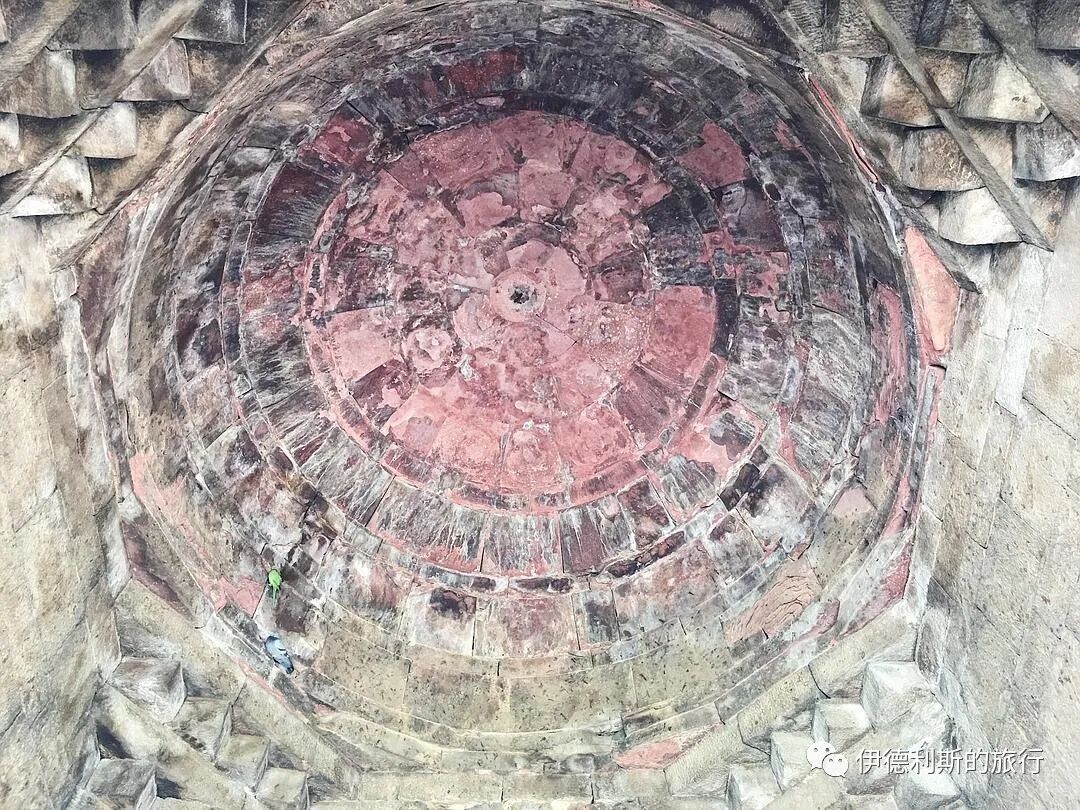
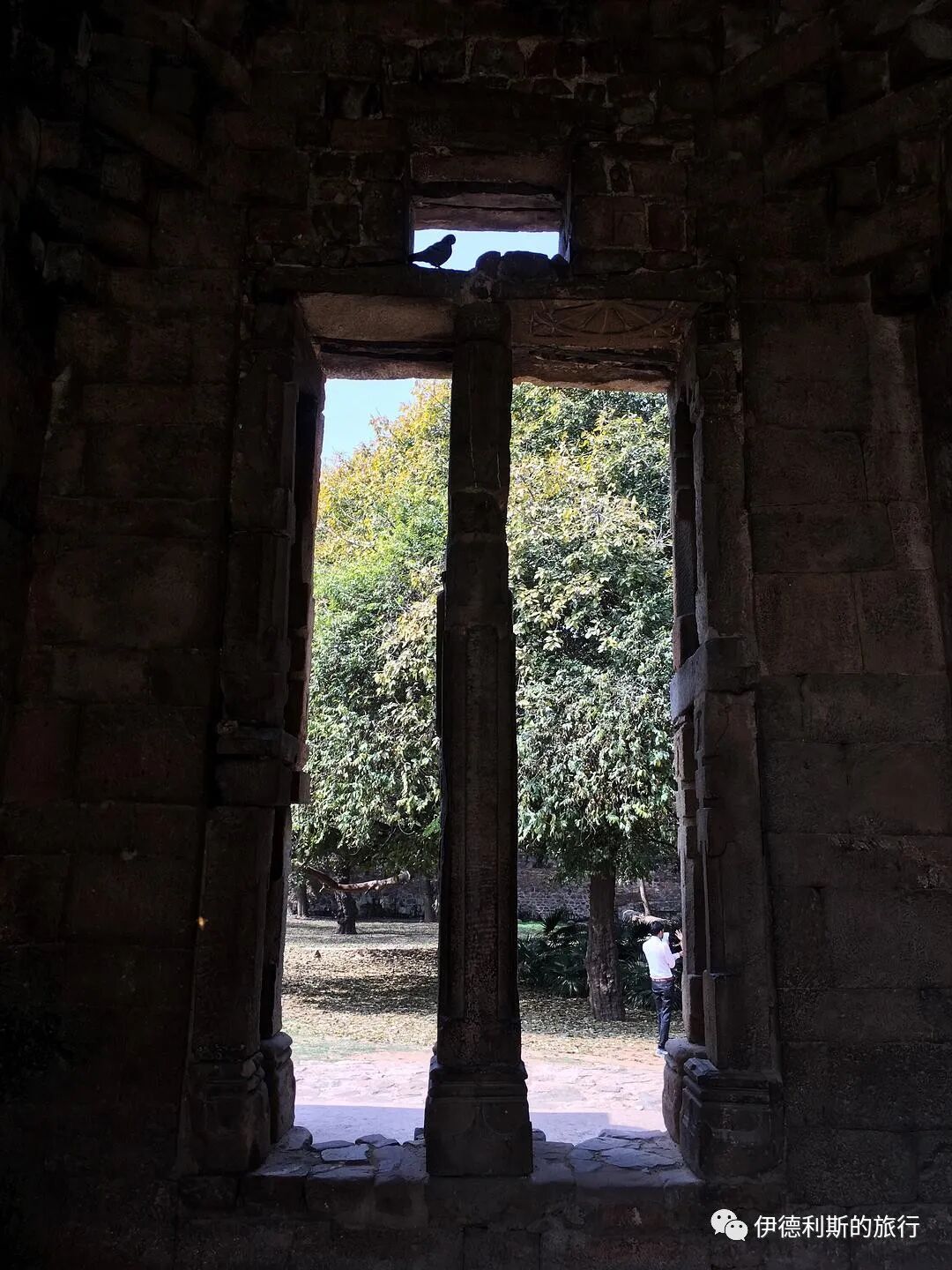
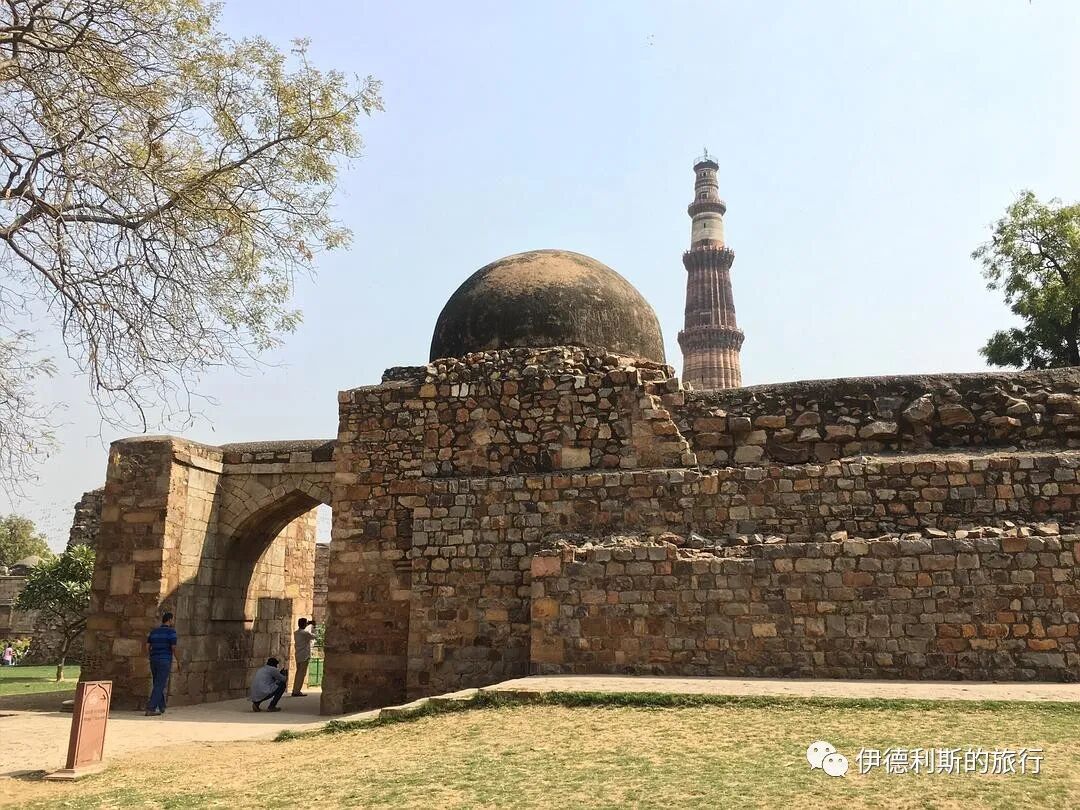
A tomb with a completely collapsed roof.
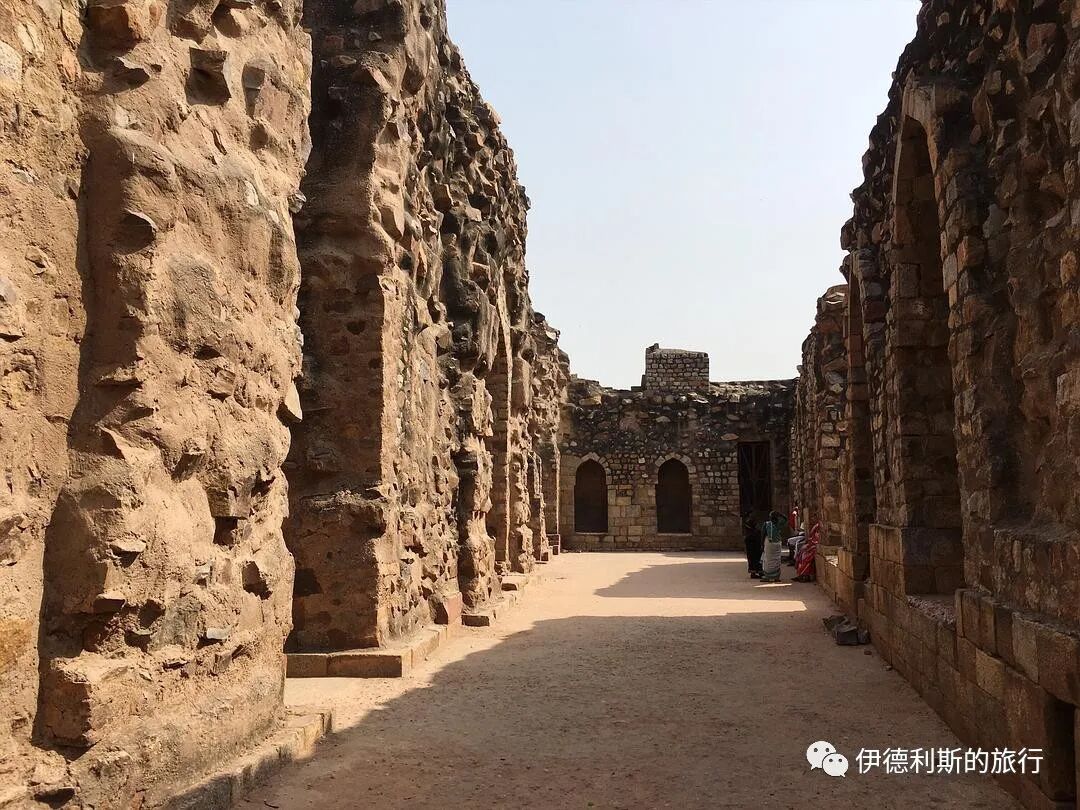
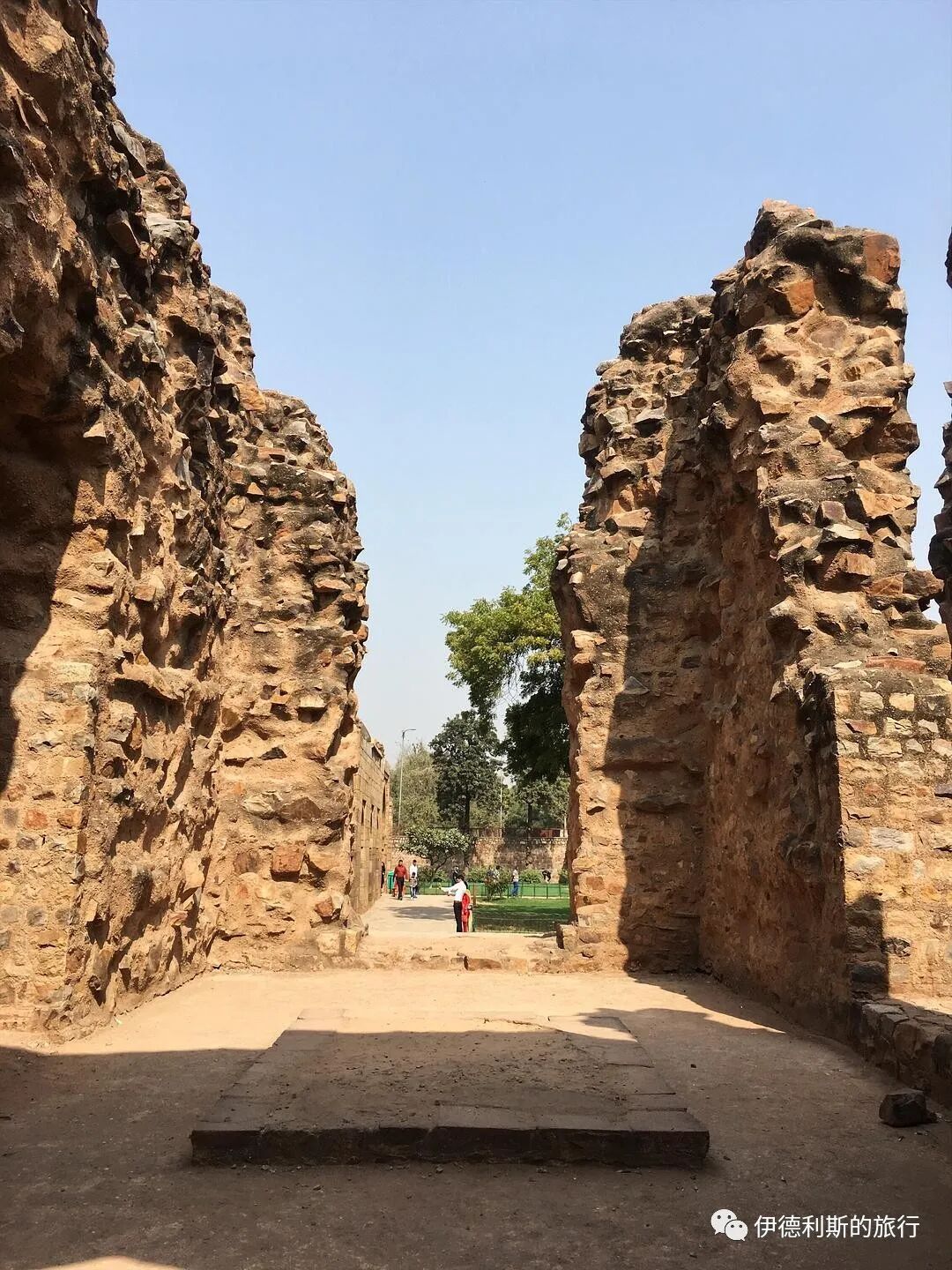
The room in the middle is likely where Alauddin is buried.
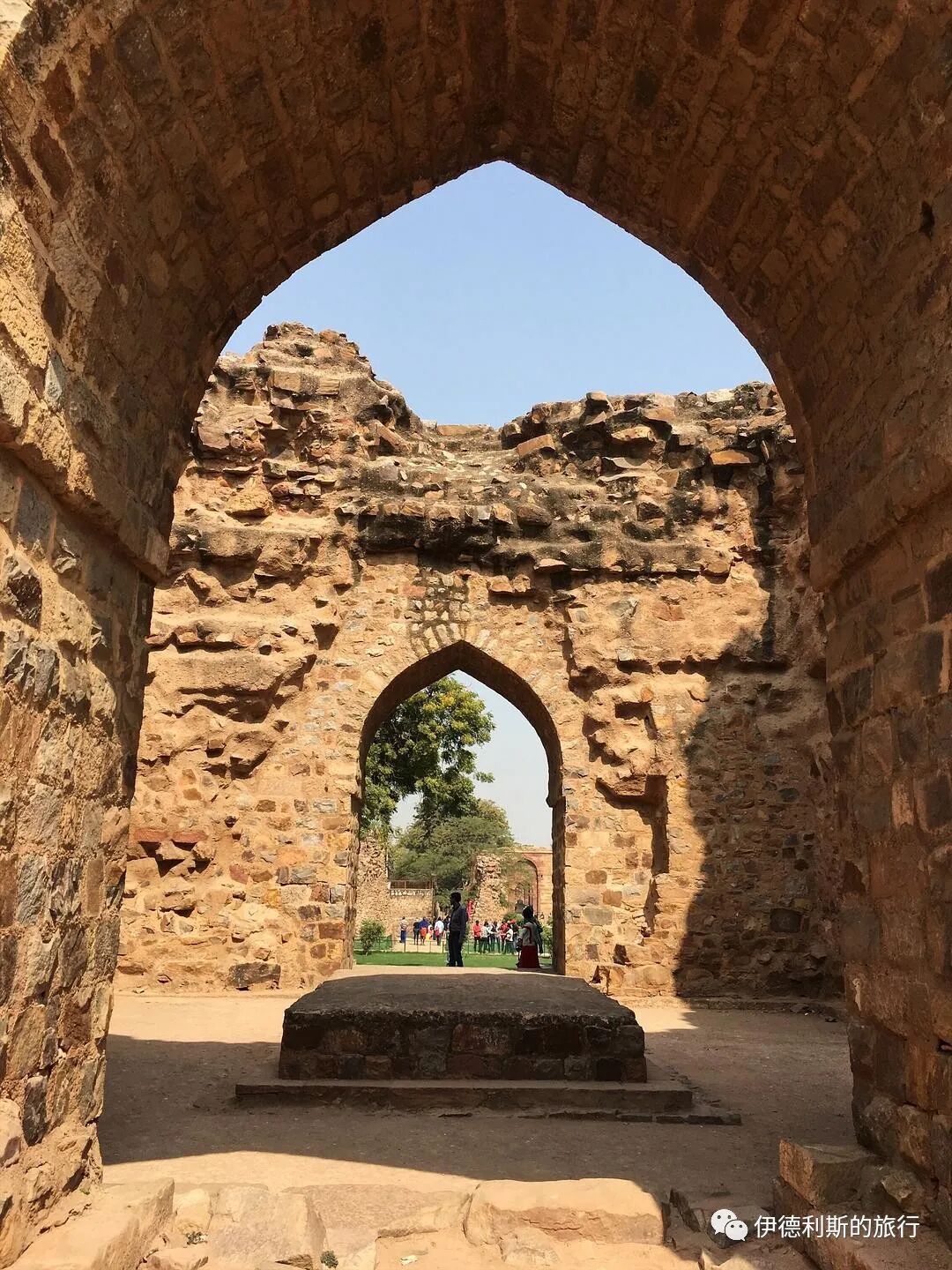
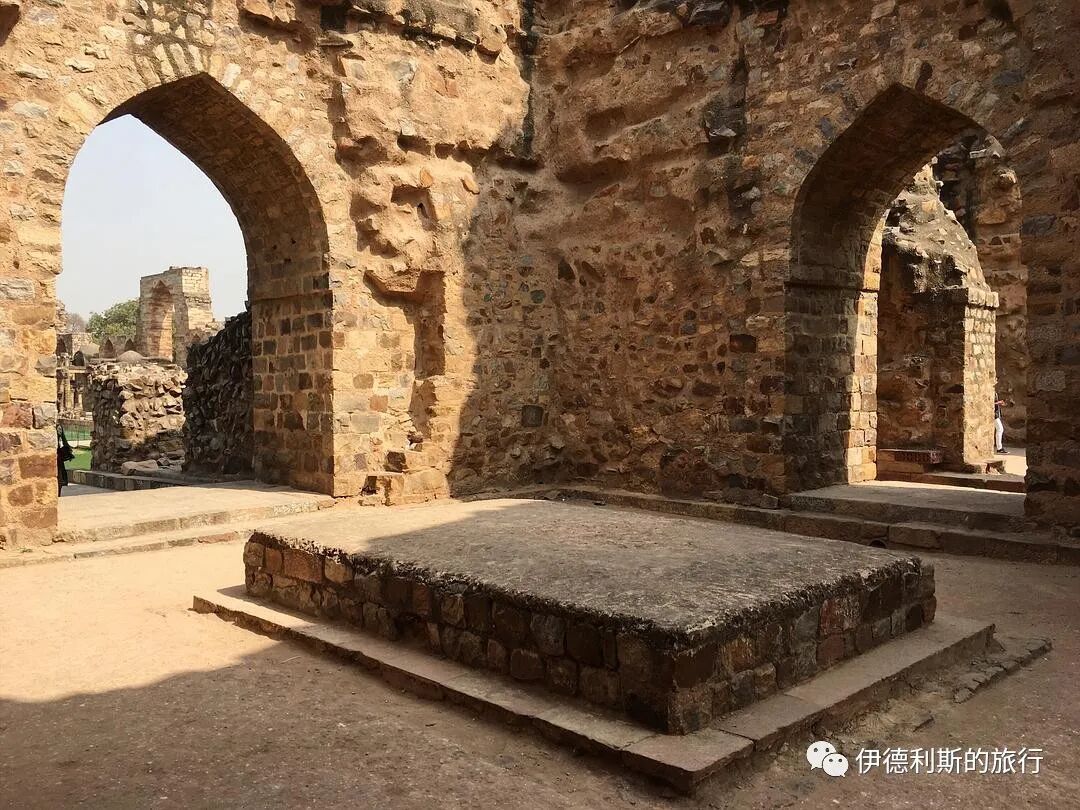
The image below shows a satellite view and a reconstruction of the Qutb Mosque. The red circle marks the mosque built by Qutb in 1193, the green circle marks the expansion by Iltutmish in 1225, and the blue circle marks the expansion by Alauddin in 1310. The Alauddin tomb and madrasa are inside the blue circle at the southwest corner.
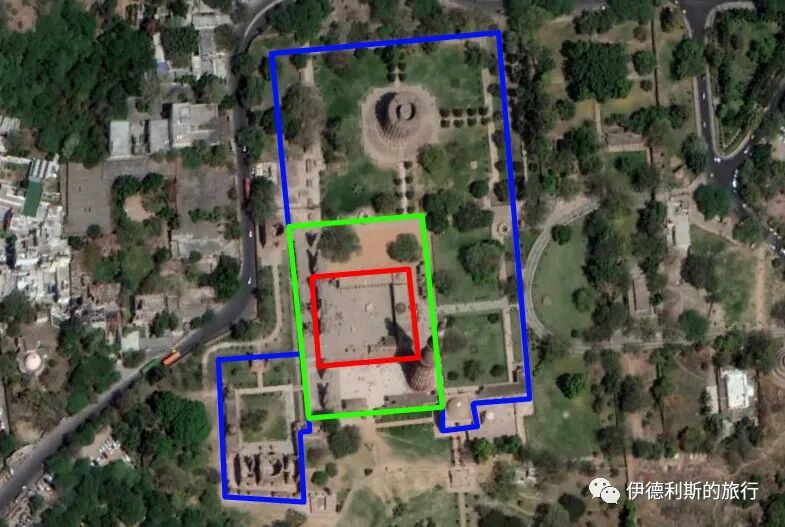
Reconstruction image link: https://visual.ly/community/in ... mplex
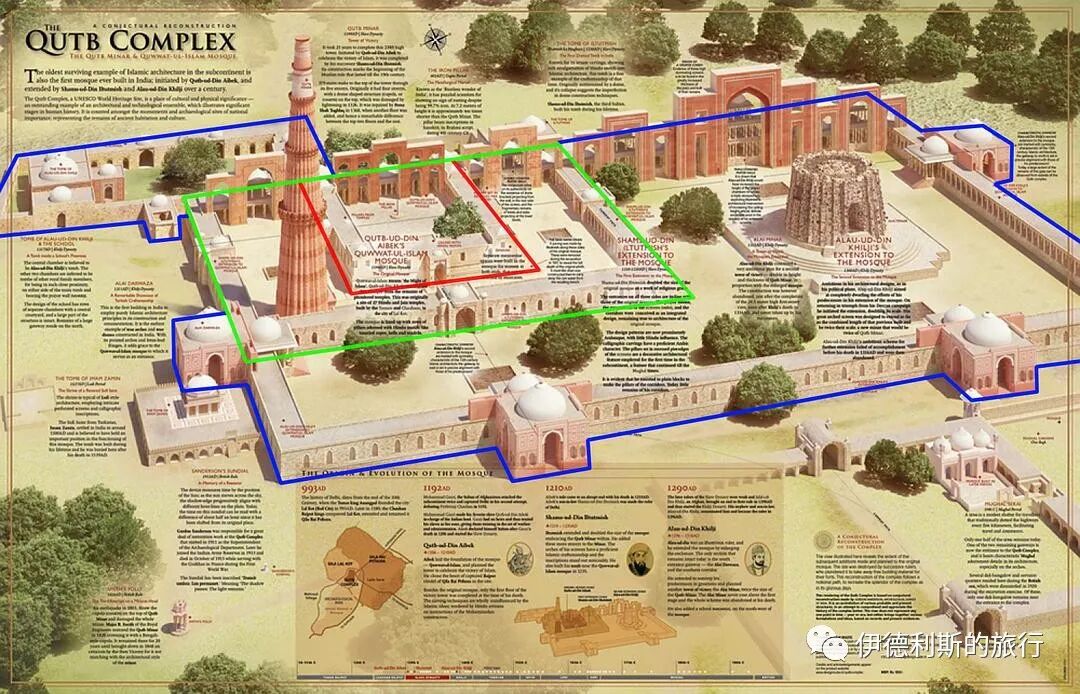
6. Mughal Dynasty architecture at the Qutb Mosque
1. Tomb of Imam Zamin
Next to the south gate, Alai Darwaza, is the tomb of Imam Zamin, built in 1539. Not much is known about this imam's life, but he was likely an imam at the Qutb Mosque.
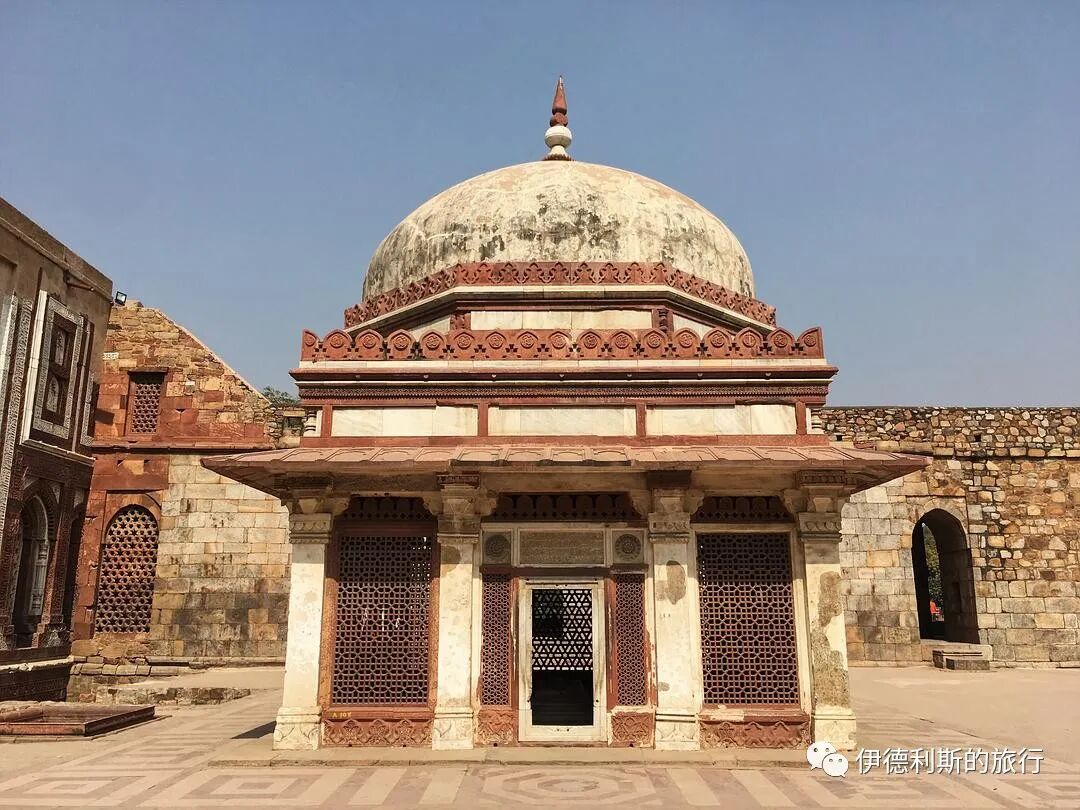
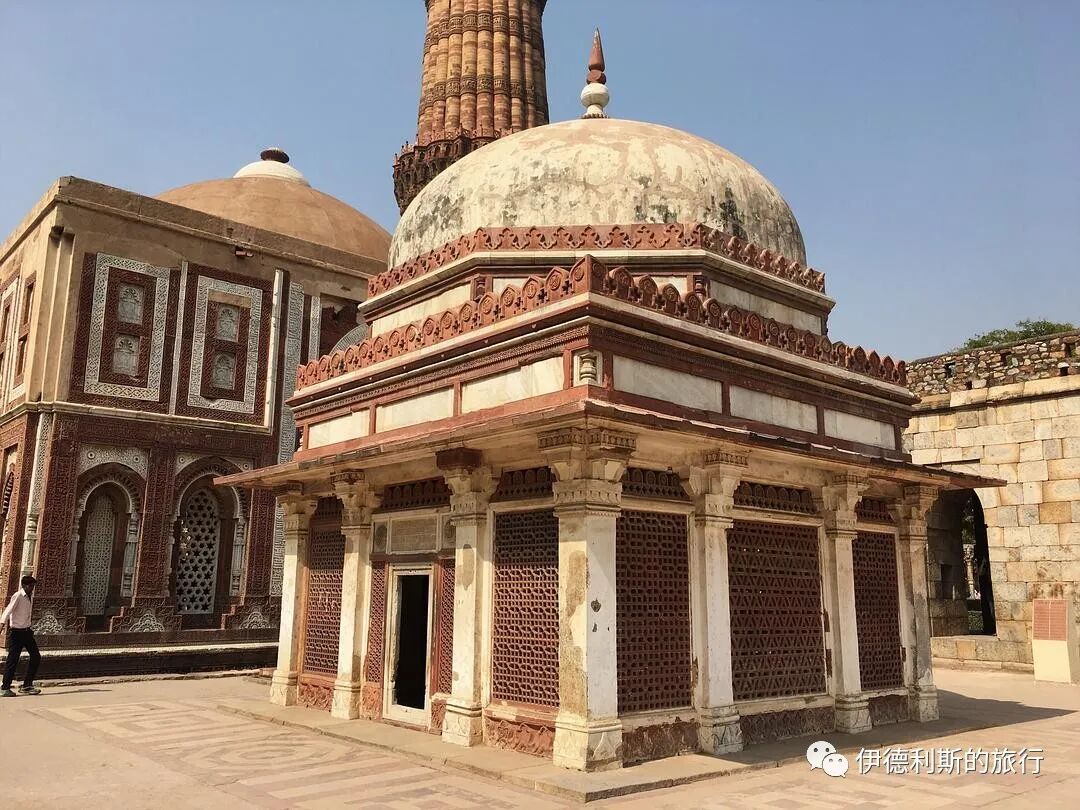
Door lintel.
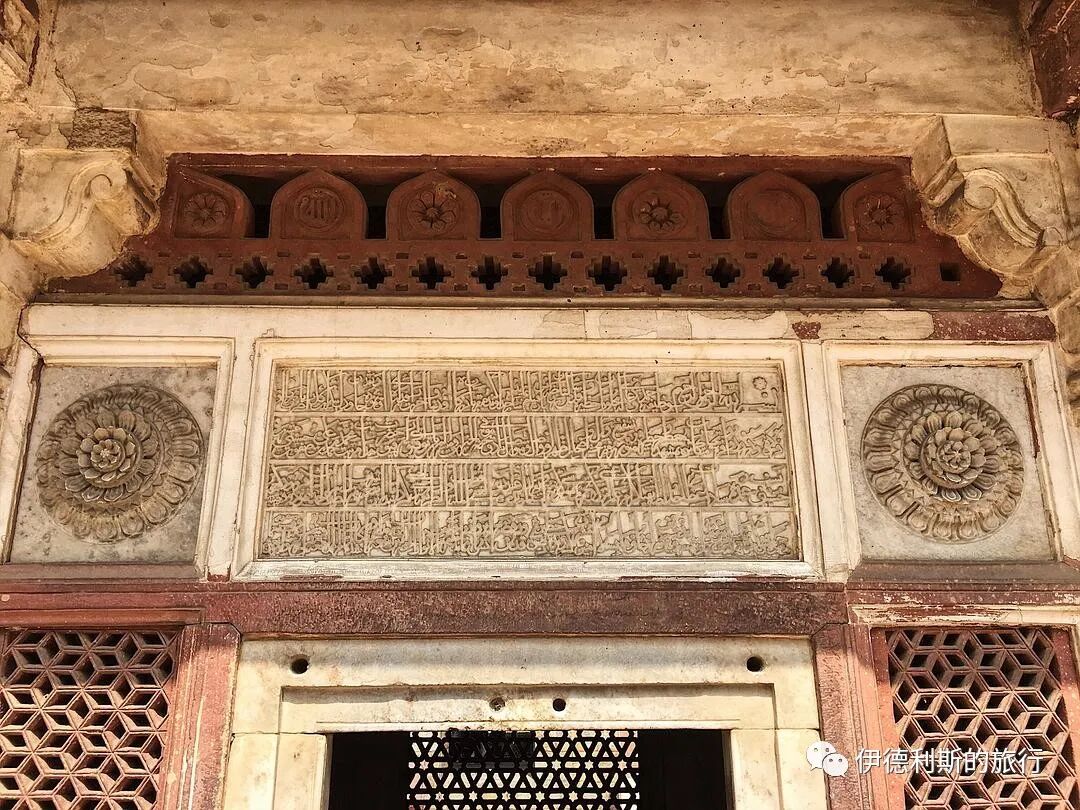
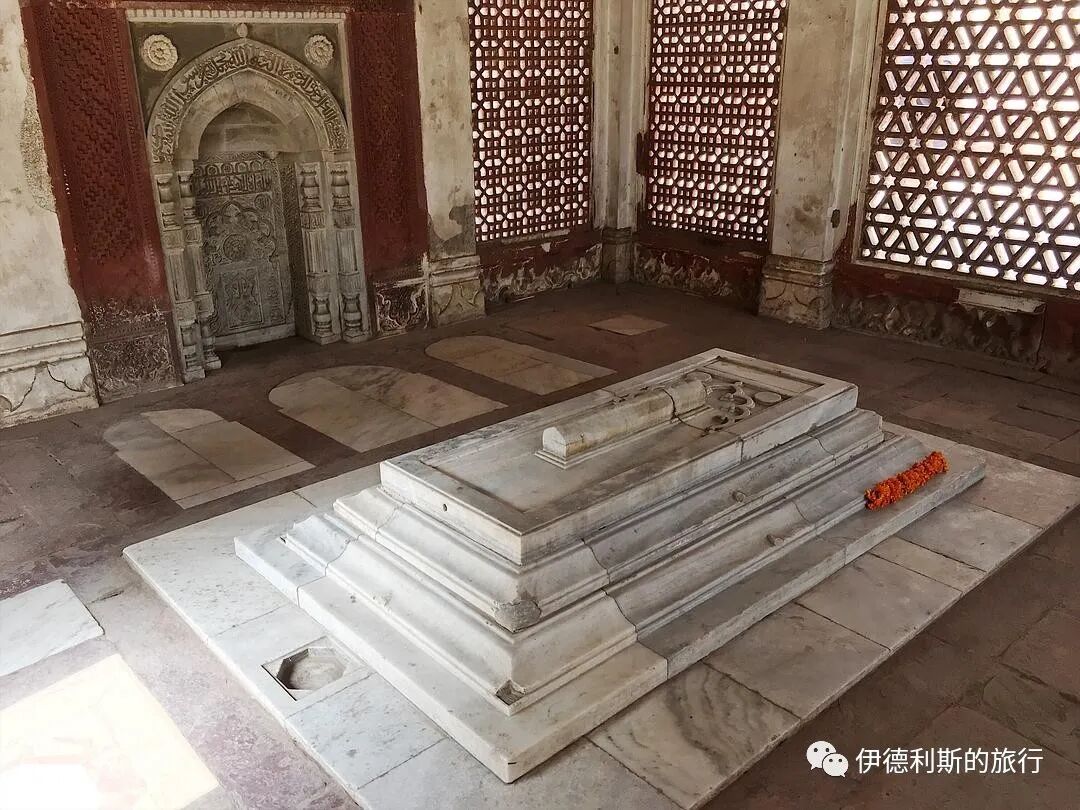
The mihrab on the west side.
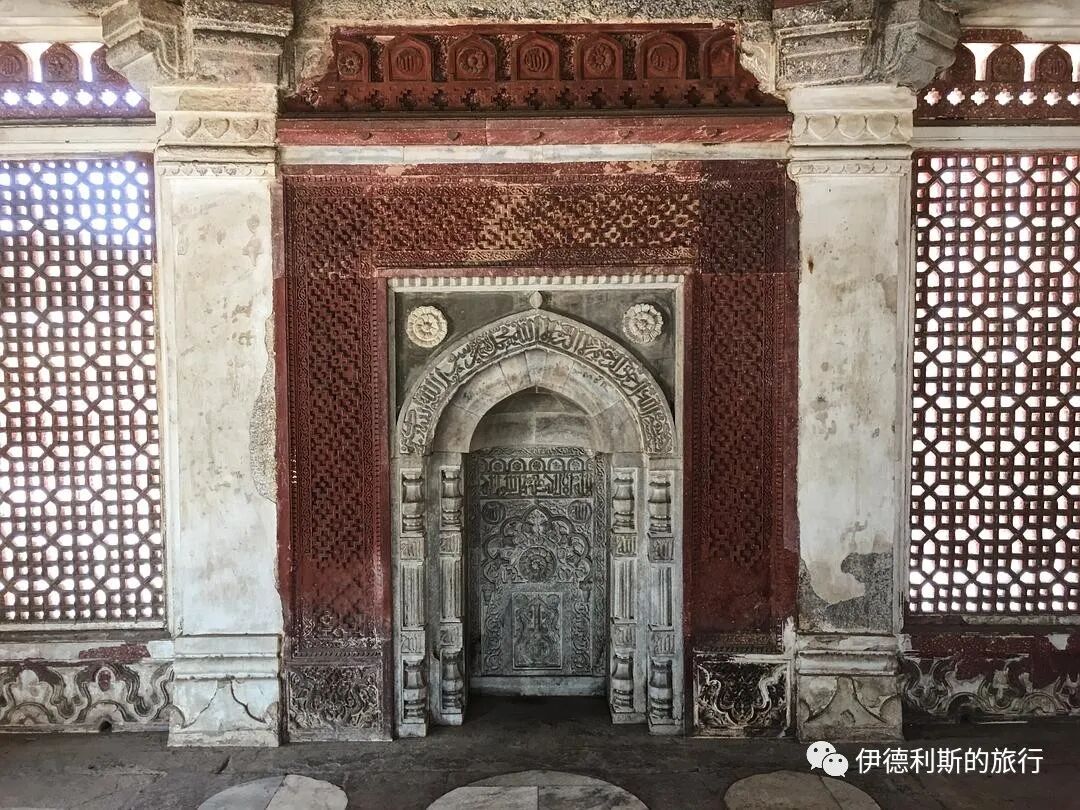
2. Late Mughal Dynasty mosque
This is a small mosque built during the late Mughal Empire, located northeast of the Qutb Mosque.
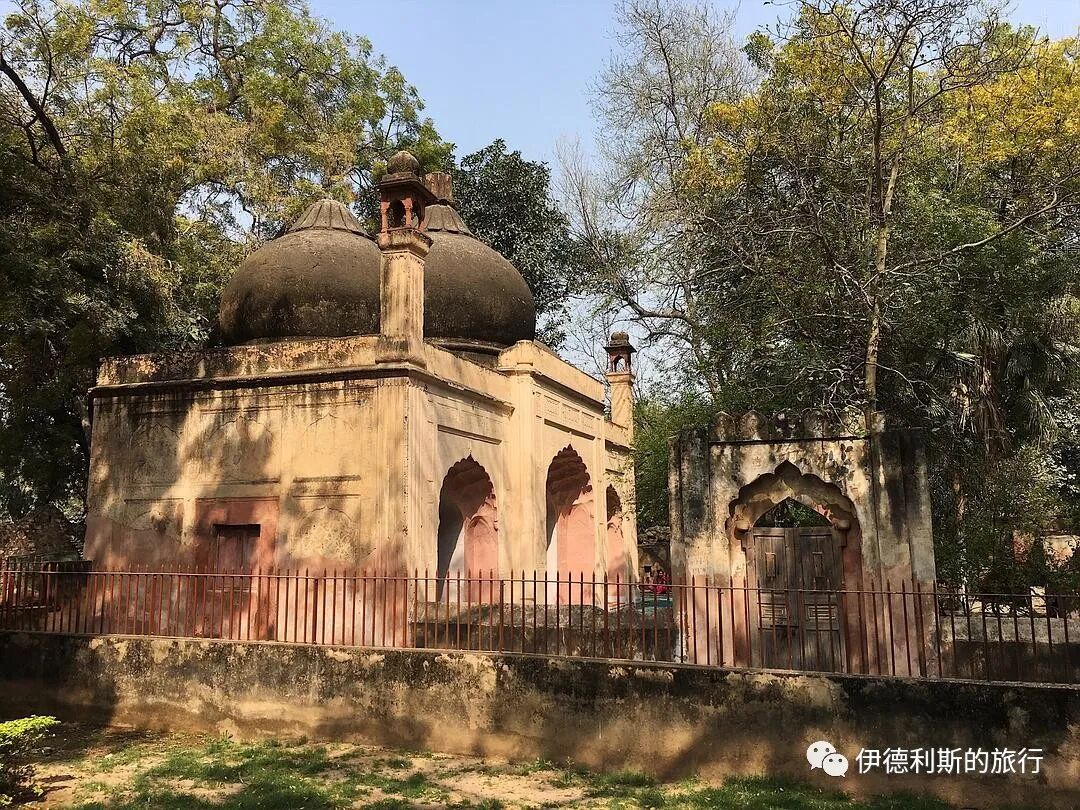
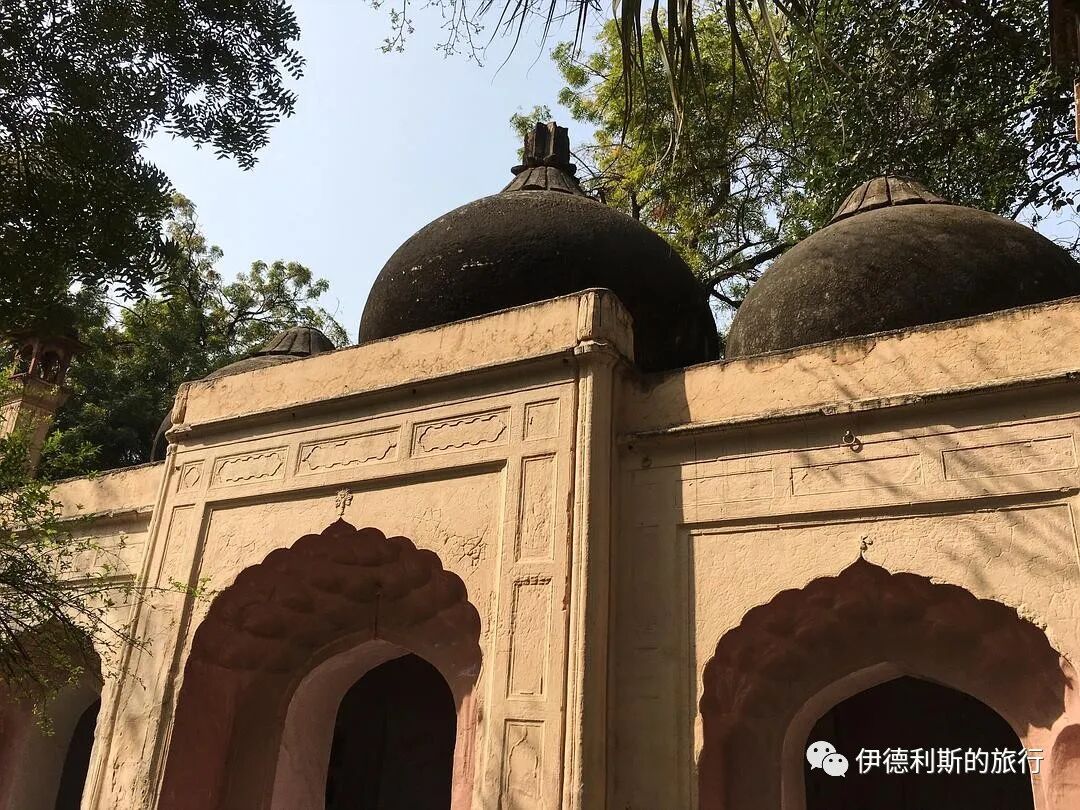
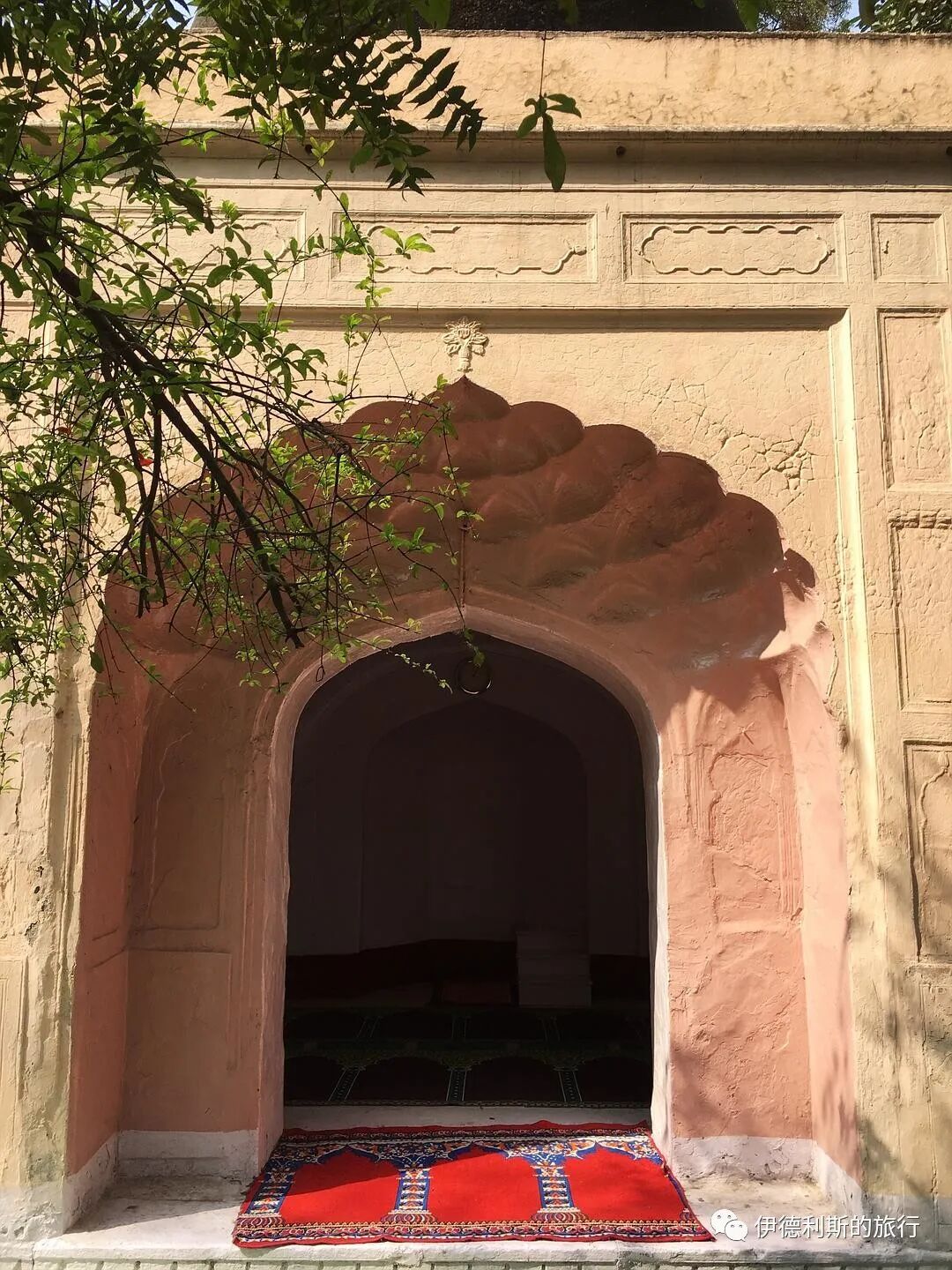
Prayer hall.
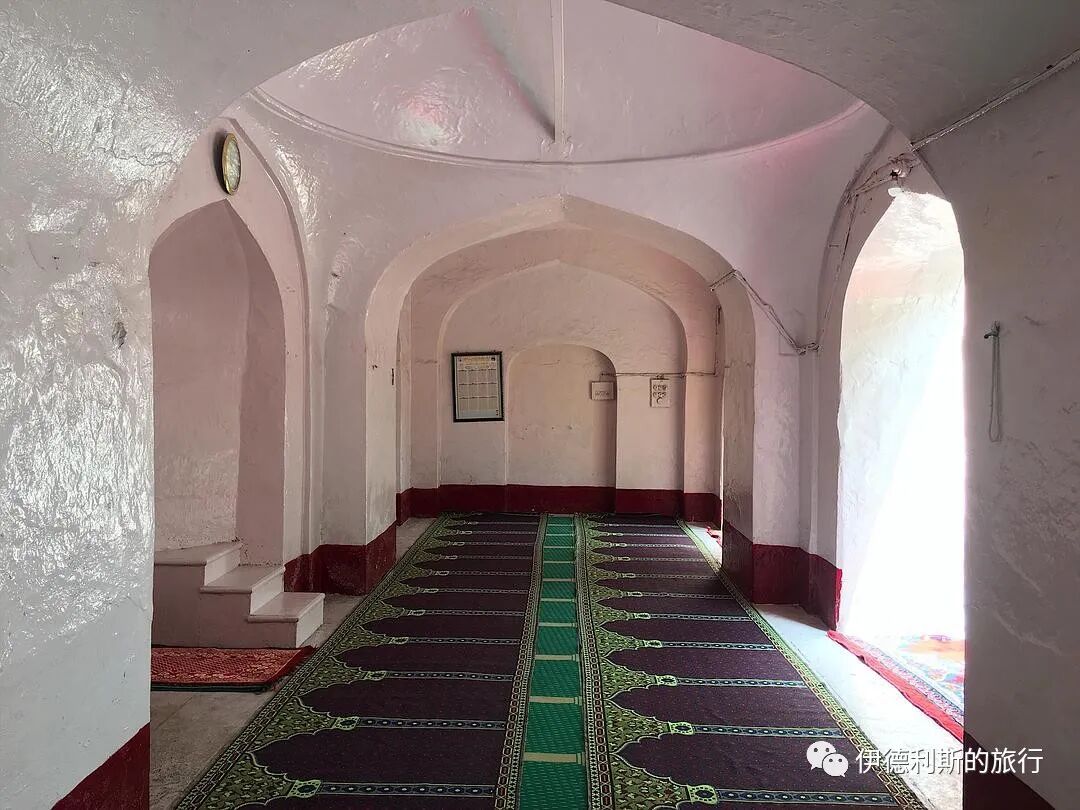
The mihrab on the west side.
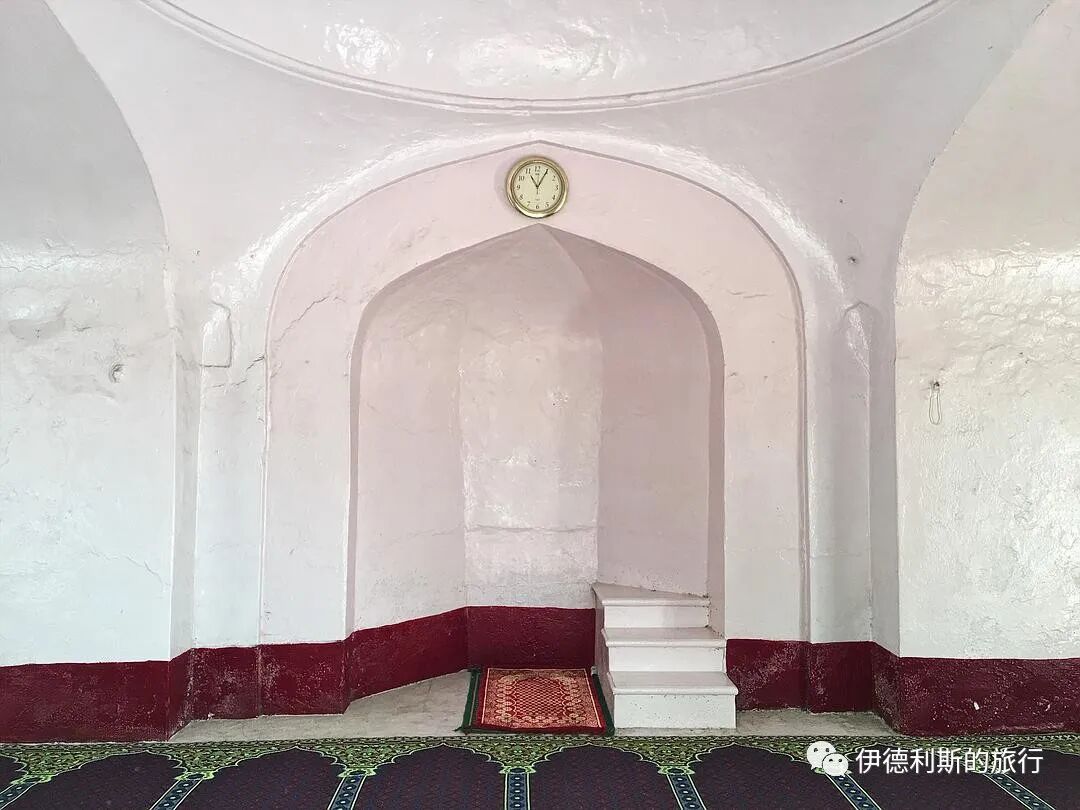
3. Mughal Dynasty era gate
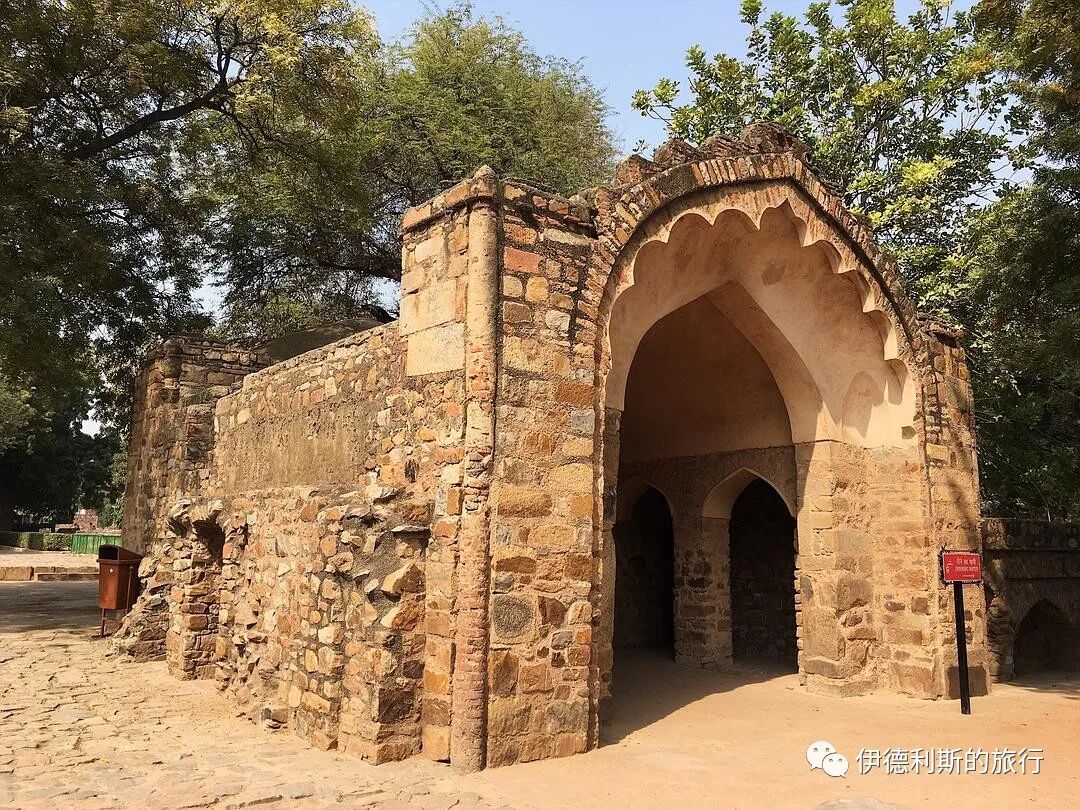
There are also some Mughal-era tombs scattered around the mosque.
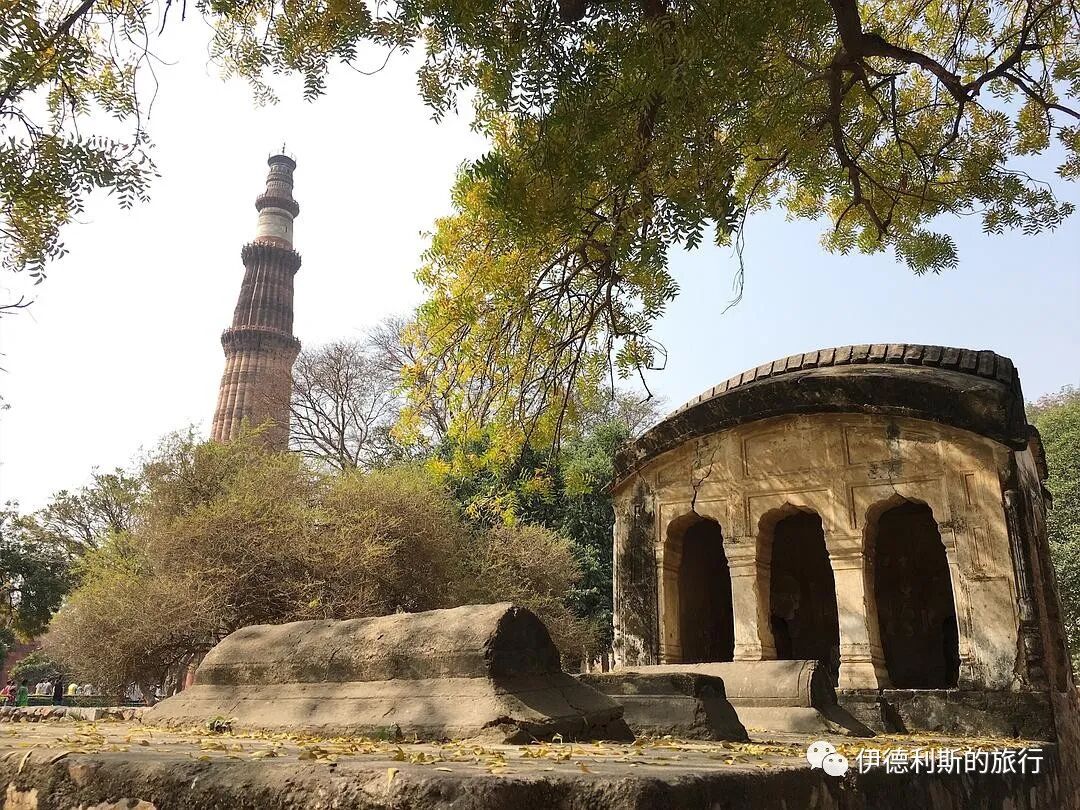
Halal Travel Guide: Delhi Lodhi Garden — Sultanate Tombs and Muslim History
Articles • ali2007fr posted the article • 0 comments • 232 views • 2026-05-18 09:02
Summary: Delhi Lodhi Garden — Sultanate Tombs and Muslim History is presented here as a firsthand travel account in clear English, beginning with this scene: The Lodhi dynasty was the last of the five dynasties of the Delhi Sultanate. It was founded by the Pashtun Lodhi family in 1451 and lasted 75 years until it was conquered by the Mughal Empire in 1526. The account keeps its focus on Delhi Travel, Lodhi Dynasty, Muslim Heritage while preserving the names, places, food, and historical details from the Chinese source.
The Lodhi dynasty was the last of the five dynasties of the Delhi Sultanate. It was founded by the Pashtun Lodhi family in 1451 and lasted 75 years until it was conquered by the Mughal Empire in 1526. The Lodhi dynasty did not build a new capital in Delhi, so no large palaces remain. However, many tombs and mosques from the Lodhi period are preserved in the southern suburbs of Delhi, serving as the best examples for studying the history and architectural art of the Lodhi dynasty.
If you want to experience the history of the Lodhi dynasty firsthand, the best place to go is Lodhi Garden on the south side of New Delhi. The entire garden covers 360,000 square meters. Major buildings include the tomb of Sultan Muhammad Shah (reigned 1434-1445) of the Sayyid dynasty, the tomb of Sultan Sikandar Lodi (reigned 1489-1517) of the Lodhi dynasty, the Bara Gumbad (Big Dome), and the Shish Gumbad (Glass Dome), which is suspected to be the tomb of Sultan Bahlul Lodi (reigned 1451-1489). Some relics from the Mughal period are also preserved there.
Tomb of Muhammad Shah
Entering from the south gate of Lodhi Garden, the first thing you see is the tomb of Muhammad Shah (reigned 1434-1445), the third sultan of the Sayyid dynasty of the Delhi Sultanate.
The Sayyid family claimed to be descendants of the Prophet Muhammad and originally lived in the Punjab region. The founder, Khizr Khan, became the governor of Multan after Timur invaded the Delhi Sultanate in 1398, and he officially established the Sayyid Sultanate after occupying Delhi in 1414. Muhammad Shah was the grand-nephew of Khizr Khan. During his reign, the territory of the Delhi Sultanate continued to shrink. Sunni Islam was no longer the dominant force, Shia Islam began to rise, and Indian Islamic culture started to take root in areas outside of Delhi.
During the reign of Muhammad Shah, Bahlul Lodi, the leader of the Pashtun Lodi tribe, was highly favored by the Sultan. Thanks to his military achievements, he gained control over most of the Punjab region, laying the foundation for the establishment of the Lodhi dynasty.
The tomb of Muhammad Shah is an octagonal domed building, which is more magnificent than the tomb of the previous sultan, Mubarak Shah. It is very strange that this tomb has no outer walls. Some speculate it was due to a lack of funds, while others think the outer walls likely collapsed later.
This building has a very typical Indo-Islamic architectural style. The central dome (gumbad) is surrounded by decorative spires (guldasta), then by domed pavilions (chhatri), and finally by eaves (chhajja).
Guldasta means 'tied bouquet' in Persian, and in Indo-Islamic architecture, it is usually shaped like a flower. The domed pavilion (chhatri) first appeared on early Indian Sufi tombs in the 12th century. It was later popularized by the Mughal Empire and became a signature feature of Indo-Islamic architecture. In fact, both the guldasta and the chhatri are a fusion of Persian pavilions and the indigenous Indian roof tower (sikhara).
The eaves (chhajja) were relatively rare during the Delhi Sultanate period. They did not become popular until the Mughal period and were later incorporated into Hindu architecture.
Bara Gumbad
Walking northeast from the tomb of Muhammad Shah, you reach the largest building from the Lodhi period: the Bara Gumbad (Big Dome).
The Bara Gumbad was built in 1490 by Sultan Sikandar Lodi (reigned 1489-1517) of the Lodhi dynasty. It consists of three buildings on a 4-meter-high platform. In the middle of the platform is a tombstone, with the Bara Gumbad on the south side, a Friday mosque (Juma Masjid) on the west side, and a guest house (mehman khana) on the east side. Judging by its shape, the Bara Gumbad looks like a tomb, but no burial has been found underneath, so it is likely the south gate of the platform.
The Bara Gumbad is 29 meters high and features Delhi's first 'full dome,' which is a complete semi-circular dome. The outer wall looks like it has two layers from the outside, but it is actually a single-layer structure inside. This design is very clever. The building is made of gray quartzite and decorated with red sandstone and black stone. All the stones were trimmed and polished, with no plaster used at all.
The Friday mosque on the west side of the Bara Gumbad was built in 1494. It is in the classic Lodhi style, with three large and two small arches, three domes on top, corner towers on both sides, and stone windows (jharokha) on the sides and back. This design had a great influence on later Mughal architecture.
The plaster carvings inside the Friday mosque of the Bara Gumbad are perhaps the richest of the Lodhi period. The abundance of floral patterns, geometric designs, and scriptures is overwhelming, making this mosque occupy an important place among mosques in India.
Shish Gumbad
Directly north of the Bara Gumbad is the Shish Gumbad (Glass Dome), which is said to have been built by Sultan Sikandar Lodi (reigned 1489-1517). The ownership of this dome is still debated. One theory is that it belonged to a nobleman of the Lodhi dynasty, while another suggests it was for the founder of the Lodhi dynasty, Bahlul Lodi (reigned 1451-1489).
The Glass Dome gets its name from the blue tiles that once decorated the exterior of the tomb, making it shine like glass. Currently, only a few blue tiles remain.
The Glass Tomb (Shisha Gumbad) and the Big Tomb (Bara Gumbad) have similar structures. Both look like two stories from the outside, but they are actually only one story inside. The dome is also surrounded by decorative spires called guldasta. However, the interior of the Glass Tomb (Shisha Gumbad) is poorly preserved and covered in bird droppings.
Tomb of Sikandar Lodi
Northeast of the Glass Tomb (Shisha Gumbad) stands the tomb of the Lodi Dynasty Sultan Sikandar Lodi (reigned 1489-1517). It was built between 1517 and 1518 by his successor, Sultan Ibrahim Lodi (reigned 1517-1526), and is India's first enclosed garden tomb.
Sikandar Lodi was a capable ruler. He expanded the Lodi Dynasty's territory and built the city of Agra between 1504 and 1505, which is the same city where the Taj Mahal is located today. The Lodi Dynasty officially moved its capital to Agra after that, but after Sikandar passed away, his son still buried his father in Delhi.
The tomb is surrounded by a 3.6-meter-high wall with corner towers. The west wall features a prayer wall and three mihrab niches—one large and two small. The south gate is shaped like a convex character and has two domed pavilions (chhatris) inlaid with tiles.
The main building's design follows the tomb of the previous Sultan, Muhammad Shah. Both are octagonal domed buildings, but the main difference is that Sikandar Lodi's tomb lacks the domed pavilions (chhatris).
The biggest feature of Sikandar Lodi's tomb is the colorful tile decoration inside, which is extremely rare in Lodi Dynasty architecture.
Example of a small Lodi Dynasty mosque
Inside the garden is an example of a small Lodi Dynasty mosque, with the remains of walls and tombs nearby. The mosque has three arched entrances, and the top is decorated with inverted lotus flowers. Unlike the brick buildings of the Mughal era, the Lodi Dynasty used stone even for small structures and applied bright red plaster using traditional fresco techniques.
Mughal Rose Garden
On the south side of Sikandar Lodi's tomb is a group of Mughal-era buildings surrounded by walls, with a two-story gate and a three-arched mosque on the east side. Today this is a rose garden, but there was likely a Mughal tomb in the center of the garden in the past.
The two-story gate features a Bengal-style roof, traditional Indo-Islamic eaves (chhajja), and Mughal-style Lakhori bricks.
The Bengal-style roof mimics the thatched, reed roofs of rural areas in the rainy Bengal region. It first appeared in Bengal in the 16th century and was introduced to Delhi in the 17th century, so it is only seen in buildings from the Mughal era and later.
Lakhori bricks are relatively flat red bricks that were popular from the time of the 17th-century Mughal Emperor Shah Jahan until the early 20th century. During the Delhi Sultanate period, buildings were mainly supported by pillars and beams made of large stone blocks, without the need for mortar. By the time of Shah Jahan, Lakhori bricks were used on a large scale to build houses. These bricks are smaller in size, which allows for more complex architectural decorations. view all
Summary: Delhi Lodhi Garden — Sultanate Tombs and Muslim History is presented here as a firsthand travel account in clear English, beginning with this scene: The Lodhi dynasty was the last of the five dynasties of the Delhi Sultanate. It was founded by the Pashtun Lodhi family in 1451 and lasted 75 years until it was conquered by the Mughal Empire in 1526. The account keeps its focus on Delhi Travel, Lodhi Dynasty, Muslim Heritage while preserving the names, places, food, and historical details from the Chinese source.
The Lodhi dynasty was the last of the five dynasties of the Delhi Sultanate. It was founded by the Pashtun Lodhi family in 1451 and lasted 75 years until it was conquered by the Mughal Empire in 1526. The Lodhi dynasty did not build a new capital in Delhi, so no large palaces remain. However, many tombs and mosques from the Lodhi period are preserved in the southern suburbs of Delhi, serving as the best examples for studying the history and architectural art of the Lodhi dynasty.
If you want to experience the history of the Lodhi dynasty firsthand, the best place to go is Lodhi Garden on the south side of New Delhi. The entire garden covers 360,000 square meters. Major buildings include the tomb of Sultan Muhammad Shah (reigned 1434-1445) of the Sayyid dynasty, the tomb of Sultan Sikandar Lodi (reigned 1489-1517) of the Lodhi dynasty, the Bara Gumbad (Big Dome), and the Shish Gumbad (Glass Dome), which is suspected to be the tomb of Sultan Bahlul Lodi (reigned 1451-1489). Some relics from the Mughal period are also preserved there.
Tomb of Muhammad Shah
Entering from the south gate of Lodhi Garden, the first thing you see is the tomb of Muhammad Shah (reigned 1434-1445), the third sultan of the Sayyid dynasty of the Delhi Sultanate.
The Sayyid family claimed to be descendants of the Prophet Muhammad and originally lived in the Punjab region. The founder, Khizr Khan, became the governor of Multan after Timur invaded the Delhi Sultanate in 1398, and he officially established the Sayyid Sultanate after occupying Delhi in 1414. Muhammad Shah was the grand-nephew of Khizr Khan. During his reign, the territory of the Delhi Sultanate continued to shrink. Sunni Islam was no longer the dominant force, Shia Islam began to rise, and Indian Islamic culture started to take root in areas outside of Delhi.
During the reign of Muhammad Shah, Bahlul Lodi, the leader of the Pashtun Lodi tribe, was highly favored by the Sultan. Thanks to his military achievements, he gained control over most of the Punjab region, laying the foundation for the establishment of the Lodhi dynasty.
The tomb of Muhammad Shah is an octagonal domed building, which is more magnificent than the tomb of the previous sultan, Mubarak Shah. It is very strange that this tomb has no outer walls. Some speculate it was due to a lack of funds, while others think the outer walls likely collapsed later.
This building has a very typical Indo-Islamic architectural style. The central dome (gumbad) is surrounded by decorative spires (guldasta), then by domed pavilions (chhatri), and finally by eaves (chhajja).
Guldasta means 'tied bouquet' in Persian, and in Indo-Islamic architecture, it is usually shaped like a flower. The domed pavilion (chhatri) first appeared on early Indian Sufi tombs in the 12th century. It was later popularized by the Mughal Empire and became a signature feature of Indo-Islamic architecture. In fact, both the guldasta and the chhatri are a fusion of Persian pavilions and the indigenous Indian roof tower (sikhara).
The eaves (chhajja) were relatively rare during the Delhi Sultanate period. They did not become popular until the Mughal period and were later incorporated into Hindu architecture.
Bara Gumbad
Walking northeast from the tomb of Muhammad Shah, you reach the largest building from the Lodhi period: the Bara Gumbad (Big Dome).
The Bara Gumbad was built in 1490 by Sultan Sikandar Lodi (reigned 1489-1517) of the Lodhi dynasty. It consists of three buildings on a 4-meter-high platform. In the middle of the platform is a tombstone, with the Bara Gumbad on the south side, a Friday mosque (Juma Masjid) on the west side, and a guest house (mehman khana) on the east side. Judging by its shape, the Bara Gumbad looks like a tomb, but no burial has been found underneath, so it is likely the south gate of the platform.
The Bara Gumbad is 29 meters high and features Delhi's first 'full dome,' which is a complete semi-circular dome. The outer wall looks like it has two layers from the outside, but it is actually a single-layer structure inside. This design is very clever. The building is made of gray quartzite and decorated with red sandstone and black stone. All the stones were trimmed and polished, with no plaster used at all.
The Friday mosque on the west side of the Bara Gumbad was built in 1494. It is in the classic Lodhi style, with three large and two small arches, three domes on top, corner towers on both sides, and stone windows (jharokha) on the sides and back. This design had a great influence on later Mughal architecture.
The plaster carvings inside the Friday mosque of the Bara Gumbad are perhaps the richest of the Lodhi period. The abundance of floral patterns, geometric designs, and scriptures is overwhelming, making this mosque occupy an important place among mosques in India.
Shish Gumbad
Directly north of the Bara Gumbad is the Shish Gumbad (Glass Dome), which is said to have been built by Sultan Sikandar Lodi (reigned 1489-1517). The ownership of this dome is still debated. One theory is that it belonged to a nobleman of the Lodhi dynasty, while another suggests it was for the founder of the Lodhi dynasty, Bahlul Lodi (reigned 1451-1489).
The Glass Dome gets its name from the blue tiles that once decorated the exterior of the tomb, making it shine like glass. Currently, only a few blue tiles remain.
The Glass Tomb (Shisha Gumbad) and the Big Tomb (Bara Gumbad) have similar structures. Both look like two stories from the outside, but they are actually only one story inside. The dome is also surrounded by decorative spires called guldasta. However, the interior of the Glass Tomb (Shisha Gumbad) is poorly preserved and covered in bird droppings.
Tomb of Sikandar Lodi
Northeast of the Glass Tomb (Shisha Gumbad) stands the tomb of the Lodi Dynasty Sultan Sikandar Lodi (reigned 1489-1517). It was built between 1517 and 1518 by his successor, Sultan Ibrahim Lodi (reigned 1517-1526), and is India's first enclosed garden tomb.
Sikandar Lodi was a capable ruler. He expanded the Lodi Dynasty's territory and built the city of Agra between 1504 and 1505, which is the same city where the Taj Mahal is located today. The Lodi Dynasty officially moved its capital to Agra after that, but after Sikandar passed away, his son still buried his father in Delhi.
The tomb is surrounded by a 3.6-meter-high wall with corner towers. The west wall features a prayer wall and three mihrab niches—one large and two small. The south gate is shaped like a convex character and has two domed pavilions (chhatris) inlaid with tiles.
The main building's design follows the tomb of the previous Sultan, Muhammad Shah. Both are octagonal domed buildings, but the main difference is that Sikandar Lodi's tomb lacks the domed pavilions (chhatris).
The biggest feature of Sikandar Lodi's tomb is the colorful tile decoration inside, which is extremely rare in Lodi Dynasty architecture.
Example of a small Lodi Dynasty mosque
Inside the garden is an example of a small Lodi Dynasty mosque, with the remains of walls and tombs nearby. The mosque has three arched entrances, and the top is decorated with inverted lotus flowers. Unlike the brick buildings of the Mughal era, the Lodi Dynasty used stone even for small structures and applied bright red plaster using traditional fresco techniques.
Mughal Rose Garden
On the south side of Sikandar Lodi's tomb is a group of Mughal-era buildings surrounded by walls, with a two-story gate and a three-arched mosque on the east side. Today this is a rose garden, but there was likely a Mughal tomb in the center of the garden in the past.
The two-story gate features a Bengal-style roof, traditional Indo-Islamic eaves (chhajja), and Mughal-style Lakhori bricks.
The Bengal-style roof mimics the thatched, reed roofs of rural areas in the rainy Bengal region. It first appeared in Bengal in the 16th century and was introduced to Delhi in the 17th century, so it is only seen in buildings from the Mughal era and later.
Lakhori bricks are relatively flat red bricks that were popular from the time of the 17th-century Mughal Emperor Shah Jahan until the early 20th century. During the Delhi Sultanate period, buildings were mainly supported by pillars and beams made of large stone blocks, without the need for mortar. By the time of Shah Jahan, Lakhori bricks were used on a large scale to build houses. These bricks are smaller in size, which allows for more complex architectural decorations.
Halal Travel Guide: Mehrauli Archaeological Park — Delhi Muslim History (Part 1)
Articles • ali2007fr posted the article • 0 comments • 143 views • 2026-05-18 09:01
Summary: Mehrauli Archaeological Park — Delhi Muslim History is presented here as a firsthand travel account in clear English, beginning with this scene: Today I am introducing an archaeological park in the southern suburbs of Delhi that is well worth a visit. The account keeps its focus on Delhi Travel, Mehrauli, Muslim Heritage while preserving the names, places, food, and historical details from the Chinese source.
Today I am introducing an archaeological park in the southern suburbs of Delhi that is well worth a visit.
I previously mentioned in 'The First City of Delhi—The Minaret Reaching the Clouds' that in 1193, the Ghurid dynasty general Qutb al-Din Aibak became the governor of northern India. He ruled from the city of Lal Kot in Delhi and officially established the Delhi Sultanate in 1206.
Qutb al-Din Aibak built a massive mosque in Lal Kot, and the Qutb Minar is known as the tallest ancient minaret. Later, two large-scale expansions by his successors, Iltutmish in 1225 and Alauddin Khalji in 1310, made Lal Kot the political, religious, and cultural center of the Delhi Sultanate.
The Qutb Minar site was listed as a UNESCO World Heritage site in 1993, and many tourists visit it for its fame. However, on the south side of the site, there is also the 80-hectare Mehrauli Archaeological Park. Although it is not as famous as the Qutb Minar site, it is dotted with over 100 historical monuments spanning a thousand years hidden in the forest, making it equally worth exploring.
The heart of Mehrauli Archaeological Park is the gongbei (shrine) of the famous South Asian Sufi sheikh Qutbuddin Bakhtiyar Kaki (1173-1235). This is the first Sufi gongbei in Delhi and is very prestigious. Around the Qutbuddin gongbei are buried many nobles from the Delhi Sultanate and Mughal Empire periods, spanning from the 13th to the 19th century. These include the son and nephew of a Mamluk sultan, the Sufi mentor of a Lodi sultan, and the foster mother and a general of the Mughal Emperor Akbar. In the 18th century, the Mughal dynasty even built a summer palace right next to the Qutbuddin gongbei, where three Mughal emperors are buried. The tomb of the last emperor, Bahadur Shah II, was also prepared, but he died in exile in Myanmar after being banished by the British.
There are also many mosques in the park. The 15th-century Madhi Mosque combines the styles of an open-air prayer wall mosque and a roofed indoor mosque, making its architectural structure unique. The 16th-century Jamali Kamali Mosque is considered a transition between the Lodi and Mughal architectural styles and holds an important place in the history of Indian architecture. The 18th-century Moti Mosque was built by the Mughal Emperor Bahadur Shah I using pure white marble, representing the Mughal dynasty's respect for the Sufi sheikh.
Looking out at Delhi's landmark, the Qutb Minar, from within the park.
Mehrauli Village
The Sufi sheikh Qutbuddin Bakhtiyar Kaki (1173-1235) was born in Osh, in present-day Kyrgyzstan. After inheriting the Sufi tradition of Sheikh Mu'in al-Din Chishti in Osh, he began leading the Chishti Order and came to Delhi to preach during the reign of Iltutmish (reigned 1211-1236), the third sultan of the Mamluk dynasty of the Delhi Sultanate. The sheikh's khanqah (spiritual retreat) was built outside the southwest wall of the Delhi Sultanate capital, Lal Kot, and his dargah (gongbei) was also built there after he returned to Allah.
After the gongbei was built, the Mehrauli village, primarily inhabited by Muslims, gradually formed around it. Because Qutbuddin had a major influence on the development of Sufism in South Asia, his ideas of love and charity influenced not only Muslims but also Hindus, Christians, and Sikhs. Therefore, not only is a grand ceremony held every year on the sheikh's death anniversary (Urs), but believers of various religions also visit the sheikh's gongbei every week. Mehrauli village is very lively every day. On the street, you can see various shops selling Sufi supplies, mainly burial shrouds and fresh flowers for offerings, as well as various scripture amulets and perfumes.
Interestingly, Mehrauli village is also the venue for Delhi's famous interfaith festival, Phool Waalon Ki Sair. This is a celebration attended by both Muslims and Hindus, usually held in September after the rainy season. Led by musicians and dancers, people walk 32 kilometers from Old Delhi, carrying giant fans made of fresh flowers called pankhas, to offer them to both the Qutbuddin Bakhtiyar Kaki gongbei and the nearby Hindu mosque, Yogmaya. This festival originated in 1812. At that time, the Mughal Emperor Akbar II (reigned 1806-1837) had his youngest son, Mirza Jahangir, exiled after a conflict with an East India Company official. His mother, Mumtaz Mahal Begum, made a dua that if her son returned safely, she would offer flowers at the Qutbuddin Bakhtiyar Kaki gongbei. A few years later, Mirza Jahangir returned safely, so his mother went to the gongbei to offer flowers and held a grand celebration in Mehrauli village. to cockfighting, kite flying, wrestling, and swimming, the Mughal court also offered flowers to the Hindu mosque in the village.
There are also many small halal snack shops here. I ate curry with roti bread at one of them, along with onions (piyaz) and a mint-garlic sauce.
The last summer palace of the Mughal dynasty—Zafar Mahal
Right next to the Sufi sheikh Qutbuddin gongbei is the last summer palace of the Mughal dynasty—Zafar Mahal.
Both the Delhi Sultanate and the Mughal dynasty attached great importance to the Qutbuddin gongbei, so much so that the Mughal Emperor Akbar II (reigned 1806-1837) built a summer palace right next to it, later known as Zafar Mahal, meaning 'Palace of Victory'.
The entrance to the palace was rebuilt in 1842 by the last Mughal emperor, Bahadur Shah II (reigned 1837-1857). This red sandstone gate was built in the style of a Hathi gate, designed specifically for riding elephants carrying a Howdah throne to pass through.
The top floor of the gatehouse is an arched room where the court band performed ceremonies, known as Naqqar Khana, which translates to drum house. This type of arched gallery overlooking a courtyard is called a Dalan in Indian architecture. At the very top is the traditional Indian roof eave known as a Chhajja.
Looking down from the Dalan, you see the management committee for the gongbei of Sheikh Qutbuddin to the north. The courtyard contains a 19th-century mosque and several Mughal-era tombs. One of these, the tomb of Empress Murad Bakht, wife of Mughal Emperor Shah Alam II (reigned 1759-1806), has now been turned into a residence.
To the east of the gate are rows of palace ruins. The nearby houses were once built in a European style and featured classic fireplaces. The houses further to the right were built using the traditional Indian Dalan arched structure.
The tomb garden of four Mughal emperors: 1713-1857.
At the far east of Zafar Mahal are two pure white marble buildings, right next to the gongbei of the Sufi Sheikh Qutbuddin. The marble screen enclosure inside was built by Mughal Emperor Jahandar Shah (reigned 1712-1713) as a tomb garden for his father, Bahadur Shah I (reigned 1707-1712). Later Mughal emperors Shah Alam II (reigned 1759-1806) and Akbar II (reigned 1806-1837) are also buried here. It is arguably the best place to experience the history of the late Mughal Empire. The tomb of the last emperor, Bahadur Shah II (reigned 1837-1857), was already prepared, but because he was held under house arrest by the British in Myanmar after 1857 and died far from home, only an empty grave remains for him in Zafar Mahal.
As a follower of Sheikh Qutbuddin, Bahadur Shah II felt a special attachment to this place. Shortly before he passed away, he wrote several Urdu Ghazal lyric poems expressing his sorrow at not being able to be buried here.
Moti Mosque: 1709.
North of the tomb garden is the Moti Mosque, built in 1709 by Mughal Emperor Bahadur Shah I, representing the respect the Mughal court held for the Sufi Sheikh Qutbuddin at the time. Bahadur Shah I's father, Mughal Emperor Aurangzeb (reigned 1658-1707), also built a white marble Moti Mosque inside the Red Fort in Delhi. It is larger than the one in Zafar Mahal, but both share the same design of three arches and three domes.
Tomb of Alauddin: 13th century.
In the courtyard of Zafar Mahal lies the tomb of Alauddin, the nephew of Iltutmish (reigned 1211-1236), the third sultan of the Mamluk dynasty of the Delhi Sultanate. He was a loyal follower of the Sufi Sheikh Qutbuddin and was buried next to the Sheikh's gongbei after he passed away.
Jamali Kamali Mosque: 1528-29.
In the southeast of Mehrauli Archaeological Park stands the Jamali Kamali Mosque and tomb, built between 1528 and 1529. The tomb belongs to the famous South Asian Sufi Sheikh and Persian poet Jamali Kamboh, who was a mentor to Sultan Sikandar Khan Lodi (reigned 1489-1517) of the Delhi Sultanate's Lodi dynasty.
The name Jamali comes from the Urdu word Jamal, which means beauty. Jamali belonged to the Suhrawardiyya Sufi order. He traveled widely in his youth and later became a court poet for the Lodi dynasty. Sultan Sikandar Khan Lodi also enjoyed writing poetry, so he often asked Jamali for advice on his work.
After the Lodi dynasty fell in 1526, the first two Mughal emperors, Babur and Humayun, continued to support Jamali. Between 1530 and 1536, Jamali wrote the book Siyar-l-Arifin in Persian, which documented the two major South Asian Sufi orders of the time, the Chishti and the Suhrawardiyya. In 1536, Jamali passed away while accompanying Mughal Emperor Humayun on a military campaign to Gujarat.
The mosque is built of red sandstone and white marble. It is considered a transition between the architectural styles of the Lodi and Mughal dynasties and holds an important place in the history of Indian architecture. The overall design continues the five-arch style of the Lodi dynasty, with the middle arch being the largest and topped by a Lodi-style dome. The mosque sits on a platform, making it look taller from the back, where you can also see octagonal towers and traditional Indian Jharokha stone windows.
The pilasters inside the mosque have a unique grooved design. The five arches correspond to five mihrabs, with the central mihrab being the most exquisite.
The south gate of the mosque is built of red sandstone and marble and is one of the earliest examples of Mughal architecture.
The tomb has a flat roof decorated with colorful tiles and plaster patterns, carved with inscriptions written by Jamali himself. The decorations inside are said to be beautiful, but unfortunately, the door was locked when I visited, so I could not see them.
Tomb of Khan Shahid: 1286
Further south of Jamali Kamali mosque is a 13th-century tomb. It belongs to Khan Shahid, the son of Ghiyas ud din Balban, the ninth sultan of the Mamluk dynasty of the Delhi Sultanate, who reigned from 1266 to 1286. Khan Shahid died in battle against the Chagatai Mongols in 1286, which is how he earned the title Khan Shahid.
The entire site has a 5-meter-high wall, three gates, and two heavily collapsed tomb structures inside.
Today, it is a simple and tidy open-air mosque. I had never seen an open-air mosque among ancient ruins deep in the woods back home, and this was my first time seeing one in India. I was deeply moved the moment I walked through the gate, a feeling you cannot get just by looking at photos. It lacks the grandeur and bustle of a large mosque, but it has a unique charm that drew me in. Time seems to stand still here, free from outside interference, with only the centuries-old devotion of the Muslim community. No matter the environment, as long as you have faith in your heart, even ruins can be a place for prayer.
Madhi mosque: Lodi dynasty, 15th century
Continuing south from Jamali Kamali mosque, you reach Madhi mosque, built during the Lodi dynasty in the 15th century. The mosque is hidden in a mango orchard and is now a playground for pigeons and monkeys.
The design of this mosque is unique and very distinctive. The mosque sits on a platform. On the east side is a Lodi-style domed gate featuring stone windows (jharokha) in a very local Indian style. After climbing the steps and passing through the gate, you can see a spacious courtyard. There used to be graves in the middle of the courtyard, but most are gone now.
On the west side of the courtyard is an open-air prayer wall (qibla wall) consisting of three mihrabs, one large and two small. There were once carvings of scriptures on it, but almost nothing remains. Around the mihrabs are a series of small niches, and the top still has blue tiles often seen on Lodi dynasty buildings.
Interestingly, two roofed arcades were built on both sides of the prayer wall. This structure, which sits between an open-air prayer wall mosque and a roofed indoor mosque, is extremely rare, and there is still no definitive research explaining why it was built this way.
Bagichi mosque: Lodi dynasty, 15th century
To the west of Madhi mosque is another Lodi-era open-air prayer wall mosque called Bagichi. These two mosques are very similar in shape, both on large platforms, and the mihrabs are almost identical.
As a historical site in the archaeological park, it should be managed by the Archaeological Survey of India (ASI) like Madhi mosque. However, to address the education of local Muslim children, the Wakf board, which manages the mosque, currently uses it as a madrasa where local children can come to study.
After being kindly reminded that photography is prohibited inside the courtyard, I stayed outside and filmed the students playing cricket. The children here are all very cute and love to have their photos taken.
Rajon ki Boli stepwell: 1506
In the forest of the Mehrauli Archaeological Park in Delhi, there is a very beautiful stepwell (boli) called Rajon ki Boli, built in 1506 during the Lodi dynasty (1451-1526). The name Rojan likely comes from the stonemason Raj.
This Boli stepwell has four levels, including arched walkways and inner rooms, but you can usually only see three levels because the bottom one holds water. The Boli stepwell was not just for storing water; it was also a great place to cool off during the summer.
Above the Boli, there is a mosque and a tomb with a twelve-pillared domed pavilion (chhatri). The inscription says it was built in 1506 by Daulat Khan Khwaja Muhammad. The mosque features rich calligraphy carvings, and the top of the tomb has the classic petal design of the Lodi dynasty.
This combination of a stepwell, mosque, and tomb represents the Muslim view of the two worlds. The stepwell was built to help the neighborhood in this life, while the mosque and tomb were built to help reach Paradise in the next life.
Adham Khan's Tomb: 1562
At the intersection southwest of the Qutub Minar area stands an octagonal tomb (gongbei) from the Mughal dynasty, built in 1562. It sits on the southern wall of Lal Kot, the first city of Delhi. The tomb belongs to Maham Anga, the foster mother of the Mughal Emperor Akbar, and her son, Adham Khan.
Maham Anga was very skilled at improving her own status and her son's position in the Mughal court. In 1560, Akbar had a falling out with his regent, Bairam Khan. For the next two years, Maham Anga became the actual regent of the Mughal dynasty, and her son became a top general.
In 1562, Adham Khan tried to murder his rival, Atagh Khan, who was Akbar's favorite general. Akbar caught him immediately. Akbar ordered his men to throw Adham Khan off the city wall twice until he died. Maham Anga was heartbroken when she heard the news of her son's death and died of grief just forty days later.
After Maham Anga and her son died, Akbar ordered a tomb to be built for them. Although it was built at the same time as Humayun's Tomb, this is the last octagonal tomb (gongbei) in the Lodi dynasty style in Indian history. Some say it was designed specifically for a traitor because octagonal shapes do not appear in any other Mughal buildings of that time, though they were common in the earlier Sur dynasty and the Lodi dynasty of the Delhi Sultanate. Adham Khan's tomb also has some early Mughal features, such as the six-pointed star patterns on the outer wall, which are exactly the same as those on Humayun's Tomb.
In the 1830s, a British officer named Blake turned this place into a dining hall and removed the tombstones of Maham Anga and her son. After Blake died, the site was used as a guesthouse, a police station, and a post office. Between 1899 and 1905, Viceroy George Nathaniel Curzon ordered the tomb to be restored and Adham Khan's tombstone replaced, but his mother Maham Anga's tombstone was never found.
Chaumukha Darwaza: 14th-15th century
When you exit the southeast gate of the Qutub Minar area and take the small path into the archaeological park, the first monument you see is the ruins called Chaumukha Darwaza. It is believed that this was once a gate to the city of Lal Kot. It has the style of the Tughlaq dynasty (1320-1413) of the Delhi Sultanate and may have been repaired during the Lodi dynasty.
Muhammad Quli Khan's Tomb: Early 17th century
South of Chaumukha Darwaza is an octagonal Mughal tomb from the early 17th century with beautiful calligraphy carvings. The tomb belongs to Muhammad Quli Khan, who was the son of Maham Anga, the foster mother of the Mughal Emperor Akbar (reigned 1556-1605), and the younger brother of Adham Khan.
After the 19th century, the site was bought by Sir Thomas Metcalfe, an agent to the court of the last Mughal Emperor Bahadur Shah II (reigned 1837-1857). He converted it into a vacation garden in the European style called Dilkhusha, which means 'joy of the heart' in Urdu.
Sir Metcalfe turned the tomb into a dining hall and added wings as living rooms, bedrooms, and bathrooms. Today, only the ruins of one wing remain. Besides this, Sir Metcalfe converted other nearby buildings into guest rooms, staff quarters, and stables, but many of these have not survived.
Other Lodi Dynasty Tombs: 15th-16th century
South of Adham Khan's tomb is a tomb from the Lodi dynasty (1451-1526) of the Delhi Sultanate. The person buried here is unknown. The tomb sits on a platform. In the center is a domed pavilion (chhatri) made of twelve pillars, surrounded by more than twenty graves. There is an octagonal corner platform on each side of the terrace.
Stroll along the forest paths in the eastern part of the archaeological park to see a series of tombs from the Lodi dynasty. These structures were once half-buried in silt, but the Indian National Trust for Art and Cultural Heritage (INTACH) recently cleaned and restored them.
The park contains many other Lodi dynasty tombs and prayer wall mosques, including many ancient monuments with no clear historical records.
A simple and classic Lodi dynasty tomb and prayer wall design. The tomb connects to the prayer wall, which features three mihrabs—one large and two small. view all
Summary: Mehrauli Archaeological Park — Delhi Muslim History is presented here as a firsthand travel account in clear English, beginning with this scene: Today I am introducing an archaeological park in the southern suburbs of Delhi that is well worth a visit. The account keeps its focus on Delhi Travel, Mehrauli, Muslim Heritage while preserving the names, places, food, and historical details from the Chinese source.
Today I am introducing an archaeological park in the southern suburbs of Delhi that is well worth a visit.
I previously mentioned in 'The First City of Delhi—The Minaret Reaching the Clouds' that in 1193, the Ghurid dynasty general Qutb al-Din Aibak became the governor of northern India. He ruled from the city of Lal Kot in Delhi and officially established the Delhi Sultanate in 1206.
Qutb al-Din Aibak built a massive mosque in Lal Kot, and the Qutb Minar is known as the tallest ancient minaret. Later, two large-scale expansions by his successors, Iltutmish in 1225 and Alauddin Khalji in 1310, made Lal Kot the political, religious, and cultural center of the Delhi Sultanate.
The Qutb Minar site was listed as a UNESCO World Heritage site in 1993, and many tourists visit it for its fame. However, on the south side of the site, there is also the 80-hectare Mehrauli Archaeological Park. Although it is not as famous as the Qutb Minar site, it is dotted with over 100 historical monuments spanning a thousand years hidden in the forest, making it equally worth exploring.
The heart of Mehrauli Archaeological Park is the gongbei (shrine) of the famous South Asian Sufi sheikh Qutbuddin Bakhtiyar Kaki (1173-1235). This is the first Sufi gongbei in Delhi and is very prestigious. Around the Qutbuddin gongbei are buried many nobles from the Delhi Sultanate and Mughal Empire periods, spanning from the 13th to the 19th century. These include the son and nephew of a Mamluk sultan, the Sufi mentor of a Lodi sultan, and the foster mother and a general of the Mughal Emperor Akbar. In the 18th century, the Mughal dynasty even built a summer palace right next to the Qutbuddin gongbei, where three Mughal emperors are buried. The tomb of the last emperor, Bahadur Shah II, was also prepared, but he died in exile in Myanmar after being banished by the British.
There are also many mosques in the park. The 15th-century Madhi Mosque combines the styles of an open-air prayer wall mosque and a roofed indoor mosque, making its architectural structure unique. The 16th-century Jamali Kamali Mosque is considered a transition between the Lodi and Mughal architectural styles and holds an important place in the history of Indian architecture. The 18th-century Moti Mosque was built by the Mughal Emperor Bahadur Shah I using pure white marble, representing the Mughal dynasty's respect for the Sufi sheikh.
Looking out at Delhi's landmark, the Qutb Minar, from within the park.
Mehrauli Village
The Sufi sheikh Qutbuddin Bakhtiyar Kaki (1173-1235) was born in Osh, in present-day Kyrgyzstan. After inheriting the Sufi tradition of Sheikh Mu'in al-Din Chishti in Osh, he began leading the Chishti Order and came to Delhi to preach during the reign of Iltutmish (reigned 1211-1236), the third sultan of the Mamluk dynasty of the Delhi Sultanate. The sheikh's khanqah (spiritual retreat) was built outside the southwest wall of the Delhi Sultanate capital, Lal Kot, and his dargah (gongbei) was also built there after he returned to Allah.
After the gongbei was built, the Mehrauli village, primarily inhabited by Muslims, gradually formed around it. Because Qutbuddin had a major influence on the development of Sufism in South Asia, his ideas of love and charity influenced not only Muslims but also Hindus, Christians, and Sikhs. Therefore, not only is a grand ceremony held every year on the sheikh's death anniversary (Urs), but believers of various religions also visit the sheikh's gongbei every week. Mehrauli village is very lively every day. On the street, you can see various shops selling Sufi supplies, mainly burial shrouds and fresh flowers for offerings, as well as various scripture amulets and perfumes.
Interestingly, Mehrauli village is also the venue for Delhi's famous interfaith festival, Phool Waalon Ki Sair. This is a celebration attended by both Muslims and Hindus, usually held in September after the rainy season. Led by musicians and dancers, people walk 32 kilometers from Old Delhi, carrying giant fans made of fresh flowers called pankhas, to offer them to both the Qutbuddin Bakhtiyar Kaki gongbei and the nearby Hindu mosque, Yogmaya. This festival originated in 1812. At that time, the Mughal Emperor Akbar II (reigned 1806-1837) had his youngest son, Mirza Jahangir, exiled after a conflict with an East India Company official. His mother, Mumtaz Mahal Begum, made a dua that if her son returned safely, she would offer flowers at the Qutbuddin Bakhtiyar Kaki gongbei. A few years later, Mirza Jahangir returned safely, so his mother went to the gongbei to offer flowers and held a grand celebration in Mehrauli village. to cockfighting, kite flying, wrestling, and swimming, the Mughal court also offered flowers to the Hindu mosque in the village.
There are also many small halal snack shops here. I ate curry with roti bread at one of them, along with onions (piyaz) and a mint-garlic sauce.
The last summer palace of the Mughal dynasty—Zafar Mahal
Right next to the Sufi sheikh Qutbuddin gongbei is the last summer palace of the Mughal dynasty—Zafar Mahal.
Both the Delhi Sultanate and the Mughal dynasty attached great importance to the Qutbuddin gongbei, so much so that the Mughal Emperor Akbar II (reigned 1806-1837) built a summer palace right next to it, later known as Zafar Mahal, meaning 'Palace of Victory'.
The entrance to the palace was rebuilt in 1842 by the last Mughal emperor, Bahadur Shah II (reigned 1837-1857). This red sandstone gate was built in the style of a Hathi gate, designed specifically for riding elephants carrying a Howdah throne to pass through.
The top floor of the gatehouse is an arched room where the court band performed ceremonies, known as Naqqar Khana, which translates to drum house. This type of arched gallery overlooking a courtyard is called a Dalan in Indian architecture. At the very top is the traditional Indian roof eave known as a Chhajja.
Looking down from the Dalan, you see the management committee for the gongbei of Sheikh Qutbuddin to the north. The courtyard contains a 19th-century mosque and several Mughal-era tombs. One of these, the tomb of Empress Murad Bakht, wife of Mughal Emperor Shah Alam II (reigned 1759-1806), has now been turned into a residence.
To the east of the gate are rows of palace ruins. The nearby houses were once built in a European style and featured classic fireplaces. The houses further to the right were built using the traditional Indian Dalan arched structure.
The tomb garden of four Mughal emperors: 1713-1857.
At the far east of Zafar Mahal are two pure white marble buildings, right next to the gongbei of the Sufi Sheikh Qutbuddin. The marble screen enclosure inside was built by Mughal Emperor Jahandar Shah (reigned 1712-1713) as a tomb garden for his father, Bahadur Shah I (reigned 1707-1712). Later Mughal emperors Shah Alam II (reigned 1759-1806) and Akbar II (reigned 1806-1837) are also buried here. It is arguably the best place to experience the history of the late Mughal Empire. The tomb of the last emperor, Bahadur Shah II (reigned 1837-1857), was already prepared, but because he was held under house arrest by the British in Myanmar after 1857 and died far from home, only an empty grave remains for him in Zafar Mahal.
As a follower of Sheikh Qutbuddin, Bahadur Shah II felt a special attachment to this place. Shortly before he passed away, he wrote several Urdu Ghazal lyric poems expressing his sorrow at not being able to be buried here.
Moti Mosque: 1709.
North of the tomb garden is the Moti Mosque, built in 1709 by Mughal Emperor Bahadur Shah I, representing the respect the Mughal court held for the Sufi Sheikh Qutbuddin at the time. Bahadur Shah I's father, Mughal Emperor Aurangzeb (reigned 1658-1707), also built a white marble Moti Mosque inside the Red Fort in Delhi. It is larger than the one in Zafar Mahal, but both share the same design of three arches and three domes.
Tomb of Alauddin: 13th century.
In the courtyard of Zafar Mahal lies the tomb of Alauddin, the nephew of Iltutmish (reigned 1211-1236), the third sultan of the Mamluk dynasty of the Delhi Sultanate. He was a loyal follower of the Sufi Sheikh Qutbuddin and was buried next to the Sheikh's gongbei after he passed away.
Jamali Kamali Mosque: 1528-29.
In the southeast of Mehrauli Archaeological Park stands the Jamali Kamali Mosque and tomb, built between 1528 and 1529. The tomb belongs to the famous South Asian Sufi Sheikh and Persian poet Jamali Kamboh, who was a mentor to Sultan Sikandar Khan Lodi (reigned 1489-1517) of the Delhi Sultanate's Lodi dynasty.
The name Jamali comes from the Urdu word Jamal, which means beauty. Jamali belonged to the Suhrawardiyya Sufi order. He traveled widely in his youth and later became a court poet for the Lodi dynasty. Sultan Sikandar Khan Lodi also enjoyed writing poetry, so he often asked Jamali for advice on his work.
After the Lodi dynasty fell in 1526, the first two Mughal emperors, Babur and Humayun, continued to support Jamali. Between 1530 and 1536, Jamali wrote the book Siyar-l-Arifin in Persian, which documented the two major South Asian Sufi orders of the time, the Chishti and the Suhrawardiyya. In 1536, Jamali passed away while accompanying Mughal Emperor Humayun on a military campaign to Gujarat.
The mosque is built of red sandstone and white marble. It is considered a transition between the architectural styles of the Lodi and Mughal dynasties and holds an important place in the history of Indian architecture. The overall design continues the five-arch style of the Lodi dynasty, with the middle arch being the largest and topped by a Lodi-style dome. The mosque sits on a platform, making it look taller from the back, where you can also see octagonal towers and traditional Indian Jharokha stone windows.
The pilasters inside the mosque have a unique grooved design. The five arches correspond to five mihrabs, with the central mihrab being the most exquisite.
The south gate of the mosque is built of red sandstone and marble and is one of the earliest examples of Mughal architecture.
The tomb has a flat roof decorated with colorful tiles and plaster patterns, carved with inscriptions written by Jamali himself. The decorations inside are said to be beautiful, but unfortunately, the door was locked when I visited, so I could not see them.
Tomb of Khan Shahid: 1286
Further south of Jamali Kamali mosque is a 13th-century tomb. It belongs to Khan Shahid, the son of Ghiyas ud din Balban, the ninth sultan of the Mamluk dynasty of the Delhi Sultanate, who reigned from 1266 to 1286. Khan Shahid died in battle against the Chagatai Mongols in 1286, which is how he earned the title Khan Shahid.
The entire site has a 5-meter-high wall, three gates, and two heavily collapsed tomb structures inside.
Today, it is a simple and tidy open-air mosque. I had never seen an open-air mosque among ancient ruins deep in the woods back home, and this was my first time seeing one in India. I was deeply moved the moment I walked through the gate, a feeling you cannot get just by looking at photos. It lacks the grandeur and bustle of a large mosque, but it has a unique charm that drew me in. Time seems to stand still here, free from outside interference, with only the centuries-old devotion of the Muslim community. No matter the environment, as long as you have faith in your heart, even ruins can be a place for prayer.
Madhi mosque: Lodi dynasty, 15th century
Continuing south from Jamali Kamali mosque, you reach Madhi mosque, built during the Lodi dynasty in the 15th century. The mosque is hidden in a mango orchard and is now a playground for pigeons and monkeys.
The design of this mosque is unique and very distinctive. The mosque sits on a platform. On the east side is a Lodi-style domed gate featuring stone windows (jharokha) in a very local Indian style. After climbing the steps and passing through the gate, you can see a spacious courtyard. There used to be graves in the middle of the courtyard, but most are gone now.
On the west side of the courtyard is an open-air prayer wall (qibla wall) consisting of three mihrabs, one large and two small. There were once carvings of scriptures on it, but almost nothing remains. Around the mihrabs are a series of small niches, and the top still has blue tiles often seen on Lodi dynasty buildings.
Interestingly, two roofed arcades were built on both sides of the prayer wall. This structure, which sits between an open-air prayer wall mosque and a roofed indoor mosque, is extremely rare, and there is still no definitive research explaining why it was built this way.
Bagichi mosque: Lodi dynasty, 15th century
To the west of Madhi mosque is another Lodi-era open-air prayer wall mosque called Bagichi. These two mosques are very similar in shape, both on large platforms, and the mihrabs are almost identical.
As a historical site in the archaeological park, it should be managed by the Archaeological Survey of India (ASI) like Madhi mosque. However, to address the education of local Muslim children, the Wakf board, which manages the mosque, currently uses it as a madrasa where local children can come to study.
After being kindly reminded that photography is prohibited inside the courtyard, I stayed outside and filmed the students playing cricket. The children here are all very cute and love to have their photos taken.
Rajon ki Boli stepwell: 1506
In the forest of the Mehrauli Archaeological Park in Delhi, there is a very beautiful stepwell (boli) called Rajon ki Boli, built in 1506 during the Lodi dynasty (1451-1526). The name Rojan likely comes from the stonemason Raj.
This Boli stepwell has four levels, including arched walkways and inner rooms, but you can usually only see three levels because the bottom one holds water. The Boli stepwell was not just for storing water; it was also a great place to cool off during the summer.
Above the Boli, there is a mosque and a tomb with a twelve-pillared domed pavilion (chhatri). The inscription says it was built in 1506 by Daulat Khan Khwaja Muhammad. The mosque features rich calligraphy carvings, and the top of the tomb has the classic petal design of the Lodi dynasty.
This combination of a stepwell, mosque, and tomb represents the Muslim view of the two worlds. The stepwell was built to help the neighborhood in this life, while the mosque and tomb were built to help reach Paradise in the next life.
Adham Khan's Tomb: 1562
At the intersection southwest of the Qutub Minar area stands an octagonal tomb (gongbei) from the Mughal dynasty, built in 1562. It sits on the southern wall of Lal Kot, the first city of Delhi. The tomb belongs to Maham Anga, the foster mother of the Mughal Emperor Akbar, and her son, Adham Khan.
Maham Anga was very skilled at improving her own status and her son's position in the Mughal court. In 1560, Akbar had a falling out with his regent, Bairam Khan. For the next two years, Maham Anga became the actual regent of the Mughal dynasty, and her son became a top general.
In 1562, Adham Khan tried to murder his rival, Atagh Khan, who was Akbar's favorite general. Akbar caught him immediately. Akbar ordered his men to throw Adham Khan off the city wall twice until he died. Maham Anga was heartbroken when she heard the news of her son's death and died of grief just forty days later.
After Maham Anga and her son died, Akbar ordered a tomb to be built for them. Although it was built at the same time as Humayun's Tomb, this is the last octagonal tomb (gongbei) in the Lodi dynasty style in Indian history. Some say it was designed specifically for a traitor because octagonal shapes do not appear in any other Mughal buildings of that time, though they were common in the earlier Sur dynasty and the Lodi dynasty of the Delhi Sultanate. Adham Khan's tomb also has some early Mughal features, such as the six-pointed star patterns on the outer wall, which are exactly the same as those on Humayun's Tomb.
In the 1830s, a British officer named Blake turned this place into a dining hall and removed the tombstones of Maham Anga and her son. After Blake died, the site was used as a guesthouse, a police station, and a post office. Between 1899 and 1905, Viceroy George Nathaniel Curzon ordered the tomb to be restored and Adham Khan's tombstone replaced, but his mother Maham Anga's tombstone was never found.
Chaumukha Darwaza: 14th-15th century
When you exit the southeast gate of the Qutub Minar area and take the small path into the archaeological park, the first monument you see is the ruins called Chaumukha Darwaza. It is believed that this was once a gate to the city of Lal Kot. It has the style of the Tughlaq dynasty (1320-1413) of the Delhi Sultanate and may have been repaired during the Lodi dynasty.
Muhammad Quli Khan's Tomb: Early 17th century
South of Chaumukha Darwaza is an octagonal Mughal tomb from the early 17th century with beautiful calligraphy carvings. The tomb belongs to Muhammad Quli Khan, who was the son of Maham Anga, the foster mother of the Mughal Emperor Akbar (reigned 1556-1605), and the younger brother of Adham Khan.
After the 19th century, the site was bought by Sir Thomas Metcalfe, an agent to the court of the last Mughal Emperor Bahadur Shah II (reigned 1837-1857). He converted it into a vacation garden in the European style called Dilkhusha, which means 'joy of the heart' in Urdu.
Sir Metcalfe turned the tomb into a dining hall and added wings as living rooms, bedrooms, and bathrooms. Today, only the ruins of one wing remain. Besides this, Sir Metcalfe converted other nearby buildings into guest rooms, staff quarters, and stables, but many of these have not survived.
Other Lodi Dynasty Tombs: 15th-16th century
South of Adham Khan's tomb is a tomb from the Lodi dynasty (1451-1526) of the Delhi Sultanate. The person buried here is unknown. The tomb sits on a platform. In the center is a domed pavilion (chhatri) made of twelve pillars, surrounded by more than twenty graves. There is an octagonal corner platform on each side of the terrace.
Stroll along the forest paths in the eastern part of the archaeological park to see a series of tombs from the Lodi dynasty. These structures were once half-buried in silt, but the Indian National Trust for Art and Cultural Heritage (INTACH) recently cleaned and restored them.
The park contains many other Lodi dynasty tombs and prayer wall mosques, including many ancient monuments with no clear historical records.
A simple and classic Lodi dynasty tomb and prayer wall design. The tomb connects to the prayer wall, which features three mihrabs—one large and two small.
Halal Travel Guide: Mehrauli Archaeological Park — Delhi Muslim History (Part 2)
Articles • ali2007fr posted the article • 0 comments • 167 views • 2026-05-18 09:01
Summary: Mehrauli Archaeological Park — Delhi Muslim History is presented here as a firsthand travel account in clear English. The account keeps its focus on Delhi Travel, Mehrauli, Muslim Heritage while preserving the names, places, food, and historical details from the Chinese source. view all
Summary: Mehrauli Archaeological Park — Delhi Muslim History is presented here as a firsthand travel account in clear English. The account keeps its focus on Delhi Travel, Mehrauli, Muslim Heritage while preserving the names, places, food, and historical details from the Chinese source.
Halal Travel Guide: Delhi Humayun's Tomb — Mughal Architecture and History
Articles • ali2007fr posted the article • 0 comments • 158 views • 2026-05-18 09:01
Summary: Delhi Humayun's Tomb — Mughal Architecture and History is presented here as a firsthand travel account in clear English, beginning with this scene: Humayun's Tomb (Maqbara-i Humayun) is the final resting place of Humayun, the second emperor of the Mughal Empire. The account keeps its focus on Humayun's Tomb, Mughal History, Delhi Travel while preserving the names, places, food, and historical details from the Chinese source.
Humayun's Tomb (Maqbara-i Humayun) is the final resting place of Humayun, the second emperor of the Mughal Empire. It was commissioned in 1558 by his wife, Bega Begum, and designed by a Persian architect. It is the first garden-style tomb in South Asia and the first grand red sandstone imperial tomb of the Mughal Empire. It was added to the World Heritage List in 1993.
In my book, The Sixth City of Delhi: The Birth of the Mughal Dynasty, I wrote about how Humayun built a new capital in Delhi in 1533 called Din Panah, which means 'Refuge of the Faith'. On January 24, 1556, Humayun was reading on the second floor of the library inside Din Panah. When the muezzin called the adhan, Humayun hurried downstairs to perform namaz. He tripped on the stairs, fell, and passed away. His 13-year-old son, Akbar, then took the throne.
Humayun's Tomb is located south of Din Panah, right next to the famous South Asian Sufi shrine, the Nizamuddin Dargah (Nizamuddin Mazar). Construction began in 1556 and finished in 1572, taking 16 years to complete. Records show that after Queen Bega Begum returned from Hajj, she dedicated herself to building the tomb. She chose the Persian architect Mirak Mirza Ghiyas from the ancient city of Herat to design it. Mirak Mirza Ghiyas had designed buildings in Herat, Bukhara, and other parts of India. He passed away before the tomb was finished, and his son, Sayyed Muhammad, completed the project.
Humayun's Tomb
Humayun's Tomb carries on the Indo-Islamic architectural style developed since the Delhi Sultanate. It is the first Indian building to use a Persian double dome, which consists of an inner and outer Persian hemispherical dome.
The main dome is surrounded by Chhatri (domed pavilions) and smaller decorative spires called Guldasta, both of which are unique to Indo-Islamic architecture. Guldasta means 'bundled bouquet' in Persian, and in Indo-Islamic architecture, it usually takes the shape of a flower. Both of these designs are a fusion of Persian pavilions and the Hindu roof tower known as a Sikhara.
Below the pure white marble main dome, the main body of the structure is built from a mix of white marble and red and yellow sandstone. In the center is a Persian-style Iwan (arched gateway), surrounded by many Jali (lattice screens) typical of Indo-Islamic architecture. These windows are said to be closely related to the Mashrabiya lattice windows that originated in Arabia.
The main building sits on a massive 8-meter-high terrace, with its sides also decorated by a series of arched Iwan.
Humayun's Tomb is surrounded by a traditional Persian four-part garden called a Charbagh. The name means 'four gardens' in Persian and comes from the 'four gardens' mentioned in the Quran (55:46): 'But for he who has feared the position of his Lord are two gardens.' And (55:62): 'And below them both are two gardens.' The hallmark of a Charbagh garden is two axes that intersect at the center, dividing the garden into four sections. Babur, the founder of the Mughal Empire, used a Charbagh garden for his tomb in Kabul, Afghanistan, but Humayun's Tomb was the first time this Persian garden style was brought to India.
The interior of Humayun's Tomb consists of a main hall under the central dome and eight rooms arranged in two levels around it. Humayun's tombstone is in the center of the main hall, while his actual burial site is in a basement below the tombstone, accessible only through a separate passage outside the main structure. In 1611, English merchant William Finch visited Humayun's Tomb. He recorded that the interior had rich decorations and carpets, and the tombstone was covered by a Shamiana (ceremonial tent). He also noted that a Quran, Humayun's sword, turban, and shoes were on display, though none of these can be seen today.
Other rooms contain the graves of members of the Mughal court, including Humayun's queens Bega Begum and Hamida Begum, several of his daughters, and the seventh Mughal emperor, Bahadur Shah I. Unlike the Delhi Sultanate period, which built elaborate mihrab (prayer niches) on the west side of tombs, Humayun's Tomb cleverly uses Jali lattice screens as a mihrab. Light shines through the screens into the room, creating areas of brightness and shadow depending on the angle. The tomb also carefully displays the process of making Jali lattice screens.
The terrace outside the main building also holds many tombstones of Mughal royalty and nobles, including Dara Shikoh, the eldest son of Shah Jahan who was murdered by Aurangzeb. Because of this, the area is also called the 'dormitory of the Mughals'.
Barber's Tomb
On the southeast side of Humayun's Tomb is the 'Barber's Tomb', built in 1590. It holds the grave of the personal barber to the third Mughal emperor, Akbar, who was also one of Akbar's closest servants. This tomb also features a Persian double-dome structure, appearing as two domes from the inside and outside, and has a Chhatri domed pavilion at each of the four corners.
West Gate
The Persian garden surrounding Humayun's Tomb has a gate on each side. The West Gate is the main entrance; it has an I-shaped structure with splayed walls on the west side and two Chhatri domed pavilions on top.
Bu Halima Garden Tomb Gate
Directly across from the west gate of Humayun's Tomb stands the 16th-century gate of the Bu Halima Garden Tomb. There are no records identifying who Bu Halima was. The gate features a classic Indian-style stone window (jharokha), which is a signature element of ancient Indian building facades.
Between 2012 and 2013, the Aga Khan Trust for Culture hired craftsmen to restore the site using traditional techniques and materials. They replaced missing glazed tiles and mosaics and swapped modern cement for traditional lime mortar.
Afsarwala Tomb and Mosque
The Afsarwala Tomb and Mosque are located southwest of Humayun's Tomb and were built between 1566 and 1567. Unfortunately, the tombstone only lists the construction date and nothing about the person buried there. It is believed they were likely a noble in the court of the Mughal Emperor Akbar, as the name 'Afsarwala' suggests the person was a military officer.
North Gate of Arab Sarai
On the main road west of Humayun's Tomb stands the north gate of Arab Sarai. The original site of Arab Sarai is now an industrial training institute.
The gate originally included a main entrance and arched rooms on both sides, but most of it has collapsed, leaving only the facade well-preserved. The gate is built from light-colored quartzite and red sandstone, matching the style of Humayun's Tomb. The gate features exquisite traditional Indian stone windows (jharokha) decorated with colorful tiles.
Some say this was where the Persian craftsmen who built Humayun's Tomb lived, while legend has it that it housed 300 reciters brought back by Humayun's queen, Haji Begum, after her pilgrimage.
In recent years, the Aga Khan Trust for Culture restored the site, reinforcing the main structure and replacing missing tiles.
Sufi shrine (gongbei) Dargah Patte Waali
Northwest of Humayun's Tomb is a Sufi shrine (gongbei) called Dargah Patte Waali. It holds the graves of the famous Indian Sufi saints Hazrat Shamshuddin Patty Shah and Hazrat Maulana Abdul Qadir Jahangiri. They were said to be contemporaries of the famous nearby Sufi saint Nizamuddin, and the shrine was first ordered to be built in 1325 by the Tughlaq dynasty of the Delhi Sultanate.
While walking through the Humayun's Tomb area, I faintly heard music outside the walls. I quickly left the site and went to Dargah Patte Waali outside the wall. Everyone was holding a gathering (mehfil) and performing Qawwali, the most distinctive form of devotional singing in South Asia. It was my first time hearing Qawwali live, and it was very moving. Unfortunately, I didn't have much information at the time. In fact, the nearby Nizamuddin Dargah hosts Qawwali performances every evening, and that is the birthplace of Qawwali. After returning home and looking it up, I realized I really want to go back to South Asia and experience the charm of Qawwali again. view all
Summary: Delhi Humayun's Tomb — Mughal Architecture and History is presented here as a firsthand travel account in clear English, beginning with this scene: Humayun's Tomb (Maqbara-i Humayun) is the final resting place of Humayun, the second emperor of the Mughal Empire. The account keeps its focus on Humayun's Tomb, Mughal History, Delhi Travel while preserving the names, places, food, and historical details from the Chinese source.
Humayun's Tomb (Maqbara-i Humayun) is the final resting place of Humayun, the second emperor of the Mughal Empire. It was commissioned in 1558 by his wife, Bega Begum, and designed by a Persian architect. It is the first garden-style tomb in South Asia and the first grand red sandstone imperial tomb of the Mughal Empire. It was added to the World Heritage List in 1993.
In my book, The Sixth City of Delhi: The Birth of the Mughal Dynasty, I wrote about how Humayun built a new capital in Delhi in 1533 called Din Panah, which means 'Refuge of the Faith'. On January 24, 1556, Humayun was reading on the second floor of the library inside Din Panah. When the muezzin called the adhan, Humayun hurried downstairs to perform namaz. He tripped on the stairs, fell, and passed away. His 13-year-old son, Akbar, then took the throne.
Humayun's Tomb is located south of Din Panah, right next to the famous South Asian Sufi shrine, the Nizamuddin Dargah (Nizamuddin Mazar). Construction began in 1556 and finished in 1572, taking 16 years to complete. Records show that after Queen Bega Begum returned from Hajj, she dedicated herself to building the tomb. She chose the Persian architect Mirak Mirza Ghiyas from the ancient city of Herat to design it. Mirak Mirza Ghiyas had designed buildings in Herat, Bukhara, and other parts of India. He passed away before the tomb was finished, and his son, Sayyed Muhammad, completed the project.
Humayun's Tomb
Humayun's Tomb carries on the Indo-Islamic architectural style developed since the Delhi Sultanate. It is the first Indian building to use a Persian double dome, which consists of an inner and outer Persian hemispherical dome.
The main dome is surrounded by Chhatri (domed pavilions) and smaller decorative spires called Guldasta, both of which are unique to Indo-Islamic architecture. Guldasta means 'bundled bouquet' in Persian, and in Indo-Islamic architecture, it usually takes the shape of a flower. Both of these designs are a fusion of Persian pavilions and the Hindu roof tower known as a Sikhara.
Below the pure white marble main dome, the main body of the structure is built from a mix of white marble and red and yellow sandstone. In the center is a Persian-style Iwan (arched gateway), surrounded by many Jali (lattice screens) typical of Indo-Islamic architecture. These windows are said to be closely related to the Mashrabiya lattice windows that originated in Arabia.
The main building sits on a massive 8-meter-high terrace, with its sides also decorated by a series of arched Iwan.
Humayun's Tomb is surrounded by a traditional Persian four-part garden called a Charbagh. The name means 'four gardens' in Persian and comes from the 'four gardens' mentioned in the Quran (55:46): 'But for he who has feared the position of his Lord are two gardens.' And (55:62): 'And below them both are two gardens.' The hallmark of a Charbagh garden is two axes that intersect at the center, dividing the garden into four sections. Babur, the founder of the Mughal Empire, used a Charbagh garden for his tomb in Kabul, Afghanistan, but Humayun's Tomb was the first time this Persian garden style was brought to India.
The interior of Humayun's Tomb consists of a main hall under the central dome and eight rooms arranged in two levels around it. Humayun's tombstone is in the center of the main hall, while his actual burial site is in a basement below the tombstone, accessible only through a separate passage outside the main structure. In 1611, English merchant William Finch visited Humayun's Tomb. He recorded that the interior had rich decorations and carpets, and the tombstone was covered by a Shamiana (ceremonial tent). He also noted that a Quran, Humayun's sword, turban, and shoes were on display, though none of these can be seen today.
Other rooms contain the graves of members of the Mughal court, including Humayun's queens Bega Begum and Hamida Begum, several of his daughters, and the seventh Mughal emperor, Bahadur Shah I. Unlike the Delhi Sultanate period, which built elaborate mihrab (prayer niches) on the west side of tombs, Humayun's Tomb cleverly uses Jali lattice screens as a mihrab. Light shines through the screens into the room, creating areas of brightness and shadow depending on the angle. The tomb also carefully displays the process of making Jali lattice screens.
The terrace outside the main building also holds many tombstones of Mughal royalty and nobles, including Dara Shikoh, the eldest son of Shah Jahan who was murdered by Aurangzeb. Because of this, the area is also called the 'dormitory of the Mughals'.
Barber's Tomb
On the southeast side of Humayun's Tomb is the 'Barber's Tomb', built in 1590. It holds the grave of the personal barber to the third Mughal emperor, Akbar, who was also one of Akbar's closest servants. This tomb also features a Persian double-dome structure, appearing as two domes from the inside and outside, and has a Chhatri domed pavilion at each of the four corners.
West Gate
The Persian garden surrounding Humayun's Tomb has a gate on each side. The West Gate is the main entrance; it has an I-shaped structure with splayed walls on the west side and two Chhatri domed pavilions on top.
Bu Halima Garden Tomb Gate
Directly across from the west gate of Humayun's Tomb stands the 16th-century gate of the Bu Halima Garden Tomb. There are no records identifying who Bu Halima was. The gate features a classic Indian-style stone window (jharokha), which is a signature element of ancient Indian building facades.
Between 2012 and 2013, the Aga Khan Trust for Culture hired craftsmen to restore the site using traditional techniques and materials. They replaced missing glazed tiles and mosaics and swapped modern cement for traditional lime mortar.
Afsarwala Tomb and Mosque
The Afsarwala Tomb and Mosque are located southwest of Humayun's Tomb and were built between 1566 and 1567. Unfortunately, the tombstone only lists the construction date and nothing about the person buried there. It is believed they were likely a noble in the court of the Mughal Emperor Akbar, as the name 'Afsarwala' suggests the person was a military officer.
North Gate of Arab Sarai
On the main road west of Humayun's Tomb stands the north gate of Arab Sarai. The original site of Arab Sarai is now an industrial training institute.
The gate originally included a main entrance and arched rooms on both sides, but most of it has collapsed, leaving only the facade well-preserved. The gate is built from light-colored quartzite and red sandstone, matching the style of Humayun's Tomb. The gate features exquisite traditional Indian stone windows (jharokha) decorated with colorful tiles.
Some say this was where the Persian craftsmen who built Humayun's Tomb lived, while legend has it that it housed 300 reciters brought back by Humayun's queen, Haji Begum, after her pilgrimage.
In recent years, the Aga Khan Trust for Culture restored the site, reinforcing the main structure and replacing missing tiles.
Sufi shrine (gongbei) Dargah Patte Waali
Northwest of Humayun's Tomb is a Sufi shrine (gongbei) called Dargah Patte Waali. It holds the graves of the famous Indian Sufi saints Hazrat Shamshuddin Patty Shah and Hazrat Maulana Abdul Qadir Jahangiri. They were said to be contemporaries of the famous nearby Sufi saint Nizamuddin, and the shrine was first ordered to be built in 1325 by the Tughlaq dynasty of the Delhi Sultanate.
While walking through the Humayun's Tomb area, I faintly heard music outside the walls. I quickly left the site and went to Dargah Patte Waali outside the wall. Everyone was holding a gathering (mehfil) and performing Qawwali, the most distinctive form of devotional singing in South Asia. It was my first time hearing Qawwali live, and it was very moving. Unfortunately, I didn't have much information at the time. In fact, the nearby Nizamuddin Dargah hosts Qawwali performances every evening, and that is the birthplace of Qawwali. After returning home and looking it up, I realized I really want to go back to South Asia and experience the charm of Qawwali again.
Halal Travel Guide: Delhi's Seventh City — Mughal Capital and Muslim History
Articles • ali2007fr posted the article • 0 comments • 157 views • 2026-05-18 03:19
Summary: Delhi's Seventh City — Mughal Capital and Muslim History is presented here as a firsthand travel account in clear English, beginning with this scene: In my last article, The Sixth City of Delhi: The Birth of the Mughal Empire, I wrote about how Humayun, the second Mughal emperor, fell to his death from his library in the sixth city of Delhi, Dinpanah, in 1556. The account keeps its focus on Delhi Travel, Mughal History, Muslim Heritage while preserving the names, places, food, and historical details from the Chinese source.
In my last article, The Sixth City of Delhi: The Birth of the Mughal Empire, I wrote about how Humayun, the second Mughal emperor, fell to his death from his library in the sixth city of Delhi, Dinpanah, in 1556. His son, Emperor Akbar, moved the Mughal capital to Agra in 1558, and Delhi lost its status as the capital.
In 1628, Shah Jahan became the fifth emperor of the Mughal Empire. Under his rule, Mughal architectural aesthetics reached a new height, and this period is widely recognized as the golden age of Mughal architecture. Besides building the Taj Mahal, Shah Jahan built the seventh city of Delhi between 1639 and 1648, naming it Shahjahanabad after himself. Shah Jahan made Shahjahanabad the capital of the Mughal Empire, aiming to show the grandeur and power of the empire.
Shahjahanabad is now known as Old Delhi and still keeps many historical sites and traditional neighborhoods. The most important site inside the city, the Red Fort, was added to the UNESCO World Heritage list in 2007.
The layout of Shahjahanabad was inspired by the ancient Persian city of Isfahan and inherited urban planning ideas from the Agra Fort and Fatehpur Sikri, which were built by the previous Mughal emperor, Akbar. The city has an irregular shape, with the eastern wall built along the course of the Yamuna River. The Yamuna River later changed its course and moved away from the walls, and the original riverbed is now the Delhi Inner Ring Road.
The city has two main roads: Chandni Chowk running east-west and Faiz Bazaar running north-south, with major commercial areas on both sides of the streets. The Red Fort, where the Mughal royal family lived, is located at the junction of these two main roads.
1858
1914
Table of Contents
1. Red Fort: 1639-1648
1. Lahore Gate
2. Chhatta Chowk (market)
3. Naubat Khana (drum house)
4. Diwan-i-Aam (public audience hall)
5. Rang Mahal (palace of the empresses)
6. Khas Mahal (emperor's private palace)
7. Diwan-i-Khas (private audience hall)
8. Hammam-e-Lal Qila (bathhouse)
9. Pearl Mosque (Moti Masjid)
10. King's Tower (Shah Burj)
11. Life-Giving Garden (Hayat Bakhsh Bagh)
2. Jama Mosque: 1650-1656
3. Fatehpuri Mosque: 1650
4. Golden Mosque (Sunehri Masjid): 1751
5. Great Mosque (Kalan Masjid): 1387
6. Hauzwali Mosque: 15th century
1. Red Fort: 1639-1648
Shah Jahan decided to move the capital from Agra back to Delhi in 1638. On May 12, 1639, he ordered the construction of the Red Fort. The designer was Ustad Ahmad Lahauri, the architect who built the Taj Mahal.
On the north side of the Red Fort is the Salimgarh Fort, built by the Sur dynasty in 1546 (I introduced this in my previous article, 'The Sixth City of Delhi: The Birth of the Mughal Empire'). The Red Fort was designed to connect to Salimgarh Fort via a bridge, joining the two castles together.
In 1857, the last Mughal emperor, Bahadur Shah II, left the Red Fort and was arrested by the British army. He was tried at the Red Fort in 1858 and exiled to Yangon, marking the end of the Mughal Empire. Afterward, the Red Fort was used as a British military barracks. Most of the buildings were demolished. Only the marble structures in the far east survived because they were repurposed as barracks, offices, dormitories, and canteens.
After India's independence, the Red Fort continued to be used as an Indian Army barracks until 2003, when the Archaeological Survey of India was finally authorized to begin restoration. In 2009, the Archaeological Survey of India developed a comprehensive protection and management plan for the Red Fort under the direction of the Supreme Court.
The Red Fort viewed from east to west, painted in 1785.
The Red Fort viewed from east to west, painted by Ghulam Ali Khan between 1852 and 1854.
1. Lahore Gate
The Lahore Gate is the west gate of the Red Fort. It is named for facing the city of Lahore. During the reign of the sixth Mughal emperor, Aurangzeb (reigned 1658-1707), a barbican was added to the outside of the gate. Since 1947, the Prime Minister of India has stood at the Lahore Gate to deliver a speech every Indian Independence Day.
Painted by Ghulam Ali Khan between 1852 and 1854.
2. Chhatta Chowk (market)
After entering the Lahore Gate, you find a market called Chhatta Chowk. During the Mughal era, this was where silk and jewelry were sold to members of the royal family.
Painted by Ghulam Ali Khan between 1852 and 1854.
(Optional) Image description
3. Naubat Khana (drum house)
After walking through the Chhatta Chowk market, you reach the outer courtyard of the Red Fort. The building in the center of the outer courtyard is called the Naubat Khana, which serves as the main gate to the inner court. Naubat Khana means 'drum house.' During the Mughal era, ceremonial music was played here five times a day, and everyone except members of the royal family had to dismount from their horses when they reached this point. After 1857, the British army destroyed the arcades on both sides of the Naubat Khana and the central pool, leaving only the central building.
Photographed in 1858 by British army officer Robert Christopher Tytler and his wife Harriet.
4. Diwan-i-Aam (public audience hall)
After passing through the Naubat Khana, you enter the inner courtyard of the Red Fort, where the Diwan-i-Aam stands directly in front of you. Diwan-i-Aam means 'Hall of Public Audience.' It was the place where the Mughal emperor met with the public to hear their concerns.
In the center of the hall is the throne where the emperor sat. The marble steps below the throne were where the prime minister (wazir) received petitions from the public.
The door behind the throne, painted by Ghulam Ali Khan between 1852 and 1854.
5. Rang Mahal (palace of the empresses)
After entering the Diwan-i-Aam, you reach the harem section of the Red Fort. Rang Mahal means 'Palace of Colors.' It was the living quarters for the concubines of the Mughal emperor.
Painted by Ghulam Ali Khan between 1852 and 1854.
A shallow canal called the Stream of Paradise (Nahr-i-Bihist) flows into the marble pool in front of the Rang Mahal. During the hot summer, the women of the Mughal royal family would stay in the basement of the Diwan-i-Aam to escape the heat.
Painted by Ghulam Ali Khan between 1852 and 1854.
6. Khas Mahal (emperor's private palace)
To the north of the Rang Mahal is the Khass Mahal, which was the sleeping quarters of the Mughal emperor. The Rang Mahal was built of white marble. Its walls were originally inlaid with various jewels and the ceiling was gilded, but these features have not been preserved.
Painted by Sir Thomas Theophilus Metcalfe in 1843.
The last Mughal emperor, Bahadur Shah II, ascends the throne in the Khas Mahal, painted by Ghulam Ali Khan between 1837 and 1838.
7. Hall of Private Audience (Diwan-i-Khas)
North of the Khas Mahal is the Hall of Private Audience (Diwan-i-Khas), where the Mughal emperor met with courtiers and state guests. The Hall of Private Audience (Diwan-i-Khas) means "private reception room." It is built of white marble and was once inlaid with various jewels, featuring the exquisite Peacock Throne in the center. The hall once had a ceiling inlaid with gold and silver, but these were later removed. The current ceiling was installed in 1911.
Outside the hall, there used to be red awnings, and the arches below were inscribed with verses by the famous Sufi master Amir Khusrow:
If there is a paradise on earth,
It is this, it is this, it is this.
Painted by Ghulam 'Ali Khan in 1817.
Painted by Ghulam Ali Khan between 1852 and 1854.
The Peacock Throne in 1850.
8. Hammam-e-Lal Qila (bathhouse)
North of the Hall of Private Audience (Diwan-i-Khas) is the Red Fort Bathhouse (Hammam-e-Lal Qila), which was used by the Mughal royal family. The Red Fort Bathhouse (Hammam-e-Lal Qila) is a Turkish-style bath consisting of three sections: a children's bath, a dressing room, and a hot bath. Legend has it that the water flowing from the taps at that time was mixed with rose perfume.
Painted by Ghulam Ali Khan between 1852 and 1854.
9. Pearl Mosque (Moti Masjid)
The Pearl Mosque (Moti Masjid) is west of the bathhouse. It was built by the sixth Mughal emperor, Aurangzeb, between 1659 and 1660 for his second wife, Nawab Bai. Pearl (Moti) means "pearl." It is built of white marble, and its three domes were originally covered with gilded copper plates, which were lost after 1857.
Painted by Ghulam Ali Khan between 1852 and 1854.
Painted by Vasily Vereshchagin in the late 1880s.
10. King's Tower (Shah Burj)
The northernmost part of the harem is a white marble pavilion built during the Aurangzeb period. Behind the pavilion is the Shahi Burj, the northeast corner tower of the Red Fort, which means "Imperial Tower." Inside the tower is a hydraulic system that carries water from outside the Red Fort into its gardens and buildings.
Painted by Sir Thomas Metcalfe in 1843.
11. Life-Giving Garden (Hayat Bakhsh Bagh)
In the northwest part of the harem is the royal water garden Hayat Bakhsh Bagh, which means 'Life-Giving Garden'. Most of the garden's buildings were destroyed after 1857, and only three survive today.
At the center of the garden is the red sandstone building Zafar Mahal, built in 1842 by the last Mughal emperor, Bahadur Shah II. The building sits in a pool and was originally connected to the shore by a red sandstone bridge, but it was destroyed after 1857. After 1857, the British army used this area as a swimming pool.
Painted by Ghulam Ali Khan between 1852 and 1854.
To the north and south of the garden are two white marble pavilions called Sawan and Bhadon, named after the months of July and August in the Indian rainy season, as the ladies of the Mughal palace loved to visit the garden during these two months. The pavilions have wall niches that held vases with golden flowers during the day and small oil lamps at night.
To the west of Hayat Bakhsh Bagh, there was originally another water garden called Mehtab Bagh, meaning 'Moon Garden,' but after 1857, the site was turned into a British military barracks, and now only ruins remain.
2. Jama Mosque: 1650-1656
The Jama Masjid mosque is located southwest of the Red Fort; it was built between 1650 and 1656 by order of Shah Jahan and served as the royal mosque of the Mughal Empire.
The mosque was built by more than 5,000 workers under the leadership of Shah Jahan's vizier (wazir) Saadullah Khan, costing over 1 million rupees. The mosque stands on a platform more than 9 meters above the ground and is made of red sandstone and marble, featuring a main hall connected by colonnades, two 40-meter-high minarets, and three gates. The east gate was reserved for the Mughal royal family and had a path that connected directly to the Delhi Gate of the Red Fort.
After 1857, the British seized the Jama Masjid mosque and stationed troops inside. They originally wanted to demolish the mosque, but they failed due to strong opposition, though the madrasa (Islamic school) on the south side of the mosque was destroyed as a result.
The mihrab in the center of the main hall indicates the direction of prayer toward Mecca:
Besides the main mihrab in the center, there is a smaller mihrab on each side.
During Jumu'ah, the imam stands on this stone platform to deliver the khutbah.
There is a tower at each of the four corners of the colonnade.
The east gate is the main entrance:
South Gate
North Gate
The water pool in the courtyard for wudu:
Jama means Jumu'ah, which refers to the Friday congregational prayer. The Jumu'ah mosque is usually the largest in the community, and the most important weekly prayer is held here every Friday at noon. I was lucky enough to attend a Friday Jumu'ah prayer at the Jama Mosque.
On the morning of Jumu'ah, more prayer rugs were already laid out in the courtyard.
People are performing wudu for the Jumu'ah prayer:
More and more people are arriving.
The imam leading the prayer climbs onto the stone platform.
After the prayer, people take photos:
3. Fatehpuri Mosque: 1650
Fatehpuri Mosque is located at the western end of Chandni Chowk, the main east-west road in Shahjahanabad. It was built in 1650 under the direction of Fatehpuri Begum, the wife of Shah Jahan. The mosque is in the classic Mughal style, built with red sandstone, featuring minarets on both sides and a main prayer hall in the middle. The main hall has seven arched bays, and the central iwan arch is topped with a Mughal-style dome.
4. Golden Mosque (Sunehri Masjid): 1751
Sunehri Mosque is located south of the Red Fort. It was built in 1751 by Qudsia Begum, the wife of the twelfth Mughal Emperor, Muhammad Shah. After Muhammad Shah died, Qudsia Begum's son, Ahmad Shah Bahadur, succeeded to the throne, making Qudsia Begum the de facto ruler of the Mughal Empire between 1748 and 1754.
During her rule, Qudsia Begum built a series of structures in Delhi, and the Sunehri Mosque is the most understated in its architectural style. The mosque's dome was originally copper-plated, but during renovations in 1852, sandstone replaced the damaged copper plates.
5. Great Mosque (Kalan Masjid): 1387
Kalan Mosque is one of the very few mosques in Shahjahanabad that existed before the city was built. It was constructed in 1387 by Khan-i-Jahan Maqbul, the vizier of Sultan Feroz Shah Tughlaq (reigned 1351-1388) of the Delhi Sultanate's Tughlaq dynasty. It is believed to have been built to commemorate a Sufi saint.
The mosque has been in continuous use, so the interior has changed significantly.
6. Hauzwali Mosque: 15th century
Hauzwali Mosque is another mosque that existed before the city of Shahjahanabad was built. Because the ground level has changed so much over time, the bottom half of the mosque is now underground, leaving only the top parts of the arches and the mihrab visible. view all
Summary: Delhi's Seventh City — Mughal Capital and Muslim History is presented here as a firsthand travel account in clear English, beginning with this scene: In my last article, The Sixth City of Delhi: The Birth of the Mughal Empire, I wrote about how Humayun, the second Mughal emperor, fell to his death from his library in the sixth city of Delhi, Dinpanah, in 1556. The account keeps its focus on Delhi Travel, Mughal History, Muslim Heritage while preserving the names, places, food, and historical details from the Chinese source.
In my last article, The Sixth City of Delhi: The Birth of the Mughal Empire, I wrote about how Humayun, the second Mughal emperor, fell to his death from his library in the sixth city of Delhi, Dinpanah, in 1556. His son, Emperor Akbar, moved the Mughal capital to Agra in 1558, and Delhi lost its status as the capital.
In 1628, Shah Jahan became the fifth emperor of the Mughal Empire. Under his rule, Mughal architectural aesthetics reached a new height, and this period is widely recognized as the golden age of Mughal architecture. Besides building the Taj Mahal, Shah Jahan built the seventh city of Delhi between 1639 and 1648, naming it Shahjahanabad after himself. Shah Jahan made Shahjahanabad the capital of the Mughal Empire, aiming to show the grandeur and power of the empire.
Shahjahanabad is now known as Old Delhi and still keeps many historical sites and traditional neighborhoods. The most important site inside the city, the Red Fort, was added to the UNESCO World Heritage list in 2007.
The layout of Shahjahanabad was inspired by the ancient Persian city of Isfahan and inherited urban planning ideas from the Agra Fort and Fatehpur Sikri, which were built by the previous Mughal emperor, Akbar. The city has an irregular shape, with the eastern wall built along the course of the Yamuna River. The Yamuna River later changed its course and moved away from the walls, and the original riverbed is now the Delhi Inner Ring Road.
The city has two main roads: Chandni Chowk running east-west and Faiz Bazaar running north-south, with major commercial areas on both sides of the streets. The Red Fort, where the Mughal royal family lived, is located at the junction of these two main roads.
1858
1914
Table of Contents
1. Red Fort: 1639-1648
1. Lahore Gate
2. Chhatta Chowk (market)
3. Naubat Khana (drum house)
4. Diwan-i-Aam (public audience hall)
5. Rang Mahal (palace of the empresses)
6. Khas Mahal (emperor's private palace)
7. Diwan-i-Khas (private audience hall)
8. Hammam-e-Lal Qila (bathhouse)
9. Pearl Mosque (Moti Masjid)
10. King's Tower (Shah Burj)
11. Life-Giving Garden (Hayat Bakhsh Bagh)
2. Jama Mosque: 1650-1656
3. Fatehpuri Mosque: 1650
4. Golden Mosque (Sunehri Masjid): 1751
5. Great Mosque (Kalan Masjid): 1387
6. Hauzwali Mosque: 15th century
1. Red Fort: 1639-1648
Shah Jahan decided to move the capital from Agra back to Delhi in 1638. On May 12, 1639, he ordered the construction of the Red Fort. The designer was Ustad Ahmad Lahauri, the architect who built the Taj Mahal.
On the north side of the Red Fort is the Salimgarh Fort, built by the Sur dynasty in 1546 (I introduced this in my previous article, 'The Sixth City of Delhi: The Birth of the Mughal Empire'). The Red Fort was designed to connect to Salimgarh Fort via a bridge, joining the two castles together.
In 1857, the last Mughal emperor, Bahadur Shah II, left the Red Fort and was arrested by the British army. He was tried at the Red Fort in 1858 and exiled to Yangon, marking the end of the Mughal Empire. Afterward, the Red Fort was used as a British military barracks. Most of the buildings were demolished. Only the marble structures in the far east survived because they were repurposed as barracks, offices, dormitories, and canteens.
After India's independence, the Red Fort continued to be used as an Indian Army barracks until 2003, when the Archaeological Survey of India was finally authorized to begin restoration. In 2009, the Archaeological Survey of India developed a comprehensive protection and management plan for the Red Fort under the direction of the Supreme Court.
The Red Fort viewed from east to west, painted in 1785.
The Red Fort viewed from east to west, painted by Ghulam Ali Khan between 1852 and 1854.
1. Lahore Gate
The Lahore Gate is the west gate of the Red Fort. It is named for facing the city of Lahore. During the reign of the sixth Mughal emperor, Aurangzeb (reigned 1658-1707), a barbican was added to the outside of the gate. Since 1947, the Prime Minister of India has stood at the Lahore Gate to deliver a speech every Indian Independence Day.
Painted by Ghulam Ali Khan between 1852 and 1854.
2. Chhatta Chowk (market)
After entering the Lahore Gate, you find a market called Chhatta Chowk. During the Mughal era, this was where silk and jewelry were sold to members of the royal family.
Painted by Ghulam Ali Khan between 1852 and 1854.
(Optional) Image description
3. Naubat Khana (drum house)
After walking through the Chhatta Chowk market, you reach the outer courtyard of the Red Fort. The building in the center of the outer courtyard is called the Naubat Khana, which serves as the main gate to the inner court. Naubat Khana means 'drum house.' During the Mughal era, ceremonial music was played here five times a day, and everyone except members of the royal family had to dismount from their horses when they reached this point. After 1857, the British army destroyed the arcades on both sides of the Naubat Khana and the central pool, leaving only the central building.
Photographed in 1858 by British army officer Robert Christopher Tytler and his wife Harriet.
4. Diwan-i-Aam (public audience hall)
After passing through the Naubat Khana, you enter the inner courtyard of the Red Fort, where the Diwan-i-Aam stands directly in front of you. Diwan-i-Aam means 'Hall of Public Audience.' It was the place where the Mughal emperor met with the public to hear their concerns.
In the center of the hall is the throne where the emperor sat. The marble steps below the throne were where the prime minister (wazir) received petitions from the public.
The door behind the throne, painted by Ghulam Ali Khan between 1852 and 1854.
5. Rang Mahal (palace of the empresses)
After entering the Diwan-i-Aam, you reach the harem section of the Red Fort. Rang Mahal means 'Palace of Colors.' It was the living quarters for the concubines of the Mughal emperor.
Painted by Ghulam Ali Khan between 1852 and 1854.
A shallow canal called the Stream of Paradise (Nahr-i-Bihist) flows into the marble pool in front of the Rang Mahal. During the hot summer, the women of the Mughal royal family would stay in the basement of the Diwan-i-Aam to escape the heat.
Painted by Ghulam Ali Khan between 1852 and 1854.
6. Khas Mahal (emperor's private palace)
To the north of the Rang Mahal is the Khass Mahal, which was the sleeping quarters of the Mughal emperor. The Rang Mahal was built of white marble. Its walls were originally inlaid with various jewels and the ceiling was gilded, but these features have not been preserved.
Painted by Sir Thomas Theophilus Metcalfe in 1843.
The last Mughal emperor, Bahadur Shah II, ascends the throne in the Khas Mahal, painted by Ghulam Ali Khan between 1837 and 1838.
7. Hall of Private Audience (Diwan-i-Khas)
North of the Khas Mahal is the Hall of Private Audience (Diwan-i-Khas), where the Mughal emperor met with courtiers and state guests. The Hall of Private Audience (Diwan-i-Khas) means "private reception room." It is built of white marble and was once inlaid with various jewels, featuring the exquisite Peacock Throne in the center. The hall once had a ceiling inlaid with gold and silver, but these were later removed. The current ceiling was installed in 1911.
Outside the hall, there used to be red awnings, and the arches below were inscribed with verses by the famous Sufi master Amir Khusrow:
If there is a paradise on earth,
It is this, it is this, it is this.
Painted by Ghulam 'Ali Khan in 1817.
Painted by Ghulam Ali Khan between 1852 and 1854.
The Peacock Throne in 1850.
8. Hammam-e-Lal Qila (bathhouse)
North of the Hall of Private Audience (Diwan-i-Khas) is the Red Fort Bathhouse (Hammam-e-Lal Qila), which was used by the Mughal royal family. The Red Fort Bathhouse (Hammam-e-Lal Qila) is a Turkish-style bath consisting of three sections: a children's bath, a dressing room, and a hot bath. Legend has it that the water flowing from the taps at that time was mixed with rose perfume.
Painted by Ghulam Ali Khan between 1852 and 1854.
9. Pearl Mosque (Moti Masjid)
The Pearl Mosque (Moti Masjid) is west of the bathhouse. It was built by the sixth Mughal emperor, Aurangzeb, between 1659 and 1660 for his second wife, Nawab Bai. Pearl (Moti) means "pearl." It is built of white marble, and its three domes were originally covered with gilded copper plates, which were lost after 1857.
Painted by Ghulam Ali Khan between 1852 and 1854.
Painted by Vasily Vereshchagin in the late 1880s.
10. King's Tower (Shah Burj)
The northernmost part of the harem is a white marble pavilion built during the Aurangzeb period. Behind the pavilion is the Shahi Burj, the northeast corner tower of the Red Fort, which means "Imperial Tower." Inside the tower is a hydraulic system that carries water from outside the Red Fort into its gardens and buildings.
Painted by Sir Thomas Metcalfe in 1843.
11. Life-Giving Garden (Hayat Bakhsh Bagh)
In the northwest part of the harem is the royal water garden Hayat Bakhsh Bagh, which means 'Life-Giving Garden'. Most of the garden's buildings were destroyed after 1857, and only three survive today.
At the center of the garden is the red sandstone building Zafar Mahal, built in 1842 by the last Mughal emperor, Bahadur Shah II. The building sits in a pool and was originally connected to the shore by a red sandstone bridge, but it was destroyed after 1857. After 1857, the British army used this area as a swimming pool.
Painted by Ghulam Ali Khan between 1852 and 1854.
To the north and south of the garden are two white marble pavilions called Sawan and Bhadon, named after the months of July and August in the Indian rainy season, as the ladies of the Mughal palace loved to visit the garden during these two months. The pavilions have wall niches that held vases with golden flowers during the day and small oil lamps at night.
To the west of Hayat Bakhsh Bagh, there was originally another water garden called Mehtab Bagh, meaning 'Moon Garden,' but after 1857, the site was turned into a British military barracks, and now only ruins remain.
2. Jama Mosque: 1650-1656
The Jama Masjid mosque is located southwest of the Red Fort; it was built between 1650 and 1656 by order of Shah Jahan and served as the royal mosque of the Mughal Empire.
The mosque was built by more than 5,000 workers under the leadership of Shah Jahan's vizier (wazir) Saadullah Khan, costing over 1 million rupees. The mosque stands on a platform more than 9 meters above the ground and is made of red sandstone and marble, featuring a main hall connected by colonnades, two 40-meter-high minarets, and three gates. The east gate was reserved for the Mughal royal family and had a path that connected directly to the Delhi Gate of the Red Fort.
After 1857, the British seized the Jama Masjid mosque and stationed troops inside. They originally wanted to demolish the mosque, but they failed due to strong opposition, though the madrasa (Islamic school) on the south side of the mosque was destroyed as a result.
The mihrab in the center of the main hall indicates the direction of prayer toward Mecca:
Besides the main mihrab in the center, there is a smaller mihrab on each side.
During Jumu'ah, the imam stands on this stone platform to deliver the khutbah.
There is a tower at each of the four corners of the colonnade.
The east gate is the main entrance:
South Gate
North Gate
The water pool in the courtyard for wudu:
Jama means Jumu'ah, which refers to the Friday congregational prayer. The Jumu'ah mosque is usually the largest in the community, and the most important weekly prayer is held here every Friday at noon. I was lucky enough to attend a Friday Jumu'ah prayer at the Jama Mosque.
On the morning of Jumu'ah, more prayer rugs were already laid out in the courtyard.
People are performing wudu for the Jumu'ah prayer:
More and more people are arriving.
The imam leading the prayer climbs onto the stone platform.
After the prayer, people take photos:
3. Fatehpuri Mosque: 1650
Fatehpuri Mosque is located at the western end of Chandni Chowk, the main east-west road in Shahjahanabad. It was built in 1650 under the direction of Fatehpuri Begum, the wife of Shah Jahan. The mosque is in the classic Mughal style, built with red sandstone, featuring minarets on both sides and a main prayer hall in the middle. The main hall has seven arched bays, and the central iwan arch is topped with a Mughal-style dome.
4. Golden Mosque (Sunehri Masjid): 1751
Sunehri Mosque is located south of the Red Fort. It was built in 1751 by Qudsia Begum, the wife of the twelfth Mughal Emperor, Muhammad Shah. After Muhammad Shah died, Qudsia Begum's son, Ahmad Shah Bahadur, succeeded to the throne, making Qudsia Begum the de facto ruler of the Mughal Empire between 1748 and 1754.
During her rule, Qudsia Begum built a series of structures in Delhi, and the Sunehri Mosque is the most understated in its architectural style. The mosque's dome was originally copper-plated, but during renovations in 1852, sandstone replaced the damaged copper plates.
5. Great Mosque (Kalan Masjid): 1387
Kalan Mosque is one of the very few mosques in Shahjahanabad that existed before the city was built. It was constructed in 1387 by Khan-i-Jahan Maqbul, the vizier of Sultan Feroz Shah Tughlaq (reigned 1351-1388) of the Delhi Sultanate's Tughlaq dynasty. It is believed to have been built to commemorate a Sufi saint.
The mosque has been in continuous use, so the interior has changed significantly.
6. Hauzwali Mosque: 15th century
Hauzwali Mosque is another mosque that existed before the city of Shahjahanabad was built. Because the ground level has changed so much over time, the bottom half of the mosque is now underground, leaving only the top parts of the arches and the mihrab visible.
Halal Travel Guide: Delhi's Sixth City — Mughal Beginnings and Muslim History
Articles • ali2007fr posted the article • 0 comments • 151 views • 2026-05-18 03:18
Summary: Delhi's Sixth City — Mughal Beginnings and Muslim History is presented here as a firsthand travel account in clear English, beginning with this scene: Din Panah is known as the sixth historical city of Delhi. It was the first city built by the Mughal Empire in Delhi and served as the capital for the Afghan-led Sur Empire. The account keeps its focus on Delhi Travel, Mughal History, Muslim Heritage while preserving the names, places, food, and historical details from the Chinese source.
Din Panah is known as the sixth historical city of Delhi. It was the first city built by the Mughal Empire in Delhi and served as the capital for the Afghan-led Sur Empire. Most of the original site of Din Panah is now covered by New Delhi, which was built in the early 20th century. Very little of the outer city remains, but the inner city walls, known as the Old Fort (Purana Qila), are still well-preserved. Inside the Old Fort, you can find significant historical buildings like the royal mosque of the Sur Empire and the library where Humayun fell to his death. These are vital historical sites for understanding the early Mughal and Sur periods.
Table of Contents
I. The Origins of Din Panah
1. The First City of the Mughal Empire
2. The Capital of the Sur Empire
3. The Mughal Return to Din Panah
4. Losing Capital Status
5. Modern Changes to the Ancient City
II. Old Fort Gates
III. Qila-i-Kuhna Mosque: 1541
IV. Sher Mandal
V. Bathhouse Ruins
VI. Water Reservoir
VII. Outer City Gates
VIII. Khairul Manazil Mosque: 1561
IX. Sur Empire Architecture Around Din Panah
1. Salimgarh Fort: 1546
2. Tomb and Mosque of Isa Khan: 1547
I. The Origins of Din Panah
1. The First City of the Mughal Empire
In 1526, Babur, a Chagatai Mongol noble and descendant of Tamerlane, invaded India from Afghanistan. He defeated the 100,000-strong army and 100 war elephants of the Delhi Sultanate's Lodi Dynasty. The last Sultan, Ibrahim Lodi, was killed in battle. This ended the 320-year-old Delhi Sultanate and marked the official birth of the Mughal Empire.
Emperor Babur died in 1530, and his son Humayun succeeded him as the second emperor of the Mughal Empire. When Emperor Babur ruled India, he kept Agra as his capital, just as the Lodi dynasty of the Delhi Sultanate had done. After Humayun took the throne, he officially moved the capital to Delhi. In 1533, Humayun began building the Mughal capital of Din Panah in Delhi, which means 'Refuge of the Faith'. Just ten months later, the city walls, gates, and the inner city were all finished.
A 1590 miniature painting of Humayun in battle, held by the Los Angeles County Museum of Art.
2. The Capital of the Sur Empire
In 1539, Humayun led a large army east to Bengal, but he was defeated by Sher Shah, a general from the Afghan Pashtun Sur tribe. In 1540, Sher Shah followed up his victory and completely crushed Humayun. Humayun fled to Persia, and Sher Shah established the Suri Dynasty in Delhi.
After taking Delhi, Sher Shah immediately started building his own capital on the site of Din Panah and named the new inner city Shergarh.
There is still no reliable evidence to show if Sher Shah renovated the Din Panah city built by Humayun or rebuilt it entirely. Historical records about Sher Shah suggest he ordered the construction of the walls and inner city of Din Panah, and that the work was still unfinished when he died. However, the biography of Sher Shah's son, Salim Shah, records that in 1546, after finishing another Delhi fortress called Salimgarh, Salim Shah ordered new walls built around the castle Humayun had constructed. One theory is that Salim Shah renovated the walls of Din Panah or finished the final construction.
3. The Mughal Return to Din Panah
In 1554, the second Sultan of the Suri Dynasty, Islam Shah, died. His twelve-year-old son, Firuz Shah, took the throne but was killed immediately. The empire fell into chaos with lords fighting each other, and four different rulers took power in just one year. Meanwhile, with help from the Safavid dynasty of Persia, Humayun had established a base in Afghanistan and built up a strong army.
In 1555, the ruler of Lahore, Sikandar Shah, led an army to occupy Delhi. Taking advantage of Lahore's weak defenses, Humayun sent his commander Bairam Khan to lead an official military campaign into India with help from the Persian Safavid dynasty. On June 22, 1555, the Mughal army completely defeated the 80,000-horse army led by Sikandar Shah. On July 23, 1555, Humayun returned to the city of Din Panah in Delhi after fifteen years, and the Mughal Empire began ruling northern India once again.
An 18th-century portrait of Humayun, held by the Victoria and Albert Museum in London.
4. Losing Capital Status
On January 24, 1556, Humayun was reading in the library on the second floor of the city of Din Panah. When the muezzin called the adhan, Humayun hurried downstairs to prepare for namaz, but he tripped on the stairs and died. Humayun's thirteen-year-old son, Akbar, succeeded to the throne with Bairam Khan serving as regent.
After Humayun passed away, he was initially buried inside the palace at Din Panah. However, the Sur dynasty general Hemu soon traveled through the night from Bengal to quickly sweep across Mughal territory. On October 7, 1556, Hemu captured Delhi after a fierce battle, and Humayun's remains were dug up and transported to Punjab.
On November 5, 1556, Delhi was recaptured by Akbar and Bairam Khan, who had arrived from Punjab. Hemu was struck by an arrow and fell unconscious during the decisive battle, and he was killed shortly after. Akbar only stayed in Delhi for one month before returning to Punjab to continue fighting the Sur dynasty army.
In 1558, Akbar officially moved the capital from Din Panah to Agra, ending Din Panah's history as the capital of the Mughal Empire.
A portrait of Akbar in his youth.
5. Modern Changes to the Ancient City
The inner city of Din Panah, Shergarh, is now known as the Old Fort (Purana Qila). In the early 20th century, 1,900 people lived here. They were moved out in 1913, and the site became a historical heritage site.
During the 1947 partition of India and Pakistan, the Old Fort and the nearby Humayun's Tomb housed 200,000 Indian Muslims waiting to go to Pakistan. Trains transported them one after another until early 1948.
In the 1970s, the Old Fort began to be used as an open-air theater by the National School of Drama, and it has since become an important venue in Delhi for plays, concerts, and cultural events.
Today, it is a paid historical site open to all visitors.
A map of the attractions at the Old Fort.
II. Old Fort Gates
The walls of the Old Fort are 18 meters high and 1.5 kilometers long, with three gates. The west gate is the main entrance to the fort and the scenic area, called Bara Darwaza. The south gate is called Humayun Darwaza. One theory is that this gate was built by Humayun, while another is that it faces Humayun's Tomb. The north gate is called Talaqi Darwaza, also known as the Forbidden Gate.
All three gates are double-layered sandstone structures with two massive semi-circular towers on either side. The gates feature overhanging balconies and small pavilions (chhatris) on top, a style that would be repeated throughout later Mughal architecture.
The main gate was likely built by Humayun and stands 20 meters high.
Inside the main gate.
Outside the corner tower, with the moat below.
Inside the west city wall.
III. Qila-i-Kuhna Mosque: 1541
The Qila-i-Kuna mosque was built by Sher Shah in 1541 and served as the royal mosque for the Suri dynasty. This mosque with its semi-domed design is known as a key marker in the transition of Indian Islamic architecture from the Lodi style to the Mughal style, and it is the largest and most exquisite five-arched mosque in India.
The five-arched mosque is a style of mosque architecture that developed during the Sayyid and Lodi dynasties of the Delhi Sultanate. The main hall of the mosque is divided into five sections by five arches, and each section has a mihrab. The mihrab inside the central arch is the largest, topped by a Lodi-style semi-domed vault.
Main dome.
Small dome.
Mihrab.
Mihrab.
There are two octagonal towers on both sides of the main hall, featuring the style of the Tughlaq dynasty.
A small door specifically for royal family members to enter for namaz.
IV. Sher Mandal
Sher Mandal is an octagonal pavilion with a very simple style. This simple beauty comes from a return to Persian style, which is quite different from the architectural forms of the late Lodi dynasty of the Delhi Sultanate, and it is the earliest building of this style in Delhi.
Although it looks very much like an early Mughal building, it is actually recognized as part of a palace built by Sher Shah, which was later converted by Humayun into a library and observatory, and it is also known as the first observatory in Delhi.
On January 24, 1556, when the call to prayer sounded, Humayun hurried down the stairs from the second floor of Sher Mandal to prepare for namaz, but he slipped and fell to his death.
V. Bathhouse Ruins
Next to Sher Mandal are the ruins of a bathhouse (hammam), likely built in the late 16th century. Steps lead into a room with decorative niches, and one side has a channel for flowing water.
VI. Water Reservoir
The water reservoir (baoli) used for storing water in the city.
VII. Outer City Gates
After exiting through the main gate of the Old Fort, you can see the historical ruins of the outer city of Dinpanah. Among the seven cities of Delhi, Dinpanah is the one we know the least about. Some early descriptions suggest that Dinpanah was an extension to the south of Ferozabad, the fifth city of Delhi.
Only two gates remain of the outer city walls of Dinpanah. The north gate of the outer city (Khuni Darwaza) is located near Ferozabad. It is also called the "Bloody Gate" because Mughal princes were shot there in 1857.
The south gate of the outer city (Lal Darwaza) is right next to the main gate of the Old Fort. Outside the gate is a wide road with the ruins of shops on both sides.
The relationship between the outer city walls of Dinpanah and the Old Fort walls is still unclear. However, judging by the moat outside the Old Fort, the outer walls were likely not connected to the Old Fort walls. In the 19th century, the archaeologist Cunningham speculated that the walls of Dinpanah should have covered a much larger area than these two gates suggest, possibly reaching over 14 kilometers. However, there was not enough archaeological evidence at the time to prove this.
Unfortunately, the south gate of the outer city was under renovation when I visited, so I could only look at it from a distance.
The ruins of the shops on both sides of the road outside the gate.
VIII. Khairul Manazil Mosque: 1561
Right next to the south gate of Dinpanah is the Khairul Manazil mosque, built in 1561 by Maham Anga, the wet nurse of the Mughal Emperor Akbar the Great. Between 1560 and 1562, she was the de facto regent of the Mughal Empire.
The gate of the mosque is a typical Mughal-style building, while the main hall with its semi-domed roof is in the Delhi Sultanate style. This is a characteristic of the transitional period in the early Mughal dynasty.
There is a water pool in the center of the courtyard, surrounded by a two-story madrasa.
The main gate.
Looking inside from the main gate.
The mosque is on the left and the madrasa is on the right.
The madrasa is on the left and the main gate is on the right.
The main hall and the water pool in the courtyard.
Inside the main hall.
Mihrab.
The patterns on the mihrab.
IX. Sur Empire Architecture Around Din Panah
On the north and south sides of Dinpanah, there are two very important buildings from the Sur dynasty. To the north is Salimgarh Fort, and to the south is the tomb and mosque of Isa Khan.
1. Salimgarh Fort: 1546
Salimgarh Fort is located on the north side of the Red Fort in Delhi. It was built in 1546 by Salim Shah, the son of the Sur dynasty ruler Sher Shah. People say in 1555, Humayun stayed here for three days before recapturing Delhi. In 1639, when the Mughal Emperor Shahjahan was building the seventh city of Delhi, Shahjahanabad, he also camped here.
The place turned dark after the Mughal Emperor Aurangzeb turned it into a prison. Aurangzeb imprisoned his brother Murad Baksh here, and it is said he also held his favorite eldest daughter, Zebunnisa, captive here for twenty-one years.
In 1857, an anti-British uprising broke out in India, eventually leading to the fall of the Mughals. From August to early September 1857, the last Mughal Emperor, Bahadur Shah Zafar, held strategic meetings at Salimgarh Fort and announced that the Mughal Emperor would lead the Indian people in their resistance against the British. He called on all Indian people, regardless of caste or faith, to join the resistance together.
But by mid-September, the British army began to surround the fort. The emperor's men urged him to retreat to a safe place, but the emperor refused. The emperor ordered his army to evacuate the fort, while he went to the tomb of Humayun. Therefore, when the British army entered the fort, they only encountered one sentry. On September 20, the emperor was arrested by the British army at Humayun's Tomb, marking the end of the Mughal Empire, which had lasted for over three hundred years.
After the uprising ended, the fort was used as an artillery camp for the British army and later became a prison. Between 1945 and 1947, leading up to India's independence, many members of the Indian National Army (INA) were tortured to death here, and many more disappeared forever. Because of this, Salimgarh Fort is now also called Swatantrata Senani Smarak to commemorate the prisoners who were treated cruelly within the fort.
There are many legends about ghosts haunting Salimgarh Fort. The most famous ghost is the Mughal Emperor Aurangzeb's daughter, Zebunnisa. Legend says she wears a black veil and sings poems she wrote herself under the moonlight. Additionally, some people claim they can hear the groans of the Indian National Army soldiers who were tortured to death here at night.
In 2007, this place became a UNESCO World Heritage site.
Salimgarh Fort in 1866, drawn by Alfred Frederick Pollock Harcourt.
The mosque by the city wall.
Inside the mosque.
The other side of the city wall.
Some scattered architectural pieces inside the fortress.
2. Tomb and Mosque of Isa Khan: 1547
Isa Khan was a nobleman of the Sur Empire, coming from the Niazi tribe of the Pashtuns in Afghanistan. Isa Khan died in 1548. Before he passed away, he built his own tomb and mosque in the southern suburbs of Dinpanah, near the shrine of Nizamuddin. Later, this place also became the site of Humayun's tomb.
As a prominent figure in the Sur Empire, Isa Khan was one of the last nobles of the dynasty to be buried in an Afghan-style tomb.
On August 5, 2011, the oldest sunken garden in India was discovered during the restoration of the tomb. This is considered the first Indian-style sunken garden attached to a tomb in India. This design was later further developed at Akbar's Tomb and the Taj Mahal.
The dome of the outer corridor.
The dome inside.
The mihrab of the tomb.
The Isa Khan Mosque was built during the same period as the tomb, and its biggest feature is the use of two pavilions instead of a dome. many details in the mosque were further developed in the later Humayun's Tomb. view all
Summary: Delhi's Sixth City — Mughal Beginnings and Muslim History is presented here as a firsthand travel account in clear English, beginning with this scene: Din Panah is known as the sixth historical city of Delhi. It was the first city built by the Mughal Empire in Delhi and served as the capital for the Afghan-led Sur Empire. The account keeps its focus on Delhi Travel, Mughal History, Muslim Heritage while preserving the names, places, food, and historical details from the Chinese source.
Din Panah is known as the sixth historical city of Delhi. It was the first city built by the Mughal Empire in Delhi and served as the capital for the Afghan-led Sur Empire. Most of the original site of Din Panah is now covered by New Delhi, which was built in the early 20th century. Very little of the outer city remains, but the inner city walls, known as the Old Fort (Purana Qila), are still well-preserved. Inside the Old Fort, you can find significant historical buildings like the royal mosque of the Sur Empire and the library where Humayun fell to his death. These are vital historical sites for understanding the early Mughal and Sur periods.
Table of Contents
I. The Origins of Din Panah
1. The First City of the Mughal Empire
2. The Capital of the Sur Empire
3. The Mughal Return to Din Panah
4. Losing Capital Status
5. Modern Changes to the Ancient City
II. Old Fort Gates
III. Qila-i-Kuhna Mosque: 1541
IV. Sher Mandal
V. Bathhouse Ruins
VI. Water Reservoir
VII. Outer City Gates
VIII. Khairul Manazil Mosque: 1561
IX. Sur Empire Architecture Around Din Panah
1. Salimgarh Fort: 1546
2. Tomb and Mosque of Isa Khan: 1547
I. The Origins of Din Panah
1. The First City of the Mughal Empire
In 1526, Babur, a Chagatai Mongol noble and descendant of Tamerlane, invaded India from Afghanistan. He defeated the 100,000-strong army and 100 war elephants of the Delhi Sultanate's Lodi Dynasty. The last Sultan, Ibrahim Lodi, was killed in battle. This ended the 320-year-old Delhi Sultanate and marked the official birth of the Mughal Empire.
Emperor Babur died in 1530, and his son Humayun succeeded him as the second emperor of the Mughal Empire. When Emperor Babur ruled India, he kept Agra as his capital, just as the Lodi dynasty of the Delhi Sultanate had done. After Humayun took the throne, he officially moved the capital to Delhi. In 1533, Humayun began building the Mughal capital of Din Panah in Delhi, which means 'Refuge of the Faith'. Just ten months later, the city walls, gates, and the inner city were all finished.
A 1590 miniature painting of Humayun in battle, held by the Los Angeles County Museum of Art.
2. The Capital of the Sur Empire
In 1539, Humayun led a large army east to Bengal, but he was defeated by Sher Shah, a general from the Afghan Pashtun Sur tribe. In 1540, Sher Shah followed up his victory and completely crushed Humayun. Humayun fled to Persia, and Sher Shah established the Suri Dynasty in Delhi.
After taking Delhi, Sher Shah immediately started building his own capital on the site of Din Panah and named the new inner city Shergarh.
There is still no reliable evidence to show if Sher Shah renovated the Din Panah city built by Humayun or rebuilt it entirely. Historical records about Sher Shah suggest he ordered the construction of the walls and inner city of Din Panah, and that the work was still unfinished when he died. However, the biography of Sher Shah's son, Salim Shah, records that in 1546, after finishing another Delhi fortress called Salimgarh, Salim Shah ordered new walls built around the castle Humayun had constructed. One theory is that Salim Shah renovated the walls of Din Panah or finished the final construction.
3. The Mughal Return to Din Panah
In 1554, the second Sultan of the Suri Dynasty, Islam Shah, died. His twelve-year-old son, Firuz Shah, took the throne but was killed immediately. The empire fell into chaos with lords fighting each other, and four different rulers took power in just one year. Meanwhile, with help from the Safavid dynasty of Persia, Humayun had established a base in Afghanistan and built up a strong army.
In 1555, the ruler of Lahore, Sikandar Shah, led an army to occupy Delhi. Taking advantage of Lahore's weak defenses, Humayun sent his commander Bairam Khan to lead an official military campaign into India with help from the Persian Safavid dynasty. On June 22, 1555, the Mughal army completely defeated the 80,000-horse army led by Sikandar Shah. On July 23, 1555, Humayun returned to the city of Din Panah in Delhi after fifteen years, and the Mughal Empire began ruling northern India once again.
An 18th-century portrait of Humayun, held by the Victoria and Albert Museum in London.
4. Losing Capital Status
On January 24, 1556, Humayun was reading in the library on the second floor of the city of Din Panah. When the muezzin called the adhan, Humayun hurried downstairs to prepare for namaz, but he tripped on the stairs and died. Humayun's thirteen-year-old son, Akbar, succeeded to the throne with Bairam Khan serving as regent.
After Humayun passed away, he was initially buried inside the palace at Din Panah. However, the Sur dynasty general Hemu soon traveled through the night from Bengal to quickly sweep across Mughal territory. On October 7, 1556, Hemu captured Delhi after a fierce battle, and Humayun's remains were dug up and transported to Punjab.
On November 5, 1556, Delhi was recaptured by Akbar and Bairam Khan, who had arrived from Punjab. Hemu was struck by an arrow and fell unconscious during the decisive battle, and he was killed shortly after. Akbar only stayed in Delhi for one month before returning to Punjab to continue fighting the Sur dynasty army.
In 1558, Akbar officially moved the capital from Din Panah to Agra, ending Din Panah's history as the capital of the Mughal Empire.
A portrait of Akbar in his youth.
5. Modern Changes to the Ancient City
The inner city of Din Panah, Shergarh, is now known as the Old Fort (Purana Qila). In the early 20th century, 1,900 people lived here. They were moved out in 1913, and the site became a historical heritage site.
During the 1947 partition of India and Pakistan, the Old Fort and the nearby Humayun's Tomb housed 200,000 Indian Muslims waiting to go to Pakistan. Trains transported them one after another until early 1948.
In the 1970s, the Old Fort began to be used as an open-air theater by the National School of Drama, and it has since become an important venue in Delhi for plays, concerts, and cultural events.
Today, it is a paid historical site open to all visitors.
A map of the attractions at the Old Fort.
II. Old Fort Gates
The walls of the Old Fort are 18 meters high and 1.5 kilometers long, with three gates. The west gate is the main entrance to the fort and the scenic area, called Bara Darwaza. The south gate is called Humayun Darwaza. One theory is that this gate was built by Humayun, while another is that it faces Humayun's Tomb. The north gate is called Talaqi Darwaza, also known as the Forbidden Gate.
All three gates are double-layered sandstone structures with two massive semi-circular towers on either side. The gates feature overhanging balconies and small pavilions (chhatris) on top, a style that would be repeated throughout later Mughal architecture.
The main gate was likely built by Humayun and stands 20 meters high.
Inside the main gate.
Outside the corner tower, with the moat below.
Inside the west city wall.
III. Qila-i-Kuhna Mosque: 1541
The Qila-i-Kuna mosque was built by Sher Shah in 1541 and served as the royal mosque for the Suri dynasty. This mosque with its semi-domed design is known as a key marker in the transition of Indian Islamic architecture from the Lodi style to the Mughal style, and it is the largest and most exquisite five-arched mosque in India.
The five-arched mosque is a style of mosque architecture that developed during the Sayyid and Lodi dynasties of the Delhi Sultanate. The main hall of the mosque is divided into five sections by five arches, and each section has a mihrab. The mihrab inside the central arch is the largest, topped by a Lodi-style semi-domed vault.
Main dome.
Small dome.
Mihrab.
Mihrab.
There are two octagonal towers on both sides of the main hall, featuring the style of the Tughlaq dynasty.
A small door specifically for royal family members to enter for namaz.
IV. Sher Mandal
Sher Mandal is an octagonal pavilion with a very simple style. This simple beauty comes from a return to Persian style, which is quite different from the architectural forms of the late Lodi dynasty of the Delhi Sultanate, and it is the earliest building of this style in Delhi.
Although it looks very much like an early Mughal building, it is actually recognized as part of a palace built by Sher Shah, which was later converted by Humayun into a library and observatory, and it is also known as the first observatory in Delhi.
On January 24, 1556, when the call to prayer sounded, Humayun hurried down the stairs from the second floor of Sher Mandal to prepare for namaz, but he slipped and fell to his death.
V. Bathhouse Ruins
Next to Sher Mandal are the ruins of a bathhouse (hammam), likely built in the late 16th century. Steps lead into a room with decorative niches, and one side has a channel for flowing water.
VI. Water Reservoir
The water reservoir (baoli) used for storing water in the city.
VII. Outer City Gates
After exiting through the main gate of the Old Fort, you can see the historical ruins of the outer city of Dinpanah. Among the seven cities of Delhi, Dinpanah is the one we know the least about. Some early descriptions suggest that Dinpanah was an extension to the south of Ferozabad, the fifth city of Delhi.
Only two gates remain of the outer city walls of Dinpanah. The north gate of the outer city (Khuni Darwaza) is located near Ferozabad. It is also called the "Bloody Gate" because Mughal princes were shot there in 1857.
The south gate of the outer city (Lal Darwaza) is right next to the main gate of the Old Fort. Outside the gate is a wide road with the ruins of shops on both sides.
The relationship between the outer city walls of Dinpanah and the Old Fort walls is still unclear. However, judging by the moat outside the Old Fort, the outer walls were likely not connected to the Old Fort walls. In the 19th century, the archaeologist Cunningham speculated that the walls of Dinpanah should have covered a much larger area than these two gates suggest, possibly reaching over 14 kilometers. However, there was not enough archaeological evidence at the time to prove this.
Unfortunately, the south gate of the outer city was under renovation when I visited, so I could only look at it from a distance.
The ruins of the shops on both sides of the road outside the gate.
VIII. Khairul Manazil Mosque: 1561
Right next to the south gate of Dinpanah is the Khairul Manazil mosque, built in 1561 by Maham Anga, the wet nurse of the Mughal Emperor Akbar the Great. Between 1560 and 1562, she was the de facto regent of the Mughal Empire.
The gate of the mosque is a typical Mughal-style building, while the main hall with its semi-domed roof is in the Delhi Sultanate style. This is a characteristic of the transitional period in the early Mughal dynasty.
There is a water pool in the center of the courtyard, surrounded by a two-story madrasa.
The main gate.
Looking inside from the main gate.
The mosque is on the left and the madrasa is on the right.
The madrasa is on the left and the main gate is on the right.
The main hall and the water pool in the courtyard.
Inside the main hall.
Mihrab.
The patterns on the mihrab.
IX. Sur Empire Architecture Around Din Panah
On the north and south sides of Dinpanah, there are two very important buildings from the Sur dynasty. To the north is Salimgarh Fort, and to the south is the tomb and mosque of Isa Khan.
1. Salimgarh Fort: 1546
Salimgarh Fort is located on the north side of the Red Fort in Delhi. It was built in 1546 by Salim Shah, the son of the Sur dynasty ruler Sher Shah. People say in 1555, Humayun stayed here for three days before recapturing Delhi. In 1639, when the Mughal Emperor Shahjahan was building the seventh city of Delhi, Shahjahanabad, he also camped here.
The place turned dark after the Mughal Emperor Aurangzeb turned it into a prison. Aurangzeb imprisoned his brother Murad Baksh here, and it is said he also held his favorite eldest daughter, Zebunnisa, captive here for twenty-one years.
In 1857, an anti-British uprising broke out in India, eventually leading to the fall of the Mughals. From August to early September 1857, the last Mughal Emperor, Bahadur Shah Zafar, held strategic meetings at Salimgarh Fort and announced that the Mughal Emperor would lead the Indian people in their resistance against the British. He called on all Indian people, regardless of caste or faith, to join the resistance together.
But by mid-September, the British army began to surround the fort. The emperor's men urged him to retreat to a safe place, but the emperor refused. The emperor ordered his army to evacuate the fort, while he went to the tomb of Humayun. Therefore, when the British army entered the fort, they only encountered one sentry. On September 20, the emperor was arrested by the British army at Humayun's Tomb, marking the end of the Mughal Empire, which had lasted for over three hundred years.
After the uprising ended, the fort was used as an artillery camp for the British army and later became a prison. Between 1945 and 1947, leading up to India's independence, many members of the Indian National Army (INA) were tortured to death here, and many more disappeared forever. Because of this, Salimgarh Fort is now also called Swatantrata Senani Smarak to commemorate the prisoners who were treated cruelly within the fort.
There are many legends about ghosts haunting Salimgarh Fort. The most famous ghost is the Mughal Emperor Aurangzeb's daughter, Zebunnisa. Legend says she wears a black veil and sings poems she wrote herself under the moonlight. Additionally, some people claim they can hear the groans of the Indian National Army soldiers who were tortured to death here at night.
In 2007, this place became a UNESCO World Heritage site.
Salimgarh Fort in 1866, drawn by Alfred Frederick Pollock Harcourt.
The mosque by the city wall.
Inside the mosque.
The other side of the city wall.
Some scattered architectural pieces inside the fortress.
2. Tomb and Mosque of Isa Khan: 1547
Isa Khan was a nobleman of the Sur Empire, coming from the Niazi tribe of the Pashtuns in Afghanistan. Isa Khan died in 1548. Before he passed away, he built his own tomb and mosque in the southern suburbs of Dinpanah, near the shrine of Nizamuddin. Later, this place also became the site of Humayun's tomb.
As a prominent figure in the Sur Empire, Isa Khan was one of the last nobles of the dynasty to be buried in an Afghan-style tomb.
On August 5, 2011, the oldest sunken garden in India was discovered during the restoration of the tomb. This is considered the first Indian-style sunken garden attached to a tomb in India. This design was later further developed at Akbar's Tomb and the Taj Mahal.
The dome of the outer corridor.
The dome inside.
The mihrab of the tomb.
The Isa Khan Mosque was built during the same period as the tomb, and its biggest feature is the use of two pavilions instead of a dome. many details in the mosque were further developed in the later Humayun's Tomb.
Halal Travel Guide: Delhi — Firoz Shah Kotla, Jinns and Ashoka Pillar
Articles • ali2007fr posted the article • 0 comments • 162 views • 2026-05-17 12:22
Summary: Delhi — Firoz Shah Kotla, Jinns and Ashoka Pillar is presented here as a firsthand travel account in clear English, beginning with this scene: Continuing the Seven Cities of Delhi series. The Seven Cities of Delhi refers to the seven historical cities built in Delhi, including Lal Kot, Siri, Tughlaqabad, Jahanpanah, Ferozabad, Purana Qila, and Shahjahanabad. The account keeps its focus on Delhi Travel, Firoz Shah Kotla, Muslim Heritage while preserving the names, places, food, and historical details from the Chinese source.
Continuing the Seven Cities of Delhi series. The Seven Cities of Delhi refers to the seven historical cities built in Delhi, including Lal Kot, Siri, Tughlaqabad, Jahanpanah, Ferozabad, Purana Qila, and Shahjahanabad.
I have already written about four of them, and this article introduces the fifth city, Ferozabad. The city is named after its builder, Sultan Firuz Shah Tughlaq (reigned 1351-1388), who was the successor to Muhammad, the builder of the fourth city, and the nephew of Ghazi Malik, the builder of the third city.
Founding the City
During the late reign of Sultan Muhammad bin Tughluq (reigned 1325-1351) of the Tughlaq dynasty, the Delhi Sultanate fell into chaos. Not only Hindu forces but even his own generals broke away from the Sultanate to become independent. In 1351, Muhammad died while on his way to Sindh to resolve tribal wars in Gujarat.
After Muhammad died, no one wanted to take over the mess of the Delhi Sultanate. Eventually, after much persuasion from his ministers, Muhammad's cousin Firuz Shah Tughlaq reluctantly agreed to succeed him as Sultan.
During Firuz's reign, the Sultanate's territory had shrunk significantly, and he had to face numerous rebellions from Gujarat in the west, Bengal in the east, and Warangal in the south. Firuz kept in mind the mistakes his cousin Muhammad made, so he stopped trying to reconquer lost lands and focused on consolidating his current rule.
To do this, Firuz worked on infrastructure, including digging canals, building reservoirs, and constructing nursing homes and hospitals. In 1354, three years after taking the throne, Firuz built a new capital in northern Delhi, which later generations called Ferozabad, the fifth city of Delhi.
The ruins of Ferozabad drawn by William Hodges in 1780.
Feroz Shah Kotla: 1354.
People say before New Delhi was built in the 20th century, many architectural ruins of Ferozabad remained, but today only the core part, Feroz Shah Kotla, is clearly visible.
A map of Feroz Shah Kotla, with a diagram of the site on the left and a view from Google Earth on the right.
Rather than a fortress, this place is more like a palace surrounded by walls. Although the castle has tall walls, there are no platforms for soldiers to fight from, and the arrow slits on the walls look more decorative than functional for battle. Perhaps Firuz never considered using this castle for war, but instead used it as a symbol of power.
The gate of Feroz Shah Kotla drawn by William Orme and Thomas Daniell in 1802.
The gate of Feroz Shah Kotla today.
Arrow slits used only for decoration, with no platform for archers to stand on.
The palace ruins after passing through the gate.
The Jinn in the Castle
Every Thursday afternoon, many people come to Feroz Shah Kotla to light candles and incense by the walls, write their wishes on paper, and pray that the Jinn in the castle will make their wishes come true.
In Islam, Jinn are invisible to the naked eye and, along with angels and devils, are one of the three spiritual entities in the Islamic system. According to the Quran, Jinn were created from fire before Allah created humans; they have a lifestyle similar to humans but have more powerful abilities. There are many descriptions of Jinn in One Thousand and One Nights, the most famous being the genie in Aladdin's lamp.
In pre-Islamic Arabia, Jinn were guardian spirits worshipped by people. But as the early Islamic concept of monotheism solidified, Jinn were placed on an equal footing with humans, subject to judgment and capable of entering heaven or hell.
As Islam spread, the concept of Jinn spread to North Africa, Persia, Central Asia, and India. During the Abbasid era, the concept of Jinn was introduced to India from the Sindh region, gradually becoming part of local folk beliefs and spawning many legends.
The image below shows the Two-Horned One, Zulqarnayn, mentioned in the Quran, who used iron blocks to melt steel and build a barrier with the help of Jinn to protect people from invasion. This story originates from the legend of Alexander the Great and spread to the Arab region through Syria.
An illustration from The Art of Divination, painted by Ja'far al-Sadiq in the 1550s, kept at the Chester Beatty Library.
The image below shows the story of Imam Ali defeating a Jinn.
An illustration from the book Ahsan-ol-Kobar, painted in 1568, kept at the Golestan Palace in Tehran.
Feroz Shah Mosque: 1354.
Legend has it that after Timur the Great occupied Delhi in 1398, he performed namaz in a Jami Masjid. Timur loved this mosque so much that he ordered a mosque of the same design to be built in Samarkand. Many people believe this Jami Mosque is the great mosque inside Feroz Shah Kotla.
In fact, after Emperor Timur returned to Samarkand, he did build a famous Bibi-Khanym Mosque. However, this mosque does not look like the Feroz Shah Mosque; it looks more like the Begampur Mosque in Jahanpanah, the fourth city of Delhi. According to historical records, Emperor Timur mainly lived in Jahanpanah while he was in Delhi. Therefore, the Feroz Shah Mosque may not be the Jami Mosque that legend says Timur loved.
But a major event did happen at the Feroz Shah Mosque. In 1759, the Mughal Empire's vizier Imad-ul-Mulk planned to murder the entire family of the fourteenth Mughal emperor, Alamgir II. On November 29, the vizier told the emperor that a holy man had come to greet him. The emperor was very excited and immediately set off for the Feroz Shah Mosque to meet the holy man, where he was then assassinated. The death of Alamgir II caused great grief among Muslims in the Mughal Empire. Armies from various places soon rose up to attack the vizier Imad-ul-Mulk, and he had to flee Delhi.
The Feroz Shah Mosque has the typical architectural style of the Tughlaq dynasty. The main prayer hall has almost collapsed, but the ground floor is still well-preserved.
Outside the mosque
Mosque gate
People performing namaz
Ashoka Pillar: 1356
Right next to the mosque is the famous Delhi-Topra Ashokan Pillar.
In 1356, while Feroz Shah was passing through a place called Topra in northern India during an expedition, he discovered a famous Ashoka pillar. Feroz Shah transported this pillar back to the capital, Firozabad, and built a pyramid-shaped structure right next to the mosque to house it.
The Ashoka pillar is one of the columns inscribed with edicts that the famous King Ashoka (reigned 273–232 BC) of the ancient Indian Maurya Empire erected across South Asia. There are 20 remaining today, two of which were brought to Delhi by Feroz Shah. Besides the Delhi-Topra pillar, another pillar called the Delhi-Meerut pillar was placed in Feroz Shah's hunting palace.
The original inscriptions on the pillar were in the Prakrit language written in Brahmi script. When Feroz Shah found the pillar, the Brahmi script could no longer be read. It was not until 1837 that the famous Indian antiquities scholar James Princep fully deciphered the Brahmi script and translated its meaning. to the Buddhist teachings similar to other Ashoka pillars, the biggest difference with this pillar is that it mentions tax issues.
around the Brahmi script, there are some Sanskrit records of the victory in war by Visala Deva Vigraharaja IV of the Chauhan dynasty.
The Ashoka pillar drawn by a Delhi artist between 1820 and 1825
The Ashoka pillar photographed by Samuel Bourne in 1860
The Ashoka pillar photographed in 1880 by an unknown photographer
The Ashoka pillar today
Water tank
In the center of the garden on the northwest side of the Ashoka pillar, there is a circular water tank (boli). There is a large underground canal on the east side of the tank, and water flows into the tank through this canal. In the era of Feroz Shah, this was a summer retreat for the Sultan's court, and people used the water in the tank to cool off and bathe.
Today, the water tank is still used to irrigate the garden, but it has been locked and is closed to visitors after a suicide occurred here in early 2014. view all
Summary: Delhi — Firoz Shah Kotla, Jinns and Ashoka Pillar is presented here as a firsthand travel account in clear English, beginning with this scene: Continuing the Seven Cities of Delhi series. The Seven Cities of Delhi refers to the seven historical cities built in Delhi, including Lal Kot, Siri, Tughlaqabad, Jahanpanah, Ferozabad, Purana Qila, and Shahjahanabad. The account keeps its focus on Delhi Travel, Firoz Shah Kotla, Muslim Heritage while preserving the names, places, food, and historical details from the Chinese source.
Continuing the Seven Cities of Delhi series. The Seven Cities of Delhi refers to the seven historical cities built in Delhi, including Lal Kot, Siri, Tughlaqabad, Jahanpanah, Ferozabad, Purana Qila, and Shahjahanabad.
I have already written about four of them, and this article introduces the fifth city, Ferozabad. The city is named after its builder, Sultan Firuz Shah Tughlaq (reigned 1351-1388), who was the successor to Muhammad, the builder of the fourth city, and the nephew of Ghazi Malik, the builder of the third city.
Founding the City
During the late reign of Sultan Muhammad bin Tughluq (reigned 1325-1351) of the Tughlaq dynasty, the Delhi Sultanate fell into chaos. Not only Hindu forces but even his own generals broke away from the Sultanate to become independent. In 1351, Muhammad died while on his way to Sindh to resolve tribal wars in Gujarat.
After Muhammad died, no one wanted to take over the mess of the Delhi Sultanate. Eventually, after much persuasion from his ministers, Muhammad's cousin Firuz Shah Tughlaq reluctantly agreed to succeed him as Sultan.
During Firuz's reign, the Sultanate's territory had shrunk significantly, and he had to face numerous rebellions from Gujarat in the west, Bengal in the east, and Warangal in the south. Firuz kept in mind the mistakes his cousin Muhammad made, so he stopped trying to reconquer lost lands and focused on consolidating his current rule.
To do this, Firuz worked on infrastructure, including digging canals, building reservoirs, and constructing nursing homes and hospitals. In 1354, three years after taking the throne, Firuz built a new capital in northern Delhi, which later generations called Ferozabad, the fifth city of Delhi.
The ruins of Ferozabad drawn by William Hodges in 1780.
Feroz Shah Kotla: 1354.
People say before New Delhi was built in the 20th century, many architectural ruins of Ferozabad remained, but today only the core part, Feroz Shah Kotla, is clearly visible.
A map of Feroz Shah Kotla, with a diagram of the site on the left and a view from Google Earth on the right.
Rather than a fortress, this place is more like a palace surrounded by walls. Although the castle has tall walls, there are no platforms for soldiers to fight from, and the arrow slits on the walls look more decorative than functional for battle. Perhaps Firuz never considered using this castle for war, but instead used it as a symbol of power.
The gate of Feroz Shah Kotla drawn by William Orme and Thomas Daniell in 1802.
The gate of Feroz Shah Kotla today.
Arrow slits used only for decoration, with no platform for archers to stand on.
The palace ruins after passing through the gate.
The Jinn in the Castle
Every Thursday afternoon, many people come to Feroz Shah Kotla to light candles and incense by the walls, write their wishes on paper, and pray that the Jinn in the castle will make their wishes come true.
In Islam, Jinn are invisible to the naked eye and, along with angels and devils, are one of the three spiritual entities in the Islamic system. According to the Quran, Jinn were created from fire before Allah created humans; they have a lifestyle similar to humans but have more powerful abilities. There are many descriptions of Jinn in One Thousand and One Nights, the most famous being the genie in Aladdin's lamp.
In pre-Islamic Arabia, Jinn were guardian spirits worshipped by people. But as the early Islamic concept of monotheism solidified, Jinn were placed on an equal footing with humans, subject to judgment and capable of entering heaven or hell.
As Islam spread, the concept of Jinn spread to North Africa, Persia, Central Asia, and India. During the Abbasid era, the concept of Jinn was introduced to India from the Sindh region, gradually becoming part of local folk beliefs and spawning many legends.
The image below shows the Two-Horned One, Zulqarnayn, mentioned in the Quran, who used iron blocks to melt steel and build a barrier with the help of Jinn to protect people from invasion. This story originates from the legend of Alexander the Great and spread to the Arab region through Syria.
An illustration from The Art of Divination, painted by Ja'far al-Sadiq in the 1550s, kept at the Chester Beatty Library.
The image below shows the story of Imam Ali defeating a Jinn.
An illustration from the book Ahsan-ol-Kobar, painted in 1568, kept at the Golestan Palace in Tehran.
Feroz Shah Mosque: 1354.
Legend has it that after Timur the Great occupied Delhi in 1398, he performed namaz in a Jami Masjid. Timur loved this mosque so much that he ordered a mosque of the same design to be built in Samarkand. Many people believe this Jami Mosque is the great mosque inside Feroz Shah Kotla.
In fact, after Emperor Timur returned to Samarkand, he did build a famous Bibi-Khanym Mosque. However, this mosque does not look like the Feroz Shah Mosque; it looks more like the Begampur Mosque in Jahanpanah, the fourth city of Delhi. According to historical records, Emperor Timur mainly lived in Jahanpanah while he was in Delhi. Therefore, the Feroz Shah Mosque may not be the Jami Mosque that legend says Timur loved.
But a major event did happen at the Feroz Shah Mosque. In 1759, the Mughal Empire's vizier Imad-ul-Mulk planned to murder the entire family of the fourteenth Mughal emperor, Alamgir II. On November 29, the vizier told the emperor that a holy man had come to greet him. The emperor was very excited and immediately set off for the Feroz Shah Mosque to meet the holy man, where he was then assassinated. The death of Alamgir II caused great grief among Muslims in the Mughal Empire. Armies from various places soon rose up to attack the vizier Imad-ul-Mulk, and he had to flee Delhi.
The Feroz Shah Mosque has the typical architectural style of the Tughlaq dynasty. The main prayer hall has almost collapsed, but the ground floor is still well-preserved.
Outside the mosque
Mosque gate
People performing namaz
Ashoka Pillar: 1356
Right next to the mosque is the famous Delhi-Topra Ashokan Pillar.
In 1356, while Feroz Shah was passing through a place called Topra in northern India during an expedition, he discovered a famous Ashoka pillar. Feroz Shah transported this pillar back to the capital, Firozabad, and built a pyramid-shaped structure right next to the mosque to house it.
The Ashoka pillar is one of the columns inscribed with edicts that the famous King Ashoka (reigned 273–232 BC) of the ancient Indian Maurya Empire erected across South Asia. There are 20 remaining today, two of which were brought to Delhi by Feroz Shah. Besides the Delhi-Topra pillar, another pillar called the Delhi-Meerut pillar was placed in Feroz Shah's hunting palace.
The original inscriptions on the pillar were in the Prakrit language written in Brahmi script. When Feroz Shah found the pillar, the Brahmi script could no longer be read. It was not until 1837 that the famous Indian antiquities scholar James Princep fully deciphered the Brahmi script and translated its meaning. to the Buddhist teachings similar to other Ashoka pillars, the biggest difference with this pillar is that it mentions tax issues.
around the Brahmi script, there are some Sanskrit records of the victory in war by Visala Deva Vigraharaja IV of the Chauhan dynasty.
The Ashoka pillar drawn by a Delhi artist between 1820 and 1825
The Ashoka pillar photographed by Samuel Bourne in 1860
The Ashoka pillar photographed in 1880 by an unknown photographer
The Ashoka pillar today
Water tank
In the center of the garden on the northwest side of the Ashoka pillar, there is a circular water tank (boli). There is a large underground canal on the east side of the tank, and water flows into the tank through this canal. In the era of Feroz Shah, this was a summer retreat for the Sultan's court, and people used the water in the tank to cool off and bathe.
Today, the water tank is still used to irrigate the garden, but it has been locked and is closed to visitors after a suicide occurred here in early 2014.
Halal Travel Guide: Delhi — Sultanate Palaces and Muslim History
Articles • ali2007fr posted the article • 0 comments • 149 views • 2026-05-17 12:22
Summary: Delhi — Sultanate Palaces and Muslim History is presented here as a firsthand travel account in clear English, beginning with this scene: In our last post, The Third City of Delhi—Indestructible Beautiful Ruins, we discussed how Ghiyath al-Din Tughluq founded the Tughlaq dynasty, the third dynasty of the Delhi Sultanate, in 1320. The account keeps its focus on Delhi Travel, Sultanate History, Muslim Heritage while preserving the names, places, food, and historical details from the Chinese source.
In our last post, The Third City of Delhi—Indestructible Beautiful Ruins, we discussed how Ghiyath al-Din Tughluq founded the Tughlaq dynasty, the third dynasty of the Delhi Sultanate, in 1320. In February 1325, Ghiyath al-Din died when a pavilion collapsed on him while he was returning to Delhi from Bengal. His son, Sultan Muhammad bin Tughluq, succeeded him, and he is the main character of this post.
Table of Contents
1. The Founding of Jahanpanah
2. The Mysterious Sultan's Palace
1. Upper Platform: Khalji Dynasty
2. Single-story Hall: Khalji Dynasty
3. Octagonal Tower: Early Tughlaq Dynasty
4. Lower Platform: Late Tughlaq Dynasty
5. Cemetery and Religious Site: Lodi Dynasty
6. Circular Dome: Lodi Dynasty
3. Begampur Mosque
4. Khirki Mosque
5. Kalusarai Mosque
1. The Founding of Jahanpanah
Between 1326 and 1327, to prevent invasion by the Mongol army, Muhammad bin Tughluq connected Delhi's first city, Lal Kot, and its second city, Siri, with walls to create the fourth city of Delhi, Jahanpanah.
For information on Lal Kot and Siri, please see my previous two posts: The First City of Delhi—Minarets Reaching the Clouds and The Second City of Delhi—Turkic Fortress Against the Mongol Army.
The term Jahanpanah consists of two Persian words: Jahan means world, and panah means refuge, shelter, or sanctuary.
Muhammad bin Tughluq did not just expand the capital; he also greatly expanded the territory of the Delhi Sultanate. In the image below, dark green shows the territory in 1320, and light green shows the territory in 1330.
The famous Moroccan traveler Ibn Battuta lived in Delhi between 1333 and 1341. Based on his travelogues, we can infer that at the time, Lal Kot was the city center, Siri was a military camp, and Jahanpanah in the middle was the palace area. Ibn Battuta said the Tughlaq Sultan originally wanted to build a super-city connecting Delhi's existing Lal Kot, Siri, and the third city, Tughlaqabad, but he did not carry it out due to limited funds.
The following is from The Travels of Ibn Battuta (Complete Translation).
The maps and hand-drawn illustrations scanned for this diary are all from the book Delhi—A Thousand Years of Building, which is an excellent resource on the history of Delhi.
Map of Jahanpanah:
From the book Delhi—A Thousand Years of Building
Shortly after Jahanpanah was completed, Muhammad bin Tughluq suddenly decided to move the capital to the Deccan Plateau in the south and established a new capital called Daulatabad.
Muhammad bin Tughluq forced the population of Delhi to migrate on a large scale, and those who refused were killed. However, the move failed because Daulatabad lacked enough drinking water due to drought, and Muhammad bin Tughluq eventually moved back to Delhi. Although this relocation failed, it significantly influenced history because many Muslims who moved to the Deccan region did not return to Delhi, leading to a large increase in the Muslim population in central and southern India.
2. The Mysterious Sultan's Palace
Within the ruins of Jahanpanah, there is a huge building site called Bijaya Mandal, which means Victory Platform in Hindi. Bijaya Mandal may be the most puzzling historical building in Delhi. On one hand, we know very little about secular architecture from the Delhi Sultanate period, and on the other, the building changed significantly across different eras.
Much evidence suggests this was likely the palace site of Sultan Muhammad bin Tughluq, but without systematic archaeological excavation, we still cannot be certain about the functions of the existing structures.
Ibn Battuta did not describe the Sultan's palace in much detail. He only mentioned that people had to pass through three gates to reach a palace called bazar suntun, which means thousand pillars. He said these wooden pillars were painted and supported a beautifully carved wooden roof.
It is hard to imagine the appearance of this hall because most buildings preserved from this period are mosques, tombs, and madrasas, with almost no secular buildings remaining. Based on Ibn Battuta's description, this hall likely had long colonnades and a flat roof. One question remains: how did they keep a wooden flat roof waterproof? Regarding the interior of the hall, we only know it had exquisite carvings and the walls were likely decorated with paintings, which were probably removed later during the iconoclastic movement of Firuz Shah Tughlaq (reigned 1351–1388).
Archaeological digs show this building was used for a very long time. Historical records mention that both Sultan Alauddin Khalji (reigned 1296-1316) and Sultan Muhammad bin Tughlaq (reigned 1325-1351) had a palace called bazar suntun. Although Ibn Battuta wrote that Alauddin Khalji’s palace was in the city of Siri, these two palaces are likely the same place, and they are probably Bijaya Mandal.
The stone hall at Bijaya Mandal likely dates back to the time of Alauddin Khalji, while the tower next to it was almost certainly built by Muhammad bin Tughlaq. Archaeological findings show these buildings were still in use after the time of Firoz Shah Tughlaq (1351-1388). In the early 16th century, during the Lodi dynasty (1451-1526), the site was used by a Sufi sheikh named Sheikh Hasan Tahir.
1. Upper Platform: Khalji Dynasty
From the book Delhi—A Thousand Years of Building
The oldest part of this complex is likely the upper platform, which may have been built by Alauddin Khalji (reigned 1296-1316). You can see damaged, sloping retaining walls on the west, east, and south sides of the platform. There are two levels of arched basements visible from the east end of the platform, and a similar structure exists on the west end. The main building likely stood in the middle of the slightly raised area of the platform.
A view from the lower platform looking up at the upper platform, the single-story hall, and the octagonal tower.
2. Single-story Hall: Khalji Dynasty
On top of the platform sits a single-story hall, and above that is an octagonal tower. The hall was also likely built during the time of Alauddin Khalji. There are remains of a balcony in front of the hall, and the bases of the pillars are still there. You can walk from the pillars into the main room, where the roof is held up by stone columns. Behind the first row of stone columns are two large pits half a meter deep. In the early 20th century, the Archaeological Survey of India found many items here, including ivory, porcelain, glass necklaces, pearls, red coral, rubies, and coins dating from 1296 to 1390. This place was likely a treasure storage room at the time.
The hall seems to have had entrances on all four sides, but they were likely blocked when Muhammad bin Tughlaq built the heavy platform under the octagonal tower. The first entrance on the north wall next to the platform also seems to have been changed. Different foundation remains show there was once another room on the edge of the platform on the north side of the hall.
Below is the upper platform, and above is the single-story hall.
Looking down at the upper platform from the roof of the single-story hall.
3. Octagonal Tower: Early Tughlaq Dynasty
From the book Delhi—A Thousand Years of Building
The octagonal tower above the single-story hall was reportedly built by Muhammad bin Tughlaq (reigned 1325-1351). A slope followed by shallow, wide steps leads to the base of the octagonal tower. There is much evidence that the octagonal tower once extended further to the north. The three doors with quartzite frames and the narrow stairs leading to the roof were added later during the late Tughlaq dynasty.
Inside the octagonal tower is a symmetrical, cross-shaped room with the same openings on each side. In the middle of summer, the inside of the tower stays cooler and catches a breeze.
On the roof of the tower, there are two well-preserved sockets. One still has a groove around the edge, which suggests it likely held something on top. Besides these two sockets, there are actually traces of sockets on every level of the stairs. Based on the depth of these sockets, they likely held heavy, tall pillars. It is thought that there might have once been a pavilion (baradari) on top of the tower. There is also a row of small sockets along the edge of the roof, which may have held smaller upright posts.
We can guess that this tower was likely a viewing platform for Sultan Muhammad bin Tughlaq, but the biggest question is how the Sultan got up there, as his fancy clothes would have been hard to wear through the narrow stairs that exist today. It is very likely there was another staircase at the time, although Indian palaces usually did not have fancy stairs and kept them inside thick walls.
The narrow stairs leading to the octagonal tower.
The octagonal tower.
Inside the octagonal tower.
4. Lower Platform: Late Tughlaq Dynasty
From the book Delhi—A Thousand Years of Building
You can go down from the upper platform to a larger lower platform. There are retaining walls on the east and west sides of the lower platform. The buildings on the lower platform date to two periods: the wall foundations are made of large quartzite, while the upper parts feature masonry typical of the Tughlaq dynasty. Archaeological excavations in the 1920s uncovered stone pillar bases on the lower platform, some of which are still visible in the southwest corner today. On the other side of the platform, near the crumbling east retaining wall, you can still see delicate plaster flooring. These ruins may all be part of the palace Ibn Battuta called the bazar sutun.
There is a tall retaining wall between the two platforms, featuring a series of vertical slots that were likely used to hold wooden pillars or decorations. Except for the ramp on the east side of the upper platform, there is no other way to connect the two platforms. The wooden pillars in the lower vertical slots may have supported a higher floor, forming the Sultan's palace along with the stone hall on the south side. Another theory is that the lower platform was the Sultan's palace and the upper platform was his sleeping quarters, which is why the two levels are separate.
Wall foundations of the lower platform.
Wall foundations of the lower platform.
5. Cemetery and Religious Site: Lodi Dynasty
About halfway across the platform, the ground level rises significantly, which likely marks the general area of the palace. Far from the palace is a small cemetery where Sheikh Hasan Tahir and his descendants are buried. This sheikh lived during the Lodi dynasty (1451–1526) and died in 1503. It is said he lived in Bijay Mandal for a long time.
There is an arcade-style building at the very edge of the outer platform of the cemetery. On the north side of the building, there are remains of a long arcade wall, with pillars and arches in the Lodi dynasty style. There are also two sturdy towers, with black plaster coatings on top that reflect the Tughlaq dynasty style. It is believed that this may have been a khanqah (a place for Sufi gatherings) built by Sheikh Hasan Tahir.
Looking out at the lower platform and the sheikh's tomb from the single-story hall.
6. Circular Dome: Lodi Dynasty
Next to Bijaya Mandal is a building with a circular dome, thought to have been built in the 15th century. The purpose of this building remains unknown, and its structure is quite unique: it has two openings on each of the north, south, and west sides, while the east side is sealed. Foundation evidence shows there was once another building on the west side of this structure.
3. Begampur Mosque
Begampur Mosque is the most important mosque in the city of Jahanpanah and the most representative mosque of the Tughlaq dynasty of the Delhi Sultanate still standing today; it is said to have been designed by the Iranian architect Zahir al-Din al-Jayush.
There are two theories about when the mosque was built: one suggests it is one of the seven mosques built by Khan-i-Jahan Maqbul, the wazir (prime minister) of Sultan Firuz Shah Tughlaq (reigned 1351–1388), while the other suggests it was built when Muhammad bin Tughlaq died in 1351.
In 1921, the Archaeological Survey of India cleared out the residents living inside the mosque, giving it the appearance it has today.
Begampur Mosque is magnificent, with a spacious courtyard surrounded by arcades. There is a circular domed building in the center of each of the four sides; the east, north, and west ones are gates, and the largest one on the west side is the main prayer hall.
The mosque is very simple, with only a few carvings inside the main prayer hall. These stone carvings and the dome were once covered in shimmering white plaster, but most of it has fallen off and turned black.
The gate.
Looking inside from the gate.
Inside the gate.
The corridor on the northeast side.
Southwest corridor
Courtyard
Overlook
North gate
South gate
The corridor on the north side of the main prayer hall has collapsed.
Main prayer hall
Mihrab
Main prayer hall dome
Minimal decoration
4. Khirki Mosque
Khirki Mosque is another important mosque from the Tughlaq dynasty besides Begumpur Mosque, but its design is very different from Begumpur Mosque. This mosque is undoubtedly one of the seven mosques built by the prime minister Khan-i-Jahan Maqbul, and it was likely built in the 1370s.
Khirki Mosque sits much higher than the ground, and a trench has now formed around it. The mosque has a large gate on the north, east, and south sides, each with small minarets on top, and there is a large minaret at each of the four corners of the mosque.
From the book Delhi—A Thousand Years of Building
Mosque facade
From the book Delhi—A Thousand Years of Building
The gate.
The biggest feature of Khirki Mosque is that its roof is almost completely covered, with only four small square courtyards, which is very rare in the Delhi Sultanate. Because there are only four small open-air courtyards, the mosque cannot be fully lit even during the day, and it is darkest in front of the mihrab in the prayer hall.
The structure made of square pillars and circular domes gives this mosque a strong sense of geometric beauty. I arrived at dusk, and even though it was very dark, I was still stunned.
Courtyard
Mihrab
Collapsed dome in the northeast corner
Corner tower
5. Kalusarai Mosque
Kalusarai Mosque is one of the seven mosques built by the aforementioned prime minister Khan-i-Jahan Maqbul. It is currently badly damaged and several families live inside, so the door was locked when I went and I could not enter. This mosque has a more complex structure than the other six mosques built by Khan-i-Jahan Maqbul, but it is still in the typical Tughlaq dynasty style. view all
Summary: Delhi — Sultanate Palaces and Muslim History is presented here as a firsthand travel account in clear English, beginning with this scene: In our last post, The Third City of Delhi—Indestructible Beautiful Ruins, we discussed how Ghiyath al-Din Tughluq founded the Tughlaq dynasty, the third dynasty of the Delhi Sultanate, in 1320. The account keeps its focus on Delhi Travel, Sultanate History, Muslim Heritage while preserving the names, places, food, and historical details from the Chinese source.
In our last post, The Third City of Delhi—Indestructible Beautiful Ruins, we discussed how Ghiyath al-Din Tughluq founded the Tughlaq dynasty, the third dynasty of the Delhi Sultanate, in 1320. In February 1325, Ghiyath al-Din died when a pavilion collapsed on him while he was returning to Delhi from Bengal. His son, Sultan Muhammad bin Tughluq, succeeded him, and he is the main character of this post.
Table of Contents
1. The Founding of Jahanpanah
2. The Mysterious Sultan's Palace
1. Upper Platform: Khalji Dynasty
2. Single-story Hall: Khalji Dynasty
3. Octagonal Tower: Early Tughlaq Dynasty
4. Lower Platform: Late Tughlaq Dynasty
5. Cemetery and Religious Site: Lodi Dynasty
6. Circular Dome: Lodi Dynasty
3. Begampur Mosque
4. Khirki Mosque
5. Kalusarai Mosque
1. The Founding of Jahanpanah
Between 1326 and 1327, to prevent invasion by the Mongol army, Muhammad bin Tughluq connected Delhi's first city, Lal Kot, and its second city, Siri, with walls to create the fourth city of Delhi, Jahanpanah.
For information on Lal Kot and Siri, please see my previous two posts: The First City of Delhi—Minarets Reaching the Clouds and The Second City of Delhi—Turkic Fortress Against the Mongol Army.
The term Jahanpanah consists of two Persian words: Jahan means world, and panah means refuge, shelter, or sanctuary.
Muhammad bin Tughluq did not just expand the capital; he also greatly expanded the territory of the Delhi Sultanate. In the image below, dark green shows the territory in 1320, and light green shows the territory in 1330.
The famous Moroccan traveler Ibn Battuta lived in Delhi between 1333 and 1341. Based on his travelogues, we can infer that at the time, Lal Kot was the city center, Siri was a military camp, and Jahanpanah in the middle was the palace area. Ibn Battuta said the Tughlaq Sultan originally wanted to build a super-city connecting Delhi's existing Lal Kot, Siri, and the third city, Tughlaqabad, but he did not carry it out due to limited funds.
The following is from The Travels of Ibn Battuta (Complete Translation).
The maps and hand-drawn illustrations scanned for this diary are all from the book Delhi—A Thousand Years of Building, which is an excellent resource on the history of Delhi.
Map of Jahanpanah:
From the book Delhi—A Thousand Years of Building
Shortly after Jahanpanah was completed, Muhammad bin Tughluq suddenly decided to move the capital to the Deccan Plateau in the south and established a new capital called Daulatabad.
Muhammad bin Tughluq forced the population of Delhi to migrate on a large scale, and those who refused were killed. However, the move failed because Daulatabad lacked enough drinking water due to drought, and Muhammad bin Tughluq eventually moved back to Delhi. Although this relocation failed, it significantly influenced history because many Muslims who moved to the Deccan region did not return to Delhi, leading to a large increase in the Muslim population in central and southern India.
2. The Mysterious Sultan's Palace
Within the ruins of Jahanpanah, there is a huge building site called Bijaya Mandal, which means Victory Platform in Hindi. Bijaya Mandal may be the most puzzling historical building in Delhi. On one hand, we know very little about secular architecture from the Delhi Sultanate period, and on the other, the building changed significantly across different eras.
Much evidence suggests this was likely the palace site of Sultan Muhammad bin Tughluq, but without systematic archaeological excavation, we still cannot be certain about the functions of the existing structures.
Ibn Battuta did not describe the Sultan's palace in much detail. He only mentioned that people had to pass through three gates to reach a palace called bazar suntun, which means thousand pillars. He said these wooden pillars were painted and supported a beautifully carved wooden roof.
It is hard to imagine the appearance of this hall because most buildings preserved from this period are mosques, tombs, and madrasas, with almost no secular buildings remaining. Based on Ibn Battuta's description, this hall likely had long colonnades and a flat roof. One question remains: how did they keep a wooden flat roof waterproof? Regarding the interior of the hall, we only know it had exquisite carvings and the walls were likely decorated with paintings, which were probably removed later during the iconoclastic movement of Firuz Shah Tughlaq (reigned 1351–1388).
Archaeological digs show this building was used for a very long time. Historical records mention that both Sultan Alauddin Khalji (reigned 1296-1316) and Sultan Muhammad bin Tughlaq (reigned 1325-1351) had a palace called bazar suntun. Although Ibn Battuta wrote that Alauddin Khalji’s palace was in the city of Siri, these two palaces are likely the same place, and they are probably Bijaya Mandal.
The stone hall at Bijaya Mandal likely dates back to the time of Alauddin Khalji, while the tower next to it was almost certainly built by Muhammad bin Tughlaq. Archaeological findings show these buildings were still in use after the time of Firoz Shah Tughlaq (1351-1388). In the early 16th century, during the Lodi dynasty (1451-1526), the site was used by a Sufi sheikh named Sheikh Hasan Tahir.
1. Upper Platform: Khalji Dynasty
From the book Delhi—A Thousand Years of Building
The oldest part of this complex is likely the upper platform, which may have been built by Alauddin Khalji (reigned 1296-1316). You can see damaged, sloping retaining walls on the west, east, and south sides of the platform. There are two levels of arched basements visible from the east end of the platform, and a similar structure exists on the west end. The main building likely stood in the middle of the slightly raised area of the platform.
A view from the lower platform looking up at the upper platform, the single-story hall, and the octagonal tower.
2. Single-story Hall: Khalji Dynasty
On top of the platform sits a single-story hall, and above that is an octagonal tower. The hall was also likely built during the time of Alauddin Khalji. There are remains of a balcony in front of the hall, and the bases of the pillars are still there. You can walk from the pillars into the main room, where the roof is held up by stone columns. Behind the first row of stone columns are two large pits half a meter deep. In the early 20th century, the Archaeological Survey of India found many items here, including ivory, porcelain, glass necklaces, pearls, red coral, rubies, and coins dating from 1296 to 1390. This place was likely a treasure storage room at the time.
The hall seems to have had entrances on all four sides, but they were likely blocked when Muhammad bin Tughlaq built the heavy platform under the octagonal tower. The first entrance on the north wall next to the platform also seems to have been changed. Different foundation remains show there was once another room on the edge of the platform on the north side of the hall.
Below is the upper platform, and above is the single-story hall.
Looking down at the upper platform from the roof of the single-story hall.
3. Octagonal Tower: Early Tughlaq Dynasty
From the book Delhi—A Thousand Years of Building
The octagonal tower above the single-story hall was reportedly built by Muhammad bin Tughlaq (reigned 1325-1351). A slope followed by shallow, wide steps leads to the base of the octagonal tower. There is much evidence that the octagonal tower once extended further to the north. The three doors with quartzite frames and the narrow stairs leading to the roof were added later during the late Tughlaq dynasty.
Inside the octagonal tower is a symmetrical, cross-shaped room with the same openings on each side. In the middle of summer, the inside of the tower stays cooler and catches a breeze.
On the roof of the tower, there are two well-preserved sockets. One still has a groove around the edge, which suggests it likely held something on top. Besides these two sockets, there are actually traces of sockets on every level of the stairs. Based on the depth of these sockets, they likely held heavy, tall pillars. It is thought that there might have once been a pavilion (baradari) on top of the tower. There is also a row of small sockets along the edge of the roof, which may have held smaller upright posts.
We can guess that this tower was likely a viewing platform for Sultan Muhammad bin Tughlaq, but the biggest question is how the Sultan got up there, as his fancy clothes would have been hard to wear through the narrow stairs that exist today. It is very likely there was another staircase at the time, although Indian palaces usually did not have fancy stairs and kept them inside thick walls.
The narrow stairs leading to the octagonal tower.
The octagonal tower.
Inside the octagonal tower.
4. Lower Platform: Late Tughlaq Dynasty
From the book Delhi—A Thousand Years of Building
You can go down from the upper platform to a larger lower platform. There are retaining walls on the east and west sides of the lower platform. The buildings on the lower platform date to two periods: the wall foundations are made of large quartzite, while the upper parts feature masonry typical of the Tughlaq dynasty. Archaeological excavations in the 1920s uncovered stone pillar bases on the lower platform, some of which are still visible in the southwest corner today. On the other side of the platform, near the crumbling east retaining wall, you can still see delicate plaster flooring. These ruins may all be part of the palace Ibn Battuta called the bazar sutun.
There is a tall retaining wall between the two platforms, featuring a series of vertical slots that were likely used to hold wooden pillars or decorations. Except for the ramp on the east side of the upper platform, there is no other way to connect the two platforms. The wooden pillars in the lower vertical slots may have supported a higher floor, forming the Sultan's palace along with the stone hall on the south side. Another theory is that the lower platform was the Sultan's palace and the upper platform was his sleeping quarters, which is why the two levels are separate.
Wall foundations of the lower platform.
Wall foundations of the lower platform.
5. Cemetery and Religious Site: Lodi Dynasty
About halfway across the platform, the ground level rises significantly, which likely marks the general area of the palace. Far from the palace is a small cemetery where Sheikh Hasan Tahir and his descendants are buried. This sheikh lived during the Lodi dynasty (1451–1526) and died in 1503. It is said he lived in Bijay Mandal for a long time.
There is an arcade-style building at the very edge of the outer platform of the cemetery. On the north side of the building, there are remains of a long arcade wall, with pillars and arches in the Lodi dynasty style. There are also two sturdy towers, with black plaster coatings on top that reflect the Tughlaq dynasty style. It is believed that this may have been a khanqah (a place for Sufi gatherings) built by Sheikh Hasan Tahir.
Looking out at the lower platform and the sheikh's tomb from the single-story hall.
6. Circular Dome: Lodi Dynasty
Next to Bijaya Mandal is a building with a circular dome, thought to have been built in the 15th century. The purpose of this building remains unknown, and its structure is quite unique: it has two openings on each of the north, south, and west sides, while the east side is sealed. Foundation evidence shows there was once another building on the west side of this structure.
3. Begampur Mosque
Begampur Mosque is the most important mosque in the city of Jahanpanah and the most representative mosque of the Tughlaq dynasty of the Delhi Sultanate still standing today; it is said to have been designed by the Iranian architect Zahir al-Din al-Jayush.
There are two theories about when the mosque was built: one suggests it is one of the seven mosques built by Khan-i-Jahan Maqbul, the wazir (prime minister) of Sultan Firuz Shah Tughlaq (reigned 1351–1388), while the other suggests it was built when Muhammad bin Tughlaq died in 1351.
In 1921, the Archaeological Survey of India cleared out the residents living inside the mosque, giving it the appearance it has today.
Begampur Mosque is magnificent, with a spacious courtyard surrounded by arcades. There is a circular domed building in the center of each of the four sides; the east, north, and west ones are gates, and the largest one on the west side is the main prayer hall.
The mosque is very simple, with only a few carvings inside the main prayer hall. These stone carvings and the dome were once covered in shimmering white plaster, but most of it has fallen off and turned black.
The gate.
Looking inside from the gate.
Inside the gate.
The corridor on the northeast side.
Southwest corridor
Courtyard
Overlook
North gate
South gate
The corridor on the north side of the main prayer hall has collapsed.
Main prayer hall
Mihrab
Main prayer hall dome
Minimal decoration
4. Khirki Mosque
Khirki Mosque is another important mosque from the Tughlaq dynasty besides Begumpur Mosque, but its design is very different from Begumpur Mosque. This mosque is undoubtedly one of the seven mosques built by the prime minister Khan-i-Jahan Maqbul, and it was likely built in the 1370s.
Khirki Mosque sits much higher than the ground, and a trench has now formed around it. The mosque has a large gate on the north, east, and south sides, each with small minarets on top, and there is a large minaret at each of the four corners of the mosque.
From the book Delhi—A Thousand Years of Building
Mosque facade
From the book Delhi—A Thousand Years of Building
The gate.
The biggest feature of Khirki Mosque is that its roof is almost completely covered, with only four small square courtyards, which is very rare in the Delhi Sultanate. Because there are only four small open-air courtyards, the mosque cannot be fully lit even during the day, and it is darkest in front of the mihrab in the prayer hall.
The structure made of square pillars and circular domes gives this mosque a strong sense of geometric beauty. I arrived at dusk, and even though it was very dark, I was still stunned.
Courtyard
Mihrab
Collapsed dome in the northeast corner
Corner tower
5. Kalusarai Mosque
Kalusarai Mosque is one of the seven mosques built by the aforementioned prime minister Khan-i-Jahan Maqbul. It is currently badly damaged and several families live inside, so the door was locked when I went and I could not enter. This mosque has a more complex structure than the other six mosques built by Khan-i-Jahan Maqbul, but it is still in the typical Tughlaq dynasty style.
Halal Travel Guide: Delhi — Tughlaqabad Fort, Ruins and Muslim History
Articles • ali2007fr posted the article • 0 comments • 141 views • 2026-05-17 12:22
Summary: Delhi — Tughlaqabad Fort, Ruins and Muslim History is presented here as a firsthand travel account in clear English, beginning with this scene: In my first article, The First City of Delhi: The Tower Reaching the Clouds, I wrote about the Delhi Sultanate's Mamluk dynasty building the Qutub Minar. The account keeps its focus on Delhi Travel, Tughlaqabad Fort, Muslim Heritage while preserving the names, places, food, and historical details from the Chinese source.
In my first article, The First City of Delhi: The Tower Reaching the Clouds, I wrote about the Delhi Sultanate's Mamluk dynasty building the Qutub Minar. In the second article, The Second City of Delhi: The Turkic Fortress Defending Against the Mongol Army, I covered how the Khalji dynasty built a fortress to stop the Mongols. In this article, the Delhi Sultanate enters its third era: the Tughlaq dynasty.
Table of Contents
1. The Nemesis of the Afghan Mongols
1. Ghiyath al-Din Tughluq
2. Defeating the Mongols Twice
3. Taking the Fight to the Mongols
2. The Rise of the Tughlaq Dynasty
1. The Death of Alauddin Khalji
2. The Fall of the Khalji Dynasty
3. The Founding of the Tughlaq Dynasty
3. Building the City of Tughlaqabad
1. Legends of the Fortress Construction
2. The Curse of the Sufi Saint
4. Tughlaqabad Fortress
1. City Layout
2. The City Walls
3. The Palace District
4. The Citadel Area
5. The Tomb of Ghiyath al-Din Tughluq
6. Adilabad Fort
1. The Nemesis of the Afghan Mongols
1. Ghiyath al-Din Tughluq
Ghiyath al-Din Tughluq (Ghiyath al-Din Tughluq or Ghiyasuddin Tughlaq) was originally named Ghazi Malik. The title Ghazi refers to a warrior for Islam.
Ghazi came from a humble background. His father was a slave from the Qaraunah Turkic tribe, and his mother was a Hindu. The Qaraunah were a Turkic tribe living in Afghanistan under the Mongol Empire. In 1238, the Mongols moved them to the northwest border of India to defend against the Delhi Sultanate. This tribe took part in almost every Mongol invasion of India after 1241. Many were captured by the Delhi Sultanate and became slaves, which is how Ghazi's father arrived in the Delhi Sultanate.
Ghazi was a talented military leader. During the reign of Alauddin Khalji of the Khalji dynasty, he became the military governor of Dipalpur on the northwest border of the Delhi Sultanate and began fighting the Mongols.
The location of Dipalpur
2. Defeating the Mongols Twice
In my previous article, The Second City of Delhi: The Turkic Fortress Defending Against the Mongol Army, I mentioned that Ghazi served as a general during the two attacks on the Delhi Sultanate by the Chagatai Khanate Mongol army in 1305 and 1306.
During the 1305 Mongol invasion, the 14th-century Delhi chronicler Amir Khusrau wrote that the Mongol army was defeated as miserably as a swarm of mosquitoes trying to resist a strong wind. However, historical records do not provide many details about Ghazi's specific role in that battle.
When the Mongols invaded in 1306, the commander of the Delhi Sultanate was Malik Kafur, and Ghazi served as deputy commander, leading the vanguard. After the Sultanate's main army set out, Ghazi's vanguard quickly reached the northwest border and spotted the Mongol scouts. He reported the Mongol army's position to Kafur. The Delhi Sultanate's army moved at full speed and completely crushed the Chagatai Mongol army on the banks of the Ravi River, a tributary of the Indus River. A large number of Mongols were killed or captured.
The Chor Minar, a tower of heads built during the Delhi Khalji dynasty. The 225 holes on it are said to have once held the heads of killed Mongol captives.
3. Taking the Fight to the Mongols
According to the chronicler Amir Khusrau, the crushing defeat of the Mongols in 1306 caused the Mongols in Afghanistan to fear the Delhi Sultanate. They retreated to the mountains near the famous ancient city of Ghazni in southeastern Afghanistan. In 1307, Duwa, the Khan of the Chagatai Khanate, died, and Central Asia fell into chaos. His successors were unable to organize any more large-scale invasions.
On the other hand, defeating the Mongols repeatedly gave Ghazi a huge boost in confidence. He changed the Khalji dynasty's defensive policy against the Mongols and began to actively invade the Chagatai Khanate's territory in Afghanistan. Every year, Ghazi raided important Mongol cities in Afghanistan such as Kabul, Ghazni, Kandahar, and Garmsir, and even briefly recaptured Lahore, the early capital of the Delhi Sultanate.
The chronicler Amir Khusrau wrote in his book Tughluq-Nama that Ghazi won 20 battles, mostly against the Mongols. The famous Moroccan traveler Ibn Battuta passed by a mosque in Multan in the 14th century, where a stone tablet was inscribed with the claim that Ghazi had defeated the Mongols 29 times.
In this way, Ghazi became the military commander of the Punjab region on the northwestern frontier of the Delhi Sultanate.
Afghan cities under Mongol rule that were attacked by Ghazi.
2. The Rise of the Tughlaq Dynasty
1. The Death of Alauddin Khalji
In his final years, Sultan Alauddin Khalji grew to distrust his officers and favored only the eunuch slave general Malik Kafur.
In 1315, Alauddin fell seriously ill and appointed Kafur as regent (Na'ib), giving him real power.
Alauddin died on the night of January 4, 1316. The next day, Kafur gathered all the important officials and nobles to read the will, which named Alauddin's 6-year-old son Shihabuddin as the new Sultan, with Kafur as regent.
2. The Fall of the Khalji Dynasty
Kafur was regent for only about a month, during which he constantly persecuted Alauddin's family, upsetting some of Alauddin's former armed guards (paiks). Led by Mubashshir, the guards beheaded Kafur. They released Alauddin's older son Mubarak Shah, who had been imprisoned by Kafur, and named him the new regent.
On April 14, 1316, Mubarak Shah deposed his younger brother to become the new Sultan, taking the title Qutubuddin.
Mubarak Shah was bisexual and had same-sex relationships with the brothers Hasan and Husamuddin. Hasan and Husamuddin were brought to the Delhi Sultanate court as Hindu slaves in 1305. To survive, the brothers converted to Islam and served Mubarak Shah.
The relationship between Mubarak Shah and Hasan was no secret. They hugged and kissed in public, and Mubarak Shah gave Hasan the title Khusrau Khan.
In 1320, Mubarak Shah was killed by Khusrau Khan, ending the Khalji dynasty of the Delhi Sultanate.
Siri, the capital of the Delhi Sultanate's Khalji dynasty.
3. The Founding of the Tughlaq Dynasty
After Mubarak Shah was killed by Khusrau Khan, Khusrau Khan returned to his Hindu identity, which caused great dissatisfaction among Muslim officers and nobles. These officers and nobles supported Ghazi, the Punjab military commander who held a large army, to attack Khusrau Khan.
After Alauddin died, Ghazi gained military control over the Multan and Sindh regions. After receiving invitations from the Muslim officers and nobles, he and his son Fakhr Malik gathered a large army in Multan and Sindh and marched toward Delhi.
In September 1320, Ghazi defeated Khusrau Khan west of Siri in Delhi and established the Tughlaq dynasty, the third dynasty of the Delhi Sultanate. Ghazi received the title Ghiyath al-Din Tughluq, and his son received the title Muhammad Shah Tughluq.
3. Building the City of Tughlaqabad
After establishing the Tughlaq dynasty, Ghazi began building Tughlaqabad Fort in 1321. The massive 6.5-kilometer-long city was completed in just two years.
1. Legends of the Fortress Construction
There is a famous legend about the construction of Tughlaqabad Fort. Once, while walking with the last Sultan of the Khalji dynasty, Mubarak Shah, Ghazi suggested that the Sultan build a stronger fortress in Delhi. The Sultan joked that if you ever become Sultan, you can build the fortress yourself. As it turned out, his words came true.
2. The Curse of the Sufi Saint
Ghazi dreamed of building a fortress so strong that it could withstand the fiercest attacks from the Mongol army. However, fate did not go as he wished.
Ghazi was passionate about his fortress and ordered all laborers in Delhi to help build it. At the time, the famous Sufi saint Nizamuddin Auliya was building a water tank (baoli), and his laborers were forced to go build the fortress instead. But these people preferred to work for the saint, so they built the fortress for Ghazi during the day and the water tank for Nizamuddin at night. When Ghazi found out, he was very angry and forbade the laborers from working for Nizamuddin. Nizamuddin issued a curse: 'Ya rahey ujjar, ya basey gujjar'. It roughly means 'Either it will remain desolate, or it will be inhabited by the Gujjar people.' "
After the sultanate fell, the nomadic Gujjar people (gujjar) took over the castle, and it turned into a wilderness.
Nizamuddin Dargah in Delhi
4. Tughlaqabad Fortress
1. City Layout
The entire city is divided into three parts:
The largest part is the residential area in the north. Old photos from the 1940s show streets and the ruins of the Friday mosque (Juma Masjid), but they are hard to recognize now.
The southwest side is the palace area, where the buildings have collapsed significantly, though there is one well-preserved water well.
The southeast side is the smallest but most interesting part, the fortress area, which has many architectural ruins like houses, storage rooms, and a mosque.
The blue line shows the existing city walls.
2. The City Walls
Tughlaqabad City features the sloped rubble walls typical of the Tughlaq dynasty. The walls are 10 to 15 meters high and reinforced by two-story circular bastions. The city is said to have had as many as 52 gates, but only 13 remain today.
The southeast corner tower of the fortress area wall
The south city wall
The inside of the south city wall
The picture below shows the view from the northwest corner tower of the fortress area looking toward the east wall of the palace area.
In the picture below, the lower wall is the east wall of the palace area, and the higher one is the west wall of the fortress area.
Standing on the fortress area wall looking west toward the palace area wall.
The east wall of the palace area
The west wall of the fortress area
The collapsed west gate of the fortress area
The interior of the high platform on the west wall of the fortress area
3. The Palace District
The palace ruins of Tughlaqabad City have collapsed badly, so you can only imagine their former glory.
West of the palace is a water tank (baoli) that provided water for the castle.
4. The Citadel Area
The fortress area is the part of the city with the richest ruins.
Looking down at the entire fortress area:
A small mosque in the fortress area
The mihrab that indicates the direction of Mecca
The fortress area has a classic underground storage room:
The north entrance of the storage room
The south entrance of the storage room
The passage of the storage room, with individual warehouses on both sides.
There are also some residential ruins inside the fortress area.
5. The Tomb of Ghiyath al-Din Tughluq
I mentioned earlier the curse that the Sufi saint Nizamuddin placed on Ghiyas-ud-din. Another famous curse is "Hunuz Dilli dur ast". It means "Delhi is still far away." "
In 1324, Ghazi led an expedition to Bengal and succeeded. On the way back in February 1325, a wooden pavilion collapsed, crushing Ghazi and his second son, Mahmud Khan, to death. The famous 14th-century Moroccan traveler Ibn Battuta believed that his eldest son, Muhammad bin Tughluq, killed his father.
After Ghazi died, his eldest son Muhammad succeeded him as Sultan and buried Ghazi in a tomb south of the city of Tughlaqabad.
The Mausoleum of Ghiyas ud-Din Tughluq connects to the city of Tughlaqabad to the north via a causeway. This 182-meter causeway has 27 arches, and there used to be an artificial lake underneath. The lake has now been filled in to become flat land, and the middle of the causeway is split in two by a road.
Ghazi's tomb sits atop a granite fortress. The tomb has a square dome and is built of red sandstone, inlaid with white marble slabs.
Inside the tomb are three grave markers; the middle one belongs to Ghazi himself, and the other two belong to his wife and his son Muhammad.
Dome
Fortress corridors and architectural pieces on the ground
In the northwest corner of the fortress, there is another tomb containing an octagonal burial chamber. According to the stone inscription on the south gate, this tomb belongs to Zafar Khan.
Zafar Khan was a general of the Khalji dynasty of the Delhi Sultanate, and he died in 1299 during a decisive battle between the Mongol army of the Chagatai Khanate and the Delhi Sultanate on the outskirts of Delhi.
One theory is that Zafar Khan's tomb was already built on the current site before this, and Ghazi incorporated it into the fortress when building his own tomb. Another theory is that Zafar Khan's tomb was intentionally built by Ghazi next to his own.
6. Adilabad Fort
After Muhammad took the throne in 1325, he built a medium-sized castle called Adilabad fort to the southeast of Tughlaqabad.
People say Adilabad fort was connected to Tughlaqabad by a 1-kilometer-long causeway, but the causeway has now disappeared.
Compared to the majestic Tughlaqabad, Adilabad fort is much smaller in scale and is divided into inner and outer walls.
West gate
East gate, which takes a bit of effort to climb up to
Looking down inside the city
The core area is the palace district
City wall
Besides the inner wall, there is also an outer wall view all
Summary: Delhi — Tughlaqabad Fort, Ruins and Muslim History is presented here as a firsthand travel account in clear English, beginning with this scene: In my first article, The First City of Delhi: The Tower Reaching the Clouds, I wrote about the Delhi Sultanate's Mamluk dynasty building the Qutub Minar. The account keeps its focus on Delhi Travel, Tughlaqabad Fort, Muslim Heritage while preserving the names, places, food, and historical details from the Chinese source.
In my first article, The First City of Delhi: The Tower Reaching the Clouds, I wrote about the Delhi Sultanate's Mamluk dynasty building the Qutub Minar. In the second article, The Second City of Delhi: The Turkic Fortress Defending Against the Mongol Army, I covered how the Khalji dynasty built a fortress to stop the Mongols. In this article, the Delhi Sultanate enters its third era: the Tughlaq dynasty.
Table of Contents
1. The Nemesis of the Afghan Mongols
1. Ghiyath al-Din Tughluq
2. Defeating the Mongols Twice
3. Taking the Fight to the Mongols
2. The Rise of the Tughlaq Dynasty
1. The Death of Alauddin Khalji
2. The Fall of the Khalji Dynasty
3. The Founding of the Tughlaq Dynasty
3. Building the City of Tughlaqabad
1. Legends of the Fortress Construction
2. The Curse of the Sufi Saint
4. Tughlaqabad Fortress
1. City Layout
2. The City Walls
3. The Palace District
4. The Citadel Area
5. The Tomb of Ghiyath al-Din Tughluq
6. Adilabad Fort
1. The Nemesis of the Afghan Mongols
1. Ghiyath al-Din Tughluq
Ghiyath al-Din Tughluq (Ghiyath al-Din Tughluq or Ghiyasuddin Tughlaq) was originally named Ghazi Malik. The title Ghazi refers to a warrior for Islam.
Ghazi came from a humble background. His father was a slave from the Qaraunah Turkic tribe, and his mother was a Hindu. The Qaraunah were a Turkic tribe living in Afghanistan under the Mongol Empire. In 1238, the Mongols moved them to the northwest border of India to defend against the Delhi Sultanate. This tribe took part in almost every Mongol invasion of India after 1241. Many were captured by the Delhi Sultanate and became slaves, which is how Ghazi's father arrived in the Delhi Sultanate.
Ghazi was a talented military leader. During the reign of Alauddin Khalji of the Khalji dynasty, he became the military governor of Dipalpur on the northwest border of the Delhi Sultanate and began fighting the Mongols.
The location of Dipalpur
2. Defeating the Mongols Twice
In my previous article, The Second City of Delhi: The Turkic Fortress Defending Against the Mongol Army, I mentioned that Ghazi served as a general during the two attacks on the Delhi Sultanate by the Chagatai Khanate Mongol army in 1305 and 1306.
During the 1305 Mongol invasion, the 14th-century Delhi chronicler Amir Khusrau wrote that the Mongol army was defeated as miserably as a swarm of mosquitoes trying to resist a strong wind. However, historical records do not provide many details about Ghazi's specific role in that battle.
When the Mongols invaded in 1306, the commander of the Delhi Sultanate was Malik Kafur, and Ghazi served as deputy commander, leading the vanguard. After the Sultanate's main army set out, Ghazi's vanguard quickly reached the northwest border and spotted the Mongol scouts. He reported the Mongol army's position to Kafur. The Delhi Sultanate's army moved at full speed and completely crushed the Chagatai Mongol army on the banks of the Ravi River, a tributary of the Indus River. A large number of Mongols were killed or captured.
The Chor Minar, a tower of heads built during the Delhi Khalji dynasty. The 225 holes on it are said to have once held the heads of killed Mongol captives.
3. Taking the Fight to the Mongols
According to the chronicler Amir Khusrau, the crushing defeat of the Mongols in 1306 caused the Mongols in Afghanistan to fear the Delhi Sultanate. They retreated to the mountains near the famous ancient city of Ghazni in southeastern Afghanistan. In 1307, Duwa, the Khan of the Chagatai Khanate, died, and Central Asia fell into chaos. His successors were unable to organize any more large-scale invasions.
On the other hand, defeating the Mongols repeatedly gave Ghazi a huge boost in confidence. He changed the Khalji dynasty's defensive policy against the Mongols and began to actively invade the Chagatai Khanate's territory in Afghanistan. Every year, Ghazi raided important Mongol cities in Afghanistan such as Kabul, Ghazni, Kandahar, and Garmsir, and even briefly recaptured Lahore, the early capital of the Delhi Sultanate.
The chronicler Amir Khusrau wrote in his book Tughluq-Nama that Ghazi won 20 battles, mostly against the Mongols. The famous Moroccan traveler Ibn Battuta passed by a mosque in Multan in the 14th century, where a stone tablet was inscribed with the claim that Ghazi had defeated the Mongols 29 times.
In this way, Ghazi became the military commander of the Punjab region on the northwestern frontier of the Delhi Sultanate.
Afghan cities under Mongol rule that were attacked by Ghazi.
2. The Rise of the Tughlaq Dynasty
1. The Death of Alauddin Khalji
In his final years, Sultan Alauddin Khalji grew to distrust his officers and favored only the eunuch slave general Malik Kafur.
In 1315, Alauddin fell seriously ill and appointed Kafur as regent (Na'ib), giving him real power.
Alauddin died on the night of January 4, 1316. The next day, Kafur gathered all the important officials and nobles to read the will, which named Alauddin's 6-year-old son Shihabuddin as the new Sultan, with Kafur as regent.
2. The Fall of the Khalji Dynasty
Kafur was regent for only about a month, during which he constantly persecuted Alauddin's family, upsetting some of Alauddin's former armed guards (paiks). Led by Mubashshir, the guards beheaded Kafur. They released Alauddin's older son Mubarak Shah, who had been imprisoned by Kafur, and named him the new regent.
On April 14, 1316, Mubarak Shah deposed his younger brother to become the new Sultan, taking the title Qutubuddin.
Mubarak Shah was bisexual and had same-sex relationships with the brothers Hasan and Husamuddin. Hasan and Husamuddin were brought to the Delhi Sultanate court as Hindu slaves in 1305. To survive, the brothers converted to Islam and served Mubarak Shah.
The relationship between Mubarak Shah and Hasan was no secret. They hugged and kissed in public, and Mubarak Shah gave Hasan the title Khusrau Khan.
In 1320, Mubarak Shah was killed by Khusrau Khan, ending the Khalji dynasty of the Delhi Sultanate.
Siri, the capital of the Delhi Sultanate's Khalji dynasty.
3. The Founding of the Tughlaq Dynasty
After Mubarak Shah was killed by Khusrau Khan, Khusrau Khan returned to his Hindu identity, which caused great dissatisfaction among Muslim officers and nobles. These officers and nobles supported Ghazi, the Punjab military commander who held a large army, to attack Khusrau Khan.
After Alauddin died, Ghazi gained military control over the Multan and Sindh regions. After receiving invitations from the Muslim officers and nobles, he and his son Fakhr Malik gathered a large army in Multan and Sindh and marched toward Delhi.
In September 1320, Ghazi defeated Khusrau Khan west of Siri in Delhi and established the Tughlaq dynasty, the third dynasty of the Delhi Sultanate. Ghazi received the title Ghiyath al-Din Tughluq, and his son received the title Muhammad Shah Tughluq.
3. Building the City of Tughlaqabad
After establishing the Tughlaq dynasty, Ghazi began building Tughlaqabad Fort in 1321. The massive 6.5-kilometer-long city was completed in just two years.
1. Legends of the Fortress Construction
There is a famous legend about the construction of Tughlaqabad Fort. Once, while walking with the last Sultan of the Khalji dynasty, Mubarak Shah, Ghazi suggested that the Sultan build a stronger fortress in Delhi. The Sultan joked that if you ever become Sultan, you can build the fortress yourself. As it turned out, his words came true.
2. The Curse of the Sufi Saint
Ghazi dreamed of building a fortress so strong that it could withstand the fiercest attacks from the Mongol army. However, fate did not go as he wished.
Ghazi was passionate about his fortress and ordered all laborers in Delhi to help build it. At the time, the famous Sufi saint Nizamuddin Auliya was building a water tank (baoli), and his laborers were forced to go build the fortress instead. But these people preferred to work for the saint, so they built the fortress for Ghazi during the day and the water tank for Nizamuddin at night. When Ghazi found out, he was very angry and forbade the laborers from working for Nizamuddin. Nizamuddin issued a curse: 'Ya rahey ujjar, ya basey gujjar'. It roughly means 'Either it will remain desolate, or it will be inhabited by the Gujjar people.' "
After the sultanate fell, the nomadic Gujjar people (gujjar) took over the castle, and it turned into a wilderness.
Nizamuddin Dargah in Delhi
4. Tughlaqabad Fortress
1. City Layout
The entire city is divided into three parts:
The largest part is the residential area in the north. Old photos from the 1940s show streets and the ruins of the Friday mosque (Juma Masjid), but they are hard to recognize now.
The southwest side is the palace area, where the buildings have collapsed significantly, though there is one well-preserved water well.
The southeast side is the smallest but most interesting part, the fortress area, which has many architectural ruins like houses, storage rooms, and a mosque.
The blue line shows the existing city walls.
2. The City Walls
Tughlaqabad City features the sloped rubble walls typical of the Tughlaq dynasty. The walls are 10 to 15 meters high and reinforced by two-story circular bastions. The city is said to have had as many as 52 gates, but only 13 remain today.
The southeast corner tower of the fortress area wall
The south city wall
The inside of the south city wall
The picture below shows the view from the northwest corner tower of the fortress area looking toward the east wall of the palace area.
In the picture below, the lower wall is the east wall of the palace area, and the higher one is the west wall of the fortress area.
Standing on the fortress area wall looking west toward the palace area wall.
The east wall of the palace area
The west wall of the fortress area
The collapsed west gate of the fortress area
The interior of the high platform on the west wall of the fortress area
3. The Palace District
The palace ruins of Tughlaqabad City have collapsed badly, so you can only imagine their former glory.
West of the palace is a water tank (baoli) that provided water for the castle.
4. The Citadel Area
The fortress area is the part of the city with the richest ruins.
Looking down at the entire fortress area:
A small mosque in the fortress area
The mihrab that indicates the direction of Mecca
The fortress area has a classic underground storage room:
The north entrance of the storage room
The south entrance of the storage room
The passage of the storage room, with individual warehouses on both sides.
There are also some residential ruins inside the fortress area.
5. The Tomb of Ghiyath al-Din Tughluq
I mentioned earlier the curse that the Sufi saint Nizamuddin placed on Ghiyas-ud-din. Another famous curse is "Hunuz Dilli dur ast". It means "Delhi is still far away." "
In 1324, Ghazi led an expedition to Bengal and succeeded. On the way back in February 1325, a wooden pavilion collapsed, crushing Ghazi and his second son, Mahmud Khan, to death. The famous 14th-century Moroccan traveler Ibn Battuta believed that his eldest son, Muhammad bin Tughluq, killed his father.
After Ghazi died, his eldest son Muhammad succeeded him as Sultan and buried Ghazi in a tomb south of the city of Tughlaqabad.
The Mausoleum of Ghiyas ud-Din Tughluq connects to the city of Tughlaqabad to the north via a causeway. This 182-meter causeway has 27 arches, and there used to be an artificial lake underneath. The lake has now been filled in to become flat land, and the middle of the causeway is split in two by a road.
Ghazi's tomb sits atop a granite fortress. The tomb has a square dome and is built of red sandstone, inlaid with white marble slabs.
Inside the tomb are three grave markers; the middle one belongs to Ghazi himself, and the other two belong to his wife and his son Muhammad.
Dome
Fortress corridors and architectural pieces on the ground
In the northwest corner of the fortress, there is another tomb containing an octagonal burial chamber. According to the stone inscription on the south gate, this tomb belongs to Zafar Khan.
Zafar Khan was a general of the Khalji dynasty of the Delhi Sultanate, and he died in 1299 during a decisive battle between the Mongol army of the Chagatai Khanate and the Delhi Sultanate on the outskirts of Delhi.
One theory is that Zafar Khan's tomb was already built on the current site before this, and Ghazi incorporated it into the fortress when building his own tomb. Another theory is that Zafar Khan's tomb was intentionally built by Ghazi next to his own.
6. Adilabad Fort
After Muhammad took the throne in 1325, he built a medium-sized castle called Adilabad fort to the southeast of Tughlaqabad.
People say Adilabad fort was connected to Tughlaqabad by a 1-kilometer-long causeway, but the causeway has now disappeared.
Compared to the majestic Tughlaqabad, Adilabad fort is much smaller in scale and is divided into inner and outer walls.
West gate
East gate, which takes a bit of effort to climb up to
Looking down inside the city
The core area is the palace district
City wall
Besides the inner wall, there is also an outer wall
Halal Travel Guide: Delhi — Siri Fort, Mongol Wars and Muslim History
Articles • ali2007fr posted the article • 0 comments • 170 views • 2026-05-17 10:56
Summary: Delhi — Siri Fort, Mongol Wars and Muslim History is presented here as a firsthand travel account in clear English, beginning with this scene: In my previous article, The First City of Delhi—The Minaret Reaching the Clouds, I mentioned that in 1221, Genghis Khan sent a large army to chase the last Sultan of the Khwarazmian Empire, Jalal ad-Din Mingburnu, all. The account keeps its focus on Delhi Travel, Siri Fort, Muslim Heritage while preserving the names, places, food, and historical details from the Chinese source.
Contents
1. Mongol invasion of India
2. Chagatai Khanate's broken dreams in Delhi
1. Chagatai Khanate invades the Khalji Dynasty
2. Qutlugh Khwaja's expedition to Delhi
3. Deploying troops and setting up formations
4. Zafar Khan dies in battle
5. Tomb of Zafar Khan
3. Building Siri City
4. Siege of Siri City
1. The Chagatai army attacks
2. Besieging Siri
5. Siri becomes the capital
1. Tohfe Wala Gumbad mosque
2. Hauz Khas royal reservoir
6. Mongol defeat
1. The first crushing defeat
2. The final failure
3. The Tower of Skulls
7. Reasons for the Mongol failure
1. Mongol invasion of India
In my previous article, The First City of Delhi—The Minaret Reaching the Clouds, I mentioned that in 1221, Genghis Khan sent a large army to chase the last Sultan of the Khwarazmian Empire, Jalal ad-Din Mingburnu, all the way to the banks of the Indus River. Jalal ad-Din asked the Sultan of the Mamluk Dynasty of the Delhi Sultanate, Shams ud-Din Iltutmish, for help, but he was refused.
In 1223, after forming an alliance with local people, Jalal ad-Din captured Lahore, the former capital of the Delhi Sultanate, but Iltutmish took it back in 1228. In the winter of 1241, the Mongol army invaded the Indus Valley again, captured Lahore, and slaughtered the city.
It was not until the 1250s, during the reign of Mongke Khan, that large-scale invasions of the Delhi Sultanate stopped because the commander of the western expedition, Hulagu, was busy invading the Abbasid Caliphate and Syria. The Mongols and the Delhi Sultanate entered a period of peace that lasted for decades.
Because the Mongol army sacked Lahore, the early political center of the Delhi Sultanate, the strategic importance of Delhi continued to rise.
The locations of Delhi, Lahore, and important cities in Central Asia; this map is not to scale but is an overhead view.
2. Chagatai Khanate's broken dreams in Delhi
1. Chagatai Khanate invades the Khalji Dynasty
Starting in the 1280s, Kaidu, the grandson of Ögedei Khan, and Duwa, the Khan of the Chagatai Khanate, fought together in Central Asia and then invaded India from Afghanistan.
In 1296, Alauddin Khalji succeeded as the Sultan of the Khalji Dynasty of the Delhi Sultanate. In my previous article, The First City of Delhi—The Minaret Reaching the Clouds, I described in detail how Alauddin expanded the mosque in the city of Lal Kot in Delhi. In this article, I will introduce how Alauddin built a new fortress to defend against the Chagatai Mongol army.
A portrait of Alauddin drawn in the late 17th century.
2. Qutlugh Khwaja's expedition to Delhi
In the winter of 1297, the Mongol army of the Chagatai Khanate first attacked Punjab on the northwestern border of the Delhi Sultanate. Alauddin sent troops to defeat the Mongol army in February 1298. People say 20,000 Mongol soldiers were killed, and many more were captured and killed in Delhi.
In late 1298 and early 1299, another Chagatai army invaded Sindh and was defeated again by Alauddin's general, Zafar Khan.
After the shame of two defeats, the Chagatai Khanate made full preparations and finally launched a third invasion in 1299. This time, the Great Khan Duwa of the Chagatai Khanate sent his son, Qutlugh Khwaja, to march directly to the capital, Delhi, determined to completely conquer the Delhi Sultanate.
During their expedition, the Chagatai army did not loot cities or destroy fortresses. They avoided all confrontations with the Delhi Sultanate's northwestern border guards, trying to save their strength for a final battle against the main Delhi Sultanate forces in Delhi. During this time, Alauddin's general Zafar Khan sent a letter to Qutlugh Khwaja inviting him to a decisive battle, but Qutlugh Khwaja refused. Qutlugh Khwaja replied that a king only fights a king. He demanded that Zafar Khan come to Delhi to fight him alongside Alauddin's main army.
Finally, the Chagatai army camped at a place called Kili, 10 kilometers from the city of Lal Kot in Delhi. Residents around Delhi heard the news and flooded into Lal Kot. The city's streets, markets, and mosques became extremely crowded. The Chagatai army blocked trade routes to Delhi, causing prices inside Lal Kot to skyrocket.
Lal Kot city
3. Deploying troops and setting up formations
According to the 14th-century Indian chronicler Abdul Malik Isami, Alauddin only received the news after the Chagatai army had crossed the Indus River. He had only one or two weeks to prepare for battle, so he immediately sent messages everywhere to quickly reinforce Delhi.
Alauddin set up his military camp northeast of Lal Kot. His uncle Alaul Mulk suggested that Alauddin negotiate with the Chagatai Khanate, but Alauddin rejected this advice. He believed that if he showed weakness, the people and the army would lose respect for him. So, he publicly announced a decisive battle against the Chagatai army.
Alauddin had his uncle Alaul Mulk manage Lal Kot during this time and gave him the keys to the royal palace, telling him to hand them over to the final winner of the battle once the war ended.
According to the 14th-century historian Ziauddin Barani, the Chagatai army in this battle numbered 100,000 or even 200,000, but in reality, there were likely not that many.
According to the 16th-century historian Firishta, the Delhi Sultanate army had 300,000 horses and 2,700 elephants, but this figure is clearly exaggerated. The Delhi Sultanate's massive army stretched for several kilometers and was very difficult to control. Therefore, Alauddin issued an order before the battle that any officer who left their post without authorization would be beheaded.
Alauddin's army, drawn by Rajputs in 1825
4. Zafar Khan dies in battle
Because the preparations were too rushed, Alauddin kept trying to delay the battle to wait for reinforcements. He also hoped that the delay would make the Chagatai army more exhausted.
However, the Delhi Sultanate general in charge of the right wing, Zafar Khan, attacked the Chagatai left wing without orders. The Chagatai commander of the left wing, Hijlak, feigned a retreat, and Zafar Khan rashly pursued him.
Both sides marched quickly for 55 kilometers. Zafar Khan's infantry and cavalry fell behind, leaving only 1,000 cavalrymen at the end. Meanwhile, 10,000 ambush troops commanded by Noyan Taghai had already hidden 3 kilometers away from Zafar Khan, blocking his path back to the camp.
After consulting with his officers, Zafar Khan decided that even if he broke through to return to the main camp, he would be severely punished by Alauddin for acting without orders, so he chose to fight the Chagatai army to the death.
According to the chronicler Isami, Zafar Khan led his 1,000 cavalrymen to kill 5,000 Chagatai soldiers, and he was eventually reduced to only 200 men. Zafar Khan's warhorse was killed, so he dismounted to duel the Chagatai general Hijlak one-on-one. Finally, an arrow pierced his armor and struck his heart.
On the other side of the battlefield, Zafar Khan's son Diler Khan led his troops to bravely repel the Chagatai right wing commanded by Temur Buqa. The main Chagatai force attacked Alauddin but was repelled, and a large number of Mongols were killed.
Zafar Khan's death caused pessimism among the Delhi Sultanate officers. The next morning, many officers suggested that Alauddin retreat to Lal Kot to defend the city. Alauddin refused, saying that Zafar Khan's death was due to acting without orders, and he would not take a single step back. Meanwhile, the Chagatai army remained still, so no fighting occurred on the second day.
On the night of the third day, the Chagatai army began to retreat. Alauddin did not pursue them and returned to Lal Kot.
Some Indian scholars believe that Zafar Khan's heroic fighting caused the Chagatai army to retreat out of fear. However, the real reason was that the Chagatai commander Qutlugh Khwaja was seriously wounded in the battle and died from his injuries on the way back.
5. Tomb of Zafar Khan
After Zafar Khan died, Alauddin was very angry about his unauthorized actions. He ordered his name to be removed from various records, which made Zafar Khan's life story mysterious.
Zafar Khan's tomb is currently part of the high-platform fortress of the Mausoleum of Ghiyas ud-Din Tughluq, the founder of the Tughlaq dynasty of the Delhi Sultanate.
Ghazi died in 1325. One theory is that the Tomb of Zafar Khan was already built on the current site before his death, and Ghazi incorporated it into the fortress while building his own tomb. Another theory is that Ghazi specifically built the Tomb of Zafar Khan next to his own tomb.
The smaller dome nearby is the Tomb of Zafar Khan.
Inside the Tomb of Zafar Khan is an octagonal burial chamber, and the name Zafar Khan is carved into the stone on the south gate.
3. Building Siri City
To defend against the next invasion by the Chagatai army, Alauddin began building a new fortress, Siri Fort, northeast of the city of Lal Kot.
Unlike the city of Lal Kot built by Hindus, the construction of Siri Fort used many Turkic craftsmen. Due to the Mongol invasions of Central and West Asia, large numbers of Turkic people came to settle in Delhi. Turkic craftsmen from the Seljuq dynasty had excellent fortress-building skills and contributed greatly to the construction of Siri Fort.
In 1398, the famous Timur invaded Delhi and recalled that Siri was a circular city with very tall buildings. These buildings were surrounded by walls made of stone and brick, which were very sturdy.
The yellow circle in the image below shows the location of the Siri Fort walls.
Siri Fort is northeast of Lal Kot. In the image, the green area is Lal Kot built in the mid-11th century, the red area is the Qila Rai Pithora city expanded in 1160 (or 1180), and the blue area is the Qutb Mosque, which was started in 1193. The yellow area is Siri Fort.
Legend says Siri Fort had seven gates, but only the ruins of the southeast gate remain today.
Today, only broken walls remain of Siri Fort. The main reason for the city's destruction is that later rulers constantly took bricks and stones from it to build new structures. The greatest destruction came from Sher Shah Suri (reigned 1540-1545), the founder of the Sur dynasty, who moved large amounts of bricks and building components from Siri Fort to build a new city.
West wall of Siri Fort.
Ruins of the northwest wall.
4. Siege of Siri City
1. The Chagatai army attacks
In early 1303, both of Alauddin's armies were attacking Hindu regions in the south. The Chagatai Khanate scouted that Delhi was undefended, so the Chagatai army led by Nayan Targhi launched an invasion of Delhi in August 1303. Nayan Targhi had served as a commander during the 1299 invasion of Delhi.
According to the 14th-century chronicler Ziauddin Barani, the Chagatai army had 30,000 to 40,000 soldiers at the time. They did not encounter much resistance along the way, and the Delhi Sultanate troops they passed were not strong enough to attack the Chagatai army.
Alauddin rushed back to Delhi one month before the Chagatai army arrived, but he still did not have time to prepare strong defenses. The weapons of his army had been corroded by the rainy season in South India, and he had also lost too many horses and supplies while campaigning in the south.
Alauddin quickly sent people to ask for reinforcements from various places, but the Mongols set up blockades on all roads leading to Delhi. Not only could information not get out, but all trade routes were cut off, and Delhi once again faced a shortage of goods.
Another army Alauddin had sent to South India returned to Delhi after a long journey, but they were blocked by the Mongol army and had to stay southeast of Delhi.
2. Besieging Siri
Given these conditions, Alauddin decided to set up his main camp inside the unfinished Siri Fort.
At that time, Siri Fort had dense forests and rivers on its east, west, and south sides, with only the north side having no natural defenses. Alauddin dug a trench outside his camp at Siri Fort and used door panels taken from houses in Lal Kot to build a fence along the trench. The entire defensive line was guarded by several squads of soldiers, with five fully armed elephants in front of each squad.
The Chagatai army launched two or three charges against Siri Fort but were repelled, so they turned to looting the areas around Delhi. The Chagatai army captured the Sultan's warehouses and sold goods to local residents at low prices.
After a two-month siege, Nayan Targhi could not break into Siri Fort and finally retreated with the loot he had gathered.
Ziauddin Barani, a Delhi resident who experienced the siege, later recalled, "This was the first time the citizens of Delhi felt such great fear of the Mongols. If Nayan Targhi had besieged the city for one more month, the entire city would have fallen." ”
5. Siri becomes the capital
Before the 1303 Chagatai siege of Siri Fort, Alauddin often went into battle himself. He became much more cautious after this siege. Afterward, he left almost all military operations to his generals and stayed behind to build the city of Siri.
Alauddin built a palace in Siri, making it the new capital of the Delhi Sultanate instead of Lal Kot, and the population grew quickly.
1. Tohfe Wala Gumbad mosque
The Tohfe Wala Gumbad mosque sits right next to the western wall of Siri and is one of the few buildings inside the city that still stands today. There are no records showing when it was built. This mosque looks very different from other buildings from Alauddin's time, but some of its wall structures have features typical of Khalji dynasty architecture.
The mihrab facing west.
2. Hauz Khas royal reservoir
The term Hauz Khas comes from Persian, where 'Hauz' means a pool or lake and 'Khas' means royal.
Located west of Siri, Hauz Khas is a royal reservoir that Alauddin ordered to be dug to provide water for the city. The reservoir later silted up, but Sultan Firuz Shah Tughlaq (reigned 1351–1388) of the Tughlaq dynasty cleared it out and built many structures around it, which I will describe in detail in later diary entries.
6. Mongol defeat
1. The first crushing defeat
In 1305, Ali Beg and Tartaq of the Khongirad tribe led the Chagatai army to invade India again. The Mongols had already seen Delhi's strong defenses, so they chose to bypass the city and head southeast along the foothills of the Himalayas into the Ganges Plain. On December 20, 1305, the two armies met, and the Chagatai army suffered a crushing defeat. Alauddin warmly welcomed his victorious army back at his palace in Siri. Malik Nayak's army marched in two rows, and the line was so long you could not see the end of it.
After that, 9,000 captured Mongol soldiers were presented, including top commanders like Ali Beg and Tartaq. The historian Ziauddin Barani claimed that Alauddin ordered all the prisoners to be trampled to death by elephants. The 16th-century historian Firishta stated that the skulls of 8,000 of these prisoners were used to build the city of Siri.
2. The final failure
In 1306, Duwa, the Khan of the Chagatai Khanate, sent another large army to avenge the defeat of 1305. According to the chronicler Isami, the Chagatai sent 100,000 troops, though this number is certainly exaggerated. Alauddin sent a large army led by General Malik Kafur, with Malik Tughluq—who would later establish the Tughlaq dynasty of the Delhi Sultanate—serving as the vanguard.
The two armies faced each other for a long time, with neither side willing to attack first. Eventually, the Chagatai army attacked and scattered the Delhi Sultanate's forces. However, the Delhi Sultanate quickly regrouped and completely crushed the Chagatai army. The remaining Chagatai troops fled toward the Indus River, and many Mongol cavalrymen were captured or killed. According to the Persian historian Wassaf, about 60,000 Mongols were killed, and Alauddin ordered a tower made of skulls to be built in front of the Badaun Gate in the city of Lal Kot. In his book Tarikh-i-Firuz Shahi, written in 1357, the historian Ziauddin Barani mentioned that this tower could still be seen in his time.
3. The Tower of Skulls
Today, not far west of Siri, there is a tower called the Chor Minar, which was built by order of Alauddin and has 225 holes in it. According to locals, this is the 'Tower of Thieves,' where the heads of beheaded thieves were placed on spears and stuck into the holes to scare other thieves.
However, some historians believe these skulls were actually those of the Mongol Muslims massacred by Alauddin's order. Another possibility is that they were part of the 8,000 Mongol prisoner skulls used to build Siri after the Mongol defeat in 1305.
7. Reasons for the Mongol failure
The book History of the Mongol Empire's Conquest of Central Asia includes a valuable analysis in the section 'Reasons for the Mongol Defeat' regarding why the Mongol army ultimately lost to the Delhi Sultanate. I have summarized it here:
Conflicts and civil wars between the Mongol khanates made it impossible for them to send an overwhelming joint army to invade India. Duwa Khan of the Chagatai Khanate spent his life fighting in Central Asia, so he could only send one expeditionary force after another to India.
Although the number of Mongol troops was exaggerated, they included many women and children, so the actual number of combatants was not that high. Alauddin often captured many Mongol women and children, who were then sold in the markets of Delhi or killed.
The quality and toughness of the Mongol elite declined significantly by the late 13th and early 14th centuries compared to the eras of Genghis Khan and Ogedei Khan. In 1303, they retreated from the siege of Siri in Delhi without fighting a single hard battle, which would have been unthinkable under Genghis or Ogedei.
Duwa Khan of the Chagatai Khanate was the powerful ruler who ensured the Mongol expeditions to India. After Duwa died in 1307, his successors were weak. They could barely protect their core territories in Central Asia, let alone worry about India.
Sultan Alauddin Khalji of the Delhi Sultanate had excellent military skills. He mostly chose a defensive policy, especially in his later years, by focusing on castle defense. This made the Mongol army, which wanted to use cavalry in open fields, lose all its patience. view all
Summary: Delhi — Siri Fort, Mongol Wars and Muslim History is presented here as a firsthand travel account in clear English, beginning with this scene: In my previous article, The First City of Delhi—The Minaret Reaching the Clouds, I mentioned that in 1221, Genghis Khan sent a large army to chase the last Sultan of the Khwarazmian Empire, Jalal ad-Din Mingburnu, all. The account keeps its focus on Delhi Travel, Siri Fort, Muslim Heritage while preserving the names, places, food, and historical details from the Chinese source.
Contents
1. Mongol invasion of India
2. Chagatai Khanate's broken dreams in Delhi
1. Chagatai Khanate invades the Khalji Dynasty
2. Qutlugh Khwaja's expedition to Delhi
3. Deploying troops and setting up formations
4. Zafar Khan dies in battle
5. Tomb of Zafar Khan
3. Building Siri City
4. Siege of Siri City
1. The Chagatai army attacks
2. Besieging Siri
5. Siri becomes the capital
1. Tohfe Wala Gumbad mosque
2. Hauz Khas royal reservoir
6. Mongol defeat
1. The first crushing defeat
2. The final failure
3. The Tower of Skulls
7. Reasons for the Mongol failure
1. Mongol invasion of India
In my previous article, The First City of Delhi—The Minaret Reaching the Clouds, I mentioned that in 1221, Genghis Khan sent a large army to chase the last Sultan of the Khwarazmian Empire, Jalal ad-Din Mingburnu, all the way to the banks of the Indus River. Jalal ad-Din asked the Sultan of the Mamluk Dynasty of the Delhi Sultanate, Shams ud-Din Iltutmish, for help, but he was refused.
In 1223, after forming an alliance with local people, Jalal ad-Din captured Lahore, the former capital of the Delhi Sultanate, but Iltutmish took it back in 1228. In the winter of 1241, the Mongol army invaded the Indus Valley again, captured Lahore, and slaughtered the city.
It was not until the 1250s, during the reign of Mongke Khan, that large-scale invasions of the Delhi Sultanate stopped because the commander of the western expedition, Hulagu, was busy invading the Abbasid Caliphate and Syria. The Mongols and the Delhi Sultanate entered a period of peace that lasted for decades.
Because the Mongol army sacked Lahore, the early political center of the Delhi Sultanate, the strategic importance of Delhi continued to rise.
The locations of Delhi, Lahore, and important cities in Central Asia; this map is not to scale but is an overhead view.
2. Chagatai Khanate's broken dreams in Delhi
1. Chagatai Khanate invades the Khalji Dynasty
Starting in the 1280s, Kaidu, the grandson of Ögedei Khan, and Duwa, the Khan of the Chagatai Khanate, fought together in Central Asia and then invaded India from Afghanistan.
In 1296, Alauddin Khalji succeeded as the Sultan of the Khalji Dynasty of the Delhi Sultanate. In my previous article, The First City of Delhi—The Minaret Reaching the Clouds, I described in detail how Alauddin expanded the mosque in the city of Lal Kot in Delhi. In this article, I will introduce how Alauddin built a new fortress to defend against the Chagatai Mongol army.
A portrait of Alauddin drawn in the late 17th century.
2. Qutlugh Khwaja's expedition to Delhi
In the winter of 1297, the Mongol army of the Chagatai Khanate first attacked Punjab on the northwestern border of the Delhi Sultanate. Alauddin sent troops to defeat the Mongol army in February 1298. People say 20,000 Mongol soldiers were killed, and many more were captured and killed in Delhi.
In late 1298 and early 1299, another Chagatai army invaded Sindh and was defeated again by Alauddin's general, Zafar Khan.
After the shame of two defeats, the Chagatai Khanate made full preparations and finally launched a third invasion in 1299. This time, the Great Khan Duwa of the Chagatai Khanate sent his son, Qutlugh Khwaja, to march directly to the capital, Delhi, determined to completely conquer the Delhi Sultanate.
During their expedition, the Chagatai army did not loot cities or destroy fortresses. They avoided all confrontations with the Delhi Sultanate's northwestern border guards, trying to save their strength for a final battle against the main Delhi Sultanate forces in Delhi. During this time, Alauddin's general Zafar Khan sent a letter to Qutlugh Khwaja inviting him to a decisive battle, but Qutlugh Khwaja refused. Qutlugh Khwaja replied that a king only fights a king. He demanded that Zafar Khan come to Delhi to fight him alongside Alauddin's main army.
Finally, the Chagatai army camped at a place called Kili, 10 kilometers from the city of Lal Kot in Delhi. Residents around Delhi heard the news and flooded into Lal Kot. The city's streets, markets, and mosques became extremely crowded. The Chagatai army blocked trade routes to Delhi, causing prices inside Lal Kot to skyrocket.
Lal Kot city
3. Deploying troops and setting up formations
According to the 14th-century Indian chronicler Abdul Malik Isami, Alauddin only received the news after the Chagatai army had crossed the Indus River. He had only one or two weeks to prepare for battle, so he immediately sent messages everywhere to quickly reinforce Delhi.
Alauddin set up his military camp northeast of Lal Kot. His uncle Alaul Mulk suggested that Alauddin negotiate with the Chagatai Khanate, but Alauddin rejected this advice. He believed that if he showed weakness, the people and the army would lose respect for him. So, he publicly announced a decisive battle against the Chagatai army.
Alauddin had his uncle Alaul Mulk manage Lal Kot during this time and gave him the keys to the royal palace, telling him to hand them over to the final winner of the battle once the war ended.
According to the 14th-century historian Ziauddin Barani, the Chagatai army in this battle numbered 100,000 or even 200,000, but in reality, there were likely not that many.
According to the 16th-century historian Firishta, the Delhi Sultanate army had 300,000 horses and 2,700 elephants, but this figure is clearly exaggerated. The Delhi Sultanate's massive army stretched for several kilometers and was very difficult to control. Therefore, Alauddin issued an order before the battle that any officer who left their post without authorization would be beheaded.
Alauddin's army, drawn by Rajputs in 1825
4. Zafar Khan dies in battle
Because the preparations were too rushed, Alauddin kept trying to delay the battle to wait for reinforcements. He also hoped that the delay would make the Chagatai army more exhausted.
However, the Delhi Sultanate general in charge of the right wing, Zafar Khan, attacked the Chagatai left wing without orders. The Chagatai commander of the left wing, Hijlak, feigned a retreat, and Zafar Khan rashly pursued him.
Both sides marched quickly for 55 kilometers. Zafar Khan's infantry and cavalry fell behind, leaving only 1,000 cavalrymen at the end. Meanwhile, 10,000 ambush troops commanded by Noyan Taghai had already hidden 3 kilometers away from Zafar Khan, blocking his path back to the camp.
After consulting with his officers, Zafar Khan decided that even if he broke through to return to the main camp, he would be severely punished by Alauddin for acting without orders, so he chose to fight the Chagatai army to the death.
According to the chronicler Isami, Zafar Khan led his 1,000 cavalrymen to kill 5,000 Chagatai soldiers, and he was eventually reduced to only 200 men. Zafar Khan's warhorse was killed, so he dismounted to duel the Chagatai general Hijlak one-on-one. Finally, an arrow pierced his armor and struck his heart.
On the other side of the battlefield, Zafar Khan's son Diler Khan led his troops to bravely repel the Chagatai right wing commanded by Temur Buqa. The main Chagatai force attacked Alauddin but was repelled, and a large number of Mongols were killed.
Zafar Khan's death caused pessimism among the Delhi Sultanate officers. The next morning, many officers suggested that Alauddin retreat to Lal Kot to defend the city. Alauddin refused, saying that Zafar Khan's death was due to acting without orders, and he would not take a single step back. Meanwhile, the Chagatai army remained still, so no fighting occurred on the second day.
On the night of the third day, the Chagatai army began to retreat. Alauddin did not pursue them and returned to Lal Kot.
Some Indian scholars believe that Zafar Khan's heroic fighting caused the Chagatai army to retreat out of fear. However, the real reason was that the Chagatai commander Qutlugh Khwaja was seriously wounded in the battle and died from his injuries on the way back.
5. Tomb of Zafar Khan
After Zafar Khan died, Alauddin was very angry about his unauthorized actions. He ordered his name to be removed from various records, which made Zafar Khan's life story mysterious.
Zafar Khan's tomb is currently part of the high-platform fortress of the Mausoleum of Ghiyas ud-Din Tughluq, the founder of the Tughlaq dynasty of the Delhi Sultanate.
Ghazi died in 1325. One theory is that the Tomb of Zafar Khan was already built on the current site before his death, and Ghazi incorporated it into the fortress while building his own tomb. Another theory is that Ghazi specifically built the Tomb of Zafar Khan next to his own tomb.
The smaller dome nearby is the Tomb of Zafar Khan.
Inside the Tomb of Zafar Khan is an octagonal burial chamber, and the name Zafar Khan is carved into the stone on the south gate.
3. Building Siri City
To defend against the next invasion by the Chagatai army, Alauddin began building a new fortress, Siri Fort, northeast of the city of Lal Kot.
Unlike the city of Lal Kot built by Hindus, the construction of Siri Fort used many Turkic craftsmen. Due to the Mongol invasions of Central and West Asia, large numbers of Turkic people came to settle in Delhi. Turkic craftsmen from the Seljuq dynasty had excellent fortress-building skills and contributed greatly to the construction of Siri Fort.
In 1398, the famous Timur invaded Delhi and recalled that Siri was a circular city with very tall buildings. These buildings were surrounded by walls made of stone and brick, which were very sturdy.
The yellow circle in the image below shows the location of the Siri Fort walls.
Siri Fort is northeast of Lal Kot. In the image, the green area is Lal Kot built in the mid-11th century, the red area is the Qila Rai Pithora city expanded in 1160 (or 1180), and the blue area is the Qutb Mosque, which was started in 1193. The yellow area is Siri Fort.
Legend says Siri Fort had seven gates, but only the ruins of the southeast gate remain today.
Today, only broken walls remain of Siri Fort. The main reason for the city's destruction is that later rulers constantly took bricks and stones from it to build new structures. The greatest destruction came from Sher Shah Suri (reigned 1540-1545), the founder of the Sur dynasty, who moved large amounts of bricks and building components from Siri Fort to build a new city.
West wall of Siri Fort.
Ruins of the northwest wall.
4. Siege of Siri City
1. The Chagatai army attacks
In early 1303, both of Alauddin's armies were attacking Hindu regions in the south. The Chagatai Khanate scouted that Delhi was undefended, so the Chagatai army led by Nayan Targhi launched an invasion of Delhi in August 1303. Nayan Targhi had served as a commander during the 1299 invasion of Delhi.
According to the 14th-century chronicler Ziauddin Barani, the Chagatai army had 30,000 to 40,000 soldiers at the time. They did not encounter much resistance along the way, and the Delhi Sultanate troops they passed were not strong enough to attack the Chagatai army.
Alauddin rushed back to Delhi one month before the Chagatai army arrived, but he still did not have time to prepare strong defenses. The weapons of his army had been corroded by the rainy season in South India, and he had also lost too many horses and supplies while campaigning in the south.
Alauddin quickly sent people to ask for reinforcements from various places, but the Mongols set up blockades on all roads leading to Delhi. Not only could information not get out, but all trade routes were cut off, and Delhi once again faced a shortage of goods.
Another army Alauddin had sent to South India returned to Delhi after a long journey, but they were blocked by the Mongol army and had to stay southeast of Delhi.
2. Besieging Siri
Given these conditions, Alauddin decided to set up his main camp inside the unfinished Siri Fort.
At that time, Siri Fort had dense forests and rivers on its east, west, and south sides, with only the north side having no natural defenses. Alauddin dug a trench outside his camp at Siri Fort and used door panels taken from houses in Lal Kot to build a fence along the trench. The entire defensive line was guarded by several squads of soldiers, with five fully armed elephants in front of each squad.
The Chagatai army launched two or three charges against Siri Fort but were repelled, so they turned to looting the areas around Delhi. The Chagatai army captured the Sultan's warehouses and sold goods to local residents at low prices.
After a two-month siege, Nayan Targhi could not break into Siri Fort and finally retreated with the loot he had gathered.
Ziauddin Barani, a Delhi resident who experienced the siege, later recalled, "This was the first time the citizens of Delhi felt such great fear of the Mongols. If Nayan Targhi had besieged the city for one more month, the entire city would have fallen." ”
5. Siri becomes the capital
Before the 1303 Chagatai siege of Siri Fort, Alauddin often went into battle himself. He became much more cautious after this siege. Afterward, he left almost all military operations to his generals and stayed behind to build the city of Siri.
Alauddin built a palace in Siri, making it the new capital of the Delhi Sultanate instead of Lal Kot, and the population grew quickly.
1. Tohfe Wala Gumbad mosque
The Tohfe Wala Gumbad mosque sits right next to the western wall of Siri and is one of the few buildings inside the city that still stands today. There are no records showing when it was built. This mosque looks very different from other buildings from Alauddin's time, but some of its wall structures have features typical of Khalji dynasty architecture.
The mihrab facing west.
2. Hauz Khas royal reservoir
The term Hauz Khas comes from Persian, where 'Hauz' means a pool or lake and 'Khas' means royal.
Located west of Siri, Hauz Khas is a royal reservoir that Alauddin ordered to be dug to provide water for the city. The reservoir later silted up, but Sultan Firuz Shah Tughlaq (reigned 1351–1388) of the Tughlaq dynasty cleared it out and built many structures around it, which I will describe in detail in later diary entries.
6. Mongol defeat
1. The first crushing defeat
In 1305, Ali Beg and Tartaq of the Khongirad tribe led the Chagatai army to invade India again. The Mongols had already seen Delhi's strong defenses, so they chose to bypass the city and head southeast along the foothills of the Himalayas into the Ganges Plain. On December 20, 1305, the two armies met, and the Chagatai army suffered a crushing defeat. Alauddin warmly welcomed his victorious army back at his palace in Siri. Malik Nayak's army marched in two rows, and the line was so long you could not see the end of it.
After that, 9,000 captured Mongol soldiers were presented, including top commanders like Ali Beg and Tartaq. The historian Ziauddin Barani claimed that Alauddin ordered all the prisoners to be trampled to death by elephants. The 16th-century historian Firishta stated that the skulls of 8,000 of these prisoners were used to build the city of Siri.
2. The final failure
In 1306, Duwa, the Khan of the Chagatai Khanate, sent another large army to avenge the defeat of 1305. According to the chronicler Isami, the Chagatai sent 100,000 troops, though this number is certainly exaggerated. Alauddin sent a large army led by General Malik Kafur, with Malik Tughluq—who would later establish the Tughlaq dynasty of the Delhi Sultanate—serving as the vanguard.
The two armies faced each other for a long time, with neither side willing to attack first. Eventually, the Chagatai army attacked and scattered the Delhi Sultanate's forces. However, the Delhi Sultanate quickly regrouped and completely crushed the Chagatai army. The remaining Chagatai troops fled toward the Indus River, and many Mongol cavalrymen were captured or killed. According to the Persian historian Wassaf, about 60,000 Mongols were killed, and Alauddin ordered a tower made of skulls to be built in front of the Badaun Gate in the city of Lal Kot. In his book Tarikh-i-Firuz Shahi, written in 1357, the historian Ziauddin Barani mentioned that this tower could still be seen in his time.
3. The Tower of Skulls
Today, not far west of Siri, there is a tower called the Chor Minar, which was built by order of Alauddin and has 225 holes in it. According to locals, this is the 'Tower of Thieves,' where the heads of beheaded thieves were placed on spears and stuck into the holes to scare other thieves.
However, some historians believe these skulls were actually those of the Mongol Muslims massacred by Alauddin's order. Another possibility is that they were part of the 8,000 Mongol prisoner skulls used to build Siri after the Mongol defeat in 1305.
7. Reasons for the Mongol failure
The book History of the Mongol Empire's Conquest of Central Asia includes a valuable analysis in the section 'Reasons for the Mongol Defeat' regarding why the Mongol army ultimately lost to the Delhi Sultanate. I have summarized it here:
Conflicts and civil wars between the Mongol khanates made it impossible for them to send an overwhelming joint army to invade India. Duwa Khan of the Chagatai Khanate spent his life fighting in Central Asia, so he could only send one expeditionary force after another to India.
Although the number of Mongol troops was exaggerated, they included many women and children, so the actual number of combatants was not that high. Alauddin often captured many Mongol women and children, who were then sold in the markets of Delhi or killed.
The quality and toughness of the Mongol elite declined significantly by the late 13th and early 14th centuries compared to the eras of Genghis Khan and Ogedei Khan. In 1303, they retreated from the siege of Siri in Delhi without fighting a single hard battle, which would have been unthinkable under Genghis or Ogedei.
Duwa Khan of the Chagatai Khanate was the powerful ruler who ensured the Mongol expeditions to India. After Duwa died in 1307, his successors were weak. They could barely protect their core territories in Central Asia, let alone worry about India.
Sultan Alauddin Khalji of the Delhi Sultanate had excellent military skills. He mostly chose a defensive policy, especially in his later years, by focusing on castle defense. This made the Mongol army, which wanted to use cavalry in open fields, lose all its patience.
Halal Travel Guide: Delhi — Qutb Minar, Mosques and Muslim History
Articles • ali2007fr posted the article • 0 comments • 150 views • 2026-05-17 10:56
Summary: Delhi — Qutb Minar, Mosques and Muslim History is presented here as a firsthand travel account in clear English, beginning with this scene: In the Indian epic Prithviraj Raso, Anangpal Tomar, the founder of the Tomar Dynasty, built Delhi's first city, Lal Kot, in 736 AD. The account keeps its focus on Delhi Travel, Qutb Minar, Muslim Heritage while preserving the names, places, food, and historical details from the Chinese source.
Contents
1. Delhi in the Hindu Era
2. Entering the Islamic Age
1. Ghurid Dynasty
2. Muhammad of Ghor conquers Delhi
3. Qutb rules Delhi
3. The first mosque in Delhi
1. Hindu and Jain architectural components
2. Iron Pillar of Delhi
3. The Qutb Minar reaching into the clouds
4. Iltutmish expands the mosque
1. Mamluk Dynasty of the Delhi Sultanate
2. Iltutmish takes over as Sultan
3. Territorial expansion
4. Expansion of the Qutb Mosque
5. Tomb of Iltutmish
5. Alauddin Khalji expands the mosque again
1. Khalji Dynasty of the Delhi Sultanate
2. Alauddin Khalji launches a coup
3. Accumulating wealth
4. Expanding the mosque
5. Alai Minar
6. Tomb of Alauddin Khalji
6. Mughal Dynasty architecture at the Qutb Mosque
1. Tomb of Imam Zamin
2. Late Mughal Dynasty mosque
3. Mughal Dynasty era gate
1. Delhi in the Hindu Era
In the Indian epic Prithviraj Raso, Anangpal Tomar, the founder of the Tomar Dynasty, built Delhi's first city, Lal Kot, in 736 AD. However, the history in this epic is not reliable, and some modern research suggests Lal Kot was more likely built in the mid-11th century. At that time, the city of Lal Kot had a perimeter of 3.6 kilometers and was home to about five or six thousand residents.
In 1160 (some say 1180), the Chauhan (Chahamanas) Dynasty from Rajasthan defeated the Tomar Dynasty, occupied Lal Kot, and expanded it into Qila Rai Pithora. The new city was four times larger than the original, with a perimeter reaching 8 kilometers, but later generations still tended to call the city Lal Kot.
The Chauhan Dynasty was later classified as one of the Rajput dynasties, although the identity of Rajput did not exist at that time. The term Rajput comes from the Sanskrit "raja-putra," meaning "son of a king." These tribes later became a group within the Kshatriya caste and linked their origins to myths and legends.
In the image below, the blue part is the city of Lal Kot, and the yellow part is the city of Qila Rai Pithora.
2. Entering the Islamic Age
In 1193, the Ghurid Dynasty defeated the Chauhan Dynasty and occupied the city of Lal Kot in Delhi, marking Delhi's entry into the Islamic age.
1. Ghurid Dynasty
The Ghurid Dynasty appeared in eastern Iran and the Afghanistan region starting in the 9th century. Whether the rulers were Pashtun or Tajik is still a matter of debate. In 1011, the Ghurid dynasty was conquered by the Persianized Turkic Muslim Ghaznavid dynasty, shifting from Buddhism to Islam.
In 1163, Ghiyath ad-Din Muhammad became the Sultan of the Ghurid dynasty. He and his brother, Mu'izz ad-Din Muhammad Ghori, launched a series of wars, attacking from Afghanistan all the way into northwestern India. In 1186, the two brothers captured the ancient city of Lahore in Punjab and took the last Ghaznavid Sultan, Khusrau Malik, prisoner, marking the end of the Ghaznavid dynasty.
2. Muhammad of Ghor conquers Delhi
In 1192, Muhammad Ghori led a large army to fight a decisive battle against the Rajput forces of the Chauhan dynasty. Exaggerated accounts claim that Muhammad Ghori brought 120,000 fully armed soldiers, while the Rajput army consisted of 300,000 cavalry and infantry, plus 3,000 elephants. Muhammad Ghori launched a surprise attack on the Rajput army before dawn, capturing and executing Prithviraj III.
In 1193, Muhammad Ghori conquered the city of Lal Kot in Delhi, then returned to Iran to deal with threats on his western border. Before leaving, he appointed General Qutb al-Din Aibak as the governor of northern India.
3. Qutb rules Delhi
Qutb al-Din Aibak was born into a Turkic family and was sold into slavery in Persia during his childhood. After his master died, he was sold again by the master's son, eventually becoming a slave to Muhammad Ghori. Qutb al-Din Aibak was highly valued by Muhammad Ghori, who appointed him as a military commander, and he later became a general of the Ghurid dynasty.
Starting in the 9th century, as the Arab Caliphate fractured, many Islamic rulers began using Turkic military slaves from Central Asia. These Turkic slave soldiers who converted to Islam were usually called Mamluk, a word meaning 'owned' in Arabic. Many Turkic Mamluks used their superior military skills to become generals and even rulers.
After becoming governor, Qutb al-Din Aibak used Delhi as his headquarters to gradually conquer all the Rajput dynasties in northern and central India, becoming the de facto ruler of northern India.
3. The first mosque in Delhi
After capturing Delhi in 1193, Qutb al-Din Aibak began building the first mosque on the ruins of the city of Lal Kot.
The red sections in the two images below show the location of the mosque built by Qutb al-Din Aibak.
1. Hindu and Jain architectural components
The Qutb mosque is known to later generations as the Quwwat-ul-Islam mosque and is one of the oldest surviving mosques in India. According to a Persian inscription on the mosque's east gate, the mosque was built after tearing down 27 Hindu and Jain temples from the Tomar and Chauhan dynasties. Because of this, many of the mosque's building components are original pieces from those Hindu and Jain temples.
The mosque gate.
The dome likely came from the construction of a Hindu or Jain temple.
The cloister inside the mosque.
The arch in front of the prayer hall.
The prayer hall has already collapsed.
The well-preserved east wall of the mosque.
2. Iron Pillar of Delhi
The famous Iron Pillar of Delhi stands in the center of the mosque courtyard. The pillar was cast between the 3rd and 4th centuries, and the time it was moved to the mosque is still debated. The oldest Sanskrit inscription on the iron pillar is from a king named Chandra. The most common view is that this king was Chandragupta II, who ruled the Gupta Empire from 380 to 415. This period was the peak of the Gupta Empire and is considered the 'Golden Age' of ancient India, when architecture and sculpture reached their height.
The high corrosion resistance of this iron pillar has attracted great interest from scientists and archaeologists, and it is considered a the highest level of ancient Indian iron-smelting technology. The pillar's corrosion resistance is believed to come from its high phosphorus content and Delhi's alternating wet and dry climate, which allowed a protective passivation film to form on the pillar.
3. The Qutb Minar reaching into the clouds
The most striking part of the Qutb mosque is the Qutb Minar, which later generations hailed as the tallest minaret in the ancient Islamic world.
The Qutb Minar is located outside the southeast side of the mosque courtyard. It is built of red sandstone, follows the style of Iranian minarets, and its patterns were influenced by the famous Minaret of Jam in contemporary Afghanistan. The tower is 72.5 meters high and divided into 5 levels. Each level has a protruding balcony, and there are 379 spiral stairs inside.
The first level of the Qutb Minar was built under the personal supervision of Qutb al-Din Aibak himself, so it contains many praises for Muhammad Ghori. The top three levels were finished in 1220 by his son-in-law Shams ud-Din Iltutmish (who I will introduce in detail later), and the style is basically the same as the Qutb period. The Qutb Minar from this period is made of red sandstone and carved with Kufic script.
In 1369, lightning destroyed the top of the Qutb Minar, and the Sultan of the Delhi Sultanate, Firoz Shah Tughlaq, rebuilt two more levels on top. The two new levels include marble, and you can now see a clear difference in architectural style between the bottom three levels and the top two.
4. Iltutmish expands the mosque
1. Mamluk Dynasty of the Delhi Sultanate
In 1202, Muhammad Ghori became the Sultan of the Ghurid dynasty after his brother passed away. In 1206, Muhammad Ghori handed over all affairs in India to Qutb and set off from India to return to Afghanistan. On March 15, while his carriage was traveling through Punjab, Pakistan, Muhammad Ghori was assassinated.
Muhammad Ghori had no children, so he treated his Mamluk slaves like his own sons during his lifetime. After he died, the country split into several parts, and Qutb established his own sultanate with Lahore as the capital. Because this sultanate later made Delhi its capital for nearly 300 years, later generations called it the Delhi Sultanate. Also, because Qutb was a Mamluk slave, the first dynasty of the Delhi Sultanate is known to later generations as the Mamluk Dynasty or the Slave Dynasty.
In 1210, Qutb died in an accident. The Delhi Sultanate did not have a fixed rule for succession. After Qutb died, the Turkic nobles in Lahore elected Aram Shah to succeed as Sultan. But Aram Shah was not good at governing the country, so a group of forty nobles called Chihalgani soon betrayed him and elected Shams ud-Din Iltutmish to succeed as Sultan.
In 1211, Iltutmish defeated Aram Shah on the plains near Delhi and seized the throne.
2. Iltutmish takes over as Sultan
Iltutmish came from the Turkic Ilbari tribe and was sold as a Mamluk slave during his childhood. He was first taken to the slave market in the ancient Central Asian city of Bukhara, then transferred to the Ghurid dynasty and bought by Muhammad Ghori's court.
Iltutmish quickly gained the appreciation of Muhammad Ghori and became his personal attendant. Qutb, who was the governor of Lahore at the time, also took a liking to Iltutmish, so he bought him from Muhammad Ghori in Delhi for a high price.
Iltutmish was also deeply appreciated by Qutb; he married Qutb's daughter and was entrusted by Qutb with the governorship of several important regions. After Qutb died in 1210, he defeated the successor Aram Shah in 1211 and became the third Sultan of the Mamluk Dynasty of the Delhi Sultanate.
3. Territorial expansion
At the beginning of his reign, Iltutmish consolidated the territory around Delhi through a series of wars. In 1214, Iltutmish officially moved the capital to the city of Lal Kot in Delhi.
In 1221, the Mongol army under Genghis Khan arrived at the banks of the Indus River. Iltutmish did not want a direct conflict with the Mongols, so he turned eastward and conquered the Bengal region.
The upheaval caused by the Mongol invasion of Central Asia led a large number of Turkic officers to come to India, so Iltutmish recruited a powerful army and conquered Sindh and Multan in 1228.
In 1228, Iltutmish received recognition from the Caliph of the Abbasid Caliphate and was granted a robe and gifts by the Caliph, which gave the Delhi Sultanate legitimacy in the Islamic world.
4. Expansion of the Qutb Mosque
In 1225, as the political situation stabilized, Iltutmish began to expand the Qutb Mosque, and the expanded part is also called the Iltutmish Mosque.
The green part in the picture below shows the scope of the mosque expansion by Iltutmish.
During Iltutmish's expansion, Muslim craftsmen replaced the Hindu craftsmen of the Qutb era, and they no longer used components from the original temples, so the architectural style of this period is more Islamic than the Qutb period.
The best-preserved part of Iltutmish's expansion is the beautifully carved archway.
Behind the archway, in the lower right corner, is the south cloister of the Iltutmish expansion.
The east cloister is visibly simpler than the cloister built by Qutb.
The west colonnade has already collapsed.
5. Tomb of Iltutmish
Iltutmish passed away in 1236. In 1235, the year before he died, he built his own tomb next to the Qutb Mosque.
The stone carvings on the walls are very ornate, featuring bells, tassels, lotus flowers, and diamond emblems, all of which are elements from Hinduism.
The structure at the corner of the tomb's ceiling is called a squinch, which is used to connect the walls to the dome. The earliest squinches appeared in the Sassanid Empire of Persia and were later used in Islamic architecture, becoming most common in Iran.
The squinches in the Tomb of Iltutmish indicate that there was once a dome on top of the tomb, but it later collapsed.
The ornate mihrab on the west side.
The tombstone in the center is made of white marble.
The actual grave of Iltutmish is not inside this building. In 1914, Gordon Sanderson of the Archaeological Survey of India (ASI) excavated the real burial chamber 20 steps north of the Tomb of Iltutmish.
5. Alauddin Khalji expands the mosque again
In 1310, Sultan Alauddin Khalji of the Khalji dynasty of the Delhi Sultanate expanded the Qutb Mosque for the third time.
1. Khalji Dynasty of the Delhi Sultanate
The Khaljis were a Turkic people who had lived among the Pashtun tribes in Afghanistan for over 200 years. By the time they arrived in Delhi in the 13th century, their customs had become Pashtunized, leading the Turkic nobility in India to even regard them as Afghans.
The Khaljis came to Delhi to serve the Sultan during the reign of Ghiyas ud din Balban, the ninth sultan of the Mamluk dynasty of the Delhi Sultanate (1266–1287). During Balban's era, the Delhi Sultanate stabilized after being on the verge of collapse, with its territory covering most of northern India.
After Balban died in 1287, his young successor became addicted to wine and women, and the Turkic nobility fell into factional fighting. In 1290, the military officer Jalal ud din Firuz Khalji launched a coup to overthrow the Mamluk dynasty, founding the second dynasty of the Delhi Sultanate—the Khalji dynasty.
2. Alauddin Khalji launches a coup
Firuz Khalji was already 70 years old when he took the throne. He was recognized as a gentle and humble monarch, but because he was not considered a Turk, Turkic nobles always tried to overthrow him.
Firuz pardoned one person after another who tried to overthrow him, but he eventually died at the hands of his nephew and son-in-law, Alauddin Khalji. Alauddin's original name was Ali Gurshasp. His father was Firuz's eldest brother, but he died early, so Alauddin was raised by Firuz. Firuz not only raised his nephew but also married his daughter to him.
After Firuz became Sultan, Alauddin's wife suddenly became a princess and began to act very arrogantly, wanting to dominate Alauddin. Her mother also indulged her daughter's arrogant behavior, so Alauddin had a very poor relationship with both his wife and his mother-in-law.
In 1291, Alauddin became the new governor of Kara. In Kara, people who had previously wanted to overthrow Firuz began to incite Alauddin to overthrow his uncle. Combined with his miserable marriage, he began to resolve to get rid of Firuz.
After five years of raising funds and hiring an army, in 1296, Alauddin led an army of 8,000 cavalry to loot Devagiri, the capital of the Yadava dynasty in southern India, and obtained a massive amount of wealth. When Firuz heard the news, he was very happy and set out from Delhi, intending to meet Alauddin on the way to see the spoils, but Alauddin took a detour and returned directly to Kara. One of Firuz's subordinates suggested that the Sultan go to intercept Alauddin, but Firuz believed that Alauddin would bring the wealth to Delhi, so he returned to Delhi instead.
In Delhi, Alauddin's younger brother Almas Beg assured his uncle of Alauddin's loyalty and begged him to pardon Alauddin's mistakes, saying that Alauddin would likely commit suicide out of guilt. Firuz, who cared for his nephew, immediately sent someone to Kara with a letter of pardon and promised to travel to Kara afterward.
During Ramadan in 1296, Firuz led a large army to Kara to meet Alauddin. He ordered his commanders to lead the main army directly to Kara, while he crossed the Ganges River with 1,000 soldiers. As they neared Kara, Alauddin sent his brother Almas to meet his uncle and persuade him to come alone, saying that otherwise, Alauddin would commit suicide out of fear.
When he arrived at Kara, Alauddin threw himself at Firuz's feet. Firuz caressed Alauddin, kissed his cheek, and scolded him for doubting his uncle's affection for him. At that moment, Alauddin signaled his subordinate Muhammad Salim, who swung his sword at Firuz. After being struck by the first blow, Firuz struggled to run toward the boat, but Muhammad swung a second time, and Firuz was finally killed. Alauddin immediately put on the crown and declared himself the new Sultan.
Alauddin then started moving toward Delhi, recruiting as many soldiers as he could along the way. Meanwhile in Delhi, Firoz's widow named her young son Qadr Khan as the new Sultan. This made the eldest son, Arkali Khan, who was the governor of Multan, furious, and he refused to help his mother defend against Alauddin's army.
In October 1296, Alauddin reached Delhi, defeated his mother-in-law's army, and took the city. On October 21, Alauddin officially became the Sultan of the Khalji dynasty of the Delhi Sultanate.
3. Accumulating wealth
During his first year on the throne, Alauddin used generous gifts to secure his power while balancing the influence of various nobles, which quickly brought stability to Delhi. By his second year, Alauddin began arresting and killing the nobles who had served Firoz. He seized their property to gain massive wealth and replaced the old nobles with new ones loyal to him.
Starting in 1297, Alauddin defended against the Mongol armies of the Chagatai Khanate while constantly conquering Hindu kingdoms in the south. In 1306, Alauddin defeated the last Mongol army sent by the Chagatai Khan, Duwa. After that, he began regular raids into Mongol territory in Afghanistan.
Alauddin's conquest of southern India was also very successful. In 1311, Alauddin sent an army to the Pandyan dynasty at the southern tip of the Indian peninsula. They seized a huge amount of treasure, elephants, and horses, which was considered the greatest haul of wealth since Muslims first occupied Delhi.
Besides looting the Hindu kingdoms, Alauddin carried out a series of economic reforms. Regarding land, he collected land taxes directly from Hindu rural areas without using any middlemen. Regarding income, he hired many accountants in the court and gave heavy punishments for bribery. Regarding markets, Alauddin used market inspectors and spies to strictly control the prices of goods. He also built state-owned grain warehouses and banned farmers and merchants from storing grain privately. By strictly controlling market prices, he was able to maintain a massive army while paying his soldiers lower wages.
4. Expanding the mosque
After accumulating great wealth, Alauddin began expanding the Qutb Mosque in 1310. The new mosque was much larger than the one expanded by Iltutmish.
The blue section in the image below shows the area of Alauddin's mosque expansion.
The most famous part of Alauddin's mosque expansion that still stands today is the southern gate, later called the Alai Darwaza. This building uses red sandstone and white marble inlaid with beautiful Naskh (a style of Arabic calligraphy) script. The geometric, openwork marble window screens show the high skill of the Turkic craftsmen.
This building is also known as the first structure in India built strictly according to Islamic architectural principles. During the Mamluk dynasty, the domes and arches were not strictly Islamic in form and were called false domes and false arches. This building is considered the first in India to use true Islamic domes and arches, though the patterns on the building are still full of Hindu elements.
5. Alai Minar
After doubling the size of the Qutb Mosque, Alauddin Khalji began building the Alai Minar, which was planned to be twice as tall as the Qutb Minar. However, the project was abandoned after the first level reached 24.5 meters. Today, only a huge core of rubble and stone remains of the tower.
6. Tomb of Alauddin Khalji
In his final years, Alauddin grew to distrust his officers and only favored the eunuch slave general Malik Kafur. Some scholars believe Alauddin and Kafur had a homosexual relationship, but others think their bond was not sexual.
In 1315, Alauddin became seriously ill. He appointed Kafur as the regent (Na'ib), giving him actual power. Kafur convinced Alauddin to purge many capable ministers and kept outsiders from seeing him during his final days.
As Alauddin lay dying, Kafur gathered all the important officials at his bedside to announce that Alauddin's 6-year-old son, Shihabuddin Omar, was the new heir and that he himself was the regent. According to the 14th-century Indian chronicler Abdul Malik Isami, Alauddin said nothing while in bed, and his silence was taken as consent.
Alauddin died on the night of January 4, 1316. Kafur buried him in the tomb already built in the southwest corner of the Qutb Mosque. According to the 14th-century historian Ziauddin Barani, it was Kafur who killed Alauddin.
Alauddin's tomb is connected to the madrasa (Islamic school) he built during his lifetime. This is also the first building in India where an Islamic madrasa and a tomb are connected. The madrasa is well-preserved today, but the tomb is badly damaged and has lost its dome.
Madrasa
Dome
A tomb with a completely collapsed roof.
The room in the middle is likely where Alauddin is buried.
The image below shows a satellite view and a reconstruction of the Qutb Mosque. The red circle marks the mosque built by Qutb in 1193, the green circle marks the expansion by Iltutmish in 1225, and the blue circle marks the expansion by Alauddin in 1310. The Alauddin tomb and madrasa are inside the blue circle at the southwest corner.
Reconstruction image link: https://visual.ly/community/in ... mplex
6. Mughal Dynasty architecture at the Qutb Mosque
1. Tomb of Imam Zamin
Next to the south gate, Alai Darwaza, is the tomb of Imam Zamin, built in 1539. Not much is known about this imam's life, but he was likely an imam at the Qutb Mosque.
Door lintel.
The mihrab on the west side.
2. Late Mughal Dynasty mosque
This is a small mosque built during the late Mughal Empire, located northeast of the Qutb Mosque.
Prayer hall.
The mihrab on the west side.
3. Mughal Dynasty era gate
There are also some Mughal-era tombs scattered around the mosque. view all
Summary: Delhi — Qutb Minar, Mosques and Muslim History is presented here as a firsthand travel account in clear English, beginning with this scene: In the Indian epic Prithviraj Raso, Anangpal Tomar, the founder of the Tomar Dynasty, built Delhi's first city, Lal Kot, in 736 AD. The account keeps its focus on Delhi Travel, Qutb Minar, Muslim Heritage while preserving the names, places, food, and historical details from the Chinese source.
Contents
1. Delhi in the Hindu Era
2. Entering the Islamic Age
1. Ghurid Dynasty
2. Muhammad of Ghor conquers Delhi
3. Qutb rules Delhi
3. The first mosque in Delhi
1. Hindu and Jain architectural components
2. Iron Pillar of Delhi
3. The Qutb Minar reaching into the clouds
4. Iltutmish expands the mosque
1. Mamluk Dynasty of the Delhi Sultanate
2. Iltutmish takes over as Sultan
3. Territorial expansion
4. Expansion of the Qutb Mosque
5. Tomb of Iltutmish
5. Alauddin Khalji expands the mosque again
1. Khalji Dynasty of the Delhi Sultanate
2. Alauddin Khalji launches a coup
3. Accumulating wealth
4. Expanding the mosque
5. Alai Minar
6. Tomb of Alauddin Khalji
6. Mughal Dynasty architecture at the Qutb Mosque
1. Tomb of Imam Zamin
2. Late Mughal Dynasty mosque
3. Mughal Dynasty era gate
1. Delhi in the Hindu Era
In the Indian epic Prithviraj Raso, Anangpal Tomar, the founder of the Tomar Dynasty, built Delhi's first city, Lal Kot, in 736 AD. However, the history in this epic is not reliable, and some modern research suggests Lal Kot was more likely built in the mid-11th century. At that time, the city of Lal Kot had a perimeter of 3.6 kilometers and was home to about five or six thousand residents.
In 1160 (some say 1180), the Chauhan (Chahamanas) Dynasty from Rajasthan defeated the Tomar Dynasty, occupied Lal Kot, and expanded it into Qila Rai Pithora. The new city was four times larger than the original, with a perimeter reaching 8 kilometers, but later generations still tended to call the city Lal Kot.
The Chauhan Dynasty was later classified as one of the Rajput dynasties, although the identity of Rajput did not exist at that time. The term Rajput comes from the Sanskrit "raja-putra," meaning "son of a king." These tribes later became a group within the Kshatriya caste and linked their origins to myths and legends.
In the image below, the blue part is the city of Lal Kot, and the yellow part is the city of Qila Rai Pithora.
2. Entering the Islamic Age
In 1193, the Ghurid Dynasty defeated the Chauhan Dynasty and occupied the city of Lal Kot in Delhi, marking Delhi's entry into the Islamic age.
1. Ghurid Dynasty
The Ghurid Dynasty appeared in eastern Iran and the Afghanistan region starting in the 9th century. Whether the rulers were Pashtun or Tajik is still a matter of debate. In 1011, the Ghurid dynasty was conquered by the Persianized Turkic Muslim Ghaznavid dynasty, shifting from Buddhism to Islam.
In 1163, Ghiyath ad-Din Muhammad became the Sultan of the Ghurid dynasty. He and his brother, Mu'izz ad-Din Muhammad Ghori, launched a series of wars, attacking from Afghanistan all the way into northwestern India. In 1186, the two brothers captured the ancient city of Lahore in Punjab and took the last Ghaznavid Sultan, Khusrau Malik, prisoner, marking the end of the Ghaznavid dynasty.
2. Muhammad of Ghor conquers Delhi
In 1192, Muhammad Ghori led a large army to fight a decisive battle against the Rajput forces of the Chauhan dynasty. Exaggerated accounts claim that Muhammad Ghori brought 120,000 fully armed soldiers, while the Rajput army consisted of 300,000 cavalry and infantry, plus 3,000 elephants. Muhammad Ghori launched a surprise attack on the Rajput army before dawn, capturing and executing Prithviraj III.
In 1193, Muhammad Ghori conquered the city of Lal Kot in Delhi, then returned to Iran to deal with threats on his western border. Before leaving, he appointed General Qutb al-Din Aibak as the governor of northern India.
3. Qutb rules Delhi
Qutb al-Din Aibak was born into a Turkic family and was sold into slavery in Persia during his childhood. After his master died, he was sold again by the master's son, eventually becoming a slave to Muhammad Ghori. Qutb al-Din Aibak was highly valued by Muhammad Ghori, who appointed him as a military commander, and he later became a general of the Ghurid dynasty.
Starting in the 9th century, as the Arab Caliphate fractured, many Islamic rulers began using Turkic military slaves from Central Asia. These Turkic slave soldiers who converted to Islam were usually called Mamluk, a word meaning 'owned' in Arabic. Many Turkic Mamluks used their superior military skills to become generals and even rulers.
After becoming governor, Qutb al-Din Aibak used Delhi as his headquarters to gradually conquer all the Rajput dynasties in northern and central India, becoming the de facto ruler of northern India.
3. The first mosque in Delhi
After capturing Delhi in 1193, Qutb al-Din Aibak began building the first mosque on the ruins of the city of Lal Kot.
The red sections in the two images below show the location of the mosque built by Qutb al-Din Aibak.
1. Hindu and Jain architectural components
The Qutb mosque is known to later generations as the Quwwat-ul-Islam mosque and is one of the oldest surviving mosques in India. According to a Persian inscription on the mosque's east gate, the mosque was built after tearing down 27 Hindu and Jain temples from the Tomar and Chauhan dynasties. Because of this, many of the mosque's building components are original pieces from those Hindu and Jain temples.
The mosque gate.
The dome likely came from the construction of a Hindu or Jain temple.
The cloister inside the mosque.
The arch in front of the prayer hall.
The prayer hall has already collapsed.
The well-preserved east wall of the mosque.
2. Iron Pillar of Delhi
The famous Iron Pillar of Delhi stands in the center of the mosque courtyard. The pillar was cast between the 3rd and 4th centuries, and the time it was moved to the mosque is still debated. The oldest Sanskrit inscription on the iron pillar is from a king named Chandra. The most common view is that this king was Chandragupta II, who ruled the Gupta Empire from 380 to 415. This period was the peak of the Gupta Empire and is considered the 'Golden Age' of ancient India, when architecture and sculpture reached their height.
The high corrosion resistance of this iron pillar has attracted great interest from scientists and archaeologists, and it is considered a the highest level of ancient Indian iron-smelting technology. The pillar's corrosion resistance is believed to come from its high phosphorus content and Delhi's alternating wet and dry climate, which allowed a protective passivation film to form on the pillar.
3. The Qutb Minar reaching into the clouds
The most striking part of the Qutb mosque is the Qutb Minar, which later generations hailed as the tallest minaret in the ancient Islamic world.
The Qutb Minar is located outside the southeast side of the mosque courtyard. It is built of red sandstone, follows the style of Iranian minarets, and its patterns were influenced by the famous Minaret of Jam in contemporary Afghanistan. The tower is 72.5 meters high and divided into 5 levels. Each level has a protruding balcony, and there are 379 spiral stairs inside.
The first level of the Qutb Minar was built under the personal supervision of Qutb al-Din Aibak himself, so it contains many praises for Muhammad Ghori. The top three levels were finished in 1220 by his son-in-law Shams ud-Din Iltutmish (who I will introduce in detail later), and the style is basically the same as the Qutb period. The Qutb Minar from this period is made of red sandstone and carved with Kufic script.
In 1369, lightning destroyed the top of the Qutb Minar, and the Sultan of the Delhi Sultanate, Firoz Shah Tughlaq, rebuilt two more levels on top. The two new levels include marble, and you can now see a clear difference in architectural style between the bottom three levels and the top two.
4. Iltutmish expands the mosque
1. Mamluk Dynasty of the Delhi Sultanate
In 1202, Muhammad Ghori became the Sultan of the Ghurid dynasty after his brother passed away. In 1206, Muhammad Ghori handed over all affairs in India to Qutb and set off from India to return to Afghanistan. On March 15, while his carriage was traveling through Punjab, Pakistan, Muhammad Ghori was assassinated.
Muhammad Ghori had no children, so he treated his Mamluk slaves like his own sons during his lifetime. After he died, the country split into several parts, and Qutb established his own sultanate with Lahore as the capital. Because this sultanate later made Delhi its capital for nearly 300 years, later generations called it the Delhi Sultanate. Also, because Qutb was a Mamluk slave, the first dynasty of the Delhi Sultanate is known to later generations as the Mamluk Dynasty or the Slave Dynasty.
In 1210, Qutb died in an accident. The Delhi Sultanate did not have a fixed rule for succession. After Qutb died, the Turkic nobles in Lahore elected Aram Shah to succeed as Sultan. But Aram Shah was not good at governing the country, so a group of forty nobles called Chihalgani soon betrayed him and elected Shams ud-Din Iltutmish to succeed as Sultan.
In 1211, Iltutmish defeated Aram Shah on the plains near Delhi and seized the throne.
2. Iltutmish takes over as Sultan
Iltutmish came from the Turkic Ilbari tribe and was sold as a Mamluk slave during his childhood. He was first taken to the slave market in the ancient Central Asian city of Bukhara, then transferred to the Ghurid dynasty and bought by Muhammad Ghori's court.
Iltutmish quickly gained the appreciation of Muhammad Ghori and became his personal attendant. Qutb, who was the governor of Lahore at the time, also took a liking to Iltutmish, so he bought him from Muhammad Ghori in Delhi for a high price.
Iltutmish was also deeply appreciated by Qutb; he married Qutb's daughter and was entrusted by Qutb with the governorship of several important regions. After Qutb died in 1210, he defeated the successor Aram Shah in 1211 and became the third Sultan of the Mamluk Dynasty of the Delhi Sultanate.
3. Territorial expansion
At the beginning of his reign, Iltutmish consolidated the territory around Delhi through a series of wars. In 1214, Iltutmish officially moved the capital to the city of Lal Kot in Delhi.
In 1221, the Mongol army under Genghis Khan arrived at the banks of the Indus River. Iltutmish did not want a direct conflict with the Mongols, so he turned eastward and conquered the Bengal region.
The upheaval caused by the Mongol invasion of Central Asia led a large number of Turkic officers to come to India, so Iltutmish recruited a powerful army and conquered Sindh and Multan in 1228.
In 1228, Iltutmish received recognition from the Caliph of the Abbasid Caliphate and was granted a robe and gifts by the Caliph, which gave the Delhi Sultanate legitimacy in the Islamic world.
4. Expansion of the Qutb Mosque
In 1225, as the political situation stabilized, Iltutmish began to expand the Qutb Mosque, and the expanded part is also called the Iltutmish Mosque.
The green part in the picture below shows the scope of the mosque expansion by Iltutmish.
During Iltutmish's expansion, Muslim craftsmen replaced the Hindu craftsmen of the Qutb era, and they no longer used components from the original temples, so the architectural style of this period is more Islamic than the Qutb period.
The best-preserved part of Iltutmish's expansion is the beautifully carved archway.
Behind the archway, in the lower right corner, is the south cloister of the Iltutmish expansion.
The east cloister is visibly simpler than the cloister built by Qutb.
The west colonnade has already collapsed.
5. Tomb of Iltutmish
Iltutmish passed away in 1236. In 1235, the year before he died, he built his own tomb next to the Qutb Mosque.
The stone carvings on the walls are very ornate, featuring bells, tassels, lotus flowers, and diamond emblems, all of which are elements from Hinduism.
The structure at the corner of the tomb's ceiling is called a squinch, which is used to connect the walls to the dome. The earliest squinches appeared in the Sassanid Empire of Persia and were later used in Islamic architecture, becoming most common in Iran.
The squinches in the Tomb of Iltutmish indicate that there was once a dome on top of the tomb, but it later collapsed.
The ornate mihrab on the west side.
The tombstone in the center is made of white marble.
The actual grave of Iltutmish is not inside this building. In 1914, Gordon Sanderson of the Archaeological Survey of India (ASI) excavated the real burial chamber 20 steps north of the Tomb of Iltutmish.
5. Alauddin Khalji expands the mosque again
In 1310, Sultan Alauddin Khalji of the Khalji dynasty of the Delhi Sultanate expanded the Qutb Mosque for the third time.
1. Khalji Dynasty of the Delhi Sultanate
The Khaljis were a Turkic people who had lived among the Pashtun tribes in Afghanistan for over 200 years. By the time they arrived in Delhi in the 13th century, their customs had become Pashtunized, leading the Turkic nobility in India to even regard them as Afghans.
The Khaljis came to Delhi to serve the Sultan during the reign of Ghiyas ud din Balban, the ninth sultan of the Mamluk dynasty of the Delhi Sultanate (1266–1287). During Balban's era, the Delhi Sultanate stabilized after being on the verge of collapse, with its territory covering most of northern India.
After Balban died in 1287, his young successor became addicted to wine and women, and the Turkic nobility fell into factional fighting. In 1290, the military officer Jalal ud din Firuz Khalji launched a coup to overthrow the Mamluk dynasty, founding the second dynasty of the Delhi Sultanate—the Khalji dynasty.
2. Alauddin Khalji launches a coup
Firuz Khalji was already 70 years old when he took the throne. He was recognized as a gentle and humble monarch, but because he was not considered a Turk, Turkic nobles always tried to overthrow him.
Firuz pardoned one person after another who tried to overthrow him, but he eventually died at the hands of his nephew and son-in-law, Alauddin Khalji. Alauddin's original name was Ali Gurshasp. His father was Firuz's eldest brother, but he died early, so Alauddin was raised by Firuz. Firuz not only raised his nephew but also married his daughter to him.
After Firuz became Sultan, Alauddin's wife suddenly became a princess and began to act very arrogantly, wanting to dominate Alauddin. Her mother also indulged her daughter's arrogant behavior, so Alauddin had a very poor relationship with both his wife and his mother-in-law.
In 1291, Alauddin became the new governor of Kara. In Kara, people who had previously wanted to overthrow Firuz began to incite Alauddin to overthrow his uncle. Combined with his miserable marriage, he began to resolve to get rid of Firuz.
After five years of raising funds and hiring an army, in 1296, Alauddin led an army of 8,000 cavalry to loot Devagiri, the capital of the Yadava dynasty in southern India, and obtained a massive amount of wealth. When Firuz heard the news, he was very happy and set out from Delhi, intending to meet Alauddin on the way to see the spoils, but Alauddin took a detour and returned directly to Kara. One of Firuz's subordinates suggested that the Sultan go to intercept Alauddin, but Firuz believed that Alauddin would bring the wealth to Delhi, so he returned to Delhi instead.
In Delhi, Alauddin's younger brother Almas Beg assured his uncle of Alauddin's loyalty and begged him to pardon Alauddin's mistakes, saying that Alauddin would likely commit suicide out of guilt. Firuz, who cared for his nephew, immediately sent someone to Kara with a letter of pardon and promised to travel to Kara afterward.
During Ramadan in 1296, Firuz led a large army to Kara to meet Alauddin. He ordered his commanders to lead the main army directly to Kara, while he crossed the Ganges River with 1,000 soldiers. As they neared Kara, Alauddin sent his brother Almas to meet his uncle and persuade him to come alone, saying that otherwise, Alauddin would commit suicide out of fear.
When he arrived at Kara, Alauddin threw himself at Firuz's feet. Firuz caressed Alauddin, kissed his cheek, and scolded him for doubting his uncle's affection for him. At that moment, Alauddin signaled his subordinate Muhammad Salim, who swung his sword at Firuz. After being struck by the first blow, Firuz struggled to run toward the boat, but Muhammad swung a second time, and Firuz was finally killed. Alauddin immediately put on the crown and declared himself the new Sultan.
Alauddin then started moving toward Delhi, recruiting as many soldiers as he could along the way. Meanwhile in Delhi, Firoz's widow named her young son Qadr Khan as the new Sultan. This made the eldest son, Arkali Khan, who was the governor of Multan, furious, and he refused to help his mother defend against Alauddin's army.
In October 1296, Alauddin reached Delhi, defeated his mother-in-law's army, and took the city. On October 21, Alauddin officially became the Sultan of the Khalji dynasty of the Delhi Sultanate.
3. Accumulating wealth
During his first year on the throne, Alauddin used generous gifts to secure his power while balancing the influence of various nobles, which quickly brought stability to Delhi. By his second year, Alauddin began arresting and killing the nobles who had served Firoz. He seized their property to gain massive wealth and replaced the old nobles with new ones loyal to him.
Starting in 1297, Alauddin defended against the Mongol armies of the Chagatai Khanate while constantly conquering Hindu kingdoms in the south. In 1306, Alauddin defeated the last Mongol army sent by the Chagatai Khan, Duwa. After that, he began regular raids into Mongol territory in Afghanistan.
Alauddin's conquest of southern India was also very successful. In 1311, Alauddin sent an army to the Pandyan dynasty at the southern tip of the Indian peninsula. They seized a huge amount of treasure, elephants, and horses, which was considered the greatest haul of wealth since Muslims first occupied Delhi.
Besides looting the Hindu kingdoms, Alauddin carried out a series of economic reforms. Regarding land, he collected land taxes directly from Hindu rural areas without using any middlemen. Regarding income, he hired many accountants in the court and gave heavy punishments for bribery. Regarding markets, Alauddin used market inspectors and spies to strictly control the prices of goods. He also built state-owned grain warehouses and banned farmers and merchants from storing grain privately. By strictly controlling market prices, he was able to maintain a massive army while paying his soldiers lower wages.
4. Expanding the mosque
After accumulating great wealth, Alauddin began expanding the Qutb Mosque in 1310. The new mosque was much larger than the one expanded by Iltutmish.
The blue section in the image below shows the area of Alauddin's mosque expansion.
The most famous part of Alauddin's mosque expansion that still stands today is the southern gate, later called the Alai Darwaza. This building uses red sandstone and white marble inlaid with beautiful Naskh (a style of Arabic calligraphy) script. The geometric, openwork marble window screens show the high skill of the Turkic craftsmen.
This building is also known as the first structure in India built strictly according to Islamic architectural principles. During the Mamluk dynasty, the domes and arches were not strictly Islamic in form and were called false domes and false arches. This building is considered the first in India to use true Islamic domes and arches, though the patterns on the building are still full of Hindu elements.
5. Alai Minar
After doubling the size of the Qutb Mosque, Alauddin Khalji began building the Alai Minar, which was planned to be twice as tall as the Qutb Minar. However, the project was abandoned after the first level reached 24.5 meters. Today, only a huge core of rubble and stone remains of the tower.
6. Tomb of Alauddin Khalji
In his final years, Alauddin grew to distrust his officers and only favored the eunuch slave general Malik Kafur. Some scholars believe Alauddin and Kafur had a homosexual relationship, but others think their bond was not sexual.
In 1315, Alauddin became seriously ill. He appointed Kafur as the regent (Na'ib), giving him actual power. Kafur convinced Alauddin to purge many capable ministers and kept outsiders from seeing him during his final days.
As Alauddin lay dying, Kafur gathered all the important officials at his bedside to announce that Alauddin's 6-year-old son, Shihabuddin Omar, was the new heir and that he himself was the regent. According to the 14th-century Indian chronicler Abdul Malik Isami, Alauddin said nothing while in bed, and his silence was taken as consent.
Alauddin died on the night of January 4, 1316. Kafur buried him in the tomb already built in the southwest corner of the Qutb Mosque. According to the 14th-century historian Ziauddin Barani, it was Kafur who killed Alauddin.
Alauddin's tomb is connected to the madrasa (Islamic school) he built during his lifetime. This is also the first building in India where an Islamic madrasa and a tomb are connected. The madrasa is well-preserved today, but the tomb is badly damaged and has lost its dome.
Madrasa
Dome
A tomb with a completely collapsed roof.
The room in the middle is likely where Alauddin is buried.
The image below shows a satellite view and a reconstruction of the Qutb Mosque. The red circle marks the mosque built by Qutb in 1193, the green circle marks the expansion by Iltutmish in 1225, and the blue circle marks the expansion by Alauddin in 1310. The Alauddin tomb and madrasa are inside the blue circle at the southwest corner.
Reconstruction image link: https://visual.ly/community/in ... mplex
6. Mughal Dynasty architecture at the Qutb Mosque
1. Tomb of Imam Zamin
Next to the south gate, Alai Darwaza, is the tomb of Imam Zamin, built in 1539. Not much is known about this imam's life, but he was likely an imam at the Qutb Mosque.
Door lintel.
The mihrab on the west side.
2. Late Mughal Dynasty mosque
This is a small mosque built during the late Mughal Empire, located northeast of the Qutb Mosque.
Prayer hall.
The mihrab on the west side.
3. Mughal Dynasty era gate
There are also some Mughal-era tombs scattered around the mosque.