
Halal Travel Guide: Tajikistan — Sogdian Old City, Muslim Heritage and History
Reposted from the web
Summary: Tajikistan — Sogdian Old City, Muslim Heritage and History is presented here as a firsthand travel account in clear English, beginning with this scene: On the morning of February 13, 2019, I left Samarkand for Panjakent, Tajikistan. The border crossing east of Samarkand leading to Tajikistan had been closed for many years and only reopened in 2018. The account keeps its focus on Tajikistan Travel, Sogdian History, Muslim Heritage while preserving the names, places, food, and historical details from the Chinese source.
On the morning of February 13, 2019, I left Samarkand for Panjakent, Tajikistan. The border crossing east of Samarkand leading to Tajikistan had been closed for many years and only reopened in 2018. After the border opened, the trip from Samarkand to Panjakent took just over an hour, which is the main reason I added Panjakent to my Uzbekistan trip.
Because I was worried about language barriers, I booked a day tour online with ADVANTOUR. ADVANTOUR is a reliable travel agency specializing in Central Asia and the Caucasus, and it is recommended in the Lonely Planet Central Asia guidebook. Besides custom tours, ADVANTOUR can also handle hotel, transport, and visa bookings. After I placed my order on their website, I communicated with the manager, Kodirov Anvar, via email to confirm the details. He was patient and polite, and we had a very pleasant exchange.
Table of Contents
1. Samarkand Border Crossing
2. Ancient City of Sarazm
3. Lunch
4. Accommodation
5. Rudaki Museum
6. Buying a Hat
7. Grand Bazaar
8. Olim Dodho Madrasa
9. Capital of Sogdiana: Ancient City of Panjakent
10. Mausoleum of Rudaki
11. Tajik Families Deep in the Mountains
1. Samarkand Border Crossing
Early on the 13th, an Uzbek driver arranged by ADVANTOUR picked me up from my hotel to head to the border, and we arrived in less than an hour. After security checks, exit stamps, entry stamps, and another security check, I arrived in Tajikistan. Two reminders for crossing the border: keep the registration slips from your hotels in Uzbekistan, as they will check them when you leave. Also, if you buy any antiques, you must get the relevant certificates, which can usually be issued at the place where you buy the items.
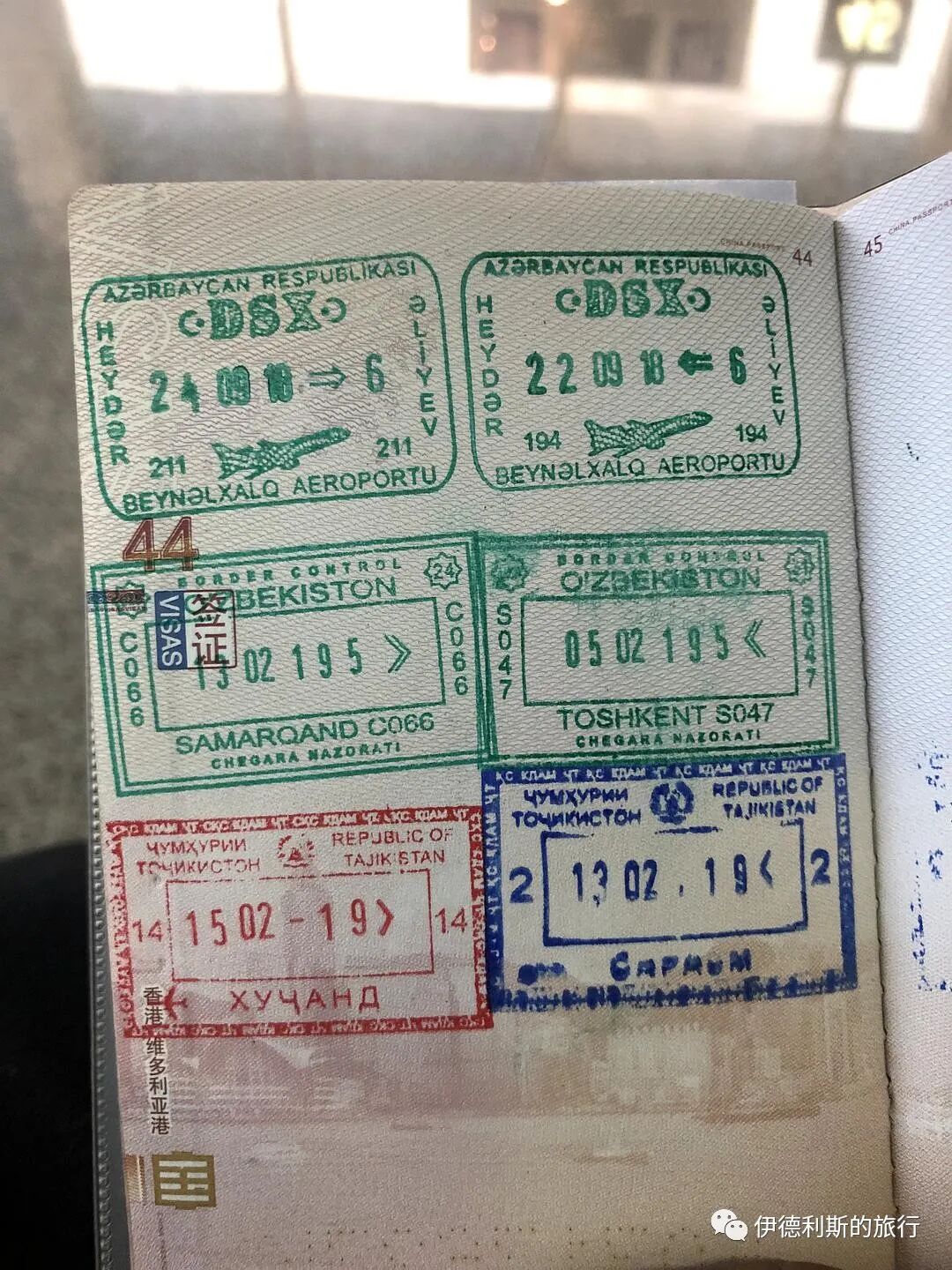
After entering, my Tajik guide, Afridun, waved at me with a sign showing my name, and my Tajikistan trip officially began. Afridun told me this border had been closed for many years, and some young people did not even know that hundreds of thousands of Tajiks lived in Samarkand and Bukhara across the border. The border finally opened during Nowruz last spring, and Panjakent held a grand ceremony, with many people traveling to Samarkand to see it. A friend of the guide was waiting to pay at a supermarket in Samarkand when he heard the person in front of him speaking Tajik to the cashier, and that was how he realized so many Tajiks lived in Samarkand.
2. Ancient City of Sarazm
Not far east from the border, after passing an Uzbek village, I arrived at Tajikistan's only UNESCO World Heritage site, the ancient city of Sarazm. This ancient city is one of the earliest in Central Asia and was the largest metallurgical center in the region during the Bronze Age.
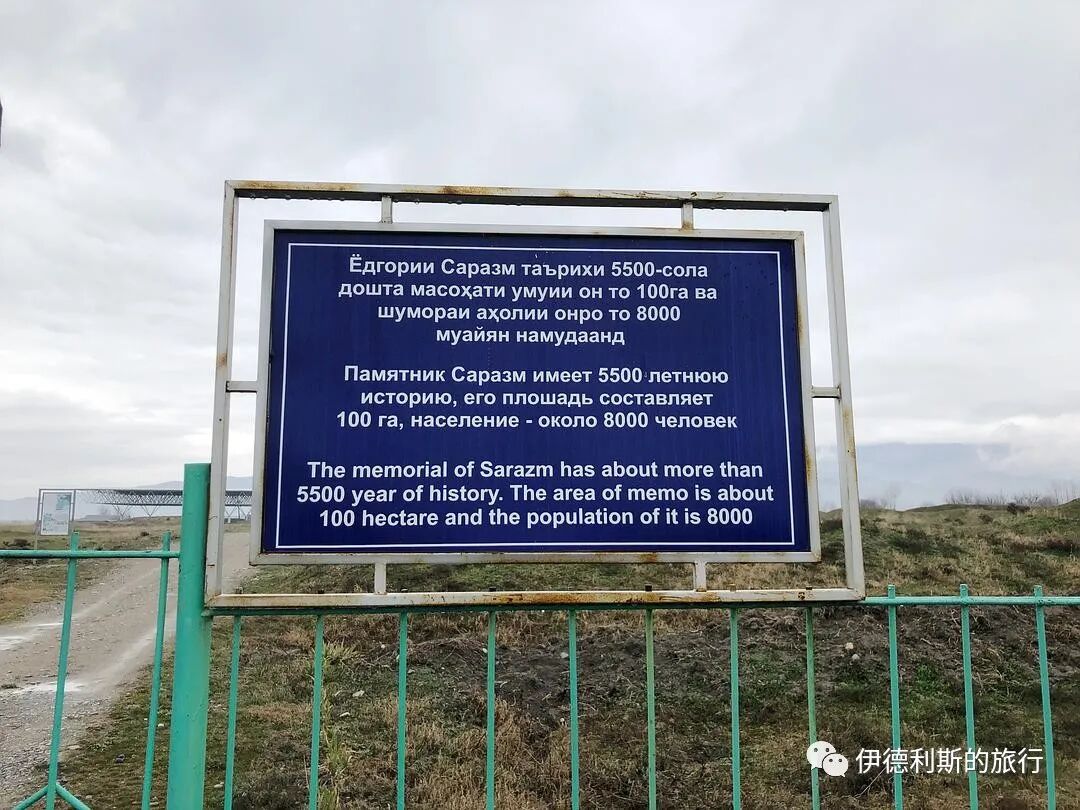
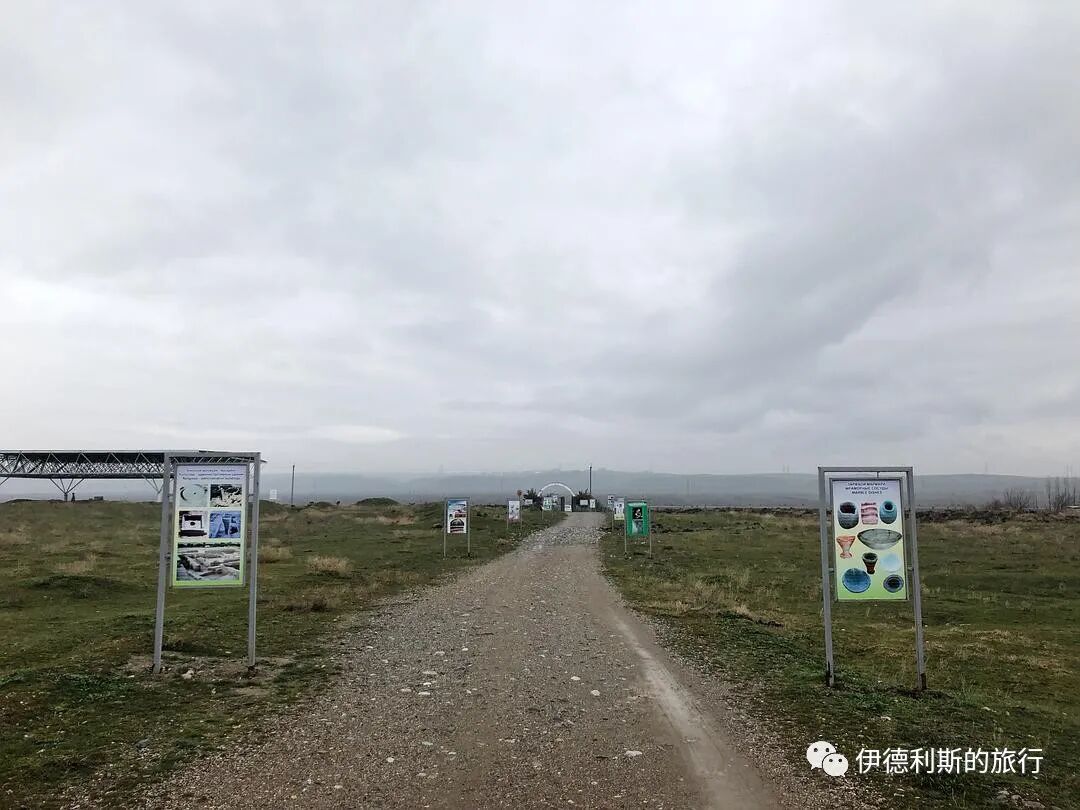
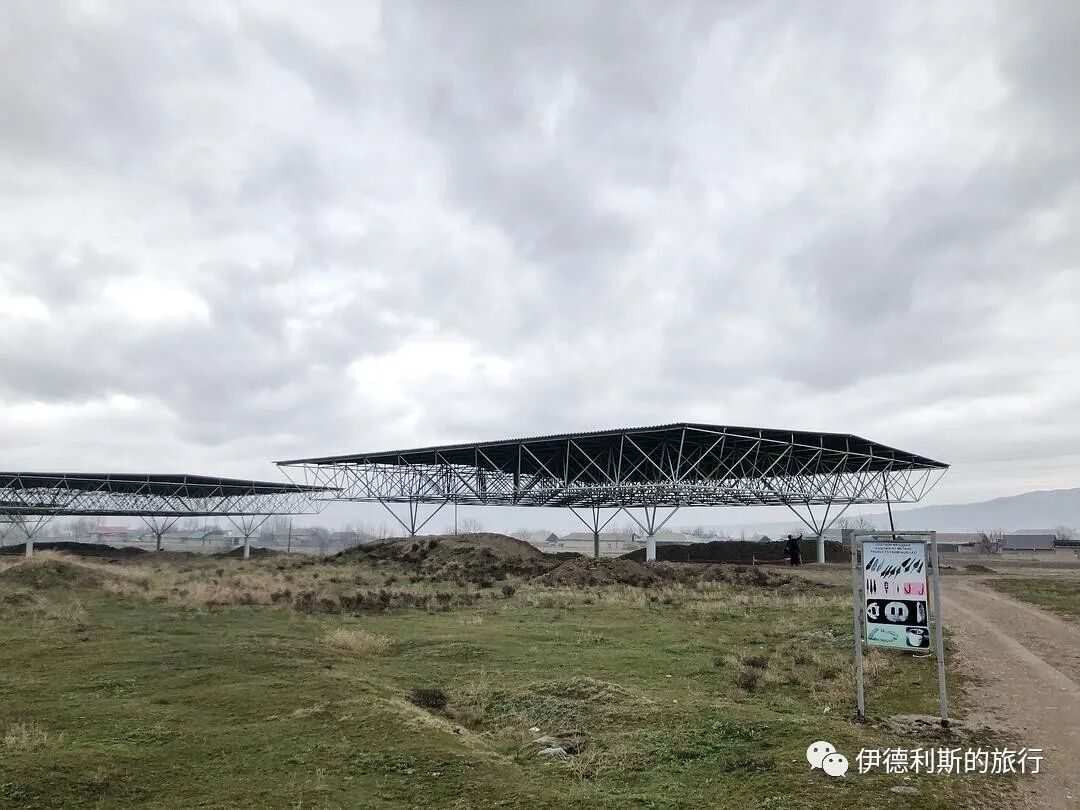
According to carbon-14 dating, the city dates from roughly 3500 BC to 2000 BC, spanning from the Chalcolithic period to the early and middle Bronze Age. The city is located 45 kilometers east of Samarkand and 15 kilometers west of Panjakent in the Zeravshan River valley, at an average altitude of 910 meters. Geographically, the city sits right between the agricultural plains of Transoxiana and the pastoral areas of the Pamir-Alay mountains, making it a perfect spot for mountain herders and plain farmers to trade goods and share skills and culture.
Additionally, the Zeravshan valley is rich in metal resources, with tin and gold found in the river sand being the most important. The area gradually became a metal smelting center, and industries like pottery and stone processing also began to emerge.
By around 3000 BC, the ancient city of Sarazm became a long-distance trade hub focused on tin exports. Its trade network reached north to the Aral Sea and the Eurasian Steppe, west to Turkmenistan, the Iranian plateau, and Mesopotamia, and south to Balochistan and the Indus Valley.
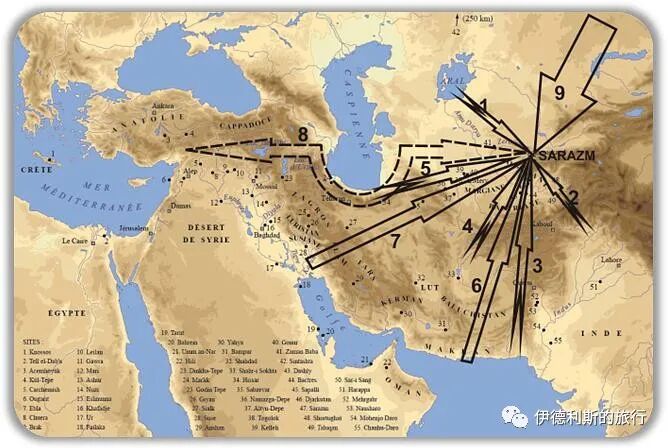
Trade map of the ancient city, from UNESCO documents.
In 1976, a villager named Mr. Achurali Taïkonov accidentally found a bronze axe while farming. He handed it to Professor A. Isakov, an archaeologist, who then began working with the villagers to excavate the site. Archaeological work officially started in 1977, and the ancient city of Sarazm, which had been missing for over 3,000 years, appeared once again.
Between 1977 and 1994, a period of 17 years, Professor A. Isakov led 11 excavations and 20 surveys. From 1984 to 1991, a French archaeological team (CNRS) also conducted archaeological work here.
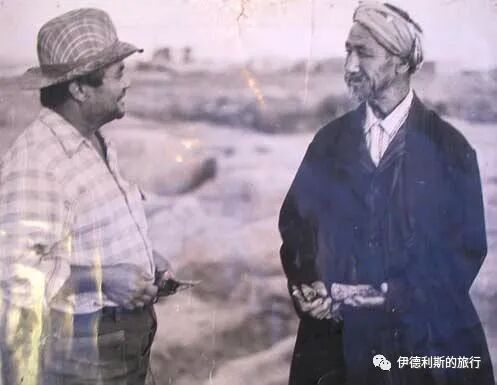
On the right is the site's discoverer, Achurali Taïkonov, and on the left is the head of archaeology, Professor A. Isakov. The image is from a UNESCO document.
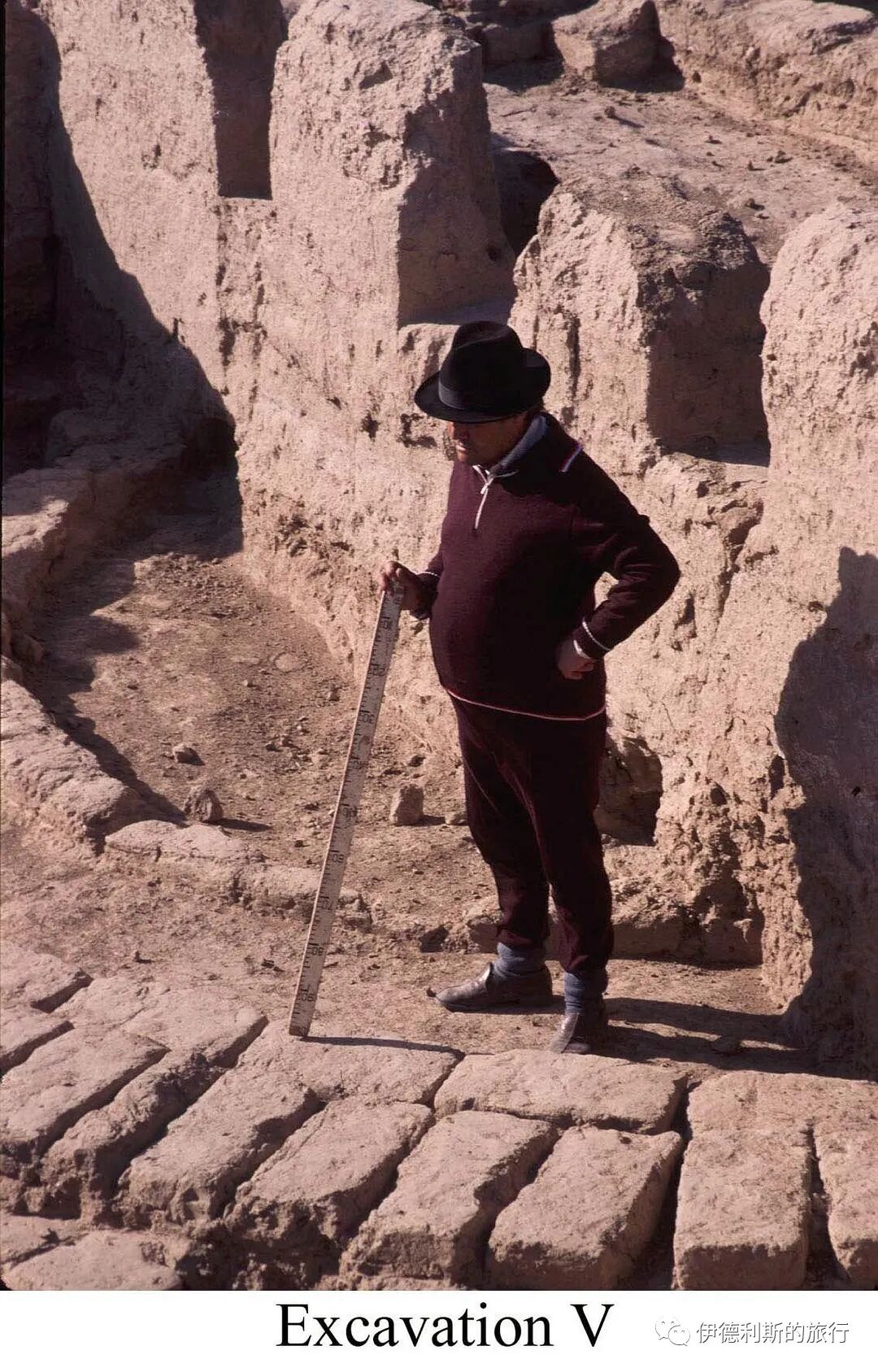
Professor A. Isakov at the archaeological site. The photo is from a UNESCO document.
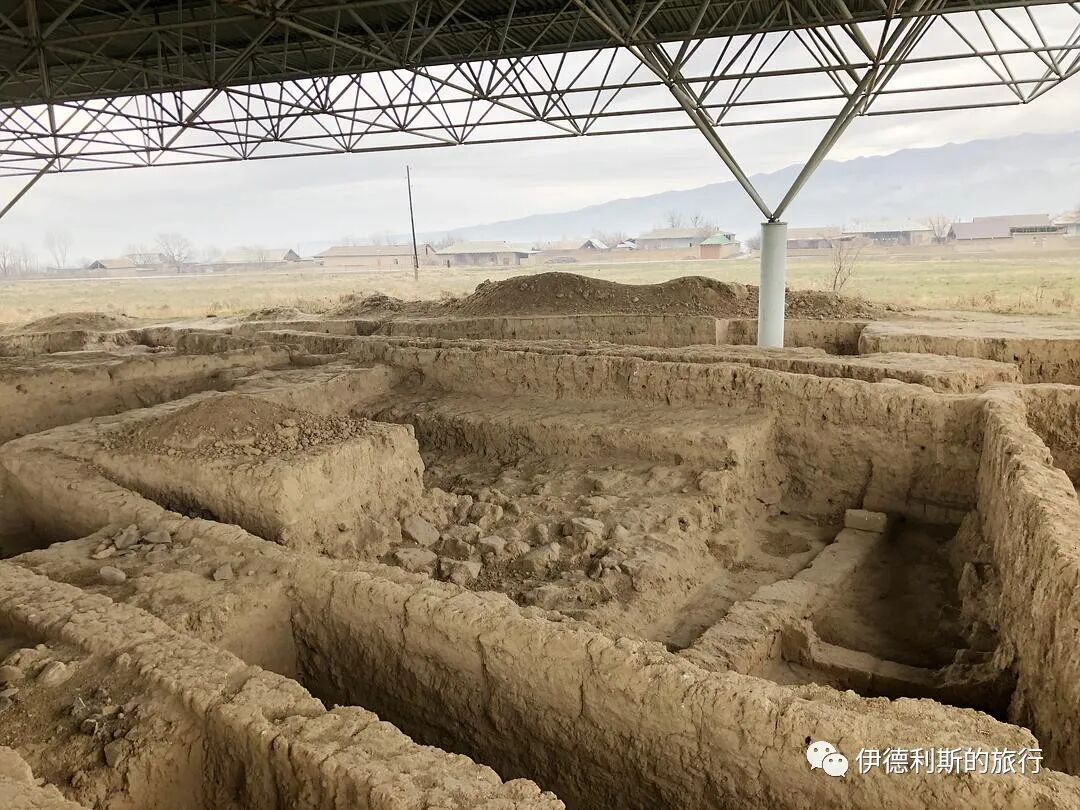
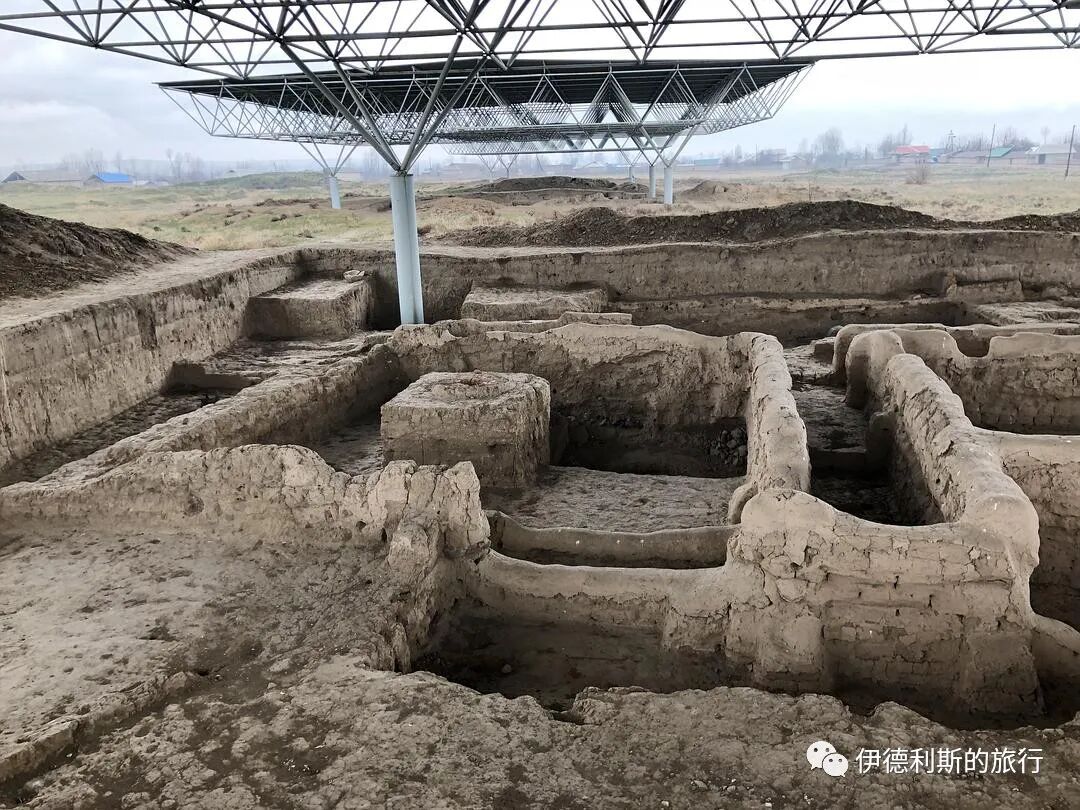
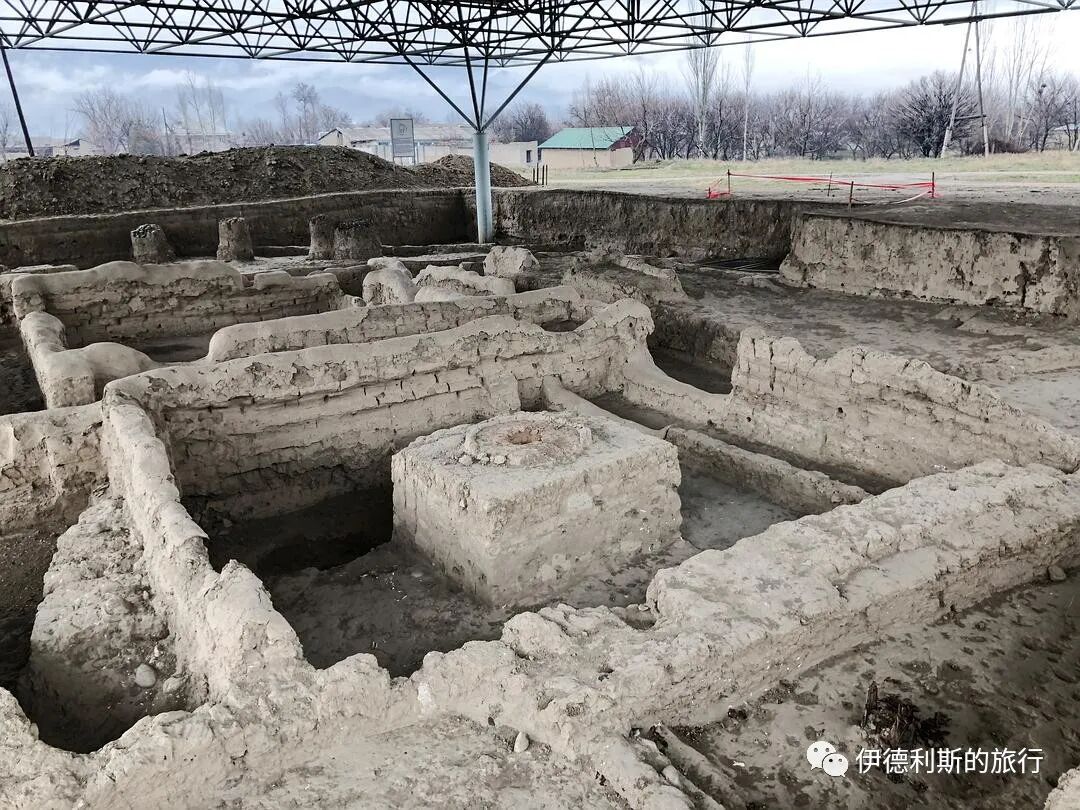
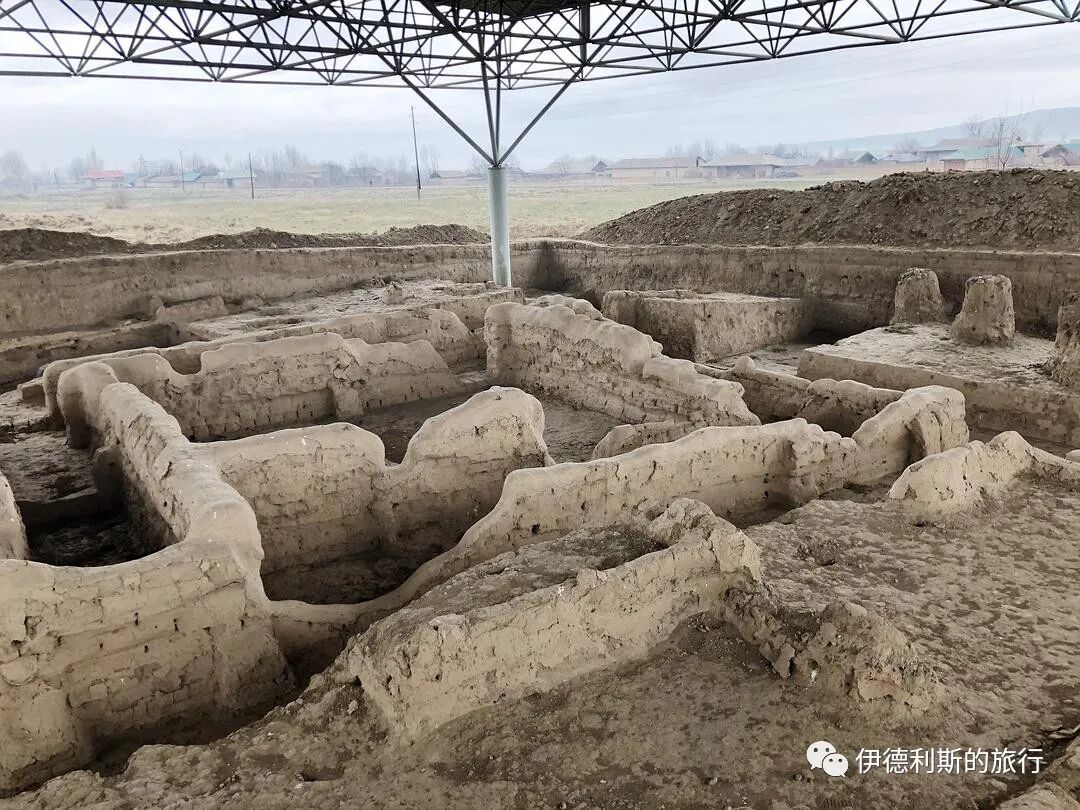
Looking at the terrain, the ancient city of Sarazm had no clear urban planning; it extended naturally in different directions without city walls. The total area of the ancient city exceeds 50 hectares, consisting of 10 hills of varying heights and 5 depressions, which correspond to the city's building areas and ponds. The building area consisted of houses, temples, and workshops. Palaces also appeared between 2900 BC and 2700 BC, and it is estimated that the population exceeded 3,000 at its peak.
Early buildings in the ancient city used rectangular clay bricks mixed with straw. Later, they also began using river stones, but these were mainly used for building wall foundations. The roofs were flat with wooden beams, covered by one or several layers of branches and reeds.
Residential courtyards included storage rooms, workshops, kitchens, and living areas. Most had fenced yards where most handicraft work took place.
After 3300 BC, family altars for sacrificial activities appeared inside the rooms, with a circular furnace altar in the center. Starting in 2900 BC, the altars became larger, and square fireplaces with circular altars began to appear, inside which charred seeds were found.
Workshops focused mainly on metal smelting. Furnaces, clay molds, crucibles, and many metal products were found at the site. Next was pottery making. Early pieces were handmade, but after 2700 BC, a potter's wheel (taojun) appeared. there were workshops for processing various gemstones such as turquoise, lapis lazuli, ruby, and agate.
The most important discovery in the ancient city was a tomb called the 'Lady of Sarazm,' which contained a woman's skeleton surrounded by thousands of beads and various jewelry, and even shells from the Indian Ocean or the Arabian Sea. The most important burial item for the Lady of Sarazm was her bracelet, which clearly came from the Indus civilization.
Another important artifact is a cylindrical seal discovered in 1984, which can print a bull when rolled. This bull has distinct Mesopotamian characteristics.
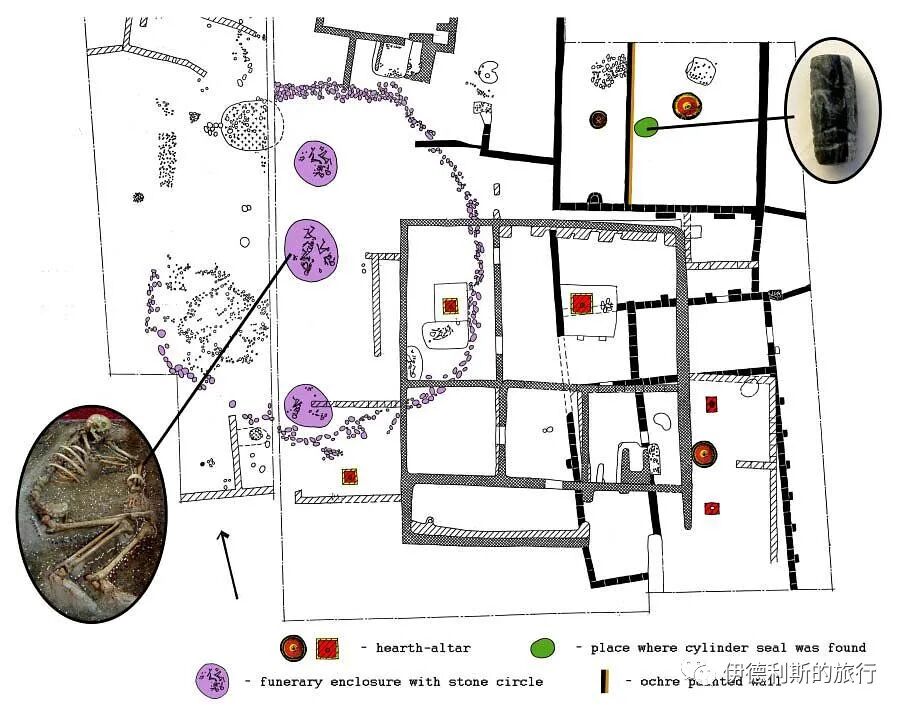
The location where the Lady of Sarazm and the bull seal were unearthed, from a UNESCO document.
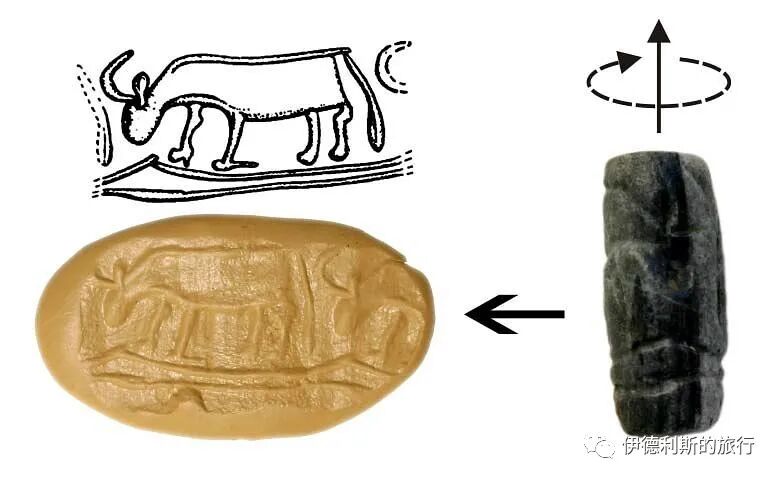
The bull seal, from a UNESCO document.
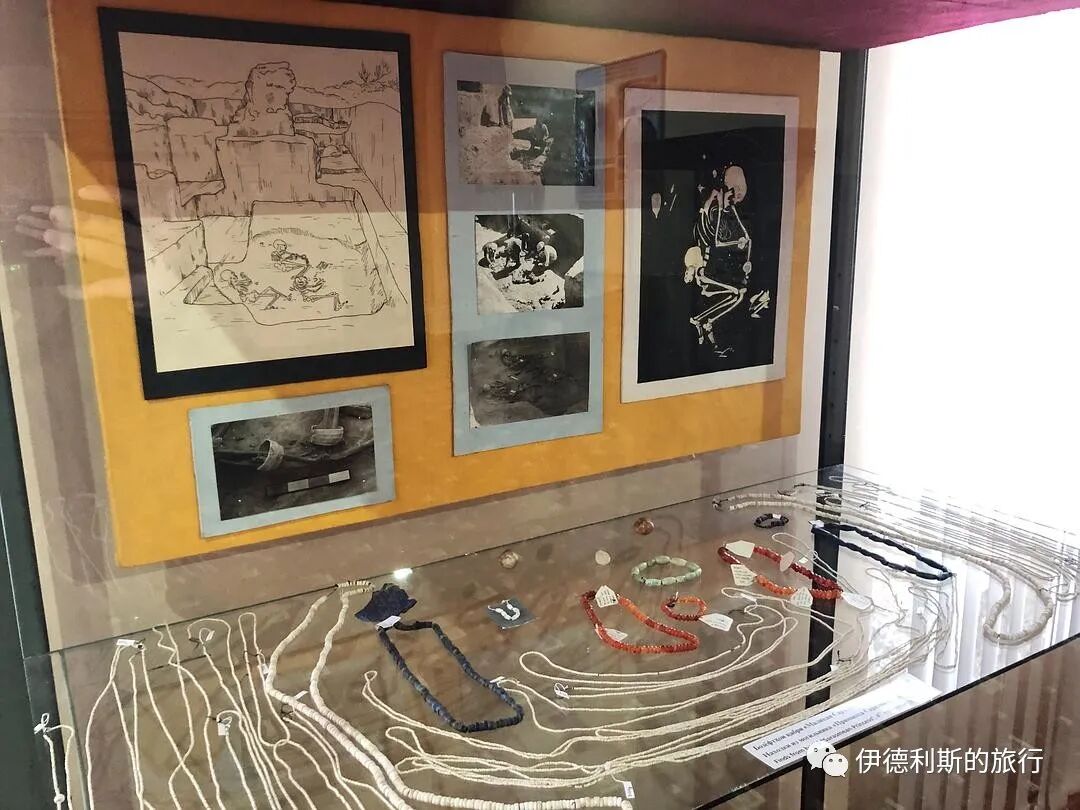
Beads unearthed from the tomb of the Lady of Sarazm, displayed in the Rudaki Museum.
3. Lunch
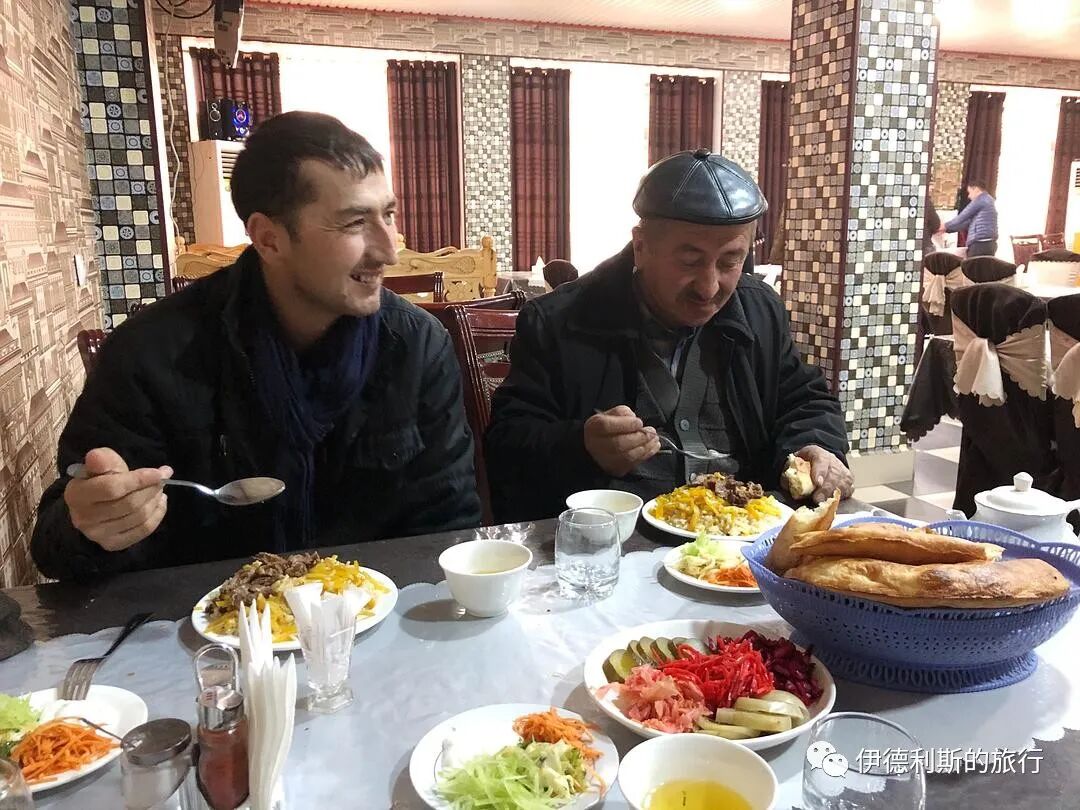
After visiting the ancient city of Sarazm, we continued east to the Penjikent urban area and ate pilaf (zhuafan), baked meat buns (kaobaozi), and flatbread (nang) at a local restaurant.
Plain Tajiks and Uzbeks have lived together for hundreds of years and have influenced each other deeply; it is hard to tell them apart from their diet to their clothing. While eating, a waiter was a Pamiri who came here to work during winter break, so I followed the topic and chatted with them about the differences between plain Tajiks and Pamiris. The Tajik language spoken by plain Tajiks belongs to the Western Iranian branch, like Persian and Kurdish. The language spoken by Pamiris belongs to the Eastern Iranian branch, like Pashto and Sogdian. The two cannot communicate. Pamiris in Tajikistan learn Tajik as a second language in school from a young age. the obvious difference between plain Tajiks and Pamiris is that the former are Sunni and the latter are Shia; the former wear a skullcap (duopa), and the latter wear a flat-topped hat.
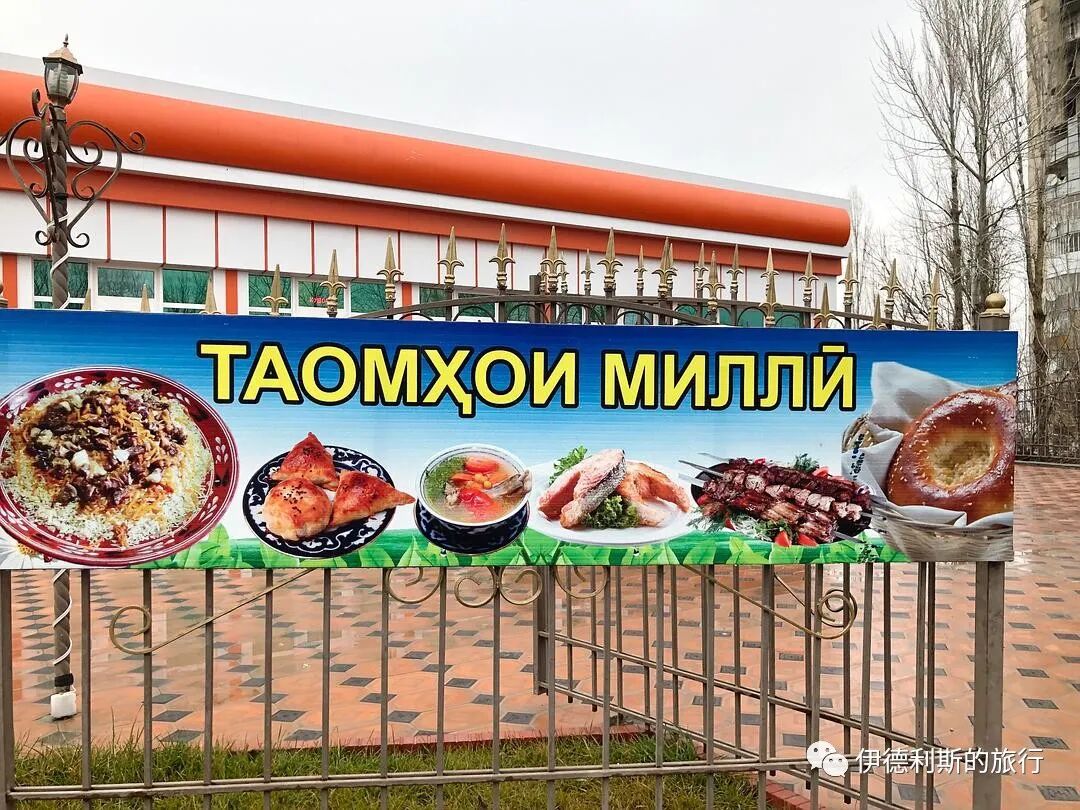
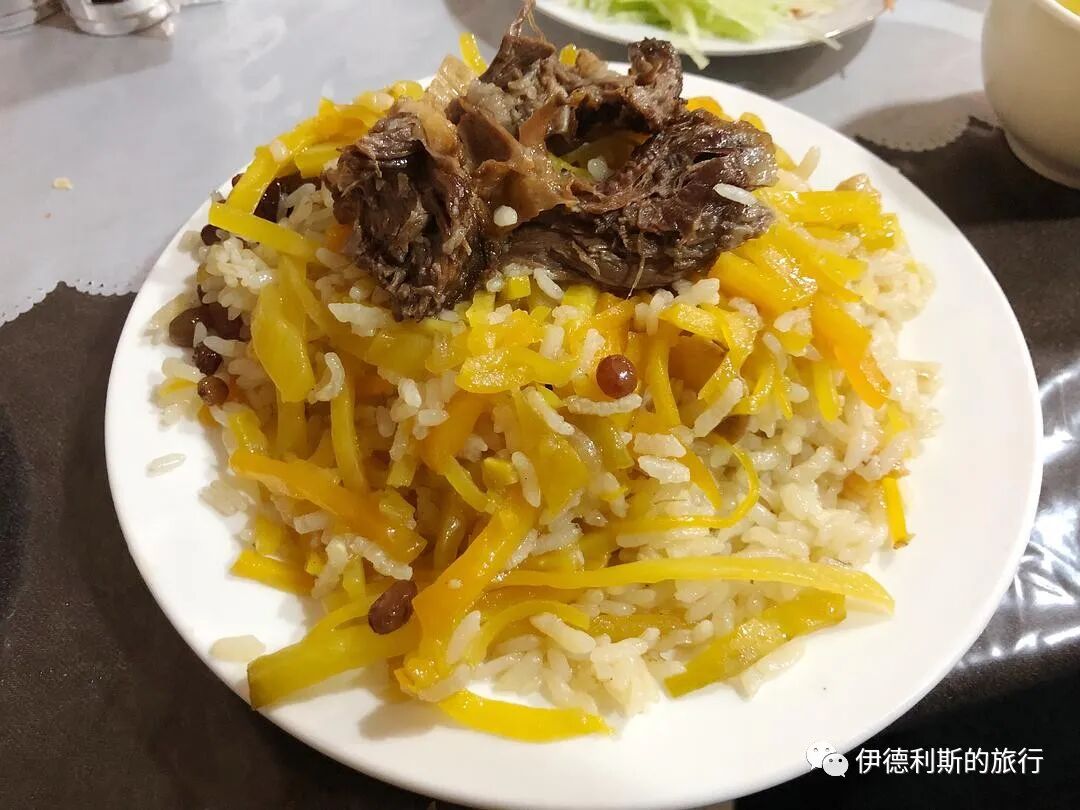
Pilaf (zhuafan)

Cold dish
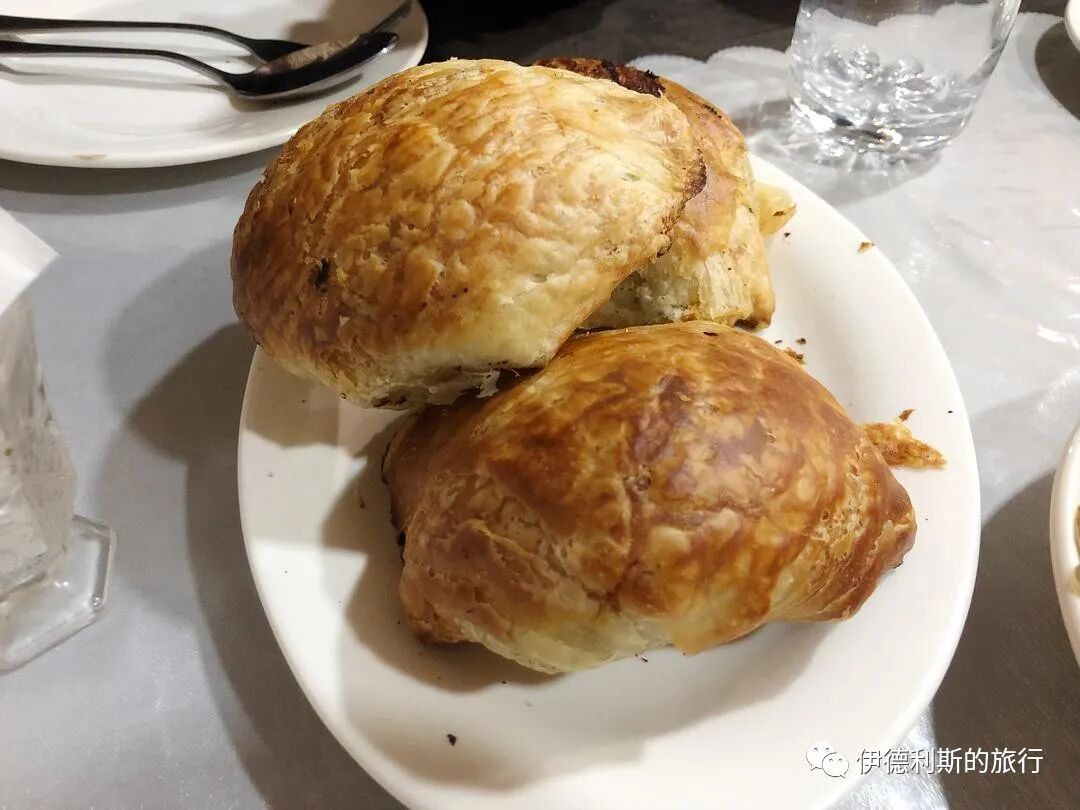
Baked meat buns (kaobaozi)
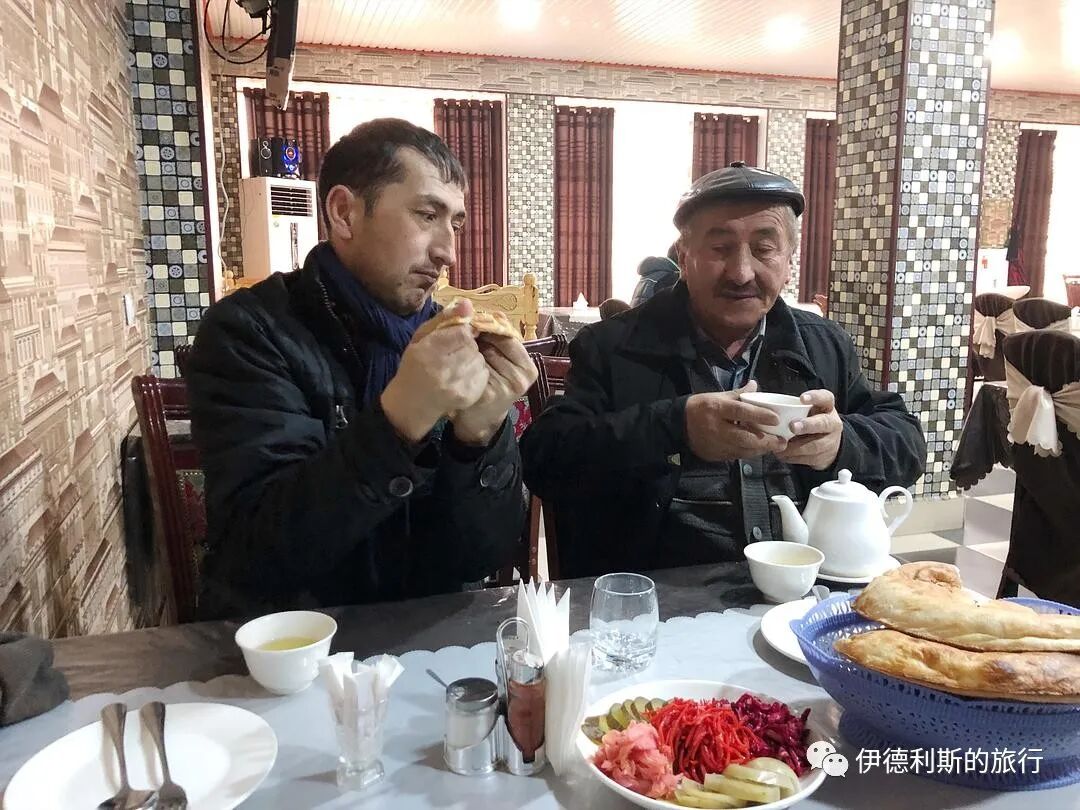
On the left is the young guide, and on the right is the driver.
4. Accommodation
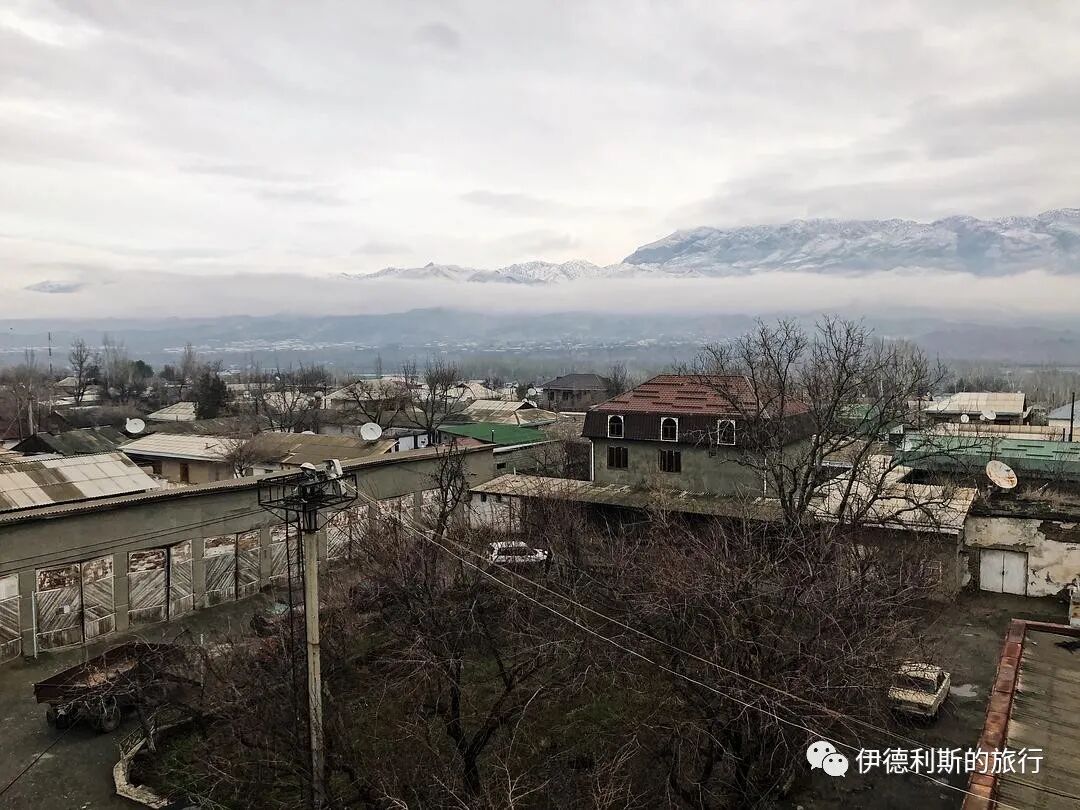
After lunch, I went to the hotel to drop off my luggage. I booked the Umariyon Hotel myself on Booking. It is a pretty good hotel in Penjikent with a good location.
5. Rudaki Museum
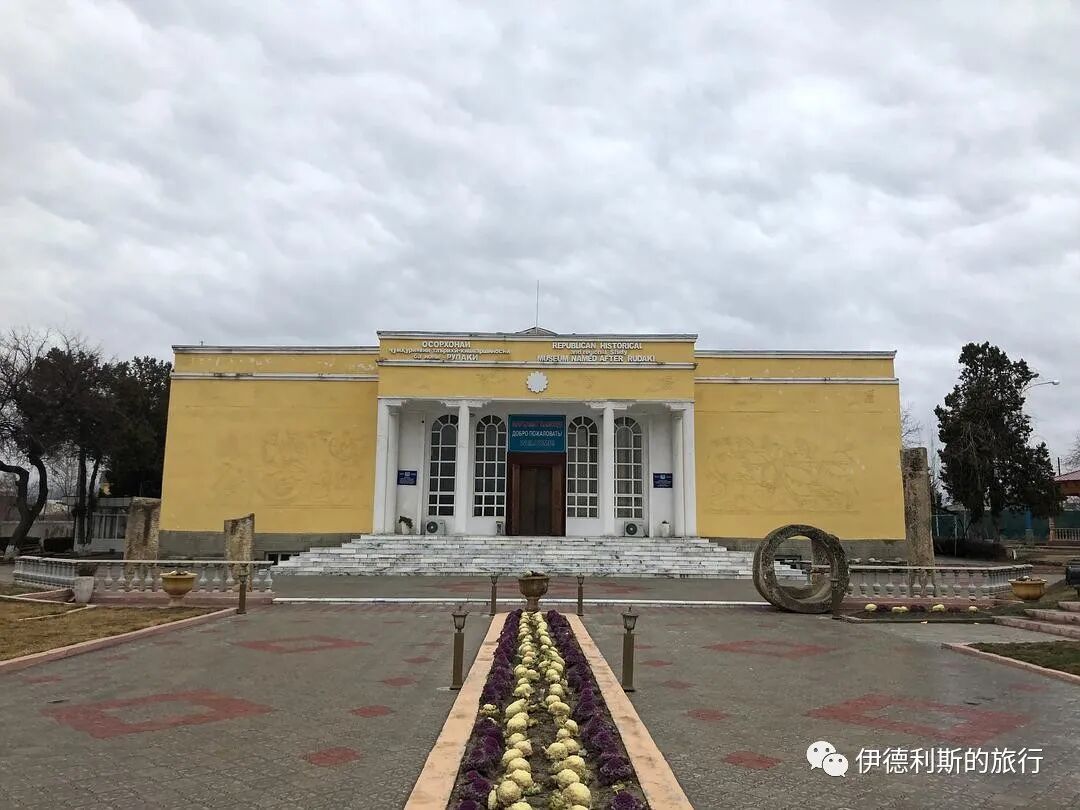
The Rudaki Museum is the main museum in Penjikent. It is similar to a county museum in China, with few but comprehensive collections.
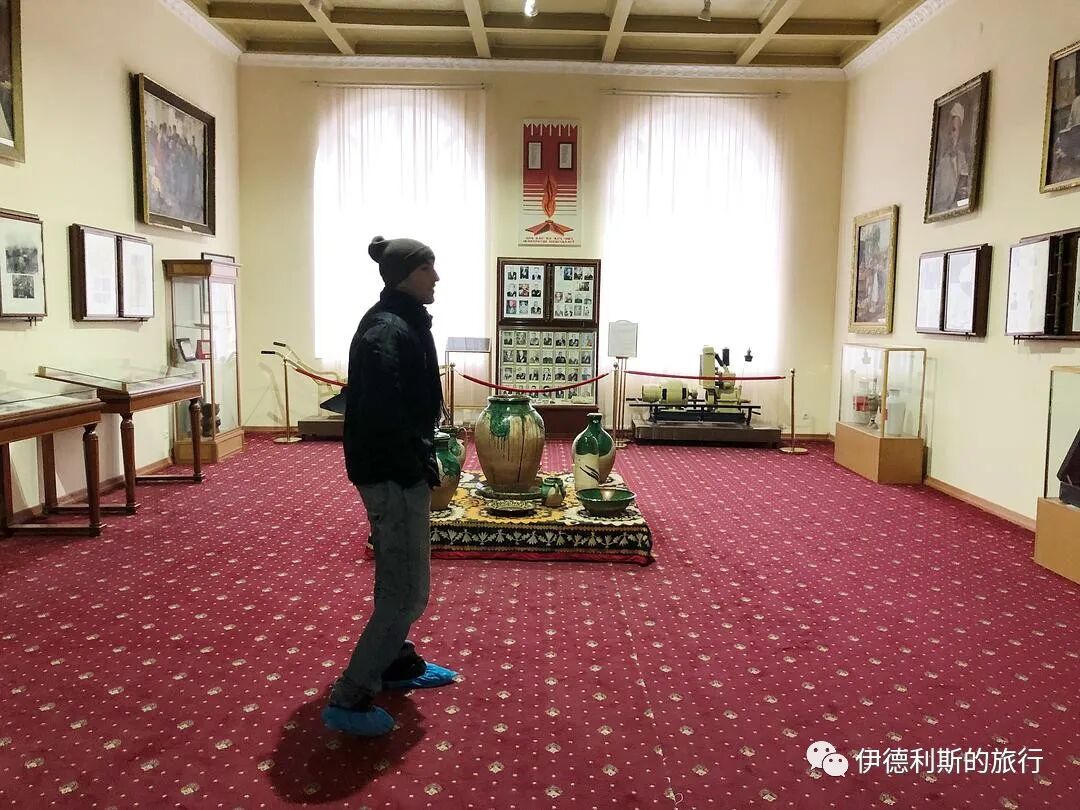
The guide is explaining things to me.
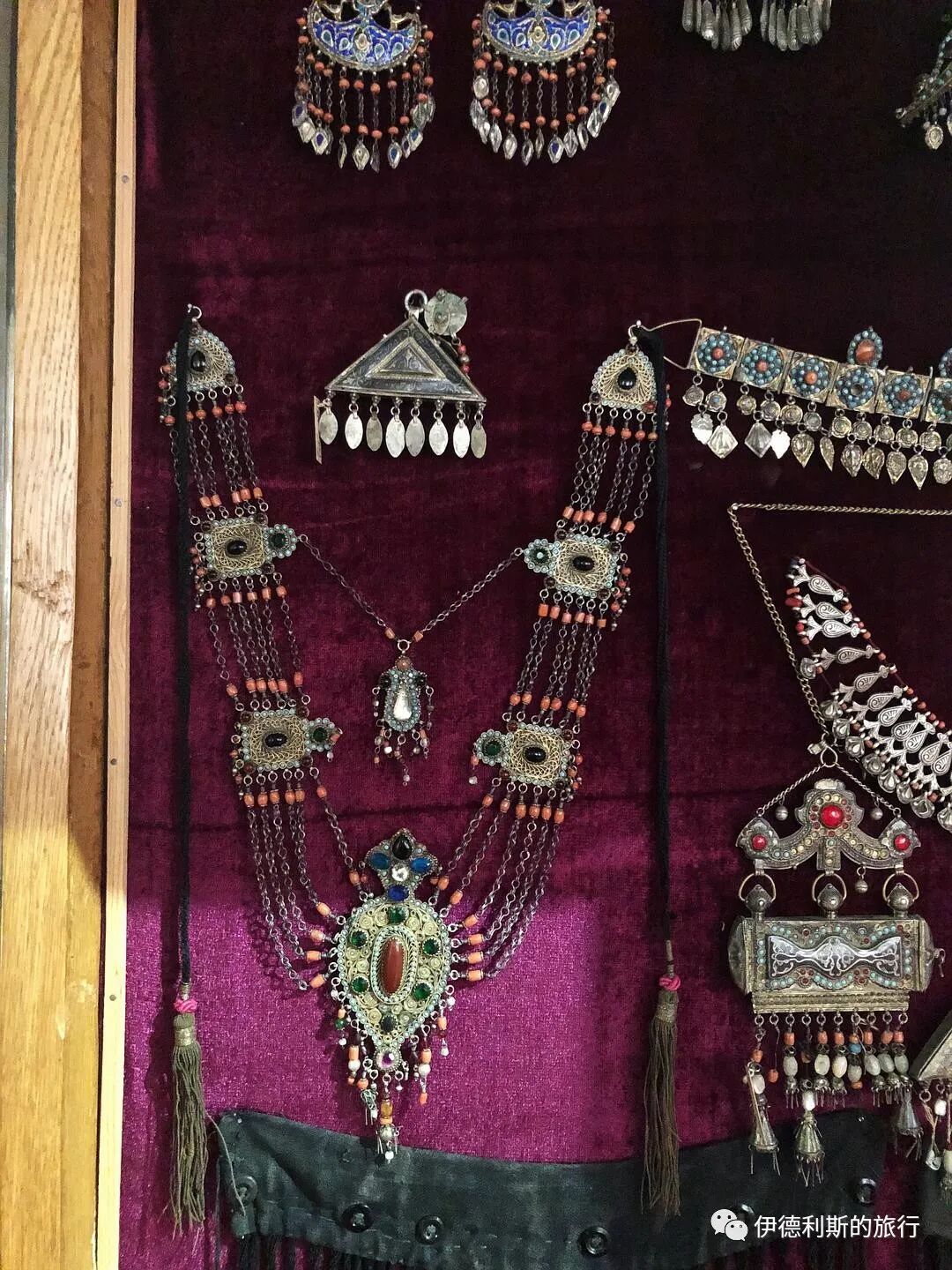
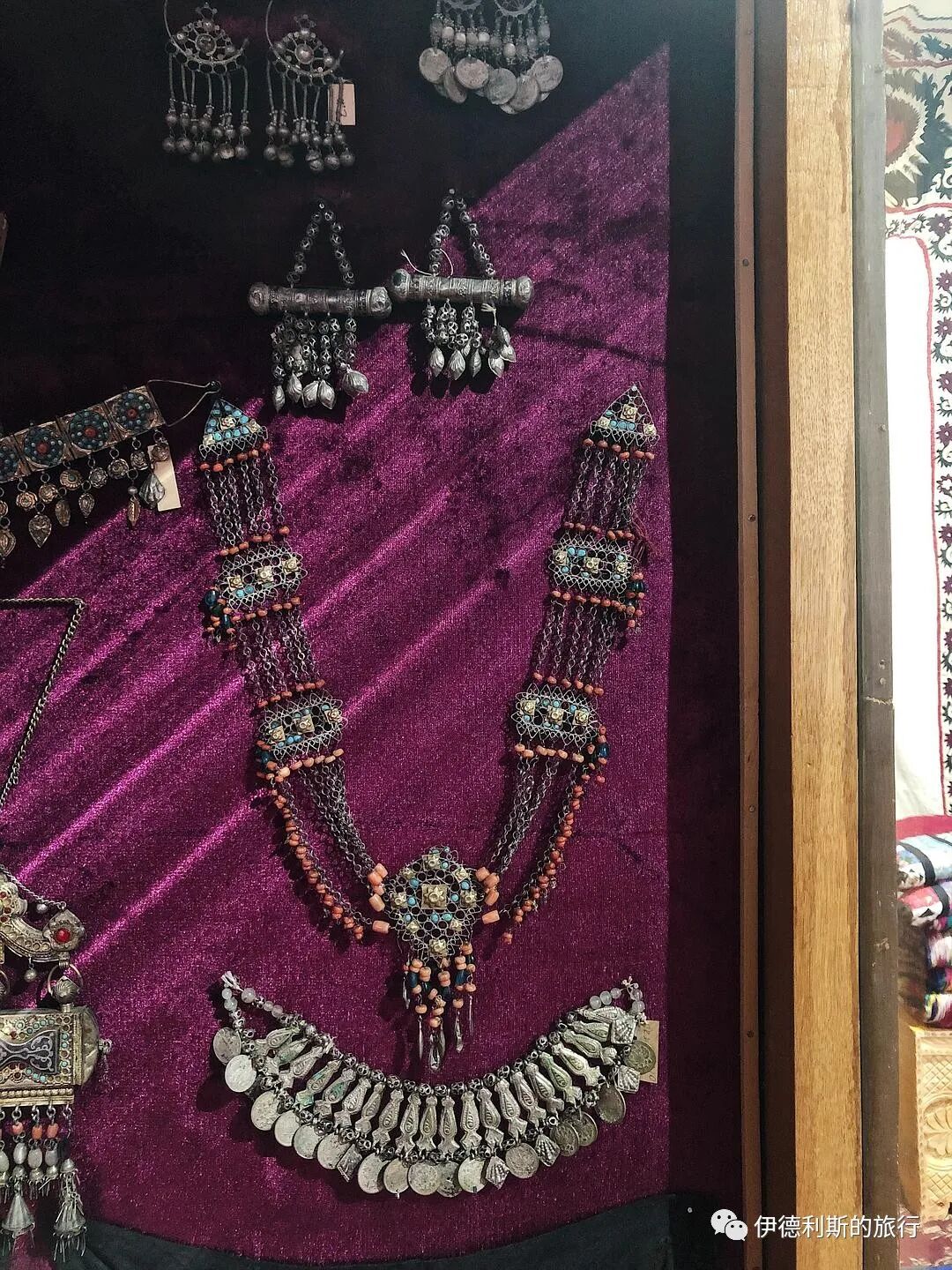
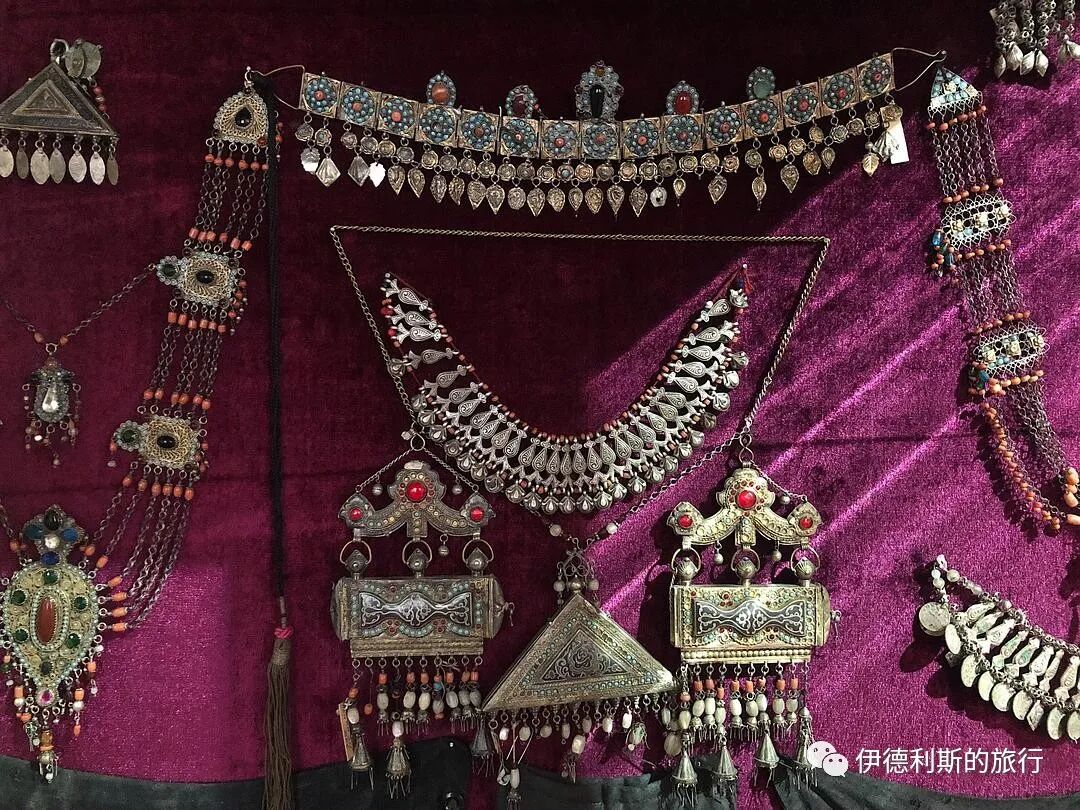
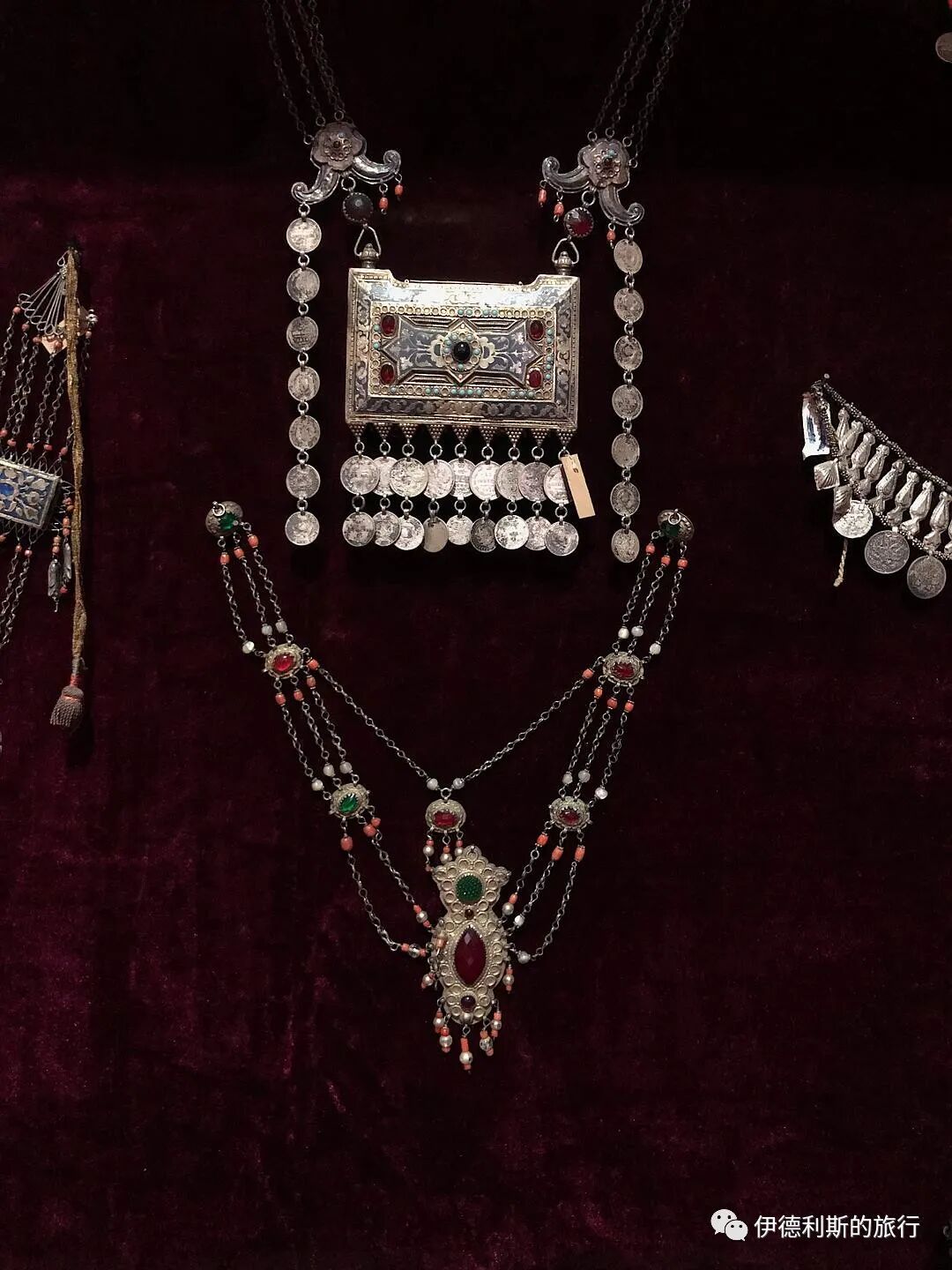
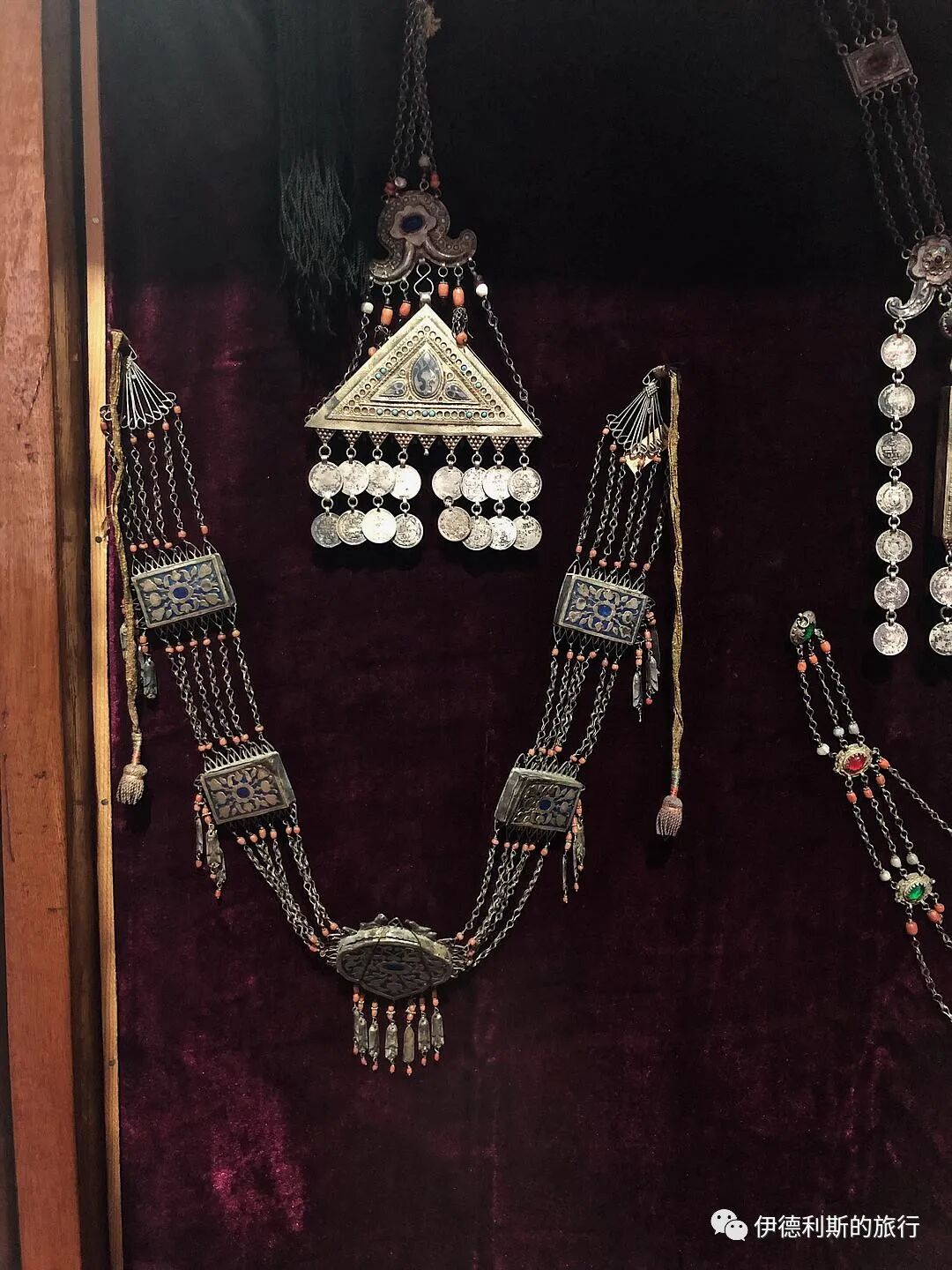
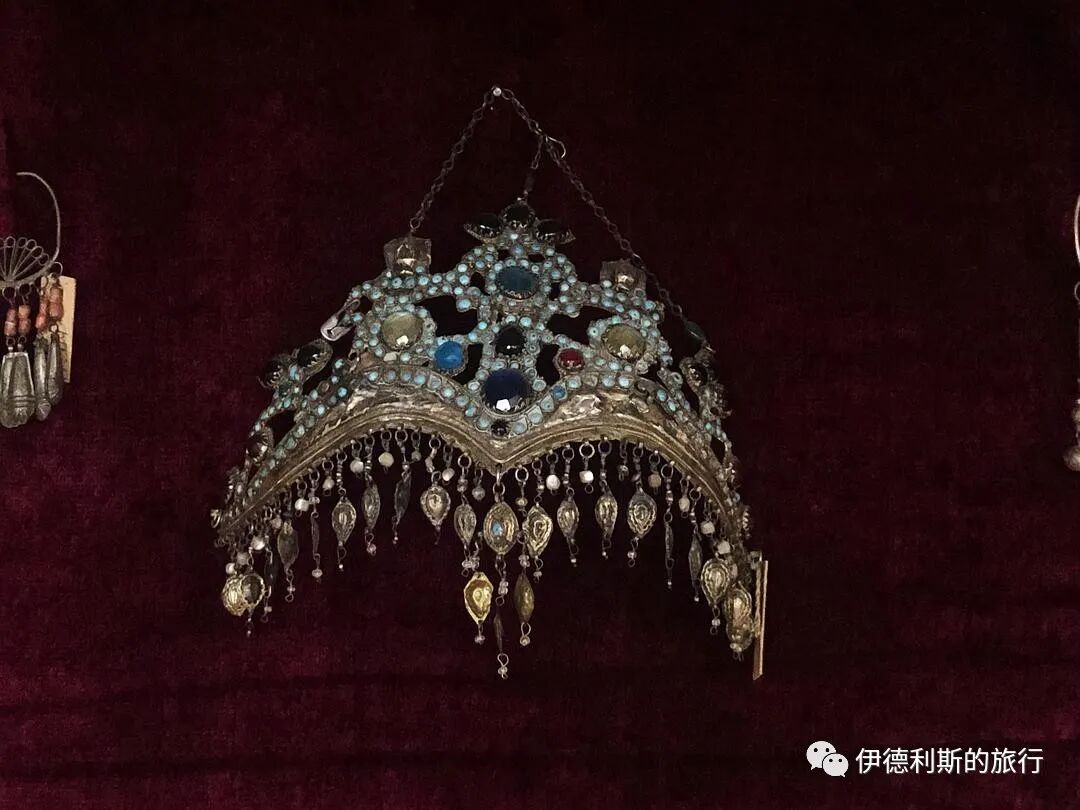
Traditional jewelry collected in the Rudaki Museum.
6. Buying a Hat
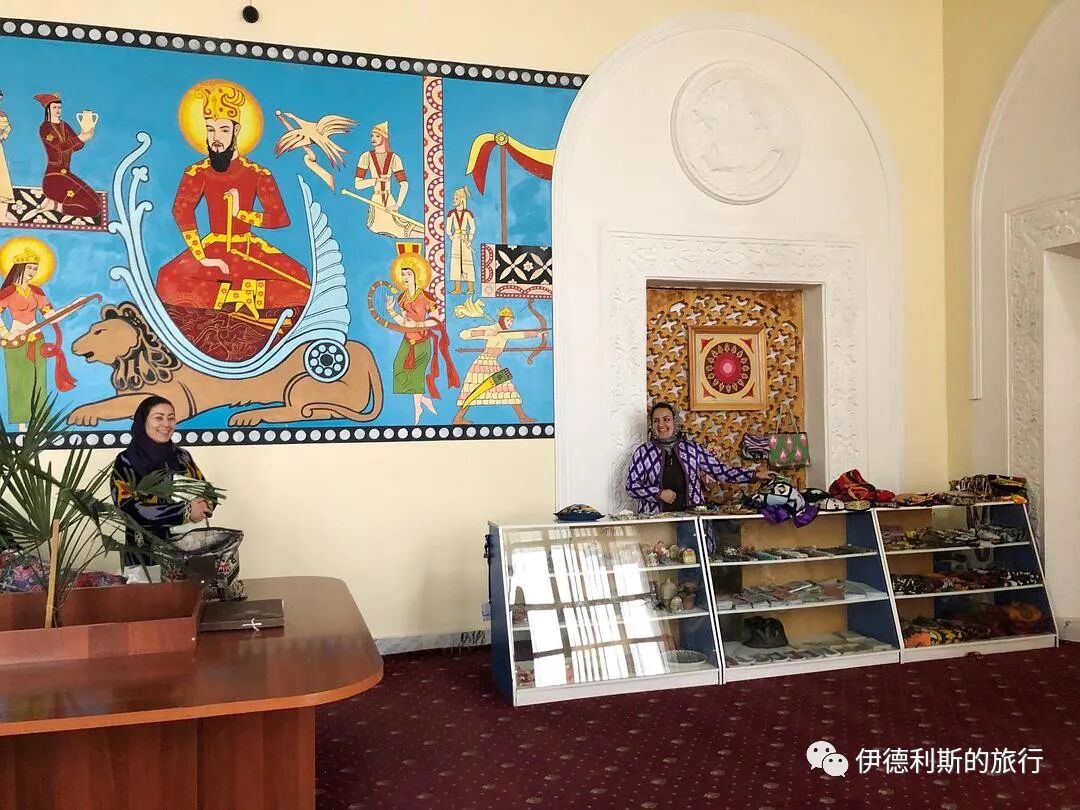
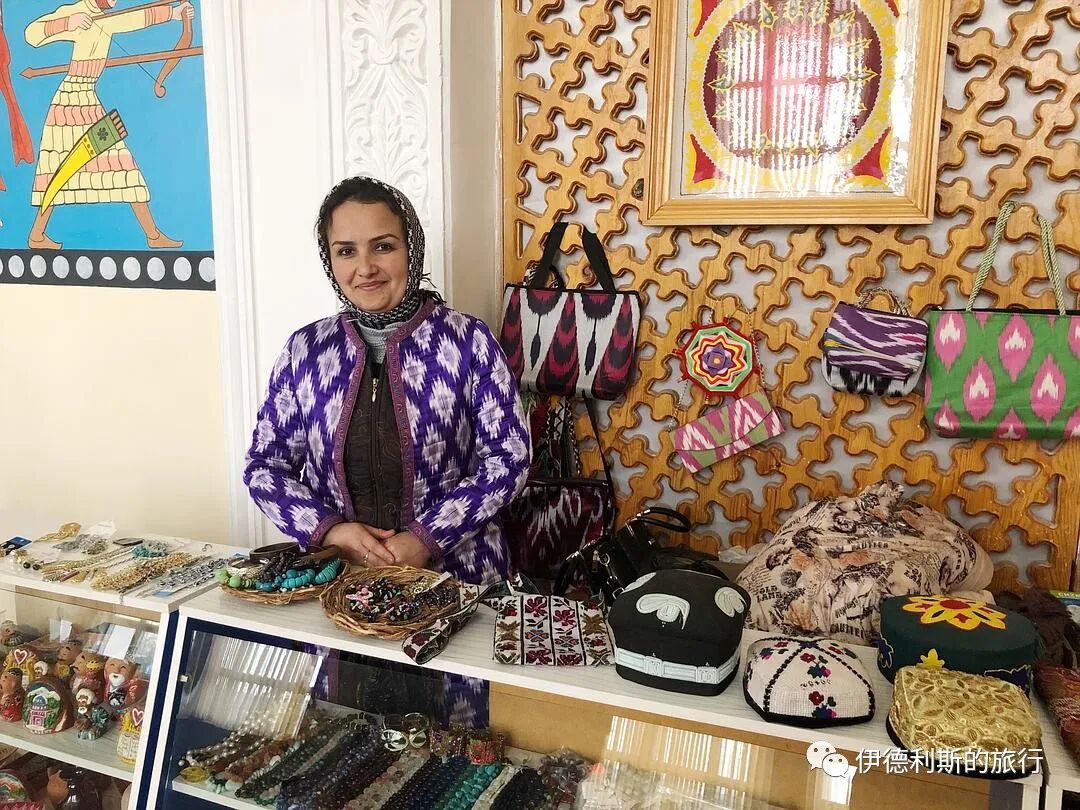
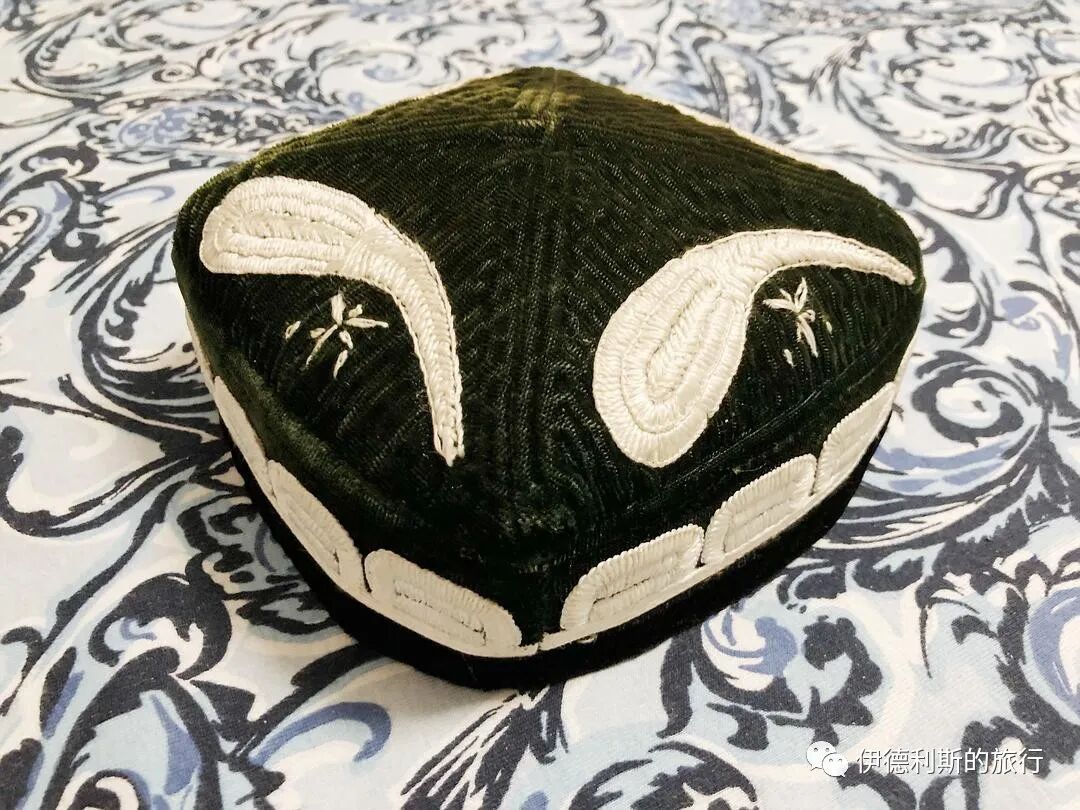
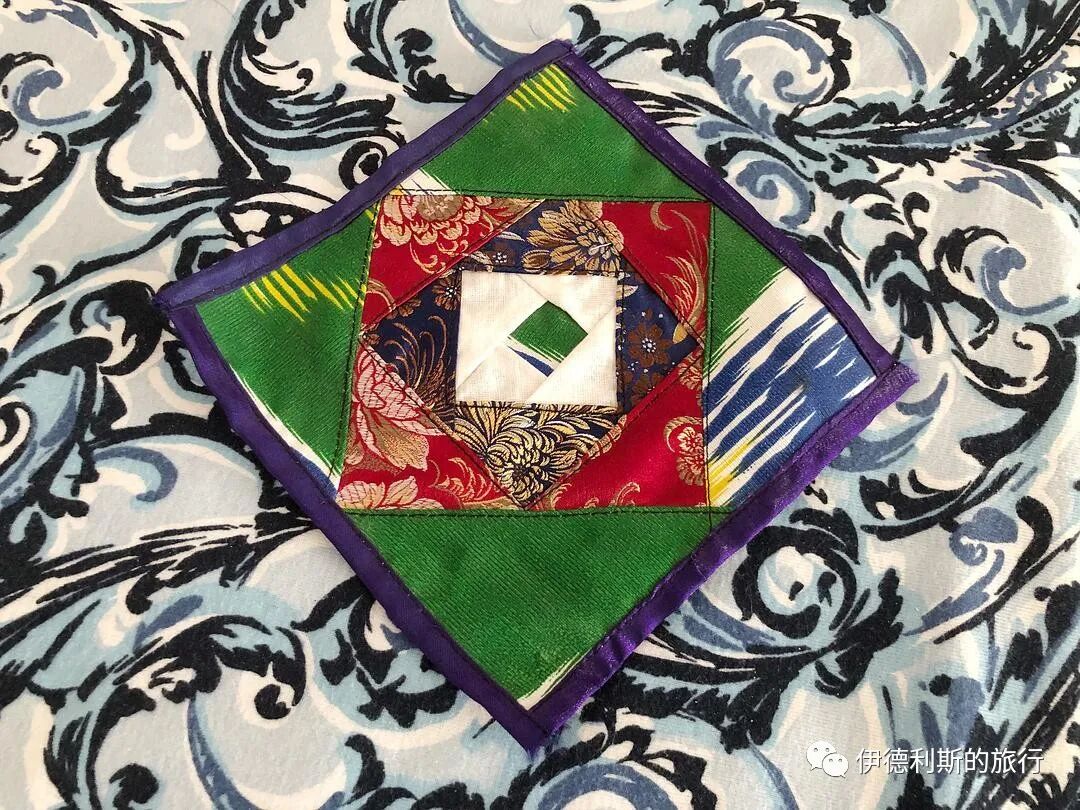
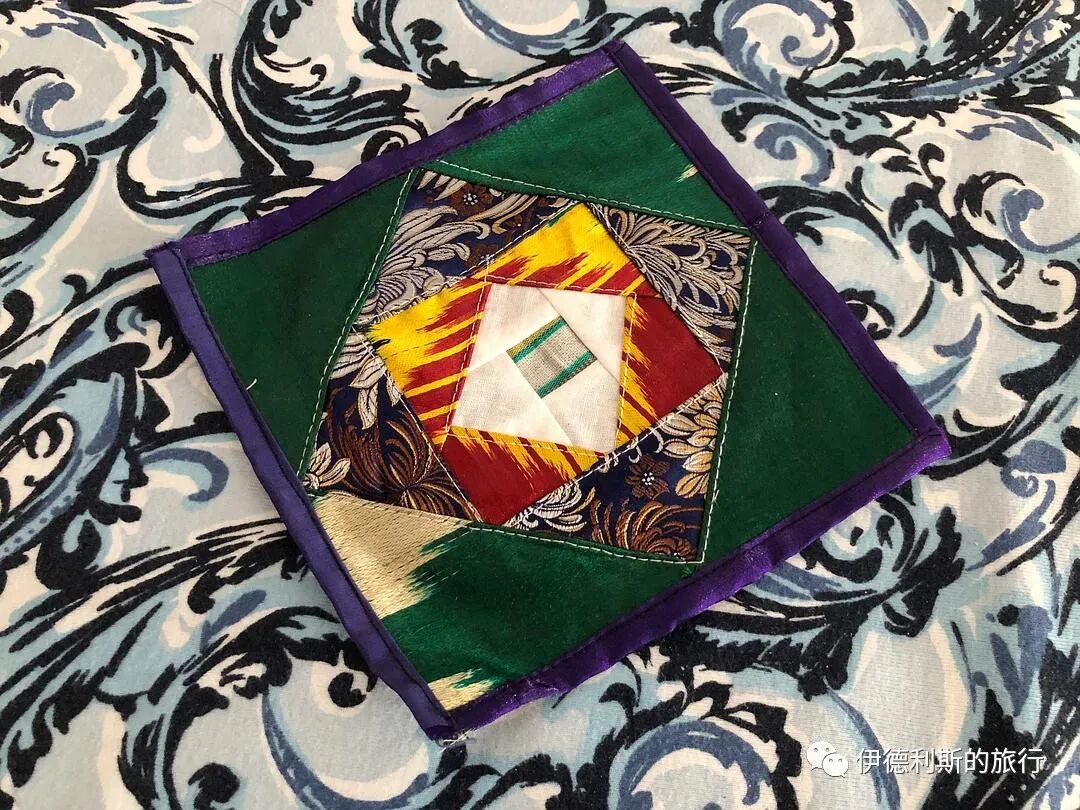
An auntie sells tourist souvenirs right inside the entrance of the Rudaki Museum hall, which is quite rare. I bought a skullcap (doppa) and a coaster. The auntie sewed the coaster herself, and the doppa is from the late Soviet era.
This dark green velvet almond skullcap (Badam Doppa) is quite rare, as most are black nowadays. The almond skullcap is known as "Chust do‘ppisi" in Uzbekistan. Chust is a handicraft center in the Fergana Valley famous for producing skullcaps. The almond skullcap likely originated in the 19th century. It spread rapidly among Uzbeks, lowland Tajiks, and Uyghurs from the late 19th to the early 20th century. It later became the most common type of skullcap for adult Uzbek and lowland Tajik men, and it also accounts for a significant proportion among adult Uyghur men.
7. Grand Bazaar
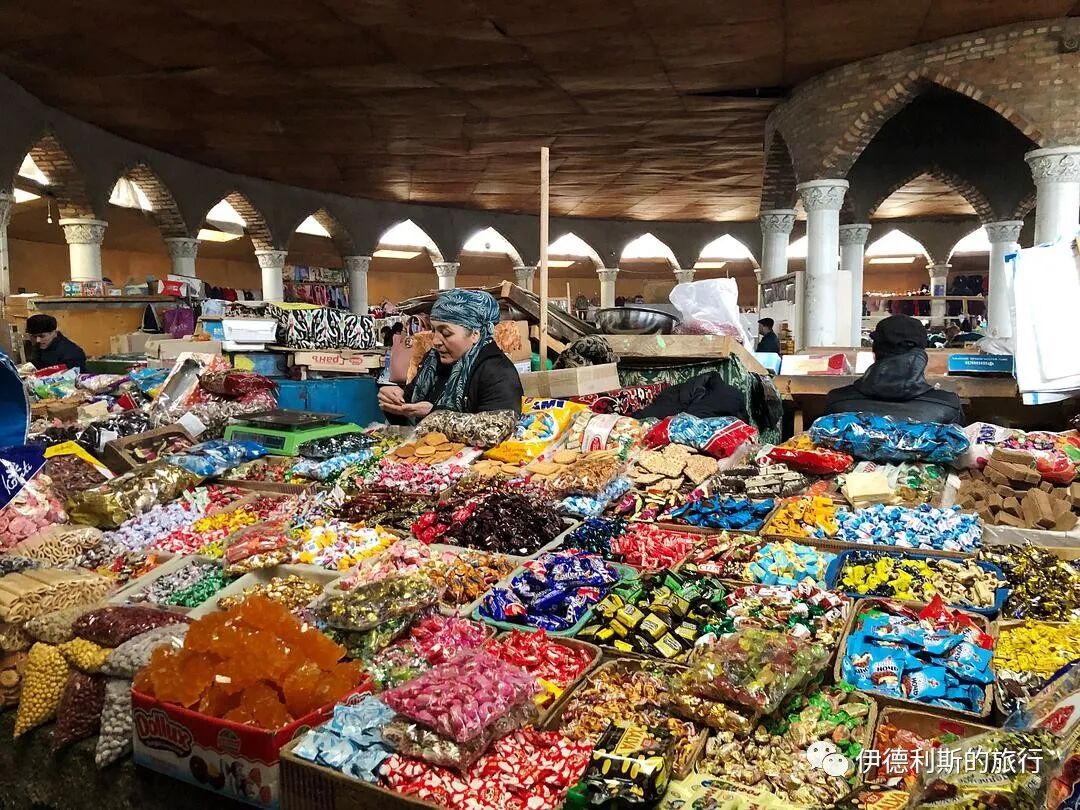
After leaving the museum, we went to the Grand Bazaar in Panjakent.
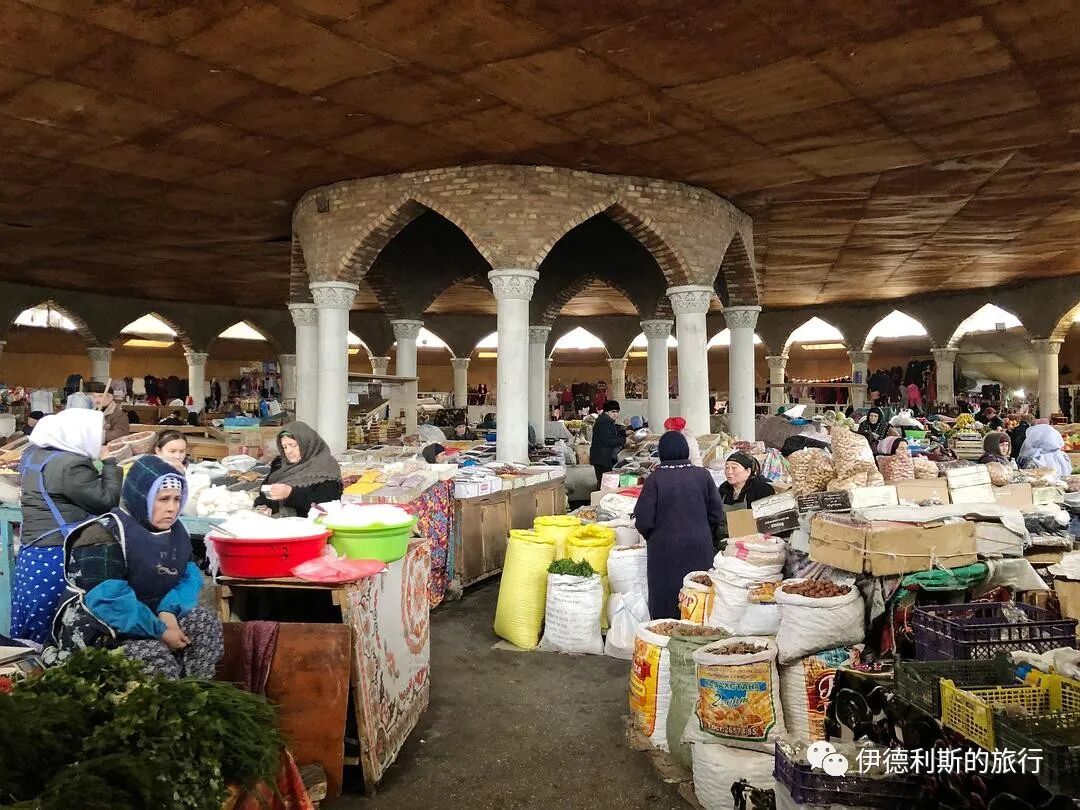
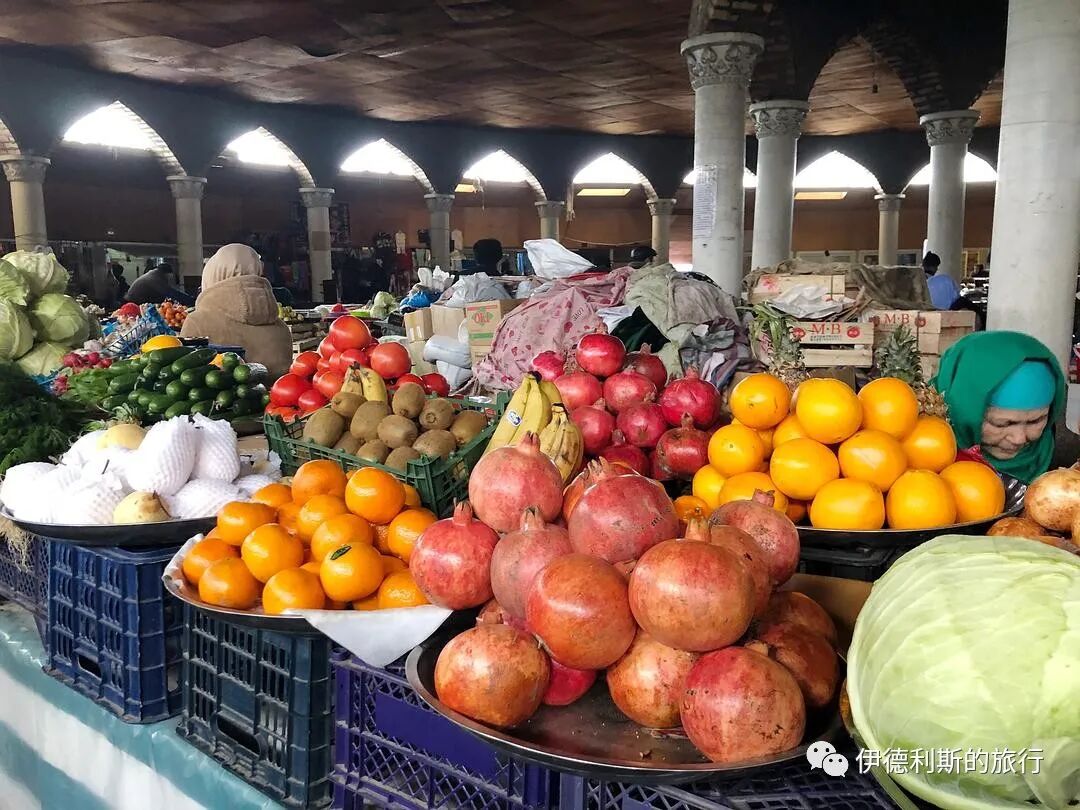
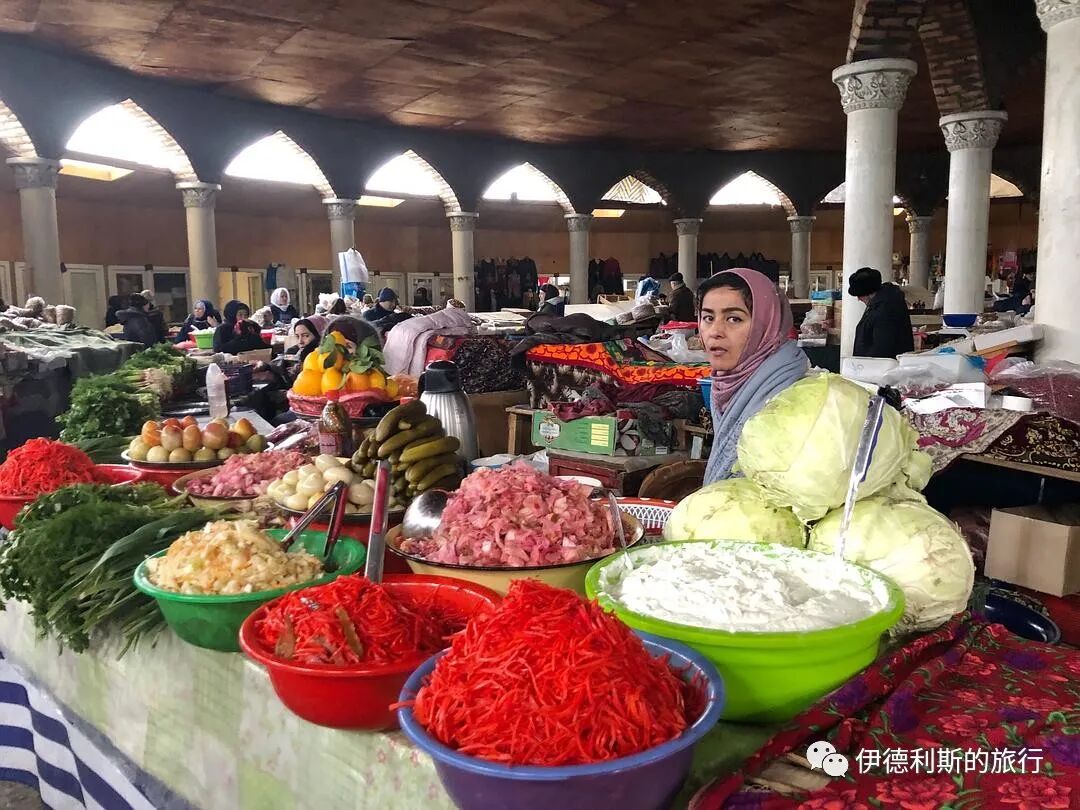
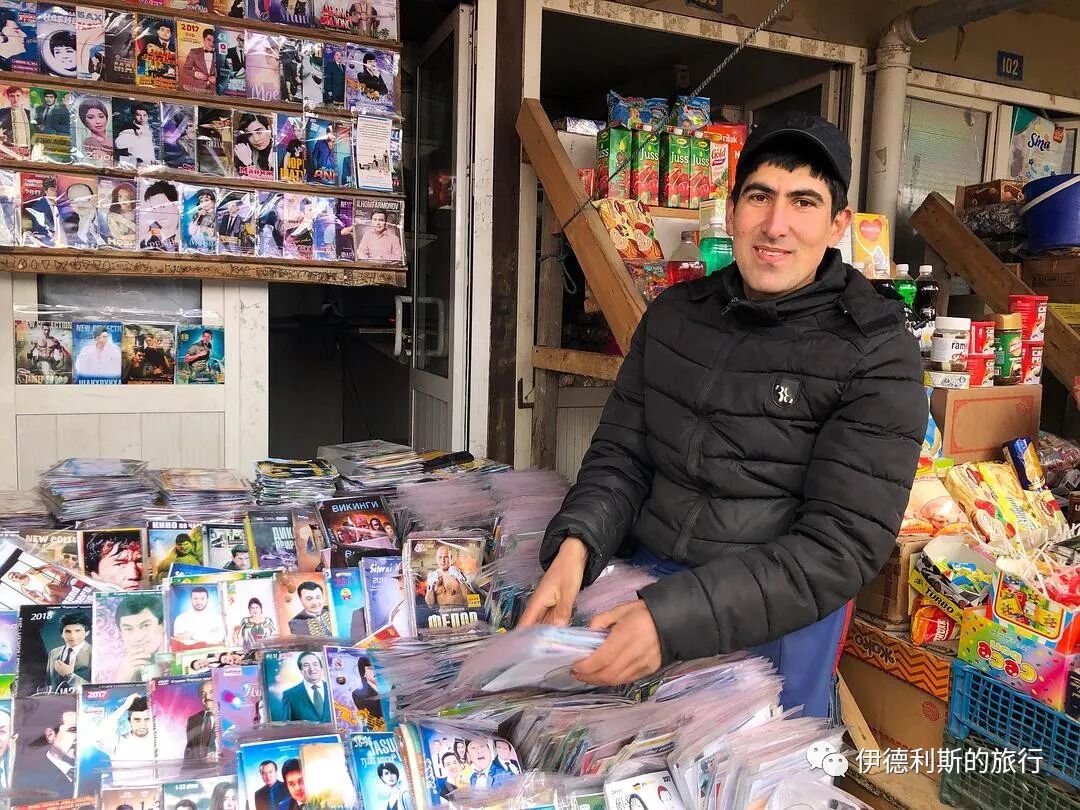
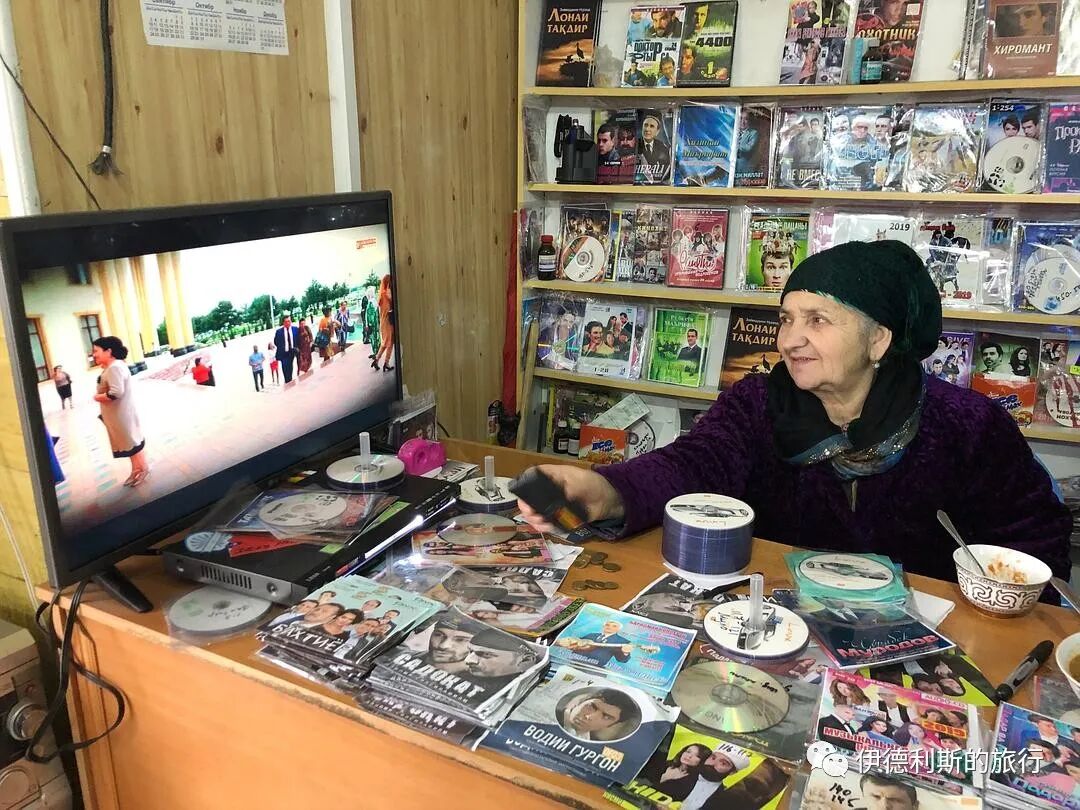
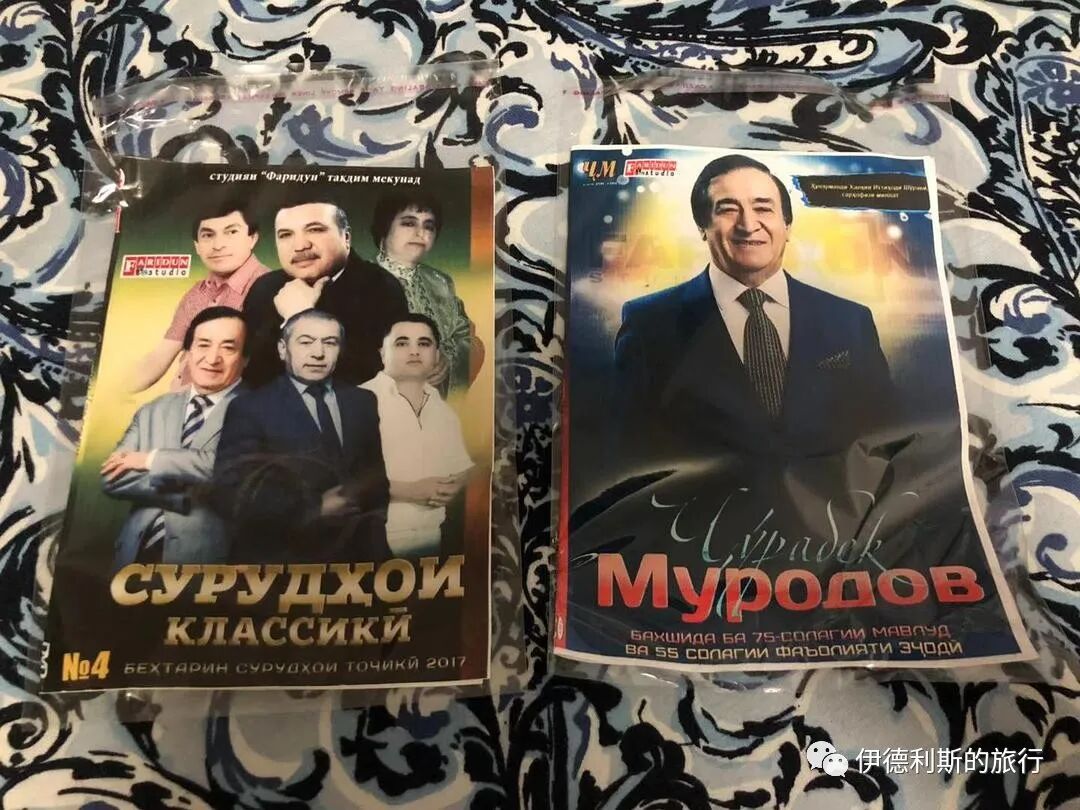
I bought traditional lowland Tajik music discs at two shops. I asked the grandmother at the shop to play them, and they sounded quite similar to Uzbek music.
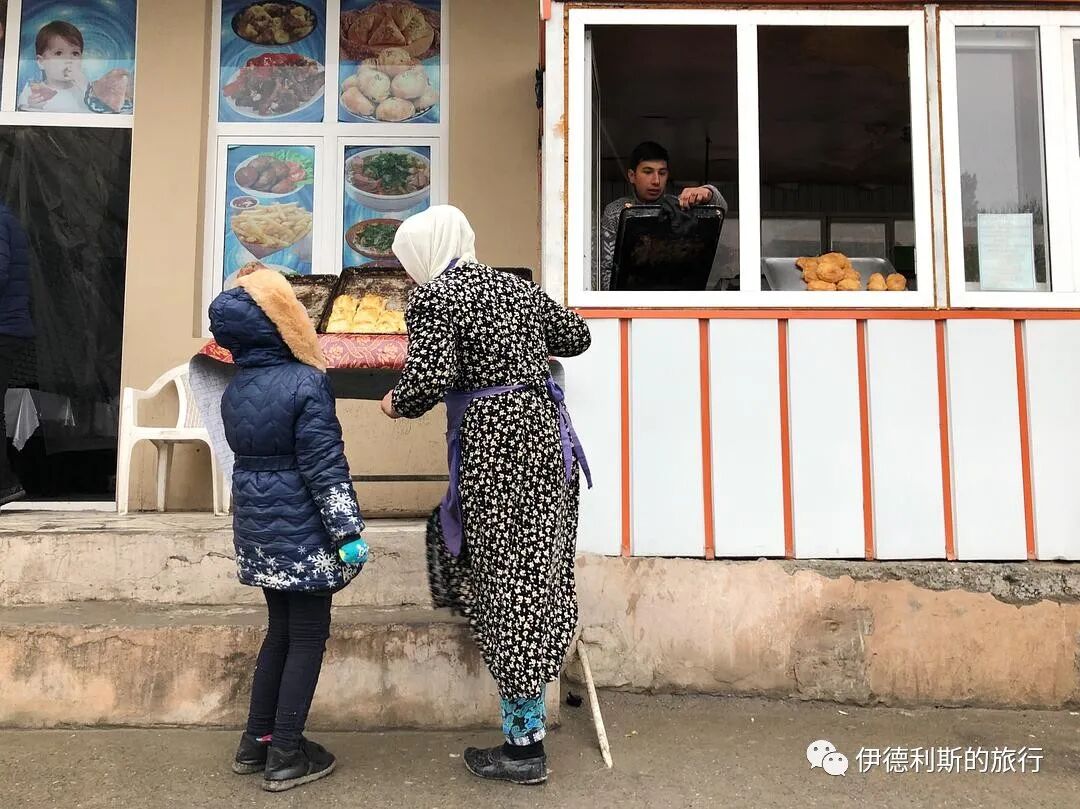
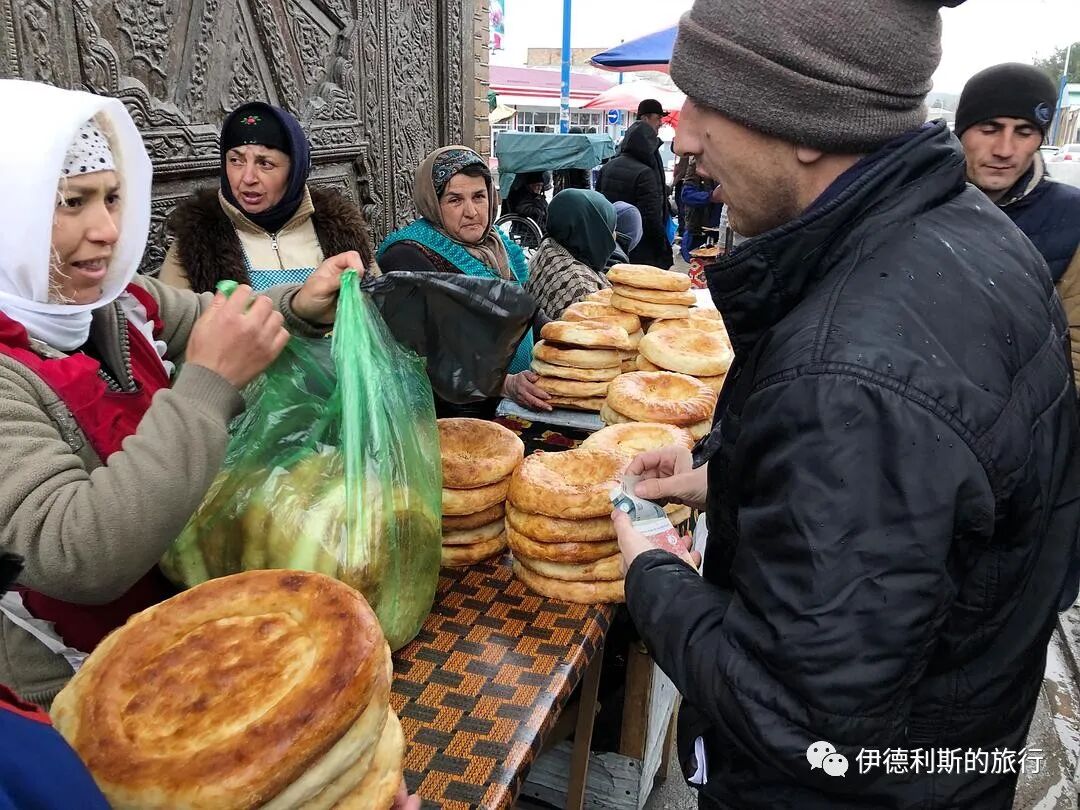
Our guide is buying flatbread (nan).
8. Olim Dodho Madrasa
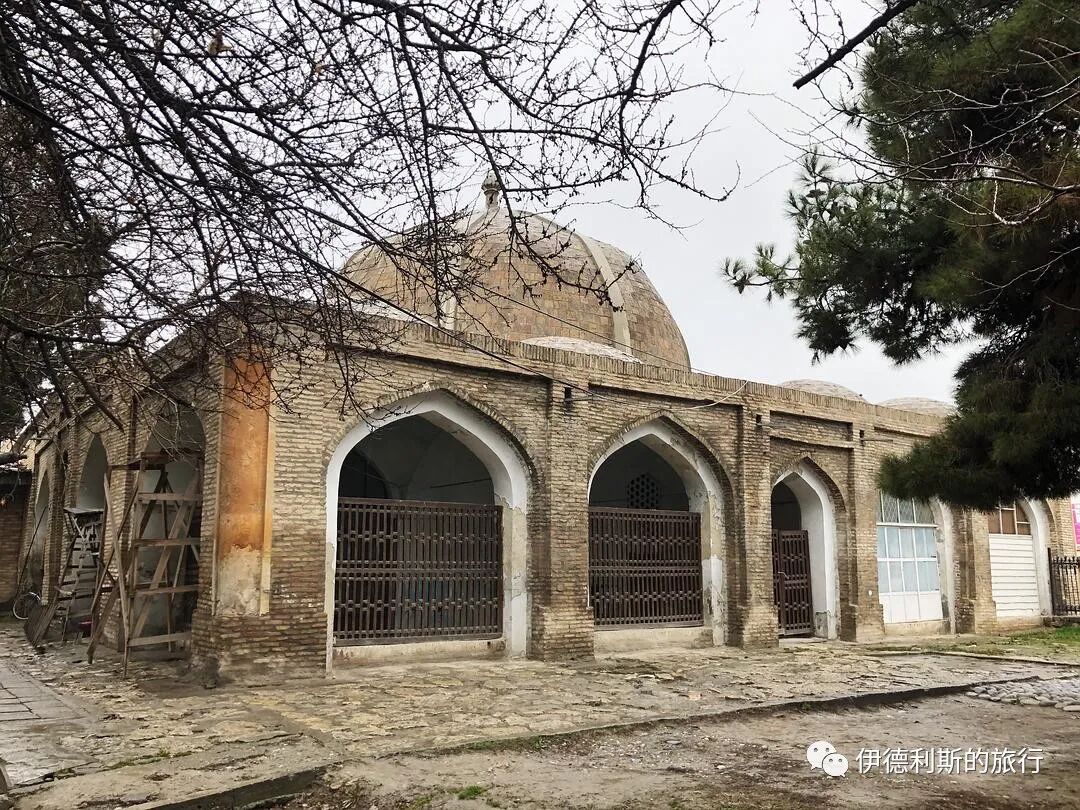
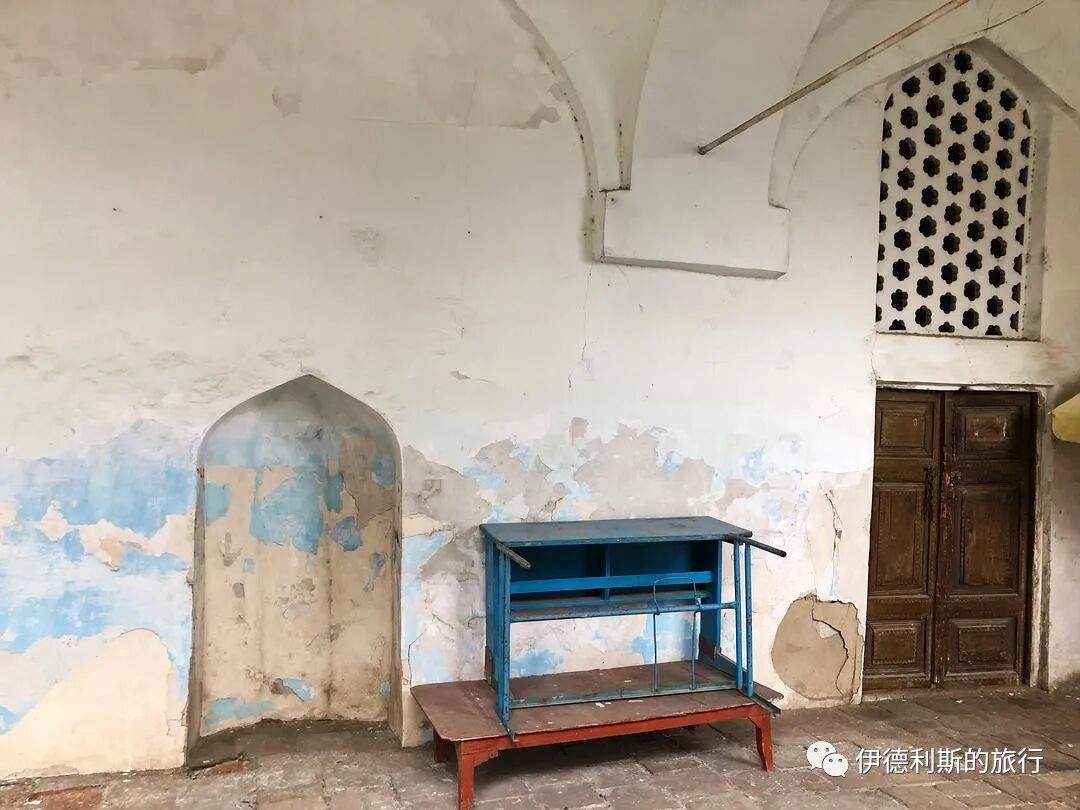
The Olim Dodho Madrasa is across from the bazaar. It dates back to the 14th century, was rebuilt twice in the 17th century and in 1826, and was renovated in 1958 and 1982. It is currently closed to the public and is the most important Islamic monument in the city of Panjakent.
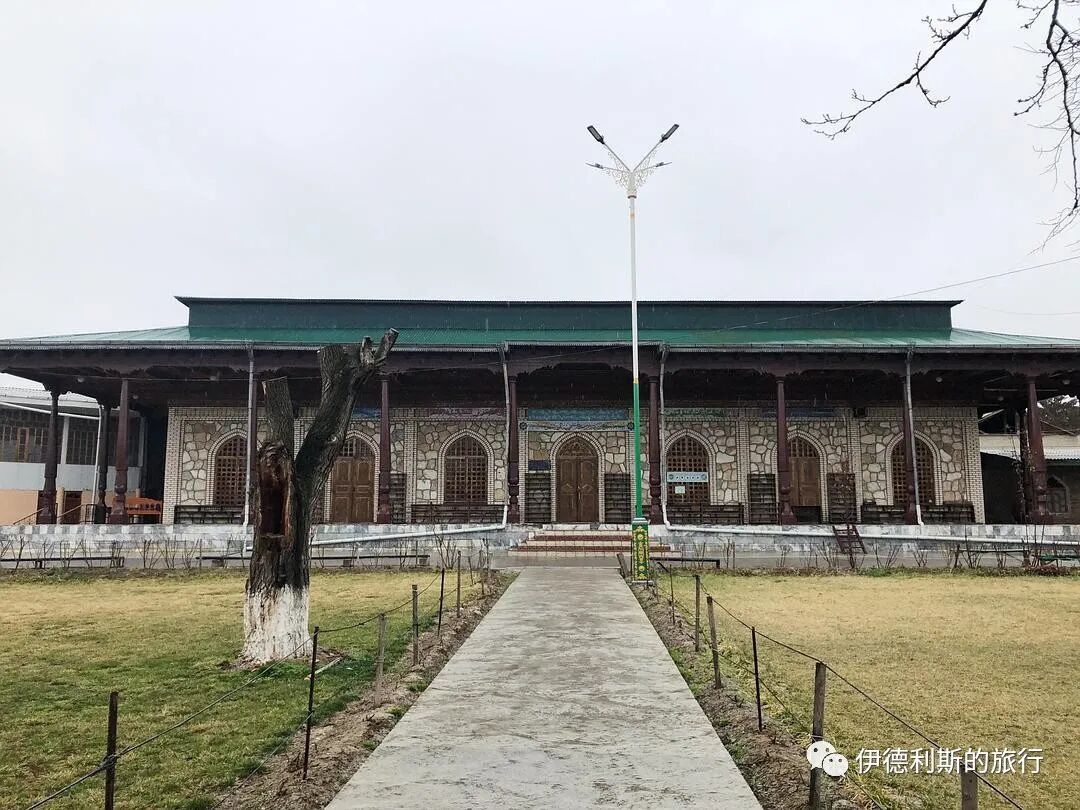
9. Capital of Sogdiana: Ancient City of Panjakent
Next, we arrived at the ancient city of Panjakent on the outskirts of town.
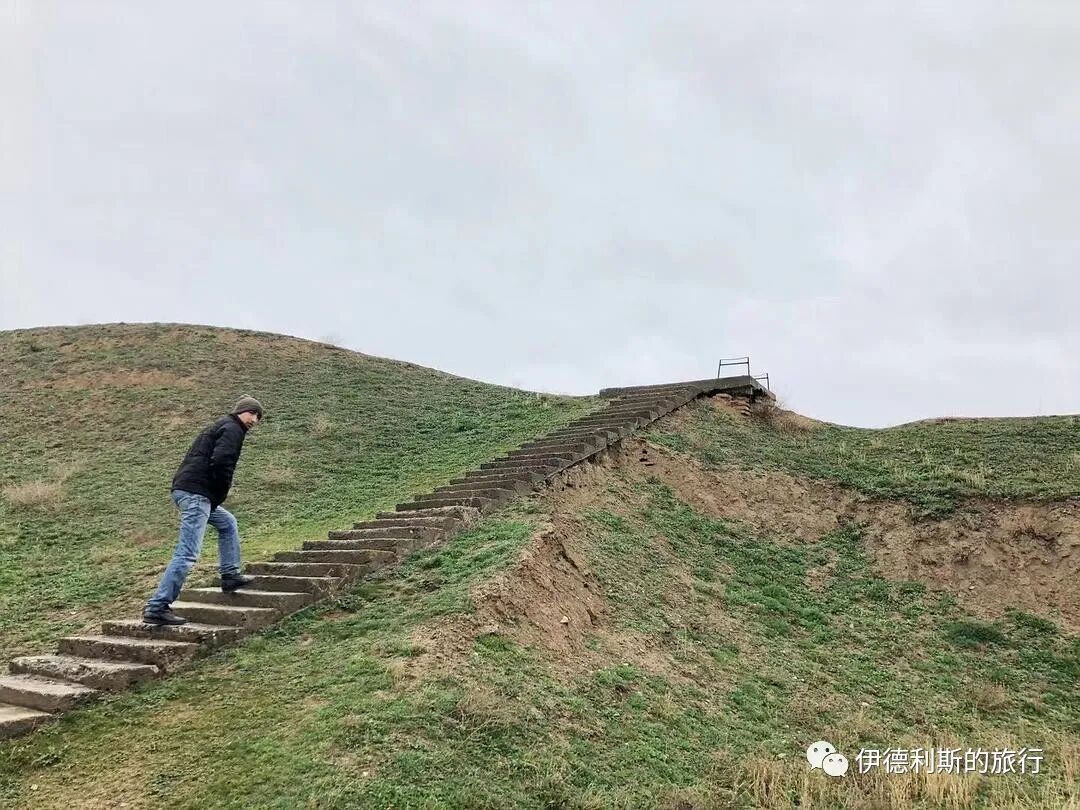
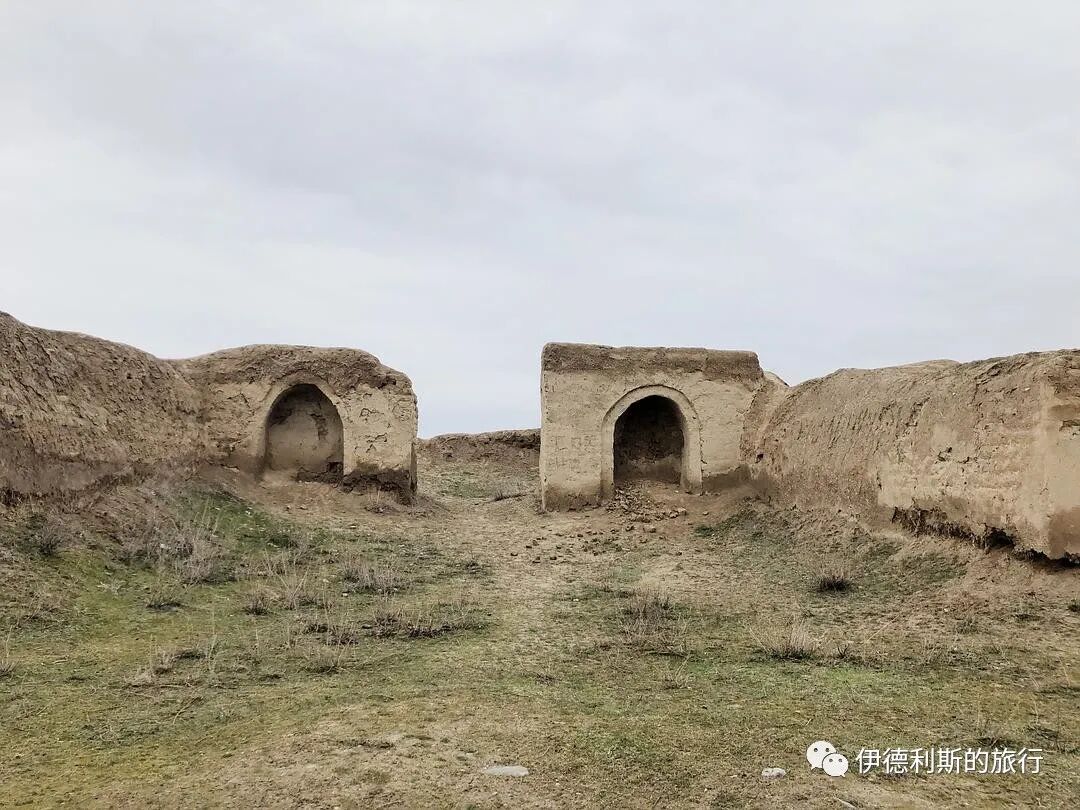
The entrance to the ancient city, which is the site of the southeast corner tower.
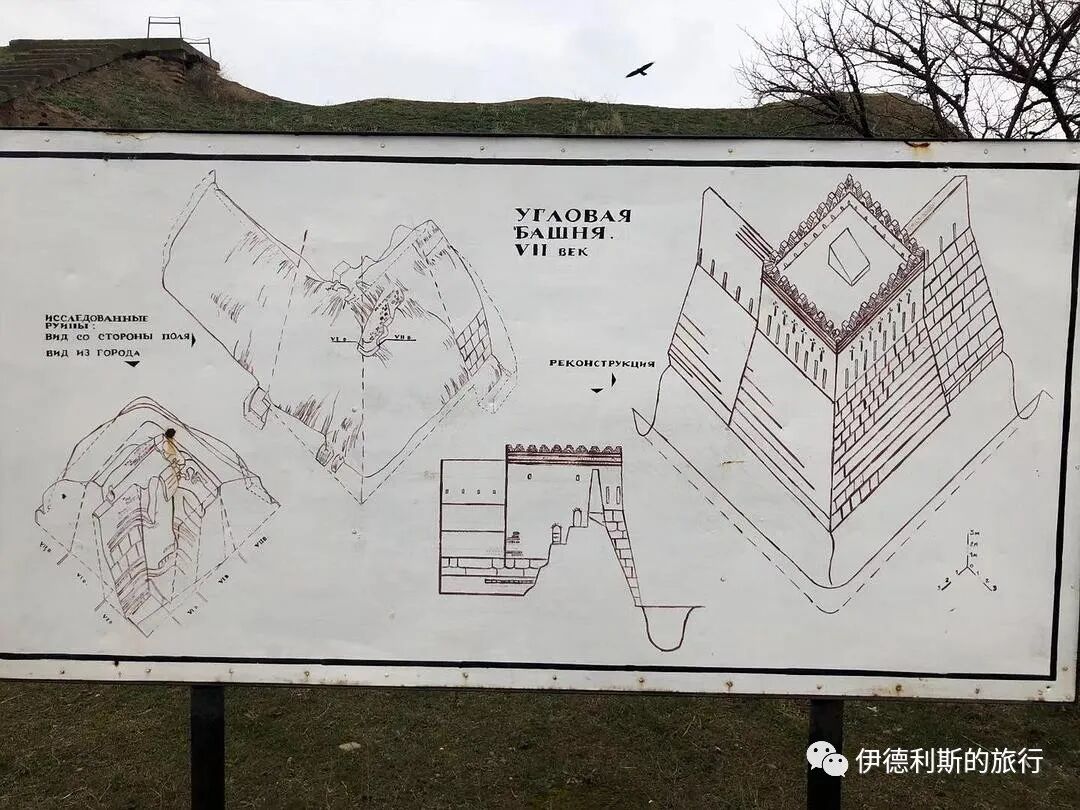
A restoration drawing of the southeast corner.
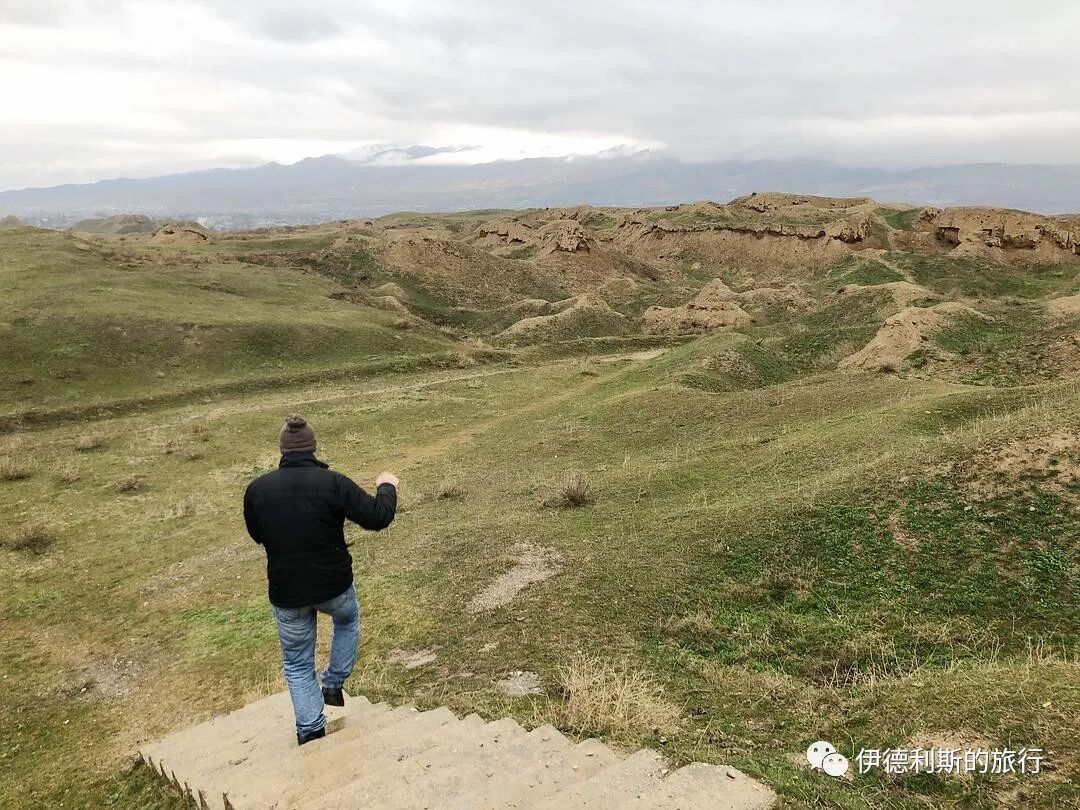
We climbed down from the corner tower site and officially entered the ancient city.
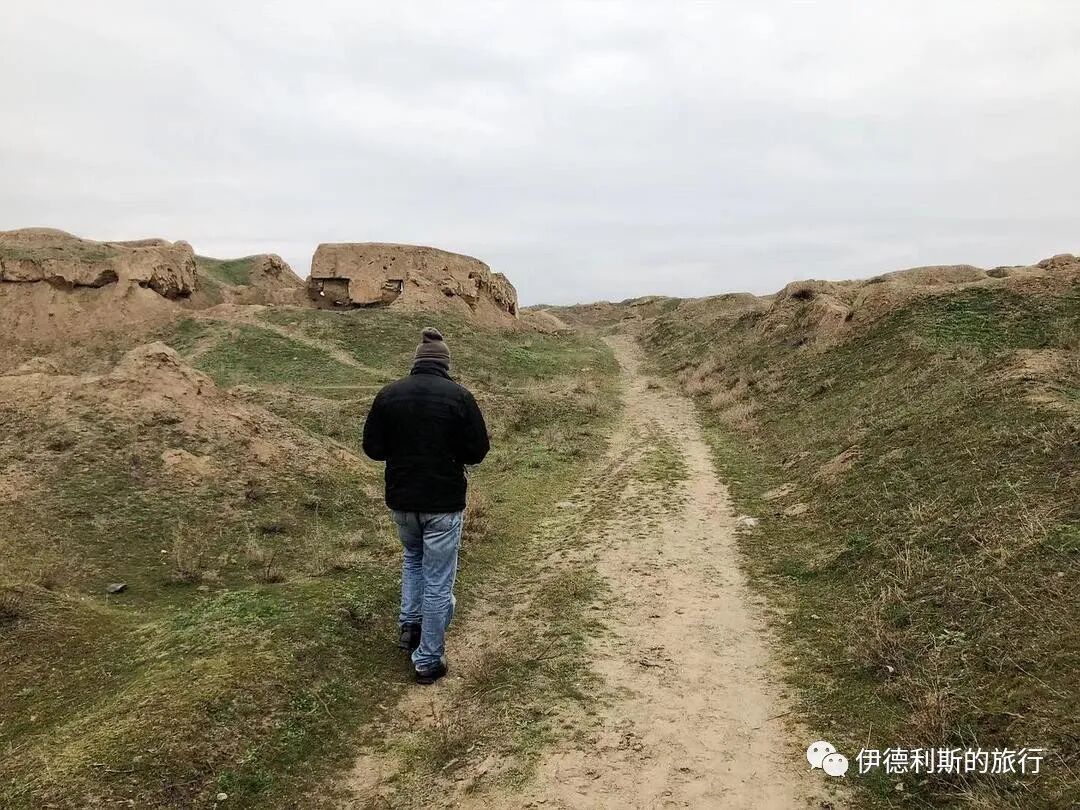
Entering the main road of the inner city.
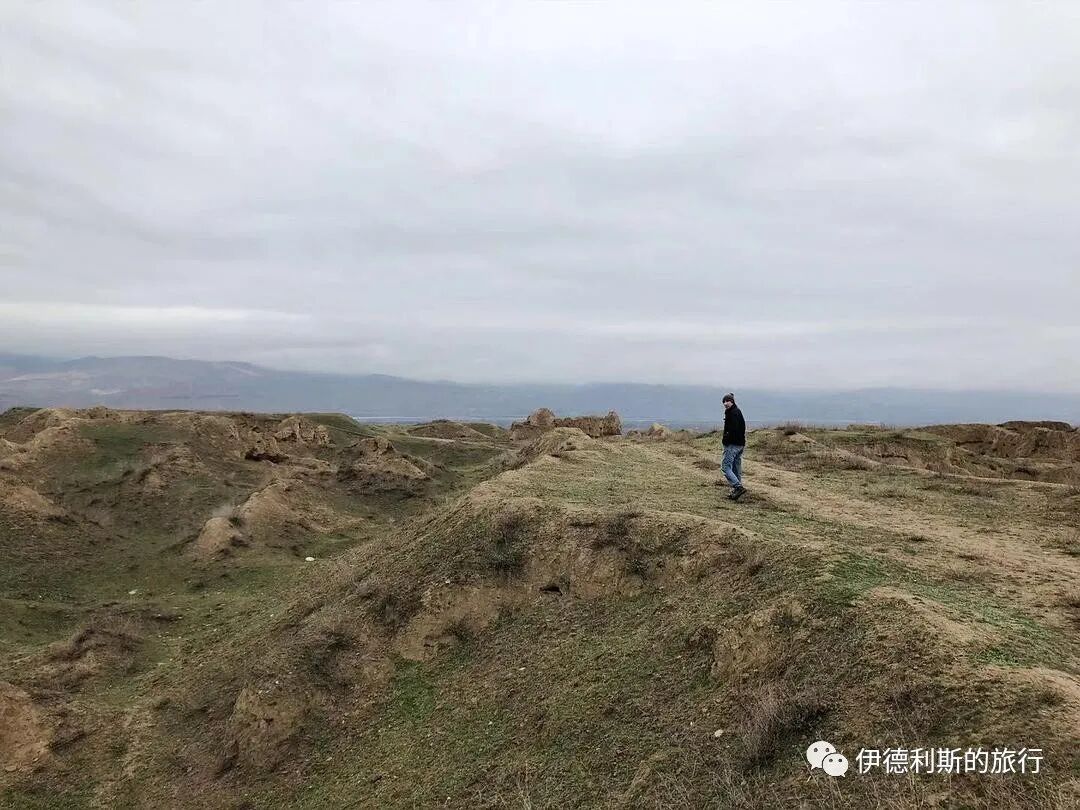
The ancient city of Panjakent was the capital of the Kingdom of Mymoghe, one of the Nine Sogdian Kingdoms. In the Great Tang Records on the Western Regions, Mymoghe is recorded as "Mimoguo," and its capital was called Poshide City. In 1946, Soviet scholars began archaeological excavations of the ancient city of Panjakent. They initially determined that the city was founded in the 5th century AD and flourished during the 7th and 8th centuries.
The ancient city of Panjakent was a trading city on the Silk Road. Its citizens were mainly merchants who managed trade from inland China all the way to the coast of the Caspian Sea. According to the Hudud 'Alam, there were thousands of caravanserais in the ancient city of Panjakent, and merchants from nearby countries would come here to trade. Therefore, the large number of copper coins unearthed in the ancient city of Panjakent include not only local currency but also coins from the nearby Kang Kingdom (Samarkand), An Kingdom (Bukhara), and Shi Kingdom (Tashkent).
Starting in the 7th century, the Arabs began to invade Sogdiana. In 674, the Arab army first looted the ancient city of Panjakent. In 706, the famous Arab general Qutaybah surrounded the ancient city of Panjakent again. Upon hearing the news, the various countries of the Nine Sogdian Kingdoms sent troops to surround the Arab army for two months. The Arab army, fighting with their backs to the river, eventually defeated the Sogdian reinforcements and continued to besiege the ancient city of Panjakent for 50 days. According to the History of Bukhara, to boost morale, Qutaybah announced that whoever broke through the gap would be rewarded, and if they died in battle, the reward would go to their children. Eventually, the Arab army broke into the ancient city of Panjakent. Qutaybah set the amount of tribute and then continued on to attack other Sogdian cities.
After Qutaybah left, the Sogdian nobleman Divashtich became the last ruler of Panjakent. Initially, Divashtich submitted to Arab rule and even sent his own children to the Arabs as hostages. But in 720, Divashtich joined several Sogdian lords to launch a war against the Arabs. In 722, Divashtich was defeated and captured, and the Arab army burned the houses and Zoroastrian temples of Panjakent. The Arabs then beheaded Divashtich, nailed his body to a Zoroastrian tomb building in Panjakent, and took his head back to Iraq.
After Divashtich died, the ancient city of Panjakent was gradually abandoned at the end of the 8th century and disappeared into history.
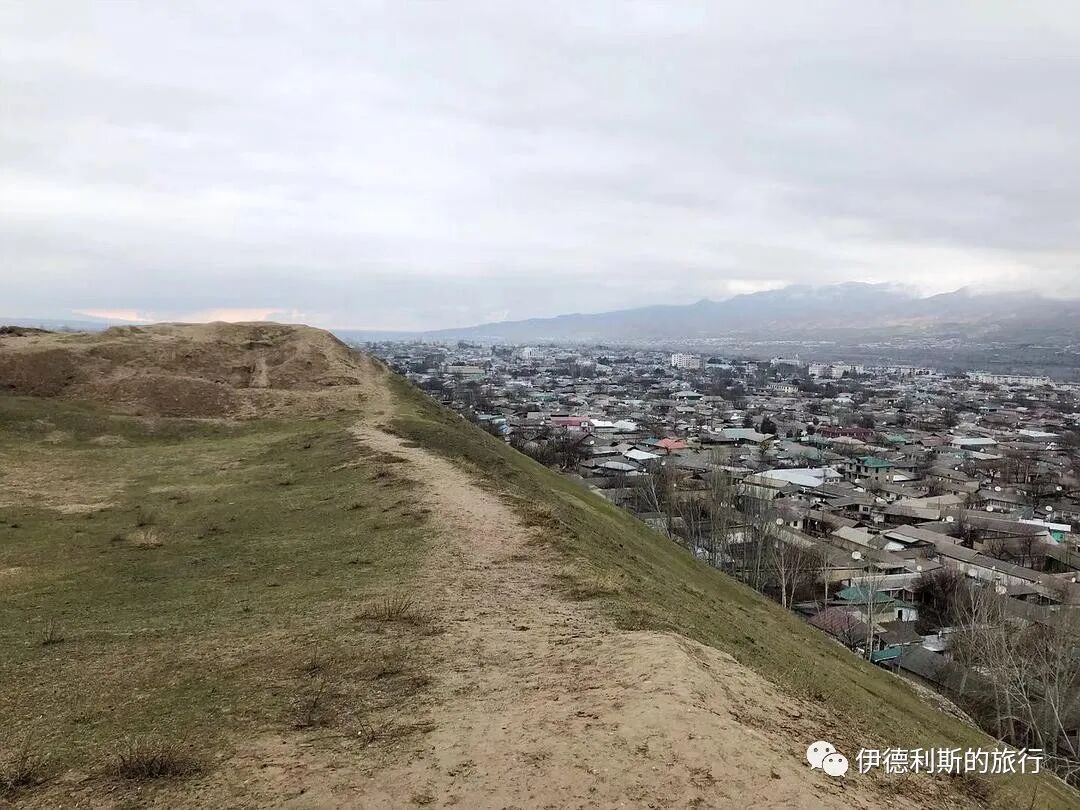
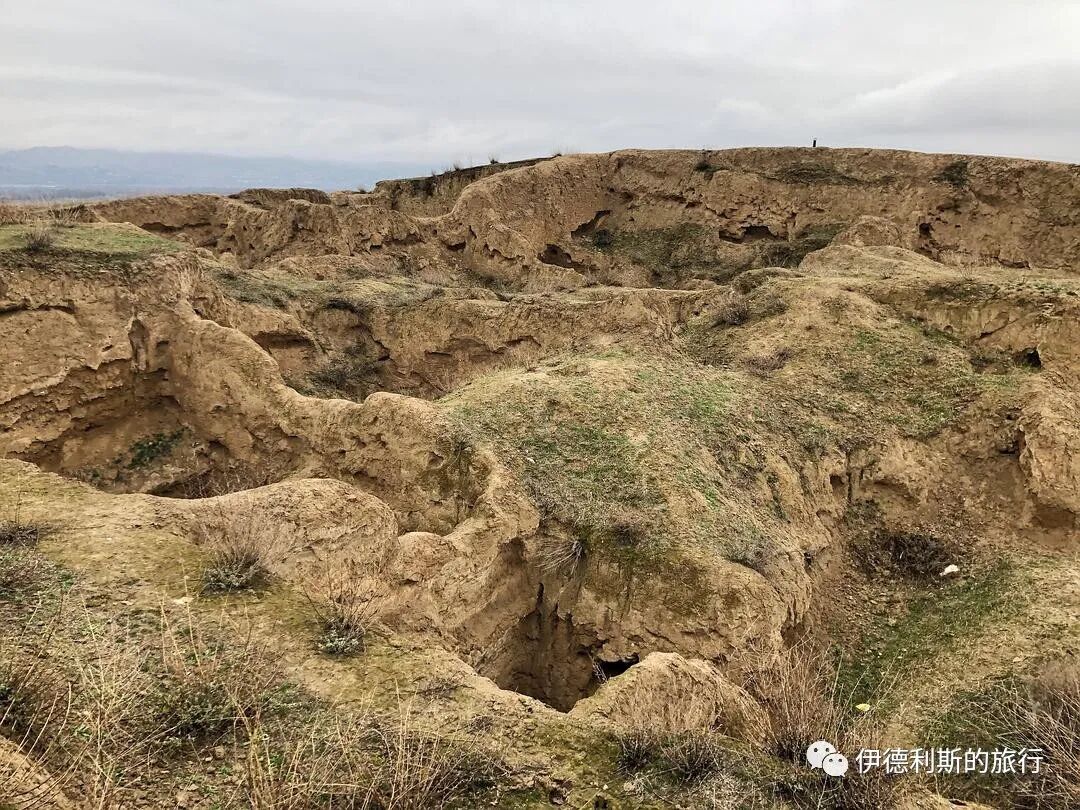
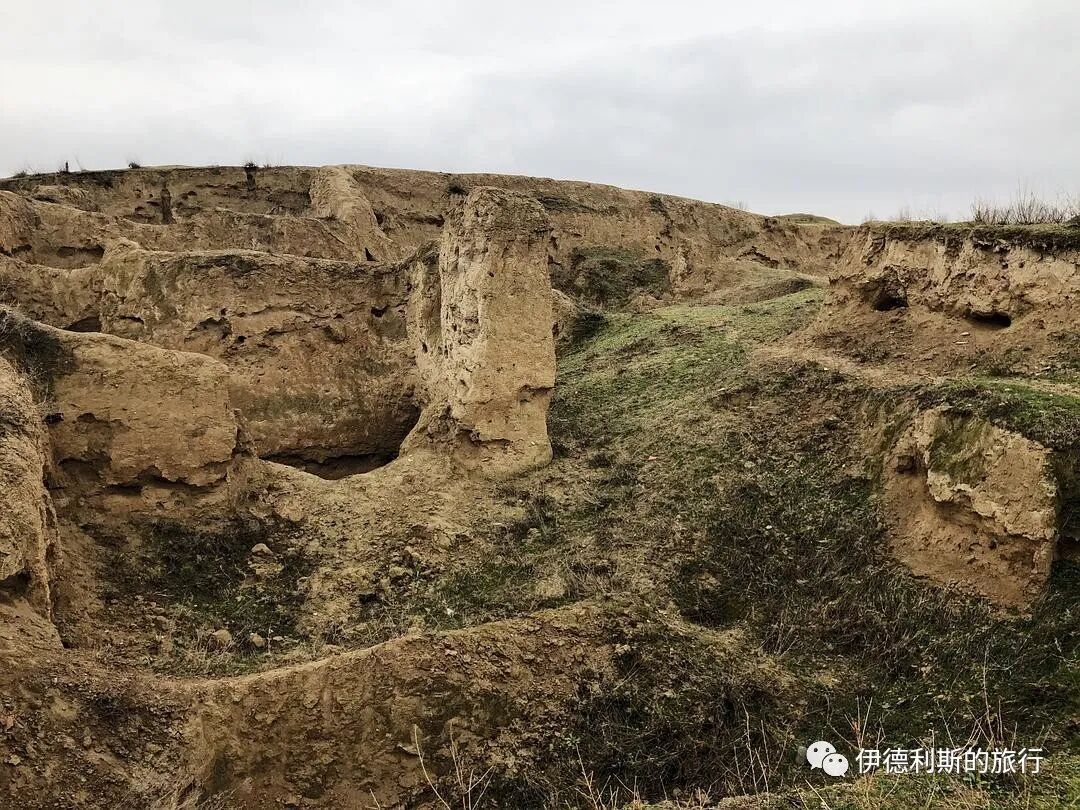
The north wall of the inner city; below the cliff is the new city of Panjakent from the post-Islamic era.
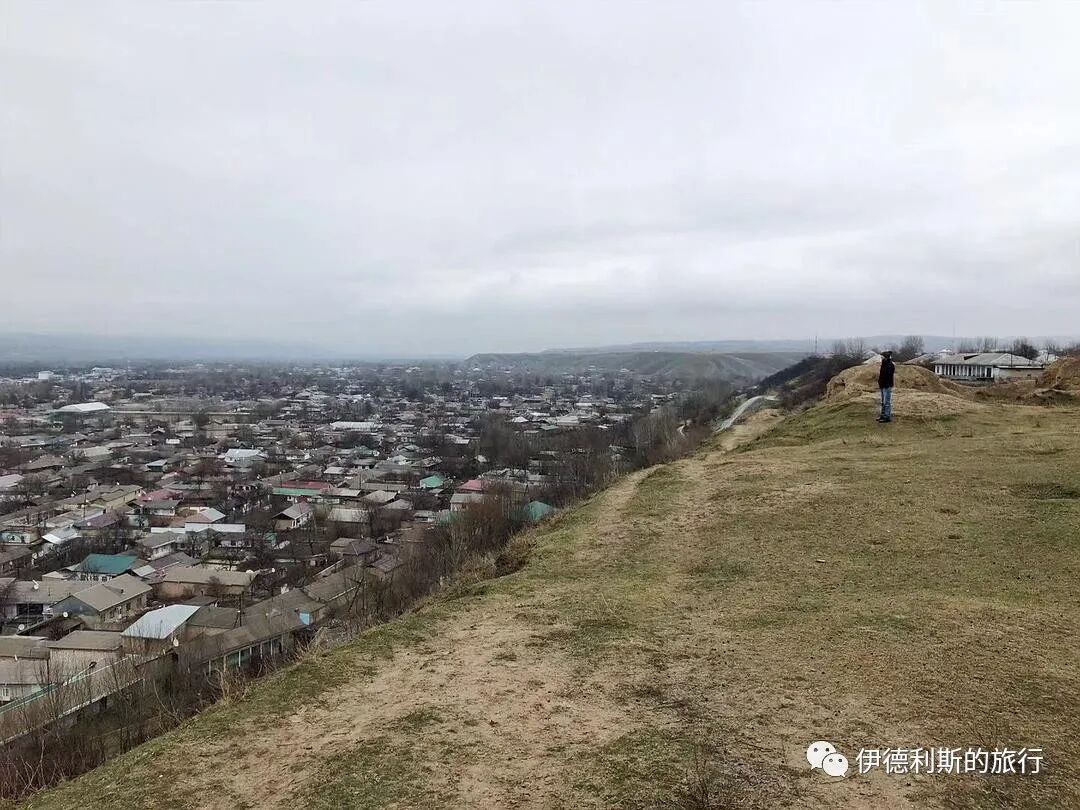
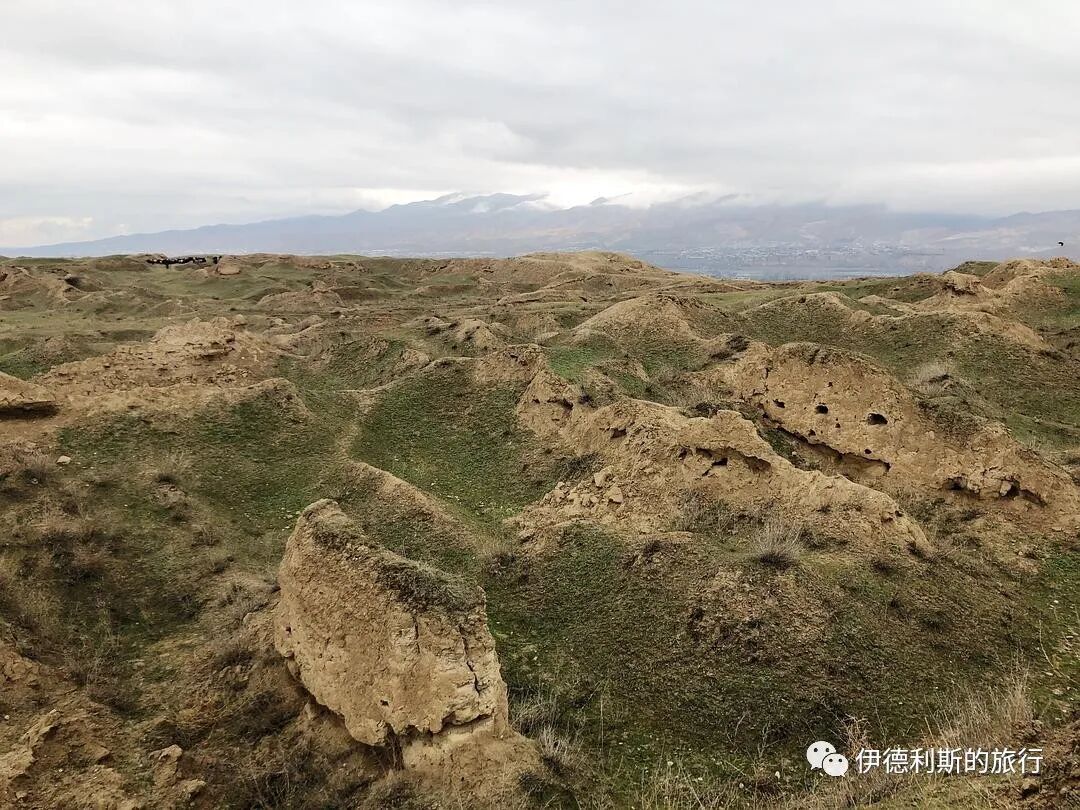
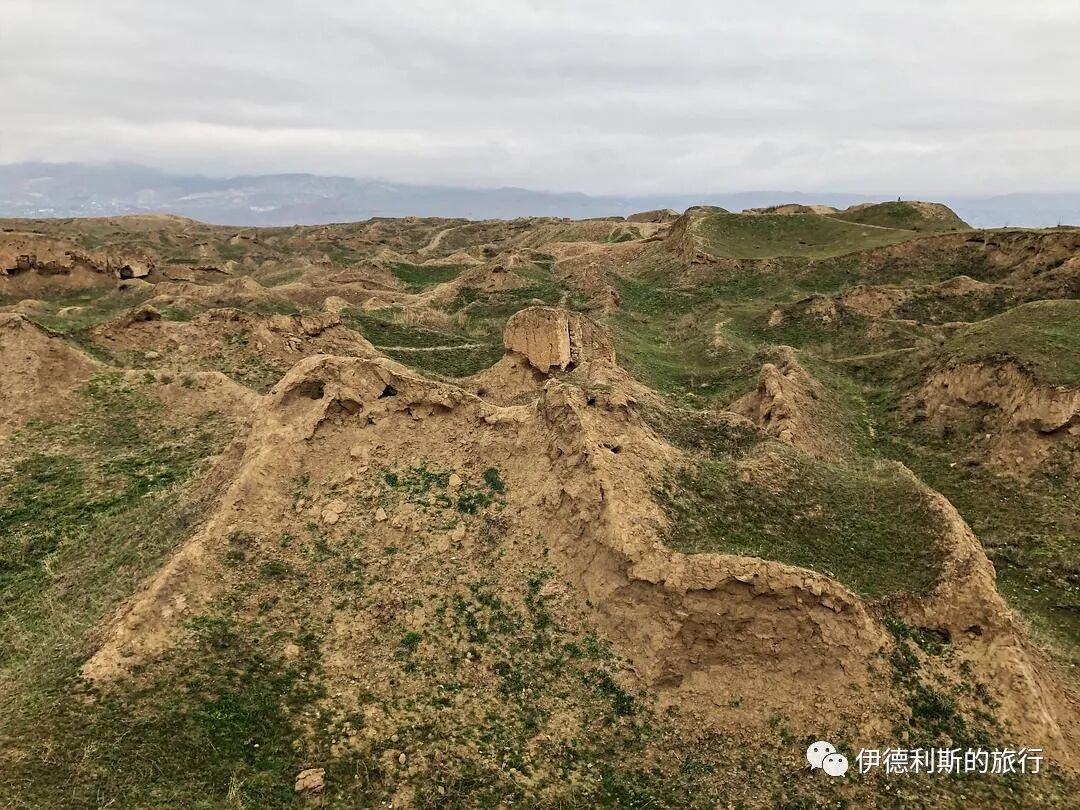
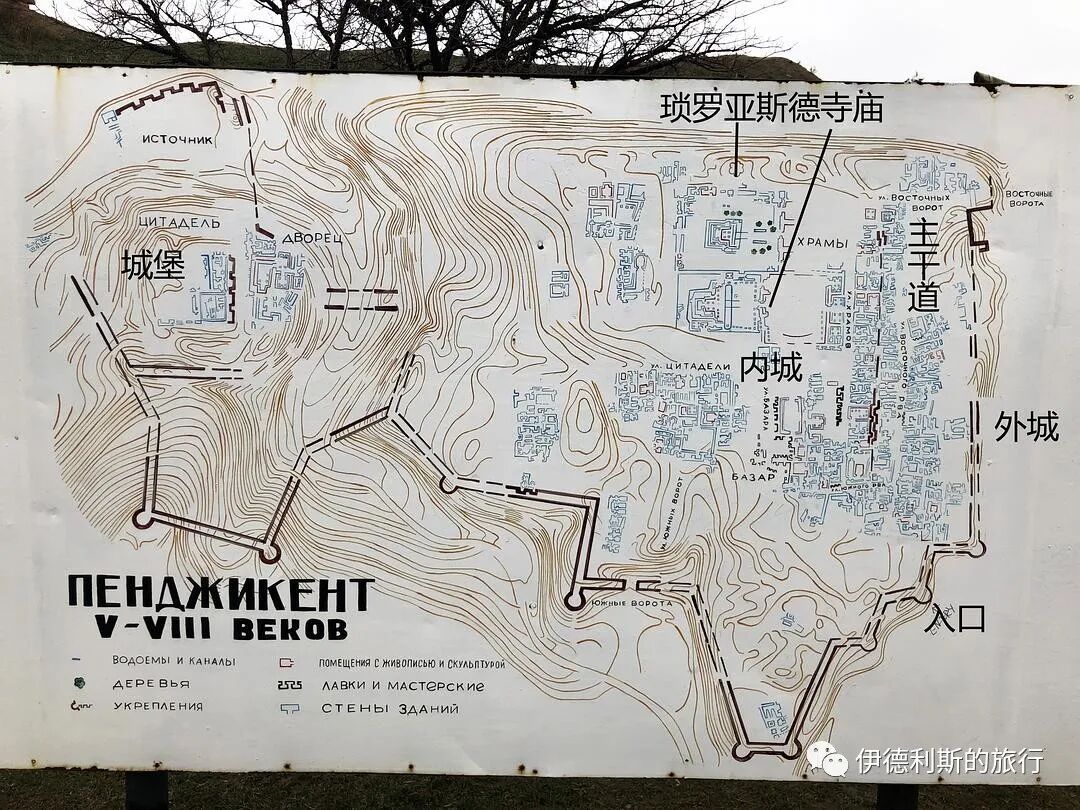
The ancient city of Panjakent was divided into three parts: the citadel, the inner city, and the outer city, all surrounded by city walls. The citadel was in the far west, with palaces and walls, and was where the rulers lived. The inner city is on the east side with a complex network of streets. Main roads are 3 to 5 meters wide, lined with houses, workshops, and shops.
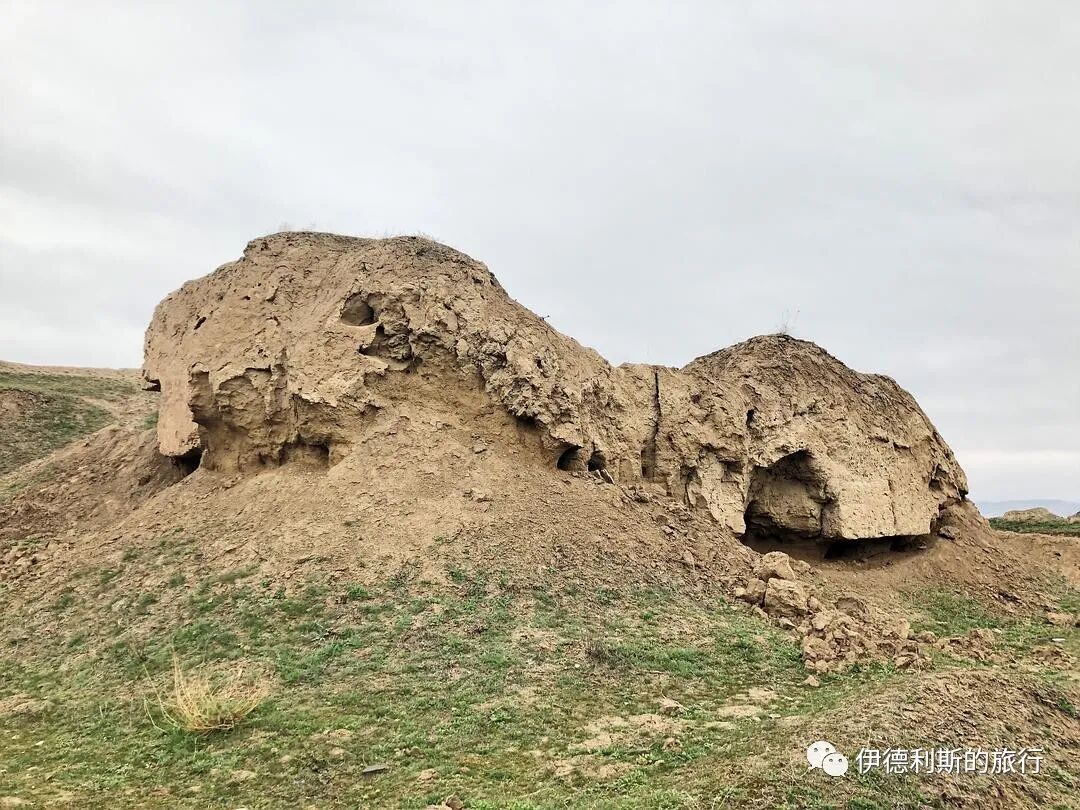
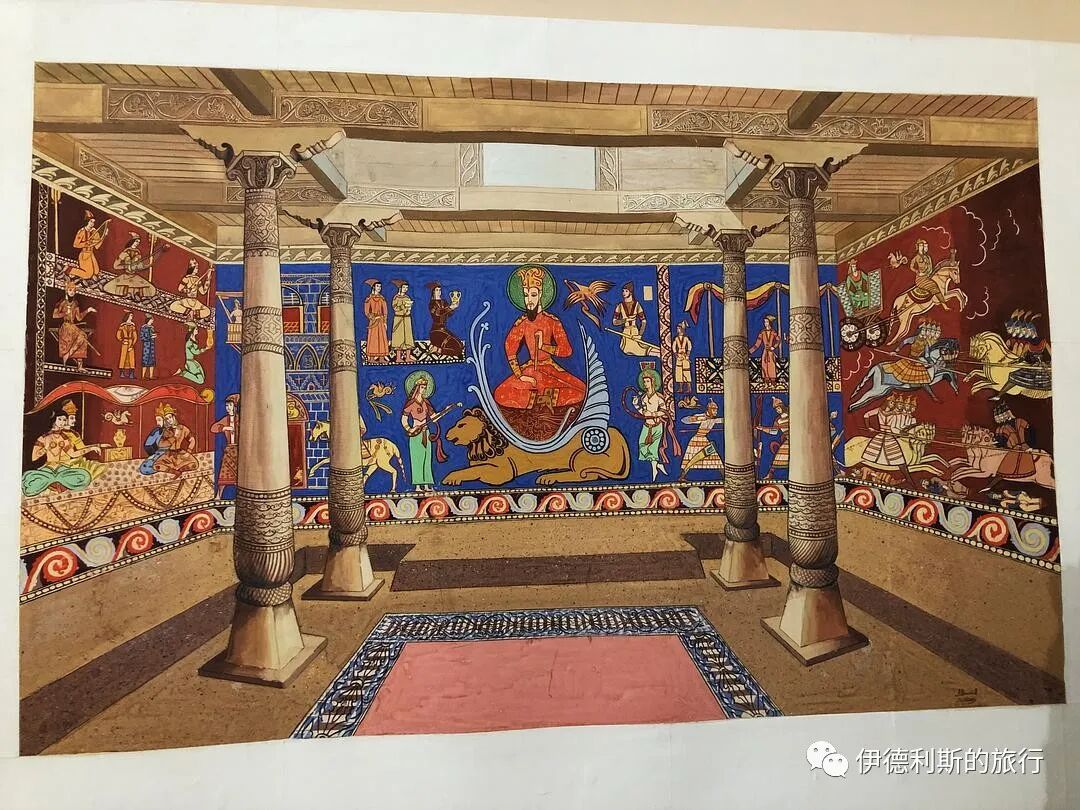
Homes of the wealthy usually have two floors, with a storage room and a spiral staircase leading to the second floor on the ground level. The second floor features a grand hall with murals, where four wooden pillars support intricate wood carvings.
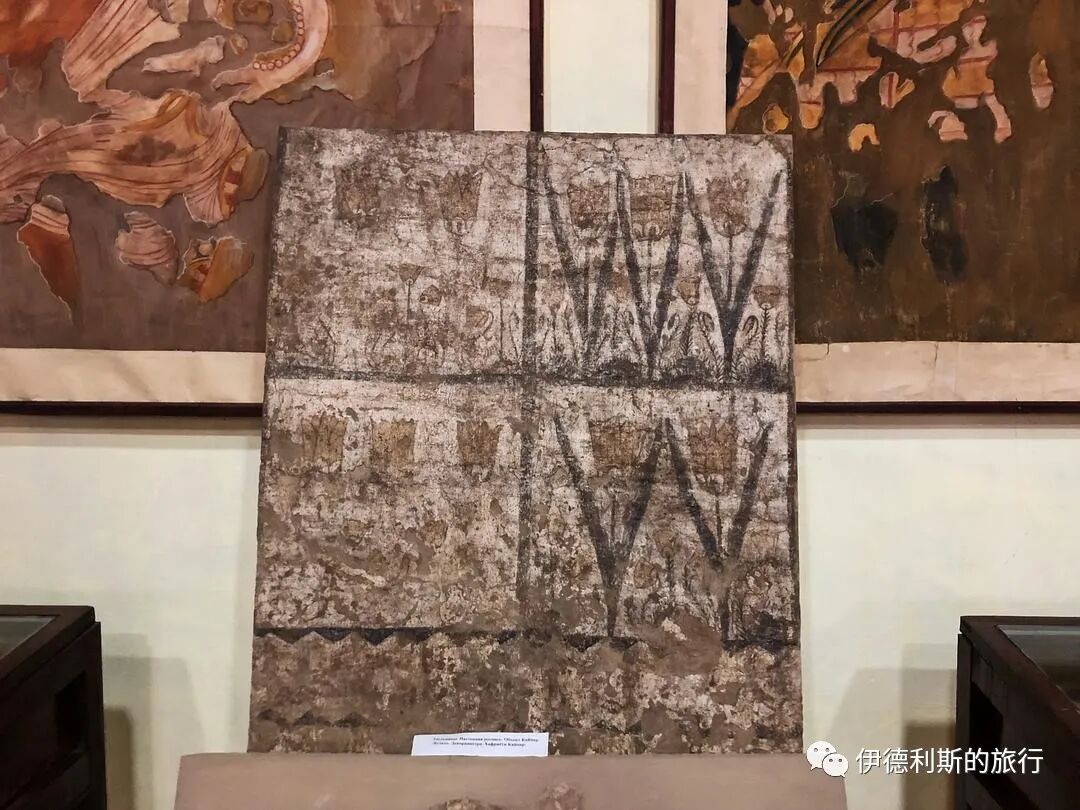
Murals are among the most important artifacts in the ancient city of Panjakent. They have been found in over 50 room ruins, and some are very well preserved. The main wall of the hall features murals of various guardian deities. The other three walls show scenes of festivals, hunting, Sassanid heroic epics, and folklore. There are even themes from the Persian epic Shahnameh and images of the Indian god Shiva. Most of these murals are now kept in the Dushanbe Museum of Antiquities and the State Hermitage Museum in Saint Petersburg. A small number are also in the Panjakent Ancient City Museum and the Rudaki Museum.
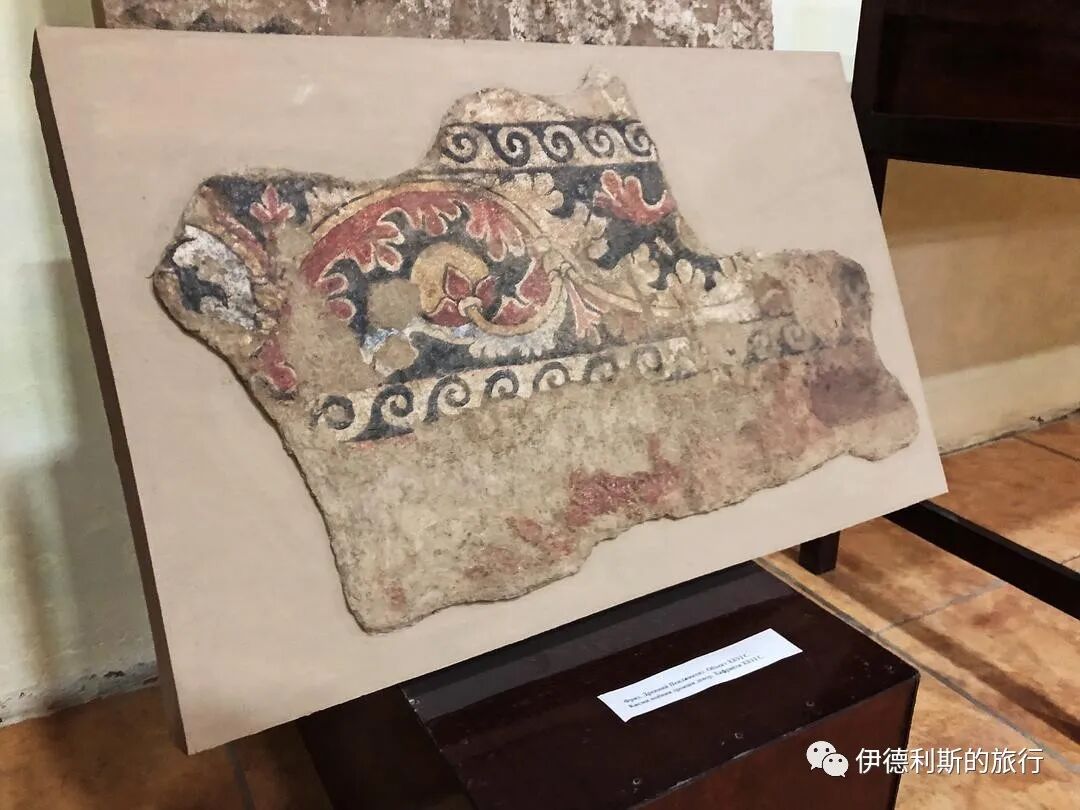
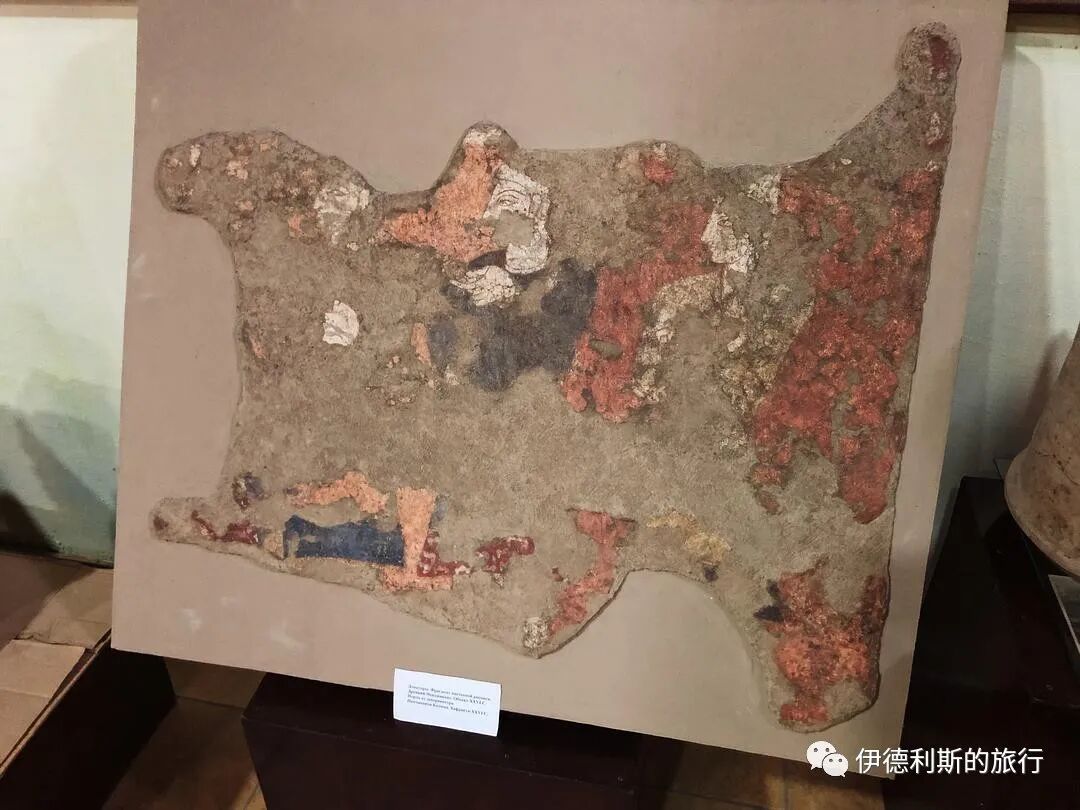
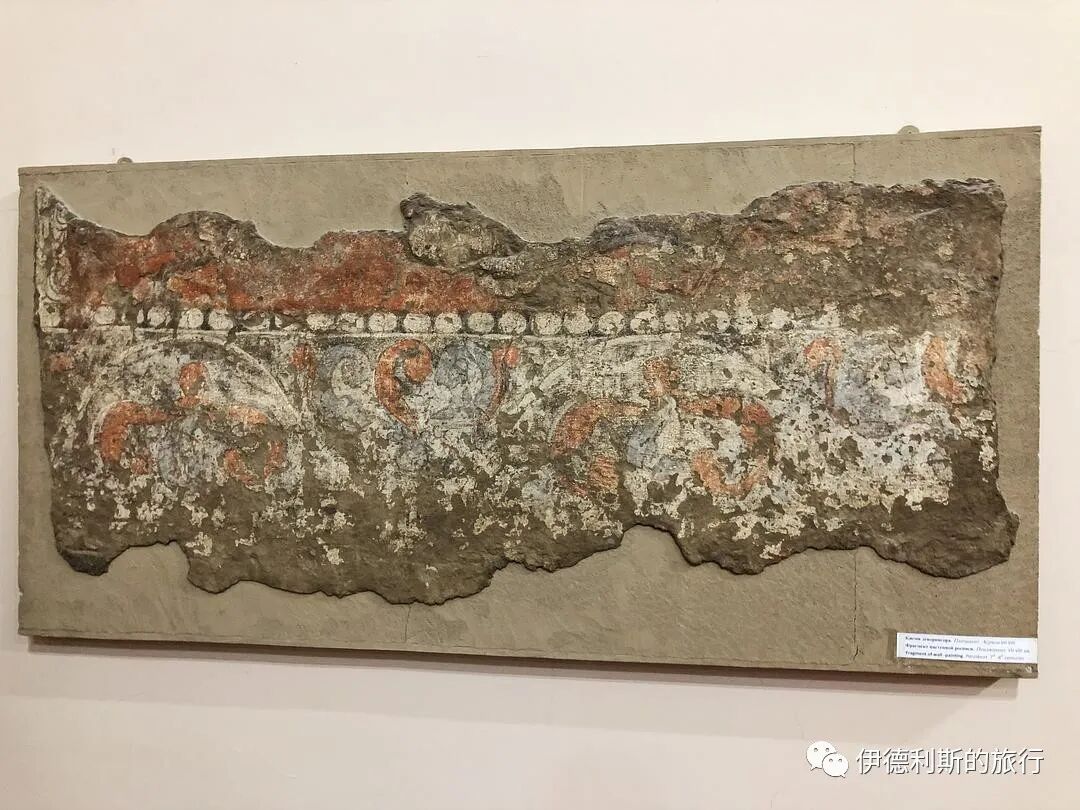
Wood carvings are also very important artifacts from the ancient city. Wooden structures are hard to preserve for long in the damp environment of Panjakent. However, archaeologists were surprised to find charred wood carvings in houses that were covered by collapsed roofs after fires.
Some of these wood carvings are in the Panjakent Ancient City Museum.
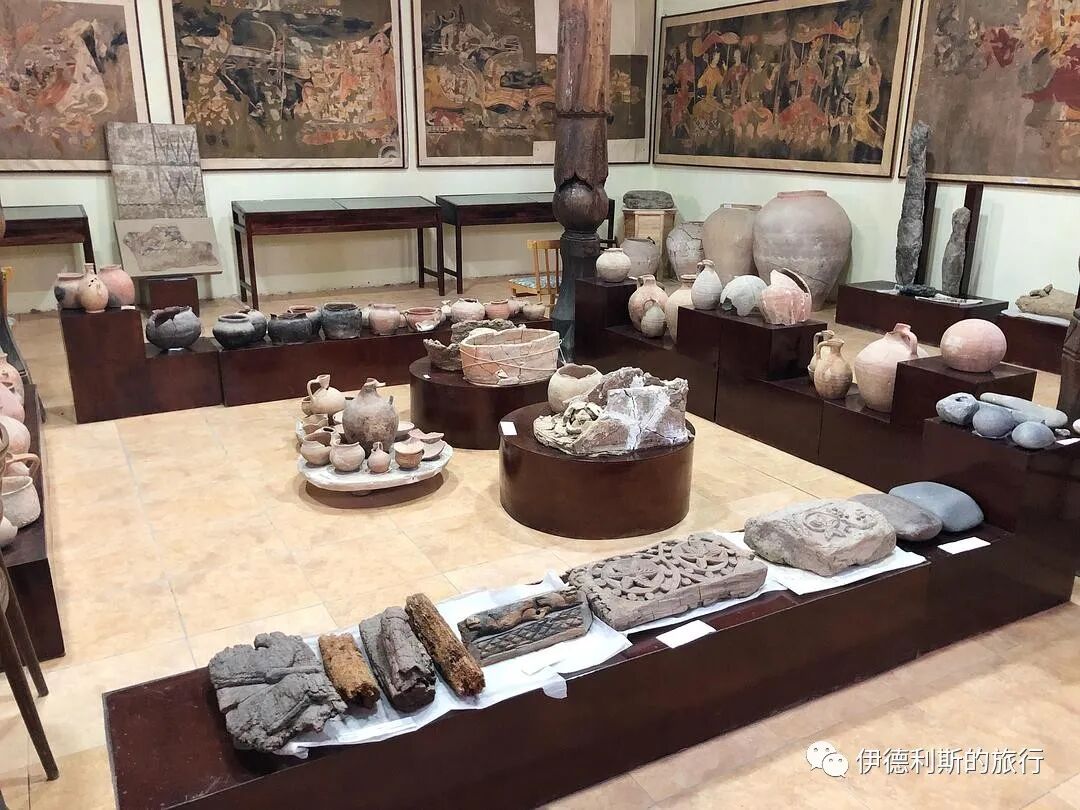
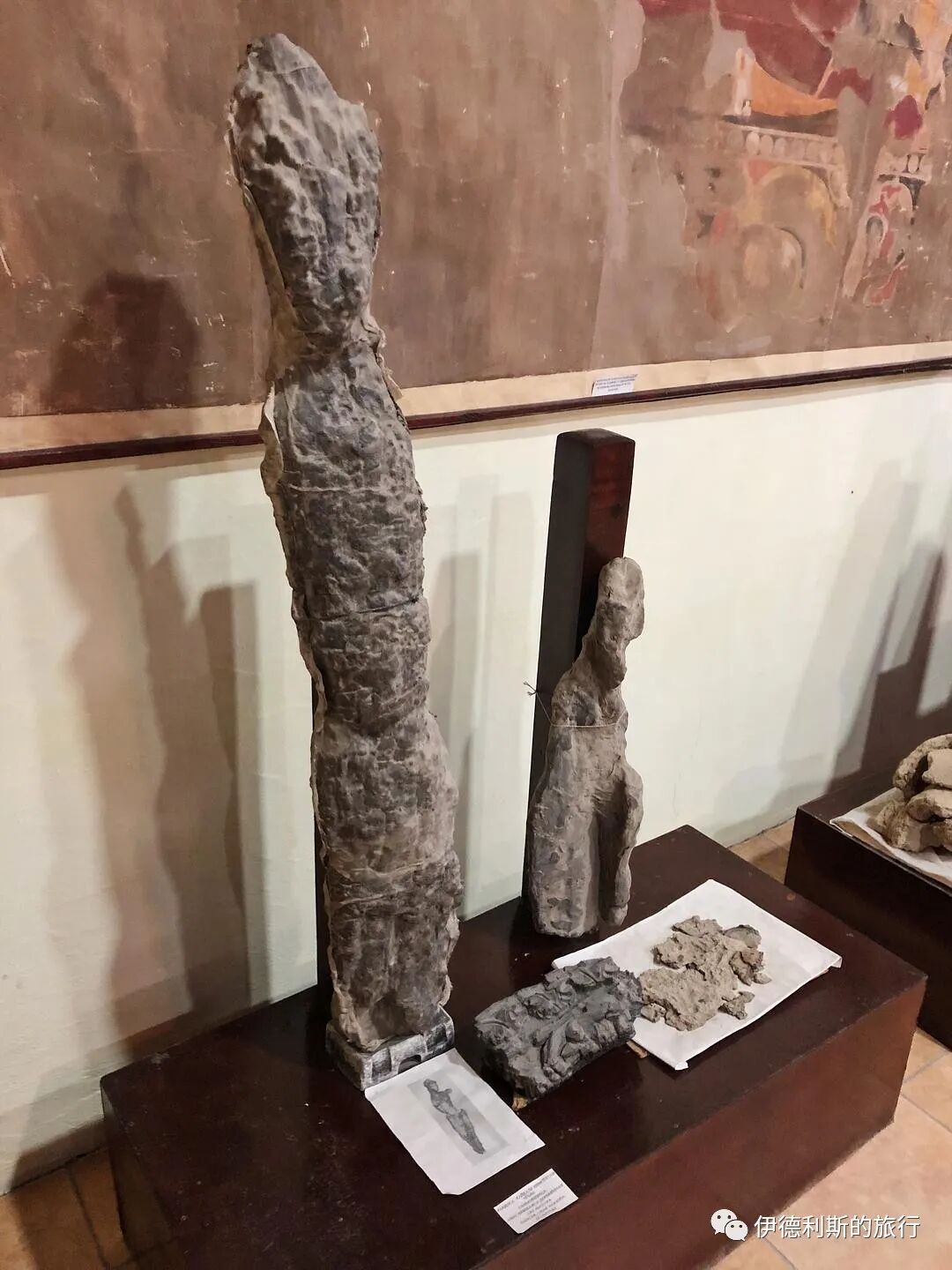
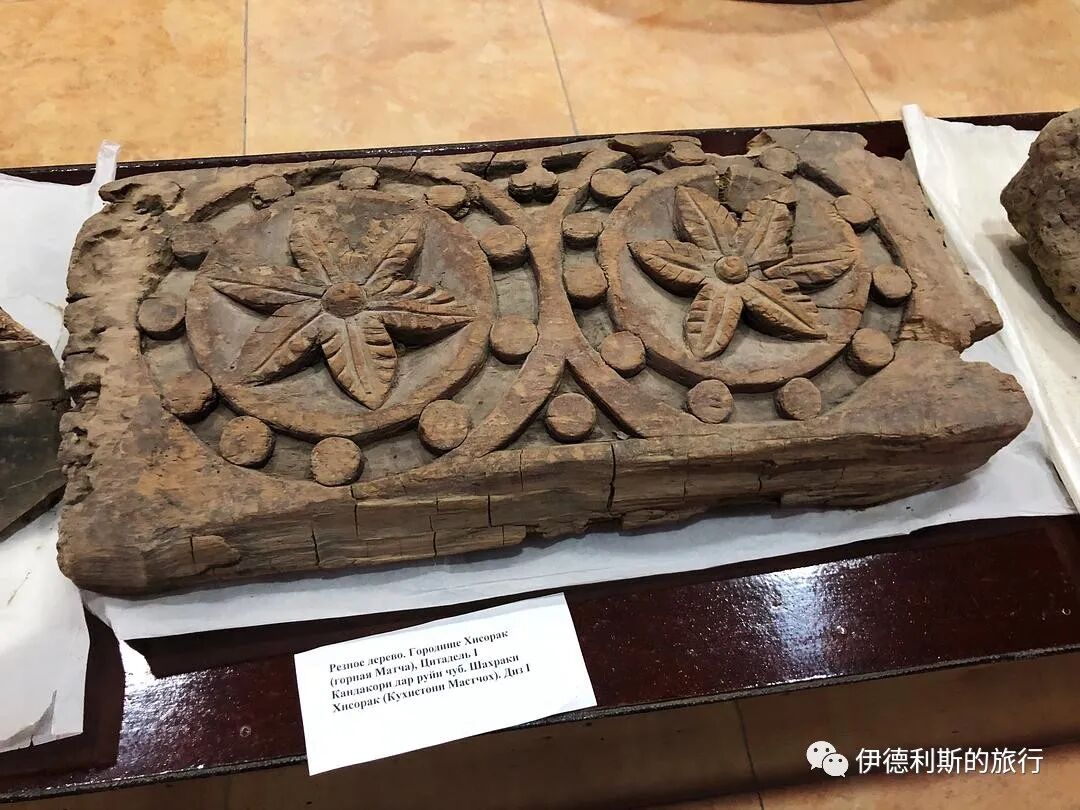
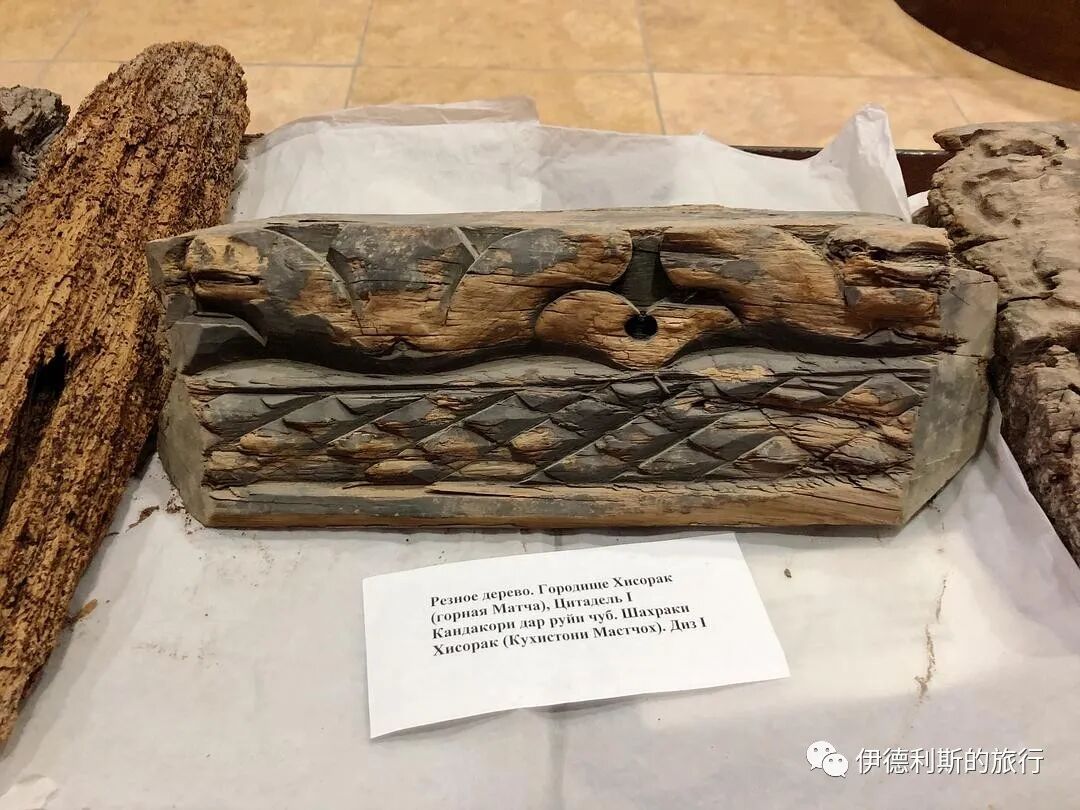
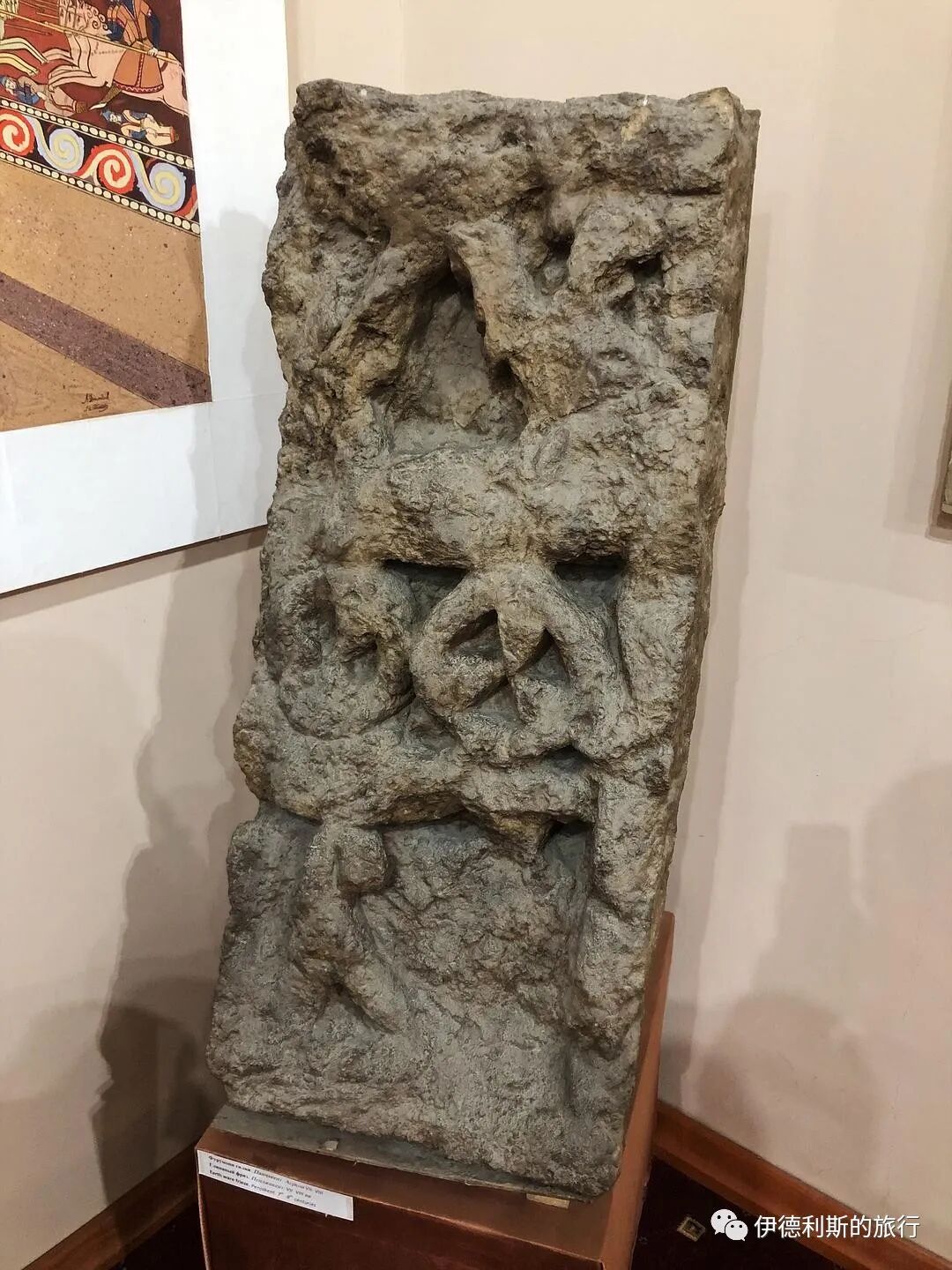
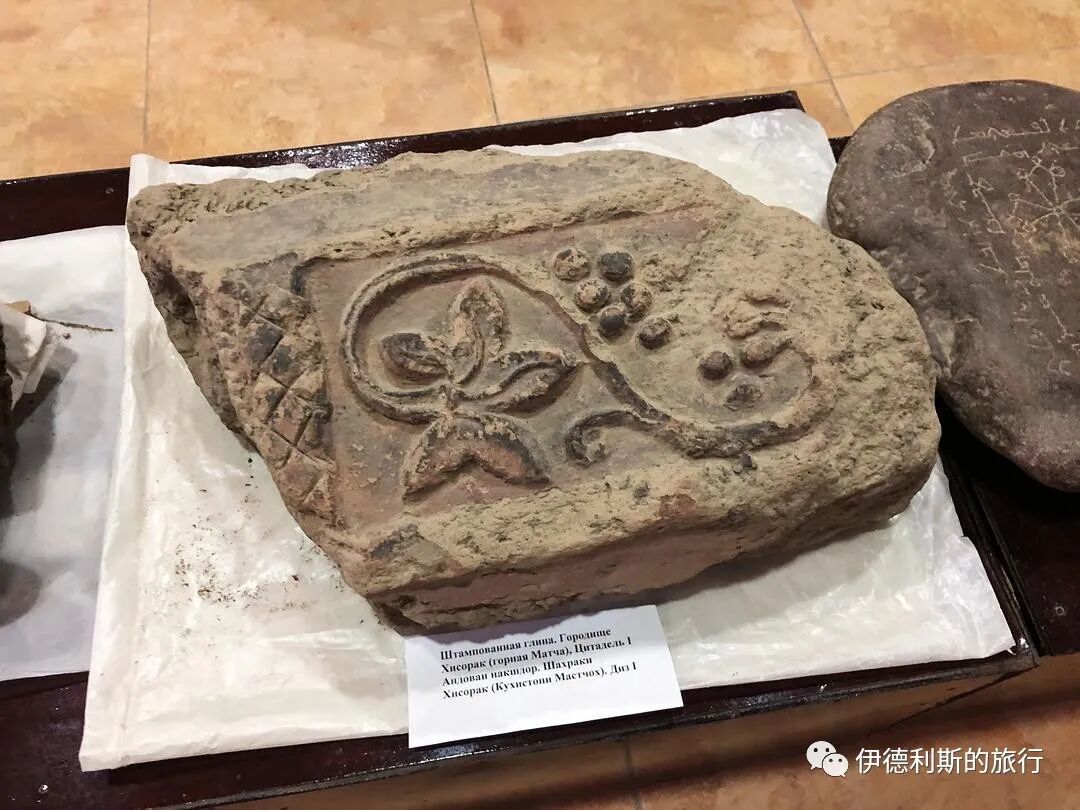
There are two Zoroastrian (fire-worshipping) temples on the north side of the city, which were once the most important buildings in the inner city. Although Buddhism and Manichaeism were widespread in the Sogdian region, most people in Panjakent followed Zoroastrianism. The Zoroastrianism practiced by the people of Panjakent is called Sogdian Zoroastrianism, which is a unique sect. This sect was influenced by many other religions, even those from ancient Mesopotamia, including the goddess Nanaya worshipped by the Sumerians.
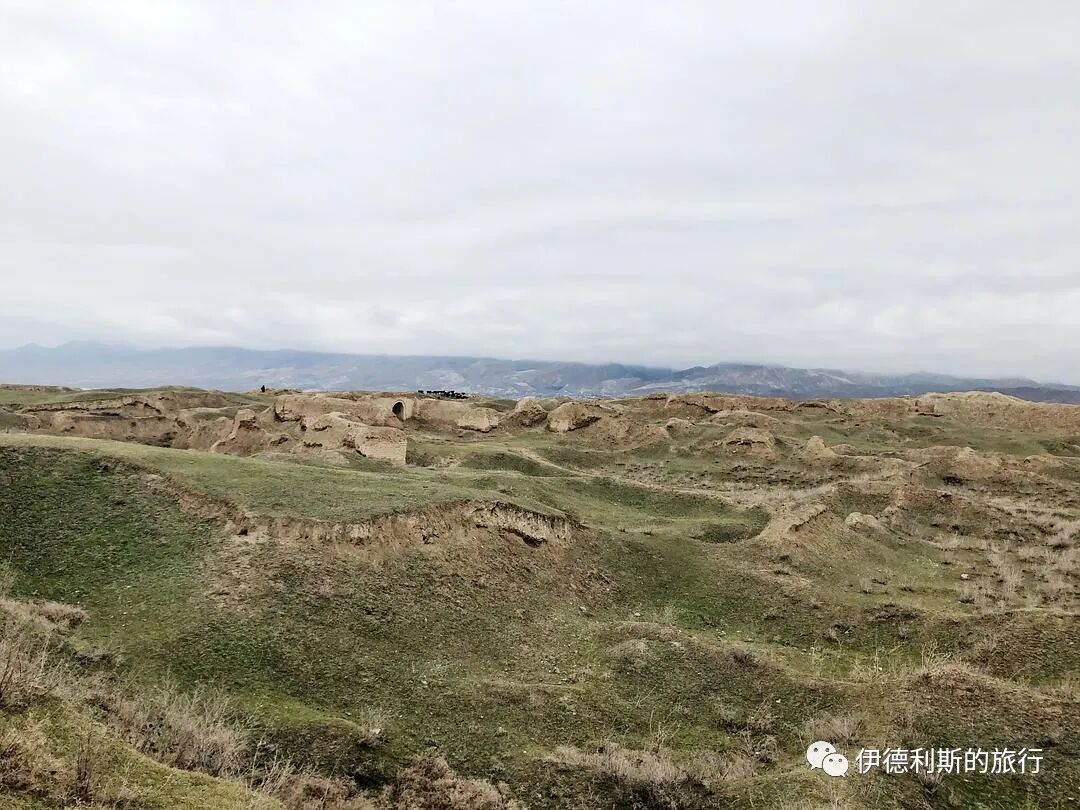
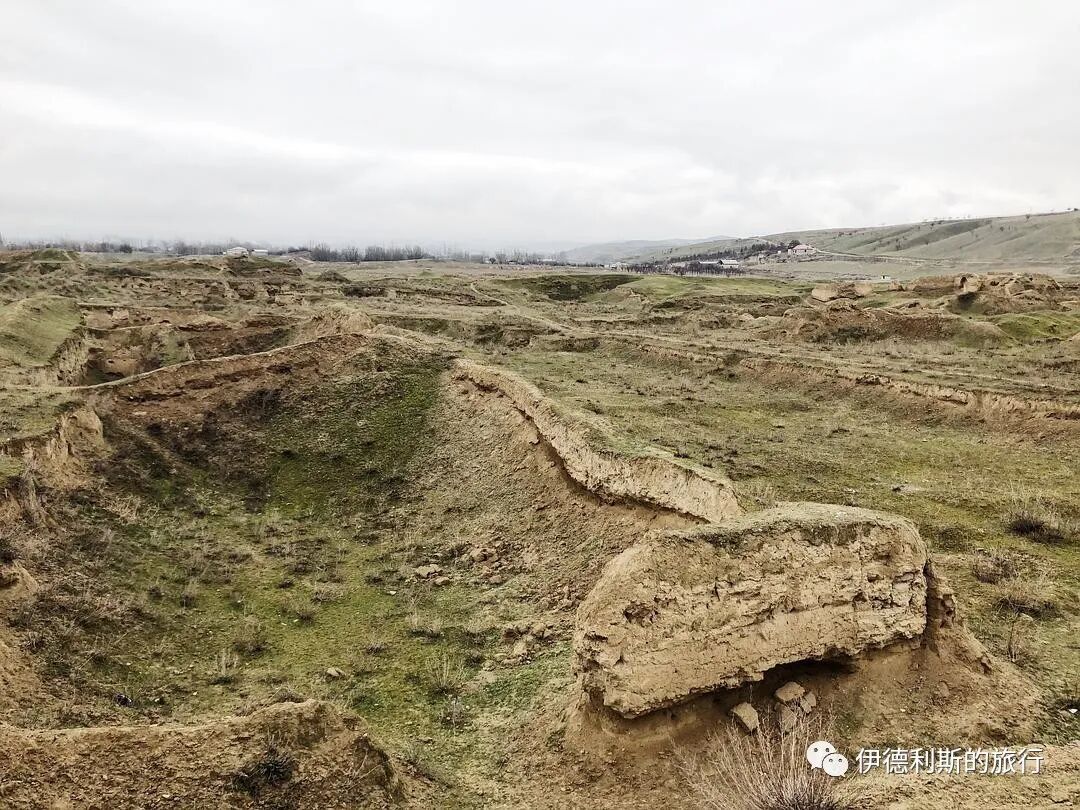
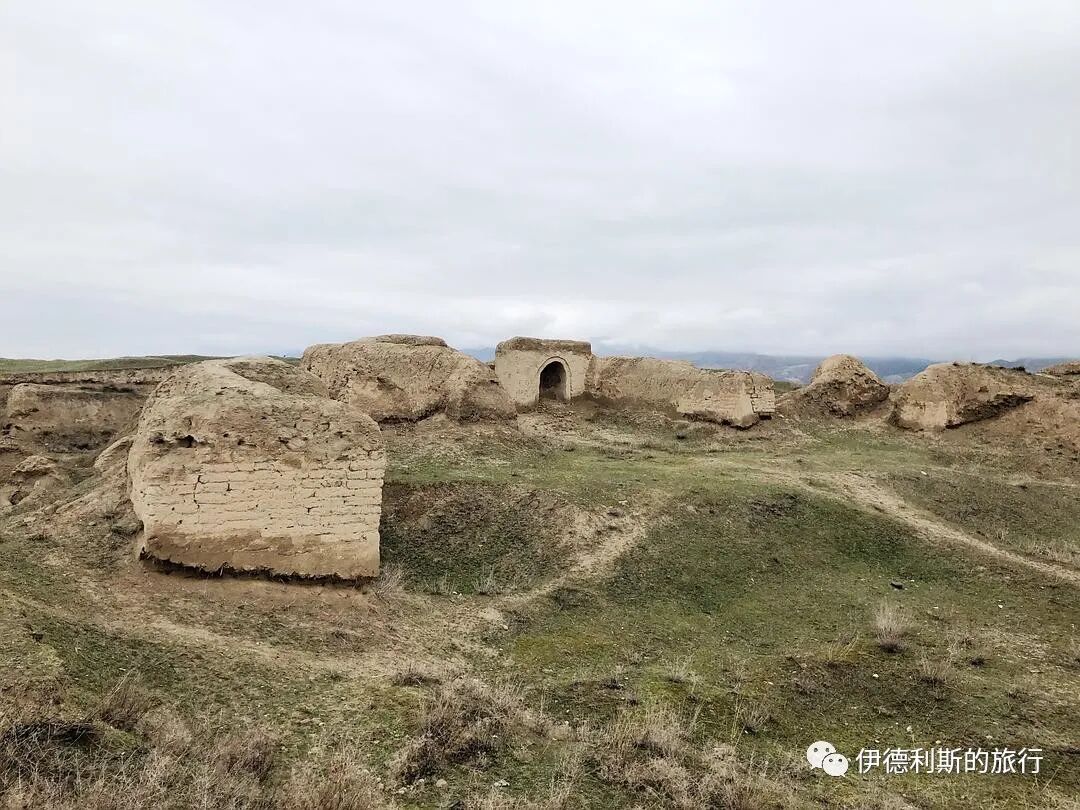
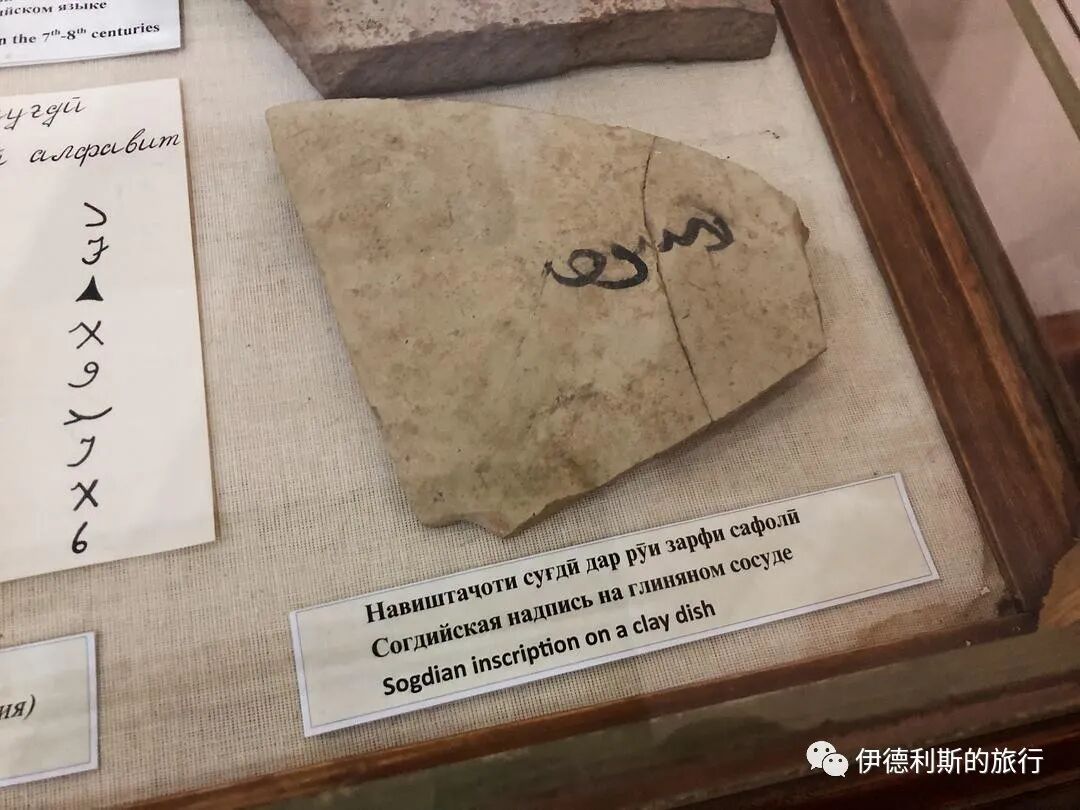
Pottery shards unearthed in the temples bear the names of donors in the Sogdian language and are now kept in the Rudaki Museum in Panjakent.
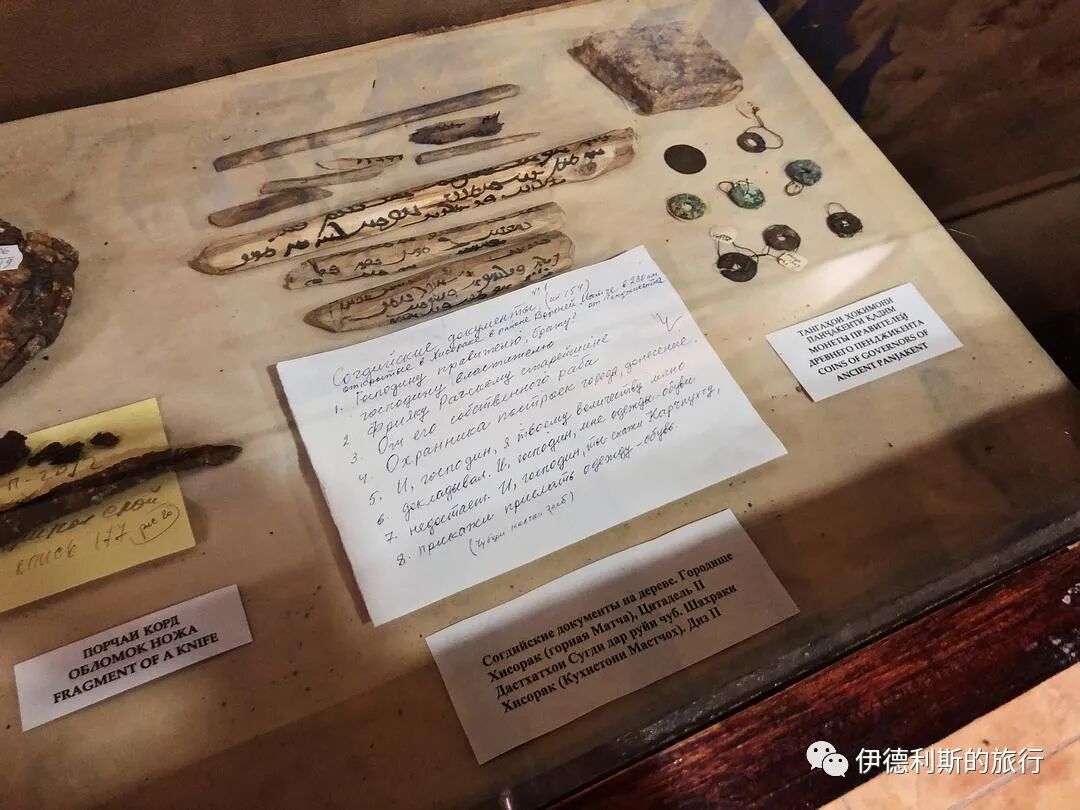
Sogdian wooden slips unearthed from the ancient city are now kept in the Rudaki Museum in Panjakent.
A wine vat site was found in the ruins of the ancient city of Panjakent. It could store over 1,400 liters of grape juice, showing that winemaking was well-developed at the time. According to the Jin Dynasty book Bowuzhi, there was wine in the Western Regions that would not spoil for many years. "
ruins of iron workshops and glass workshops can be seen in the ancient city of Panjakent. The Sogdians were skilled at making ironware, pottery, and gold and silver items, and were especially famous for their armor. In 718 AD, the Sogdians presented chainmail as a gift to Emperor Xuanzong of the Tang Dynasty.
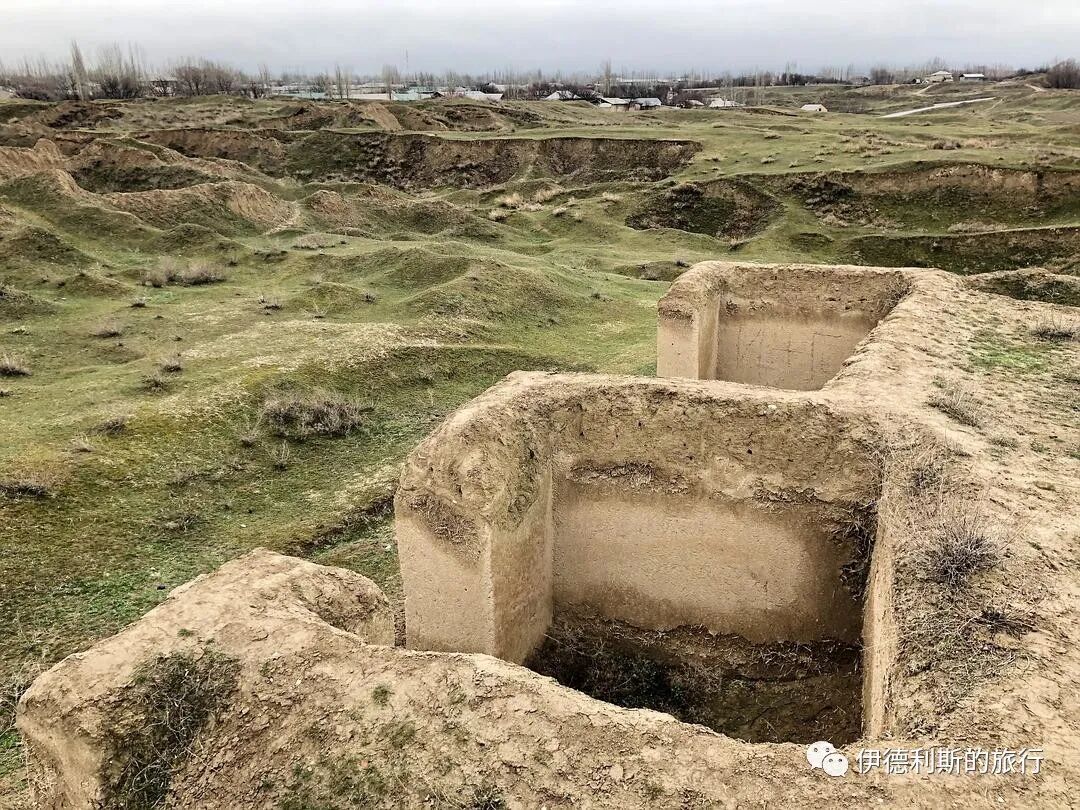
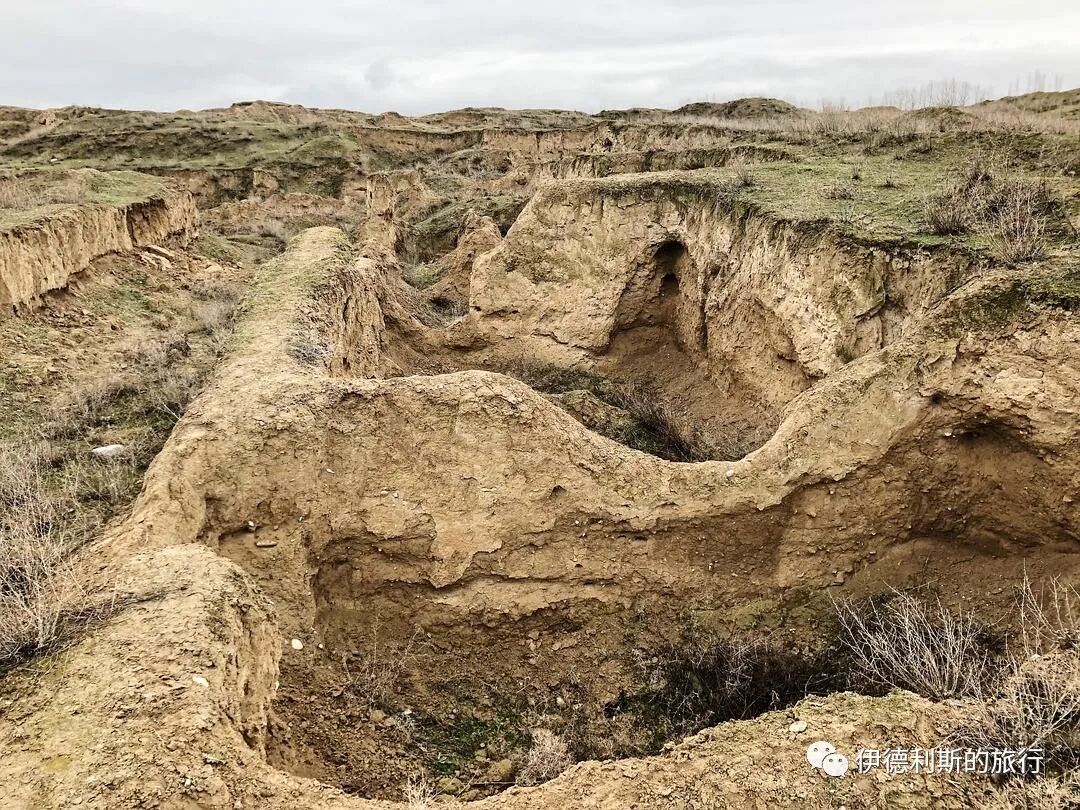
The cemetery is located south of the city and covers 10 hectares. Over 50 tombs have been found, including single and double burials. They contain pottery ossuaries with typical Zoroastrian ash urns and fire altars.
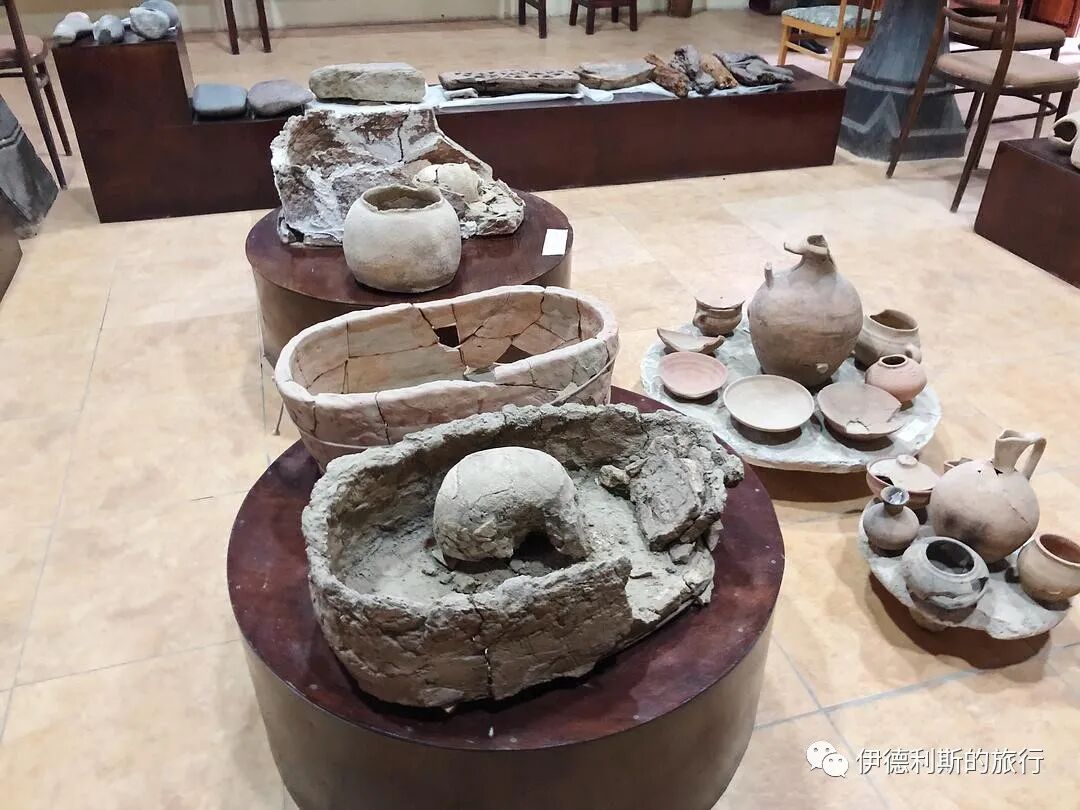
Currently kept in the Panjakent Ancient City Museum.
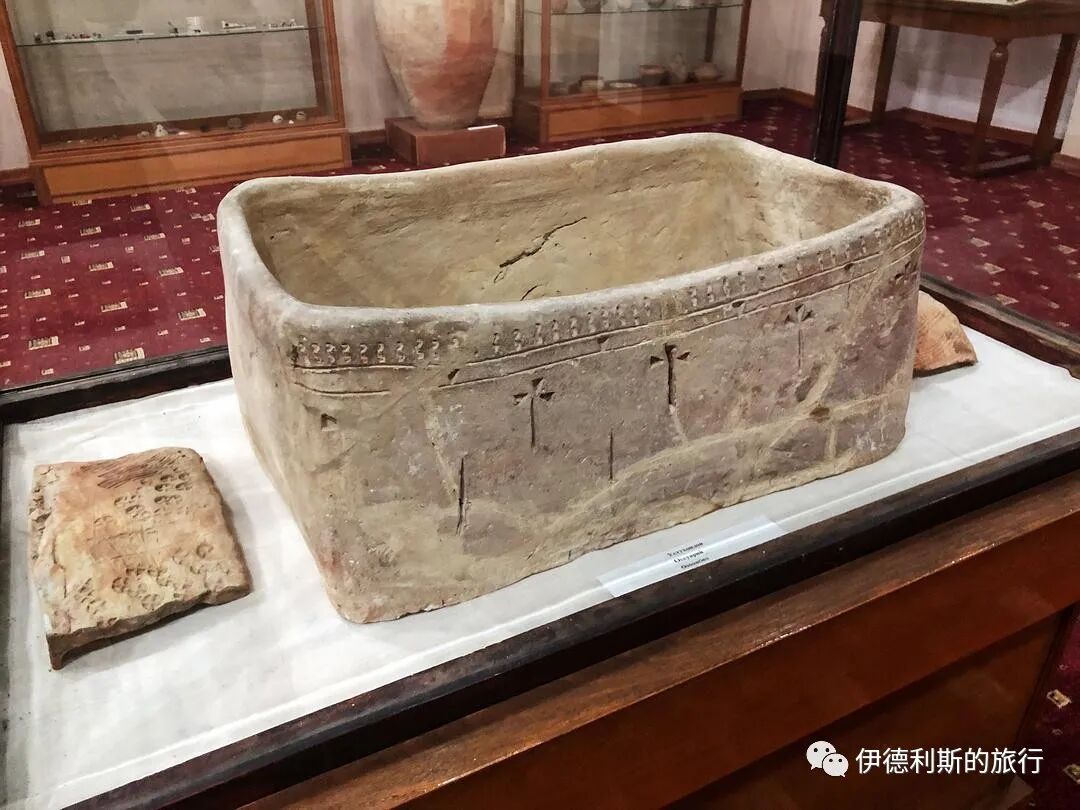
Currently kept in the Panjakent Ancient City Museum.
Nestorianism was another important religion followed by the Sogdians of Panjakent besides Zoroastrianism. The image below shows a Nestorian tombstone carved with a cross.
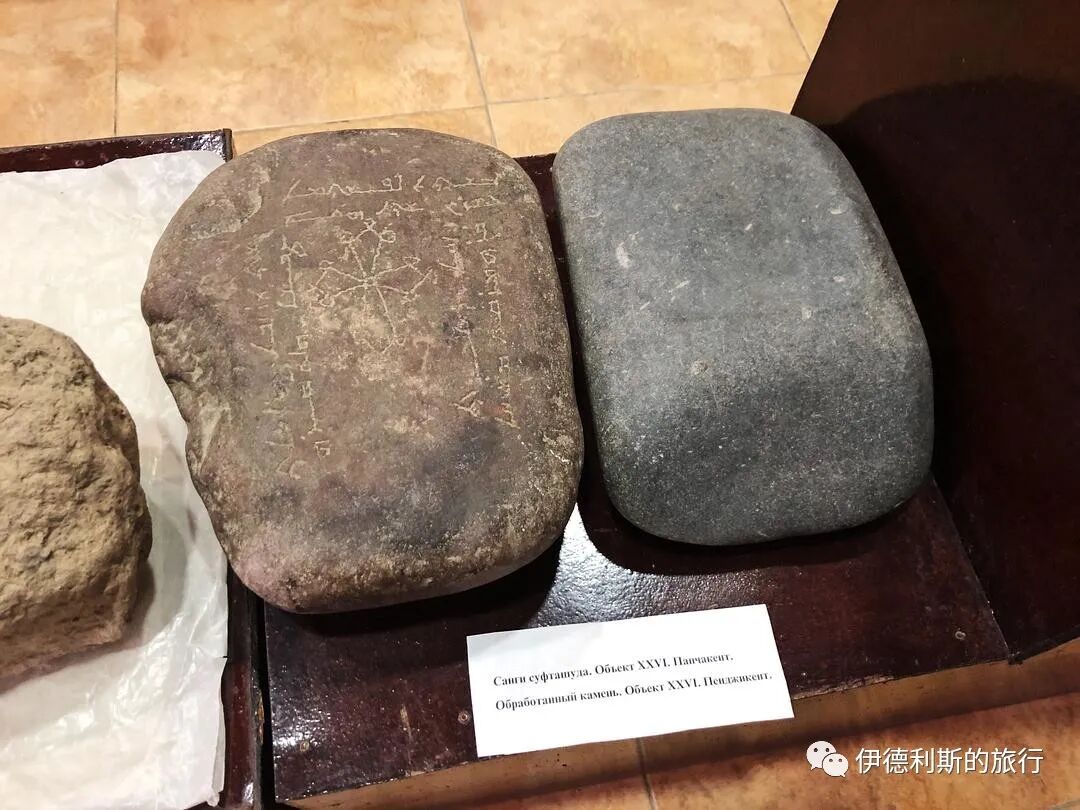
Currently kept in the Panjakent Ancient City Museum.
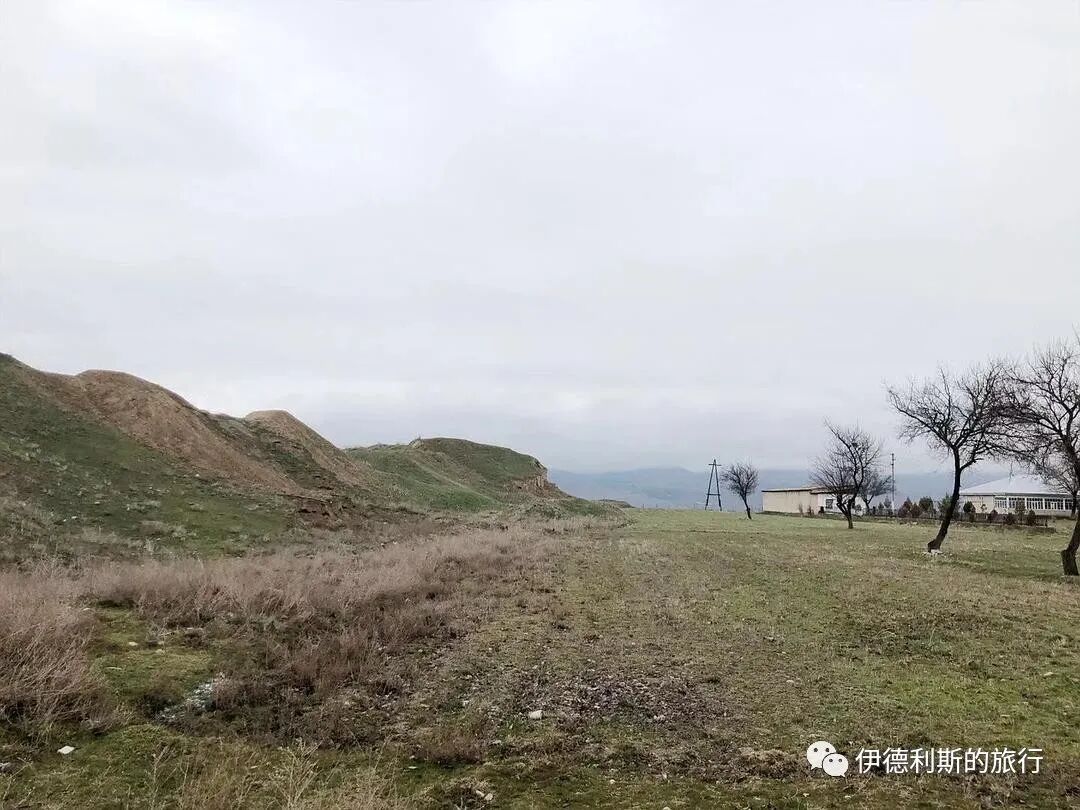
Outside the east city wall is the suburban area.
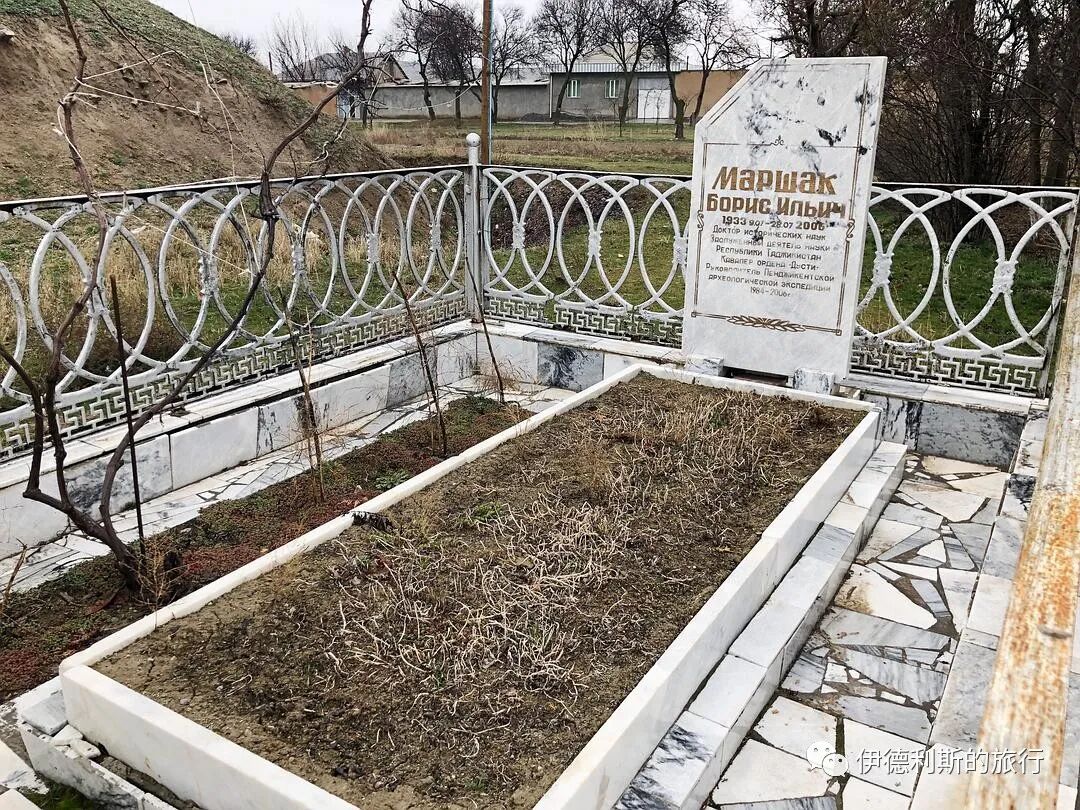
The Soviet Union began archaeological excavations in Panjakent in 1946. In 1954, 21-year-old Moscow State University archaeology student Boris Marshak came to the ancient city of Panjakent to participate in excavations. He worked there for over fifty years until he passed away.
Marshak began leading the archaeological work at the ancient city of Panjakent in 1978 and became the head of the Central Asia and Caucasus department at the Hermitage in Leningrad in 1979.
After the Soviet Union collapsed in 1991, a five-year civil war broke out in Tajikistan. Many ethnic Russians left the country, but Marshak continued to serve as the director of the site excavations. At that time, the archaeological work faced not only a lack of funding but also the danger of looting. Through close cooperation with the Tajik government, Marshak ensured the safety of the site. By connecting with international organizations and traveling to countries like Italy, the United States, and Austria to teach and give lectures, Marshak also secured enough funding.
On July 28, 2006, Marshak passed away at the work site in the ancient city. According to his will, he was buried at the entrance to the ancient city.
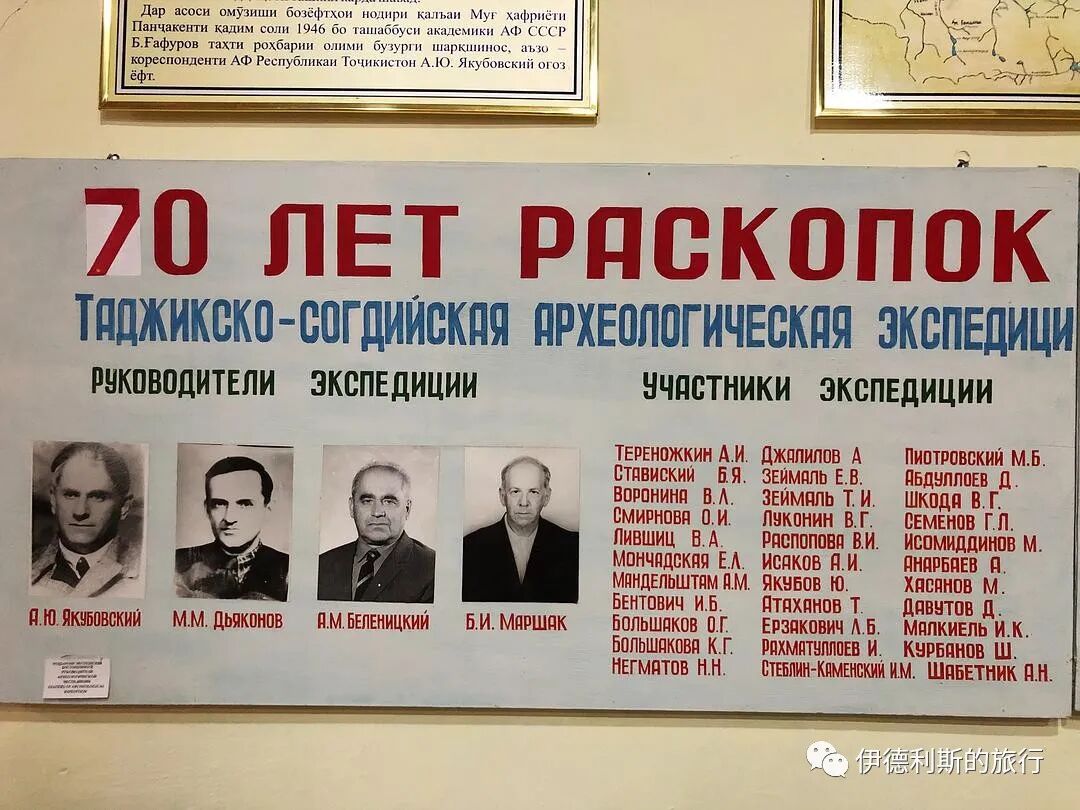
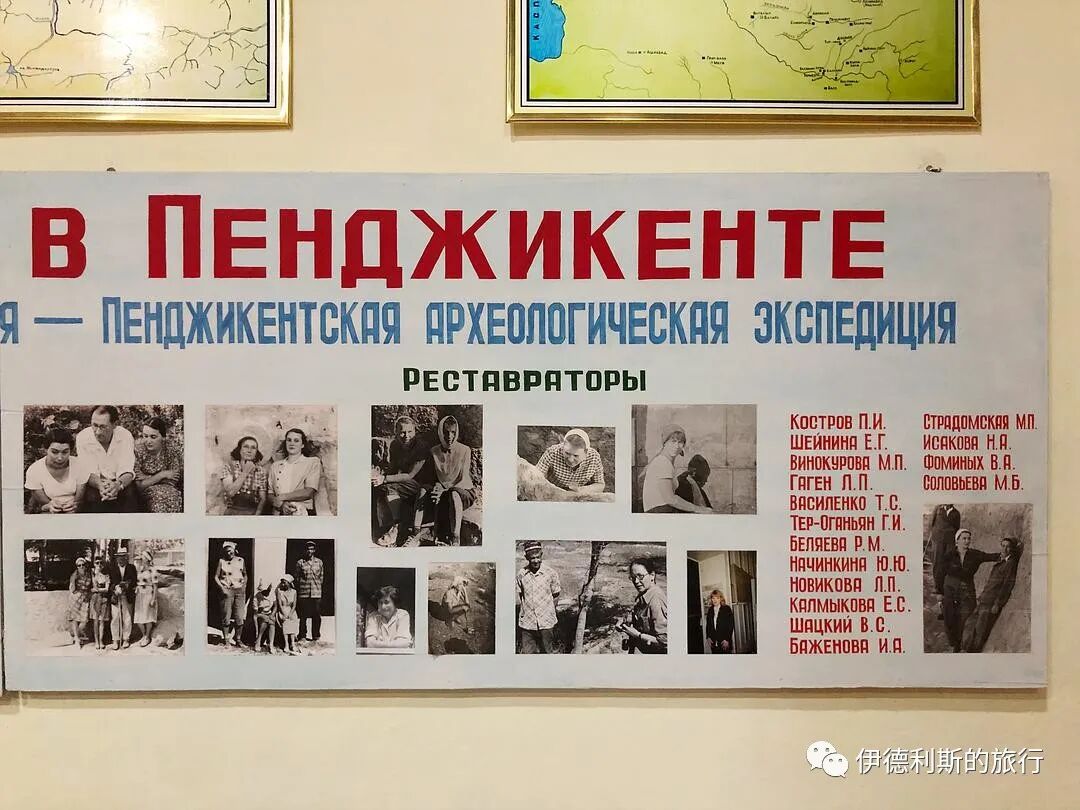
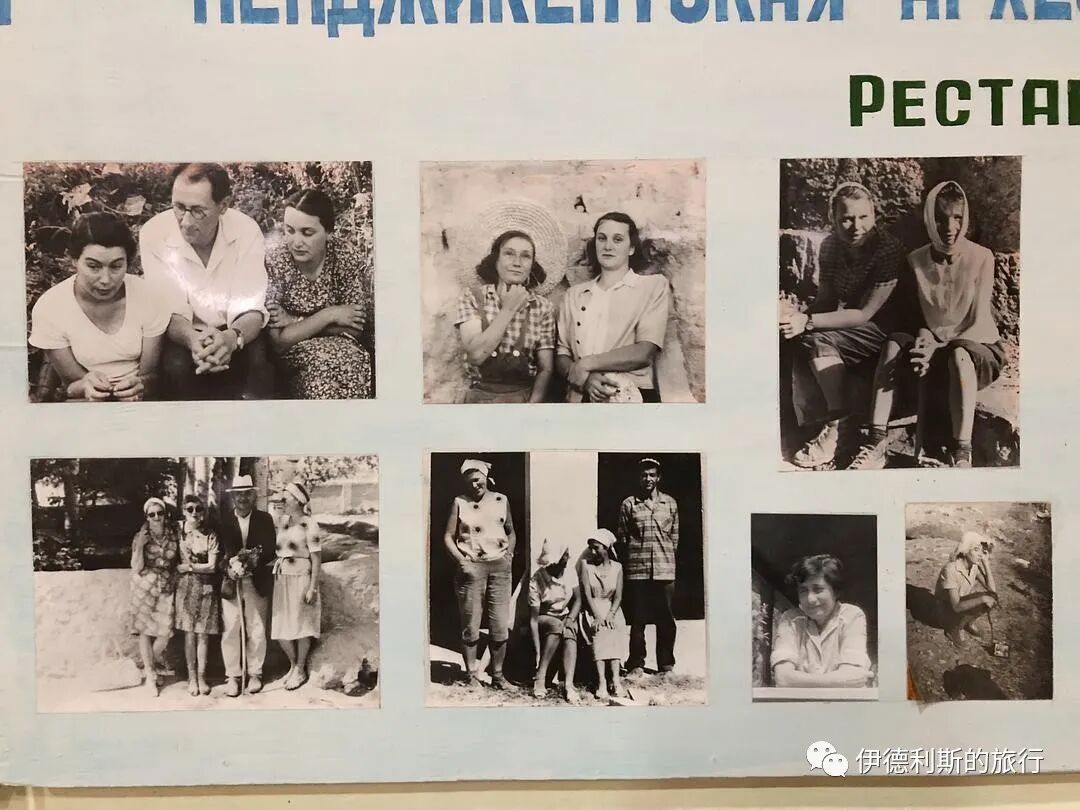
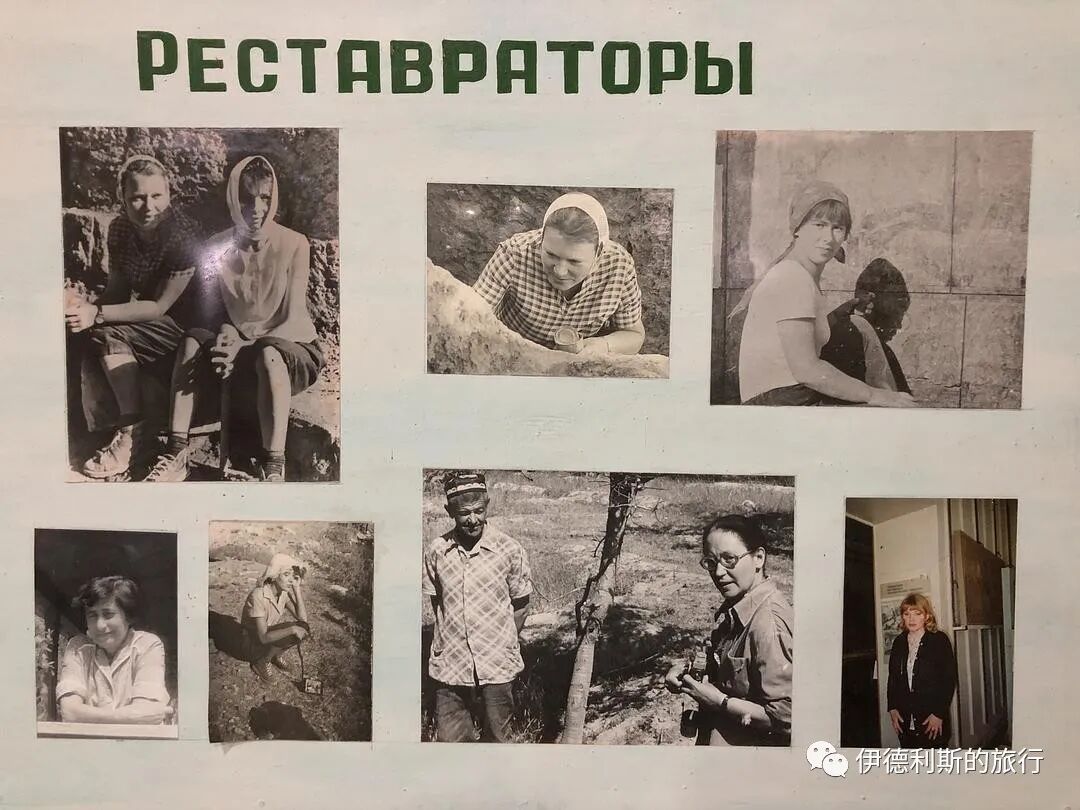
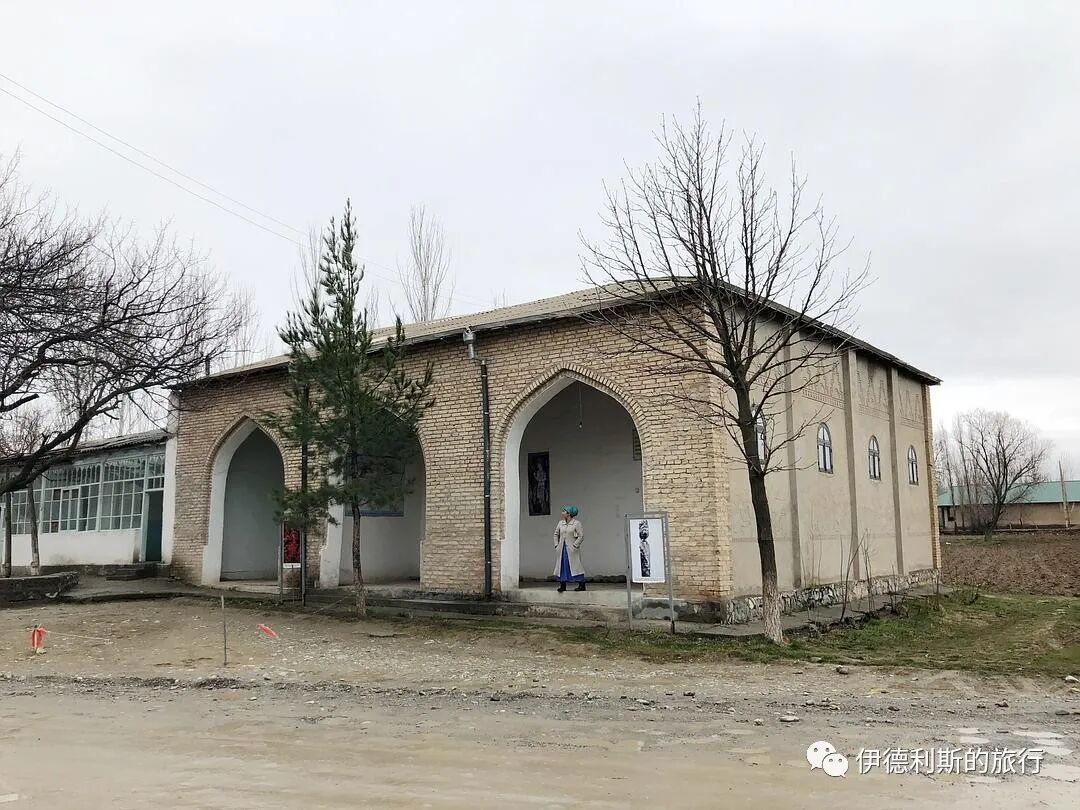
Panjakent Ancient City Museum.
10. Mausoleum of Rudaki
After visiting the ancient city, I went to visit the hometown of my guide, Afridun. The guide's home is deep in the Fann Mountains, 60 kilometers east of Panjakent. The Fann Mountains are praised in the Lonely Planet Central Asia guide as one of the best hiking spots in Central Asia, but there are almost no tourists in winter.
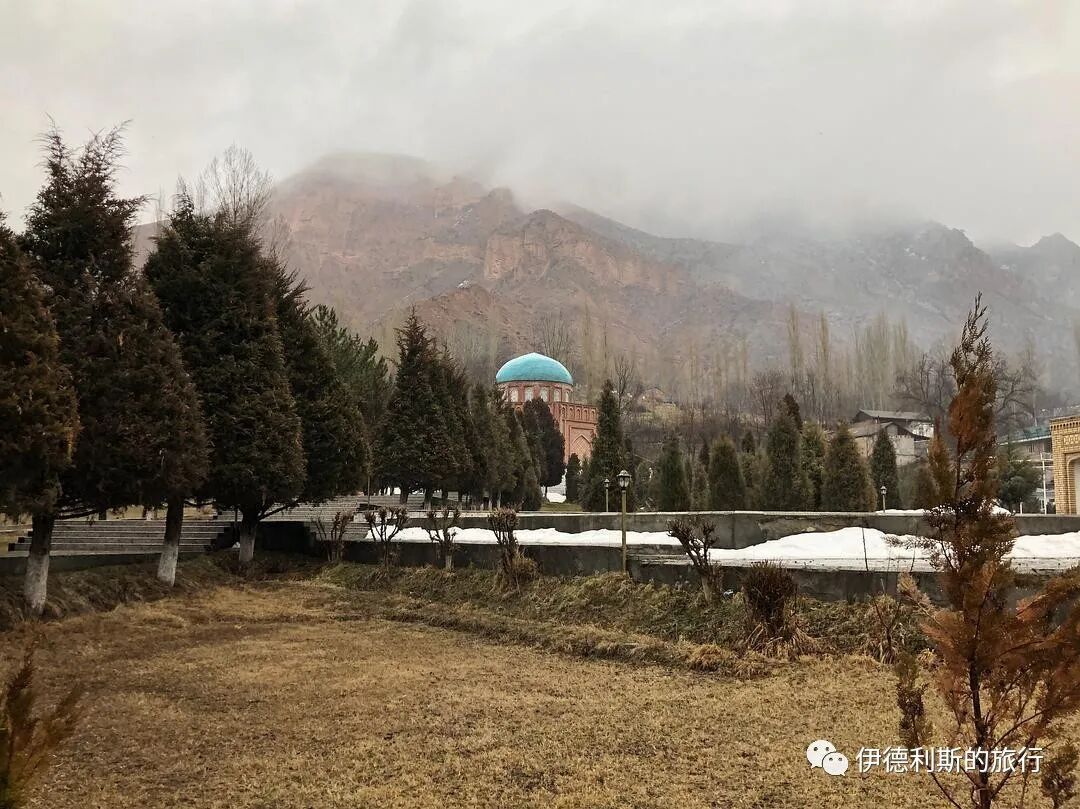
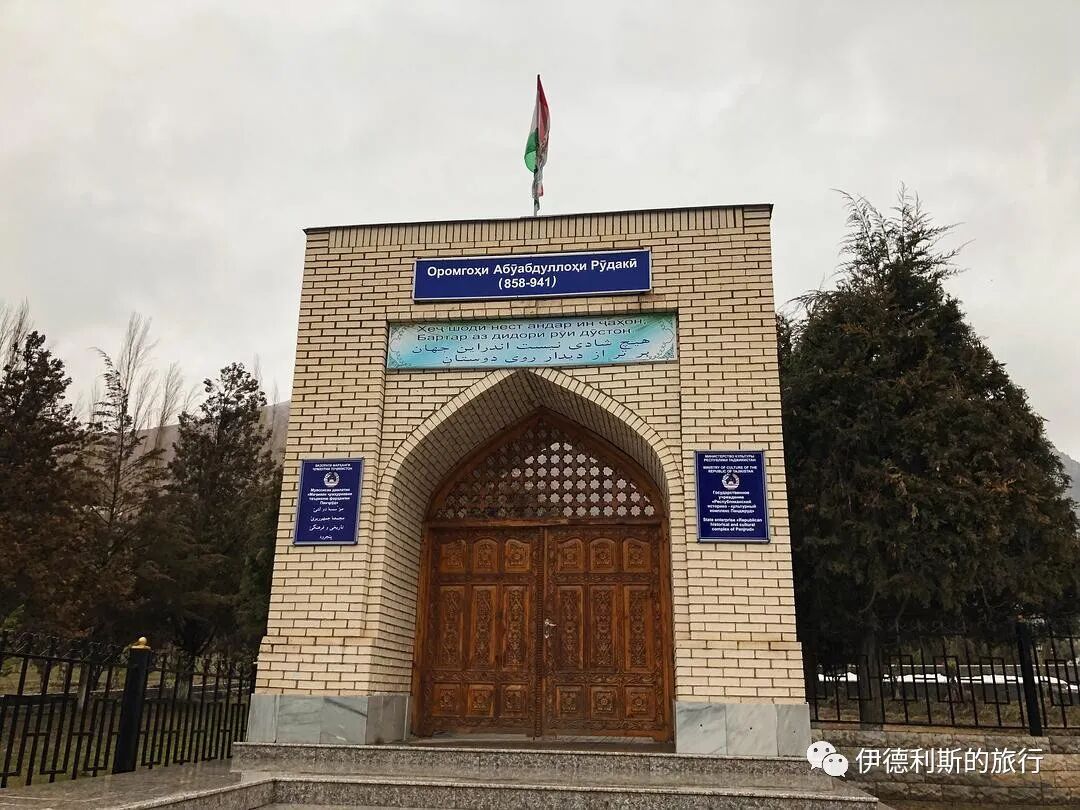
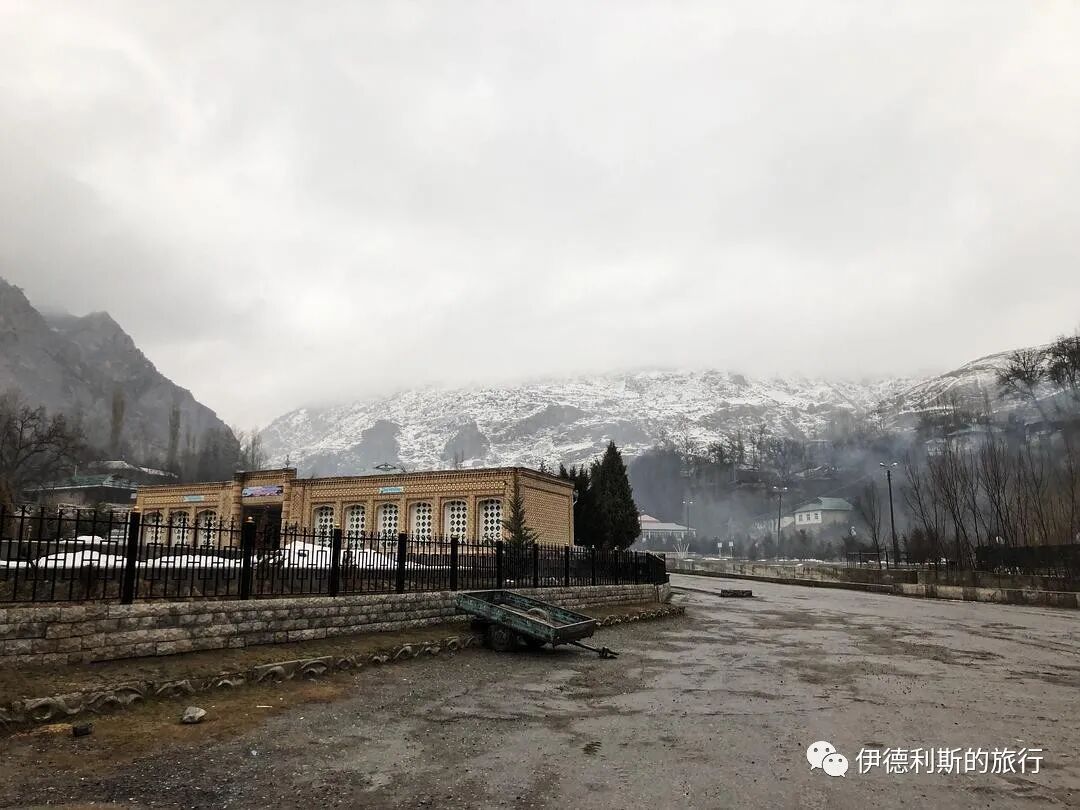
On the way to the guide's home, I passed the Mausoleum of Rudaki, but unfortunately, it was already closed. Rudaki is known as the father of modern Persian literature, the founder of classical Persian literature, and is even called the Adam of Poets. Rudaki was born in present-day Tajikistan in 858 AD. He spent most of his life as a court poet for the Samanid Empire in Bukhara, but he fell out of favor in his later years and died in poverty near his hometown in 941.
In the early 20th century, Sadriddin Ayni, known as the father of modern Tajik literature, studied various historical manuscripts to determine the approximate location of Rudaki's tomb. He worked with Russian anthropologist Professor Mikhail Gerasimov and several Tajik scholars to finally locate the tomb. A new tomb for Rudaki was built in 1958.
11. Tajik Families Deep in the Mountains
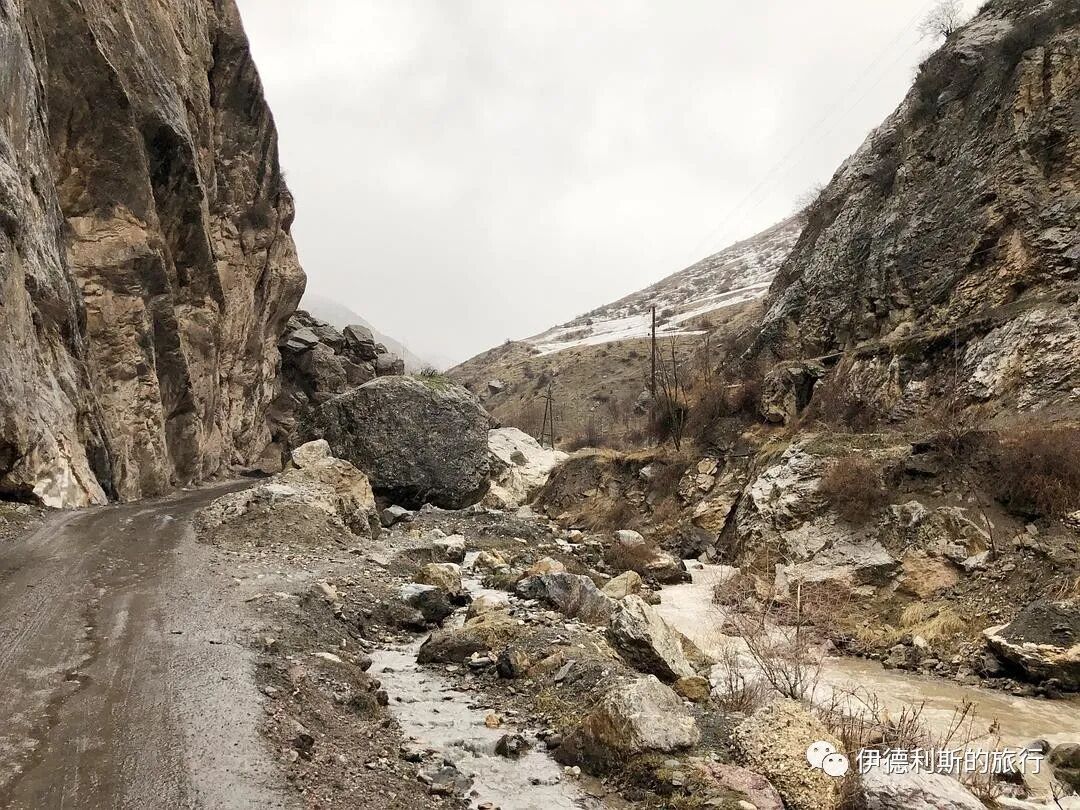
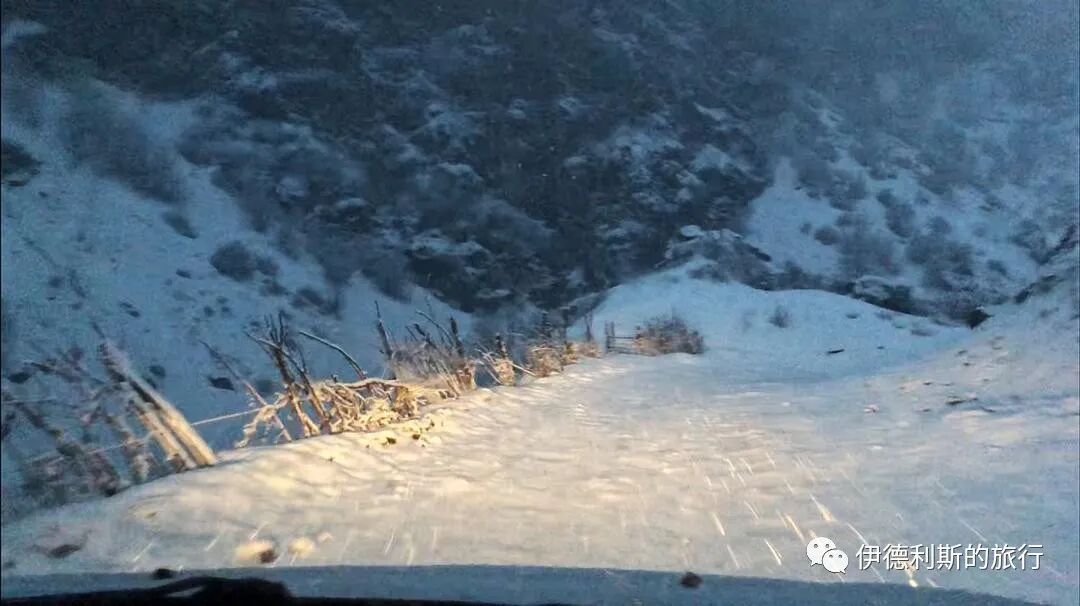
After passing Rudaki's tomb, the road turned into a dirt path in the valley that became increasingly difficult to travel.
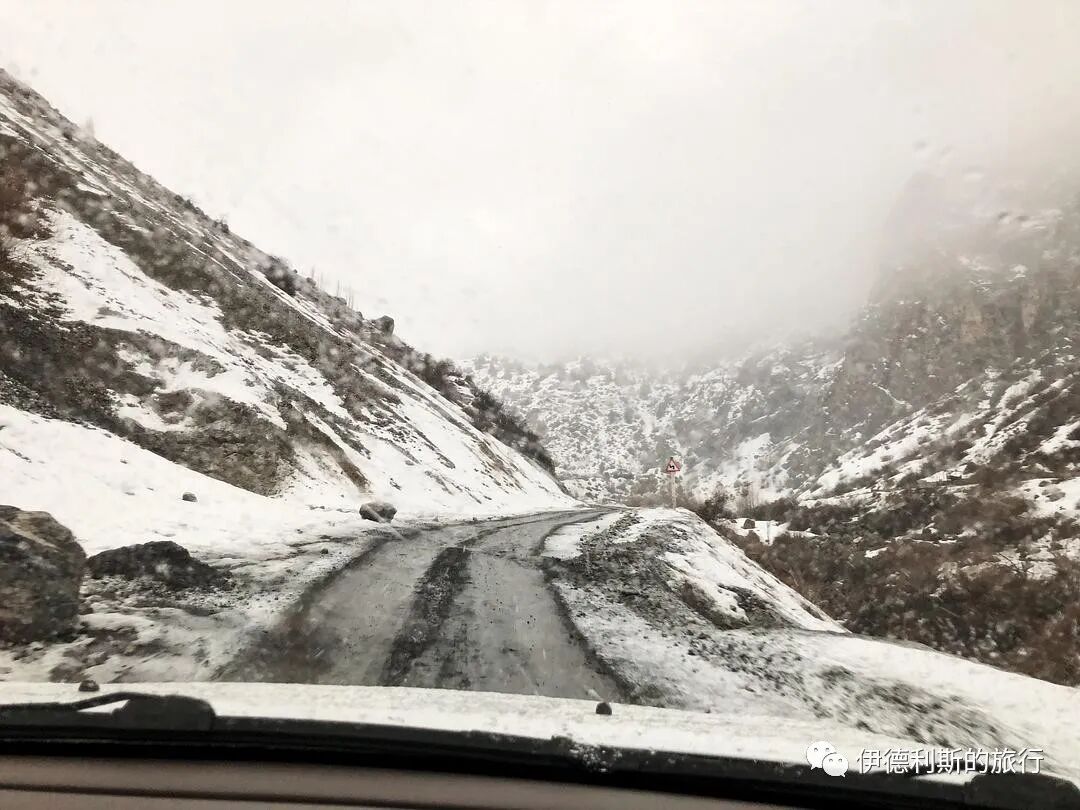
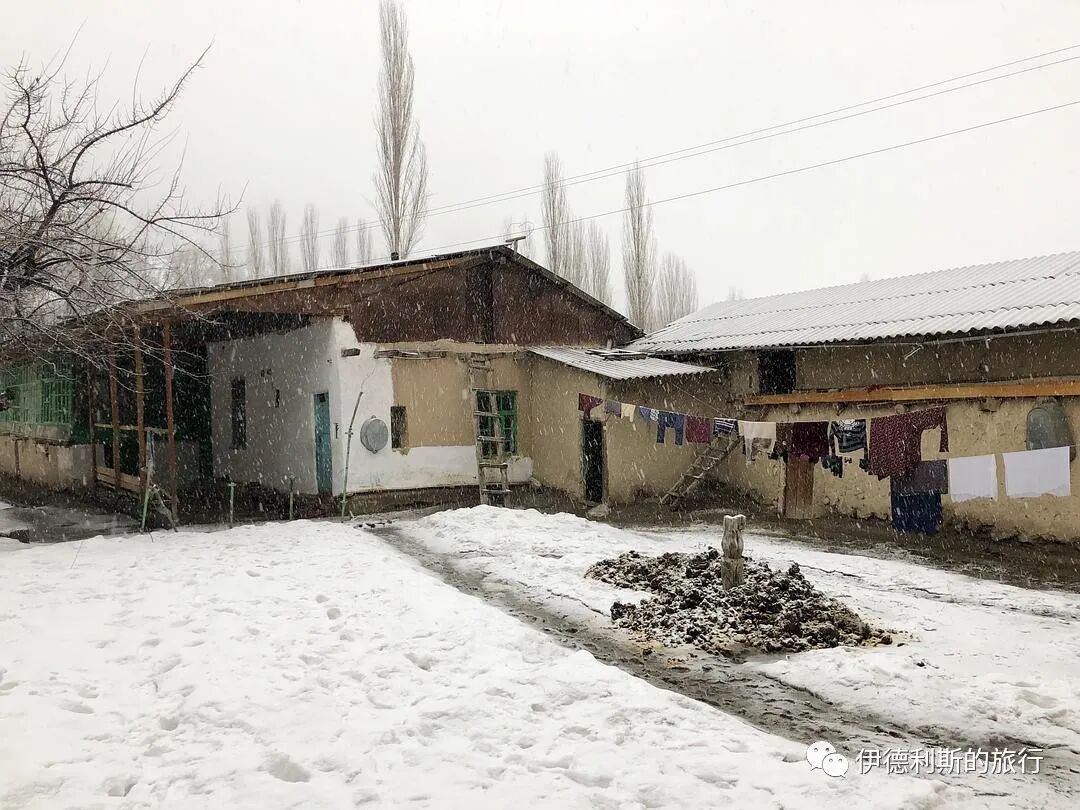
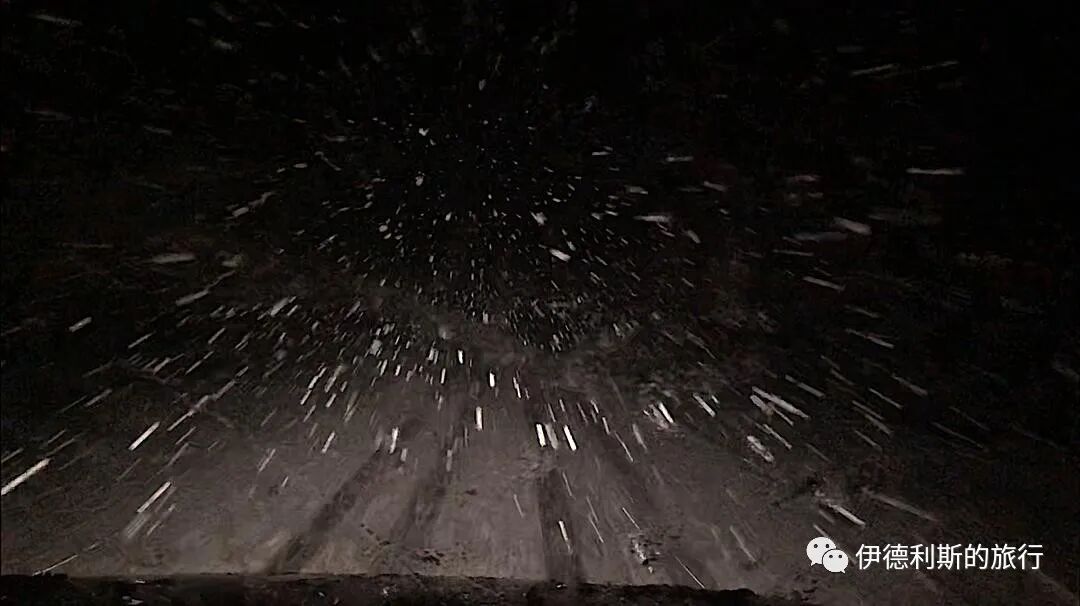
We finally arrived at our guide's home just as it started to snow heavily.
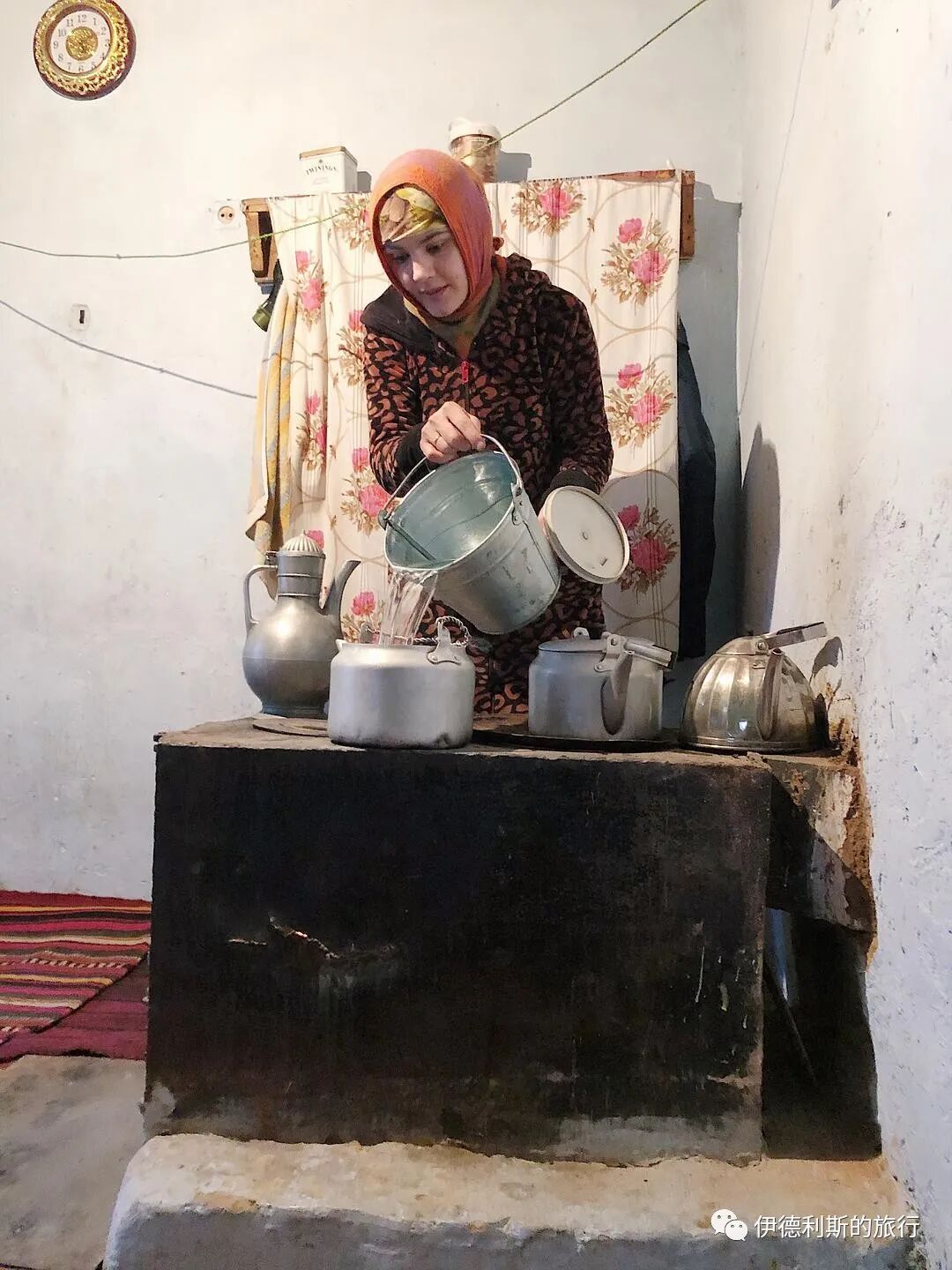
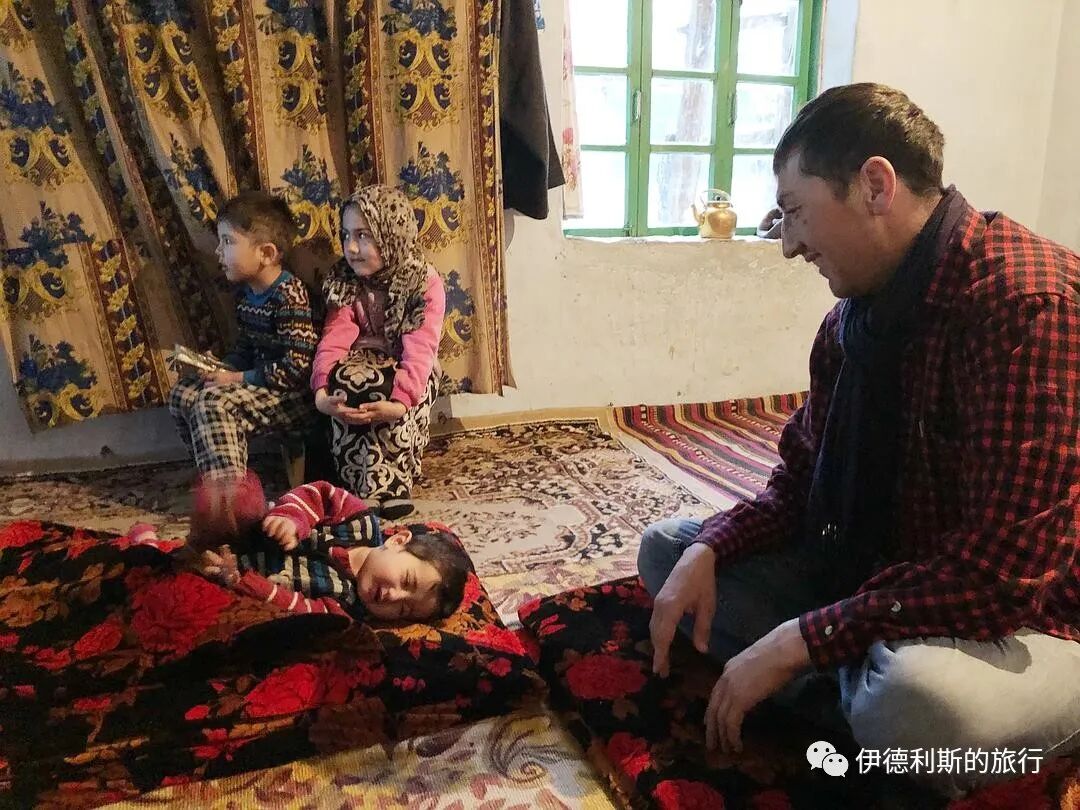
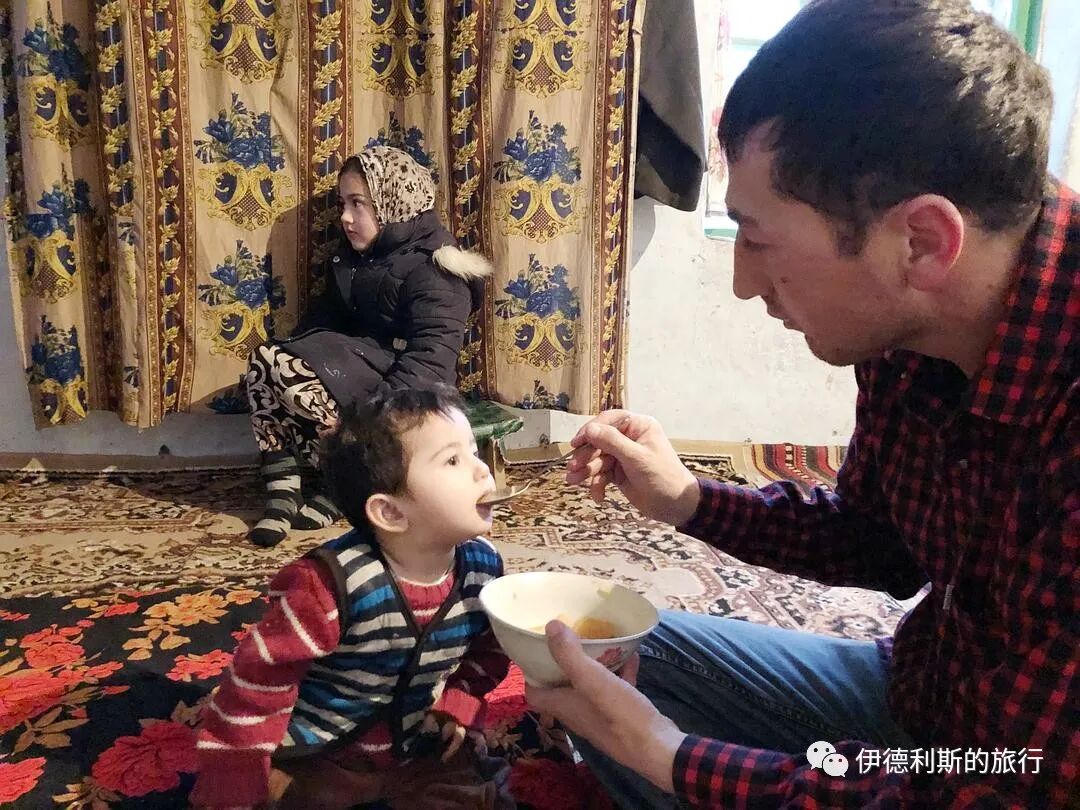
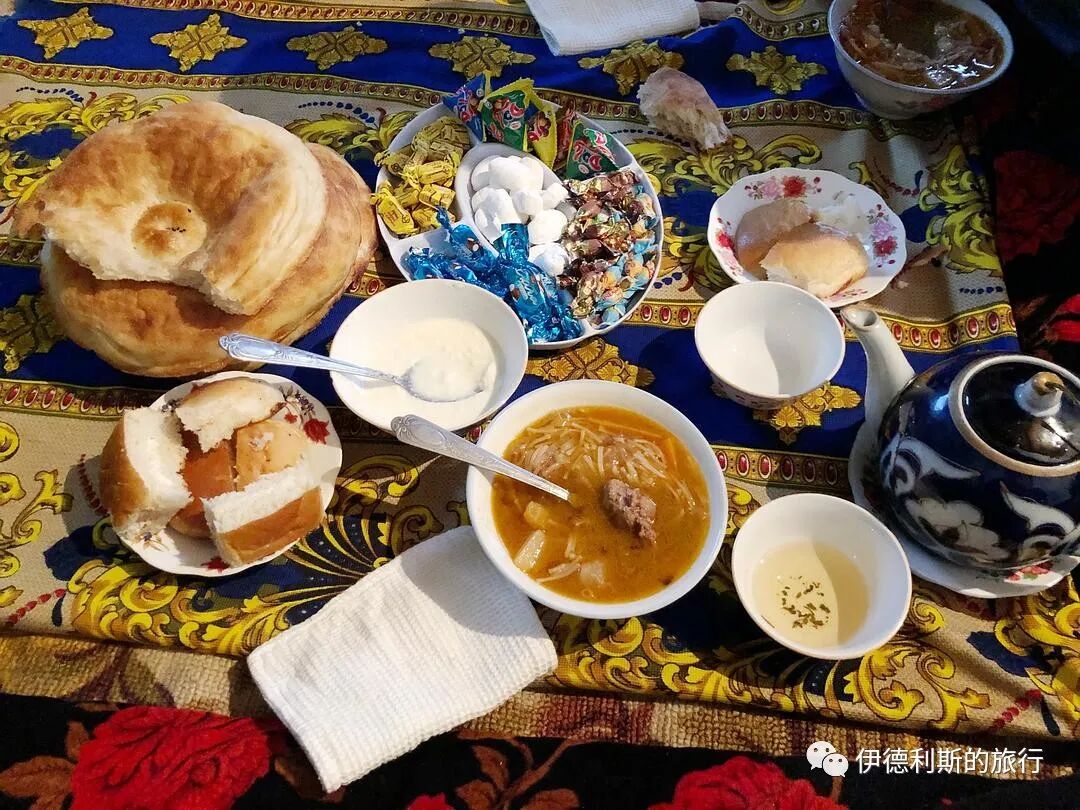
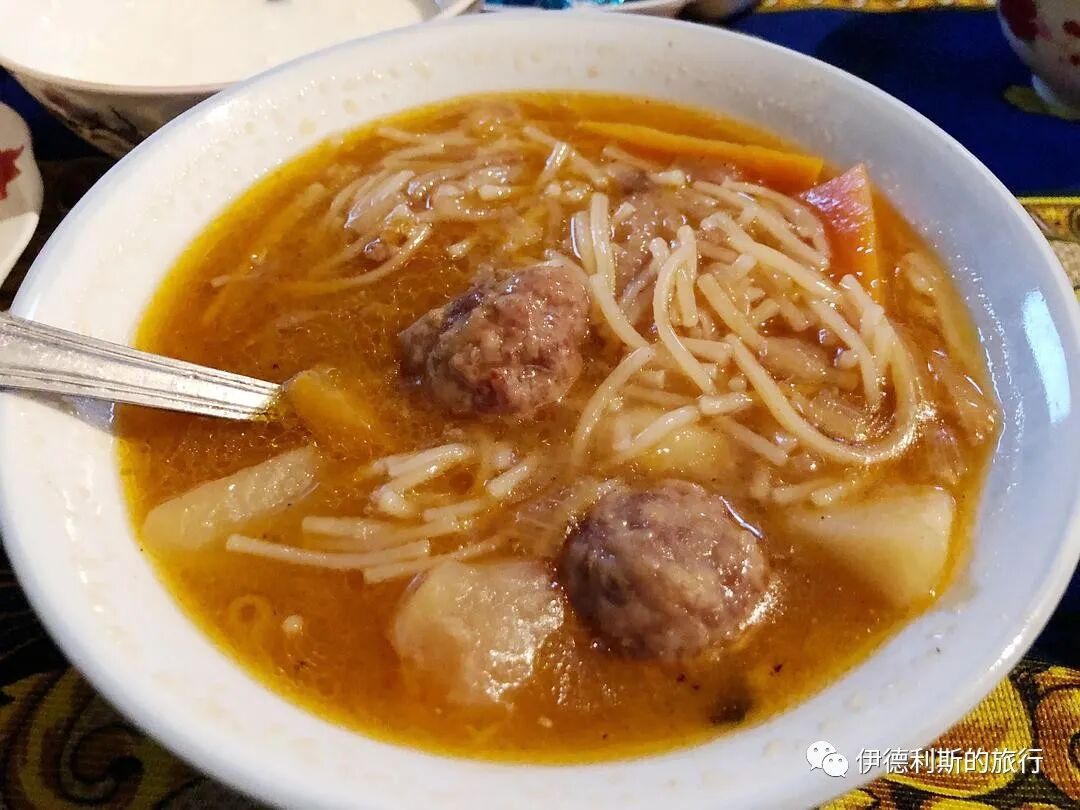
The guide's wife made us meatball soup (wanzi tang) and yogurt made from their own fresh milk, both of which were delicious. The snow outside kept getting heavier, but we had a great time sitting by the fire, watching TV, and chatting with the children.
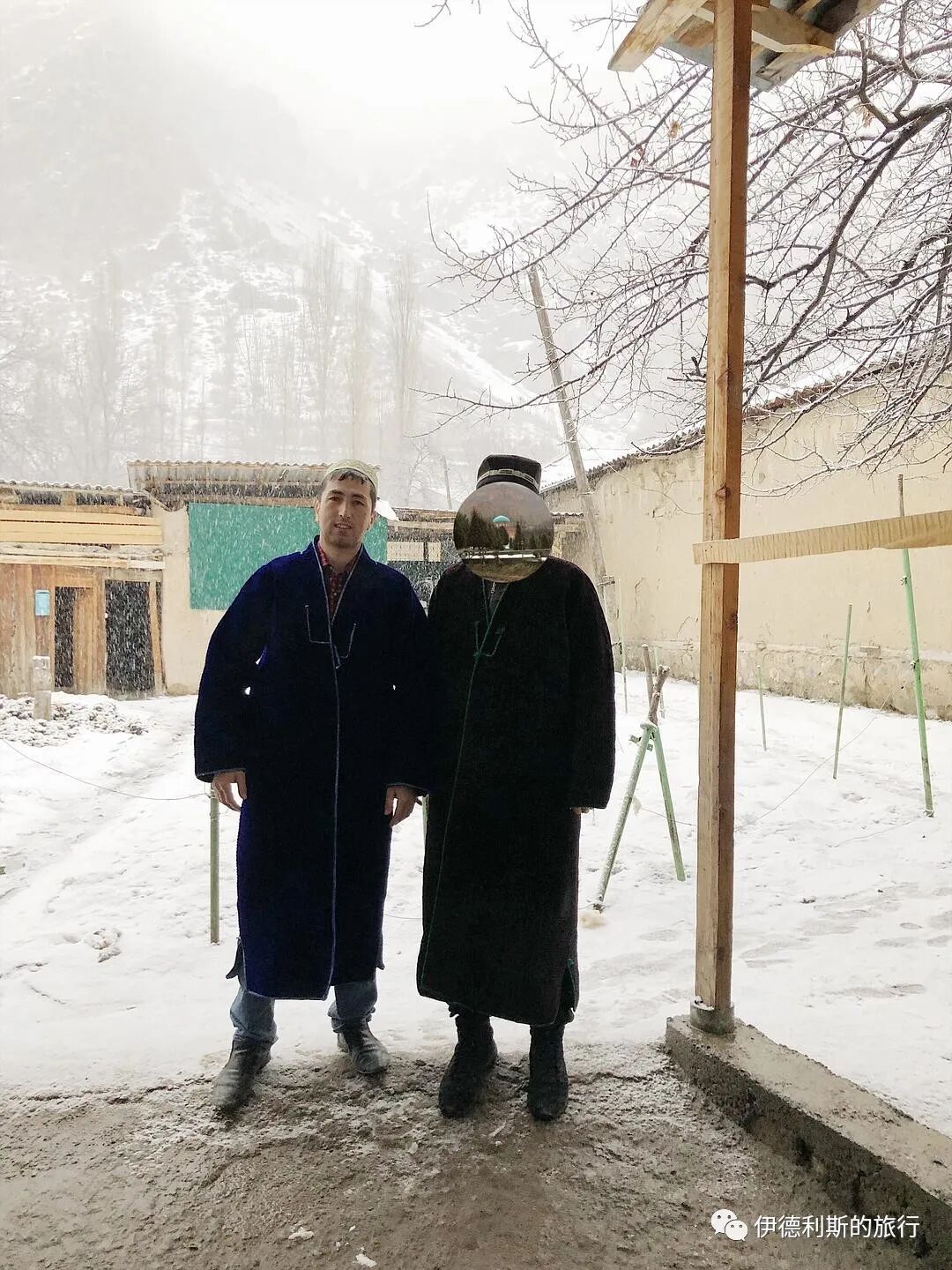
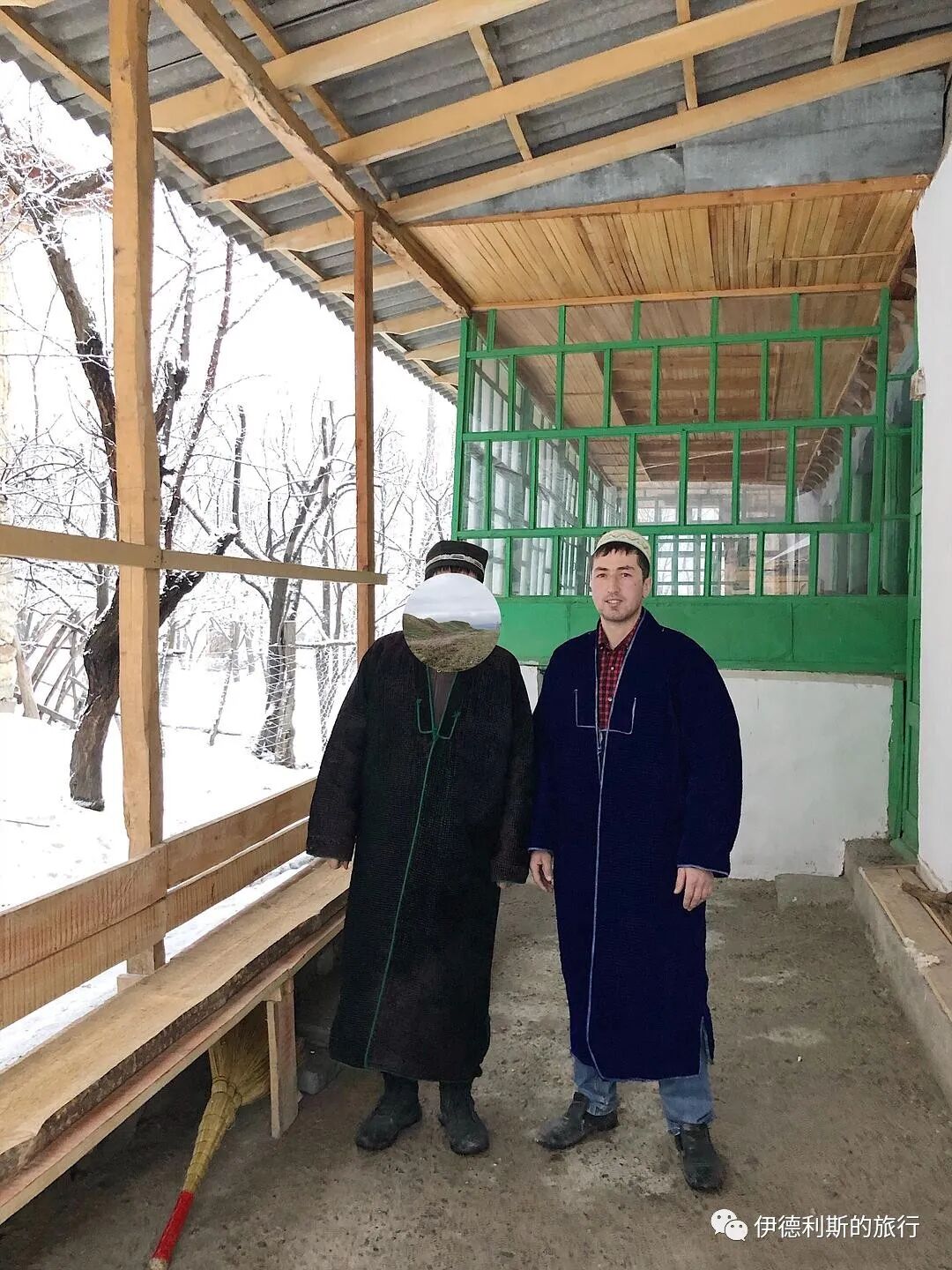
The guide's youngest daughter, Fatima, is only 10 months old, while his older daughter, Oisha, and son, Samir, were watching Kung Fu Panda and Ice Age on TV.
The snow fell harder on our way back, but we made it safely to the city, successfully completing our one-day trip to Panjakent.
Summary: Tajikistan — Sogdian Old City, Muslim Heritage and History is presented here as a firsthand travel account in clear English, beginning with this scene: On the morning of February 13, 2019, I left Samarkand for Panjakent, Tajikistan. The border crossing east of Samarkand leading to Tajikistan had been closed for many years and only reopened in 2018. The account keeps its focus on Tajikistan Travel, Sogdian History, Muslim Heritage while preserving the names, places, food, and historical details from the Chinese source.
On the morning of February 13, 2019, I left Samarkand for Panjakent, Tajikistan. The border crossing east of Samarkand leading to Tajikistan had been closed for many years and only reopened in 2018. After the border opened, the trip from Samarkand to Panjakent took just over an hour, which is the main reason I added Panjakent to my Uzbekistan trip.
Because I was worried about language barriers, I booked a day tour online with ADVANTOUR. ADVANTOUR is a reliable travel agency specializing in Central Asia and the Caucasus, and it is recommended in the Lonely Planet Central Asia guidebook. Besides custom tours, ADVANTOUR can also handle hotel, transport, and visa bookings. After I placed my order on their website, I communicated with the manager, Kodirov Anvar, via email to confirm the details. He was patient and polite, and we had a very pleasant exchange.
Table of Contents
1. Samarkand Border Crossing
2. Ancient City of Sarazm
3. Lunch
4. Accommodation
5. Rudaki Museum
6. Buying a Hat
7. Grand Bazaar
8. Olim Dodho Madrasa
9. Capital of Sogdiana: Ancient City of Panjakent
10. Mausoleum of Rudaki
11. Tajik Families Deep in the Mountains
1. Samarkand Border Crossing
Early on the 13th, an Uzbek driver arranged by ADVANTOUR picked me up from my hotel to head to the border, and we arrived in less than an hour. After security checks, exit stamps, entry stamps, and another security check, I arrived in Tajikistan. Two reminders for crossing the border: keep the registration slips from your hotels in Uzbekistan, as they will check them when you leave. Also, if you buy any antiques, you must get the relevant certificates, which can usually be issued at the place where you buy the items.
After entering, my Tajik guide, Afridun, waved at me with a sign showing my name, and my Tajikistan trip officially began. Afridun told me this border had been closed for many years, and some young people did not even know that hundreds of thousands of Tajiks lived in Samarkand and Bukhara across the border. The border finally opened during Nowruz last spring, and Panjakent held a grand ceremony, with many people traveling to Samarkand to see it. A friend of the guide was waiting to pay at a supermarket in Samarkand when he heard the person in front of him speaking Tajik to the cashier, and that was how he realized so many Tajiks lived in Samarkand.
2. Ancient City of Sarazm
Not far east from the border, after passing an Uzbek village, I arrived at Tajikistan's only UNESCO World Heritage site, the ancient city of Sarazm. This ancient city is one of the earliest in Central Asia and was the largest metallurgical center in the region during the Bronze Age.
According to carbon-14 dating, the city dates from roughly 3500 BC to 2000 BC, spanning from the Chalcolithic period to the early and middle Bronze Age. The city is located 45 kilometers east of Samarkand and 15 kilometers west of Panjakent in the Zeravshan River valley, at an average altitude of 910 meters. Geographically, the city sits right between the agricultural plains of Transoxiana and the pastoral areas of the Pamir-Alay mountains, making it a perfect spot for mountain herders and plain farmers to trade goods and share skills and culture.
Additionally, the Zeravshan valley is rich in metal resources, with tin and gold found in the river sand being the most important. The area gradually became a metal smelting center, and industries like pottery and stone processing also began to emerge.
By around 3000 BC, the ancient city of Sarazm became a long-distance trade hub focused on tin exports. Its trade network reached north to the Aral Sea and the Eurasian Steppe, west to Turkmenistan, the Iranian plateau, and Mesopotamia, and south to Balochistan and the Indus Valley.
Trade map of the ancient city, from UNESCO documents.
In 1976, a villager named Mr. Achurali Taïkonov accidentally found a bronze axe while farming. He handed it to Professor A. Isakov, an archaeologist, who then began working with the villagers to excavate the site. Archaeological work officially started in 1977, and the ancient city of Sarazm, which had been missing for over 3,000 years, appeared once again.
Between 1977 and 1994, a period of 17 years, Professor A. Isakov led 11 excavations and 20 surveys. From 1984 to 1991, a French archaeological team (CNRS) also conducted archaeological work here.
On the right is the site's discoverer, Achurali Taïkonov, and on the left is the head of archaeology, Professor A. Isakov. The image is from a UNESCO document.
Professor A. Isakov at the archaeological site. The photo is from a UNESCO document.
Looking at the terrain, the ancient city of Sarazm had no clear urban planning; it extended naturally in different directions without city walls. The total area of the ancient city exceeds 50 hectares, consisting of 10 hills of varying heights and 5 depressions, which correspond to the city's building areas and ponds. The building area consisted of houses, temples, and workshops. Palaces also appeared between 2900 BC and 2700 BC, and it is estimated that the population exceeded 3,000 at its peak.
Early buildings in the ancient city used rectangular clay bricks mixed with straw. Later, they also began using river stones, but these were mainly used for building wall foundations. The roofs were flat with wooden beams, covered by one or several layers of branches and reeds.
Residential courtyards included storage rooms, workshops, kitchens, and living areas. Most had fenced yards where most handicraft work took place.
After 3300 BC, family altars for sacrificial activities appeared inside the rooms, with a circular furnace altar in the center. Starting in 2900 BC, the altars became larger, and square fireplaces with circular altars began to appear, inside which charred seeds were found.
Workshops focused mainly on metal smelting. Furnaces, clay molds, crucibles, and many metal products were found at the site. Next was pottery making. Early pieces were handmade, but after 2700 BC, a potter's wheel (taojun) appeared. there were workshops for processing various gemstones such as turquoise, lapis lazuli, ruby, and agate.
The most important discovery in the ancient city was a tomb called the 'Lady of Sarazm,' which contained a woman's skeleton surrounded by thousands of beads and various jewelry, and even shells from the Indian Ocean or the Arabian Sea. The most important burial item for the Lady of Sarazm was her bracelet, which clearly came from the Indus civilization.
Another important artifact is a cylindrical seal discovered in 1984, which can print a bull when rolled. This bull has distinct Mesopotamian characteristics.
The location where the Lady of Sarazm and the bull seal were unearthed, from a UNESCO document.
The bull seal, from a UNESCO document.
Beads unearthed from the tomb of the Lady of Sarazm, displayed in the Rudaki Museum.
3. Lunch
After visiting the ancient city of Sarazm, we continued east to the Penjikent urban area and ate pilaf (zhuafan), baked meat buns (kaobaozi), and flatbread (nang) at a local restaurant.
Plain Tajiks and Uzbeks have lived together for hundreds of years and have influenced each other deeply; it is hard to tell them apart from their diet to their clothing. While eating, a waiter was a Pamiri who came here to work during winter break, so I followed the topic and chatted with them about the differences between plain Tajiks and Pamiris. The Tajik language spoken by plain Tajiks belongs to the Western Iranian branch, like Persian and Kurdish. The language spoken by Pamiris belongs to the Eastern Iranian branch, like Pashto and Sogdian. The two cannot communicate. Pamiris in Tajikistan learn Tajik as a second language in school from a young age. the obvious difference between plain Tajiks and Pamiris is that the former are Sunni and the latter are Shia; the former wear a skullcap (duopa), and the latter wear a flat-topped hat.
Pilaf (zhuafan)
Cold dish
Baked meat buns (kaobaozi)
On the left is the young guide, and on the right is the driver.
4. Accommodation
After lunch, I went to the hotel to drop off my luggage. I booked the Umariyon Hotel myself on Booking. It is a pretty good hotel in Penjikent with a good location.
5. Rudaki Museum
The Rudaki Museum is the main museum in Penjikent. It is similar to a county museum in China, with few but comprehensive collections.
The guide is explaining things to me.
Traditional jewelry collected in the Rudaki Museum.
6. Buying a Hat
An auntie sells tourist souvenirs right inside the entrance of the Rudaki Museum hall, which is quite rare. I bought a skullcap (doppa) and a coaster. The auntie sewed the coaster herself, and the doppa is from the late Soviet era.
This dark green velvet almond skullcap (Badam Doppa) is quite rare, as most are black nowadays. The almond skullcap is known as "Chust do‘ppisi" in Uzbekistan. Chust is a handicraft center in the Fergana Valley famous for producing skullcaps. The almond skullcap likely originated in the 19th century. It spread rapidly among Uzbeks, lowland Tajiks, and Uyghurs from the late 19th to the early 20th century. It later became the most common type of skullcap for adult Uzbek and lowland Tajik men, and it also accounts for a significant proportion among adult Uyghur men.
7. Grand Bazaar
After leaving the museum, we went to the Grand Bazaar in Panjakent.
I bought traditional lowland Tajik music discs at two shops. I asked the grandmother at the shop to play them, and they sounded quite similar to Uzbek music.
Our guide is buying flatbread (nan).
8. Olim Dodho Madrasa
The Olim Dodho Madrasa is across from the bazaar. It dates back to the 14th century, was rebuilt twice in the 17th century and in 1826, and was renovated in 1958 and 1982. It is currently closed to the public and is the most important Islamic monument in the city of Panjakent.
9. Capital of Sogdiana: Ancient City of Panjakent
Next, we arrived at the ancient city of Panjakent on the outskirts of town.
The entrance to the ancient city, which is the site of the southeast corner tower.
A restoration drawing of the southeast corner.
We climbed down from the corner tower site and officially entered the ancient city.
Entering the main road of the inner city.
The ancient city of Panjakent was the capital of the Kingdom of Mymoghe, one of the Nine Sogdian Kingdoms. In the Great Tang Records on the Western Regions, Mymoghe is recorded as "Mimoguo," and its capital was called Poshide City. In 1946, Soviet scholars began archaeological excavations of the ancient city of Panjakent. They initially determined that the city was founded in the 5th century AD and flourished during the 7th and 8th centuries.
The ancient city of Panjakent was a trading city on the Silk Road. Its citizens were mainly merchants who managed trade from inland China all the way to the coast of the Caspian Sea. According to the Hudud 'Alam, there were thousands of caravanserais in the ancient city of Panjakent, and merchants from nearby countries would come here to trade. Therefore, the large number of copper coins unearthed in the ancient city of Panjakent include not only local currency but also coins from the nearby Kang Kingdom (Samarkand), An Kingdom (Bukhara), and Shi Kingdom (Tashkent).
Starting in the 7th century, the Arabs began to invade Sogdiana. In 674, the Arab army first looted the ancient city of Panjakent. In 706, the famous Arab general Qutaybah surrounded the ancient city of Panjakent again. Upon hearing the news, the various countries of the Nine Sogdian Kingdoms sent troops to surround the Arab army for two months. The Arab army, fighting with their backs to the river, eventually defeated the Sogdian reinforcements and continued to besiege the ancient city of Panjakent for 50 days. According to the History of Bukhara, to boost morale, Qutaybah announced that whoever broke through the gap would be rewarded, and if they died in battle, the reward would go to their children. Eventually, the Arab army broke into the ancient city of Panjakent. Qutaybah set the amount of tribute and then continued on to attack other Sogdian cities.
After Qutaybah left, the Sogdian nobleman Divashtich became the last ruler of Panjakent. Initially, Divashtich submitted to Arab rule and even sent his own children to the Arabs as hostages. But in 720, Divashtich joined several Sogdian lords to launch a war against the Arabs. In 722, Divashtich was defeated and captured, and the Arab army burned the houses and Zoroastrian temples of Panjakent. The Arabs then beheaded Divashtich, nailed his body to a Zoroastrian tomb building in Panjakent, and took his head back to Iraq.
After Divashtich died, the ancient city of Panjakent was gradually abandoned at the end of the 8th century and disappeared into history.
The north wall of the inner city; below the cliff is the new city of Panjakent from the post-Islamic era.
The ancient city of Panjakent was divided into three parts: the citadel, the inner city, and the outer city, all surrounded by city walls. The citadel was in the far west, with palaces and walls, and was where the rulers lived. The inner city is on the east side with a complex network of streets. Main roads are 3 to 5 meters wide, lined with houses, workshops, and shops.
Homes of the wealthy usually have two floors, with a storage room and a spiral staircase leading to the second floor on the ground level. The second floor features a grand hall with murals, where four wooden pillars support intricate wood carvings.
Murals are among the most important artifacts in the ancient city of Panjakent. They have been found in over 50 room ruins, and some are very well preserved. The main wall of the hall features murals of various guardian deities. The other three walls show scenes of festivals, hunting, Sassanid heroic epics, and folklore. There are even themes from the Persian epic Shahnameh and images of the Indian god Shiva. Most of these murals are now kept in the Dushanbe Museum of Antiquities and the State Hermitage Museum in Saint Petersburg. A small number are also in the Panjakent Ancient City Museum and the Rudaki Museum.
Wood carvings are also very important artifacts from the ancient city. Wooden structures are hard to preserve for long in the damp environment of Panjakent. However, archaeologists were surprised to find charred wood carvings in houses that were covered by collapsed roofs after fires.
Some of these wood carvings are in the Panjakent Ancient City Museum.
There are two Zoroastrian (fire-worshipping) temples on the north side of the city, which were once the most important buildings in the inner city. Although Buddhism and Manichaeism were widespread in the Sogdian region, most people in Panjakent followed Zoroastrianism. The Zoroastrianism practiced by the people of Panjakent is called Sogdian Zoroastrianism, which is a unique sect. This sect was influenced by many other religions, even those from ancient Mesopotamia, including the goddess Nanaya worshipped by the Sumerians.
Pottery shards unearthed in the temples bear the names of donors in the Sogdian language and are now kept in the Rudaki Museum in Panjakent.
Sogdian wooden slips unearthed from the ancient city are now kept in the Rudaki Museum in Panjakent.
A wine vat site was found in the ruins of the ancient city of Panjakent. It could store over 1,400 liters of grape juice, showing that winemaking was well-developed at the time. According to the Jin Dynasty book Bowuzhi, there was wine in the Western Regions that would not spoil for many years. "
ruins of iron workshops and glass workshops can be seen in the ancient city of Panjakent. The Sogdians were skilled at making ironware, pottery, and gold and silver items, and were especially famous for their armor. In 718 AD, the Sogdians presented chainmail as a gift to Emperor Xuanzong of the Tang Dynasty.
The cemetery is located south of the city and covers 10 hectares. Over 50 tombs have been found, including single and double burials. They contain pottery ossuaries with typical Zoroastrian ash urns and fire altars.
Currently kept in the Panjakent Ancient City Museum.
Currently kept in the Panjakent Ancient City Museum.
Nestorianism was another important religion followed by the Sogdians of Panjakent besides Zoroastrianism. The image below shows a Nestorian tombstone carved with a cross.
Currently kept in the Panjakent Ancient City Museum.
Outside the east city wall is the suburban area.
The Soviet Union began archaeological excavations in Panjakent in 1946. In 1954, 21-year-old Moscow State University archaeology student Boris Marshak came to the ancient city of Panjakent to participate in excavations. He worked there for over fifty years until he passed away.
Marshak began leading the archaeological work at the ancient city of Panjakent in 1978 and became the head of the Central Asia and Caucasus department at the Hermitage in Leningrad in 1979.
After the Soviet Union collapsed in 1991, a five-year civil war broke out in Tajikistan. Many ethnic Russians left the country, but Marshak continued to serve as the director of the site excavations. At that time, the archaeological work faced not only a lack of funding but also the danger of looting. Through close cooperation with the Tajik government, Marshak ensured the safety of the site. By connecting with international organizations and traveling to countries like Italy, the United States, and Austria to teach and give lectures, Marshak also secured enough funding.
On July 28, 2006, Marshak passed away at the work site in the ancient city. According to his will, he was buried at the entrance to the ancient city.
Panjakent Ancient City Museum.
10. Mausoleum of Rudaki
After visiting the ancient city, I went to visit the hometown of my guide, Afridun. The guide's home is deep in the Fann Mountains, 60 kilometers east of Panjakent. The Fann Mountains are praised in the Lonely Planet Central Asia guide as one of the best hiking spots in Central Asia, but there are almost no tourists in winter.
On the way to the guide's home, I passed the Mausoleum of Rudaki, but unfortunately, it was already closed. Rudaki is known as the father of modern Persian literature, the founder of classical Persian literature, and is even called the Adam of Poets. Rudaki was born in present-day Tajikistan in 858 AD. He spent most of his life as a court poet for the Samanid Empire in Bukhara, but he fell out of favor in his later years and died in poverty near his hometown in 941.
In the early 20th century, Sadriddin Ayni, known as the father of modern Tajik literature, studied various historical manuscripts to determine the approximate location of Rudaki's tomb. He worked with Russian anthropologist Professor Mikhail Gerasimov and several Tajik scholars to finally locate the tomb. A new tomb for Rudaki was built in 1958.
11. Tajik Families Deep in the Mountains
After passing Rudaki's tomb, the road turned into a dirt path in the valley that became increasingly difficult to travel.
We finally arrived at our guide's home just as it started to snow heavily.
The guide's wife made us meatball soup (wanzi tang) and yogurt made from their own fresh milk, both of which were delicious. The snow outside kept getting heavier, but we had a great time sitting by the fire, watching TV, and chatting with the children.
The guide's youngest daughter, Fatima, is only 10 months old, while his older daughter, Oisha, and son, Samir, were watching Kung Fu Panda and Ice Age on TV.
The snow fell harder on our way back, but we made it safely to the city, successfully completing our one-day trip to Panjakent.
