
Halal Travel Guide: Niujie Shahai Tomb — Beijing Muslim History and Cultural Room
Reposted from the web
Summary: Niujie Shahai Tomb — Beijing Muslim History and Cultural Room is presented here as a firsthand travel account in clear English, beginning with this scene: In 2016, I visited the Niujie Mosque and took photos of the Sheikh tombs (shaihai fen) and the cultural relic exhibition hall. The account keeps its focus on Niujie, Beijing Muslim History, Muslim Heritage while preserving the names, places, food, and historical details from the Chinese source.
In 2016, I visited the Niujie Mosque and took photos of the Sheikh tombs (shaihai fen) and the cultural relic exhibition hall. My phone camera quality was just okay back then, so I planned to take better photos to share later, but both the tombs and the hall ended up being closed for several years. I heard the exhibition hall has been renovated, and I hope to see it in its new state soon.
Sheikh tombs (shaihai fen)
Inside the Niujie Mosque in Beijing, there are two tombs of sages from the Western Regions who came to China during the Yuan Dynasty. The one on the west side belongs to Ahmed Burtani, who passed away in 1280, and the one on the east side belongs to Ali Imad al-Din, who passed away in 1283.
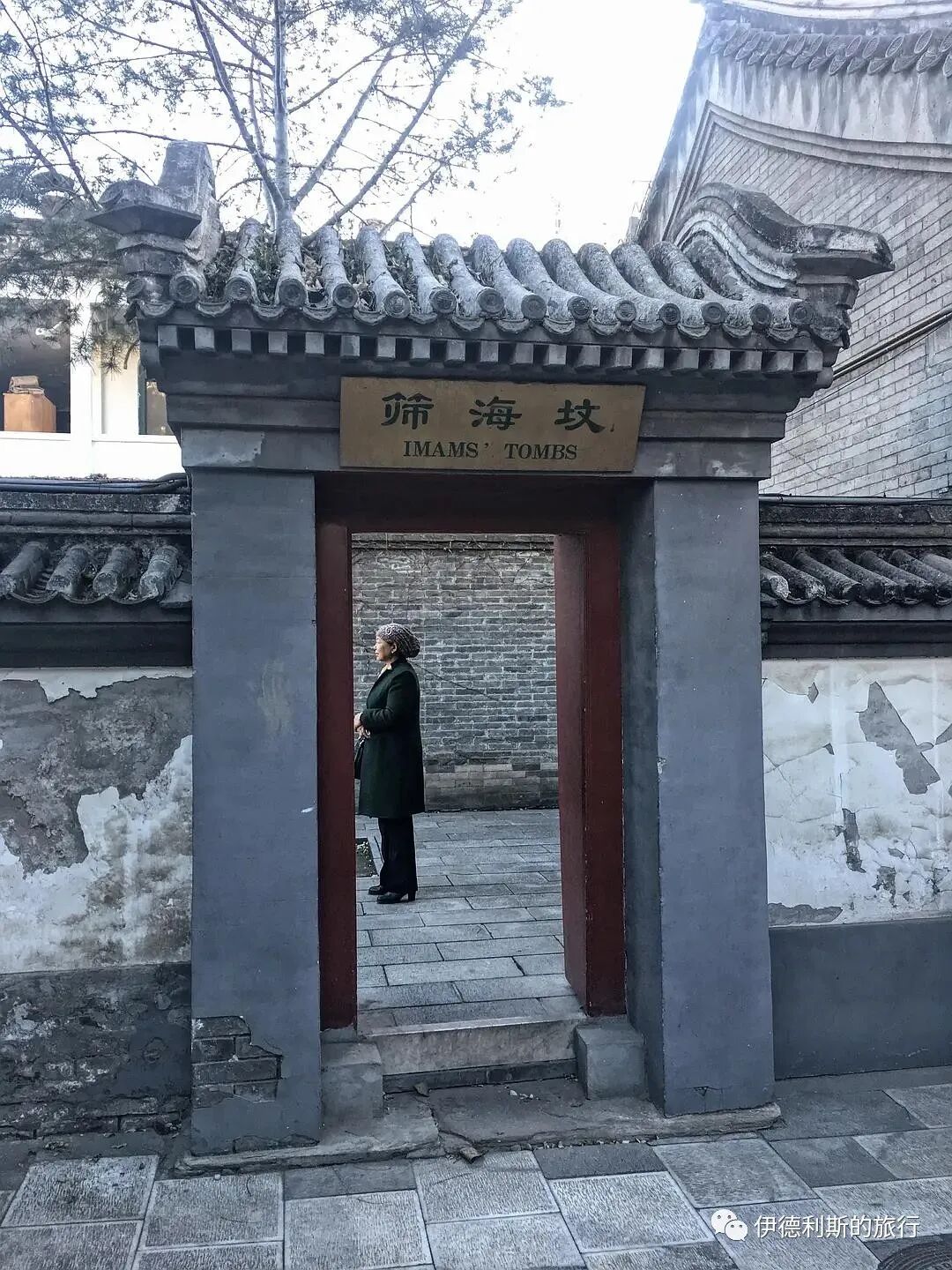
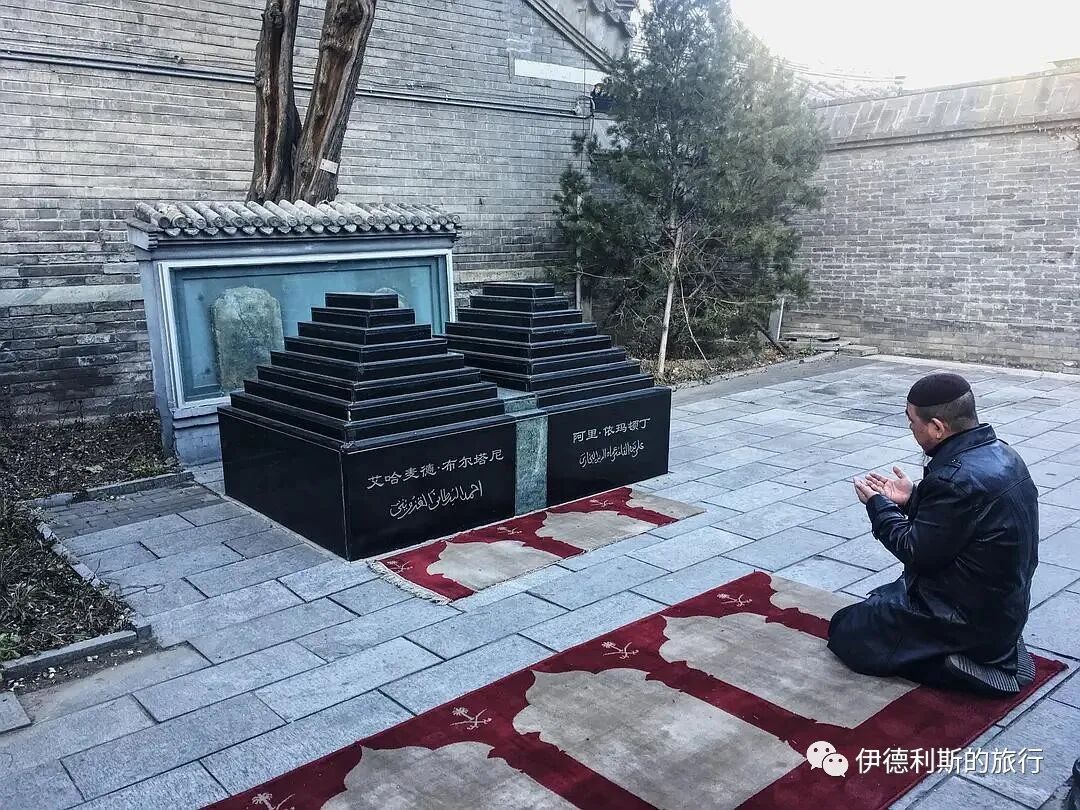
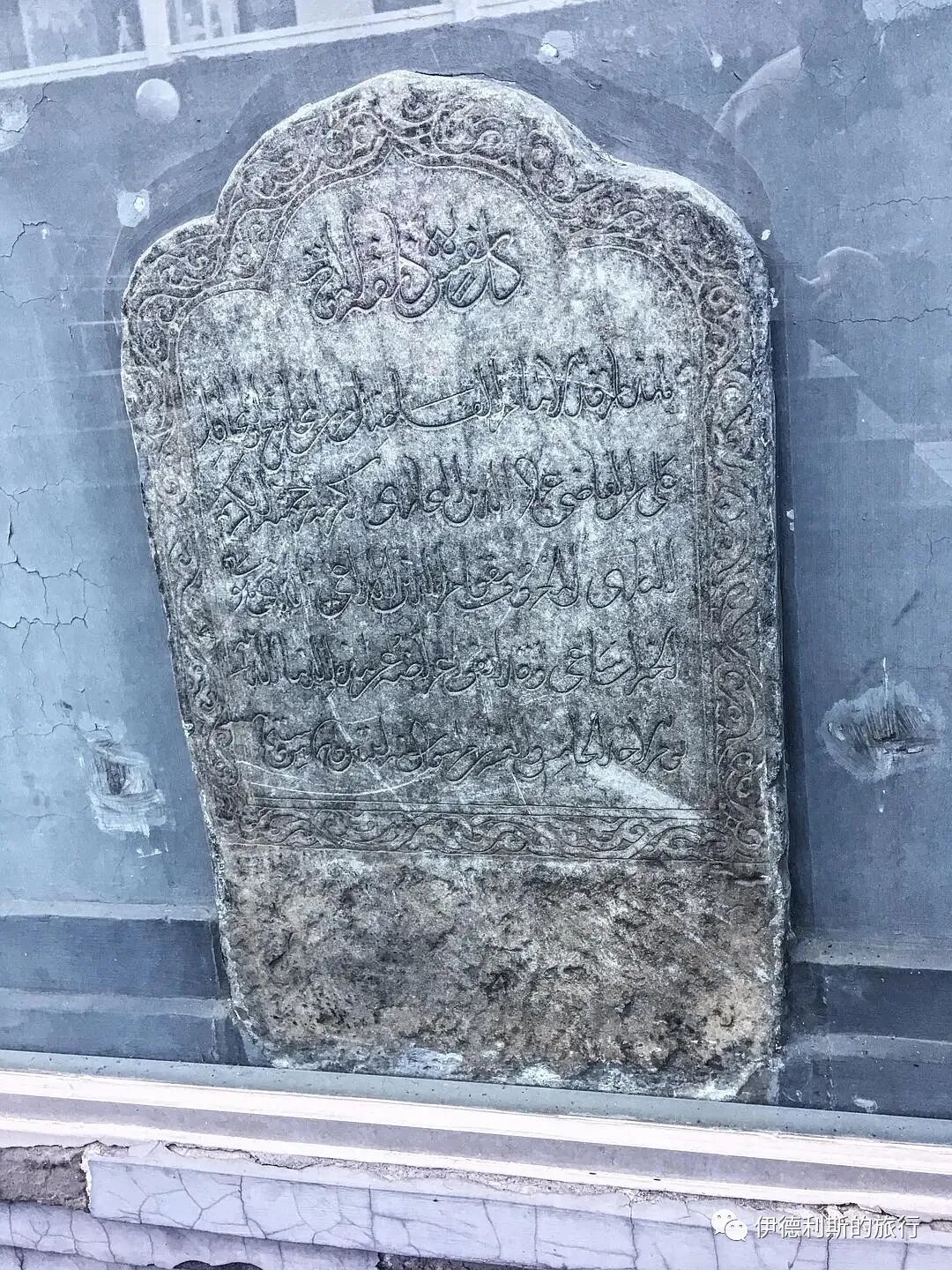
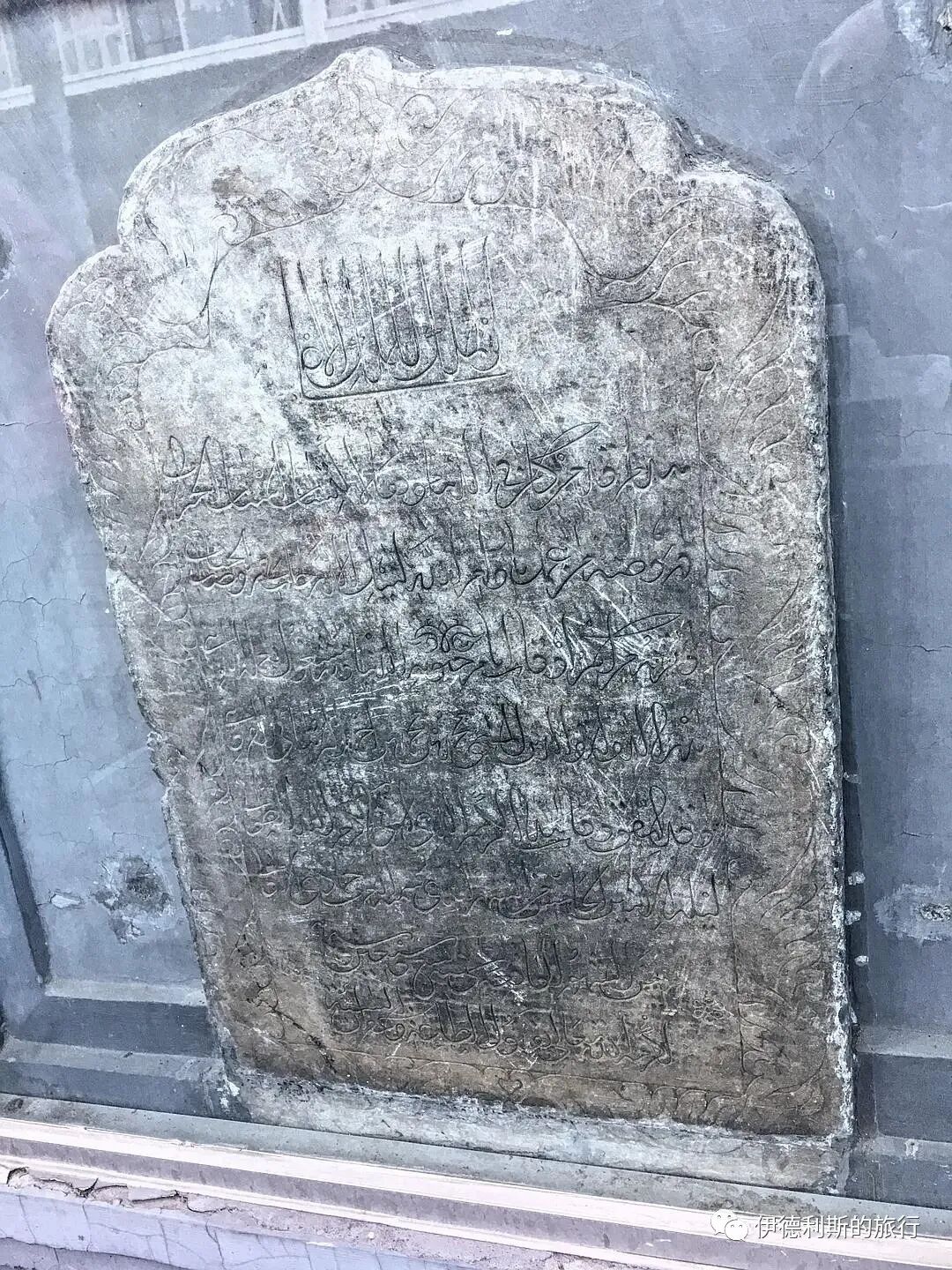
According to the Republic of China era Beijing City Annals, after the Song Dynasty moved south, two men came from the West. One was Muhammad, the grandson of Sheikh Ahmed Burtani, from Ghazni in the Western Regions. The other was Ali, the son of Sheikh Imad al-Din, from Bukhara in the Western Regions. They lived in the mosque, spoke with great eloquence, and carried themselves with elegance. After they passed away, they were buried in the mosque. Their tombs remain there today, and the inscriptions on the tombstones still serve as proof.
It is now generally accepted that Ali Imad al-Din came from the ancient Central Asian city of Bukhara. However, the birthplace of Ahmed Burtani varies significantly across different translations. According to the translation by Zhao Zhenwu, a famous Hui Muslim scholar and teacher at Chengda Normal School during the Republic of China era, Ahmed Burtani came from Ghazni, an ancient city in Afghanistan. This is the version widely used today. Ma Jinpeng, who studied at Al-Azhar University in Egypt and later became an Arabic professor at Peking University, translated it as 'E'lu' and noted it was a place near Medina. Additionally, the Niujie Mosque once kept a wooden plaque from the Qianlong period of the Qing Dynasty, commonly known as the 'White Plaque,' which stated he came from 'Alepu,' the ancient Syrian city of Aleppo.
The ancient cities of Bukhara and Ghazni were incorporated into the Mongol Empire in 1220 and 1221, respectively, during Genghis Khan's western campaign against the Khwarazmian Empire. Aleppo was captured by Hulagu Khan in 1260, but it was soon recaptured by the Mamluk Sultanate of Egypt. The expansion of the Mongol Empire removed travel barriers across the Eurasian interior, and Muslims from Central and West Asia began to enter China in large numbers.
According to the Yuan dynasty collection Qiujian Ji, there were 2,953 households of Hui Muslims in Beijing by 1263, most of whom were wealthy merchants. Before the Yuan dynasty finished building the capital of Dadu in 1285 and ordered residents to move in, most people lived in the old city of Zhongdu from the Jin dynasty. Niujie was located in the heart of this old city and was the most important residential area for Muslims in Beijing at the time.
Cultural Exhibition Hall
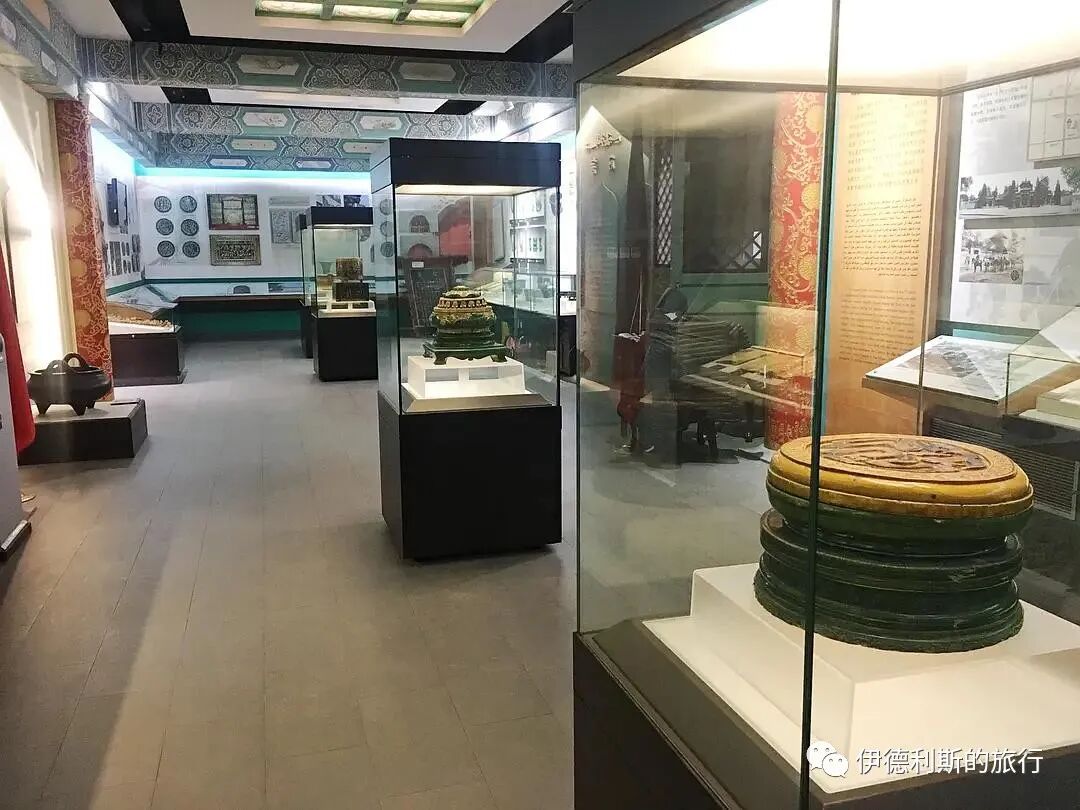
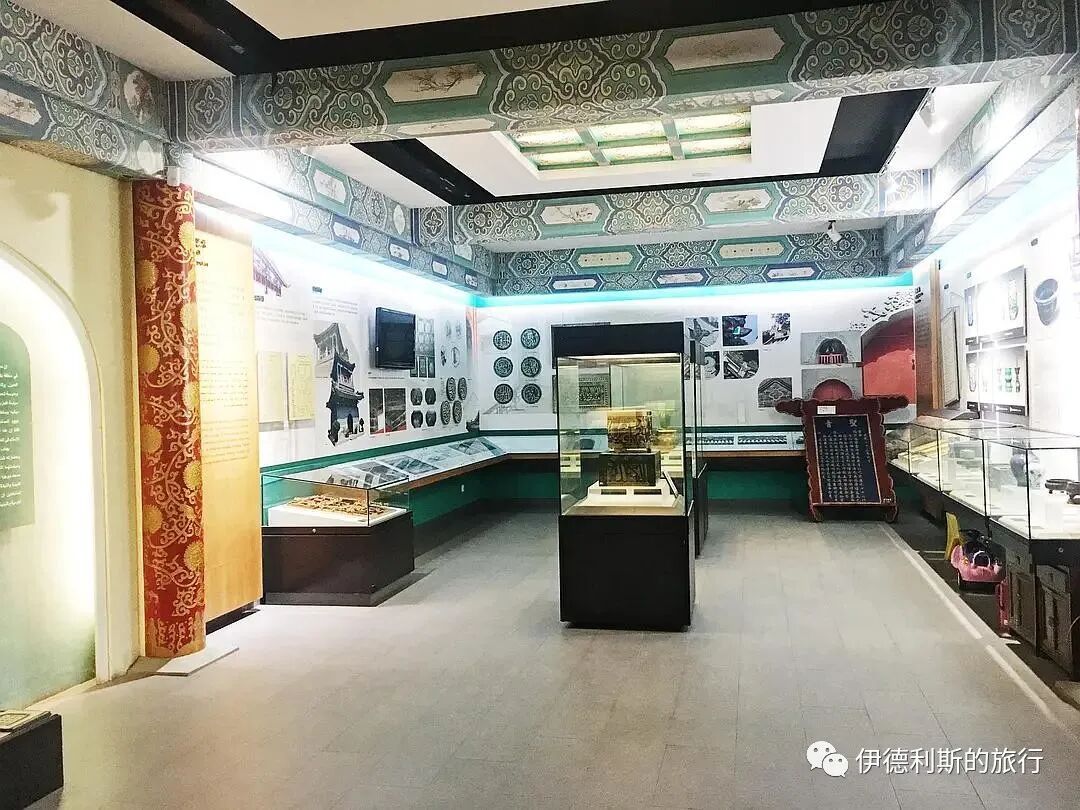
On the east side of the Niujie Mosque stands a building with seven large tiled rooms, commonly known as the Seven Rooms (qijianfang). It was first built in 1442 during the seventh year of the Zhengtong reign. The main rooms were used for teaching scriptures, while the side rooms were used to store them. Today, it serves as a cultural exhibition hall.
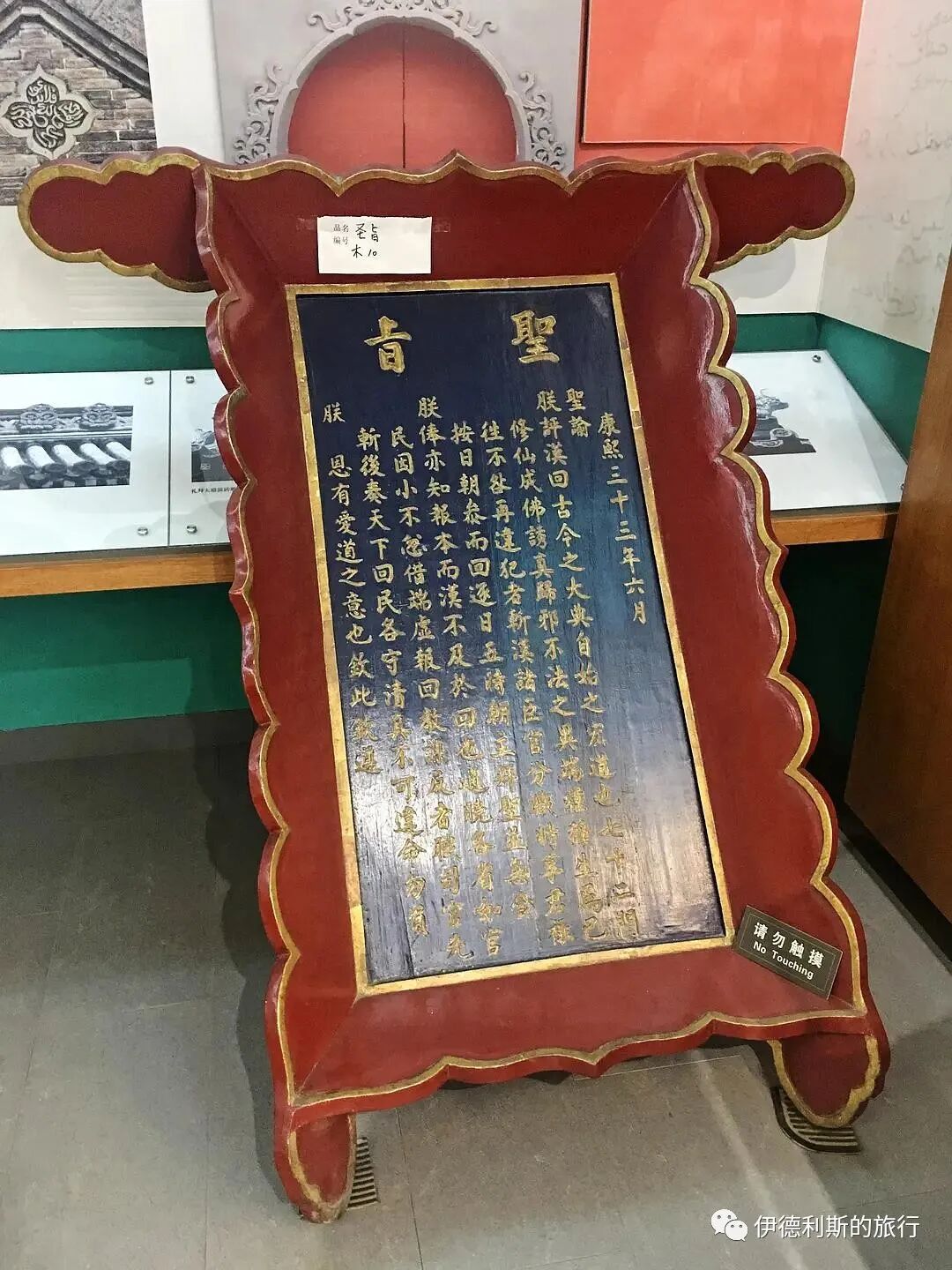
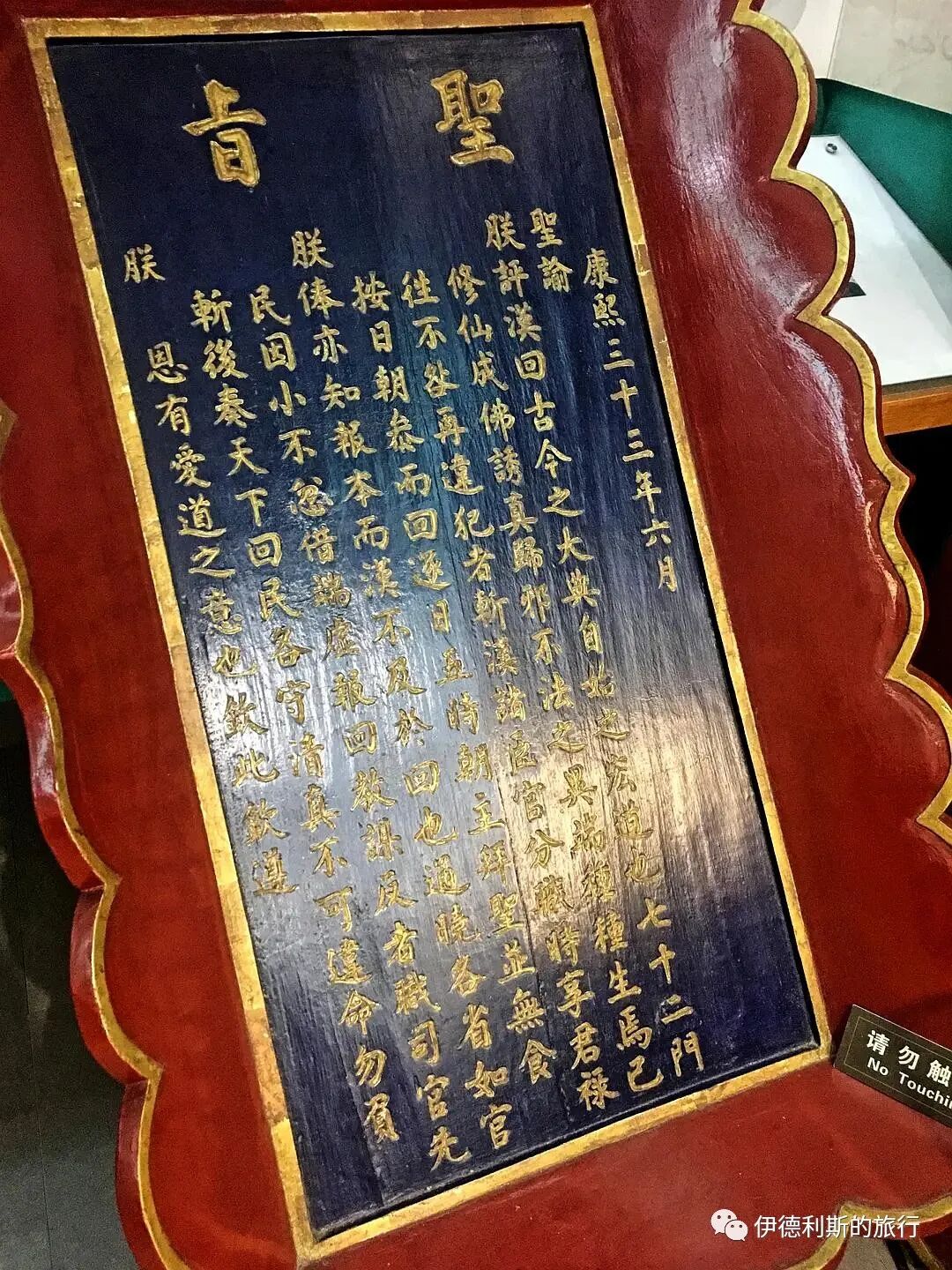
Inside the cultural exhibition hall is a plaque featuring an imperial edict from the Kangxi Emperor, which reads: Inform all provinces: if officials or civilians hold grudges over minor matters. And falsely accuse Muslims of plotting a rebellion, officials in charge have the authority to execute them first and report it later. Hui Muslims across the land must follow their faith and not disobey this order, so as not to betray my grace and my intention to protect the path.
Legend has it that in March 1694, during the month of Ramadan, the Kangxi Emperor received a secret report from Li Yu, the official in charge of the southern city of Beijing, claiming that the Muslims of Niujie were gathering at night to plot a rebellion. The Kangxi Emperor asked the Grand Councilors Niu Xi and Wang Xi, who lived near Niujie, and neither of them had heard anything about it. Emperor Kangxi traveled in disguise with two ministers. One night, he saw many people praying Taraweeh inside the brightly lit Niujie Mosque. Seeing they were doing nothing wrong, he issued an imperial decree.
Additionally, the Niujie local chronicle "Gangzhi," copied by Shen Fengyi during the Daoguang era (and likely written during the Yongzheng era), records that in 1694, the Niujie Mosque imam Saiyide Ma Tengyun was involved in a spy case. The story goes that Galdan of the Dzungar Khanate sent two Hami Muslims to Beijing as spies, and Ma Tengyun of the Niujie Mosque often hosted them for meals. Later, one of the men was caught by the Lifanyuan (Court of Colonial Affairs) guards, and he named Ma Tengyun. The Lifanyuan immediately arrested Ma Tengyun and Yin Liangxiang from the Jiaozihutong Mosque, while the city patrol troops blocked off Niujie. The Lifanyuan petitioned to slaughter all Hui Muslims in the capital, but Kangxi rejected the request. Kangxi ordered, "The Hui Muslims of the capital are also my children... just strictly hunt down the spies, do not implicate innocent people." In the end, Ma Tengyun and Yin Liangxiang were released, and mosques across Beijing held prayer services to give thanks. This event matches the timing and content of the imperial decree stele, and it is likely the reason the decree was issued.
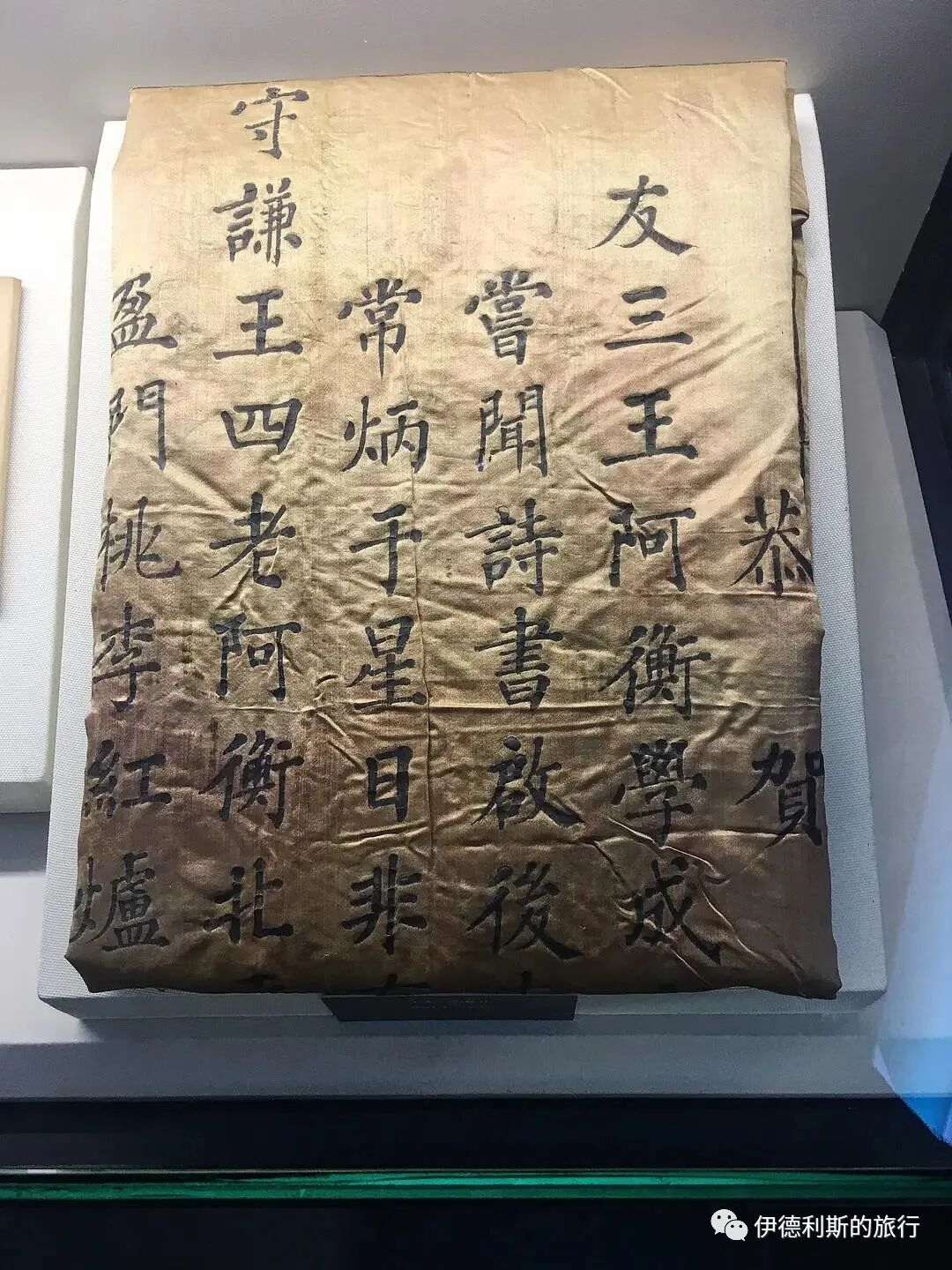
A hanging scroll for Imam Wang Yousan from 1868 (the seventh year of the Tongzhi era). Imam Wang Yousan, whose given name was Zhenyi and courtesy name was Yousan, was known as "Yibaba" and came from a family of Niujie imams. Chunfeng Hutong in Niujie was originally called Wang Laoshifu Hutong. It sits right next to the south side of the Niujie Mosque and was named after the Wang family who lived there for generations. The words 'Shouqian Wang Si Lao Aheng' on the left side of the banner refer to Imam Wang Shouqian, the father of Imam Wang Yousan. He was a very famous imam in Niujie, known as Master Wang Si, and was hailed as the 'leading authority on Islamic scripture in the North'.
Inside the Niujie Mosque stands a stone tablet from 1903, written by Xu Qi, a cabinet scholar and vice minister of the Ministry of Rites. It is titled 'Stele Describing the Virtuous Deeds of Wang Yousan and Haoran in Protecting the Hui Muslim Community' and records two heroic acts by Imam Wang Yousan.
The first story tells of 1900, when the Eight-Nation Alliance entered Beijing and bandits in the city took the chance to loot, throwing society into chaos. Niujie Mosque Imam Wang Yousan and his nephew, Imam Wang Haoran, organized the local families to watch over and help each other. They punished those who broke the law, which finally saved Niujie from disaster.
The second story tells of 1902, when the Qing government built a railway and planned to tear down the Hui Muslim cemetery at Sanlihe outside Xibianmen. Imam Wang Yousan and Imam Wang Haoran used their connections with local elders to find the minister in charge of the railway to negotiate. In the end, the Qing government decided to change the plans and build around the Sanlihe Hui Muslim cemetery.
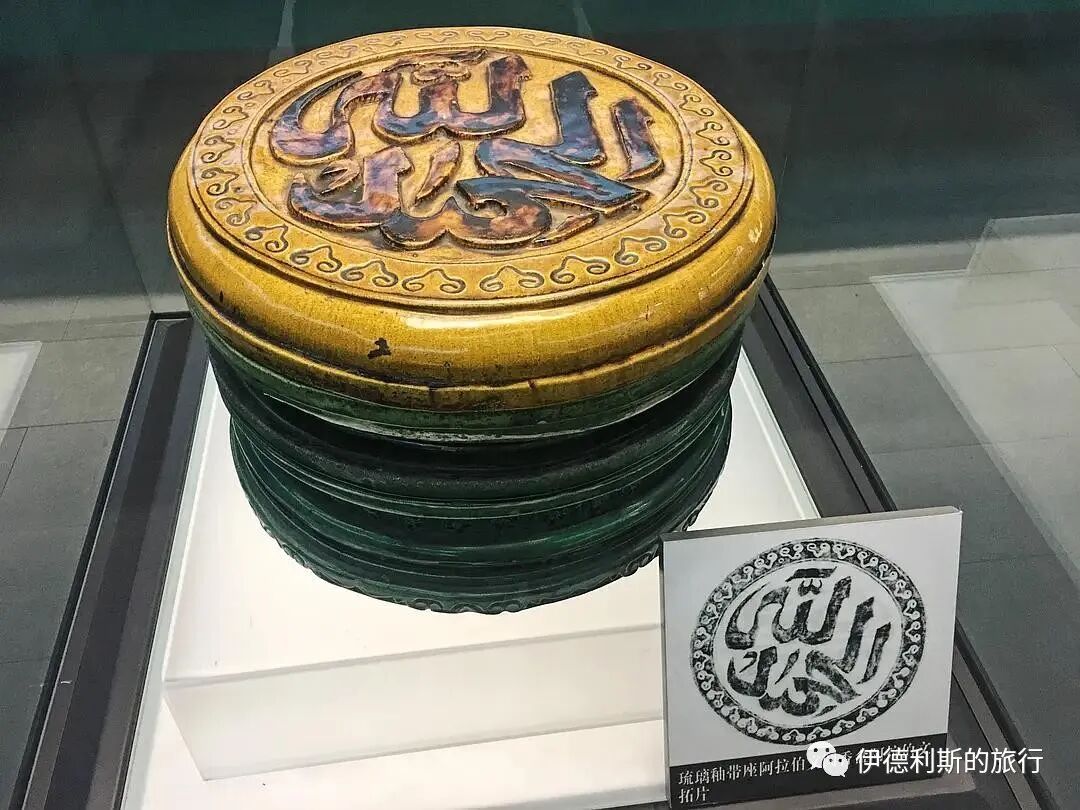
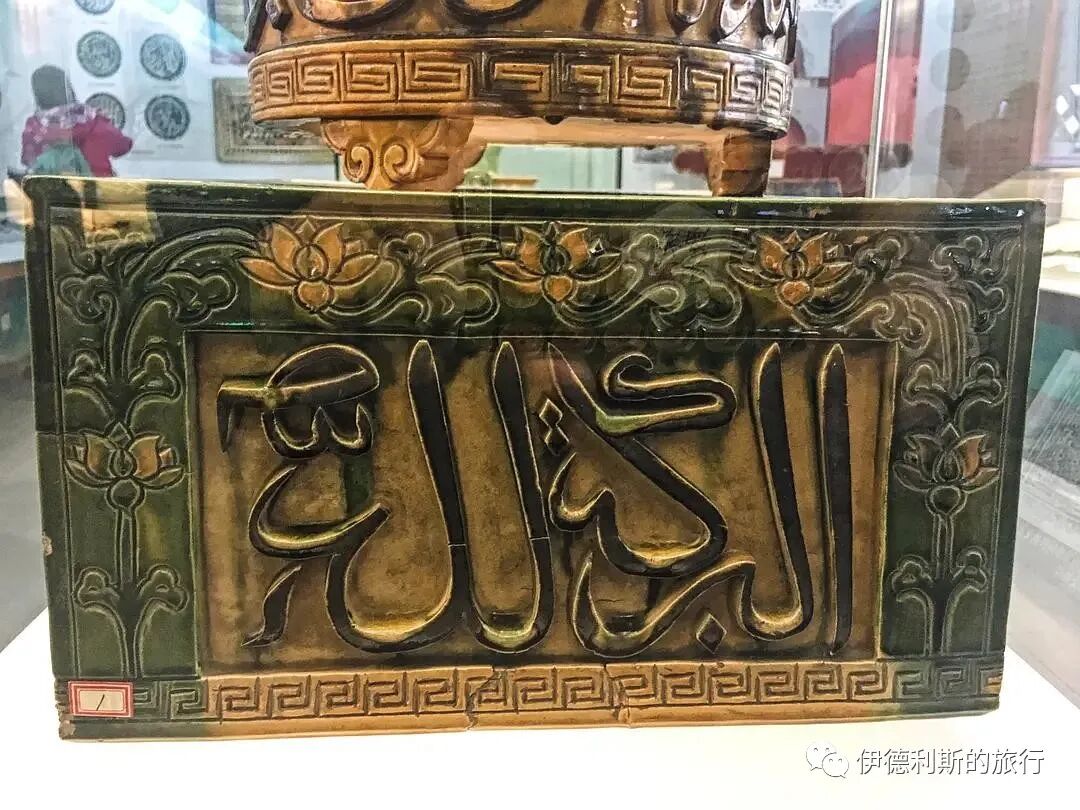
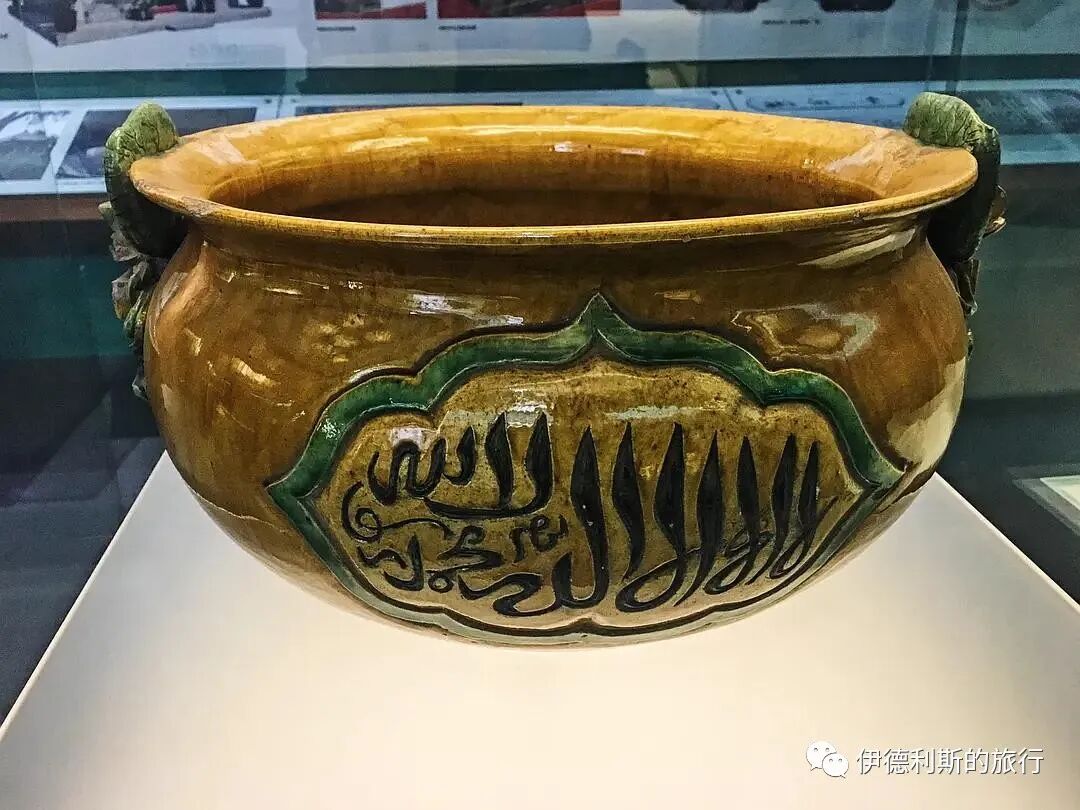
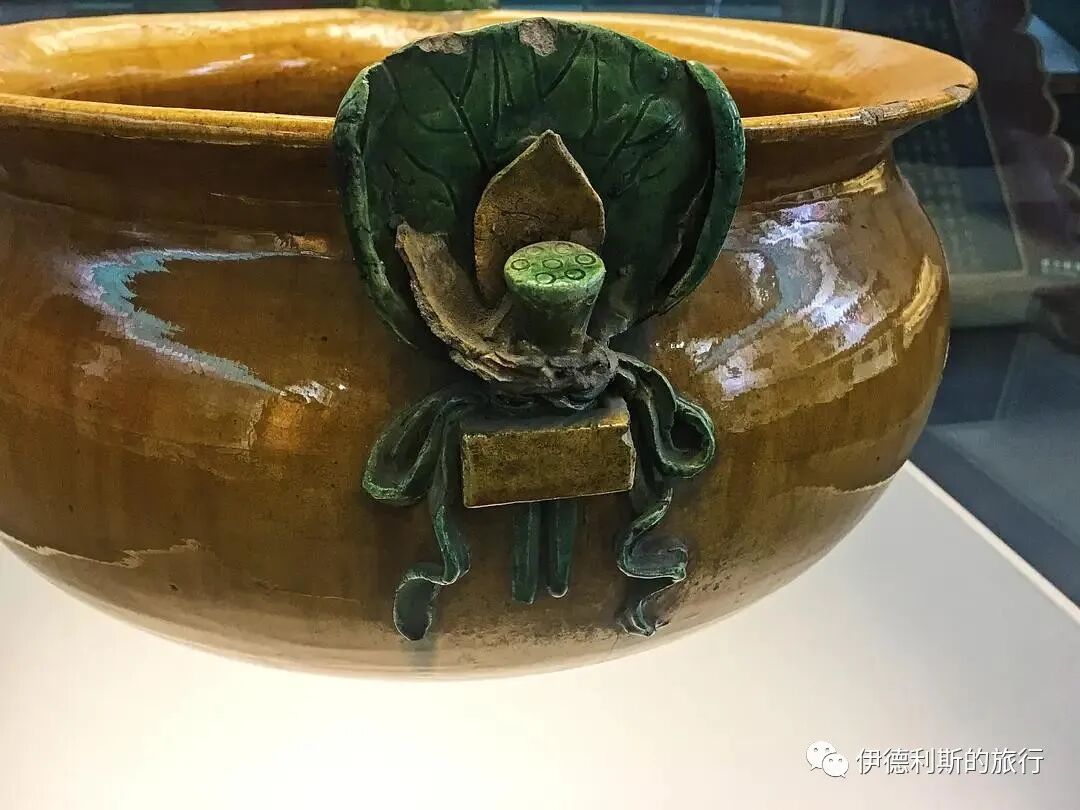
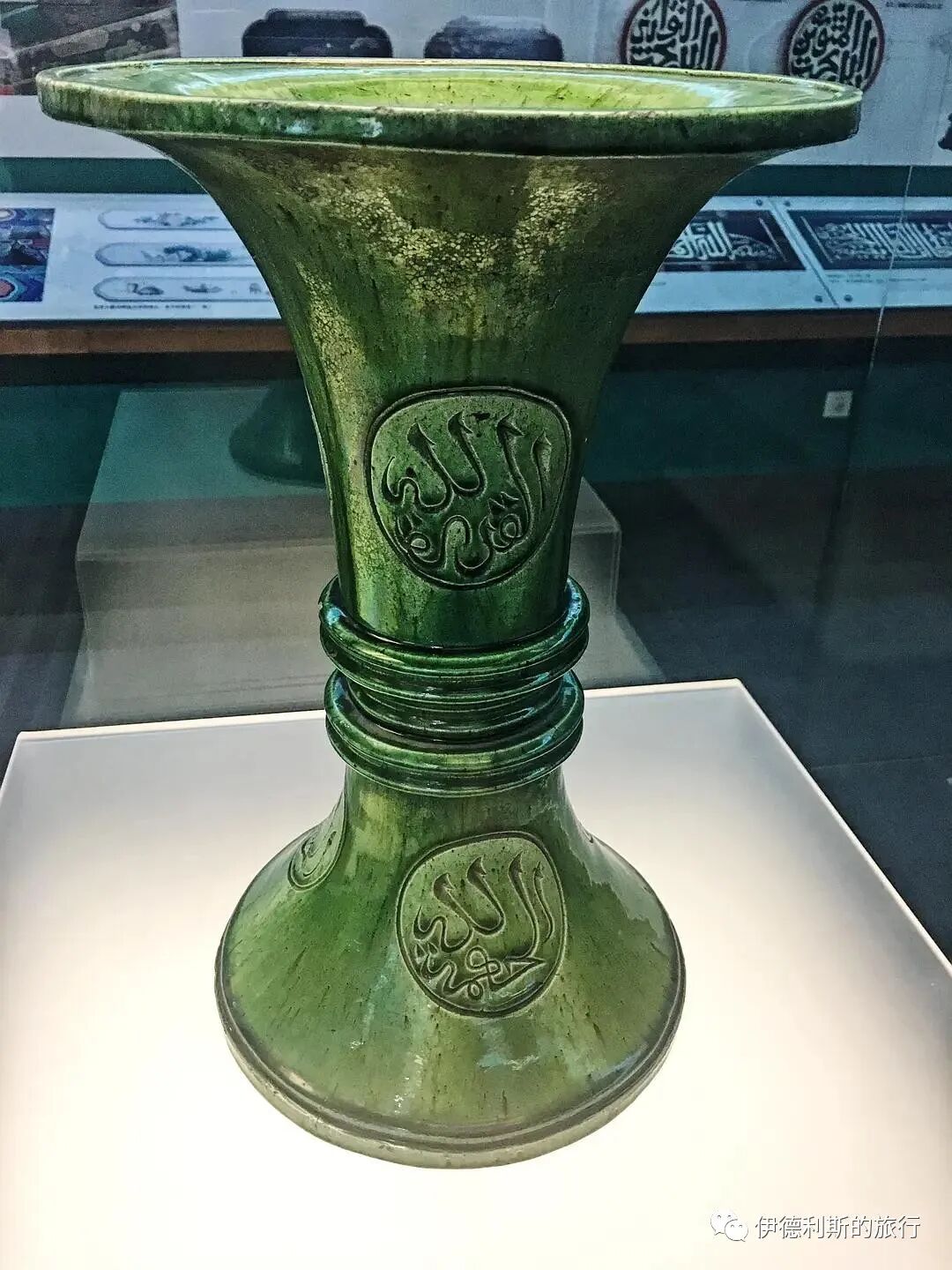
Glazed glassware from the Kangxi era
Incense box with Arabic calligraphy
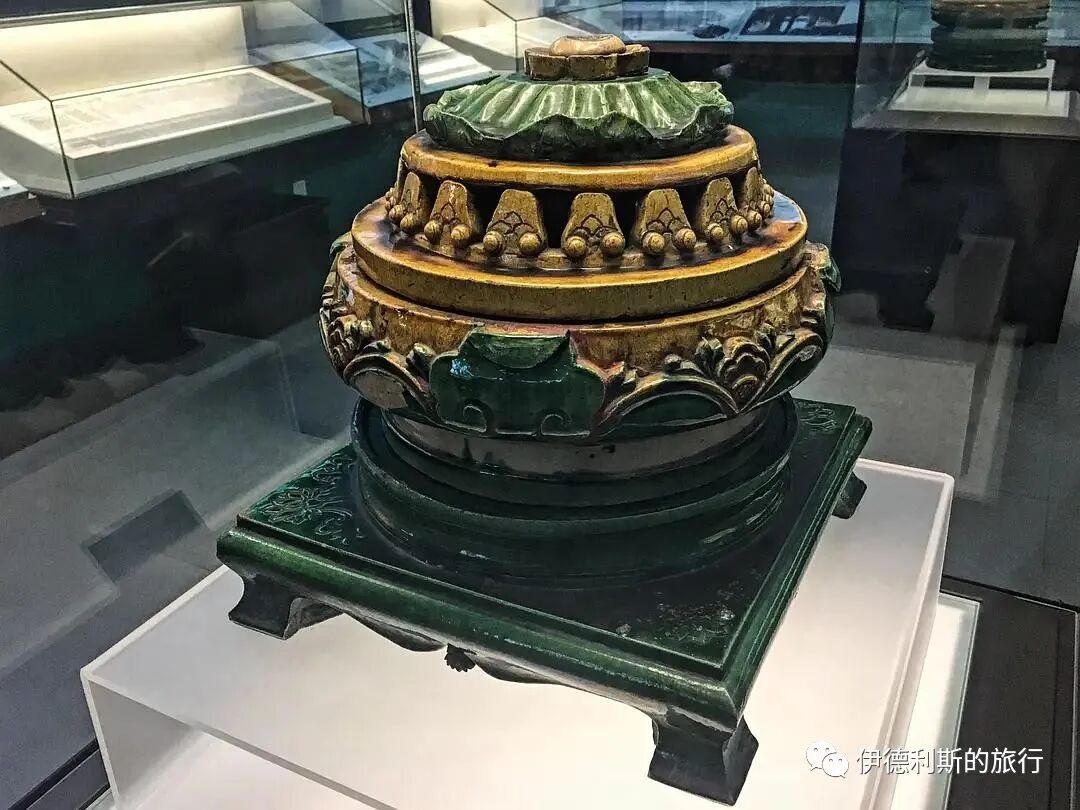
Lotus-shaped incense burner
Three-legged incense burner with cloud-shaped handles and Arabic calligraphy
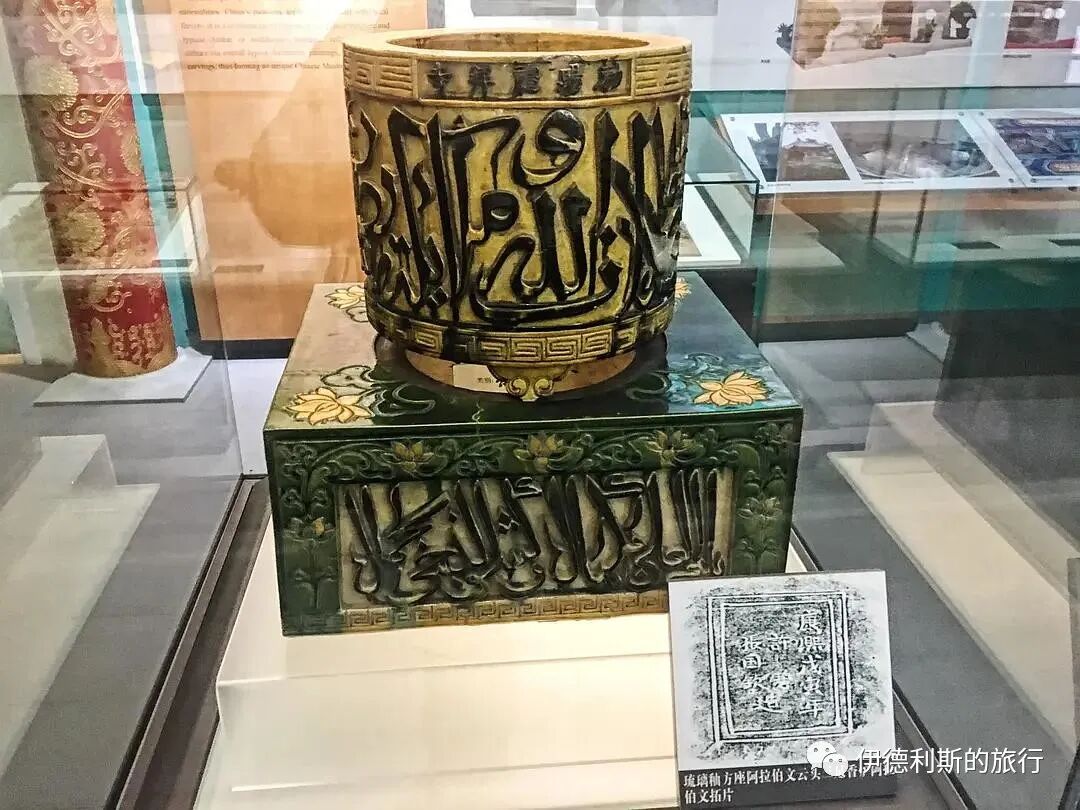
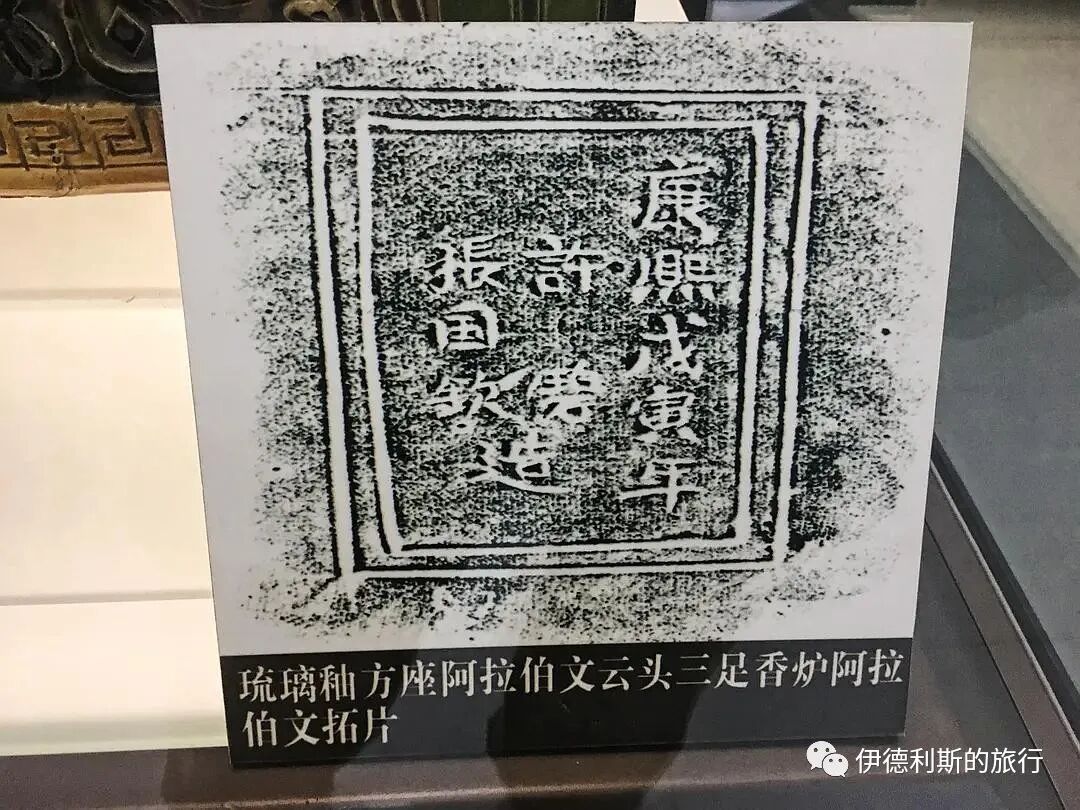
Lotus-shaped incense burner with two handles and Arabic calligraphy
Vase (gu) with Arabic calligraphy
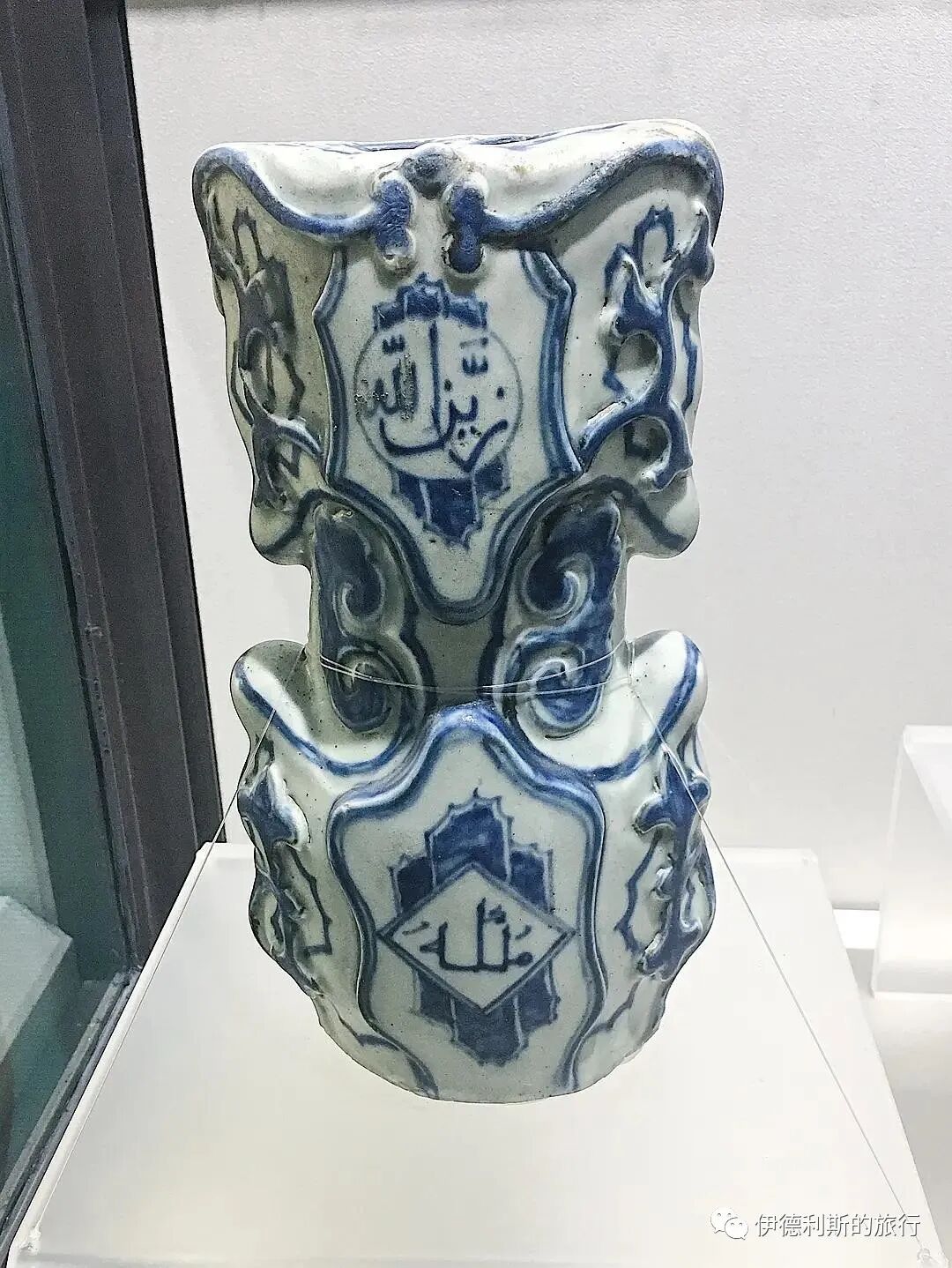
Ming Dynasty blue and white flower vase with Arabic calligraphy and unique shape
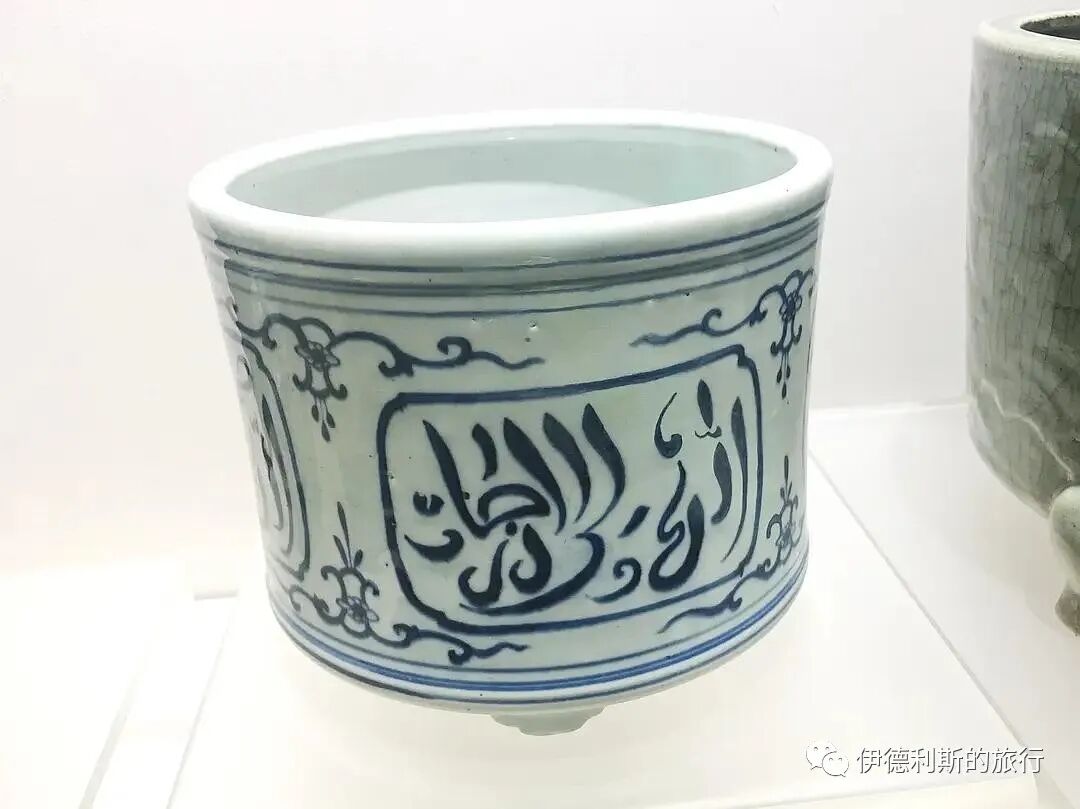
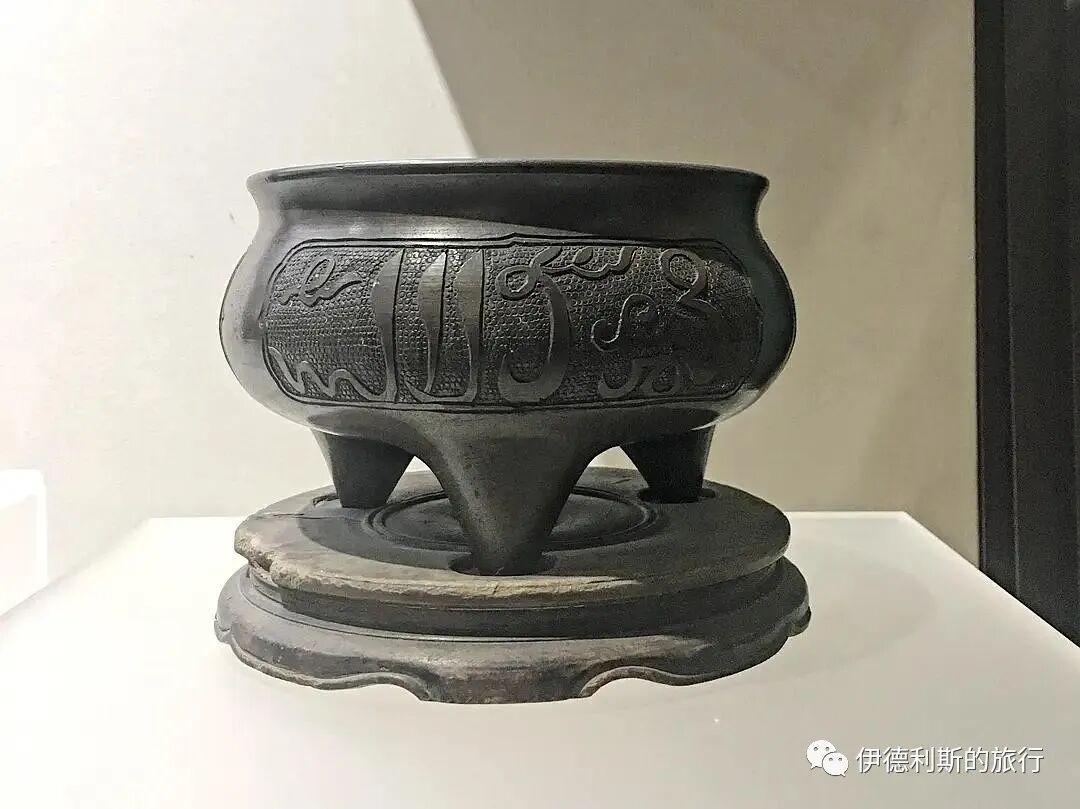
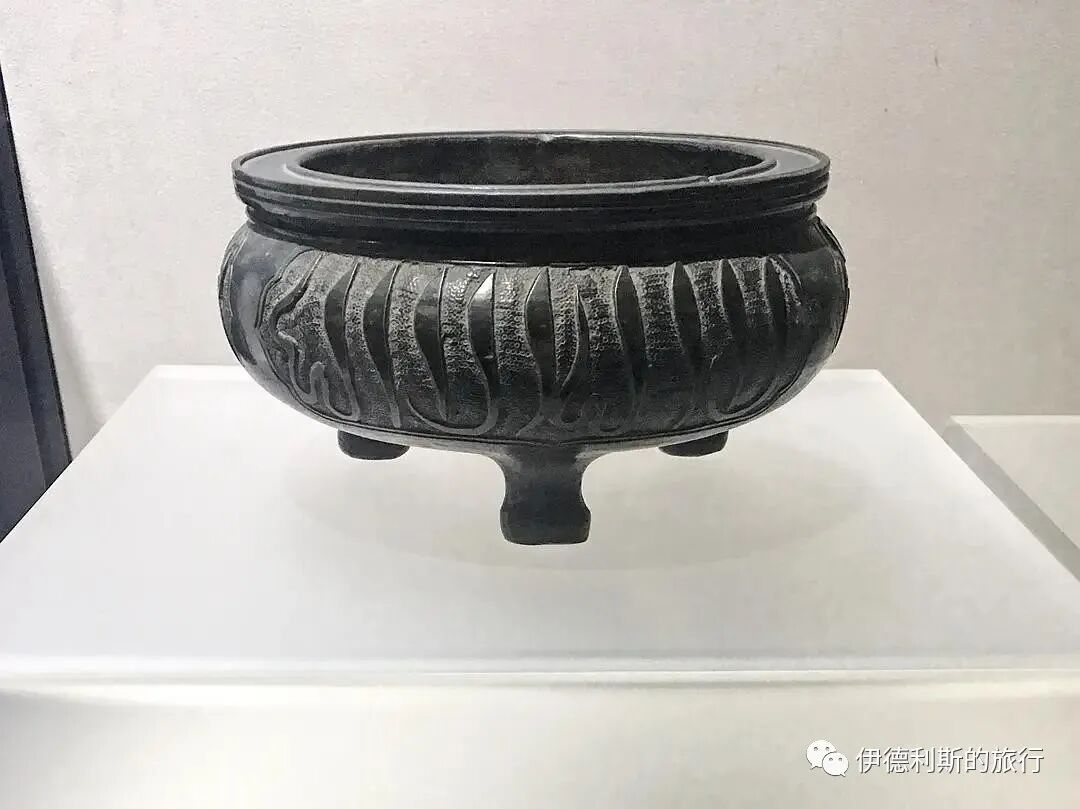
A Ming Dynasty Zhengde period blue and white porcelain tripod incense burner with Arabic calligraphy.
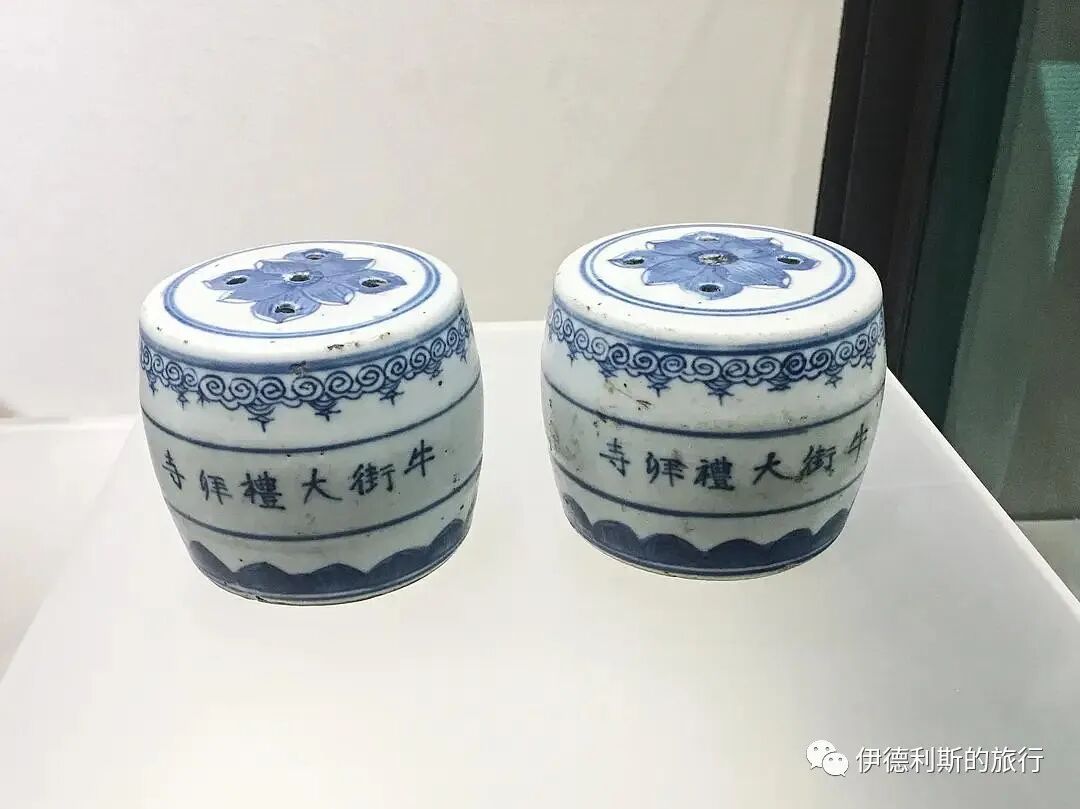
A Qing Dynasty cloud-shaped incense holder inscribed with the words Niujie Great Mosque (Niujie Da Libaisi).
A Qing Dynasty bronze tripod incense burner with Arabic calligraphy.
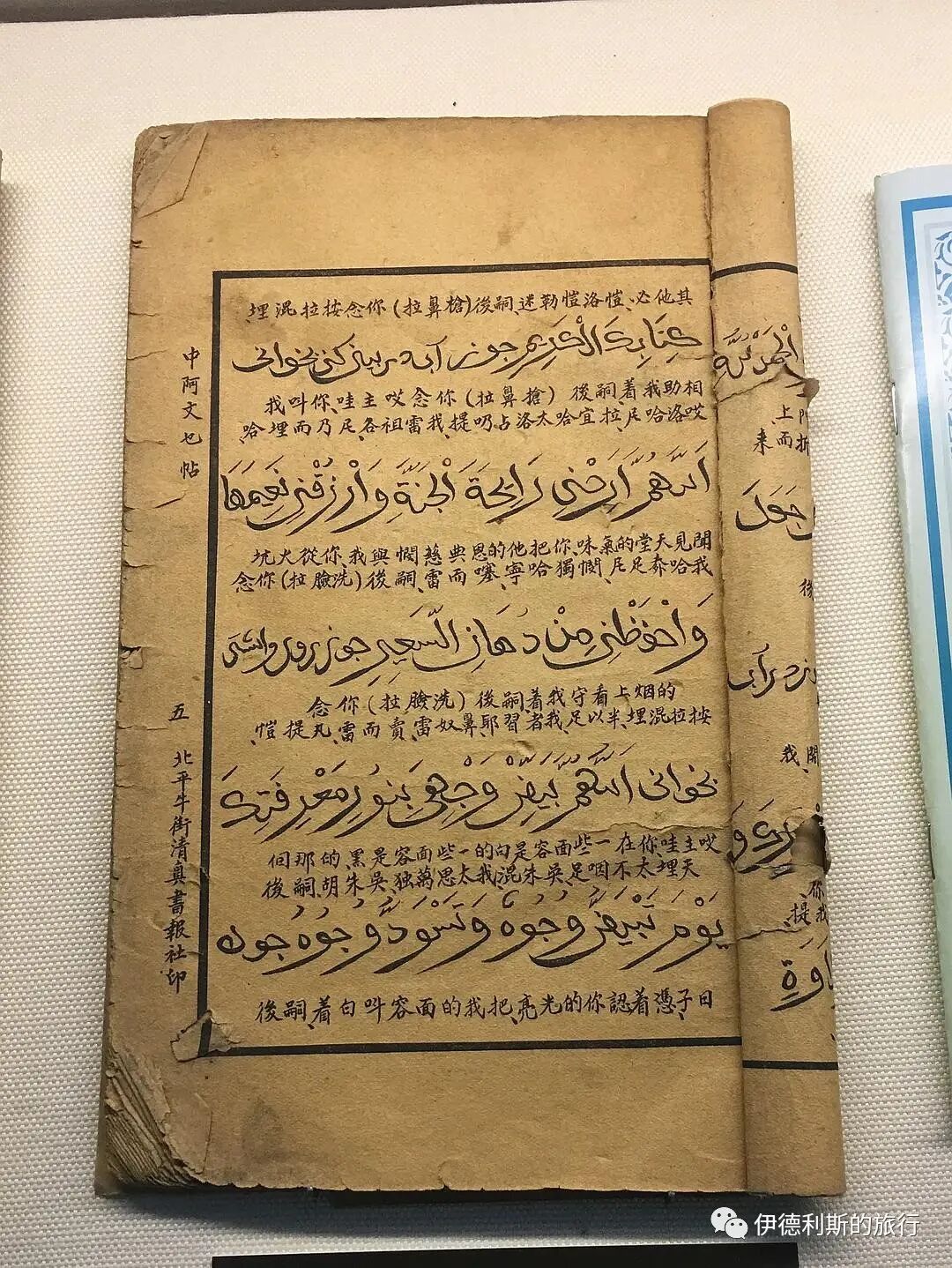
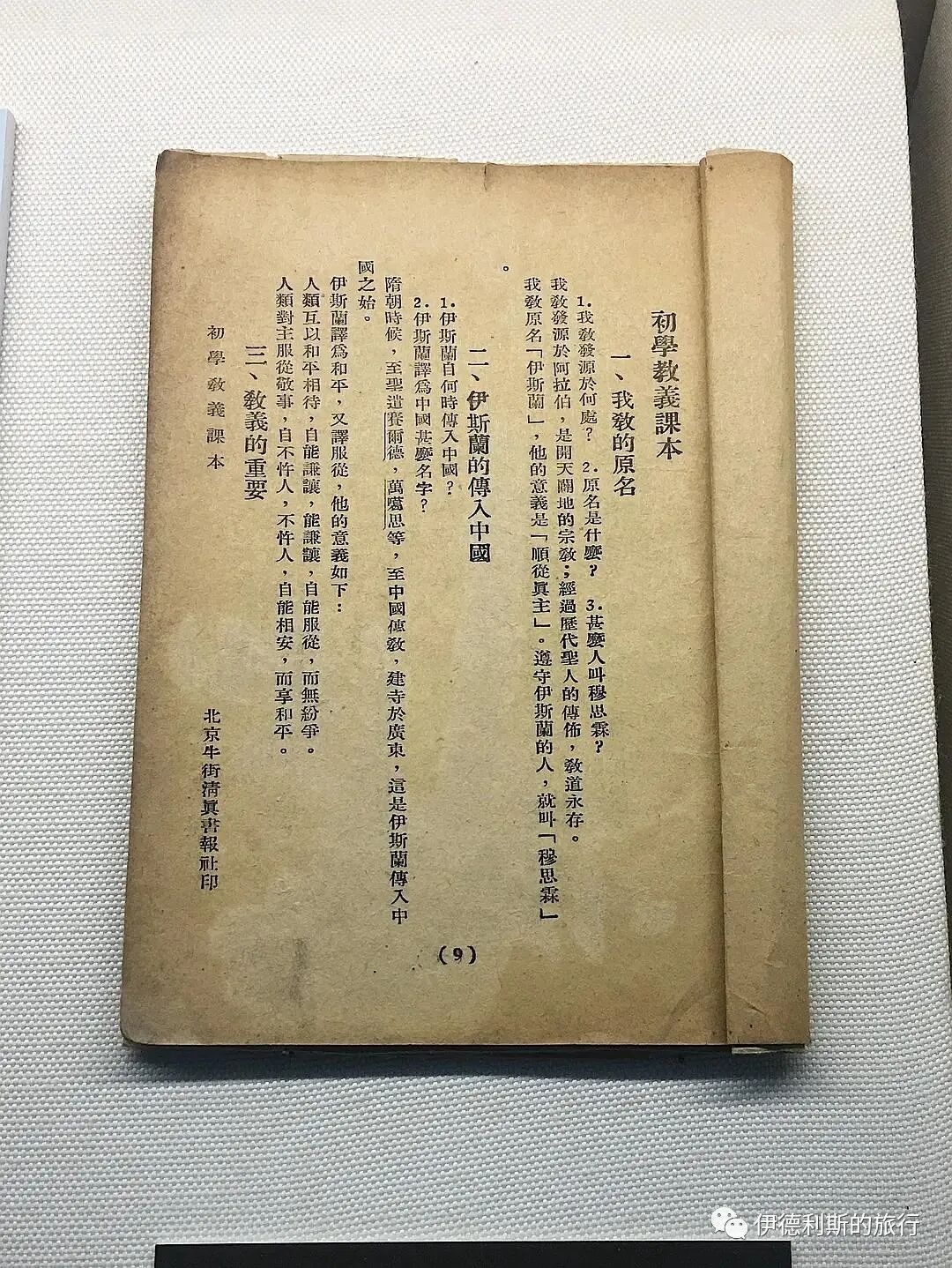
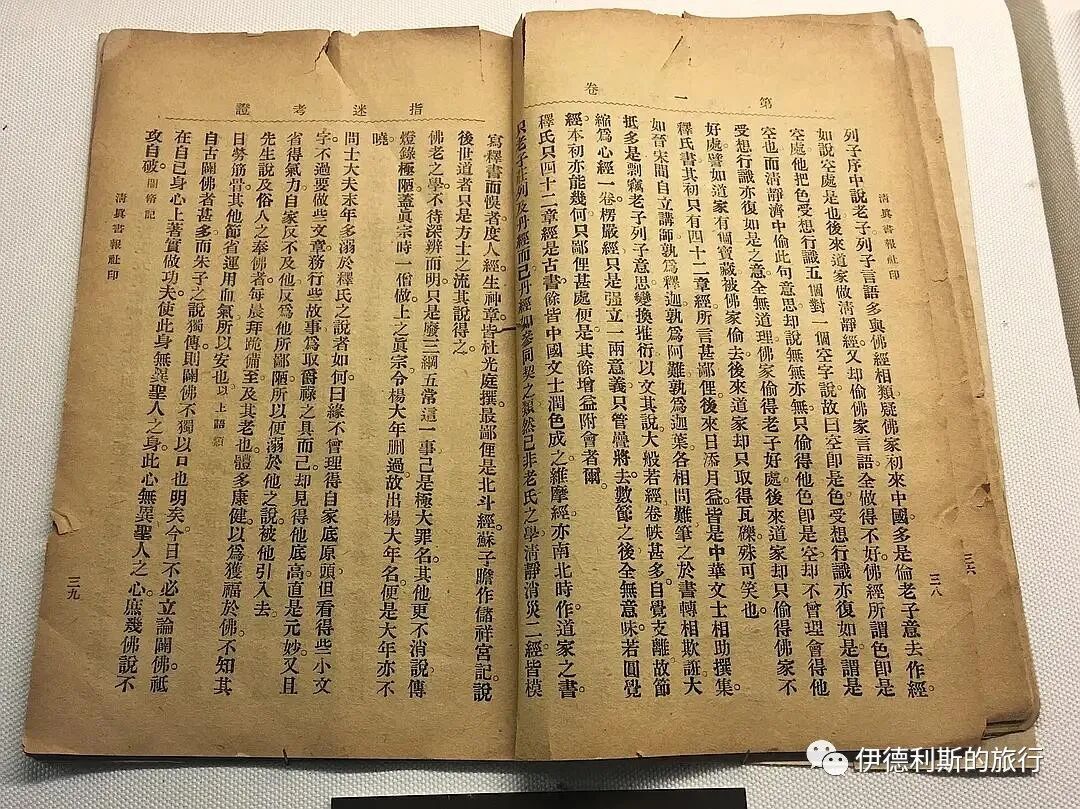
Books published by the Niujie Islamic Press including 'Chinese-Arabic Mieta', 'Beginner's Doctrine Textbook', 'Verification of Doubts', and 'Guide to Islam (Qingzhen Zhinan)', along with a stamp from the 'Manager Ma Kuilin Publishing House'.
The Islamic Press was founded in the early Republic of China era by Imam Ma Kuilin, a long-time resident of Niujie. In the 1920s and 1930s, it printed various religious textbooks and scholarly works that were sold across the country. After Imam Ma Kuilin passed away in 1940, his fourth son, Ma Zhongdao, continued the business until it was merged into the Xuanwu Xinhua Bookstore in 1956. After 1966, all the books from the Islamic Press held by the Xuanwu Xinhua Bookstore went missing, and Ma Zhongdao was forced to burn his own personal collection. Because of this, the books from the Islamic Press collected by Bi Jingshi have become the most precious records.
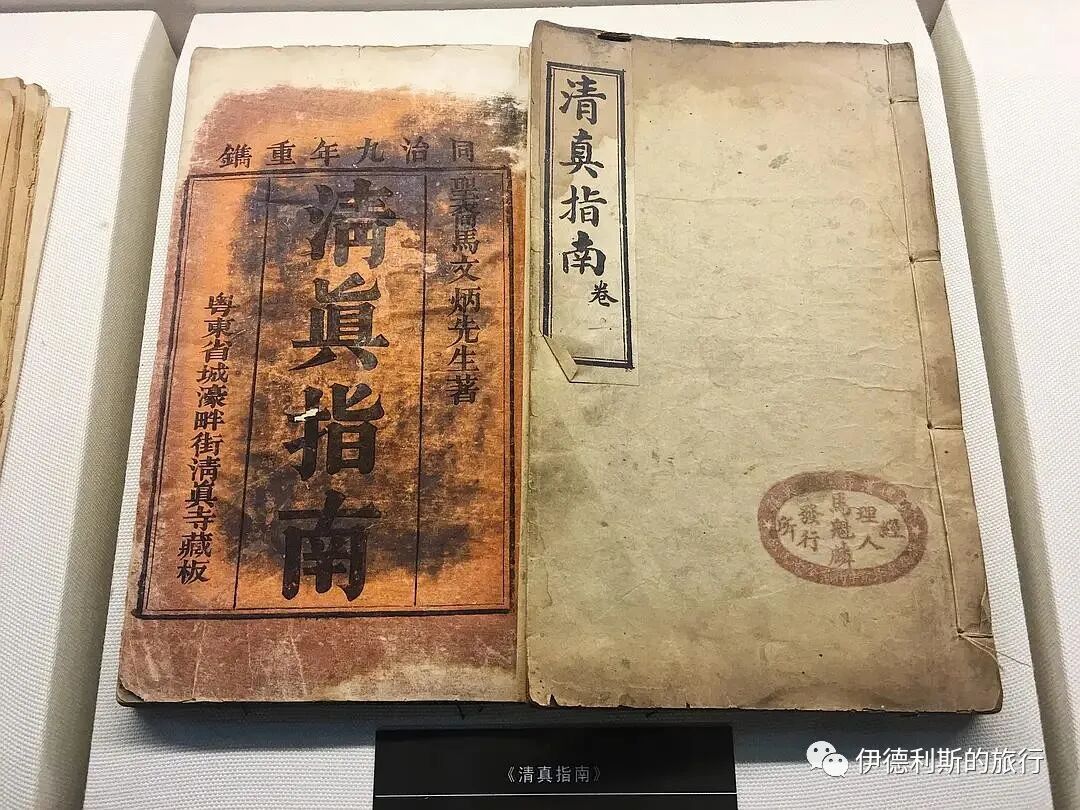
The 'Guide to Islam' on the left is printed with: 'Reprinted in the ninth year of Tongzhi, written by Mr. Ma Wenbing, a descendant of the Prophet, and held by the Haopan Street Mosque in the provincial capital of Guangdong'.
The author of 'Guide to Islam' was Ma Zhu, courtesy name Wenbing, from Baoshan, Yunnan. Born in 1640, he was said to be the 15th-generation descendant of the Xianyang King Sayyid Ajjal Shams al-Din, which is why he was called a 'descendant of the Prophet'. Ma Zhu was poor as a child but loved to learn. At 18, he was recommended as an imperial guard for the Southern Ming dynasty, but he resigned in less than two years to return home and focus on his studies. After turning 30, he left Yunnan to visit scholars and teach in various places. At the same time, he began compiling his research into the book 'Guide to Islam'. He finished the first draft at 35 and continued to add to and revise it until he finalized the text at age 70.
Ma Zhu began copying and printing the Guide to Islam (Qingzhen Zhinan) during his lifetime, but early versions are lost. The oldest surviving version is the 1811 Jinling edition. Later editions include the 1828 Chengdu Ma Da'en edition, the 1884 Guanzhong Hanyutang edition, and the 1885 Chengdu Baozhentang edition. The Niujie Mosque holds the 1870 edition printed by the Haopan Street Mosque in Guangzhou. The preface of the Haopan Street edition says that Bao Anji used the Guide to Islam as a textbook while studying at a mosque as a child. He was very sad when he lost the book later in life. In 1868, Bao Anji accidentally found the book, paid a high price to buy it, and finished reprinting it after careful proofreading.
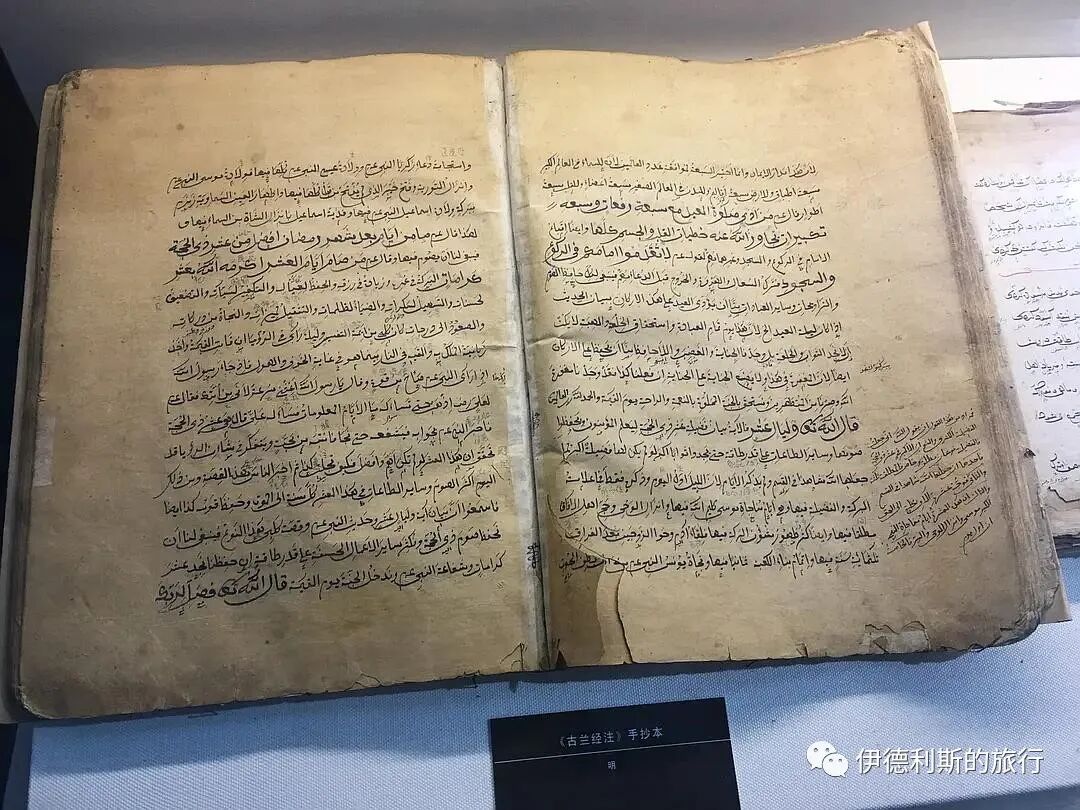
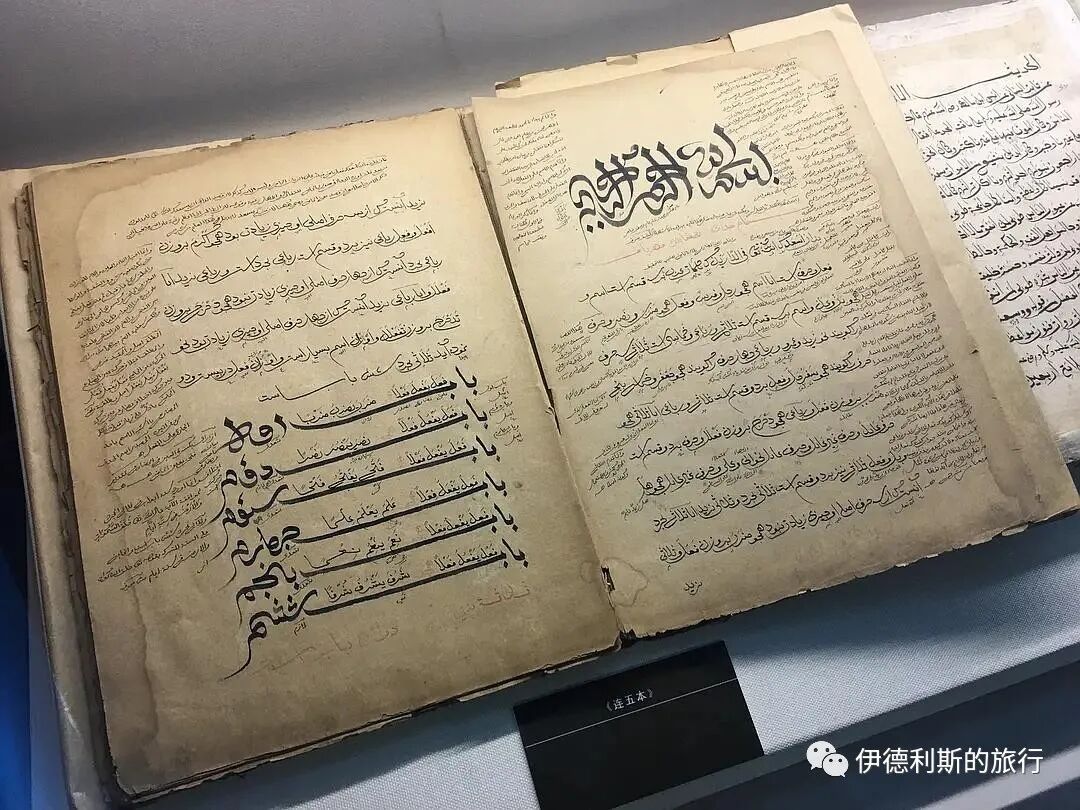
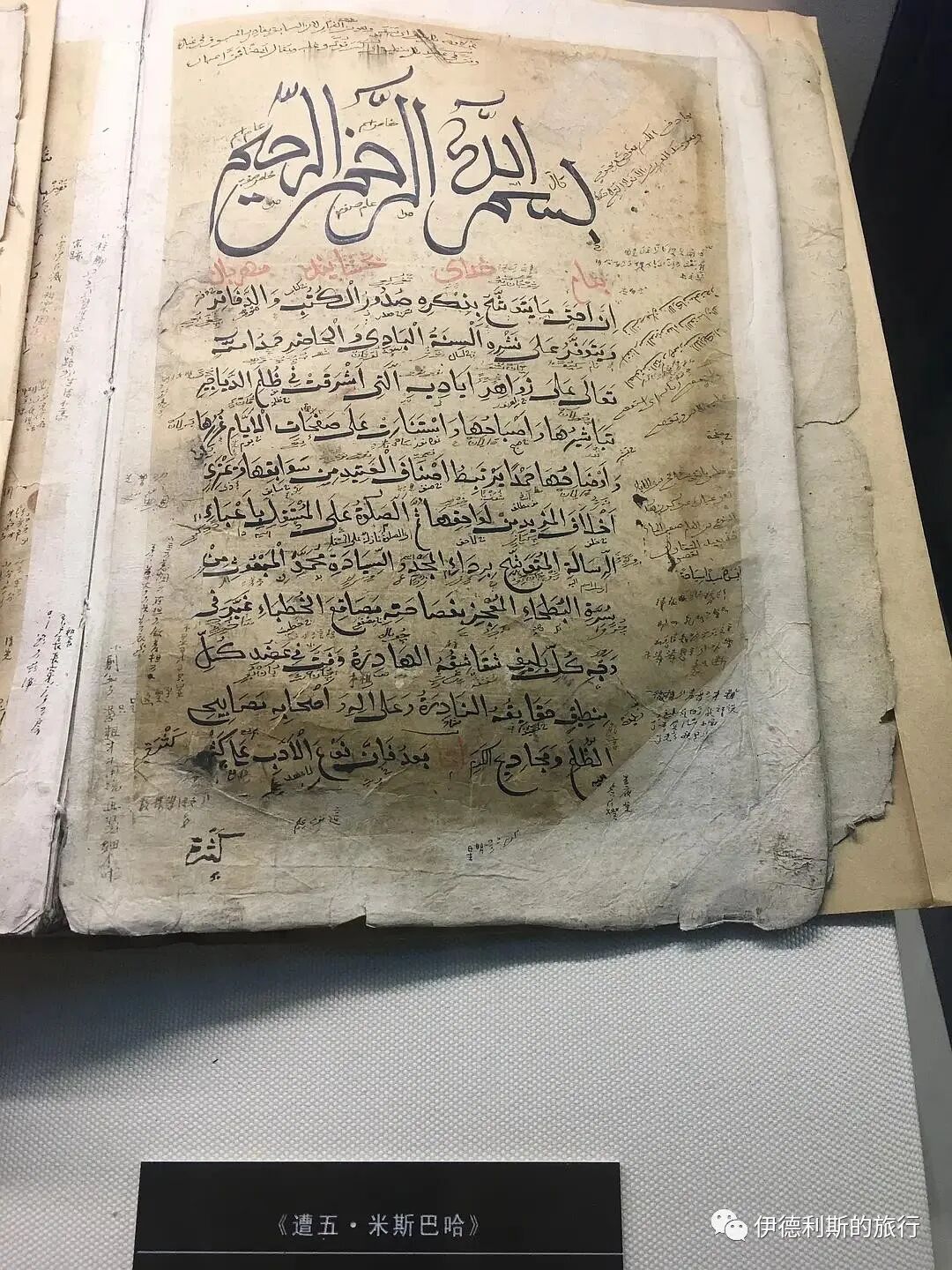
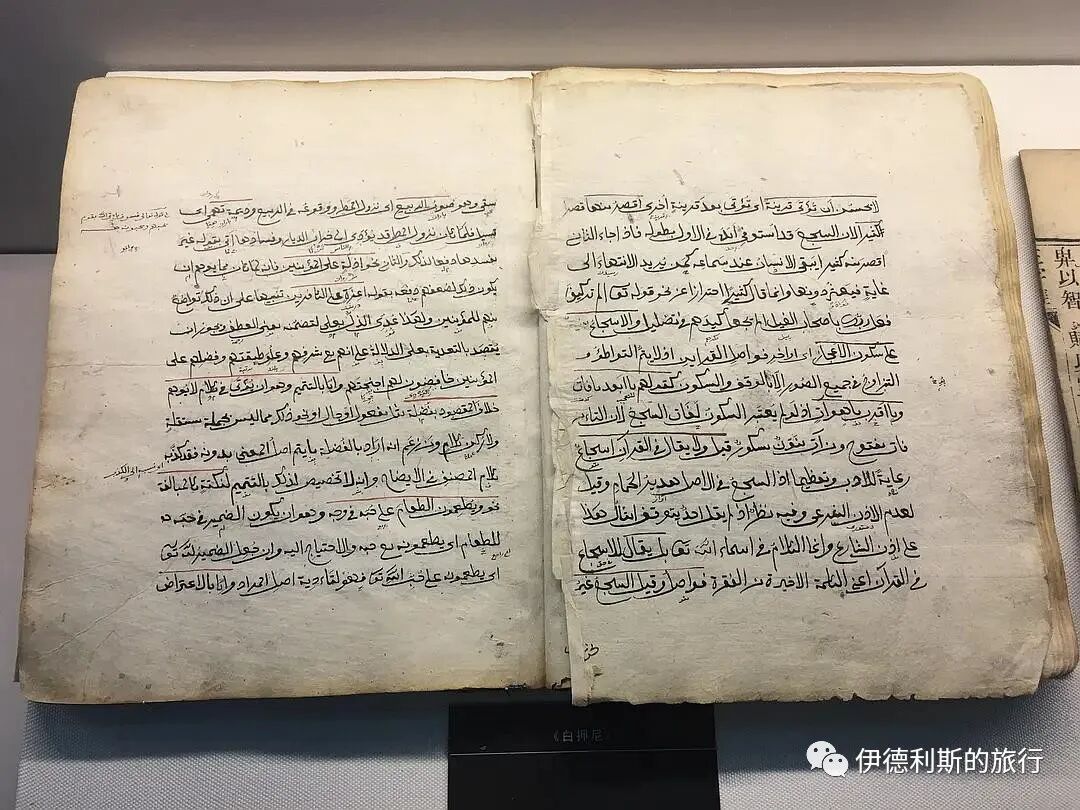
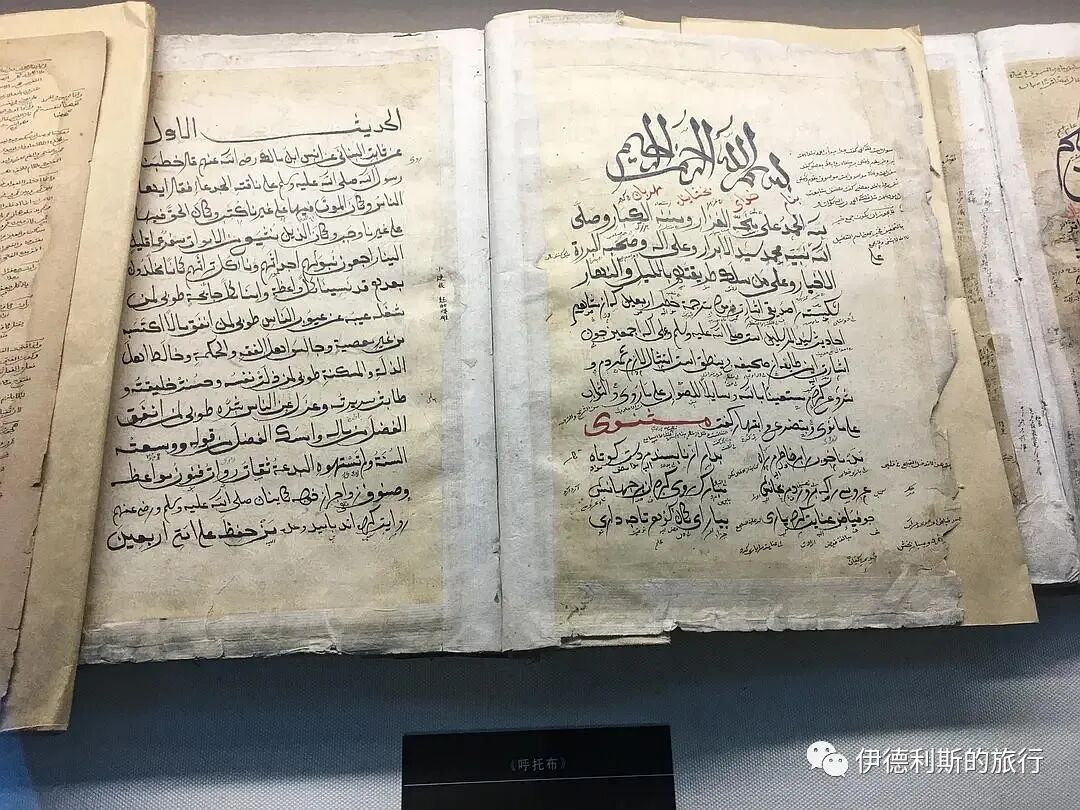
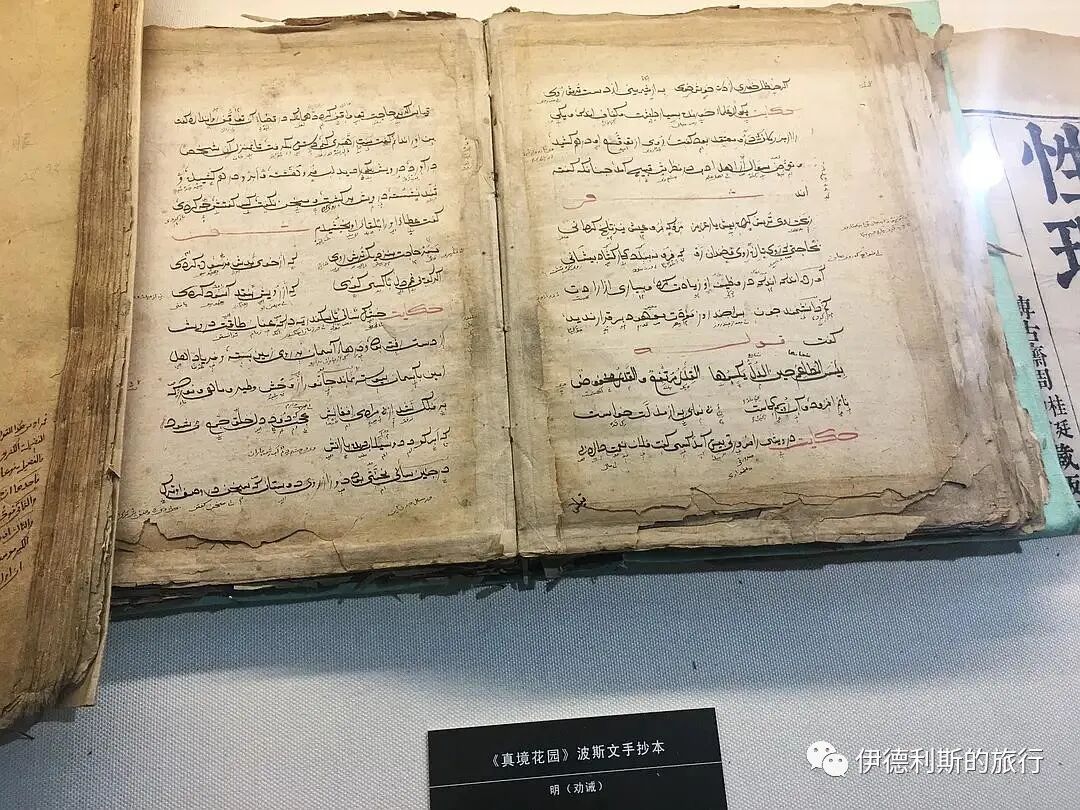
The thirteen traditional mosque education books include handwritten copies of the Five Linked Volumes (Lianwuben), the Hutobu, the Baiyani, the Zaowu Misuhaba, the Gulostan (Garden of Truth), and the Quran with Persian annotations.
The Five Linked Volumes (Lianwuben) is a collective name for five textbooks used as the foundation for learning Arabic grammar and syntax.
The Zaowu Misuhaba means lighting a bright lamp. It is a further explanation of the fifth Arabic syntax textbook in the Five Linked Volumes, called the Misubaha.
The Baiyani means to clarify. It is a book on Arabic rhetoric.
The Hutobu was originally written in Arabic and later translated into Persian. It is a Persian commentary on 40 Hadiths.
The Gulostan (Garden of Truth) is a literary masterpiece by the 13th-century Persian poet Saadi. It is a textbook for studying Persian literature.
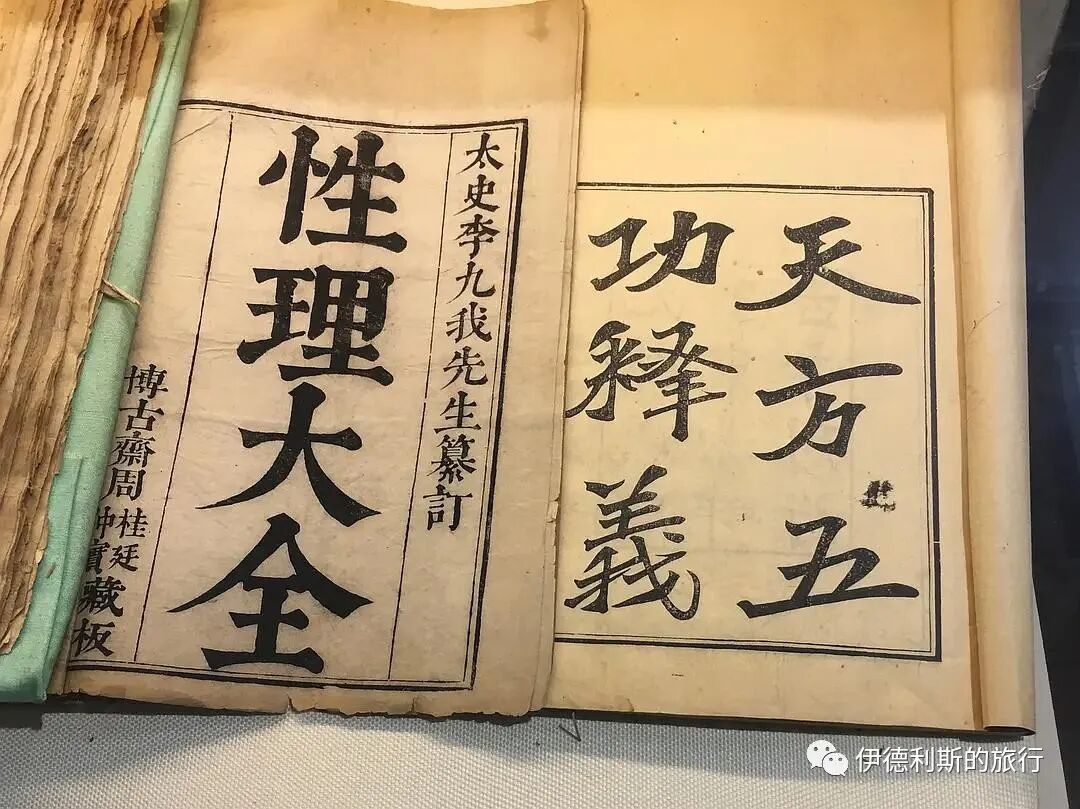
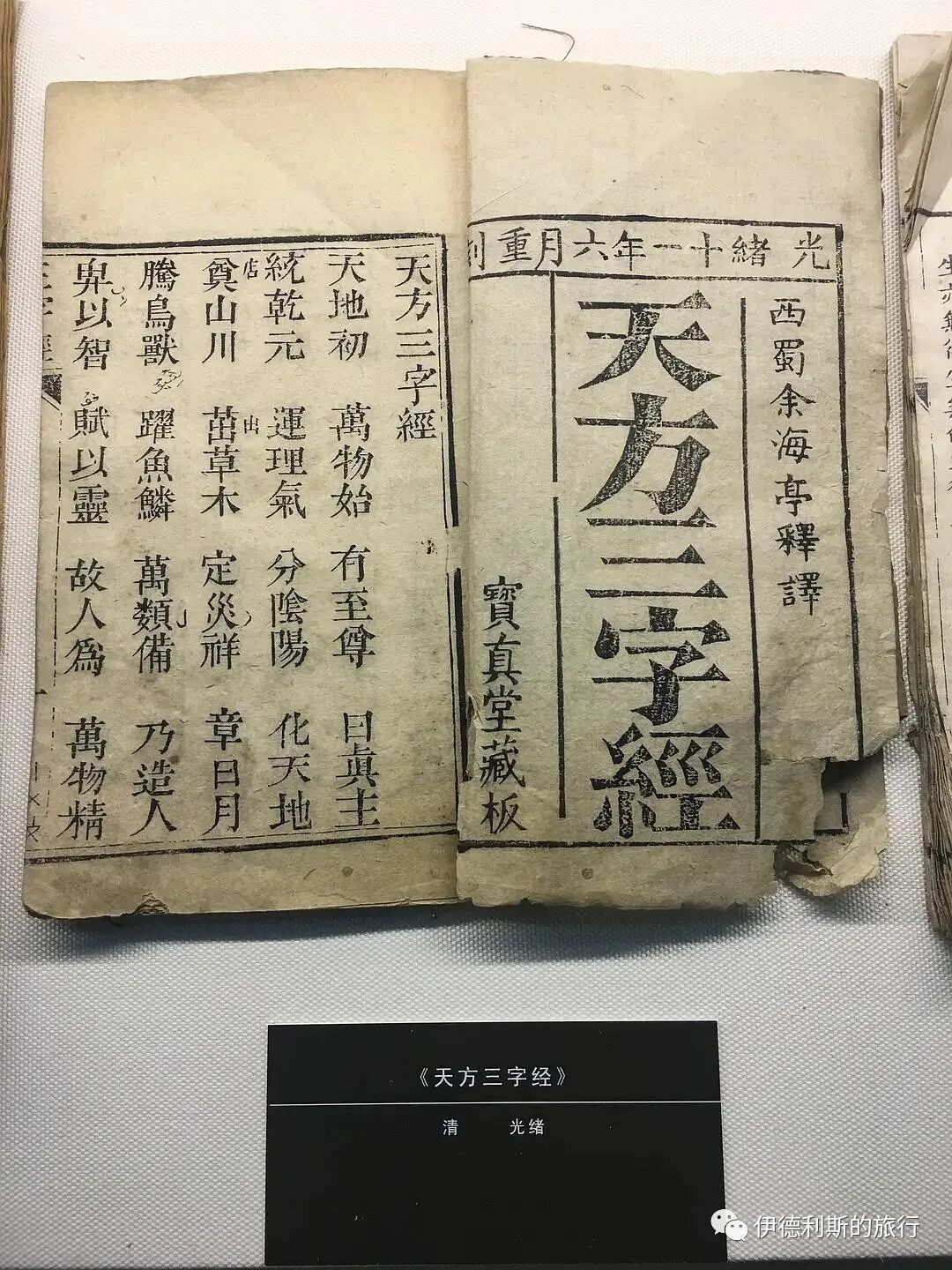
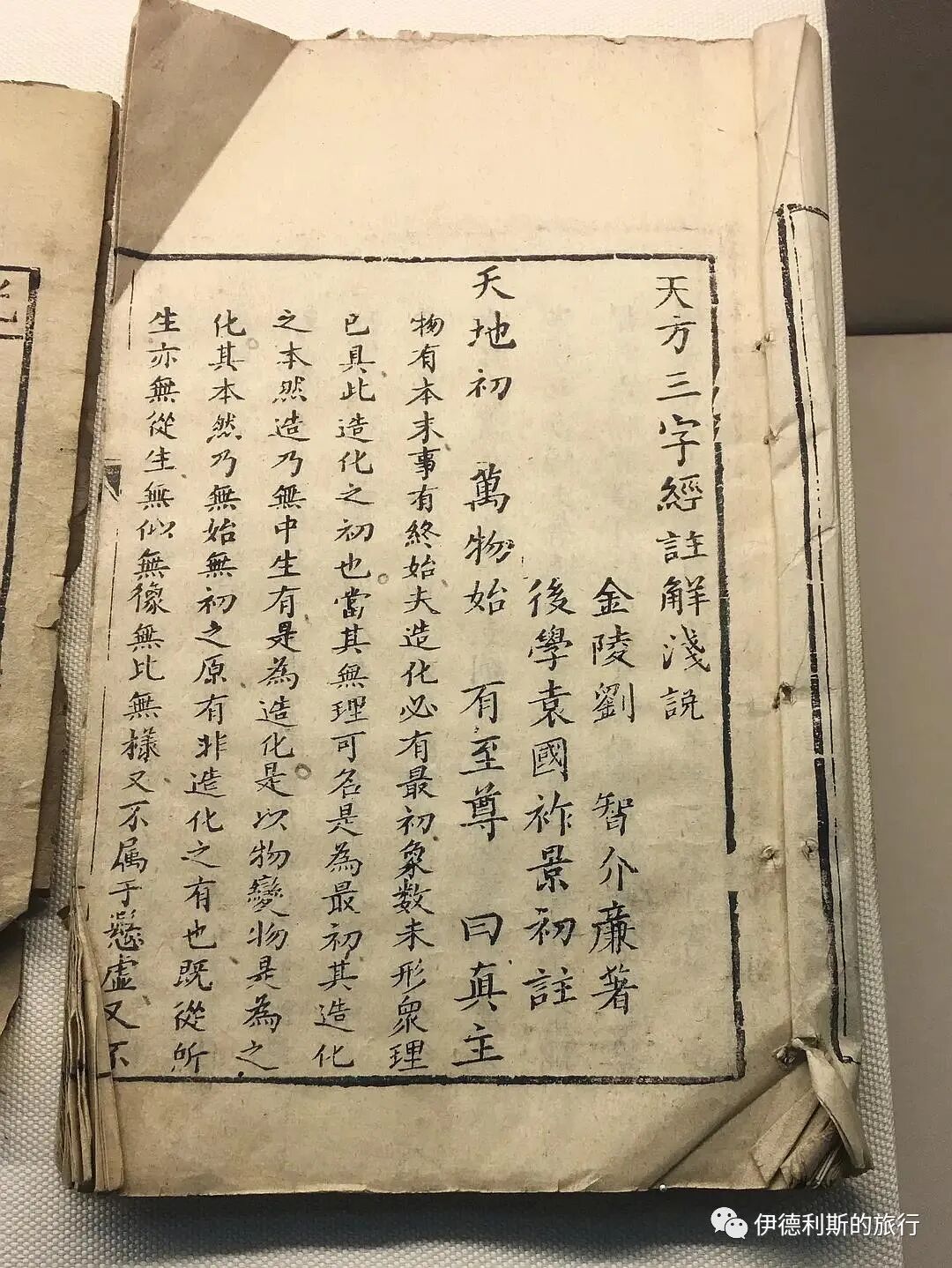
These include the Ming dynasty Confucian work Complete Collection of Human Nature and Principle (Xingli Daquan), the book Explanation of the Five Pillars of Islam (Tianfang Wugong Shiyi) where the famous Qing scholar Liu Zhi uses Confucian philosophy to explain the five pillars of Islam, the poetic Islamic primer Tianfang Sanzijing which Liu Zhi wrote in the style of the Three Character Classic, and Yuan Guozuo's annotated version, the Simple Explanation of the Tianfang Sanzijing (Tianfang Sanzijing Zhujie Qianshuo).
Yuan Guozuo was born in Nanjing in 1712. He studied Liu Zhi's Chinese Islamic classics deeply from a young age and later published many of Liu Zhi's works. In 1809, he wrote annotations for the Tianfang Sanzijing, which became an important version of the book.
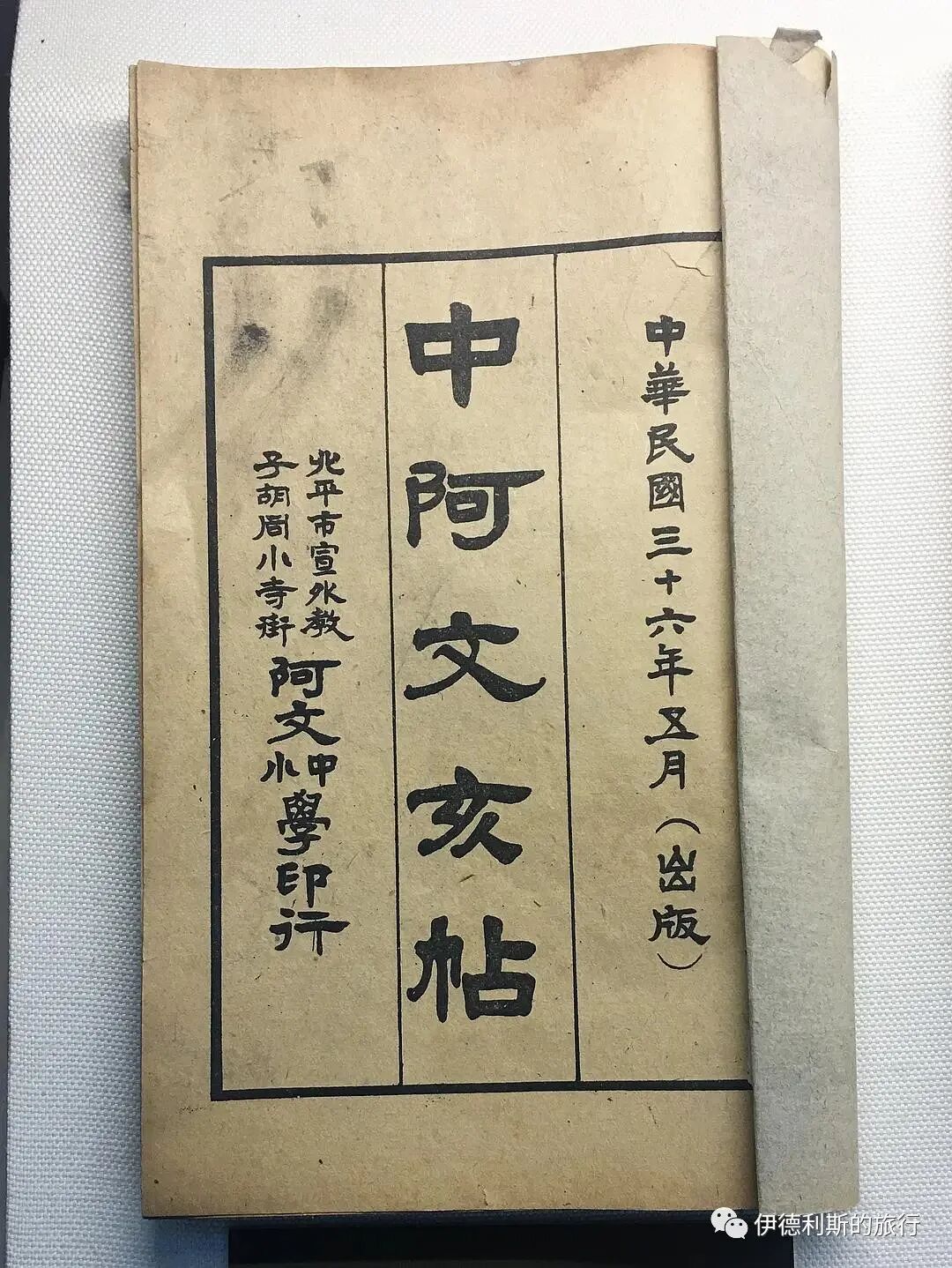
There is also the Chinese-Arabic primer (Zhong-A wen haitie) published in 1947 by the Arabic primary and middle school on Xiaosi Street in the Xuanwai district of Beiping.
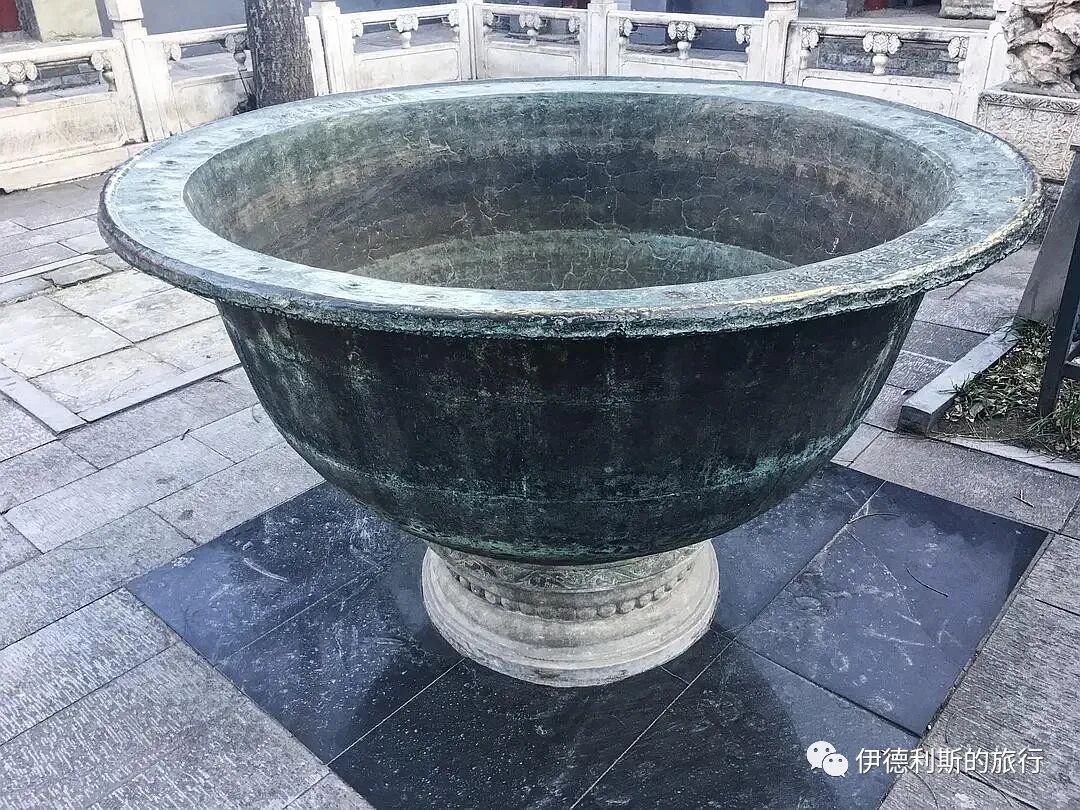
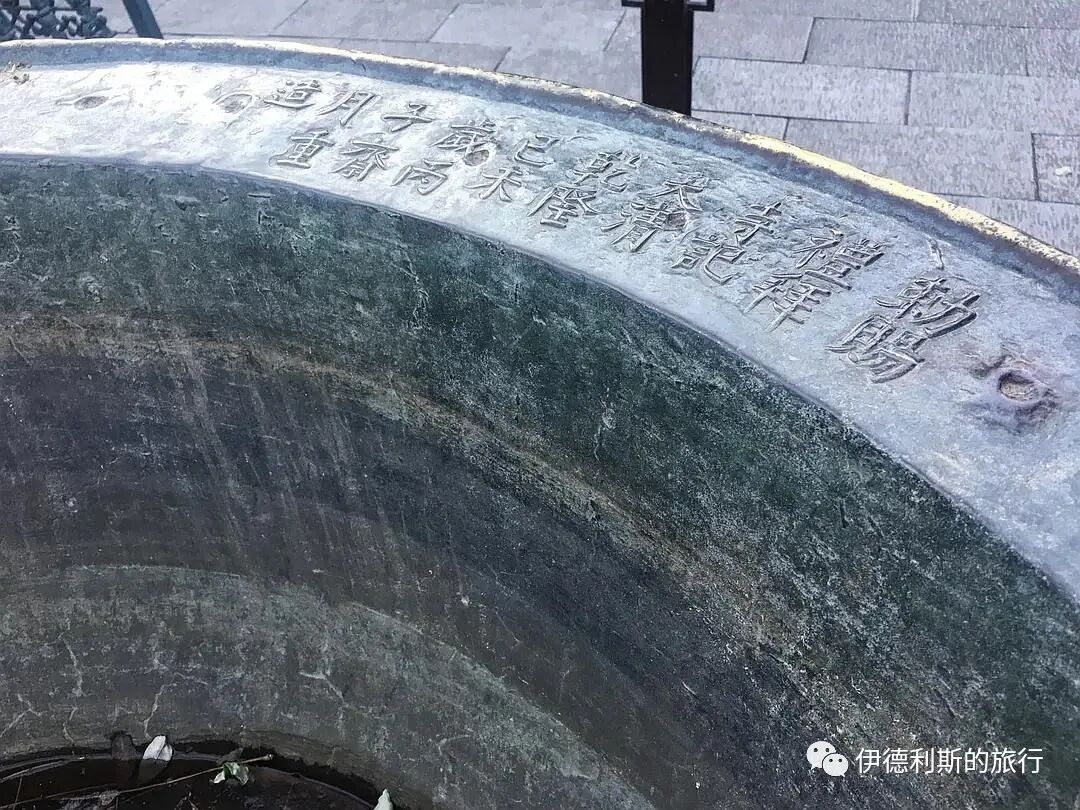
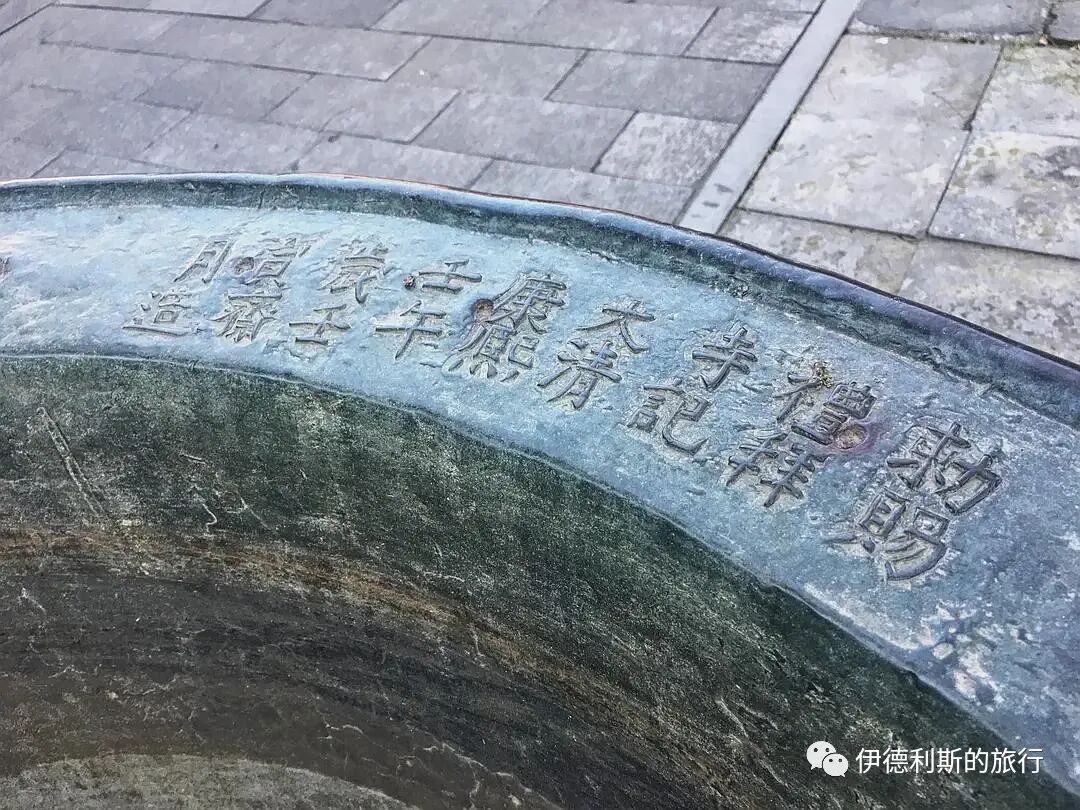
I also want to share a large copper pot in the courtyard. It is inscribed with 'Made in the month of Ramadan, Renyin year of the Kangxi reign of the Great Qing, by imperial decree for the mosque' and 'Remade in the month of Ramadan, Bingzi year of the Qianlong reign of the Great Qing, by imperial decree for the mosque.' This means it was made in 1702 and remade in 1739, which was eight years after the imperial decree plaque from the Kangxi era. This pot was used to cook meat porridge during mosque gatherings. In the 1960s and 1970s, it was hidden inside the minaret (bangkelou) under a pile of junk, which is how it survived.
Summary: Niujie Shahai Tomb — Beijing Muslim History and Cultural Room is presented here as a firsthand travel account in clear English, beginning with this scene: In 2016, I visited the Niujie Mosque and took photos of the Sheikh tombs (shaihai fen) and the cultural relic exhibition hall. The account keeps its focus on Niujie, Beijing Muslim History, Muslim Heritage while preserving the names, places, food, and historical details from the Chinese source.
In 2016, I visited the Niujie Mosque and took photos of the Sheikh tombs (shaihai fen) and the cultural relic exhibition hall. My phone camera quality was just okay back then, so I planned to take better photos to share later, but both the tombs and the hall ended up being closed for several years. I heard the exhibition hall has been renovated, and I hope to see it in its new state soon.
Sheikh tombs (shaihai fen)
Inside the Niujie Mosque in Beijing, there are two tombs of sages from the Western Regions who came to China during the Yuan Dynasty. The one on the west side belongs to Ahmed Burtani, who passed away in 1280, and the one on the east side belongs to Ali Imad al-Din, who passed away in 1283.
According to the Republic of China era Beijing City Annals, after the Song Dynasty moved south, two men came from the West. One was Muhammad, the grandson of Sheikh Ahmed Burtani, from Ghazni in the Western Regions. The other was Ali, the son of Sheikh Imad al-Din, from Bukhara in the Western Regions. They lived in the mosque, spoke with great eloquence, and carried themselves with elegance. After they passed away, they were buried in the mosque. Their tombs remain there today, and the inscriptions on the tombstones still serve as proof.
It is now generally accepted that Ali Imad al-Din came from the ancient Central Asian city of Bukhara. However, the birthplace of Ahmed Burtani varies significantly across different translations. According to the translation by Zhao Zhenwu, a famous Hui Muslim scholar and teacher at Chengda Normal School during the Republic of China era, Ahmed Burtani came from Ghazni, an ancient city in Afghanistan. This is the version widely used today. Ma Jinpeng, who studied at Al-Azhar University in Egypt and later became an Arabic professor at Peking University, translated it as 'E'lu' and noted it was a place near Medina. Additionally, the Niujie Mosque once kept a wooden plaque from the Qianlong period of the Qing Dynasty, commonly known as the 'White Plaque,' which stated he came from 'Alepu,' the ancient Syrian city of Aleppo.
The ancient cities of Bukhara and Ghazni were incorporated into the Mongol Empire in 1220 and 1221, respectively, during Genghis Khan's western campaign against the Khwarazmian Empire. Aleppo was captured by Hulagu Khan in 1260, but it was soon recaptured by the Mamluk Sultanate of Egypt. The expansion of the Mongol Empire removed travel barriers across the Eurasian interior, and Muslims from Central and West Asia began to enter China in large numbers.
According to the Yuan dynasty collection Qiujian Ji, there were 2,953 households of Hui Muslims in Beijing by 1263, most of whom were wealthy merchants. Before the Yuan dynasty finished building the capital of Dadu in 1285 and ordered residents to move in, most people lived in the old city of Zhongdu from the Jin dynasty. Niujie was located in the heart of this old city and was the most important residential area for Muslims in Beijing at the time.
Cultural Exhibition Hall
On the east side of the Niujie Mosque stands a building with seven large tiled rooms, commonly known as the Seven Rooms (qijianfang). It was first built in 1442 during the seventh year of the Zhengtong reign. The main rooms were used for teaching scriptures, while the side rooms were used to store them. Today, it serves as a cultural exhibition hall.
Inside the cultural exhibition hall is a plaque featuring an imperial edict from the Kangxi Emperor, which reads: Inform all provinces: if officials or civilians hold grudges over minor matters. And falsely accuse Muslims of plotting a rebellion, officials in charge have the authority to execute them first and report it later. Hui Muslims across the land must follow their faith and not disobey this order, so as not to betray my grace and my intention to protect the path.
Legend has it that in March 1694, during the month of Ramadan, the Kangxi Emperor received a secret report from Li Yu, the official in charge of the southern city of Beijing, claiming that the Muslims of Niujie were gathering at night to plot a rebellion. The Kangxi Emperor asked the Grand Councilors Niu Xi and Wang Xi, who lived near Niujie, and neither of them had heard anything about it. Emperor Kangxi traveled in disguise with two ministers. One night, he saw many people praying Taraweeh inside the brightly lit Niujie Mosque. Seeing they were doing nothing wrong, he issued an imperial decree.
Additionally, the Niujie local chronicle "Gangzhi," copied by Shen Fengyi during the Daoguang era (and likely written during the Yongzheng era), records that in 1694, the Niujie Mosque imam Saiyide Ma Tengyun was involved in a spy case. The story goes that Galdan of the Dzungar Khanate sent two Hami Muslims to Beijing as spies, and Ma Tengyun of the Niujie Mosque often hosted them for meals. Later, one of the men was caught by the Lifanyuan (Court of Colonial Affairs) guards, and he named Ma Tengyun. The Lifanyuan immediately arrested Ma Tengyun and Yin Liangxiang from the Jiaozihutong Mosque, while the city patrol troops blocked off Niujie. The Lifanyuan petitioned to slaughter all Hui Muslims in the capital, but Kangxi rejected the request. Kangxi ordered, "The Hui Muslims of the capital are also my children... just strictly hunt down the spies, do not implicate innocent people." In the end, Ma Tengyun and Yin Liangxiang were released, and mosques across Beijing held prayer services to give thanks. This event matches the timing and content of the imperial decree stele, and it is likely the reason the decree was issued.
A hanging scroll for Imam Wang Yousan from 1868 (the seventh year of the Tongzhi era). Imam Wang Yousan, whose given name was Zhenyi and courtesy name was Yousan, was known as "Yibaba" and came from a family of Niujie imams. Chunfeng Hutong in Niujie was originally called Wang Laoshifu Hutong. It sits right next to the south side of the Niujie Mosque and was named after the Wang family who lived there for generations. The words 'Shouqian Wang Si Lao Aheng' on the left side of the banner refer to Imam Wang Shouqian, the father of Imam Wang Yousan. He was a very famous imam in Niujie, known as Master Wang Si, and was hailed as the 'leading authority on Islamic scripture in the North'.
Inside the Niujie Mosque stands a stone tablet from 1903, written by Xu Qi, a cabinet scholar and vice minister of the Ministry of Rites. It is titled 'Stele Describing the Virtuous Deeds of Wang Yousan and Haoran in Protecting the Hui Muslim Community' and records two heroic acts by Imam Wang Yousan.
The first story tells of 1900, when the Eight-Nation Alliance entered Beijing and bandits in the city took the chance to loot, throwing society into chaos. Niujie Mosque Imam Wang Yousan and his nephew, Imam Wang Haoran, organized the local families to watch over and help each other. They punished those who broke the law, which finally saved Niujie from disaster.
The second story tells of 1902, when the Qing government built a railway and planned to tear down the Hui Muslim cemetery at Sanlihe outside Xibianmen. Imam Wang Yousan and Imam Wang Haoran used their connections with local elders to find the minister in charge of the railway to negotiate. In the end, the Qing government decided to change the plans and build around the Sanlihe Hui Muslim cemetery.
Glazed glassware from the Kangxi era
Incense box with Arabic calligraphy
Lotus-shaped incense burner
Three-legged incense burner with cloud-shaped handles and Arabic calligraphy
Lotus-shaped incense burner with two handles and Arabic calligraphy
Vase (gu) with Arabic calligraphy
Ming Dynasty blue and white flower vase with Arabic calligraphy and unique shape
A Ming Dynasty Zhengde period blue and white porcelain tripod incense burner with Arabic calligraphy.
A Qing Dynasty cloud-shaped incense holder inscribed with the words Niujie Great Mosque (Niujie Da Libaisi).
A Qing Dynasty bronze tripod incense burner with Arabic calligraphy.
Books published by the Niujie Islamic Press including 'Chinese-Arabic Mieta', 'Beginner's Doctrine Textbook', 'Verification of Doubts', and 'Guide to Islam (Qingzhen Zhinan)', along with a stamp from the 'Manager Ma Kuilin Publishing House'.
The Islamic Press was founded in the early Republic of China era by Imam Ma Kuilin, a long-time resident of Niujie. In the 1920s and 1930s, it printed various religious textbooks and scholarly works that were sold across the country. After Imam Ma Kuilin passed away in 1940, his fourth son, Ma Zhongdao, continued the business until it was merged into the Xuanwu Xinhua Bookstore in 1956. After 1966, all the books from the Islamic Press held by the Xuanwu Xinhua Bookstore went missing, and Ma Zhongdao was forced to burn his own personal collection. Because of this, the books from the Islamic Press collected by Bi Jingshi have become the most precious records.
The 'Guide to Islam' on the left is printed with: 'Reprinted in the ninth year of Tongzhi, written by Mr. Ma Wenbing, a descendant of the Prophet, and held by the Haopan Street Mosque in the provincial capital of Guangdong'.
The author of 'Guide to Islam' was Ma Zhu, courtesy name Wenbing, from Baoshan, Yunnan. Born in 1640, he was said to be the 15th-generation descendant of the Xianyang King Sayyid Ajjal Shams al-Din, which is why he was called a 'descendant of the Prophet'. Ma Zhu was poor as a child but loved to learn. At 18, he was recommended as an imperial guard for the Southern Ming dynasty, but he resigned in less than two years to return home and focus on his studies. After turning 30, he left Yunnan to visit scholars and teach in various places. At the same time, he began compiling his research into the book 'Guide to Islam'. He finished the first draft at 35 and continued to add to and revise it until he finalized the text at age 70.
Ma Zhu began copying and printing the Guide to Islam (Qingzhen Zhinan) during his lifetime, but early versions are lost. The oldest surviving version is the 1811 Jinling edition. Later editions include the 1828 Chengdu Ma Da'en edition, the 1884 Guanzhong Hanyutang edition, and the 1885 Chengdu Baozhentang edition. The Niujie Mosque holds the 1870 edition printed by the Haopan Street Mosque in Guangzhou. The preface of the Haopan Street edition says that Bao Anji used the Guide to Islam as a textbook while studying at a mosque as a child. He was very sad when he lost the book later in life. In 1868, Bao Anji accidentally found the book, paid a high price to buy it, and finished reprinting it after careful proofreading.
The thirteen traditional mosque education books include handwritten copies of the Five Linked Volumes (Lianwuben), the Hutobu, the Baiyani, the Zaowu Misuhaba, the Gulostan (Garden of Truth), and the Quran with Persian annotations.
The Five Linked Volumes (Lianwuben) is a collective name for five textbooks used as the foundation for learning Arabic grammar and syntax.
The Zaowu Misuhaba means lighting a bright lamp. It is a further explanation of the fifth Arabic syntax textbook in the Five Linked Volumes, called the Misubaha.
The Baiyani means to clarify. It is a book on Arabic rhetoric.
The Hutobu was originally written in Arabic and later translated into Persian. It is a Persian commentary on 40 Hadiths.
The Gulostan (Garden of Truth) is a literary masterpiece by the 13th-century Persian poet Saadi. It is a textbook for studying Persian literature.
These include the Ming dynasty Confucian work Complete Collection of Human Nature and Principle (Xingli Daquan), the book Explanation of the Five Pillars of Islam (Tianfang Wugong Shiyi) where the famous Qing scholar Liu Zhi uses Confucian philosophy to explain the five pillars of Islam, the poetic Islamic primer Tianfang Sanzijing which Liu Zhi wrote in the style of the Three Character Classic, and Yuan Guozuo's annotated version, the Simple Explanation of the Tianfang Sanzijing (Tianfang Sanzijing Zhujie Qianshuo).
Yuan Guozuo was born in Nanjing in 1712. He studied Liu Zhi's Chinese Islamic classics deeply from a young age and later published many of Liu Zhi's works. In 1809, he wrote annotations for the Tianfang Sanzijing, which became an important version of the book.
There is also the Chinese-Arabic primer (Zhong-A wen haitie) published in 1947 by the Arabic primary and middle school on Xiaosi Street in the Xuanwai district of Beiping.
I also want to share a large copper pot in the courtyard. It is inscribed with 'Made in the month of Ramadan, Renyin year of the Kangxi reign of the Great Qing, by imperial decree for the mosque' and 'Remade in the month of Ramadan, Bingzi year of the Qianlong reign of the Great Qing, by imperial decree for the mosque.' This means it was made in 1702 and remade in 1739, which was eight years after the imperial decree plaque from the Kangxi era. This pot was used to cook meat porridge during mosque gatherings. In the 1960s and 1970s, it was hidden inside the minaret (bangkelou) under a pile of junk, which is how it survived.
