

Niujie
Famous Chinese Muslim Food Beijing: Longtan Hotpot, Niujie Lamb Spine & Halal Dumplings
Articles • yusuf908 posted the article • 0 comments • 205 views • 2026-05-24 00:17
Summary: A famous Chinese Muslim food guide for Beijing, covering Longtan hotpot, Niujie lamb spine, halal dumplings, pancakes, snacks, and restaurant addresses, with the long original article kept as one full post.
Through years of travel, I have gradually discovered that Beijing has the most complete variety of halal food in the world, bar none. Even in an international metropolis like New York, the variety of halal restaurants does not compare to Beijing. Beijing not only has halal restaurants with flavors from many countries, but also gathers halal food from all over China. You can find almost any halal food you can think of in Beijing.
1. Longtan Hot Pot (Longtan Shuanrou)
This copper pot hot pot restaurant near Longtan Lake Park is run by the seventh-generation descendant of the Niujie Yongli family. Yongli is short for the Li family of Yongan Tang. Yongan Tang was a shop opened by the ancestors of the Yongli family at Yongdingmen during the Qing Dynasty, with the hall name Yong Sanyuan. The owner's father was an apprentice at Donglaishun in his early years. The restaurant uses high-calcium lamb from Sunite, Inner Mongolia, which is halal-slaughtered. They serve Niujie sesame flatbread (shaobing), and the sesame paste dipping sauce is stamped with the character for good fortune (fu). The small shop is full of Beijing character and is often used as a filming location. If you do not want to wait in line at Jubaoyuan, come here instead.
Address: No. 16 Zuo'anmen Inner Street, next to the northwest gate of Longtan Lake Park.
2. Laochengyi Lamb Spine Hot Pot (Laochengyi Yangxiezi)
The lamb spine hot pot at Laochengyi tastes truly excellent. The lamb chops are stewed until very tender. The mouth-watering chicken (koushuiji) is also a must-order dish. After finishing the lamb spine, you can add vegetables to the pot. The shop has two floors and plenty of seating, so even if you come during meal times, the wait will not be too long.
Address: No. 3 Commercial Street, Niujie North Entrance, Beijing.
3. Dashuntang
Dashuntang has been around for a long time. They make very authentic Beijing-style halal food. Usually, when families have special occasions, Dashuntang is the first choice. I recommend the roasted lamb chops, boiled beef, deep-fried lamb tail, and roast duck. The crispy-skin roast duck and lamb chops are especially well-received.
Address: Building 5, Jia 4, Fayuan Mosque West, Jiaozihu Tong, Xicheng District.
4. Junlian Halal Dumpling House
This shop has dumplings with all kinds of fillings, like pineapple or tomato. It is very popular, and you need to queue during meal times. My favorites are the traditional beef and lamb with green onion, and chive and egg dumplings.
Address: South Gate, Niujie Xili District 2, Xicheng District.
5. Shandong Sha Dacu Pancake (Jianbing)
This shop used to be in Jiaozihu Tong. Later, due to urban renovations, it moved into the vegetable market in Shuru Hutong. They have added several new flavors, but I still like the classic version best.
Address: Entrance of the Shuru Hutong Halal Vegetable Market.
6. Suzhou Hui Muslim Restaurant
Although soybean paste noodles (zhajiangmian) are a representative Beijing dish, there are not many halal versions. Some small Beijing-style eateries make them, but the taste is average. Most Hui Muslims make soybean paste noodles at home. This Suzhou Hui Muslim Restaurant is not run by Suzhou people; it is just named that because it is located in the Suzhou community. It is actually a small Beijing-style eatery, and I recommend their soybean paste noodles.
Address: No. 36, Suzhou Hutong, Dongcheng District.
7
Dardanelles Turkish Restaurant
Beijing has four halal Turkish restaurants: Istanbul Restaurant, Turkish Mama Restaurant, Doner Turkish Cafe (which serves kebab wraps) near Xiushui Street, and Dardanelles Restaurant. Dardanelles is my favorite because of its beautiful Ottoman-style decor. The salmon, grilled meats, and steaks are all delicious and reasonably priced.
Address: Units 1-21-22, Courtyard 39, Shenlu Street, Ritan North Road, Chaoyang District, Beijing (west of the North Korean Embassy).
8. KAVKAZ Azerbaijani Restaurant
At KAVKAZ Azerbaijani Restaurant, I tried the Caucasian salad, Azerbaijani soup dumplings, Caucasian beef, and Azerbaijani salty yogurt drink. The staff are all from Azerbaijan. The young waitress did not speak much Chinese, but she was very cute and enthusiastic.
Address: East side of Shenlu Street, Chaoyang District, Beijing.
9.
Shashi Castle Restaurant
This is an Uzbekistan-style restaurant themed around a romantic meeting between a prince and a princess. They serve Middle Eastern, Russian, and Western food. You must order the grilled steak, and the Napoleon cake is quite delicious. There is belly dancing at 7:30 PM.
Address: First floor of the Saint Angel Hotel, near Exit E of Hujialou Subway Station, Chaoyang District, Beijing.
10.
Persepolis Restaurant
Persia is Iran. The restaurant next door changed its sign. I used to go there often for the lunch buffet. You must order the Iranian black tea and the grilled meats. You can also eat saffron fried rice here.
Address: Right at Exit A of Tuanjiehu Subway Station, Chaoyang District, Beijing.
11. Lazeez Indian Music Restaurant
Beijing has many halal Indian restaurants, such as Indian Kitchen, Ganges Restaurant, and Sadhu, but I like Lazeez Music Restaurant the best. The halal sign is hung inside. Luckily my classmate reminded me, or I would have missed this uniquely styled Indian restaurant. The atmosphere inside is very exotic, and you can hear beautiful Indian songs. You can eat authentic Indian spicy beef curry, chicken curry, cream of mushroom soup, Mughal royal flatbread (naan), samosa chaat, and rose yogurt lassi. There is a wide variety of dishes.
Address: 31 Gulou West Street, Xicheng District.
12. Sukhothai Thai-Malaysian Restaurant
Sukhothai was the capital of the first Thai dynasty, the Sukhothai Kingdom. The Nanyang Yiyicheng Malaysian restaurant in Dongzhimen closed, and I was worried about where to find halal Malaysian food. I recommend the original milk tea, pineapple fried rice, and coconut pudding with sago.
Address: Ju'er Hutong, Nanluoguxiang, opposite Saduli Restaurant.
13. Hefeng Banquet (Hefeng no Utage)
This is the first halal Japanese restaurant in Beijing. The head chef is the former Japanese cuisine chef from the Kempinski Hotel. The space is bright and roomy with private rooms. The food is carefully prepared for its look, smell, and taste, and you can order Australian wagyu hot pot. The owner is a Hui Muslim from Lanzhou who is very devout, so you can trust the ingredients. The palm-sized prawns are fresh and tender. The tempura sushi and Pacific saury (sanma) taste just like they do in Japan, and they serve free pudding after the meal.
They recently launched a 298 yuan seafood buffet. You can order anything from the menu, including abalone, lobster, king crab legs, Pacific saury, salmon, oysters, and other treats. It also includes fruit juice and desserts, making it a great value.
Address: 1st Floor, Shaanxi Building, Shilihe, Chaoyang District.
14. Alameen Lebanese Restaurant
Lebanese food is one of my favorite Middle Eastern cuisines. This place has a nice, quiet atmosphere and reasonable prices. They serve pizza, steak, and salads, and the grilled chicken breast is delicious.
Address: Next to the German Embassy in Sanlitun.
15. Khan Baba Pakistani Restaurant
Pakistani food is as common abroad as Lanzhou hand-pulled noodles (Lanzhou lamian) are here. There are two Khan Baba locations in Beijing: one in Wudaokou and one in Sanlitun. The Wudaokou shop is larger. There is also a Shalimar Indian and Pakistani restaurant near the Shunyi China International Exhibition Center.
Address: Room 511, 5th Floor, Building 2, Sanlitun SOHO, No. 8 Gongti North Road, Chaoyang District.
16. One Thousand and One Nights
One Thousand and One Nights is a high-end Middle Eastern Arabic restaurant with two branches in Beijing: one in Solana and one in Tuanjiehu. You can eat pan-fried foie gras here, and there are song and dance performances every night on the hour.
Address: No. 6 Chaoyang Park Road, Solana, Chaoyang District.
17. Changji Iron Griddle BBQ (Changji Zhizi Kaorou)
Changji Iron Griddle BBQ is a very authentic old Beijing halal restaurant. It only has six tables and specializes in iron griddle barbecue. The soybean paste noodles (zhajiangmian) and quick-boiled tripe (baodu) are absolutely perfect. Next time, I will try the barbecue and the lamb noodle soup (yangrou cuamian). The decor in the shop has a cool, confident vibe. Everyone calls the owner Fourth Master Chang (Chang Siye), and he is very hospitable. These kinds of small hutong eateries are rare now. They serve grilled pickled cabbage, grilled shiitake mushrooms, grilled chicken cartilage, grilled beef, and grilled lamb. They marinate the meat before grilling it. The taste is just as good as the famous Kaorouji, but because it is a small hutong shop, the price is less than half of what you would pay there.
Address: In the bungalows south of Guangnei Street that are waiting to be demolished. There is a wall built in front of the entrance, so you cannot see it unless you walk inside.
18. Tangdou Conveyor Belt Buffet Hot Pot
This is the first halal conveyor belt buffet hot pot restaurant in Beijing. It costs 59 yuan per person, and you can eat dozens of different items, including seafood, cooked dishes, vegetables, peanuts, fruit, various staples, snacks, and ice cream. Drinks are unlimited. A conveyor belt runs through the whole restaurant, so you can eat everything without moving from your seat. It is quite a good deal.
Address: North side of the 8th floor, Souxiu City Shopping Plaza, Chongwenmen Outer Street (opposite the 2nd phase of the New World Department Store in Chongwenmen).
19. Xingyuege Muslim Restaurant
Friends (dosti) from Northeast China in Beijing are in luck, because I finally found a restaurant that specializes in halal Northeast-style dishes.
The restaurant's home base is Harbin.
The decor style is also very Harbin.
Double-cooked pork (guobaorou) is a famous Northeast dish, served here in the Harbin-style savory version.
Steamed dumplings (shaomai) are also a common Northeast home-style dish.
They also have home-style tofu (jiachang doufu). Friends (dosti) from the Northeast who miss the taste of home should take the chance to try it.
Address: Shop 102, Building 2, Courtyard 2, Lixiangcheng, Hongye Road, Xihongmen Town.
20. Ningxia Flavors, Summer Language
This is a halal restaurant serving Ningxia-style food. It is located in the busy Chaoyangmen area and has a great atmosphere.
Our group of over ten people tried almost everything on the menu.
Sweet rice made by Northwest Hui Muslims.
The lamb trotters are very flavorful.
Every dish is solid and they put a lot of effort into the presentation.
Rice sausage (michangzi).
Hui Muslim fried dough (youxiang).
Hui Muslim snack platter.
This place is great for group meals. You can push tables together for over ten people, and the prices are not expensive.
Address: 2F, Fenglian Plaza, No. 18 Chaoyangmen Outer Street, Chaoyang District, Beijing.
21. Eliya Halal Bakery
This is a high-end halal pastry shop.
They have all kinds of beautiful desserts.
They use imported halal cream as an ingredient. The prices are actually not expensive, and the taste is top-notch.
Address: Ground floor shop 06, Building 56, Changying Minzu Jiayuan, Changying Middle Road, Chaoyang District.
22. Xingu Halal Charcoal Barbecue
This shop was originally labeled as Korean BBQ, but business was affected by the THAAD incident, so the owner removed the word Korean. After all, the owner is from Changying and has nothing to do with Korea.
Walk up the stairs to the second floor and you will find a hidden gem. The owner bought the whole building and rented the space next door to the Changying Three Brothers.
If you go in the afternoon, you do not need to wait in line. People say it was packed when it first opened, but business is not as good as before due to the THAAD incident.
The meat is fresh and the service is top-tier.
Servers help you grill the meat the whole time, so you do not need to do it yourself.
The lettuce is for wrapping the grilled meat.
You can also eat the steamed egg custard and cheese on the side of the grill.
Halal soybean paste soup (dajiangtang).
Dip the tender beef in five-spice seasoning to eat it.
Address: Opposite the south gate of Minzu Jiayuan residential area on Changying Middle Road, next to Yunding Billiards Club (west side of Minzu Primary School).
23. Aiyidian Halal Yunnan Cuisine
It is not easy to find authentic halal Yunnan food in Beijing, but this restaurant is quite genuine. There is another halal Yunnan restaurant in Yizhuang called Dianxinyuan. It has a nice atmosphere, but the food is average and it is quite far away.
The decor is fresh and elegant, and the owner is a young woman from Yunnan.
Tamarind (suanjiao) is a local specialty of Yunnan, so I chose to try the tamarind juice.
Beef wrapped in mint leaves; mint is as common in Yunnan as cilantro and is delicious even when eaten raw.
This is fried grasshopper.
Ibn Abi Awfa narrated: We went on seven expeditions with the Prophet, and we ate locusts. Sunan an-Nasa'i, Hadith 37;
The Prophet described the sea, saying: 'Its water is pure, and its dead creatures are halal.' He also said: 'We are permitted two types of dead creatures: fish and locusts;' and two types of blood: liver and spleen.' (Musnad Ahmad)
Sour soup beef jerky (niuganba); you must eat beef jerky in Yunnan cuisine because the most famous beef jerky in Yunnan is made by Hui Muslims.
It happened to be just before the Dragon Boat Festival, and the restaurant was developing beef rice dumplings (zongzi). The manager gave me two; I had only eaten sweet ones before, so this was my first time trying a meat version.
Yunnan cold rice noodles (mixian); the broth is rich and fragrant, and the noodles are chewy.
Address: First floor, north commercial section, axes 19-21, west side of Fengyayuan Zone 2, Huilongguan Town.
24. Old Ma's lamb spine hot pot (yangxiezi) and pan-fried dumplings (guotie).
Halal lamb spine is easy to find, but halal potstickers are rare these days. This shop makes pretty good ones.
Beef and green onion potstickers were my childhood favorite. There used to be a tent in Xuanwu District that sold halal snacks, but after it was torn down, I never found good potstickers again. I later heard the old man who made them passed away (wuchang), so that authentic skill is likely lost forever.
I was surprised to find they also sell spicy hot pot (maocai), a Chengdu snack similar to spicy soup (malatang), but you can drink the broth.
Address: South entrance of Hongju Street, Xicheng District.
25. Eating noodles at the Drum Tower.
I found this popular restaurant on Dazhong Dianping. At first, I thought it was categorized incorrectly because it had no obvious halal sign. I learned from the reviews that it is a halal shop owned by a Beijing Hui Muslim, and the halal sign is in a very inconspicuous spot inside.
This is a Western-style rock music restaurant.
They have mushrooms with foie gras.
Roasted chicken leg, but it is named Eight Hammers (badachui).
It is called Gold Medal Meat Sauce Noodles, but when it arrived, it was just soybean paste noodles (zhajiangmian).
Vegetable salad. Overall, the taste suits women, and the environment is good for dates.
Address: No. 25 Gongjie, Gulou East Street.
26. Old Yang's halal restaurant.
This is the highest-rated restaurant in the Changping area and is highly recommended.
Let's start with the environment: they have small semicircular tables that make it easy to chat.
I told the owner I came here specifically to break my fast. He recommended the house-made sour plum drink (suanmeitang). It was very thirst-quenching, sweet, and tart. I ordered two pitchers and took the second one to go.
I ordered the restaurant's signature dishes, starting with the cold shredded bottle gourd with sesame paste (majiang liangban hulusi), which was crisp and refreshing.
Fairy tofu (shenxian doufu) is another popular delicacy, and the tofu is made in-house.
Old Yang's beef pie (lao yangjia niuroubing) is crispy on the outside and tender on the inside. You have to eat it with raw garlic.
The dry-pot duck heads (ganguo yatou) are spicy, numbing, and fragrant.
The stir-fried radish sprouts (qingchao luobomiao) were great. Another feature of Old Yang's restaurant is the attentive service. They greet you with a smile and check in on how you like the food. It is rare to see such good service in a place that is so busy. I didn't get to eat the fish head with flatbread (yutou paobing) at Old Yang's today, so I will have to try it next time.
Address: No. 30, West Lane 1, Xiguanshi Village, Yangfang Town, Changping District.
27. Cheng's Shan County Lamb Soup (yangtang) Restaurant
I did not expect to find such good lamb soup (yangtang) in Beijing. Shan County is a place in Shandong famous for its lamb soup. There is a Gao Laosi Lamb Soup shop on Niujie Street, but it does not taste as good as the Shan County lamb soup.
The oil and salt flatbread (yousuan shaobing) is hollow inside, perfect for soaking in lamb soup or stuffing with spiced beef.
The soup is milky white, a natural color from boiling lamb bones.
Large starch noodles (dalapi).
Half a jin of spiced beef (jiang niurou) stuffed into a freshly baked flatbread is delicious.
I also had some grilled fish tofu and seafood skewers.
Address: Sanzhong Lane (near Xingfeng Street), about 525 meters from Huangcun West Street Station.
28
. Roubing Wan
This small shop is run by a young Beijing couple born in the 80s, specializing in meat pies (roubing) and beef tendon (banjin).
Almost every table orders the meat pie; it is crispy on the outside and tender on the inside, and truly delicious.
It lives up to its reputation as the best small beef tendon spot in the south city, with carefully selected ingredients and a great texture.
You have to pair the meat pie with a bowl of corn grit porridge (bangchazhou), which is cooked until very thick. Overall, it is quite rare to find a small Beijing-style skewer shop left in the Niujie area.
Address: Entrance of Chengshi Hutong, Guangnei Street, next to Guidu Hotel.
29. Chongqing Sausage Lips Old Stove Hot Pot
I first had halal Chongqing hot pot in Chongqing, and now I have finally found one in Beijing. They have the traditional nine-grid pot and the split-pot (yuanyang guo).
The nine-grid pot is too spicy for me, so I chose the split-pot, but it was still very spicy.
The hand-cut fresh lamb is average in quality, but when eating Chongqing hot pot, the ingredients do not matter much because your mouth goes numb from the spice anyway.
Duck intestine is a must-order dish for people from Sichuan and Chongqing when eating hot pot.
The bamboo shoots are crunchy when cooked in the pot.
When in Rome, do as the Romans do. Northerners are used to sesame paste (majiang) for hot pot, but for Sichuan-style hot pot, I suggest trying sesame oil with minced garlic.
They have sesame flatbread (shaobing) here too, but I prefer this hand-torn pancake (shoushibing), which is crispy.
Address: Room 201, Building 16, Jiayuan District 1, Beijie, Higher Education Park, Shahe, Changping District.
30. Camel Caravan Moroccan Halal Restaurant
I once saw a Moroccan restaurant in Urumqi, and now there is a Moroccan halal restaurant in Beijing too.
This blue color scheme is the style of the ancient city of Fez.
Moroccan snack platter
Marrakesh chicken stew; the chicken is tender and falls right off the bone.
Casablanca noodles
They also have snacks like sandwiches and burgers. This is a music-themed restaurant and bar, perfect for dates and chatting.
Address: No. 44 Guanghua Road, outside Jianguomen
31. Cantonese-style seafood bistro
This is a halal restaurant serving Cantonese-style seafood.
The environment is quite nice, fresh, and natural.
They serve Cantonese-style hot pot (dabanlu) with a clear broth base. view all
Summary: A famous Chinese Muslim food guide for Beijing, covering Longtan hotpot, Niujie lamb spine, halal dumplings, pancakes, snacks, and restaurant addresses, with the long original article kept as one full post.
Through years of travel, I have gradually discovered that Beijing has the most complete variety of halal food in the world, bar none. Even in an international metropolis like New York, the variety of halal restaurants does not compare to Beijing. Beijing not only has halal restaurants with flavors from many countries, but also gathers halal food from all over China. You can find almost any halal food you can think of in Beijing.
1. Longtan Hot Pot (Longtan Shuanrou)
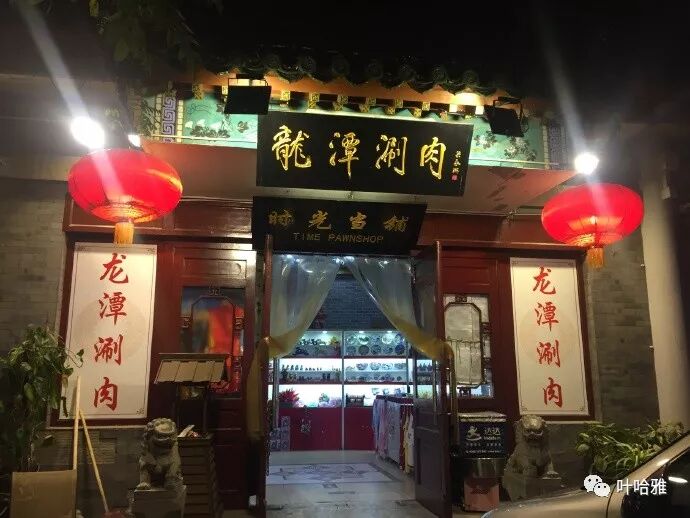
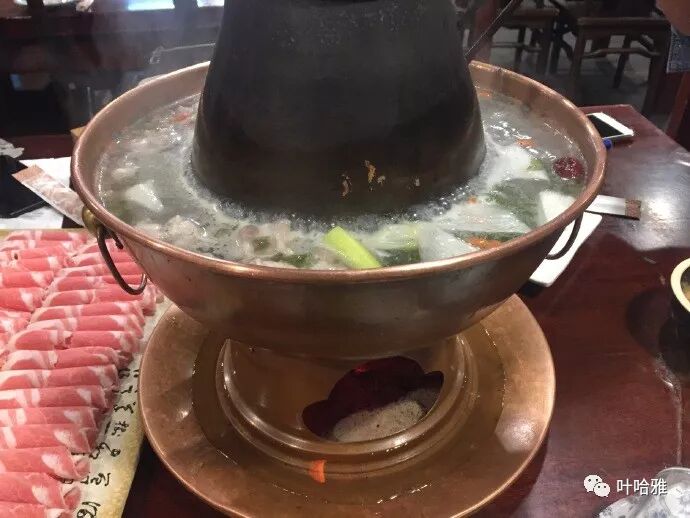
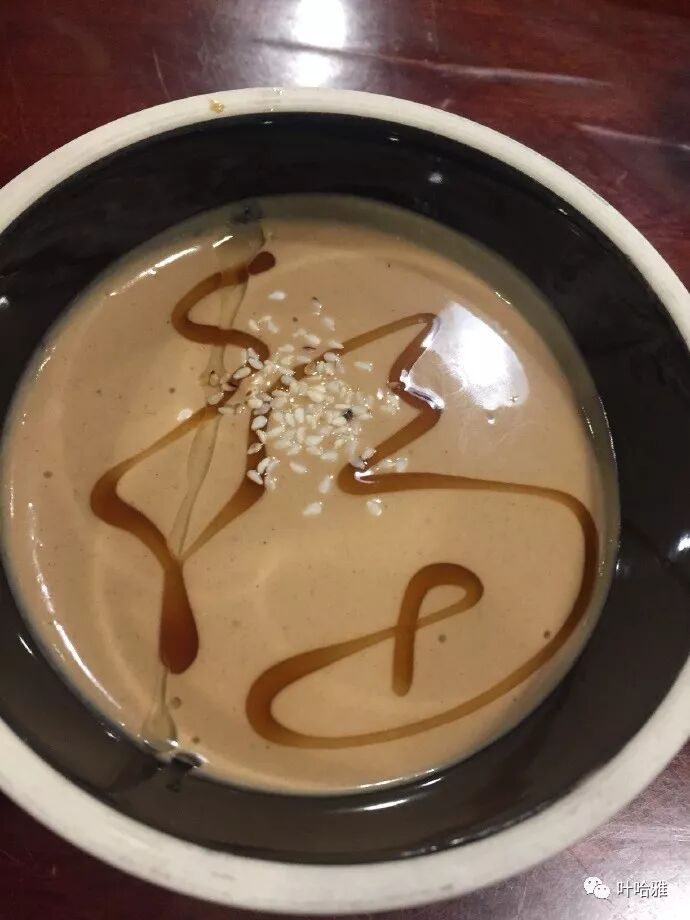
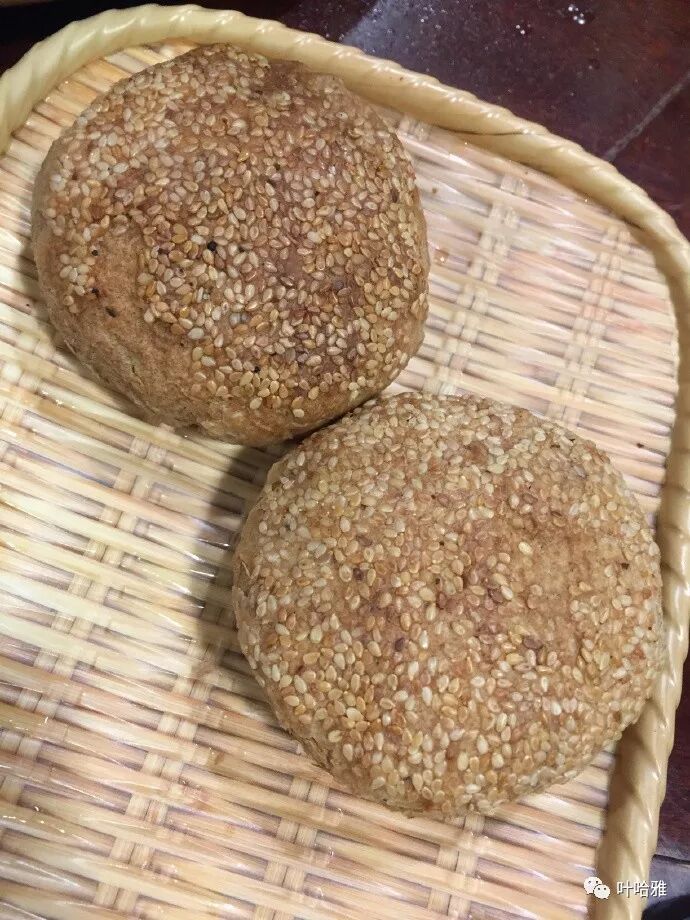
This copper pot hot pot restaurant near Longtan Lake Park is run by the seventh-generation descendant of the Niujie Yongli family. Yongli is short for the Li family of Yongan Tang. Yongan Tang was a shop opened by the ancestors of the Yongli family at Yongdingmen during the Qing Dynasty, with the hall name Yong Sanyuan. The owner's father was an apprentice at Donglaishun in his early years. The restaurant uses high-calcium lamb from Sunite, Inner Mongolia, which is halal-slaughtered. They serve Niujie sesame flatbread (shaobing), and the sesame paste dipping sauce is stamped with the character for good fortune (fu). The small shop is full of Beijing character and is often used as a filming location. If you do not want to wait in line at Jubaoyuan, come here instead.
Address: No. 16 Zuo'anmen Inner Street, next to the northwest gate of Longtan Lake Park.
2. Laochengyi Lamb Spine Hot Pot (Laochengyi Yangxiezi)
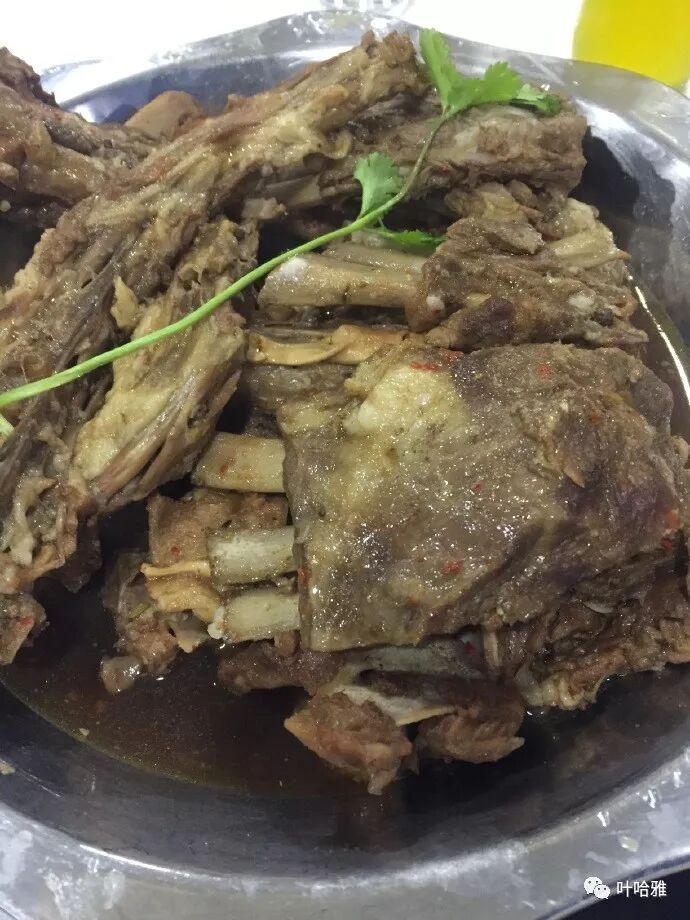
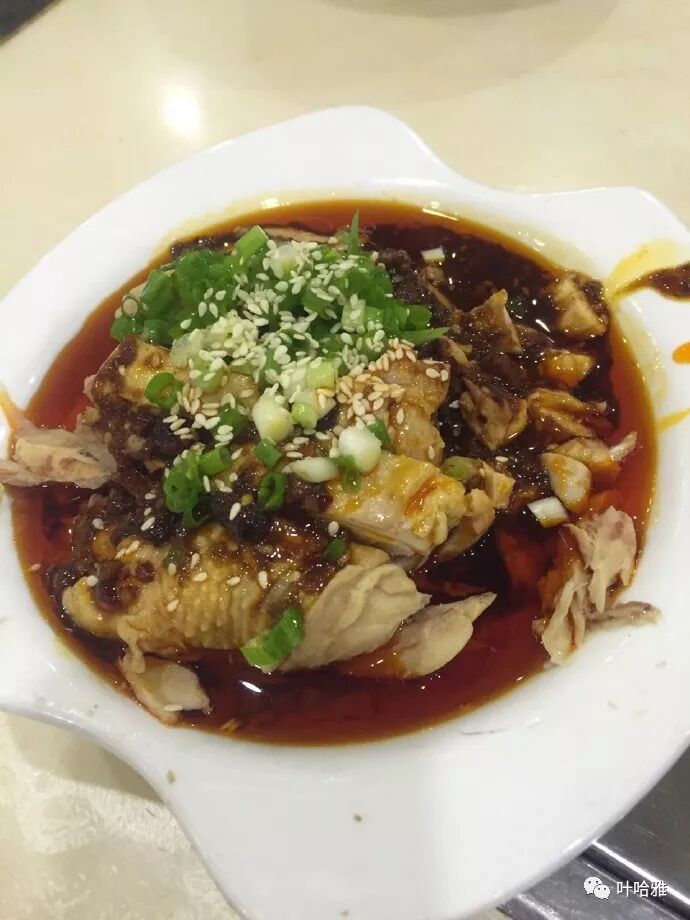
The lamb spine hot pot at Laochengyi tastes truly excellent. The lamb chops are stewed until very tender. The mouth-watering chicken (koushuiji) is also a must-order dish. After finishing the lamb spine, you can add vegetables to the pot. The shop has two floors and plenty of seating, so even if you come during meal times, the wait will not be too long.
Address: No. 3 Commercial Street, Niujie North Entrance, Beijing.
3. Dashuntang
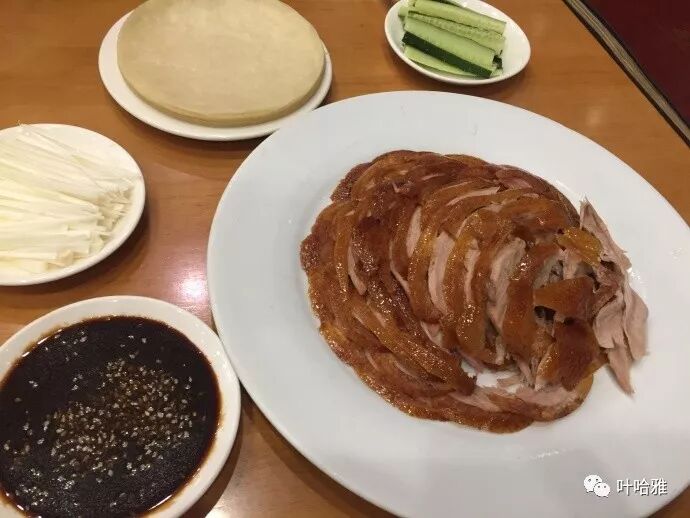
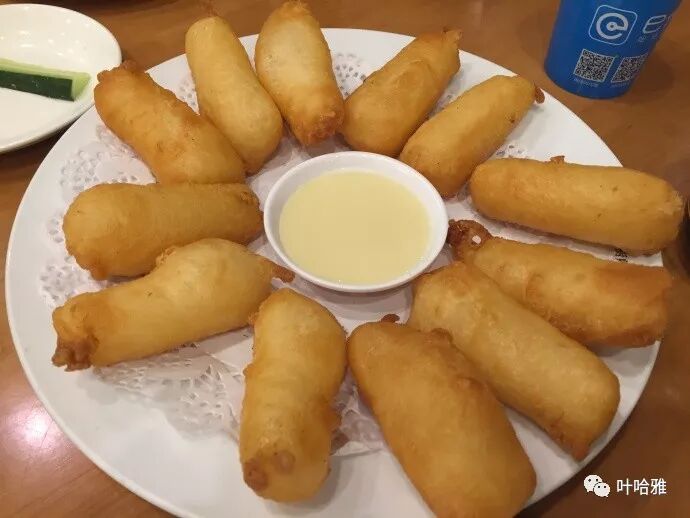
Dashuntang has been around for a long time. They make very authentic Beijing-style halal food. Usually, when families have special occasions, Dashuntang is the first choice. I recommend the roasted lamb chops, boiled beef, deep-fried lamb tail, and roast duck. The crispy-skin roast duck and lamb chops are especially well-received.
Address: Building 5, Jia 4, Fayuan Mosque West, Jiaozihu Tong, Xicheng District.
4. Junlian Halal Dumpling House
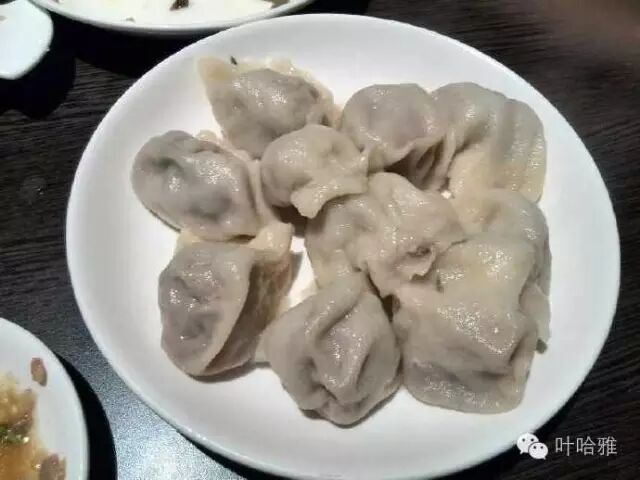
This shop has dumplings with all kinds of fillings, like pineapple or tomato. It is very popular, and you need to queue during meal times. My favorites are the traditional beef and lamb with green onion, and chive and egg dumplings.
Address: South Gate, Niujie Xili District 2, Xicheng District.
5. Shandong Sha Dacu Pancake (Jianbing)
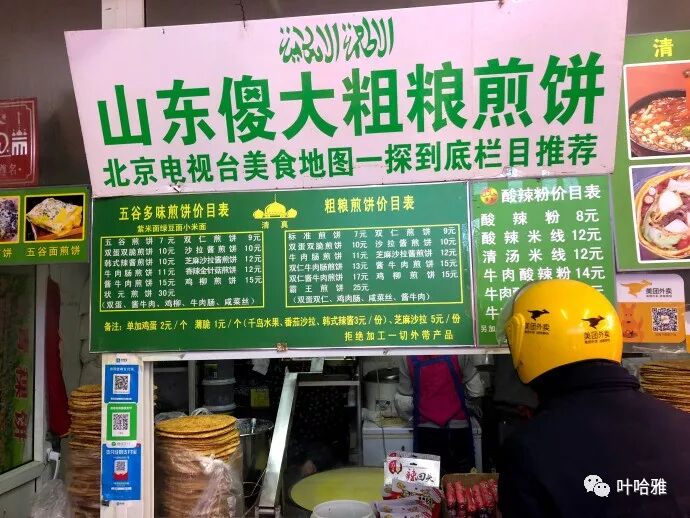
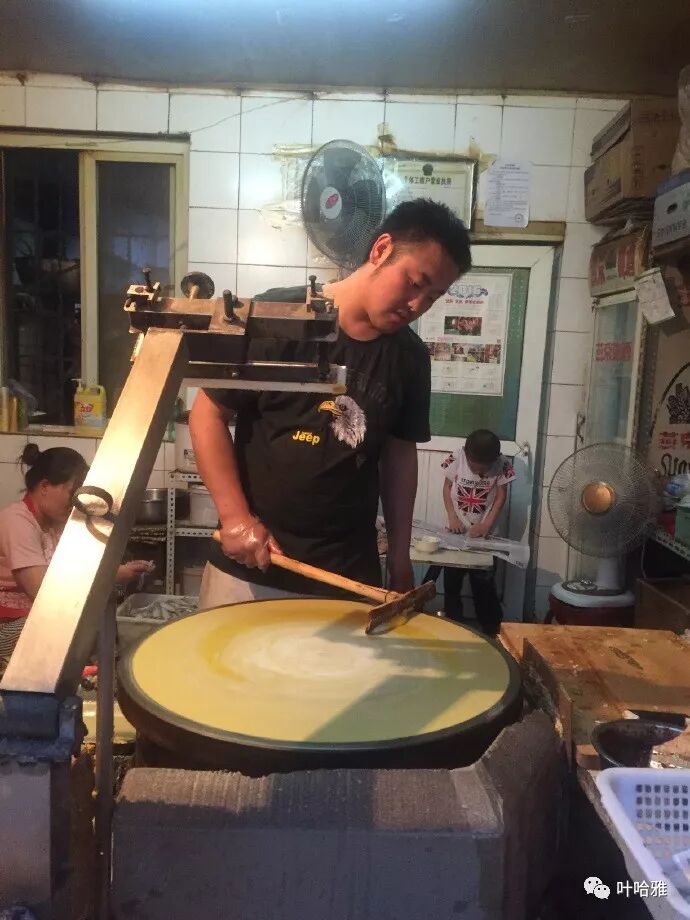
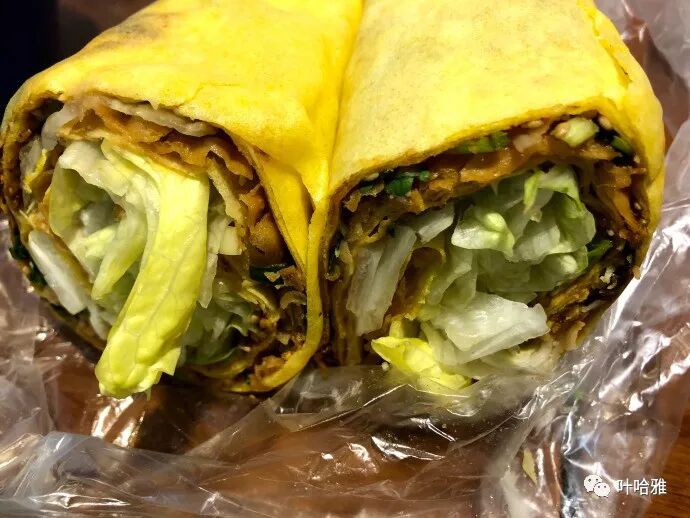
This shop used to be in Jiaozihu Tong. Later, due to urban renovations, it moved into the vegetable market in Shuru Hutong. They have added several new flavors, but I still like the classic version best.
Address: Entrance of the Shuru Hutong Halal Vegetable Market.
6. Suzhou Hui Muslim Restaurant
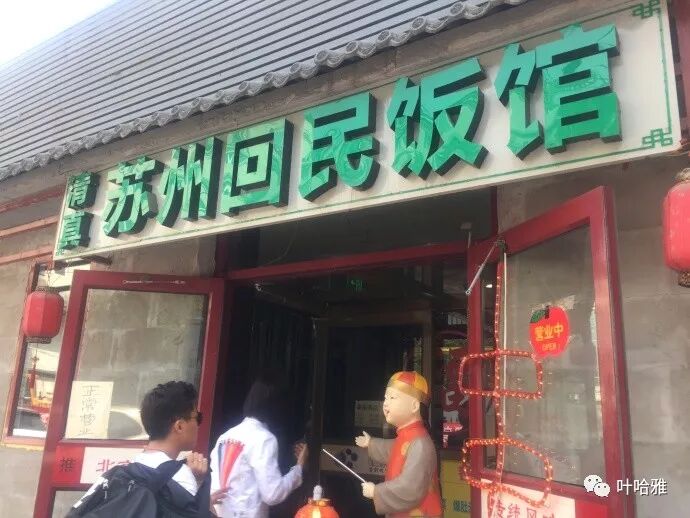
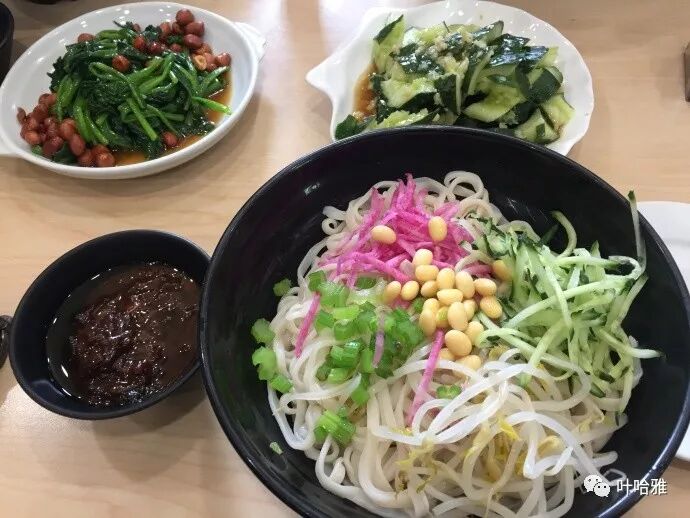
Although soybean paste noodles (zhajiangmian) are a representative Beijing dish, there are not many halal versions. Some small Beijing-style eateries make them, but the taste is average. Most Hui Muslims make soybean paste noodles at home. This Suzhou Hui Muslim Restaurant is not run by Suzhou people; it is just named that because it is located in the Suzhou community. It is actually a small Beijing-style eatery, and I recommend their soybean paste noodles.
Address: No. 36, Suzhou Hutong, Dongcheng District.
7
Dardanelles Turkish Restaurant
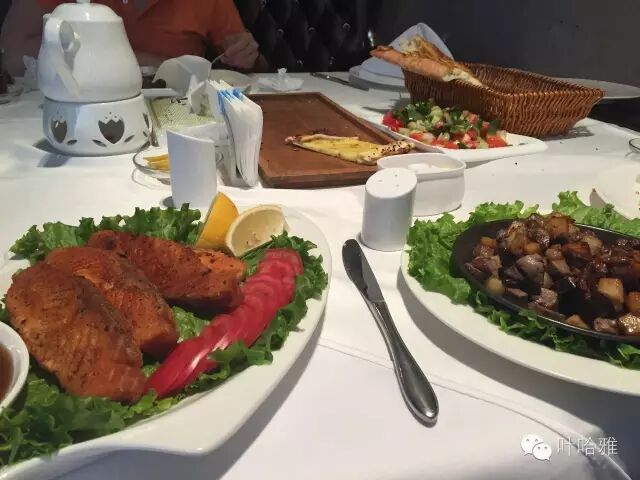
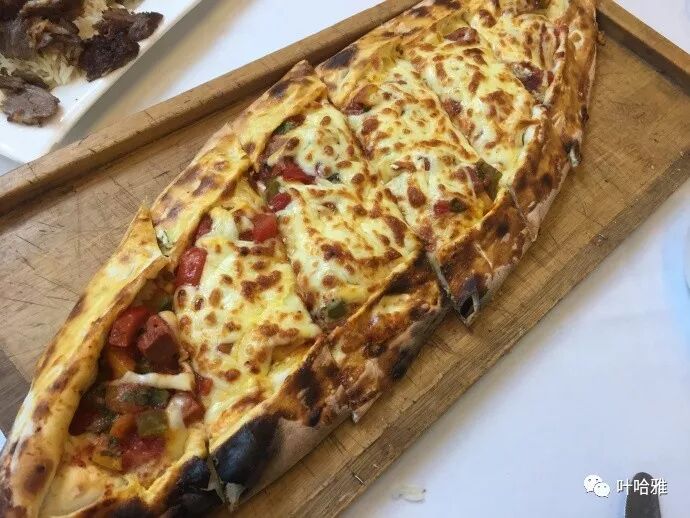
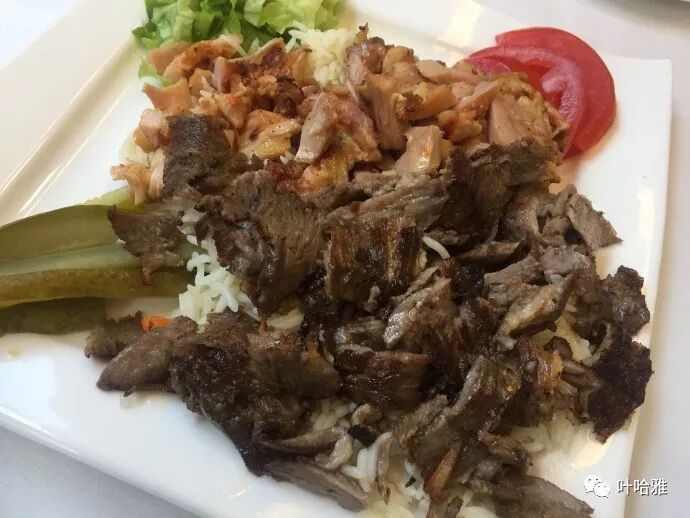
Beijing has four halal Turkish restaurants: Istanbul Restaurant, Turkish Mama Restaurant, Doner Turkish Cafe (which serves kebab wraps) near Xiushui Street, and Dardanelles Restaurant. Dardanelles is my favorite because of its beautiful Ottoman-style decor. The salmon, grilled meats, and steaks are all delicious and reasonably priced.
Address: Units 1-21-22, Courtyard 39, Shenlu Street, Ritan North Road, Chaoyang District, Beijing (west of the North Korean Embassy).
8. KAVKAZ Azerbaijani Restaurant
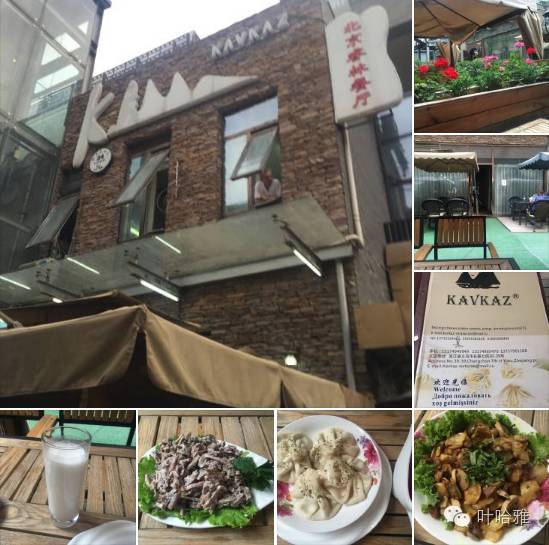
At KAVKAZ Azerbaijani Restaurant, I tried the Caucasian salad, Azerbaijani soup dumplings, Caucasian beef, and Azerbaijani salty yogurt drink. The staff are all from Azerbaijan. The young waitress did not speak much Chinese, but she was very cute and enthusiastic.
Address: East side of Shenlu Street, Chaoyang District, Beijing.
9.
Shashi Castle Restaurant
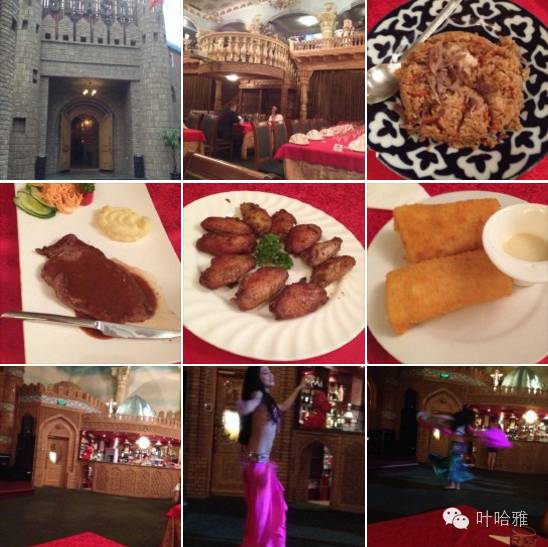
This is an Uzbekistan-style restaurant themed around a romantic meeting between a prince and a princess. They serve Middle Eastern, Russian, and Western food. You must order the grilled steak, and the Napoleon cake is quite delicious. There is belly dancing at 7:30 PM.
Address: First floor of the Saint Angel Hotel, near Exit E of Hujialou Subway Station, Chaoyang District, Beijing.
10.
Persepolis Restaurant
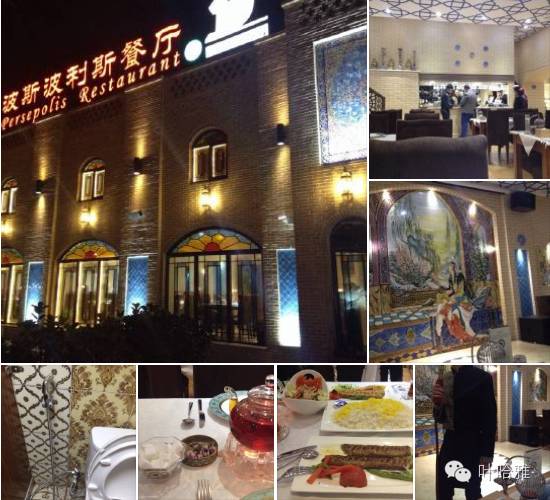
Persia is Iran. The restaurant next door changed its sign. I used to go there often for the lunch buffet. You must order the Iranian black tea and the grilled meats. You can also eat saffron fried rice here.
Address: Right at Exit A of Tuanjiehu Subway Station, Chaoyang District, Beijing.
11. Lazeez Indian Music Restaurant
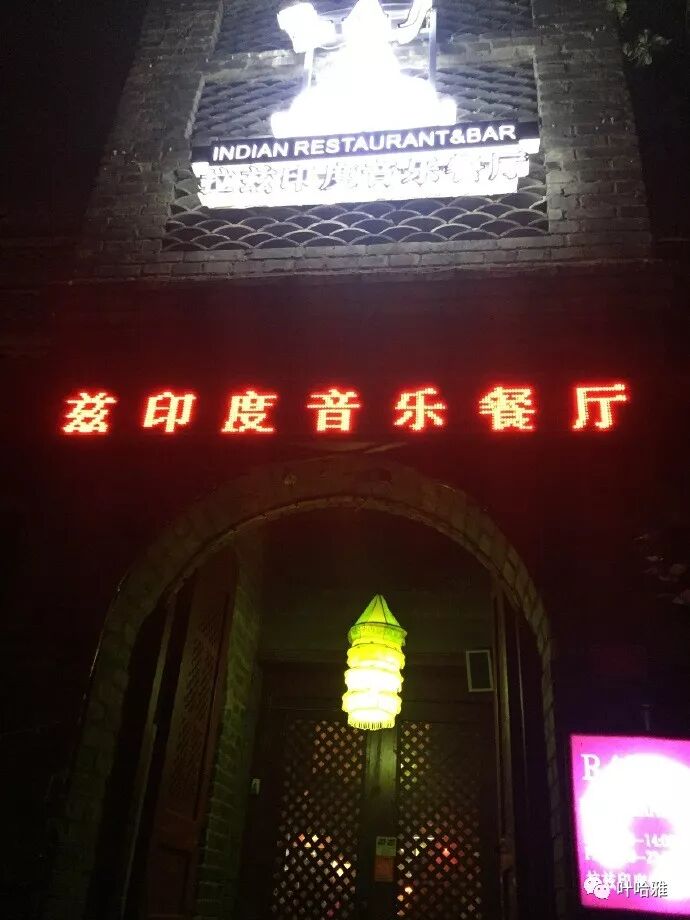
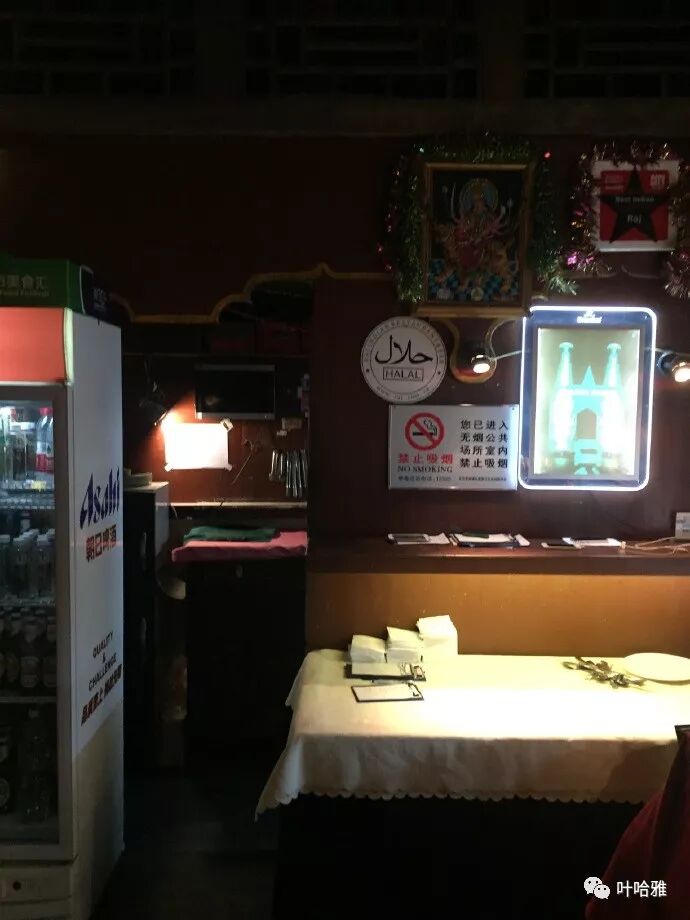
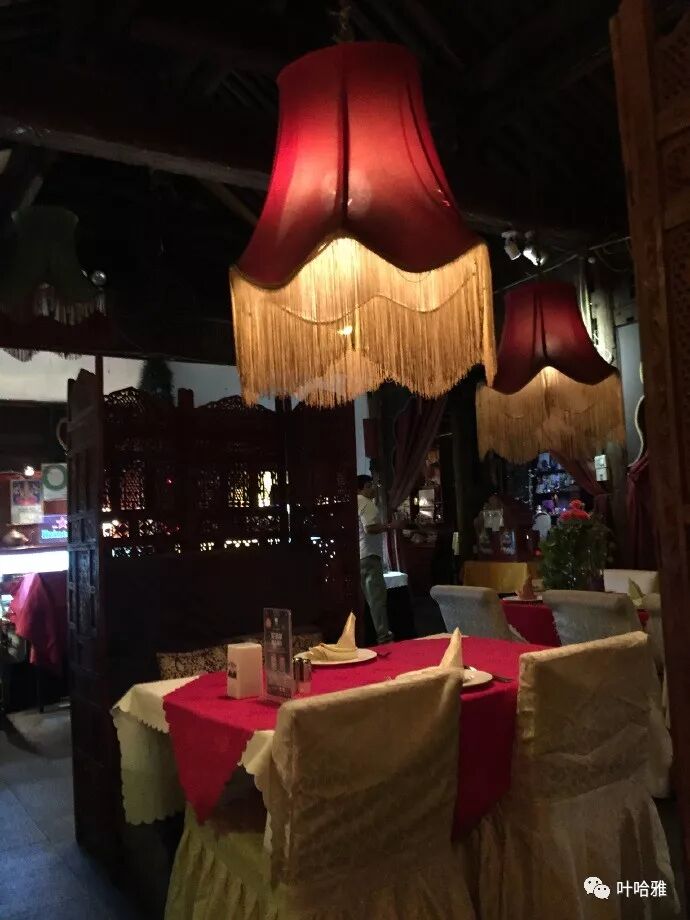
Beijing has many halal Indian restaurants, such as Indian Kitchen, Ganges Restaurant, and Sadhu, but I like Lazeez Music Restaurant the best. The halal sign is hung inside. Luckily my classmate reminded me, or I would have missed this uniquely styled Indian restaurant. The atmosphere inside is very exotic, and you can hear beautiful Indian songs. You can eat authentic Indian spicy beef curry, chicken curry, cream of mushroom soup, Mughal royal flatbread (naan), samosa chaat, and rose yogurt lassi. There is a wide variety of dishes.
Address: 31 Gulou West Street, Xicheng District.
12. Sukhothai Thai-Malaysian Restaurant
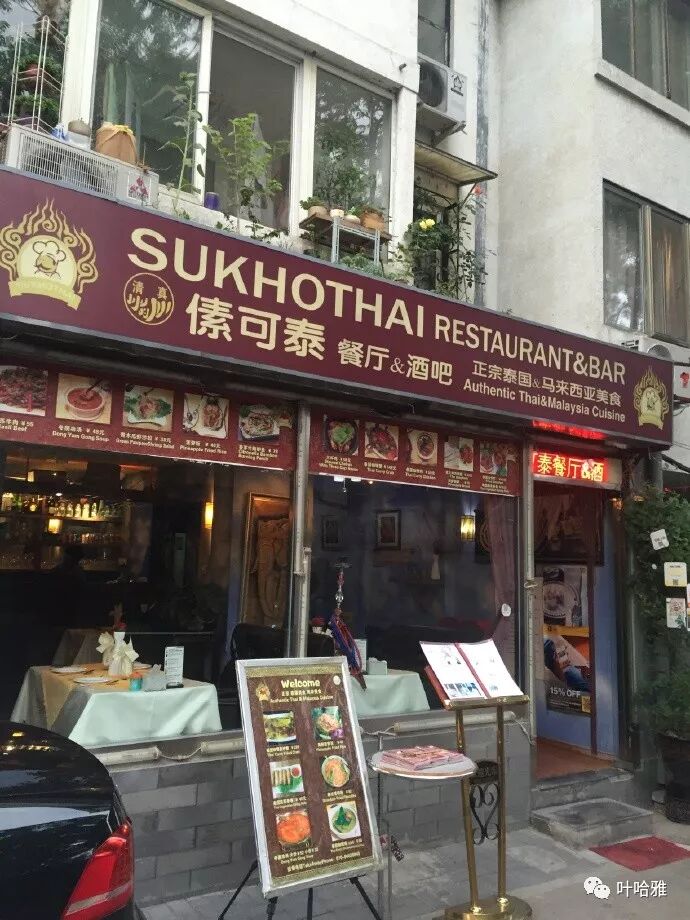
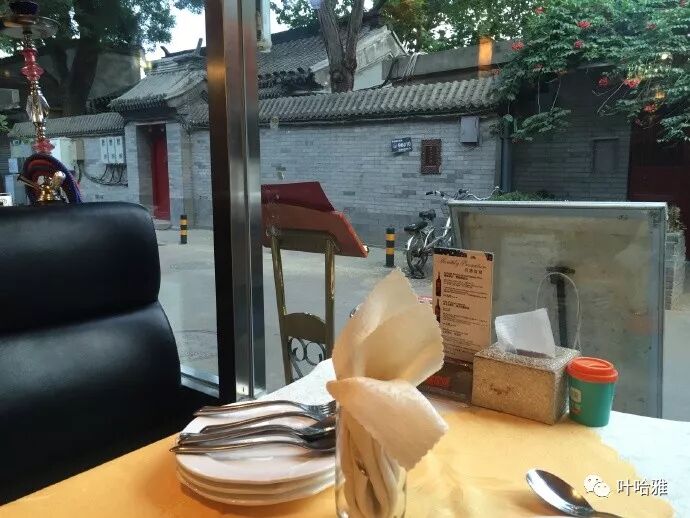
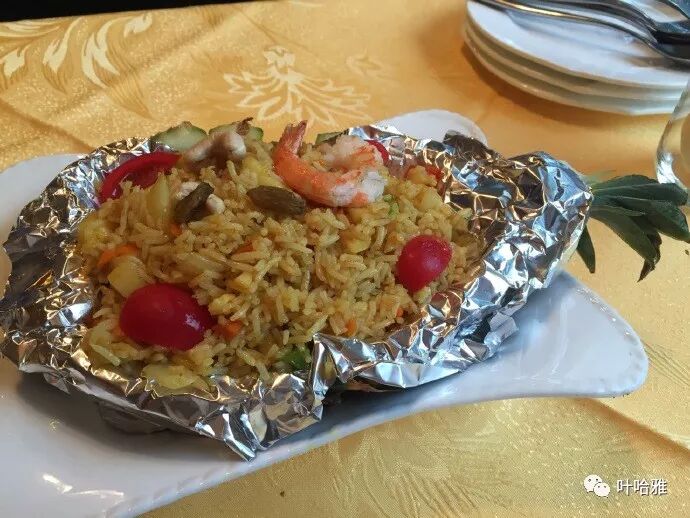
Sukhothai was the capital of the first Thai dynasty, the Sukhothai Kingdom. The Nanyang Yiyicheng Malaysian restaurant in Dongzhimen closed, and I was worried about where to find halal Malaysian food. I recommend the original milk tea, pineapple fried rice, and coconut pudding with sago.
Address: Ju'er Hutong, Nanluoguxiang, opposite Saduli Restaurant.
13. Hefeng Banquet (Hefeng no Utage)
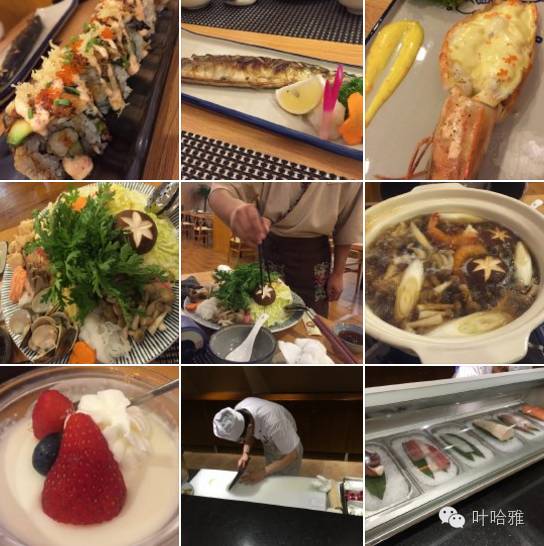
This is the first halal Japanese restaurant in Beijing. The head chef is the former Japanese cuisine chef from the Kempinski Hotel. The space is bright and roomy with private rooms. The food is carefully prepared for its look, smell, and taste, and you can order Australian wagyu hot pot. The owner is a Hui Muslim from Lanzhou who is very devout, so you can trust the ingredients. The palm-sized prawns are fresh and tender. The tempura sushi and Pacific saury (sanma) taste just like they do in Japan, and they serve free pudding after the meal.
They recently launched a 298 yuan seafood buffet. You can order anything from the menu, including abalone, lobster, king crab legs, Pacific saury, salmon, oysters, and other treats. It also includes fruit juice and desserts, making it a great value.
Address: 1st Floor, Shaanxi Building, Shilihe, Chaoyang District.
14. Alameen Lebanese Restaurant
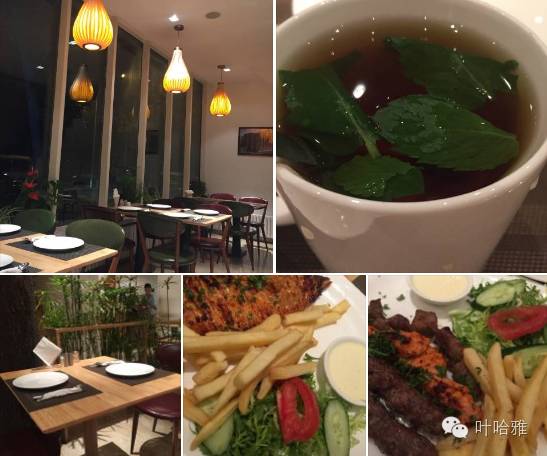
Lebanese food is one of my favorite Middle Eastern cuisines. This place has a nice, quiet atmosphere and reasonable prices. They serve pizza, steak, and salads, and the grilled chicken breast is delicious.
Address: Next to the German Embassy in Sanlitun.
15. Khan Baba Pakistani Restaurant
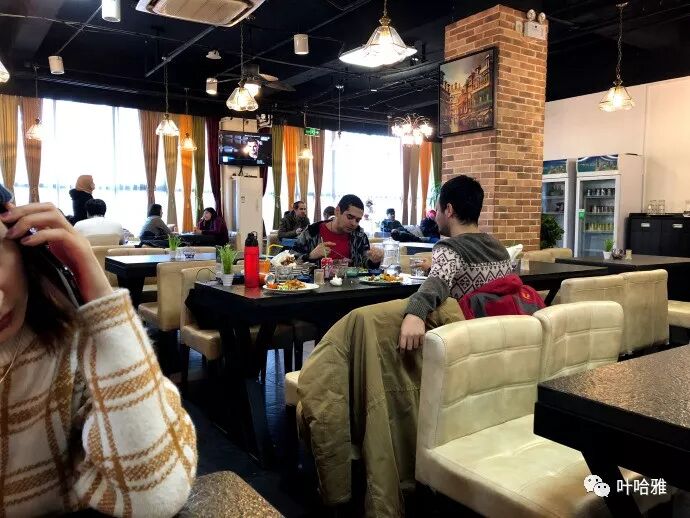
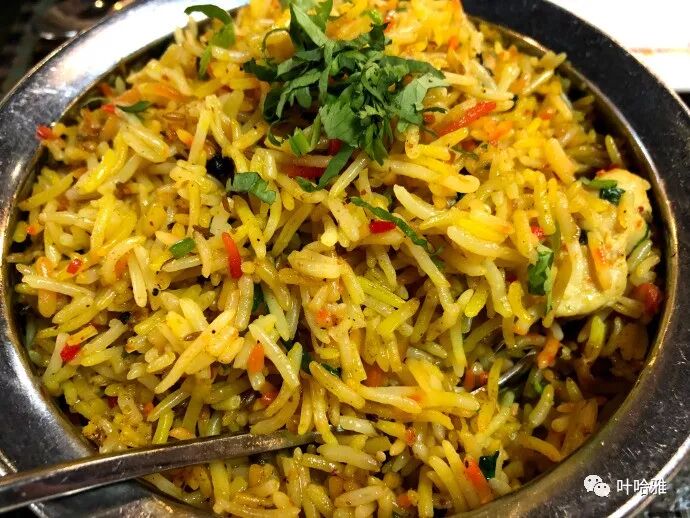
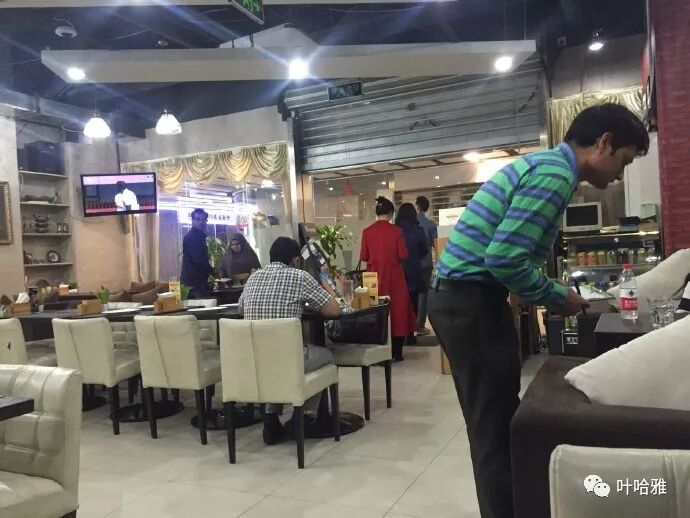
Pakistani food is as common abroad as Lanzhou hand-pulled noodles (Lanzhou lamian) are here. There are two Khan Baba locations in Beijing: one in Wudaokou and one in Sanlitun. The Wudaokou shop is larger. There is also a Shalimar Indian and Pakistani restaurant near the Shunyi China International Exhibition Center.
Address: Room 511, 5th Floor, Building 2, Sanlitun SOHO, No. 8 Gongti North Road, Chaoyang District.
16. One Thousand and One Nights
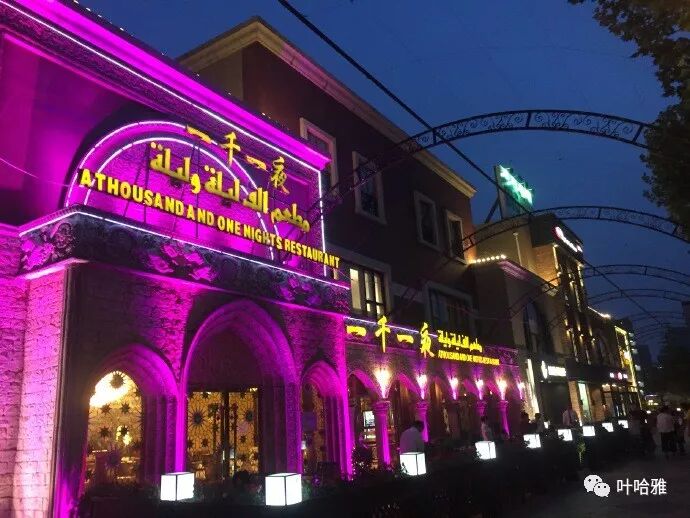
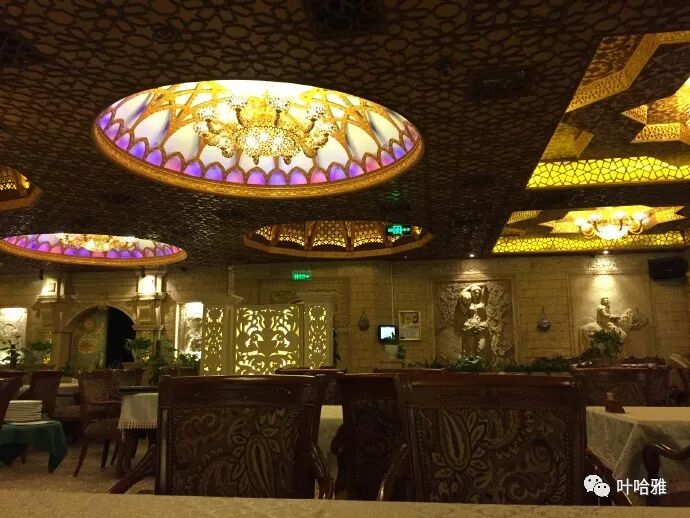
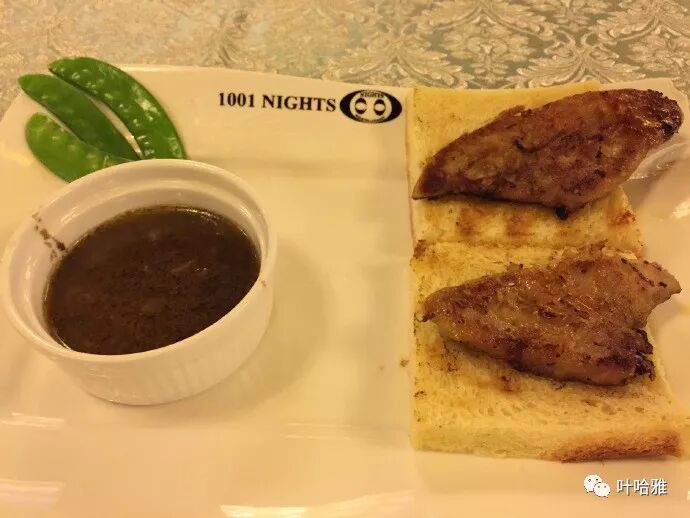
One Thousand and One Nights is a high-end Middle Eastern Arabic restaurant with two branches in Beijing: one in Solana and one in Tuanjiehu. You can eat pan-fried foie gras here, and there are song and dance performances every night on the hour.
Address: No. 6 Chaoyang Park Road, Solana, Chaoyang District.
17. Changji Iron Griddle BBQ (Changji Zhizi Kaorou)
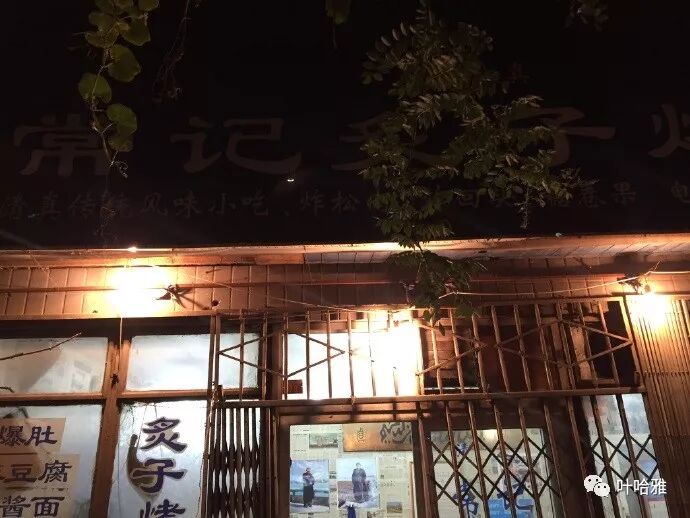
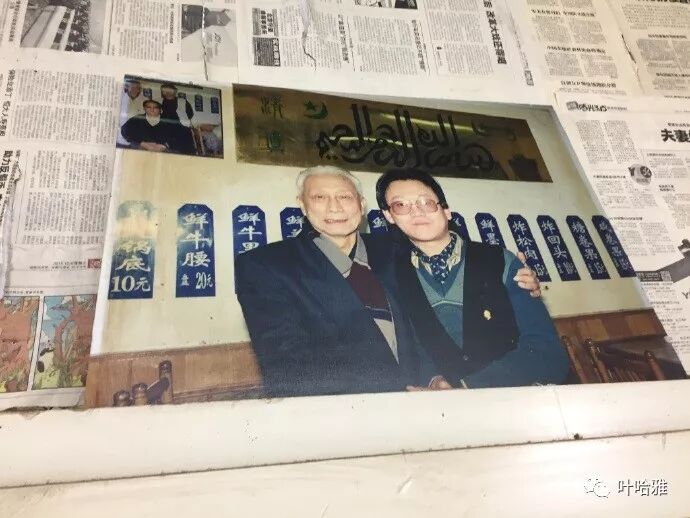
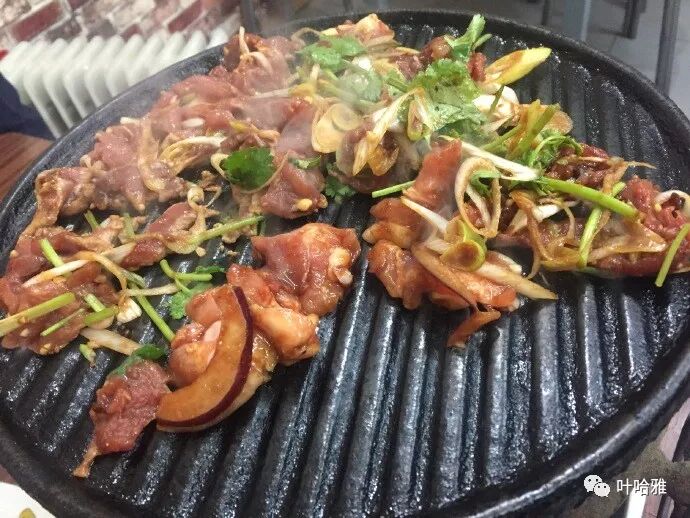
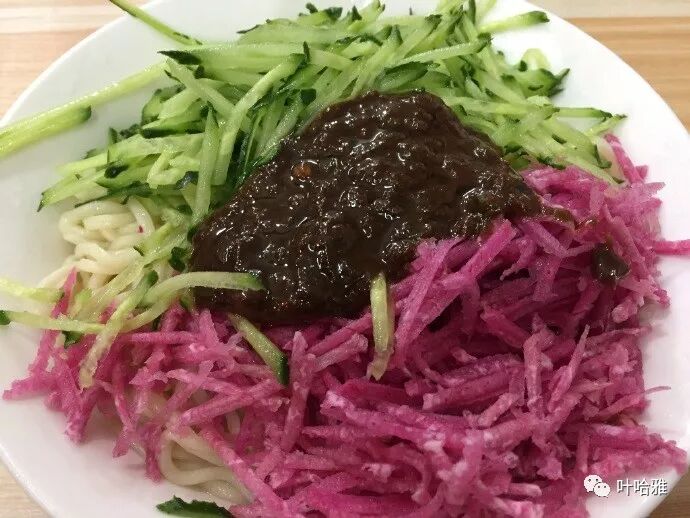
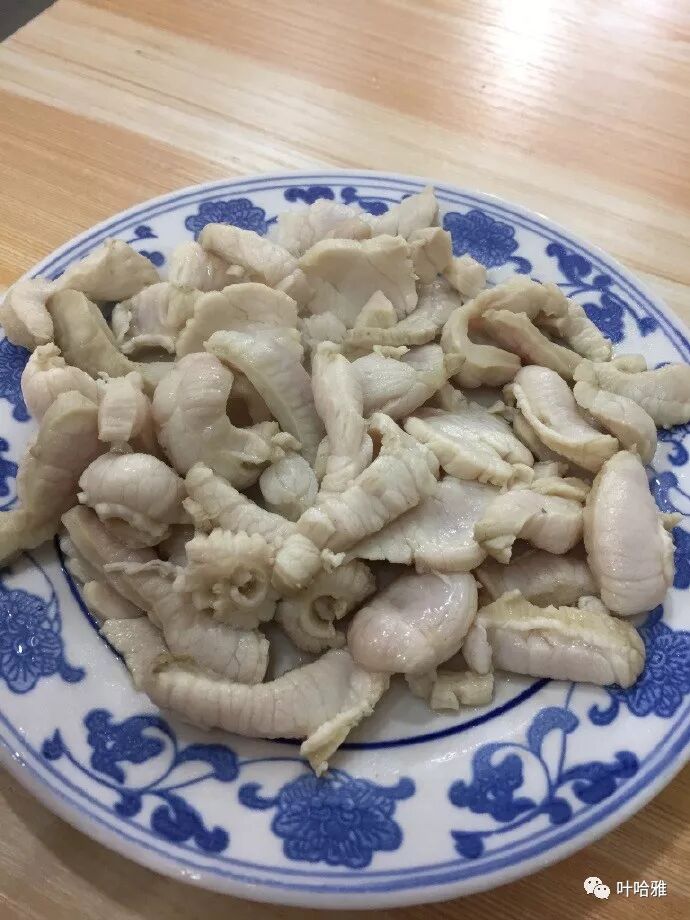
Changji Iron Griddle BBQ is a very authentic old Beijing halal restaurant. It only has six tables and specializes in iron griddle barbecue. The soybean paste noodles (zhajiangmian) and quick-boiled tripe (baodu) are absolutely perfect. Next time, I will try the barbecue and the lamb noodle soup (yangrou cuamian). The decor in the shop has a cool, confident vibe. Everyone calls the owner Fourth Master Chang (Chang Siye), and he is very hospitable. These kinds of small hutong eateries are rare now. They serve grilled pickled cabbage, grilled shiitake mushrooms, grilled chicken cartilage, grilled beef, and grilled lamb. They marinate the meat before grilling it. The taste is just as good as the famous Kaorouji, but because it is a small hutong shop, the price is less than half of what you would pay there.
Address: In the bungalows south of Guangnei Street that are waiting to be demolished. There is a wall built in front of the entrance, so you cannot see it unless you walk inside.
18. Tangdou Conveyor Belt Buffet Hot Pot
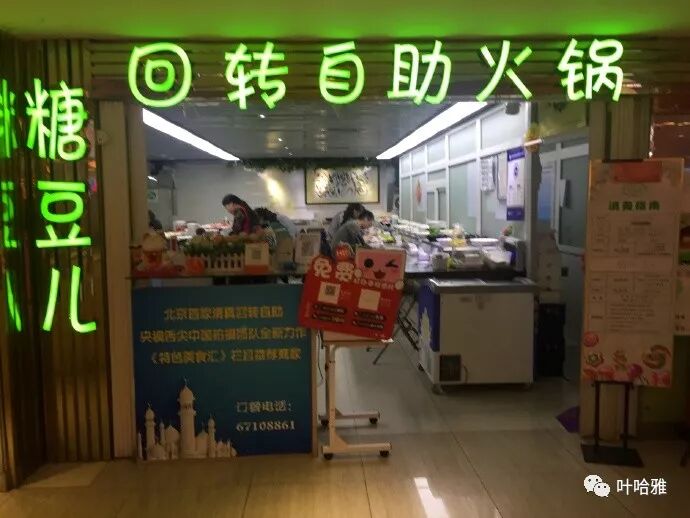
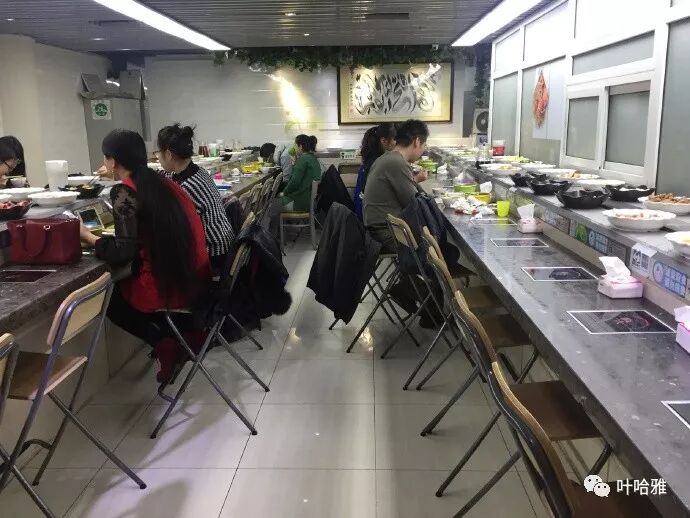
This is the first halal conveyor belt buffet hot pot restaurant in Beijing. It costs 59 yuan per person, and you can eat dozens of different items, including seafood, cooked dishes, vegetables, peanuts, fruit, various staples, snacks, and ice cream. Drinks are unlimited. A conveyor belt runs through the whole restaurant, so you can eat everything without moving from your seat. It is quite a good deal.
Address: North side of the 8th floor, Souxiu City Shopping Plaza, Chongwenmen Outer Street (opposite the 2nd phase of the New World Department Store in Chongwenmen).
19. Xingyuege Muslim Restaurant
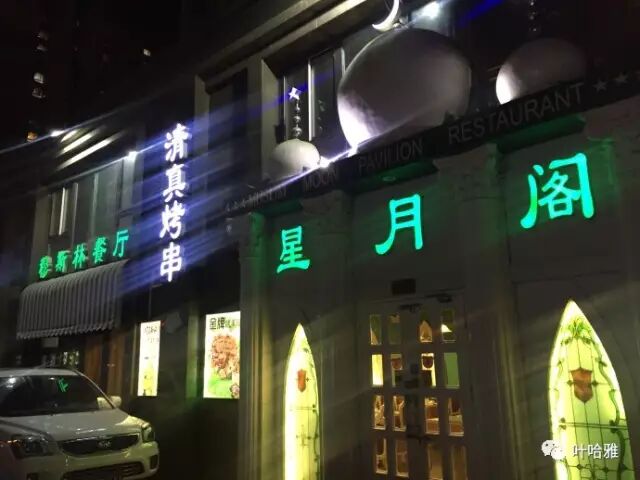
Friends (dosti) from Northeast China in Beijing are in luck, because I finally found a restaurant that specializes in halal Northeast-style dishes.
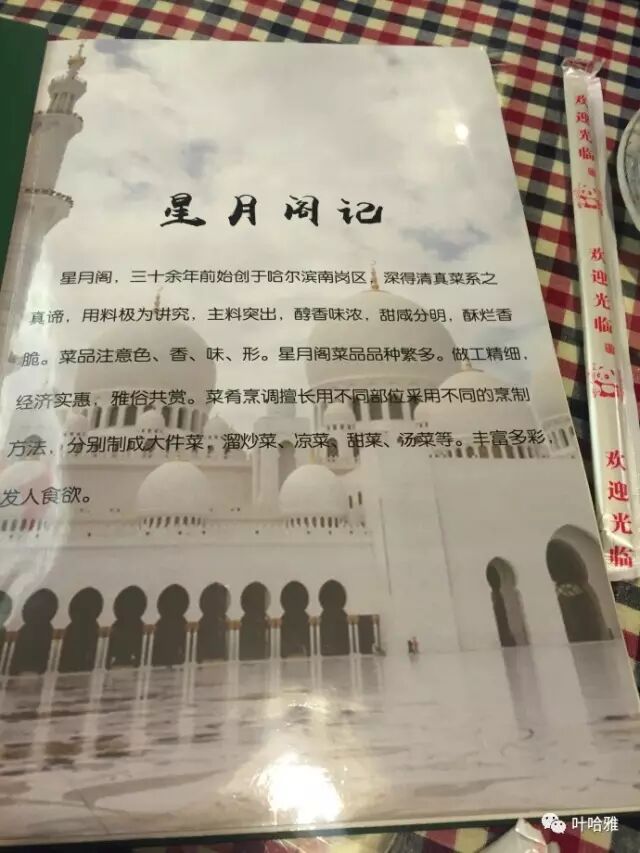
The restaurant's home base is Harbin.
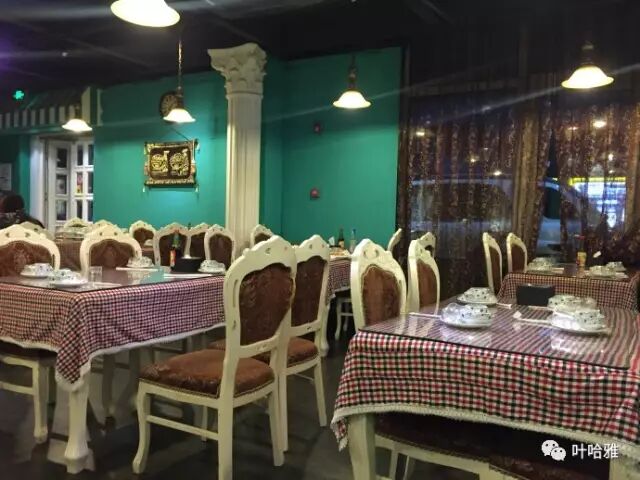
The decor style is also very Harbin.
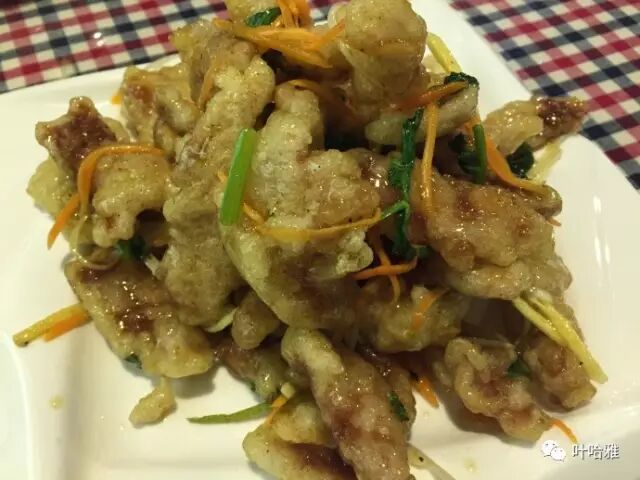
Double-cooked pork (guobaorou) is a famous Northeast dish, served here in the Harbin-style savory version.
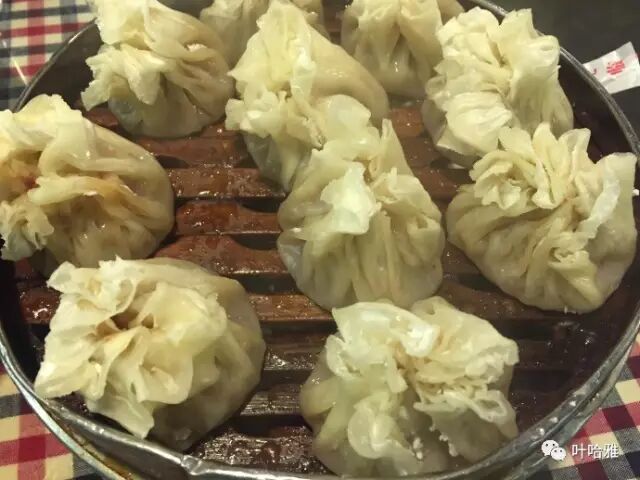
Steamed dumplings (shaomai) are also a common Northeast home-style dish.
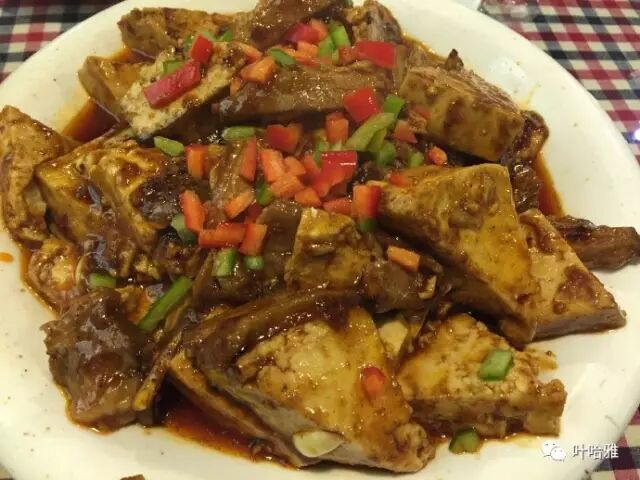
They also have home-style tofu (jiachang doufu). Friends (dosti) from the Northeast who miss the taste of home should take the chance to try it.
Address: Shop 102, Building 2, Courtyard 2, Lixiangcheng, Hongye Road, Xihongmen Town.
20. Ningxia Flavors, Summer Language
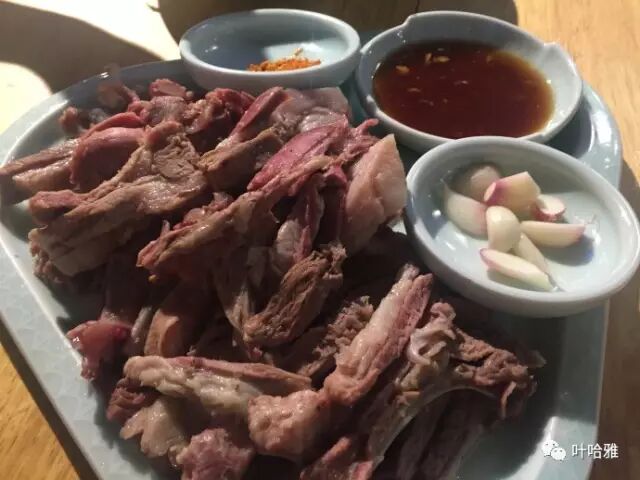
This is a halal restaurant serving Ningxia-style food. It is located in the busy Chaoyangmen area and has a great atmosphere.
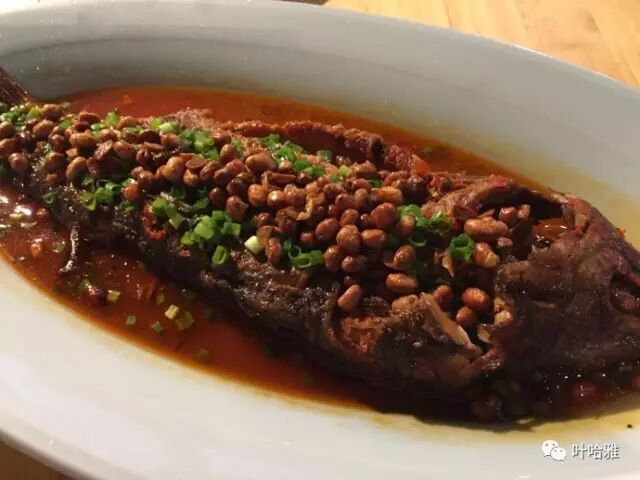
Our group of over ten people tried almost everything on the menu.
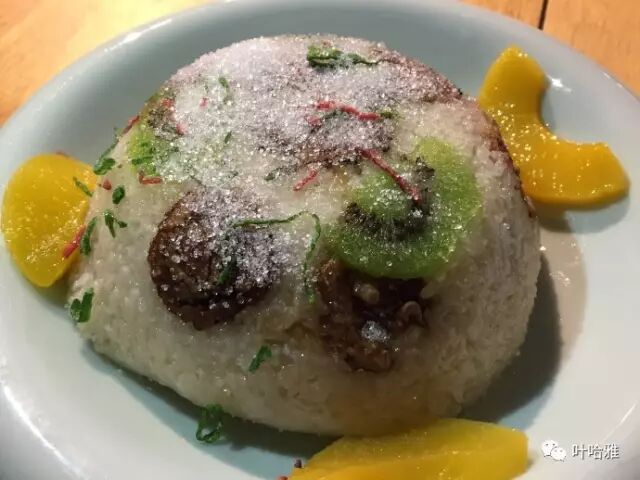
Sweet rice made by Northwest Hui Muslims.
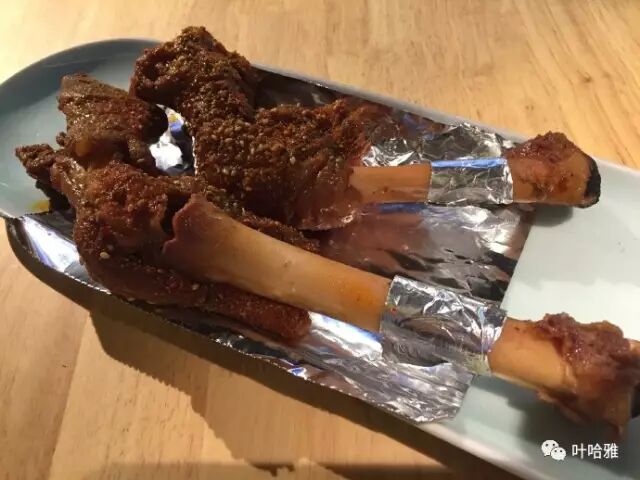
The lamb trotters are very flavorful.
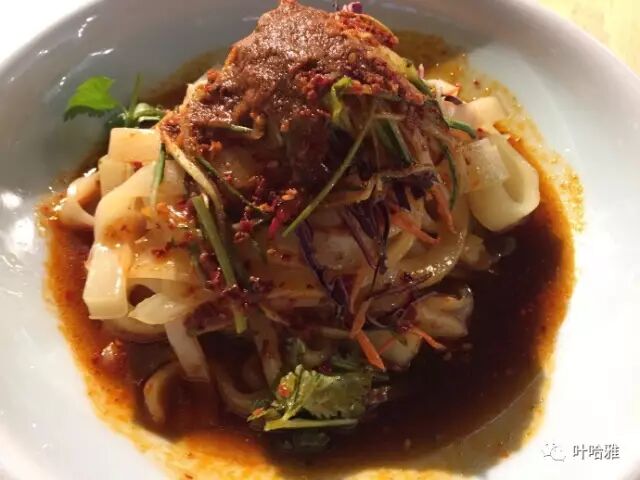
Every dish is solid and they put a lot of effort into the presentation.
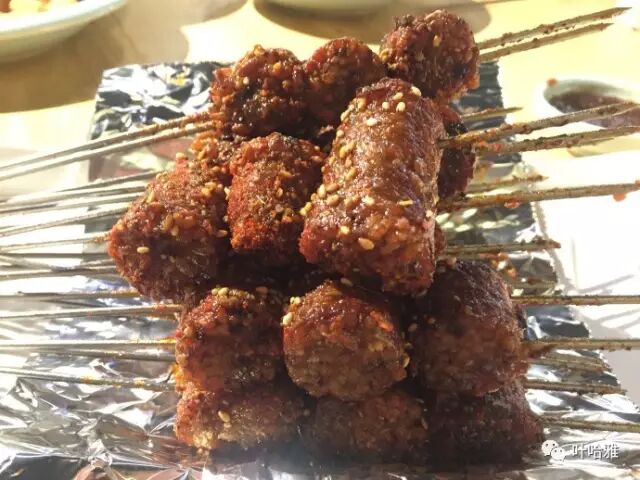
Rice sausage (michangzi).
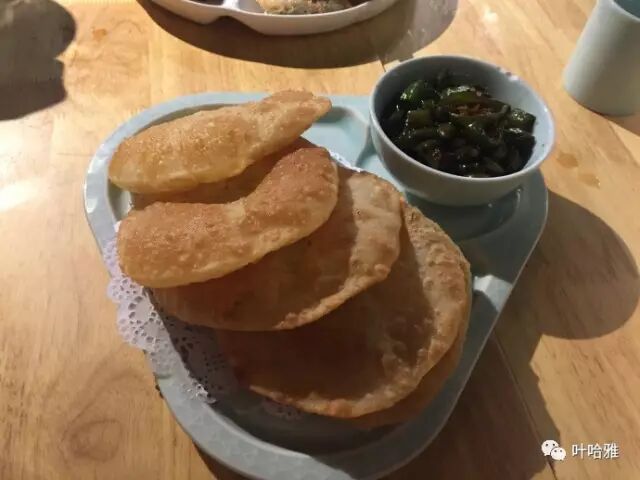
Hui Muslim fried dough (youxiang).
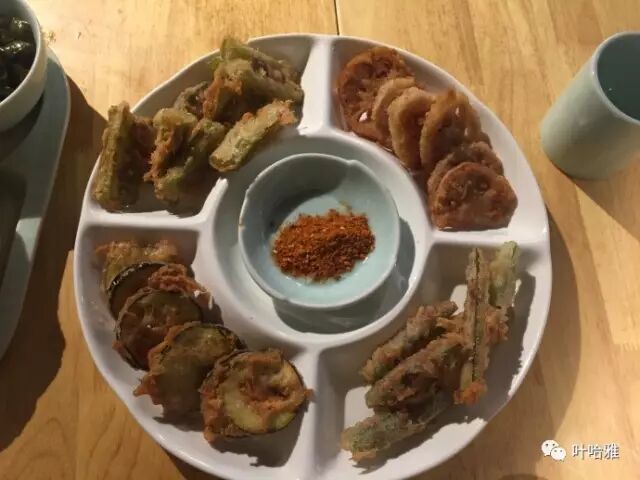
Hui Muslim snack platter.
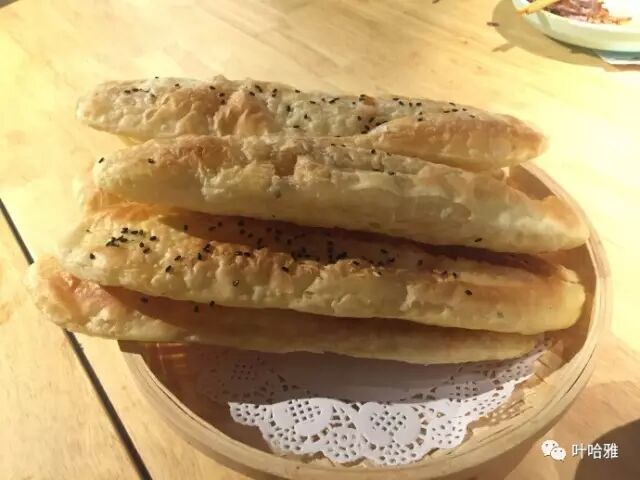
This place is great for group meals. You can push tables together for over ten people, and the prices are not expensive.
Address: 2F, Fenglian Plaza, No. 18 Chaoyangmen Outer Street, Chaoyang District, Beijing.
21. Eliya Halal Bakery
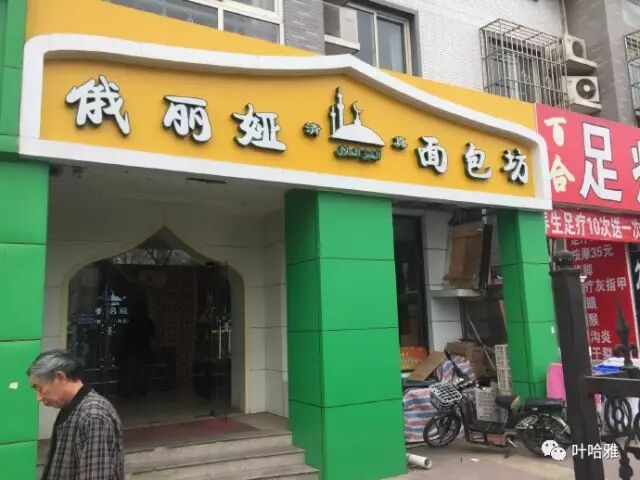
This is a high-end halal pastry shop.
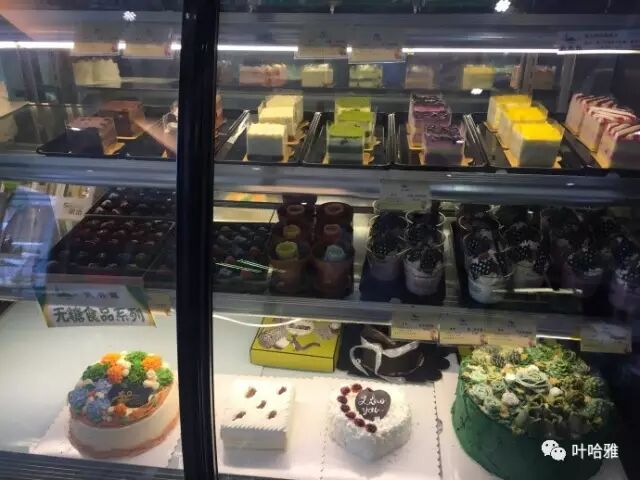
They have all kinds of beautiful desserts.
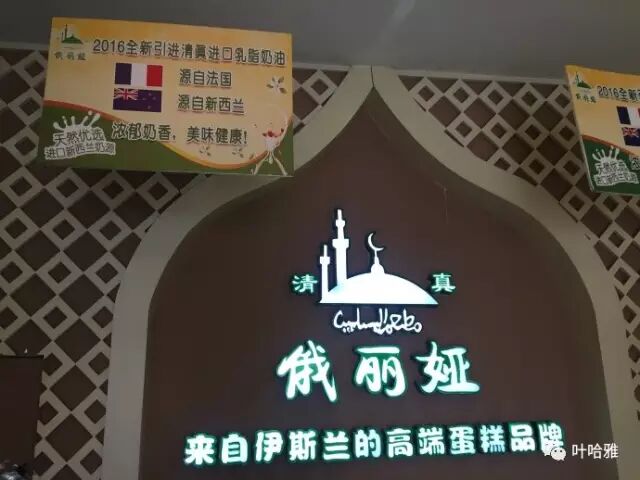
They use imported halal cream as an ingredient. The prices are actually not expensive, and the taste is top-notch.
Address: Ground floor shop 06, Building 56, Changying Minzu Jiayuan, Changying Middle Road, Chaoyang District.
22. Xingu Halal Charcoal Barbecue
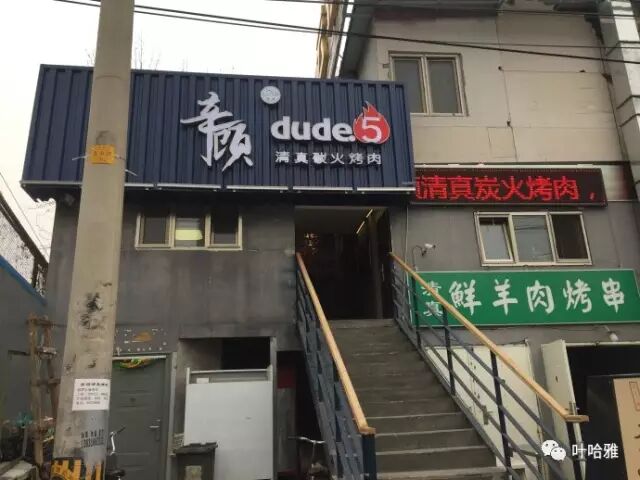
This shop was originally labeled as Korean BBQ, but business was affected by the THAAD incident, so the owner removed the word Korean. After all, the owner is from Changying and has nothing to do with Korea.
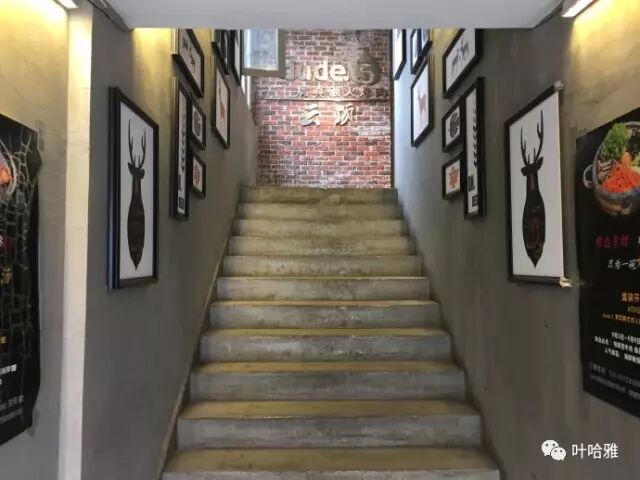
Walk up the stairs to the second floor and you will find a hidden gem. The owner bought the whole building and rented the space next door to the Changying Three Brothers.
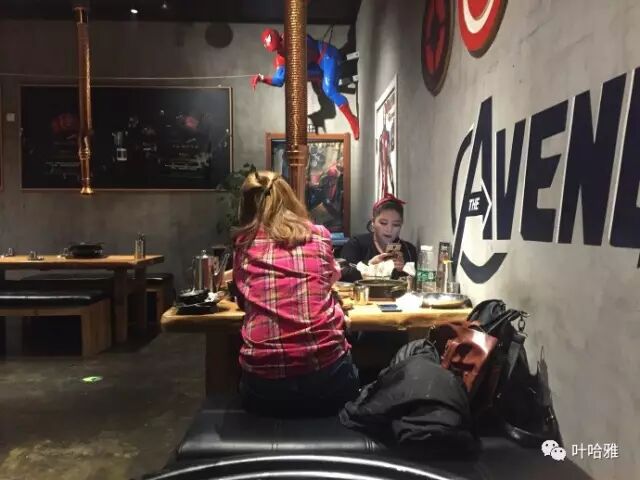
If you go in the afternoon, you do not need to wait in line. People say it was packed when it first opened, but business is not as good as before due to the THAAD incident.
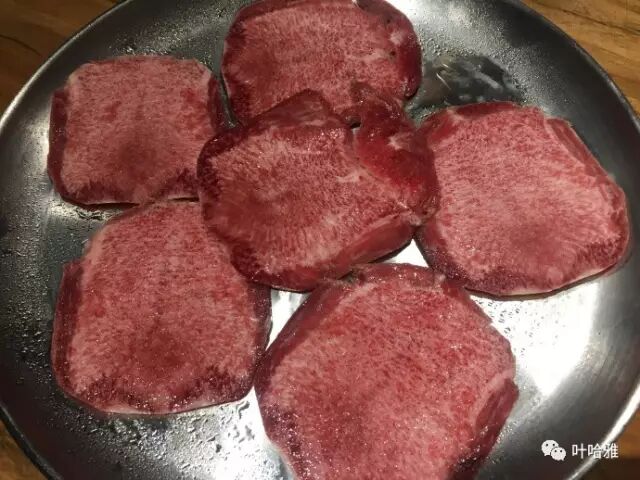
The meat is fresh and the service is top-tier.
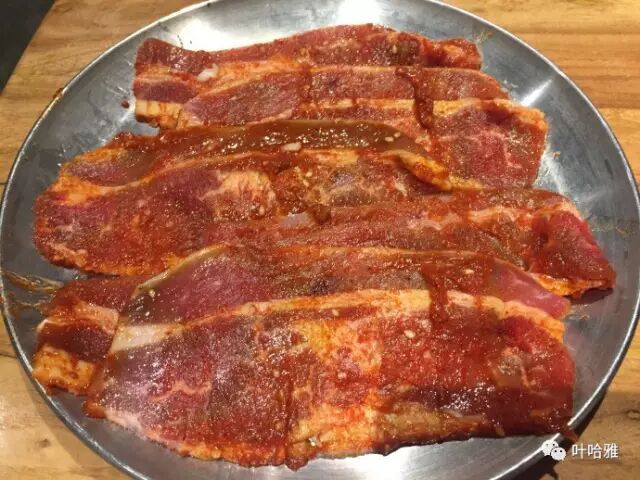
Servers help you grill the meat the whole time, so you do not need to do it yourself.
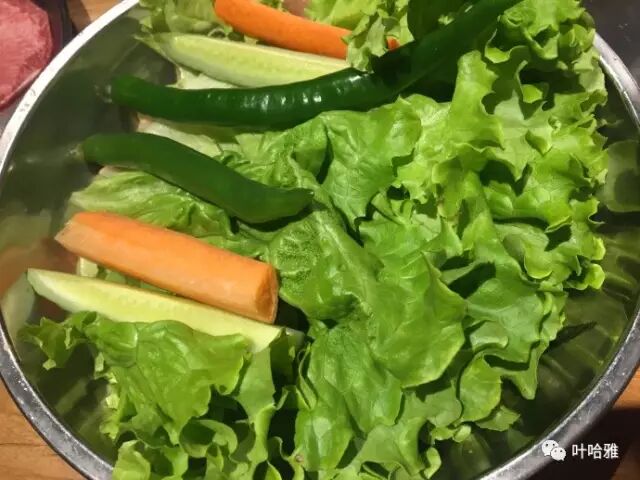
The lettuce is for wrapping the grilled meat.
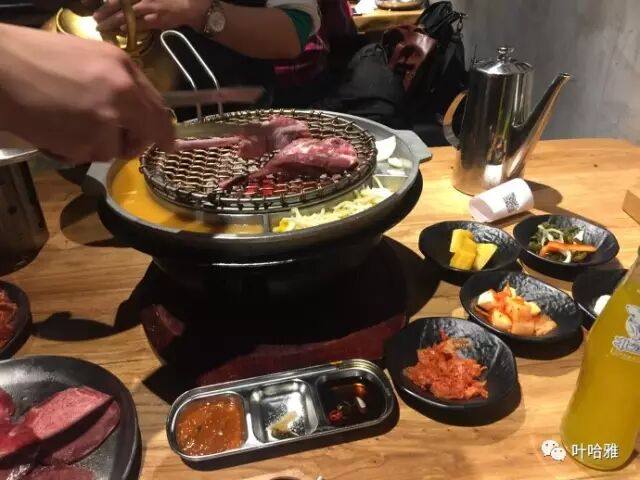
You can also eat the steamed egg custard and cheese on the side of the grill.
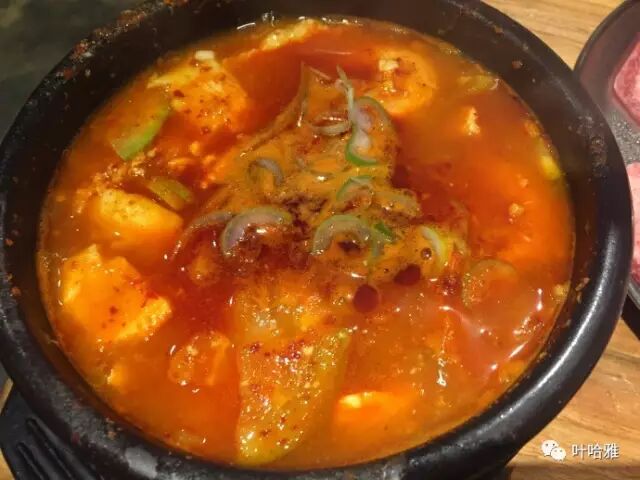
Halal soybean paste soup (dajiangtang).
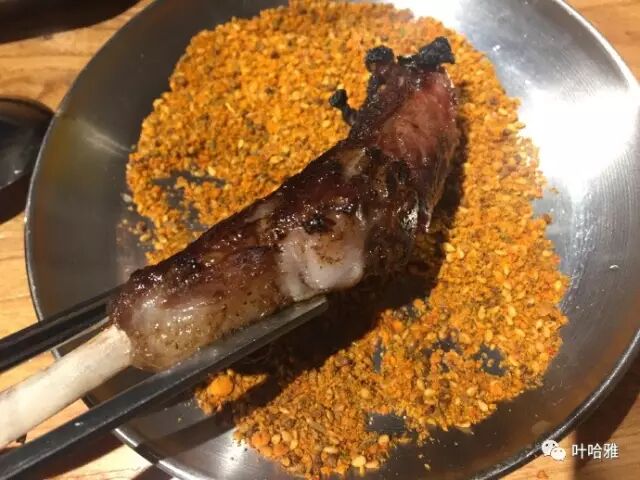
Dip the tender beef in five-spice seasoning to eat it.
Address: Opposite the south gate of Minzu Jiayuan residential area on Changying Middle Road, next to Yunding Billiards Club (west side of Minzu Primary School).
23. Aiyidian Halal Yunnan Cuisine
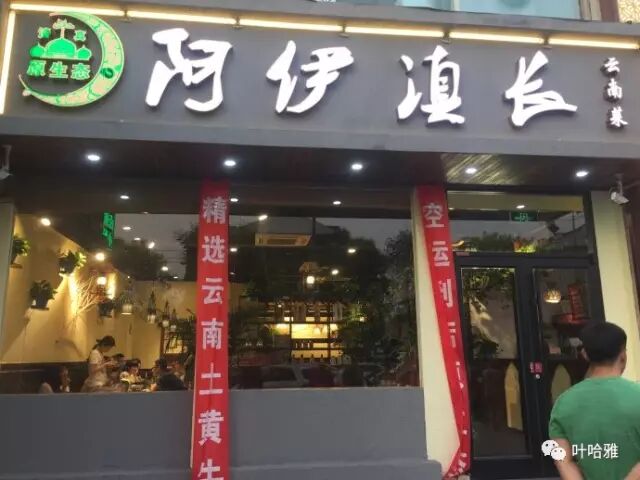
It is not easy to find authentic halal Yunnan food in Beijing, but this restaurant is quite genuine. There is another halal Yunnan restaurant in Yizhuang called Dianxinyuan. It has a nice atmosphere, but the food is average and it is quite far away.
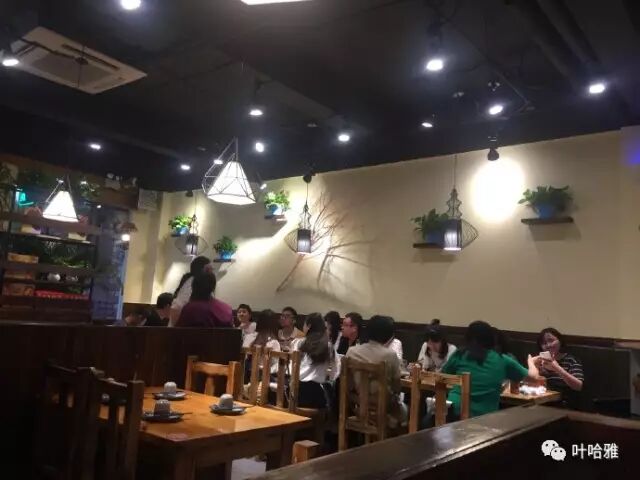
The decor is fresh and elegant, and the owner is a young woman from Yunnan.
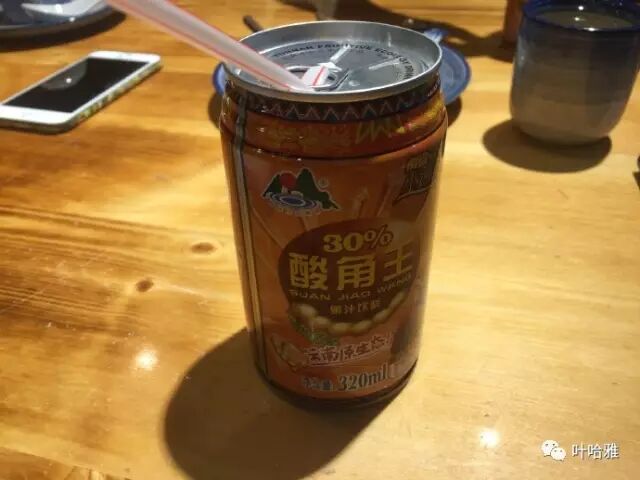
Tamarind (suanjiao) is a local specialty of Yunnan, so I chose to try the tamarind juice.
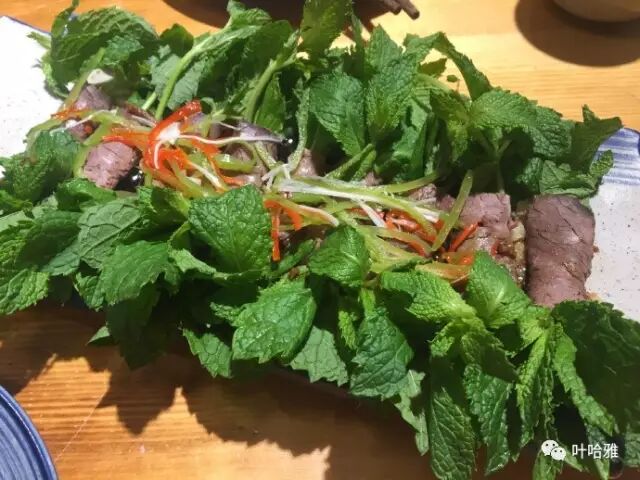
Beef wrapped in mint leaves; mint is as common in Yunnan as cilantro and is delicious even when eaten raw.
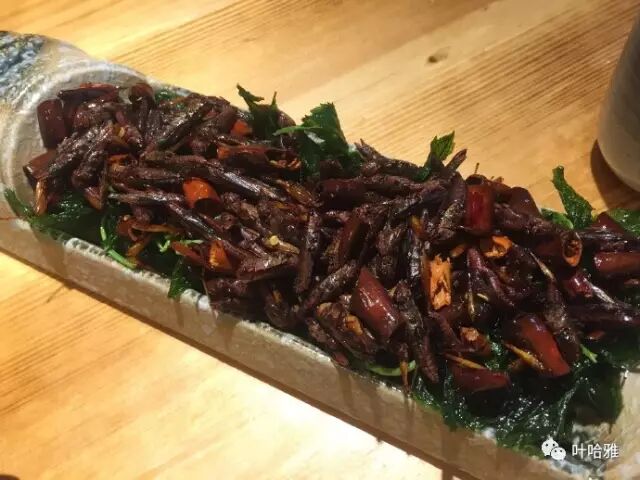
This is fried grasshopper.
Ibn Abi Awfa narrated: We went on seven expeditions with the Prophet, and we ate locusts. Sunan an-Nasa'i, Hadith 37;
The Prophet described the sea, saying: 'Its water is pure, and its dead creatures are halal.' He also said: 'We are permitted two types of dead creatures: fish and locusts;' and two types of blood: liver and spleen.' (Musnad Ahmad)
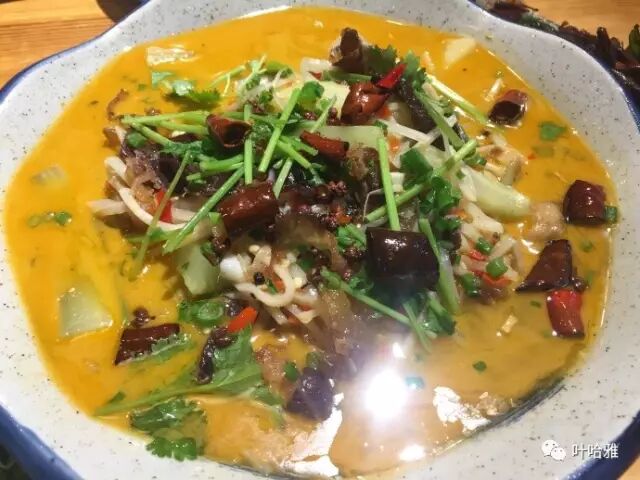
Sour soup beef jerky (niuganba); you must eat beef jerky in Yunnan cuisine because the most famous beef jerky in Yunnan is made by Hui Muslims.
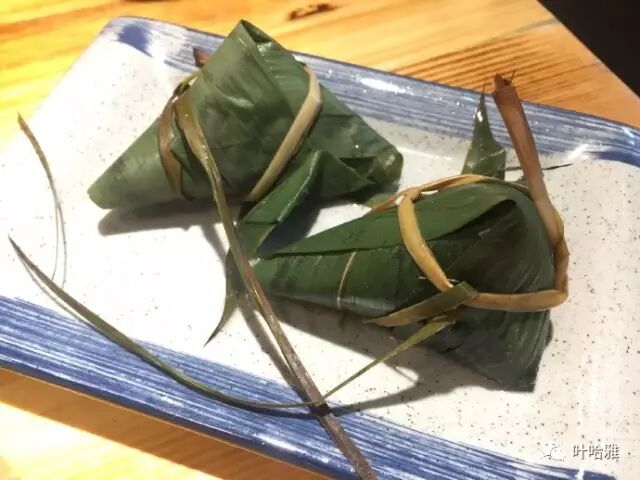
It happened to be just before the Dragon Boat Festival, and the restaurant was developing beef rice dumplings (zongzi). The manager gave me two; I had only eaten sweet ones before, so this was my first time trying a meat version.
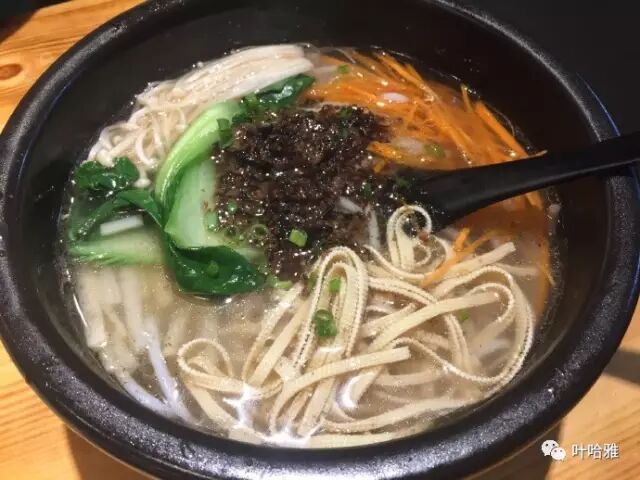
Yunnan cold rice noodles (mixian); the broth is rich and fragrant, and the noodles are chewy.
Address: First floor, north commercial section, axes 19-21, west side of Fengyayuan Zone 2, Huilongguan Town.
24. Old Ma's lamb spine hot pot (yangxiezi) and pan-fried dumplings (guotie).
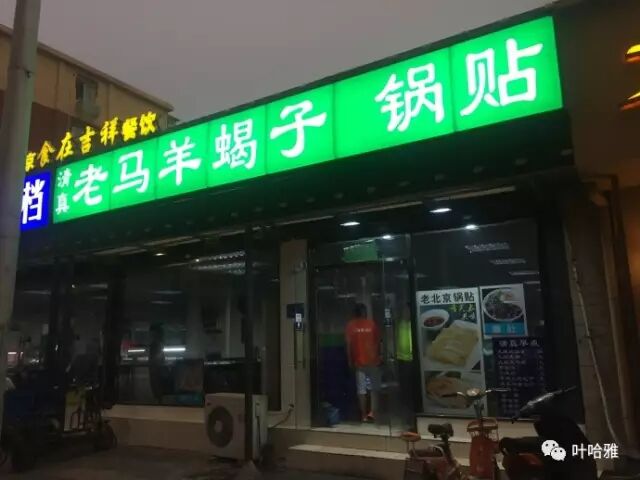
Halal lamb spine is easy to find, but halal potstickers are rare these days. This shop makes pretty good ones.
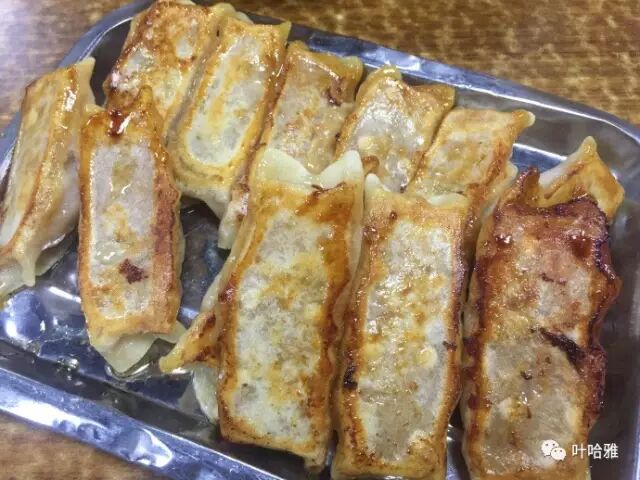
Beef and green onion potstickers were my childhood favorite. There used to be a tent in Xuanwu District that sold halal snacks, but after it was torn down, I never found good potstickers again. I later heard the old man who made them passed away (wuchang), so that authentic skill is likely lost forever.
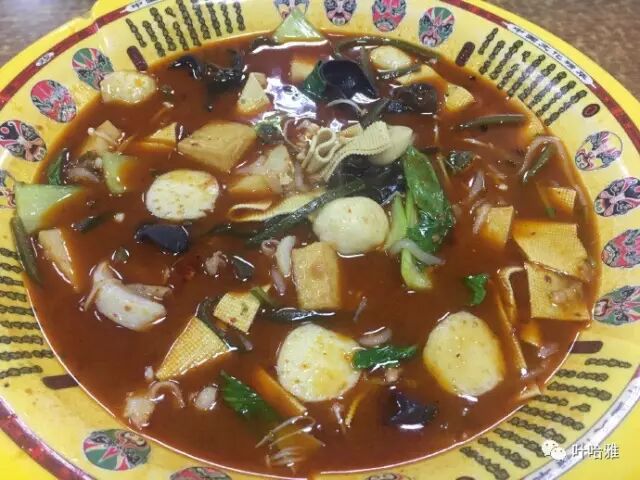
I was surprised to find they also sell spicy hot pot (maocai), a Chengdu snack similar to spicy soup (malatang), but you can drink the broth.
Address: South entrance of Hongju Street, Xicheng District.
25. Eating noodles at the Drum Tower.
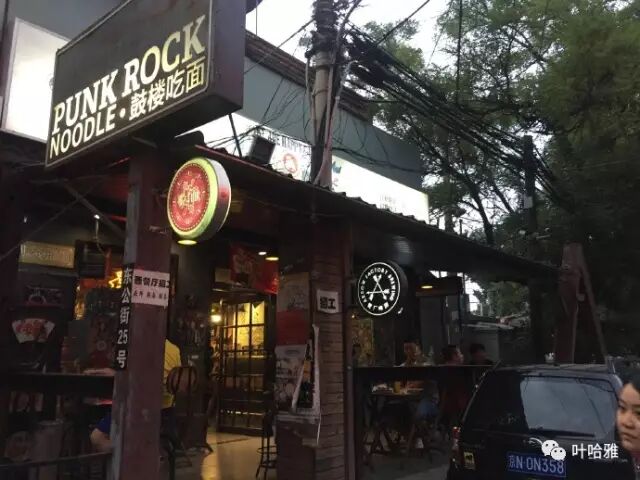
I found this popular restaurant on Dazhong Dianping. At first, I thought it was categorized incorrectly because it had no obvious halal sign. I learned from the reviews that it is a halal shop owned by a Beijing Hui Muslim, and the halal sign is in a very inconspicuous spot inside.
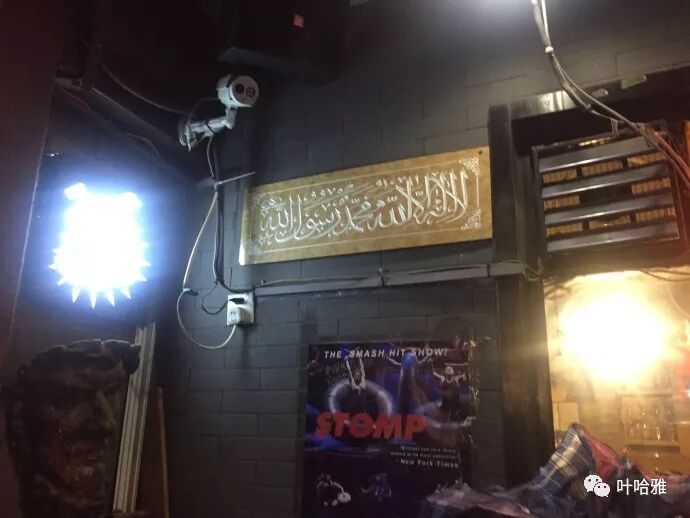
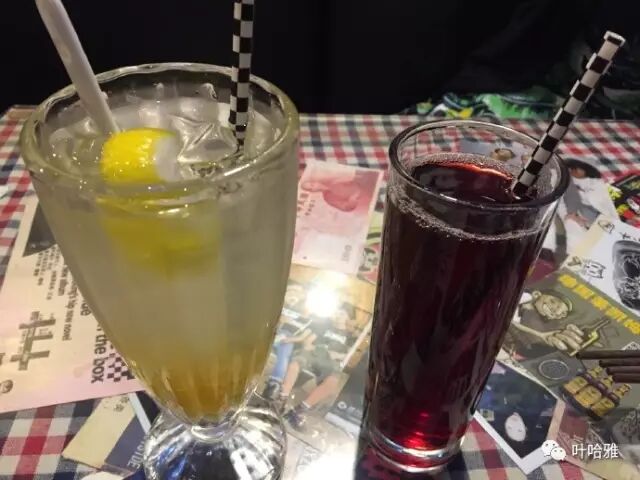
This is a Western-style rock music restaurant.
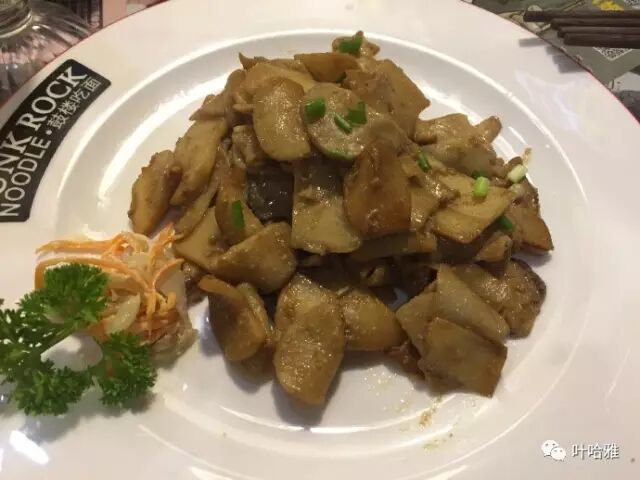
They have mushrooms with foie gras.
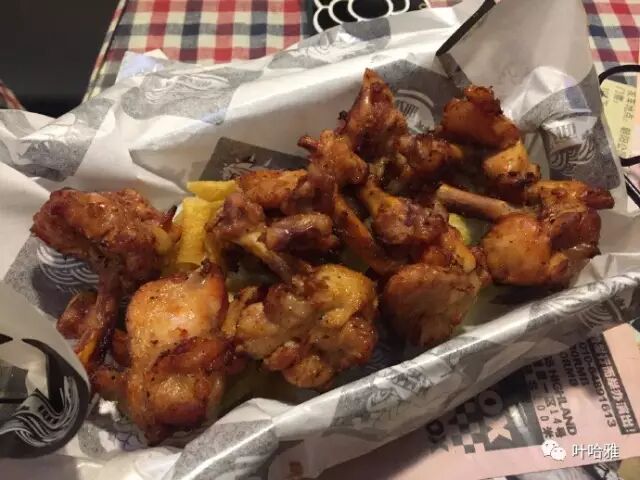
Roasted chicken leg, but it is named Eight Hammers (badachui).
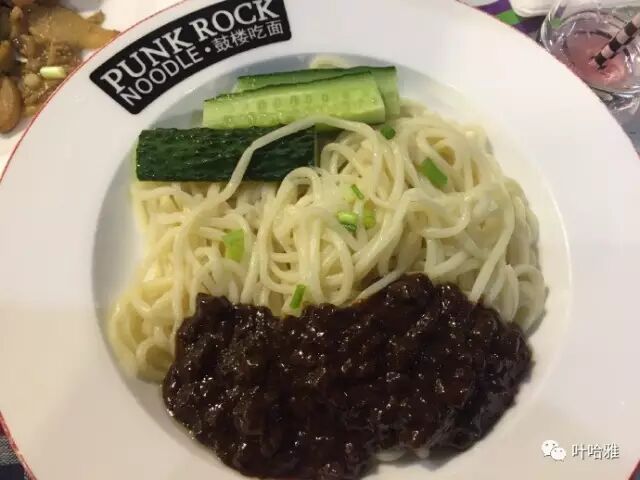
It is called Gold Medal Meat Sauce Noodles, but when it arrived, it was just soybean paste noodles (zhajiangmian).
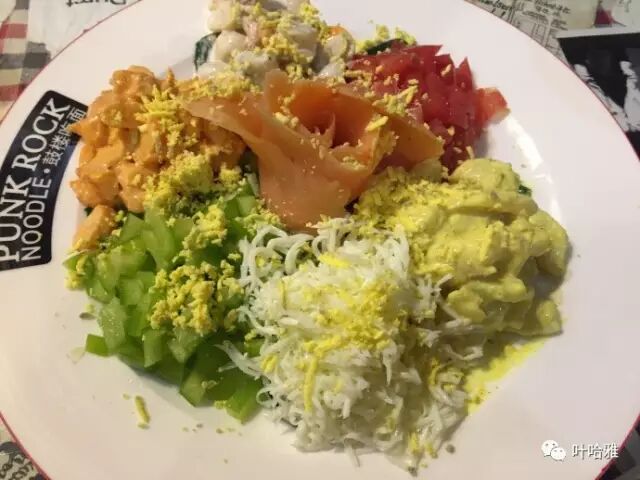
Vegetable salad. Overall, the taste suits women, and the environment is good for dates.
Address: No. 25 Gongjie, Gulou East Street.
26. Old Yang's halal restaurant.
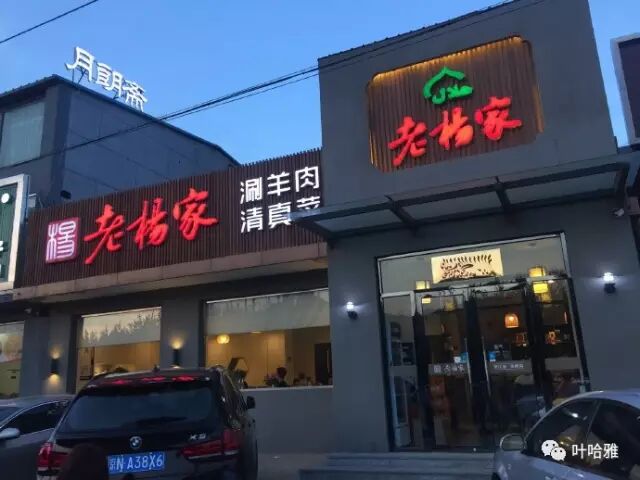
This is the highest-rated restaurant in the Changping area and is highly recommended.
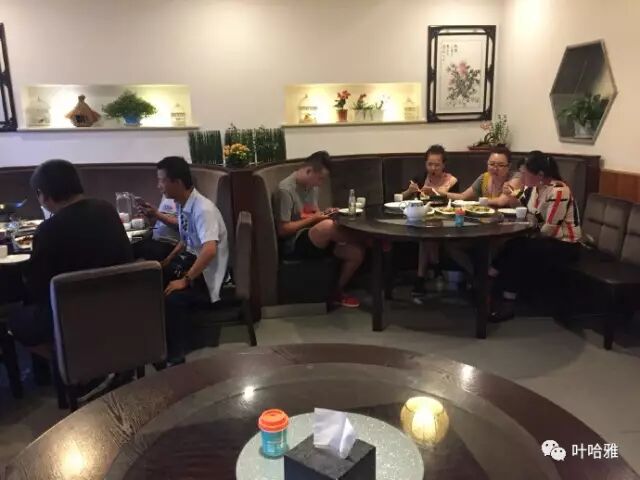
Let's start with the environment: they have small semicircular tables that make it easy to chat.
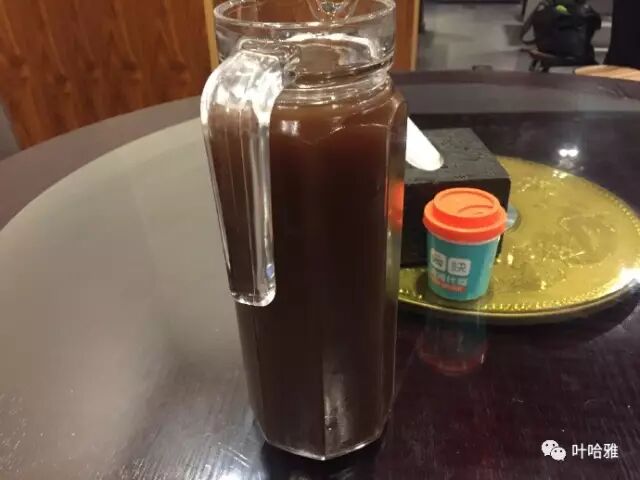
I told the owner I came here specifically to break my fast. He recommended the house-made sour plum drink (suanmeitang). It was very thirst-quenching, sweet, and tart. I ordered two pitchers and took the second one to go.
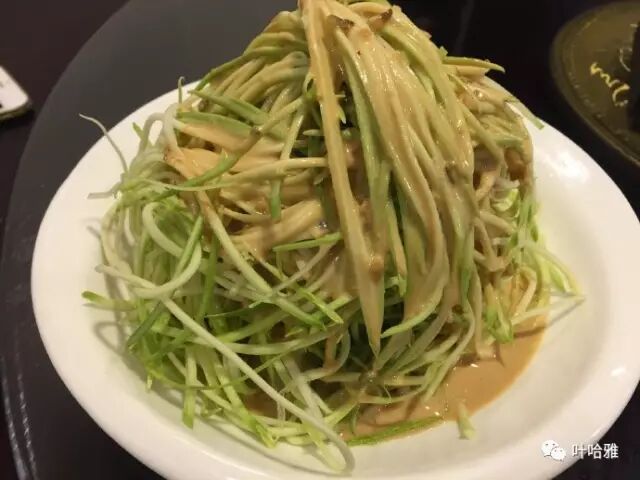
I ordered the restaurant's signature dishes, starting with the cold shredded bottle gourd with sesame paste (majiang liangban hulusi), which was crisp and refreshing.
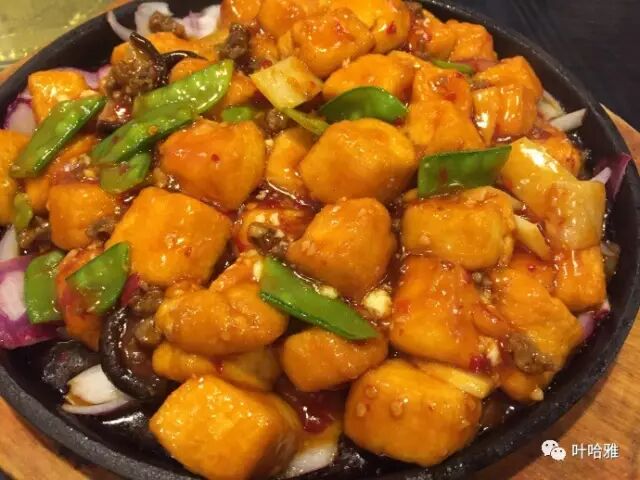
Fairy tofu (shenxian doufu) is another popular delicacy, and the tofu is made in-house.
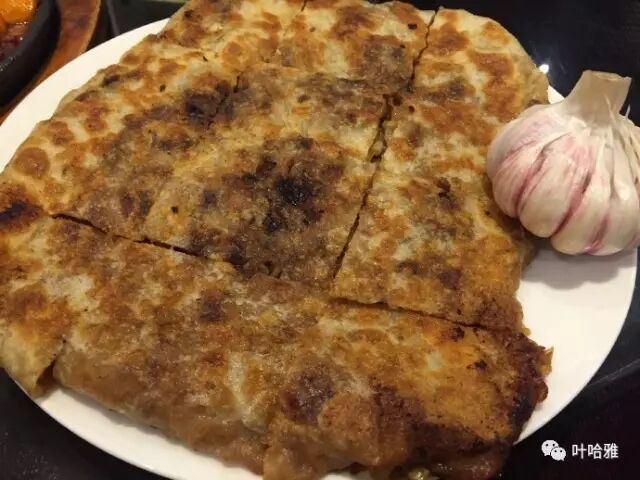
Old Yang's beef pie (lao yangjia niuroubing) is crispy on the outside and tender on the inside. You have to eat it with raw garlic.
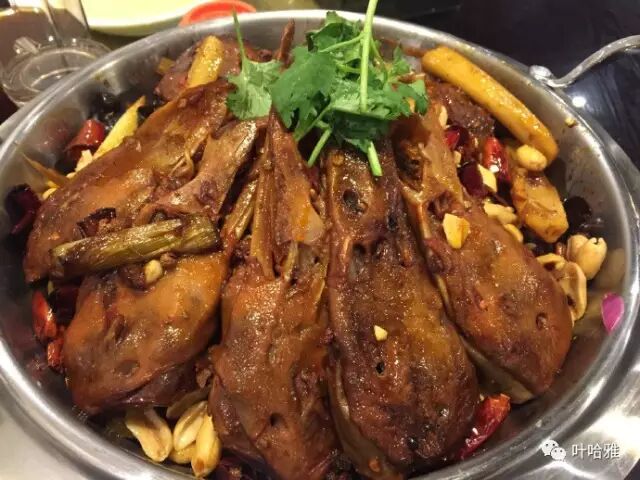
The dry-pot duck heads (ganguo yatou) are spicy, numbing, and fragrant.
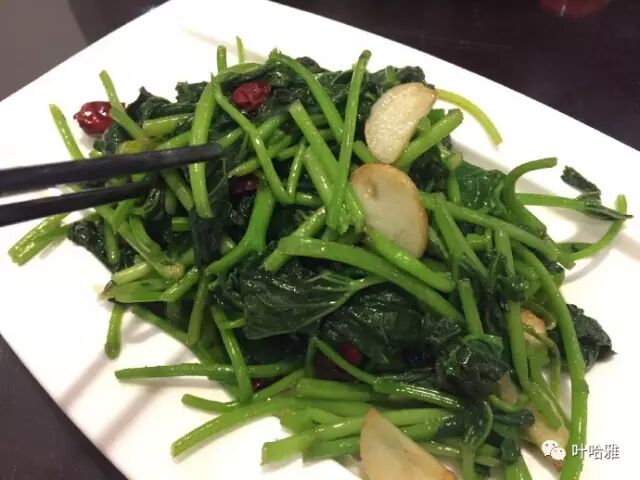
The stir-fried radish sprouts (qingchao luobomiao) were great. Another feature of Old Yang's restaurant is the attentive service. They greet you with a smile and check in on how you like the food. It is rare to see such good service in a place that is so busy. I didn't get to eat the fish head with flatbread (yutou paobing) at Old Yang's today, so I will have to try it next time.
Address: No. 30, West Lane 1, Xiguanshi Village, Yangfang Town, Changping District.
27. Cheng's Shan County Lamb Soup (yangtang) Restaurant
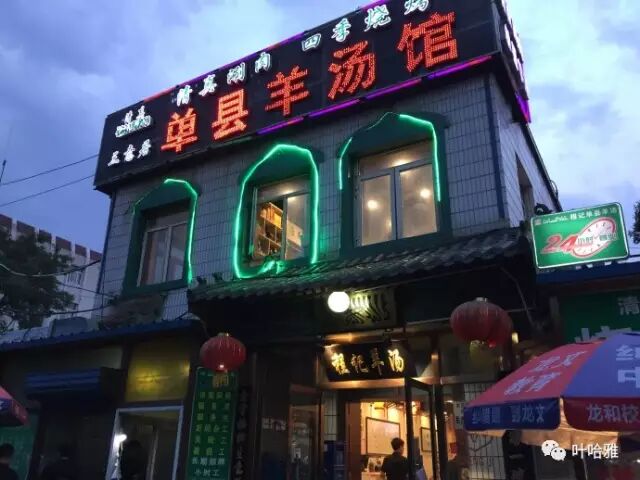
I did not expect to find such good lamb soup (yangtang) in Beijing. Shan County is a place in Shandong famous for its lamb soup. There is a Gao Laosi Lamb Soup shop on Niujie Street, but it does not taste as good as the Shan County lamb soup.
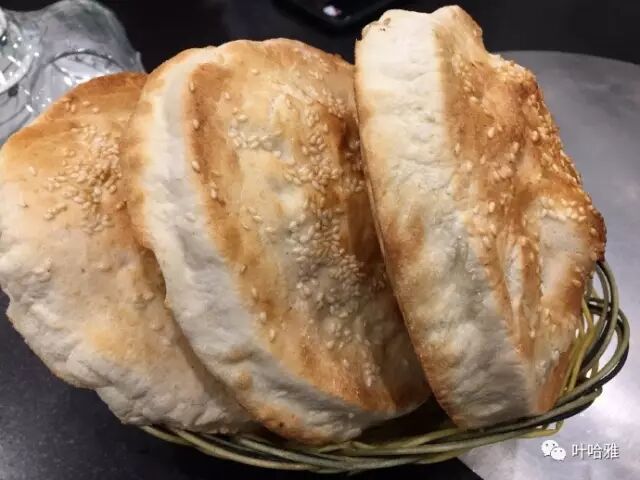
The oil and salt flatbread (yousuan shaobing) is hollow inside, perfect for soaking in lamb soup or stuffing with spiced beef.
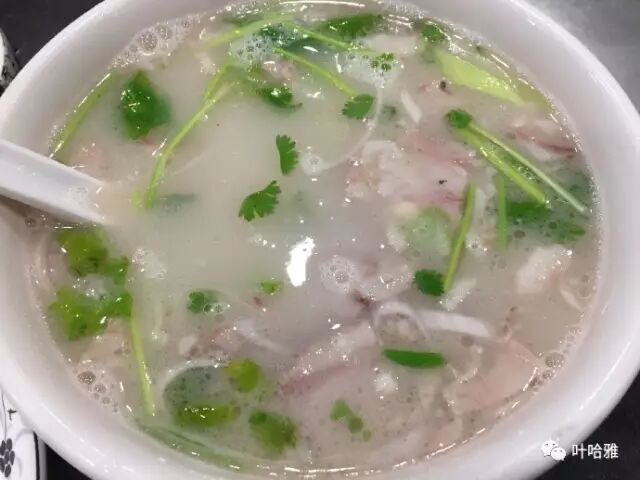
The soup is milky white, a natural color from boiling lamb bones.
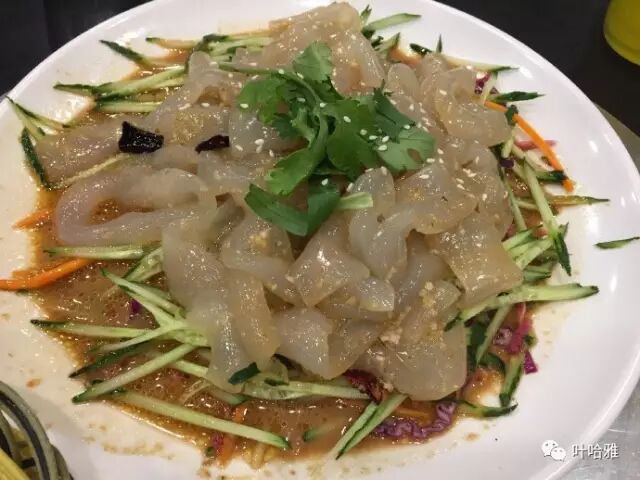
Large starch noodles (dalapi).
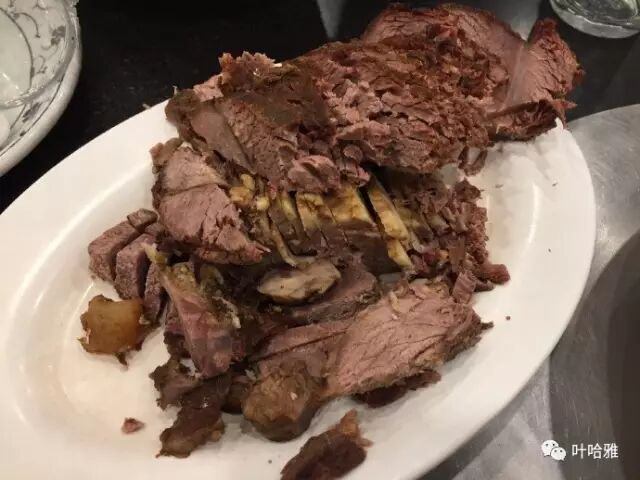
Half a jin of spiced beef (jiang niurou) stuffed into a freshly baked flatbread is delicious.
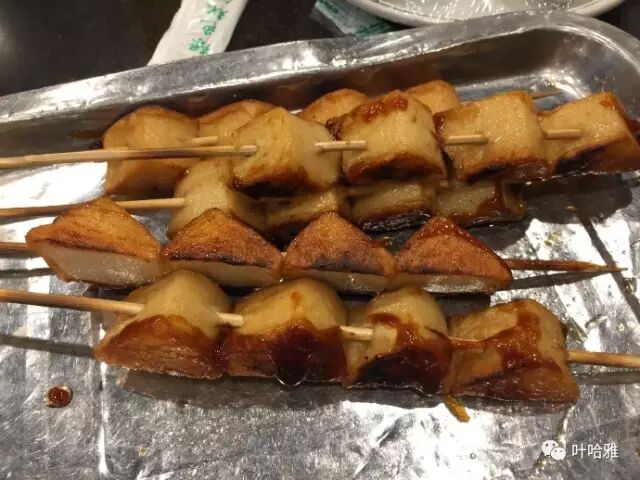
I also had some grilled fish tofu and seafood skewers.
Address: Sanzhong Lane (near Xingfeng Street), about 525 meters from Huangcun West Street Station.
28
. Roubing Wan
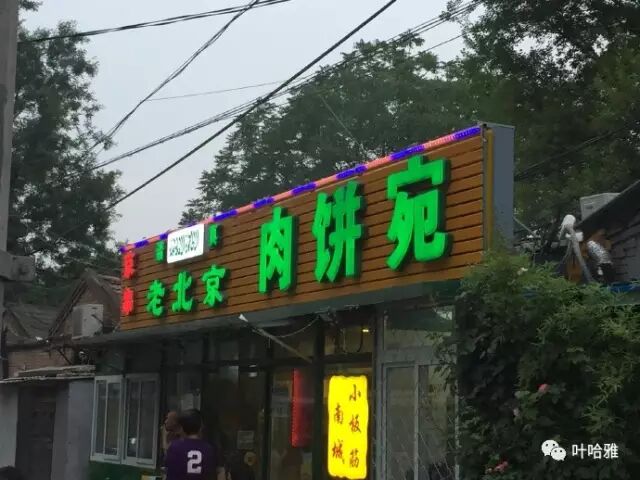
This small shop is run by a young Beijing couple born in the 80s, specializing in meat pies (roubing) and beef tendon (banjin).
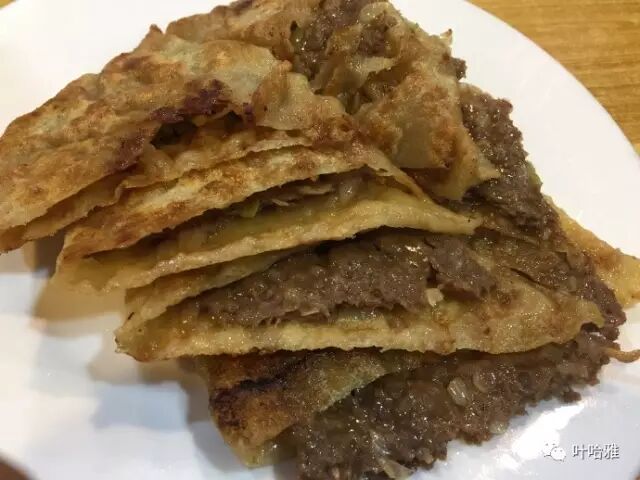
Almost every table orders the meat pie; it is crispy on the outside and tender on the inside, and truly delicious.
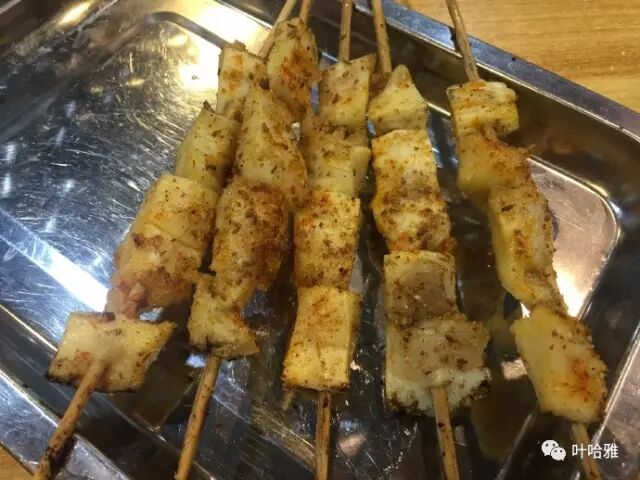
It lives up to its reputation as the best small beef tendon spot in the south city, with carefully selected ingredients and a great texture.
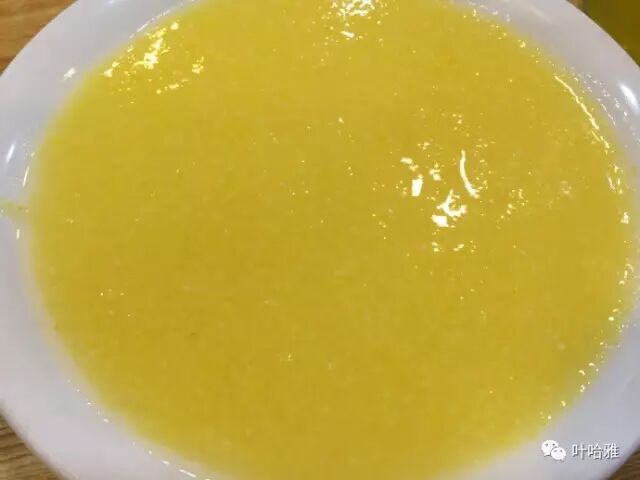
You have to pair the meat pie with a bowl of corn grit porridge (bangchazhou), which is cooked until very thick. Overall, it is quite rare to find a small Beijing-style skewer shop left in the Niujie area.
Address: Entrance of Chengshi Hutong, Guangnei Street, next to Guidu Hotel.
29. Chongqing Sausage Lips Old Stove Hot Pot
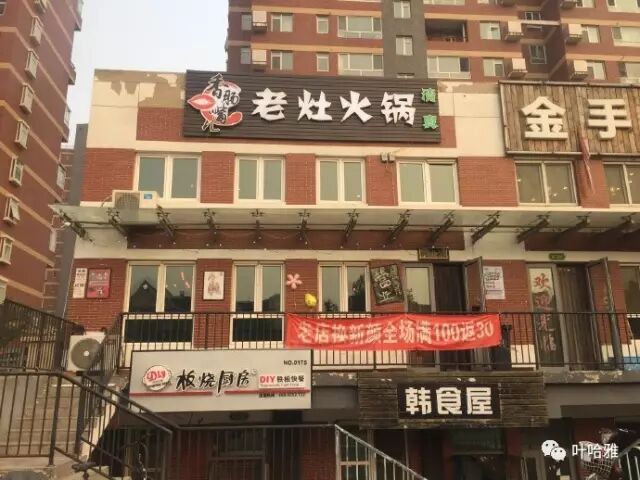
I first had halal Chongqing hot pot in Chongqing, and now I have finally found one in Beijing. They have the traditional nine-grid pot and the split-pot (yuanyang guo).
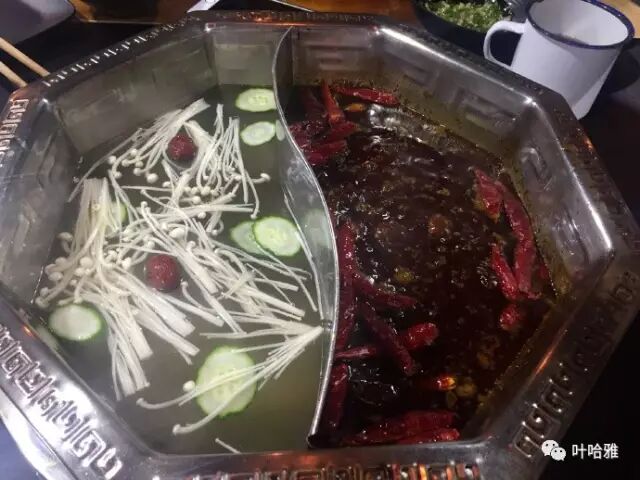
The nine-grid pot is too spicy for me, so I chose the split-pot, but it was still very spicy.
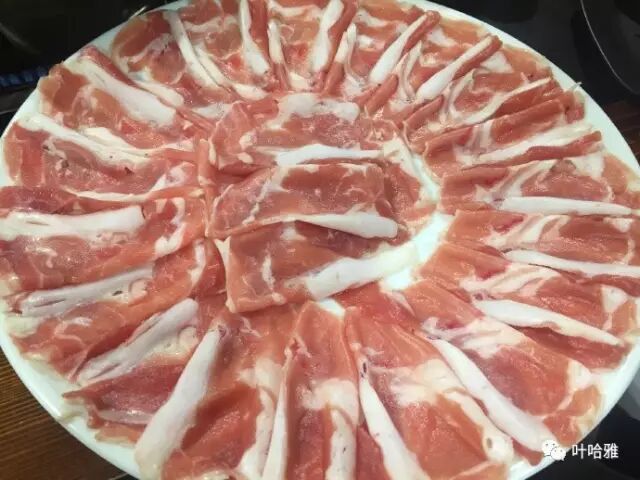
The hand-cut fresh lamb is average in quality, but when eating Chongqing hot pot, the ingredients do not matter much because your mouth goes numb from the spice anyway.
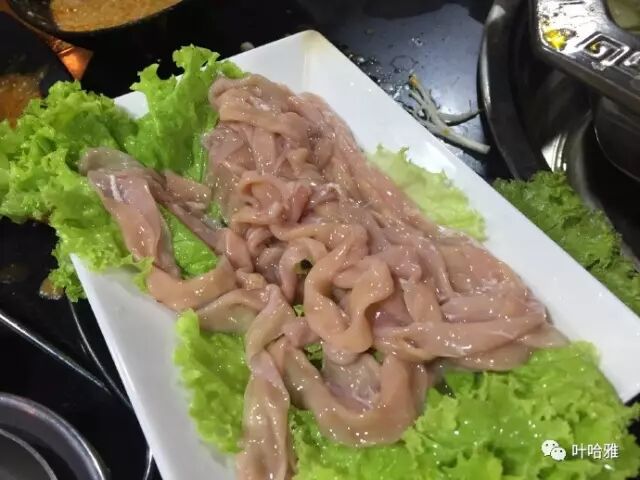
Duck intestine is a must-order dish for people from Sichuan and Chongqing when eating hot pot.
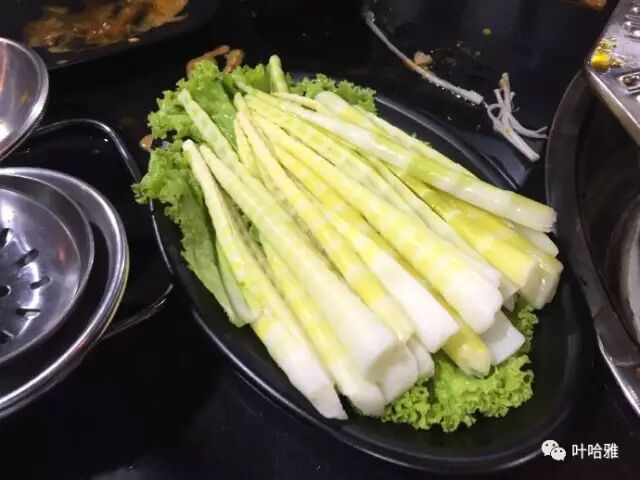
The bamboo shoots are crunchy when cooked in the pot.
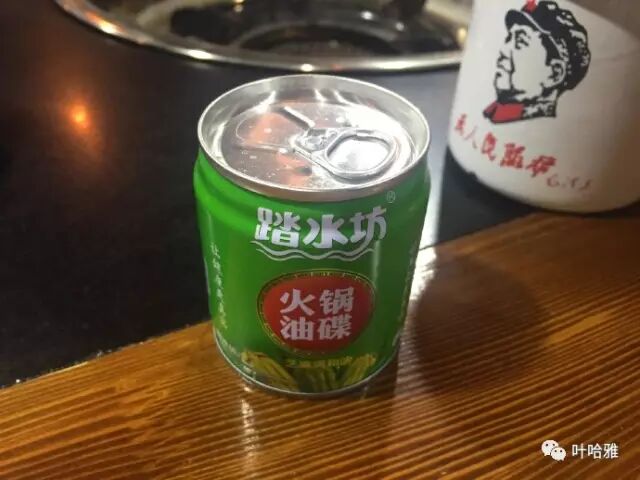
When in Rome, do as the Romans do. Northerners are used to sesame paste (majiang) for hot pot, but for Sichuan-style hot pot, I suggest trying sesame oil with minced garlic.
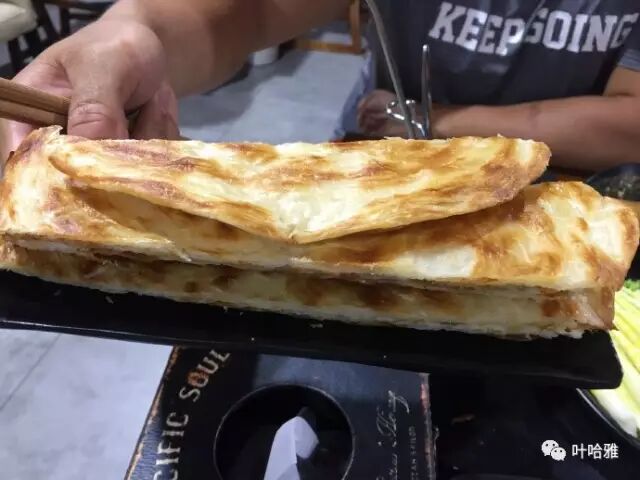
They have sesame flatbread (shaobing) here too, but I prefer this hand-torn pancake (shoushibing), which is crispy.
Address: Room 201, Building 16, Jiayuan District 1, Beijie, Higher Education Park, Shahe, Changping District.
30. Camel Caravan Moroccan Halal Restaurant
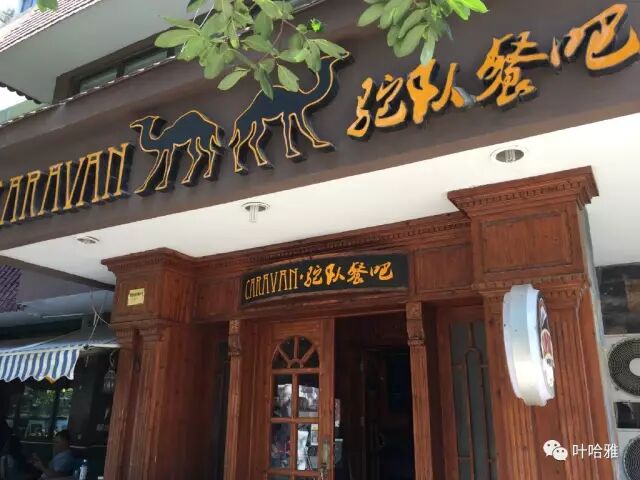
I once saw a Moroccan restaurant in Urumqi, and now there is a Moroccan halal restaurant in Beijing too.
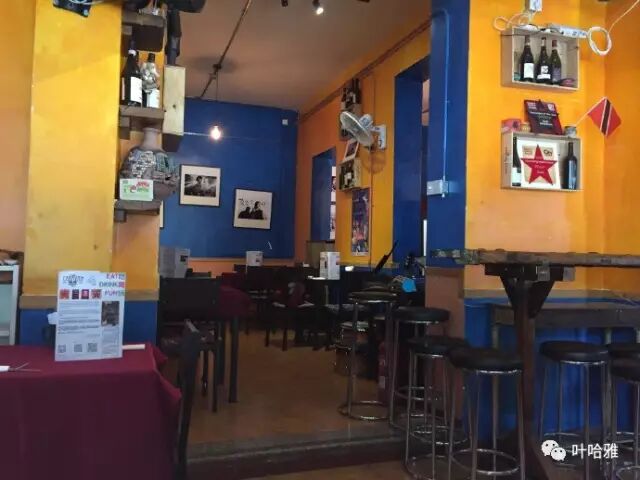
This blue color scheme is the style of the ancient city of Fez.
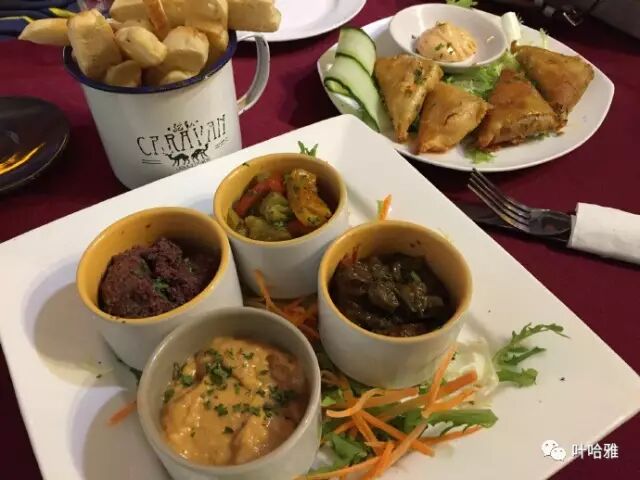
Moroccan snack platter
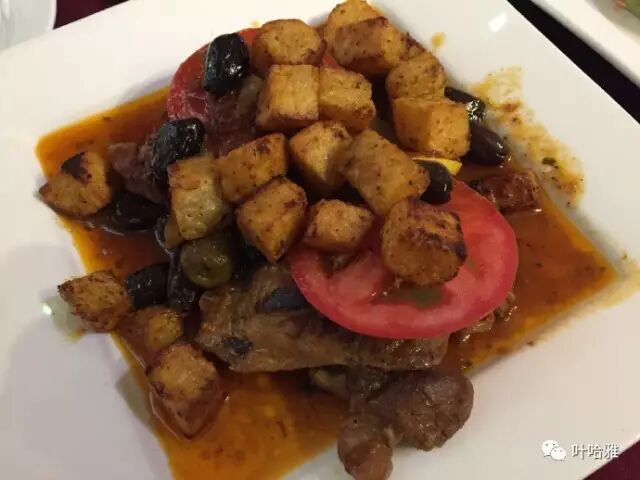
Marrakesh chicken stew; the chicken is tender and falls right off the bone.
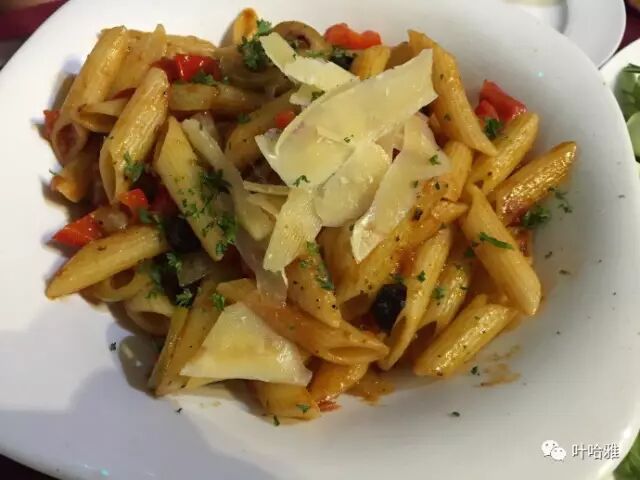
Casablanca noodles
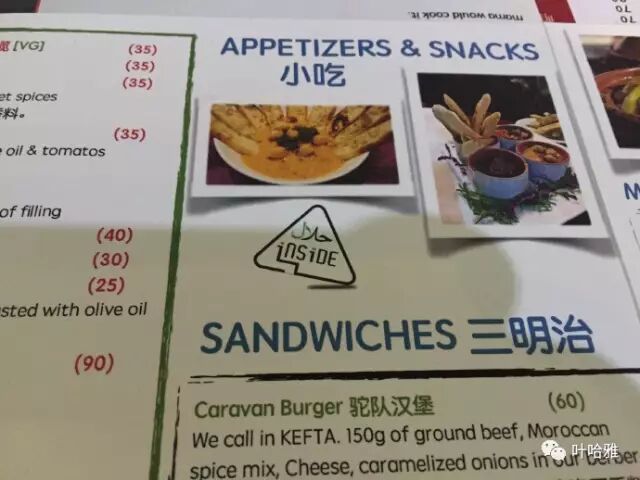
They also have snacks like sandwiches and burgers. This is a music-themed restaurant and bar, perfect for dates and chatting.
Address: No. 44 Guanghua Road, outside Jianguomen
31. Cantonese-style seafood bistro
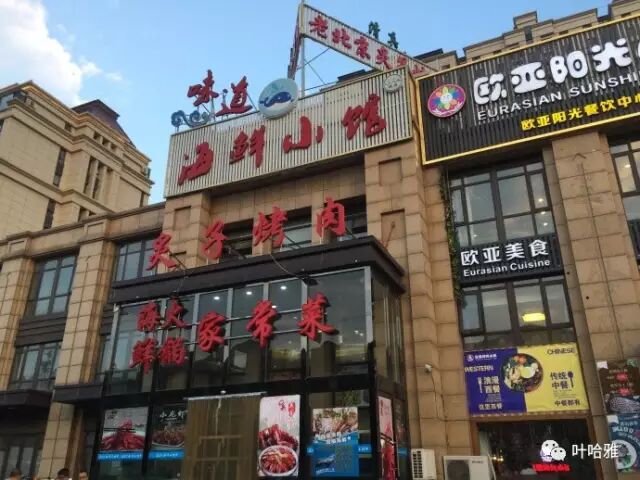
This is a halal restaurant serving Cantonese-style seafood.
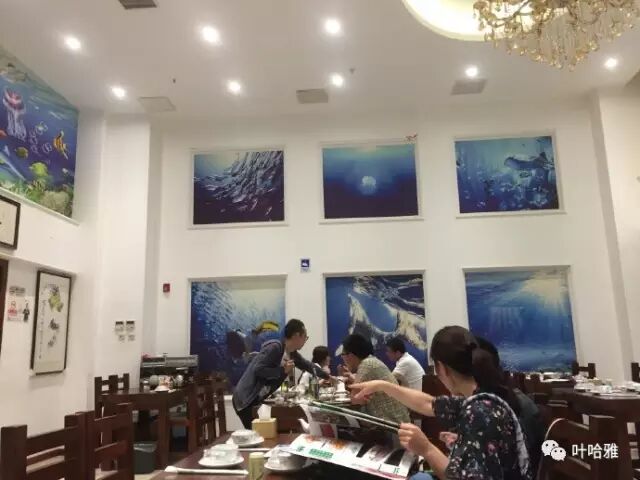
The environment is quite nice, fresh, and natural.
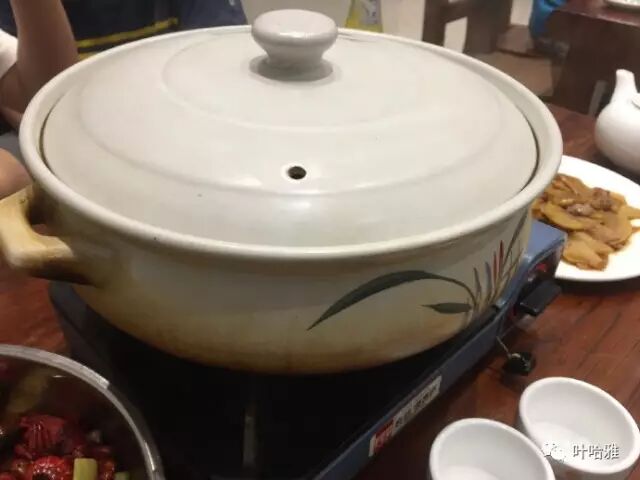
They serve Cantonese-style hot pot (dabanlu) with a clear broth base.
Famous Chinese Muslim Food Beijing: Longtan Hotpot, Niujie Lamb Spine & Halal Dumplings
Articles • ali2007fr posted the article • 0 comments • 149 views • 2026-05-21 10:17
Summary: A famous Chinese Muslim food guide for Beijing, covering Longtan hotpot, Niujie lamb spine, halal dumplings, pancakes, snacks, and restaurant addresses, with the long original article kept as one full post.
Through years of travel, I have gradually discovered that Beijing has the most complete variety of halal food in the world, bar none. Even in an international metropolis like New York, the variety of halal restaurants does not compare to Beijing. Beijing not only has halal restaurants with flavors from many countries, but also gathers halal food from all over China. You can find almost any halal food you can think of in Beijing.
1. Longtan Hot Pot (Longtan Shuanrou)
This copper pot hot pot restaurant near Longtan Lake Park is run by the seventh-generation descendant of the Niujie Yongli family. Yongli is short for the Li family of Yongan Tang. Yongan Tang was a shop opened by the ancestors of the Yongli family at Yongdingmen during the Qing Dynasty, with the hall name Yong Sanyuan. The owner's father was an apprentice at Donglaishun in his early years. The restaurant uses high-calcium lamb from Sunite, Inner Mongolia, which is halal-slaughtered. They serve Niujie sesame flatbread (shaobing), and the sesame paste dipping sauce is stamped with the character for good fortune (fu). The small shop is full of Beijing character and is often used as a filming location. If you do not want to wait in line at Jubaoyuan, come here instead.
Address: No. 16 Zuo'anmen Inner Street, next to the northwest gate of Longtan Lake Park.
2. Laochengyi Lamb Spine Hot Pot (Laochengyi Yangxiezi)
The lamb spine hot pot at Laochengyi tastes truly excellent. The lamb chops are stewed until very tender. The mouth-watering chicken (koushuiji) is also a must-order dish. After finishing the lamb spine, you can add vegetables to the pot. The shop has two floors and plenty of seating, so even if you come during meal times, the wait will not be too long.
Address: No. 3 Commercial Street, Niujie North Entrance, Beijing.
3. Dashuntang
Dashuntang has been around for a long time. They make very authentic Beijing-style halal food. Usually, when families have special occasions, Dashuntang is the first choice. I recommend the roasted lamb chops, boiled beef, deep-fried lamb tail, and roast duck. The crispy-skin roast duck and lamb chops are especially well-received.
Address: Building 5, Jia 4, Fayuan Mosque West, Jiaozihu Tong, Xicheng District.
4. Junlian Halal Dumpling House
This shop has dumplings with all kinds of fillings, like pineapple or tomato. It is very popular, and you need to queue during meal times. My favorites are the traditional beef and lamb with green onion, and chive and egg dumplings.
Address: South Gate, Niujie Xili District 2, Xicheng District.
5. Shandong Sha Dacu Pancake (Jianbing)
This shop used to be in Jiaozihu Tong. Later, due to urban renovations, it moved into the vegetable market in Shuru Hutong. They have added several new flavors, but I still like the classic version best.
Address: Entrance of the Shuru Hutong Halal Vegetable Market.
6. Suzhou Hui Muslim Restaurant
Although soybean paste noodles (zhajiangmian) are a representative Beijing dish, there are not many halal versions. Some small Beijing-style eateries make them, but the taste is average. Most Hui Muslims make soybean paste noodles at home. This Suzhou Hui Muslim Restaurant is not run by Suzhou people; it is just named that because it is located in the Suzhou community. It is actually a small Beijing-style eatery, and I recommend their soybean paste noodles.
Address: No. 36, Suzhou Hutong, Dongcheng District.
7
Dardanelles Turkish Restaurant
Beijing has four halal Turkish restaurants: Istanbul Restaurant, Turkish Mama Restaurant, Doner Turkish Cafe (which serves kebab wraps) near Xiushui Street, and Dardanelles Restaurant. Dardanelles is my favorite because of its beautiful Ottoman-style decor. The salmon, grilled meats, and steaks are all delicious and reasonably priced.
Address: Units 1-21-22, Courtyard 39, Shenlu Street, Ritan North Road, Chaoyang District, Beijing (west of the North Korean Embassy).
8. KAVKAZ Azerbaijani Restaurant
At KAVKAZ Azerbaijani Restaurant, I tried the Caucasian salad, Azerbaijani soup dumplings, Caucasian beef, and Azerbaijani salty yogurt drink. The staff are all from Azerbaijan. The young waitress did not speak much Chinese, but she was very cute and enthusiastic.
Address: East side of Shenlu Street, Chaoyang District, Beijing.
9.
Shashi Castle Restaurant
This is an Uzbekistan-style restaurant themed around a romantic meeting between a prince and a princess. They serve Middle Eastern, Russian, and Western food. You must order the grilled steak, and the Napoleon cake is quite delicious. There is belly dancing at 7:30 PM.
Address: First floor of the Saint Angel Hotel, near Exit E of Hujialou Subway Station, Chaoyang District, Beijing.
10.
Persepolis Restaurant
Persia is Iran. The restaurant next door changed its sign. I used to go there often for the lunch buffet. You must order the Iranian black tea and the grilled meats. You can also eat saffron fried rice here.
Address: Right at Exit A of Tuanjiehu Subway Station, Chaoyang District, Beijing.
11. Lazeez Indian Music Restaurant
Beijing has many halal Indian restaurants, such as Indian Kitchen, Ganges Restaurant, and Sadhu, but I like Lazeez Music Restaurant the best. The halal sign is hung inside. Luckily my classmate reminded me, or I would have missed this uniquely styled Indian restaurant. The atmosphere inside is very exotic, and you can hear beautiful Indian songs. You can eat authentic Indian spicy beef curry, chicken curry, cream of mushroom soup, Mughal royal flatbread (naan), samosa chaat, and rose yogurt lassi. There is a wide variety of dishes.
Address: 31 Gulou West Street, Xicheng District.
12. Sukhothai Thai-Malaysian Restaurant
Sukhothai was the capital of the first Thai dynasty, the Sukhothai Kingdom. The Nanyang Yiyicheng Malaysian restaurant in Dongzhimen closed, and I was worried about where to find halal Malaysian food. I recommend the original milk tea, pineapple fried rice, and coconut pudding with sago.
Address: Ju'er Hutong, Nanluoguxiang, opposite Saduli Restaurant.
13. Hefeng Banquet (Hefeng no Utage)
This is the first halal Japanese restaurant in Beijing. The head chef is the former Japanese cuisine chef from the Kempinski Hotel. The space is bright and roomy with private rooms. The food is carefully prepared for its look, smell, and taste, and you can order Australian wagyu hot pot. The owner is a Hui Muslim from Lanzhou who is very devout, so you can trust the ingredients. The palm-sized prawns are fresh and tender. The tempura sushi and Pacific saury (sanma) taste just like they do in Japan, and they serve free pudding after the meal.
They recently launched a 298 yuan seafood buffet. You can order anything from the menu, including abalone, lobster, king crab legs, Pacific saury, salmon, oysters, and other treats. It also includes fruit juice and desserts, making it a great value.
Address: 1st Floor, Shaanxi Building, Shilihe, Chaoyang District.
14. Alameen Lebanese Restaurant
Lebanese food is one of my favorite Middle Eastern cuisines. This place has a nice, quiet atmosphere and reasonable prices. They serve pizza, steak, and salads, and the grilled chicken breast is delicious.
Address: Next to the German Embassy in Sanlitun.
15. Khan Baba Pakistani Restaurant
Pakistani food is as common abroad as Lanzhou hand-pulled noodles (Lanzhou lamian) are here. There are two Khan Baba locations in Beijing: one in Wudaokou and one in Sanlitun. The Wudaokou shop is larger. There is also a Shalimar Indian and Pakistani restaurant near the Shunyi China International Exhibition Center.
Address: Room 511, 5th Floor, Building 2, Sanlitun SOHO, No. 8 Gongti North Road, Chaoyang District.
16. One Thousand and One Nights
One Thousand and One Nights is a high-end Middle Eastern Arabic restaurant with two branches in Beijing: one in Solana and one in Tuanjiehu. You can eat pan-fried foie gras here, and there are song and dance performances every night on the hour.
Address: No. 6 Chaoyang Park Road, Solana, Chaoyang District.
17. Changji Iron Griddle BBQ (Changji Zhizi Kaorou)
Changji Iron Griddle BBQ is a very authentic old Beijing halal restaurant. It only has six tables and specializes in iron griddle barbecue. The soybean paste noodles (zhajiangmian) and quick-boiled tripe (baodu) are absolutely perfect. Next time, I will try the barbecue and the lamb noodle soup (yangrou cuamian). The decor in the shop has a cool, confident vibe. Everyone calls the owner Fourth Master Chang (Chang Siye), and he is very hospitable. These kinds of small hutong eateries are rare now. They serve grilled pickled cabbage, grilled shiitake mushrooms, grilled chicken cartilage, grilled beef, and grilled lamb. They marinate the meat before grilling it. The taste is just as good as the famous Kaorouji, but because it is a small hutong shop, the price is less than half of what you would pay there.
Address: In the bungalows south of Guangnei Street that are waiting to be demolished. There is a wall built in front of the entrance, so you cannot see it unless you walk inside.
18. Tangdou Conveyor Belt Buffet Hot Pot
This is the first halal conveyor belt buffet hot pot restaurant in Beijing. It costs 59 yuan per person, and you can eat dozens of different items, including seafood, cooked dishes, vegetables, peanuts, fruit, various staples, snacks, and ice cream. Drinks are unlimited. A conveyor belt runs through the whole restaurant, so you can eat everything without moving from your seat. It is quite a good deal.
Address: North side of the 8th floor, Souxiu City Shopping Plaza, Chongwenmen Outer Street (opposite the 2nd phase of the New World Department Store in Chongwenmen).
19. Xingyuege Muslim Restaurant
Friends (dosti) from Northeast China in Beijing are in luck, because I finally found a restaurant that specializes in halal Northeast-style dishes.
The restaurant's home base is Harbin.
The decor style is also very Harbin.
Double-cooked pork (guobaorou) is a famous Northeast dish, served here in the Harbin-style savory version.
Steamed dumplings (shaomai) are also a common Northeast home-style dish.
They also have home-style tofu (jiachang doufu). Friends (dosti) from the Northeast who miss the taste of home should take the chance to try it.
Address: Shop 102, Building 2, Courtyard 2, Lixiangcheng, Hongye Road, Xihongmen Town.
20. Ningxia Flavors, Summer Language
This is a halal restaurant serving Ningxia-style food. It is located in the busy Chaoyangmen area and has a great atmosphere.
Our group of over ten people tried almost everything on the menu.
Sweet rice made by Northwest Hui Muslims.
The lamb trotters are very flavorful.
Every dish is solid and they put a lot of effort into the presentation.
Rice sausage (michangzi).
Hui Muslim fried dough (youxiang).
Hui Muslim snack platter.
This place is great for group meals. You can push tables together for over ten people, and the prices are not expensive.
Address: 2F, Fenglian Plaza, No. 18 Chaoyangmen Outer Street, Chaoyang District, Beijing.
21. Eliya Halal Bakery
This is a high-end halal pastry shop.
They have all kinds of beautiful desserts.
They use imported halal cream as an ingredient. The prices are actually not expensive, and the taste is top-notch.
Address: Ground floor shop 06, Building 56, Changying Minzu Jiayuan, Changying Middle Road, Chaoyang District.
22. Xingu Halal Charcoal Barbecue
This shop was originally labeled as Korean BBQ, but business was affected by the THAAD incident, so the owner removed the word Korean. After all, the owner is from Changying and has nothing to do with Korea.
Walk up the stairs to the second floor and you will find a hidden gem. The owner bought the whole building and rented the space next door to the Changying Three Brothers.
If you go in the afternoon, you do not need to wait in line. People say it was packed when it first opened, but business is not as good as before due to the THAAD incident.
The meat is fresh and the service is top-tier.
Servers help you grill the meat the whole time, so you do not need to do it yourself.
The lettuce is for wrapping the grilled meat.
You can also eat the steamed egg custard and cheese on the side of the grill.
Halal soybean paste soup (dajiangtang).
Dip the tender beef in five-spice seasoning to eat it.
Address: Opposite the south gate of Minzu Jiayuan residential area on Changying Middle Road, next to Yunding Billiards Club (west side of Minzu Primary School).
23. Aiyidian Halal Yunnan Cuisine
It is not easy to find authentic halal Yunnan food in Beijing, but this restaurant is quite genuine. There is another halal Yunnan restaurant in Yizhuang called Dianxinyuan. It has a nice atmosphere, but the food is average and it is quite far away.
The decor is fresh and elegant, and the owner is a young woman from Yunnan.
Tamarind (suanjiao) is a local specialty of Yunnan, so I chose to try the tamarind juice.
Beef wrapped in mint leaves; mint is as common in Yunnan as cilantro and is delicious even when eaten raw.
This is fried grasshopper.
Ibn Abi Awfa narrated: We went on seven expeditions with the Prophet, and we ate locusts. Sunan an-Nasa'i, Hadith 37;
The Prophet described the sea, saying: 'Its water is pure, and its dead creatures are halal.' He also said: 'We are permitted two types of dead creatures: fish and locusts;' and two types of blood: liver and spleen.' (Musnad Ahmad)
Sour soup beef jerky (niuganba); you must eat beef jerky in Yunnan cuisine because the most famous beef jerky in Yunnan is made by Hui Muslims.
It happened to be just before the Dragon Boat Festival, and the restaurant was developing beef rice dumplings (zongzi). The manager gave me two; I had only eaten sweet ones before, so this was my first time trying a meat version.
Yunnan cold rice noodles (mixian); the broth is rich and fragrant, and the noodles are chewy.
Address: First floor, north commercial section, axes 19-21, west side of Fengyayuan Zone 2, Huilongguan Town.
24. Old Ma's lamb spine hot pot (yangxiezi) and pan-fried dumplings (guotie).
Halal lamb spine is easy to find, but halal potstickers are rare these days. This shop makes pretty good ones.
Beef and green onion potstickers were my childhood favorite. There used to be a tent in Xuanwu District that sold halal snacks, but after it was torn down, I never found good potstickers again. I later heard the old man who made them passed away (wuchang), so that authentic skill is likely lost forever.
I was surprised to find they also sell spicy hot pot (maocai), a Chengdu snack similar to spicy soup (malatang), but you can drink the broth.
Address: South entrance of Hongju Street, Xicheng District.
25. Eating noodles at the Drum Tower.
I found this popular restaurant on Dazhong Dianping. At first, I thought it was categorized incorrectly because it had no obvious halal sign. I learned from the reviews that it is a halal shop owned by a Beijing Hui Muslim, and the halal sign is in a very inconspicuous spot inside.
This is a Western-style rock music restaurant.
They have mushrooms with foie gras.
Roasted chicken leg, but it is named Eight Hammers (badachui).
It is called Gold Medal Meat Sauce Noodles, but when it arrived, it was just soybean paste noodles (zhajiangmian).
Vegetable salad. Overall, the taste suits women, and the environment is good for dates.
Address: No. 25 Gongjie, Gulou East Street.
26. Old Yang's halal restaurant.
This is the highest-rated restaurant in the Changping area and is highly recommended.
Let's start with the environment: they have small semicircular tables that make it easy to chat.
I told the owner I came here specifically to break my fast. He recommended the house-made sour plum drink (suanmeitang). It was very thirst-quenching, sweet, and tart. I ordered two pitchers and took the second one to go.
I ordered the restaurant's signature dishes, starting with the cold shredded bottle gourd with sesame paste (majiang liangban hulusi), which was crisp and refreshing.
Fairy tofu (shenxian doufu) is another popular delicacy, and the tofu is made in-house.
Old Yang's beef pie (lao yangjia niuroubing) is crispy on the outside and tender on the inside. You have to eat it with raw garlic.
The dry-pot duck heads (ganguo yatou) are spicy, numbing, and fragrant.
The stir-fried radish sprouts (qingchao luobomiao) were great. Another feature of Old Yang's restaurant is the attentive service. They greet you with a smile and check in on how you like the food. It is rare to see such good service in a place that is so busy. I didn't get to eat the fish head with flatbread (yutou paobing) at Old Yang's today, so I will have to try it next time.
Address: No. 30, West Lane 1, Xiguanshi Village, Yangfang Town, Changping District.
27. Cheng's Shan County Lamb Soup (yangtang) Restaurant
I did not expect to find such good lamb soup (yangtang) in Beijing. Shan County is a place in Shandong famous for its lamb soup. There is a Gao Laosi Lamb Soup shop on Niujie Street, but it does not taste as good as the Shan County lamb soup.
The oil and salt flatbread (yousuan shaobing) is hollow inside, perfect for soaking in lamb soup or stuffing with spiced beef.
The soup is milky white, a natural color from boiling lamb bones.
Large starch noodles (dalapi).
Half a jin of spiced beef (jiang niurou) stuffed into a freshly baked flatbread is delicious.
I also had some grilled fish tofu and seafood skewers.
Address: Sanzhong Lane (near Xingfeng Street), about 525 meters from Huangcun West Street Station.
28
. Roubing Wan
This small shop is run by a young Beijing couple born in the 80s, specializing in meat pies (roubing) and beef tendon (banjin).
Almost every table orders the meat pie; it is crispy on the outside and tender on the inside, and truly delicious.
It lives up to its reputation as the best small beef tendon spot in the south city, with carefully selected ingredients and a great texture.
You have to pair the meat pie with a bowl of corn grit porridge (bangchazhou), which is cooked until very thick. Overall, it is quite rare to find a small Beijing-style skewer shop left in the Niujie area.
Address: Entrance of Chengshi Hutong, Guangnei Street, next to Guidu Hotel.
29. Chongqing Sausage Lips Old Stove Hot Pot
I first had halal Chongqing hot pot in Chongqing, and now I have finally found one in Beijing. They have the traditional nine-grid pot and the split-pot (yuanyang guo).
The nine-grid pot is too spicy for me, so I chose the split-pot, but it was still very spicy.
The hand-cut fresh lamb is average in quality, but when eating Chongqing hot pot, the ingredients do not matter much because your mouth goes numb from the spice anyway.
Duck intestine is a must-order dish for people from Sichuan and Chongqing when eating hot pot.
The bamboo shoots are crunchy when cooked in the pot.
When in Rome, do as the Romans do. Northerners are used to sesame paste (majiang) for hot pot, but for Sichuan-style hot pot, I suggest trying sesame oil with minced garlic.
They have sesame flatbread (shaobing) here too, but I prefer this hand-torn pancake (shoushibing), which is crispy.
Address: Room 201, Building 16, Jiayuan District 1, Beijie, Higher Education Park, Shahe, Changping District.
30. Camel Caravan Moroccan Halal Restaurant
I once saw a Moroccan restaurant in Urumqi, and now there is a Moroccan halal restaurant in Beijing too.
This blue color scheme is the style of the ancient city of Fez.
Moroccan snack platter
Marrakesh chicken stew; the chicken is tender and falls right off the bone.
Casablanca noodles
They also have snacks like sandwiches and burgers. This is a music-themed restaurant and bar, perfect for dates and chatting.
Address: No. 44 Guanghua Road, outside Jianguomen
31. Cantonese-style seafood bistro
This is a halal restaurant serving Cantonese-style seafood.
The environment is quite nice, fresh, and natural.
They serve Cantonese-style hot pot (dabanlu) with a clear broth base. view all
Summary: A famous Chinese Muslim food guide for Beijing, covering Longtan hotpot, Niujie lamb spine, halal dumplings, pancakes, snacks, and restaurant addresses, with the long original article kept as one full post.
Through years of travel, I have gradually discovered that Beijing has the most complete variety of halal food in the world, bar none. Even in an international metropolis like New York, the variety of halal restaurants does not compare to Beijing. Beijing not only has halal restaurants with flavors from many countries, but also gathers halal food from all over China. You can find almost any halal food you can think of in Beijing.
1. Longtan Hot Pot (Longtan Shuanrou)
This copper pot hot pot restaurant near Longtan Lake Park is run by the seventh-generation descendant of the Niujie Yongli family. Yongli is short for the Li family of Yongan Tang. Yongan Tang was a shop opened by the ancestors of the Yongli family at Yongdingmen during the Qing Dynasty, with the hall name Yong Sanyuan. The owner's father was an apprentice at Donglaishun in his early years. The restaurant uses high-calcium lamb from Sunite, Inner Mongolia, which is halal-slaughtered. They serve Niujie sesame flatbread (shaobing), and the sesame paste dipping sauce is stamped with the character for good fortune (fu). The small shop is full of Beijing character and is often used as a filming location. If you do not want to wait in line at Jubaoyuan, come here instead.
Address: No. 16 Zuo'anmen Inner Street, next to the northwest gate of Longtan Lake Park.
2. Laochengyi Lamb Spine Hot Pot (Laochengyi Yangxiezi)
The lamb spine hot pot at Laochengyi tastes truly excellent. The lamb chops are stewed until very tender. The mouth-watering chicken (koushuiji) is also a must-order dish. After finishing the lamb spine, you can add vegetables to the pot. The shop has two floors and plenty of seating, so even if you come during meal times, the wait will not be too long.
Address: No. 3 Commercial Street, Niujie North Entrance, Beijing.
3. Dashuntang
Dashuntang has been around for a long time. They make very authentic Beijing-style halal food. Usually, when families have special occasions, Dashuntang is the first choice. I recommend the roasted lamb chops, boiled beef, deep-fried lamb tail, and roast duck. The crispy-skin roast duck and lamb chops are especially well-received.
Address: Building 5, Jia 4, Fayuan Mosque West, Jiaozihu Tong, Xicheng District.
4. Junlian Halal Dumpling House
This shop has dumplings with all kinds of fillings, like pineapple or tomato. It is very popular, and you need to queue during meal times. My favorites are the traditional beef and lamb with green onion, and chive and egg dumplings.
Address: South Gate, Niujie Xili District 2, Xicheng District.
5. Shandong Sha Dacu Pancake (Jianbing)
This shop used to be in Jiaozihu Tong. Later, due to urban renovations, it moved into the vegetable market in Shuru Hutong. They have added several new flavors, but I still like the classic version best.
Address: Entrance of the Shuru Hutong Halal Vegetable Market.
6. Suzhou Hui Muslim Restaurant
Although soybean paste noodles (zhajiangmian) are a representative Beijing dish, there are not many halal versions. Some small Beijing-style eateries make them, but the taste is average. Most Hui Muslims make soybean paste noodles at home. This Suzhou Hui Muslim Restaurant is not run by Suzhou people; it is just named that because it is located in the Suzhou community. It is actually a small Beijing-style eatery, and I recommend their soybean paste noodles.
Address: No. 36, Suzhou Hutong, Dongcheng District.
7
Dardanelles Turkish Restaurant
Beijing has four halal Turkish restaurants: Istanbul Restaurant, Turkish Mama Restaurant, Doner Turkish Cafe (which serves kebab wraps) near Xiushui Street, and Dardanelles Restaurant. Dardanelles is my favorite because of its beautiful Ottoman-style decor. The salmon, grilled meats, and steaks are all delicious and reasonably priced.
Address: Units 1-21-22, Courtyard 39, Shenlu Street, Ritan North Road, Chaoyang District, Beijing (west of the North Korean Embassy).
8. KAVKAZ Azerbaijani Restaurant
At KAVKAZ Azerbaijani Restaurant, I tried the Caucasian salad, Azerbaijani soup dumplings, Caucasian beef, and Azerbaijani salty yogurt drink. The staff are all from Azerbaijan. The young waitress did not speak much Chinese, but she was very cute and enthusiastic.
Address: East side of Shenlu Street, Chaoyang District, Beijing.
9.
Shashi Castle Restaurant
This is an Uzbekistan-style restaurant themed around a romantic meeting between a prince and a princess. They serve Middle Eastern, Russian, and Western food. You must order the grilled steak, and the Napoleon cake is quite delicious. There is belly dancing at 7:30 PM.
Address: First floor of the Saint Angel Hotel, near Exit E of Hujialou Subway Station, Chaoyang District, Beijing.
10.
Persepolis Restaurant
Persia is Iran. The restaurant next door changed its sign. I used to go there often for the lunch buffet. You must order the Iranian black tea and the grilled meats. You can also eat saffron fried rice here.
Address: Right at Exit A of Tuanjiehu Subway Station, Chaoyang District, Beijing.
11. Lazeez Indian Music Restaurant
Beijing has many halal Indian restaurants, such as Indian Kitchen, Ganges Restaurant, and Sadhu, but I like Lazeez Music Restaurant the best. The halal sign is hung inside. Luckily my classmate reminded me, or I would have missed this uniquely styled Indian restaurant. The atmosphere inside is very exotic, and you can hear beautiful Indian songs. You can eat authentic Indian spicy beef curry, chicken curry, cream of mushroom soup, Mughal royal flatbread (naan), samosa chaat, and rose yogurt lassi. There is a wide variety of dishes.
Address: 31 Gulou West Street, Xicheng District.
12. Sukhothai Thai-Malaysian Restaurant
Sukhothai was the capital of the first Thai dynasty, the Sukhothai Kingdom. The Nanyang Yiyicheng Malaysian restaurant in Dongzhimen closed, and I was worried about where to find halal Malaysian food. I recommend the original milk tea, pineapple fried rice, and coconut pudding with sago.
Address: Ju'er Hutong, Nanluoguxiang, opposite Saduli Restaurant.
13. Hefeng Banquet (Hefeng no Utage)
This is the first halal Japanese restaurant in Beijing. The head chef is the former Japanese cuisine chef from the Kempinski Hotel. The space is bright and roomy with private rooms. The food is carefully prepared for its look, smell, and taste, and you can order Australian wagyu hot pot. The owner is a Hui Muslim from Lanzhou who is very devout, so you can trust the ingredients. The palm-sized prawns are fresh and tender. The tempura sushi and Pacific saury (sanma) taste just like they do in Japan, and they serve free pudding after the meal.
They recently launched a 298 yuan seafood buffet. You can order anything from the menu, including abalone, lobster, king crab legs, Pacific saury, salmon, oysters, and other treats. It also includes fruit juice and desserts, making it a great value.
Address: 1st Floor, Shaanxi Building, Shilihe, Chaoyang District.
14. Alameen Lebanese Restaurant
Lebanese food is one of my favorite Middle Eastern cuisines. This place has a nice, quiet atmosphere and reasonable prices. They serve pizza, steak, and salads, and the grilled chicken breast is delicious.
Address: Next to the German Embassy in Sanlitun.
15. Khan Baba Pakistani Restaurant
Pakistani food is as common abroad as Lanzhou hand-pulled noodles (Lanzhou lamian) are here. There are two Khan Baba locations in Beijing: one in Wudaokou and one in Sanlitun. The Wudaokou shop is larger. There is also a Shalimar Indian and Pakistani restaurant near the Shunyi China International Exhibition Center.
Address: Room 511, 5th Floor, Building 2, Sanlitun SOHO, No. 8 Gongti North Road, Chaoyang District.
16. One Thousand and One Nights
One Thousand and One Nights is a high-end Middle Eastern Arabic restaurant with two branches in Beijing: one in Solana and one in Tuanjiehu. You can eat pan-fried foie gras here, and there are song and dance performances every night on the hour.
Address: No. 6 Chaoyang Park Road, Solana, Chaoyang District.
17. Changji Iron Griddle BBQ (Changji Zhizi Kaorou)
Changji Iron Griddle BBQ is a very authentic old Beijing halal restaurant. It only has six tables and specializes in iron griddle barbecue. The soybean paste noodles (zhajiangmian) and quick-boiled tripe (baodu) are absolutely perfect. Next time, I will try the barbecue and the lamb noodle soup (yangrou cuamian). The decor in the shop has a cool, confident vibe. Everyone calls the owner Fourth Master Chang (Chang Siye), and he is very hospitable. These kinds of small hutong eateries are rare now. They serve grilled pickled cabbage, grilled shiitake mushrooms, grilled chicken cartilage, grilled beef, and grilled lamb. They marinate the meat before grilling it. The taste is just as good as the famous Kaorouji, but because it is a small hutong shop, the price is less than half of what you would pay there.
Address: In the bungalows south of Guangnei Street that are waiting to be demolished. There is a wall built in front of the entrance, so you cannot see it unless you walk inside.
18. Tangdou Conveyor Belt Buffet Hot Pot
This is the first halal conveyor belt buffet hot pot restaurant in Beijing. It costs 59 yuan per person, and you can eat dozens of different items, including seafood, cooked dishes, vegetables, peanuts, fruit, various staples, snacks, and ice cream. Drinks are unlimited. A conveyor belt runs through the whole restaurant, so you can eat everything without moving from your seat. It is quite a good deal.
Address: North side of the 8th floor, Souxiu City Shopping Plaza, Chongwenmen Outer Street (opposite the 2nd phase of the New World Department Store in Chongwenmen).
19. Xingyuege Muslim Restaurant
Friends (dosti) from Northeast China in Beijing are in luck, because I finally found a restaurant that specializes in halal Northeast-style dishes.
The restaurant's home base is Harbin.
The decor style is also very Harbin.
Double-cooked pork (guobaorou) is a famous Northeast dish, served here in the Harbin-style savory version.
Steamed dumplings (shaomai) are also a common Northeast home-style dish.
They also have home-style tofu (jiachang doufu). Friends (dosti) from the Northeast who miss the taste of home should take the chance to try it.
Address: Shop 102, Building 2, Courtyard 2, Lixiangcheng, Hongye Road, Xihongmen Town.
20. Ningxia Flavors, Summer Language
This is a halal restaurant serving Ningxia-style food. It is located in the busy Chaoyangmen area and has a great atmosphere.
Our group of over ten people tried almost everything on the menu.
Sweet rice made by Northwest Hui Muslims.
The lamb trotters are very flavorful.
Every dish is solid and they put a lot of effort into the presentation.
Rice sausage (michangzi).
Hui Muslim fried dough (youxiang).
Hui Muslim snack platter.
This place is great for group meals. You can push tables together for over ten people, and the prices are not expensive.
Address: 2F, Fenglian Plaza, No. 18 Chaoyangmen Outer Street, Chaoyang District, Beijing.
21. Eliya Halal Bakery
This is a high-end halal pastry shop.
They have all kinds of beautiful desserts.
They use imported halal cream as an ingredient. The prices are actually not expensive, and the taste is top-notch.
Address: Ground floor shop 06, Building 56, Changying Minzu Jiayuan, Changying Middle Road, Chaoyang District.
22. Xingu Halal Charcoal Barbecue
This shop was originally labeled as Korean BBQ, but business was affected by the THAAD incident, so the owner removed the word Korean. After all, the owner is from Changying and has nothing to do with Korea.
Walk up the stairs to the second floor and you will find a hidden gem. The owner bought the whole building and rented the space next door to the Changying Three Brothers.
If you go in the afternoon, you do not need to wait in line. People say it was packed when it first opened, but business is not as good as before due to the THAAD incident.
The meat is fresh and the service is top-tier.
Servers help you grill the meat the whole time, so you do not need to do it yourself.
The lettuce is for wrapping the grilled meat.
You can also eat the steamed egg custard and cheese on the side of the grill.
Halal soybean paste soup (dajiangtang).
Dip the tender beef in five-spice seasoning to eat it.
Address: Opposite the south gate of Minzu Jiayuan residential area on Changying Middle Road, next to Yunding Billiards Club (west side of Minzu Primary School).
23. Aiyidian Halal Yunnan Cuisine
It is not easy to find authentic halal Yunnan food in Beijing, but this restaurant is quite genuine. There is another halal Yunnan restaurant in Yizhuang called Dianxinyuan. It has a nice atmosphere, but the food is average and it is quite far away.
The decor is fresh and elegant, and the owner is a young woman from Yunnan.
Tamarind (suanjiao) is a local specialty of Yunnan, so I chose to try the tamarind juice.
Beef wrapped in mint leaves; mint is as common in Yunnan as cilantro and is delicious even when eaten raw.
This is fried grasshopper.
Ibn Abi Awfa narrated: We went on seven expeditions with the Prophet, and we ate locusts. Sunan an-Nasa'i, Hadith 37;
The Prophet described the sea, saying: 'Its water is pure, and its dead creatures are halal.' He also said: 'We are permitted two types of dead creatures: fish and locusts;' and two types of blood: liver and spleen.' (Musnad Ahmad)
Sour soup beef jerky (niuganba); you must eat beef jerky in Yunnan cuisine because the most famous beef jerky in Yunnan is made by Hui Muslims.
It happened to be just before the Dragon Boat Festival, and the restaurant was developing beef rice dumplings (zongzi). The manager gave me two; I had only eaten sweet ones before, so this was my first time trying a meat version.
Yunnan cold rice noodles (mixian); the broth is rich and fragrant, and the noodles are chewy.
Address: First floor, north commercial section, axes 19-21, west side of Fengyayuan Zone 2, Huilongguan Town.
24. Old Ma's lamb spine hot pot (yangxiezi) and pan-fried dumplings (guotie).
Halal lamb spine is easy to find, but halal potstickers are rare these days. This shop makes pretty good ones.
Beef and green onion potstickers were my childhood favorite. There used to be a tent in Xuanwu District that sold halal snacks, but after it was torn down, I never found good potstickers again. I later heard the old man who made them passed away (wuchang), so that authentic skill is likely lost forever.
I was surprised to find they also sell spicy hot pot (maocai), a Chengdu snack similar to spicy soup (malatang), but you can drink the broth.
Address: South entrance of Hongju Street, Xicheng District.
25. Eating noodles at the Drum Tower.
I found this popular restaurant on Dazhong Dianping. At first, I thought it was categorized incorrectly because it had no obvious halal sign. I learned from the reviews that it is a halal shop owned by a Beijing Hui Muslim, and the halal sign is in a very inconspicuous spot inside.
This is a Western-style rock music restaurant.
They have mushrooms with foie gras.
Roasted chicken leg, but it is named Eight Hammers (badachui).
It is called Gold Medal Meat Sauce Noodles, but when it arrived, it was just soybean paste noodles (zhajiangmian).
Vegetable salad. Overall, the taste suits women, and the environment is good for dates.
Address: No. 25 Gongjie, Gulou East Street.
26. Old Yang's halal restaurant.
This is the highest-rated restaurant in the Changping area and is highly recommended.
Let's start with the environment: they have small semicircular tables that make it easy to chat.
I told the owner I came here specifically to break my fast. He recommended the house-made sour plum drink (suanmeitang). It was very thirst-quenching, sweet, and tart. I ordered two pitchers and took the second one to go.
I ordered the restaurant's signature dishes, starting with the cold shredded bottle gourd with sesame paste (majiang liangban hulusi), which was crisp and refreshing.
Fairy tofu (shenxian doufu) is another popular delicacy, and the tofu is made in-house.
Old Yang's beef pie (lao yangjia niuroubing) is crispy on the outside and tender on the inside. You have to eat it with raw garlic.
The dry-pot duck heads (ganguo yatou) are spicy, numbing, and fragrant.
The stir-fried radish sprouts (qingchao luobomiao) were great. Another feature of Old Yang's restaurant is the attentive service. They greet you with a smile and check in on how you like the food. It is rare to see such good service in a place that is so busy. I didn't get to eat the fish head with flatbread (yutou paobing) at Old Yang's today, so I will have to try it next time.
Address: No. 30, West Lane 1, Xiguanshi Village, Yangfang Town, Changping District.
27. Cheng's Shan County Lamb Soup (yangtang) Restaurant
I did not expect to find such good lamb soup (yangtang) in Beijing. Shan County is a place in Shandong famous for its lamb soup. There is a Gao Laosi Lamb Soup shop on Niujie Street, but it does not taste as good as the Shan County lamb soup.
The oil and salt flatbread (yousuan shaobing) is hollow inside, perfect for soaking in lamb soup or stuffing with spiced beef.
The soup is milky white, a natural color from boiling lamb bones.
Large starch noodles (dalapi).
Half a jin of spiced beef (jiang niurou) stuffed into a freshly baked flatbread is delicious.
I also had some grilled fish tofu and seafood skewers.
Address: Sanzhong Lane (near Xingfeng Street), about 525 meters from Huangcun West Street Station.
28
. Roubing Wan
This small shop is run by a young Beijing couple born in the 80s, specializing in meat pies (roubing) and beef tendon (banjin).
Almost every table orders the meat pie; it is crispy on the outside and tender on the inside, and truly delicious.
It lives up to its reputation as the best small beef tendon spot in the south city, with carefully selected ingredients and a great texture.
You have to pair the meat pie with a bowl of corn grit porridge (bangchazhou), which is cooked until very thick. Overall, it is quite rare to find a small Beijing-style skewer shop left in the Niujie area.
Address: Entrance of Chengshi Hutong, Guangnei Street, next to Guidu Hotel.
29. Chongqing Sausage Lips Old Stove Hot Pot
I first had halal Chongqing hot pot in Chongqing, and now I have finally found one in Beijing. They have the traditional nine-grid pot and the split-pot (yuanyang guo).
The nine-grid pot is too spicy for me, so I chose the split-pot, but it was still very spicy.
The hand-cut fresh lamb is average in quality, but when eating Chongqing hot pot, the ingredients do not matter much because your mouth goes numb from the spice anyway.
Duck intestine is a must-order dish for people from Sichuan and Chongqing when eating hot pot.
The bamboo shoots are crunchy when cooked in the pot.
When in Rome, do as the Romans do. Northerners are used to sesame paste (majiang) for hot pot, but for Sichuan-style hot pot, I suggest trying sesame oil with minced garlic.
They have sesame flatbread (shaobing) here too, but I prefer this hand-torn pancake (shoushibing), which is crispy.
Address: Room 201, Building 16, Jiayuan District 1, Beijie, Higher Education Park, Shahe, Changping District.
30. Camel Caravan Moroccan Halal Restaurant
I once saw a Moroccan restaurant in Urumqi, and now there is a Moroccan halal restaurant in Beijing too.
This blue color scheme is the style of the ancient city of Fez.
Moroccan snack platter
Marrakesh chicken stew; the chicken is tender and falls right off the bone.
Casablanca noodles
They also have snacks like sandwiches and burgers. This is a music-themed restaurant and bar, perfect for dates and chatting.
Address: No. 44 Guanghua Road, outside Jianguomen
31. Cantonese-style seafood bistro
This is a halal restaurant serving Cantonese-style seafood.
The environment is quite nice, fresh, and natural.
They serve Cantonese-style hot pot (dabanlu) with a clear broth base.
Halal Travel Guide: Beijing Niujie - Women's Mosque, Stewed Meat Noodles and Houheyan Mosque
Articles • ali2007fr posted the article • 0 comments • 139 views • 2026-05-19 21:20
Summary: Beijing Niujie - Women's Mosque, Stewed Meat Noodles and Houheyan Mosque is presented as a clear English travel account for readers interested in Muslim life, halal food, mosques, and local history. The article keeps the original names, food details, photographs, and cultural context while focusing on Niujie, Beijing Mosques, Halal Food.
I visited a friend on Niujie Street after work yesterday. The Niujie Mosque is currently closed for major renovations, so prayers are being held at the women's mosque.
The Niujie Women's Mosque was first built in 1925 as the first women's mosque in Beijing. Its original site was on Shouliu Hutong, which is now Niujie Dongli. The mosque was initiated by a Niujie elder named Min Deren (also known as Xinquan). Another elder, Ma Zhiqing, donated a vacant lot and a well on Shouliu Hutong, and the community elders purchased the materials and handled the construction. Construction stopped due to a lack of funds but resumed after more money was raised in 1922. With donations from Min Xinquan, Ma Fuxiang, and elders from various districts in Beijing, the mosque was officially completed in 1925.
In 1958, the Niujie Women's Mosque became a kindergarten for Hui Muslims. It turned into a wool textile factory after 1966. In the 1980s, after policy changes, it returned to being a kindergarten for Hui Muslims until it was demolished during the Niujie redevelopment. The women's mosque was rebuilt on the north side of the Niujie Mosque in 2005 and officially finished in 2006. The new Niujie Women's Mosque functions as the women's hall for the Niujie Mosque. It does not have a female imam; instead, the women follow the prayer leader (imam) in the men's hall through an audio system.
To the right of the main gate of the Niujie Women's Mosque, there used to be a plaque handwritten by Ma Fuxiang in 1925, but it is currently covered by a sign that reads Niujie Mosque Temporary Service Office. Inside the main prayer hall, a beautiful piece of brick-carved calligraphy is embedded in the wall facing the direction of prayer.
Afterward, Digele went to the newly opened He's Beef Noodles (Heji Niuroumian) on Niujie Street, which markets itself as the taste of home in Niujie. They only serve noodles topped with stewed meat, but you can buy braised beef separately, and noodle refills are free. Their noodles are freshly pressed buckwheat noodles (heluo mian) with a good chew, the broth tastes great, and the stewed meat is on the firmer side but still delicious. I wasn't satisfied after one bowl, so I ordered another serving of noodles. Also, they do not sell alcohol, only soft drinks, which is great.
In the evening, I visited the Houheyan Mosque on Changchun Street with several imams from Sichuan who were here for study, along with Yahya Dosti.
Houheyanyan Mosque sits right next to the south bank of the moat. During the Qing Dynasty and the Republic of China era, many transport workers and halal food vendors lived nearby. In 1944, Yang Yuting from the 'Heyan Yang family' and his sons Yang Hongda and Yang Honglai donated their family ice cellar. Then, village elders Yang Zengbin and Yang Zengsen led a fundraising effort. They received strong support from Hui Muslims in Beijing and Dachang, including Peking Opera master Ma Lianliang and Kaorou Wan restaurant owner Wan Qirui. The mosque was built in 1948. Houheyanyan Mosque originally covered a large area. In the 1970s, part of the land was taken to fill in the moat for subway construction. The current building was rebuilt in 2012.
I received beef jerky and beef tallow hot pot base from Imam Feng. It is authentic intangible cultural heritage food from Nanchong, and it tastes delicious. view all
Summary: Beijing Niujie - Women's Mosque, Stewed Meat Noodles and Houheyan Mosque is presented as a clear English travel account for readers interested in Muslim life, halal food, mosques, and local history. The article keeps the original names, food details, photographs, and cultural context while focusing on Niujie, Beijing Mosques, Halal Food.
I visited a friend on Niujie Street after work yesterday. The Niujie Mosque is currently closed for major renovations, so prayers are being held at the women's mosque.
The Niujie Women's Mosque was first built in 1925 as the first women's mosque in Beijing. Its original site was on Shouliu Hutong, which is now Niujie Dongli. The mosque was initiated by a Niujie elder named Min Deren (also known as Xinquan). Another elder, Ma Zhiqing, donated a vacant lot and a well on Shouliu Hutong, and the community elders purchased the materials and handled the construction. Construction stopped due to a lack of funds but resumed after more money was raised in 1922. With donations from Min Xinquan, Ma Fuxiang, and elders from various districts in Beijing, the mosque was officially completed in 1925.
In 1958, the Niujie Women's Mosque became a kindergarten for Hui Muslims. It turned into a wool textile factory after 1966. In the 1980s, after policy changes, it returned to being a kindergarten for Hui Muslims until it was demolished during the Niujie redevelopment. The women's mosque was rebuilt on the north side of the Niujie Mosque in 2005 and officially finished in 2006. The new Niujie Women's Mosque functions as the women's hall for the Niujie Mosque. It does not have a female imam; instead, the women follow the prayer leader (imam) in the men's hall through an audio system.
To the right of the main gate of the Niujie Women's Mosque, there used to be a plaque handwritten by Ma Fuxiang in 1925, but it is currently covered by a sign that reads Niujie Mosque Temporary Service Office. Inside the main prayer hall, a beautiful piece of brick-carved calligraphy is embedded in the wall facing the direction of prayer.
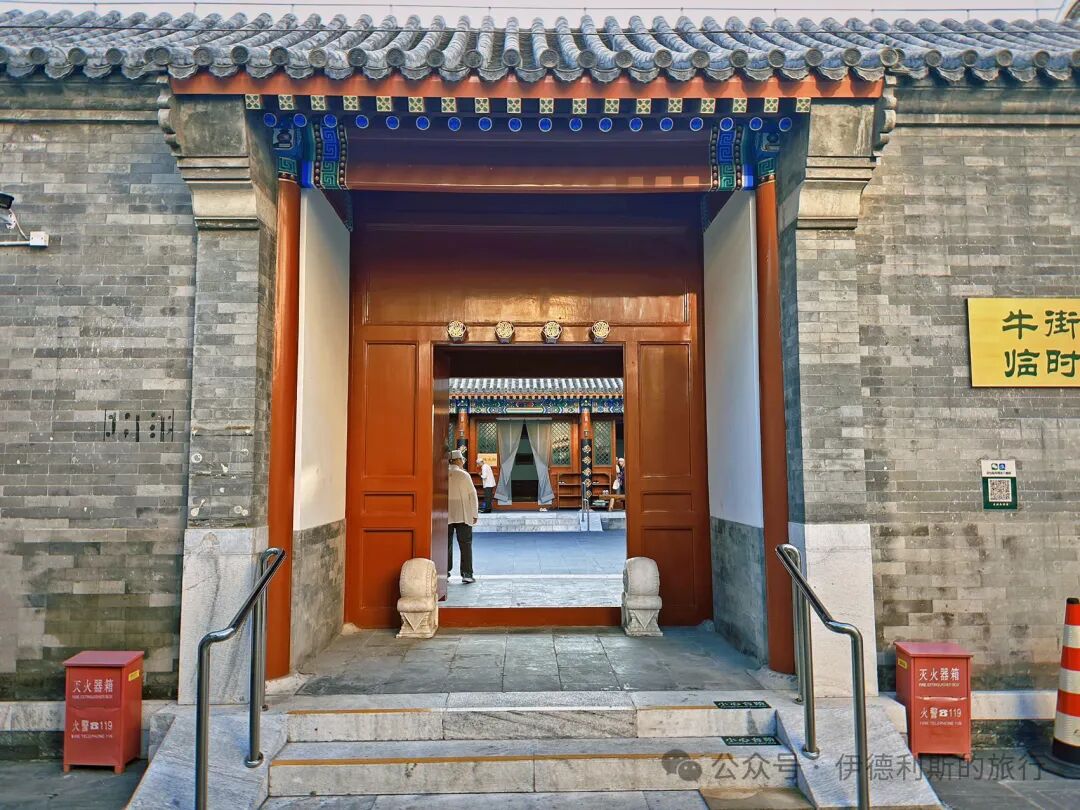
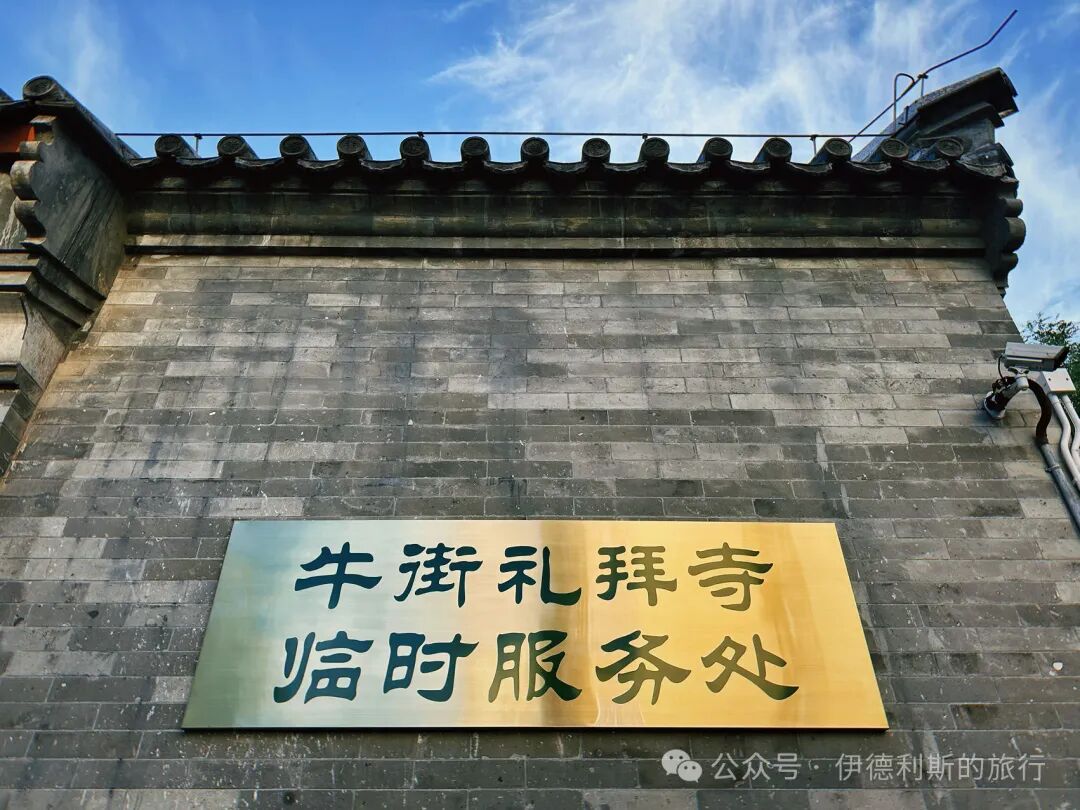
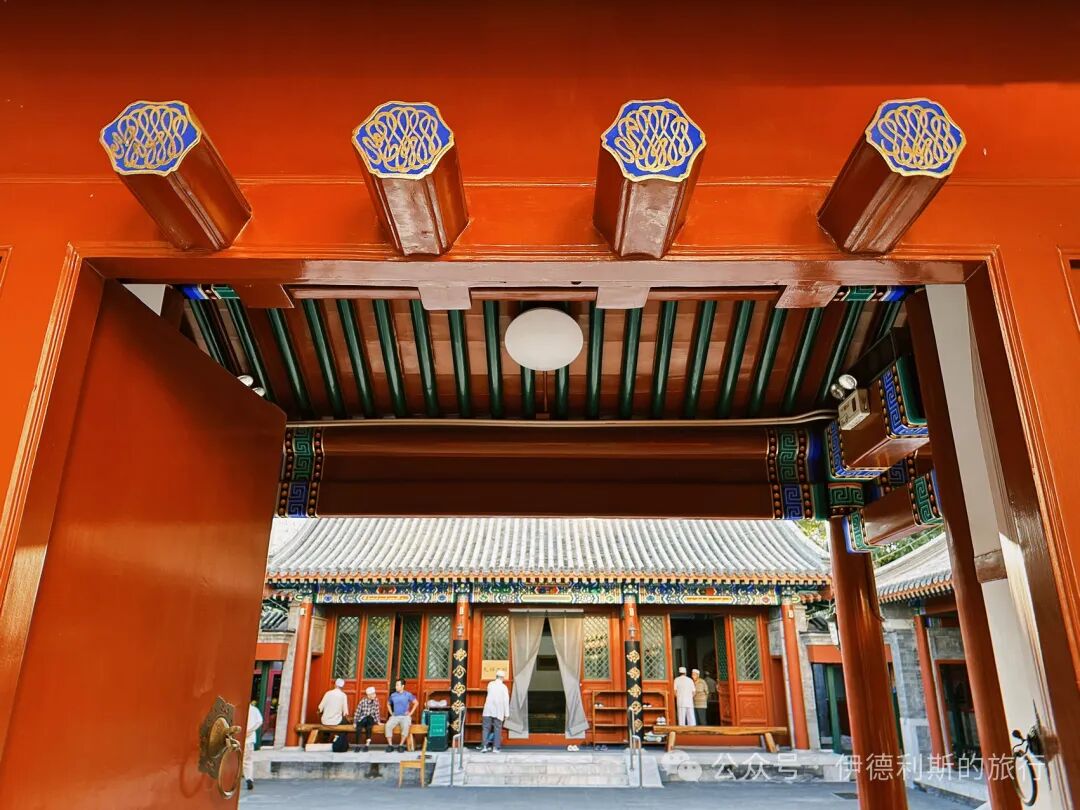
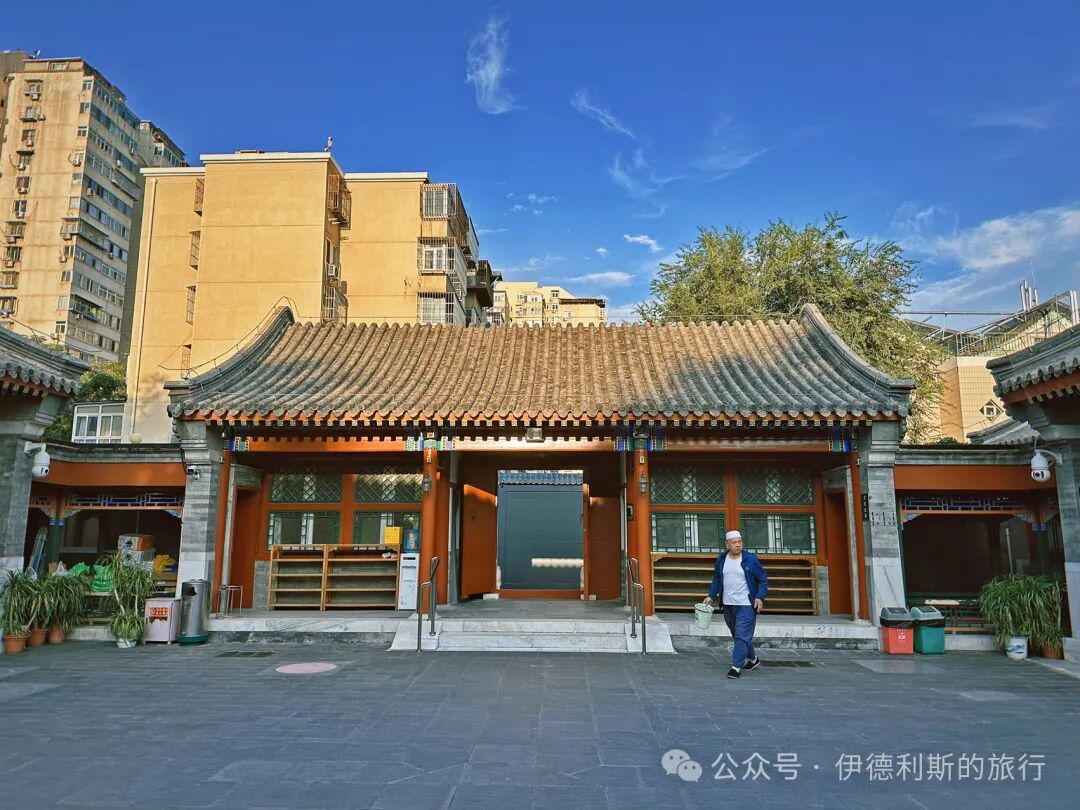
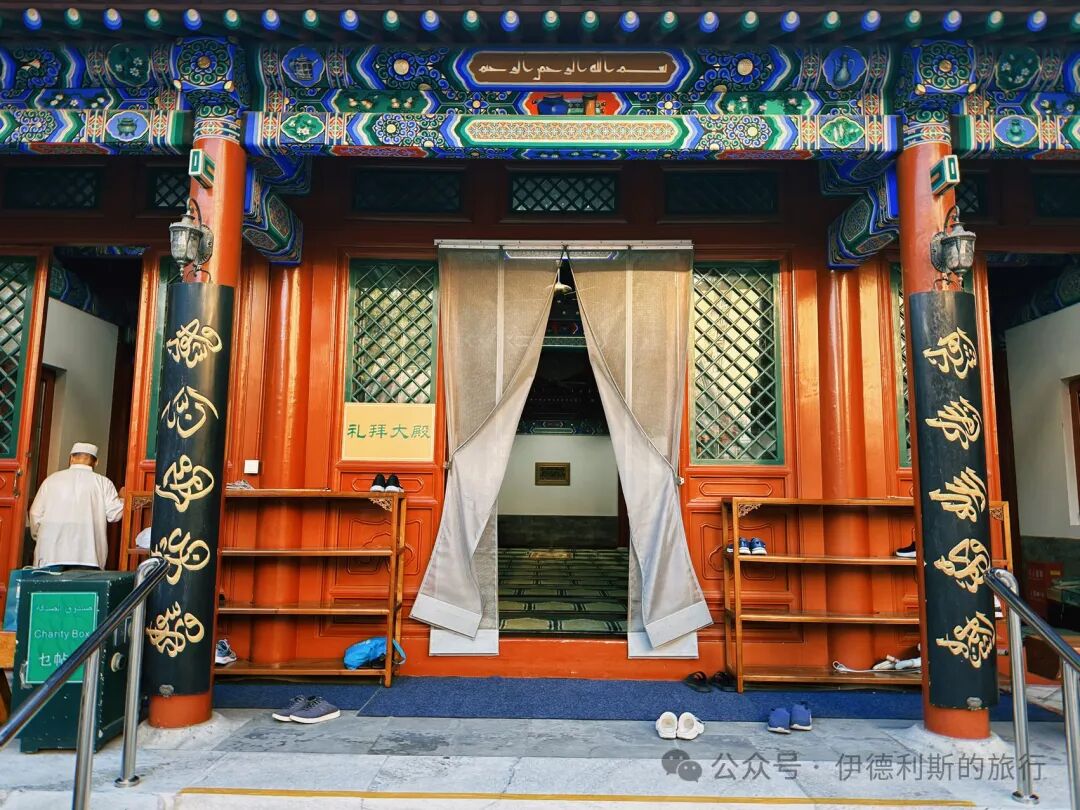
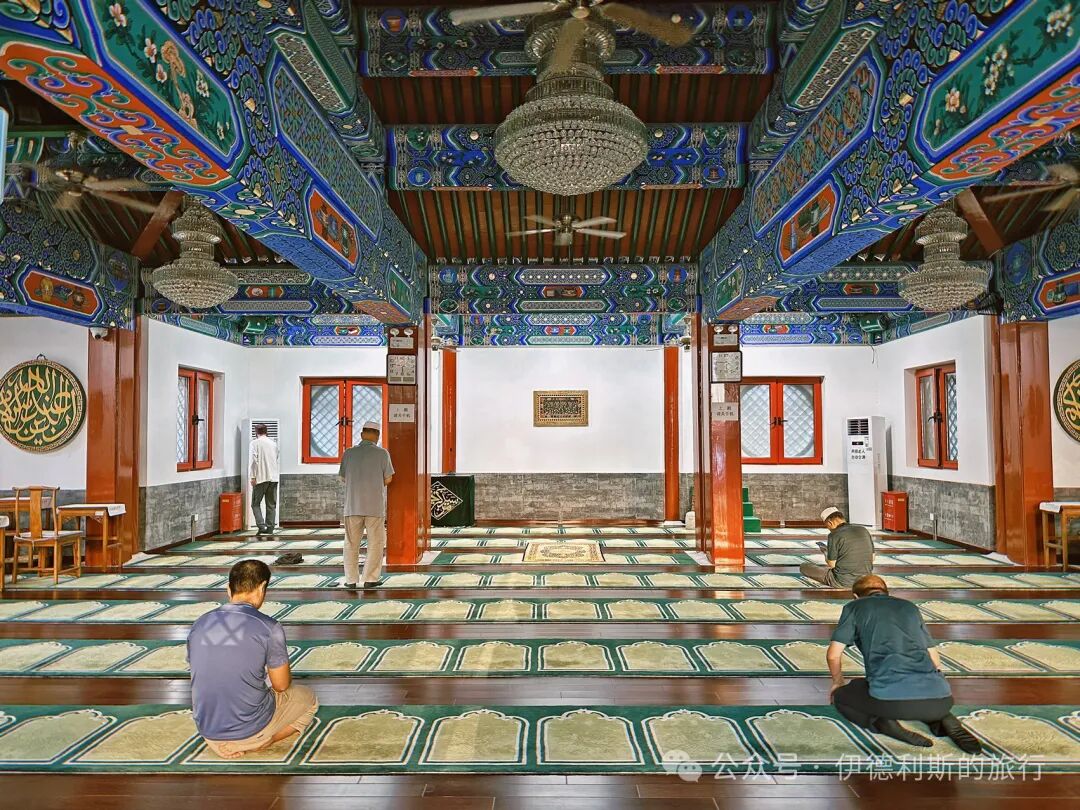
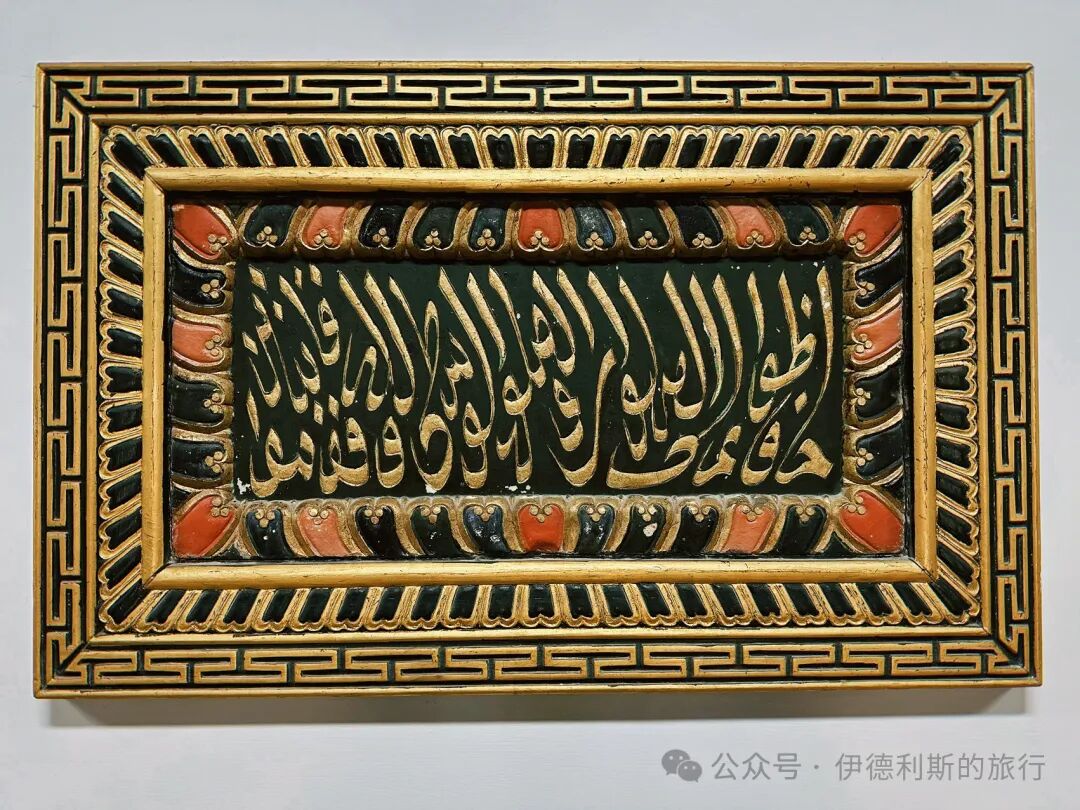
Afterward, Digele went to the newly opened He's Beef Noodles (Heji Niuroumian) on Niujie Street, which markets itself as the taste of home in Niujie. They only serve noodles topped with stewed meat, but you can buy braised beef separately, and noodle refills are free. Their noodles are freshly pressed buckwheat noodles (heluo mian) with a good chew, the broth tastes great, and the stewed meat is on the firmer side but still delicious. I wasn't satisfied after one bowl, so I ordered another serving of noodles. Also, they do not sell alcohol, only soft drinks, which is great.
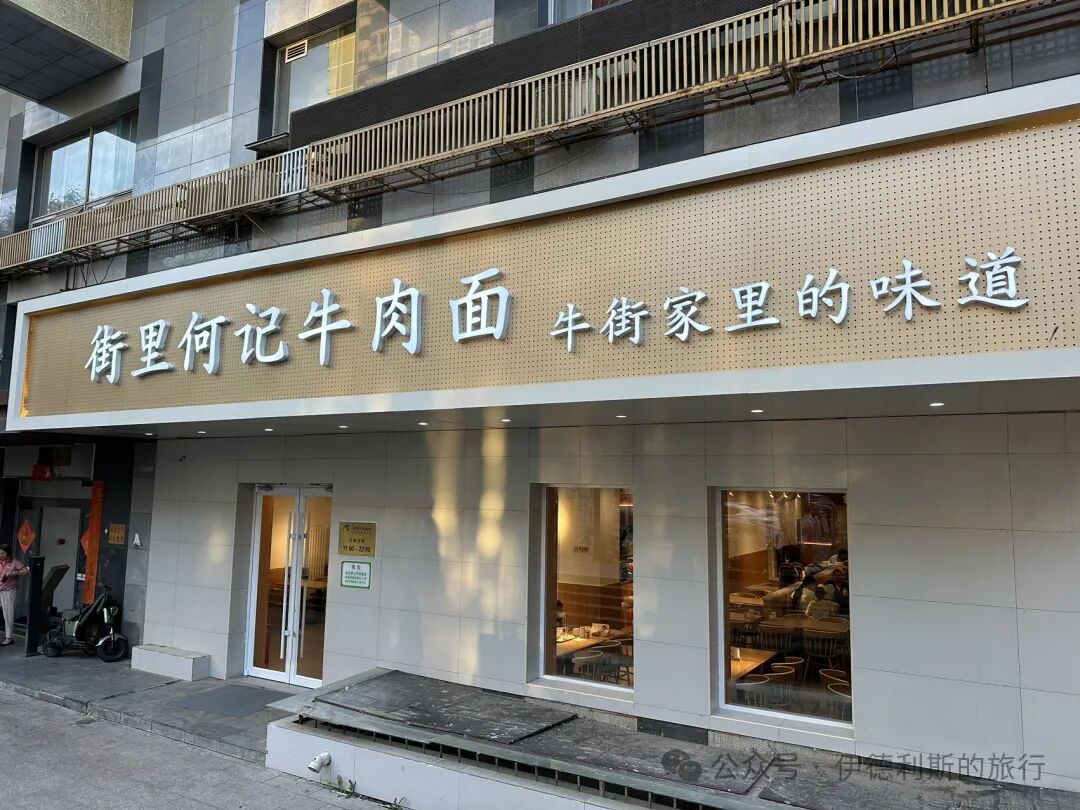
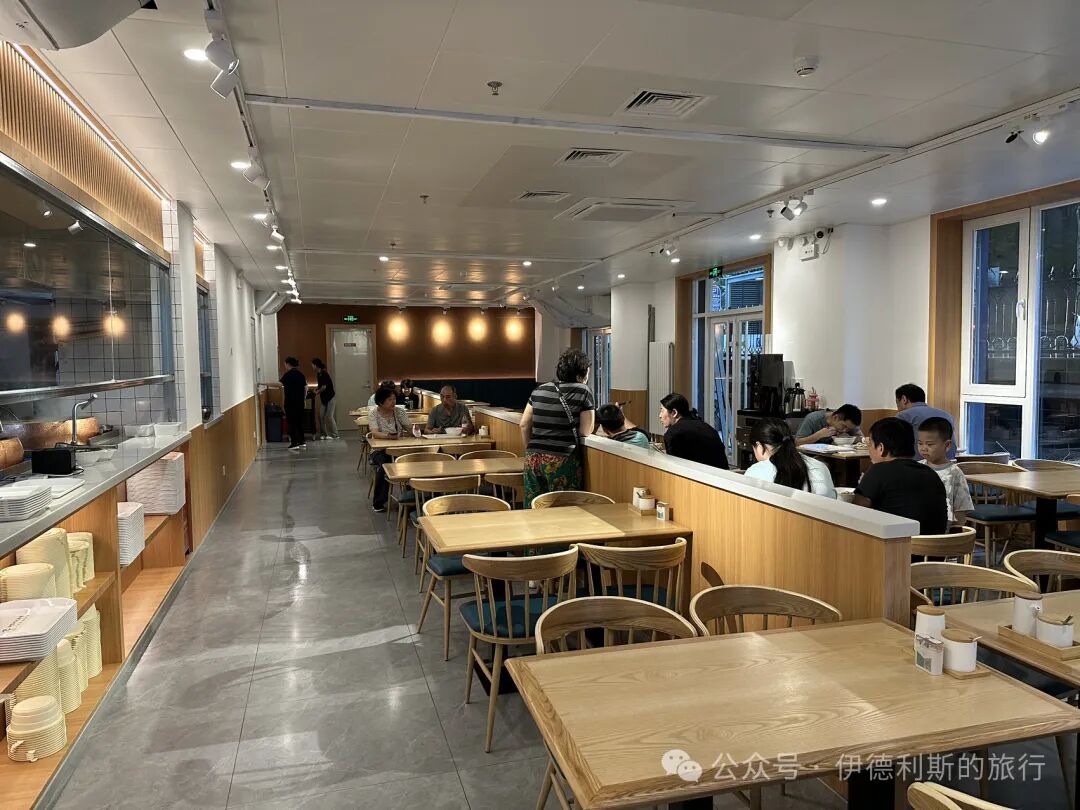
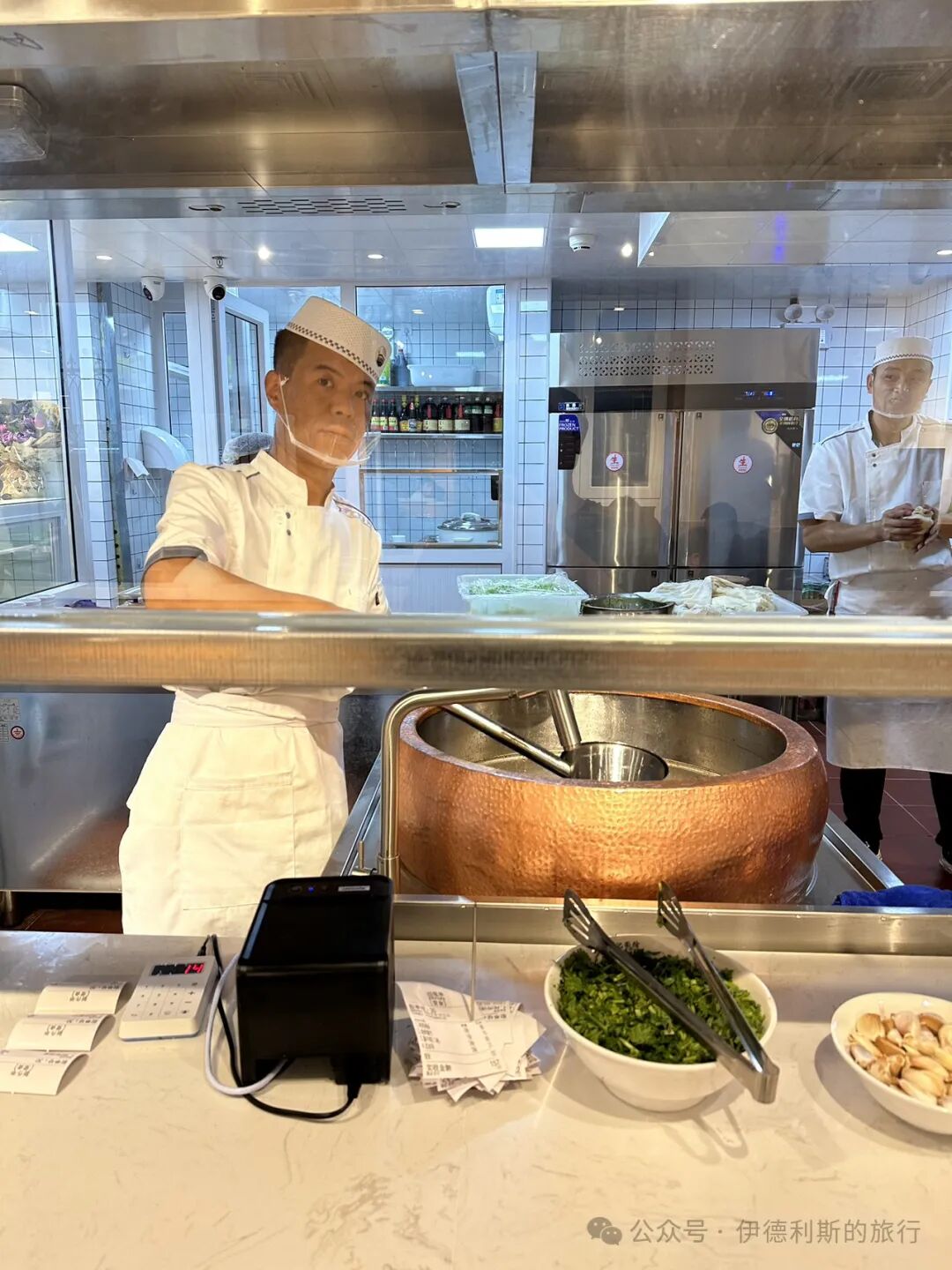
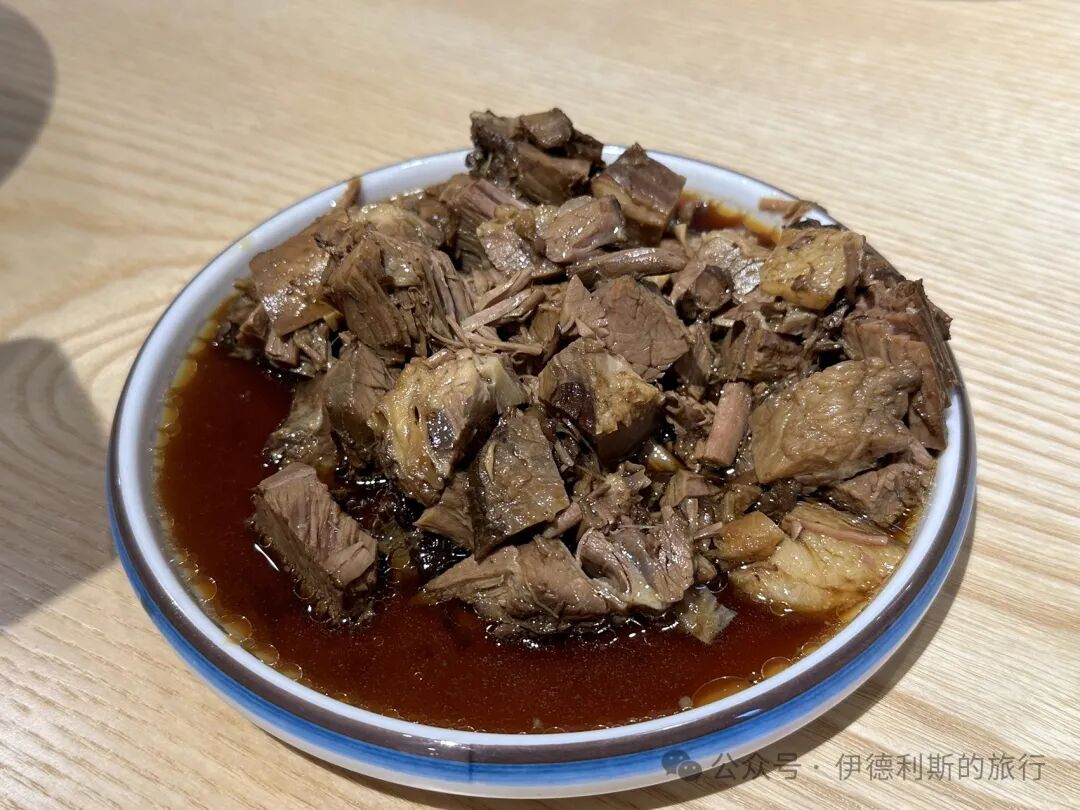
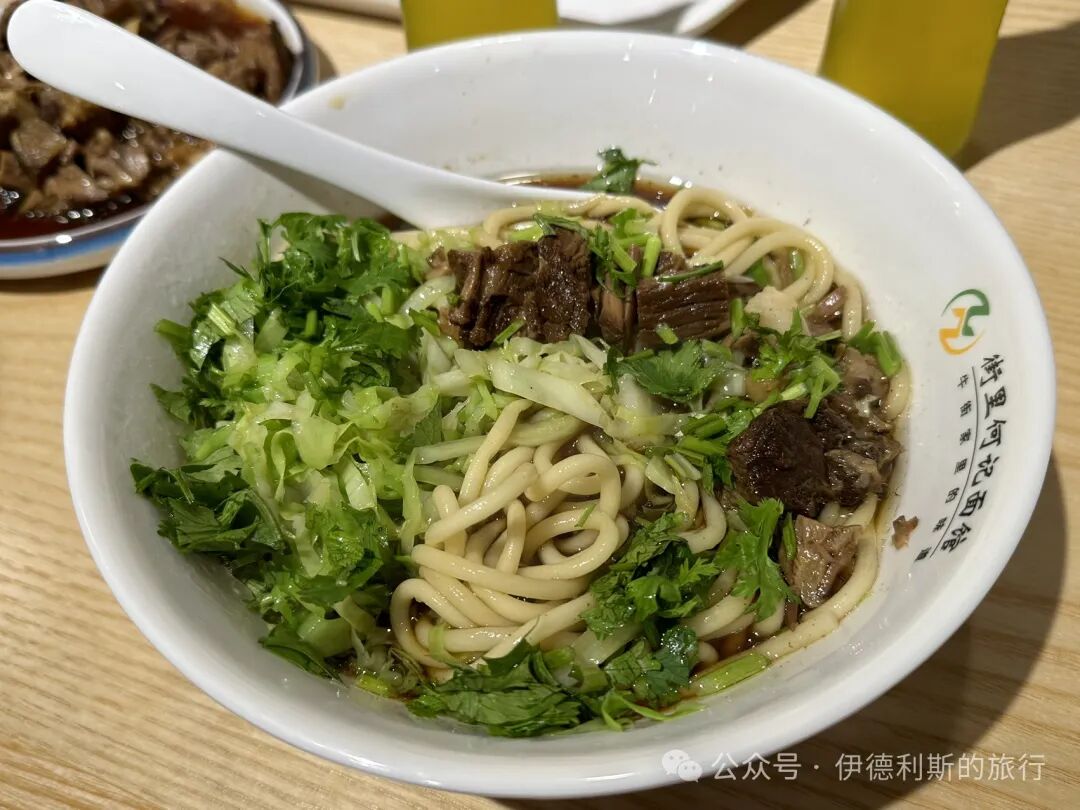
In the evening, I visited the Houheyan Mosque on Changchun Street with several imams from Sichuan who were here for study, along with Yahya Dosti.
Houheyanyan Mosque sits right next to the south bank of the moat. During the Qing Dynasty and the Republic of China era, many transport workers and halal food vendors lived nearby. In 1944, Yang Yuting from the 'Heyan Yang family' and his sons Yang Hongda and Yang Honglai donated their family ice cellar. Then, village elders Yang Zengbin and Yang Zengsen led a fundraising effort. They received strong support from Hui Muslims in Beijing and Dachang, including Peking Opera master Ma Lianliang and Kaorou Wan restaurant owner Wan Qirui. The mosque was built in 1948. Houheyanyan Mosque originally covered a large area. In the 1970s, part of the land was taken to fill in the moat for subway construction. The current building was rebuilt in 2012.
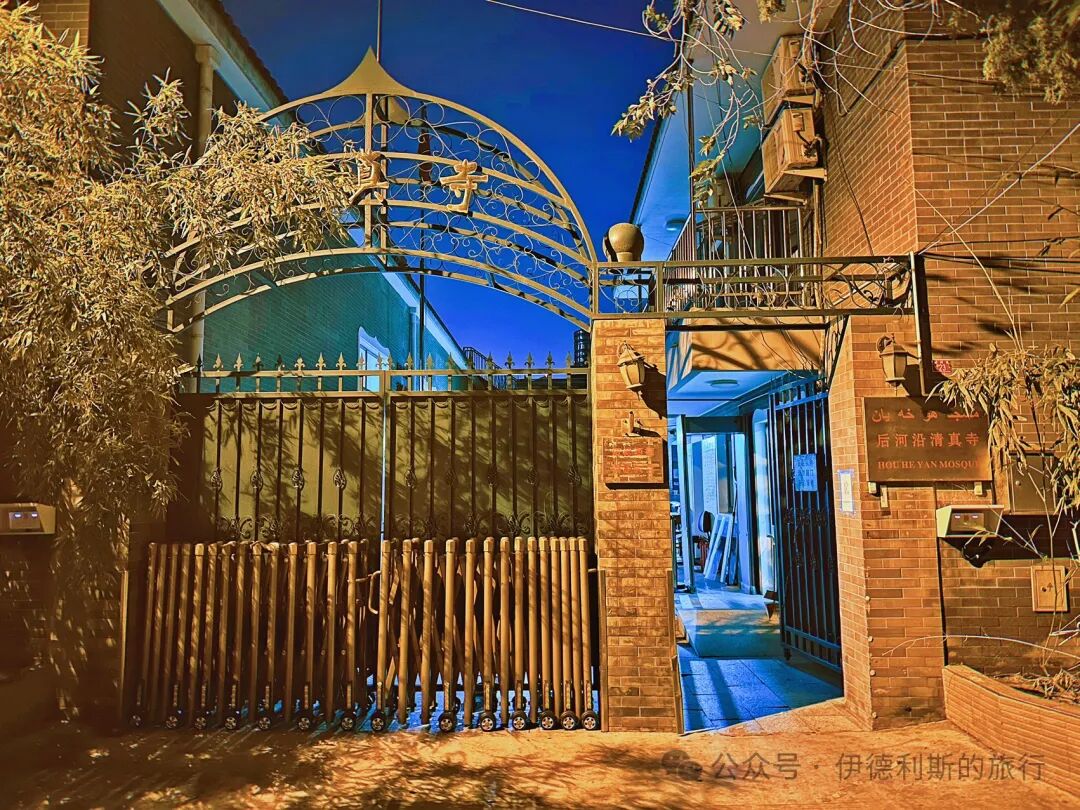
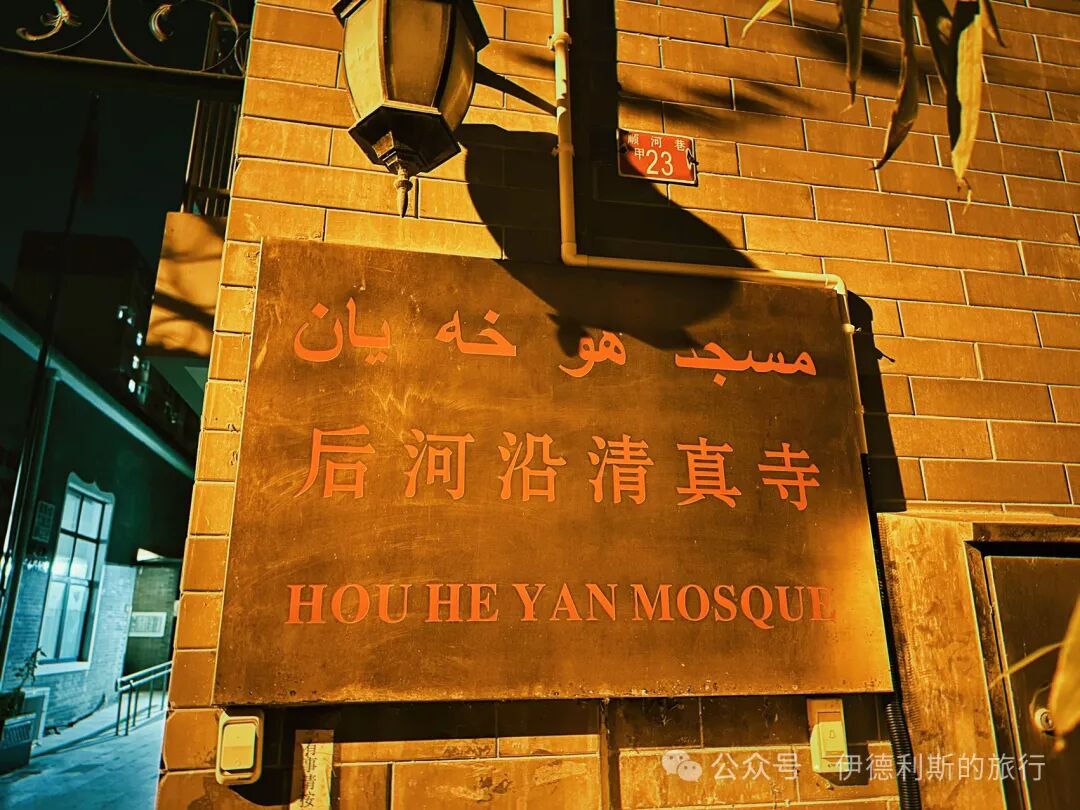
I received beef jerky and beef tallow hot pot base from Imam Feng. It is authentic intangible cultural heritage food from Nanchong, and it tastes delicious.
Halal Travel Guide: Niujie Shahai Tomb — Beijing Muslim History and Cultural Room
Articles • ali2007fr posted the article • 0 comments • 139 views • 2026-05-18 02:55
Summary: Niujie Shahai Tomb — Beijing Muslim History and Cultural Room is presented here as a firsthand travel account in clear English, beginning with this scene: In 2016, I visited the Niujie Mosque and took photos of the Sheikh tombs (shaihai fen) and the cultural relic exhibition hall. The account keeps its focus on Niujie, Beijing Muslim History, Muslim Heritage while preserving the names, places, food, and historical details from the Chinese source.
In 2016, I visited the Niujie Mosque and took photos of the Sheikh tombs (shaihai fen) and the cultural relic exhibition hall. My phone camera quality was just okay back then, so I planned to take better photos to share later, but both the tombs and the hall ended up being closed for several years. I heard the exhibition hall has been renovated, and I hope to see it in its new state soon.
Sheikh tombs (shaihai fen)
Inside the Niujie Mosque in Beijing, there are two tombs of sages from the Western Regions who came to China during the Yuan Dynasty. The one on the west side belongs to Ahmed Burtani, who passed away in 1280, and the one on the east side belongs to Ali Imad al-Din, who passed away in 1283.
According to the Republic of China era Beijing City Annals, after the Song Dynasty moved south, two men came from the West. One was Muhammad, the grandson of Sheikh Ahmed Burtani, from Ghazni in the Western Regions. The other was Ali, the son of Sheikh Imad al-Din, from Bukhara in the Western Regions. They lived in the mosque, spoke with great eloquence, and carried themselves with elegance. After they passed away, they were buried in the mosque. Their tombs remain there today, and the inscriptions on the tombstones still serve as proof.
It is now generally accepted that Ali Imad al-Din came from the ancient Central Asian city of Bukhara. However, the birthplace of Ahmed Burtani varies significantly across different translations. According to the translation by Zhao Zhenwu, a famous Hui Muslim scholar and teacher at Chengda Normal School during the Republic of China era, Ahmed Burtani came from Ghazni, an ancient city in Afghanistan. This is the version widely used today. Ma Jinpeng, who studied at Al-Azhar University in Egypt and later became an Arabic professor at Peking University, translated it as 'E'lu' and noted it was a place near Medina. Additionally, the Niujie Mosque once kept a wooden plaque from the Qianlong period of the Qing Dynasty, commonly known as the 'White Plaque,' which stated he came from 'Alepu,' the ancient Syrian city of Aleppo.
The ancient cities of Bukhara and Ghazni were incorporated into the Mongol Empire in 1220 and 1221, respectively, during Genghis Khan's western campaign against the Khwarazmian Empire. Aleppo was captured by Hulagu Khan in 1260, but it was soon recaptured by the Mamluk Sultanate of Egypt. The expansion of the Mongol Empire removed travel barriers across the Eurasian interior, and Muslims from Central and West Asia began to enter China in large numbers.
According to the Yuan dynasty collection Qiujian Ji, there were 2,953 households of Hui Muslims in Beijing by 1263, most of whom were wealthy merchants. Before the Yuan dynasty finished building the capital of Dadu in 1285 and ordered residents to move in, most people lived in the old city of Zhongdu from the Jin dynasty. Niujie was located in the heart of this old city and was the most important residential area for Muslims in Beijing at the time.
Cultural Exhibition Hall
On the east side of the Niujie Mosque stands a building with seven large tiled rooms, commonly known as the Seven Rooms (qijianfang). It was first built in 1442 during the seventh year of the Zhengtong reign. The main rooms were used for teaching scriptures, while the side rooms were used to store them. Today, it serves as a cultural exhibition hall.
Inside the cultural exhibition hall is a plaque featuring an imperial edict from the Kangxi Emperor, which reads: Inform all provinces: if officials or civilians hold grudges over minor matters. And falsely accuse Muslims of plotting a rebellion, officials in charge have the authority to execute them first and report it later. Hui Muslims across the land must follow their faith and not disobey this order, so as not to betray my grace and my intention to protect the path.
Legend has it that in March 1694, during the month of Ramadan, the Kangxi Emperor received a secret report from Li Yu, the official in charge of the southern city of Beijing, claiming that the Muslims of Niujie were gathering at night to plot a rebellion. The Kangxi Emperor asked the Grand Councilors Niu Xi and Wang Xi, who lived near Niujie, and neither of them had heard anything about it. Emperor Kangxi traveled in disguise with two ministers. One night, he saw many people praying Taraweeh inside the brightly lit Niujie Mosque. Seeing they were doing nothing wrong, he issued an imperial decree.
Additionally, the Niujie local chronicle "Gangzhi," copied by Shen Fengyi during the Daoguang era (and likely written during the Yongzheng era), records that in 1694, the Niujie Mosque imam Saiyide Ma Tengyun was involved in a spy case. The story goes that Galdan of the Dzungar Khanate sent two Hami Muslims to Beijing as spies, and Ma Tengyun of the Niujie Mosque often hosted them for meals. Later, one of the men was caught by the Lifanyuan (Court of Colonial Affairs) guards, and he named Ma Tengyun. The Lifanyuan immediately arrested Ma Tengyun and Yin Liangxiang from the Jiaozihutong Mosque, while the city patrol troops blocked off Niujie. The Lifanyuan petitioned to slaughter all Hui Muslims in the capital, but Kangxi rejected the request. Kangxi ordered, "The Hui Muslims of the capital are also my children... just strictly hunt down the spies, do not implicate innocent people." In the end, Ma Tengyun and Yin Liangxiang were released, and mosques across Beijing held prayer services to give thanks. This event matches the timing and content of the imperial decree stele, and it is likely the reason the decree was issued.
A hanging scroll for Imam Wang Yousan from 1868 (the seventh year of the Tongzhi era). Imam Wang Yousan, whose given name was Zhenyi and courtesy name was Yousan, was known as "Yibaba" and came from a family of Niujie imams. Chunfeng Hutong in Niujie was originally called Wang Laoshifu Hutong. It sits right next to the south side of the Niujie Mosque and was named after the Wang family who lived there for generations. The words 'Shouqian Wang Si Lao Aheng' on the left side of the banner refer to Imam Wang Shouqian, the father of Imam Wang Yousan. He was a very famous imam in Niujie, known as Master Wang Si, and was hailed as the 'leading authority on Islamic scripture in the North'.
Inside the Niujie Mosque stands a stone tablet from 1903, written by Xu Qi, a cabinet scholar and vice minister of the Ministry of Rites. It is titled 'Stele Describing the Virtuous Deeds of Wang Yousan and Haoran in Protecting the Hui Muslim Community' and records two heroic acts by Imam Wang Yousan.
The first story tells of 1900, when the Eight-Nation Alliance entered Beijing and bandits in the city took the chance to loot, throwing society into chaos. Niujie Mosque Imam Wang Yousan and his nephew, Imam Wang Haoran, organized the local families to watch over and help each other. They punished those who broke the law, which finally saved Niujie from disaster.
The second story tells of 1902, when the Qing government built a railway and planned to tear down the Hui Muslim cemetery at Sanlihe outside Xibianmen. Imam Wang Yousan and Imam Wang Haoran used their connections with local elders to find the minister in charge of the railway to negotiate. In the end, the Qing government decided to change the plans and build around the Sanlihe Hui Muslim cemetery.
Glazed glassware from the Kangxi era
Incense box with Arabic calligraphy
Lotus-shaped incense burner
Three-legged incense burner with cloud-shaped handles and Arabic calligraphy
Lotus-shaped incense burner with two handles and Arabic calligraphy
Vase (gu) with Arabic calligraphy
Ming Dynasty blue and white flower vase with Arabic calligraphy and unique shape
A Ming Dynasty Zhengde period blue and white porcelain tripod incense burner with Arabic calligraphy.
A Qing Dynasty cloud-shaped incense holder inscribed with the words Niujie Great Mosque (Niujie Da Libaisi).
A Qing Dynasty bronze tripod incense burner with Arabic calligraphy.
Books published by the Niujie Islamic Press including 'Chinese-Arabic Mieta', 'Beginner's Doctrine Textbook', 'Verification of Doubts', and 'Guide to Islam (Qingzhen Zhinan)', along with a stamp from the 'Manager Ma Kuilin Publishing House'.
The Islamic Press was founded in the early Republic of China era by Imam Ma Kuilin, a long-time resident of Niujie. In the 1920s and 1930s, it printed various religious textbooks and scholarly works that were sold across the country. After Imam Ma Kuilin passed away in 1940, his fourth son, Ma Zhongdao, continued the business until it was merged into the Xuanwu Xinhua Bookstore in 1956. After 1966, all the books from the Islamic Press held by the Xuanwu Xinhua Bookstore went missing, and Ma Zhongdao was forced to burn his own personal collection. Because of this, the books from the Islamic Press collected by Bi Jingshi have become the most precious records.
The 'Guide to Islam' on the left is printed with: 'Reprinted in the ninth year of Tongzhi, written by Mr. Ma Wenbing, a descendant of the Prophet, and held by the Haopan Street Mosque in the provincial capital of Guangdong'.
The author of 'Guide to Islam' was Ma Zhu, courtesy name Wenbing, from Baoshan, Yunnan. Born in 1640, he was said to be the 15th-generation descendant of the Xianyang King Sayyid Ajjal Shams al-Din, which is why he was called a 'descendant of the Prophet'. Ma Zhu was poor as a child but loved to learn. At 18, he was recommended as an imperial guard for the Southern Ming dynasty, but he resigned in less than two years to return home and focus on his studies. After turning 30, he left Yunnan to visit scholars and teach in various places. At the same time, he began compiling his research into the book 'Guide to Islam'. He finished the first draft at 35 and continued to add to and revise it until he finalized the text at age 70.
Ma Zhu began copying and printing the Guide to Islam (Qingzhen Zhinan) during his lifetime, but early versions are lost. The oldest surviving version is the 1811 Jinling edition. Later editions include the 1828 Chengdu Ma Da'en edition, the 1884 Guanzhong Hanyutang edition, and the 1885 Chengdu Baozhentang edition. The Niujie Mosque holds the 1870 edition printed by the Haopan Street Mosque in Guangzhou. The preface of the Haopan Street edition says that Bao Anji used the Guide to Islam as a textbook while studying at a mosque as a child. He was very sad when he lost the book later in life. In 1868, Bao Anji accidentally found the book, paid a high price to buy it, and finished reprinting it after careful proofreading.
The thirteen traditional mosque education books include handwritten copies of the Five Linked Volumes (Lianwuben), the Hutobu, the Baiyani, the Zaowu Misuhaba, the Gulostan (Garden of Truth), and the Quran with Persian annotations.
The Five Linked Volumes (Lianwuben) is a collective name for five textbooks used as the foundation for learning Arabic grammar and syntax.
The Zaowu Misuhaba means lighting a bright lamp. It is a further explanation of the fifth Arabic syntax textbook in the Five Linked Volumes, called the Misubaha.
The Baiyani means to clarify. It is a book on Arabic rhetoric.
The Hutobu was originally written in Arabic and later translated into Persian. It is a Persian commentary on 40 Hadiths.
The Gulostan (Garden of Truth) is a literary masterpiece by the 13th-century Persian poet Saadi. It is a textbook for studying Persian literature.
These include the Ming dynasty Confucian work Complete Collection of Human Nature and Principle (Xingli Daquan), the book Explanation of the Five Pillars of Islam (Tianfang Wugong Shiyi) where the famous Qing scholar Liu Zhi uses Confucian philosophy to explain the five pillars of Islam, the poetic Islamic primer Tianfang Sanzijing which Liu Zhi wrote in the style of the Three Character Classic, and Yuan Guozuo's annotated version, the Simple Explanation of the Tianfang Sanzijing (Tianfang Sanzijing Zhujie Qianshuo).
Yuan Guozuo was born in Nanjing in 1712. He studied Liu Zhi's Chinese Islamic classics deeply from a young age and later published many of Liu Zhi's works. In 1809, he wrote annotations for the Tianfang Sanzijing, which became an important version of the book.
There is also the Chinese-Arabic primer (Zhong-A wen haitie) published in 1947 by the Arabic primary and middle school on Xiaosi Street in the Xuanwai district of Beiping.
I also want to share a large copper pot in the courtyard. It is inscribed with 'Made in the month of Ramadan, Renyin year of the Kangxi reign of the Great Qing, by imperial decree for the mosque' and 'Remade in the month of Ramadan, Bingzi year of the Qianlong reign of the Great Qing, by imperial decree for the mosque.' This means it was made in 1702 and remade in 1739, which was eight years after the imperial decree plaque from the Kangxi era. This pot was used to cook meat porridge during mosque gatherings. In the 1960s and 1970s, it was hidden inside the minaret (bangkelou) under a pile of junk, which is how it survived. view all
Summary: Niujie Shahai Tomb — Beijing Muslim History and Cultural Room is presented here as a firsthand travel account in clear English, beginning with this scene: In 2016, I visited the Niujie Mosque and took photos of the Sheikh tombs (shaihai fen) and the cultural relic exhibition hall. The account keeps its focus on Niujie, Beijing Muslim History, Muslim Heritage while preserving the names, places, food, and historical details from the Chinese source.
In 2016, I visited the Niujie Mosque and took photos of the Sheikh tombs (shaihai fen) and the cultural relic exhibition hall. My phone camera quality was just okay back then, so I planned to take better photos to share later, but both the tombs and the hall ended up being closed for several years. I heard the exhibition hall has been renovated, and I hope to see it in its new state soon.
Sheikh tombs (shaihai fen)
Inside the Niujie Mosque in Beijing, there are two tombs of sages from the Western Regions who came to China during the Yuan Dynasty. The one on the west side belongs to Ahmed Burtani, who passed away in 1280, and the one on the east side belongs to Ali Imad al-Din, who passed away in 1283.
According to the Republic of China era Beijing City Annals, after the Song Dynasty moved south, two men came from the West. One was Muhammad, the grandson of Sheikh Ahmed Burtani, from Ghazni in the Western Regions. The other was Ali, the son of Sheikh Imad al-Din, from Bukhara in the Western Regions. They lived in the mosque, spoke with great eloquence, and carried themselves with elegance. After they passed away, they were buried in the mosque. Their tombs remain there today, and the inscriptions on the tombstones still serve as proof.
It is now generally accepted that Ali Imad al-Din came from the ancient Central Asian city of Bukhara. However, the birthplace of Ahmed Burtani varies significantly across different translations. According to the translation by Zhao Zhenwu, a famous Hui Muslim scholar and teacher at Chengda Normal School during the Republic of China era, Ahmed Burtani came from Ghazni, an ancient city in Afghanistan. This is the version widely used today. Ma Jinpeng, who studied at Al-Azhar University in Egypt and later became an Arabic professor at Peking University, translated it as 'E'lu' and noted it was a place near Medina. Additionally, the Niujie Mosque once kept a wooden plaque from the Qianlong period of the Qing Dynasty, commonly known as the 'White Plaque,' which stated he came from 'Alepu,' the ancient Syrian city of Aleppo.
The ancient cities of Bukhara and Ghazni were incorporated into the Mongol Empire in 1220 and 1221, respectively, during Genghis Khan's western campaign against the Khwarazmian Empire. Aleppo was captured by Hulagu Khan in 1260, but it was soon recaptured by the Mamluk Sultanate of Egypt. The expansion of the Mongol Empire removed travel barriers across the Eurasian interior, and Muslims from Central and West Asia began to enter China in large numbers.
According to the Yuan dynasty collection Qiujian Ji, there were 2,953 households of Hui Muslims in Beijing by 1263, most of whom were wealthy merchants. Before the Yuan dynasty finished building the capital of Dadu in 1285 and ordered residents to move in, most people lived in the old city of Zhongdu from the Jin dynasty. Niujie was located in the heart of this old city and was the most important residential area for Muslims in Beijing at the time.
Cultural Exhibition Hall
On the east side of the Niujie Mosque stands a building with seven large tiled rooms, commonly known as the Seven Rooms (qijianfang). It was first built in 1442 during the seventh year of the Zhengtong reign. The main rooms were used for teaching scriptures, while the side rooms were used to store them. Today, it serves as a cultural exhibition hall.
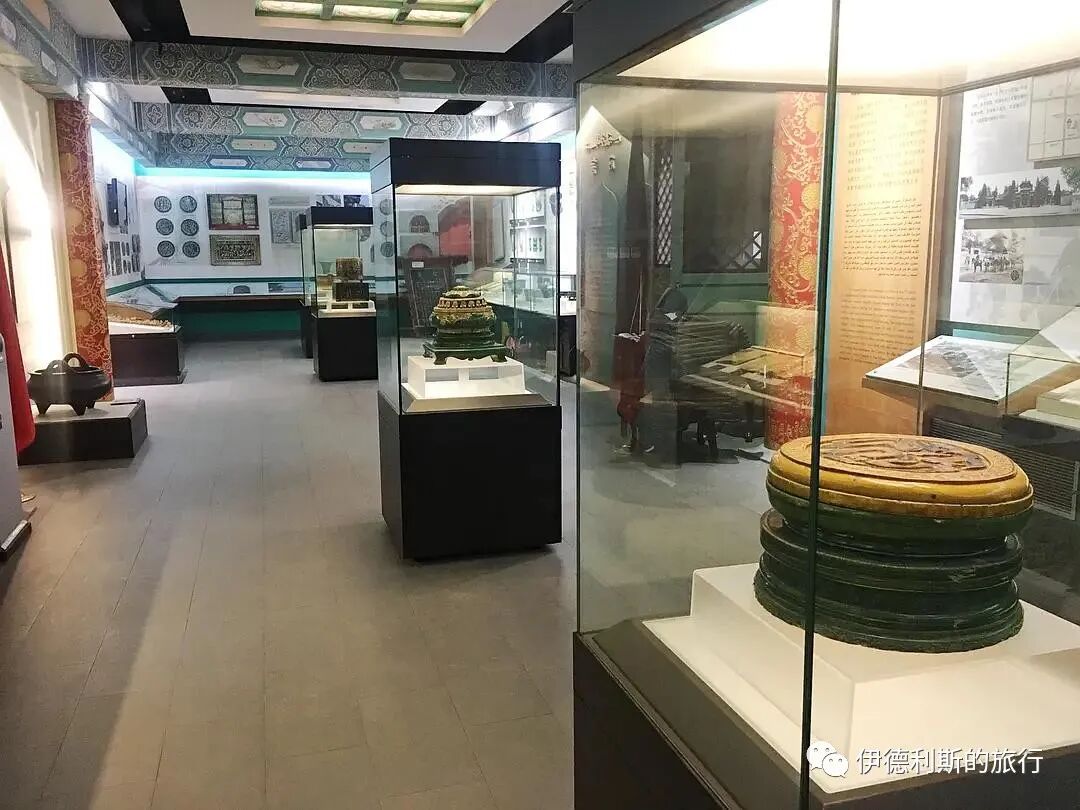
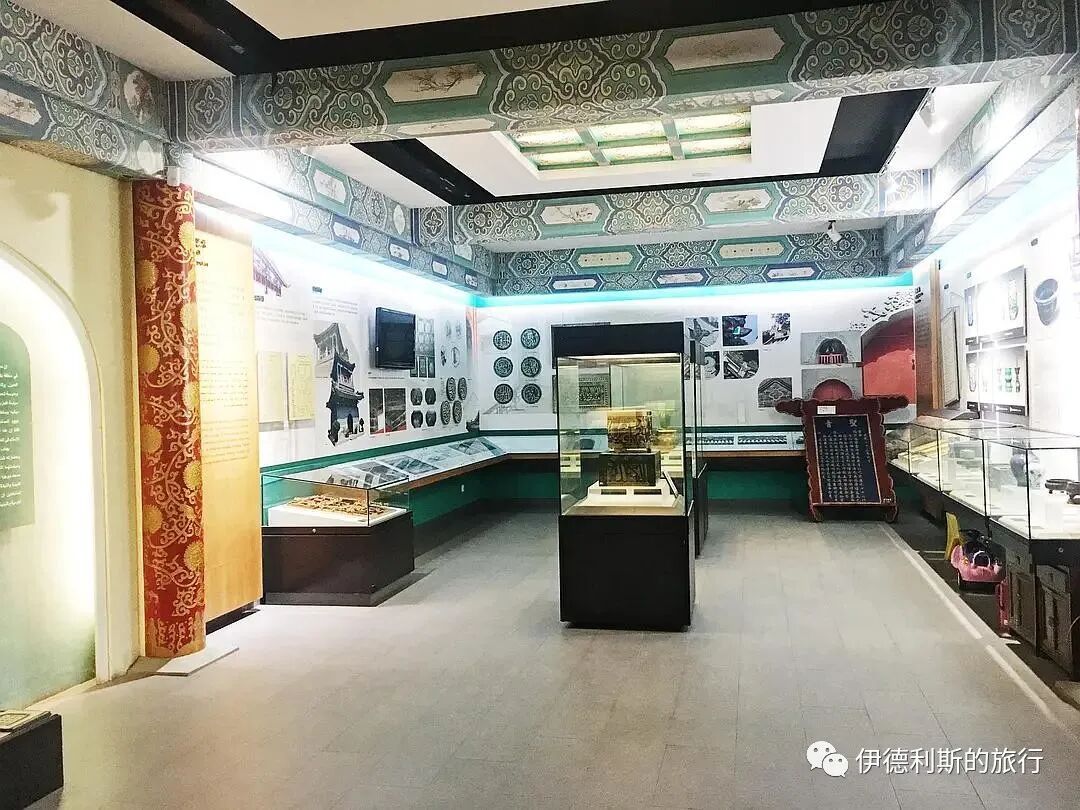
Inside the cultural exhibition hall is a plaque featuring an imperial edict from the Kangxi Emperor, which reads: Inform all provinces: if officials or civilians hold grudges over minor matters. And falsely accuse Muslims of plotting a rebellion, officials in charge have the authority to execute them first and report it later. Hui Muslims across the land must follow their faith and not disobey this order, so as not to betray my grace and my intention to protect the path.
Legend has it that in March 1694, during the month of Ramadan, the Kangxi Emperor received a secret report from Li Yu, the official in charge of the southern city of Beijing, claiming that the Muslims of Niujie were gathering at night to plot a rebellion. The Kangxi Emperor asked the Grand Councilors Niu Xi and Wang Xi, who lived near Niujie, and neither of them had heard anything about it. Emperor Kangxi traveled in disguise with two ministers. One night, he saw many people praying Taraweeh inside the brightly lit Niujie Mosque. Seeing they were doing nothing wrong, he issued an imperial decree.
Additionally, the Niujie local chronicle "Gangzhi," copied by Shen Fengyi during the Daoguang era (and likely written during the Yongzheng era), records that in 1694, the Niujie Mosque imam Saiyide Ma Tengyun was involved in a spy case. The story goes that Galdan of the Dzungar Khanate sent two Hami Muslims to Beijing as spies, and Ma Tengyun of the Niujie Mosque often hosted them for meals. Later, one of the men was caught by the Lifanyuan (Court of Colonial Affairs) guards, and he named Ma Tengyun. The Lifanyuan immediately arrested Ma Tengyun and Yin Liangxiang from the Jiaozihutong Mosque, while the city patrol troops blocked off Niujie. The Lifanyuan petitioned to slaughter all Hui Muslims in the capital, but Kangxi rejected the request. Kangxi ordered, "The Hui Muslims of the capital are also my children... just strictly hunt down the spies, do not implicate innocent people." In the end, Ma Tengyun and Yin Liangxiang were released, and mosques across Beijing held prayer services to give thanks. This event matches the timing and content of the imperial decree stele, and it is likely the reason the decree was issued.
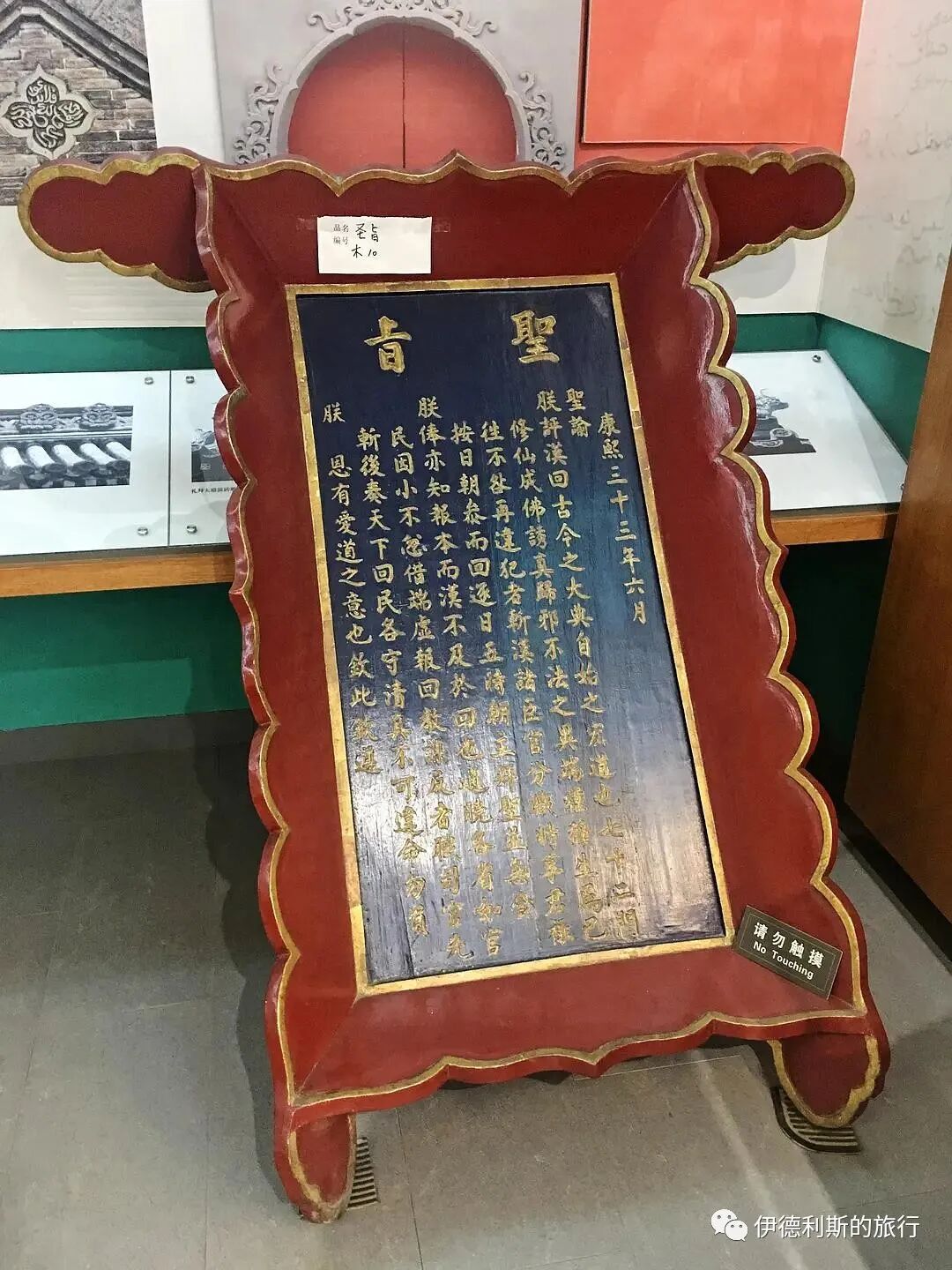
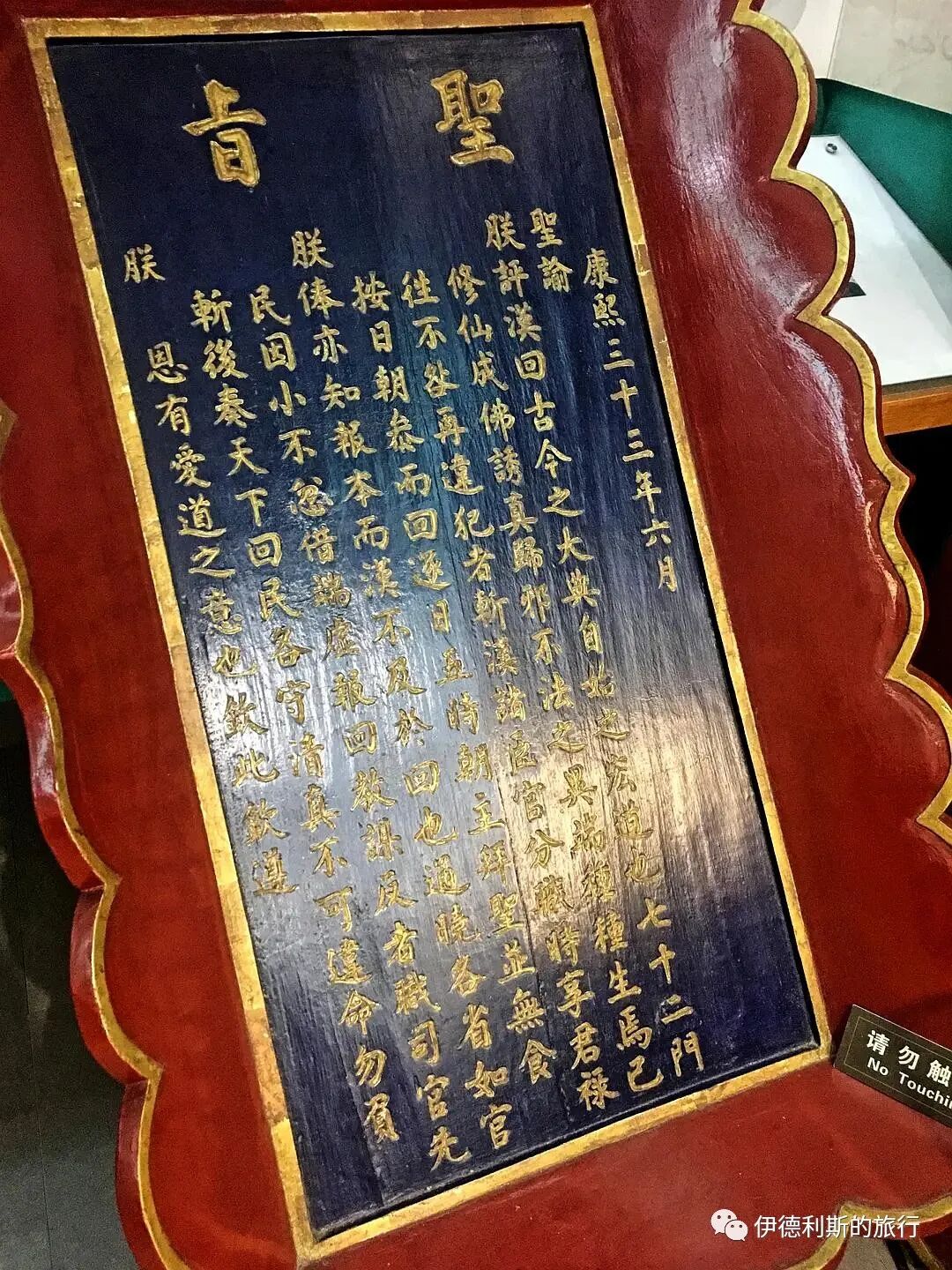
A hanging scroll for Imam Wang Yousan from 1868 (the seventh year of the Tongzhi era). Imam Wang Yousan, whose given name was Zhenyi and courtesy name was Yousan, was known as "Yibaba" and came from a family of Niujie imams. Chunfeng Hutong in Niujie was originally called Wang Laoshifu Hutong. It sits right next to the south side of the Niujie Mosque and was named after the Wang family who lived there for generations. The words 'Shouqian Wang Si Lao Aheng' on the left side of the banner refer to Imam Wang Shouqian, the father of Imam Wang Yousan. He was a very famous imam in Niujie, known as Master Wang Si, and was hailed as the 'leading authority on Islamic scripture in the North'.
Inside the Niujie Mosque stands a stone tablet from 1903, written by Xu Qi, a cabinet scholar and vice minister of the Ministry of Rites. It is titled 'Stele Describing the Virtuous Deeds of Wang Yousan and Haoran in Protecting the Hui Muslim Community' and records two heroic acts by Imam Wang Yousan.
The first story tells of 1900, when the Eight-Nation Alliance entered Beijing and bandits in the city took the chance to loot, throwing society into chaos. Niujie Mosque Imam Wang Yousan and his nephew, Imam Wang Haoran, organized the local families to watch over and help each other. They punished those who broke the law, which finally saved Niujie from disaster.
The second story tells of 1902, when the Qing government built a railway and planned to tear down the Hui Muslim cemetery at Sanlihe outside Xibianmen. Imam Wang Yousan and Imam Wang Haoran used their connections with local elders to find the minister in charge of the railway to negotiate. In the end, the Qing government decided to change the plans and build around the Sanlihe Hui Muslim cemetery.
Glazed glassware from the Kangxi era
Incense box with Arabic calligraphy
Lotus-shaped incense burner
Three-legged incense burner with cloud-shaped handles and Arabic calligraphy
Lotus-shaped incense burner with two handles and Arabic calligraphy
Vase (gu) with Arabic calligraphy
Ming Dynasty blue and white flower vase with Arabic calligraphy and unique shape
A Ming Dynasty Zhengde period blue and white porcelain tripod incense burner with Arabic calligraphy.
A Qing Dynasty cloud-shaped incense holder inscribed with the words Niujie Great Mosque (Niujie Da Libaisi).
A Qing Dynasty bronze tripod incense burner with Arabic calligraphy.
Books published by the Niujie Islamic Press including 'Chinese-Arabic Mieta', 'Beginner's Doctrine Textbook', 'Verification of Doubts', and 'Guide to Islam (Qingzhen Zhinan)', along with a stamp from the 'Manager Ma Kuilin Publishing House'.
The Islamic Press was founded in the early Republic of China era by Imam Ma Kuilin, a long-time resident of Niujie. In the 1920s and 1930s, it printed various religious textbooks and scholarly works that were sold across the country. After Imam Ma Kuilin passed away in 1940, his fourth son, Ma Zhongdao, continued the business until it was merged into the Xuanwu Xinhua Bookstore in 1956. After 1966, all the books from the Islamic Press held by the Xuanwu Xinhua Bookstore went missing, and Ma Zhongdao was forced to burn his own personal collection. Because of this, the books from the Islamic Press collected by Bi Jingshi have become the most precious records.
The 'Guide to Islam' on the left is printed with: 'Reprinted in the ninth year of Tongzhi, written by Mr. Ma Wenbing, a descendant of the Prophet, and held by the Haopan Street Mosque in the provincial capital of Guangdong'.
The author of 'Guide to Islam' was Ma Zhu, courtesy name Wenbing, from Baoshan, Yunnan. Born in 1640, he was said to be the 15th-generation descendant of the Xianyang King Sayyid Ajjal Shams al-Din, which is why he was called a 'descendant of the Prophet'. Ma Zhu was poor as a child but loved to learn. At 18, he was recommended as an imperial guard for the Southern Ming dynasty, but he resigned in less than two years to return home and focus on his studies. After turning 30, he left Yunnan to visit scholars and teach in various places. At the same time, he began compiling his research into the book 'Guide to Islam'. He finished the first draft at 35 and continued to add to and revise it until he finalized the text at age 70.
Ma Zhu began copying and printing the Guide to Islam (Qingzhen Zhinan) during his lifetime, but early versions are lost. The oldest surviving version is the 1811 Jinling edition. Later editions include the 1828 Chengdu Ma Da'en edition, the 1884 Guanzhong Hanyutang edition, and the 1885 Chengdu Baozhentang edition. The Niujie Mosque holds the 1870 edition printed by the Haopan Street Mosque in Guangzhou. The preface of the Haopan Street edition says that Bao Anji used the Guide to Islam as a textbook while studying at a mosque as a child. He was very sad when he lost the book later in life. In 1868, Bao Anji accidentally found the book, paid a high price to buy it, and finished reprinting it after careful proofreading.
The thirteen traditional mosque education books include handwritten copies of the Five Linked Volumes (Lianwuben), the Hutobu, the Baiyani, the Zaowu Misuhaba, the Gulostan (Garden of Truth), and the Quran with Persian annotations.
The Five Linked Volumes (Lianwuben) is a collective name for five textbooks used as the foundation for learning Arabic grammar and syntax.
The Zaowu Misuhaba means lighting a bright lamp. It is a further explanation of the fifth Arabic syntax textbook in the Five Linked Volumes, called the Misubaha.
The Baiyani means to clarify. It is a book on Arabic rhetoric.
The Hutobu was originally written in Arabic and later translated into Persian. It is a Persian commentary on 40 Hadiths.
The Gulostan (Garden of Truth) is a literary masterpiece by the 13th-century Persian poet Saadi. It is a textbook for studying Persian literature.
These include the Ming dynasty Confucian work Complete Collection of Human Nature and Principle (Xingli Daquan), the book Explanation of the Five Pillars of Islam (Tianfang Wugong Shiyi) where the famous Qing scholar Liu Zhi uses Confucian philosophy to explain the five pillars of Islam, the poetic Islamic primer Tianfang Sanzijing which Liu Zhi wrote in the style of the Three Character Classic, and Yuan Guozuo's annotated version, the Simple Explanation of the Tianfang Sanzijing (Tianfang Sanzijing Zhujie Qianshuo).
Yuan Guozuo was born in Nanjing in 1712. He studied Liu Zhi's Chinese Islamic classics deeply from a young age and later published many of Liu Zhi's works. In 1809, he wrote annotations for the Tianfang Sanzijing, which became an important version of the book.
There is also the Chinese-Arabic primer (Zhong-A wen haitie) published in 1947 by the Arabic primary and middle school on Xiaosi Street in the Xuanwai district of Beiping.
I also want to share a large copper pot in the courtyard. It is inscribed with 'Made in the month of Ramadan, Renyin year of the Kangxi reign of the Great Qing, by imperial decree for the mosque' and 'Remade in the month of Ramadan, Bingzi year of the Qianlong reign of the Great Qing, by imperial decree for the mosque.' This means it was made in 1702 and remade in 1739, which was eight years after the imperial decree plaque from the Kangxi era. This pot was used to cook meat porridge during mosque gatherings. In the 1960s and 1970s, it was hidden inside the minaret (bangkelou) under a pile of junk, which is how it survived.
Famous Chinese Muslim Food Beijing: Longtan Hotpot, Niujie Lamb Spine & Halal Dumplings
Articles • yusuf908 posted the article • 0 comments • 205 views • 2026-05-24 00:17
Summary: A famous Chinese Muslim food guide for Beijing, covering Longtan hotpot, Niujie lamb spine, halal dumplings, pancakes, snacks, and restaurant addresses, with the long original article kept as one full post.
Through years of travel, I have gradually discovered that Beijing has the most complete variety of halal food in the world, bar none. Even in an international metropolis like New York, the variety of halal restaurants does not compare to Beijing. Beijing not only has halal restaurants with flavors from many countries, but also gathers halal food from all over China. You can find almost any halal food you can think of in Beijing.
1. Longtan Hot Pot (Longtan Shuanrou)
This copper pot hot pot restaurant near Longtan Lake Park is run by the seventh-generation descendant of the Niujie Yongli family. Yongli is short for the Li family of Yongan Tang. Yongan Tang was a shop opened by the ancestors of the Yongli family at Yongdingmen during the Qing Dynasty, with the hall name Yong Sanyuan. The owner's father was an apprentice at Donglaishun in his early years. The restaurant uses high-calcium lamb from Sunite, Inner Mongolia, which is halal-slaughtered. They serve Niujie sesame flatbread (shaobing), and the sesame paste dipping sauce is stamped with the character for good fortune (fu). The small shop is full of Beijing character and is often used as a filming location. If you do not want to wait in line at Jubaoyuan, come here instead.
Address: No. 16 Zuo'anmen Inner Street, next to the northwest gate of Longtan Lake Park.
2. Laochengyi Lamb Spine Hot Pot (Laochengyi Yangxiezi)
The lamb spine hot pot at Laochengyi tastes truly excellent. The lamb chops are stewed until very tender. The mouth-watering chicken (koushuiji) is also a must-order dish. After finishing the lamb spine, you can add vegetables to the pot. The shop has two floors and plenty of seating, so even if you come during meal times, the wait will not be too long.
Address: No. 3 Commercial Street, Niujie North Entrance, Beijing.
3. Dashuntang
Dashuntang has been around for a long time. They make very authentic Beijing-style halal food. Usually, when families have special occasions, Dashuntang is the first choice. I recommend the roasted lamb chops, boiled beef, deep-fried lamb tail, and roast duck. The crispy-skin roast duck and lamb chops are especially well-received.
Address: Building 5, Jia 4, Fayuan Mosque West, Jiaozihu Tong, Xicheng District.
4. Junlian Halal Dumpling House
This shop has dumplings with all kinds of fillings, like pineapple or tomato. It is very popular, and you need to queue during meal times. My favorites are the traditional beef and lamb with green onion, and chive and egg dumplings.
Address: South Gate, Niujie Xili District 2, Xicheng District.
5. Shandong Sha Dacu Pancake (Jianbing)
This shop used to be in Jiaozihu Tong. Later, due to urban renovations, it moved into the vegetable market in Shuru Hutong. They have added several new flavors, but I still like the classic version best.
Address: Entrance of the Shuru Hutong Halal Vegetable Market.
6. Suzhou Hui Muslim Restaurant
Although soybean paste noodles (zhajiangmian) are a representative Beijing dish, there are not many halal versions. Some small Beijing-style eateries make them, but the taste is average. Most Hui Muslims make soybean paste noodles at home. This Suzhou Hui Muslim Restaurant is not run by Suzhou people; it is just named that because it is located in the Suzhou community. It is actually a small Beijing-style eatery, and I recommend their soybean paste noodles.
Address: No. 36, Suzhou Hutong, Dongcheng District.
7
Dardanelles Turkish Restaurant
Beijing has four halal Turkish restaurants: Istanbul Restaurant, Turkish Mama Restaurant, Doner Turkish Cafe (which serves kebab wraps) near Xiushui Street, and Dardanelles Restaurant. Dardanelles is my favorite because of its beautiful Ottoman-style decor. The salmon, grilled meats, and steaks are all delicious and reasonably priced.
Address: Units 1-21-22, Courtyard 39, Shenlu Street, Ritan North Road, Chaoyang District, Beijing (west of the North Korean Embassy).
8. KAVKAZ Azerbaijani Restaurant
At KAVKAZ Azerbaijani Restaurant, I tried the Caucasian salad, Azerbaijani soup dumplings, Caucasian beef, and Azerbaijani salty yogurt drink. The staff are all from Azerbaijan. The young waitress did not speak much Chinese, but she was very cute and enthusiastic.
Address: East side of Shenlu Street, Chaoyang District, Beijing.
9.
Shashi Castle Restaurant
This is an Uzbekistan-style restaurant themed around a romantic meeting between a prince and a princess. They serve Middle Eastern, Russian, and Western food. You must order the grilled steak, and the Napoleon cake is quite delicious. There is belly dancing at 7:30 PM.
Address: First floor of the Saint Angel Hotel, near Exit E of Hujialou Subway Station, Chaoyang District, Beijing.
10.
Persepolis Restaurant
Persia is Iran. The restaurant next door changed its sign. I used to go there often for the lunch buffet. You must order the Iranian black tea and the grilled meats. You can also eat saffron fried rice here.
Address: Right at Exit A of Tuanjiehu Subway Station, Chaoyang District, Beijing.
11. Lazeez Indian Music Restaurant
Beijing has many halal Indian restaurants, such as Indian Kitchen, Ganges Restaurant, and Sadhu, but I like Lazeez Music Restaurant the best. The halal sign is hung inside. Luckily my classmate reminded me, or I would have missed this uniquely styled Indian restaurant. The atmosphere inside is very exotic, and you can hear beautiful Indian songs. You can eat authentic Indian spicy beef curry, chicken curry, cream of mushroom soup, Mughal royal flatbread (naan), samosa chaat, and rose yogurt lassi. There is a wide variety of dishes.
Address: 31 Gulou West Street, Xicheng District.
12. Sukhothai Thai-Malaysian Restaurant
Sukhothai was the capital of the first Thai dynasty, the Sukhothai Kingdom. The Nanyang Yiyicheng Malaysian restaurant in Dongzhimen closed, and I was worried about where to find halal Malaysian food. I recommend the original milk tea, pineapple fried rice, and coconut pudding with sago.
Address: Ju'er Hutong, Nanluoguxiang, opposite Saduli Restaurant.
13. Hefeng Banquet (Hefeng no Utage)
This is the first halal Japanese restaurant in Beijing. The head chef is the former Japanese cuisine chef from the Kempinski Hotel. The space is bright and roomy with private rooms. The food is carefully prepared for its look, smell, and taste, and you can order Australian wagyu hot pot. The owner is a Hui Muslim from Lanzhou who is very devout, so you can trust the ingredients. The palm-sized prawns are fresh and tender. The tempura sushi and Pacific saury (sanma) taste just like they do in Japan, and they serve free pudding after the meal.
They recently launched a 298 yuan seafood buffet. You can order anything from the menu, including abalone, lobster, king crab legs, Pacific saury, salmon, oysters, and other treats. It also includes fruit juice and desserts, making it a great value.
Address: 1st Floor, Shaanxi Building, Shilihe, Chaoyang District.
14. Alameen Lebanese Restaurant
Lebanese food is one of my favorite Middle Eastern cuisines. This place has a nice, quiet atmosphere and reasonable prices. They serve pizza, steak, and salads, and the grilled chicken breast is delicious.
Address: Next to the German Embassy in Sanlitun.
15. Khan Baba Pakistani Restaurant
Pakistani food is as common abroad as Lanzhou hand-pulled noodles (Lanzhou lamian) are here. There are two Khan Baba locations in Beijing: one in Wudaokou and one in Sanlitun. The Wudaokou shop is larger. There is also a Shalimar Indian and Pakistani restaurant near the Shunyi China International Exhibition Center.
Address: Room 511, 5th Floor, Building 2, Sanlitun SOHO, No. 8 Gongti North Road, Chaoyang District.
16. One Thousand and One Nights
One Thousand and One Nights is a high-end Middle Eastern Arabic restaurant with two branches in Beijing: one in Solana and one in Tuanjiehu. You can eat pan-fried foie gras here, and there are song and dance performances every night on the hour.
Address: No. 6 Chaoyang Park Road, Solana, Chaoyang District.
17. Changji Iron Griddle BBQ (Changji Zhizi Kaorou)
Changji Iron Griddle BBQ is a very authentic old Beijing halal restaurant. It only has six tables and specializes in iron griddle barbecue. The soybean paste noodles (zhajiangmian) and quick-boiled tripe (baodu) are absolutely perfect. Next time, I will try the barbecue and the lamb noodle soup (yangrou cuamian). The decor in the shop has a cool, confident vibe. Everyone calls the owner Fourth Master Chang (Chang Siye), and he is very hospitable. These kinds of small hutong eateries are rare now. They serve grilled pickled cabbage, grilled shiitake mushrooms, grilled chicken cartilage, grilled beef, and grilled lamb. They marinate the meat before grilling it. The taste is just as good as the famous Kaorouji, but because it is a small hutong shop, the price is less than half of what you would pay there.
Address: In the bungalows south of Guangnei Street that are waiting to be demolished. There is a wall built in front of the entrance, so you cannot see it unless you walk inside.
18. Tangdou Conveyor Belt Buffet Hot Pot
This is the first halal conveyor belt buffet hot pot restaurant in Beijing. It costs 59 yuan per person, and you can eat dozens of different items, including seafood, cooked dishes, vegetables, peanuts, fruit, various staples, snacks, and ice cream. Drinks are unlimited. A conveyor belt runs through the whole restaurant, so you can eat everything without moving from your seat. It is quite a good deal.
Address: North side of the 8th floor, Souxiu City Shopping Plaza, Chongwenmen Outer Street (opposite the 2nd phase of the New World Department Store in Chongwenmen).
19. Xingyuege Muslim Restaurant
Friends (dosti) from Northeast China in Beijing are in luck, because I finally found a restaurant that specializes in halal Northeast-style dishes.
The restaurant's home base is Harbin.
The decor style is also very Harbin.
Double-cooked pork (guobaorou) is a famous Northeast dish, served here in the Harbin-style savory version.
Steamed dumplings (shaomai) are also a common Northeast home-style dish.
They also have home-style tofu (jiachang doufu). Friends (dosti) from the Northeast who miss the taste of home should take the chance to try it.
Address: Shop 102, Building 2, Courtyard 2, Lixiangcheng, Hongye Road, Xihongmen Town.
20. Ningxia Flavors, Summer Language
This is a halal restaurant serving Ningxia-style food. It is located in the busy Chaoyangmen area and has a great atmosphere.
Our group of over ten people tried almost everything on the menu.
Sweet rice made by Northwest Hui Muslims.
The lamb trotters are very flavorful.
Every dish is solid and they put a lot of effort into the presentation.
Rice sausage (michangzi).
Hui Muslim fried dough (youxiang).
Hui Muslim snack platter.
This place is great for group meals. You can push tables together for over ten people, and the prices are not expensive.
Address: 2F, Fenglian Plaza, No. 18 Chaoyangmen Outer Street, Chaoyang District, Beijing.
21. Eliya Halal Bakery
This is a high-end halal pastry shop.
They have all kinds of beautiful desserts.
They use imported halal cream as an ingredient. The prices are actually not expensive, and the taste is top-notch.
Address: Ground floor shop 06, Building 56, Changying Minzu Jiayuan, Changying Middle Road, Chaoyang District.
22. Xingu Halal Charcoal Barbecue
This shop was originally labeled as Korean BBQ, but business was affected by the THAAD incident, so the owner removed the word Korean. After all, the owner is from Changying and has nothing to do with Korea.
Walk up the stairs to the second floor and you will find a hidden gem. The owner bought the whole building and rented the space next door to the Changying Three Brothers.
If you go in the afternoon, you do not need to wait in line. People say it was packed when it first opened, but business is not as good as before due to the THAAD incident.
The meat is fresh and the service is top-tier.
Servers help you grill the meat the whole time, so you do not need to do it yourself.
The lettuce is for wrapping the grilled meat.
You can also eat the steamed egg custard and cheese on the side of the grill.
Halal soybean paste soup (dajiangtang).
Dip the tender beef in five-spice seasoning to eat it.
Address: Opposite the south gate of Minzu Jiayuan residential area on Changying Middle Road, next to Yunding Billiards Club (west side of Minzu Primary School).
23. Aiyidian Halal Yunnan Cuisine
It is not easy to find authentic halal Yunnan food in Beijing, but this restaurant is quite genuine. There is another halal Yunnan restaurant in Yizhuang called Dianxinyuan. It has a nice atmosphere, but the food is average and it is quite far away.
The decor is fresh and elegant, and the owner is a young woman from Yunnan.
Tamarind (suanjiao) is a local specialty of Yunnan, so I chose to try the tamarind juice.
Beef wrapped in mint leaves; mint is as common in Yunnan as cilantro and is delicious even when eaten raw.
This is fried grasshopper.
Ibn Abi Awfa narrated: We went on seven expeditions with the Prophet, and we ate locusts. Sunan an-Nasa'i, Hadith 37;
The Prophet described the sea, saying: 'Its water is pure, and its dead creatures are halal.' He also said: 'We are permitted two types of dead creatures: fish and locusts;' and two types of blood: liver and spleen.' (Musnad Ahmad)
Sour soup beef jerky (niuganba); you must eat beef jerky in Yunnan cuisine because the most famous beef jerky in Yunnan is made by Hui Muslims.
It happened to be just before the Dragon Boat Festival, and the restaurant was developing beef rice dumplings (zongzi). The manager gave me two; I had only eaten sweet ones before, so this was my first time trying a meat version.
Yunnan cold rice noodles (mixian); the broth is rich and fragrant, and the noodles are chewy.
Address: First floor, north commercial section, axes 19-21, west side of Fengyayuan Zone 2, Huilongguan Town.
24. Old Ma's lamb spine hot pot (yangxiezi) and pan-fried dumplings (guotie).
Halal lamb spine is easy to find, but halal potstickers are rare these days. This shop makes pretty good ones.
Beef and green onion potstickers were my childhood favorite. There used to be a tent in Xuanwu District that sold halal snacks, but after it was torn down, I never found good potstickers again. I later heard the old man who made them passed away (wuchang), so that authentic skill is likely lost forever.
I was surprised to find they also sell spicy hot pot (maocai), a Chengdu snack similar to spicy soup (malatang), but you can drink the broth.
Address: South entrance of Hongju Street, Xicheng District.
25. Eating noodles at the Drum Tower.
I found this popular restaurant on Dazhong Dianping. At first, I thought it was categorized incorrectly because it had no obvious halal sign. I learned from the reviews that it is a halal shop owned by a Beijing Hui Muslim, and the halal sign is in a very inconspicuous spot inside.
This is a Western-style rock music restaurant.
They have mushrooms with foie gras.
Roasted chicken leg, but it is named Eight Hammers (badachui).
It is called Gold Medal Meat Sauce Noodles, but when it arrived, it was just soybean paste noodles (zhajiangmian).
Vegetable salad. Overall, the taste suits women, and the environment is good for dates.
Address: No. 25 Gongjie, Gulou East Street.
26. Old Yang's halal restaurant.
This is the highest-rated restaurant in the Changping area and is highly recommended.
Let's start with the environment: they have small semicircular tables that make it easy to chat.
I told the owner I came here specifically to break my fast. He recommended the house-made sour plum drink (suanmeitang). It was very thirst-quenching, sweet, and tart. I ordered two pitchers and took the second one to go.
I ordered the restaurant's signature dishes, starting with the cold shredded bottle gourd with sesame paste (majiang liangban hulusi), which was crisp and refreshing.
Fairy tofu (shenxian doufu) is another popular delicacy, and the tofu is made in-house.
Old Yang's beef pie (lao yangjia niuroubing) is crispy on the outside and tender on the inside. You have to eat it with raw garlic.
The dry-pot duck heads (ganguo yatou) are spicy, numbing, and fragrant.
The stir-fried radish sprouts (qingchao luobomiao) were great. Another feature of Old Yang's restaurant is the attentive service. They greet you with a smile and check in on how you like the food. It is rare to see such good service in a place that is so busy. I didn't get to eat the fish head with flatbread (yutou paobing) at Old Yang's today, so I will have to try it next time.
Address: No. 30, West Lane 1, Xiguanshi Village, Yangfang Town, Changping District.
27. Cheng's Shan County Lamb Soup (yangtang) Restaurant
I did not expect to find such good lamb soup (yangtang) in Beijing. Shan County is a place in Shandong famous for its lamb soup. There is a Gao Laosi Lamb Soup shop on Niujie Street, but it does not taste as good as the Shan County lamb soup.
The oil and salt flatbread (yousuan shaobing) is hollow inside, perfect for soaking in lamb soup or stuffing with spiced beef.
The soup is milky white, a natural color from boiling lamb bones.
Large starch noodles (dalapi).
Half a jin of spiced beef (jiang niurou) stuffed into a freshly baked flatbread is delicious.
I also had some grilled fish tofu and seafood skewers.
Address: Sanzhong Lane (near Xingfeng Street), about 525 meters from Huangcun West Street Station.
28
. Roubing Wan
This small shop is run by a young Beijing couple born in the 80s, specializing in meat pies (roubing) and beef tendon (banjin).
Almost every table orders the meat pie; it is crispy on the outside and tender on the inside, and truly delicious.
It lives up to its reputation as the best small beef tendon spot in the south city, with carefully selected ingredients and a great texture.
You have to pair the meat pie with a bowl of corn grit porridge (bangchazhou), which is cooked until very thick. Overall, it is quite rare to find a small Beijing-style skewer shop left in the Niujie area.
Address: Entrance of Chengshi Hutong, Guangnei Street, next to Guidu Hotel.
29. Chongqing Sausage Lips Old Stove Hot Pot
I first had halal Chongqing hot pot in Chongqing, and now I have finally found one in Beijing. They have the traditional nine-grid pot and the split-pot (yuanyang guo).
The nine-grid pot is too spicy for me, so I chose the split-pot, but it was still very spicy.
The hand-cut fresh lamb is average in quality, but when eating Chongqing hot pot, the ingredients do not matter much because your mouth goes numb from the spice anyway.
Duck intestine is a must-order dish for people from Sichuan and Chongqing when eating hot pot.
The bamboo shoots are crunchy when cooked in the pot.
When in Rome, do as the Romans do. Northerners are used to sesame paste (majiang) for hot pot, but for Sichuan-style hot pot, I suggest trying sesame oil with minced garlic.
They have sesame flatbread (shaobing) here too, but I prefer this hand-torn pancake (shoushibing), which is crispy.
Address: Room 201, Building 16, Jiayuan District 1, Beijie, Higher Education Park, Shahe, Changping District.
30. Camel Caravan Moroccan Halal Restaurant
I once saw a Moroccan restaurant in Urumqi, and now there is a Moroccan halal restaurant in Beijing too.
This blue color scheme is the style of the ancient city of Fez.
Moroccan snack platter
Marrakesh chicken stew; the chicken is tender and falls right off the bone.
Casablanca noodles
They also have snacks like sandwiches and burgers. This is a music-themed restaurant and bar, perfect for dates and chatting.
Address: No. 44 Guanghua Road, outside Jianguomen
31. Cantonese-style seafood bistro
This is a halal restaurant serving Cantonese-style seafood.
The environment is quite nice, fresh, and natural.
They serve Cantonese-style hot pot (dabanlu) with a clear broth base. view all
Summary: A famous Chinese Muslim food guide for Beijing, covering Longtan hotpot, Niujie lamb spine, halal dumplings, pancakes, snacks, and restaurant addresses, with the long original article kept as one full post.
Through years of travel, I have gradually discovered that Beijing has the most complete variety of halal food in the world, bar none. Even in an international metropolis like New York, the variety of halal restaurants does not compare to Beijing. Beijing not only has halal restaurants with flavors from many countries, but also gathers halal food from all over China. You can find almost any halal food you can think of in Beijing.
1. Longtan Hot Pot (Longtan Shuanrou)
This copper pot hot pot restaurant near Longtan Lake Park is run by the seventh-generation descendant of the Niujie Yongli family. Yongli is short for the Li family of Yongan Tang. Yongan Tang was a shop opened by the ancestors of the Yongli family at Yongdingmen during the Qing Dynasty, with the hall name Yong Sanyuan. The owner's father was an apprentice at Donglaishun in his early years. The restaurant uses high-calcium lamb from Sunite, Inner Mongolia, which is halal-slaughtered. They serve Niujie sesame flatbread (shaobing), and the sesame paste dipping sauce is stamped with the character for good fortune (fu). The small shop is full of Beijing character and is often used as a filming location. If you do not want to wait in line at Jubaoyuan, come here instead.
Address: No. 16 Zuo'anmen Inner Street, next to the northwest gate of Longtan Lake Park.
2. Laochengyi Lamb Spine Hot Pot (Laochengyi Yangxiezi)
The lamb spine hot pot at Laochengyi tastes truly excellent. The lamb chops are stewed until very tender. The mouth-watering chicken (koushuiji) is also a must-order dish. After finishing the lamb spine, you can add vegetables to the pot. The shop has two floors and plenty of seating, so even if you come during meal times, the wait will not be too long.
Address: No. 3 Commercial Street, Niujie North Entrance, Beijing.
3. Dashuntang
Dashuntang has been around for a long time. They make very authentic Beijing-style halal food. Usually, when families have special occasions, Dashuntang is the first choice. I recommend the roasted lamb chops, boiled beef, deep-fried lamb tail, and roast duck. The crispy-skin roast duck and lamb chops are especially well-received.
Address: Building 5, Jia 4, Fayuan Mosque West, Jiaozihu Tong, Xicheng District.
4. Junlian Halal Dumpling House
This shop has dumplings with all kinds of fillings, like pineapple or tomato. It is very popular, and you need to queue during meal times. My favorites are the traditional beef and lamb with green onion, and chive and egg dumplings.
Address: South Gate, Niujie Xili District 2, Xicheng District.
5. Shandong Sha Dacu Pancake (Jianbing)
This shop used to be in Jiaozihu Tong. Later, due to urban renovations, it moved into the vegetable market in Shuru Hutong. They have added several new flavors, but I still like the classic version best.
Address: Entrance of the Shuru Hutong Halal Vegetable Market.
6. Suzhou Hui Muslim Restaurant
Although soybean paste noodles (zhajiangmian) are a representative Beijing dish, there are not many halal versions. Some small Beijing-style eateries make them, but the taste is average. Most Hui Muslims make soybean paste noodles at home. This Suzhou Hui Muslim Restaurant is not run by Suzhou people; it is just named that because it is located in the Suzhou community. It is actually a small Beijing-style eatery, and I recommend their soybean paste noodles.
Address: No. 36, Suzhou Hutong, Dongcheng District.
7
Dardanelles Turkish Restaurant
Beijing has four halal Turkish restaurants: Istanbul Restaurant, Turkish Mama Restaurant, Doner Turkish Cafe (which serves kebab wraps) near Xiushui Street, and Dardanelles Restaurant. Dardanelles is my favorite because of its beautiful Ottoman-style decor. The salmon, grilled meats, and steaks are all delicious and reasonably priced.
Address: Units 1-21-22, Courtyard 39, Shenlu Street, Ritan North Road, Chaoyang District, Beijing (west of the North Korean Embassy).
8. KAVKAZ Azerbaijani Restaurant
At KAVKAZ Azerbaijani Restaurant, I tried the Caucasian salad, Azerbaijani soup dumplings, Caucasian beef, and Azerbaijani salty yogurt drink. The staff are all from Azerbaijan. The young waitress did not speak much Chinese, but she was very cute and enthusiastic.
Address: East side of Shenlu Street, Chaoyang District, Beijing.
9.
Shashi Castle Restaurant
This is an Uzbekistan-style restaurant themed around a romantic meeting between a prince and a princess. They serve Middle Eastern, Russian, and Western food. You must order the grilled steak, and the Napoleon cake is quite delicious. There is belly dancing at 7:30 PM.
Address: First floor of the Saint Angel Hotel, near Exit E of Hujialou Subway Station, Chaoyang District, Beijing.
10.
Persepolis Restaurant
Persia is Iran. The restaurant next door changed its sign. I used to go there often for the lunch buffet. You must order the Iranian black tea and the grilled meats. You can also eat saffron fried rice here.
Address: Right at Exit A of Tuanjiehu Subway Station, Chaoyang District, Beijing.
11. Lazeez Indian Music Restaurant
Beijing has many halal Indian restaurants, such as Indian Kitchen, Ganges Restaurant, and Sadhu, but I like Lazeez Music Restaurant the best. The halal sign is hung inside. Luckily my classmate reminded me, or I would have missed this uniquely styled Indian restaurant. The atmosphere inside is very exotic, and you can hear beautiful Indian songs. You can eat authentic Indian spicy beef curry, chicken curry, cream of mushroom soup, Mughal royal flatbread (naan), samosa chaat, and rose yogurt lassi. There is a wide variety of dishes.
Address: 31 Gulou West Street, Xicheng District.
12. Sukhothai Thai-Malaysian Restaurant
Sukhothai was the capital of the first Thai dynasty, the Sukhothai Kingdom. The Nanyang Yiyicheng Malaysian restaurant in Dongzhimen closed, and I was worried about where to find halal Malaysian food. I recommend the original milk tea, pineapple fried rice, and coconut pudding with sago.
Address: Ju'er Hutong, Nanluoguxiang, opposite Saduli Restaurant.
13. Hefeng Banquet (Hefeng no Utage)
This is the first halal Japanese restaurant in Beijing. The head chef is the former Japanese cuisine chef from the Kempinski Hotel. The space is bright and roomy with private rooms. The food is carefully prepared for its look, smell, and taste, and you can order Australian wagyu hot pot. The owner is a Hui Muslim from Lanzhou who is very devout, so you can trust the ingredients. The palm-sized prawns are fresh and tender. The tempura sushi and Pacific saury (sanma) taste just like they do in Japan, and they serve free pudding after the meal.
They recently launched a 298 yuan seafood buffet. You can order anything from the menu, including abalone, lobster, king crab legs, Pacific saury, salmon, oysters, and other treats. It also includes fruit juice and desserts, making it a great value.
Address: 1st Floor, Shaanxi Building, Shilihe, Chaoyang District.
14. Alameen Lebanese Restaurant
Lebanese food is one of my favorite Middle Eastern cuisines. This place has a nice, quiet atmosphere and reasonable prices. They serve pizza, steak, and salads, and the grilled chicken breast is delicious.
Address: Next to the German Embassy in Sanlitun.
15. Khan Baba Pakistani Restaurant
Pakistani food is as common abroad as Lanzhou hand-pulled noodles (Lanzhou lamian) are here. There are two Khan Baba locations in Beijing: one in Wudaokou and one in Sanlitun. The Wudaokou shop is larger. There is also a Shalimar Indian and Pakistani restaurant near the Shunyi China International Exhibition Center.
Address: Room 511, 5th Floor, Building 2, Sanlitun SOHO, No. 8 Gongti North Road, Chaoyang District.
16. One Thousand and One Nights
One Thousand and One Nights is a high-end Middle Eastern Arabic restaurant with two branches in Beijing: one in Solana and one in Tuanjiehu. You can eat pan-fried foie gras here, and there are song and dance performances every night on the hour.
Address: No. 6 Chaoyang Park Road, Solana, Chaoyang District.
17. Changji Iron Griddle BBQ (Changji Zhizi Kaorou)
Changji Iron Griddle BBQ is a very authentic old Beijing halal restaurant. It only has six tables and specializes in iron griddle barbecue. The soybean paste noodles (zhajiangmian) and quick-boiled tripe (baodu) are absolutely perfect. Next time, I will try the barbecue and the lamb noodle soup (yangrou cuamian). The decor in the shop has a cool, confident vibe. Everyone calls the owner Fourth Master Chang (Chang Siye), and he is very hospitable. These kinds of small hutong eateries are rare now. They serve grilled pickled cabbage, grilled shiitake mushrooms, grilled chicken cartilage, grilled beef, and grilled lamb. They marinate the meat before grilling it. The taste is just as good as the famous Kaorouji, but because it is a small hutong shop, the price is less than half of what you would pay there.
Address: In the bungalows south of Guangnei Street that are waiting to be demolished. There is a wall built in front of the entrance, so you cannot see it unless you walk inside.
18. Tangdou Conveyor Belt Buffet Hot Pot
This is the first halal conveyor belt buffet hot pot restaurant in Beijing. It costs 59 yuan per person, and you can eat dozens of different items, including seafood, cooked dishes, vegetables, peanuts, fruit, various staples, snacks, and ice cream. Drinks are unlimited. A conveyor belt runs through the whole restaurant, so you can eat everything without moving from your seat. It is quite a good deal.
Address: North side of the 8th floor, Souxiu City Shopping Plaza, Chongwenmen Outer Street (opposite the 2nd phase of the New World Department Store in Chongwenmen).
19. Xingyuege Muslim Restaurant
Friends (dosti) from Northeast China in Beijing are in luck, because I finally found a restaurant that specializes in halal Northeast-style dishes.
The restaurant's home base is Harbin.
The decor style is also very Harbin.
Double-cooked pork (guobaorou) is a famous Northeast dish, served here in the Harbin-style savory version.
Steamed dumplings (shaomai) are also a common Northeast home-style dish.
They also have home-style tofu (jiachang doufu). Friends (dosti) from the Northeast who miss the taste of home should take the chance to try it.
Address: Shop 102, Building 2, Courtyard 2, Lixiangcheng, Hongye Road, Xihongmen Town.
20. Ningxia Flavors, Summer Language
This is a halal restaurant serving Ningxia-style food. It is located in the busy Chaoyangmen area and has a great atmosphere.
Our group of over ten people tried almost everything on the menu.
Sweet rice made by Northwest Hui Muslims.
The lamb trotters are very flavorful.
Every dish is solid and they put a lot of effort into the presentation.
Rice sausage (michangzi).
Hui Muslim fried dough (youxiang).
Hui Muslim snack platter.
This place is great for group meals. You can push tables together for over ten people, and the prices are not expensive.
Address: 2F, Fenglian Plaza, No. 18 Chaoyangmen Outer Street, Chaoyang District, Beijing.
21. Eliya Halal Bakery
This is a high-end halal pastry shop.
They have all kinds of beautiful desserts.
They use imported halal cream as an ingredient. The prices are actually not expensive, and the taste is top-notch.
Address: Ground floor shop 06, Building 56, Changying Minzu Jiayuan, Changying Middle Road, Chaoyang District.
22. Xingu Halal Charcoal Barbecue
This shop was originally labeled as Korean BBQ, but business was affected by the THAAD incident, so the owner removed the word Korean. After all, the owner is from Changying and has nothing to do with Korea.
Walk up the stairs to the second floor and you will find a hidden gem. The owner bought the whole building and rented the space next door to the Changying Three Brothers.
If you go in the afternoon, you do not need to wait in line. People say it was packed when it first opened, but business is not as good as before due to the THAAD incident.
The meat is fresh and the service is top-tier.
Servers help you grill the meat the whole time, so you do not need to do it yourself.
The lettuce is for wrapping the grilled meat.
You can also eat the steamed egg custard and cheese on the side of the grill.
Halal soybean paste soup (dajiangtang).
Dip the tender beef in five-spice seasoning to eat it.
Address: Opposite the south gate of Minzu Jiayuan residential area on Changying Middle Road, next to Yunding Billiards Club (west side of Minzu Primary School).
23. Aiyidian Halal Yunnan Cuisine
It is not easy to find authentic halal Yunnan food in Beijing, but this restaurant is quite genuine. There is another halal Yunnan restaurant in Yizhuang called Dianxinyuan. It has a nice atmosphere, but the food is average and it is quite far away.
The decor is fresh and elegant, and the owner is a young woman from Yunnan.
Tamarind (suanjiao) is a local specialty of Yunnan, so I chose to try the tamarind juice.
Beef wrapped in mint leaves; mint is as common in Yunnan as cilantro and is delicious even when eaten raw.
This is fried grasshopper.
Ibn Abi Awfa narrated: We went on seven expeditions with the Prophet, and we ate locusts. Sunan an-Nasa'i, Hadith 37;
The Prophet described the sea, saying: 'Its water is pure, and its dead creatures are halal.' He also said: 'We are permitted two types of dead creatures: fish and locusts;' and two types of blood: liver and spleen.' (Musnad Ahmad)
Sour soup beef jerky (niuganba); you must eat beef jerky in Yunnan cuisine because the most famous beef jerky in Yunnan is made by Hui Muslims.
It happened to be just before the Dragon Boat Festival, and the restaurant was developing beef rice dumplings (zongzi). The manager gave me two; I had only eaten sweet ones before, so this was my first time trying a meat version.
Yunnan cold rice noodles (mixian); the broth is rich and fragrant, and the noodles are chewy.
Address: First floor, north commercial section, axes 19-21, west side of Fengyayuan Zone 2, Huilongguan Town.
24. Old Ma's lamb spine hot pot (yangxiezi) and pan-fried dumplings (guotie).
Halal lamb spine is easy to find, but halal potstickers are rare these days. This shop makes pretty good ones.
Beef and green onion potstickers were my childhood favorite. There used to be a tent in Xuanwu District that sold halal snacks, but after it was torn down, I never found good potstickers again. I later heard the old man who made them passed away (wuchang), so that authentic skill is likely lost forever.
I was surprised to find they also sell spicy hot pot (maocai), a Chengdu snack similar to spicy soup (malatang), but you can drink the broth.
Address: South entrance of Hongju Street, Xicheng District.
25. Eating noodles at the Drum Tower.
I found this popular restaurant on Dazhong Dianping. At first, I thought it was categorized incorrectly because it had no obvious halal sign. I learned from the reviews that it is a halal shop owned by a Beijing Hui Muslim, and the halal sign is in a very inconspicuous spot inside.
This is a Western-style rock music restaurant.
They have mushrooms with foie gras.
Roasted chicken leg, but it is named Eight Hammers (badachui).
It is called Gold Medal Meat Sauce Noodles, but when it arrived, it was just soybean paste noodles (zhajiangmian).
Vegetable salad. Overall, the taste suits women, and the environment is good for dates.
Address: No. 25 Gongjie, Gulou East Street.
26. Old Yang's halal restaurant.
This is the highest-rated restaurant in the Changping area and is highly recommended.
Let's start with the environment: they have small semicircular tables that make it easy to chat.
I told the owner I came here specifically to break my fast. He recommended the house-made sour plum drink (suanmeitang). It was very thirst-quenching, sweet, and tart. I ordered two pitchers and took the second one to go.
I ordered the restaurant's signature dishes, starting with the cold shredded bottle gourd with sesame paste (majiang liangban hulusi), which was crisp and refreshing.
Fairy tofu (shenxian doufu) is another popular delicacy, and the tofu is made in-house.
Old Yang's beef pie (lao yangjia niuroubing) is crispy on the outside and tender on the inside. You have to eat it with raw garlic.
The dry-pot duck heads (ganguo yatou) are spicy, numbing, and fragrant.
The stir-fried radish sprouts (qingchao luobomiao) were great. Another feature of Old Yang's restaurant is the attentive service. They greet you with a smile and check in on how you like the food. It is rare to see such good service in a place that is so busy. I didn't get to eat the fish head with flatbread (yutou paobing) at Old Yang's today, so I will have to try it next time.
Address: No. 30, West Lane 1, Xiguanshi Village, Yangfang Town, Changping District.
27. Cheng's Shan County Lamb Soup (yangtang) Restaurant
I did not expect to find such good lamb soup (yangtang) in Beijing. Shan County is a place in Shandong famous for its lamb soup. There is a Gao Laosi Lamb Soup shop on Niujie Street, but it does not taste as good as the Shan County lamb soup.
The oil and salt flatbread (yousuan shaobing) is hollow inside, perfect for soaking in lamb soup or stuffing with spiced beef.
The soup is milky white, a natural color from boiling lamb bones.
Large starch noodles (dalapi).
Half a jin of spiced beef (jiang niurou) stuffed into a freshly baked flatbread is delicious.
I also had some grilled fish tofu and seafood skewers.
Address: Sanzhong Lane (near Xingfeng Street), about 525 meters from Huangcun West Street Station.
28
. Roubing Wan
This small shop is run by a young Beijing couple born in the 80s, specializing in meat pies (roubing) and beef tendon (banjin).
Almost every table orders the meat pie; it is crispy on the outside and tender on the inside, and truly delicious.
It lives up to its reputation as the best small beef tendon spot in the south city, with carefully selected ingredients and a great texture.
You have to pair the meat pie with a bowl of corn grit porridge (bangchazhou), which is cooked until very thick. Overall, it is quite rare to find a small Beijing-style skewer shop left in the Niujie area.
Address: Entrance of Chengshi Hutong, Guangnei Street, next to Guidu Hotel.
29. Chongqing Sausage Lips Old Stove Hot Pot
I first had halal Chongqing hot pot in Chongqing, and now I have finally found one in Beijing. They have the traditional nine-grid pot and the split-pot (yuanyang guo).
The nine-grid pot is too spicy for me, so I chose the split-pot, but it was still very spicy.
The hand-cut fresh lamb is average in quality, but when eating Chongqing hot pot, the ingredients do not matter much because your mouth goes numb from the spice anyway.
Duck intestine is a must-order dish for people from Sichuan and Chongqing when eating hot pot.
The bamboo shoots are crunchy when cooked in the pot.
When in Rome, do as the Romans do. Northerners are used to sesame paste (majiang) for hot pot, but for Sichuan-style hot pot, I suggest trying sesame oil with minced garlic.
They have sesame flatbread (shaobing) here too, but I prefer this hand-torn pancake (shoushibing), which is crispy.
Address: Room 201, Building 16, Jiayuan District 1, Beijie, Higher Education Park, Shahe, Changping District.
30. Camel Caravan Moroccan Halal Restaurant
I once saw a Moroccan restaurant in Urumqi, and now there is a Moroccan halal restaurant in Beijing too.
This blue color scheme is the style of the ancient city of Fez.
Moroccan snack platter
Marrakesh chicken stew; the chicken is tender and falls right off the bone.
Casablanca noodles
They also have snacks like sandwiches and burgers. This is a music-themed restaurant and bar, perfect for dates and chatting.
Address: No. 44 Guanghua Road, outside Jianguomen
31. Cantonese-style seafood bistro
This is a halal restaurant serving Cantonese-style seafood.
The environment is quite nice, fresh, and natural.
They serve Cantonese-style hot pot (dabanlu) with a clear broth base.
Famous Chinese Muslim Food Beijing: Longtan Hotpot, Niujie Lamb Spine & Halal Dumplings
Articles • ali2007fr posted the article • 0 comments • 149 views • 2026-05-21 10:17
Summary: A famous Chinese Muslim food guide for Beijing, covering Longtan hotpot, Niujie lamb spine, halal dumplings, pancakes, snacks, and restaurant addresses, with the long original article kept as one full post.
Through years of travel, I have gradually discovered that Beijing has the most complete variety of halal food in the world, bar none. Even in an international metropolis like New York, the variety of halal restaurants does not compare to Beijing. Beijing not only has halal restaurants with flavors from many countries, but also gathers halal food from all over China. You can find almost any halal food you can think of in Beijing.
1. Longtan Hot Pot (Longtan Shuanrou)
This copper pot hot pot restaurant near Longtan Lake Park is run by the seventh-generation descendant of the Niujie Yongli family. Yongli is short for the Li family of Yongan Tang. Yongan Tang was a shop opened by the ancestors of the Yongli family at Yongdingmen during the Qing Dynasty, with the hall name Yong Sanyuan. The owner's father was an apprentice at Donglaishun in his early years. The restaurant uses high-calcium lamb from Sunite, Inner Mongolia, which is halal-slaughtered. They serve Niujie sesame flatbread (shaobing), and the sesame paste dipping sauce is stamped with the character for good fortune (fu). The small shop is full of Beijing character and is often used as a filming location. If you do not want to wait in line at Jubaoyuan, come here instead.
Address: No. 16 Zuo'anmen Inner Street, next to the northwest gate of Longtan Lake Park.
2. Laochengyi Lamb Spine Hot Pot (Laochengyi Yangxiezi)
The lamb spine hot pot at Laochengyi tastes truly excellent. The lamb chops are stewed until very tender. The mouth-watering chicken (koushuiji) is also a must-order dish. After finishing the lamb spine, you can add vegetables to the pot. The shop has two floors and plenty of seating, so even if you come during meal times, the wait will not be too long.
Address: No. 3 Commercial Street, Niujie North Entrance, Beijing.
3. Dashuntang
Dashuntang has been around for a long time. They make very authentic Beijing-style halal food. Usually, when families have special occasions, Dashuntang is the first choice. I recommend the roasted lamb chops, boiled beef, deep-fried lamb tail, and roast duck. The crispy-skin roast duck and lamb chops are especially well-received.
Address: Building 5, Jia 4, Fayuan Mosque West, Jiaozihu Tong, Xicheng District.
4. Junlian Halal Dumpling House
This shop has dumplings with all kinds of fillings, like pineapple or tomato. It is very popular, and you need to queue during meal times. My favorites are the traditional beef and lamb with green onion, and chive and egg dumplings.
Address: South Gate, Niujie Xili District 2, Xicheng District.
5. Shandong Sha Dacu Pancake (Jianbing)
This shop used to be in Jiaozihu Tong. Later, due to urban renovations, it moved into the vegetable market in Shuru Hutong. They have added several new flavors, but I still like the classic version best.
Address: Entrance of the Shuru Hutong Halal Vegetable Market.
6. Suzhou Hui Muslim Restaurant
Although soybean paste noodles (zhajiangmian) are a representative Beijing dish, there are not many halal versions. Some small Beijing-style eateries make them, but the taste is average. Most Hui Muslims make soybean paste noodles at home. This Suzhou Hui Muslim Restaurant is not run by Suzhou people; it is just named that because it is located in the Suzhou community. It is actually a small Beijing-style eatery, and I recommend their soybean paste noodles.
Address: No. 36, Suzhou Hutong, Dongcheng District.
7
Dardanelles Turkish Restaurant
Beijing has four halal Turkish restaurants: Istanbul Restaurant, Turkish Mama Restaurant, Doner Turkish Cafe (which serves kebab wraps) near Xiushui Street, and Dardanelles Restaurant. Dardanelles is my favorite because of its beautiful Ottoman-style decor. The salmon, grilled meats, and steaks are all delicious and reasonably priced.
Address: Units 1-21-22, Courtyard 39, Shenlu Street, Ritan North Road, Chaoyang District, Beijing (west of the North Korean Embassy).
8. KAVKAZ Azerbaijani Restaurant
At KAVKAZ Azerbaijani Restaurant, I tried the Caucasian salad, Azerbaijani soup dumplings, Caucasian beef, and Azerbaijani salty yogurt drink. The staff are all from Azerbaijan. The young waitress did not speak much Chinese, but she was very cute and enthusiastic.
Address: East side of Shenlu Street, Chaoyang District, Beijing.
9.
Shashi Castle Restaurant
This is an Uzbekistan-style restaurant themed around a romantic meeting between a prince and a princess. They serve Middle Eastern, Russian, and Western food. You must order the grilled steak, and the Napoleon cake is quite delicious. There is belly dancing at 7:30 PM.
Address: First floor of the Saint Angel Hotel, near Exit E of Hujialou Subway Station, Chaoyang District, Beijing.
10.
Persepolis Restaurant
Persia is Iran. The restaurant next door changed its sign. I used to go there often for the lunch buffet. You must order the Iranian black tea and the grilled meats. You can also eat saffron fried rice here.
Address: Right at Exit A of Tuanjiehu Subway Station, Chaoyang District, Beijing.
11. Lazeez Indian Music Restaurant
Beijing has many halal Indian restaurants, such as Indian Kitchen, Ganges Restaurant, and Sadhu, but I like Lazeez Music Restaurant the best. The halal sign is hung inside. Luckily my classmate reminded me, or I would have missed this uniquely styled Indian restaurant. The atmosphere inside is very exotic, and you can hear beautiful Indian songs. You can eat authentic Indian spicy beef curry, chicken curry, cream of mushroom soup, Mughal royal flatbread (naan), samosa chaat, and rose yogurt lassi. There is a wide variety of dishes.
Address: 31 Gulou West Street, Xicheng District.
12. Sukhothai Thai-Malaysian Restaurant
Sukhothai was the capital of the first Thai dynasty, the Sukhothai Kingdom. The Nanyang Yiyicheng Malaysian restaurant in Dongzhimen closed, and I was worried about where to find halal Malaysian food. I recommend the original milk tea, pineapple fried rice, and coconut pudding with sago.
Address: Ju'er Hutong, Nanluoguxiang, opposite Saduli Restaurant.
13. Hefeng Banquet (Hefeng no Utage)
This is the first halal Japanese restaurant in Beijing. The head chef is the former Japanese cuisine chef from the Kempinski Hotel. The space is bright and roomy with private rooms. The food is carefully prepared for its look, smell, and taste, and you can order Australian wagyu hot pot. The owner is a Hui Muslim from Lanzhou who is very devout, so you can trust the ingredients. The palm-sized prawns are fresh and tender. The tempura sushi and Pacific saury (sanma) taste just like they do in Japan, and they serve free pudding after the meal.
They recently launched a 298 yuan seafood buffet. You can order anything from the menu, including abalone, lobster, king crab legs, Pacific saury, salmon, oysters, and other treats. It also includes fruit juice and desserts, making it a great value.
Address: 1st Floor, Shaanxi Building, Shilihe, Chaoyang District.
14. Alameen Lebanese Restaurant
Lebanese food is one of my favorite Middle Eastern cuisines. This place has a nice, quiet atmosphere and reasonable prices. They serve pizza, steak, and salads, and the grilled chicken breast is delicious.
Address: Next to the German Embassy in Sanlitun.
15. Khan Baba Pakistani Restaurant
Pakistani food is as common abroad as Lanzhou hand-pulled noodles (Lanzhou lamian) are here. There are two Khan Baba locations in Beijing: one in Wudaokou and one in Sanlitun. The Wudaokou shop is larger. There is also a Shalimar Indian and Pakistani restaurant near the Shunyi China International Exhibition Center.
Address: Room 511, 5th Floor, Building 2, Sanlitun SOHO, No. 8 Gongti North Road, Chaoyang District.
16. One Thousand and One Nights
One Thousand and One Nights is a high-end Middle Eastern Arabic restaurant with two branches in Beijing: one in Solana and one in Tuanjiehu. You can eat pan-fried foie gras here, and there are song and dance performances every night on the hour.
Address: No. 6 Chaoyang Park Road, Solana, Chaoyang District.
17. Changji Iron Griddle BBQ (Changji Zhizi Kaorou)
Changji Iron Griddle BBQ is a very authentic old Beijing halal restaurant. It only has six tables and specializes in iron griddle barbecue. The soybean paste noodles (zhajiangmian) and quick-boiled tripe (baodu) are absolutely perfect. Next time, I will try the barbecue and the lamb noodle soup (yangrou cuamian). The decor in the shop has a cool, confident vibe. Everyone calls the owner Fourth Master Chang (Chang Siye), and he is very hospitable. These kinds of small hutong eateries are rare now. They serve grilled pickled cabbage, grilled shiitake mushrooms, grilled chicken cartilage, grilled beef, and grilled lamb. They marinate the meat before grilling it. The taste is just as good as the famous Kaorouji, but because it is a small hutong shop, the price is less than half of what you would pay there.
Address: In the bungalows south of Guangnei Street that are waiting to be demolished. There is a wall built in front of the entrance, so you cannot see it unless you walk inside.
18. Tangdou Conveyor Belt Buffet Hot Pot
This is the first halal conveyor belt buffet hot pot restaurant in Beijing. It costs 59 yuan per person, and you can eat dozens of different items, including seafood, cooked dishes, vegetables, peanuts, fruit, various staples, snacks, and ice cream. Drinks are unlimited. A conveyor belt runs through the whole restaurant, so you can eat everything without moving from your seat. It is quite a good deal.
Address: North side of the 8th floor, Souxiu City Shopping Plaza, Chongwenmen Outer Street (opposite the 2nd phase of the New World Department Store in Chongwenmen).
19. Xingyuege Muslim Restaurant
Friends (dosti) from Northeast China in Beijing are in luck, because I finally found a restaurant that specializes in halal Northeast-style dishes.
The restaurant's home base is Harbin.
The decor style is also very Harbin.
Double-cooked pork (guobaorou) is a famous Northeast dish, served here in the Harbin-style savory version.
Steamed dumplings (shaomai) are also a common Northeast home-style dish.
They also have home-style tofu (jiachang doufu). Friends (dosti) from the Northeast who miss the taste of home should take the chance to try it.
Address: Shop 102, Building 2, Courtyard 2, Lixiangcheng, Hongye Road, Xihongmen Town.
20. Ningxia Flavors, Summer Language
This is a halal restaurant serving Ningxia-style food. It is located in the busy Chaoyangmen area and has a great atmosphere.
Our group of over ten people tried almost everything on the menu.
Sweet rice made by Northwest Hui Muslims.
The lamb trotters are very flavorful.
Every dish is solid and they put a lot of effort into the presentation.
Rice sausage (michangzi).
Hui Muslim fried dough (youxiang).
Hui Muslim snack platter.
This place is great for group meals. You can push tables together for over ten people, and the prices are not expensive.
Address: 2F, Fenglian Plaza, No. 18 Chaoyangmen Outer Street, Chaoyang District, Beijing.
21. Eliya Halal Bakery
This is a high-end halal pastry shop.
They have all kinds of beautiful desserts.
They use imported halal cream as an ingredient. The prices are actually not expensive, and the taste is top-notch.
Address: Ground floor shop 06, Building 56, Changying Minzu Jiayuan, Changying Middle Road, Chaoyang District.
22. Xingu Halal Charcoal Barbecue
This shop was originally labeled as Korean BBQ, but business was affected by the THAAD incident, so the owner removed the word Korean. After all, the owner is from Changying and has nothing to do with Korea.
Walk up the stairs to the second floor and you will find a hidden gem. The owner bought the whole building and rented the space next door to the Changying Three Brothers.
If you go in the afternoon, you do not need to wait in line. People say it was packed when it first opened, but business is not as good as before due to the THAAD incident.
The meat is fresh and the service is top-tier.
Servers help you grill the meat the whole time, so you do not need to do it yourself.
The lettuce is for wrapping the grilled meat.
You can also eat the steamed egg custard and cheese on the side of the grill.
Halal soybean paste soup (dajiangtang).
Dip the tender beef in five-spice seasoning to eat it.
Address: Opposite the south gate of Minzu Jiayuan residential area on Changying Middle Road, next to Yunding Billiards Club (west side of Minzu Primary School).
23. Aiyidian Halal Yunnan Cuisine
It is not easy to find authentic halal Yunnan food in Beijing, but this restaurant is quite genuine. There is another halal Yunnan restaurant in Yizhuang called Dianxinyuan. It has a nice atmosphere, but the food is average and it is quite far away.
The decor is fresh and elegant, and the owner is a young woman from Yunnan.
Tamarind (suanjiao) is a local specialty of Yunnan, so I chose to try the tamarind juice.
Beef wrapped in mint leaves; mint is as common in Yunnan as cilantro and is delicious even when eaten raw.
This is fried grasshopper.
Ibn Abi Awfa narrated: We went on seven expeditions with the Prophet, and we ate locusts. Sunan an-Nasa'i, Hadith 37;
The Prophet described the sea, saying: 'Its water is pure, and its dead creatures are halal.' He also said: 'We are permitted two types of dead creatures: fish and locusts;' and two types of blood: liver and spleen.' (Musnad Ahmad)
Sour soup beef jerky (niuganba); you must eat beef jerky in Yunnan cuisine because the most famous beef jerky in Yunnan is made by Hui Muslims.
It happened to be just before the Dragon Boat Festival, and the restaurant was developing beef rice dumplings (zongzi). The manager gave me two; I had only eaten sweet ones before, so this was my first time trying a meat version.
Yunnan cold rice noodles (mixian); the broth is rich and fragrant, and the noodles are chewy.
Address: First floor, north commercial section, axes 19-21, west side of Fengyayuan Zone 2, Huilongguan Town.
24. Old Ma's lamb spine hot pot (yangxiezi) and pan-fried dumplings (guotie).
Halal lamb spine is easy to find, but halal potstickers are rare these days. This shop makes pretty good ones.
Beef and green onion potstickers were my childhood favorite. There used to be a tent in Xuanwu District that sold halal snacks, but after it was torn down, I never found good potstickers again. I later heard the old man who made them passed away (wuchang), so that authentic skill is likely lost forever.
I was surprised to find they also sell spicy hot pot (maocai), a Chengdu snack similar to spicy soup (malatang), but you can drink the broth.
Address: South entrance of Hongju Street, Xicheng District.
25. Eating noodles at the Drum Tower.
I found this popular restaurant on Dazhong Dianping. At first, I thought it was categorized incorrectly because it had no obvious halal sign. I learned from the reviews that it is a halal shop owned by a Beijing Hui Muslim, and the halal sign is in a very inconspicuous spot inside.
This is a Western-style rock music restaurant.
They have mushrooms with foie gras.
Roasted chicken leg, but it is named Eight Hammers (badachui).
It is called Gold Medal Meat Sauce Noodles, but when it arrived, it was just soybean paste noodles (zhajiangmian).
Vegetable salad. Overall, the taste suits women, and the environment is good for dates.
Address: No. 25 Gongjie, Gulou East Street.
26. Old Yang's halal restaurant.
This is the highest-rated restaurant in the Changping area and is highly recommended.
Let's start with the environment: they have small semicircular tables that make it easy to chat.
I told the owner I came here specifically to break my fast. He recommended the house-made sour plum drink (suanmeitang). It was very thirst-quenching, sweet, and tart. I ordered two pitchers and took the second one to go.
I ordered the restaurant's signature dishes, starting with the cold shredded bottle gourd with sesame paste (majiang liangban hulusi), which was crisp and refreshing.
Fairy tofu (shenxian doufu) is another popular delicacy, and the tofu is made in-house.
Old Yang's beef pie (lao yangjia niuroubing) is crispy on the outside and tender on the inside. You have to eat it with raw garlic.
The dry-pot duck heads (ganguo yatou) are spicy, numbing, and fragrant.
The stir-fried radish sprouts (qingchao luobomiao) were great. Another feature of Old Yang's restaurant is the attentive service. They greet you with a smile and check in on how you like the food. It is rare to see such good service in a place that is so busy. I didn't get to eat the fish head with flatbread (yutou paobing) at Old Yang's today, so I will have to try it next time.
Address: No. 30, West Lane 1, Xiguanshi Village, Yangfang Town, Changping District.
27. Cheng's Shan County Lamb Soup (yangtang) Restaurant
I did not expect to find such good lamb soup (yangtang) in Beijing. Shan County is a place in Shandong famous for its lamb soup. There is a Gao Laosi Lamb Soup shop on Niujie Street, but it does not taste as good as the Shan County lamb soup.
The oil and salt flatbread (yousuan shaobing) is hollow inside, perfect for soaking in lamb soup or stuffing with spiced beef.
The soup is milky white, a natural color from boiling lamb bones.
Large starch noodles (dalapi).
Half a jin of spiced beef (jiang niurou) stuffed into a freshly baked flatbread is delicious.
I also had some grilled fish tofu and seafood skewers.
Address: Sanzhong Lane (near Xingfeng Street), about 525 meters from Huangcun West Street Station.
28
. Roubing Wan
This small shop is run by a young Beijing couple born in the 80s, specializing in meat pies (roubing) and beef tendon (banjin).
Almost every table orders the meat pie; it is crispy on the outside and tender on the inside, and truly delicious.
It lives up to its reputation as the best small beef tendon spot in the south city, with carefully selected ingredients and a great texture.
You have to pair the meat pie with a bowl of corn grit porridge (bangchazhou), which is cooked until very thick. Overall, it is quite rare to find a small Beijing-style skewer shop left in the Niujie area.
Address: Entrance of Chengshi Hutong, Guangnei Street, next to Guidu Hotel.
29. Chongqing Sausage Lips Old Stove Hot Pot
I first had halal Chongqing hot pot in Chongqing, and now I have finally found one in Beijing. They have the traditional nine-grid pot and the split-pot (yuanyang guo).
The nine-grid pot is too spicy for me, so I chose the split-pot, but it was still very spicy.
The hand-cut fresh lamb is average in quality, but when eating Chongqing hot pot, the ingredients do not matter much because your mouth goes numb from the spice anyway.
Duck intestine is a must-order dish for people from Sichuan and Chongqing when eating hot pot.
The bamboo shoots are crunchy when cooked in the pot.
When in Rome, do as the Romans do. Northerners are used to sesame paste (majiang) for hot pot, but for Sichuan-style hot pot, I suggest trying sesame oil with minced garlic.
They have sesame flatbread (shaobing) here too, but I prefer this hand-torn pancake (shoushibing), which is crispy.
Address: Room 201, Building 16, Jiayuan District 1, Beijie, Higher Education Park, Shahe, Changping District.
30. Camel Caravan Moroccan Halal Restaurant
I once saw a Moroccan restaurant in Urumqi, and now there is a Moroccan halal restaurant in Beijing too.
This blue color scheme is the style of the ancient city of Fez.
Moroccan snack platter
Marrakesh chicken stew; the chicken is tender and falls right off the bone.
Casablanca noodles
They also have snacks like sandwiches and burgers. This is a music-themed restaurant and bar, perfect for dates and chatting.
Address: No. 44 Guanghua Road, outside Jianguomen
31. Cantonese-style seafood bistro
This is a halal restaurant serving Cantonese-style seafood.
The environment is quite nice, fresh, and natural.
They serve Cantonese-style hot pot (dabanlu) with a clear broth base. view all
Summary: A famous Chinese Muslim food guide for Beijing, covering Longtan hotpot, Niujie lamb spine, halal dumplings, pancakes, snacks, and restaurant addresses, with the long original article kept as one full post.
Through years of travel, I have gradually discovered that Beijing has the most complete variety of halal food in the world, bar none. Even in an international metropolis like New York, the variety of halal restaurants does not compare to Beijing. Beijing not only has halal restaurants with flavors from many countries, but also gathers halal food from all over China. You can find almost any halal food you can think of in Beijing.
1. Longtan Hot Pot (Longtan Shuanrou)
This copper pot hot pot restaurant near Longtan Lake Park is run by the seventh-generation descendant of the Niujie Yongli family. Yongli is short for the Li family of Yongan Tang. Yongan Tang was a shop opened by the ancestors of the Yongli family at Yongdingmen during the Qing Dynasty, with the hall name Yong Sanyuan. The owner's father was an apprentice at Donglaishun in his early years. The restaurant uses high-calcium lamb from Sunite, Inner Mongolia, which is halal-slaughtered. They serve Niujie sesame flatbread (shaobing), and the sesame paste dipping sauce is stamped with the character for good fortune (fu). The small shop is full of Beijing character and is often used as a filming location. If you do not want to wait in line at Jubaoyuan, come here instead.
Address: No. 16 Zuo'anmen Inner Street, next to the northwest gate of Longtan Lake Park.
2. Laochengyi Lamb Spine Hot Pot (Laochengyi Yangxiezi)
The lamb spine hot pot at Laochengyi tastes truly excellent. The lamb chops are stewed until very tender. The mouth-watering chicken (koushuiji) is also a must-order dish. After finishing the lamb spine, you can add vegetables to the pot. The shop has two floors and plenty of seating, so even if you come during meal times, the wait will not be too long.
Address: No. 3 Commercial Street, Niujie North Entrance, Beijing.
3. Dashuntang
Dashuntang has been around for a long time. They make very authentic Beijing-style halal food. Usually, when families have special occasions, Dashuntang is the first choice. I recommend the roasted lamb chops, boiled beef, deep-fried lamb tail, and roast duck. The crispy-skin roast duck and lamb chops are especially well-received.
Address: Building 5, Jia 4, Fayuan Mosque West, Jiaozihu Tong, Xicheng District.
4. Junlian Halal Dumpling House
This shop has dumplings with all kinds of fillings, like pineapple or tomato. It is very popular, and you need to queue during meal times. My favorites are the traditional beef and lamb with green onion, and chive and egg dumplings.
Address: South Gate, Niujie Xili District 2, Xicheng District.
5. Shandong Sha Dacu Pancake (Jianbing)
This shop used to be in Jiaozihu Tong. Later, due to urban renovations, it moved into the vegetable market in Shuru Hutong. They have added several new flavors, but I still like the classic version best.
Address: Entrance of the Shuru Hutong Halal Vegetable Market.
6. Suzhou Hui Muslim Restaurant
Although soybean paste noodles (zhajiangmian) are a representative Beijing dish, there are not many halal versions. Some small Beijing-style eateries make them, but the taste is average. Most Hui Muslims make soybean paste noodles at home. This Suzhou Hui Muslim Restaurant is not run by Suzhou people; it is just named that because it is located in the Suzhou community. It is actually a small Beijing-style eatery, and I recommend their soybean paste noodles.
Address: No. 36, Suzhou Hutong, Dongcheng District.
7
Dardanelles Turkish Restaurant
Beijing has four halal Turkish restaurants: Istanbul Restaurant, Turkish Mama Restaurant, Doner Turkish Cafe (which serves kebab wraps) near Xiushui Street, and Dardanelles Restaurant. Dardanelles is my favorite because of its beautiful Ottoman-style decor. The salmon, grilled meats, and steaks are all delicious and reasonably priced.
Address: Units 1-21-22, Courtyard 39, Shenlu Street, Ritan North Road, Chaoyang District, Beijing (west of the North Korean Embassy).
8. KAVKAZ Azerbaijani Restaurant
At KAVKAZ Azerbaijani Restaurant, I tried the Caucasian salad, Azerbaijani soup dumplings, Caucasian beef, and Azerbaijani salty yogurt drink. The staff are all from Azerbaijan. The young waitress did not speak much Chinese, but she was very cute and enthusiastic.
Address: East side of Shenlu Street, Chaoyang District, Beijing.
9.
Shashi Castle Restaurant
This is an Uzbekistan-style restaurant themed around a romantic meeting between a prince and a princess. They serve Middle Eastern, Russian, and Western food. You must order the grilled steak, and the Napoleon cake is quite delicious. There is belly dancing at 7:30 PM.
Address: First floor of the Saint Angel Hotel, near Exit E of Hujialou Subway Station, Chaoyang District, Beijing.
10.
Persepolis Restaurant
Persia is Iran. The restaurant next door changed its sign. I used to go there often for the lunch buffet. You must order the Iranian black tea and the grilled meats. You can also eat saffron fried rice here.
Address: Right at Exit A of Tuanjiehu Subway Station, Chaoyang District, Beijing.
11. Lazeez Indian Music Restaurant
Beijing has many halal Indian restaurants, such as Indian Kitchen, Ganges Restaurant, and Sadhu, but I like Lazeez Music Restaurant the best. The halal sign is hung inside. Luckily my classmate reminded me, or I would have missed this uniquely styled Indian restaurant. The atmosphere inside is very exotic, and you can hear beautiful Indian songs. You can eat authentic Indian spicy beef curry, chicken curry, cream of mushroom soup, Mughal royal flatbread (naan), samosa chaat, and rose yogurt lassi. There is a wide variety of dishes.
Address: 31 Gulou West Street, Xicheng District.
12. Sukhothai Thai-Malaysian Restaurant
Sukhothai was the capital of the first Thai dynasty, the Sukhothai Kingdom. The Nanyang Yiyicheng Malaysian restaurant in Dongzhimen closed, and I was worried about where to find halal Malaysian food. I recommend the original milk tea, pineapple fried rice, and coconut pudding with sago.
Address: Ju'er Hutong, Nanluoguxiang, opposite Saduli Restaurant.
13. Hefeng Banquet (Hefeng no Utage)
This is the first halal Japanese restaurant in Beijing. The head chef is the former Japanese cuisine chef from the Kempinski Hotel. The space is bright and roomy with private rooms. The food is carefully prepared for its look, smell, and taste, and you can order Australian wagyu hot pot. The owner is a Hui Muslim from Lanzhou who is very devout, so you can trust the ingredients. The palm-sized prawns are fresh and tender. The tempura sushi and Pacific saury (sanma) taste just like they do in Japan, and they serve free pudding after the meal.
They recently launched a 298 yuan seafood buffet. You can order anything from the menu, including abalone, lobster, king crab legs, Pacific saury, salmon, oysters, and other treats. It also includes fruit juice and desserts, making it a great value.
Address: 1st Floor, Shaanxi Building, Shilihe, Chaoyang District.
14. Alameen Lebanese Restaurant
Lebanese food is one of my favorite Middle Eastern cuisines. This place has a nice, quiet atmosphere and reasonable prices. They serve pizza, steak, and salads, and the grilled chicken breast is delicious.
Address: Next to the German Embassy in Sanlitun.
15. Khan Baba Pakistani Restaurant
Pakistani food is as common abroad as Lanzhou hand-pulled noodles (Lanzhou lamian) are here. There are two Khan Baba locations in Beijing: one in Wudaokou and one in Sanlitun. The Wudaokou shop is larger. There is also a Shalimar Indian and Pakistani restaurant near the Shunyi China International Exhibition Center.
Address: Room 511, 5th Floor, Building 2, Sanlitun SOHO, No. 8 Gongti North Road, Chaoyang District.
16. One Thousand and One Nights
One Thousand and One Nights is a high-end Middle Eastern Arabic restaurant with two branches in Beijing: one in Solana and one in Tuanjiehu. You can eat pan-fried foie gras here, and there are song and dance performances every night on the hour.
Address: No. 6 Chaoyang Park Road, Solana, Chaoyang District.
17. Changji Iron Griddle BBQ (Changji Zhizi Kaorou)
Changji Iron Griddle BBQ is a very authentic old Beijing halal restaurant. It only has six tables and specializes in iron griddle barbecue. The soybean paste noodles (zhajiangmian) and quick-boiled tripe (baodu) are absolutely perfect. Next time, I will try the barbecue and the lamb noodle soup (yangrou cuamian). The decor in the shop has a cool, confident vibe. Everyone calls the owner Fourth Master Chang (Chang Siye), and he is very hospitable. These kinds of small hutong eateries are rare now. They serve grilled pickled cabbage, grilled shiitake mushrooms, grilled chicken cartilage, grilled beef, and grilled lamb. They marinate the meat before grilling it. The taste is just as good as the famous Kaorouji, but because it is a small hutong shop, the price is less than half of what you would pay there.
Address: In the bungalows south of Guangnei Street that are waiting to be demolished. There is a wall built in front of the entrance, so you cannot see it unless you walk inside.
18. Tangdou Conveyor Belt Buffet Hot Pot
This is the first halal conveyor belt buffet hot pot restaurant in Beijing. It costs 59 yuan per person, and you can eat dozens of different items, including seafood, cooked dishes, vegetables, peanuts, fruit, various staples, snacks, and ice cream. Drinks are unlimited. A conveyor belt runs through the whole restaurant, so you can eat everything without moving from your seat. It is quite a good deal.
Address: North side of the 8th floor, Souxiu City Shopping Plaza, Chongwenmen Outer Street (opposite the 2nd phase of the New World Department Store in Chongwenmen).
19. Xingyuege Muslim Restaurant
Friends (dosti) from Northeast China in Beijing are in luck, because I finally found a restaurant that specializes in halal Northeast-style dishes.
The restaurant's home base is Harbin.
The decor style is also very Harbin.
Double-cooked pork (guobaorou) is a famous Northeast dish, served here in the Harbin-style savory version.
Steamed dumplings (shaomai) are also a common Northeast home-style dish.
They also have home-style tofu (jiachang doufu). Friends (dosti) from the Northeast who miss the taste of home should take the chance to try it.
Address: Shop 102, Building 2, Courtyard 2, Lixiangcheng, Hongye Road, Xihongmen Town.
20. Ningxia Flavors, Summer Language
This is a halal restaurant serving Ningxia-style food. It is located in the busy Chaoyangmen area and has a great atmosphere.
Our group of over ten people tried almost everything on the menu.
Sweet rice made by Northwest Hui Muslims.
The lamb trotters are very flavorful.
Every dish is solid and they put a lot of effort into the presentation.
Rice sausage (michangzi).
Hui Muslim fried dough (youxiang).
Hui Muslim snack platter.
This place is great for group meals. You can push tables together for over ten people, and the prices are not expensive.
Address: 2F, Fenglian Plaza, No. 18 Chaoyangmen Outer Street, Chaoyang District, Beijing.
21. Eliya Halal Bakery
This is a high-end halal pastry shop.
They have all kinds of beautiful desserts.
They use imported halal cream as an ingredient. The prices are actually not expensive, and the taste is top-notch.
Address: Ground floor shop 06, Building 56, Changying Minzu Jiayuan, Changying Middle Road, Chaoyang District.
22. Xingu Halal Charcoal Barbecue
This shop was originally labeled as Korean BBQ, but business was affected by the THAAD incident, so the owner removed the word Korean. After all, the owner is from Changying and has nothing to do with Korea.
Walk up the stairs to the second floor and you will find a hidden gem. The owner bought the whole building and rented the space next door to the Changying Three Brothers.
If you go in the afternoon, you do not need to wait in line. People say it was packed when it first opened, but business is not as good as before due to the THAAD incident.
The meat is fresh and the service is top-tier.
Servers help you grill the meat the whole time, so you do not need to do it yourself.
The lettuce is for wrapping the grilled meat.
You can also eat the steamed egg custard and cheese on the side of the grill.
Halal soybean paste soup (dajiangtang).
Dip the tender beef in five-spice seasoning to eat it.
Address: Opposite the south gate of Minzu Jiayuan residential area on Changying Middle Road, next to Yunding Billiards Club (west side of Minzu Primary School).
23. Aiyidian Halal Yunnan Cuisine
It is not easy to find authentic halal Yunnan food in Beijing, but this restaurant is quite genuine. There is another halal Yunnan restaurant in Yizhuang called Dianxinyuan. It has a nice atmosphere, but the food is average and it is quite far away.
The decor is fresh and elegant, and the owner is a young woman from Yunnan.
Tamarind (suanjiao) is a local specialty of Yunnan, so I chose to try the tamarind juice.
Beef wrapped in mint leaves; mint is as common in Yunnan as cilantro and is delicious even when eaten raw.
This is fried grasshopper.
Ibn Abi Awfa narrated: We went on seven expeditions with the Prophet, and we ate locusts. Sunan an-Nasa'i, Hadith 37;
The Prophet described the sea, saying: 'Its water is pure, and its dead creatures are halal.' He also said: 'We are permitted two types of dead creatures: fish and locusts;' and two types of blood: liver and spleen.' (Musnad Ahmad)
Sour soup beef jerky (niuganba); you must eat beef jerky in Yunnan cuisine because the most famous beef jerky in Yunnan is made by Hui Muslims.
It happened to be just before the Dragon Boat Festival, and the restaurant was developing beef rice dumplings (zongzi). The manager gave me two; I had only eaten sweet ones before, so this was my first time trying a meat version.
Yunnan cold rice noodles (mixian); the broth is rich and fragrant, and the noodles are chewy.
Address: First floor, north commercial section, axes 19-21, west side of Fengyayuan Zone 2, Huilongguan Town.
24. Old Ma's lamb spine hot pot (yangxiezi) and pan-fried dumplings (guotie).
Halal lamb spine is easy to find, but halal potstickers are rare these days. This shop makes pretty good ones.
Beef and green onion potstickers were my childhood favorite. There used to be a tent in Xuanwu District that sold halal snacks, but after it was torn down, I never found good potstickers again. I later heard the old man who made them passed away (wuchang), so that authentic skill is likely lost forever.
I was surprised to find they also sell spicy hot pot (maocai), a Chengdu snack similar to spicy soup (malatang), but you can drink the broth.
Address: South entrance of Hongju Street, Xicheng District.
25. Eating noodles at the Drum Tower.
I found this popular restaurant on Dazhong Dianping. At first, I thought it was categorized incorrectly because it had no obvious halal sign. I learned from the reviews that it is a halal shop owned by a Beijing Hui Muslim, and the halal sign is in a very inconspicuous spot inside.
This is a Western-style rock music restaurant.
They have mushrooms with foie gras.
Roasted chicken leg, but it is named Eight Hammers (badachui).
It is called Gold Medal Meat Sauce Noodles, but when it arrived, it was just soybean paste noodles (zhajiangmian).
Vegetable salad. Overall, the taste suits women, and the environment is good for dates.
Address: No. 25 Gongjie, Gulou East Street.
26. Old Yang's halal restaurant.
This is the highest-rated restaurant in the Changping area and is highly recommended.
Let's start with the environment: they have small semicircular tables that make it easy to chat.
I told the owner I came here specifically to break my fast. He recommended the house-made sour plum drink (suanmeitang). It was very thirst-quenching, sweet, and tart. I ordered two pitchers and took the second one to go.
I ordered the restaurant's signature dishes, starting with the cold shredded bottle gourd with sesame paste (majiang liangban hulusi), which was crisp and refreshing.
Fairy tofu (shenxian doufu) is another popular delicacy, and the tofu is made in-house.
Old Yang's beef pie (lao yangjia niuroubing) is crispy on the outside and tender on the inside. You have to eat it with raw garlic.
The dry-pot duck heads (ganguo yatou) are spicy, numbing, and fragrant.
The stir-fried radish sprouts (qingchao luobomiao) were great. Another feature of Old Yang's restaurant is the attentive service. They greet you with a smile and check in on how you like the food. It is rare to see such good service in a place that is so busy. I didn't get to eat the fish head with flatbread (yutou paobing) at Old Yang's today, so I will have to try it next time.
Address: No. 30, West Lane 1, Xiguanshi Village, Yangfang Town, Changping District.
27. Cheng's Shan County Lamb Soup (yangtang) Restaurant
I did not expect to find such good lamb soup (yangtang) in Beijing. Shan County is a place in Shandong famous for its lamb soup. There is a Gao Laosi Lamb Soup shop on Niujie Street, but it does not taste as good as the Shan County lamb soup.
The oil and salt flatbread (yousuan shaobing) is hollow inside, perfect for soaking in lamb soup or stuffing with spiced beef.
The soup is milky white, a natural color from boiling lamb bones.
Large starch noodles (dalapi).
Half a jin of spiced beef (jiang niurou) stuffed into a freshly baked flatbread is delicious.
I also had some grilled fish tofu and seafood skewers.
Address: Sanzhong Lane (near Xingfeng Street), about 525 meters from Huangcun West Street Station.
28
. Roubing Wan
This small shop is run by a young Beijing couple born in the 80s, specializing in meat pies (roubing) and beef tendon (banjin).
Almost every table orders the meat pie; it is crispy on the outside and tender on the inside, and truly delicious.
It lives up to its reputation as the best small beef tendon spot in the south city, with carefully selected ingredients and a great texture.
You have to pair the meat pie with a bowl of corn grit porridge (bangchazhou), which is cooked until very thick. Overall, it is quite rare to find a small Beijing-style skewer shop left in the Niujie area.
Address: Entrance of Chengshi Hutong, Guangnei Street, next to Guidu Hotel.
29. Chongqing Sausage Lips Old Stove Hot Pot
I first had halal Chongqing hot pot in Chongqing, and now I have finally found one in Beijing. They have the traditional nine-grid pot and the split-pot (yuanyang guo).
The nine-grid pot is too spicy for me, so I chose the split-pot, but it was still very spicy.
The hand-cut fresh lamb is average in quality, but when eating Chongqing hot pot, the ingredients do not matter much because your mouth goes numb from the spice anyway.
Duck intestine is a must-order dish for people from Sichuan and Chongqing when eating hot pot.
The bamboo shoots are crunchy when cooked in the pot.
When in Rome, do as the Romans do. Northerners are used to sesame paste (majiang) for hot pot, but for Sichuan-style hot pot, I suggest trying sesame oil with minced garlic.
They have sesame flatbread (shaobing) here too, but I prefer this hand-torn pancake (shoushibing), which is crispy.
Address: Room 201, Building 16, Jiayuan District 1, Beijie, Higher Education Park, Shahe, Changping District.
30. Camel Caravan Moroccan Halal Restaurant
I once saw a Moroccan restaurant in Urumqi, and now there is a Moroccan halal restaurant in Beijing too.
This blue color scheme is the style of the ancient city of Fez.
Moroccan snack platter
Marrakesh chicken stew; the chicken is tender and falls right off the bone.
Casablanca noodles
They also have snacks like sandwiches and burgers. This is a music-themed restaurant and bar, perfect for dates and chatting.
Address: No. 44 Guanghua Road, outside Jianguomen
31. Cantonese-style seafood bistro
This is a halal restaurant serving Cantonese-style seafood.
The environment is quite nice, fresh, and natural.
They serve Cantonese-style hot pot (dabanlu) with a clear broth base.
Halal Travel Guide: Beijing Niujie - Women's Mosque, Stewed Meat Noodles and Houheyan Mosque
Articles • ali2007fr posted the article • 0 comments • 139 views • 2026-05-19 21:20
Summary: Beijing Niujie - Women's Mosque, Stewed Meat Noodles and Houheyan Mosque is presented as a clear English travel account for readers interested in Muslim life, halal food, mosques, and local history. The article keeps the original names, food details, photographs, and cultural context while focusing on Niujie, Beijing Mosques, Halal Food.
I visited a friend on Niujie Street after work yesterday. The Niujie Mosque is currently closed for major renovations, so prayers are being held at the women's mosque.
The Niujie Women's Mosque was first built in 1925 as the first women's mosque in Beijing. Its original site was on Shouliu Hutong, which is now Niujie Dongli. The mosque was initiated by a Niujie elder named Min Deren (also known as Xinquan). Another elder, Ma Zhiqing, donated a vacant lot and a well on Shouliu Hutong, and the community elders purchased the materials and handled the construction. Construction stopped due to a lack of funds but resumed after more money was raised in 1922. With donations from Min Xinquan, Ma Fuxiang, and elders from various districts in Beijing, the mosque was officially completed in 1925.
In 1958, the Niujie Women's Mosque became a kindergarten for Hui Muslims. It turned into a wool textile factory after 1966. In the 1980s, after policy changes, it returned to being a kindergarten for Hui Muslims until it was demolished during the Niujie redevelopment. The women's mosque was rebuilt on the north side of the Niujie Mosque in 2005 and officially finished in 2006. The new Niujie Women's Mosque functions as the women's hall for the Niujie Mosque. It does not have a female imam; instead, the women follow the prayer leader (imam) in the men's hall through an audio system.
To the right of the main gate of the Niujie Women's Mosque, there used to be a plaque handwritten by Ma Fuxiang in 1925, but it is currently covered by a sign that reads Niujie Mosque Temporary Service Office. Inside the main prayer hall, a beautiful piece of brick-carved calligraphy is embedded in the wall facing the direction of prayer.
Afterward, Digele went to the newly opened He's Beef Noodles (Heji Niuroumian) on Niujie Street, which markets itself as the taste of home in Niujie. They only serve noodles topped with stewed meat, but you can buy braised beef separately, and noodle refills are free. Their noodles are freshly pressed buckwheat noodles (heluo mian) with a good chew, the broth tastes great, and the stewed meat is on the firmer side but still delicious. I wasn't satisfied after one bowl, so I ordered another serving of noodles. Also, they do not sell alcohol, only soft drinks, which is great.
In the evening, I visited the Houheyan Mosque on Changchun Street with several imams from Sichuan who were here for study, along with Yahya Dosti.
Houheyanyan Mosque sits right next to the south bank of the moat. During the Qing Dynasty and the Republic of China era, many transport workers and halal food vendors lived nearby. In 1944, Yang Yuting from the 'Heyan Yang family' and his sons Yang Hongda and Yang Honglai donated their family ice cellar. Then, village elders Yang Zengbin and Yang Zengsen led a fundraising effort. They received strong support from Hui Muslims in Beijing and Dachang, including Peking Opera master Ma Lianliang and Kaorou Wan restaurant owner Wan Qirui. The mosque was built in 1948. Houheyanyan Mosque originally covered a large area. In the 1970s, part of the land was taken to fill in the moat for subway construction. The current building was rebuilt in 2012.
I received beef jerky and beef tallow hot pot base from Imam Feng. It is authentic intangible cultural heritage food from Nanchong, and it tastes delicious. view all
Summary: Beijing Niujie - Women's Mosque, Stewed Meat Noodles and Houheyan Mosque is presented as a clear English travel account for readers interested in Muslim life, halal food, mosques, and local history. The article keeps the original names, food details, photographs, and cultural context while focusing on Niujie, Beijing Mosques, Halal Food.
I visited a friend on Niujie Street after work yesterday. The Niujie Mosque is currently closed for major renovations, so prayers are being held at the women's mosque.
The Niujie Women's Mosque was first built in 1925 as the first women's mosque in Beijing. Its original site was on Shouliu Hutong, which is now Niujie Dongli. The mosque was initiated by a Niujie elder named Min Deren (also known as Xinquan). Another elder, Ma Zhiqing, donated a vacant lot and a well on Shouliu Hutong, and the community elders purchased the materials and handled the construction. Construction stopped due to a lack of funds but resumed after more money was raised in 1922. With donations from Min Xinquan, Ma Fuxiang, and elders from various districts in Beijing, the mosque was officially completed in 1925.
In 1958, the Niujie Women's Mosque became a kindergarten for Hui Muslims. It turned into a wool textile factory after 1966. In the 1980s, after policy changes, it returned to being a kindergarten for Hui Muslims until it was demolished during the Niujie redevelopment. The women's mosque was rebuilt on the north side of the Niujie Mosque in 2005 and officially finished in 2006. The new Niujie Women's Mosque functions as the women's hall for the Niujie Mosque. It does not have a female imam; instead, the women follow the prayer leader (imam) in the men's hall through an audio system.
To the right of the main gate of the Niujie Women's Mosque, there used to be a plaque handwritten by Ma Fuxiang in 1925, but it is currently covered by a sign that reads Niujie Mosque Temporary Service Office. Inside the main prayer hall, a beautiful piece of brick-carved calligraphy is embedded in the wall facing the direction of prayer.
Afterward, Digele went to the newly opened He's Beef Noodles (Heji Niuroumian) on Niujie Street, which markets itself as the taste of home in Niujie. They only serve noodles topped with stewed meat, but you can buy braised beef separately, and noodle refills are free. Their noodles are freshly pressed buckwheat noodles (heluo mian) with a good chew, the broth tastes great, and the stewed meat is on the firmer side but still delicious. I wasn't satisfied after one bowl, so I ordered another serving of noodles. Also, they do not sell alcohol, only soft drinks, which is great.
In the evening, I visited the Houheyan Mosque on Changchun Street with several imams from Sichuan who were here for study, along with Yahya Dosti.
Houheyanyan Mosque sits right next to the south bank of the moat. During the Qing Dynasty and the Republic of China era, many transport workers and halal food vendors lived nearby. In 1944, Yang Yuting from the 'Heyan Yang family' and his sons Yang Hongda and Yang Honglai donated their family ice cellar. Then, village elders Yang Zengbin and Yang Zengsen led a fundraising effort. They received strong support from Hui Muslims in Beijing and Dachang, including Peking Opera master Ma Lianliang and Kaorou Wan restaurant owner Wan Qirui. The mosque was built in 1948. Houheyanyan Mosque originally covered a large area. In the 1970s, part of the land was taken to fill in the moat for subway construction. The current building was rebuilt in 2012.
I received beef jerky and beef tallow hot pot base from Imam Feng. It is authentic intangible cultural heritage food from Nanchong, and it tastes delicious.
Halal Travel Guide: Niujie Shahai Tomb — Beijing Muslim History and Cultural Room
Articles • ali2007fr posted the article • 0 comments • 139 views • 2026-05-18 02:55
Summary: Niujie Shahai Tomb — Beijing Muslim History and Cultural Room is presented here as a firsthand travel account in clear English, beginning with this scene: In 2016, I visited the Niujie Mosque and took photos of the Sheikh tombs (shaihai fen) and the cultural relic exhibition hall. The account keeps its focus on Niujie, Beijing Muslim History, Muslim Heritage while preserving the names, places, food, and historical details from the Chinese source.
In 2016, I visited the Niujie Mosque and took photos of the Sheikh tombs (shaihai fen) and the cultural relic exhibition hall. My phone camera quality was just okay back then, so I planned to take better photos to share later, but both the tombs and the hall ended up being closed for several years. I heard the exhibition hall has been renovated, and I hope to see it in its new state soon.
Sheikh tombs (shaihai fen)
Inside the Niujie Mosque in Beijing, there are two tombs of sages from the Western Regions who came to China during the Yuan Dynasty. The one on the west side belongs to Ahmed Burtani, who passed away in 1280, and the one on the east side belongs to Ali Imad al-Din, who passed away in 1283.
According to the Republic of China era Beijing City Annals, after the Song Dynasty moved south, two men came from the West. One was Muhammad, the grandson of Sheikh Ahmed Burtani, from Ghazni in the Western Regions. The other was Ali, the son of Sheikh Imad al-Din, from Bukhara in the Western Regions. They lived in the mosque, spoke with great eloquence, and carried themselves with elegance. After they passed away, they were buried in the mosque. Their tombs remain there today, and the inscriptions on the tombstones still serve as proof.
It is now generally accepted that Ali Imad al-Din came from the ancient Central Asian city of Bukhara. However, the birthplace of Ahmed Burtani varies significantly across different translations. According to the translation by Zhao Zhenwu, a famous Hui Muslim scholar and teacher at Chengda Normal School during the Republic of China era, Ahmed Burtani came from Ghazni, an ancient city in Afghanistan. This is the version widely used today. Ma Jinpeng, who studied at Al-Azhar University in Egypt and later became an Arabic professor at Peking University, translated it as 'E'lu' and noted it was a place near Medina. Additionally, the Niujie Mosque once kept a wooden plaque from the Qianlong period of the Qing Dynasty, commonly known as the 'White Plaque,' which stated he came from 'Alepu,' the ancient Syrian city of Aleppo.
The ancient cities of Bukhara and Ghazni were incorporated into the Mongol Empire in 1220 and 1221, respectively, during Genghis Khan's western campaign against the Khwarazmian Empire. Aleppo was captured by Hulagu Khan in 1260, but it was soon recaptured by the Mamluk Sultanate of Egypt. The expansion of the Mongol Empire removed travel barriers across the Eurasian interior, and Muslims from Central and West Asia began to enter China in large numbers.
According to the Yuan dynasty collection Qiujian Ji, there were 2,953 households of Hui Muslims in Beijing by 1263, most of whom were wealthy merchants. Before the Yuan dynasty finished building the capital of Dadu in 1285 and ordered residents to move in, most people lived in the old city of Zhongdu from the Jin dynasty. Niujie was located in the heart of this old city and was the most important residential area for Muslims in Beijing at the time.
Cultural Exhibition Hall
On the east side of the Niujie Mosque stands a building with seven large tiled rooms, commonly known as the Seven Rooms (qijianfang). It was first built in 1442 during the seventh year of the Zhengtong reign. The main rooms were used for teaching scriptures, while the side rooms were used to store them. Today, it serves as a cultural exhibition hall.
Inside the cultural exhibition hall is a plaque featuring an imperial edict from the Kangxi Emperor, which reads: Inform all provinces: if officials or civilians hold grudges over minor matters. And falsely accuse Muslims of plotting a rebellion, officials in charge have the authority to execute them first and report it later. Hui Muslims across the land must follow their faith and not disobey this order, so as not to betray my grace and my intention to protect the path.
Legend has it that in March 1694, during the month of Ramadan, the Kangxi Emperor received a secret report from Li Yu, the official in charge of the southern city of Beijing, claiming that the Muslims of Niujie were gathering at night to plot a rebellion. The Kangxi Emperor asked the Grand Councilors Niu Xi and Wang Xi, who lived near Niujie, and neither of them had heard anything about it. Emperor Kangxi traveled in disguise with two ministers. One night, he saw many people praying Taraweeh inside the brightly lit Niujie Mosque. Seeing they were doing nothing wrong, he issued an imperial decree.
Additionally, the Niujie local chronicle "Gangzhi," copied by Shen Fengyi during the Daoguang era (and likely written during the Yongzheng era), records that in 1694, the Niujie Mosque imam Saiyide Ma Tengyun was involved in a spy case. The story goes that Galdan of the Dzungar Khanate sent two Hami Muslims to Beijing as spies, and Ma Tengyun of the Niujie Mosque often hosted them for meals. Later, one of the men was caught by the Lifanyuan (Court of Colonial Affairs) guards, and he named Ma Tengyun. The Lifanyuan immediately arrested Ma Tengyun and Yin Liangxiang from the Jiaozihutong Mosque, while the city patrol troops blocked off Niujie. The Lifanyuan petitioned to slaughter all Hui Muslims in the capital, but Kangxi rejected the request. Kangxi ordered, "The Hui Muslims of the capital are also my children... just strictly hunt down the spies, do not implicate innocent people." In the end, Ma Tengyun and Yin Liangxiang were released, and mosques across Beijing held prayer services to give thanks. This event matches the timing and content of the imperial decree stele, and it is likely the reason the decree was issued.
A hanging scroll for Imam Wang Yousan from 1868 (the seventh year of the Tongzhi era). Imam Wang Yousan, whose given name was Zhenyi and courtesy name was Yousan, was known as "Yibaba" and came from a family of Niujie imams. Chunfeng Hutong in Niujie was originally called Wang Laoshifu Hutong. It sits right next to the south side of the Niujie Mosque and was named after the Wang family who lived there for generations. The words 'Shouqian Wang Si Lao Aheng' on the left side of the banner refer to Imam Wang Shouqian, the father of Imam Wang Yousan. He was a very famous imam in Niujie, known as Master Wang Si, and was hailed as the 'leading authority on Islamic scripture in the North'.
Inside the Niujie Mosque stands a stone tablet from 1903, written by Xu Qi, a cabinet scholar and vice minister of the Ministry of Rites. It is titled 'Stele Describing the Virtuous Deeds of Wang Yousan and Haoran in Protecting the Hui Muslim Community' and records two heroic acts by Imam Wang Yousan.
The first story tells of 1900, when the Eight-Nation Alliance entered Beijing and bandits in the city took the chance to loot, throwing society into chaos. Niujie Mosque Imam Wang Yousan and his nephew, Imam Wang Haoran, organized the local families to watch over and help each other. They punished those who broke the law, which finally saved Niujie from disaster.
The second story tells of 1902, when the Qing government built a railway and planned to tear down the Hui Muslim cemetery at Sanlihe outside Xibianmen. Imam Wang Yousan and Imam Wang Haoran used their connections with local elders to find the minister in charge of the railway to negotiate. In the end, the Qing government decided to change the plans and build around the Sanlihe Hui Muslim cemetery.
Glazed glassware from the Kangxi era
Incense box with Arabic calligraphy
Lotus-shaped incense burner
Three-legged incense burner with cloud-shaped handles and Arabic calligraphy
Lotus-shaped incense burner with two handles and Arabic calligraphy
Vase (gu) with Arabic calligraphy
Ming Dynasty blue and white flower vase with Arabic calligraphy and unique shape
A Ming Dynasty Zhengde period blue and white porcelain tripod incense burner with Arabic calligraphy.
A Qing Dynasty cloud-shaped incense holder inscribed with the words Niujie Great Mosque (Niujie Da Libaisi).
A Qing Dynasty bronze tripod incense burner with Arabic calligraphy.
Books published by the Niujie Islamic Press including 'Chinese-Arabic Mieta', 'Beginner's Doctrine Textbook', 'Verification of Doubts', and 'Guide to Islam (Qingzhen Zhinan)', along with a stamp from the 'Manager Ma Kuilin Publishing House'.
The Islamic Press was founded in the early Republic of China era by Imam Ma Kuilin, a long-time resident of Niujie. In the 1920s and 1930s, it printed various religious textbooks and scholarly works that were sold across the country. After Imam Ma Kuilin passed away in 1940, his fourth son, Ma Zhongdao, continued the business until it was merged into the Xuanwu Xinhua Bookstore in 1956. After 1966, all the books from the Islamic Press held by the Xuanwu Xinhua Bookstore went missing, and Ma Zhongdao was forced to burn his own personal collection. Because of this, the books from the Islamic Press collected by Bi Jingshi have become the most precious records.
The 'Guide to Islam' on the left is printed with: 'Reprinted in the ninth year of Tongzhi, written by Mr. Ma Wenbing, a descendant of the Prophet, and held by the Haopan Street Mosque in the provincial capital of Guangdong'.
The author of 'Guide to Islam' was Ma Zhu, courtesy name Wenbing, from Baoshan, Yunnan. Born in 1640, he was said to be the 15th-generation descendant of the Xianyang King Sayyid Ajjal Shams al-Din, which is why he was called a 'descendant of the Prophet'. Ma Zhu was poor as a child but loved to learn. At 18, he was recommended as an imperial guard for the Southern Ming dynasty, but he resigned in less than two years to return home and focus on his studies. After turning 30, he left Yunnan to visit scholars and teach in various places. At the same time, he began compiling his research into the book 'Guide to Islam'. He finished the first draft at 35 and continued to add to and revise it until he finalized the text at age 70.
Ma Zhu began copying and printing the Guide to Islam (Qingzhen Zhinan) during his lifetime, but early versions are lost. The oldest surviving version is the 1811 Jinling edition. Later editions include the 1828 Chengdu Ma Da'en edition, the 1884 Guanzhong Hanyutang edition, and the 1885 Chengdu Baozhentang edition. The Niujie Mosque holds the 1870 edition printed by the Haopan Street Mosque in Guangzhou. The preface of the Haopan Street edition says that Bao Anji used the Guide to Islam as a textbook while studying at a mosque as a child. He was very sad when he lost the book later in life. In 1868, Bao Anji accidentally found the book, paid a high price to buy it, and finished reprinting it after careful proofreading.
The thirteen traditional mosque education books include handwritten copies of the Five Linked Volumes (Lianwuben), the Hutobu, the Baiyani, the Zaowu Misuhaba, the Gulostan (Garden of Truth), and the Quran with Persian annotations.
The Five Linked Volumes (Lianwuben) is a collective name for five textbooks used as the foundation for learning Arabic grammar and syntax.
The Zaowu Misuhaba means lighting a bright lamp. It is a further explanation of the fifth Arabic syntax textbook in the Five Linked Volumes, called the Misubaha.
The Baiyani means to clarify. It is a book on Arabic rhetoric.
The Hutobu was originally written in Arabic and later translated into Persian. It is a Persian commentary on 40 Hadiths.
The Gulostan (Garden of Truth) is a literary masterpiece by the 13th-century Persian poet Saadi. It is a textbook for studying Persian literature.
These include the Ming dynasty Confucian work Complete Collection of Human Nature and Principle (Xingli Daquan), the book Explanation of the Five Pillars of Islam (Tianfang Wugong Shiyi) where the famous Qing scholar Liu Zhi uses Confucian philosophy to explain the five pillars of Islam, the poetic Islamic primer Tianfang Sanzijing which Liu Zhi wrote in the style of the Three Character Classic, and Yuan Guozuo's annotated version, the Simple Explanation of the Tianfang Sanzijing (Tianfang Sanzijing Zhujie Qianshuo).
Yuan Guozuo was born in Nanjing in 1712. He studied Liu Zhi's Chinese Islamic classics deeply from a young age and later published many of Liu Zhi's works. In 1809, he wrote annotations for the Tianfang Sanzijing, which became an important version of the book.
There is also the Chinese-Arabic primer (Zhong-A wen haitie) published in 1947 by the Arabic primary and middle school on Xiaosi Street in the Xuanwai district of Beiping.
I also want to share a large copper pot in the courtyard. It is inscribed with 'Made in the month of Ramadan, Renyin year of the Kangxi reign of the Great Qing, by imperial decree for the mosque' and 'Remade in the month of Ramadan, Bingzi year of the Qianlong reign of the Great Qing, by imperial decree for the mosque.' This means it was made in 1702 and remade in 1739, which was eight years after the imperial decree plaque from the Kangxi era. This pot was used to cook meat porridge during mosque gatherings. In the 1960s and 1970s, it was hidden inside the minaret (bangkelou) under a pile of junk, which is how it survived. view all
Summary: Niujie Shahai Tomb — Beijing Muslim History and Cultural Room is presented here as a firsthand travel account in clear English, beginning with this scene: In 2016, I visited the Niujie Mosque and took photos of the Sheikh tombs (shaihai fen) and the cultural relic exhibition hall. The account keeps its focus on Niujie, Beijing Muslim History, Muslim Heritage while preserving the names, places, food, and historical details from the Chinese source.
In 2016, I visited the Niujie Mosque and took photos of the Sheikh tombs (shaihai fen) and the cultural relic exhibition hall. My phone camera quality was just okay back then, so I planned to take better photos to share later, but both the tombs and the hall ended up being closed for several years. I heard the exhibition hall has been renovated, and I hope to see it in its new state soon.
Sheikh tombs (shaihai fen)
Inside the Niujie Mosque in Beijing, there are two tombs of sages from the Western Regions who came to China during the Yuan Dynasty. The one on the west side belongs to Ahmed Burtani, who passed away in 1280, and the one on the east side belongs to Ali Imad al-Din, who passed away in 1283.
According to the Republic of China era Beijing City Annals, after the Song Dynasty moved south, two men came from the West. One was Muhammad, the grandson of Sheikh Ahmed Burtani, from Ghazni in the Western Regions. The other was Ali, the son of Sheikh Imad al-Din, from Bukhara in the Western Regions. They lived in the mosque, spoke with great eloquence, and carried themselves with elegance. After they passed away, they were buried in the mosque. Their tombs remain there today, and the inscriptions on the tombstones still serve as proof.
It is now generally accepted that Ali Imad al-Din came from the ancient Central Asian city of Bukhara. However, the birthplace of Ahmed Burtani varies significantly across different translations. According to the translation by Zhao Zhenwu, a famous Hui Muslim scholar and teacher at Chengda Normal School during the Republic of China era, Ahmed Burtani came from Ghazni, an ancient city in Afghanistan. This is the version widely used today. Ma Jinpeng, who studied at Al-Azhar University in Egypt and later became an Arabic professor at Peking University, translated it as 'E'lu' and noted it was a place near Medina. Additionally, the Niujie Mosque once kept a wooden plaque from the Qianlong period of the Qing Dynasty, commonly known as the 'White Plaque,' which stated he came from 'Alepu,' the ancient Syrian city of Aleppo.
The ancient cities of Bukhara and Ghazni were incorporated into the Mongol Empire in 1220 and 1221, respectively, during Genghis Khan's western campaign against the Khwarazmian Empire. Aleppo was captured by Hulagu Khan in 1260, but it was soon recaptured by the Mamluk Sultanate of Egypt. The expansion of the Mongol Empire removed travel barriers across the Eurasian interior, and Muslims from Central and West Asia began to enter China in large numbers.
According to the Yuan dynasty collection Qiujian Ji, there were 2,953 households of Hui Muslims in Beijing by 1263, most of whom were wealthy merchants. Before the Yuan dynasty finished building the capital of Dadu in 1285 and ordered residents to move in, most people lived in the old city of Zhongdu from the Jin dynasty. Niujie was located in the heart of this old city and was the most important residential area for Muslims in Beijing at the time.
Cultural Exhibition Hall
On the east side of the Niujie Mosque stands a building with seven large tiled rooms, commonly known as the Seven Rooms (qijianfang). It was first built in 1442 during the seventh year of the Zhengtong reign. The main rooms were used for teaching scriptures, while the side rooms were used to store them. Today, it serves as a cultural exhibition hall.
Inside the cultural exhibition hall is a plaque featuring an imperial edict from the Kangxi Emperor, which reads: Inform all provinces: if officials or civilians hold grudges over minor matters. And falsely accuse Muslims of plotting a rebellion, officials in charge have the authority to execute them first and report it later. Hui Muslims across the land must follow their faith and not disobey this order, so as not to betray my grace and my intention to protect the path.
Legend has it that in March 1694, during the month of Ramadan, the Kangxi Emperor received a secret report from Li Yu, the official in charge of the southern city of Beijing, claiming that the Muslims of Niujie were gathering at night to plot a rebellion. The Kangxi Emperor asked the Grand Councilors Niu Xi and Wang Xi, who lived near Niujie, and neither of them had heard anything about it. Emperor Kangxi traveled in disguise with two ministers. One night, he saw many people praying Taraweeh inside the brightly lit Niujie Mosque. Seeing they were doing nothing wrong, he issued an imperial decree.
Additionally, the Niujie local chronicle "Gangzhi," copied by Shen Fengyi during the Daoguang era (and likely written during the Yongzheng era), records that in 1694, the Niujie Mosque imam Saiyide Ma Tengyun was involved in a spy case. The story goes that Galdan of the Dzungar Khanate sent two Hami Muslims to Beijing as spies, and Ma Tengyun of the Niujie Mosque often hosted them for meals. Later, one of the men was caught by the Lifanyuan (Court of Colonial Affairs) guards, and he named Ma Tengyun. The Lifanyuan immediately arrested Ma Tengyun and Yin Liangxiang from the Jiaozihutong Mosque, while the city patrol troops blocked off Niujie. The Lifanyuan petitioned to slaughter all Hui Muslims in the capital, but Kangxi rejected the request. Kangxi ordered, "The Hui Muslims of the capital are also my children... just strictly hunt down the spies, do not implicate innocent people." In the end, Ma Tengyun and Yin Liangxiang were released, and mosques across Beijing held prayer services to give thanks. This event matches the timing and content of the imperial decree stele, and it is likely the reason the decree was issued.
A hanging scroll for Imam Wang Yousan from 1868 (the seventh year of the Tongzhi era). Imam Wang Yousan, whose given name was Zhenyi and courtesy name was Yousan, was known as "Yibaba" and came from a family of Niujie imams. Chunfeng Hutong in Niujie was originally called Wang Laoshifu Hutong. It sits right next to the south side of the Niujie Mosque and was named after the Wang family who lived there for generations. The words 'Shouqian Wang Si Lao Aheng' on the left side of the banner refer to Imam Wang Shouqian, the father of Imam Wang Yousan. He was a very famous imam in Niujie, known as Master Wang Si, and was hailed as the 'leading authority on Islamic scripture in the North'.
Inside the Niujie Mosque stands a stone tablet from 1903, written by Xu Qi, a cabinet scholar and vice minister of the Ministry of Rites. It is titled 'Stele Describing the Virtuous Deeds of Wang Yousan and Haoran in Protecting the Hui Muslim Community' and records two heroic acts by Imam Wang Yousan.
The first story tells of 1900, when the Eight-Nation Alliance entered Beijing and bandits in the city took the chance to loot, throwing society into chaos. Niujie Mosque Imam Wang Yousan and his nephew, Imam Wang Haoran, organized the local families to watch over and help each other. They punished those who broke the law, which finally saved Niujie from disaster.
The second story tells of 1902, when the Qing government built a railway and planned to tear down the Hui Muslim cemetery at Sanlihe outside Xibianmen. Imam Wang Yousan and Imam Wang Haoran used their connections with local elders to find the minister in charge of the railway to negotiate. In the end, the Qing government decided to change the plans and build around the Sanlihe Hui Muslim cemetery.
Glazed glassware from the Kangxi era
Incense box with Arabic calligraphy
Lotus-shaped incense burner
Three-legged incense burner with cloud-shaped handles and Arabic calligraphy
Lotus-shaped incense burner with two handles and Arabic calligraphy
Vase (gu) with Arabic calligraphy
Ming Dynasty blue and white flower vase with Arabic calligraphy and unique shape
A Ming Dynasty Zhengde period blue and white porcelain tripod incense burner with Arabic calligraphy.
A Qing Dynasty cloud-shaped incense holder inscribed with the words Niujie Great Mosque (Niujie Da Libaisi).
A Qing Dynasty bronze tripod incense burner with Arabic calligraphy.
Books published by the Niujie Islamic Press including 'Chinese-Arabic Mieta', 'Beginner's Doctrine Textbook', 'Verification of Doubts', and 'Guide to Islam (Qingzhen Zhinan)', along with a stamp from the 'Manager Ma Kuilin Publishing House'.
The Islamic Press was founded in the early Republic of China era by Imam Ma Kuilin, a long-time resident of Niujie. In the 1920s and 1930s, it printed various religious textbooks and scholarly works that were sold across the country. After Imam Ma Kuilin passed away in 1940, his fourth son, Ma Zhongdao, continued the business until it was merged into the Xuanwu Xinhua Bookstore in 1956. After 1966, all the books from the Islamic Press held by the Xuanwu Xinhua Bookstore went missing, and Ma Zhongdao was forced to burn his own personal collection. Because of this, the books from the Islamic Press collected by Bi Jingshi have become the most precious records.
The 'Guide to Islam' on the left is printed with: 'Reprinted in the ninth year of Tongzhi, written by Mr. Ma Wenbing, a descendant of the Prophet, and held by the Haopan Street Mosque in the provincial capital of Guangdong'.
The author of 'Guide to Islam' was Ma Zhu, courtesy name Wenbing, from Baoshan, Yunnan. Born in 1640, he was said to be the 15th-generation descendant of the Xianyang King Sayyid Ajjal Shams al-Din, which is why he was called a 'descendant of the Prophet'. Ma Zhu was poor as a child but loved to learn. At 18, he was recommended as an imperial guard for the Southern Ming dynasty, but he resigned in less than two years to return home and focus on his studies. After turning 30, he left Yunnan to visit scholars and teach in various places. At the same time, he began compiling his research into the book 'Guide to Islam'. He finished the first draft at 35 and continued to add to and revise it until he finalized the text at age 70.
Ma Zhu began copying and printing the Guide to Islam (Qingzhen Zhinan) during his lifetime, but early versions are lost. The oldest surviving version is the 1811 Jinling edition. Later editions include the 1828 Chengdu Ma Da'en edition, the 1884 Guanzhong Hanyutang edition, and the 1885 Chengdu Baozhentang edition. The Niujie Mosque holds the 1870 edition printed by the Haopan Street Mosque in Guangzhou. The preface of the Haopan Street edition says that Bao Anji used the Guide to Islam as a textbook while studying at a mosque as a child. He was very sad when he lost the book later in life. In 1868, Bao Anji accidentally found the book, paid a high price to buy it, and finished reprinting it after careful proofreading.
The thirteen traditional mosque education books include handwritten copies of the Five Linked Volumes (Lianwuben), the Hutobu, the Baiyani, the Zaowu Misuhaba, the Gulostan (Garden of Truth), and the Quran with Persian annotations.
The Five Linked Volumes (Lianwuben) is a collective name for five textbooks used as the foundation for learning Arabic grammar and syntax.
The Zaowu Misuhaba means lighting a bright lamp. It is a further explanation of the fifth Arabic syntax textbook in the Five Linked Volumes, called the Misubaha.
The Baiyani means to clarify. It is a book on Arabic rhetoric.
The Hutobu was originally written in Arabic and later translated into Persian. It is a Persian commentary on 40 Hadiths.
The Gulostan (Garden of Truth) is a literary masterpiece by the 13th-century Persian poet Saadi. It is a textbook for studying Persian literature.
These include the Ming dynasty Confucian work Complete Collection of Human Nature and Principle (Xingli Daquan), the book Explanation of the Five Pillars of Islam (Tianfang Wugong Shiyi) where the famous Qing scholar Liu Zhi uses Confucian philosophy to explain the five pillars of Islam, the poetic Islamic primer Tianfang Sanzijing which Liu Zhi wrote in the style of the Three Character Classic, and Yuan Guozuo's annotated version, the Simple Explanation of the Tianfang Sanzijing (Tianfang Sanzijing Zhujie Qianshuo).
Yuan Guozuo was born in Nanjing in 1712. He studied Liu Zhi's Chinese Islamic classics deeply from a young age and later published many of Liu Zhi's works. In 1809, he wrote annotations for the Tianfang Sanzijing, which became an important version of the book.
There is also the Chinese-Arabic primer (Zhong-A wen haitie) published in 1947 by the Arabic primary and middle school on Xiaosi Street in the Xuanwai district of Beiping.
I also want to share a large copper pot in the courtyard. It is inscribed with 'Made in the month of Ramadan, Renyin year of the Kangxi reign of the Great Qing, by imperial decree for the mosque' and 'Remade in the month of Ramadan, Bingzi year of the Qianlong reign of the Great Qing, by imperial decree for the mosque.' This means it was made in 1702 and remade in 1739, which was eight years after the imperial decree plaque from the Kangxi era. This pot was used to cook meat porridge during mosque gatherings. In the 1960s and 1970s, it was hidden inside the minaret (bangkelou) under a pile of junk, which is how it survived.