
Halal Travel Guide: Golconda Fort — Deccan Muslim City and History (Part 1)
Reposted from the web
Summary: Golconda Fort — Deccan Muslim City and History is presented here as a firsthand travel account in clear English, beginning with this scene: I visited the ancient city of Hyderabad in southern India during the 2019 October holiday and explored the historic Golconda Fort. The account keeps its focus on Golconda Fort, Deccan History, Muslim Heritage while preserving the names, places, food, and historical details from the Chinese source.
I visited the ancient city of Hyderabad in southern India during the 2019 October holiday and explored the historic Golconda Fort.
1. Golconda Fort
Golconda Fort (Golconda Fort) is located west of Hyderabad on the Deccan Plateau in southern India and served as the early capital of the Qutb Shahi dynasty. Because it held the world's only diamond mines at the time, Golconda was a major diamond trading hub. Many world-famous diamonds came from here, including the Koh-i-Noor in the British crown and the Hope Diamond, the largest blue diamond in existence. From the Renaissance to the early modern period, Golconda had a shining reputation in the West and became a synonym for immense wealth.
Golconda Fort was first built by the Kakatiya dynasty, established by the Telugu people between the 12th and 14th centuries. It was incorporated into the territory of the Bahmani Sultanate, the first Muslim state in southern India, in 1364, after which its status gradually rose. In 1501, Quli Qutb Mulk, a minister under the Bahmani Sultan, became the governor of Golconda. When the Bahmani Sultanate split into five parts in 1518, Quli Qutb Mulk made Golconda his capital. Over the next 60 years, the first three sultans expanded Golconda Fort into a massive complex, which is why the Qutb Shahi dynasty is also known as the Golconda Sultanate.
After the Qutb Shahi dynasty moved its capital to Hyderabad in 1591, Golconda Fort remained important. It only began to fall into ruins after the Mughal Emperor Aurangzeb captured it following an eight-month siege in 1687. Today, many palace, mosque, and garden ruins are still preserved here and are well worth seeing.
City Walls
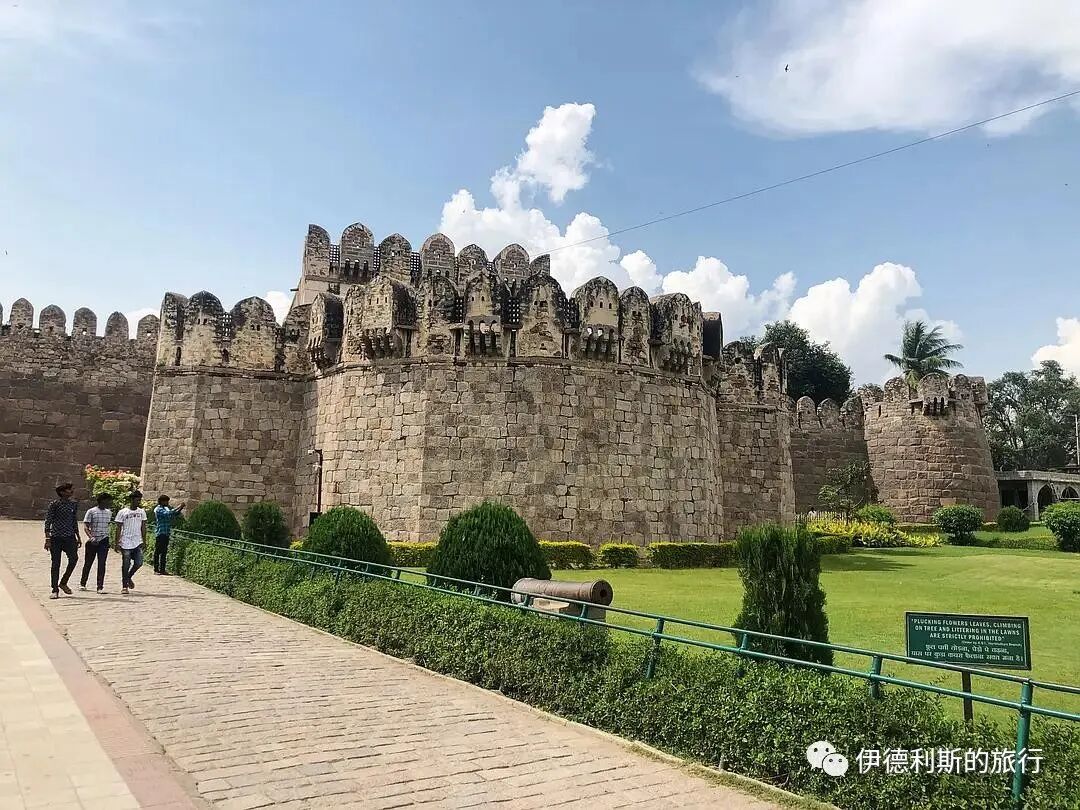
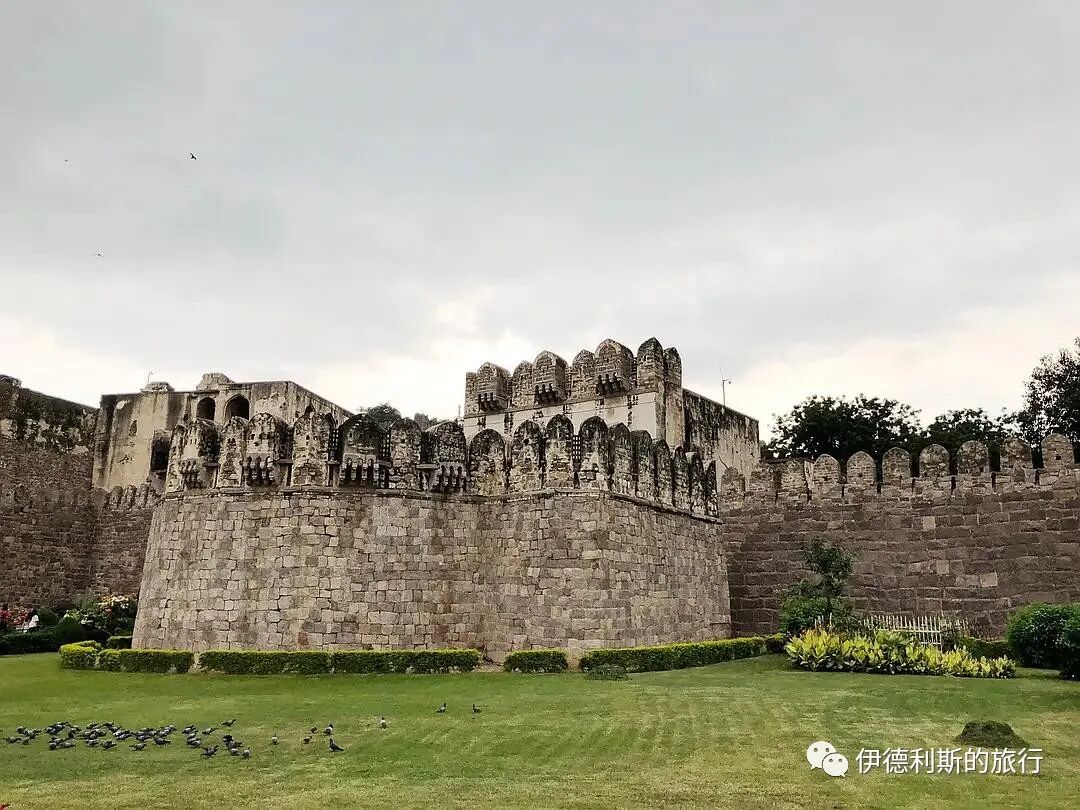
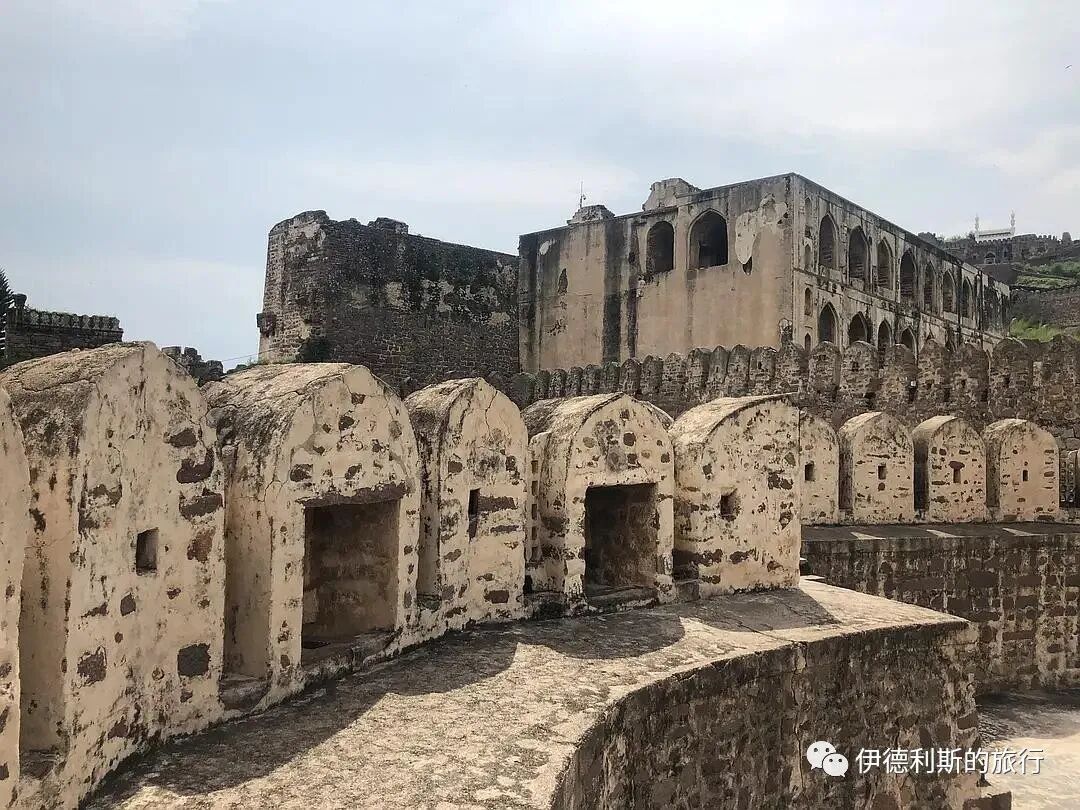
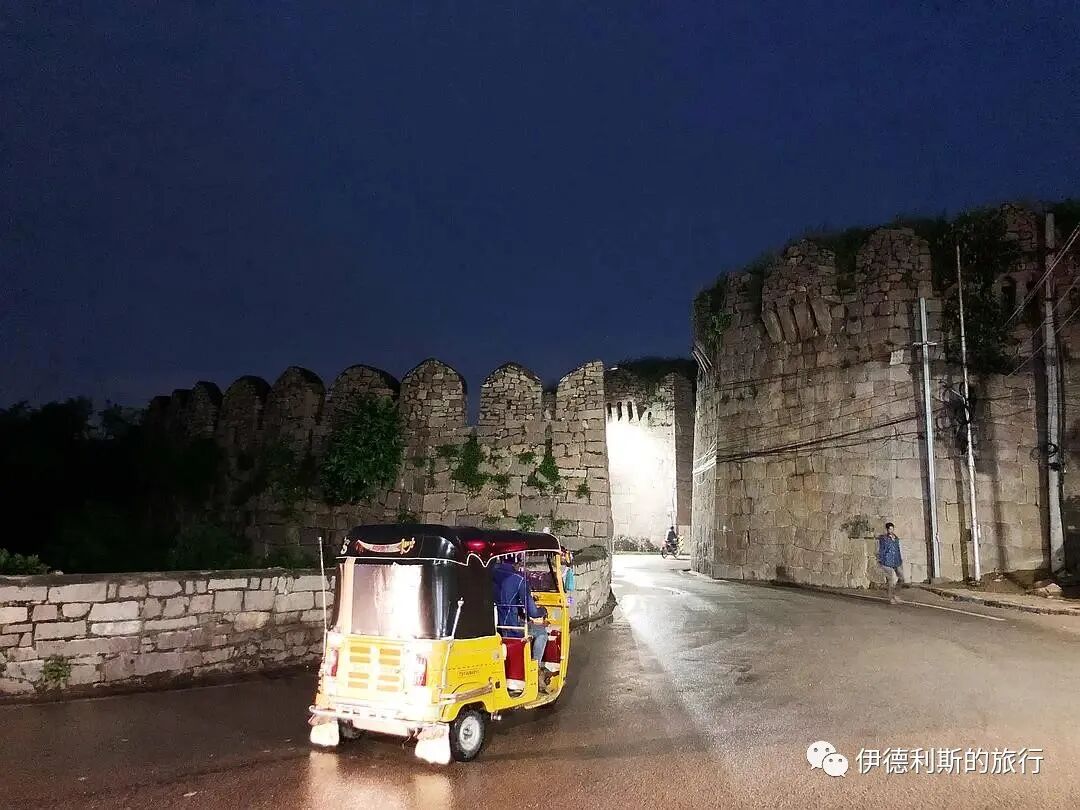
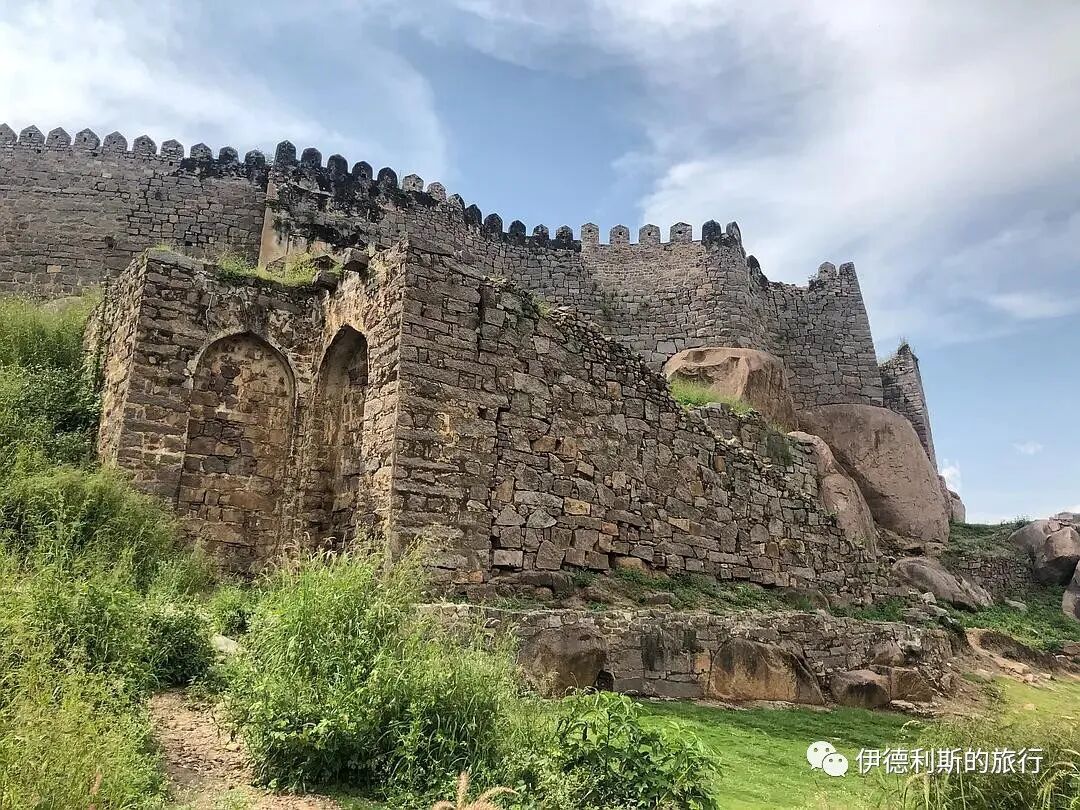
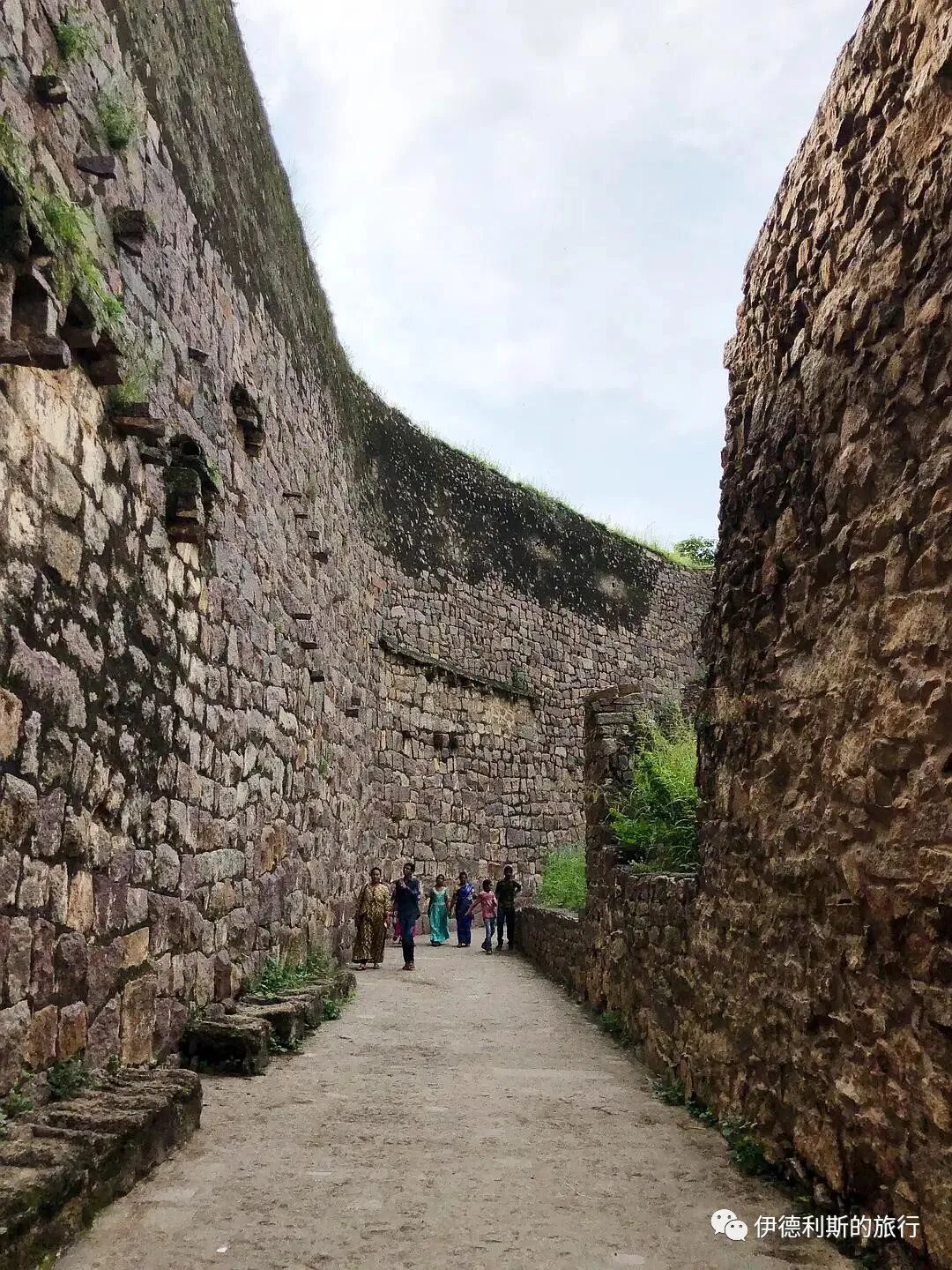
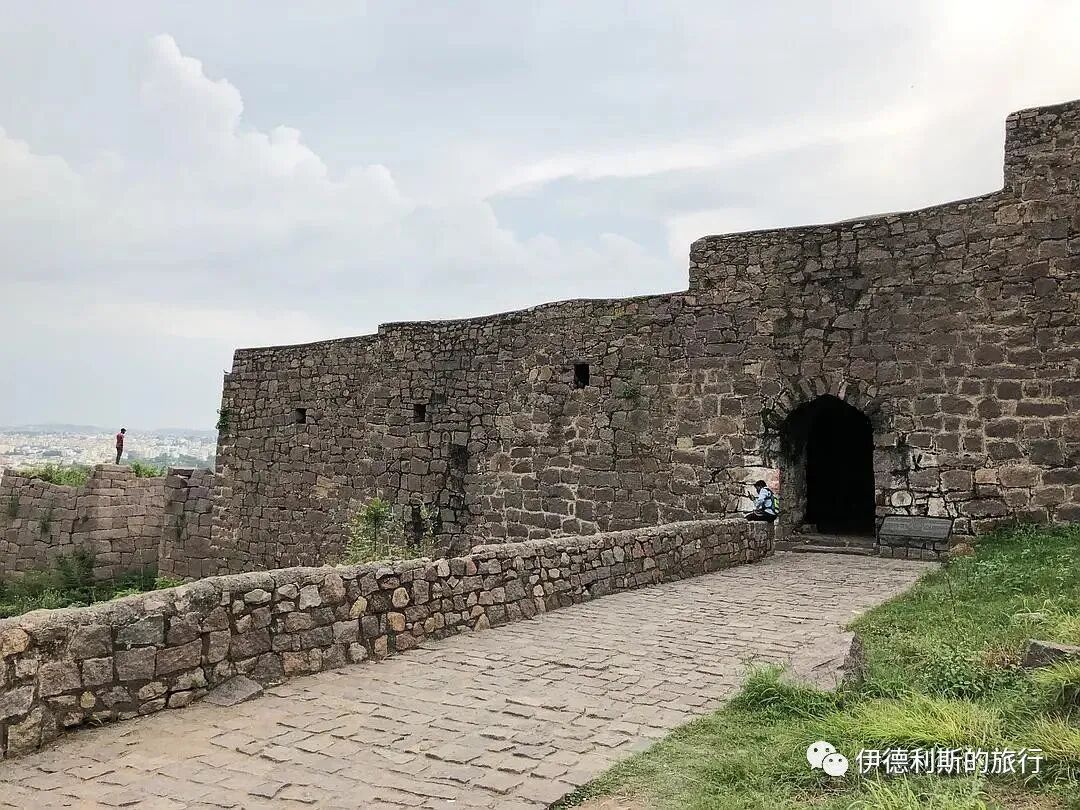
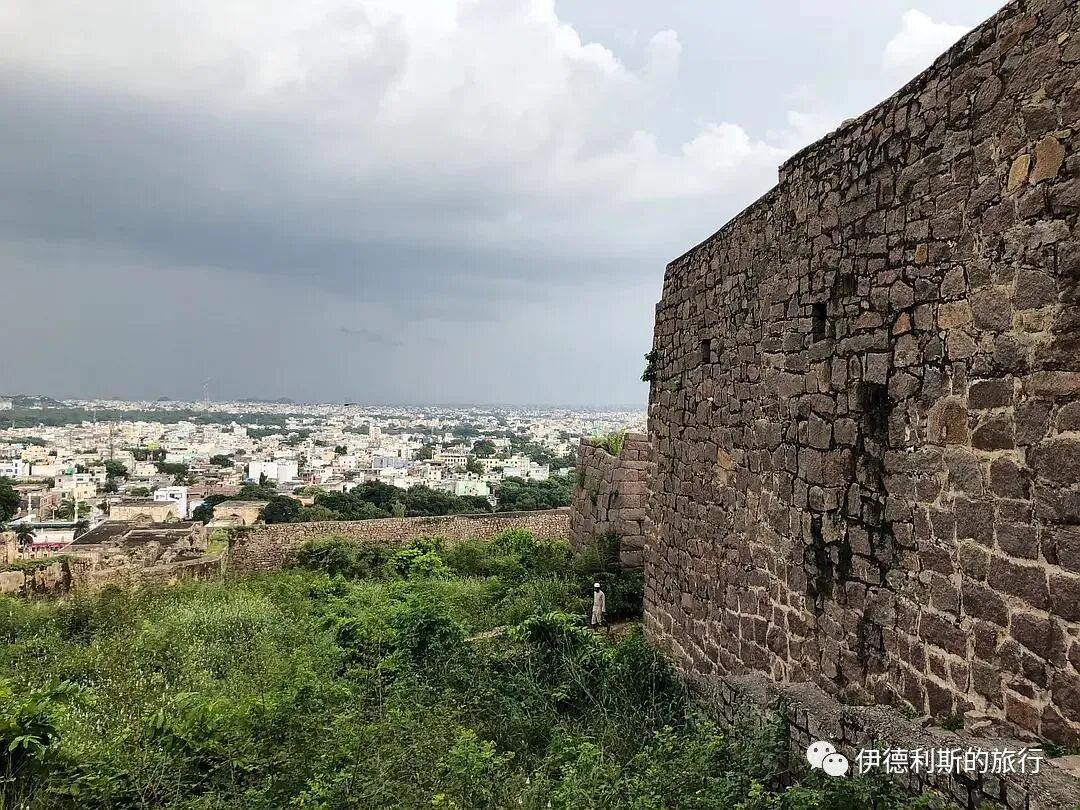
Golconda Fort is actually made up of four castles. Its outer wall is 10 kilometers long and features 87 semicircular bastions, 8 gates, and 4 drawbridges.
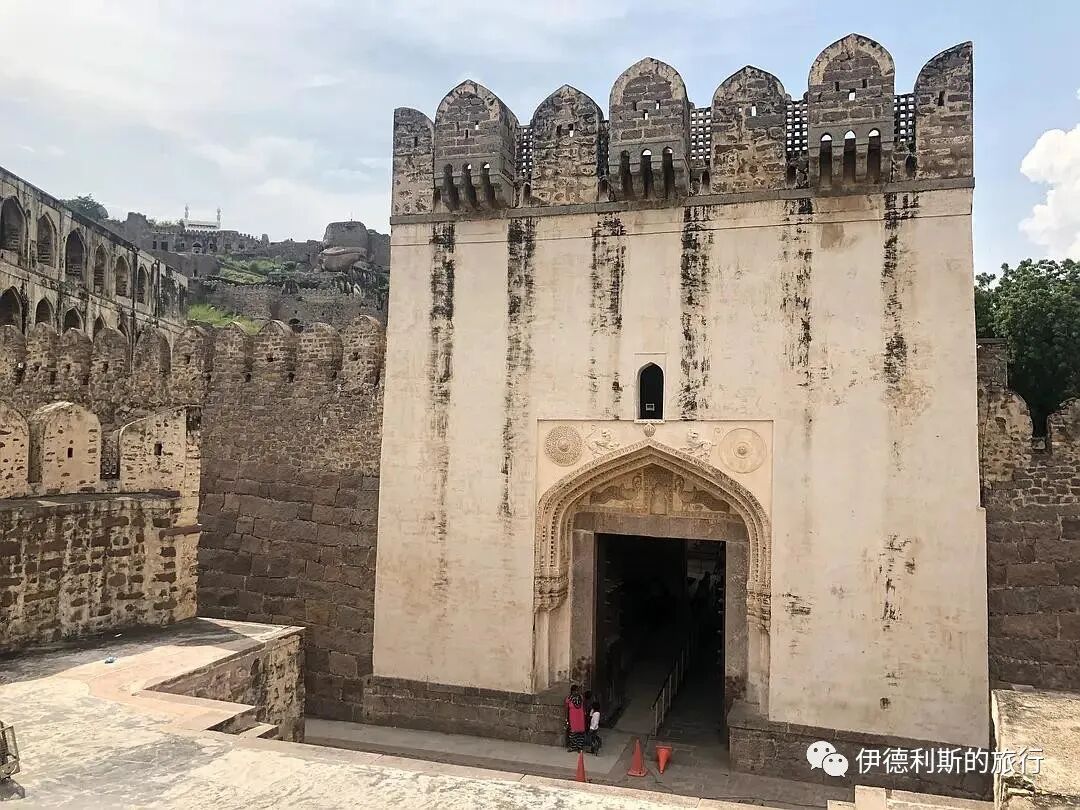
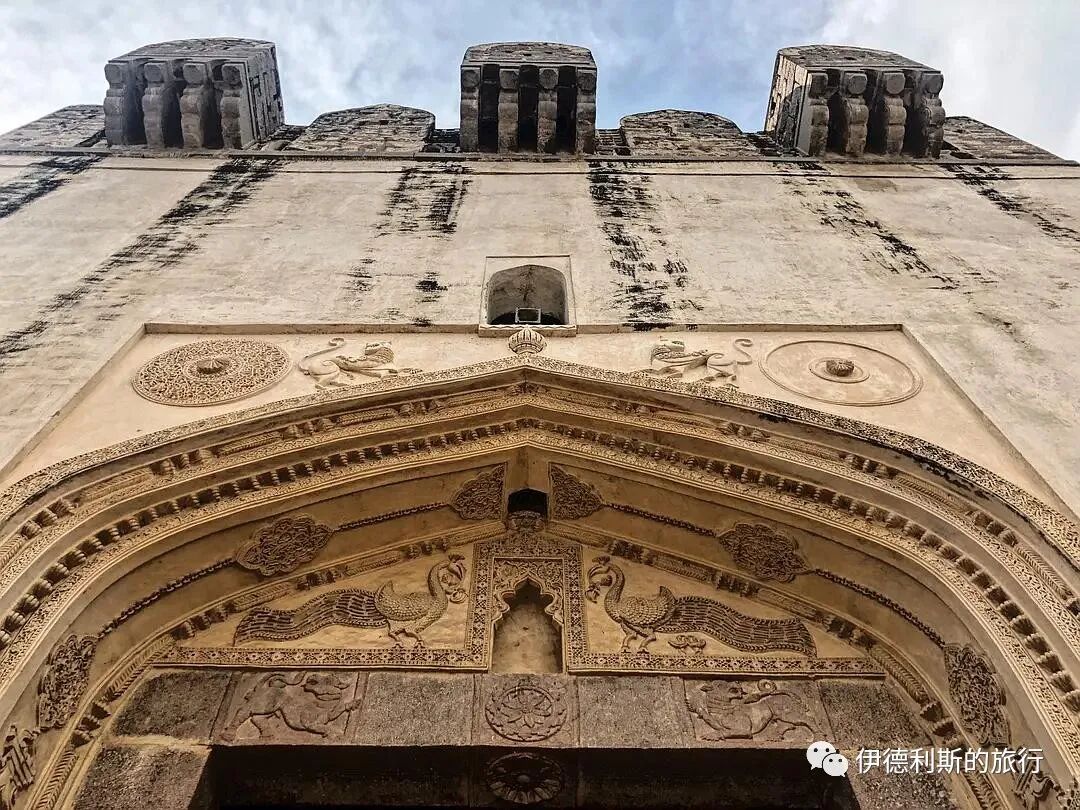
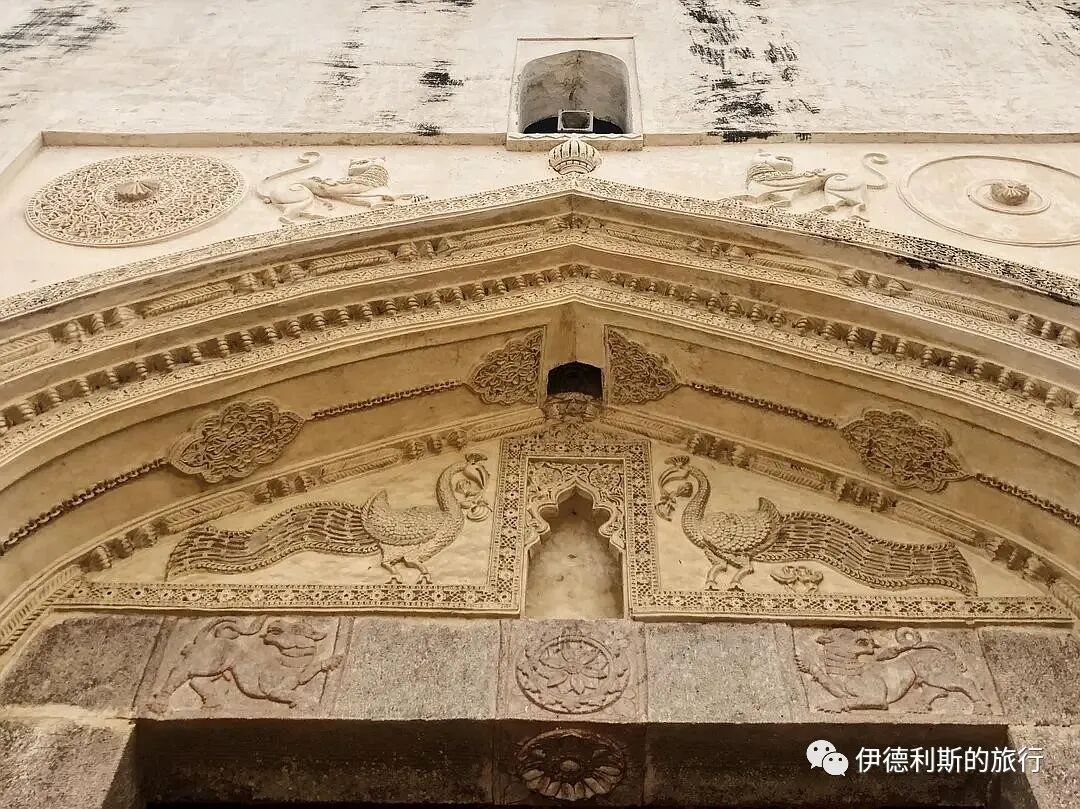
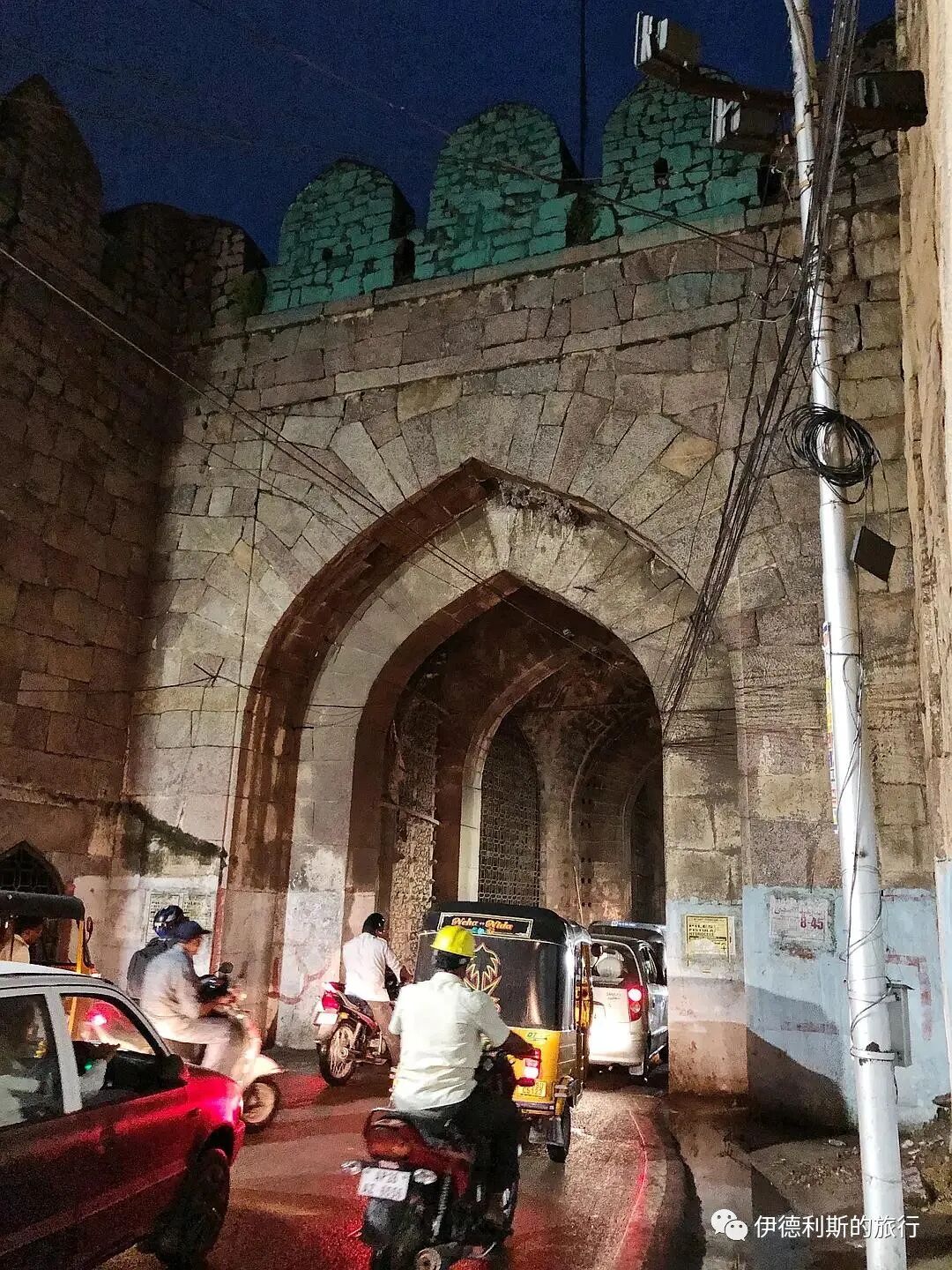
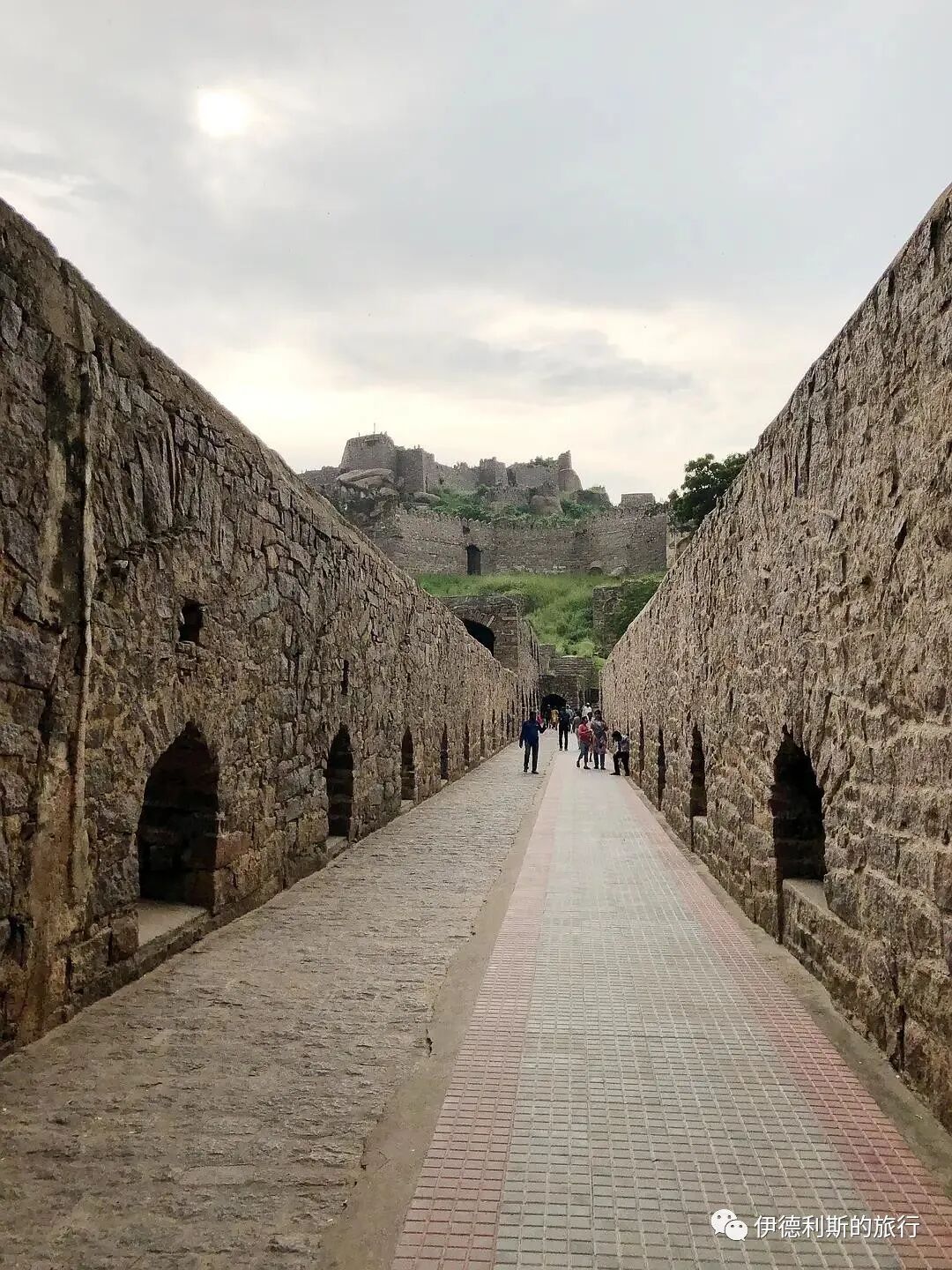
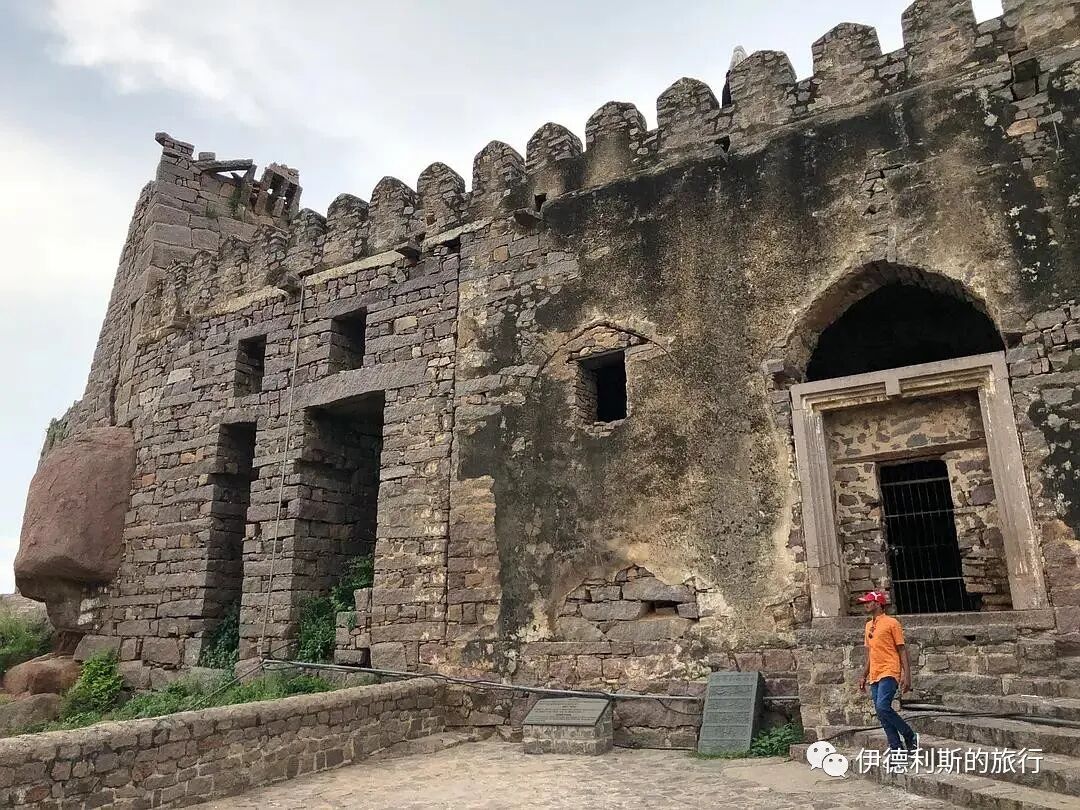
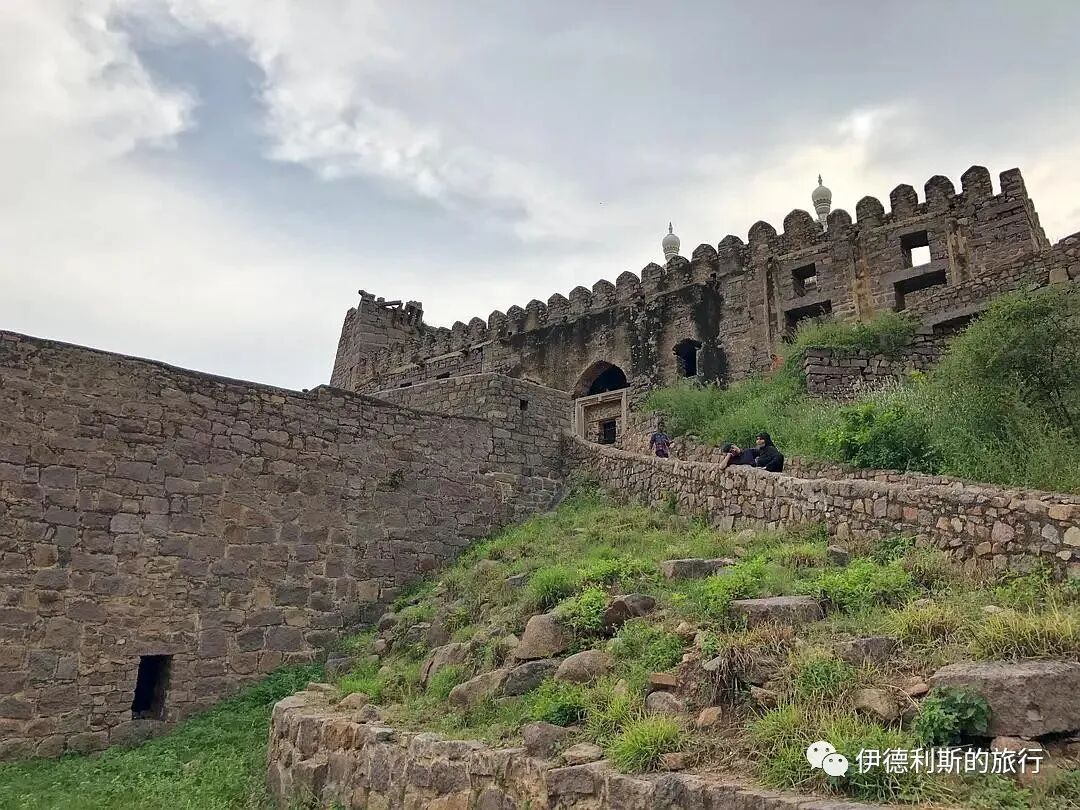
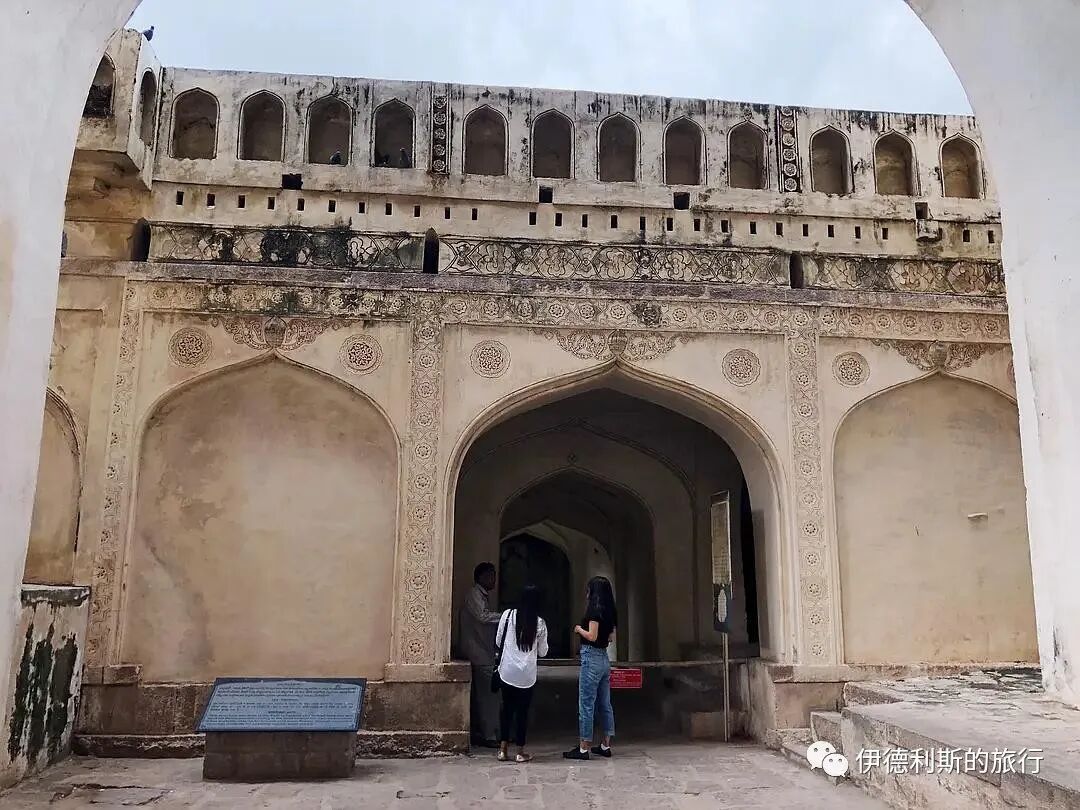
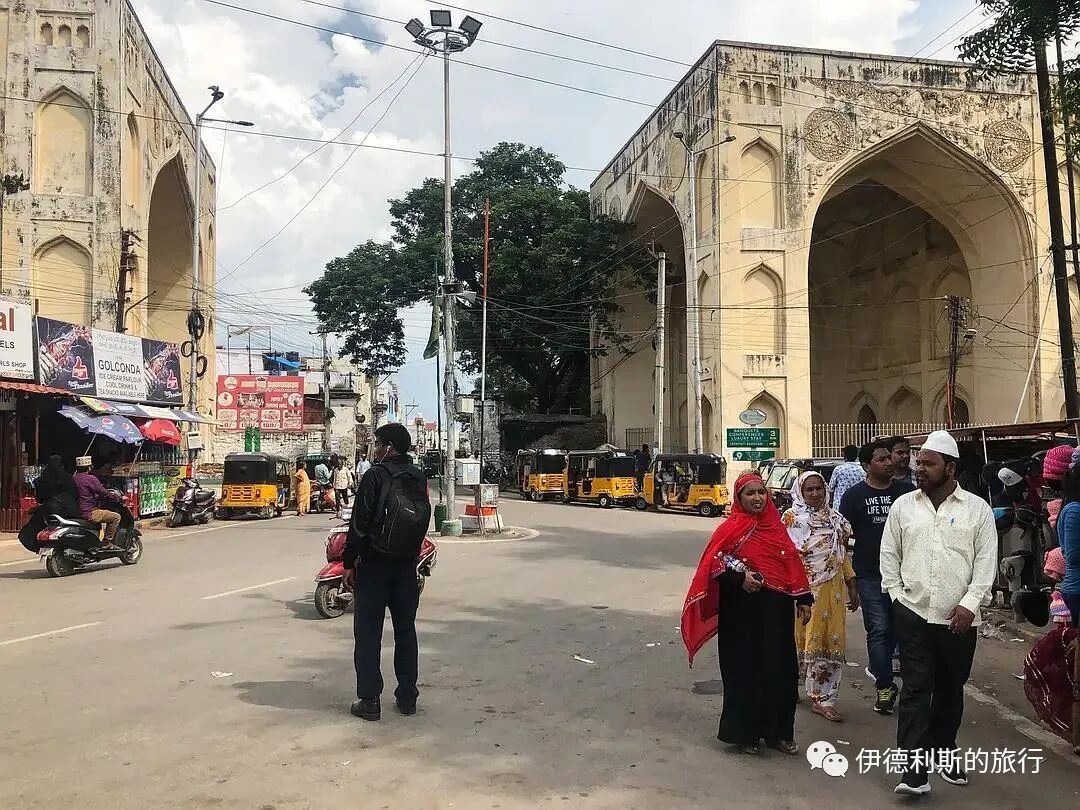
The inner city is built on a 120-meter-high granite hill. Currently, only the east gate, Bala Hissar Darwaza, is open for visitors. Bala Hissar Darwaza is a massive archway featuring carvings of lions and peacocks, which are common in Hindu architecture. The gate also has iron spikes specifically designed to stop Mughal war elephants.
Between January and September 1687, Mughal Emperor Aurangzeb led a massive army in an eight-month siege of Golconda Fort. Defending it was the last sultan of the Qutb Shahi dynasty, Abul Hasan Qutb Shah. As one of the most secure fortresses on the Deccan Plateau and in all of India at the time, this siege pushed the Mughal army to its limits.
During the siege, the Mughal army used nearly 100 cannons to bombard the walls. This included two powerful cannons favored by Aurangzeb, Rahban and Fateh Rahber, as well as a special bronze cannon called Azhdaha-Paikar that could fire 35-kilogram cannonballs. At the same time, the defenders of Golconda Fort set up many cannons on the bastions to fire back, even killing the experienced Mughal commander Kilich Khan Khwaja Abid Siddiqi.
At night, the Mughal army would assemble complex scaffolding to climb the walls, and soldiers would throw huqqa grenades into the city once they climbed up. Although most of the attacks were ineffective, the morale of the defenders kept dropping.
Even though the last sultan did his best to defend the city, his generals could no longer endure the situation. Eventually, Sarandaz Khan opened the back gate of Golconda Fort. The Mughal army immediately charged into the castle, and the Qutb Shahi dynasty fell. Aurangzeb took all the diamonds from the castle, instantly becoming the wealthiest monarch in the world.
Akkanna Madanna Offices
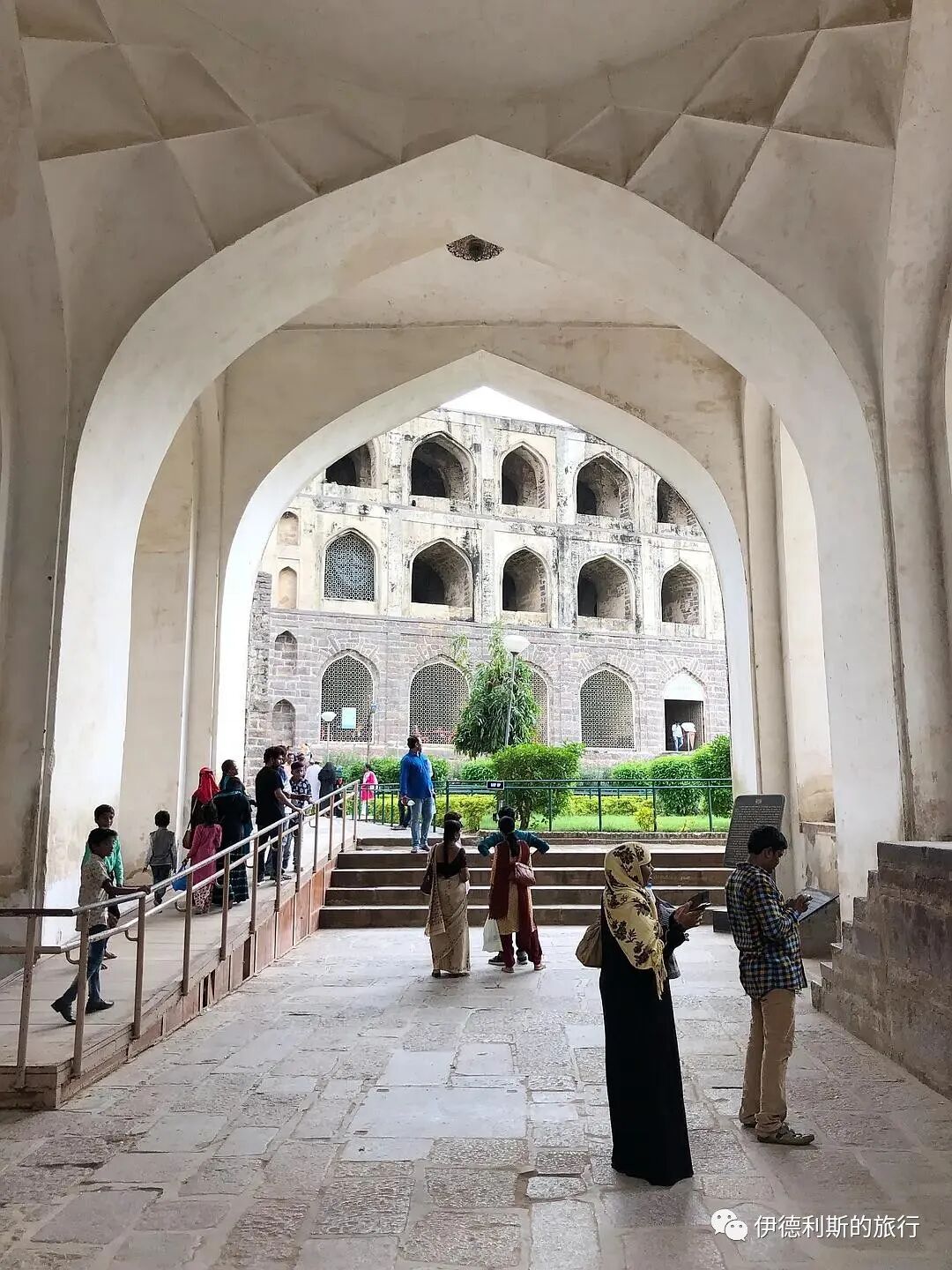
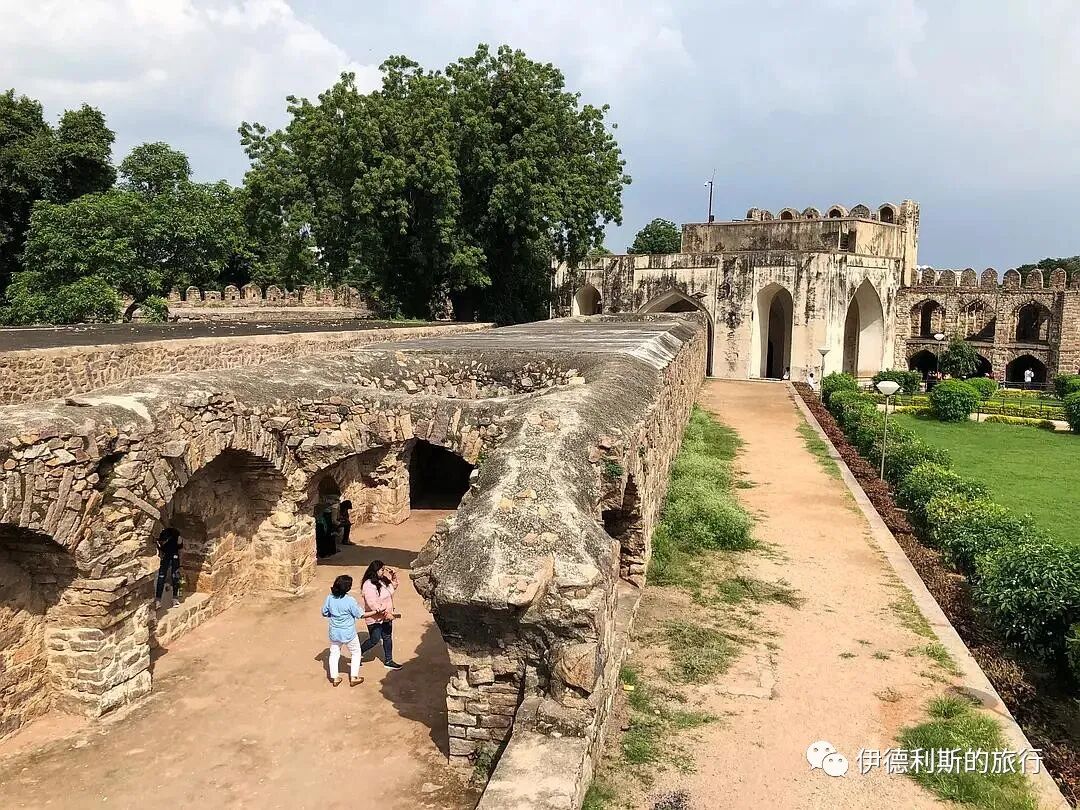
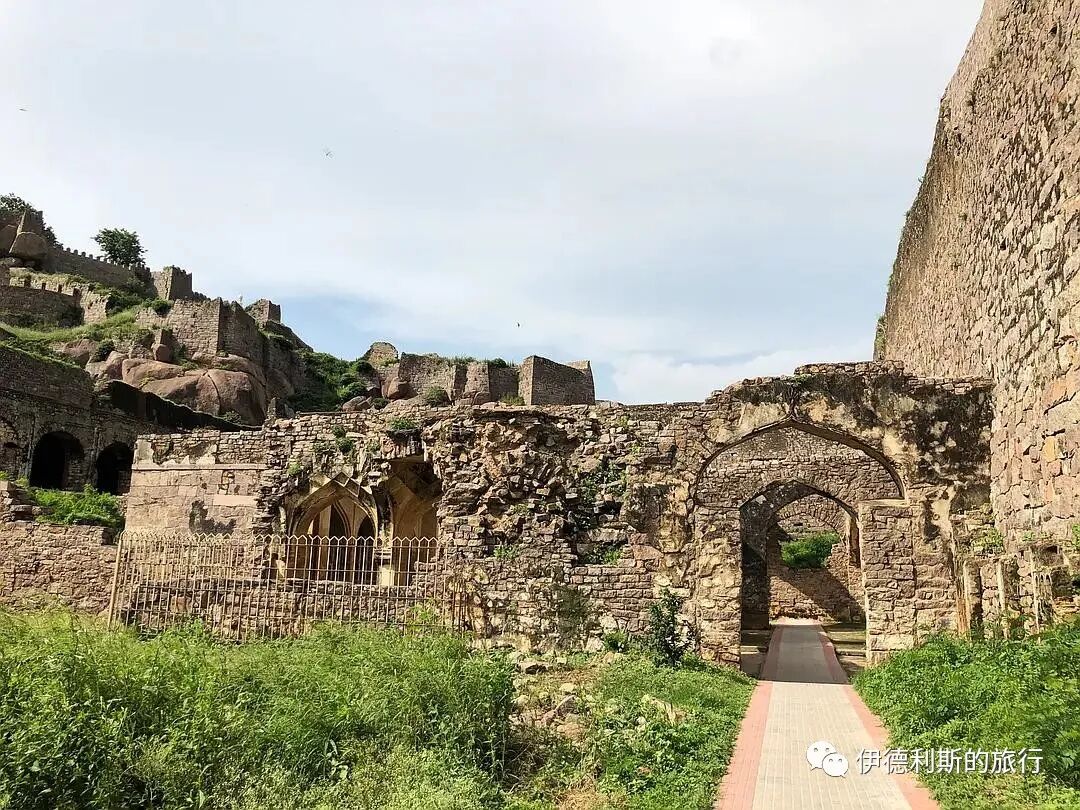
After entering the fort from the main gate, the ruins directly in front are called the Akkanna Madanna Offices. The brothers Akkanna and Madanna held great prestige in the Qutb Shahi dynasty between 1674 and 1685. Madanna started as a simple clerk, but later used his talent and various methods to rise through the ranks, eventually gaining control over the treasury and nearly ruling the entire dynasty by 1685. As Madanna rose to power, he promoted his brother Akkanna to the rank of general.
Madanna is most famous for blocking the invasion of the Mughal Empire and carrying out tax reforms. He cut out middlemen to collect taxes directly from farmers, merchants, and craftsmen as much as possible, using the funds to appease the Mughal Emperor Aurangzeb. One night in 1685, the two brothers were beheaded by a mob at their residence in Golconda Fort, and just two years later, the Qutb Shahi dynasty was destroyed by the Mughal Empire.
As early as the 18th century, locals called the brothers' rule a golden age, and residents of Hyderabad and the surrounding areas still remember them fondly today. The brothers' office inside Golconda Fort has become the best memorial site for them. This area was also where various officials of the Qutb Shahi dynasty worked.
Aslah Khana
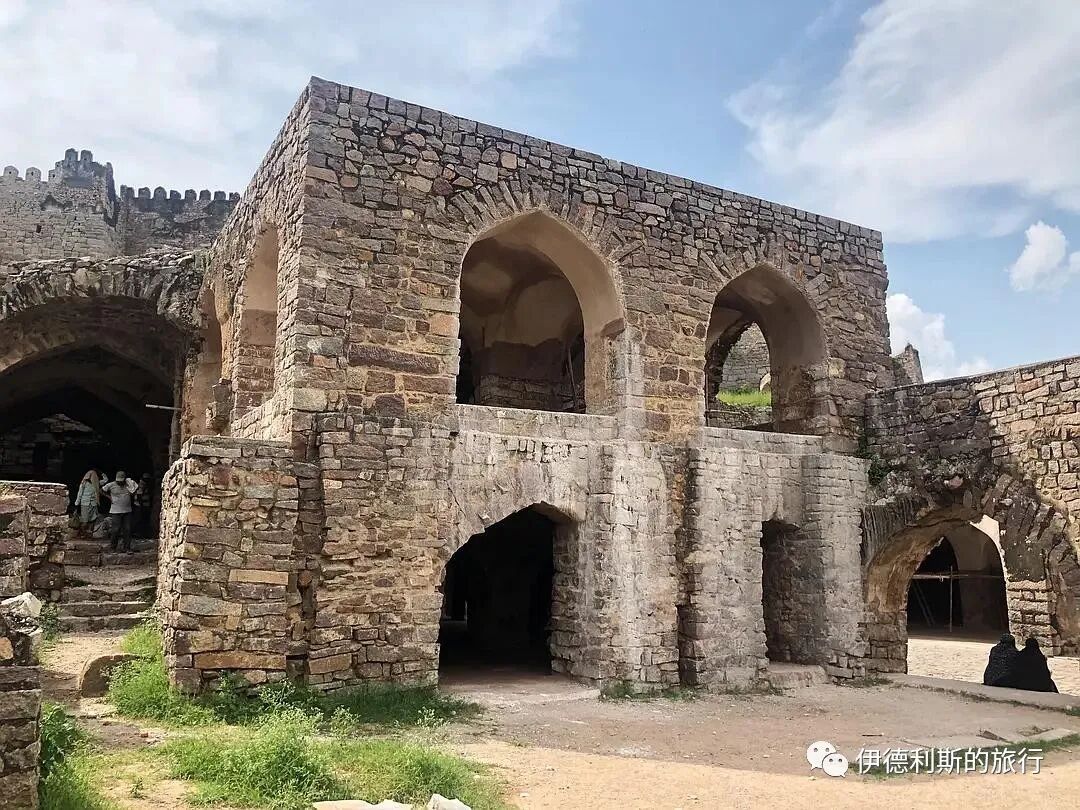
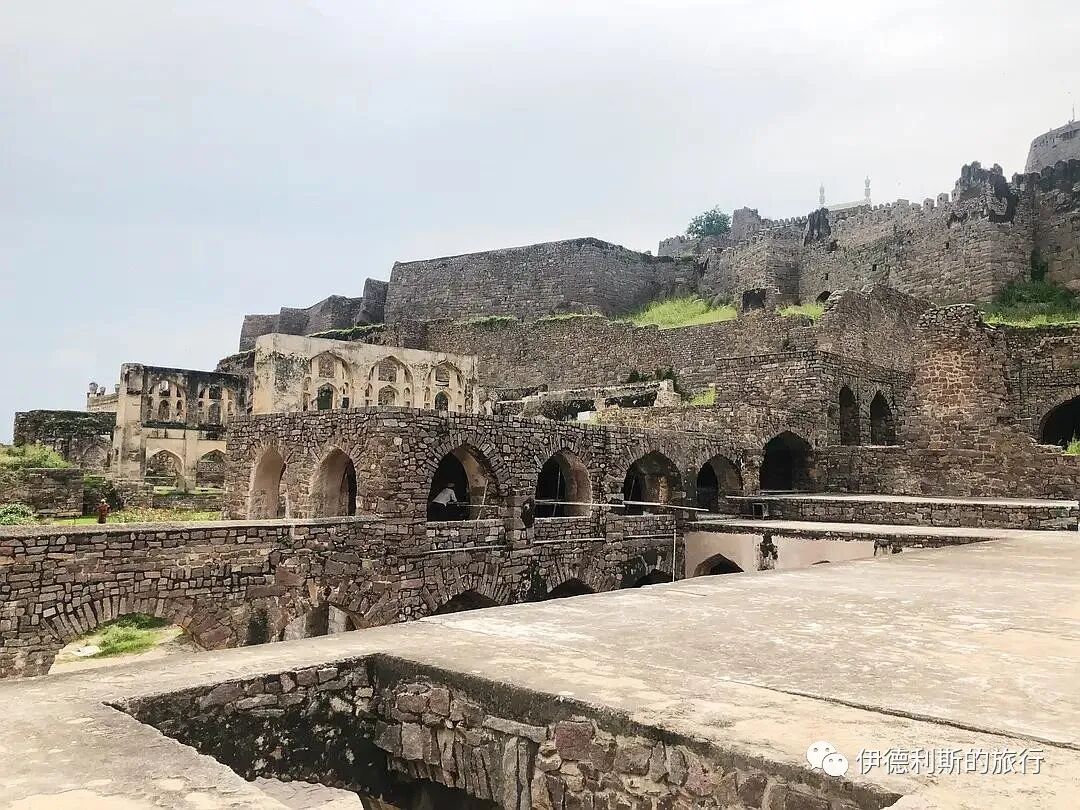
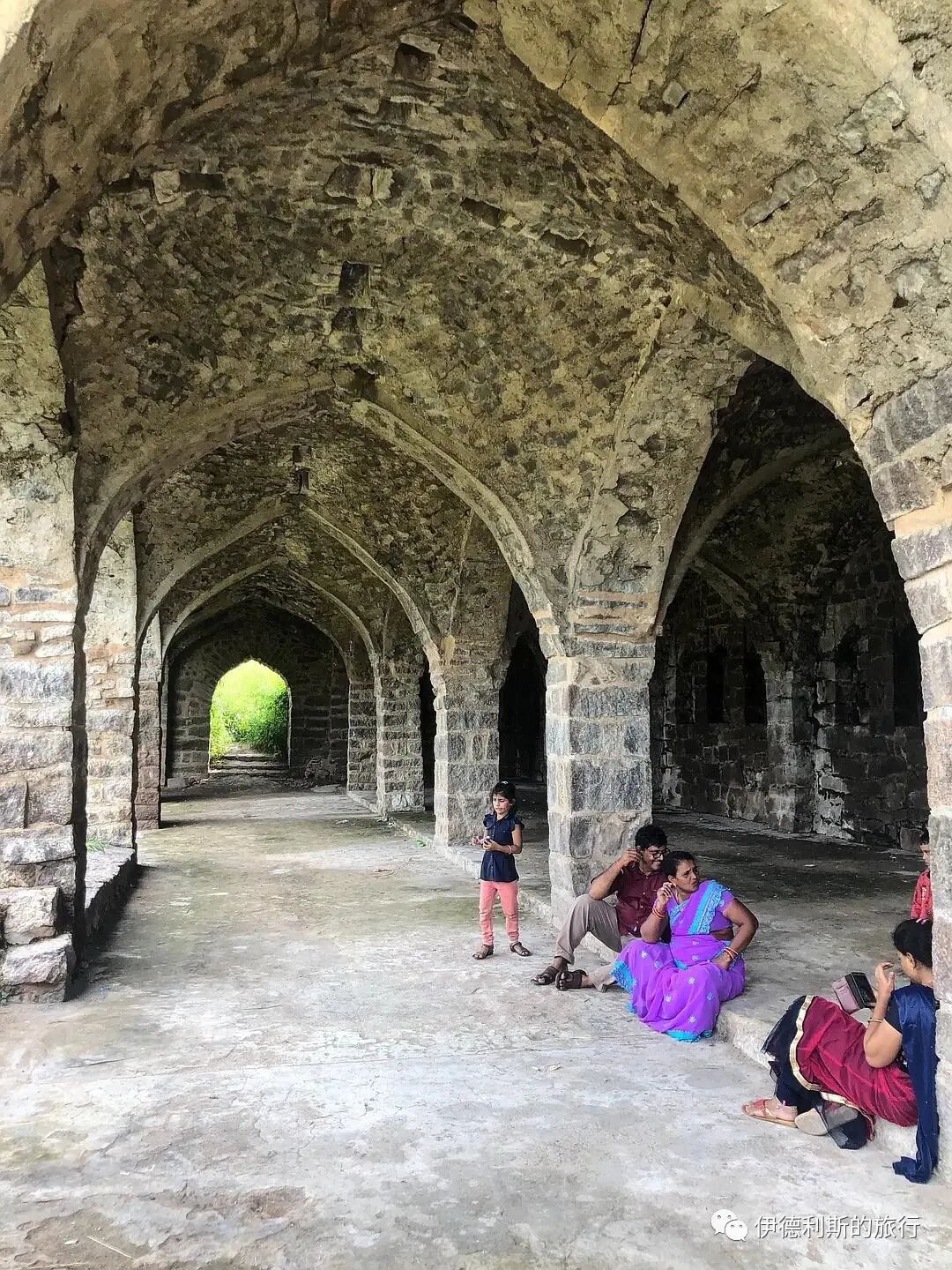
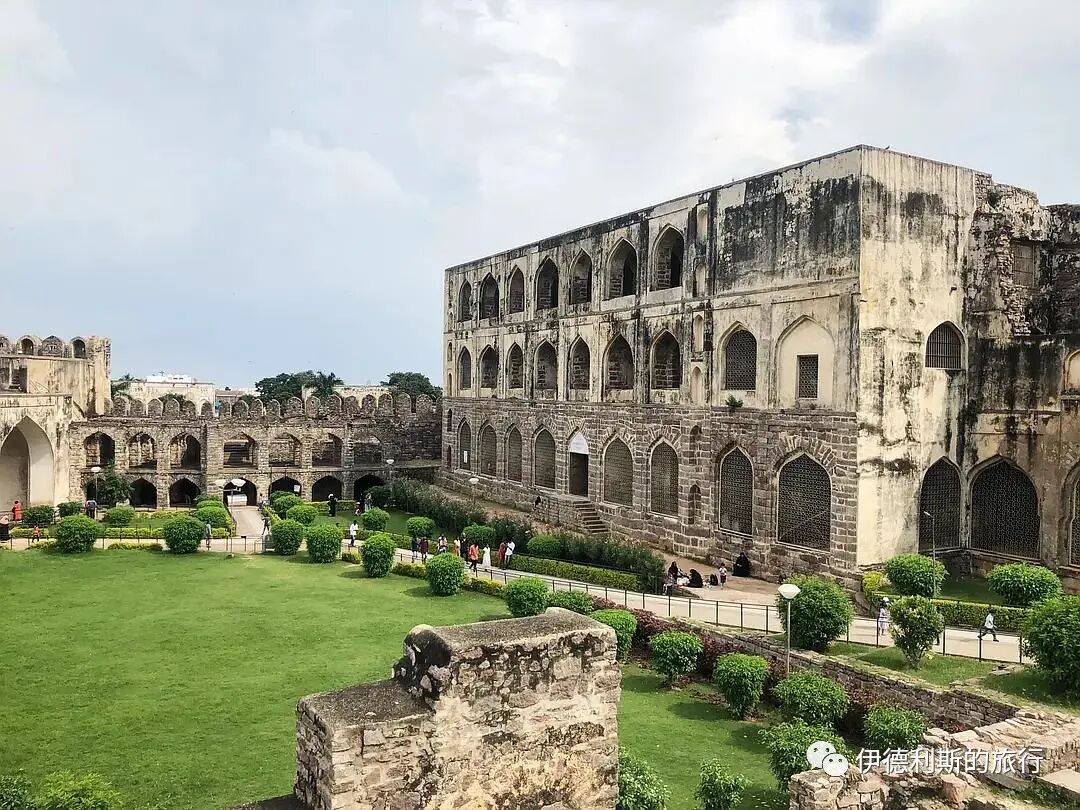
The tall, three-story building on the south side of the main gate is called the Aslah Khana armory, which was used to store guns and ammunition during the Mughal era. However, historians have verified that during the Qutb Shahi dynasty, this was actually a place for various officials to work.
Nakkar Khana
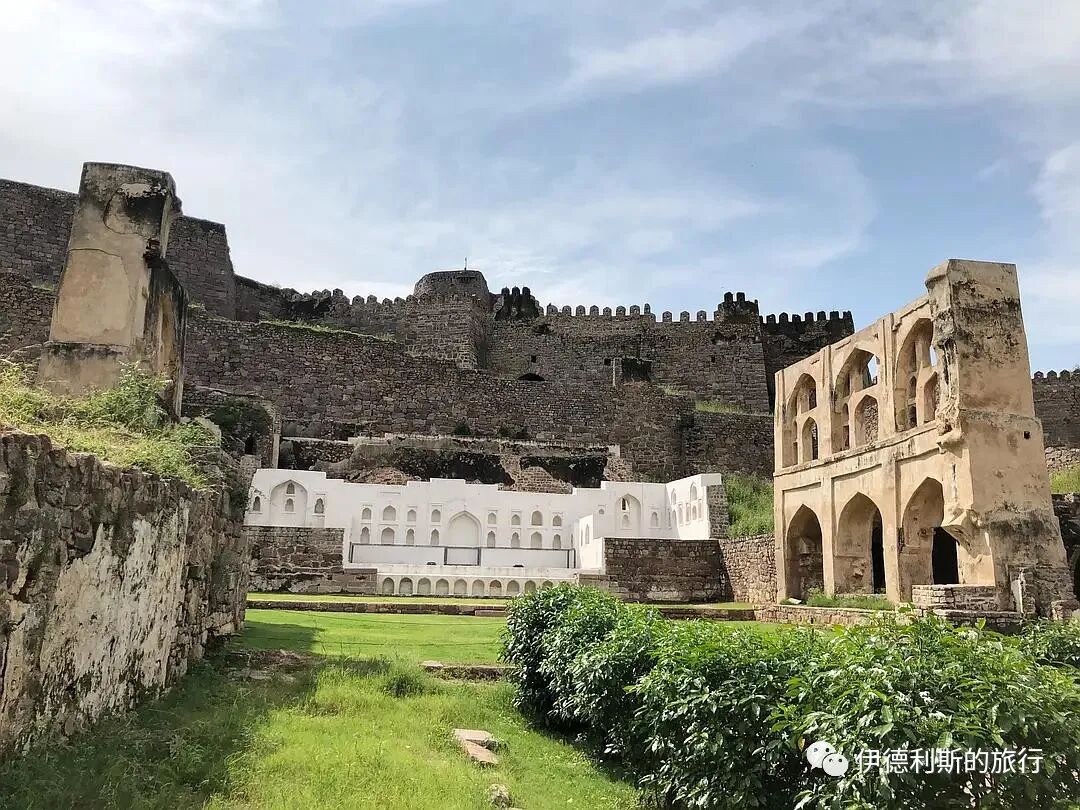
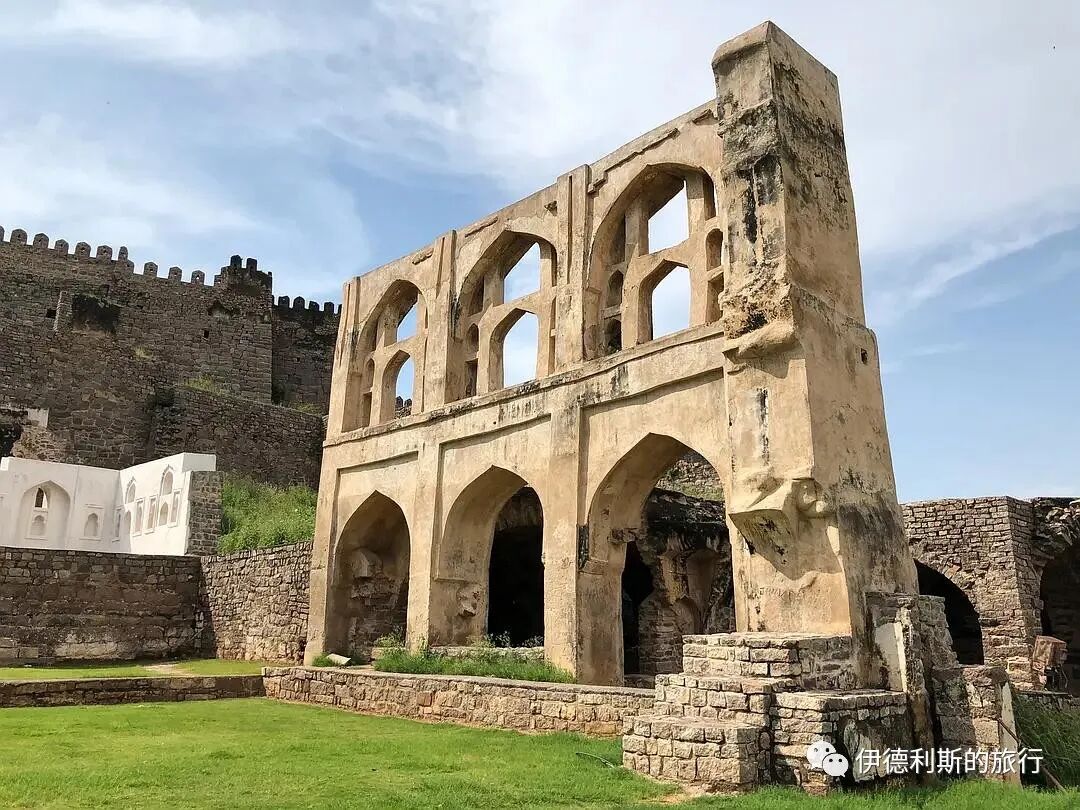
Nakkar Khana is a palace complex where archaeologists have now excavated a series of water channels.
Taramati Mosque
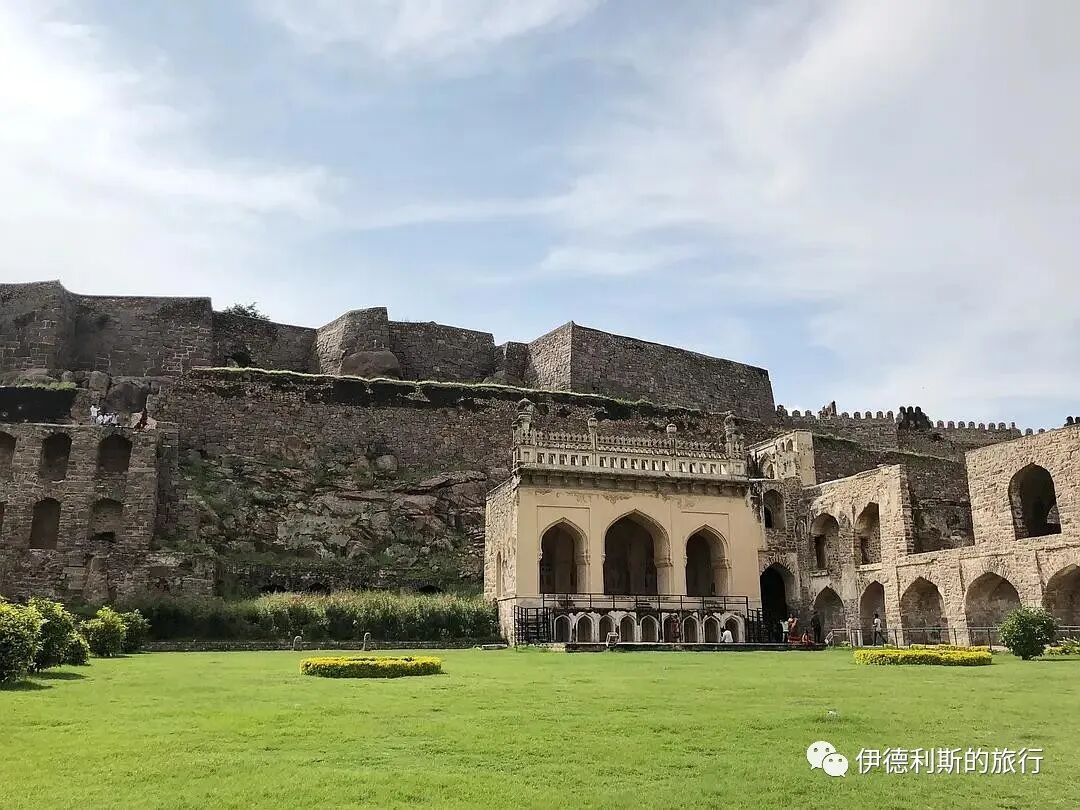
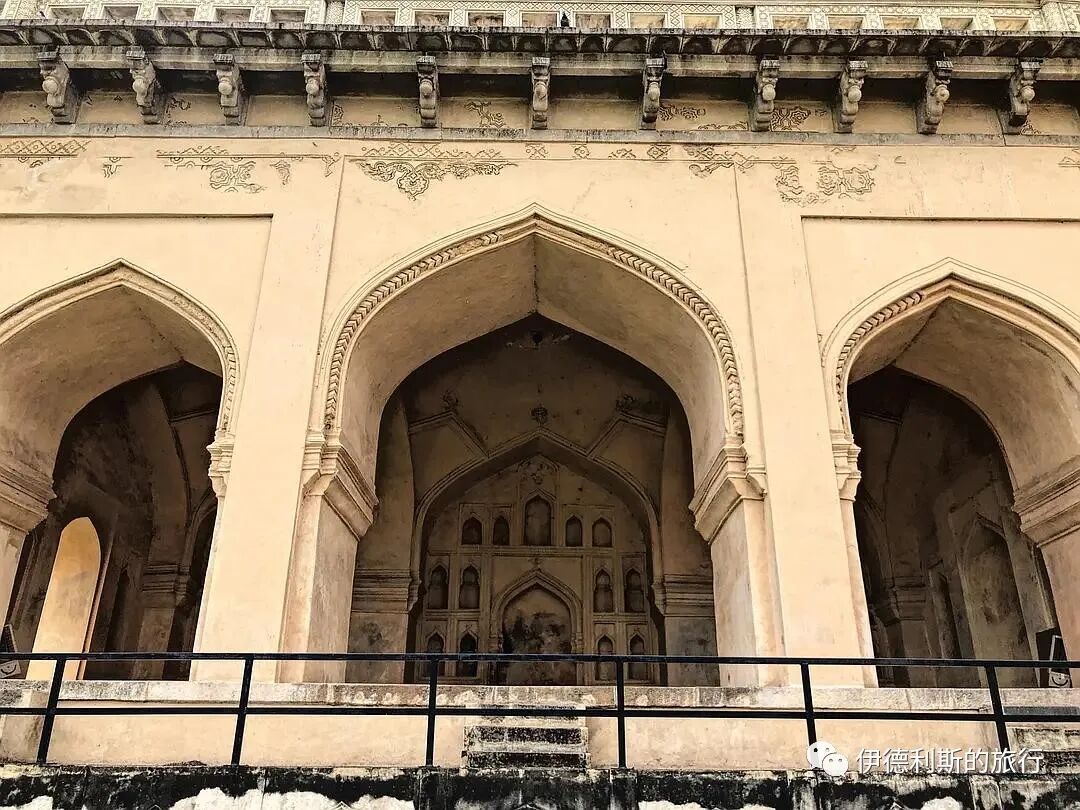
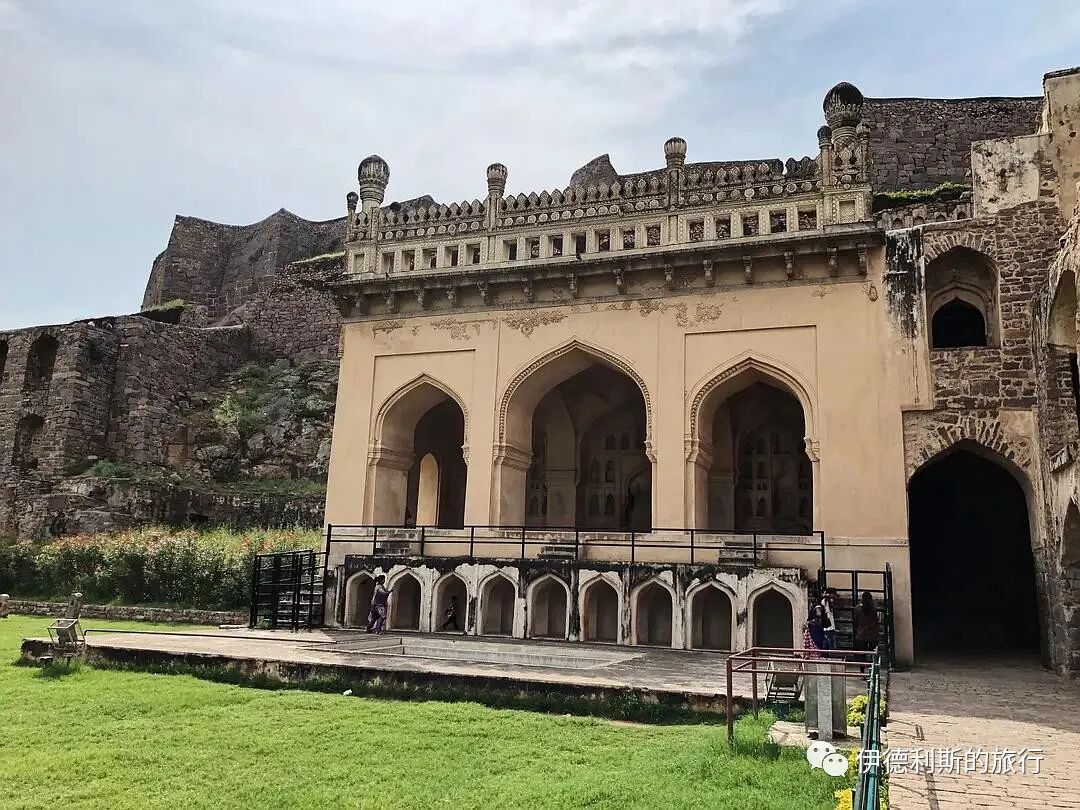
Located next to the palace area, Taramati Mosque was built in 1518 for the Sultan's court and nobles. This mosque features the typical Muslim architectural style of the Deccan region, with small lotus-topped onion domes on the balcony.
Bhagamati Palace
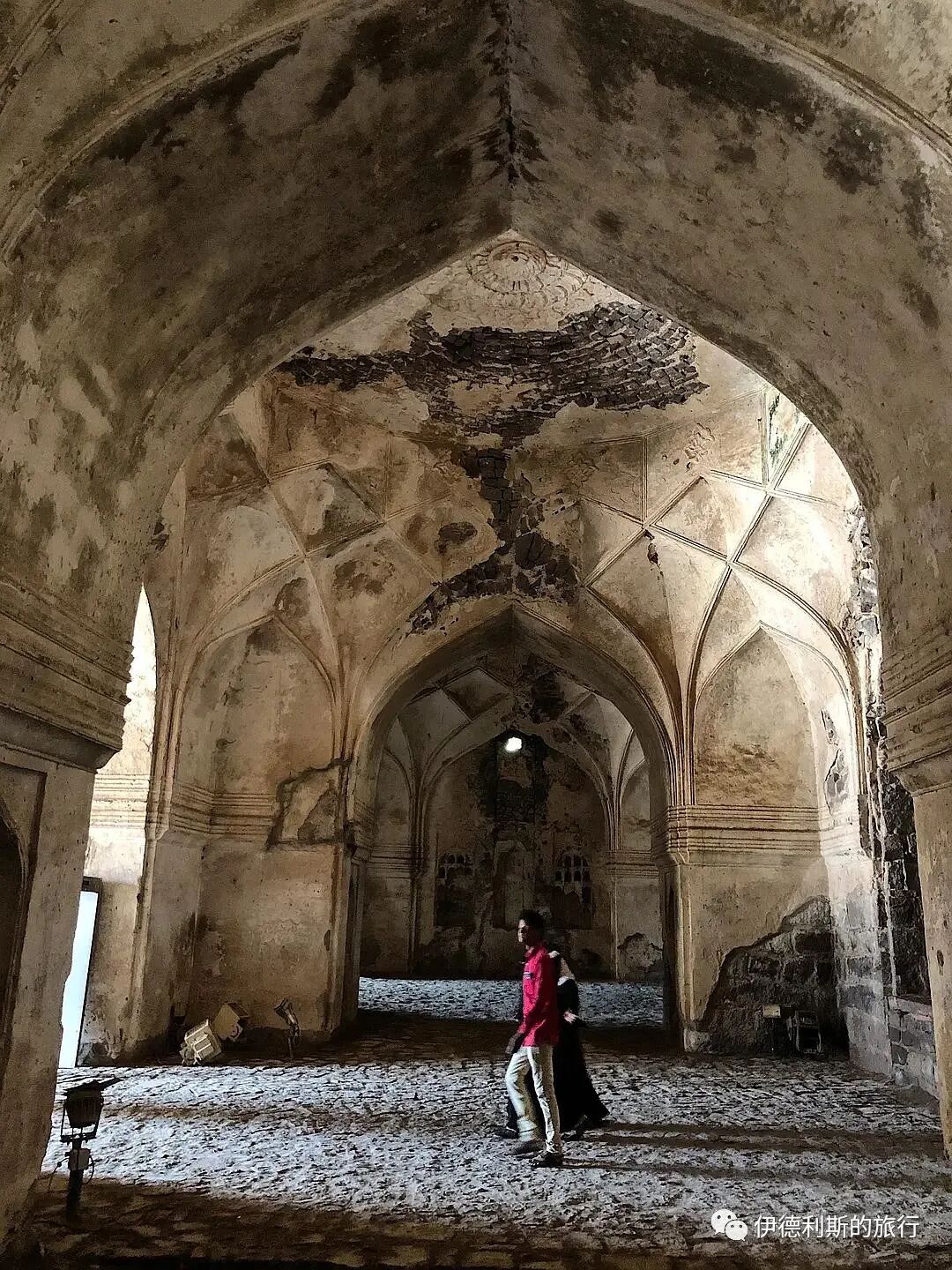
Further inside is the Bhagamati Palace. According to legend, Bhagamati was the wife of the fifth Sultan of the Qutb Shahi dynasty, Muhammad Quli Qutb Shah (reigned 1580–1611). Legend says she was originally a Hindu dancer (nautch) whom the Sultan saw while riding his horse and immediately fell in love with, and they eventually married. Later, Bhagamati converted to Islam and took the title Hyder Mahal, and the Sultan even named the city of Hyderabad after her.
Bhagmati has no surviving tomb, and no documents or coins from her time mention her name. Records about her only appeared long after she died, so the truth of this story remains unproven.
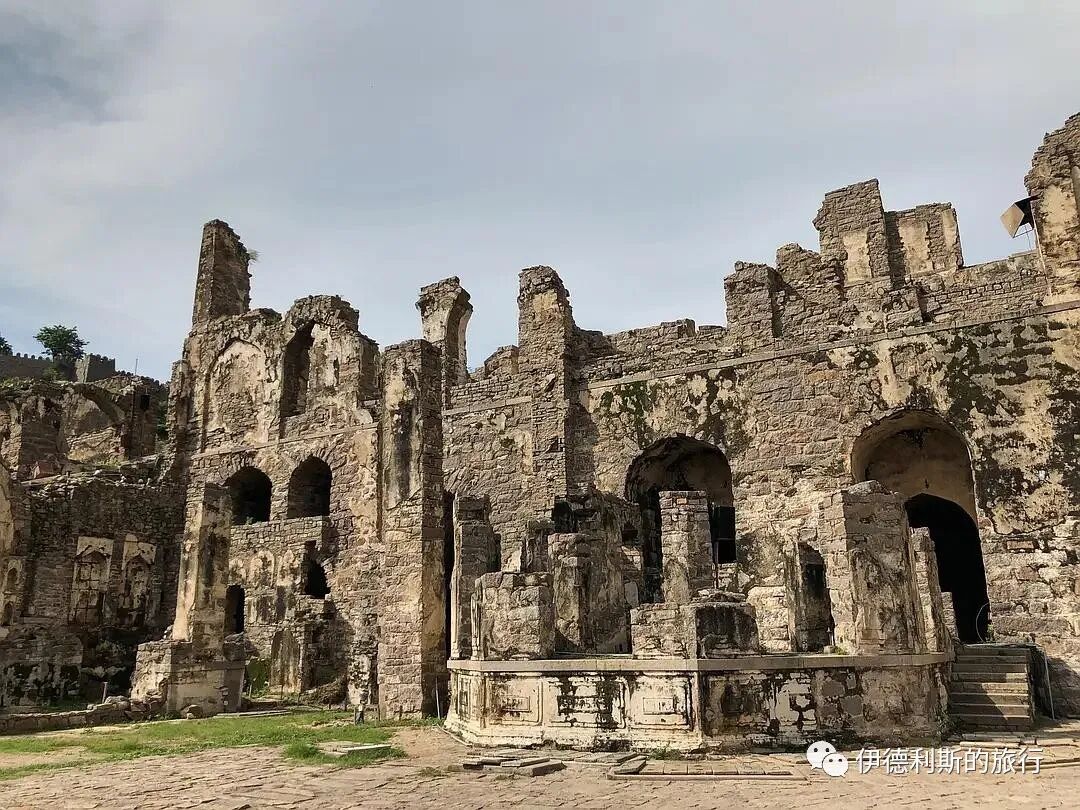
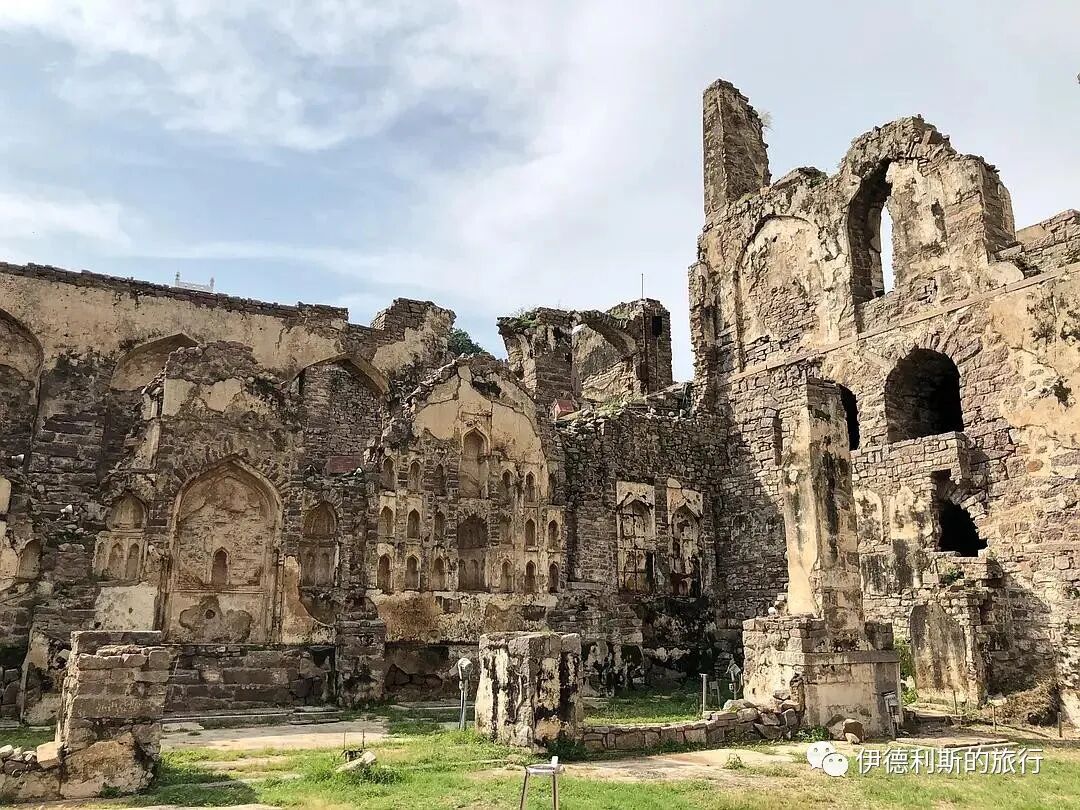
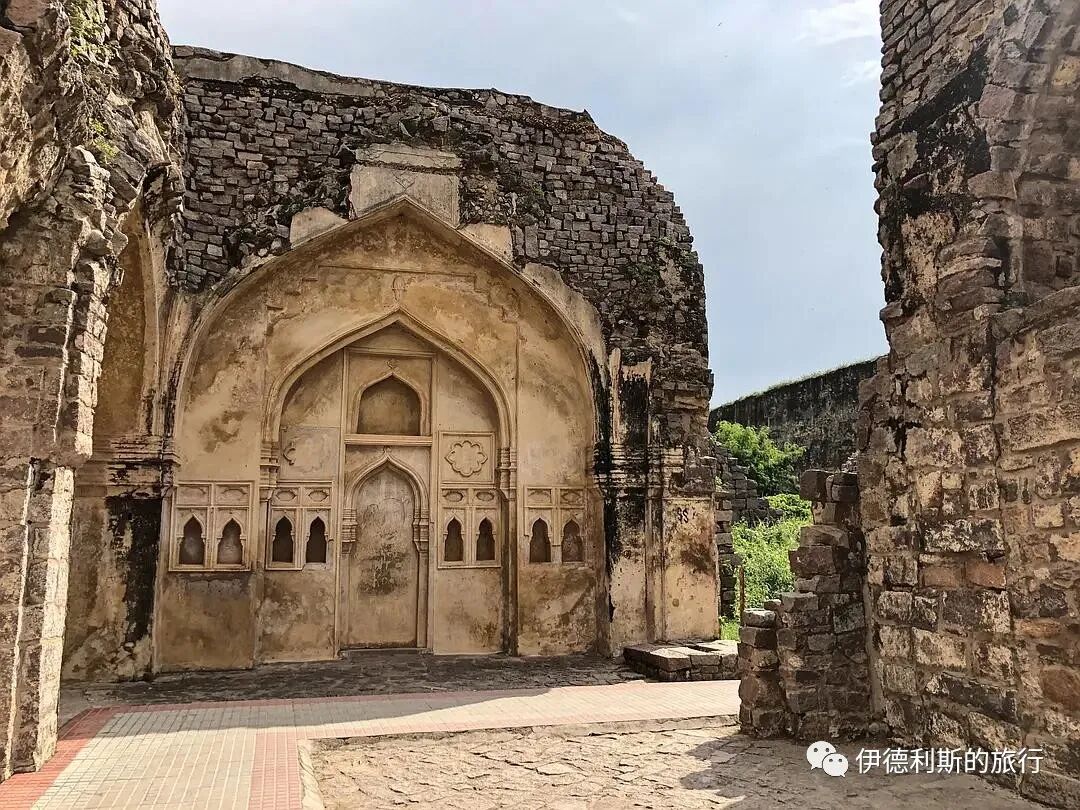
Queen's Palace (Rani Mahal)
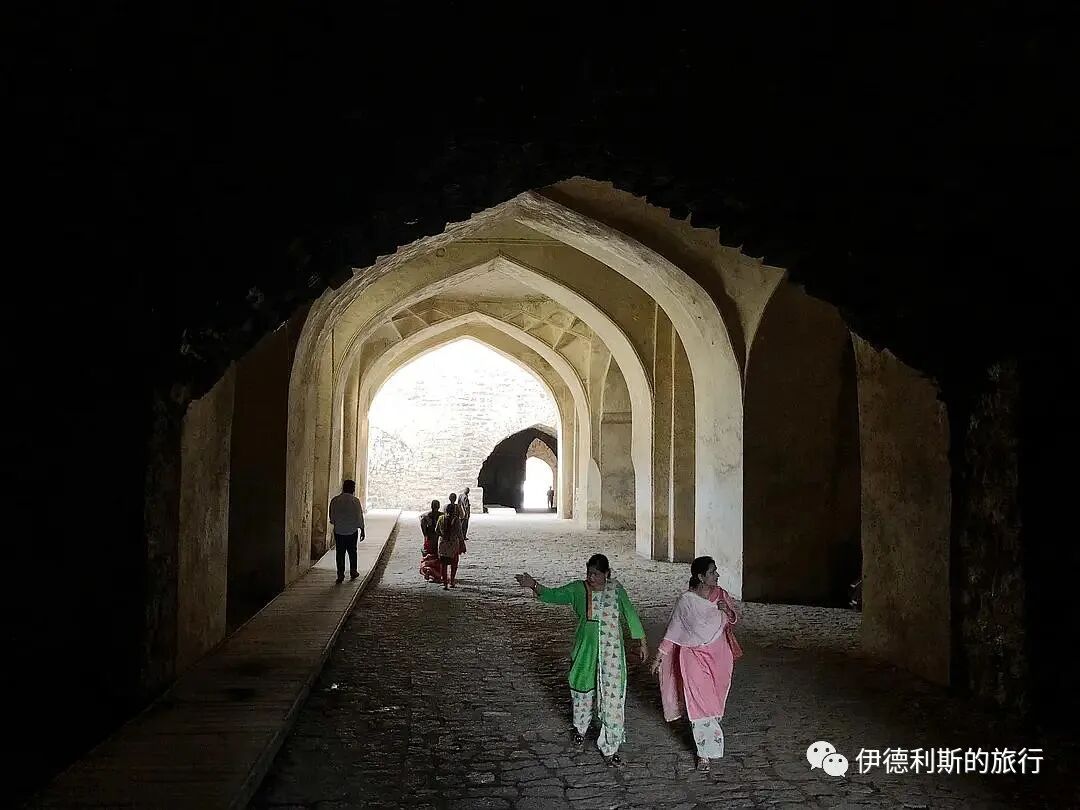
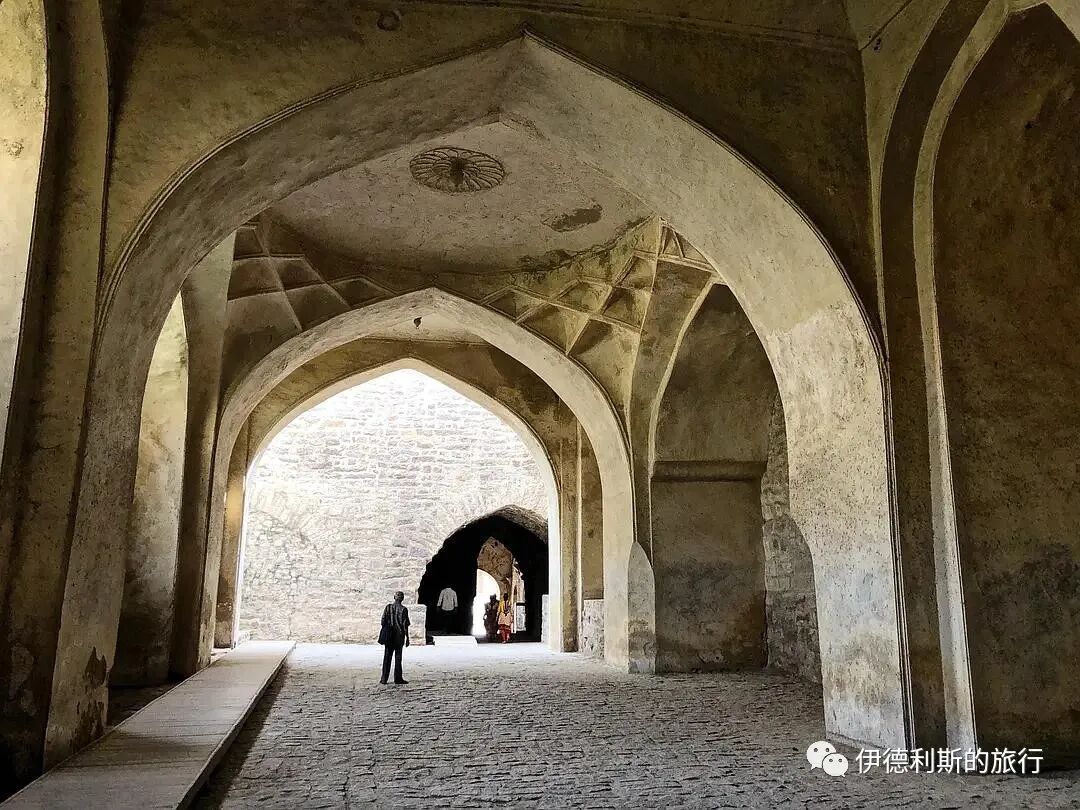
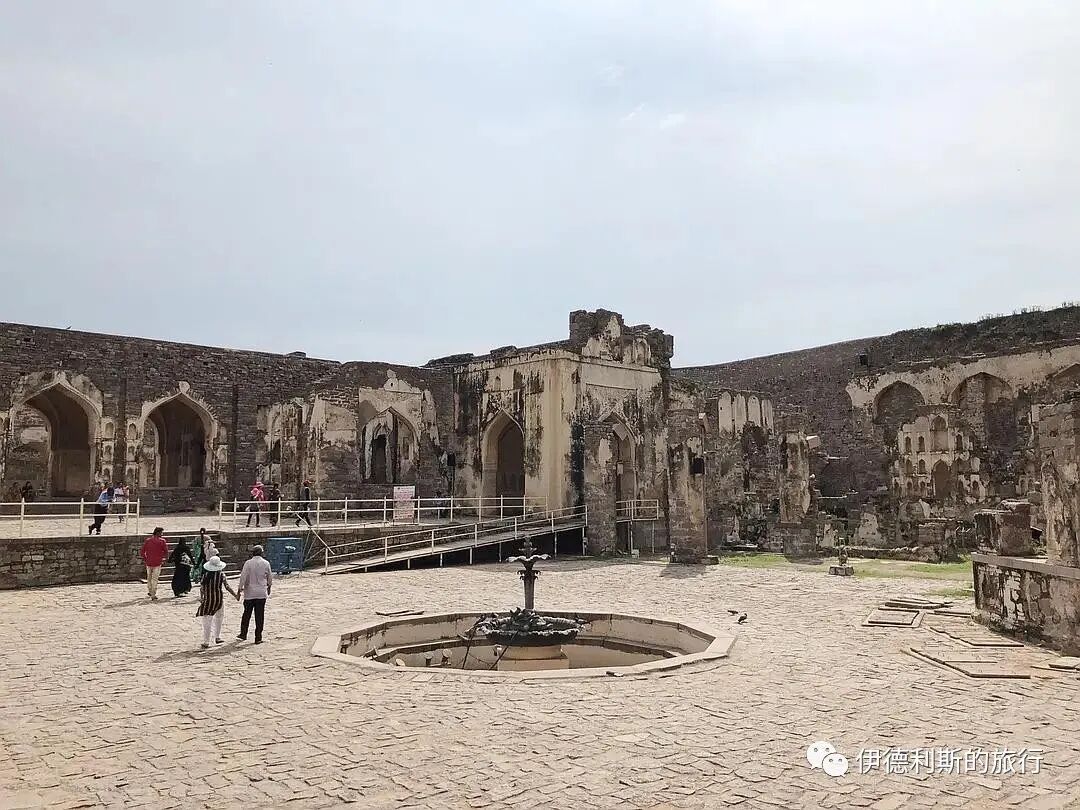
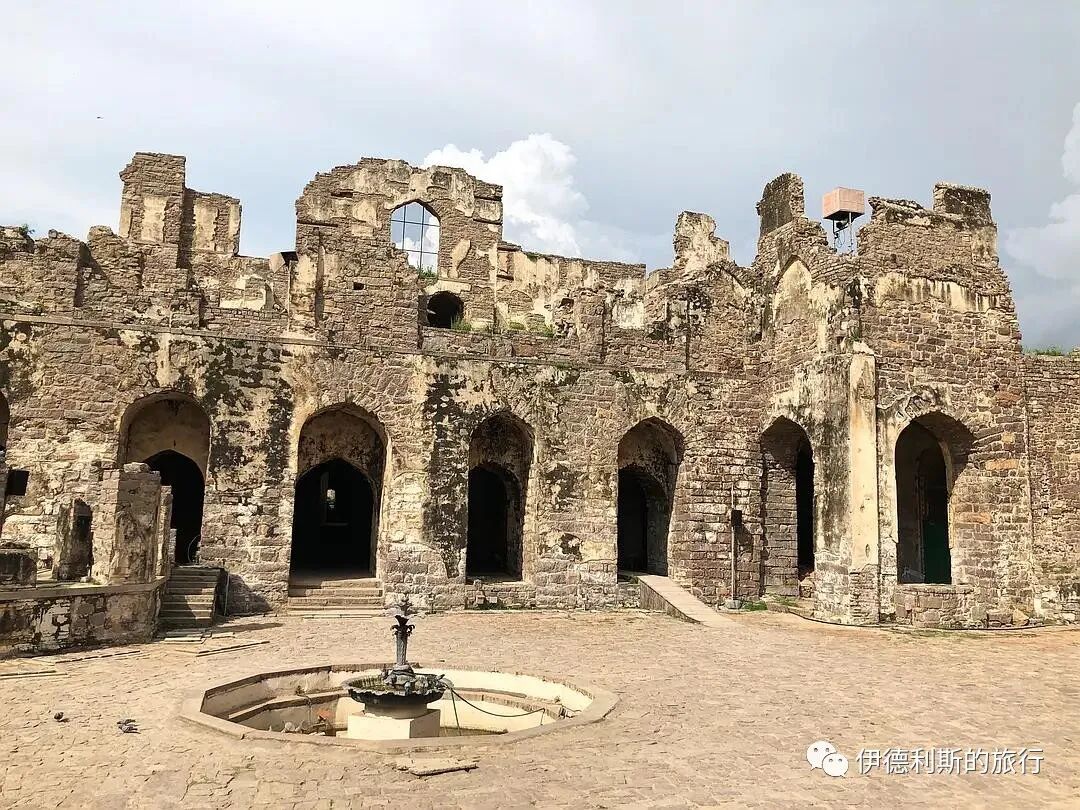
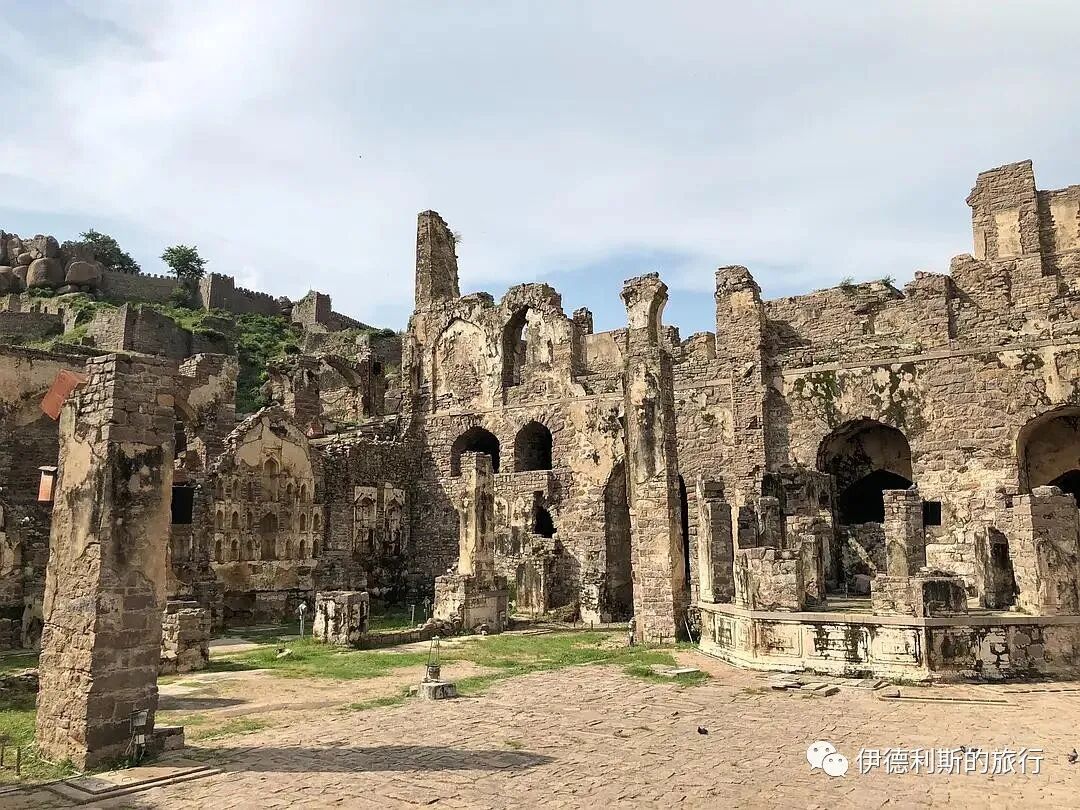
Passing through the Bhagamati Palace leads to the Queen's Palace (Rani Mahal) area in the southern part of the fort, where a sound and light show takes place at night. In the middle of the spacious courtyard stands a complex metal fountain. During the Qutb Shahi era, the fountain could spray water on its own thanks to hydraulic engineering. When there was no rain, the fort's water system ran using Persian water wheels. Today, a set of clay drainage pipes that have survived for hundreds of years can still be found behind the Queen's Palace (Rani Mahal).
Historians believe the building now called the Queen's Palace (Rani Mahal) should actually be called the Father's Palace (Dad Mahal). This was where the Sultan handled state affairs and listened to the opinions of his subjects and the people.
Private Chamber (Kilwat)
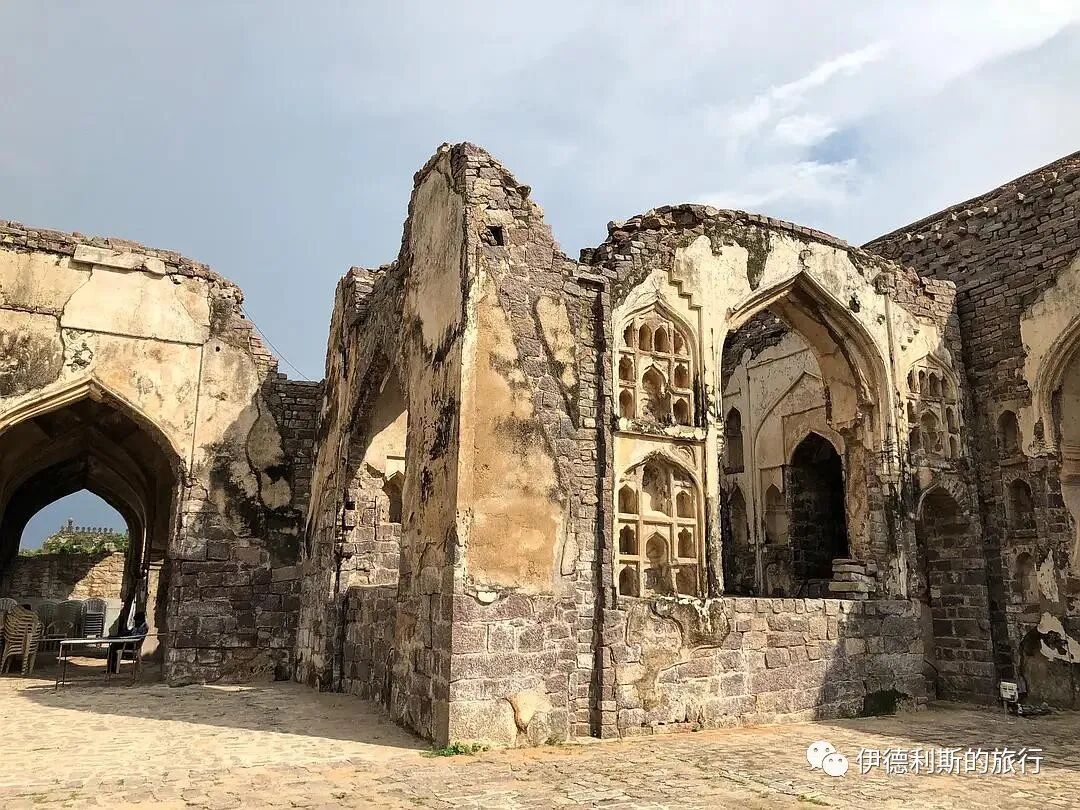
Behind the Queen's Palace (Rani Mahal) is the Private Chamber (Kilwat), the Sultan's private bedroom. Although small, it is decorated beautifully. The hollow latticework was once inlaid with Golconda's most famous diamonds and other gemstones.
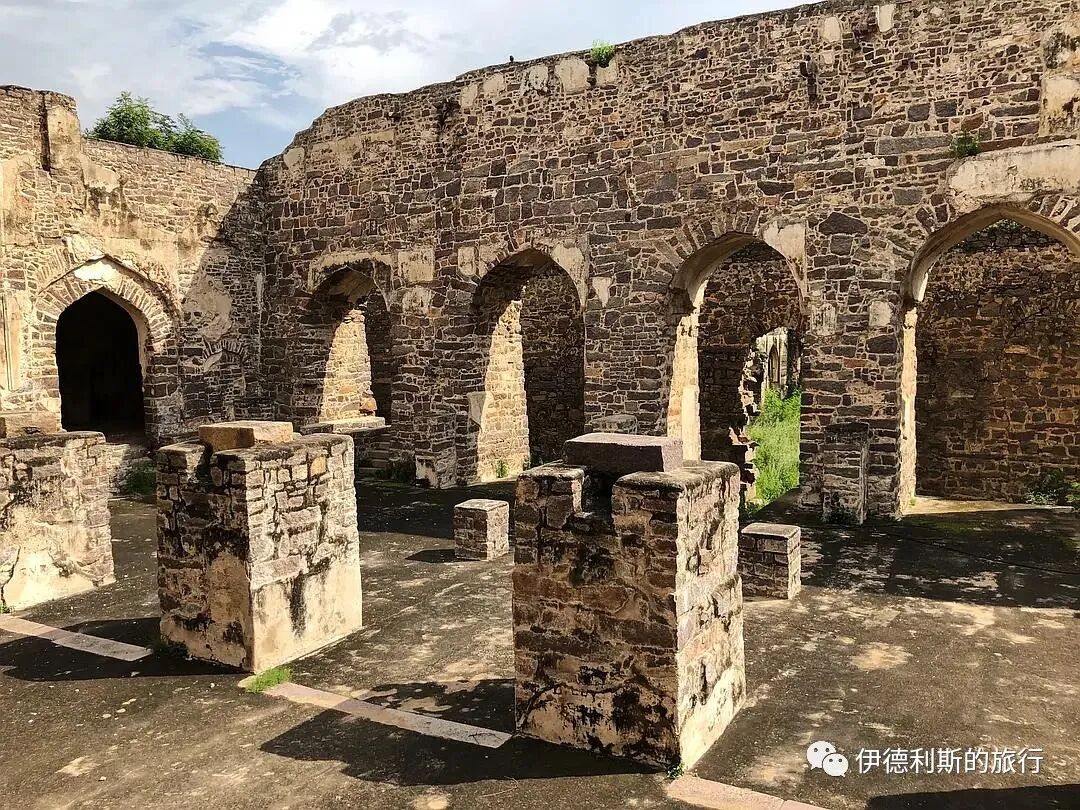
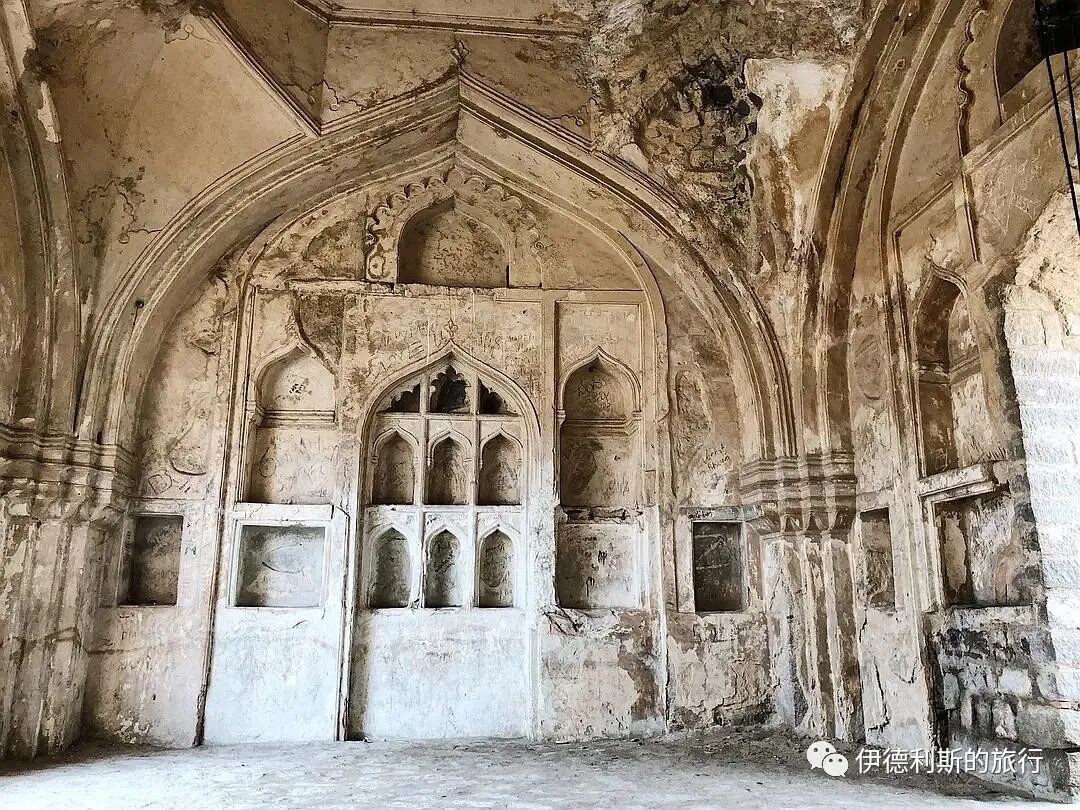
Women's Mosque (Zanana Mosque)
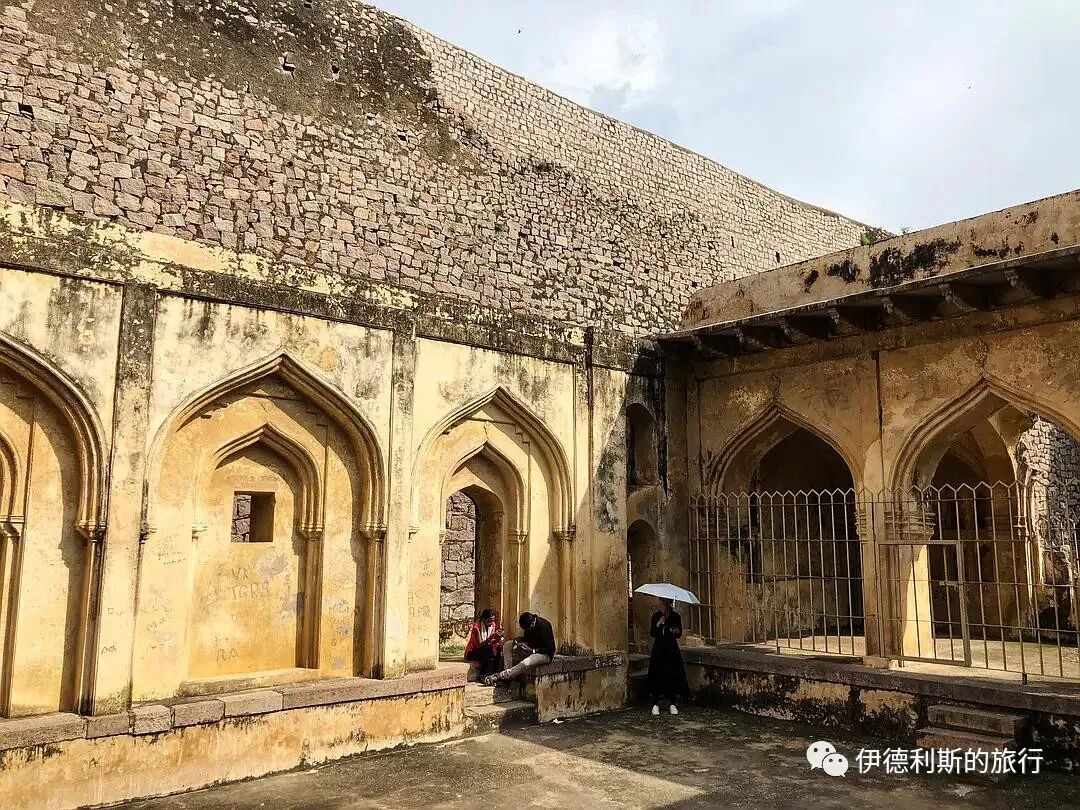
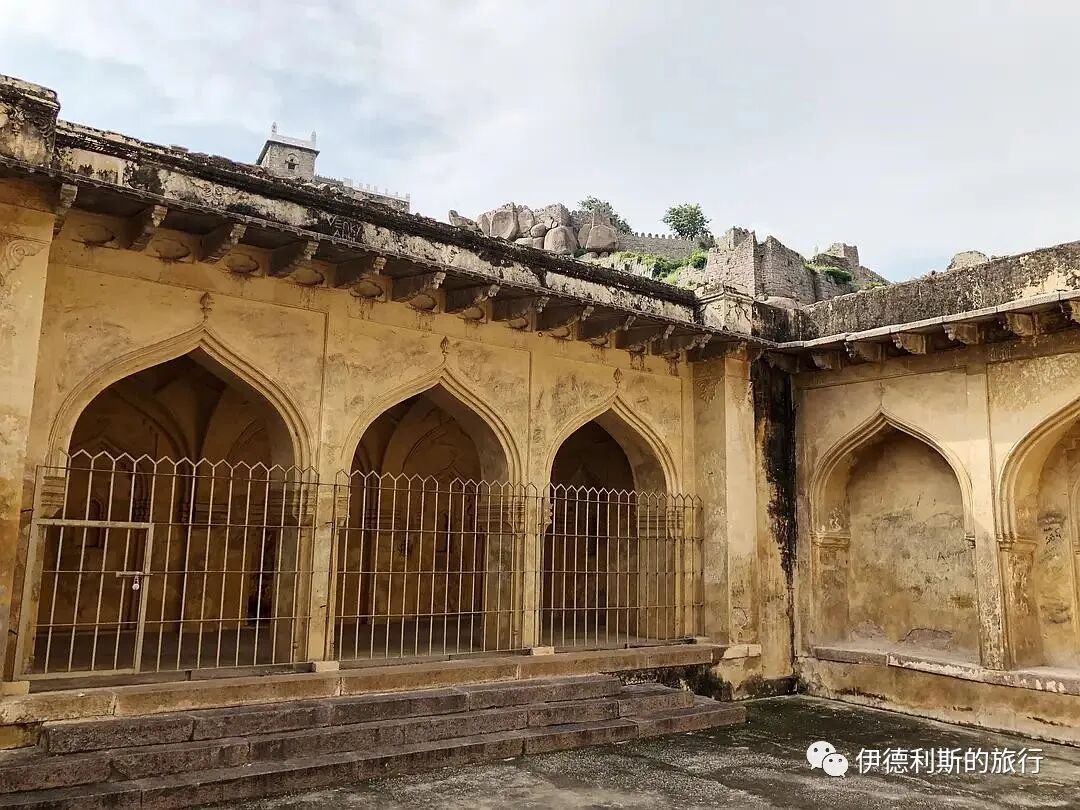
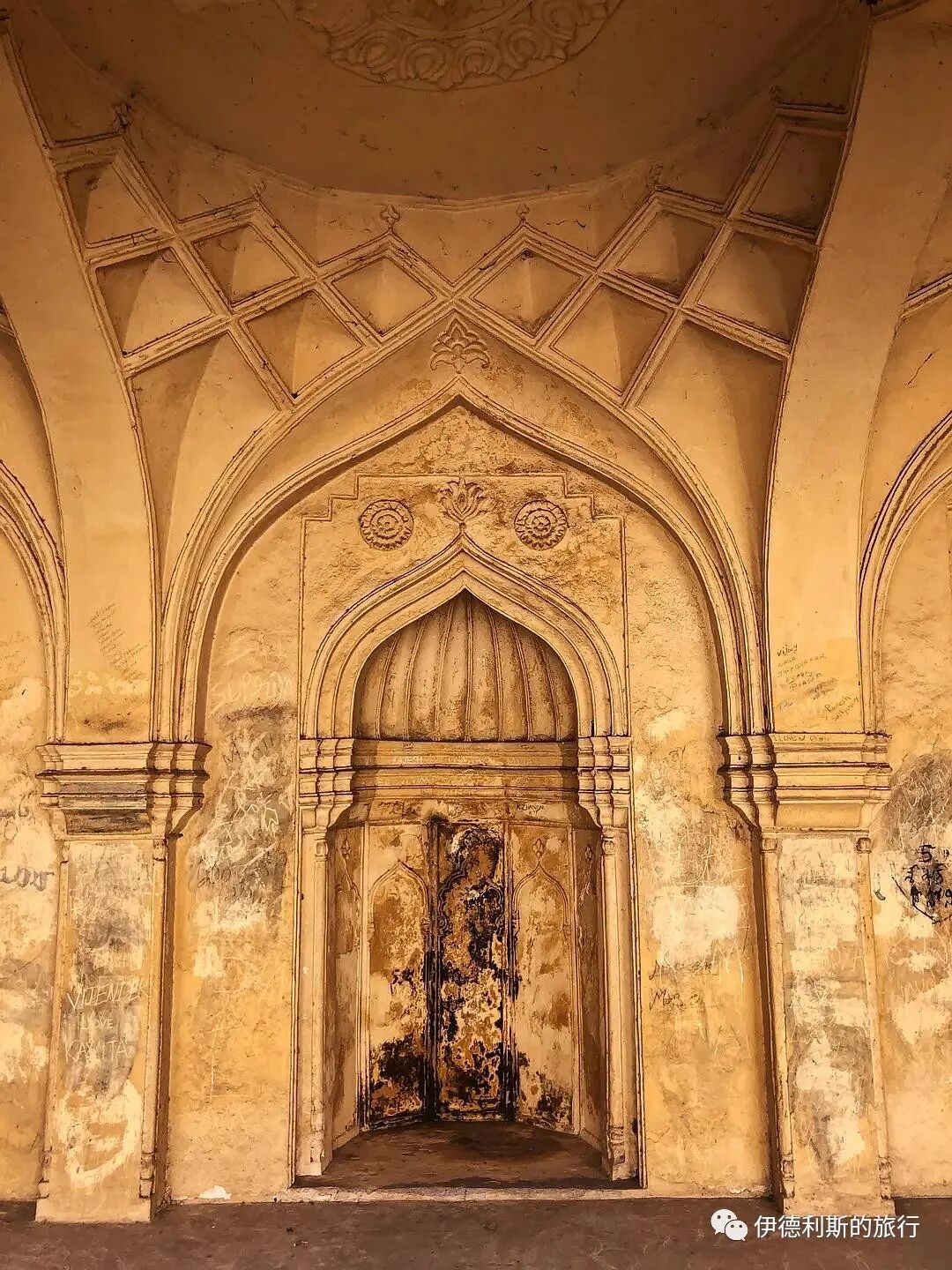
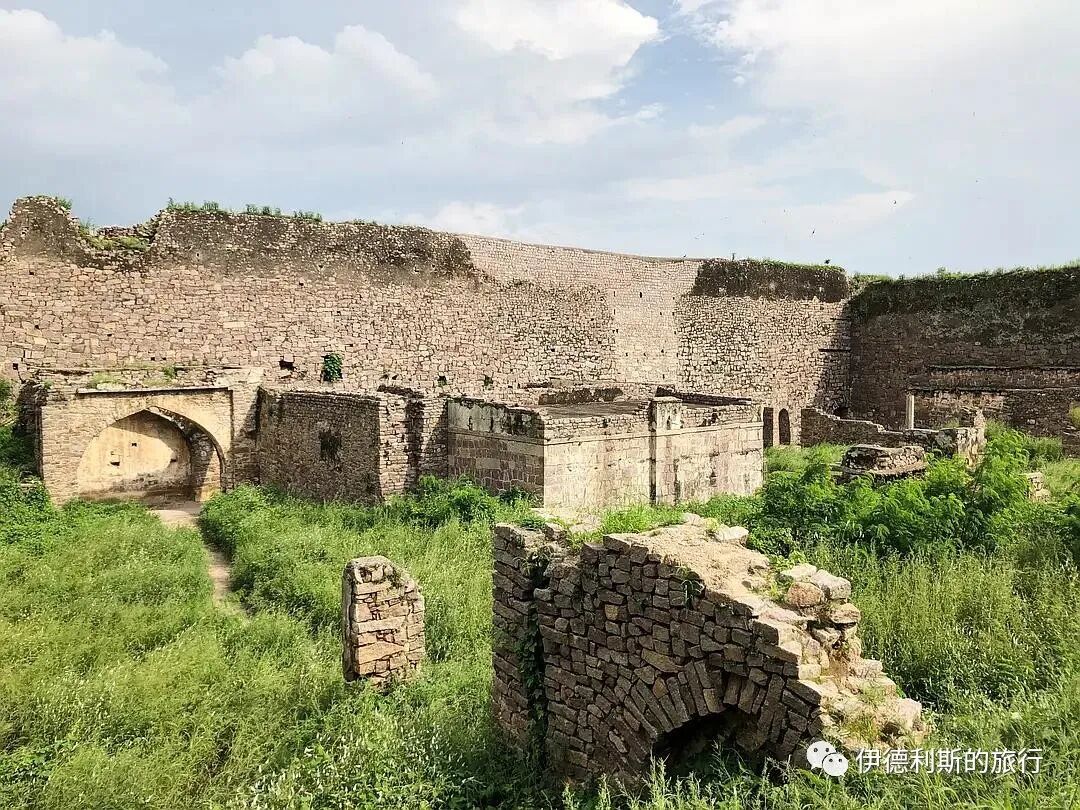
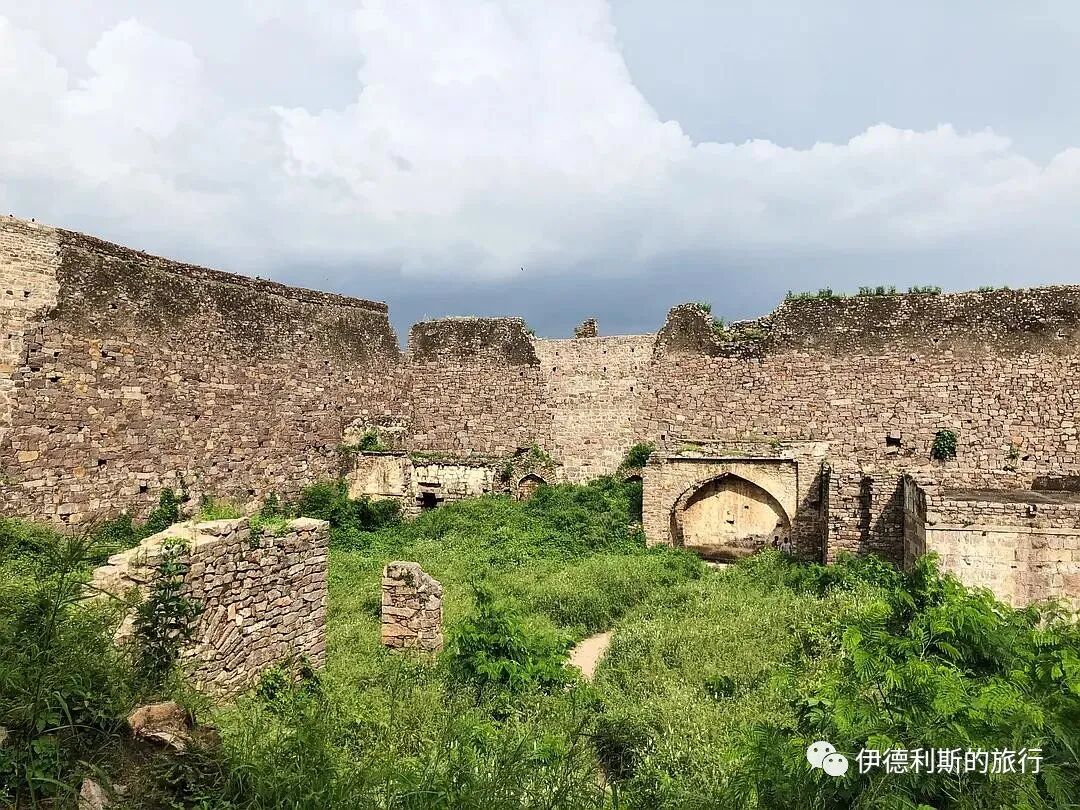
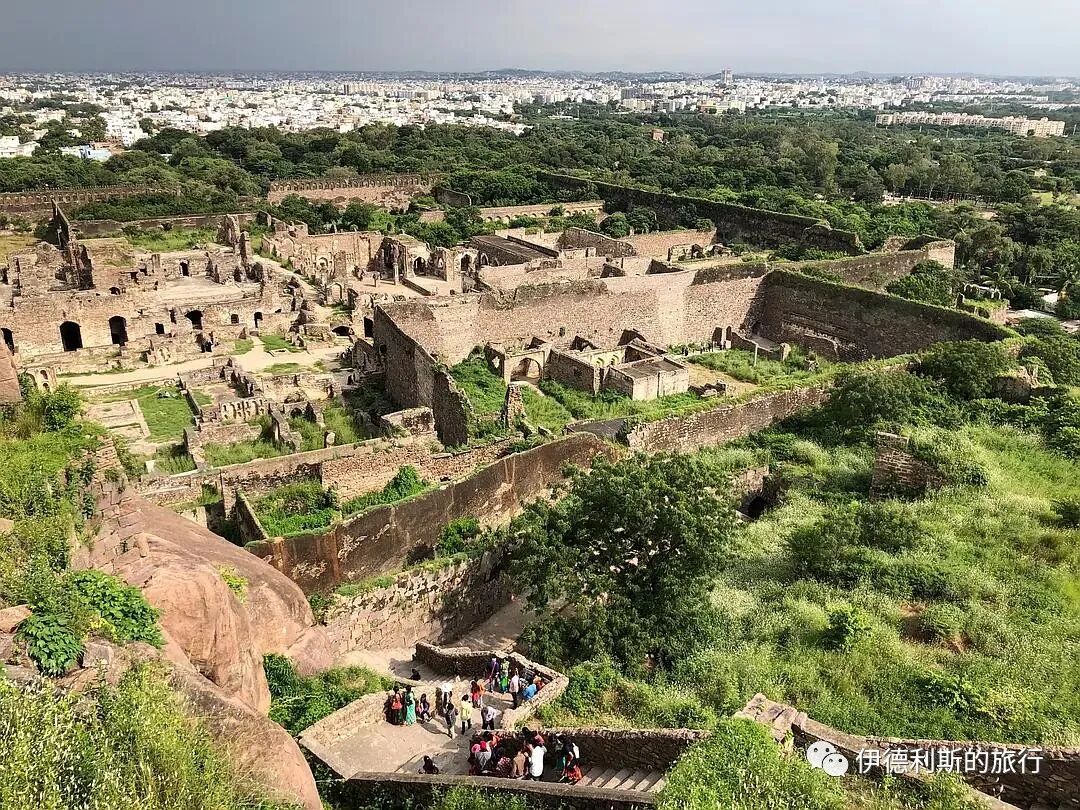
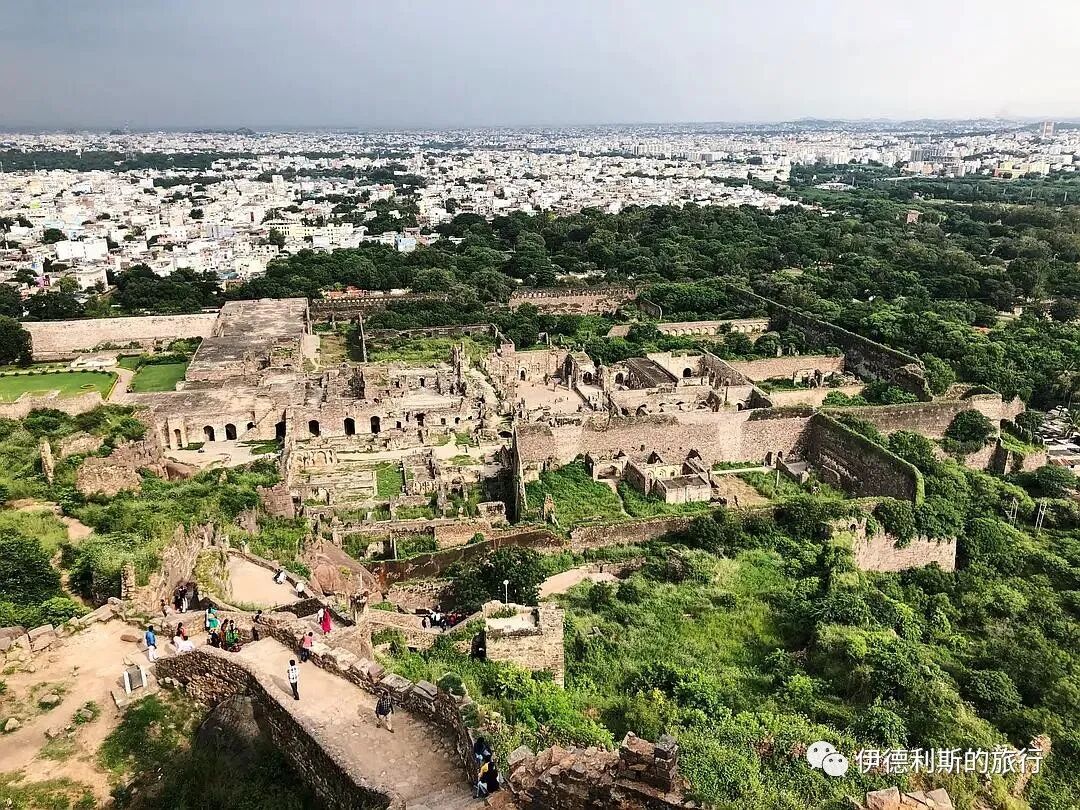
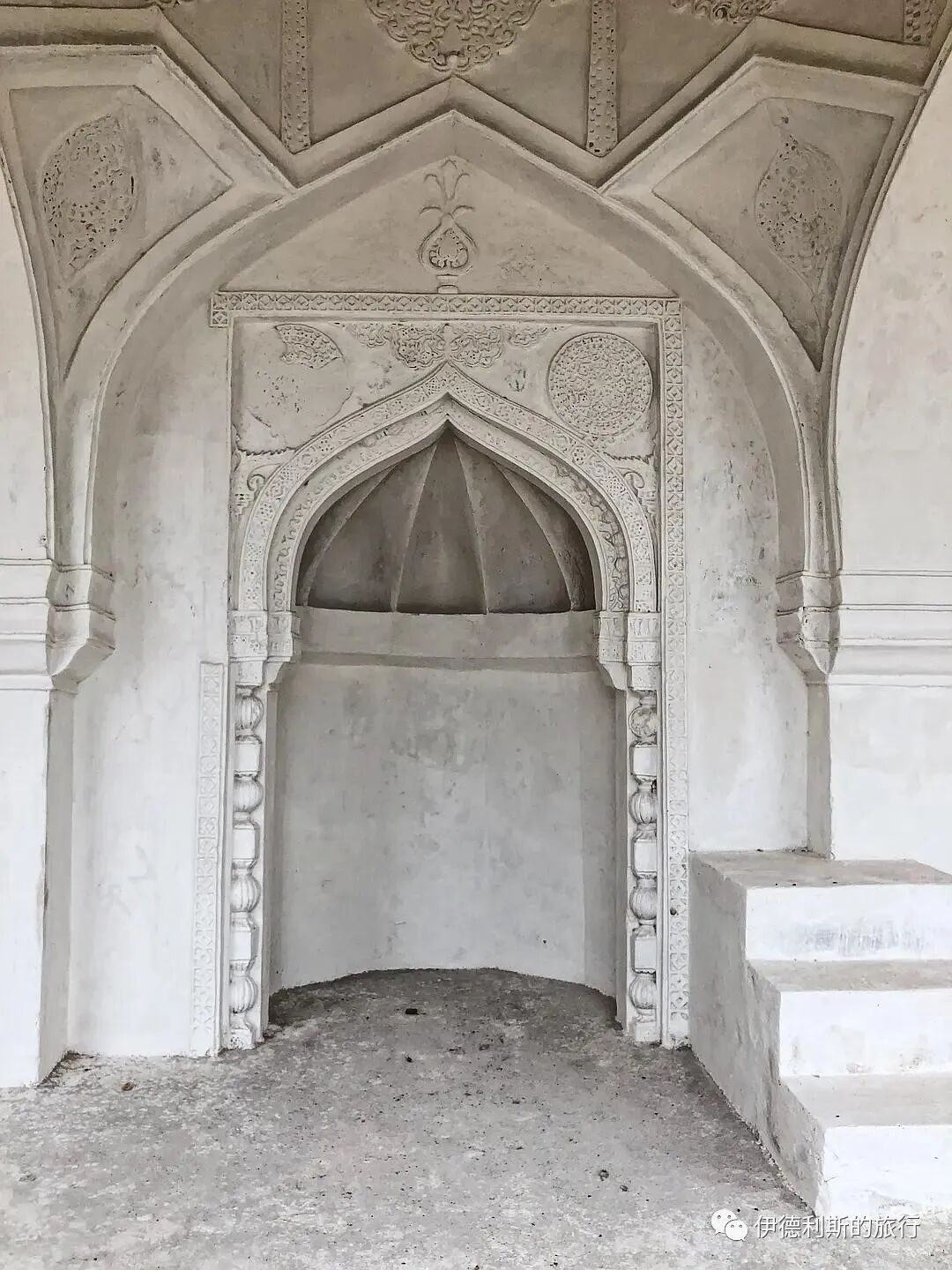
Continuing west from the Queen's Palace (Rani Mahal) area, you leave the palace grounds and can see the multiple tall walls inside the fort. Behind one of these walls stands a mosque called the Women's Mosque (Zanana Mosque), which still has its mihrab and courtyard.
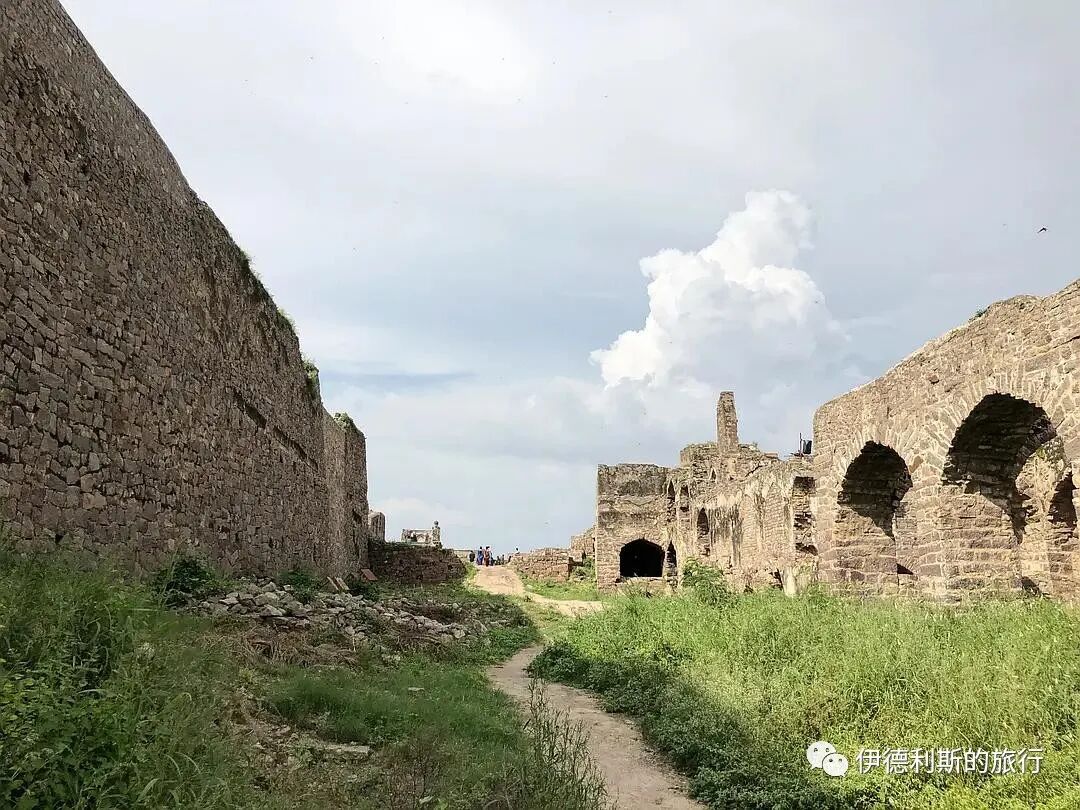
Twelve-Door Hall (Baradari) (Darbar Hall)
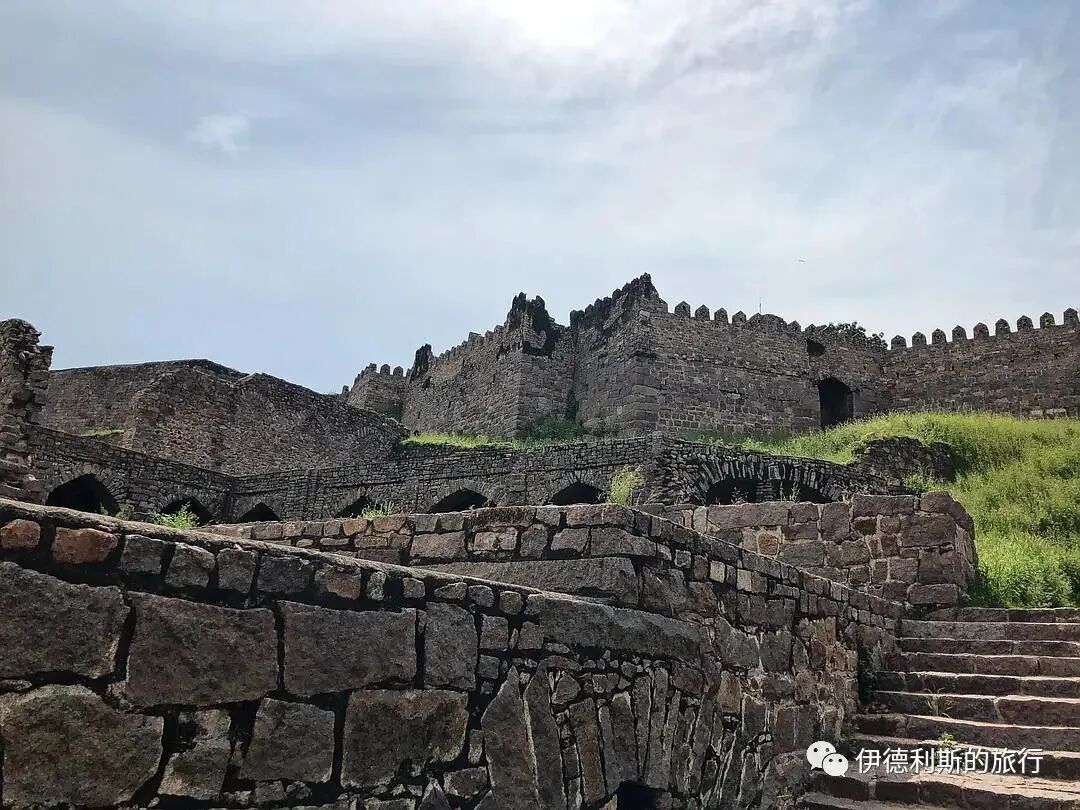
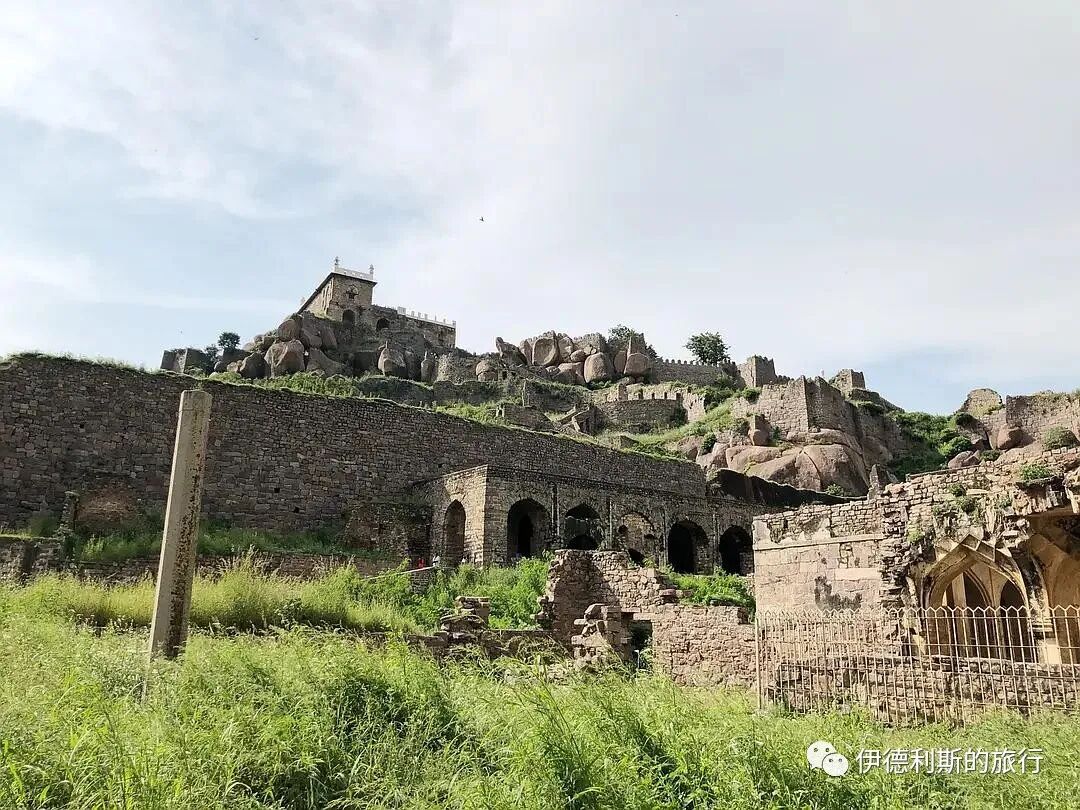
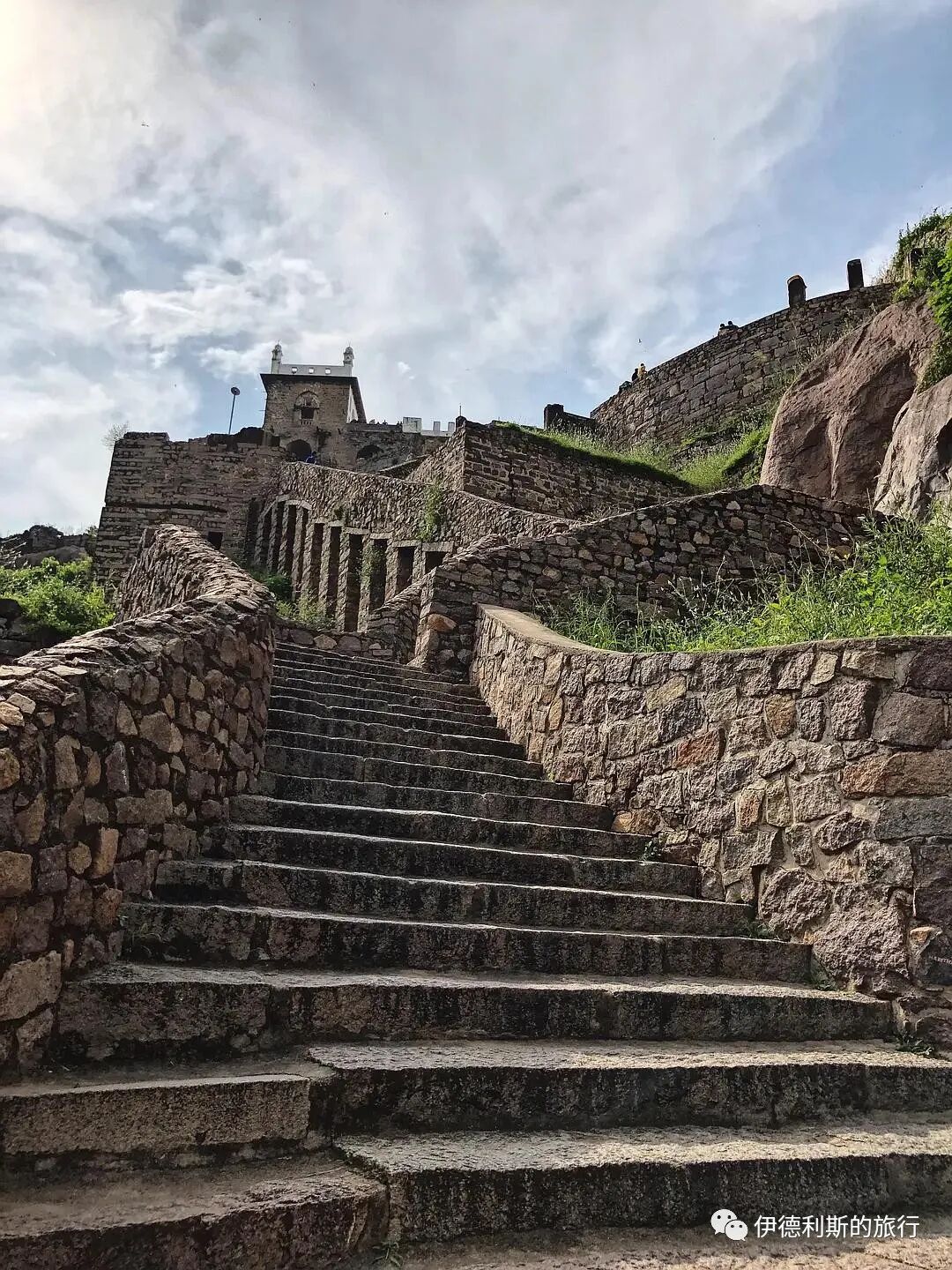
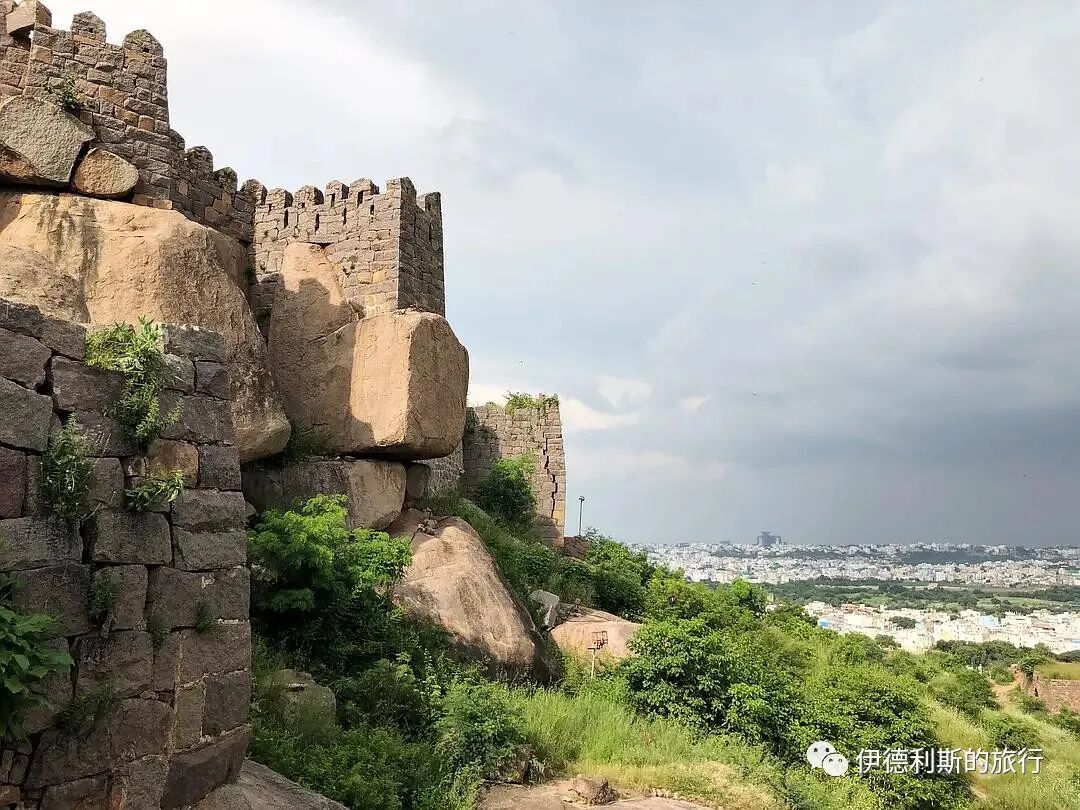
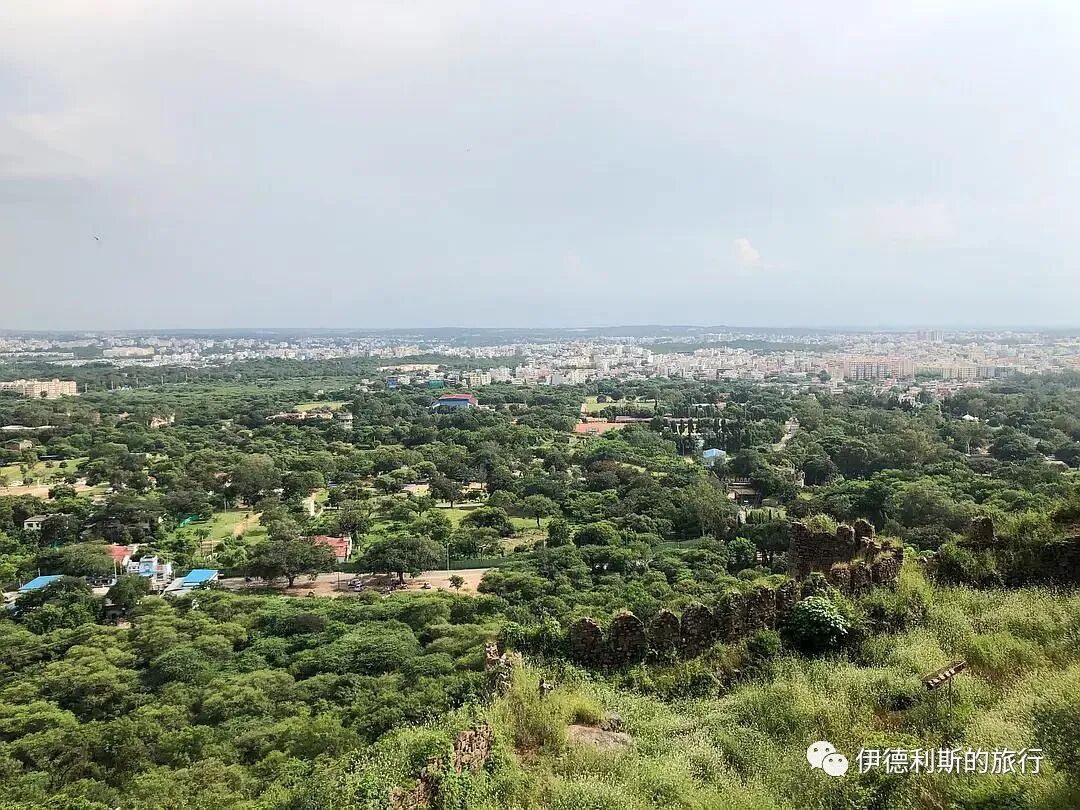
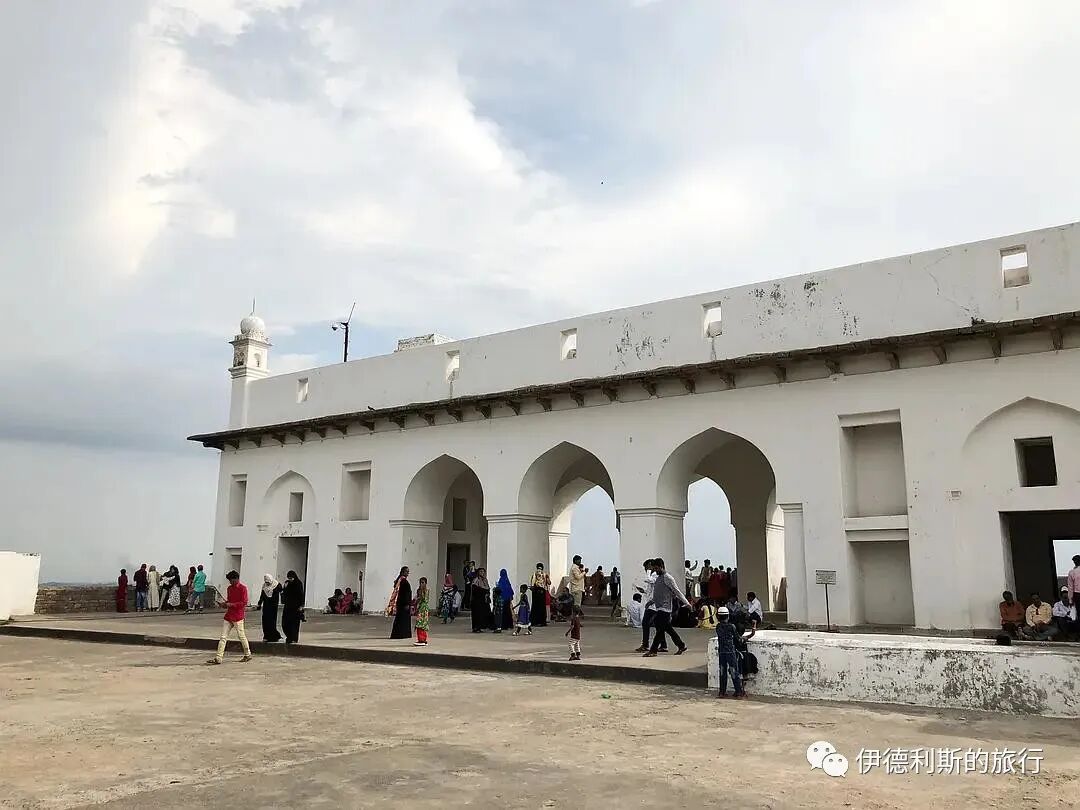
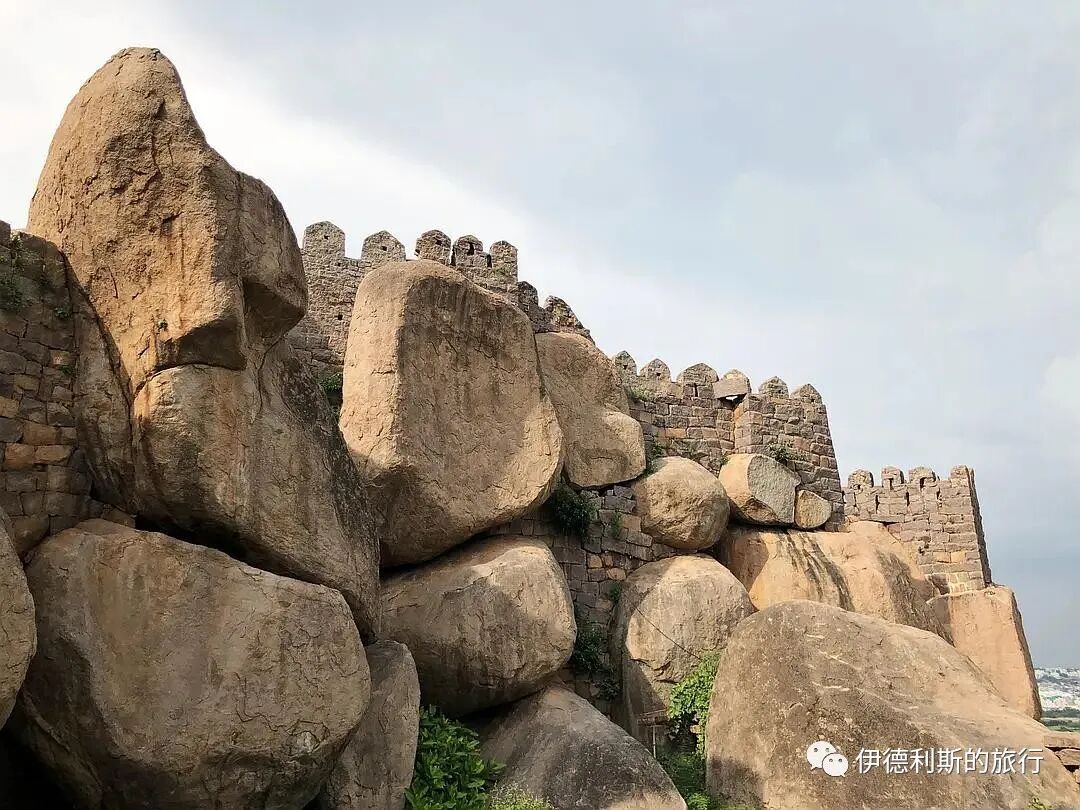
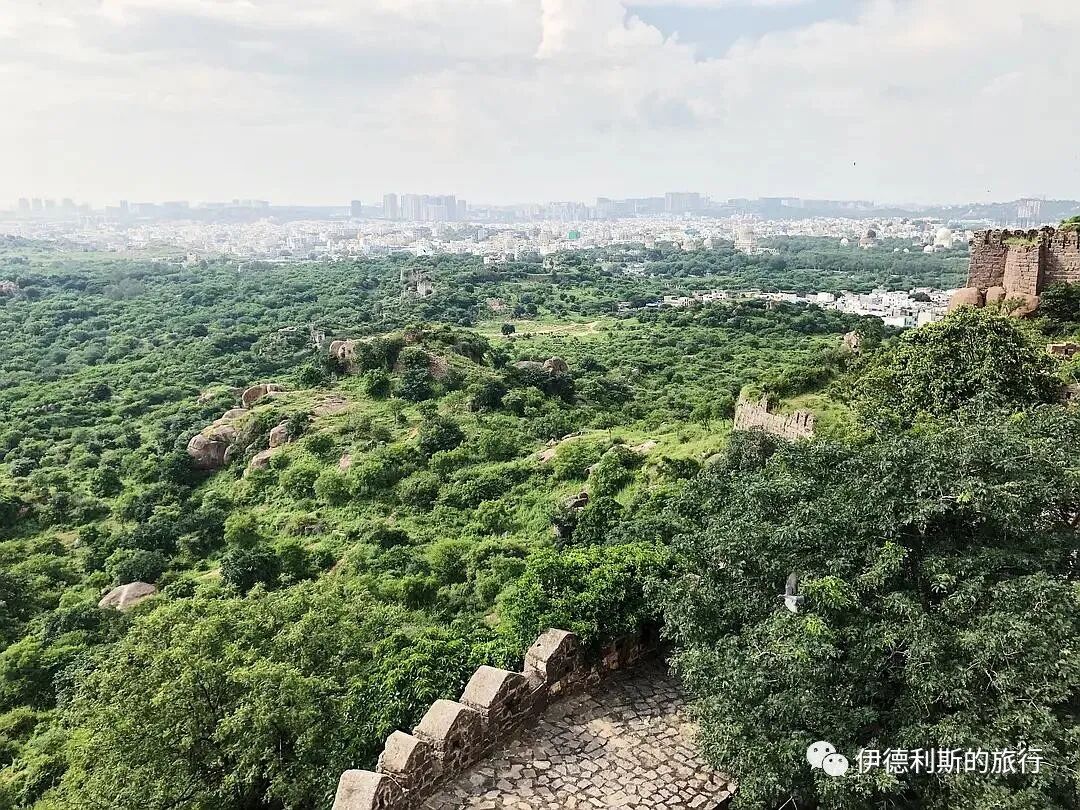
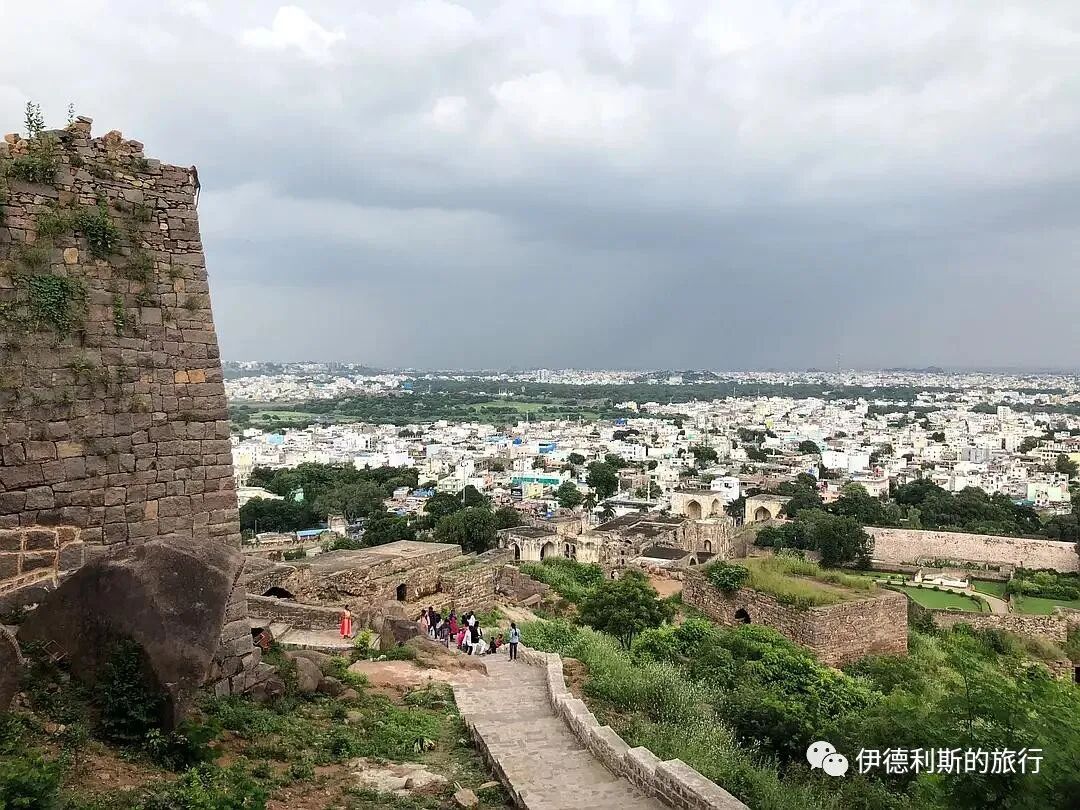
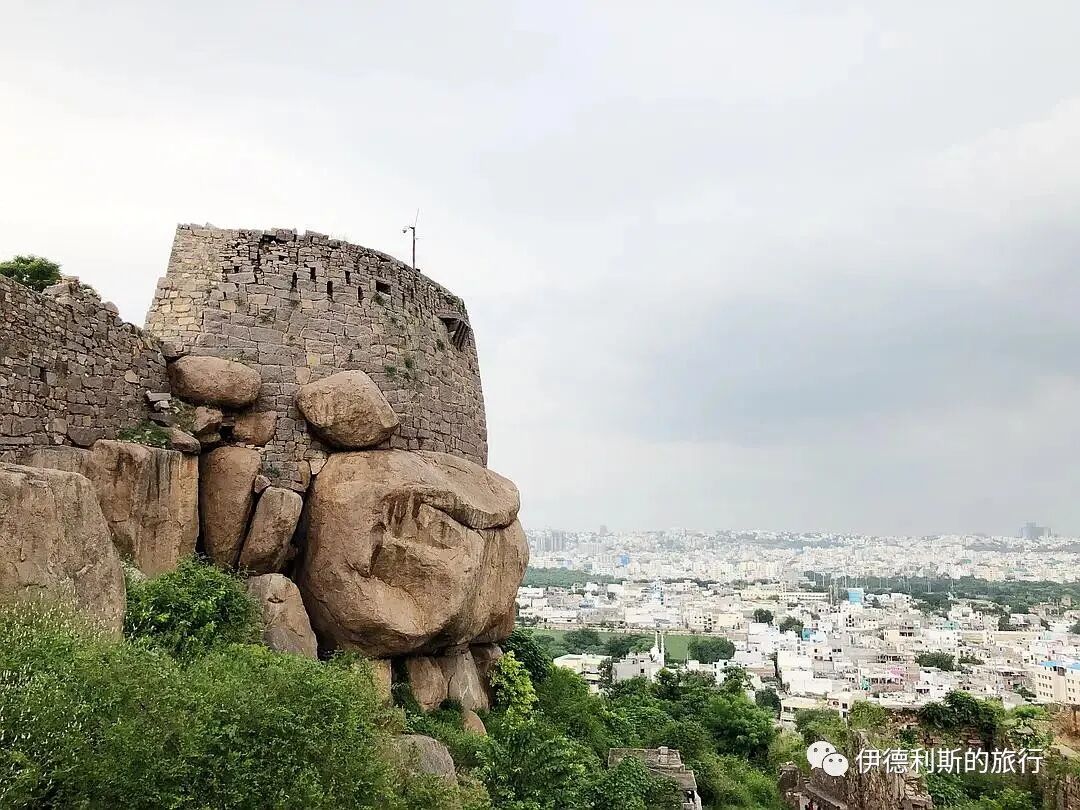
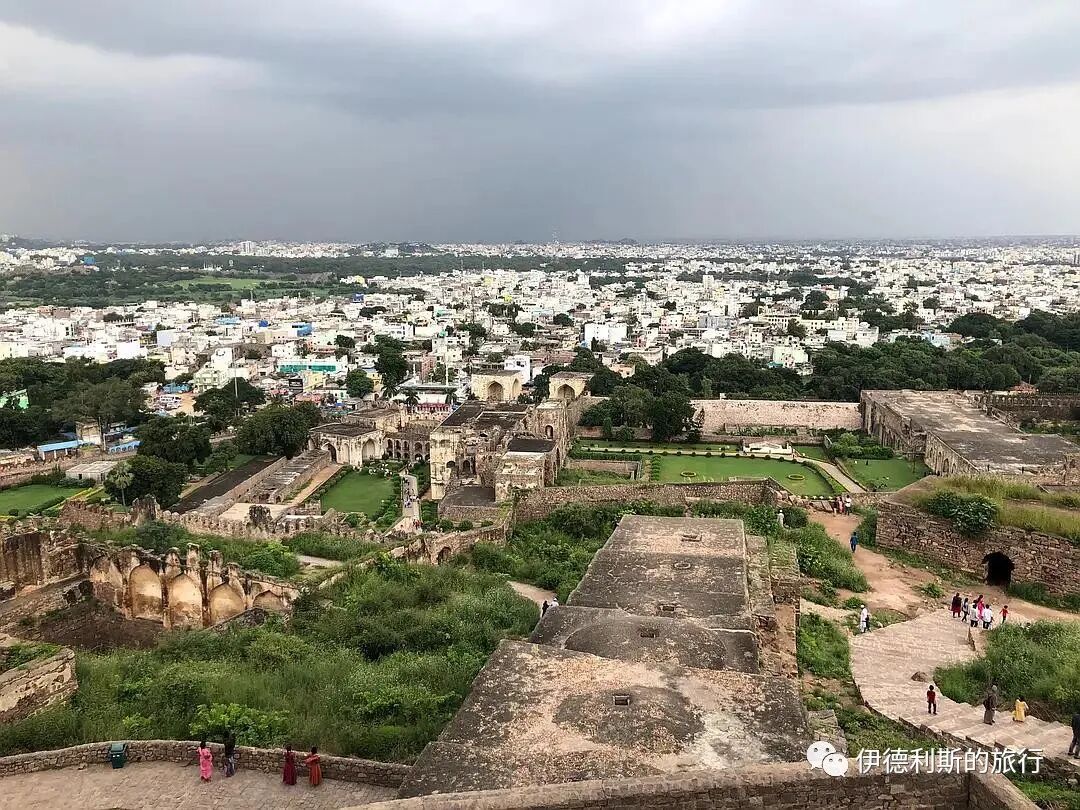
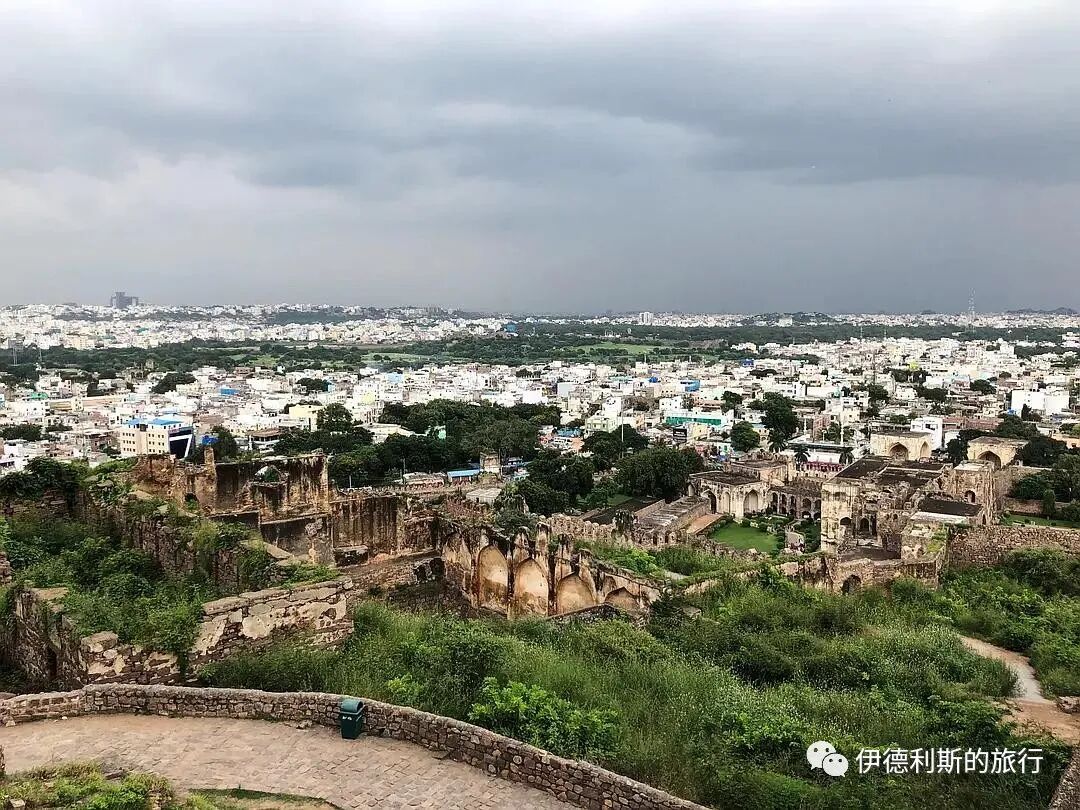
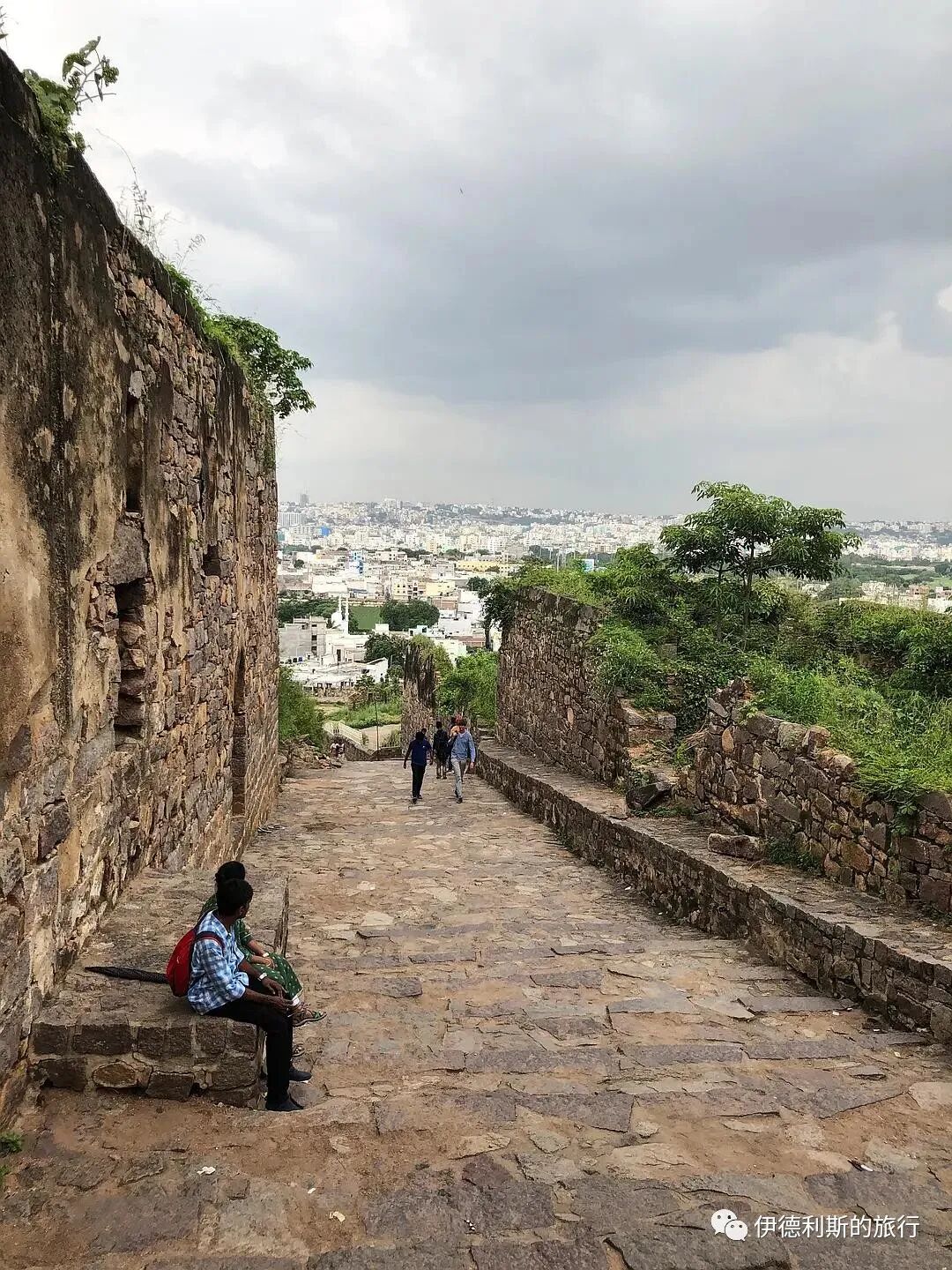
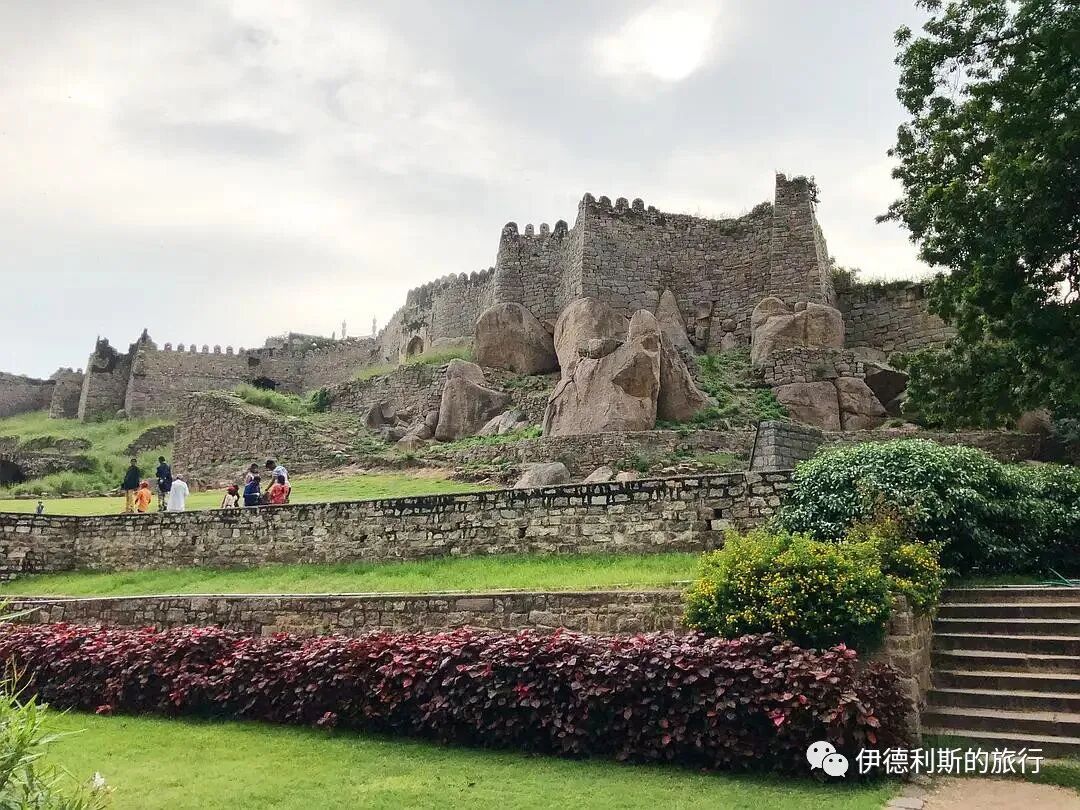
After passing the Women's Mosque (Zanana Mosque), you leave the palace area. A stone staircase leads to the fortress at the top of the hill. Some of the fortress walls are built directly onto giant rocks, and from the stairs, you can look down over the entire palace area. After climbing to the top, you reach a building called the Twelve-Door Hall (Baradari) (Darbar Hall), where you can overlook the vast area behind the fort.
Ibrahim Mosque
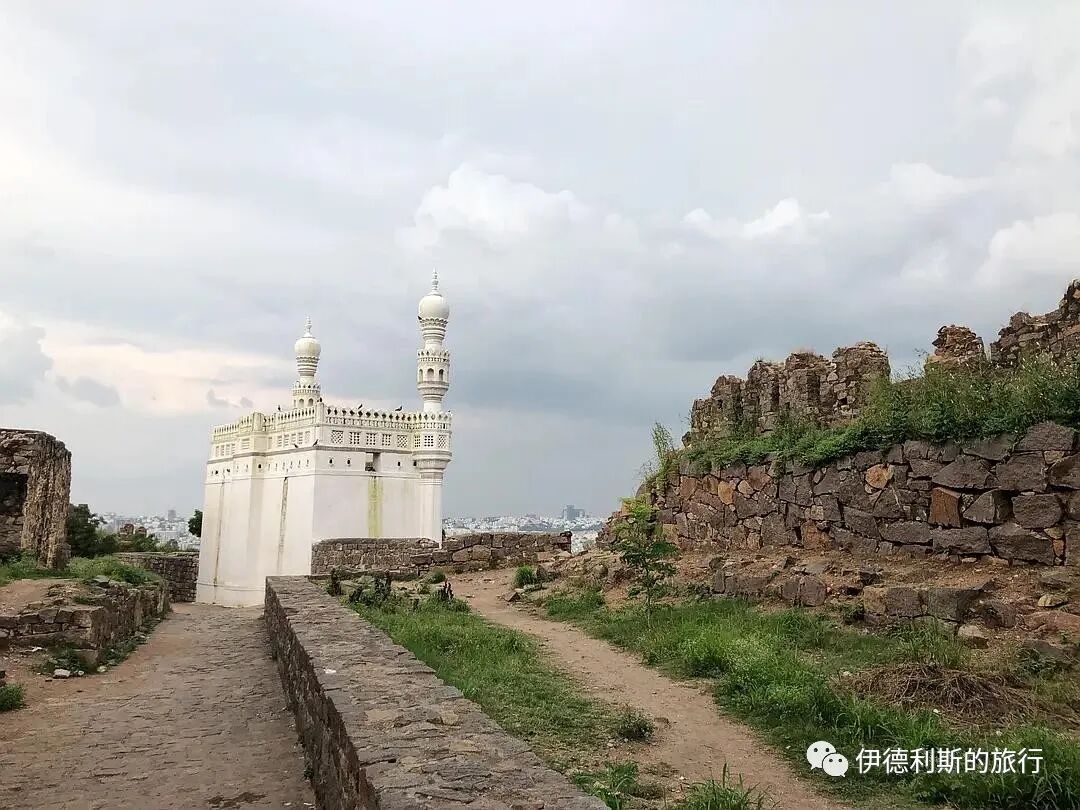
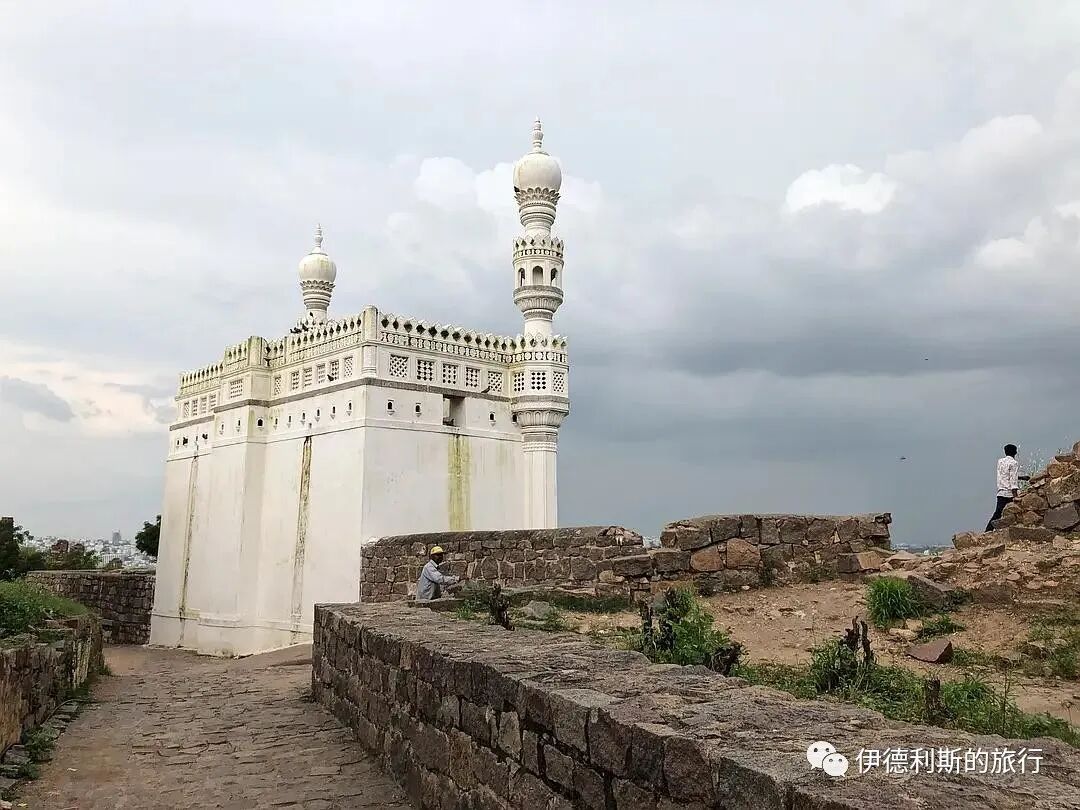
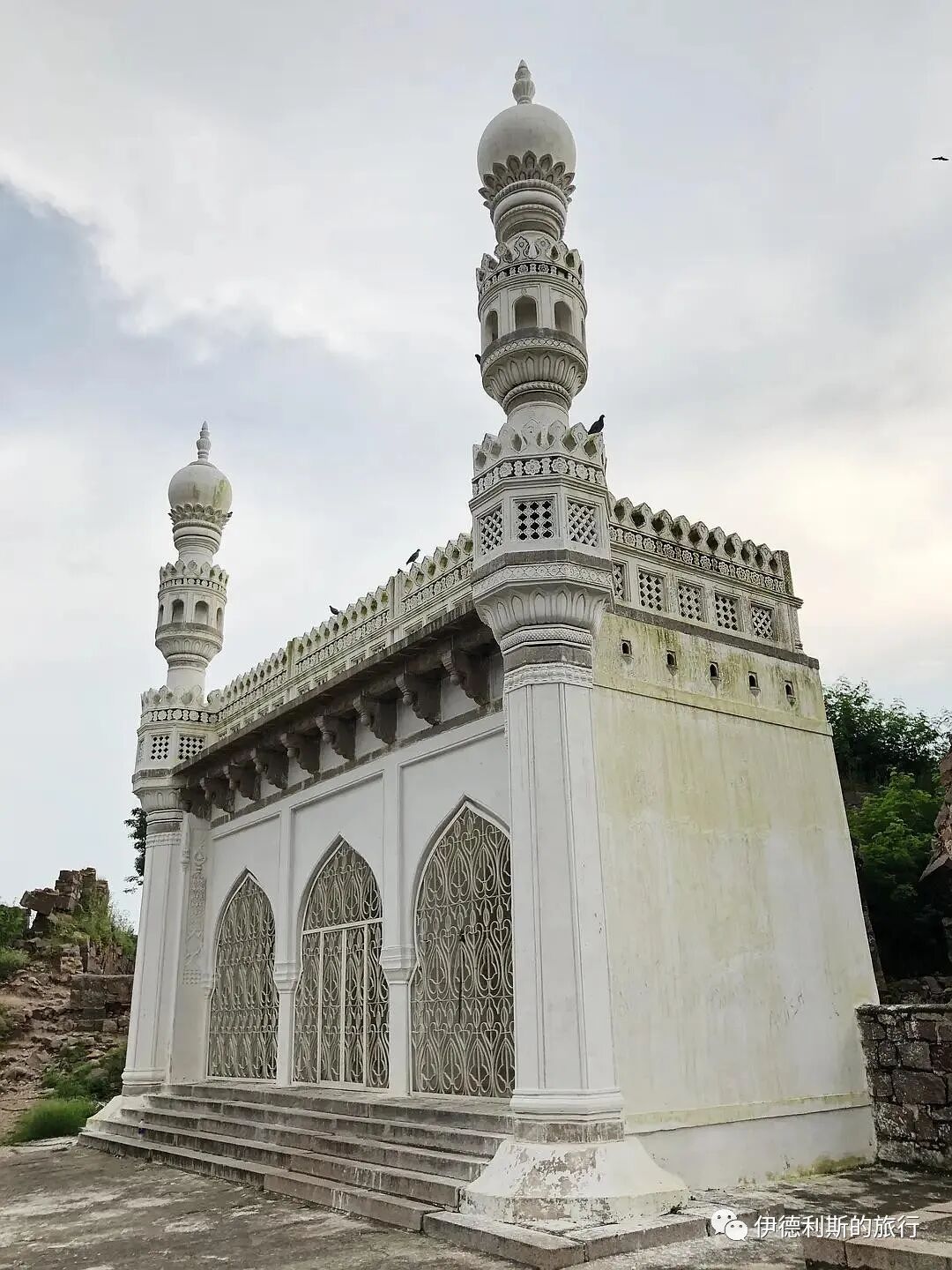
The Ibrahim Mosque is on the north side of the hilltop. It was built by Sultan Ibrahim Quli Qutb Shah (reigned 1550-1580). The mosque is small. The double-layered balconies on the two minarets and the onion domes sitting on lotus-shaped bases are typical of Muslim architecture in the Deccan region.
Granary (Ambar Khana)
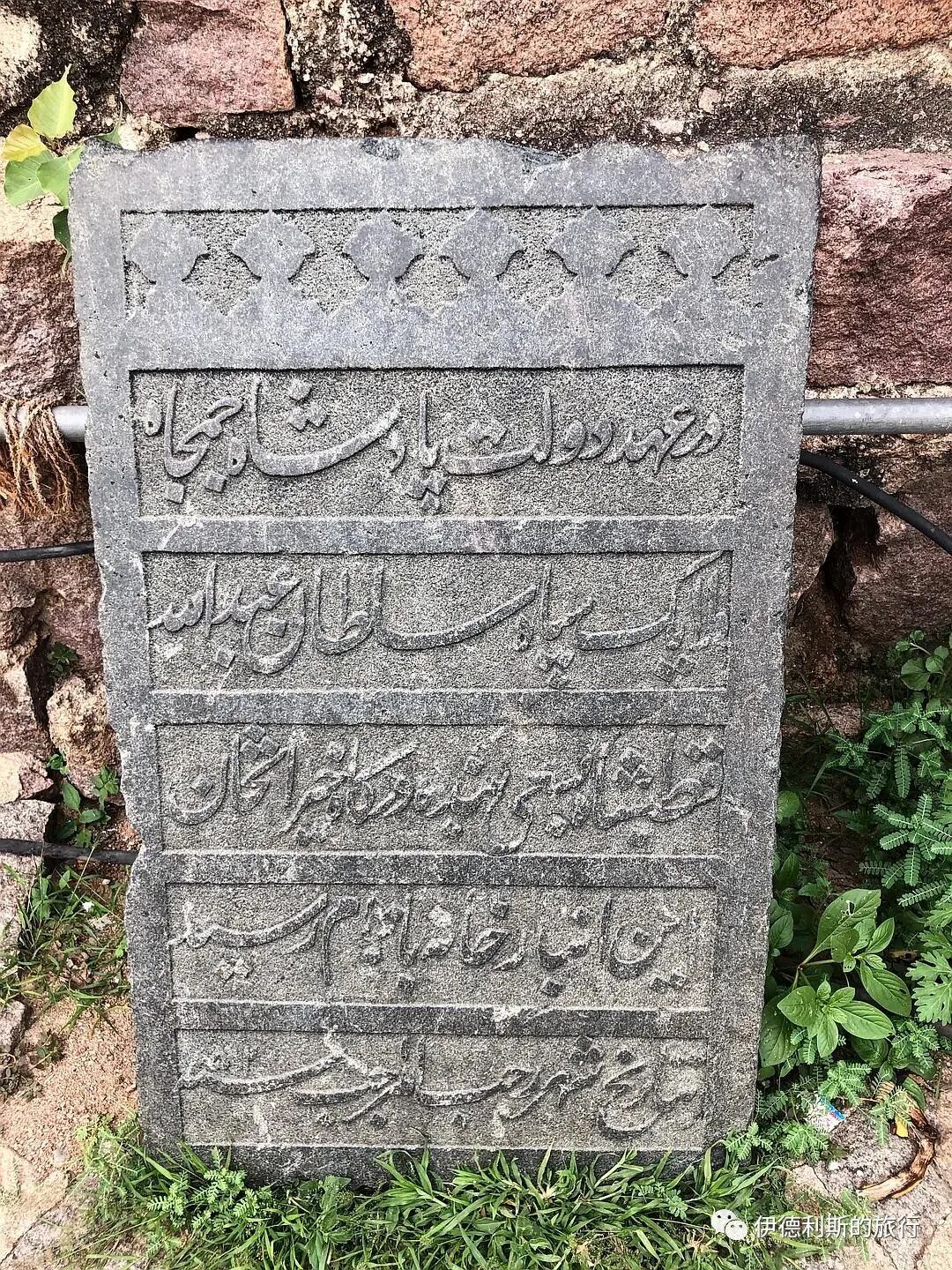
Heading east from the Ibrahim Mosque, you start the path down the hill, first passing the city's granary, the Granary (Ambar Khana). A Persian inscription in front of the granary says it was built by Khairat Khan in 1642.
Ramdas Prison
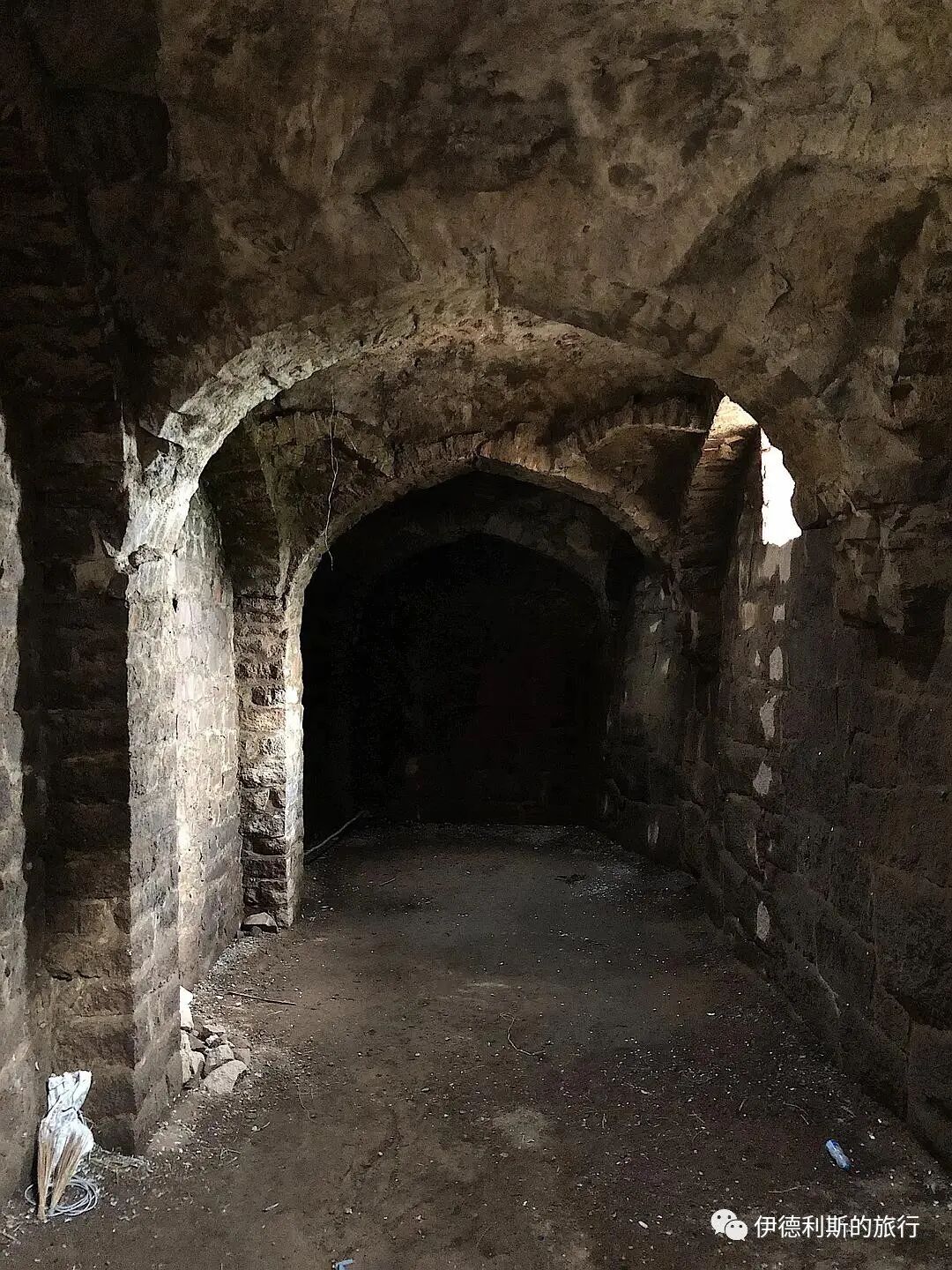
Continuing down the hill, you pass the Ramdas Prison. Bhakt Ramdas was a court tax official for the Qutb Shahi dynasty. He was imprisoned in a dark cell for 12 years by the last Sultan, Abul Hasan Qutb Shah, for using money from the national treasury to build a temple.
Boli reservoir
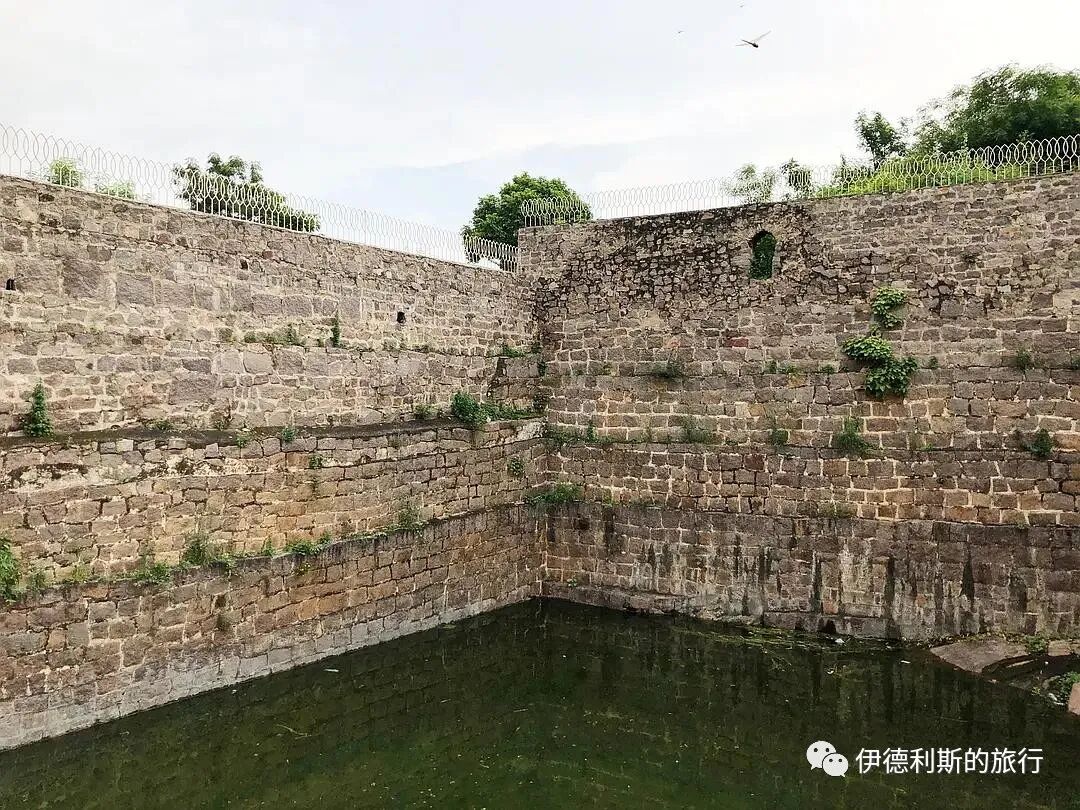
You can see a series of water facilities in the northern part of the fort. The first thing you see is the Boli reservoir, a type of water storage structure often found in Indian forts.
Nagina Bagh garden
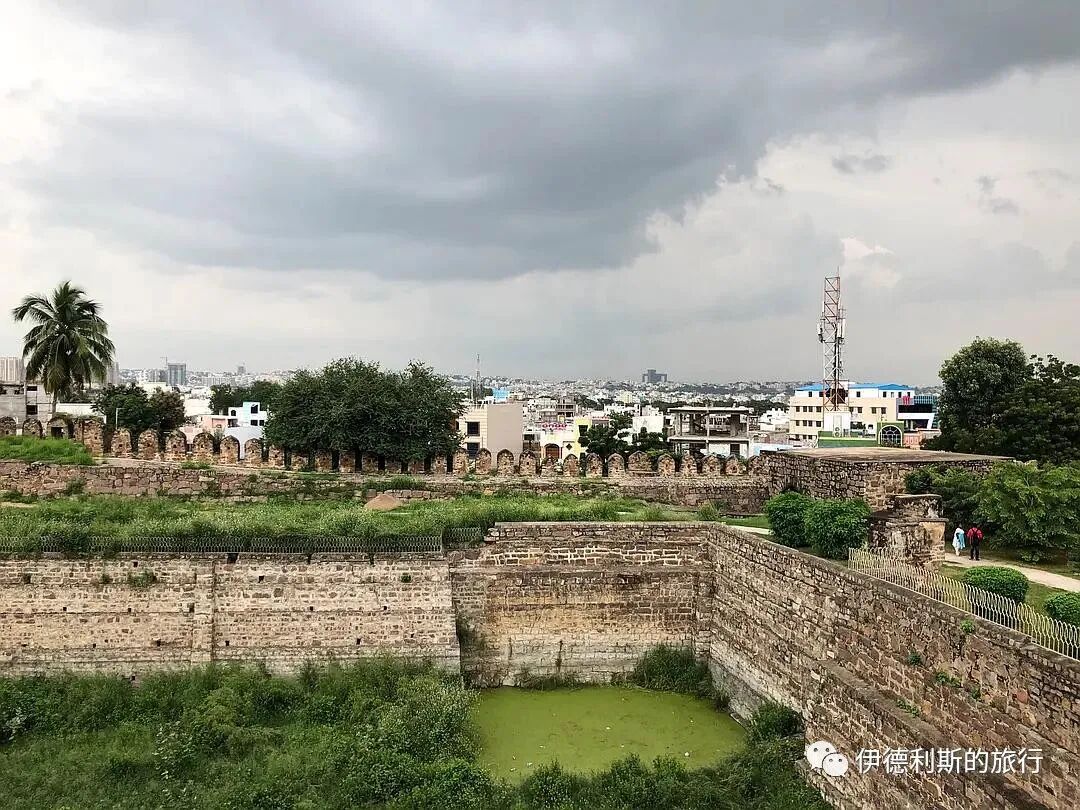
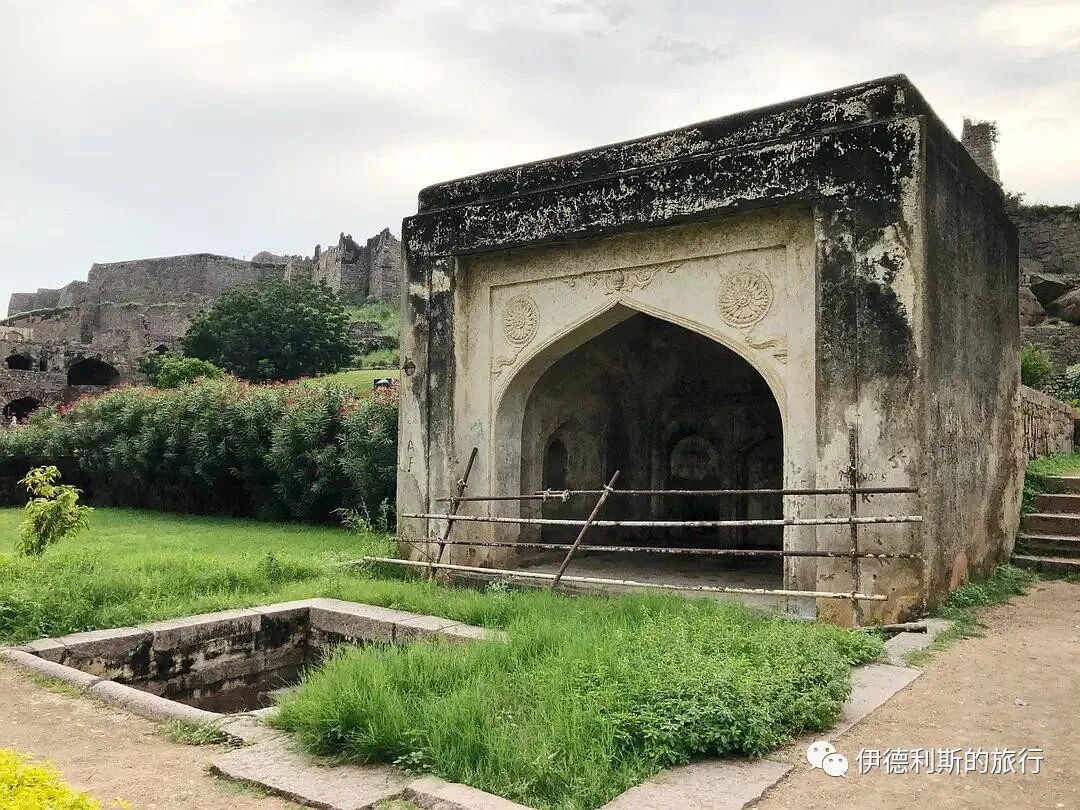
In the fort's Nagina Bagh garden, there is a pool that diverted hot and cold water, along with the original water tanks.
Bathhouse
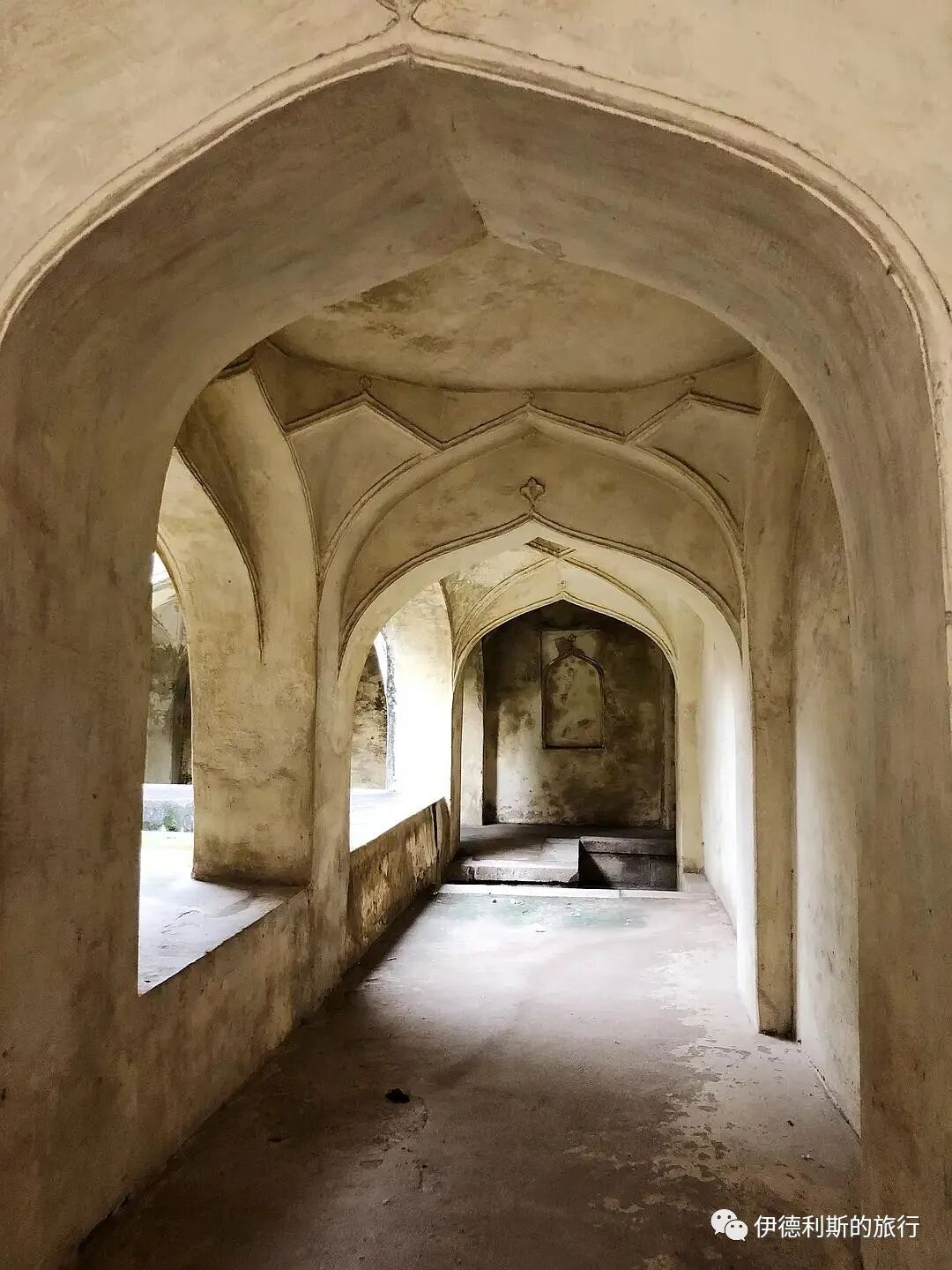
Next to the fort gate is a Turkish bath building with pipes at different heights inside, which allowed for mixing scented cold and hot water, though it was not open when I visited. Historians still disagree on whether this bath was for women or for washing the bodies of the deceased.
Pavilions
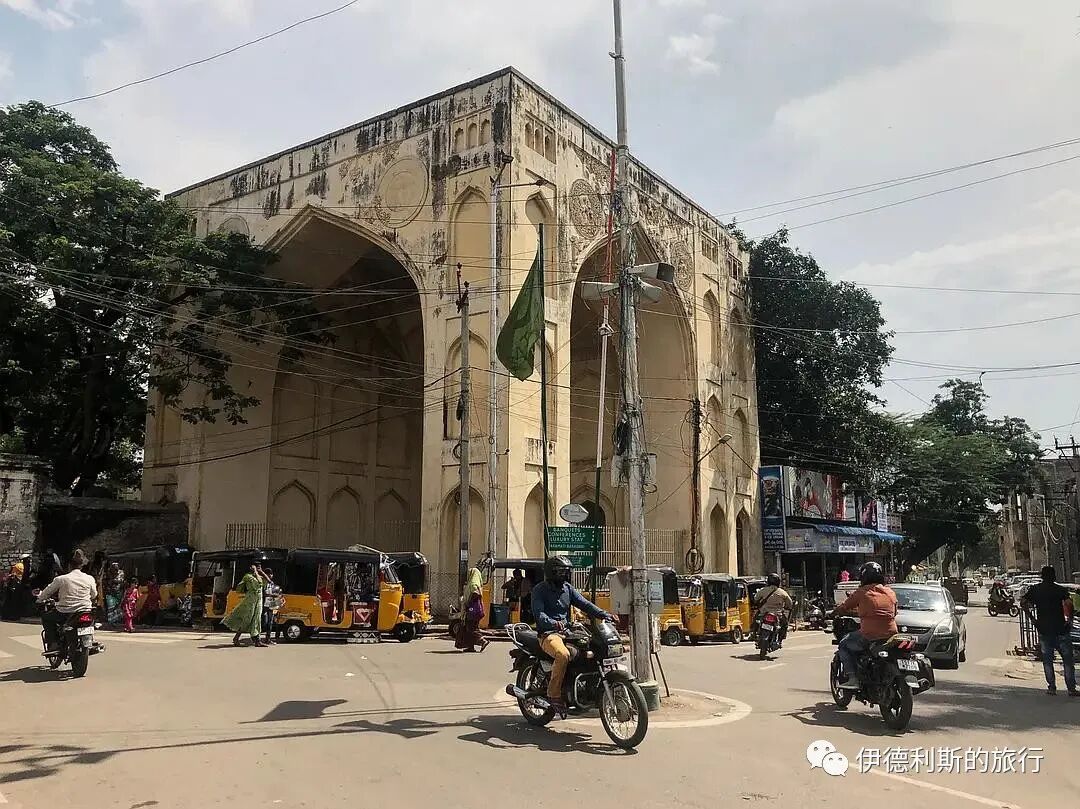
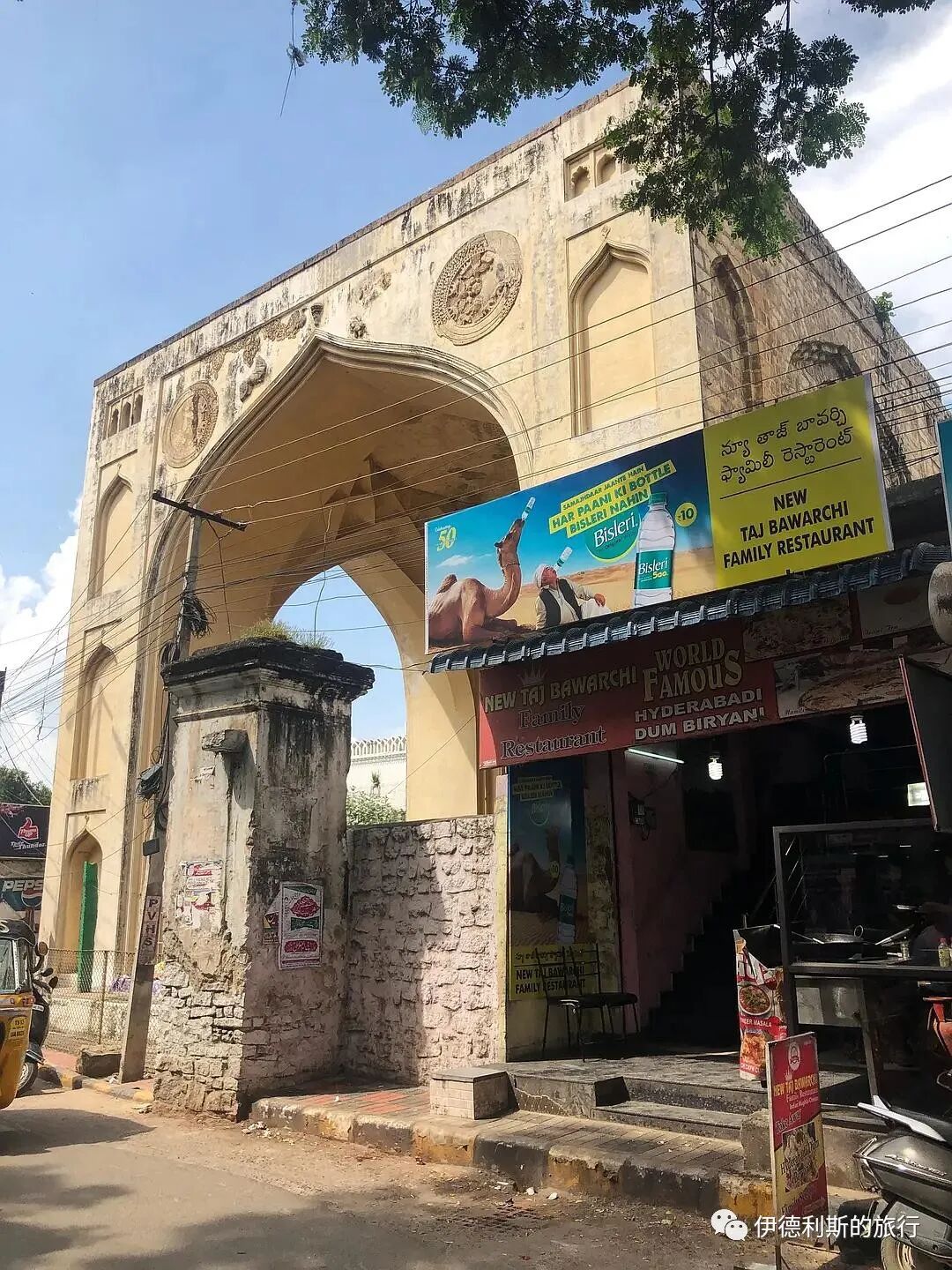
Two large pavilions outside the fort gate.
2. Qutb Shahi Tombs
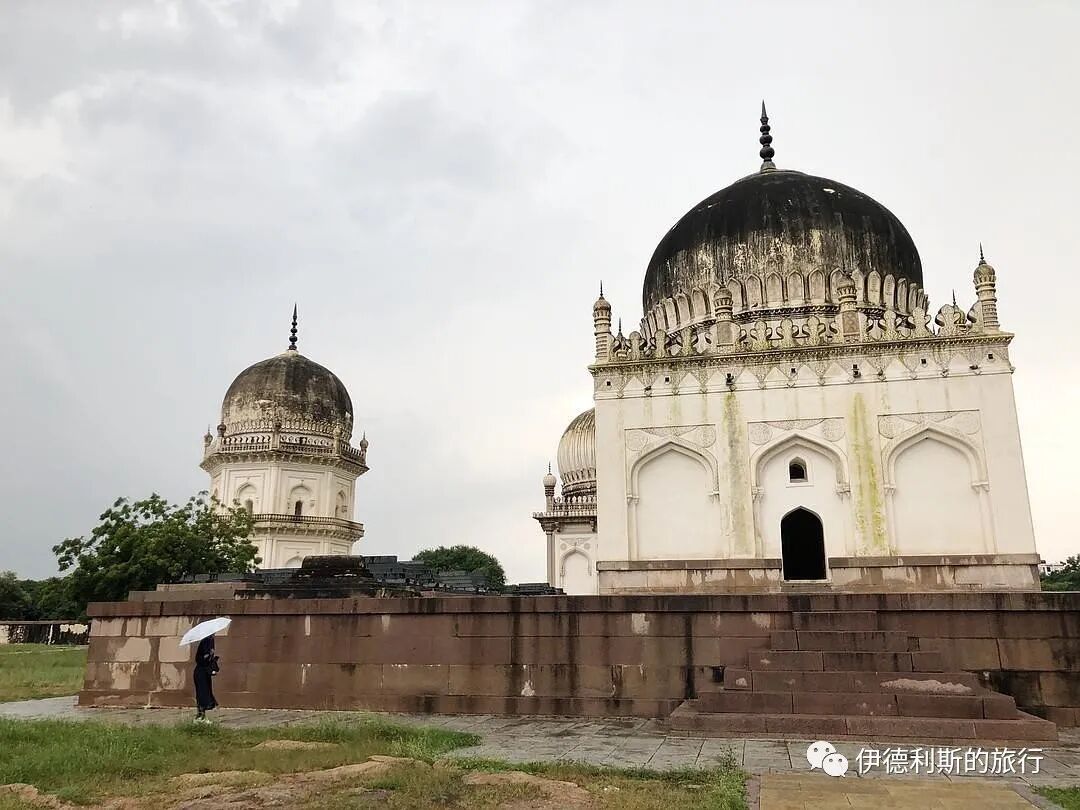
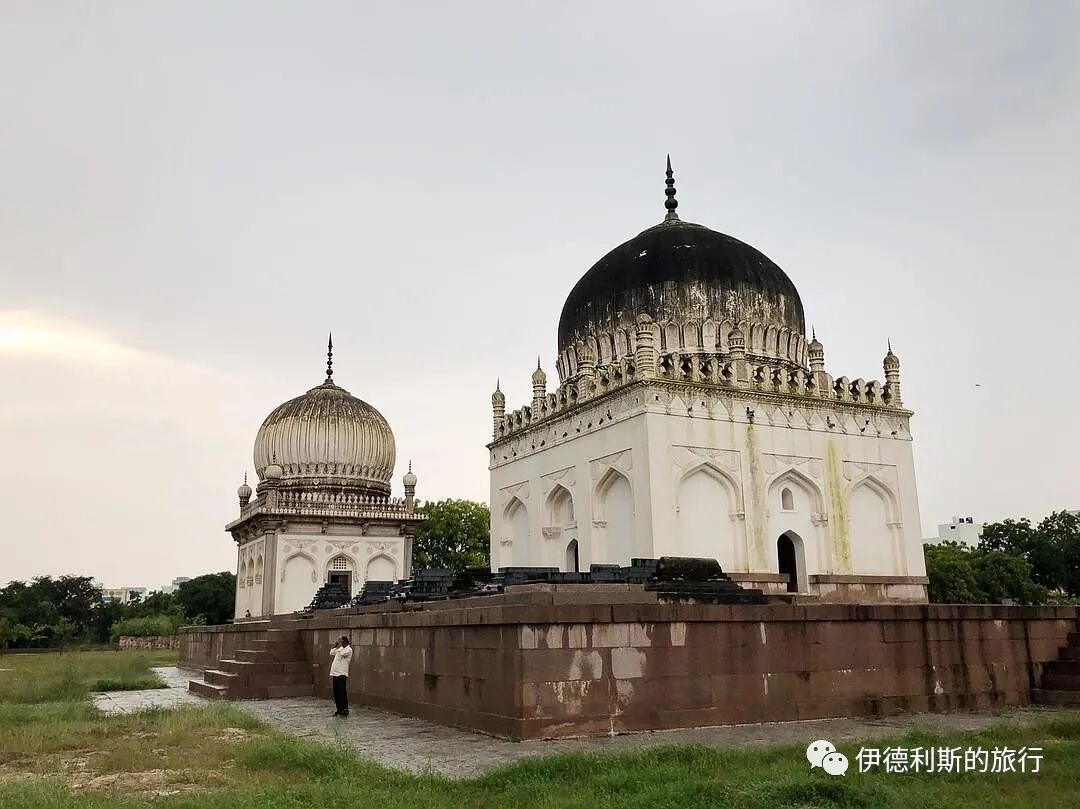
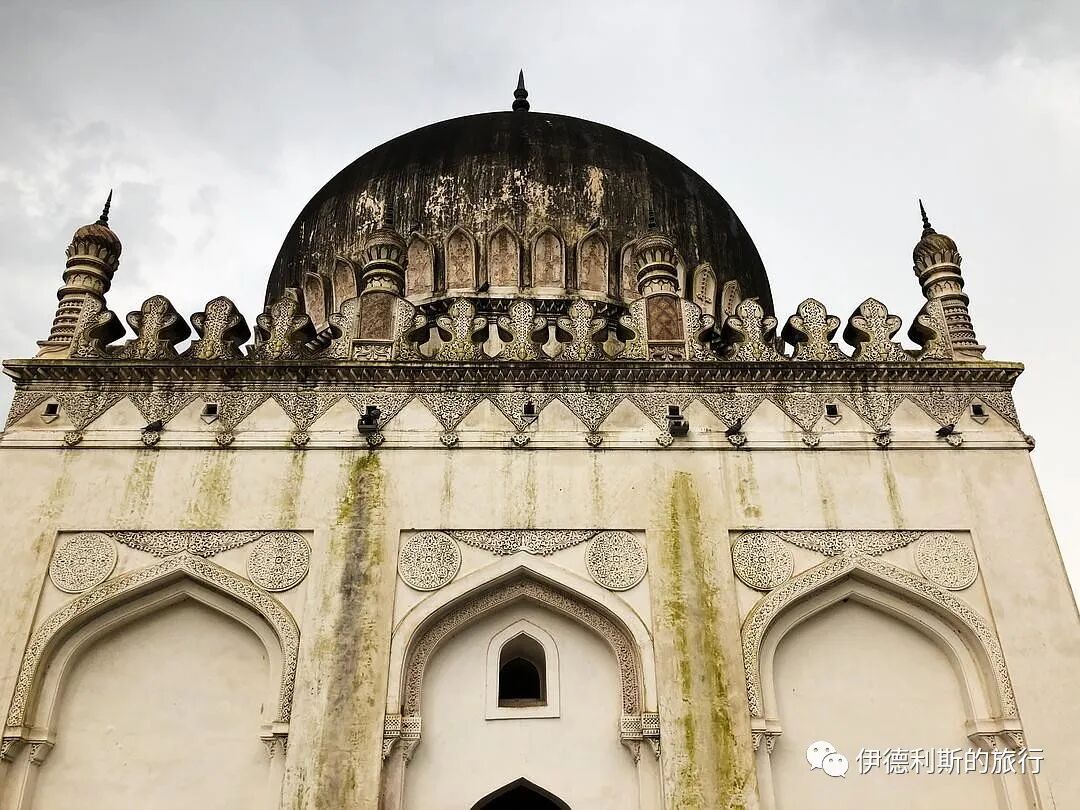
The Qutb Shahi Tombs are located north of Golconda Fort and contain the tombs of the sultans of the Qutb Shahi dynasty and their attached mosques. These tombs feature the typical style of Deccan Plateau Muslim architecture, with a layered structure of a square base and round top emphasized by decorative small towers, and onion domes sitting on lotus-petal bases, representing an organic blend of Persian and Indian architectural styles.
Tomb of the first sultan: 1543
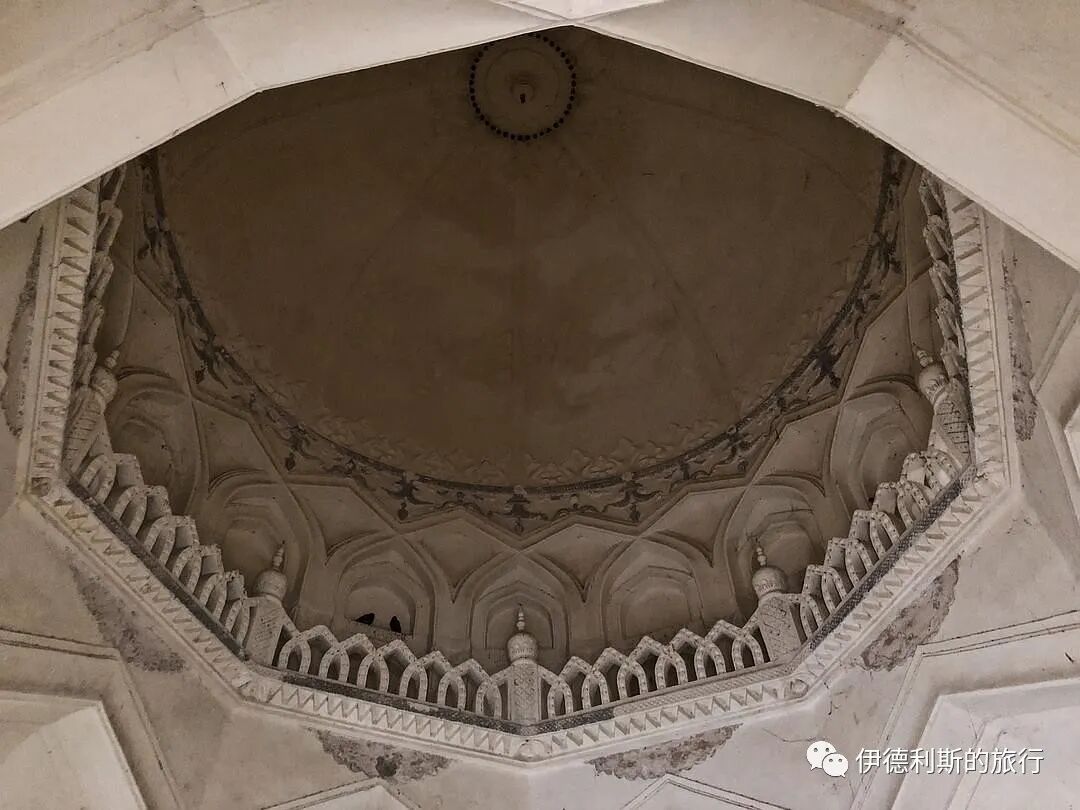
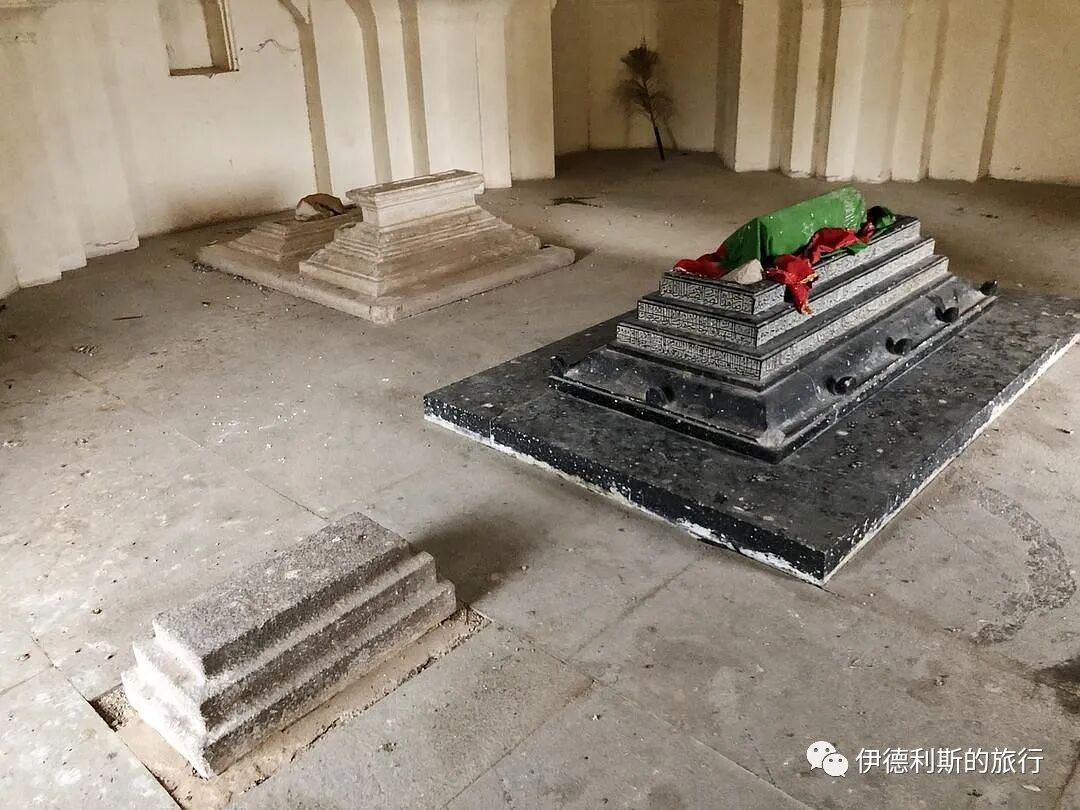
The tomb of Quli Qutb Mulk (reigned 1512–1543), the founder of the Qutb Shahi dynasty, is the earliest one built in the cemetery, and the designs of later tombs were developed based on this one.
Quli was a Turkmen from Hamadan, Iran, and a descendant of Qara Yusuf (reigned 1380–1420), the ruler of the Kara Koyunlu dynasty. In the early 16th century, Quli came to India from Iran with some relatives and friends. They were first in Delhi, then moved south to the Deccan to serve in the court of the Bahmani Sultanate. In 1518, the Bahmani Sultanate broke into five Deccan sultanates, and Quli conquered Golconda Fort to establish the Golconda Sultanate, also known as the Qutb Shahi dynasty.
Tomb of the second sultan: 1550
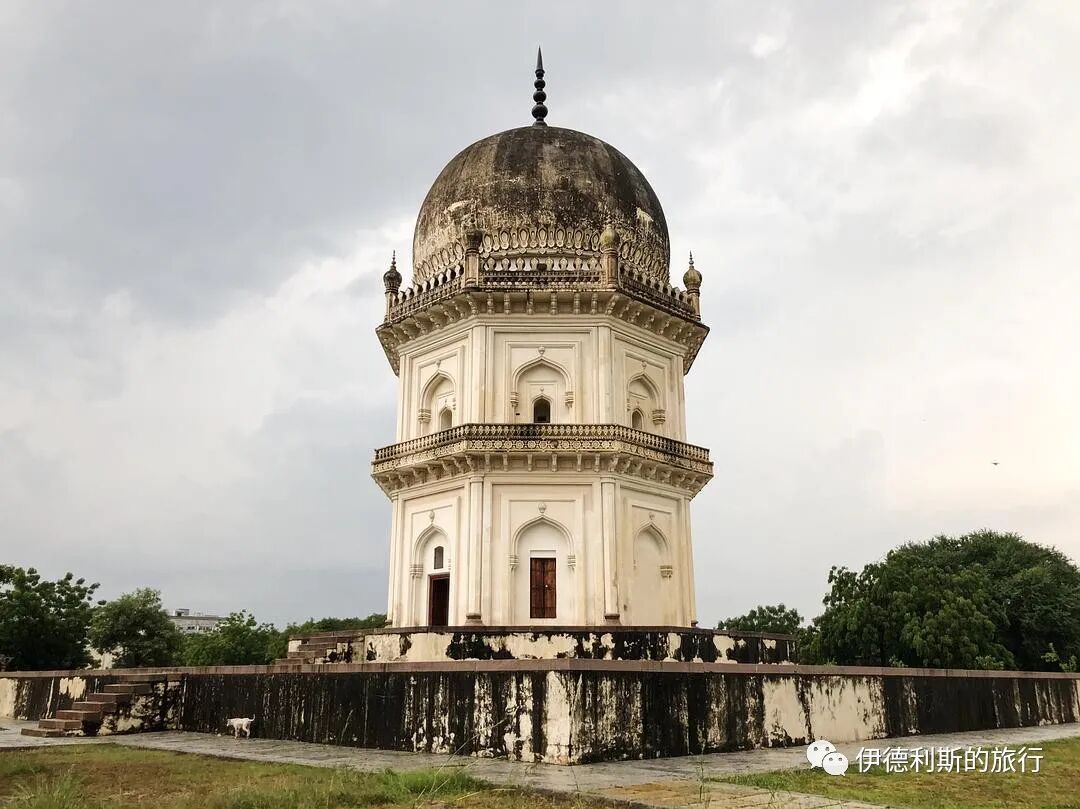
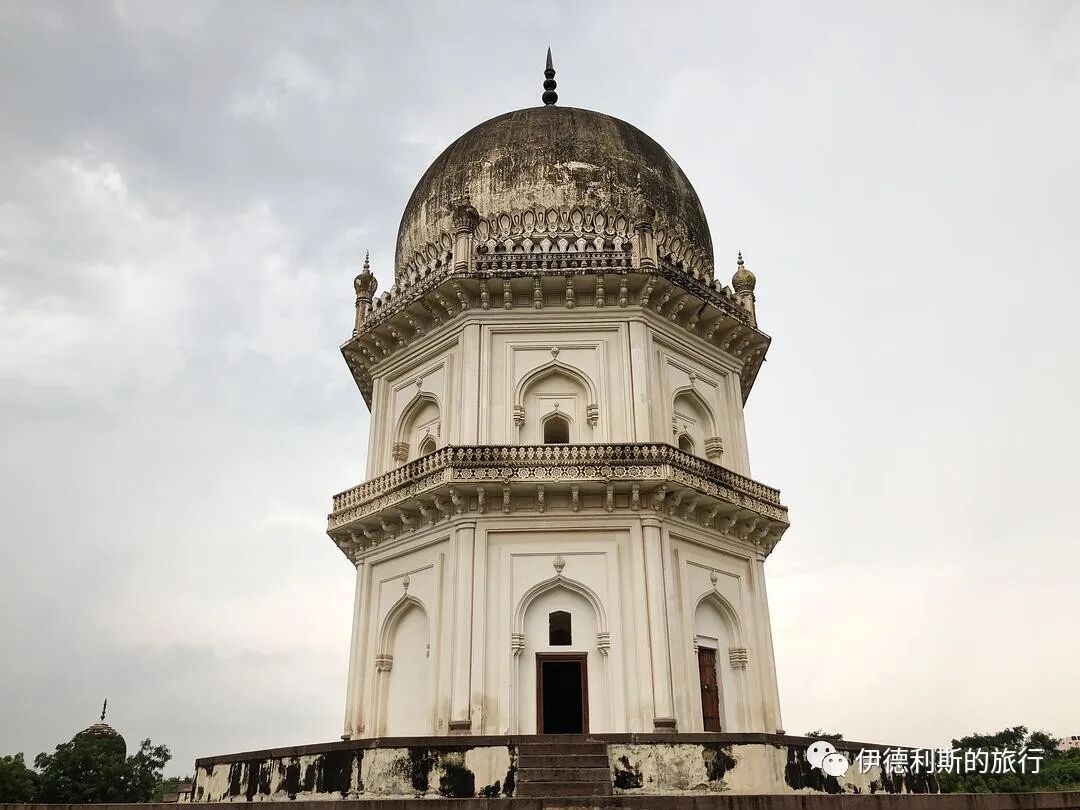
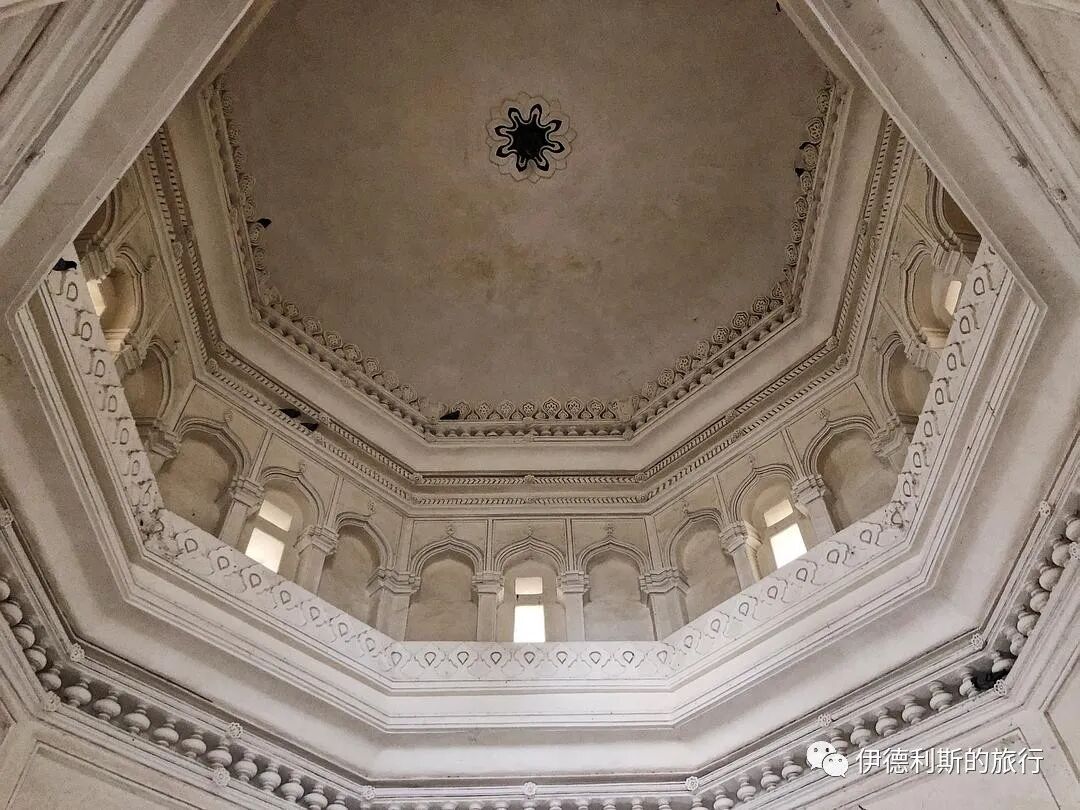
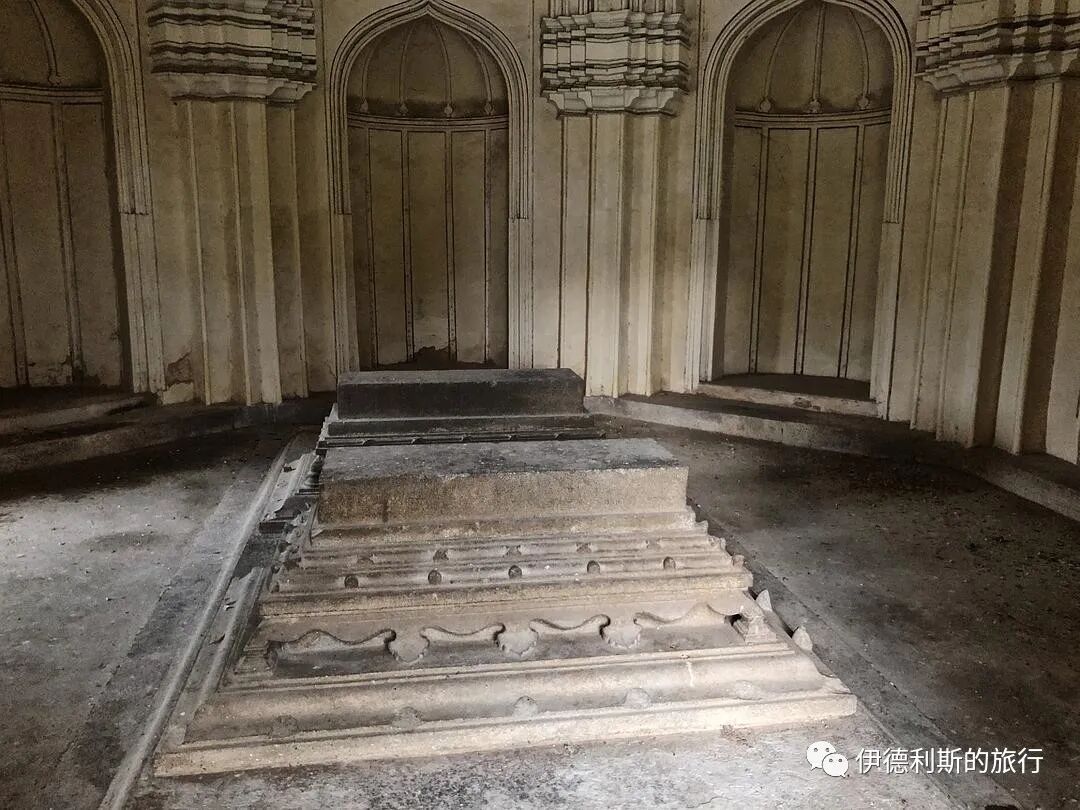
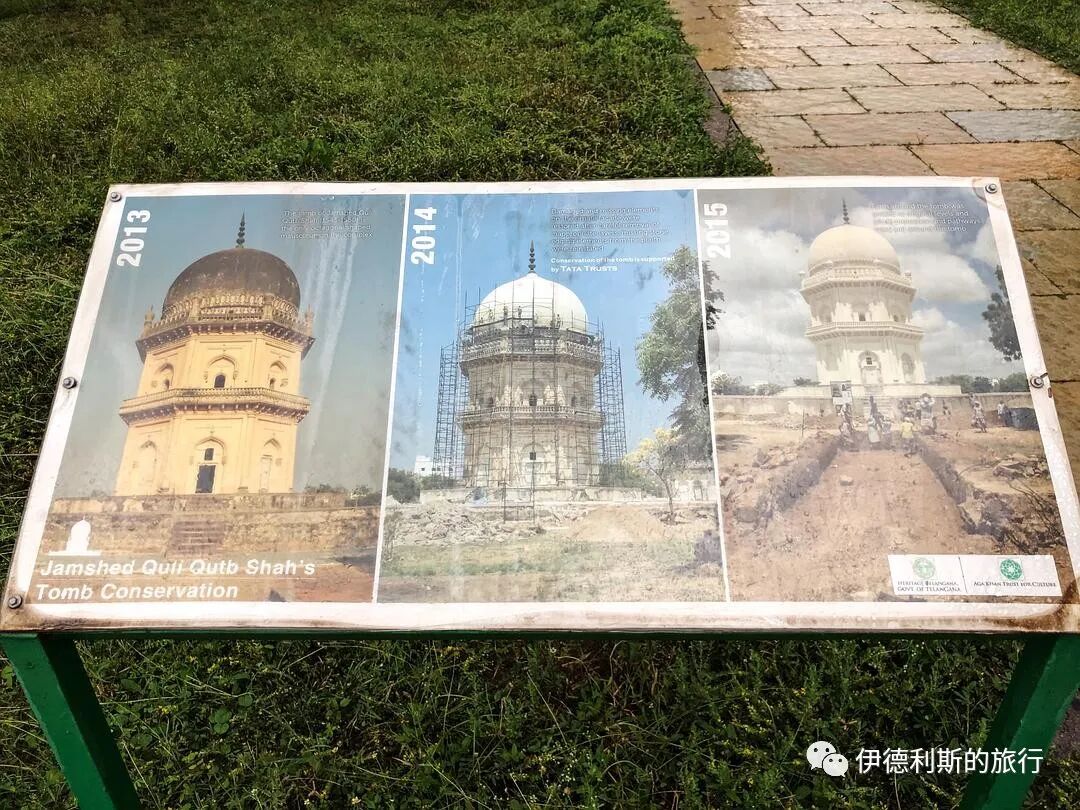
The tomb of Jamsheed Quli Qutb Shah (reigned 1543–1550), the second sultan of the Qutb Shahi dynasty, is the only sultan's tomb in the cemetery that does not use black basalt, and its design, consisting of two levels, is also different from the others.
Jamsheed seized the throne in 1543 after assassinating his father. Few records remain of his reign, other than that it was very cruel. Jamsheed died of illness in 1550 and was buried next to his father's tomb.
Tomb of the third Sultan: 1550.
After the second Sultan, Jamshed, died of illness in 1550, his 7-year-old son, Subhan Quli Qutb Shah, took the throne. However, Subhan's uncle, Ibrahim Quli Qutb Shah, soon rushed back to Golconda Fort to seize the throne. Subhan was deposed and died shortly after.
Subhan's tomb sits on the same platform as his grandfather, the first Sultan Quli Qutb Mulk, and it is the smallest of all the Sultan tombs.
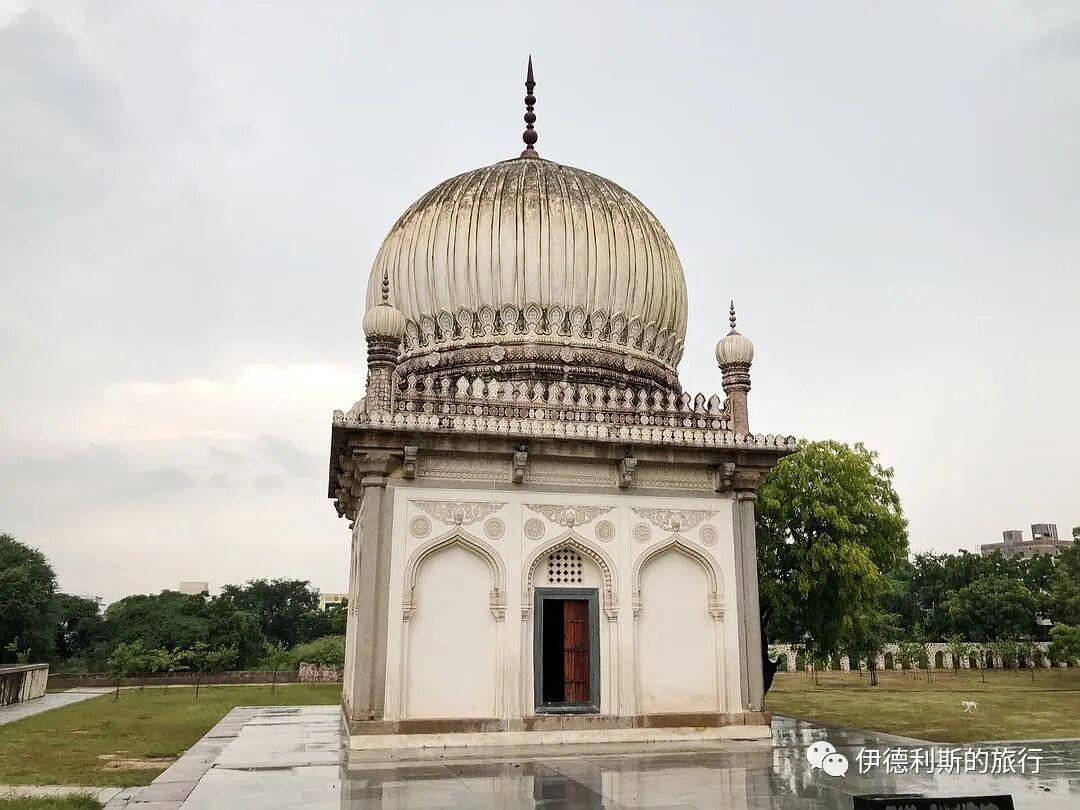
Tomb of the fourth Sultan: 1580.
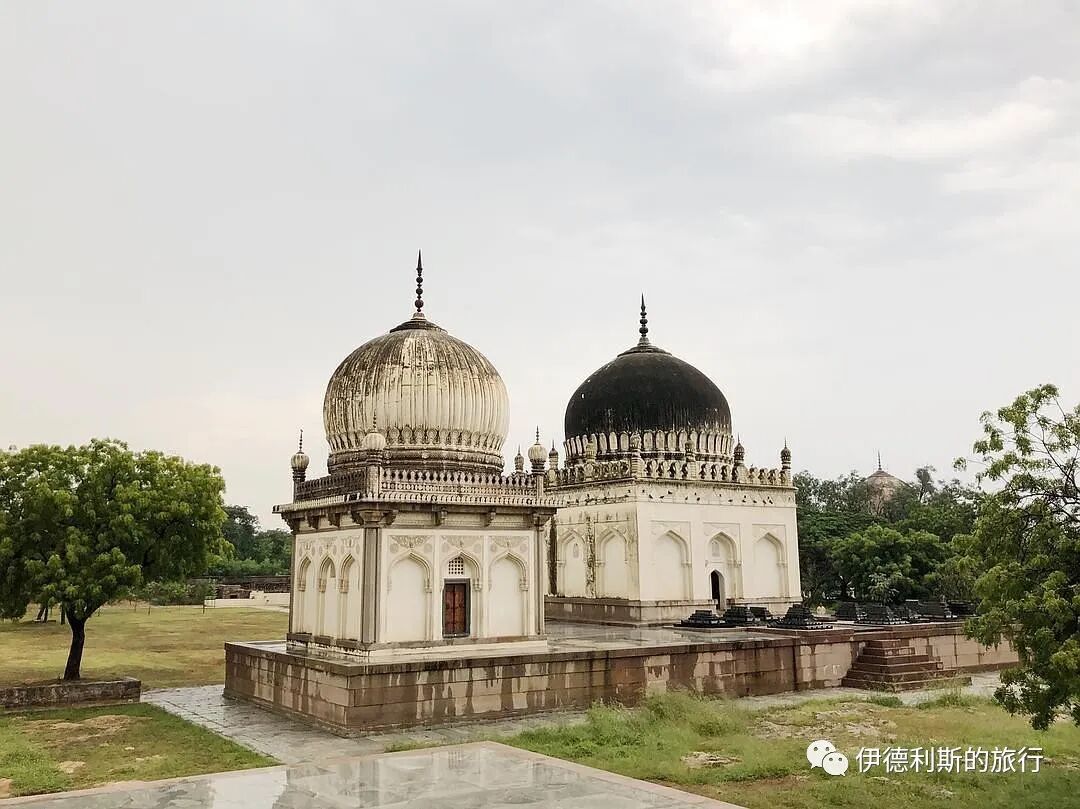
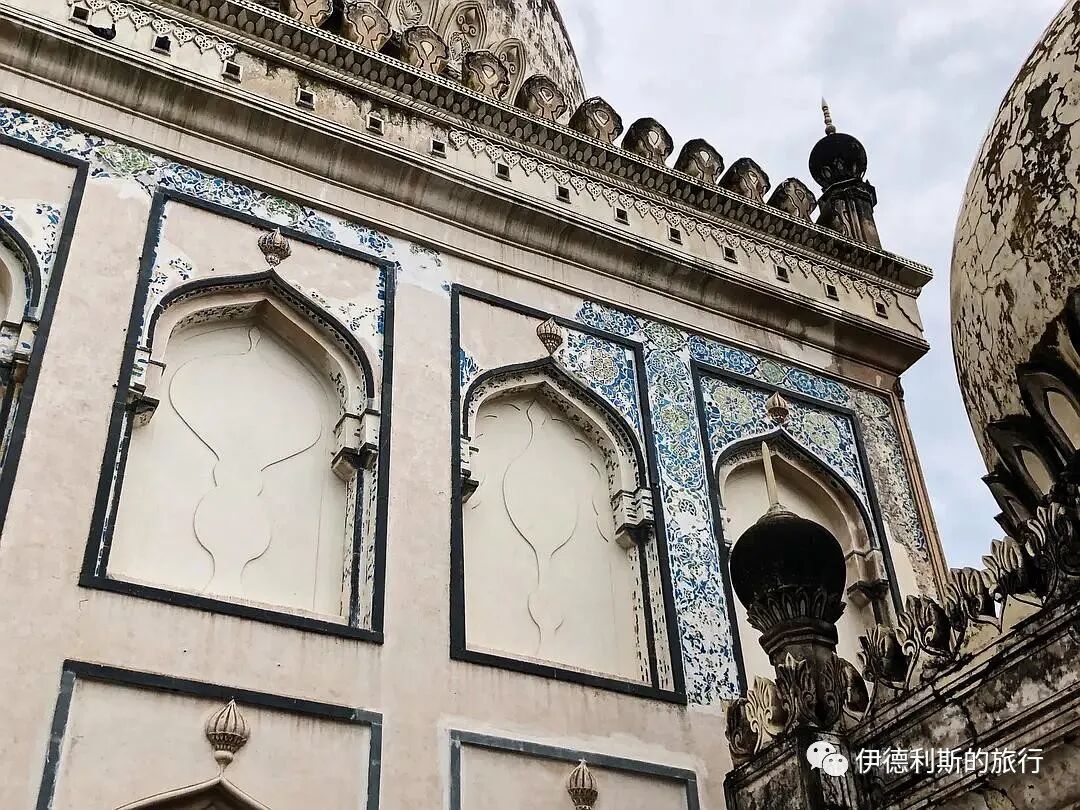
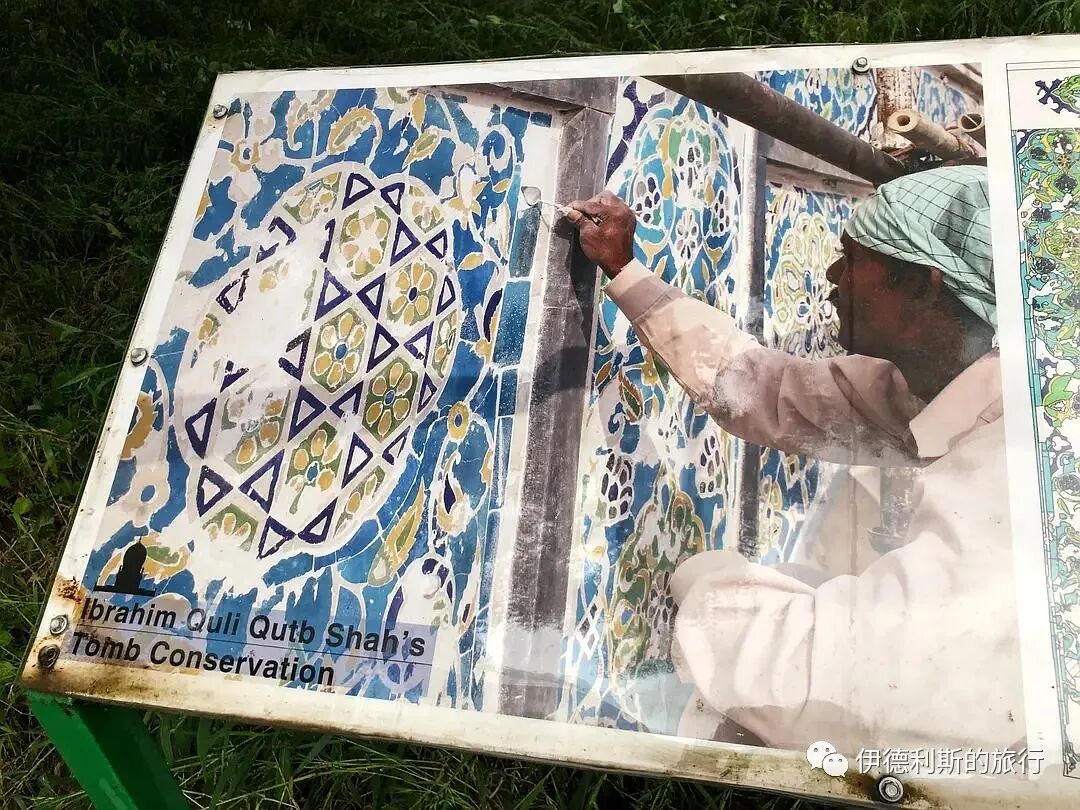
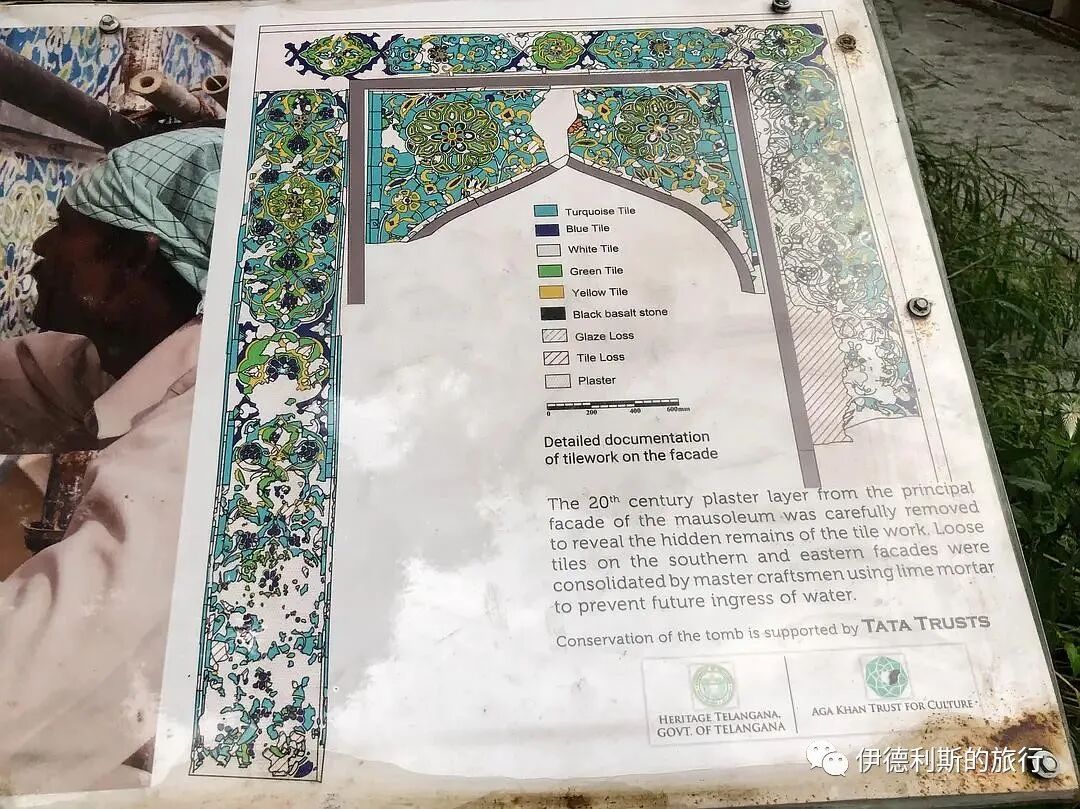
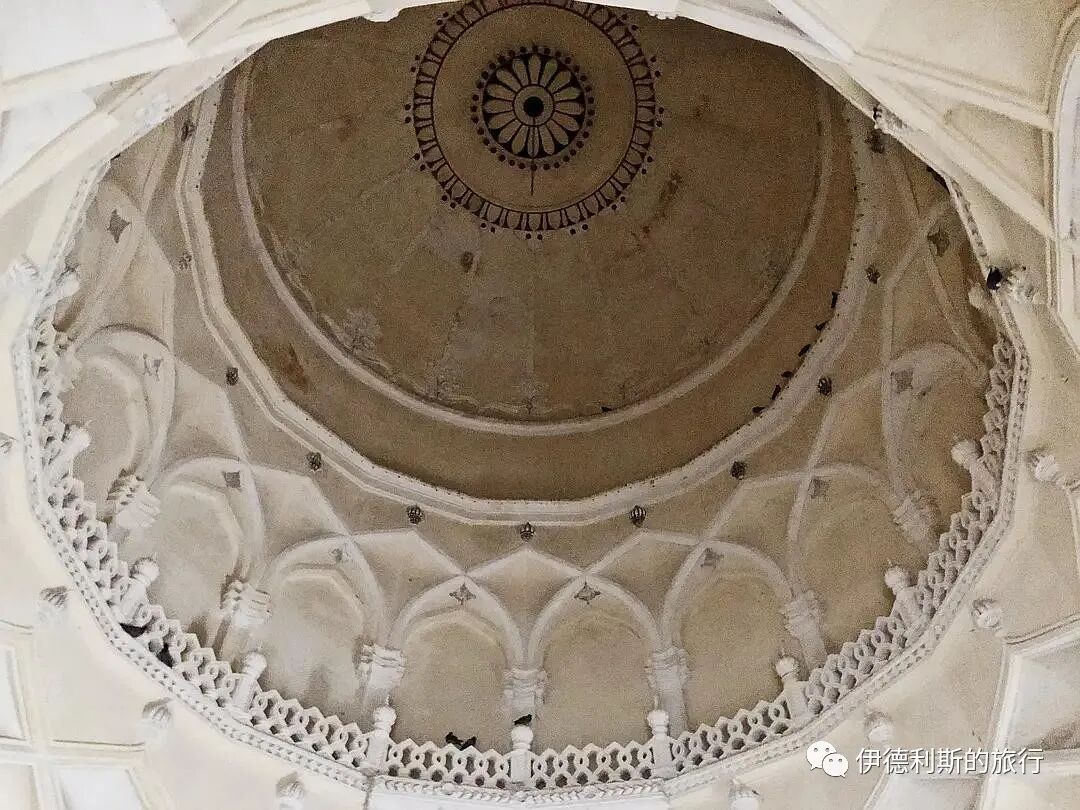
The tomb of the fourth Sultan of the Qutb Shahi dynasty, Ibrahim Quli Qutb Shah (reigned 1550–1580), was built in 1580 and is slightly larger than the first Sultan's tomb. The south wall of the tomb has some rare surviving tile patterns, offering a glimpse into the original style of the Qutb Shahi royal tombs. Inside the tomb are 2 grave stones, and the platform holds 16 grave stones, including those of Ibrahim's 6 sons and 3 daughters.
Ibrahim was the son of Quli Qutb Mulk, the founder of the Qutb Shahi dynasty. In 1543, Quli was killed by his other son, Jamshed, who then began arresting and harming his other brothers. Ibrahim managed to escape Golconda and took refuge in the Vijayanagara Empire of South India. Ibrahim lived in the Vijayanagara Empire as a guest of honor for 7 years.
During his time in the Vijayanagara Empire, Ibrahim was deeply influenced by South Indian Telugu culture. He wore Telugu clothing, ate Telugu-style food, developed a strong interest in the Telugu language, and gave himself the Telugu name Malki BhaRama.
In 1550, the second Sultan of the Qutb Shahi dynasty, Jamshed, died of illness, and his son Subhan took the throne. Ibrahim immediately returned to Golconda Fort to seize the throne and became the fourth Sultan. During his reign, Ibrahim appointed Hindus as ministers, hired many Telugu poets, and also sponsored many Arabic and Persian poets.
In 1565, Ibrahim betrayed the Vijayanagara Empire that had once sheltered him, joining four other Deccan Sultanates to launch an attack against it. On January 23, the two sides fought a decisive battle at Talikota, where the Vijayanagara king who had once helped Ibrahim was defeated and killed. The allied Sultanate forces then stormed the capital of the Vijayanagara Empire, and the city where Ibrahim had lived happily and safely for 7 years was completely burned down.
After this, Ibrahim continued to expand the territory of the Qutb Shahi dynasty until he died of illness in 1580.
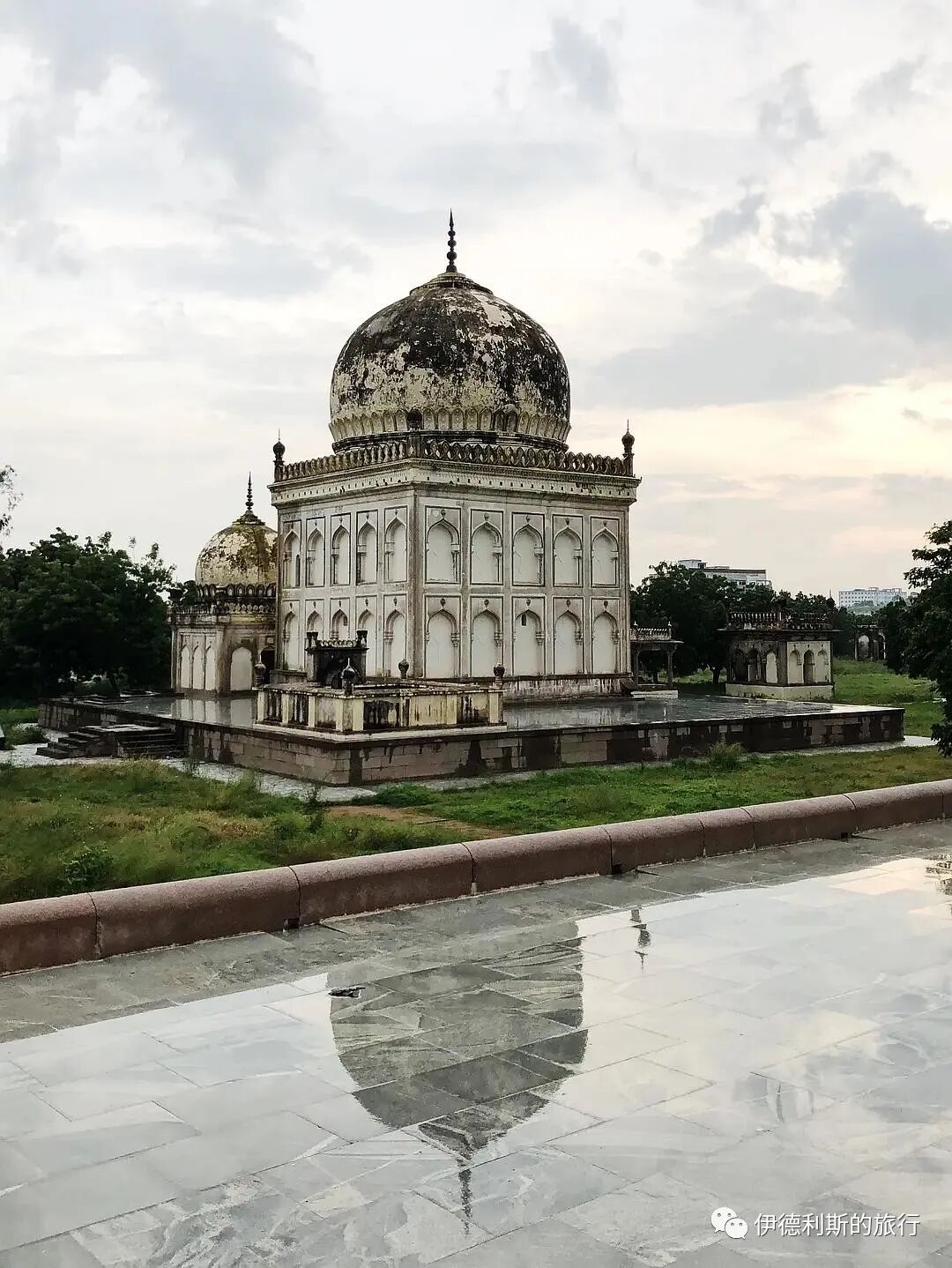
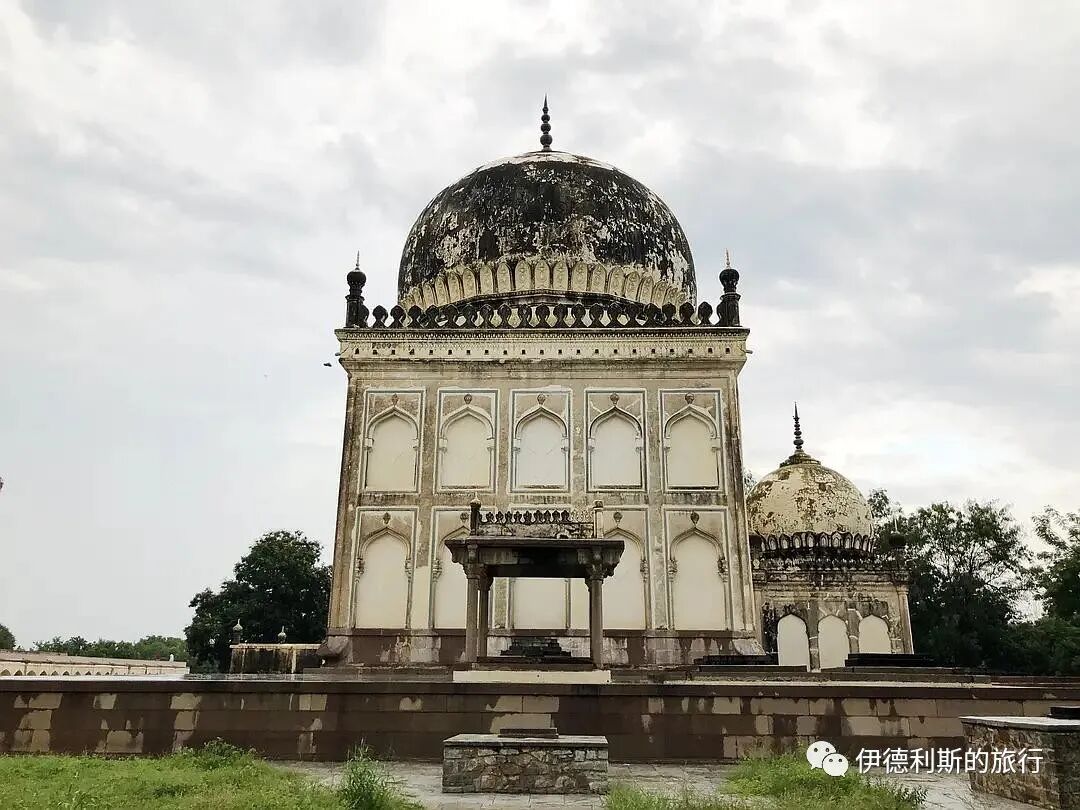
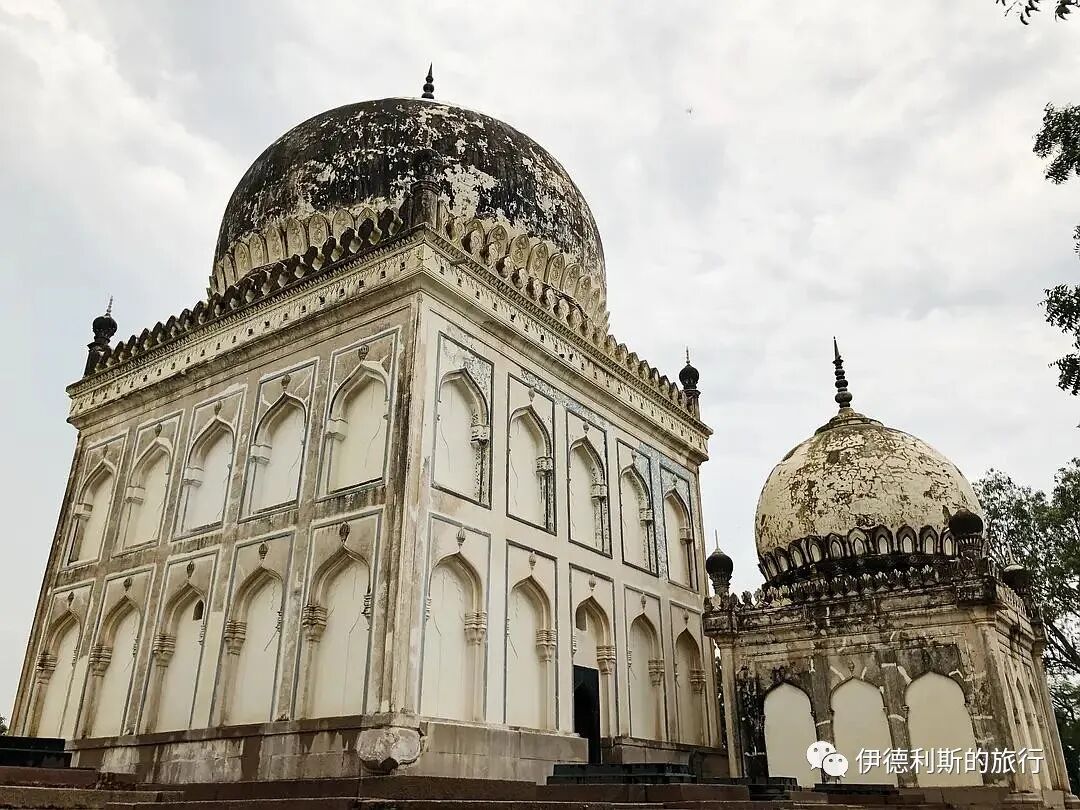
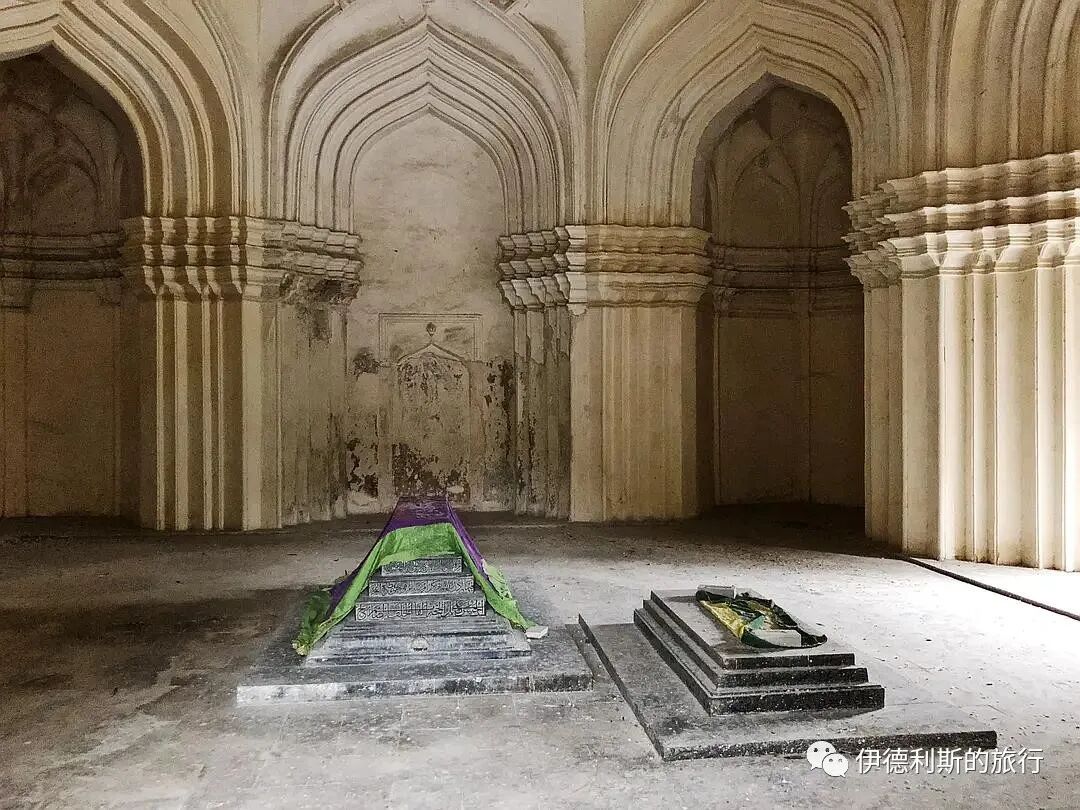
Tomb of the fifth Sultan: 1602.
The tomb of the fifth Sultan of the Qutb Shahi dynasty, Muhammad Quli Qutb Shah (reigned 1580–1611), is the largest in the Qutb Shahi tomb complex and is built on a platform 65 meters long and 4 meters high.
To solve the water shortage at Golconda Fort, Muhammad Quli founded the city of Hyderabad on the south bank of the Musi River, east of the fort, in 1591. Landmark buildings in the city commissioned by Muhammad Quli, including the Charminar gate and the Makkah Masjid mosque, still stand today.
Muhammad Quli was also an accomplished poet who wrote in Persian, Telugu, and Urdu, leaving behind a collection of poems called Kulliyat-e-Quli Qutub Shah. His Urdu poetry, written in the Persian Diwan style, made a major contribution to the development of Urdu literature.
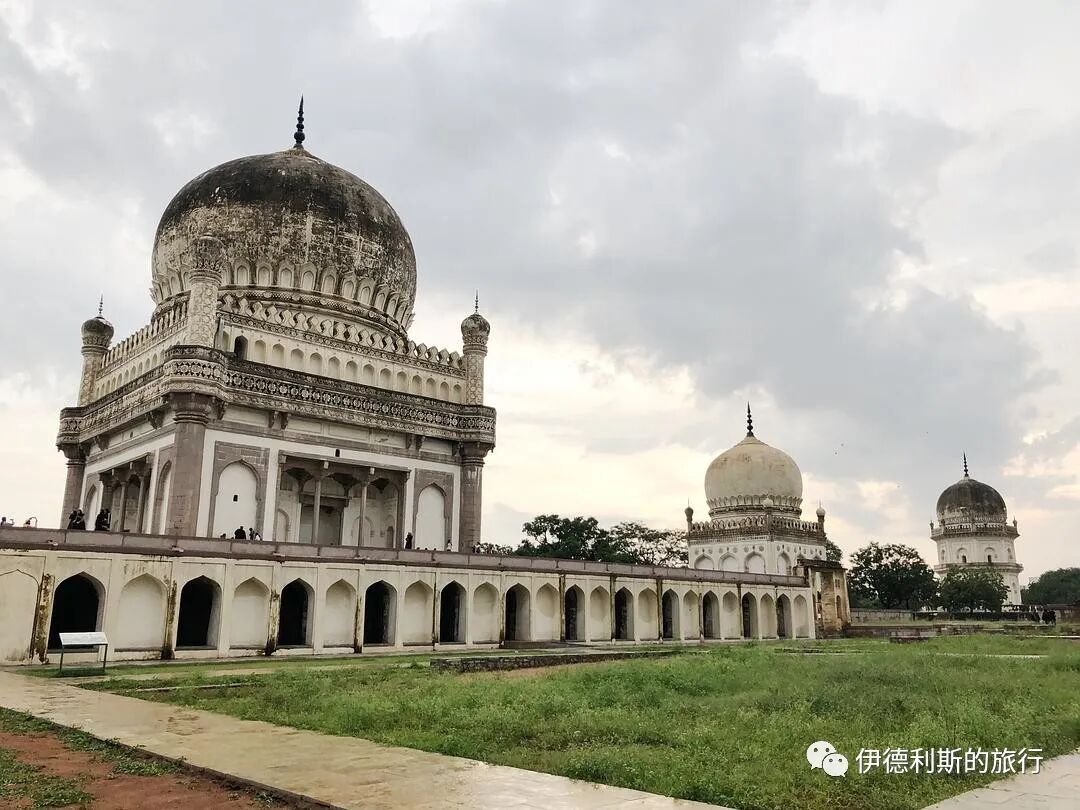
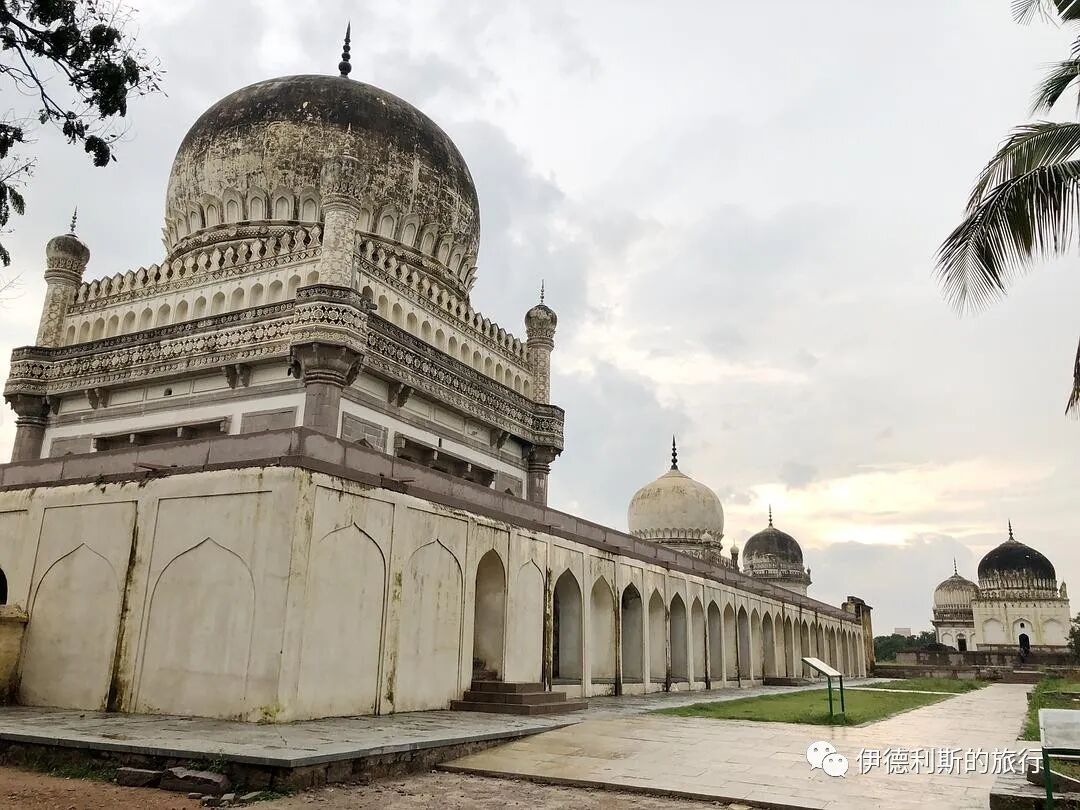
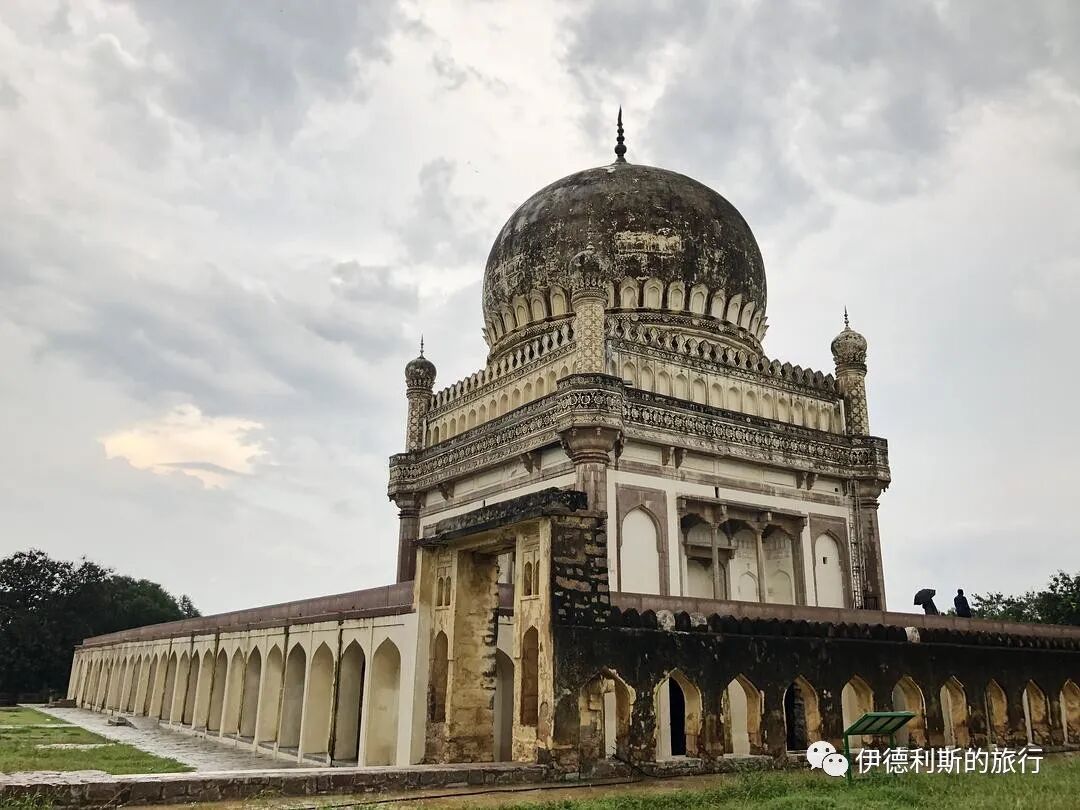
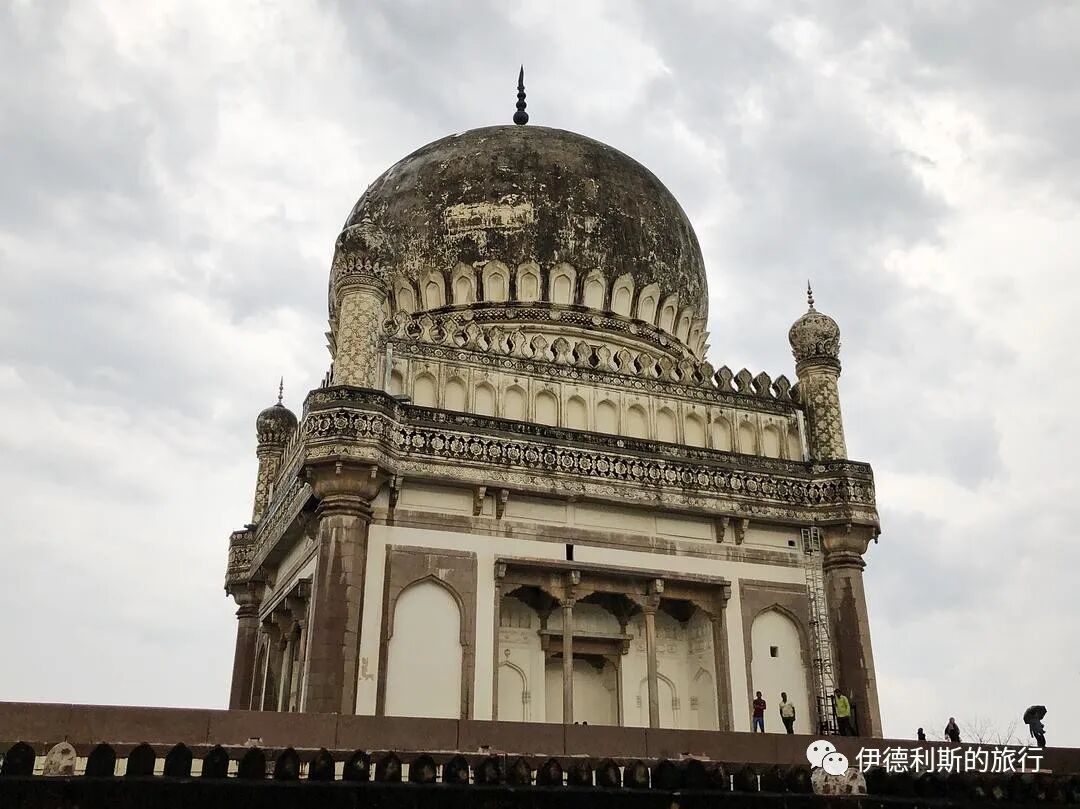
Tomb of the Sixth Sultan: 1626
The tomb of the sixth sultan of the Qutb Shahi dynasty, Muhammad Qutb Shah (reigned 1611-1626), was built in 1626 and is another large tomb in the cemetery. The outer walls of the tomb were once covered in tiles, but they are no longer there.
Muhammad was the nephew of the fifth sultan, Muhammad Quli. He married Muhammad Quli's only daughter, Hayat Baksh Begum, in 1607 and was later named his successor. During Muhammad's reign, as the Mughal Empire grew stronger in northern and central India, the Qutb Shahi dynasty formed alliances with Shah Abbas the Great of the Safavid dynasty in Persia and their Muslim neighbor to the west, the Adil Shahi dynasty. The first history book of the Qutb Shahi dynasty was also compiled during his reign.
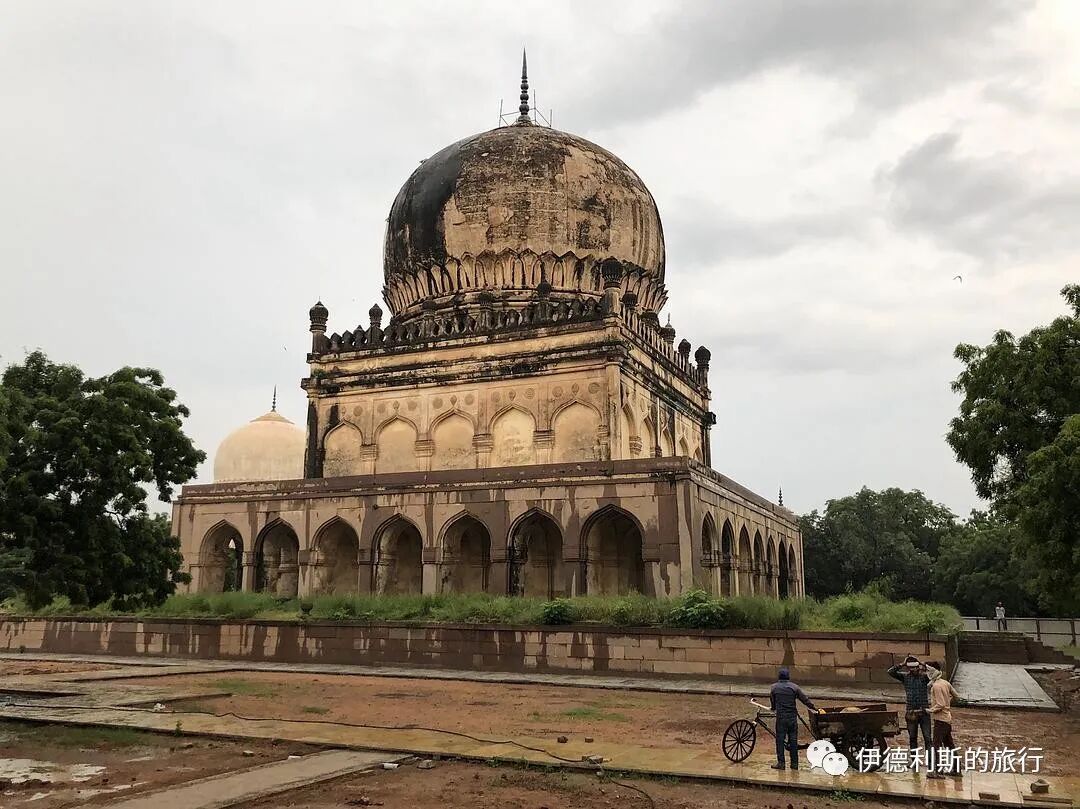
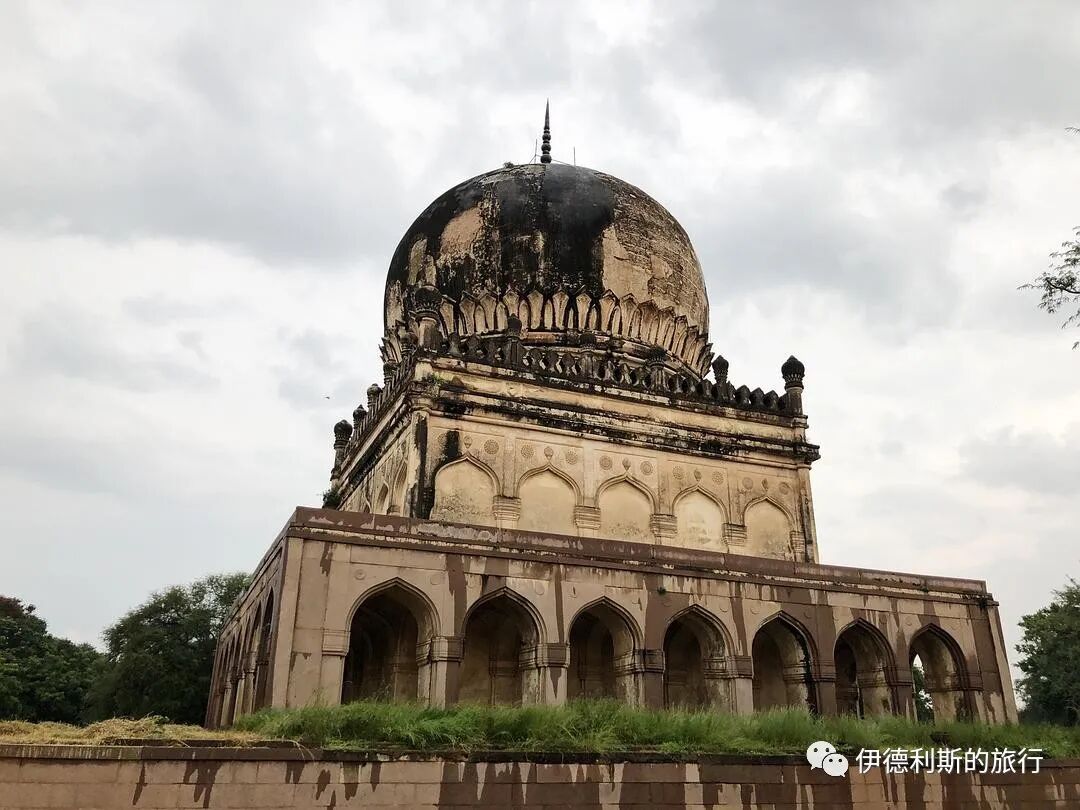
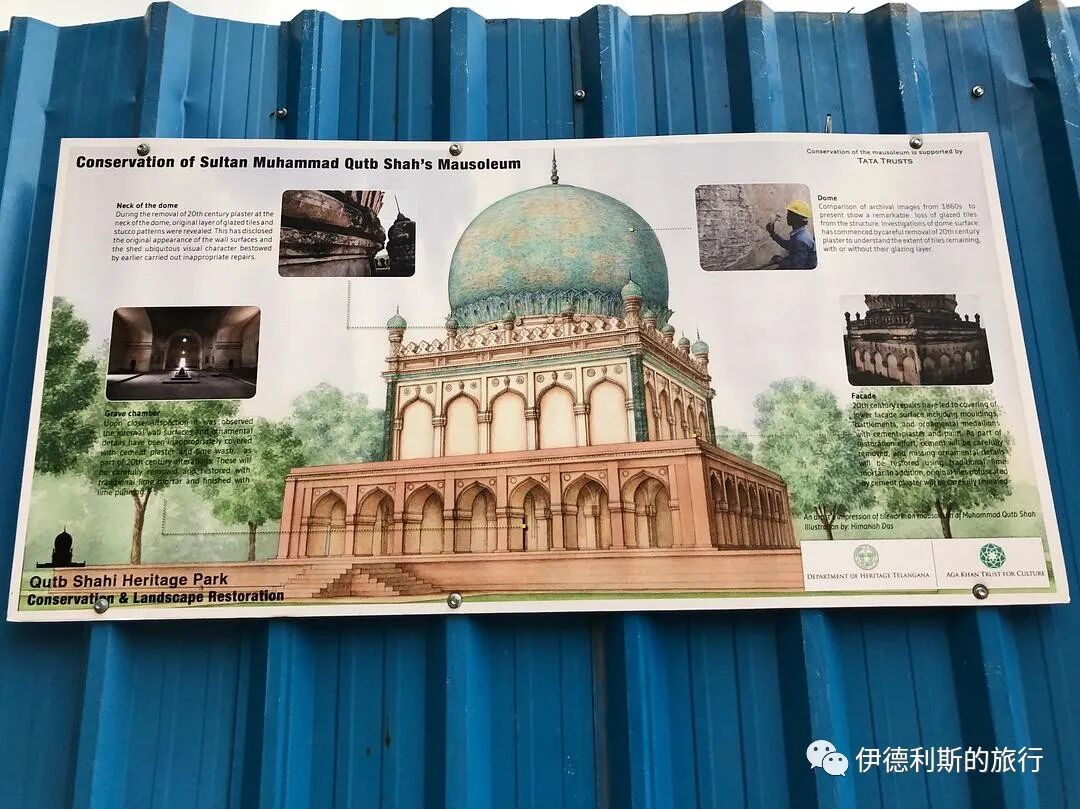
Tomb of the Sixth Sultan's Queen: 1667
Hayat Baksh Begum was the only daughter of the fifth sultan, Muhammad Quli, the wife of the sixth sultan, Muhammad, and the mother of the seventh sultan, Abdullah. She was affectionately known as Ma Saheba (revered mother). Her tomb is the largest tomb for a woman in the cemetery and follows the same design as her husband Muhammad's tomb.
After Muhammad died in 1626, his 12-year-old son Abdullah succeeded him. Because Abdullah was not yet an adult, Hayat Bakshi ruled the country as regent until he turned 18. During her rule, Hayat Bakshi continued Muhammad's strategy of maintaining peace with neighboring countries and avoiding conflict with the Mughal Empire.
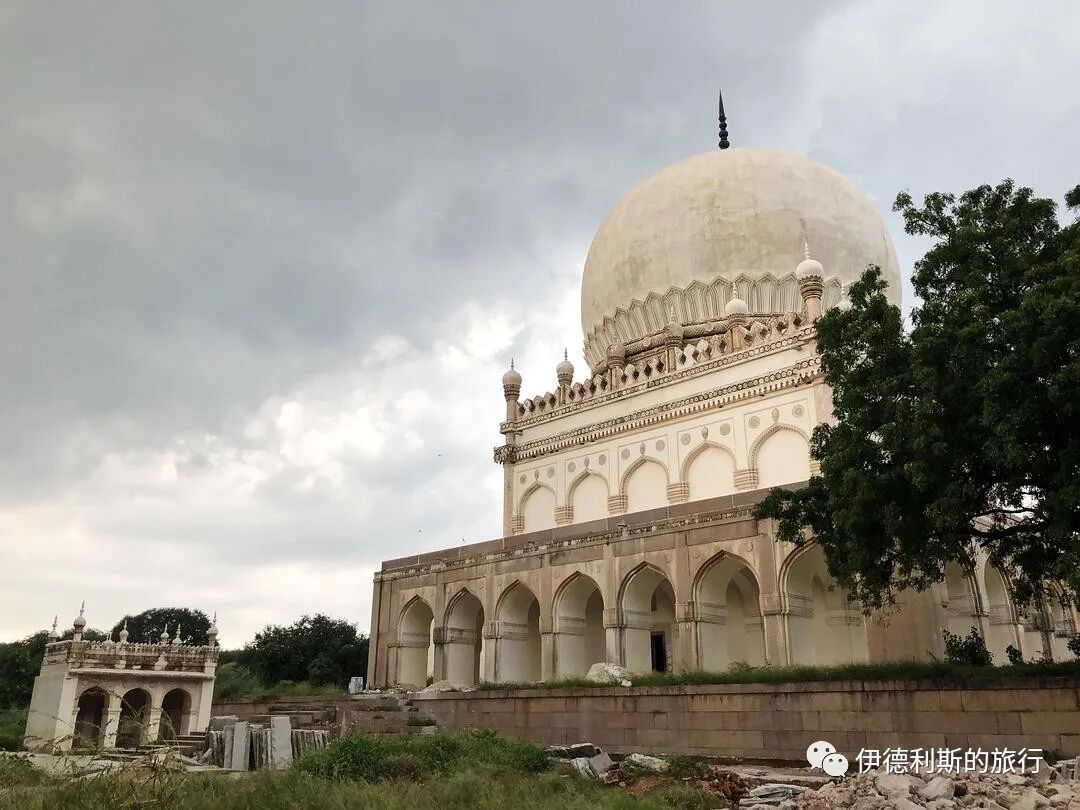
Tomb of the Sixth Sultan's Sister
The tomb of Fatima Sultan, sister of the sixth sultan Muhammad, is on the east side of the cemetery.
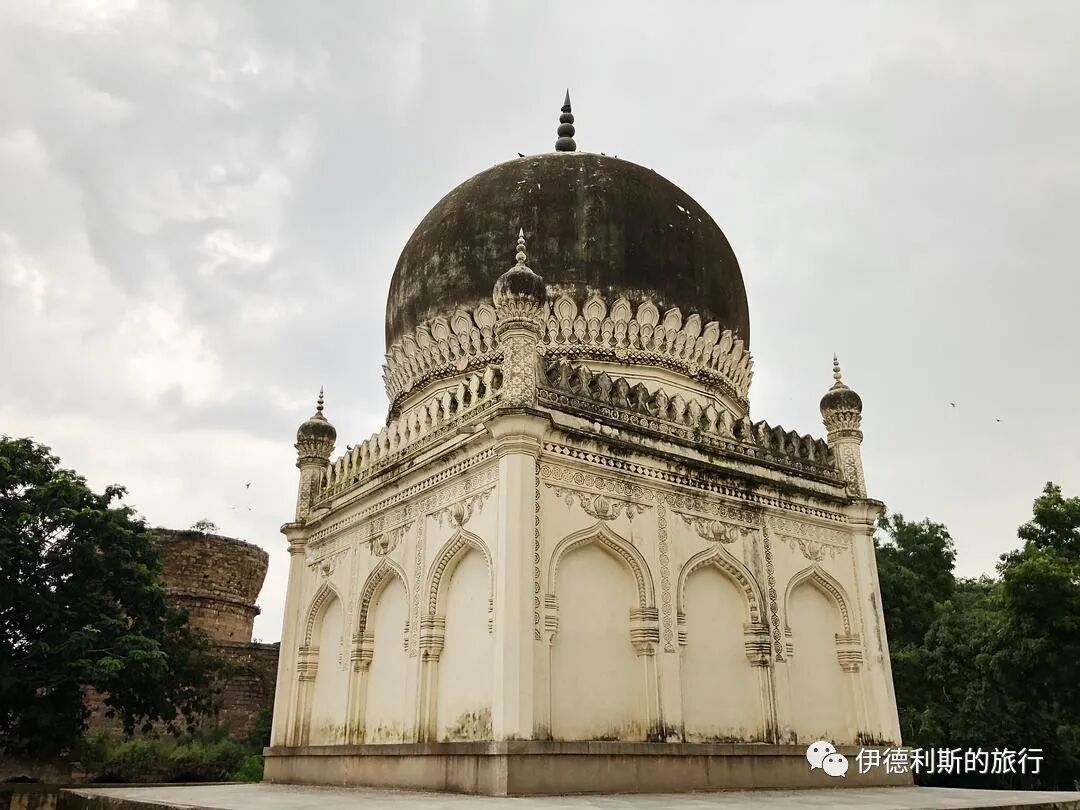
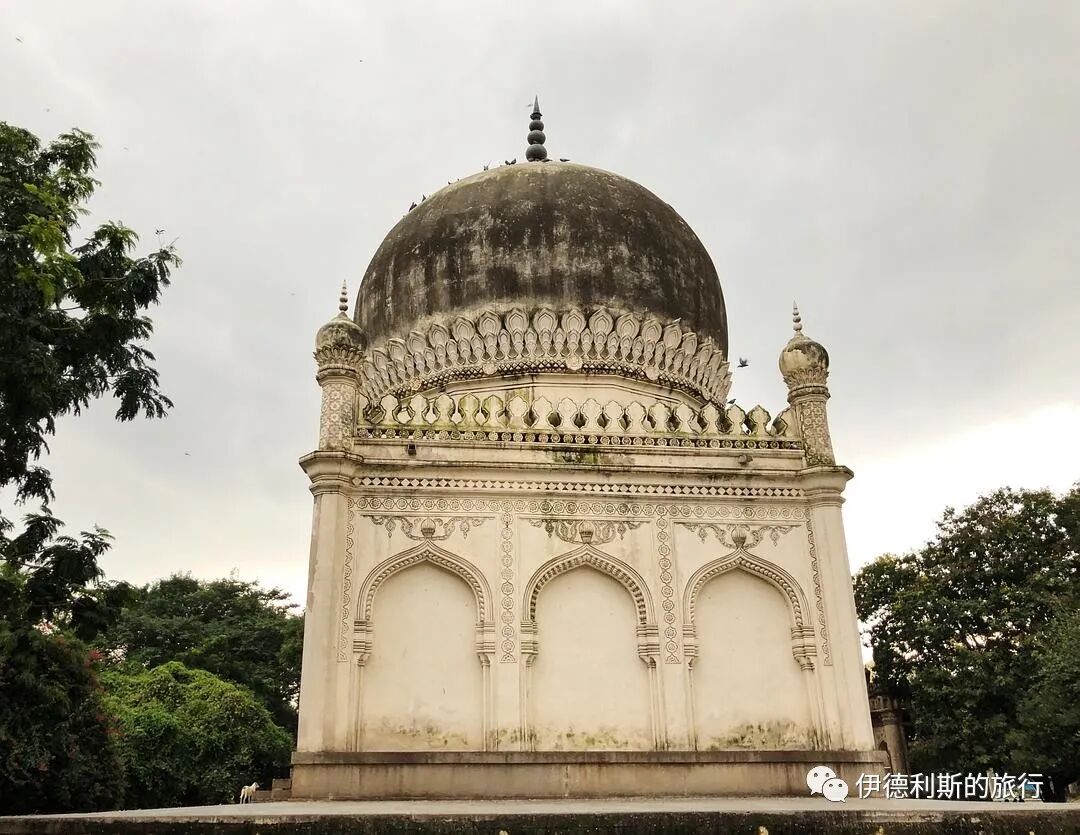
Tomb of the Sixth Sultan's Granddaughter
The tomb of Kulthoom, granddaughter of the sixth sultan Muhammad, is on the west side of the fifth sultan Muhammad Quli's tomb.
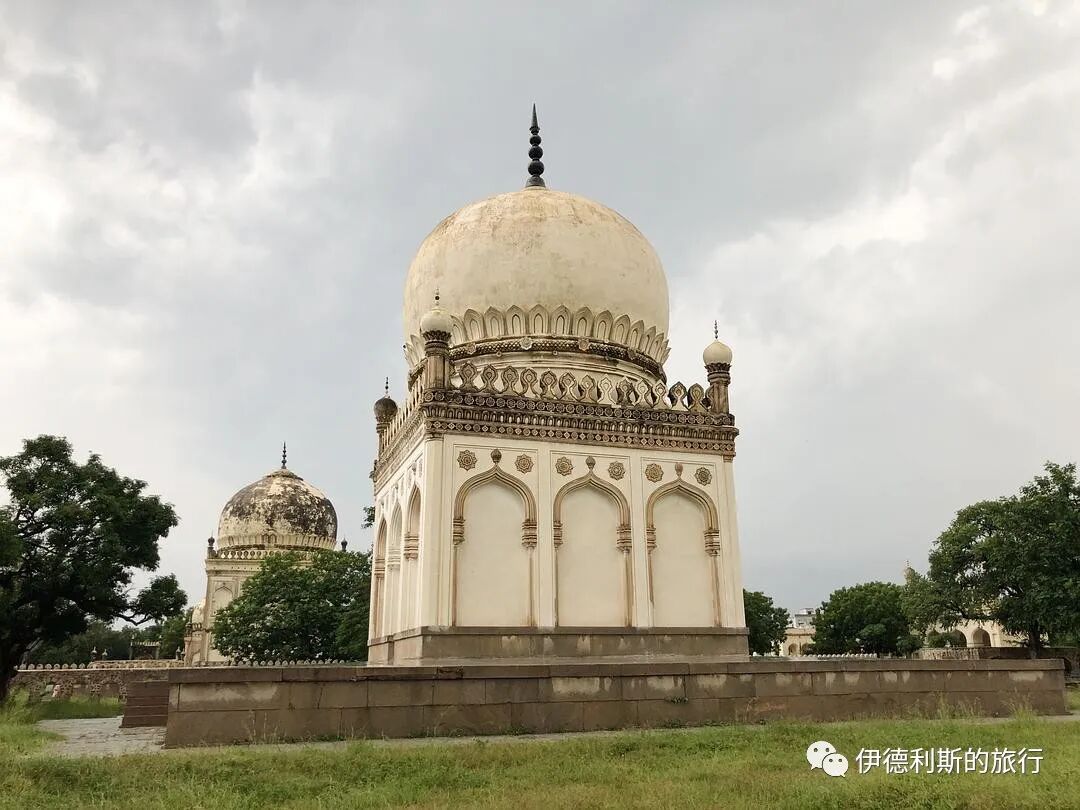
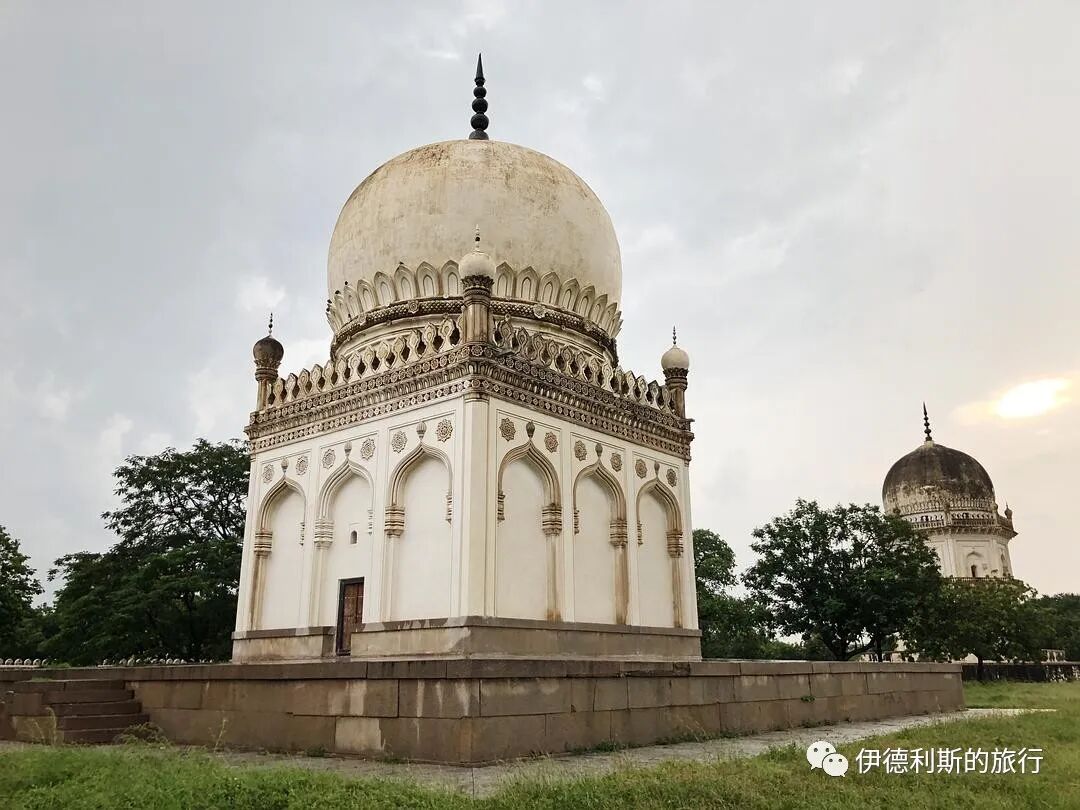
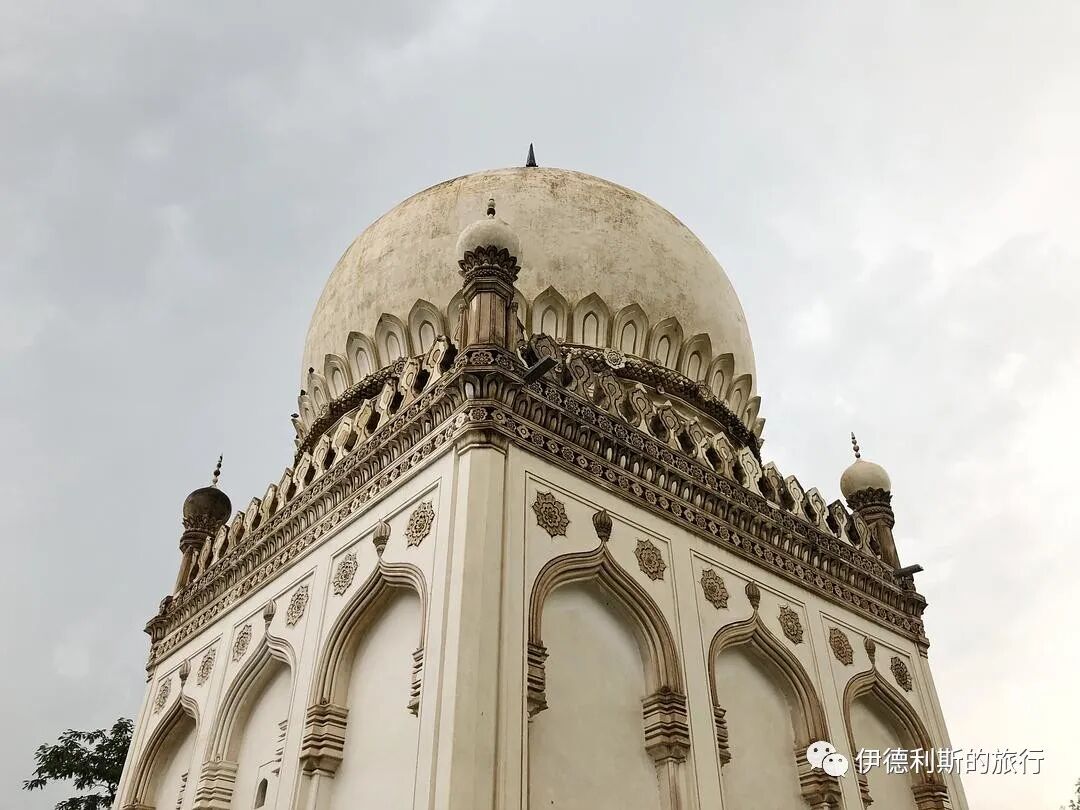
Tomb of the Seventh Sultan: 1672
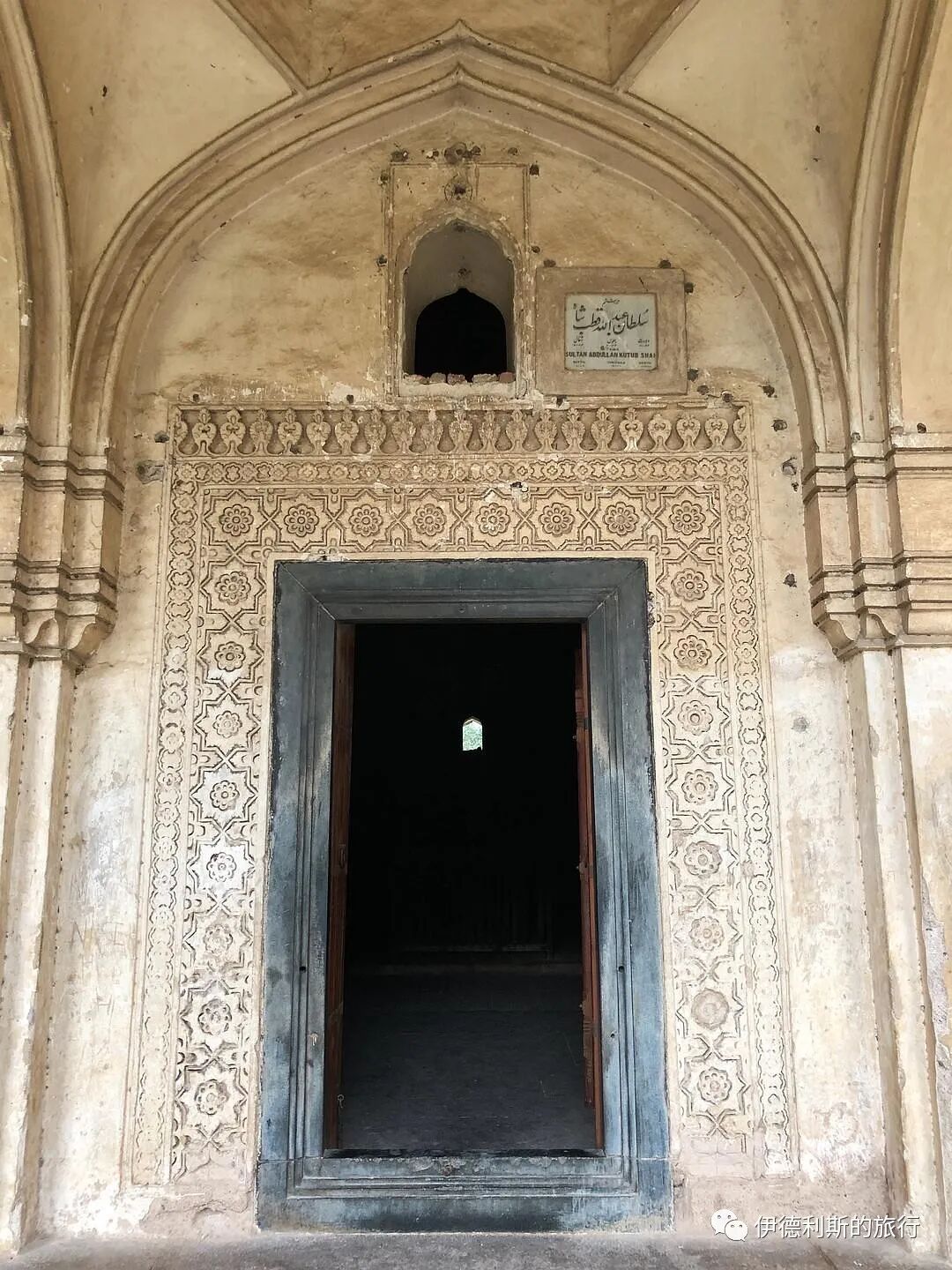
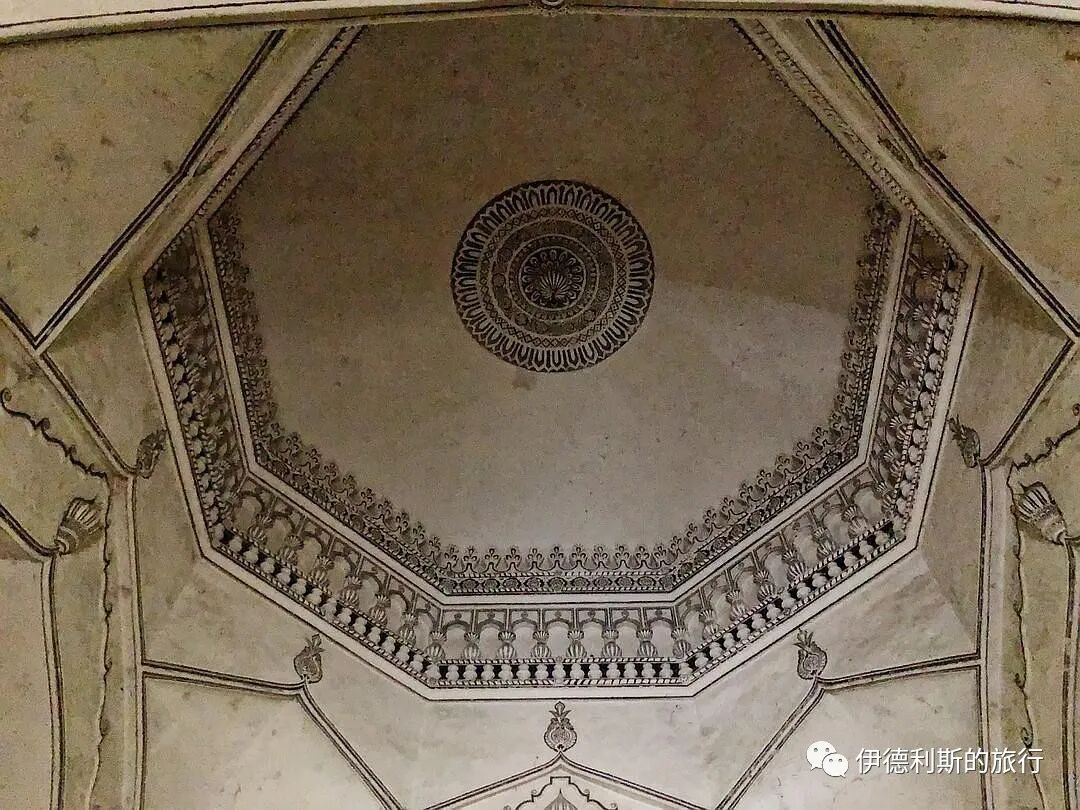
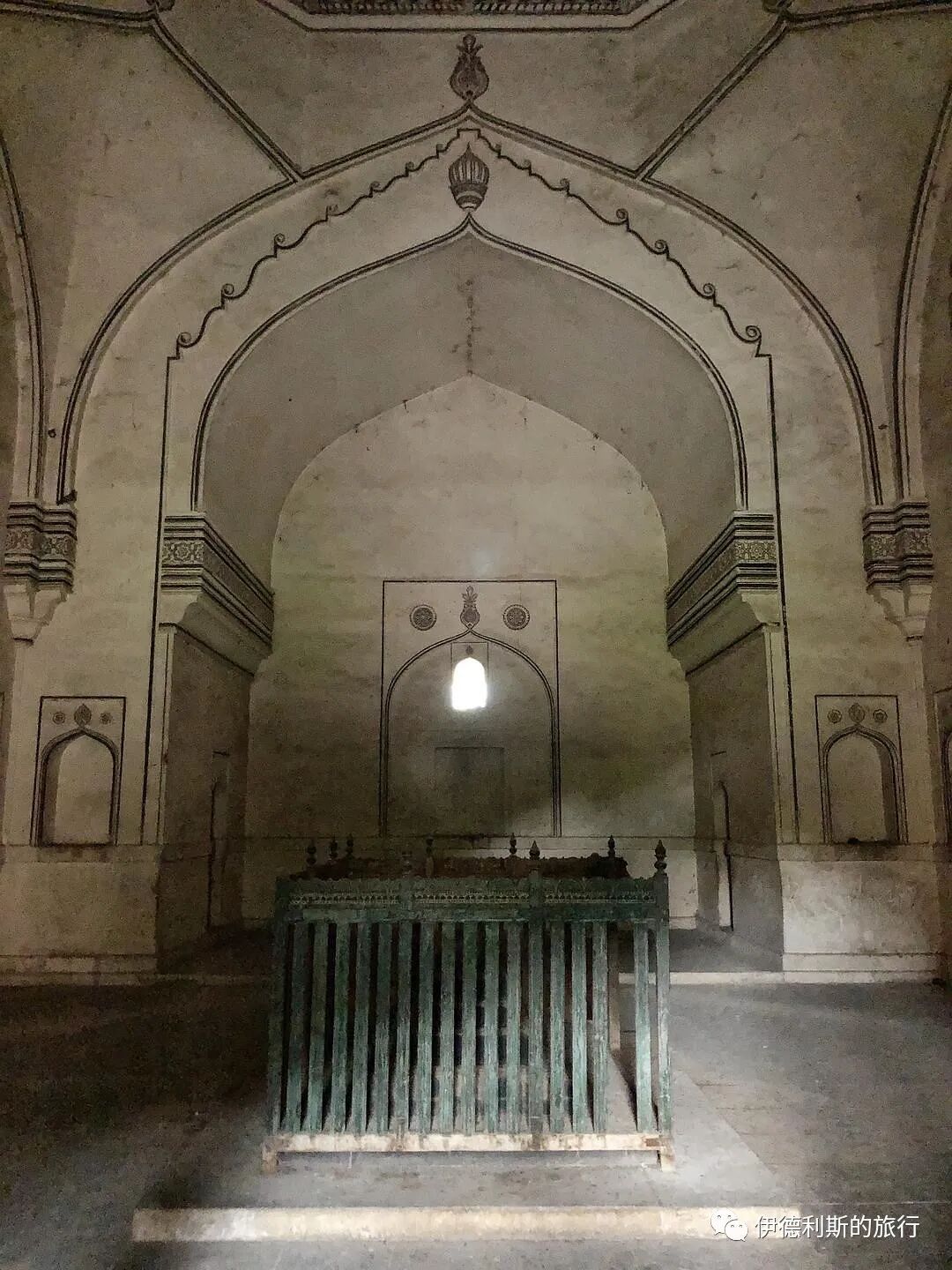
The tomb of the seventh sultan of the Qutb Shahi dynasty, Abdullah Qutb Shah (reigned 1626-1672), is located on the outermost edge of the Qutb Shahi cemetery and is the last sultan's tomb built there.
Abdullah was fluent in many languages and loved poetry and music. He once invited Kshetrayya, the most famous Telugu poet and musician in South India at the time, to his court, but his reign was filled with sorrow.
Abdullah finally defeated the Hindu Vijayanagara Empire in South India in 1652, but he was soon defeated by the Mughal prince and Deccan governor, Aurangzeb. In 1656, Aurangzeb attacked Hyderabad and trapped Abdullah inside Golconda Fort, but he had to pull back after the Mughal Emperor Shah Jahan stepped in. If Aurangzeb had stayed in the Deccan for one more year, he likely would have convinced his father to conquer the Qutb Shahi dynasty. However, Shah Jahan fell ill in 1657, and Aurangzeb got caught up in the war for the throne, which allowed the Qutb Shahi dynasty to survive for another 30 years.
When Aurangzeb besieged Golconda Fort in 1656, Abdullah married his daughter Padshah Bibi to Aurangzeb’s eldest son, Muhammad Sultan, and named Muhammad as the heir to the Qutb Shahi dynasty. But after the war of succession broke out in the Mughal Empire in 1657, Muhammad joined his uncle Shah Shuja’s army, and his father imprisoned him in 1660.
After Abdullah died in 1672, he was buried in the Qutb Shahi Tombs, and his successor was his other son-in-law, the final sultan, Abul Hasan Qutb Shah. Because Abul Hasan was eventually captured by the Mughal dynasty and buried near Aurangabad, Abdullah’s tomb became the last sultan’s tomb in the Qutb Shahi Tombs.
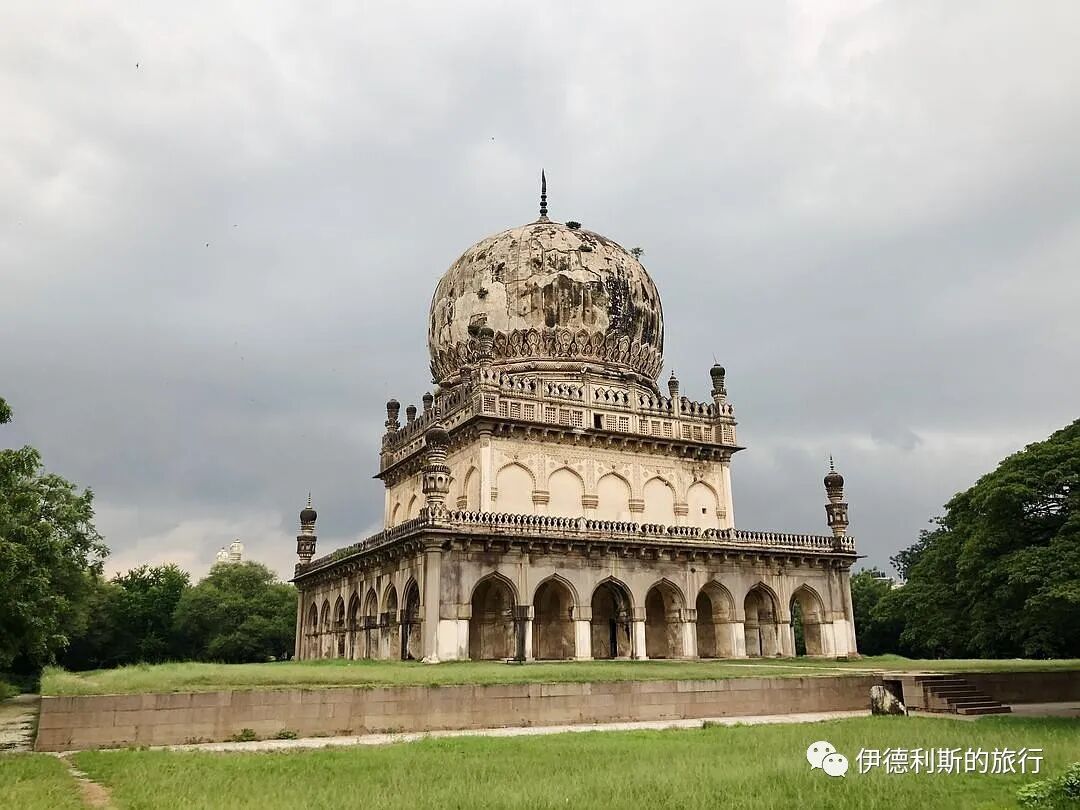
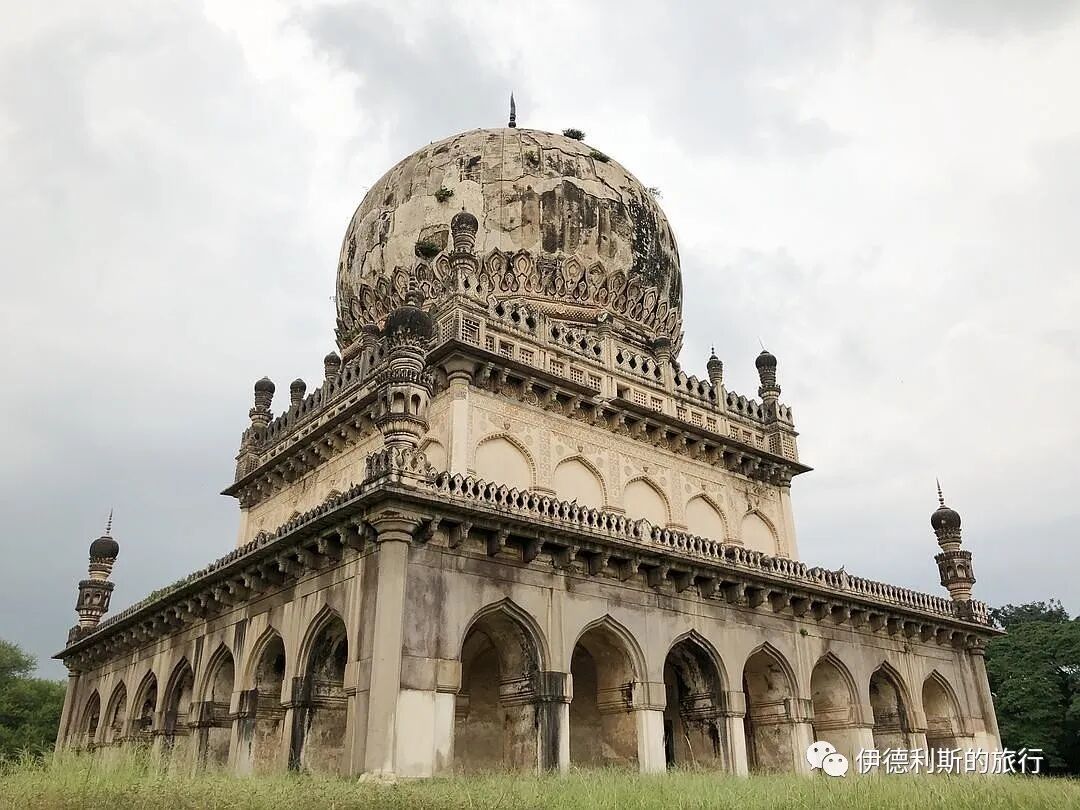
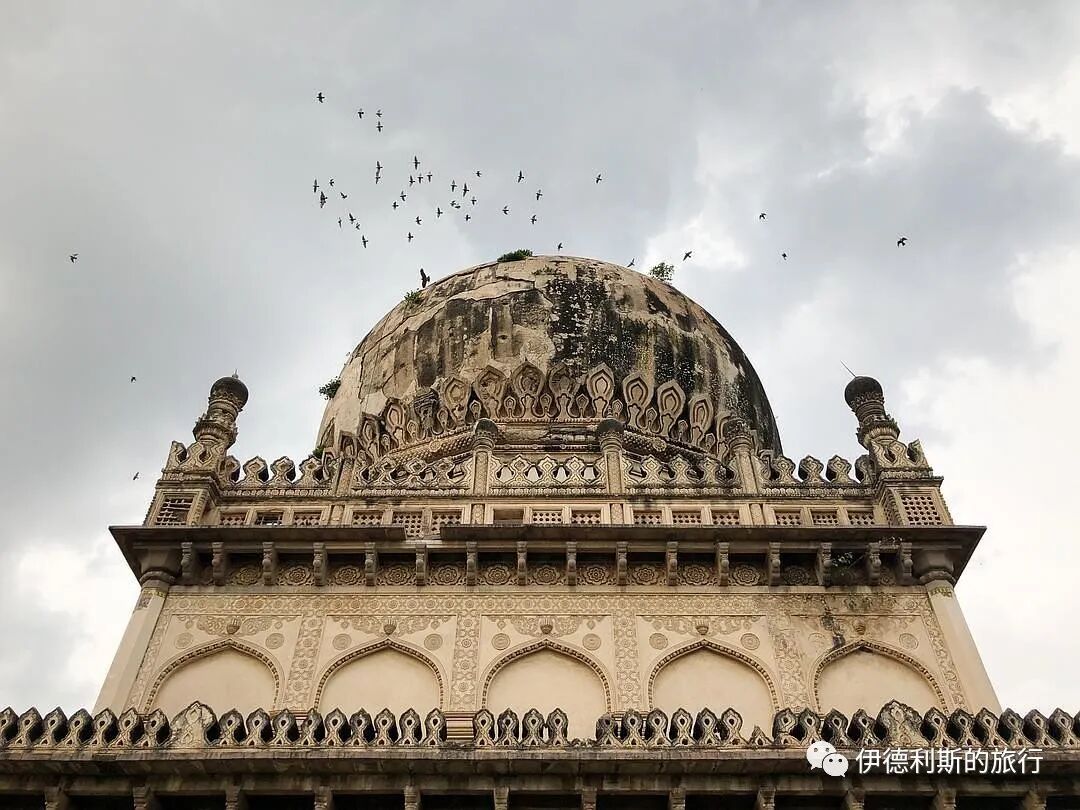
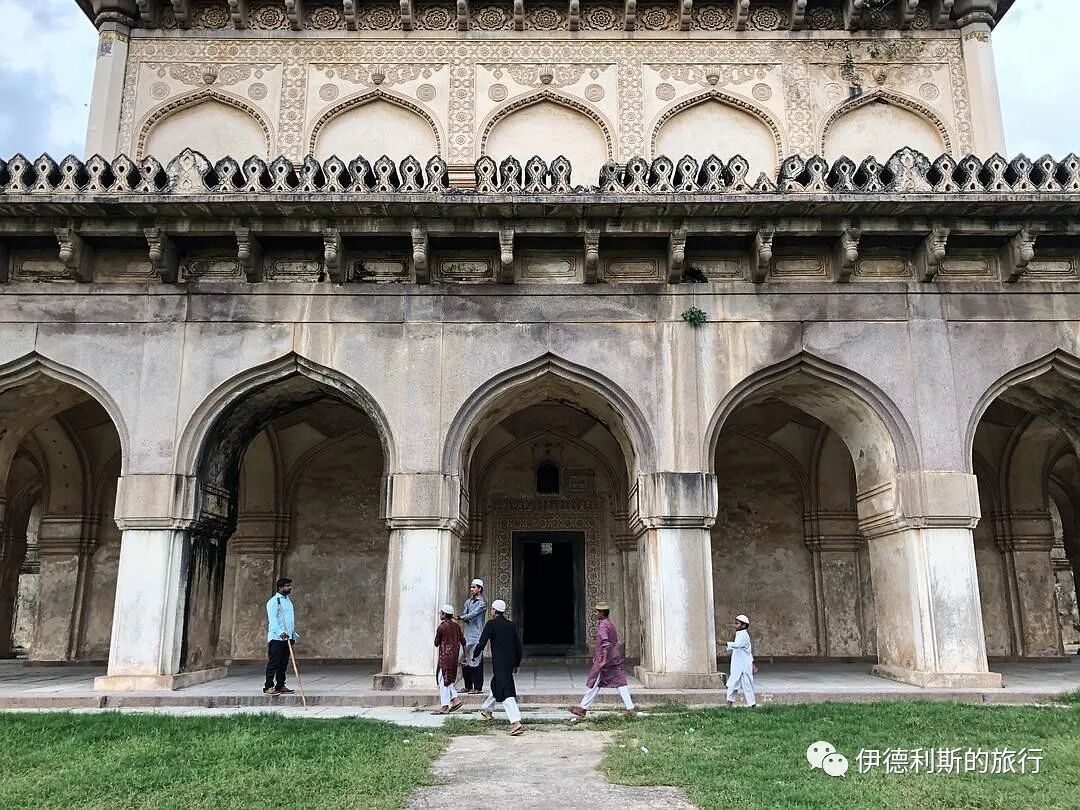
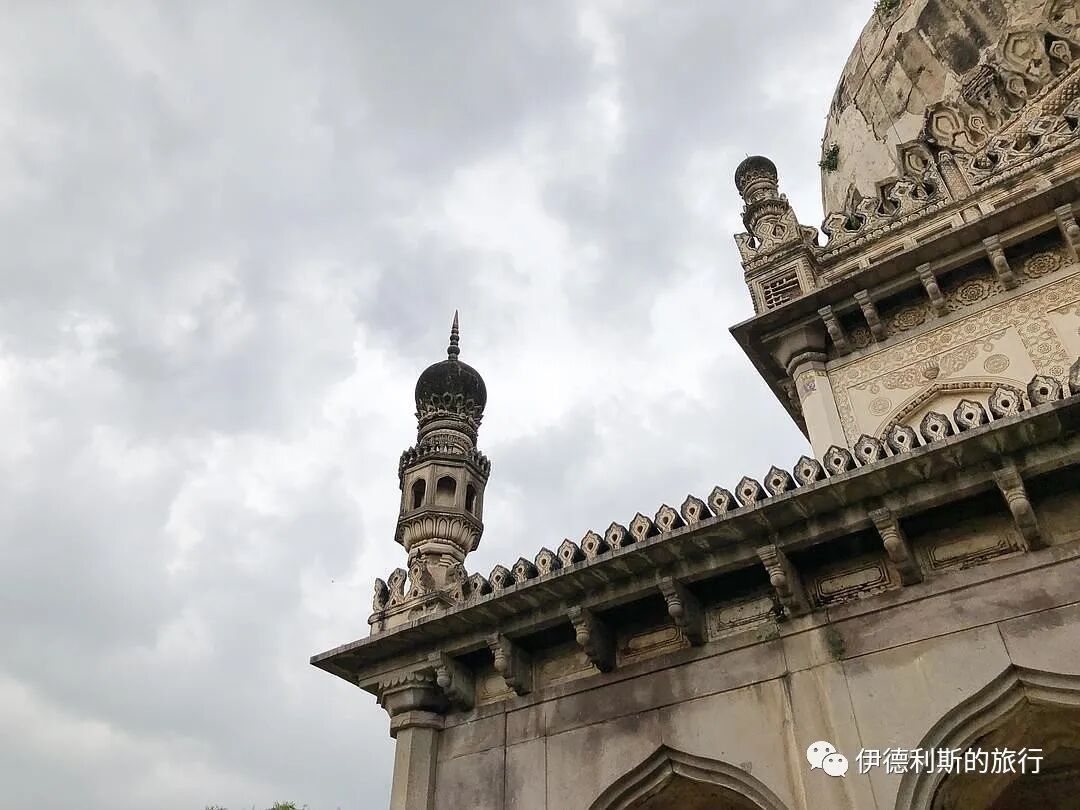
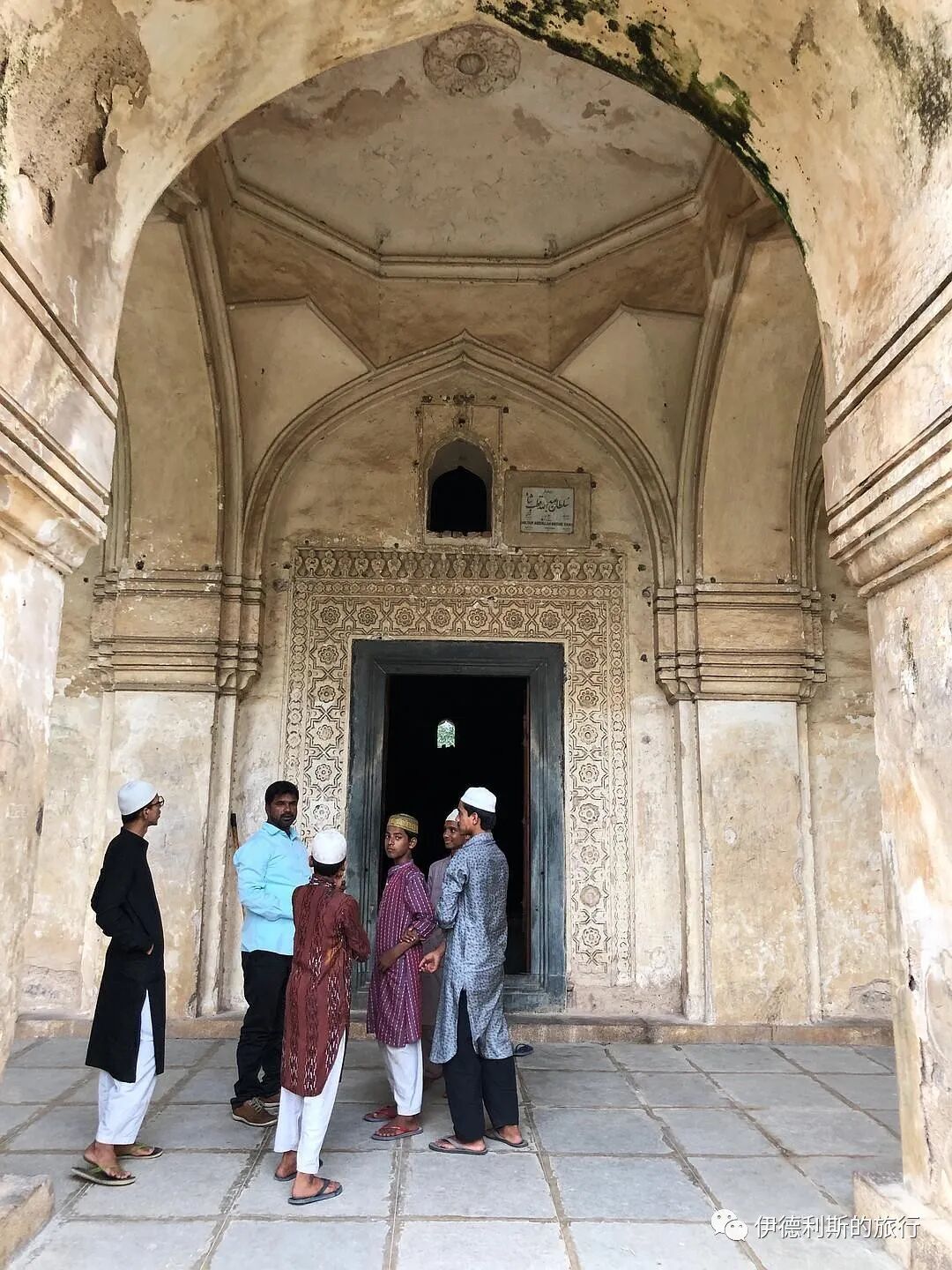
The unfinished tomb of the seventh sultan's family member.
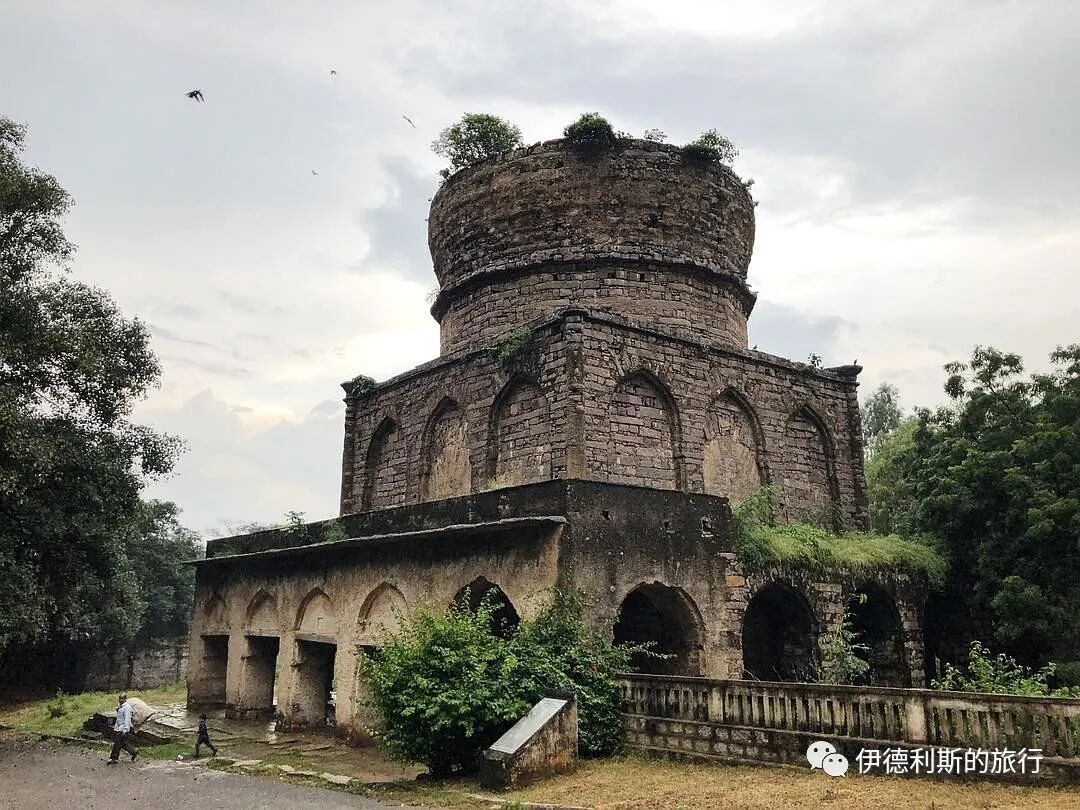
Across from the tomb of the seventh sultan, Abdullah, was a tomb originally built by the final sultan, Abul Hasan Qutb Shah (reigned 1672-1686), for himself, but it was later given to Abdullah’s grandson, Mirza Nizamuddin Ahmed, who died in 1674. The dome of the tomb was never finished.
Summary: Golconda Fort — Deccan Muslim City and History is presented here as a firsthand travel account in clear English, beginning with this scene: I visited the ancient city of Hyderabad in southern India during the 2019 October holiday and explored the historic Golconda Fort. The account keeps its focus on Golconda Fort, Deccan History, Muslim Heritage while preserving the names, places, food, and historical details from the Chinese source.
I visited the ancient city of Hyderabad in southern India during the 2019 October holiday and explored the historic Golconda Fort.
1. Golconda Fort
Golconda Fort (Golconda Fort) is located west of Hyderabad on the Deccan Plateau in southern India and served as the early capital of the Qutb Shahi dynasty. Because it held the world's only diamond mines at the time, Golconda was a major diamond trading hub. Many world-famous diamonds came from here, including the Koh-i-Noor in the British crown and the Hope Diamond, the largest blue diamond in existence. From the Renaissance to the early modern period, Golconda had a shining reputation in the West and became a synonym for immense wealth.
Golconda Fort was first built by the Kakatiya dynasty, established by the Telugu people between the 12th and 14th centuries. It was incorporated into the territory of the Bahmani Sultanate, the first Muslim state in southern India, in 1364, after which its status gradually rose. In 1501, Quli Qutb Mulk, a minister under the Bahmani Sultan, became the governor of Golconda. When the Bahmani Sultanate split into five parts in 1518, Quli Qutb Mulk made Golconda his capital. Over the next 60 years, the first three sultans expanded Golconda Fort into a massive complex, which is why the Qutb Shahi dynasty is also known as the Golconda Sultanate.
After the Qutb Shahi dynasty moved its capital to Hyderabad in 1591, Golconda Fort remained important. It only began to fall into ruins after the Mughal Emperor Aurangzeb captured it following an eight-month siege in 1687. Today, many palace, mosque, and garden ruins are still preserved here and are well worth seeing.
City Walls
Golconda Fort is actually made up of four castles. Its outer wall is 10 kilometers long and features 87 semicircular bastions, 8 gates, and 4 drawbridges.
The inner city is built on a 120-meter-high granite hill. Currently, only the east gate, Bala Hissar Darwaza, is open for visitors. Bala Hissar Darwaza is a massive archway featuring carvings of lions and peacocks, which are common in Hindu architecture. The gate also has iron spikes specifically designed to stop Mughal war elephants.
Between January and September 1687, Mughal Emperor Aurangzeb led a massive army in an eight-month siege of Golconda Fort. Defending it was the last sultan of the Qutb Shahi dynasty, Abul Hasan Qutb Shah. As one of the most secure fortresses on the Deccan Plateau and in all of India at the time, this siege pushed the Mughal army to its limits.
During the siege, the Mughal army used nearly 100 cannons to bombard the walls. This included two powerful cannons favored by Aurangzeb, Rahban and Fateh Rahber, as well as a special bronze cannon called Azhdaha-Paikar that could fire 35-kilogram cannonballs. At the same time, the defenders of Golconda Fort set up many cannons on the bastions to fire back, even killing the experienced Mughal commander Kilich Khan Khwaja Abid Siddiqi.
At night, the Mughal army would assemble complex scaffolding to climb the walls, and soldiers would throw huqqa grenades into the city once they climbed up. Although most of the attacks were ineffective, the morale of the defenders kept dropping.
Even though the last sultan did his best to defend the city, his generals could no longer endure the situation. Eventually, Sarandaz Khan opened the back gate of Golconda Fort. The Mughal army immediately charged into the castle, and the Qutb Shahi dynasty fell. Aurangzeb took all the diamonds from the castle, instantly becoming the wealthiest monarch in the world.
Akkanna Madanna Offices
After entering the fort from the main gate, the ruins directly in front are called the Akkanna Madanna Offices. The brothers Akkanna and Madanna held great prestige in the Qutb Shahi dynasty between 1674 and 1685. Madanna started as a simple clerk, but later used his talent and various methods to rise through the ranks, eventually gaining control over the treasury and nearly ruling the entire dynasty by 1685. As Madanna rose to power, he promoted his brother Akkanna to the rank of general.
Madanna is most famous for blocking the invasion of the Mughal Empire and carrying out tax reforms. He cut out middlemen to collect taxes directly from farmers, merchants, and craftsmen as much as possible, using the funds to appease the Mughal Emperor Aurangzeb. One night in 1685, the two brothers were beheaded by a mob at their residence in Golconda Fort, and just two years later, the Qutb Shahi dynasty was destroyed by the Mughal Empire.
As early as the 18th century, locals called the brothers' rule a golden age, and residents of Hyderabad and the surrounding areas still remember them fondly today. The brothers' office inside Golconda Fort has become the best memorial site for them. This area was also where various officials of the Qutb Shahi dynasty worked.
Aslah Khana
The tall, three-story building on the south side of the main gate is called the Aslah Khana armory, which was used to store guns and ammunition during the Mughal era. However, historians have verified that during the Qutb Shahi dynasty, this was actually a place for various officials to work.
Nakkar Khana
Nakkar Khana is a palace complex where archaeologists have now excavated a series of water channels.
Taramati Mosque
Located next to the palace area, Taramati Mosque was built in 1518 for the Sultan's court and nobles. This mosque features the typical Muslim architectural style of the Deccan region, with small lotus-topped onion domes on the balcony.
Bhagamati Palace
Further inside is the Bhagamati Palace. According to legend, Bhagamati was the wife of the fifth Sultan of the Qutb Shahi dynasty, Muhammad Quli Qutb Shah (reigned 1580–1611). Legend says she was originally a Hindu dancer (nautch) whom the Sultan saw while riding his horse and immediately fell in love with, and they eventually married. Later, Bhagamati converted to Islam and took the title Hyder Mahal, and the Sultan even named the city of Hyderabad after her.
Bhagmati has no surviving tomb, and no documents or coins from her time mention her name. Records about her only appeared long after she died, so the truth of this story remains unproven.
Queen's Palace (Rani Mahal)
Passing through the Bhagamati Palace leads to the Queen's Palace (Rani Mahal) area in the southern part of the fort, where a sound and light show takes place at night. In the middle of the spacious courtyard stands a complex metal fountain. During the Qutb Shahi era, the fountain could spray water on its own thanks to hydraulic engineering. When there was no rain, the fort's water system ran using Persian water wheels. Today, a set of clay drainage pipes that have survived for hundreds of years can still be found behind the Queen's Palace (Rani Mahal).
Historians believe the building now called the Queen's Palace (Rani Mahal) should actually be called the Father's Palace (Dad Mahal). This was where the Sultan handled state affairs and listened to the opinions of his subjects and the people.
Private Chamber (Kilwat)
Behind the Queen's Palace (Rani Mahal) is the Private Chamber (Kilwat), the Sultan's private bedroom. Although small, it is decorated beautifully. The hollow latticework was once inlaid with Golconda's most famous diamonds and other gemstones.
Women's Mosque (Zanana Mosque)
Continuing west from the Queen's Palace (Rani Mahal) area, you leave the palace grounds and can see the multiple tall walls inside the fort. Behind one of these walls stands a mosque called the Women's Mosque (Zanana Mosque), which still has its mihrab and courtyard.
Twelve-Door Hall (Baradari) (Darbar Hall)
After passing the Women's Mosque (Zanana Mosque), you leave the palace area. A stone staircase leads to the fortress at the top of the hill. Some of the fortress walls are built directly onto giant rocks, and from the stairs, you can look down over the entire palace area. After climbing to the top, you reach a building called the Twelve-Door Hall (Baradari) (Darbar Hall), where you can overlook the vast area behind the fort.
Ibrahim Mosque
The Ibrahim Mosque is on the north side of the hilltop. It was built by Sultan Ibrahim Quli Qutb Shah (reigned 1550-1580). The mosque is small. The double-layered balconies on the two minarets and the onion domes sitting on lotus-shaped bases are typical of Muslim architecture in the Deccan region.
Granary (Ambar Khana)
Heading east from the Ibrahim Mosque, you start the path down the hill, first passing the city's granary, the Granary (Ambar Khana). A Persian inscription in front of the granary says it was built by Khairat Khan in 1642.
Ramdas Prison
Continuing down the hill, you pass the Ramdas Prison. Bhakt Ramdas was a court tax official for the Qutb Shahi dynasty. He was imprisoned in a dark cell for 12 years by the last Sultan, Abul Hasan Qutb Shah, for using money from the national treasury to build a temple.
Boli reservoir
You can see a series of water facilities in the northern part of the fort. The first thing you see is the Boli reservoir, a type of water storage structure often found in Indian forts.
Nagina Bagh garden
In the fort's Nagina Bagh garden, there is a pool that diverted hot and cold water, along with the original water tanks.
Bathhouse
Next to the fort gate is a Turkish bath building with pipes at different heights inside, which allowed for mixing scented cold and hot water, though it was not open when I visited. Historians still disagree on whether this bath was for women or for washing the bodies of the deceased.
Pavilions
Two large pavilions outside the fort gate.
2. Qutb Shahi Tombs
The Qutb Shahi Tombs are located north of Golconda Fort and contain the tombs of the sultans of the Qutb Shahi dynasty and their attached mosques. These tombs feature the typical style of Deccan Plateau Muslim architecture, with a layered structure of a square base and round top emphasized by decorative small towers, and onion domes sitting on lotus-petal bases, representing an organic blend of Persian and Indian architectural styles.
Tomb of the first sultan: 1543
The tomb of Quli Qutb Mulk (reigned 1512–1543), the founder of the Qutb Shahi dynasty, is the earliest one built in the cemetery, and the designs of later tombs were developed based on this one.
Quli was a Turkmen from Hamadan, Iran, and a descendant of Qara Yusuf (reigned 1380–1420), the ruler of the Kara Koyunlu dynasty. In the early 16th century, Quli came to India from Iran with some relatives and friends. They were first in Delhi, then moved south to the Deccan to serve in the court of the Bahmani Sultanate. In 1518, the Bahmani Sultanate broke into five Deccan sultanates, and Quli conquered Golconda Fort to establish the Golconda Sultanate, also known as the Qutb Shahi dynasty.
Tomb of the second sultan: 1550
The tomb of Jamsheed Quli Qutb Shah (reigned 1543–1550), the second sultan of the Qutb Shahi dynasty, is the only sultan's tomb in the cemetery that does not use black basalt, and its design, consisting of two levels, is also different from the others.
Jamsheed seized the throne in 1543 after assassinating his father. Few records remain of his reign, other than that it was very cruel. Jamsheed died of illness in 1550 and was buried next to his father's tomb.
Tomb of the third Sultan: 1550.
After the second Sultan, Jamshed, died of illness in 1550, his 7-year-old son, Subhan Quli Qutb Shah, took the throne. However, Subhan's uncle, Ibrahim Quli Qutb Shah, soon rushed back to Golconda Fort to seize the throne. Subhan was deposed and died shortly after.
Subhan's tomb sits on the same platform as his grandfather, the first Sultan Quli Qutb Mulk, and it is the smallest of all the Sultan tombs.
Tomb of the fourth Sultan: 1580.
The tomb of the fourth Sultan of the Qutb Shahi dynasty, Ibrahim Quli Qutb Shah (reigned 1550–1580), was built in 1580 and is slightly larger than the first Sultan's tomb. The south wall of the tomb has some rare surviving tile patterns, offering a glimpse into the original style of the Qutb Shahi royal tombs. Inside the tomb are 2 grave stones, and the platform holds 16 grave stones, including those of Ibrahim's 6 sons and 3 daughters.
Ibrahim was the son of Quli Qutb Mulk, the founder of the Qutb Shahi dynasty. In 1543, Quli was killed by his other son, Jamshed, who then began arresting and harming his other brothers. Ibrahim managed to escape Golconda and took refuge in the Vijayanagara Empire of South India. Ibrahim lived in the Vijayanagara Empire as a guest of honor for 7 years.
During his time in the Vijayanagara Empire, Ibrahim was deeply influenced by South Indian Telugu culture. He wore Telugu clothing, ate Telugu-style food, developed a strong interest in the Telugu language, and gave himself the Telugu name Malki BhaRama.
In 1550, the second Sultan of the Qutb Shahi dynasty, Jamshed, died of illness, and his son Subhan took the throne. Ibrahim immediately returned to Golconda Fort to seize the throne and became the fourth Sultan. During his reign, Ibrahim appointed Hindus as ministers, hired many Telugu poets, and also sponsored many Arabic and Persian poets.
In 1565, Ibrahim betrayed the Vijayanagara Empire that had once sheltered him, joining four other Deccan Sultanates to launch an attack against it. On January 23, the two sides fought a decisive battle at Talikota, where the Vijayanagara king who had once helped Ibrahim was defeated and killed. The allied Sultanate forces then stormed the capital of the Vijayanagara Empire, and the city where Ibrahim had lived happily and safely for 7 years was completely burned down.
After this, Ibrahim continued to expand the territory of the Qutb Shahi dynasty until he died of illness in 1580.
Tomb of the fifth Sultan: 1602.
The tomb of the fifth Sultan of the Qutb Shahi dynasty, Muhammad Quli Qutb Shah (reigned 1580–1611), is the largest in the Qutb Shahi tomb complex and is built on a platform 65 meters long and 4 meters high.
To solve the water shortage at Golconda Fort, Muhammad Quli founded the city of Hyderabad on the south bank of the Musi River, east of the fort, in 1591. Landmark buildings in the city commissioned by Muhammad Quli, including the Charminar gate and the Makkah Masjid mosque, still stand today.
Muhammad Quli was also an accomplished poet who wrote in Persian, Telugu, and Urdu, leaving behind a collection of poems called Kulliyat-e-Quli Qutub Shah. His Urdu poetry, written in the Persian Diwan style, made a major contribution to the development of Urdu literature.
Tomb of the Sixth Sultan: 1626
The tomb of the sixth sultan of the Qutb Shahi dynasty, Muhammad Qutb Shah (reigned 1611-1626), was built in 1626 and is another large tomb in the cemetery. The outer walls of the tomb were once covered in tiles, but they are no longer there.
Muhammad was the nephew of the fifth sultan, Muhammad Quli. He married Muhammad Quli's only daughter, Hayat Baksh Begum, in 1607 and was later named his successor. During Muhammad's reign, as the Mughal Empire grew stronger in northern and central India, the Qutb Shahi dynasty formed alliances with Shah Abbas the Great of the Safavid dynasty in Persia and their Muslim neighbor to the west, the Adil Shahi dynasty. The first history book of the Qutb Shahi dynasty was also compiled during his reign.
Tomb of the Sixth Sultan's Queen: 1667
Hayat Baksh Begum was the only daughter of the fifth sultan, Muhammad Quli, the wife of the sixth sultan, Muhammad, and the mother of the seventh sultan, Abdullah. She was affectionately known as Ma Saheba (revered mother). Her tomb is the largest tomb for a woman in the cemetery and follows the same design as her husband Muhammad's tomb.
After Muhammad died in 1626, his 12-year-old son Abdullah succeeded him. Because Abdullah was not yet an adult, Hayat Bakshi ruled the country as regent until he turned 18. During her rule, Hayat Bakshi continued Muhammad's strategy of maintaining peace with neighboring countries and avoiding conflict with the Mughal Empire.
Tomb of the Sixth Sultan's Sister
The tomb of Fatima Sultan, sister of the sixth sultan Muhammad, is on the east side of the cemetery.
Tomb of the Sixth Sultan's Granddaughter
The tomb of Kulthoom, granddaughter of the sixth sultan Muhammad, is on the west side of the fifth sultan Muhammad Quli's tomb.
Tomb of the Seventh Sultan: 1672
The tomb of the seventh sultan of the Qutb Shahi dynasty, Abdullah Qutb Shah (reigned 1626-1672), is located on the outermost edge of the Qutb Shahi cemetery and is the last sultan's tomb built there.
Abdullah was fluent in many languages and loved poetry and music. He once invited Kshetrayya, the most famous Telugu poet and musician in South India at the time, to his court, but his reign was filled with sorrow.
Abdullah finally defeated the Hindu Vijayanagara Empire in South India in 1652, but he was soon defeated by the Mughal prince and Deccan governor, Aurangzeb. In 1656, Aurangzeb attacked Hyderabad and trapped Abdullah inside Golconda Fort, but he had to pull back after the Mughal Emperor Shah Jahan stepped in. If Aurangzeb had stayed in the Deccan for one more year, he likely would have convinced his father to conquer the Qutb Shahi dynasty. However, Shah Jahan fell ill in 1657, and Aurangzeb got caught up in the war for the throne, which allowed the Qutb Shahi dynasty to survive for another 30 years.
When Aurangzeb besieged Golconda Fort in 1656, Abdullah married his daughter Padshah Bibi to Aurangzeb’s eldest son, Muhammad Sultan, and named Muhammad as the heir to the Qutb Shahi dynasty. But after the war of succession broke out in the Mughal Empire in 1657, Muhammad joined his uncle Shah Shuja’s army, and his father imprisoned him in 1660.
After Abdullah died in 1672, he was buried in the Qutb Shahi Tombs, and his successor was his other son-in-law, the final sultan, Abul Hasan Qutb Shah. Because Abul Hasan was eventually captured by the Mughal dynasty and buried near Aurangabad, Abdullah’s tomb became the last sultan’s tomb in the Qutb Shahi Tombs.
The unfinished tomb of the seventh sultan's family member.
Across from the tomb of the seventh sultan, Abdullah, was a tomb originally built by the final sultan, Abul Hasan Qutb Shah (reigned 1672-1686), for himself, but it was later given to Abdullah’s grandson, Mirza Nizamuddin Ahmed, who died in 1674. The dome of the tomb was never finished.
