
Beijing Halal History: Muslim Shops West of Caishikou Road
Reposted from the web
Summary: Beijing Halal History: Muslim Shops West of Caishikou Road is presented here as a firsthand travel account in clear English, beginning with this scene: Caishikou was once the main wholesale vegetable market in Beijing. Guang'anmen Street, located west of Caishikou, was lined with shops and very busy, and many of these businesses were run by Hui Muslims. The account keeps its focus on Beijing Halal Food, Caishikou, Hui Muslims while preserving the names, places, food, and historical details from the Chinese source.
Caishikou was once the main wholesale vegetable market in Beijing. Guang'anmen Street, located west of Caishikou, was lined with shops and very busy, and many of these businesses were run by Hui Muslims.
The book "Xuanwu History and Culture Volume 5" includes an article by Liu Xiangbo called "Memories of Shops Along the Street West of Caishikou." The author wrote this in 1993, just before the road widening project on Guang'anmen Inner Street. I copied the parts about Hui Muslims from the text to use as reference material. For the locations of the shops mentioned in the text, you can refer to the 1935 map of the outer four districts of Beiping.
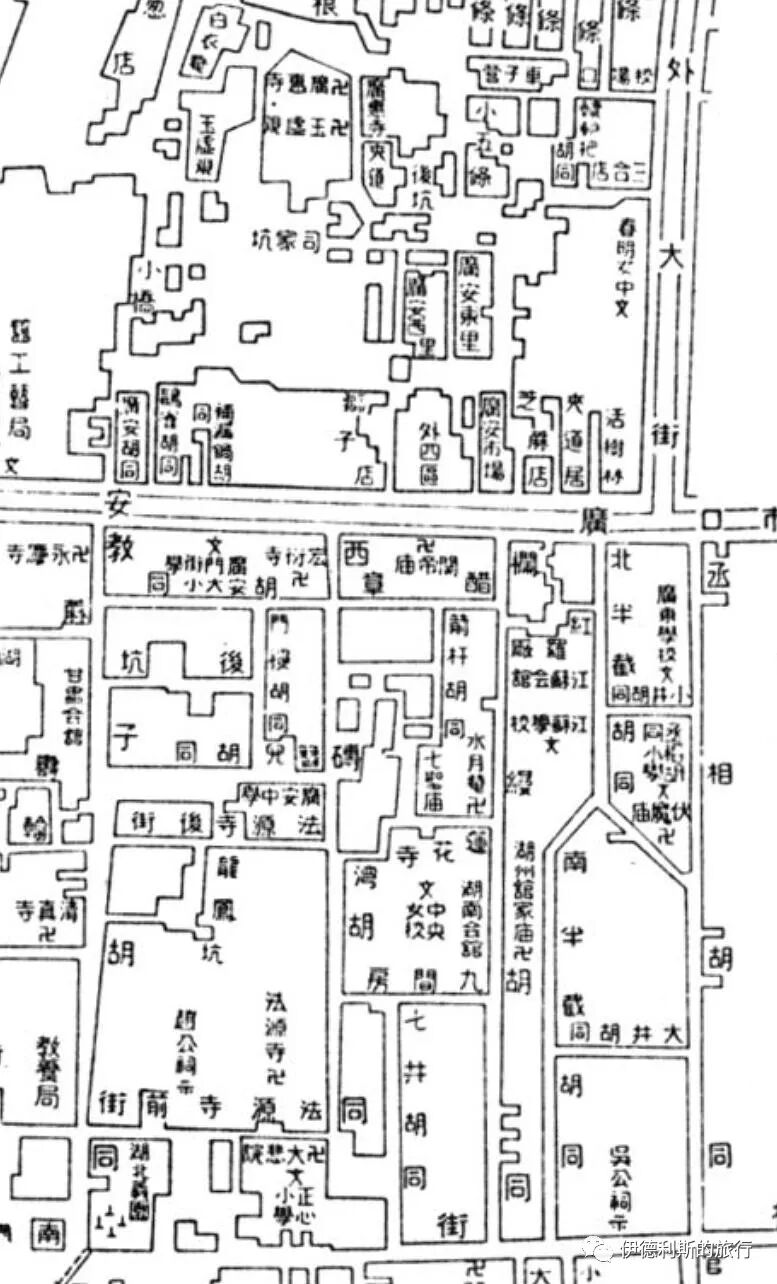
North side of the road west of Caishikou:
1. Sha's Shop. Run by a Hui Muslim family named Sha. It had no storefront, but was set back with a gate large enough for a cart to enter. There are two small rooms built over the gate, with a tinware shop located above them. Like Yaojia Inn on the west side of the entrance to Beibanjie Hutong, Shajiadian mostly houses rural peddlers who come into the city to sell vegetables and fruit. A descendant of the Sha family lives in the first house on the north side of the west entrance of Hongluochang, on the east side of Lanman Hutong.
2. Laiba's tripe (baodu). A two-room wine shop (jiugang) called Taiyuan has a Hui Muslim man named Laiba who runs a permanent stall selling tripe (baodu) right in front.
[Living Forest (Huoshuyun)]
Zhengxingde Tea House. The words 'Tianjin Branch' are written in front of the door. This is a tea shop run by Hui Muslims. Most of the customers are also Hui Muslims. There are not many houses behind the shop, and the village goods are kept in a separate warehouse (duifang) on the east side of the inner road of Lanman Hutong. For many years, Zhengxingde used white paper with red woodblock-printed labels to package its tea.
[Sesame Shop Alley (Zhima Dian Hutong)]
Mutton stall (yangrou chuangzi). It has two storefronts, but I do not remember the name. This is a long-standing beef and mutton shop run by Hui Muslims. Near the entrance on the east side sits a meat cutting table (rouchuangzi). It is scrubbed so clean that the white wood grain shows through. Beef and lamb are laid out on the table, and more meat hangs from copper hooks on a horizontal bar above it. In front of the meat table sits a long, unpainted wooden bench about a foot wide. It is not for sitting. Customers use it to hold their shopping baskets and other belongings. Customers are not allowed to put their things on the meat table to keep it clean and halal. People say this rule was agreed upon by Hui Muslims and Han residents to avoid conflicts over their different daily habits.
The lamb shop also sells cooked items like soy-sauce beef (jiang niurou), roasted lamb (shao yangrou), and beef and lamb offal (niuyang zasui). Especially in summer, the shop always has a pot of meat broth simmering on the stove. When people buy offal, they often bring a green glazed jar. The shopkeeper gives them half a jar of broth for free. It is light and not greasy, making it a cheap and delicious way to dress noodles in the summer.
Guang'anmen Vegetable Market. Just west of Dafeng Hao, there is a Hui Muslim tofu pudding (doufunao) stall and a Hui Muslim sticky rice cake (qiegao) stall right at the entrance. They have been there for a long time.
Dachangheng Kerosene Shop. The shop had two storefronts and was three rooms deep. It was opened by Liu Fazeng, a Hui Muslim from Baigou River in Xincheng, Hebei Province. Electric lights only reached every street and alley in Beijing after the founding of the People's Republic of China. In the past, most homes and shops used kerosene lamps, so they consumed a lot of kerosene. Back then, there was no domestic oil, so it was called foreign oil (yangyou). Naturally, Dachangheng sold foreign oil from Texaco and Shell.
Besides kerosene, Dachangheng also sold kerosene lamps, lamp wicks (dengnian), and matches (which Beijingers call qudeng or yanghuo). They also sold brown sugar, white sugar, rock sugar, and cigarettes, and business was very good. Wealthy families bought several pounds or more of kerosene at a time to use slowly, while poor citizens mostly bought only what they needed for the day. Every evening, families would take out their kerosene lamps, use rough paper (maotouzhi) to wipe the soot off the glass lamp shades (dengzhao), and check if there was enough oil for the night. If not, they would carry their lamp or a glass bottle to the kerosene shop. At the kerosene shop, kerosene was stored in large drums. The shopkeeper used a metal scoop (tizi)—which looked like a wine dipper but was welded from tinplate instead of bamboo—to measure the amount and pour it through a funnel into a kerosene lamp or bottle. That is why Beijingers usually call buying kerosene 'hitting' (da) kerosene.
Outer Fourth District Police Station
Sesame flatbread (shaobing) shop. The shop had a one-room storefront that went three rooms deep. I cannot remember its name, which ended in 'zhai'. In the early morning, they mainly sold sesame flatbread (shaobing), fried dough twists (mahua), crispy fried rings (jiaoquan), and soy milk (doujiang). They also made honey-glazed fried dough twists (mi mahua), brown sugar flatbread (tang huoshao), steamed buns (dun bobo), triangular sugar cakes (tang sanjiao), and date cakes (zaobing). During the Dragon Boat Festival, they wrapped sticky rice dumplings (zongzi), and for the Spring Festival, they made seasonal foods like New Year rice cakes (niangao) to sell. In the afternoon, they only baked a few batches of fresh sesame flatbread (shaobing) and stopped making fried items. Two Hui Muslim brothers ran the shop and had one or two assistants. One assistant, surnamed Tie, had worked there for many years and opened his own sesame flatbread (shaobing) shop nearby after liberation. Later, I went into the Nanlaishun snack shop.
Yuelai Inn. It was called an inn, but it had long stopped being a place for traveling merchants to stay and was instead filled with all kinds of long-term residents. The courtyard was huge with over a hundred rooms. The landlord was a Hui Muslim named Ma, whom everyone called Fifth Master Ma. At the north end of the courtyard, he used a decorative wall to section off a small yard. He left a moon gate (yue liang men) in the wall and kept many pigeons there. There was a back door in the northeast corner of the courtyard that led to Guang'an Xili. Inside the door was a large pit where children could jump in and splash around. It was filled with wastewater from the bean sprout workshop in the courtyard where they washed beans to grow sprouts. The courtyard had a vegetable shop, a mat shop, a straw bag shop, and street vendors selling various things like roasted sweet potatoes (kao baishu).
[Juguo Hutong]
Magpie Alley (Xique Hutong)
Liu Siba's hay shop. Guang'an Alley used to be called Jar Alley (Guan'er Hutong), and it was the site of the daily morning market. On the west side of the entrance, there is a hay shop run by a Hui Muslim named Liu Siba. Liu is from the same family as the owners of the Roast Meat Liu (Kaorou Liu) shop east of Hufang Bridge. The shop sold hay for livestock, and they hired several workers to spend all day cutting the grass with a fodder cutter. It is the only hay shop near Caishikou that I remember seeing in my childhood.
South of the road, west of Caishikou:
Nanlaishun Snack Shop. In the late 1950s, the Guixinzhai pastry shop, Deyigong stationery store, and a popsicle shop at the entrance of Chengxiang Alley were torn down. The Xuanwu District Catering Management Office built the Nanlaishun Snack Shop there, which could seat over a hundred people. It gathered all kinds of snacks favored by Beijing's Hui Muslims: sesame flatbread (shaobing), brown sugar flatbread (tanghuoshao), crispy fried rings (jiaoquan), thin crispy crackers (baocui), fried dough cakes (youbing), sugar cakes (tangbing), honey twists (mimahua), sugar twists (tangmahua), fried rice cakes (zhagao), sticky rice cakes (qiegao), steamed sponge cakes (fenggao), date cakes (zaobing), large flatbreads (dabing), stuffed pies (xianbing), red bean porridge (xiaodouzhou), sweet porridge (tianzhou), millet flour porridge (miancha), and tofu pudding (doufunao). You could find almost every snack that ever existed in Beijing here. You could buy them to take home or sit inside the shop to eat. It did not cost much, and if you picked different items, you could eat there for ten days or half a month without ever repeating a dish. Morning, noon, and night, the shop was always bustling and packed with people. Later, they added a private dining area to serve stir-fried dishes, hot pot (shuanrou), and to host full banquet tables. The waiter, Master Ji, lived in Huashi outside Chongwen Gate. He had worked in this industry his whole life, starting early on at Yimuyuan in Xidan, and knew the dishes of Beijing's Hui Muslim restaurants like the back of his hand. He was warm when greeting guests and knew how to read and care for a customer's needs. If you wanted to save trouble and avoid waste, you could tell him your budget, and he would arrange the meal so you spent little but ate very well. Even though he served several tables by himself, he stayed focused and took great care of every guest until they finished their meal and walked out the door. After the Turpan Restaurant (Tulufan Canting) opened, Master Ji was hired as the front-of-house manager.
A pigment shop. It was a small storefront, also called an alkali shop (jianpu), and it looked very plain. During the Japanese occupation, it briefly became an electrical supply store selling light bulbs, wires, porcelain cleats, porcelain insulators, fuses, electrical tape, and other electrical materials. The owner was a Hui Muslim who always rode a nice bicycle with a friction-drive generator (modiangun) to get around. Later, he closed this shop and opened another electrical supply store on the west side of Xizhuan Hutong. Besides selling electrical parts, the store also took on jobs like installing electric lights.
Junwang Sesame Flatbread Shop (Junwang Shaobing Pu). The shopkeeper is young but wears a handsome beard in the tradition of Hui Muslims, which is likely how he earned the nickname Handsome Wang (Jun Wang). He sells snacks like sesame flatbread (shaobing) and twisted fried dough (mahua tanghuoshao). The fried crispy ring (zha jiaoquan) is his most famous item, which is crunchy and not greasy when tucked into a sesame flatbread or wrapped in a thin pancake (jianbing). The shop also grinds its own soy milk. The shop is often full of customers early in the morning.
Pass-through door (chuantang men)
Shihong Steamed Bun Shop is a Hui Muslim shop. Outside the door, a steamer sits on a stove made from a large oil drum, puffing out steam all day long. A young apprentice stands in front of the door, shouting at the top of his lungs, "Fresh steamed buns are hot!" His calls echo back and forth with the young clerk at Yongfahu Steamed Bun Shop across the street, adding a lively atmosphere to the street. The steamed buns (baozi) at the Hui Muslim bun shop are wrapped differently than those made by Han Chinese, with fewer pleats on top. They are mostly filled with lamb and chives. The worker fills a steamer basket and adds it to the bottom of the stack in the steamer. A wooden, cylindrical cover sits over all the baskets, so fresh buns are always ready.
Shihong sold other flour-based foods besides buns. It closed around the time of the Liberation, though some say it moved to the east gate of Liulichang. Later, a shop making large and small steelyard scales opened here. The owner of Shihong was reportedly a Hui Muslim from Dezhou, Shandong.
Gas welding shop. It was a storefront run by a Hui Muslim named Ma Dewen, who used to sell sticky rice cake (qiegao) in front of the Guang'an vegetable market. In the early days after Liberation, he changed his trade to take on all kinds of gas welding work here, and business was quite good. Ma was also a neighborhood activist in the 1950s.
Lanman Hutong
Qinghuazhai. Near Caishikou, the only pastry shop for Hui Muslims was Qinghuazhai, located on the west side of the road just inside the entrance of Lanman Hutong, and it was opened by a Hui Muslim named Ma Lanting. The shop was gone by about the 1960s, but the name Qinghuazhai Pastry Factory is still kept today.
Hui Muslim beef and mutton shop. It had two storefronts with a blue tent with white characters set up in front, and the owner and the shop assistants were all from Dezhou, Shandong. It operates much like the lamb shop on the north side of the road, so I will not repeat the details here. They also sell spiced beef (jiang niurou) and lamb offal soup (yangzasui), and serve free meat broth.
Xizhuan Alley
Electrical supply store. This is a single-frontage shop run by Hui Muslims. They originally had an electrical store on the south side of Xuanwai Street, right across from Caishikou, before moving here. Two brothers run the shop without any hired help. Besides selling electrical parts, they also go out to install and repair lights.
Large crowded courtyard (dazayuan). This is also a long, narrow courtyard (tongziyuan) with a path in the middle. Low, gray-roofed bungalows are built against the east and west walls, and most of the residents are poor city dwellers. The Wang family set up a snack stall right in front of Yuhua Middle School (now Guang'an Middle School) across the street. They sold everything you could eat or drink, including sugar-coated beans (tangdou), melons and fruits, cigarettes, toilet paper, chilled soda, sour plum drink (suanmeitang), and shaved ice dessert (xuehualao). Later, they added glass and picture frames to their stock, cutting glass to order at the stall and even going out to install window and door glass for construction jobs. The business supported a family of seven or eight people. Old Man Wang was a devout Hui Muslim who set up his stall at daybreak and packed up at ten at night, working hard through wind and sun, but during Ramadan, he would not eat or drink a drop until he saw the stars and the moon.
Summary: Beijing Halal History: Muslim Shops West of Caishikou Road is presented here as a firsthand travel account in clear English, beginning with this scene: Caishikou was once the main wholesale vegetable market in Beijing. Guang'anmen Street, located west of Caishikou, was lined with shops and very busy, and many of these businesses were run by Hui Muslims. The account keeps its focus on Beijing Halal Food, Caishikou, Hui Muslims while preserving the names, places, food, and historical details from the Chinese source.
Caishikou was once the main wholesale vegetable market in Beijing. Guang'anmen Street, located west of Caishikou, was lined with shops and very busy, and many of these businesses were run by Hui Muslims.
The book "Xuanwu History and Culture Volume 5" includes an article by Liu Xiangbo called "Memories of Shops Along the Street West of Caishikou." The author wrote this in 1993, just before the road widening project on Guang'anmen Inner Street. I copied the parts about Hui Muslims from the text to use as reference material. For the locations of the shops mentioned in the text, you can refer to the 1935 map of the outer four districts of Beiping.
North side of the road west of Caishikou:
1. Sha's Shop. Run by a Hui Muslim family named Sha. It had no storefront, but was set back with a gate large enough for a cart to enter. There are two small rooms built over the gate, with a tinware shop located above them. Like Yaojia Inn on the west side of the entrance to Beibanjie Hutong, Shajiadian mostly houses rural peddlers who come into the city to sell vegetables and fruit. A descendant of the Sha family lives in the first house on the north side of the west entrance of Hongluochang, on the east side of Lanman Hutong.
2. Laiba's tripe (baodu). A two-room wine shop (jiugang) called Taiyuan has a Hui Muslim man named Laiba who runs a permanent stall selling tripe (baodu) right in front.
[Living Forest (Huoshuyun)]
Zhengxingde Tea House. The words 'Tianjin Branch' are written in front of the door. This is a tea shop run by Hui Muslims. Most of the customers are also Hui Muslims. There are not many houses behind the shop, and the village goods are kept in a separate warehouse (duifang) on the east side of the inner road of Lanman Hutong. For many years, Zhengxingde used white paper with red woodblock-printed labels to package its tea.
[Sesame Shop Alley (Zhima Dian Hutong)]
Mutton stall (yangrou chuangzi). It has two storefronts, but I do not remember the name. This is a long-standing beef and mutton shop run by Hui Muslims. Near the entrance on the east side sits a meat cutting table (rouchuangzi). It is scrubbed so clean that the white wood grain shows through. Beef and lamb are laid out on the table, and more meat hangs from copper hooks on a horizontal bar above it. In front of the meat table sits a long, unpainted wooden bench about a foot wide. It is not for sitting. Customers use it to hold their shopping baskets and other belongings. Customers are not allowed to put their things on the meat table to keep it clean and halal. People say this rule was agreed upon by Hui Muslims and Han residents to avoid conflicts over their different daily habits.
The lamb shop also sells cooked items like soy-sauce beef (jiang niurou), roasted lamb (shao yangrou), and beef and lamb offal (niuyang zasui). Especially in summer, the shop always has a pot of meat broth simmering on the stove. When people buy offal, they often bring a green glazed jar. The shopkeeper gives them half a jar of broth for free. It is light and not greasy, making it a cheap and delicious way to dress noodles in the summer.
Guang'anmen Vegetable Market. Just west of Dafeng Hao, there is a Hui Muslim tofu pudding (doufunao) stall and a Hui Muslim sticky rice cake (qiegao) stall right at the entrance. They have been there for a long time.
Dachangheng Kerosene Shop. The shop had two storefronts and was three rooms deep. It was opened by Liu Fazeng, a Hui Muslim from Baigou River in Xincheng, Hebei Province. Electric lights only reached every street and alley in Beijing after the founding of the People's Republic of China. In the past, most homes and shops used kerosene lamps, so they consumed a lot of kerosene. Back then, there was no domestic oil, so it was called foreign oil (yangyou). Naturally, Dachangheng sold foreign oil from Texaco and Shell.
Besides kerosene, Dachangheng also sold kerosene lamps, lamp wicks (dengnian), and matches (which Beijingers call qudeng or yanghuo). They also sold brown sugar, white sugar, rock sugar, and cigarettes, and business was very good. Wealthy families bought several pounds or more of kerosene at a time to use slowly, while poor citizens mostly bought only what they needed for the day. Every evening, families would take out their kerosene lamps, use rough paper (maotouzhi) to wipe the soot off the glass lamp shades (dengzhao), and check if there was enough oil for the night. If not, they would carry their lamp or a glass bottle to the kerosene shop. At the kerosene shop, kerosene was stored in large drums. The shopkeeper used a metal scoop (tizi)—which looked like a wine dipper but was welded from tinplate instead of bamboo—to measure the amount and pour it through a funnel into a kerosene lamp or bottle. That is why Beijingers usually call buying kerosene 'hitting' (da) kerosene.
Outer Fourth District Police Station
Sesame flatbread (shaobing) shop. The shop had a one-room storefront that went three rooms deep. I cannot remember its name, which ended in 'zhai'. In the early morning, they mainly sold sesame flatbread (shaobing), fried dough twists (mahua), crispy fried rings (jiaoquan), and soy milk (doujiang). They also made honey-glazed fried dough twists (mi mahua), brown sugar flatbread (tang huoshao), steamed buns (dun bobo), triangular sugar cakes (tang sanjiao), and date cakes (zaobing). During the Dragon Boat Festival, they wrapped sticky rice dumplings (zongzi), and for the Spring Festival, they made seasonal foods like New Year rice cakes (niangao) to sell. In the afternoon, they only baked a few batches of fresh sesame flatbread (shaobing) and stopped making fried items. Two Hui Muslim brothers ran the shop and had one or two assistants. One assistant, surnamed Tie, had worked there for many years and opened his own sesame flatbread (shaobing) shop nearby after liberation. Later, I went into the Nanlaishun snack shop.
Yuelai Inn. It was called an inn, but it had long stopped being a place for traveling merchants to stay and was instead filled with all kinds of long-term residents. The courtyard was huge with over a hundred rooms. The landlord was a Hui Muslim named Ma, whom everyone called Fifth Master Ma. At the north end of the courtyard, he used a decorative wall to section off a small yard. He left a moon gate (yue liang men) in the wall and kept many pigeons there. There was a back door in the northeast corner of the courtyard that led to Guang'an Xili. Inside the door was a large pit where children could jump in and splash around. It was filled with wastewater from the bean sprout workshop in the courtyard where they washed beans to grow sprouts. The courtyard had a vegetable shop, a mat shop, a straw bag shop, and street vendors selling various things like roasted sweet potatoes (kao baishu).
[Juguo Hutong]
Magpie Alley (Xique Hutong)
Liu Siba's hay shop. Guang'an Alley used to be called Jar Alley (Guan'er Hutong), and it was the site of the daily morning market. On the west side of the entrance, there is a hay shop run by a Hui Muslim named Liu Siba. Liu is from the same family as the owners of the Roast Meat Liu (Kaorou Liu) shop east of Hufang Bridge. The shop sold hay for livestock, and they hired several workers to spend all day cutting the grass with a fodder cutter. It is the only hay shop near Caishikou that I remember seeing in my childhood.
South of the road, west of Caishikou:
Nanlaishun Snack Shop. In the late 1950s, the Guixinzhai pastry shop, Deyigong stationery store, and a popsicle shop at the entrance of Chengxiang Alley were torn down. The Xuanwu District Catering Management Office built the Nanlaishun Snack Shop there, which could seat over a hundred people. It gathered all kinds of snacks favored by Beijing's Hui Muslims: sesame flatbread (shaobing), brown sugar flatbread (tanghuoshao), crispy fried rings (jiaoquan), thin crispy crackers (baocui), fried dough cakes (youbing), sugar cakes (tangbing), honey twists (mimahua), sugar twists (tangmahua), fried rice cakes (zhagao), sticky rice cakes (qiegao), steamed sponge cakes (fenggao), date cakes (zaobing), large flatbreads (dabing), stuffed pies (xianbing), red bean porridge (xiaodouzhou), sweet porridge (tianzhou), millet flour porridge (miancha), and tofu pudding (doufunao). You could find almost every snack that ever existed in Beijing here. You could buy them to take home or sit inside the shop to eat. It did not cost much, and if you picked different items, you could eat there for ten days or half a month without ever repeating a dish. Morning, noon, and night, the shop was always bustling and packed with people. Later, they added a private dining area to serve stir-fried dishes, hot pot (shuanrou), and to host full banquet tables. The waiter, Master Ji, lived in Huashi outside Chongwen Gate. He had worked in this industry his whole life, starting early on at Yimuyuan in Xidan, and knew the dishes of Beijing's Hui Muslim restaurants like the back of his hand. He was warm when greeting guests and knew how to read and care for a customer's needs. If you wanted to save trouble and avoid waste, you could tell him your budget, and he would arrange the meal so you spent little but ate very well. Even though he served several tables by himself, he stayed focused and took great care of every guest until they finished their meal and walked out the door. After the Turpan Restaurant (Tulufan Canting) opened, Master Ji was hired as the front-of-house manager.
A pigment shop. It was a small storefront, also called an alkali shop (jianpu), and it looked very plain. During the Japanese occupation, it briefly became an electrical supply store selling light bulbs, wires, porcelain cleats, porcelain insulators, fuses, electrical tape, and other electrical materials. The owner was a Hui Muslim who always rode a nice bicycle with a friction-drive generator (modiangun) to get around. Later, he closed this shop and opened another electrical supply store on the west side of Xizhuan Hutong. Besides selling electrical parts, the store also took on jobs like installing electric lights.
Junwang Sesame Flatbread Shop (Junwang Shaobing Pu). The shopkeeper is young but wears a handsome beard in the tradition of Hui Muslims, which is likely how he earned the nickname Handsome Wang (Jun Wang). He sells snacks like sesame flatbread (shaobing) and twisted fried dough (mahua tanghuoshao). The fried crispy ring (zha jiaoquan) is his most famous item, which is crunchy and not greasy when tucked into a sesame flatbread or wrapped in a thin pancake (jianbing). The shop also grinds its own soy milk. The shop is often full of customers early in the morning.
Pass-through door (chuantang men)
Shihong Steamed Bun Shop is a Hui Muslim shop. Outside the door, a steamer sits on a stove made from a large oil drum, puffing out steam all day long. A young apprentice stands in front of the door, shouting at the top of his lungs, "Fresh steamed buns are hot!" His calls echo back and forth with the young clerk at Yongfahu Steamed Bun Shop across the street, adding a lively atmosphere to the street. The steamed buns (baozi) at the Hui Muslim bun shop are wrapped differently than those made by Han Chinese, with fewer pleats on top. They are mostly filled with lamb and chives. The worker fills a steamer basket and adds it to the bottom of the stack in the steamer. A wooden, cylindrical cover sits over all the baskets, so fresh buns are always ready.
Shihong sold other flour-based foods besides buns. It closed around the time of the Liberation, though some say it moved to the east gate of Liulichang. Later, a shop making large and small steelyard scales opened here. The owner of Shihong was reportedly a Hui Muslim from Dezhou, Shandong.
Gas welding shop. It was a storefront run by a Hui Muslim named Ma Dewen, who used to sell sticky rice cake (qiegao) in front of the Guang'an vegetable market. In the early days after Liberation, he changed his trade to take on all kinds of gas welding work here, and business was quite good. Ma was also a neighborhood activist in the 1950s.
Lanman Hutong
Qinghuazhai. Near Caishikou, the only pastry shop for Hui Muslims was Qinghuazhai, located on the west side of the road just inside the entrance of Lanman Hutong, and it was opened by a Hui Muslim named Ma Lanting. The shop was gone by about the 1960s, but the name Qinghuazhai Pastry Factory is still kept today.
Hui Muslim beef and mutton shop. It had two storefronts with a blue tent with white characters set up in front, and the owner and the shop assistants were all from Dezhou, Shandong. It operates much like the lamb shop on the north side of the road, so I will not repeat the details here. They also sell spiced beef (jiang niurou) and lamb offal soup (yangzasui), and serve free meat broth.
Xizhuan Alley
Electrical supply store. This is a single-frontage shop run by Hui Muslims. They originally had an electrical store on the south side of Xuanwai Street, right across from Caishikou, before moving here. Two brothers run the shop without any hired help. Besides selling electrical parts, they also go out to install and repair lights.
Large crowded courtyard (dazayuan). This is also a long, narrow courtyard (tongziyuan) with a path in the middle. Low, gray-roofed bungalows are built against the east and west walls, and most of the residents are poor city dwellers. The Wang family set up a snack stall right in front of Yuhua Middle School (now Guang'an Middle School) across the street. They sold everything you could eat or drink, including sugar-coated beans (tangdou), melons and fruits, cigarettes, toilet paper, chilled soda, sour plum drink (suanmeitang), and shaved ice dessert (xuehualao). Later, they added glass and picture frames to their stock, cutting glass to order at the stall and even going out to install window and door glass for construction jobs. The business supported a family of seven or eight people. Old Man Wang was a devout Hui Muslim who set up his stall at daybreak and packed up at ten at night, working hard through wind and sun, but during Ramadan, he would not eat or drink a drop until he saw the stars and the moon.
