
Qinghai Muslim History: The Mongol Muslim Tuomao People of Qilian
Reposted from the web
Summary: Qinghai Muslim History: The Mongol Muslim Tuomao People of Qilian is presented here as a firsthand travel account in clear English, beginning with this scene: I recently read a new book released this July called The Tuomao People: Economy, Culture, and Modernity of a Marginalized Group, and I learned so much. The account keeps its focus on Qinghai Muslims, Tuomao People, Mongol Muslims while preserving the names, places, food, and historical details from the Chinese source.
I recently read a new book released this July called The Tuomao People: Economy, Culture, and Modernity of a Marginalized Group, and I learned so much. This book is likely the most detailed work on the Tuomao people. It covers everything from history to current reality and from economy to culture, and it explains many fascinating issues.
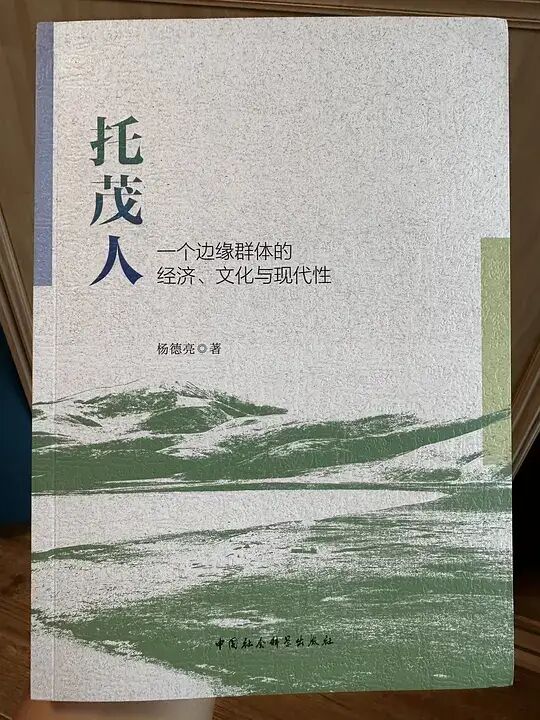
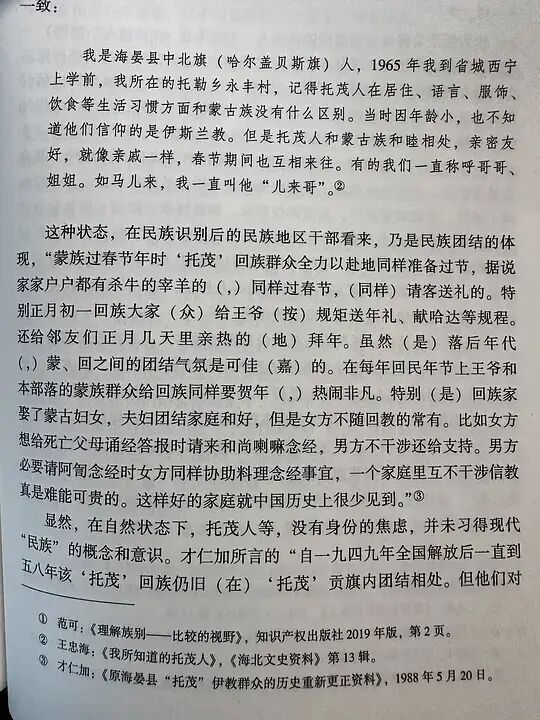
The Tuomao people are Muslim Mongols living in the pastoral areas of Qinghai. Historically, they shared the same cultural customs as other Qinghai Mongols, with the only difference being their faith. They are closely connected to both the Mongol and Hui Muslim groups, giving them multiple identities. They are a very interesting ethnic group. Here is some information from the book about the ethnic identity of the Tuomao people: 1. Before 1958, the Tuomao people were part of the Khoshut Mongol Tuomao tribe. They did not have a modern sense of ethnic identity and lived just like the local Mongols. At that time, when a Tuomao man married a Mongol woman, she could choose not to convert to Islam. When the wife mourned the dead, the husband would not interfere if she invited a lama to chant scriptures. Likewise, when the husband invited an imam to chant, the wife would help with the arrangements. This was very rare. 2. In 1958, Jintan in Haiyan County, Qinghai, became a nuclear weapons research base. The Tuomao people, who originally lived in the Halejing area, moved several times and scattered across the Haibei Prefecture. After their tribe was broken up, the Tuomao people lost their identity as Mongol tribespeople. Between 1958 and the 1980s, the Tuomao people were sometimes counted as Mongol and sometimes as Hui Muslims in population statistics. During a 1981 survey, both the Mongol and Hui Muslim communities in Qinghai with modern ethnic awareness identified the Tuomao people as part of their own groups. The Mongols said, 'The Tuomao are our Mongol people, they just happen to follow Islam,' while the Hui Muslims said, 'The Tuomao are our Hui Muslims, but over time, their lifestyle and habits have been influenced by the Mongols.'
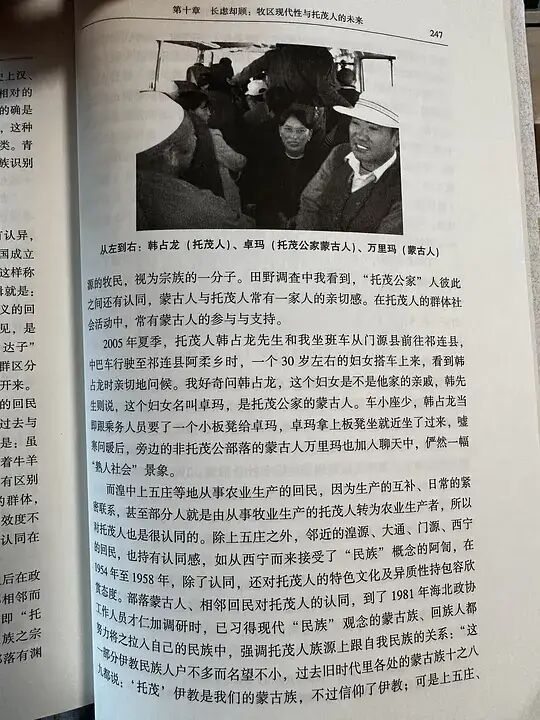
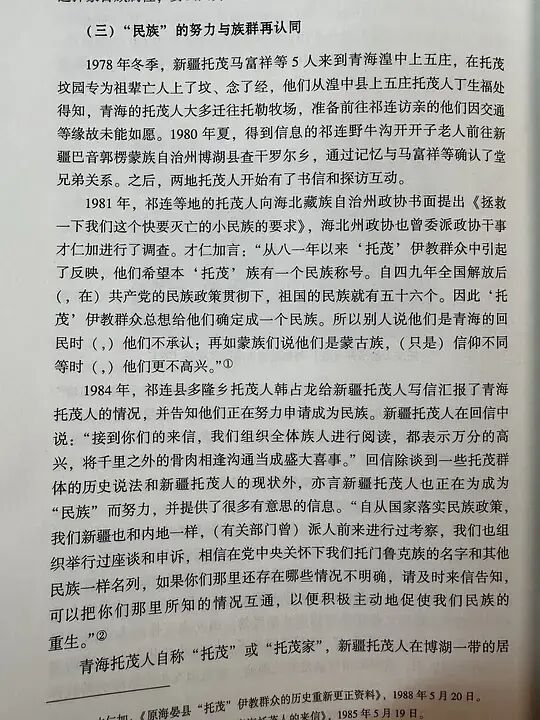
After the Tuomao people in Xinjiang and Qinghai reconnected in 1978, they began working to apply for recognition as a separate ethnic group, and in the 1980s, they formally stated that they were neither Hui Muslims nor Mongols. However, after the Jino people became the 56th ethnic group in 1979, the work of ethnic identification had already ended, so the efforts of the Tuomao people did not succeed. After the 1990s, most Tuomao people in Bohu and Yanqi, Xinjiang, moved to Urumqi, Changji, and Korla. On one hand, their sense of identity gradually faded, and on the other hand, there were no cultural records, so they slowly disappeared into history. During the 2000 census, the vast majority of Tuomao people were counted as Hui Muslims, and most young Tuomao in Qinghai also identified as Hui Muslims, with living habits already close to those of the Hui. In the 2010s, with the rise of tourism in the Qilian Mountains, the Tuomao people increasingly became subjects for writers and journalists. In 2014, Qilian County officially began filming the documentary 'Walking into the Tuomao,' which became the largest gathering for the Tuomao people since 1958. The 2017 documentary caused a sensation after its release. This led to the founding of the Tuomao Cultural Research Association. Cultural activities soon followed, including applying for intangible cultural heritage status, filming folk documentaries, and hosting horse racing events. The Tuomao people began to rediscover their cultural identity.
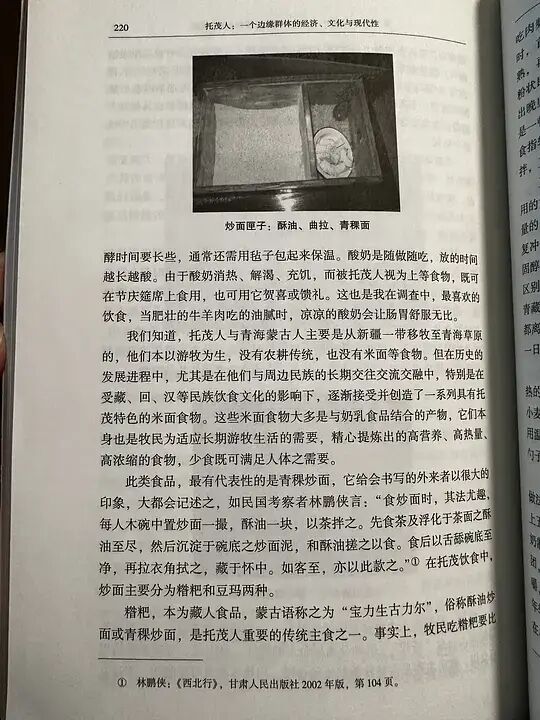
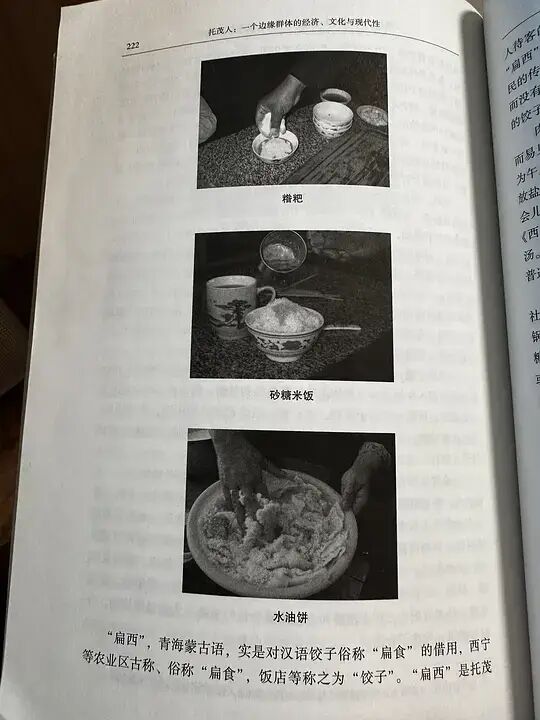
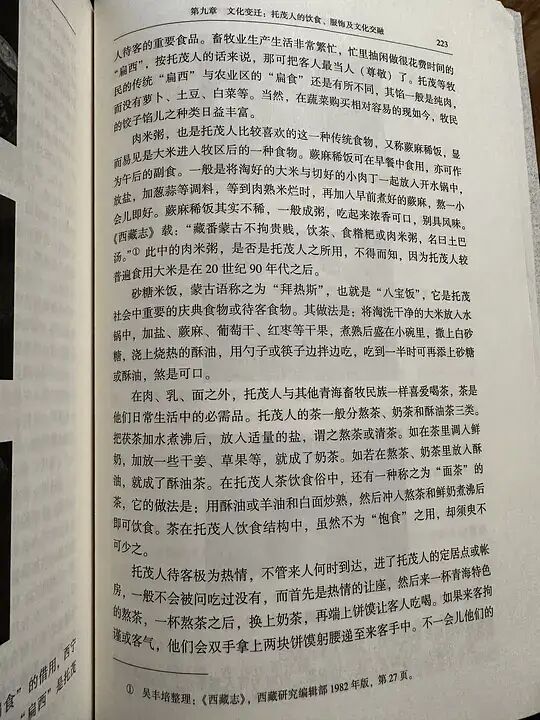
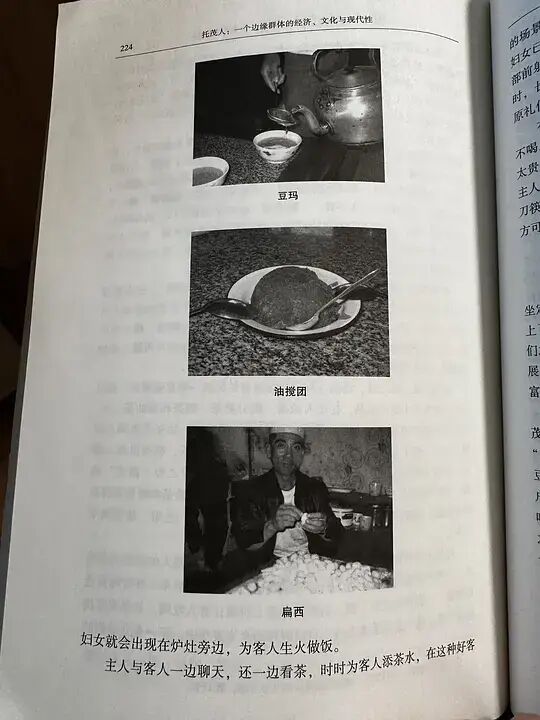
The book introduces the traditional diet of the Tuomao people (Qinghai Mongol-Hui Muslims): hand-grabbed meat (shouba rou), meat sausage (rouchang), flour sausage (mianchang), liver sausage (ganchang), butter (suyou), dried cheese curds (qula), yogurt (suannai), milk skin bread (naipibing), milk tofu (naidoufu), roasted barley flour (zanba), barley flour porridge (douma), oil-mixed flour paste (youjiaotuan), water-oil pancake (shuiyoubing), flat noodles (bianxi), meat and rice porridge (roumizhou), sugar rice (shatang mifan), boiled tea (aocha), milk tea (naicha), and butter tea (suyoucha). Meat sausage is made by stuffing beef or lamb lungs and minced meat into large intestines. Liver sausage uses liver instead. Flour sausage is made by stuffing a mixture of flour, lamb broth, and lamb tripe fat into small intestines. Butter (suyou) is the fat extracted after churning fresh milk. After churning butter, the leftover milk liquid is left to ferment for half a day. It is then boiled in an iron pot. The white solid that remains after the liquid evaporates is called dried cheese curds (qula). Milk skin bread (naipibing) is made from the cream that solidifies on the surface of boiled milk. Butter roasted barley flour (suyou qingke chaomian) is a traditional staple food for the Tuomao people. Highland barley is roasted and ground into flour. Every morning, people mix it with tea, butter, and dried cheese curds (qula) to form a bun shape, which is roasted barley flour (zanba). When mixed into a paste, it is called barley flour porridge (douma), which can be eaten with pancakes (bingzi) and steamed buns (momo). To make oil-stirred dough (youjiaotuan), add fresh milk and butter (suyou) to hot tea water. Once it boils, sprinkle in wheat flour and brown sugar. Stir it into a dough, cover the pot, and cook slowly over low heat. Flip it occasionally until the water evaporates and the dough is cooked through. Water-oil pancakes (shuiyoubing) are made by boiling dough cakes, then mixing them with dried yogurt (qula), butter (suyou), and sugar. Because they contain a lot of dried yogurt, you have to chew them thoroughly. Bianxi is the Qinghai Mongolian word for dumplings (bianshi), which are simply dumplings filled with pure meat. Meat porridge (roumizhou) is a porridge made by simmering diced meat with silverweed roots (juema). Sugar rice (shatang mifan) is a type of eight-treasure rice (babao fan). It is made by cooking rice with salt, silverweed roots (juema), raisins, and red dates. Once cooked, it is topped with white sugar and drizzled with hot butter (suyou). Boiled tea (aocha) can be made with just salt, or you can add fresh milk, dried ginger, and black cardamom (caoguo) to make milk tea. Adding butter (suyou) to milk tea makes butter tea (suyoucha). If you stir roasted butter and wheat flour into milk tea, it becomes flour tea (miancha).
Summary: Qinghai Muslim History: The Mongol Muslim Tuomao People of Qilian is presented here as a firsthand travel account in clear English, beginning with this scene: I recently read a new book released this July called The Tuomao People: Economy, Culture, and Modernity of a Marginalized Group, and I learned so much. The account keeps its focus on Qinghai Muslims, Tuomao People, Mongol Muslims while preserving the names, places, food, and historical details from the Chinese source.
I recently read a new book released this July called The Tuomao People: Economy, Culture, and Modernity of a Marginalized Group, and I learned so much. This book is likely the most detailed work on the Tuomao people. It covers everything from history to current reality and from economy to culture, and it explains many fascinating issues.
The Tuomao people are Muslim Mongols living in the pastoral areas of Qinghai. Historically, they shared the same cultural customs as other Qinghai Mongols, with the only difference being their faith. They are closely connected to both the Mongol and Hui Muslim groups, giving them multiple identities. They are a very interesting ethnic group. Here is some information from the book about the ethnic identity of the Tuomao people: 1. Before 1958, the Tuomao people were part of the Khoshut Mongol Tuomao tribe. They did not have a modern sense of ethnic identity and lived just like the local Mongols. At that time, when a Tuomao man married a Mongol woman, she could choose not to convert to Islam. When the wife mourned the dead, the husband would not interfere if she invited a lama to chant scriptures. Likewise, when the husband invited an imam to chant, the wife would help with the arrangements. This was very rare. 2. In 1958, Jintan in Haiyan County, Qinghai, became a nuclear weapons research base. The Tuomao people, who originally lived in the Halejing area, moved several times and scattered across the Haibei Prefecture. After their tribe was broken up, the Tuomao people lost their identity as Mongol tribespeople. Between 1958 and the 1980s, the Tuomao people were sometimes counted as Mongol and sometimes as Hui Muslims in population statistics. During a 1981 survey, both the Mongol and Hui Muslim communities in Qinghai with modern ethnic awareness identified the Tuomao people as part of their own groups. The Mongols said, 'The Tuomao are our Mongol people, they just happen to follow Islam,' while the Hui Muslims said, 'The Tuomao are our Hui Muslims, but over time, their lifestyle and habits have been influenced by the Mongols.'
After the Tuomao people in Xinjiang and Qinghai reconnected in 1978, they began working to apply for recognition as a separate ethnic group, and in the 1980s, they formally stated that they were neither Hui Muslims nor Mongols. However, after the Jino people became the 56th ethnic group in 1979, the work of ethnic identification had already ended, so the efforts of the Tuomao people did not succeed. After the 1990s, most Tuomao people in Bohu and Yanqi, Xinjiang, moved to Urumqi, Changji, and Korla. On one hand, their sense of identity gradually faded, and on the other hand, there were no cultural records, so they slowly disappeared into history. During the 2000 census, the vast majority of Tuomao people were counted as Hui Muslims, and most young Tuomao in Qinghai also identified as Hui Muslims, with living habits already close to those of the Hui. In the 2010s, with the rise of tourism in the Qilian Mountains, the Tuomao people increasingly became subjects for writers and journalists. In 2014, Qilian County officially began filming the documentary 'Walking into the Tuomao,' which became the largest gathering for the Tuomao people since 1958. The 2017 documentary caused a sensation after its release. This led to the founding of the Tuomao Cultural Research Association. Cultural activities soon followed, including applying for intangible cultural heritage status, filming folk documentaries, and hosting horse racing events. The Tuomao people began to rediscover their cultural identity.
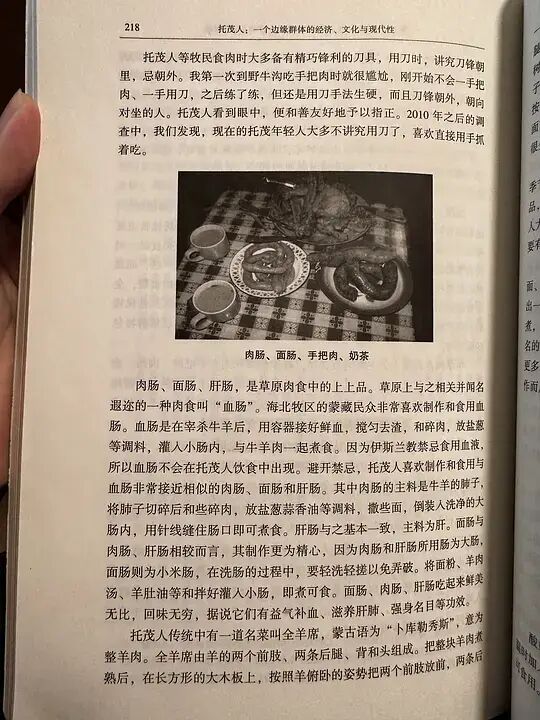
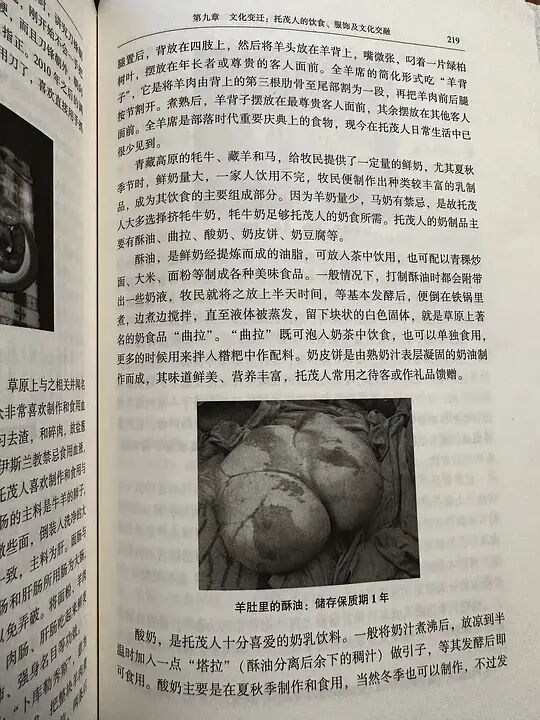
The book introduces the traditional diet of the Tuomao people (Qinghai Mongol-Hui Muslims): hand-grabbed meat (shouba rou), meat sausage (rouchang), flour sausage (mianchang), liver sausage (ganchang), butter (suyou), dried cheese curds (qula), yogurt (suannai), milk skin bread (naipibing), milk tofu (naidoufu), roasted barley flour (zanba), barley flour porridge (douma), oil-mixed flour paste (youjiaotuan), water-oil pancake (shuiyoubing), flat noodles (bianxi), meat and rice porridge (roumizhou), sugar rice (shatang mifan), boiled tea (aocha), milk tea (naicha), and butter tea (suyoucha). Meat sausage is made by stuffing beef or lamb lungs and minced meat into large intestines. Liver sausage uses liver instead. Flour sausage is made by stuffing a mixture of flour, lamb broth, and lamb tripe fat into small intestines. Butter (suyou) is the fat extracted after churning fresh milk. After churning butter, the leftover milk liquid is left to ferment for half a day. It is then boiled in an iron pot. The white solid that remains after the liquid evaporates is called dried cheese curds (qula). Milk skin bread (naipibing) is made from the cream that solidifies on the surface of boiled milk. Butter roasted barley flour (suyou qingke chaomian) is a traditional staple food for the Tuomao people. Highland barley is roasted and ground into flour. Every morning, people mix it with tea, butter, and dried cheese curds (qula) to form a bun shape, which is roasted barley flour (zanba). When mixed into a paste, it is called barley flour porridge (douma), which can be eaten with pancakes (bingzi) and steamed buns (momo). To make oil-stirred dough (youjiaotuan), add fresh milk and butter (suyou) to hot tea water. Once it boils, sprinkle in wheat flour and brown sugar. Stir it into a dough, cover the pot, and cook slowly over low heat. Flip it occasionally until the water evaporates and the dough is cooked through. Water-oil pancakes (shuiyoubing) are made by boiling dough cakes, then mixing them with dried yogurt (qula), butter (suyou), and sugar. Because they contain a lot of dried yogurt, you have to chew them thoroughly. Bianxi is the Qinghai Mongolian word for dumplings (bianshi), which are simply dumplings filled with pure meat. Meat porridge (roumizhou) is a porridge made by simmering diced meat with silverweed roots (juema). Sugar rice (shatang mifan) is a type of eight-treasure rice (babao fan). It is made by cooking rice with salt, silverweed roots (juema), raisins, and red dates. Once cooked, it is topped with white sugar and drizzled with hot butter (suyou). Boiled tea (aocha) can be made with just salt, or you can add fresh milk, dried ginger, and black cardamom (caoguo) to make milk tea. Adding butter (suyou) to milk tea makes butter tea (suyoucha). If you stir roasted butter and wheat flour into milk tea, it becomes flour tea (miancha).
