
Halal Travel Guide: Macau — Moorish Barracks, Indonesian Food and Muslim History
Reposted from the web
Summary: Macau — Moorish Barracks, Indonesian Food and Muslim History is presented here as a firsthand travel account in clear English, beginning with this scene: During the 2023 Spring Festival holiday, I finally hit the road again, restarting my plan to visit and eat in Muslim communities after a two-year break. The account keeps its focus on Macau Muslim History, Indonesian Food, Halal Travel while preserving the names, places, food, and historical details from the Chinese source.
During the 2023 Spring Festival holiday, I finally hit the road again, restarting my plan to visit and eat in Muslim communities after a two-year break. This time I started from Macau, then went to Guangzhou, Zhaoqing, Xichang and Miyi in Sichuan, and Xiaguan, Yangbi, Binju, and Yongjian in Dali. This first part starts in Macau.
On the morning of January 23, I took a boat from the Wanzai Port in Zhuhai to Macau.
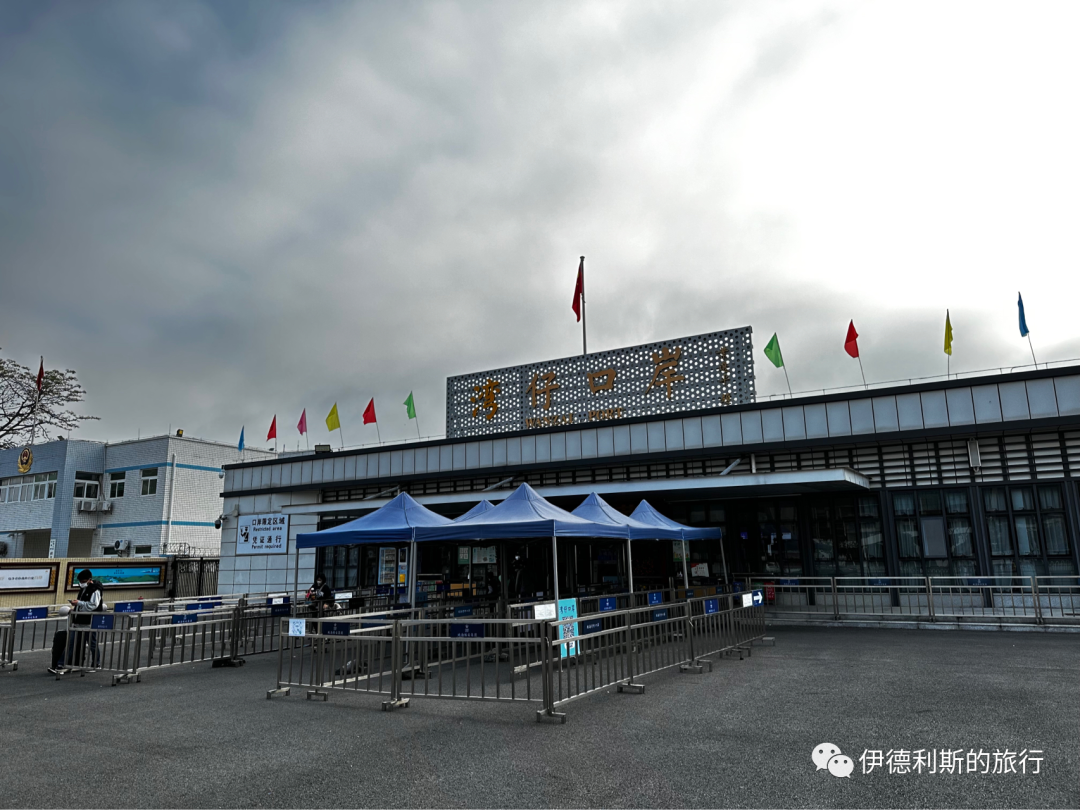

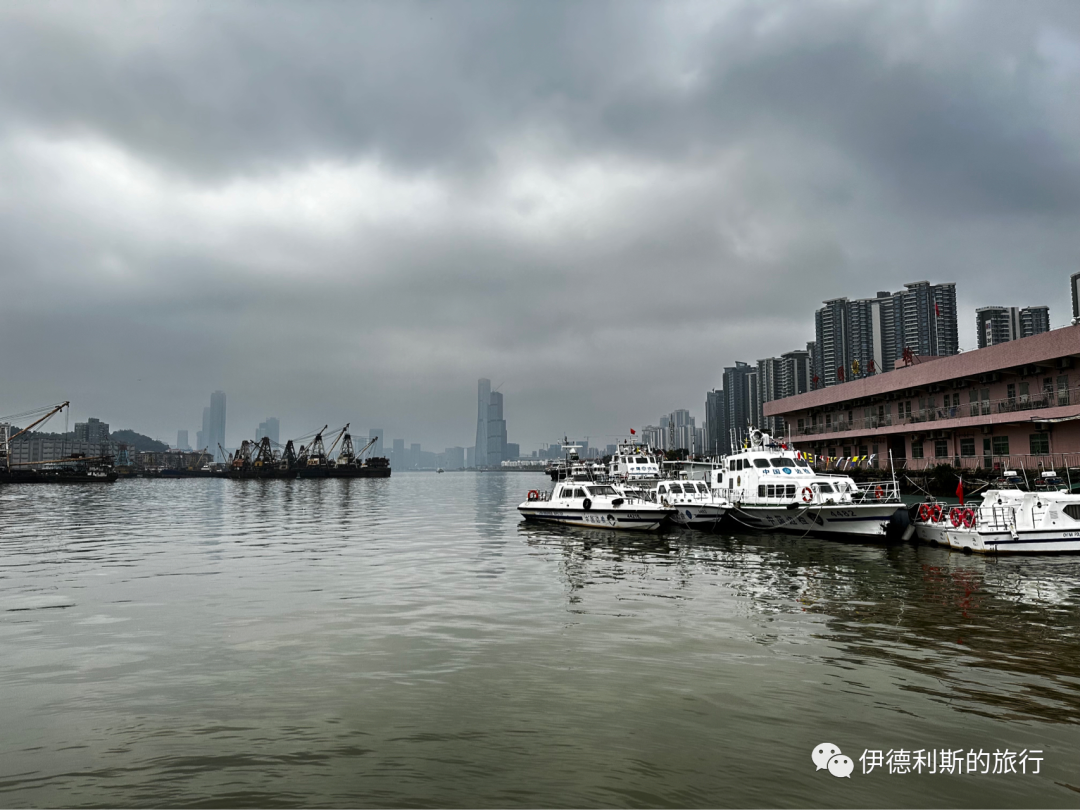
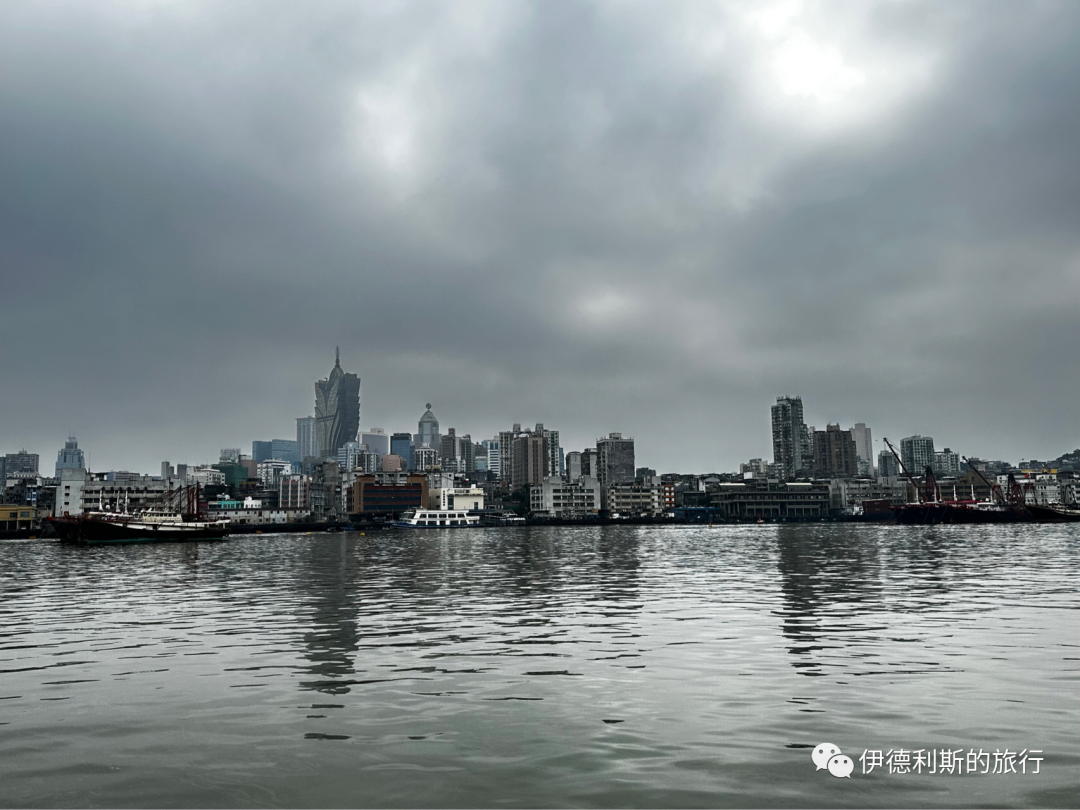
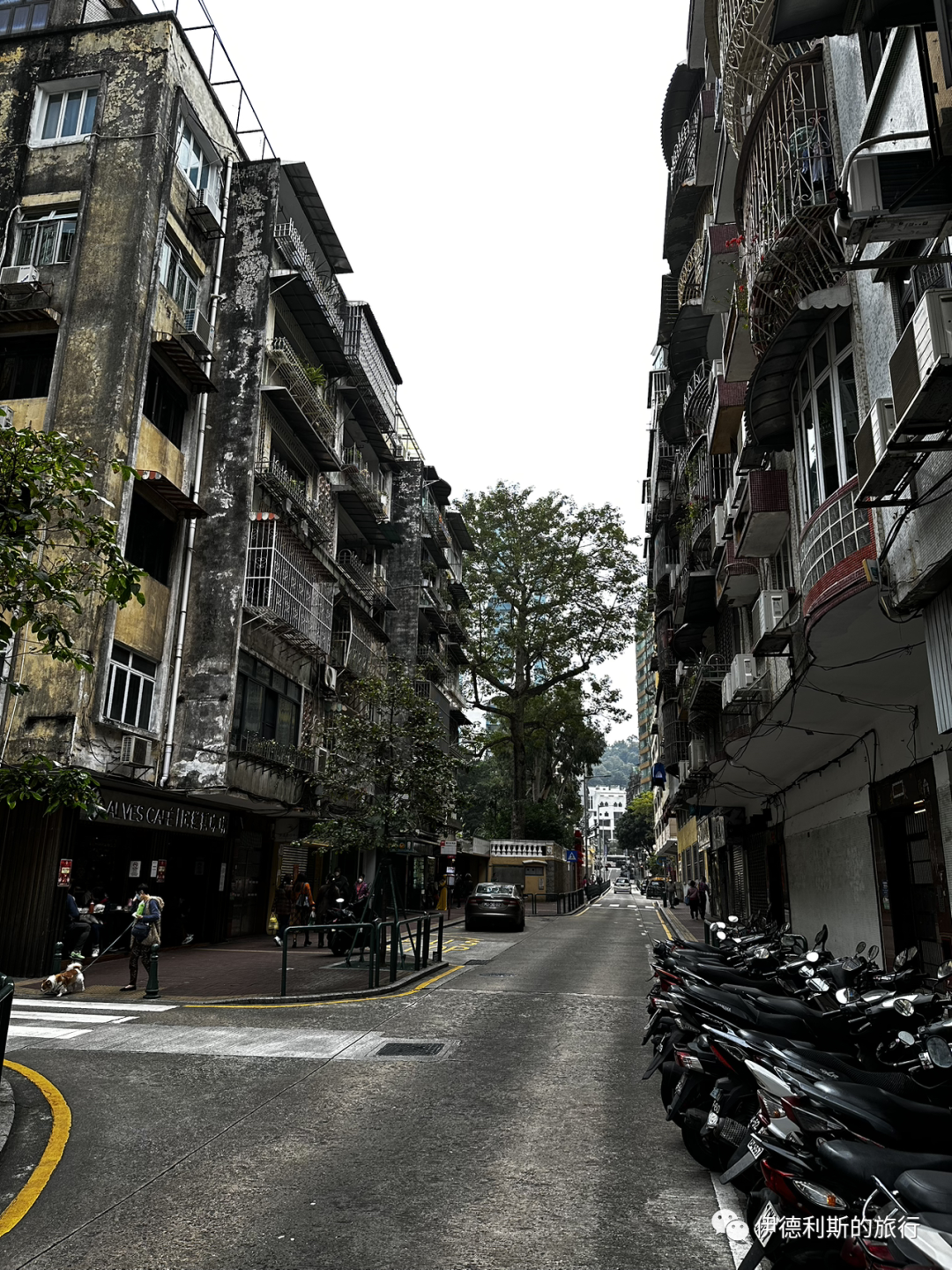
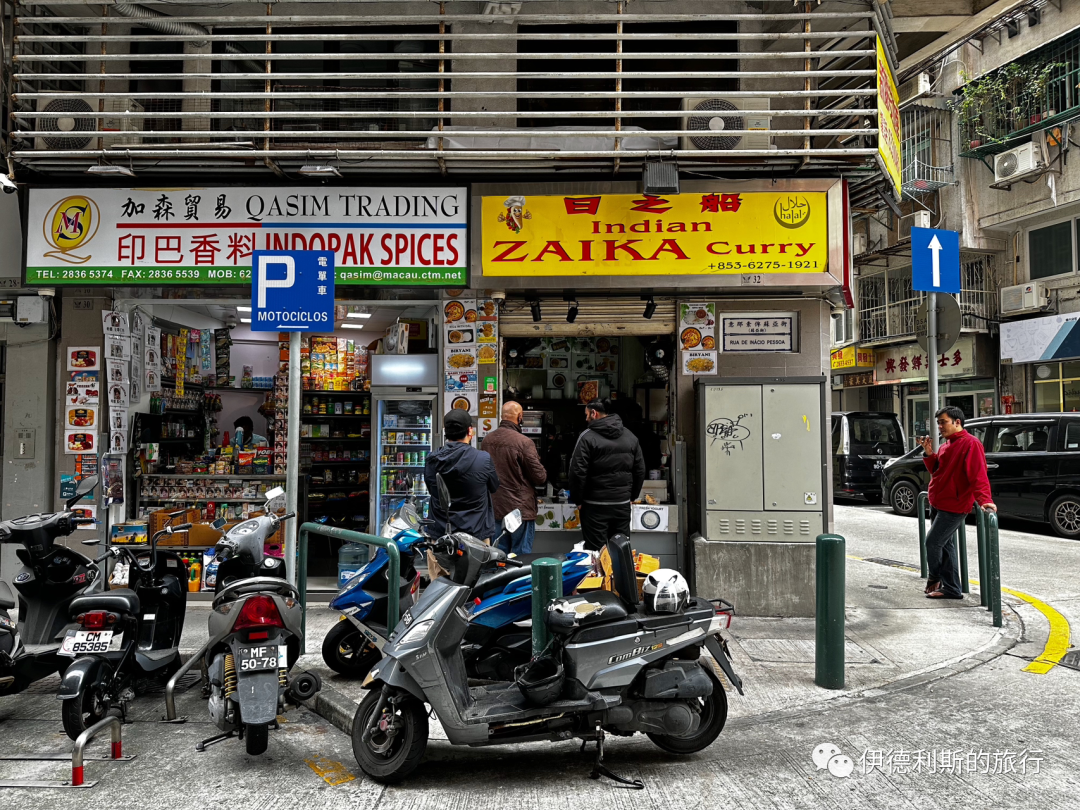
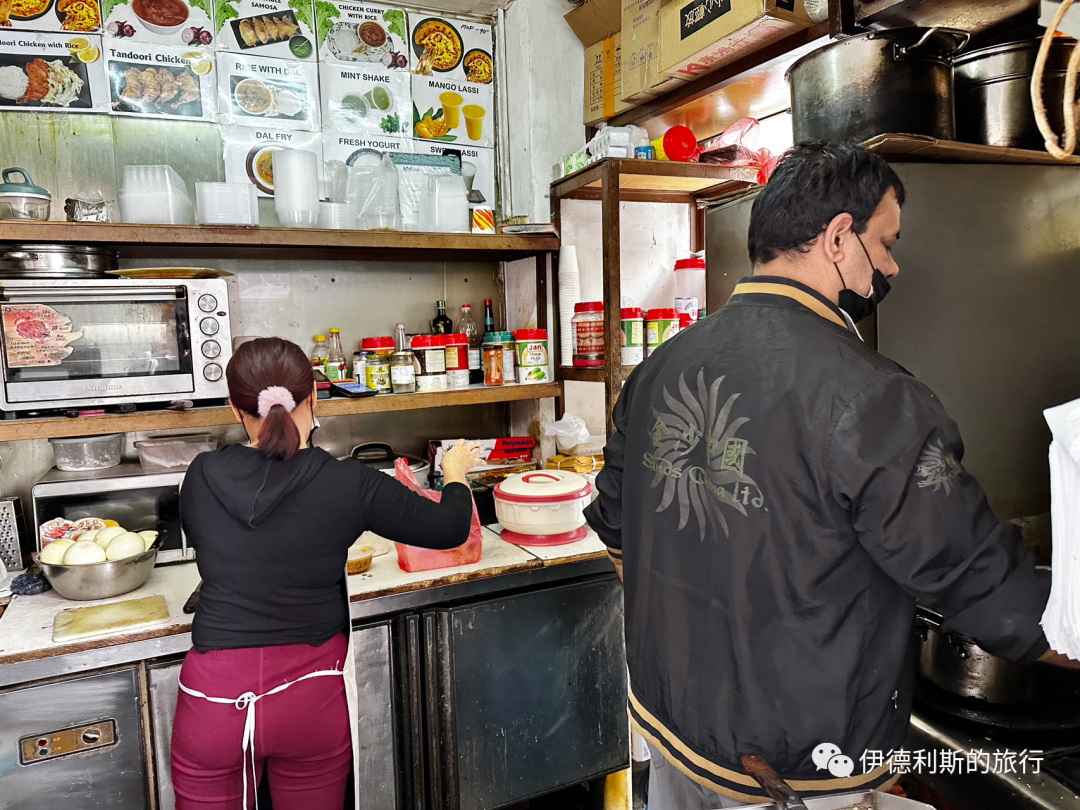
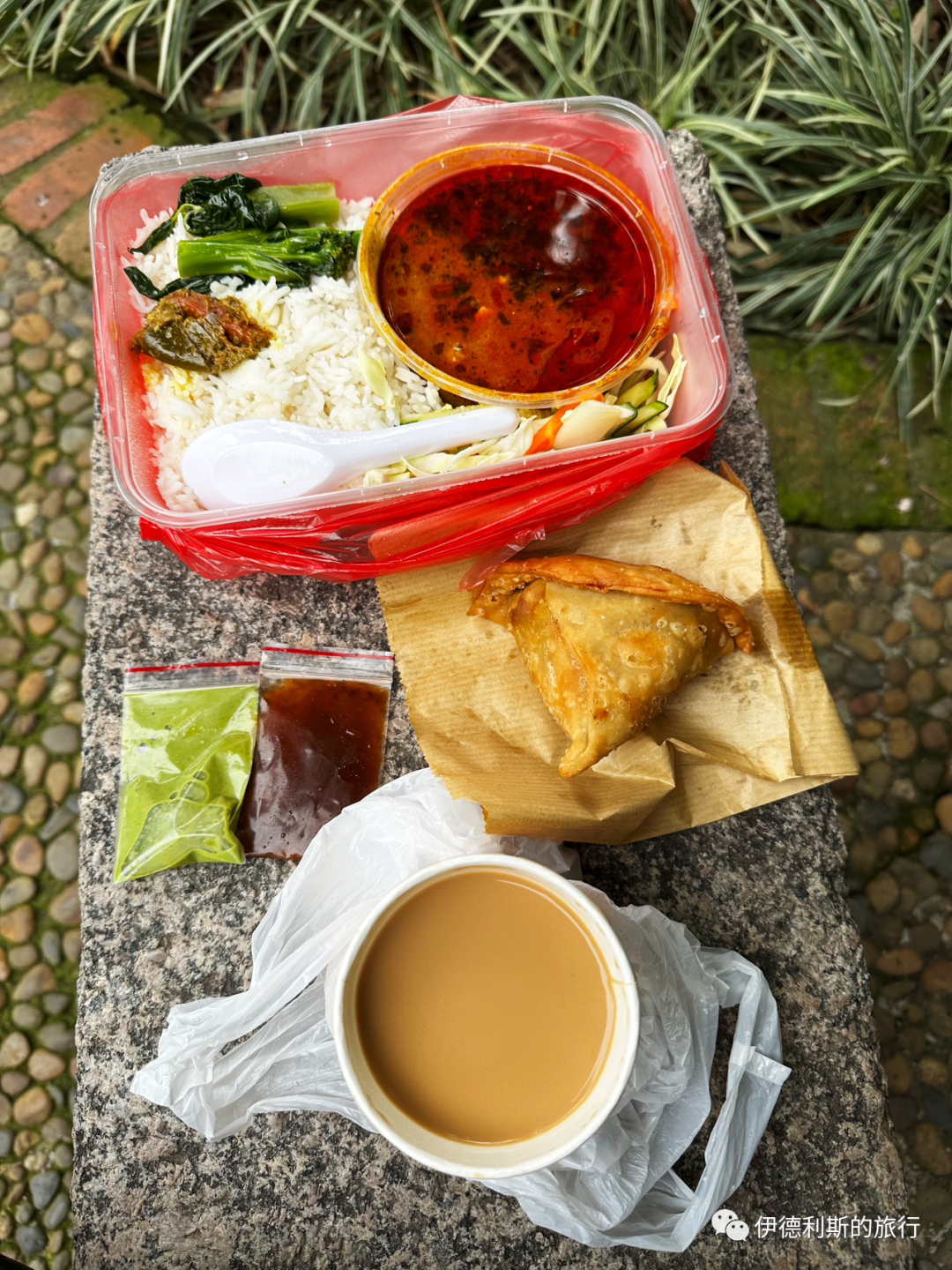
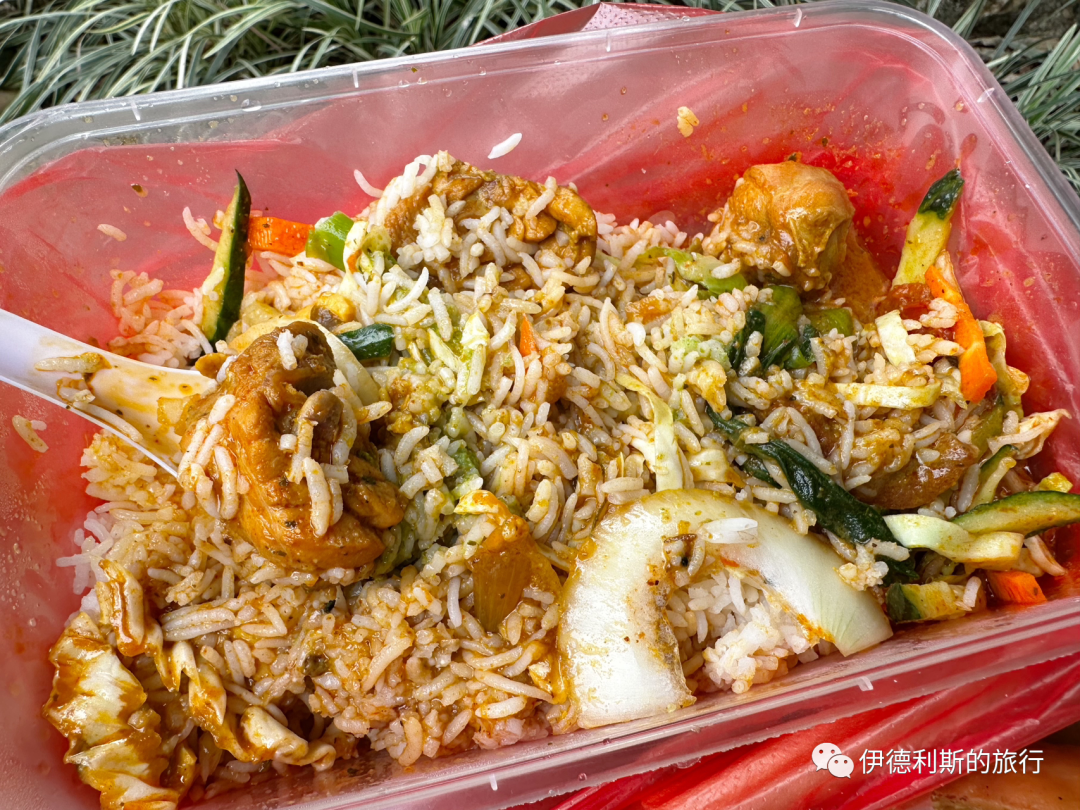
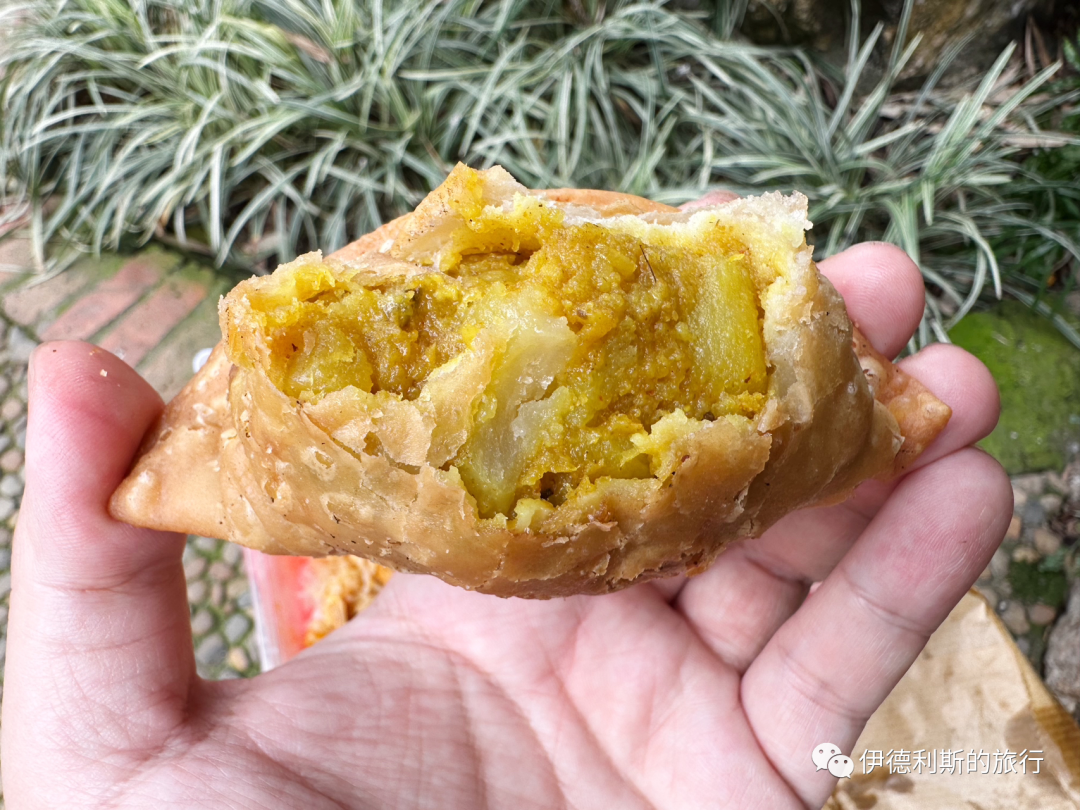
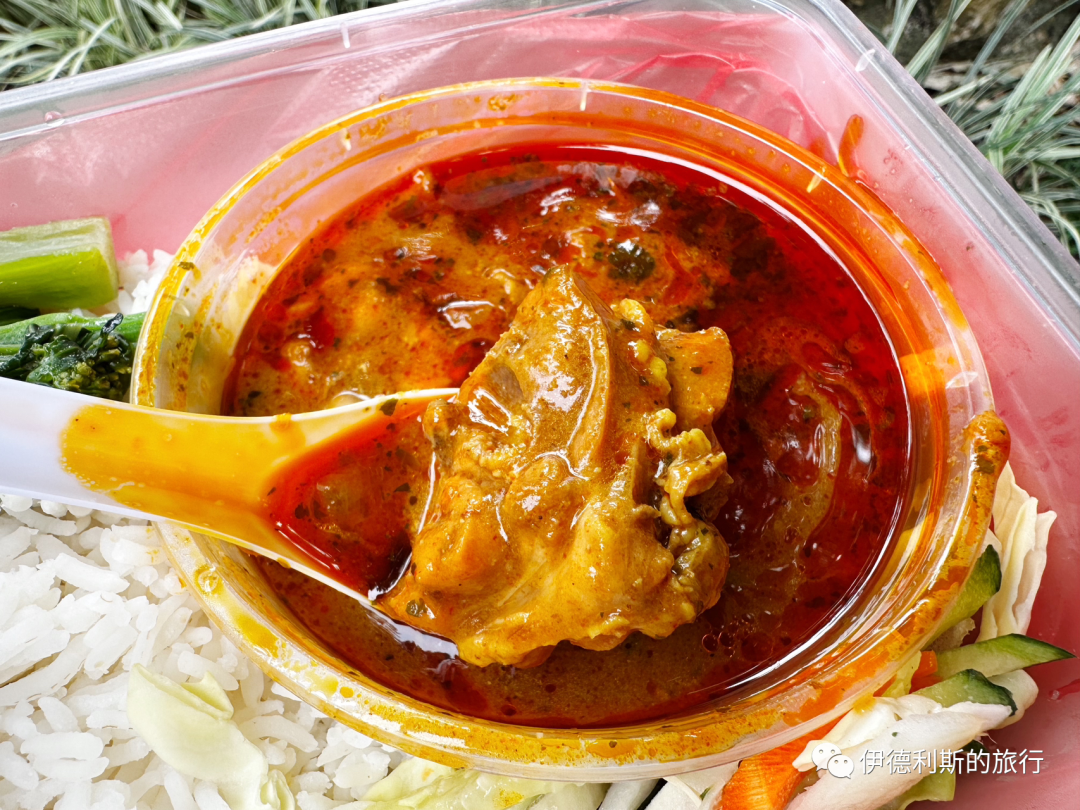
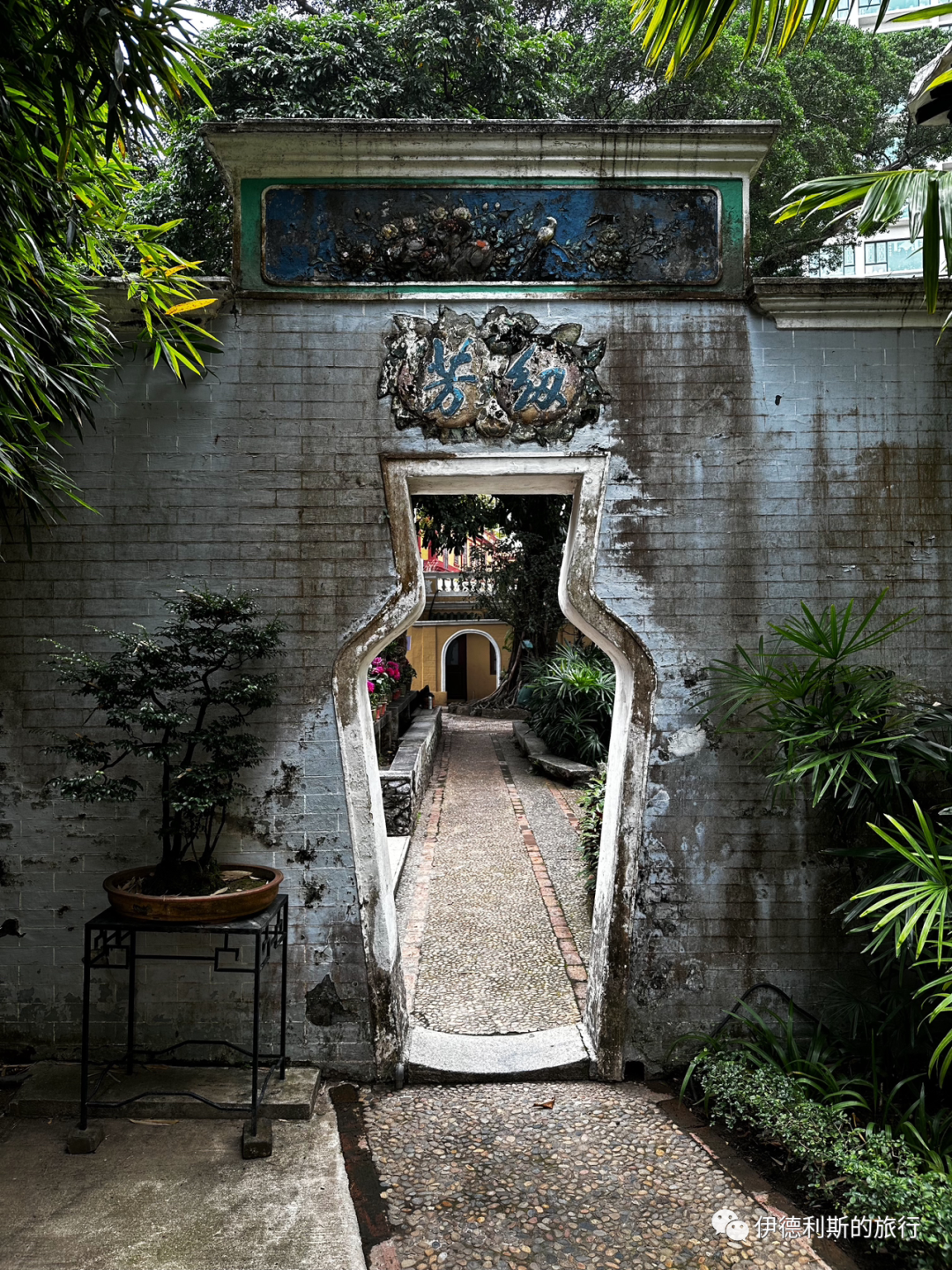
I originally planned to eat breakfast at an Indonesian Javanese restaurant I had looked up. Because of the situation over the last two years, several Indonesian restaurants in Macau have closed. I couldn't eat there, so I went to a South Asian street food spot on Rua de Silva Mendes called Zaika Curry (ri zhichuan) to buy chicken curry, samosas, and masala tea, which I packed to eat at the nearby Lou Lim Ioc Garden. Qasim, who works at the trading company next to the curry shop, is an elder at the Macau Mosque.
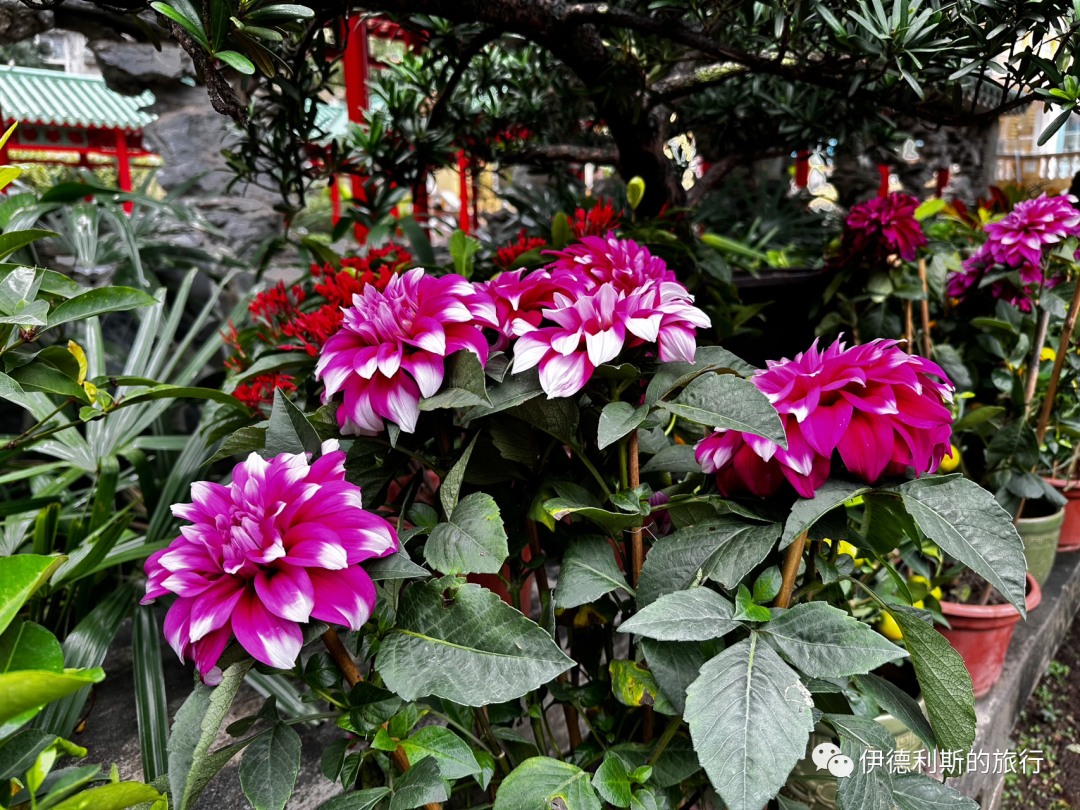
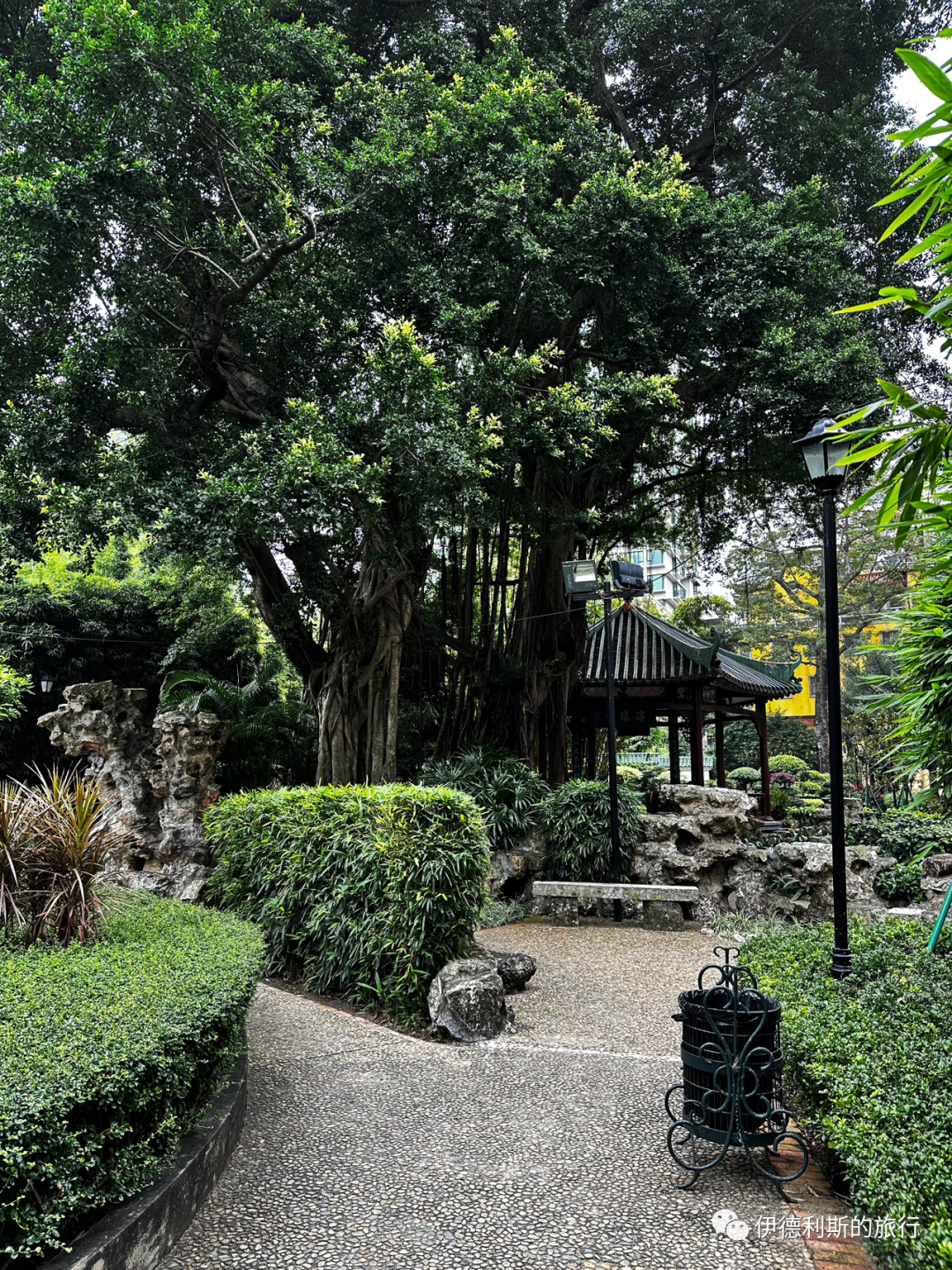
The winter weather in Macau is pleasant and the park is lush. Many Southeast Asian workers use their holidays to bring snacks to the park to eat and chat, which is very relaxing.
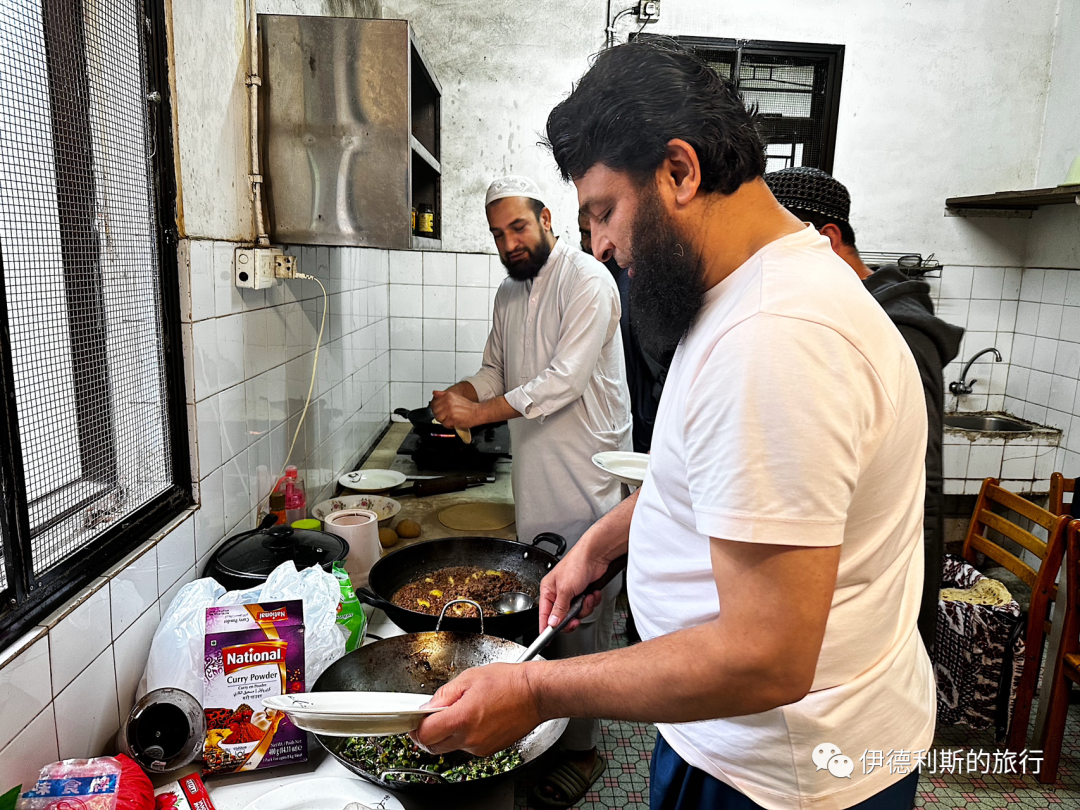
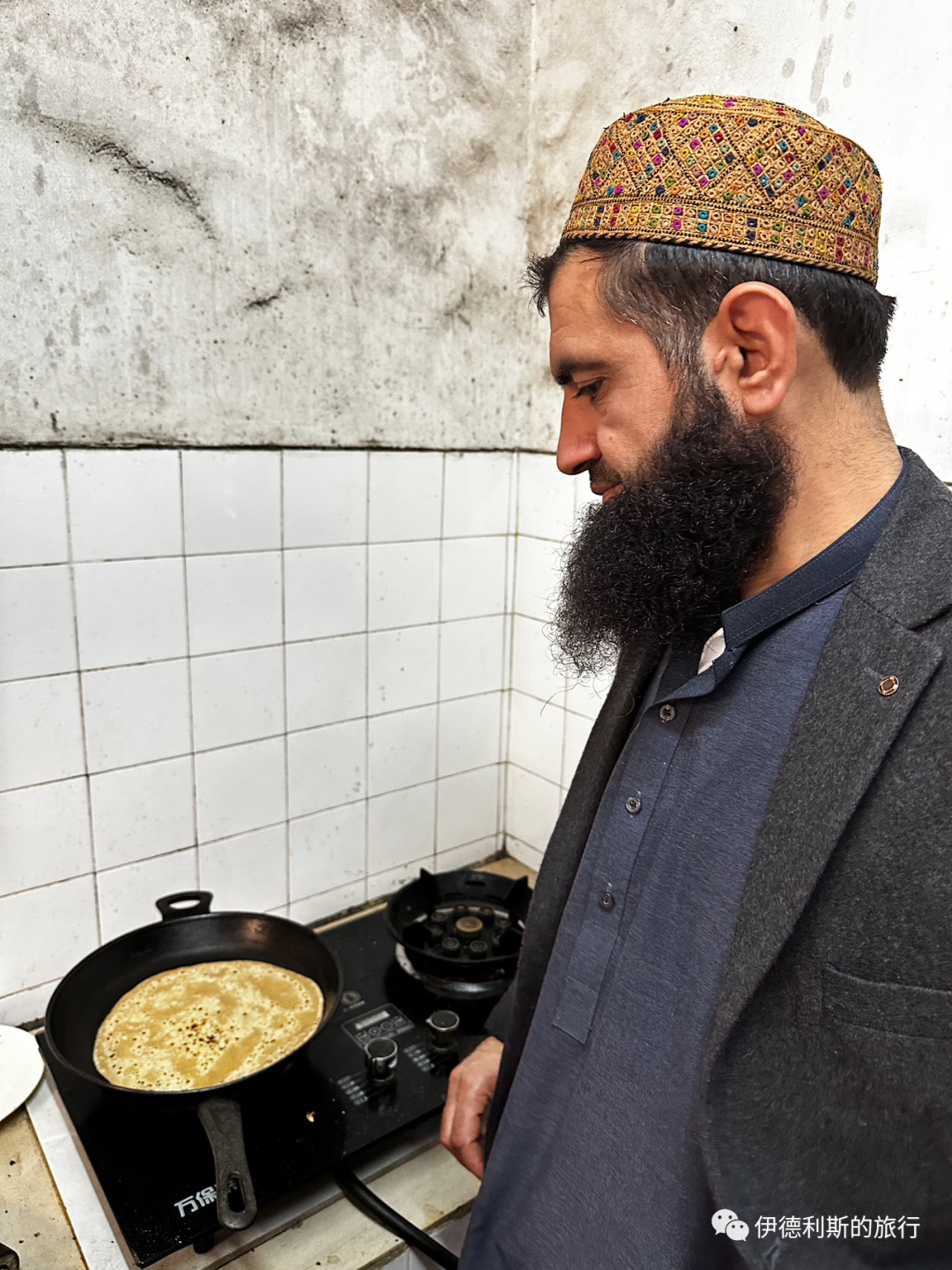
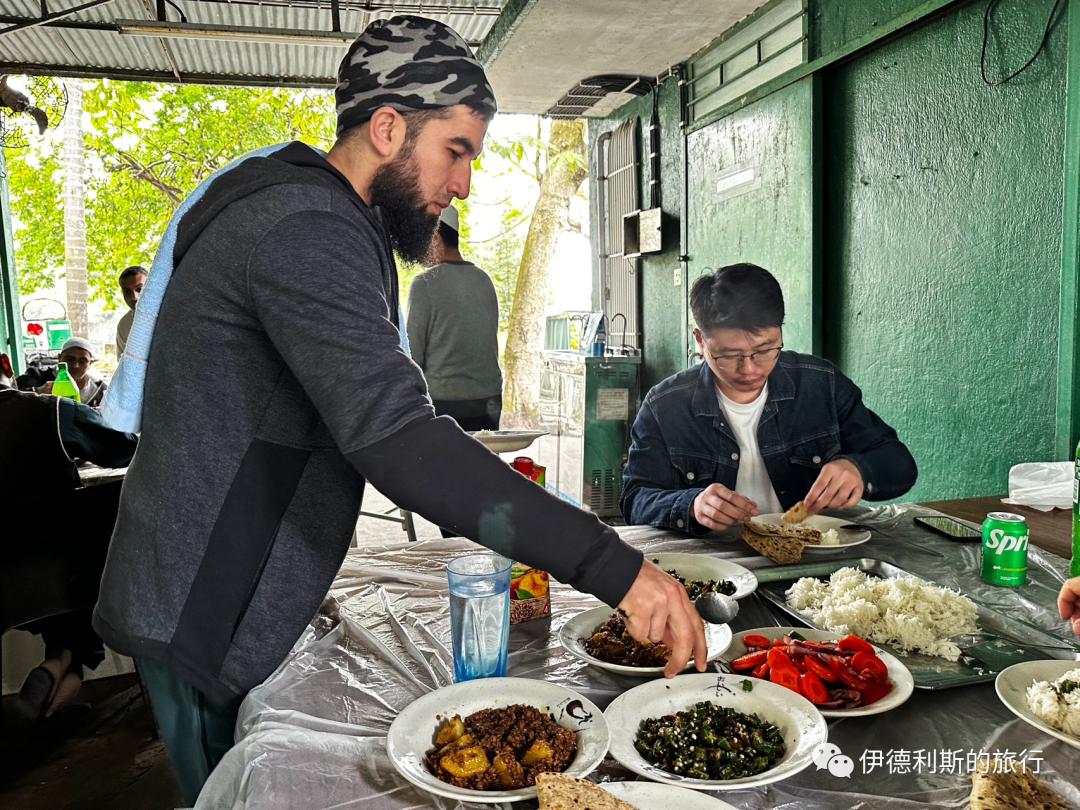
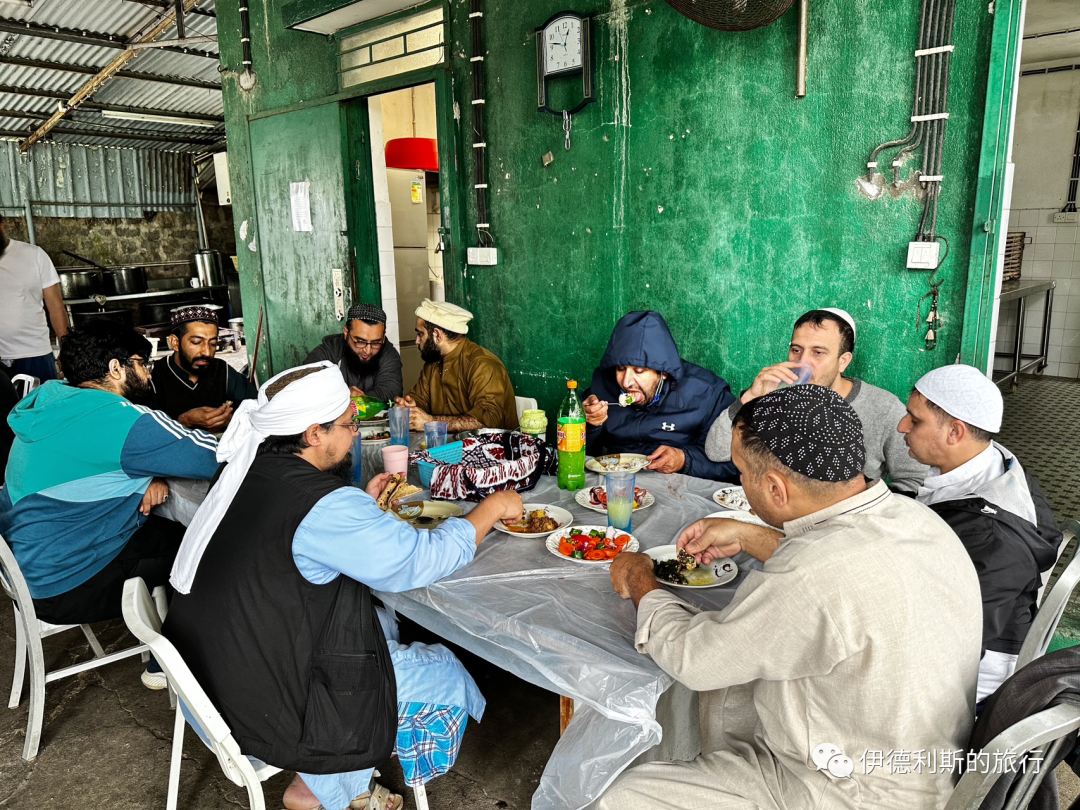
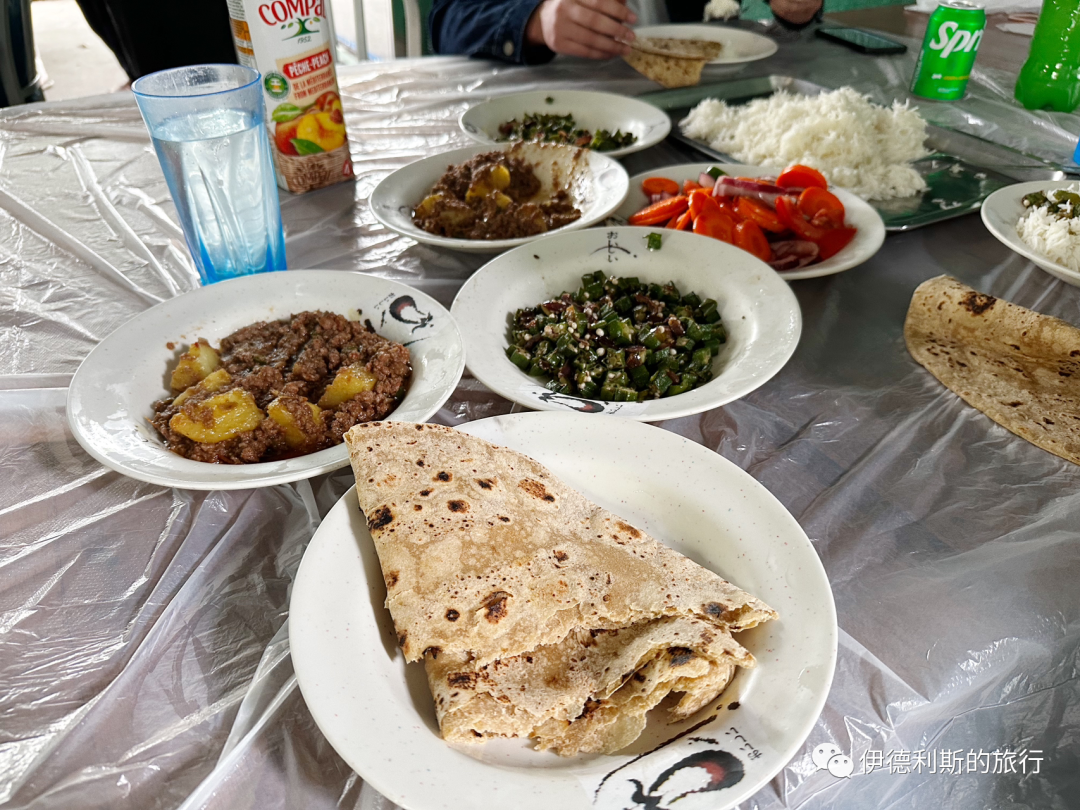
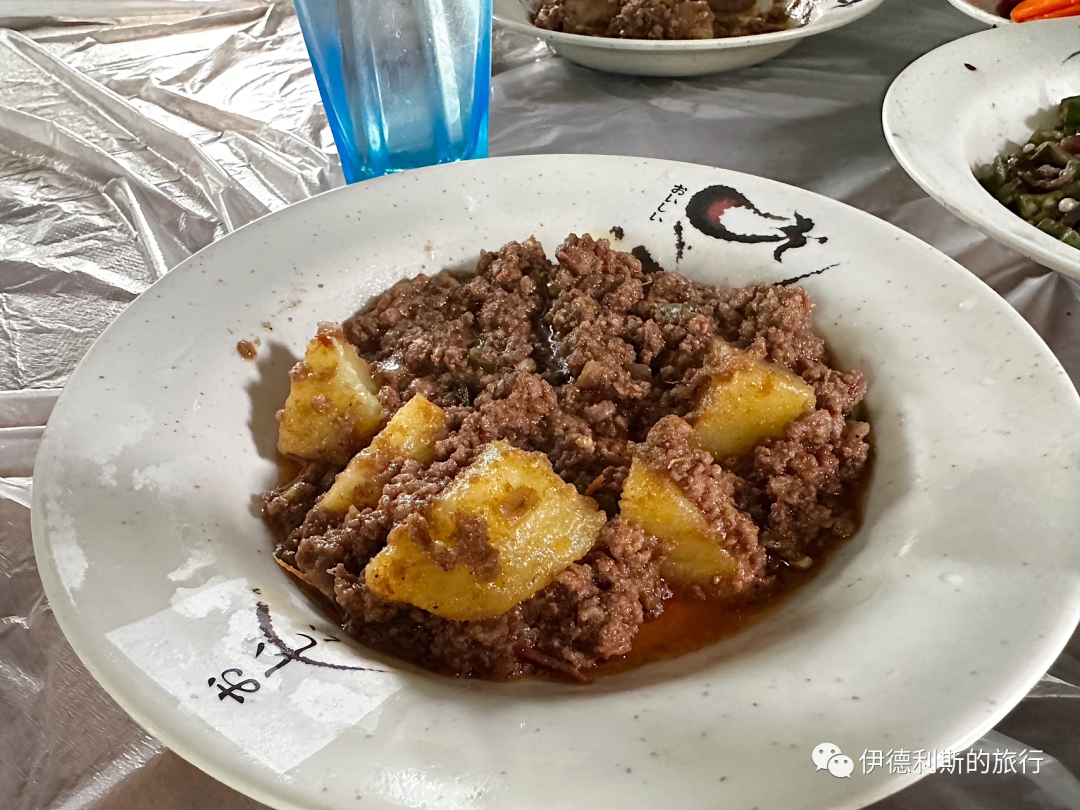
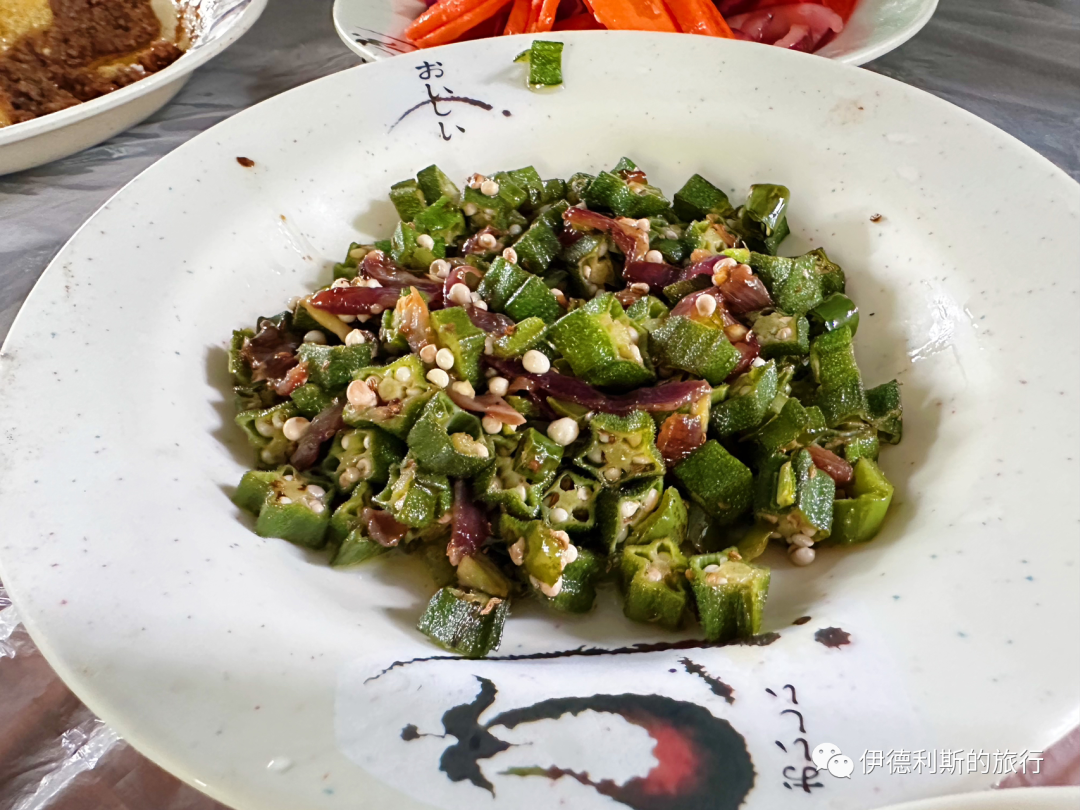
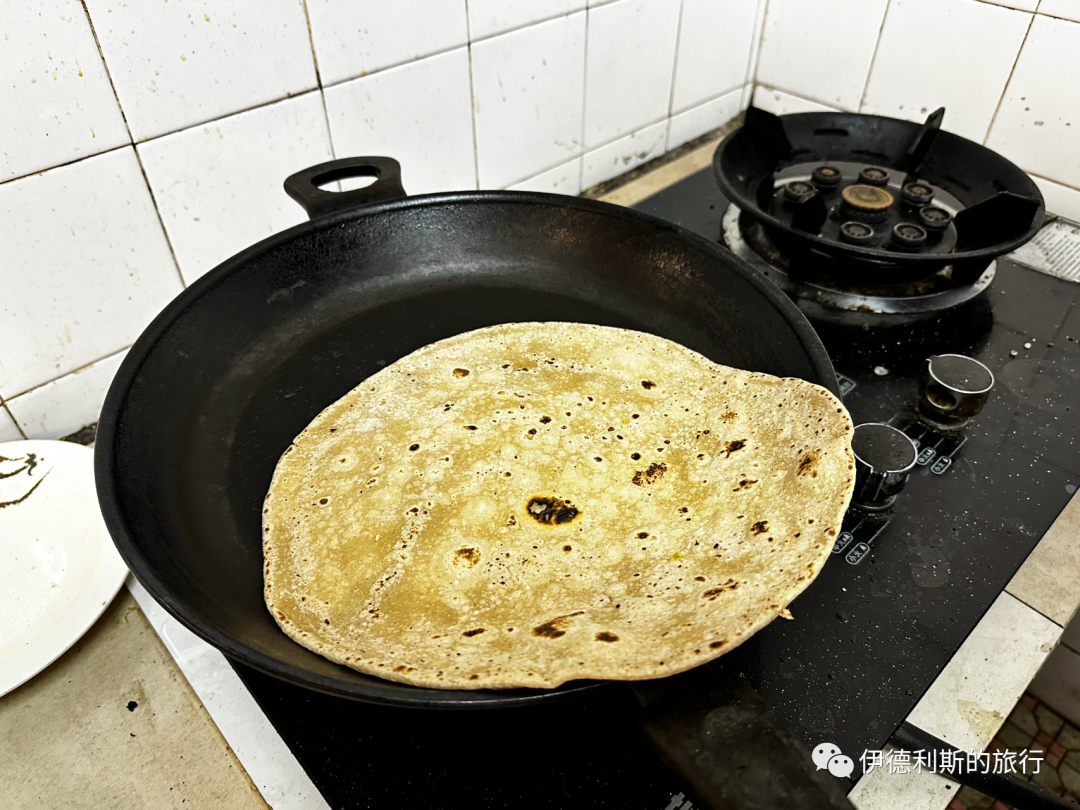
At noon, I arrived at the Macau Mosque and happened to run into a group of Pakistani-origin friends from Hong Kong who were there for a gathering (dawah). They made authentic Pakistani food at the mosque, including stir-fried okra, minced meat with potatoes, and flatbread (paratha). They also invited Imam Ding Shaojie and us to eat with them.
In 1841, the British occupied Hong Kong Island and immediately began sending Muslim soldiers from British India to be stationed there. As Hong Kong Island was being built up in the 1840s, South Asian Muslims arrived to work as police, security guards, and sailors, while a few wealthy merchants came to open companies. In 1849, South Asian Muslims built the first mosque on Hong Kong Island, which later became the Jamia Mosque (Shelley Street Mosque). There are now about 30,000 people of Pakistani descent living in Hong Kong, and about 12,000 of them have local status and identify as Hong Kongers.
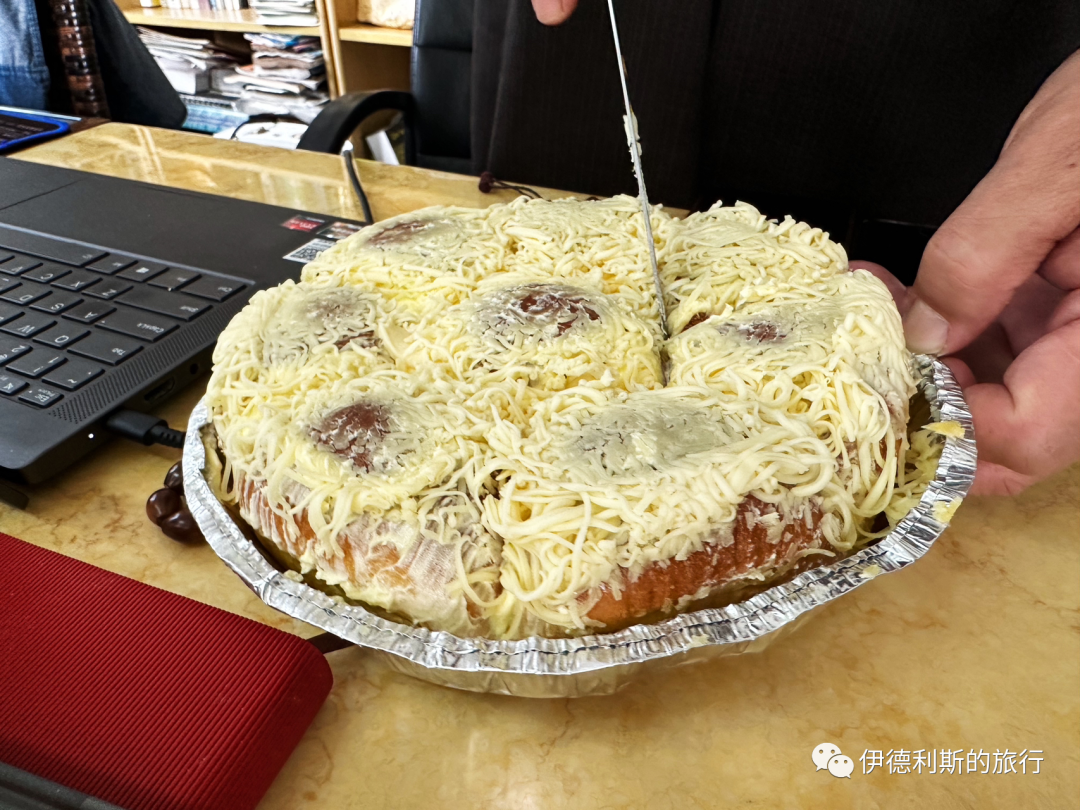
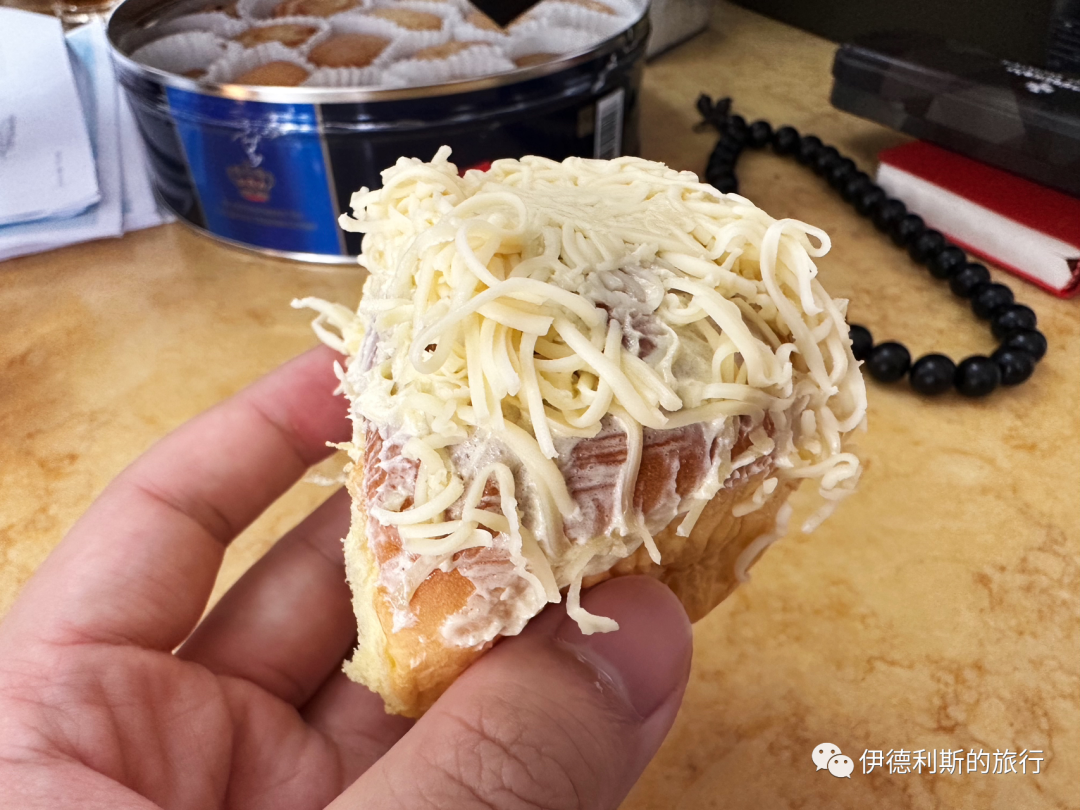
At the mosque, I ate some Filipino dessert shared by a friend. Every Sunday and on holidays, many Indonesian friends working in Macau come to the Macau Mosque to eat and chat. Everyone brings all kinds of snacks to share while they talk.
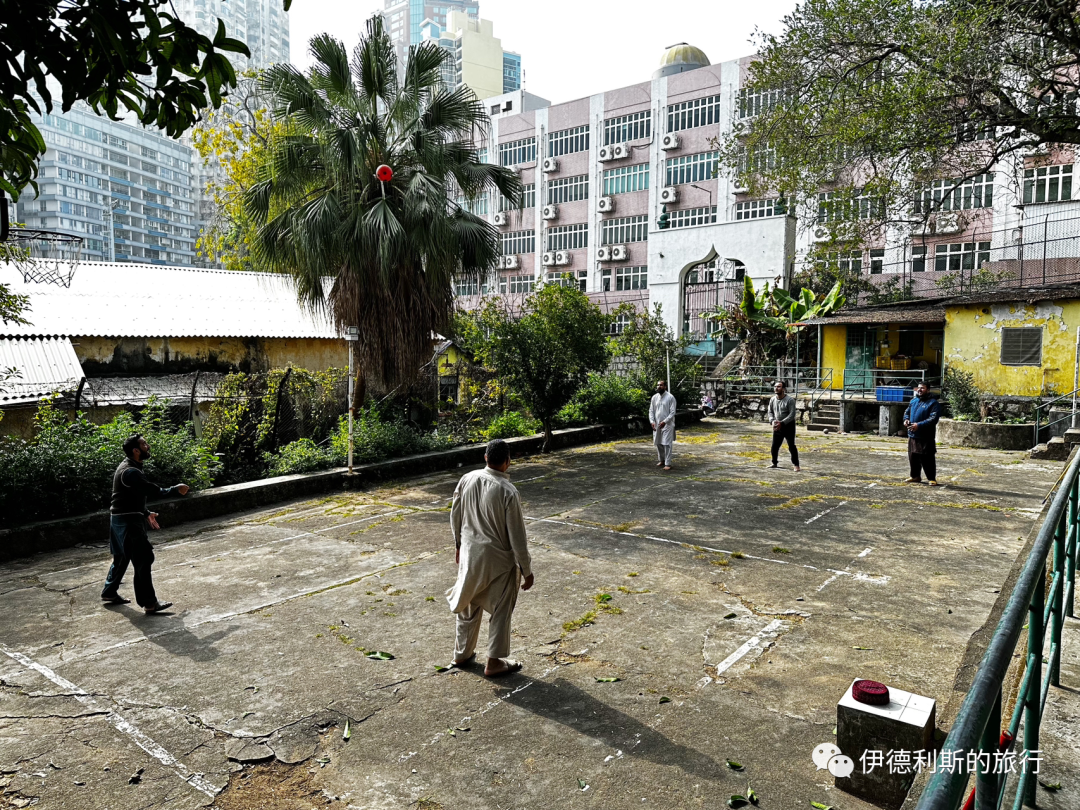
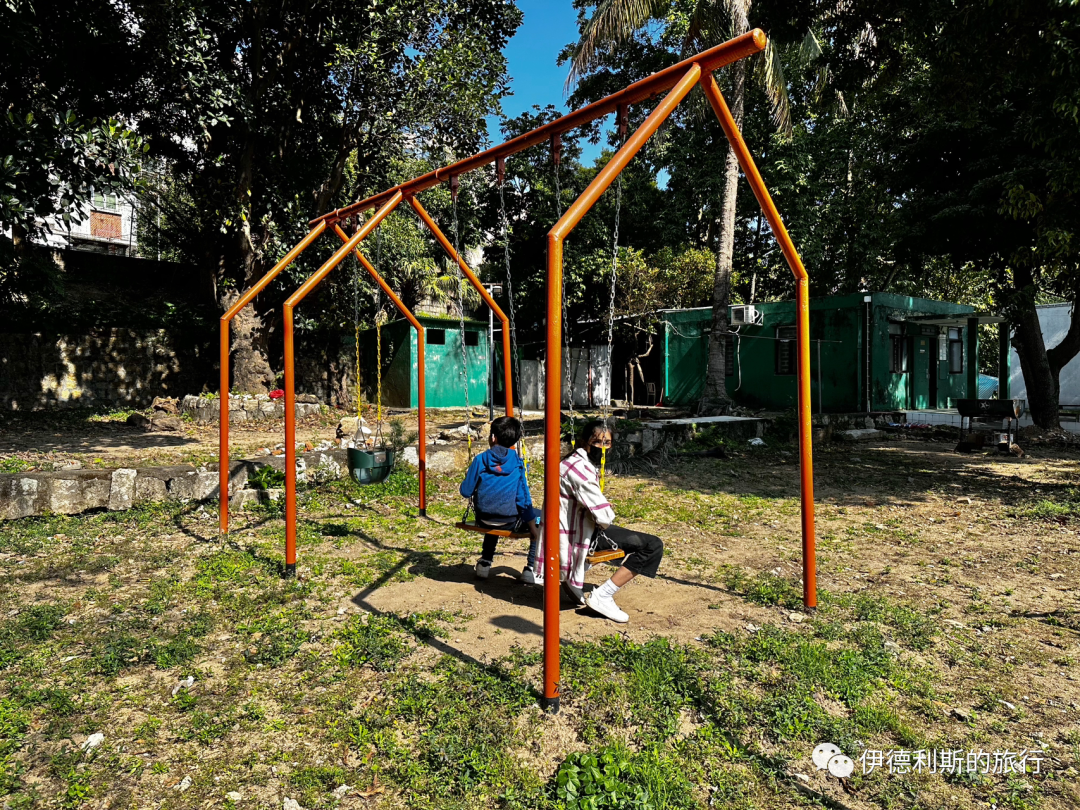
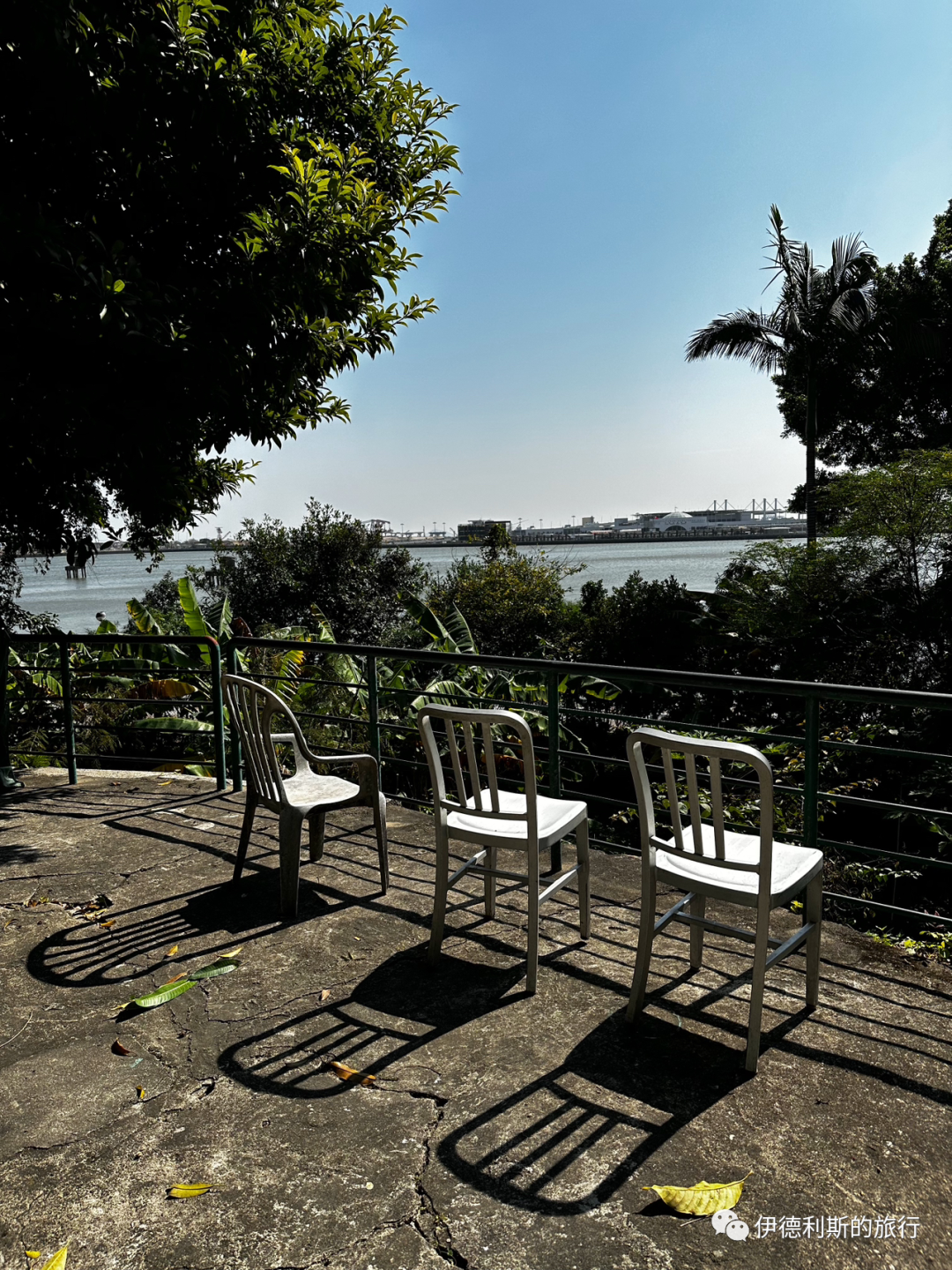
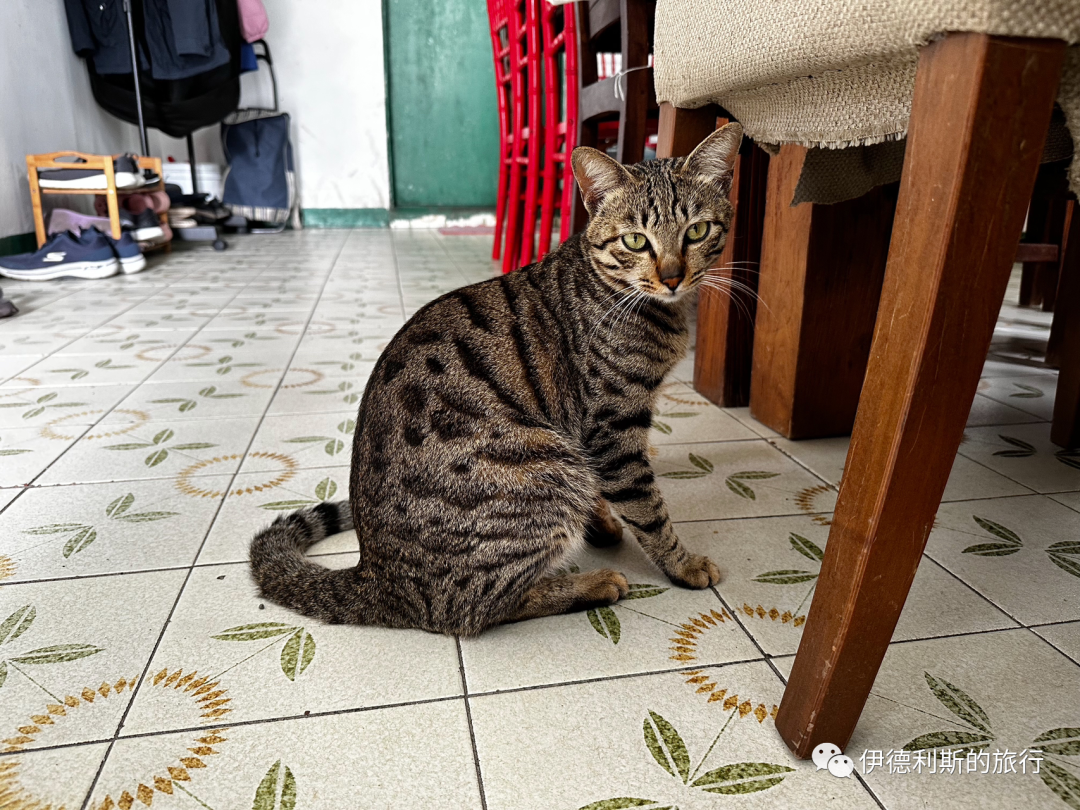
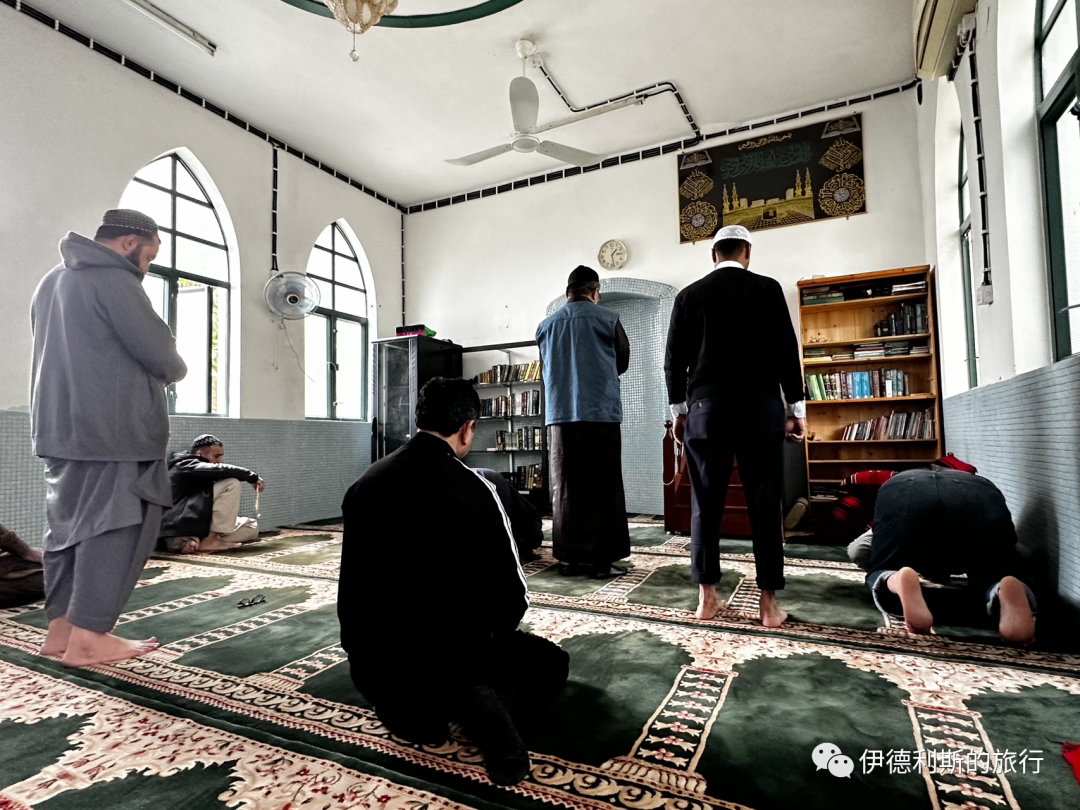
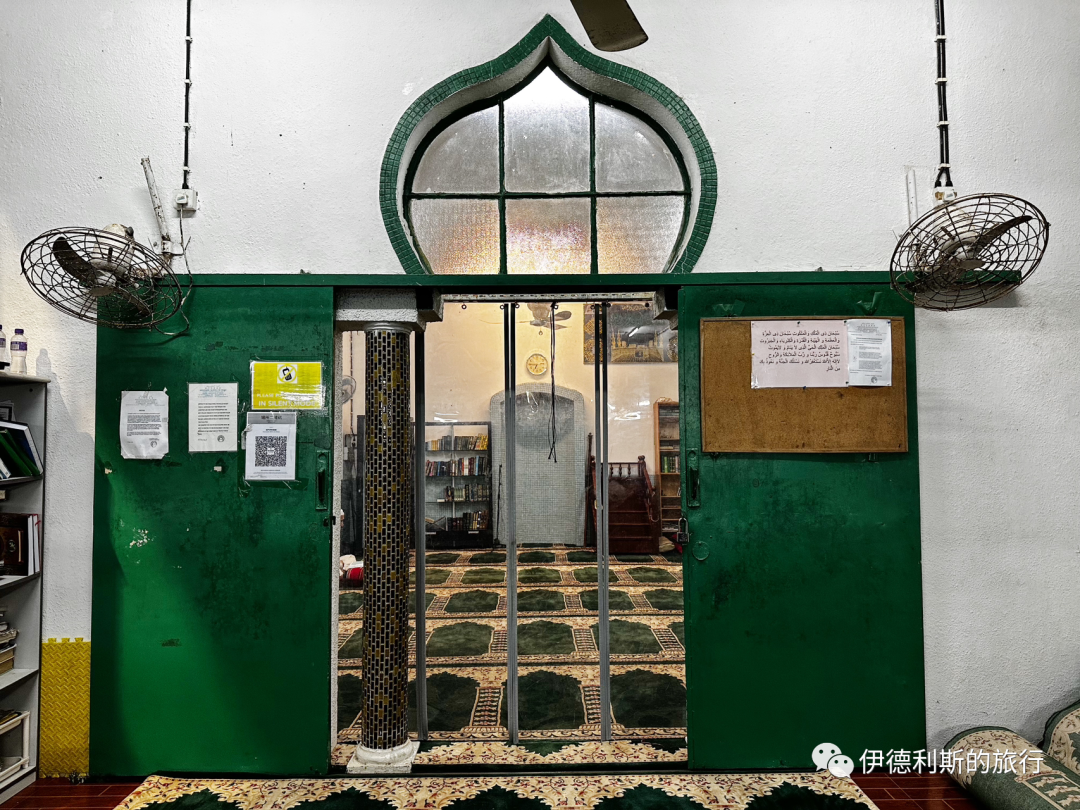
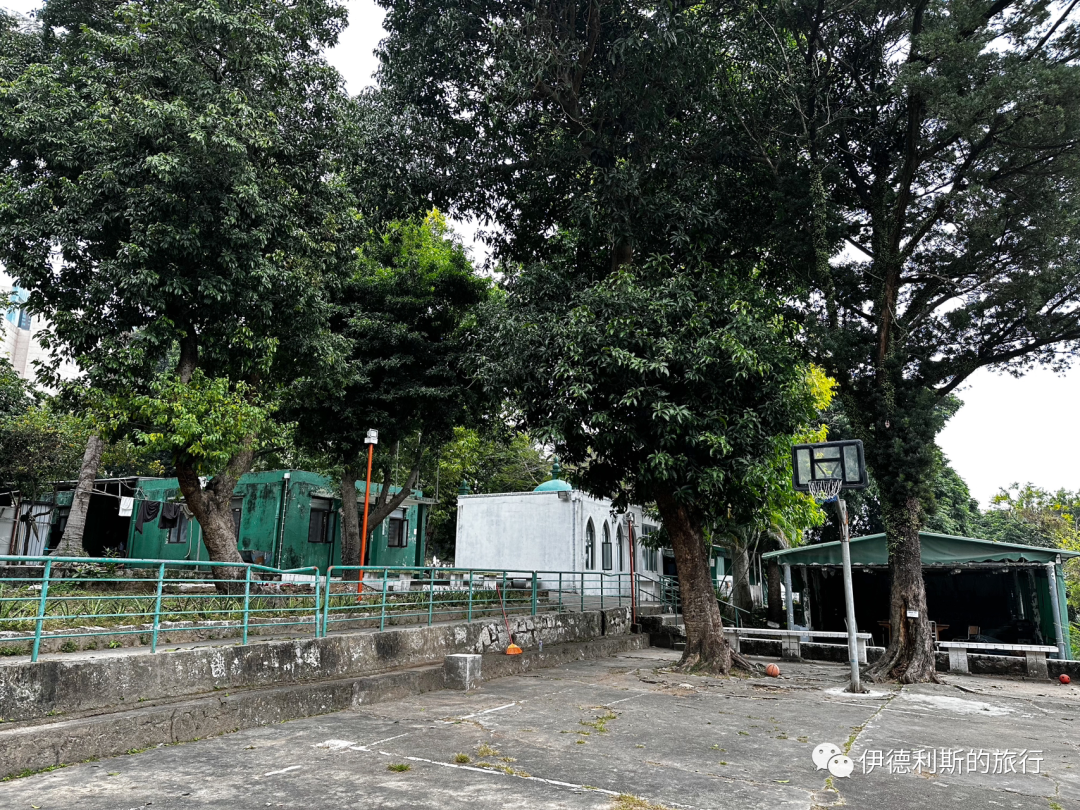
Although the Macau Mosque is not large, the environment is excellent. Besides performing worship and learning, you can play ball, use the swings, pick bananas and starfruit, look at the lake view, and pet cats. In the summer, you can even have outdoor barbecues. It is a great place to get away from the noise and relax.
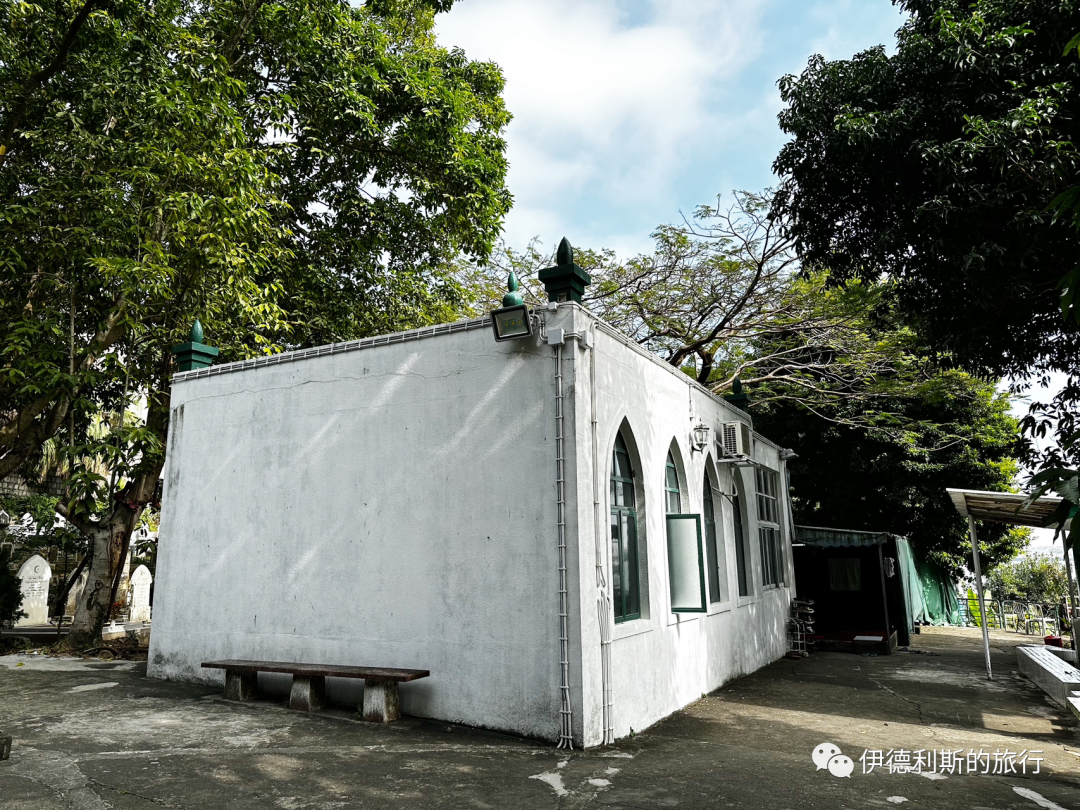
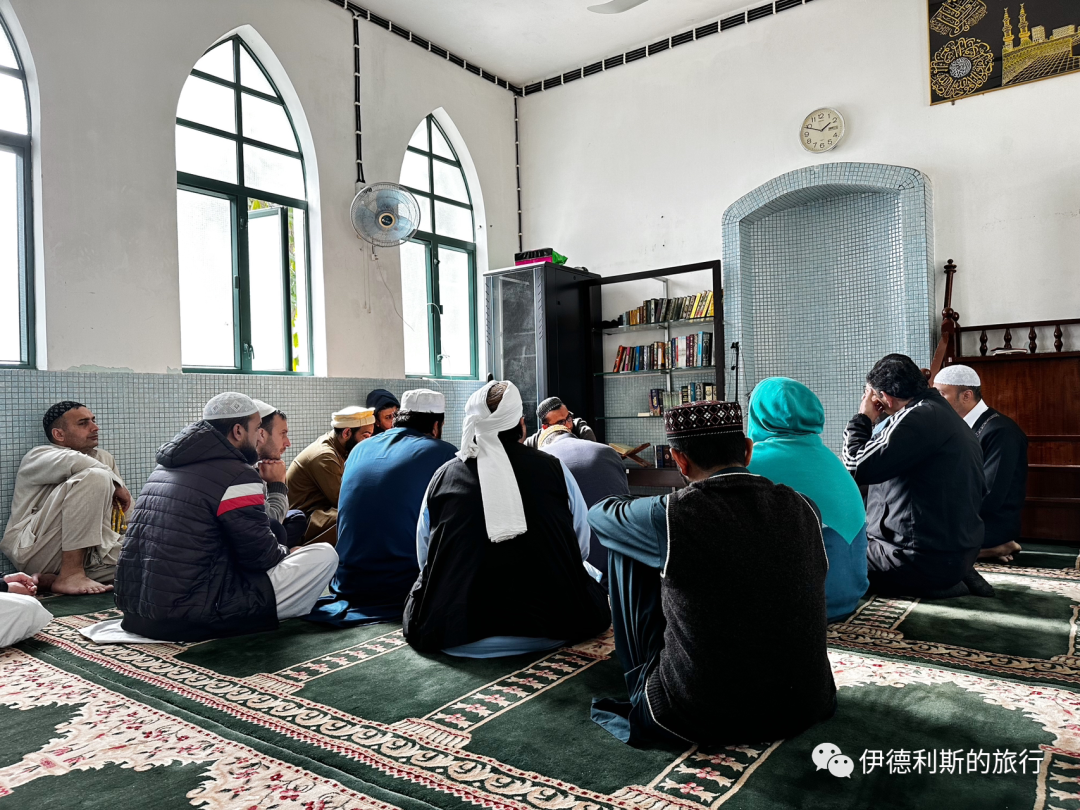
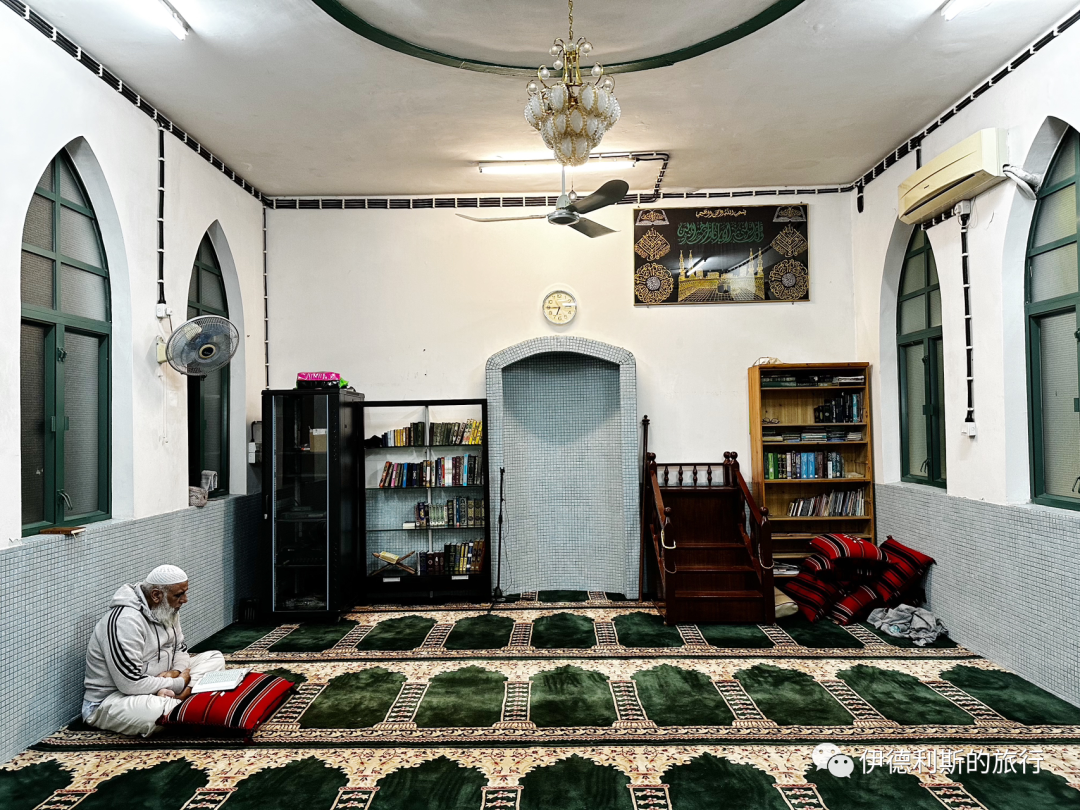
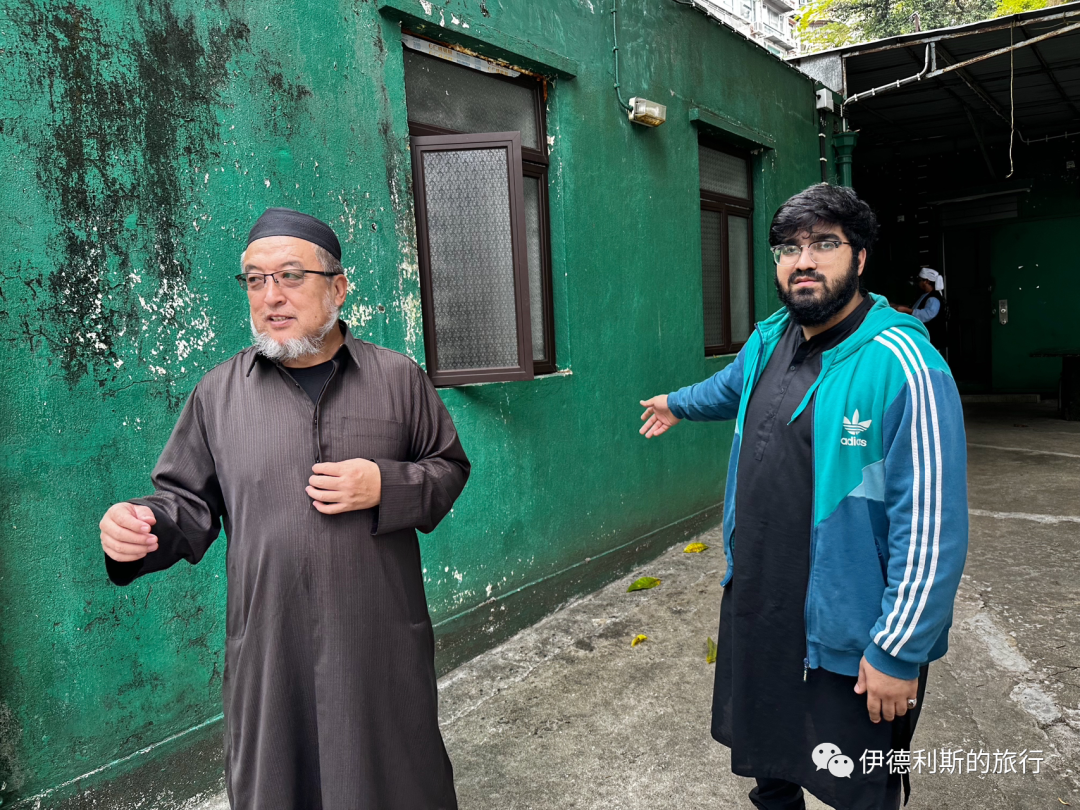
I listened to Imam Ding Shaojie tell the history of the Macau Mosque.
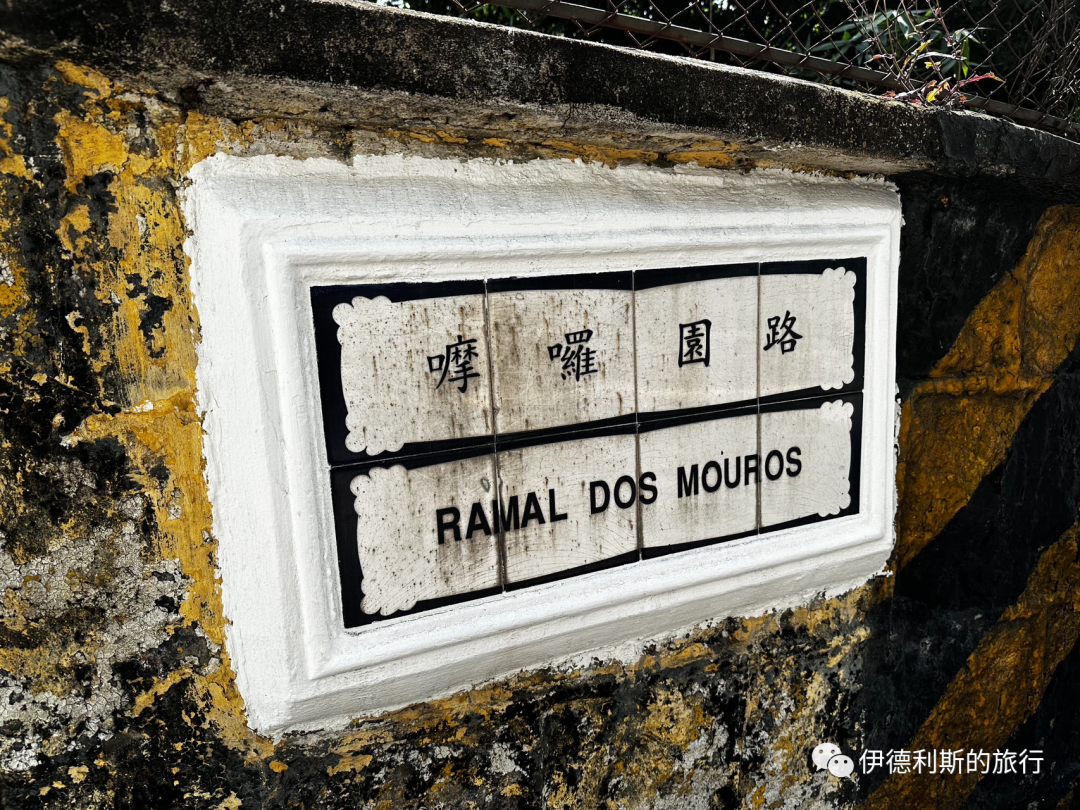
Locals call the Macau Mosque the "Moro Garden" (Mo Luo Yuan). The term "Moro" comes from the Portuguese word "Mouros." It originally came from the name "Mauri," which the Romans used for the Berbers of North Africa under their rule. Later, various versions appeared in European languages, such as "Moro" in Italian and Spanish, and "Maure" in French. After the Age of Discovery, Spain and Portugal called many of the Muslim groups under their rule "Moros." For example, Spain collectively called the Austronesian Muslim groups in the southern Spanish East Indies (now the southern Philippines) "Moros." Portugal called the Arab-descended Muslims in Portuguese Ceylon (now Sri Lanka) "Ceylon Moors," and in Portuguese-occupied Goa, India, local Muslims were called "Moir."
The Portuguese officially occupied Macau in 1557 and began transferring troops from places like Portuguese India, which included some Muslims. According to the Portuguese scholar Luís Morais in his book "Muslims in Macau," a Macanese real estate businessman named Filipi António Osório sold a piece of land to Macau Muslims to build a mosque and a cemetery, which is the current "Moro Garden." Later, more Muslims from other parts of South Asia came to Macau, and after they passed away, they were buried in the Moro Garden.
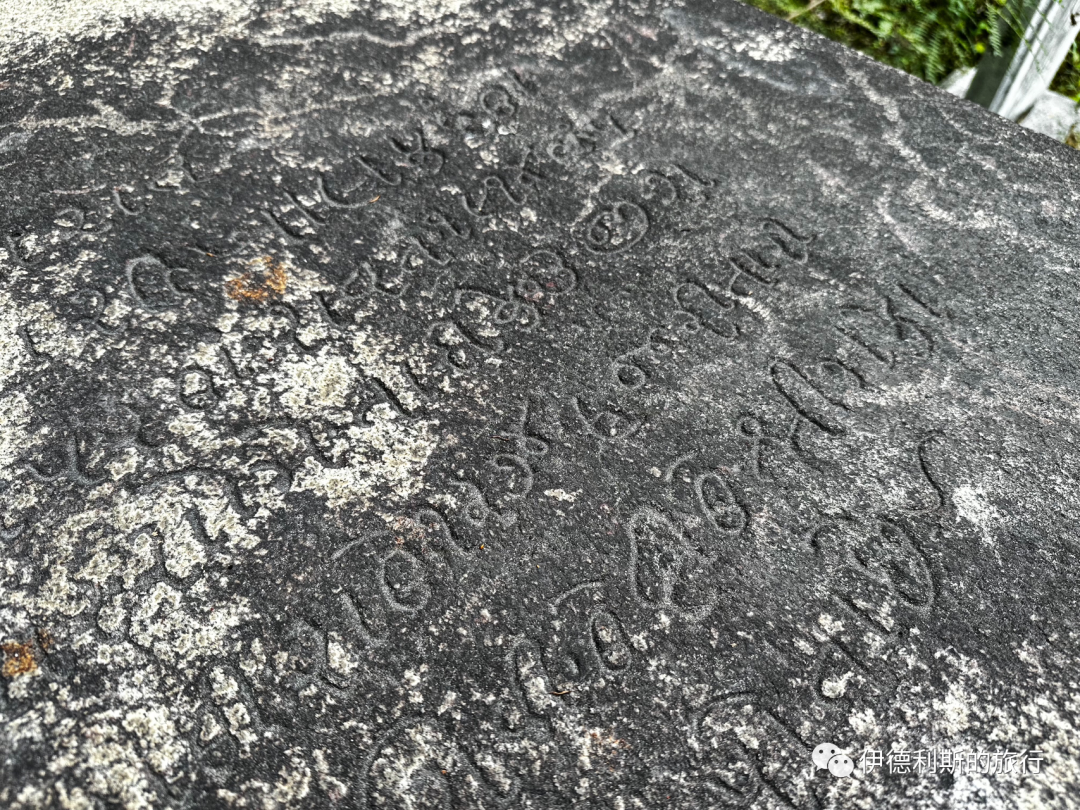
Today, most of the South Asian Muslim graves in the Moro Garden date from the 19th to the 20th century. The birthplaces include the Indian states of Punjab, West Bengal, and Goa, as well as Peshawar in Pakistan. The oldest tombstone belongs to a friend from Gujarat, India, who died in 1875. The tombstone is written in Persian and Gujarati, serving as an important historical witness for Macau's Muslims.
Gujarati script developed from the ancient Indian Nagari script and is similar to Sanskrit. Gujarati people are good at business and entered Southeast Asia very early, having a major influence on the development of local scripts in parts of Sumatra, Sulawesi, and the Philippines. Some Gujarati people also lived in Portuguese India, and they likely went to Macau to make a living in the 19th century.
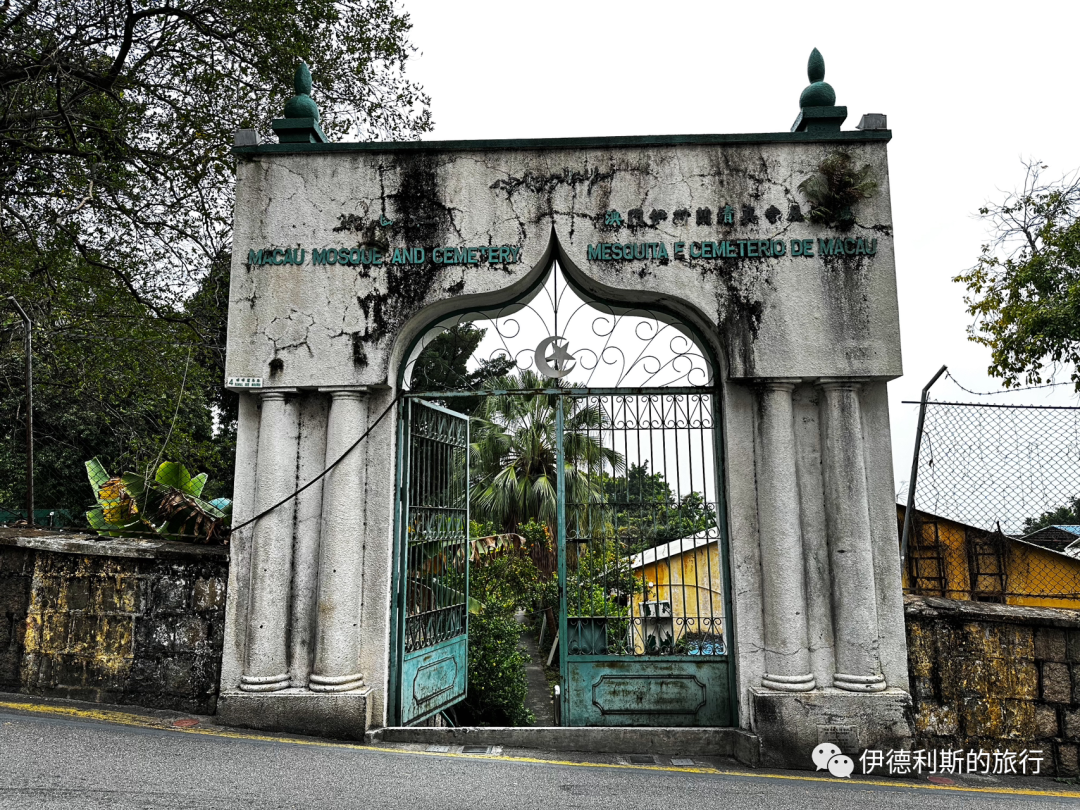
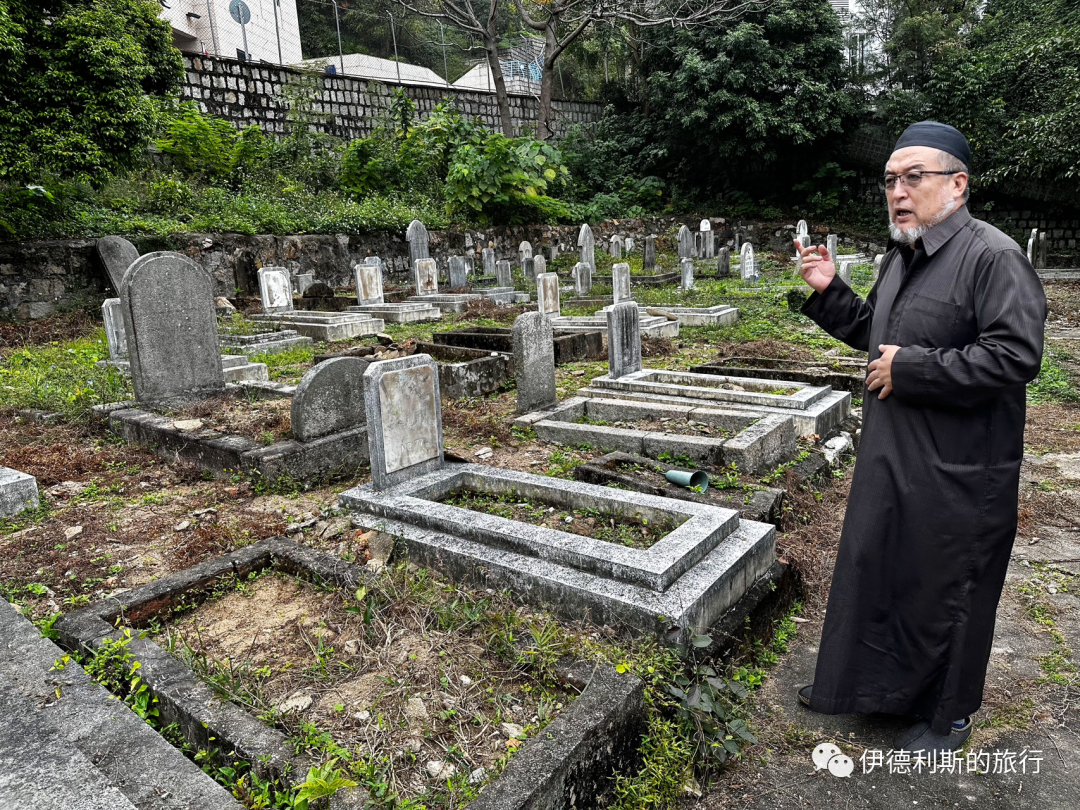
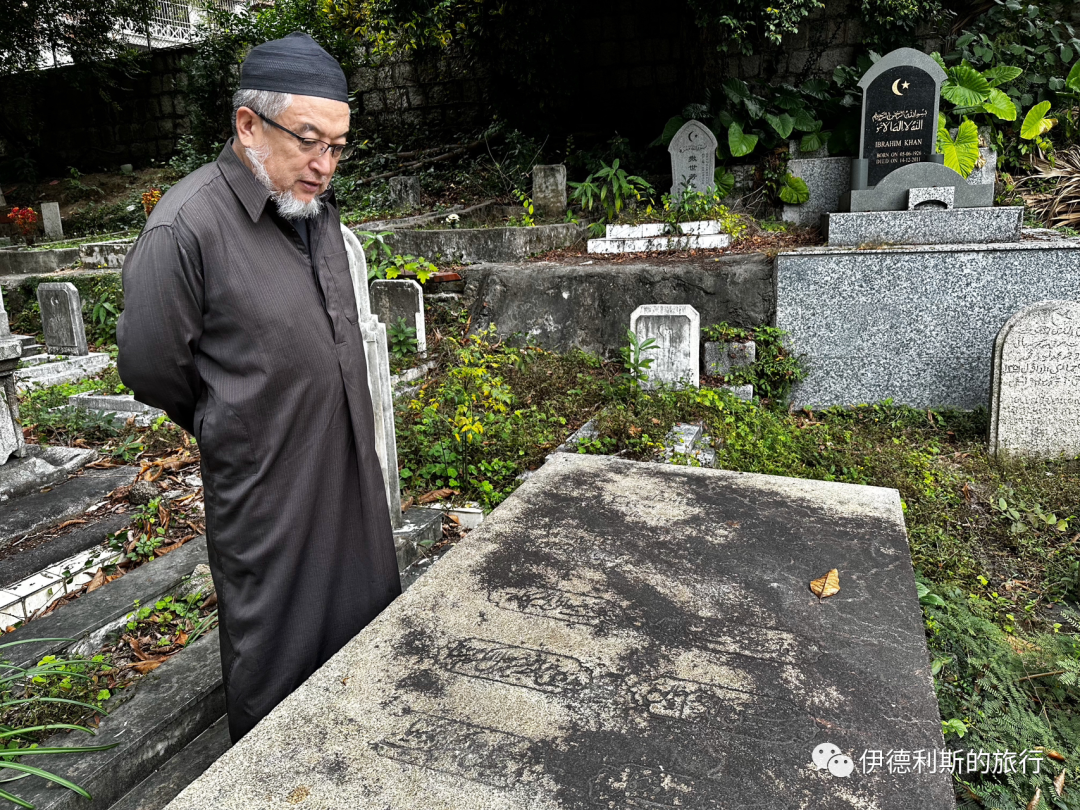
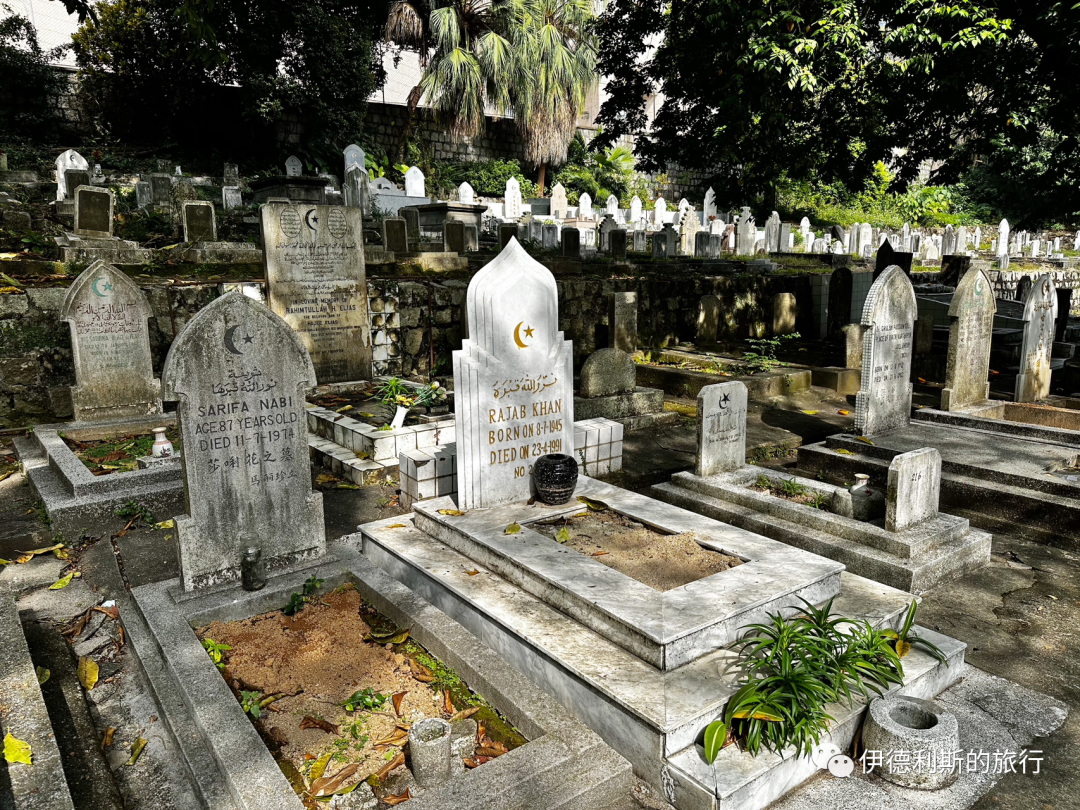
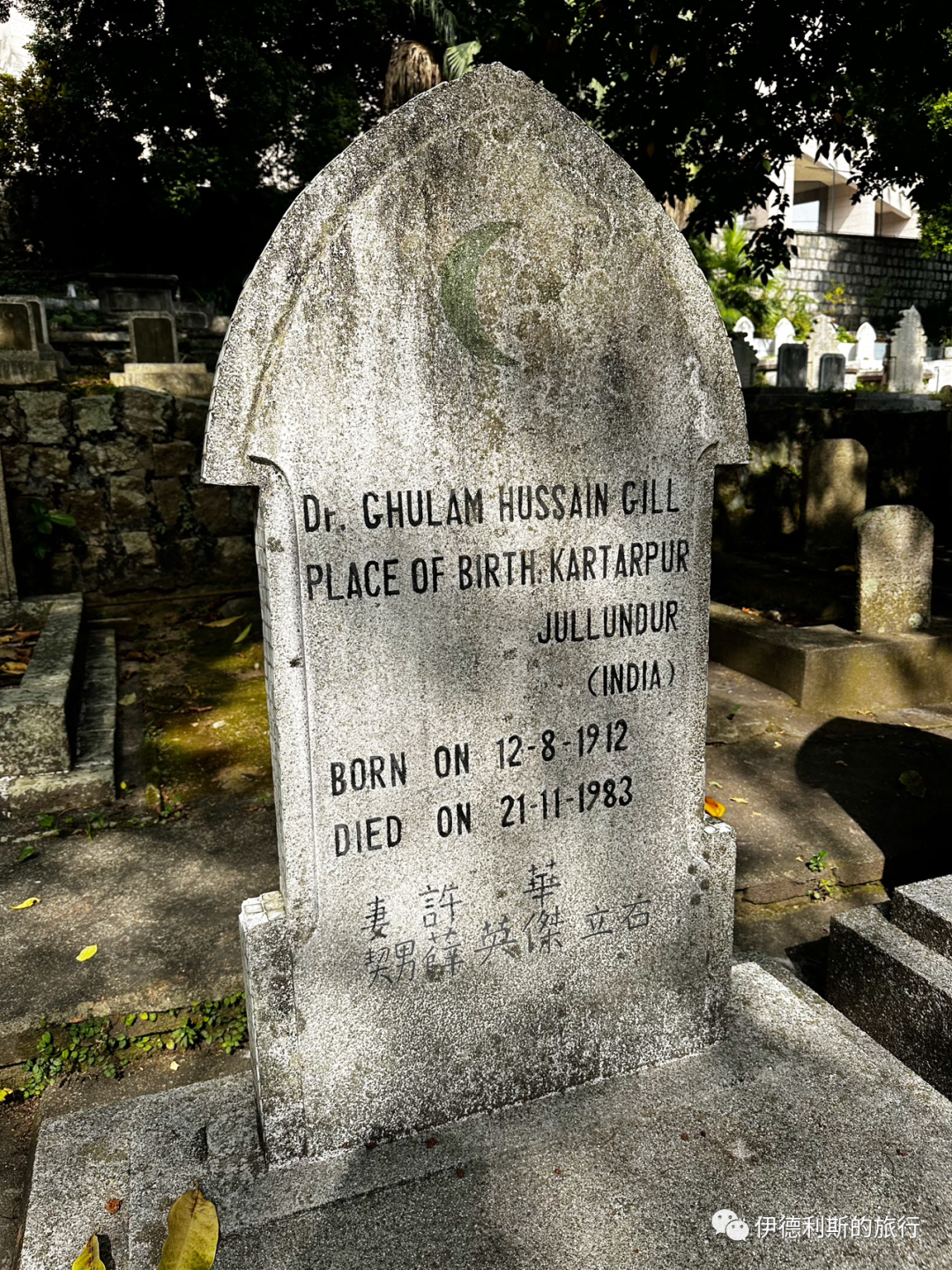
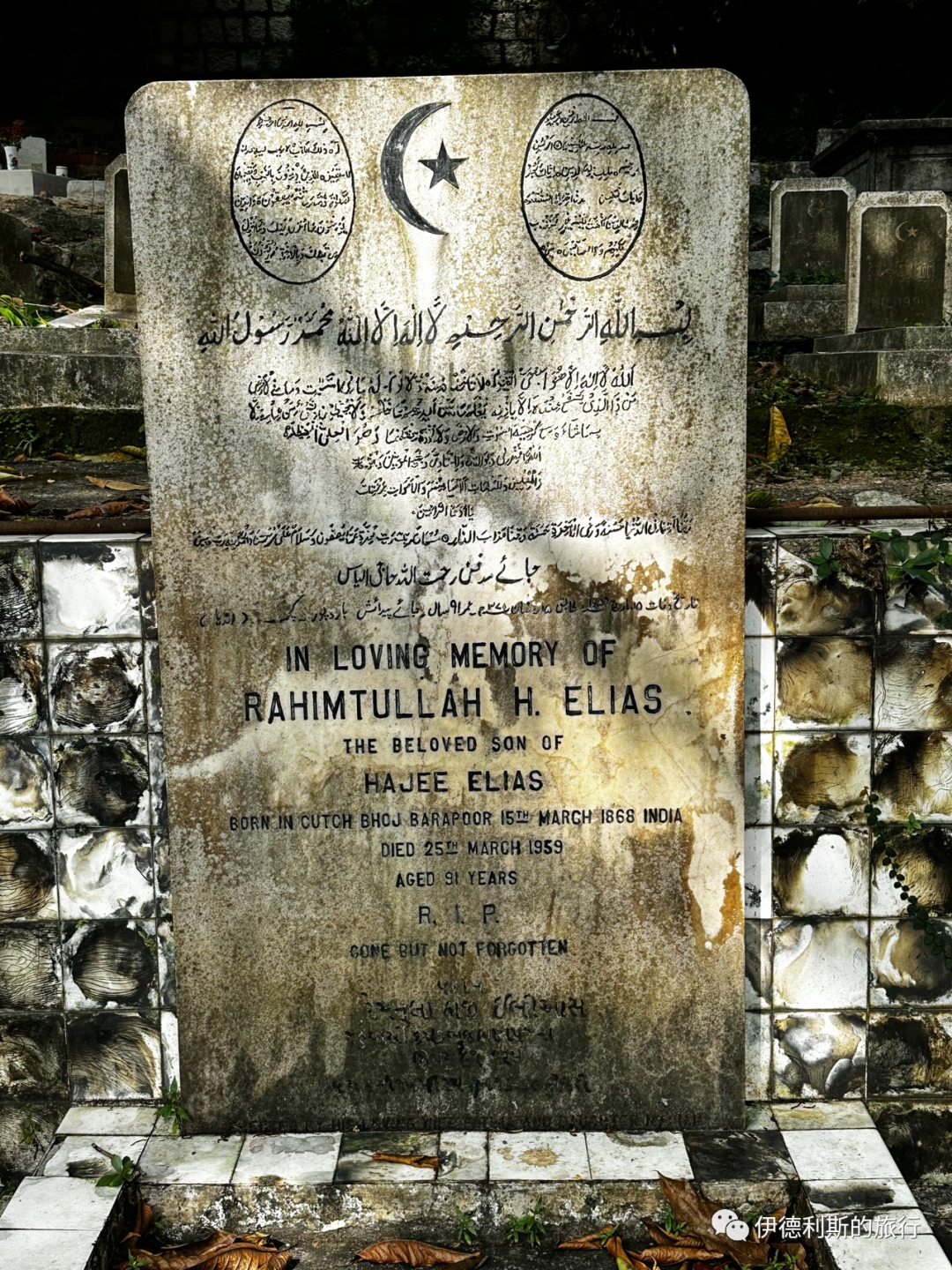
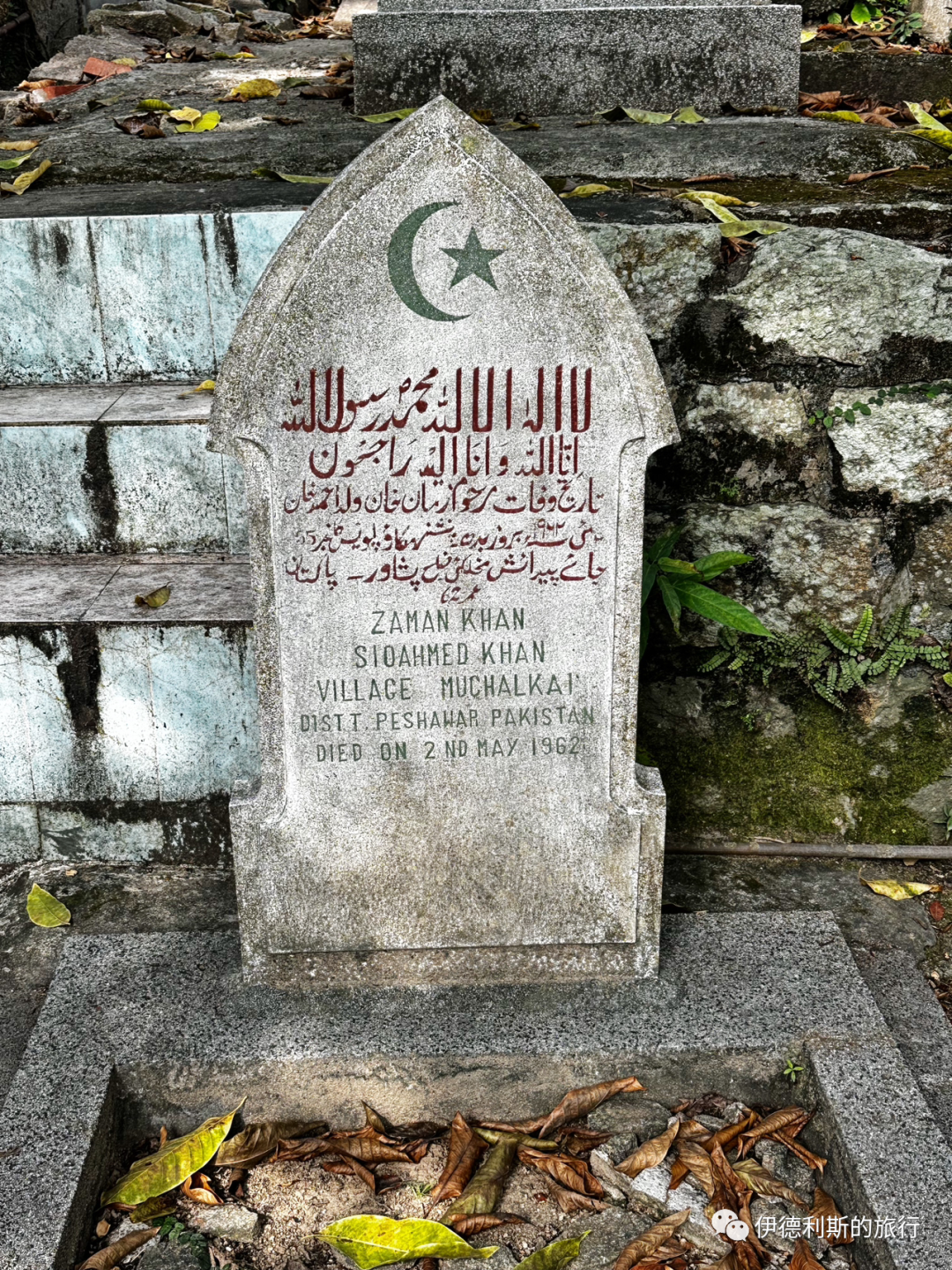
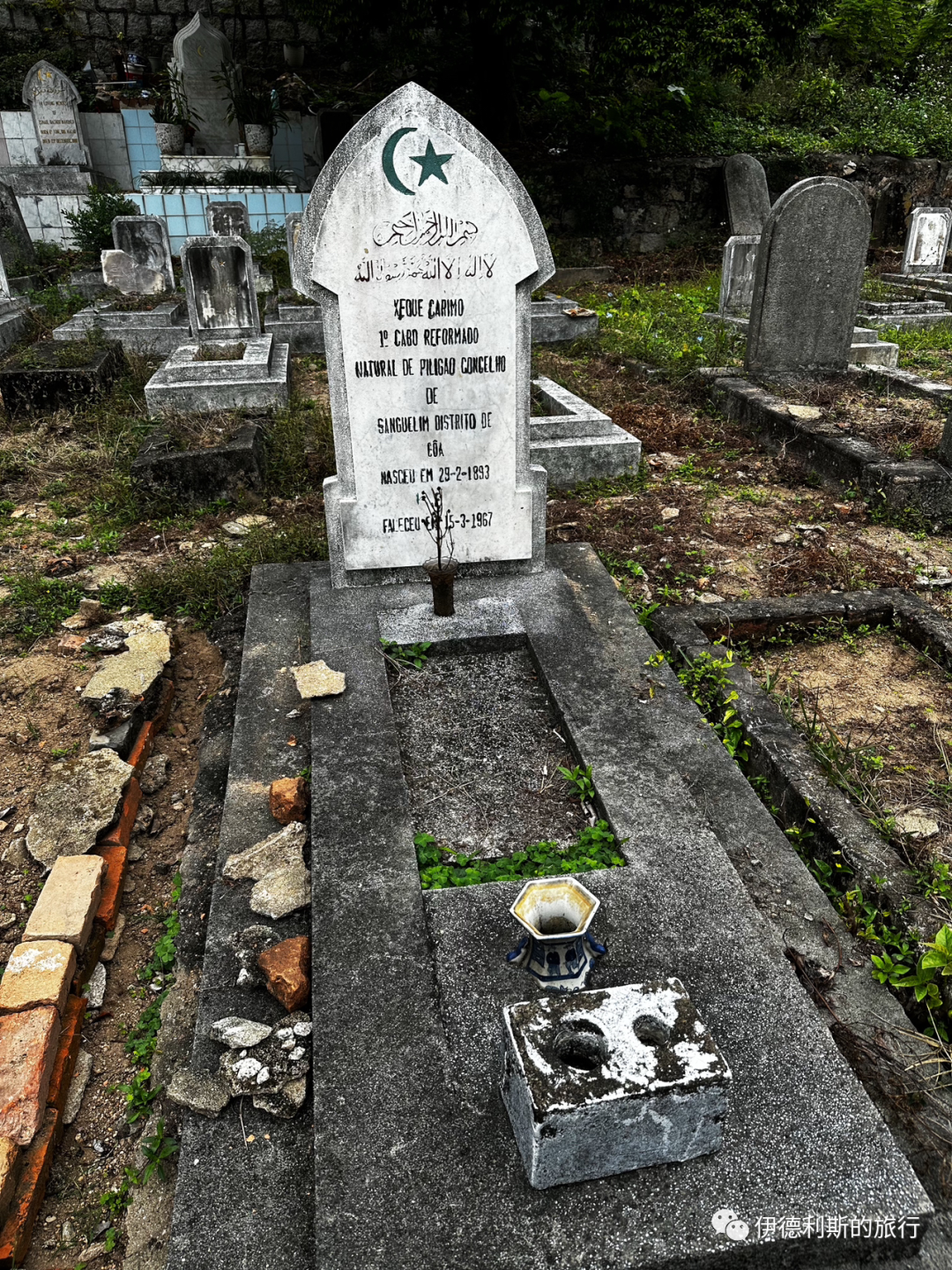
In 1937, when the Japanese army invaded Guangzhou, some Hui Muslims were forced to flee to Hong Kong and Macau. Some eventually passed away in Macau and were buried in the Moro Garden, becoming witnesses to those war-torn years.
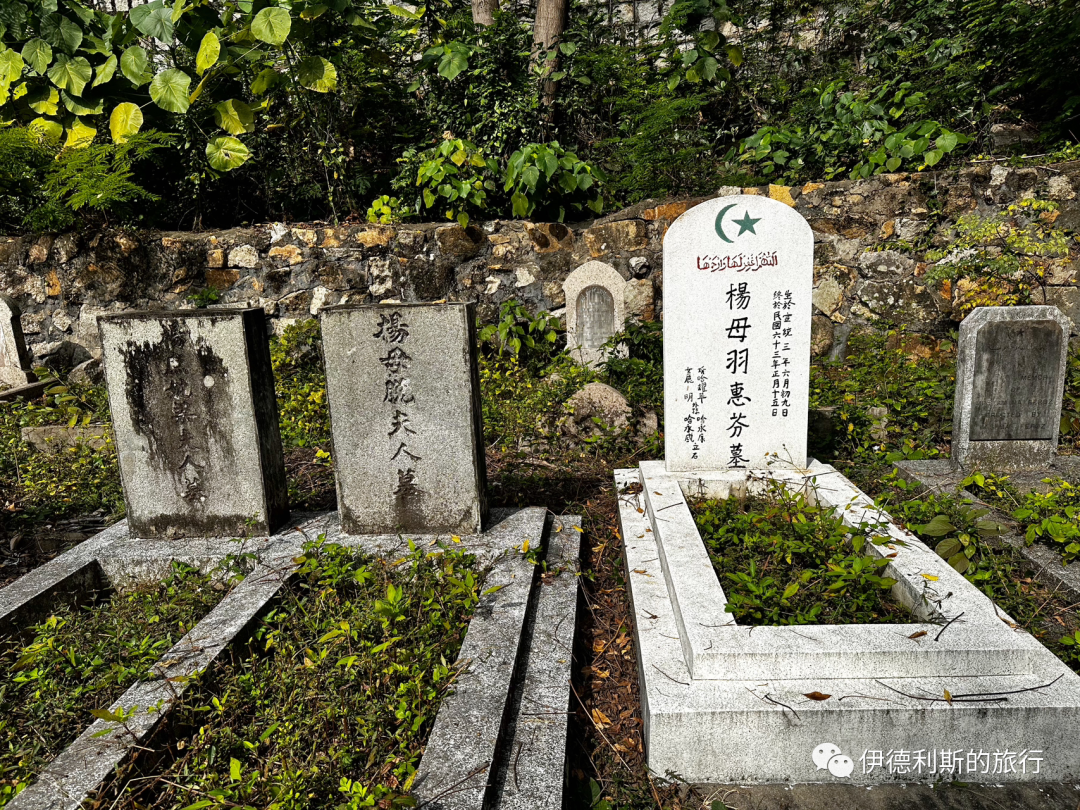
Among these Guangzhou Hui Muslims buried in the Macau Moro Garden, three are especially worth mentioning. The first is the famous modern Guangzhou religious teacher, Imam Yang Ruisheng (1863-1939). Imam Yang led the religious community in Guangzhou for many years, serving as the head of the Xiaodongying Mosque and the Dongjiao Mosque. On the eve of the Japanese occupation of Guangzhou in 1937, a Japanese spy named Sakuma pretended to be a Muslim to lure Imam Yang into cooperating with the Japanese. To maintain his integrity, Imam Yang resolutely decided to take his descendants to Macau. Even on his deathbed, he insisted on presiding over the religious affairs of the Macau Mosque until he passed away in 1939.
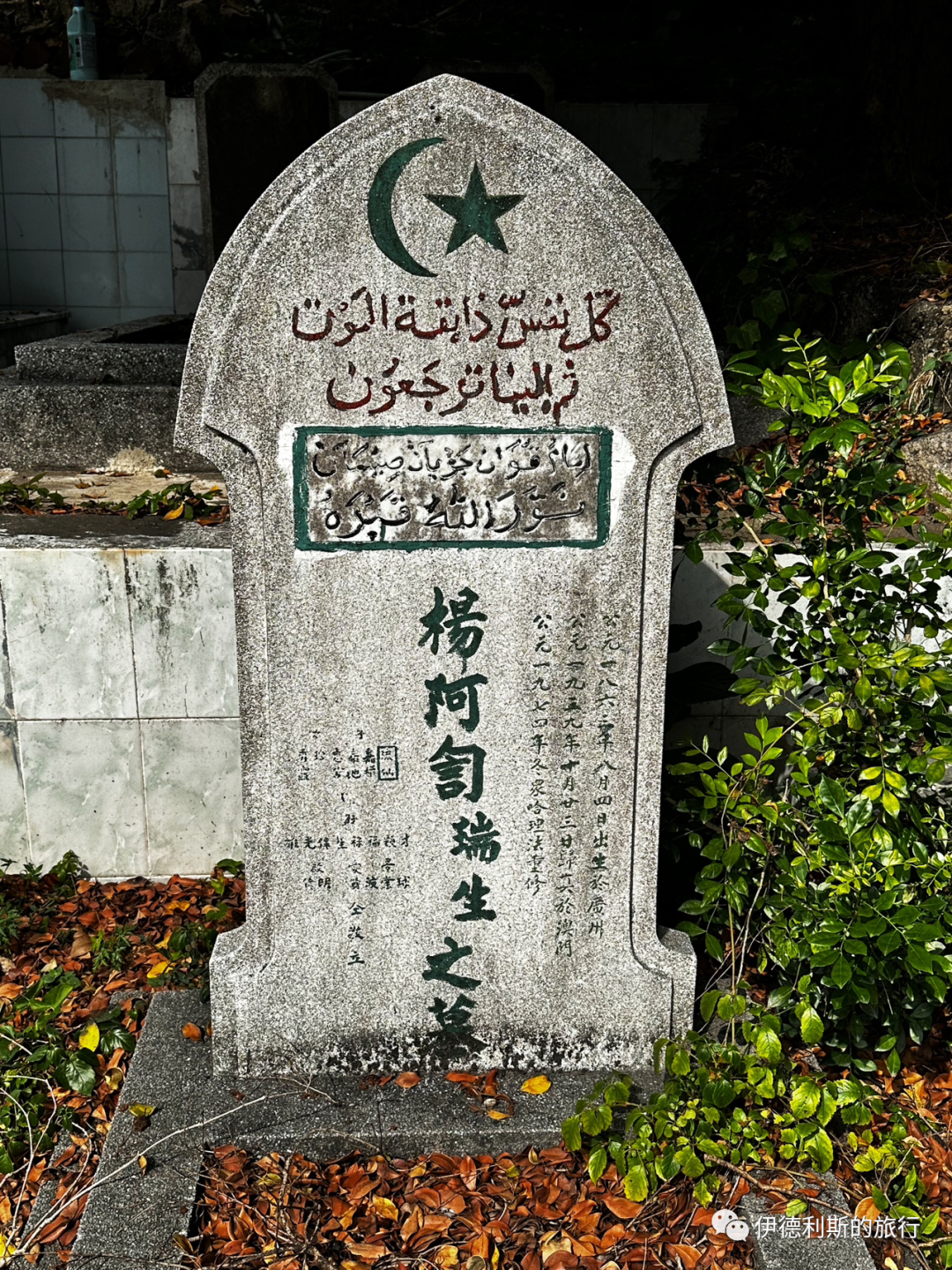
The second person is Mr. Yang You (1882-1944), a diplomat who served as consul in Fukuoka, Japan, and Wonsan, Korea. He came from the Jingxiutang Yang family, a prominent Hui Muslim family in Guangdong. Several diplomats emerged from this family during the late Qing Dynasty and the Republic of China, including Yang You's cousin, Yang Shu, who was once the Qing Dynasty's minister to Japan. Because he was fluent in Japanese and Korean, he faced threats and pressure from the Japanese military. He had to sell his property and flee to Hong Kong. After Hong Kong fell in 1942, he escaped to Macau, where he passed away (returned to Allah) in 1944.
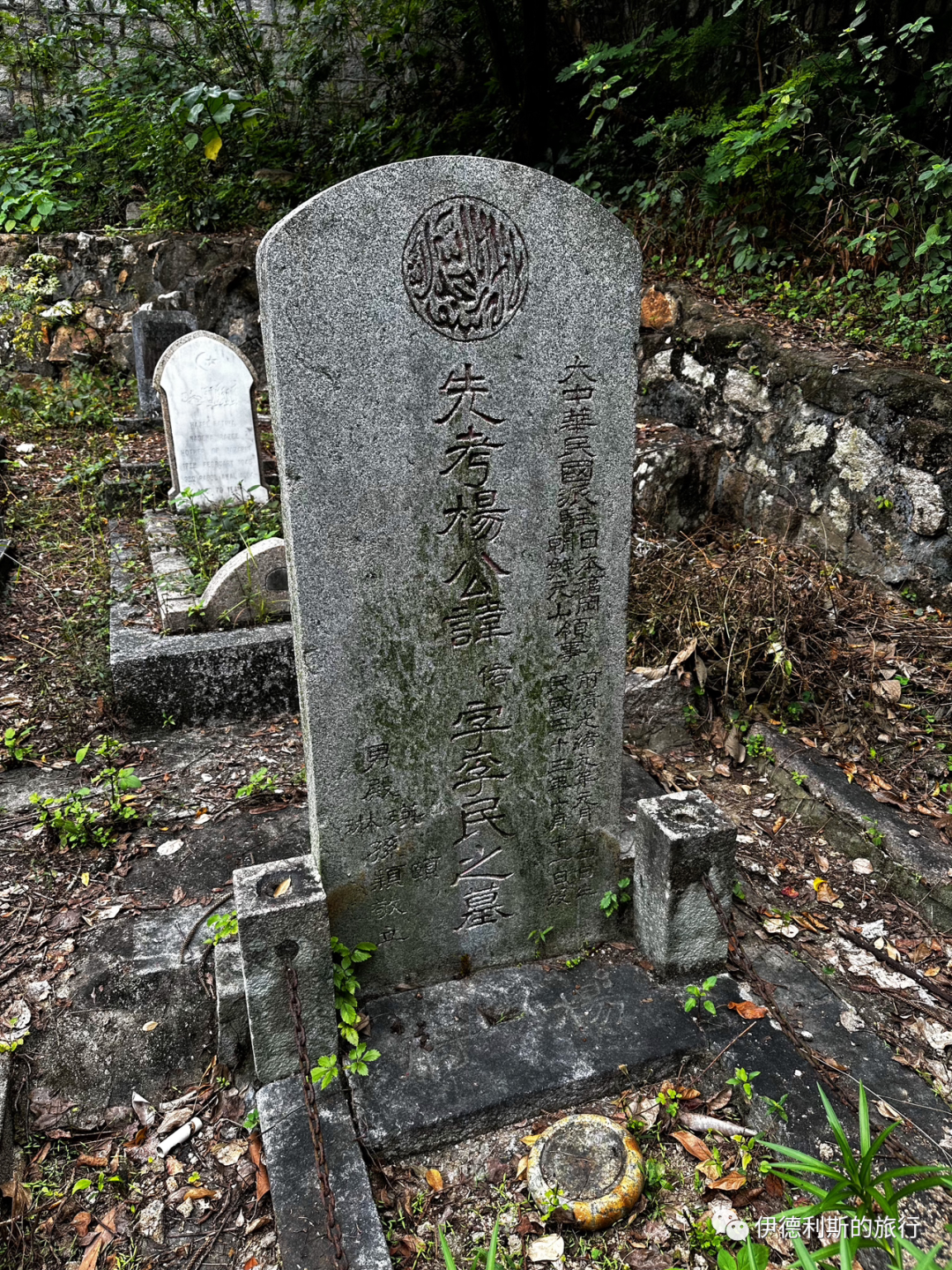
The third person is Bao Tingzhen, the eldest son of Dr. Bao Zongqi, who died in childhood. Dr. Bao Zongqi came from the Qingshantang Bao family, a prominent Hui Muslim family in Guangdong known for generations of dentists. After fleeing to Macau in 1937, he continued working as a dentist and actively provided relief to refugees. Due to a lack of supplies and poor medical conditions, the son and daughter born to Dr. Bao's family in Macau both died young, one of whom was Bao Tingzhen.
After the liberation in 1945, Hui Muslims gradually returned to Hong Kong and Guangzhou from Macau. Dr. Bao Zongqi continued to run his dental clinic in Macau until he moved to Hong Kong in the 1960s, where he passed away in 1999.
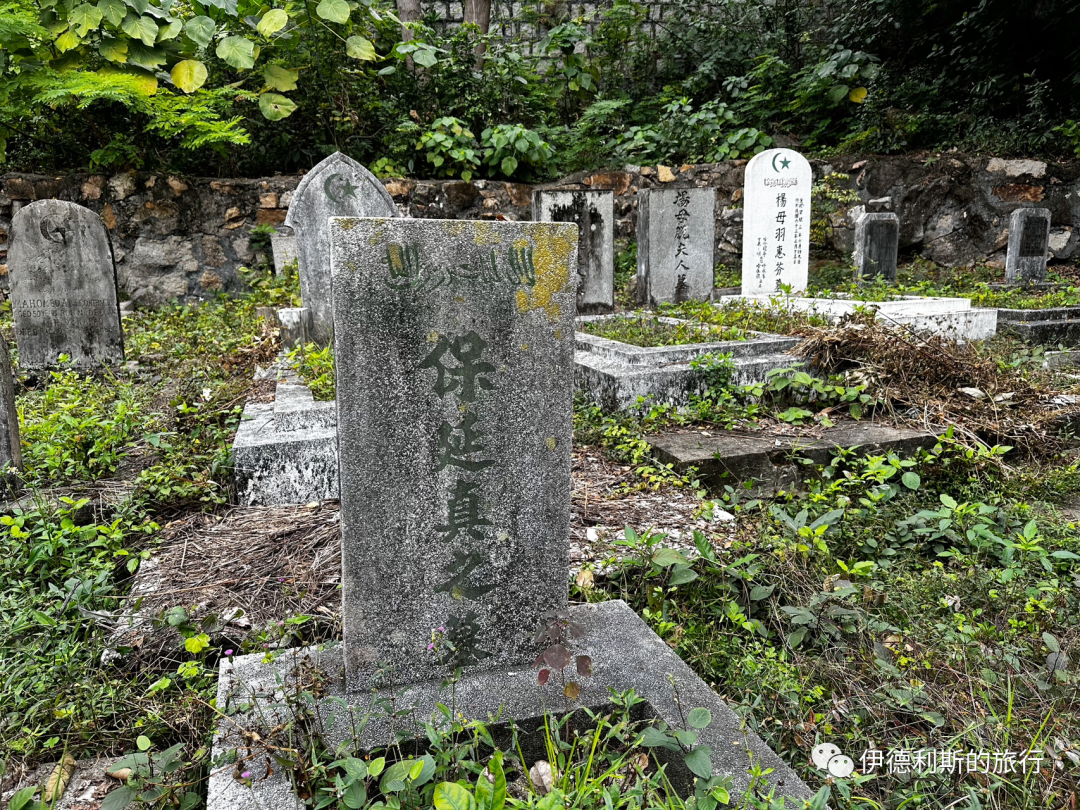
After 1945, the Macau Mosque returned to peace, maintained only by a few elderly Pakistani community members. The mosque was rebuilt in 1973, reaching its current size. After Macau's handover in 1999, many Muslims from countries like Pakistan and Indonesia came to Macau for work, and the number of Muslims in Macau gradually increased.
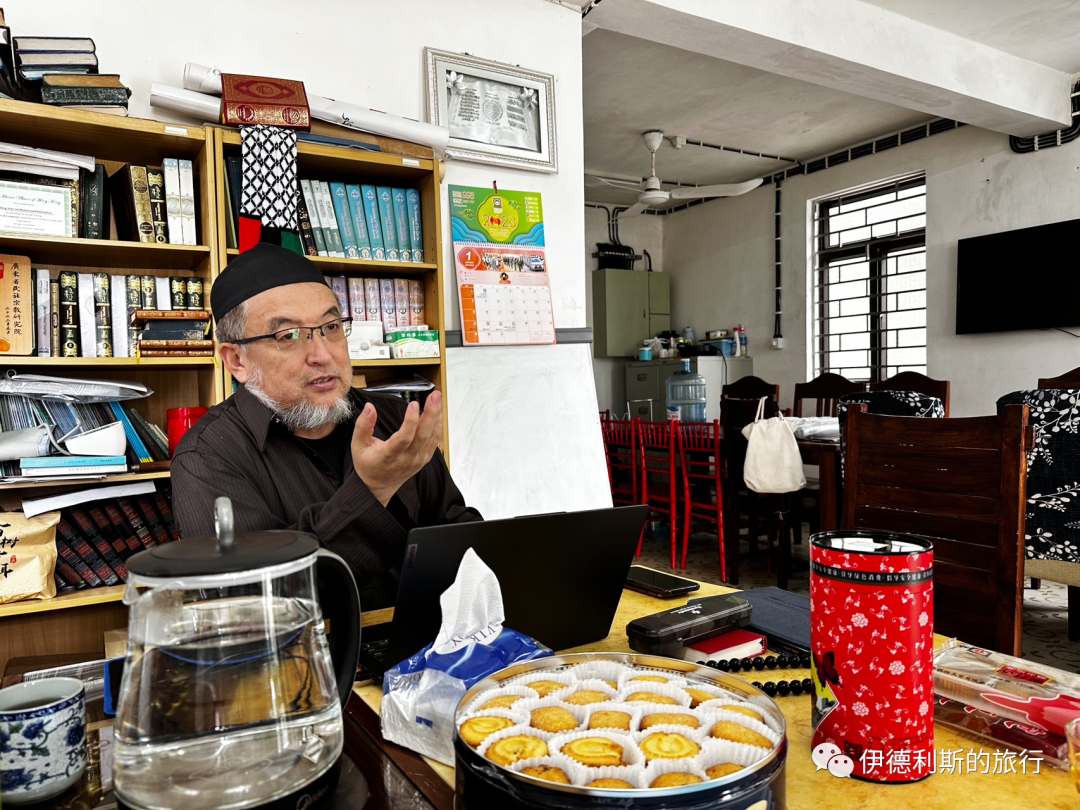
In the early 21st century, the Macau Mosque's religious affairs were maintained by Imam Yunus, a Pakistani born in East Timor. After Yunus passed away due to illness in 2013, the Friday prayer (Jumu'ah) at the Macau Mosque could only be led by imams invited temporarily from Hong Kong. It was not until 2018 that Imam Ding Shaojie, originally from Inner Mongolia, was hired as the imam of the Macau Mosque, and the mosque's religious affairs finally got back on track. Imam Ding graduated from the China Islamic Institute and the International Islamic University in Pakistan. He is fluent in Arabic and English, allowing him to communicate smoothly with local Pakistani elders and organize various activities. Every Friday, Imam Ding delivers the sermon (khutbah) in both Arabic and English.
Thanks to Imam Ding's efforts, on February 25, 2023, the Moro Garden will participate in the 'Thousand Miles of Shared Customs: Macau Six Religions Culture and Relics Exhibition' to introduce the history of Islam in Macau to fellow citizens.
Additionally, every Sunday, the Macau Mosque becomes a home for Indonesian female migrant workers. Everyone cleans the courtyard, prepares meals, and sets up the space here. Many bring homemade hometown delicacies to share with others. After lunch, everyone recites the Quran together. At this time, the Macau Mosque truly becomes a spiritual home for these friends (dostani) who are far from home and working abroad.
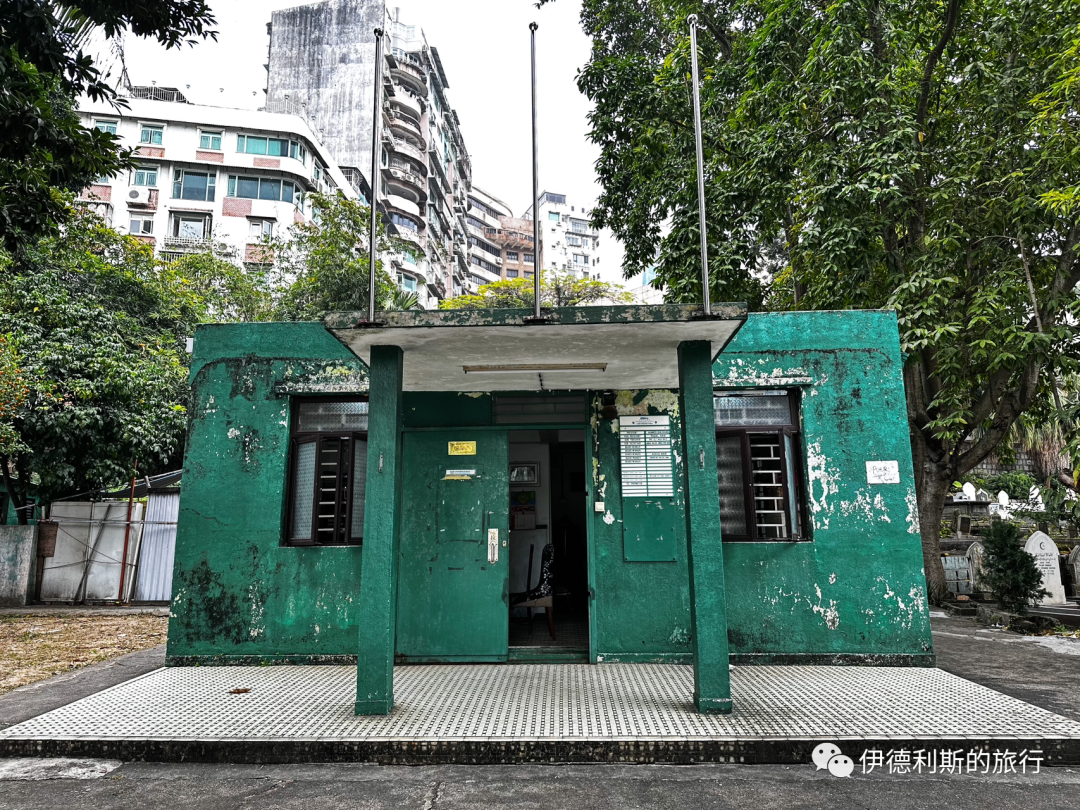
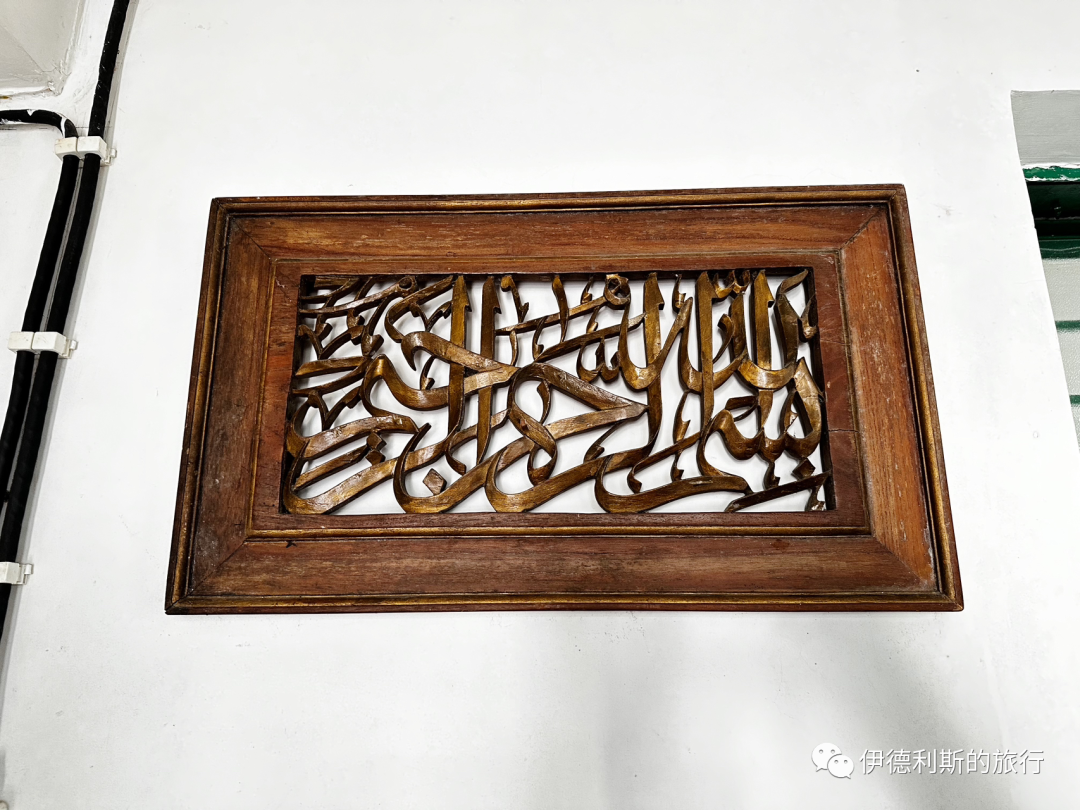
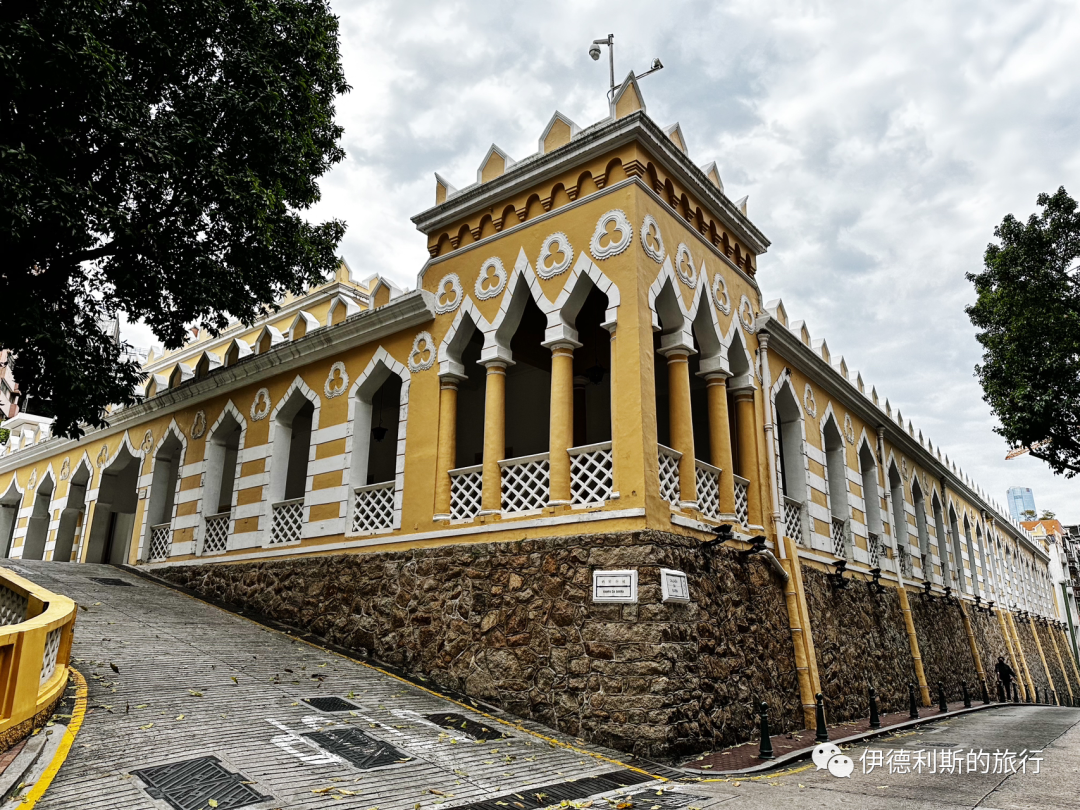
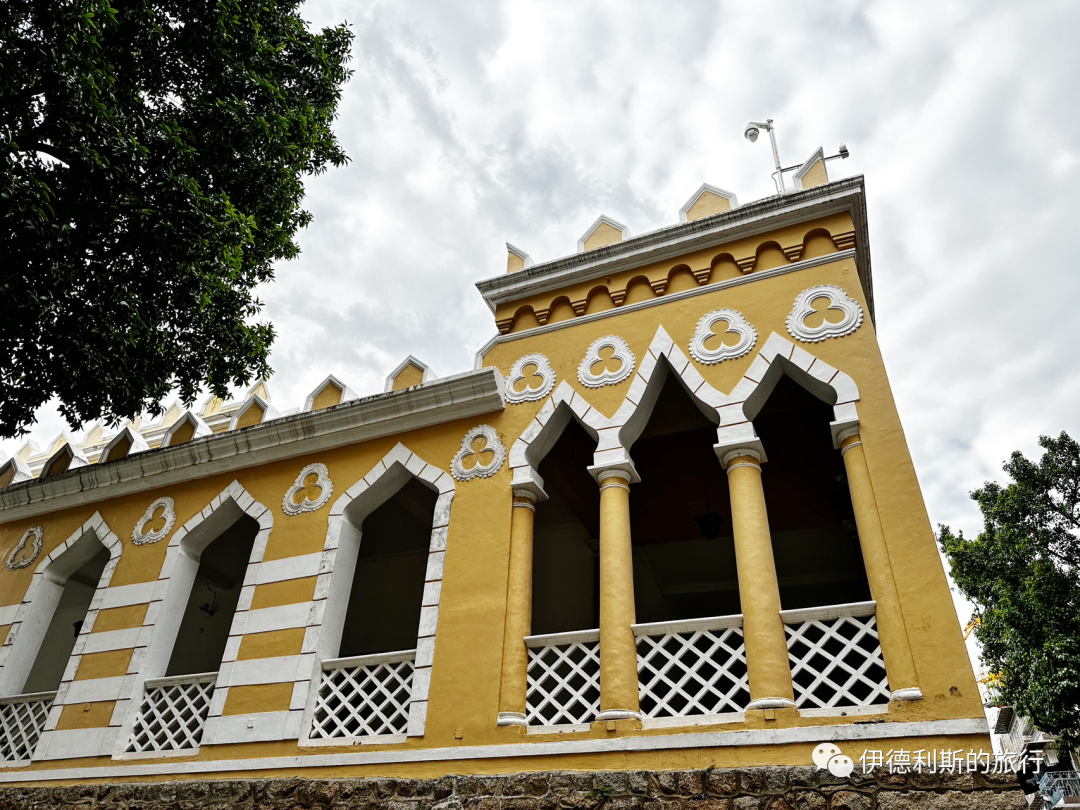
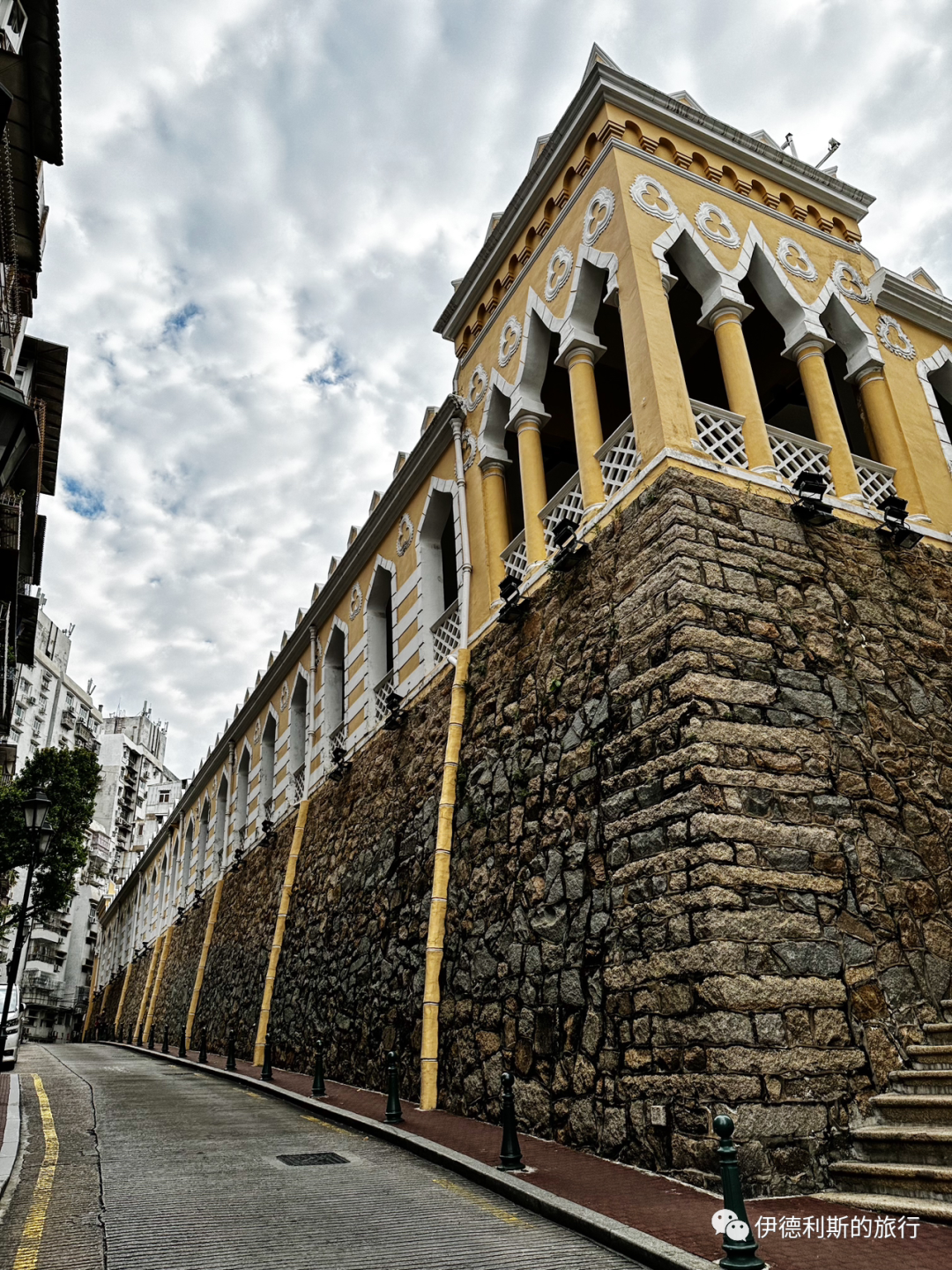
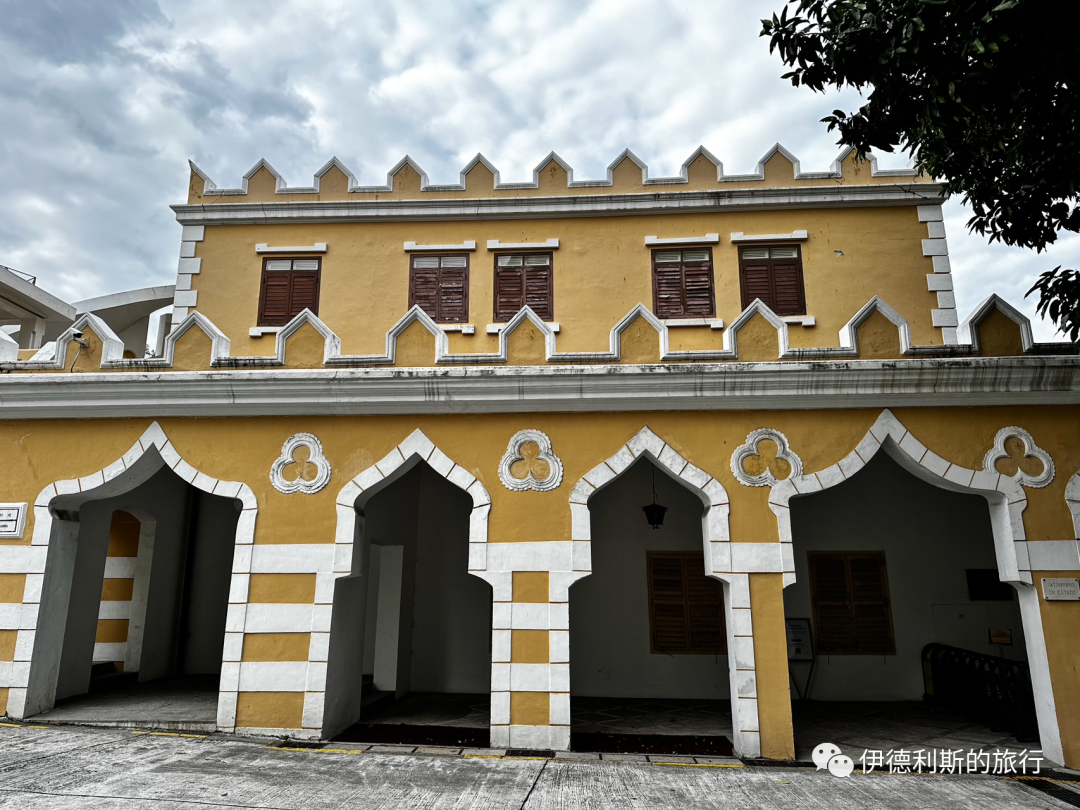
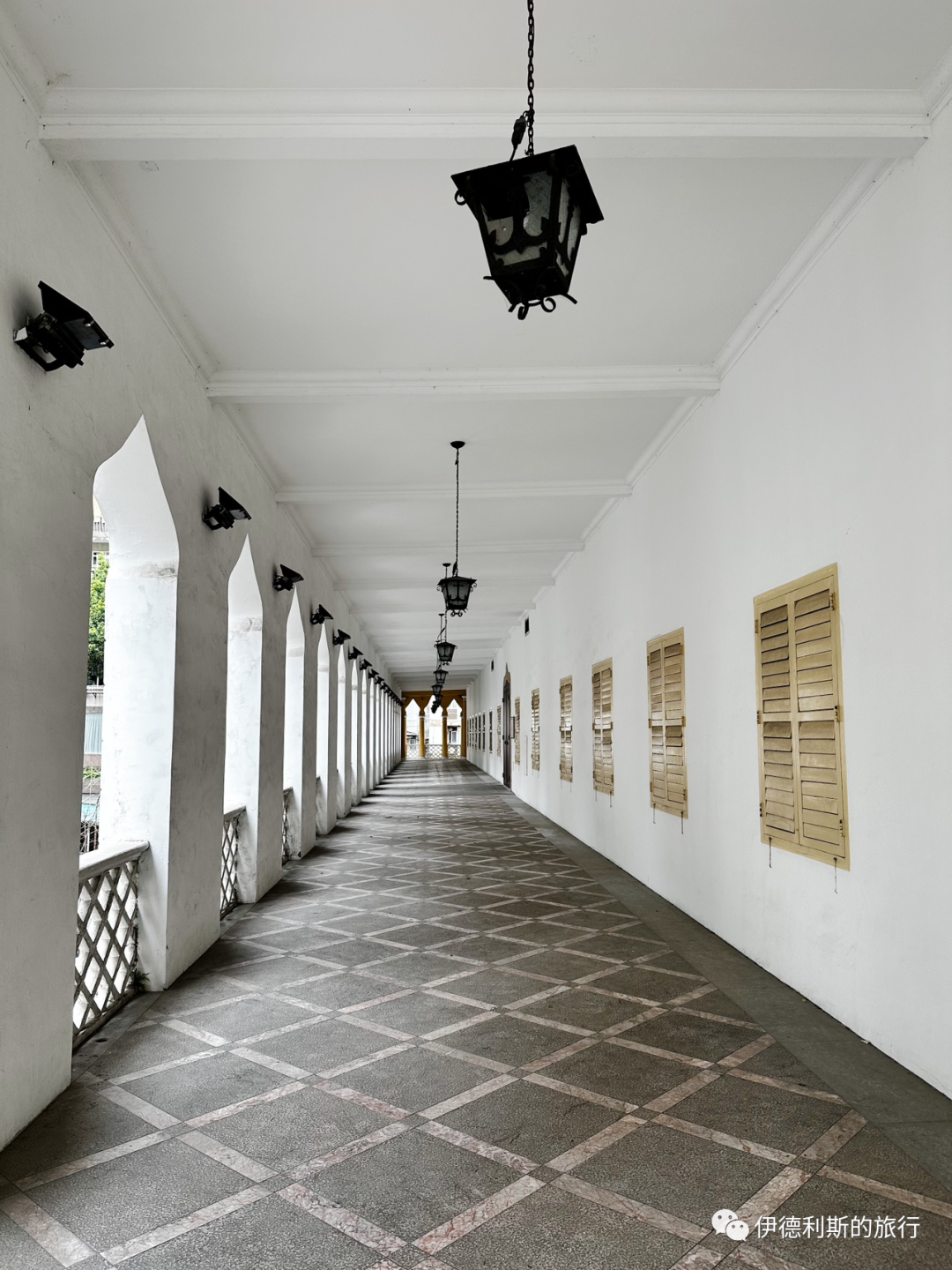
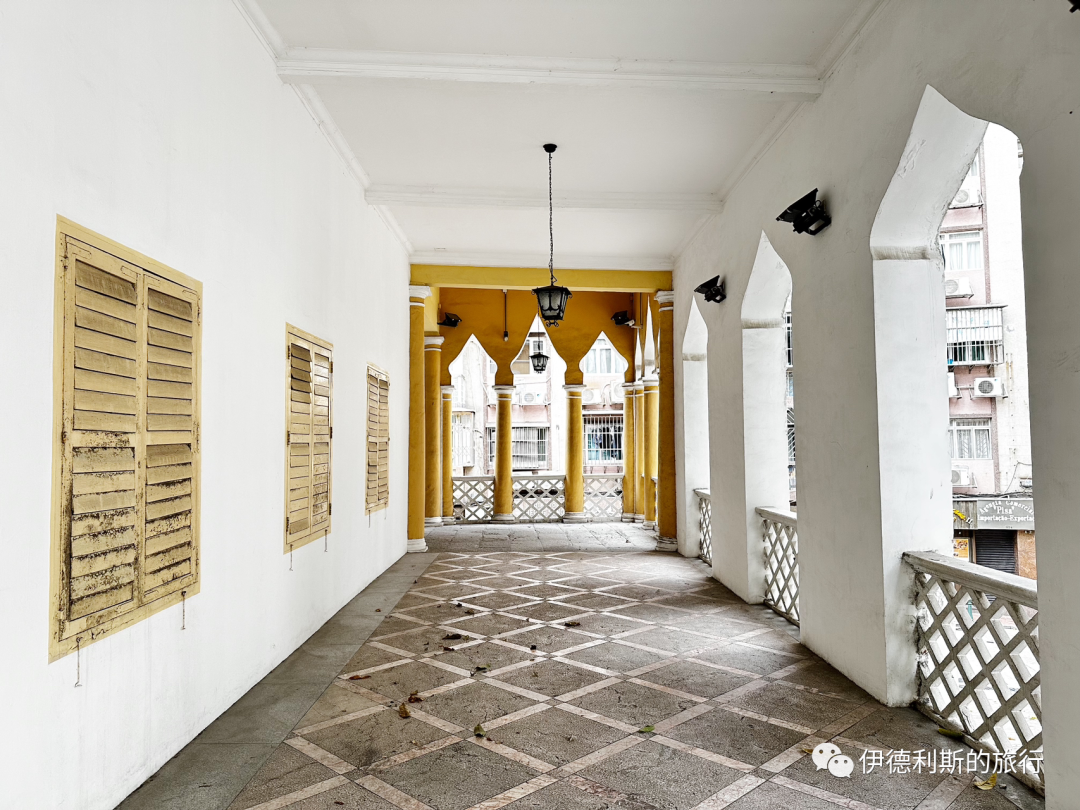
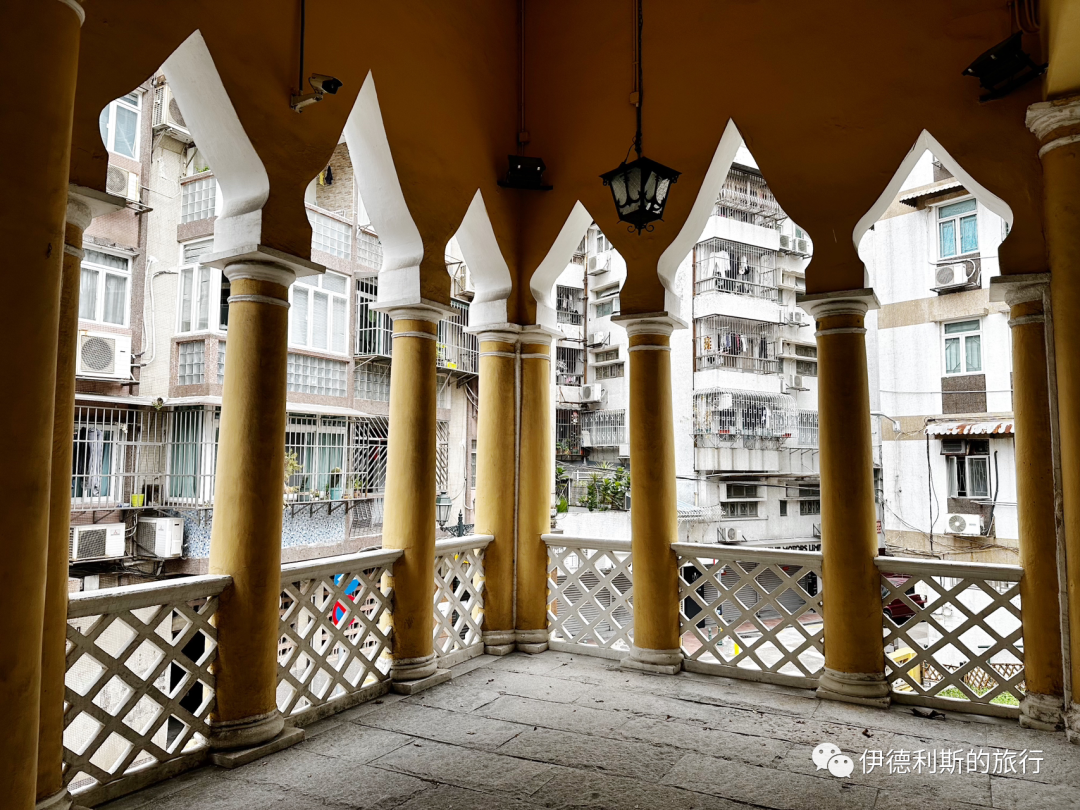
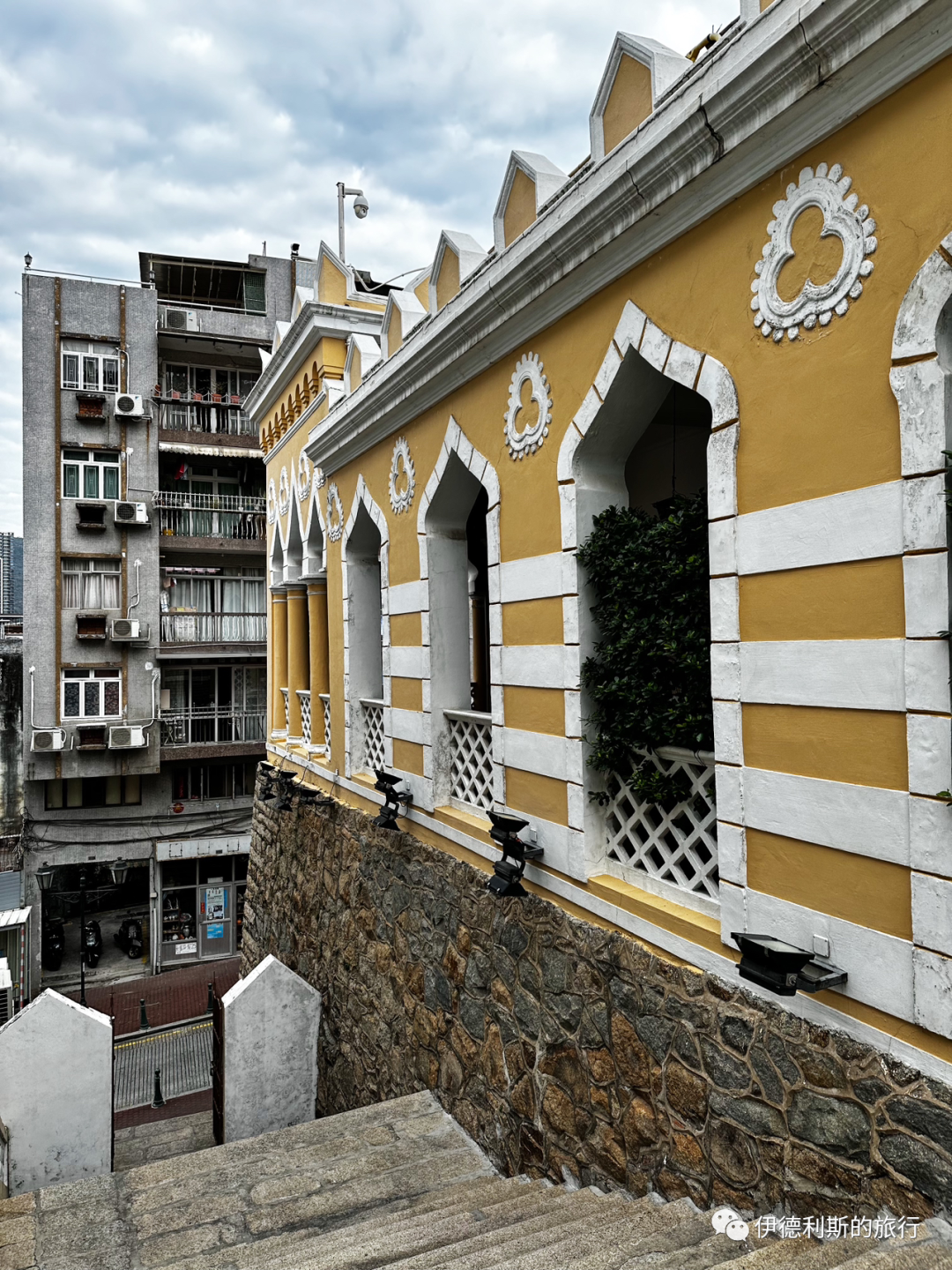
In 1874, Portugal transferred a regiment from Portuguese India, Goa, to Macau to reinforce the local police force, leading to the construction of a Moorish Barracks (Quartel dos Mouros) near Macau's A-Ma Temple. People say a mosque was also built around the barracks, which was not demolished until the 1940s.
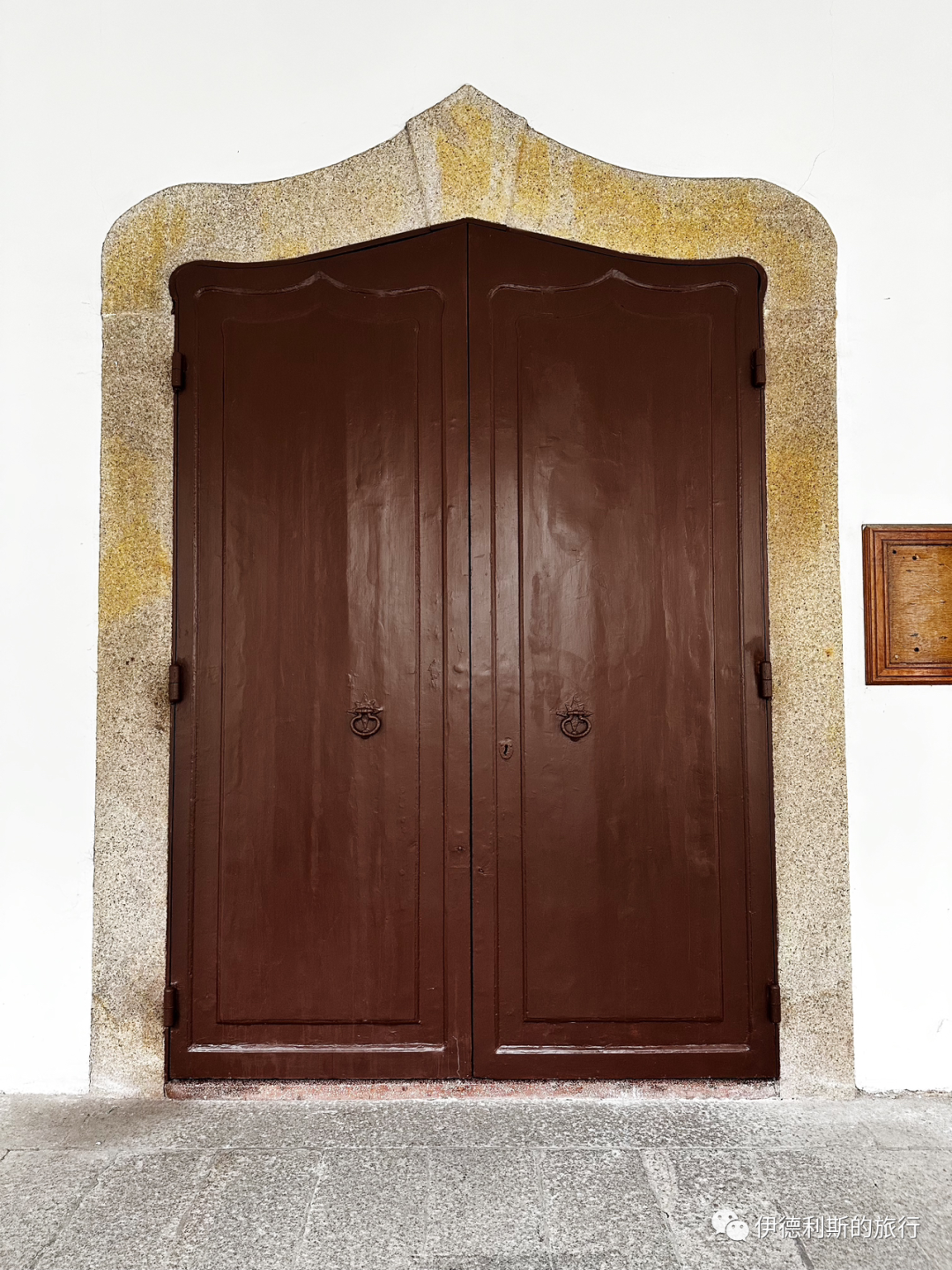
The Moorish Barracks was designed by the Italian Cassuto and features many Islamic-style arches. In the late 19th century, a trend emerged across Europe to use Islamic elements in modern architecture, known as Moorish Revival architecture. In Spain and Portugal, people applied the horseshoe arches and arabesque tiles found in Andalusian Islamic architecture to modern building facades, a style known as Neo-Mudéjar architecture. The term Mudéjar was originally used to refer to Muslims who remained on the Iberian Peninsula after the Reconquista of Andalusia.
In 1905, the Moorish Barracks became the headquarters for the Port Authority and the Marine Police, and it is now the Port Authority Building.
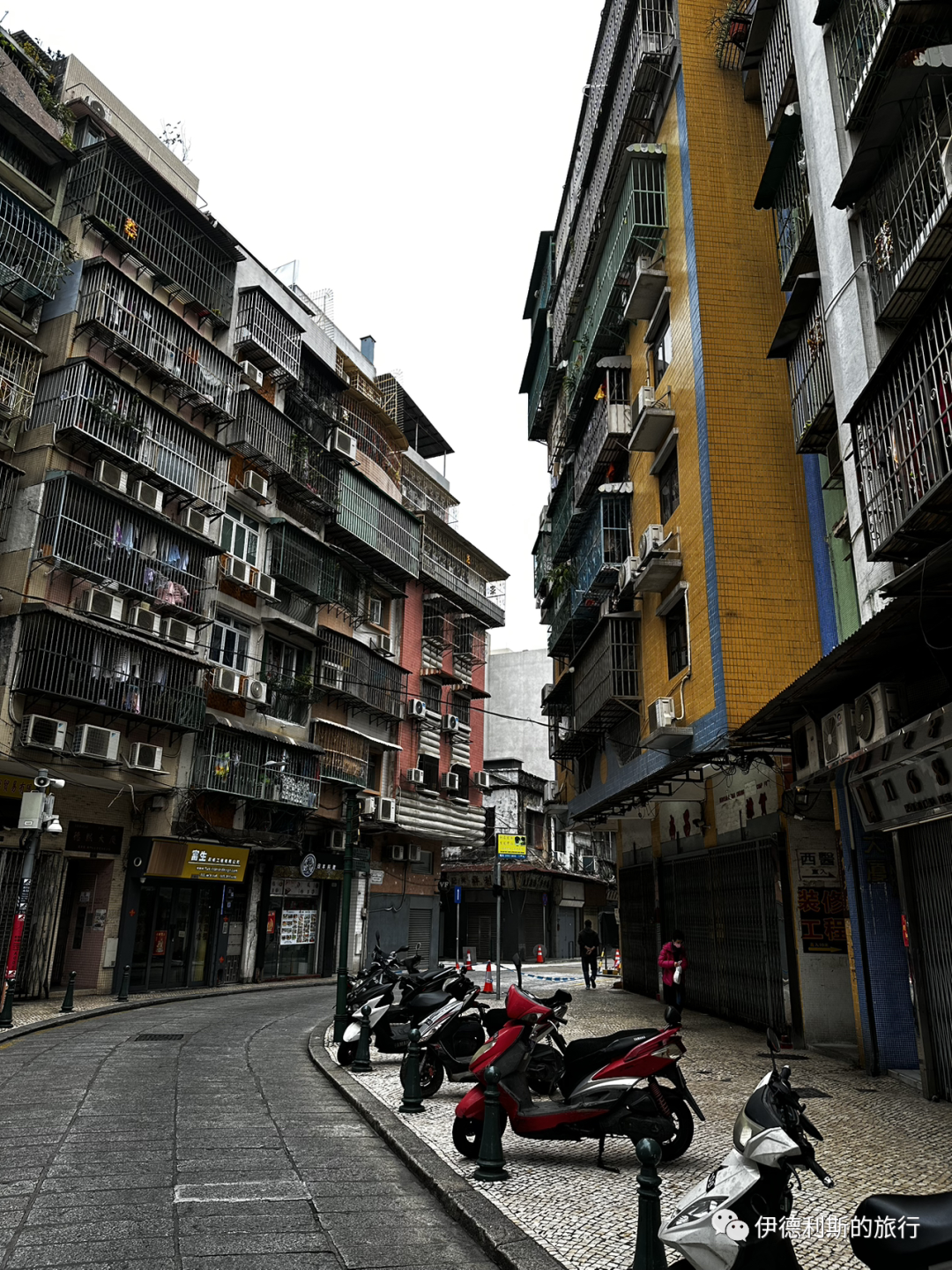
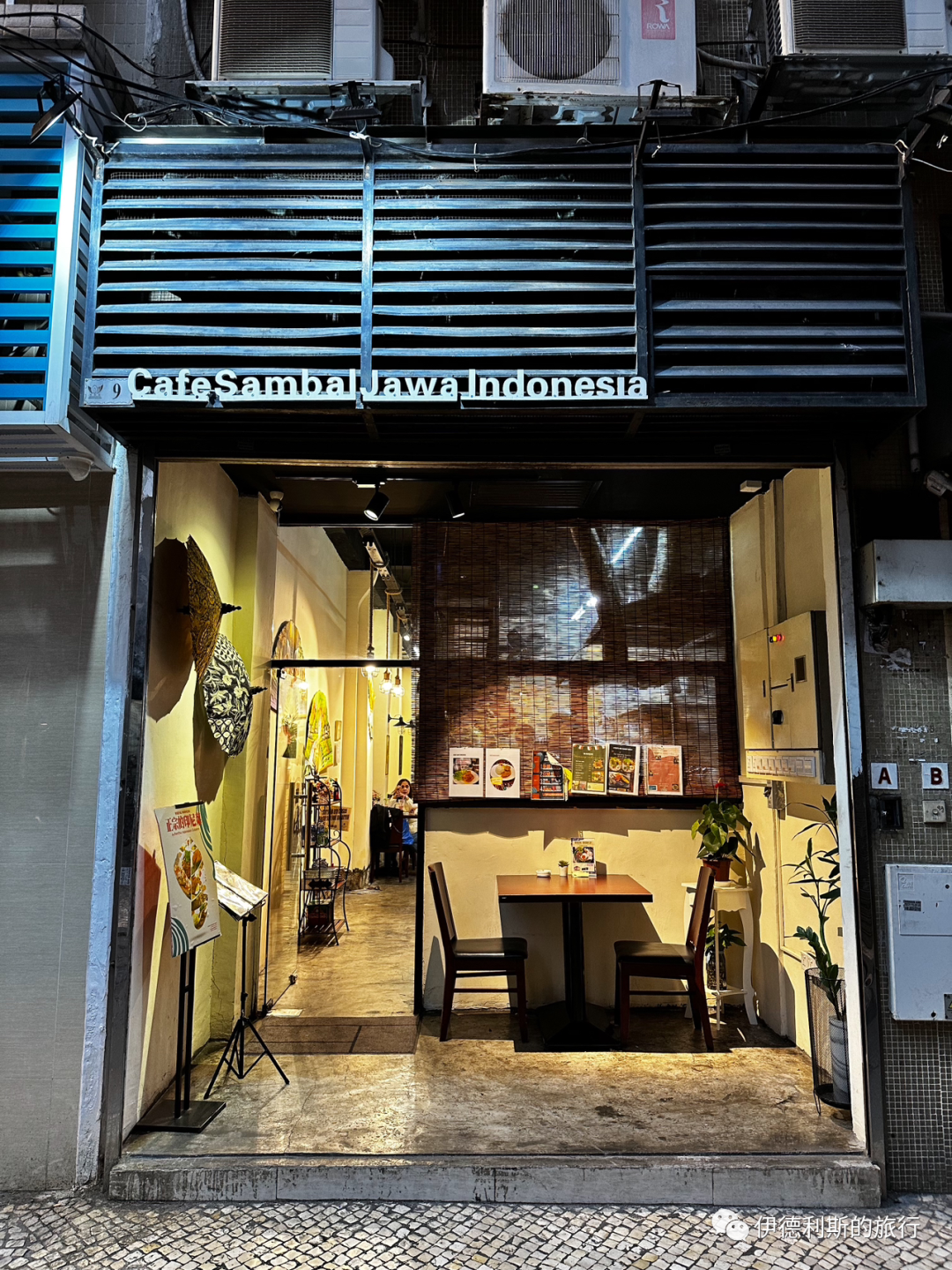
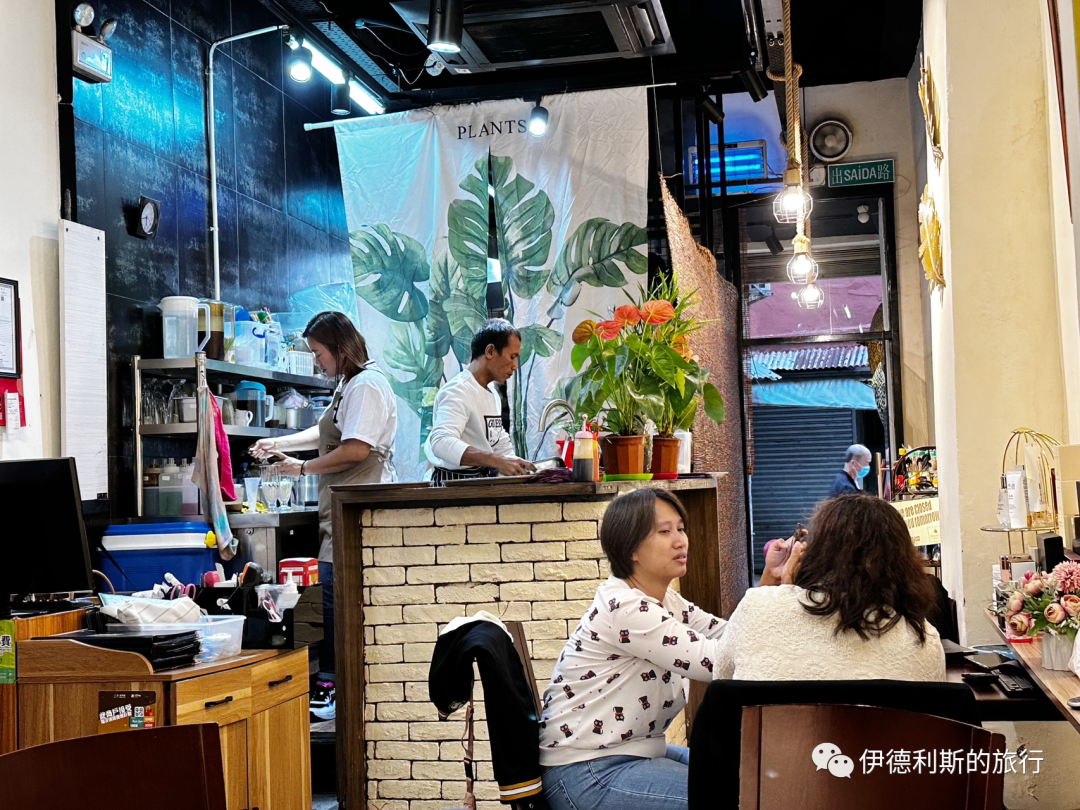
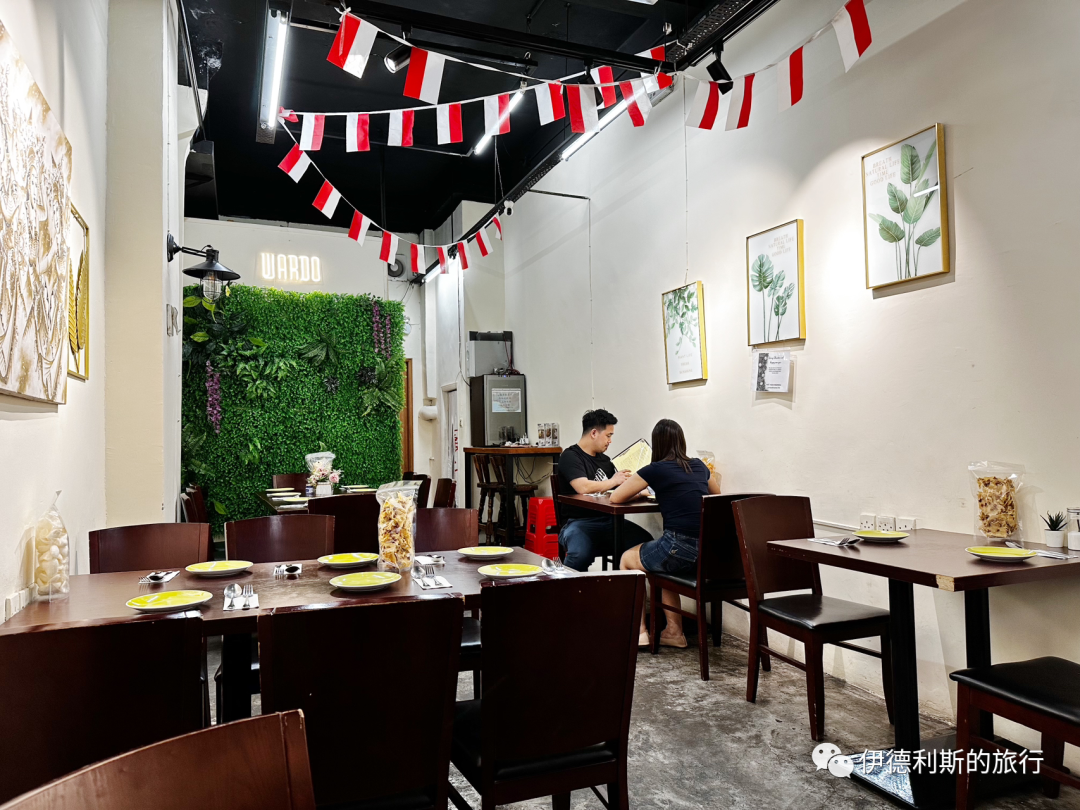
In the afternoon, I went to an Indonesian restaurant called Warung Indonesia near the Ruins of St. Paul's. They are from Semarang, the capital of East Java. In Indonesian, 'Warung' refers to a small convenience store or restaurant, usually converted from the front room of a house. The environment there is very nice, with many young Indonesian men and women coming to eat. Indonesian love songs play on the TV, making it feel a bit like I had traveled to Semarang.
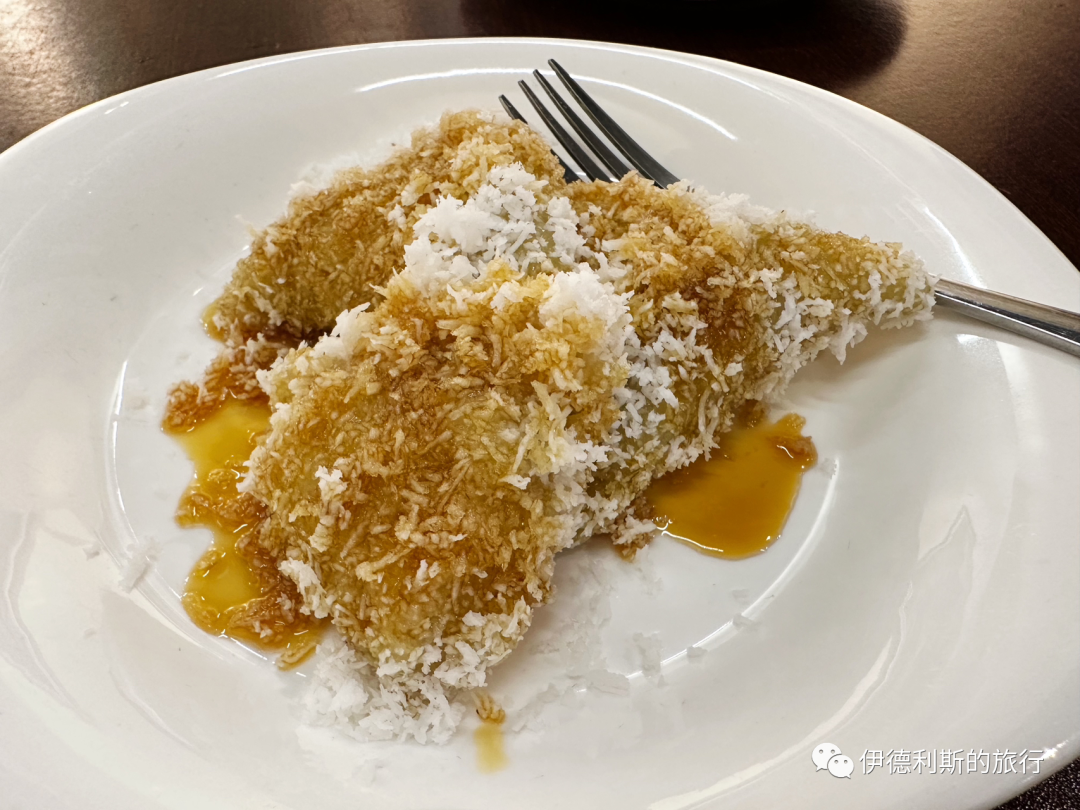
I ordered sticky rice cake (kue lupis ketan), chicken satay skewers (sate ayam), beef rendang rice (nasi rendang), and iced cendol (es cendol).
Sticky rice cake (kue lupis ketan) is a local Javanese snack. It is popular in central and eastern Java, but you can find it in other parts of Indonesia too. The word "kue" comes from the Hokkien word for "cake" (kueh), which means rice cake. To make sticky rice cake (lupis), you first soak sticky rice in water with salt and lime juice. After draining it, you wrap it in banana leaves and fold it into triangles, similar to making rice dumplings (zongzi). Once cooked, the sticky rice cake is served in palm sugar syrup and topped with shredded coconut.
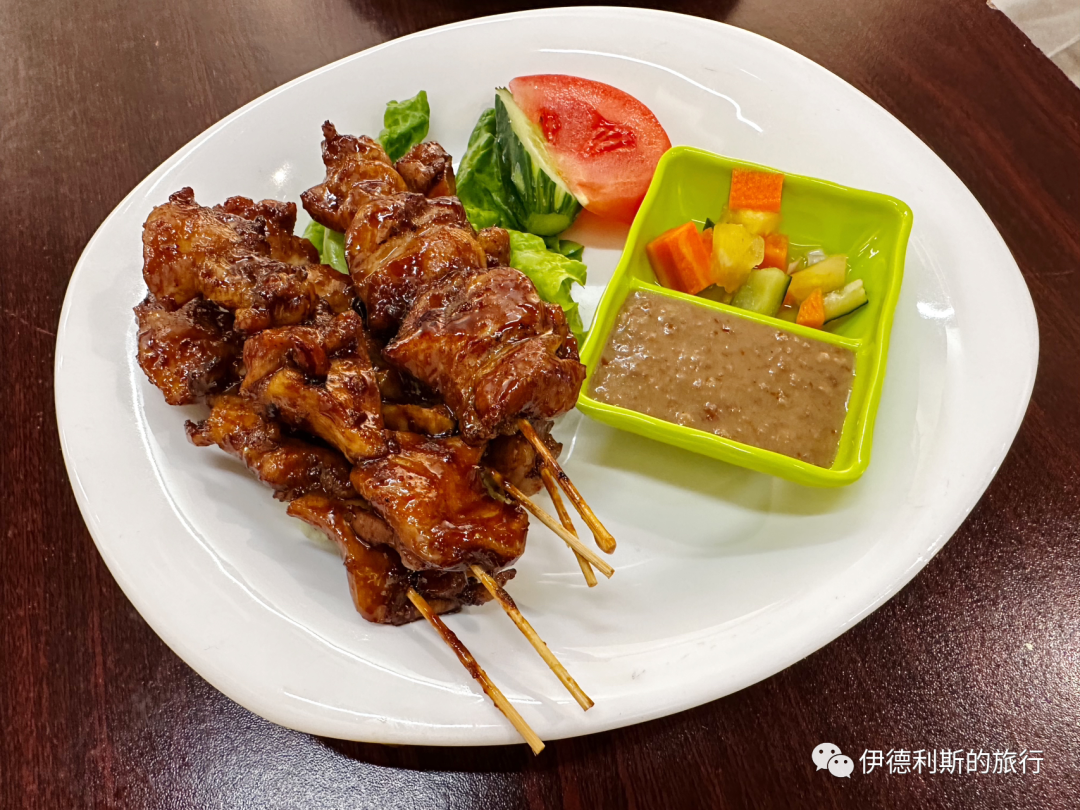
Chicken satay skewers (sate ayam) also started on Java island. People say Javanese street vendors in the 18th century developed it by combining local food with Indian grilled skewers brought by Tamil Muslim merchants. The meat skewers are usually marinated in turmeric, sweet soy sauce, or coconut oil before grilling, then dipped in satay sauce when eaten. Satay sauce is mainly made of roasted peanuts, plus coconut milk, turmeric, soy sauce, galangal, garlic, chili, and various spices. After the 19th century, Chinese workers in Southeast Asia brought satay sauce back to Fujian, where it combined with local food to become satay sauce (shacha jiang).
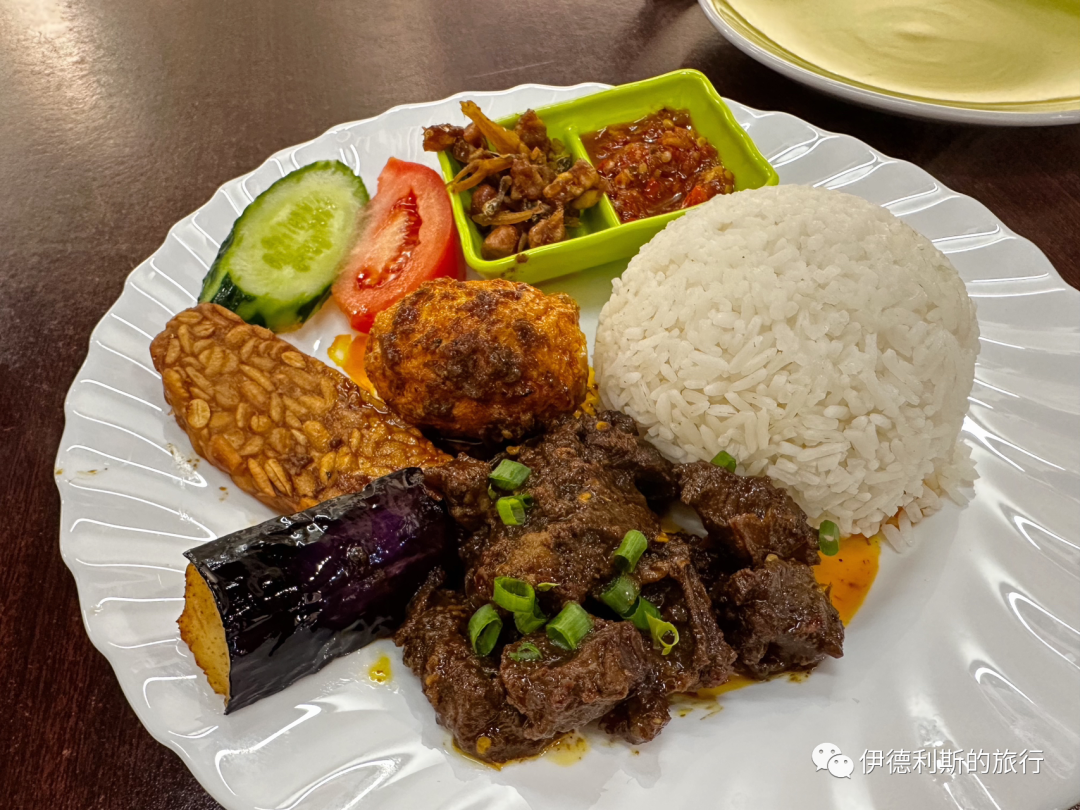
Beef rendang is a curry that originated with the Minangkabau people of Sumatra. It likely started as a curry brought by Indian merchants who came to Sumatra to trade before the 15th century, which then blended with the local Minangkabau diet. After the 16th century, Minangkabau merchants began traveling to Malacca, and rendang spread to other parts of Indonesia. The main ingredients for rendang are meat, coconut milk, chili, and various spices, including ginger, galangal, turmeric, lemongrass, garlic, and shallots. To suit the needs of Minangkabau merchants on long sea voyages, rendang is slow-cooked until it becomes thick and dry, allowing it to be stored for several weeks.
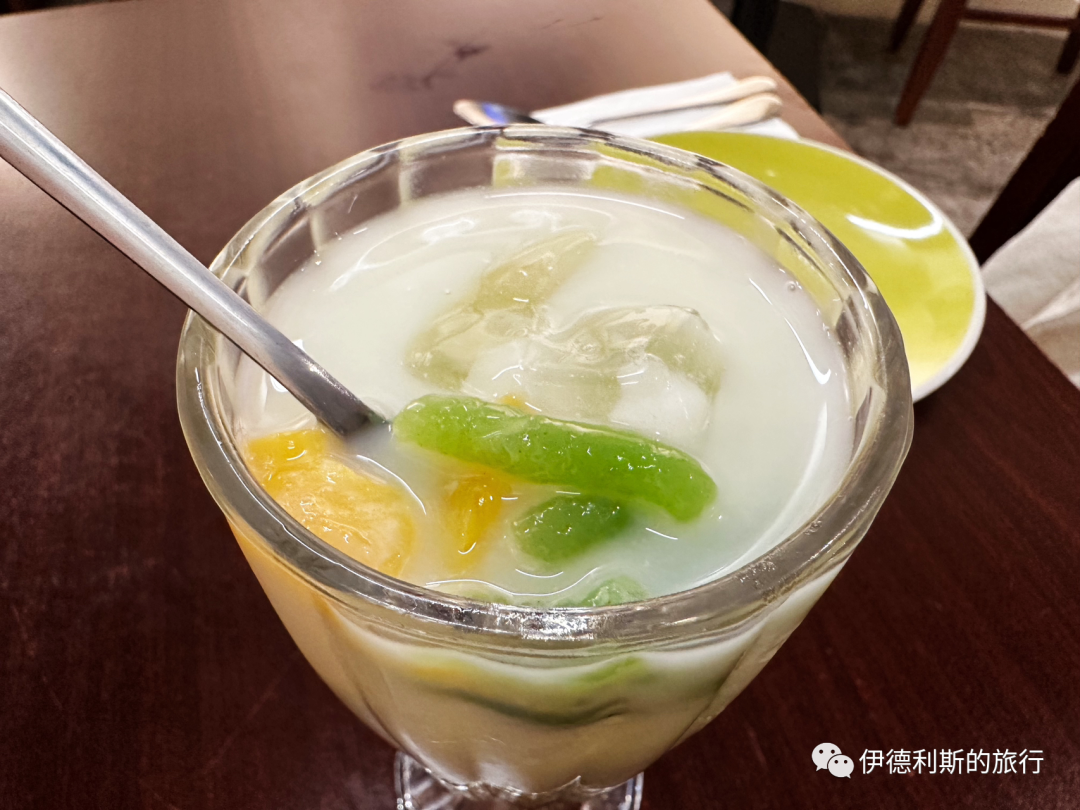
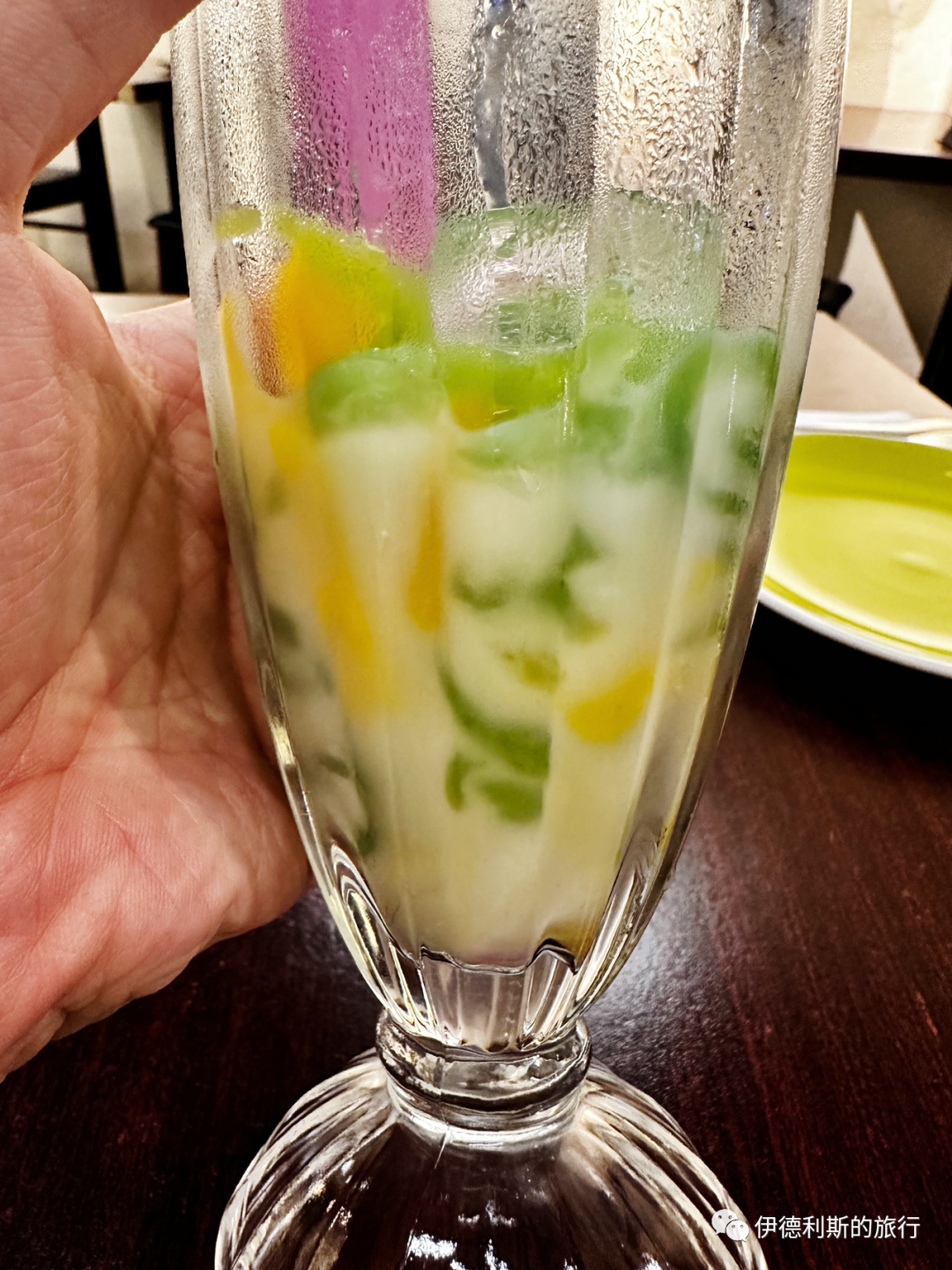
Iced cendol (es cendol) is made by putting sticky rice flour jelly dyed with pandan leaves into ice water, then drizzling it with coconut milk and palm sugar. The origin of cendol is still uncertain. One theory is that it comes from a Javanese snack called dawet, though traditionally dawet does not contain ice.
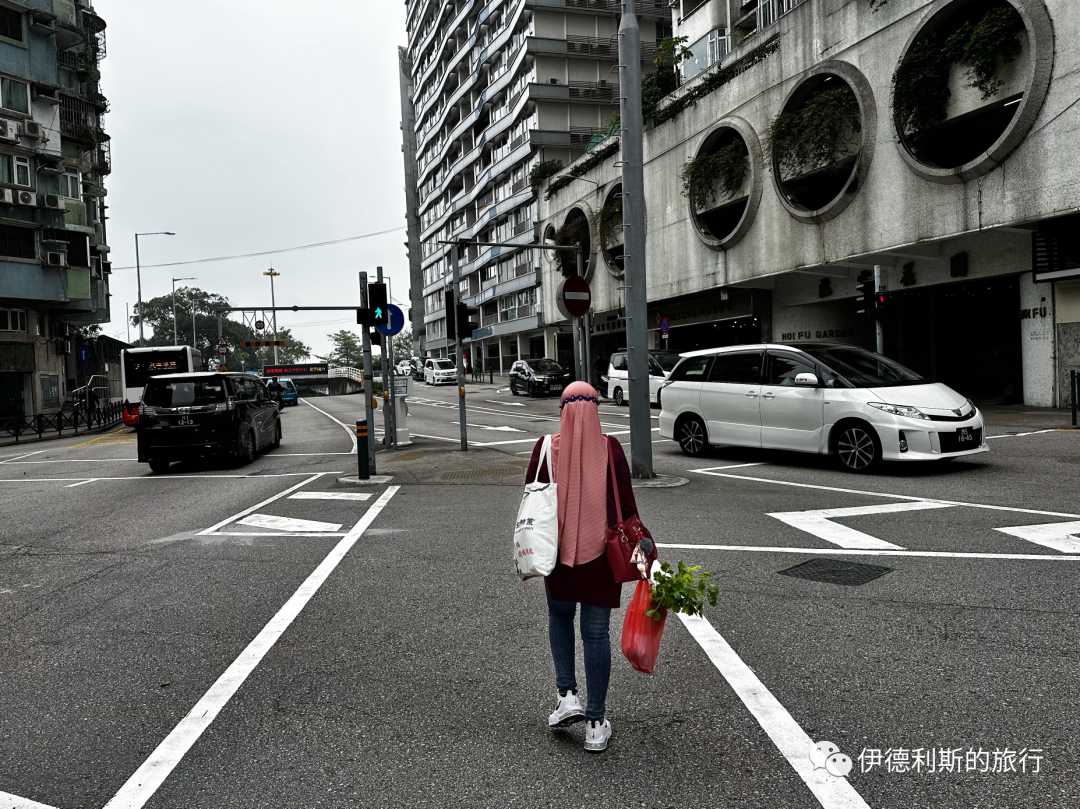
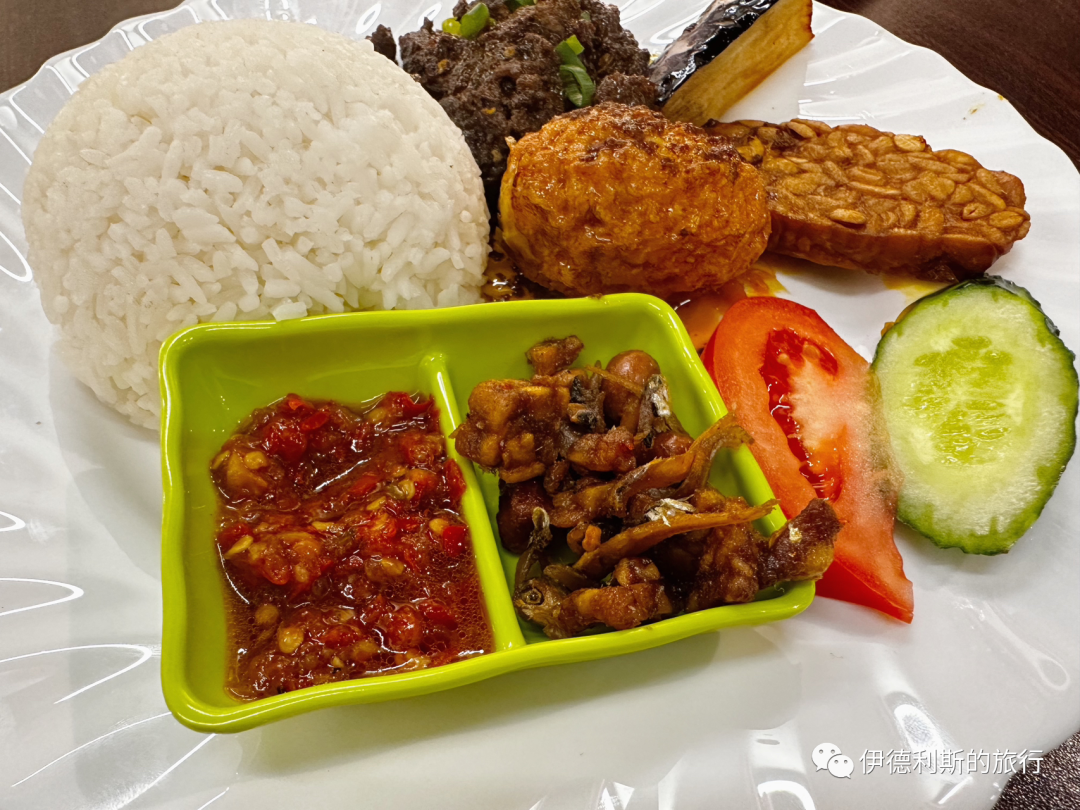
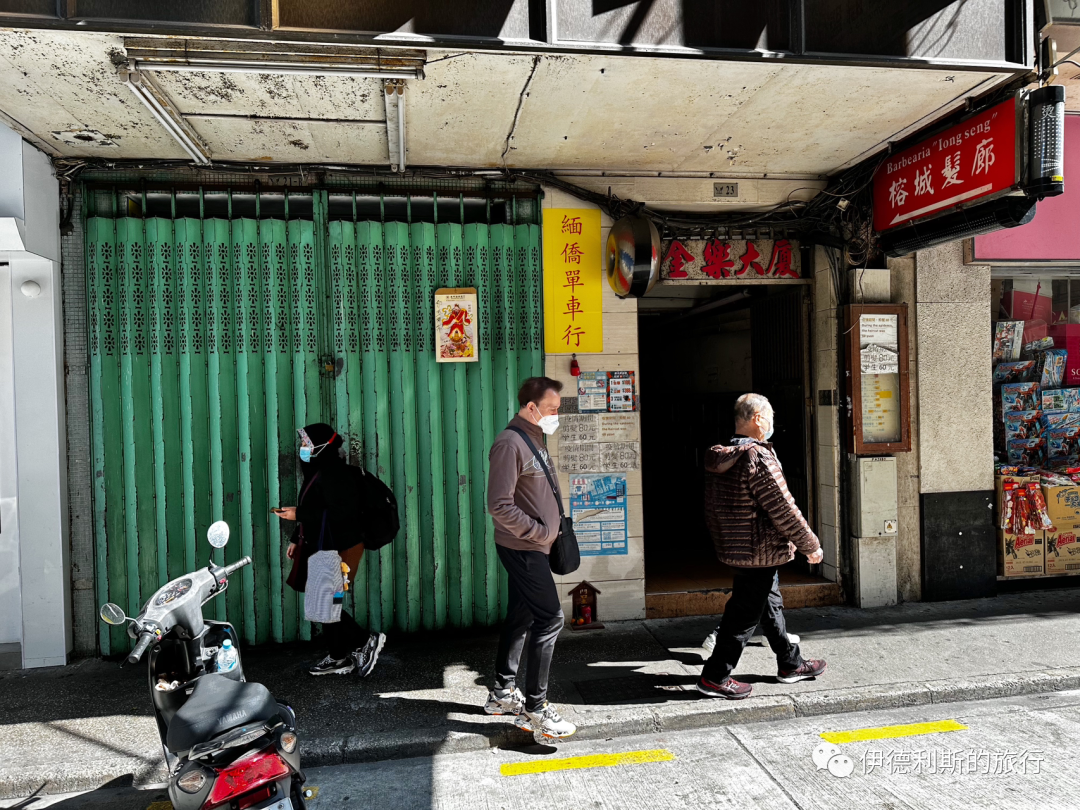
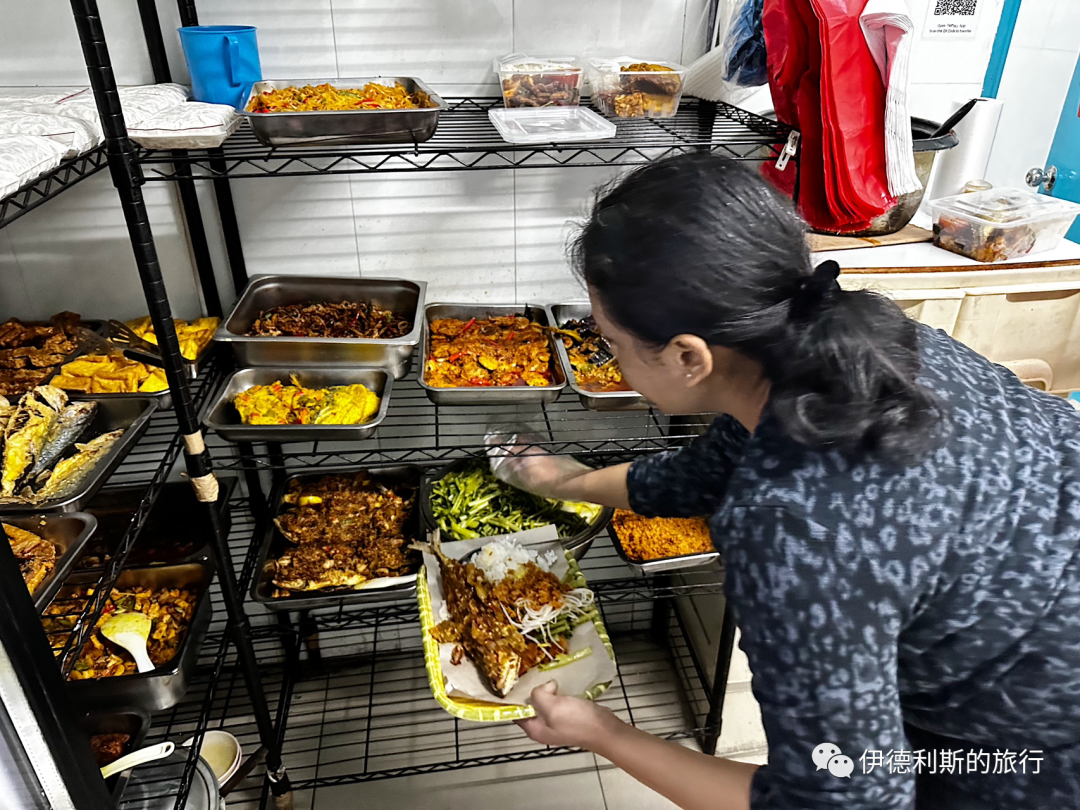
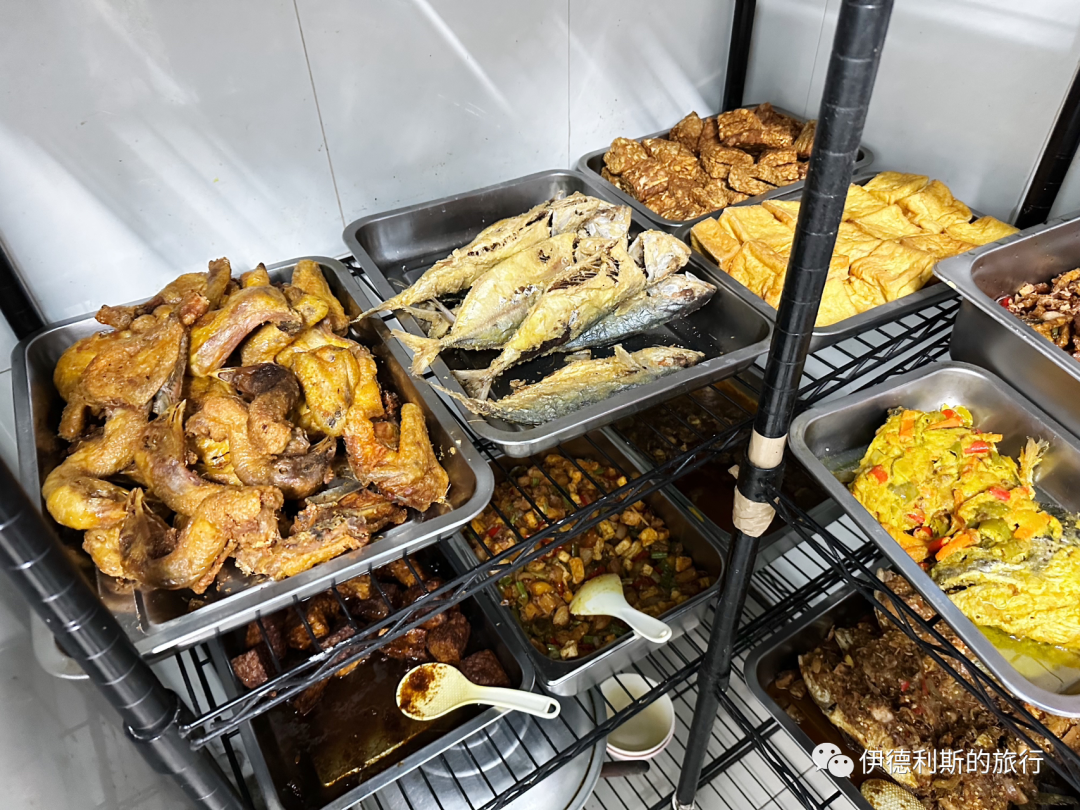
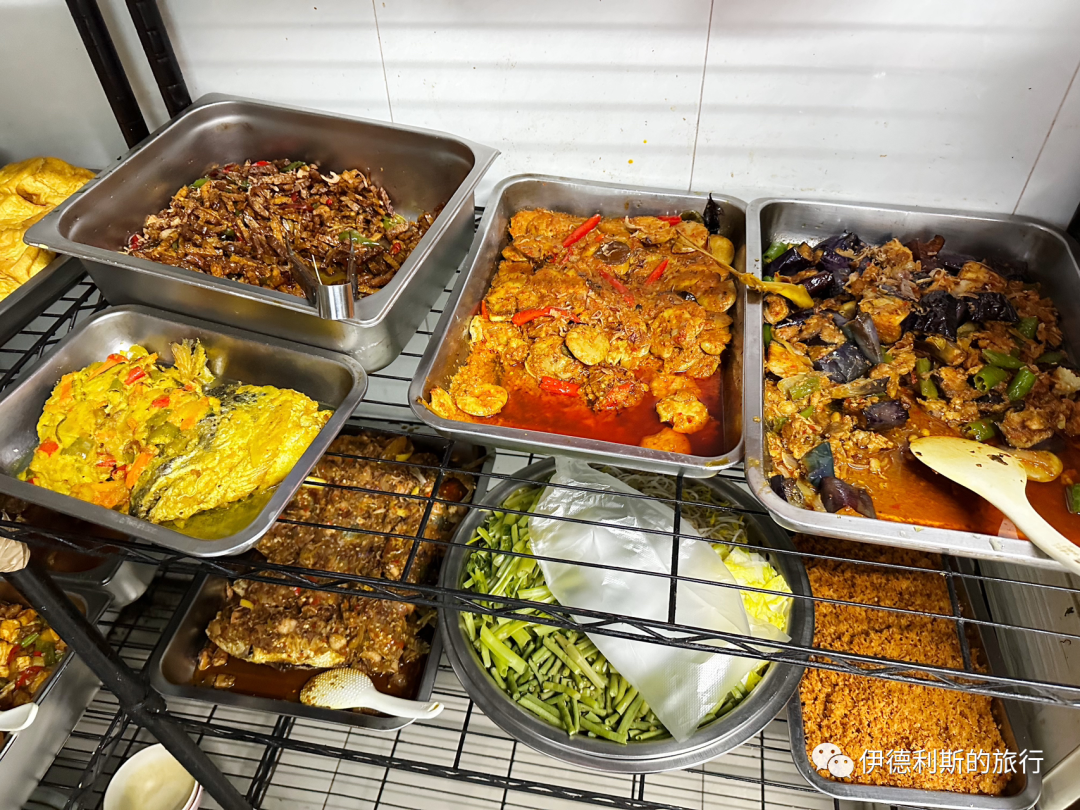
On the morning of January 24, I ate at an Indonesian family restaurant in Three Lamps (San Zhan Deng) that Imam Ding recommended. Three Lamps is the area in Macau with the most Southeast Asian immigrants and workers, and you can find all kinds of Southeast Asian restaurants there.
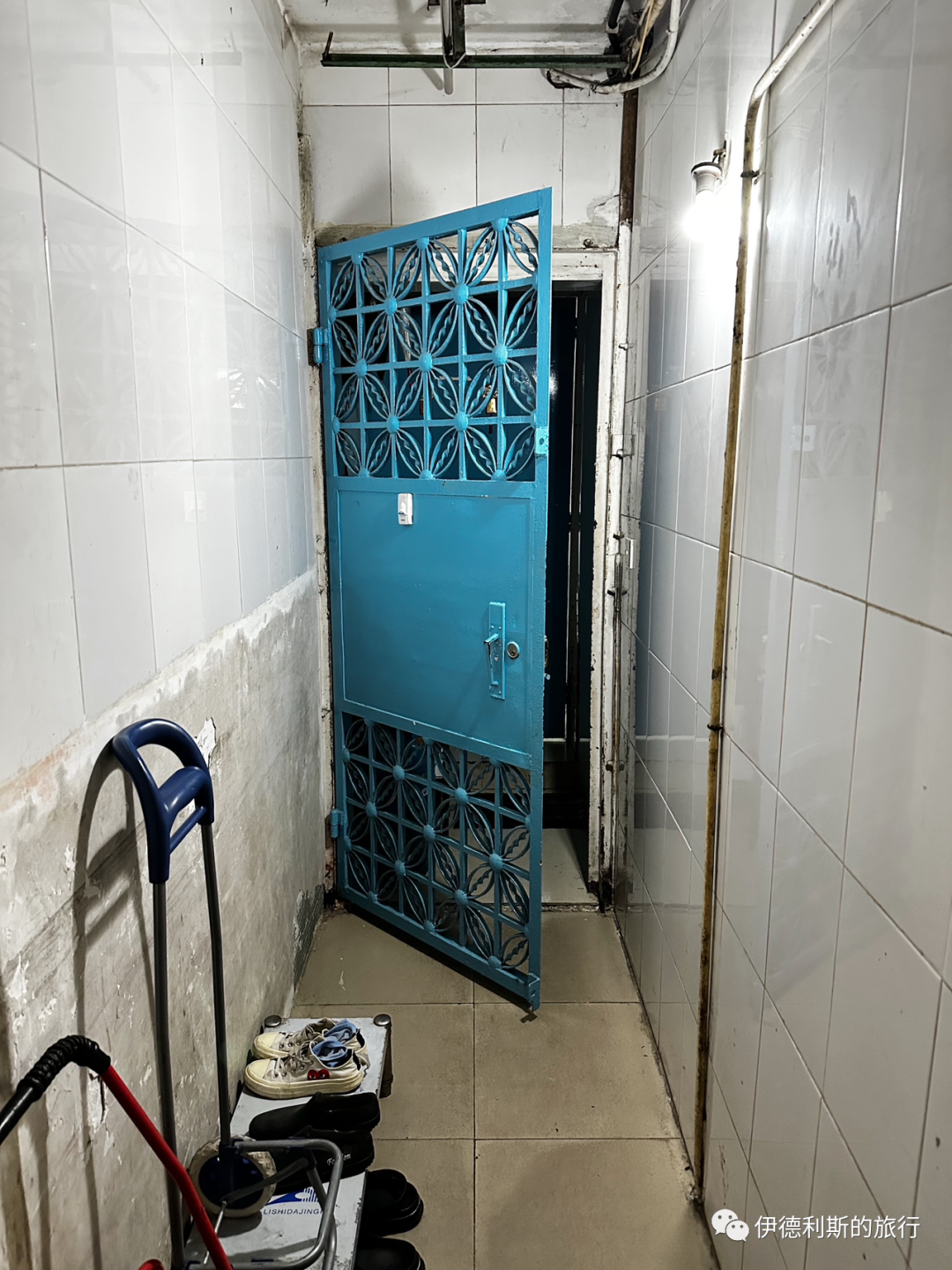
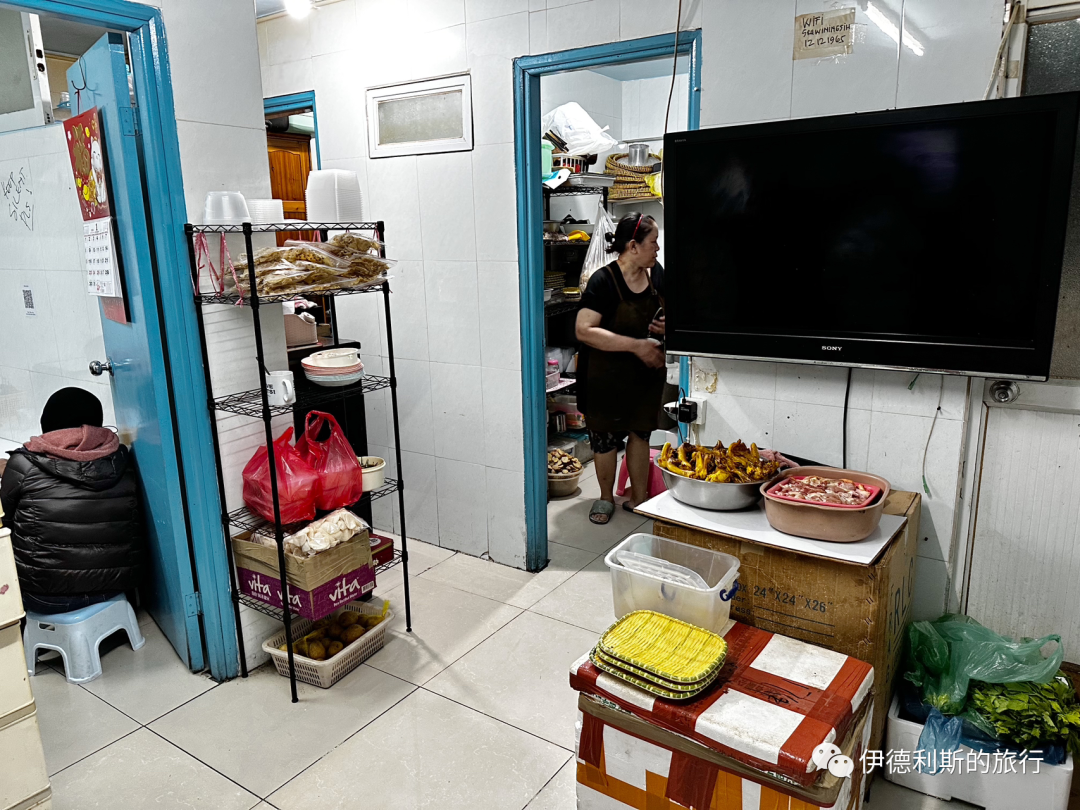
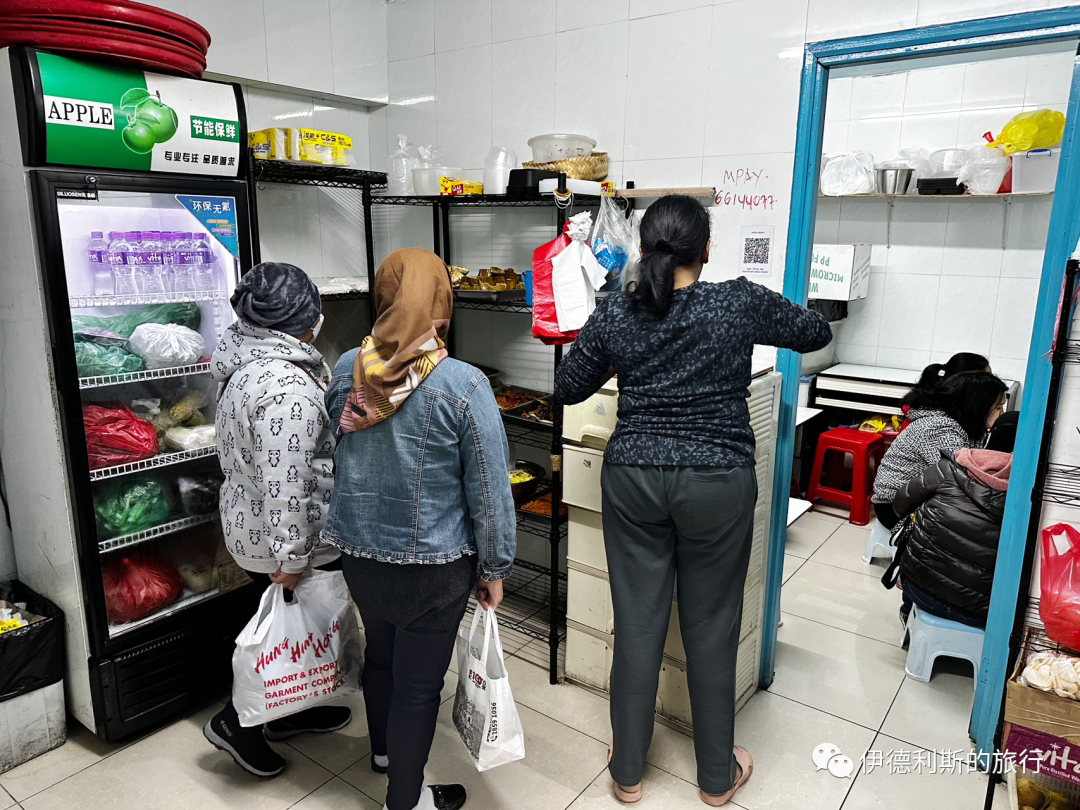
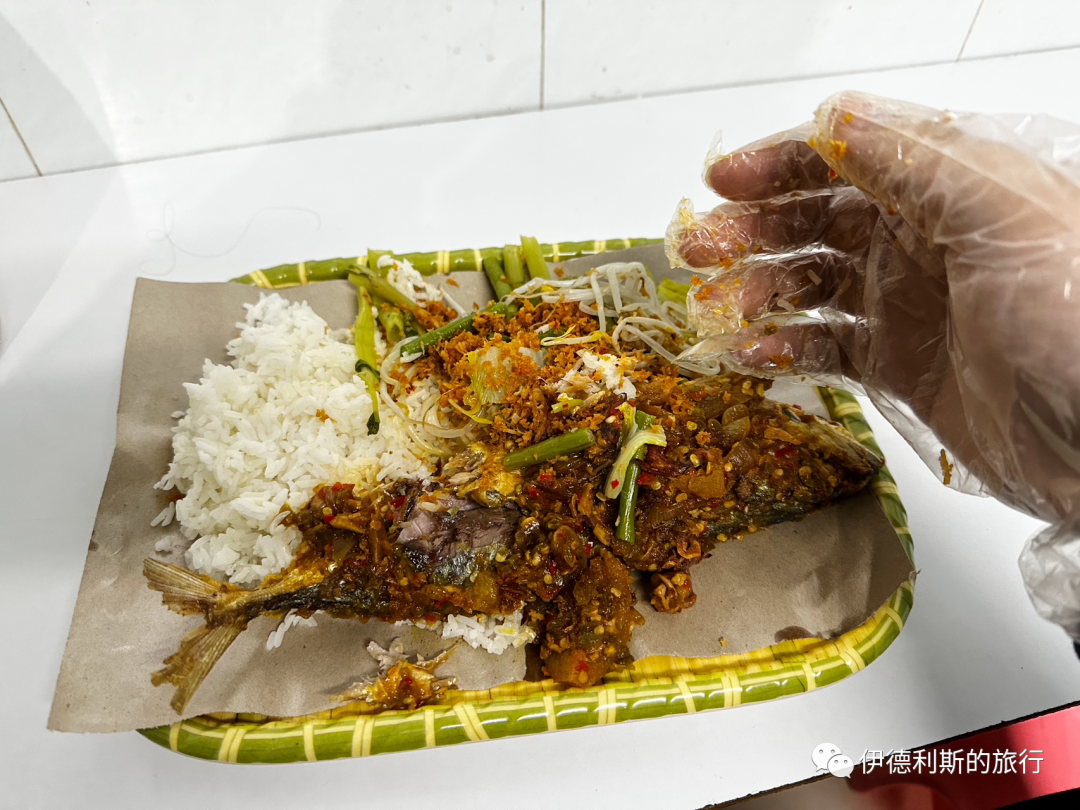
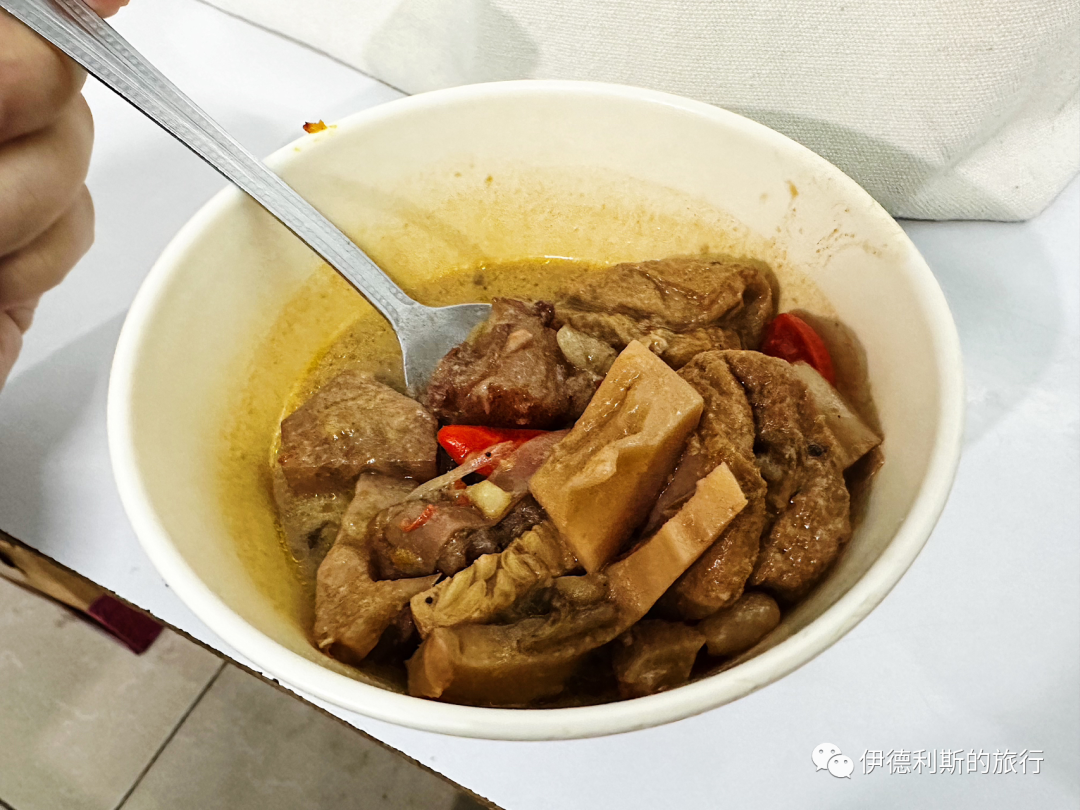
This Indonesian restaurant is inside an apartment and has no name. Only Indonesian workers know about it. When I walked in, a young lady was curious about how I found it, but as soon as I said "masjid," they all understood. There is no menu in the restaurant because all the dishes are laid out for you to choose. I picked the sour and spicy fish with some vegetables and tofu puff soup. The sour and spicy fish was very hot. I finished a bottle of mineral water, but it tasted very authentic.
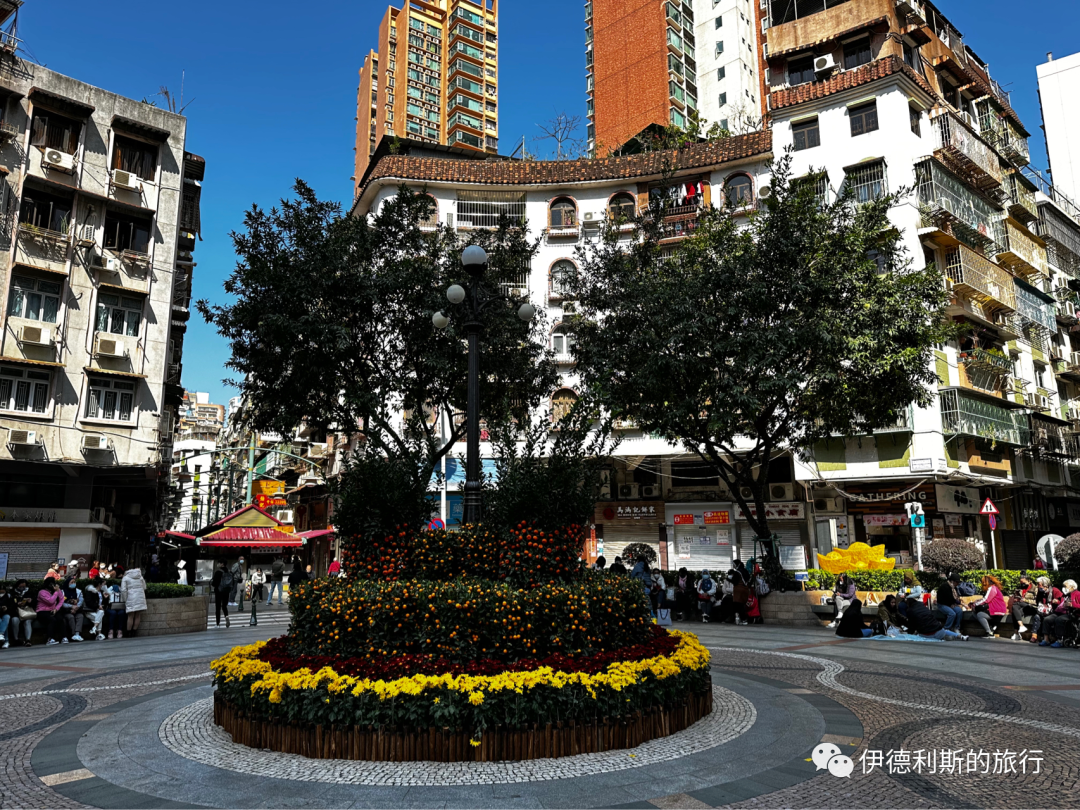
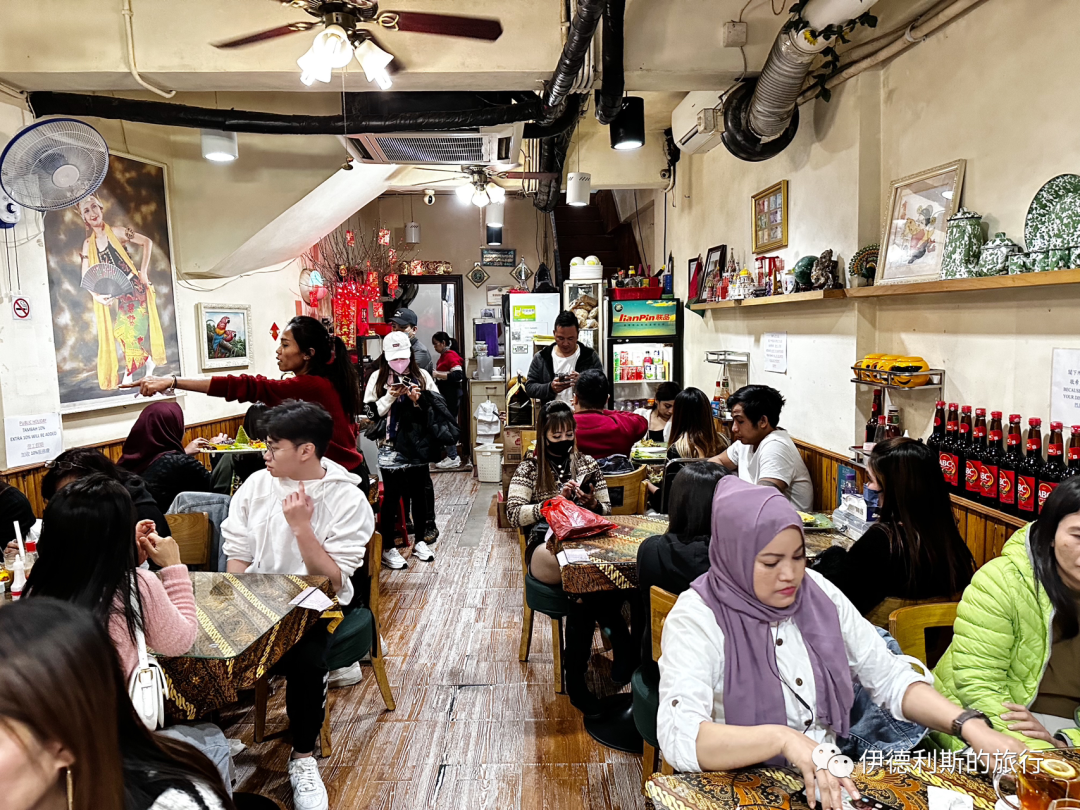
In the afternoon, I went to Macau's most famous Indonesian restaurant, Loly Indonesian Food. It is always packed with people, mostly Indonesian friends (dosti), as well as local Macau residents who come for the reputation.
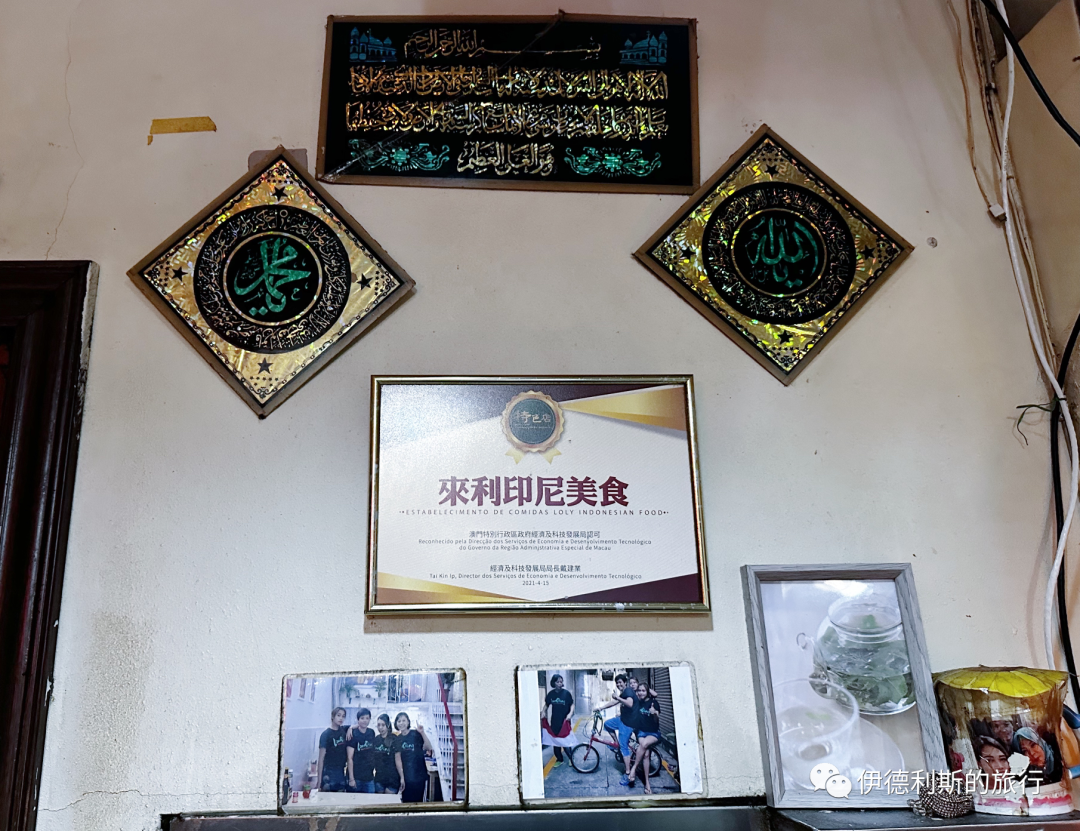
The owner of Loly is Indah Handayani Sunardi, the sister standing in the red shirt in the picture below. She was born in 1984 to a farming family in Banyuwangi, at the easternmost tip of Java. Because her family was poor, she dropped out of school at 14 and went to work at a restaurant in Surabaya, the capital of East Java. In 2000, 16-year-old Sunardi came to Hong Kong to work as a nanny. She moved to Macau in 2003 and met her current husband. In 2013, Sunardi quit her job to focus on making Indonesian food. She started by selling online and finally opened Loly restaurant in 2016. Because it is authentic and delicious, it became the most famous Indonesian restaurant in Macau within a few years. In 2021, it was recognized as a specialty shop by the Macau Economic and Technological Development Bureau.
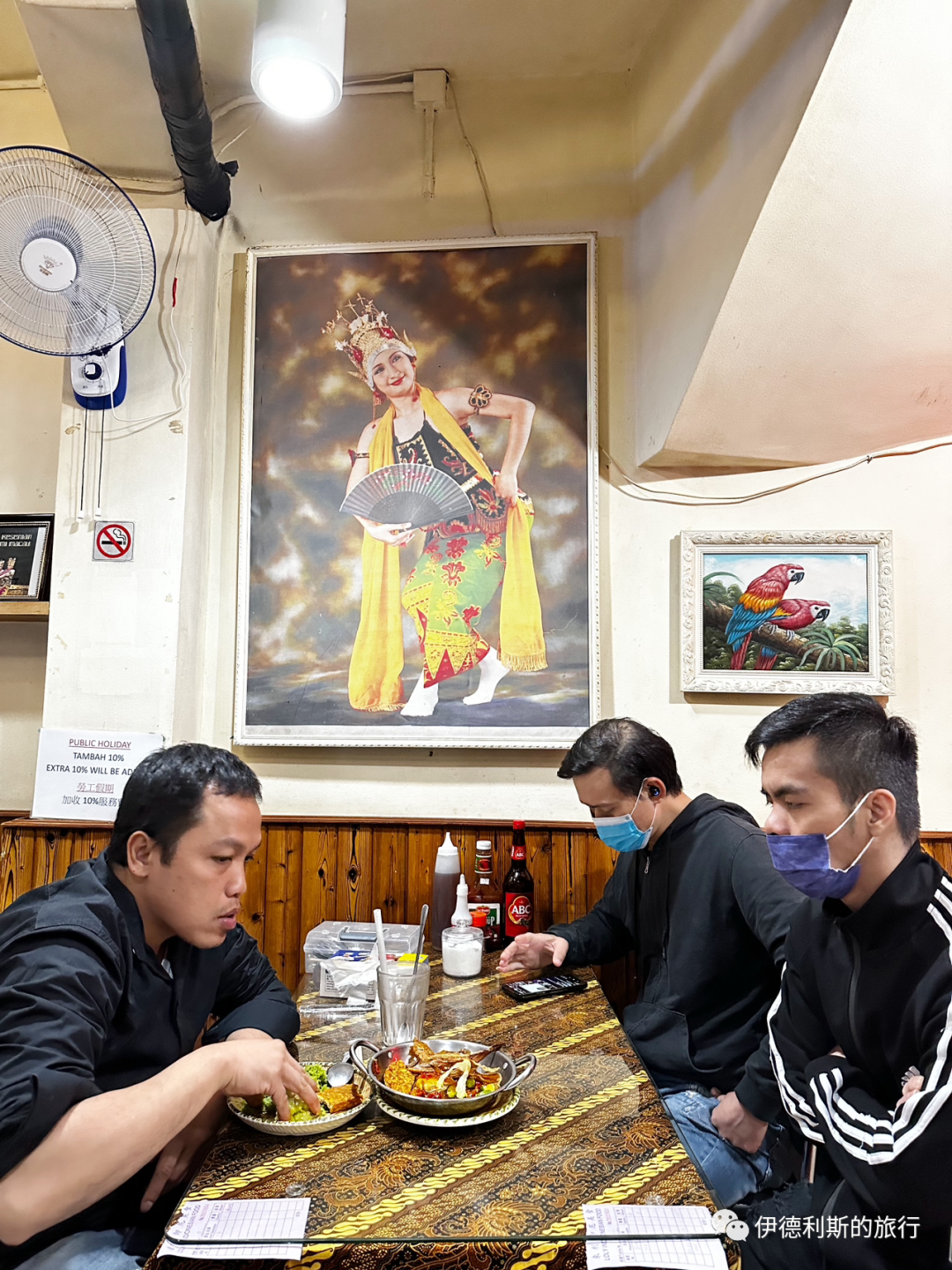
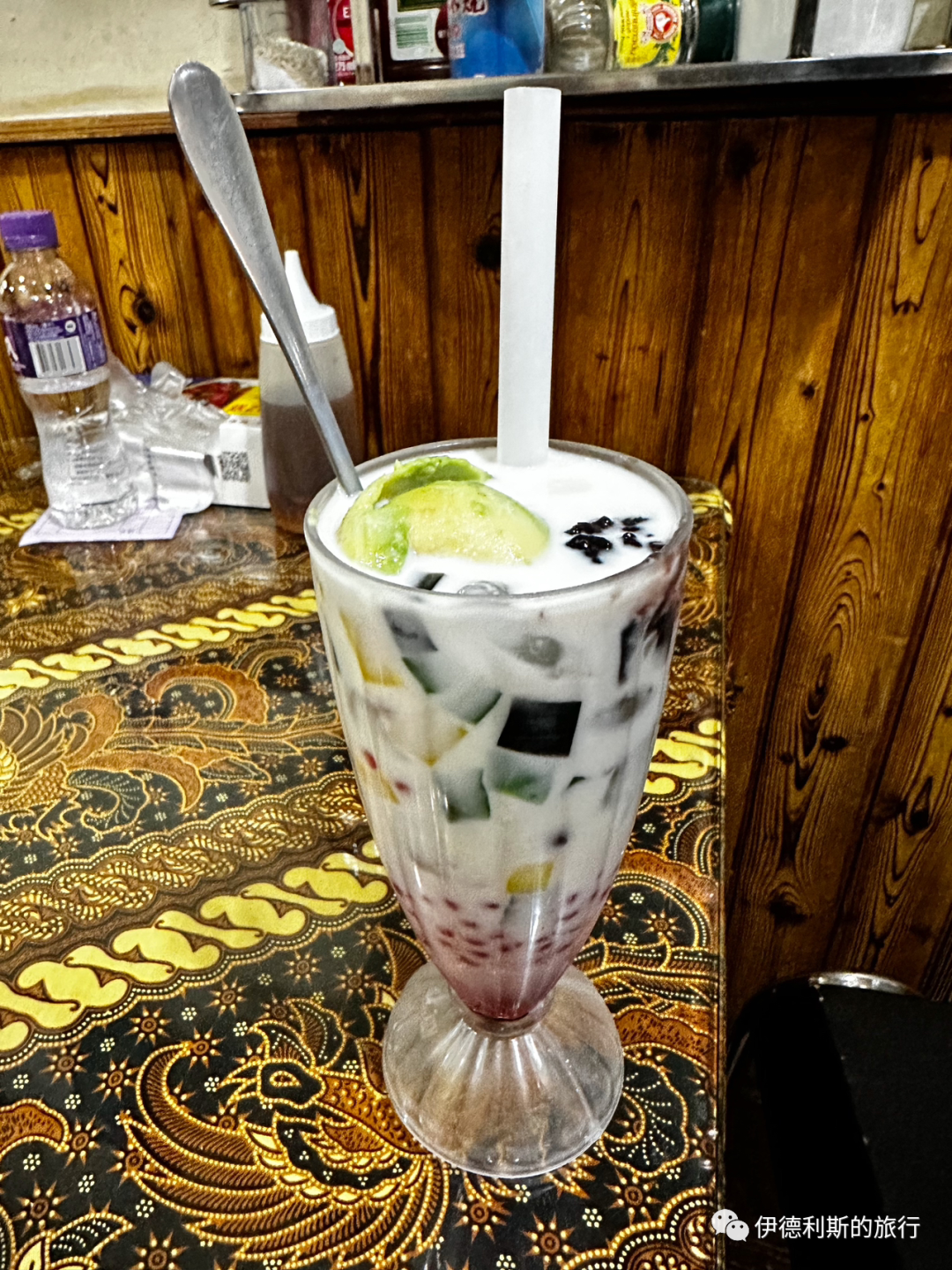
Since it was the first day of work after the holiday, some of their ingredients had not arrived yet. I didn't get to eat the Javanese specialty I wanted most, but I still ordered a few dishes I was happy with. First, I ordered the deluxe version of the Javanese coconut milk iced drink, which has avocado, grass jelly, red beans, syrup, and more. The black grass jelly is called cincau hitam in Java, and it is a classic combination when served with coconut milk, syrup, and ice cubes.
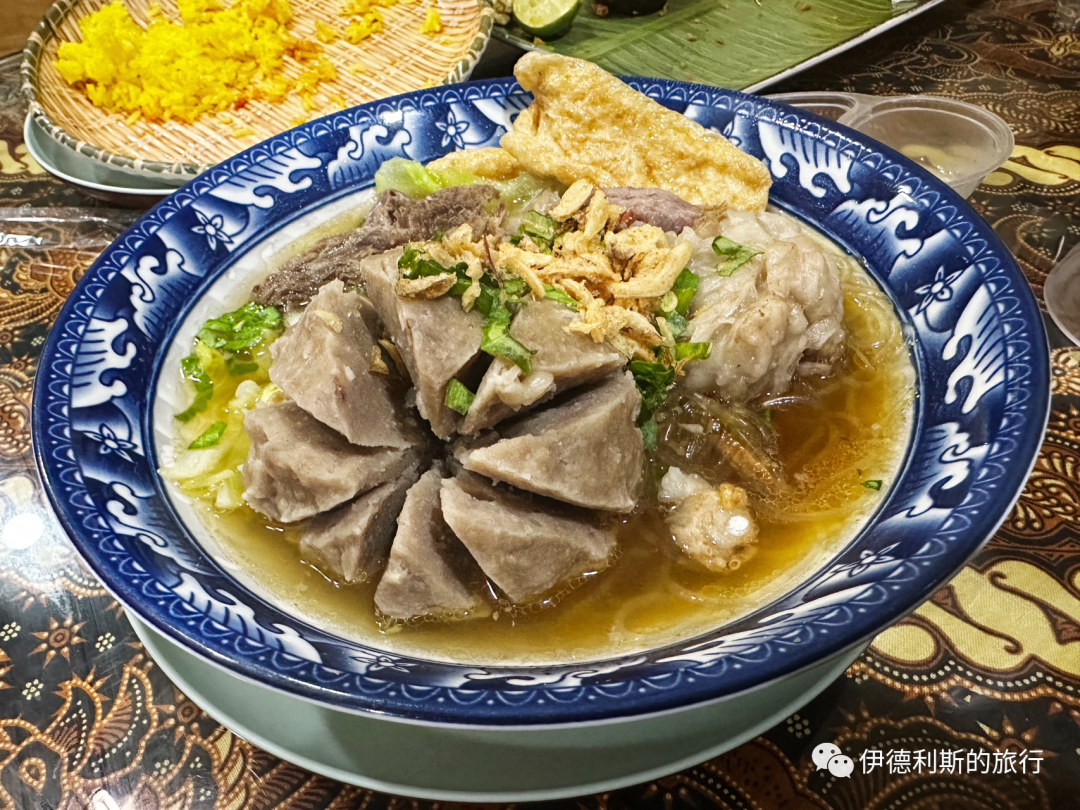
Then I ordered the large Indonesian meatball (bakso besar). The word bakso comes from the Hokkien word for "meat crisp" (rousu). It is a classic Indonesian street food made from beef, fish paste, and a small amount of tapioca flour, making it very firm. Finished meatballs are usually placed in beef broth, served with tofu, glass noodles, and various side dishes.
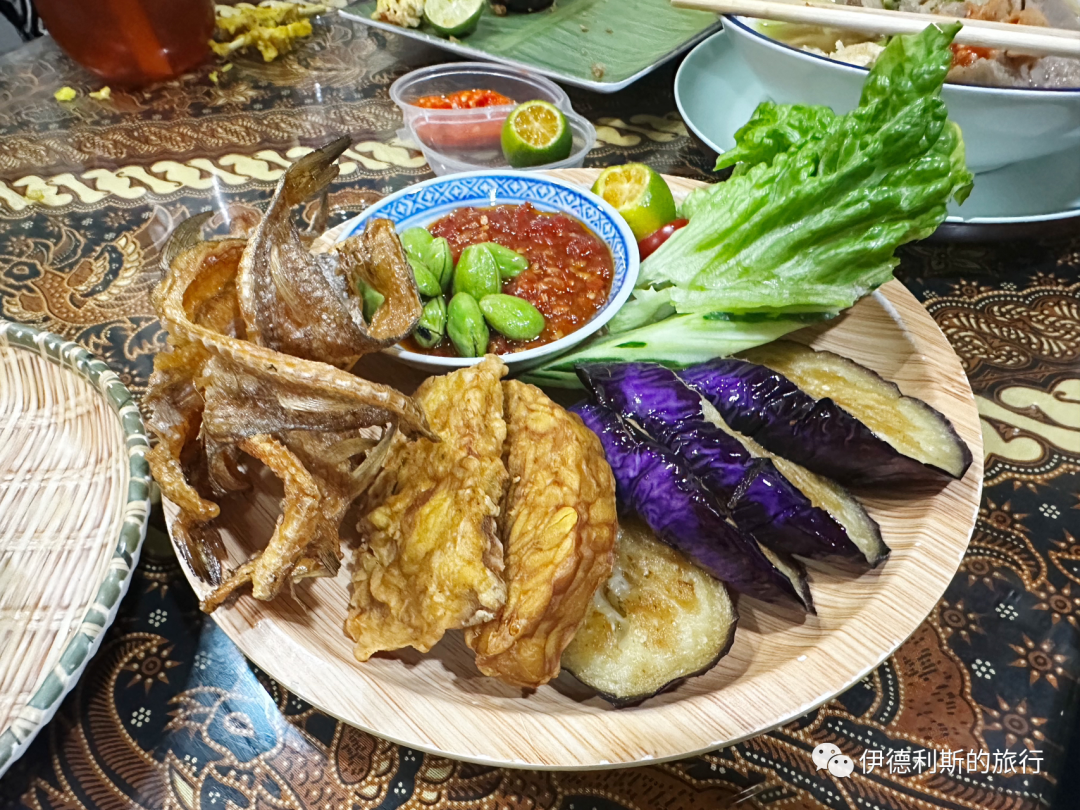
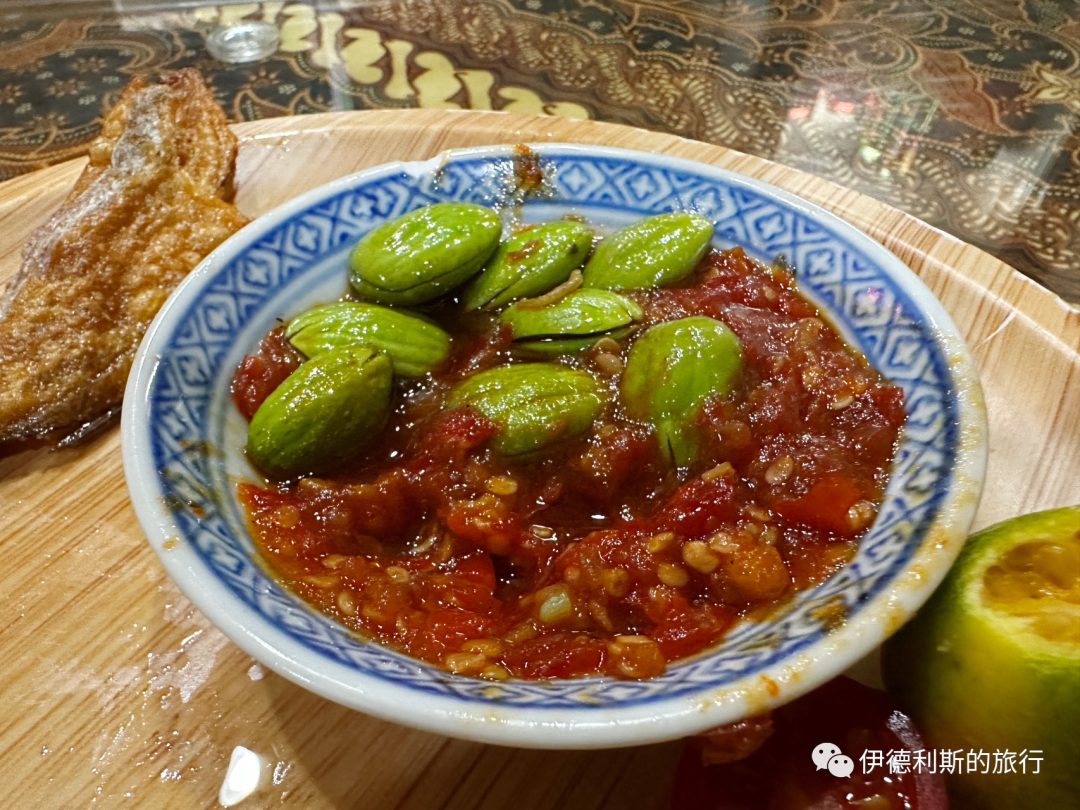
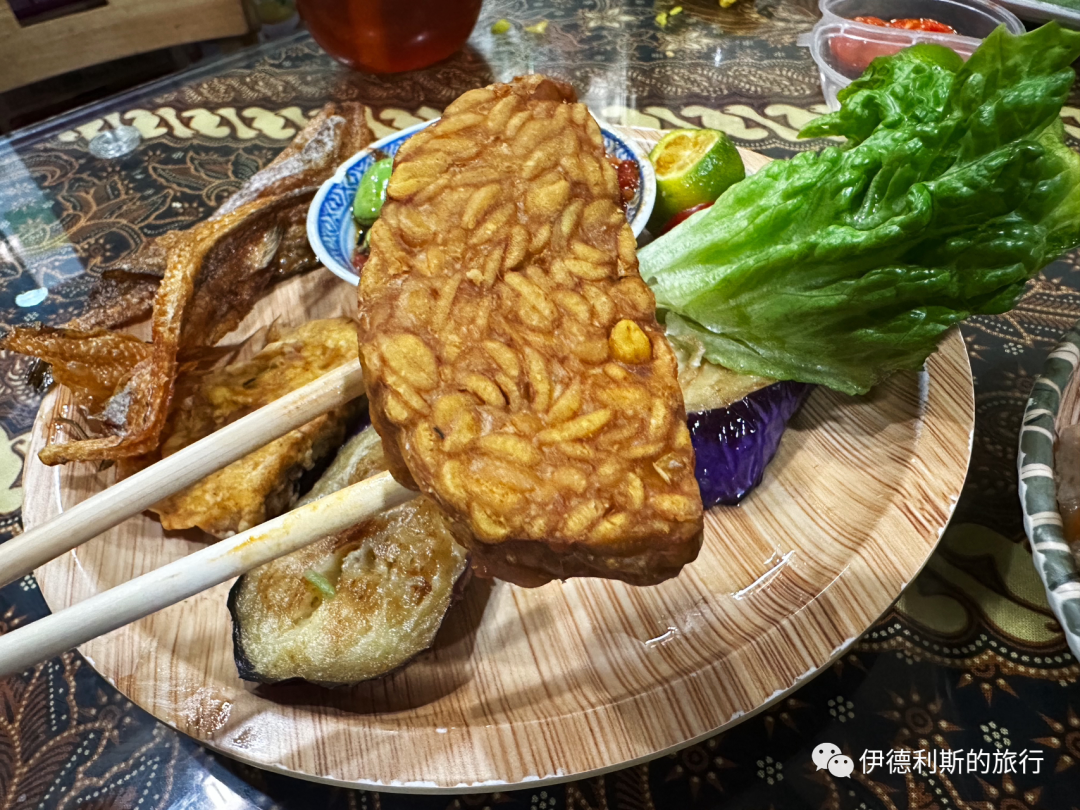
For side dishes, I ordered Terong penyet ikan asin. In this dish, 'terong' means eggplant, and 'penyet ikan asin' is Javanese fried small salted fish, where 'penyet' is the Javanese word for 'pressed'. It also came with Javanese-style fermented soybean cake (tempeh), fried tofu (tahu goreng) brought by Indonesian Chinese, and spicy stink bean paste (sambal petai). Stink beans are a common bean in Southeast Asia. They have a unique smell that might be hard for first-timers to get used to.
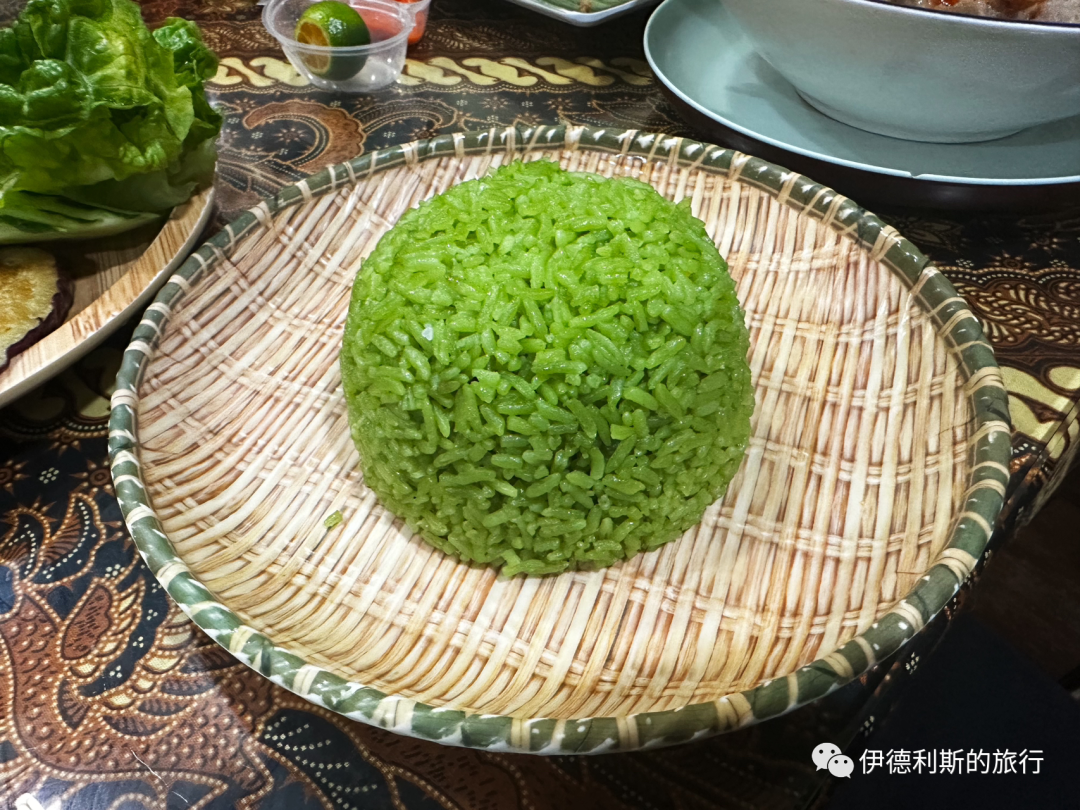
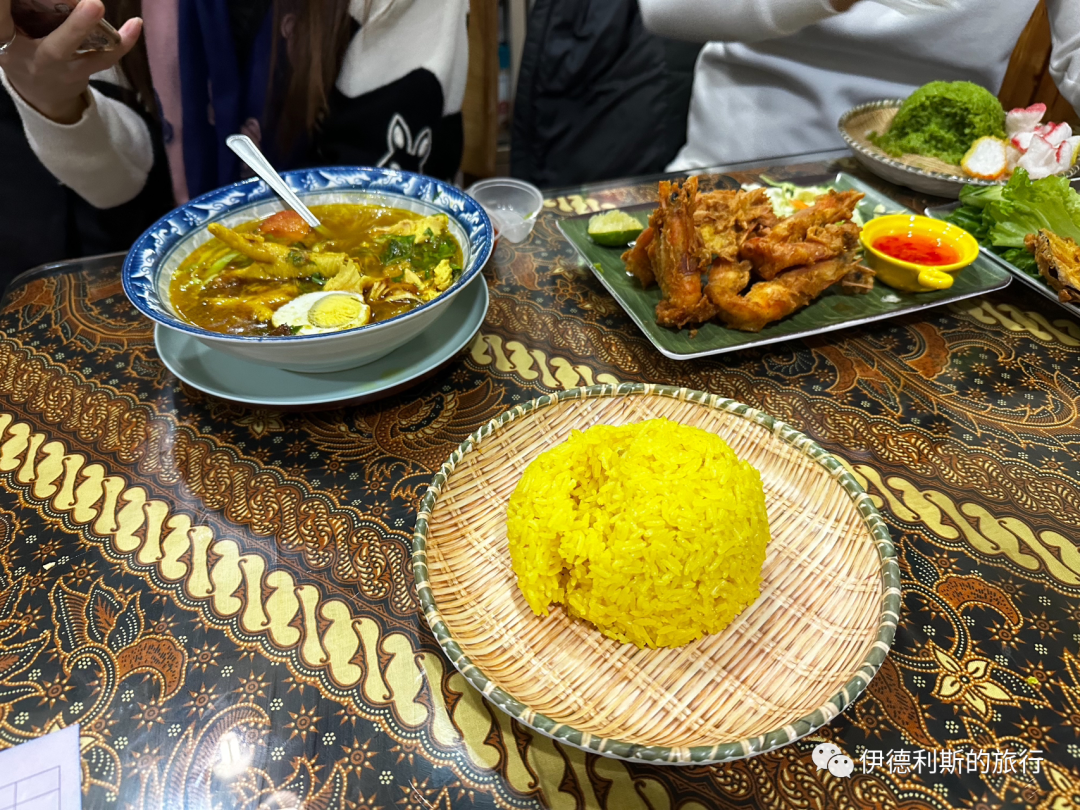
For the main course, I ordered pandan rice (nasi pandan), and my friend Dosti next to me ordered yellow turmeric rice (nasi kuning). Both are classic types of Indonesian coconut rice. Pandan is also called fragrant orchid or seven-leaf orchid. Wild pandan originally came from the Maluku Islands (Spice Islands) in Indonesia. Modern cultivated crops can only be propagated through cuttings or suckers, and they are very common in Southeast and South Asia.
The word for Javanese fermented soybean cake (tempeh) is said to come from the Old Javanese word 'tumpi'. This soybean cake, made by pressing fermented soybeans, originated in central and eastern Java. It is fermented using a type of mycelium that grows on teak and hibiscus leaves. The relationship between tempeh and Chinese tofu is still unclear, as tempeh is rarely mentioned in ancient Javanese texts. This food has always been a staple for ordinary people.
Summary: Macau — Moorish Barracks, Indonesian Food and Muslim History is presented here as a firsthand travel account in clear English, beginning with this scene: During the 2023 Spring Festival holiday, I finally hit the road again, restarting my plan to visit and eat in Muslim communities after a two-year break. The account keeps its focus on Macau Muslim History, Indonesian Food, Halal Travel while preserving the names, places, food, and historical details from the Chinese source.
During the 2023 Spring Festival holiday, I finally hit the road again, restarting my plan to visit and eat in Muslim communities after a two-year break. This time I started from Macau, then went to Guangzhou, Zhaoqing, Xichang and Miyi in Sichuan, and Xiaguan, Yangbi, Binju, and Yongjian in Dali. This first part starts in Macau.
On the morning of January 23, I took a boat from the Wanzai Port in Zhuhai to Macau.
I originally planned to eat breakfast at an Indonesian Javanese restaurant I had looked up. Because of the situation over the last two years, several Indonesian restaurants in Macau have closed. I couldn't eat there, so I went to a South Asian street food spot on Rua de Silva Mendes called Zaika Curry (ri zhichuan) to buy chicken curry, samosas, and masala tea, which I packed to eat at the nearby Lou Lim Ioc Garden. Qasim, who works at the trading company next to the curry shop, is an elder at the Macau Mosque.
The winter weather in Macau is pleasant and the park is lush. Many Southeast Asian workers use their holidays to bring snacks to the park to eat and chat, which is very relaxing.
At noon, I arrived at the Macau Mosque and happened to run into a group of Pakistani-origin friends from Hong Kong who were there for a gathering (dawah). They made authentic Pakistani food at the mosque, including stir-fried okra, minced meat with potatoes, and flatbread (paratha). They also invited Imam Ding Shaojie and us to eat with them.
In 1841, the British occupied Hong Kong Island and immediately began sending Muslim soldiers from British India to be stationed there. As Hong Kong Island was being built up in the 1840s, South Asian Muslims arrived to work as police, security guards, and sailors, while a few wealthy merchants came to open companies. In 1849, South Asian Muslims built the first mosque on Hong Kong Island, which later became the Jamia Mosque (Shelley Street Mosque). There are now about 30,000 people of Pakistani descent living in Hong Kong, and about 12,000 of them have local status and identify as Hong Kongers.
At the mosque, I ate some Filipino dessert shared by a friend. Every Sunday and on holidays, many Indonesian friends working in Macau come to the Macau Mosque to eat and chat. Everyone brings all kinds of snacks to share while they talk.
Although the Macau Mosque is not large, the environment is excellent. Besides performing worship and learning, you can play ball, use the swings, pick bananas and starfruit, look at the lake view, and pet cats. In the summer, you can even have outdoor barbecues. It is a great place to get away from the noise and relax.
I listened to Imam Ding Shaojie tell the history of the Macau Mosque.
Locals call the Macau Mosque the "Moro Garden" (Mo Luo Yuan). The term "Moro" comes from the Portuguese word "Mouros." It originally came from the name "Mauri," which the Romans used for the Berbers of North Africa under their rule. Later, various versions appeared in European languages, such as "Moro" in Italian and Spanish, and "Maure" in French. After the Age of Discovery, Spain and Portugal called many of the Muslim groups under their rule "Moros." For example, Spain collectively called the Austronesian Muslim groups in the southern Spanish East Indies (now the southern Philippines) "Moros." Portugal called the Arab-descended Muslims in Portuguese Ceylon (now Sri Lanka) "Ceylon Moors," and in Portuguese-occupied Goa, India, local Muslims were called "Moir."
The Portuguese officially occupied Macau in 1557 and began transferring troops from places like Portuguese India, which included some Muslims. According to the Portuguese scholar Luís Morais in his book "Muslims in Macau," a Macanese real estate businessman named Filipi António Osório sold a piece of land to Macau Muslims to build a mosque and a cemetery, which is the current "Moro Garden." Later, more Muslims from other parts of South Asia came to Macau, and after they passed away, they were buried in the Moro Garden.
Today, most of the South Asian Muslim graves in the Moro Garden date from the 19th to the 20th century. The birthplaces include the Indian states of Punjab, West Bengal, and Goa, as well as Peshawar in Pakistan. The oldest tombstone belongs to a friend from Gujarat, India, who died in 1875. The tombstone is written in Persian and Gujarati, serving as an important historical witness for Macau's Muslims.
Gujarati script developed from the ancient Indian Nagari script and is similar to Sanskrit. Gujarati people are good at business and entered Southeast Asia very early, having a major influence on the development of local scripts in parts of Sumatra, Sulawesi, and the Philippines. Some Gujarati people also lived in Portuguese India, and they likely went to Macau to make a living in the 19th century.
In 1937, when the Japanese army invaded Guangzhou, some Hui Muslims were forced to flee to Hong Kong and Macau. Some eventually passed away in Macau and were buried in the Moro Garden, becoming witnesses to those war-torn years.
Among these Guangzhou Hui Muslims buried in the Macau Moro Garden, three are especially worth mentioning. The first is the famous modern Guangzhou religious teacher, Imam Yang Ruisheng (1863-1939). Imam Yang led the religious community in Guangzhou for many years, serving as the head of the Xiaodongying Mosque and the Dongjiao Mosque. On the eve of the Japanese occupation of Guangzhou in 1937, a Japanese spy named Sakuma pretended to be a Muslim to lure Imam Yang into cooperating with the Japanese. To maintain his integrity, Imam Yang resolutely decided to take his descendants to Macau. Even on his deathbed, he insisted on presiding over the religious affairs of the Macau Mosque until he passed away in 1939.
The second person is Mr. Yang You (1882-1944), a diplomat who served as consul in Fukuoka, Japan, and Wonsan, Korea. He came from the Jingxiutang Yang family, a prominent Hui Muslim family in Guangdong. Several diplomats emerged from this family during the late Qing Dynasty and the Republic of China, including Yang You's cousin, Yang Shu, who was once the Qing Dynasty's minister to Japan. Because he was fluent in Japanese and Korean, he faced threats and pressure from the Japanese military. He had to sell his property and flee to Hong Kong. After Hong Kong fell in 1942, he escaped to Macau, where he passed away (returned to Allah) in 1944.
The third person is Bao Tingzhen, the eldest son of Dr. Bao Zongqi, who died in childhood. Dr. Bao Zongqi came from the Qingshantang Bao family, a prominent Hui Muslim family in Guangdong known for generations of dentists. After fleeing to Macau in 1937, he continued working as a dentist and actively provided relief to refugees. Due to a lack of supplies and poor medical conditions, the son and daughter born to Dr. Bao's family in Macau both died young, one of whom was Bao Tingzhen.
After the liberation in 1945, Hui Muslims gradually returned to Hong Kong and Guangzhou from Macau. Dr. Bao Zongqi continued to run his dental clinic in Macau until he moved to Hong Kong in the 1960s, where he passed away in 1999.
After 1945, the Macau Mosque returned to peace, maintained only by a few elderly Pakistani community members. The mosque was rebuilt in 1973, reaching its current size. After Macau's handover in 1999, many Muslims from countries like Pakistan and Indonesia came to Macau for work, and the number of Muslims in Macau gradually increased.
In the early 21st century, the Macau Mosque's religious affairs were maintained by Imam Yunus, a Pakistani born in East Timor. After Yunus passed away due to illness in 2013, the Friday prayer (Jumu'ah) at the Macau Mosque could only be led by imams invited temporarily from Hong Kong. It was not until 2018 that Imam Ding Shaojie, originally from Inner Mongolia, was hired as the imam of the Macau Mosque, and the mosque's religious affairs finally got back on track. Imam Ding graduated from the China Islamic Institute and the International Islamic University in Pakistan. He is fluent in Arabic and English, allowing him to communicate smoothly with local Pakistani elders and organize various activities. Every Friday, Imam Ding delivers the sermon (khutbah) in both Arabic and English.
Thanks to Imam Ding's efforts, on February 25, 2023, the Moro Garden will participate in the 'Thousand Miles of Shared Customs: Macau Six Religions Culture and Relics Exhibition' to introduce the history of Islam in Macau to fellow citizens.
Additionally, every Sunday, the Macau Mosque becomes a home for Indonesian female migrant workers. Everyone cleans the courtyard, prepares meals, and sets up the space here. Many bring homemade hometown delicacies to share with others. After lunch, everyone recites the Quran together. At this time, the Macau Mosque truly becomes a spiritual home for these friends (dostani) who are far from home and working abroad.
In 1874, Portugal transferred a regiment from Portuguese India, Goa, to Macau to reinforce the local police force, leading to the construction of a Moorish Barracks (Quartel dos Mouros) near Macau's A-Ma Temple. People say a mosque was also built around the barracks, which was not demolished until the 1940s.
The Moorish Barracks was designed by the Italian Cassuto and features many Islamic-style arches. In the late 19th century, a trend emerged across Europe to use Islamic elements in modern architecture, known as Moorish Revival architecture. In Spain and Portugal, people applied the horseshoe arches and arabesque tiles found in Andalusian Islamic architecture to modern building facades, a style known as Neo-Mudéjar architecture. The term Mudéjar was originally used to refer to Muslims who remained on the Iberian Peninsula after the Reconquista of Andalusia.
In 1905, the Moorish Barracks became the headquarters for the Port Authority and the Marine Police, and it is now the Port Authority Building.
In the afternoon, I went to an Indonesian restaurant called Warung Indonesia near the Ruins of St. Paul's. They are from Semarang, the capital of East Java. In Indonesian, 'Warung' refers to a small convenience store or restaurant, usually converted from the front room of a house. The environment there is very nice, with many young Indonesian men and women coming to eat. Indonesian love songs play on the TV, making it feel a bit like I had traveled to Semarang.
I ordered sticky rice cake (kue lupis ketan), chicken satay skewers (sate ayam), beef rendang rice (nasi rendang), and iced cendol (es cendol).
Sticky rice cake (kue lupis ketan) is a local Javanese snack. It is popular in central and eastern Java, but you can find it in other parts of Indonesia too. The word "kue" comes from the Hokkien word for "cake" (kueh), which means rice cake. To make sticky rice cake (lupis), you first soak sticky rice in water with salt and lime juice. After draining it, you wrap it in banana leaves and fold it into triangles, similar to making rice dumplings (zongzi). Once cooked, the sticky rice cake is served in palm sugar syrup and topped with shredded coconut.
Chicken satay skewers (sate ayam) also started on Java island. People say Javanese street vendors in the 18th century developed it by combining local food with Indian grilled skewers brought by Tamil Muslim merchants. The meat skewers are usually marinated in turmeric, sweet soy sauce, or coconut oil before grilling, then dipped in satay sauce when eaten. Satay sauce is mainly made of roasted peanuts, plus coconut milk, turmeric, soy sauce, galangal, garlic, chili, and various spices. After the 19th century, Chinese workers in Southeast Asia brought satay sauce back to Fujian, where it combined with local food to become satay sauce (shacha jiang).
Beef rendang is a curry that originated with the Minangkabau people of Sumatra. It likely started as a curry brought by Indian merchants who came to Sumatra to trade before the 15th century, which then blended with the local Minangkabau diet. After the 16th century, Minangkabau merchants began traveling to Malacca, and rendang spread to other parts of Indonesia. The main ingredients for rendang are meat, coconut milk, chili, and various spices, including ginger, galangal, turmeric, lemongrass, garlic, and shallots. To suit the needs of Minangkabau merchants on long sea voyages, rendang is slow-cooked until it becomes thick and dry, allowing it to be stored for several weeks.
Iced cendol (es cendol) is made by putting sticky rice flour jelly dyed with pandan leaves into ice water, then drizzling it with coconut milk and palm sugar. The origin of cendol is still uncertain. One theory is that it comes from a Javanese snack called dawet, though traditionally dawet does not contain ice.
On the morning of January 24, I ate at an Indonesian family restaurant in Three Lamps (San Zhan Deng) that Imam Ding recommended. Three Lamps is the area in Macau with the most Southeast Asian immigrants and workers, and you can find all kinds of Southeast Asian restaurants there.
This Indonesian restaurant is inside an apartment and has no name. Only Indonesian workers know about it. When I walked in, a young lady was curious about how I found it, but as soon as I said "masjid," they all understood. There is no menu in the restaurant because all the dishes are laid out for you to choose. I picked the sour and spicy fish with some vegetables and tofu puff soup. The sour and spicy fish was very hot. I finished a bottle of mineral water, but it tasted very authentic.
In the afternoon, I went to Macau's most famous Indonesian restaurant, Loly Indonesian Food. It is always packed with people, mostly Indonesian friends (dosti), as well as local Macau residents who come for the reputation.
The owner of Loly is Indah Handayani Sunardi, the sister standing in the red shirt in the picture below. She was born in 1984 to a farming family in Banyuwangi, at the easternmost tip of Java. Because her family was poor, she dropped out of school at 14 and went to work at a restaurant in Surabaya, the capital of East Java. In 2000, 16-year-old Sunardi came to Hong Kong to work as a nanny. She moved to Macau in 2003 and met her current husband. In 2013, Sunardi quit her job to focus on making Indonesian food. She started by selling online and finally opened Loly restaurant in 2016. Because it is authentic and delicious, it became the most famous Indonesian restaurant in Macau within a few years. In 2021, it was recognized as a specialty shop by the Macau Economic and Technological Development Bureau.
Since it was the first day of work after the holiday, some of their ingredients had not arrived yet. I didn't get to eat the Javanese specialty I wanted most, but I still ordered a few dishes I was happy with. First, I ordered the deluxe version of the Javanese coconut milk iced drink, which has avocado, grass jelly, red beans, syrup, and more. The black grass jelly is called cincau hitam in Java, and it is a classic combination when served with coconut milk, syrup, and ice cubes.
Then I ordered the large Indonesian meatball (bakso besar). The word bakso comes from the Hokkien word for "meat crisp" (rousu). It is a classic Indonesian street food made from beef, fish paste, and a small amount of tapioca flour, making it very firm. Finished meatballs are usually placed in beef broth, served with tofu, glass noodles, and various side dishes.
For side dishes, I ordered Terong penyet ikan asin. In this dish, 'terong' means eggplant, and 'penyet ikan asin' is Javanese fried small salted fish, where 'penyet' is the Javanese word for 'pressed'. It also came with Javanese-style fermented soybean cake (tempeh), fried tofu (tahu goreng) brought by Indonesian Chinese, and spicy stink bean paste (sambal petai). Stink beans are a common bean in Southeast Asia. They have a unique smell that might be hard for first-timers to get used to.
For the main course, I ordered pandan rice (nasi pandan), and my friend Dosti next to me ordered yellow turmeric rice (nasi kuning). Both are classic types of Indonesian coconut rice. Pandan is also called fragrant orchid or seven-leaf orchid. Wild pandan originally came from the Maluku Islands (Spice Islands) in Indonesia. Modern cultivated crops can only be propagated through cuttings or suckers, and they are very common in Southeast and South Asia.
The word for Javanese fermented soybean cake (tempeh) is said to come from the Old Javanese word 'tumpi'. This soybean cake, made by pressing fermented soybeans, originated in central and eastern Java. It is fermented using a type of mycelium that grows on teak and hibiscus leaves. The relationship between tempeh and Chinese tofu is still unclear, as tempeh is rarely mentioned in ancient Javanese texts. This food has always been a staple for ordinary people.
