
Halal Food Guide: Old Cairo - Mosques, Markets and Egyptian Food (Part 1)
Reposted from the web
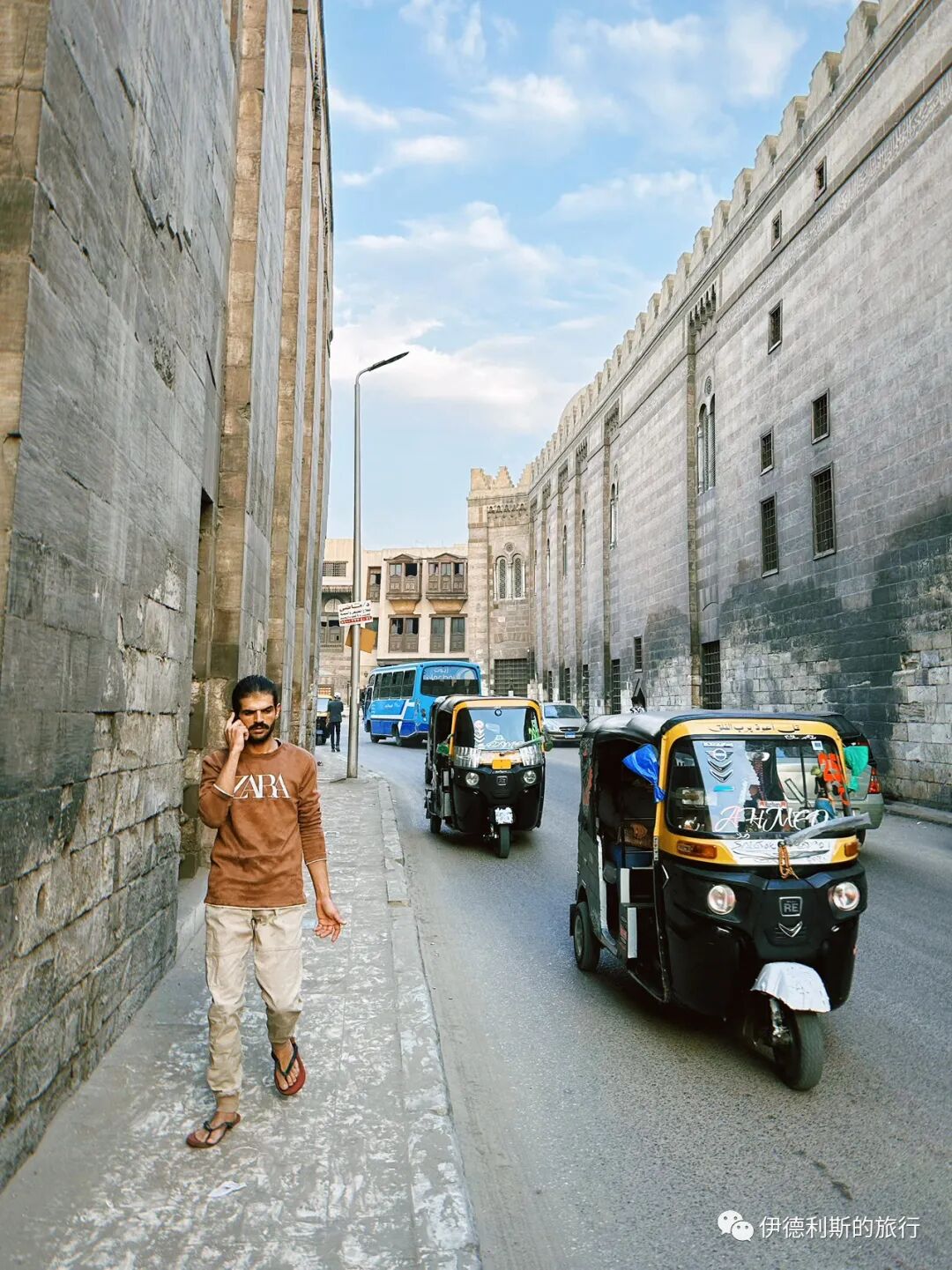
As a cultural capital with over a thousand years of history and hundreds of historic sites, Islamic Cairo was added to the UNESCO World Heritage list back in 1979. However, due to the noisy environment, traffic congestion, and concerning sanitary conditions, few Chinese tourists seem willing to explore deep into the old Islamic city, except for the Khan el-Khalili market which specializes in tourist souvenirs. I spent four days in the old city of Cairo this time, visiting almost all the mosques, gongbei, religious halls (daotang), mansions, inns, and madrasas inside.
To make it easier to walk around the old city, I started looking for suitable accommodation online. Most tourists visiting Cairo choose to stay in the embassy district where the environment is slightly better, as there are almost no places suitable for tourists inside the old city. However, I still managed to find the Gamaleya Heritage Hotel, which only opened in 2021.
The owner of Gamaleya, Ibrahim Kassissia, and his family have lived here since the 1930s. He moved to Canada 40 years ago, but while traveling in China, he got the idea to return to his hometown to open a heritage hotel. He later bought back the long-abandoned old house and renovated it into the current heritage hotel.
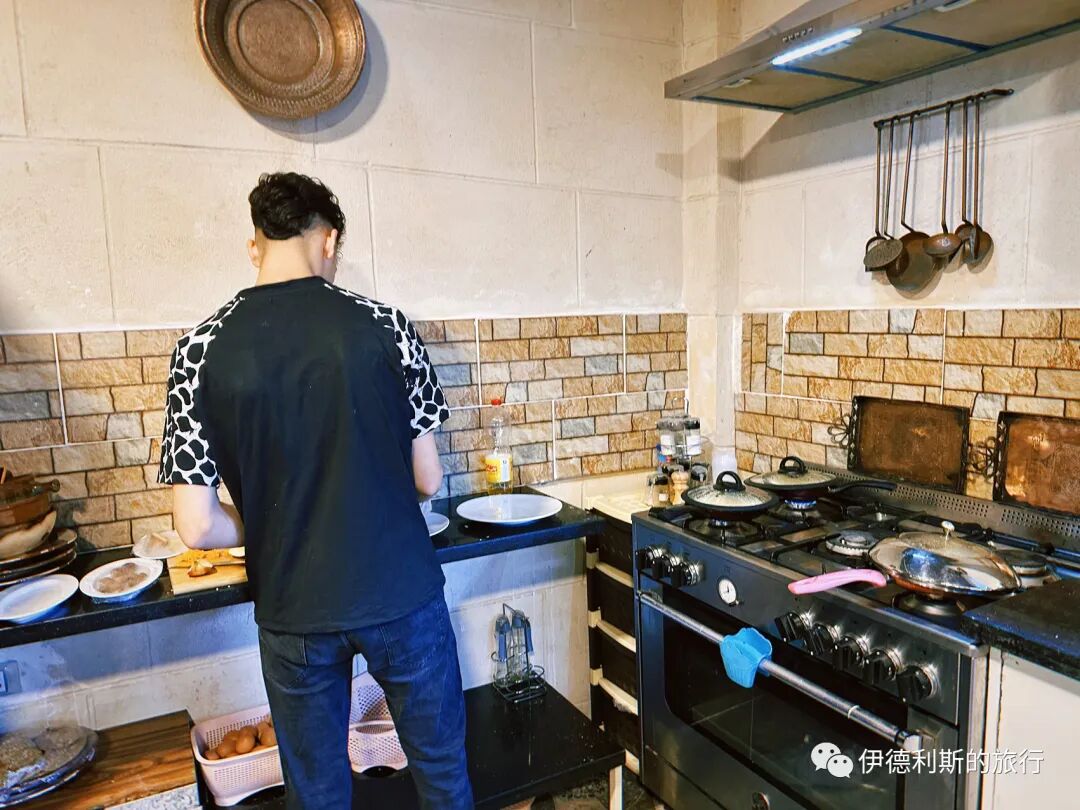
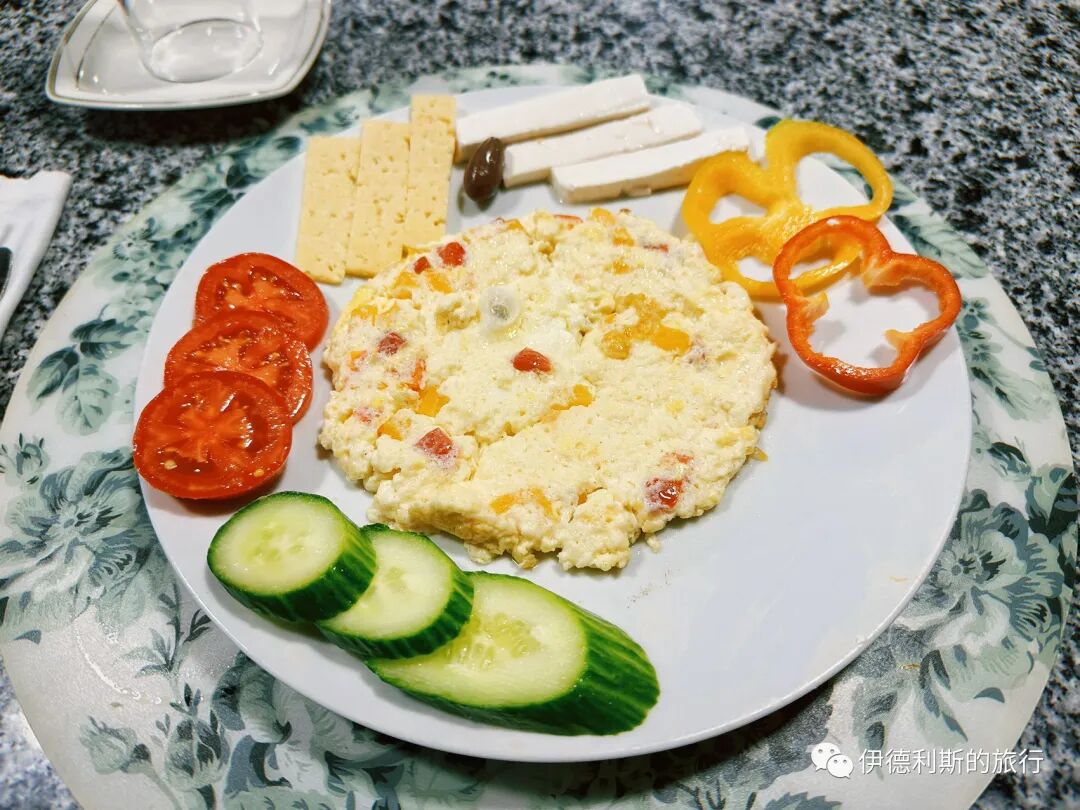
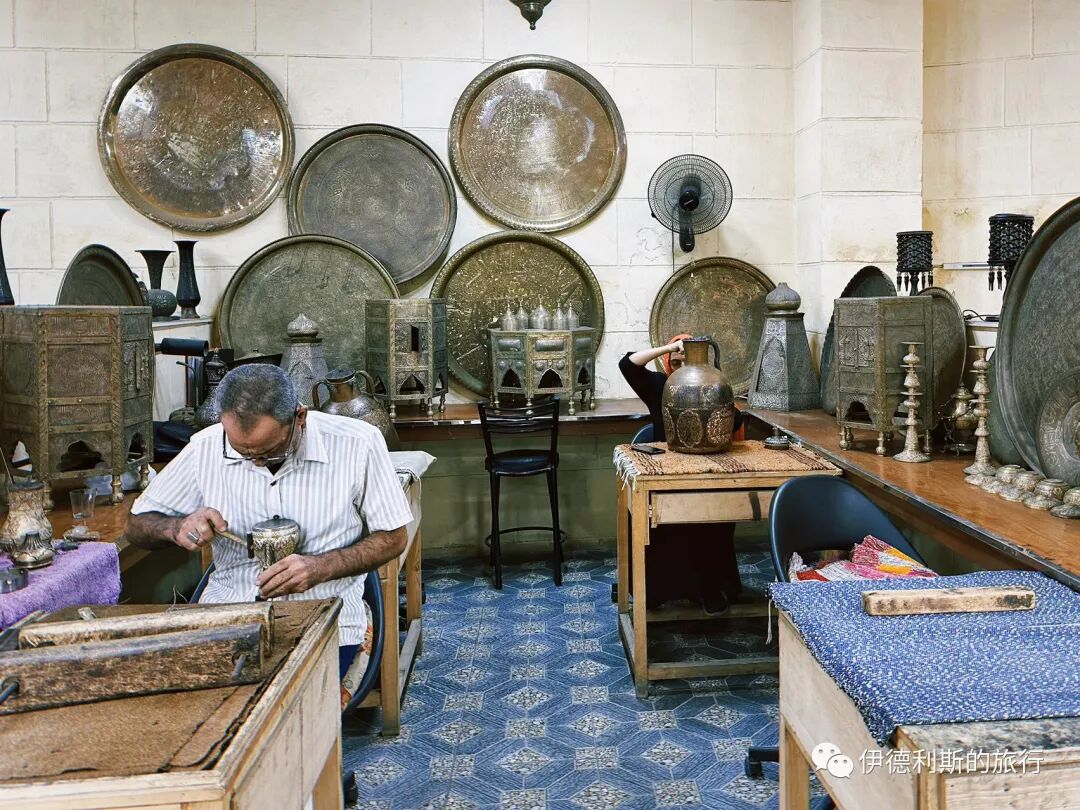
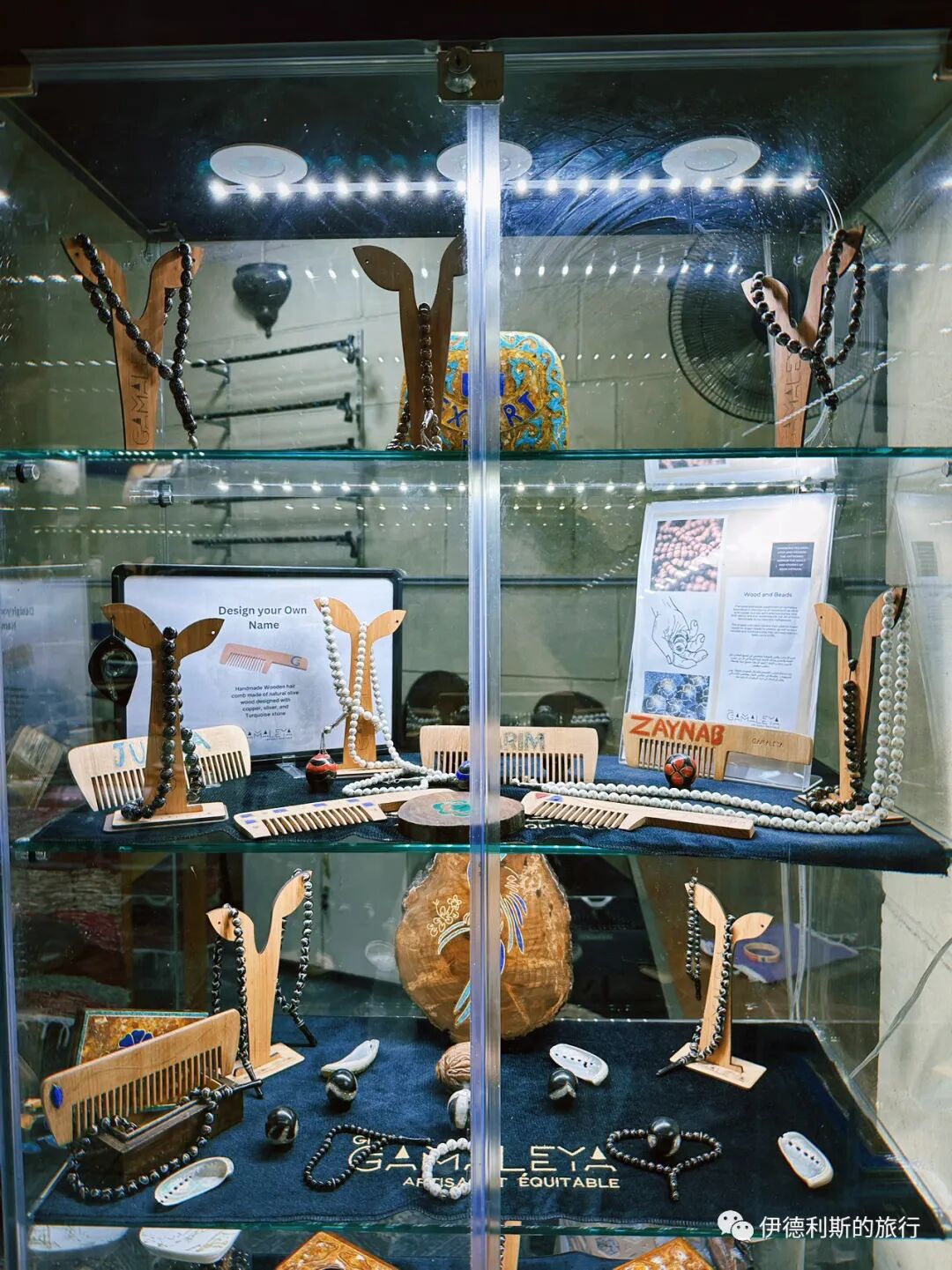
The first floor of the hotel is a cultural workshop where master craftsmen in silver, copper, wood, and leather work and teach apprentices on-site. Every morning when we head out, we see a group of students learning diligently from the masters. The second floor is where breakfast is served. It is a semi-buffet style where food is made fresh every morning based on the guests' requests. The third floor and above are guest rooms. Although the accommodation conditions cannot compare to large hotels, it is undoubtedly the best choice for visiting the old city of Cairo.
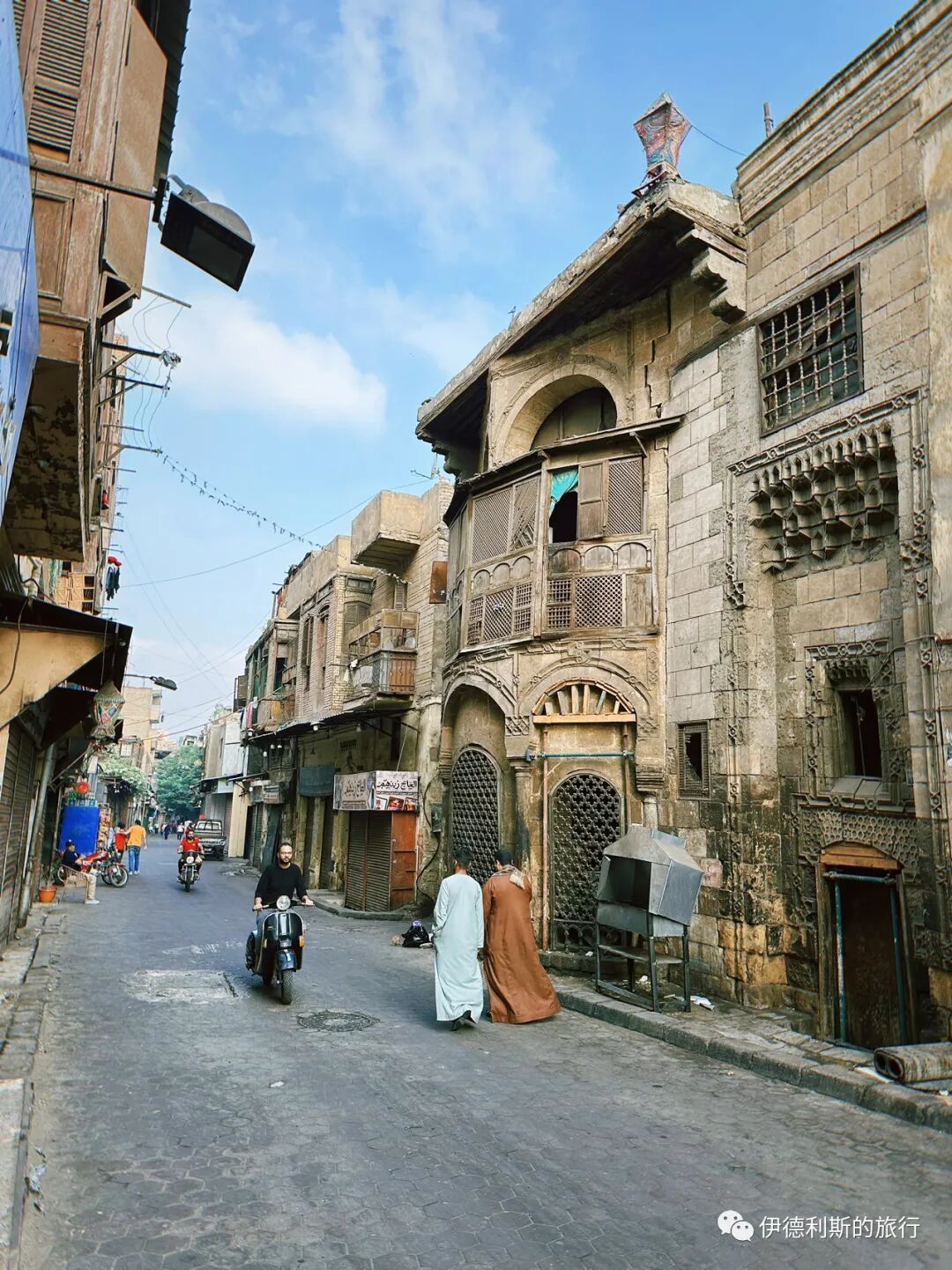
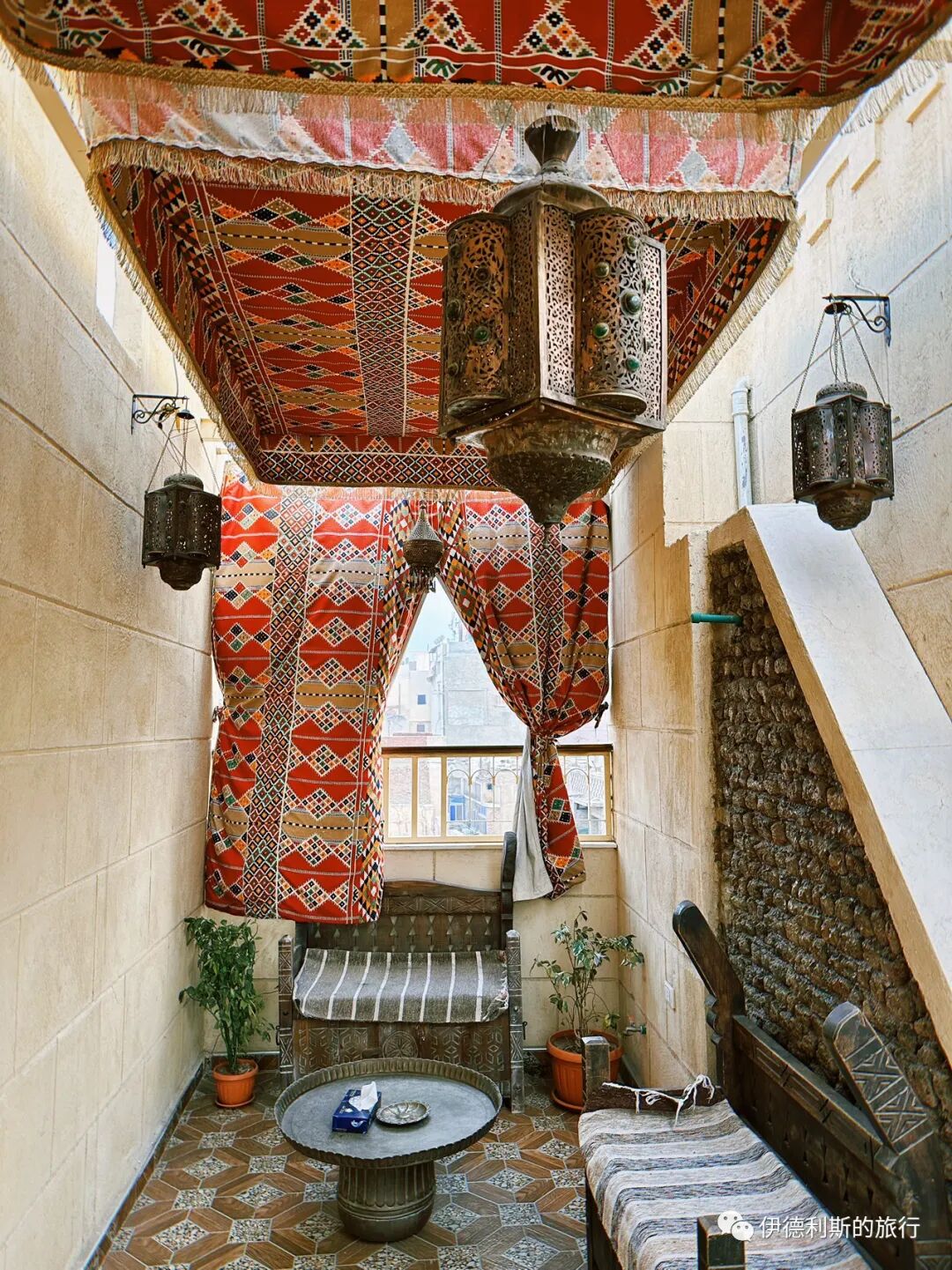
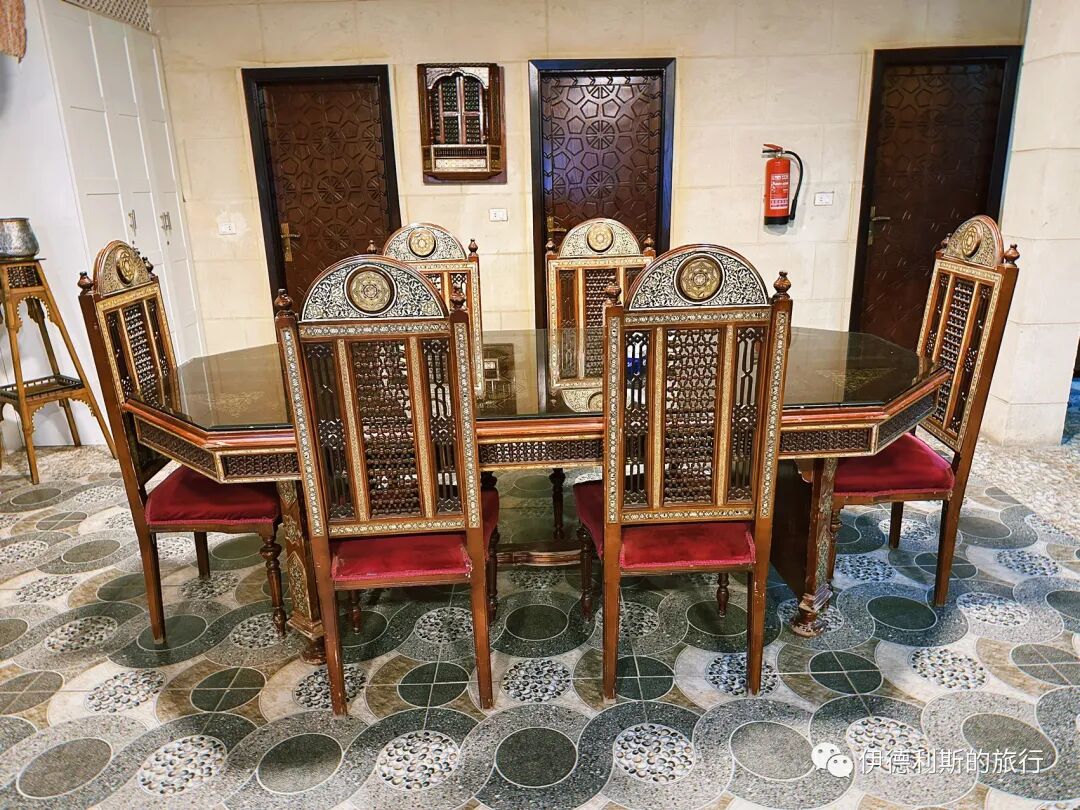
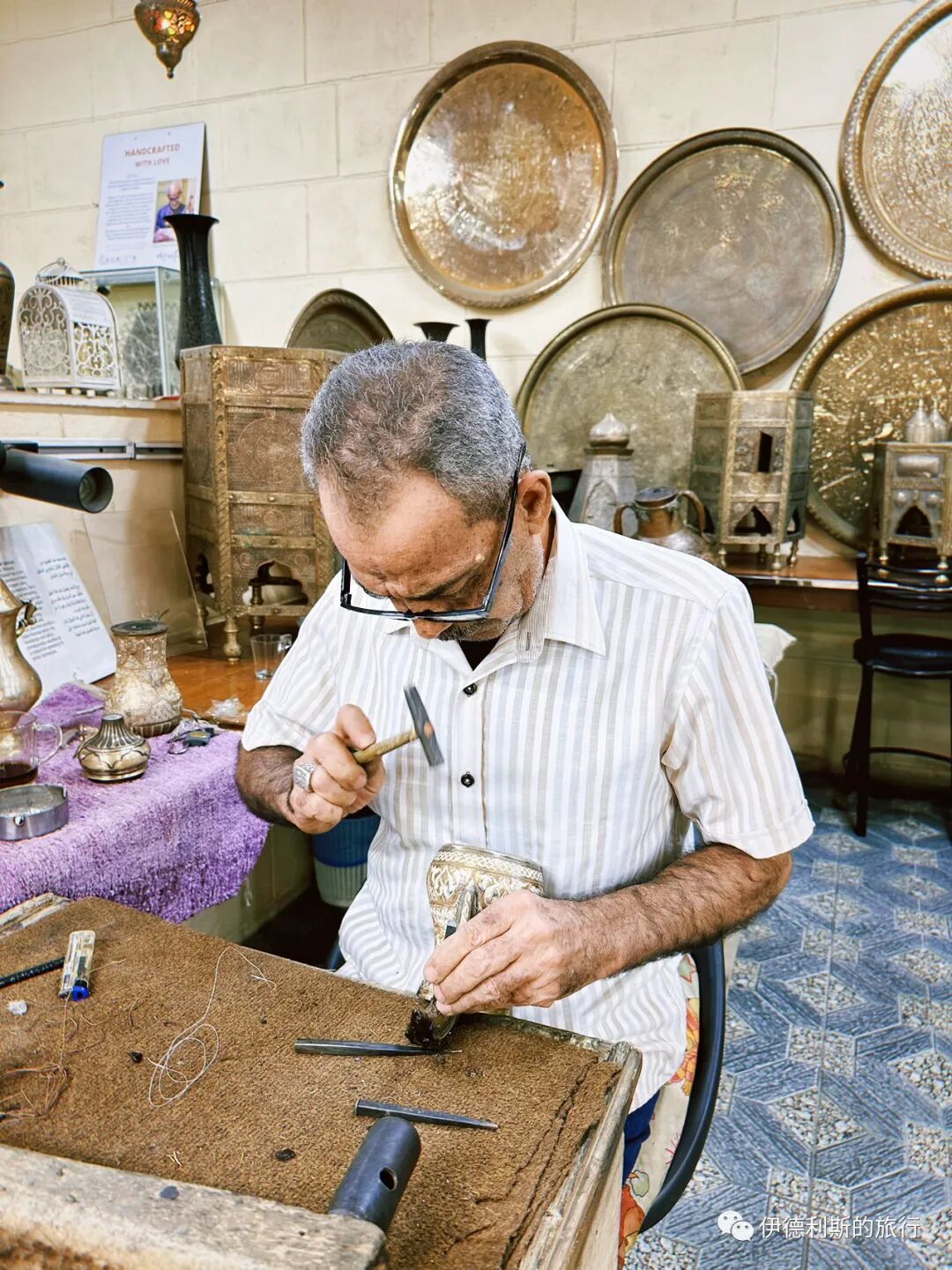
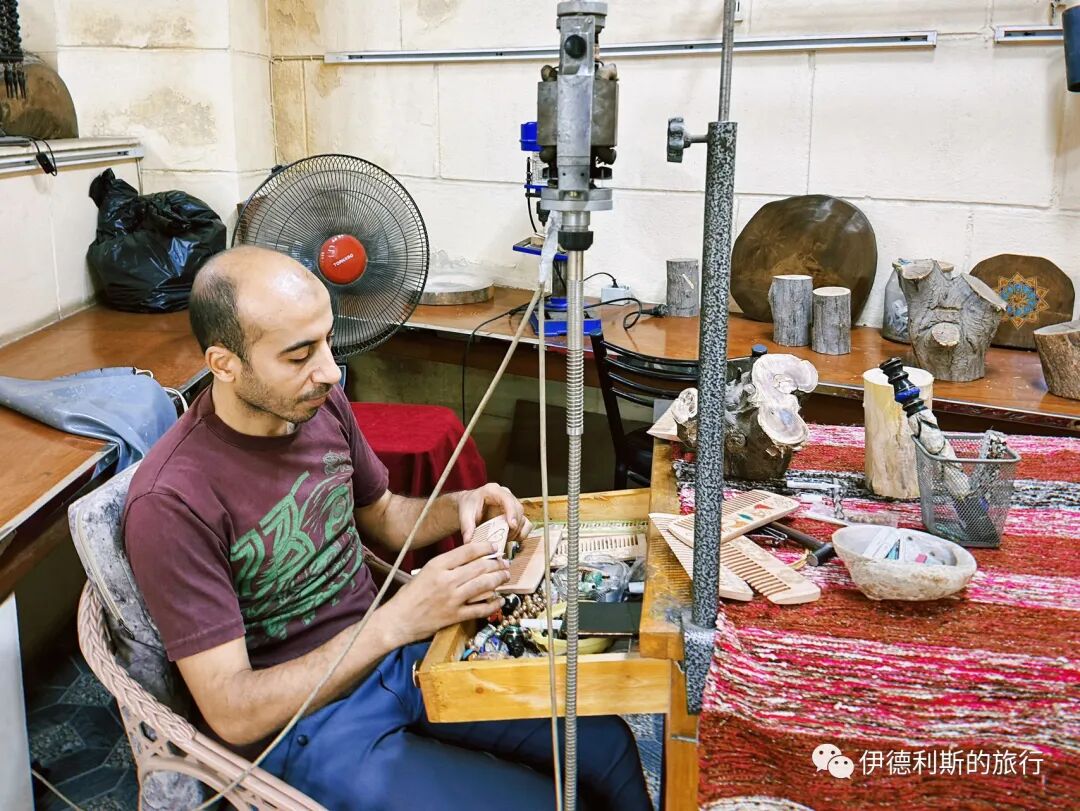
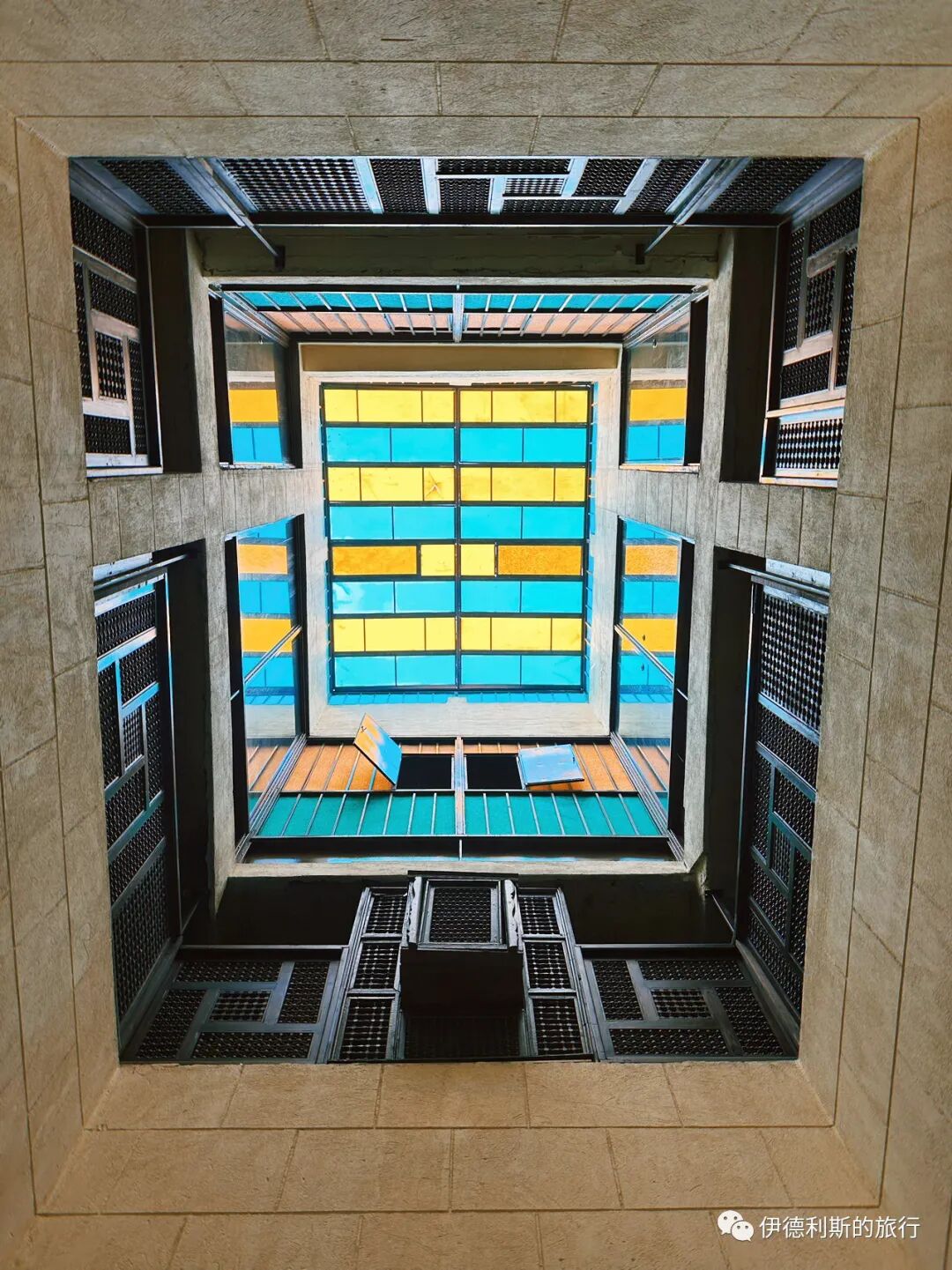
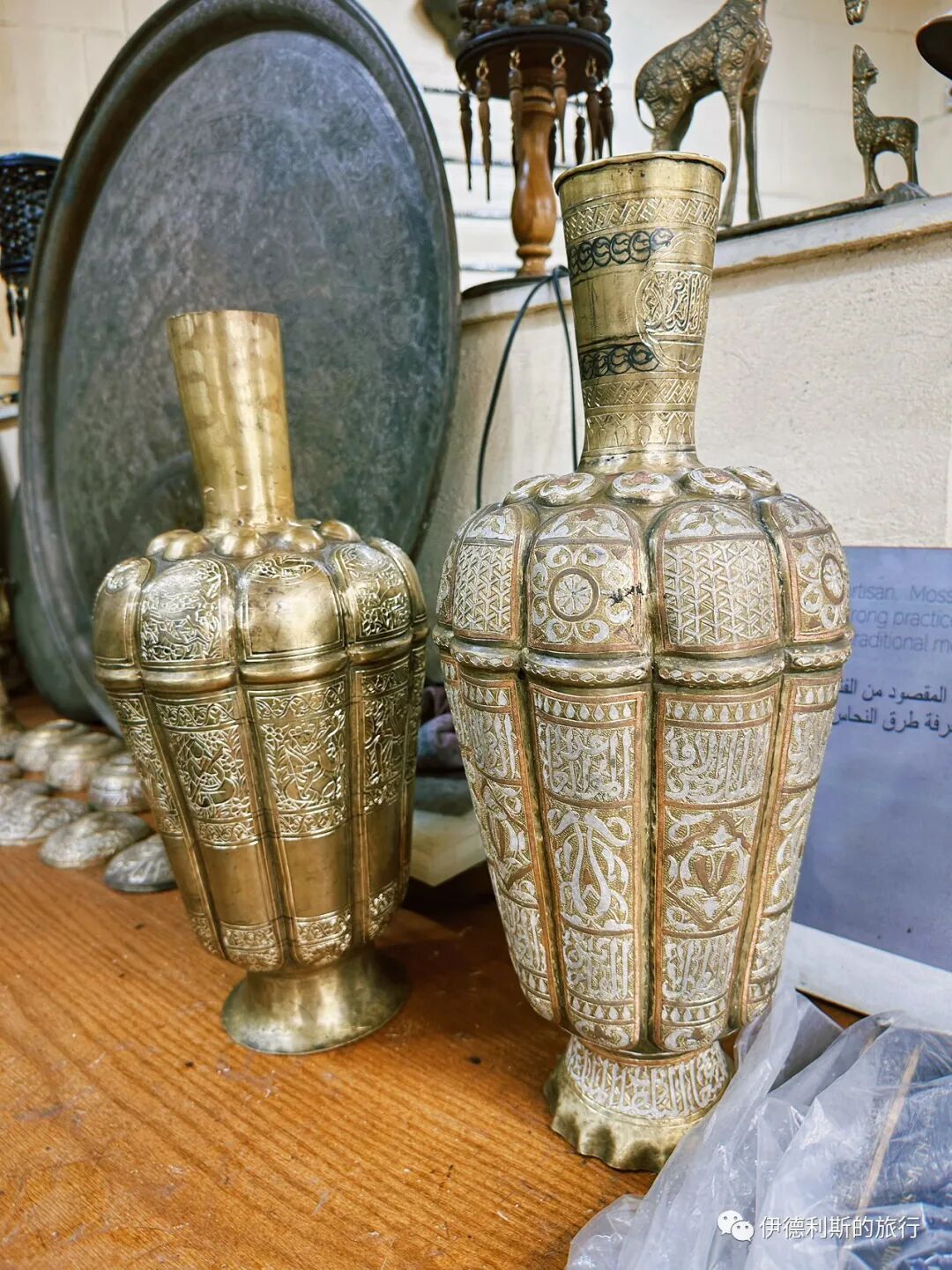
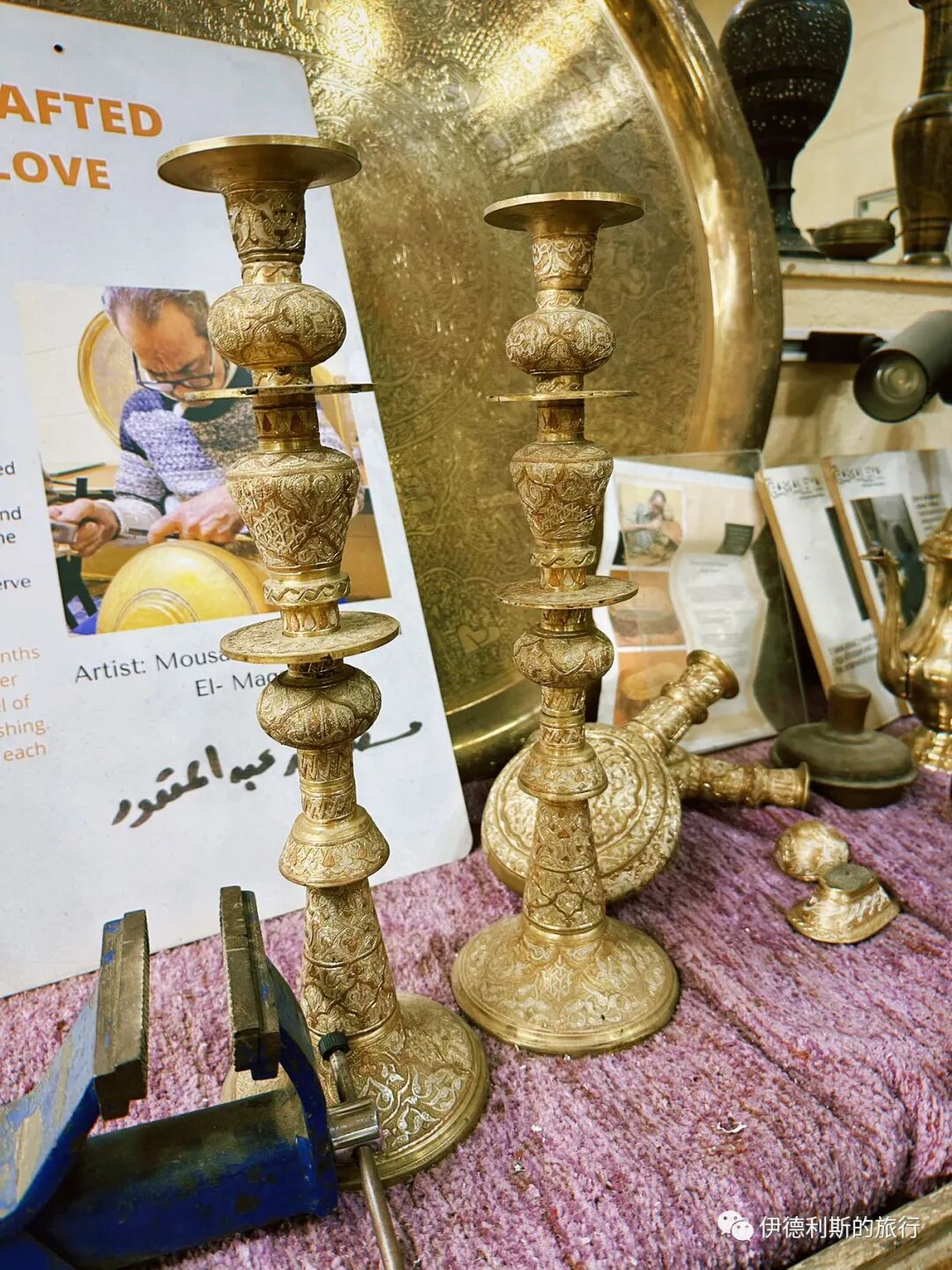
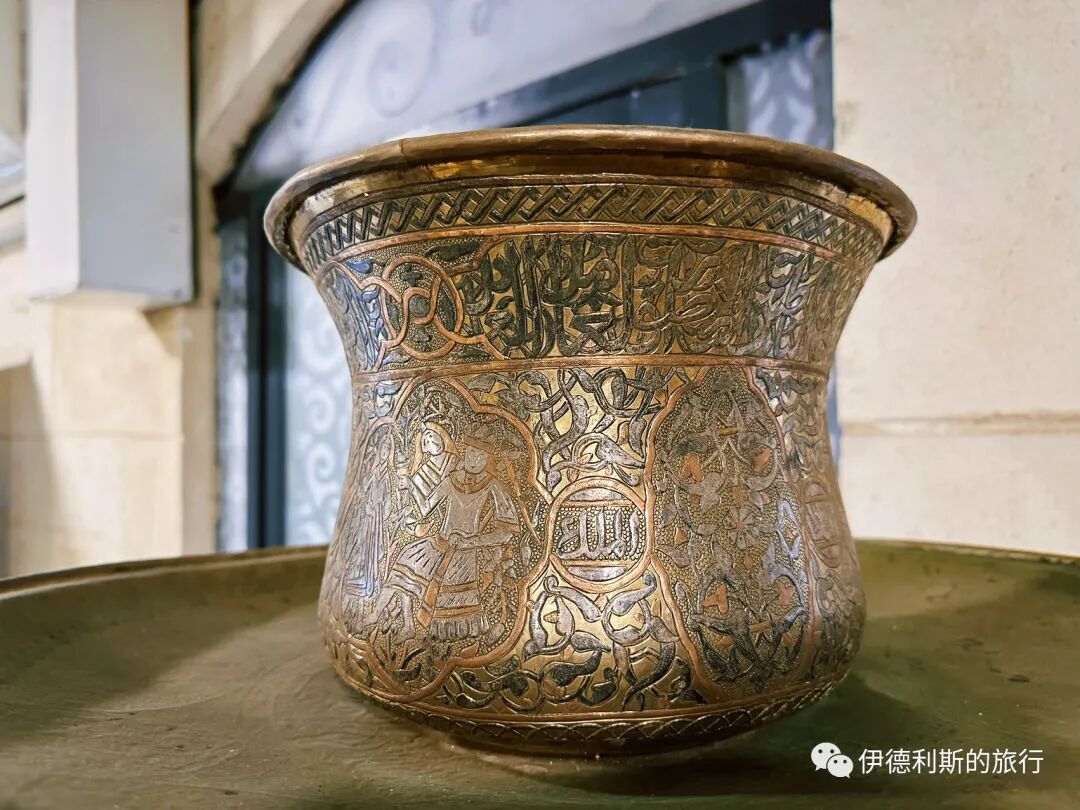
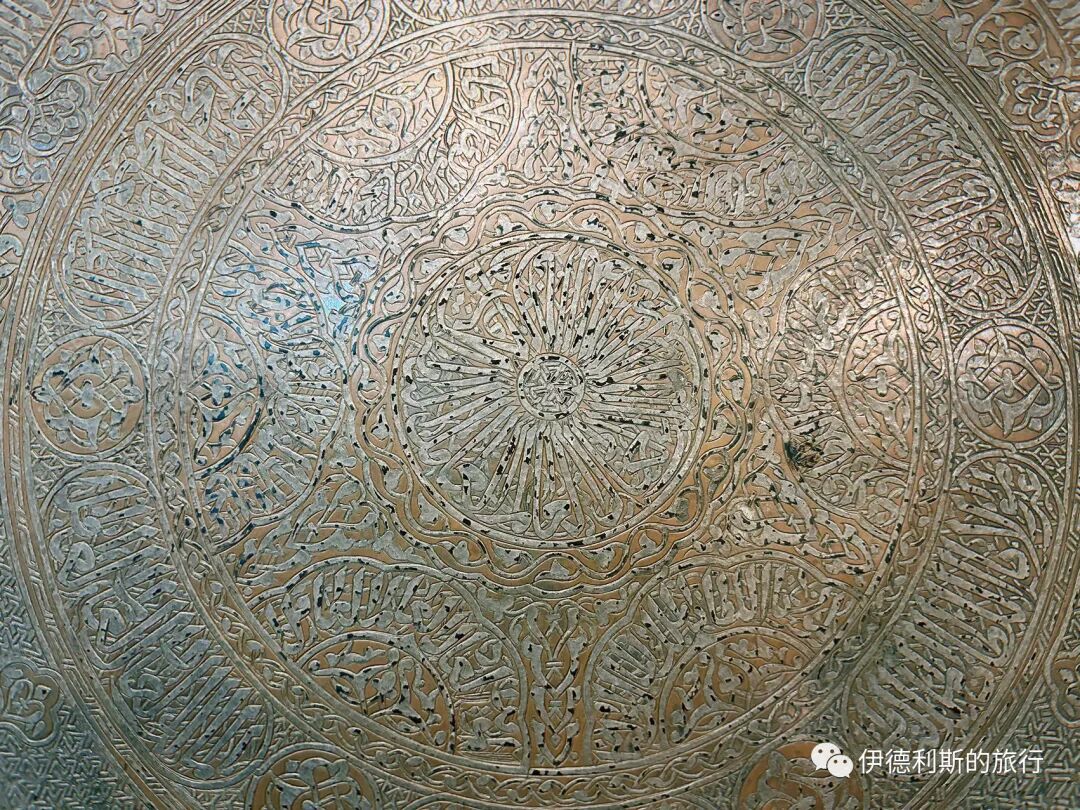
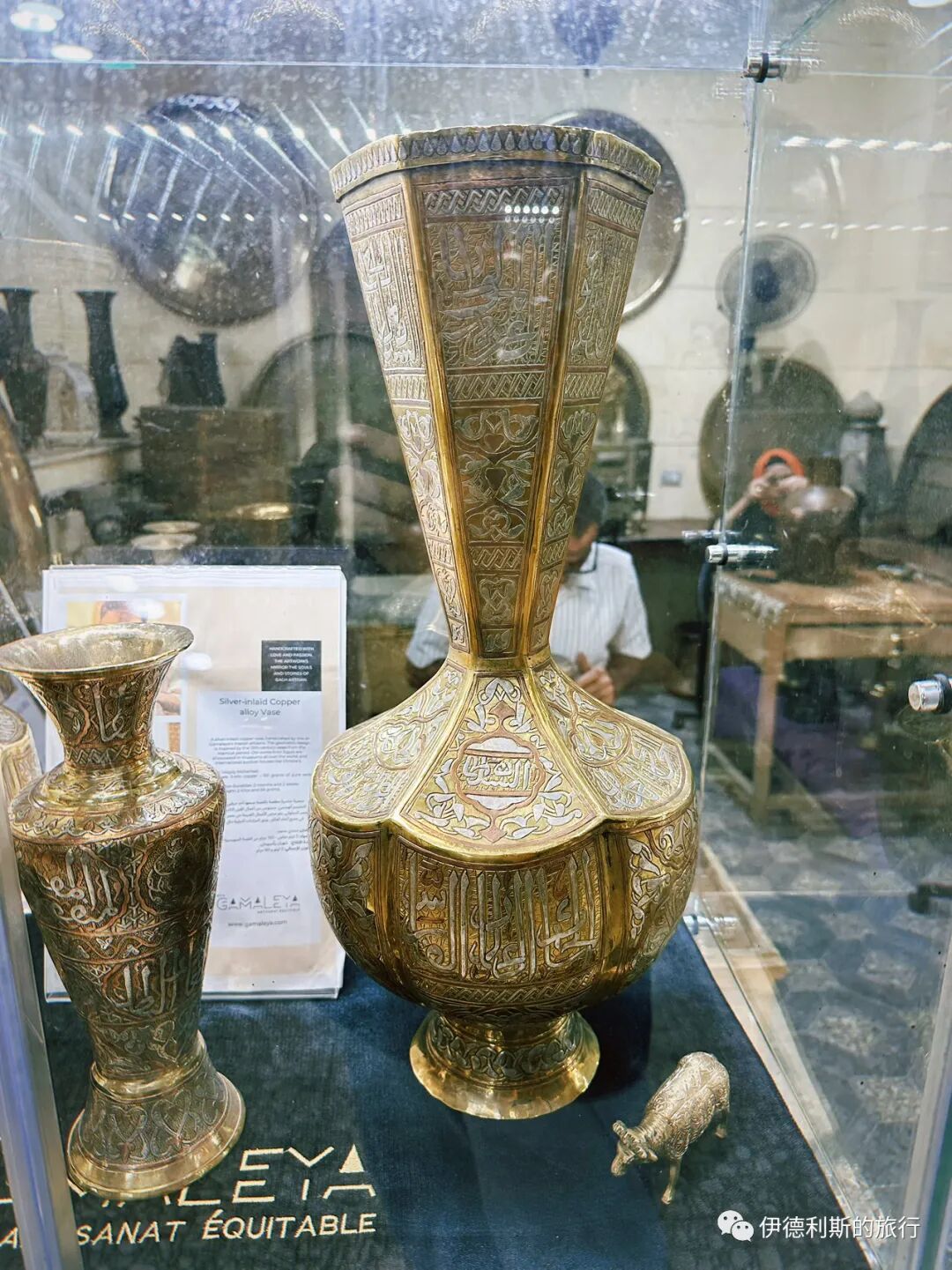
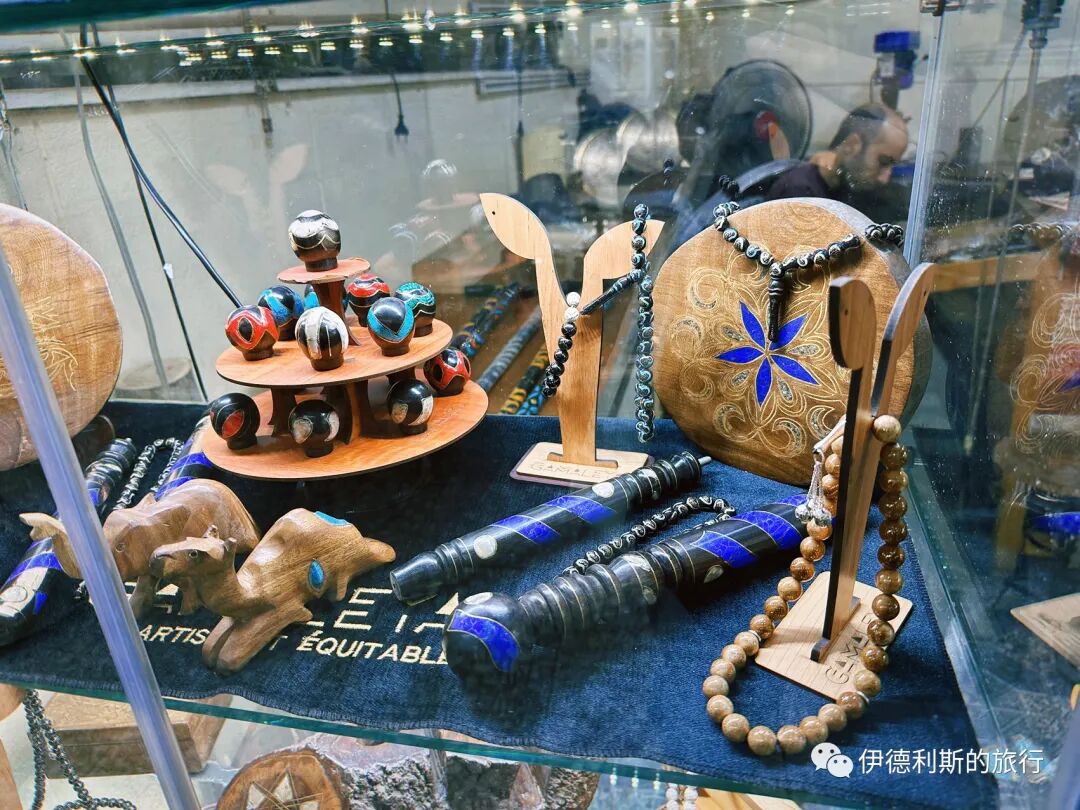
The Gamaleya Heritage Hotel features crafts made by various veteran artists, including copperware from Mousaad Mohamed Abd El-Maqsoud.
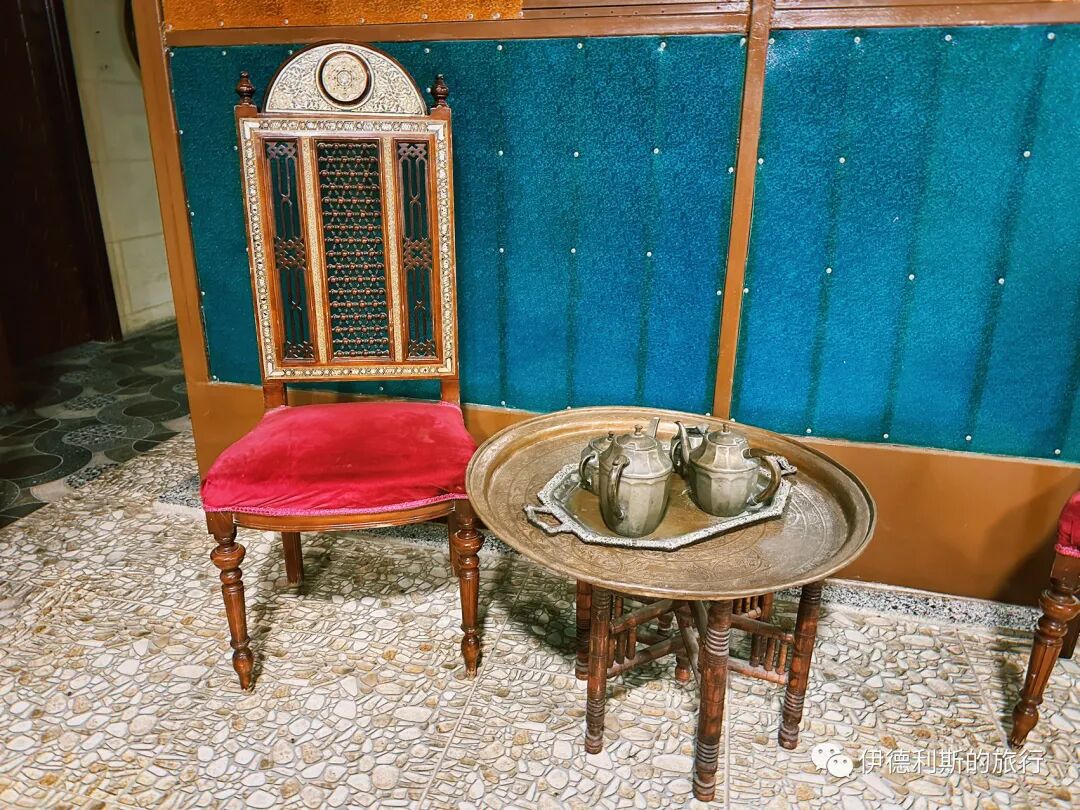
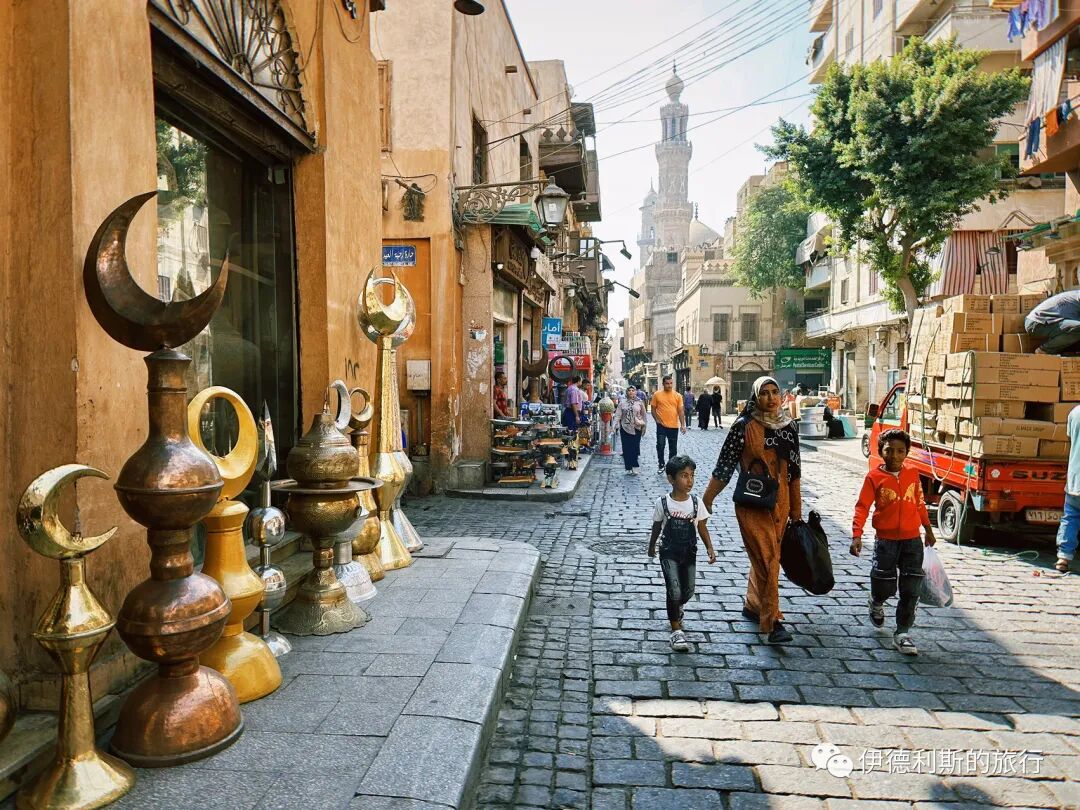
The current old city of Cairo was built in 969 by the Fatimid dynasty. It later went through the Ayyubid, Mamluk, Ottoman, and Muhammad Ali dynasties, leaving behind hundreds of historical buildings over the past thousand years.
As dawn breaks, the entire old city gradually wakes up to the sound of the adhan. Then, roosters crow and dogs bark, people get up for namaz, and breakfast shops set up their tables and chairs to open. This is how a day in the old city of Cairo begins.
After the morning prayer (fajr), people rest for a while. Most mosques and ticketed attractions in the old city open after nine o'clock. The old city is very quiet at this time, making it perfect for wandering through empty streets and feeling a thousand years of history.
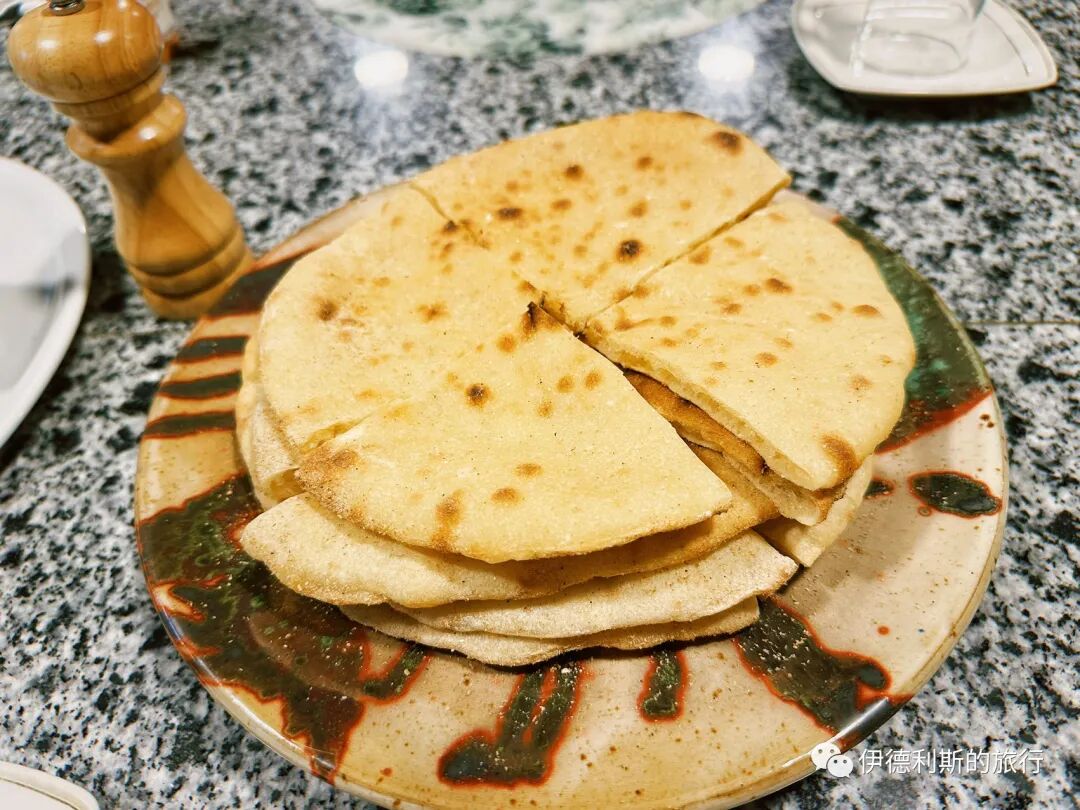
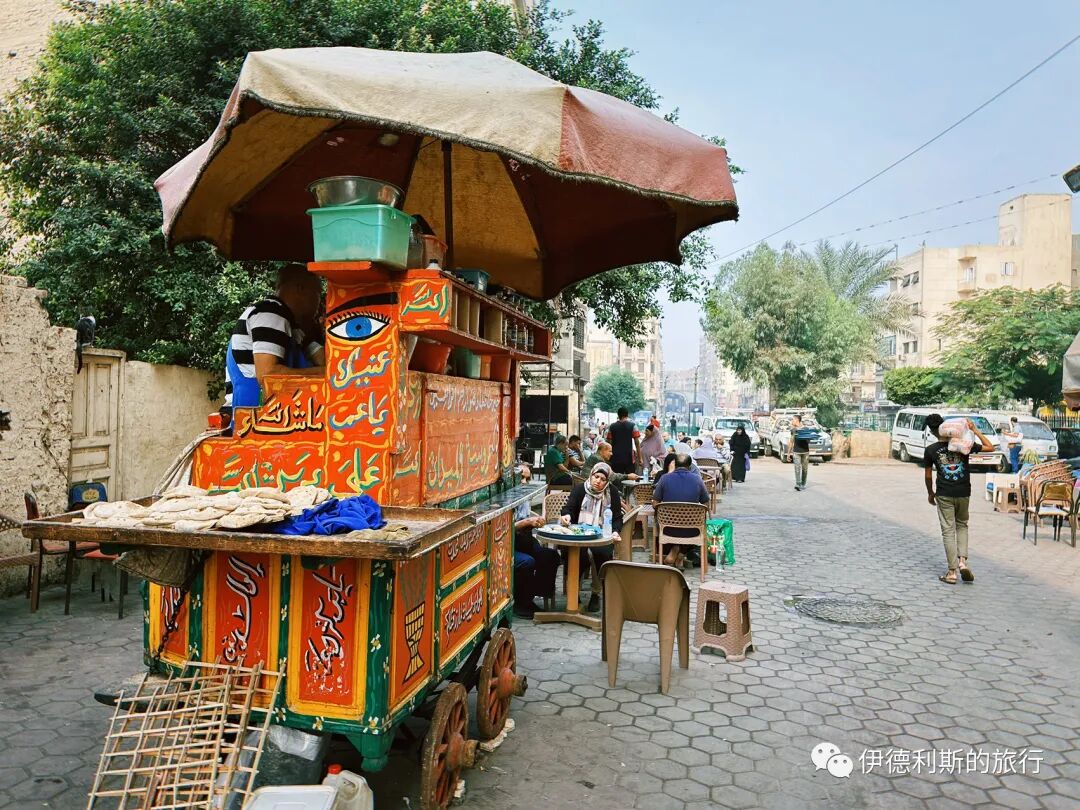
Since we kept eating breakfast at the hotel, we missed the chance to try the local breakfast in the old city of Cairo. The most classic combination is various appetizer dips (Muqabilat) served with flatbread (Eish Baladi). After breakfast, some breakfast shops turn into tea and coffee houses where people chat and let time slowly drift by.
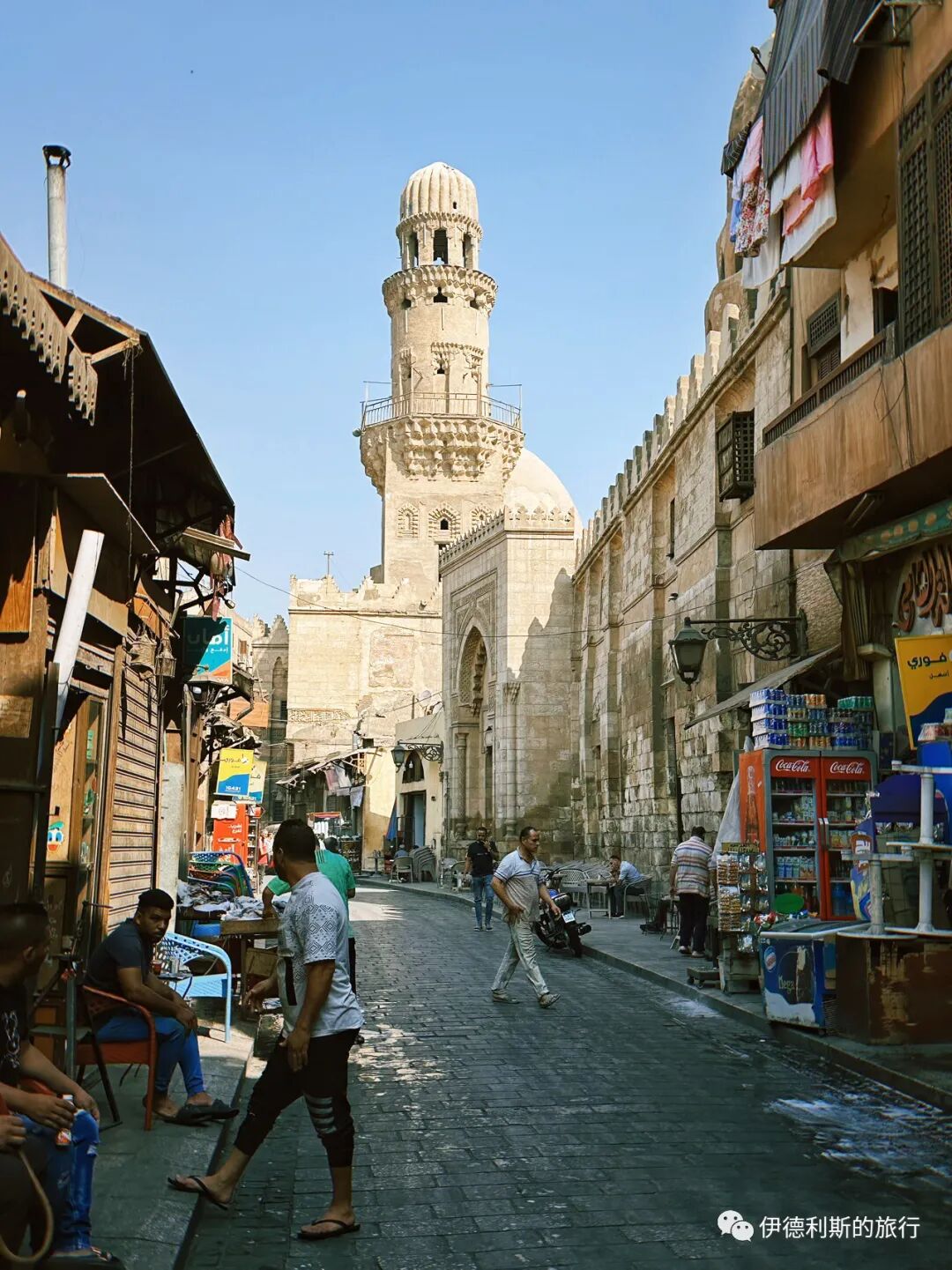
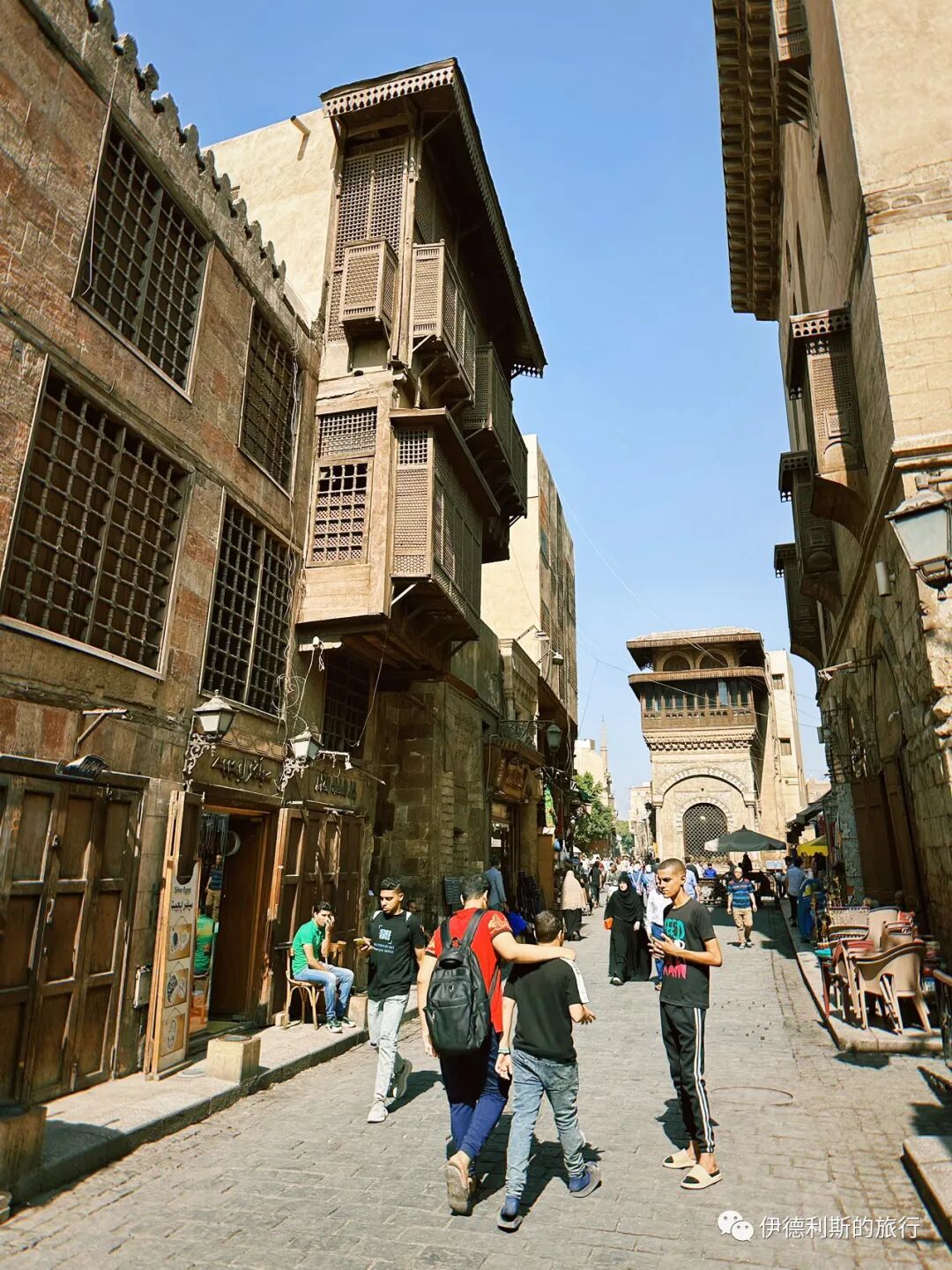
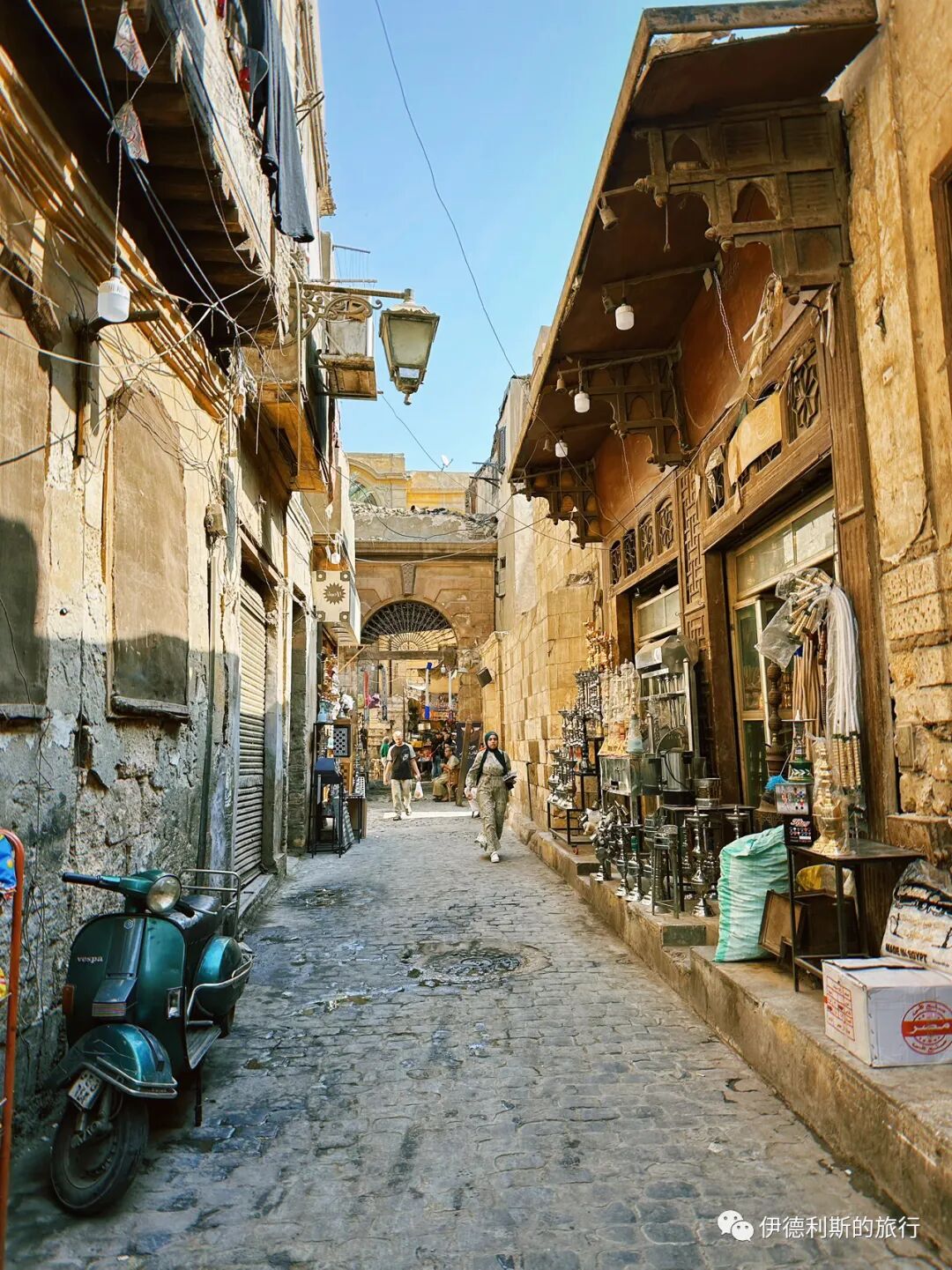
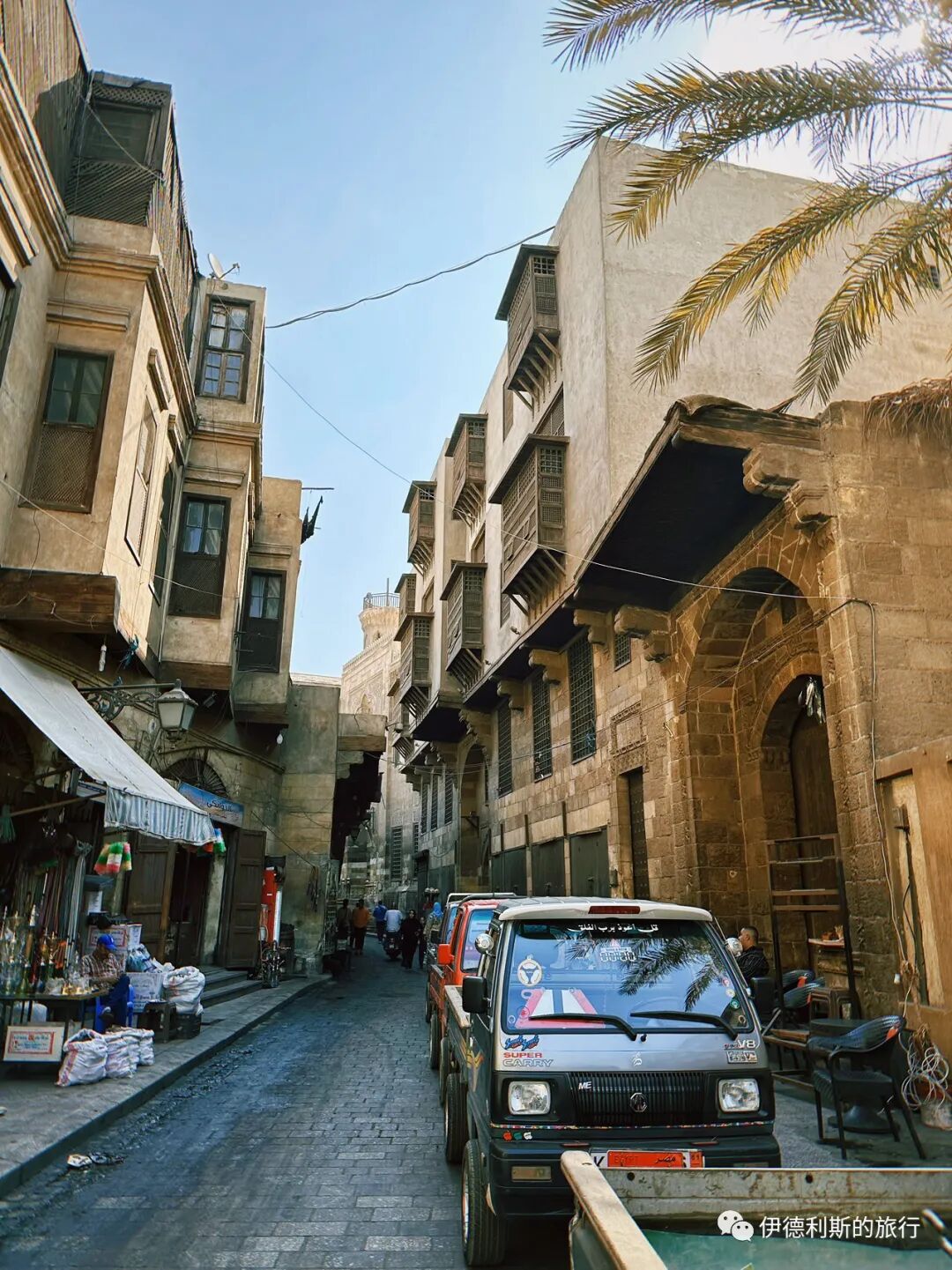
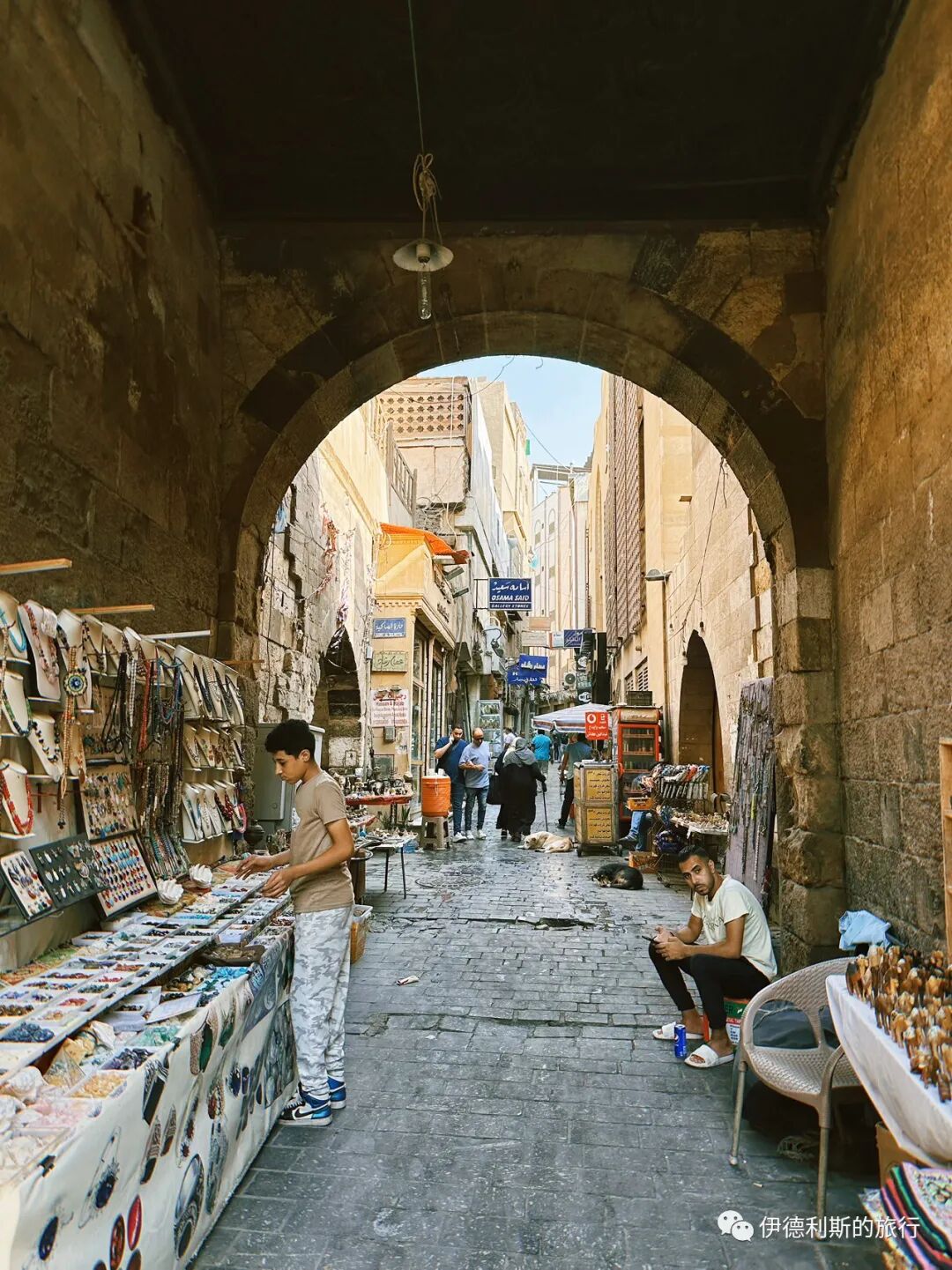
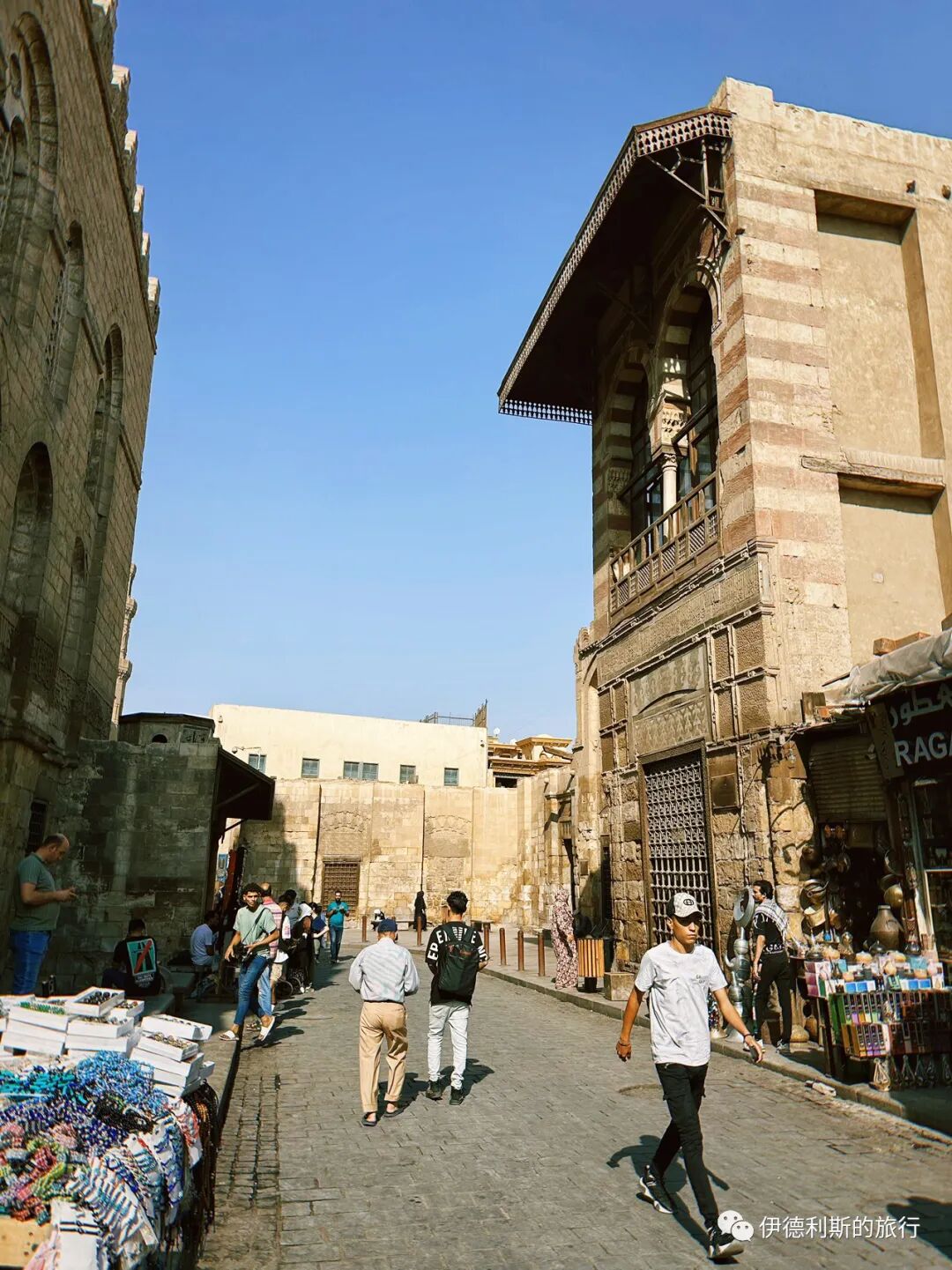
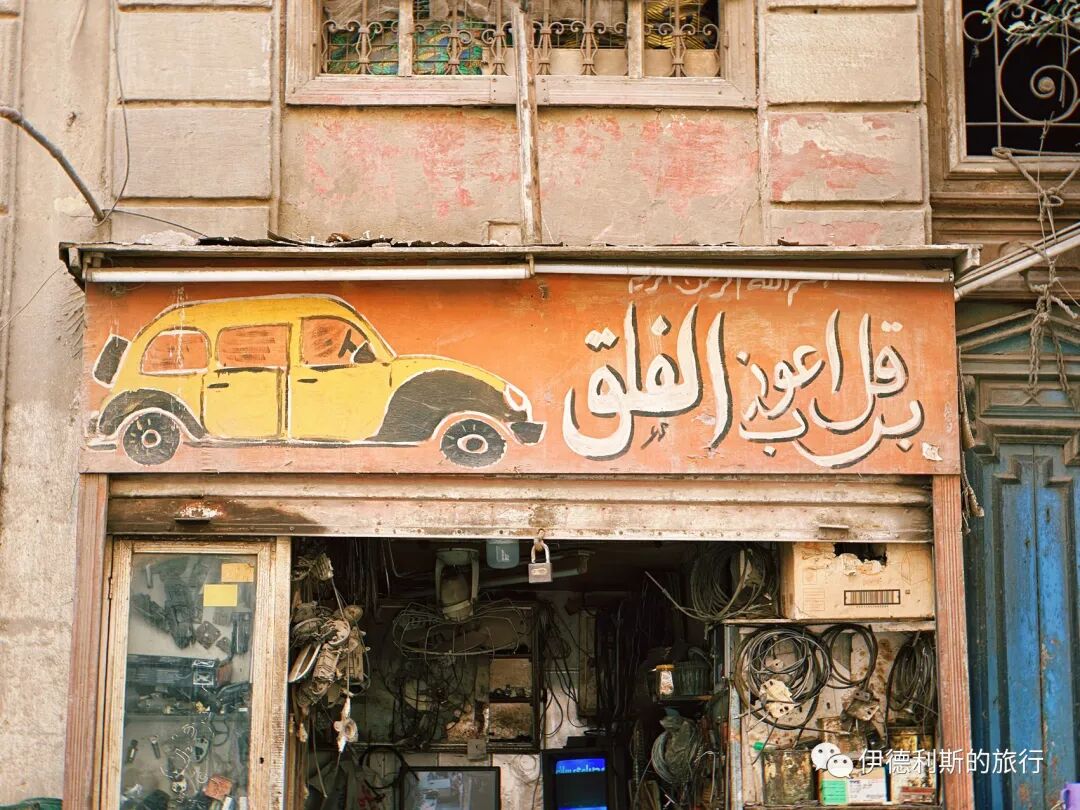
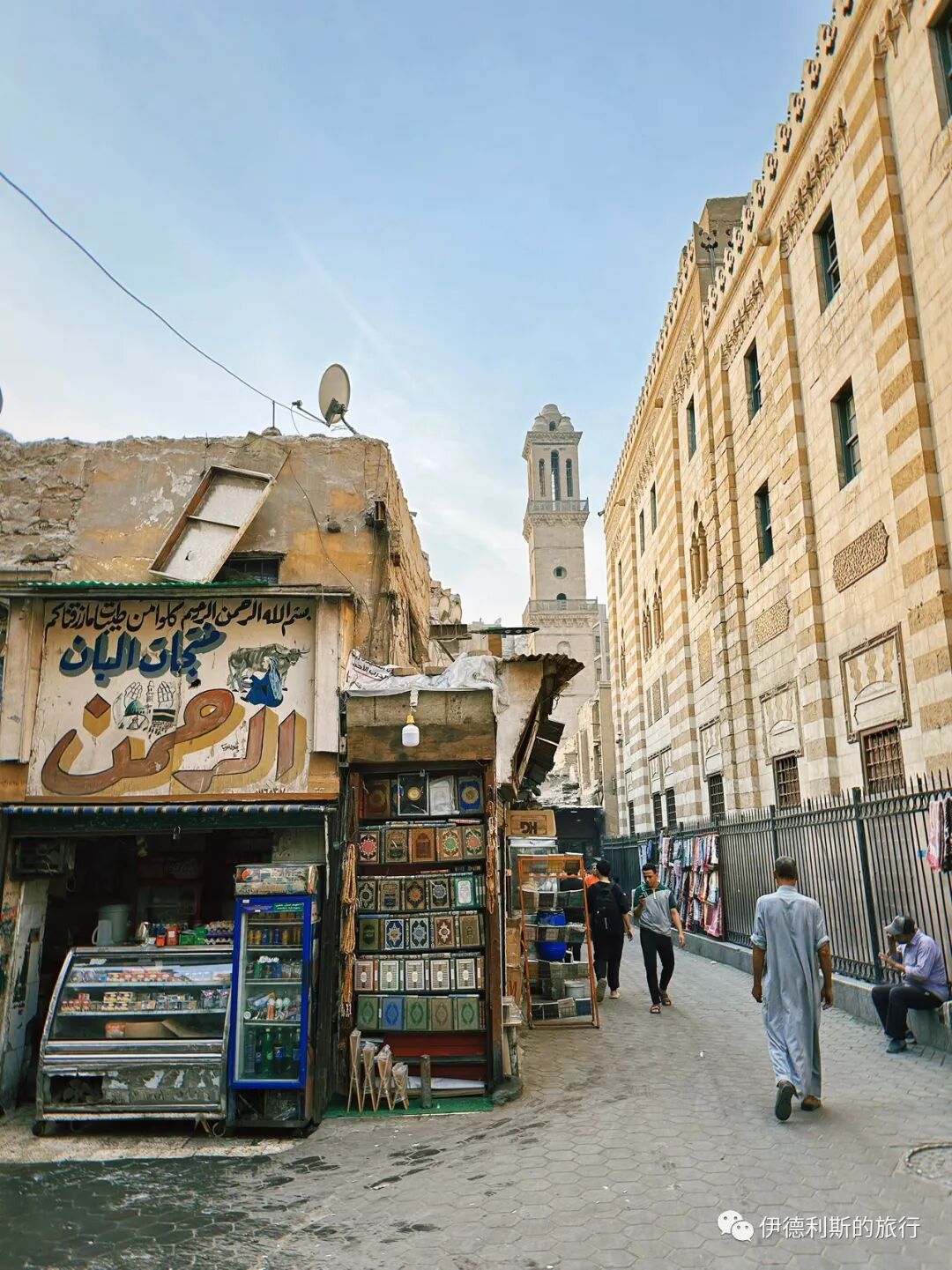
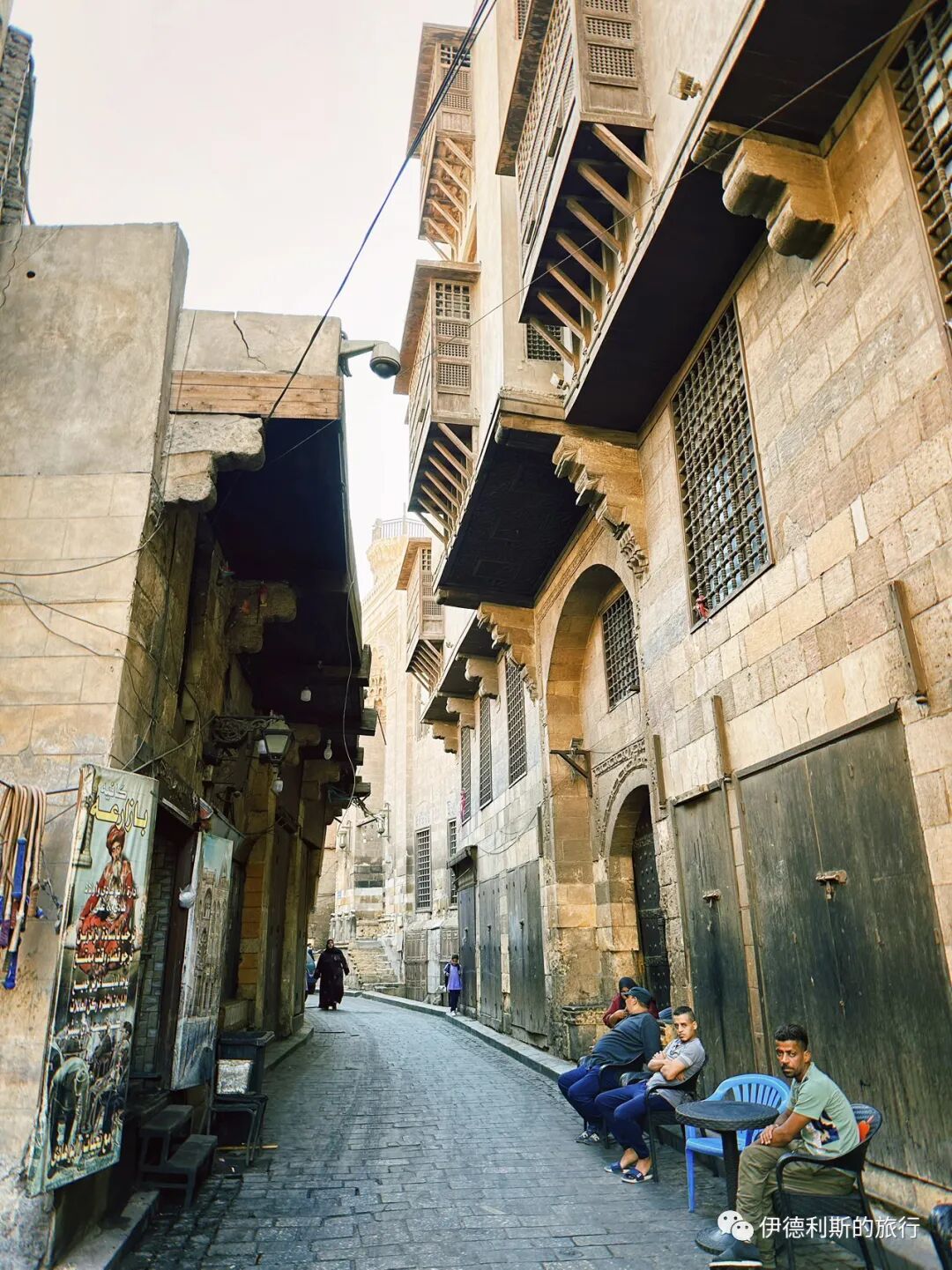
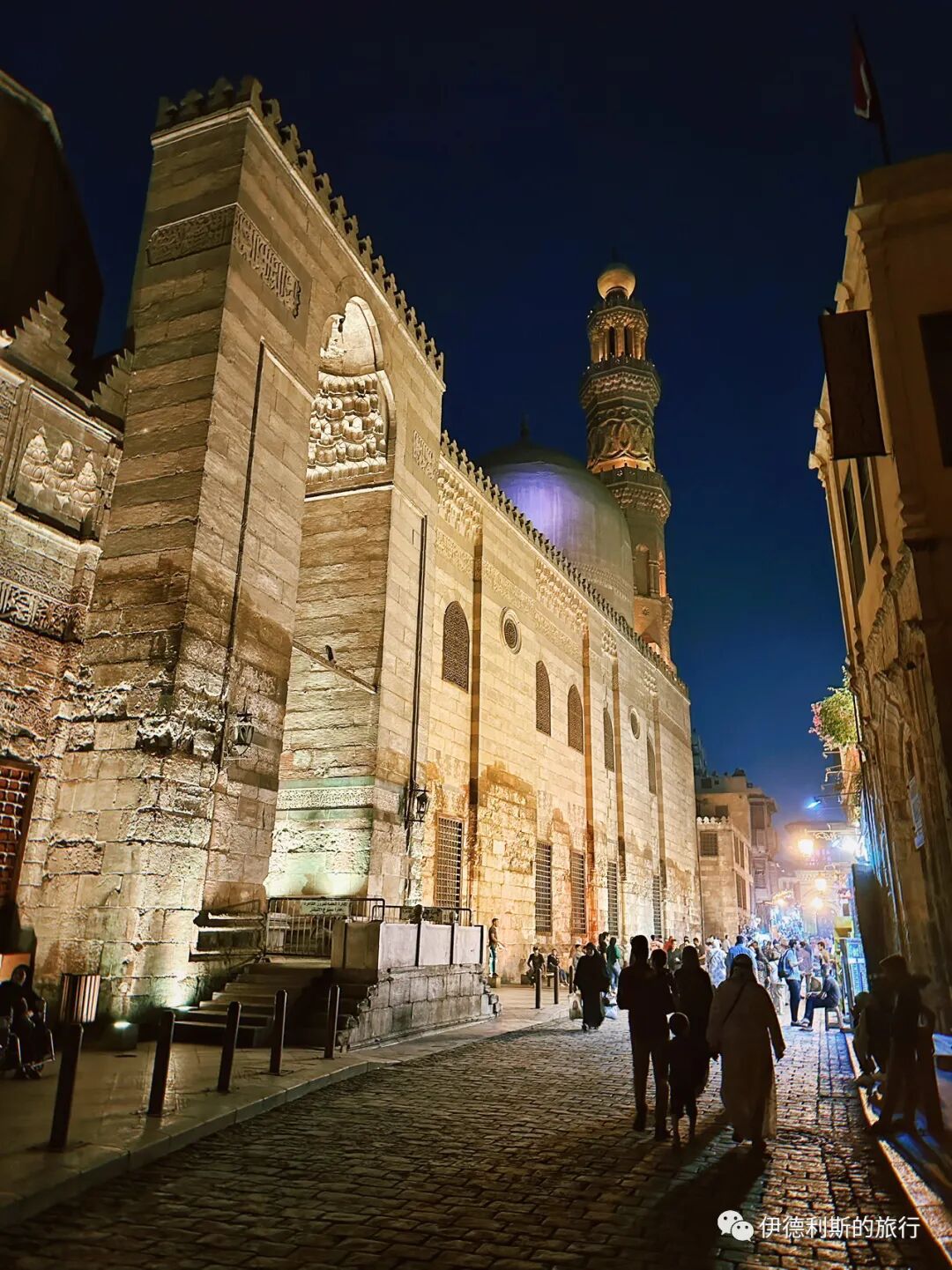
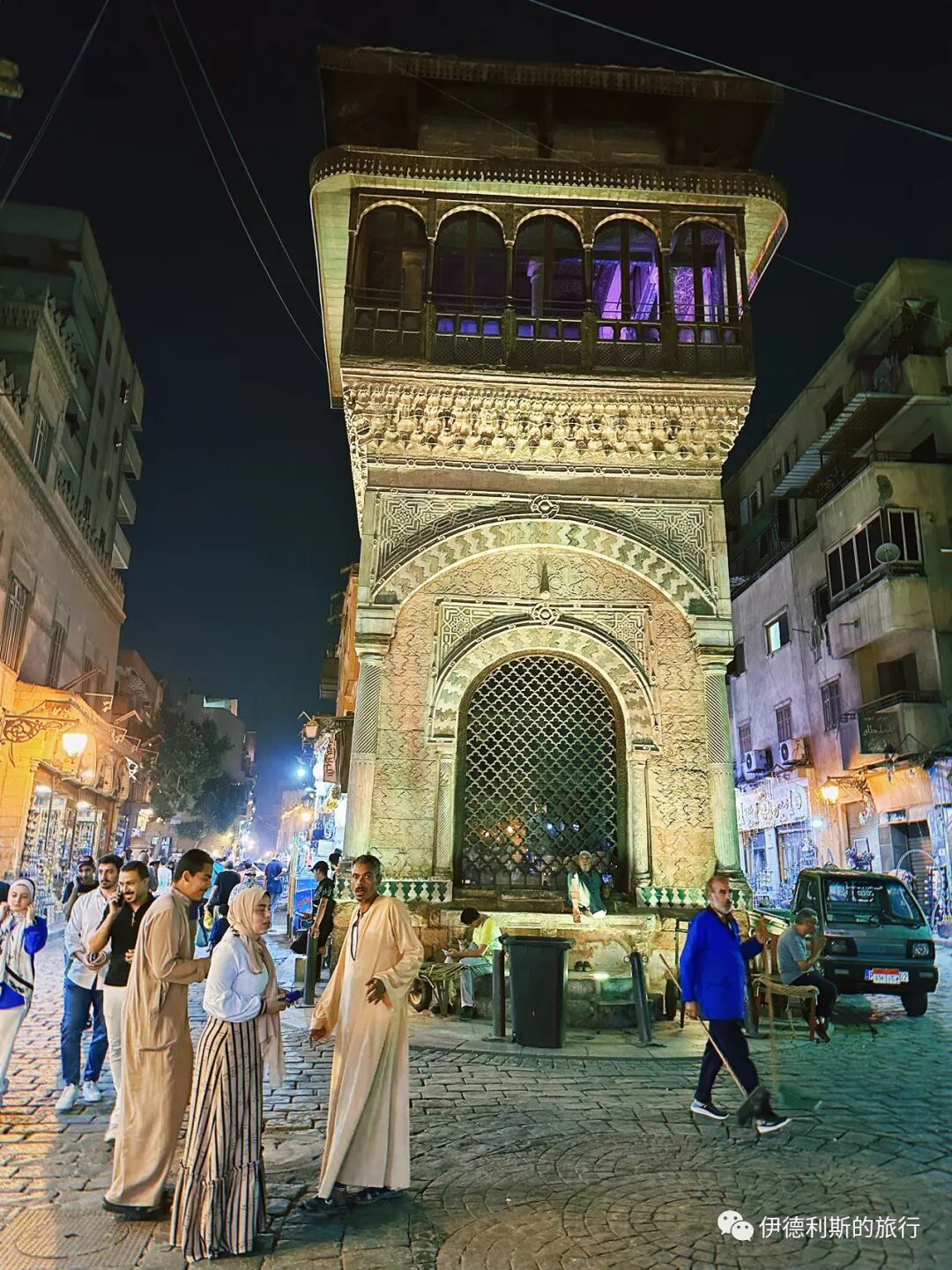
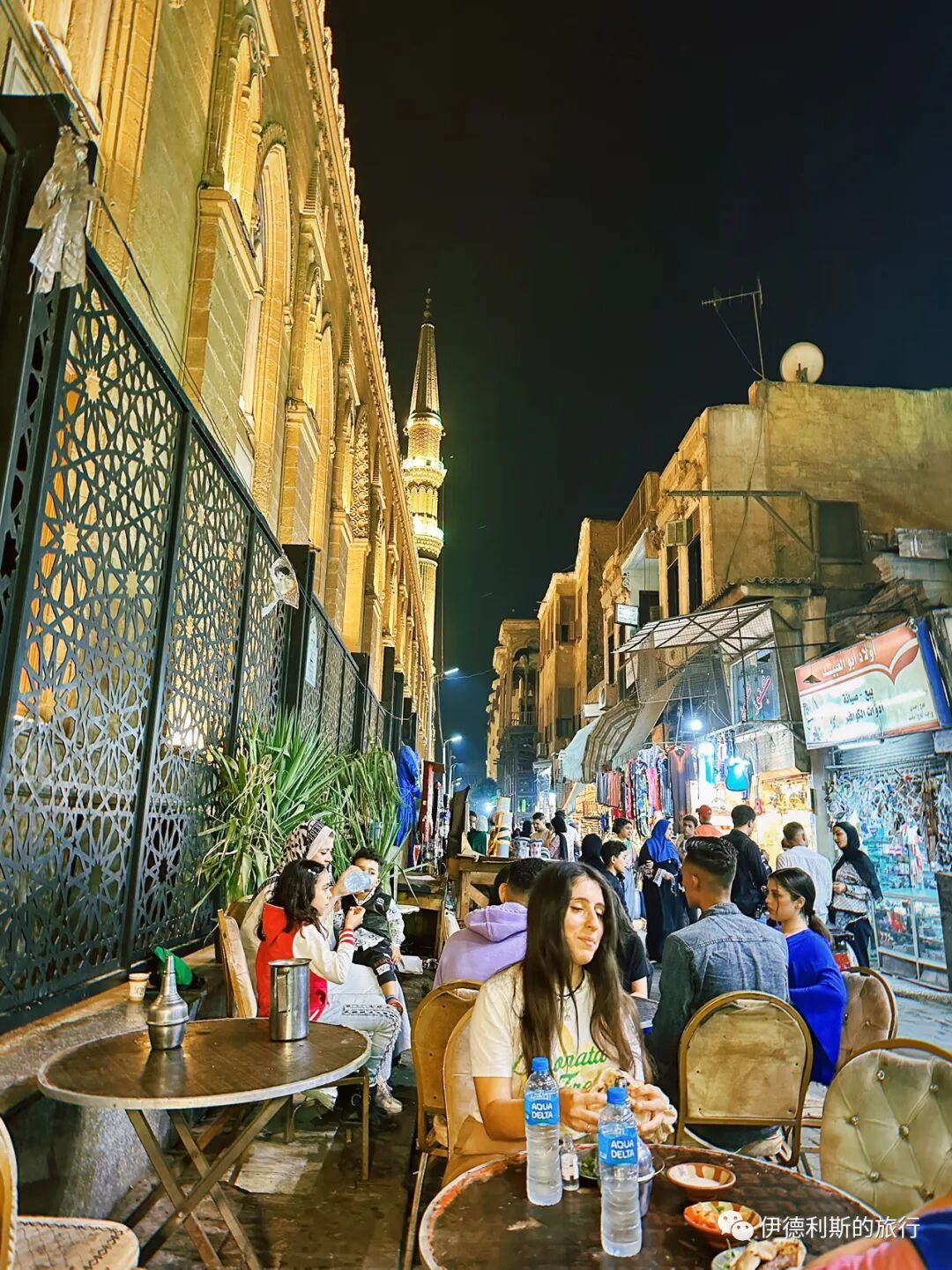
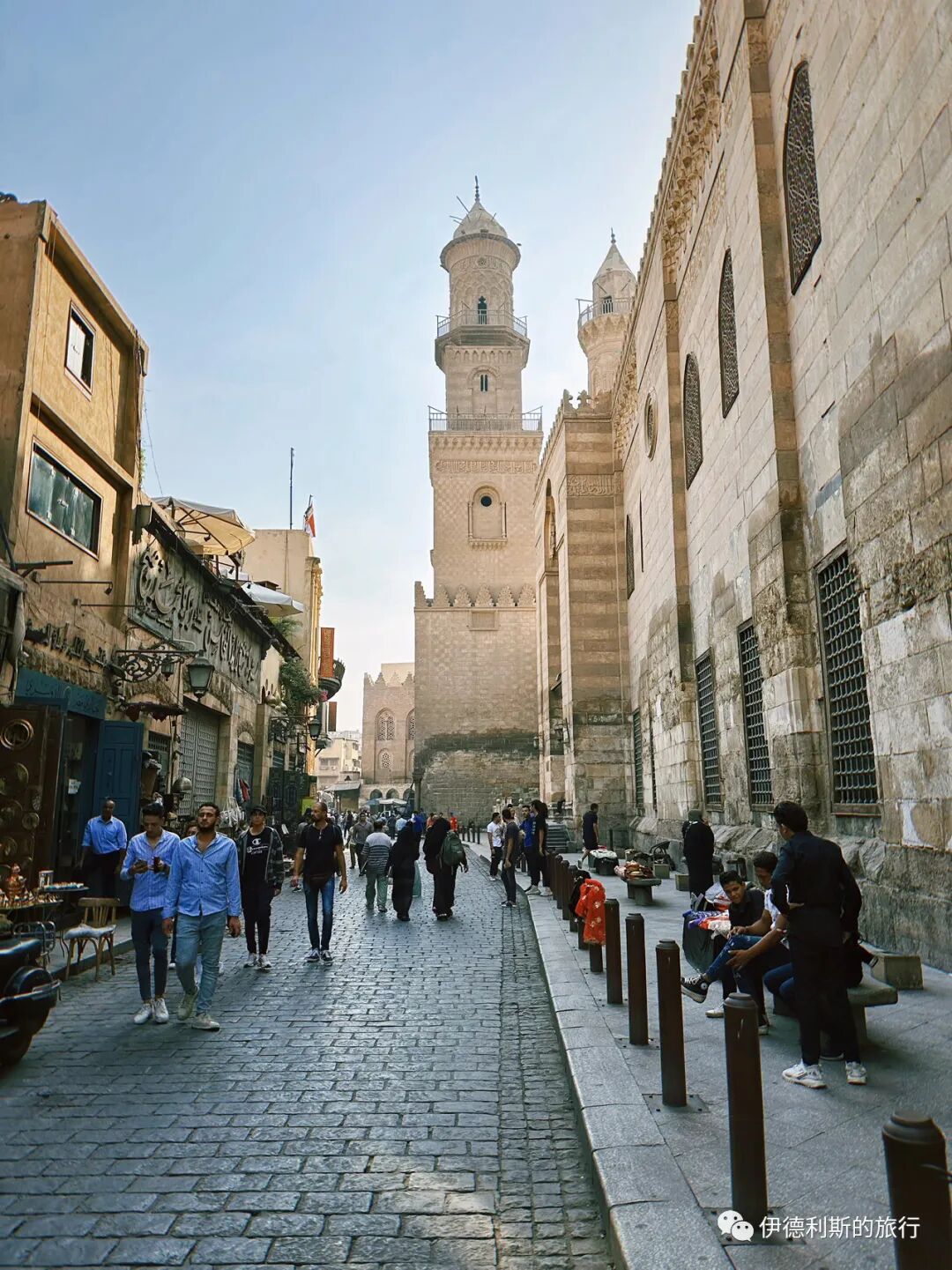
The main street of Cairo's old city, Al-Mu'izz Street (Al-Mu'izz), at night. Al-Mu'izz Street is named after the fourth Fatimid Caliph, al-Mu'izz li-Din Allah (reigned 953-975), who moved the center of the Fatimid dynasty from Tunisia to Egypt and officially built the current old city of Cairo in 969. For a thousand years, Al-Mu'izz Street has been the north-south artery of the old city, commonly known as the main road (Qasaba), and is lined with markets, mosques, and madrasas.
During the Fatimid dynasty, only the Caliph's court, the army, and officials could enter Cairo, while ordinary people were not allowed inside. It was only after Saladin ended the Fatimid dynasty and established the Ayyubid dynasty in 1171 that the old city of Cairo became an economic center fully open to the public. Later, the Sunni Mamluk dynasty wanted to erase the influence of the Shia Fatimid dynasty on the old city, so they gradually demolished the Fatimid palaces in the north and turned them into markets, making Al-Mu'izz Street a busy commercial street from then on.
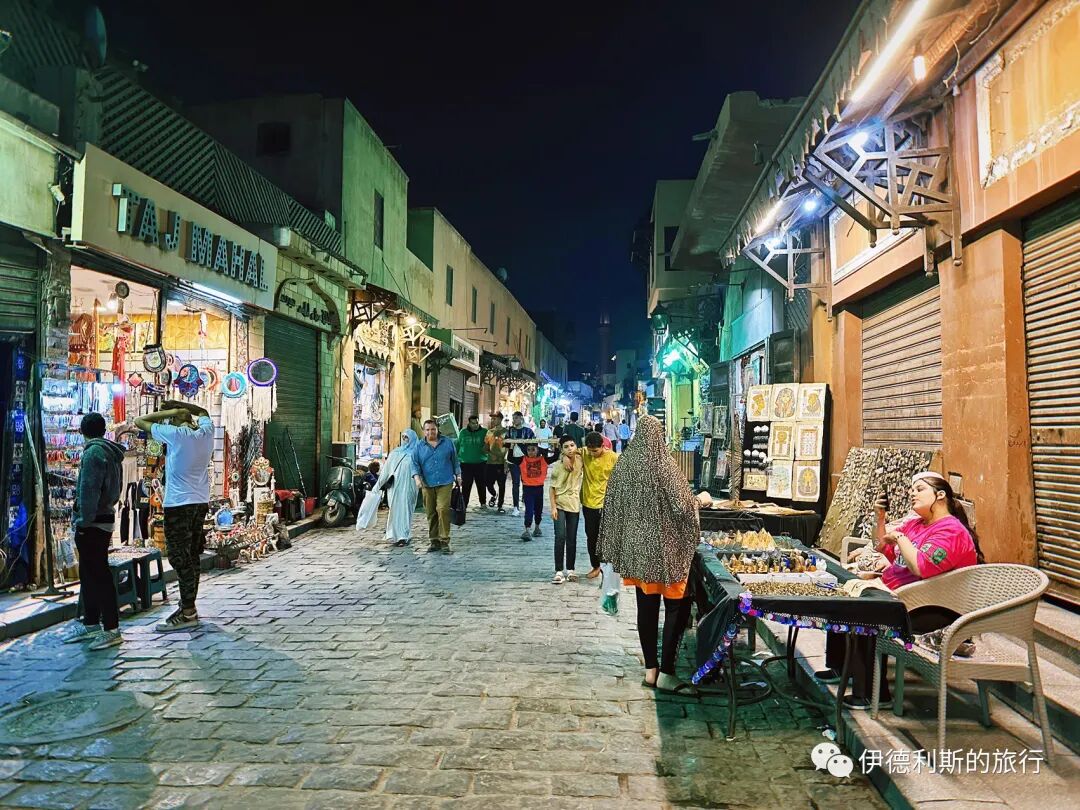
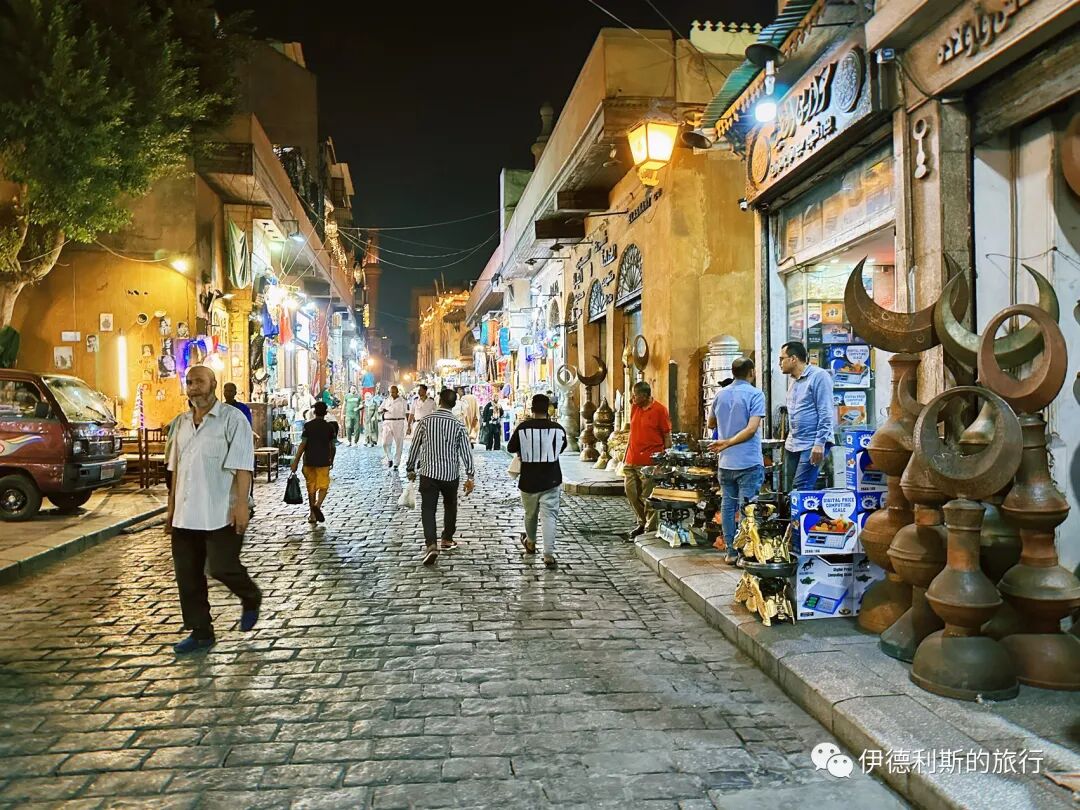
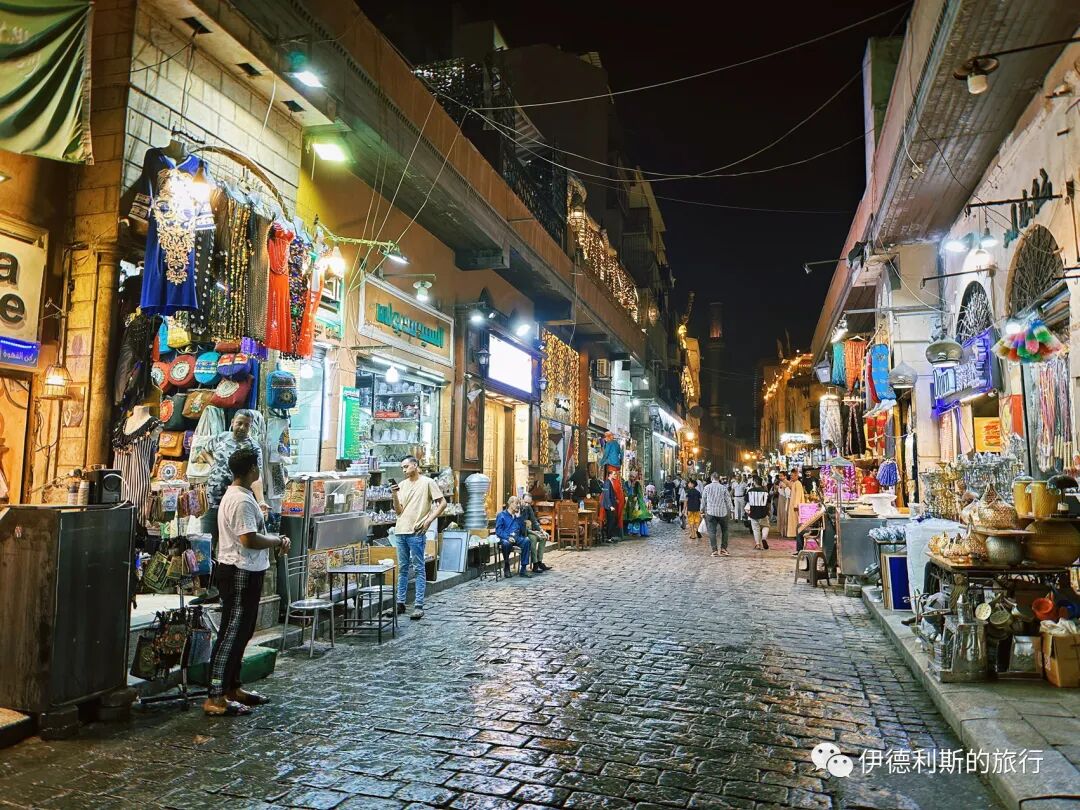
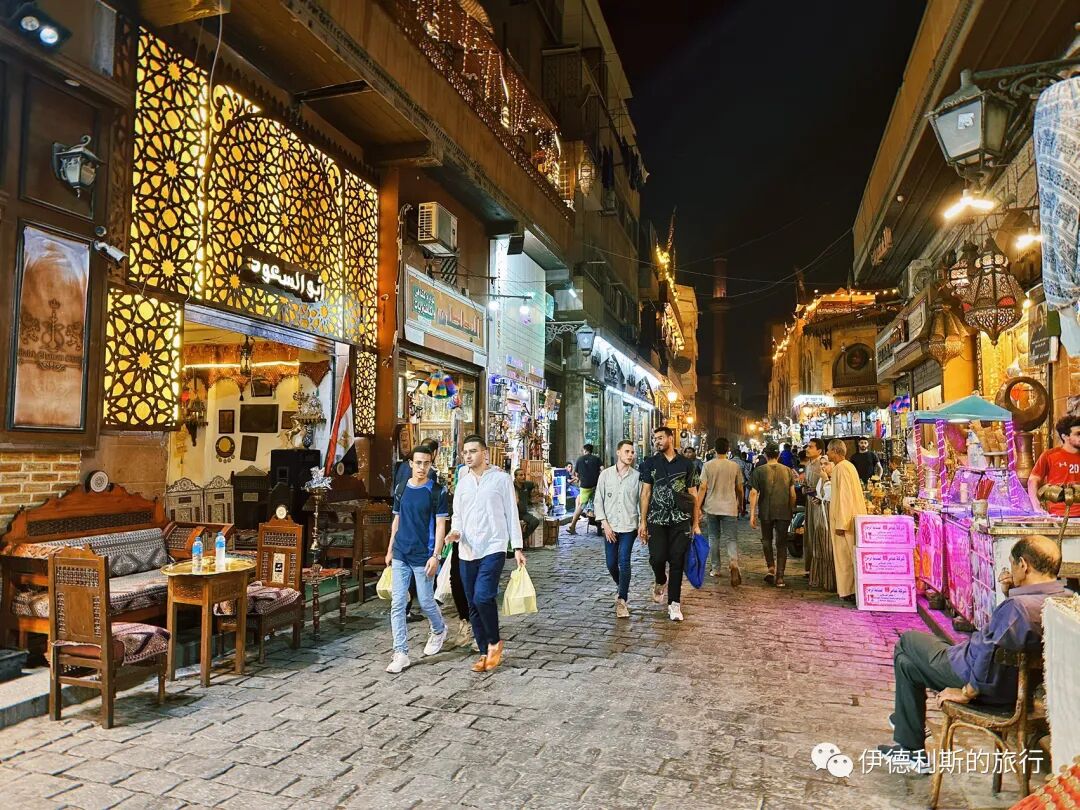
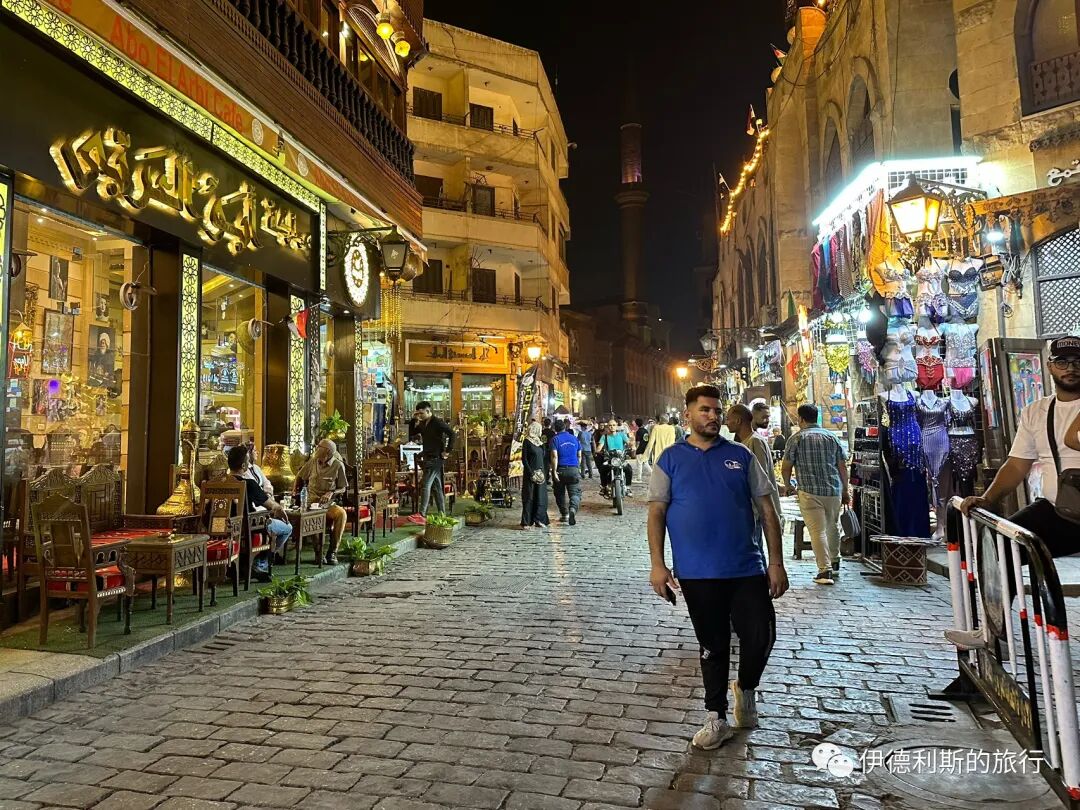
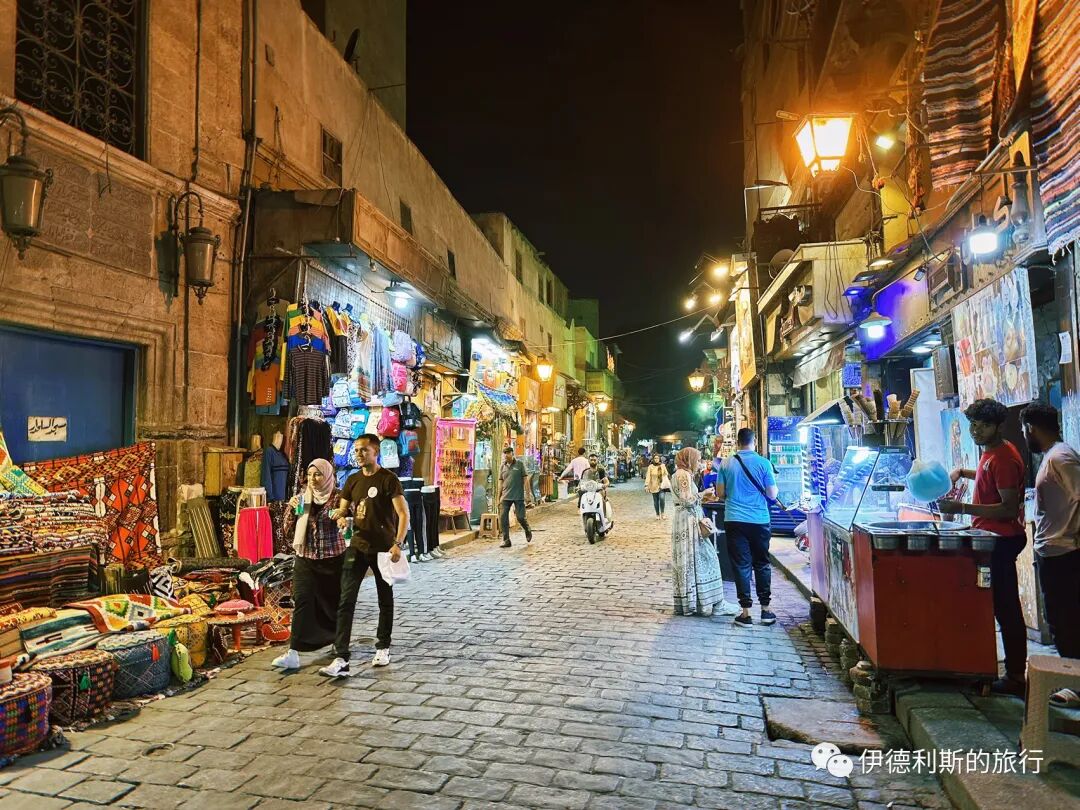
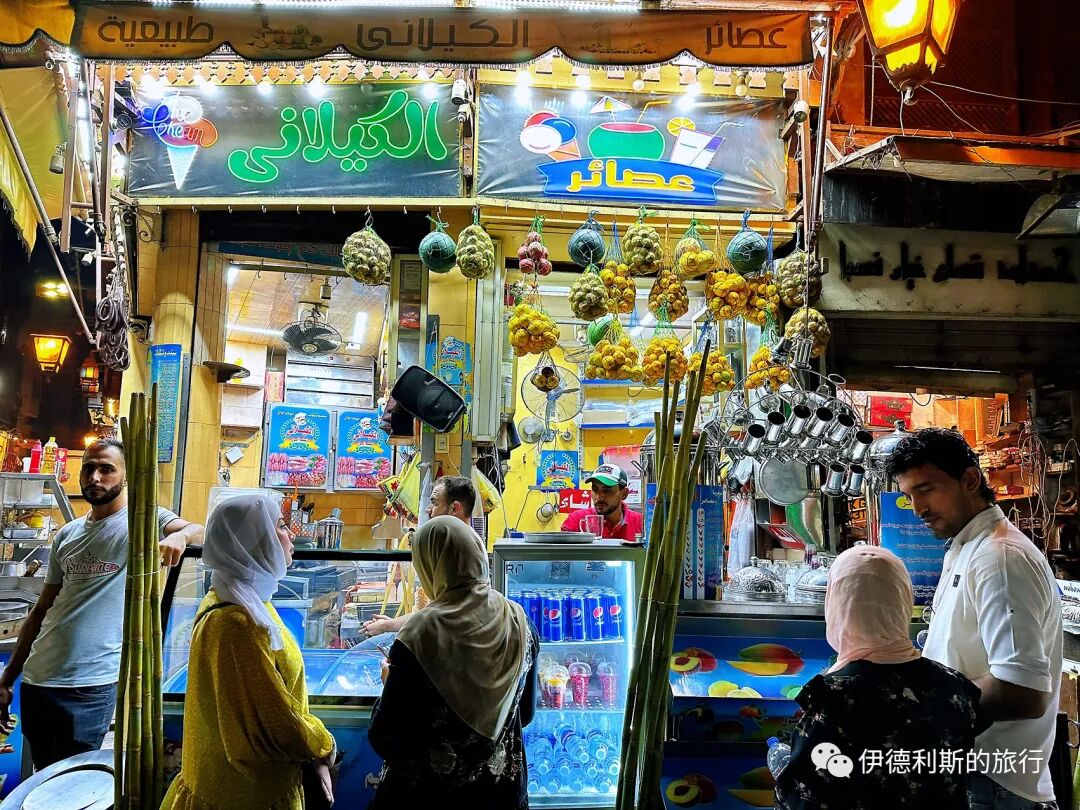
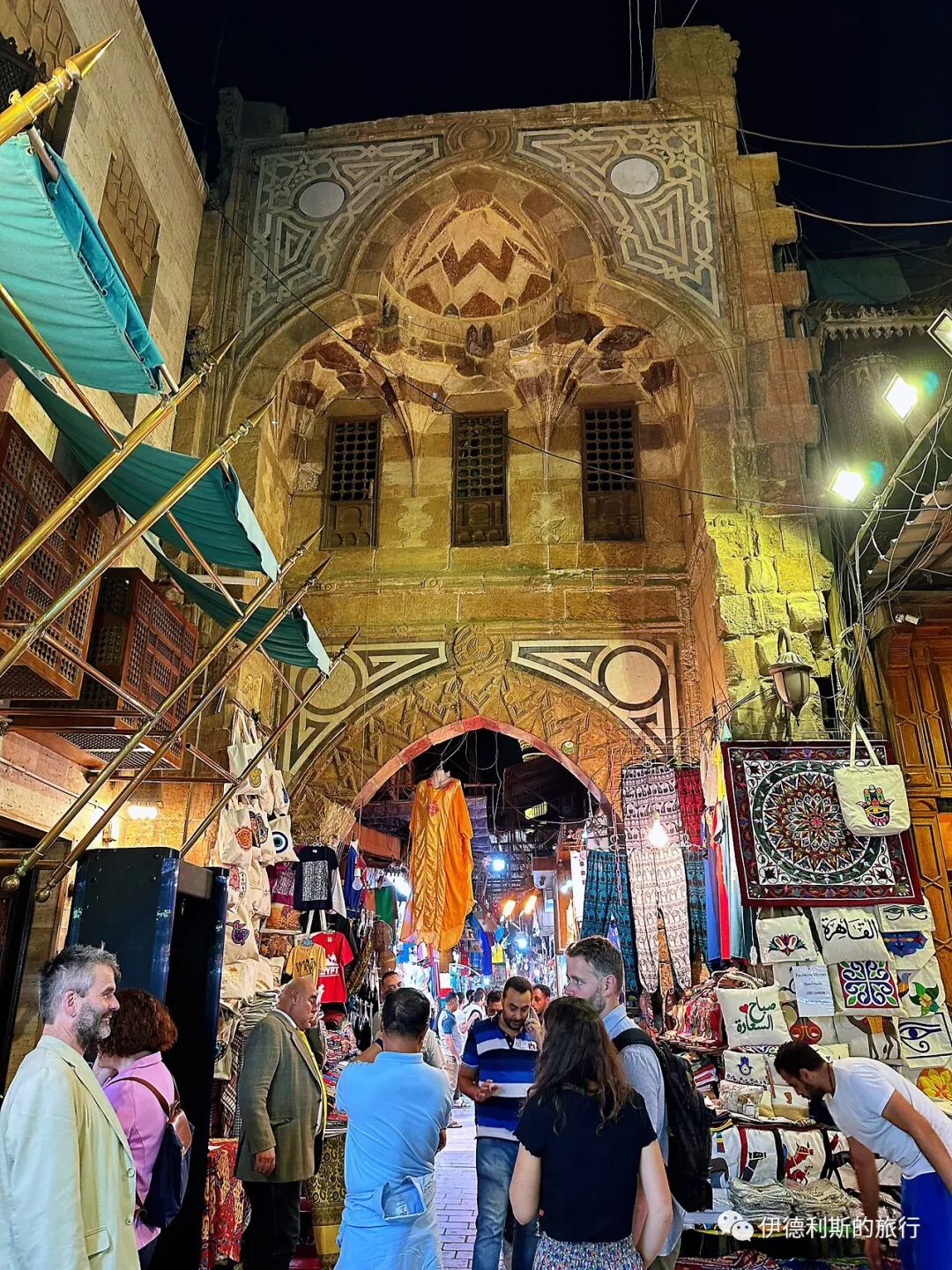
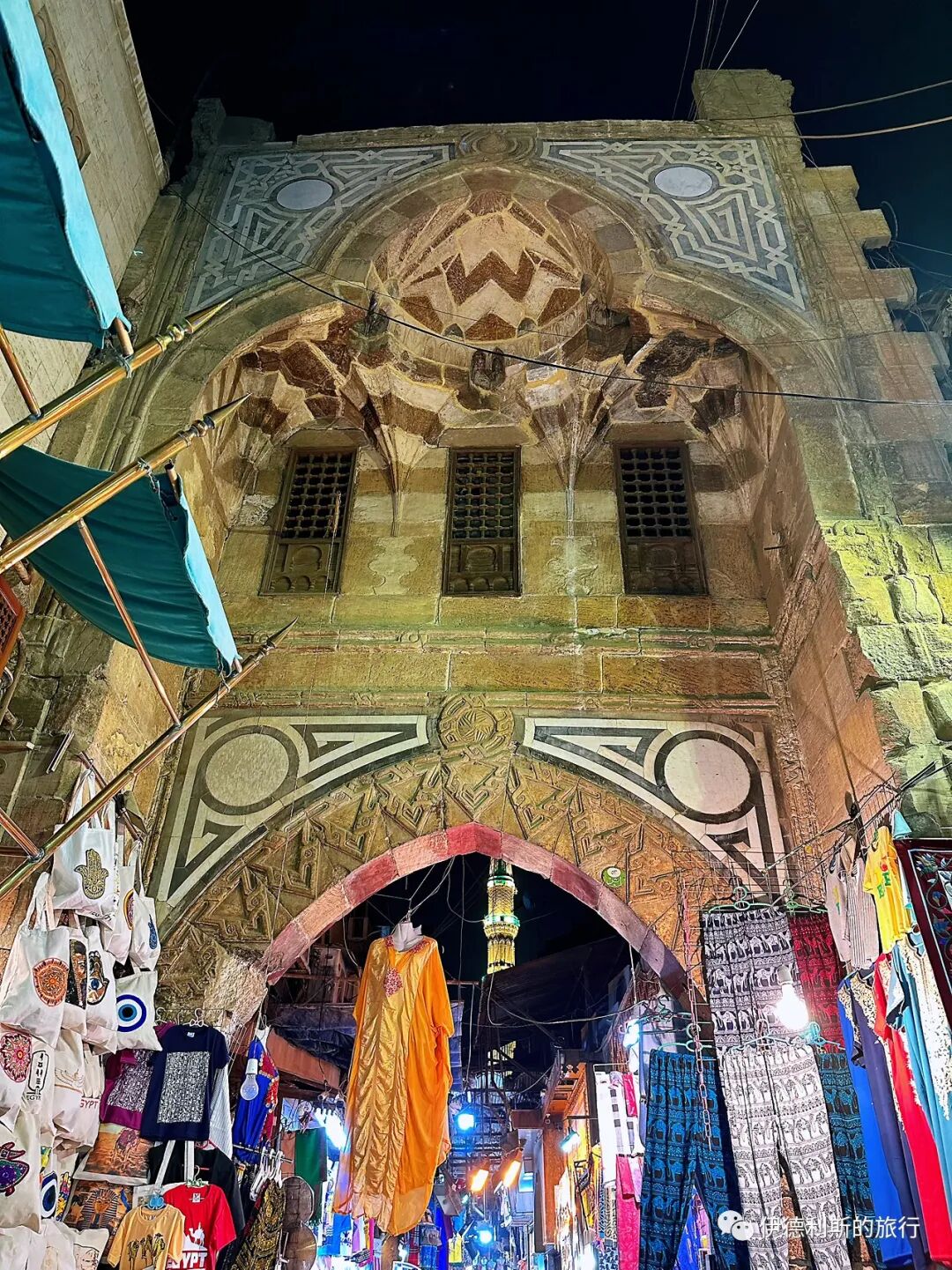
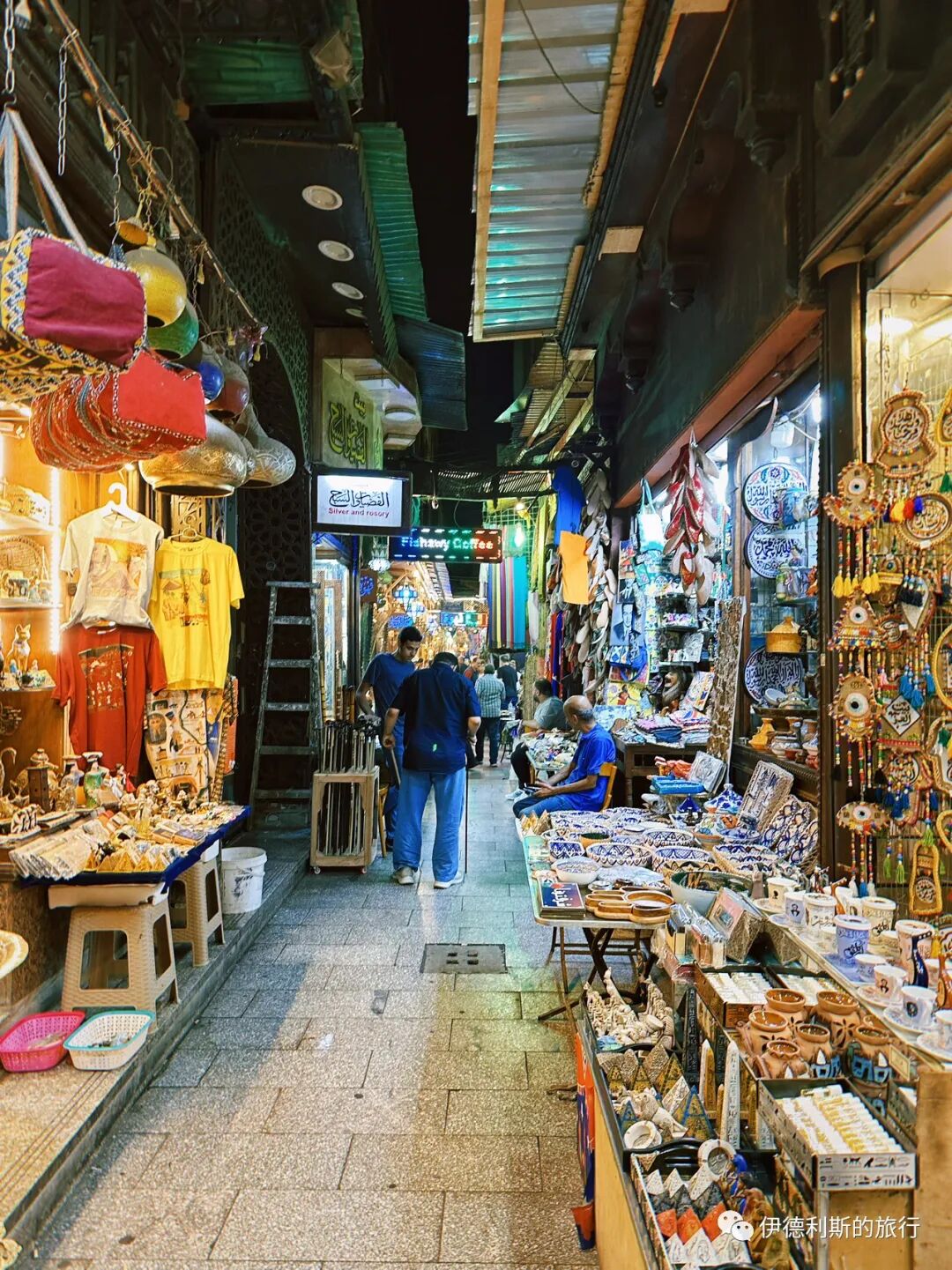
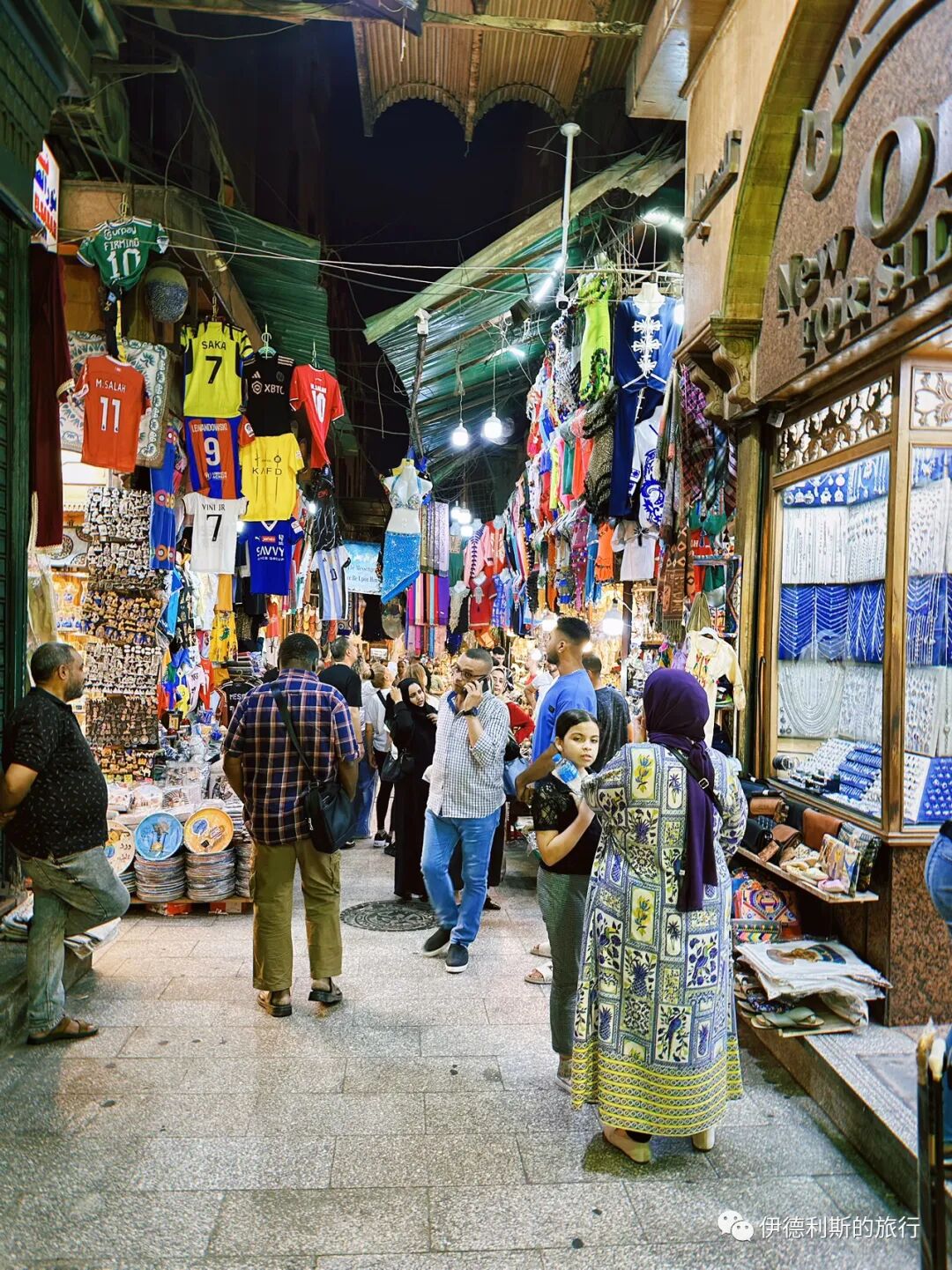
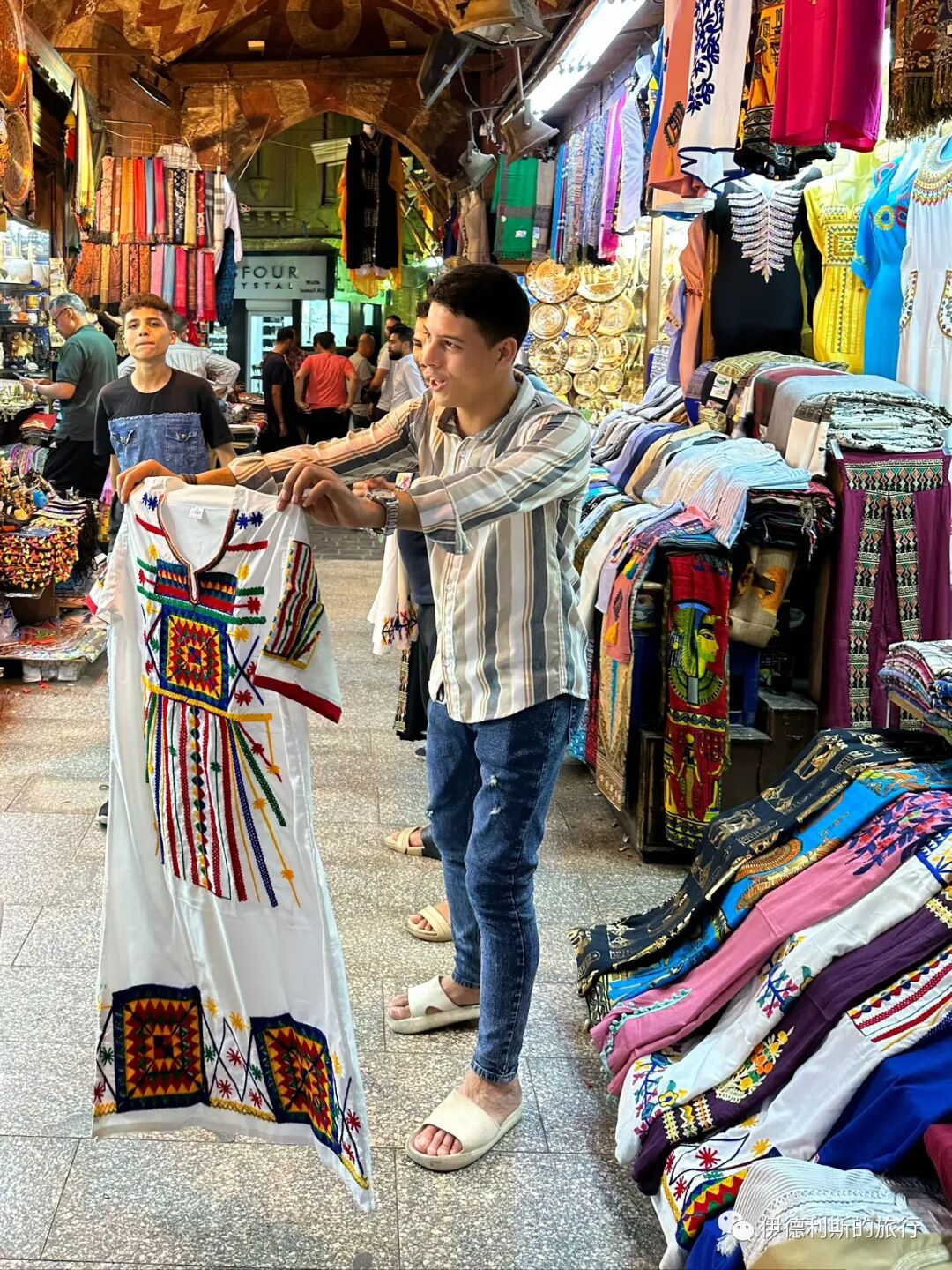
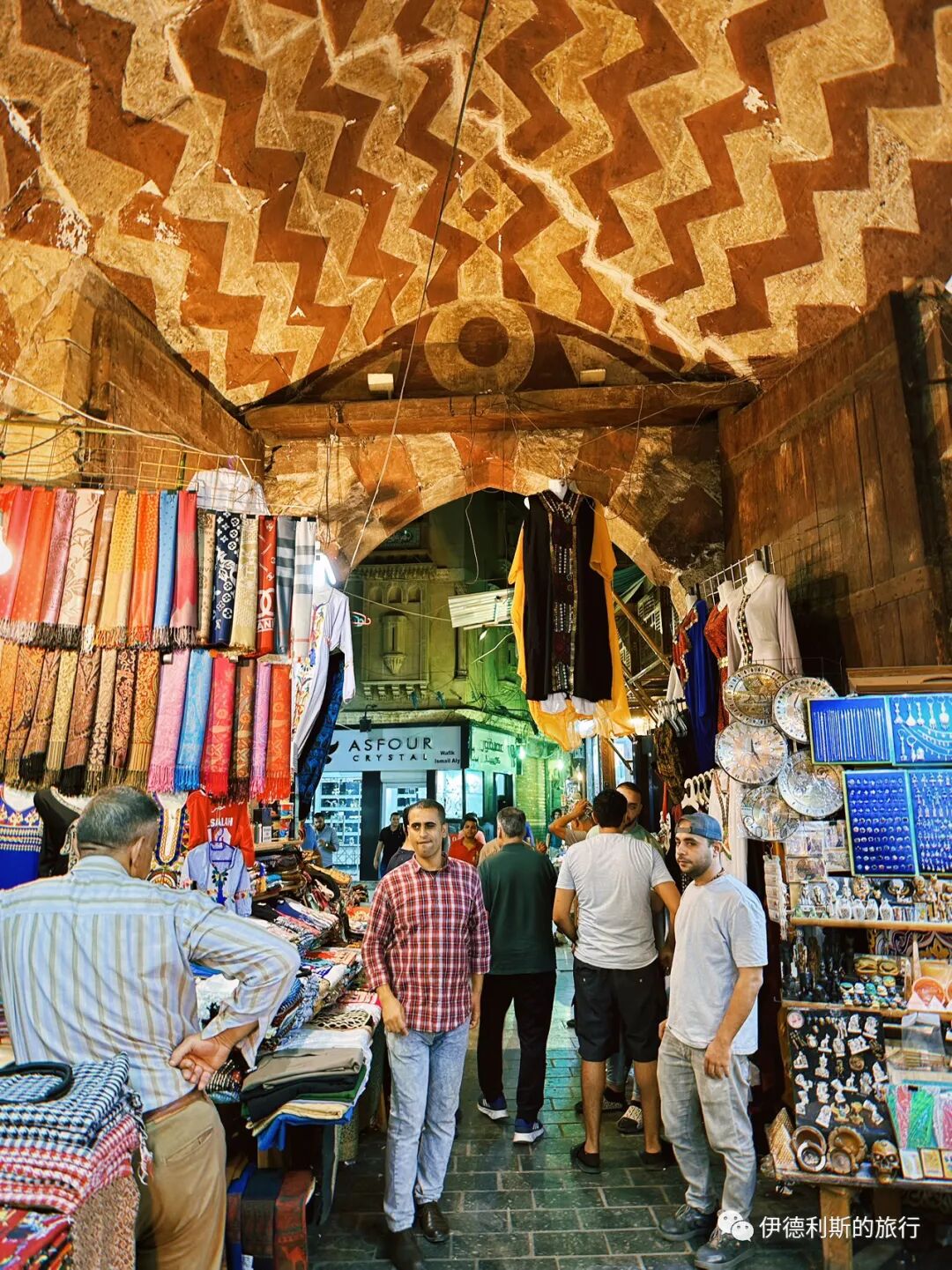
Khan el-Khalili market in the old city of Cairo at night; this is the liveliest place in the old city.
Khan el-Khalili market was first built in the 1380s by Barquq, the first Sultan of the Mamluk Burji dynasty. At that time, the Sultan sent his subordinate Jaharkas al-Khalili to demolish the Fatimid royal tombs and build the first structure of the market on the original site, which is why it has been called Khan el-Khalili ever since. Legend has it that al-Khalili dumped the remains of the Fatimid royal family into the garbage hills on the east side of the old city of Cairo.
The Mamluk dynasty continued to expand the market until the second-to-last Sultan, Al-Ashraf Qansuh al-Ghuri (reigned 1501-1516), rebuilt it on a large scale in 1511, finally forming the appearance we see today. The market built by al-Ghuri is quite similar in style to the Bedesten market of the Ottoman dynasty, with the most precious goods sold in the center and a roof that can be locked.
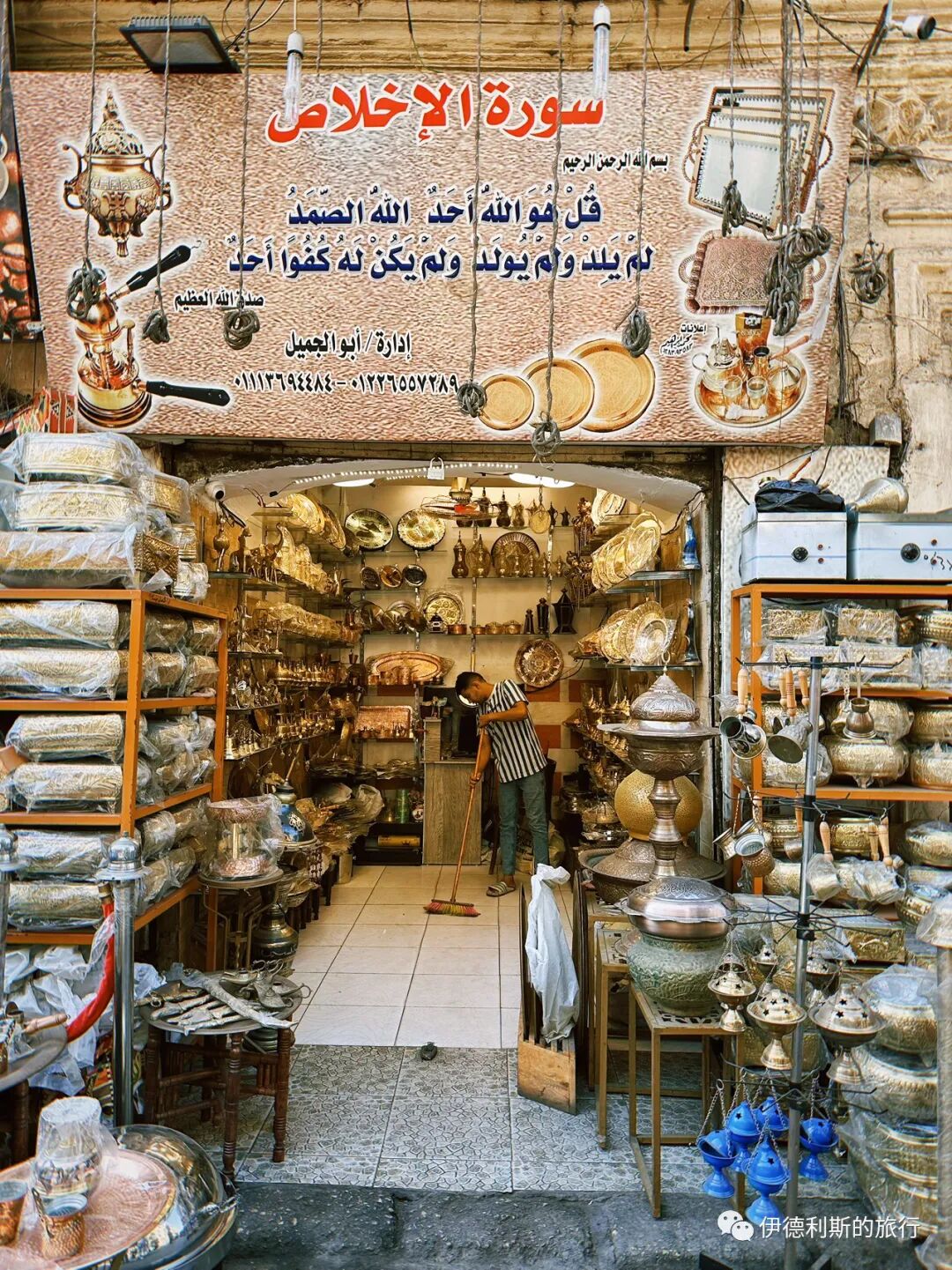
Today, Khan el-Khalili market is mainly a souvenir market for tourists, though a few craft workshops still operate inside, along with some famous cafes.
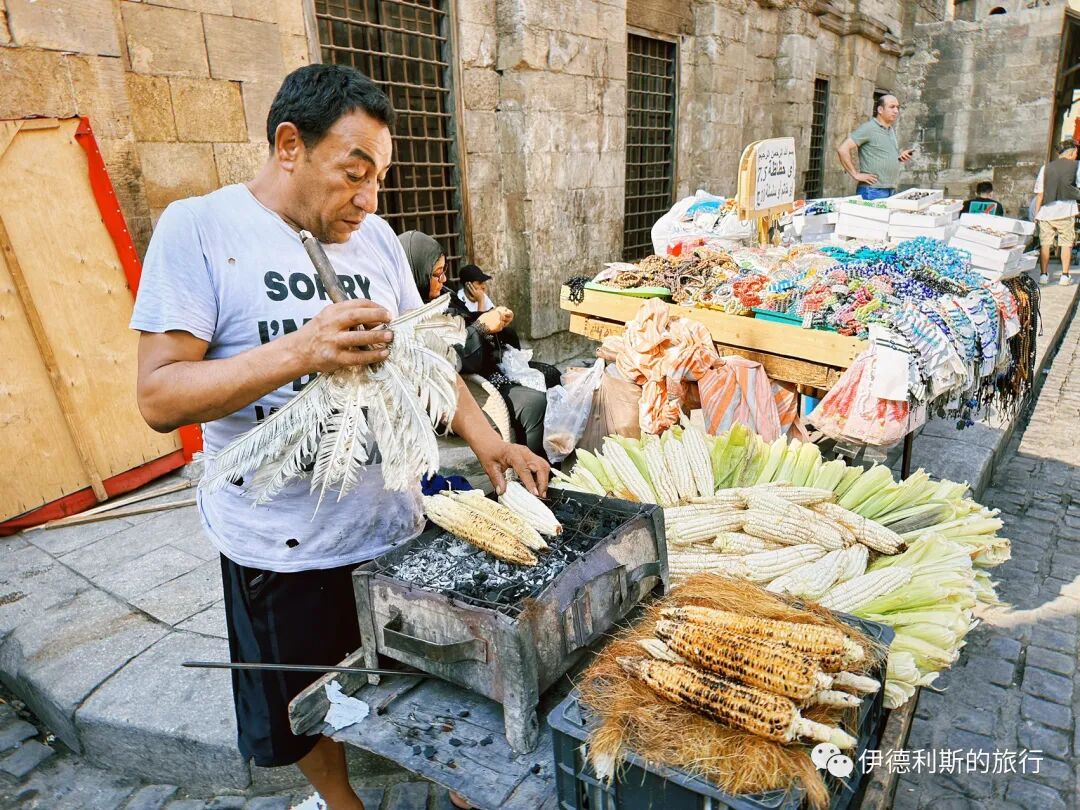
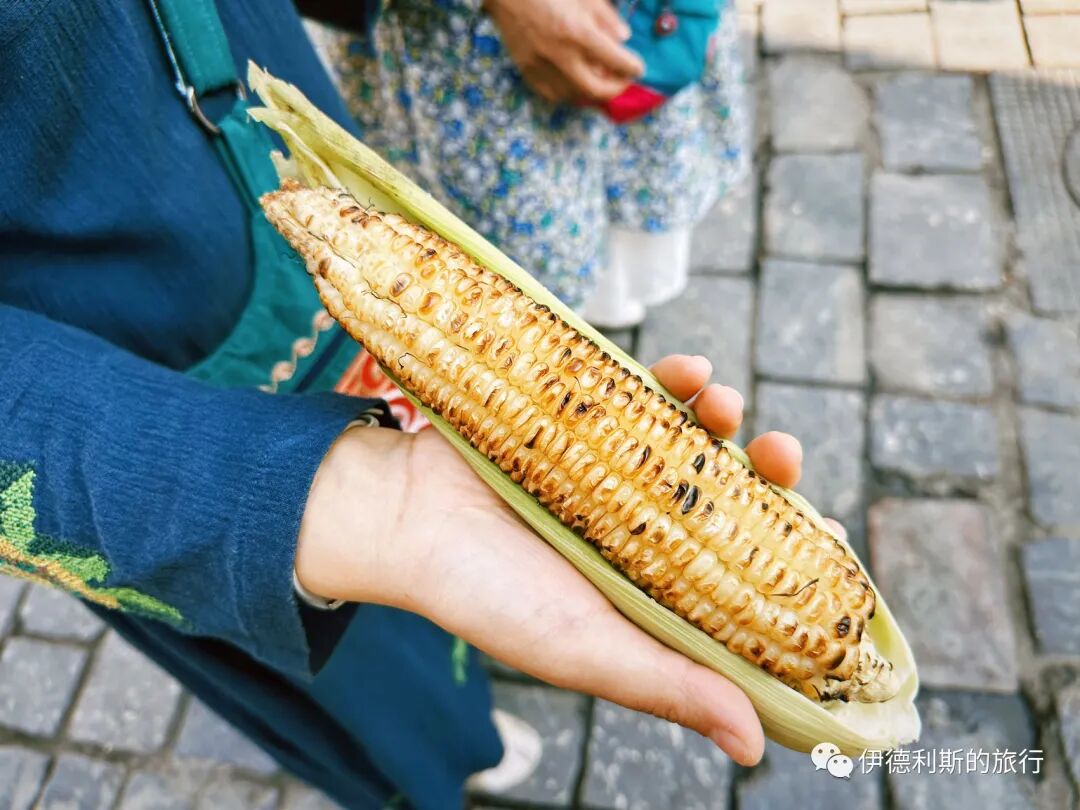
Roasted corn on the streets of Old Cairo.
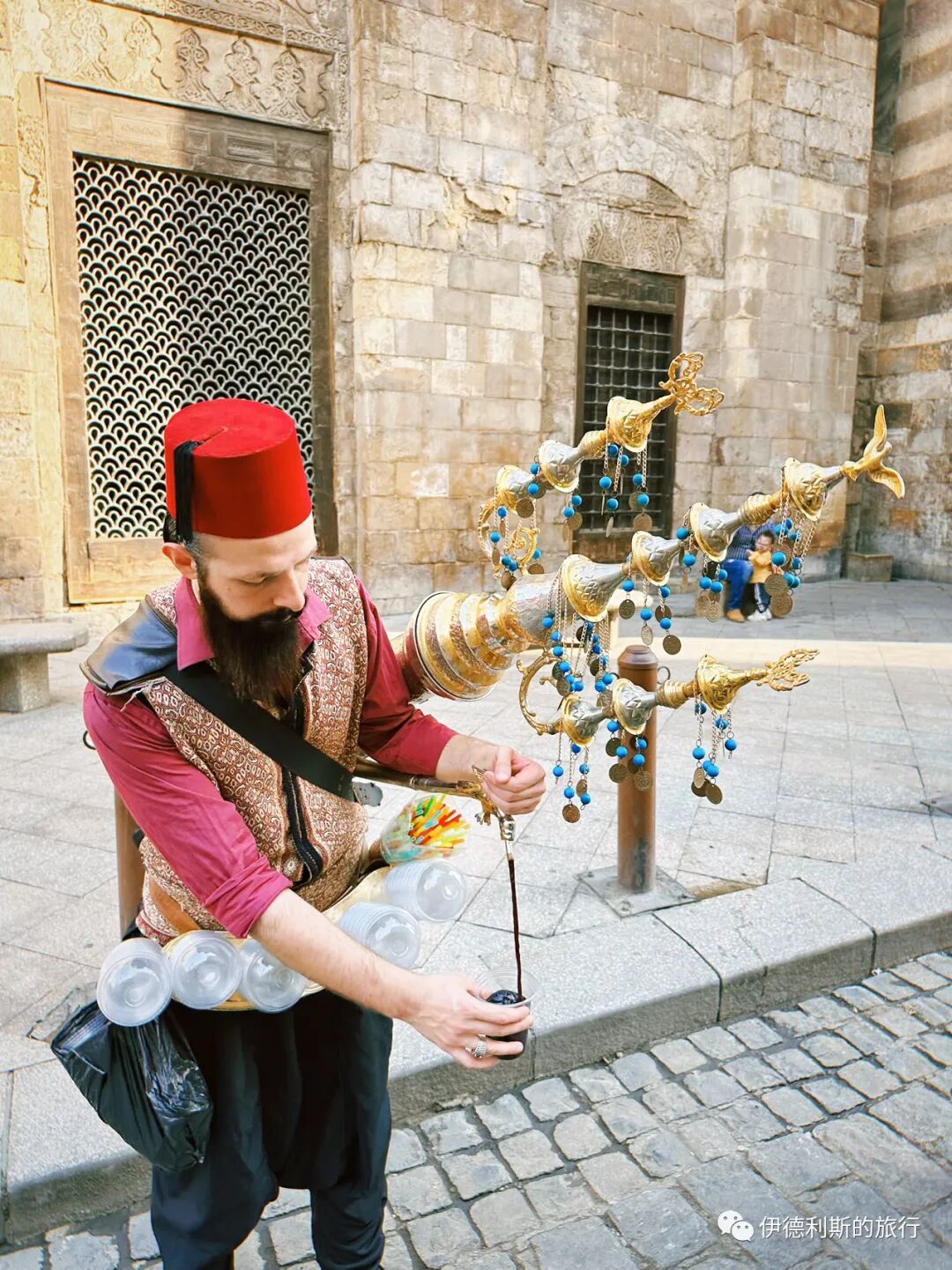
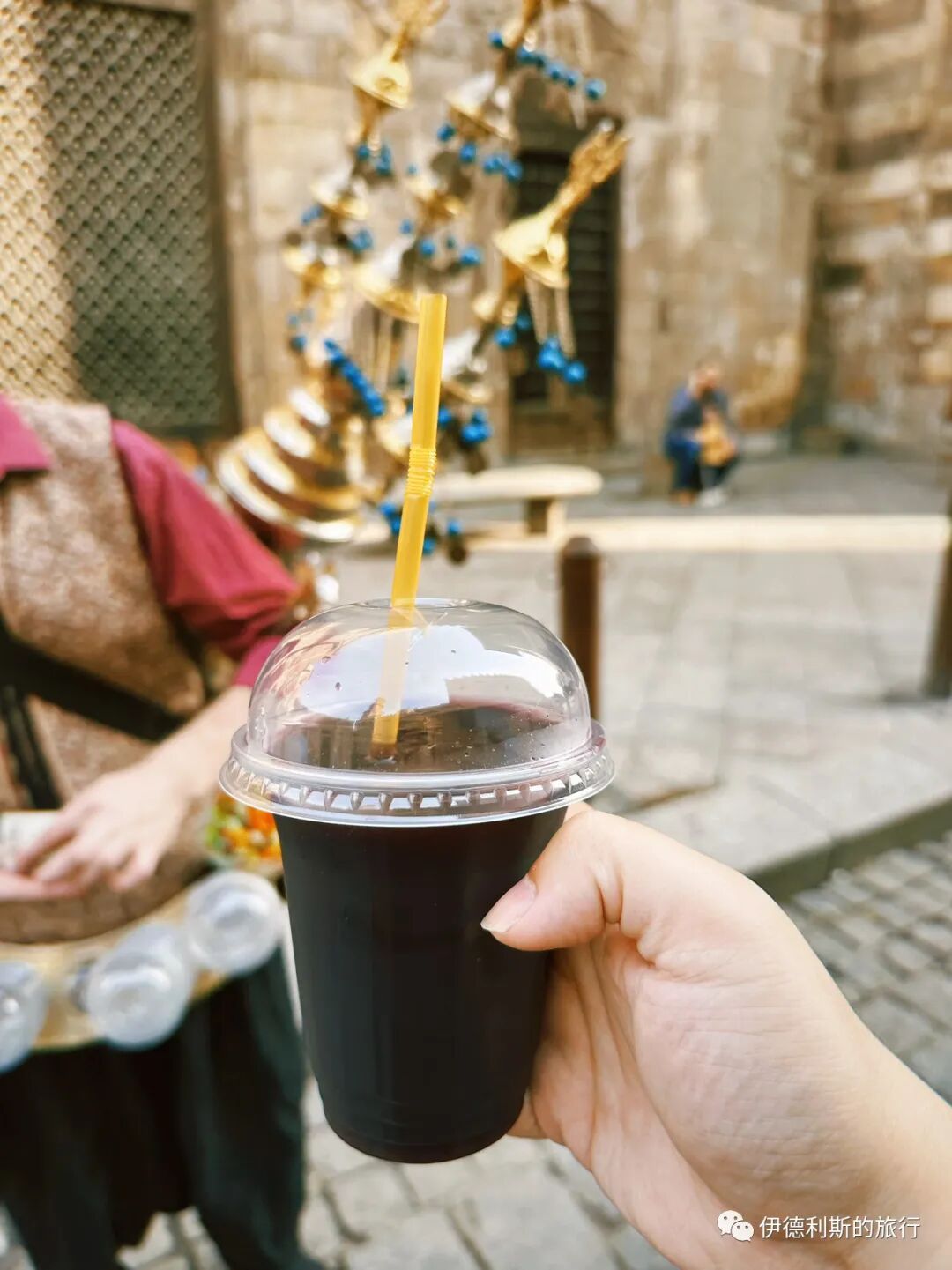
Hibiscus tea (karkadeh), a drink that has lasted since the time of the pharaohs, as the hibiscus flower is native to Africa.
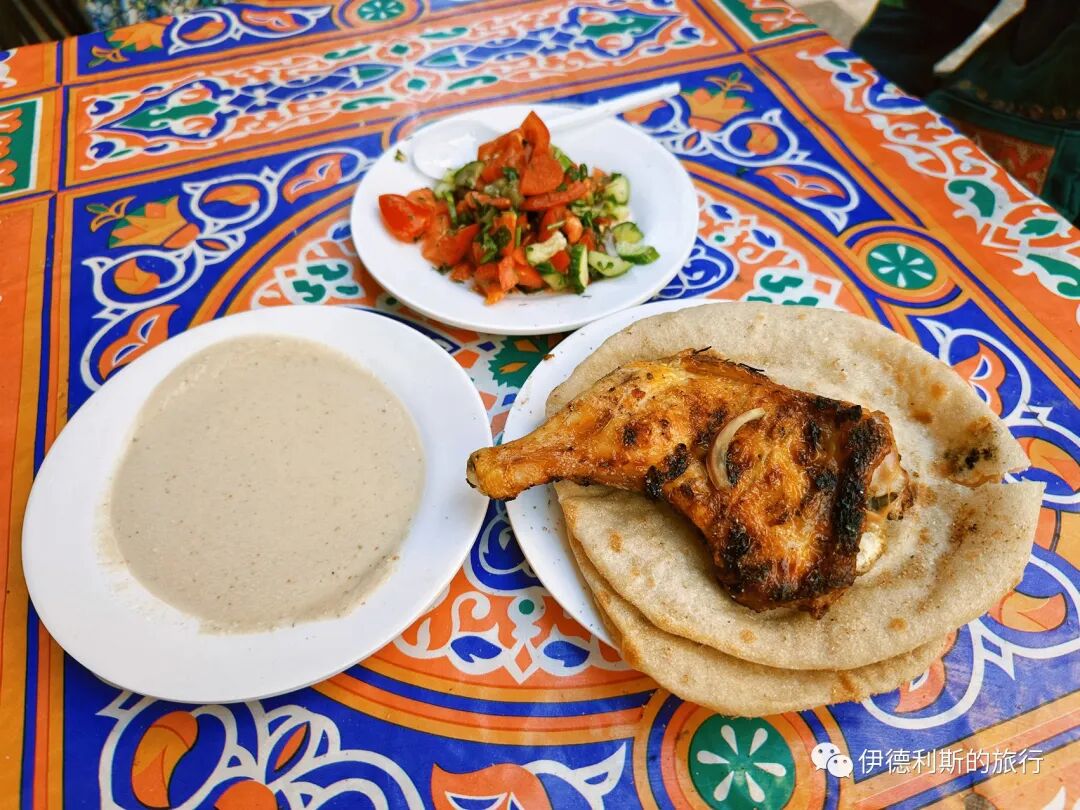
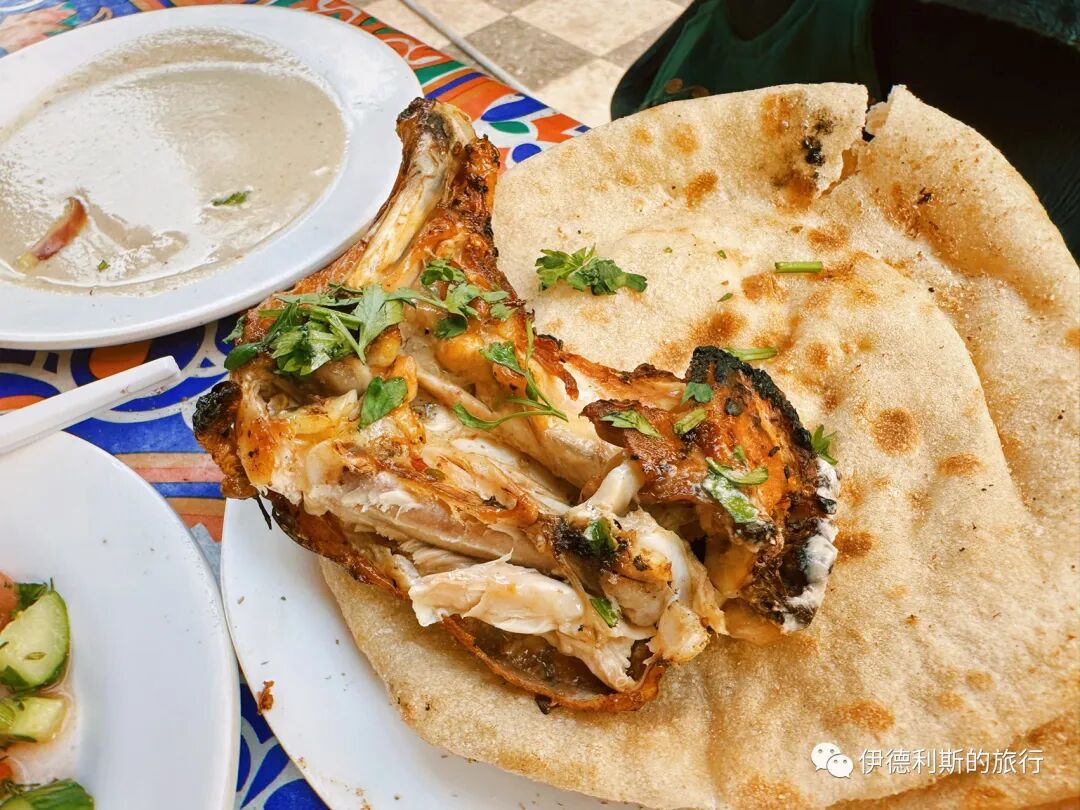
Roasted chicken served with tahini sauce (tehina, a mix of sesame paste, lemon juice, and garlic) and village salad (salata baladi).
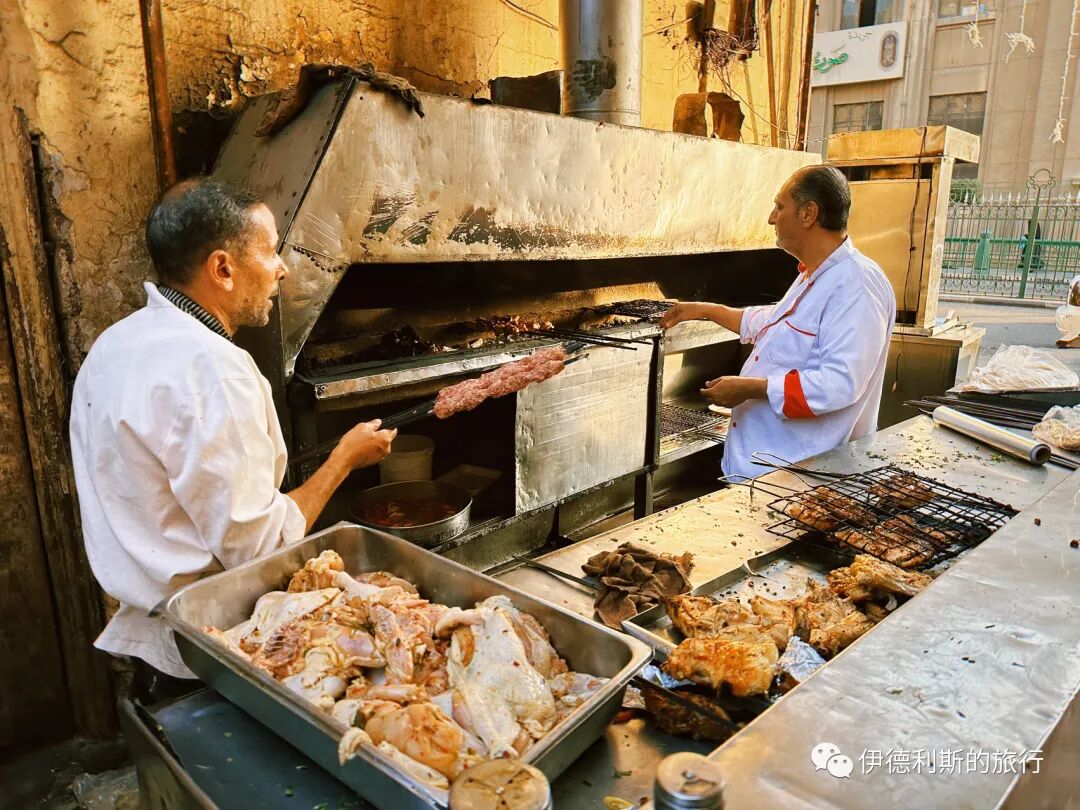
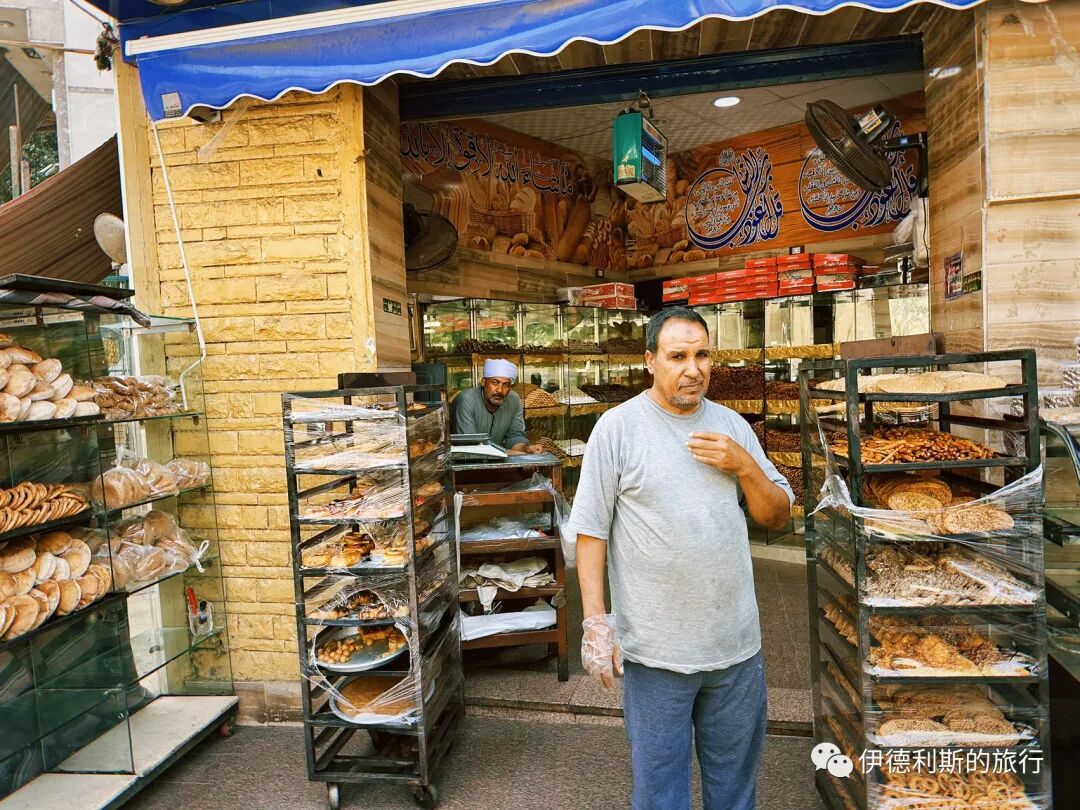
Pastry shop.
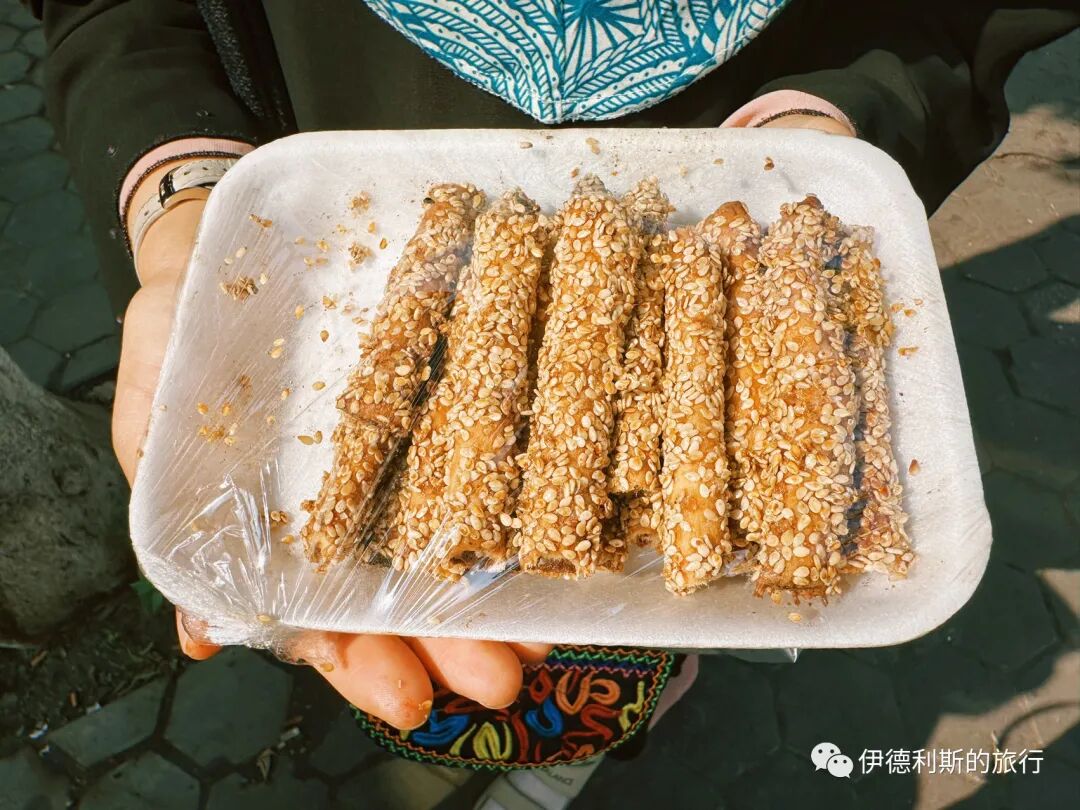
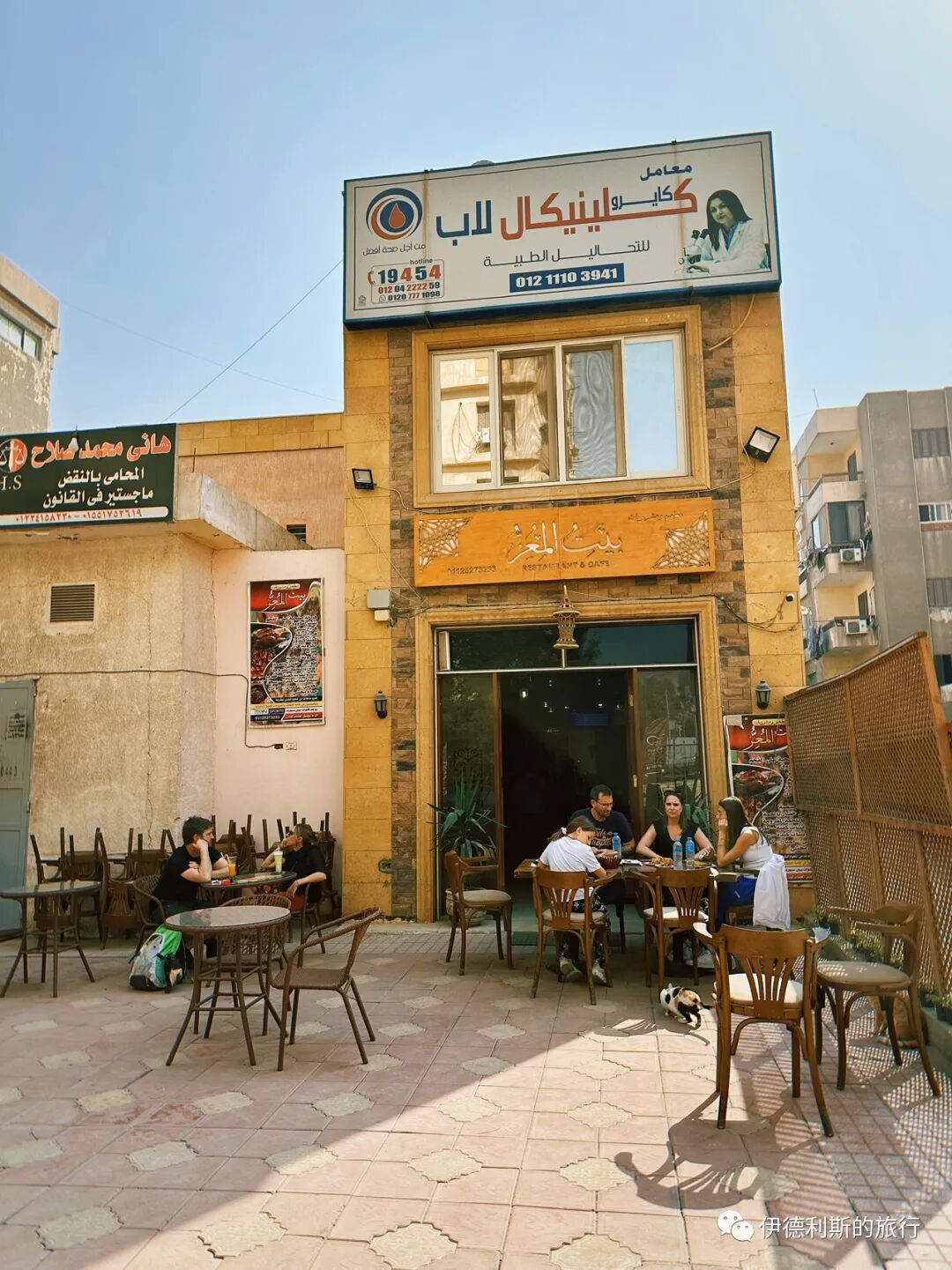
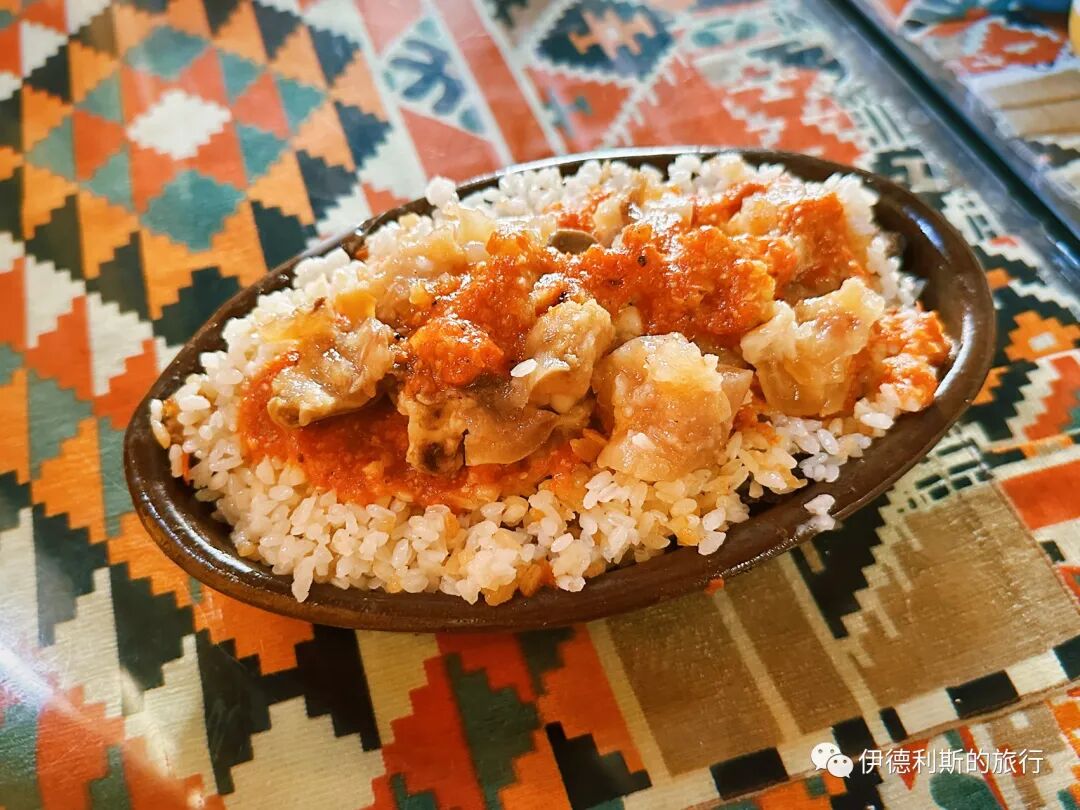
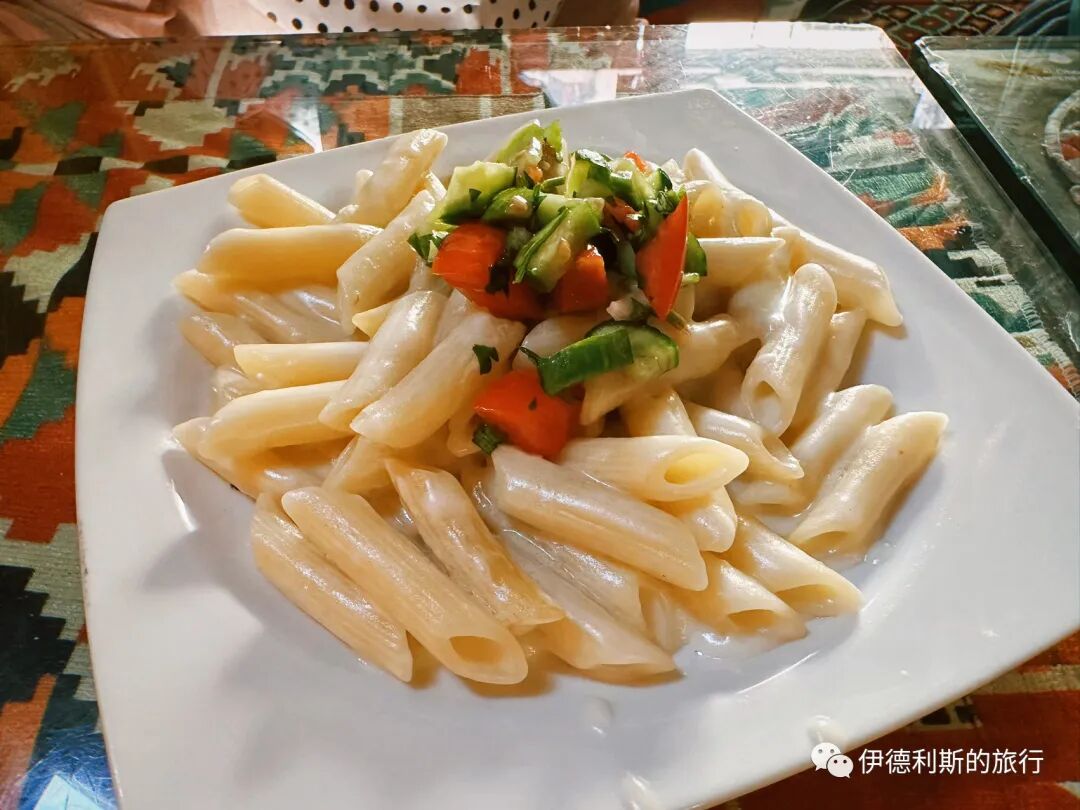
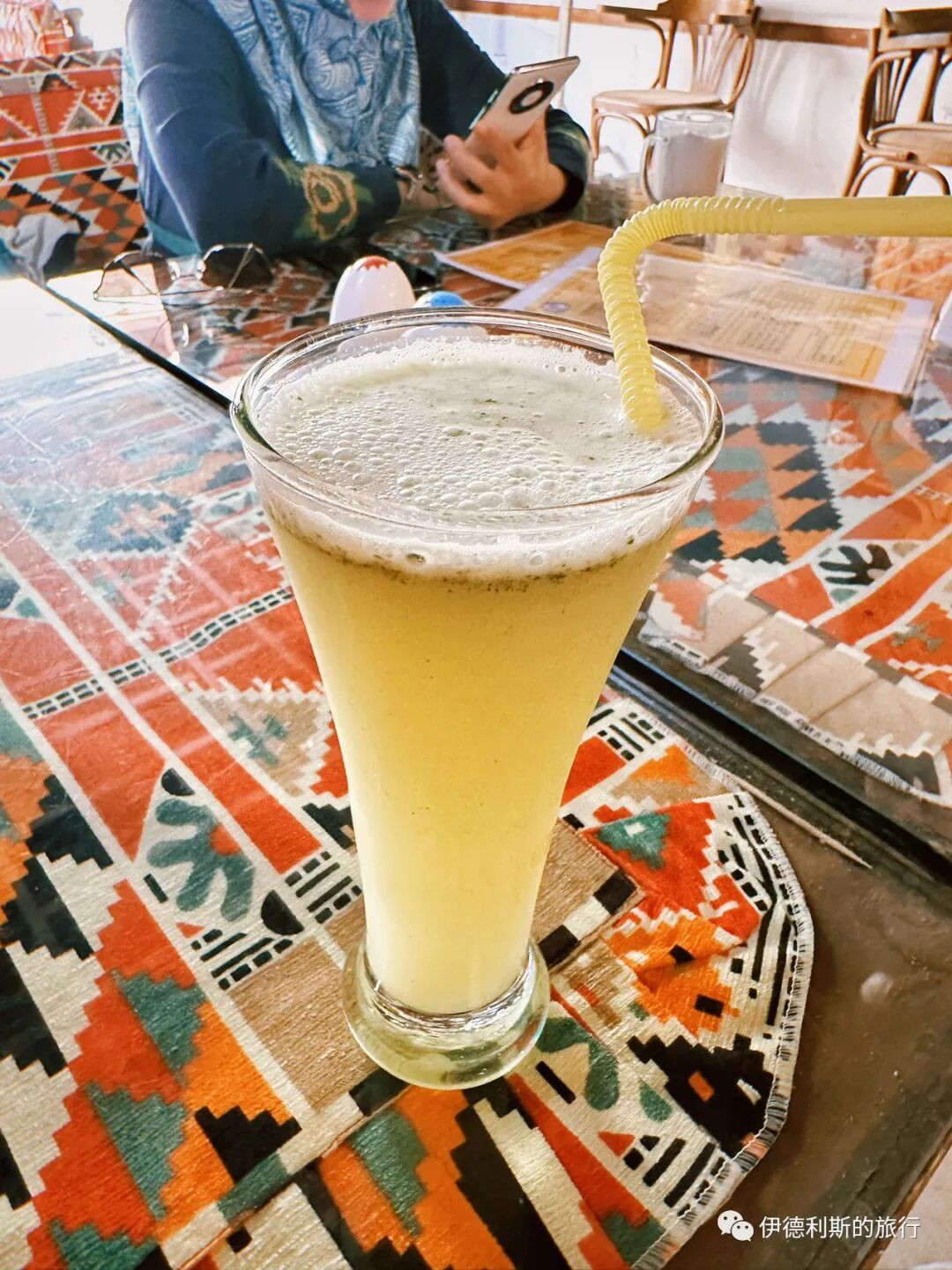
At a restaurant in an alley across from the National Museum of Egyptian Civilization, I had beef tendon rice and pasta in white sauce, and drank lemon mint water.
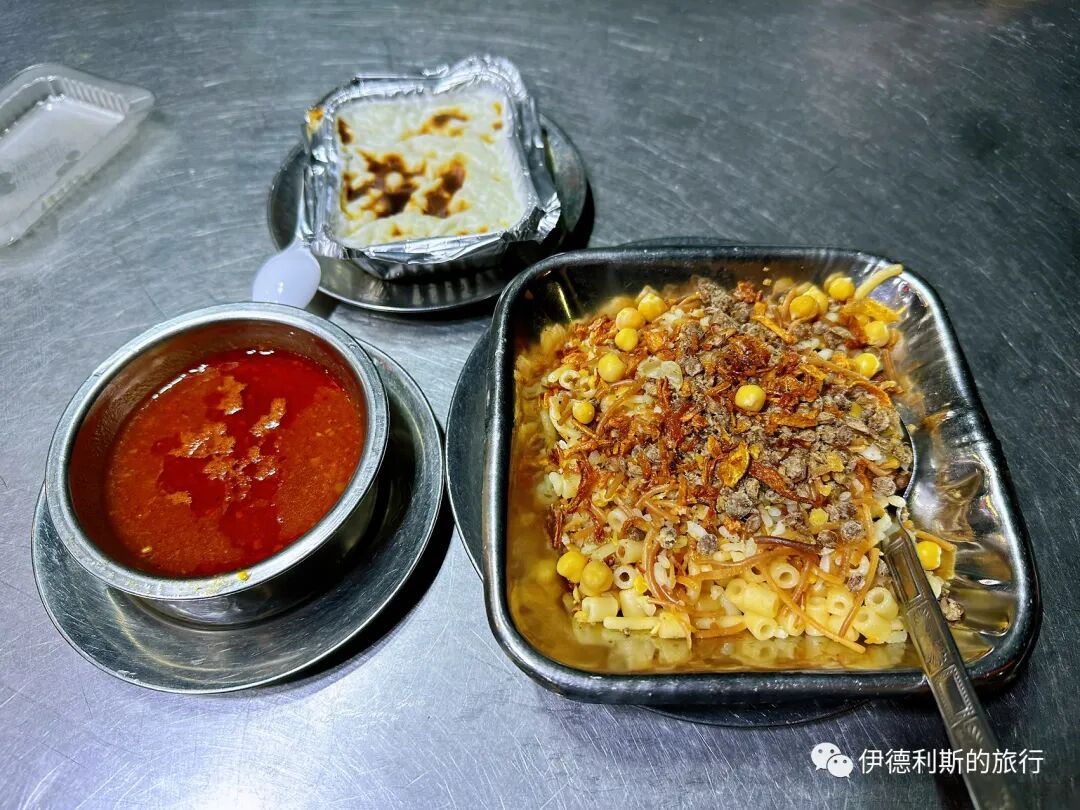
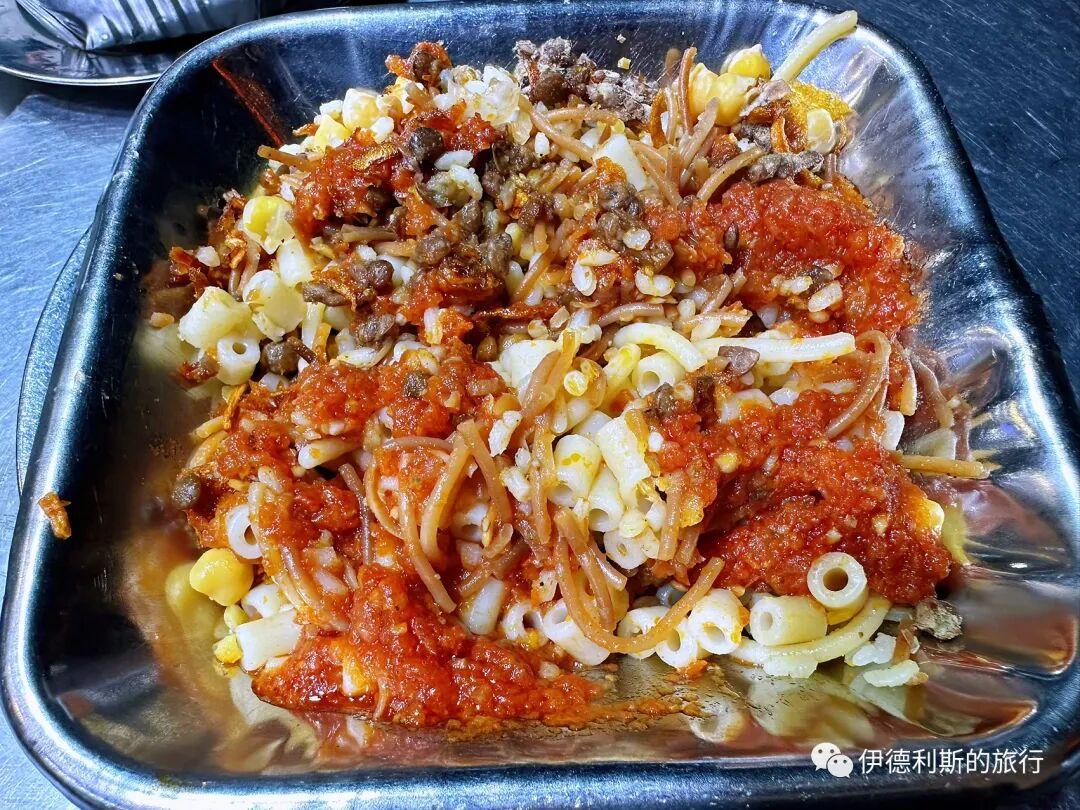
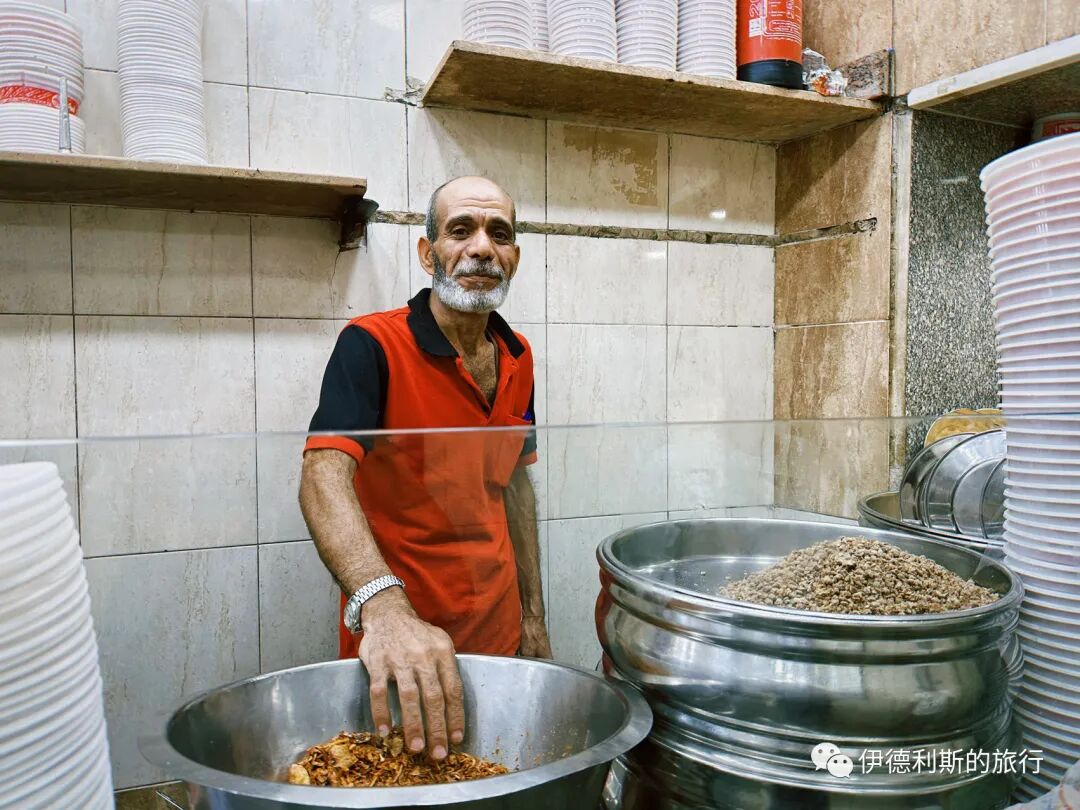
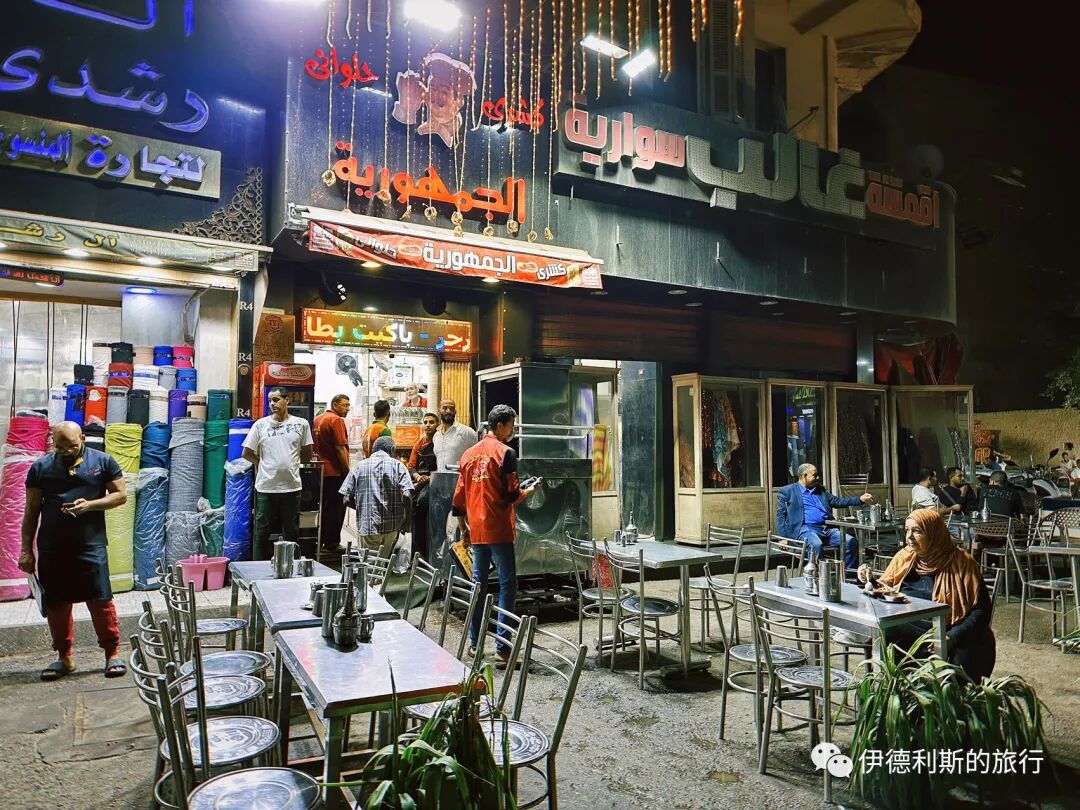
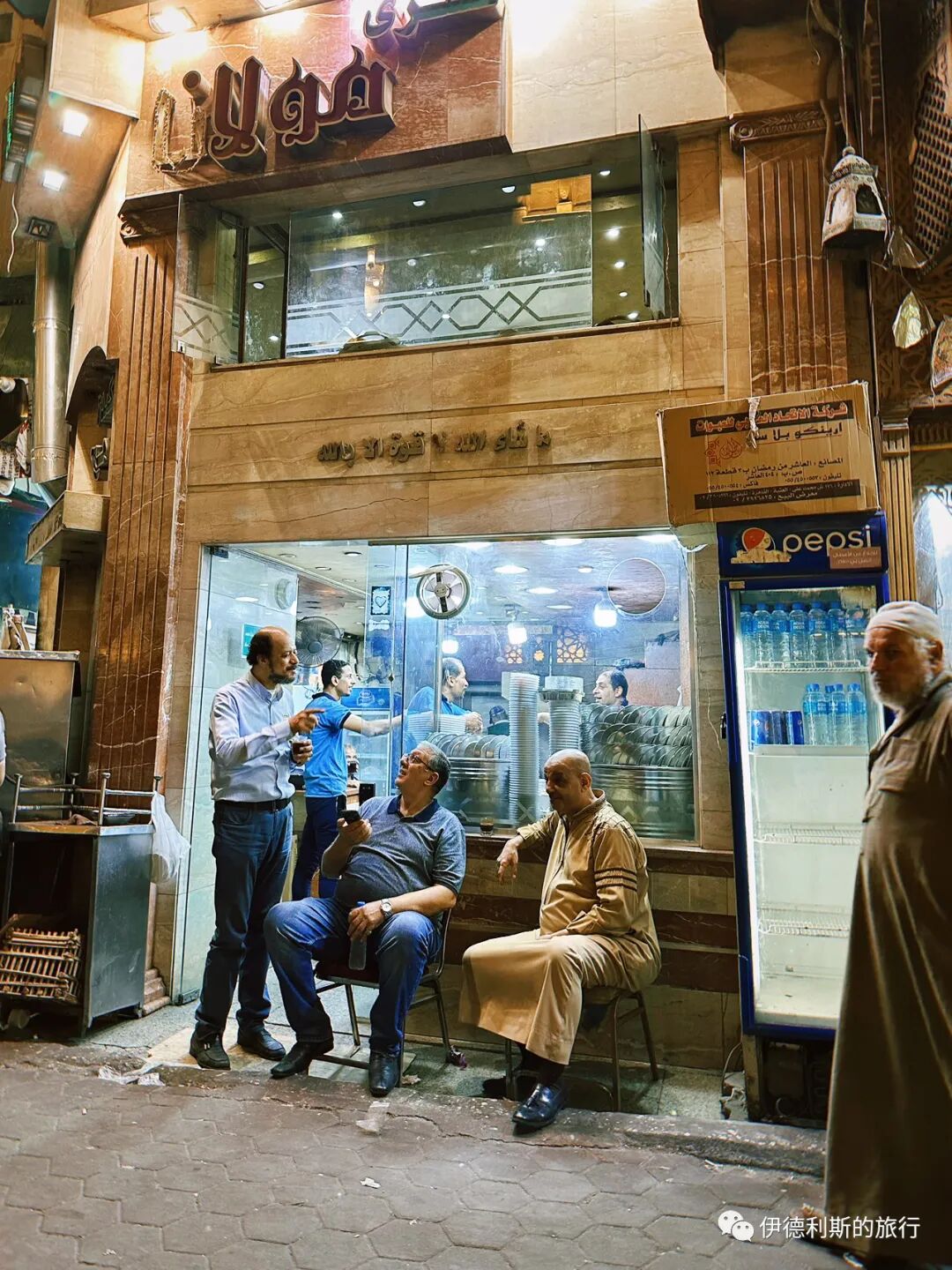
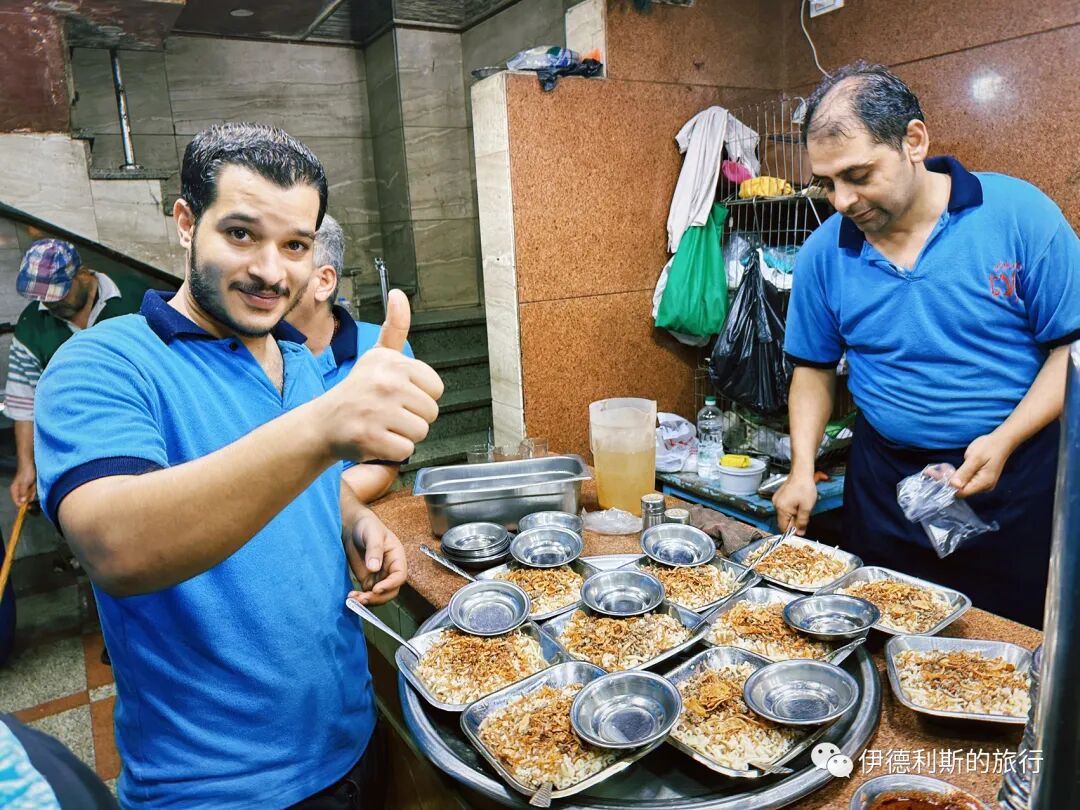
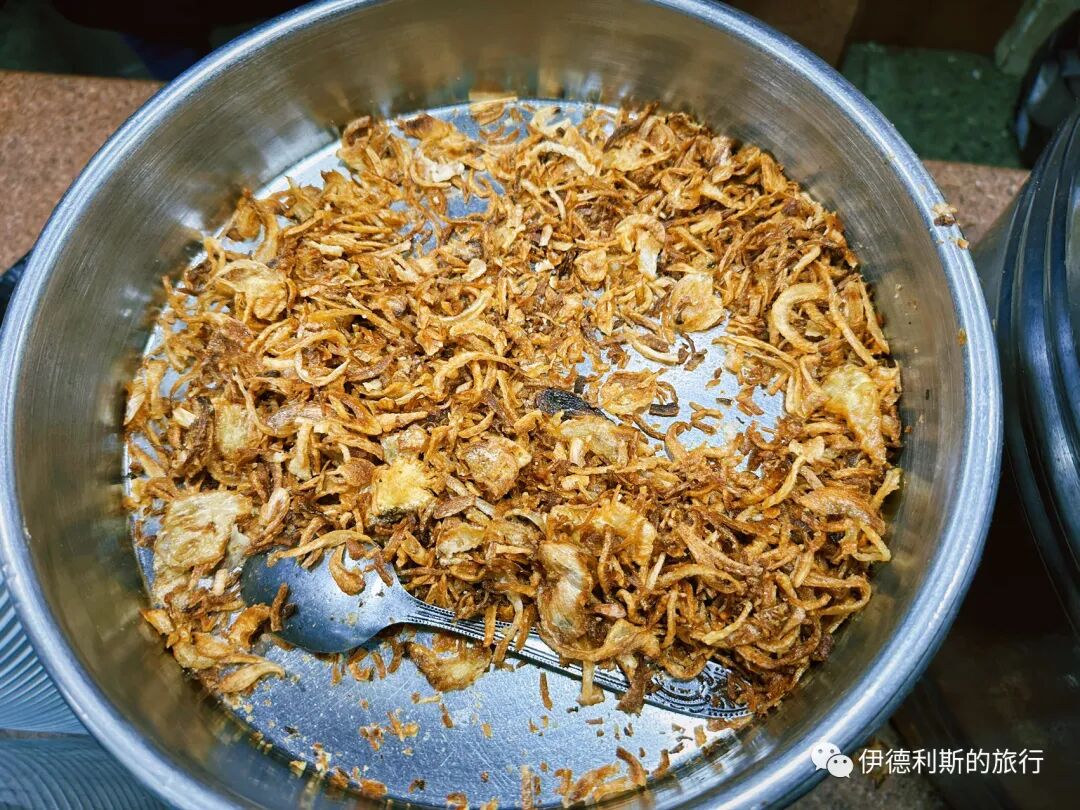
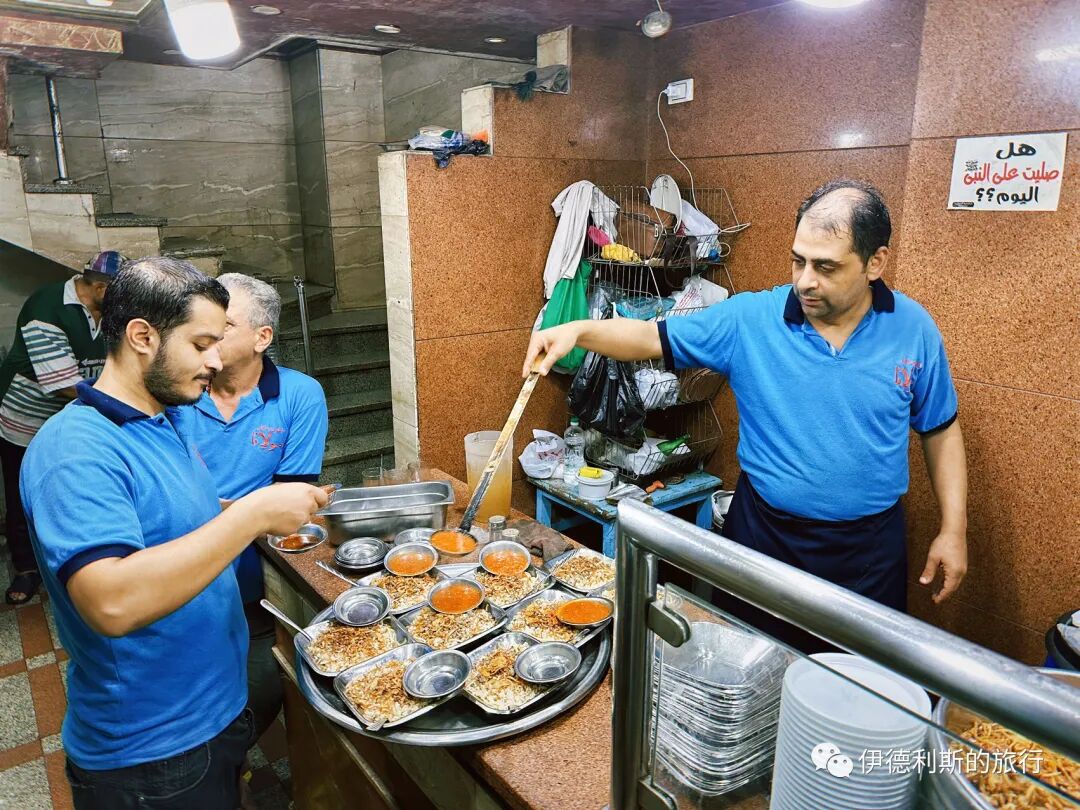
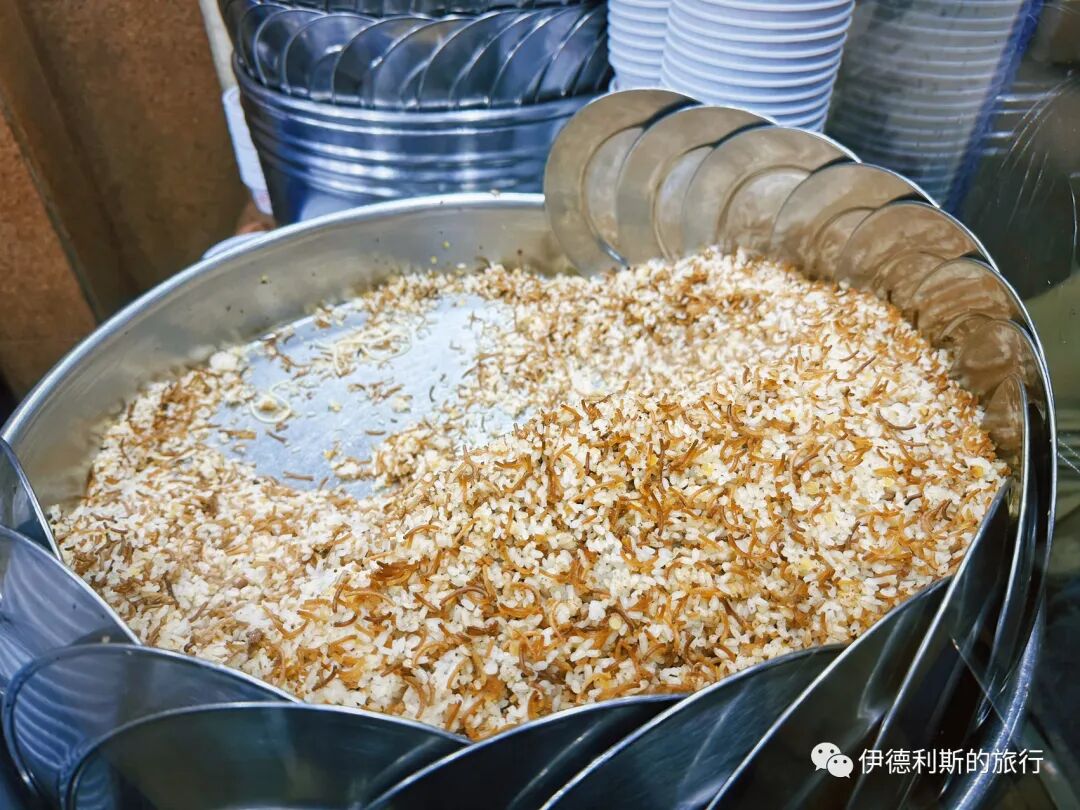
Koshary is the most classic street snack in Cairo. It is a mix of spaghetti, macaroni, Egyptian rice, and lentils, topped with tomato sauce, garlic sauce, chickpeas, and fried onions. As early as the ancient Egyptian period, people ate a dish called koshir made from lentils, wheat, chickpeas, garlic, and onions cooked in clay pots. It only gradually developed into the modern koshary after the introduction of pasta and tomatoes in the 19th century. This snack is vegan and very cheap, often called the food of the poor.
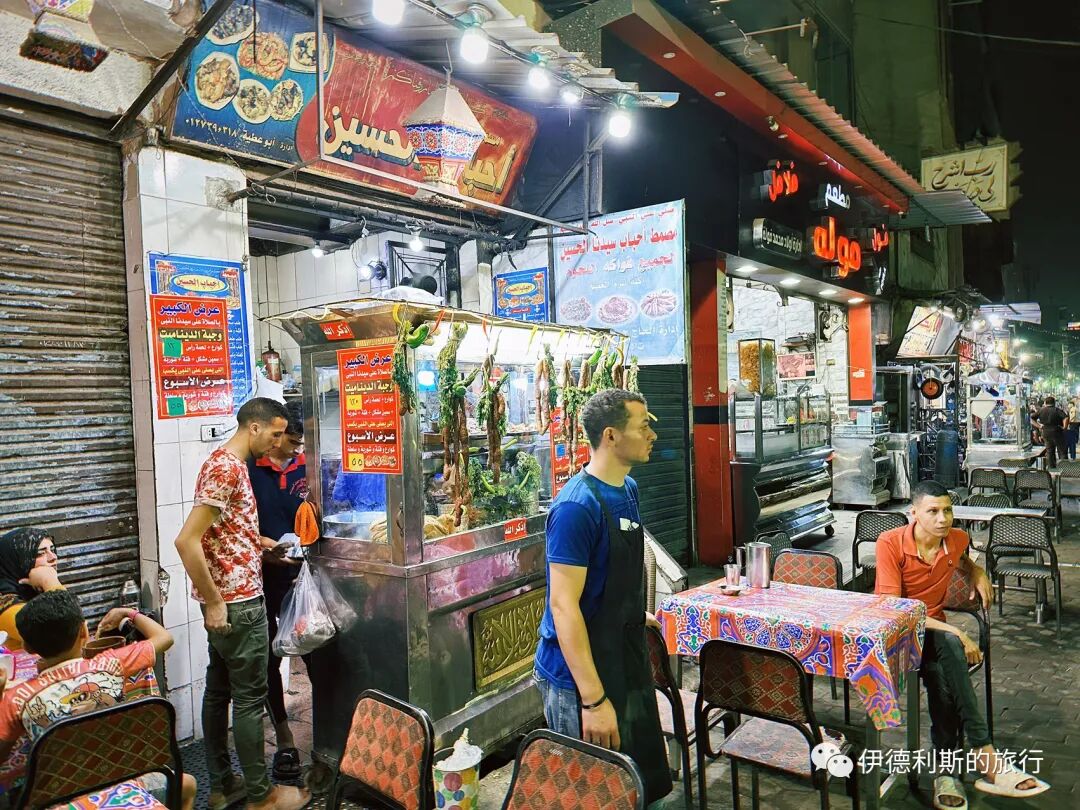
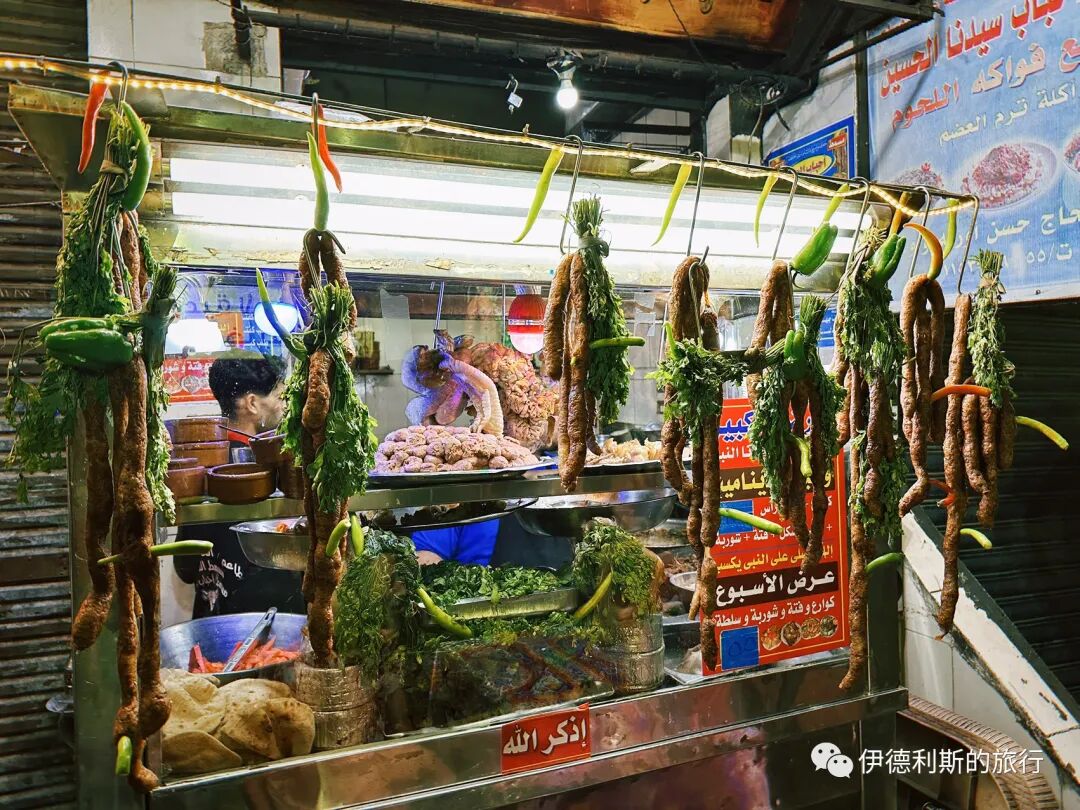
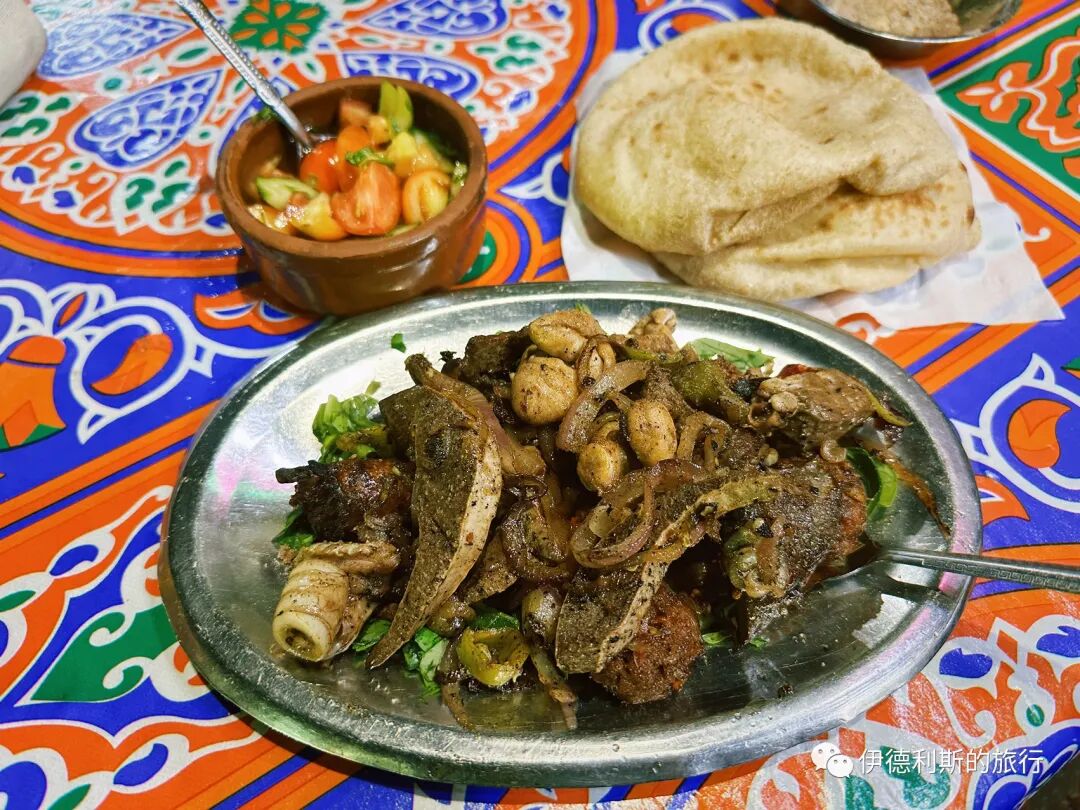
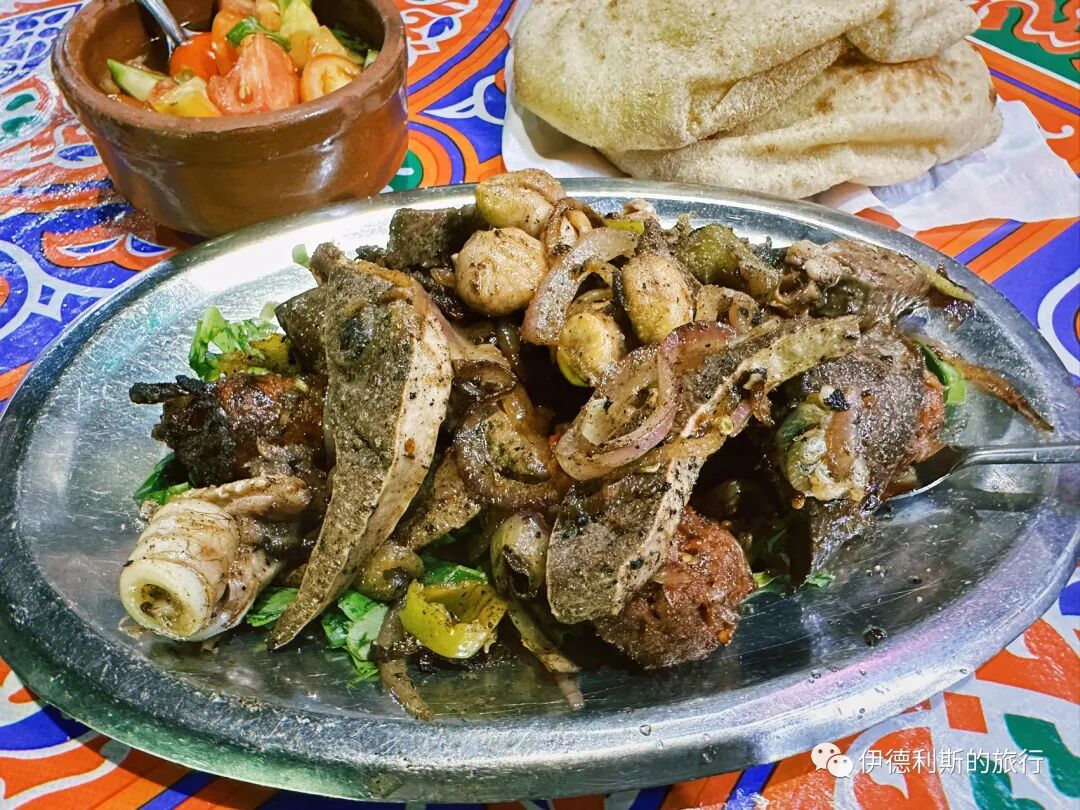
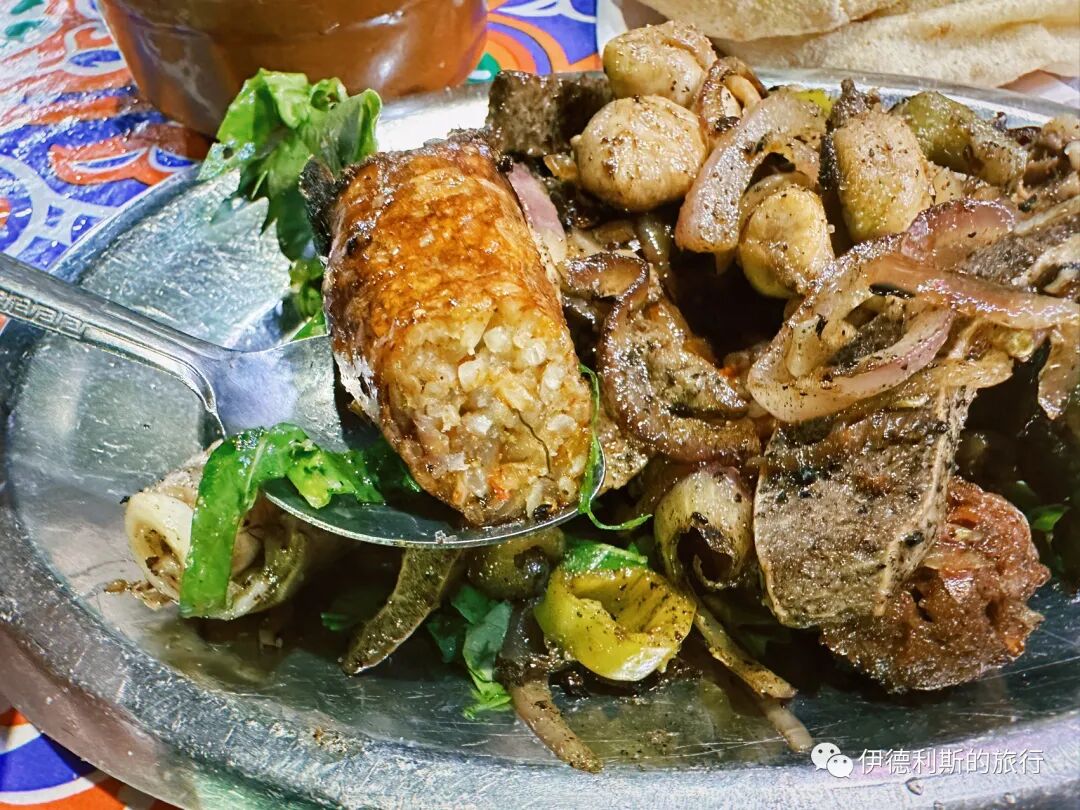
A dark street snack in Old Cairo is grilled lamb offal, which includes lung, rice sausage, lamb brain, large intestine, meatballs, and cartilage. It is spicy and eaten with flatbread.
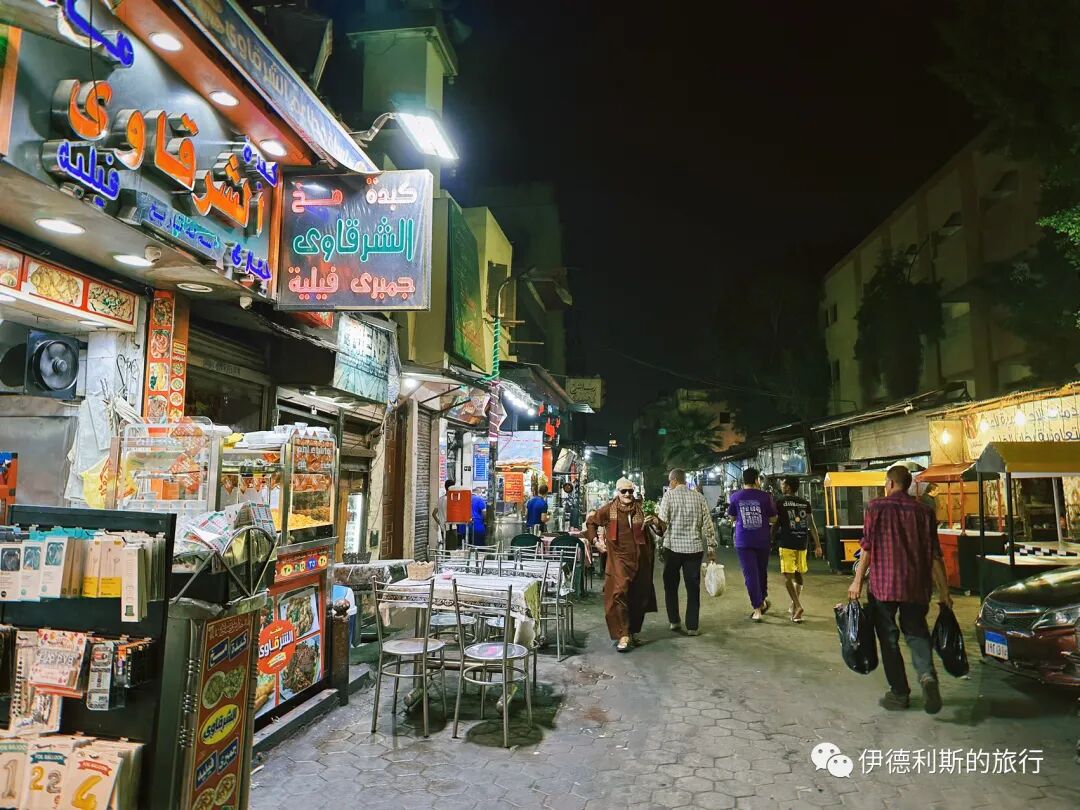
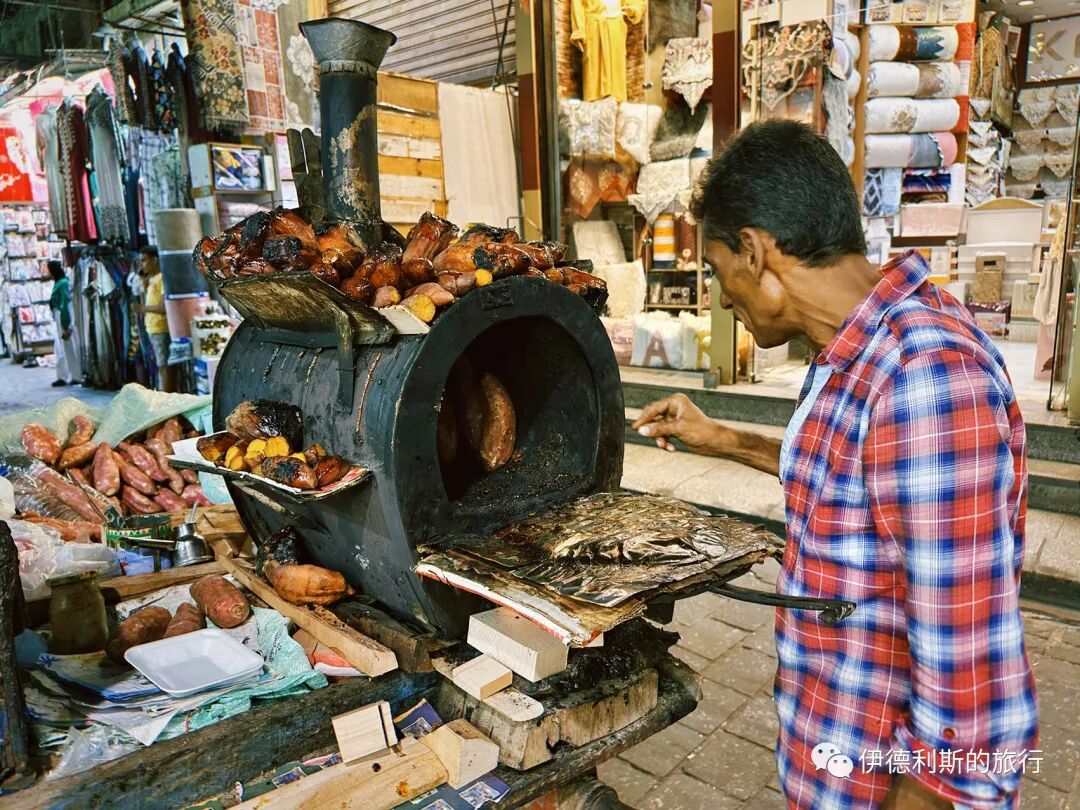
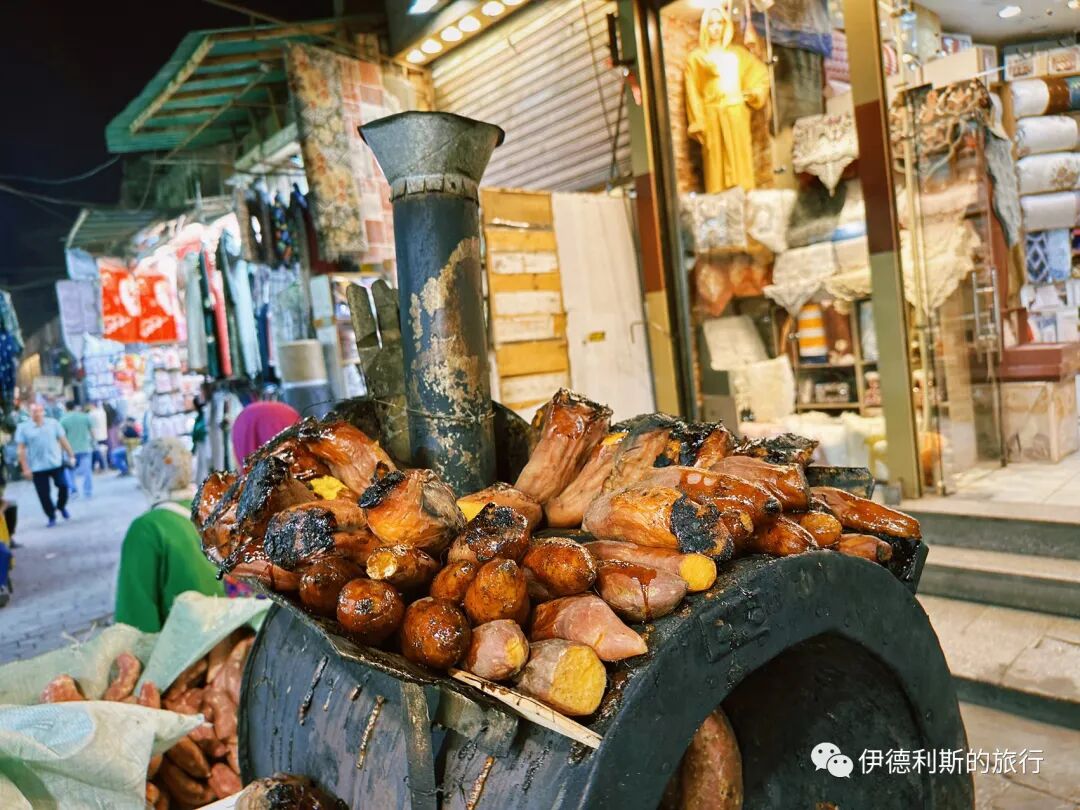
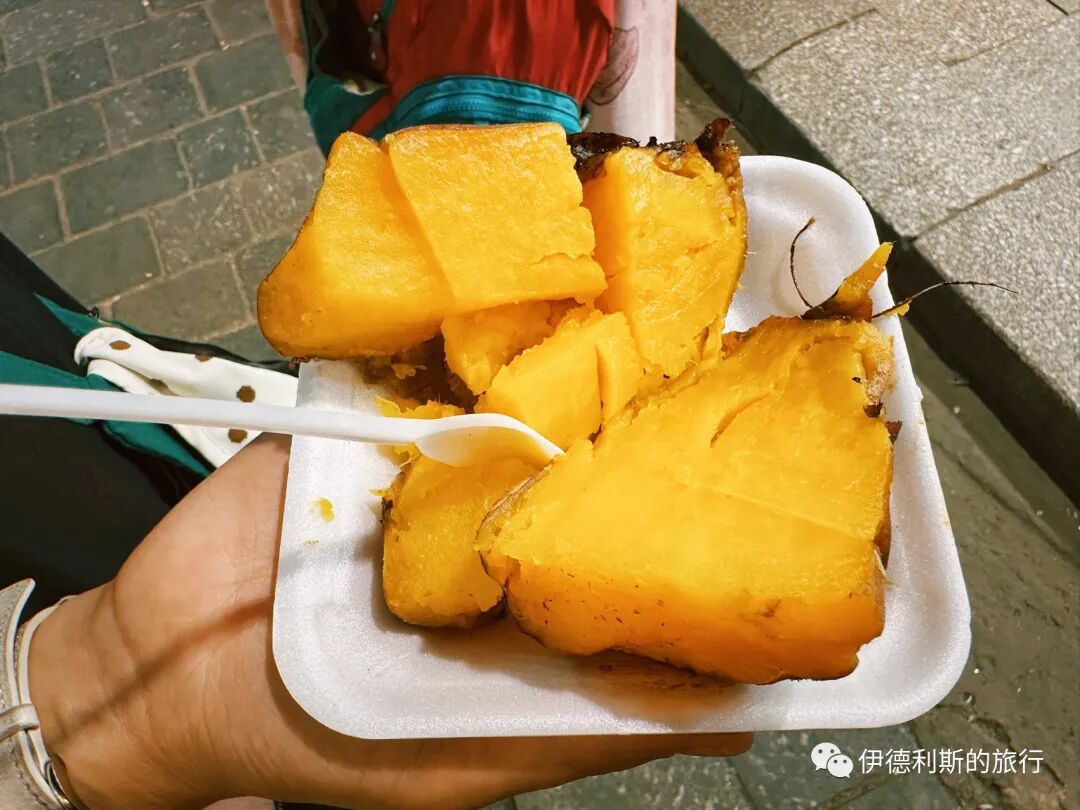
Roasted sweet potatoes on the streets of Old Cairo.
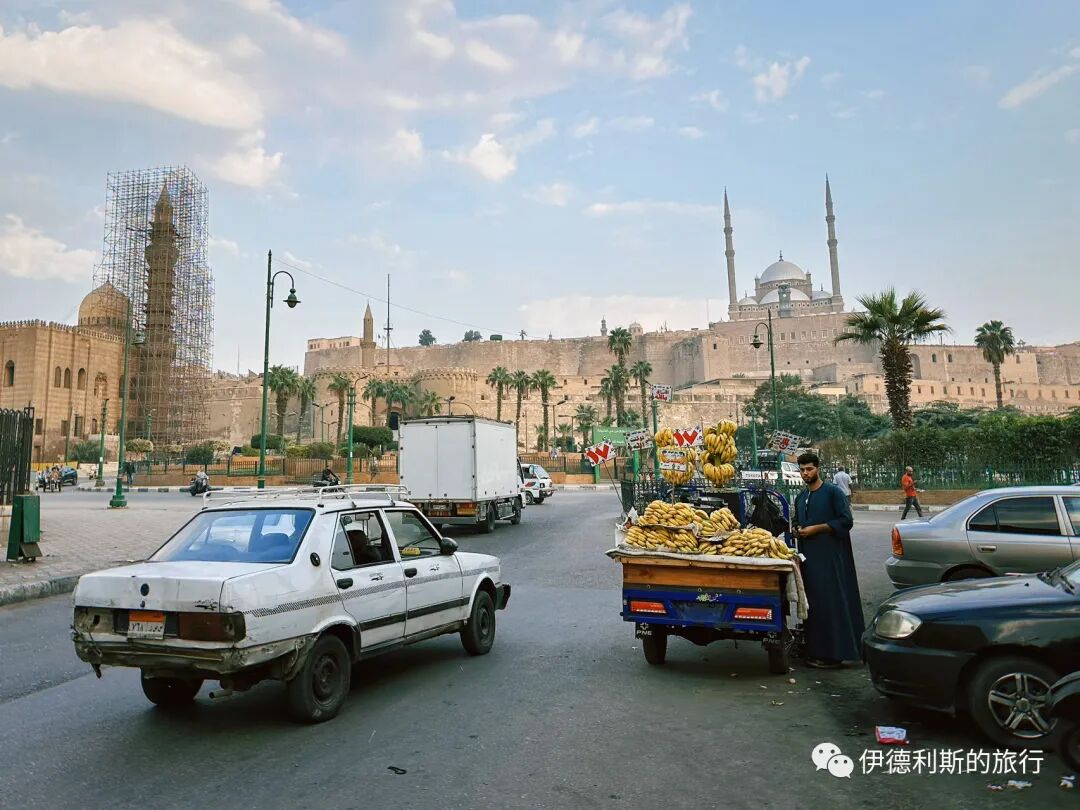
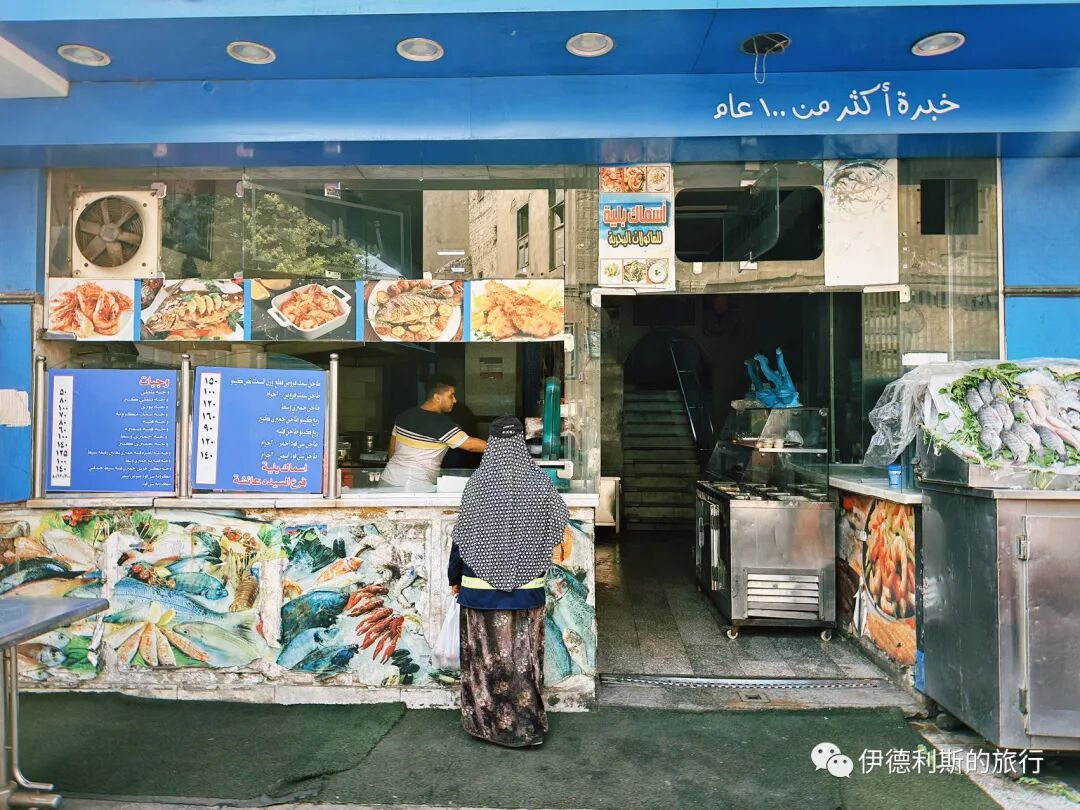
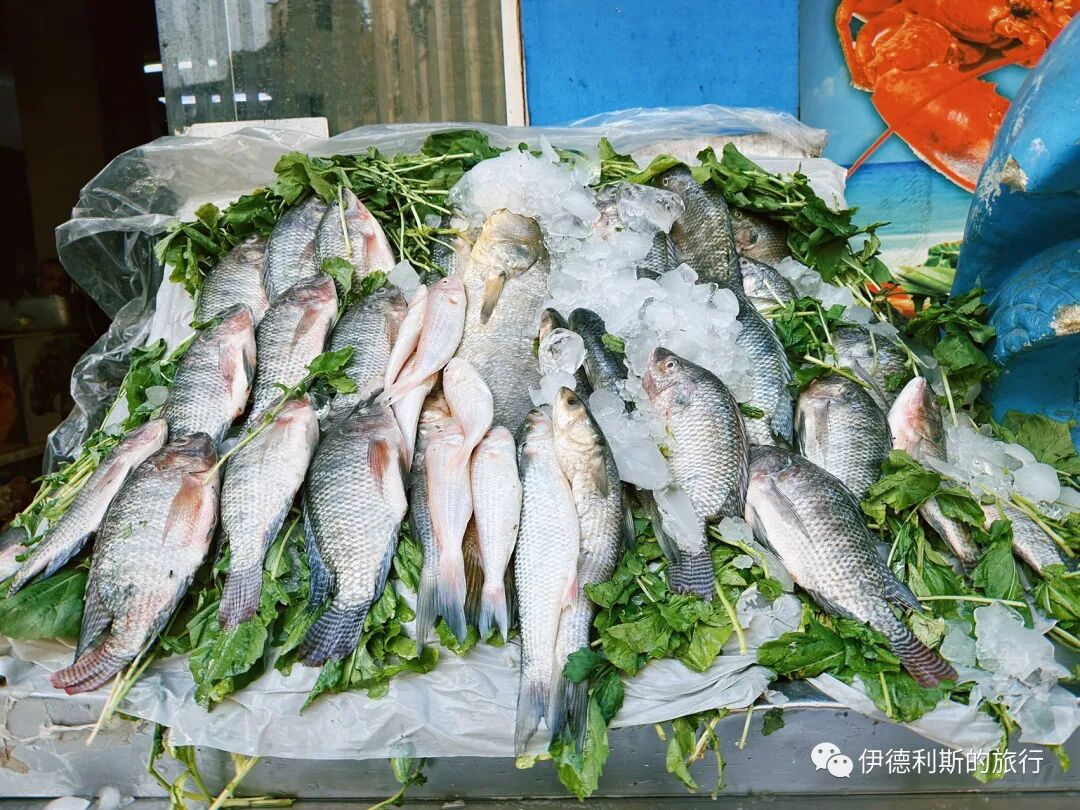
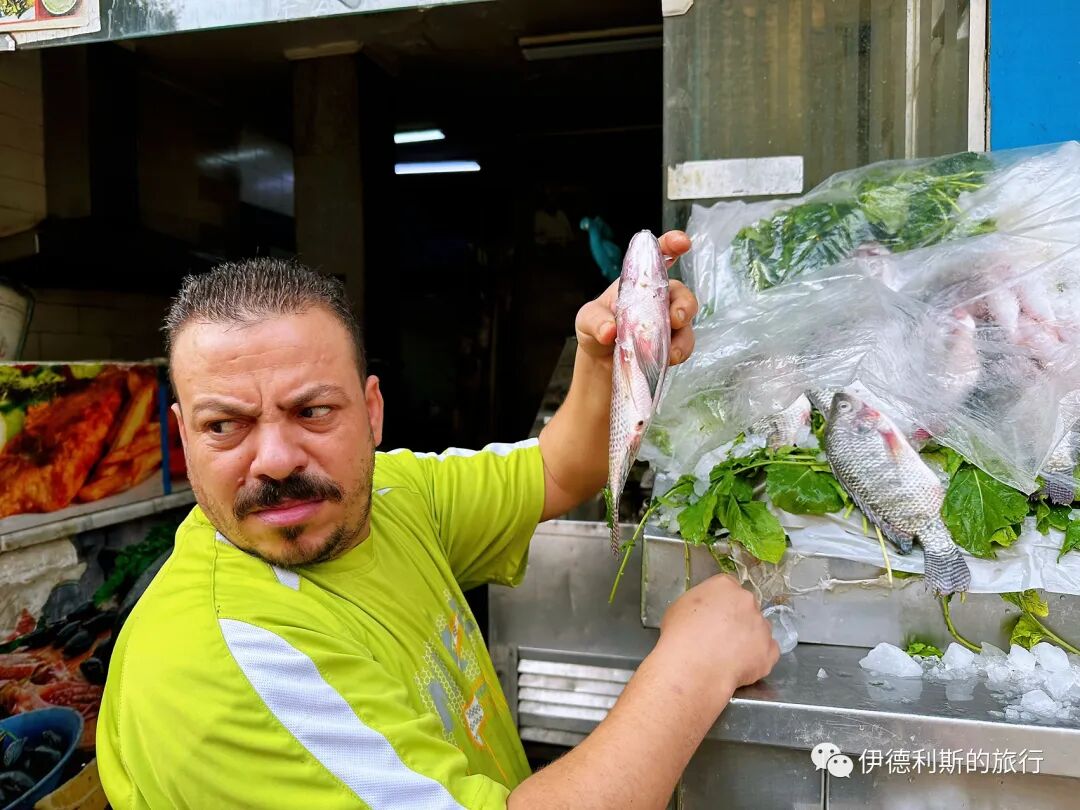
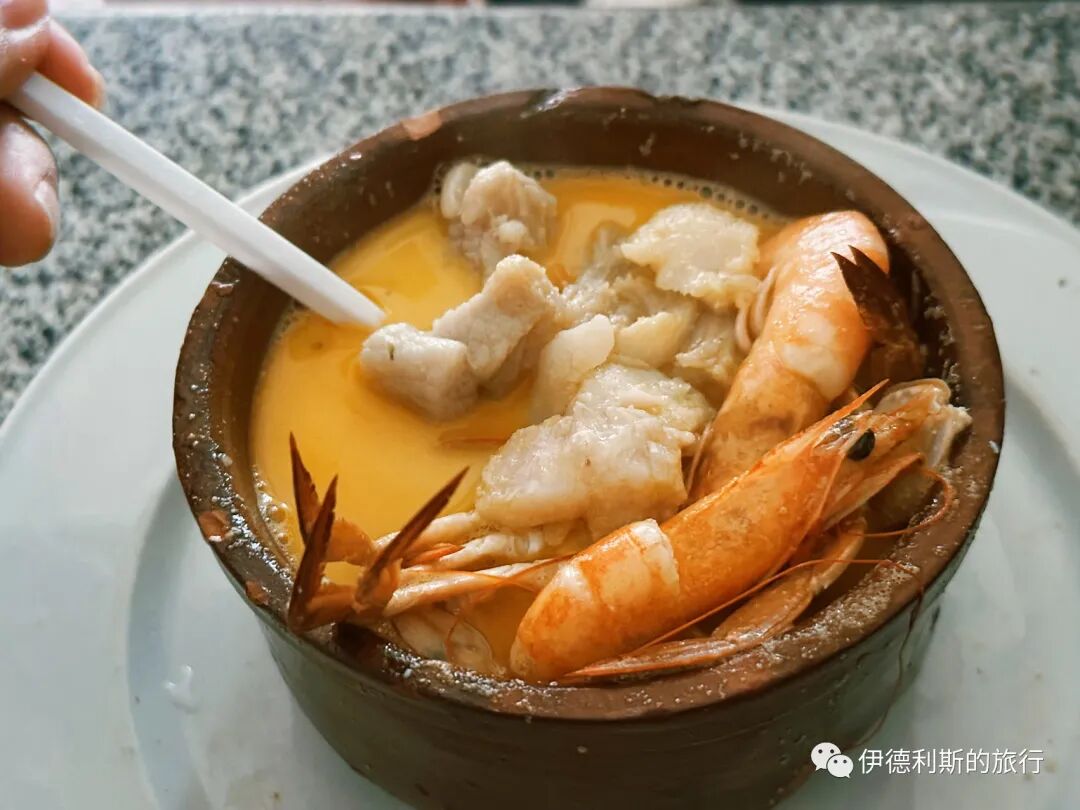
I had fried fish and seafood soup near the Citadel of Saladin in Cairo; the soup contained fish chunks, shrimp, and small crabs.
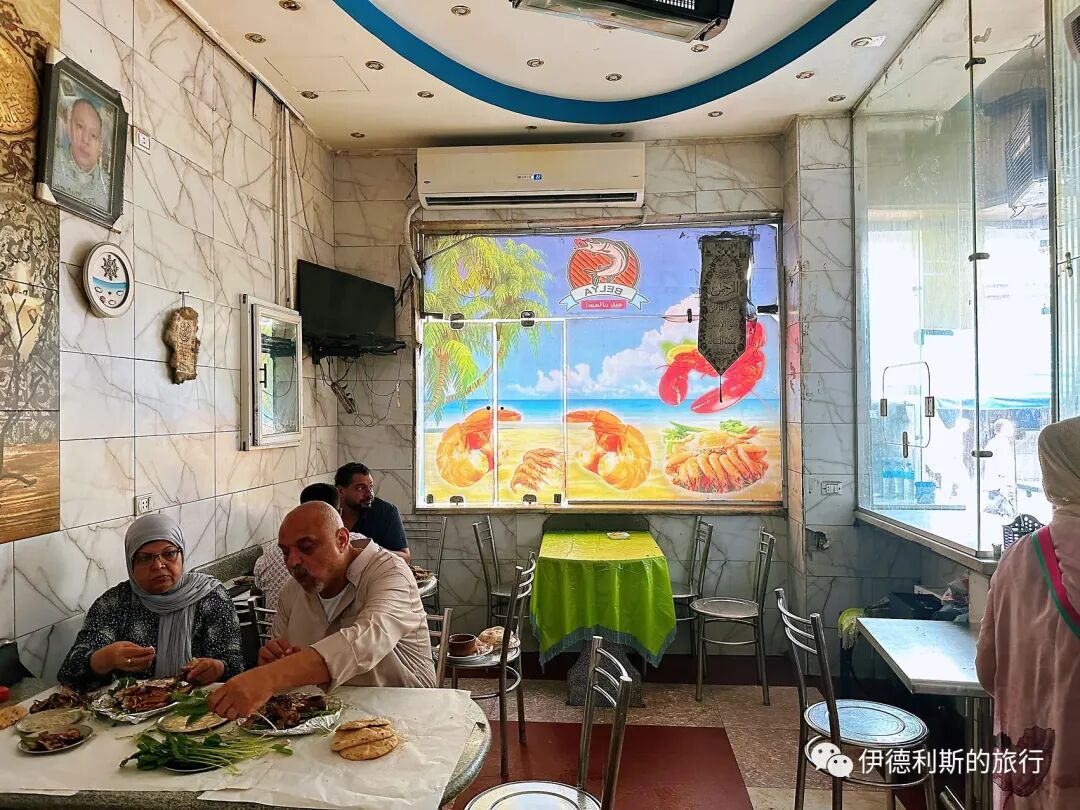
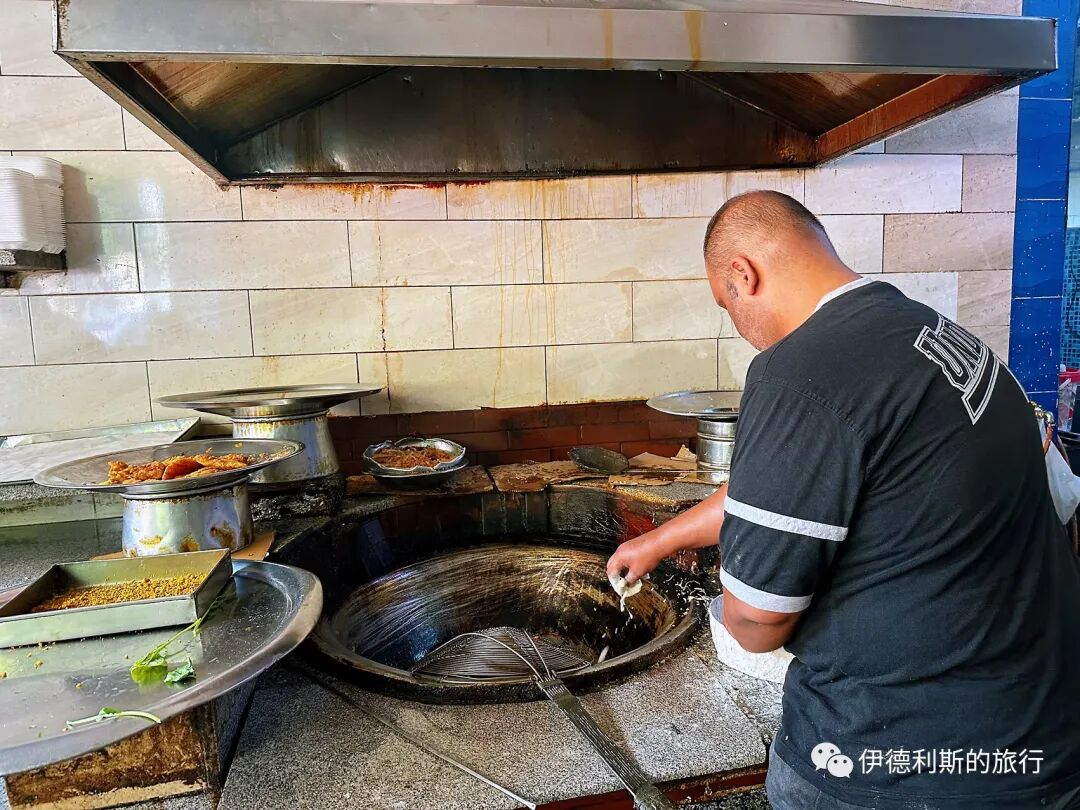
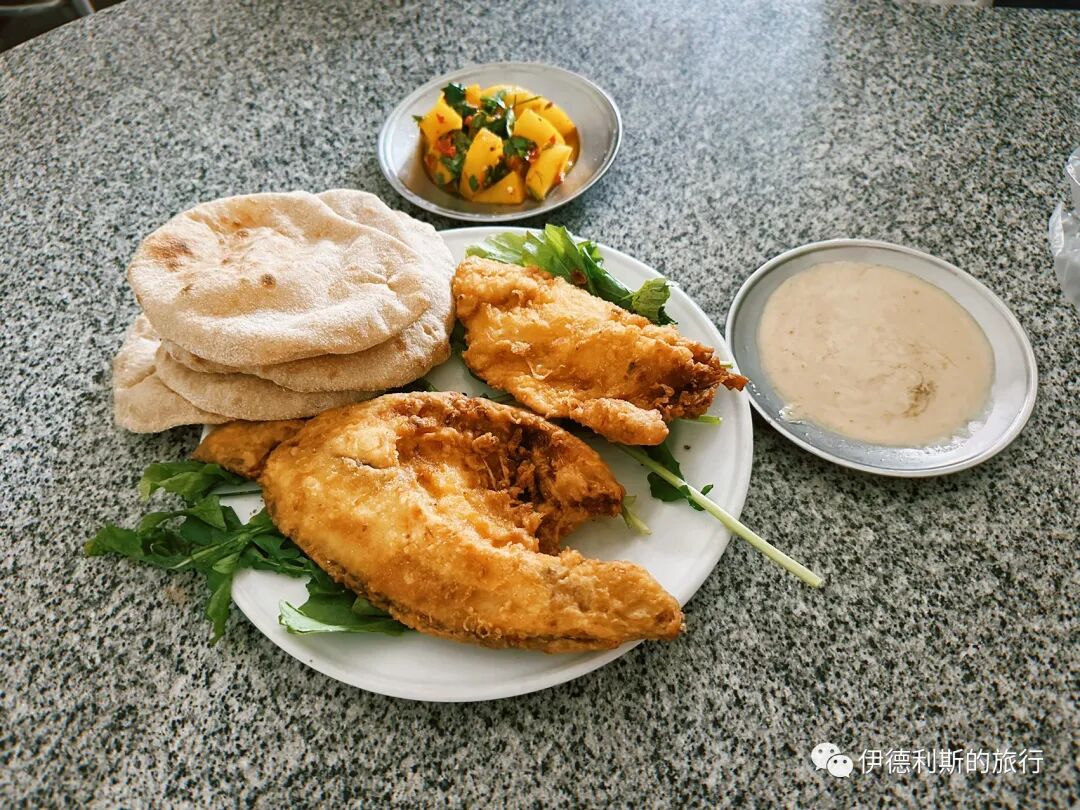
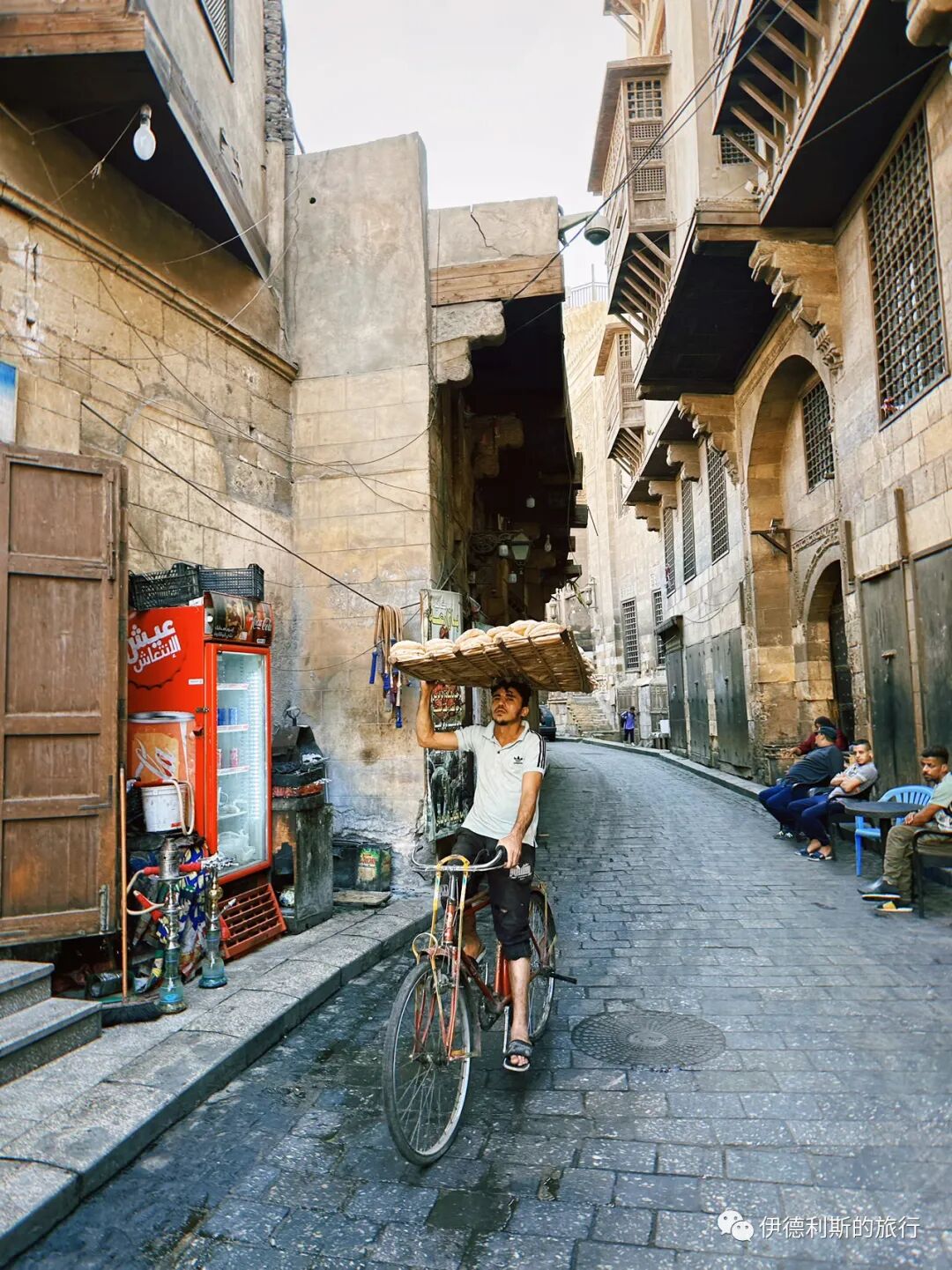
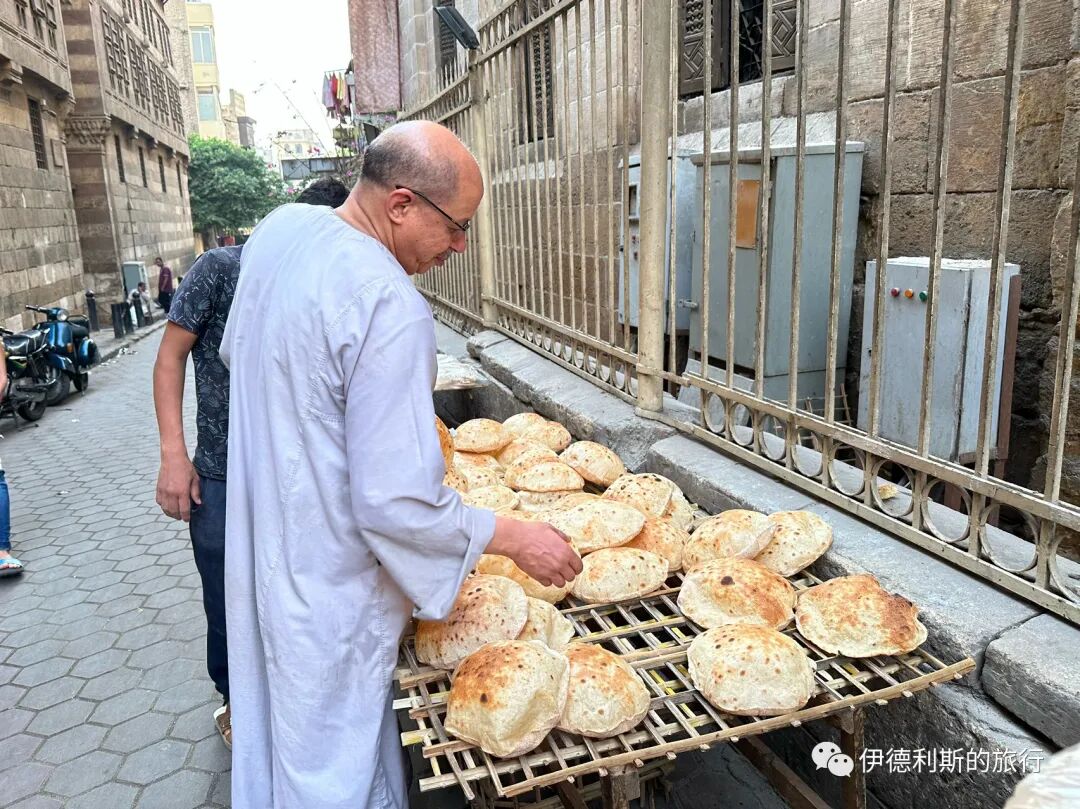
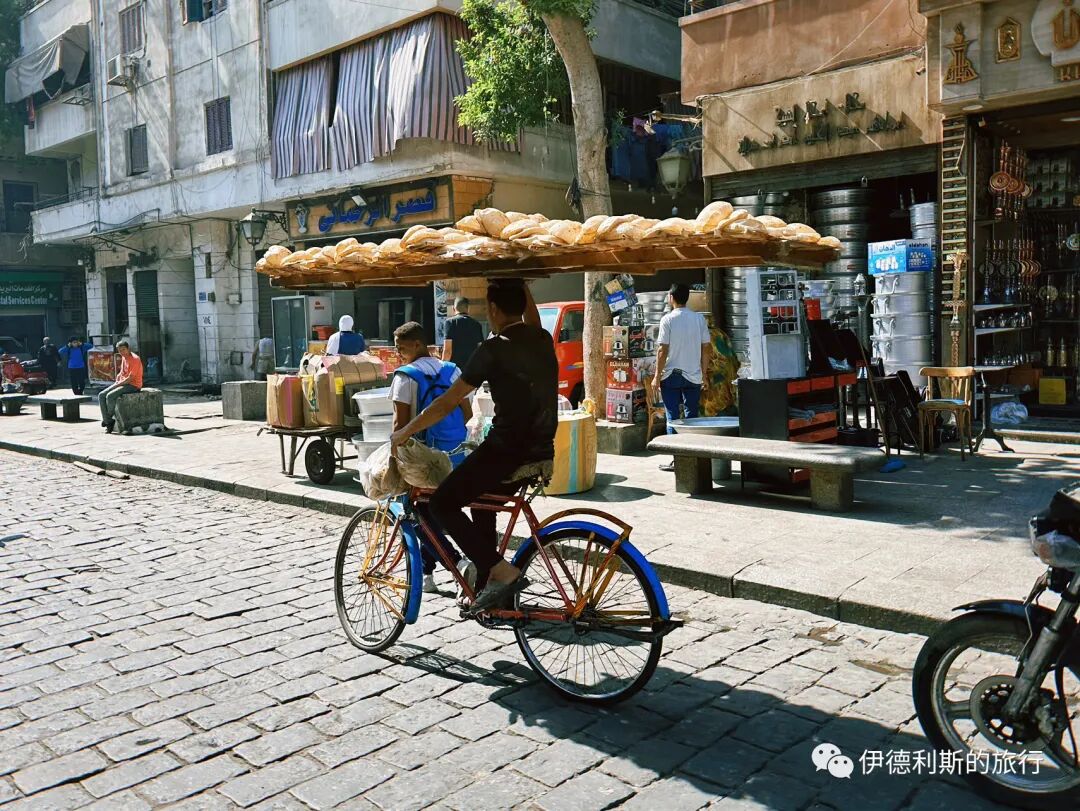
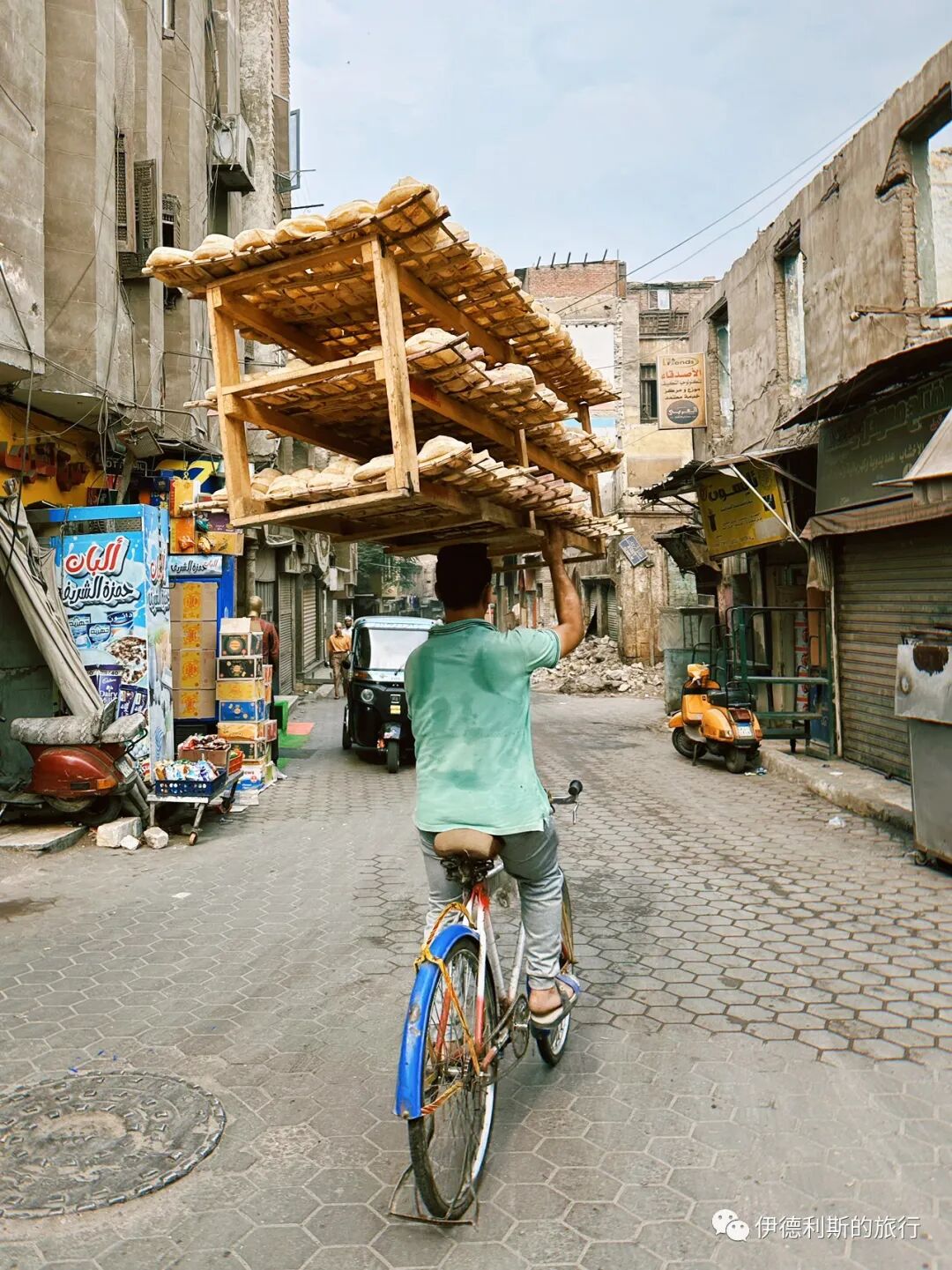
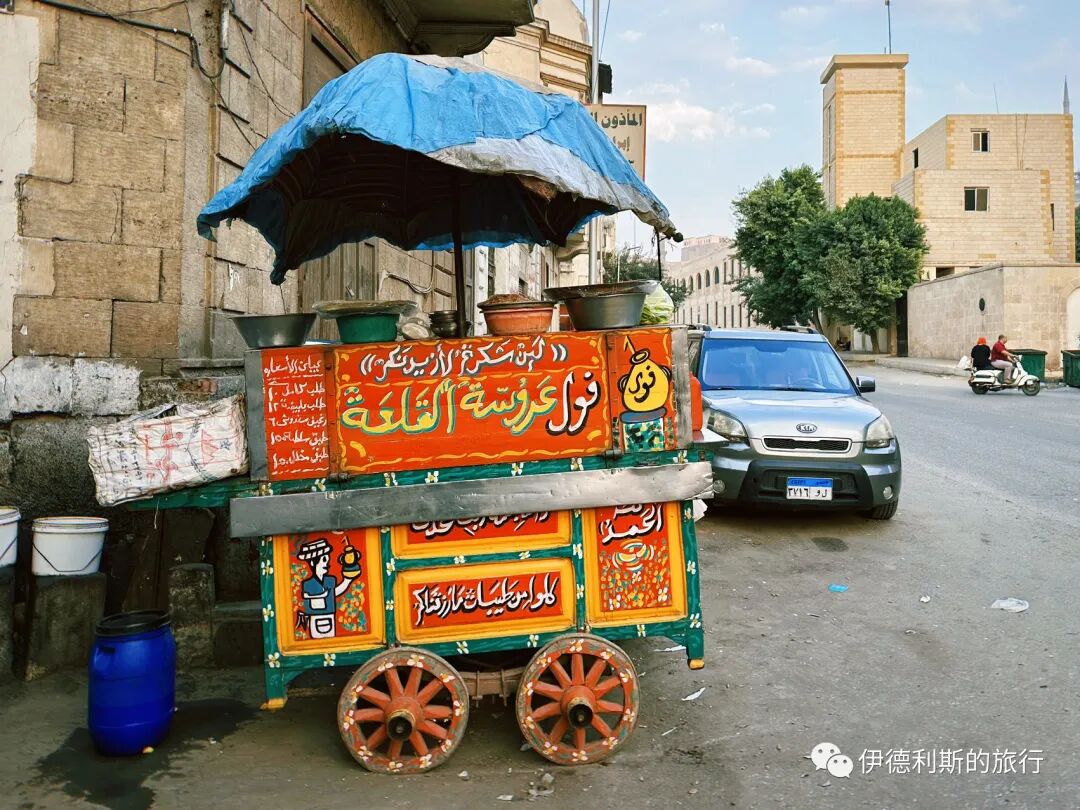
Egyptians cannot eat without their local flatbread (eish baladi). Seeing delivery guys riding bicycles with stacks of bread on their heads is a real sight in Old Cairo.
I had lunch at The Citadel Restaurant inside Al-Azhar Park on the east side of the old city.
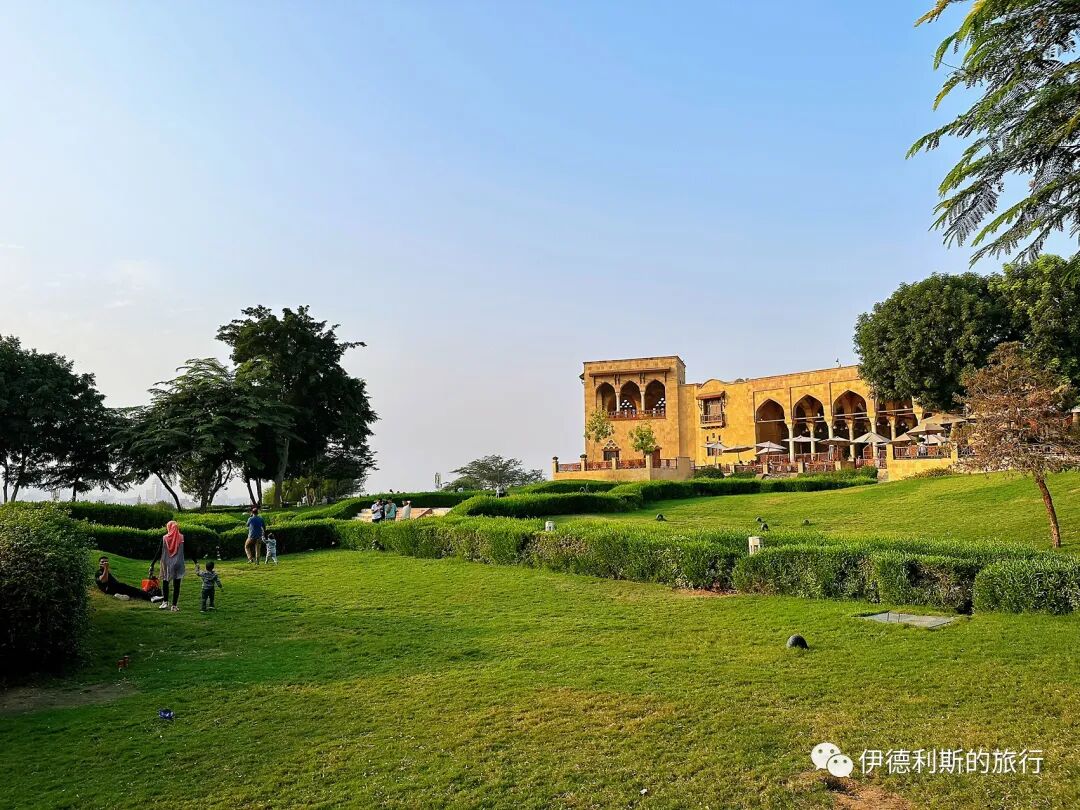
Al-Azhar Park was originally a trash heap that had existed in Old Cairo for 500 years. In 1992, the 49th Imam of the Ismaili sect, Aga Khan IV, donated funds for its transformation. His Aga Khan Historic Cities Programme led the project, which restored the Ayyubid wall on the west side while building the park. The park officially opened in 2005 and became the best leisure spot for residents of Old Cairo.
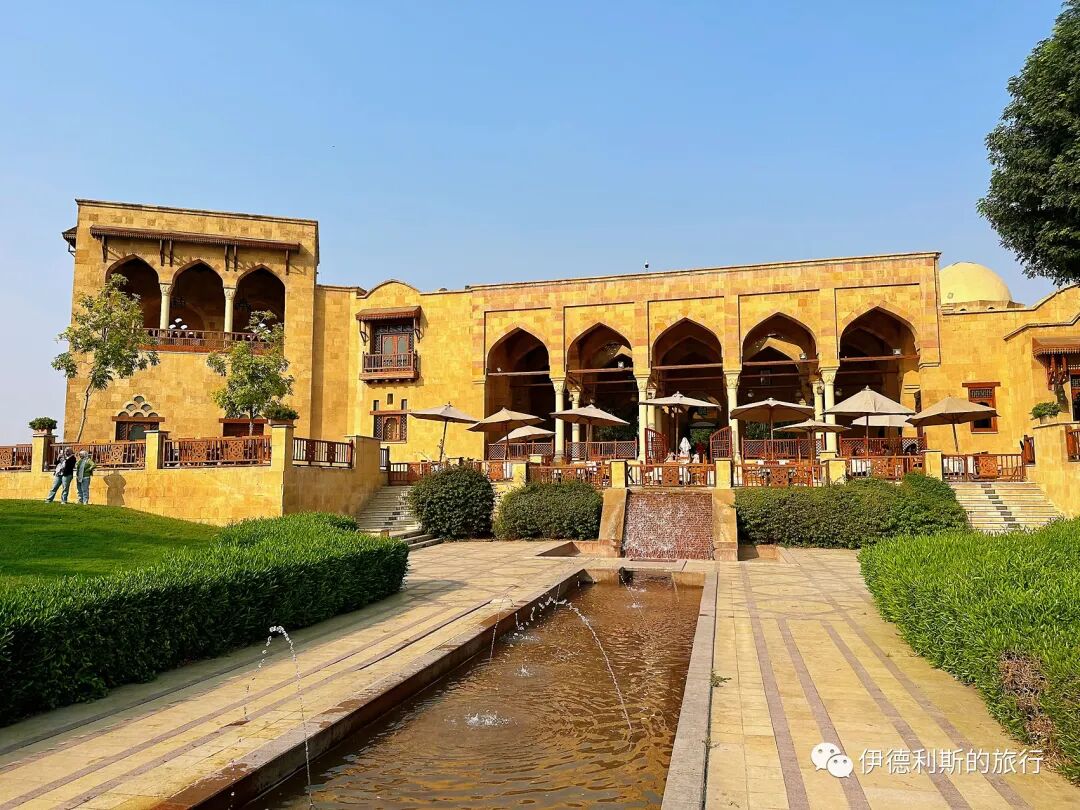
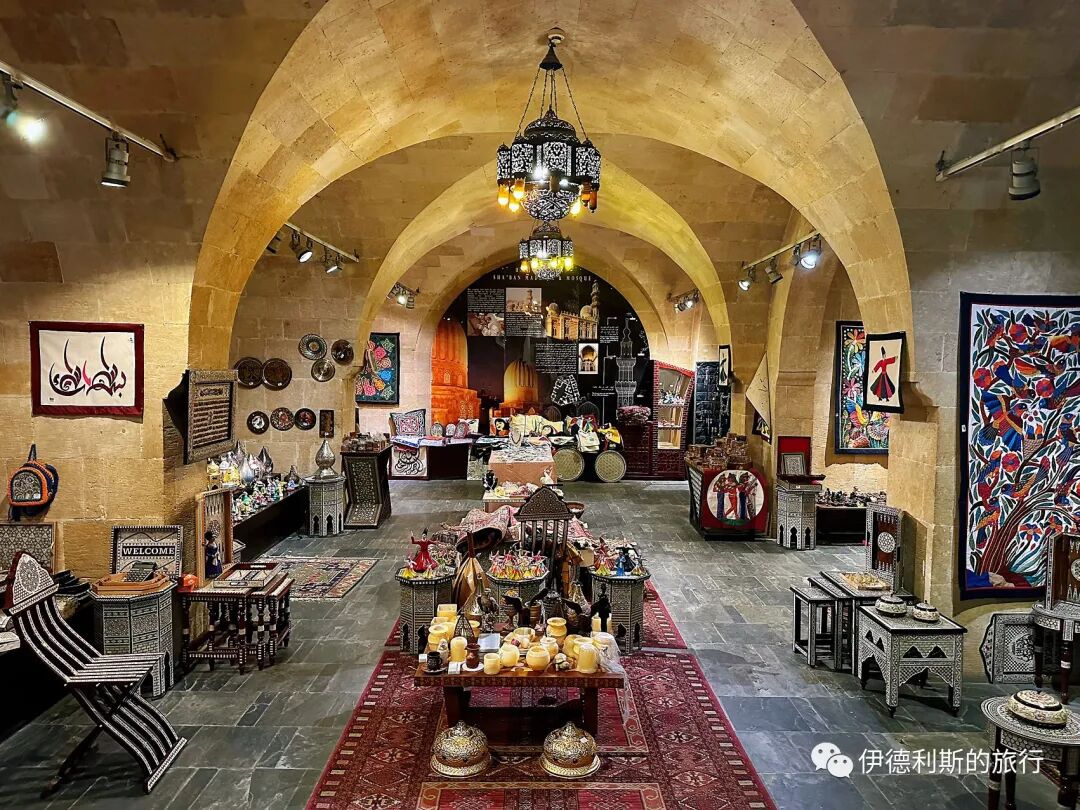
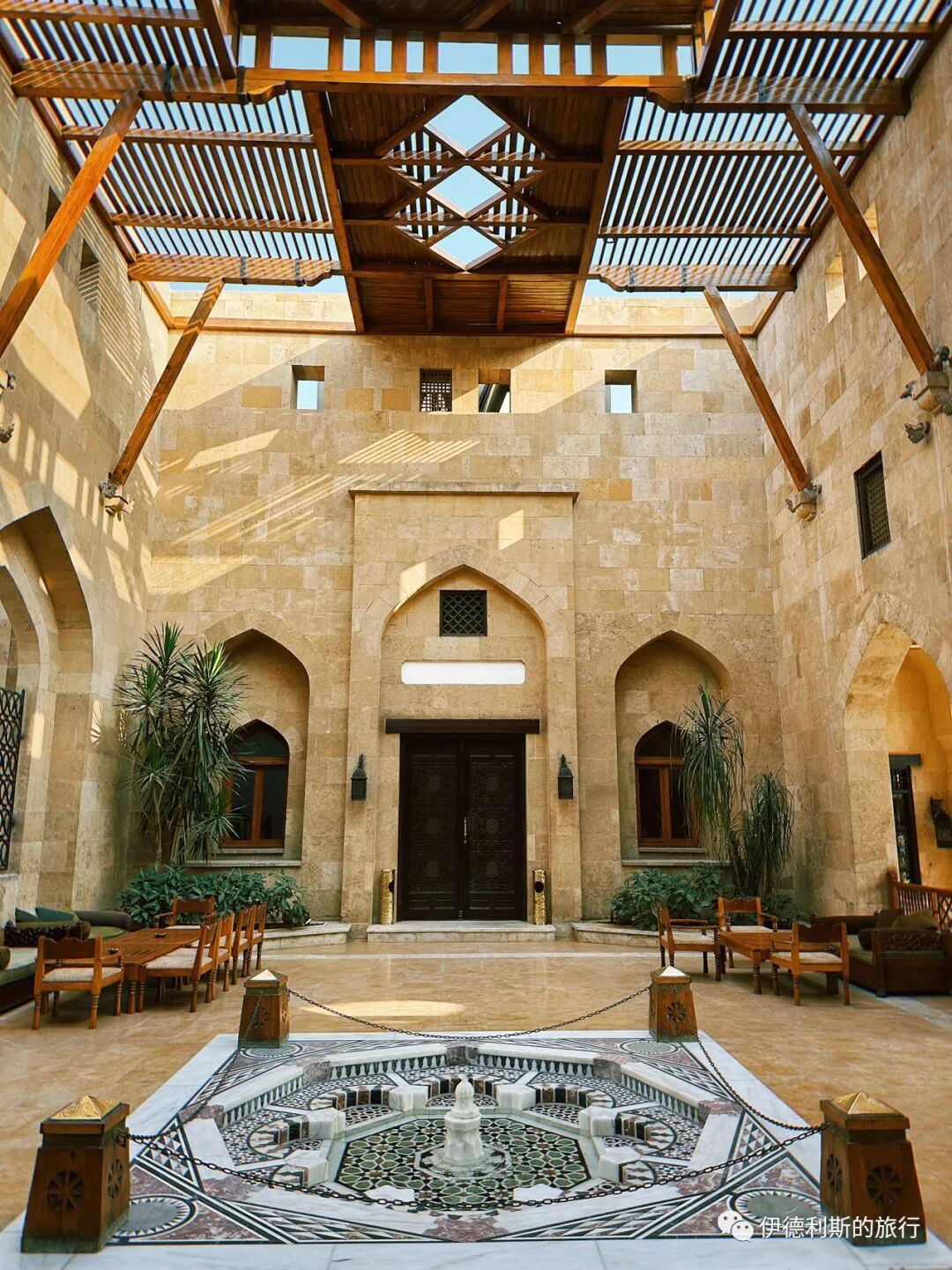
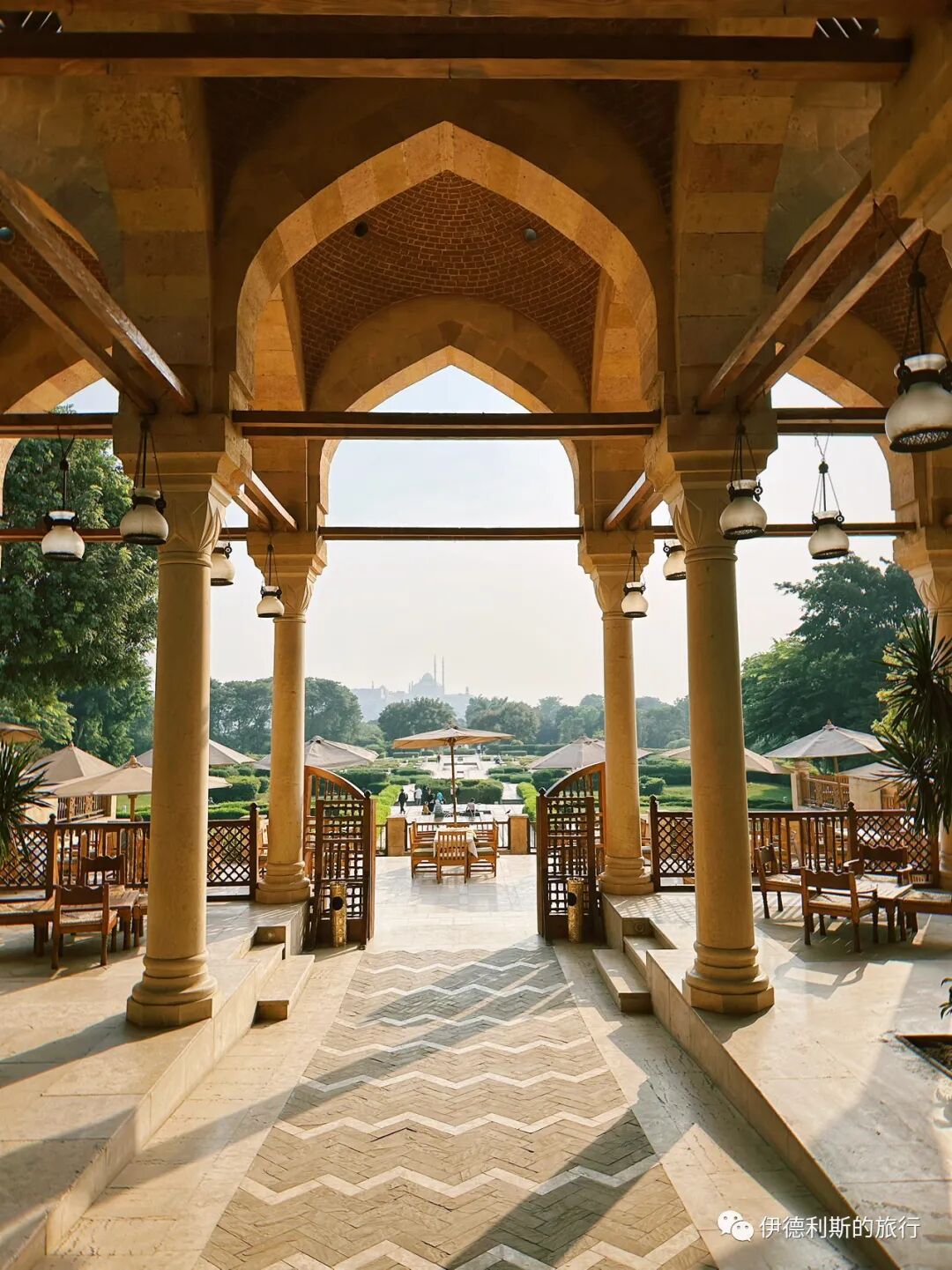
The Citadel Restaurant is on the north side of Al-Azhar Park, with a direct view of the Ayyubid Citadel. The restaurant is built in a traditional Egyptian style and has a great atmosphere.
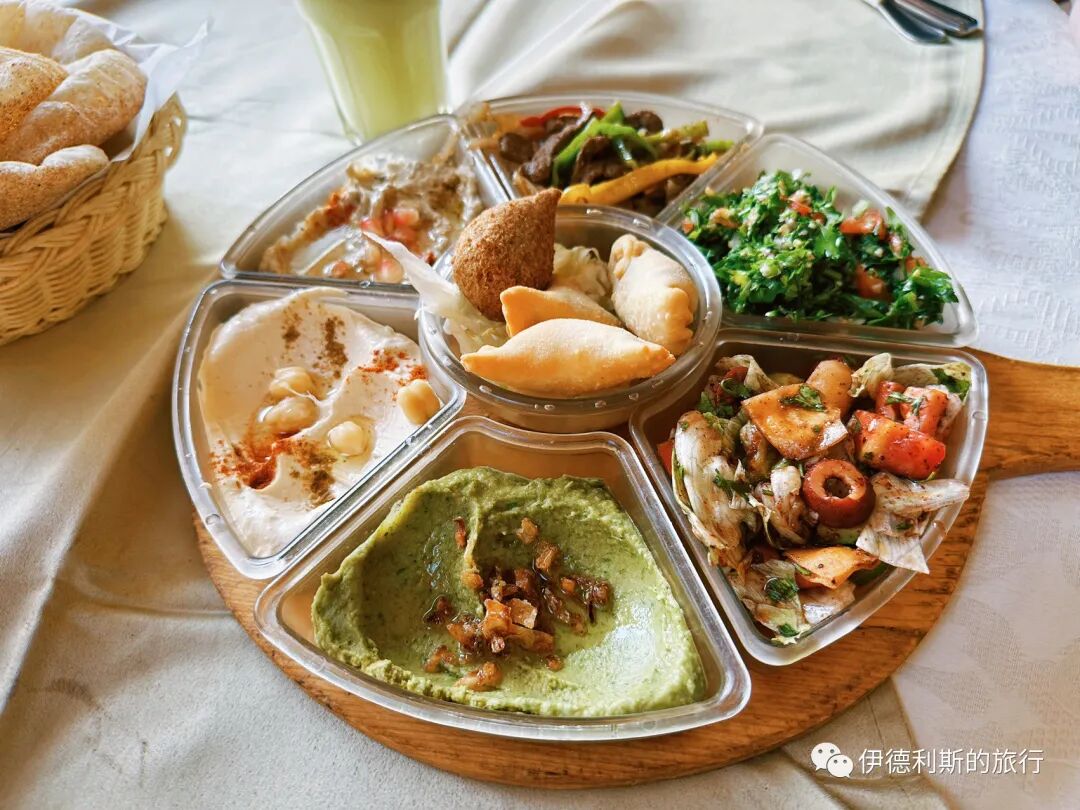
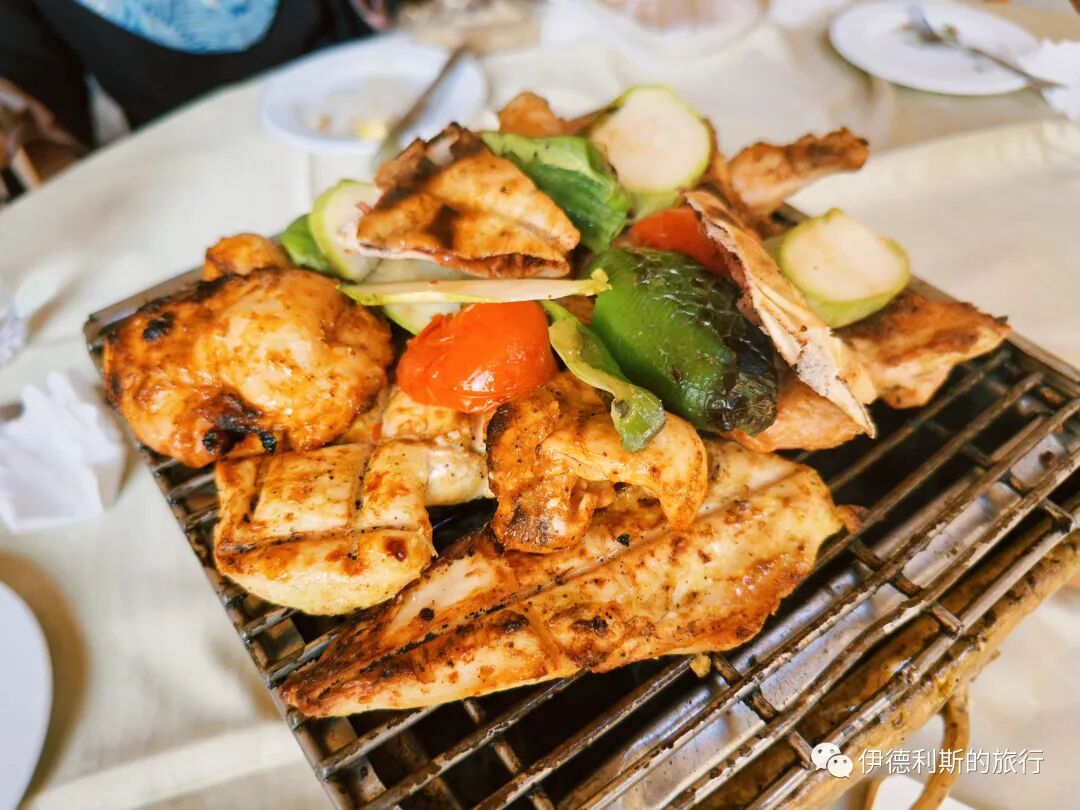
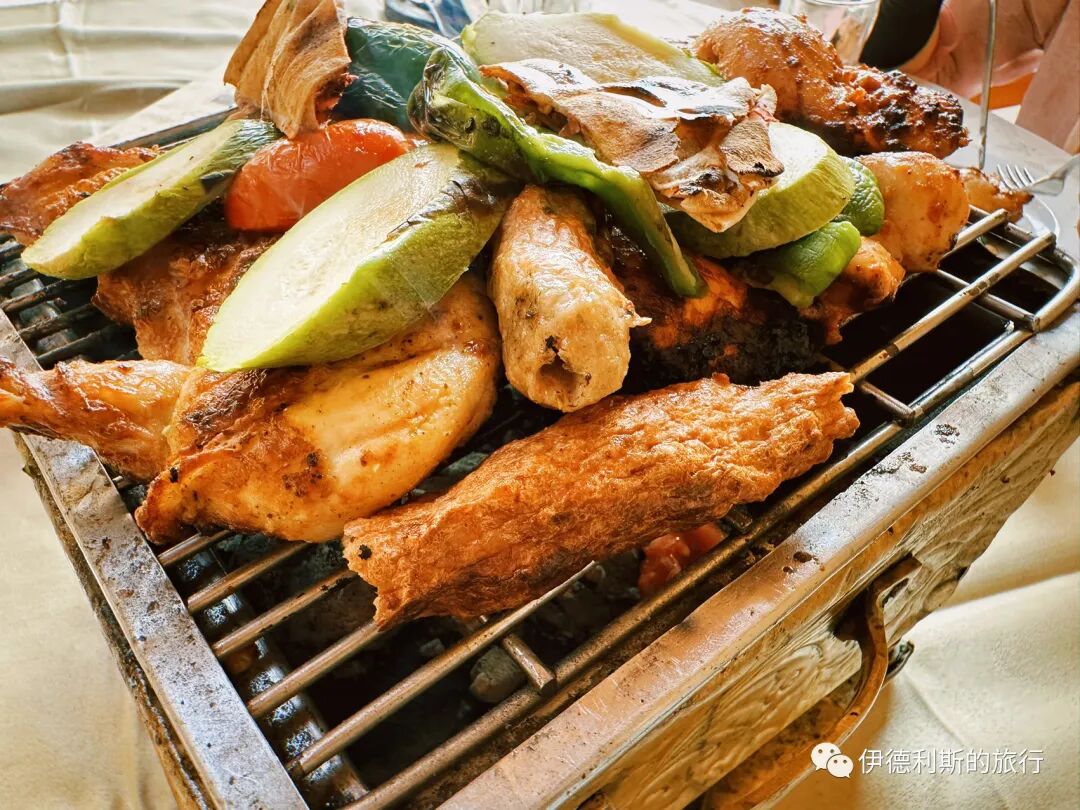
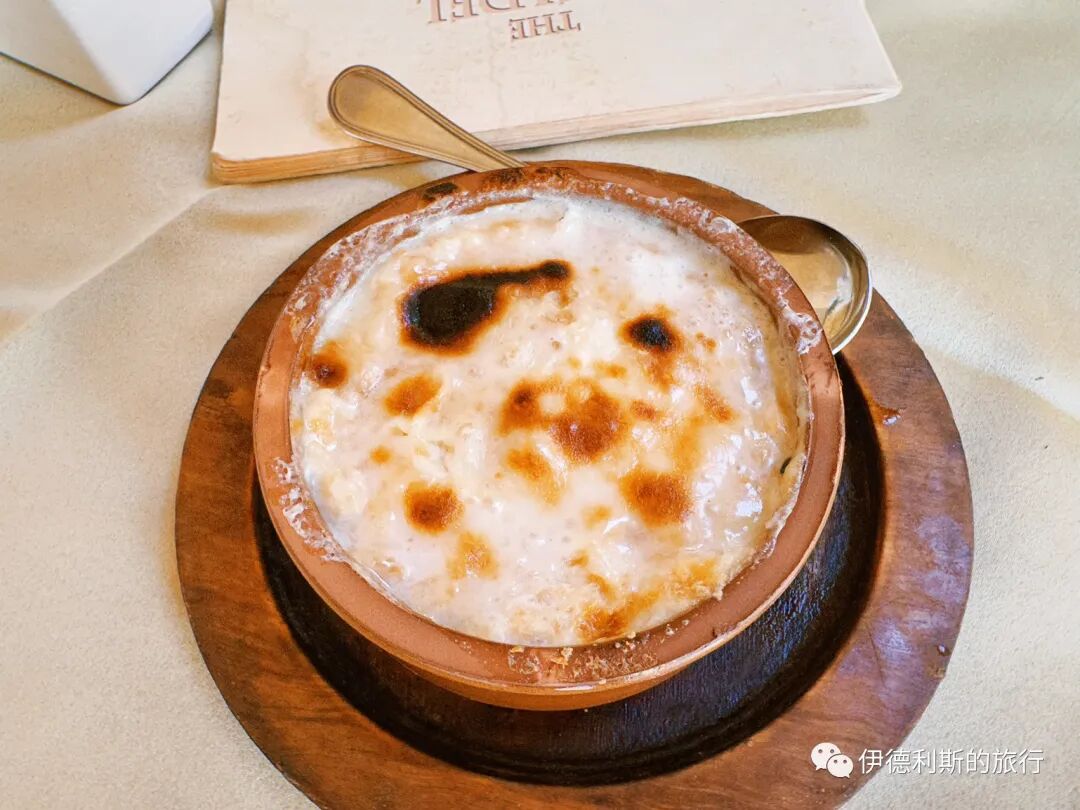
We ordered an appetizer platter, Shawaya grilled chicken, and the traditional Egyptian dessert Om Ali.
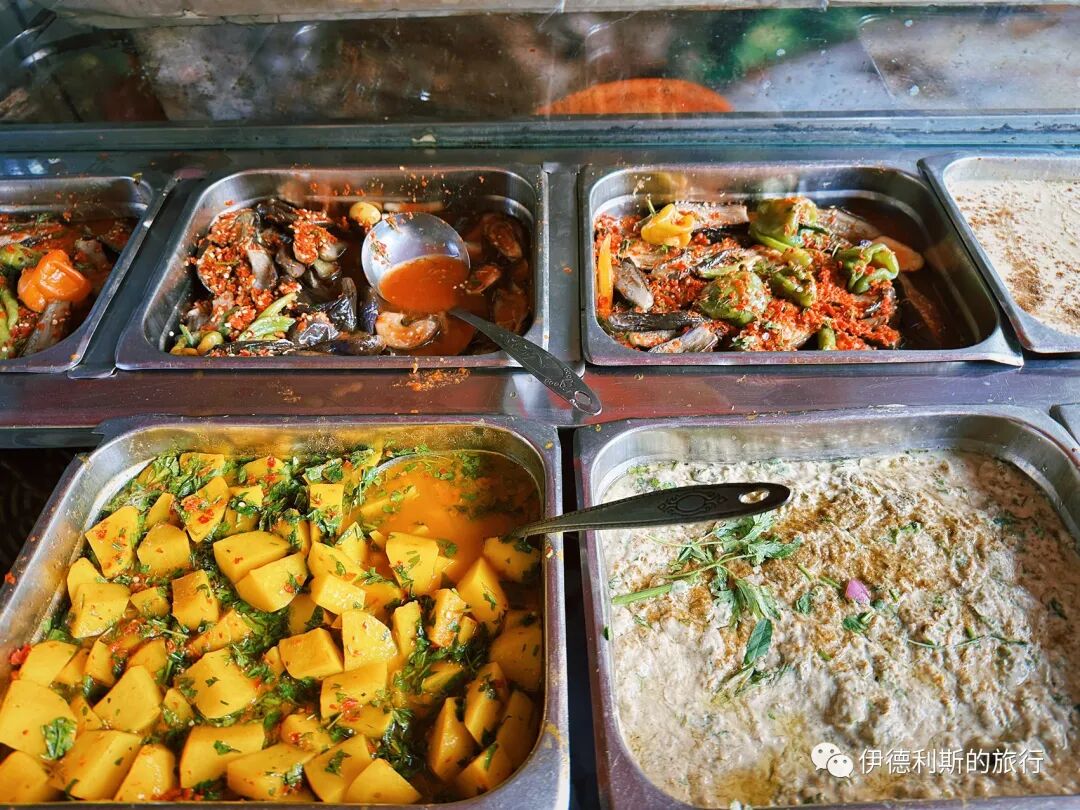
The appetizer platter included chickpea dip (hommus), bread salad (fatoush), parsley salad (tabula), eggplant dip (mottabal), Alexandrian beef liver, fried pastry triangles (sambosak), and fried vegetable balls (kobeba), which we ate by dipping with flatbread (eish baladi); it felt very worthwhile.
The Shawaya includes various grilled chicken pieces, including shish taouk, a traditional Ottoman chicken skewer marinated in yogurt and lemon juice before grilling.
Om Ali is made by mixing cake with pistachios, coconut flakes, raisins, and sugar, then pouring cream over it, sprinkling it with cinnamon, and baking it in the oven until golden brown.
Om Ali means "Mother of Ali" and refers to the mother of Al-Mansur Ali, the second sultan of the Mamluk dynasty who reigned from 1257 to 1259. Legend has it that the Mamluk dynasty's founding sultan, Aybak, and Queen Shajar al-Durr had major conflicts in their later years. Shajar al-Durr plotted to have servants kill the sultan, after which the sultan's son, Al-Mansur Ali, took the throne. Ali's mother and the servants beat Shajar al-Durr to death together and served this dessert to everyone to celebrate the queen's death.
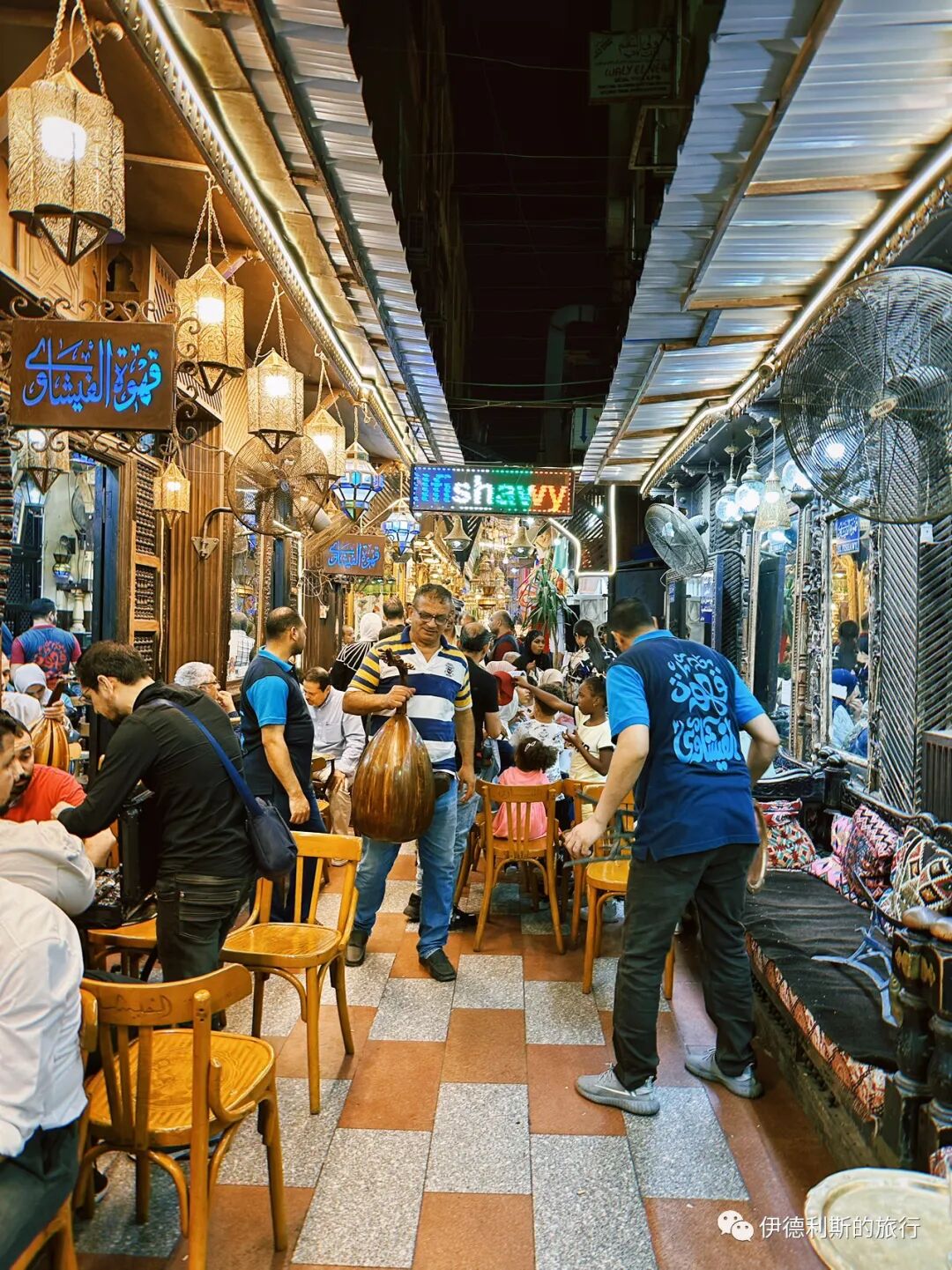
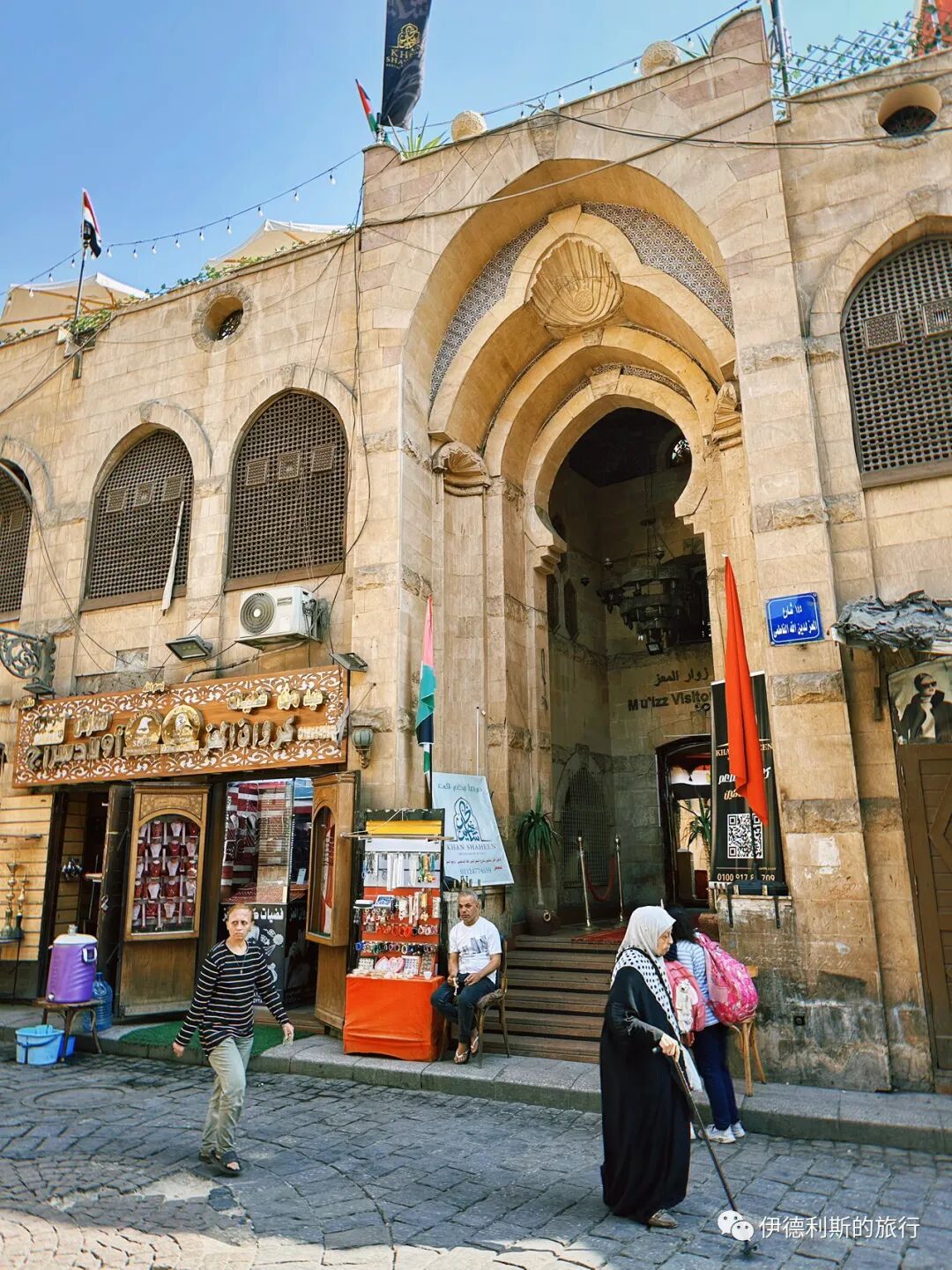
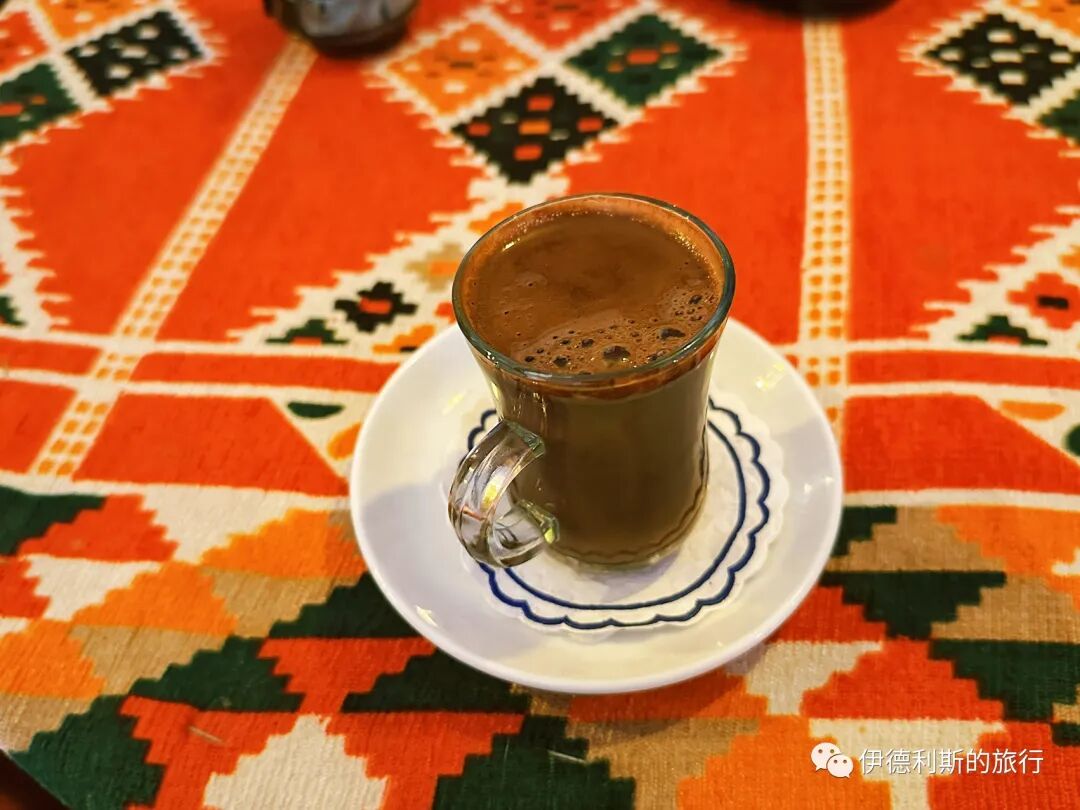
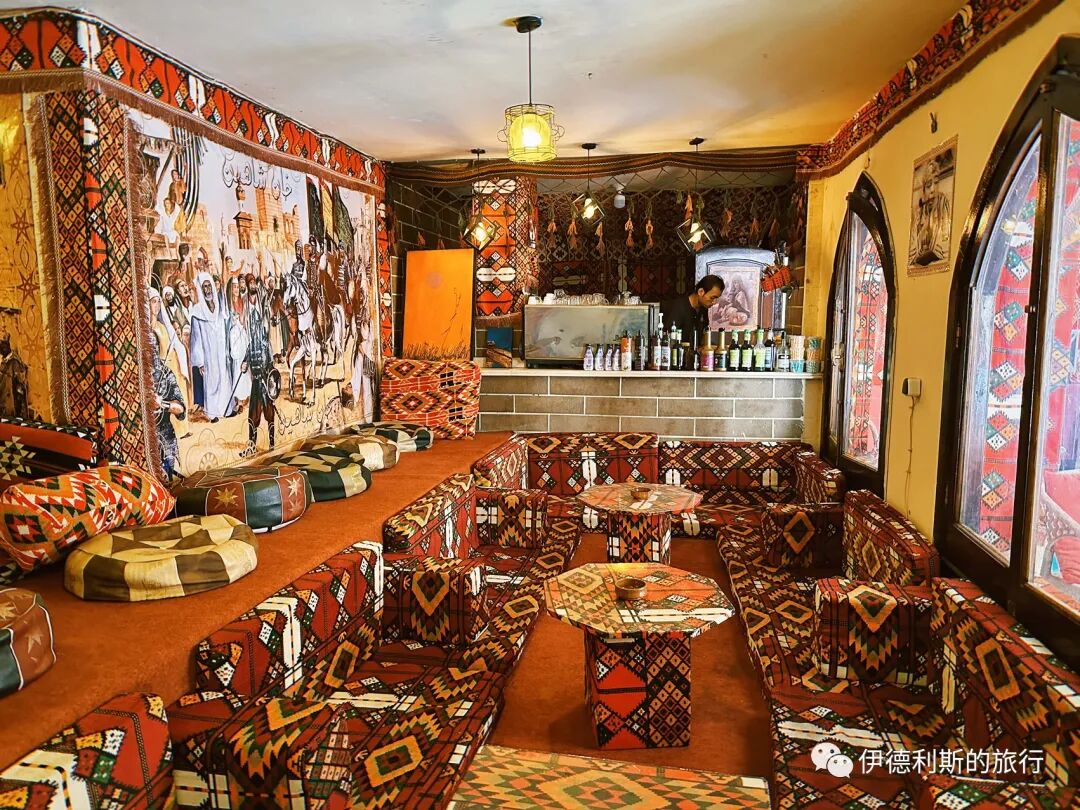
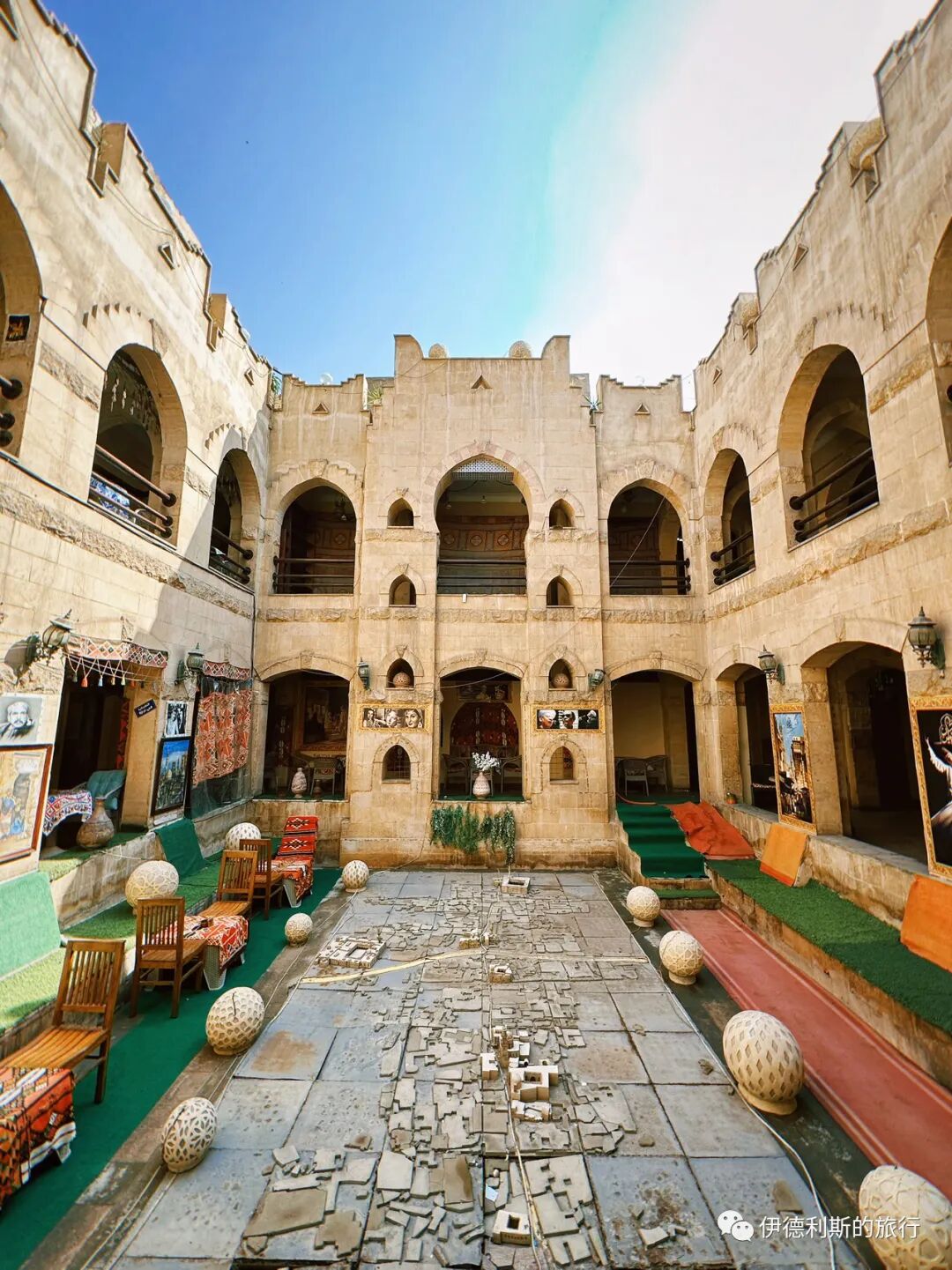
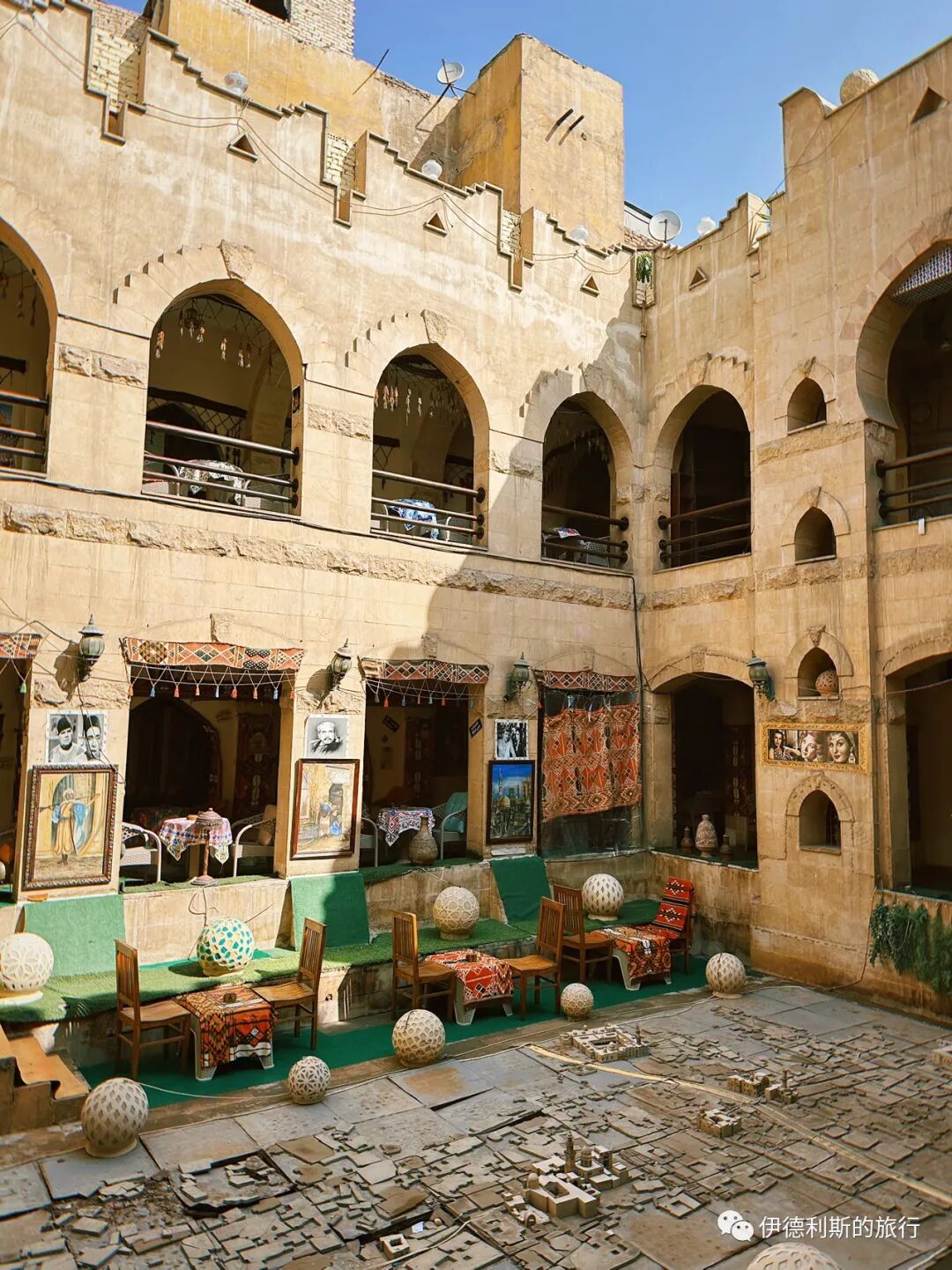
Khan Shaheen Cafe on the main Al-Mu'izz street in Old Cairo is located inside a historic caravanserai building. I had coffee inside; the service charge was a bit high, but the environment was truly quite nice.
I bought a handmade traditional Al-Azhar fez (tarboush) at a hat shop in Old Cairo, where students from Egypt's Al-Azhar University buy their hats.
The tarboush hat is a fez, and the term tarboush is mainly used in the Levant and Egypt. In 1829, Ottoman Sultan Mahmud issued a decree requiring all officials to wear the fez, and from then on, the fez became a symbol of the Ottoman dynasty.
After the Ottoman Empire collapsed, the Republic of Turkey led a hat revolution in 1925 and banned the wearing of the fez hat. In 1954, the Republic of Egypt also ordered a ban on the fez hat, which symbolized the Ottoman Empire, as part of its modernization movement. Before this, Cairo had always been a major production center for the fez. Although fez production later recovered in Egypt, it shifted mainly to cater to tourists.
Today, in the textile market west of the Al-Azhar Mosque in the old city of Cairo, there is still a century-old shop called Al Trapiche tarboush that insists on making Tarboush hats by hand. The Trapiche family has run this hat shop for over a hundred years. Their main customers today are imams from various mosques in Egypt and students from Al-Azhar University.
The machine used in the shop to heat and shape the wool felt is called a Waga. It was bought by the owner's great-grandfather a century ago. The last master craftsman who knew how to build a Waga passed away decades ago, and this machine is now out of production.
After we arrived at the shop, the owner measured my head, used a reed-woven hat mold to test the size, then put the red felt on the machine to press and shape it. He then sewed in the lining and the black tassel, and finally wrapped it with white cloth. After about forty minutes of work, a Tarboush hat was finished.
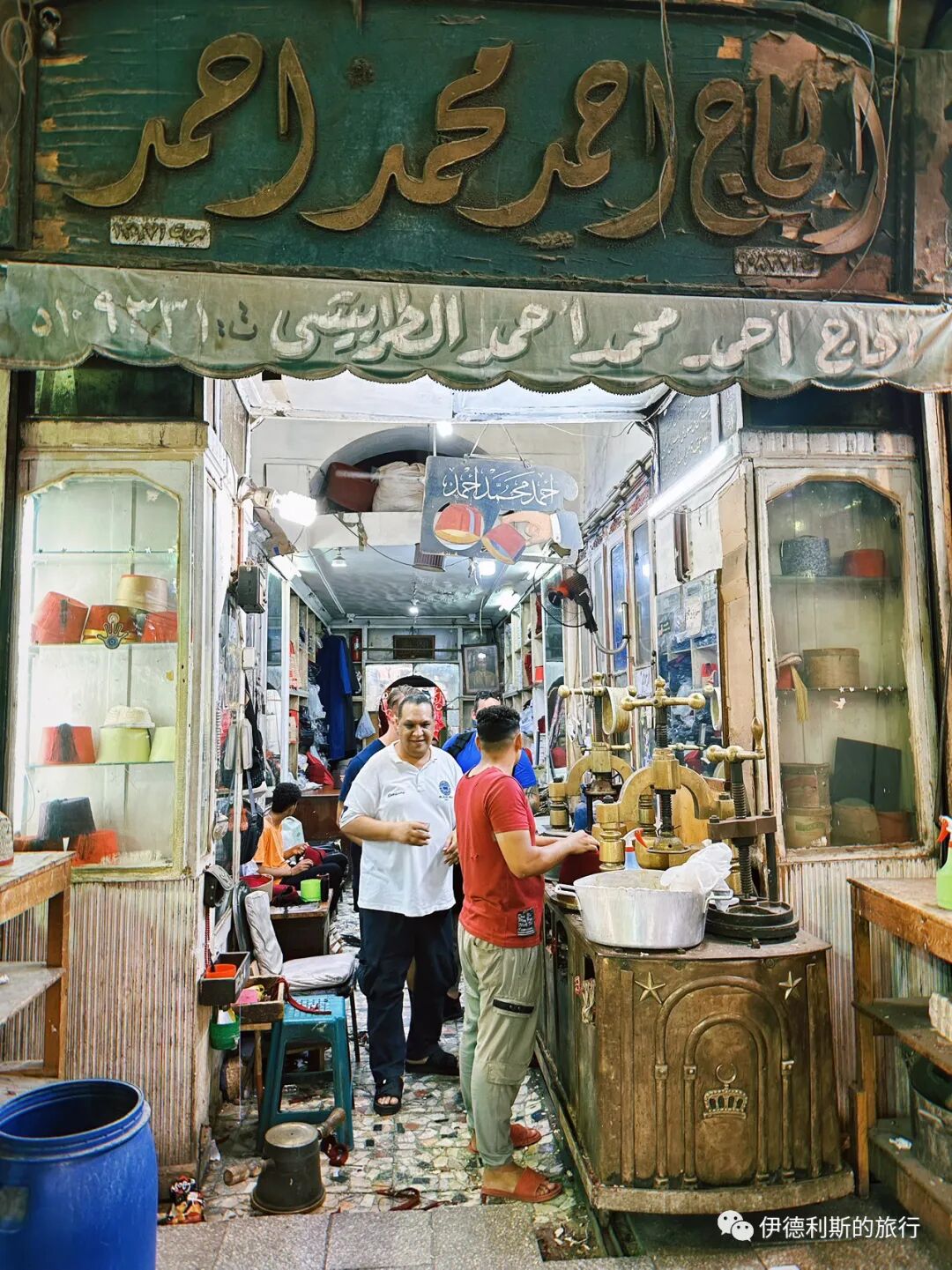
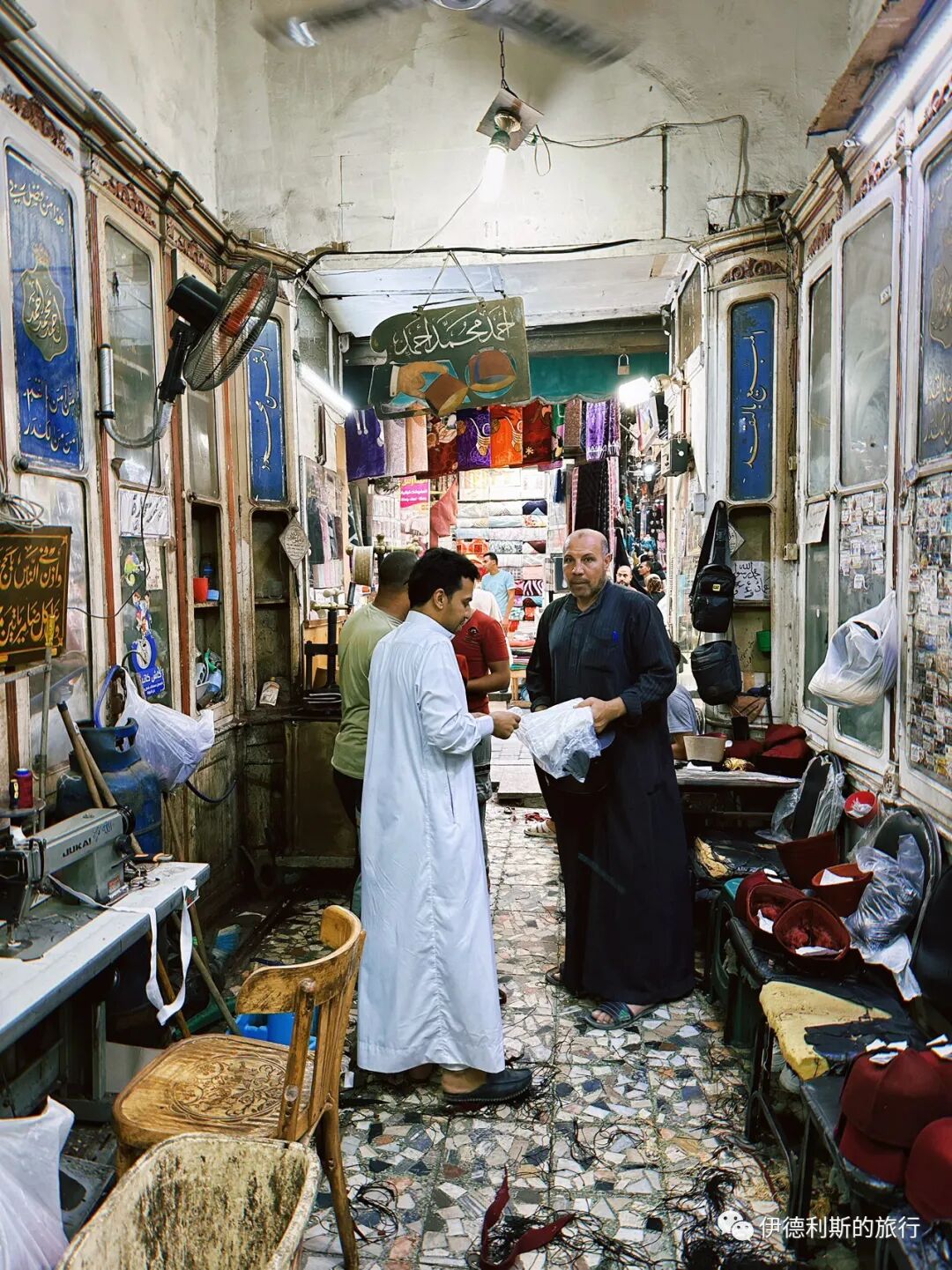
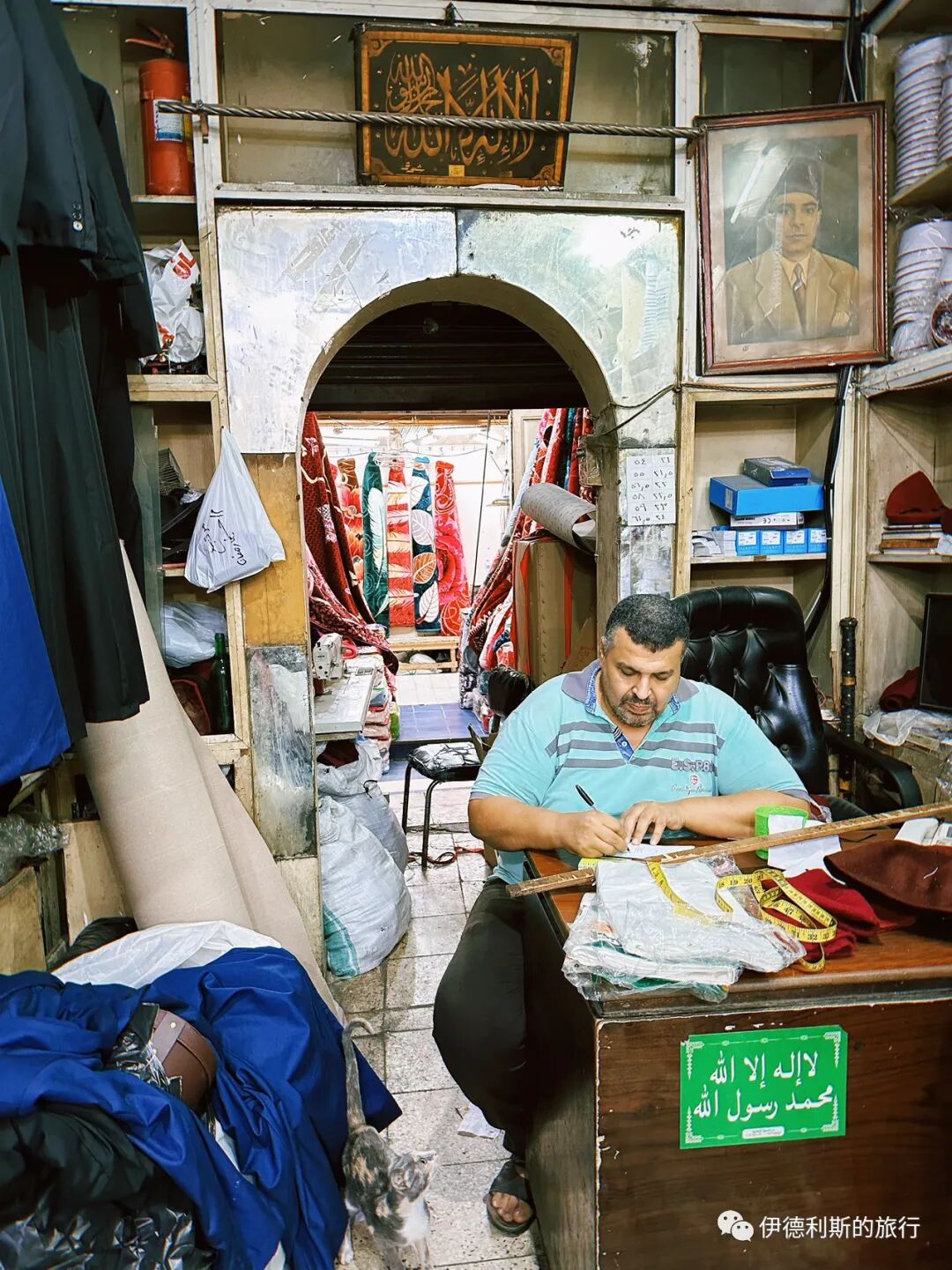
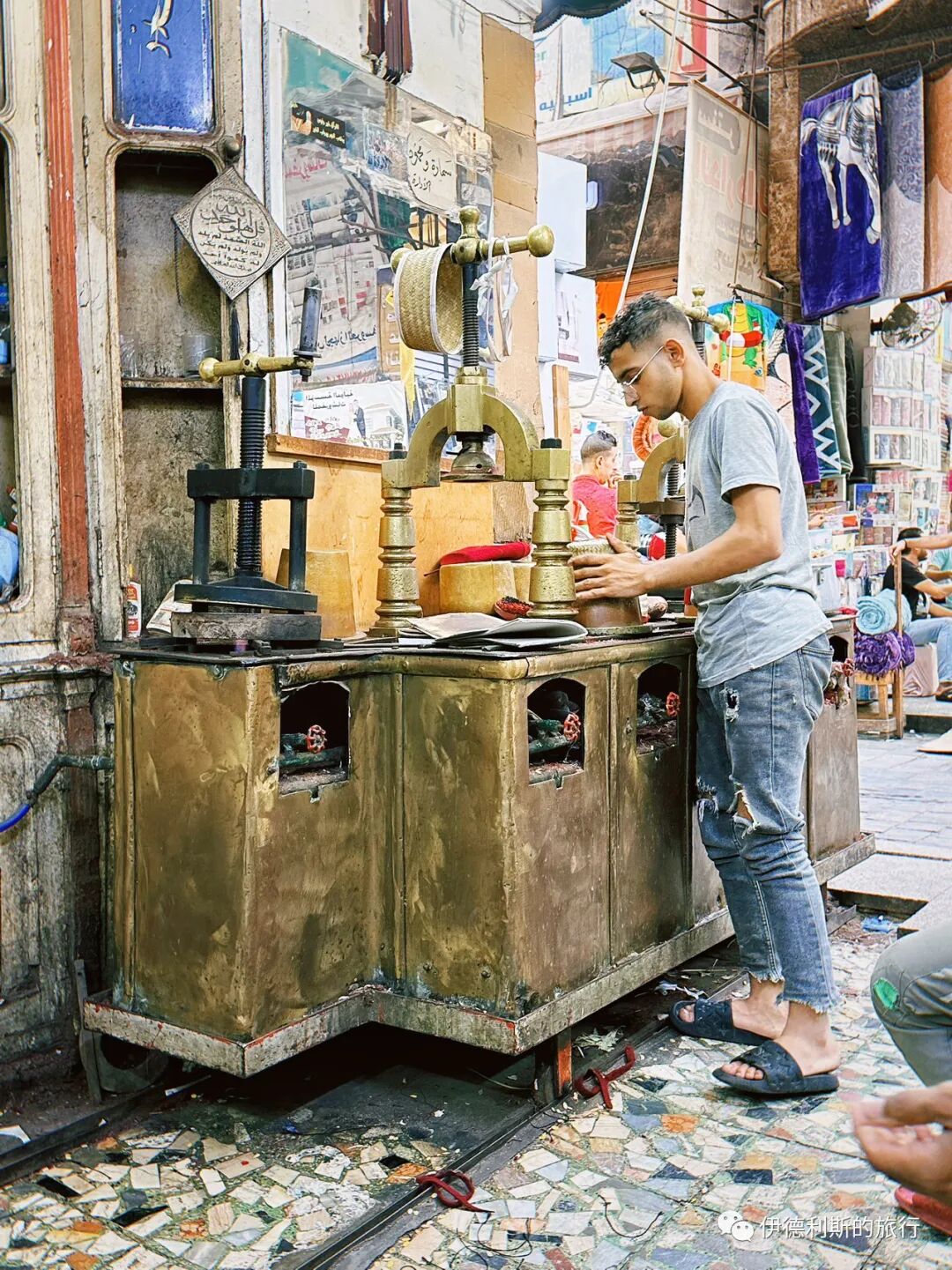
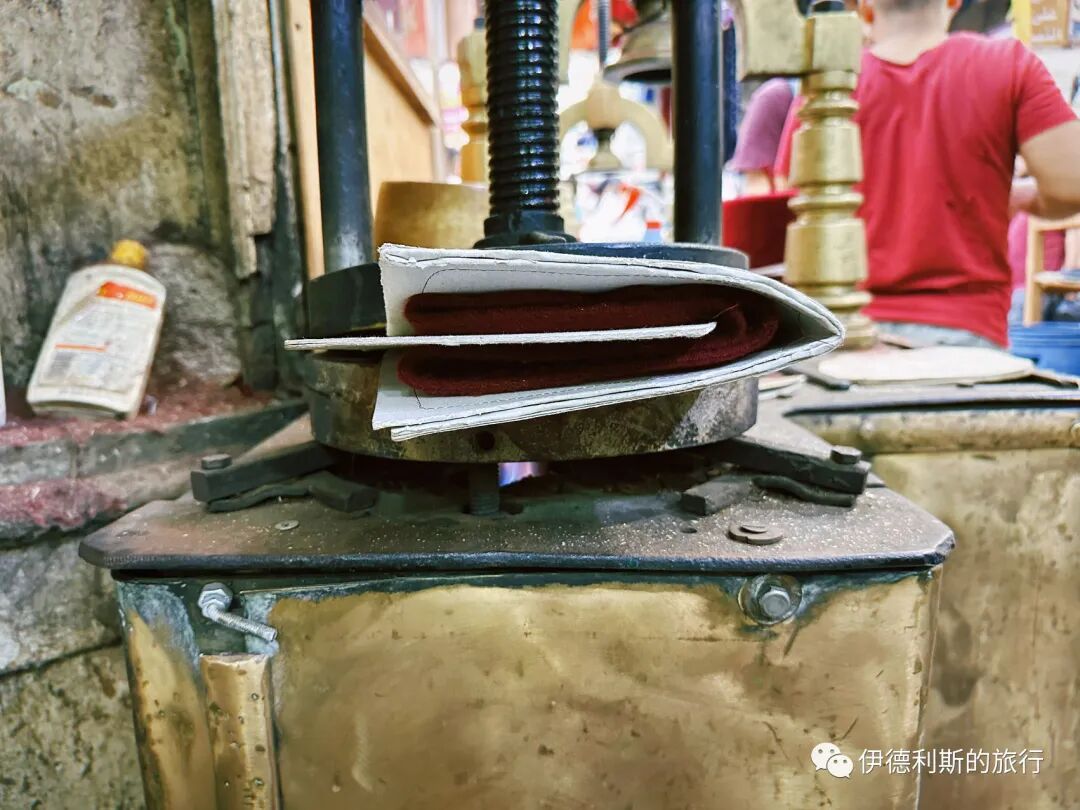
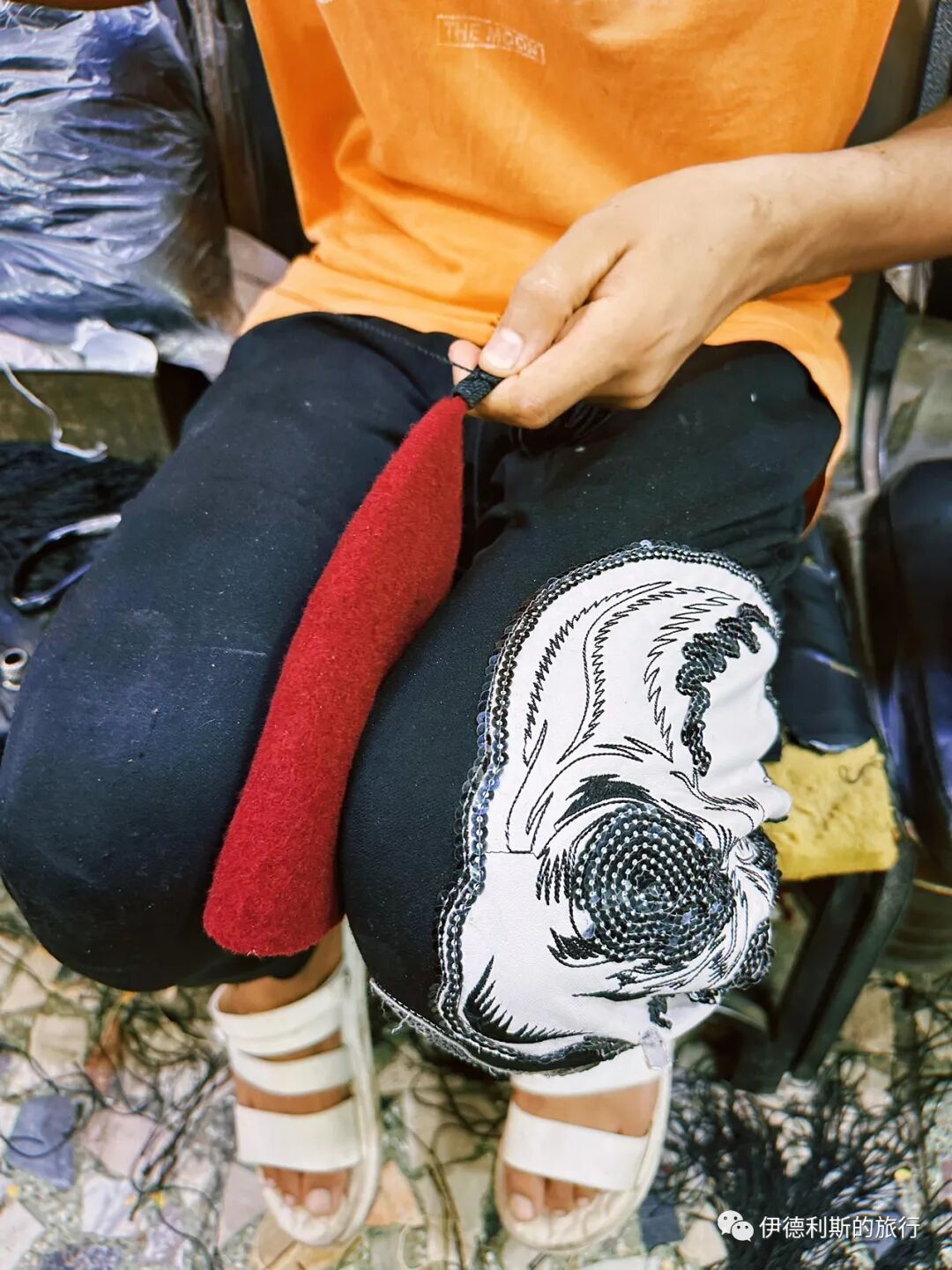
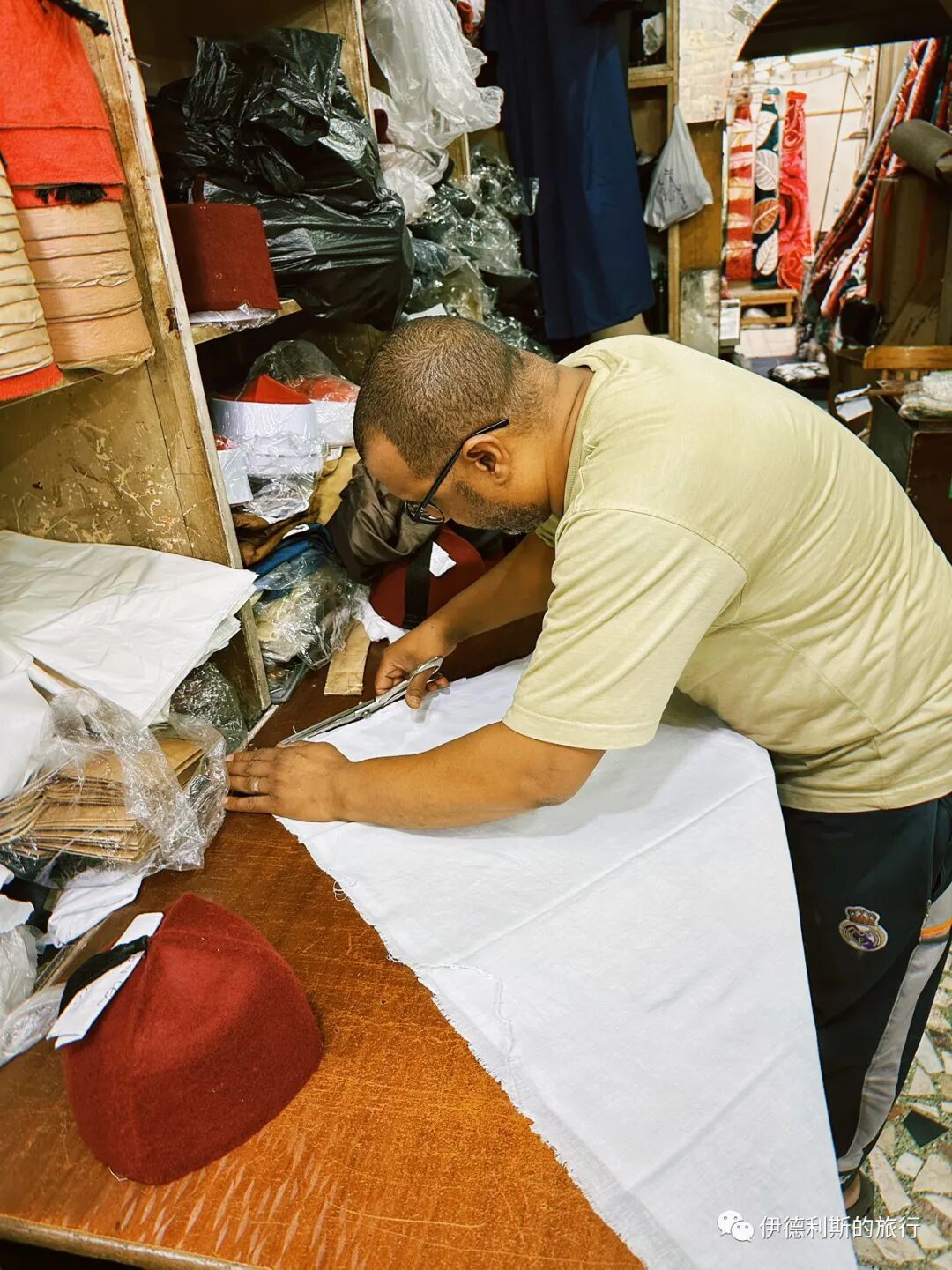
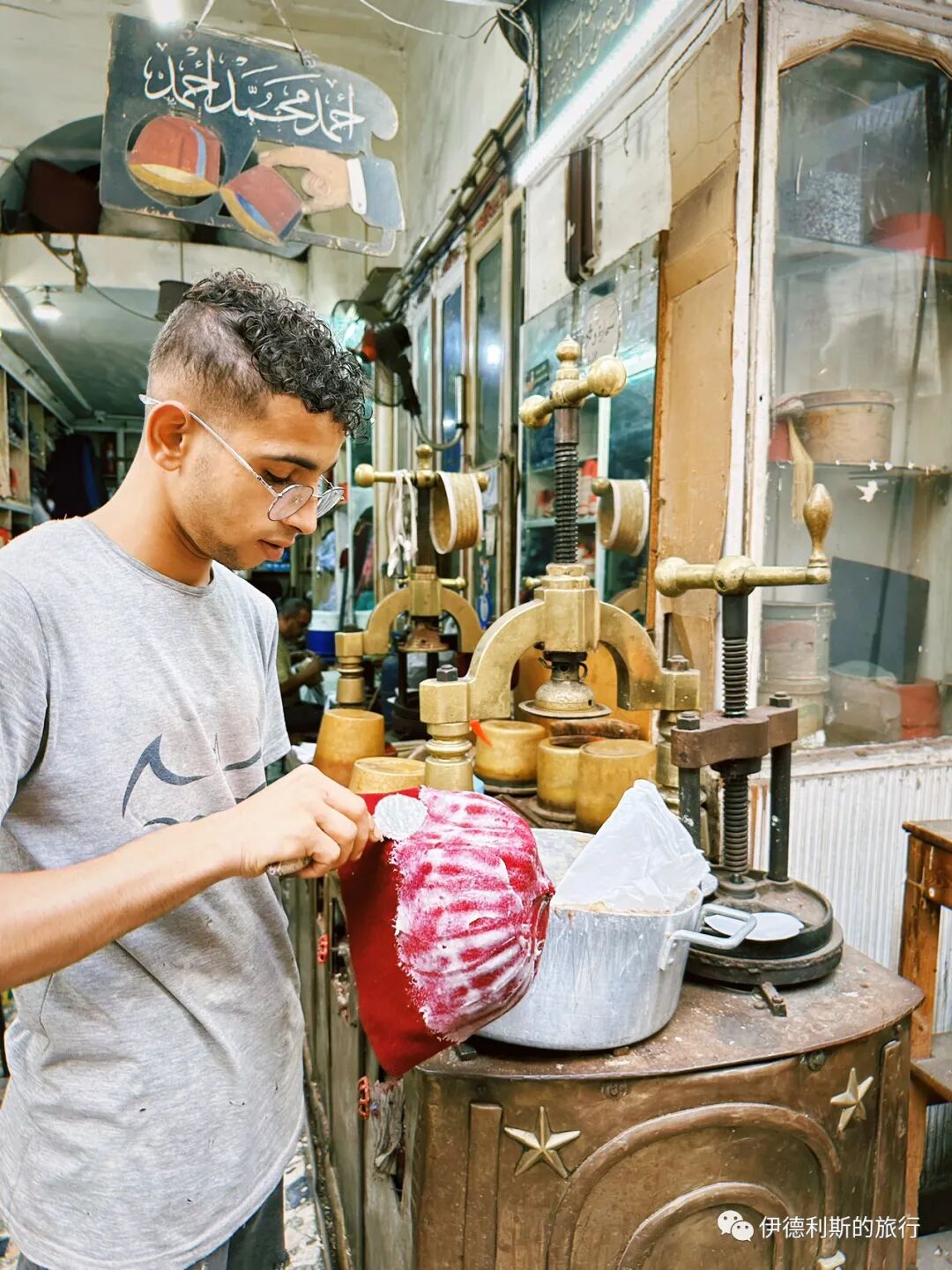
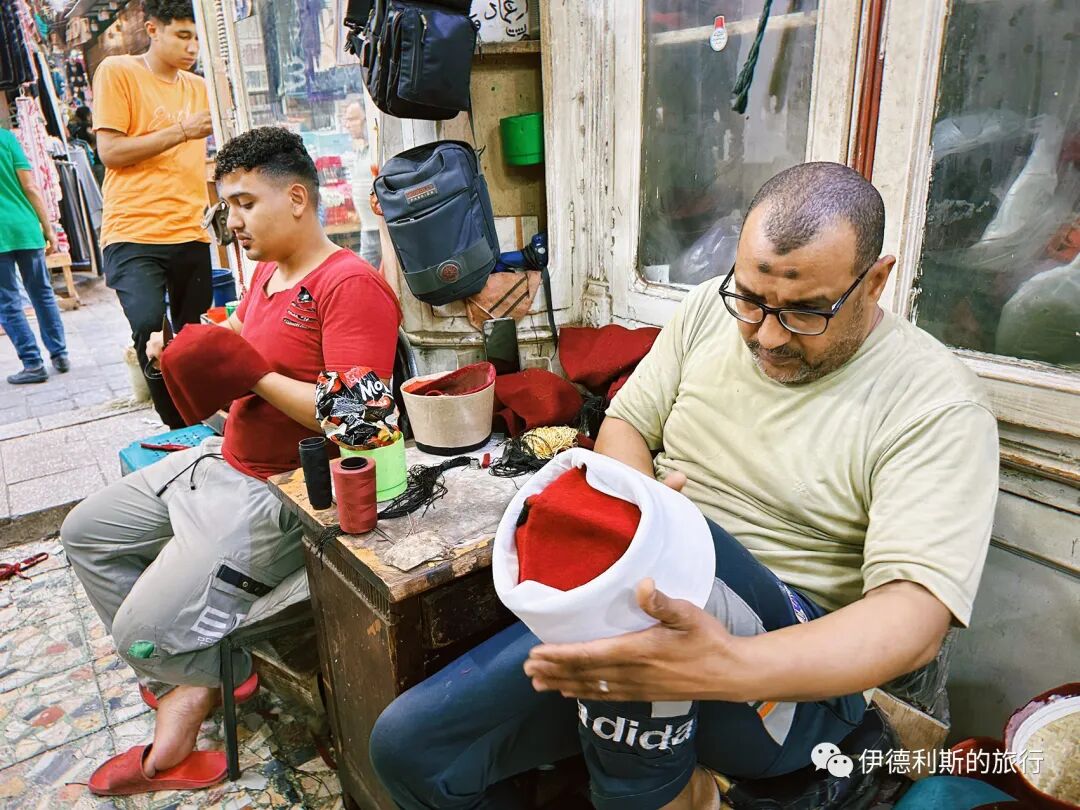
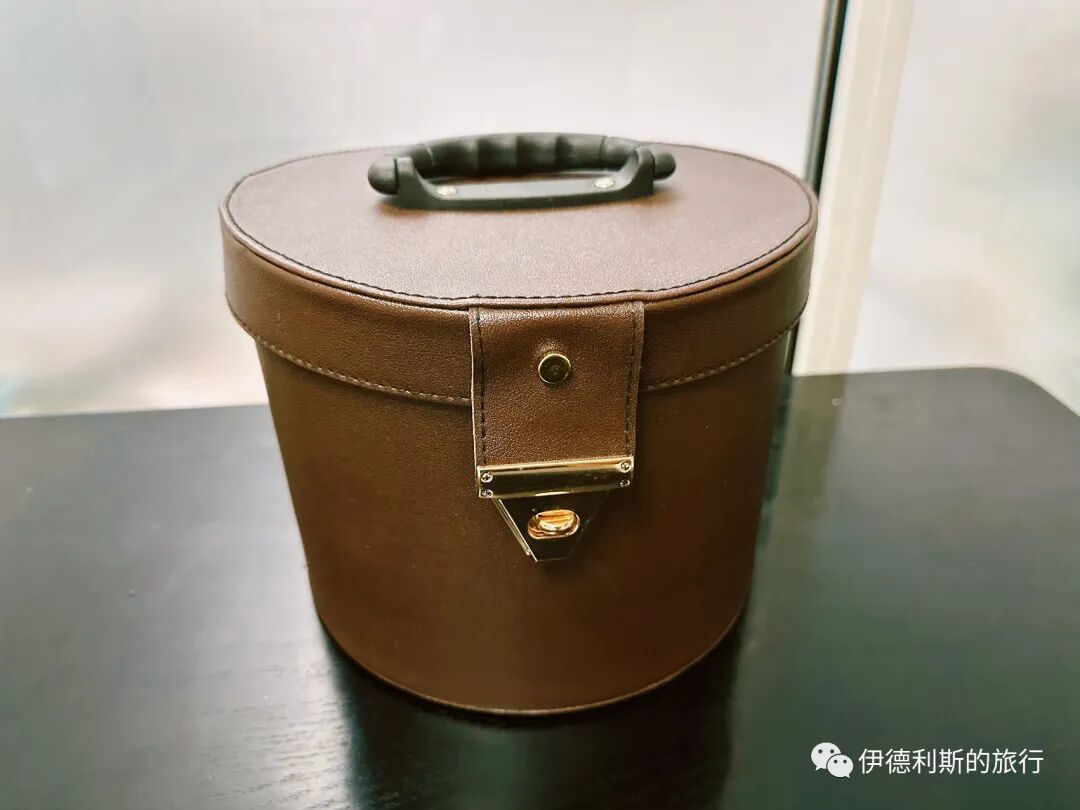
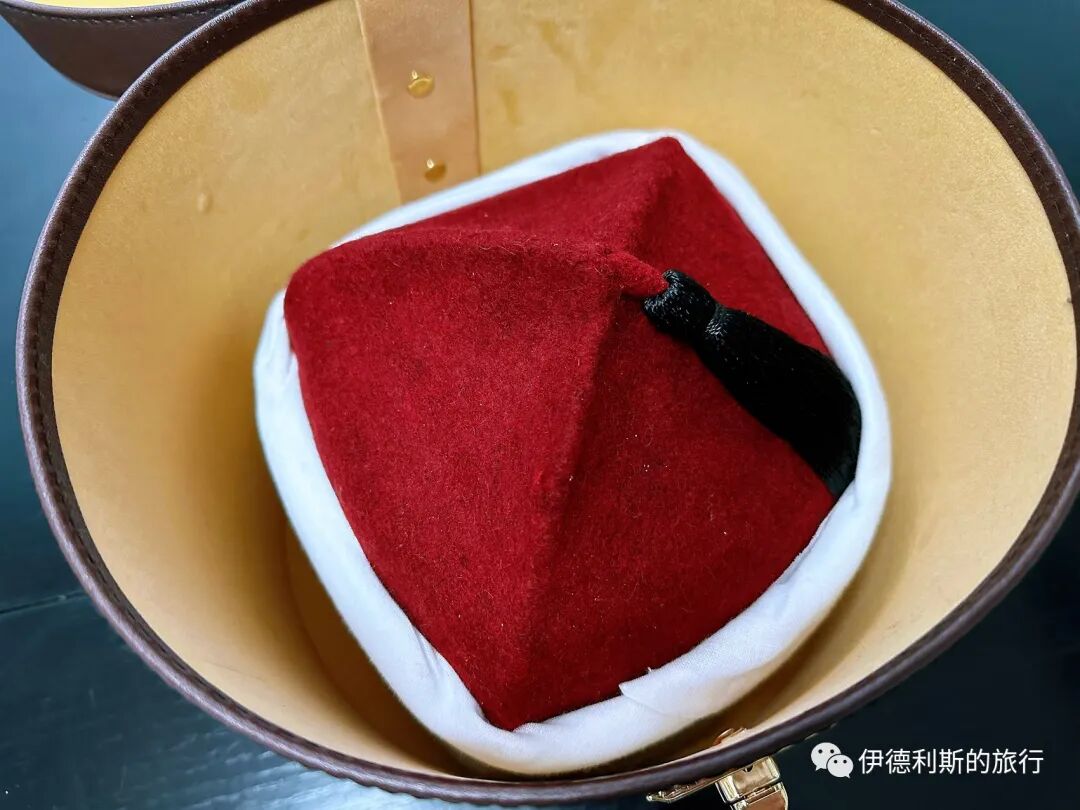
Al Trapiche tarboush mainly makes two types of Tarboush hats. One version is for the teachers and students of Al-Azhar University; it has a cross-shaped ridge with a black tassel, and the bottom is wrapped in white cloth, leaving only the top exposed, with a fabric lining inside. The other is the traditional 19th-century version. It is cylindrical, has no tassel on top, is not wrapped in white cloth, and has a reed lining inside.
As a cultural capital with over a thousand years of history and hundreds of historic sites, Islamic Cairo was added to the UNESCO World Heritage list back in 1979. However, due to the noisy environment, traffic congestion, and concerning sanitary conditions, few Chinese tourists seem willing to explore deep into the old Islamic city, except for the Khan el-Khalili market which specializes in tourist souvenirs. I spent four days in the old city of Cairo this time, visiting almost all the mosques, gongbei, religious halls (daotang), mansions, inns, and madrasas inside.
To make it easier to walk around the old city, I started looking for suitable accommodation online. Most tourists visiting Cairo choose to stay in the embassy district where the environment is slightly better, as there are almost no places suitable for tourists inside the old city. However, I still managed to find the Gamaleya Heritage Hotel, which only opened in 2021.
The owner of Gamaleya, Ibrahim Kassissia, and his family have lived here since the 1930s. He moved to Canada 40 years ago, but while traveling in China, he got the idea to return to his hometown to open a heritage hotel. He later bought back the long-abandoned old house and renovated it into the current heritage hotel.
The first floor of the hotel is a cultural workshop where master craftsmen in silver, copper, wood, and leather work and teach apprentices on-site. Every morning when we head out, we see a group of students learning diligently from the masters. The second floor is where breakfast is served. It is a semi-buffet style where food is made fresh every morning based on the guests' requests. The third floor and above are guest rooms. Although the accommodation conditions cannot compare to large hotels, it is undoubtedly the best choice for visiting the old city of Cairo.
The Gamaleya Heritage Hotel features crafts made by various veteran artists, including copperware from Mousaad Mohamed Abd El-Maqsoud.
The current old city of Cairo was built in 969 by the Fatimid dynasty. It later went through the Ayyubid, Mamluk, Ottoman, and Muhammad Ali dynasties, leaving behind hundreds of historical buildings over the past thousand years.
As dawn breaks, the entire old city gradually wakes up to the sound of the adhan. Then, roosters crow and dogs bark, people get up for namaz, and breakfast shops set up their tables and chairs to open. This is how a day in the old city of Cairo begins.
After the morning prayer (fajr), people rest for a while. Most mosques and ticketed attractions in the old city open after nine o'clock. The old city is very quiet at this time, making it perfect for wandering through empty streets and feeling a thousand years of history.
Since we kept eating breakfast at the hotel, we missed the chance to try the local breakfast in the old city of Cairo. The most classic combination is various appetizer dips (Muqabilat) served with flatbread (Eish Baladi). After breakfast, some breakfast shops turn into tea and coffee houses where people chat and let time slowly drift by.
The main street of Cairo's old city, Al-Mu'izz Street (Al-Mu'izz), at night. Al-Mu'izz Street is named after the fourth Fatimid Caliph, al-Mu'izz li-Din Allah (reigned 953-975), who moved the center of the Fatimid dynasty from Tunisia to Egypt and officially built the current old city of Cairo in 969. For a thousand years, Al-Mu'izz Street has been the north-south artery of the old city, commonly known as the main road (Qasaba), and is lined with markets, mosques, and madrasas.
During the Fatimid dynasty, only the Caliph's court, the army, and officials could enter Cairo, while ordinary people were not allowed inside. It was only after Saladin ended the Fatimid dynasty and established the Ayyubid dynasty in 1171 that the old city of Cairo became an economic center fully open to the public. Later, the Sunni Mamluk dynasty wanted to erase the influence of the Shia Fatimid dynasty on the old city, so they gradually demolished the Fatimid palaces in the north and turned them into markets, making Al-Mu'izz Street a busy commercial street from then on.
Khan el-Khalili market in the old city of Cairo at night; this is the liveliest place in the old city.
Khan el-Khalili market was first built in the 1380s by Barquq, the first Sultan of the Mamluk Burji dynasty. At that time, the Sultan sent his subordinate Jaharkas al-Khalili to demolish the Fatimid royal tombs and build the first structure of the market on the original site, which is why it has been called Khan el-Khalili ever since. Legend has it that al-Khalili dumped the remains of the Fatimid royal family into the garbage hills on the east side of the old city of Cairo.
The Mamluk dynasty continued to expand the market until the second-to-last Sultan, Al-Ashraf Qansuh al-Ghuri (reigned 1501-1516), rebuilt it on a large scale in 1511, finally forming the appearance we see today. The market built by al-Ghuri is quite similar in style to the Bedesten market of the Ottoman dynasty, with the most precious goods sold in the center and a roof that can be locked.
Today, Khan el-Khalili market is mainly a souvenir market for tourists, though a few craft workshops still operate inside, along with some famous cafes.
Roasted corn on the streets of Old Cairo.
Hibiscus tea (karkadeh), a drink that has lasted since the time of the pharaohs, as the hibiscus flower is native to Africa.
Roasted chicken served with tahini sauce (tehina, a mix of sesame paste, lemon juice, and garlic) and village salad (salata baladi).
Pastry shop.
At a restaurant in an alley across from the National Museum of Egyptian Civilization, I had beef tendon rice and pasta in white sauce, and drank lemon mint water.
Koshary is the most classic street snack in Cairo. It is a mix of spaghetti, macaroni, Egyptian rice, and lentils, topped with tomato sauce, garlic sauce, chickpeas, and fried onions. As early as the ancient Egyptian period, people ate a dish called koshir made from lentils, wheat, chickpeas, garlic, and onions cooked in clay pots. It only gradually developed into the modern koshary after the introduction of pasta and tomatoes in the 19th century. This snack is vegan and very cheap, often called the food of the poor.
A dark street snack in Old Cairo is grilled lamb offal, which includes lung, rice sausage, lamb brain, large intestine, meatballs, and cartilage. It is spicy and eaten with flatbread.
Roasted sweet potatoes on the streets of Old Cairo.
I had fried fish and seafood soup near the Citadel of Saladin in Cairo; the soup contained fish chunks, shrimp, and small crabs.
Egyptians cannot eat without their local flatbread (eish baladi). Seeing delivery guys riding bicycles with stacks of bread on their heads is a real sight in Old Cairo.
I had lunch at The Citadel Restaurant inside Al-Azhar Park on the east side of the old city.
Al-Azhar Park was originally a trash heap that had existed in Old Cairo for 500 years. In 1992, the 49th Imam of the Ismaili sect, Aga Khan IV, donated funds for its transformation. His Aga Khan Historic Cities Programme led the project, which restored the Ayyubid wall on the west side while building the park. The park officially opened in 2005 and became the best leisure spot for residents of Old Cairo.
The Citadel Restaurant is on the north side of Al-Azhar Park, with a direct view of the Ayyubid Citadel. The restaurant is built in a traditional Egyptian style and has a great atmosphere.
We ordered an appetizer platter, Shawaya grilled chicken, and the traditional Egyptian dessert Om Ali.
The appetizer platter included chickpea dip (hommus), bread salad (fatoush), parsley salad (tabula), eggplant dip (mottabal), Alexandrian beef liver, fried pastry triangles (sambosak), and fried vegetable balls (kobeba), which we ate by dipping with flatbread (eish baladi); it felt very worthwhile.
The Shawaya includes various grilled chicken pieces, including shish taouk, a traditional Ottoman chicken skewer marinated in yogurt and lemon juice before grilling.
Om Ali is made by mixing cake with pistachios, coconut flakes, raisins, and sugar, then pouring cream over it, sprinkling it with cinnamon, and baking it in the oven until golden brown.
Om Ali means "Mother of Ali" and refers to the mother of Al-Mansur Ali, the second sultan of the Mamluk dynasty who reigned from 1257 to 1259. Legend has it that the Mamluk dynasty's founding sultan, Aybak, and Queen Shajar al-Durr had major conflicts in their later years. Shajar al-Durr plotted to have servants kill the sultan, after which the sultan's son, Al-Mansur Ali, took the throne. Ali's mother and the servants beat Shajar al-Durr to death together and served this dessert to everyone to celebrate the queen's death.
Khan Shaheen Cafe on the main Al-Mu'izz street in Old Cairo is located inside a historic caravanserai building. I had coffee inside; the service charge was a bit high, but the environment was truly quite nice.
I bought a handmade traditional Al-Azhar fez (tarboush) at a hat shop in Old Cairo, where students from Egypt's Al-Azhar University buy their hats.
The tarboush hat is a fez, and the term tarboush is mainly used in the Levant and Egypt. In 1829, Ottoman Sultan Mahmud issued a decree requiring all officials to wear the fez, and from then on, the fez became a symbol of the Ottoman dynasty.
After the Ottoman Empire collapsed, the Republic of Turkey led a hat revolution in 1925 and banned the wearing of the fez hat. In 1954, the Republic of Egypt also ordered a ban on the fez hat, which symbolized the Ottoman Empire, as part of its modernization movement. Before this, Cairo had always been a major production center for the fez. Although fez production later recovered in Egypt, it shifted mainly to cater to tourists.
Today, in the textile market west of the Al-Azhar Mosque in the old city of Cairo, there is still a century-old shop called Al Trapiche tarboush that insists on making Tarboush hats by hand. The Trapiche family has run this hat shop for over a hundred years. Their main customers today are imams from various mosques in Egypt and students from Al-Azhar University.
The machine used in the shop to heat and shape the wool felt is called a Waga. It was bought by the owner's great-grandfather a century ago. The last master craftsman who knew how to build a Waga passed away decades ago, and this machine is now out of production.
After we arrived at the shop, the owner measured my head, used a reed-woven hat mold to test the size, then put the red felt on the machine to press and shape it. He then sewed in the lining and the black tassel, and finally wrapped it with white cloth. After about forty minutes of work, a Tarboush hat was finished.
Al Trapiche tarboush mainly makes two types of Tarboush hats. One version is for the teachers and students of Al-Azhar University; it has a cross-shaped ridge with a black tassel, and the bottom is wrapped in white cloth, leaving only the top exposed, with a fabric lining inside. The other is the traditional 19th-century version. It is cylindrical, has no tassel on top, is not wrapped in white cloth, and has a reed lining inside.
