

Old Cairo
Muslim History Guide Cairo: Old City Gates, Mosques and Thousand-Year Heritage
Articles • yusuf908 posted the article • 0 comments • 157 views • 2026-05-23 23:22
Summary: This Old Cairo travel account walks inside the northern gate of the historic city and follows its mosques, streets, gates, and layered Islamic history. It keeps the original place names, dates, buildings, and travel route without adding outside claims.
The history of Cairo as a city goes back over a thousand years. Back in the ancient Roman era, the Romans built the Babylon Fortress in the south of Cairo. After the Arabs took Cairo in 641 AD, they built the city of Fustat to the northeast of the Babylon Fortress. Over the next 300 years, Muslim rulers from different dynasties built several cities near Cairo, but none of them survived. In 969 AD, the Shia Fatimid dynasty conquered Egypt and spent four years building what is now the old city of Cairo. By this count, the old city of Cairo is now 1,055 years old.
The walls of old Cairo were started in 969 AD. They were first made of brick, then expanded with stone during the reign of the Fatimid Caliph al-Mustansir Billah (reigned 1036-1094), and finally finished in 1087. The north gates of the old city, the Gate of Conquest (Bab al-Futuh) and the Gate of Victory (Bab al-Nasr), were both built during this time. In this article, I will take you through the north gate into old Cairo to experience its thousand-year history.
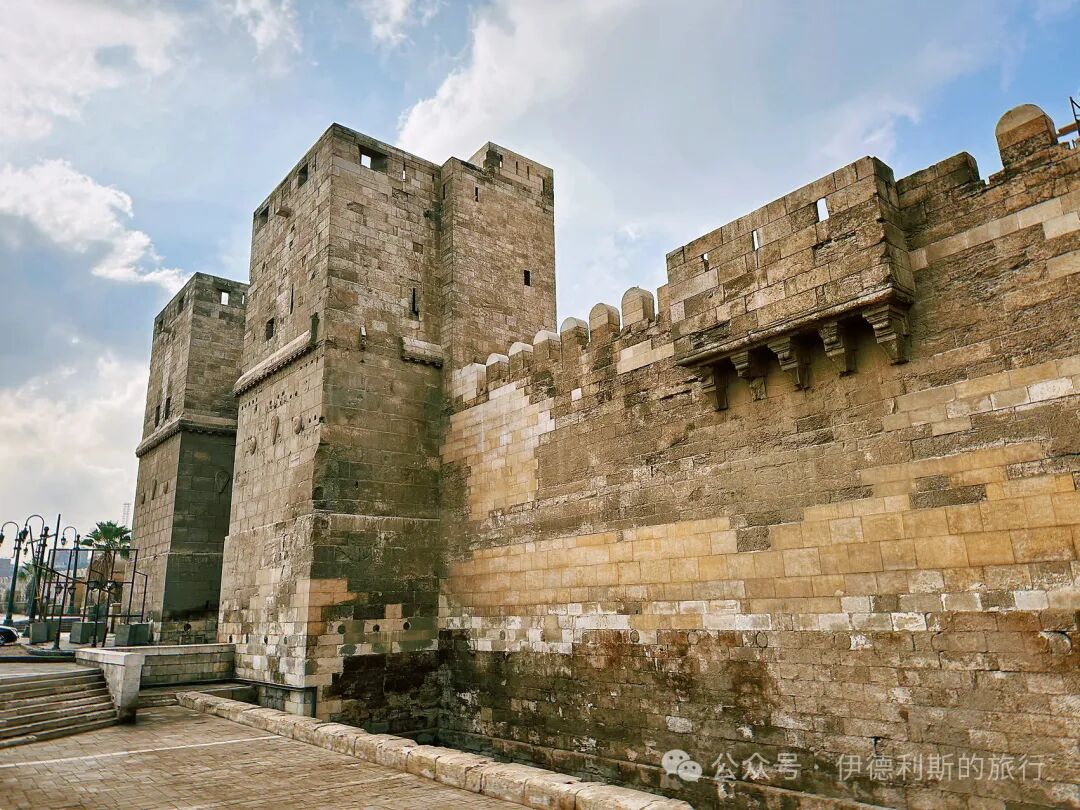
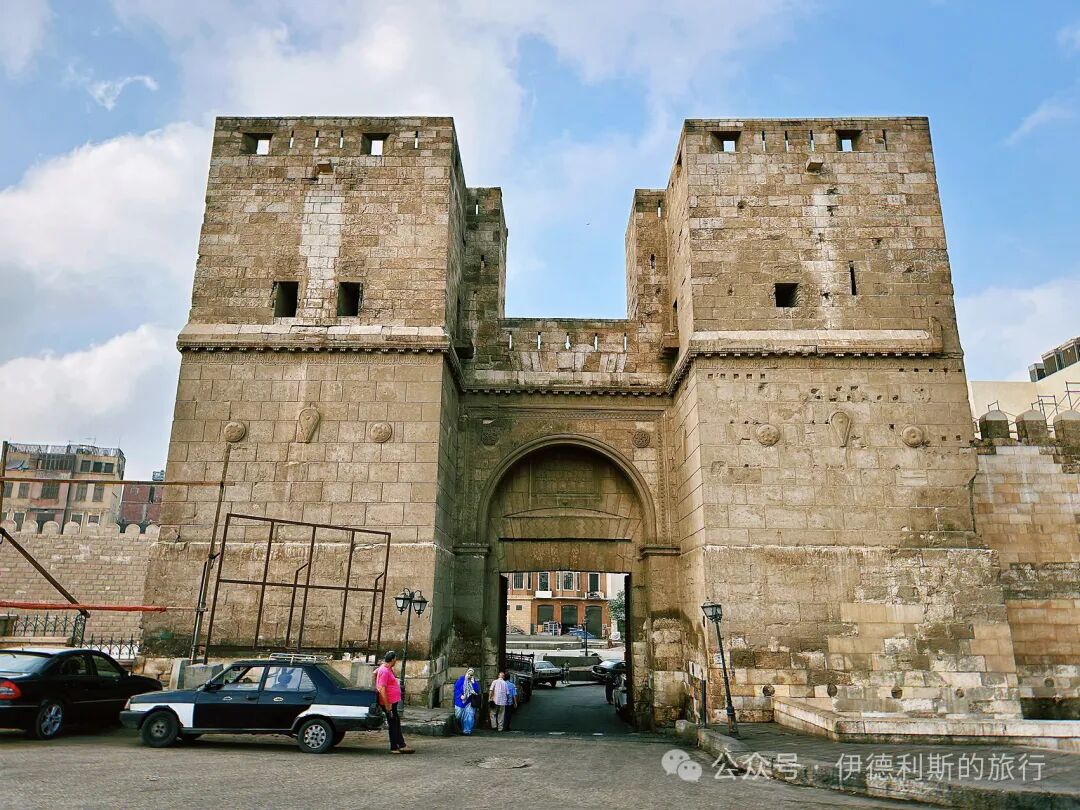
Gate of Conquest and Gate of Conquest: 1087
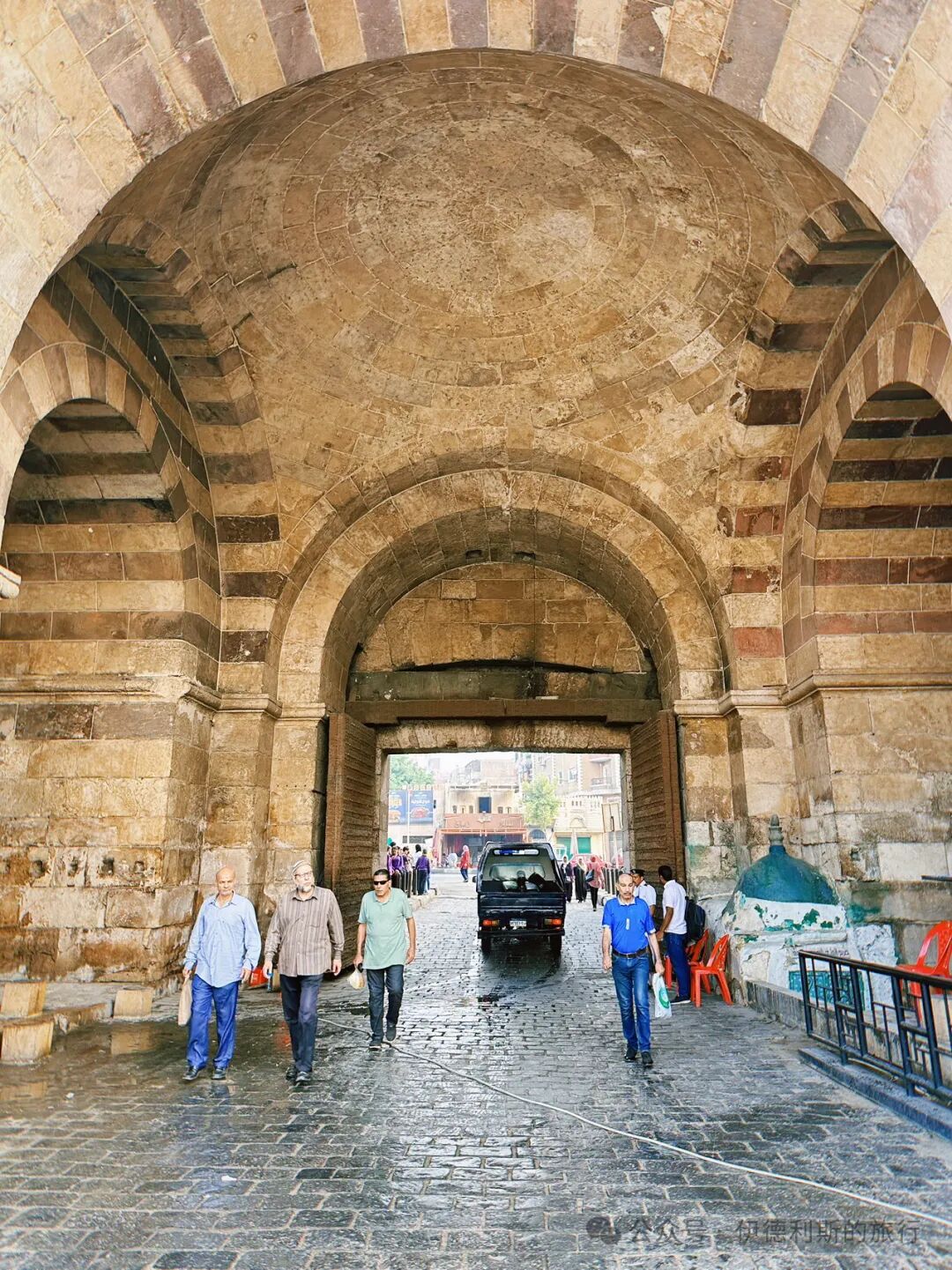
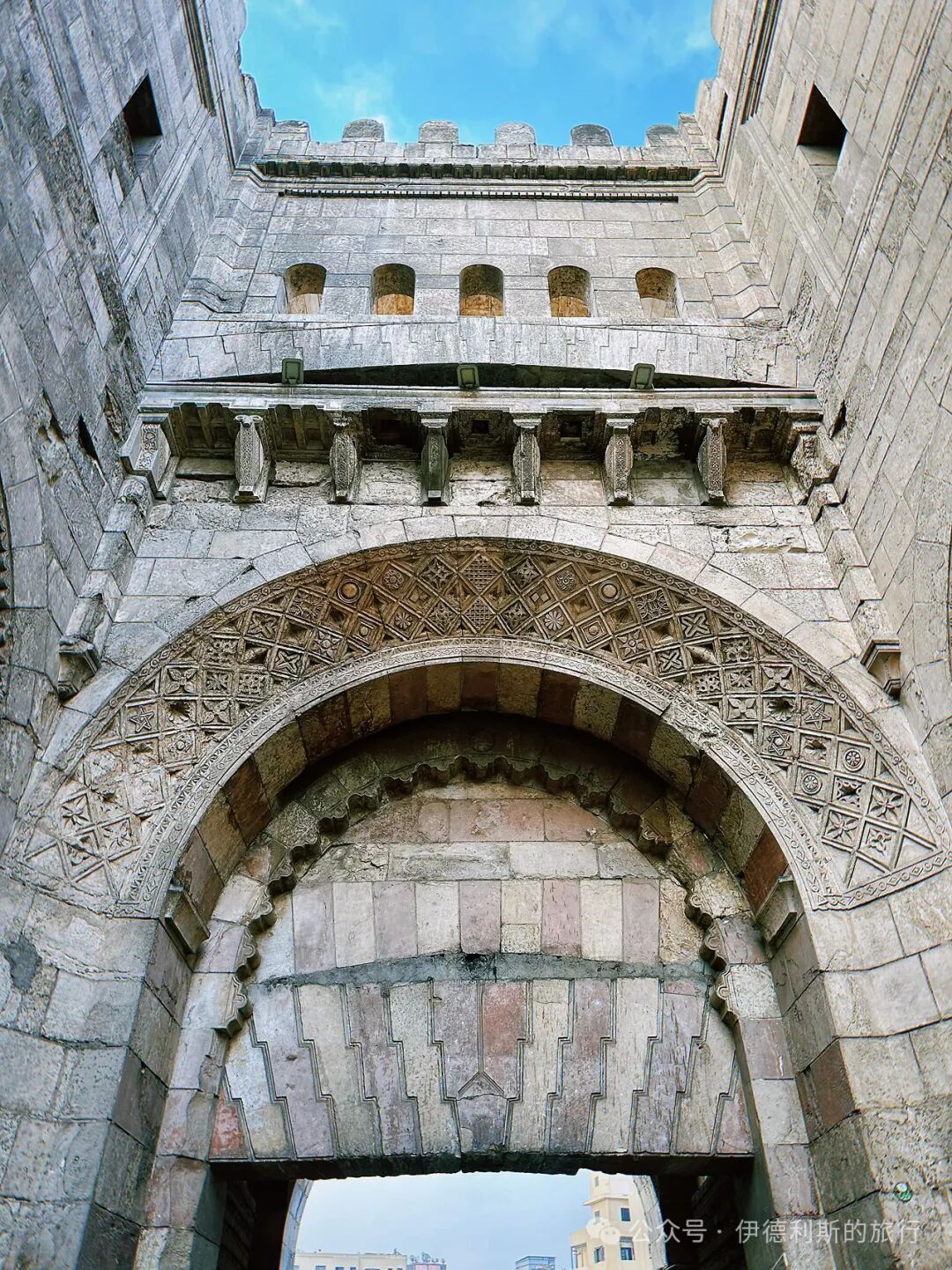
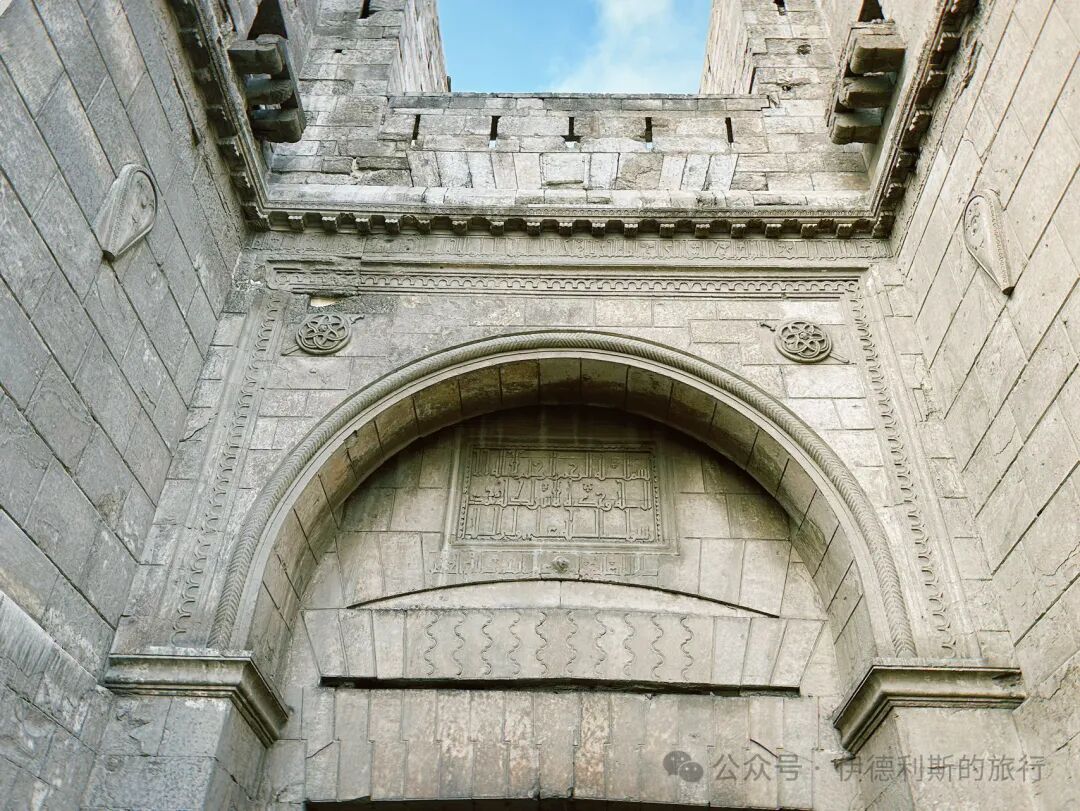
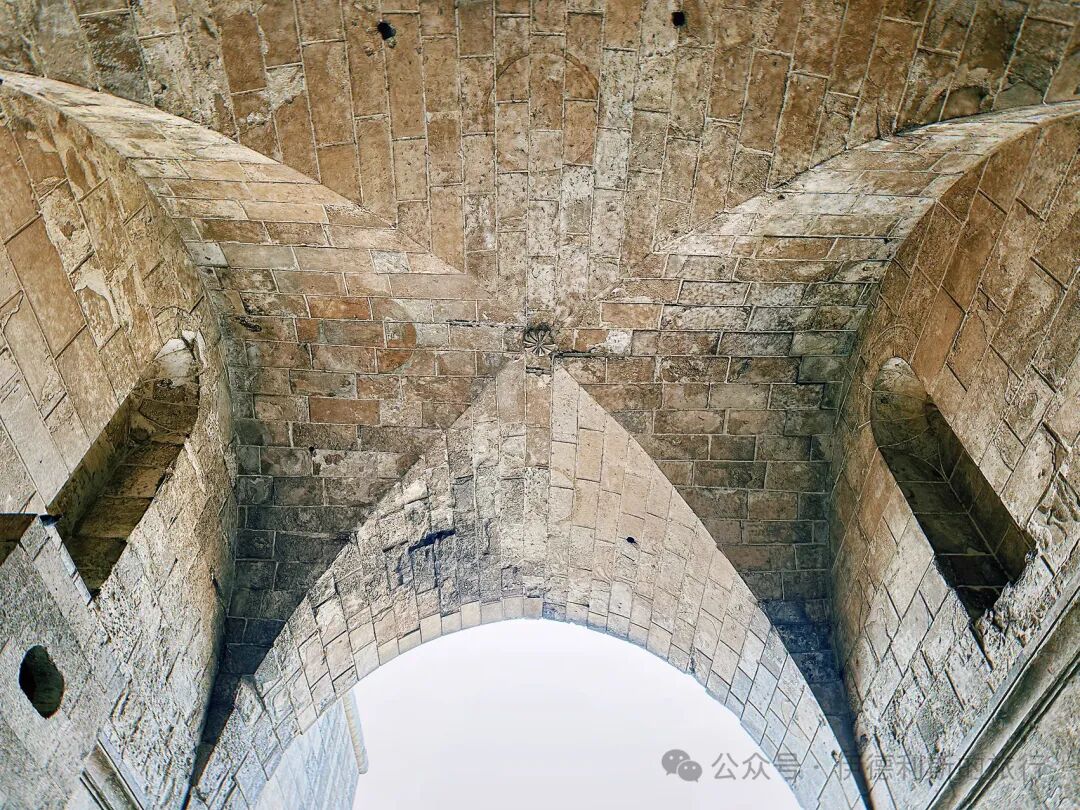
The Gate of Conquest is 22 meters high and has two round towers. The stone carving details may have been influenced by Syrian or Byzantine craftsmen. Above the arch, the surface is covered in diamond patterns containing rosettes and crosses. The parts of the towers that hang outward are carved with ram heads, which are symbols of Mars in the zodiac. Inside the gate, the dome and the rectangular space connect through a pendentive, which is a typical feature of Byzantine architecture.
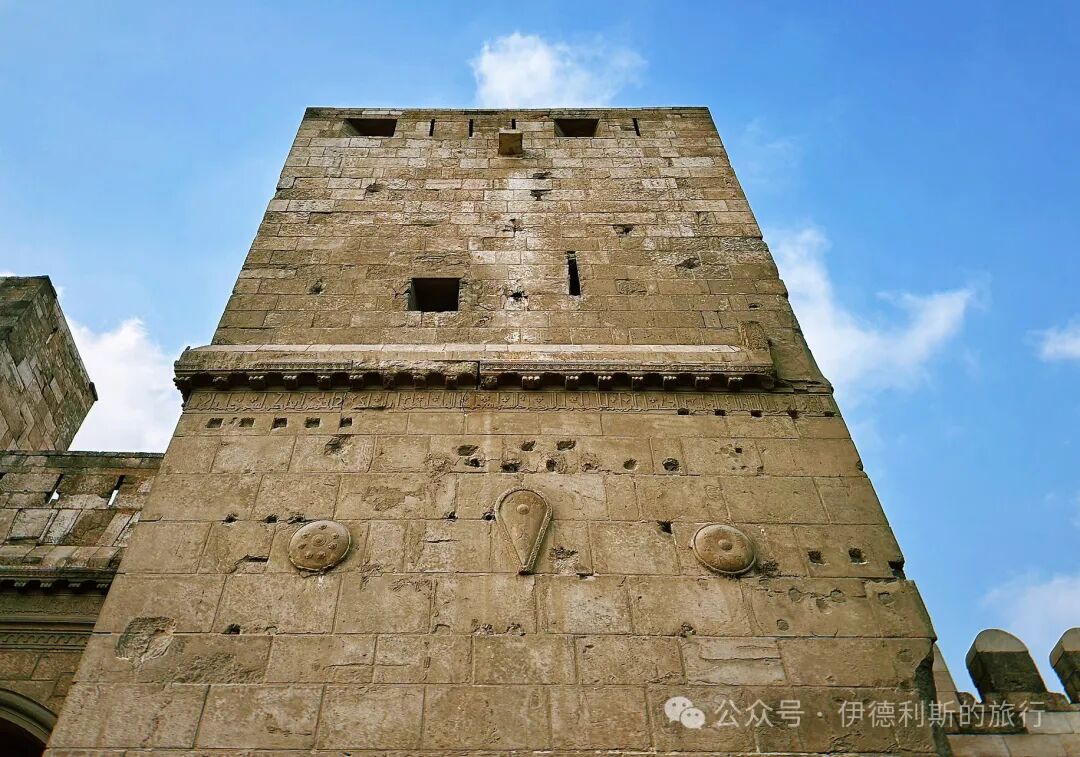
The Gate of Victory is on the east side of the Gate of Conquest. Unlike the round towers of the Gate of Conquest, the towers of the Gate of Victory are square and contain guard rooms and living areas. There are shield carvings above the gate, which symbolize protecting the city from invasion. The shield features an Arabic inscription from its 1087 reconstruction, along with a Shia version of the Shahada that mentions Ali as the friend (wali) of Allah.
Al-Hakim Mosque: 1013.
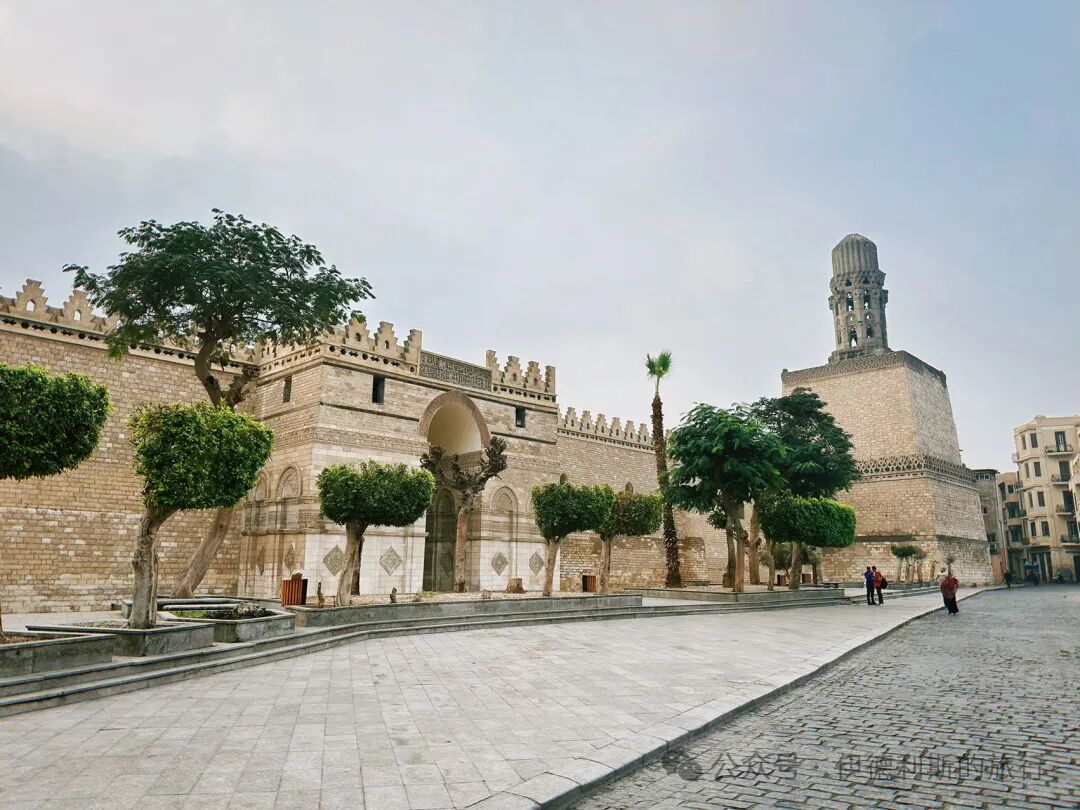
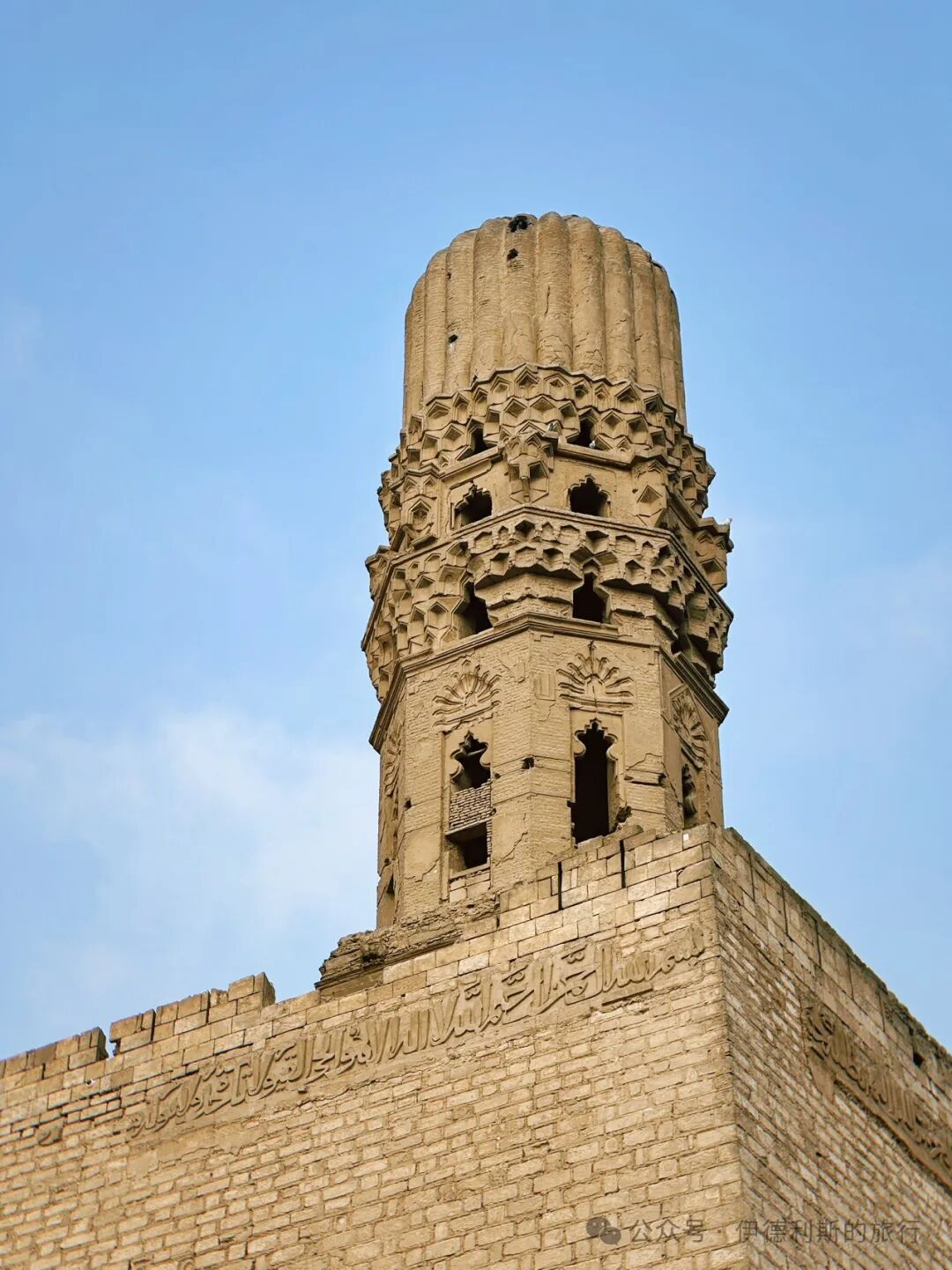
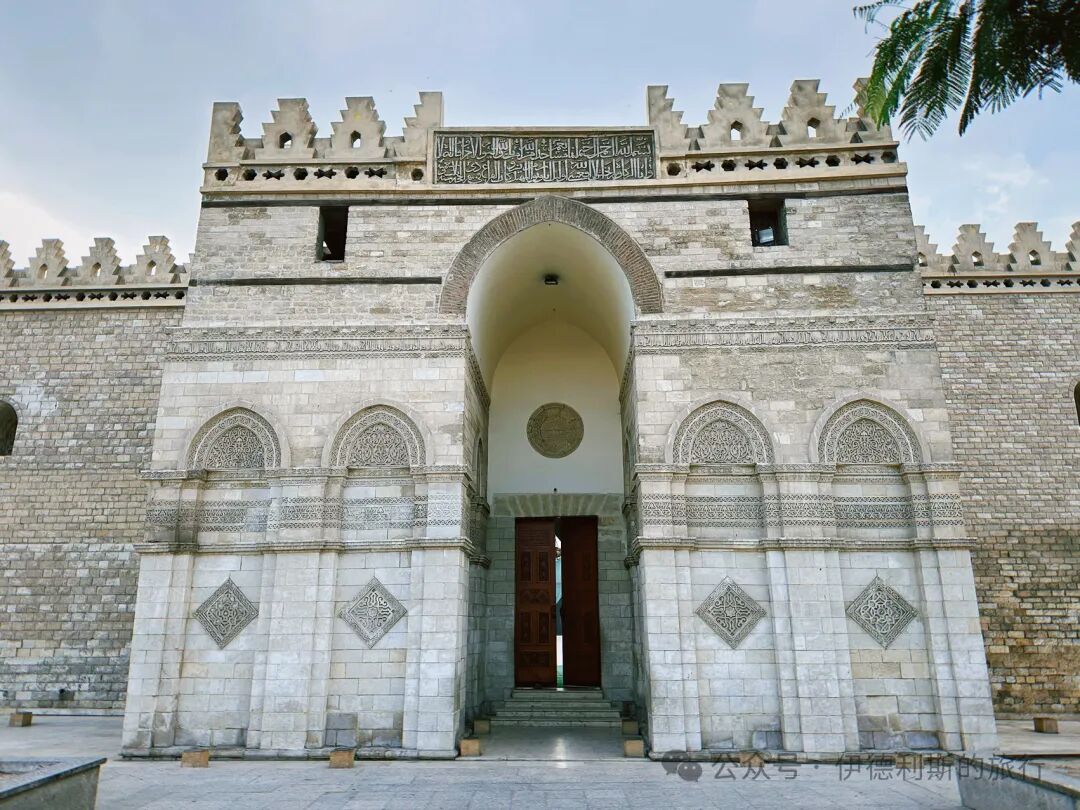
Right next to the northern wall of Old Cairo stands the Al-Hakim Mosque, named after the sixth Fatimid caliph and the 16th imam of the Ismaili branch of Shia Islam, al-Hakim bi-Amr Allah (reigned 996-1021). The mosque was started in 990 by the fifth Fatimid caliph, al-Aziz Billah (reigned 975-996), and finished in 1013 by Caliph al-Hakim, making it 1,010 years old today.
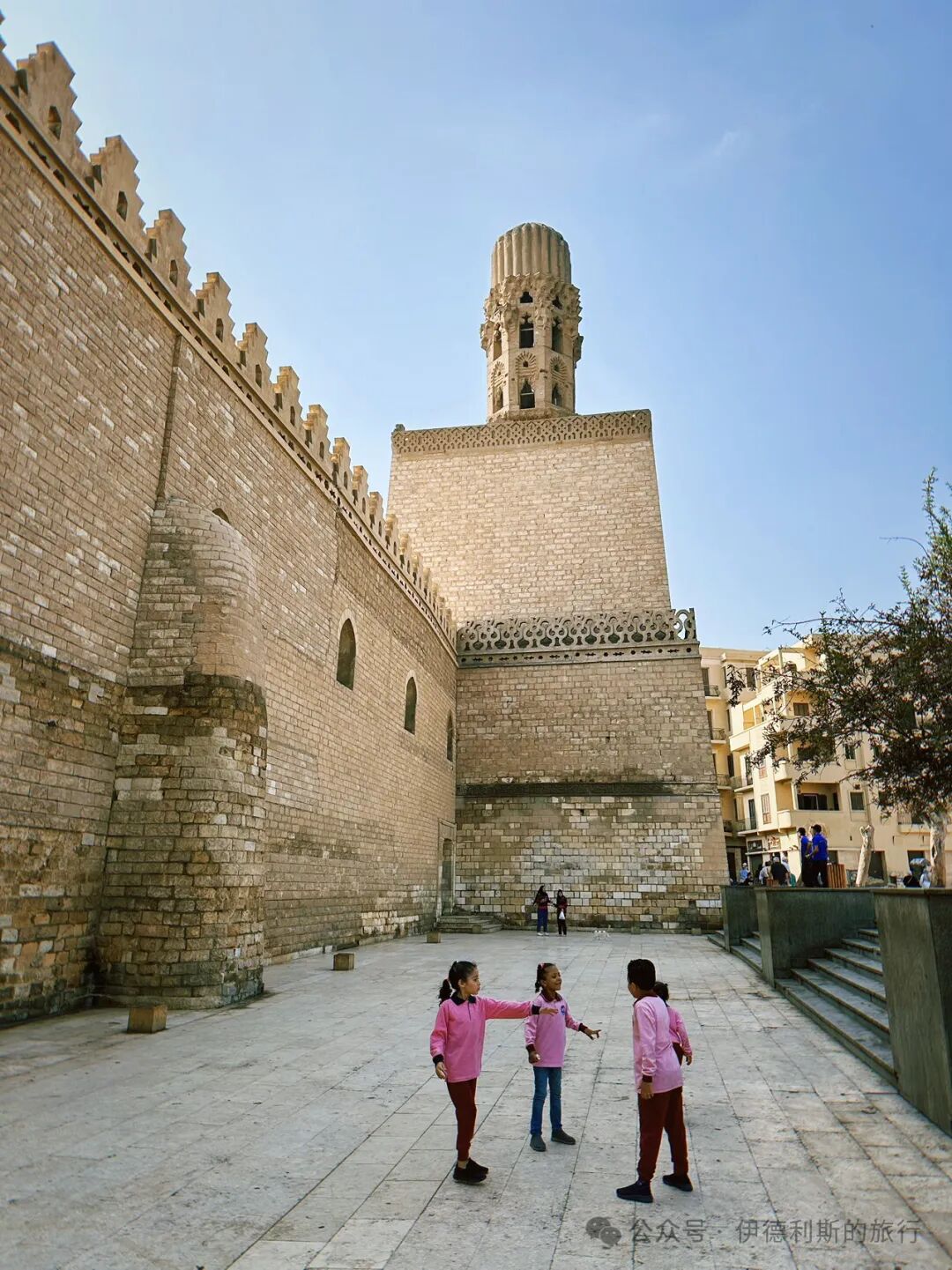
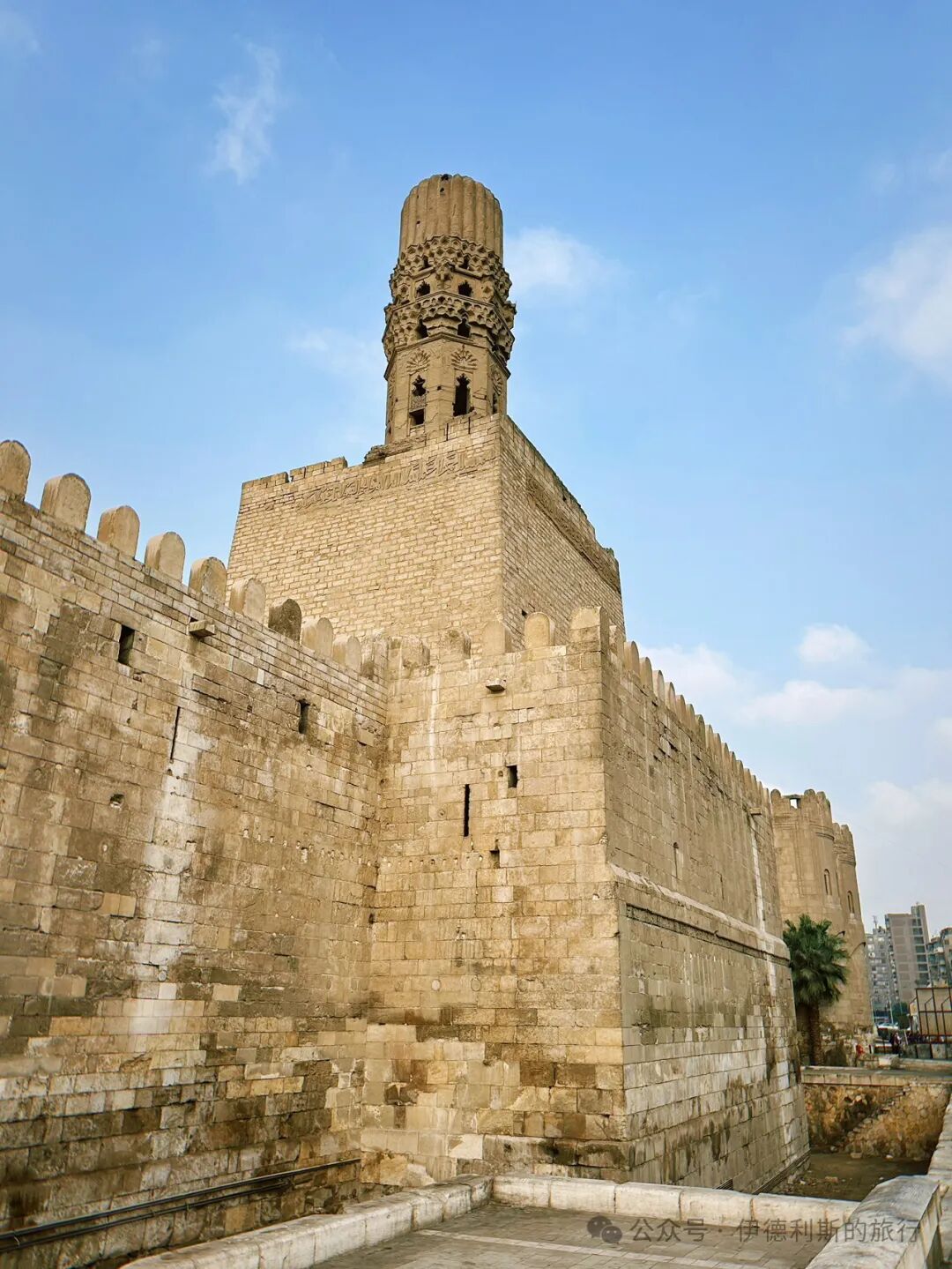
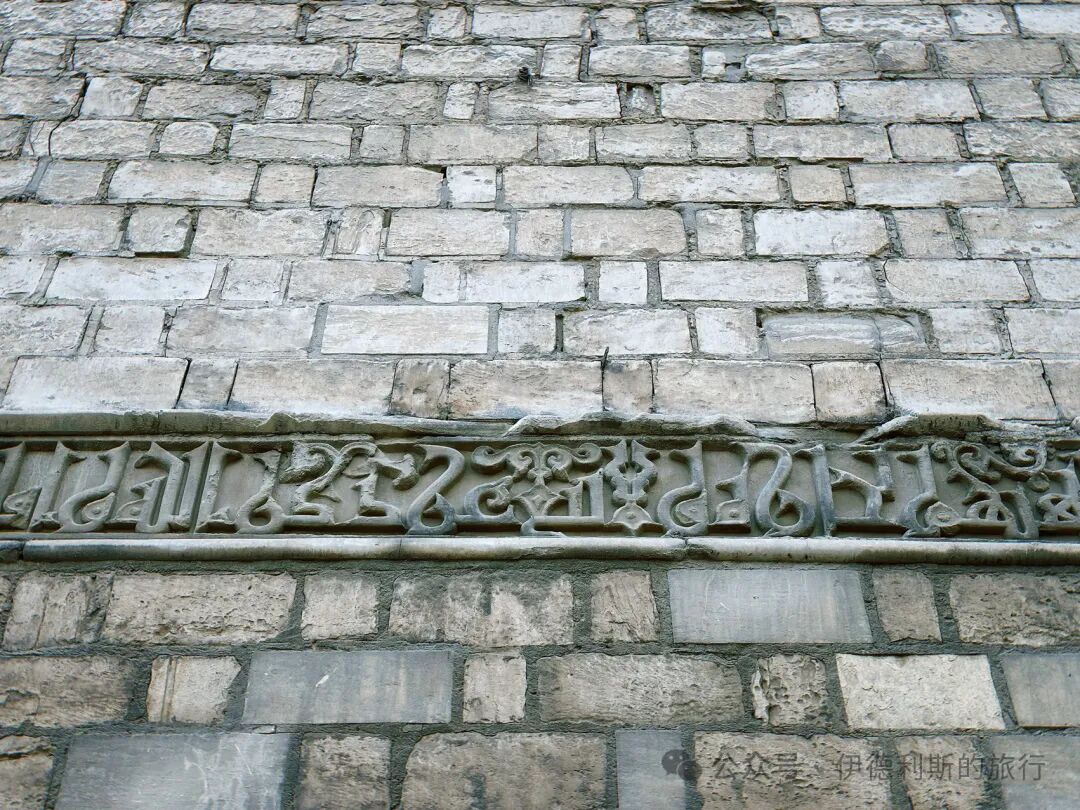
The Al-Hakim Mosque was originally outside the walls of Cairo, but it was brought inside the city after the walls were rebuilt in 1087. The mosque's architectural style is similar to the Al-Azhar Mosque, but it is twice as large. The most striking features inside are the two minarets built on square brick bases. When the minarets were first built in 1003, they were separate structures, and they were only encased in brick in 1010. Some scholars suggest this might be linked to the ruler of Mecca rejecting Fatimid authority in 1010, which weakened the dynasty's power. The outer wall of the southern brick base has marble Kufic Arabic inscriptions from the Fatimid period, while the Kufic inscriptions on the northern base were moved to the outside of the city wall when it was incorporated into the northern wall of Old Cairo in 1087.
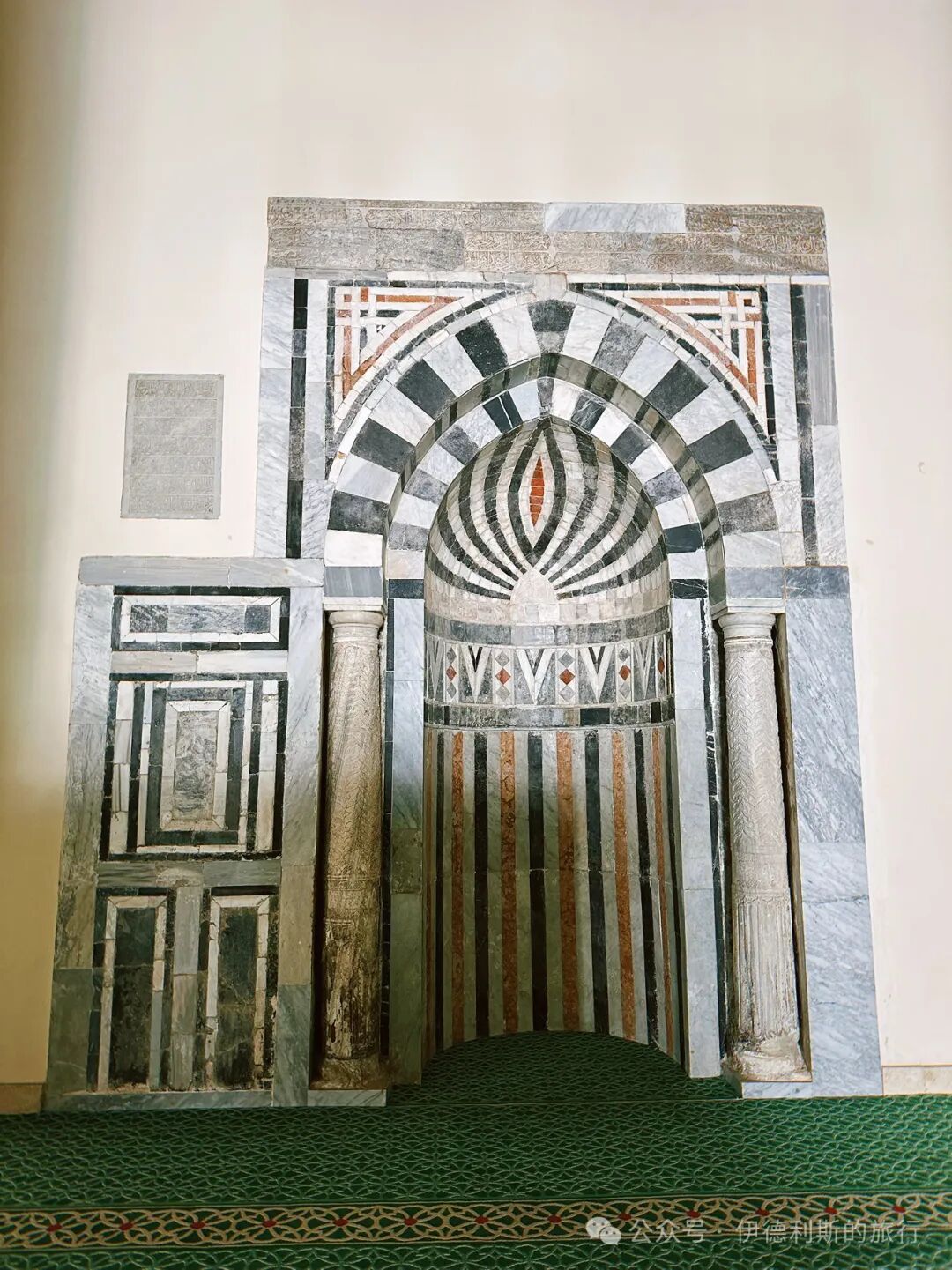
During the Crusades, the mosque was used as a prison by the Franks and later as a stable by Saladin. It was renovated during the Mamluk period in the 14th century but later fell into ruins for a long time. The mosque was renovated in 1808, and a small, colorful marble mihrab added during that time still survives today.
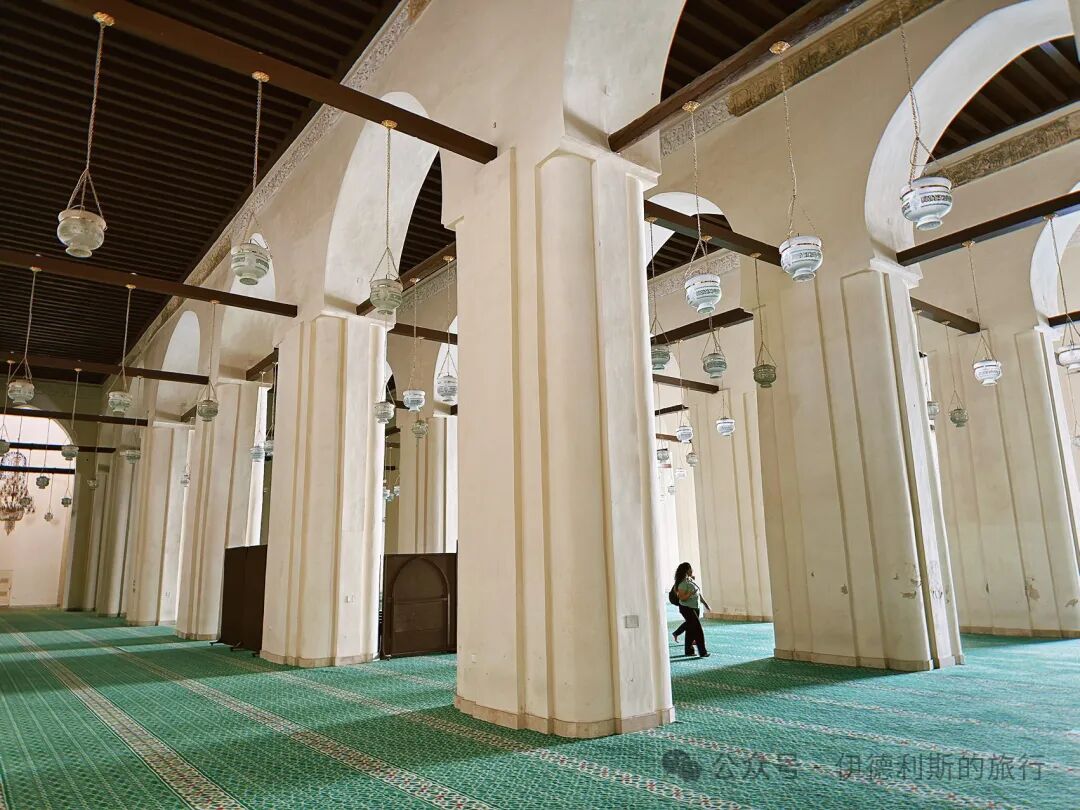
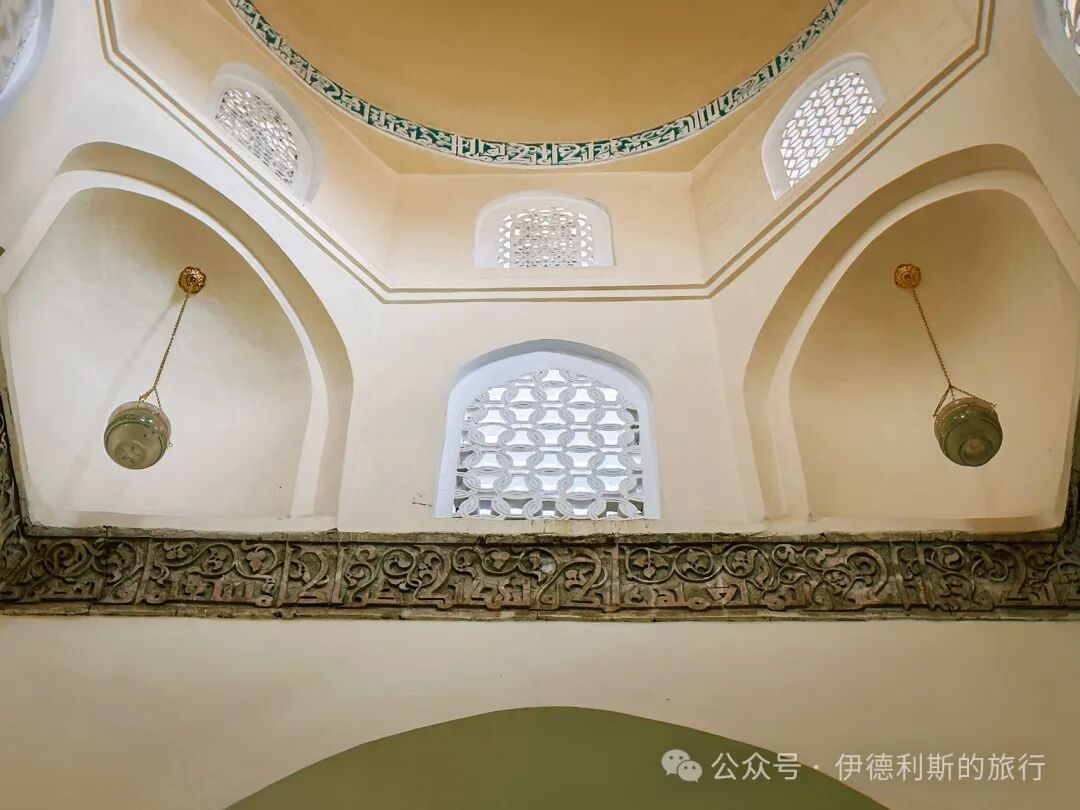
In the 20th century, the mosque served as a school until 1980, when the Dawoodi Bohra branch of Shia Islam carried out a massive reconstruction and renovation using white marble. Inside the main hall after the reconstruction, only the original stucco carvings, wooden beams, and scriptures were preserved. This restoration caused a lack of authenticity that sparked criticism and widespread discussion among scholars. In 2017, the Dawoodi Bohra community and the Egyptian Ministry of Tourism and Antiquities launched a new round of restoration, and it did not reopen until February 2023.
Caravanserai of Qaitbay: 1481
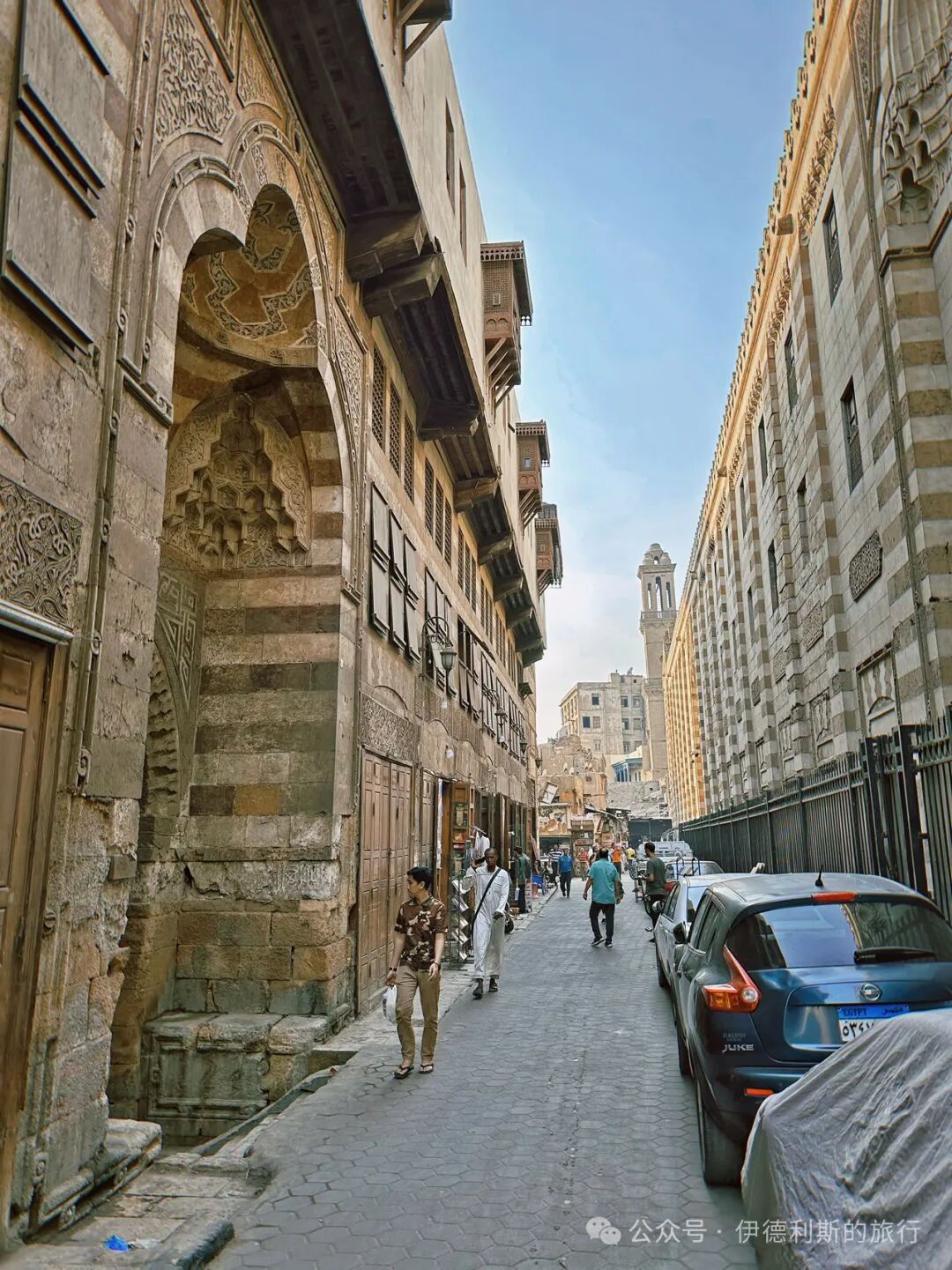
Enter the old city of Cairo through the Gate of Victory (Bab al-Futuh) onto El-Gamaleya Street. The first thing you see is the caravanserai (wikala) of Sultan Qaitbay, which is currently under renovation. It was built in 1481 by Sultan Qaitbay (reigned 1468-1496) of the Mamluk dynasty. Qaitbay was one of the Mamluk sultans who sponsored the most architecture. Although the Mamluk dynasty was in decline, the situation remained relatively stable under his rule, and trade flourished.
Like other Mamluk caravanserais (wikala), this place not only provided short-term housing for passing caravans but also offered long-term rental apartment units (rab). It was used as apartments for hundreds of years until the Egyptian Ministry of Antiquities began renovations in 2015. Work is still ongoing, and you can still see the wooden lattice windows (mashrabiya) facing the street.
Gate of the Caravanserai of Qawsun: 1341
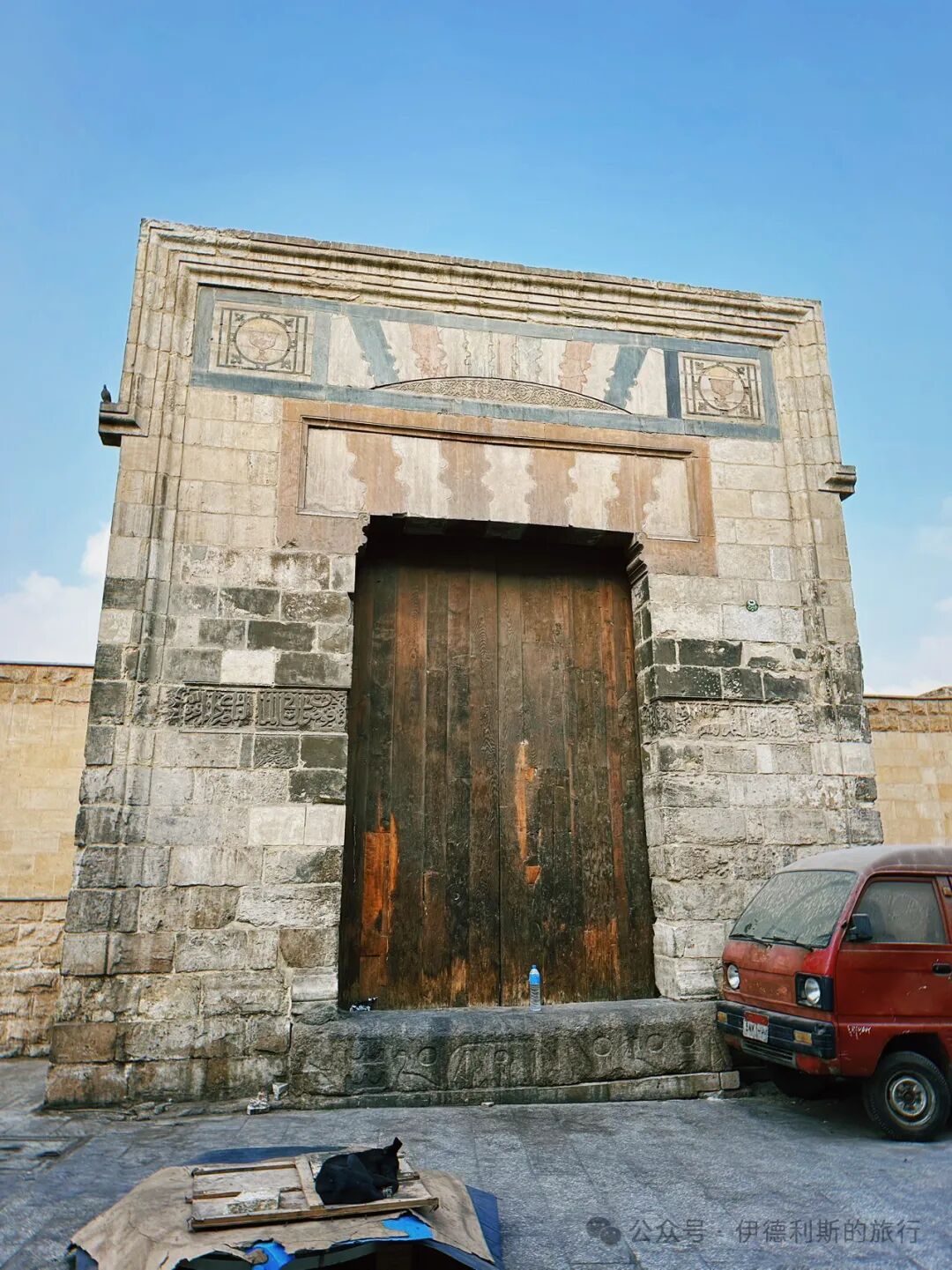
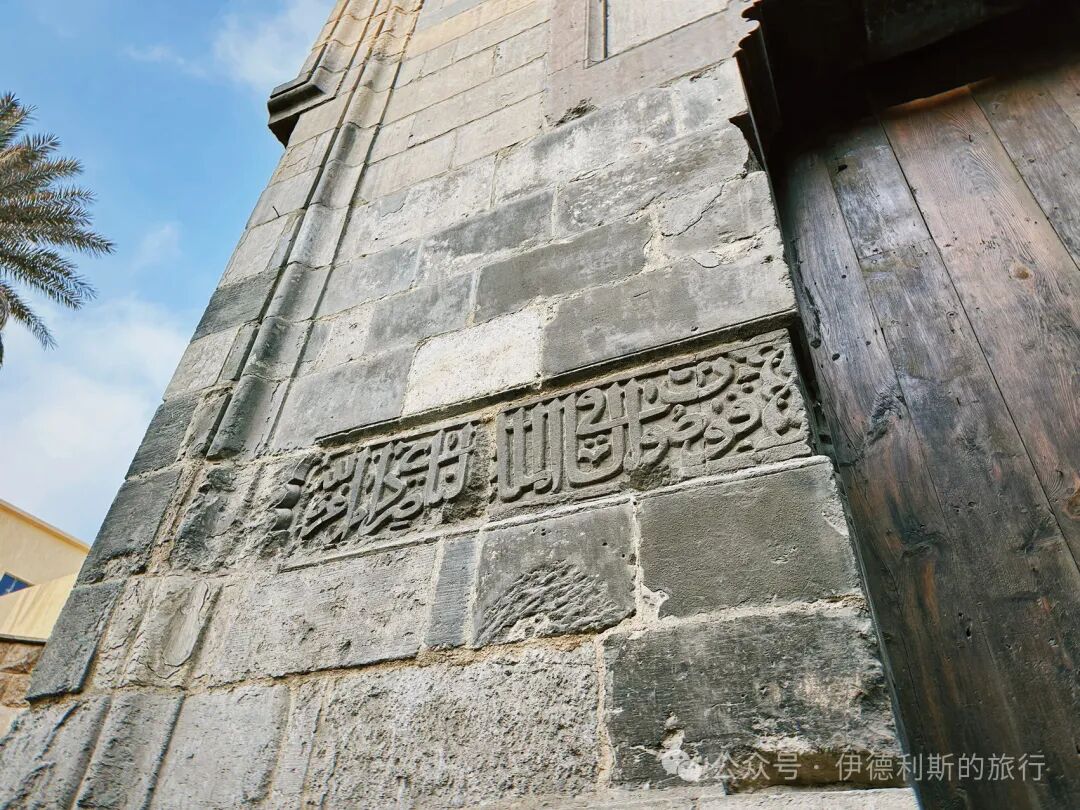
Continuing south, you can see the remains of the gate of the caravanserai (wikala) of Emir Qawsun. This inn was built in 1341 by the famous Mamluk Emir Qawsun (1302-1342). It was used by soap and coffee merchants from Palestine in the 17th and 18th centuries, so it is also called the Soap Inn. The inn was demolished in 1960 to be rebuilt as a school, and only the gate remains. Above the gate is a stone carving of a pair of cups, because Emir Qawsun once served as the Sultan's cupbearer (saqi).
Qawsun was born on the Kipchak steppe under the rule of the Golden Horde and started out as a merchant. In 1320, Princess Tulunbay of the Golden Horde married the Mamluk Sultan of Egypt. Qawsun came to Cairo as part of her entourage and stayed in Cairo to sell leather goods. Qawsun was highly valued by the Sultan in Cairo and became his personal attendant. He then rose quickly through the ranks and married the Sultan's daughter. After the old Sultan died in 1341, Qawsun became the regent and held actual power over the Mamluk dynasty. However, he was defeated by political rivals a few months later and was killed in prison.
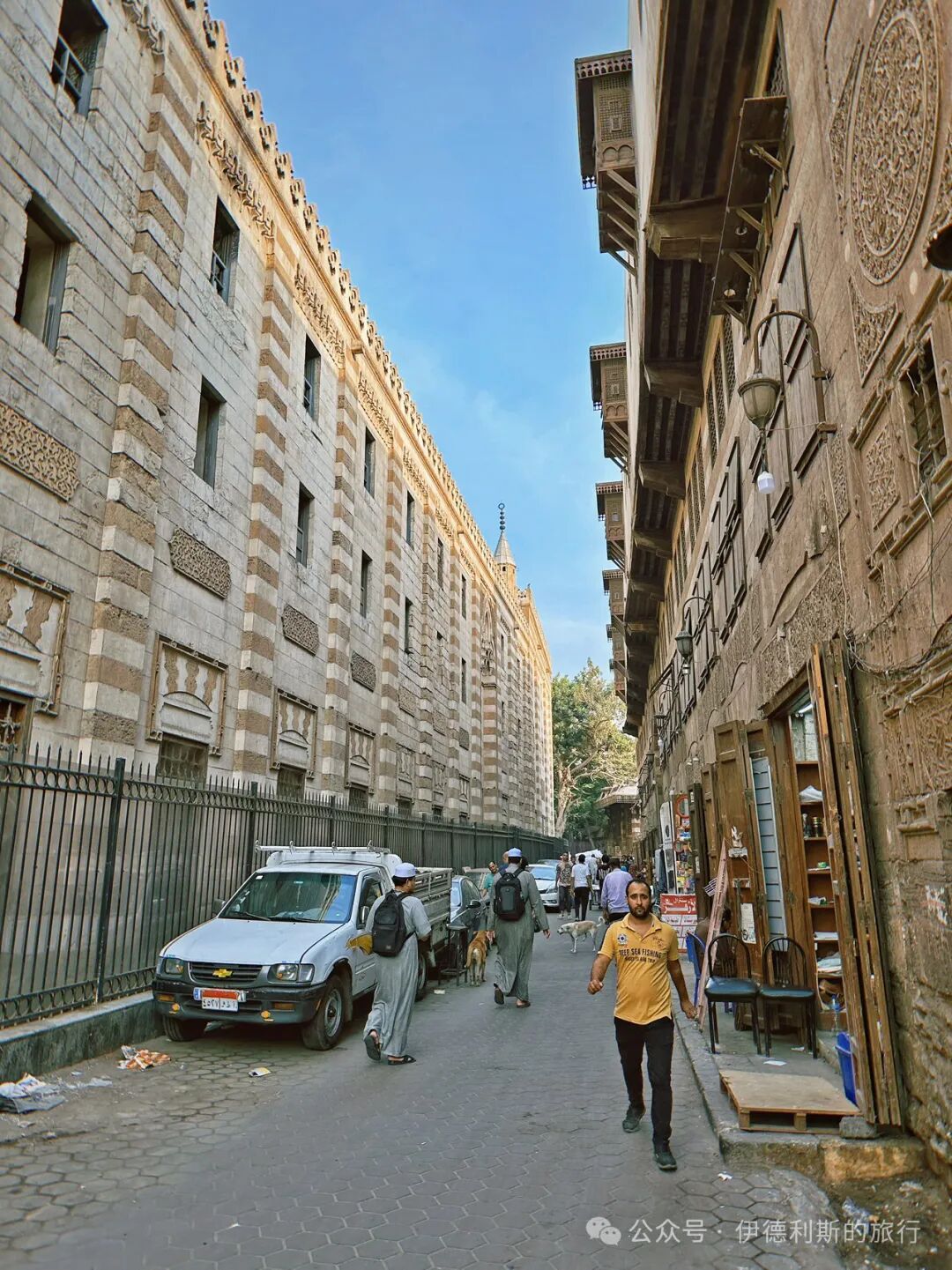
Continuing south along El-Gamaleya Street, you can see several more historical buildings.
Khanqah of Baybars II: 1310
On the east side of the middle section of El-Gamaleya Street stands the Khanqah of Baybars II, built in 1310. Baybars II was the 12th Sultan of the Mamluk dynasty and reigned for only one year, from 1309 to 1310. Baybars II served as vice-sultan from 1299 to 1309 and led the Mamluk Sultanate against the Ilkhanate in the Battle of Marj al-Saffar in Syria in 1303. This battle resulted in the total defeat of the Mongol army that had marched west into Syria. People say the Sultan led his captives from the Gate of Victory along El-Gamaleya Street into the old city of Cairo. Singers and dancers from all over came to celebrate, and the city was decorated with lights for days of festivities.
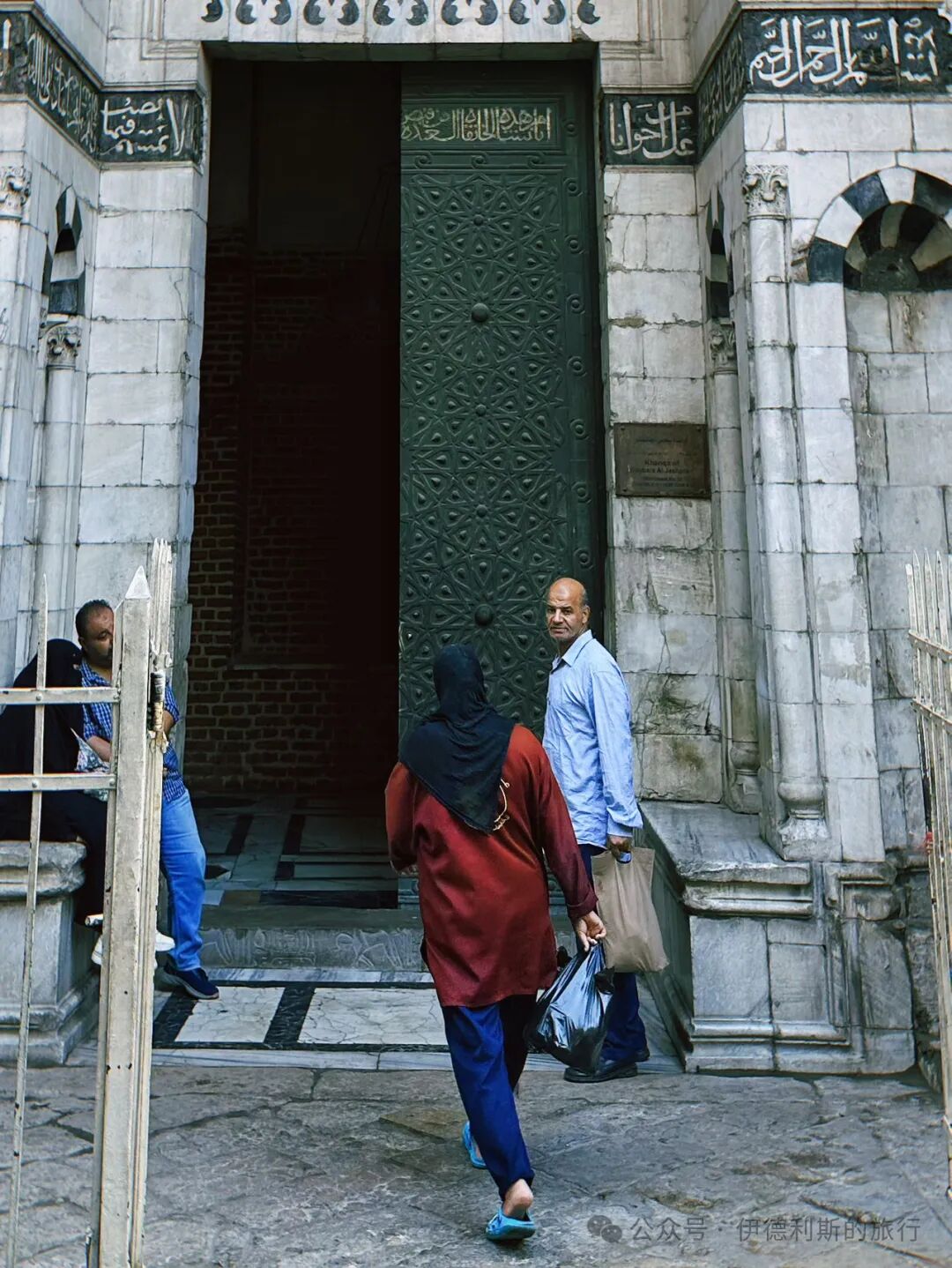
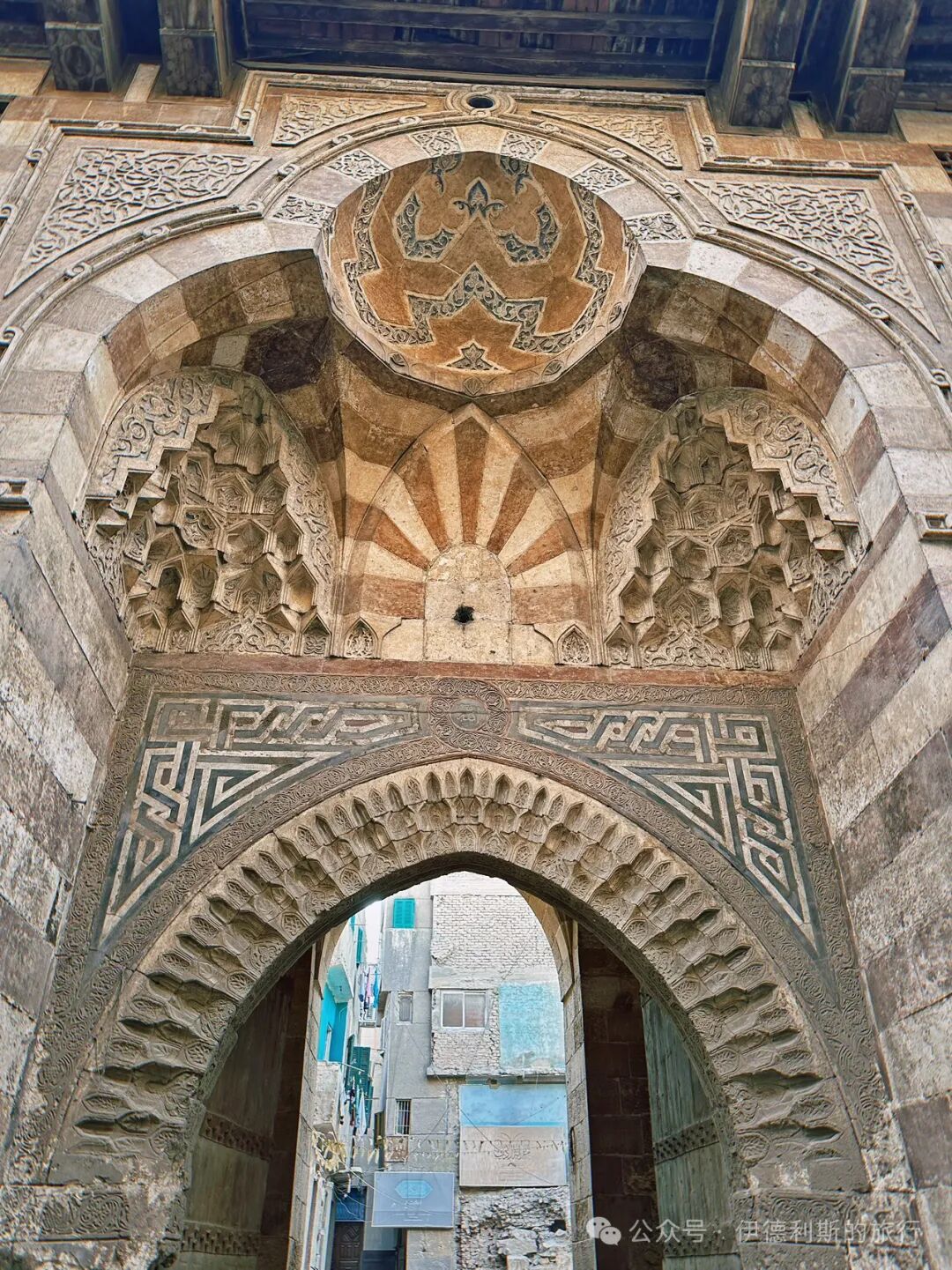
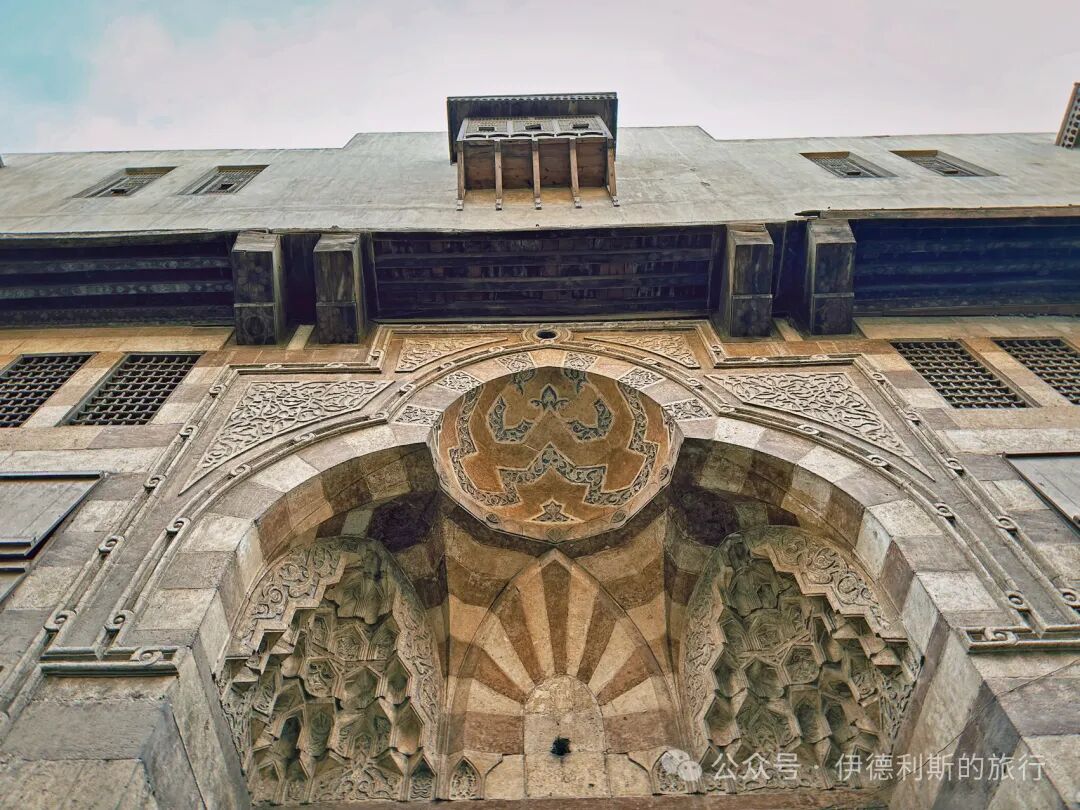
The exquisite Islamic geometric patterns (Girih) on the gate of the Khanqah of Baybars II form complex designs through overlapping and interlacing.
It is very interesting that the threshold of the gate is made of stone blocks carved with ancient Egyptian hieroglyphs, which is the first time I have ever seen this.
Bayt al-Suhaymi: 1648
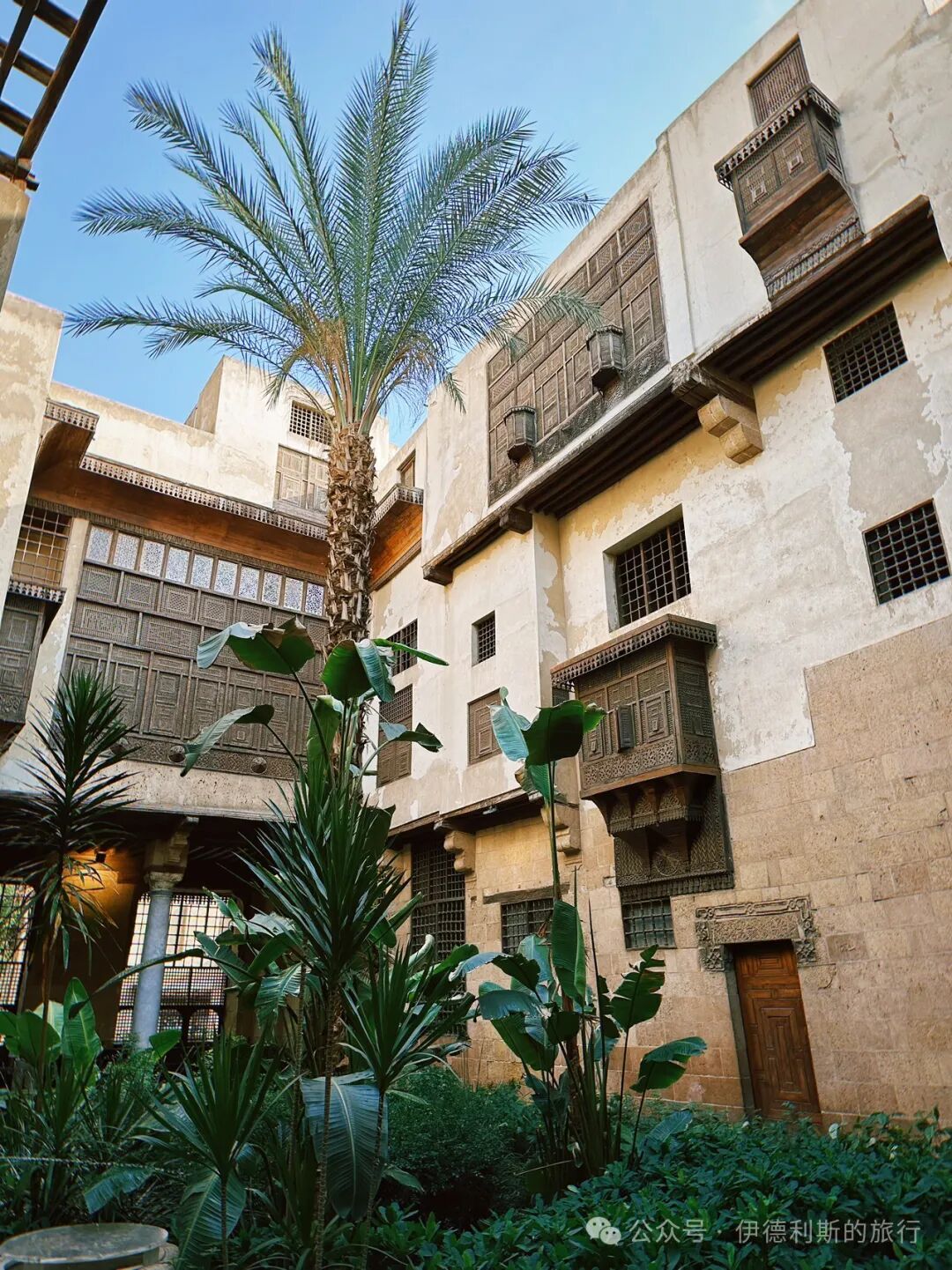
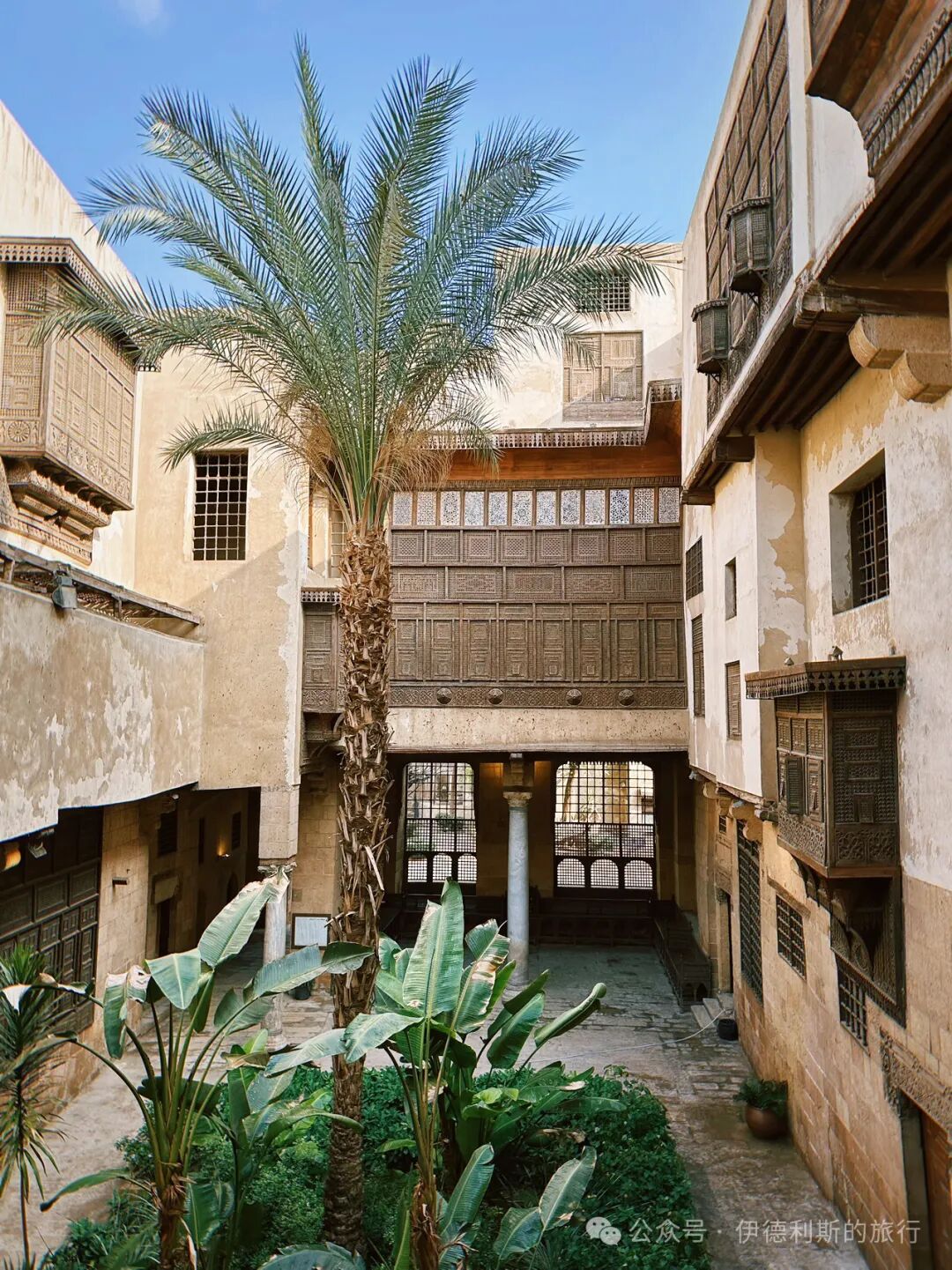
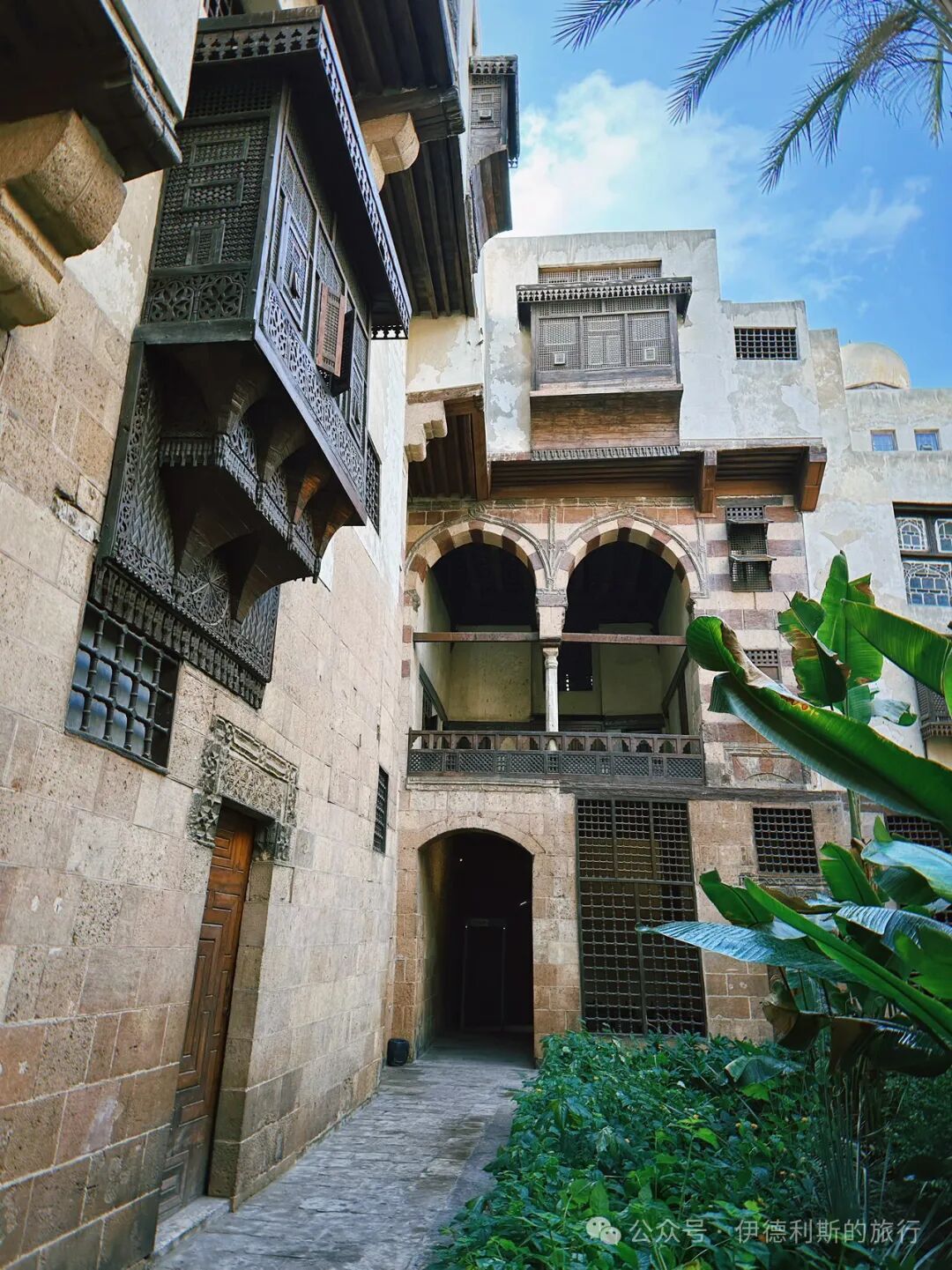
Walking west from the Khanqah of Baybars II, you can see the Bayt al-Suhaymi on Darb al-Asfar Street. Built in 1648, it is the best-preserved private residence from the Ottoman period in old Cairo and is now open as a tourist site.
This residence is built around a courtyard (Sahn) with a small garden planted with palm trees in the center. You can see beautiful wooden lattice windows (Mashrabiya) in the courtyard. The south side of the mansion is the original 1648 structure, while the north side was expanded in 1797. It is now named after its last owner, Sheikh Muhammad Amin al-Suhaymi, who was a sheikh at Al-Azhar Mosque. In 1930, King Fuad I of Egypt provided funds to purchase the mansion and placed it under the management of the Committee for the Preservation of Arab Art Monuments.
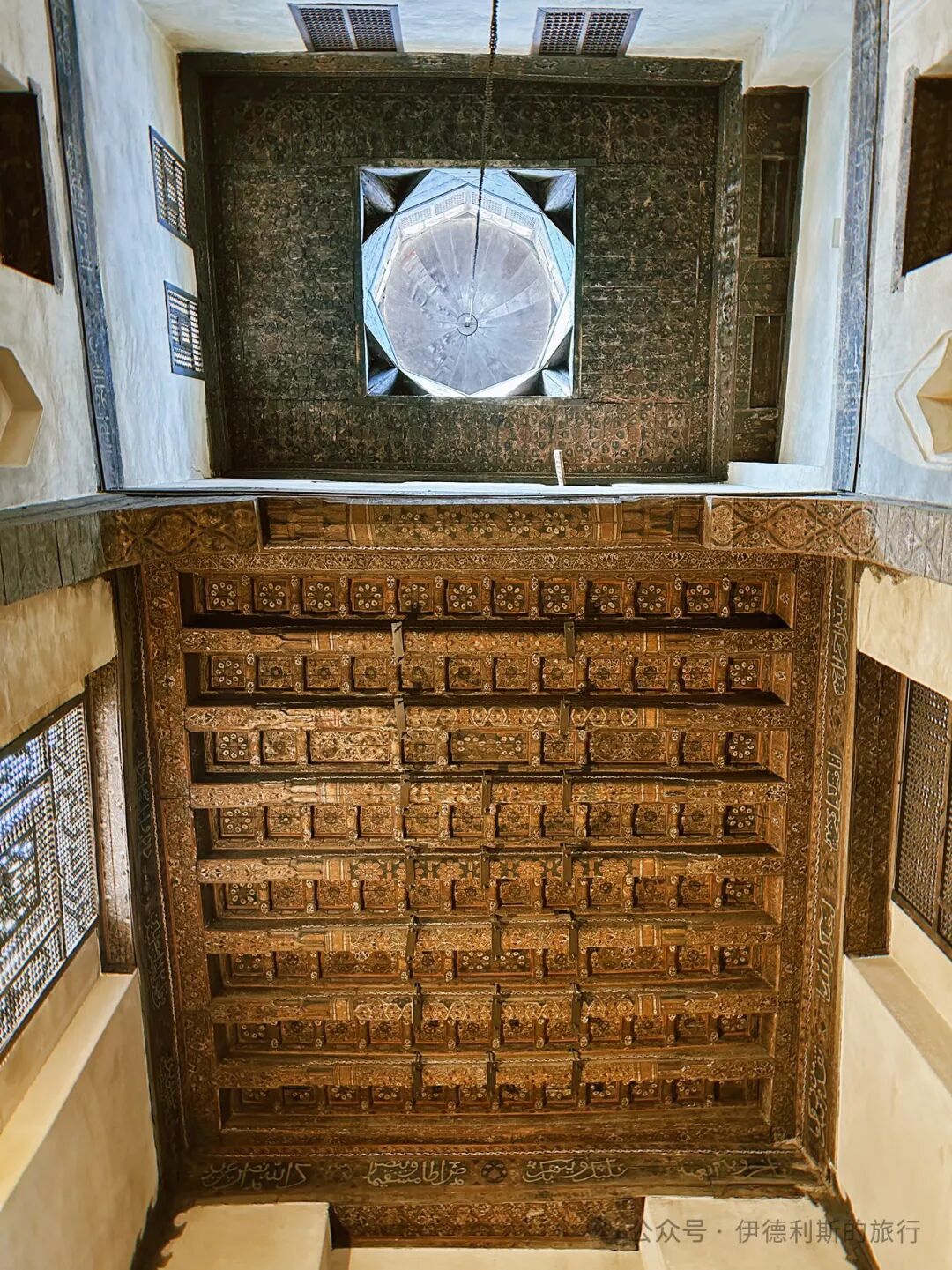
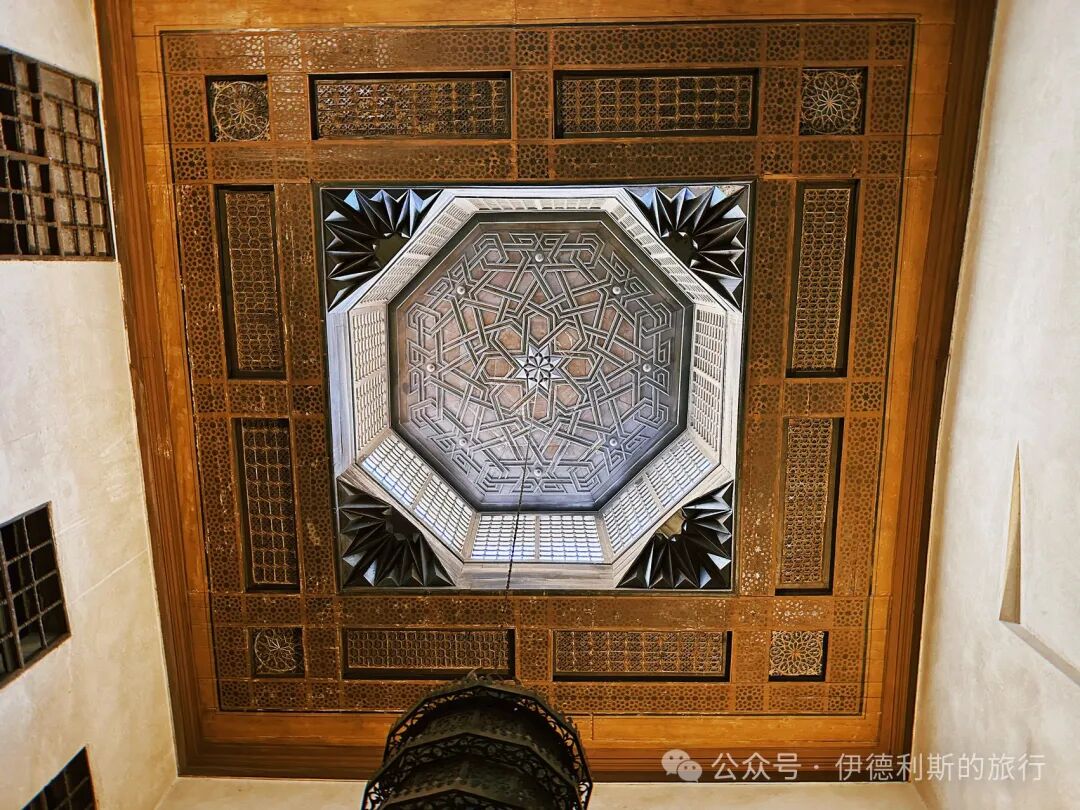
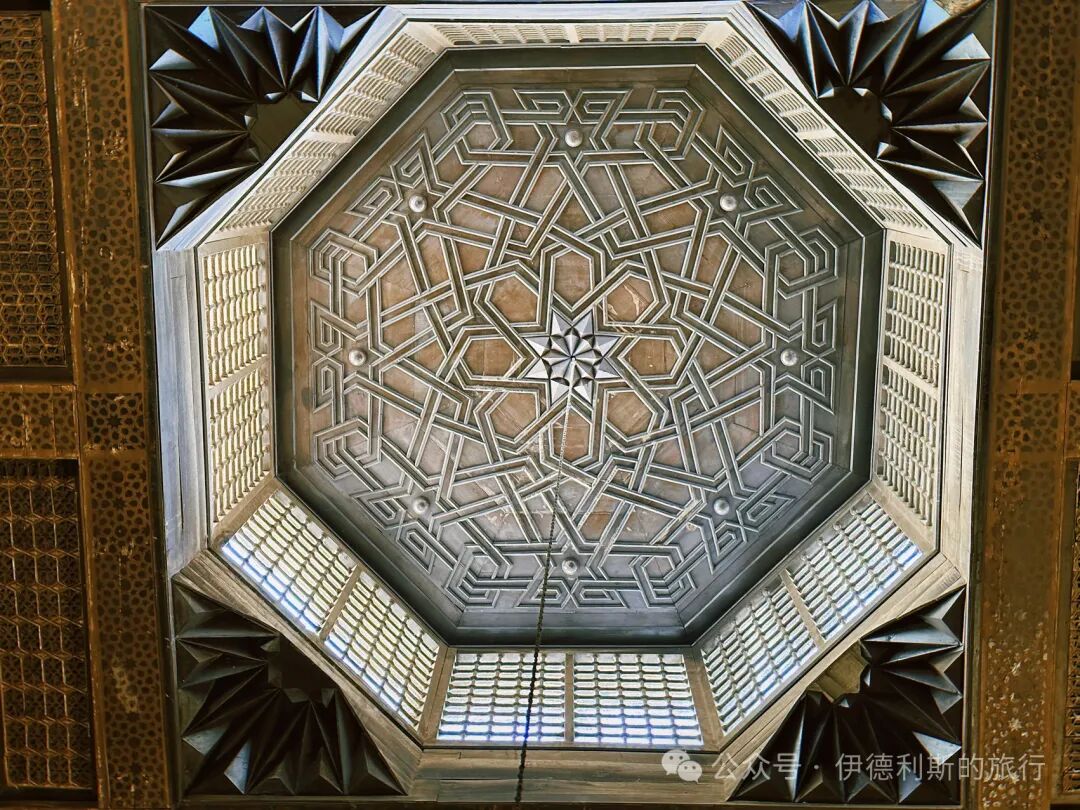
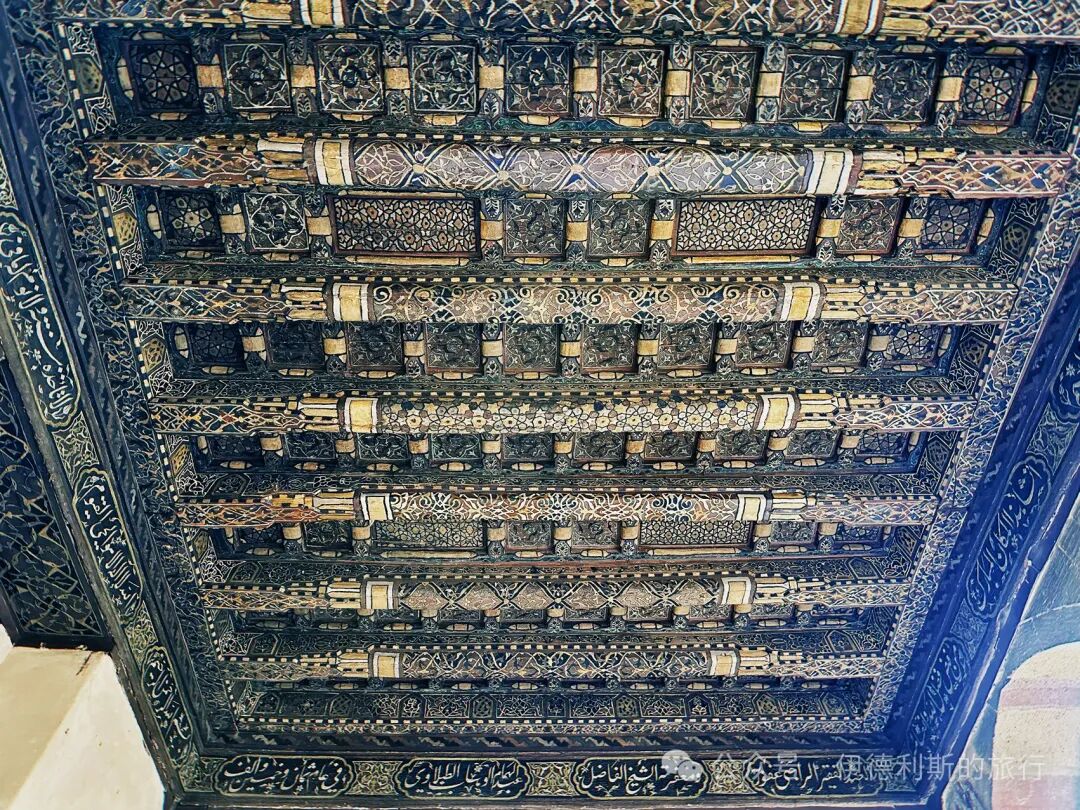
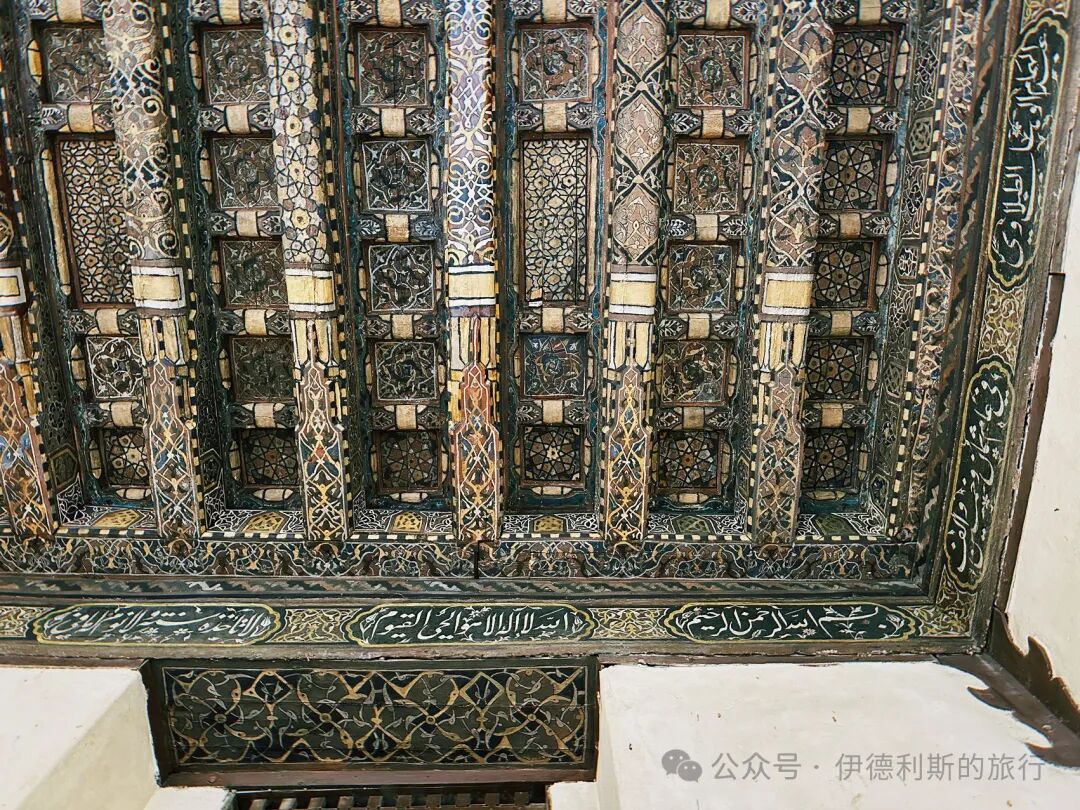
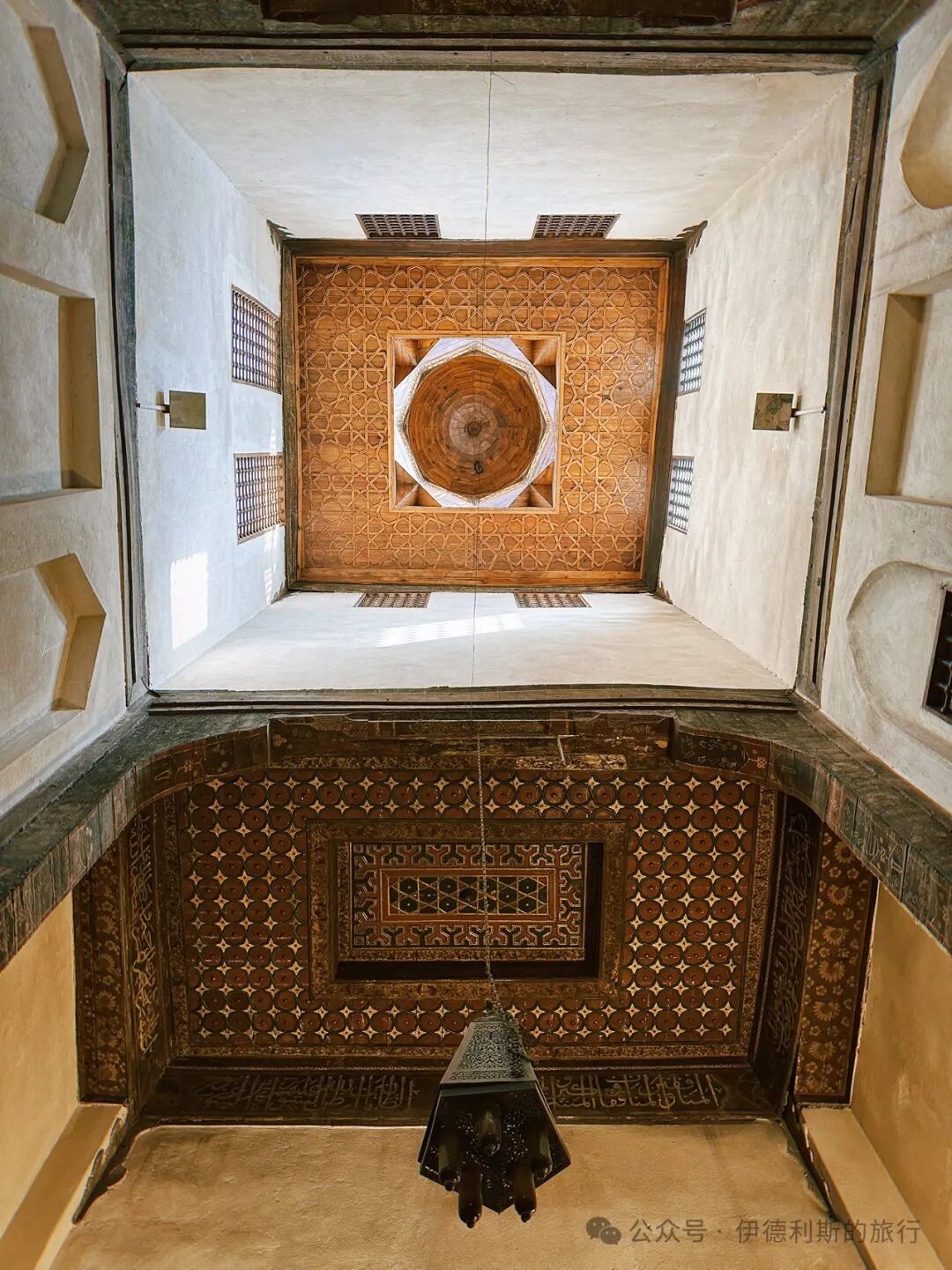
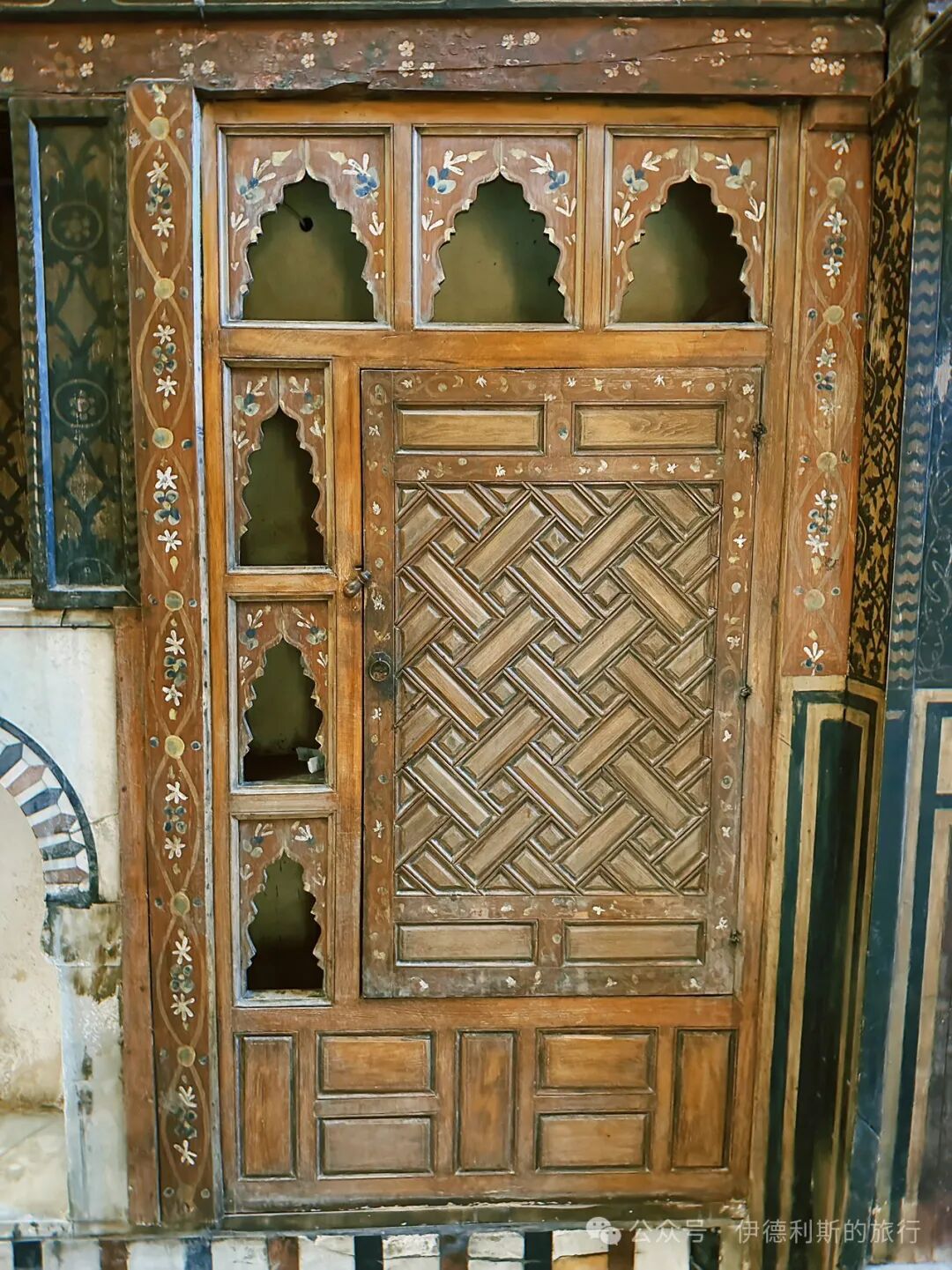
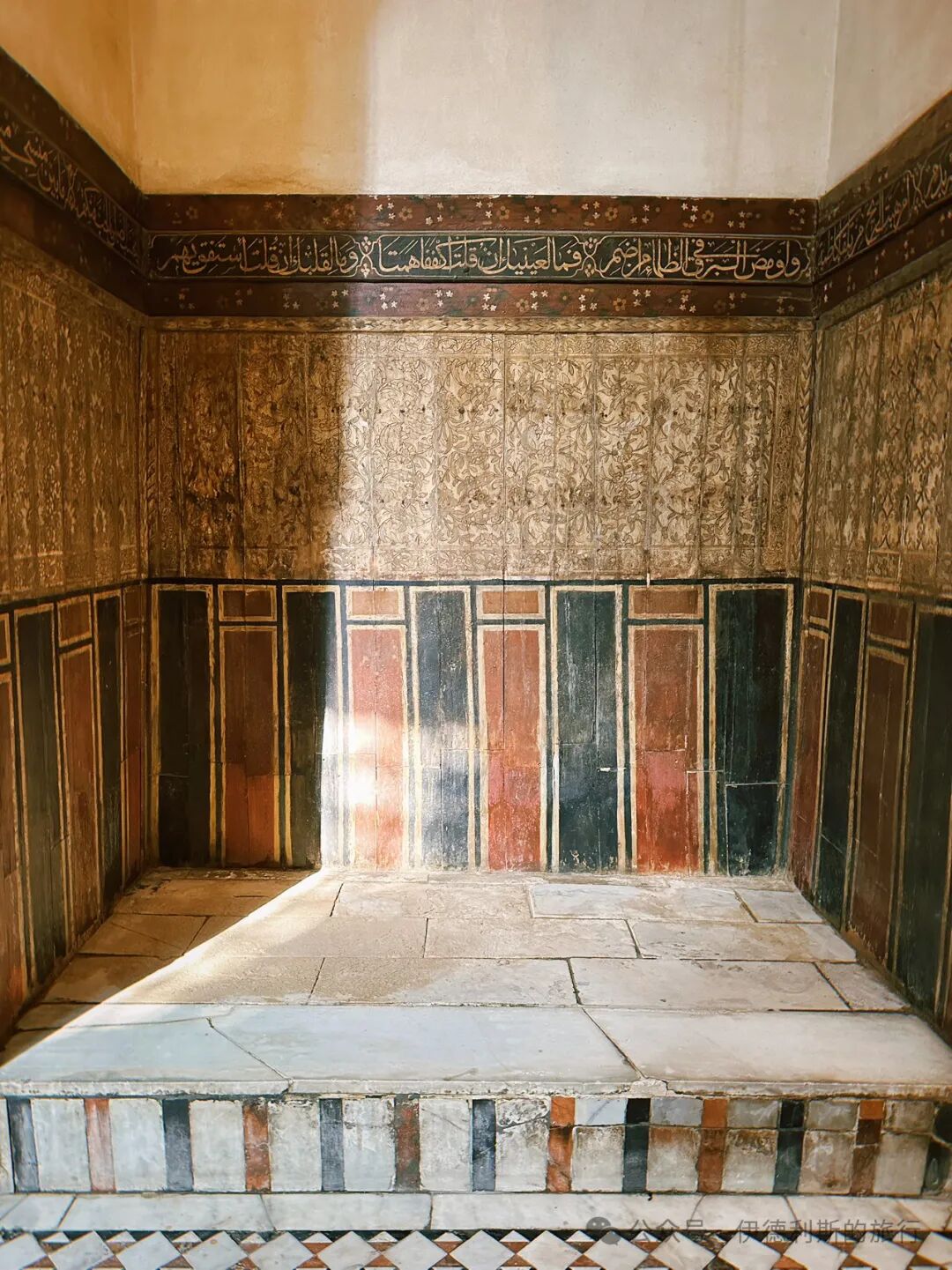
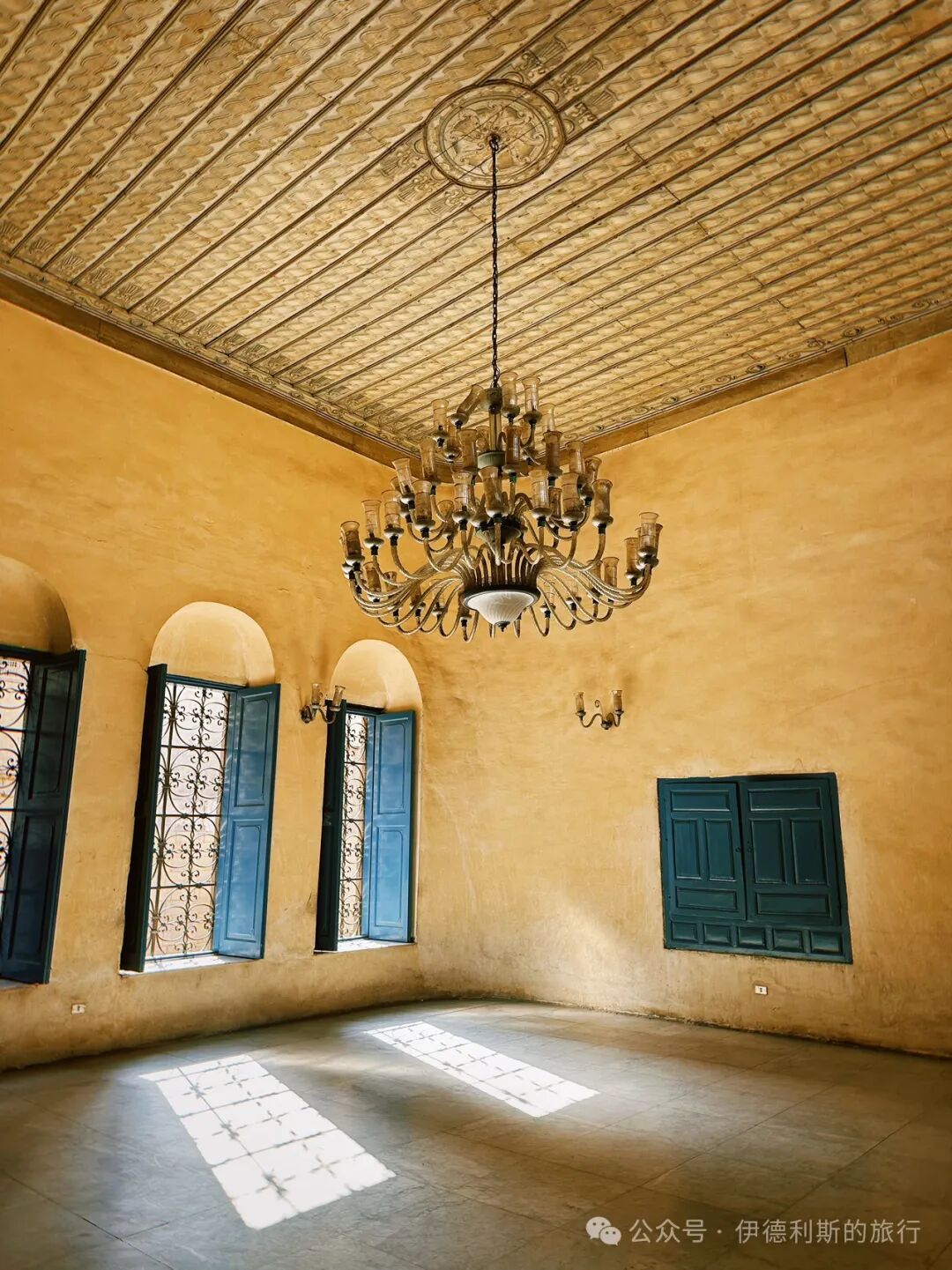
The ornate ceiling decorations of Bayt al-Suhaymi.
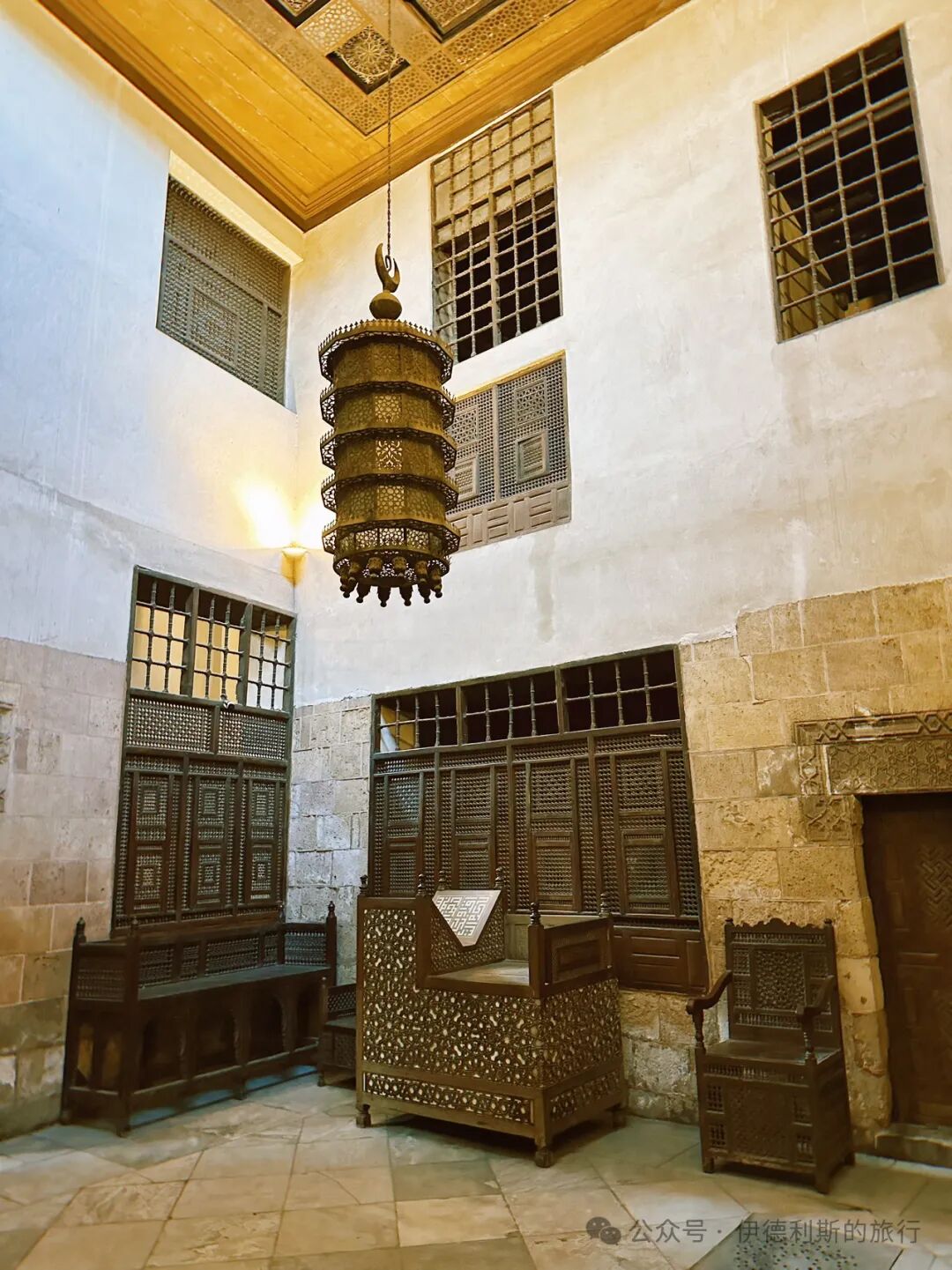
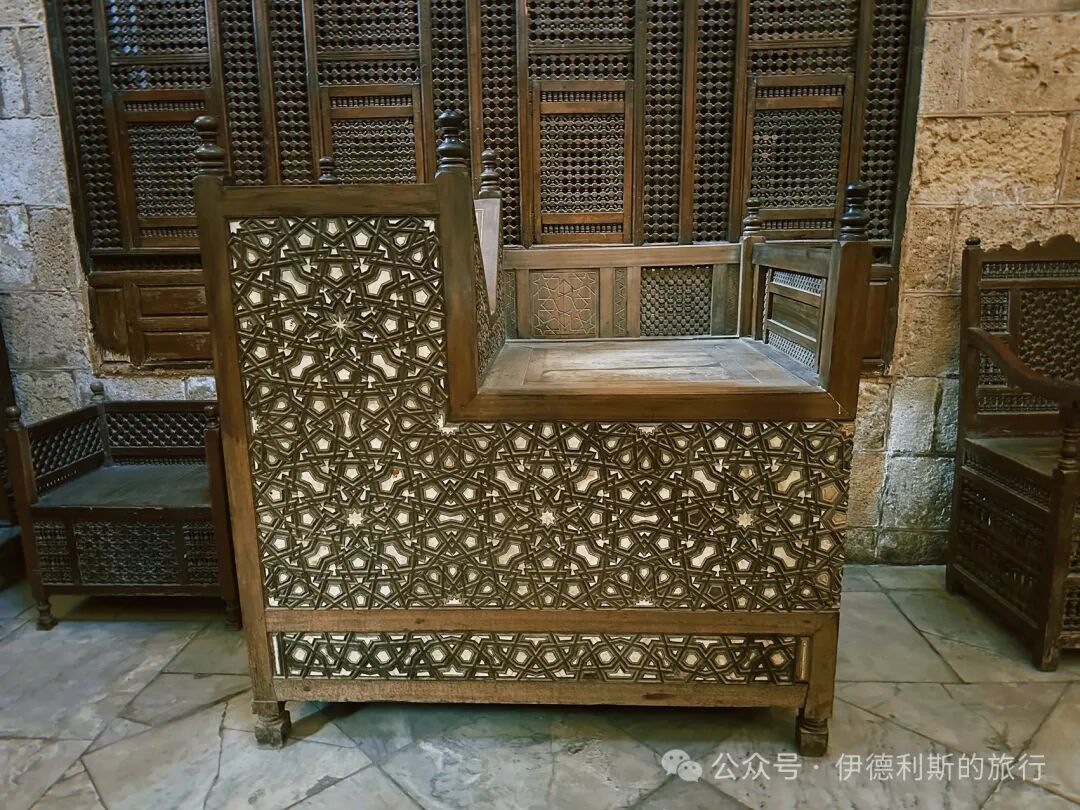
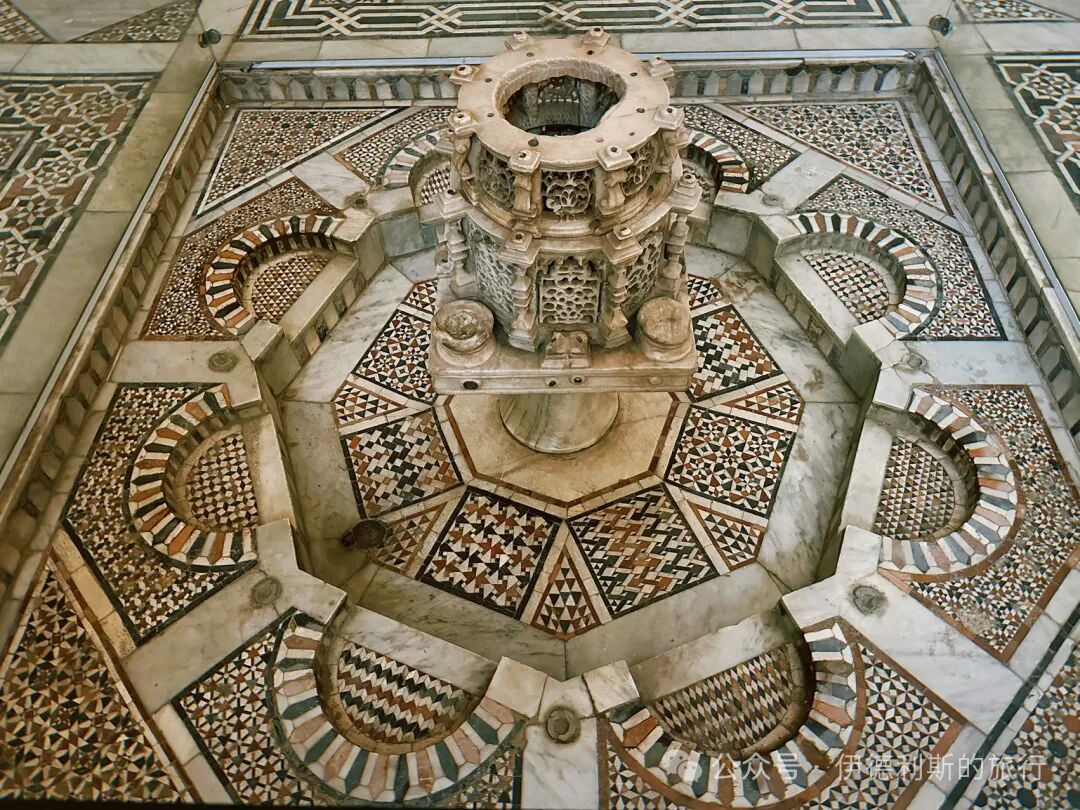
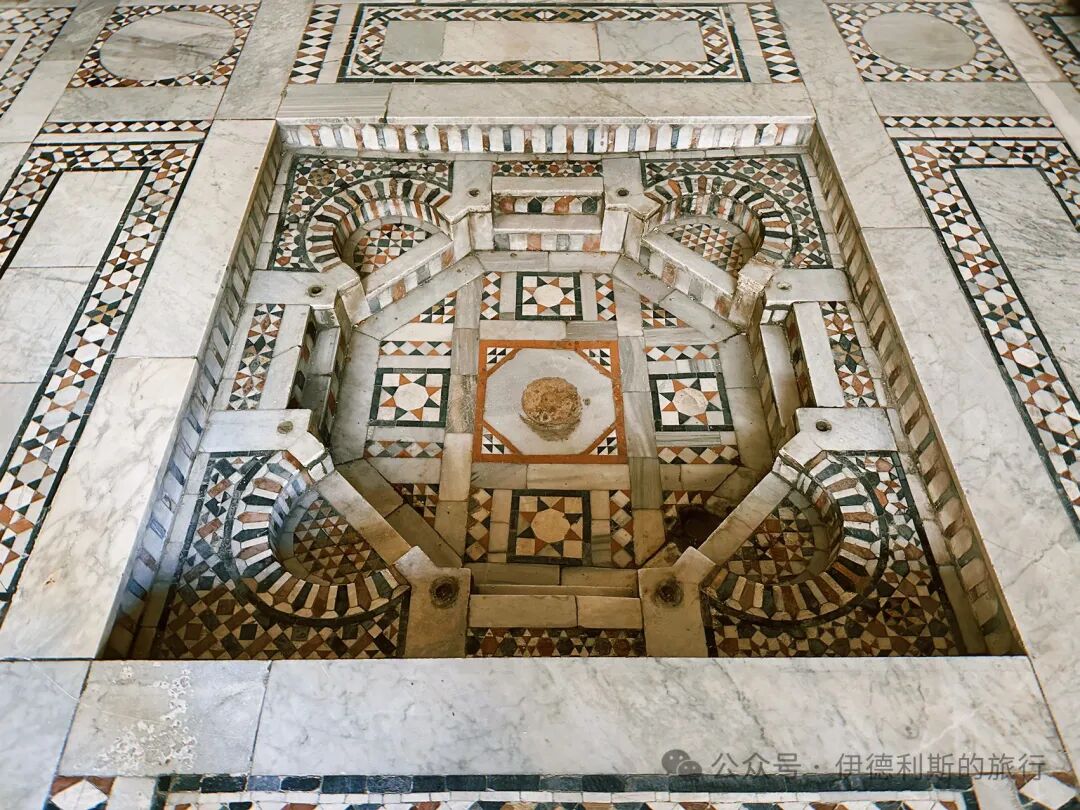
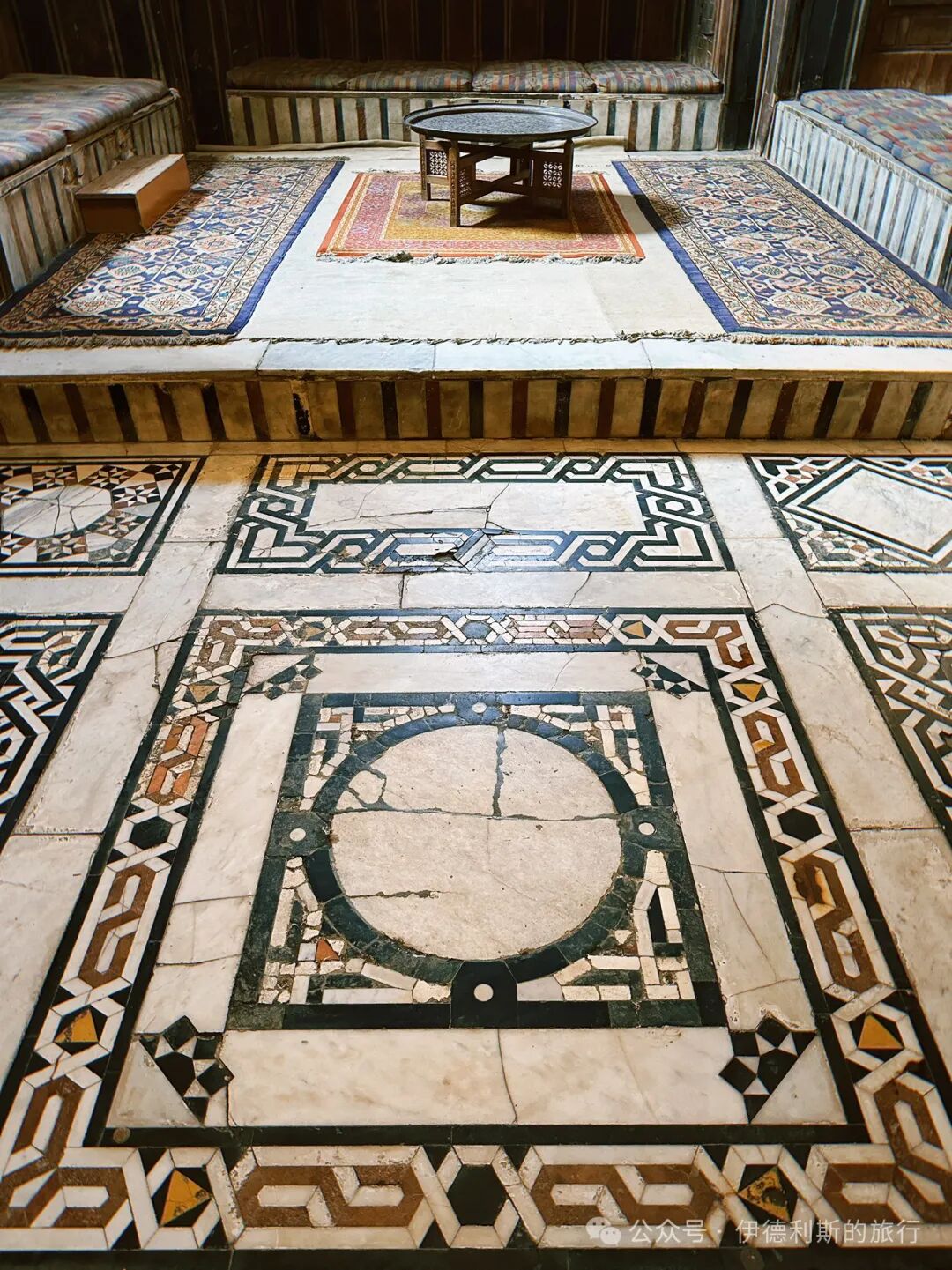
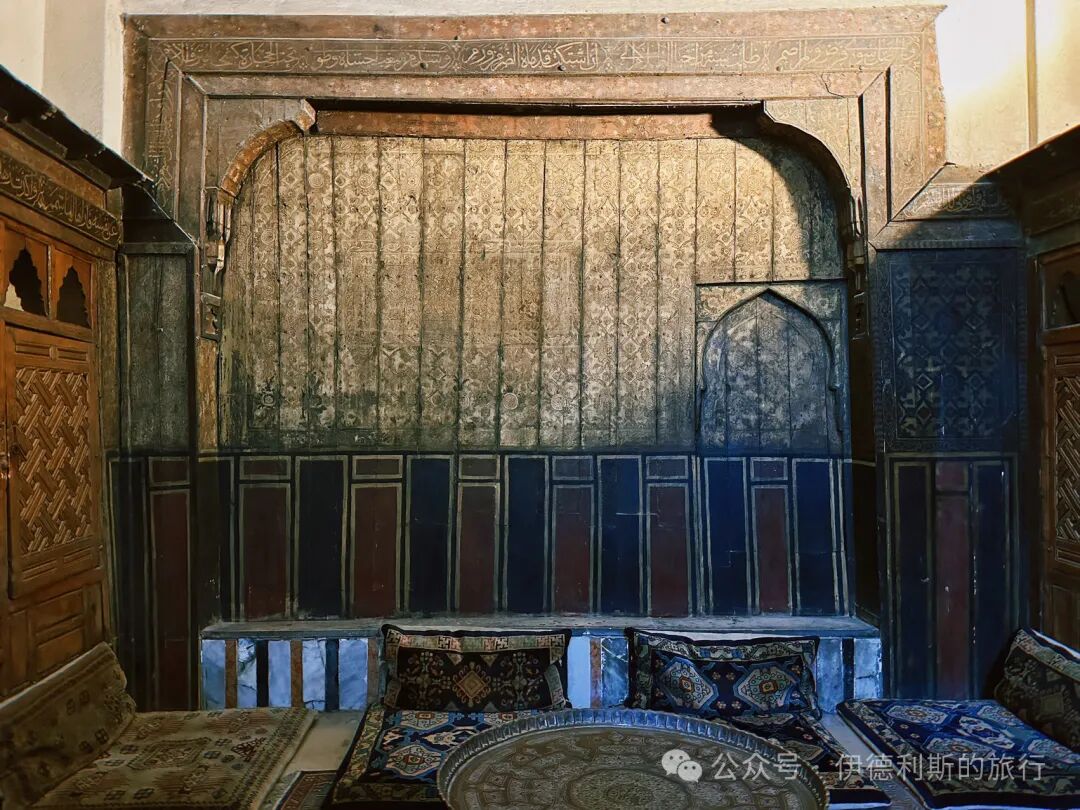
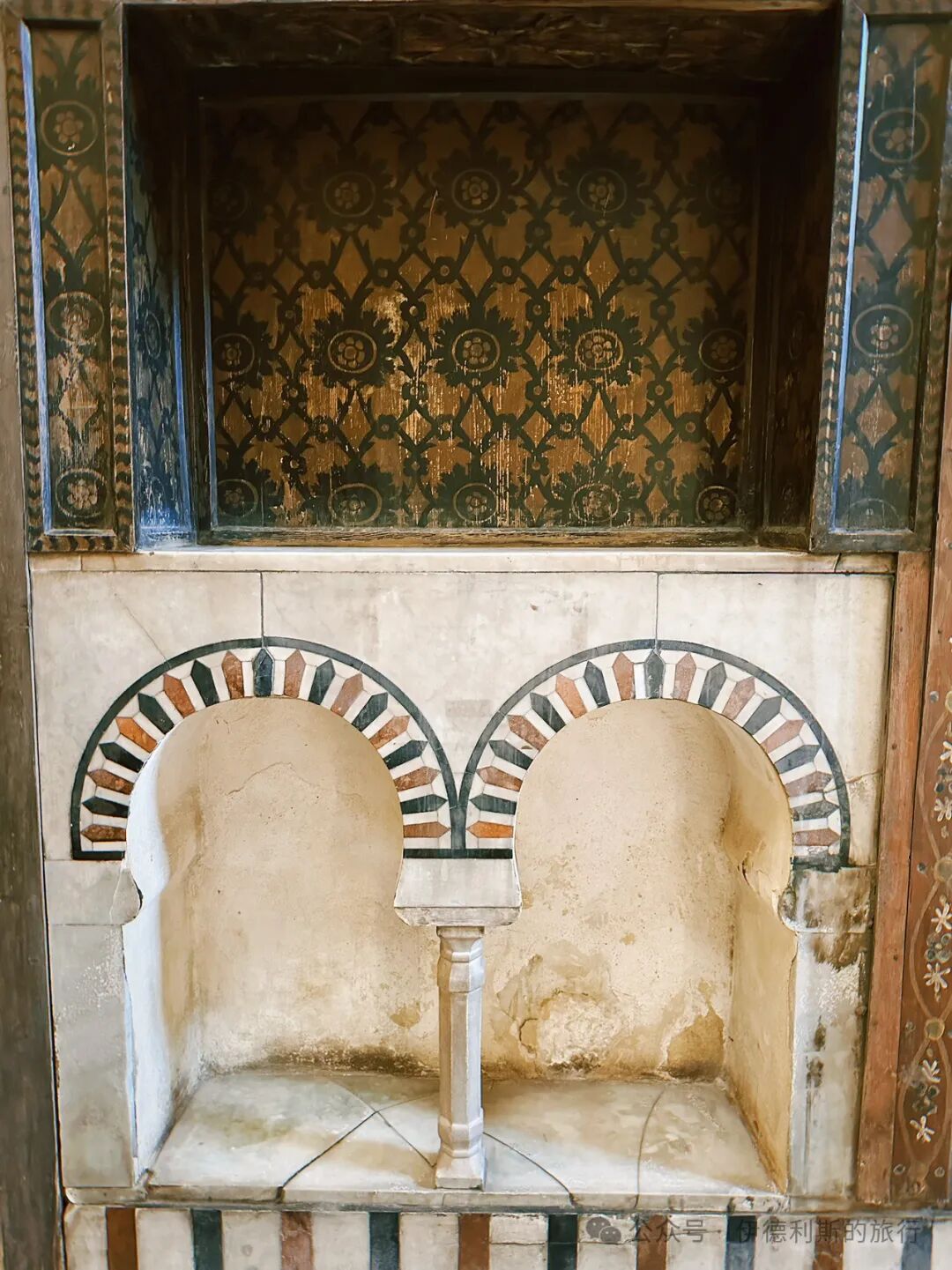
The wood-carved furniture and colorful marble floors inside Bayt al-Suhaymi.
Mosque-Sabil of Sulayman Agha al-Silahdar: 1839
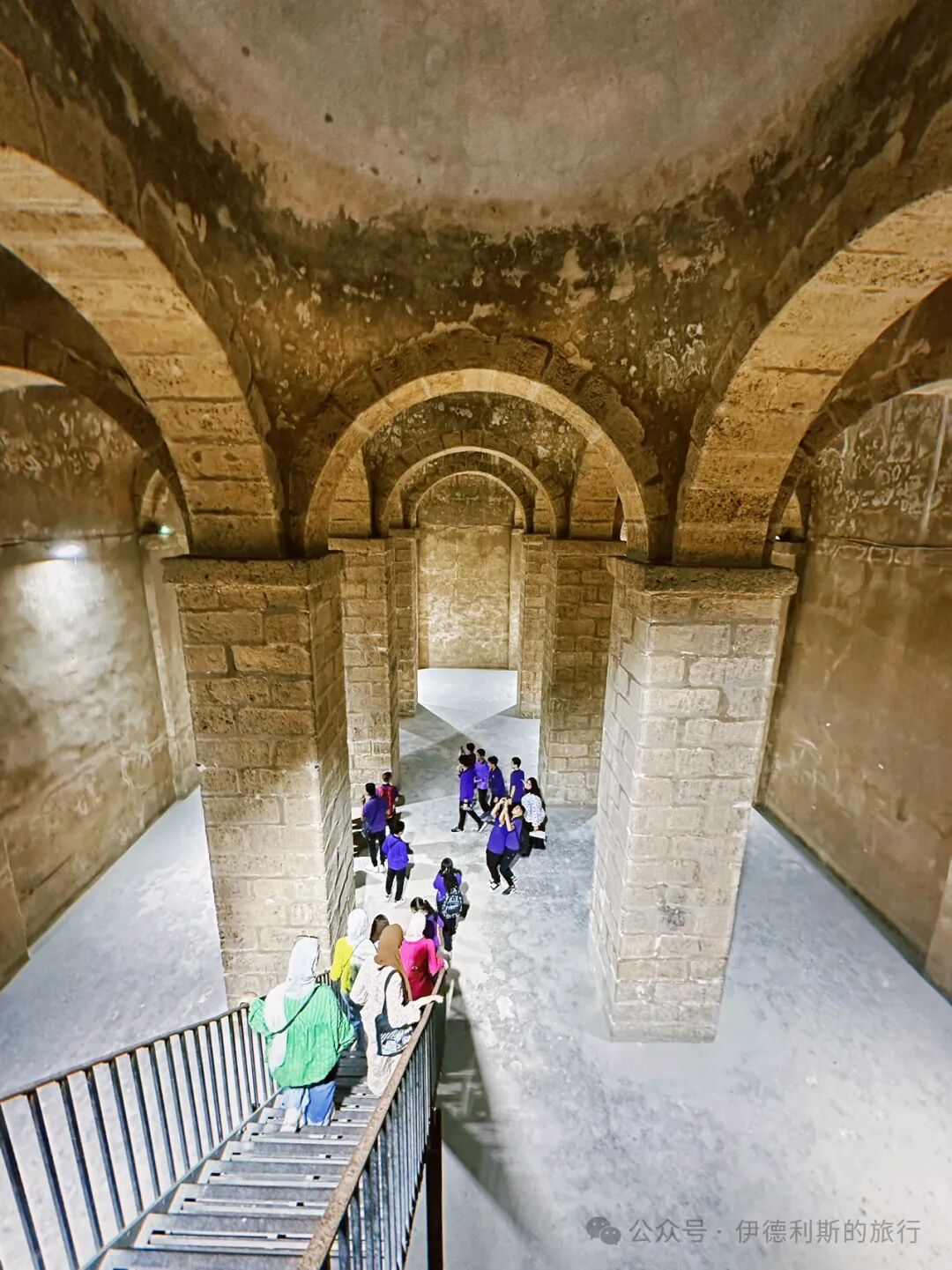
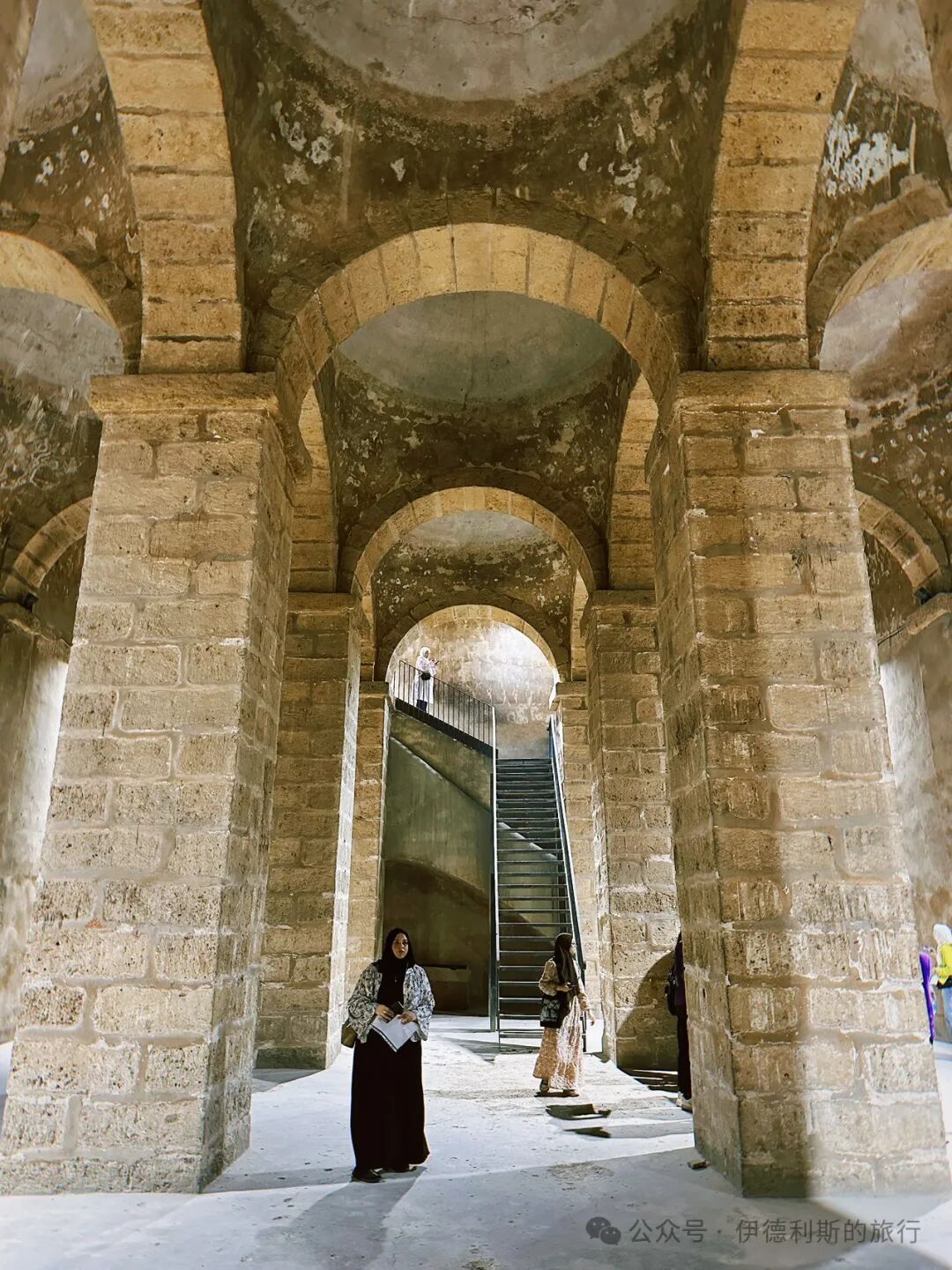
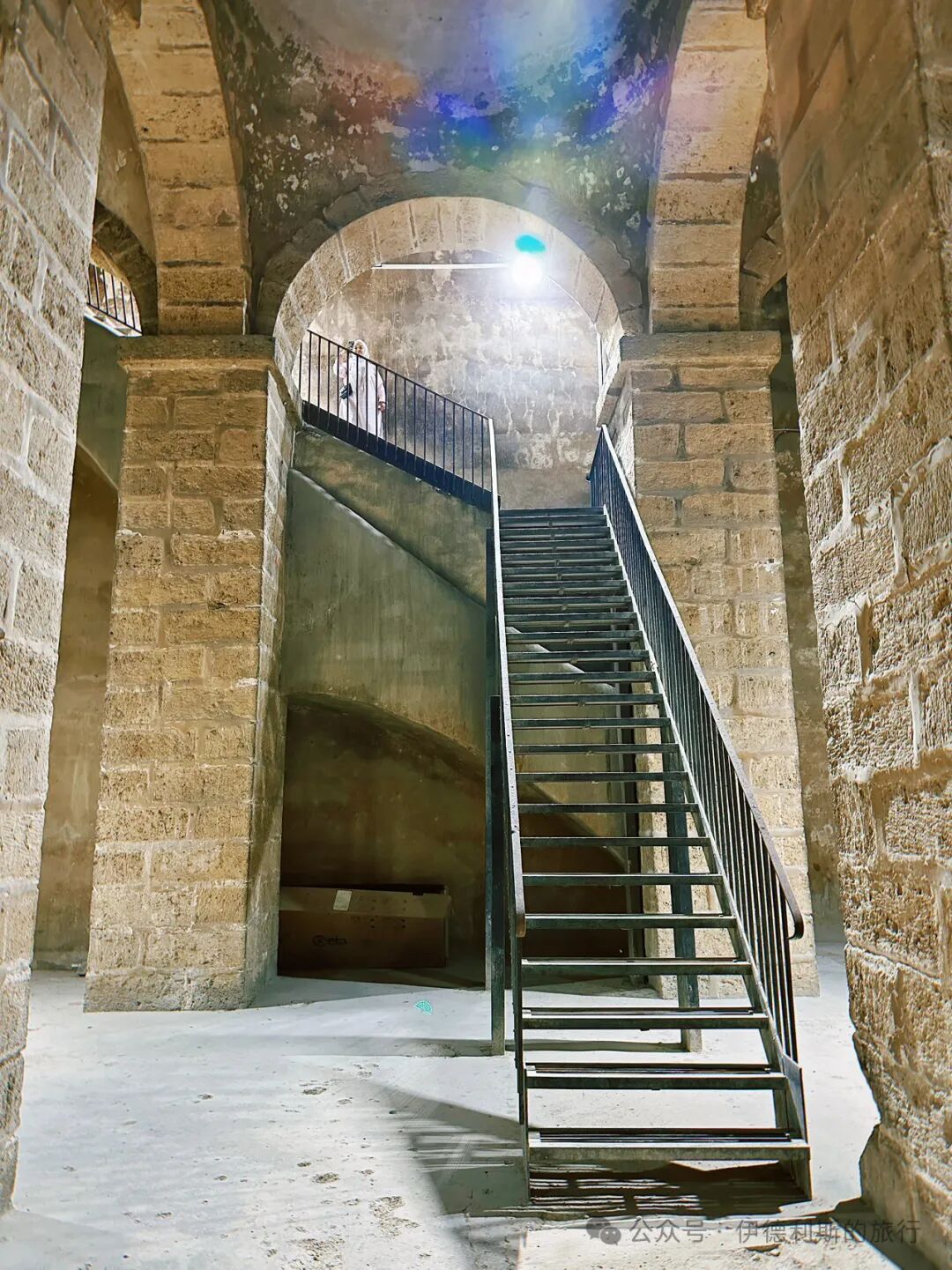
Continuing west back to the main road of old Cairo, Al-Mu'izz Street, the first thing you see is the Mosque-Sabil of Sulayman Agha al-Silahdar, built in 1839. This fountain has a fancy Ottoman Baroque facade with floral patterns from the European Renaissance. The fountain is made of marble and was used to keep the water cool during the summer. Next to the fountain is a primary school (kuttab) that was once used to teach children how to read, write, and recite scripture. Here, we can also enter the huge underground water reservoir of the fountain, which is rarely seen in typical fountains.
Aqmar Mosque: 1125-6
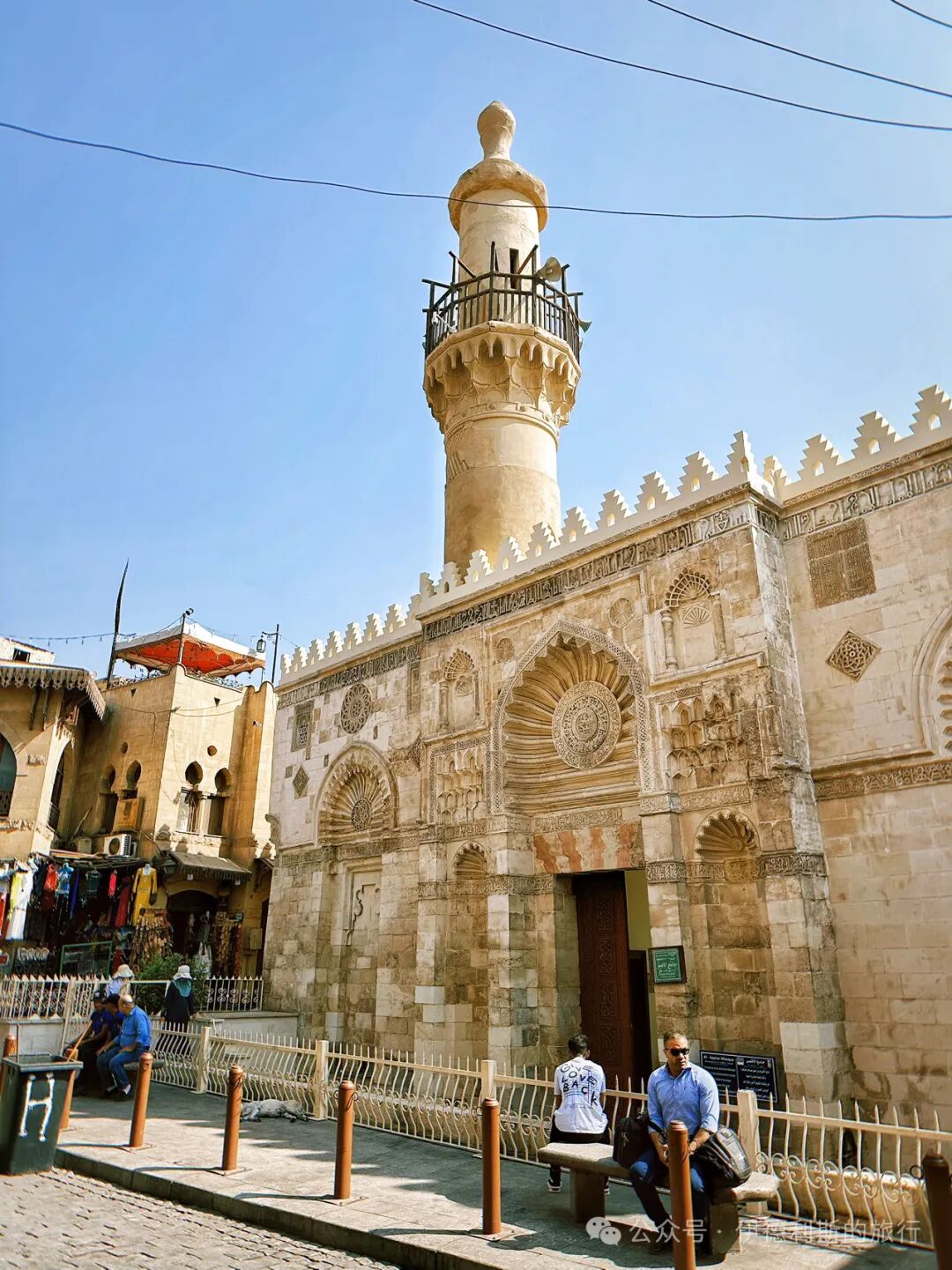
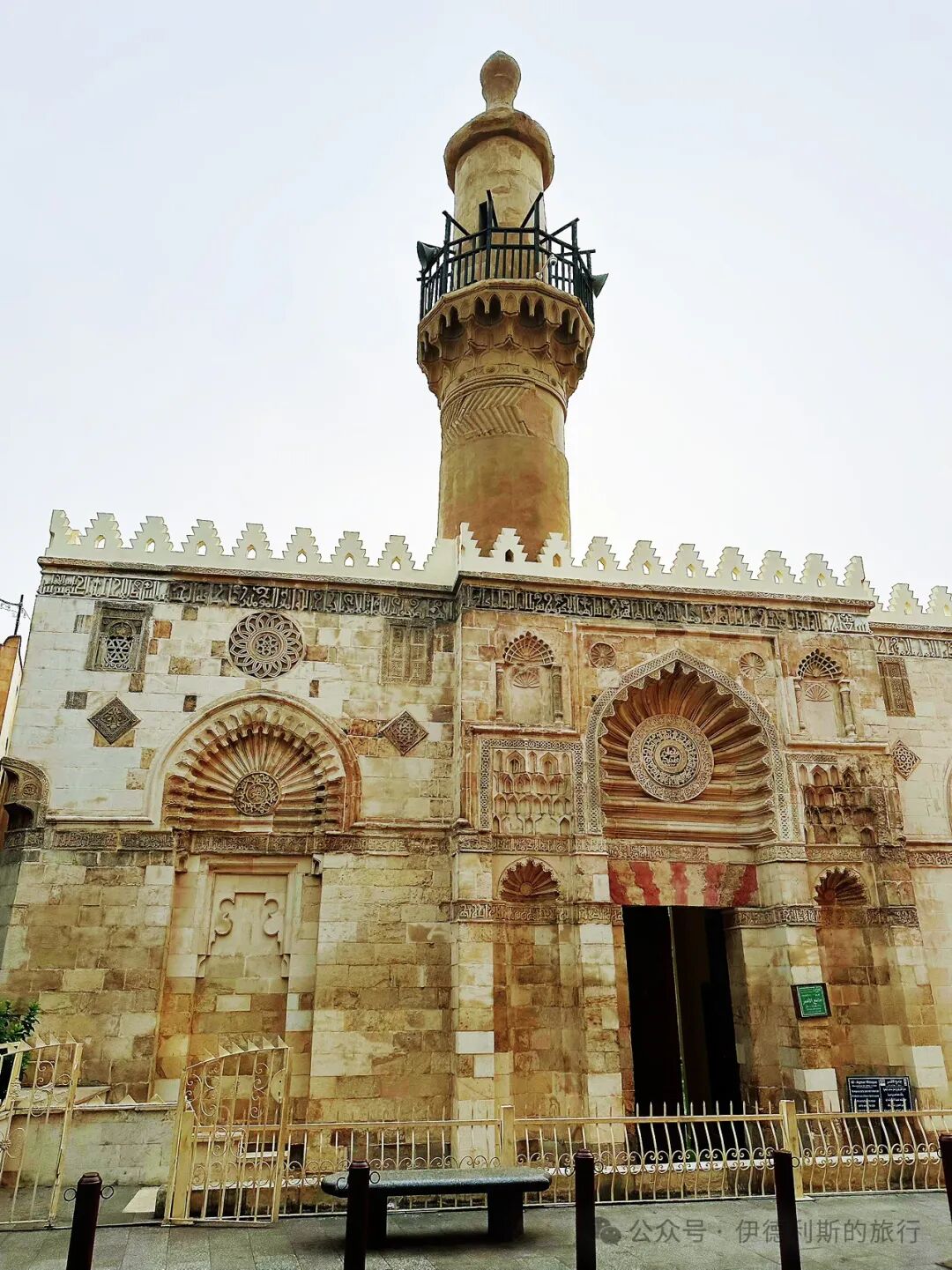
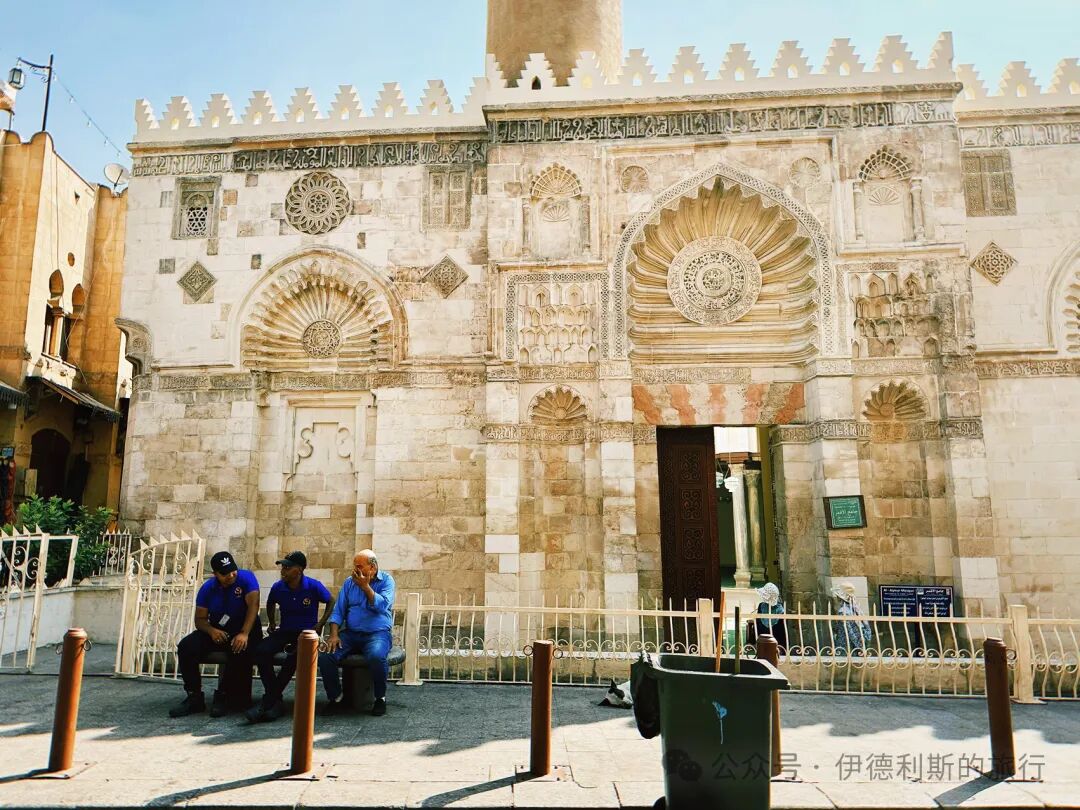
Walking south along Al-Muizz Street, we stop at the famous Fatimid-era Aqmar Mosque. The Aqmar Mosque was built in 1125-6 by order of the Fatimid vizier Al-Ma'mun al-Bata'ihi. It sits at the northeast corner of the former Eastern Fatimid Palace, right next to the palace grounds.
The Aqmar Mosque holds a groundbreaking place in Egyptian architectural history. It is the first mosque where the entrance is flush with the street rather than aligned with the qibla wall, making it the first mosque planned according to Cairo's street layout. It is also the first mosque to feature complex stone carvings. The facade of the Aqmar Mosque is very luxurious. Above the entrance is a large medallion surrounded by a grille, with the names of the Prophet and Ali in the center and verses written around them. This type of decoration is unique in Cairo.
At the top of the left facade, there are carvings of a door and a window. The window on the left symbolizes the ceremonial grille that the Fatimids took back from the palace of their rivals, the Abbasids in Baghdad, serving as a symbol of victory. Inside the window is a lamp and a six-pointed star, based on the Shia hadith: 'The stars are a promise to the world, and it will not be submerged.' Below the window, there is a carving of a plant growing out of a flower pot, which comes from the Prophet's reference to Hasan and Husayn as 'my two aromatic herbs in the world.' The door in the upper right corner comes from the famous Shia hadith: 'I am the city of knowledge, and Ali is its gate.'
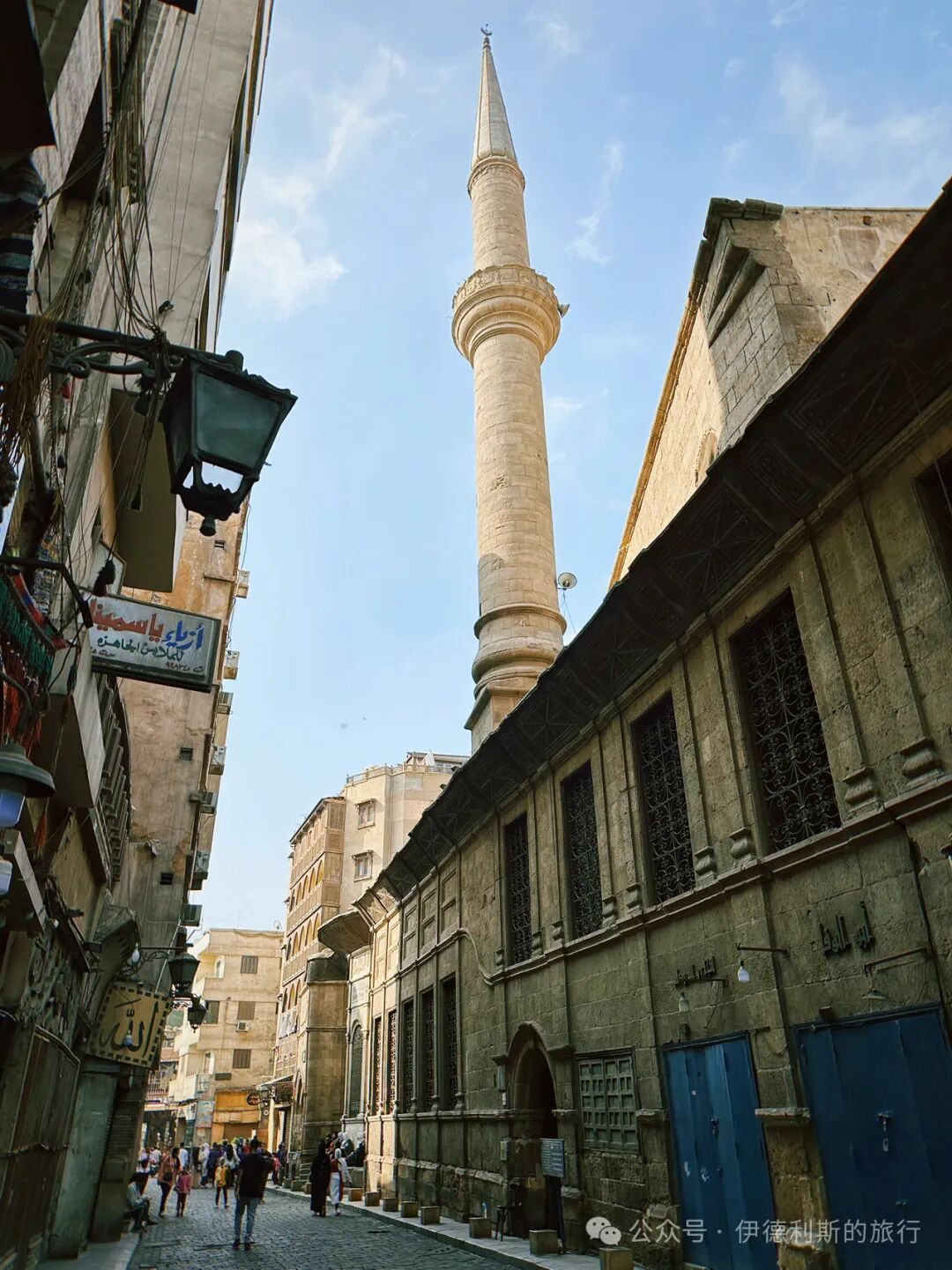
Because it was near the Fatimid palace, the Aqmar Mosque did not originally have a minaret. One was not added until the end of the 14th century by the Mamluk dynasty, and the cylindrical top was rebuilt during the Ottoman era.
In 1993, the Dawoodi Bohra branch of the Shia community carried out a large-scale renovation of the Aqmar Mosque. Most of the historical elements inside the main hall were not preserved, which drew criticism.
Madrasa of Emir Jamal al-Din al-Ustadar: 1407
Turn back into al-Gamaleya Street along the alley south of the Aqmar Mosque to see the Madrasa of Amir Jamal al-Din al-Ustadar, built in 1407 by the Mamluk general Amir Jamal al-Din al-Ustadar. Jamal al-Din built many structures in Cairo, and al-Gamaleya Street is named after him.
This is a classic cruciform madrasa structure with an open courtyard in the center and an iwan (arched hall) on each of the four sides, each used to teach one of the four schools of Islamic jurisprudence. The decoration inside the main hall is very ornate, as People say Jamal al-Din modeled it after Mamluk palace designs and invested a large amount of money and materials. Jamal al-Din was executed just four years after the mosque was completed. The Sultan wanted to demolish the site, but a judge (Qadi) stopped him, and in the end, only Jamal al-Din's name was removed.
After the Ottoman Empire conquered Istanbul in 1517, many marble slabs from the inner walls of the madrasa were taken to Istanbul. The building was damaged again in the 1992 earthquake and was not fully restored until 2002.
Dhu al-Fiqar Fountain-Primary School (Sabil-Kuttab): 1673
Opposite the Madrasa of Amir Jamal al-Din al-Ustadar is the Ottoman-era Dhu al-Fiqar Sabil-Kuttab, built in 1673 by Dhu al-Fiqar Katkhuda Mustahfizan and his brother Muhammad. This Sabil-Kuttab consists of two prominent wooden awnings, and the caravanserai (wikala) behind it was once a center for the coffee trade in 18th-century Cairo.
Maq’ad Mamay al-Sayfi Palace: 1496
Continue south to the Maq’ad Mamay al-Sayfi Palace on Beet Al Qadi Street, built in 1496 by the Mamluk general Sayf al-Din Mamay ibn Khadad, who served as a Mamluk diplomat to the Ottoman Empire in the early 1490s.
During the Ottoman period, this place served as a high court and the residence of judges, so it is also called Bayt al-Qadi. In the late 19th century, Egypt's ruler Isma'il Pasha (reigned 1863-79) carried out urban renewal in Cairo, and most of the palace was demolished, leaving only a large house used for summer retreats. The house consists of an upper pavilion and a lower storage room. The lotus capitals of the pavilion are the only example in Islamic architecture in Cairo that directly uses architectural forms from the ancient Egyptian pharaonic era. The interior of the pavilion has complex decorations and calligraphy, but unfortunately, it was not open when we visited.
Abd al-Rahman Katkhuda Sabil-Kuttab: 1744
Walk south from the Aqmar Mosque to see the Sabil-Kuttab of Abd al-Rahman Katkhuda, a fountain-school built in 1744 during the Ottoman era. It is a landmark building on Al-Muizz Street, the main road in Old Cairo. During the Mamluk and Ottoman dynasties, these fountain-schools were very common in Cairo. The ground floor fountain (sabil) provided free drinking water to passersby, while the second floor school (kuttab) taught children how to read and write.
Although this fountain-school was built in the Mamluk style, it incorporates many Ottoman architectural elements. The builder, Abd al-Rahman Katkhuda, was a high-ranking Mamluk emir officer known for his noble lifestyle and patronage of the arts. He renovated or built 33 structures in Cairo.
Across from the Khanqah of Baybars II stands the Qitas Bey fountain-school (sabil-kuttab), built in 1630 during the Ottoman period. In the Mamluk and Ottoman eras, most fountain-schools in the old city of Egypt were built on street corners.
Bashtak Palace: 1334-1339.
Southeast of the Sabil-Kuttab of Abd al-Rahman Katkhuda is the Mamluk-era Bashtak Palace (Qasr Bashtak), built between 1334 and 1339 by the Mamluk emir and general Sayf al-Din Bashtak al-Nasiri. Bashtak was a powerful Mamluk emir who married the daughter of a Mamluk sultan and held important positions in the royal court. He chose a section of the former Fatimid eastern palace to build his own palace and stables, which became a model of Mamluk architecture.
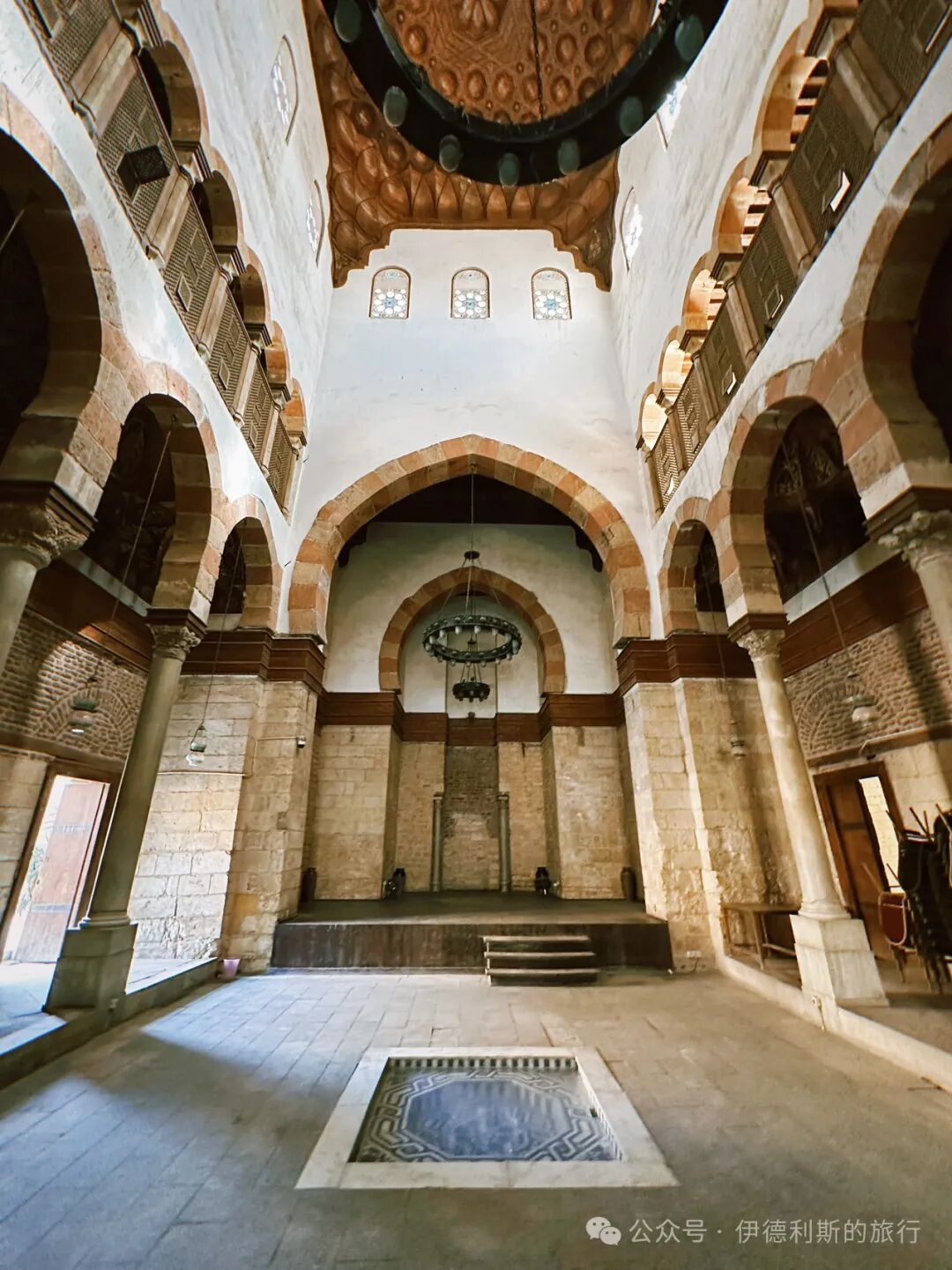
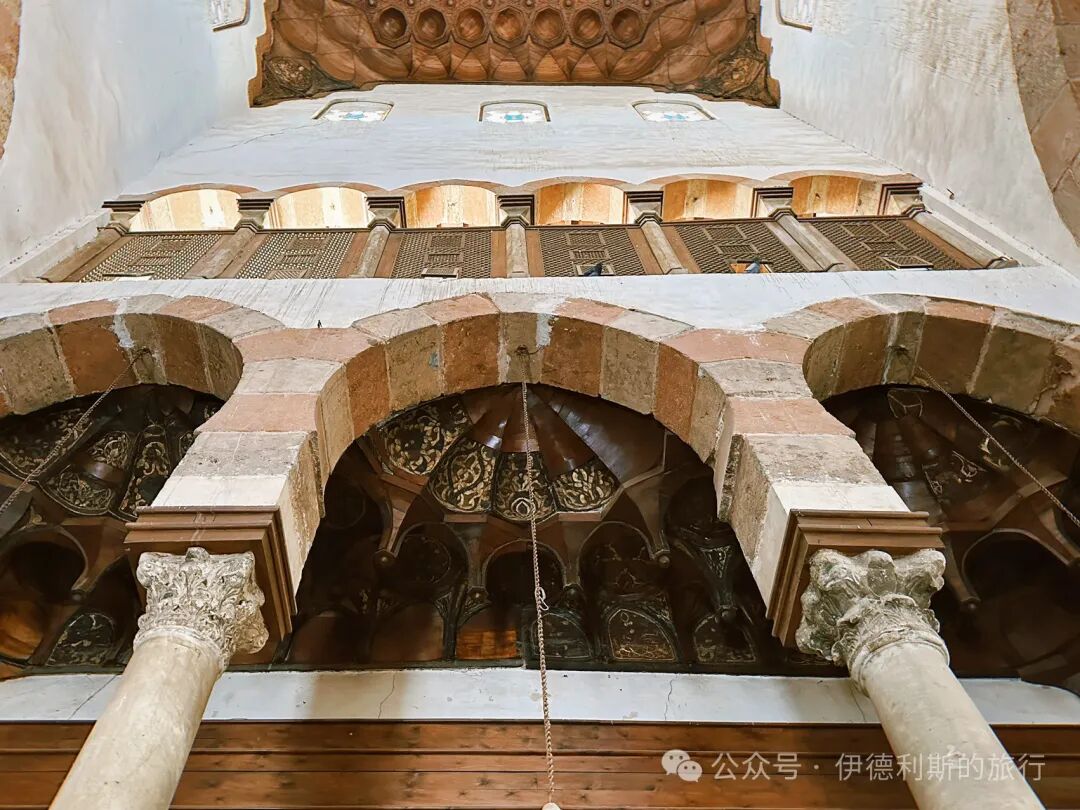
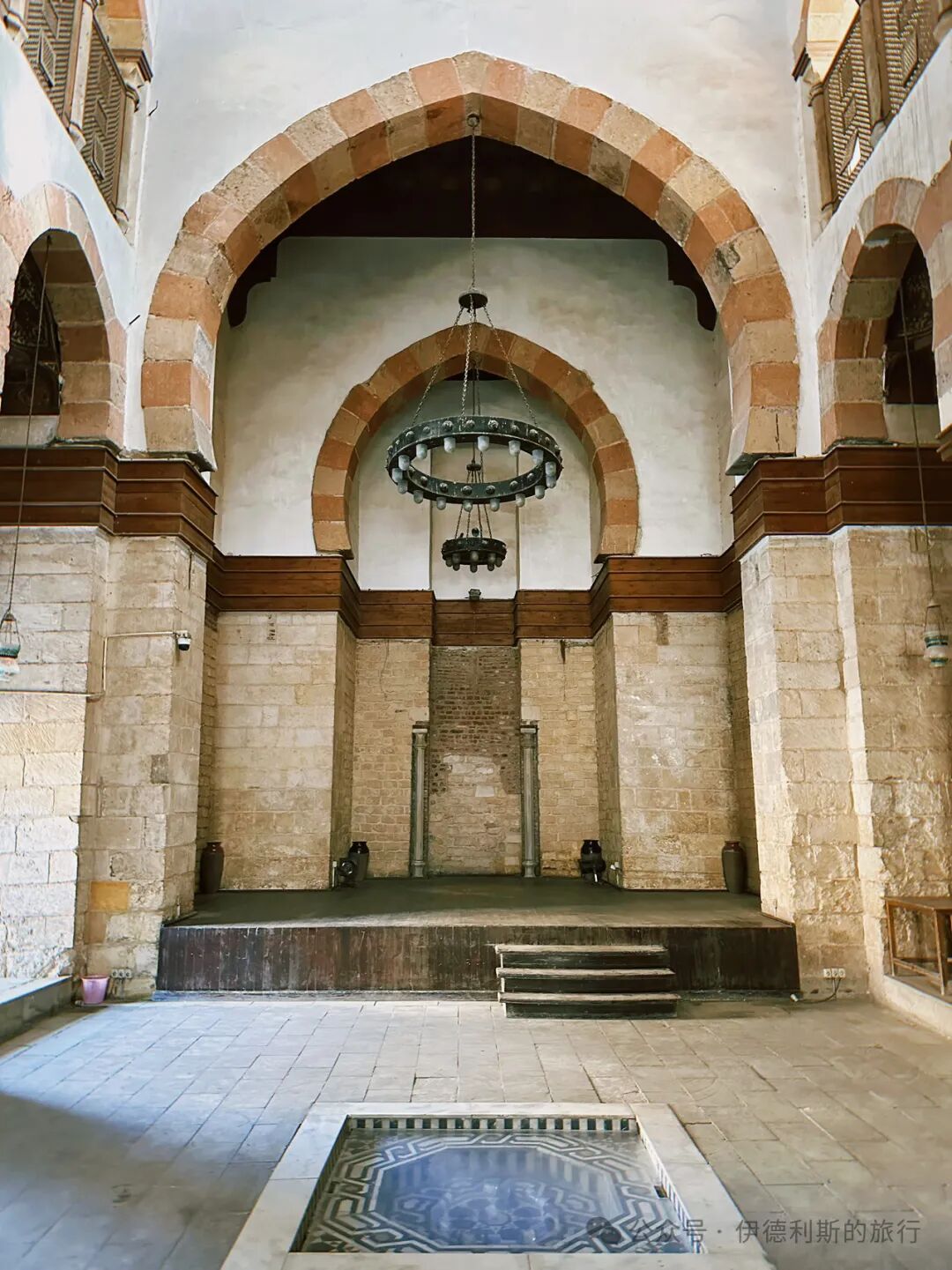
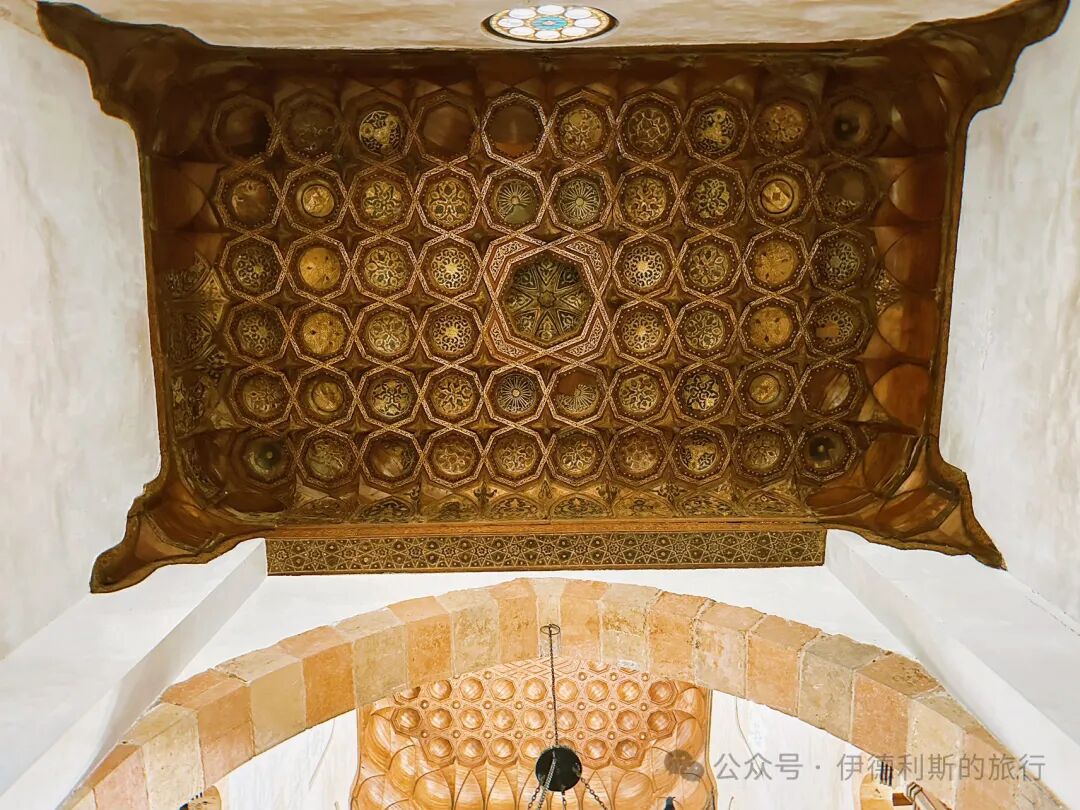
Only a portion of the Bashtak Palace remains today, the most important part being the reception hall (qa'a). The hall features a wooden paneled ceiling, stained glass, and an inlaid marble fountain. The upper level has wooden lattice windows (mashrabiyya), all of which are typical architectural styles of the Mamluk period. view all
Summary: This Old Cairo travel account walks inside the northern gate of the historic city and follows its mosques, streets, gates, and layered Islamic history. It keeps the original place names, dates, buildings, and travel route without adding outside claims.
The history of Cairo as a city goes back over a thousand years. Back in the ancient Roman era, the Romans built the Babylon Fortress in the south of Cairo. After the Arabs took Cairo in 641 AD, they built the city of Fustat to the northeast of the Babylon Fortress. Over the next 300 years, Muslim rulers from different dynasties built several cities near Cairo, but none of them survived. In 969 AD, the Shia Fatimid dynasty conquered Egypt and spent four years building what is now the old city of Cairo. By this count, the old city of Cairo is now 1,055 years old.
The walls of old Cairo were started in 969 AD. They were first made of brick, then expanded with stone during the reign of the Fatimid Caliph al-Mustansir Billah (reigned 1036-1094), and finally finished in 1087. The north gates of the old city, the Gate of Conquest (Bab al-Futuh) and the Gate of Victory (Bab al-Nasr), were both built during this time. In this article, I will take you through the north gate into old Cairo to experience its thousand-year history.
Gate of Conquest and Gate of Conquest: 1087
The Gate of Conquest is 22 meters high and has two round towers. The stone carving details may have been influenced by Syrian or Byzantine craftsmen. Above the arch, the surface is covered in diamond patterns containing rosettes and crosses. The parts of the towers that hang outward are carved with ram heads, which are symbols of Mars in the zodiac. Inside the gate, the dome and the rectangular space connect through a pendentive, which is a typical feature of Byzantine architecture.
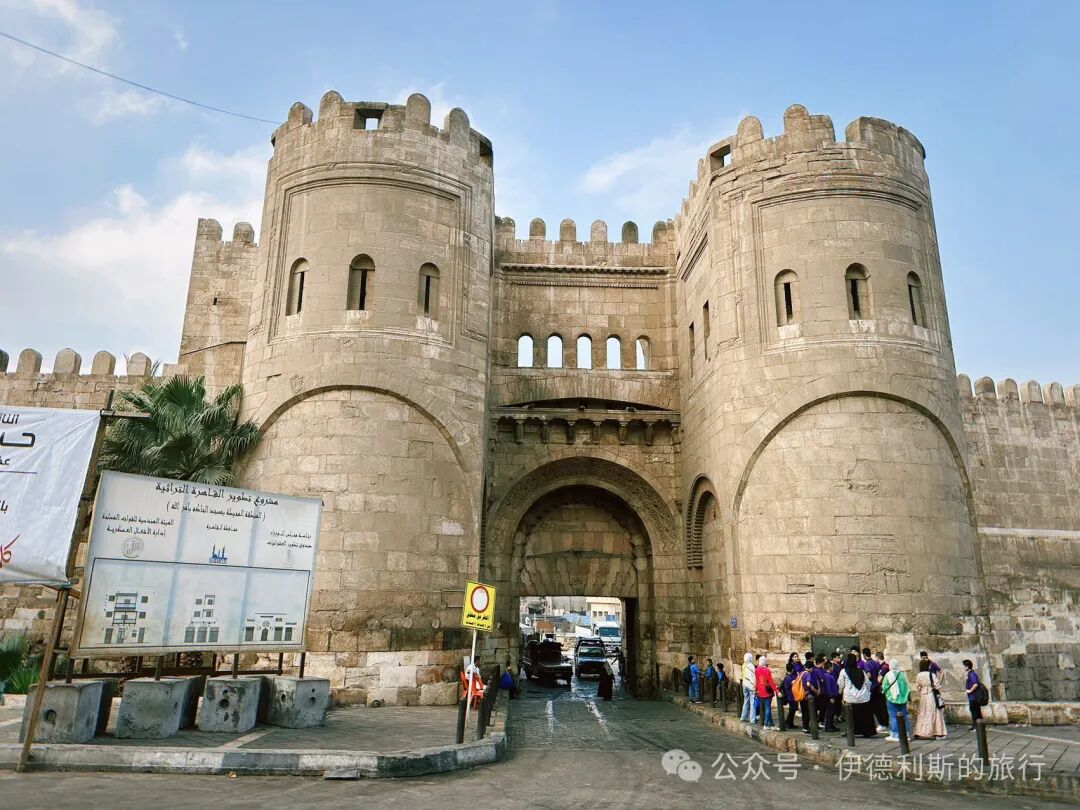
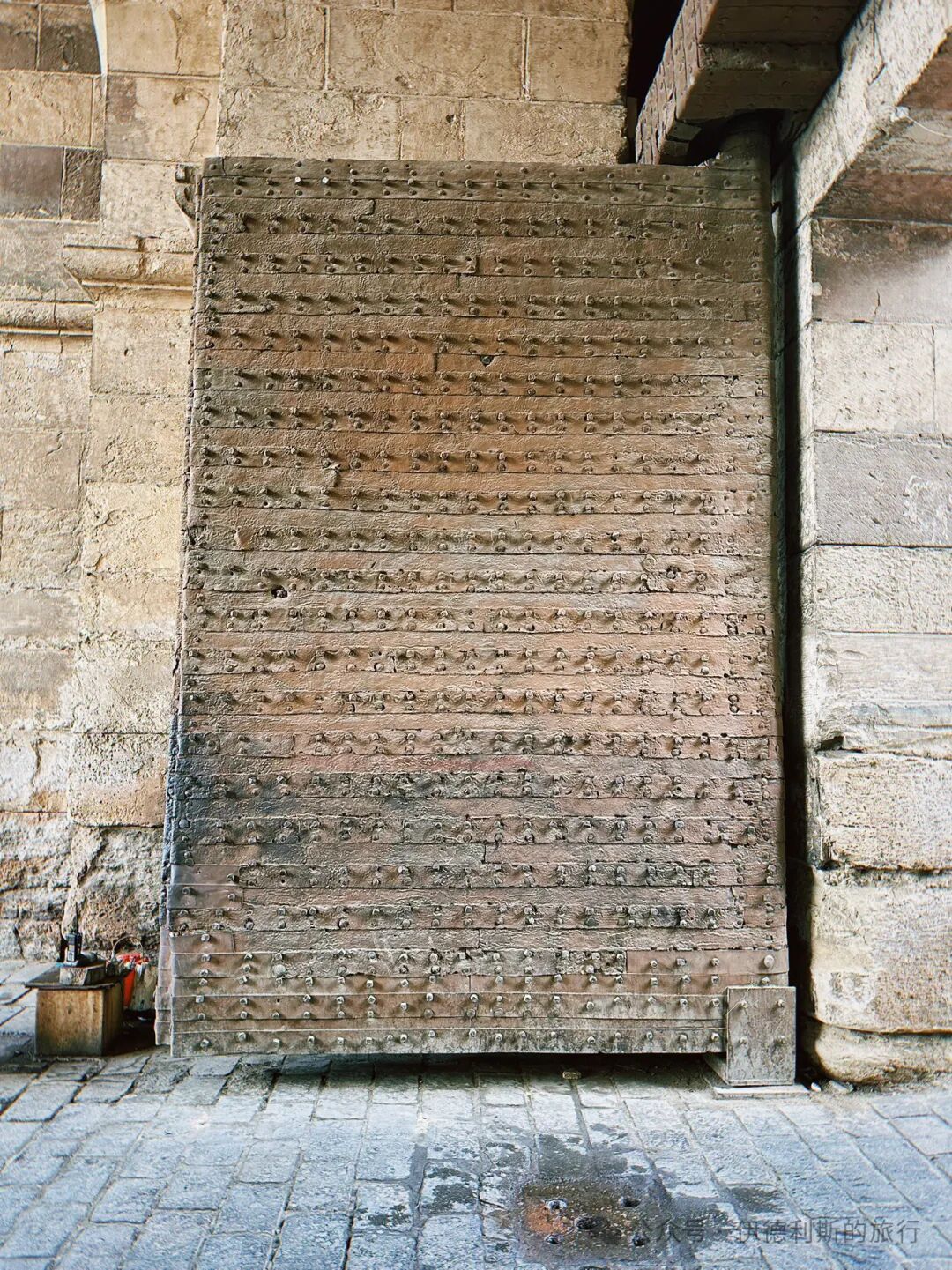
The Gate of Victory is on the east side of the Gate of Conquest. Unlike the round towers of the Gate of Conquest, the towers of the Gate of Victory are square and contain guard rooms and living areas. There are shield carvings above the gate, which symbolize protecting the city from invasion. The shield features an Arabic inscription from its 1087 reconstruction, along with a Shia version of the Shahada that mentions Ali as the friend (wali) of Allah.
Al-Hakim Mosque: 1013.
Right next to the northern wall of Old Cairo stands the Al-Hakim Mosque, named after the sixth Fatimid caliph and the 16th imam of the Ismaili branch of Shia Islam, al-Hakim bi-Amr Allah (reigned 996-1021). The mosque was started in 990 by the fifth Fatimid caliph, al-Aziz Billah (reigned 975-996), and finished in 1013 by Caliph al-Hakim, making it 1,010 years old today.
The Al-Hakim Mosque was originally outside the walls of Cairo, but it was brought inside the city after the walls were rebuilt in 1087. The mosque's architectural style is similar to the Al-Azhar Mosque, but it is twice as large. The most striking features inside are the two minarets built on square brick bases. When the minarets were first built in 1003, they were separate structures, and they were only encased in brick in 1010. Some scholars suggest this might be linked to the ruler of Mecca rejecting Fatimid authority in 1010, which weakened the dynasty's power. The outer wall of the southern brick base has marble Kufic Arabic inscriptions from the Fatimid period, while the Kufic inscriptions on the northern base were moved to the outside of the city wall when it was incorporated into the northern wall of Old Cairo in 1087.
During the Crusades, the mosque was used as a prison by the Franks and later as a stable by Saladin. It was renovated during the Mamluk period in the 14th century but later fell into ruins for a long time. The mosque was renovated in 1808, and a small, colorful marble mihrab added during that time still survives today.
In the 20th century, the mosque served as a school until 1980, when the Dawoodi Bohra branch of Shia Islam carried out a massive reconstruction and renovation using white marble. Inside the main hall after the reconstruction, only the original stucco carvings, wooden beams, and scriptures were preserved. This restoration caused a lack of authenticity that sparked criticism and widespread discussion among scholars. In 2017, the Dawoodi Bohra community and the Egyptian Ministry of Tourism and Antiquities launched a new round of restoration, and it did not reopen until February 2023.
Caravanserai of Qaitbay: 1481
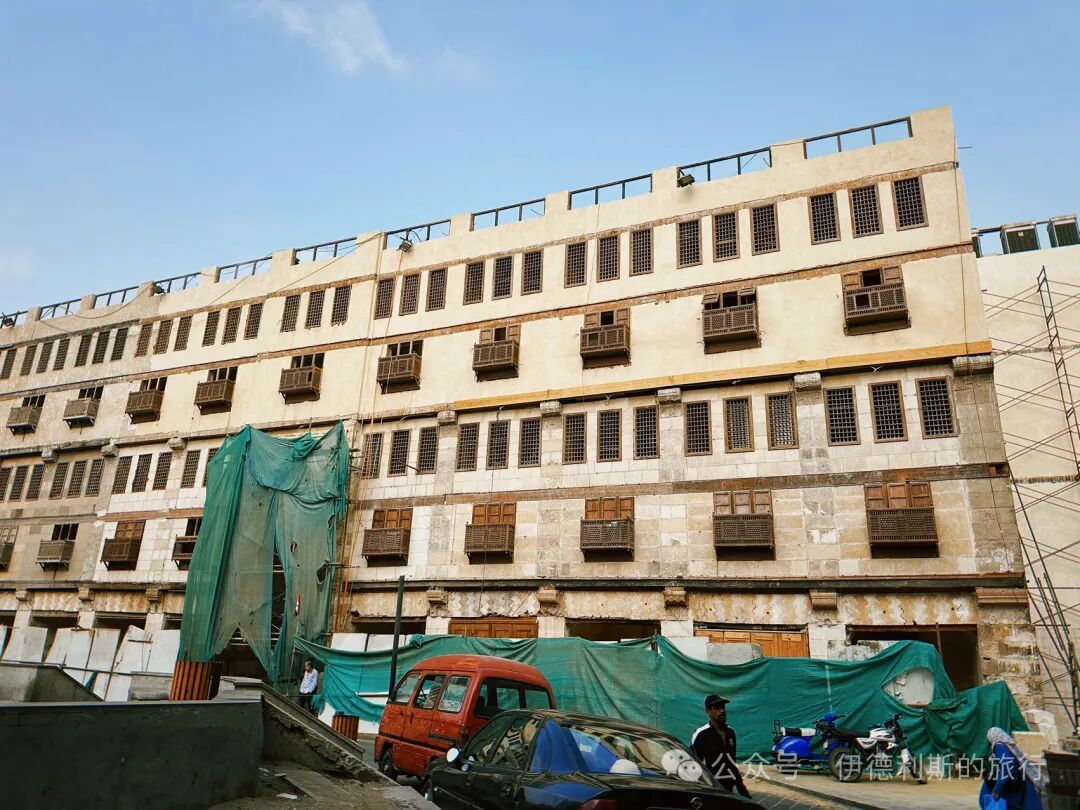
Enter the old city of Cairo through the Gate of Victory (Bab al-Futuh) onto El-Gamaleya Street. The first thing you see is the caravanserai (wikala) of Sultan Qaitbay, which is currently under renovation. It was built in 1481 by Sultan Qaitbay (reigned 1468-1496) of the Mamluk dynasty. Qaitbay was one of the Mamluk sultans who sponsored the most architecture. Although the Mamluk dynasty was in decline, the situation remained relatively stable under his rule, and trade flourished.
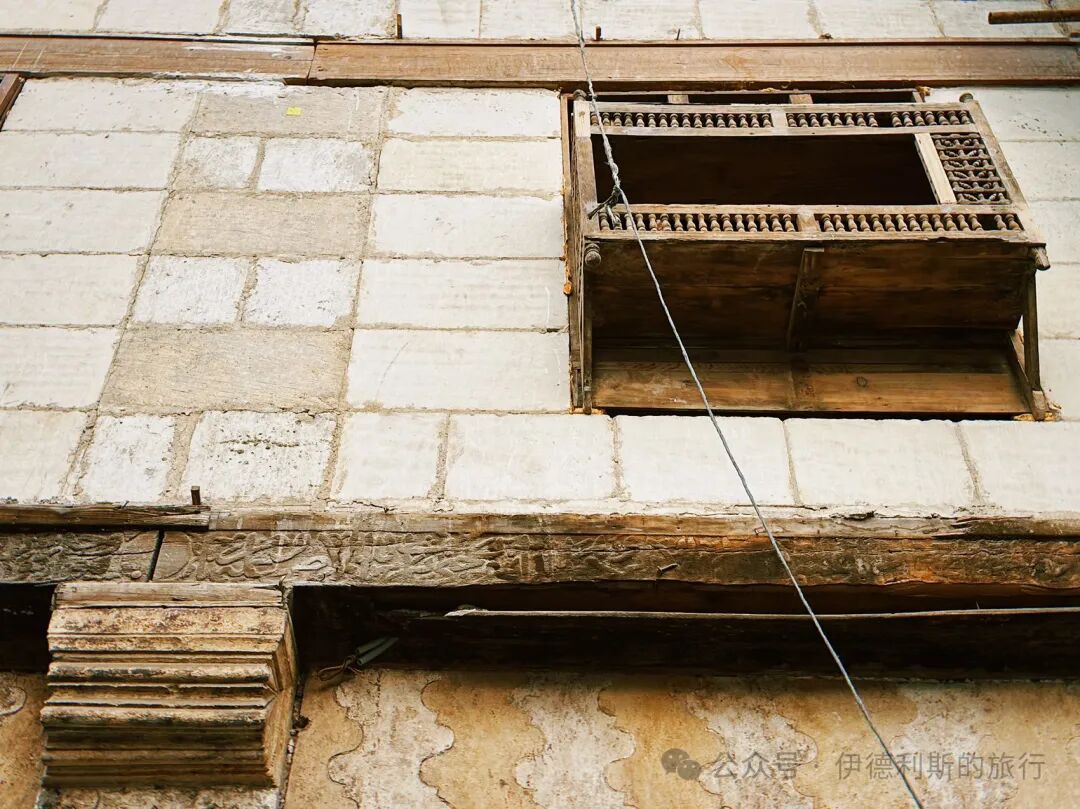
Like other Mamluk caravanserais (wikala), this place not only provided short-term housing for passing caravans but also offered long-term rental apartment units (rab). It was used as apartments for hundreds of years until the Egyptian Ministry of Antiquities began renovations in 2015. Work is still ongoing, and you can still see the wooden lattice windows (mashrabiya) facing the street.
Gate of the Caravanserai of Qawsun: 1341
Continuing south, you can see the remains of the gate of the caravanserai (wikala) of Emir Qawsun. This inn was built in 1341 by the famous Mamluk Emir Qawsun (1302-1342). It was used by soap and coffee merchants from Palestine in the 17th and 18th centuries, so it is also called the Soap Inn. The inn was demolished in 1960 to be rebuilt as a school, and only the gate remains. Above the gate is a stone carving of a pair of cups, because Emir Qawsun once served as the Sultan's cupbearer (saqi).
Qawsun was born on the Kipchak steppe under the rule of the Golden Horde and started out as a merchant. In 1320, Princess Tulunbay of the Golden Horde married the Mamluk Sultan of Egypt. Qawsun came to Cairo as part of her entourage and stayed in Cairo to sell leather goods. Qawsun was highly valued by the Sultan in Cairo and became his personal attendant. He then rose quickly through the ranks and married the Sultan's daughter. After the old Sultan died in 1341, Qawsun became the regent and held actual power over the Mamluk dynasty. However, he was defeated by political rivals a few months later and was killed in prison.
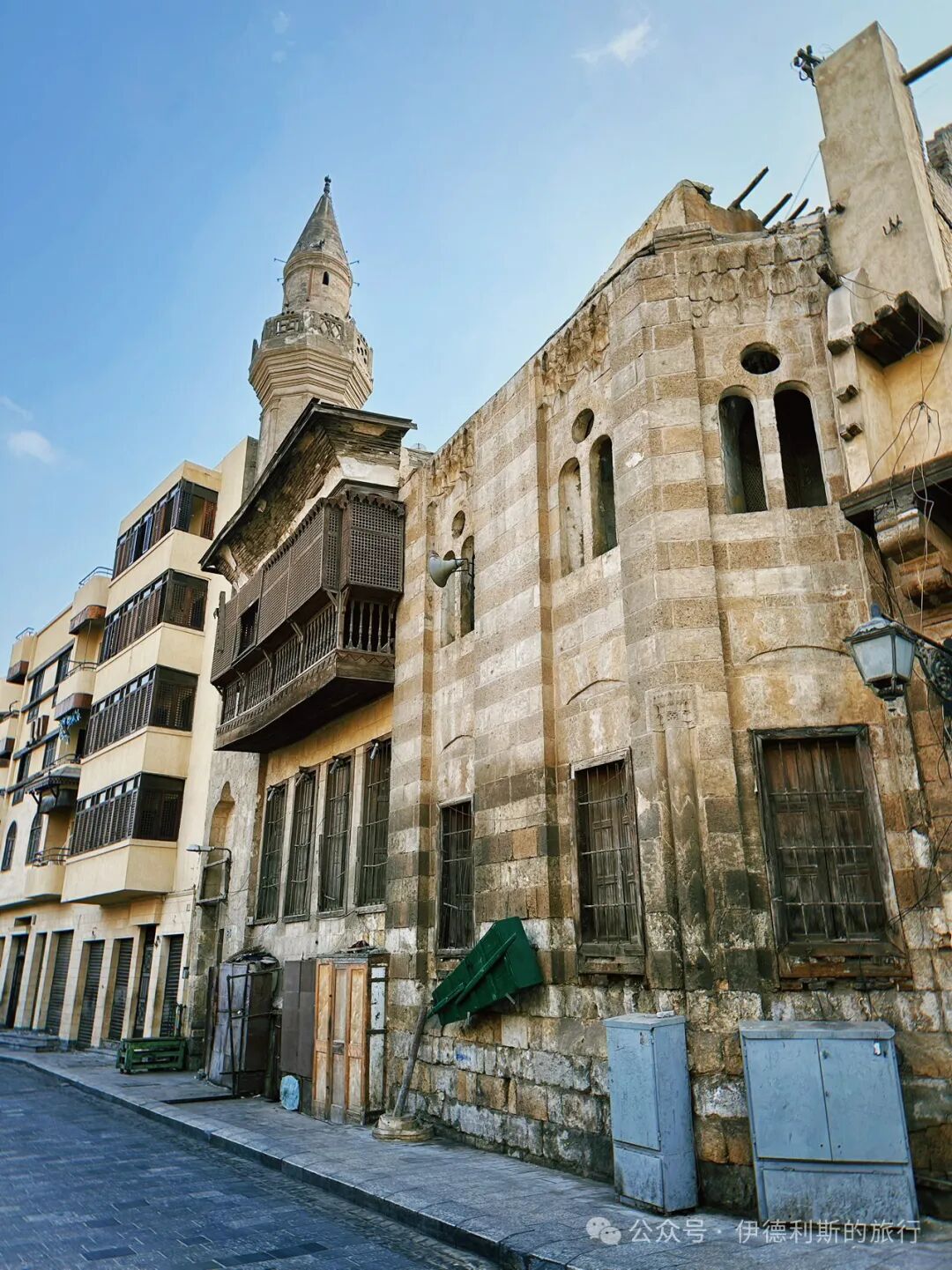
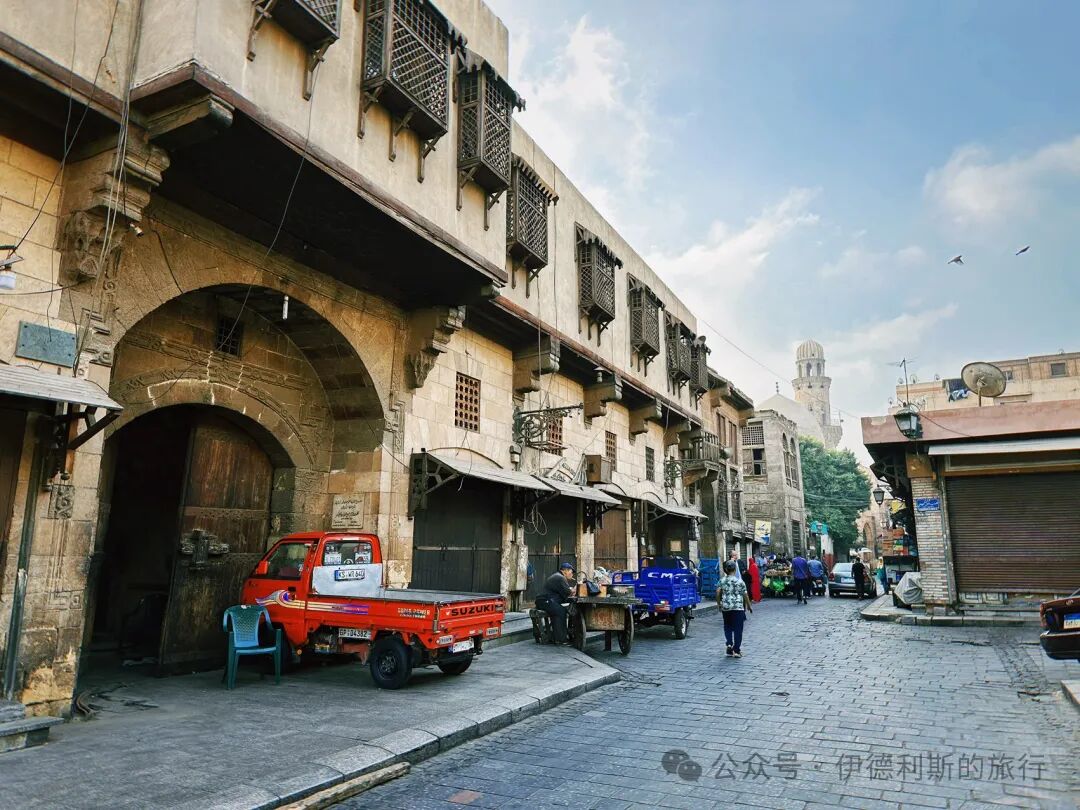
Continuing south along El-Gamaleya Street, you can see several more historical buildings.
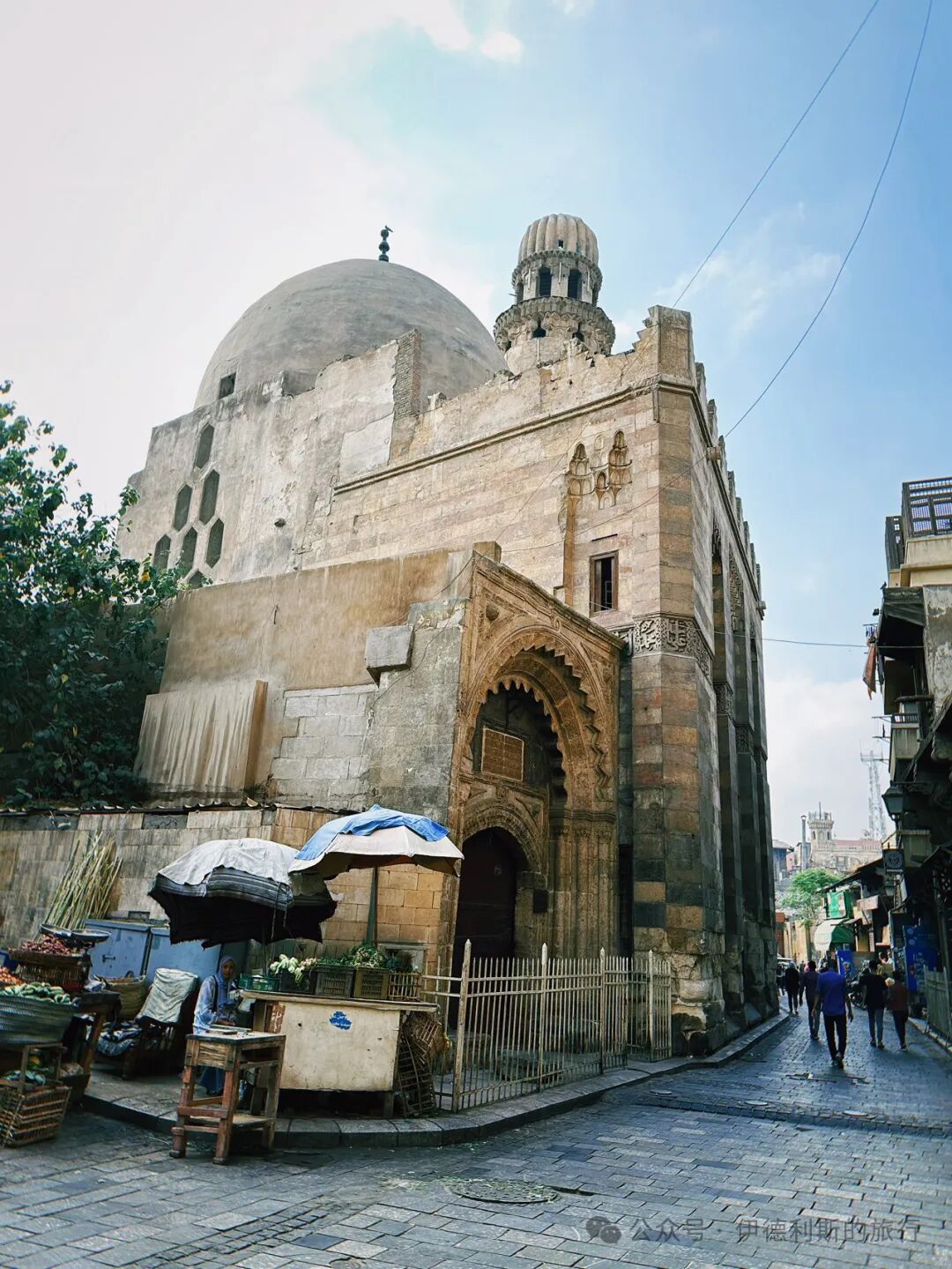
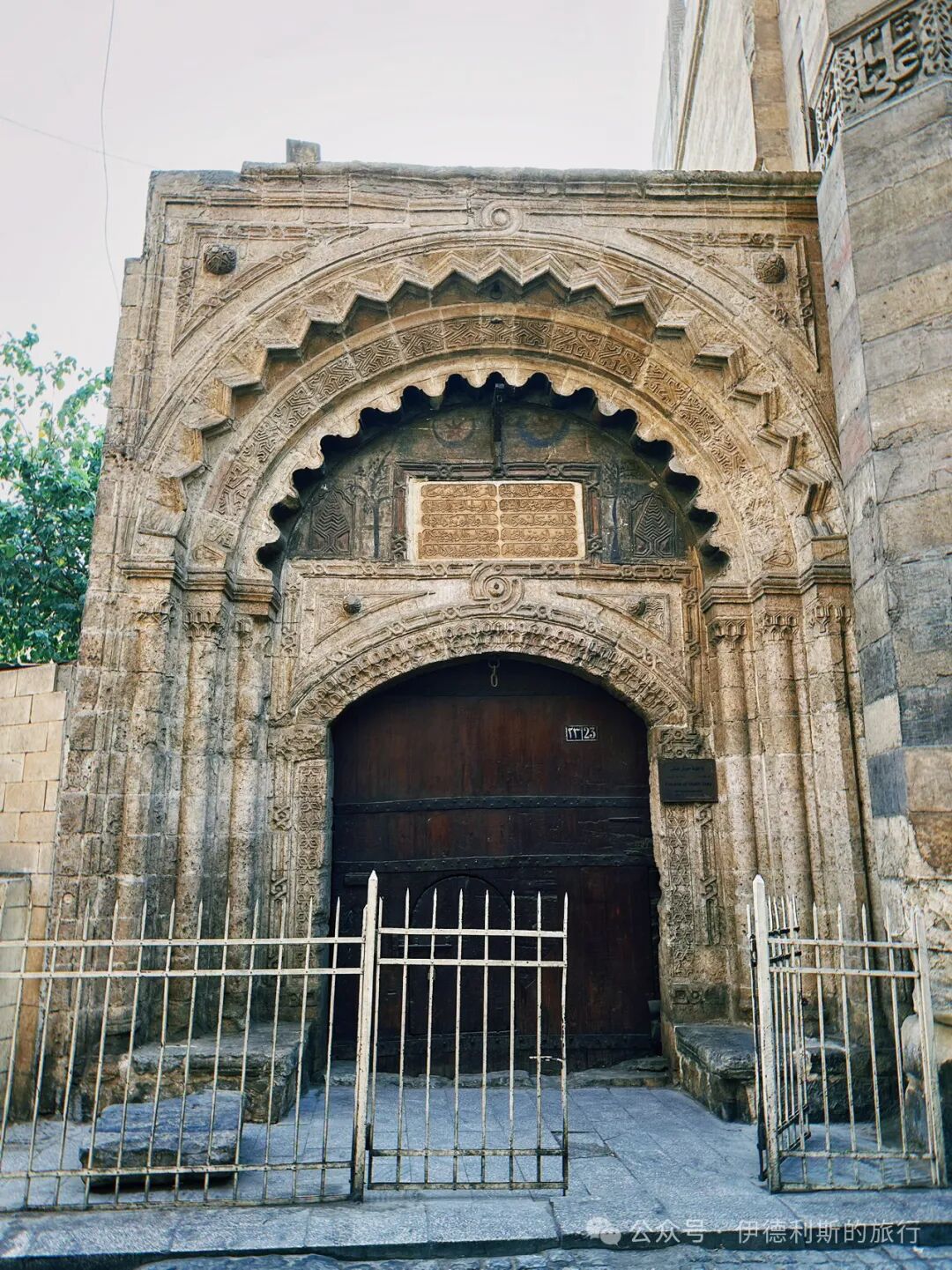
Khanqah of Baybars II: 1310
On the east side of the middle section of El-Gamaleya Street stands the Khanqah of Baybars II, built in 1310. Baybars II was the 12th Sultan of the Mamluk dynasty and reigned for only one year, from 1309 to 1310. Baybars II served as vice-sultan from 1299 to 1309 and led the Mamluk Sultanate against the Ilkhanate in the Battle of Marj al-Saffar in Syria in 1303. This battle resulted in the total defeat of the Mongol army that had marched west into Syria. People say the Sultan led his captives from the Gate of Victory along El-Gamaleya Street into the old city of Cairo. Singers and dancers from all over came to celebrate, and the city was decorated with lights for days of festivities.
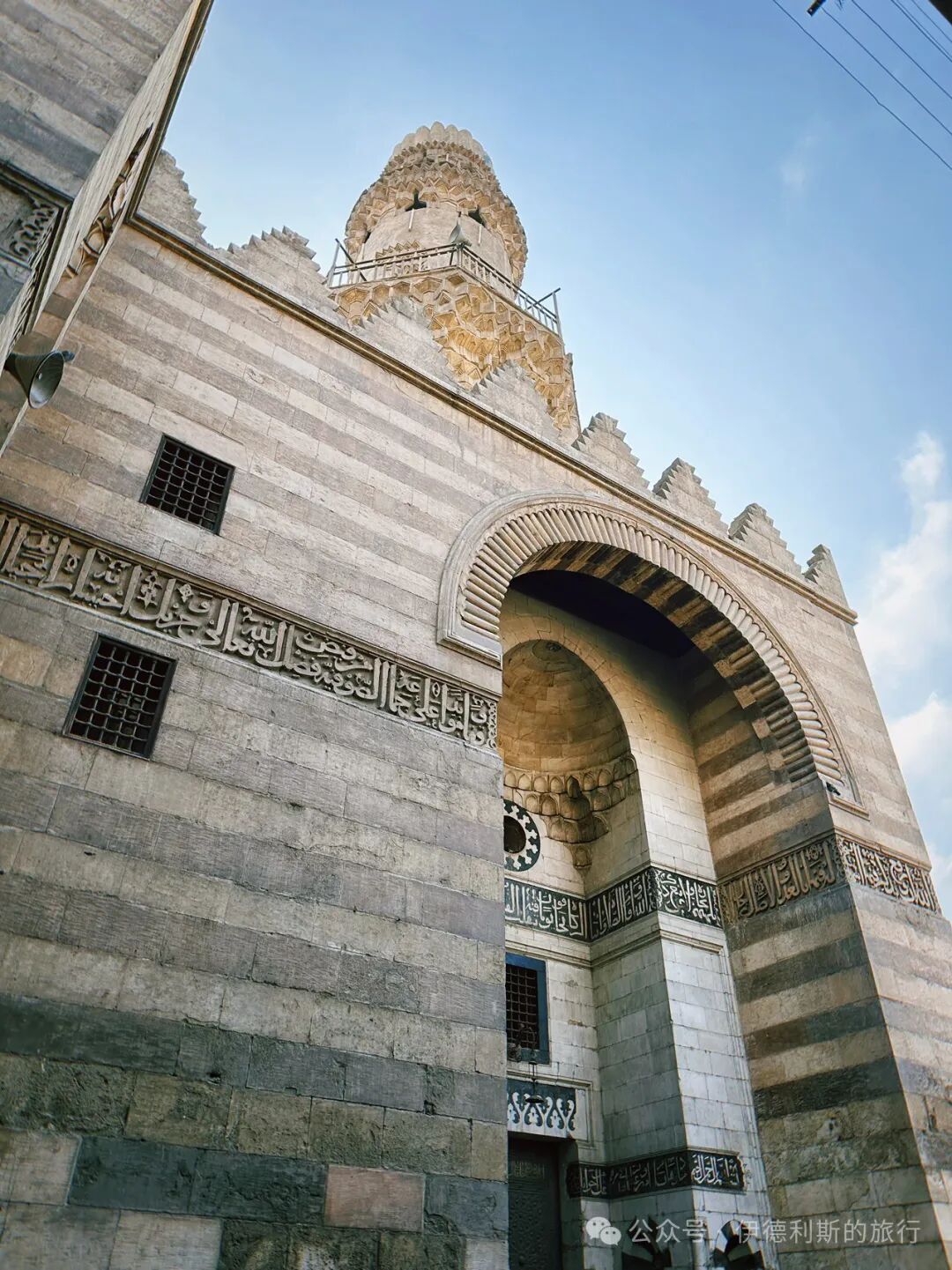
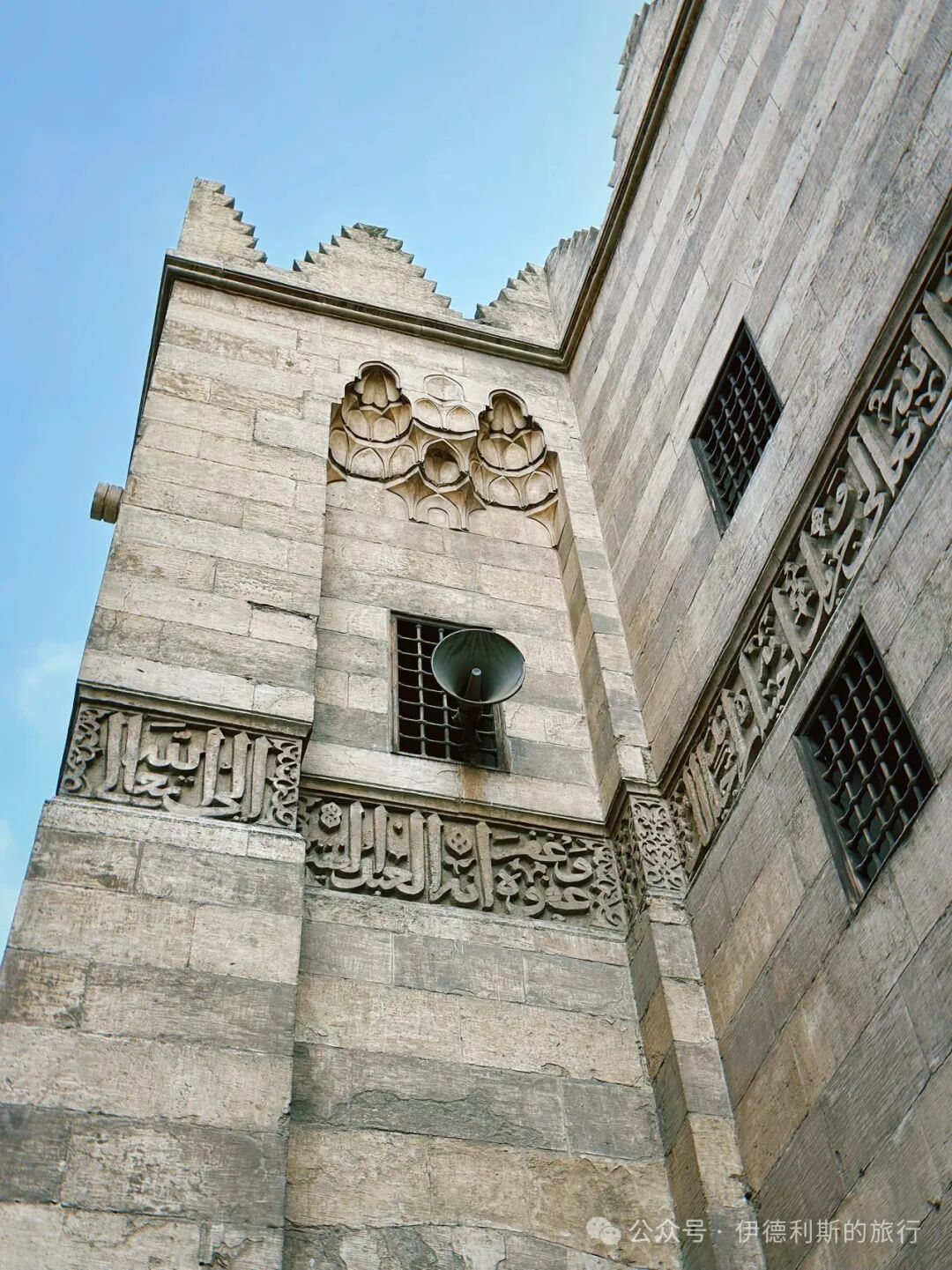
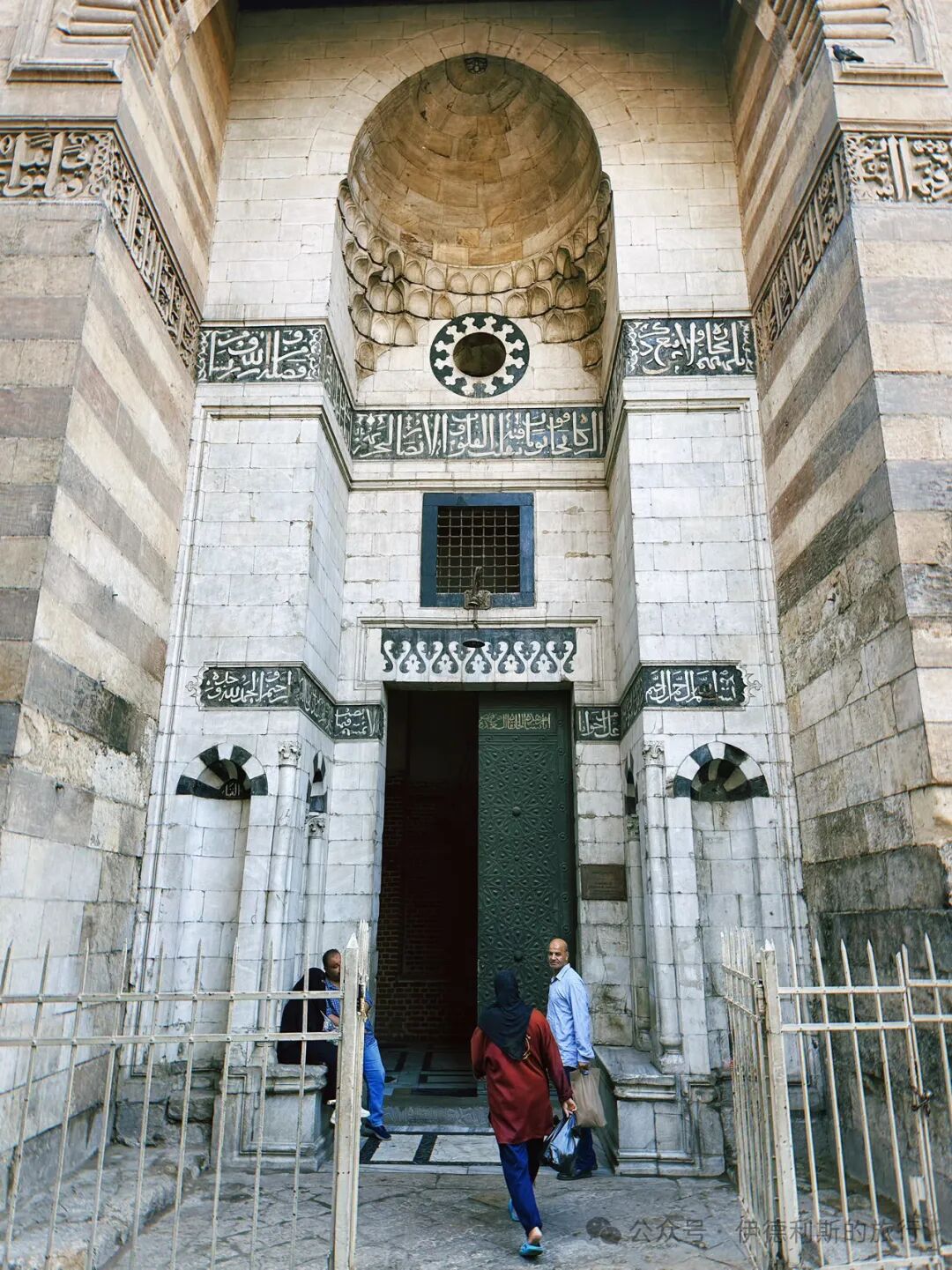
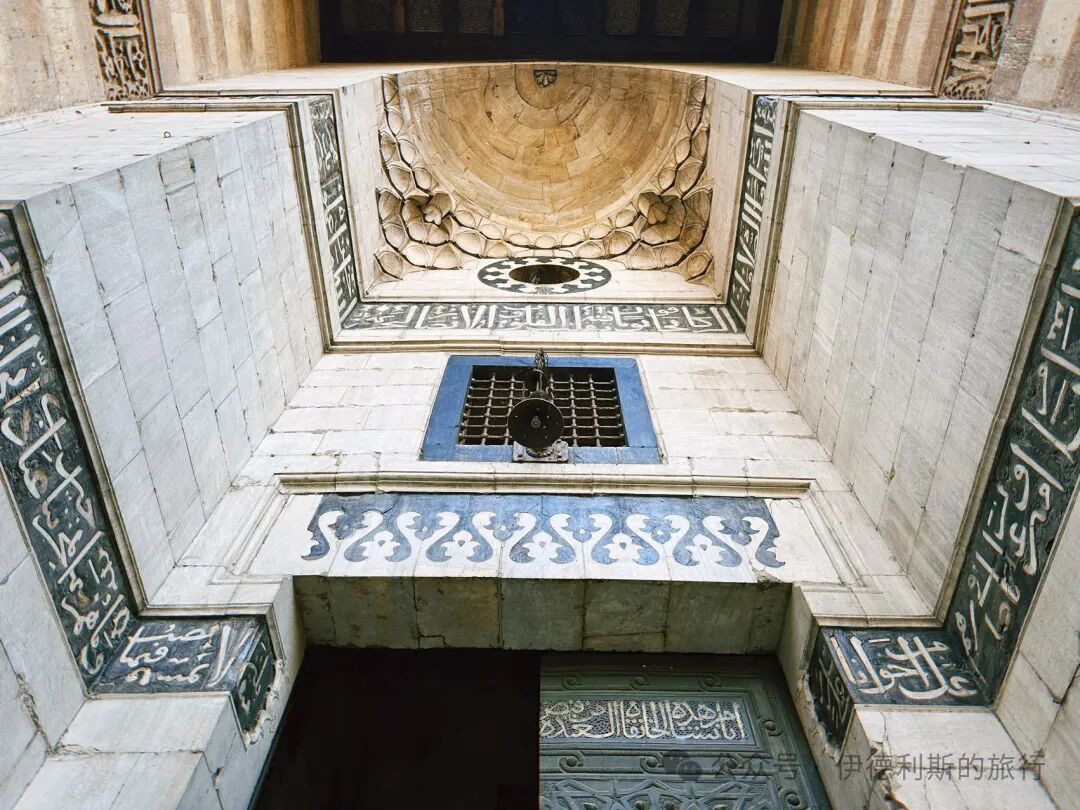
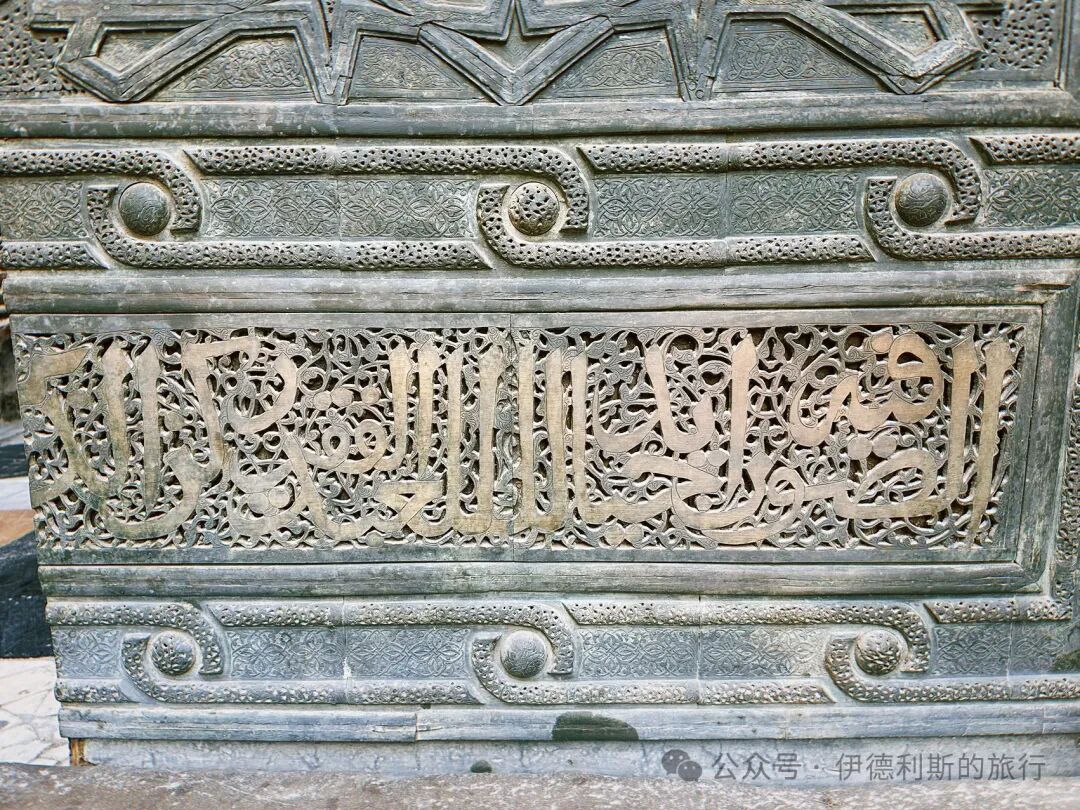
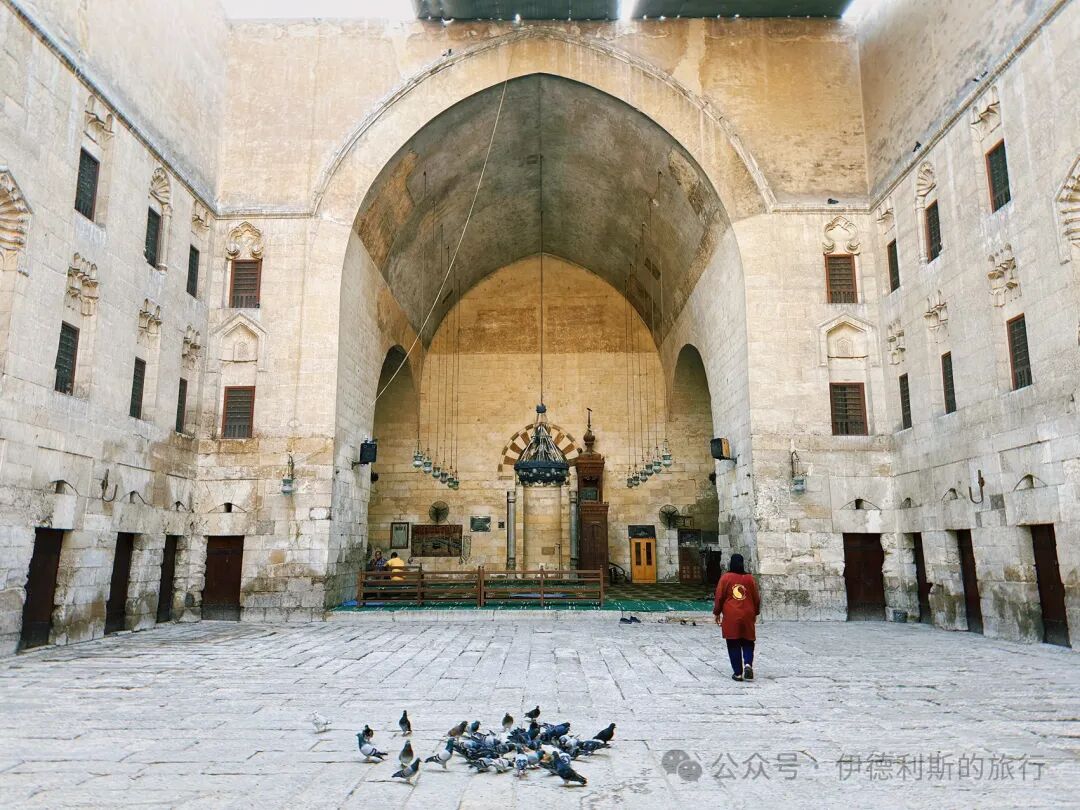
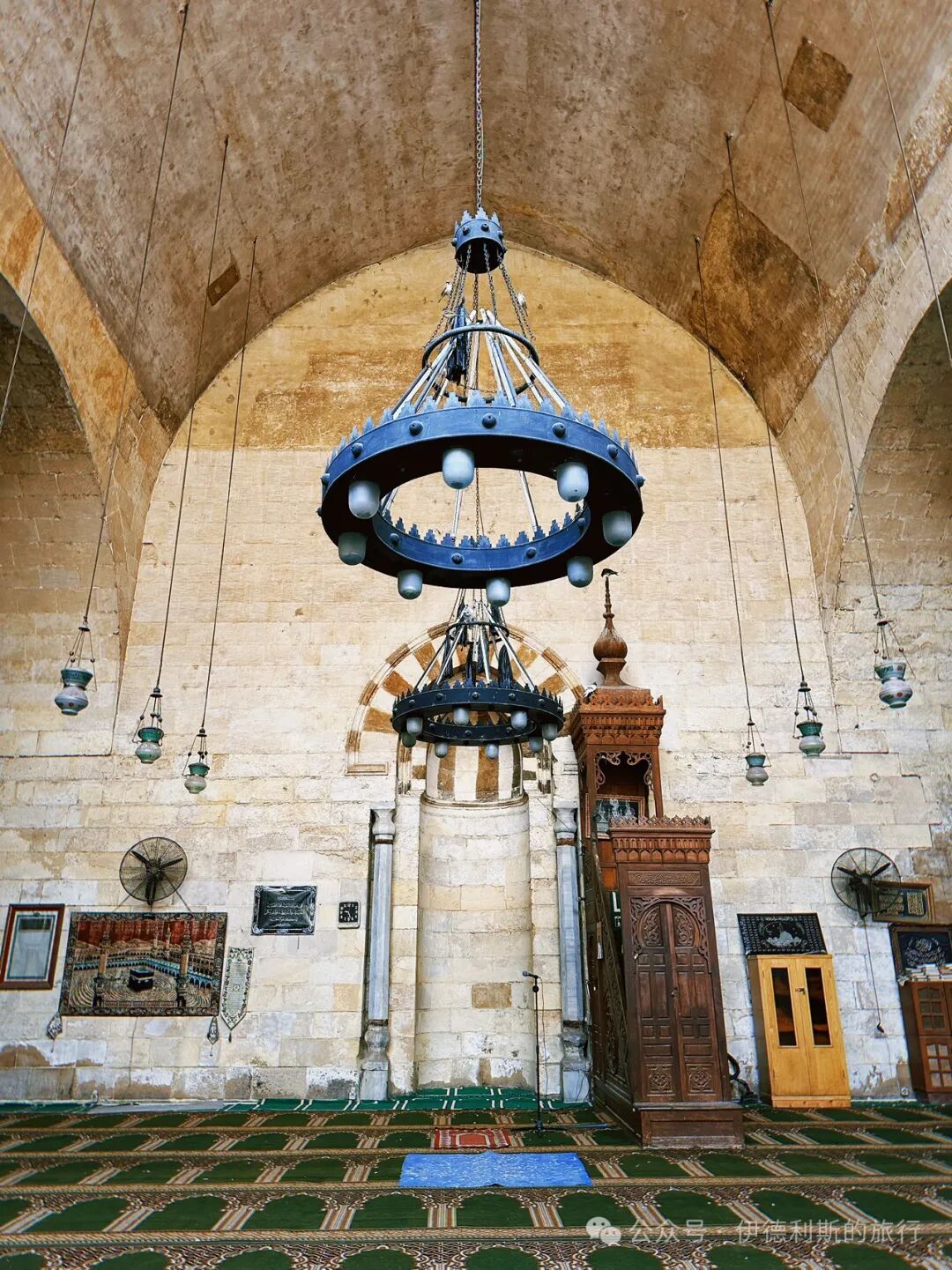
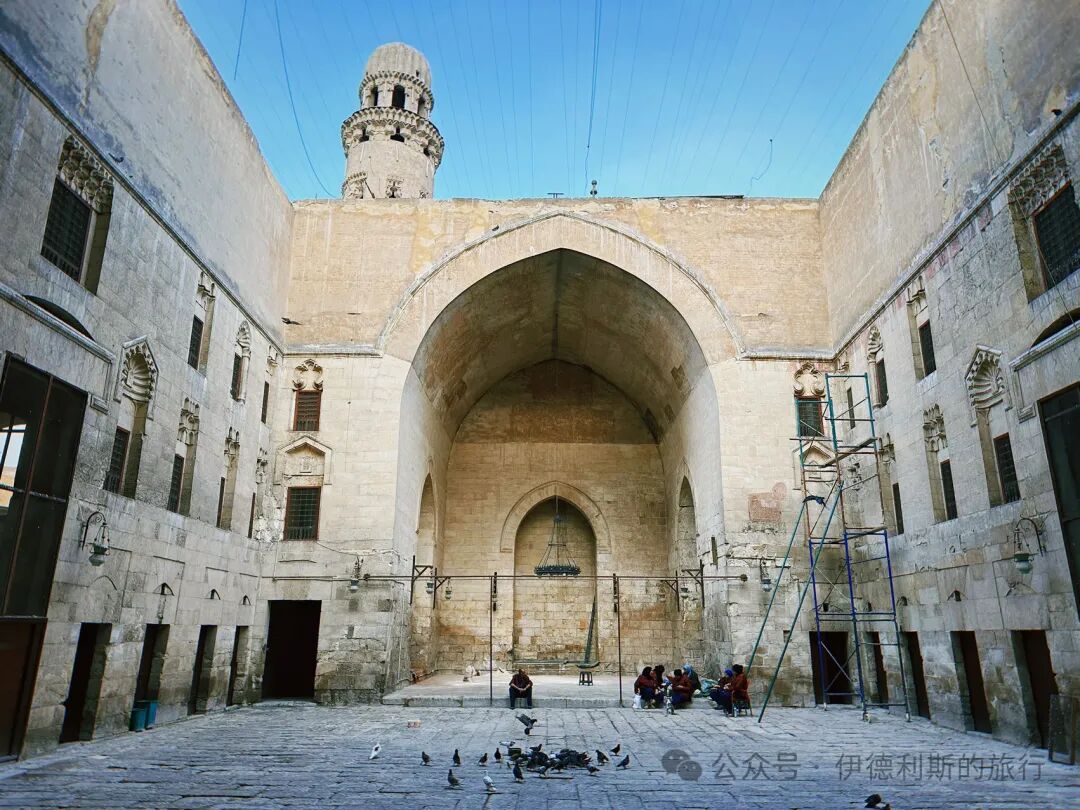
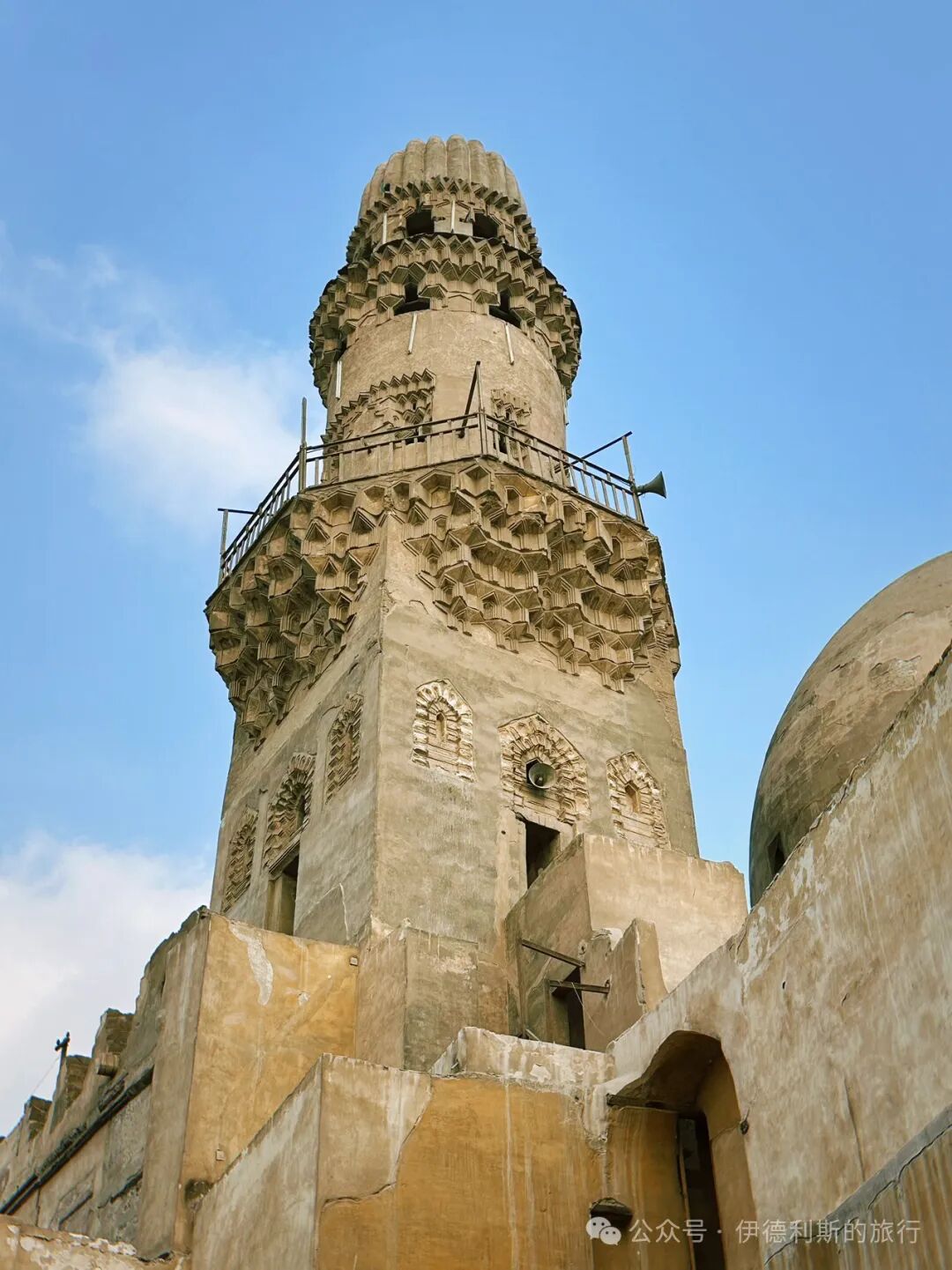
The exquisite Islamic geometric patterns (Girih) on the gate of the Khanqah of Baybars II form complex designs through overlapping and interlacing.
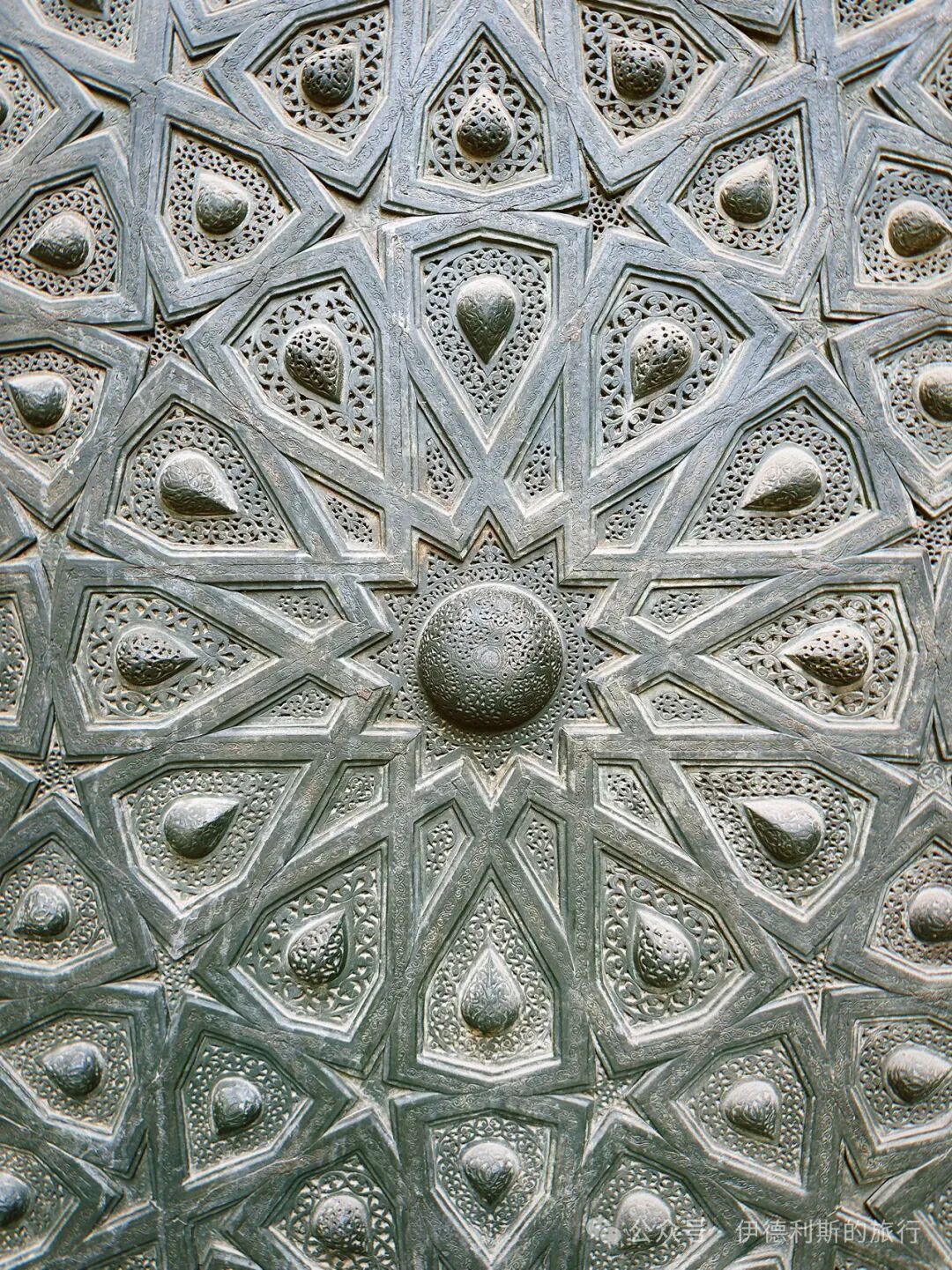
It is very interesting that the threshold of the gate is made of stone blocks carved with ancient Egyptian hieroglyphs, which is the first time I have ever seen this.
Bayt al-Suhaymi: 1648
Walking west from the Khanqah of Baybars II, you can see the Bayt al-Suhaymi on Darb al-Asfar Street. Built in 1648, it is the best-preserved private residence from the Ottoman period in old Cairo and is now open as a tourist site.
This residence is built around a courtyard (Sahn) with a small garden planted with palm trees in the center. You can see beautiful wooden lattice windows (Mashrabiya) in the courtyard. The south side of the mansion is the original 1648 structure, while the north side was expanded in 1797. It is now named after its last owner, Sheikh Muhammad Amin al-Suhaymi, who was a sheikh at Al-Azhar Mosque. In 1930, King Fuad I of Egypt provided funds to purchase the mansion and placed it under the management of the Committee for the Preservation of Arab Art Monuments.
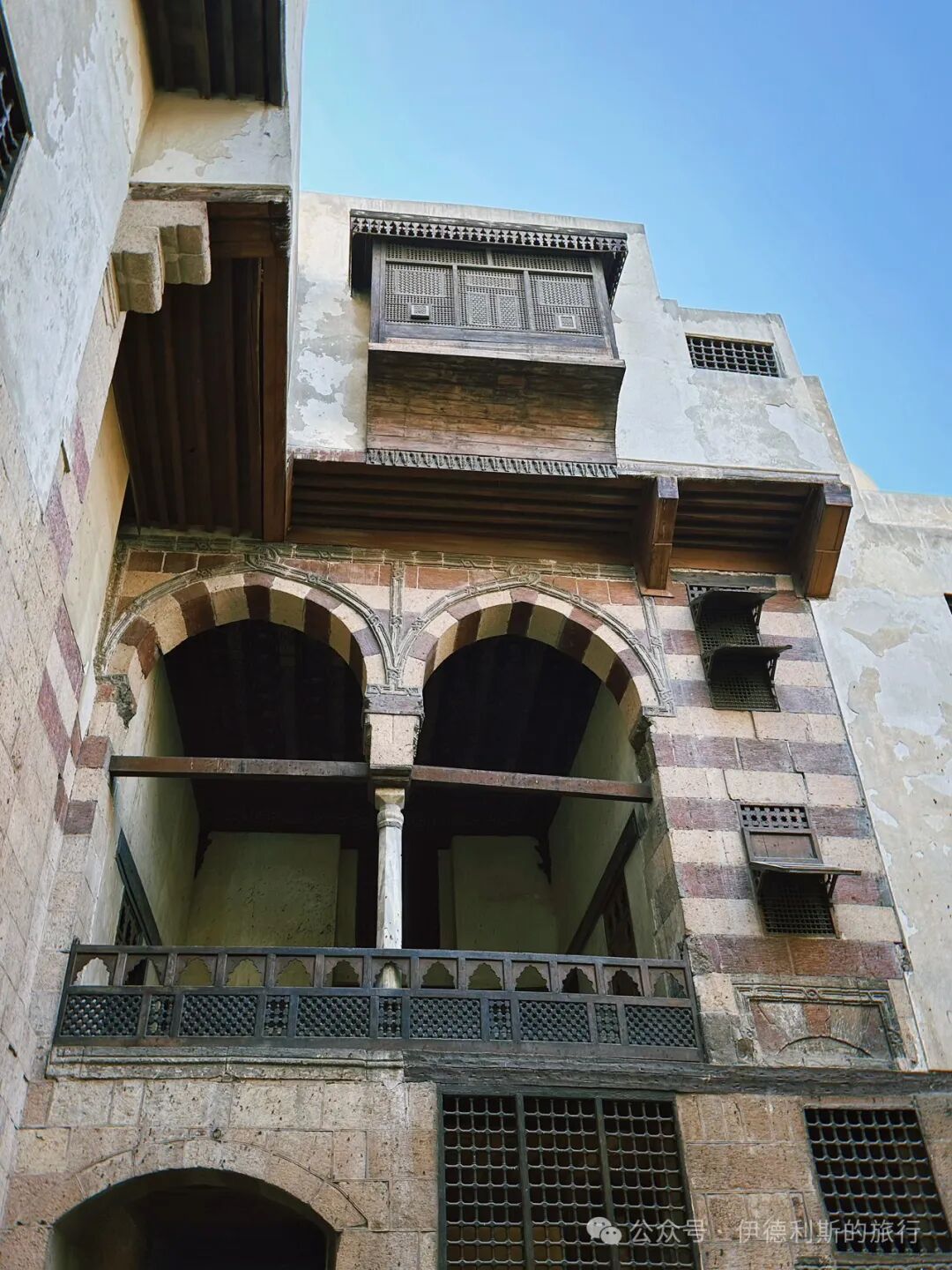
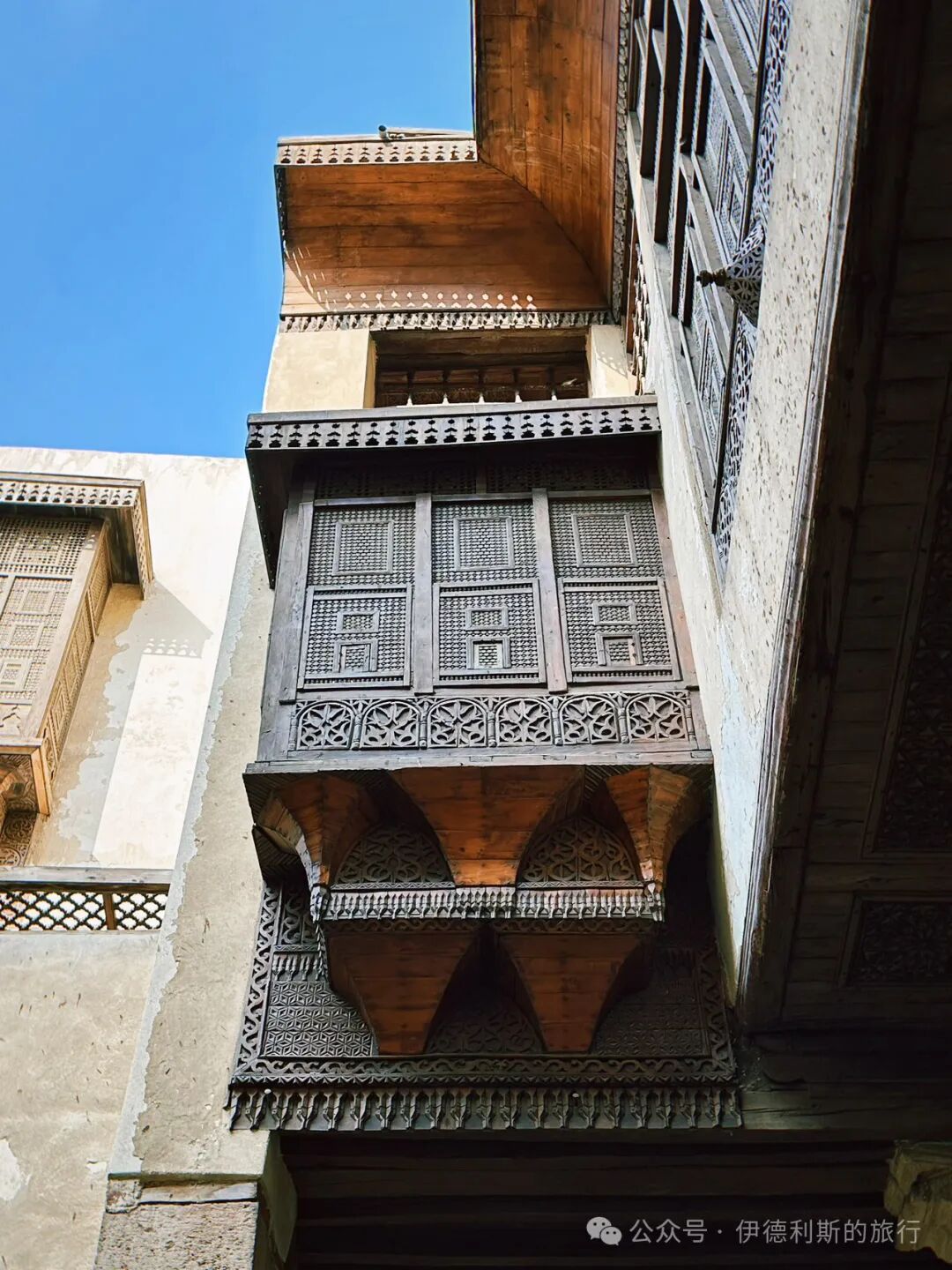
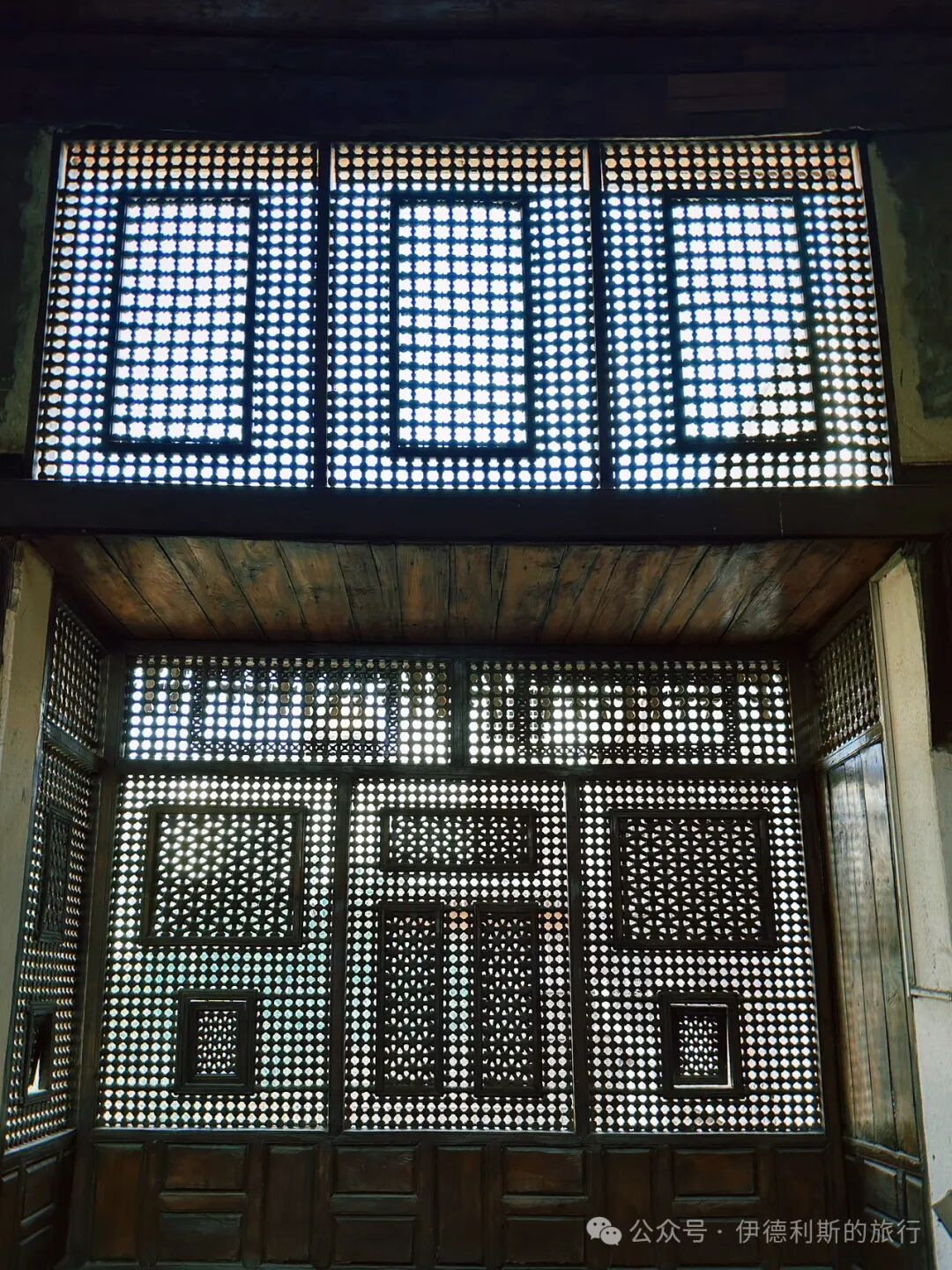
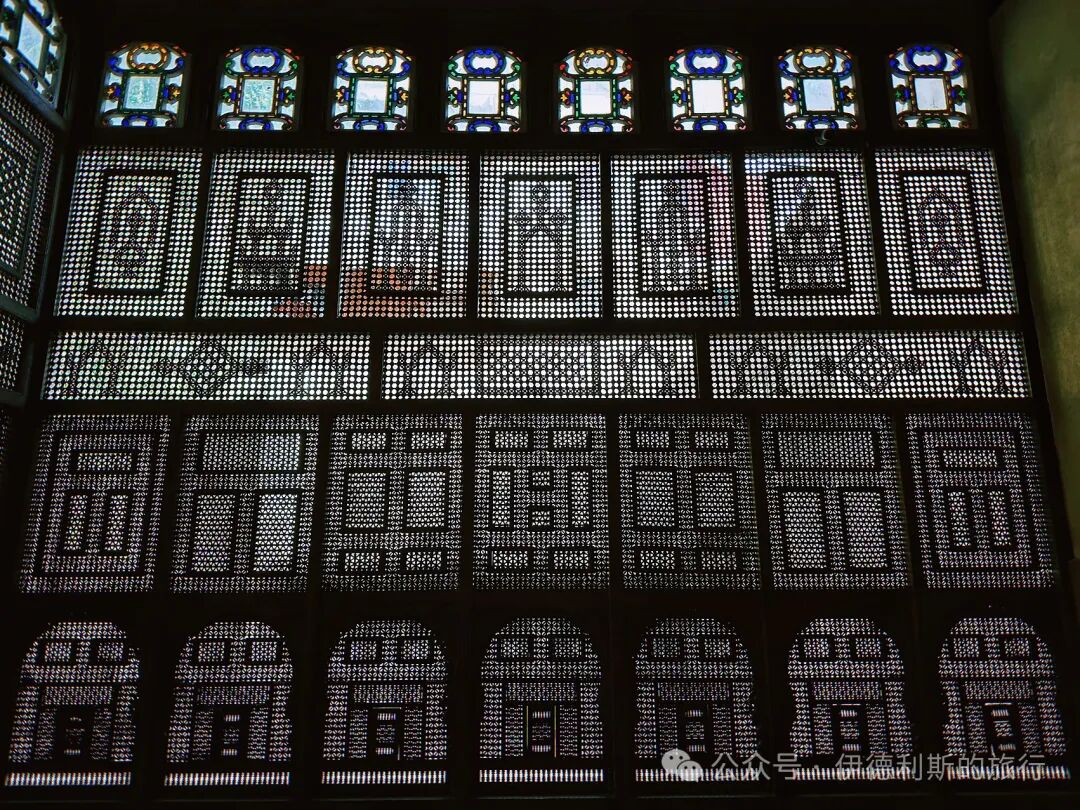
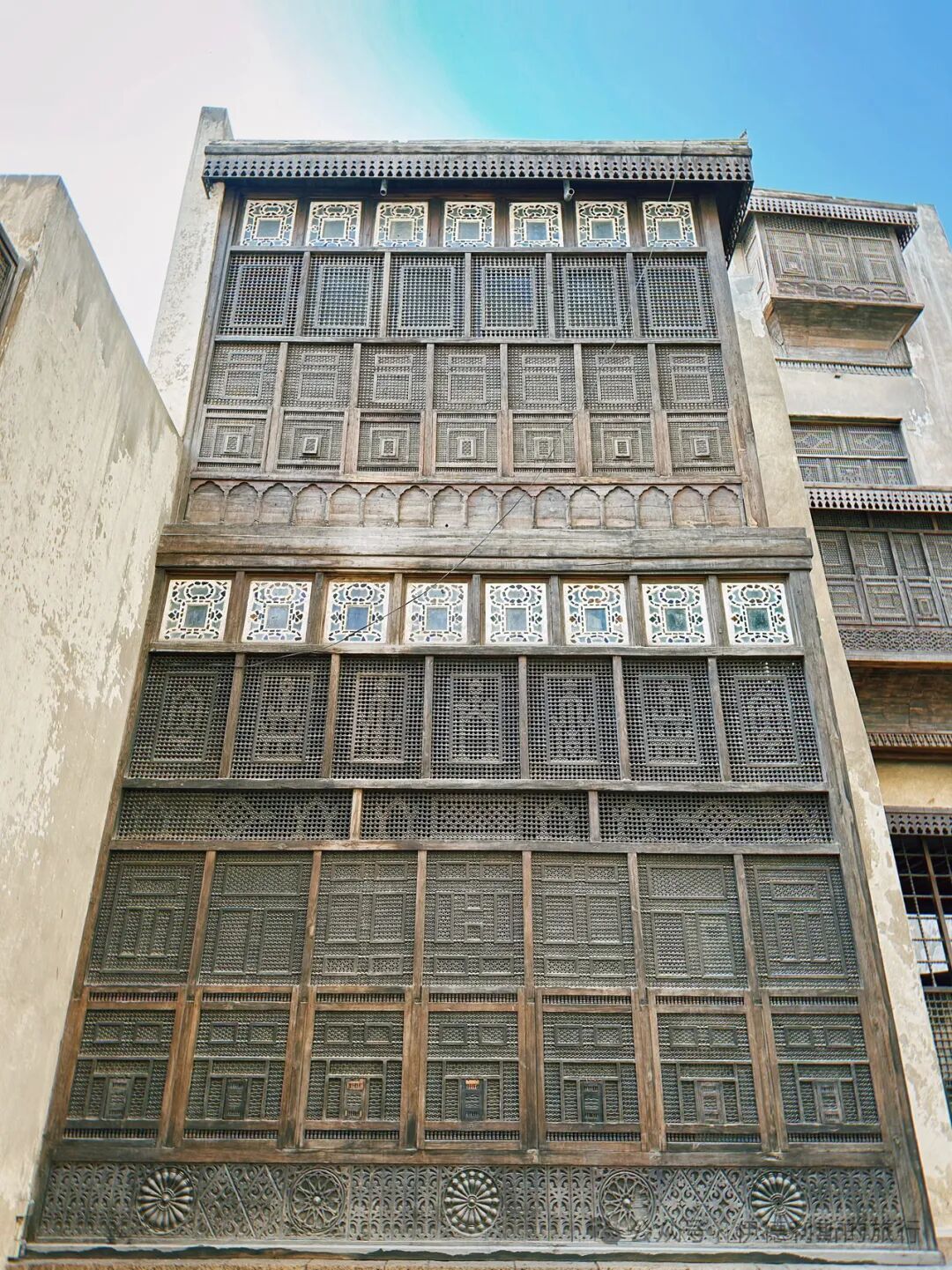
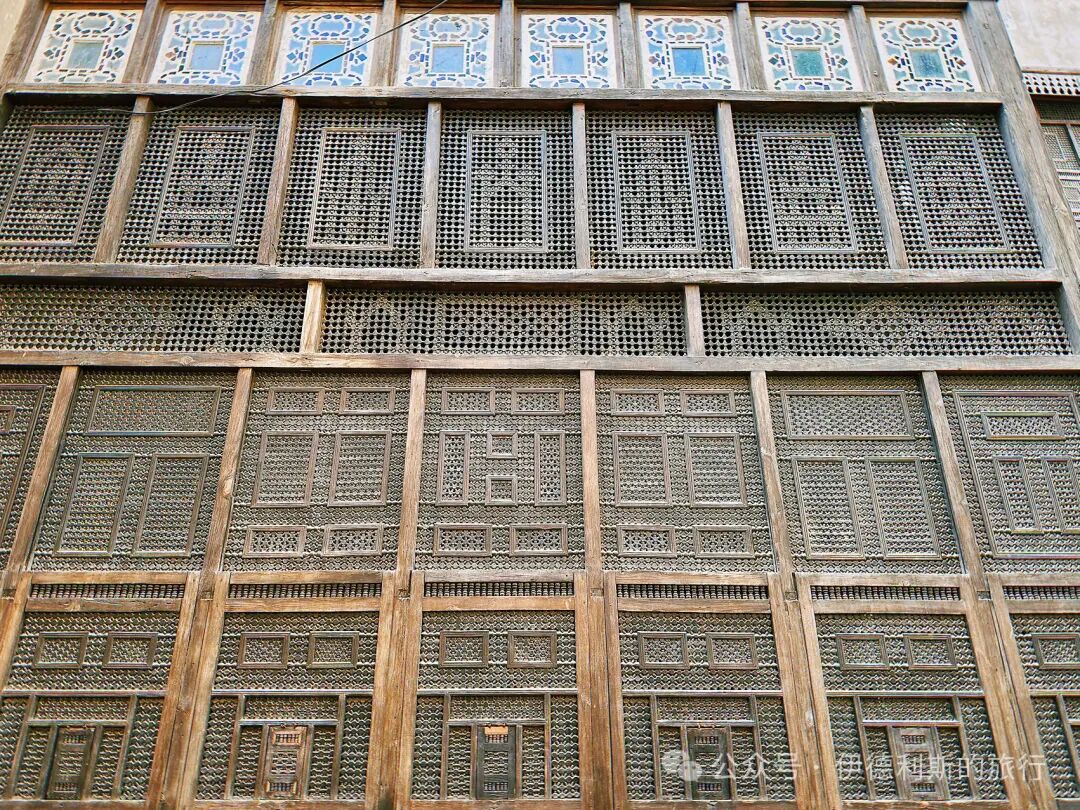
The ornate ceiling decorations of Bayt al-Suhaymi.
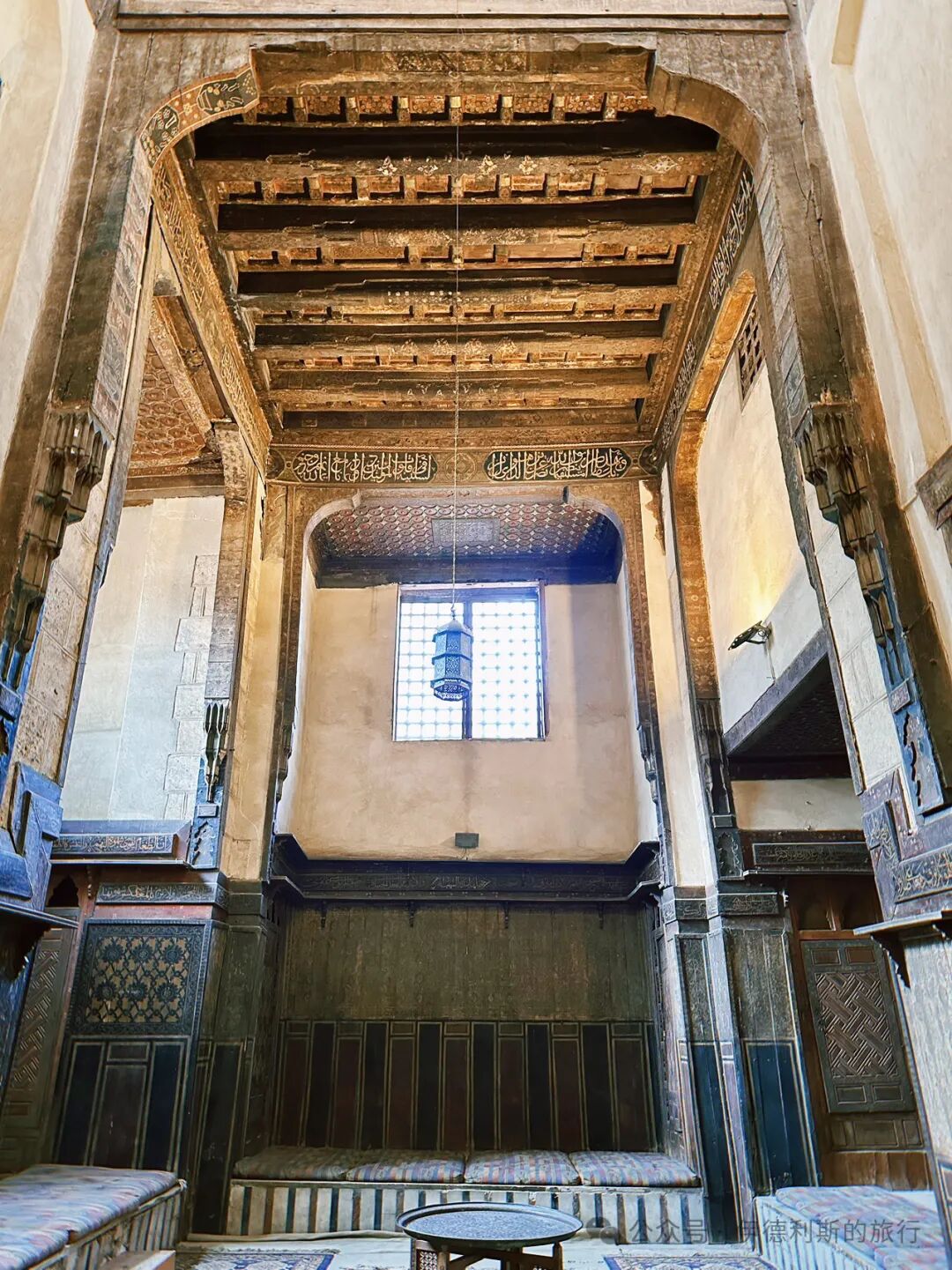
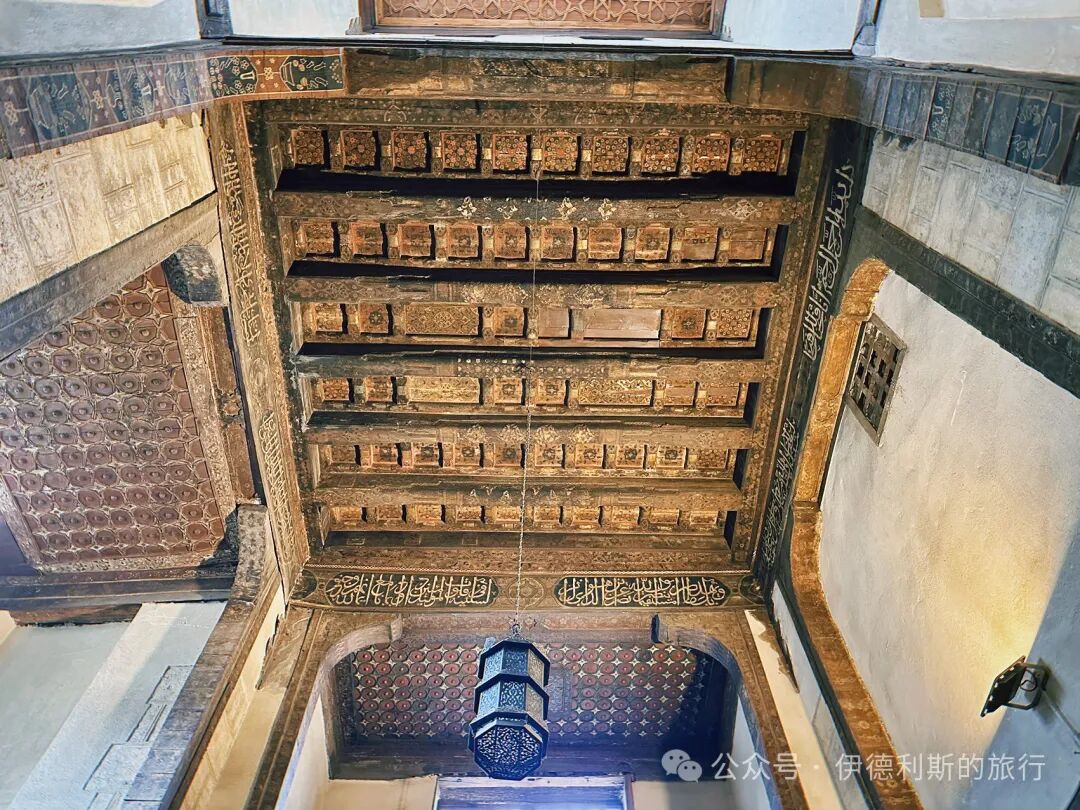
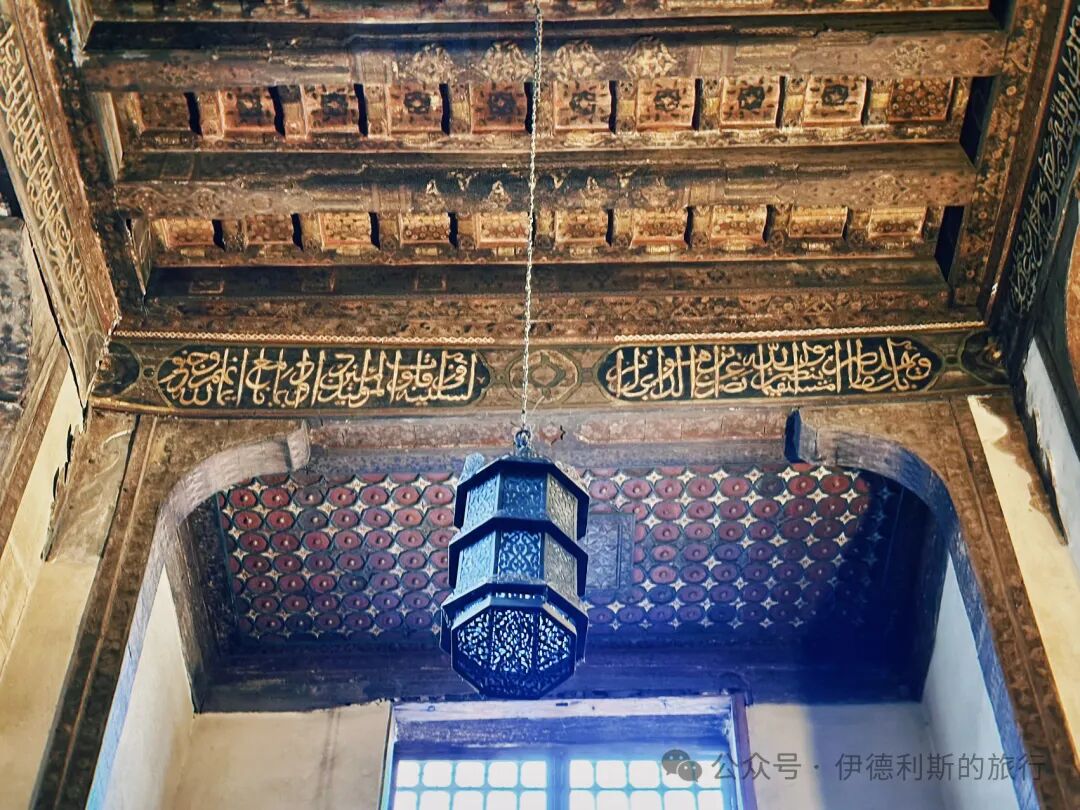
The wood-carved furniture and colorful marble floors inside Bayt al-Suhaymi.
Mosque-Sabil of Sulayman Agha al-Silahdar: 1839
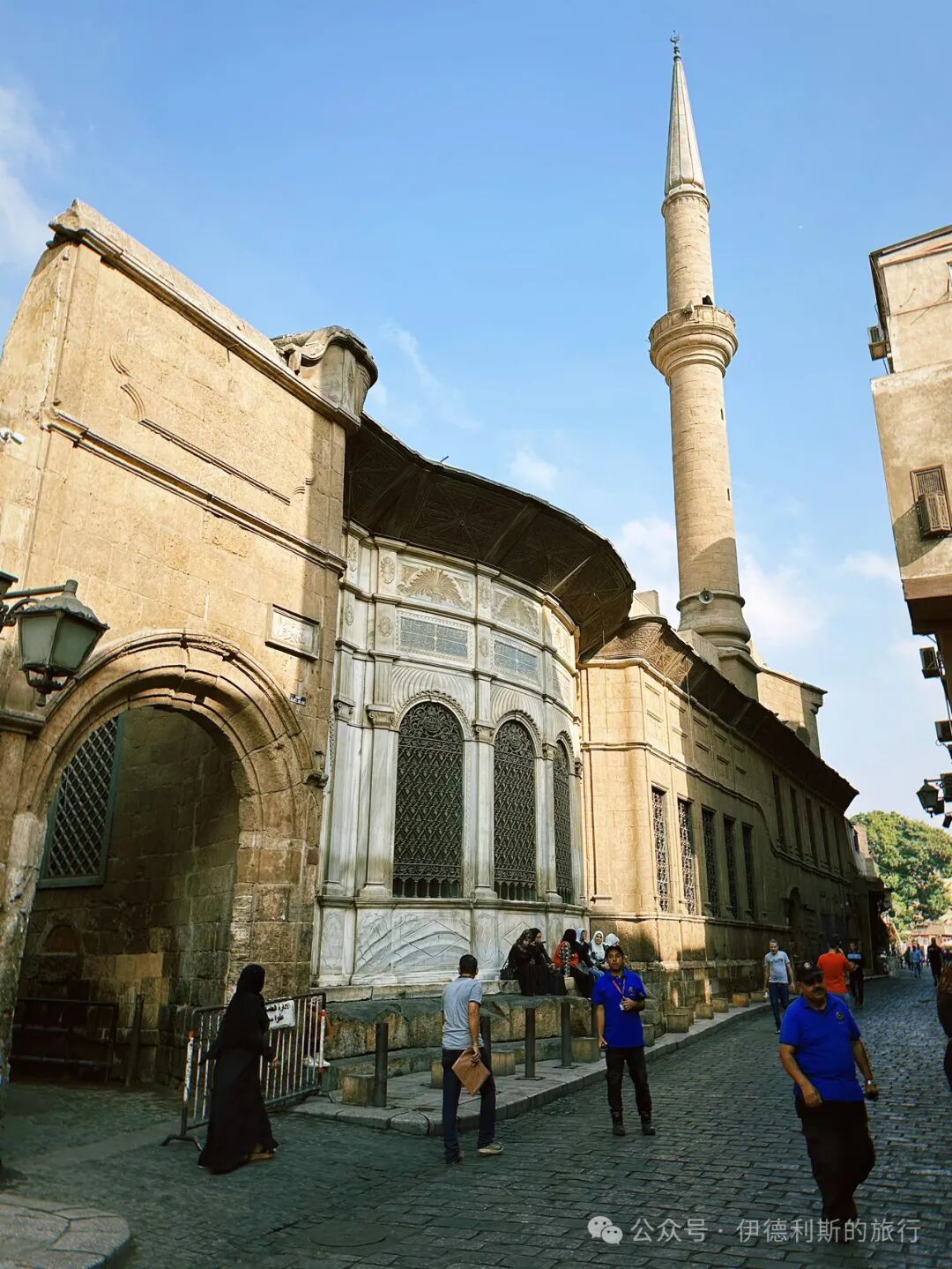
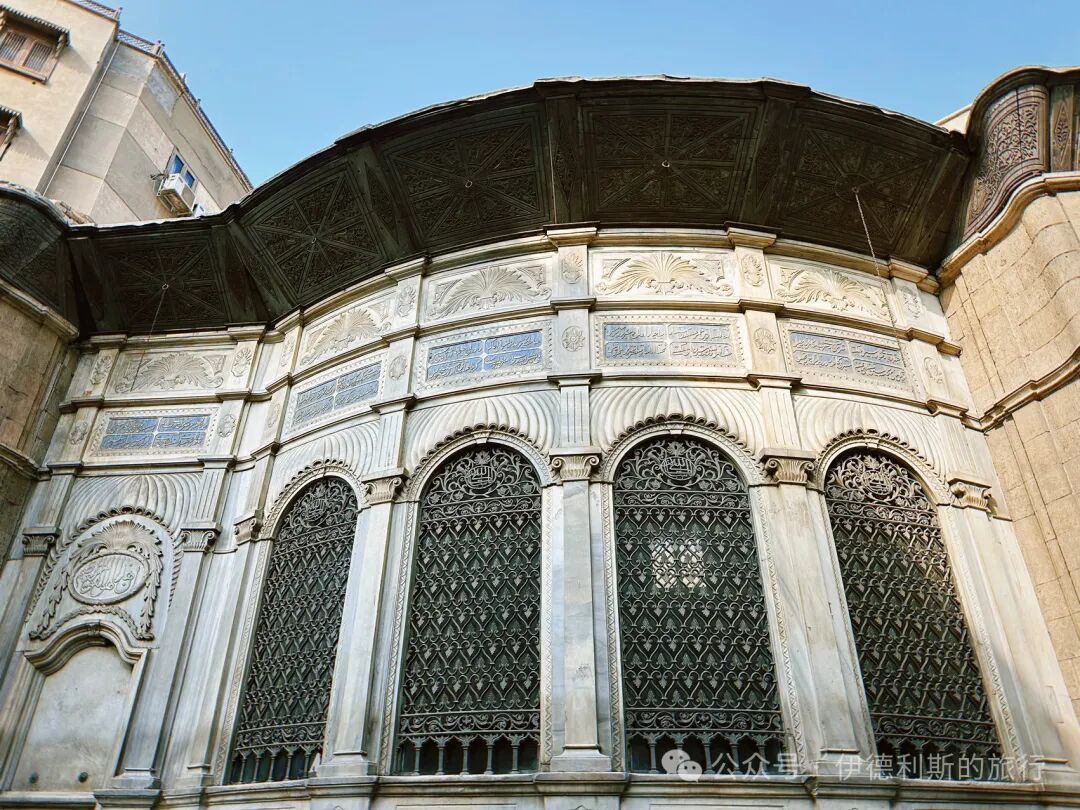
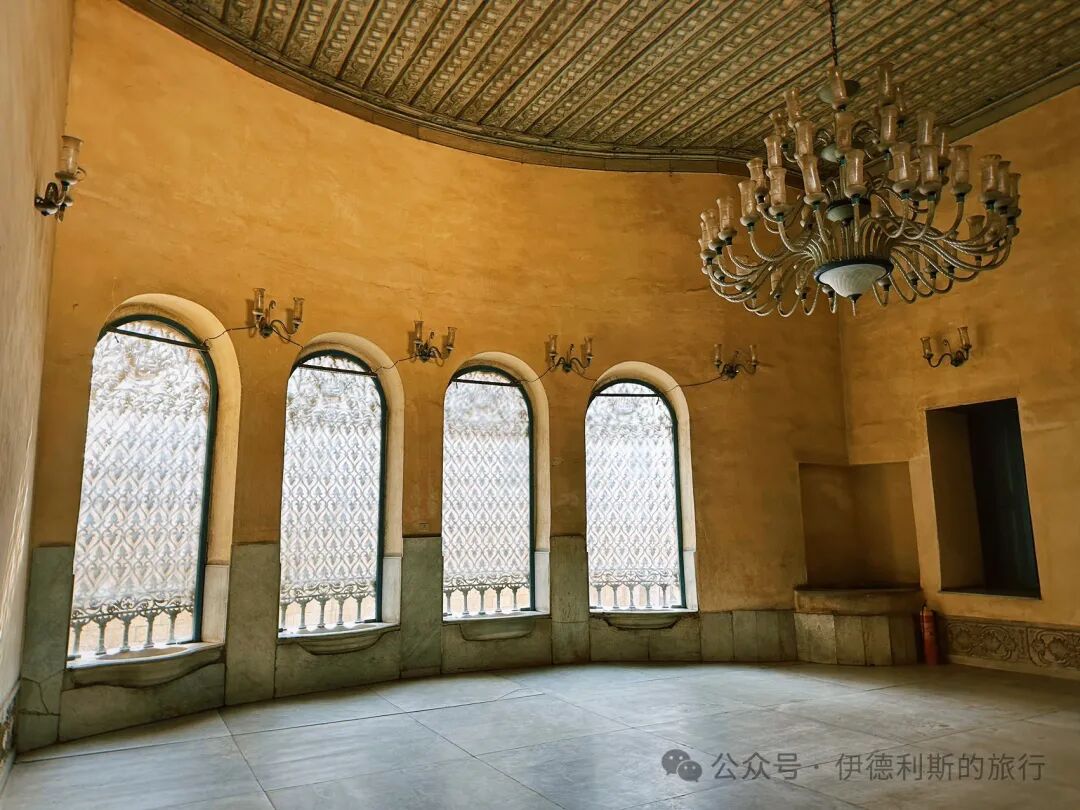
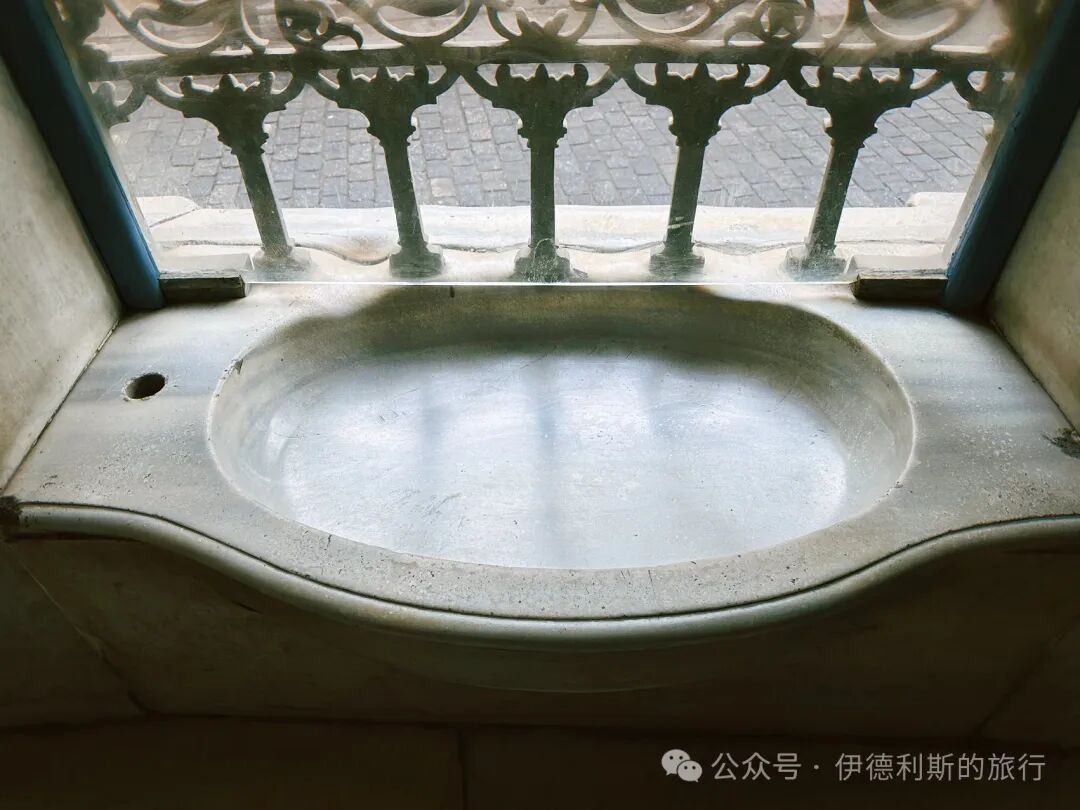
Continuing west back to the main road of old Cairo, Al-Mu'izz Street, the first thing you see is the Mosque-Sabil of Sulayman Agha al-Silahdar, built in 1839. This fountain has a fancy Ottoman Baroque facade with floral patterns from the European Renaissance. The fountain is made of marble and was used to keep the water cool during the summer. Next to the fountain is a primary school (kuttab) that was once used to teach children how to read, write, and recite scripture. Here, we can also enter the huge underground water reservoir of the fountain, which is rarely seen in typical fountains.
Aqmar Mosque: 1125-6
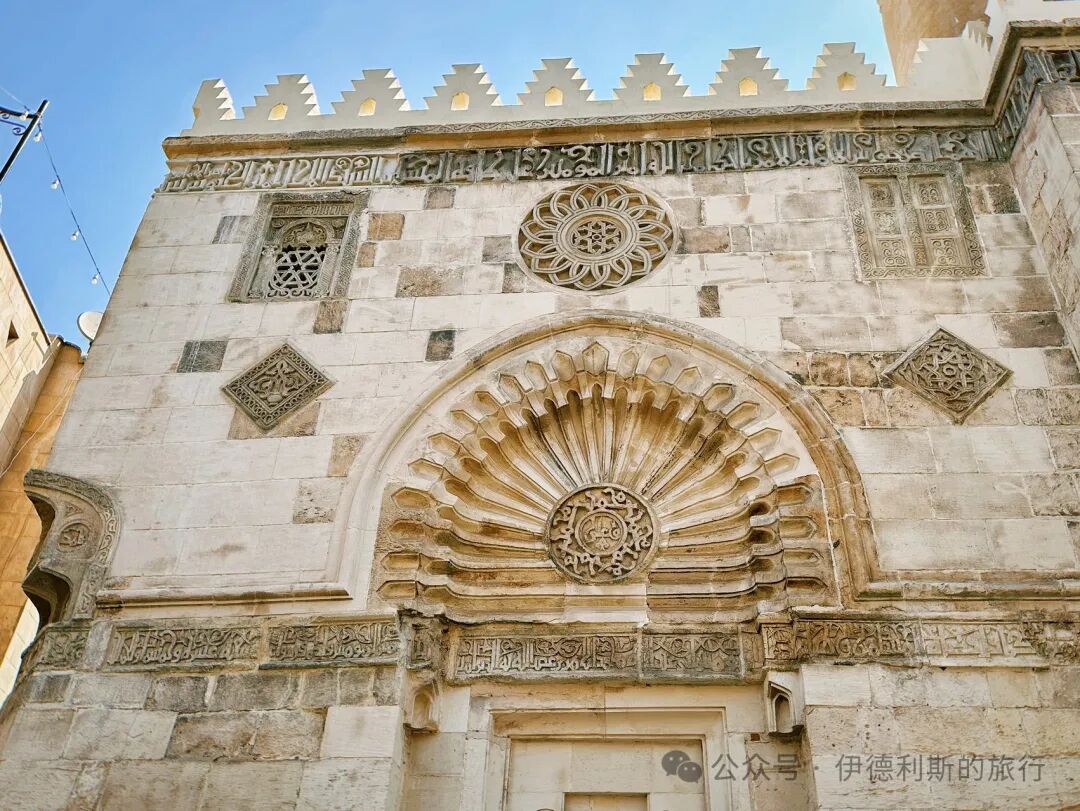
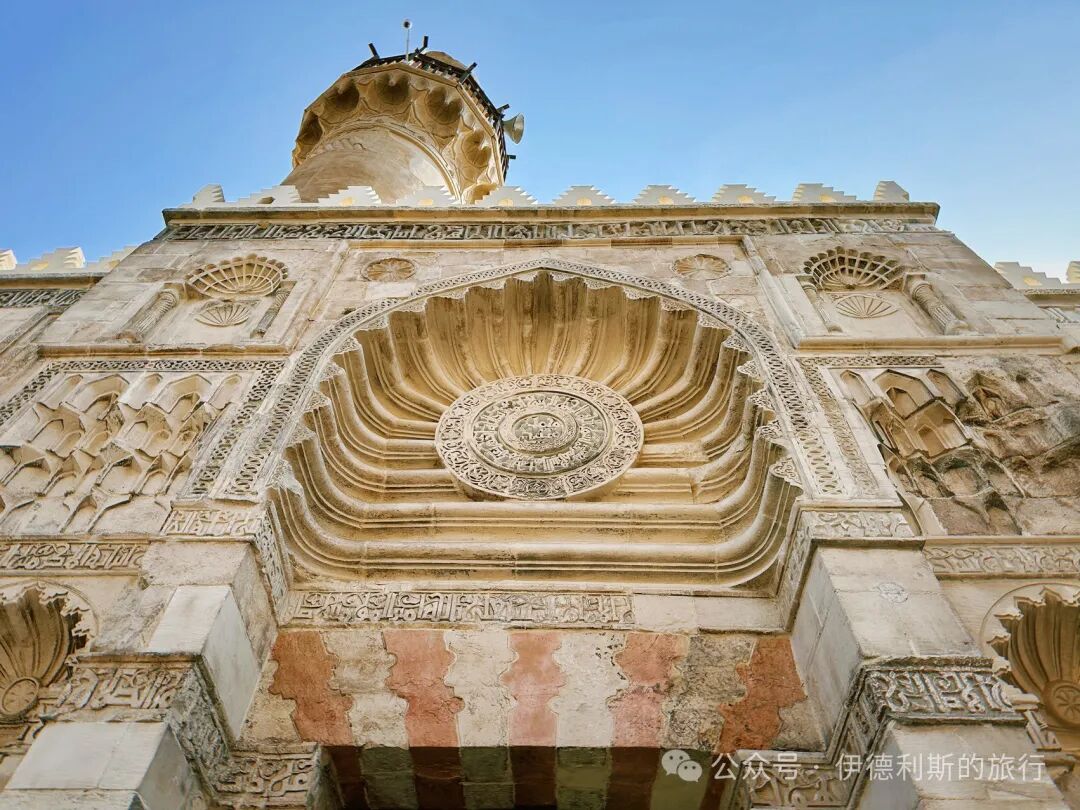
Walking south along Al-Muizz Street, we stop at the famous Fatimid-era Aqmar Mosque. The Aqmar Mosque was built in 1125-6 by order of the Fatimid vizier Al-Ma'mun al-Bata'ihi. It sits at the northeast corner of the former Eastern Fatimid Palace, right next to the palace grounds.
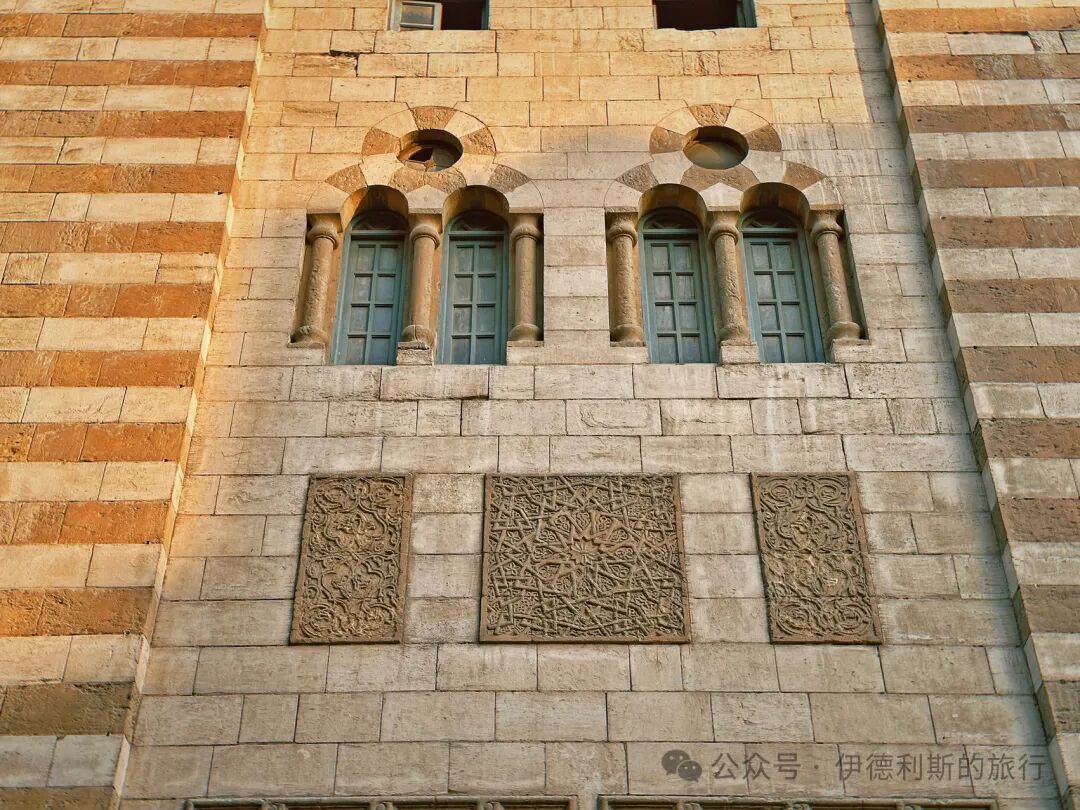
The Aqmar Mosque holds a groundbreaking place in Egyptian architectural history. It is the first mosque where the entrance is flush with the street rather than aligned with the qibla wall, making it the first mosque planned according to Cairo's street layout. It is also the first mosque to feature complex stone carvings. The facade of the Aqmar Mosque is very luxurious. Above the entrance is a large medallion surrounded by a grille, with the names of the Prophet and Ali in the center and verses written around them. This type of decoration is unique in Cairo.
At the top of the left facade, there are carvings of a door and a window. The window on the left symbolizes the ceremonial grille that the Fatimids took back from the palace of their rivals, the Abbasids in Baghdad, serving as a symbol of victory. Inside the window is a lamp and a six-pointed star, based on the Shia hadith: 'The stars are a promise to the world, and it will not be submerged.' Below the window, there is a carving of a plant growing out of a flower pot, which comes from the Prophet's reference to Hasan and Husayn as 'my two aromatic herbs in the world.' The door in the upper right corner comes from the famous Shia hadith: 'I am the city of knowledge, and Ali is its gate.'
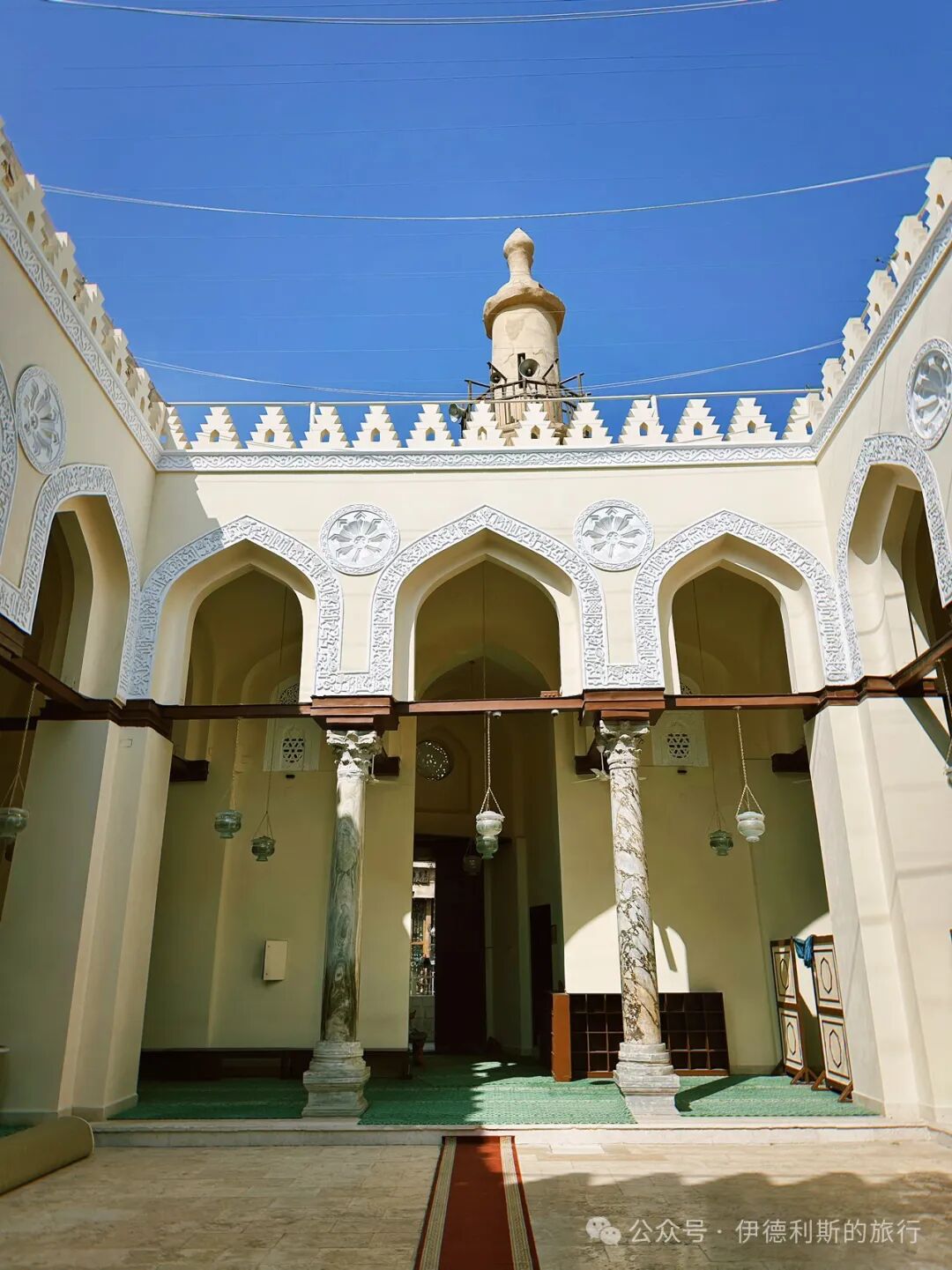
Because it was near the Fatimid palace, the Aqmar Mosque did not originally have a minaret. One was not added until the end of the 14th century by the Mamluk dynasty, and the cylindrical top was rebuilt during the Ottoman era.
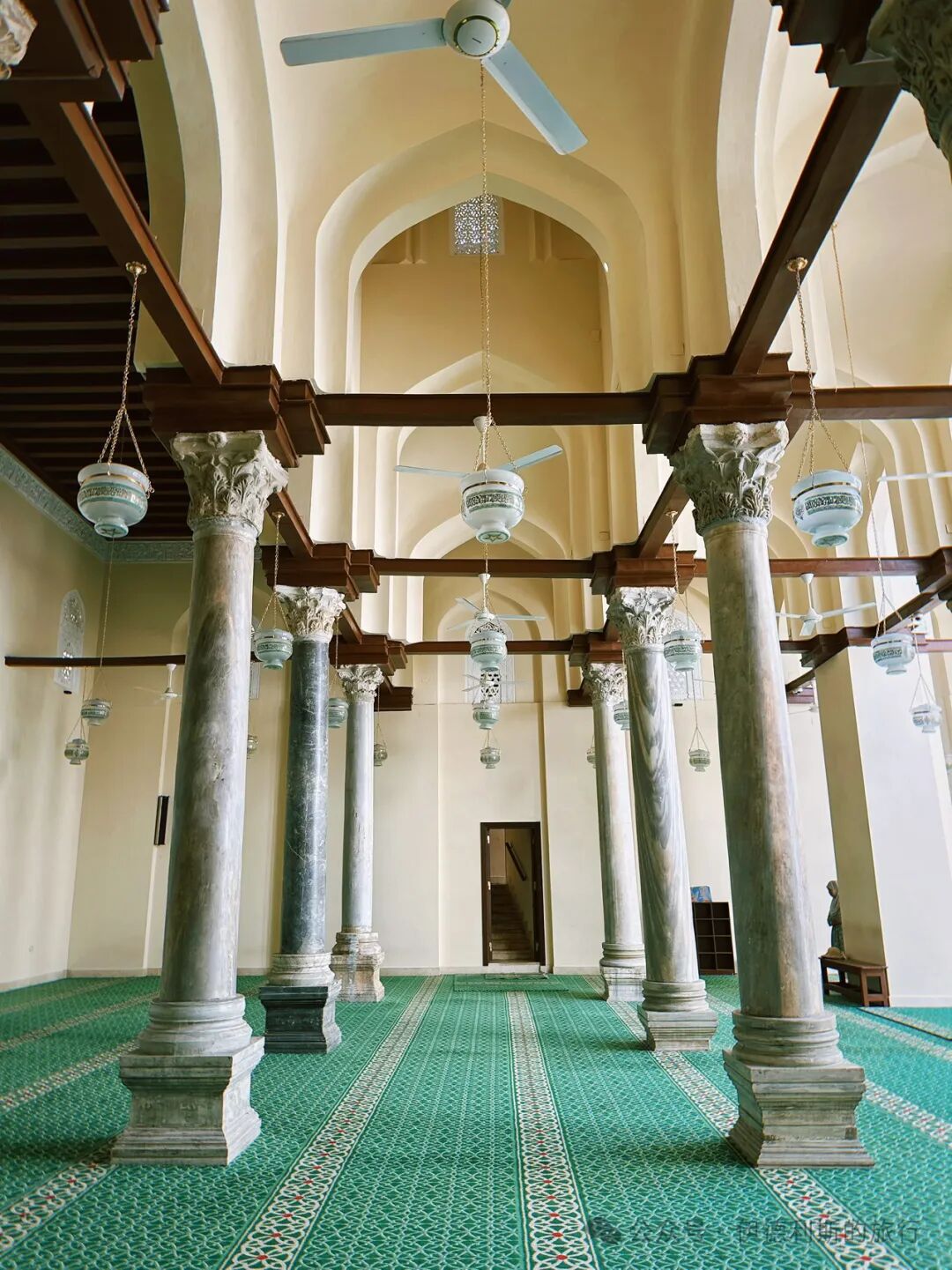
In 1993, the Dawoodi Bohra branch of the Shia community carried out a large-scale renovation of the Aqmar Mosque. Most of the historical elements inside the main hall were not preserved, which drew criticism.
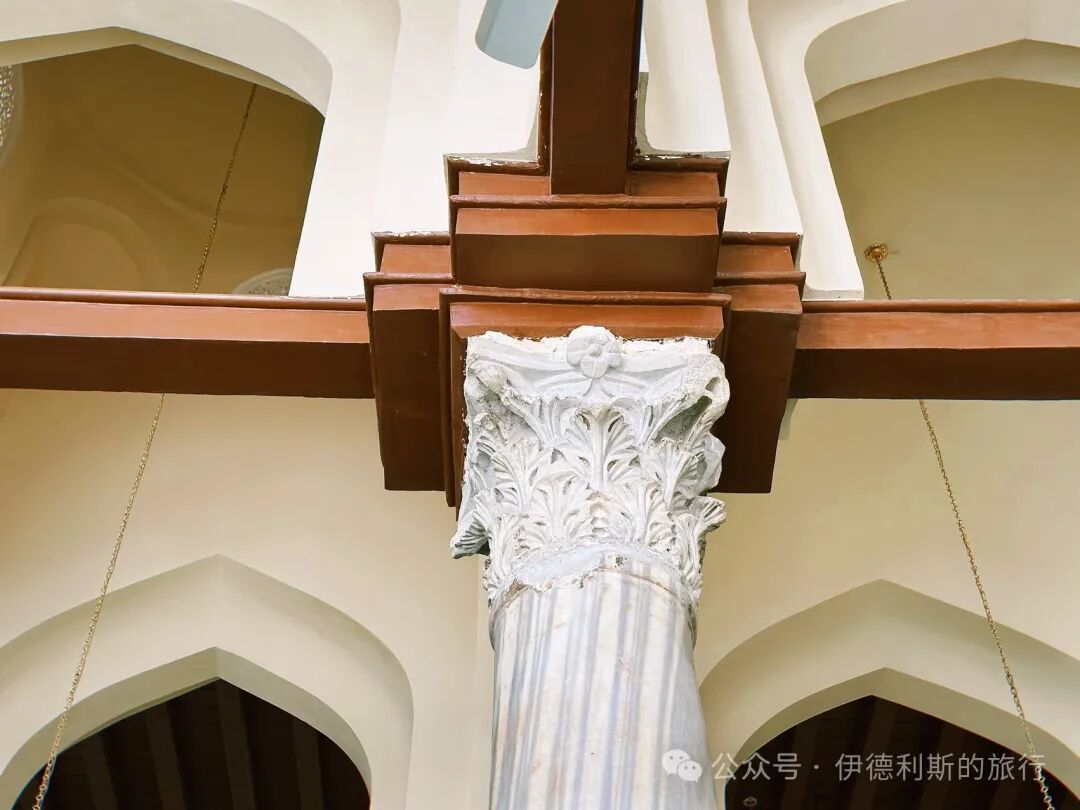
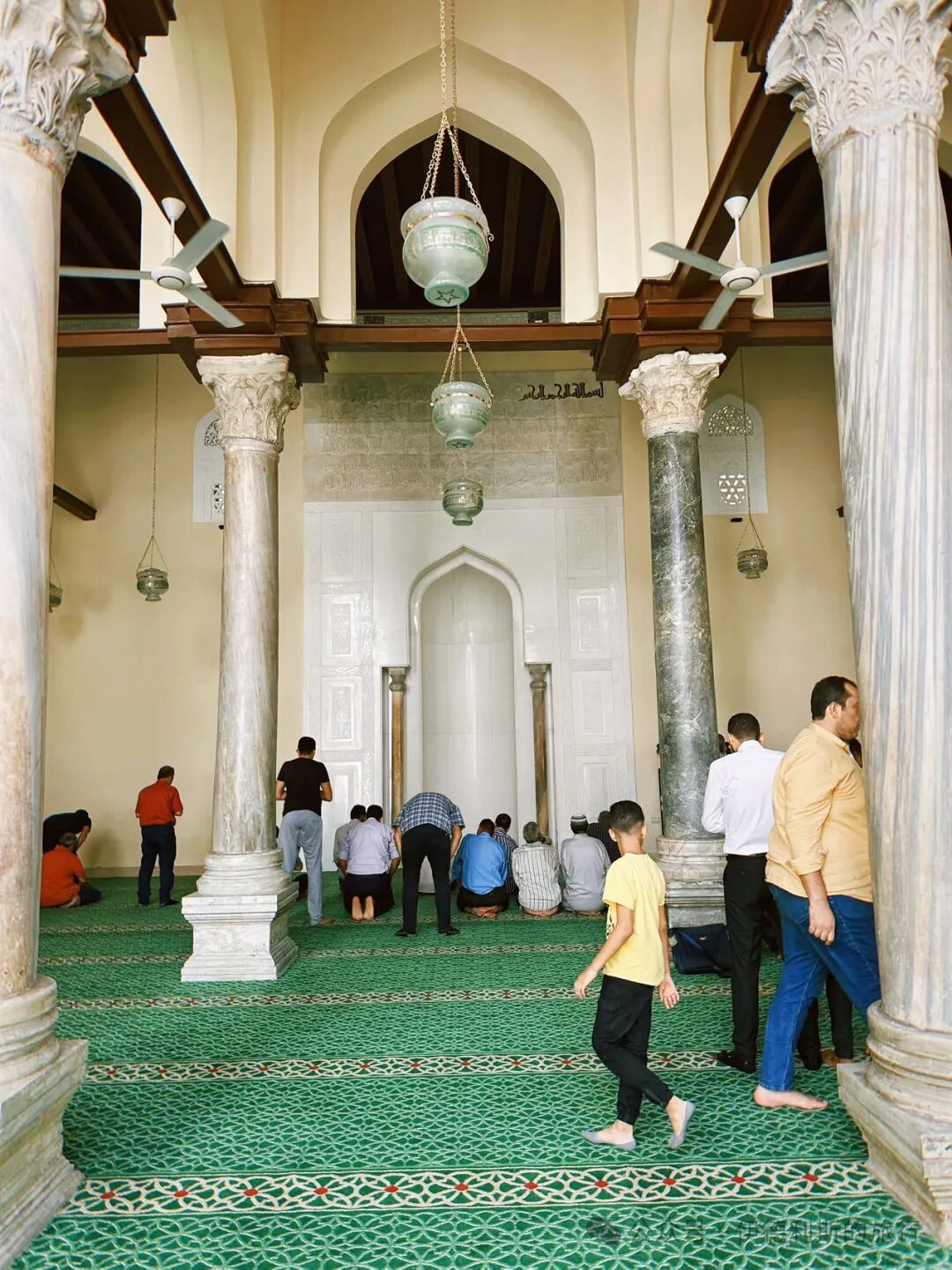
Madrasa of Emir Jamal al-Din al-Ustadar: 1407
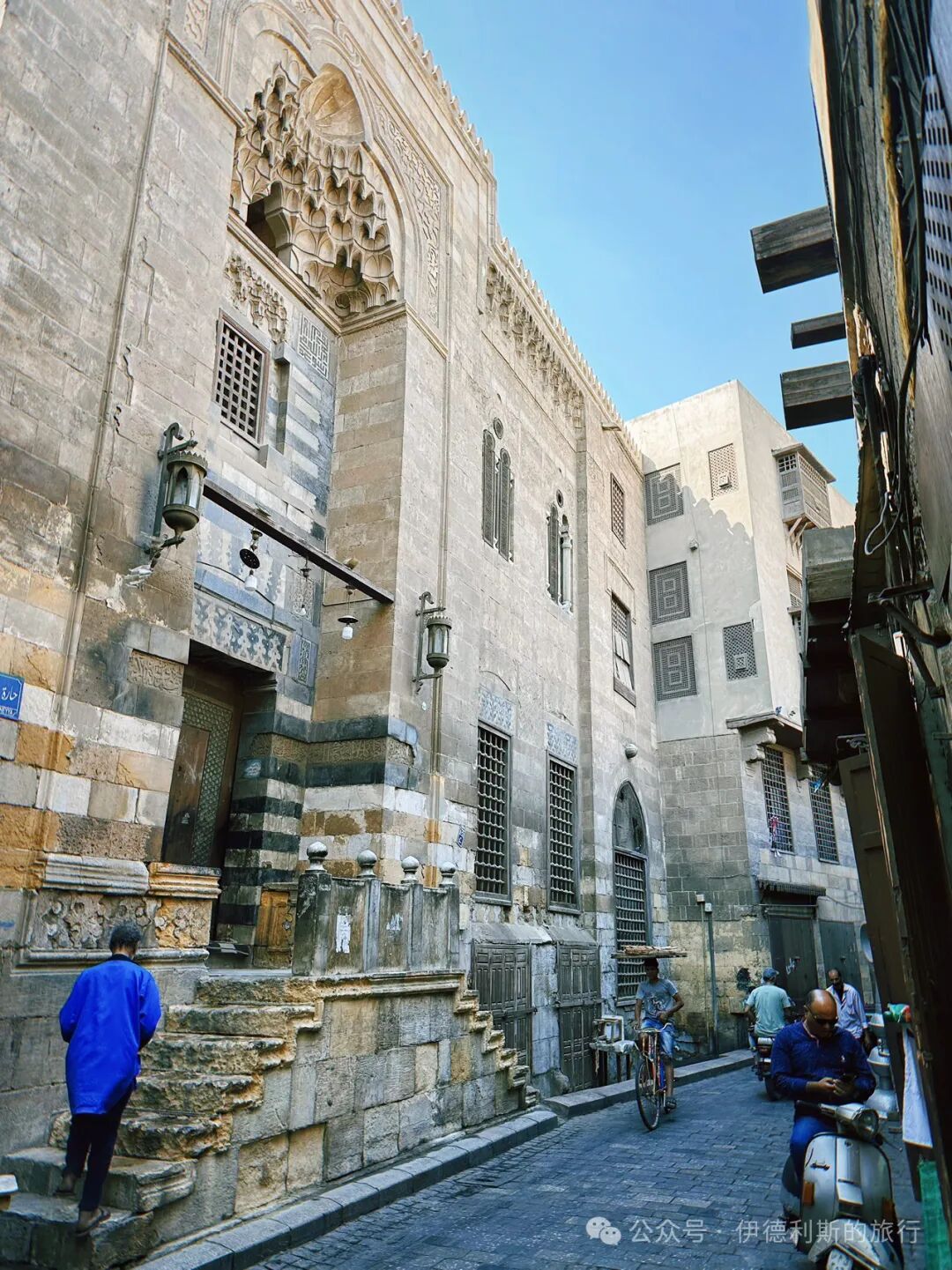
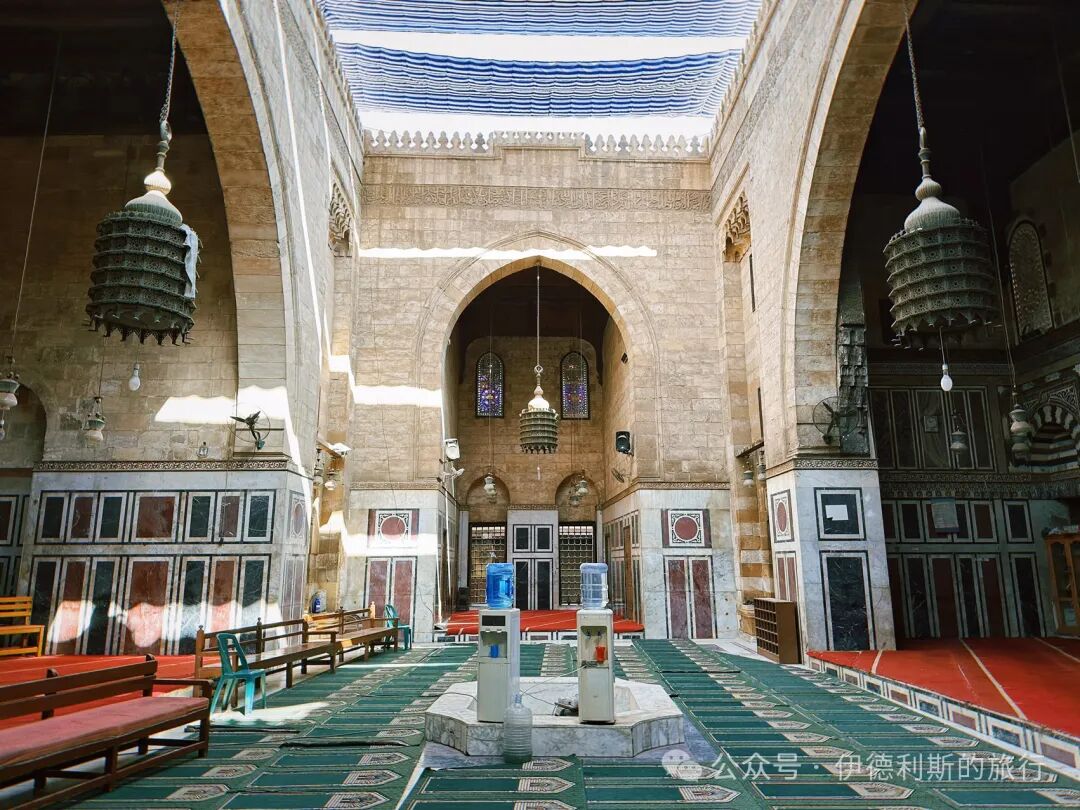
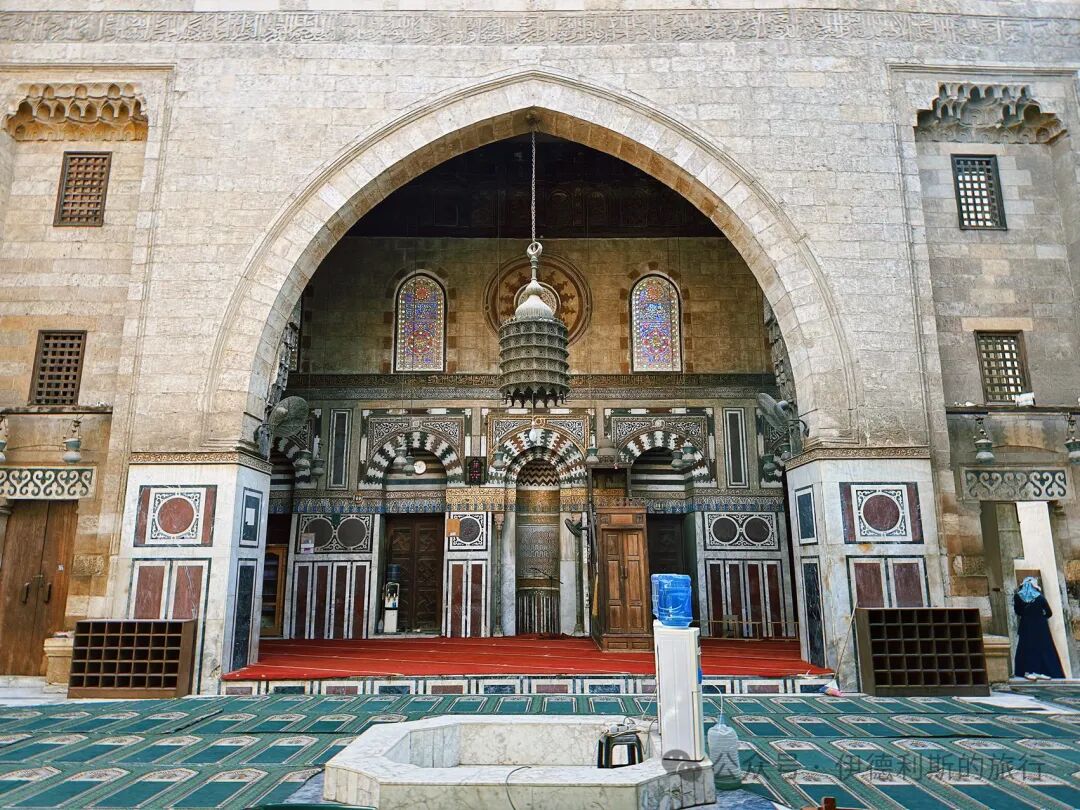
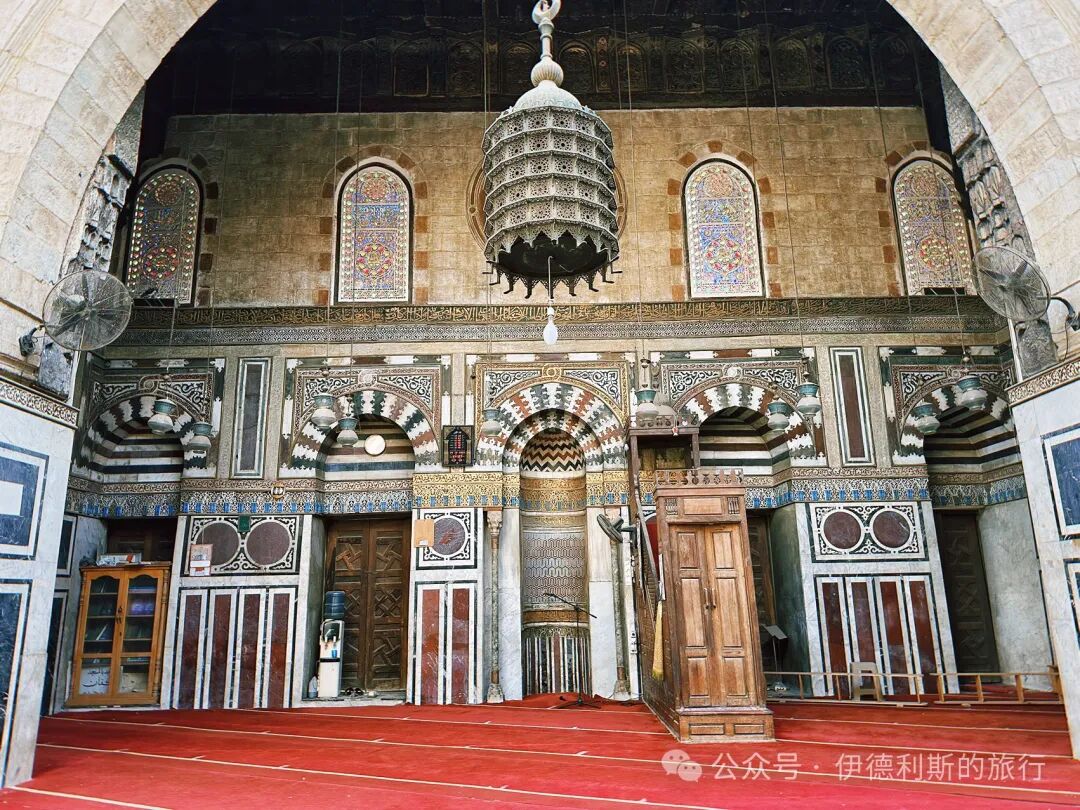
Turn back into al-Gamaleya Street along the alley south of the Aqmar Mosque to see the Madrasa of Amir Jamal al-Din al-Ustadar, built in 1407 by the Mamluk general Amir Jamal al-Din al-Ustadar. Jamal al-Din built many structures in Cairo, and al-Gamaleya Street is named after him.
This is a classic cruciform madrasa structure with an open courtyard in the center and an iwan (arched hall) on each of the four sides, each used to teach one of the four schools of Islamic jurisprudence. The decoration inside the main hall is very ornate, as People say Jamal al-Din modeled it after Mamluk palace designs and invested a large amount of money and materials. Jamal al-Din was executed just four years after the mosque was completed. The Sultan wanted to demolish the site, but a judge (Qadi) stopped him, and in the end, only Jamal al-Din's name was removed.
After the Ottoman Empire conquered Istanbul in 1517, many marble slabs from the inner walls of the madrasa were taken to Istanbul. The building was damaged again in the 1992 earthquake and was not fully restored until 2002.
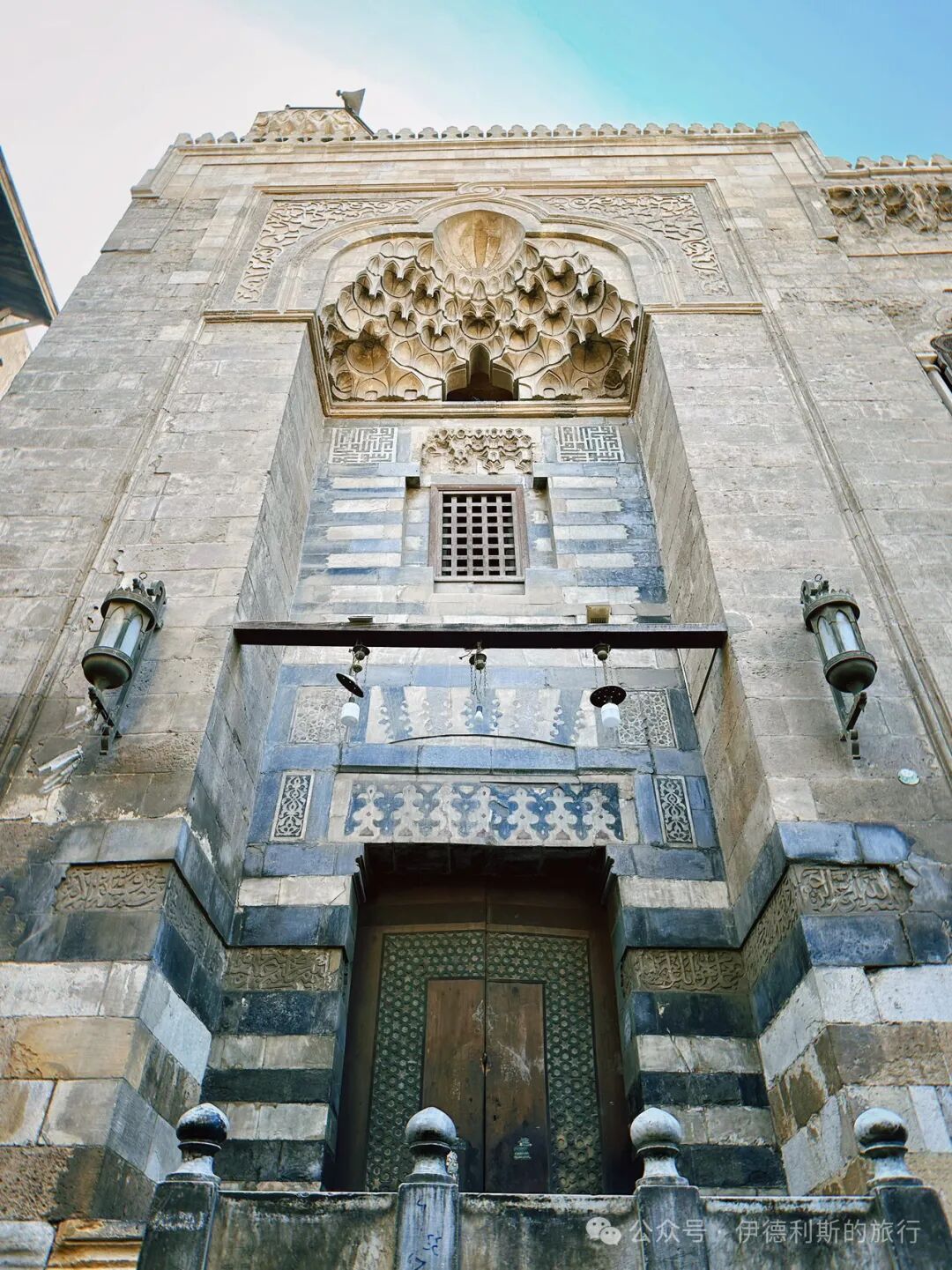
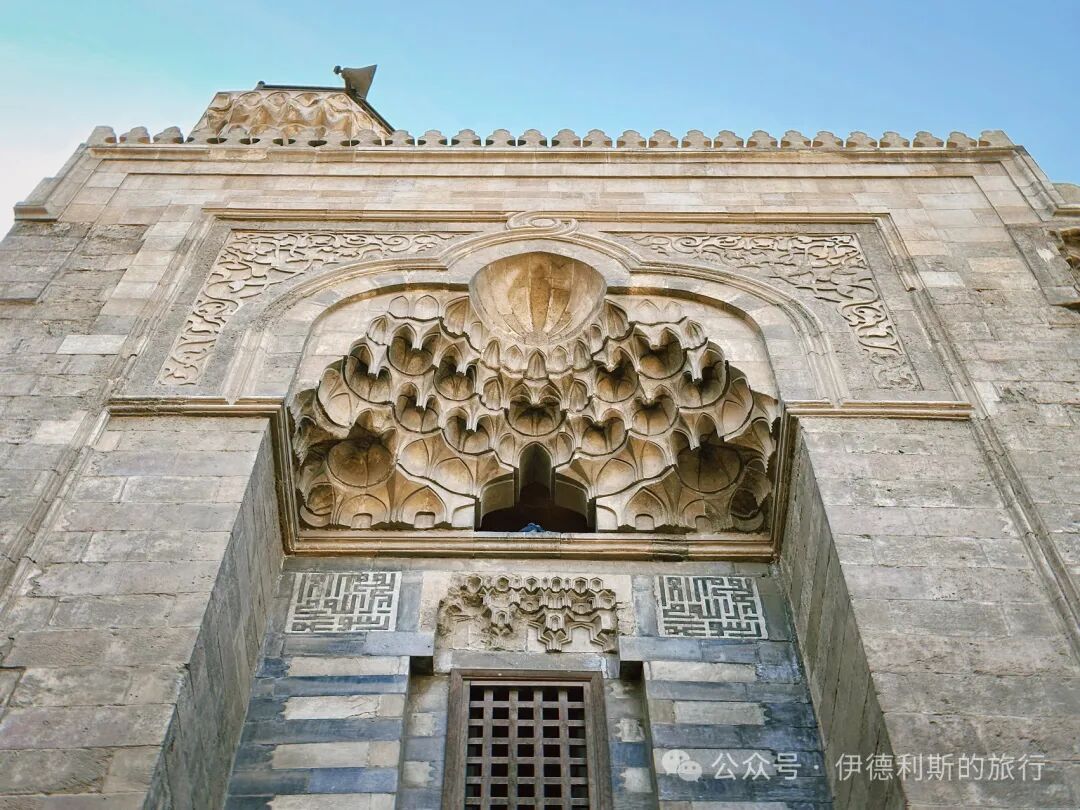
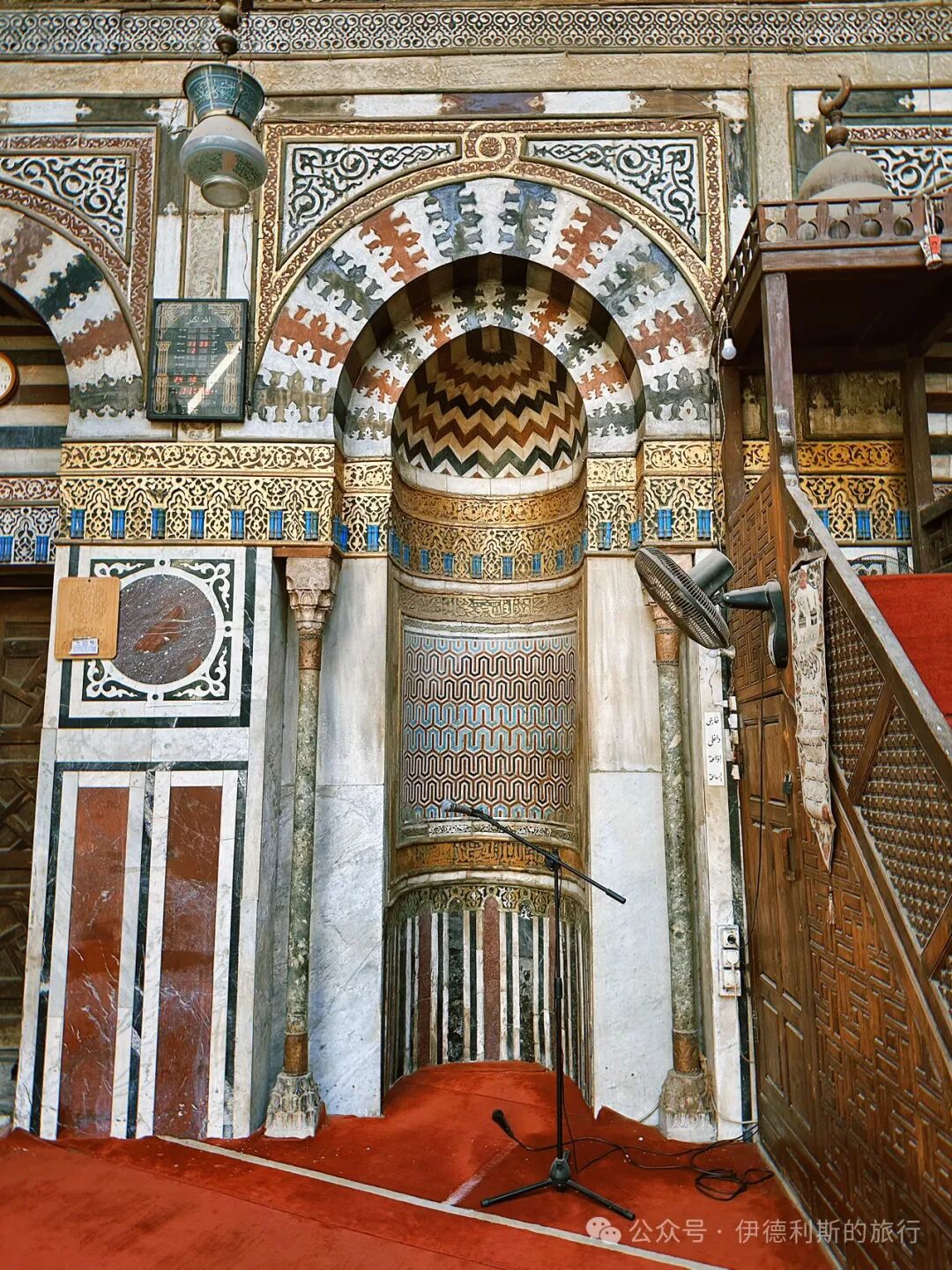
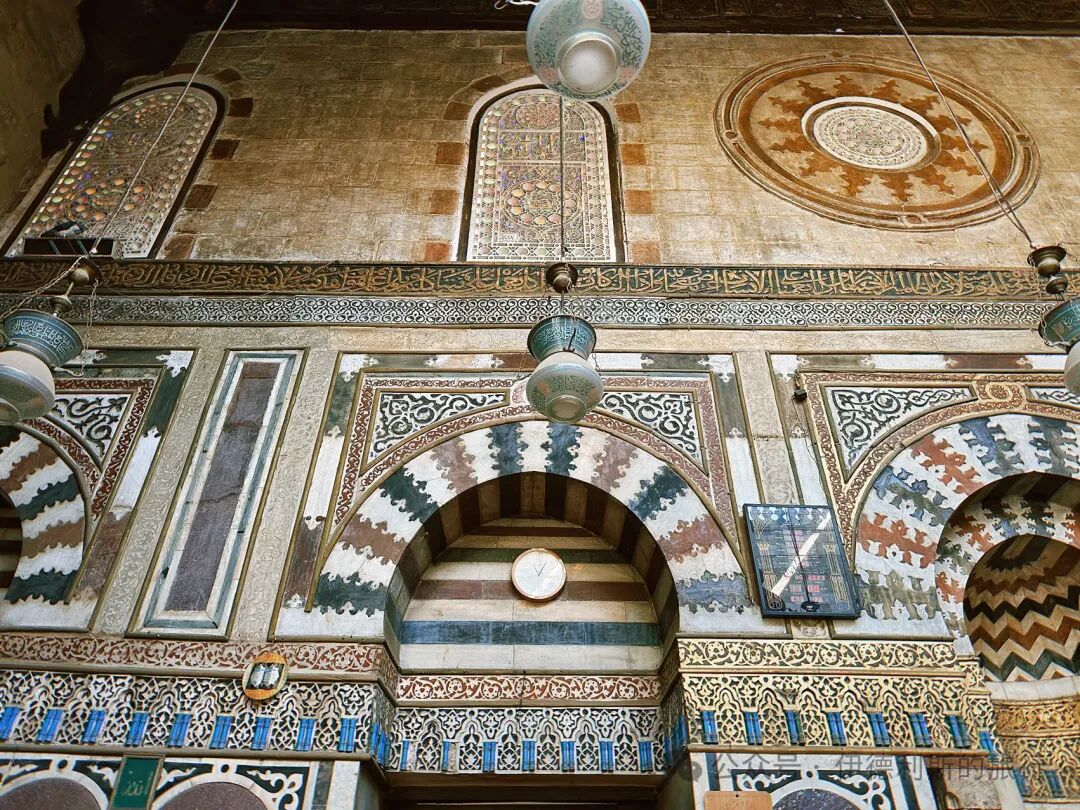
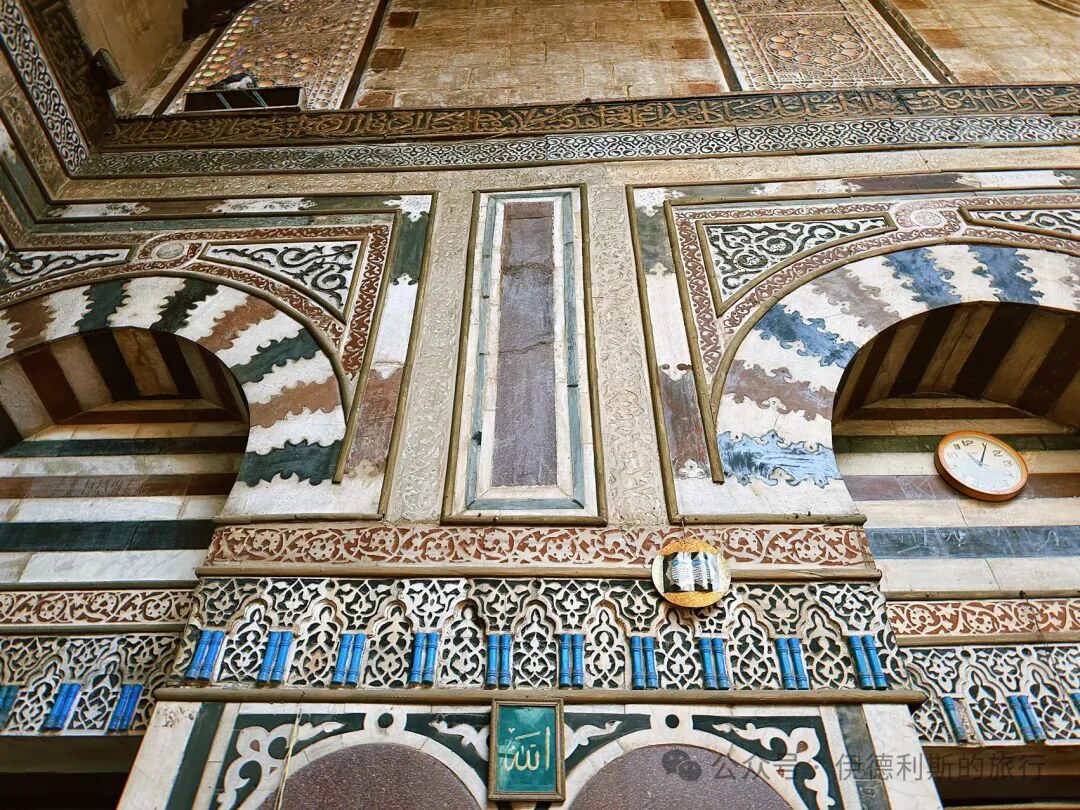
Dhu al-Fiqar Fountain-Primary School (Sabil-Kuttab): 1673
Opposite the Madrasa of Amir Jamal al-Din al-Ustadar is the Ottoman-era Dhu al-Fiqar Sabil-Kuttab, built in 1673 by Dhu al-Fiqar Katkhuda Mustahfizan and his brother Muhammad. This Sabil-Kuttab consists of two prominent wooden awnings, and the caravanserai (wikala) behind it was once a center for the coffee trade in 18th-century Cairo.
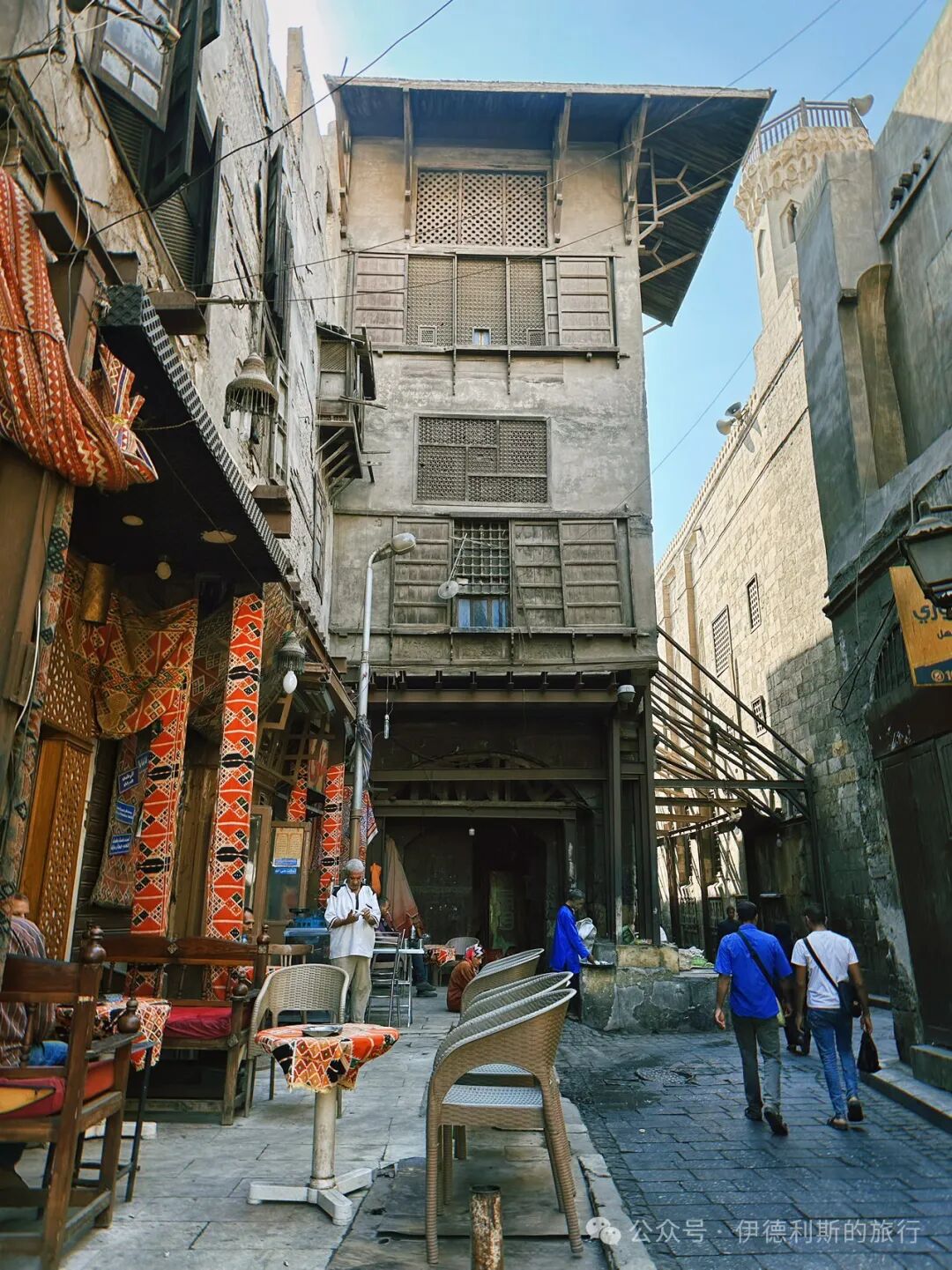
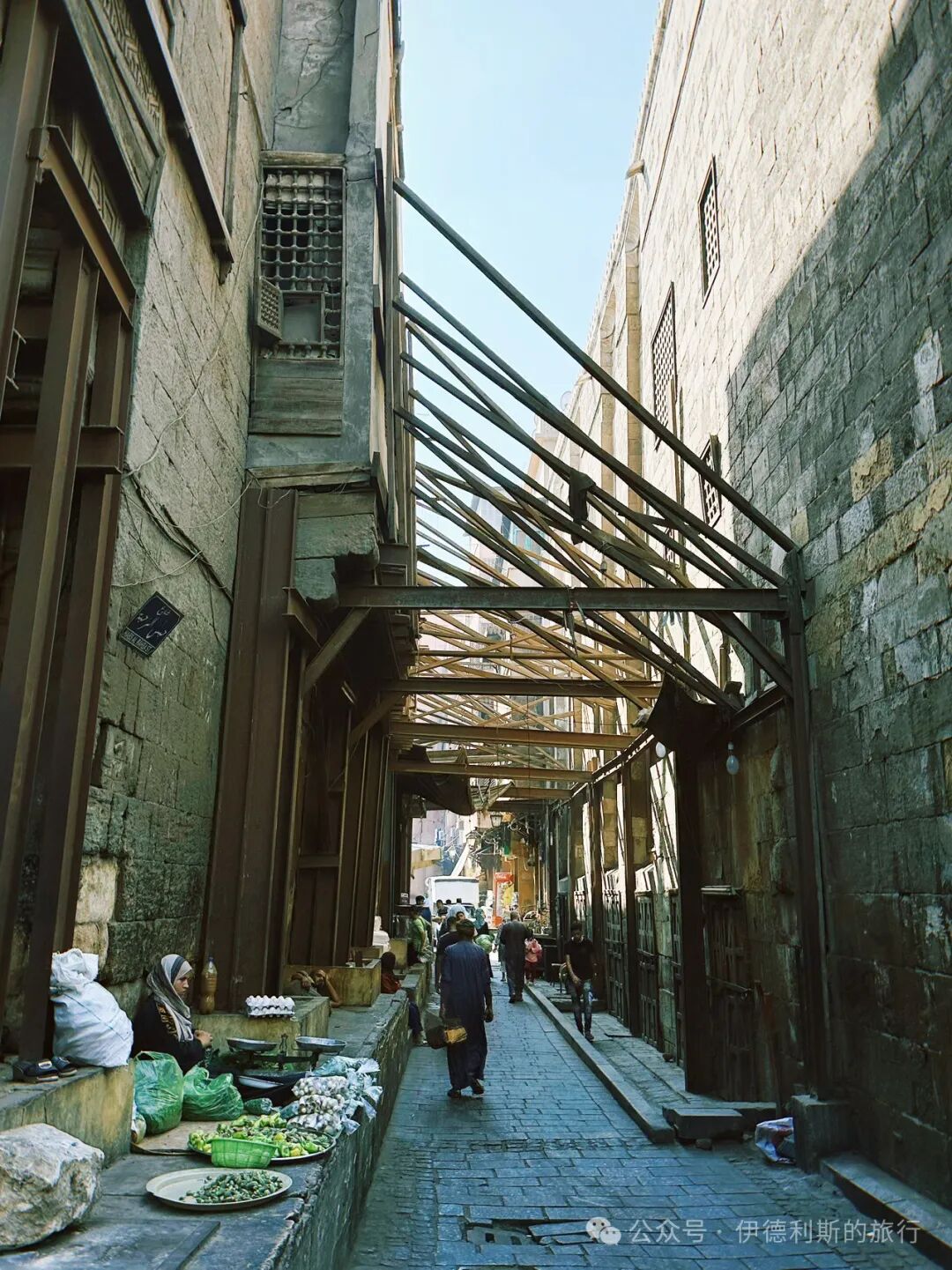
Maq’ad Mamay al-Sayfi Palace: 1496
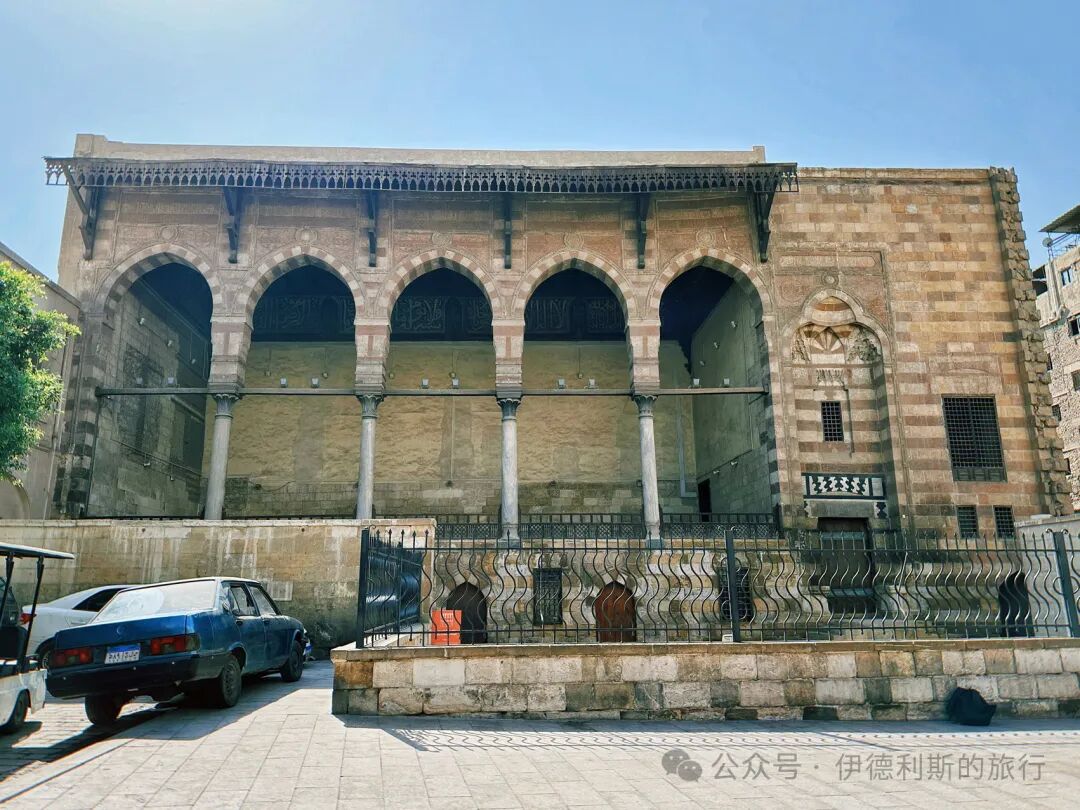
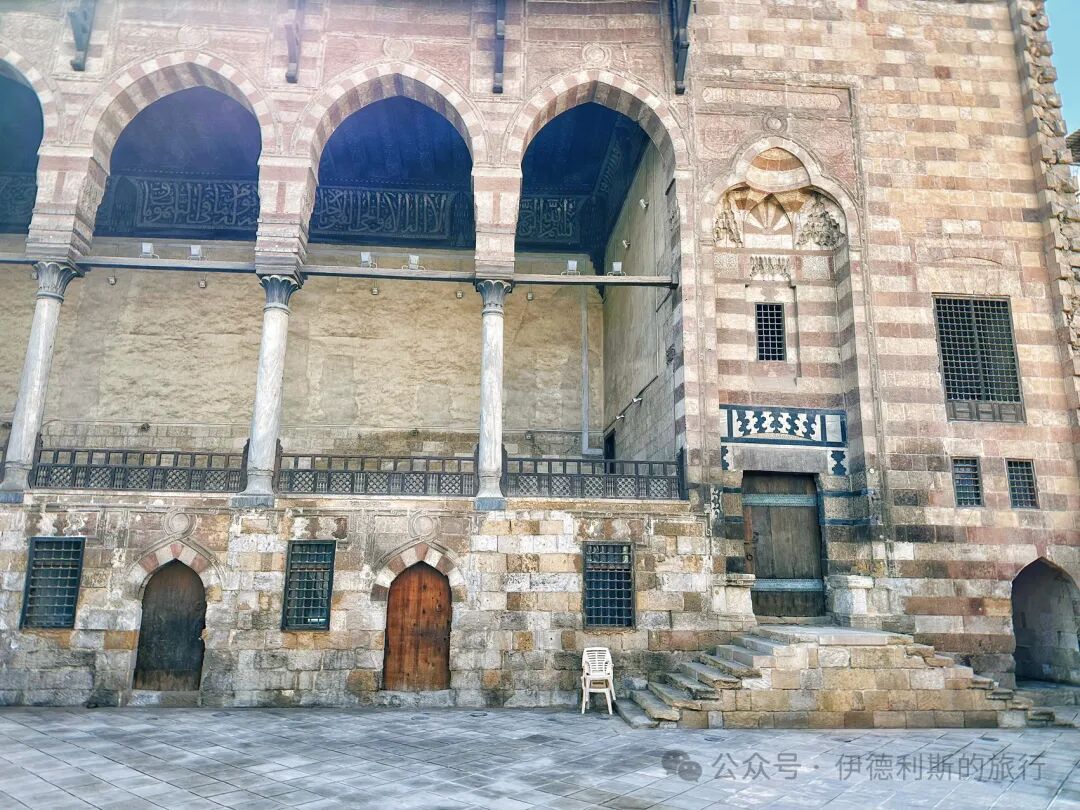
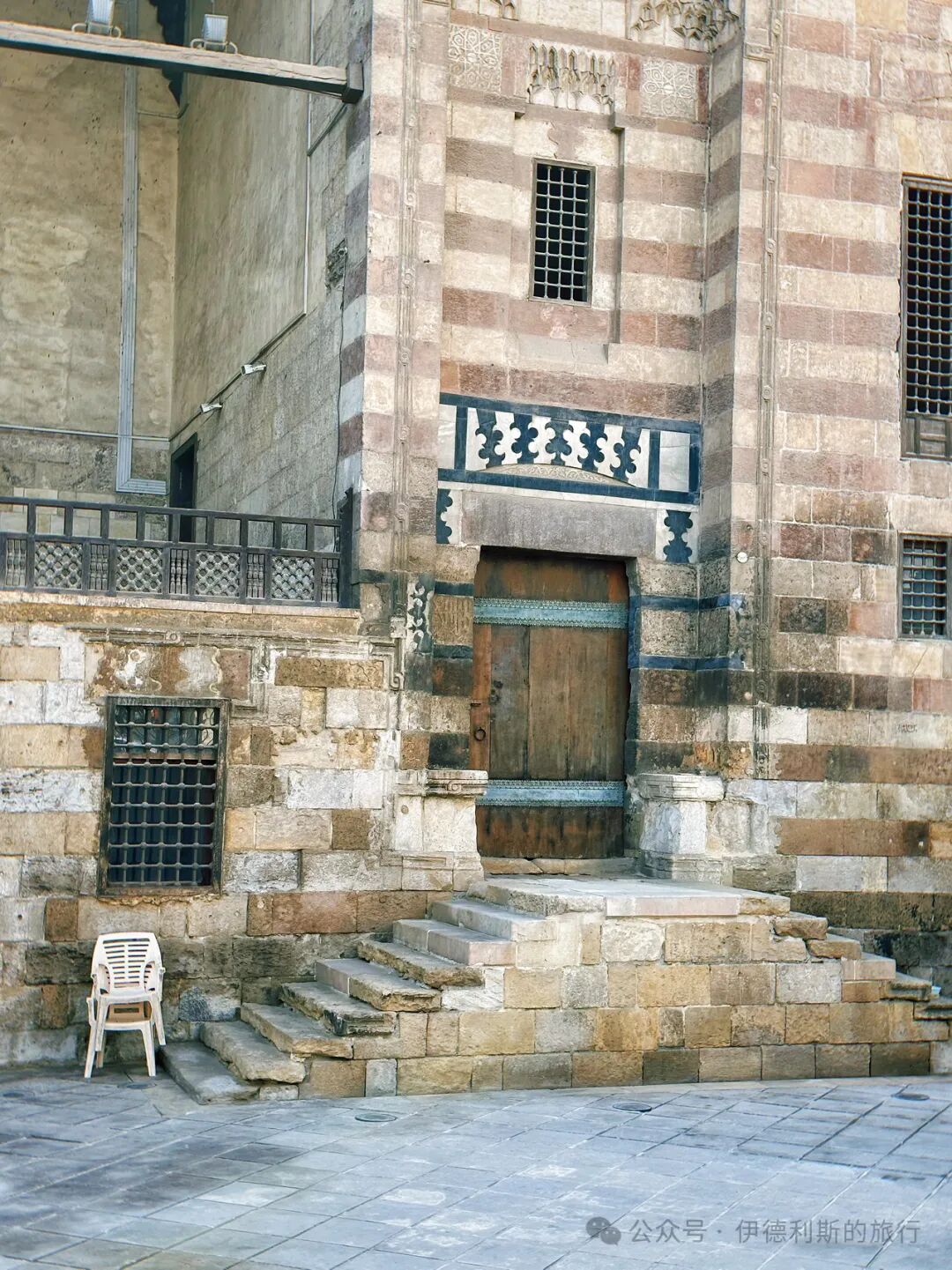
Continue south to the Maq’ad Mamay al-Sayfi Palace on Beet Al Qadi Street, built in 1496 by the Mamluk general Sayf al-Din Mamay ibn Khadad, who served as a Mamluk diplomat to the Ottoman Empire in the early 1490s.
During the Ottoman period, this place served as a high court and the residence of judges, so it is also called Bayt al-Qadi. In the late 19th century, Egypt's ruler Isma'il Pasha (reigned 1863-79) carried out urban renewal in Cairo, and most of the palace was demolished, leaving only a large house used for summer retreats. The house consists of an upper pavilion and a lower storage room. The lotus capitals of the pavilion are the only example in Islamic architecture in Cairo that directly uses architectural forms from the ancient Egyptian pharaonic era. The interior of the pavilion has complex decorations and calligraphy, but unfortunately, it was not open when we visited.
Abd al-Rahman Katkhuda Sabil-Kuttab: 1744
Walk south from the Aqmar Mosque to see the Sabil-Kuttab of Abd al-Rahman Katkhuda, a fountain-school built in 1744 during the Ottoman era. It is a landmark building on Al-Muizz Street, the main road in Old Cairo. During the Mamluk and Ottoman dynasties, these fountain-schools were very common in Cairo. The ground floor fountain (sabil) provided free drinking water to passersby, while the second floor school (kuttab) taught children how to read and write.
Although this fountain-school was built in the Mamluk style, it incorporates many Ottoman architectural elements. The builder, Abd al-Rahman Katkhuda, was a high-ranking Mamluk emir officer known for his noble lifestyle and patronage of the arts. He renovated or built 33 structures in Cairo.
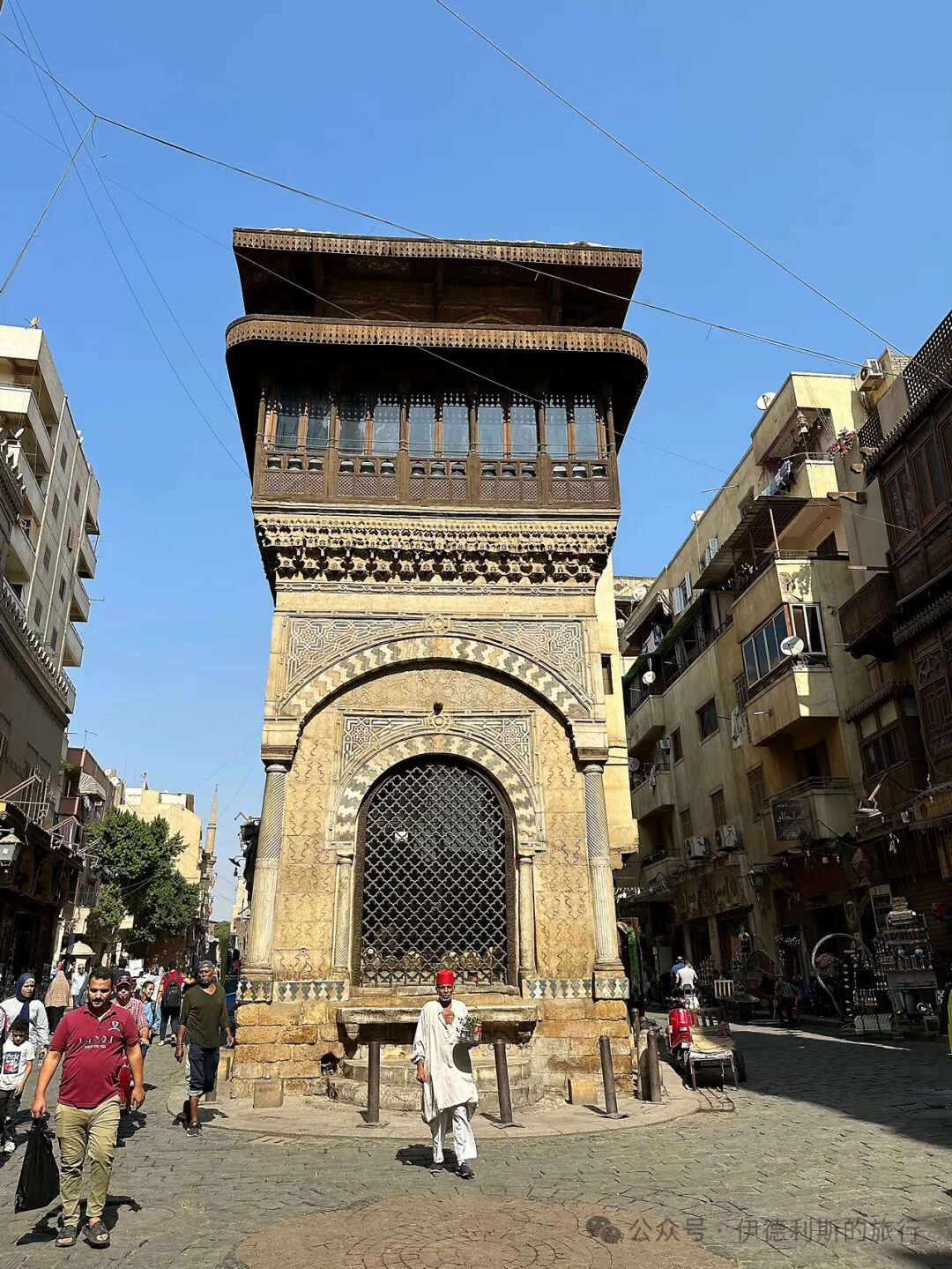
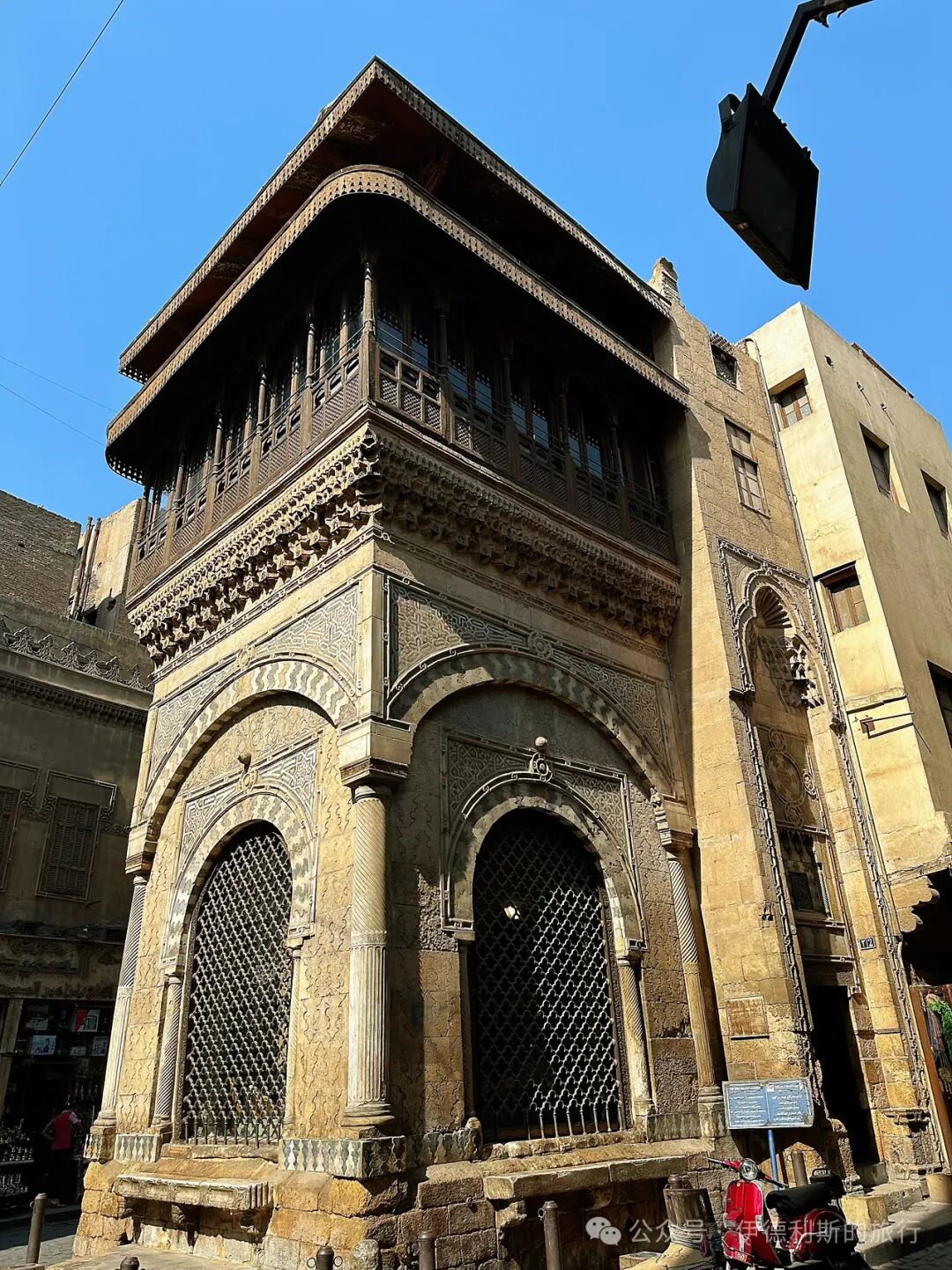
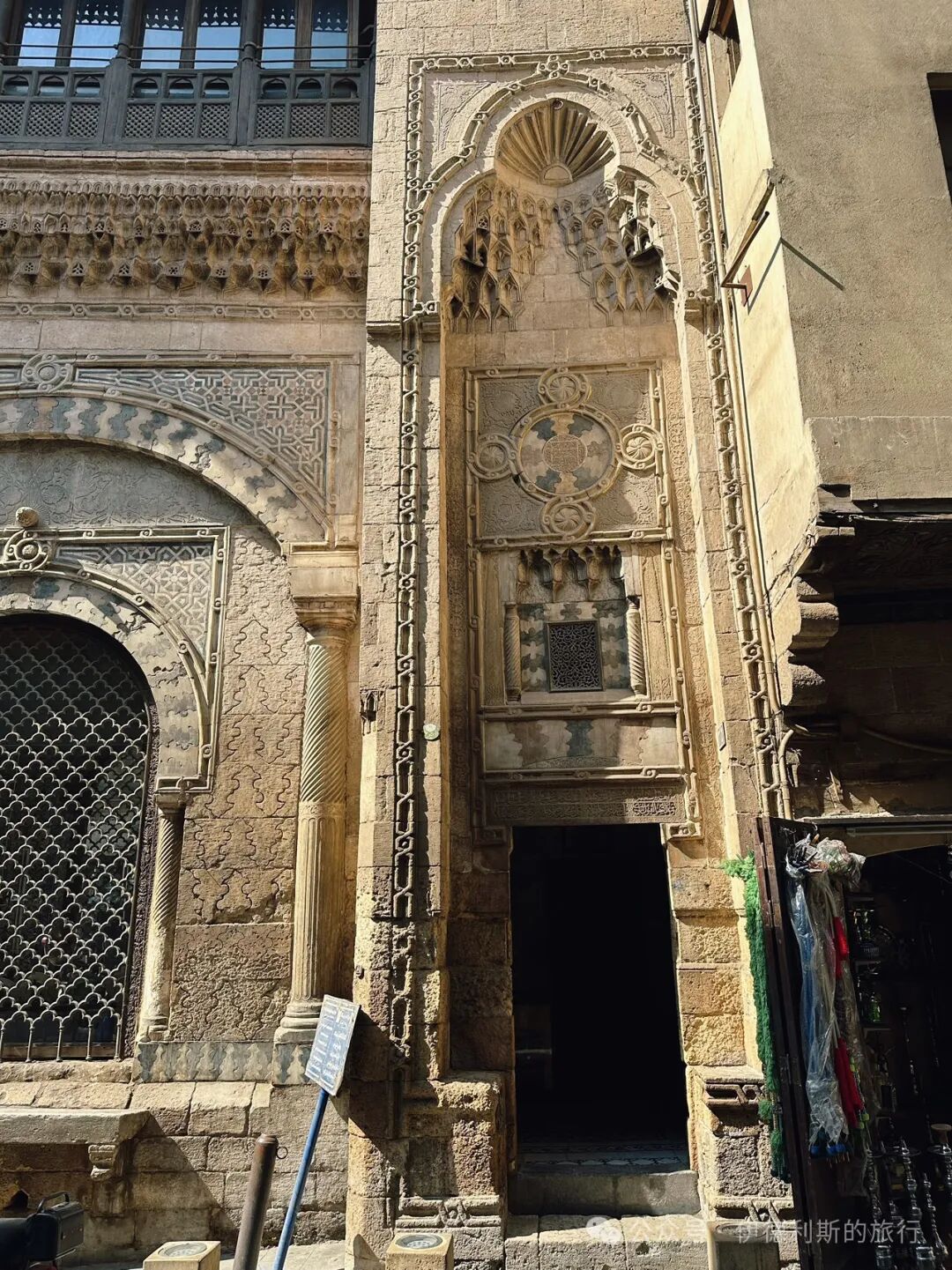
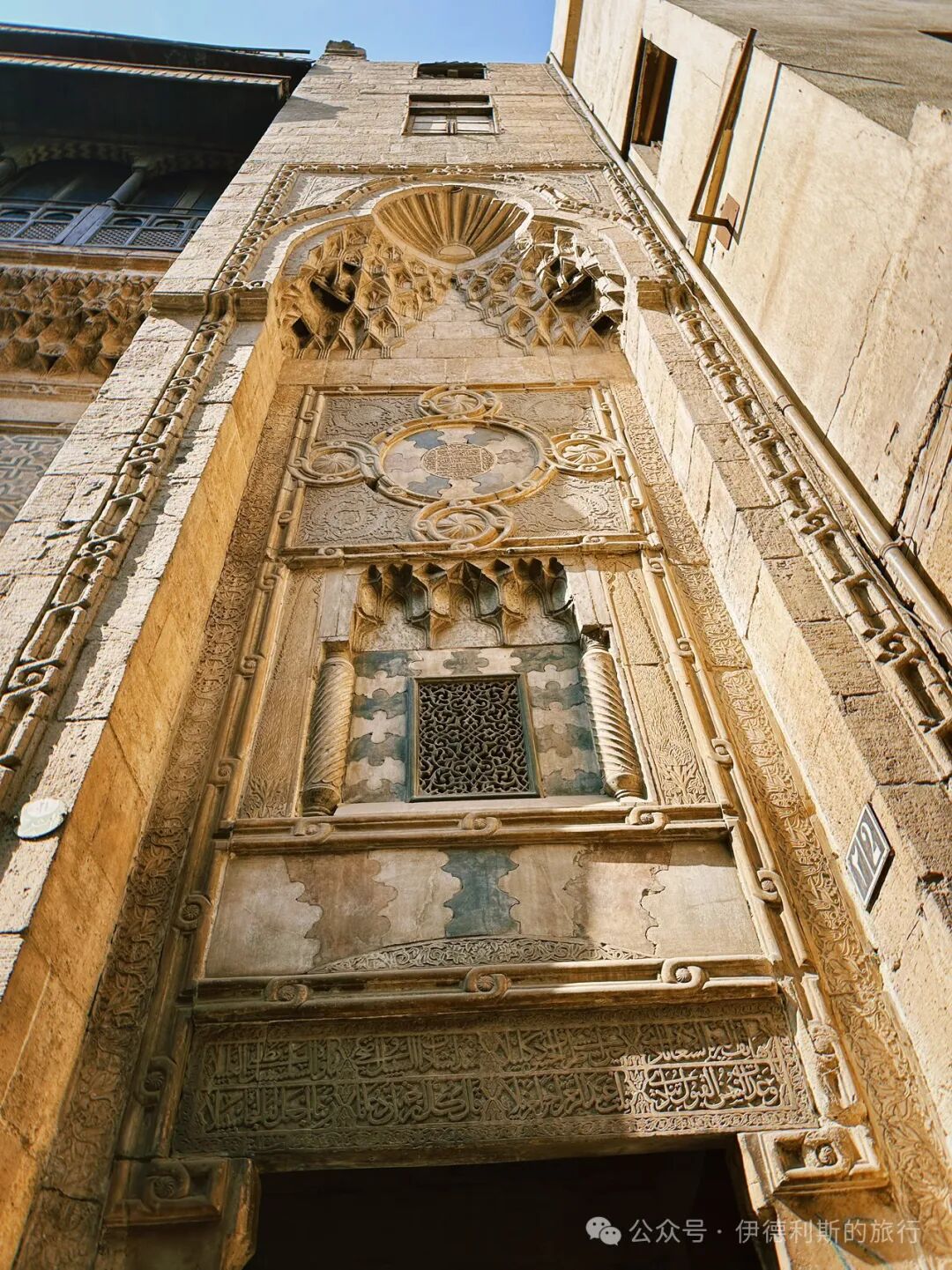
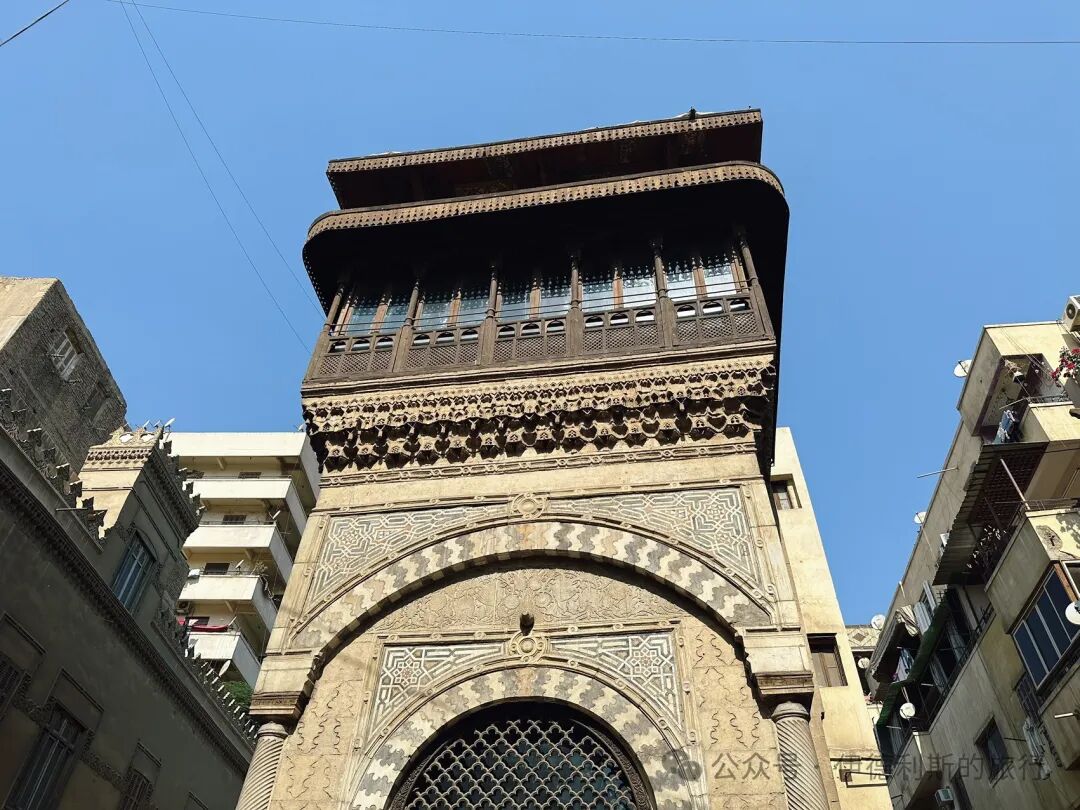
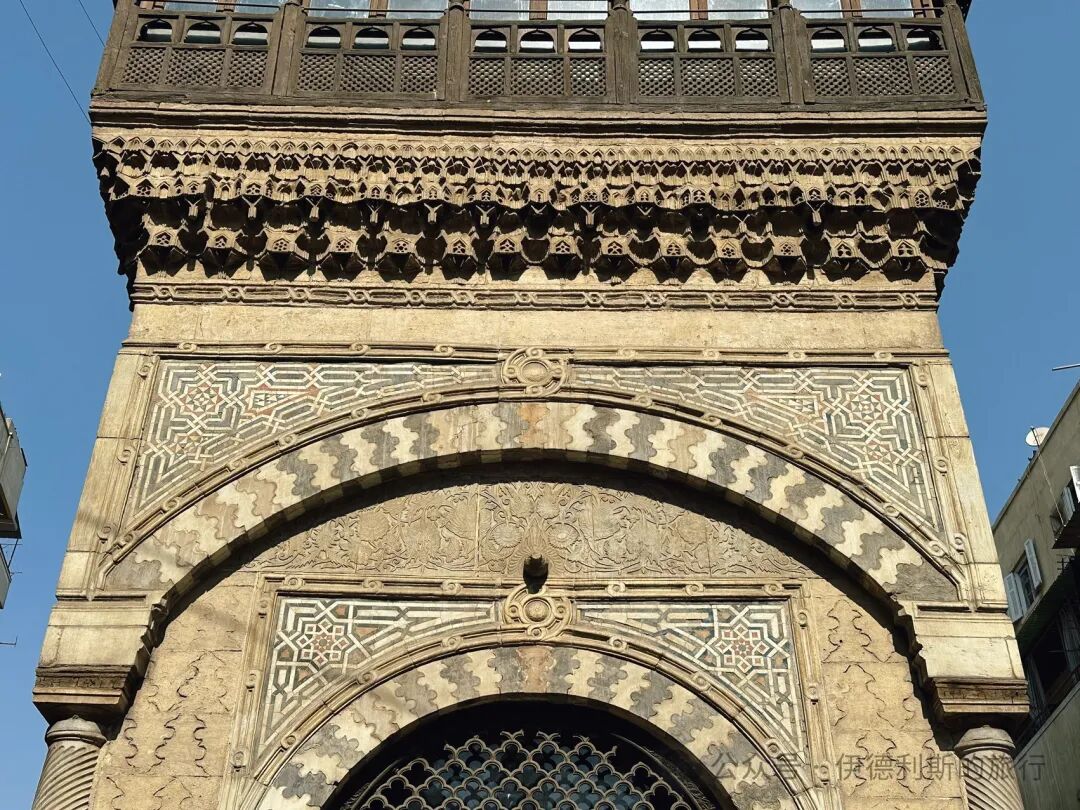
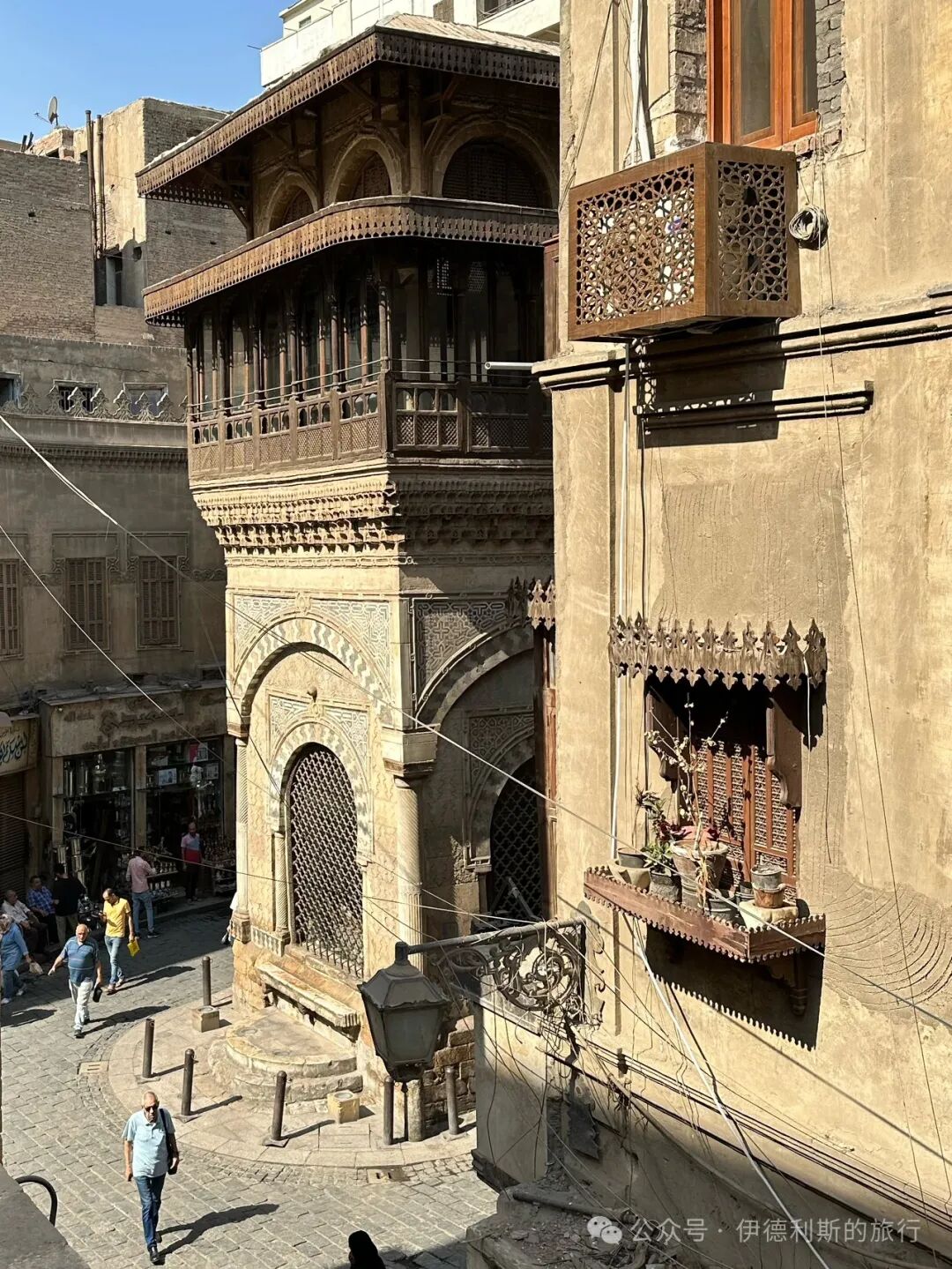
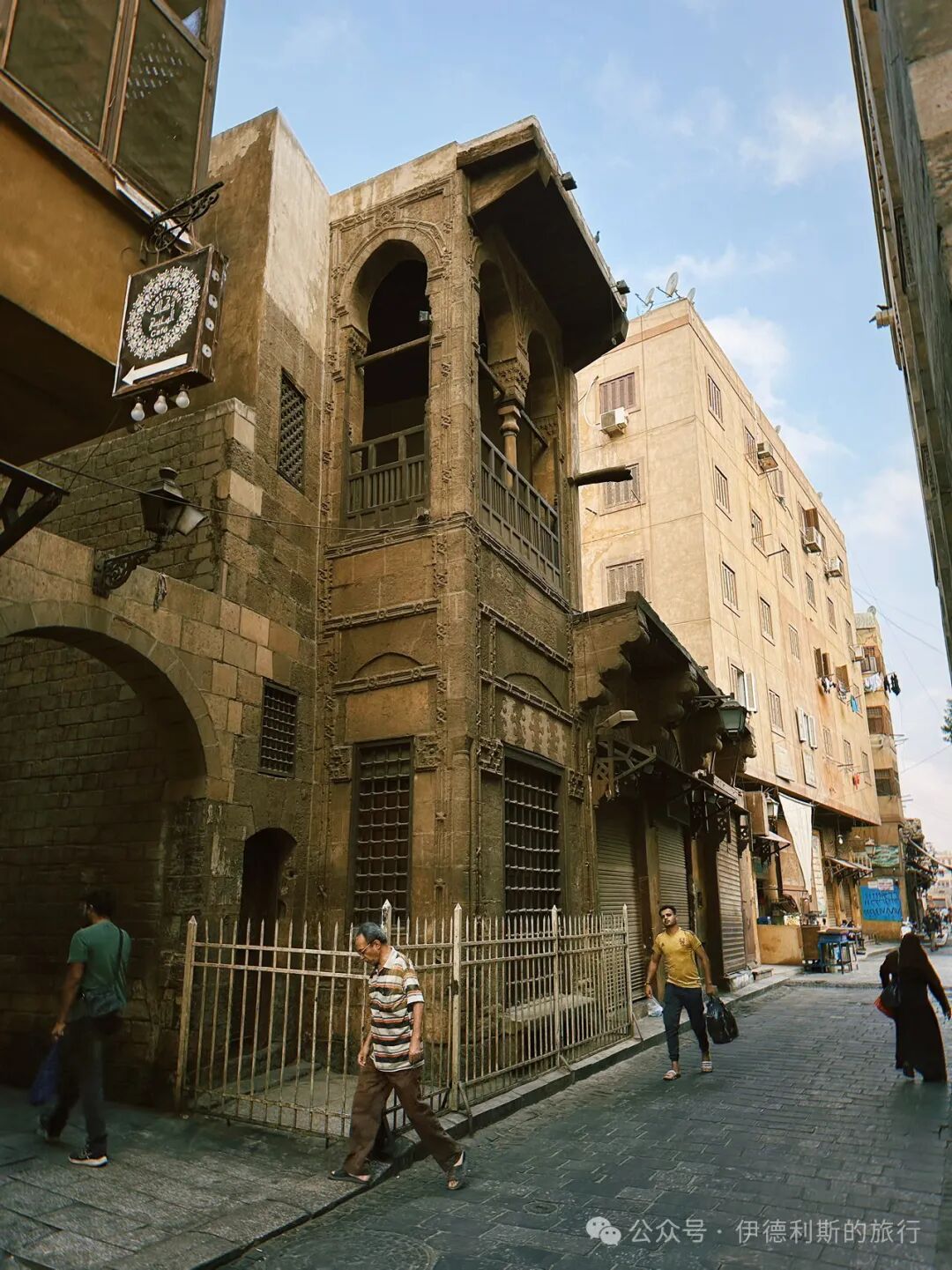
Across from the Khanqah of Baybars II stands the Qitas Bey fountain-school (sabil-kuttab), built in 1630 during the Ottoman period. In the Mamluk and Ottoman eras, most fountain-schools in the old city of Egypt were built on street corners.
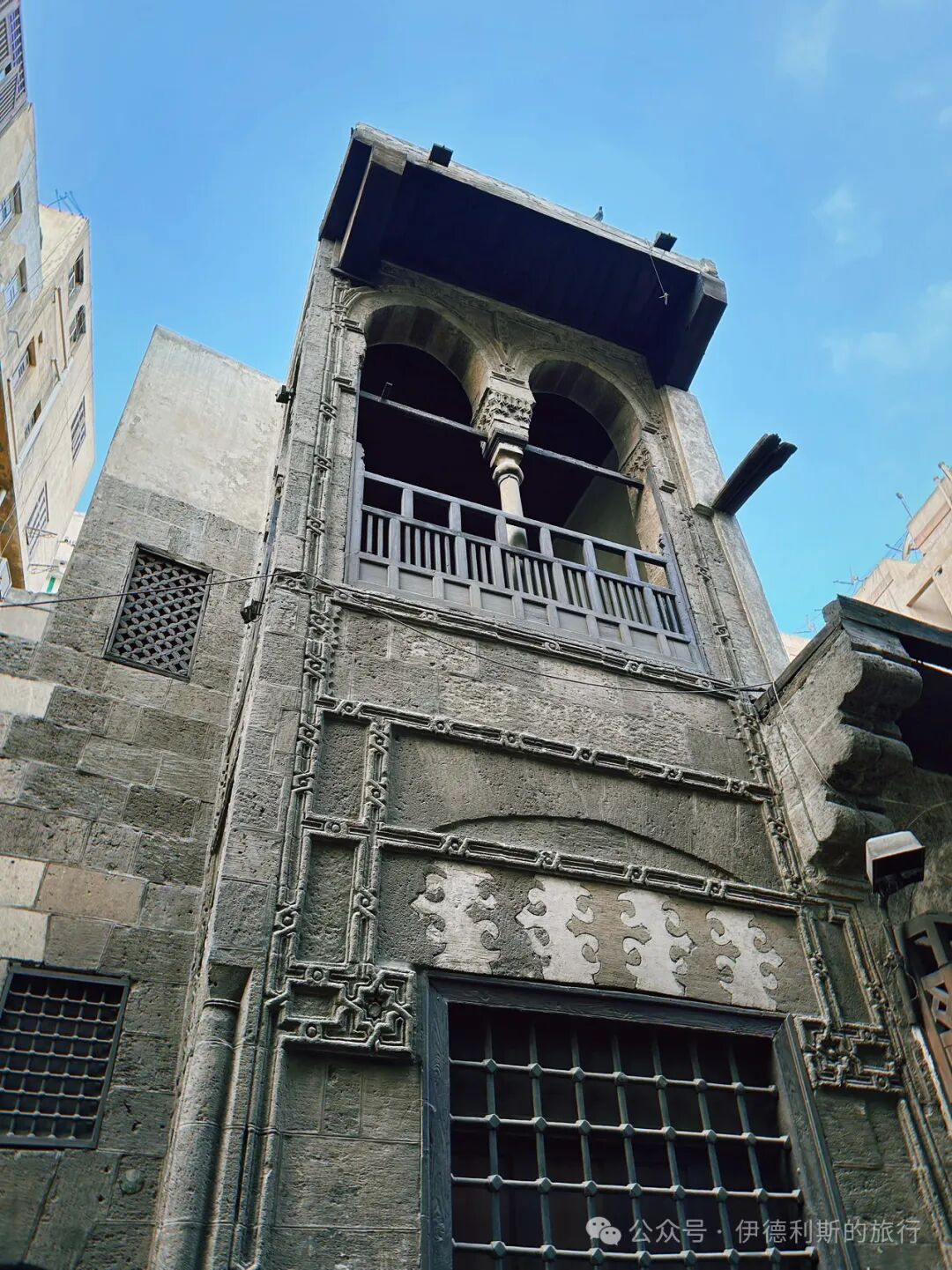
Bashtak Palace: 1334-1339.
Southeast of the Sabil-Kuttab of Abd al-Rahman Katkhuda is the Mamluk-era Bashtak Palace (Qasr Bashtak), built between 1334 and 1339 by the Mamluk emir and general Sayf al-Din Bashtak al-Nasiri. Bashtak was a powerful Mamluk emir who married the daughter of a Mamluk sultan and held important positions in the royal court. He chose a section of the former Fatimid eastern palace to build his own palace and stables, which became a model of Mamluk architecture.
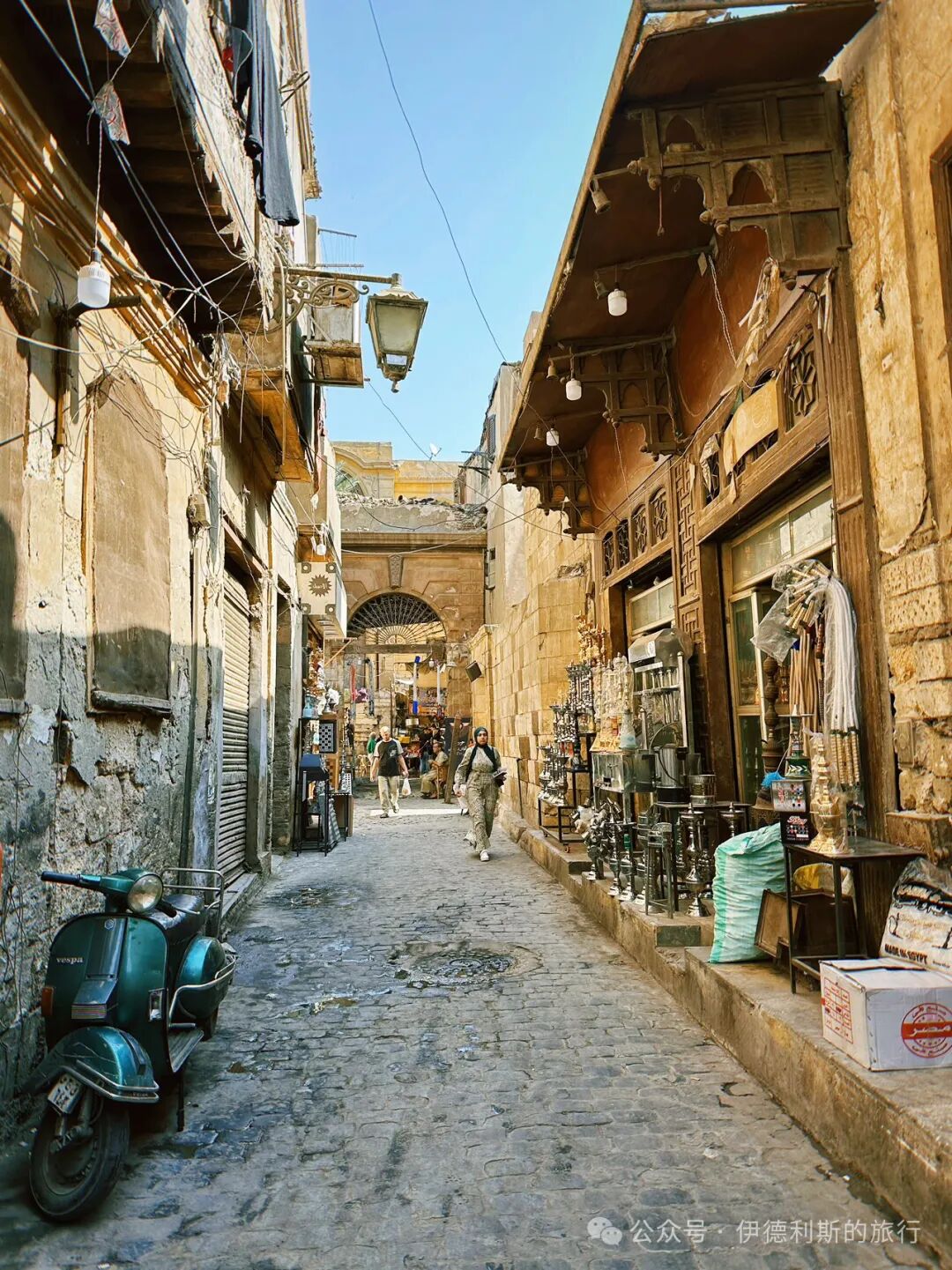
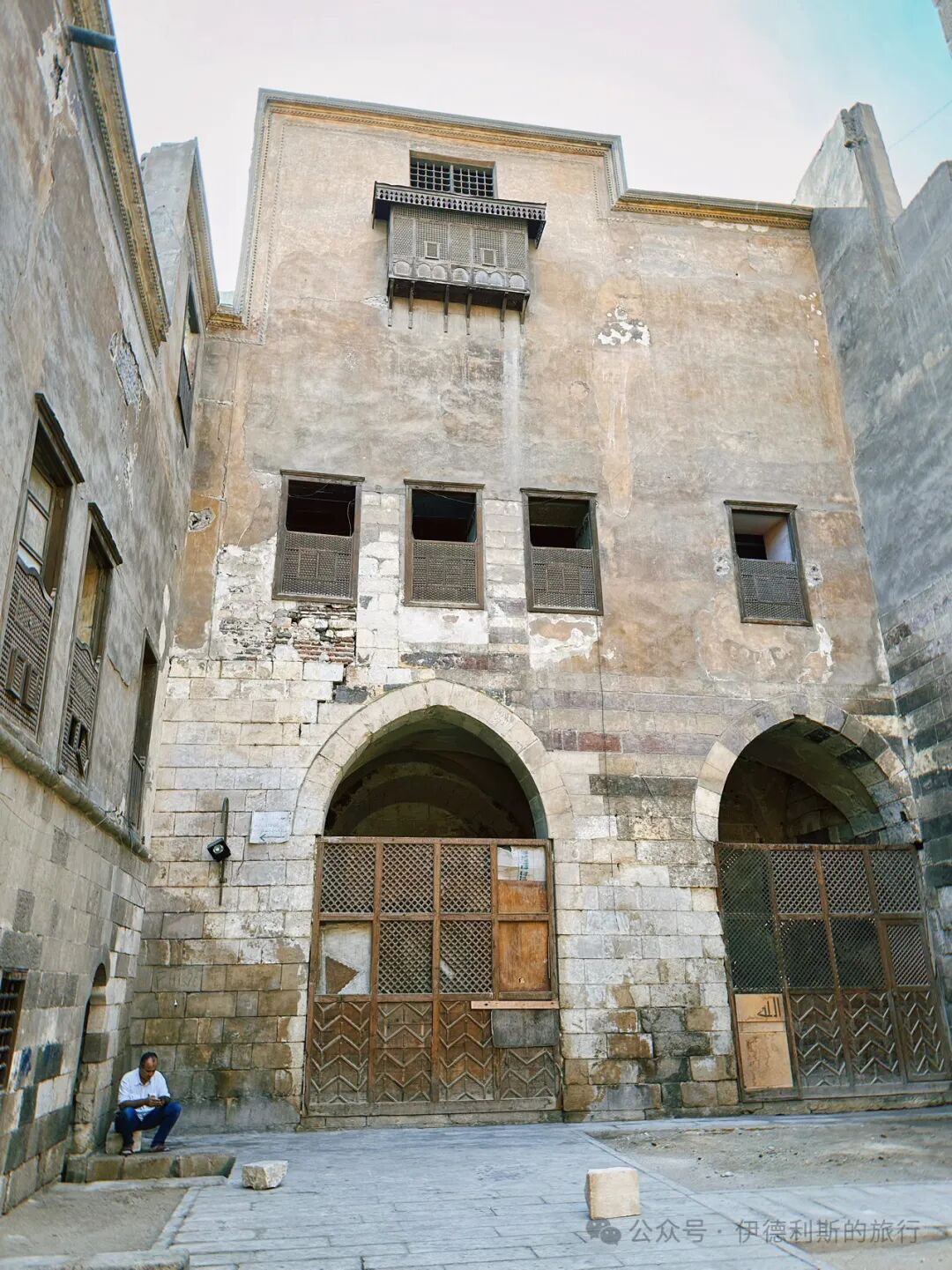
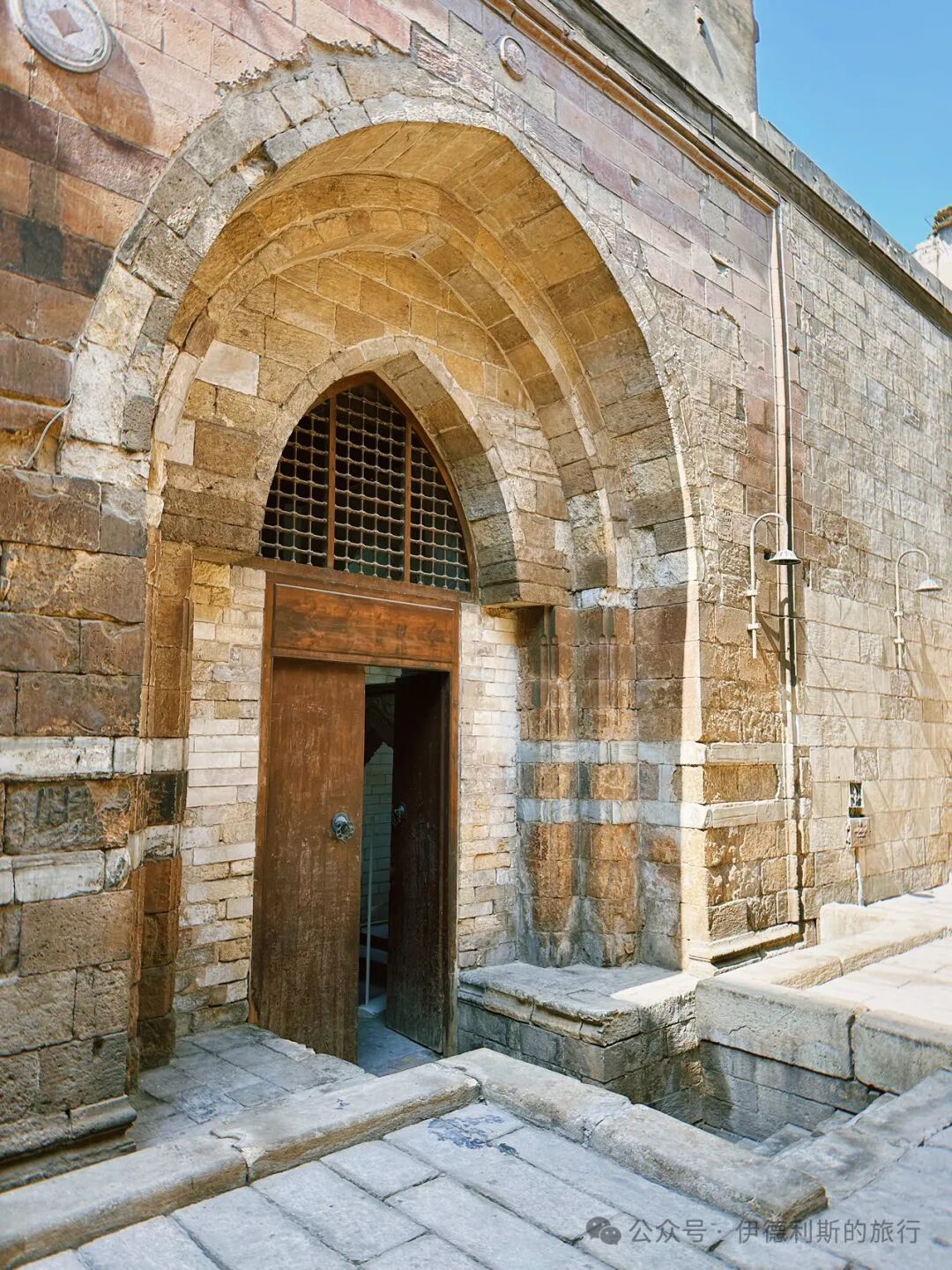
Only a portion of the Bashtak Palace remains today, the most important part being the reception hall (qa'a). The hall features a wooden paneled ceiling, stained glass, and an inlaid marble fountain. The upper level has wooden lattice windows (mashrabiyya), all of which are typical architectural styles of the Mamluk period.
Islamic History Guide: Old Cairo - Al-Azhar Mosque and Historic Streets
Articles • ali2007fr posted the article • 0 comments • 169 views • 2026-05-19 21:17
Summary: Old Cairo - Al-Azhar Mosque and Historic Streets is presented as a clear English travel account for readers interested in Muslim life, halal food, mosques, and local history. The article keeps the original place names, food details, photographs, and cultural context while focusing on Old Cairo, Al-Azhar Mosque, Islamic History.
In our first article, 'Experiencing the Thousand-Year History of Old Cairo (Inside the North Gate),' we started at the North Gate of Cairo, built during the 11th-century Fatimid Caliphate. We entered the thousand-year-old city from there and visited 13 historic buildings from the Fatimid, Mamluk, and Ottoman eras, moving from north to south.
In the second article, 'Experiencing the Thousand-Year History of Old Cairo (Between Two Palaces),' we continued south. We visited eight grand building complexes from the Ayyubid, Mamluk, and Ottoman dynasties that were built on the ruins of Fatimid palaces.
In the third article, we reached the heart of Old Cairo to visit the Al-Azhar Mosque and the historic buildings surrounding it.
1. Al-Azhar Mosque: 972
2. Al-Hussein Mosque: First built in 1154, rebuilt in 1874
3. Qaytbay Caravanserai complex: 1477
4. Abu al-Dhahab Mosque: 1774
5. Al-Ghuri complex: 1505
6. Other buildings
1. Al-Azhar Mosque: 972
In 969 AD, the Shia Ismaili Fatimid dynasty conquered Egypt and immediately began building their new capital, Cairo. At that time, the Sunni city of Fustat was already densely populated in the south of Cairo, so the newly built Cairo became the religious center for the Shia Ismailis.
After two years of construction, the first Friday mosque (Jami al-Qahira) in Cairo officially opened in 972 and was named after the city. The mosque was later renamed the Al-Azhar Mosque (al-Jami al-Azhar), with Al-Azhar meaning "the radiant."
After the Al-Azhar Mosque opened, the Ismailis shifted from secret to public preaching. The mosque's first chief judge, Qadi al-Numan, became the founder of Ismaili law and the author of the authoritative Ismaili text, The Pillars of Islam (Kitab da'a'im al-Islam).
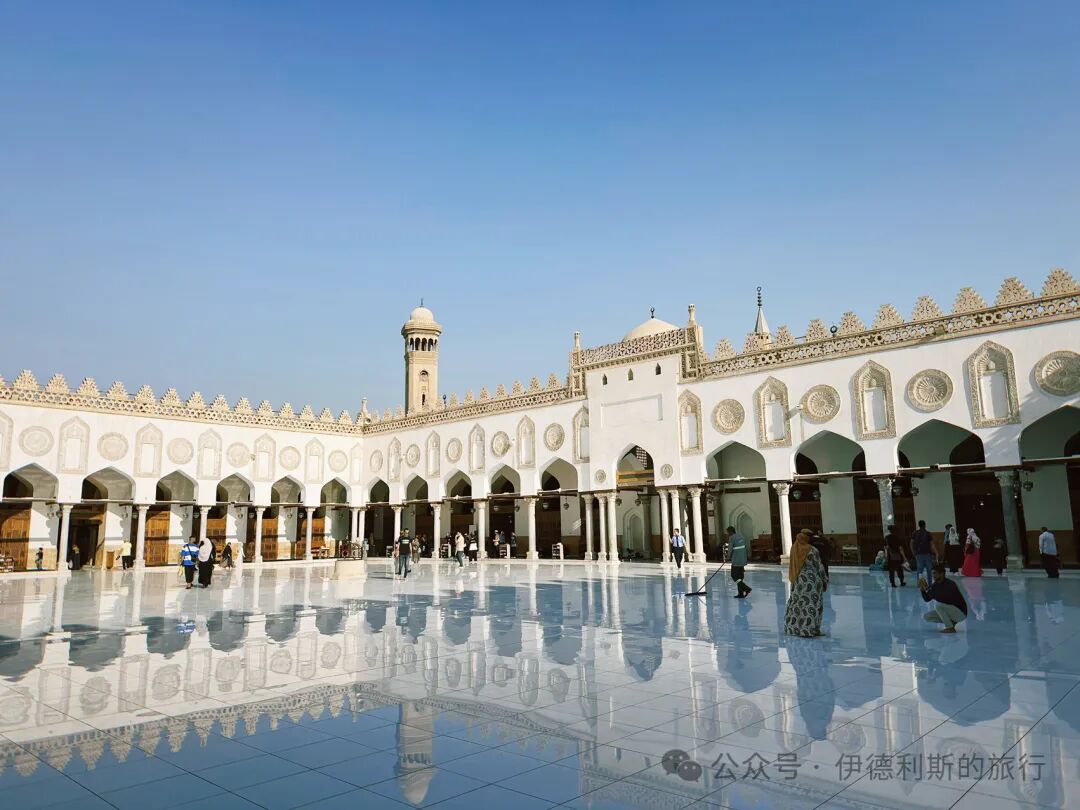
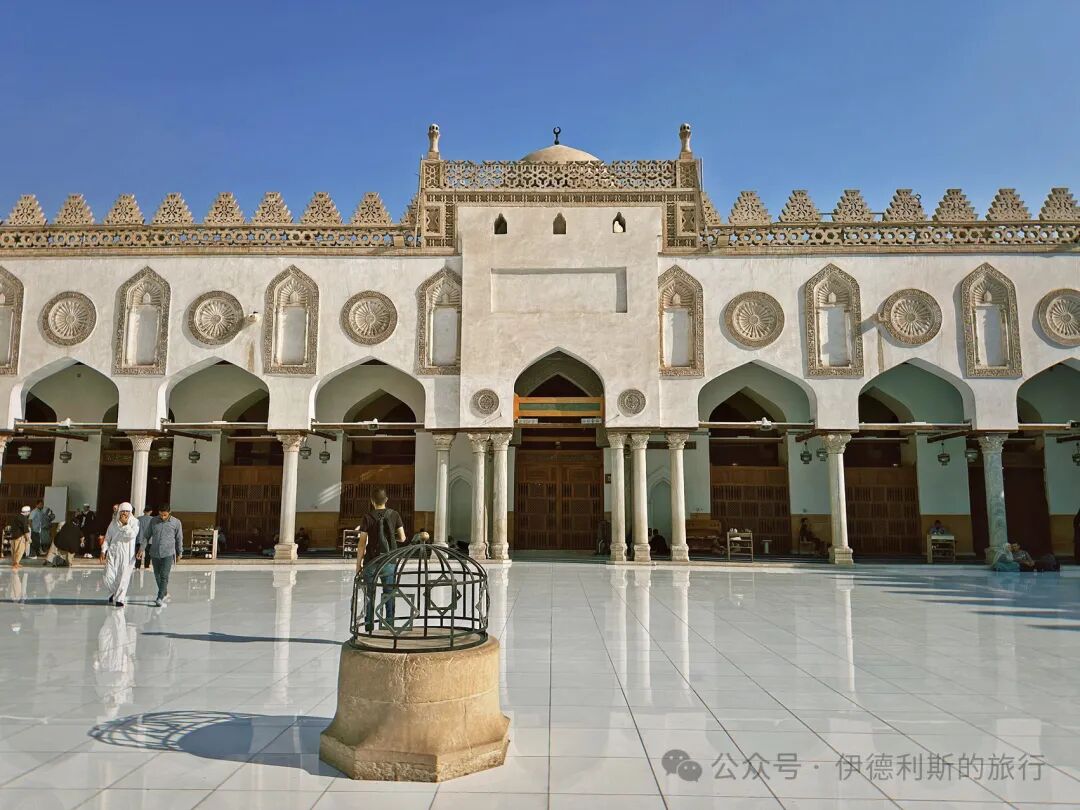
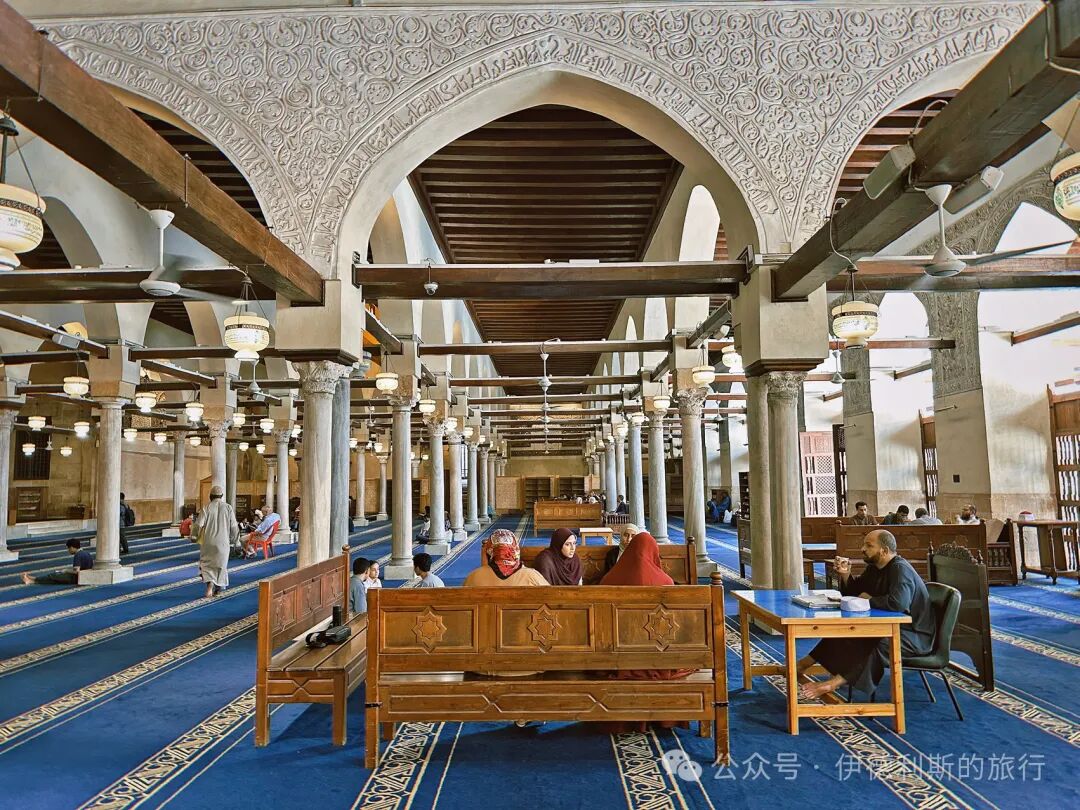
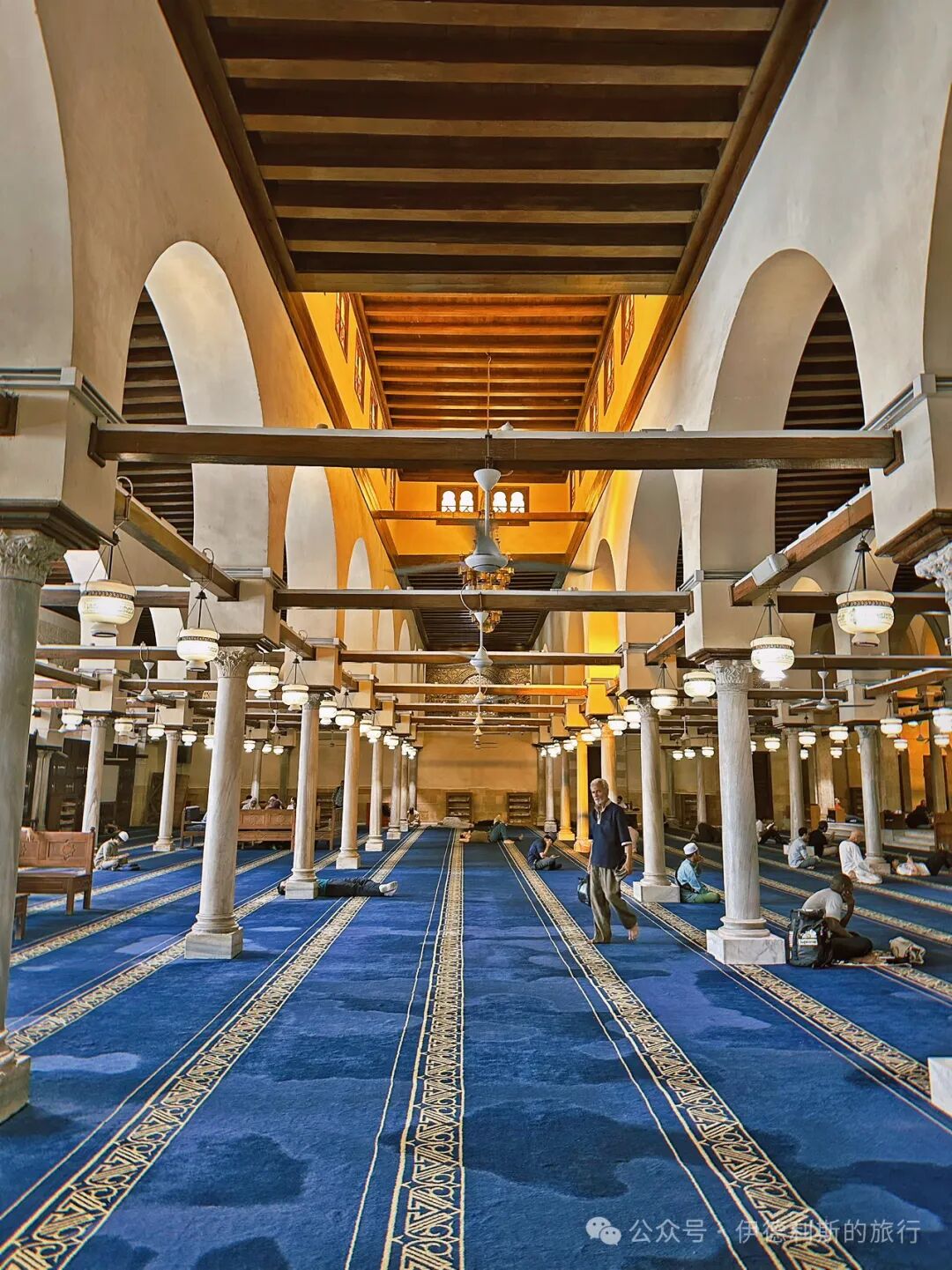
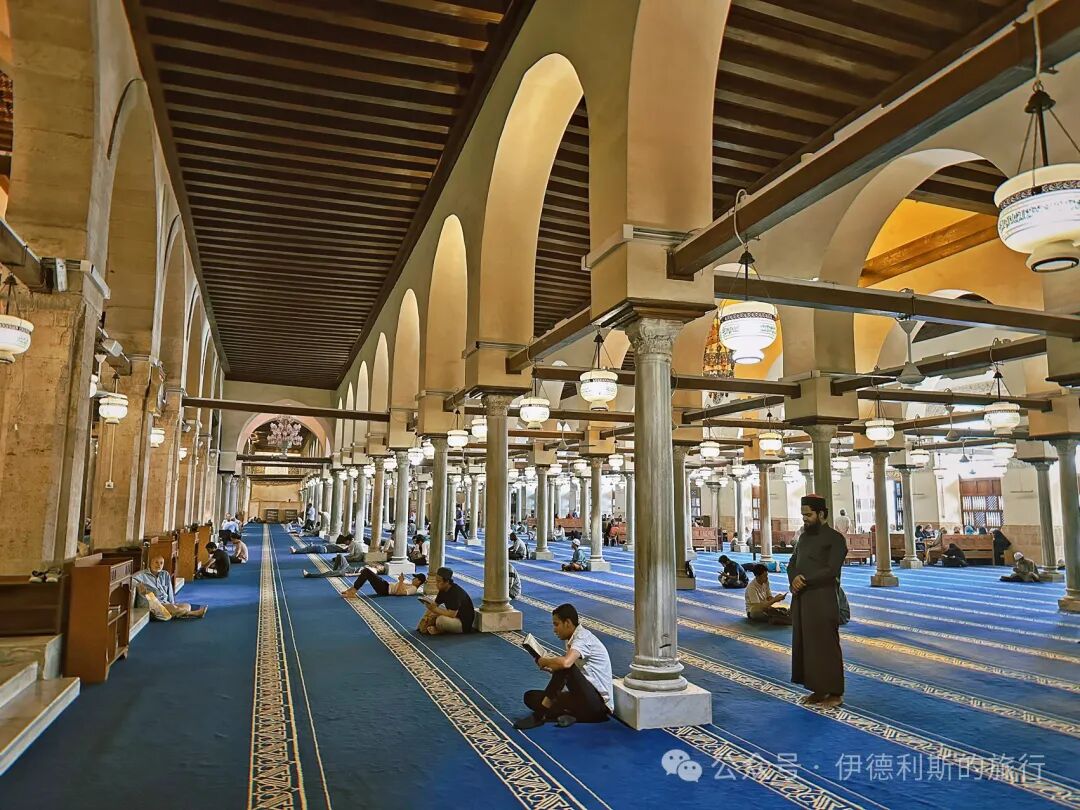
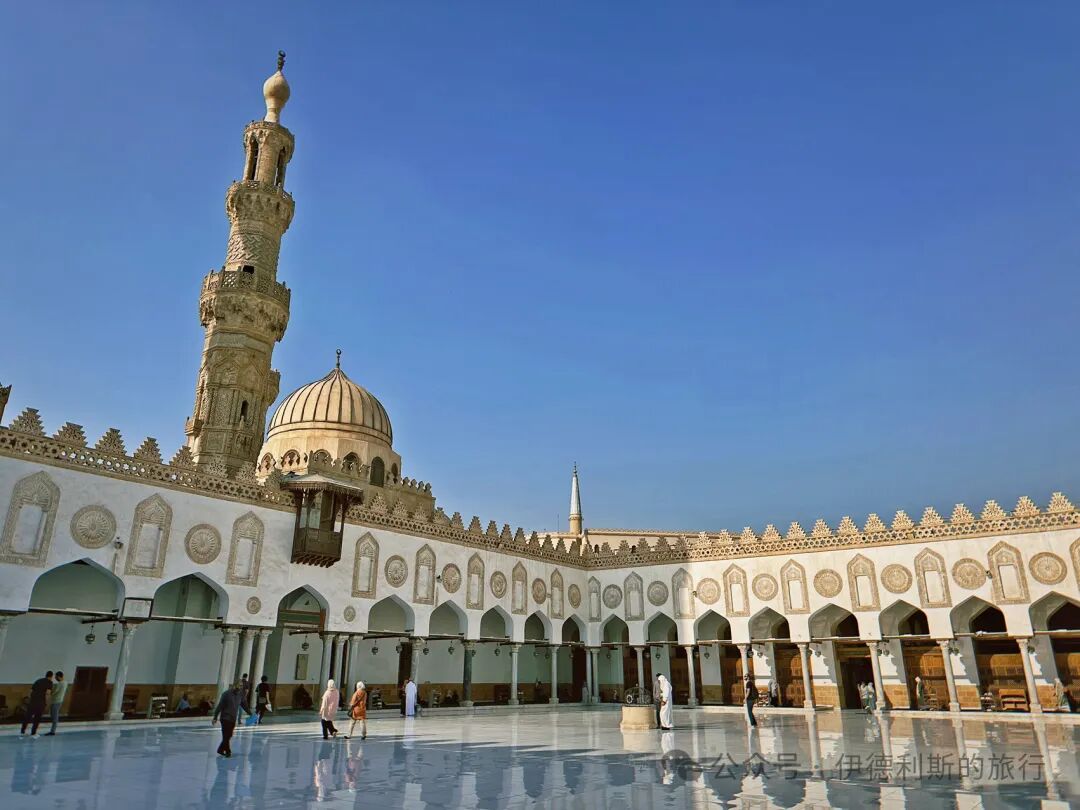
The main prayer hall of the Al-Azhar Mosque is a hypostyle hall. The marble columns in its four rows of arcades came from architectural ruins of different eras, including those of the pharaohs, ancient Rome, and the Copts, and they were leveled using column bases of varying heights.
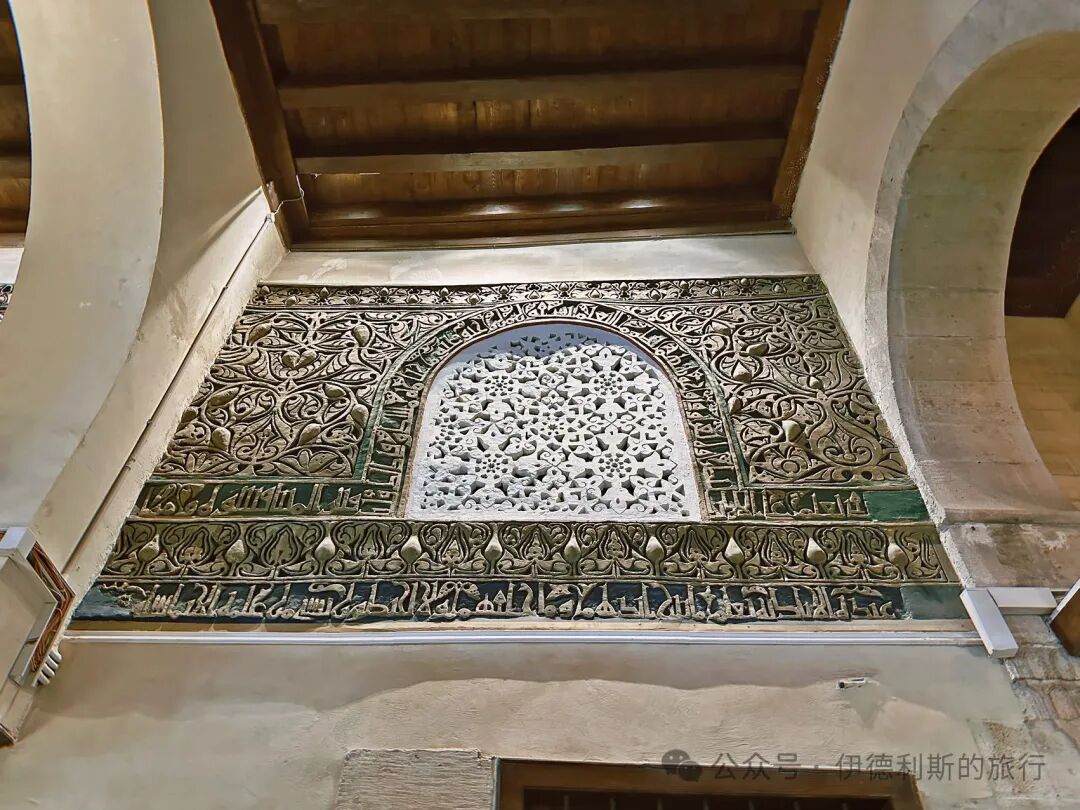
The main hall originally had three domes on top, but none survived later renovations. The original mihrab was rediscovered in 1933, and the prayer niche still holds ornate stucco carvings from the Fatimid period.
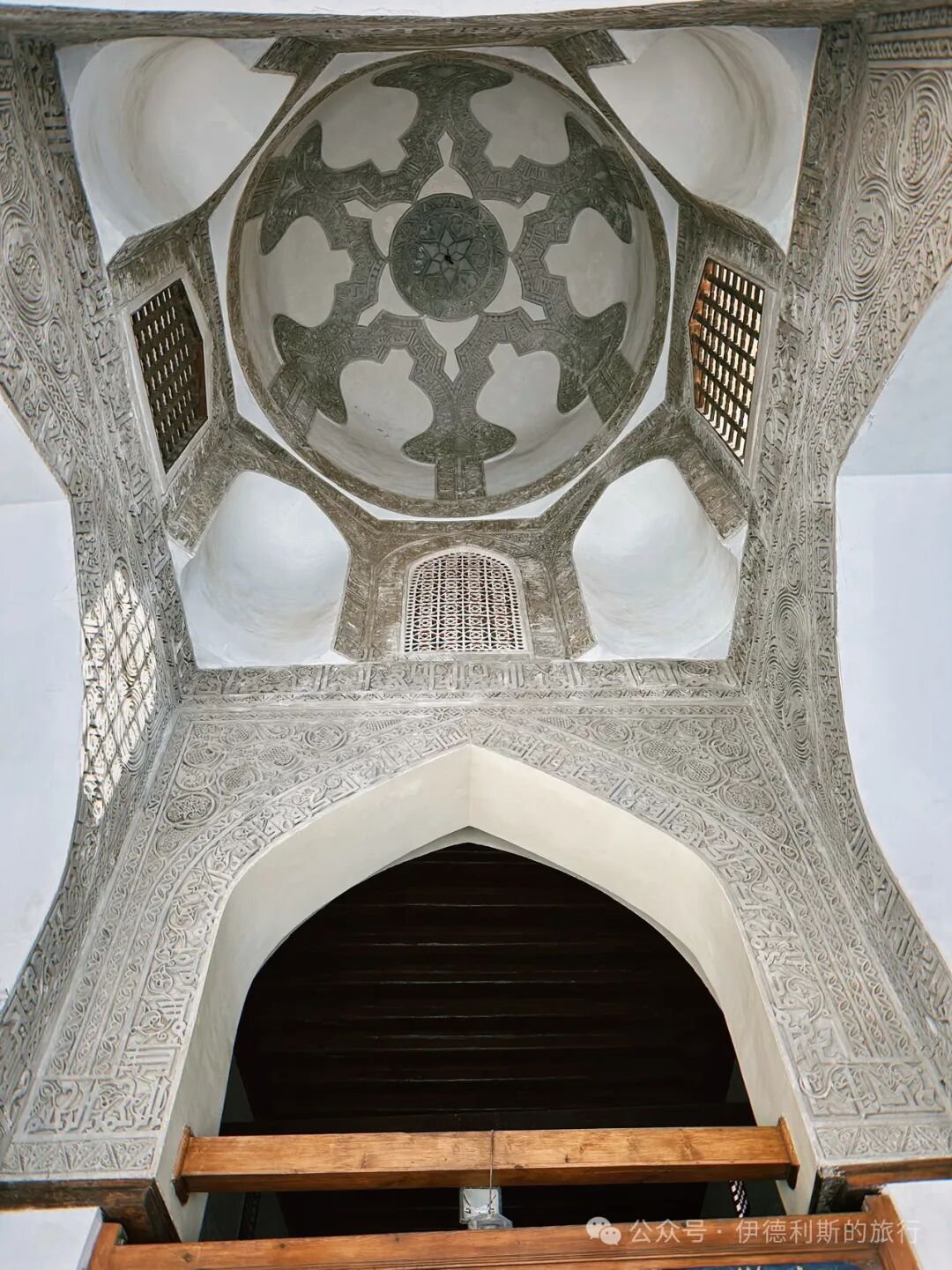
Several Fatimid caliphs expanded and renovated Al-Azhar Mosque. Caliph al-Hafiz (reigned 1132-1149) carried out a major renovation in 1138. The four-centered arches in the courtyard and the dome at the entrance to the main hall date back to this time. The stucco patterns in the courtyard also come from this period, though they were renovated again in 1891.
In 1171, Saladin overthrew the Fatimid dynasty and established the Sunni Ayyubid dynasty. Cairo's main Friday mosque moved to Al-Hakim Mosque in the north of the city, and Al-Azhar Mosque was neglected because it had been the center of Ismaili teachings. Saladin removed the silver bands inscribed with the names of Fatimid caliphs from the mihrab niche at Al-Azhar Mosque and destroyed all the Ismaili manuscripts kept there.
It was not until 1266 that the Mamluk Sultan Baybars (reigned 1260-1277) restored Friday prayers at Al-Azhar Mosque and repaired the building. The Ayyubid dynasty followed the Shafi'i school of law, which held that a community could have only one main Friday mosque, while the Mamluk dynasty followed the Hanafi school, which had no such rule.
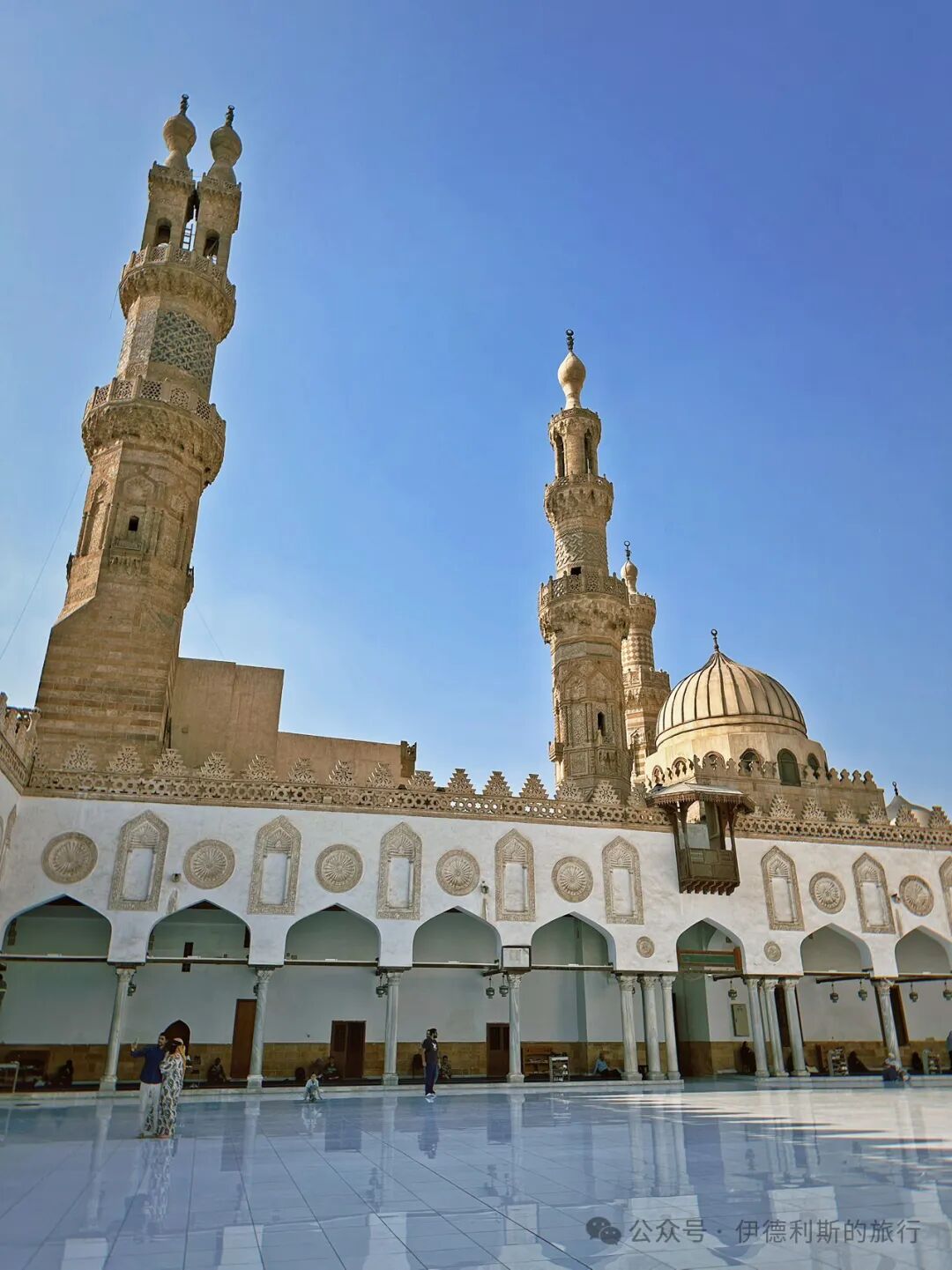
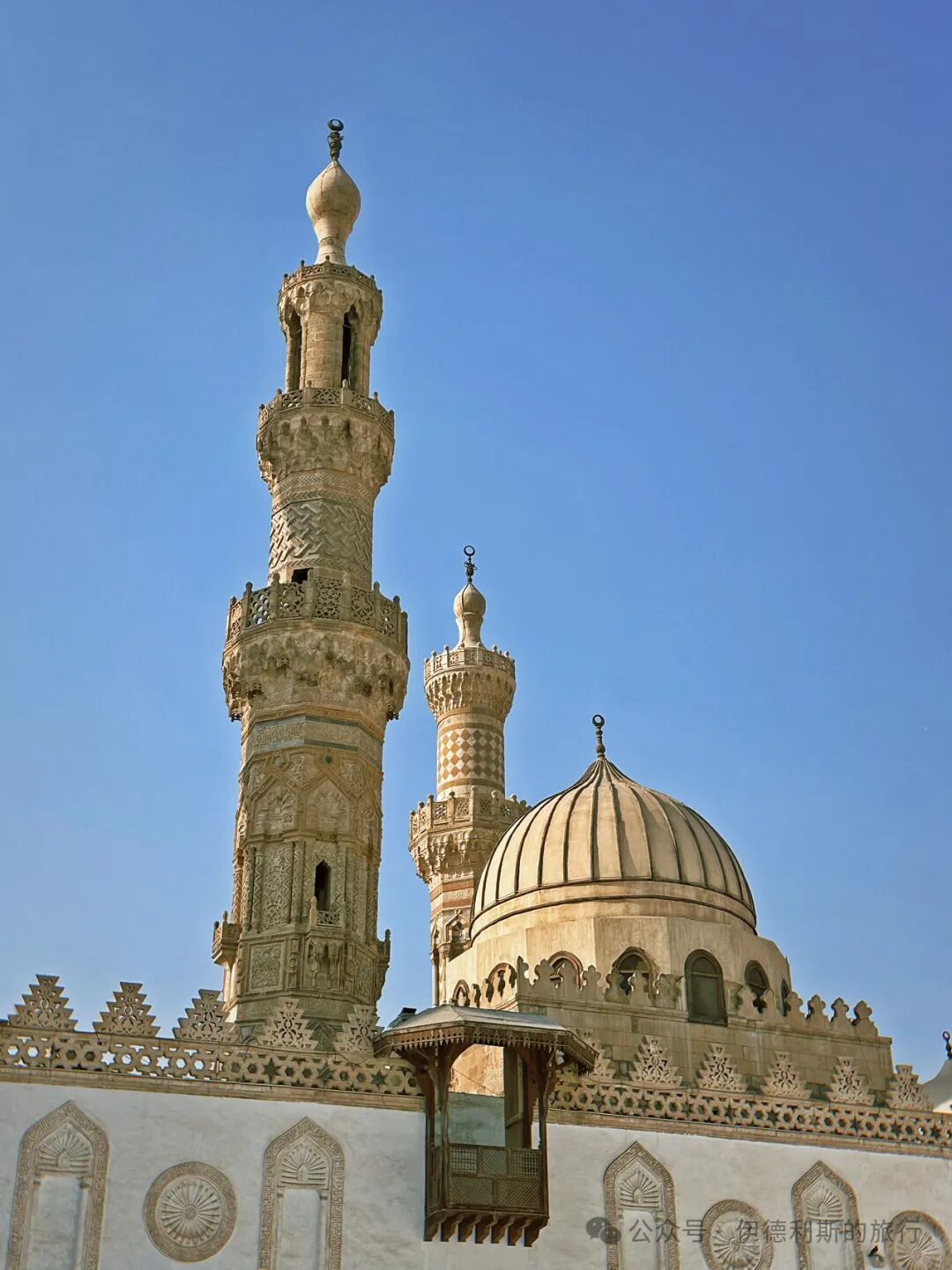
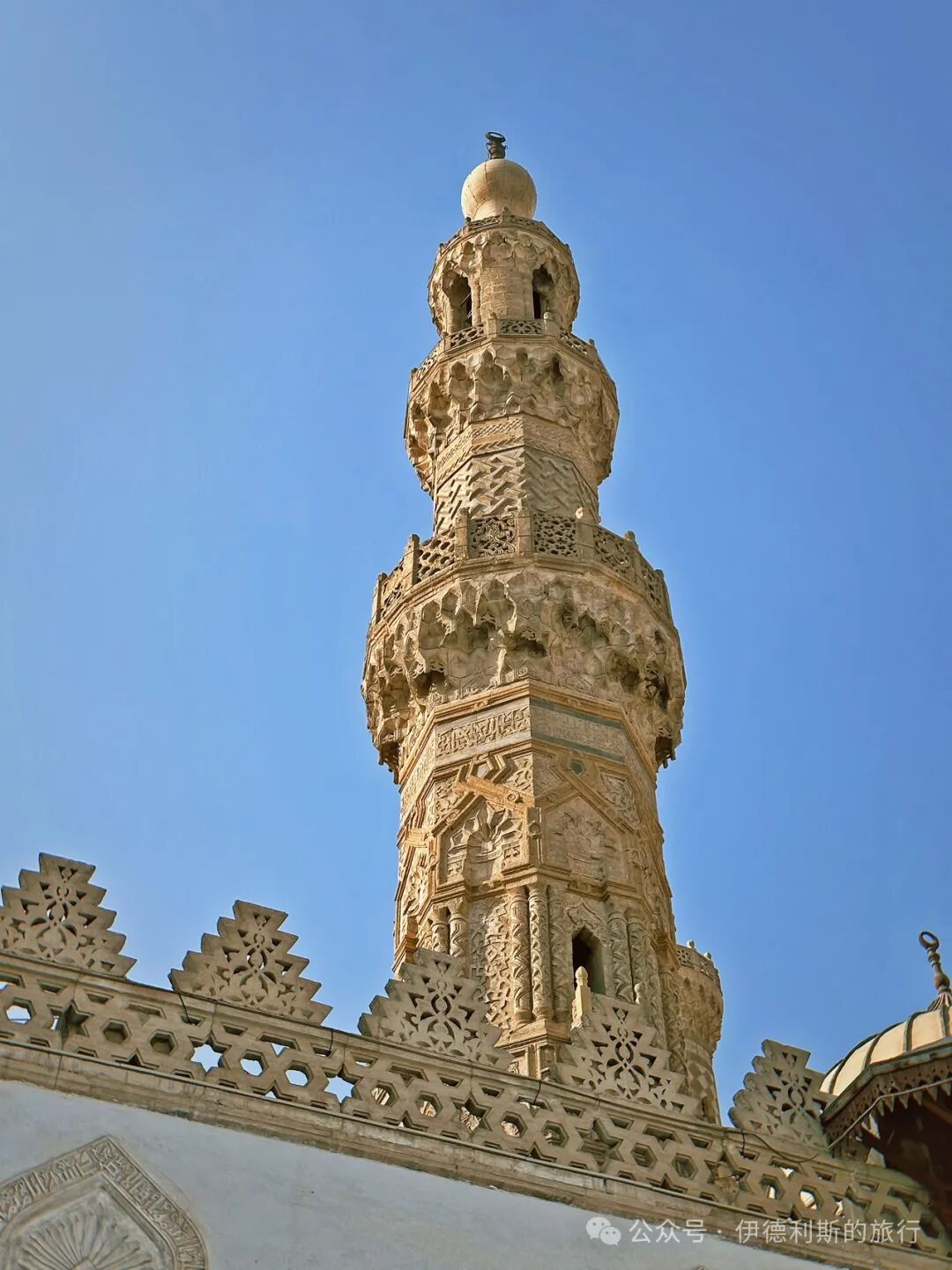
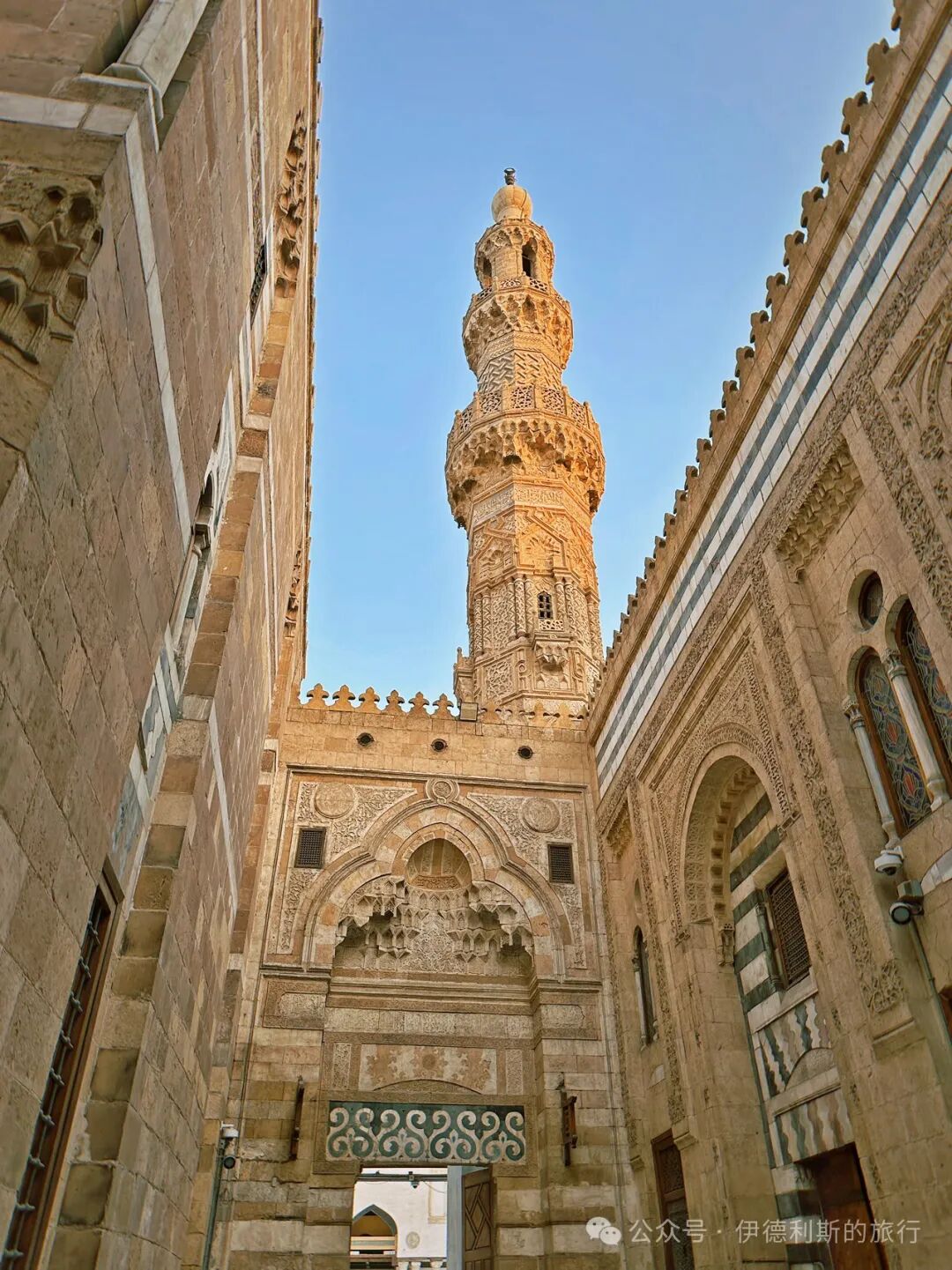
The Mamluk dynasty left two grand minarets for the Al-Azhar Mosque—the Qaytbay minaret and the twin minarets of Ghuri—along with a Qaytbay gate. The Qaytbay minaret was built in 1483 or 1495 and features three balconies decorated with ornate carvings, while the Qaytbay gate was built in 1495 and leads directly into the courtyard. Both are fine examples of late Mamluk dynasty architecture. During the reign of Sultan Qaytbay (1468-96), the Mamluk dynasty enjoyed political and economic stability and won several military victories against the Ottoman dynasty. The Sultan had a deep interest in art and architecture and funded as many as 230 buildings.
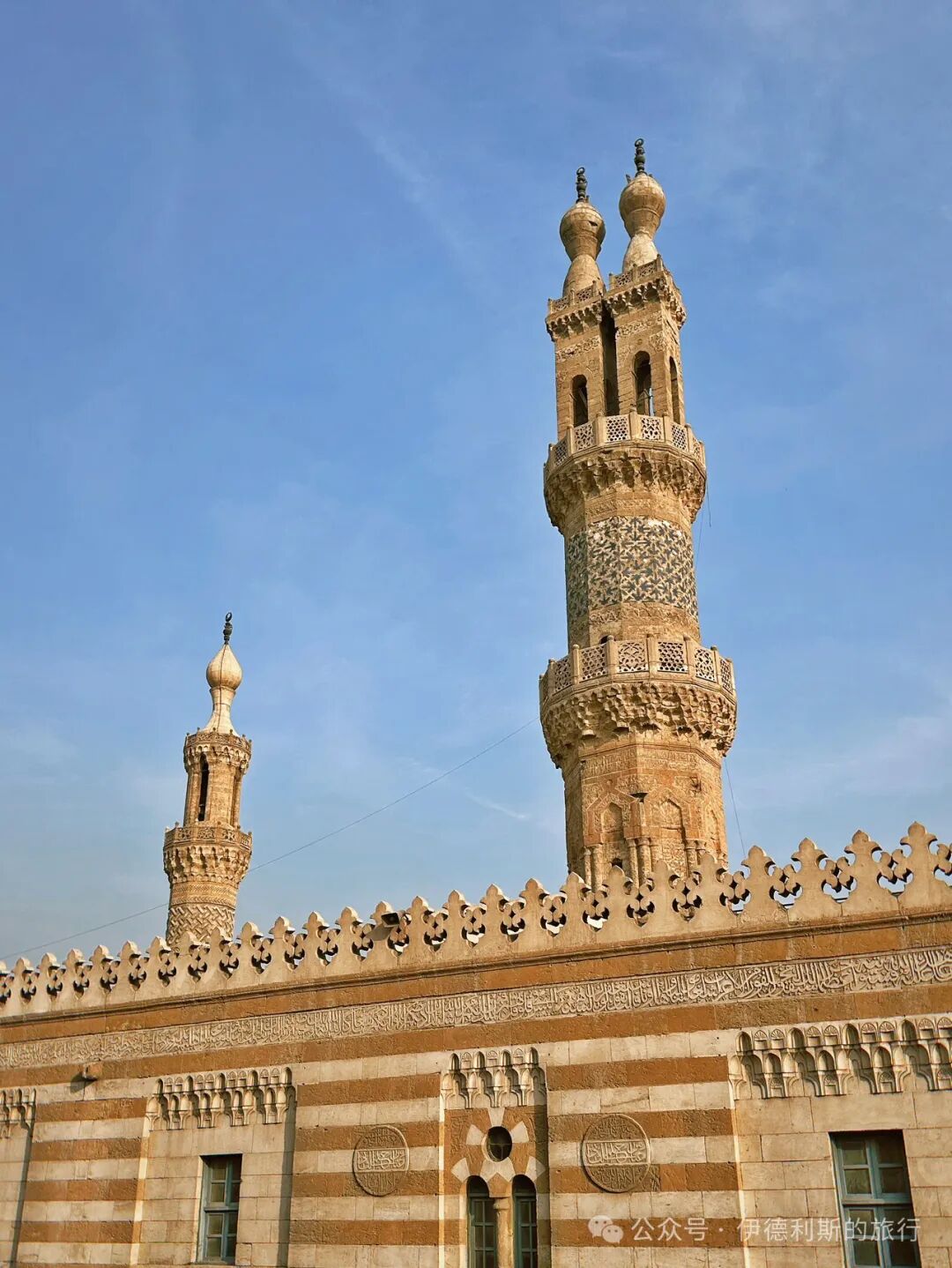
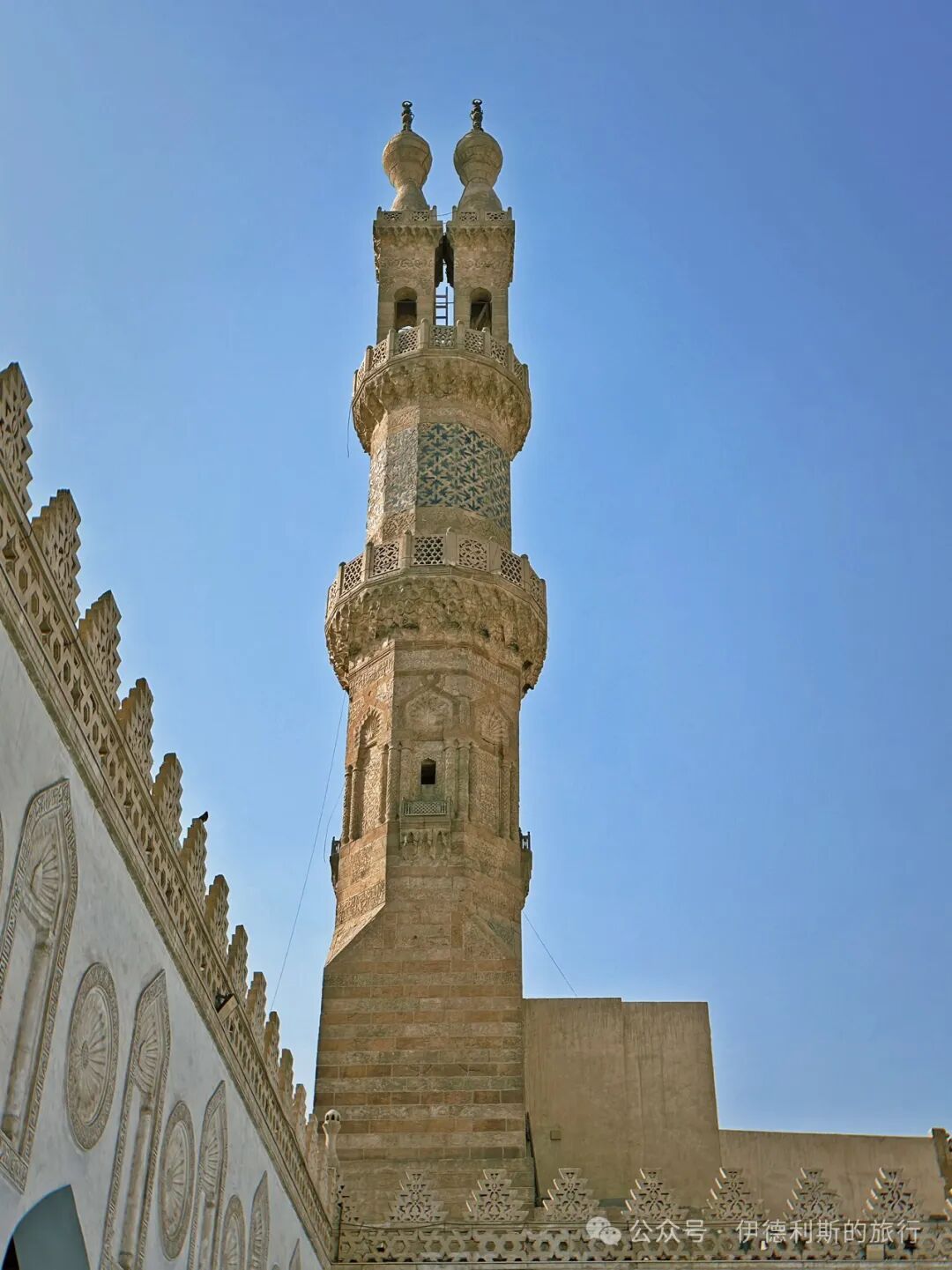
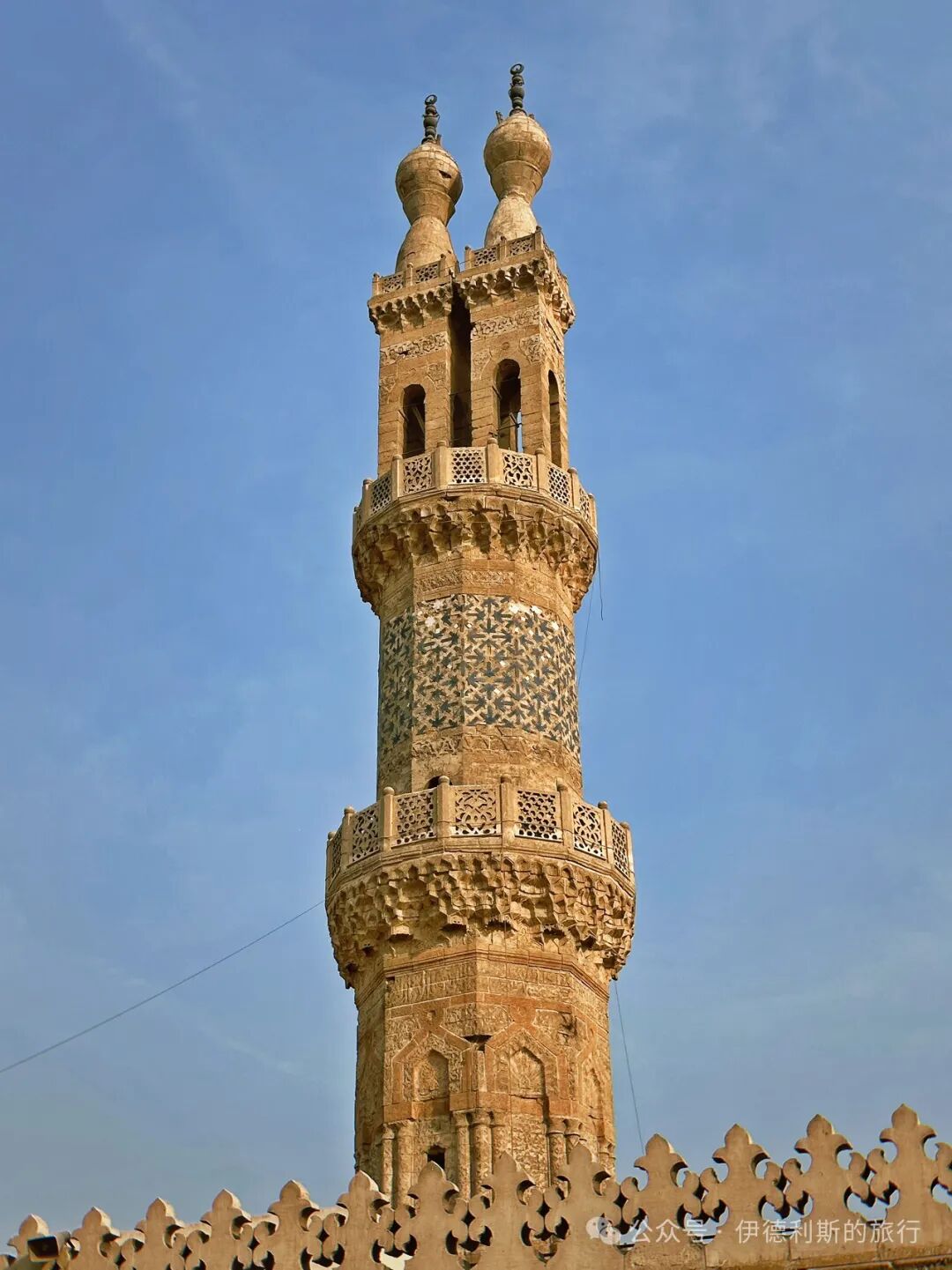
In 1509, the Mamluk Sultan Ghuri (Al-Ashraf Qansuh al-Ghuri, reigned 1501-16) built the twin minarets of Ghuri. Ghuri was the last powerful ruler of the Mamluk dynasty; he was eventually defeated by the Ottoman dynasty and fell on the battlefield in Syria.
In 1517, the Ottoman dynasty conquered the Mamluk dynasty and occupied Egypt, causing the status of the Al-Azhar Mosque to decline once again. It was not until after the 18th century, when the Mamluk elite regained influence in Egypt, that the renovation and expansion of the Al-Azhar Mosque continued.
In 1749, Abd al-Rahman was appointed as the head of the guards (Katkhuda). In 1753, he oversaw the construction of three Ottoman-style gates for the Al-Azhar Mosque: the Barbers' Gate (Bab al-Muzayinīn), the Sa'ayida Gate (Bab al-Sa'ayida), and the Soup Gate (Bab al-Shurba). Outside the Barbers' Gate was where students got their hair cut, Sa'ayida means people from Upper Egypt, and the Soup Gate was where students went to get soup. From then on, the Barbers' Gate became the main entrance to the Al-Azhar Mosque.
Abd al-Rahman also doubled the size of the main prayer hall of the Al-Azhar Mosque by expanding it to the south and added a new mihrab, giving the hall its final shape. After Abd al-Rahman died in 1776, he was buried inside the Al-Azhar Mosque, becoming the last person in history to be buried there.
After the 18th century, the Al-Azhar Mosque became the most influential educational institution in Egypt, and the ulama (scholars) were able to report to the pasha (governor) as official advisors.
Napoleon occupied Cairo on July 22, 1798. On October 21, an uprising against the French broke out at the Al-Azhar Mosque. Napoleon shelled the mosque directly from the Cairo Citadel, resulting in over 3,000 Egyptian casualties and the deaths of six ulama from the Al-Azhar Mosque. Napoleon's army tied their horses to the mihrab of Al-Azhar Mosque and looted the student dorms and library. In 1800, a student from Al-Azhar assassinated the commander-in-chief of the French expeditionary force, leading Napoleon to order the closure of Al-Azhar Mosque. Cairo was recaptured by the British and the Ottoman Empire in June 1801, and Al-Azhar Mosque reopened.
Between 1892 and 1901, Abbas II Hilmi Pasha, the last Khedive of Egypt under the Ottoman Empire, rebuilt the facade of Al-Azhar Mosque as part of the modernization wave in British-occupied Egypt. At the same time, Al-Azhar University carried out educational reforms to oppose fundamentalism. To counter the influence of the Saudi Wahhabi movement, many students from Southeast Asia, including Indonesia, came to study at Al-Azhar University during this period.
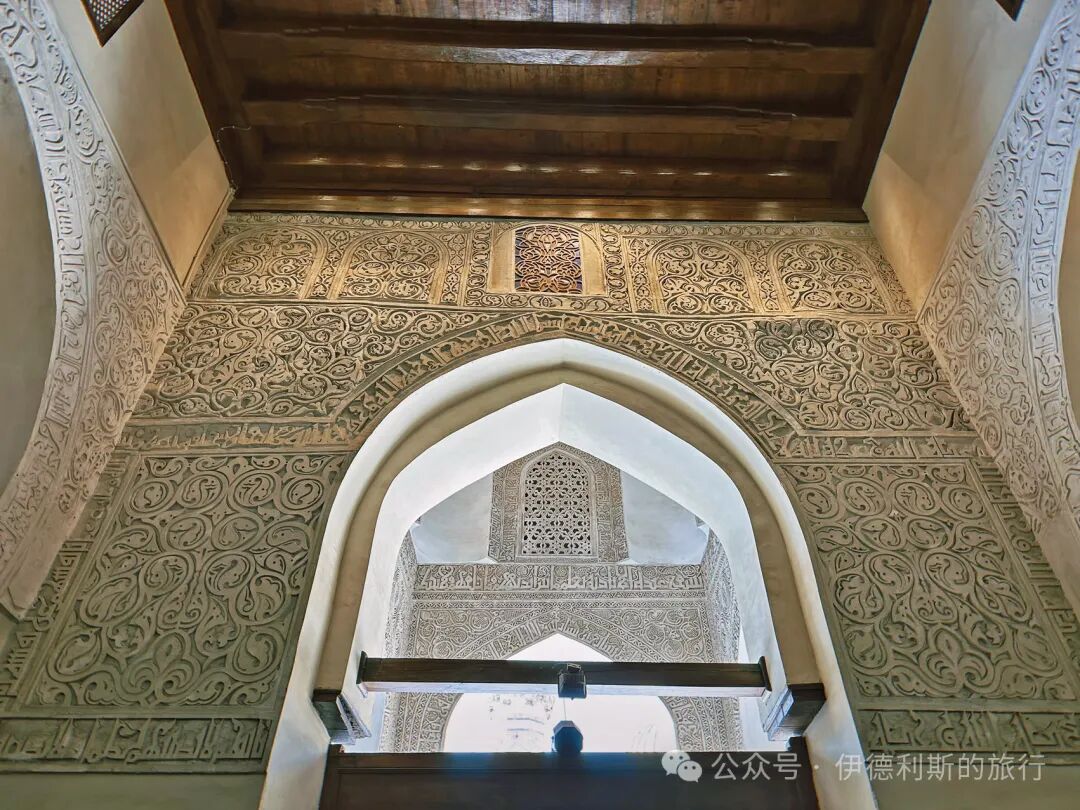
The last two photos show the Fatimid dynasty stucco carvings restored by the Committee for the Conservation of Monuments of Arab Art during the reign of Abbas II Hilmi Pasha.
2. Al-Hussein Mosque: First built in 1154, rebuilt in 1874
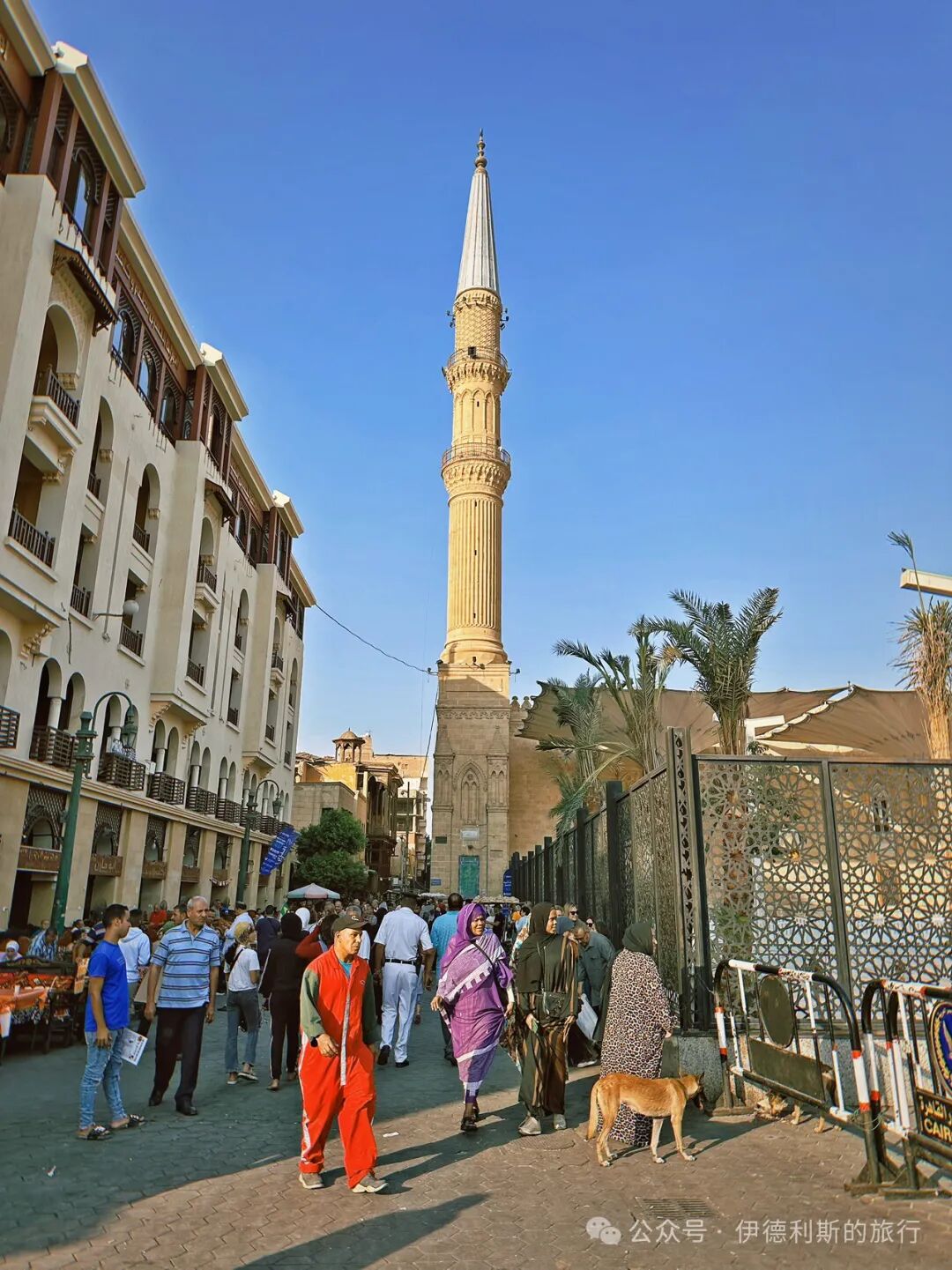
Across from the Al-Azhar Mosque is the Al-Hussein Mosque, where Shia Muslims believe the head of Imam Hussein is buried. The mosque was first built in 1154, but the current structure dates back to its reconstruction in 1874.
The Fatimid dynasty believed that the Abbasid dynasty secretly moved Imam Hussein's head from a grave at the Umayyad Mosque in Damascus. The Fatimids later rediscovered it in 1091 and built a shrine for it in Ashkelon, Palestine.
In 1153, the Fatimid dynasty ordered the head of Hussein to be moved to Cairo to be buried with the Fatimid caliphs, and they built the Al-Hussein Mosque in 1154. Today, the lower part of the south gate of the Al-Hussein Mosque still keeps its original Fatimid structure.
The Ayyubid dynasty rebuilt the Al-Hussein Mosque in 1237, but it later burned down, leaving only one Ayyubid minaret (bangke ta) standing today.
In 1874, Isma'il Pasha, the ruler of the Muhammad Ali dynasty who reigned from 1863 to 1879, rebuilt the Al-Hussein Mosque in a Gothic Revival style and added a minaret that blends Gothic and Ottoman styles. During his rule, Isma'il Pasha carried out large-scale modernization projects to make Egypt more European, and the Al-Hussein Mosque was part of this transformation.
In 1893, a room for storing items of the Prophet (Bab al-Mukhallafat al-Nabawiyya) was added next to the shrine of the head of Hussein. It contains four strands of the Prophet's hair, a linen cloak he wore during his lifetime, his lantern, a copper kohl applicator, his staff, and a sword given to him by one of his companions.
Today, the center of the shrine of the head of Hussein is the Zarih grille, which was crafted in Mumbai in 1965 by Taher Saifuddin, the leader of the Dawoodi Bohras branch of Ismailism. People say this Zarih was originally designed for the shrine of Abbas ibn Ali in Karbala, but it could not be installed there. Taher Saifuddin believed this was guided by Allah, so he had the Zarih flown to Cairo and installed inside the Hussein Mosque.
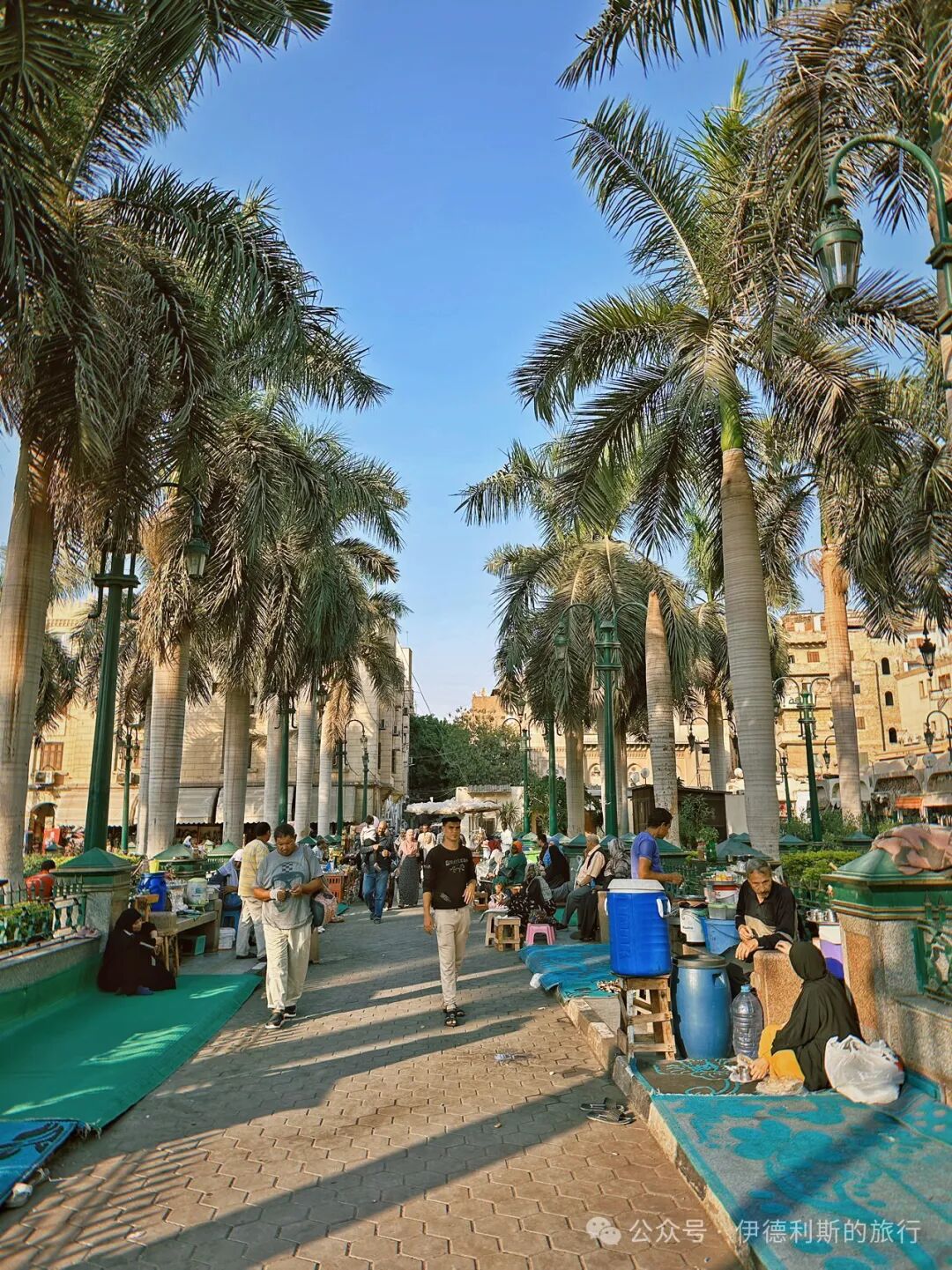
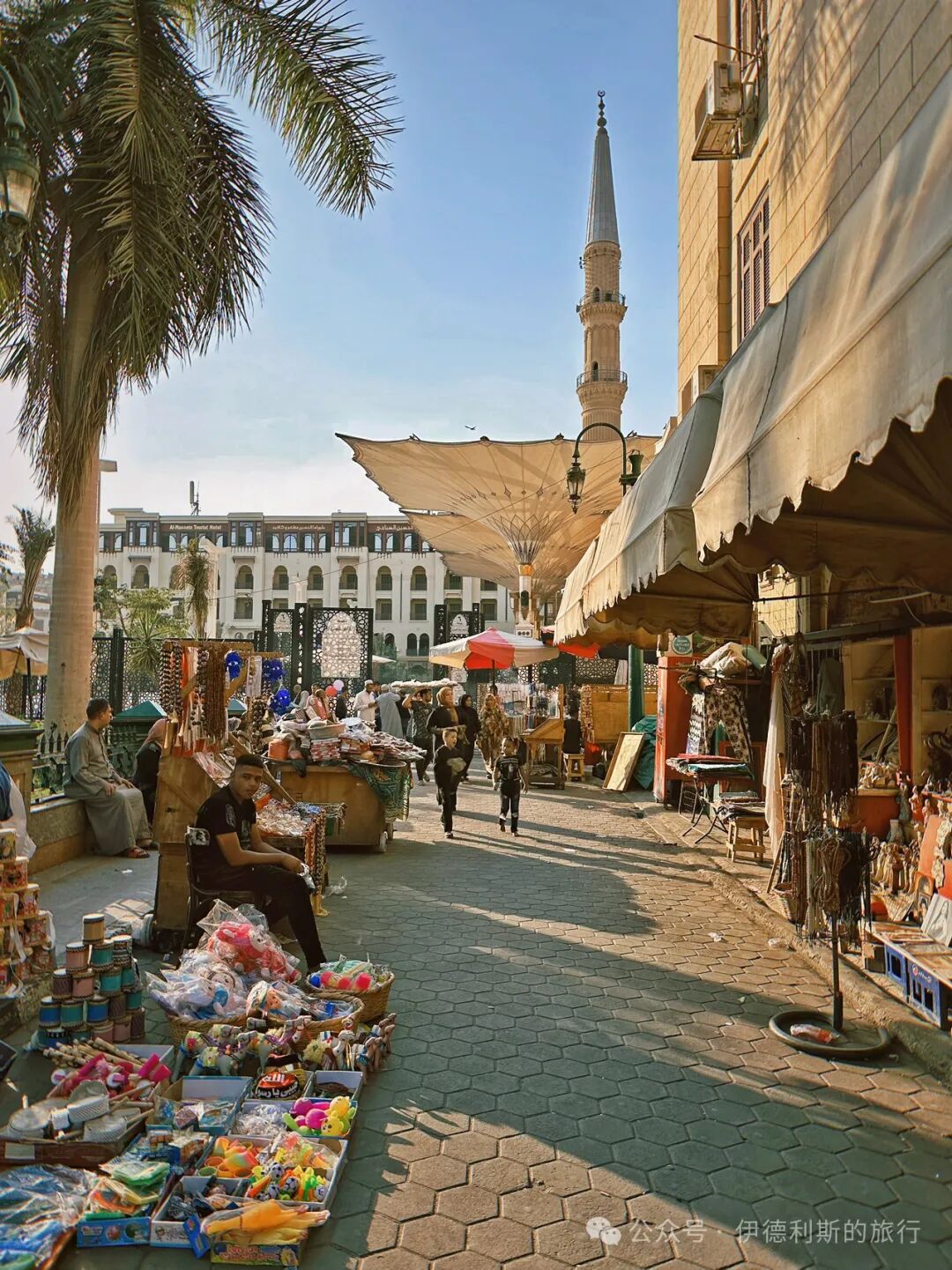
The area around the Hussein Mosque is very busy. There are so many people during namaz that sometimes they cannot all fit in at once and have to pray in two separate groups, which is a rare sight in Cairo.
3. Qaytbay Caravanserai complex: 1477
Right next to the south wall of the Al-Azhar Mosque is the Qaytbay caravanserai (Wikala) complex, built in 1477 by the Mamluk Sultan Qaytbay. The entire complex consists of a caravanserai (Wikala), a fountain (Sabil), an elementary school (Kuttab), and an animal drinking trough (Hod). Sultan Qaytbay built two caravanserais in Cairo. We have already introduced the other one, which is located inside the north gate.
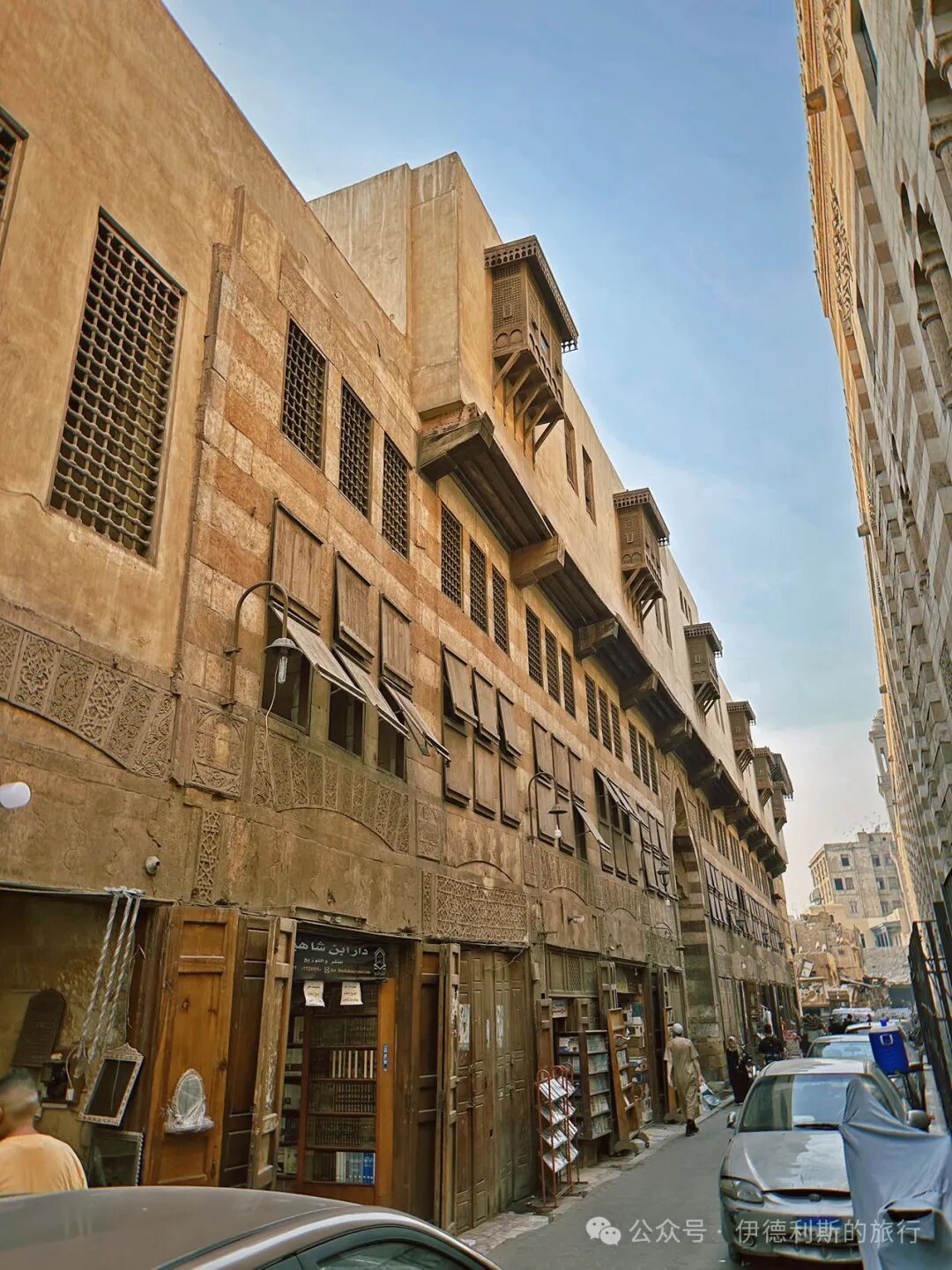
The caravan inn consists of storage rooms on the first floor and guest rooms on the second floor. The upstairs area is now abandoned, while the ground floor has become a street of bookstores. To the west of the caravan inn is a fountain-primary school. The fountain on the ground floor provides drinking water for the community, and the classrooms upstairs are where children study the Quran. At that time, it was very popular for sultans of the Mamluk dynasty to build fountain-primary schools as a waqf (endowment) to seek the mercy of Allah.
4. Abu al-Dhahab Mosque: 1774
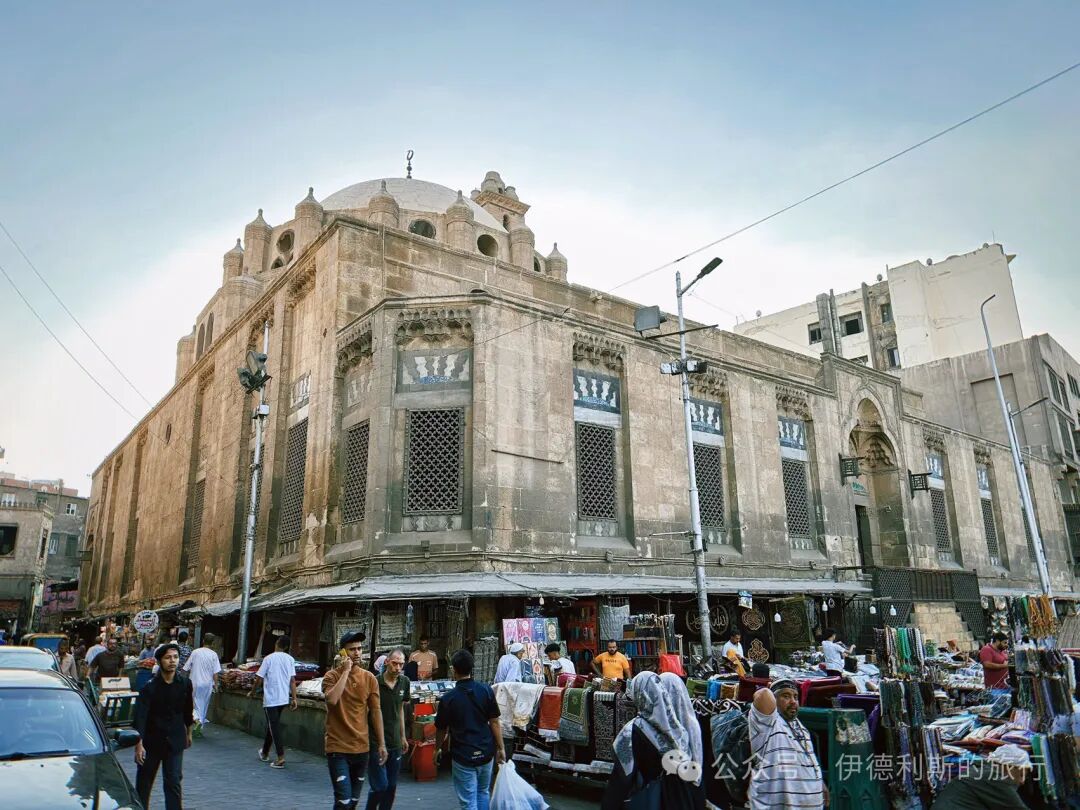
Right next to the west wall of the Al-Azhar Mosque stands the Abu al-Dhahab Mosque, built in 1774 by the Egyptian Mamluk ruler Abu al-Dhahab. This was the last large building complex constructed by the Mamluks in Egypt, but only the mosque remains today.
Abu al-Dhahab means 'Father of Gold,' and he was a wealthy and generous Mamluk emir. During the Russo-Turkish War, the Mamluk emir Ali Bey of Egypt declared independence from the Ottoman Empire, and Abu al-Dhahab led an army to conquer most of the Hejaz and Syria. After taking Damascus in 1772, Abu al-Dhahab turned his army to occupy Cairo and became the de facto ruler of Egypt until he died suddenly of the plague in 1775 while conquering Palestine.
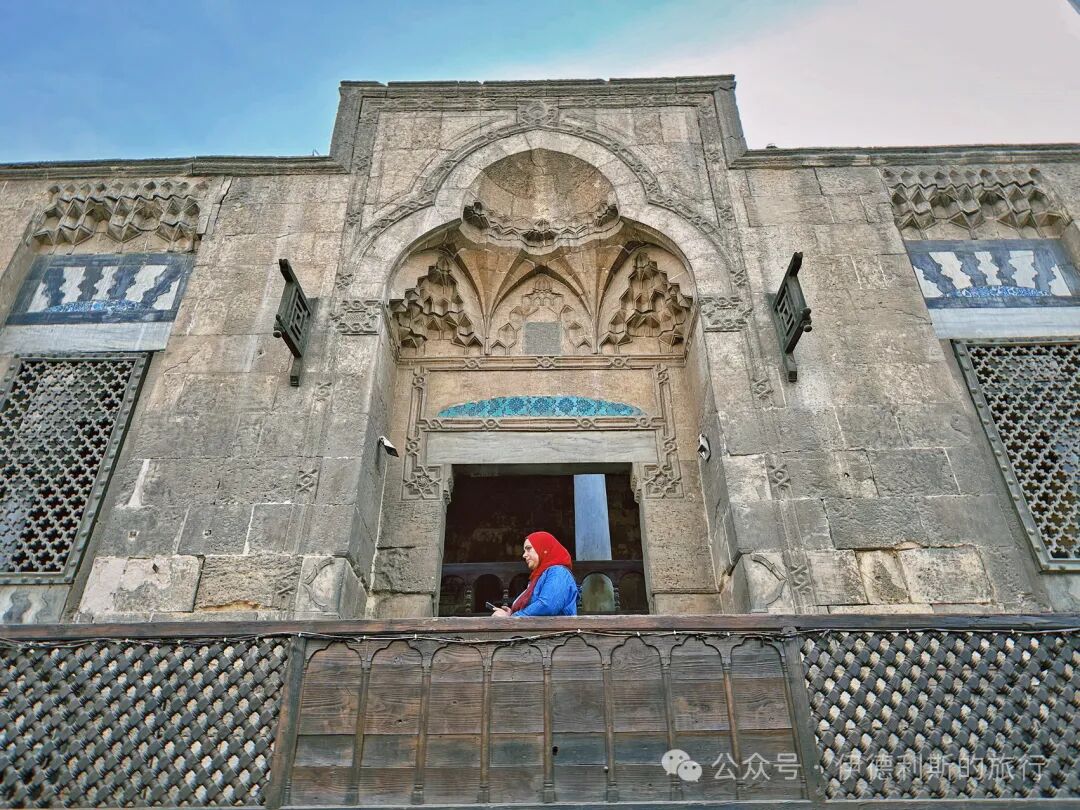
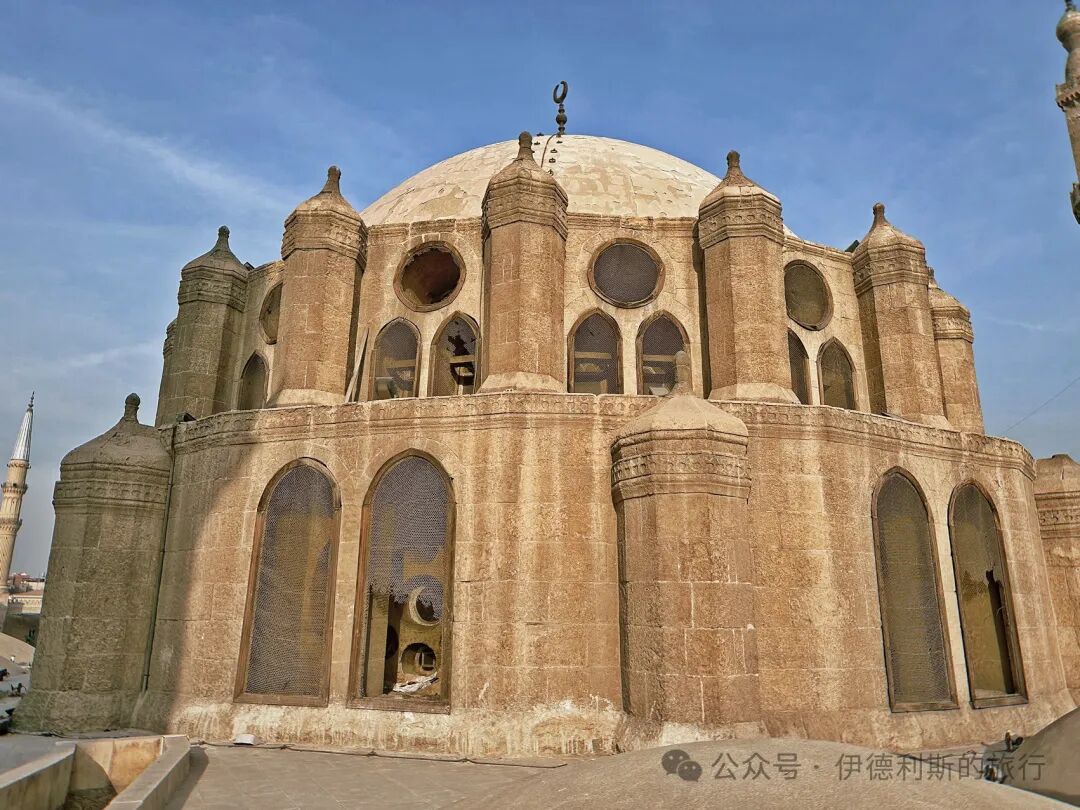
The architecture of the Abu al-Dhahab Mosque mixes different styles, featuring Mamluk-style outer walls and Ottoman-style domes, while the minaret was inspired by the early 16th-century minaret of the nearby Sultan al-Ghuri complex.
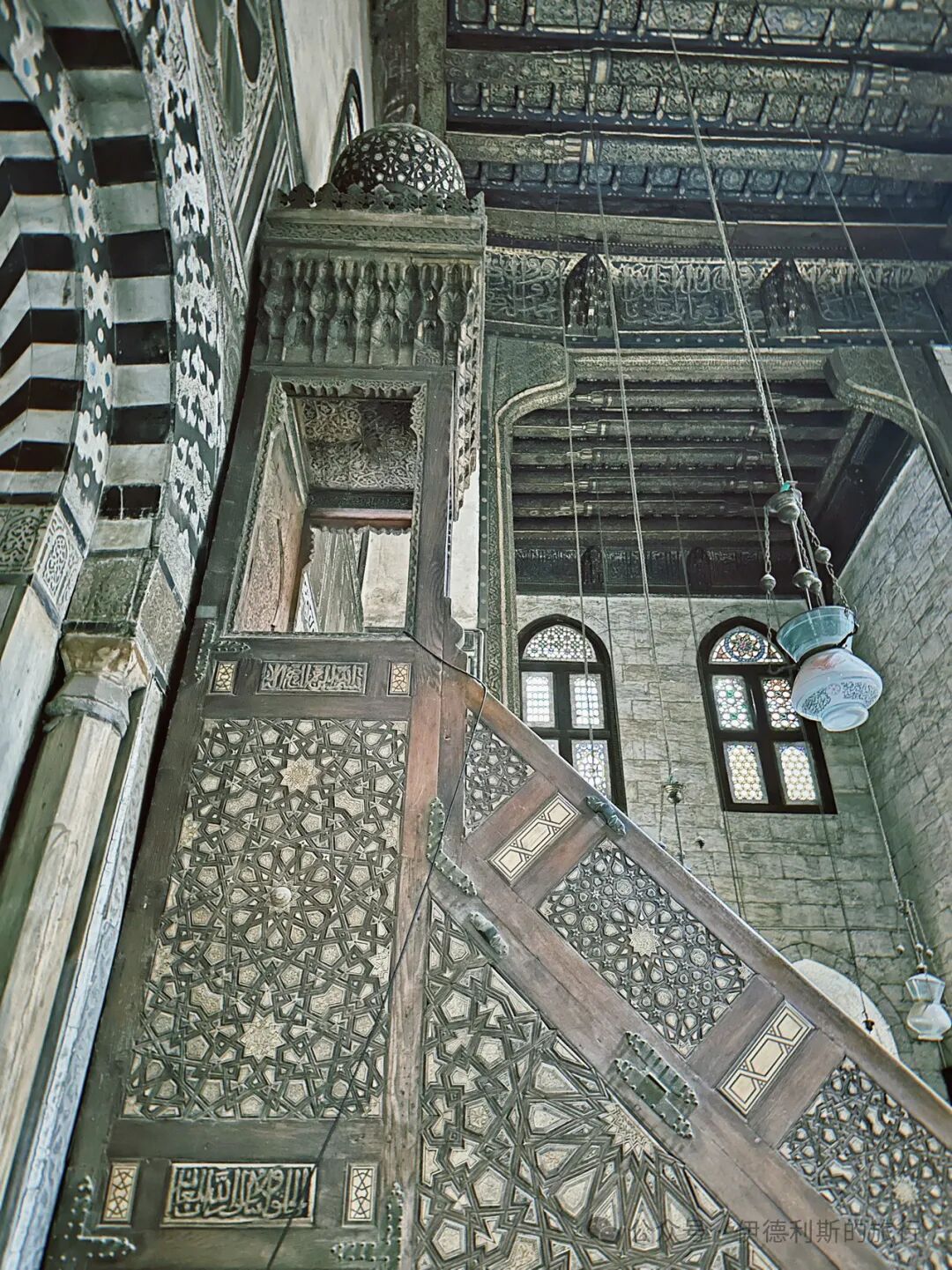
The mihrab (prayer niche) and minbar (pulpit) of the Abu al-Dhahab Mosque feature Mamluk-style decorations inlaid with mother-of-pearl and marble.
The tomb of Abu al-Dhahab is in the northeast corner of the mosque's front portico, with walls decorated in tiles from Iznik, Istanbul, Tunisia, and local Cairo.
On the west side of the Abu al-Dhahab Mosque is the Abu al-Dhahab Sufi lodge (takiya) built in the late 18th century, which is now the museum for the Nobel Prize-winning Egyptian novelist Naguib Mahfouz.
5. Al-Ghuri complex: 1505
Heading west from the Al-Azhar Mosque back to al-Muizz Street, the main road of Old Cairo, you can see the Al-Ghuri complex built between 1503 and 1505 by the Mamluk Sultan Al-Ashraf Qansuh al-Ghuri, who reigned from 1501 to 1516. This massive complex includes a caravanserai, a mausoleum, a Sufi lodge (daotang), a fountain, a primary school, a main hall, and a madrasa.
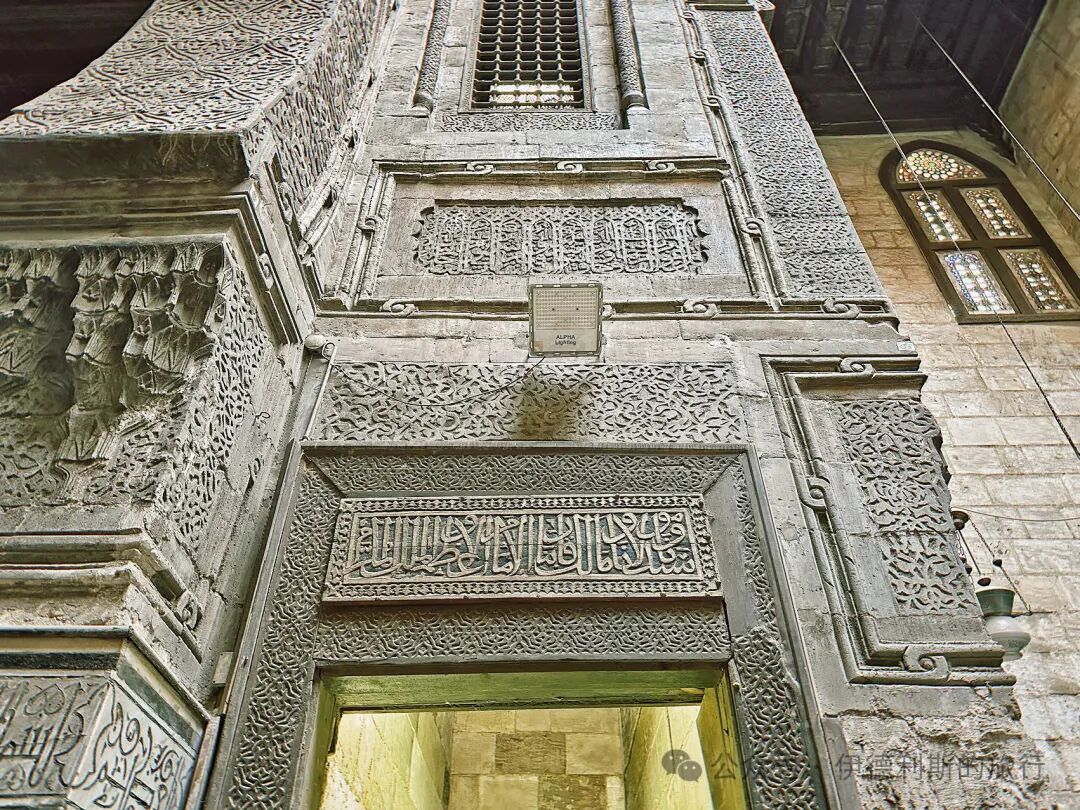
The Ghouri Caravanserai (Wikala) sits at the far east end of the complex and was built between 1504 and 1505. The ground floor of the inn stored goods and livestock, the second floor held guest rooms for merchants, and the third and fourth floors were apartment units (Rab). Income from the inn and apartments went toward a charitable endowment (Waqf). The inn features beautiful latticed window screens (Mashrabiyas), which were a signature style for Mamluk-era caravanserais.
I compared the Sultan Ghouri complex I photographed with a painting by Orientalist artist David Roberts from 1839. This area has been a textile market in Old Cairo for hundreds of years.
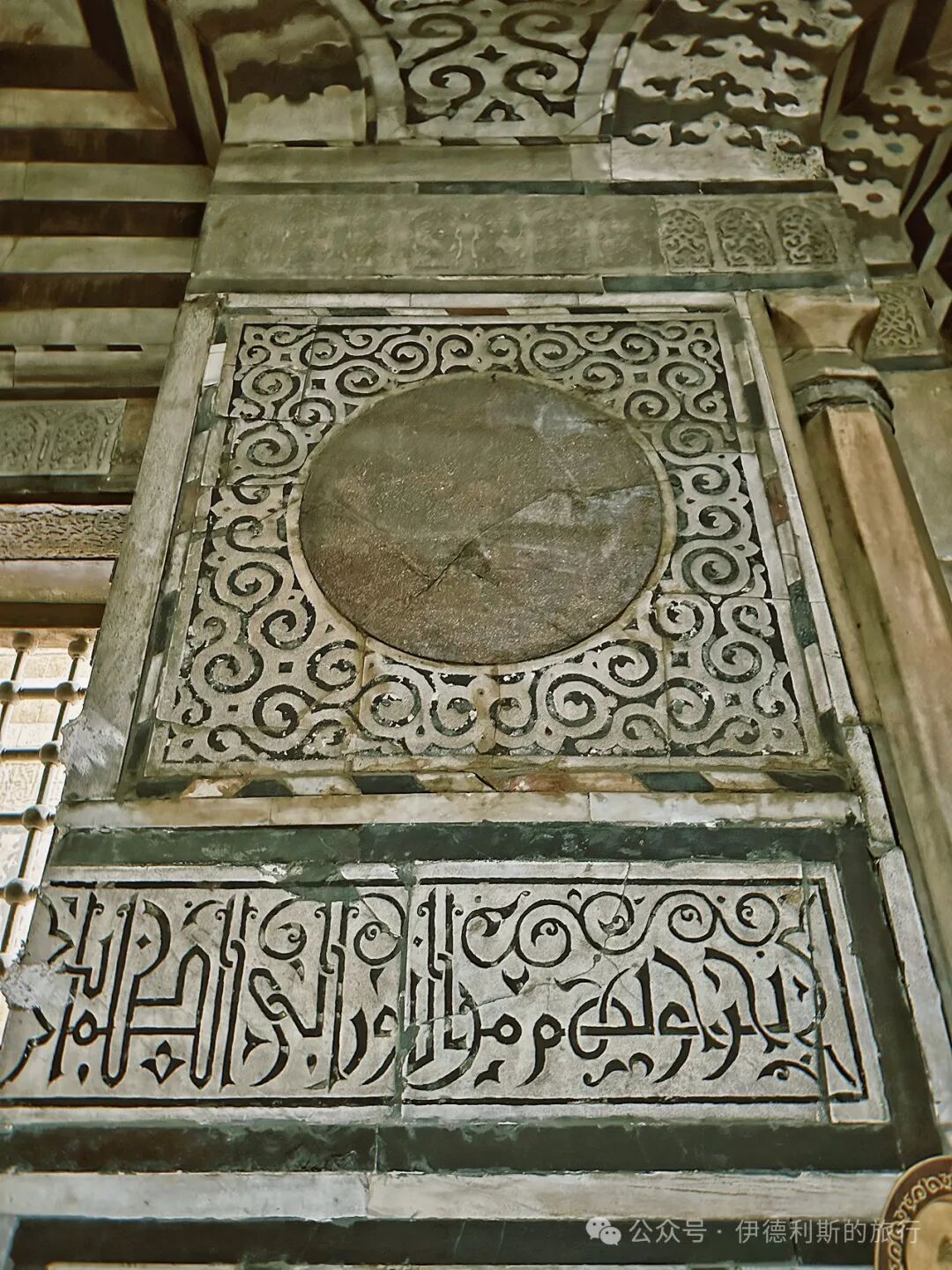
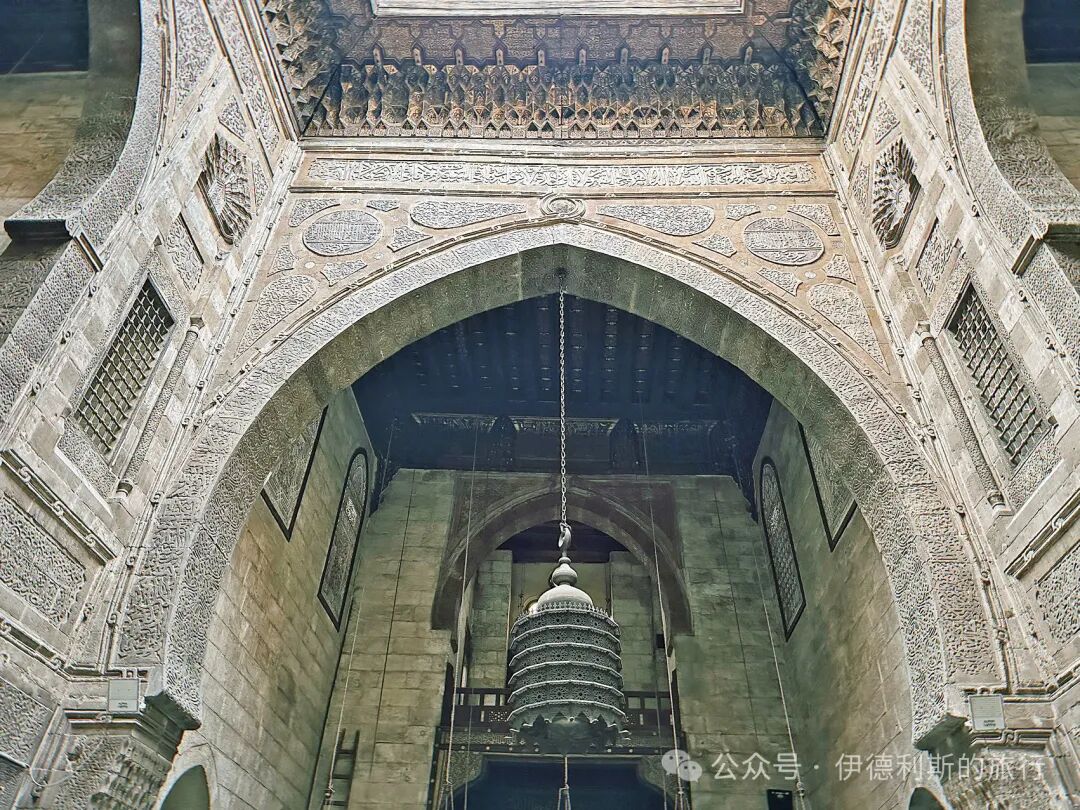
The west building of the Ghouri complex houses the main hall and madrasa. It follows the classic late Mamluk layout of a central courtyard with four vaulted halls (Iwan). The building is decorated with rich, colorful marble and arabesque stone carvings. Elegant Kufic calligraphy is inlaid into white marble using black bitumen. The mihrab in the main hall features black and white marble mosaic patterns, with marble mosaic panels covering both sides.
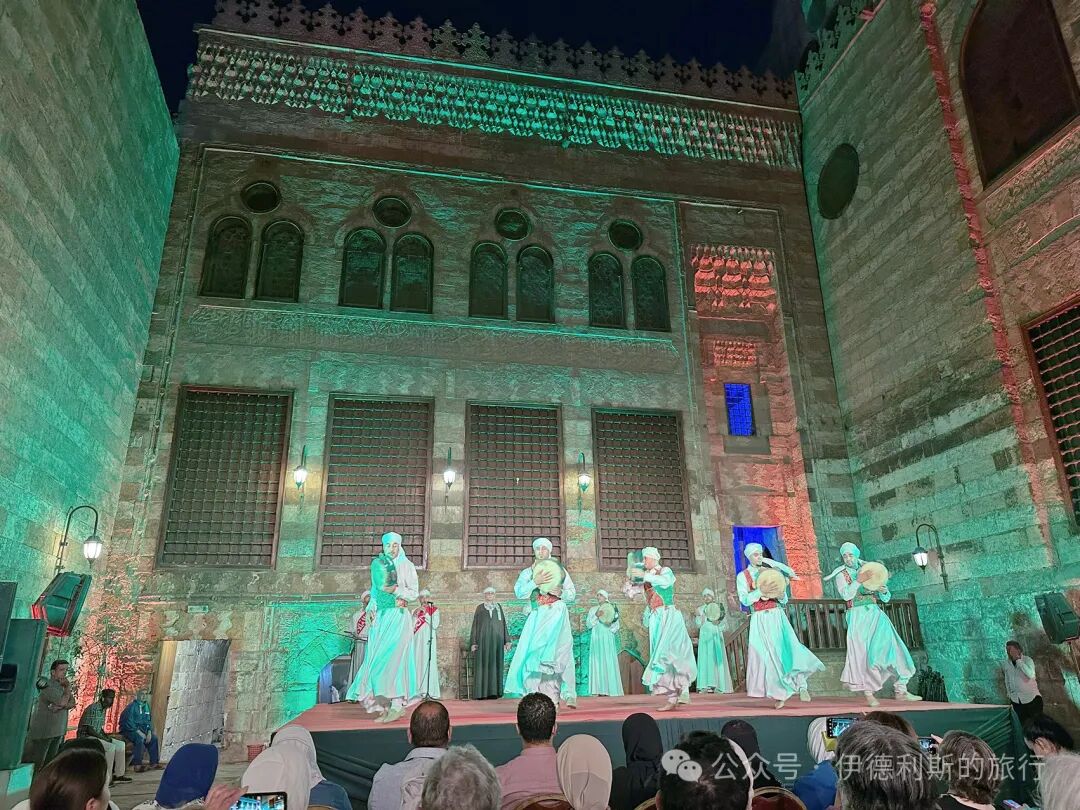
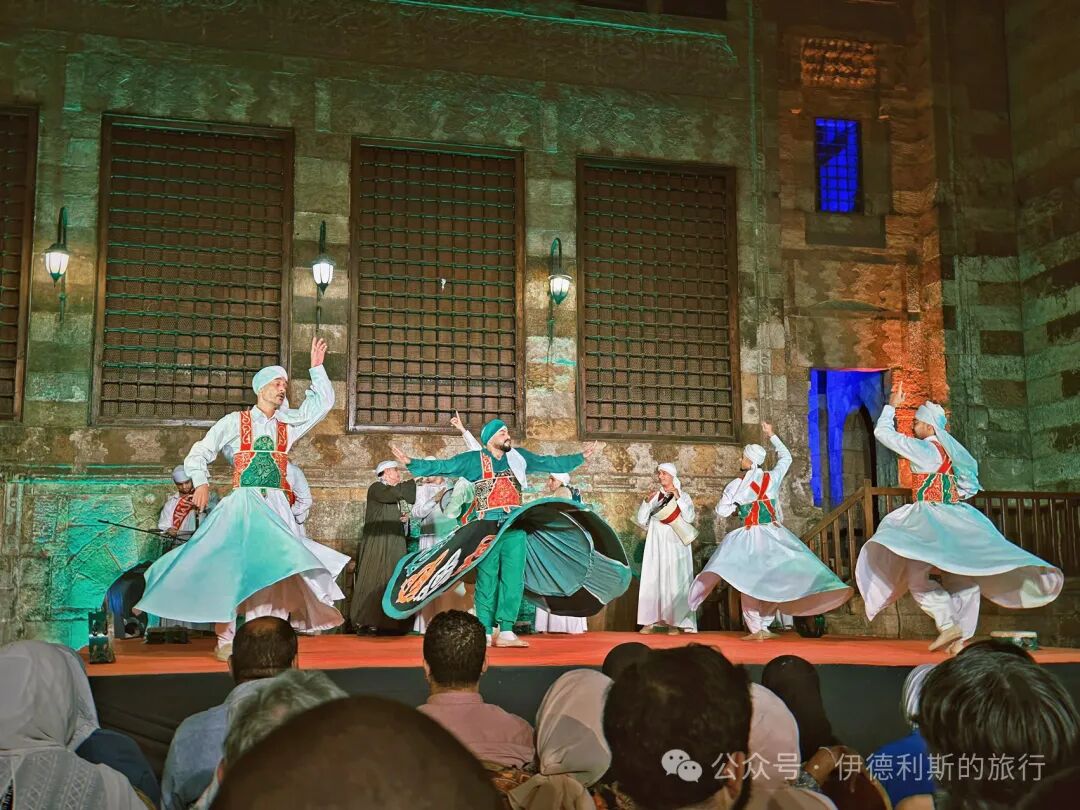
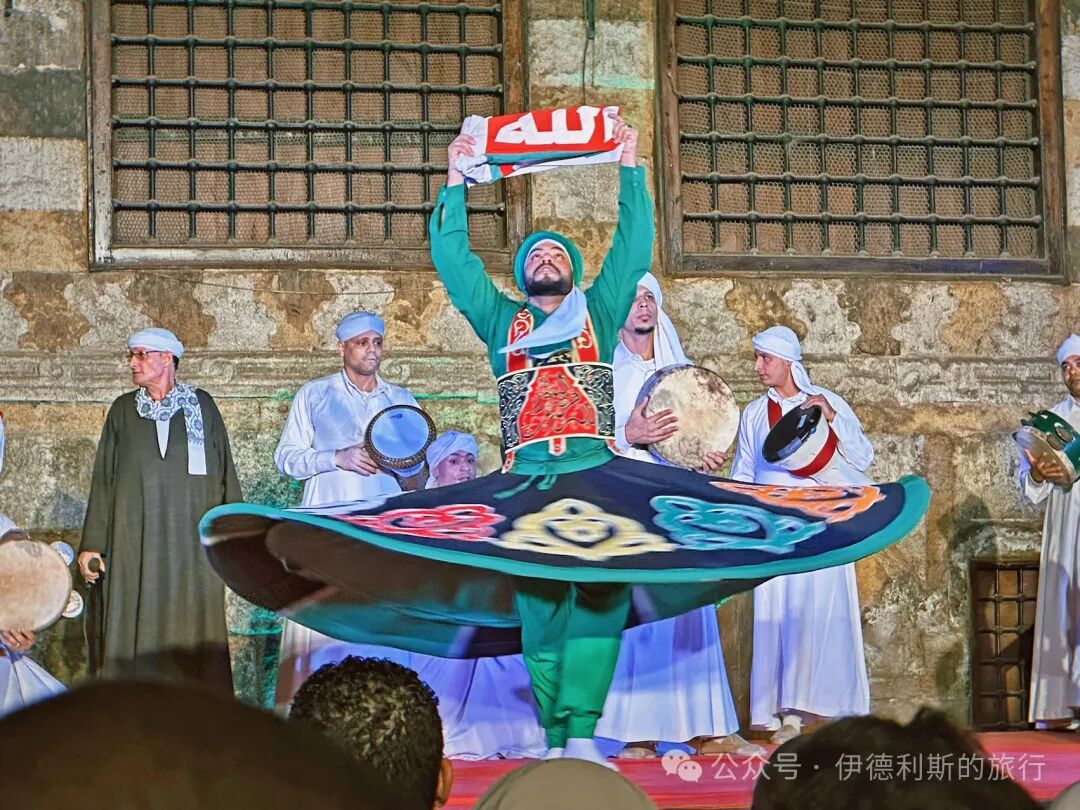
The east building of the Qansuh al-Ghuri complex houses the tomb and the prayer hall (daotang). The prayer hall is where Sufis perform dhikr, and today it serves as a venue for whirling dervish dances and traditional music.
Next to the prayer hall is a fountain-primary school, which is a classic example of Mamluk dynasty architecture.
On August 24, 1516, the Mamluk Sultanate and the Ottoman Empire fought a decisive battle in the town of Dabiq, Syria. Sultan al-Ghuri was killed in the battle, and the Ottoman Empire successfully occupied Syria. Because Sultan al-Ghuri's body (mayyit) was never found, he is not buried in the Sultan al-Ghuri tomb.
Today, the tomb holds the remains of Tuman Bay II, the last sultan of the Mamluk dynasty, who reigned from 1516 to 1517. Tuman Bay II took the throne after Sultan al-Ghuri died in Syria. On January 22, 1517, he fought a final battle against the Ottoman army at Ridaniya in Egypt. Sultan Tuman Bay II bravely charged into the Ottoman camp and personally killed the Ottoman Grand Vizier, Hadım Sinan Pasha. But he was eventually defeated by the Ottoman army and retreated to Giza on the other side of the Nile.
In late March 1517, Sultan Tuman Bay II led his army in a final battle against the Ottoman forces beneath the Giza pyramids. After two days of bitter fighting, the Sultan was betrayed by his Bedouin allies and taken prisoner by the Ottoman dynasty. On April 15, 1517, Sultan Tuman Bay II was hanged at the gates of Cairo, and his body was left hanging there for three days, marking the end of the Mamluk dynasty that had ruled Egypt for 267 years.
6. Other buildings
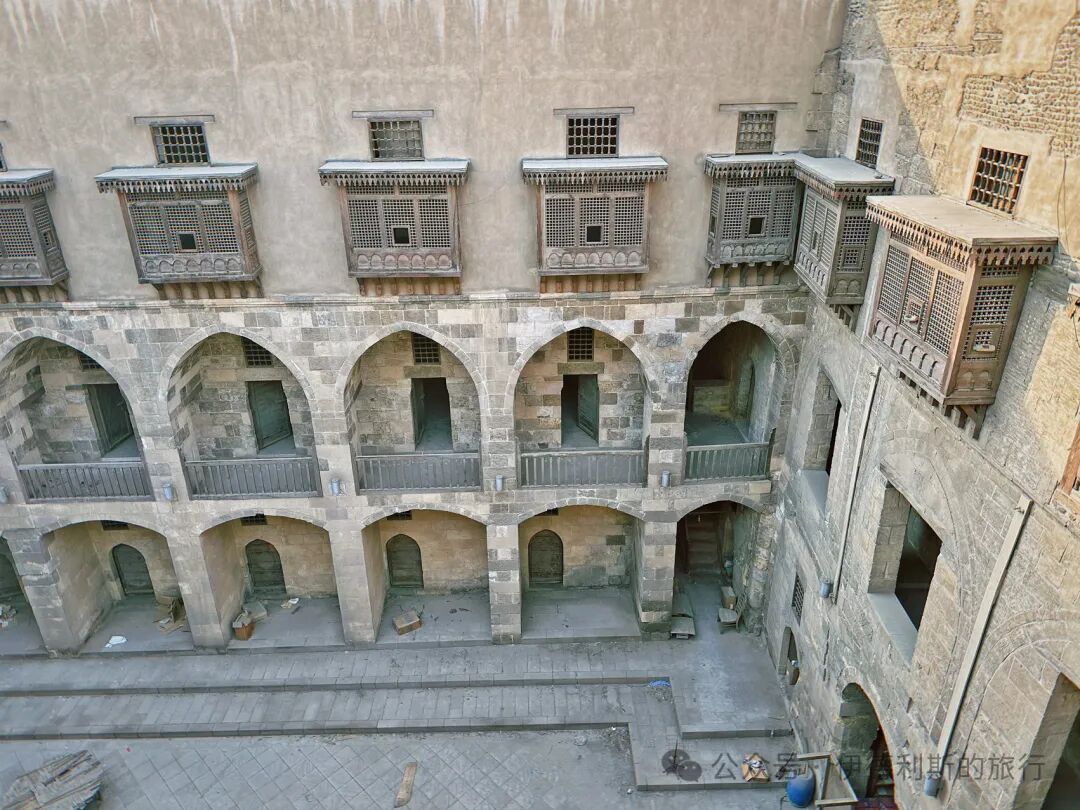
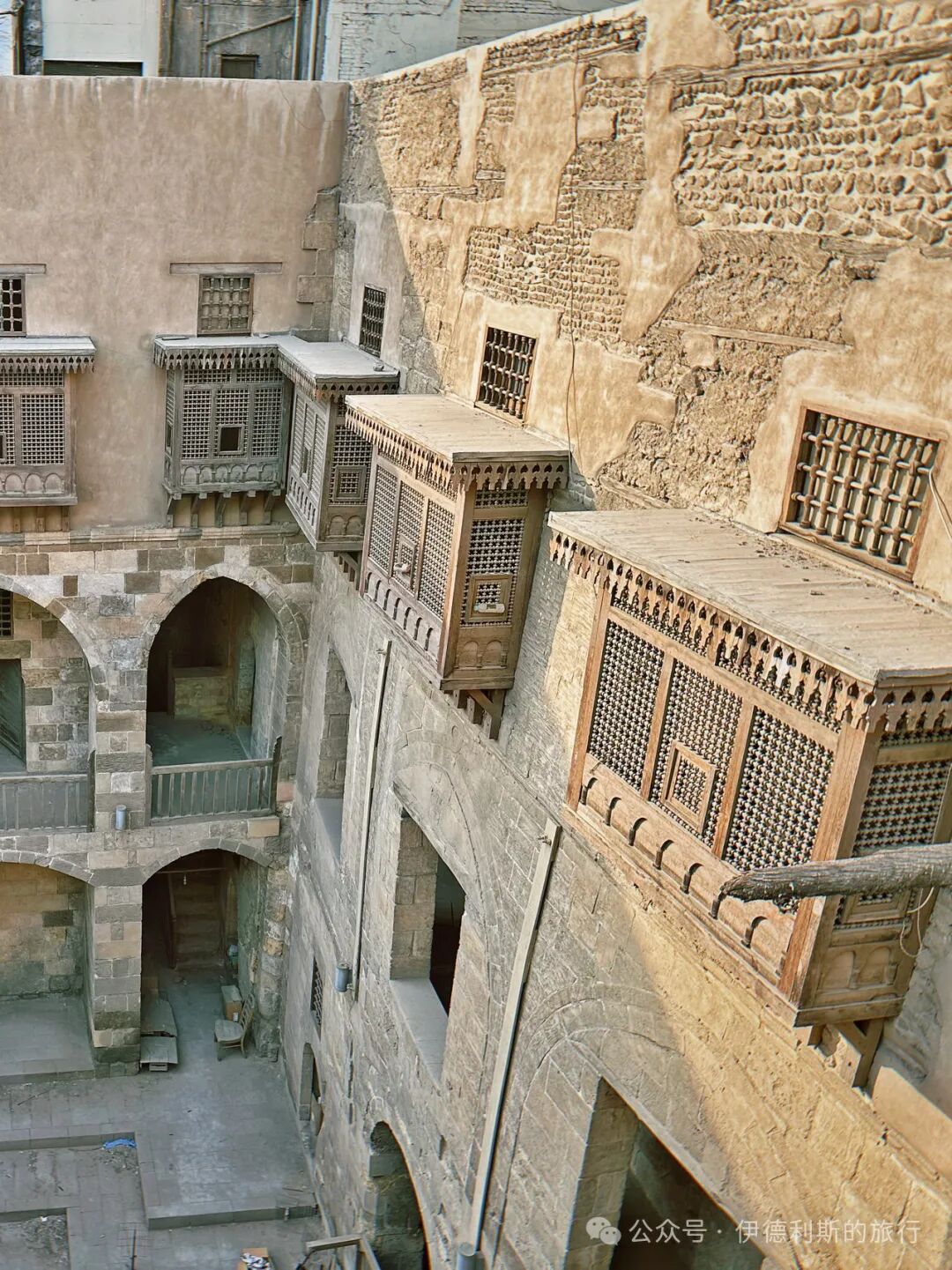
The Ottoman-era Zarakesha caravan inn (Khan) features beautiful wooden lattice (Mashrabiya) window shutters.
The Ainy Madrasa was built in 1411 by the famous Hanafi scholar Muhammad Badr El-Din El-Ayntabi, who served as an advisor in the courts of three Mamluk sultans.
The residence of Mamluk Princess Zeinab Khatoon was built in 1486 during the Mamluk dynasty and was later renovated in 1713. view all
Summary: Old Cairo - Al-Azhar Mosque and Historic Streets is presented as a clear English travel account for readers interested in Muslim life, halal food, mosques, and local history. The article keeps the original place names, food details, photographs, and cultural context while focusing on Old Cairo, Al-Azhar Mosque, Islamic History.
In our first article, 'Experiencing the Thousand-Year History of Old Cairo (Inside the North Gate),' we started at the North Gate of Cairo, built during the 11th-century Fatimid Caliphate. We entered the thousand-year-old city from there and visited 13 historic buildings from the Fatimid, Mamluk, and Ottoman eras, moving from north to south.
In the second article, 'Experiencing the Thousand-Year History of Old Cairo (Between Two Palaces),' we continued south. We visited eight grand building complexes from the Ayyubid, Mamluk, and Ottoman dynasties that were built on the ruins of Fatimid palaces.
In the third article, we reached the heart of Old Cairo to visit the Al-Azhar Mosque and the historic buildings surrounding it.
1. Al-Azhar Mosque: 972
2. Al-Hussein Mosque: First built in 1154, rebuilt in 1874
3. Qaytbay Caravanserai complex: 1477
4. Abu al-Dhahab Mosque: 1774
5. Al-Ghuri complex: 1505
6. Other buildings
1. Al-Azhar Mosque: 972
In 969 AD, the Shia Ismaili Fatimid dynasty conquered Egypt and immediately began building their new capital, Cairo. At that time, the Sunni city of Fustat was already densely populated in the south of Cairo, so the newly built Cairo became the religious center for the Shia Ismailis.
After two years of construction, the first Friday mosque (Jami al-Qahira) in Cairo officially opened in 972 and was named after the city. The mosque was later renamed the Al-Azhar Mosque (al-Jami al-Azhar), with Al-Azhar meaning "the radiant."
After the Al-Azhar Mosque opened, the Ismailis shifted from secret to public preaching. The mosque's first chief judge, Qadi al-Numan, became the founder of Ismaili law and the author of the authoritative Ismaili text, The Pillars of Islam (Kitab da'a'im al-Islam).
The main prayer hall of the Al-Azhar Mosque is a hypostyle hall. The marble columns in its four rows of arcades came from architectural ruins of different eras, including those of the pharaohs, ancient Rome, and the Copts, and they were leveled using column bases of varying heights.
The main hall originally had three domes on top, but none survived later renovations. The original mihrab was rediscovered in 1933, and the prayer niche still holds ornate stucco carvings from the Fatimid period.
Several Fatimid caliphs expanded and renovated Al-Azhar Mosque. Caliph al-Hafiz (reigned 1132-1149) carried out a major renovation in 1138. The four-centered arches in the courtyard and the dome at the entrance to the main hall date back to this time. The stucco patterns in the courtyard also come from this period, though they were renovated again in 1891.
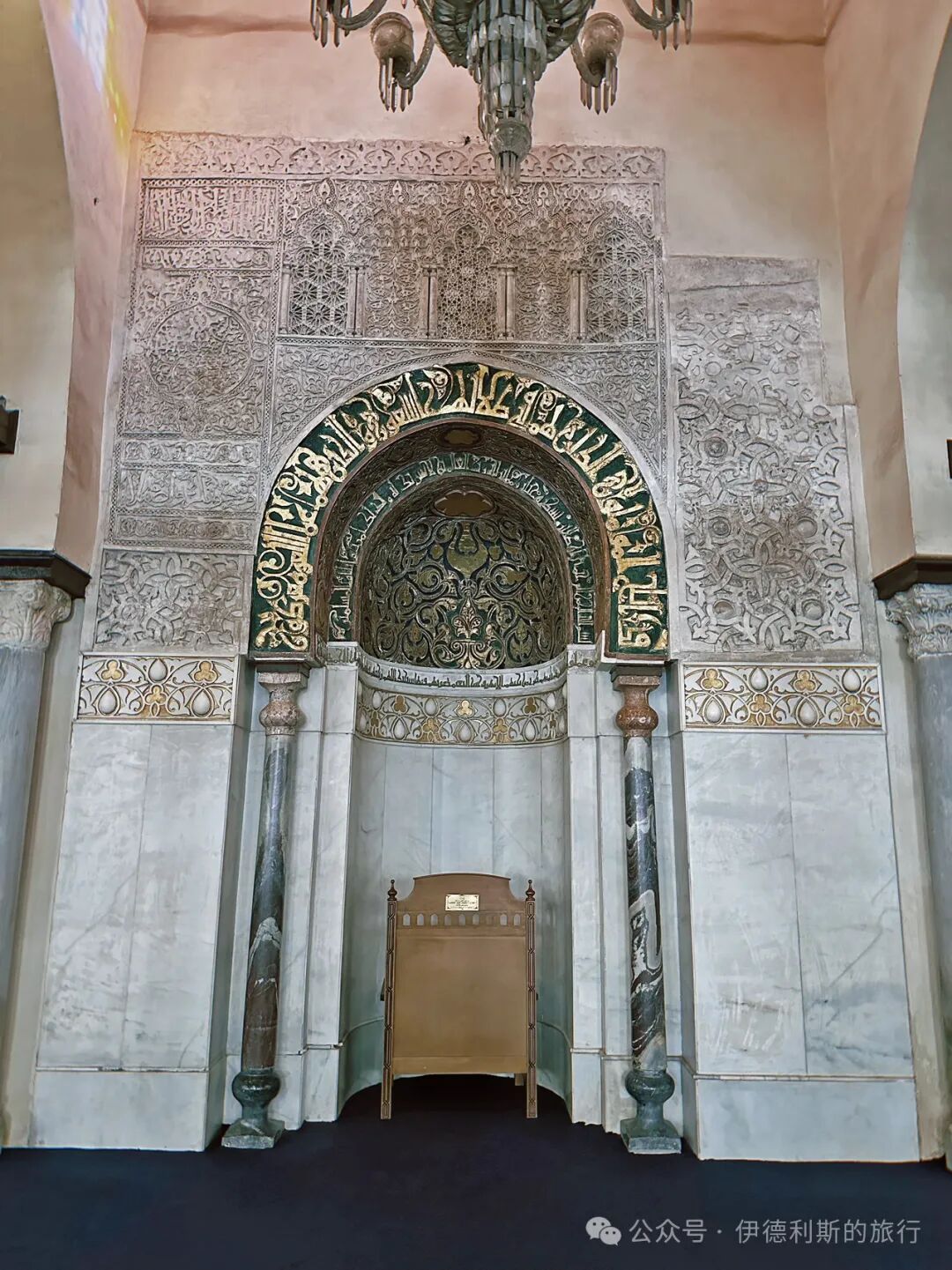
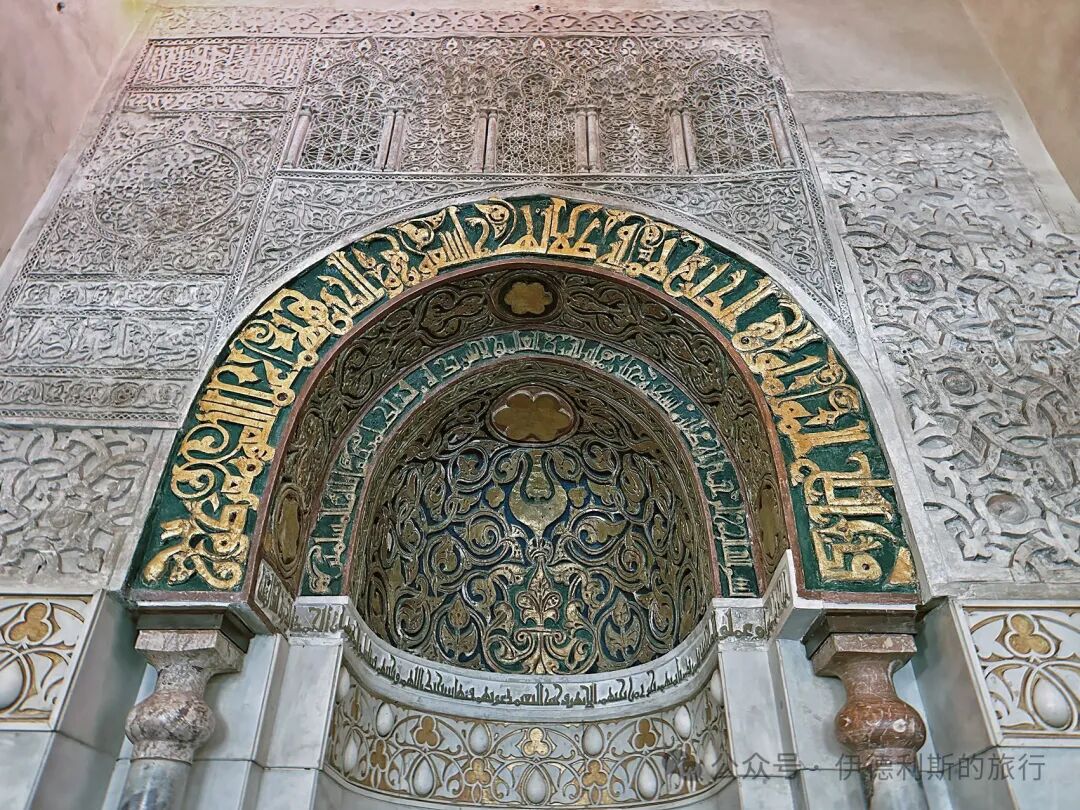
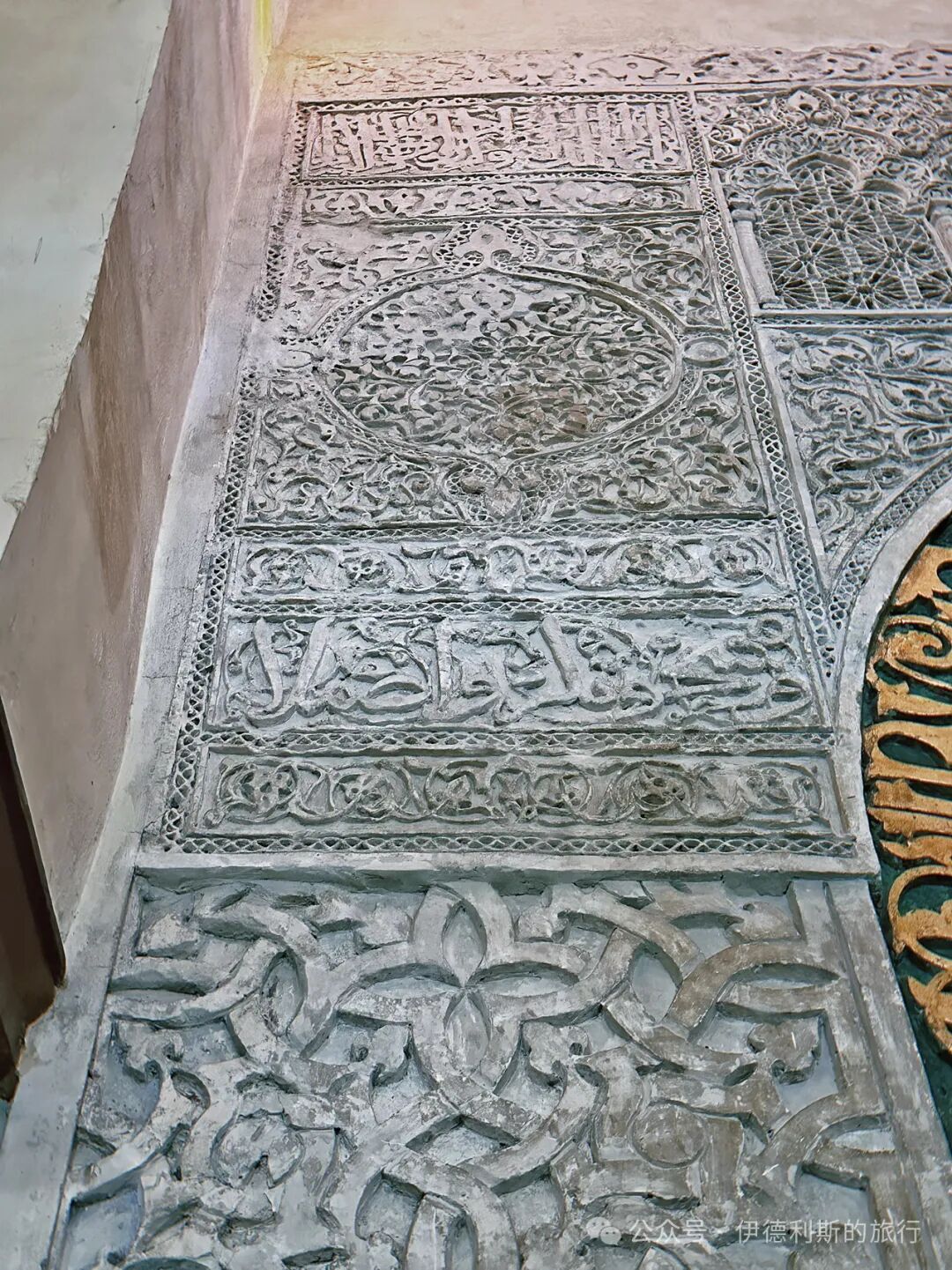
In 1171, Saladin overthrew the Fatimid dynasty and established the Sunni Ayyubid dynasty. Cairo's main Friday mosque moved to Al-Hakim Mosque in the north of the city, and Al-Azhar Mosque was neglected because it had been the center of Ismaili teachings. Saladin removed the silver bands inscribed with the names of Fatimid caliphs from the mihrab niche at Al-Azhar Mosque and destroyed all the Ismaili manuscripts kept there.
It was not until 1266 that the Mamluk Sultan Baybars (reigned 1260-1277) restored Friday prayers at Al-Azhar Mosque and repaired the building. The Ayyubid dynasty followed the Shafi'i school of law, which held that a community could have only one main Friday mosque, while the Mamluk dynasty followed the Hanafi school, which had no such rule.
The Mamluk dynasty left two grand minarets for the Al-Azhar Mosque—the Qaytbay minaret and the twin minarets of Ghuri—along with a Qaytbay gate. The Qaytbay minaret was built in 1483 or 1495 and features three balconies decorated with ornate carvings, while the Qaytbay gate was built in 1495 and leads directly into the courtyard. Both are fine examples of late Mamluk dynasty architecture. During the reign of Sultan Qaytbay (1468-96), the Mamluk dynasty enjoyed political and economic stability and won several military victories against the Ottoman dynasty. The Sultan had a deep interest in art and architecture and funded as many as 230 buildings.
In 1509, the Mamluk Sultan Ghuri (Al-Ashraf Qansuh al-Ghuri, reigned 1501-16) built the twin minarets of Ghuri. Ghuri was the last powerful ruler of the Mamluk dynasty; he was eventually defeated by the Ottoman dynasty and fell on the battlefield in Syria.
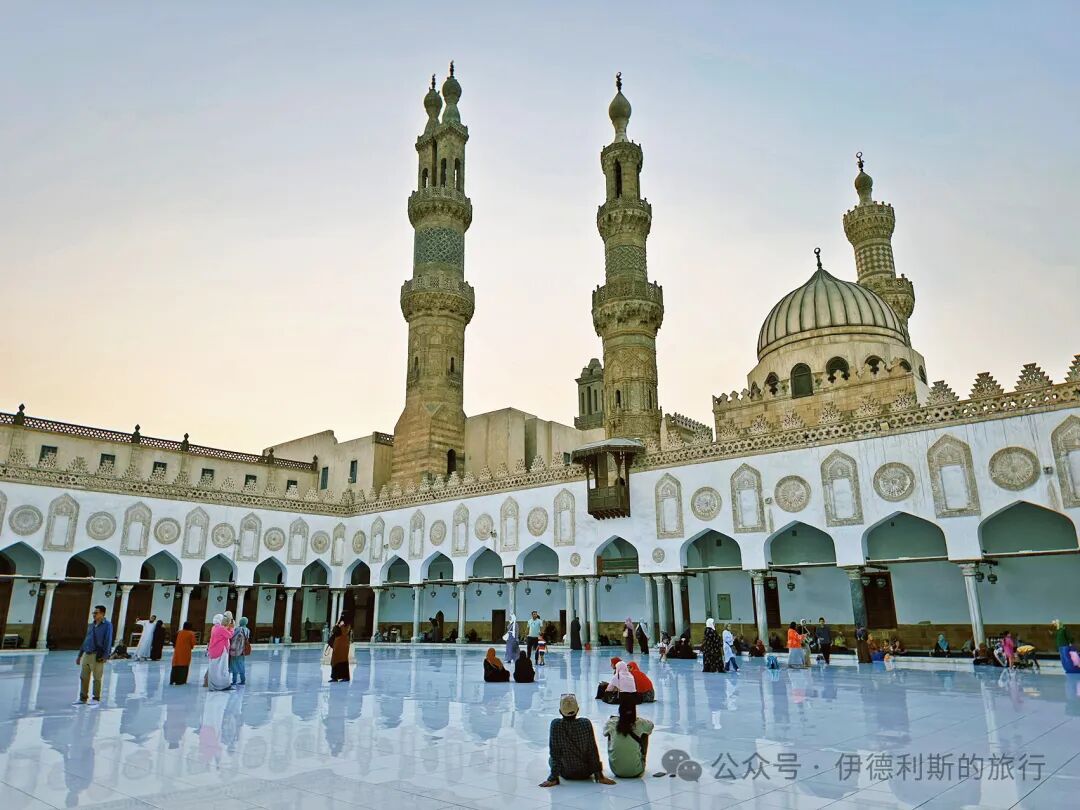
In 1517, the Ottoman dynasty conquered the Mamluk dynasty and occupied Egypt, causing the status of the Al-Azhar Mosque to decline once again. It was not until after the 18th century, when the Mamluk elite regained influence in Egypt, that the renovation and expansion of the Al-Azhar Mosque continued.
In 1749, Abd al-Rahman was appointed as the head of the guards (Katkhuda). In 1753, he oversaw the construction of three Ottoman-style gates for the Al-Azhar Mosque: the Barbers' Gate (Bab al-Muzayinīn), the Sa'ayida Gate (Bab al-Sa'ayida), and the Soup Gate (Bab al-Shurba). Outside the Barbers' Gate was where students got their hair cut, Sa'ayida means people from Upper Egypt, and the Soup Gate was where students went to get soup. From then on, the Barbers' Gate became the main entrance to the Al-Azhar Mosque.
Abd al-Rahman also doubled the size of the main prayer hall of the Al-Azhar Mosque by expanding it to the south and added a new mihrab, giving the hall its final shape. After Abd al-Rahman died in 1776, he was buried inside the Al-Azhar Mosque, becoming the last person in history to be buried there.
After the 18th century, the Al-Azhar Mosque became the most influential educational institution in Egypt, and the ulama (scholars) were able to report to the pasha (governor) as official advisors.
Napoleon occupied Cairo on July 22, 1798. On October 21, an uprising against the French broke out at the Al-Azhar Mosque. Napoleon shelled the mosque directly from the Cairo Citadel, resulting in over 3,000 Egyptian casualties and the deaths of six ulama from the Al-Azhar Mosque. Napoleon's army tied their horses to the mihrab of Al-Azhar Mosque and looted the student dorms and library. In 1800, a student from Al-Azhar assassinated the commander-in-chief of the French expeditionary force, leading Napoleon to order the closure of Al-Azhar Mosque. Cairo was recaptured by the British and the Ottoman Empire in June 1801, and Al-Azhar Mosque reopened.
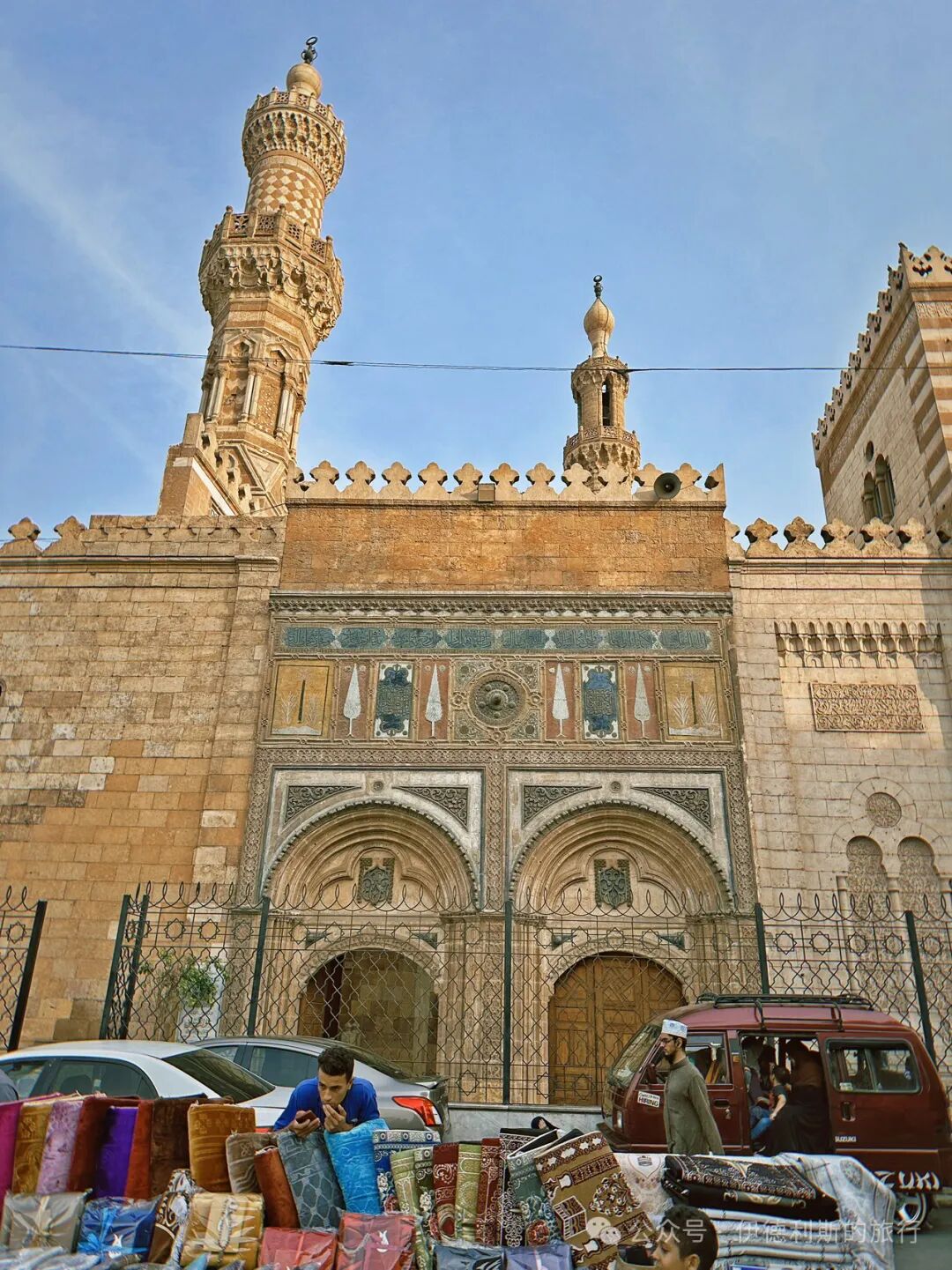
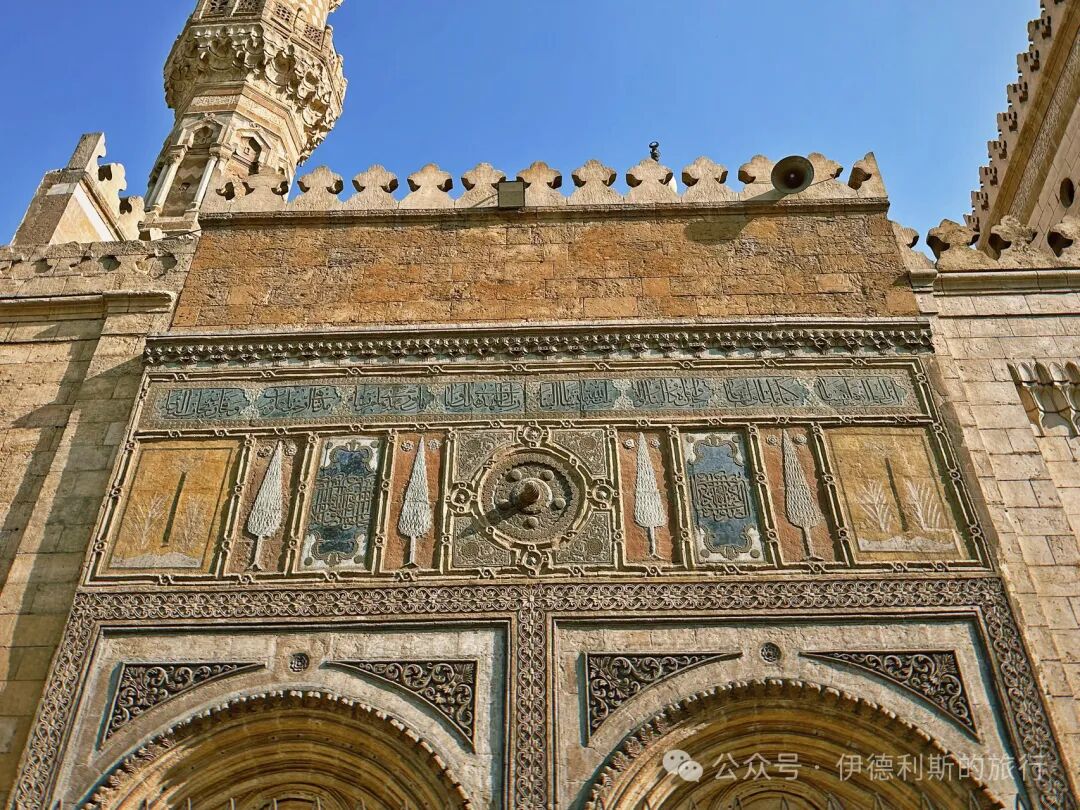
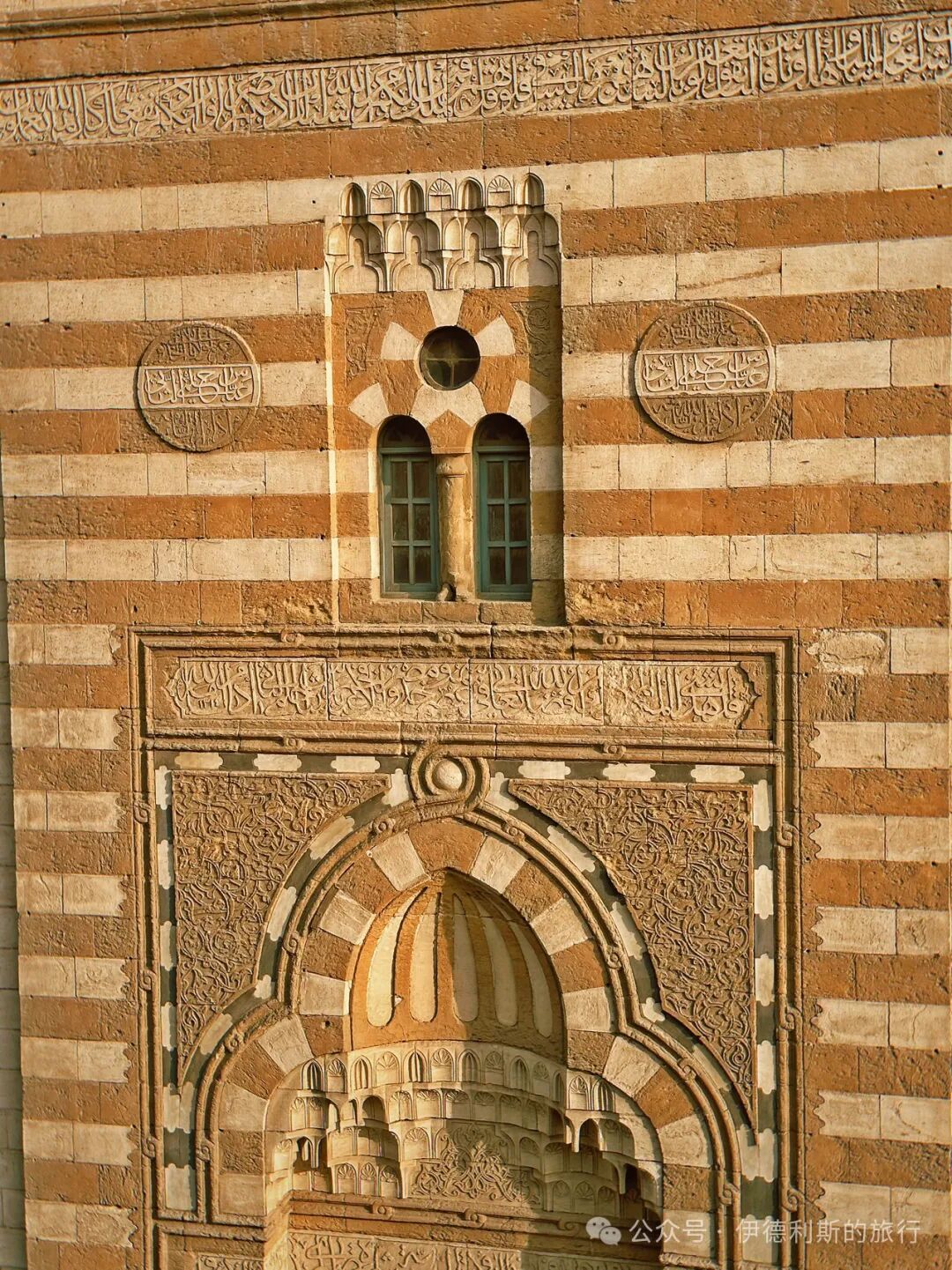
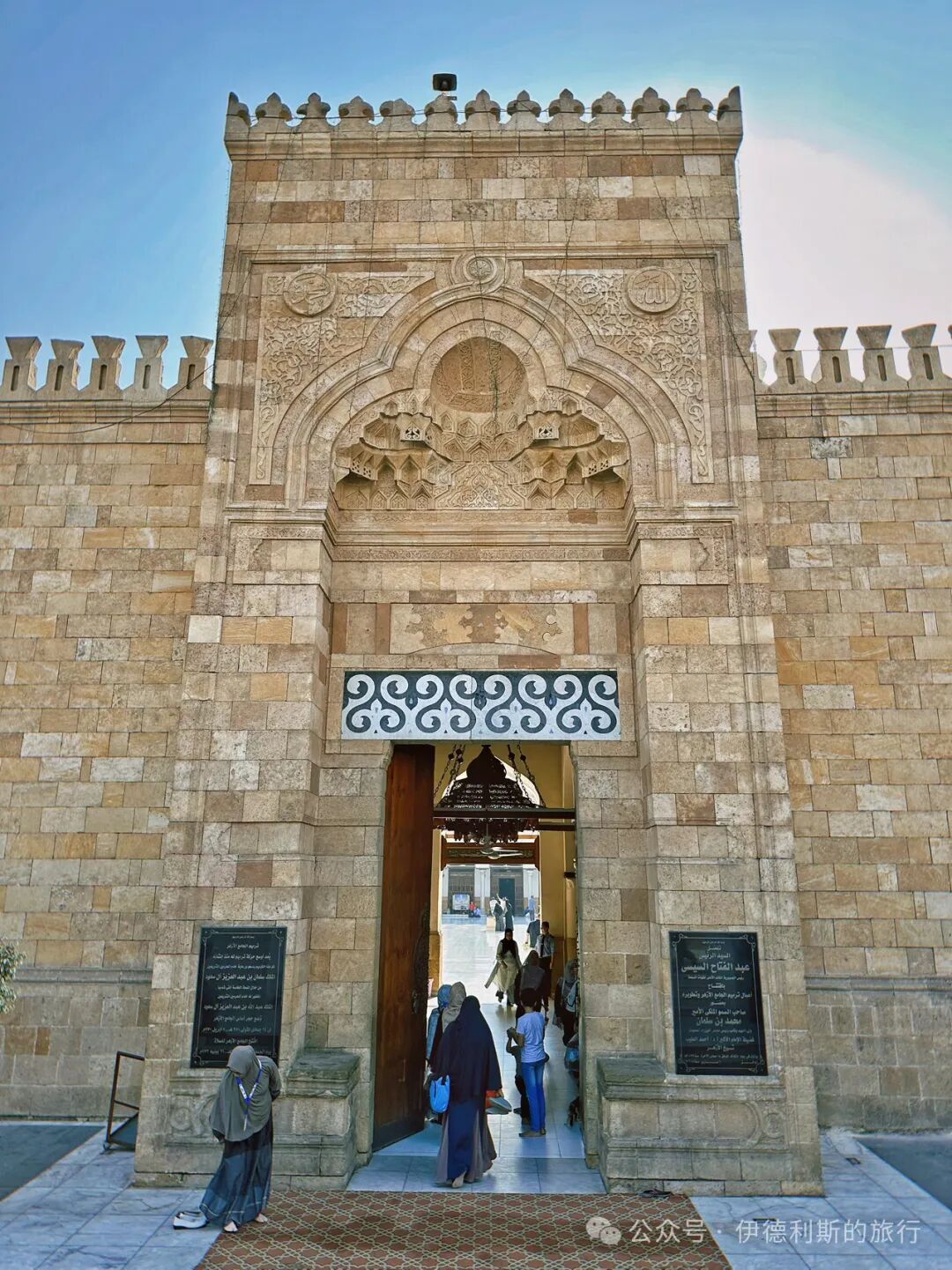
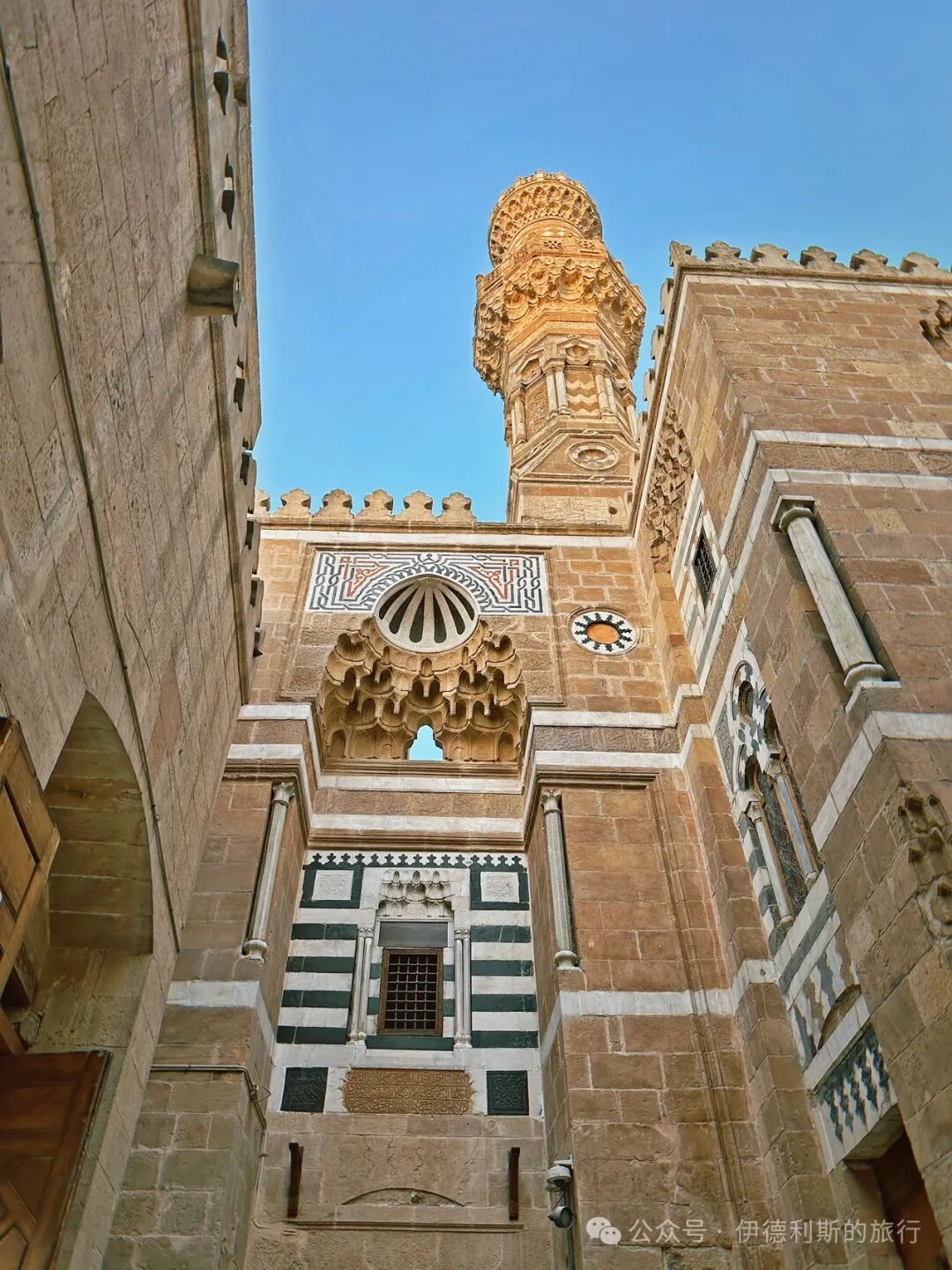
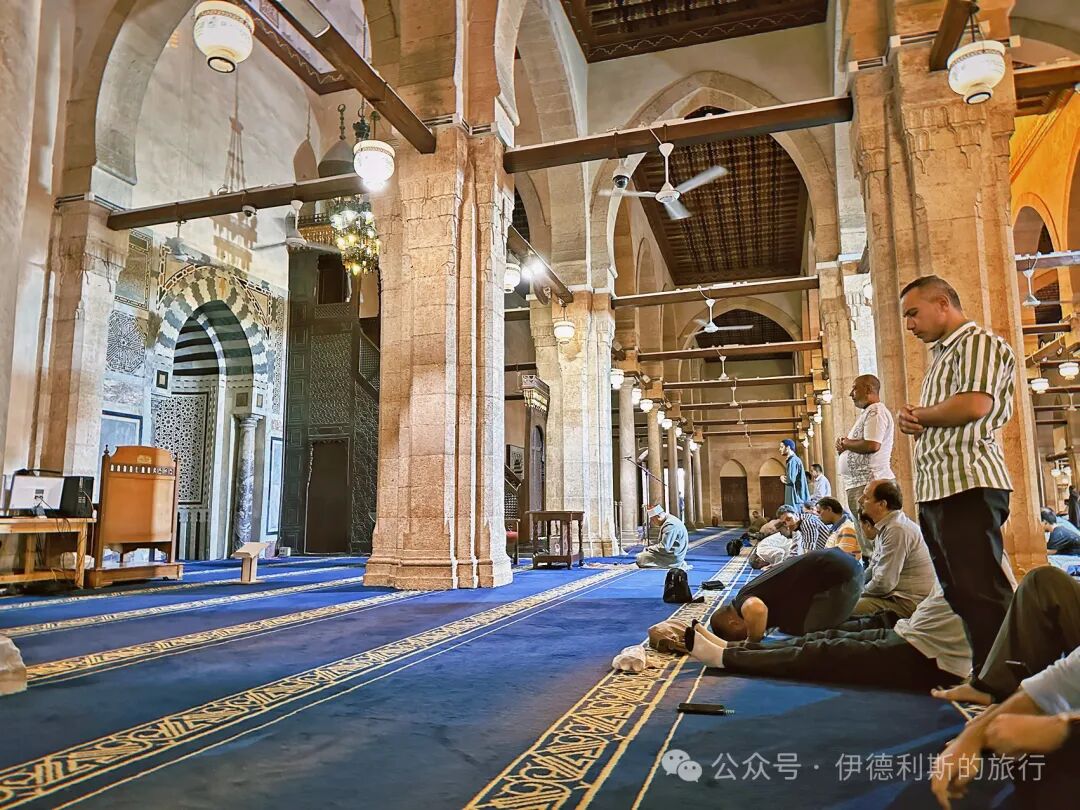
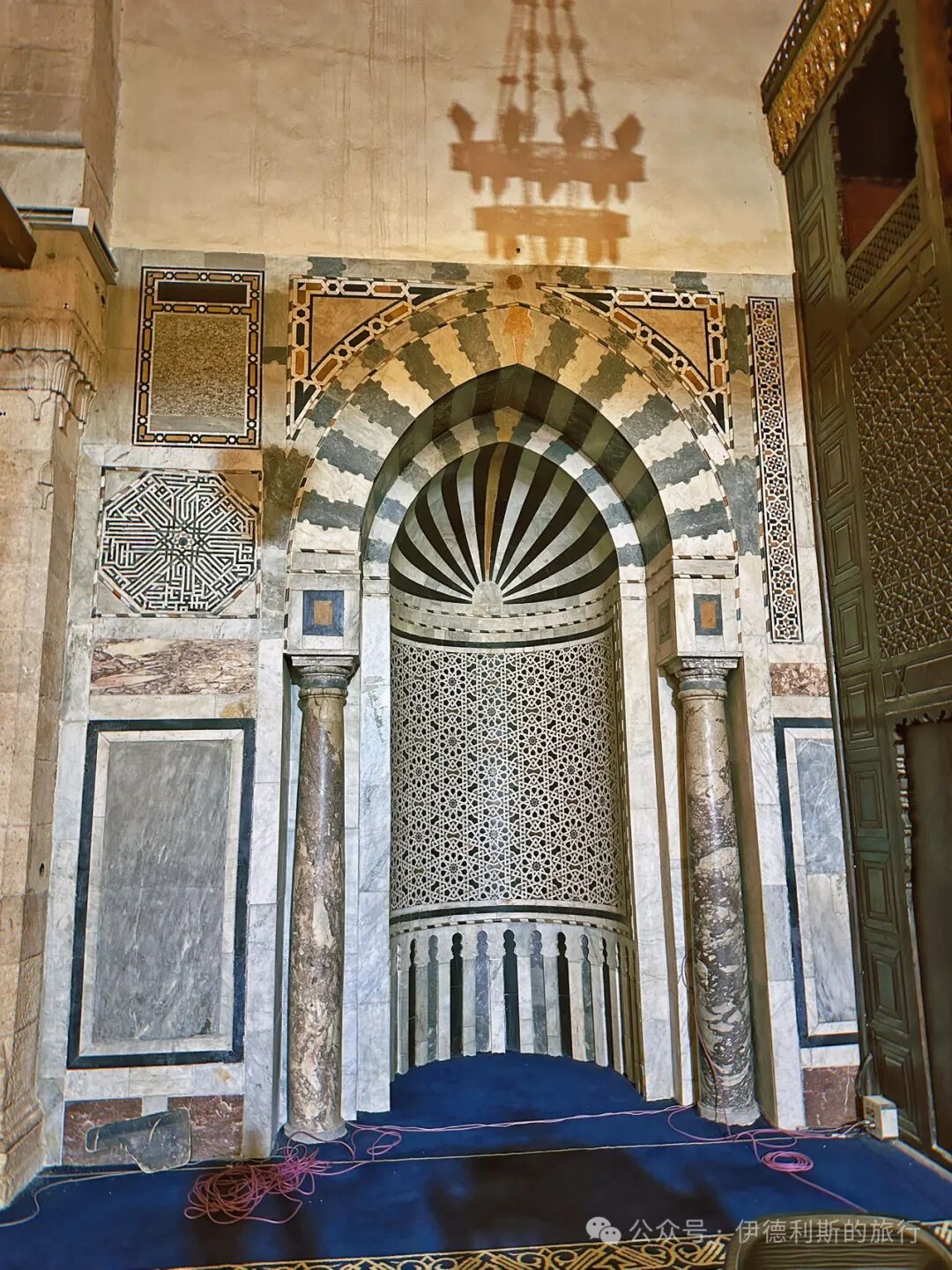
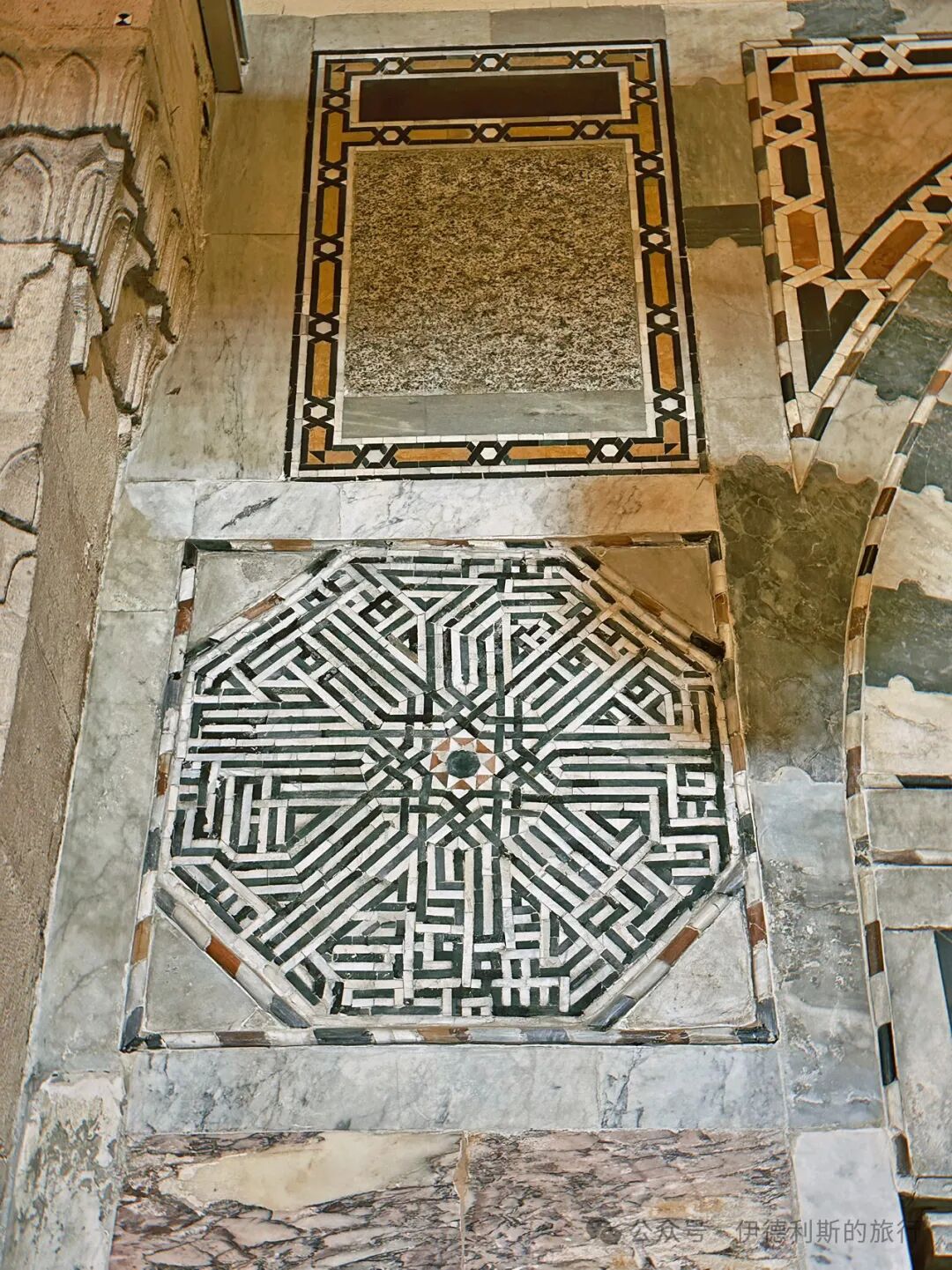
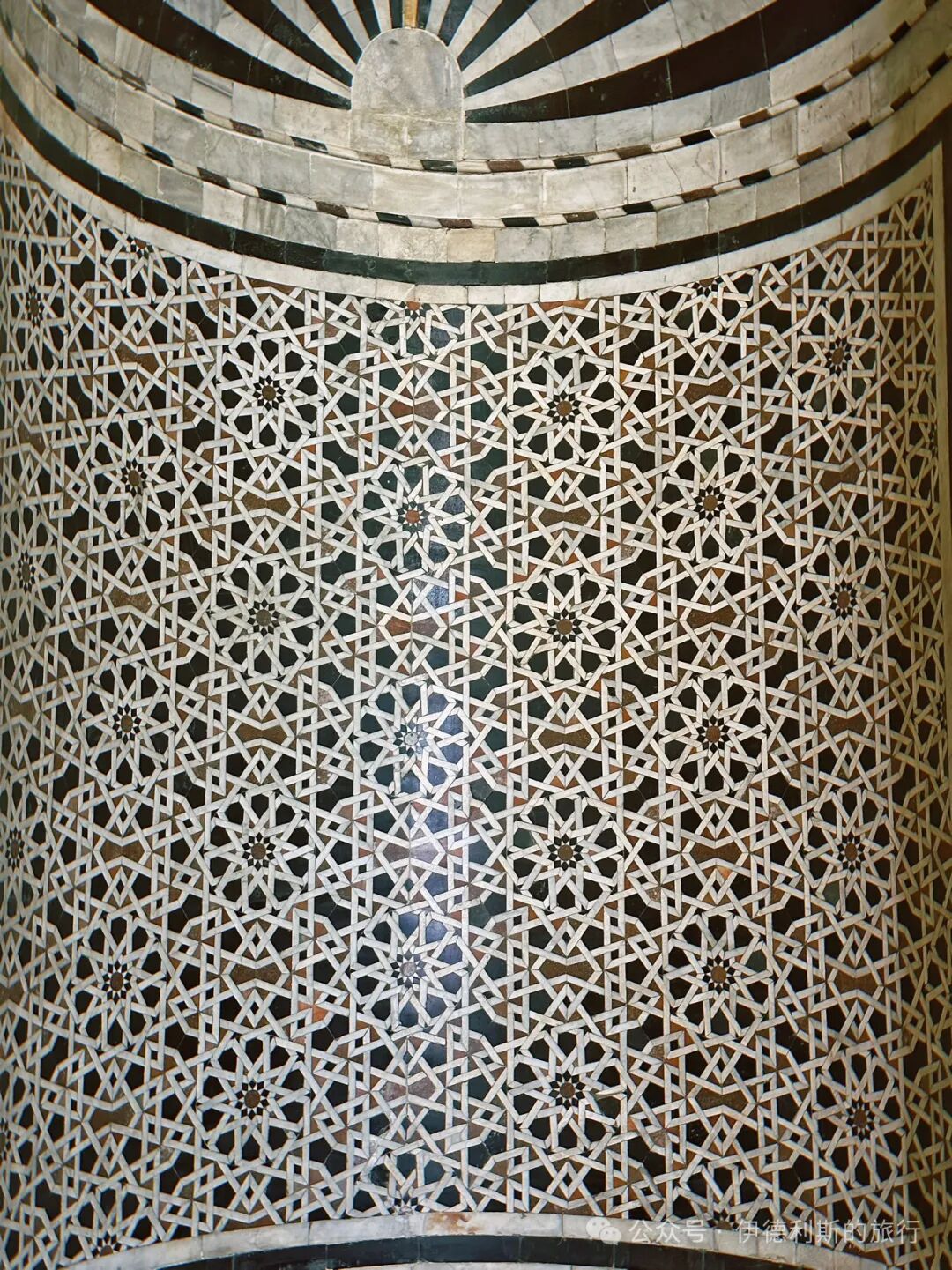
Between 1892 and 1901, Abbas II Hilmi Pasha, the last Khedive of Egypt under the Ottoman Empire, rebuilt the facade of Al-Azhar Mosque as part of the modernization wave in British-occupied Egypt. At the same time, Al-Azhar University carried out educational reforms to oppose fundamentalism. To counter the influence of the Saudi Wahhabi movement, many students from Southeast Asia, including Indonesia, came to study at Al-Azhar University during this period.
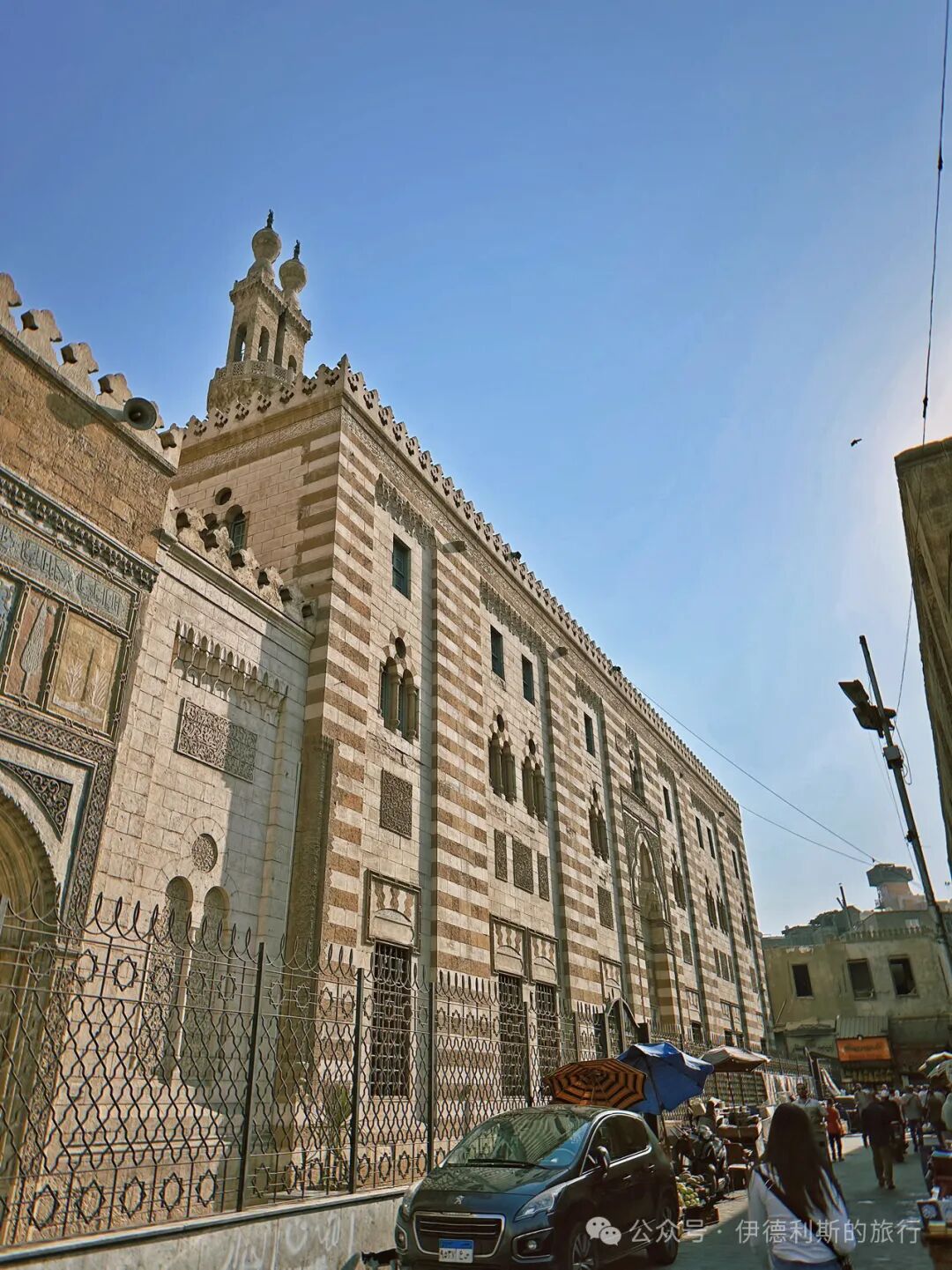
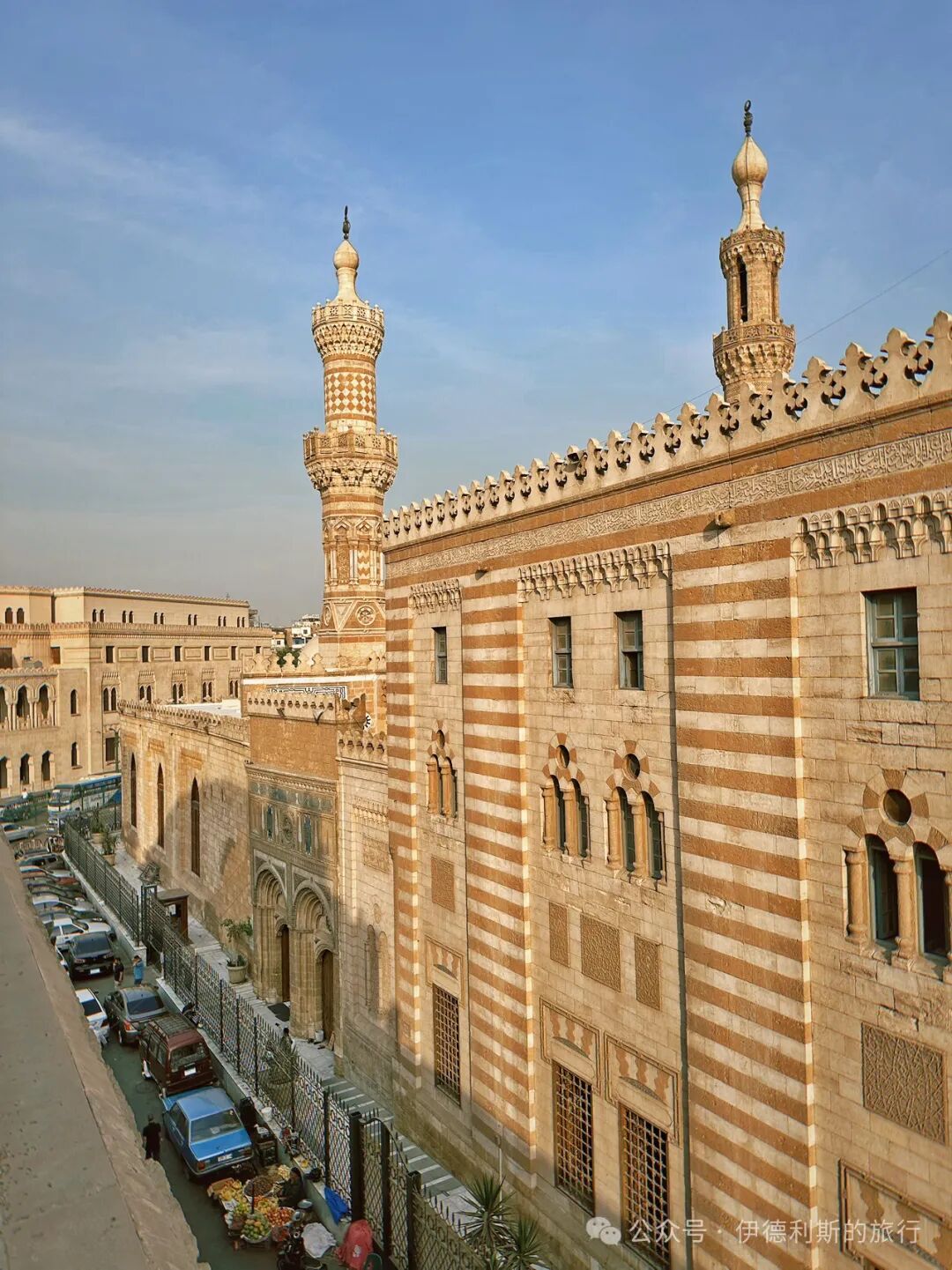
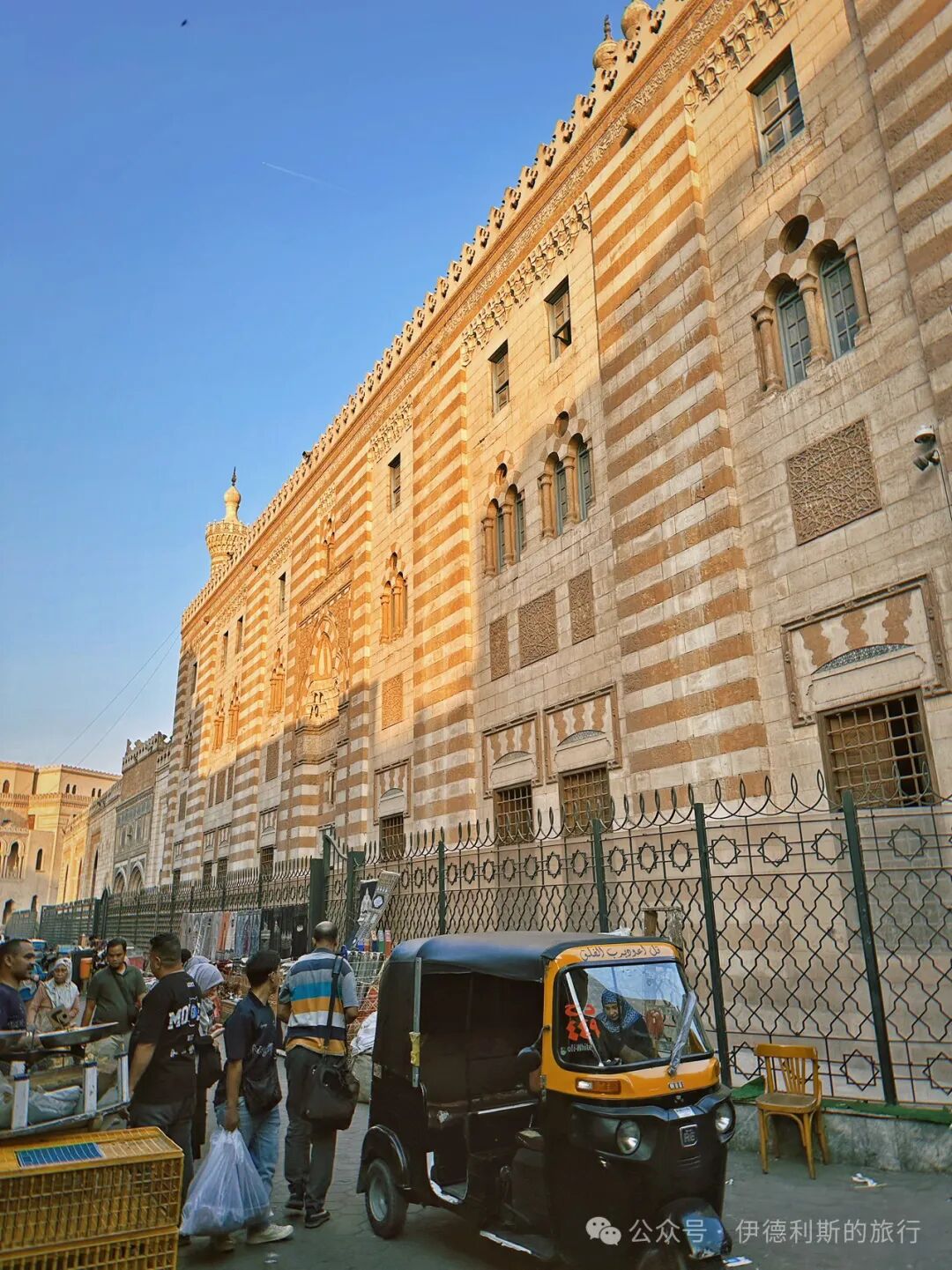
The last two photos show the Fatimid dynasty stucco carvings restored by the Committee for the Conservation of Monuments of Arab Art during the reign of Abbas II Hilmi Pasha.
2. Al-Hussein Mosque: First built in 1154, rebuilt in 1874
Across from the Al-Azhar Mosque is the Al-Hussein Mosque, where Shia Muslims believe the head of Imam Hussein is buried. The mosque was first built in 1154, but the current structure dates back to its reconstruction in 1874.
The Fatimid dynasty believed that the Abbasid dynasty secretly moved Imam Hussein's head from a grave at the Umayyad Mosque in Damascus. The Fatimids later rediscovered it in 1091 and built a shrine for it in Ashkelon, Palestine.
In 1153, the Fatimid dynasty ordered the head of Hussein to be moved to Cairo to be buried with the Fatimid caliphs, and they built the Al-Hussein Mosque in 1154. Today, the lower part of the south gate of the Al-Hussein Mosque still keeps its original Fatimid structure.
The Ayyubid dynasty rebuilt the Al-Hussein Mosque in 1237, but it later burned down, leaving only one Ayyubid minaret (bangke ta) standing today.
In 1874, Isma'il Pasha, the ruler of the Muhammad Ali dynasty who reigned from 1863 to 1879, rebuilt the Al-Hussein Mosque in a Gothic Revival style and added a minaret that blends Gothic and Ottoman styles. During his rule, Isma'il Pasha carried out large-scale modernization projects to make Egypt more European, and the Al-Hussein Mosque was part of this transformation.
In 1893, a room for storing items of the Prophet (Bab al-Mukhallafat al-Nabawiyya) was added next to the shrine of the head of Hussein. It contains four strands of the Prophet's hair, a linen cloak he wore during his lifetime, his lantern, a copper kohl applicator, his staff, and a sword given to him by one of his companions.
Today, the center of the shrine of the head of Hussein is the Zarih grille, which was crafted in Mumbai in 1965 by Taher Saifuddin, the leader of the Dawoodi Bohras branch of Ismailism. People say this Zarih was originally designed for the shrine of Abbas ibn Ali in Karbala, but it could not be installed there. Taher Saifuddin believed this was guided by Allah, so he had the Zarih flown to Cairo and installed inside the Hussein Mosque.
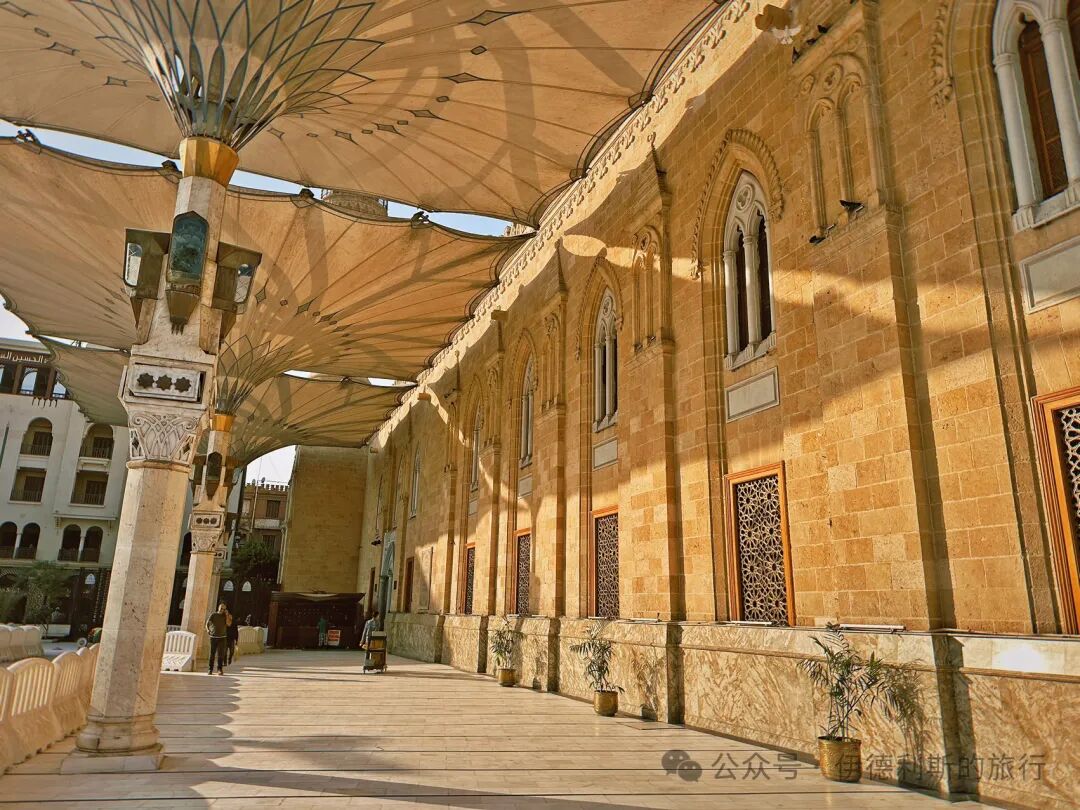
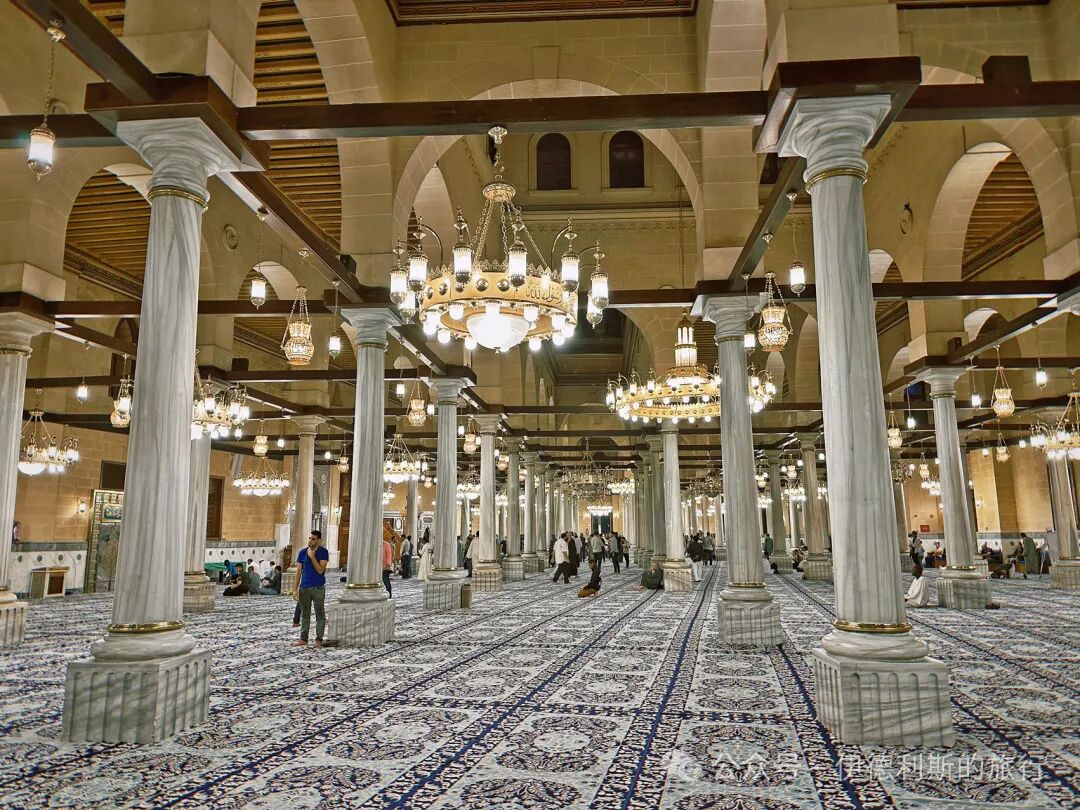
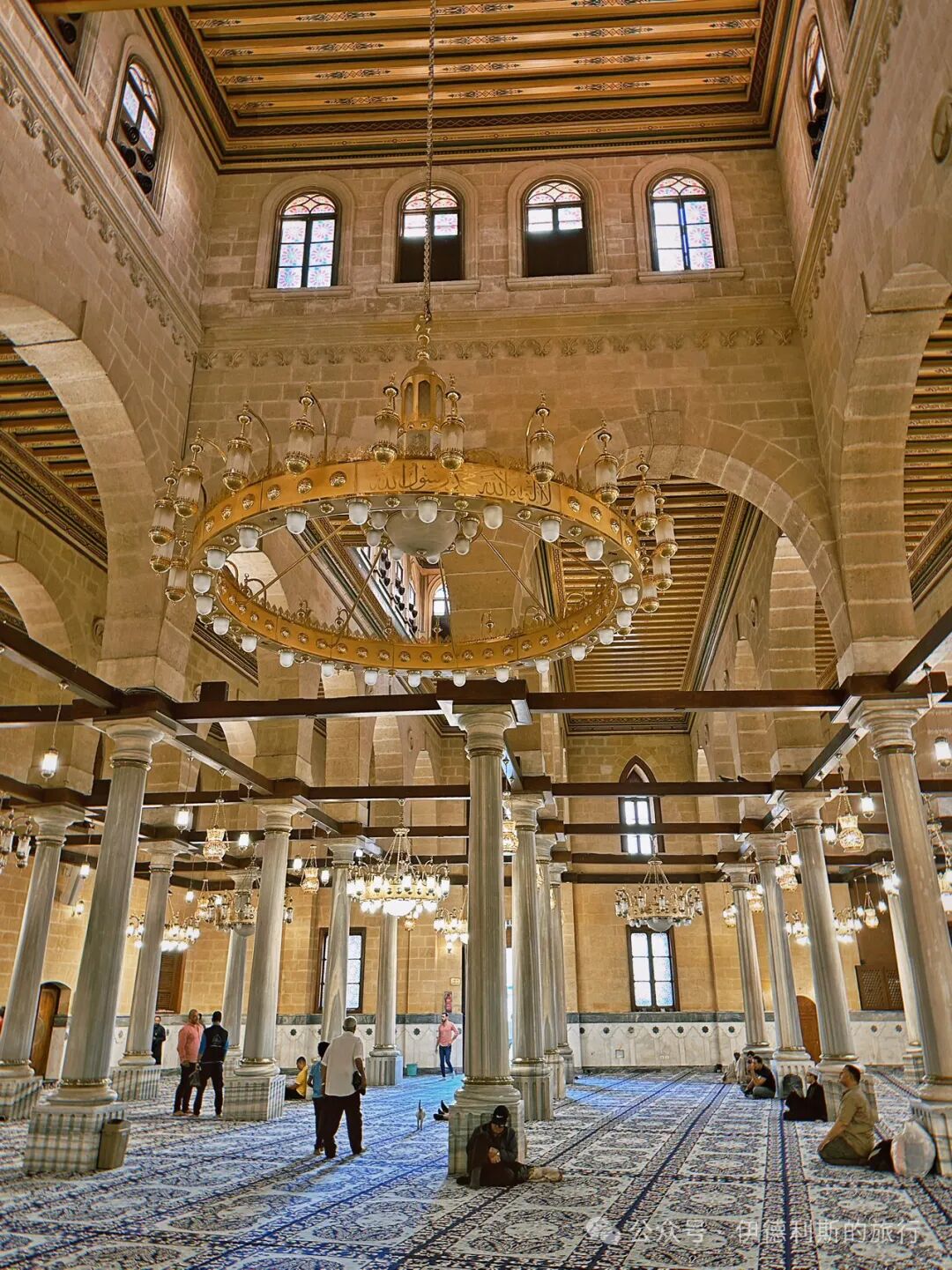
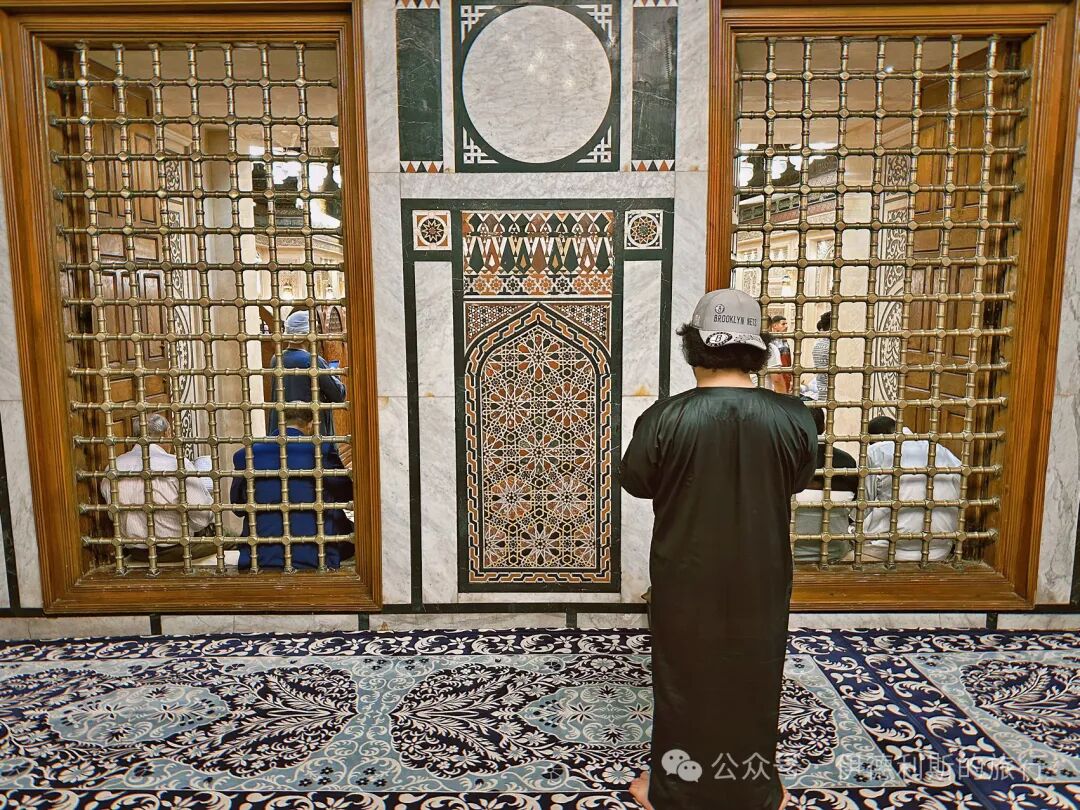
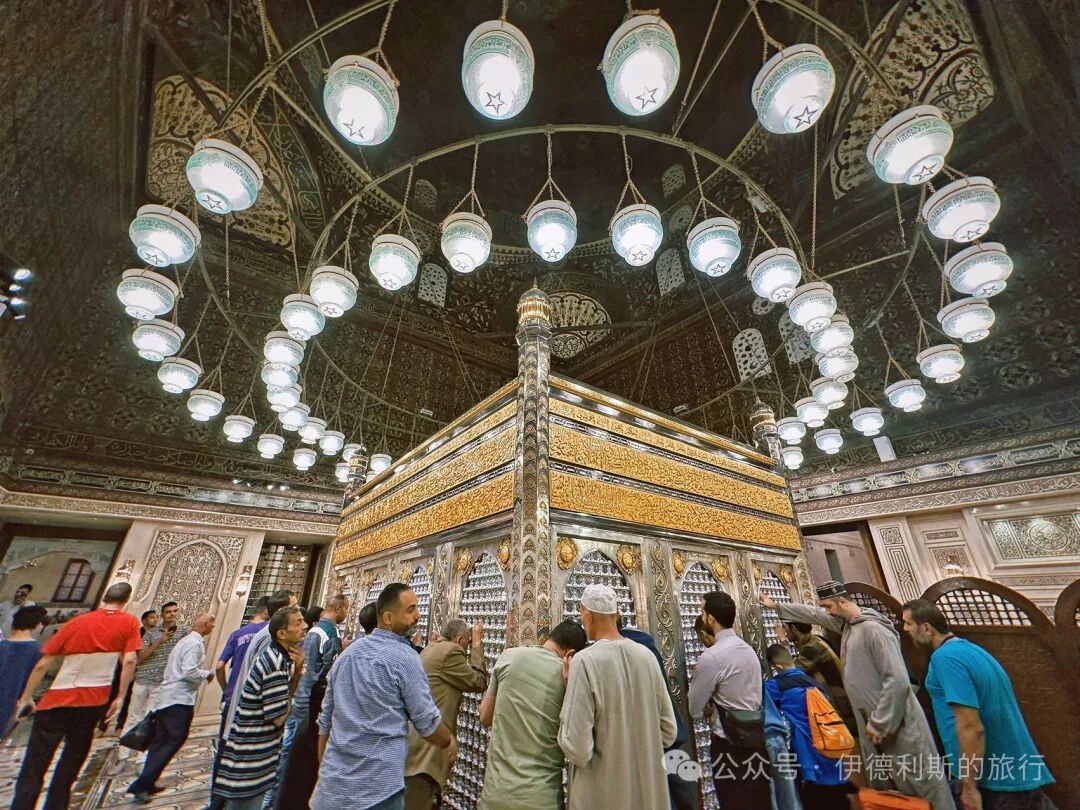
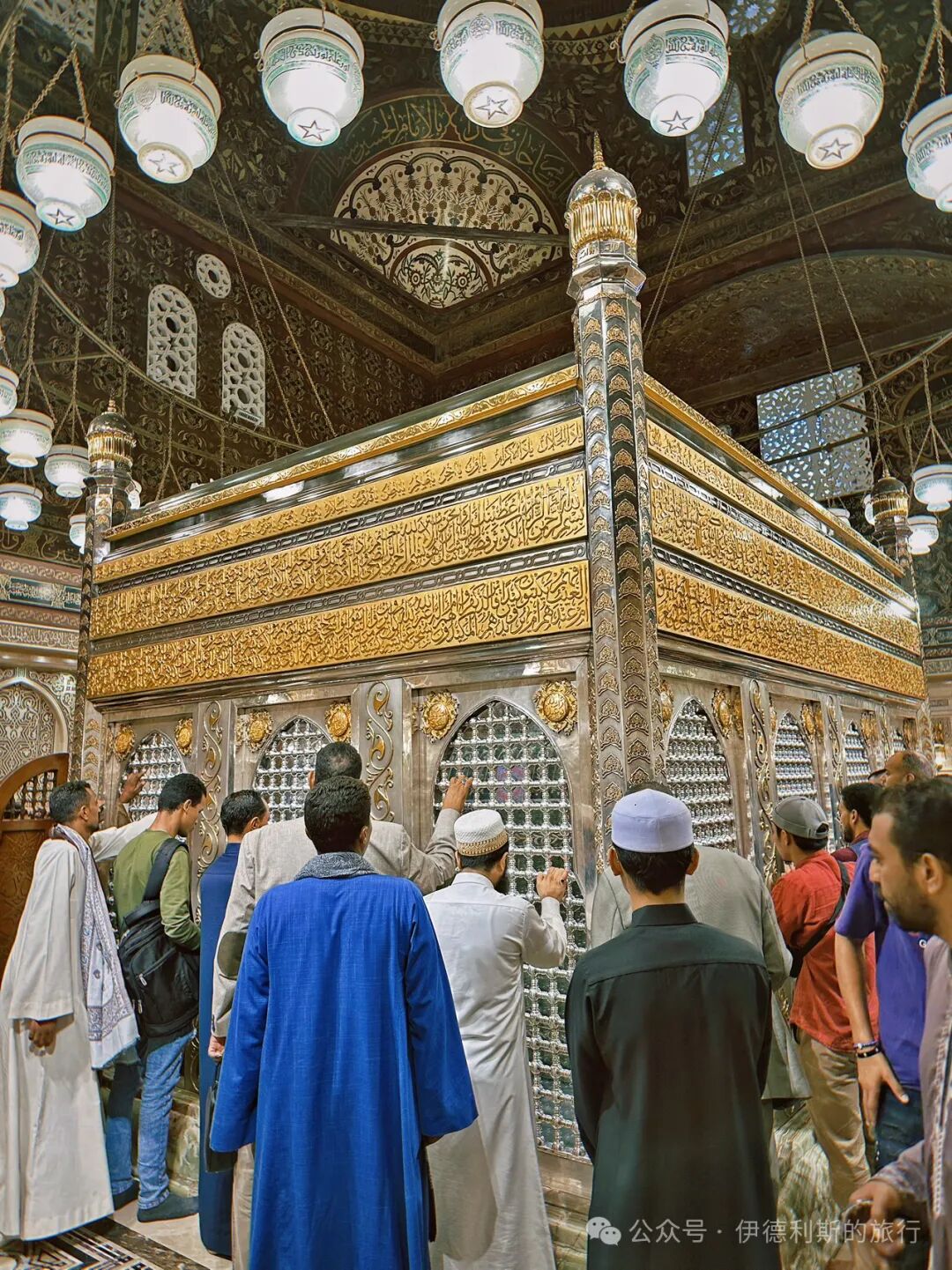
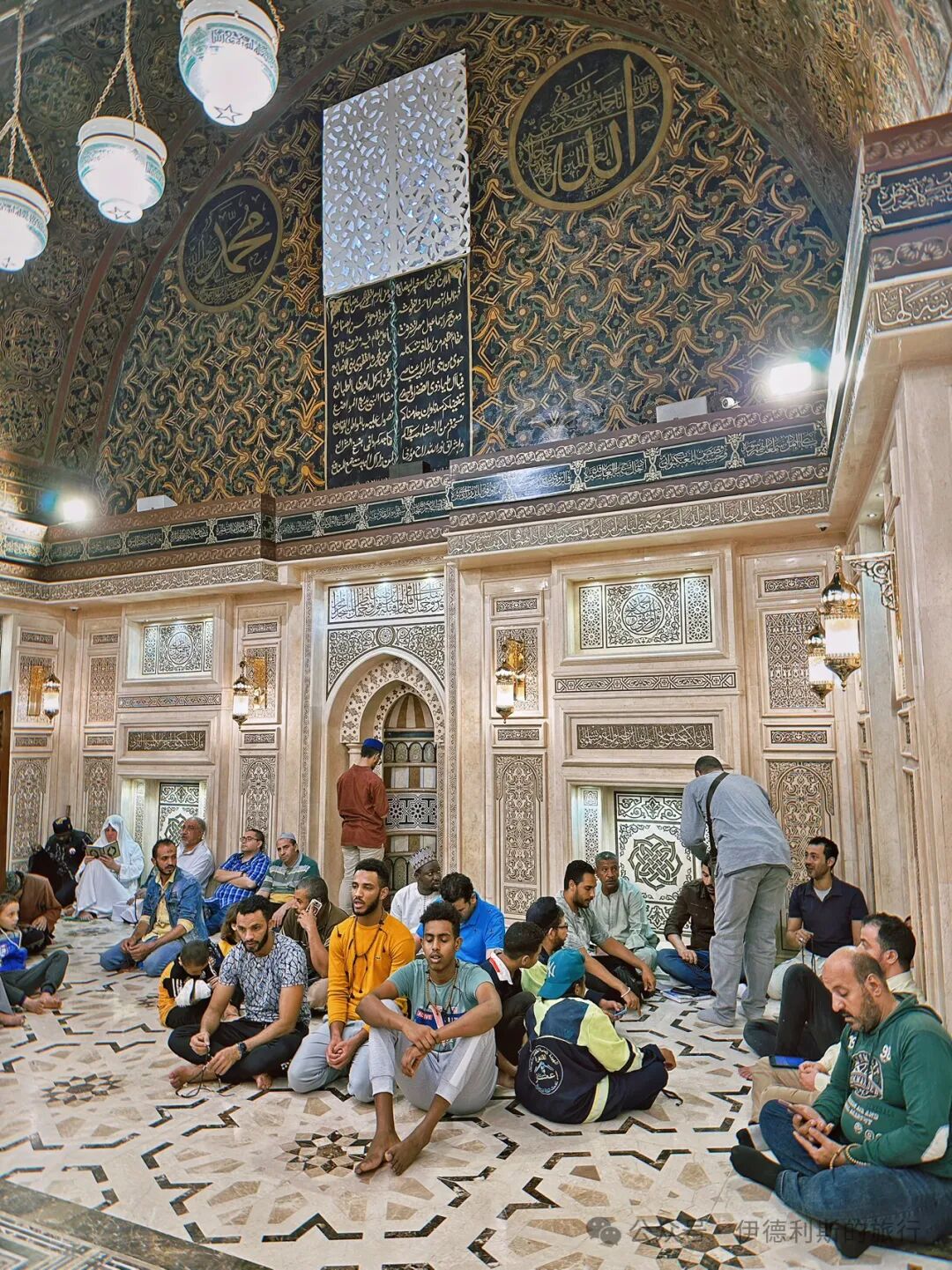
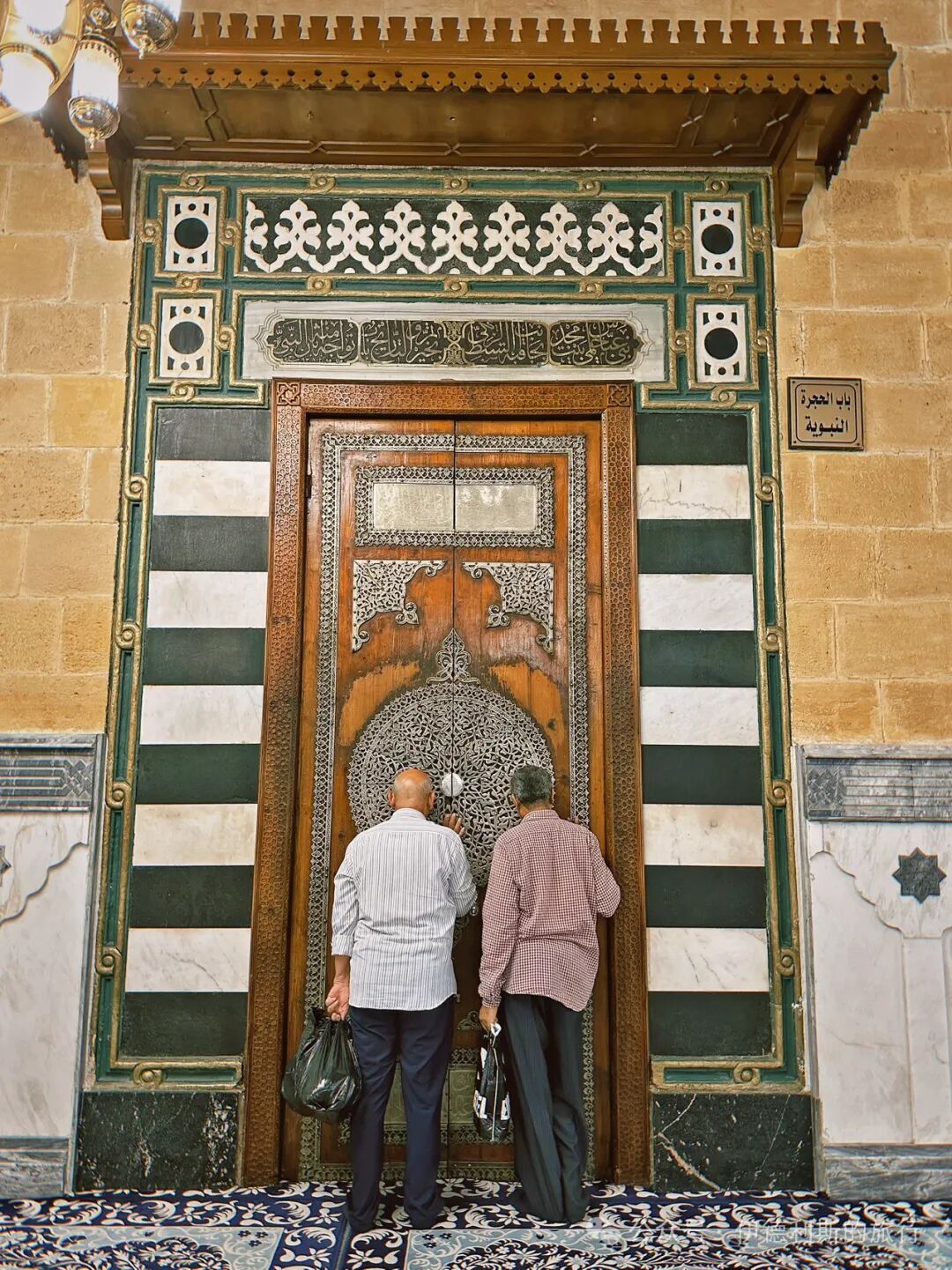
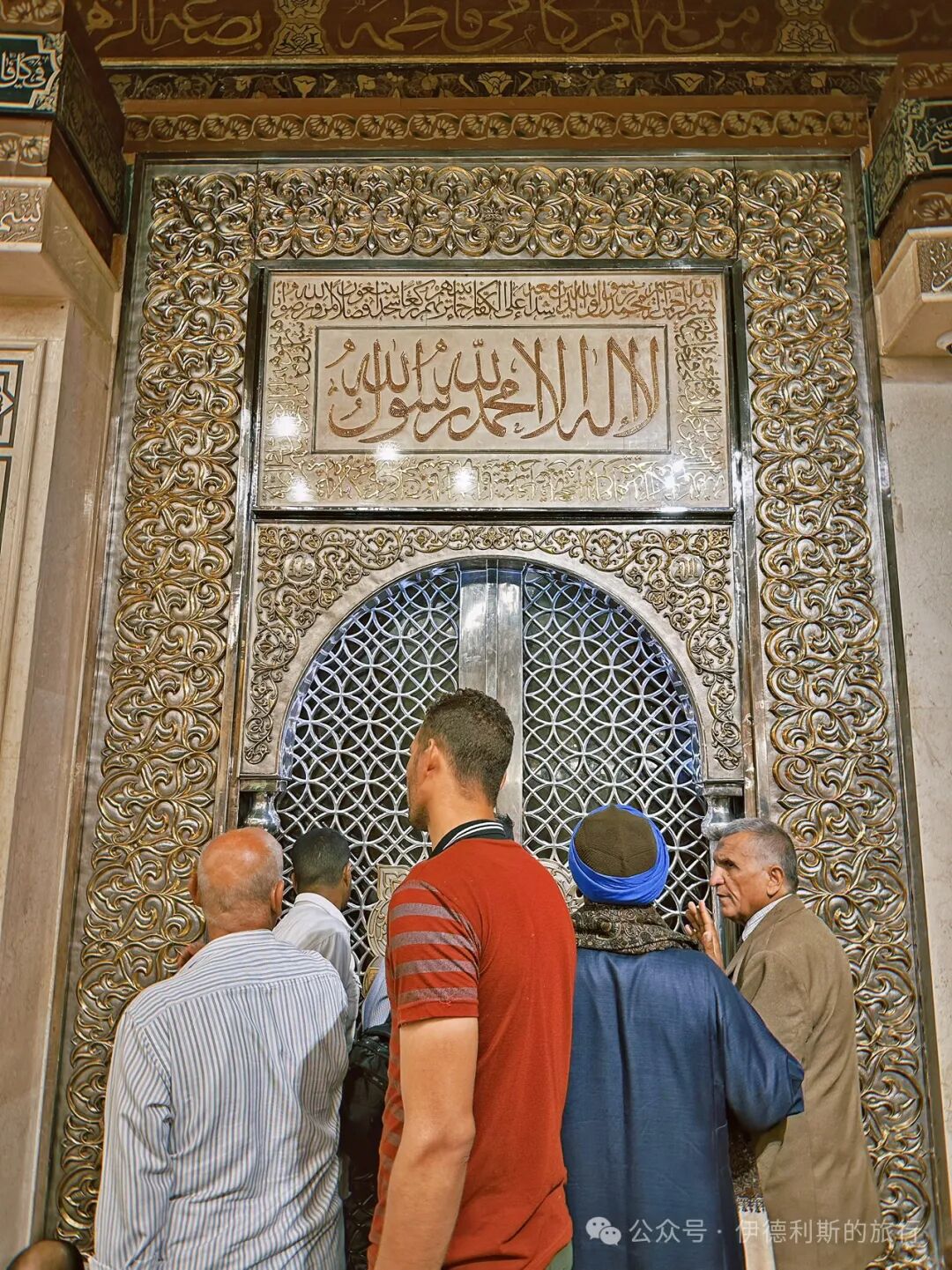
The area around the Hussein Mosque is very busy. There are so many people during namaz that sometimes they cannot all fit in at once and have to pray in two separate groups, which is a rare sight in Cairo.
3. Qaytbay Caravanserai complex: 1477
Right next to the south wall of the Al-Azhar Mosque is the Qaytbay caravanserai (Wikala) complex, built in 1477 by the Mamluk Sultan Qaytbay. The entire complex consists of a caravanserai (Wikala), a fountain (Sabil), an elementary school (Kuttab), and an animal drinking trough (Hod). Sultan Qaytbay built two caravanserais in Cairo. We have already introduced the other one, which is located inside the north gate.
The caravan inn consists of storage rooms on the first floor and guest rooms on the second floor. The upstairs area is now abandoned, while the ground floor has become a street of bookstores. To the west of the caravan inn is a fountain-primary school. The fountain on the ground floor provides drinking water for the community, and the classrooms upstairs are where children study the Quran. At that time, it was very popular for sultans of the Mamluk dynasty to build fountain-primary schools as a waqf (endowment) to seek the mercy of Allah.
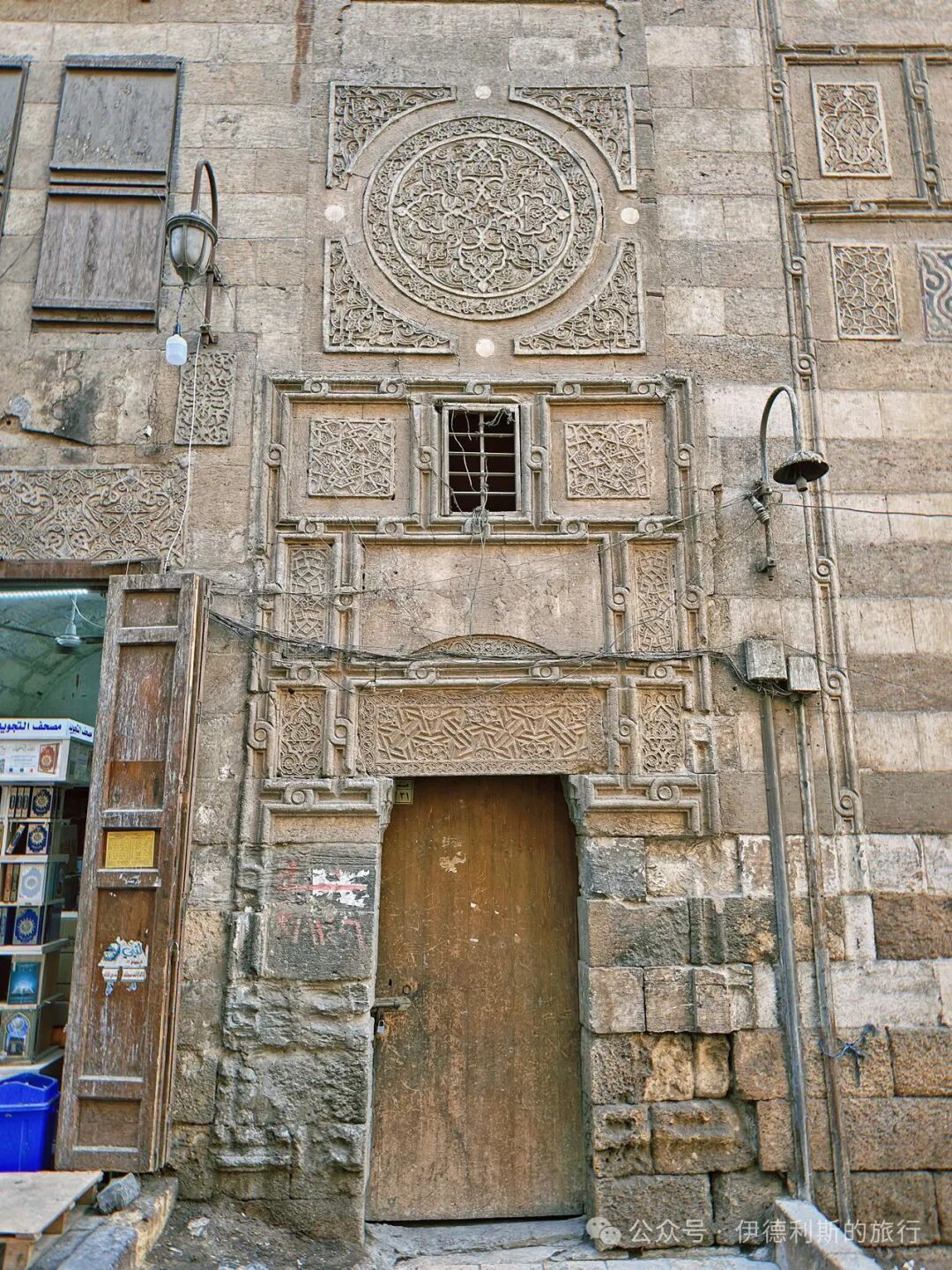
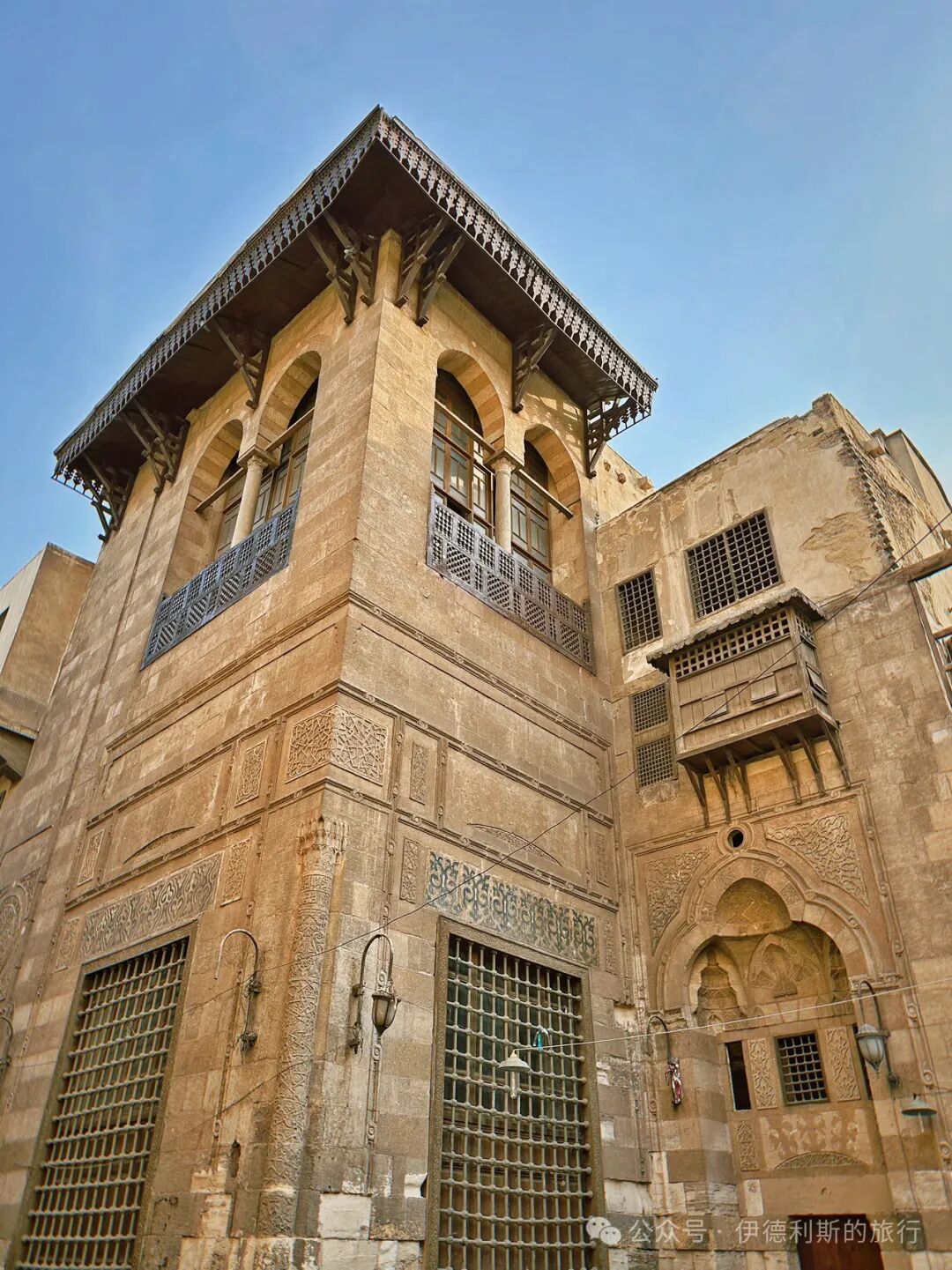
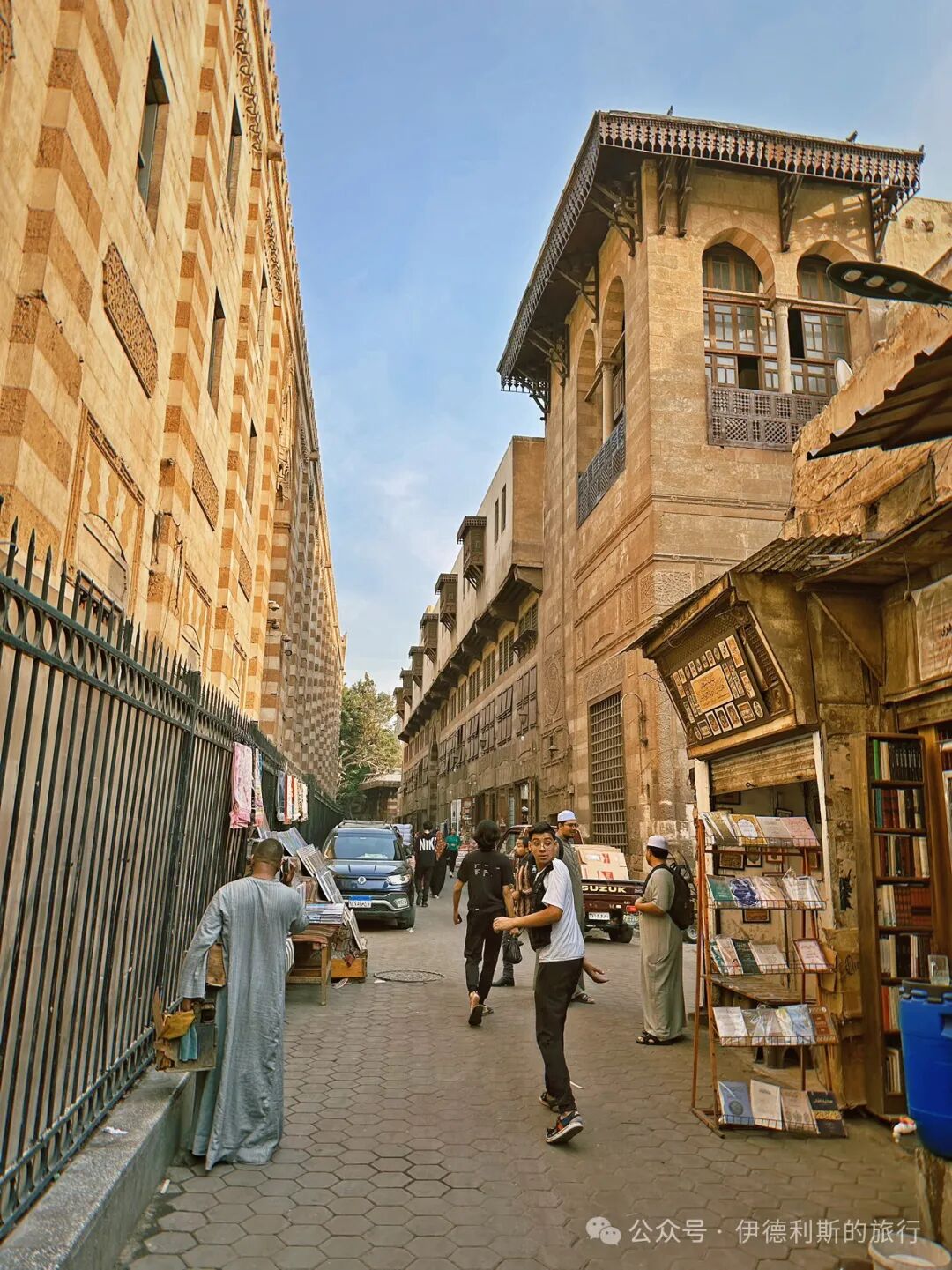
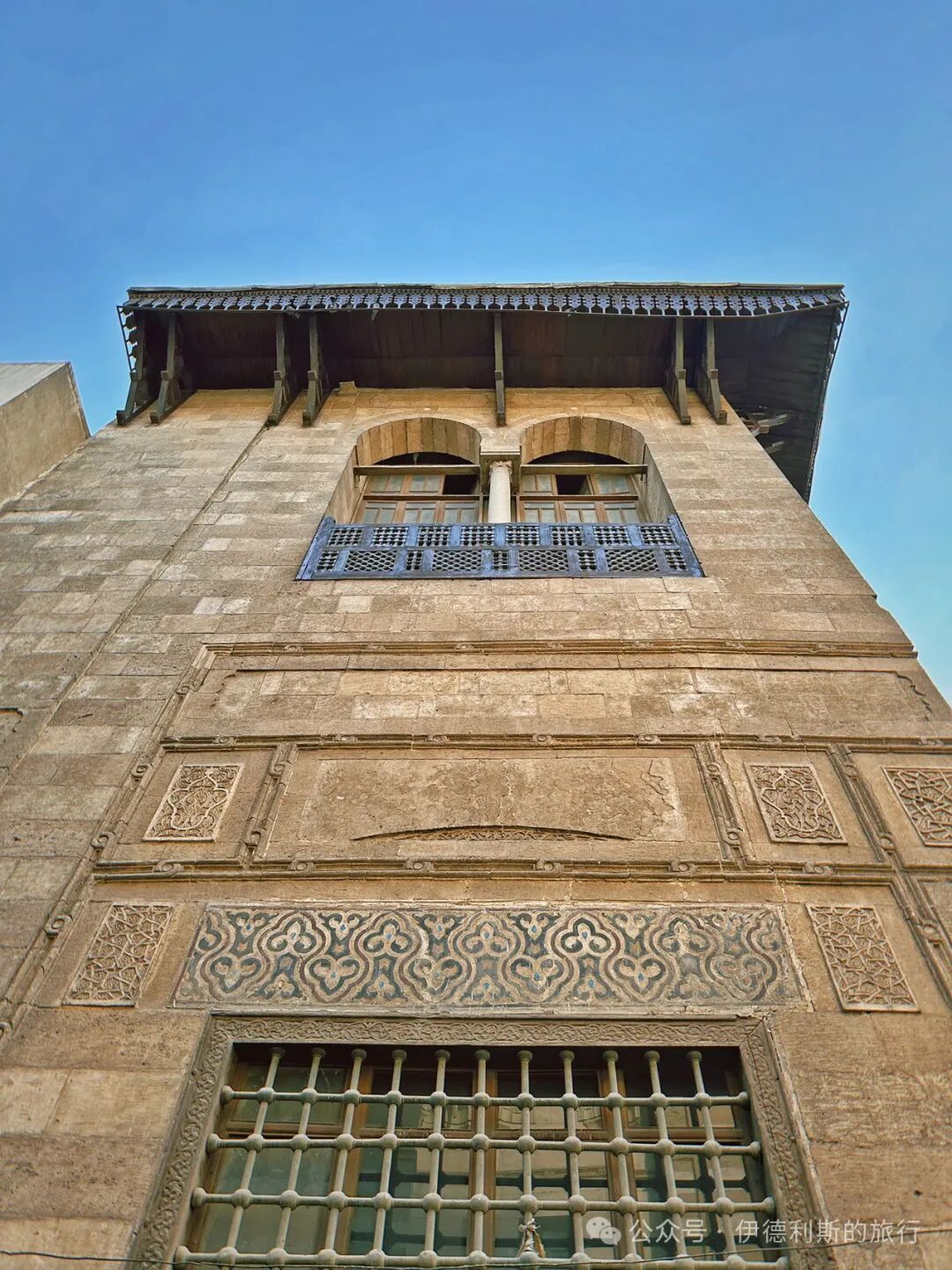
4. Abu al-Dhahab Mosque: 1774
Right next to the west wall of the Al-Azhar Mosque stands the Abu al-Dhahab Mosque, built in 1774 by the Egyptian Mamluk ruler Abu al-Dhahab. This was the last large building complex constructed by the Mamluks in Egypt, but only the mosque remains today.
Abu al-Dhahab means 'Father of Gold,' and he was a wealthy and generous Mamluk emir. During the Russo-Turkish War, the Mamluk emir Ali Bey of Egypt declared independence from the Ottoman Empire, and Abu al-Dhahab led an army to conquer most of the Hejaz and Syria. After taking Damascus in 1772, Abu al-Dhahab turned his army to occupy Cairo and became the de facto ruler of Egypt until he died suddenly of the plague in 1775 while conquering Palestine.
The architecture of the Abu al-Dhahab Mosque mixes different styles, featuring Mamluk-style outer walls and Ottoman-style domes, while the minaret was inspired by the early 16th-century minaret of the nearby Sultan al-Ghuri complex.
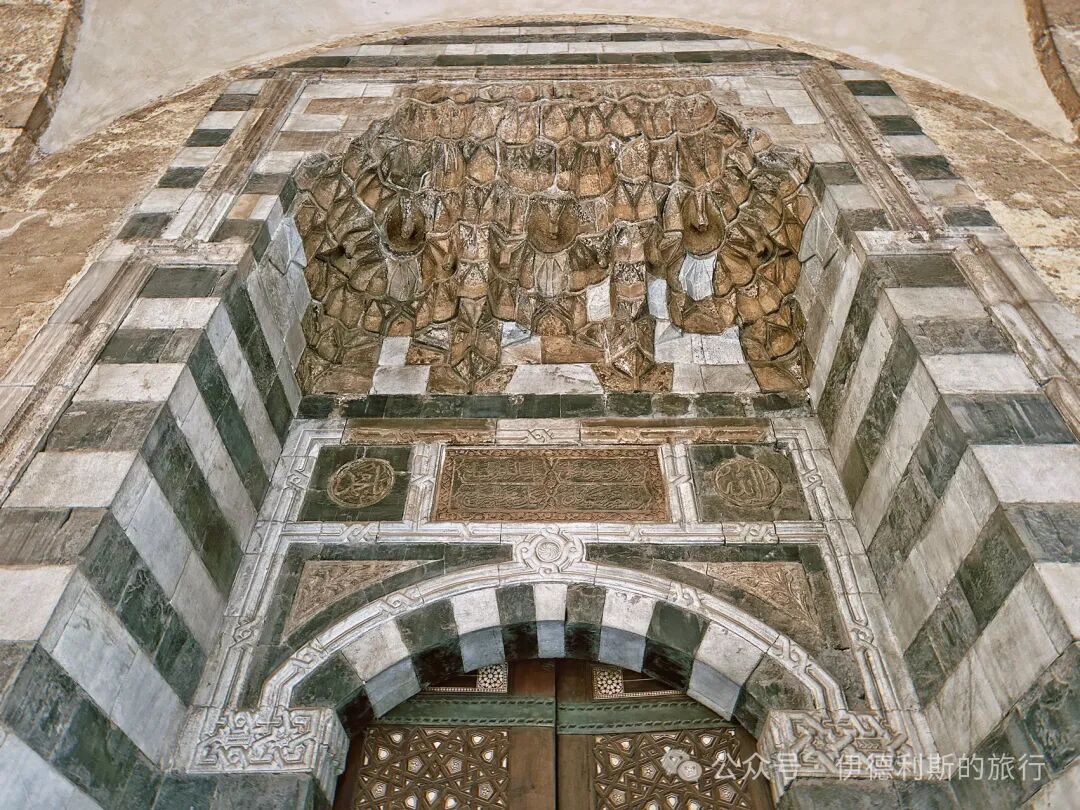
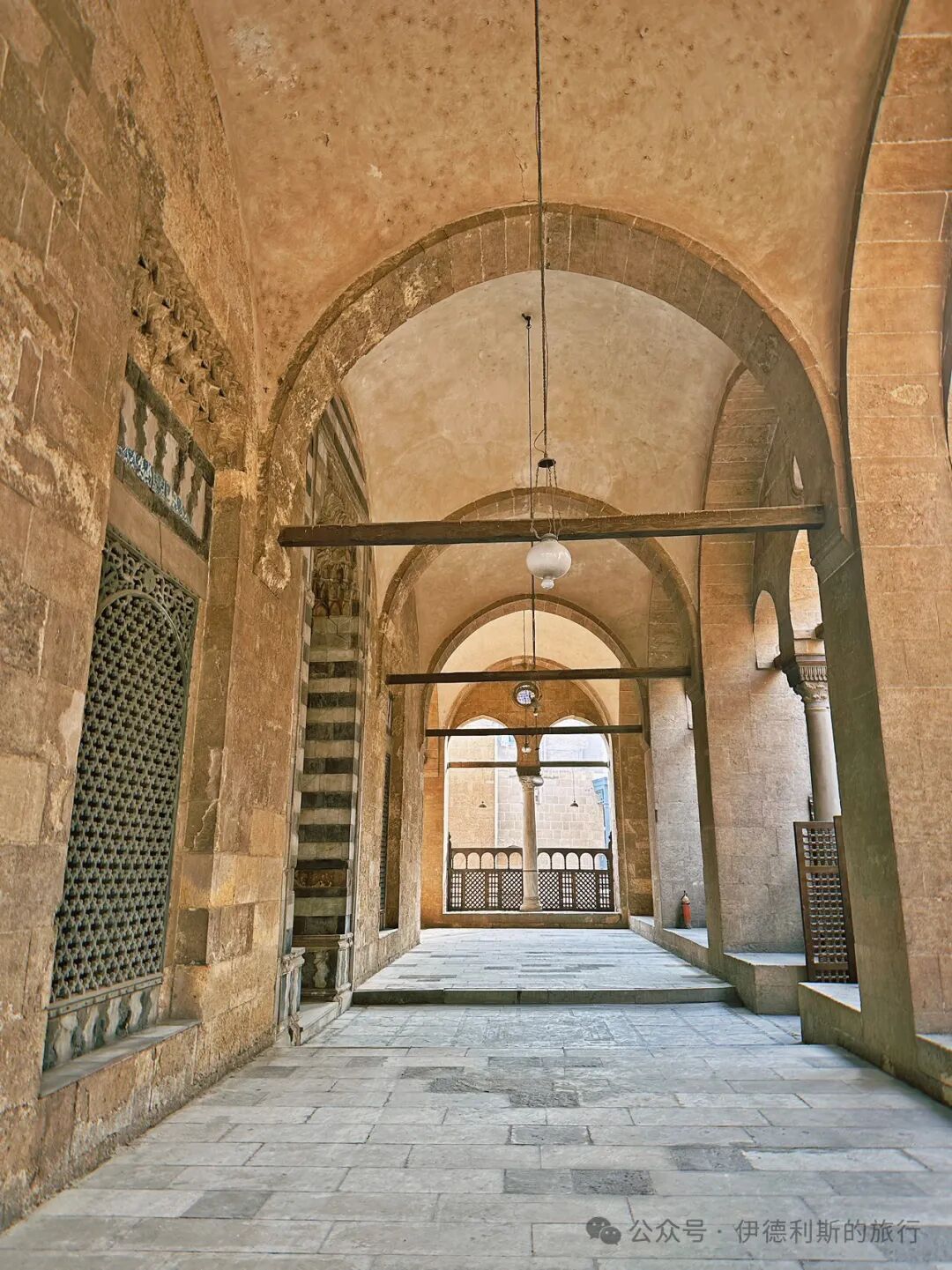
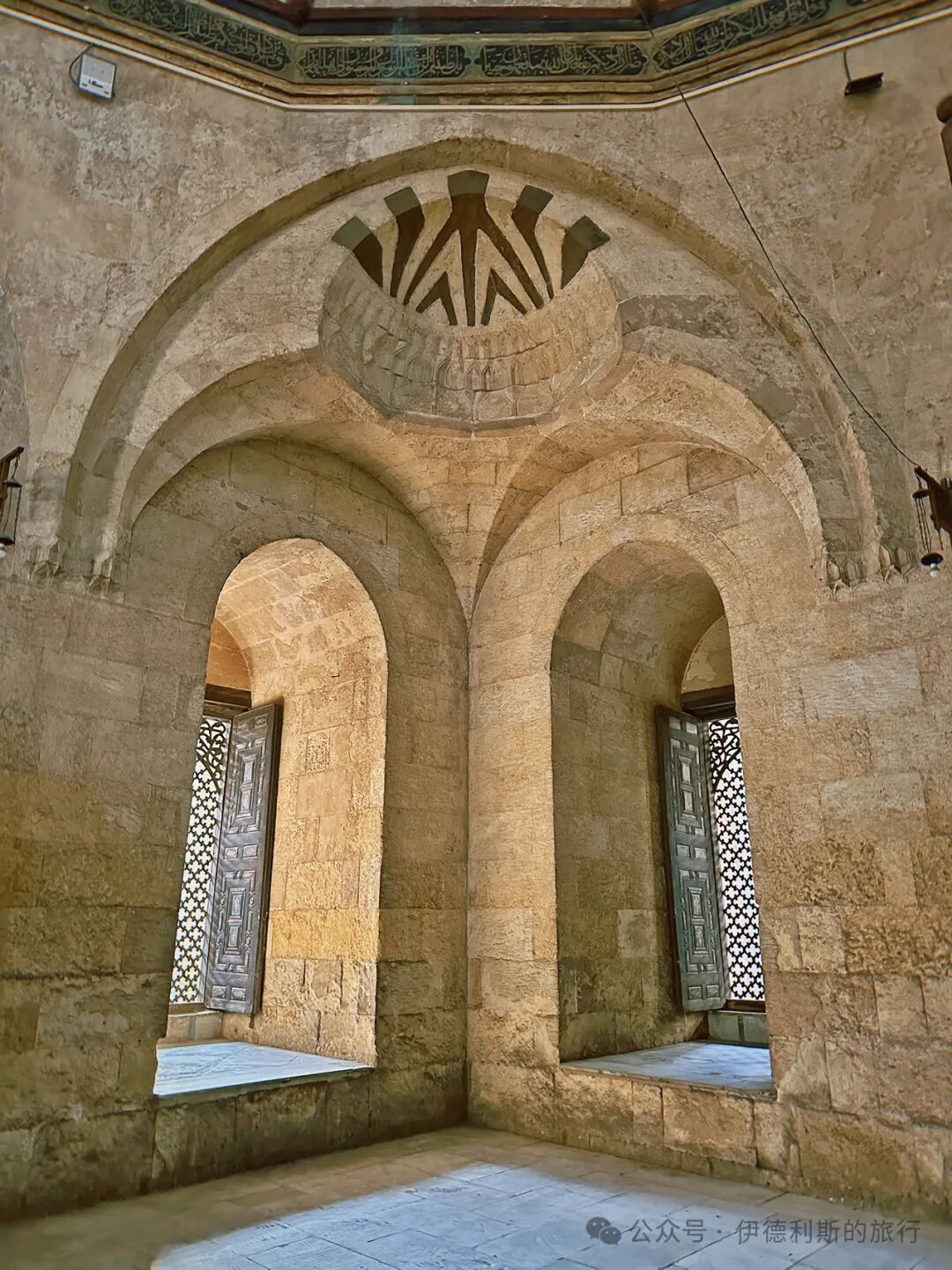
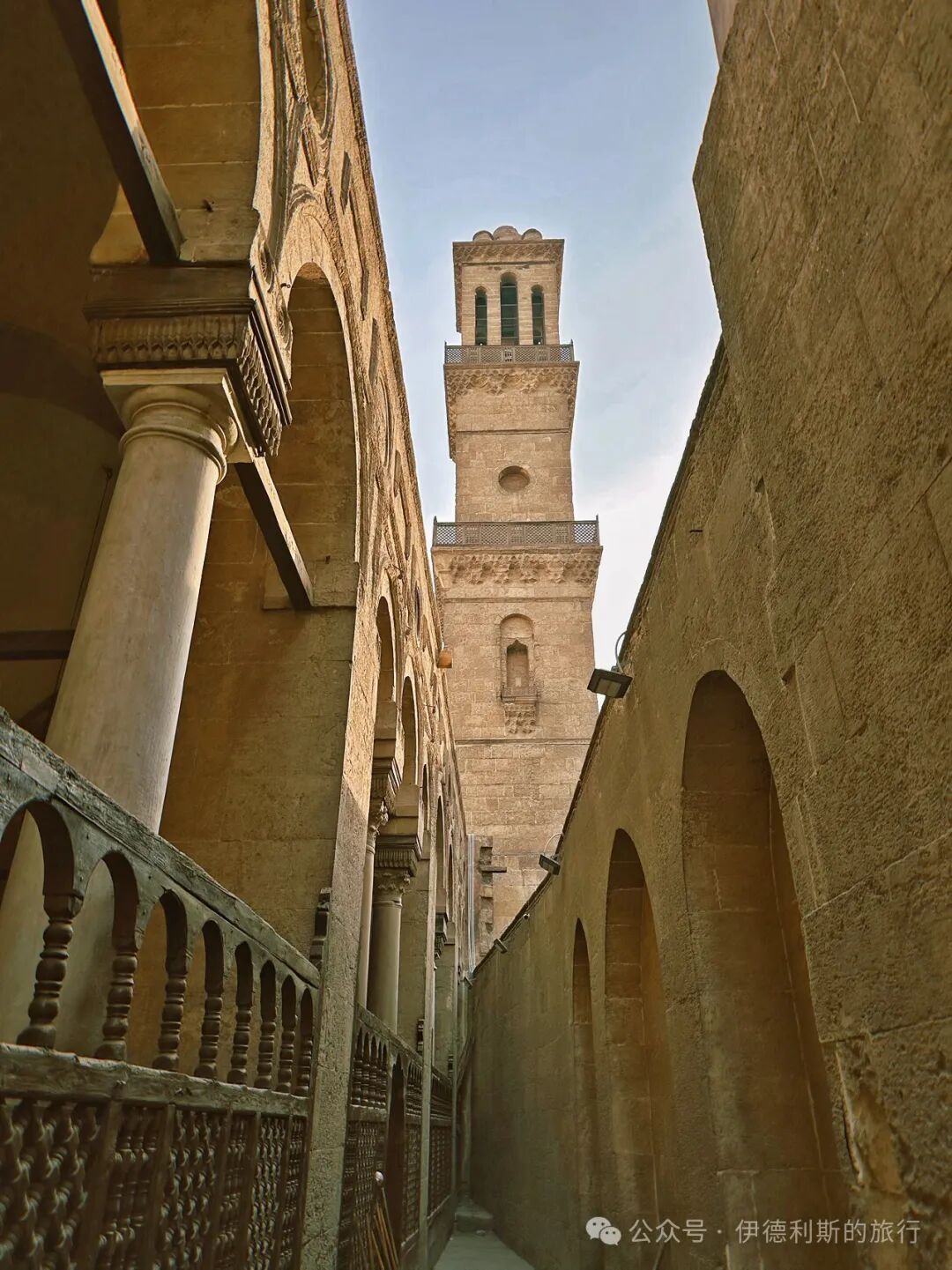
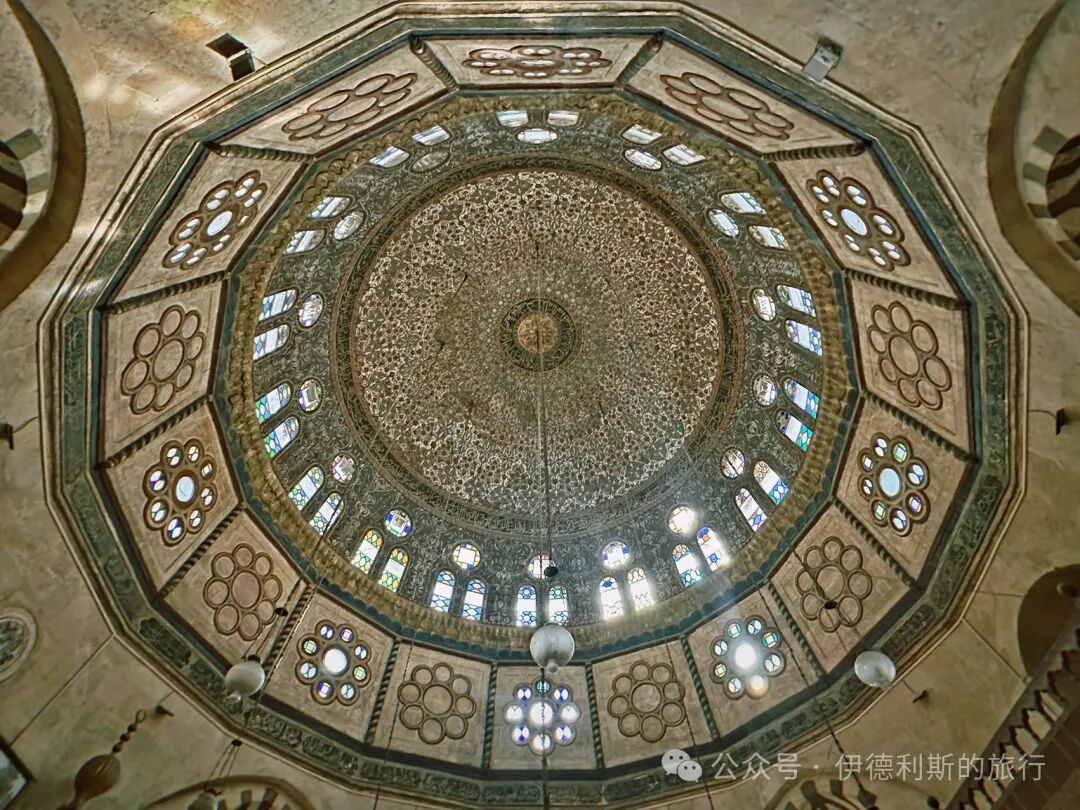
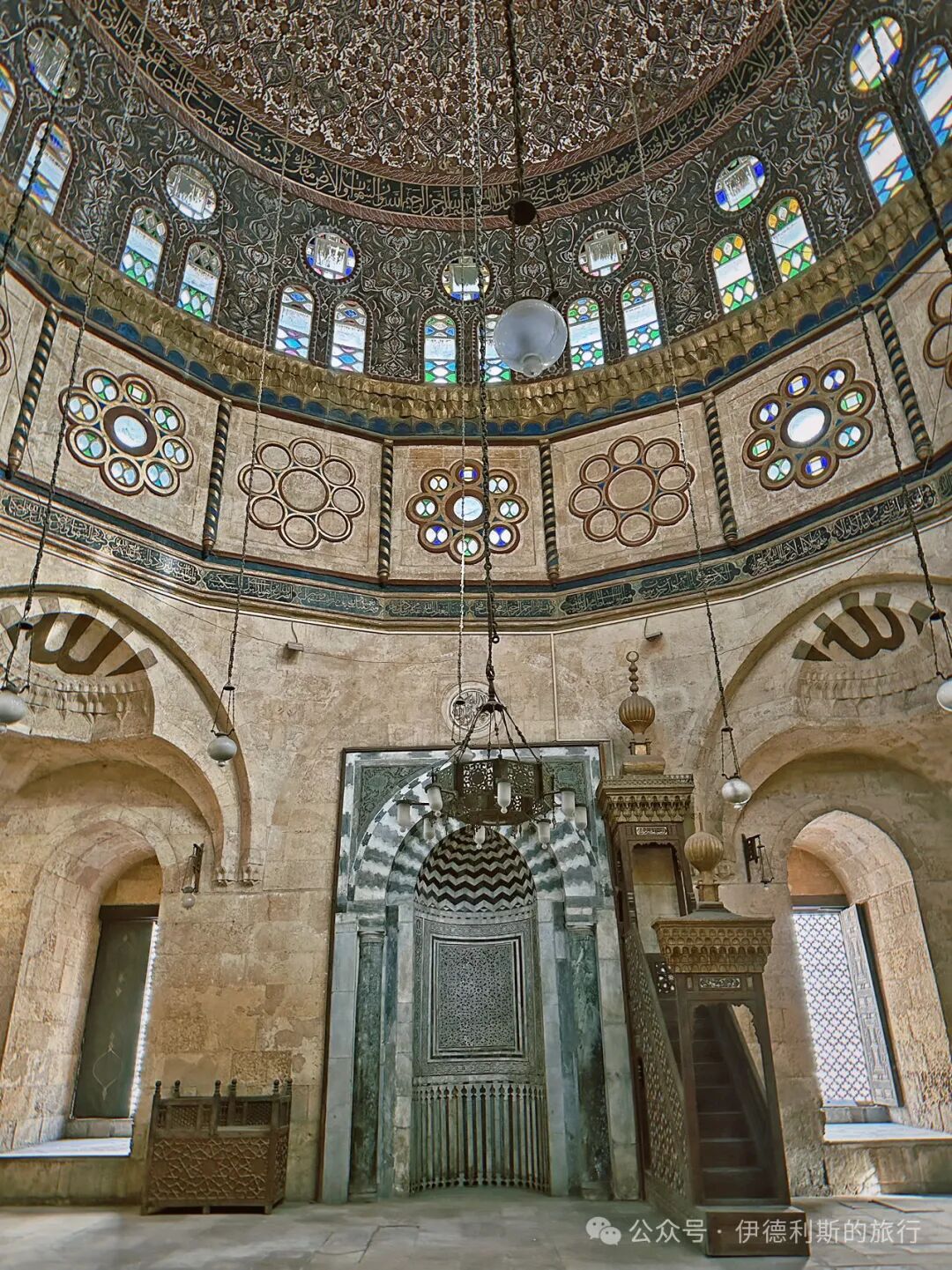
The mihrab (prayer niche) and minbar (pulpit) of the Abu al-Dhahab Mosque feature Mamluk-style decorations inlaid with mother-of-pearl and marble.
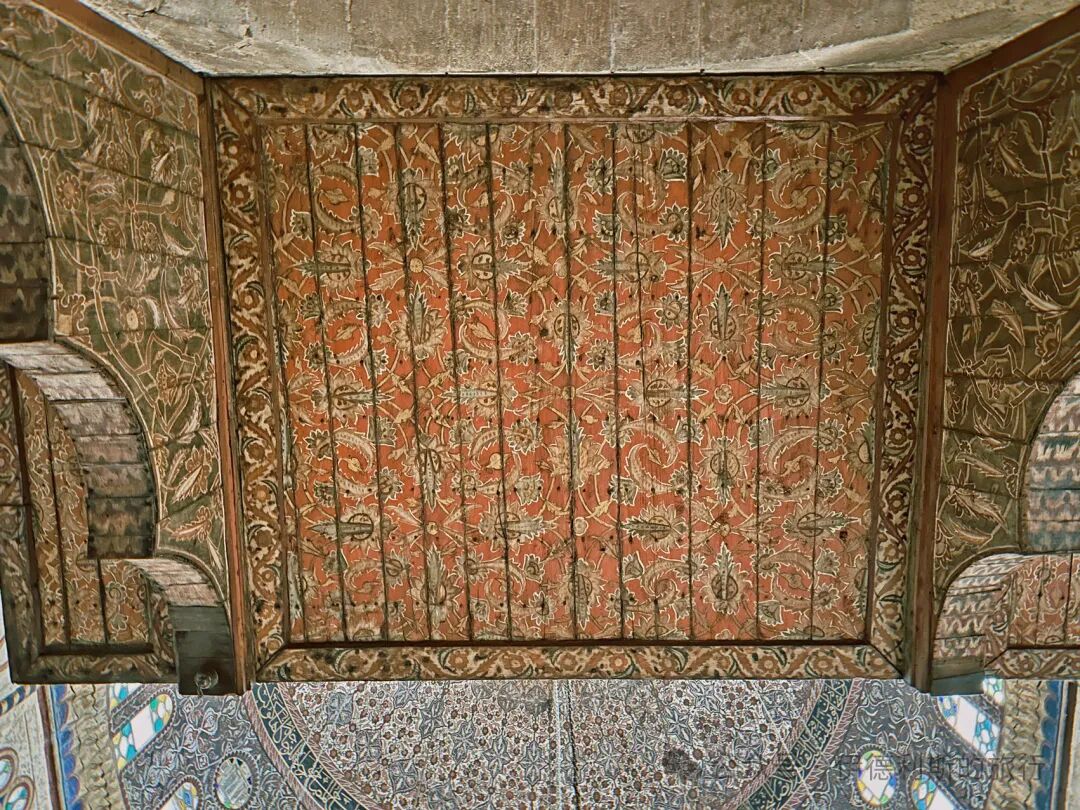
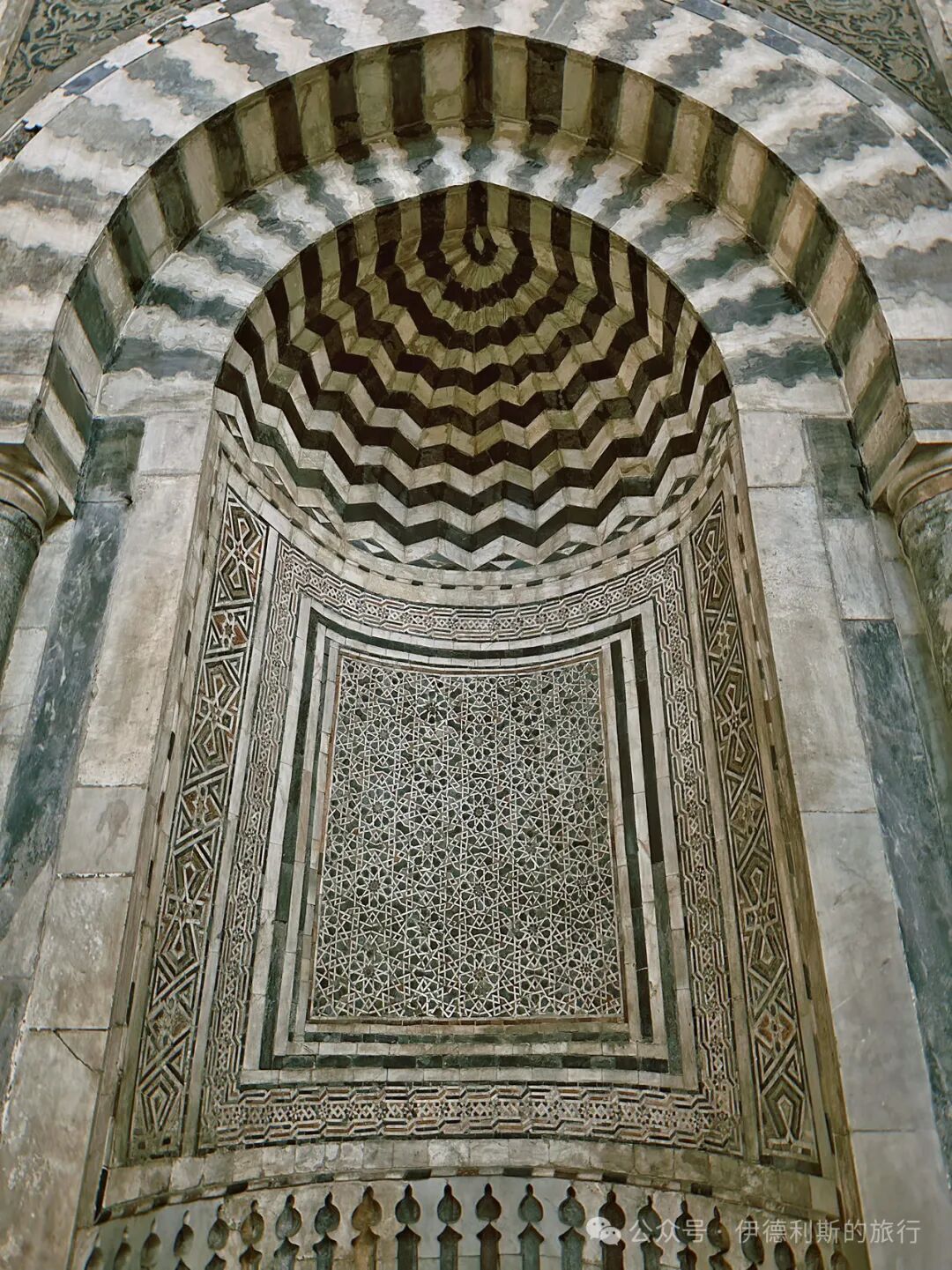
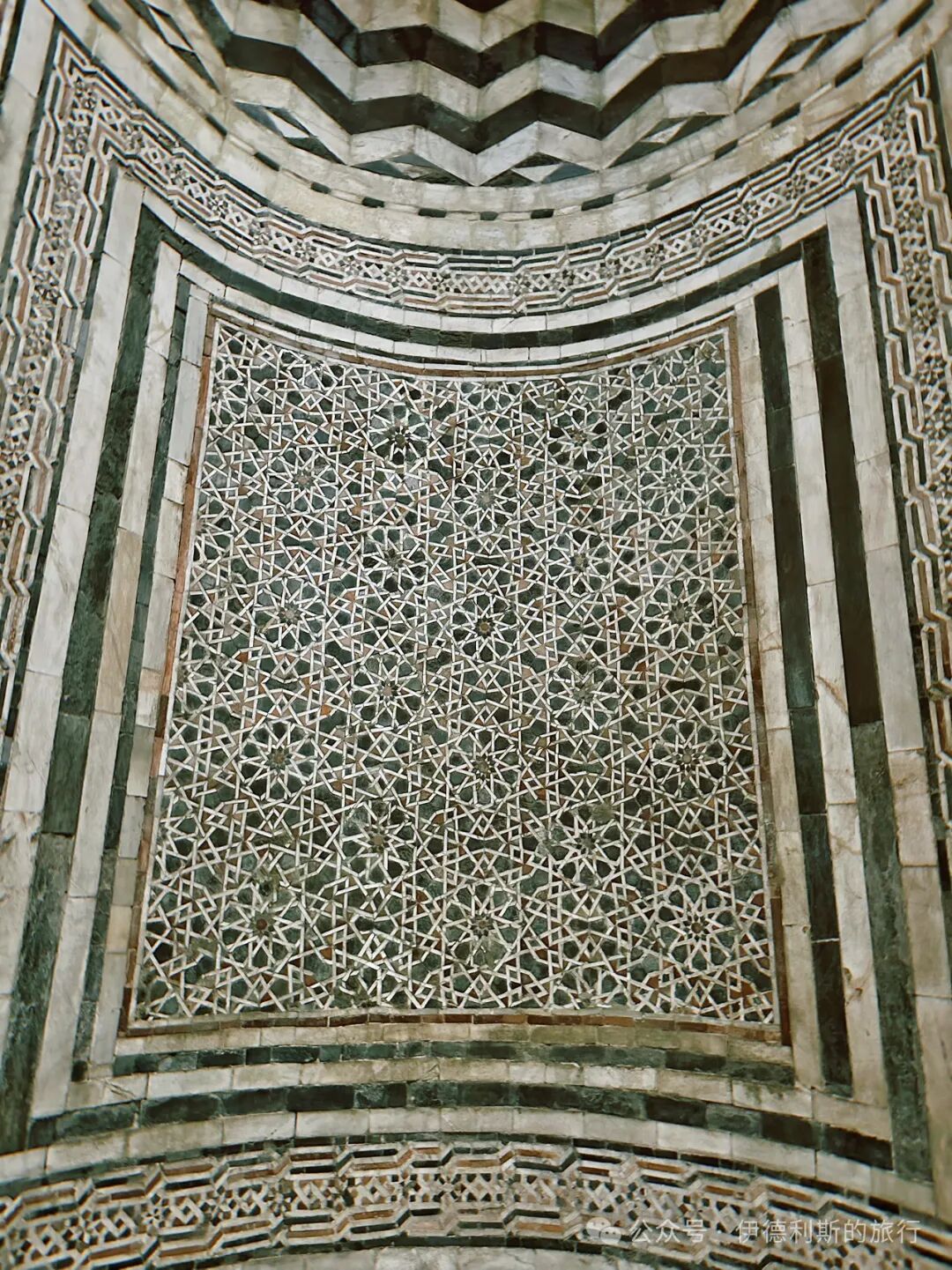
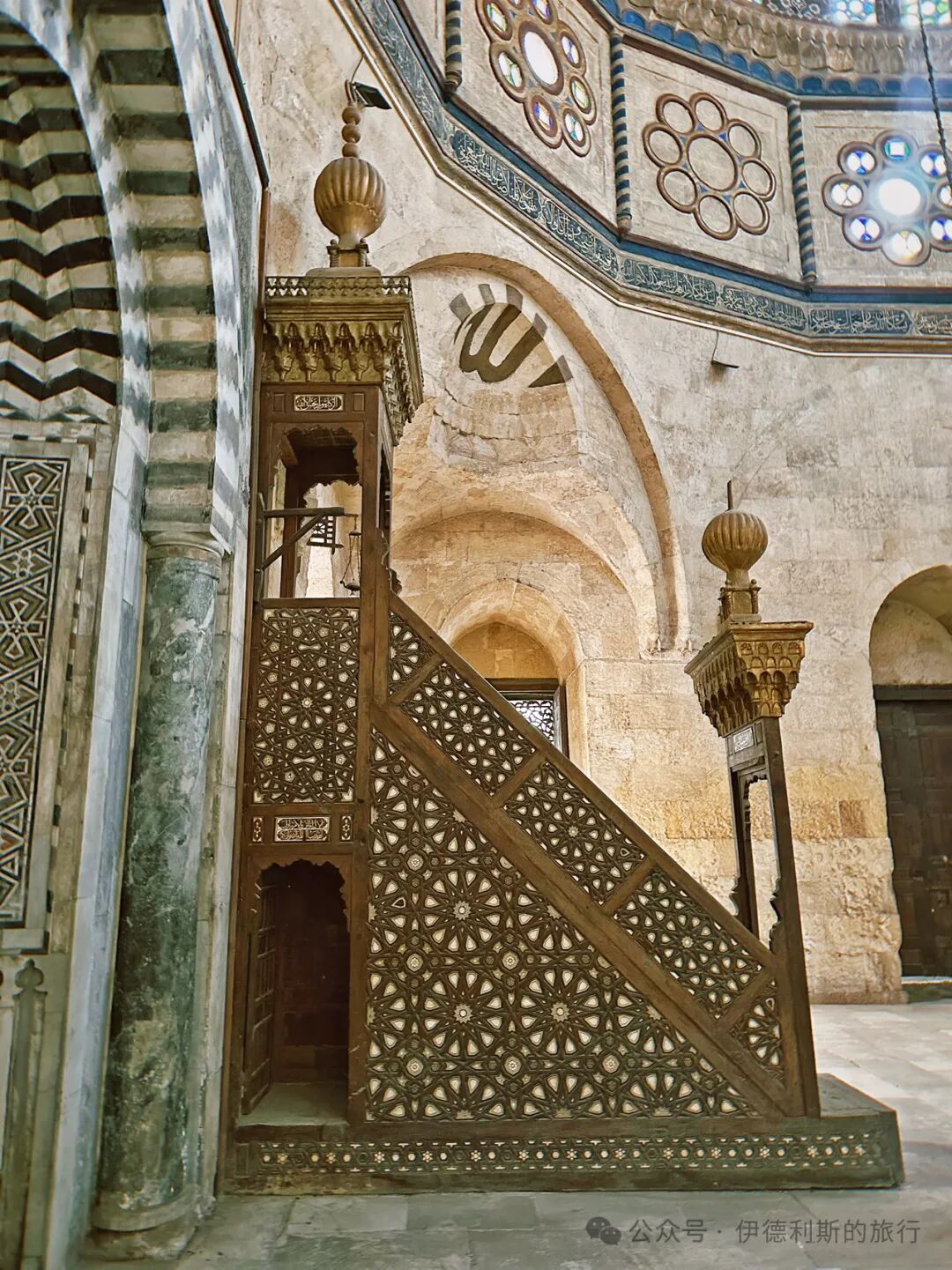
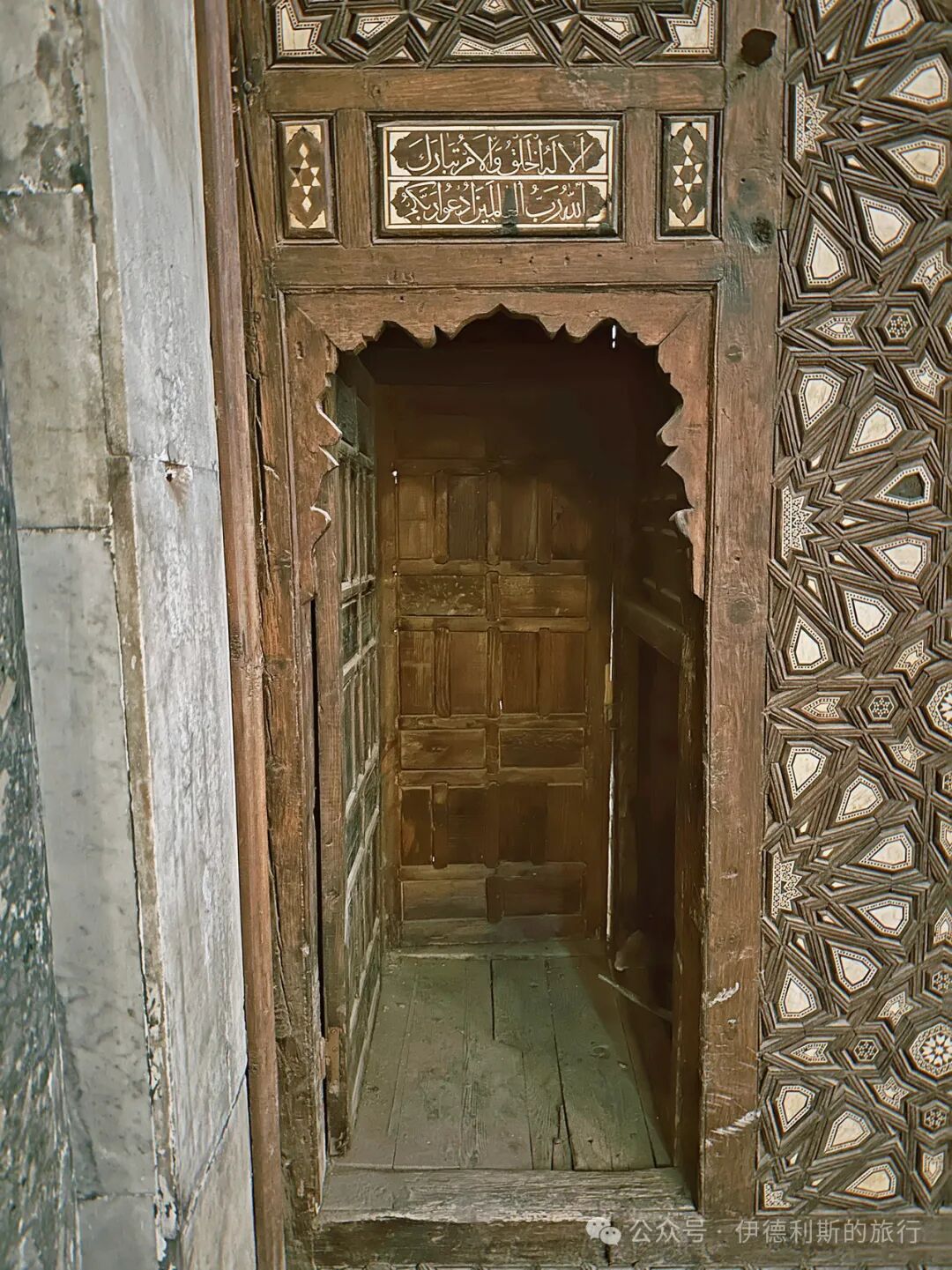
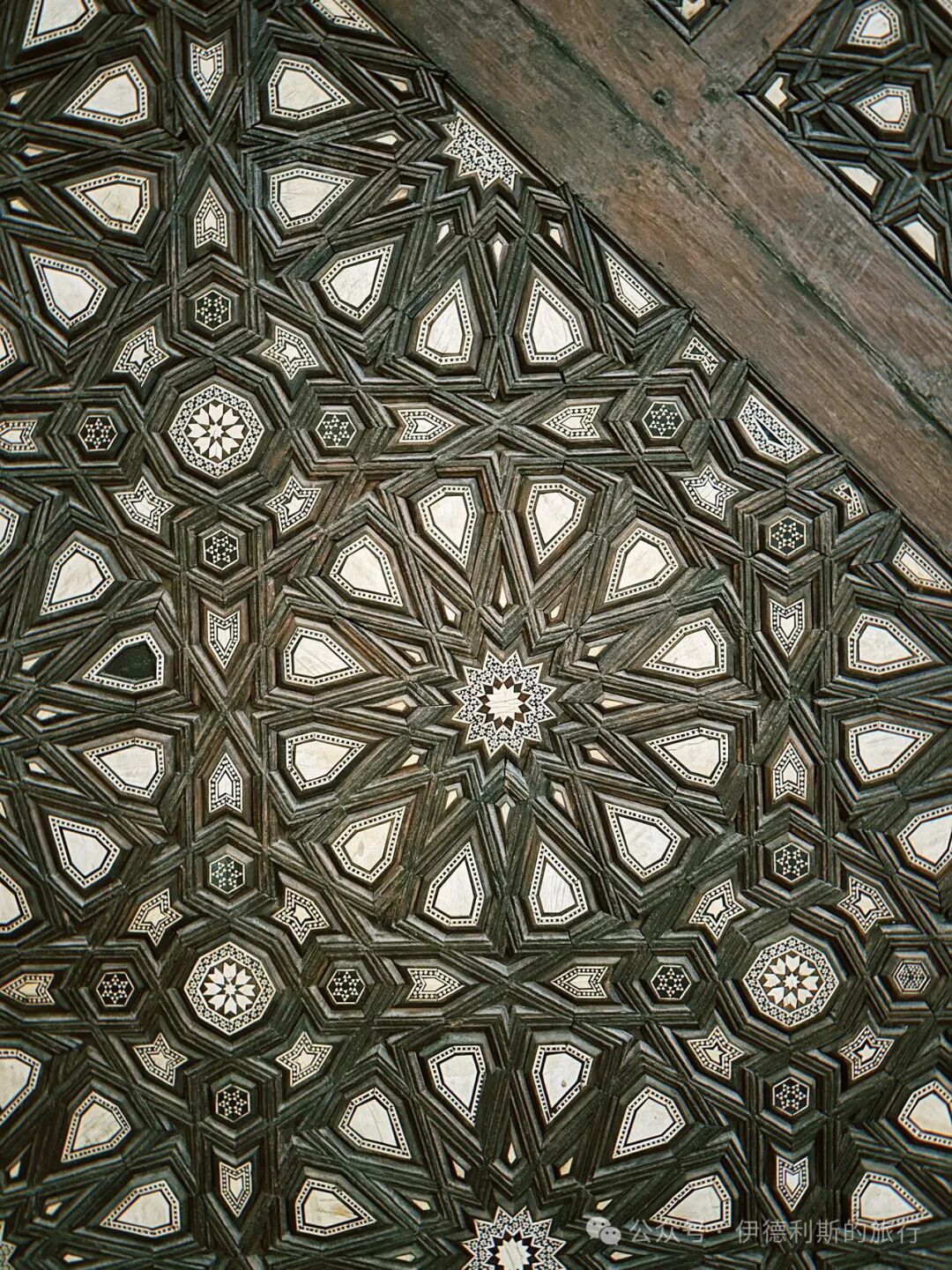
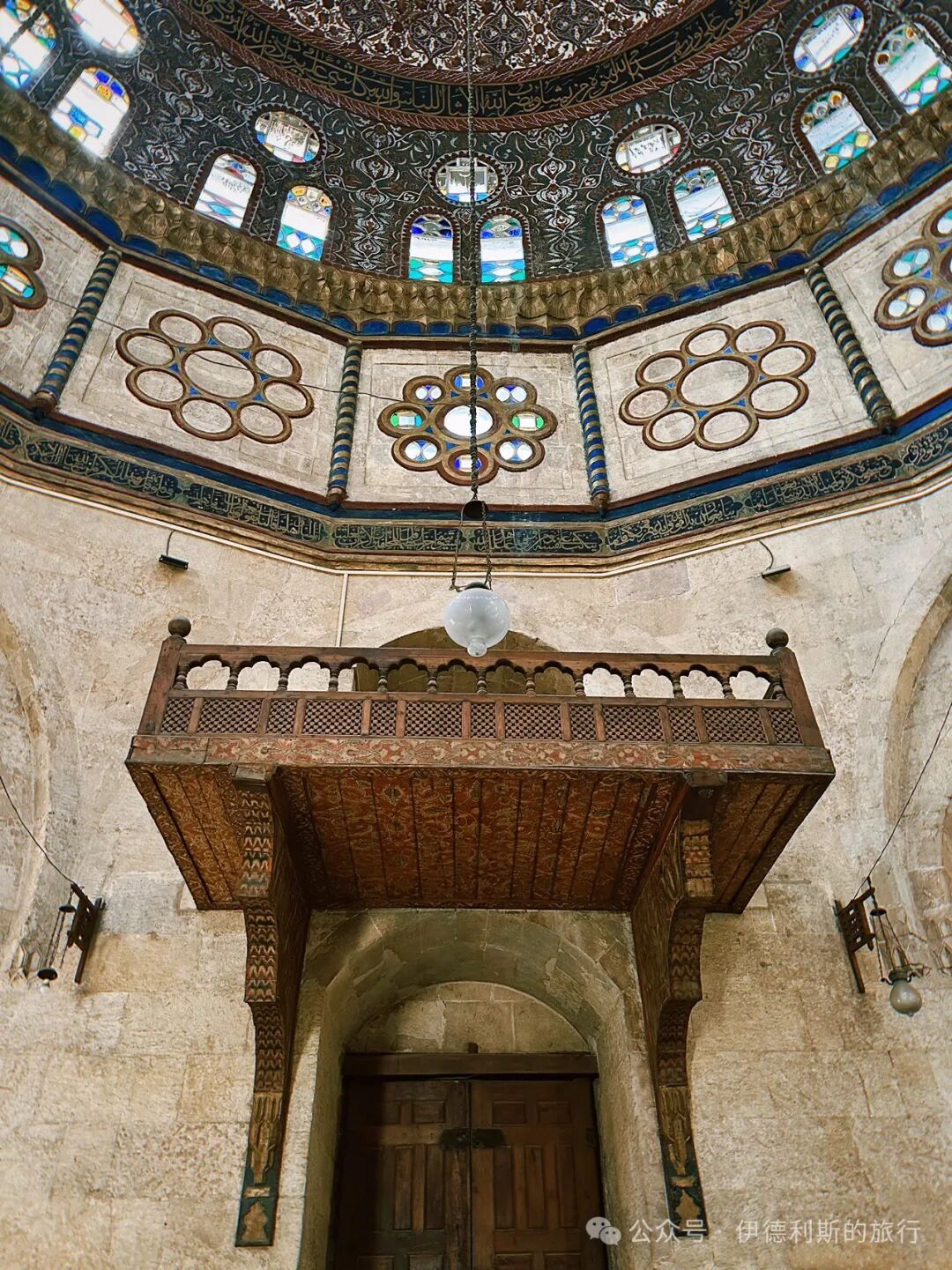
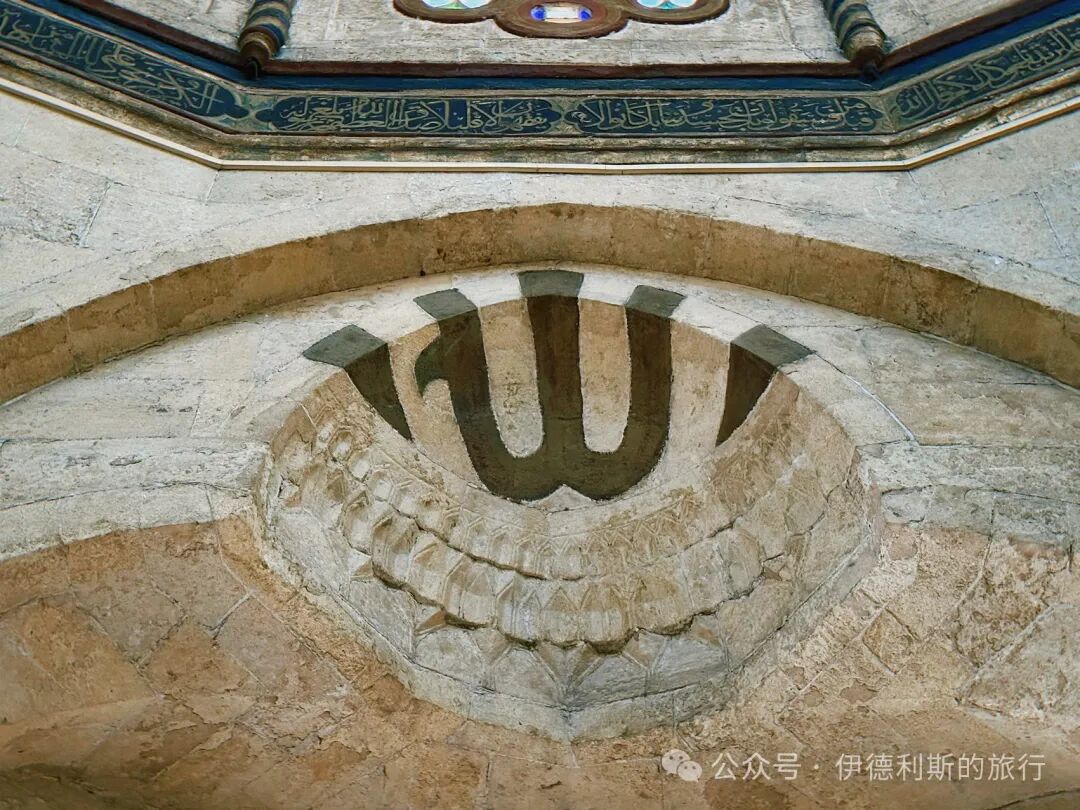
The tomb of Abu al-Dhahab is in the northeast corner of the mosque's front portico, with walls decorated in tiles from Iznik, Istanbul, Tunisia, and local Cairo.
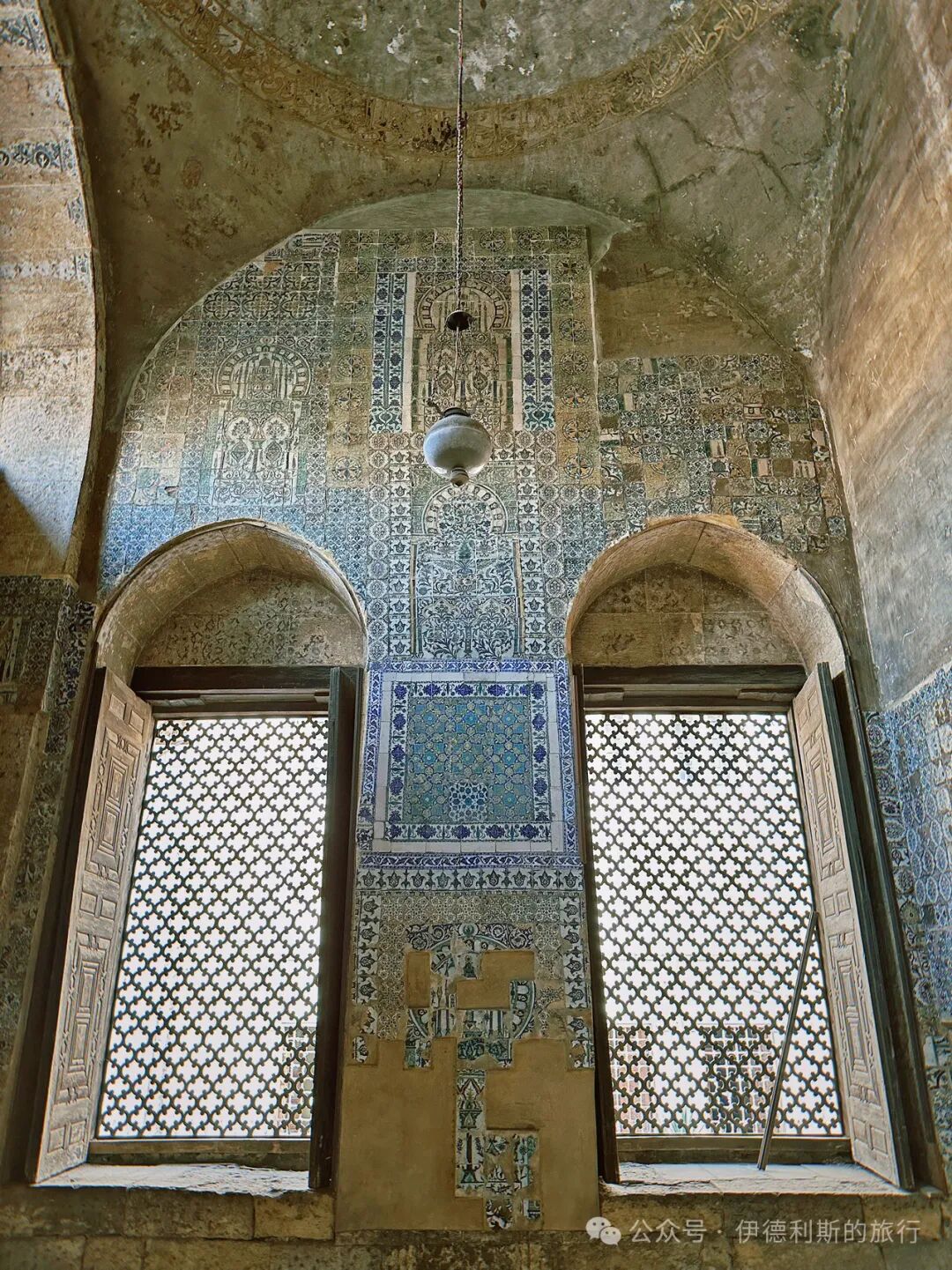
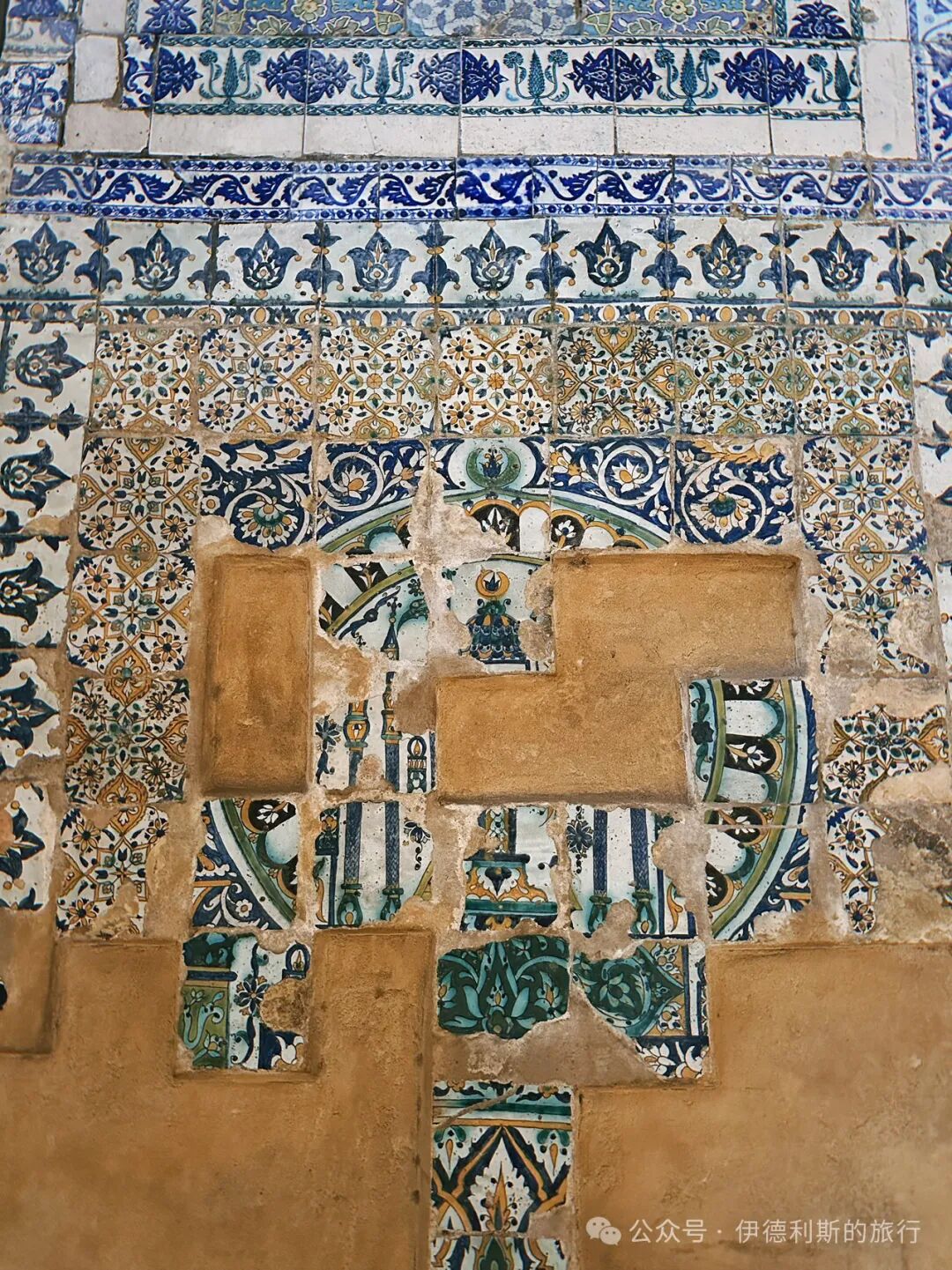
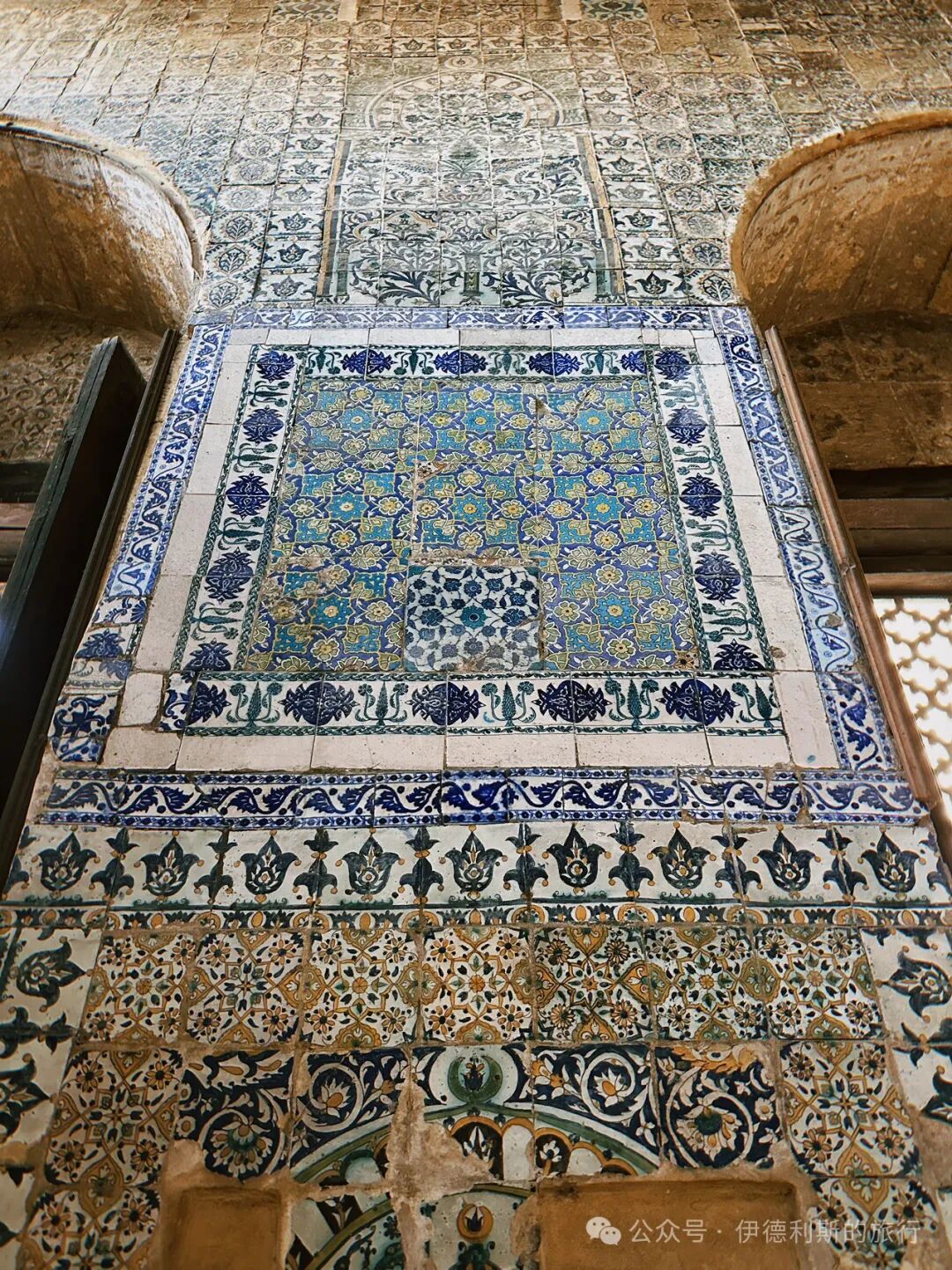
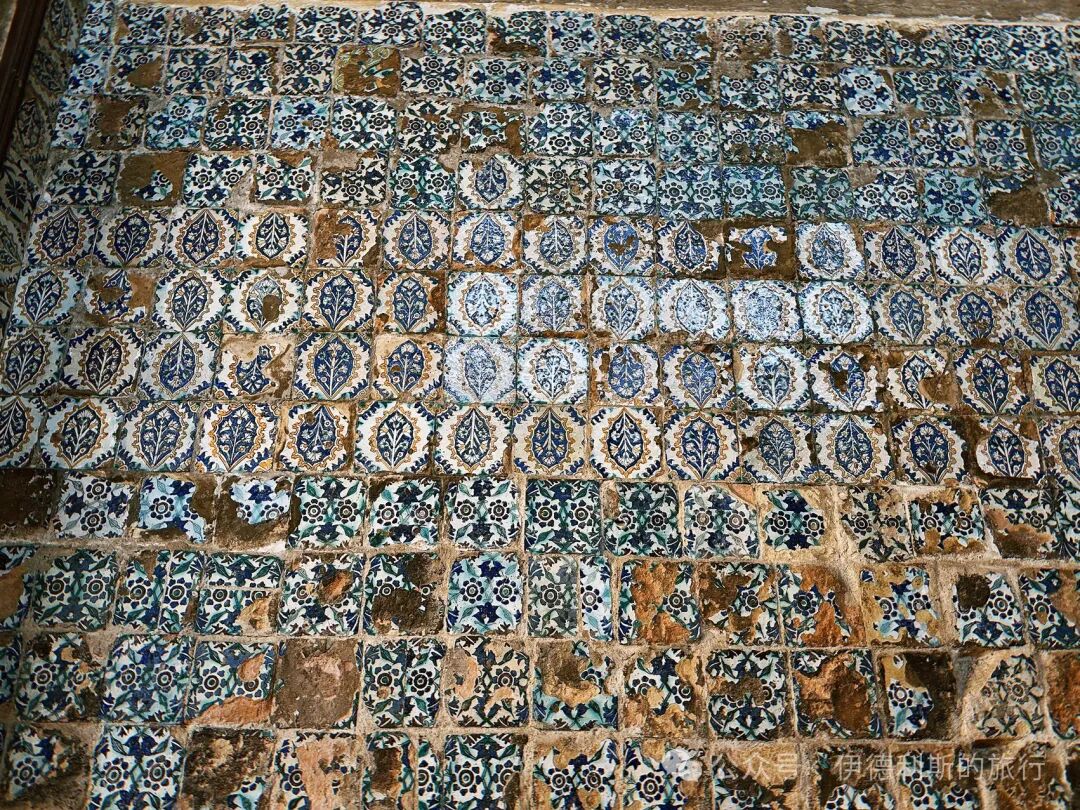
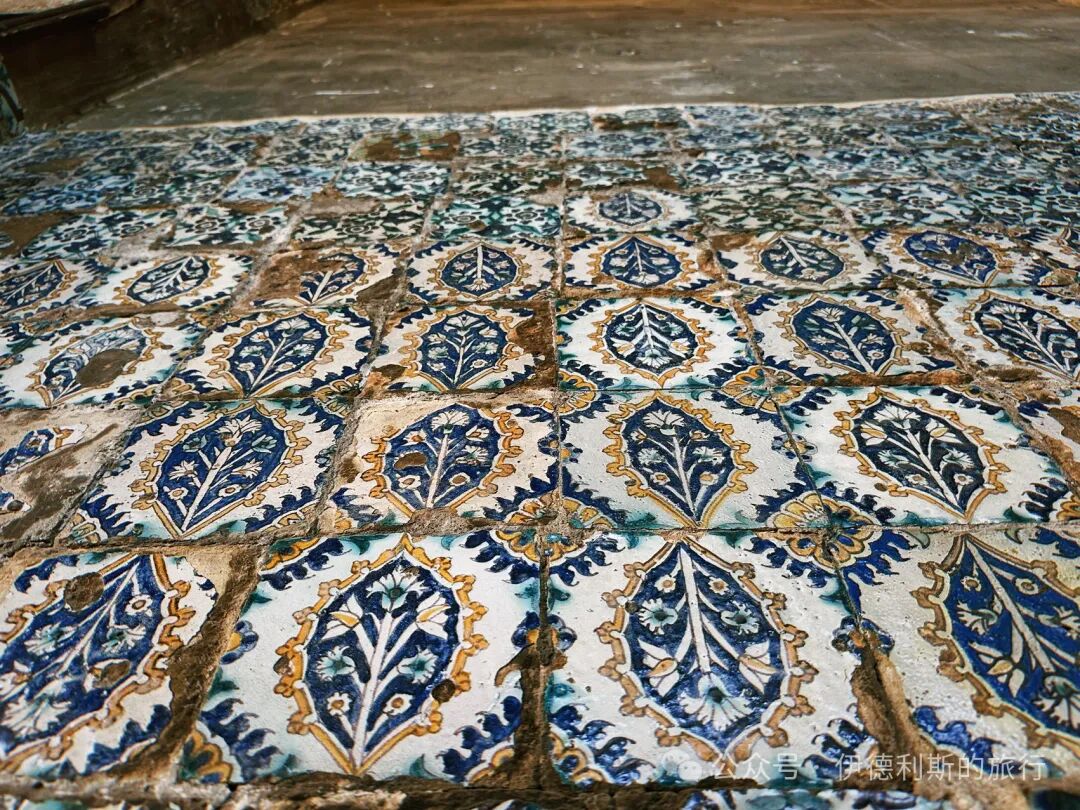
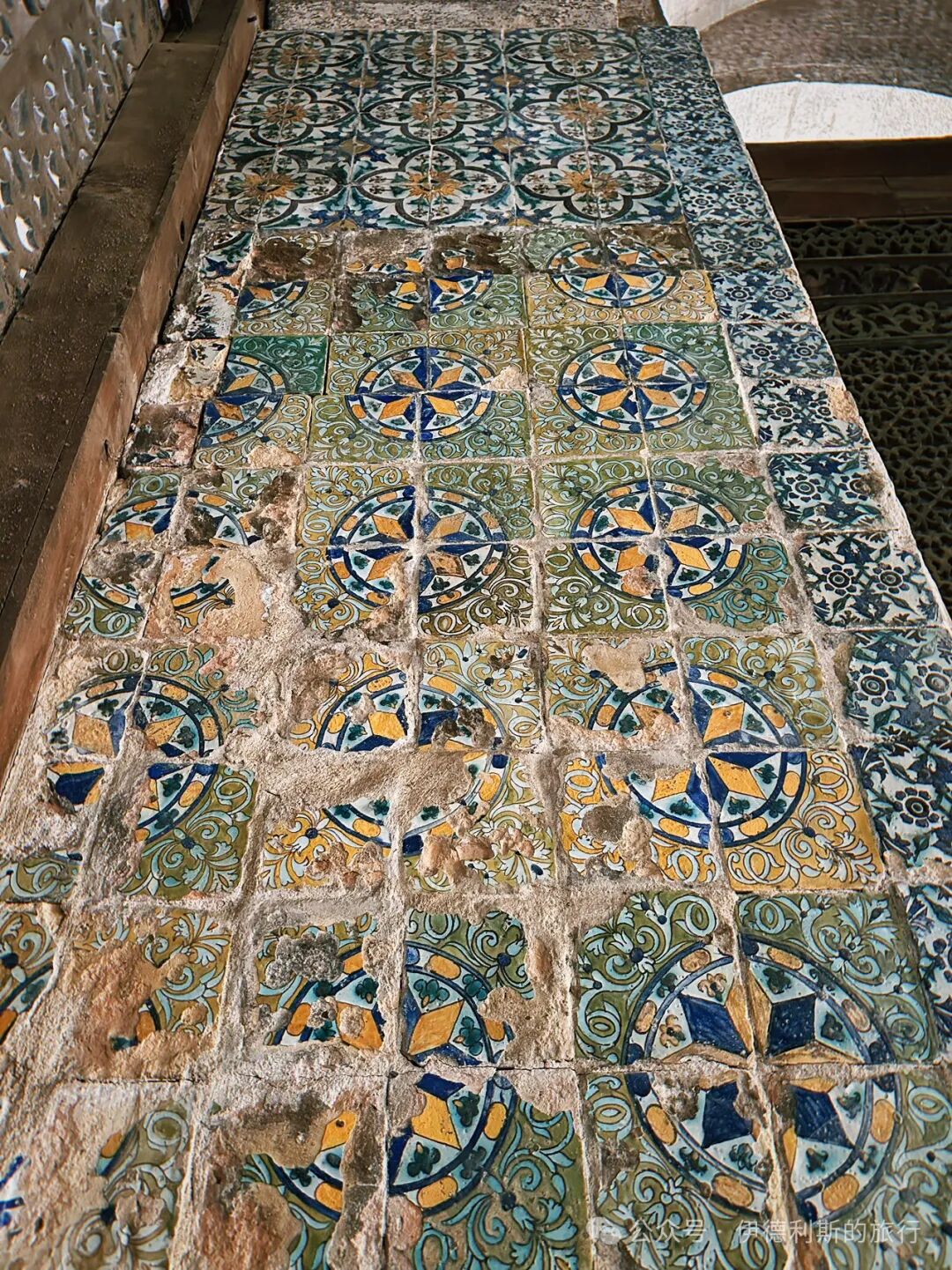
On the west side of the Abu al-Dhahab Mosque is the Abu al-Dhahab Sufi lodge (takiya) built in the late 18th century, which is now the museum for the Nobel Prize-winning Egyptian novelist Naguib Mahfouz.
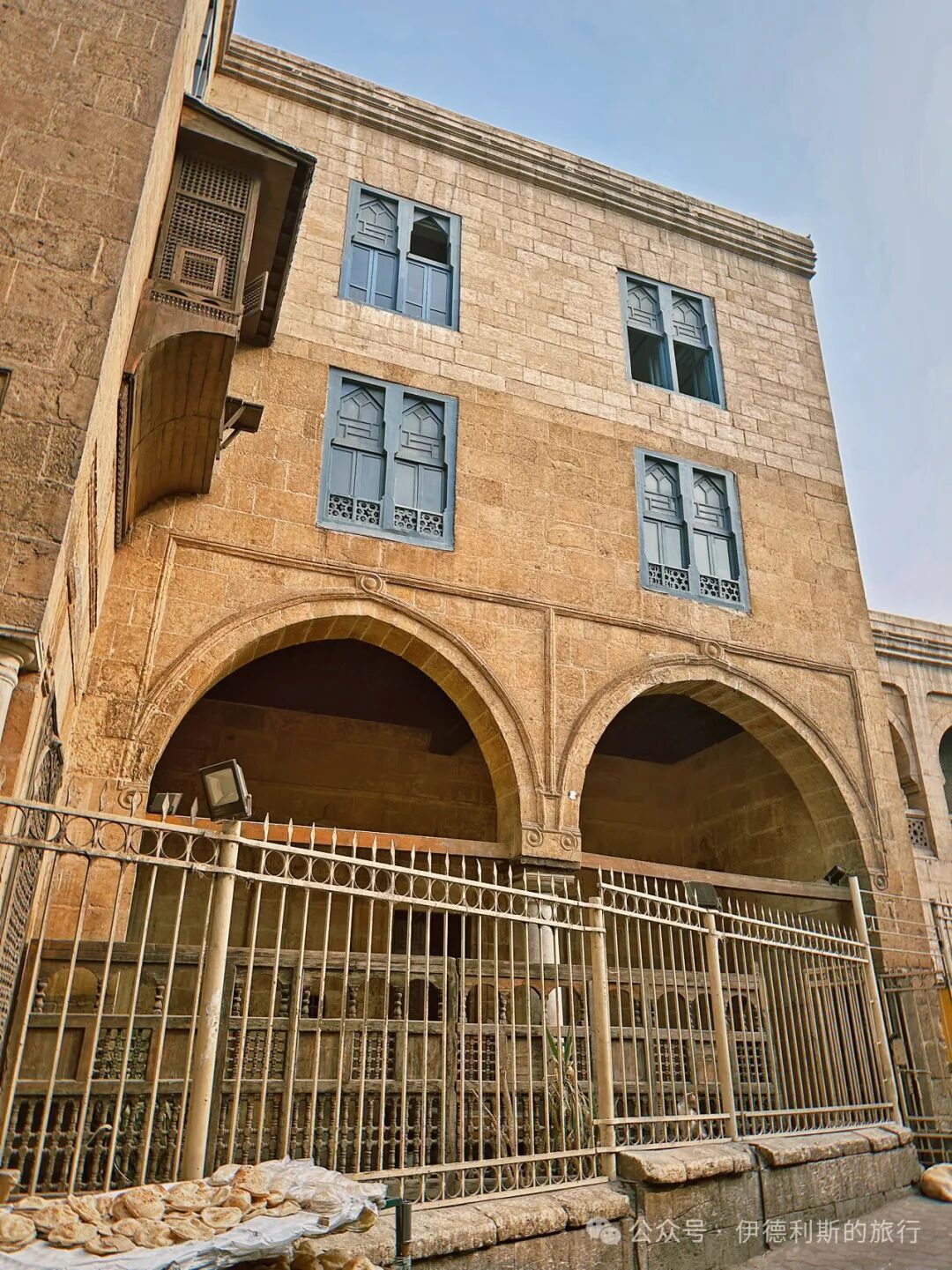
5. Al-Ghuri complex: 1505
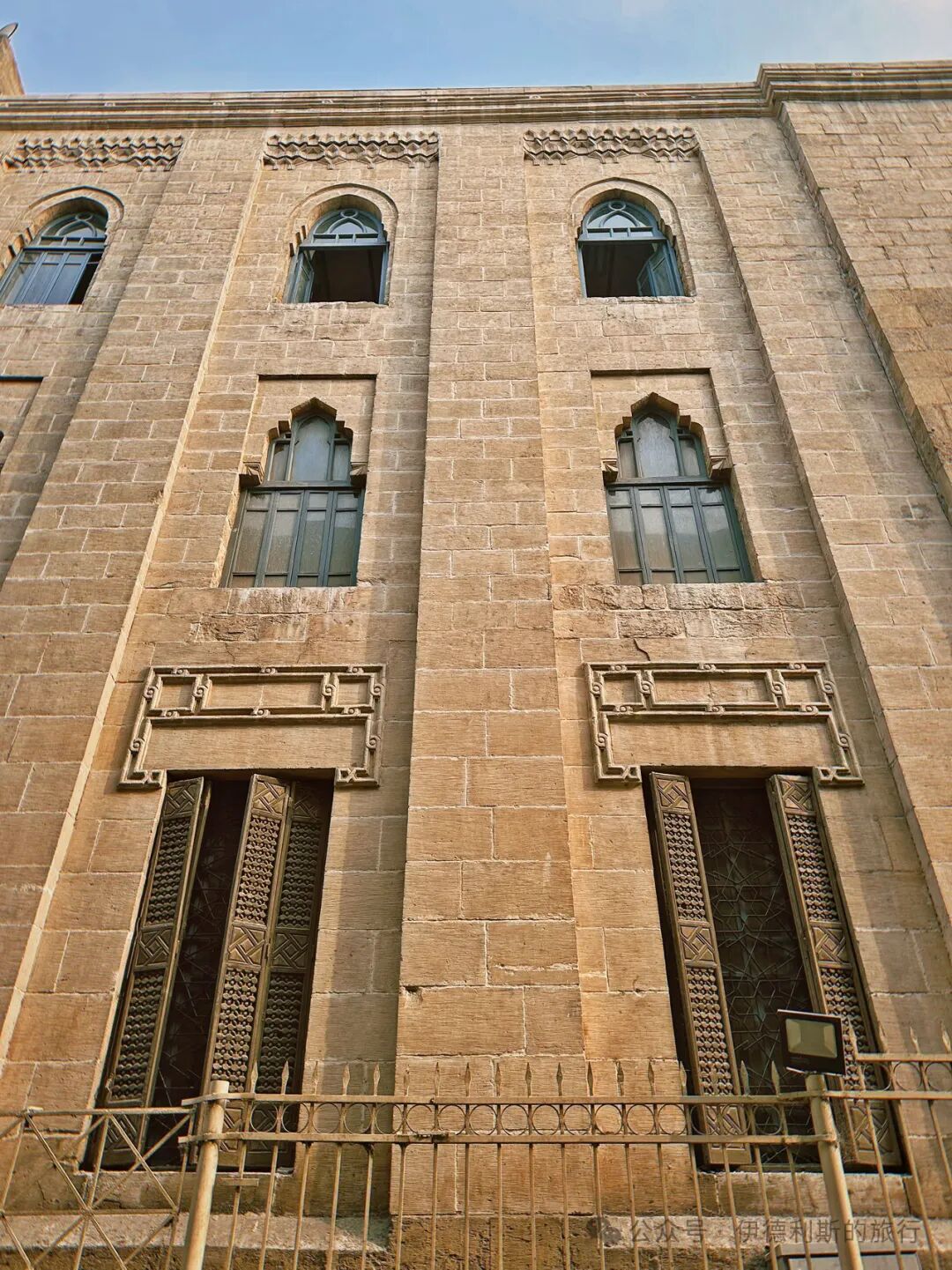
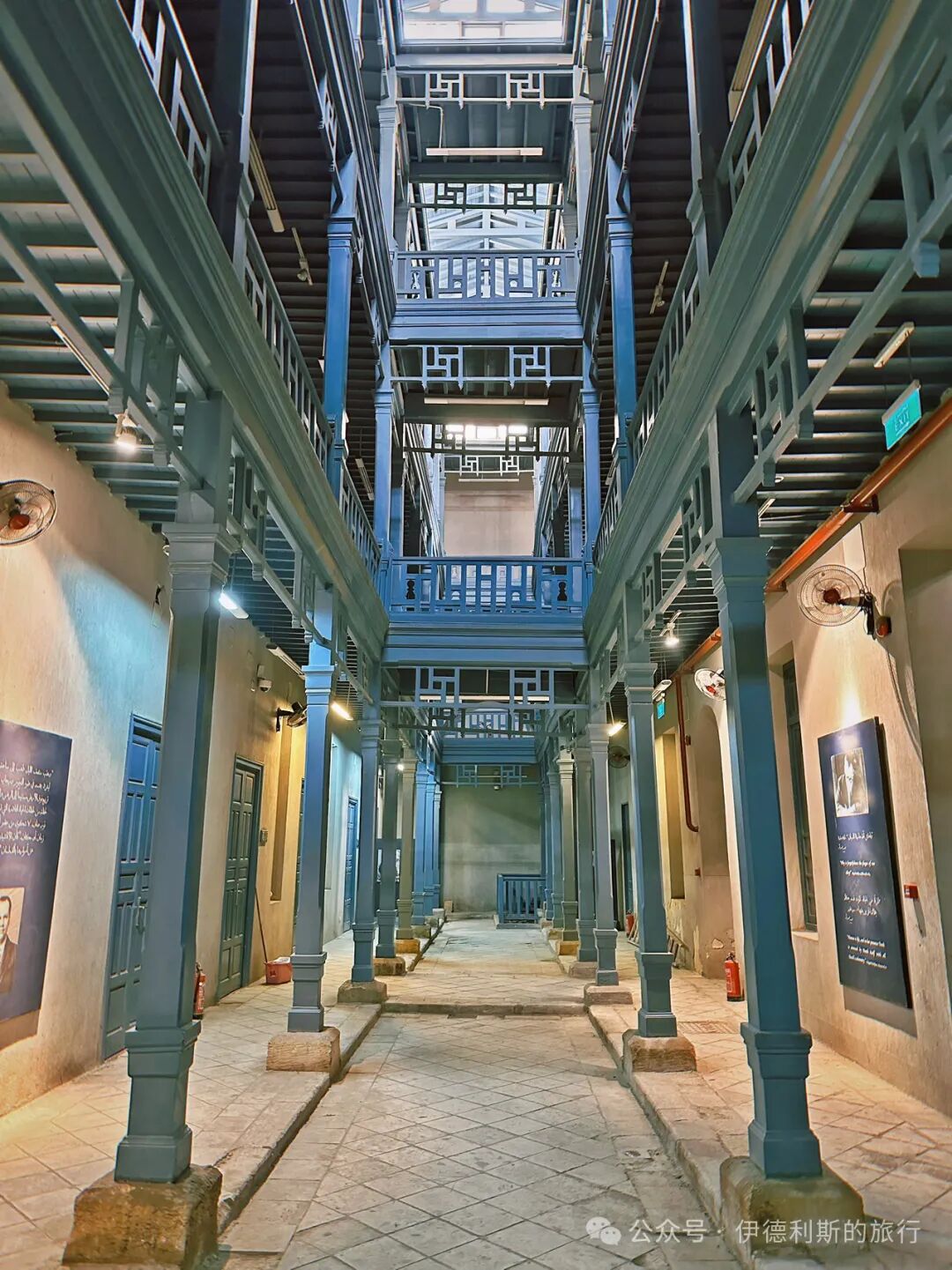
Heading west from the Al-Azhar Mosque back to al-Muizz Street, the main road of Old Cairo, you can see the Al-Ghuri complex built between 1503 and 1505 by the Mamluk Sultan Al-Ashraf Qansuh al-Ghuri, who reigned from 1501 to 1516. This massive complex includes a caravanserai, a mausoleum, a Sufi lodge (daotang), a fountain, a primary school, a main hall, and a madrasa.
The Ghouri Caravanserai (Wikala) sits at the far east end of the complex and was built between 1504 and 1505. The ground floor of the inn stored goods and livestock, the second floor held guest rooms for merchants, and the third and fourth floors were apartment units (Rab). Income from the inn and apartments went toward a charitable endowment (Waqf). The inn features beautiful latticed window screens (Mashrabiyas), which were a signature style for Mamluk-era caravanserais.
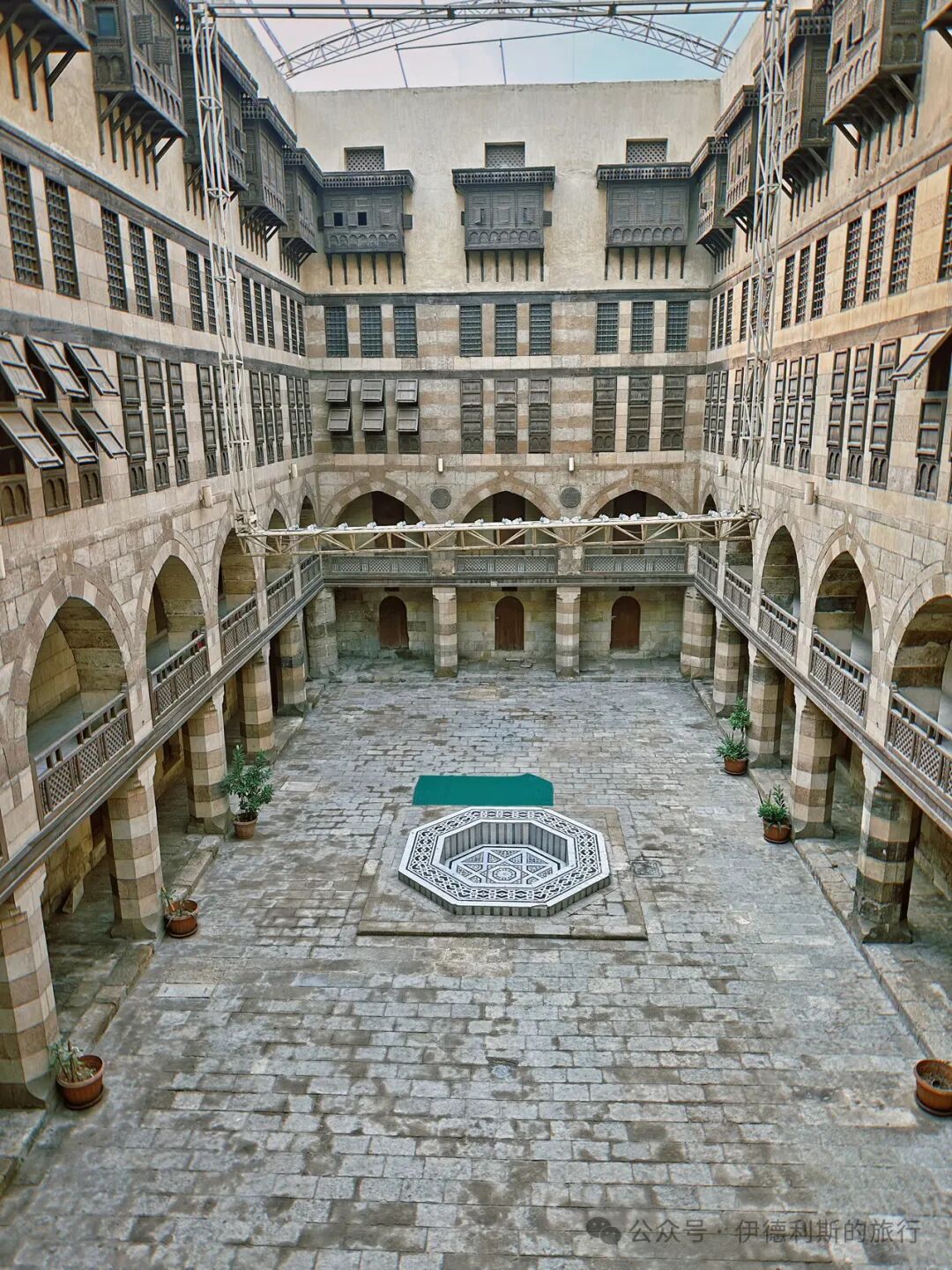
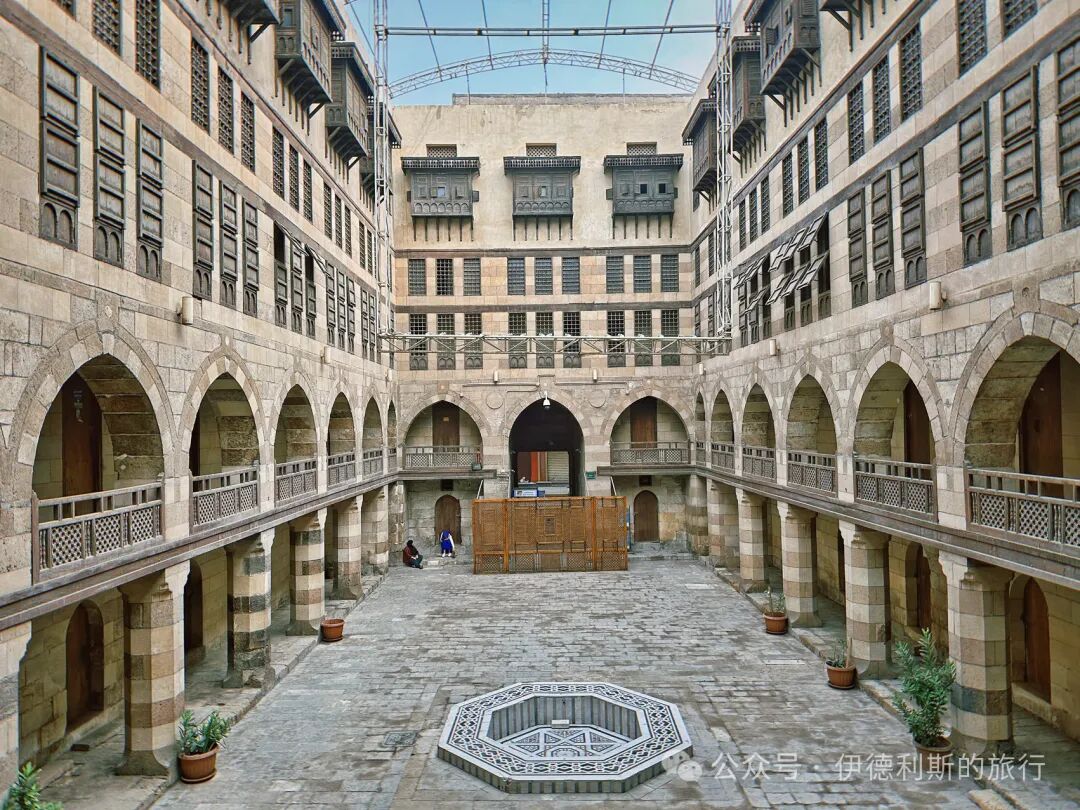
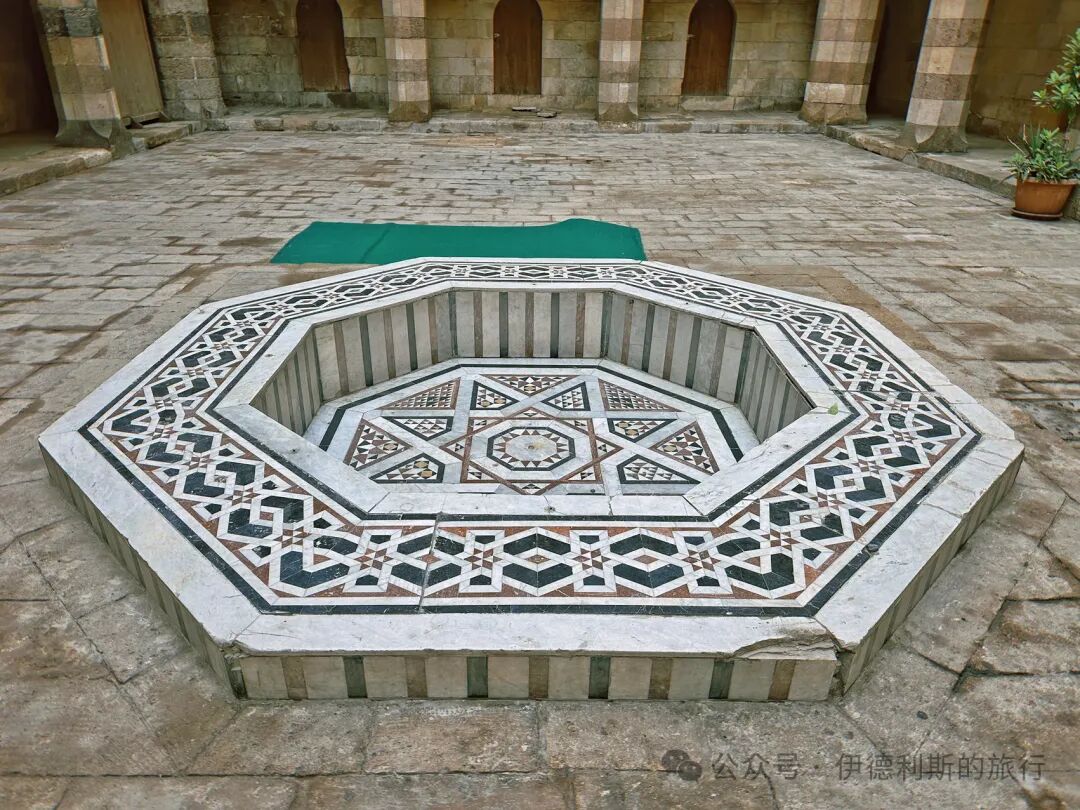
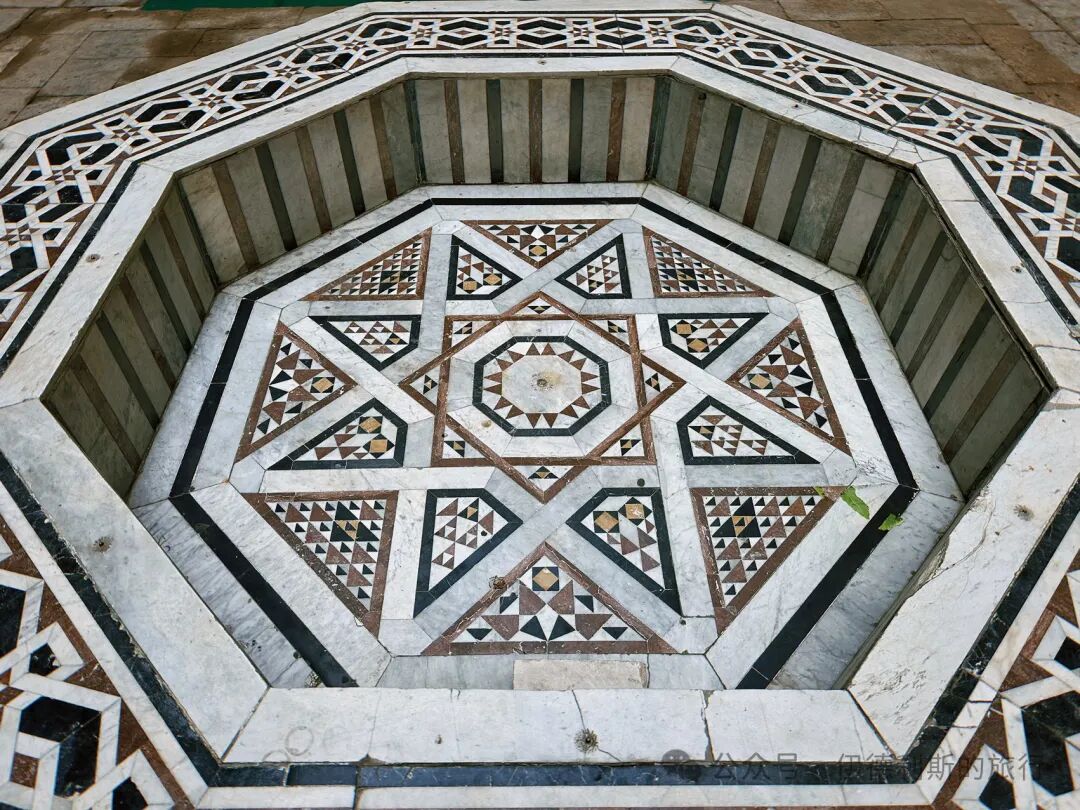
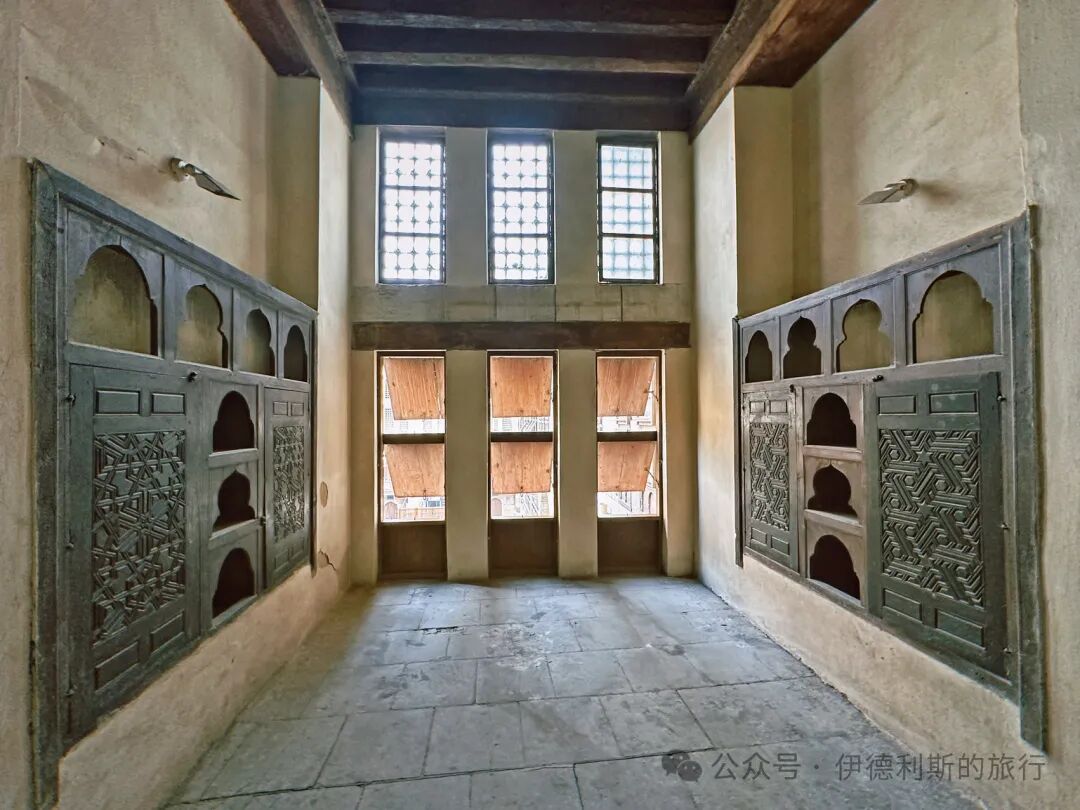
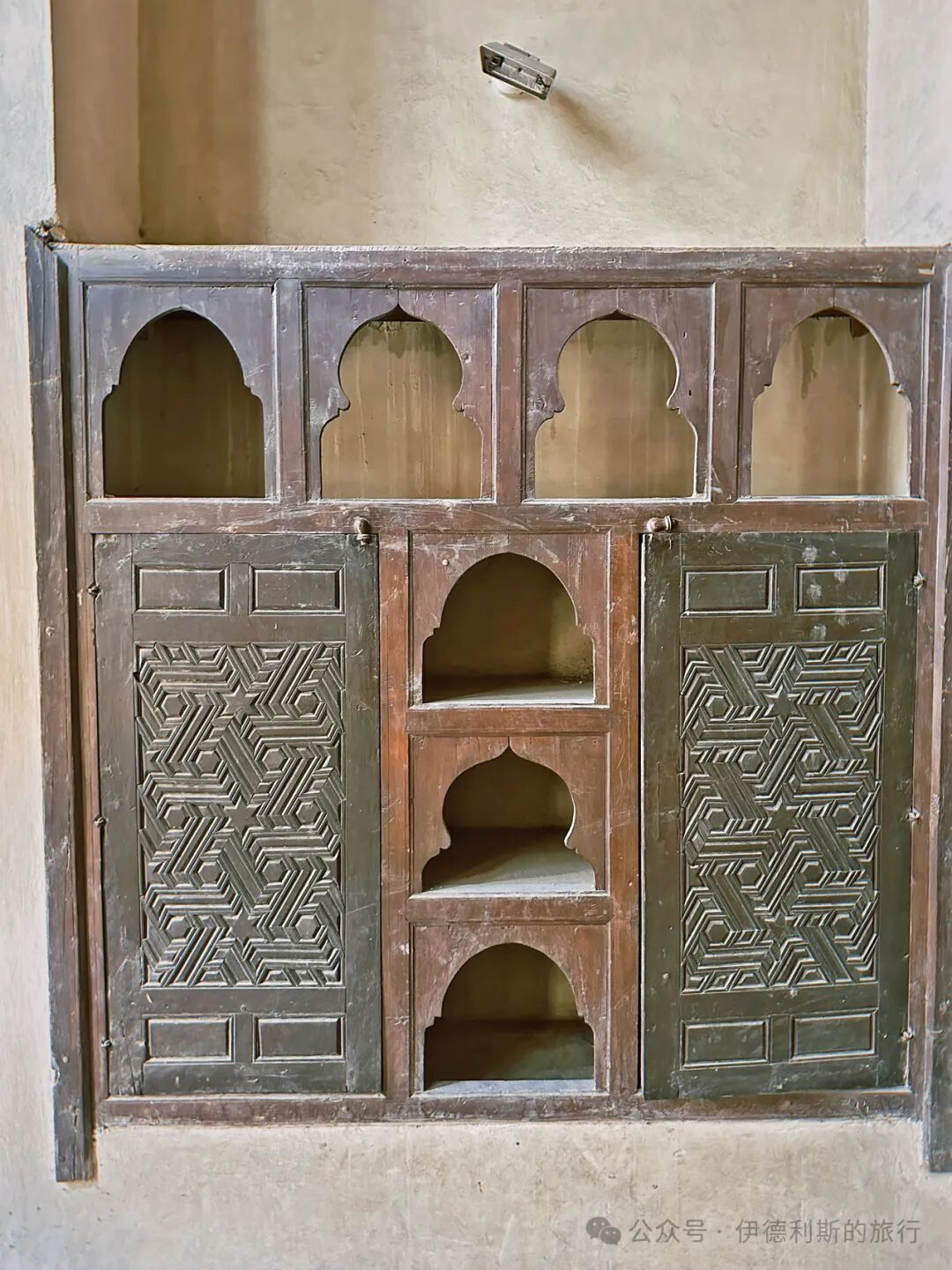
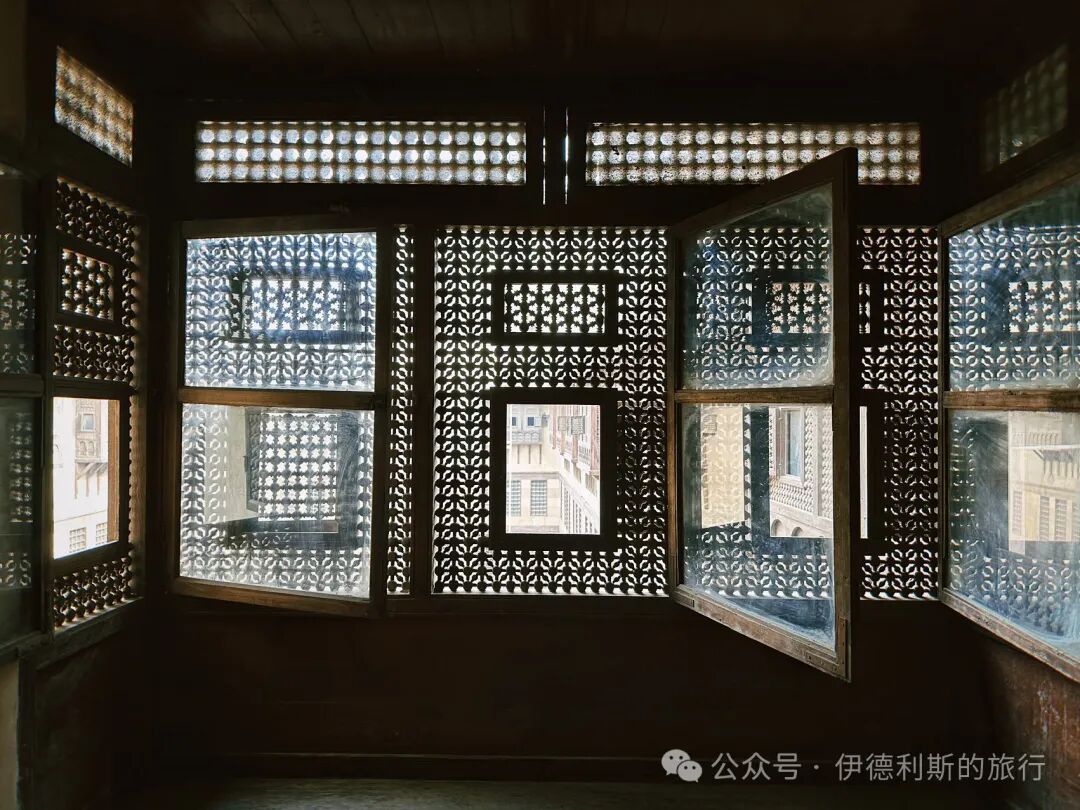
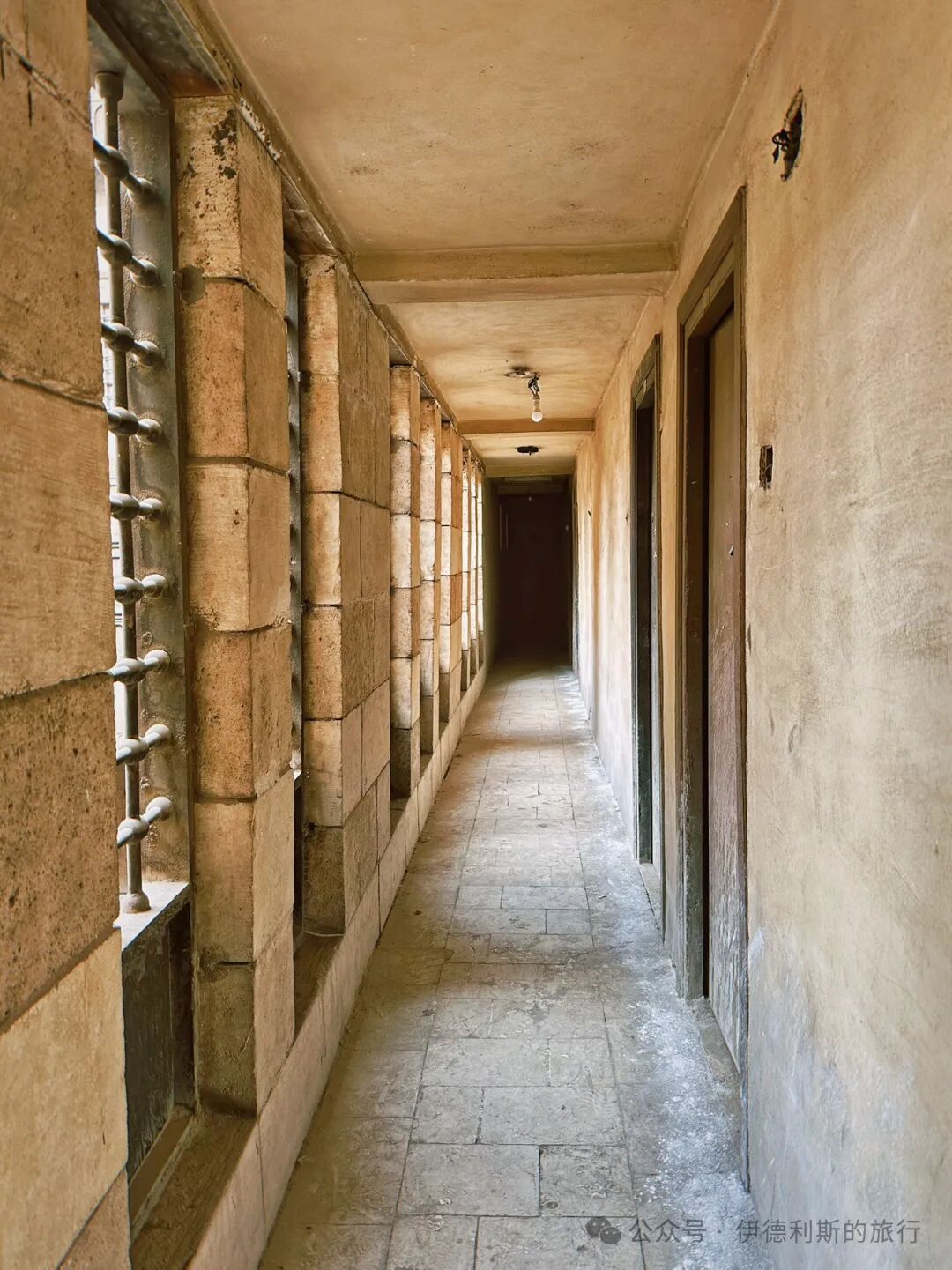
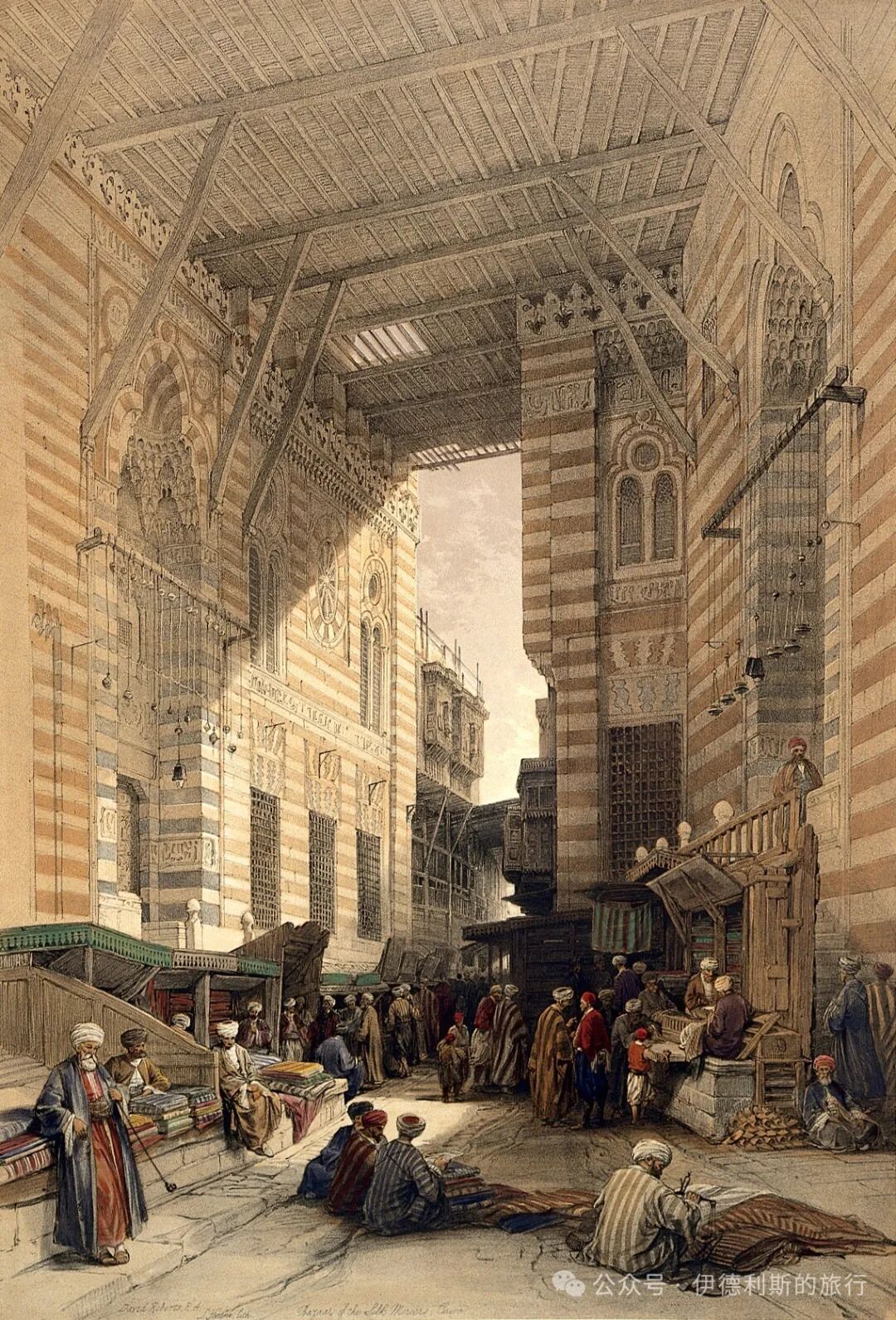
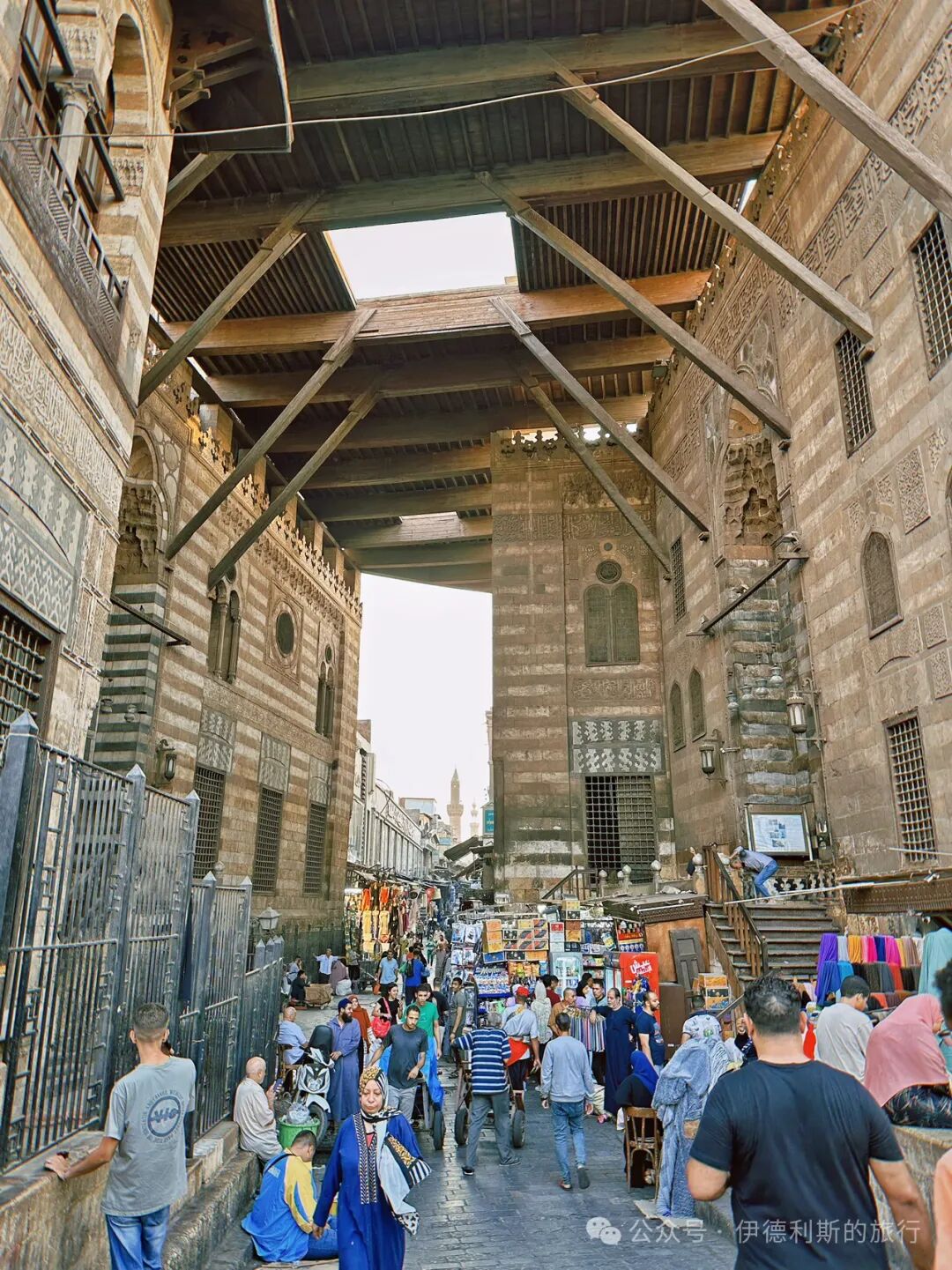
I compared the Sultan Ghouri complex I photographed with a painting by Orientalist artist David Roberts from 1839. This area has been a textile market in Old Cairo for hundreds of years.
The west building of the Ghouri complex houses the main hall and madrasa. It follows the classic late Mamluk layout of a central courtyard with four vaulted halls (Iwan). The building is decorated with rich, colorful marble and arabesque stone carvings. Elegant Kufic calligraphy is inlaid into white marble using black bitumen. The mihrab in the main hall features black and white marble mosaic patterns, with marble mosaic panels covering both sides.
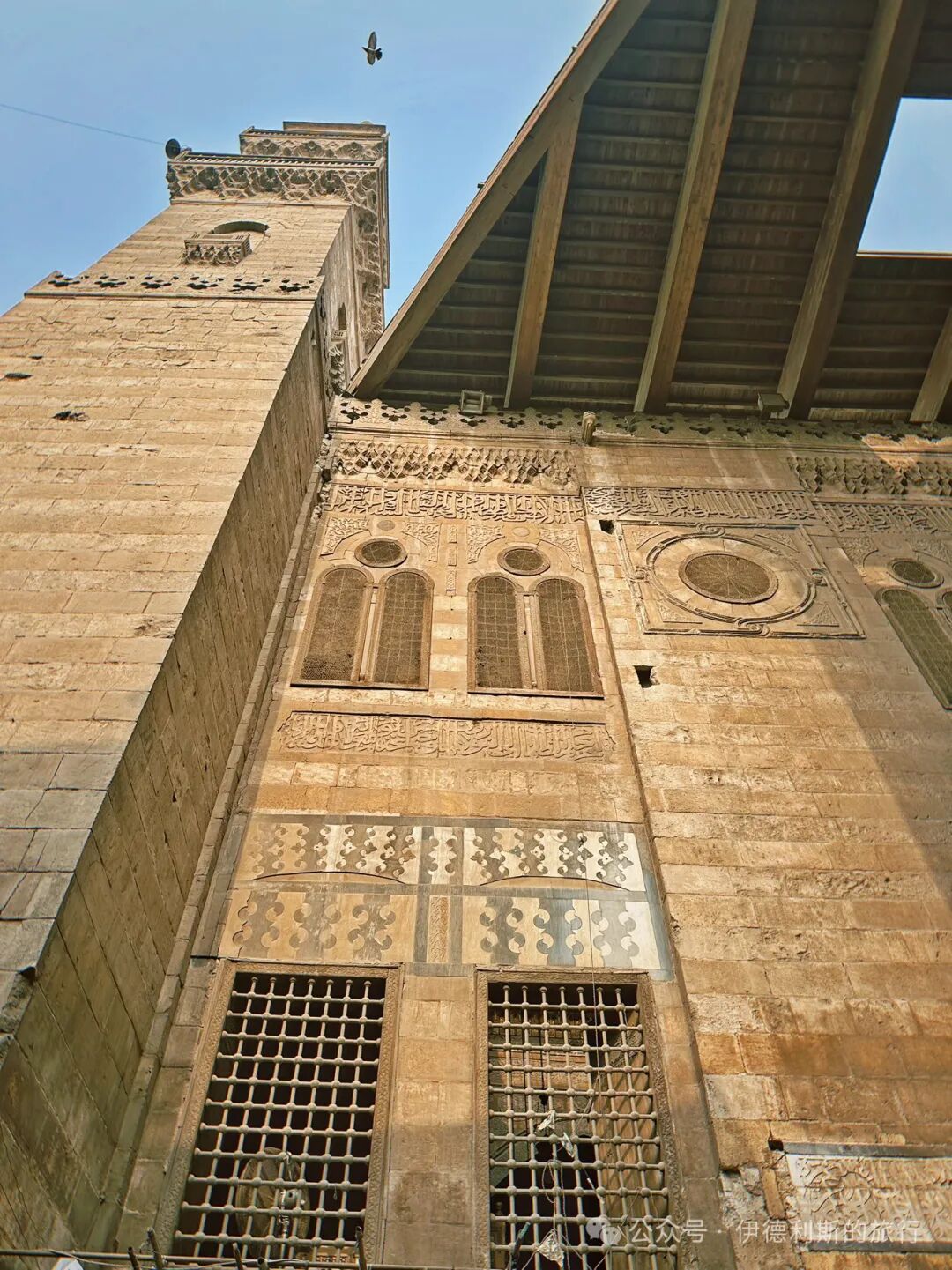
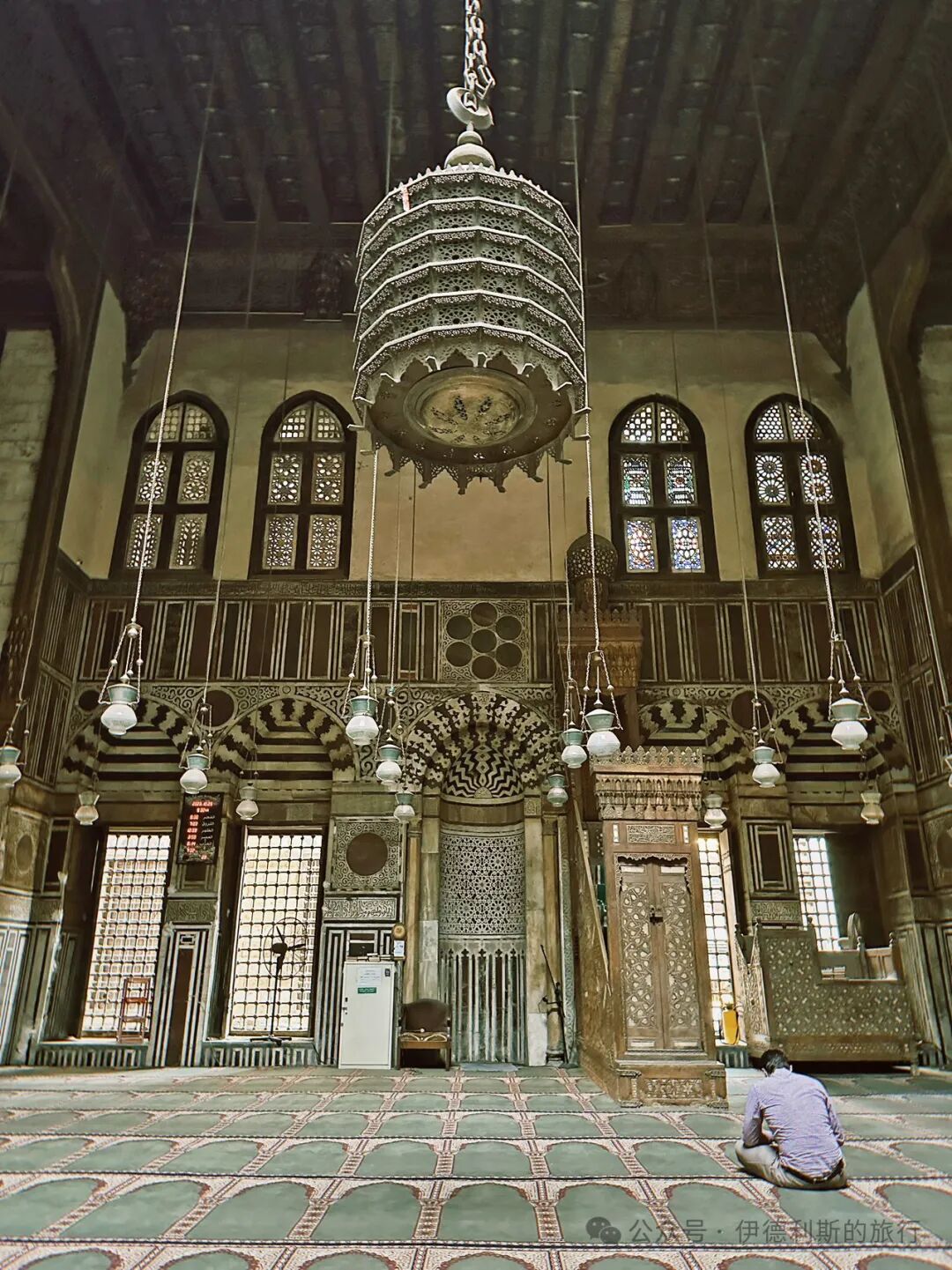
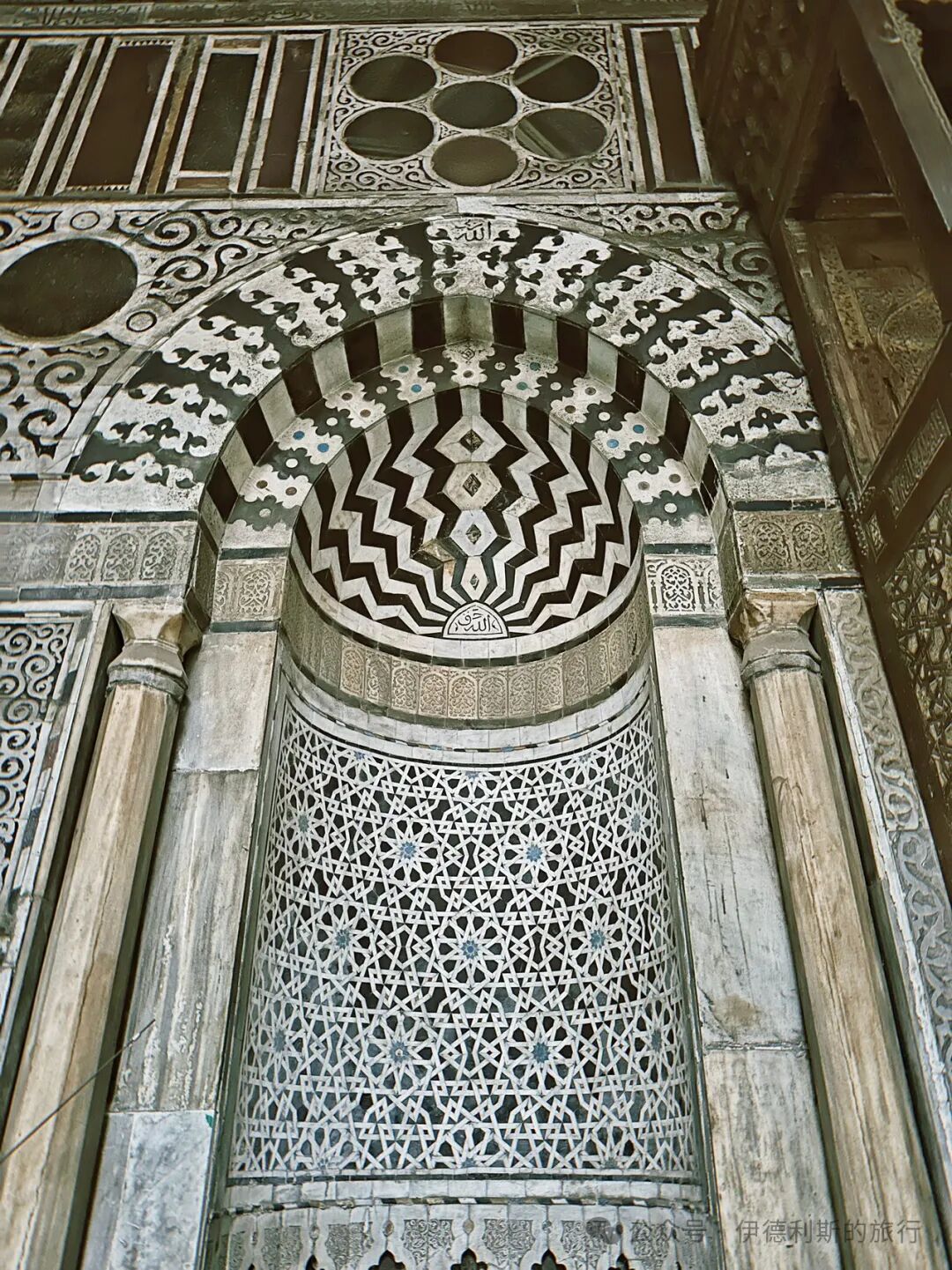
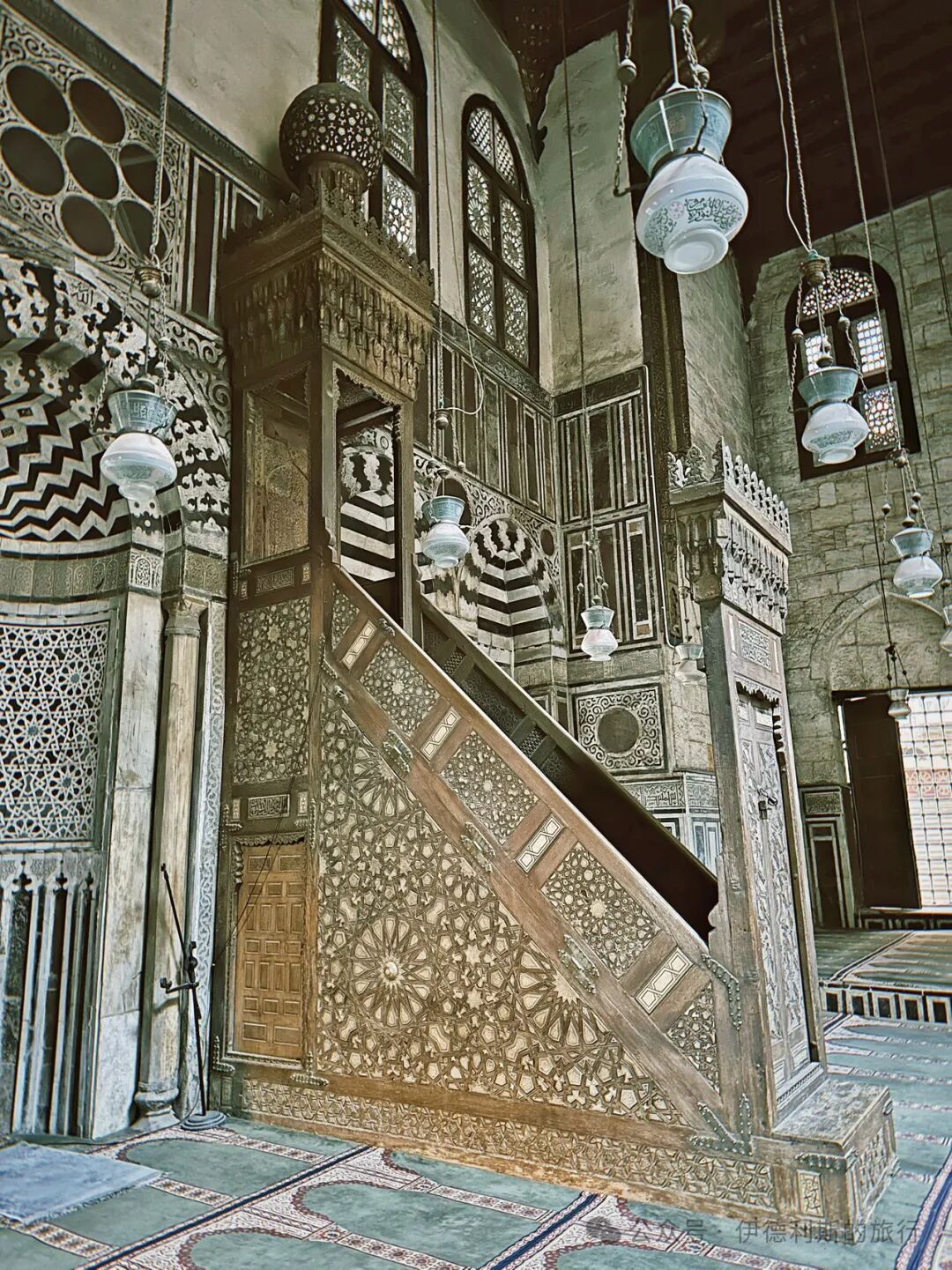
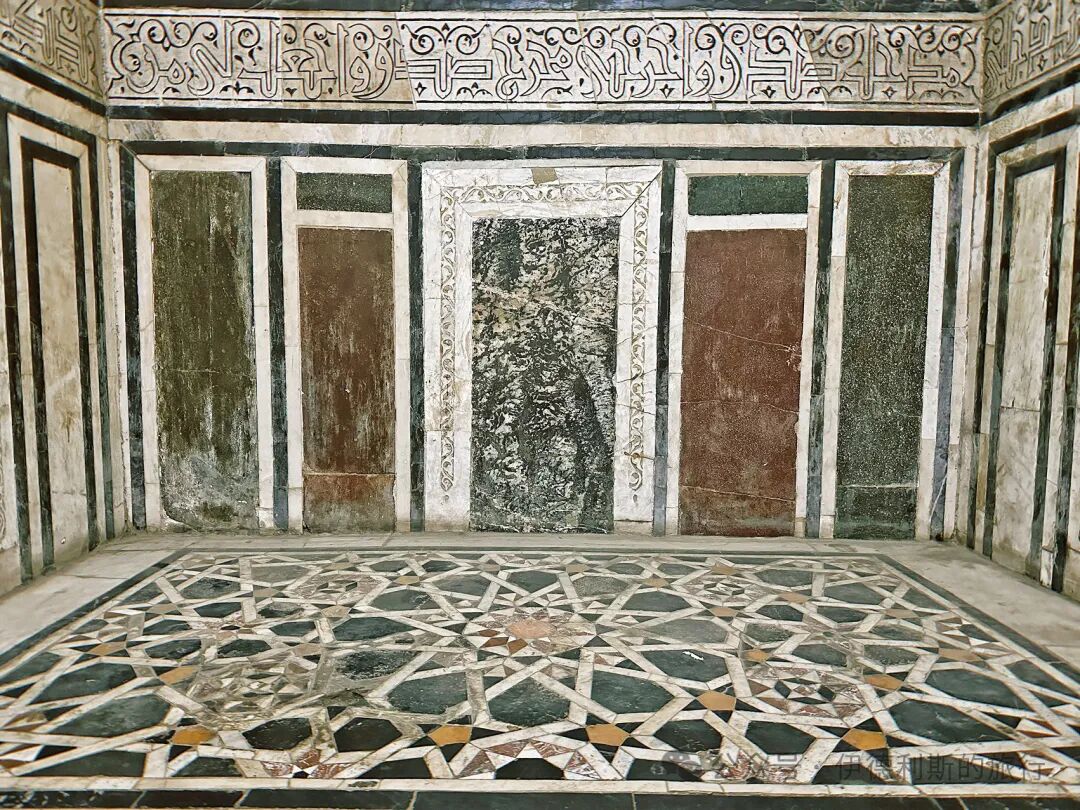
The east building of the Qansuh al-Ghuri complex houses the tomb and the prayer hall (daotang). The prayer hall is where Sufis perform dhikr, and today it serves as a venue for whirling dervish dances and traditional music.
Next to the prayer hall is a fountain-primary school, which is a classic example of Mamluk dynasty architecture.
On August 24, 1516, the Mamluk Sultanate and the Ottoman Empire fought a decisive battle in the town of Dabiq, Syria. Sultan al-Ghuri was killed in the battle, and the Ottoman Empire successfully occupied Syria. Because Sultan al-Ghuri's body (mayyit) was never found, he is not buried in the Sultan al-Ghuri tomb.
Today, the tomb holds the remains of Tuman Bay II, the last sultan of the Mamluk dynasty, who reigned from 1516 to 1517. Tuman Bay II took the throne after Sultan al-Ghuri died in Syria. On January 22, 1517, he fought a final battle against the Ottoman army at Ridaniya in Egypt. Sultan Tuman Bay II bravely charged into the Ottoman camp and personally killed the Ottoman Grand Vizier, Hadım Sinan Pasha. But he was eventually defeated by the Ottoman army and retreated to Giza on the other side of the Nile.
In late March 1517, Sultan Tuman Bay II led his army in a final battle against the Ottoman forces beneath the Giza pyramids. After two days of bitter fighting, the Sultan was betrayed by his Bedouin allies and taken prisoner by the Ottoman dynasty. On April 15, 1517, Sultan Tuman Bay II was hanged at the gates of Cairo, and his body was left hanging there for three days, marking the end of the Mamluk dynasty that had ruled Egypt for 267 years.
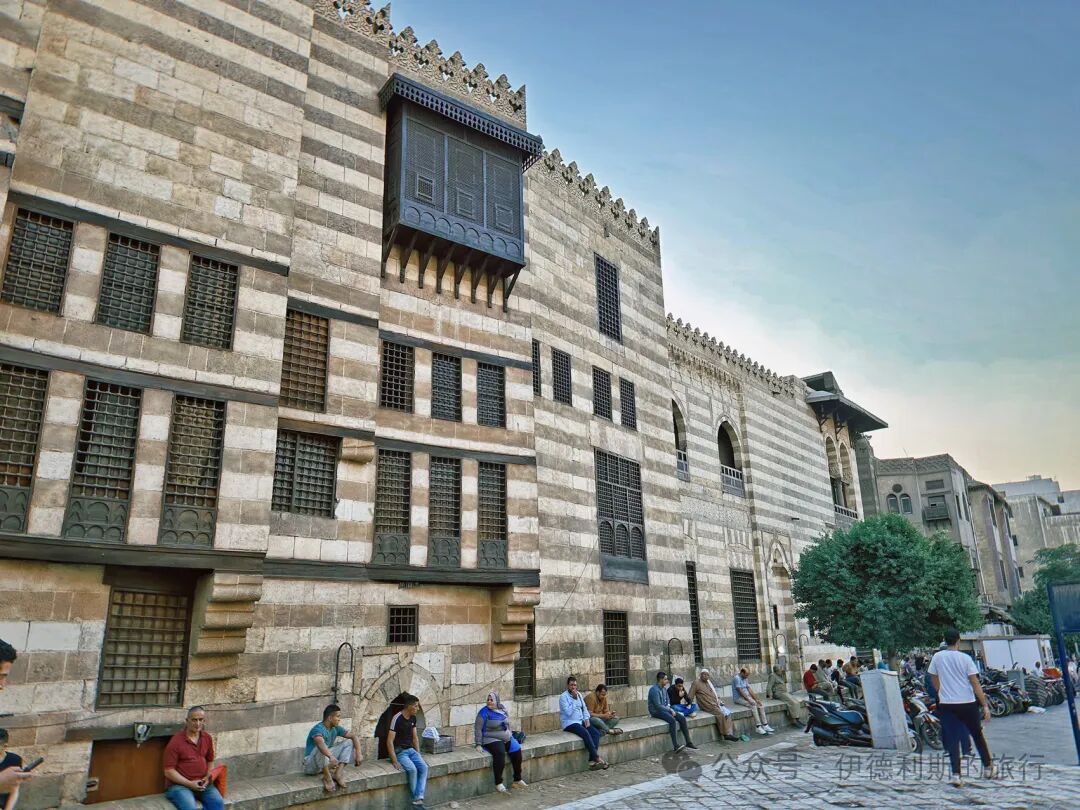
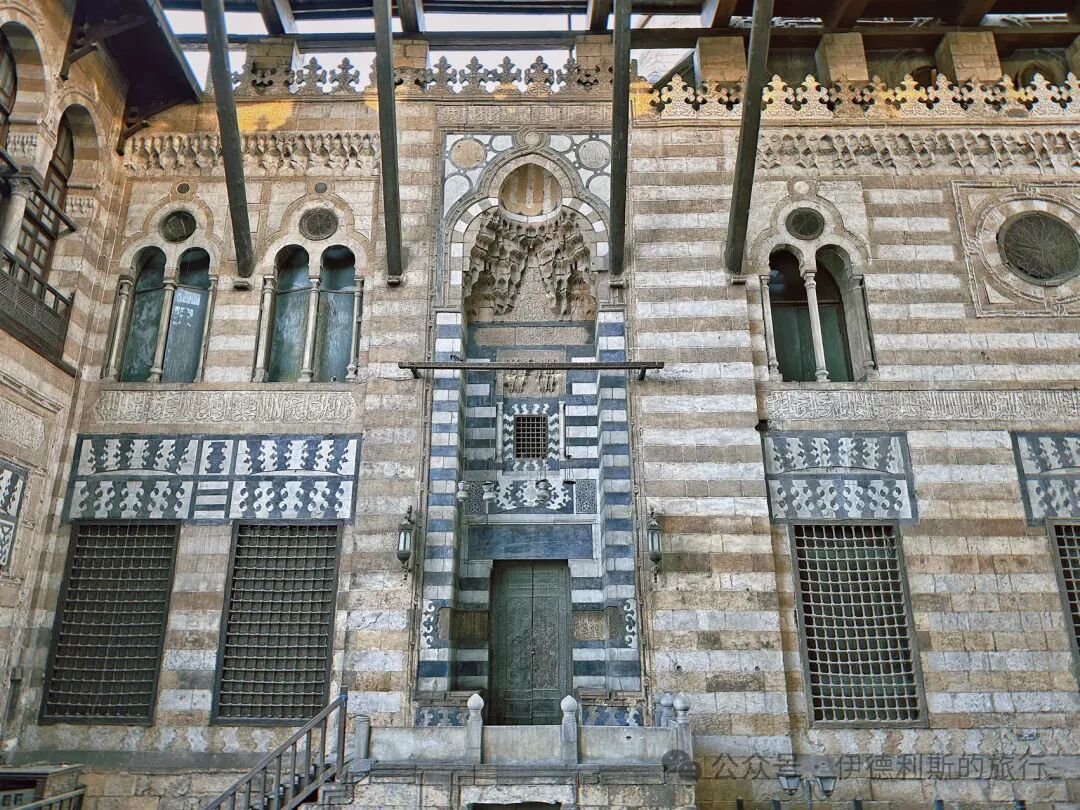
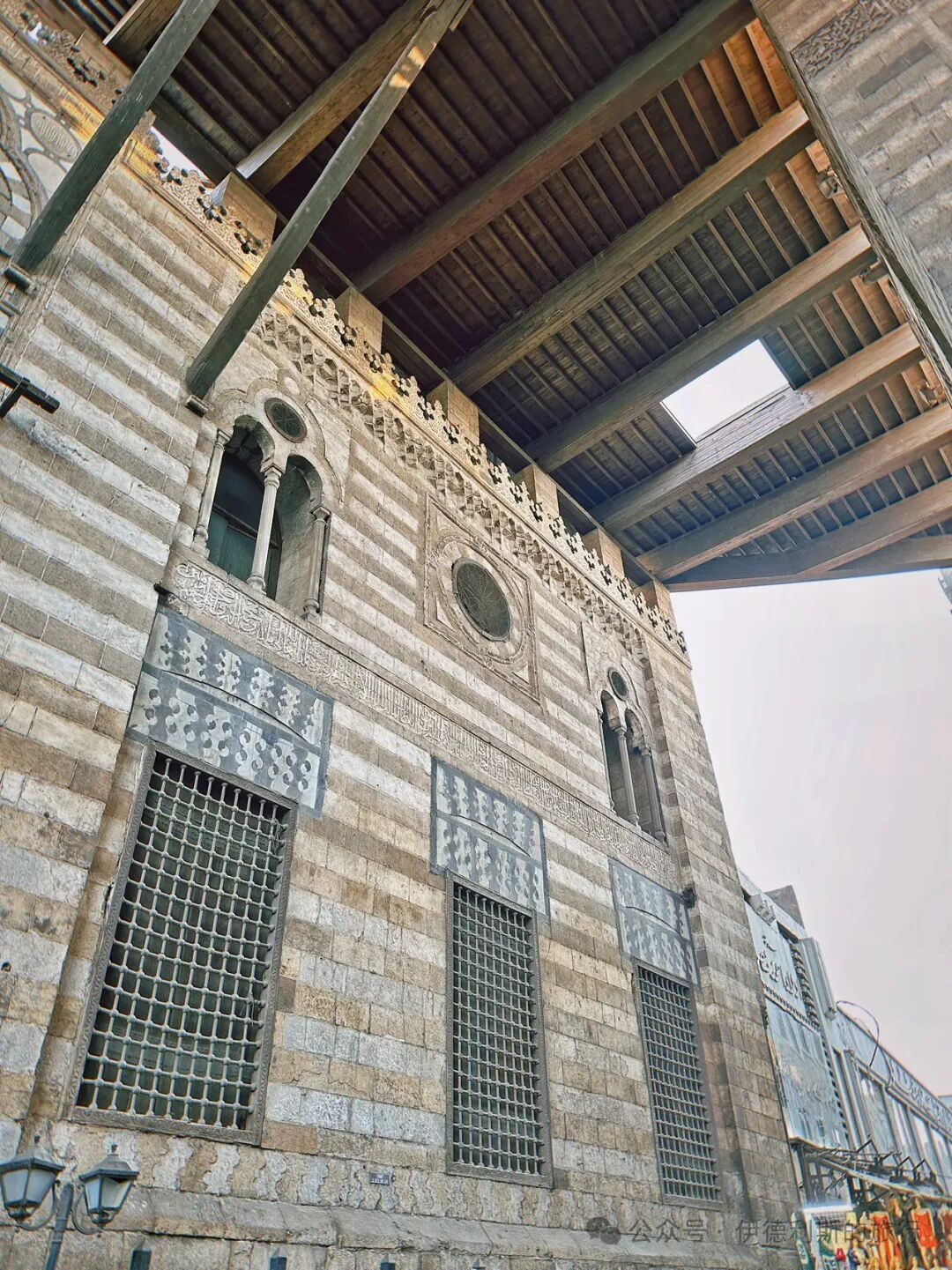
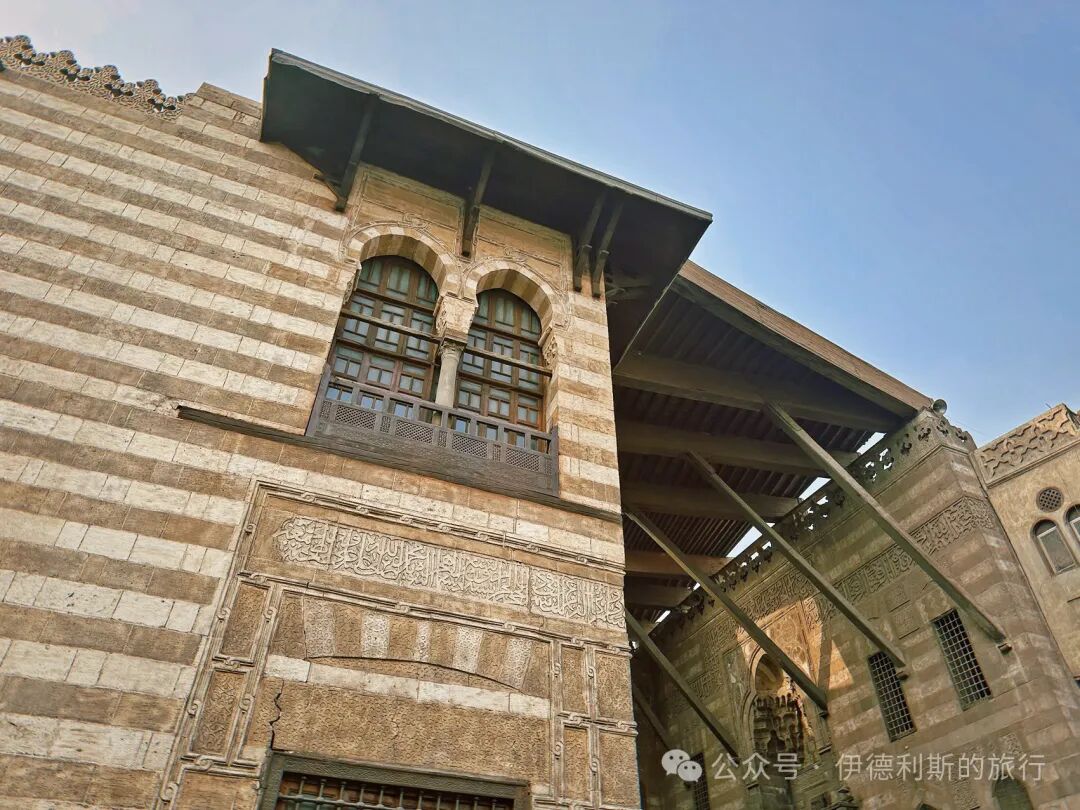
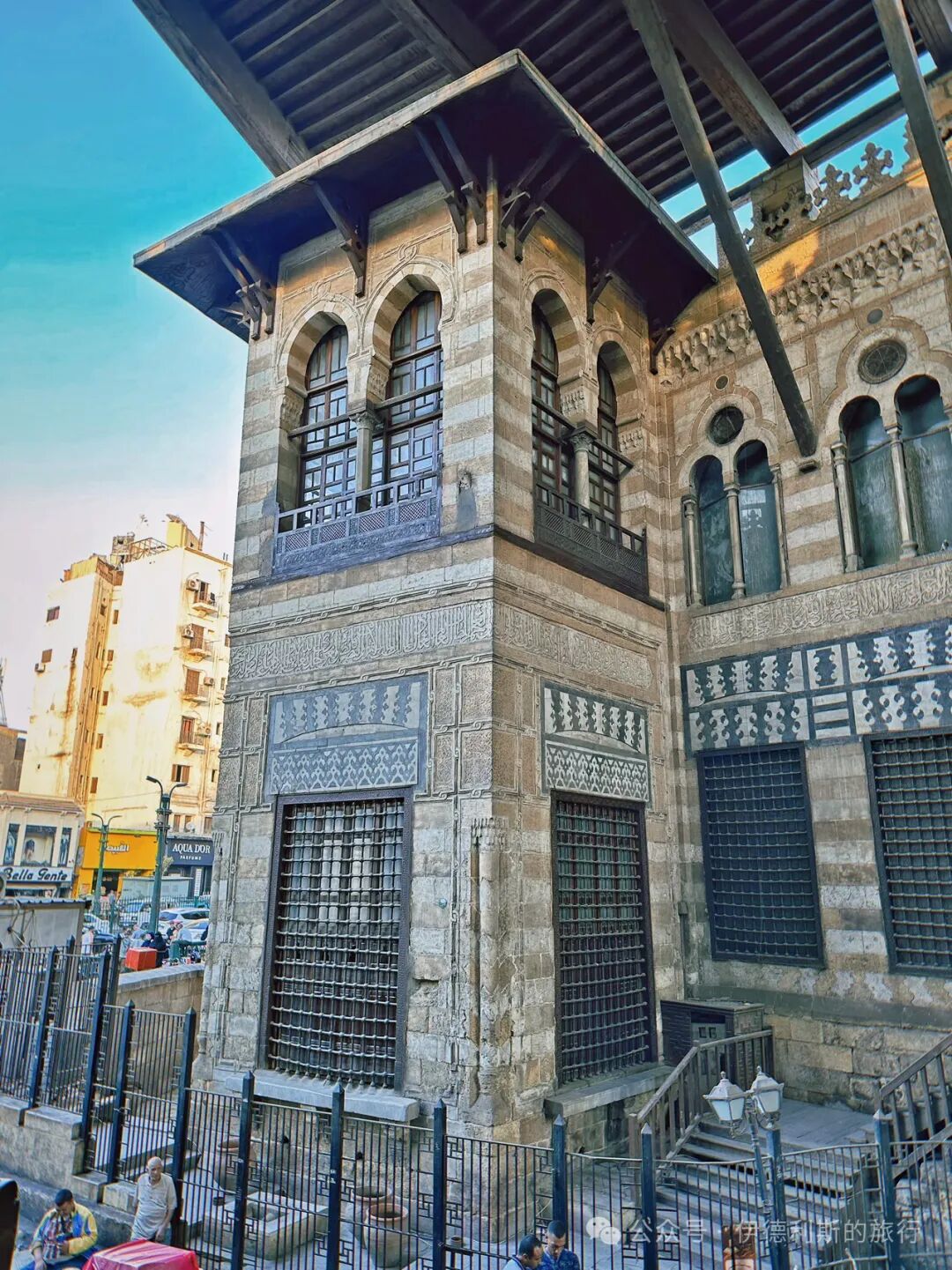
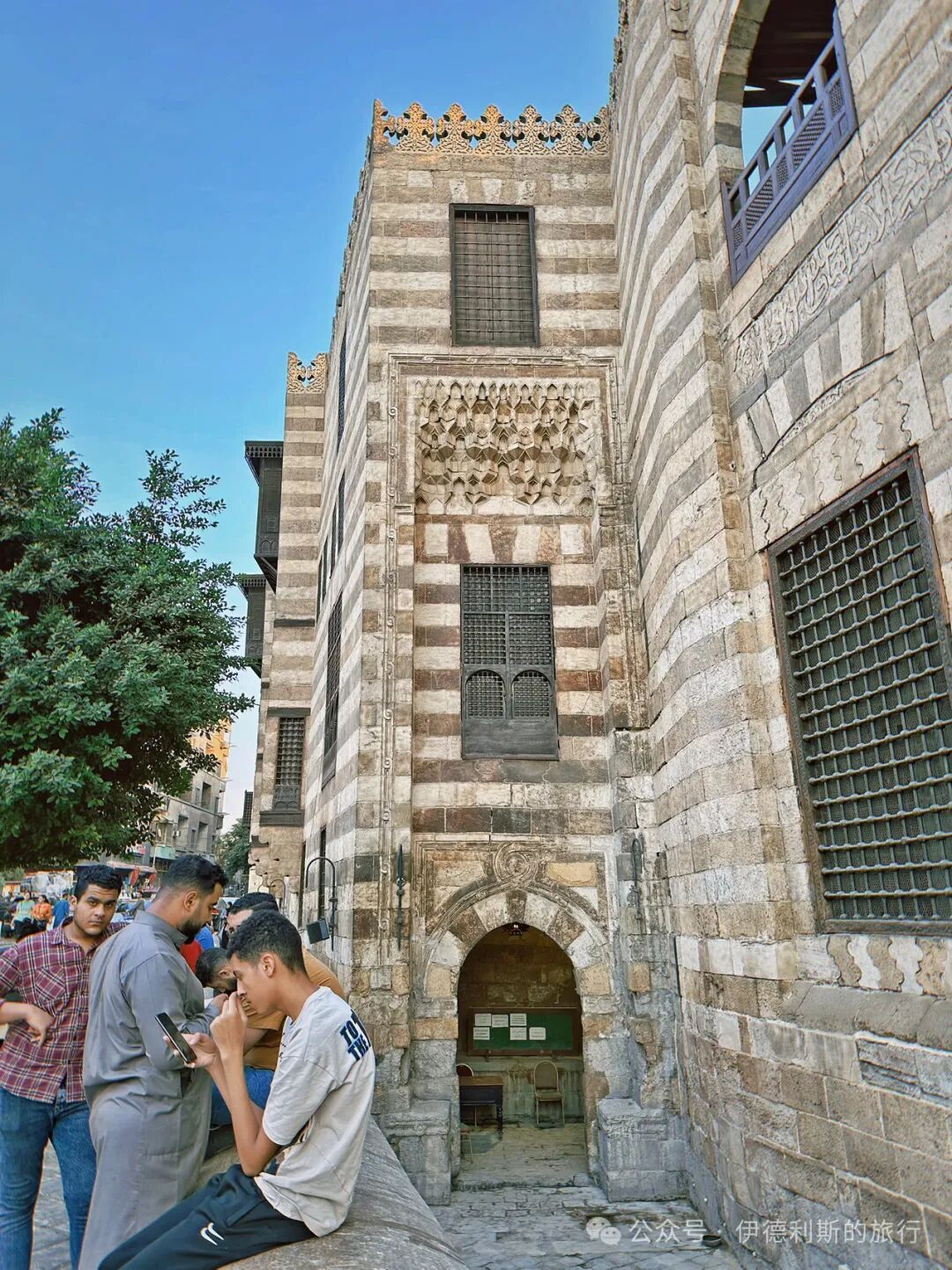
6. Other buildings
The Ottoman-era Zarakesha caravan inn (Khan) features beautiful wooden lattice (Mashrabiya) window shutters.
The Ainy Madrasa was built in 1411 by the famous Hanafi scholar Muhammad Badr El-Din El-Ayntabi, who served as an advisor in the courts of three Mamluk sultans.
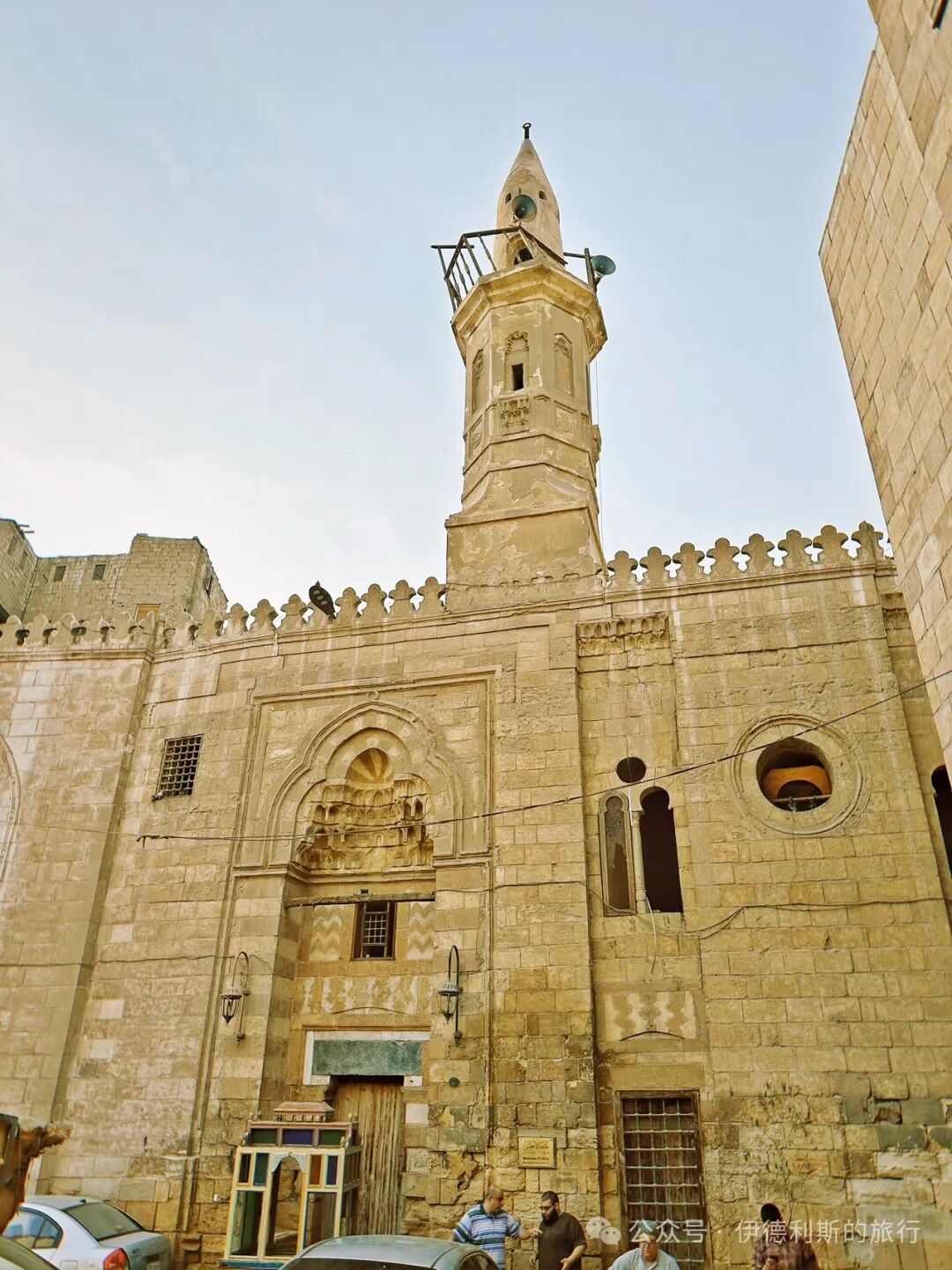
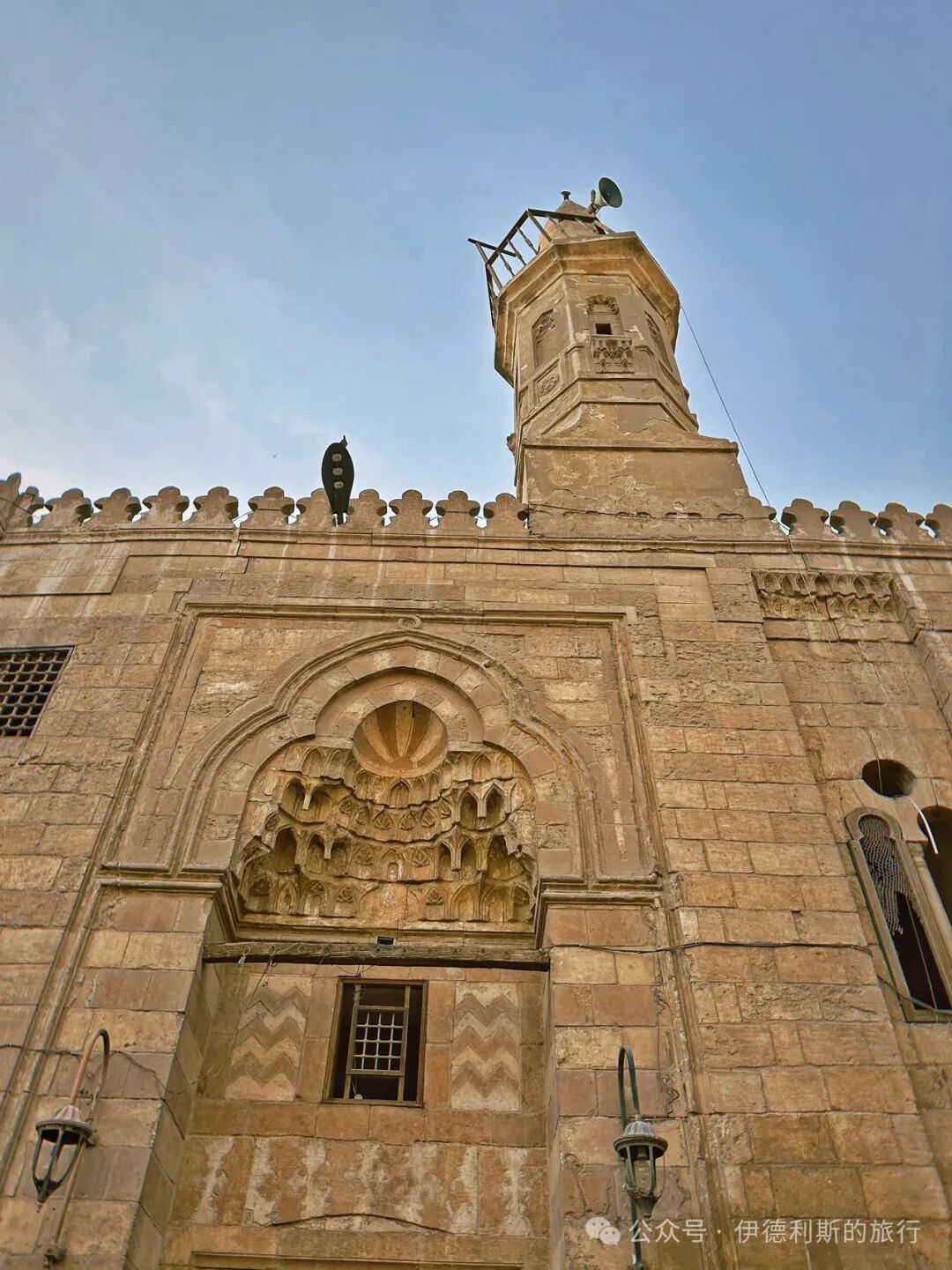
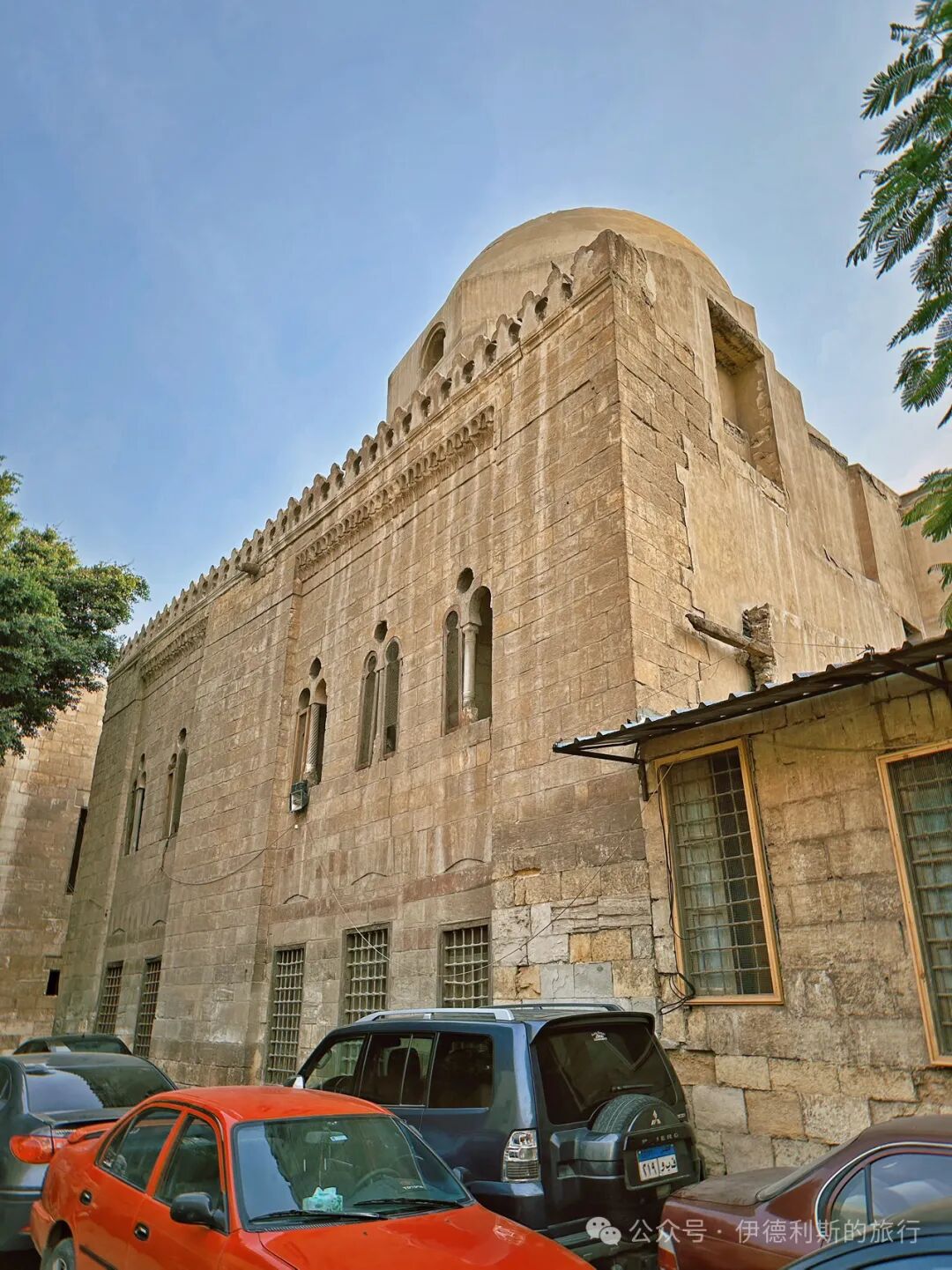
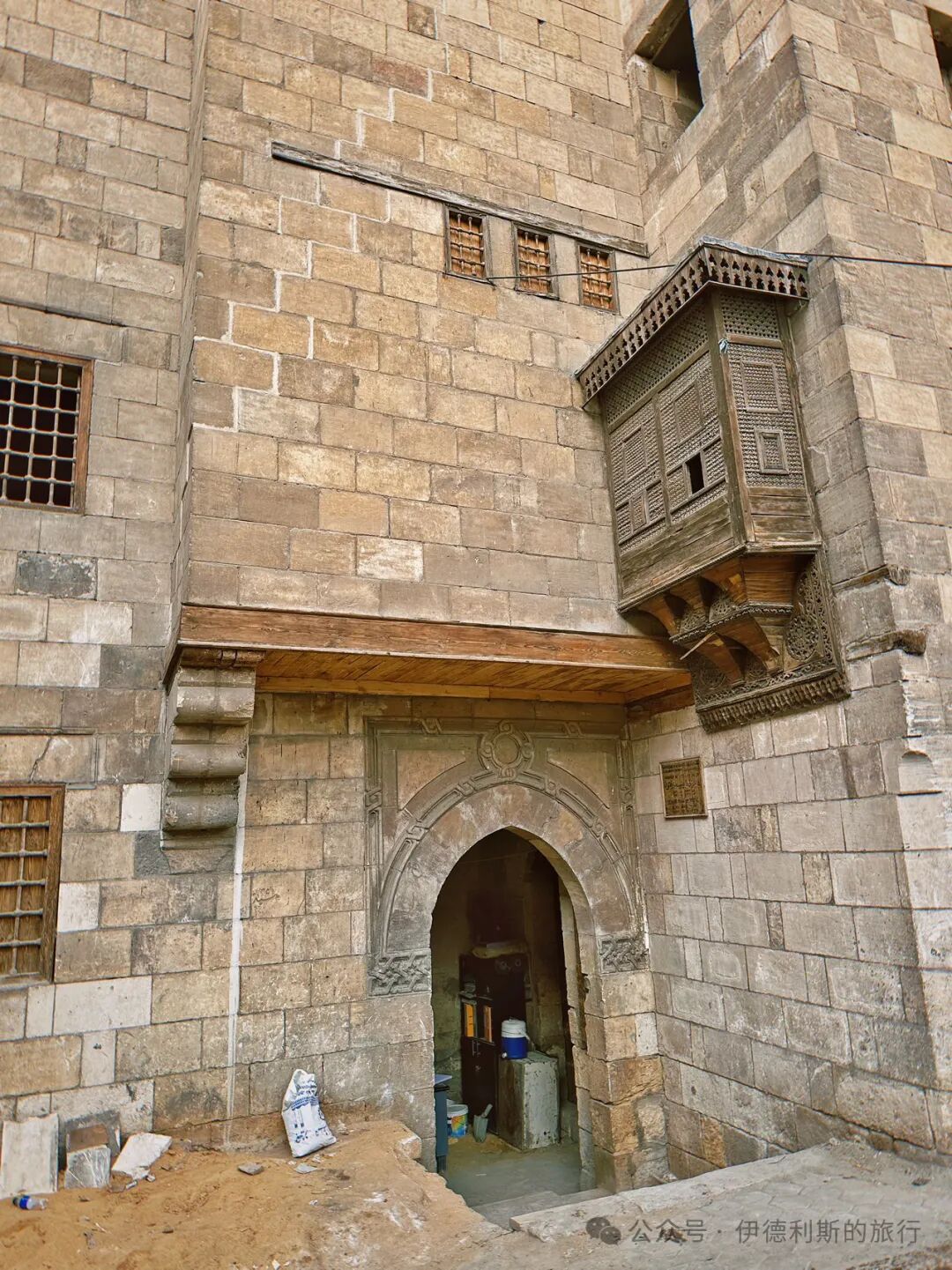
The residence of Mamluk Princess Zeinab Khatoon was built in 1486 during the Mamluk dynasty and was later renovated in 1713.
Islamic History Guide: Old Cairo - Bayn al-Qasrayn and a Thousand Years of Heritage
Articles • ali2007fr posted the article • 0 comments • 230 views • 2026-05-19 10:02
Summary: Islamic History Guide: Old Cairo - Bayn al-Qasrayn and a Thousand Years of Heritage is presented here as a firsthand travel account in clear, natural English. The account focuses on Old Cairo, Islamic History, Bayn al-Qasrayn while preserving the names, places, food, photos, and historical details from the Chinese source.
In our first article, 'Experiencing the Thousand-Year History of Old Cairo (Inside the North Gate)', we started at the North Gate of Cairo, built in the 11th century during the Fatimid dynasty, to enter the thousand-year-old historic city. We then traveled from north to south to visit 13 historic buildings, including:
The 11th-century Al-Hakim Mosque and the 12th-century Al-Aqmar Mosque from the Fatimid dynasty.
From the 14th-century Mamluk dynasty, we saw the gate of the Qawsun Caravanserai, the Khanqah of Baybars II, and the Beshtak Palace. From the 15th century, we visited the Qaitbay Caravanserai, the Madrasa of Amir Jamal al-Din al-Ustadar, and the Maq'ad of Mamay al-Sayfi.
From the 17th-century Ottoman dynasty, we saw the Al-Suhaymi House, the Sabil-Kuttab of Qitas Bey, and the Sabil-Kuttab of Dhu al-Fiqar. We also visited the 18th-century Sabil-Kuttab of Abd al-Rahman Katkhuda and the 19th-century Mosque-Sabil of Sulayman Agha al-Silahdar.
In this article, we will continue south to visit eight magnificent building complexes from the Ayyubid and Mamluk dynasties in Old Cairo.
Bayn al-Qasrayn is located in the heart of Old Cairo, and its name literally means 'between the two palaces'. This was originally a square between two grand palaces built by the Fatimid dynasty in the 10th century. Later, the Ayyubid, Mamluk, and Ottoman dynasties built many structures here, and many of them are still standing today.
Al-Kamil Madrasa: 1225
Barquq Madrasa: 1386
An-Nasir Muhammad Madrasa: 1303
Qalawun Complex: 1285
As-Salih Ayyub Mausoleum: 1250
As-Salihia Madrasa: 1243
Al-Ashraf Complex: 1424
Al-Kamil Madrasa: 1225
The Al-Kamil Madrasa was built in 1225 by the Ayyubid Sultan Al-Kamil, who reigned from 1218 to 1238. During the 13th and 14th centuries, this place was a center for the study of Hadith in Egypt. A great famine hit Egypt between 1400 and 1404, causing the population to drop sharply and leading to the decline of the Al-Kamil Madrasa.
Al-Kamil was the nephew of Sultan Saladin and a key leader for Egypt during the Fifth and Sixth Crusades. During the Fifth Crusade, he opened the Nile dams to trade for eight years of peace. During the Sixth Crusade, he handed Jerusalem over to the Crusaders to trade for ten years of peace, which was the only Crusade resolved through diplomacy.
Today, the only part of the Ayyubid-era building left is the Iwan arch on the west side. The arch once featured plaster decorations in Kufic calligraphy, which are now kept at the Museum of Islamic Art in Cairo. The main hall at the entrance was built in 1752 by the Ottoman official Prince Hassan Sharawi.
Barquq Madrasa: 1386
South of the Kamil Madrasa stands the Barquq Madrasa, built in 1386 by Barquq, the first sultan of the Mamluk Burji dynasty (reigned 1382–1389 and 1390–1399). This was the first building of the Mamluk Burji dynasty (1382–1517) and holds great historical significance.
The architect of the madrasa was Ahmad al-Tuluni. Ahmad came from a family of carpenters and stonemasons. He was one of the few master architects to achieve great success in the late 14th century and was highly valued by the sultan.
The project supervisor for the madrasa was Emir Jarkas al-Khalili. He built the famous Khan el-Khalili market in Cairo, which is named after him.
The entire madrasa complex consists of a prayer hall, classrooms, a mausoleum, and a dervish lodge. It taught knowledge from the four major schools of Islamic jurisprudence: Hanafi, Maliki, Shafi'i, and Hanbali. The main gate of the madrasa features a monumental arched entrance (Pishtaq), decorated with beautiful honeycomb-like carvings (Muqarnas) and calligraphy.
After entering the gate, a passageway leads to the courtyard (Sahn). In the middle of the courtyard is a fountain (Sabil), which was rebuilt in the late 19th century by the Committee for the Preservation of the Monuments of Arab Art (Comité). The courtyard has an arched hall (iwan) on each of its four sides. The prayer hall on the east side is covered by a massive wooden roof, while the other three sides have stone domes.
The prayer hall ceiling features intricate painted designs, and the floor is decorated with colorful marble mosaics and panels. The pulpit (minbar) inside the prayer hall was a gift from the Mamluk Sultan Sayf al-Din Jaqmaq (reigned 1438–1453) in 1440. It is made of Aleppo pine and inlaid with ebony and ivory. Sadly, the pulpit was stolen twice in 2012 and 2013, and most of its decorative pieces are now missing.
Beneath the dome of the Barquq Madrasa is a tomb chamber, but Sultan Barquq himself is not buried here. His daughter Fatima is buried in this space instead.
The following photos show the wood carvings and copper work on the main gate of the madrasa.
Barquq was born into a Circassian family living under the rule of the Golden Horde. After a battle, he was captured as a slave and sold to a bathhouse in Crimea. Later, he was sold again and moved to Egypt, where he became a Mamluk slave soldier. In 1377, civil unrest broke out in the Mamluk Sultanate. The young sultan who had just taken the throne held no real power. Barquq used this chance to strengthen his own position. In 1382, he seized the throne, ending the 132-year rule of the Kipchak Turkic Bahri dynasty and establishing the Circassian Caucasian Burji dynasty.
During his reign, Barquq joined forces with the Ottoman Sultan Bayezid I to fight against the Timurid Empire and executed Timur's envoy. In 1394, Barquq and Timur fought a war near the Euphrates River, which ended with Timur leading his army in retreat.
The days and nights at the Madrasa of Barquq are busy, as the lively Al-Mu'izz Street in Old Cairo sits right in front of the gate. This street is known as the main artery of Old Cairo. It connects the north gate to the south gate and serves as the main axis of the old city.
An-Nasir Muhammad Madrasa: 1303
To the south of the Madrasa of Barquq stands the Madrasa of Al-Nasir Muhammad, which was built between 1295 and 1303 by the Mamluk Sultan Al-Nasir Muhammad (who reigned from 1293-1294, 1299-1309, and 1310-1341).
Al-Nasir Muhammad was the youngest son of Sultan Qalawun. He took the throne at age 9, but he did not hold real power until his third period of rule at age 24. Under his rule, the Mamluk Sultanate reached its peak. The economy thrived at home, there were no major threats from abroad, and envoys from the Pope and the King of France visited his court with gifts. The reign of Nasir Muhammad is known as a high point for Egyptian culture, the greatest since the Ptolemaic Hellenistic period. He reopened the canal connecting Alexandria to the Nile, built many public buildings in Cairo, and renovated over thirty mosques.
The madrasa has a very unique Gothic gate. It was taken from a church in Acre after the Mamluk Sultanate completely defeated the Crusaders in 1291. The 1291 Siege of Acre is called the last battle of the Crusades, marking the end of the nearly 200-year-long Crusades. When the Siege of Acre ended, the Sultan ordered his army to tear down the city walls and churches, and this gate was transported back to Cairo.
The minaret of the madrasa has very complex stucco decorations. It is the only remaining all-stucco minaret in the old city of Cairo. The medallions and arched decorations follow the styles of the Fatimid and Ayyubid dynasties, while the floral patterns are a signature feature of the Mamluk period. The plaster decorations feature both Kufic and Thuluth calligraphy, and they are carved beautifully. Some historians believe that craftsmen from the Maghreb or Andalusia likely helped create these high-quality plaster carvings.
Like the Barquq Madrasa to the north, the Madrasa of an-Nasir Muhammad taught the four major schools of Islamic law: Hanafi, Hanbali, Shafi'i, and Maliki. The main hall contains the last plaster mihrab in Egypt, which features a unique egg-shaped protrusion similar to plaster carvings from Tabriz, Iran, during the Ilkhanate period. Because of this, historians suggest that this mihrab was likely made by craftsmen from Iran.
Qalawun Complex: 1285
Further south is the most magnificent part of the Bayn al-Qasrayn area, the Qalawun complex. This complex includes a hospital, a madrasa, and a mausoleum. It was built in 1285 by the Mamluk Sultan Qalawun, who reigned from 1279 to 1290, and it is considered a masterpiece of Mamluk architecture.
Standing at the entrance of the building complex, the most eye-catching feature is the towering three-story minaret (bangke ta). The top of the minaret features a unique decoration called a papyrus cornice, which is how the Mamluk dynasty showed its legitimacy by looking back to the era of the pharaohs.
The facade of the entire complex is 67 meters long, similar in style to Gothic Crusader churches of the same period, with windows surrounded by pointed arch panels of different sizes and exquisite stucco calligraphy carvings underneath.
The Mausoleum of Sultan Qalawun is known as a symbol of the power of the Mamluk dynasty and held great significance in 13th to 16th-century Egypt. This is one of the most magnificent imperial mausoleums I have ever visited, with an incredible wealth of stucco carvings, marble mosaics, and gilded woodwork. The tomb hall is supported by four towering stone columns decorated with Corinthian capitals. Above the capitals is an architrave decorated with vine patterns and stucco carvings in Thuluth calligraphy.
Sultan Qalawun was known as the King of Victory. In 1281, he led the Mamluk army to defeat the Mongol Ilkhanate forces commanded by Mongke Temur, the son of Hulagu Khan, in Homs, Syria. Mongke Temur was wounded and fled. The following year, the Ilkhan Tekuder converted to Islam and formed an alliance with the Mamluk Sultanate. The Battle of Homs is known as a major turning point in the Mongol westward expansion, marking the first time Mongol cavalry suffered a defeat in the Middle East.
After the threat from the Ilkhanate faded, Sultan Qalawun launched a series of wars against the Crusaders starting in 1285, eventually recapturing Tripoli, the largest city in northern Lebanon, in 1289.
The mihrab in the mausoleum of Sultan Qalawun is considered the most exquisite mihrab of the Mamluk period. The design of the mihrab was inspired by Syria and was created using colorful marble mosaics.
The madrasa of Sultan Qalawun consists of two iwan vaulted structures, with classrooms and a prayer hall on either side of the courtyard. The mihrab in the center of the prayer hall does not use the marble mosaics common in the Mamluk period, but instead features glass and mother-of-pearl mosaics. This is a throwback to the decorative art of the Umayyad Caliphate in Syria, showing how the Mamluks claimed to inherit the orthodoxy of the faith.
As-Salih Ayyub Mausoleum: 1250
Across from the Qalawun complex stands the tomb built in 1250 by Shajar al-Durr, the widow of the Ayyubid Sultan As-Salih Ayyub (reigned 1240–49), for her husband.
Sultan As-Salih was the last major ruler of the Ayyubid dynasty, and he saw the rise of the Mamluk dynasty. Because he did not trust the local Egyptian emirs, he began buying large numbers of Kipchak Turks who had been enslaved after the Mongol invasion of Central Asia. These slaves soon became the core of the Ayyubid army and were known as Mamluks.
Sultan As-Salih also made great progress in the wars against the Crusaders. In 1244, he invited 10,000 Khwarazmian mercenary cavalrymen to sack and retake Jerusalem, which caused great panic among the surrounding regimes. A Christian army made up of the Kingdom of Jerusalem, the Teutonic Knights, the Knights Templar, the Knights Hospitaller, and the Order of Saint Lazarus formed an alliance with a Muslim army led by the emirs of Homs, Damascus, and Kerak to fight against as-Salih. The two armies met in a small village northeast of Gaza, where as-Salih's army and Khwarazmian mercenaries fought hard and eventually won. More than 5,000 Crusaders died in this battle, including the Grand Master and Marshal of the Knights Templar, as well as bishops from several cities.
After this battle, Christian power in the Holy Land collapsed, and the Kingdom of Jerusalem was never again able to organize an effective military campaign. In 1245, the Pope called for a new Crusade. In 1249, the Seventh Crusade, led by King Louis IX of France, officially began. When as-Salih heard the news, he quickly returned to Egypt to set up camp, but he died of illness shortly after. After as-Salih died, his widow Shajar al-Durr decided to hide the news of the Sultan's death and ordered the Mamluk army to successfully defeat the Crusader attack.
As-Salihia Madrasa: 1243
On the south side of the Sultan Salih Ayyub tomb stands the Salihiyya madrasa, which Salih built in 1242. Known as the 'Castle of Scholars,' the Salihiyya madrasa was the first in Cairo to teach the four major schools of Islamic law: Hanafi, Hanbali, Shafi'i, and Maliki. The north building of the school taught Shafi'i and Maliki law, while the south building taught Hanafi and Hanbali law.
The Salihiyya madrasa was abandoned after the Ottoman Empire conquered Egypt in the early 16th century. Today, most of it is a market, but the main gate and the minaret remain. The Salihiyya madrasa broke the Ayyubid tradition of only building minarets at Friday mosques by adding one to the gate of the school.
Al-Ashraf Complex: 1424
Continuing south, you will find the Al-Ashraf complex, built in 1424 by the Mamluk Sultan Al-Ashraf Barsbay, who reigned from 1422 to 1438. The entire complex includes a main hall, a school, a tomb, and a prayer hall (daotang), featuring a dome with geometric carvings, which is an early example of decorative dome carving.
Barsbay was once a Mamluk slave of the Mamluk Sultan Barquq, and he later became the tutor for the young Sultan Muhammad. With the support of the governor of Damascus and other emirs, Barsbay deposed the young sultan in 1422 and took the throne as the new sultan.
The 16 years of Barsbay's rule were a time of relative safety and stability for the Mamluk Sultanate, with almost no war. He was very generous to the poor and to Sufis, and he carried out a series of administrative reforms.
Barsbay was known as the "Merchant Sultan" and placed great importance on the role of trade. He took a series of measures to strengthen control over the Mediterranean and the Red Sea, diverted Indian Ocean trade routes through Jeddah, and established state monopolies on sugar and pepper. He attracted merchants by lowering tariffs and monopolized most of the trade from the East, which angered many European powers. view all
Summary: Islamic History Guide: Old Cairo - Bayn al-Qasrayn and a Thousand Years of Heritage is presented here as a firsthand travel account in clear, natural English. The account focuses on Old Cairo, Islamic History, Bayn al-Qasrayn while preserving the names, places, food, photos, and historical details from the Chinese source.
In our first article, 'Experiencing the Thousand-Year History of Old Cairo (Inside the North Gate)', we started at the North Gate of Cairo, built in the 11th century during the Fatimid dynasty, to enter the thousand-year-old historic city. We then traveled from north to south to visit 13 historic buildings, including:
The 11th-century Al-Hakim Mosque and the 12th-century Al-Aqmar Mosque from the Fatimid dynasty.
From the 14th-century Mamluk dynasty, we saw the gate of the Qawsun Caravanserai, the Khanqah of Baybars II, and the Beshtak Palace. From the 15th century, we visited the Qaitbay Caravanserai, the Madrasa of Amir Jamal al-Din al-Ustadar, and the Maq'ad of Mamay al-Sayfi.
From the 17th-century Ottoman dynasty, we saw the Al-Suhaymi House, the Sabil-Kuttab of Qitas Bey, and the Sabil-Kuttab of Dhu al-Fiqar. We also visited the 18th-century Sabil-Kuttab of Abd al-Rahman Katkhuda and the 19th-century Mosque-Sabil of Sulayman Agha al-Silahdar.
In this article, we will continue south to visit eight magnificent building complexes from the Ayyubid and Mamluk dynasties in Old Cairo.
Bayn al-Qasrayn is located in the heart of Old Cairo, and its name literally means 'between the two palaces'. This was originally a square between two grand palaces built by the Fatimid dynasty in the 10th century. Later, the Ayyubid, Mamluk, and Ottoman dynasties built many structures here, and many of them are still standing today.
Al-Kamil Madrasa: 1225
Barquq Madrasa: 1386
An-Nasir Muhammad Madrasa: 1303
Qalawun Complex: 1285
As-Salih Ayyub Mausoleum: 1250
As-Salihia Madrasa: 1243
Al-Ashraf Complex: 1424
Al-Kamil Madrasa: 1225
The Al-Kamil Madrasa was built in 1225 by the Ayyubid Sultan Al-Kamil, who reigned from 1218 to 1238. During the 13th and 14th centuries, this place was a center for the study of Hadith in Egypt. A great famine hit Egypt between 1400 and 1404, causing the population to drop sharply and leading to the decline of the Al-Kamil Madrasa.
Al-Kamil was the nephew of Sultan Saladin and a key leader for Egypt during the Fifth and Sixth Crusades. During the Fifth Crusade, he opened the Nile dams to trade for eight years of peace. During the Sixth Crusade, he handed Jerusalem over to the Crusaders to trade for ten years of peace, which was the only Crusade resolved through diplomacy.
Today, the only part of the Ayyubid-era building left is the Iwan arch on the west side. The arch once featured plaster decorations in Kufic calligraphy, which are now kept at the Museum of Islamic Art in Cairo. The main hall at the entrance was built in 1752 by the Ottoman official Prince Hassan Sharawi.
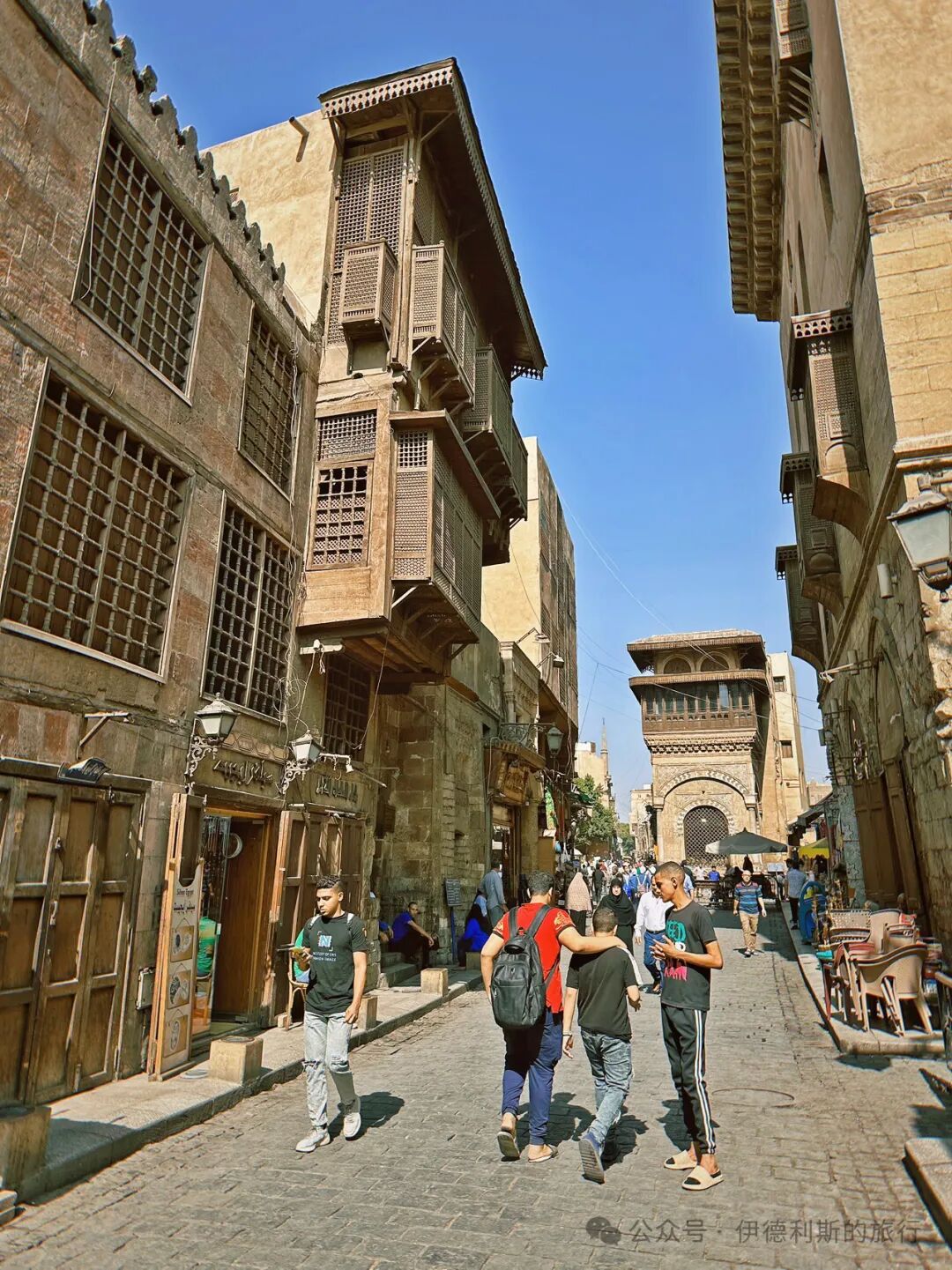
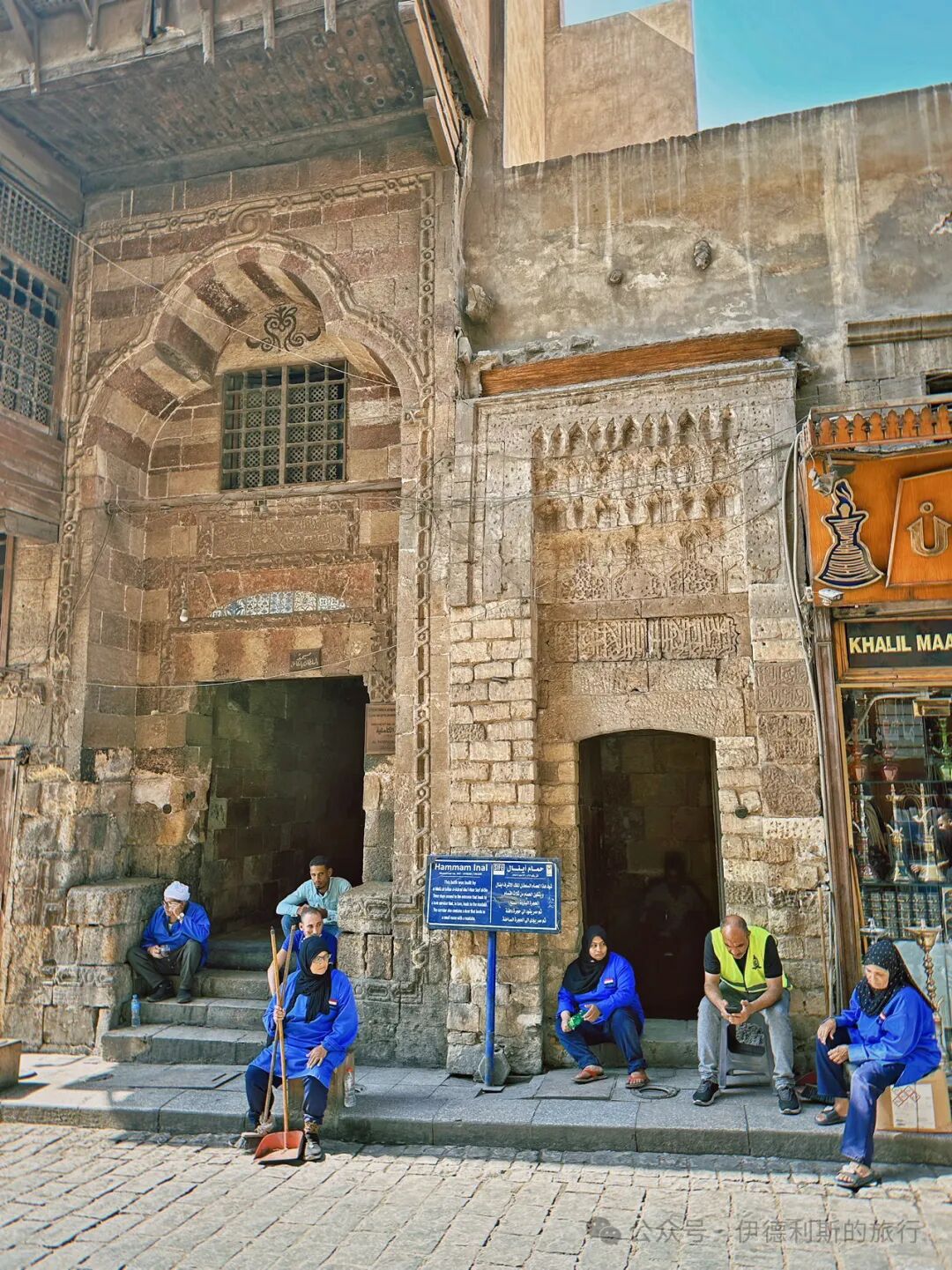
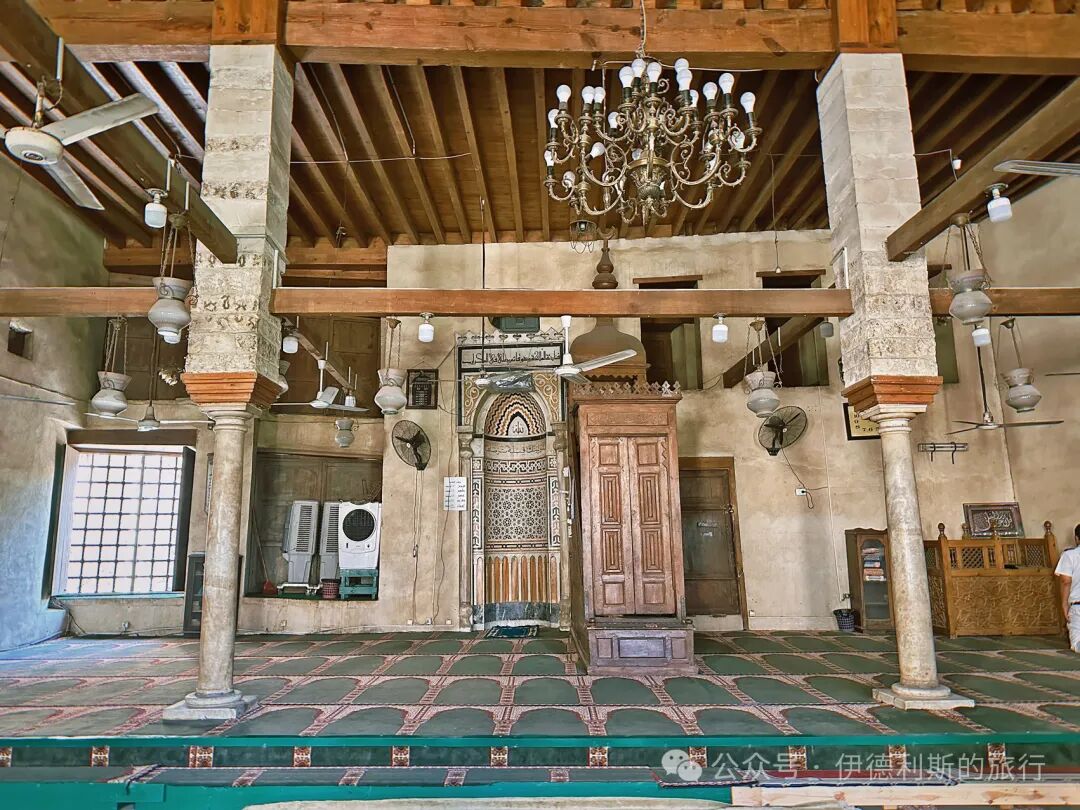
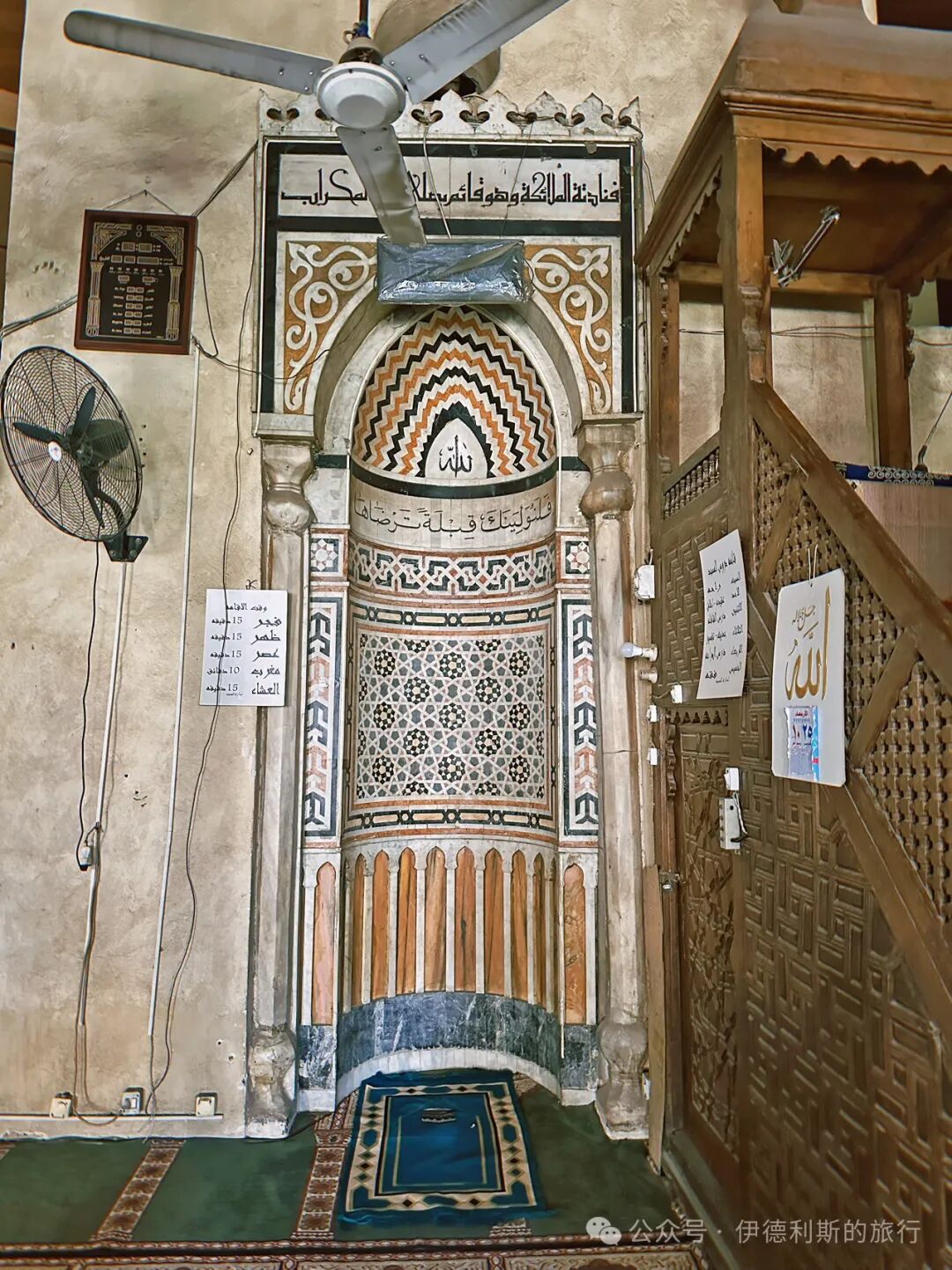
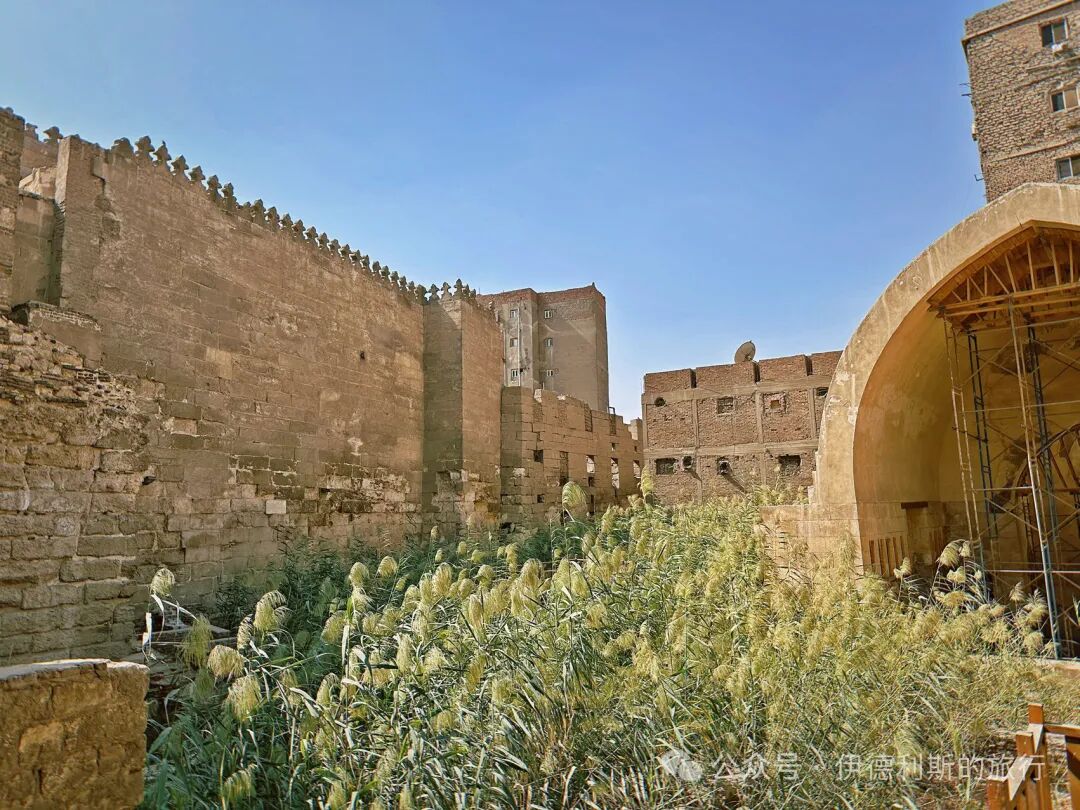
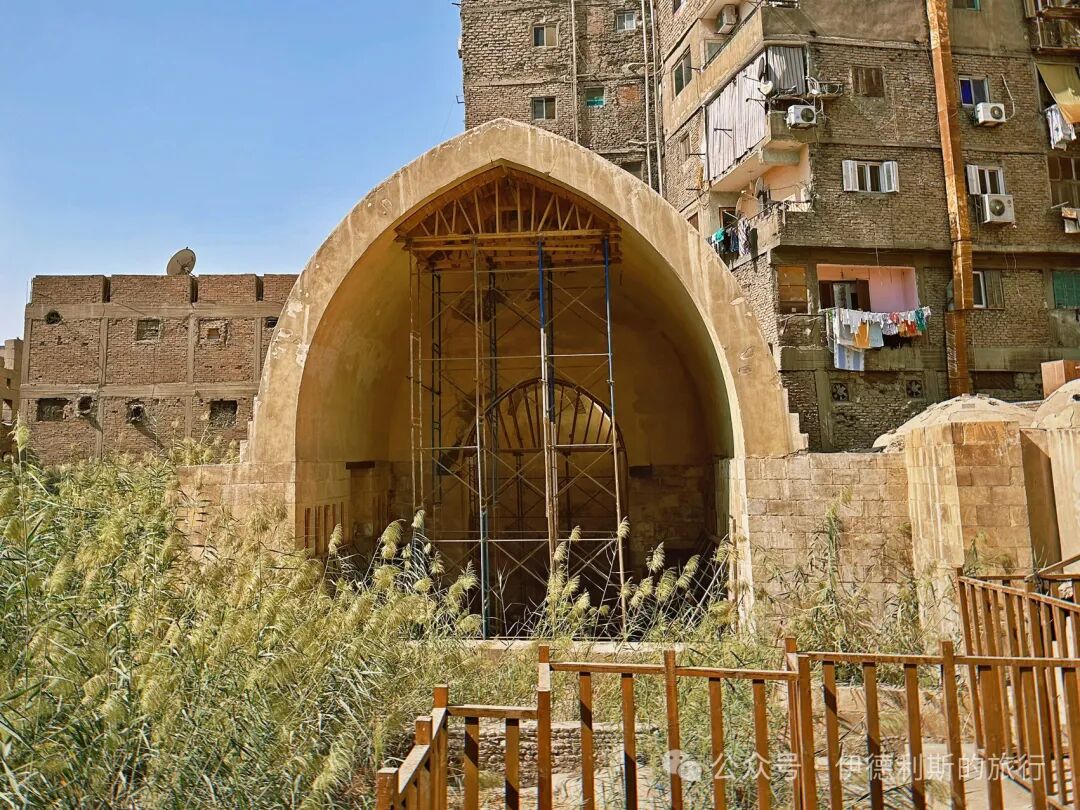
Barquq Madrasa: 1386
South of the Kamil Madrasa stands the Barquq Madrasa, built in 1386 by Barquq, the first sultan of the Mamluk Burji dynasty (reigned 1382–1389 and 1390–1399). This was the first building of the Mamluk Burji dynasty (1382–1517) and holds great historical significance.
The architect of the madrasa was Ahmad al-Tuluni. Ahmad came from a family of carpenters and stonemasons. He was one of the few master architects to achieve great success in the late 14th century and was highly valued by the sultan.
The project supervisor for the madrasa was Emir Jarkas al-Khalili. He built the famous Khan el-Khalili market in Cairo, which is named after him.
The entire madrasa complex consists of a prayer hall, classrooms, a mausoleum, and a dervish lodge. It taught knowledge from the four major schools of Islamic jurisprudence: Hanafi, Maliki, Shafi'i, and Hanbali. The main gate of the madrasa features a monumental arched entrance (Pishtaq), decorated with beautiful honeycomb-like carvings (Muqarnas) and calligraphy.
After entering the gate, a passageway leads to the courtyard (Sahn). In the middle of the courtyard is a fountain (Sabil), which was rebuilt in the late 19th century by the Committee for the Preservation of the Monuments of Arab Art (Comité). The courtyard has an arched hall (iwan) on each of its four sides. The prayer hall on the east side is covered by a massive wooden roof, while the other three sides have stone domes.
The prayer hall ceiling features intricate painted designs, and the floor is decorated with colorful marble mosaics and panels. The pulpit (minbar) inside the prayer hall was a gift from the Mamluk Sultan Sayf al-Din Jaqmaq (reigned 1438–1453) in 1440. It is made of Aleppo pine and inlaid with ebony and ivory. Sadly, the pulpit was stolen twice in 2012 and 2013, and most of its decorative pieces are now missing.
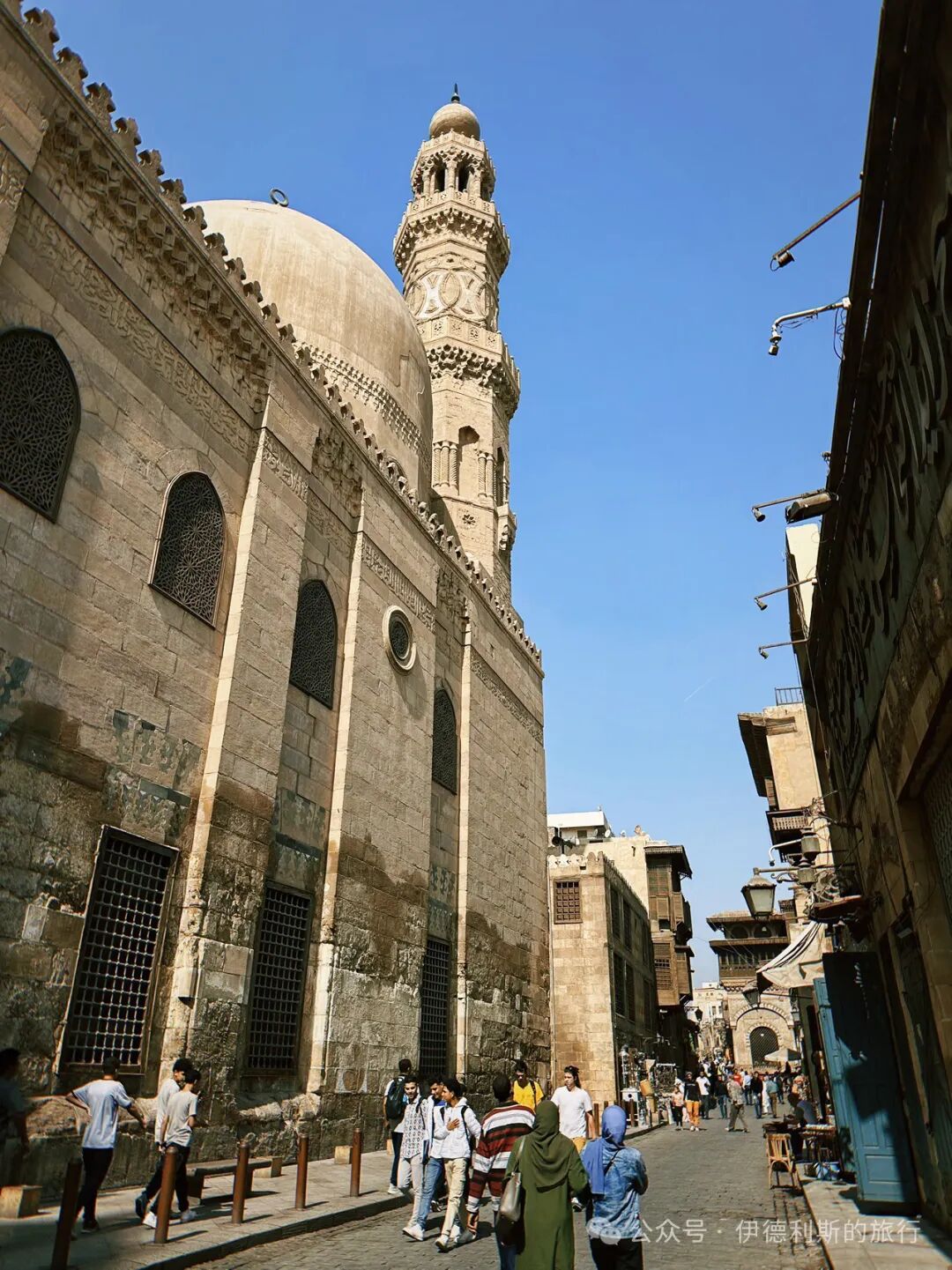
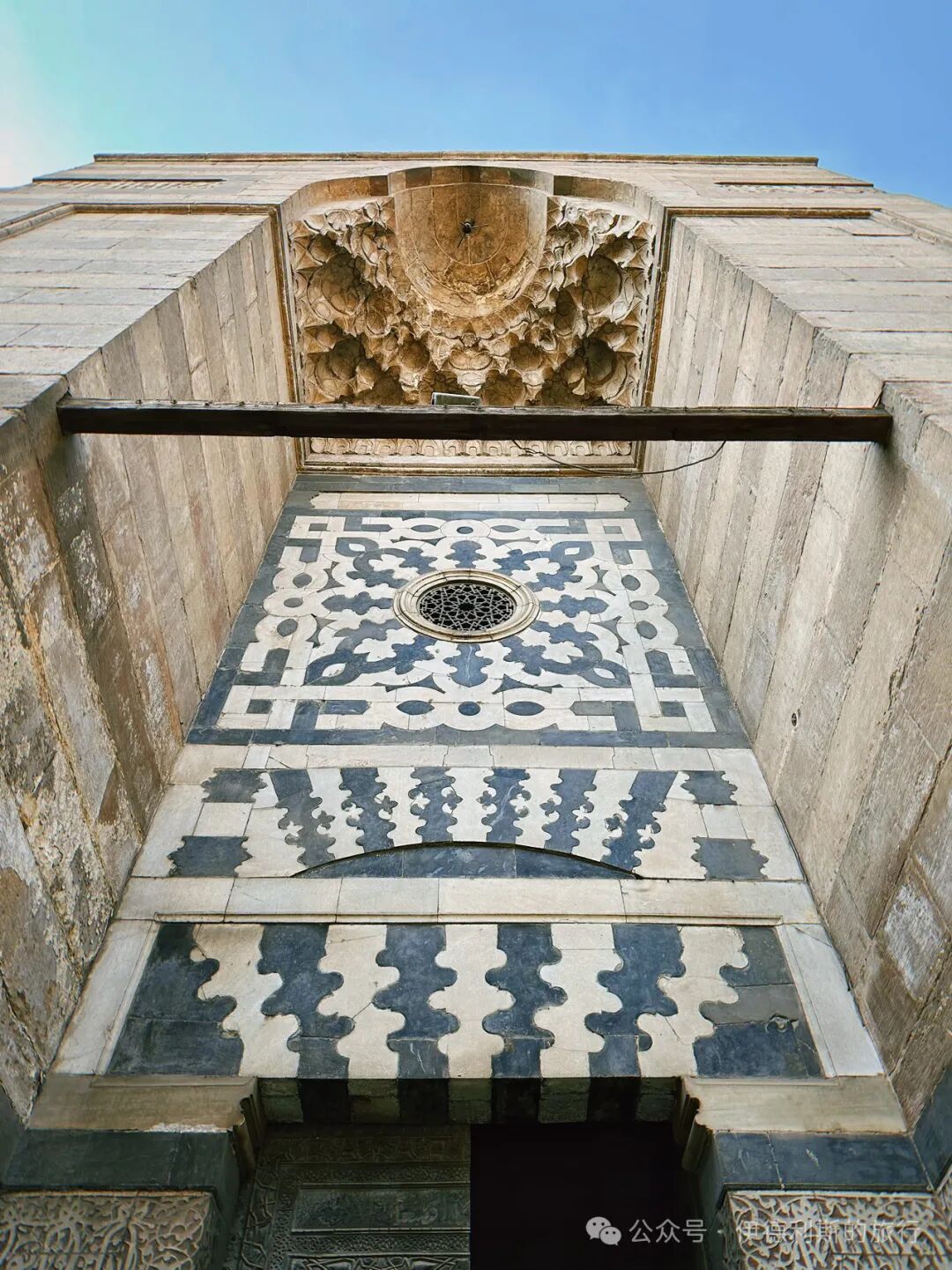
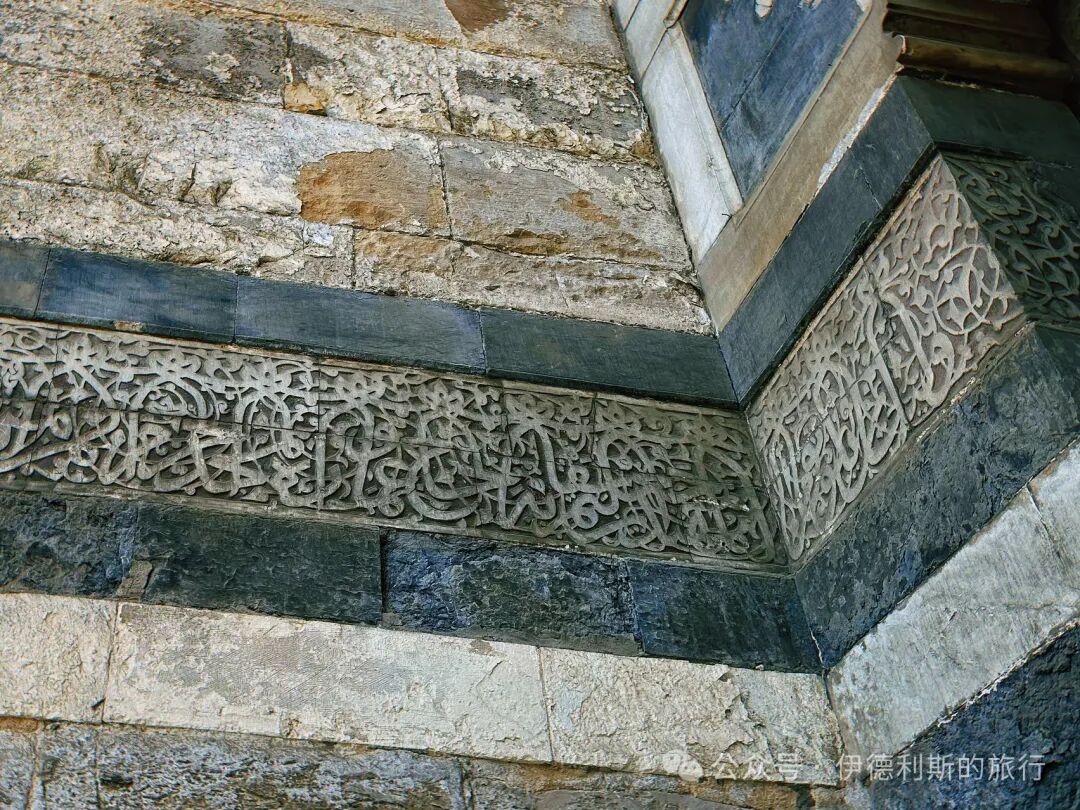
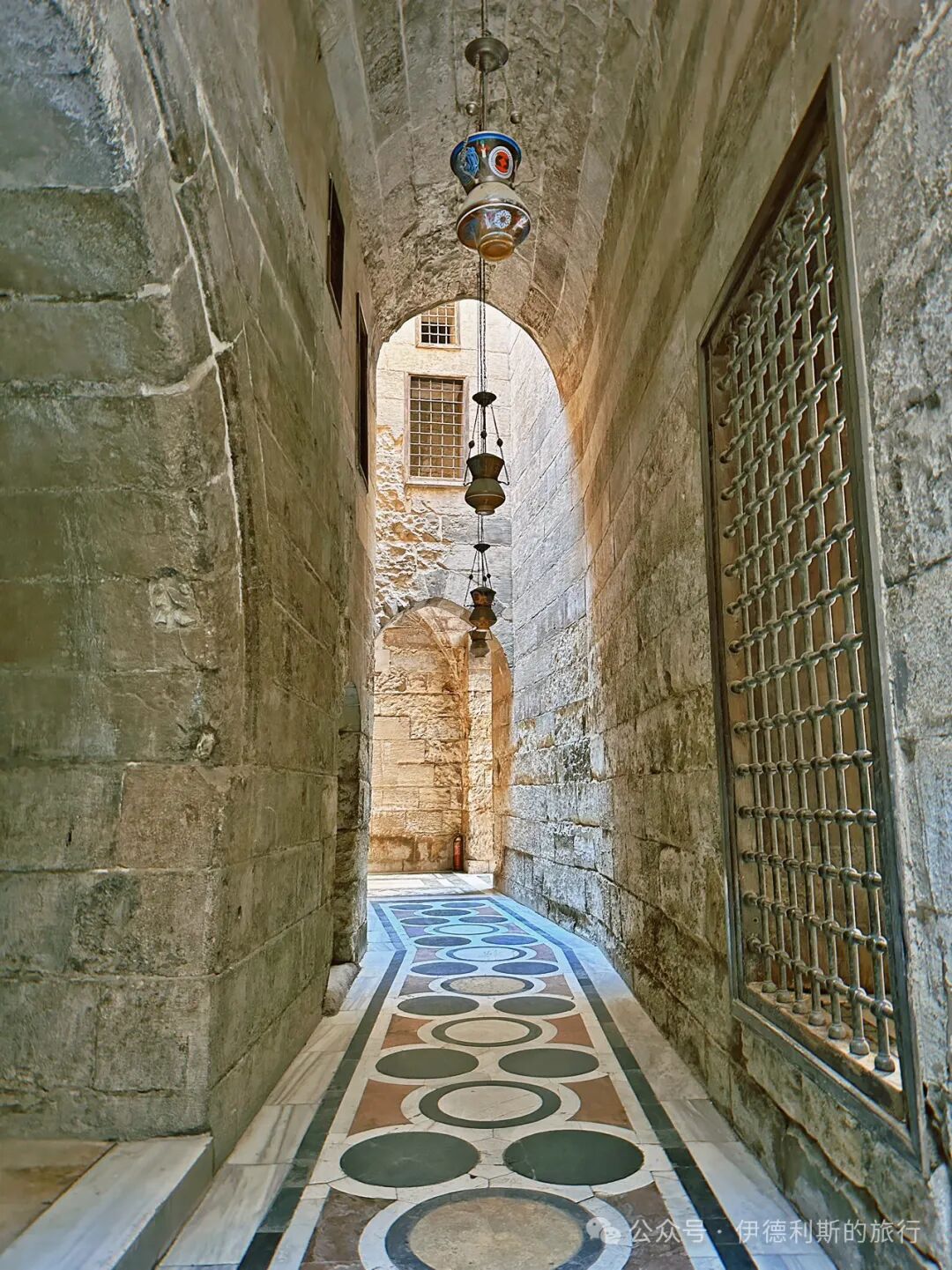
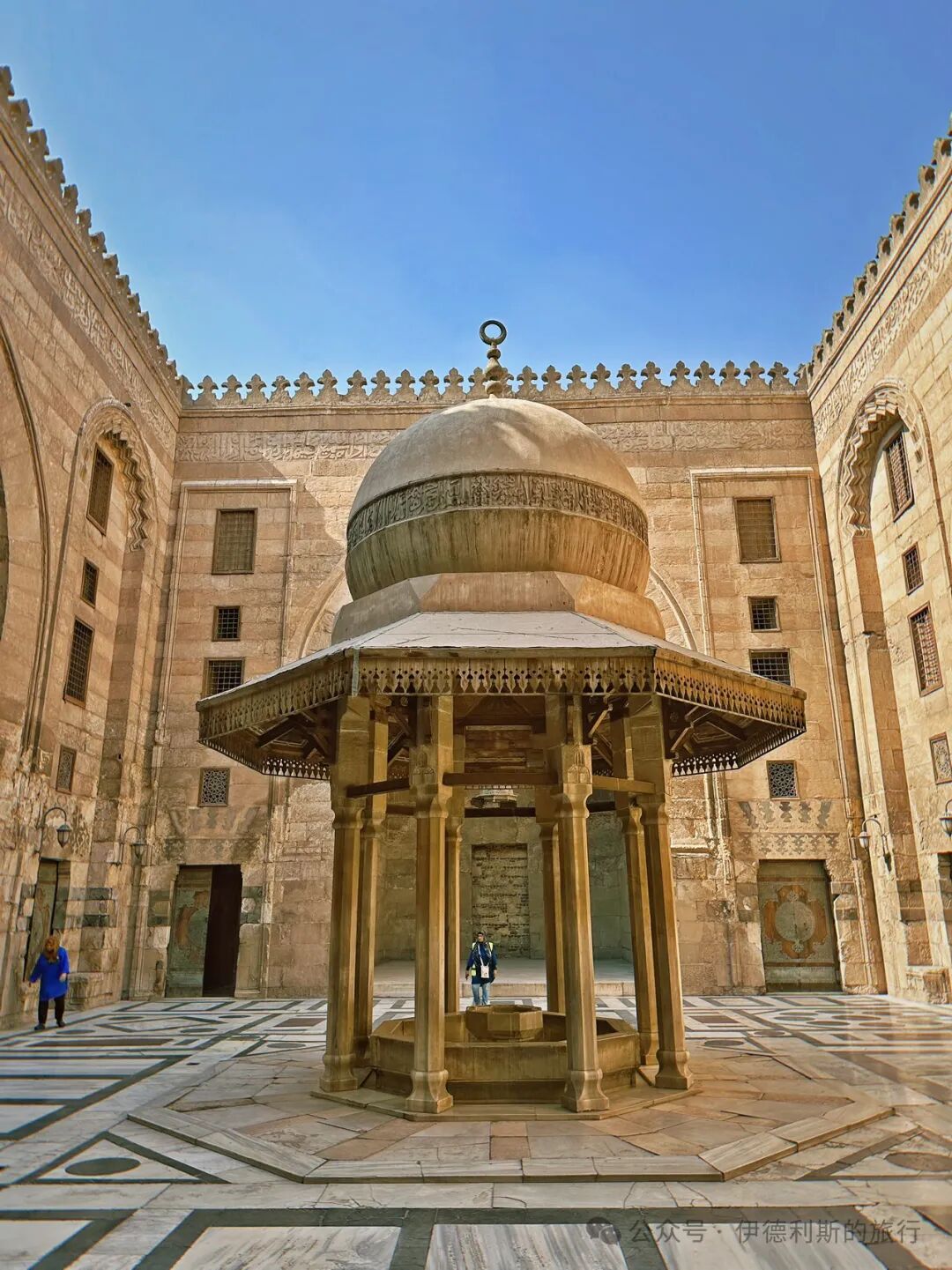
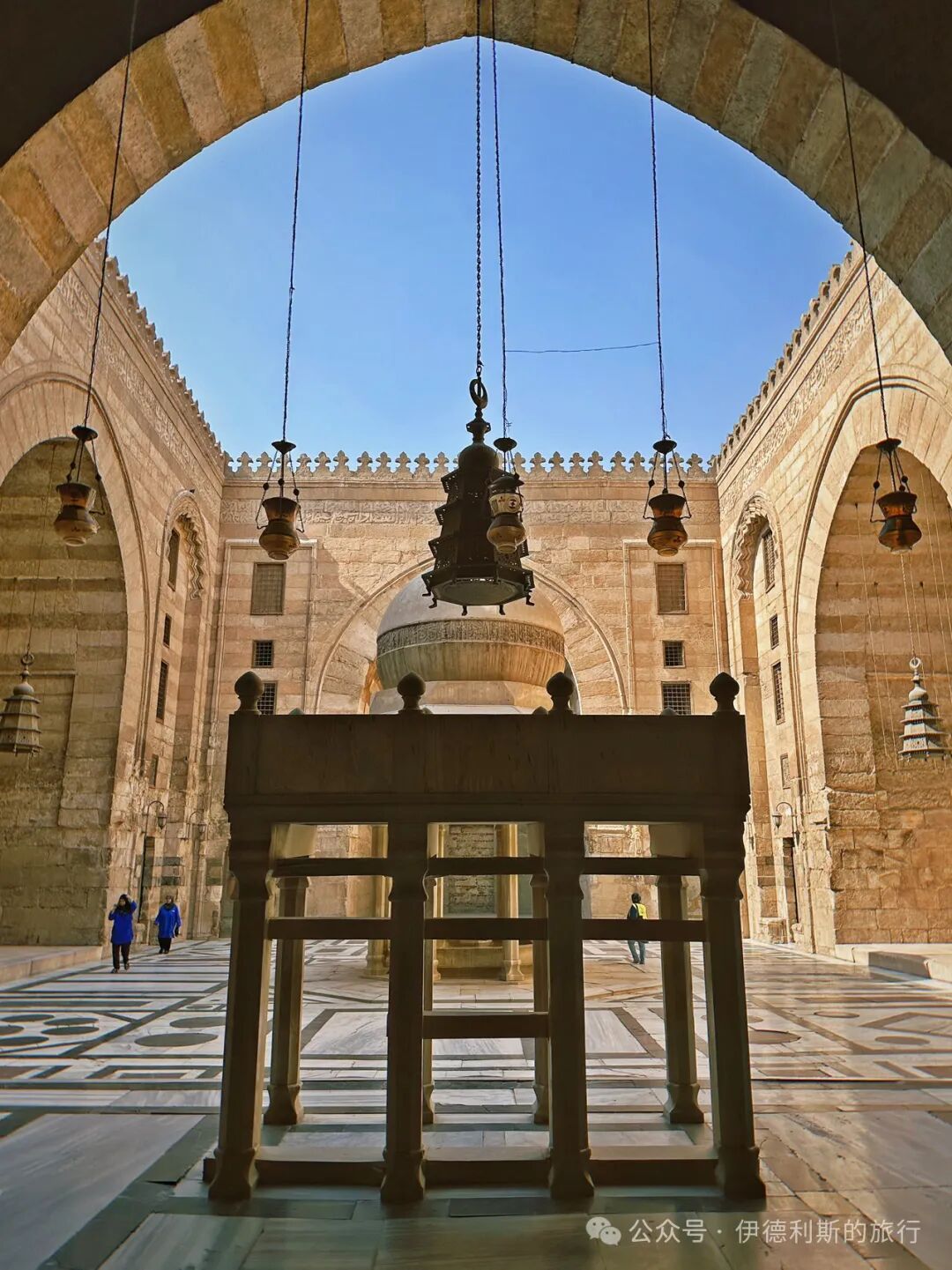
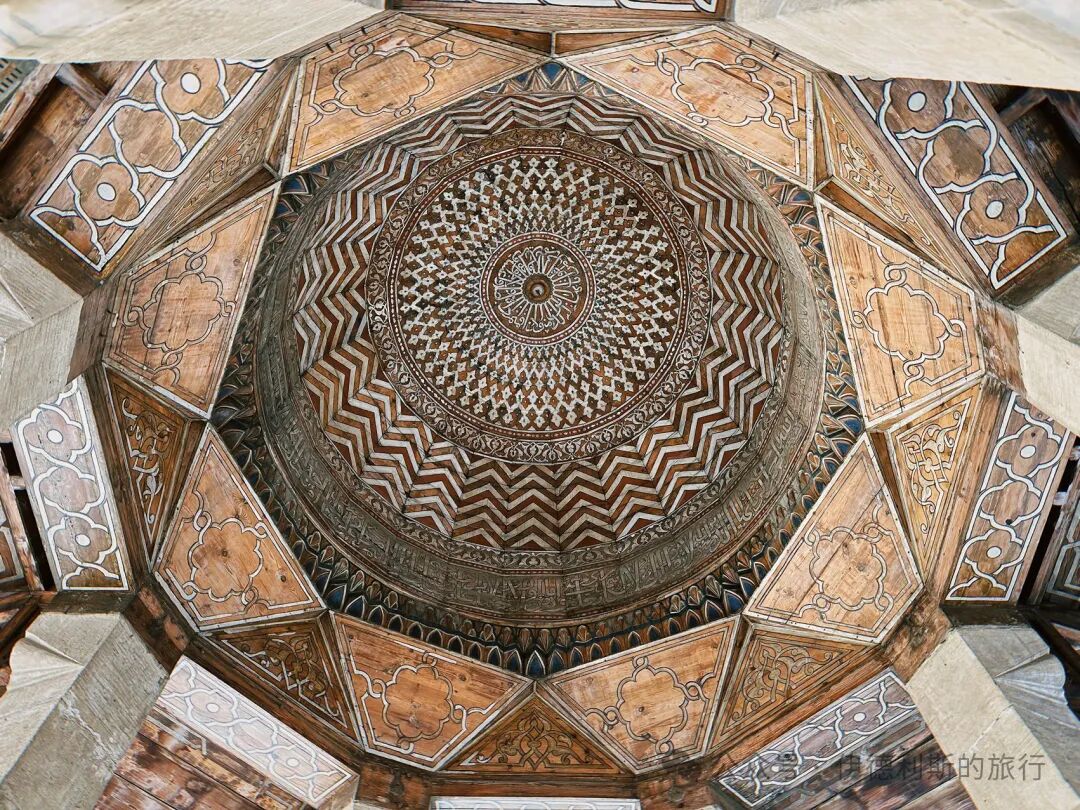
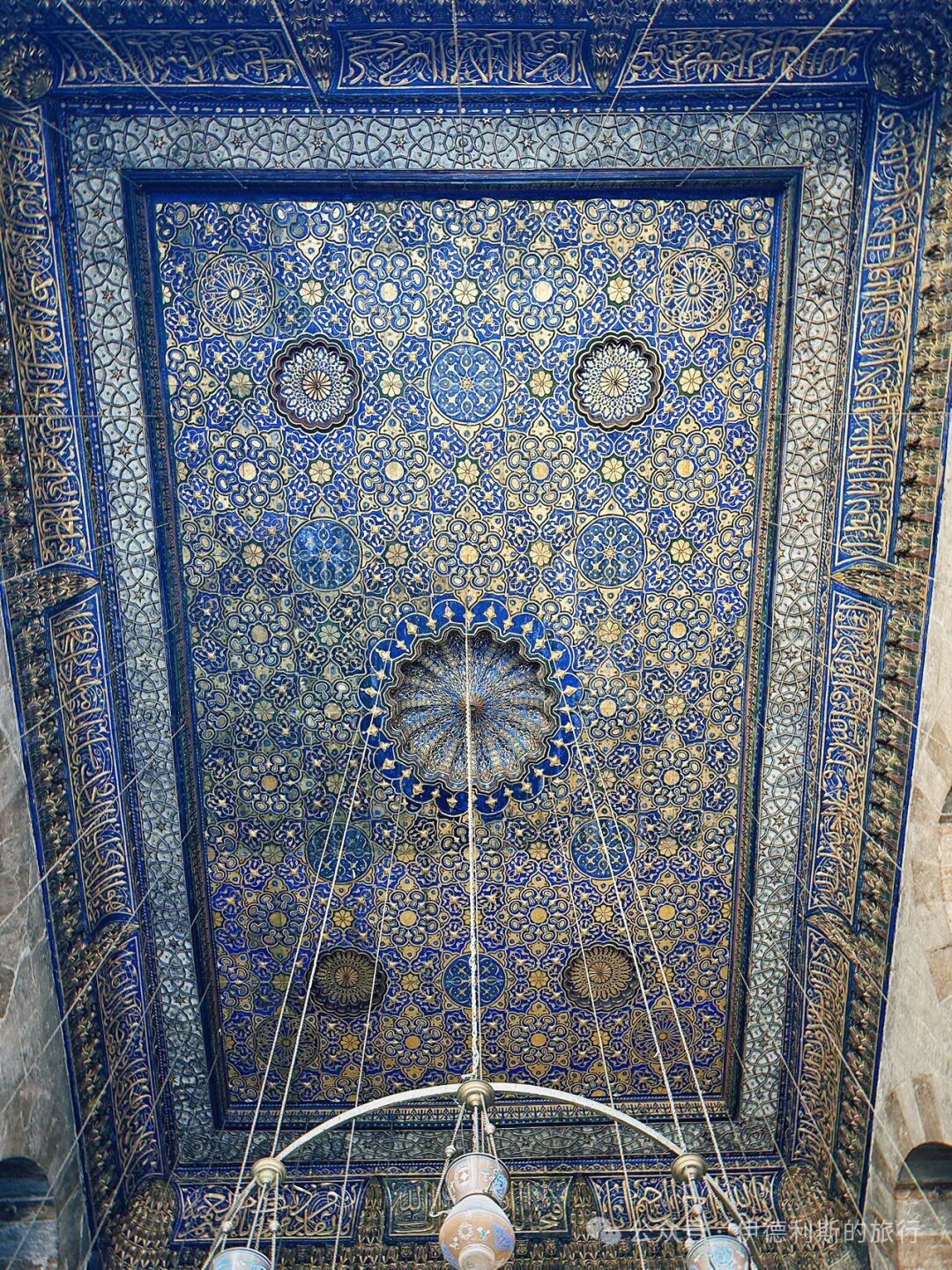
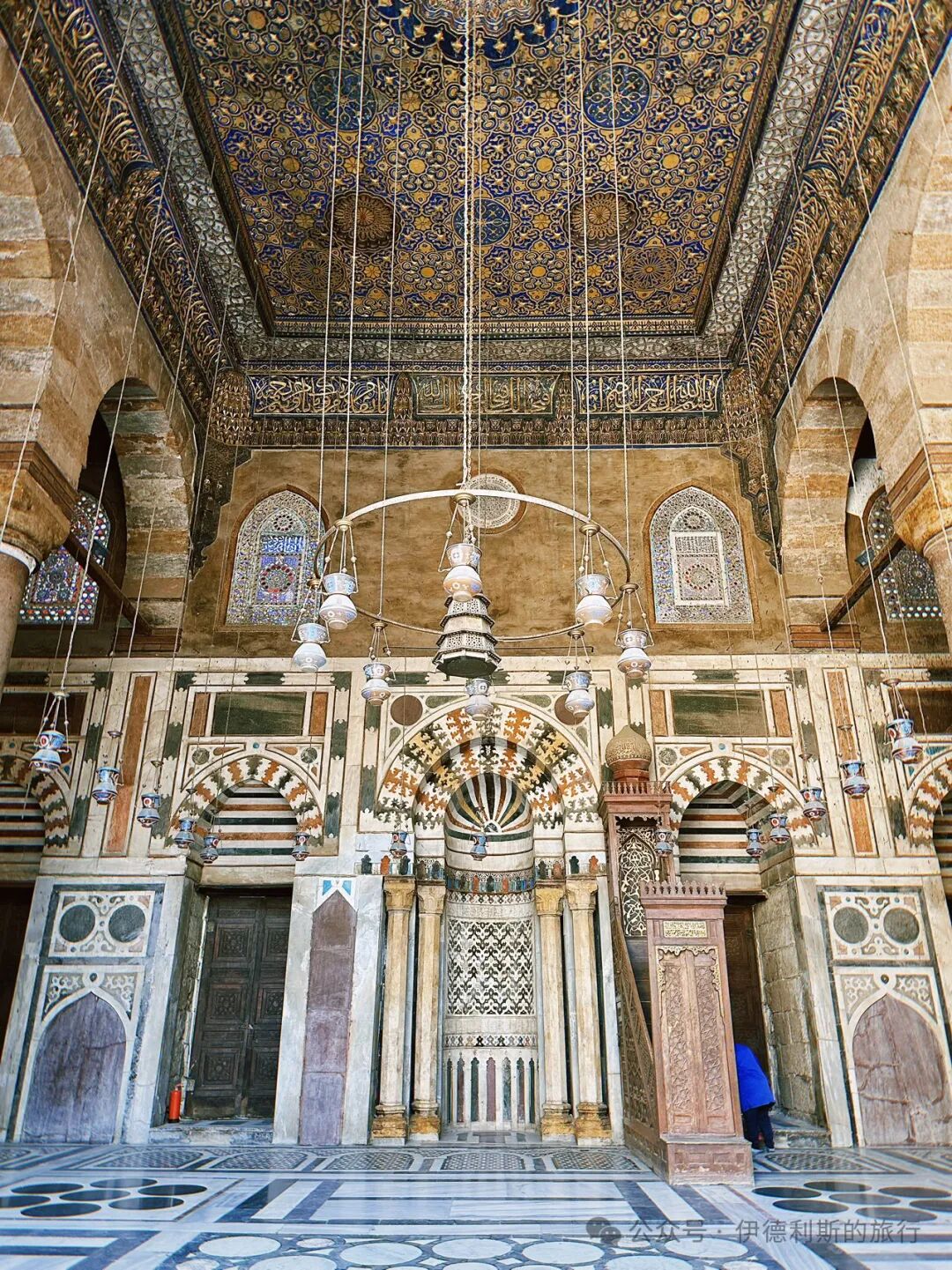
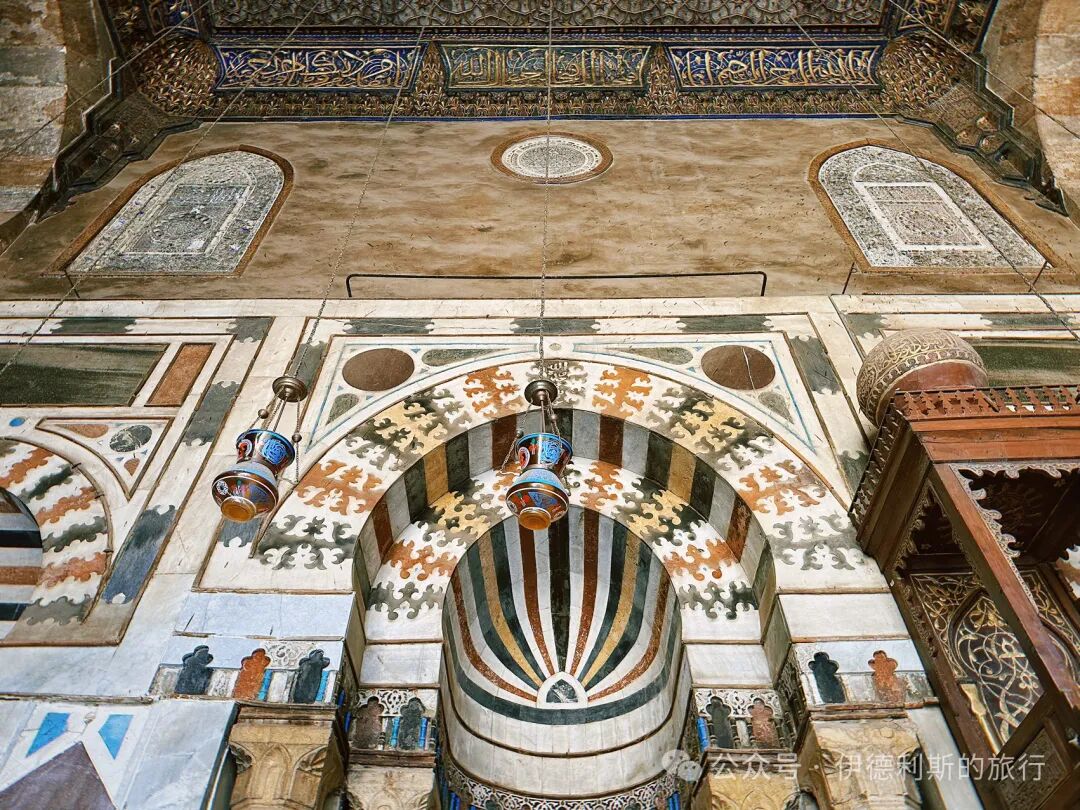
Beneath the dome of the Barquq Madrasa is a tomb chamber, but Sultan Barquq himself is not buried here. His daughter Fatima is buried in this space instead.
The following photos show the wood carvings and copper work on the main gate of the madrasa.
Barquq was born into a Circassian family living under the rule of the Golden Horde. After a battle, he was captured as a slave and sold to a bathhouse in Crimea. Later, he was sold again and moved to Egypt, where he became a Mamluk slave soldier. In 1377, civil unrest broke out in the Mamluk Sultanate. The young sultan who had just taken the throne held no real power. Barquq used this chance to strengthen his own position. In 1382, he seized the throne, ending the 132-year rule of the Kipchak Turkic Bahri dynasty and establishing the Circassian Caucasian Burji dynasty.
During his reign, Barquq joined forces with the Ottoman Sultan Bayezid I to fight against the Timurid Empire and executed Timur's envoy. In 1394, Barquq and Timur fought a war near the Euphrates River, which ended with Timur leading his army in retreat.
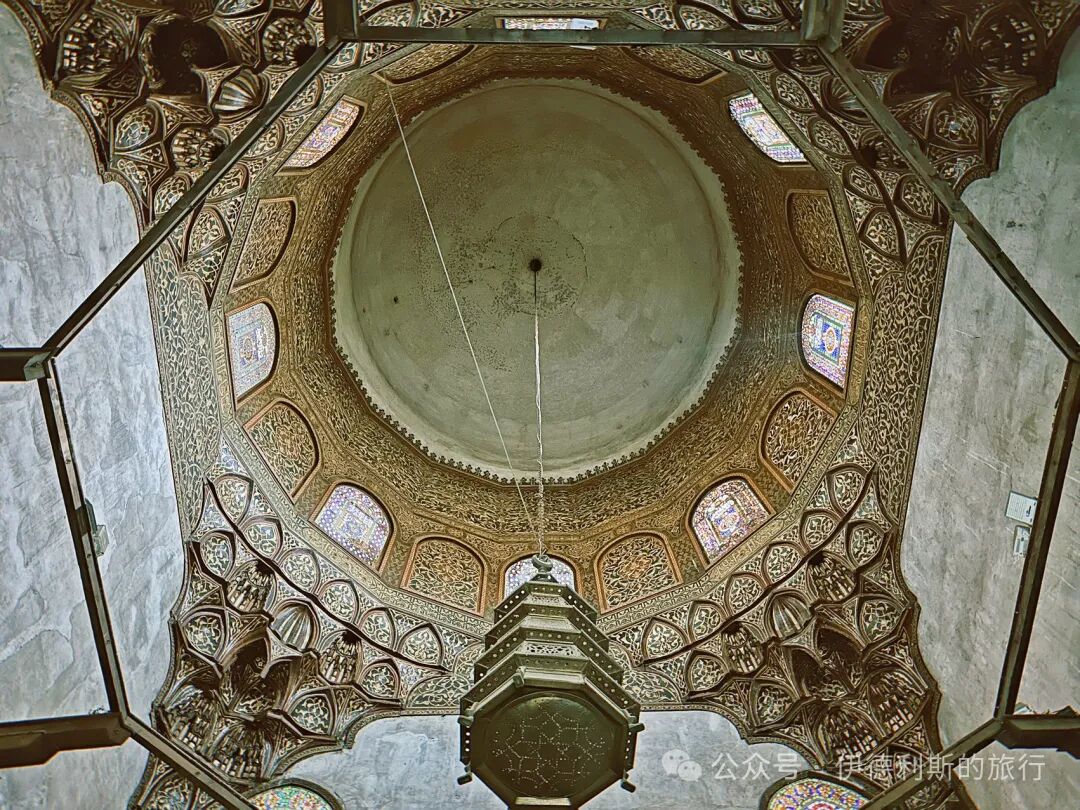
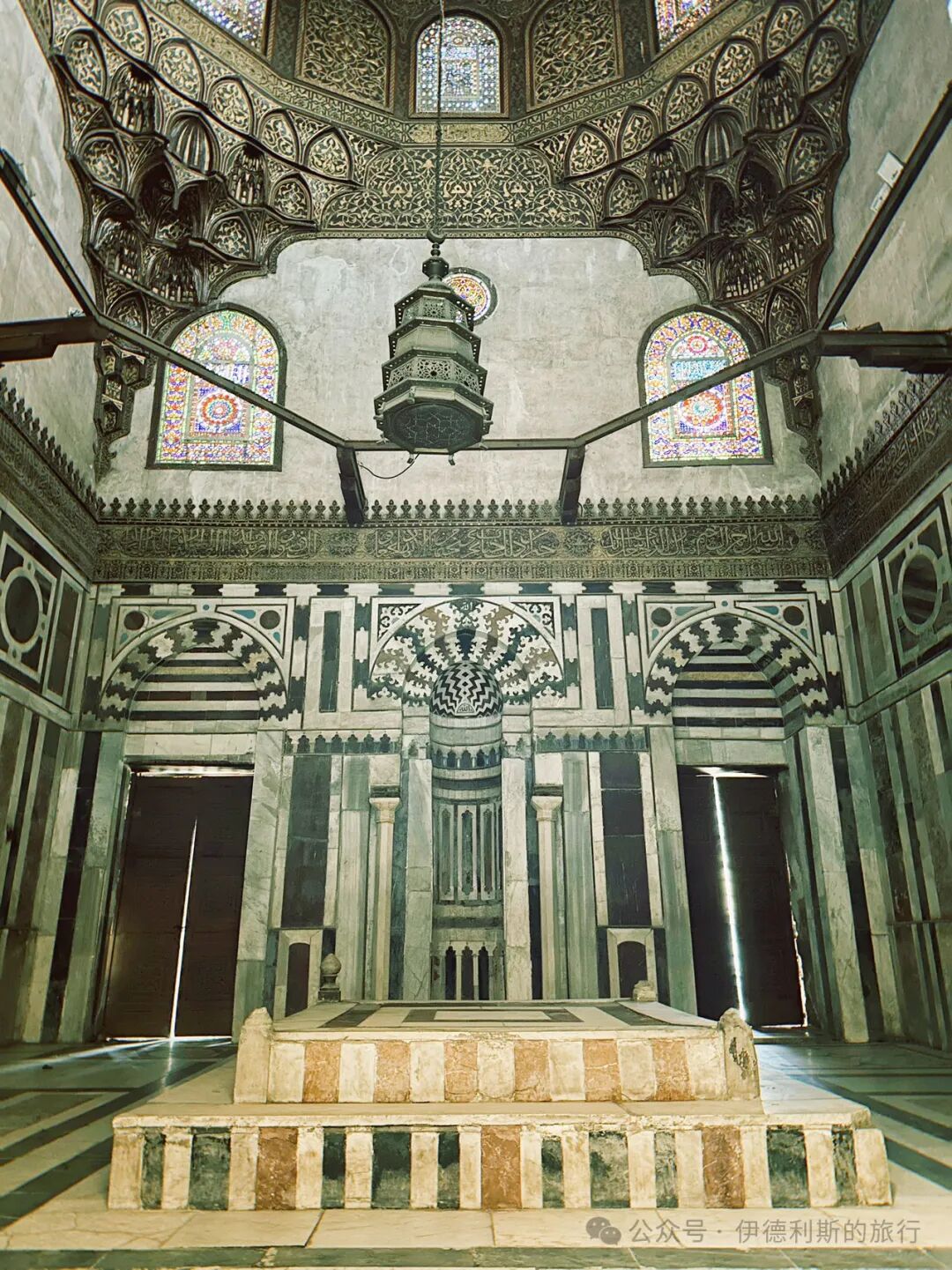
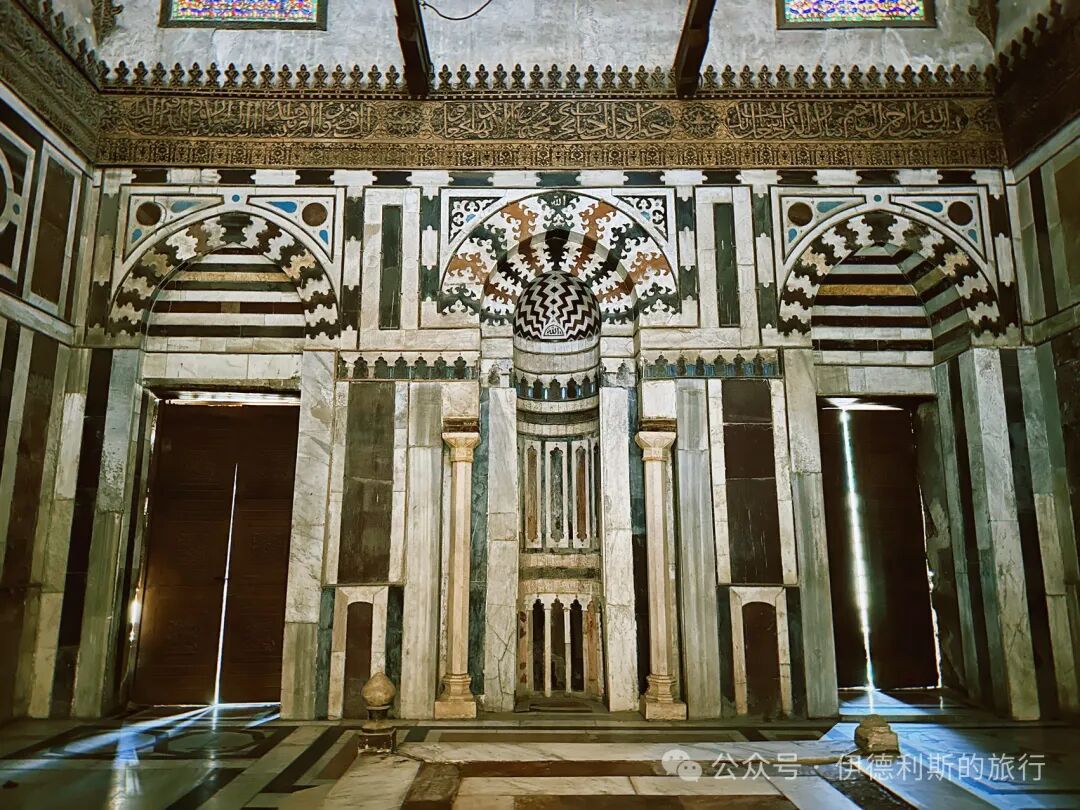
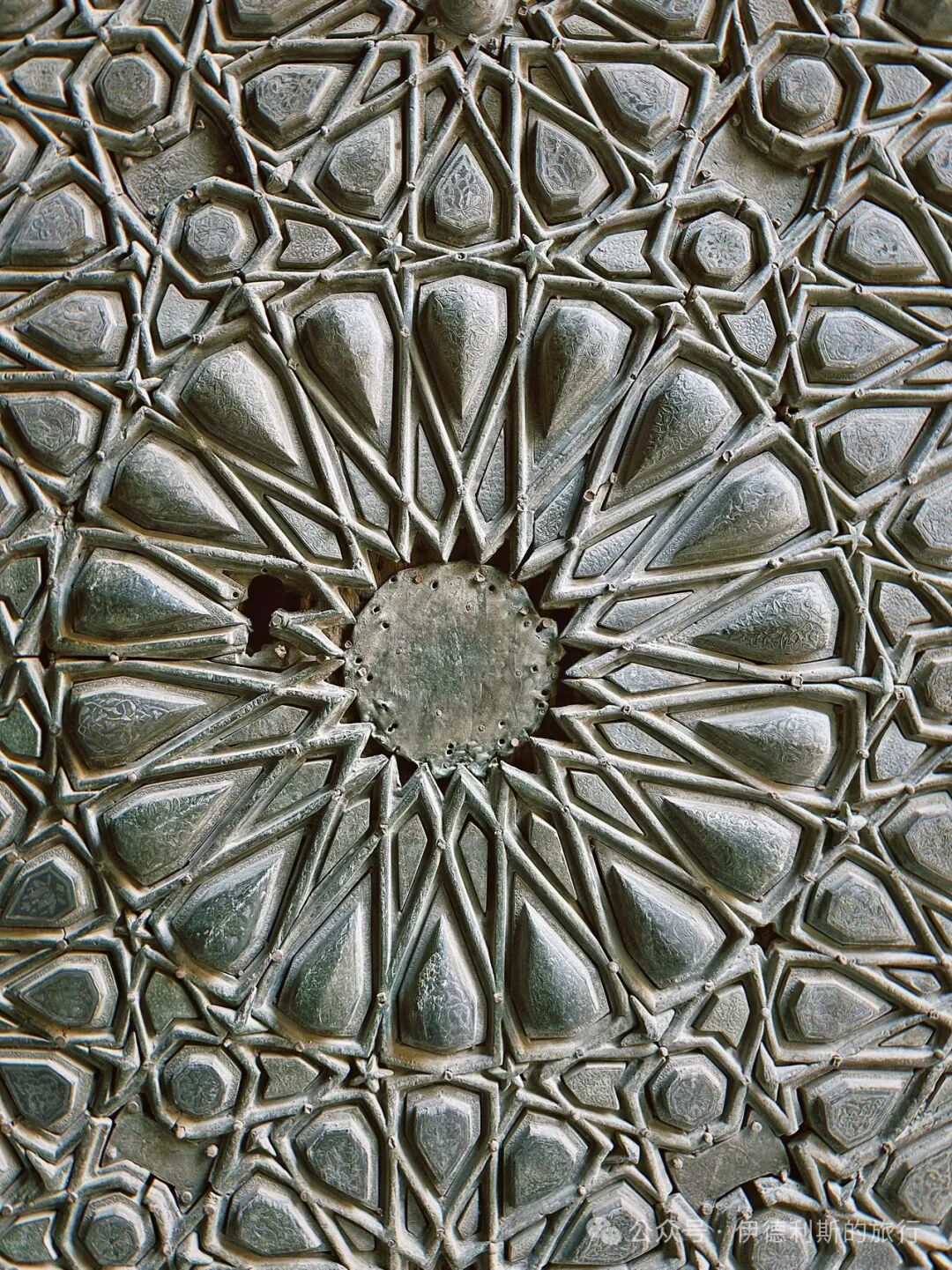
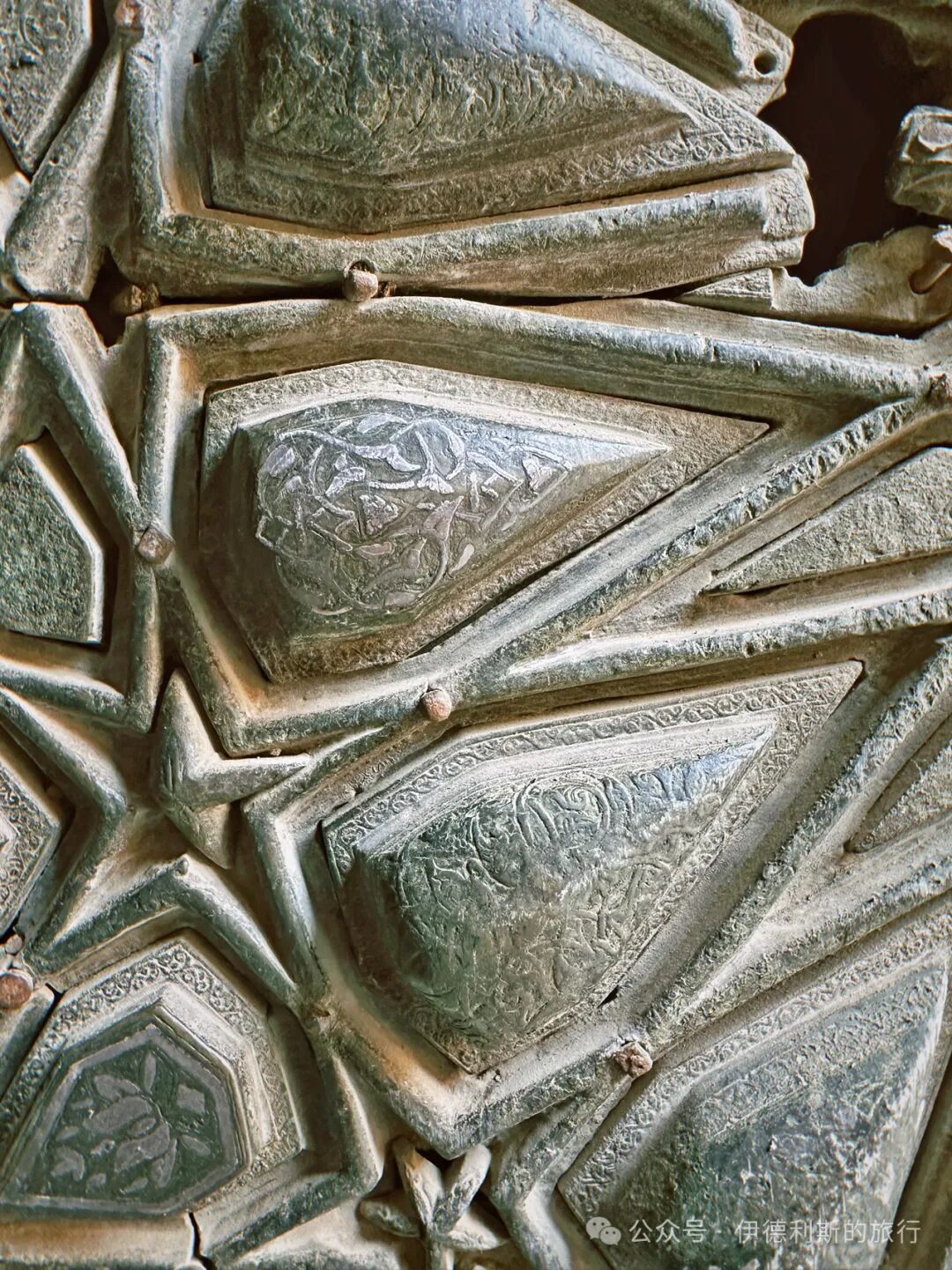
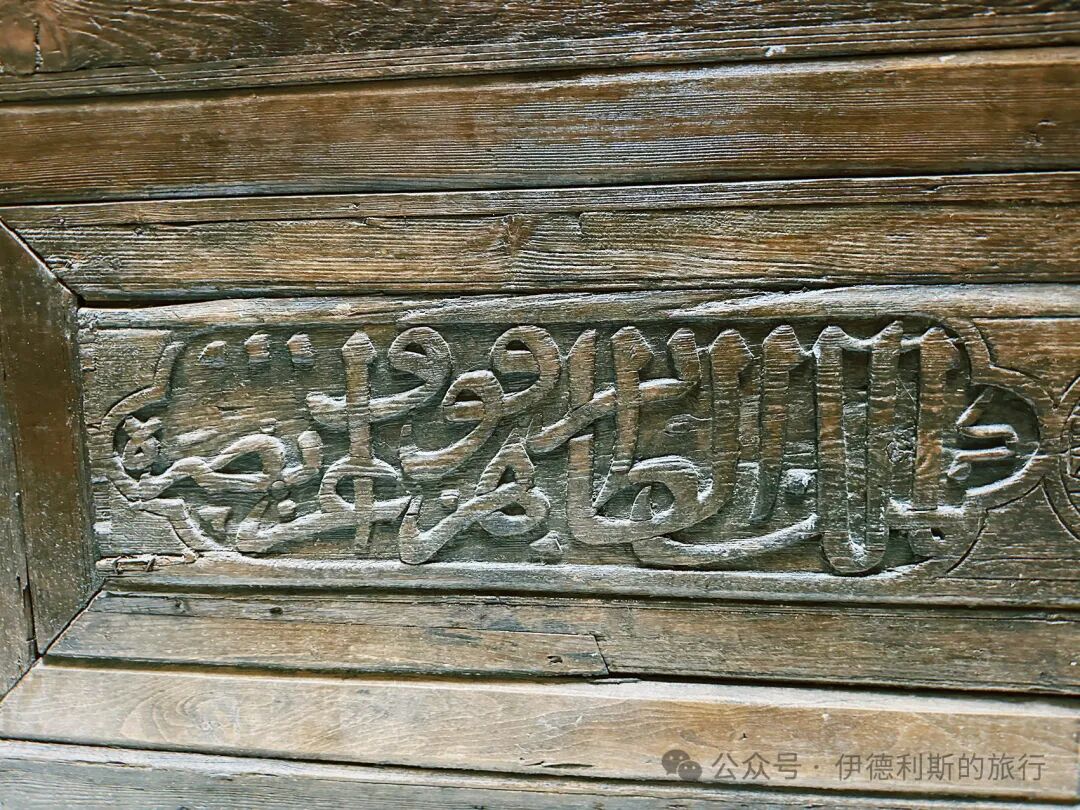
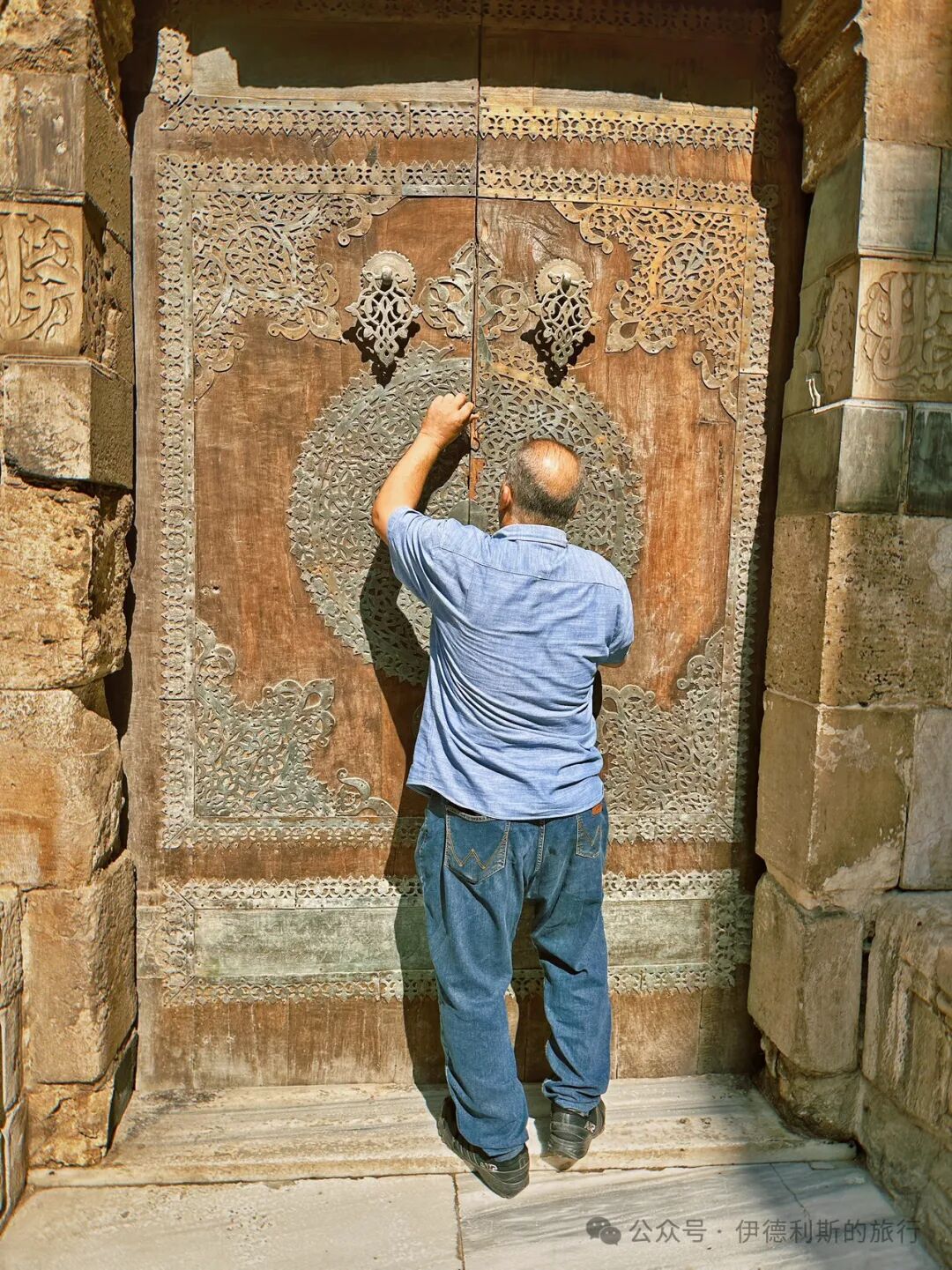
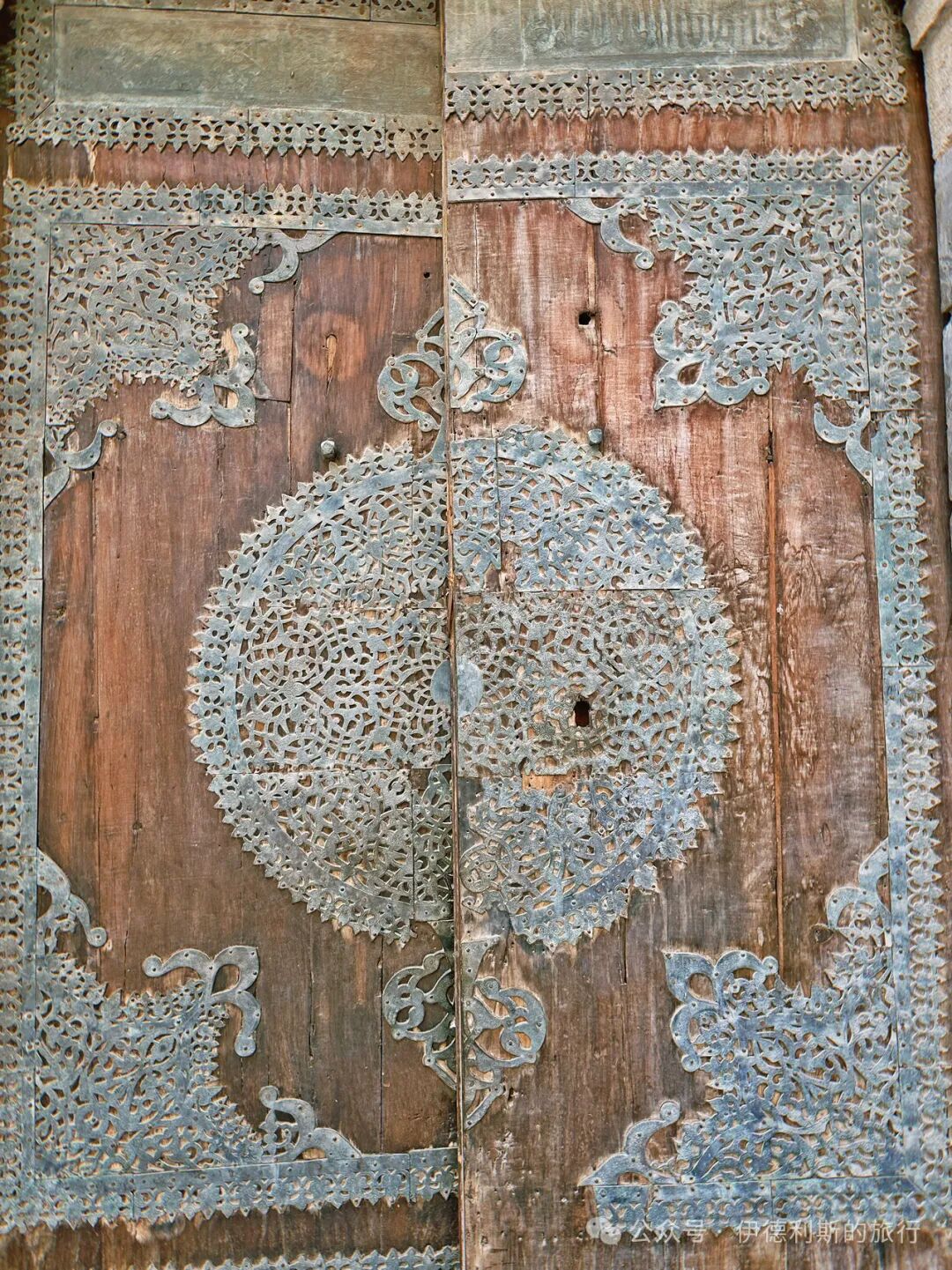
The days and nights at the Madrasa of Barquq are busy, as the lively Al-Mu'izz Street in Old Cairo sits right in front of the gate. This street is known as the main artery of Old Cairo. It connects the north gate to the south gate and serves as the main axis of the old city.
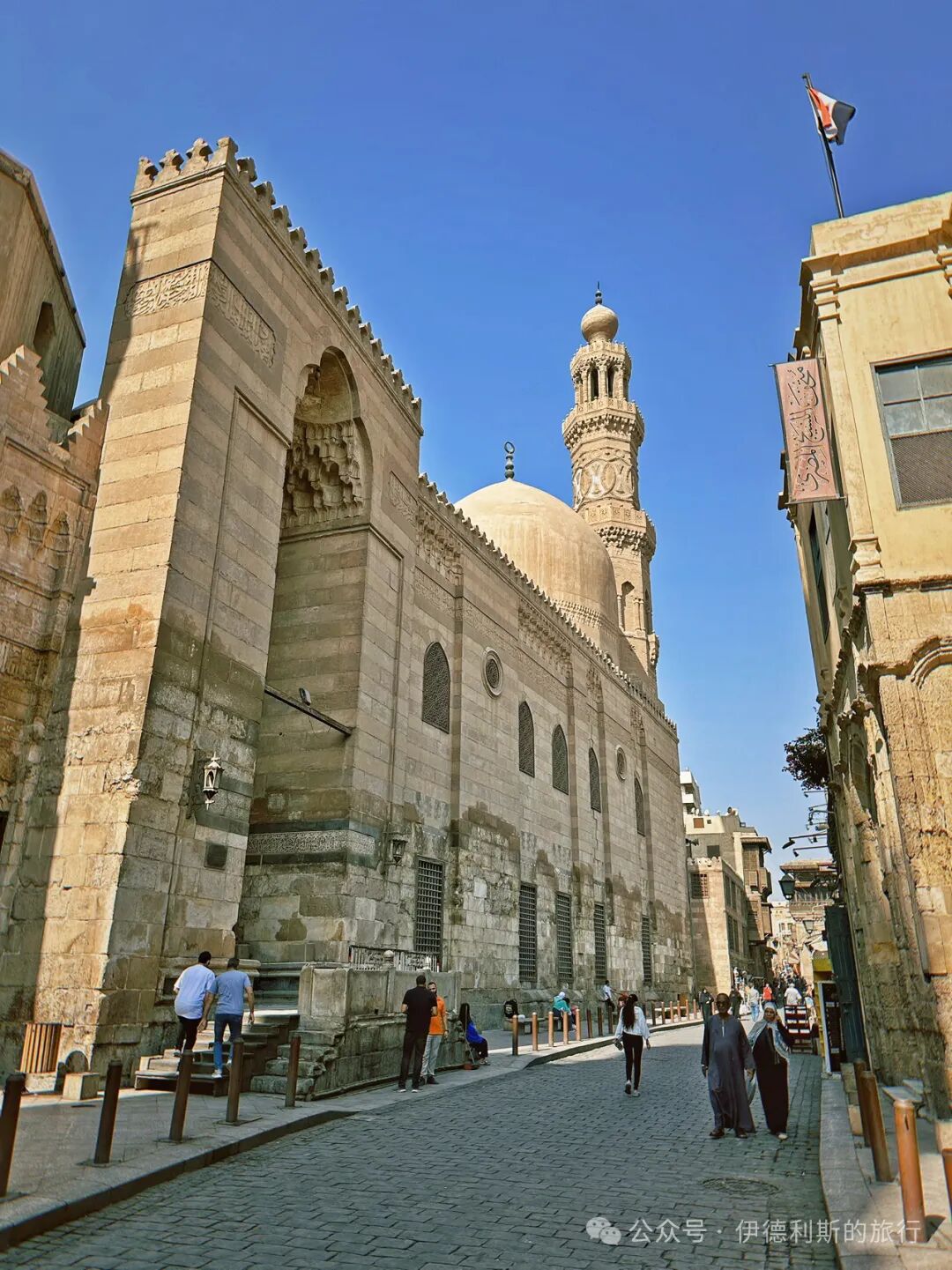
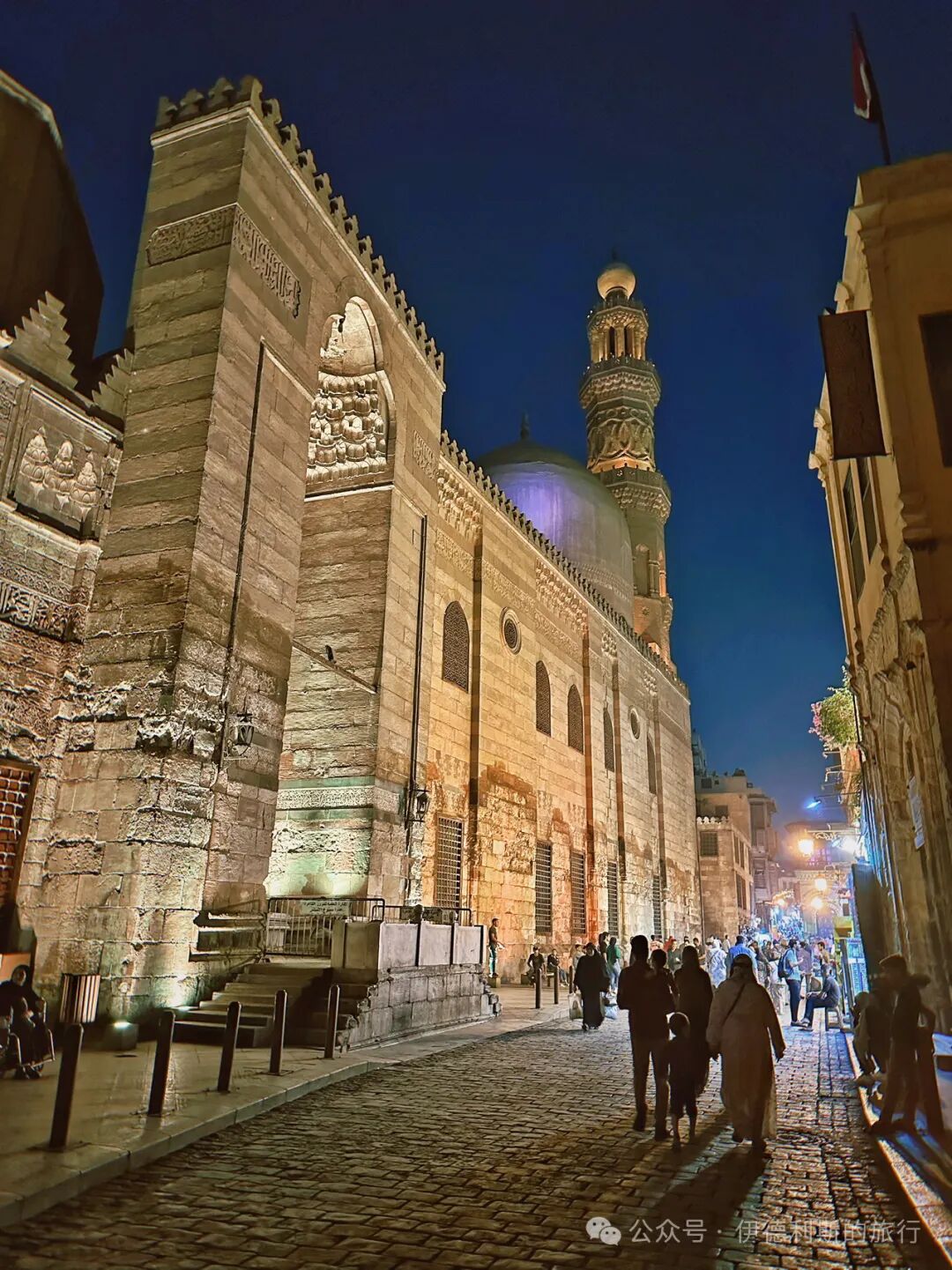
An-Nasir Muhammad Madrasa: 1303
To the south of the Madrasa of Barquq stands the Madrasa of Al-Nasir Muhammad, which was built between 1295 and 1303 by the Mamluk Sultan Al-Nasir Muhammad (who reigned from 1293-1294, 1299-1309, and 1310-1341).
Al-Nasir Muhammad was the youngest son of Sultan Qalawun. He took the throne at age 9, but he did not hold real power until his third period of rule at age 24. Under his rule, the Mamluk Sultanate reached its peak. The economy thrived at home, there were no major threats from abroad, and envoys from the Pope and the King of France visited his court with gifts. The reign of Nasir Muhammad is known as a high point for Egyptian culture, the greatest since the Ptolemaic Hellenistic period. He reopened the canal connecting Alexandria to the Nile, built many public buildings in Cairo, and renovated over thirty mosques.
The madrasa has a very unique Gothic gate. It was taken from a church in Acre after the Mamluk Sultanate completely defeated the Crusaders in 1291. The 1291 Siege of Acre is called the last battle of the Crusades, marking the end of the nearly 200-year-long Crusades. When the Siege of Acre ended, the Sultan ordered his army to tear down the city walls and churches, and this gate was transported back to Cairo.
The minaret of the madrasa has very complex stucco decorations. It is the only remaining all-stucco minaret in the old city of Cairo. The medallions and arched decorations follow the styles of the Fatimid and Ayyubid dynasties, while the floral patterns are a signature feature of the Mamluk period. The plaster decorations feature both Kufic and Thuluth calligraphy, and they are carved beautifully. Some historians believe that craftsmen from the Maghreb or Andalusia likely helped create these high-quality plaster carvings.
Like the Barquq Madrasa to the north, the Madrasa of an-Nasir Muhammad taught the four major schools of Islamic law: Hanafi, Hanbali, Shafi'i, and Maliki. The main hall contains the last plaster mihrab in Egypt, which features a unique egg-shaped protrusion similar to plaster carvings from Tabriz, Iran, during the Ilkhanate period. Because of this, historians suggest that this mihrab was likely made by craftsmen from Iran.
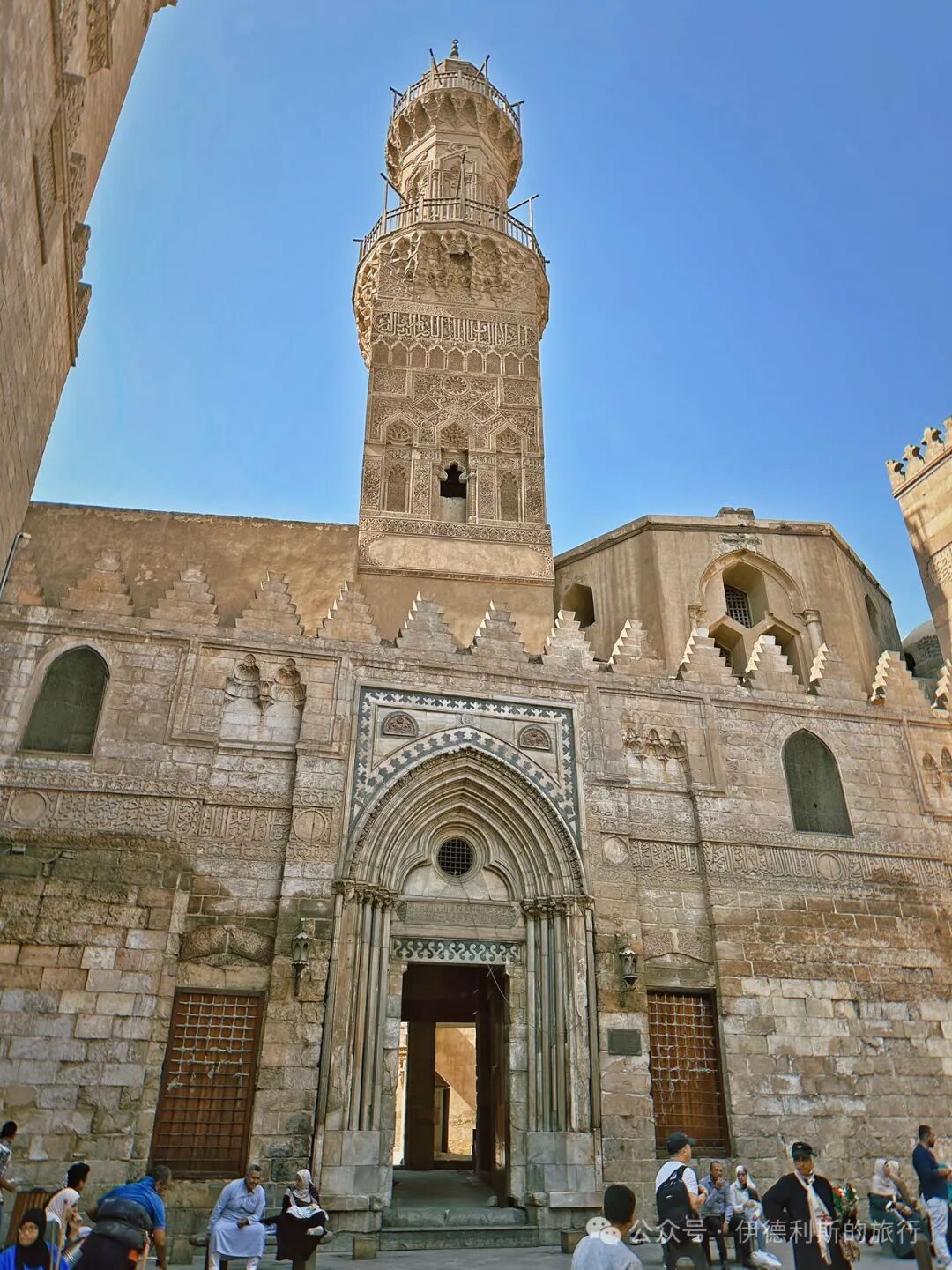
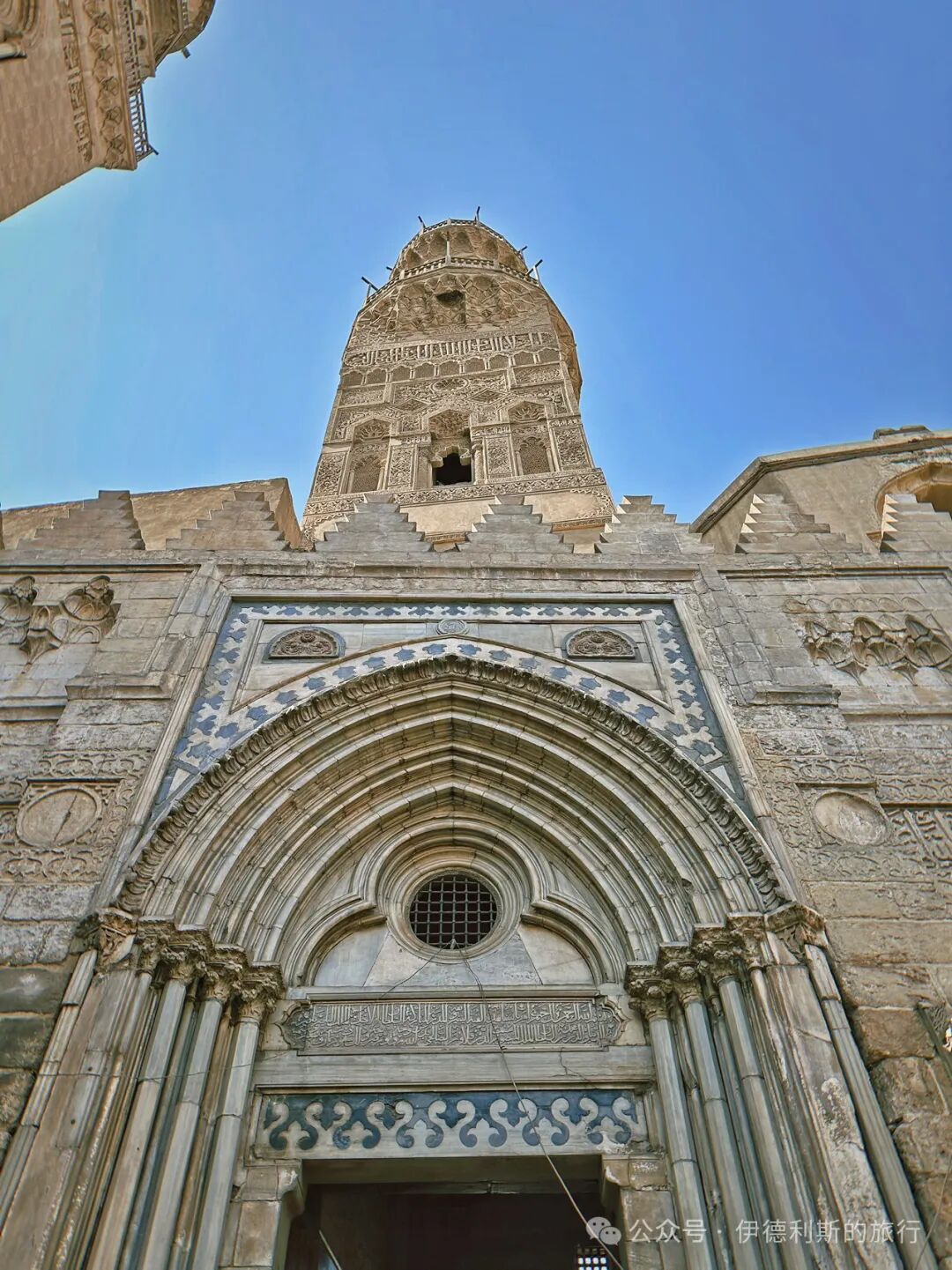
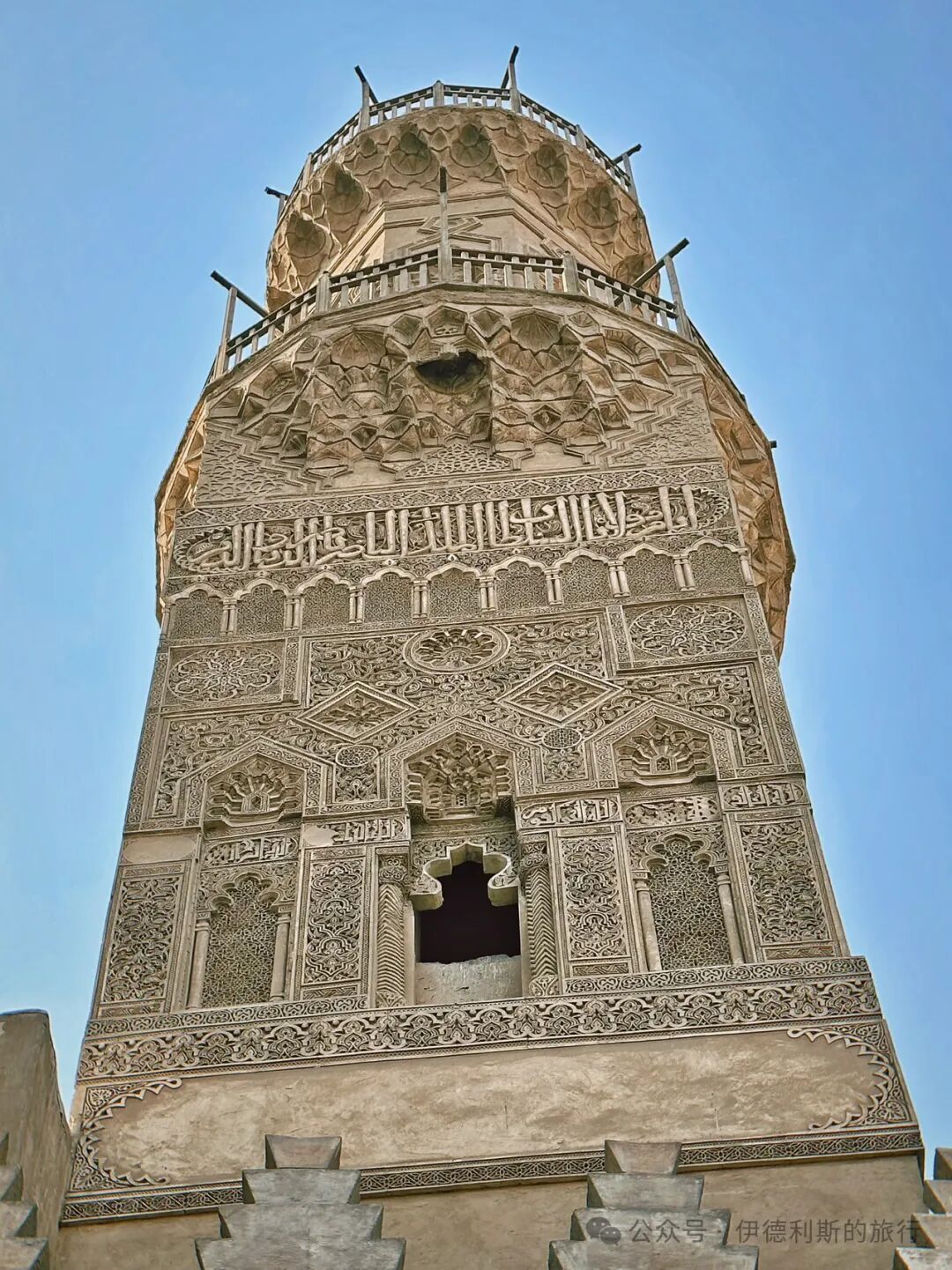
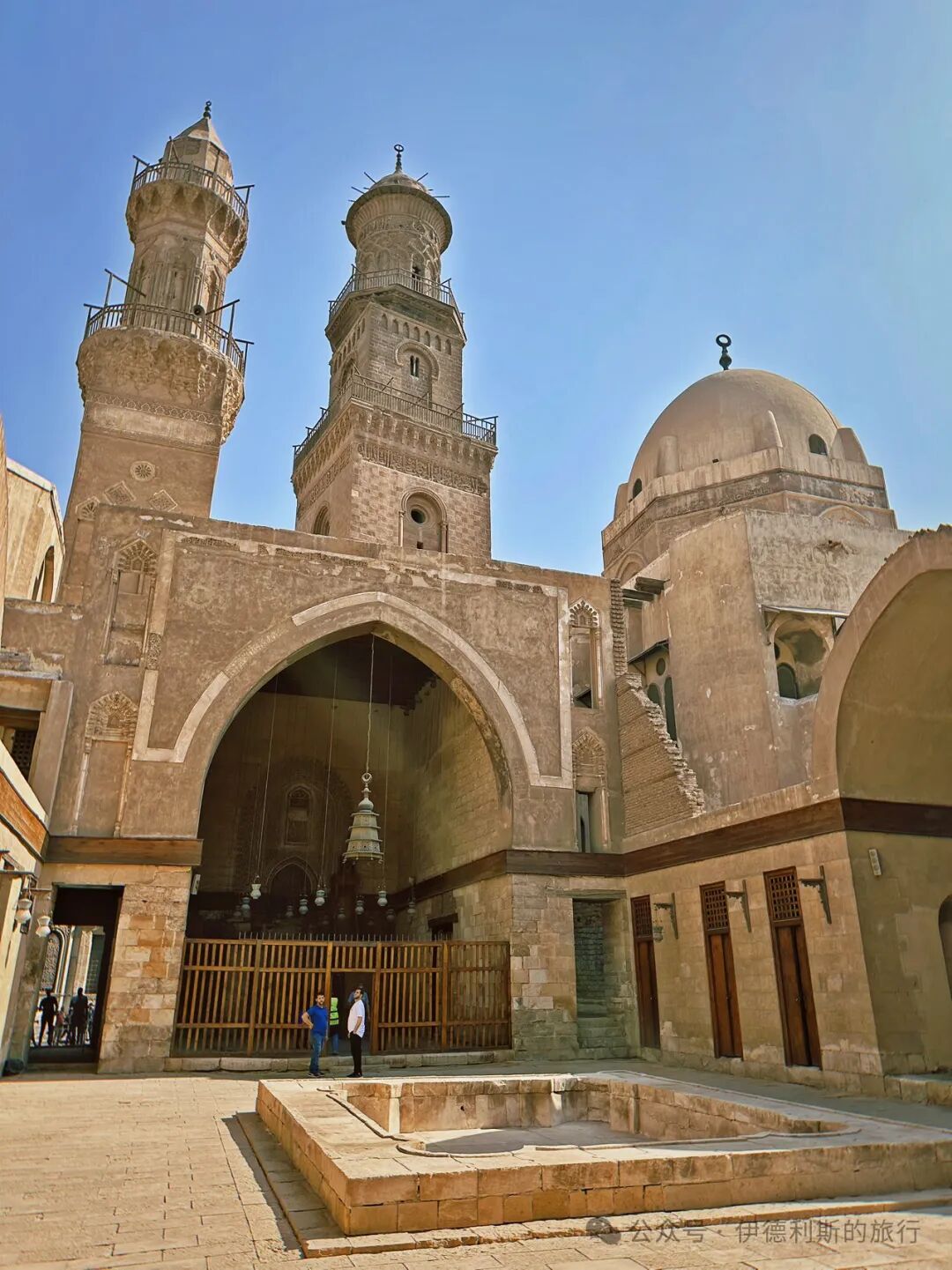
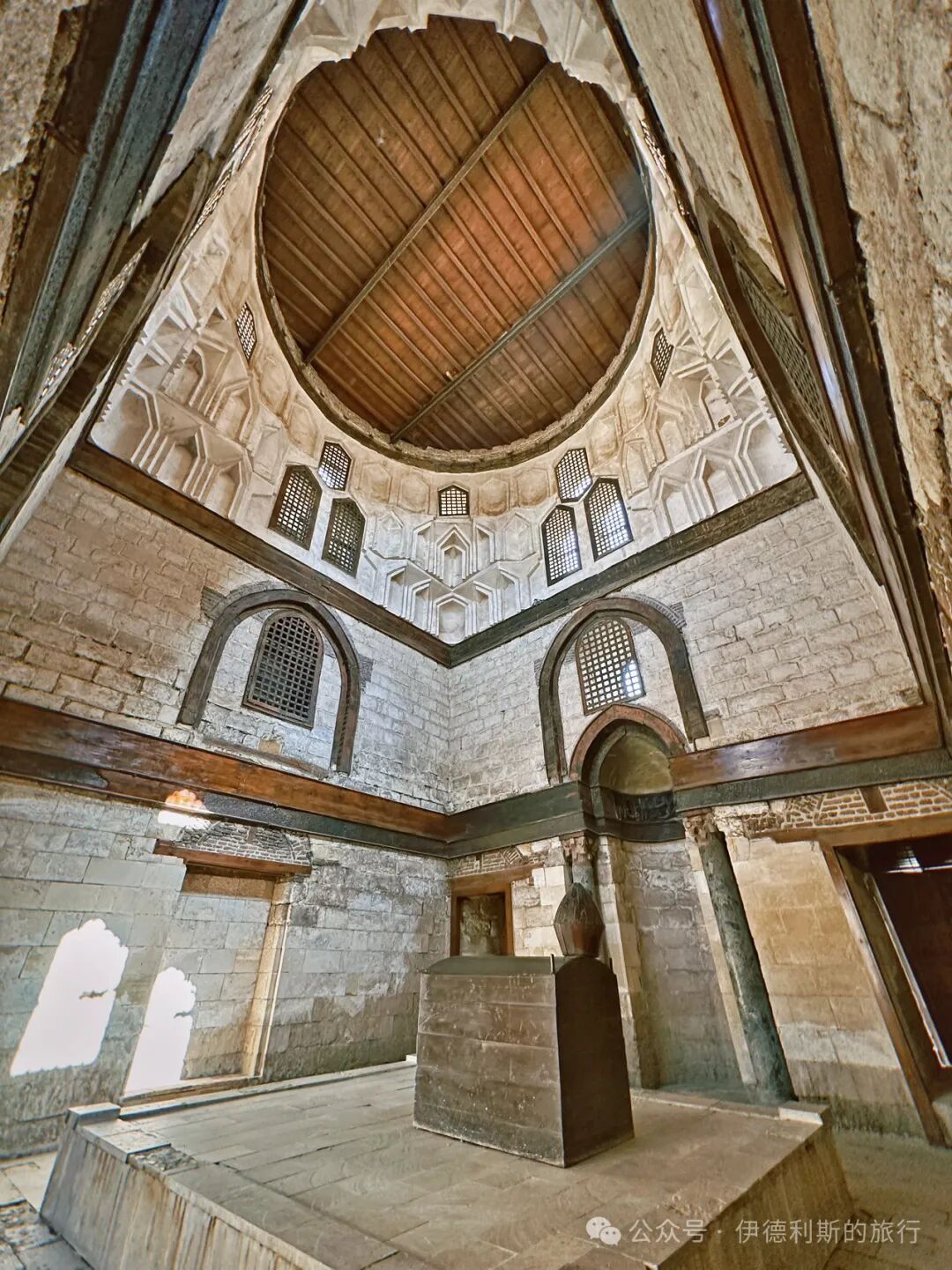
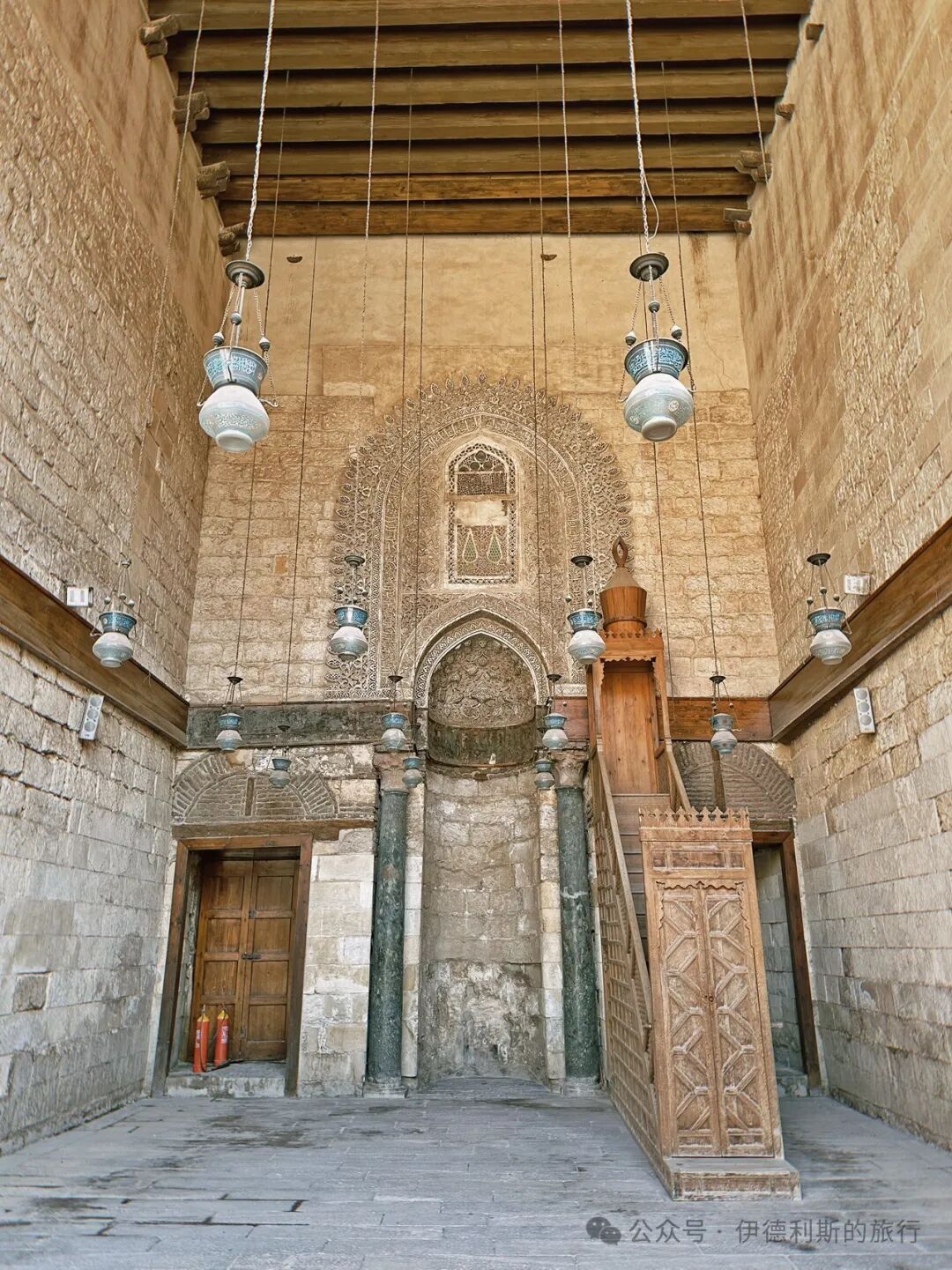
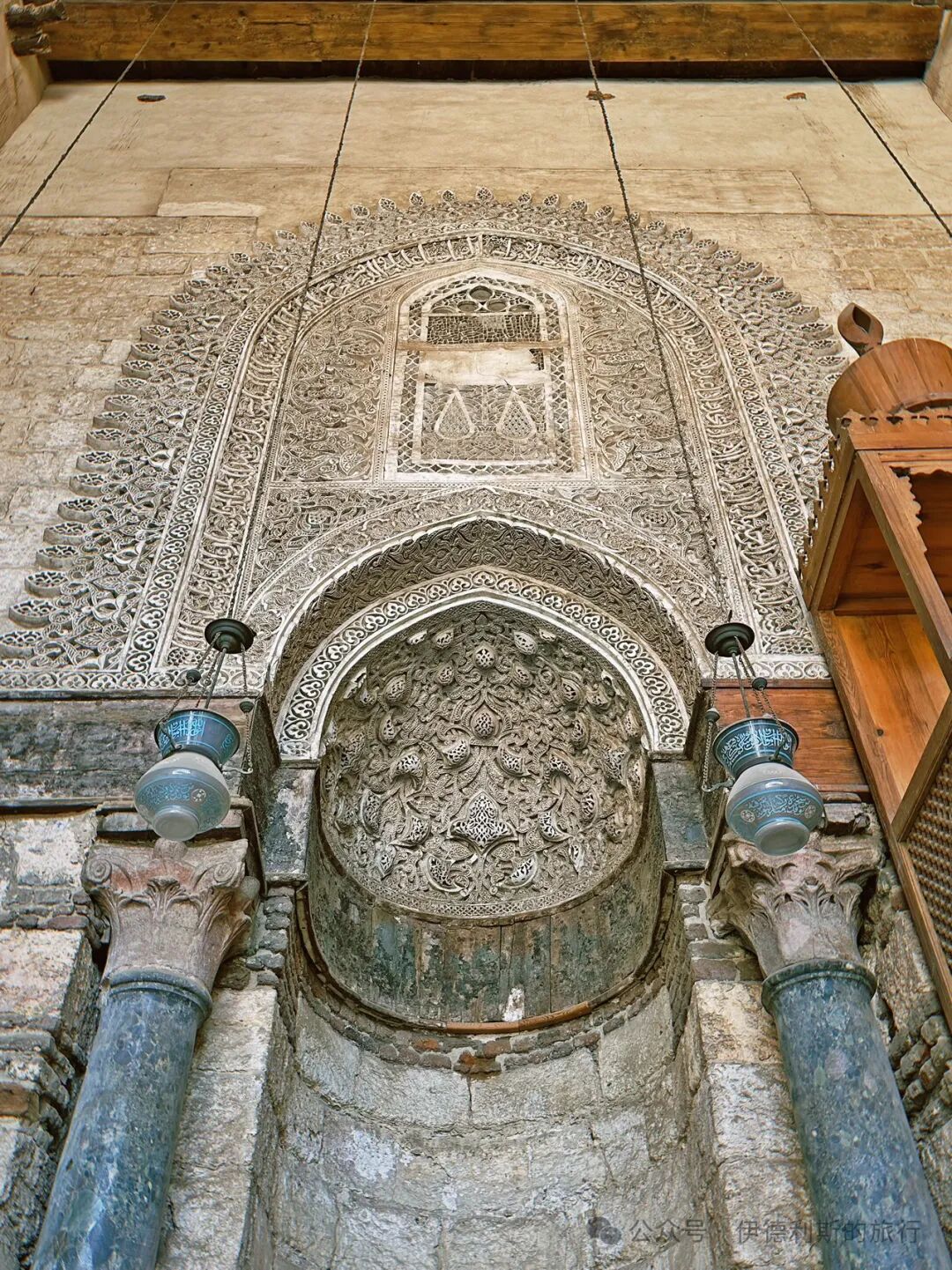
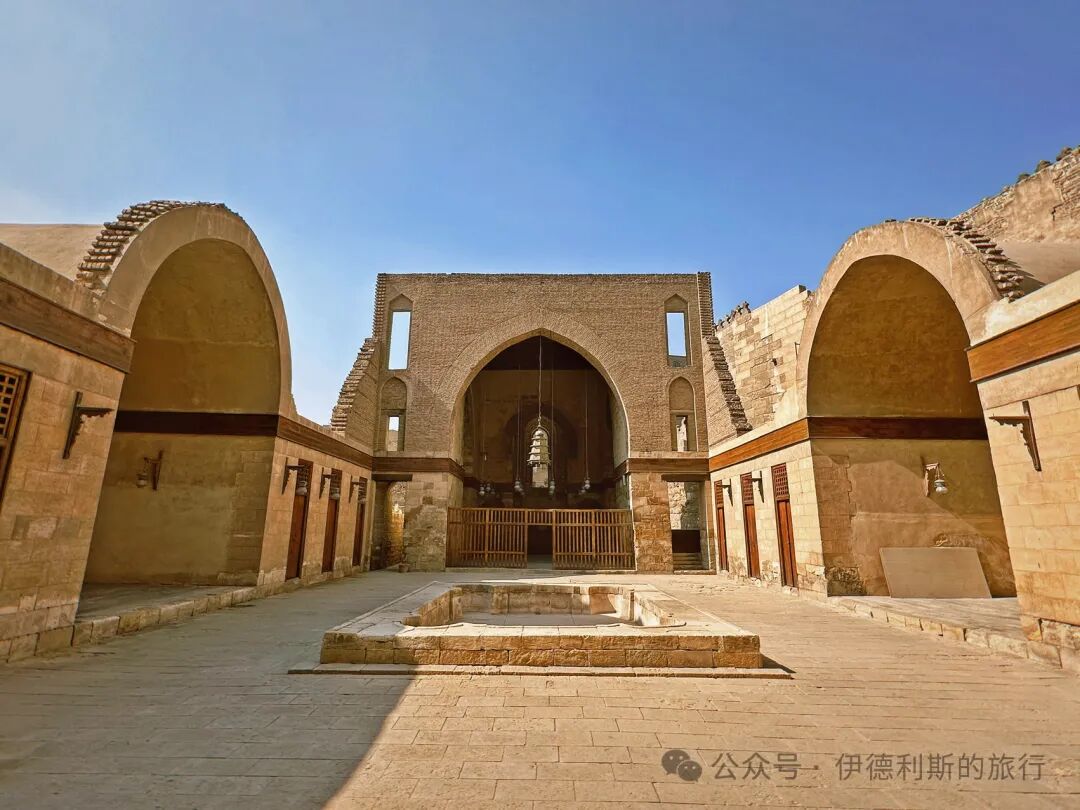
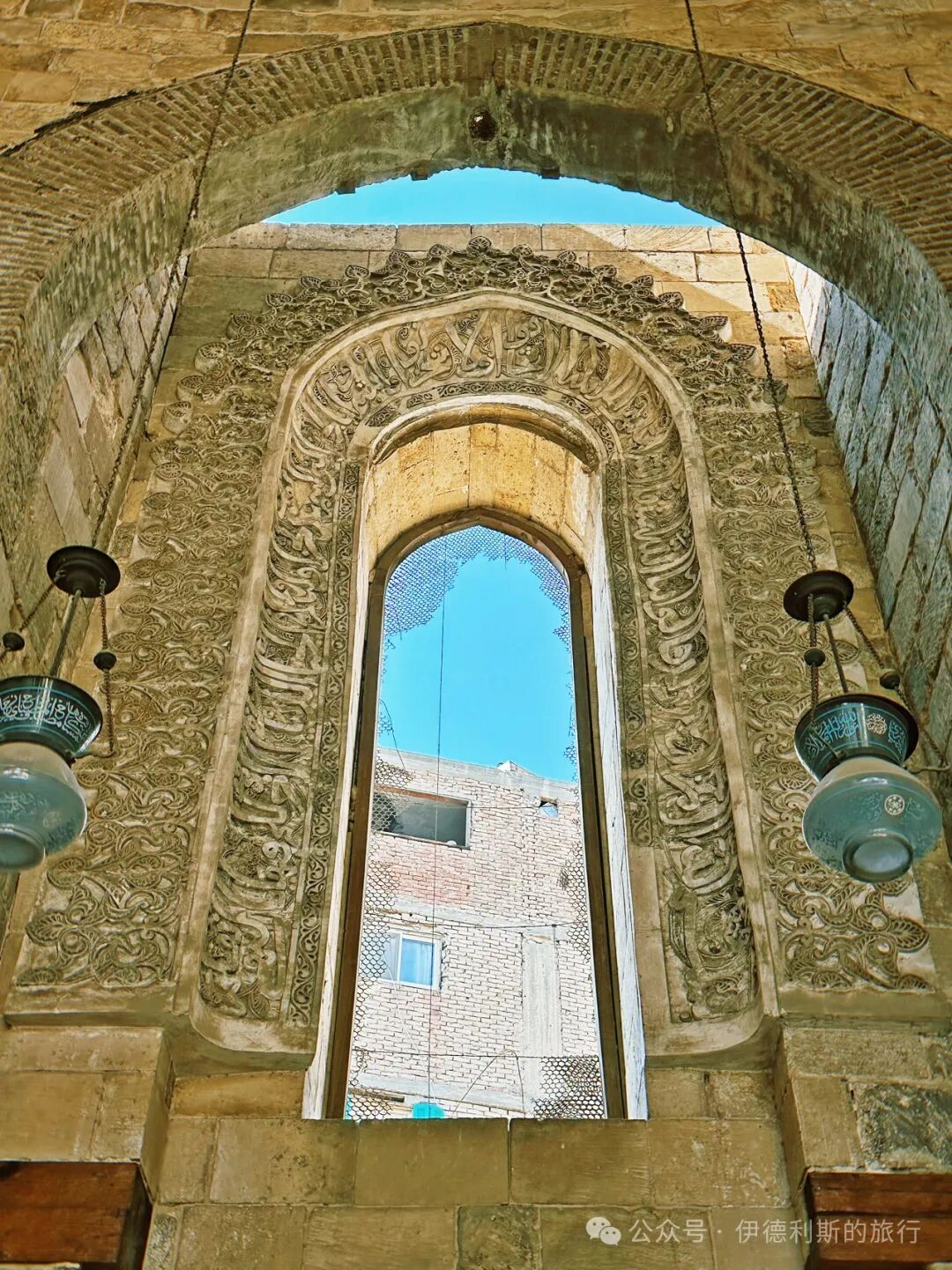
Qalawun Complex: 1285
Further south is the most magnificent part of the Bayn al-Qasrayn area, the Qalawun complex. This complex includes a hospital, a madrasa, and a mausoleum. It was built in 1285 by the Mamluk Sultan Qalawun, who reigned from 1279 to 1290, and it is considered a masterpiece of Mamluk architecture.
Standing at the entrance of the building complex, the most eye-catching feature is the towering three-story minaret (bangke ta). The top of the minaret features a unique decoration called a papyrus cornice, which is how the Mamluk dynasty showed its legitimacy by looking back to the era of the pharaohs.
The facade of the entire complex is 67 meters long, similar in style to Gothic Crusader churches of the same period, with windows surrounded by pointed arch panels of different sizes and exquisite stucco calligraphy carvings underneath.
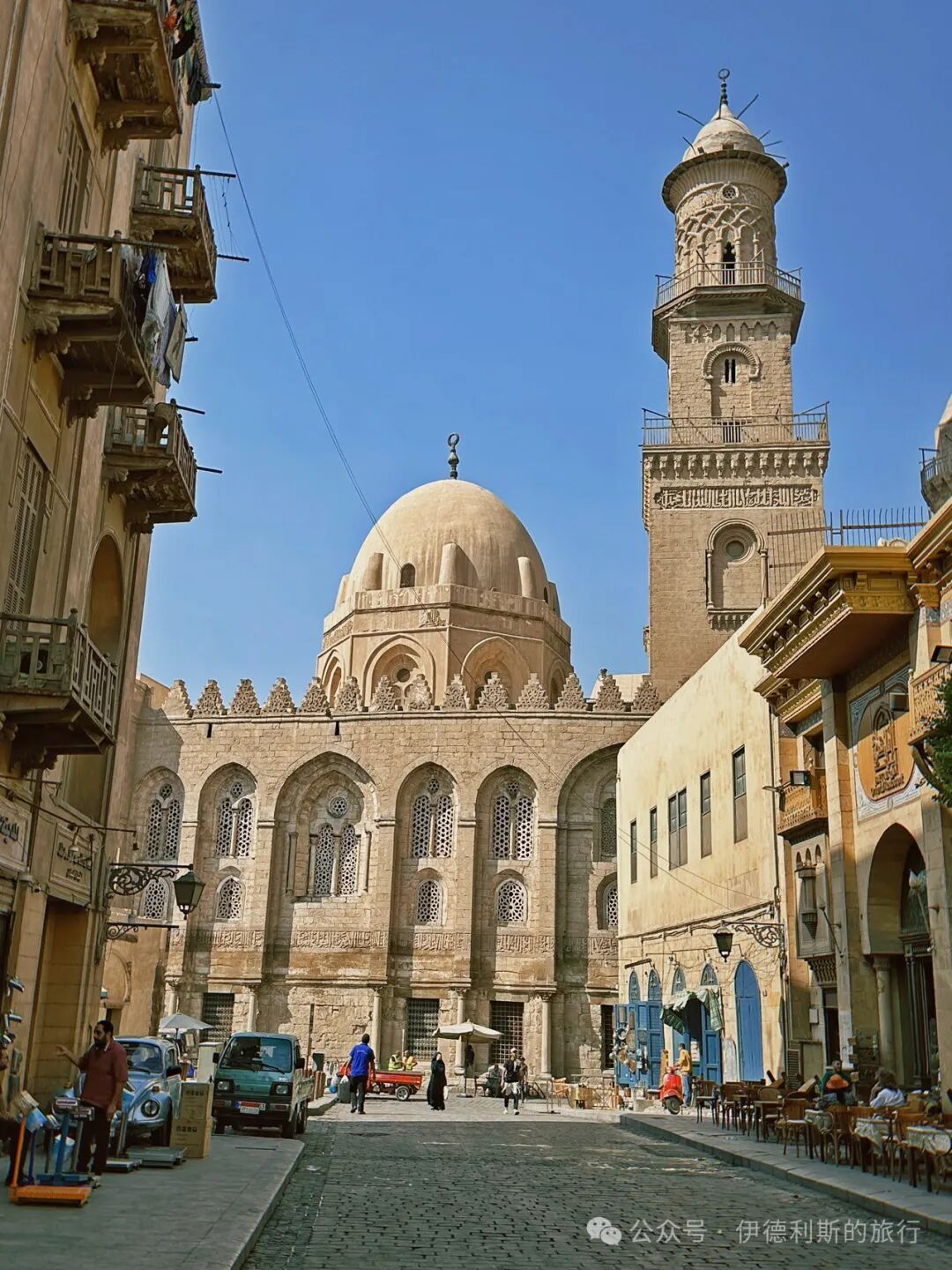
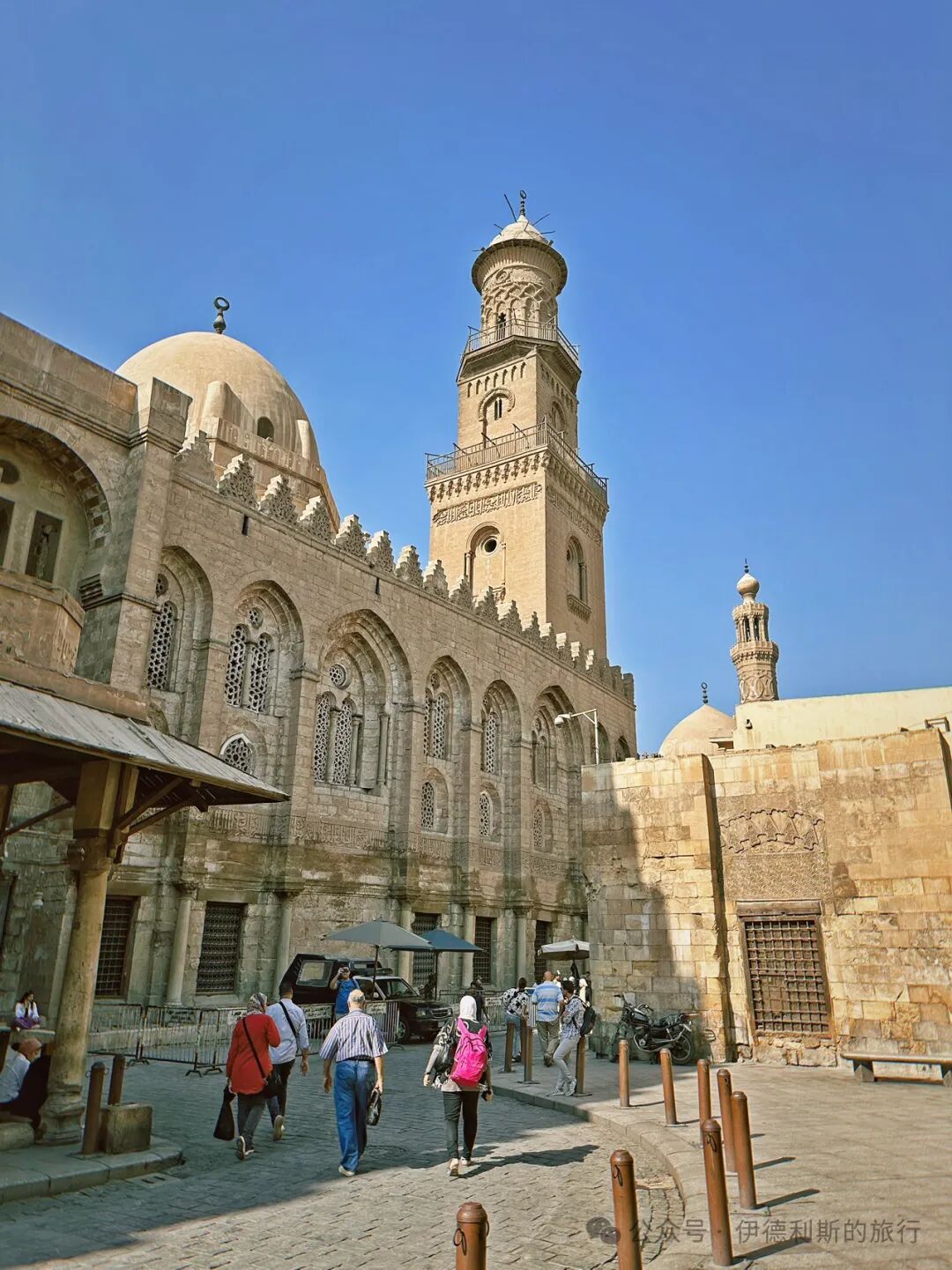
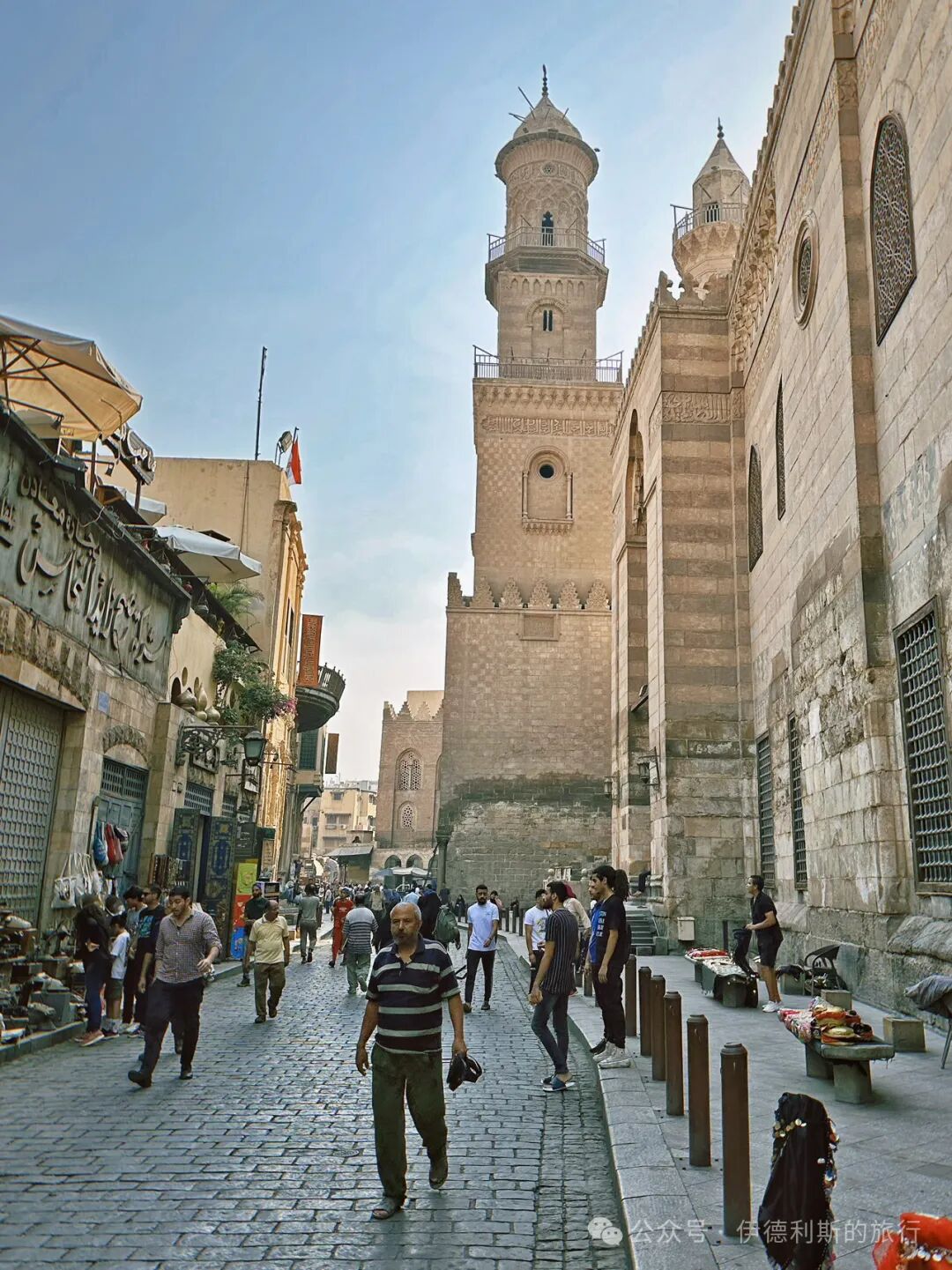
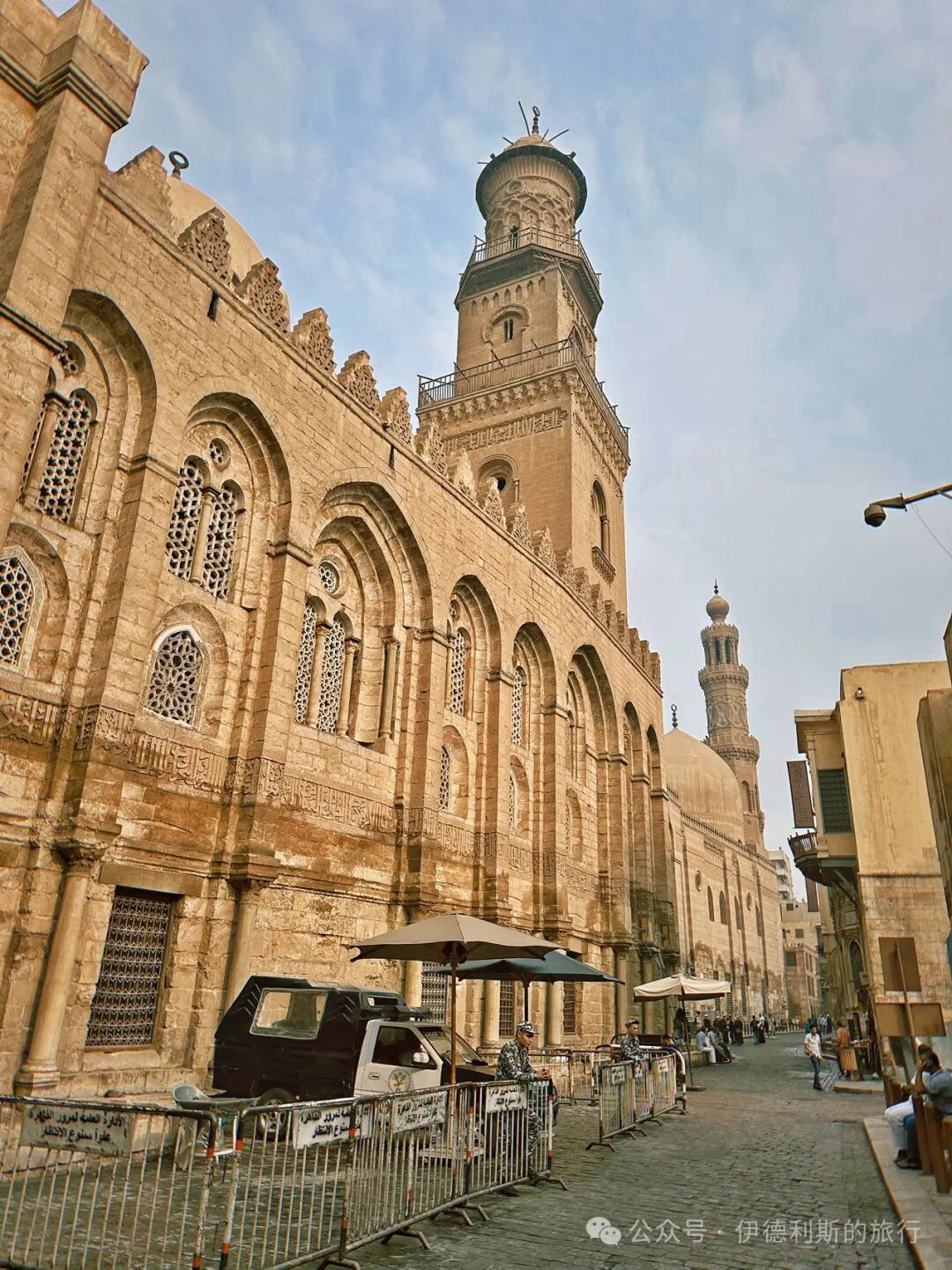
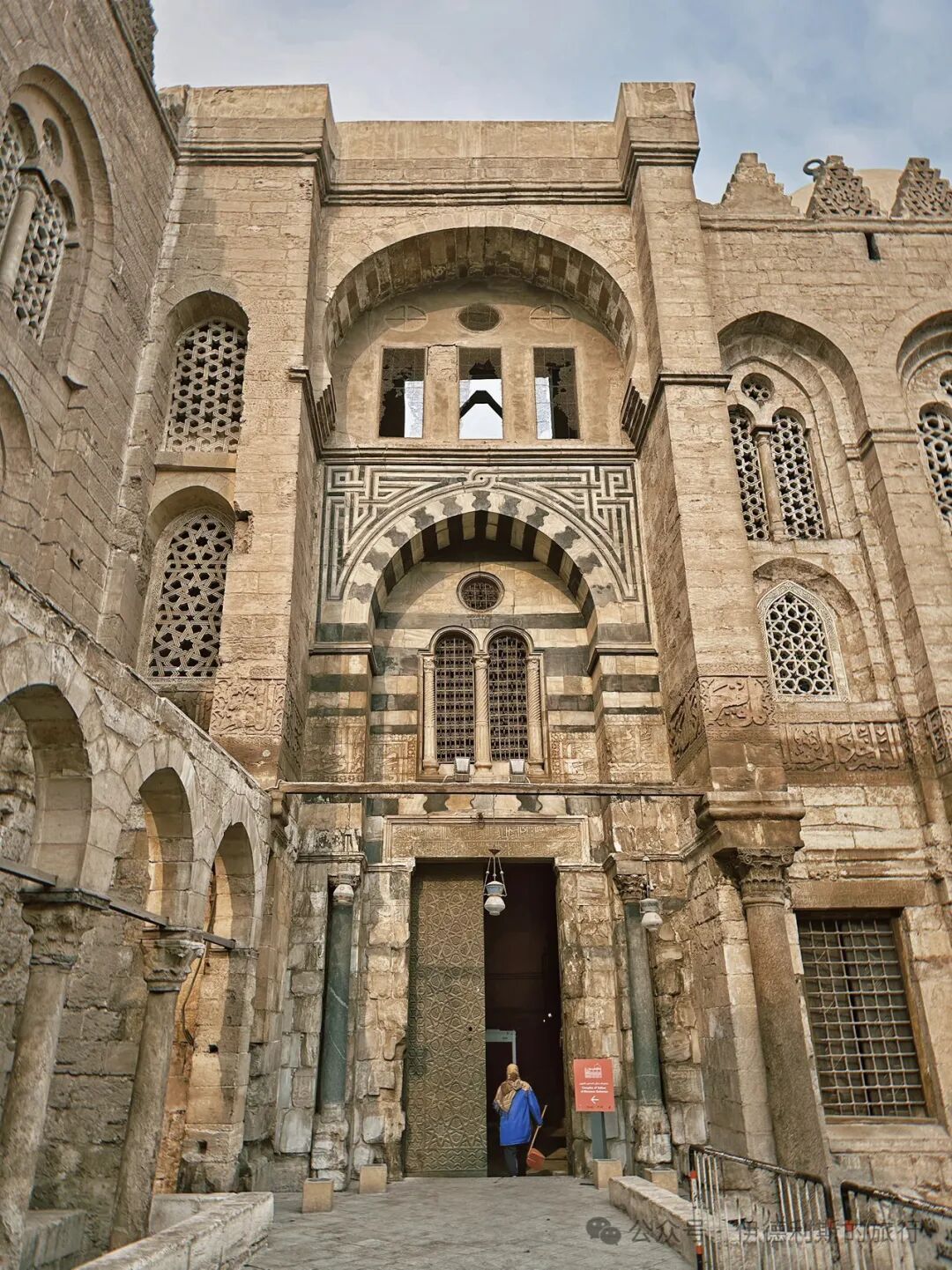
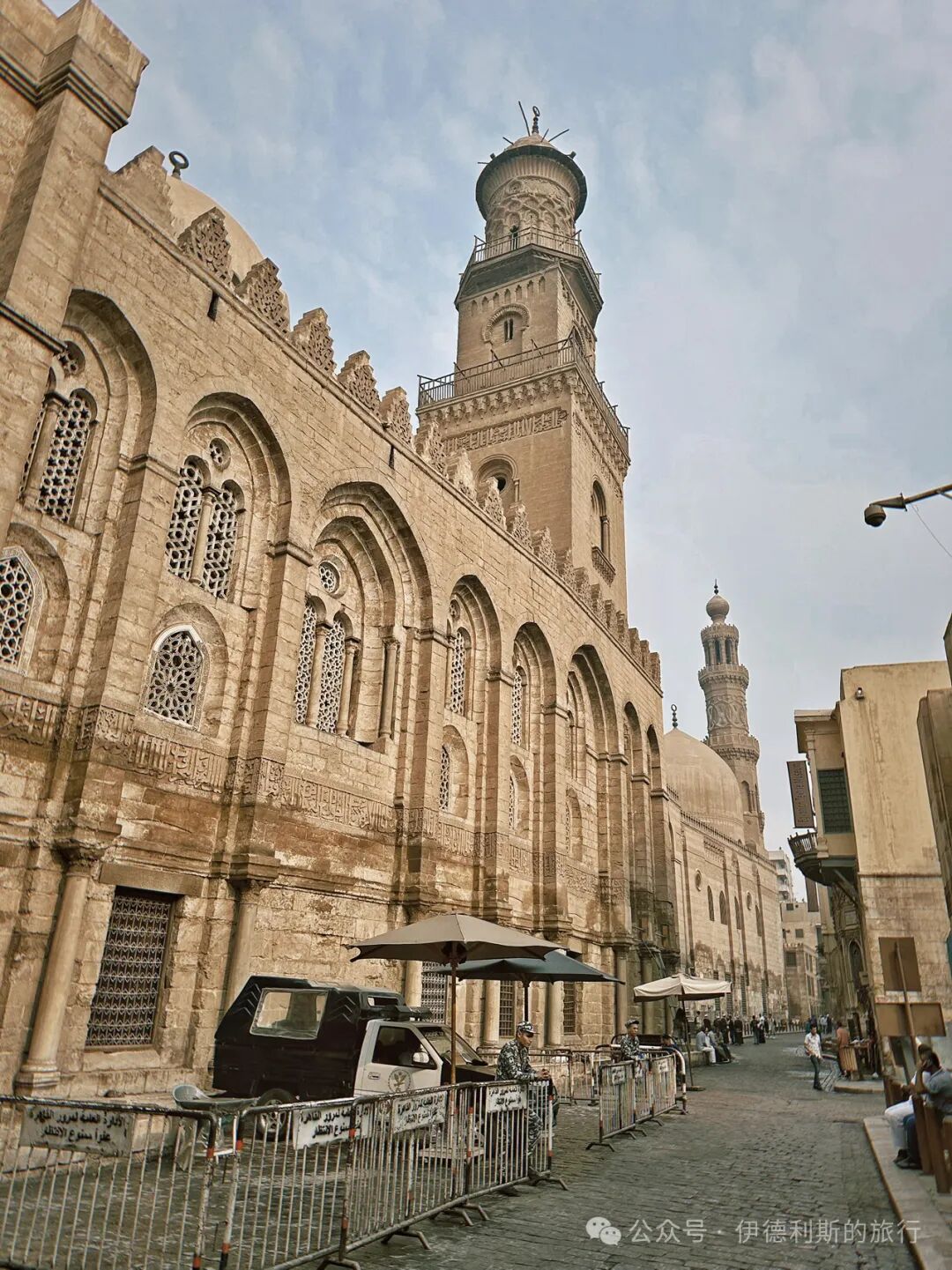
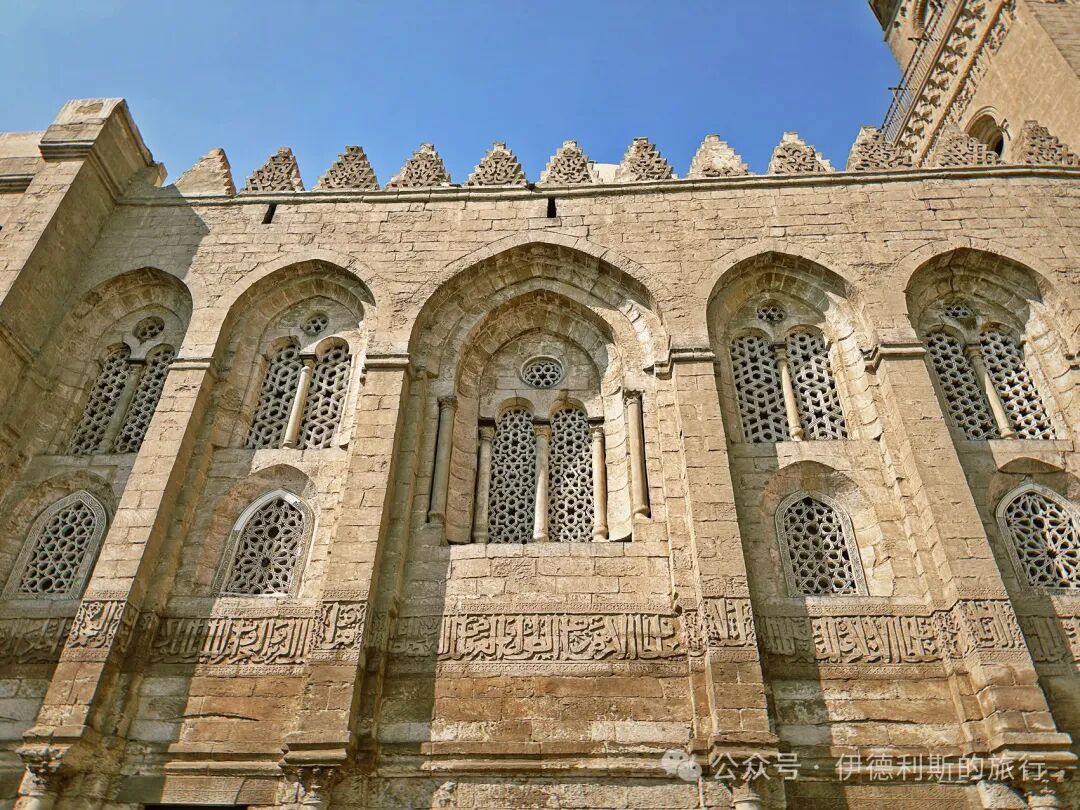
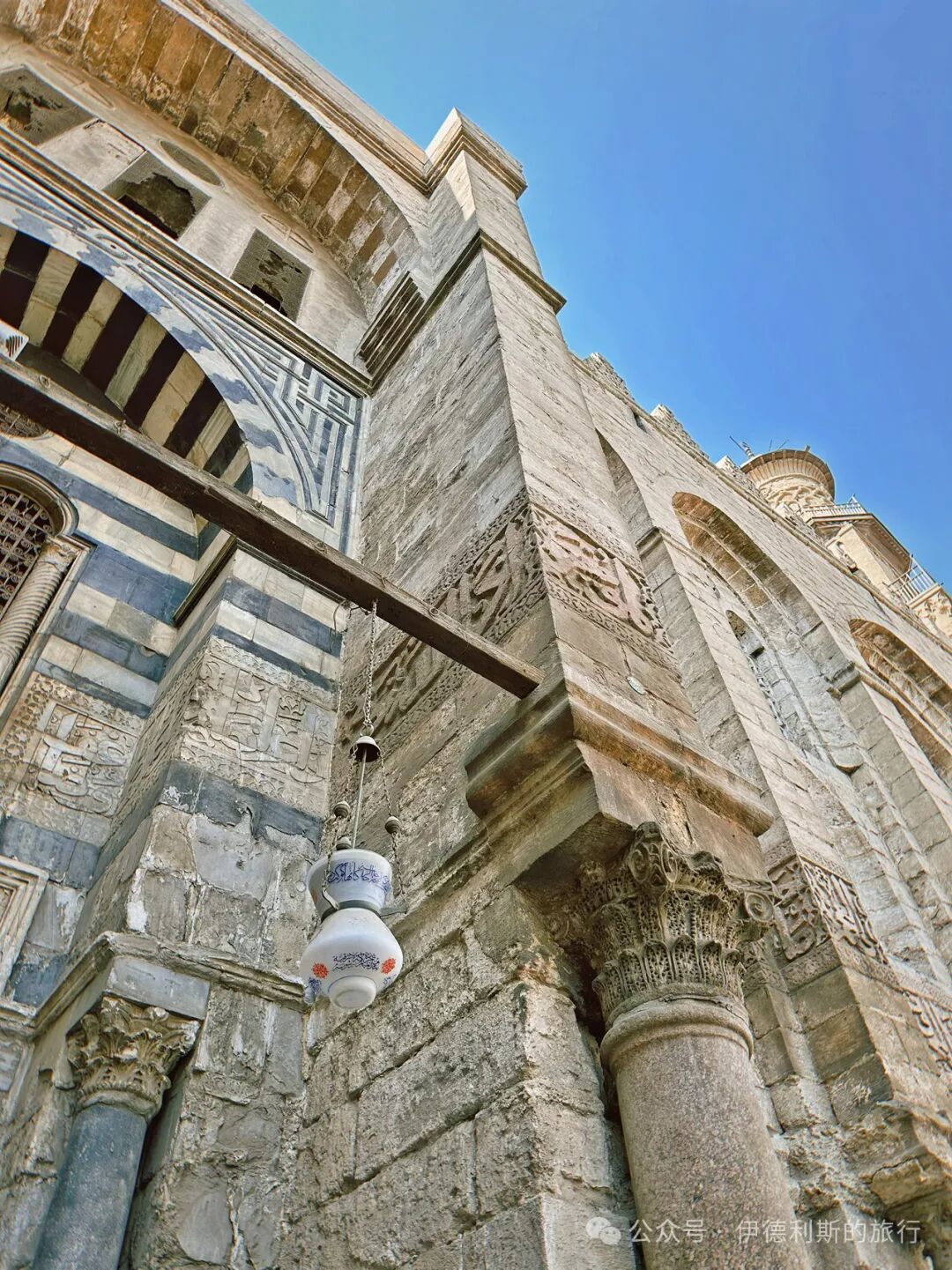
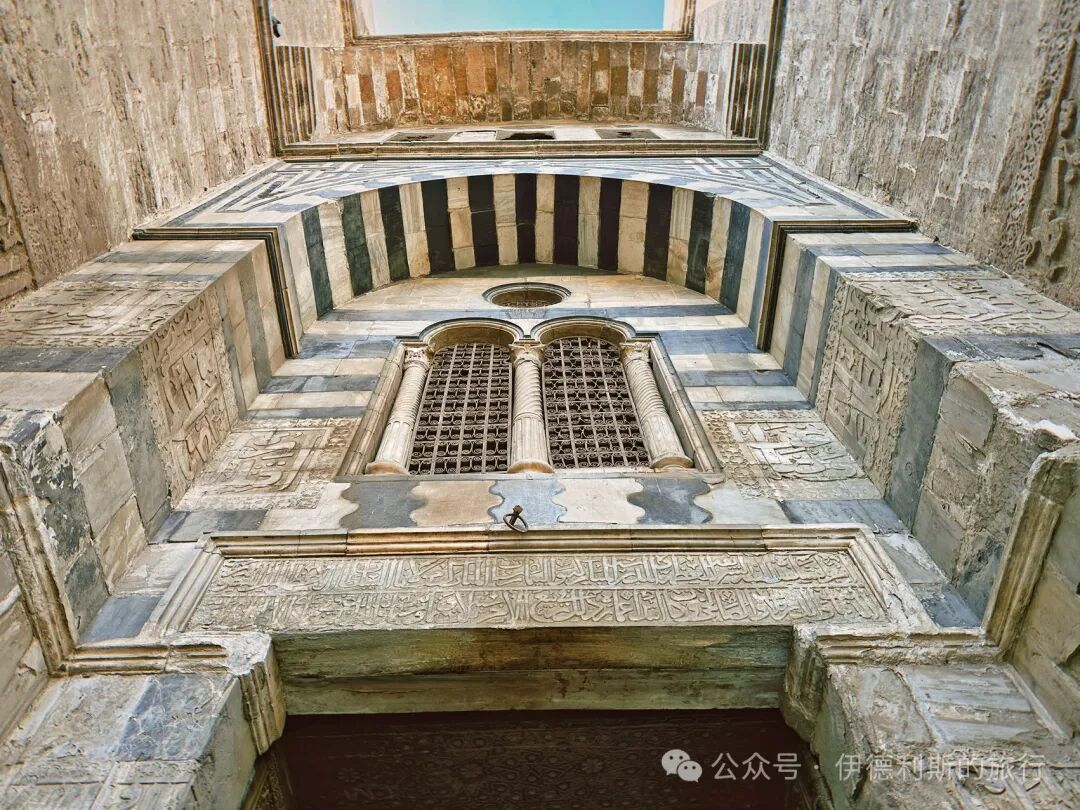
The Mausoleum of Sultan Qalawun is known as a symbol of the power of the Mamluk dynasty and held great significance in 13th to 16th-century Egypt. This is one of the most magnificent imperial mausoleums I have ever visited, with an incredible wealth of stucco carvings, marble mosaics, and gilded woodwork. The tomb hall is supported by four towering stone columns decorated with Corinthian capitals. Above the capitals is an architrave decorated with vine patterns and stucco carvings in Thuluth calligraphy.
Sultan Qalawun was known as the King of Victory. In 1281, he led the Mamluk army to defeat the Mongol Ilkhanate forces commanded by Mongke Temur, the son of Hulagu Khan, in Homs, Syria. Mongke Temur was wounded and fled. The following year, the Ilkhan Tekuder converted to Islam and formed an alliance with the Mamluk Sultanate. The Battle of Homs is known as a major turning point in the Mongol westward expansion, marking the first time Mongol cavalry suffered a defeat in the Middle East.
After the threat from the Ilkhanate faded, Sultan Qalawun launched a series of wars against the Crusaders starting in 1285, eventually recapturing Tripoli, the largest city in northern Lebanon, in 1289.
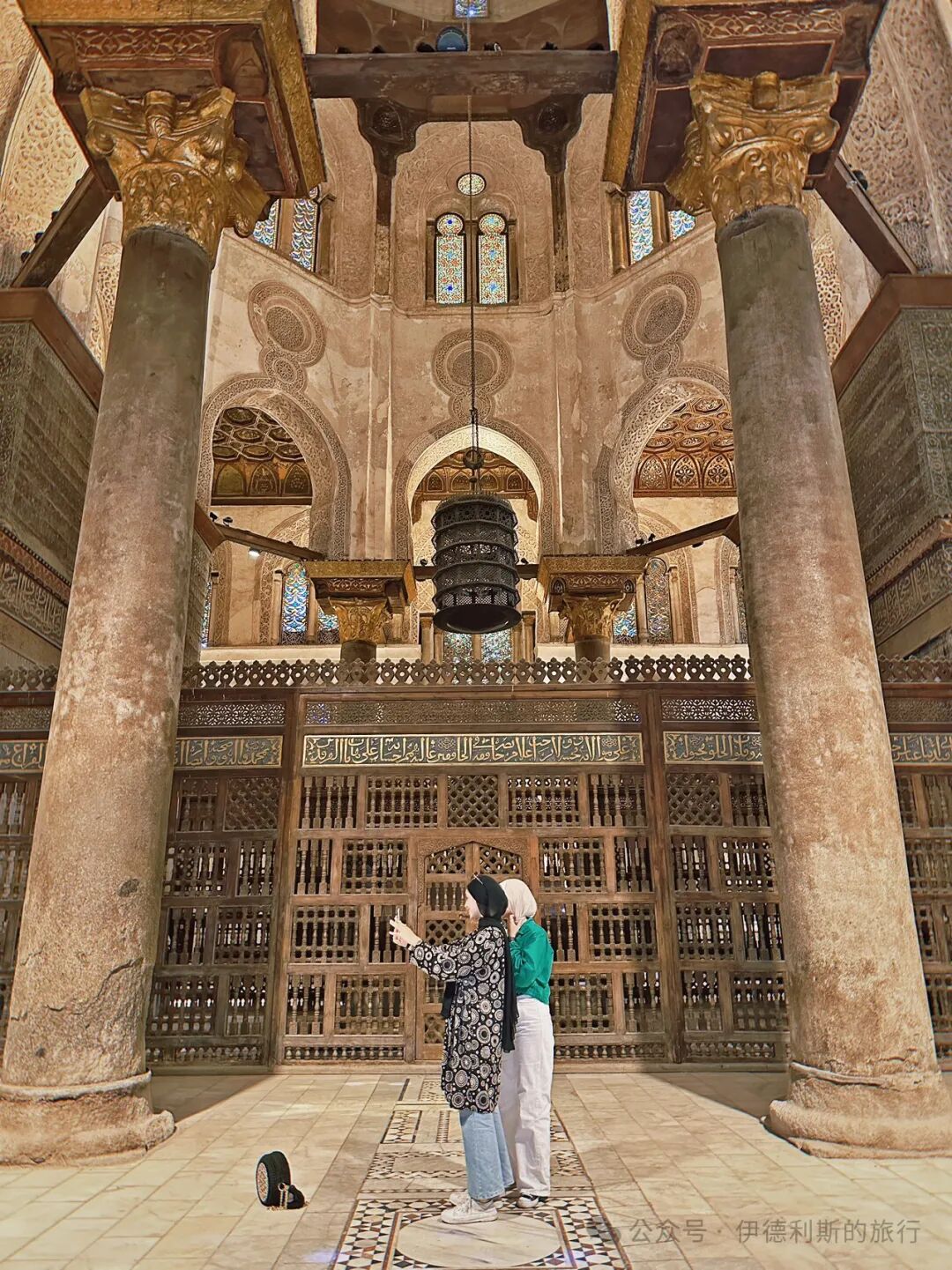
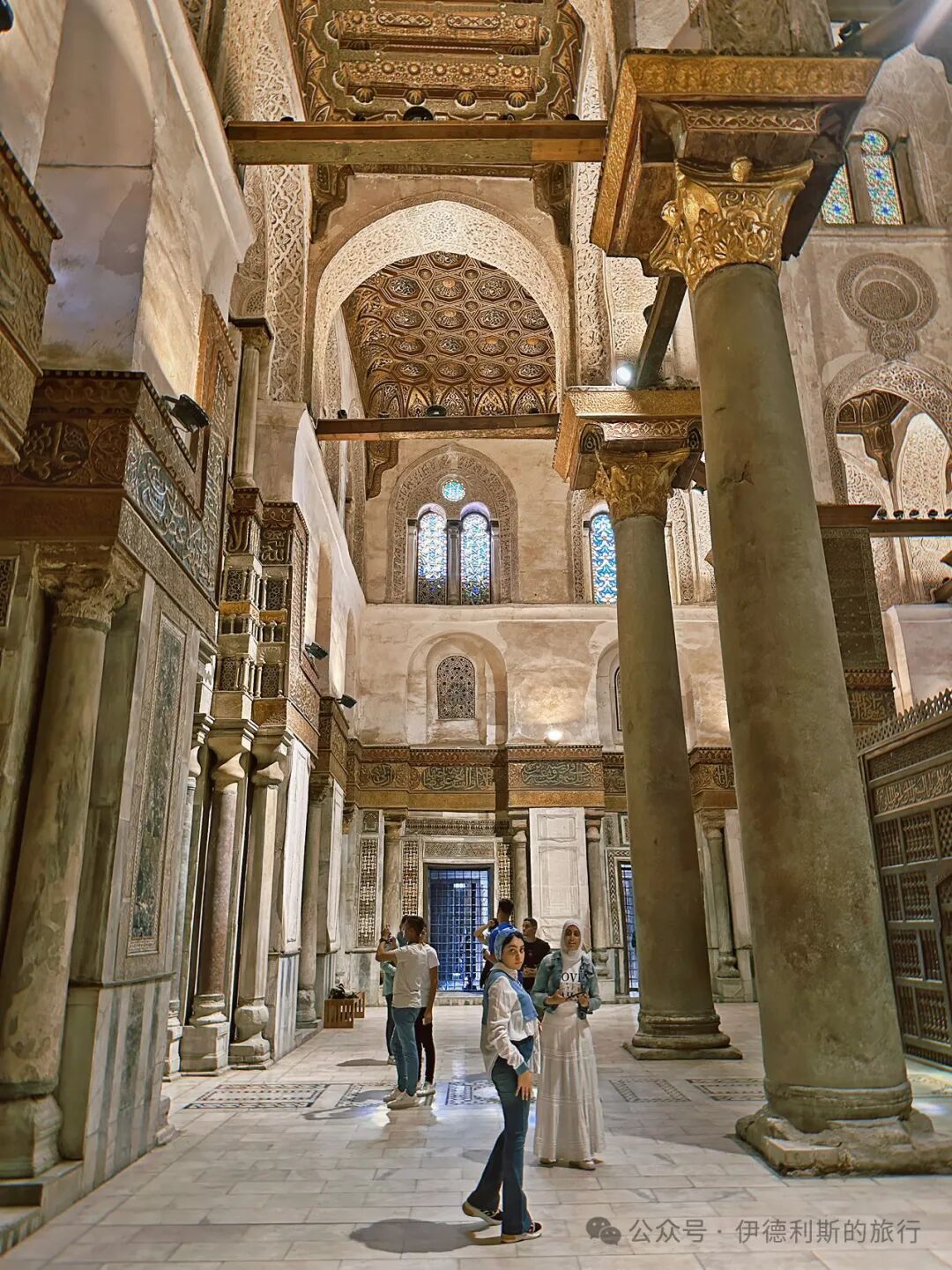
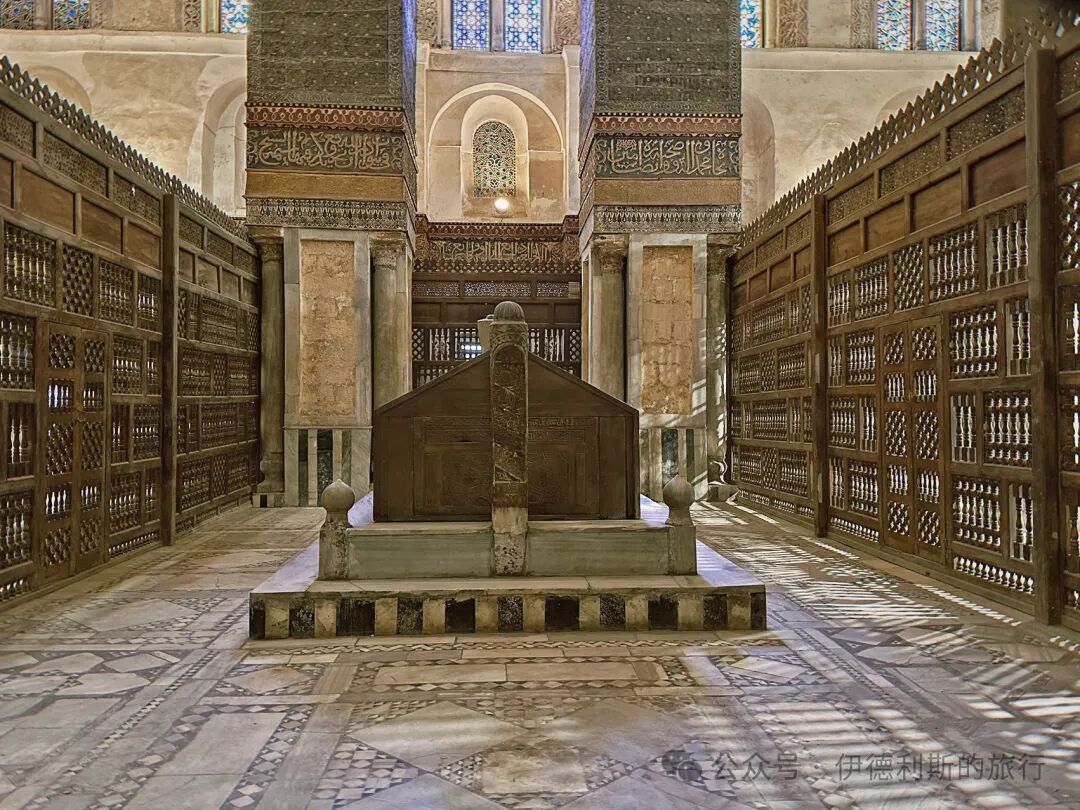
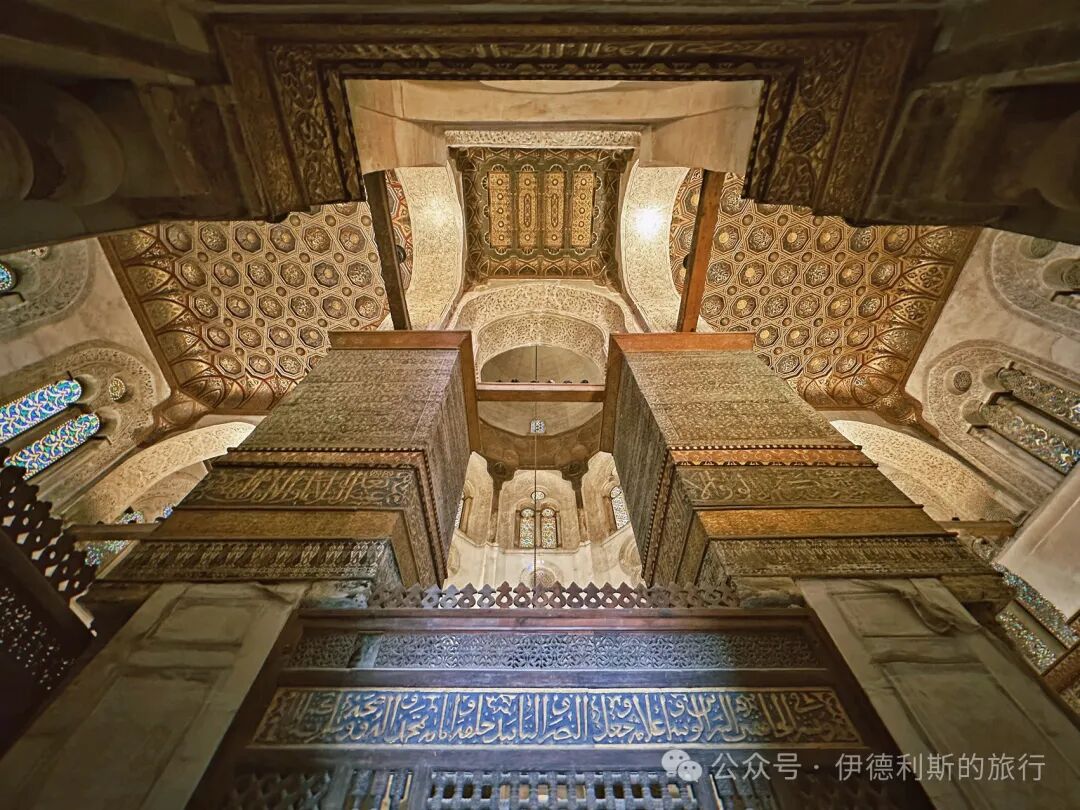
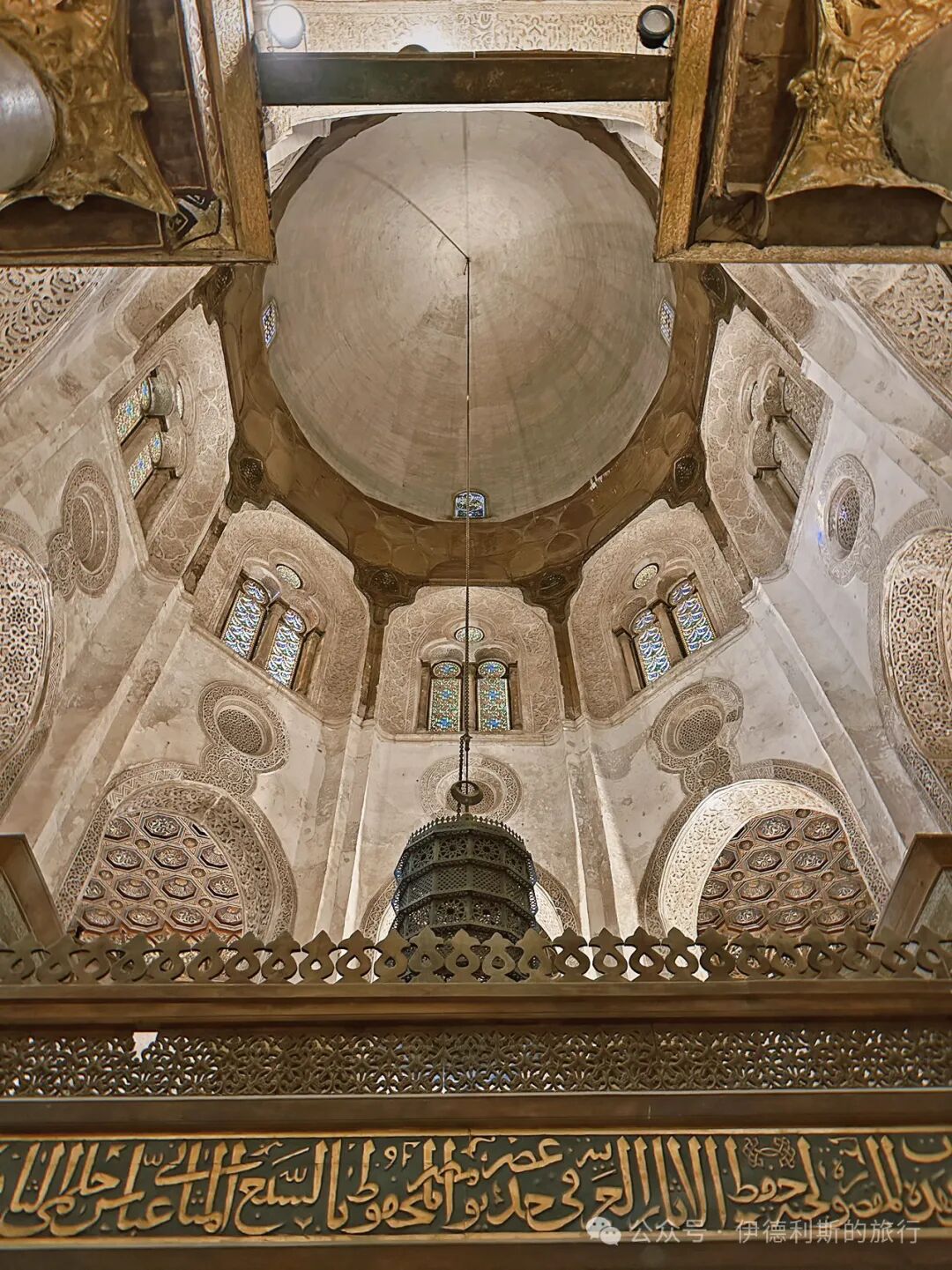
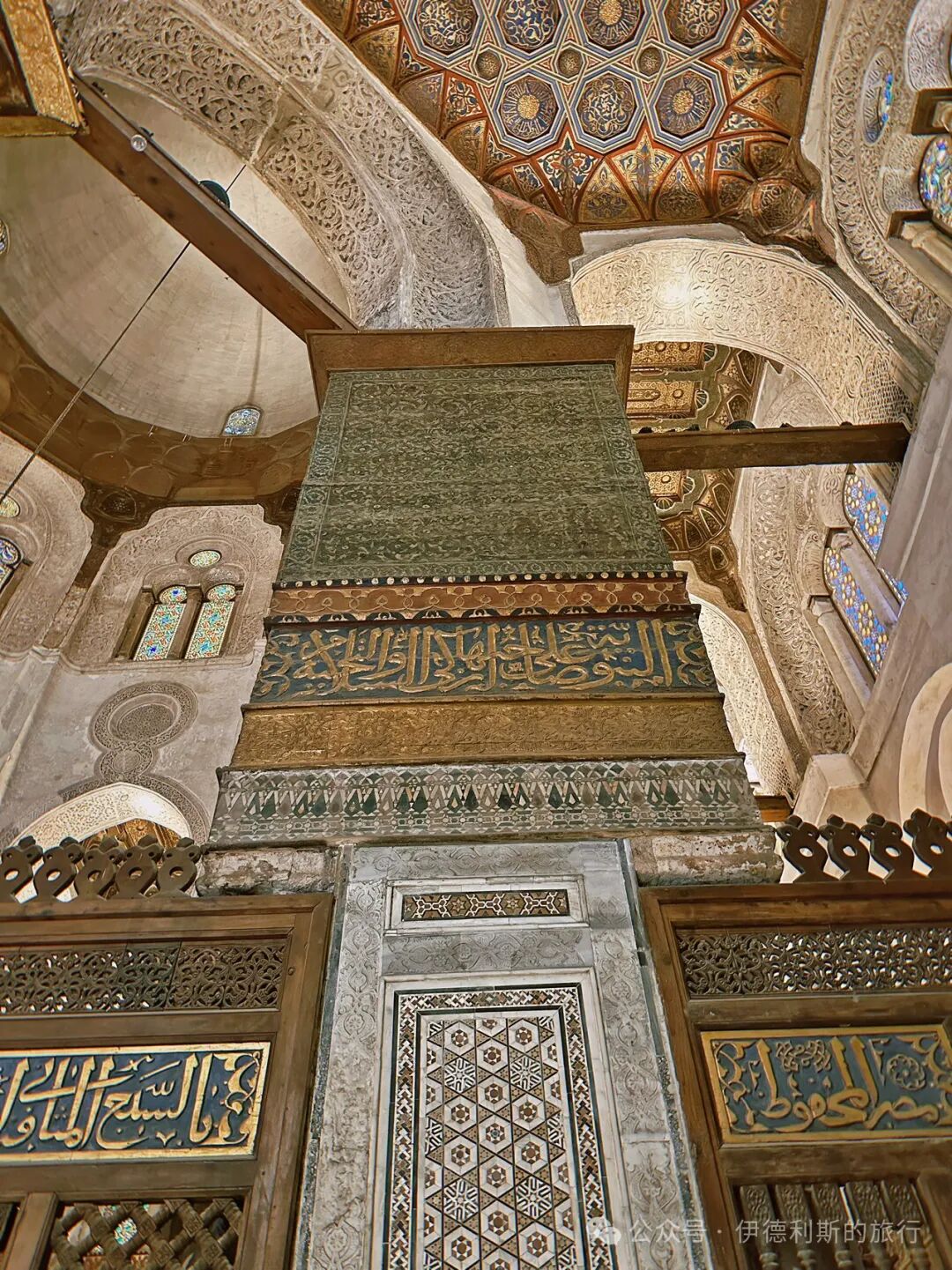
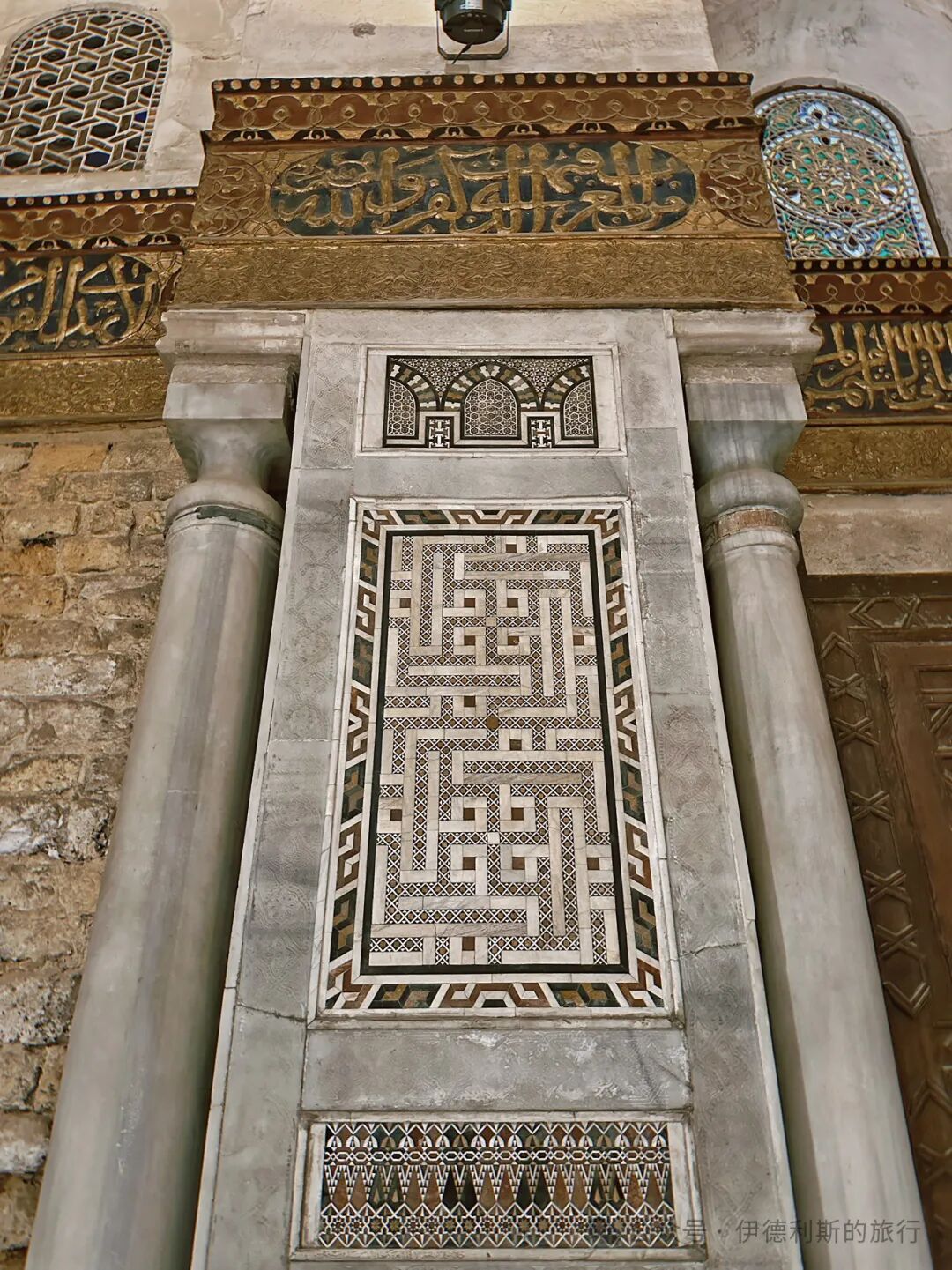
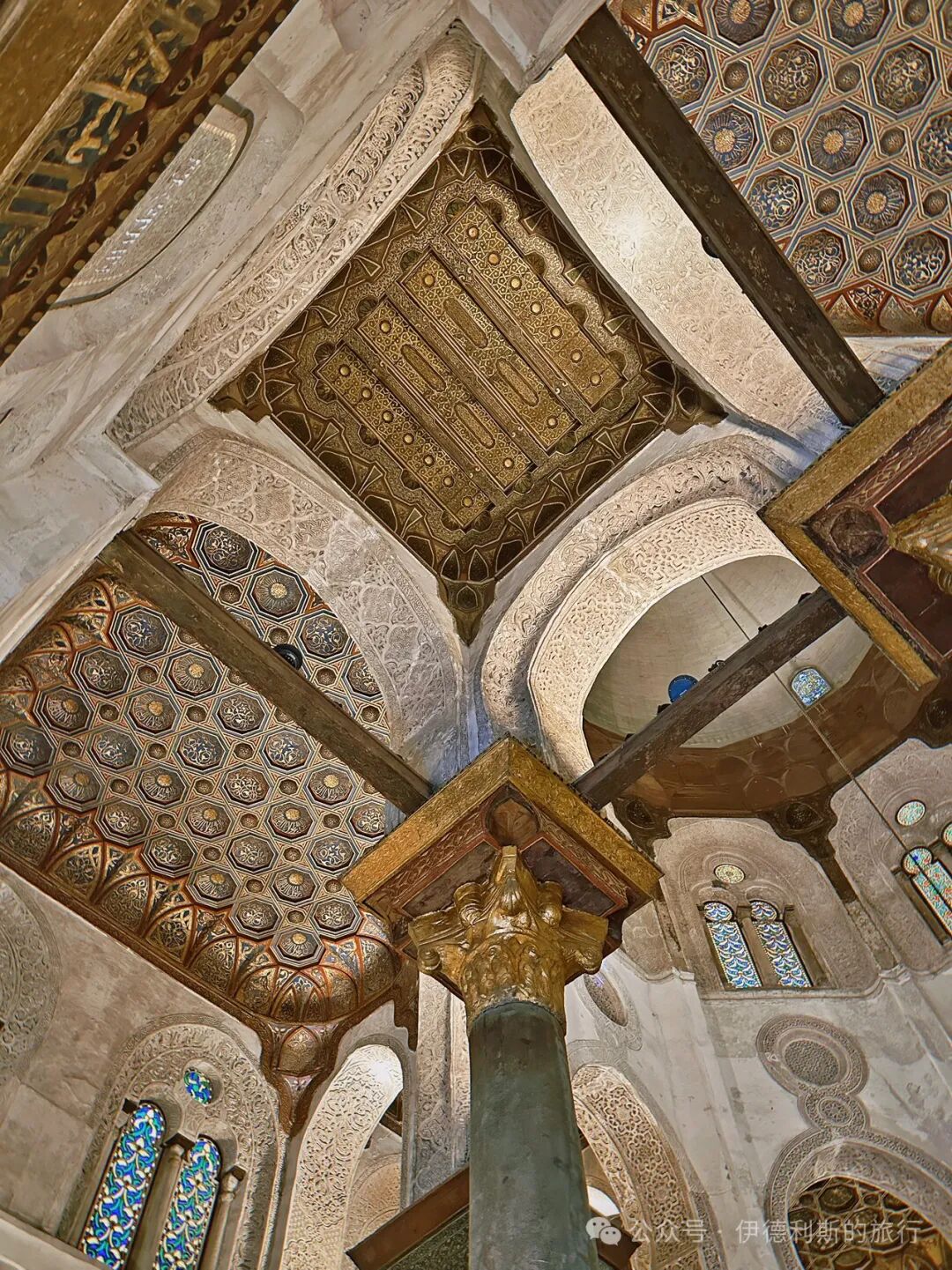
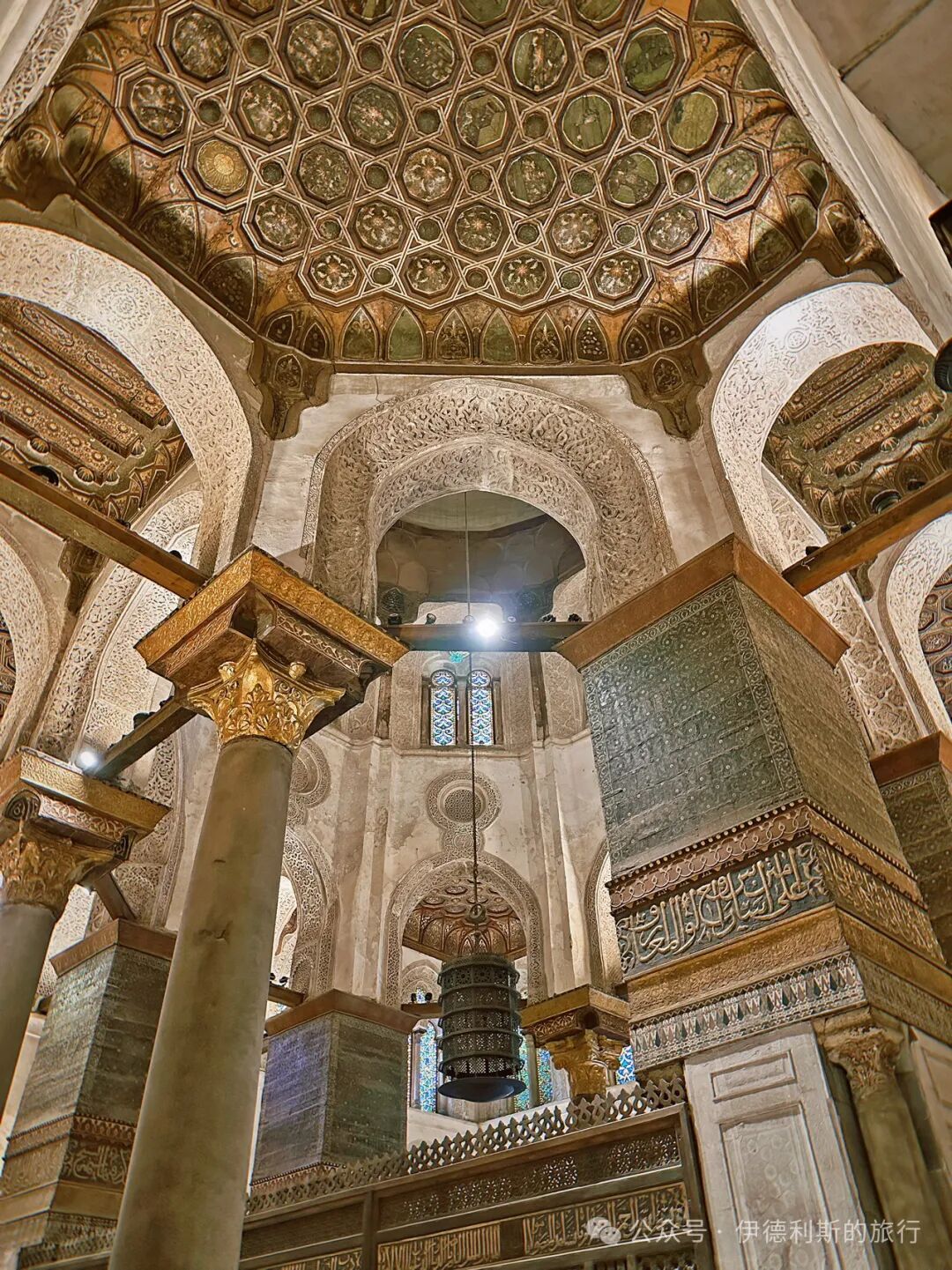
The mihrab in the mausoleum of Sultan Qalawun is considered the most exquisite mihrab of the Mamluk period. The design of the mihrab was inspired by Syria and was created using colorful marble mosaics.
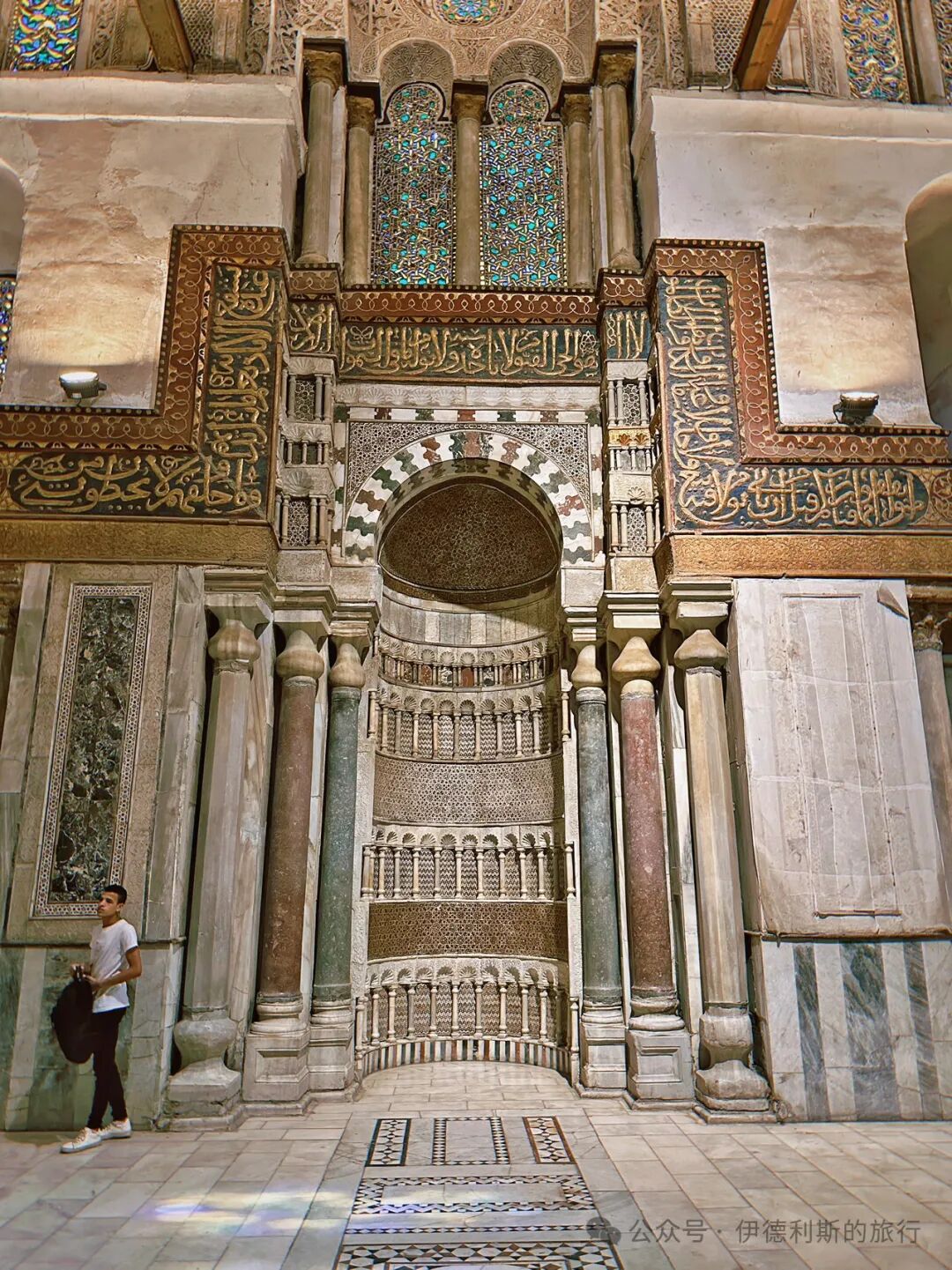
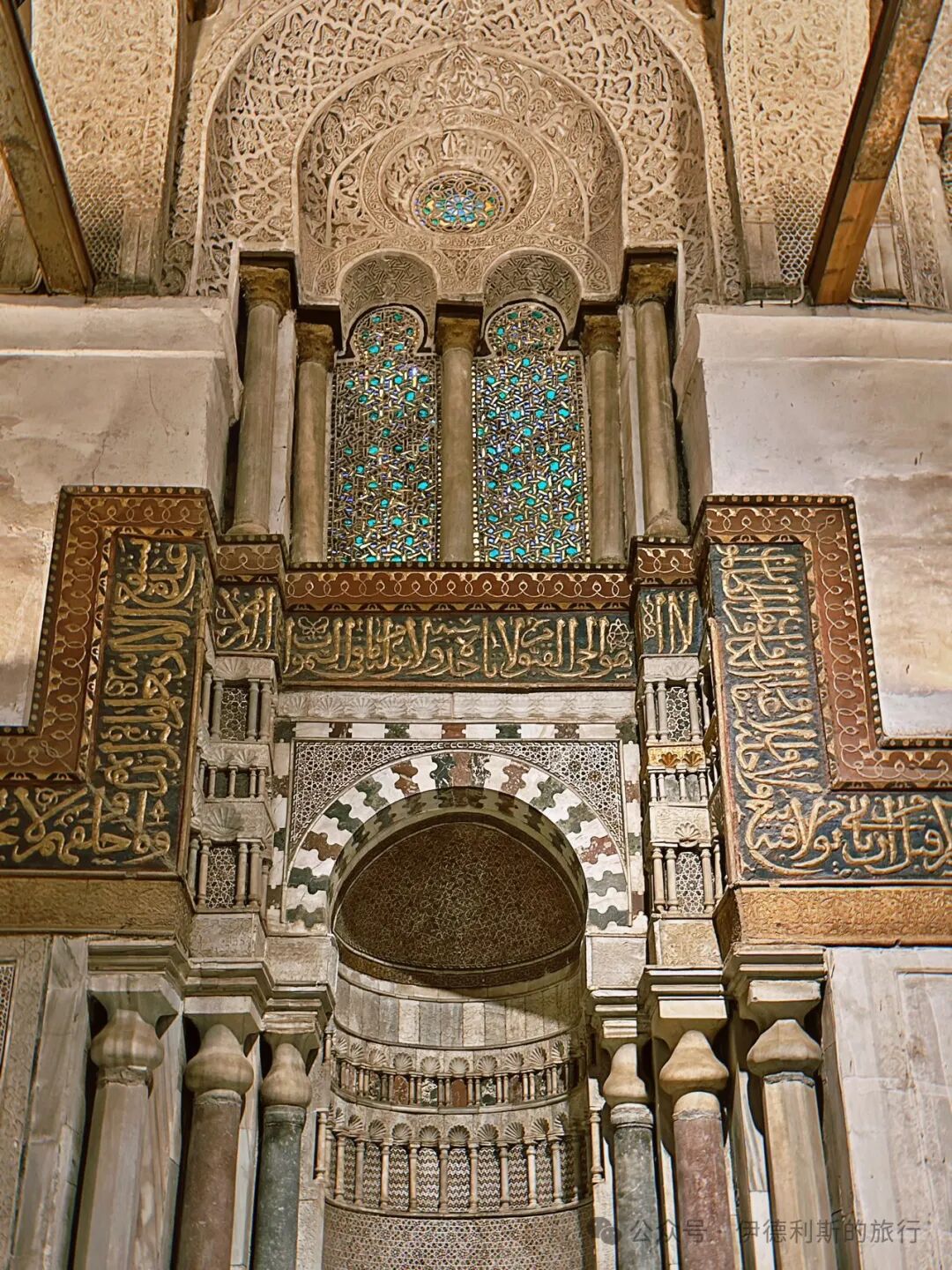
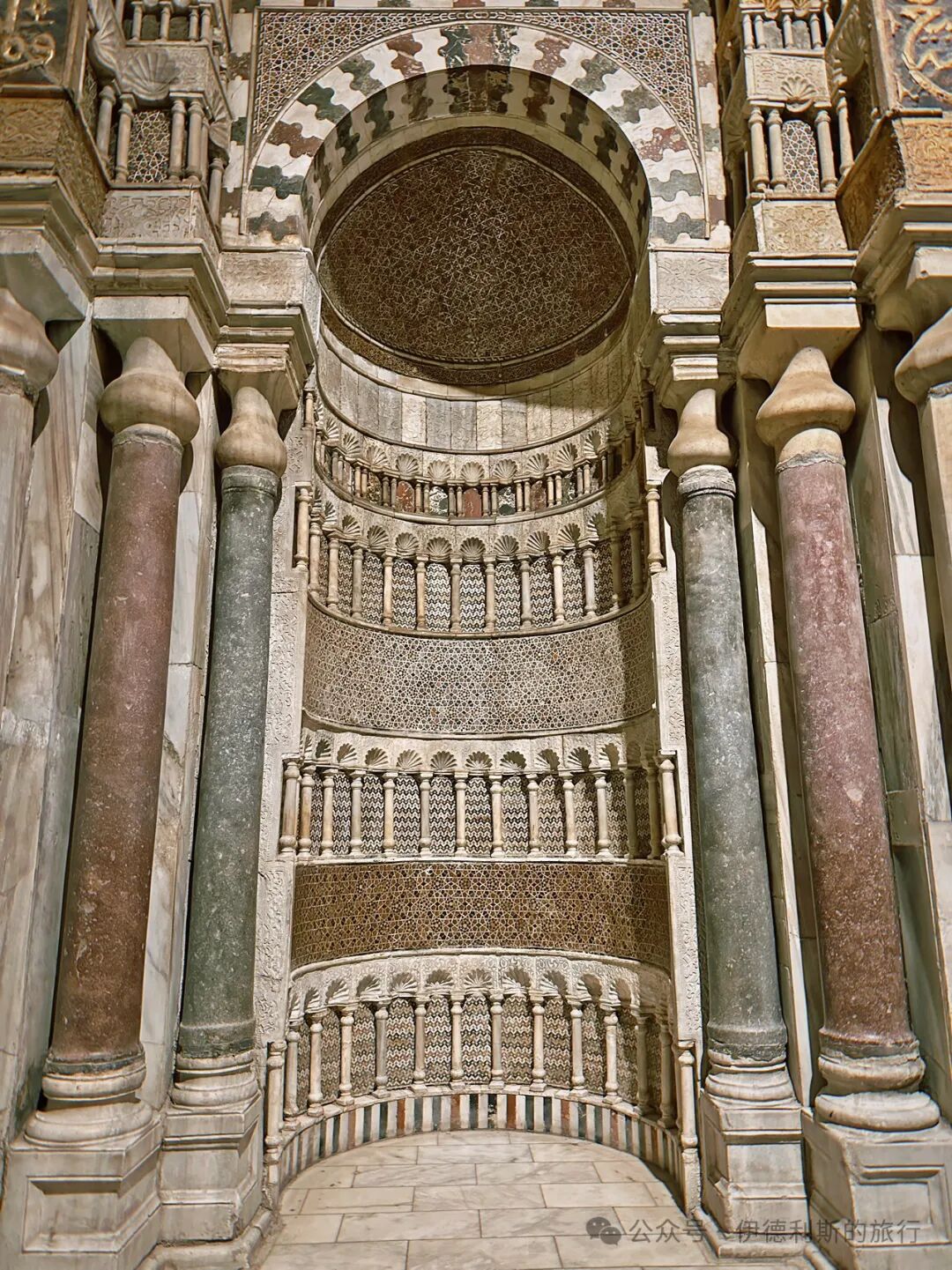
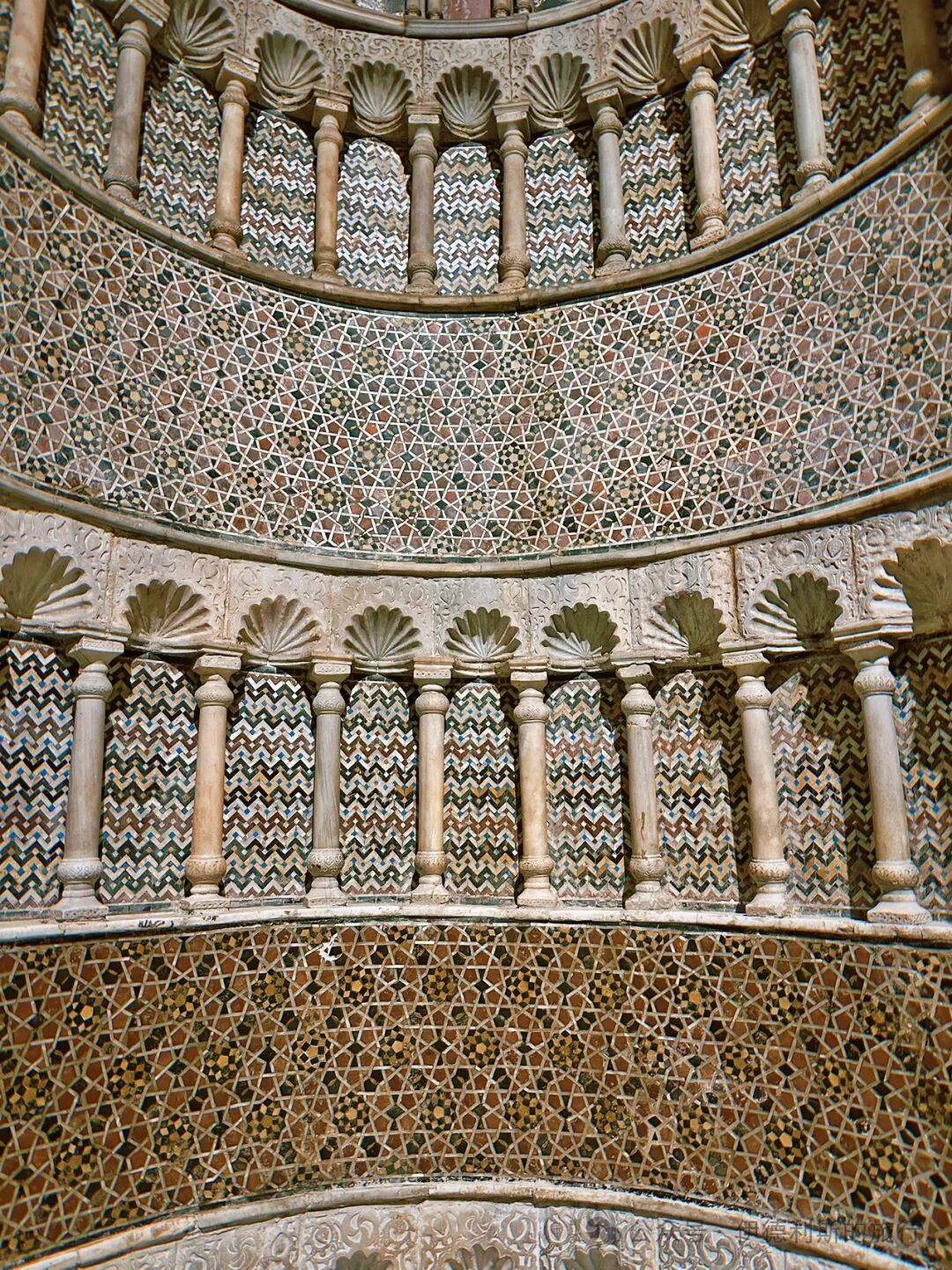
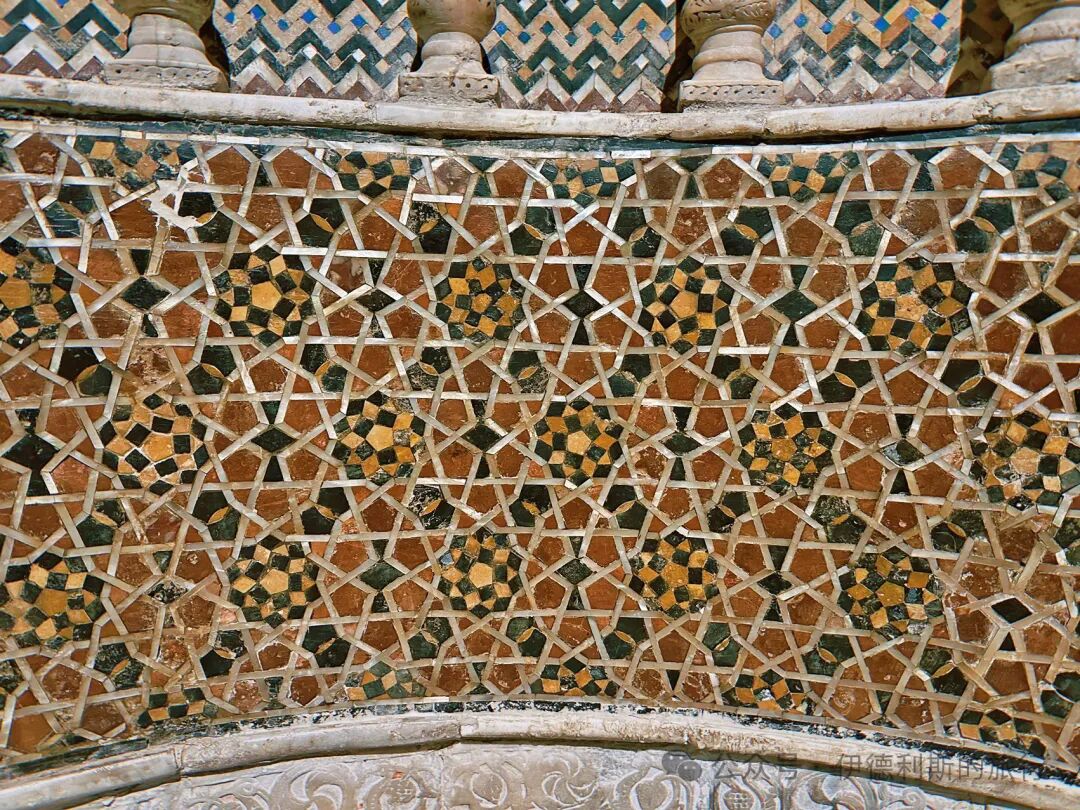
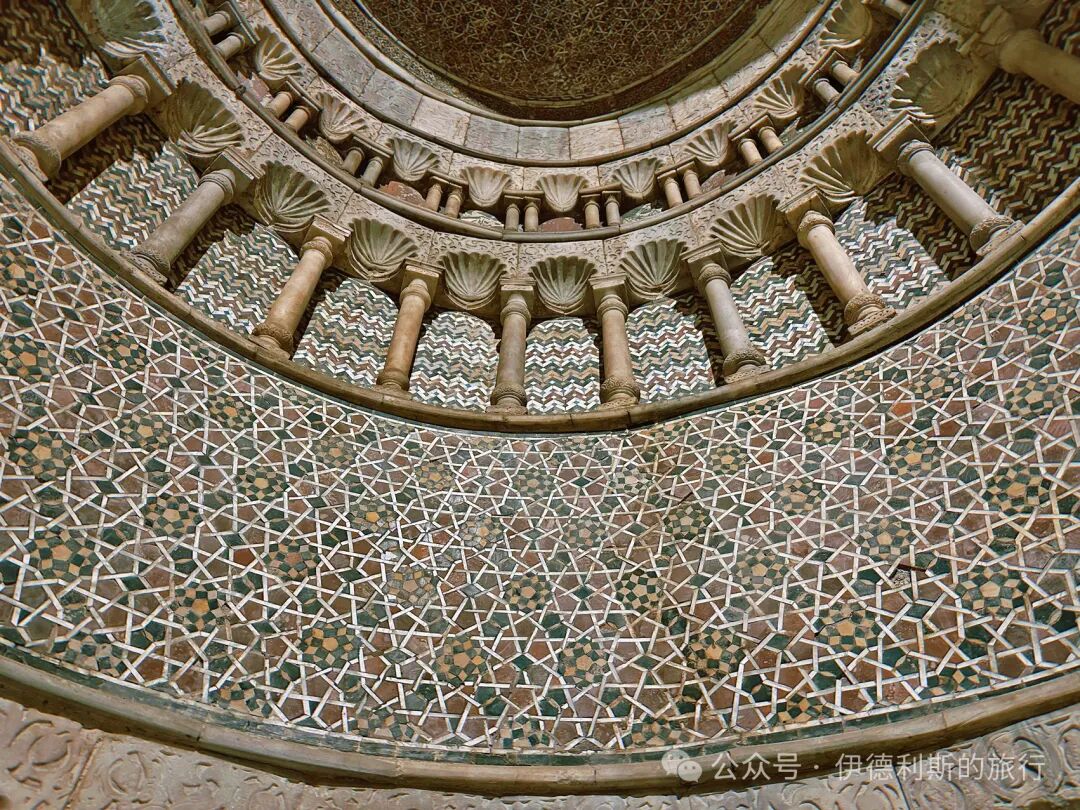
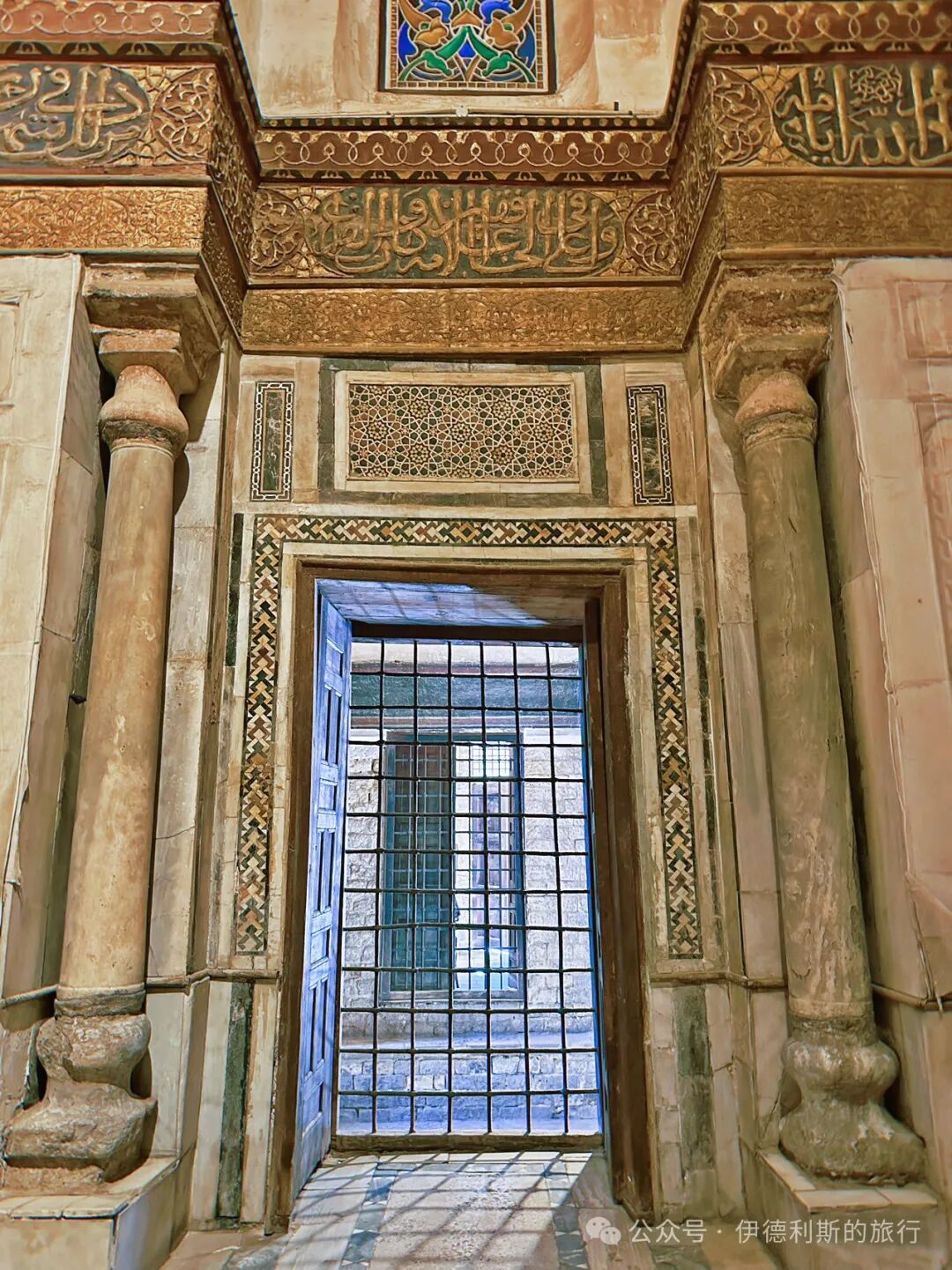
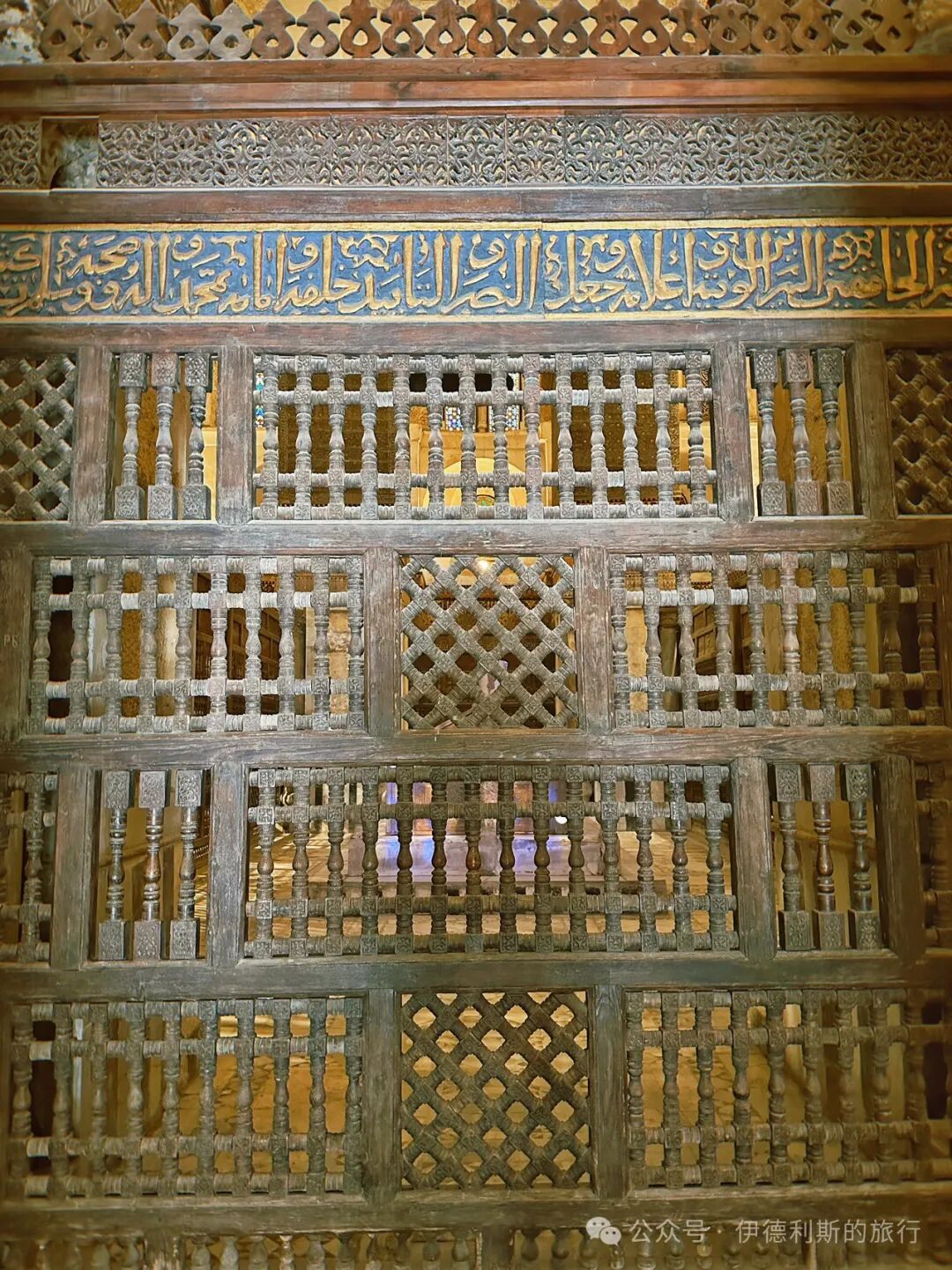
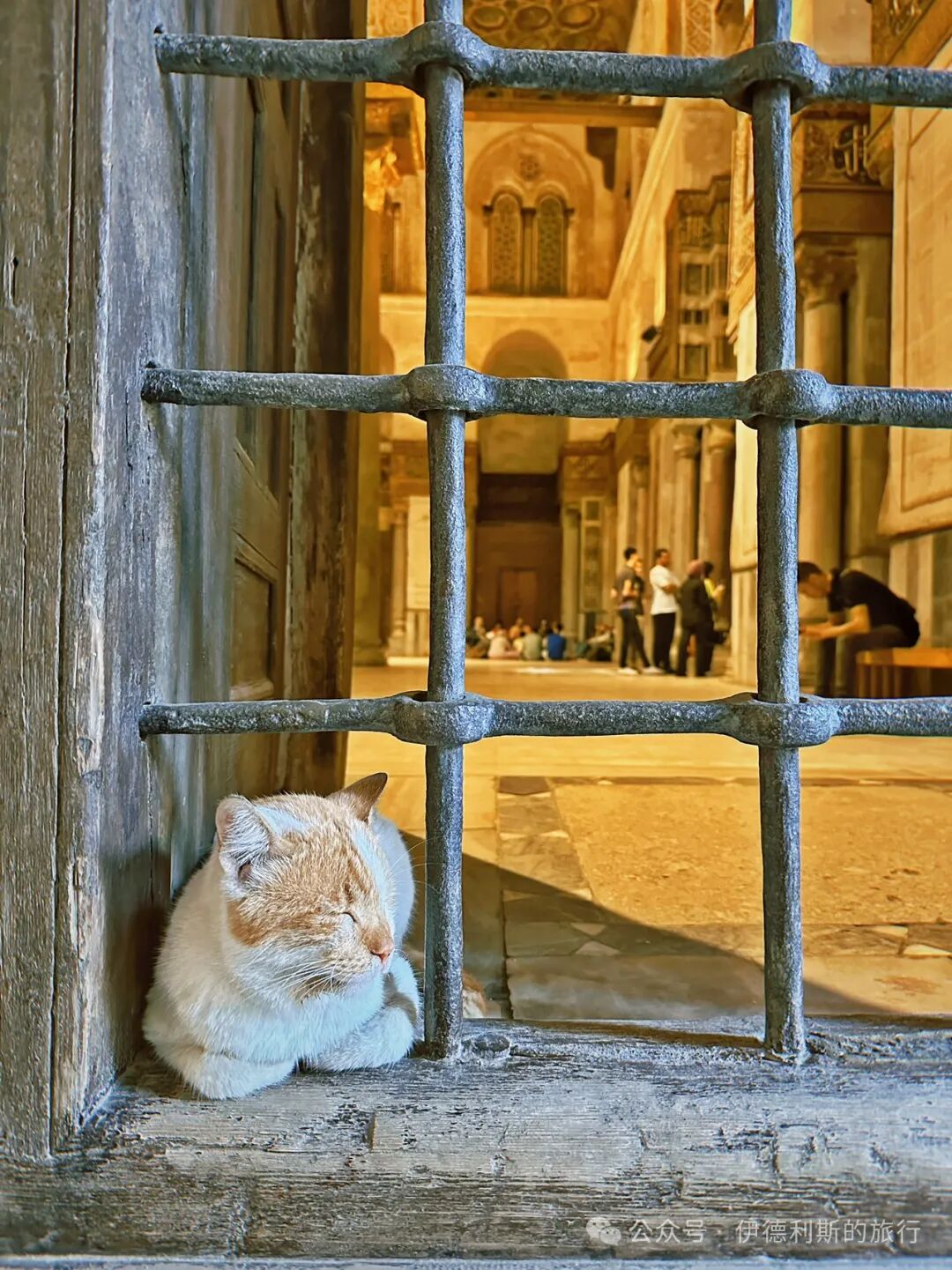
The madrasa of Sultan Qalawun consists of two iwan vaulted structures, with classrooms and a prayer hall on either side of the courtyard. The mihrab in the center of the prayer hall does not use the marble mosaics common in the Mamluk period, but instead features glass and mother-of-pearl mosaics. This is a throwback to the decorative art of the Umayyad Caliphate in Syria, showing how the Mamluks claimed to inherit the orthodoxy of the faith.
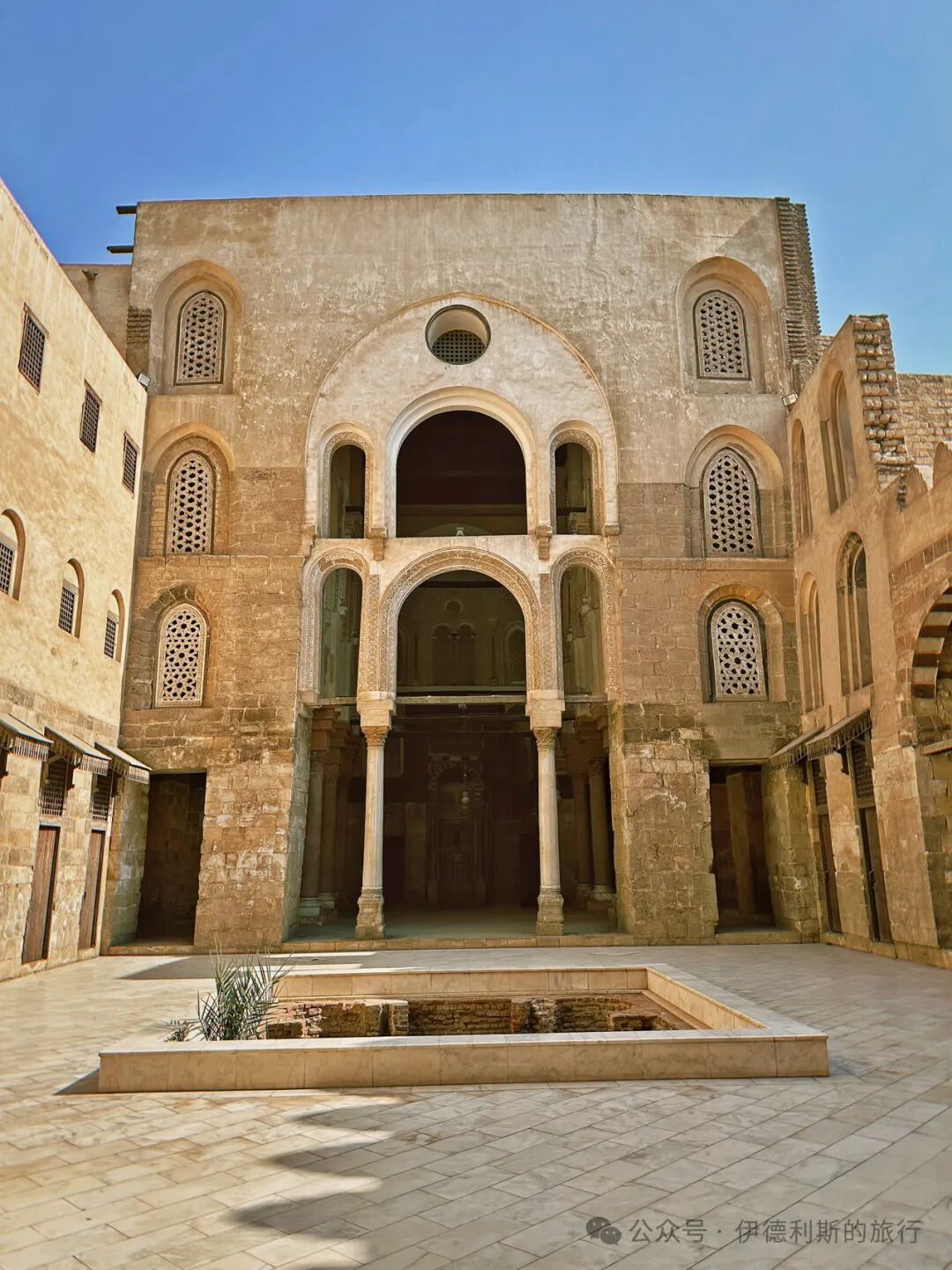
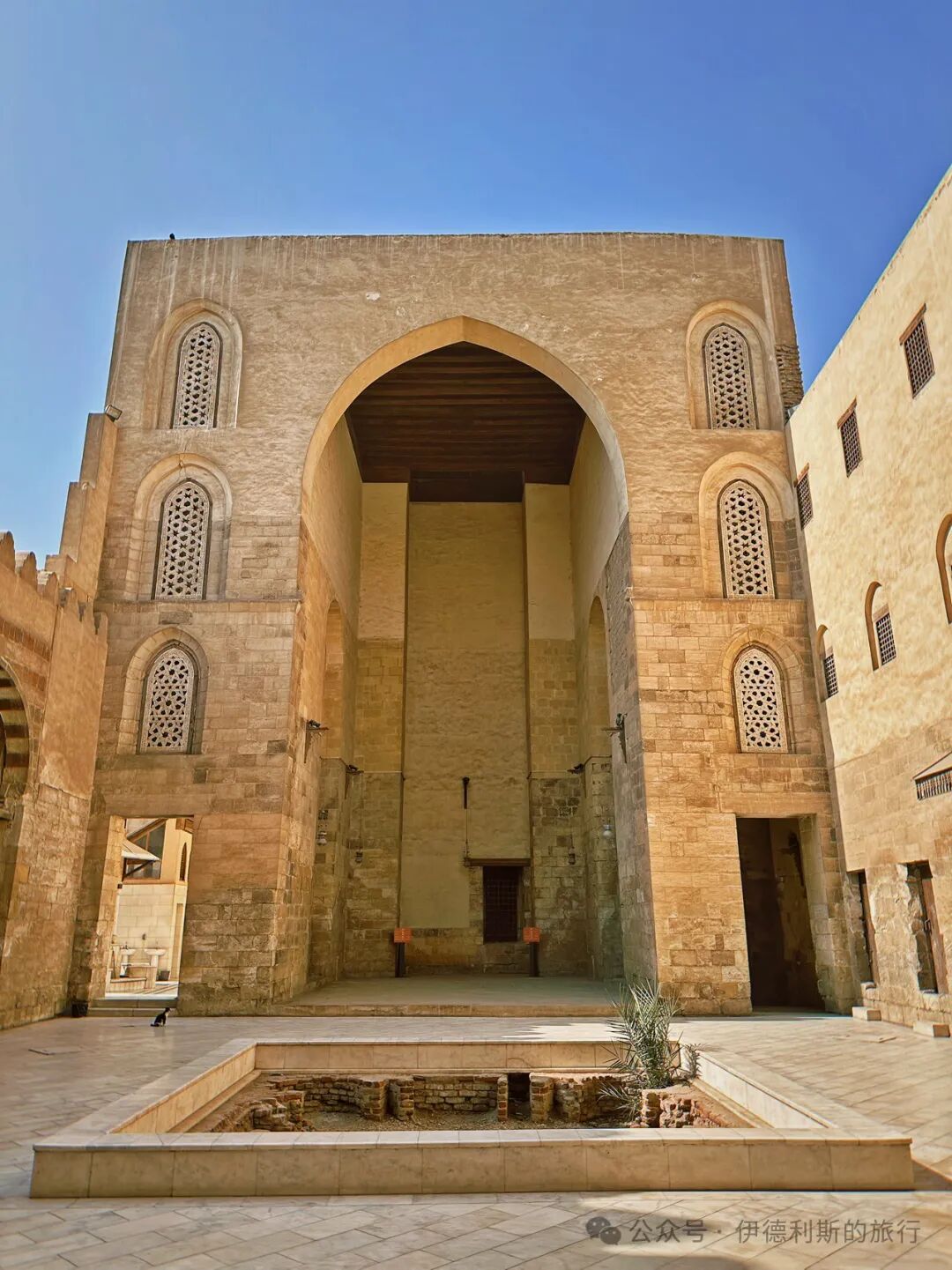
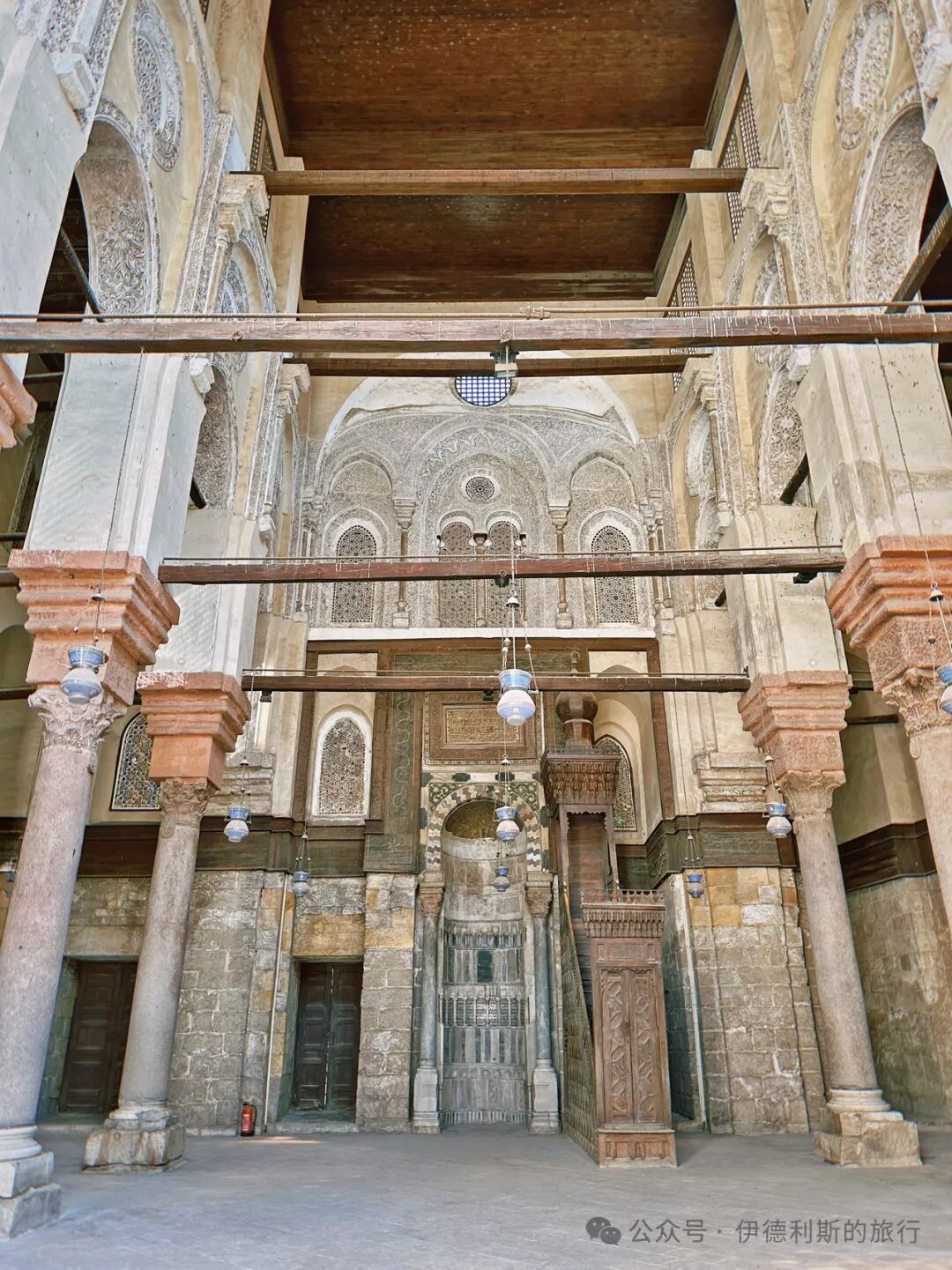
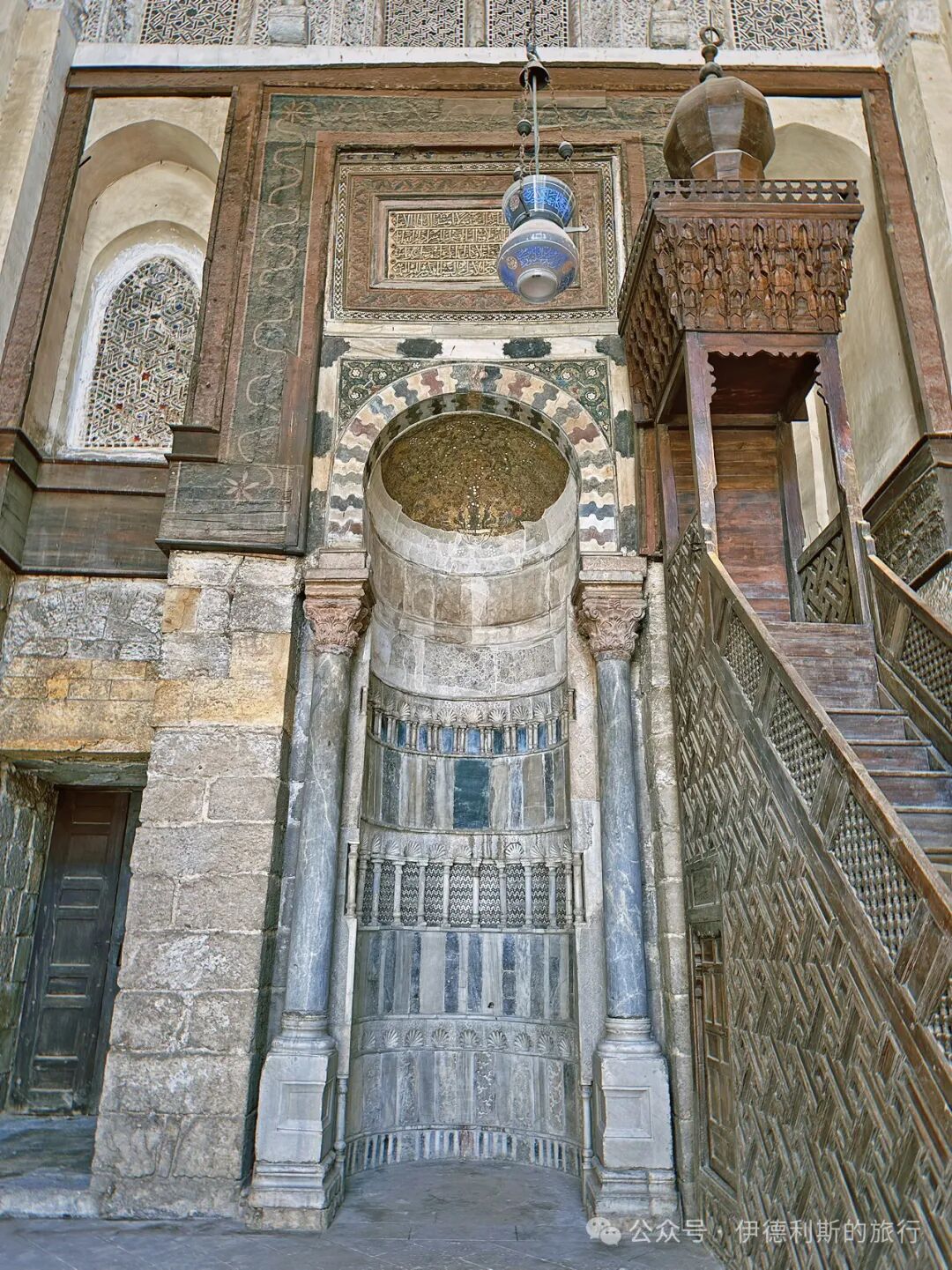
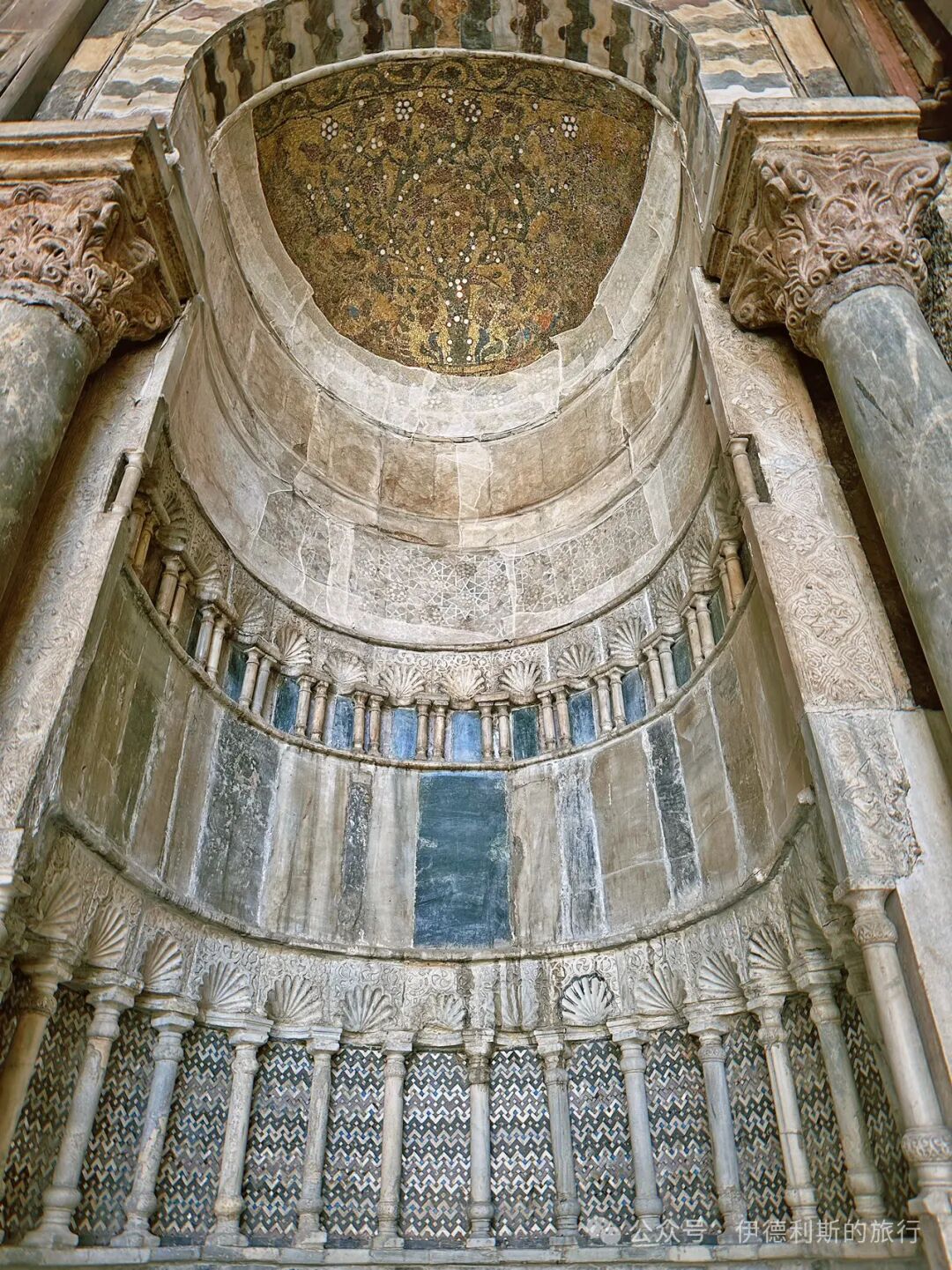
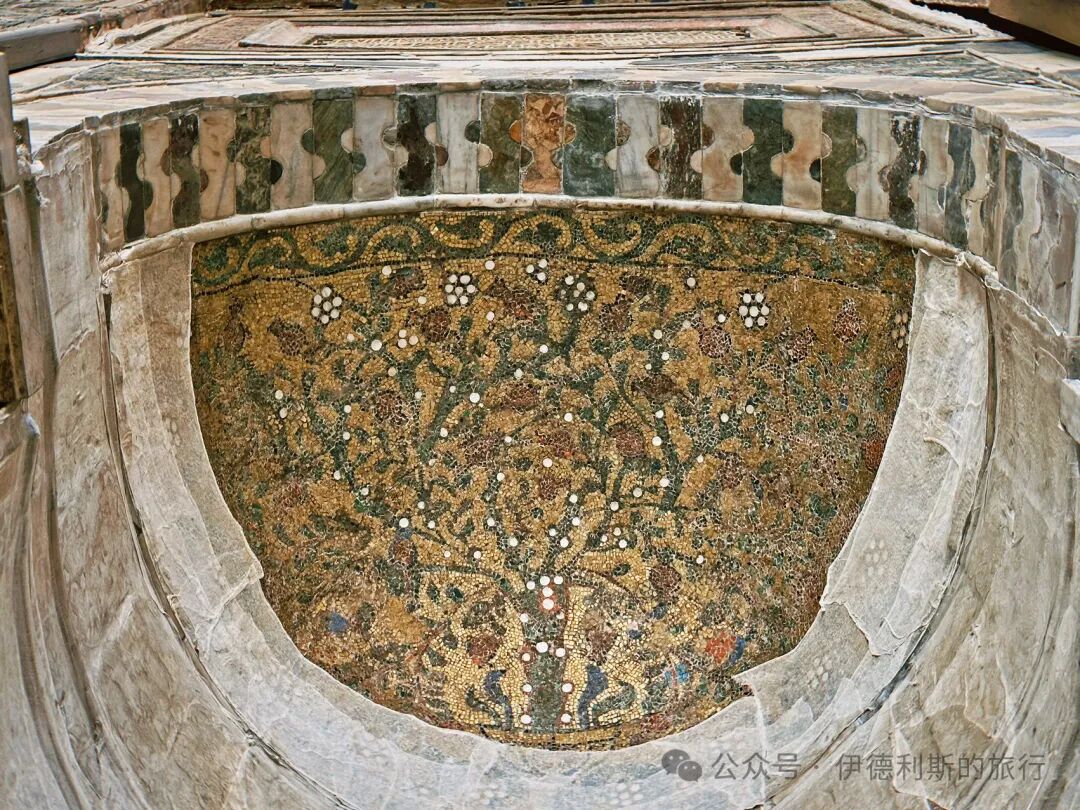
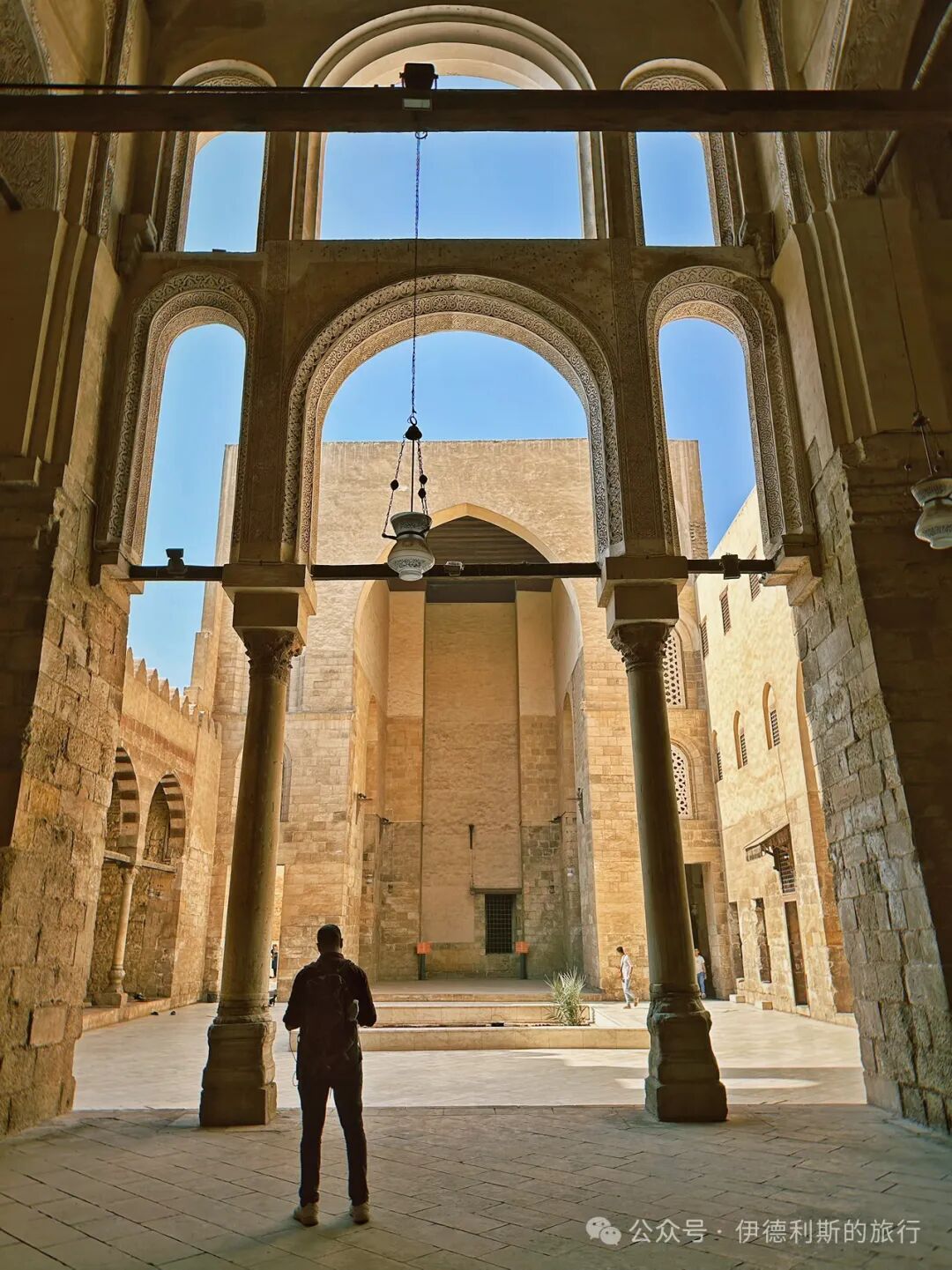
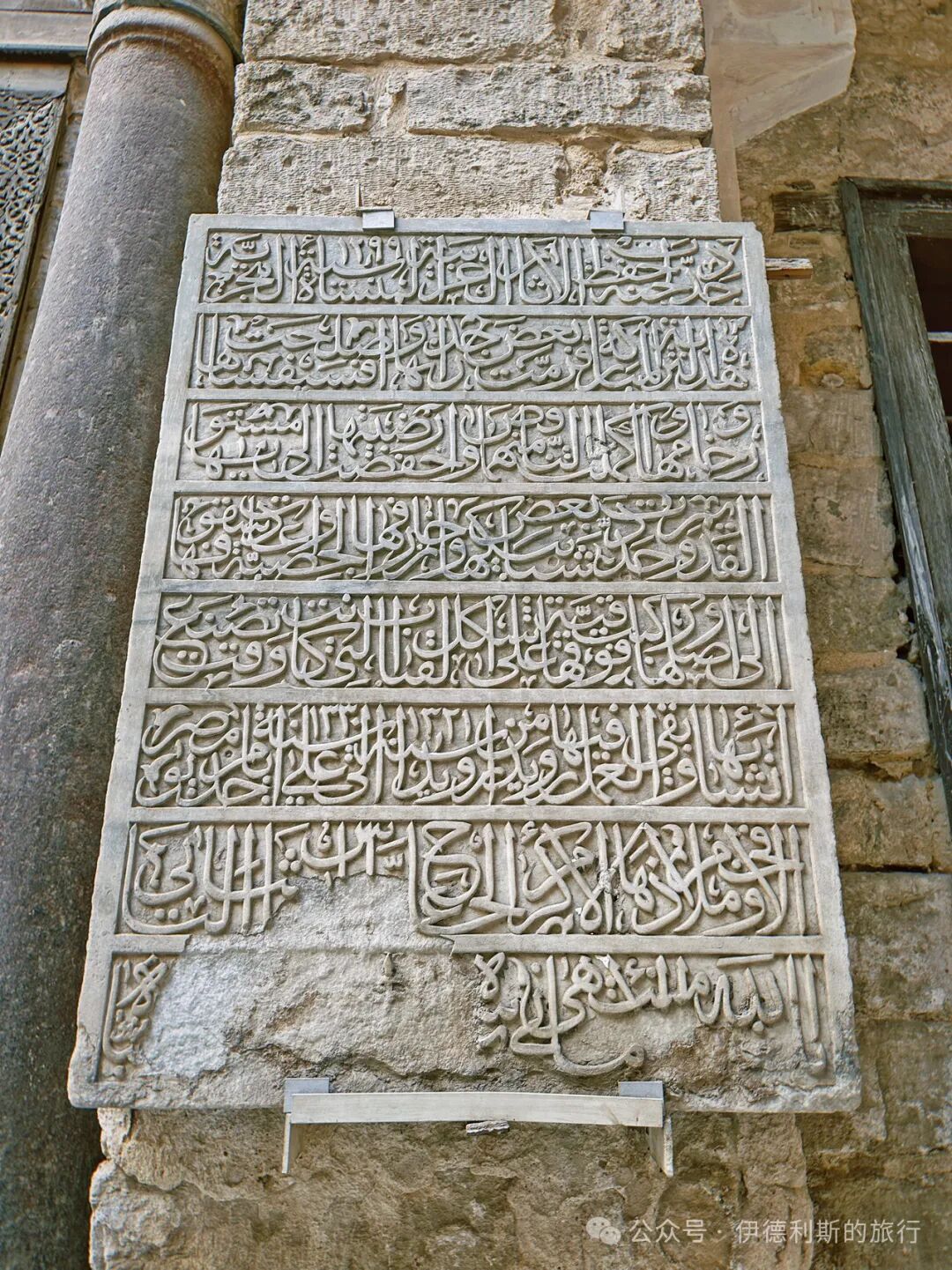
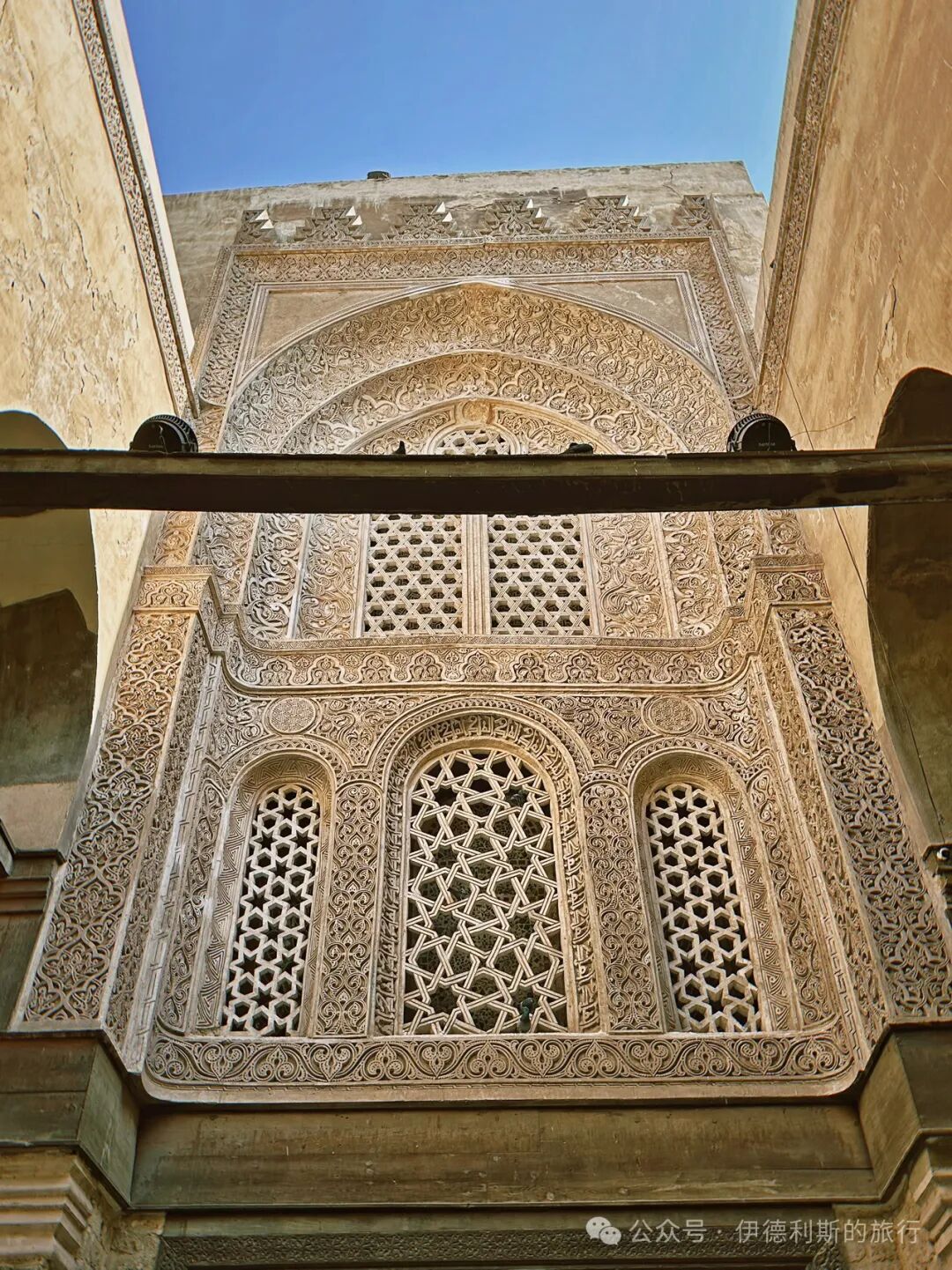
As-Salih Ayyub Mausoleum: 1250
Across from the Qalawun complex stands the tomb built in 1250 by Shajar al-Durr, the widow of the Ayyubid Sultan As-Salih Ayyub (reigned 1240–49), for her husband.
Sultan As-Salih was the last major ruler of the Ayyubid dynasty, and he saw the rise of the Mamluk dynasty. Because he did not trust the local Egyptian emirs, he began buying large numbers of Kipchak Turks who had been enslaved after the Mongol invasion of Central Asia. These slaves soon became the core of the Ayyubid army and were known as Mamluks.
Sultan As-Salih also made great progress in the wars against the Crusaders. In 1244, he invited 10,000 Khwarazmian mercenary cavalrymen to sack and retake Jerusalem, which caused great panic among the surrounding regimes. A Christian army made up of the Kingdom of Jerusalem, the Teutonic Knights, the Knights Templar, the Knights Hospitaller, and the Order of Saint Lazarus formed an alliance with a Muslim army led by the emirs of Homs, Damascus, and Kerak to fight against as-Salih. The two armies met in a small village northeast of Gaza, where as-Salih's army and Khwarazmian mercenaries fought hard and eventually won. More than 5,000 Crusaders died in this battle, including the Grand Master and Marshal of the Knights Templar, as well as bishops from several cities.
After this battle, Christian power in the Holy Land collapsed, and the Kingdom of Jerusalem was never again able to organize an effective military campaign. In 1245, the Pope called for a new Crusade. In 1249, the Seventh Crusade, led by King Louis IX of France, officially began. When as-Salih heard the news, he quickly returned to Egypt to set up camp, but he died of illness shortly after. After as-Salih died, his widow Shajar al-Durr decided to hide the news of the Sultan's death and ordered the Mamluk army to successfully defeat the Crusader attack.
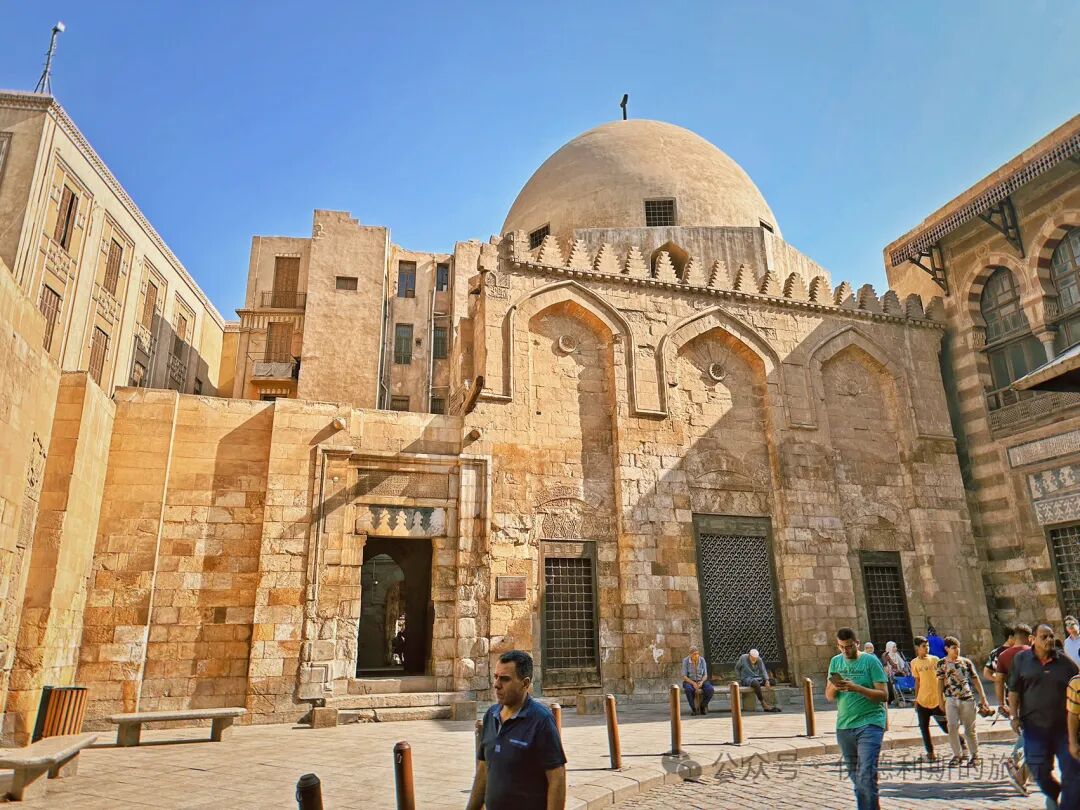
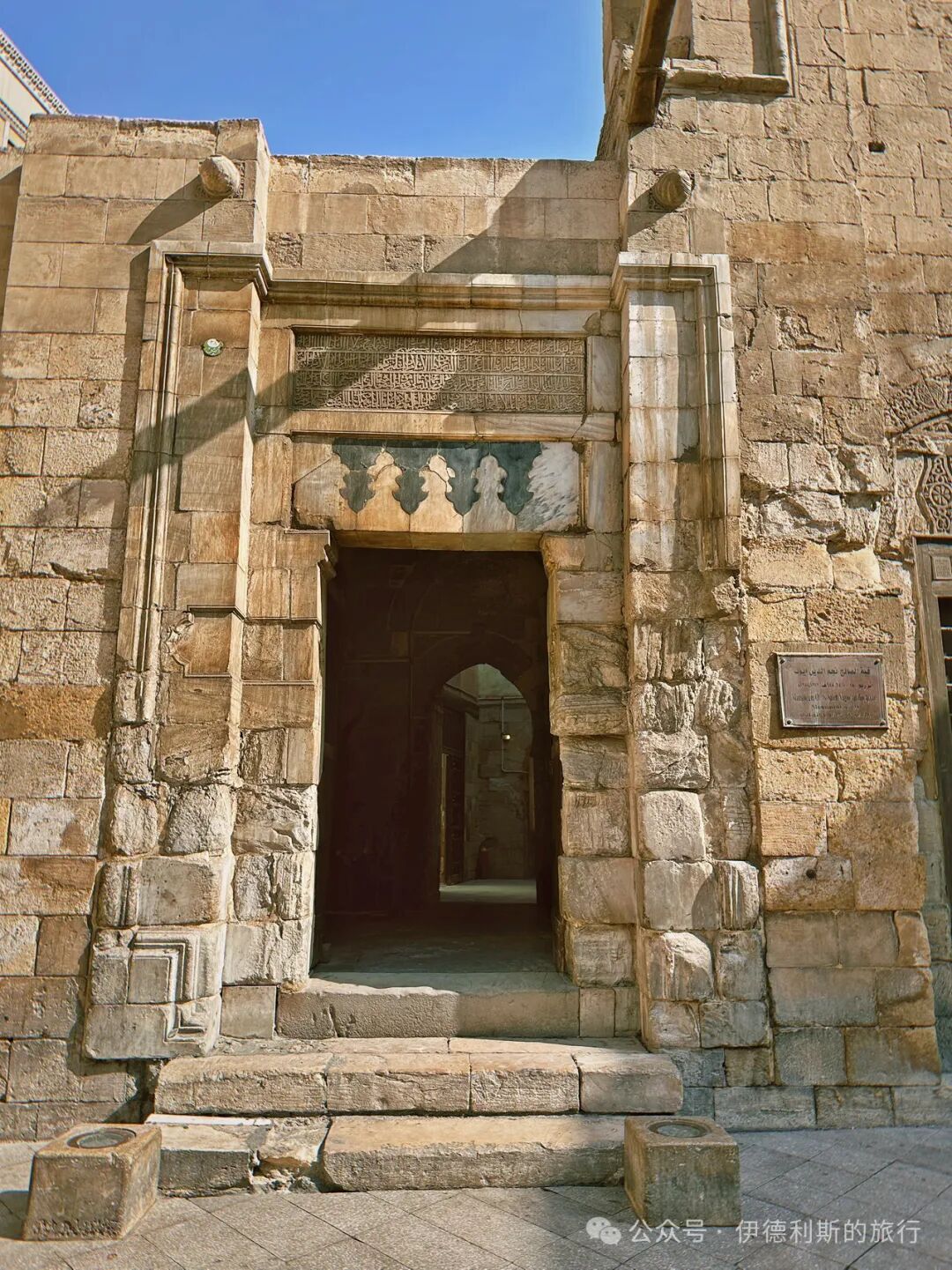
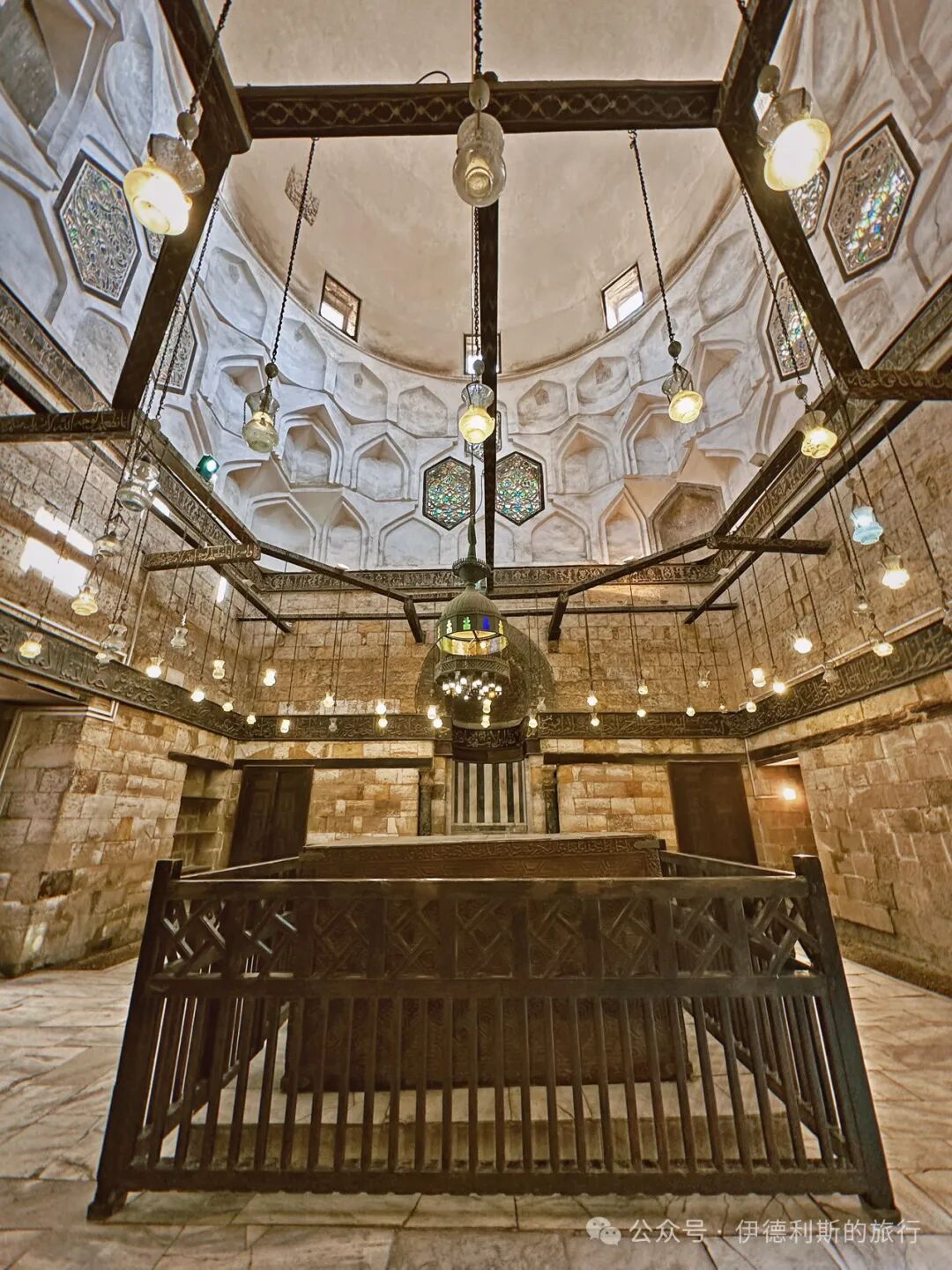
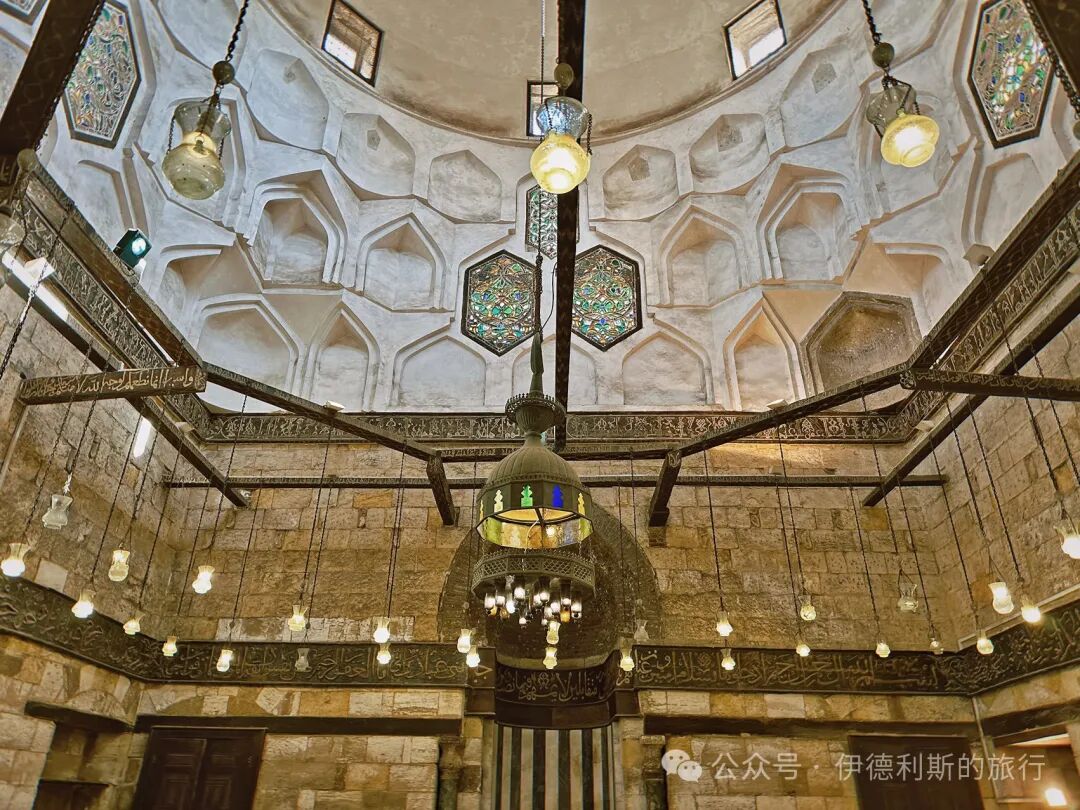
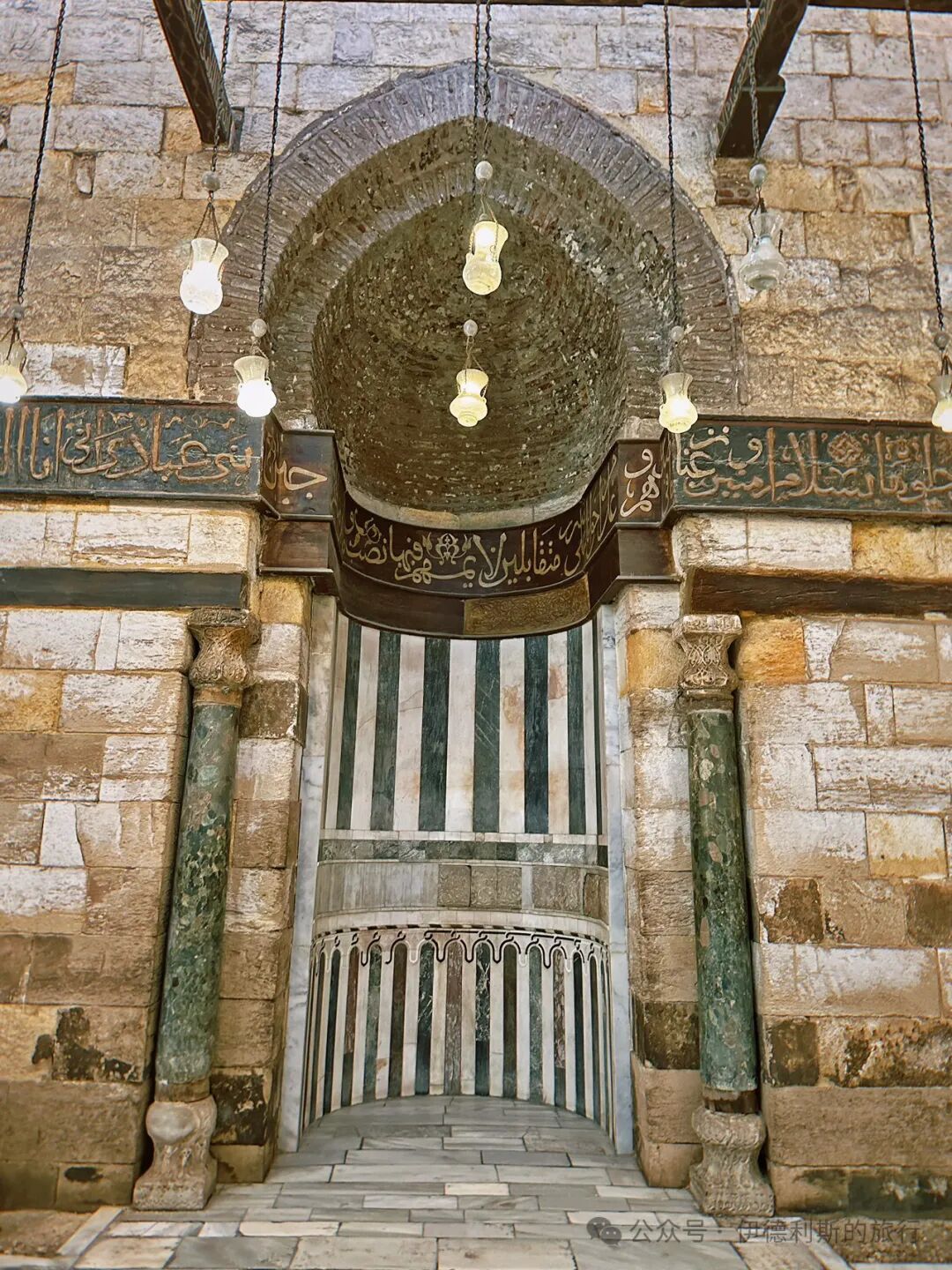
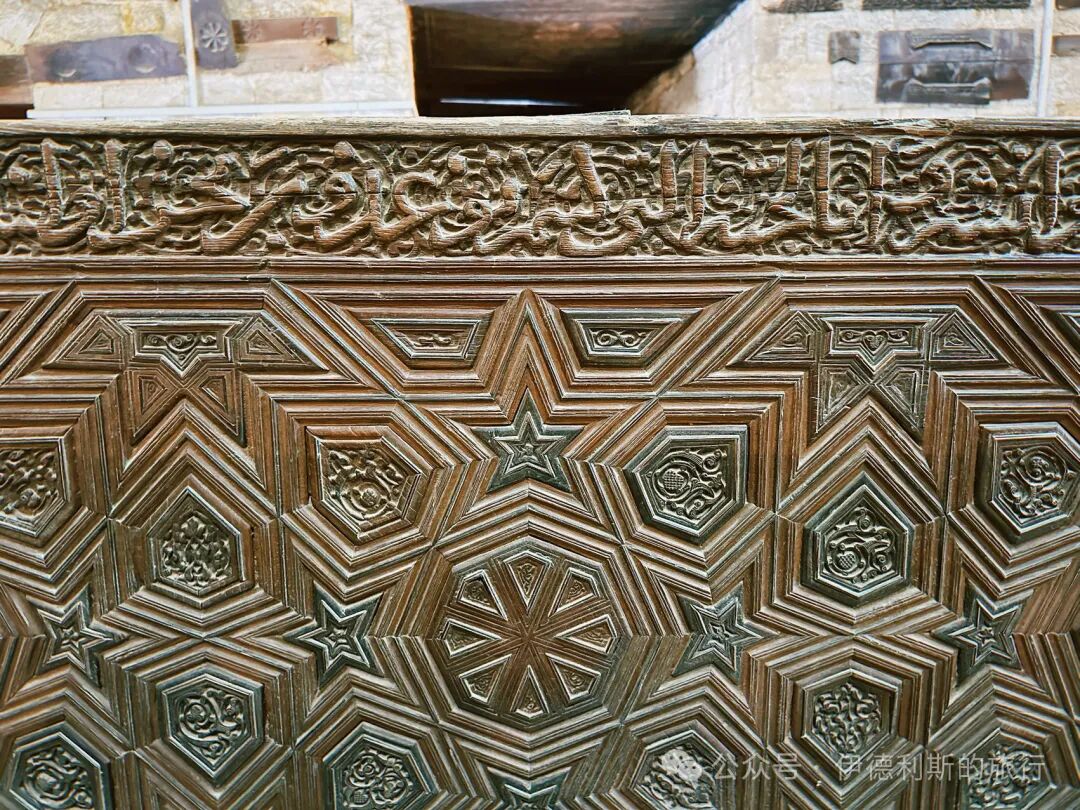
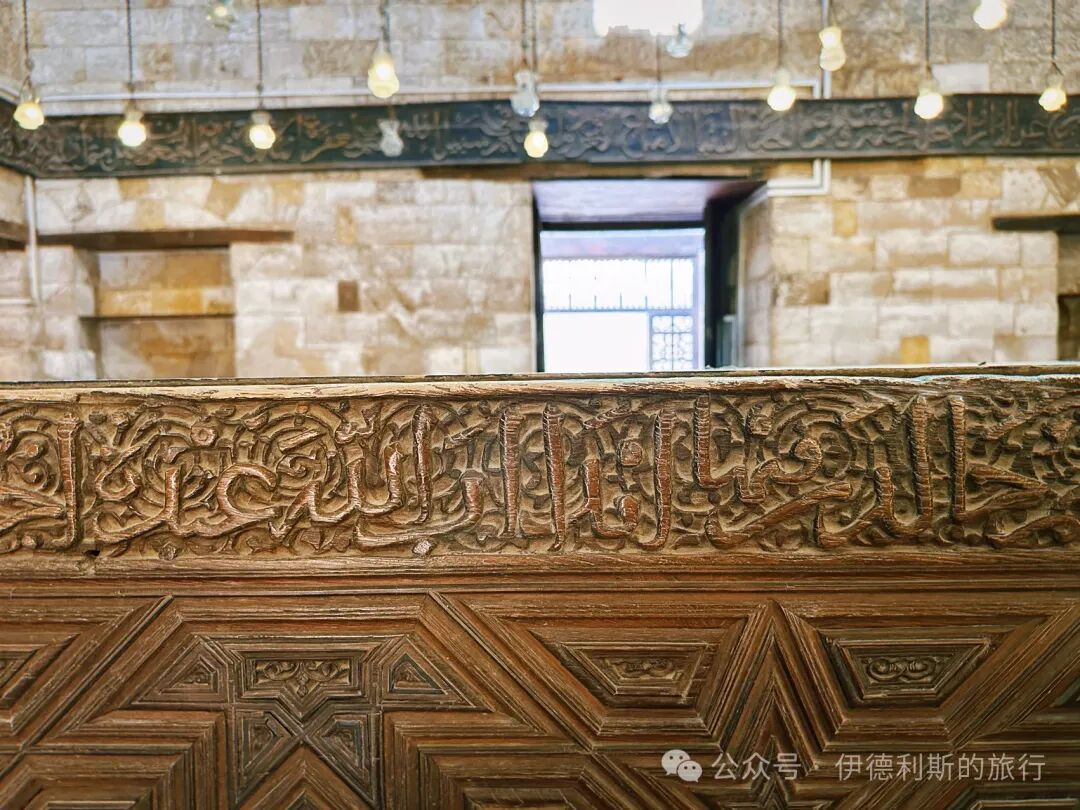
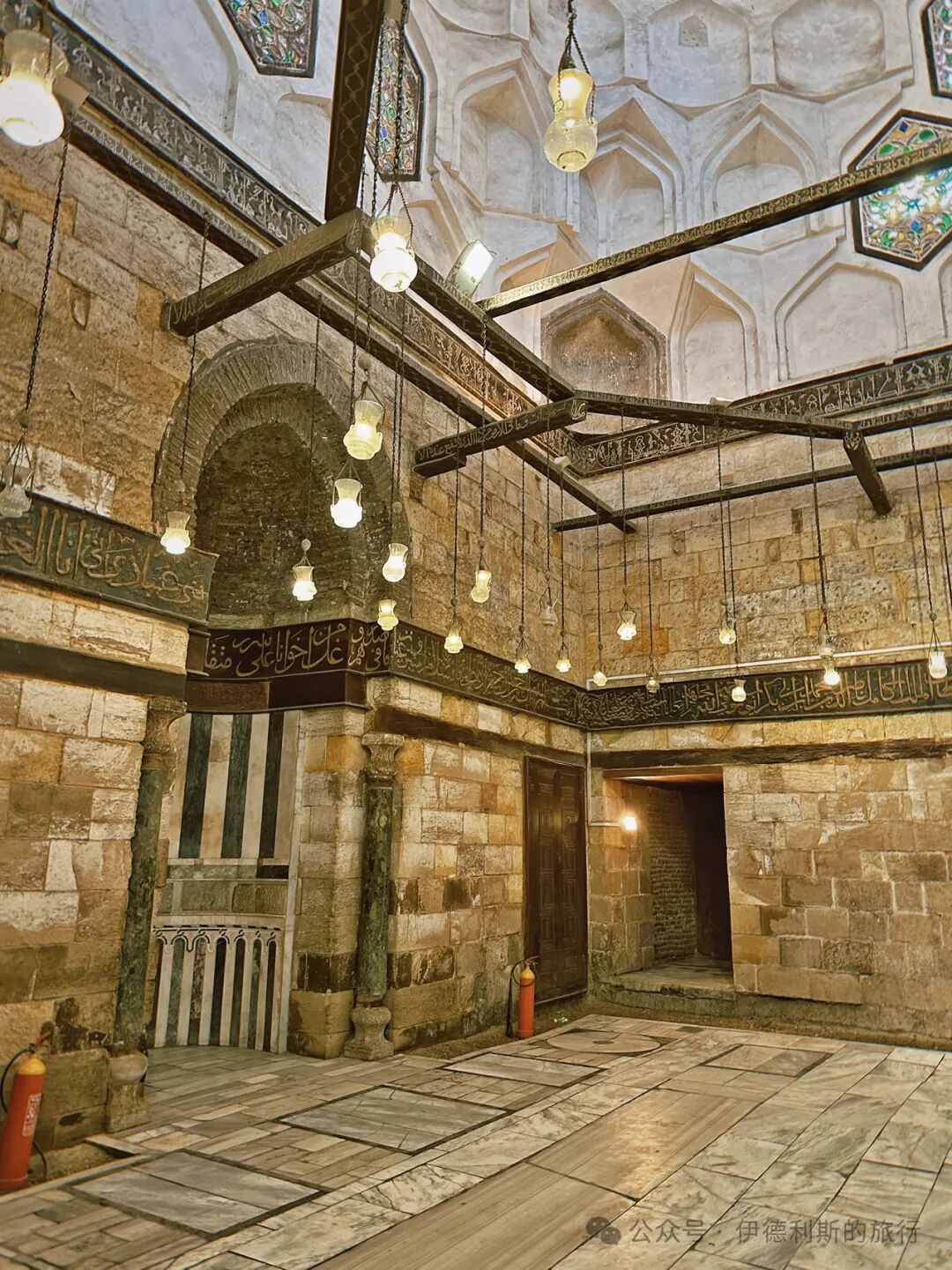
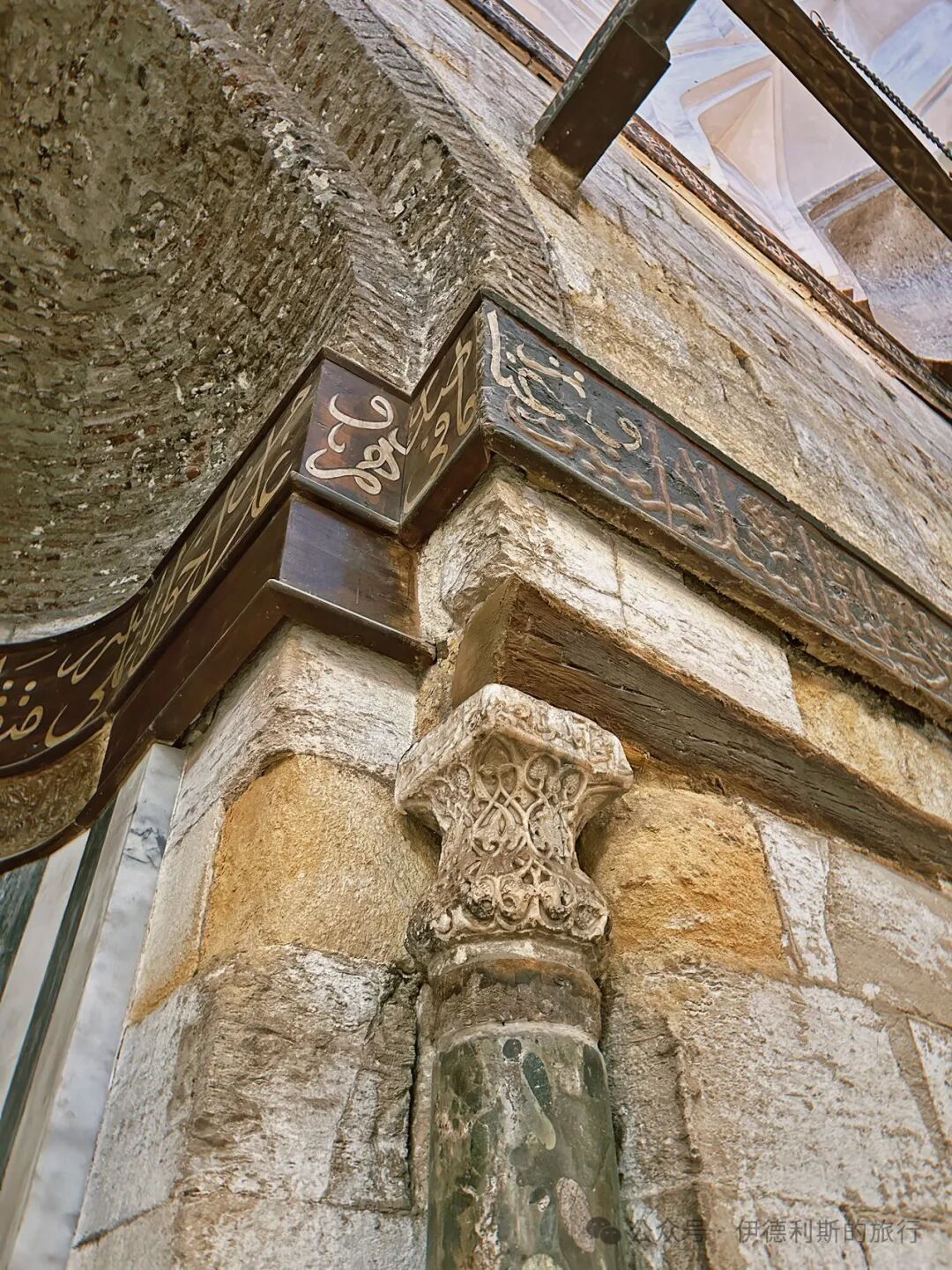
As-Salihia Madrasa: 1243
On the south side of the Sultan Salih Ayyub tomb stands the Salihiyya madrasa, which Salih built in 1242. Known as the 'Castle of Scholars,' the Salihiyya madrasa was the first in Cairo to teach the four major schools of Islamic law: Hanafi, Hanbali, Shafi'i, and Maliki. The north building of the school taught Shafi'i and Maliki law, while the south building taught Hanafi and Hanbali law.
The Salihiyya madrasa was abandoned after the Ottoman Empire conquered Egypt in the early 16th century. Today, most of it is a market, but the main gate and the minaret remain. The Salihiyya madrasa broke the Ayyubid tradition of only building minarets at Friday mosques by adding one to the gate of the school.
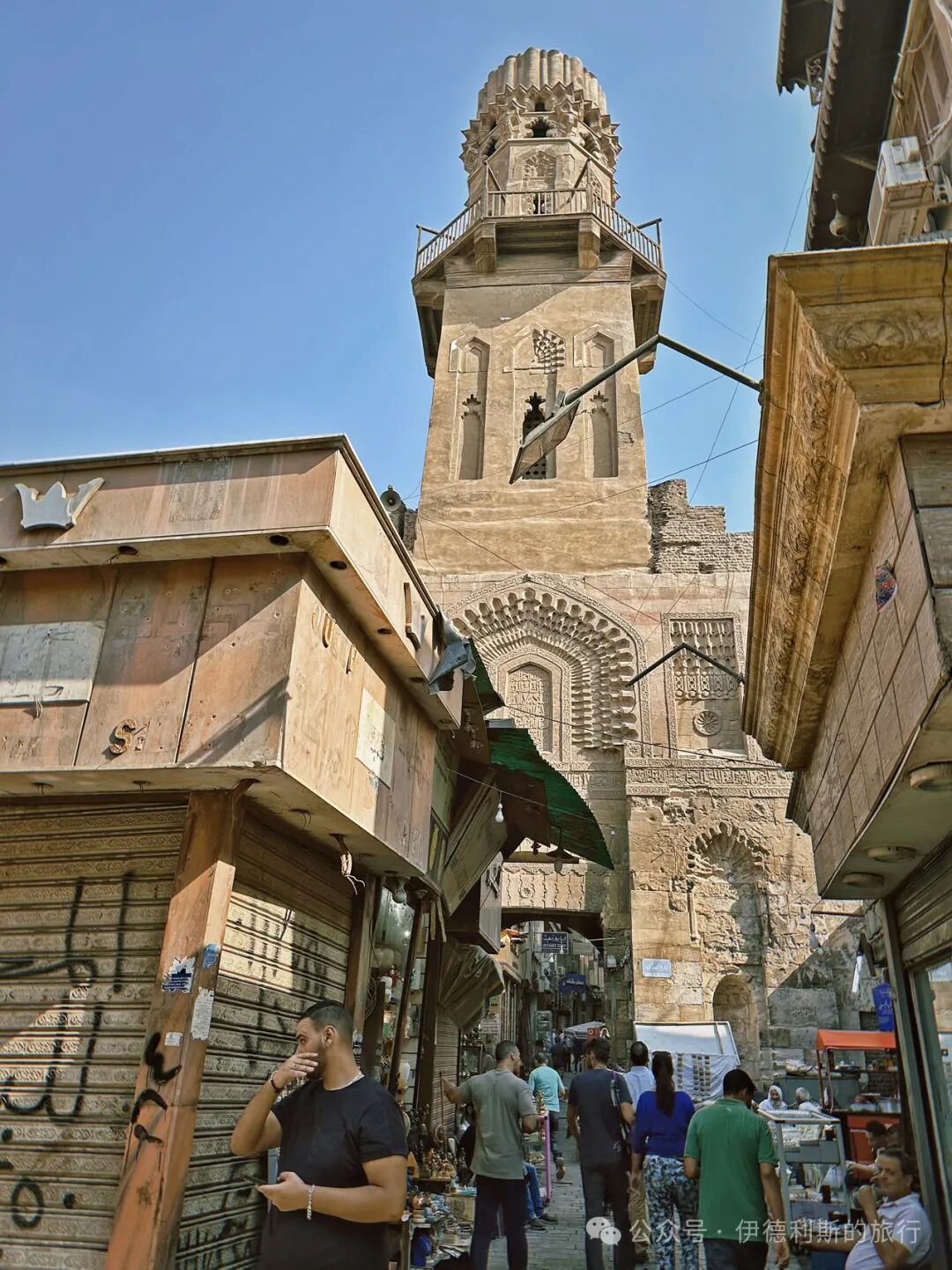
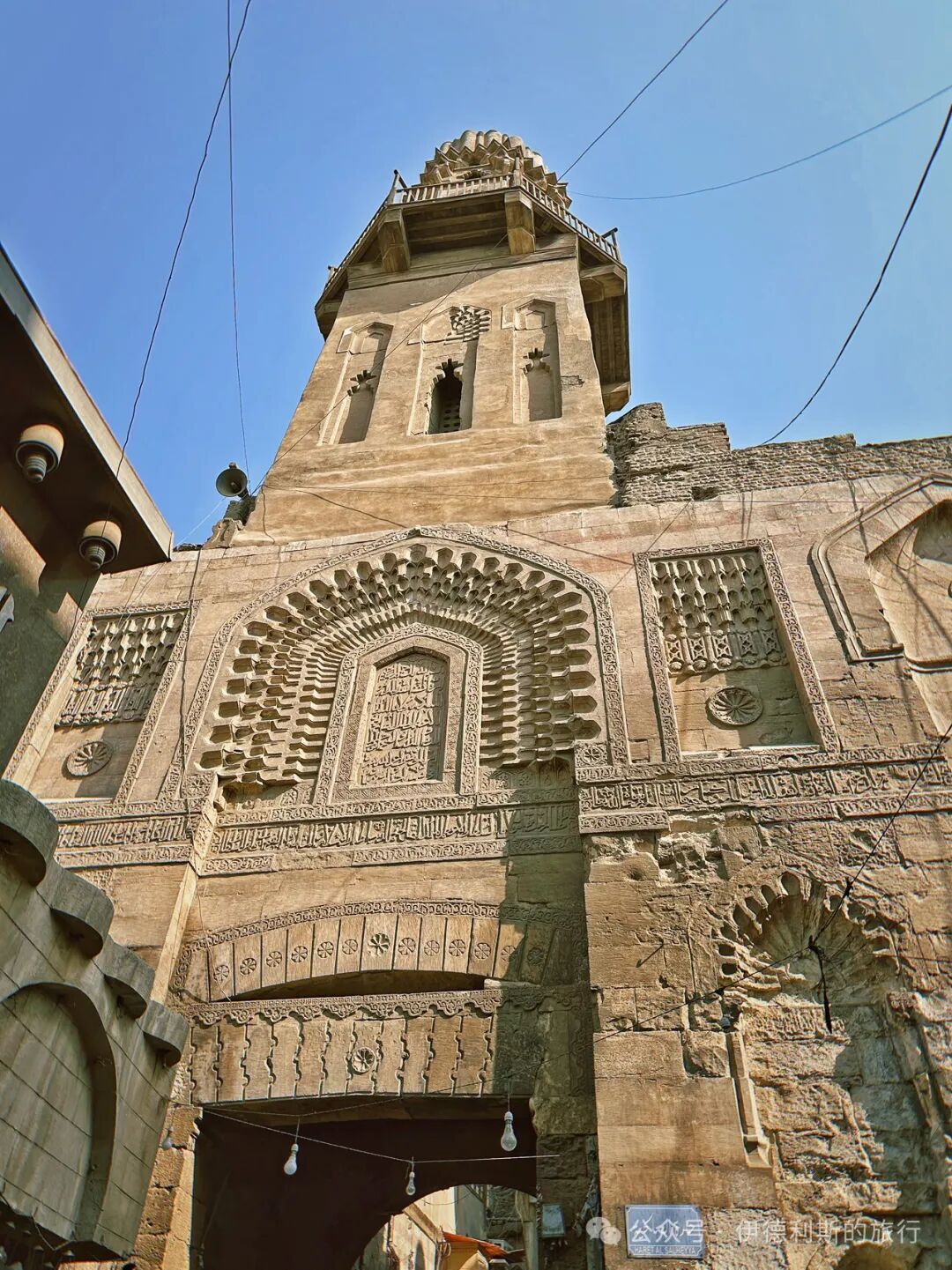
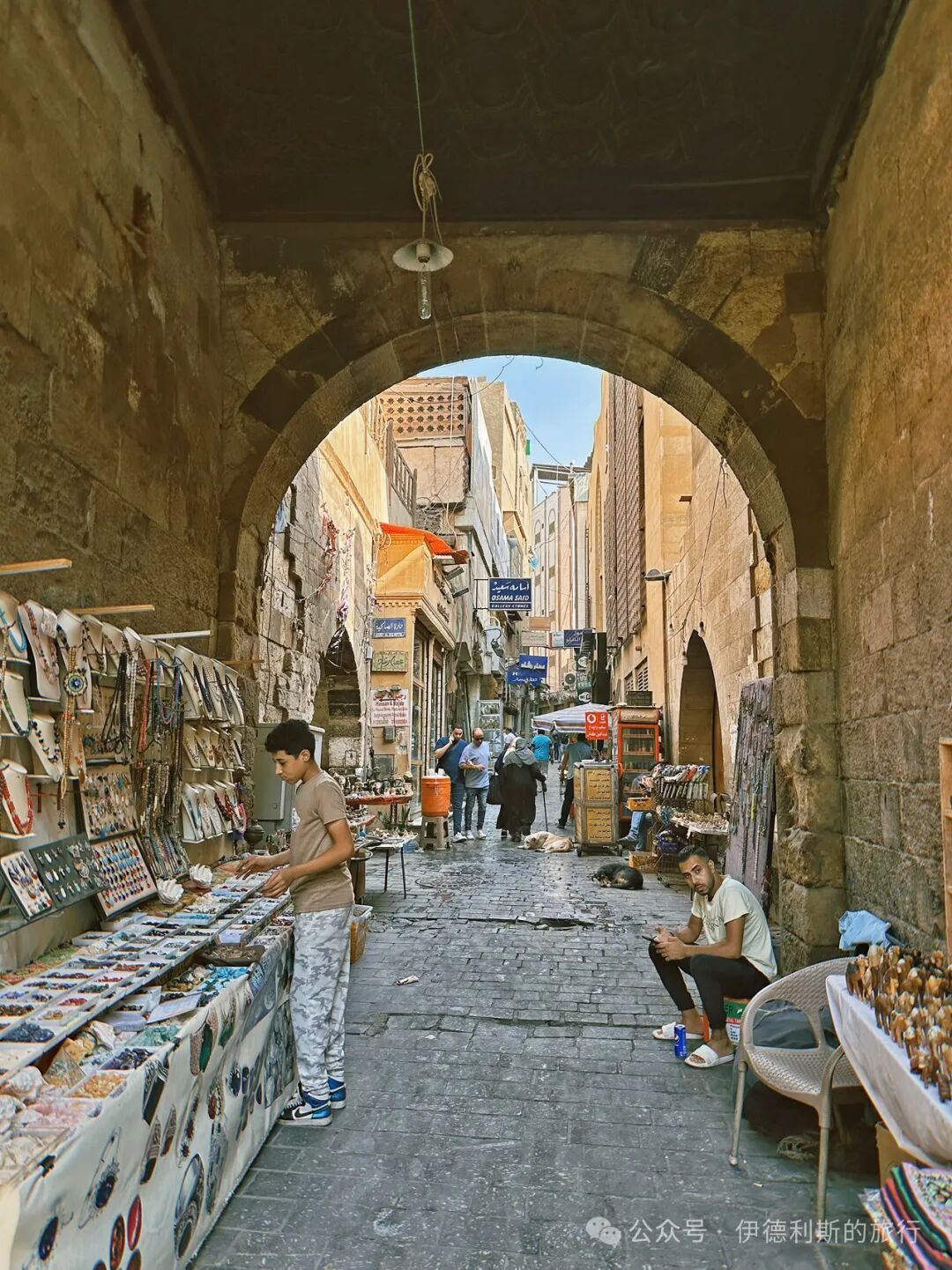
Al-Ashraf Complex: 1424
Continuing south, you will find the Al-Ashraf complex, built in 1424 by the Mamluk Sultan Al-Ashraf Barsbay, who reigned from 1422 to 1438. The entire complex includes a main hall, a school, a tomb, and a prayer hall (daotang), featuring a dome with geometric carvings, which is an early example of decorative dome carving.
Barsbay was once a Mamluk slave of the Mamluk Sultan Barquq, and he later became the tutor for the young Sultan Muhammad. With the support of the governor of Damascus and other emirs, Barsbay deposed the young sultan in 1422 and took the throne as the new sultan.
The 16 years of Barsbay's rule were a time of relative safety and stability for the Mamluk Sultanate, with almost no war. He was very generous to the poor and to Sufis, and he carried out a series of administrative reforms.
Barsbay was known as the "Merchant Sultan" and placed great importance on the role of trade. He took a series of measures to strengthen control over the Mediterranean and the Red Sea, diverted Indian Ocean trade routes through Jeddah, and established state monopolies on sugar and pepper. He attracted merchants by lowering tariffs and monopolized most of the trade from the East, which angered many European powers.
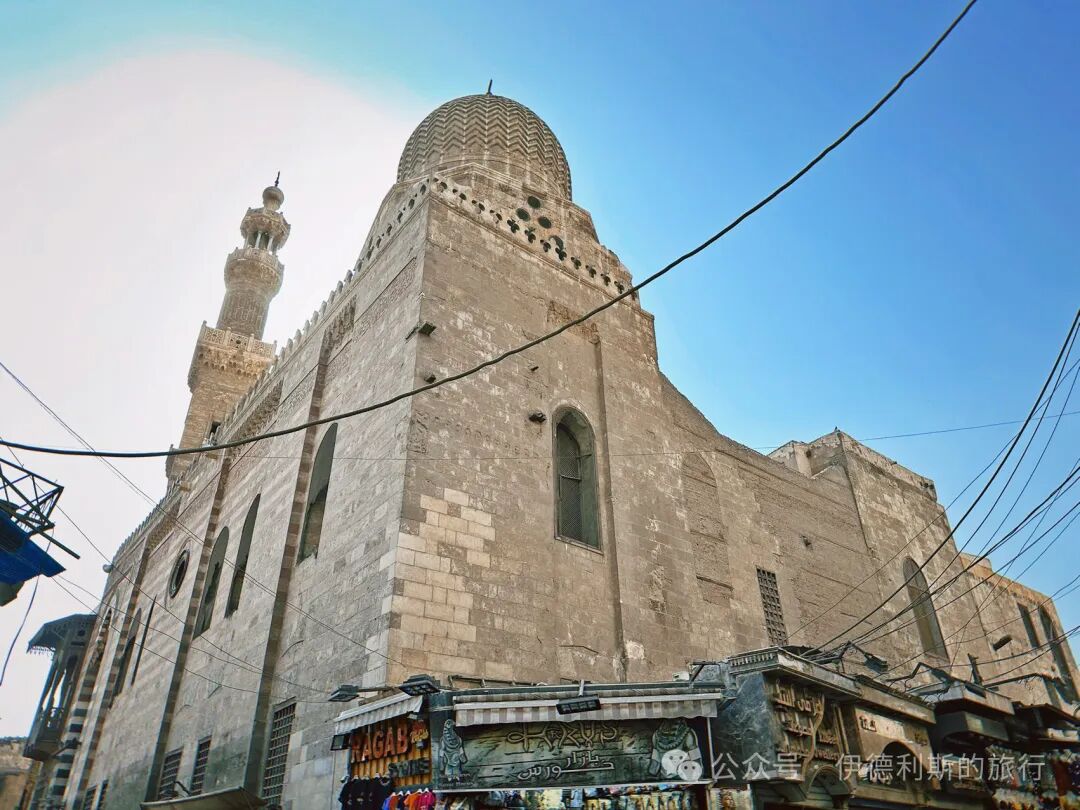
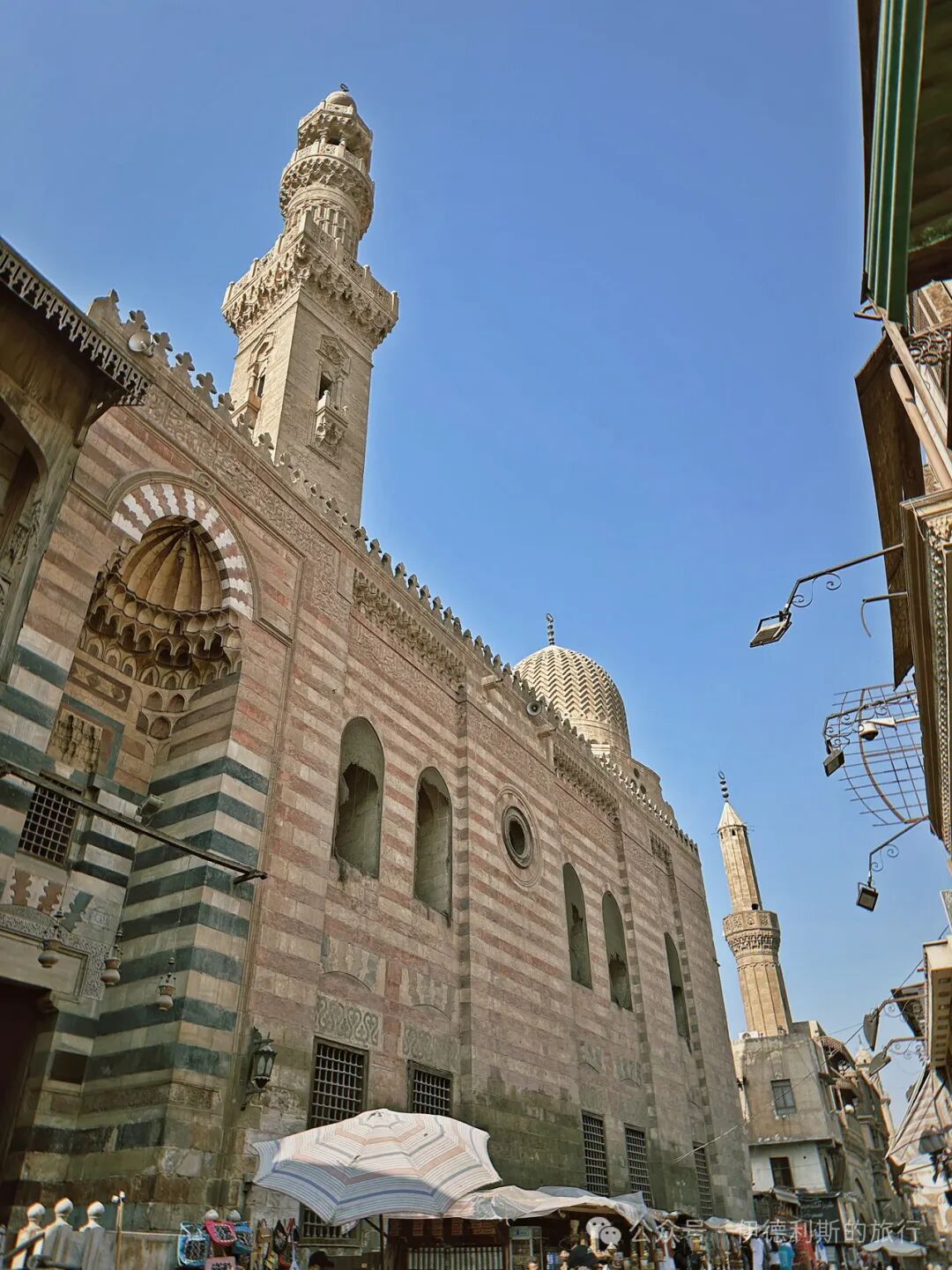
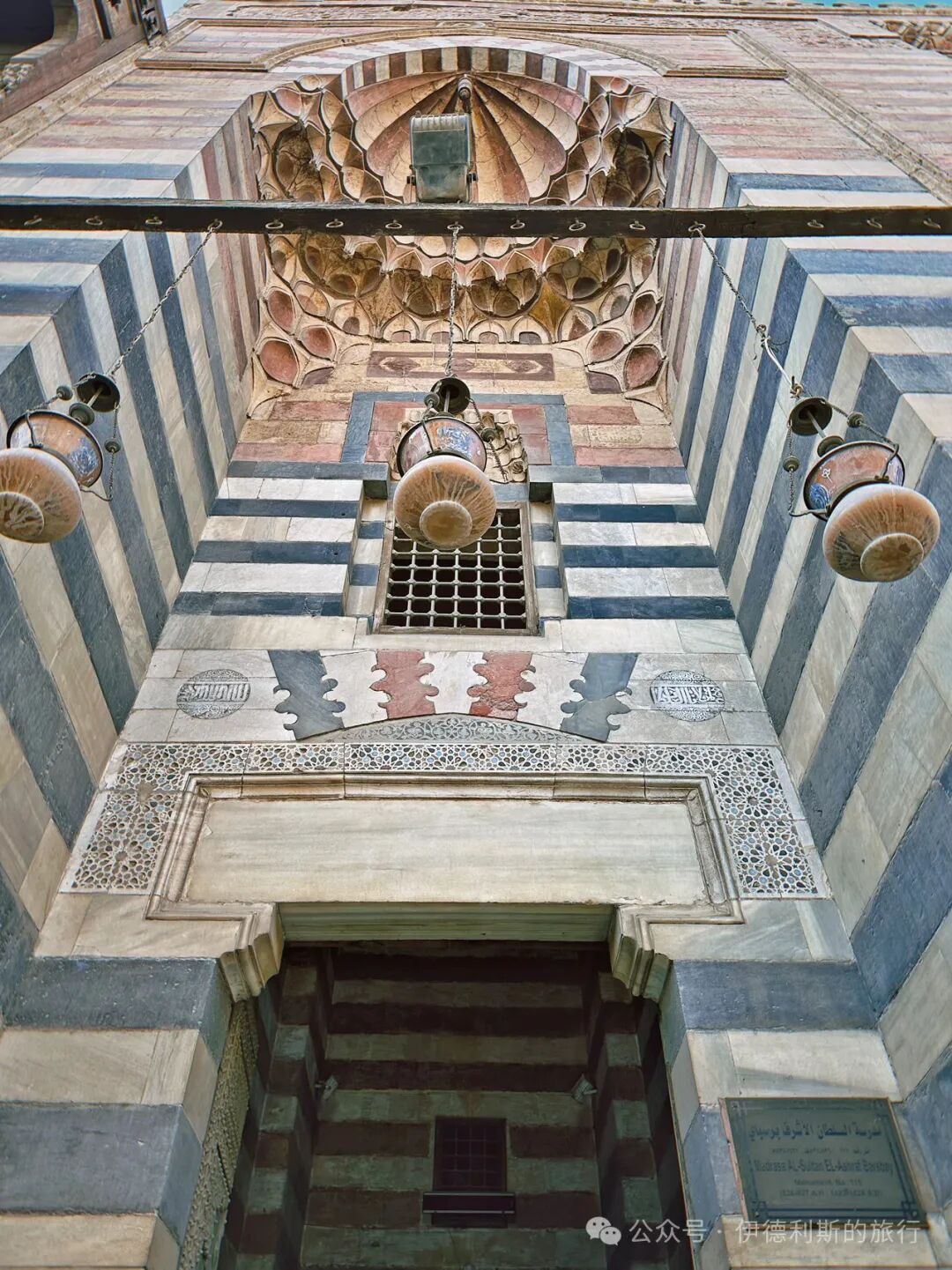
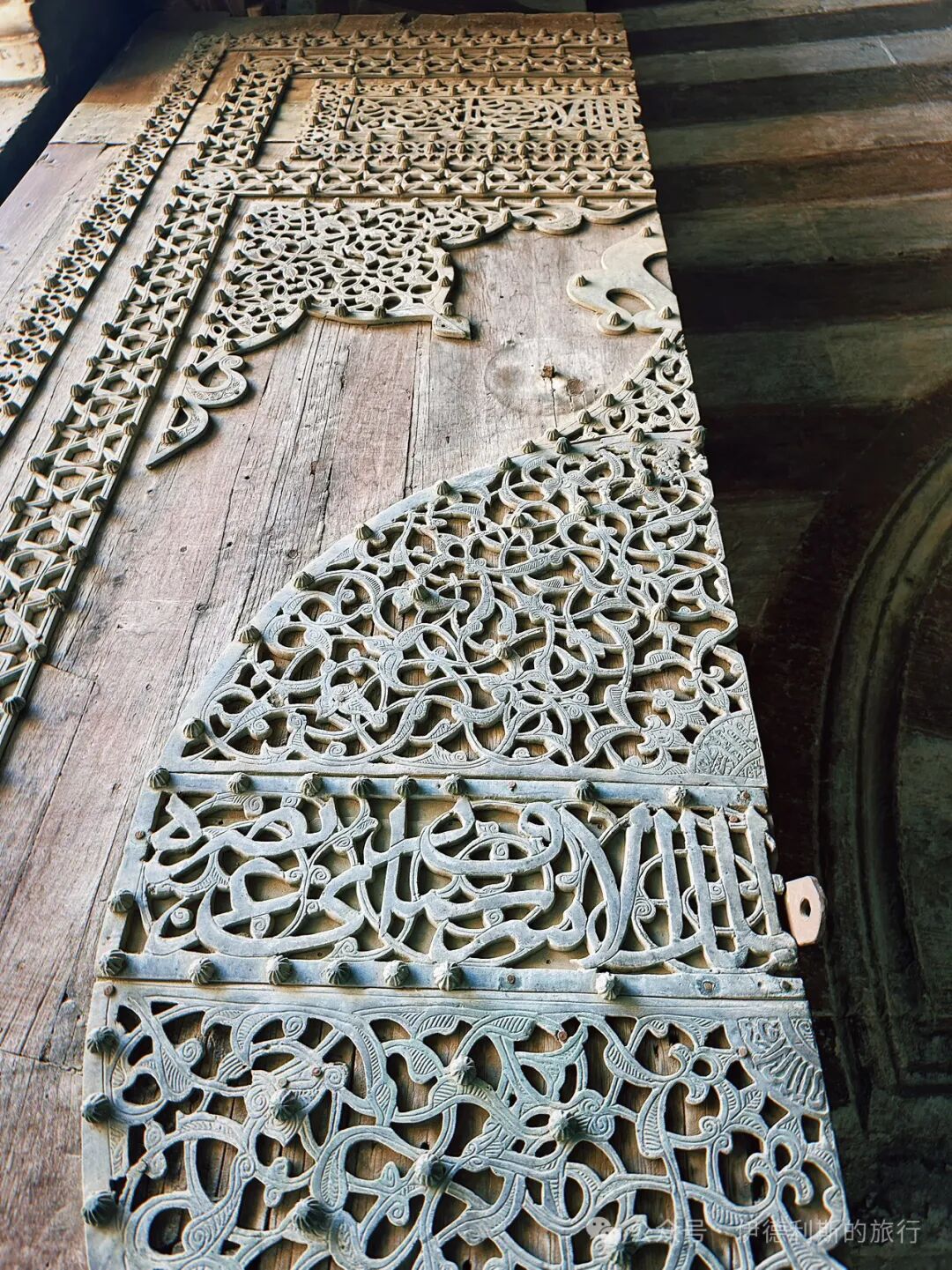
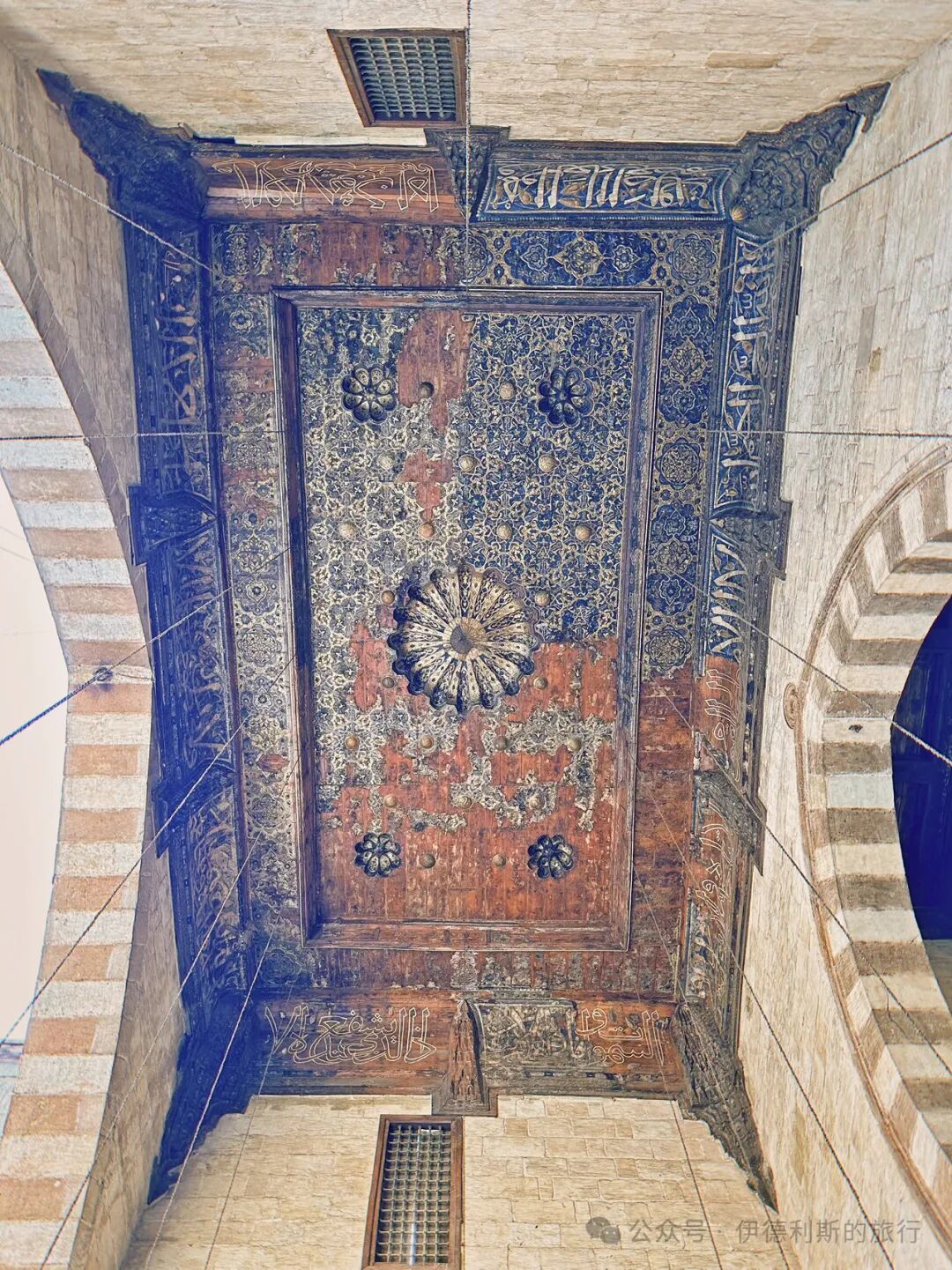
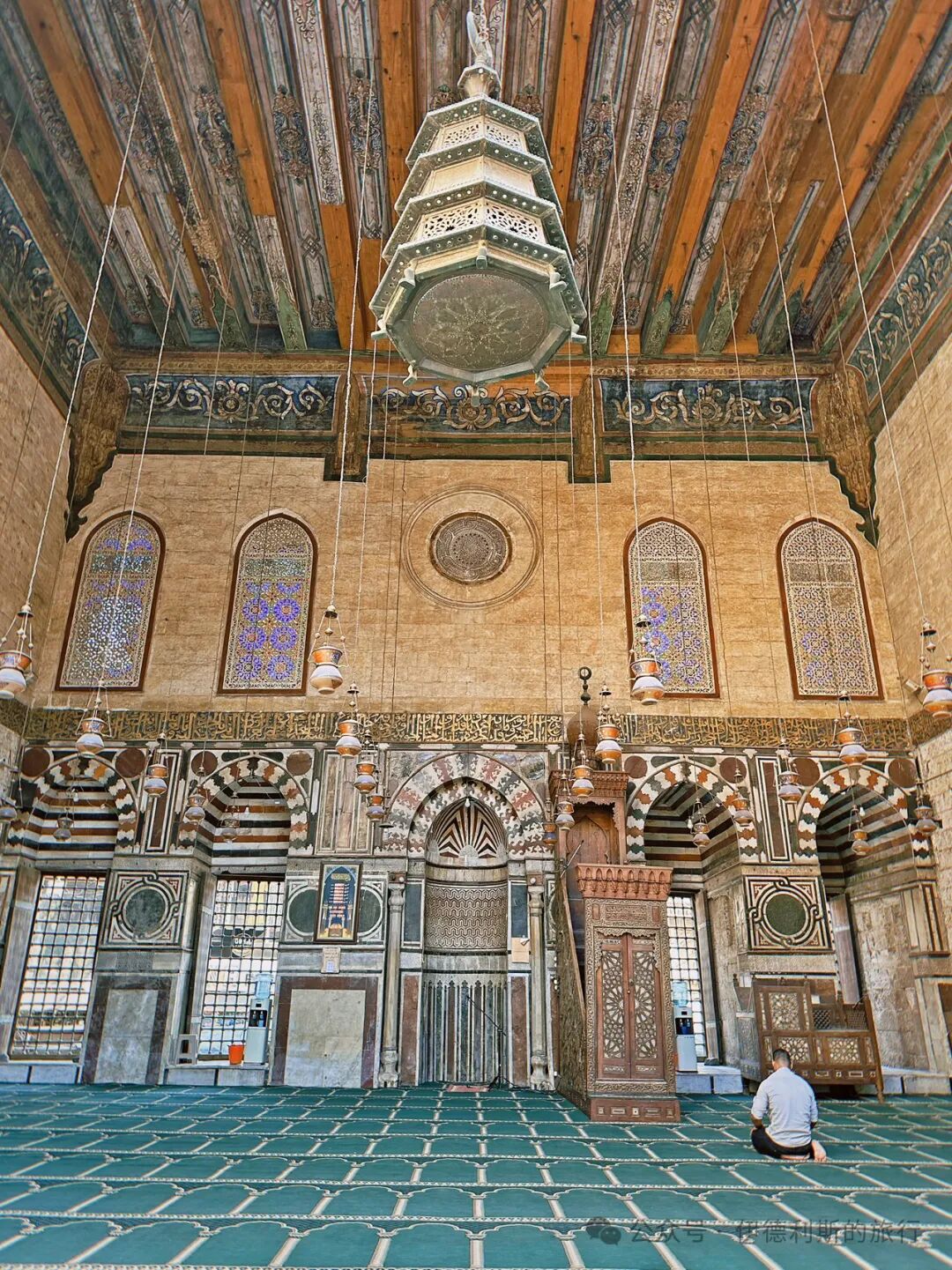
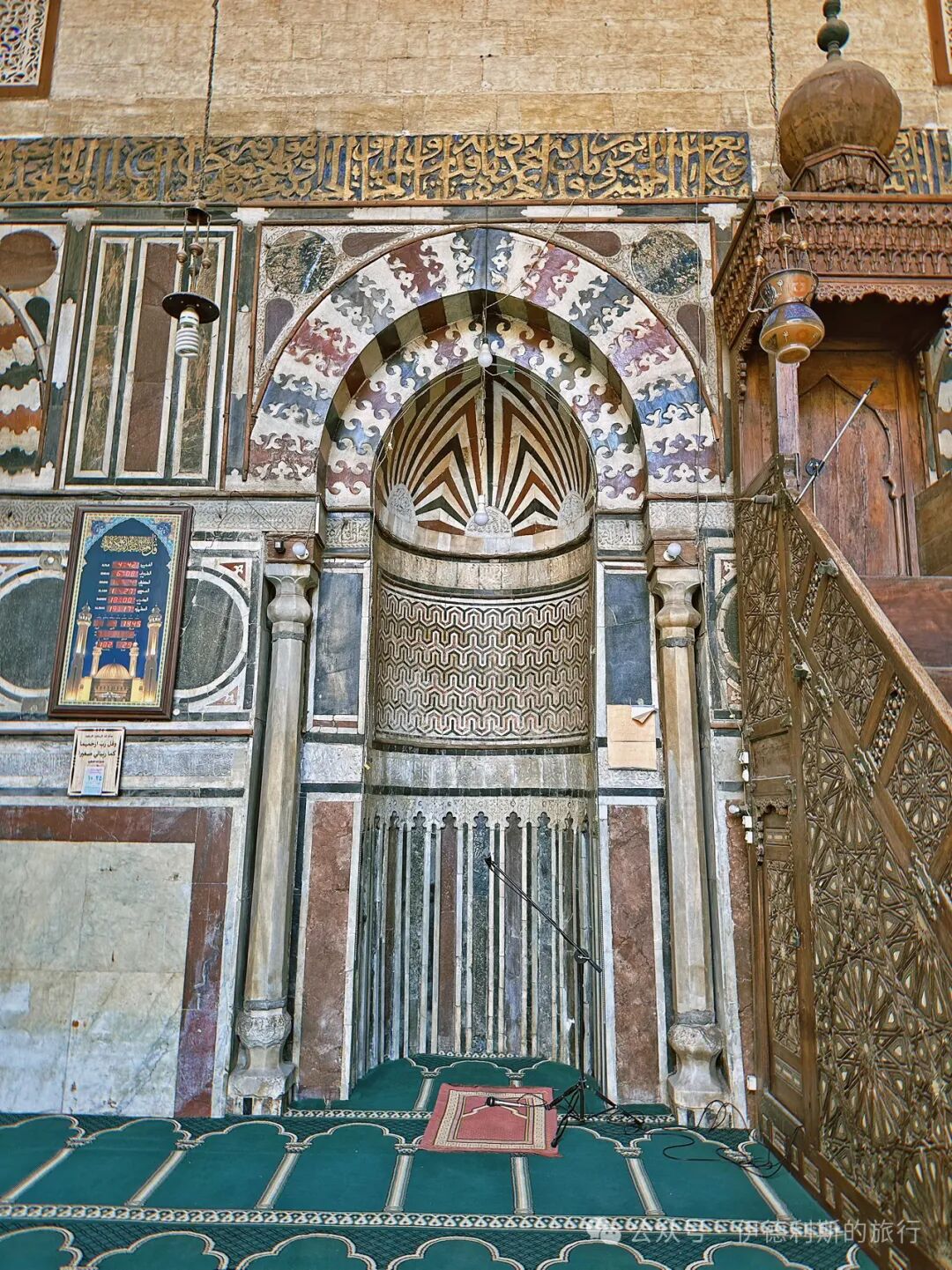
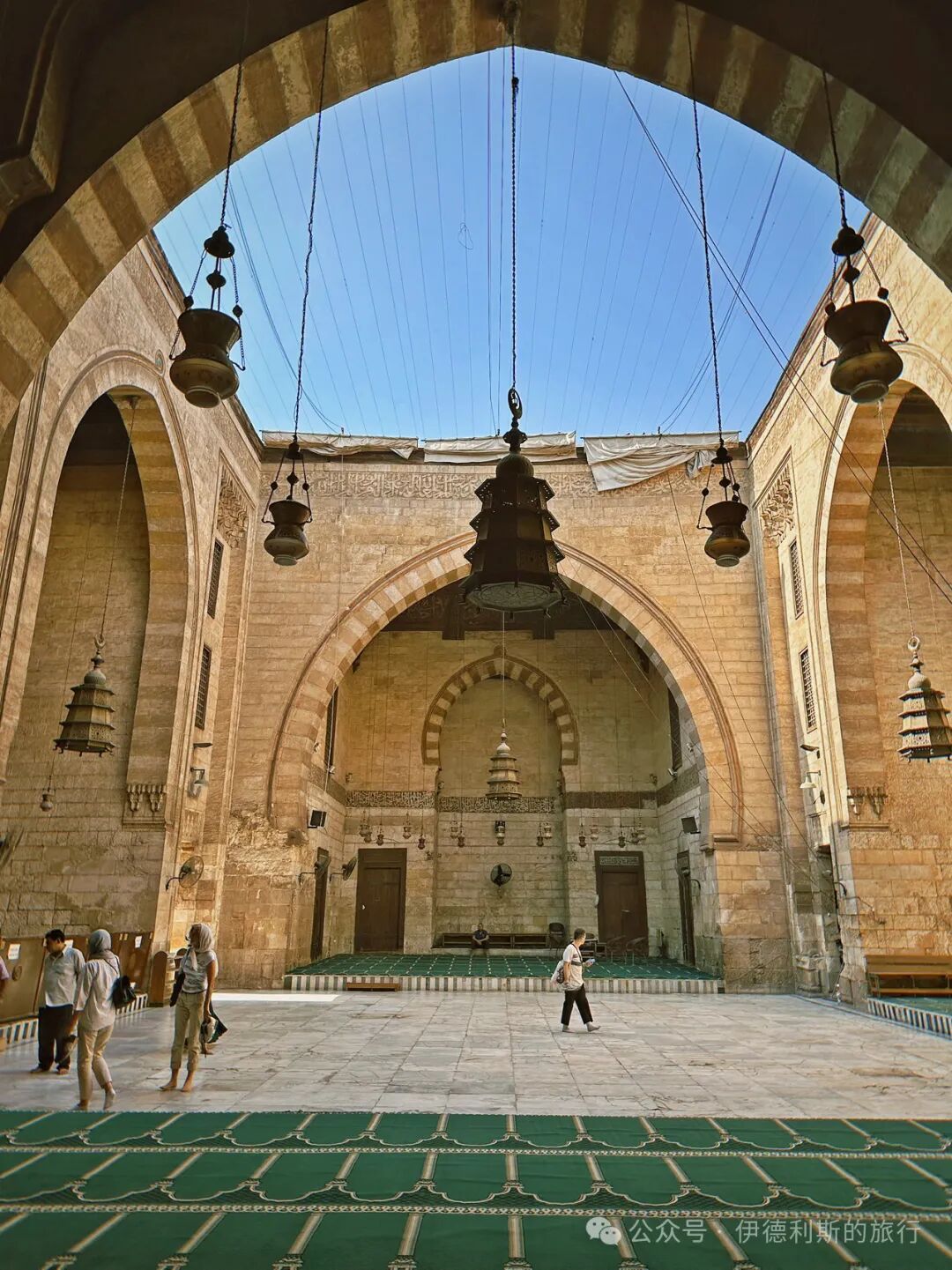
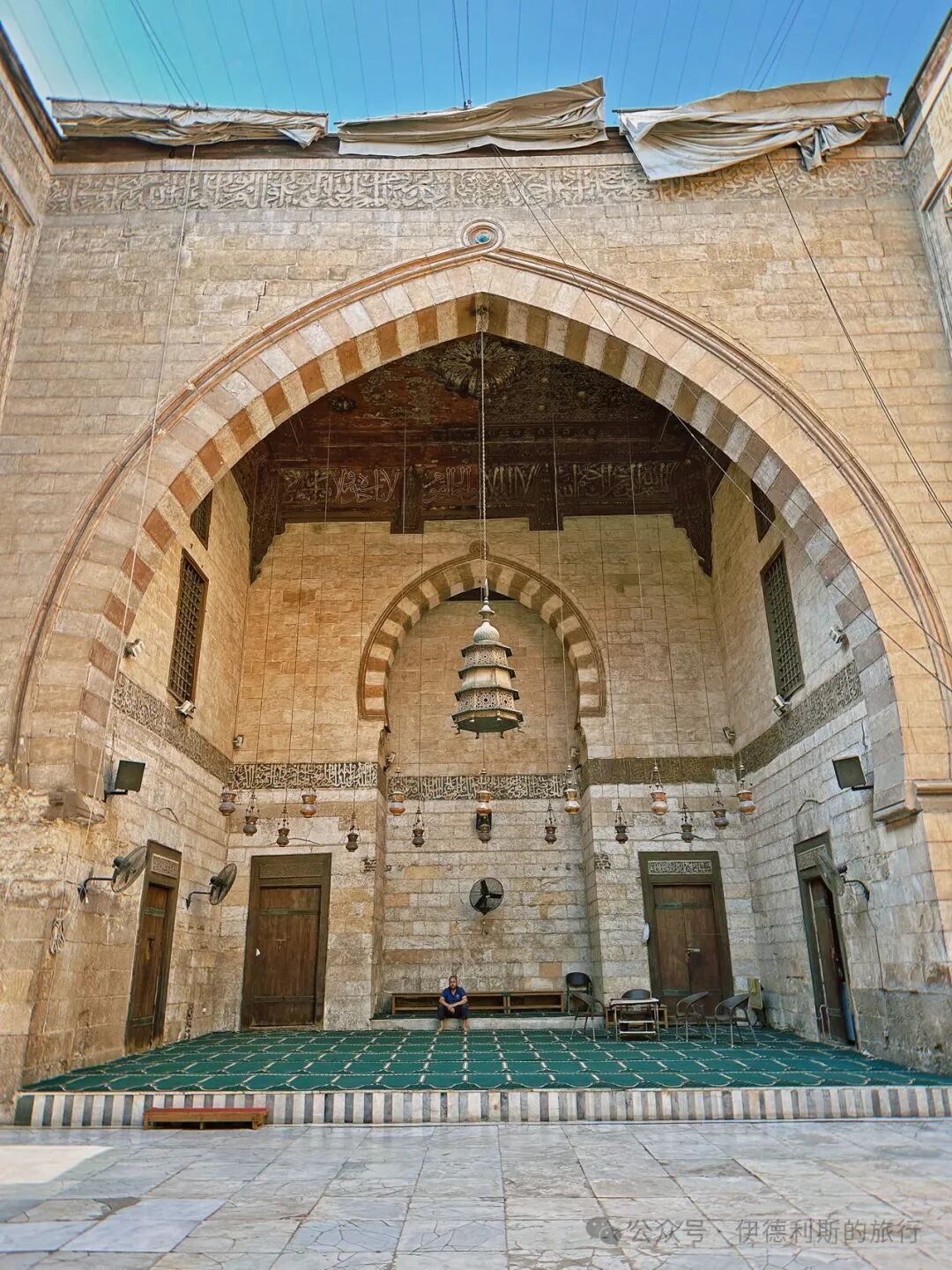
Halal Travel Guide: Old Cairo - North Gate, Mosques and Thousand-Year History
Articles • ali2007fr posted the article • 0 comments • 162 views • 2026-05-19 07:24
Summary: This Old Cairo travel account walks inside the northern gate of the historic city and follows its mosques, streets, gates, and layered Islamic history. It keeps the original place names, dates, buildings, and travel route without adding outside claims.
The history of Cairo as a city goes back over a thousand years. Back in the ancient Roman era, the Romans built the Babylon Fortress in the south of Cairo. After the Arabs took Cairo in 641 AD, they built the city of Fustat to the northeast of the Babylon Fortress. Over the next 300 years, Muslim rulers from different dynasties built several cities near Cairo, but none of them survived. In 969 AD, the Shia Fatimid dynasty conquered Egypt and spent four years building what is now the old city of Cairo. By this count, the old city of Cairo is now 1,055 years old.
The walls of old Cairo were started in 969 AD. They were first made of brick, then expanded with stone during the reign of the Fatimid Caliph al-Mustansir Billah (reigned 1036-1094), and finally finished in 1087. The north gates of the old city, the Gate of Conquest (Bab al-Futuh) and the Gate of Victory (Bab al-Nasr), were both built during this time. In this article, I will take you through the north gate into old Cairo to experience its thousand-year history.
Gate of Conquest and Gate of Conquest: 1087
The Gate of Conquest is 22 meters high and has two round towers. The stone carving details may have been influenced by Syrian or Byzantine craftsmen. Above the arch, the surface is covered in diamond patterns containing rosettes and crosses. The parts of the towers that hang outward are carved with ram heads, which are symbols of Mars in the zodiac. Inside the gate, the dome and the rectangular space connect through a pendentive, which is a typical feature of Byzantine architecture.
The Gate of Victory is on the east side of the Gate of Conquest. Unlike the round towers of the Gate of Conquest, the towers of the Gate of Victory are square and contain guard rooms and living areas. There are shield carvings above the gate, which symbolize protecting the city from invasion. The shield features an Arabic inscription from its 1087 reconstruction, along with a Shia version of the Shahada that mentions Ali as the friend (wali) of Allah.
Al-Hakim Mosque: 1013.
Right next to the northern wall of Old Cairo stands the Al-Hakim Mosque, named after the sixth Fatimid caliph and the 16th imam of the Ismaili branch of Shia Islam, al-Hakim bi-Amr Allah (reigned 996-1021). The mosque was started in 990 by the fifth Fatimid caliph, al-Aziz Billah (reigned 975-996), and finished in 1013 by Caliph al-Hakim, making it 1,010 years old today.
The Al-Hakim Mosque was originally outside the walls of Cairo, but it was brought inside the city after the walls were rebuilt in 1087. The mosque's architectural style is similar to the Al-Azhar Mosque, but it is twice as large. The most striking features inside are the two minarets built on square brick bases. When the minarets were first built in 1003, they were separate structures, and they were only encased in brick in 1010. Some scholars suggest this might be linked to the ruler of Mecca rejecting Fatimid authority in 1010, which weakened the dynasty's power. The outer wall of the southern brick base has marble Kufic Arabic inscriptions from the Fatimid period, while the Kufic inscriptions on the northern base were moved to the outside of the city wall when it was incorporated into the northern wall of Old Cairo in 1087.
During the Crusades, the mosque was used as a prison by the Franks and later as a stable by Saladin. It was renovated during the Mamluk period in the 14th century but later fell into ruins for a long time. The mosque was renovated in 1808, and a small, colorful marble mihrab added during that time still survives today.
In the 20th century, the mosque served as a school until 1980, when the Dawoodi Bohra branch of Shia Islam carried out a massive reconstruction and renovation using white marble. Inside the main hall after the reconstruction, only the original stucco carvings, wooden beams, and scriptures were preserved. This restoration caused a lack of authenticity that sparked criticism and widespread discussion among scholars. In 2017, the Dawoodi Bohra community and the Egyptian Ministry of Tourism and Antiquities launched a new round of restoration, and it did not reopen until February 2023.
Caravanserai of Qaitbay: 1481
Enter the old city of Cairo through the Gate of Victory (Bab al-Futuh) onto El-Gamaleya Street. The first thing you see is the caravanserai (wikala) of Sultan Qaitbay, which is currently under renovation. It was built in 1481 by Sultan Qaitbay (reigned 1468-1496) of the Mamluk dynasty. Qaitbay was one of the Mamluk sultans who sponsored the most architecture. Although the Mamluk dynasty was in decline, the situation remained relatively stable under his rule, and trade flourished.
Like other Mamluk caravanserais (wikala), this place not only provided short-term housing for passing caravans but also offered long-term rental apartment units (rab). It was used as apartments for hundreds of years until the Egyptian Ministry of Antiquities began renovations in 2015. Work is still ongoing, and you can still see the wooden lattice windows (mashrabiya) facing the street.
Gate of the Caravanserai of Qawsun: 1341
Continuing south, you can see the remains of the gate of the caravanserai (wikala) of Emir Qawsun. This inn was built in 1341 by the famous Mamluk Emir Qawsun (1302-1342). It was used by soap and coffee merchants from Palestine in the 17th and 18th centuries, so it is also called the Soap Inn. The inn was demolished in 1960 to be rebuilt as a school, and only the gate remains. Above the gate is a stone carving of a pair of cups, because Emir Qawsun once served as the Sultan's cupbearer (saqi).
Qawsun was born on the Kipchak steppe under the rule of the Golden Horde and started out as a merchant. In 1320, Princess Tulunbay of the Golden Horde married the Mamluk Sultan of Egypt. Qawsun came to Cairo as part of her entourage and stayed in Cairo to sell leather goods. Qawsun was highly valued by the Sultan in Cairo and became his personal attendant. He then rose quickly through the ranks and married the Sultan's daughter. After the old Sultan died in 1341, Qawsun became the regent and held actual power over the Mamluk dynasty. However, he was defeated by political rivals a few months later and was killed in prison.
Continuing south along El-Gamaleya Street, you can see several more historical buildings.
Khanqah of Baybars II: 1310
On the east side of the middle section of El-Gamaleya Street stands the Khanqah of Baybars II, built in 1310. Baybars II was the 12th Sultan of the Mamluk dynasty and reigned for only one year, from 1309 to 1310. Baybars II served as vice-sultan from 1299 to 1309 and led the Mamluk Sultanate against the Ilkhanate in the Battle of Marj al-Saffar in Syria in 1303. This battle resulted in the total defeat of the Mongol army that had marched west into Syria. People say the Sultan led his captives from the Gate of Victory along El-Gamaleya Street into the old city of Cairo. Singers and dancers from all over came to celebrate, and the city was decorated with lights for days of festivities.
The exquisite Islamic geometric patterns (Girih) on the gate of the Khanqah of Baybars II form complex designs through overlapping and interlacing.
It is very interesting that the threshold of the gate is made of stone blocks carved with ancient Egyptian hieroglyphs, which is the first time I have ever seen this.
Bayt al-Suhaymi: 1648
Walking west from the Khanqah of Baybars II, you can see the Bayt al-Suhaymi on Darb al-Asfar Street. Built in 1648, it is the best-preserved private residence from the Ottoman period in old Cairo and is now open as a tourist site.
This residence is built around a courtyard (Sahn) with a small garden planted with palm trees in the center. You can see beautiful wooden lattice windows (Mashrabiya) in the courtyard. The south side of the mansion is the original 1648 structure, while the north side was expanded in 1797. It is now named after its last owner, Sheikh Muhammad Amin al-Suhaymi, who was a sheikh at Al-Azhar Mosque. In 1930, King Fuad I of Egypt provided funds to purchase the mansion and placed it under the management of the Committee for the Preservation of Arab Art Monuments.
The ornate ceiling decorations of Bayt al-Suhaymi.
The wood-carved furniture and colorful marble floors inside Bayt al-Suhaymi.
Mosque-Sabil of Sulayman Agha al-Silahdar: 1839
Continuing west back to the main road of old Cairo, Al-Mu'izz Street, the first thing you see is the Mosque-Sabil of Sulayman Agha al-Silahdar, built in 1839. This fountain has a fancy Ottoman Baroque facade with floral patterns from the European Renaissance. The fountain is made of marble and was used to keep the water cool during the summer. Next to the fountain is a primary school (kuttab) that was once used to teach children how to read, write, and recite scripture. Here, we can also enter the huge underground water reservoir of the fountain, which is rarely seen in typical fountains.
Aqmar Mosque: 1125-6
Walking south along Al-Muizz Street, we stop at the famous Fatimid-era Aqmar Mosque. The Aqmar Mosque was built in 1125-6 by order of the Fatimid vizier Al-Ma'mun al-Bata'ihi. It sits at the northeast corner of the former Eastern Fatimid Palace, right next to the palace grounds.
The Aqmar Mosque holds a groundbreaking place in Egyptian architectural history. It is the first mosque where the entrance is flush with the street rather than aligned with the qibla wall, making it the first mosque planned according to Cairo's street layout. It is also the first mosque to feature complex stone carvings. The facade of the Aqmar Mosque is very luxurious. Above the entrance is a large medallion surrounded by a grille, with the names of the Prophet and Ali in the center and verses written around them. This type of decoration is unique in Cairo.
At the top of the left facade, there are carvings of a door and a window. The window on the left symbolizes the ceremonial grille that the Fatimids took back from the palace of their rivals, the Abbasids in Baghdad, serving as a symbol of victory. Inside the window is a lamp and a six-pointed star, based on the Shia hadith: 'The stars are a promise to the world, and it will not be submerged.' Below the window, there is a carving of a plant growing out of a flower pot, which comes from the Prophet's reference to Hasan and Husayn as 'my two aromatic herbs in the world.' The door in the upper right corner comes from the famous Shia hadith: 'I am the city of knowledge, and Ali is its gate.'
Because it was near the Fatimid palace, the Aqmar Mosque did not originally have a minaret. One was not added until the end of the 14th century by the Mamluk dynasty, and the cylindrical top was rebuilt during the Ottoman era.
In 1993, the Dawoodi Bohra branch of the Shia community carried out a large-scale renovation of the Aqmar Mosque. Most of the historical elements inside the main hall were not preserved, which drew criticism.
Madrasa of Emir Jamal al-Din al-Ustadar: 1407
Turn back into al-Gamaleya Street along the alley south of the Aqmar Mosque to see the Madrasa of Amir Jamal al-Din al-Ustadar, built in 1407 by the Mamluk general Amir Jamal al-Din al-Ustadar. Jamal al-Din built many structures in Cairo, and al-Gamaleya Street is named after him.
This is a classic cruciform madrasa structure with an open courtyard in the center and an iwan (arched hall) on each of the four sides, each used to teach one of the four schools of Islamic jurisprudence. The decoration inside the main hall is very ornate, as People say Jamal al-Din modeled it after Mamluk palace designs and invested a large amount of money and materials. Jamal al-Din was executed just four years after the mosque was completed. The Sultan wanted to demolish the site, but a judge (Qadi) stopped him, and in the end, only Jamal al-Din's name was removed.
After the Ottoman Empire conquered Istanbul in 1517, many marble slabs from the inner walls of the madrasa were taken to Istanbul. The building was damaged again in the 1992 earthquake and was not fully restored until 2002.
Dhu al-Fiqar Fountain-Primary School (Sabil-Kuttab): 1673
Opposite the Madrasa of Amir Jamal al-Din al-Ustadar is the Ottoman-era Dhu al-Fiqar Sabil-Kuttab, built in 1673 by Dhu al-Fiqar Katkhuda Mustahfizan and his brother Muhammad. This Sabil-Kuttab consists of two prominent wooden awnings, and the caravanserai (wikala) behind it was once a center for the coffee trade in 18th-century Cairo.
Maq’ad Mamay al-Sayfi Palace: 1496
Continue south to the Maq’ad Mamay al-Sayfi Palace on Beet Al Qadi Street, built in 1496 by the Mamluk general Sayf al-Din Mamay ibn Khadad, who served as a Mamluk diplomat to the Ottoman Empire in the early 1490s.
During the Ottoman period, this place served as a high court and the residence of judges, so it is also called Bayt al-Qadi. In the late 19th century, Egypt's ruler Isma'il Pasha (reigned 1863-79) carried out urban renewal in Cairo, and most of the palace was demolished, leaving only a large house used for summer retreats. The house consists of an upper pavilion and a lower storage room. The lotus capitals of the pavilion are the only example in Islamic architecture in Cairo that directly uses architectural forms from the ancient Egyptian pharaonic era. The interior of the pavilion has complex decorations and calligraphy, but unfortunately, it was not open when we visited.
Abd al-Rahman Katkhuda Sabil-Kuttab: 1744
Walk south from the Aqmar Mosque to see the Sabil-Kuttab of Abd al-Rahman Katkhuda, a fountain-school built in 1744 during the Ottoman era. It is a landmark building on Al-Muizz Street, the main road in Old Cairo. During the Mamluk and Ottoman dynasties, these fountain-schools were very common in Cairo. The ground floor fountain (sabil) provided free drinking water to passersby, while the second floor school (kuttab) taught children how to read and write.
Although this fountain-school was built in the Mamluk style, it incorporates many Ottoman architectural elements. The builder, Abd al-Rahman Katkhuda, was a high-ranking Mamluk emir officer known for his noble lifestyle and patronage of the arts. He renovated or built 33 structures in Cairo.
Across from the Khanqah of Baybars II stands the Qitas Bey fountain-school (sabil-kuttab), built in 1630 during the Ottoman period. In the Mamluk and Ottoman eras, most fountain-schools in the old city of Egypt were built on street corners.
Bashtak Palace: 1334-1339.
Southeast of the Sabil-Kuttab of Abd al-Rahman Katkhuda is the Mamluk-era Bashtak Palace (Qasr Bashtak), built between 1334 and 1339 by the Mamluk emir and general Sayf al-Din Bashtak al-Nasiri. Bashtak was a powerful Mamluk emir who married the daughter of a Mamluk sultan and held important positions in the royal court. He chose a section of the former Fatimid eastern palace to build his own palace and stables, which became a model of Mamluk architecture.
Only a portion of the Bashtak Palace remains today, the most important part being the reception hall (qa'a). The hall features a wooden paneled ceiling, stained glass, and an inlaid marble fountain. The upper level has wooden lattice windows (mashrabiyya), all of which are typical architectural styles of the Mamluk period. view all
Summary: This Old Cairo travel account walks inside the northern gate of the historic city and follows its mosques, streets, gates, and layered Islamic history. It keeps the original place names, dates, buildings, and travel route without adding outside claims.
The history of Cairo as a city goes back over a thousand years. Back in the ancient Roman era, the Romans built the Babylon Fortress in the south of Cairo. After the Arabs took Cairo in 641 AD, they built the city of Fustat to the northeast of the Babylon Fortress. Over the next 300 years, Muslim rulers from different dynasties built several cities near Cairo, but none of them survived. In 969 AD, the Shia Fatimid dynasty conquered Egypt and spent four years building what is now the old city of Cairo. By this count, the old city of Cairo is now 1,055 years old.
The walls of old Cairo were started in 969 AD. They were first made of brick, then expanded with stone during the reign of the Fatimid Caliph al-Mustansir Billah (reigned 1036-1094), and finally finished in 1087. The north gates of the old city, the Gate of Conquest (Bab al-Futuh) and the Gate of Victory (Bab al-Nasr), were both built during this time. In this article, I will take you through the north gate into old Cairo to experience its thousand-year history.
Gate of Conquest and Gate of Conquest: 1087
The Gate of Conquest is 22 meters high and has two round towers. The stone carving details may have been influenced by Syrian or Byzantine craftsmen. Above the arch, the surface is covered in diamond patterns containing rosettes and crosses. The parts of the towers that hang outward are carved with ram heads, which are symbols of Mars in the zodiac. Inside the gate, the dome and the rectangular space connect through a pendentive, which is a typical feature of Byzantine architecture.
The Gate of Victory is on the east side of the Gate of Conquest. Unlike the round towers of the Gate of Conquest, the towers of the Gate of Victory are square and contain guard rooms and living areas. There are shield carvings above the gate, which symbolize protecting the city from invasion. The shield features an Arabic inscription from its 1087 reconstruction, along with a Shia version of the Shahada that mentions Ali as the friend (wali) of Allah.
Al-Hakim Mosque: 1013.
Right next to the northern wall of Old Cairo stands the Al-Hakim Mosque, named after the sixth Fatimid caliph and the 16th imam of the Ismaili branch of Shia Islam, al-Hakim bi-Amr Allah (reigned 996-1021). The mosque was started in 990 by the fifth Fatimid caliph, al-Aziz Billah (reigned 975-996), and finished in 1013 by Caliph al-Hakim, making it 1,010 years old today.
The Al-Hakim Mosque was originally outside the walls of Cairo, but it was brought inside the city after the walls were rebuilt in 1087. The mosque's architectural style is similar to the Al-Azhar Mosque, but it is twice as large. The most striking features inside are the two minarets built on square brick bases. When the minarets were first built in 1003, they were separate structures, and they were only encased in brick in 1010. Some scholars suggest this might be linked to the ruler of Mecca rejecting Fatimid authority in 1010, which weakened the dynasty's power. The outer wall of the southern brick base has marble Kufic Arabic inscriptions from the Fatimid period, while the Kufic inscriptions on the northern base were moved to the outside of the city wall when it was incorporated into the northern wall of Old Cairo in 1087.
During the Crusades, the mosque was used as a prison by the Franks and later as a stable by Saladin. It was renovated during the Mamluk period in the 14th century but later fell into ruins for a long time. The mosque was renovated in 1808, and a small, colorful marble mihrab added during that time still survives today.
In the 20th century, the mosque served as a school until 1980, when the Dawoodi Bohra branch of Shia Islam carried out a massive reconstruction and renovation using white marble. Inside the main hall after the reconstruction, only the original stucco carvings, wooden beams, and scriptures were preserved. This restoration caused a lack of authenticity that sparked criticism and widespread discussion among scholars. In 2017, the Dawoodi Bohra community and the Egyptian Ministry of Tourism and Antiquities launched a new round of restoration, and it did not reopen until February 2023.
Caravanserai of Qaitbay: 1481
Enter the old city of Cairo through the Gate of Victory (Bab al-Futuh) onto El-Gamaleya Street. The first thing you see is the caravanserai (wikala) of Sultan Qaitbay, which is currently under renovation. It was built in 1481 by Sultan Qaitbay (reigned 1468-1496) of the Mamluk dynasty. Qaitbay was one of the Mamluk sultans who sponsored the most architecture. Although the Mamluk dynasty was in decline, the situation remained relatively stable under his rule, and trade flourished.
Like other Mamluk caravanserais (wikala), this place not only provided short-term housing for passing caravans but also offered long-term rental apartment units (rab). It was used as apartments for hundreds of years until the Egyptian Ministry of Antiquities began renovations in 2015. Work is still ongoing, and you can still see the wooden lattice windows (mashrabiya) facing the street.
Gate of the Caravanserai of Qawsun: 1341
Continuing south, you can see the remains of the gate of the caravanserai (wikala) of Emir Qawsun. This inn was built in 1341 by the famous Mamluk Emir Qawsun (1302-1342). It was used by soap and coffee merchants from Palestine in the 17th and 18th centuries, so it is also called the Soap Inn. The inn was demolished in 1960 to be rebuilt as a school, and only the gate remains. Above the gate is a stone carving of a pair of cups, because Emir Qawsun once served as the Sultan's cupbearer (saqi).
Qawsun was born on the Kipchak steppe under the rule of the Golden Horde and started out as a merchant. In 1320, Princess Tulunbay of the Golden Horde married the Mamluk Sultan of Egypt. Qawsun came to Cairo as part of her entourage and stayed in Cairo to sell leather goods. Qawsun was highly valued by the Sultan in Cairo and became his personal attendant. He then rose quickly through the ranks and married the Sultan's daughter. After the old Sultan died in 1341, Qawsun became the regent and held actual power over the Mamluk dynasty. However, he was defeated by political rivals a few months later and was killed in prison.
Continuing south along El-Gamaleya Street, you can see several more historical buildings.
Khanqah of Baybars II: 1310
On the east side of the middle section of El-Gamaleya Street stands the Khanqah of Baybars II, built in 1310. Baybars II was the 12th Sultan of the Mamluk dynasty and reigned for only one year, from 1309 to 1310. Baybars II served as vice-sultan from 1299 to 1309 and led the Mamluk Sultanate against the Ilkhanate in the Battle of Marj al-Saffar in Syria in 1303. This battle resulted in the total defeat of the Mongol army that had marched west into Syria. People say the Sultan led his captives from the Gate of Victory along El-Gamaleya Street into the old city of Cairo. Singers and dancers from all over came to celebrate, and the city was decorated with lights for days of festivities.
The exquisite Islamic geometric patterns (Girih) on the gate of the Khanqah of Baybars II form complex designs through overlapping and interlacing.
It is very interesting that the threshold of the gate is made of stone blocks carved with ancient Egyptian hieroglyphs, which is the first time I have ever seen this.
Bayt al-Suhaymi: 1648
Walking west from the Khanqah of Baybars II, you can see the Bayt al-Suhaymi on Darb al-Asfar Street. Built in 1648, it is the best-preserved private residence from the Ottoman period in old Cairo and is now open as a tourist site.
This residence is built around a courtyard (Sahn) with a small garden planted with palm trees in the center. You can see beautiful wooden lattice windows (Mashrabiya) in the courtyard. The south side of the mansion is the original 1648 structure, while the north side was expanded in 1797. It is now named after its last owner, Sheikh Muhammad Amin al-Suhaymi, who was a sheikh at Al-Azhar Mosque. In 1930, King Fuad I of Egypt provided funds to purchase the mansion and placed it under the management of the Committee for the Preservation of Arab Art Monuments.
The ornate ceiling decorations of Bayt al-Suhaymi.
The wood-carved furniture and colorful marble floors inside Bayt al-Suhaymi.
Mosque-Sabil of Sulayman Agha al-Silahdar: 1839
Continuing west back to the main road of old Cairo, Al-Mu'izz Street, the first thing you see is the Mosque-Sabil of Sulayman Agha al-Silahdar, built in 1839. This fountain has a fancy Ottoman Baroque facade with floral patterns from the European Renaissance. The fountain is made of marble and was used to keep the water cool during the summer. Next to the fountain is a primary school (kuttab) that was once used to teach children how to read, write, and recite scripture. Here, we can also enter the huge underground water reservoir of the fountain, which is rarely seen in typical fountains.
Aqmar Mosque: 1125-6
Walking south along Al-Muizz Street, we stop at the famous Fatimid-era Aqmar Mosque. The Aqmar Mosque was built in 1125-6 by order of the Fatimid vizier Al-Ma'mun al-Bata'ihi. It sits at the northeast corner of the former Eastern Fatimid Palace, right next to the palace grounds.
The Aqmar Mosque holds a groundbreaking place in Egyptian architectural history. It is the first mosque where the entrance is flush with the street rather than aligned with the qibla wall, making it the first mosque planned according to Cairo's street layout. It is also the first mosque to feature complex stone carvings. The facade of the Aqmar Mosque is very luxurious. Above the entrance is a large medallion surrounded by a grille, with the names of the Prophet and Ali in the center and verses written around them. This type of decoration is unique in Cairo.
At the top of the left facade, there are carvings of a door and a window. The window on the left symbolizes the ceremonial grille that the Fatimids took back from the palace of their rivals, the Abbasids in Baghdad, serving as a symbol of victory. Inside the window is a lamp and a six-pointed star, based on the Shia hadith: 'The stars are a promise to the world, and it will not be submerged.' Below the window, there is a carving of a plant growing out of a flower pot, which comes from the Prophet's reference to Hasan and Husayn as 'my two aromatic herbs in the world.' The door in the upper right corner comes from the famous Shia hadith: 'I am the city of knowledge, and Ali is its gate.'
Because it was near the Fatimid palace, the Aqmar Mosque did not originally have a minaret. One was not added until the end of the 14th century by the Mamluk dynasty, and the cylindrical top was rebuilt during the Ottoman era.
In 1993, the Dawoodi Bohra branch of the Shia community carried out a large-scale renovation of the Aqmar Mosque. Most of the historical elements inside the main hall were not preserved, which drew criticism.
Madrasa of Emir Jamal al-Din al-Ustadar: 1407
Turn back into al-Gamaleya Street along the alley south of the Aqmar Mosque to see the Madrasa of Amir Jamal al-Din al-Ustadar, built in 1407 by the Mamluk general Amir Jamal al-Din al-Ustadar. Jamal al-Din built many structures in Cairo, and al-Gamaleya Street is named after him.
This is a classic cruciform madrasa structure with an open courtyard in the center and an iwan (arched hall) on each of the four sides, each used to teach one of the four schools of Islamic jurisprudence. The decoration inside the main hall is very ornate, as People say Jamal al-Din modeled it after Mamluk palace designs and invested a large amount of money and materials. Jamal al-Din was executed just four years after the mosque was completed. The Sultan wanted to demolish the site, but a judge (Qadi) stopped him, and in the end, only Jamal al-Din's name was removed.
After the Ottoman Empire conquered Istanbul in 1517, many marble slabs from the inner walls of the madrasa were taken to Istanbul. The building was damaged again in the 1992 earthquake and was not fully restored until 2002.
Dhu al-Fiqar Fountain-Primary School (Sabil-Kuttab): 1673
Opposite the Madrasa of Amir Jamal al-Din al-Ustadar is the Ottoman-era Dhu al-Fiqar Sabil-Kuttab, built in 1673 by Dhu al-Fiqar Katkhuda Mustahfizan and his brother Muhammad. This Sabil-Kuttab consists of two prominent wooden awnings, and the caravanserai (wikala) behind it was once a center for the coffee trade in 18th-century Cairo.
Maq’ad Mamay al-Sayfi Palace: 1496
Continue south to the Maq’ad Mamay al-Sayfi Palace on Beet Al Qadi Street, built in 1496 by the Mamluk general Sayf al-Din Mamay ibn Khadad, who served as a Mamluk diplomat to the Ottoman Empire in the early 1490s.
During the Ottoman period, this place served as a high court and the residence of judges, so it is also called Bayt al-Qadi. In the late 19th century, Egypt's ruler Isma'il Pasha (reigned 1863-79) carried out urban renewal in Cairo, and most of the palace was demolished, leaving only a large house used for summer retreats. The house consists of an upper pavilion and a lower storage room. The lotus capitals of the pavilion are the only example in Islamic architecture in Cairo that directly uses architectural forms from the ancient Egyptian pharaonic era. The interior of the pavilion has complex decorations and calligraphy, but unfortunately, it was not open when we visited.
Abd al-Rahman Katkhuda Sabil-Kuttab: 1744
Walk south from the Aqmar Mosque to see the Sabil-Kuttab of Abd al-Rahman Katkhuda, a fountain-school built in 1744 during the Ottoman era. It is a landmark building on Al-Muizz Street, the main road in Old Cairo. During the Mamluk and Ottoman dynasties, these fountain-schools were very common in Cairo. The ground floor fountain (sabil) provided free drinking water to passersby, while the second floor school (kuttab) taught children how to read and write.
Although this fountain-school was built in the Mamluk style, it incorporates many Ottoman architectural elements. The builder, Abd al-Rahman Katkhuda, was a high-ranking Mamluk emir officer known for his noble lifestyle and patronage of the arts. He renovated or built 33 structures in Cairo.
Across from the Khanqah of Baybars II stands the Qitas Bey fountain-school (sabil-kuttab), built in 1630 during the Ottoman period. In the Mamluk and Ottoman eras, most fountain-schools in the old city of Egypt were built on street corners.
Bashtak Palace: 1334-1339.
Southeast of the Sabil-Kuttab of Abd al-Rahman Katkhuda is the Mamluk-era Bashtak Palace (Qasr Bashtak), built between 1334 and 1339 by the Mamluk emir and general Sayf al-Din Bashtak al-Nasiri. Bashtak was a powerful Mamluk emir who married the daughter of a Mamluk sultan and held important positions in the royal court. He chose a section of the former Fatimid eastern palace to build his own palace and stables, which became a model of Mamluk architecture.
Only a portion of the Bashtak Palace remains today, the most important part being the reception hall (qa'a). The hall features a wooden paneled ceiling, stained glass, and an inlaid marble fountain. The upper level has wooden lattice windows (mashrabiyya), all of which are typical architectural styles of the Mamluk period.
Halal Food Guide: Old Cairo - Mosques, Markets and Egyptian Food (Part 1)
Articles • ali2007fr posted the article • 0 comments • 144 views • 2026-05-19 06:55
As a cultural capital with over a thousand years of history and hundreds of historic sites, Islamic Cairo was added to the UNESCO World Heritage list back in 1979. However, due to the noisy environment, traffic congestion, and concerning sanitary conditions, few Chinese tourists seem willing to explore deep into the old Islamic city, except for the Khan el-Khalili market which specializes in tourist souvenirs. I spent four days in the old city of Cairo this time, visiting almost all the mosques, gongbei, religious halls (daotang), mansions, inns, and madrasas inside.
To make it easier to walk around the old city, I started looking for suitable accommodation online. Most tourists visiting Cairo choose to stay in the embassy district where the environment is slightly better, as there are almost no places suitable for tourists inside the old city. However, I still managed to find the Gamaleya Heritage Hotel, which only opened in 2021.
The owner of Gamaleya, Ibrahim Kassissia, and his family have lived here since the 1930s. He moved to Canada 40 years ago, but while traveling in China, he got the idea to return to his hometown to open a heritage hotel. He later bought back the long-abandoned old house and renovated it into the current heritage hotel.
The first floor of the hotel is a cultural workshop where master craftsmen in silver, copper, wood, and leather work and teach apprentices on-site. Every morning when we head out, we see a group of students learning diligently from the masters. The second floor is where breakfast is served. It is a semi-buffet style where food is made fresh every morning based on the guests' requests. The third floor and above are guest rooms. Although the accommodation conditions cannot compare to large hotels, it is undoubtedly the best choice for visiting the old city of Cairo.
The Gamaleya Heritage Hotel features crafts made by various veteran artists, including copperware from Mousaad Mohamed Abd El-Maqsoud.
The current old city of Cairo was built in 969 by the Fatimid dynasty. It later went through the Ayyubid, Mamluk, Ottoman, and Muhammad Ali dynasties, leaving behind hundreds of historical buildings over the past thousand years.
As dawn breaks, the entire old city gradually wakes up to the sound of the adhan. Then, roosters crow and dogs bark, people get up for namaz, and breakfast shops set up their tables and chairs to open. This is how a day in the old city of Cairo begins.
After the morning prayer (fajr), people rest for a while. Most mosques and ticketed attractions in the old city open after nine o'clock. The old city is very quiet at this time, making it perfect for wandering through empty streets and feeling a thousand years of history.
Since we kept eating breakfast at the hotel, we missed the chance to try the local breakfast in the old city of Cairo. The most classic combination is various appetizer dips (Muqabilat) served with flatbread (Eish Baladi). After breakfast, some breakfast shops turn into tea and coffee houses where people chat and let time slowly drift by.
The main street of Cairo's old city, Al-Mu'izz Street (Al-Mu'izz), at night. Al-Mu'izz Street is named after the fourth Fatimid Caliph, al-Mu'izz li-Din Allah (reigned 953-975), who moved the center of the Fatimid dynasty from Tunisia to Egypt and officially built the current old city of Cairo in 969. For a thousand years, Al-Mu'izz Street has been the north-south artery of the old city, commonly known as the main road (Qasaba), and is lined with markets, mosques, and madrasas.
During the Fatimid dynasty, only the Caliph's court, the army, and officials could enter Cairo, while ordinary people were not allowed inside. It was only after Saladin ended the Fatimid dynasty and established the Ayyubid dynasty in 1171 that the old city of Cairo became an economic center fully open to the public. Later, the Sunni Mamluk dynasty wanted to erase the influence of the Shia Fatimid dynasty on the old city, so they gradually demolished the Fatimid palaces in the north and turned them into markets, making Al-Mu'izz Street a busy commercial street from then on.
Khan el-Khalili market in the old city of Cairo at night; this is the liveliest place in the old city.
Khan el-Khalili market was first built in the 1380s by Barquq, the first Sultan of the Mamluk Burji dynasty. At that time, the Sultan sent his subordinate Jaharkas al-Khalili to demolish the Fatimid royal tombs and build the first structure of the market on the original site, which is why it has been called Khan el-Khalili ever since. Legend has it that al-Khalili dumped the remains of the Fatimid royal family into the garbage hills on the east side of the old city of Cairo.
The Mamluk dynasty continued to expand the market until the second-to-last Sultan, Al-Ashraf Qansuh al-Ghuri (reigned 1501-1516), rebuilt it on a large scale in 1511, finally forming the appearance we see today. The market built by al-Ghuri is quite similar in style to the Bedesten market of the Ottoman dynasty, with the most precious goods sold in the center and a roof that can be locked.
Today, Khan el-Khalili market is mainly a souvenir market for tourists, though a few craft workshops still operate inside, along with some famous cafes.
Roasted corn on the streets of Old Cairo.
Hibiscus tea (karkadeh), a drink that has lasted since the time of the pharaohs, as the hibiscus flower is native to Africa.
Roasted chicken served with tahini sauce (tehina, a mix of sesame paste, lemon juice, and garlic) and village salad (salata baladi).
Pastry shop.
At a restaurant in an alley across from the National Museum of Egyptian Civilization, I had beef tendon rice and pasta in white sauce, and drank lemon mint water.
Koshary is the most classic street snack in Cairo. It is a mix of spaghetti, macaroni, Egyptian rice, and lentils, topped with tomato sauce, garlic sauce, chickpeas, and fried onions. As early as the ancient Egyptian period, people ate a dish called koshir made from lentils, wheat, chickpeas, garlic, and onions cooked in clay pots. It only gradually developed into the modern koshary after the introduction of pasta and tomatoes in the 19th century. This snack is vegan and very cheap, often called the food of the poor.
A dark street snack in Old Cairo is grilled lamb offal, which includes lung, rice sausage, lamb brain, large intestine, meatballs, and cartilage. It is spicy and eaten with flatbread.
Roasted sweet potatoes on the streets of Old Cairo.
I had fried fish and seafood soup near the Citadel of Saladin in Cairo; the soup contained fish chunks, shrimp, and small crabs.
Egyptians cannot eat without their local flatbread (eish baladi). Seeing delivery guys riding bicycles with stacks of bread on their heads is a real sight in Old Cairo.
I had lunch at The Citadel Restaurant inside Al-Azhar Park on the east side of the old city.
Al-Azhar Park was originally a trash heap that had existed in Old Cairo for 500 years. In 1992, the 49th Imam of the Ismaili sect, Aga Khan IV, donated funds for its transformation. His Aga Khan Historic Cities Programme led the project, which restored the Ayyubid wall on the west side while building the park. The park officially opened in 2005 and became the best leisure spot for residents of Old Cairo.
The Citadel Restaurant is on the north side of Al-Azhar Park, with a direct view of the Ayyubid Citadel. The restaurant is built in a traditional Egyptian style and has a great atmosphere.
We ordered an appetizer platter, Shawaya grilled chicken, and the traditional Egyptian dessert Om Ali.
The appetizer platter included chickpea dip (hommus), bread salad (fatoush), parsley salad (tabula), eggplant dip (mottabal), Alexandrian beef liver, fried pastry triangles (sambosak), and fried vegetable balls (kobeba), which we ate by dipping with flatbread (eish baladi); it felt very worthwhile.
The Shawaya includes various grilled chicken pieces, including shish taouk, a traditional Ottoman chicken skewer marinated in yogurt and lemon juice before grilling.
Om Ali is made by mixing cake with pistachios, coconut flakes, raisins, and sugar, then pouring cream over it, sprinkling it with cinnamon, and baking it in the oven until golden brown.
Om Ali means "Mother of Ali" and refers to the mother of Al-Mansur Ali, the second sultan of the Mamluk dynasty who reigned from 1257 to 1259. Legend has it that the Mamluk dynasty's founding sultan, Aybak, and Queen Shajar al-Durr had major conflicts in their later years. Shajar al-Durr plotted to have servants kill the sultan, after which the sultan's son, Al-Mansur Ali, took the throne. Ali's mother and the servants beat Shajar al-Durr to death together and served this dessert to everyone to celebrate the queen's death.
Khan Shaheen Cafe on the main Al-Mu'izz street in Old Cairo is located inside a historic caravanserai building. I had coffee inside; the service charge was a bit high, but the environment was truly quite nice.
I bought a handmade traditional Al-Azhar fez (tarboush) at a hat shop in Old Cairo, where students from Egypt's Al-Azhar University buy their hats.
The tarboush hat is a fez, and the term tarboush is mainly used in the Levant and Egypt. In 1829, Ottoman Sultan Mahmud issued a decree requiring all officials to wear the fez, and from then on, the fez became a symbol of the Ottoman dynasty.
After the Ottoman Empire collapsed, the Republic of Turkey led a hat revolution in 1925 and banned the wearing of the fez hat. In 1954, the Republic of Egypt also ordered a ban on the fez hat, which symbolized the Ottoman Empire, as part of its modernization movement. Before this, Cairo had always been a major production center for the fez. Although fez production later recovered in Egypt, it shifted mainly to cater to tourists.
Today, in the textile market west of the Al-Azhar Mosque in the old city of Cairo, there is still a century-old shop called Al Trapiche tarboush that insists on making Tarboush hats by hand. The Trapiche family has run this hat shop for over a hundred years. Their main customers today are imams from various mosques in Egypt and students from Al-Azhar University.
The machine used in the shop to heat and shape the wool felt is called a Waga. It was bought by the owner's great-grandfather a century ago. The last master craftsman who knew how to build a Waga passed away decades ago, and this machine is now out of production.
After we arrived at the shop, the owner measured my head, used a reed-woven hat mold to test the size, then put the red felt on the machine to press and shape it. He then sewed in the lining and the black tassel, and finally wrapped it with white cloth. After about forty minutes of work, a Tarboush hat was finished.
Al Trapiche tarboush mainly makes two types of Tarboush hats. One version is for the teachers and students of Al-Azhar University; it has a cross-shaped ridge with a black tassel, and the bottom is wrapped in white cloth, leaving only the top exposed, with a fabric lining inside. The other is the traditional 19th-century version. It is cylindrical, has no tassel on top, is not wrapped in white cloth, and has a reed lining inside. view all
As a cultural capital with over a thousand years of history and hundreds of historic sites, Islamic Cairo was added to the UNESCO World Heritage list back in 1979. However, due to the noisy environment, traffic congestion, and concerning sanitary conditions, few Chinese tourists seem willing to explore deep into the old Islamic city, except for the Khan el-Khalili market which specializes in tourist souvenirs. I spent four days in the old city of Cairo this time, visiting almost all the mosques, gongbei, religious halls (daotang), mansions, inns, and madrasas inside.
To make it easier to walk around the old city, I started looking for suitable accommodation online. Most tourists visiting Cairo choose to stay in the embassy district where the environment is slightly better, as there are almost no places suitable for tourists inside the old city. However, I still managed to find the Gamaleya Heritage Hotel, which only opened in 2021.
The owner of Gamaleya, Ibrahim Kassissia, and his family have lived here since the 1930s. He moved to Canada 40 years ago, but while traveling in China, he got the idea to return to his hometown to open a heritage hotel. He later bought back the long-abandoned old house and renovated it into the current heritage hotel.
The first floor of the hotel is a cultural workshop where master craftsmen in silver, copper, wood, and leather work and teach apprentices on-site. Every morning when we head out, we see a group of students learning diligently from the masters. The second floor is where breakfast is served. It is a semi-buffet style where food is made fresh every morning based on the guests' requests. The third floor and above are guest rooms. Although the accommodation conditions cannot compare to large hotels, it is undoubtedly the best choice for visiting the old city of Cairo.
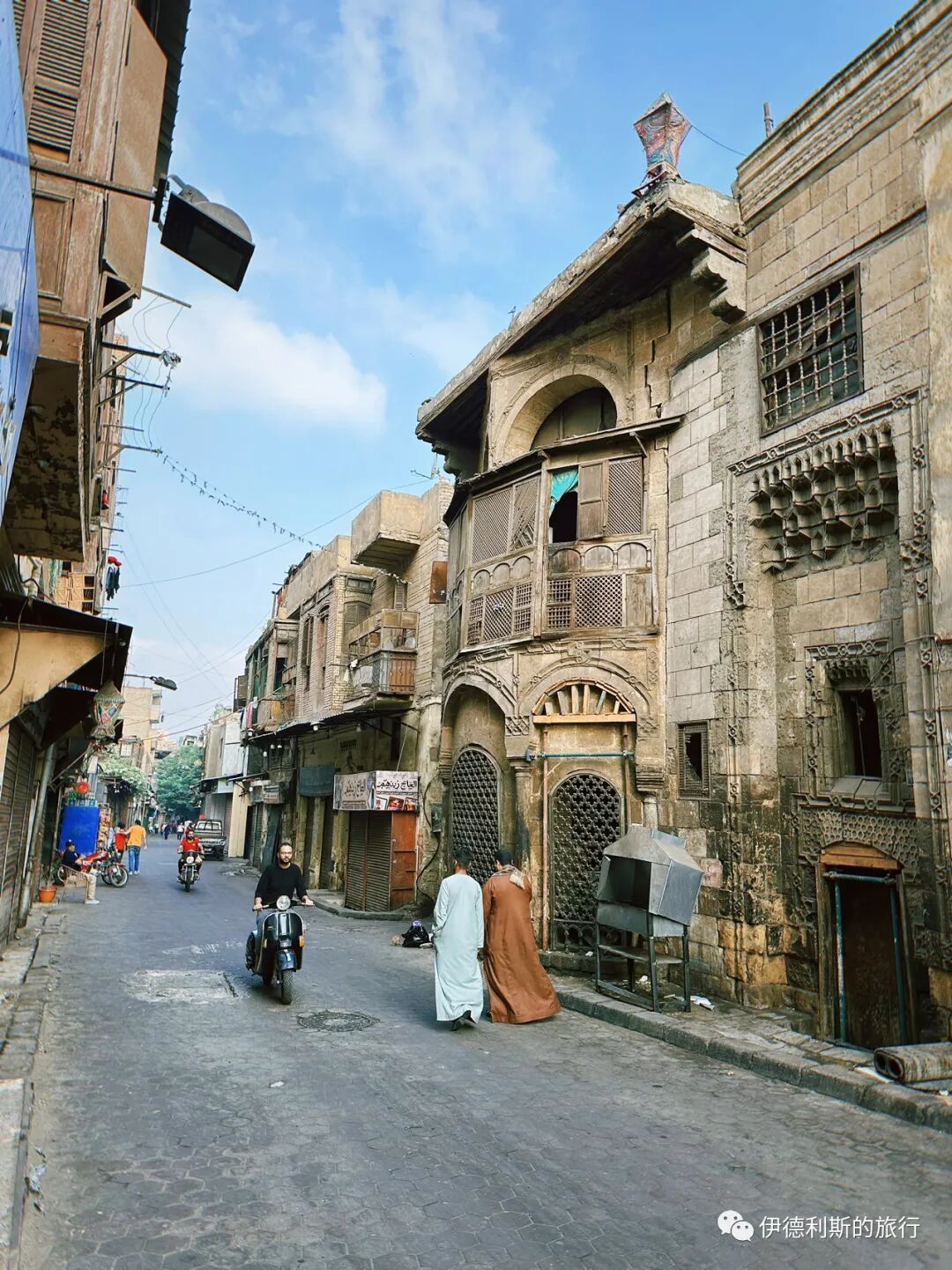
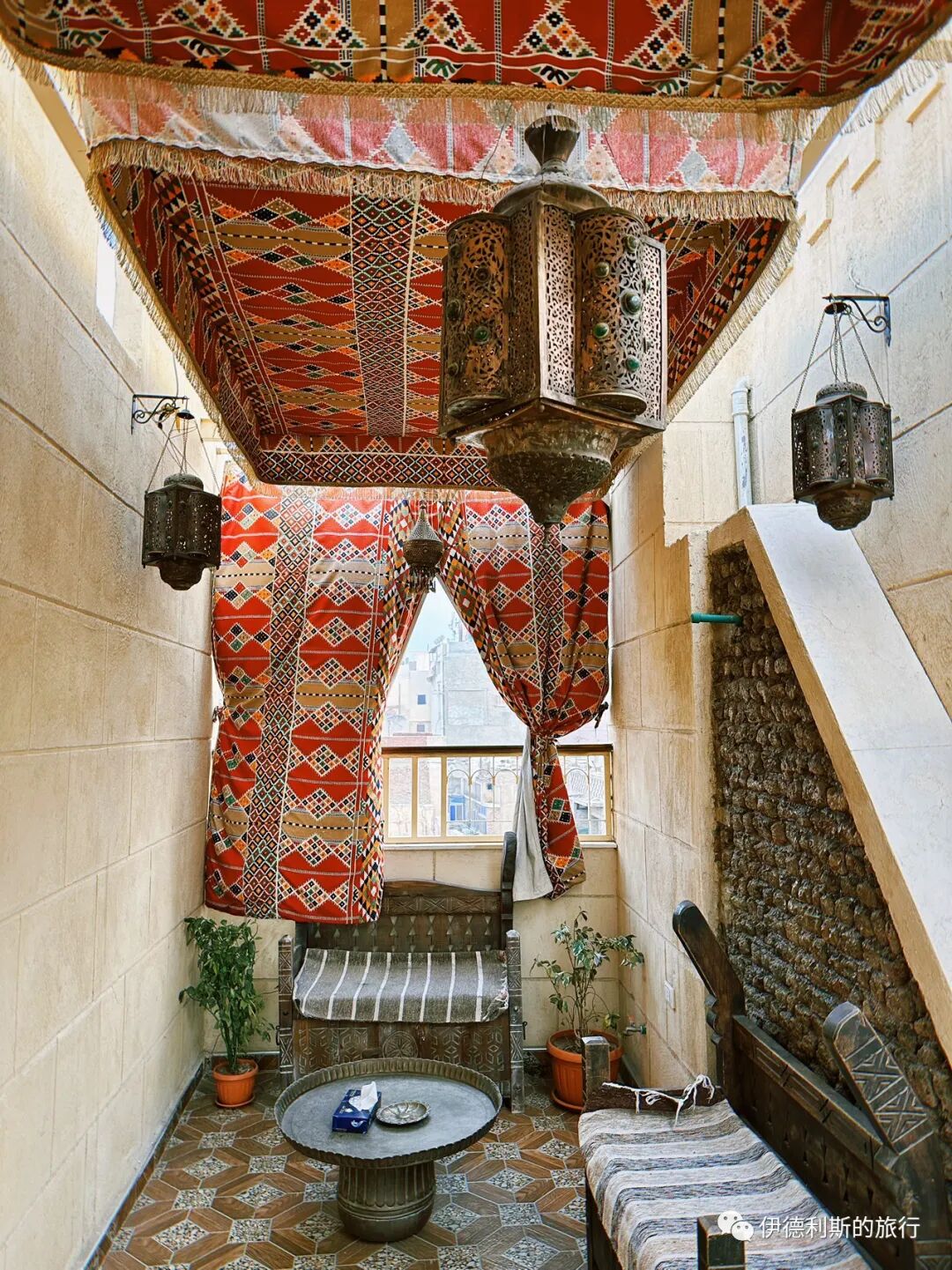
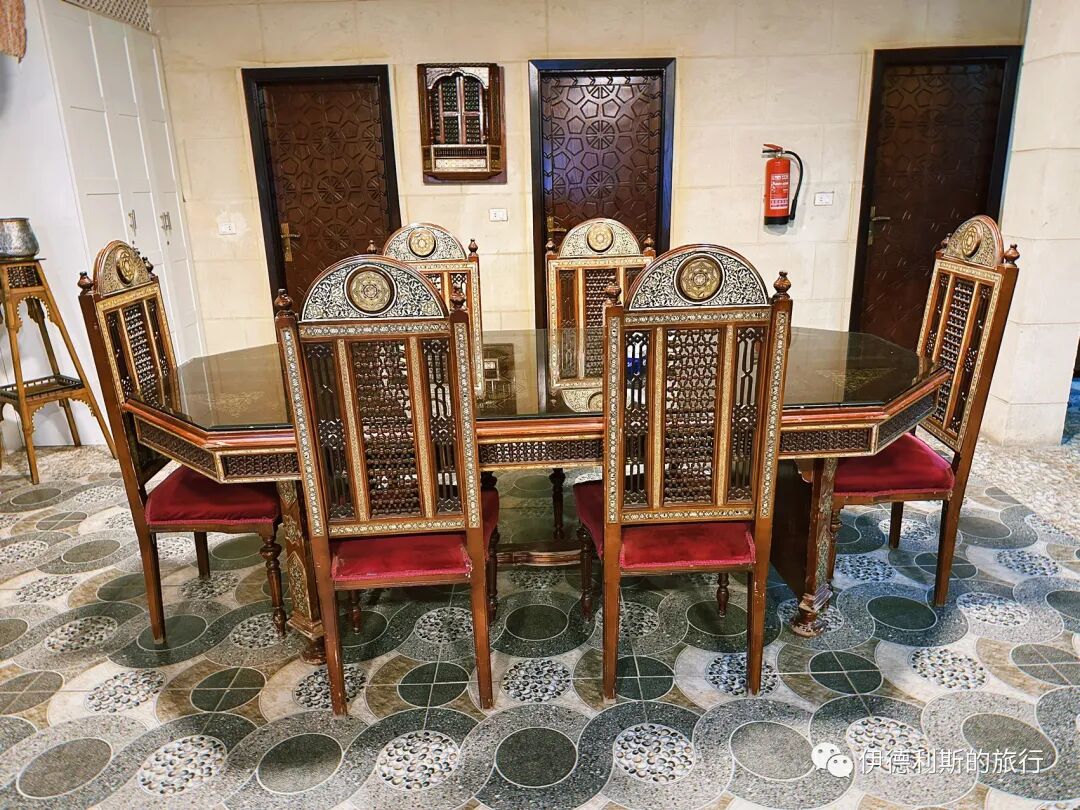

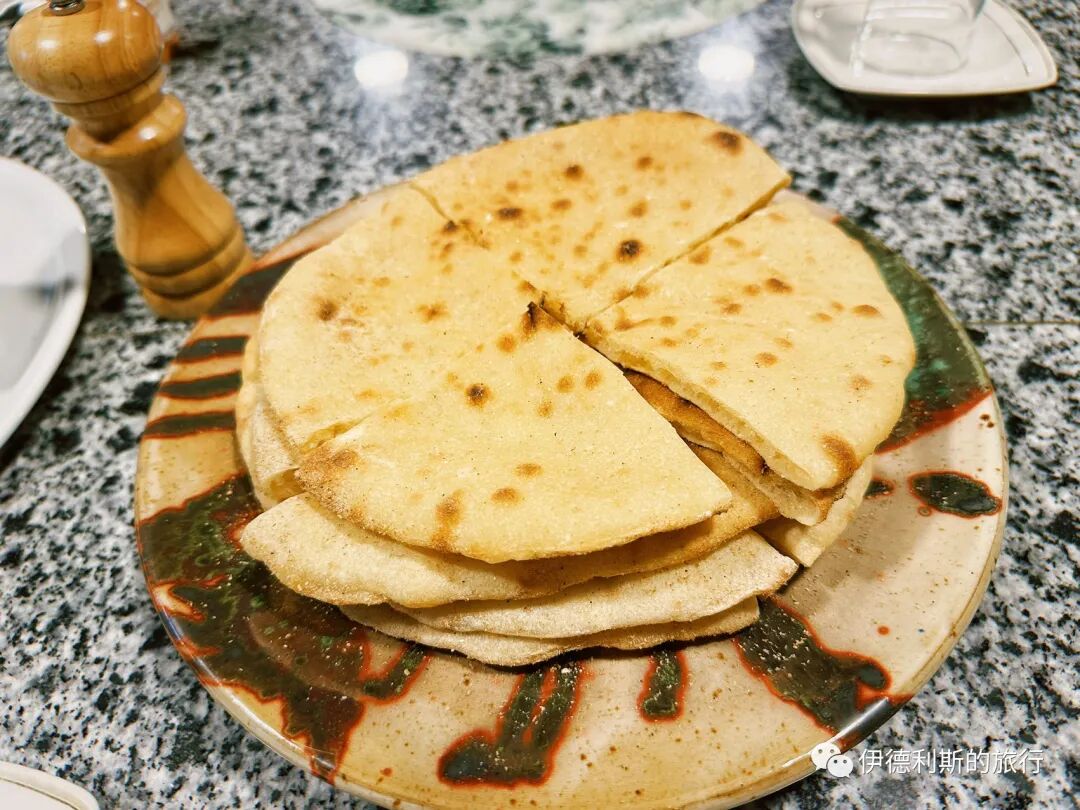
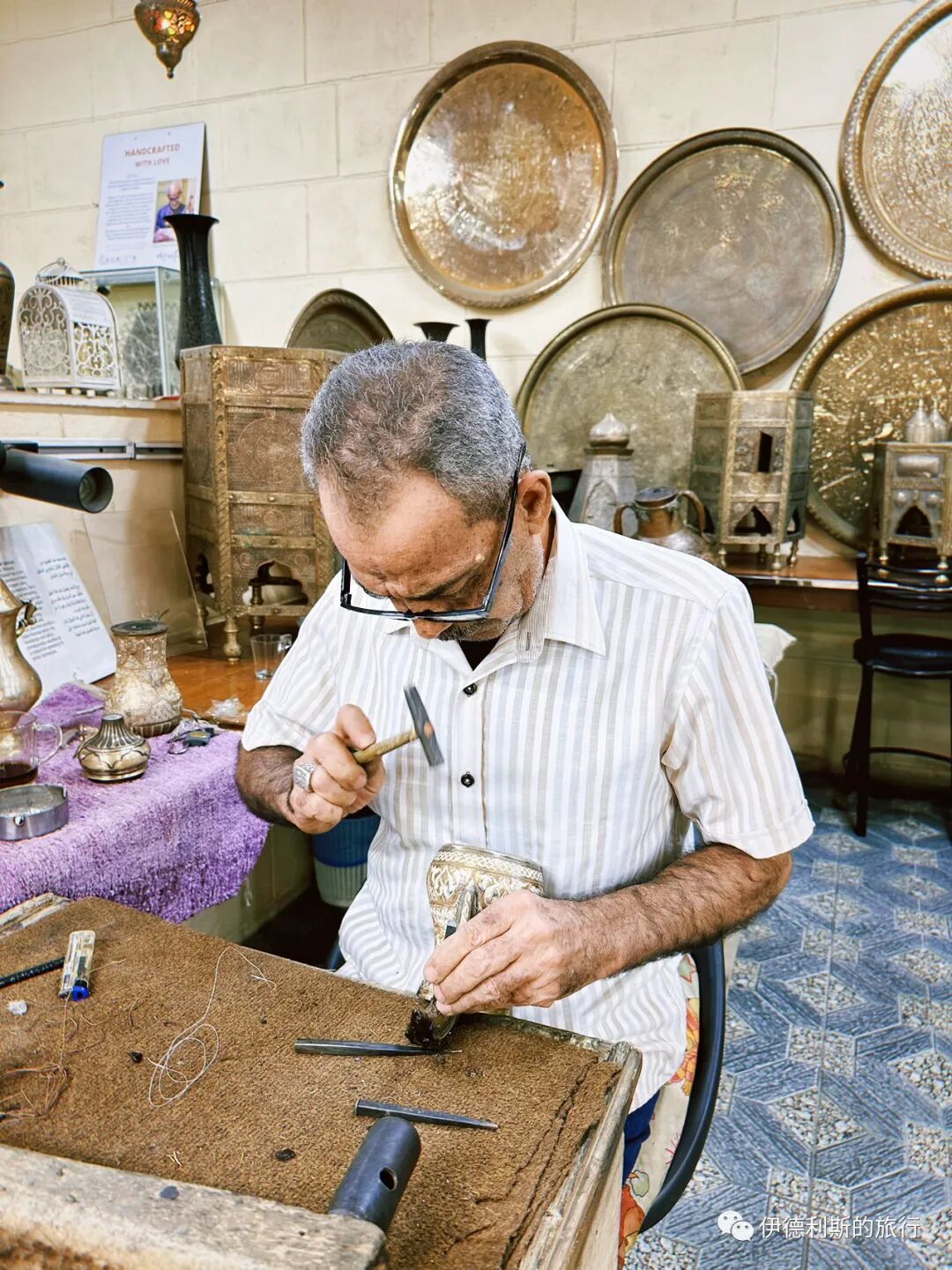
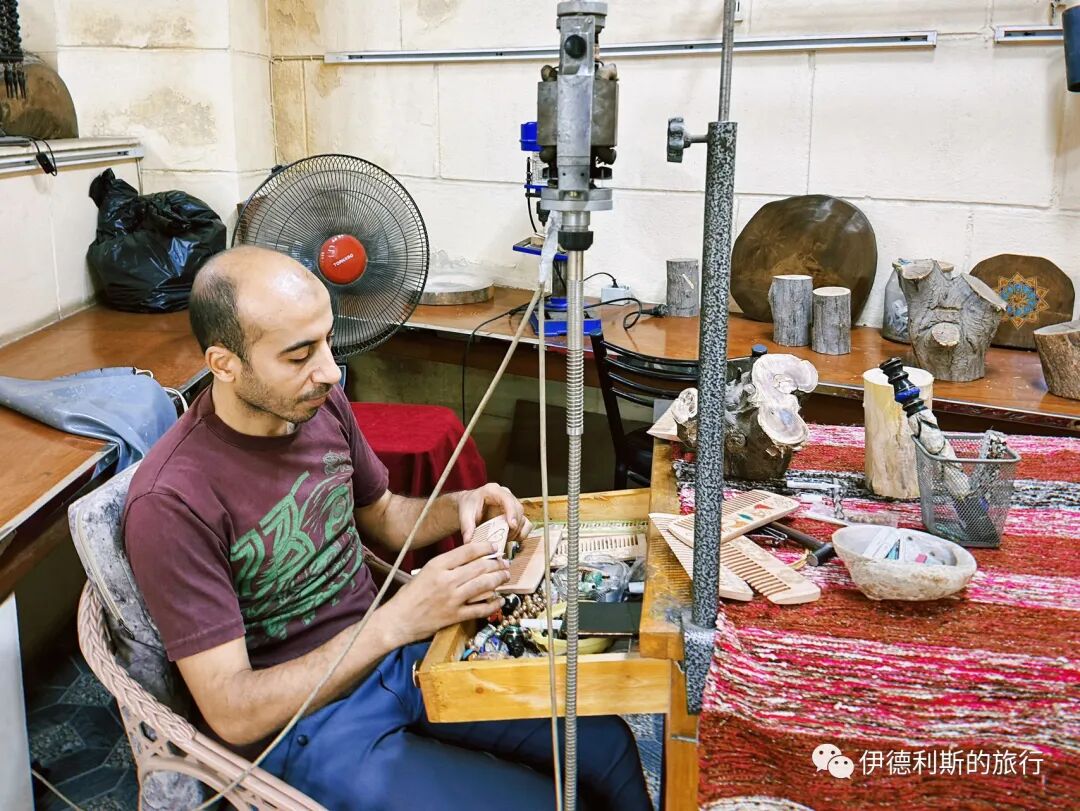
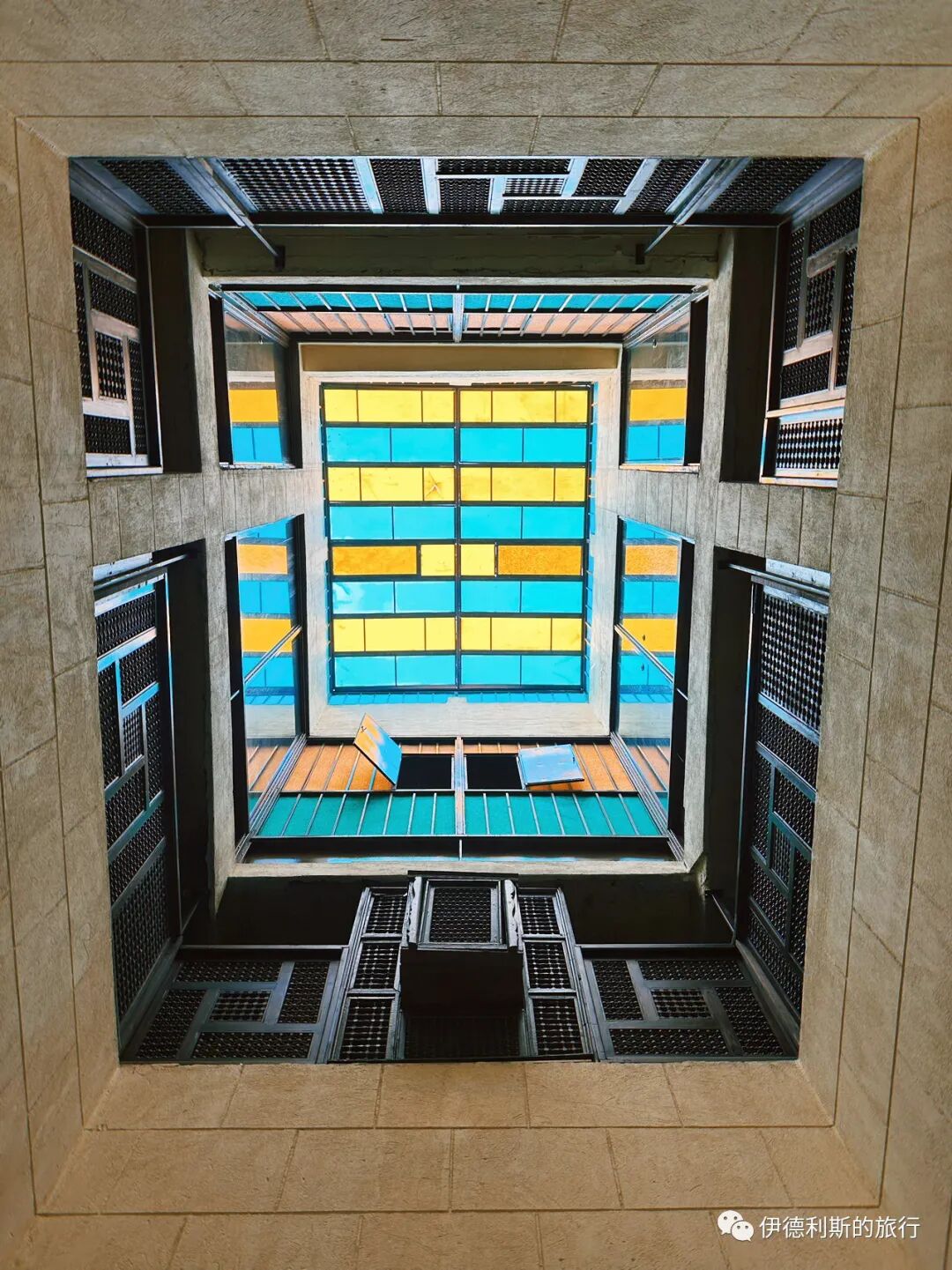
The Gamaleya Heritage Hotel features crafts made by various veteran artists, including copperware from Mousaad Mohamed Abd El-Maqsoud.
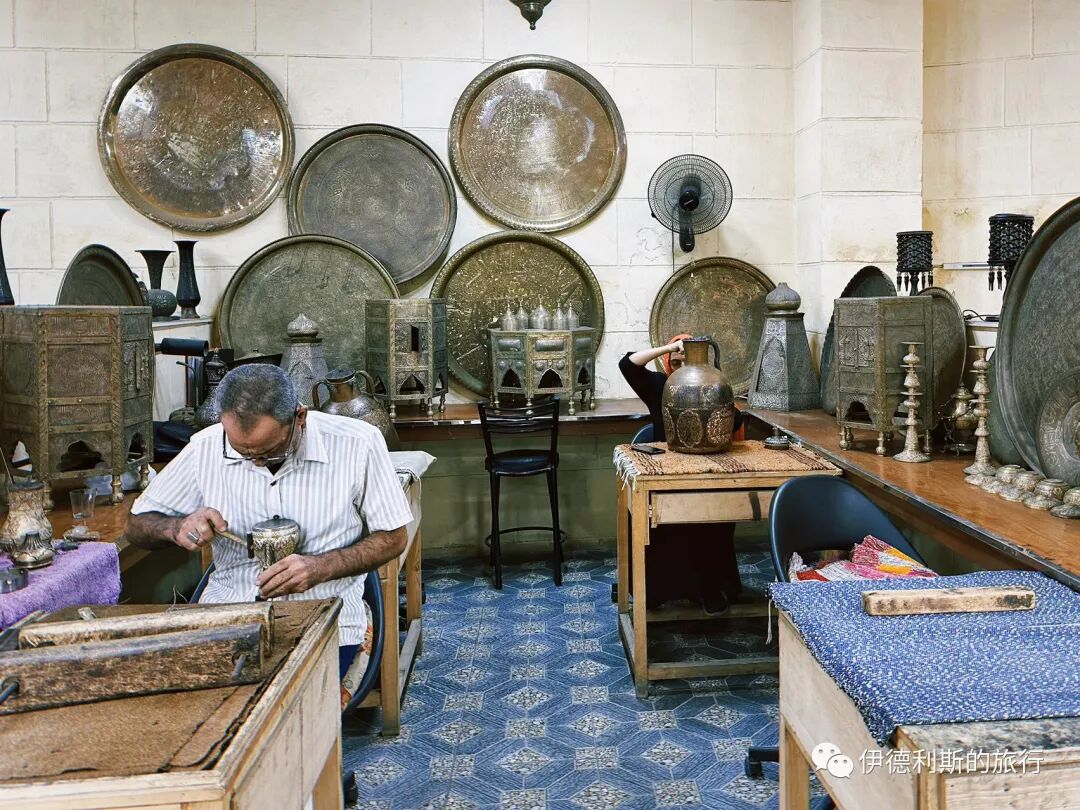
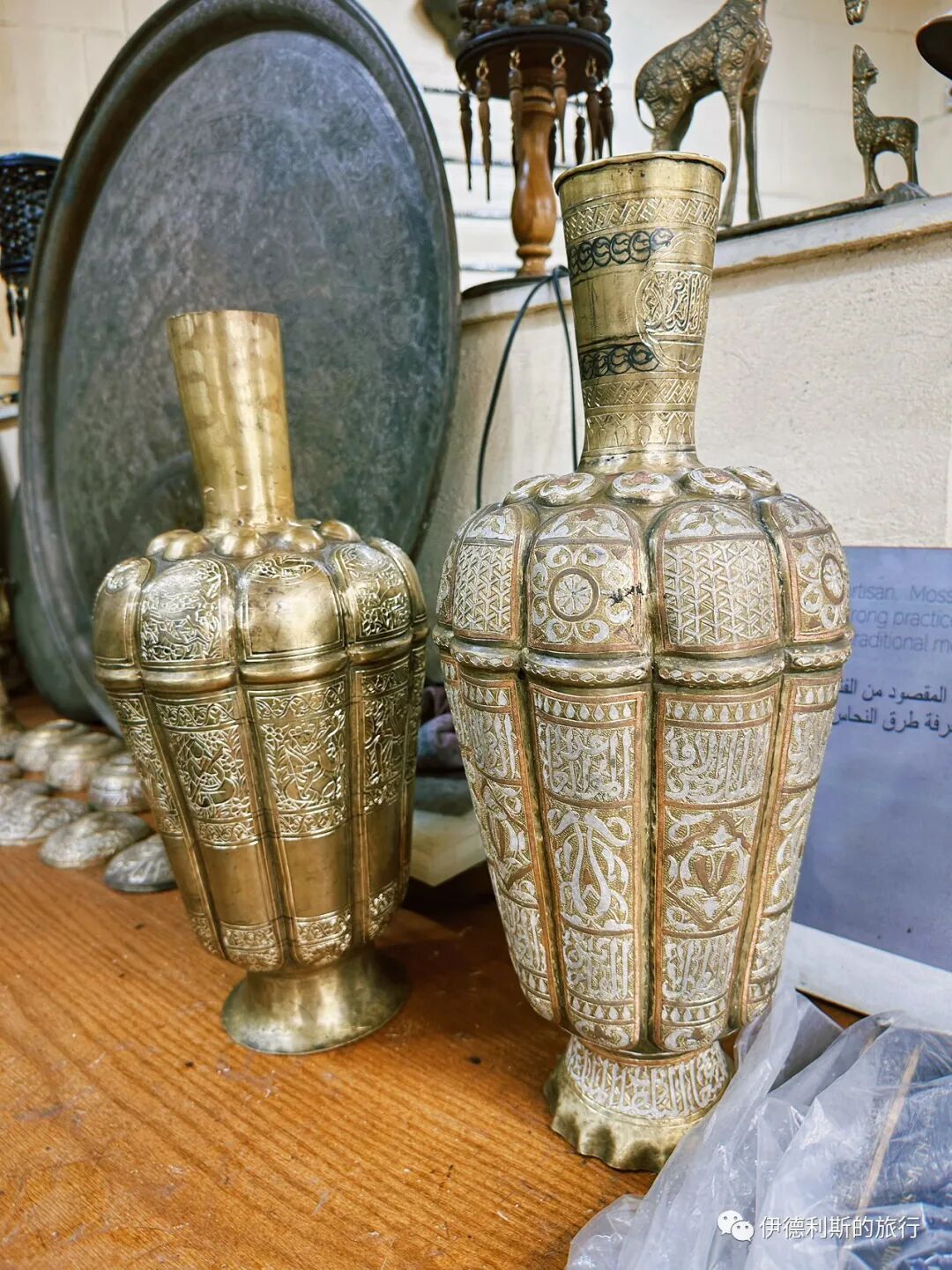
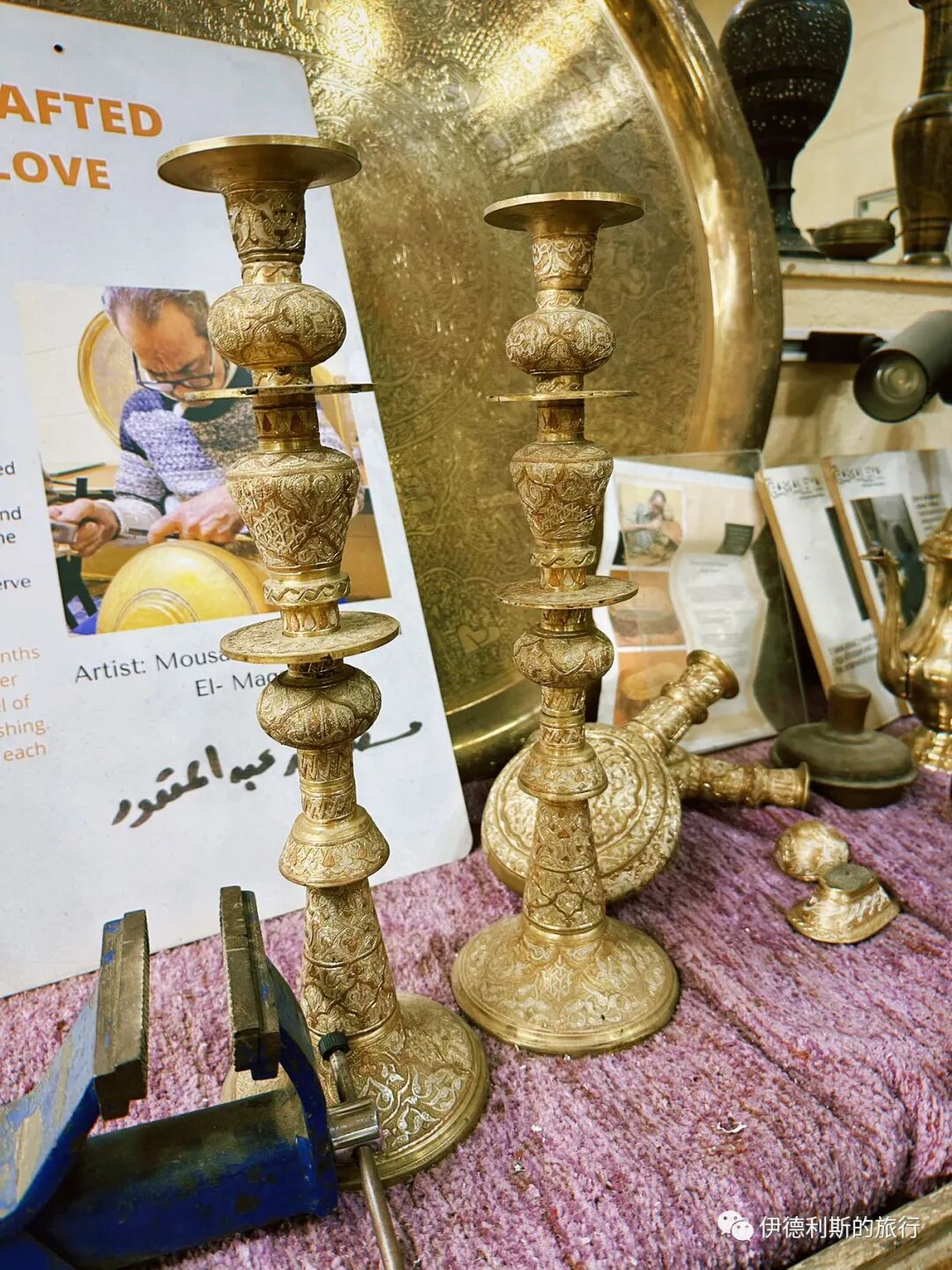
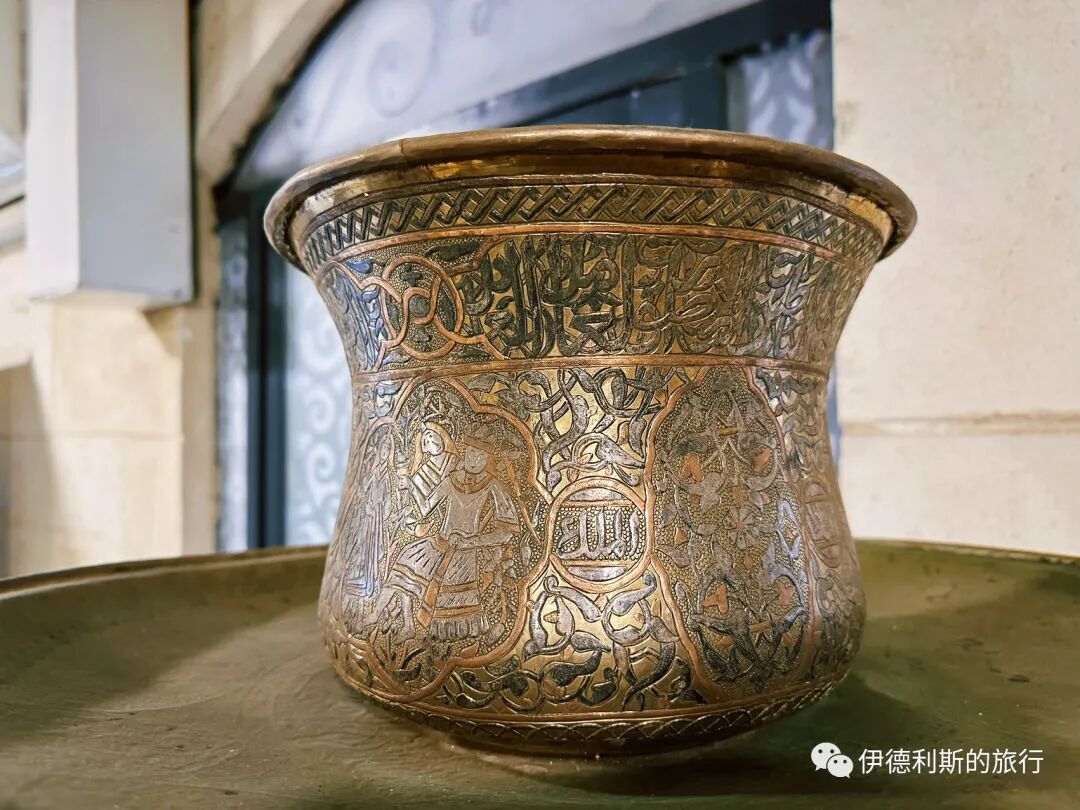
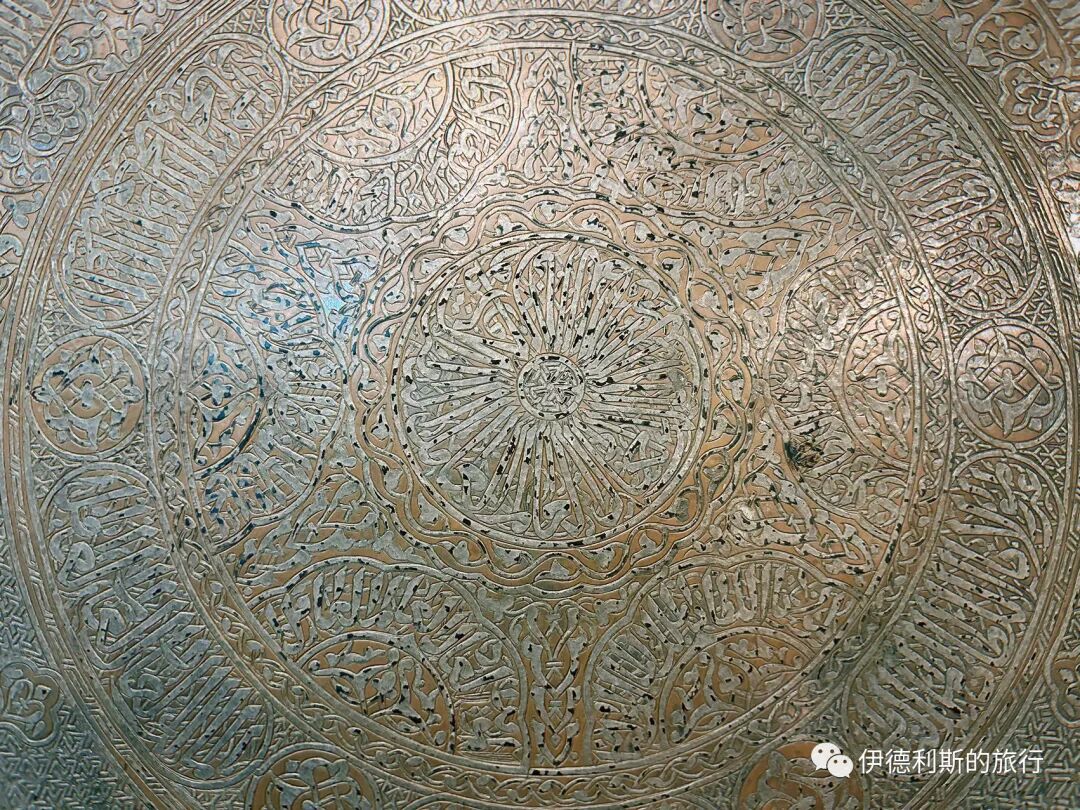
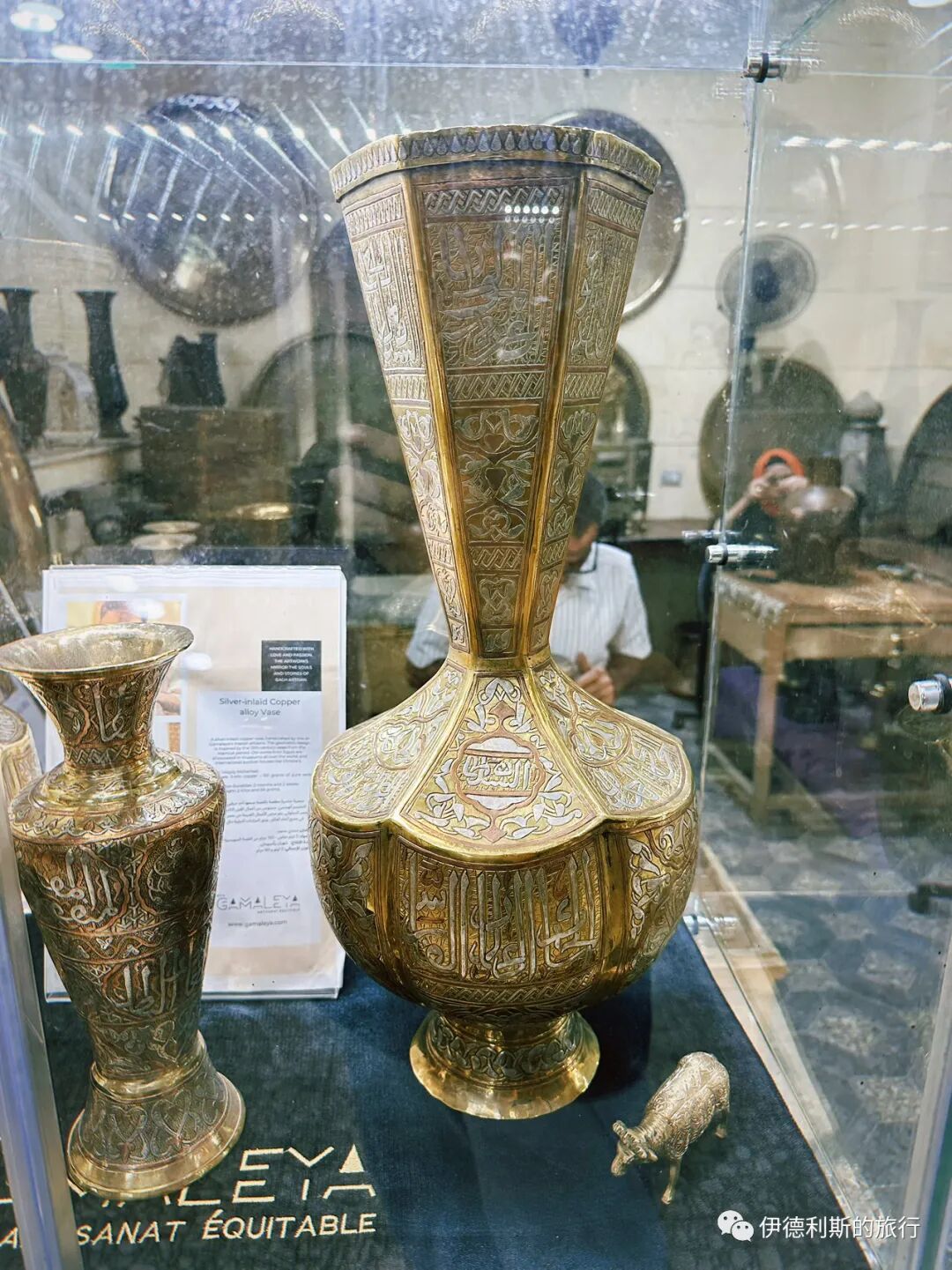
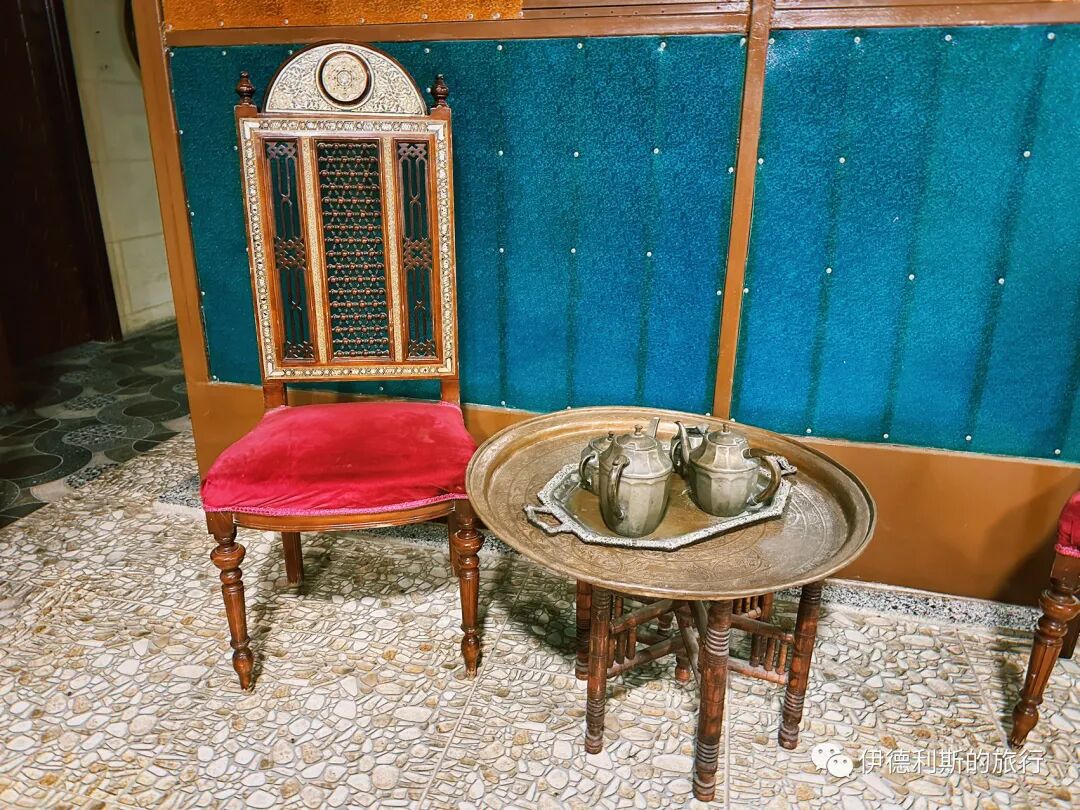
The current old city of Cairo was built in 969 by the Fatimid dynasty. It later went through the Ayyubid, Mamluk, Ottoman, and Muhammad Ali dynasties, leaving behind hundreds of historical buildings over the past thousand years.
As dawn breaks, the entire old city gradually wakes up to the sound of the adhan. Then, roosters crow and dogs bark, people get up for namaz, and breakfast shops set up their tables and chairs to open. This is how a day in the old city of Cairo begins.
After the morning prayer (fajr), people rest for a while. Most mosques and ticketed attractions in the old city open after nine o'clock. The old city is very quiet at this time, making it perfect for wandering through empty streets and feeling a thousand years of history.
Since we kept eating breakfast at the hotel, we missed the chance to try the local breakfast in the old city of Cairo. The most classic combination is various appetizer dips (Muqabilat) served with flatbread (Eish Baladi). After breakfast, some breakfast shops turn into tea and coffee houses where people chat and let time slowly drift by.
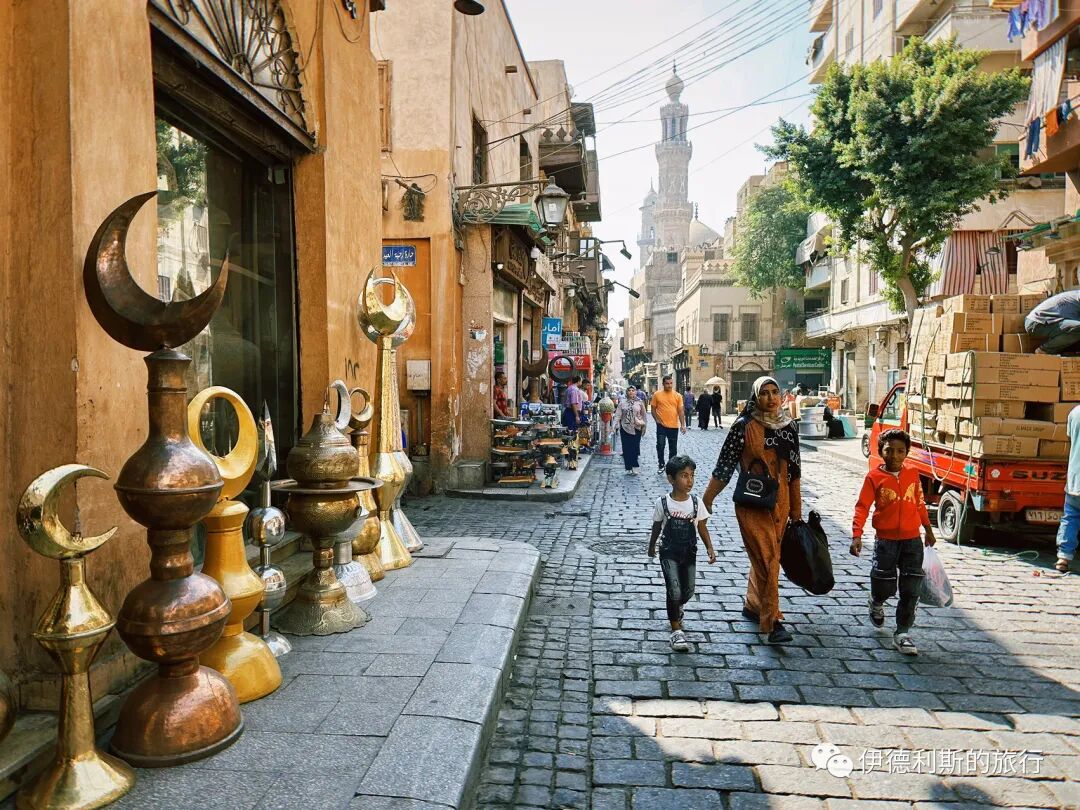
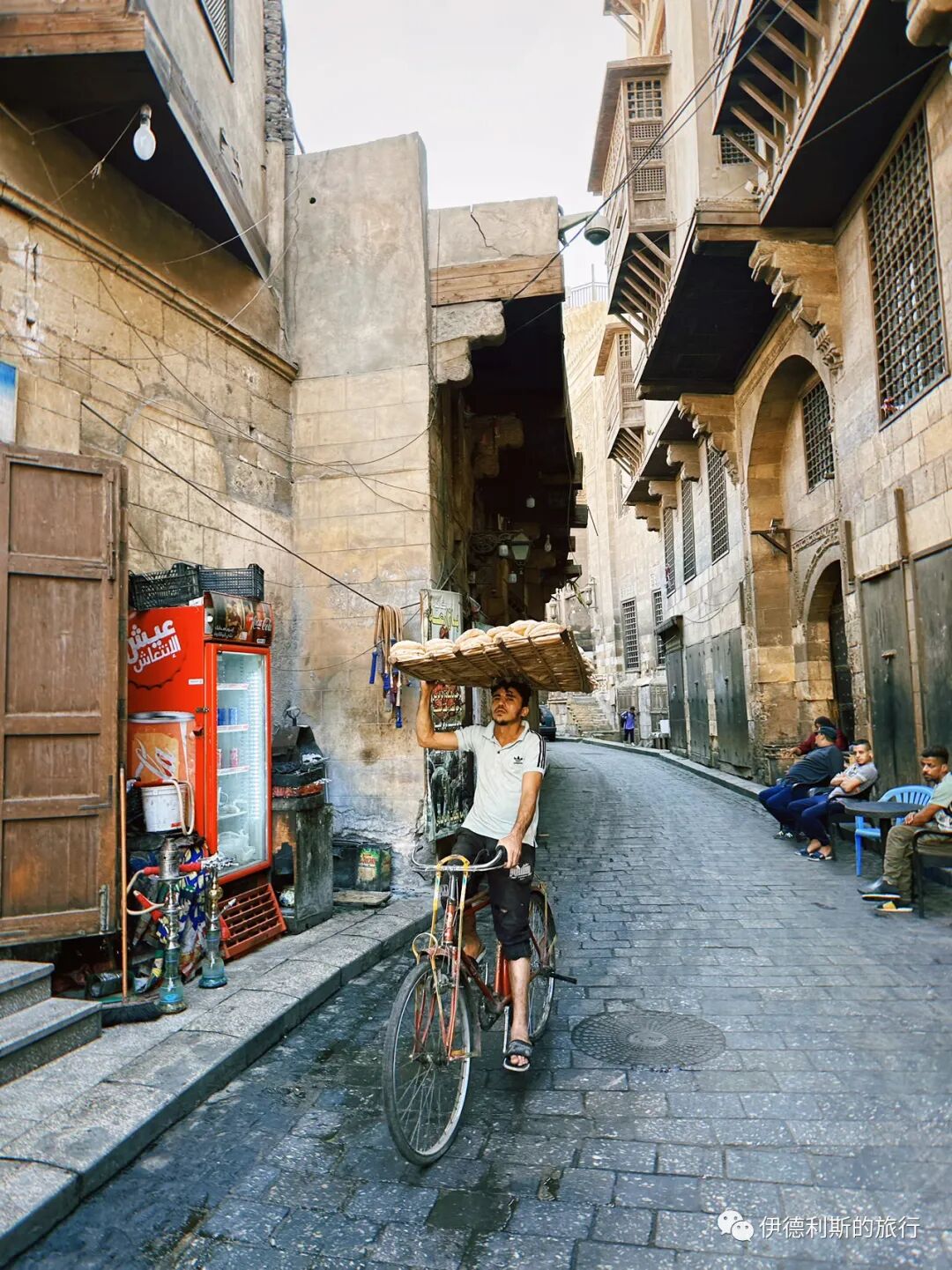
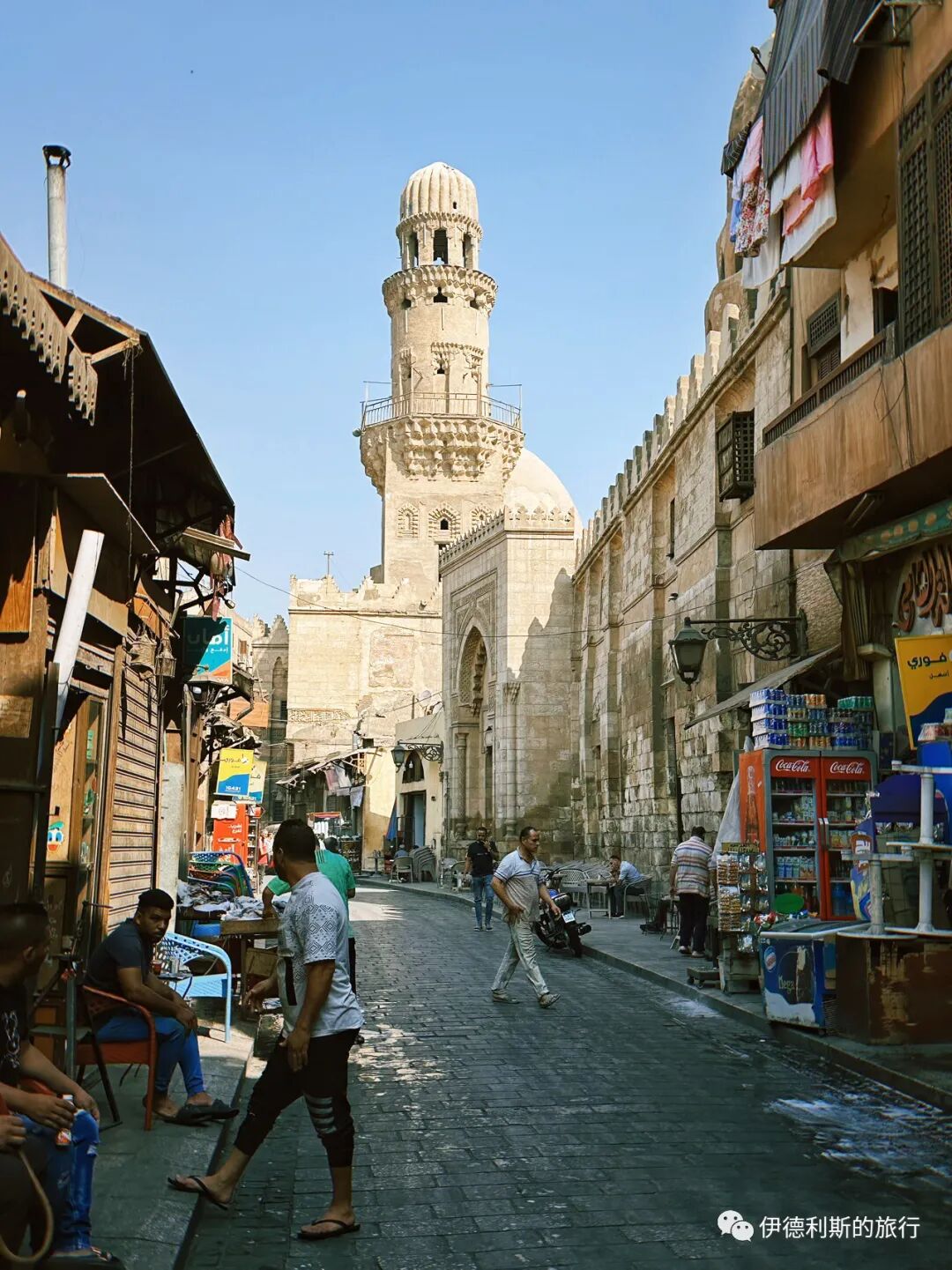
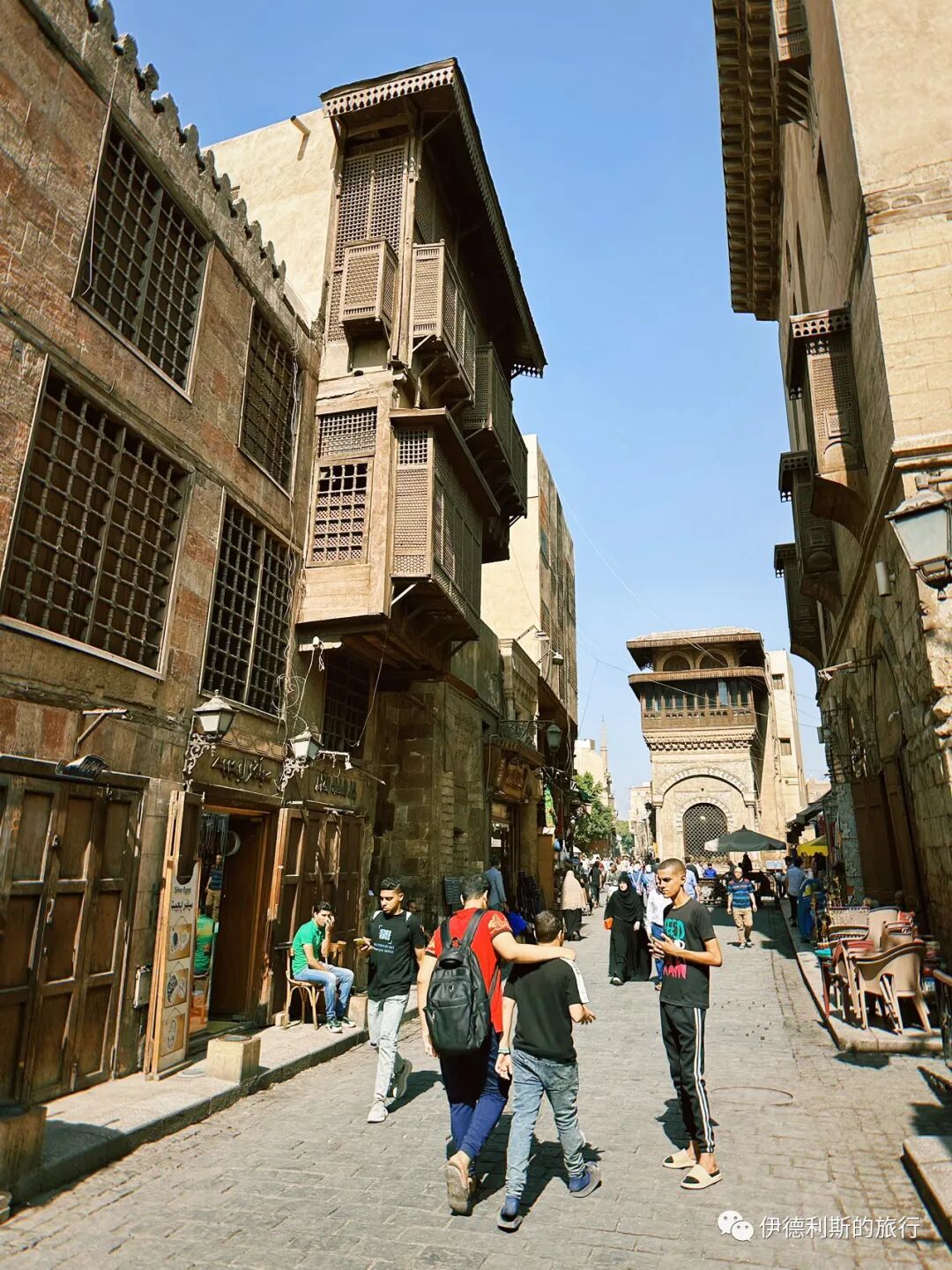
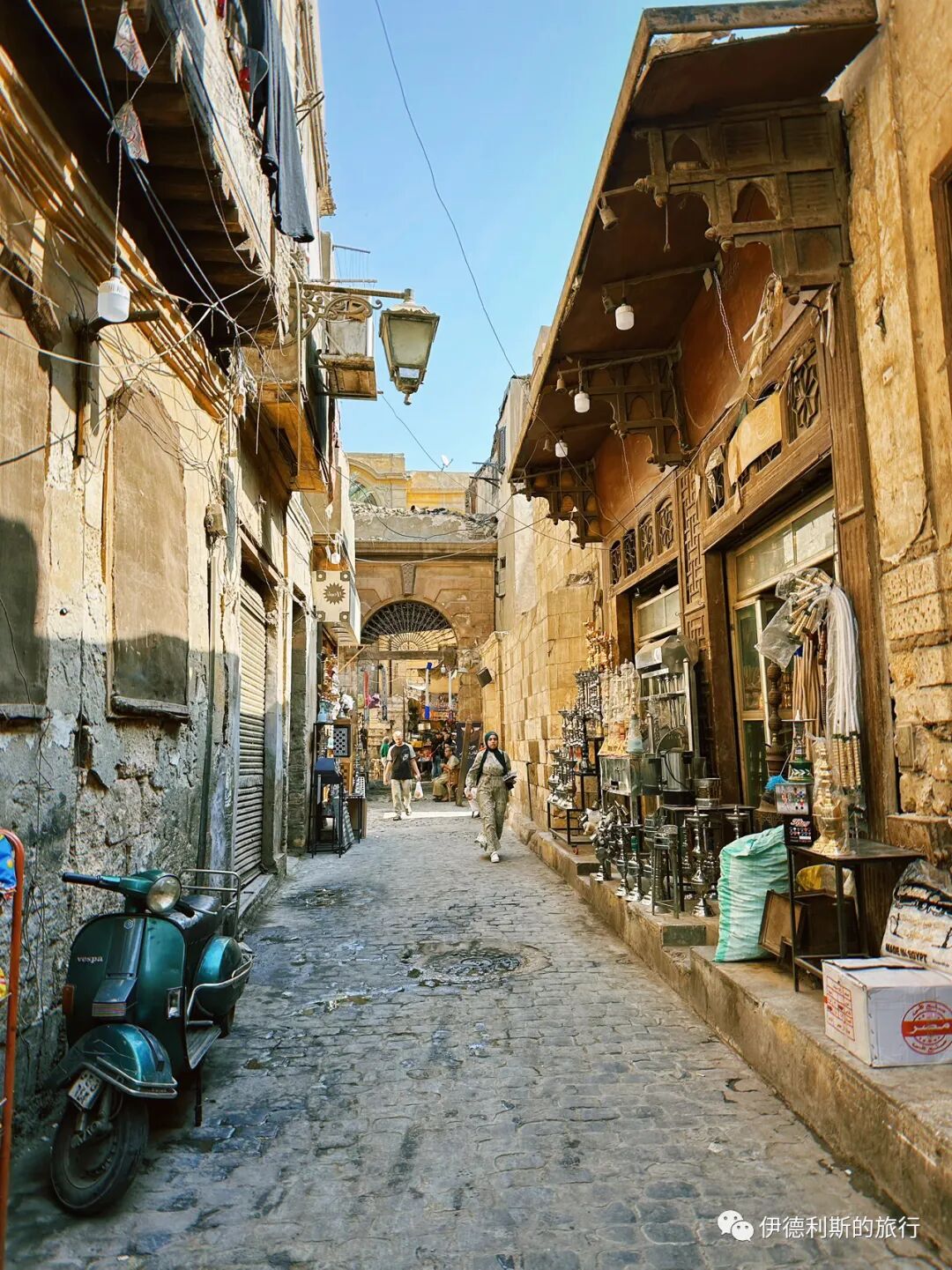
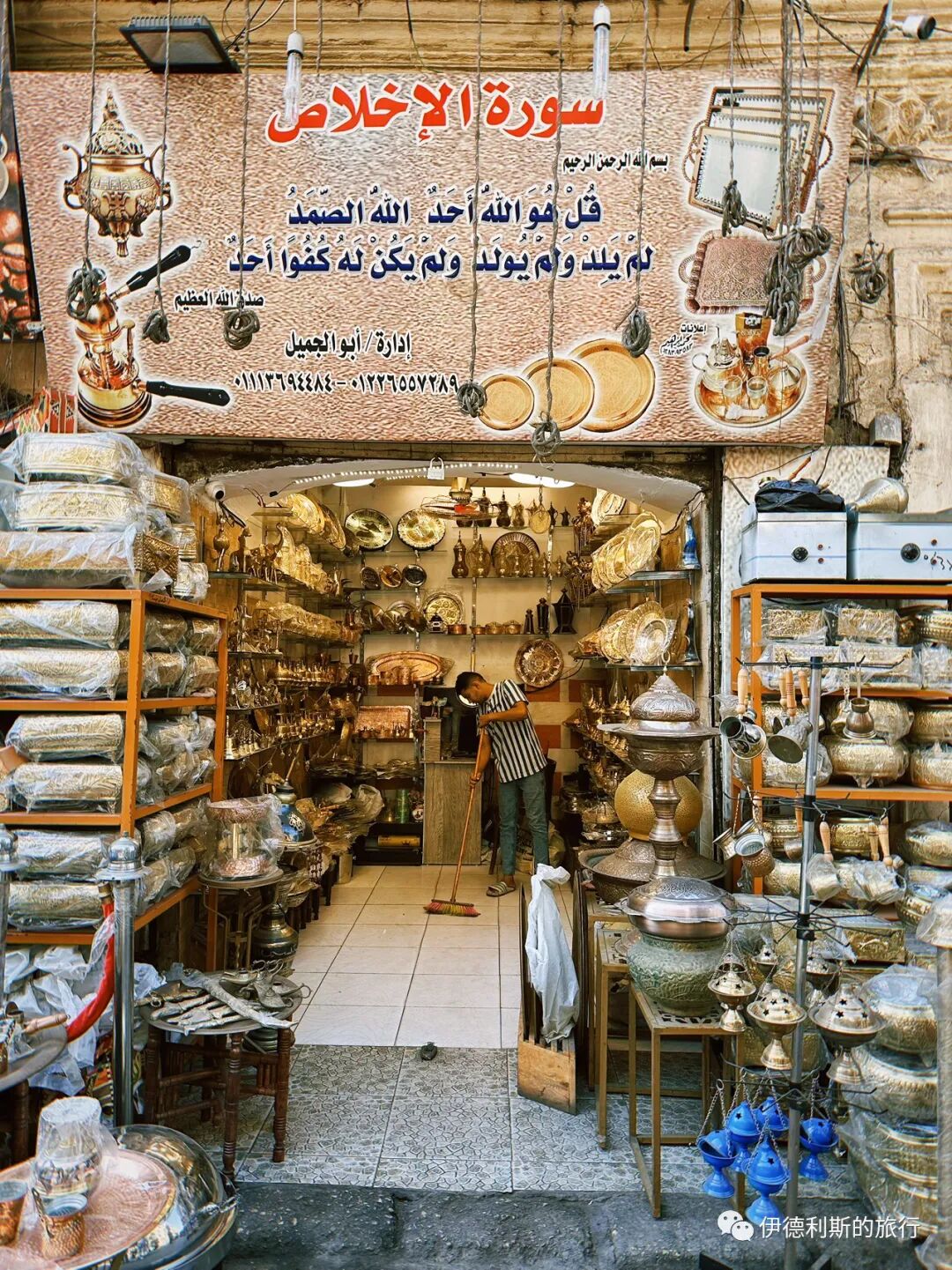
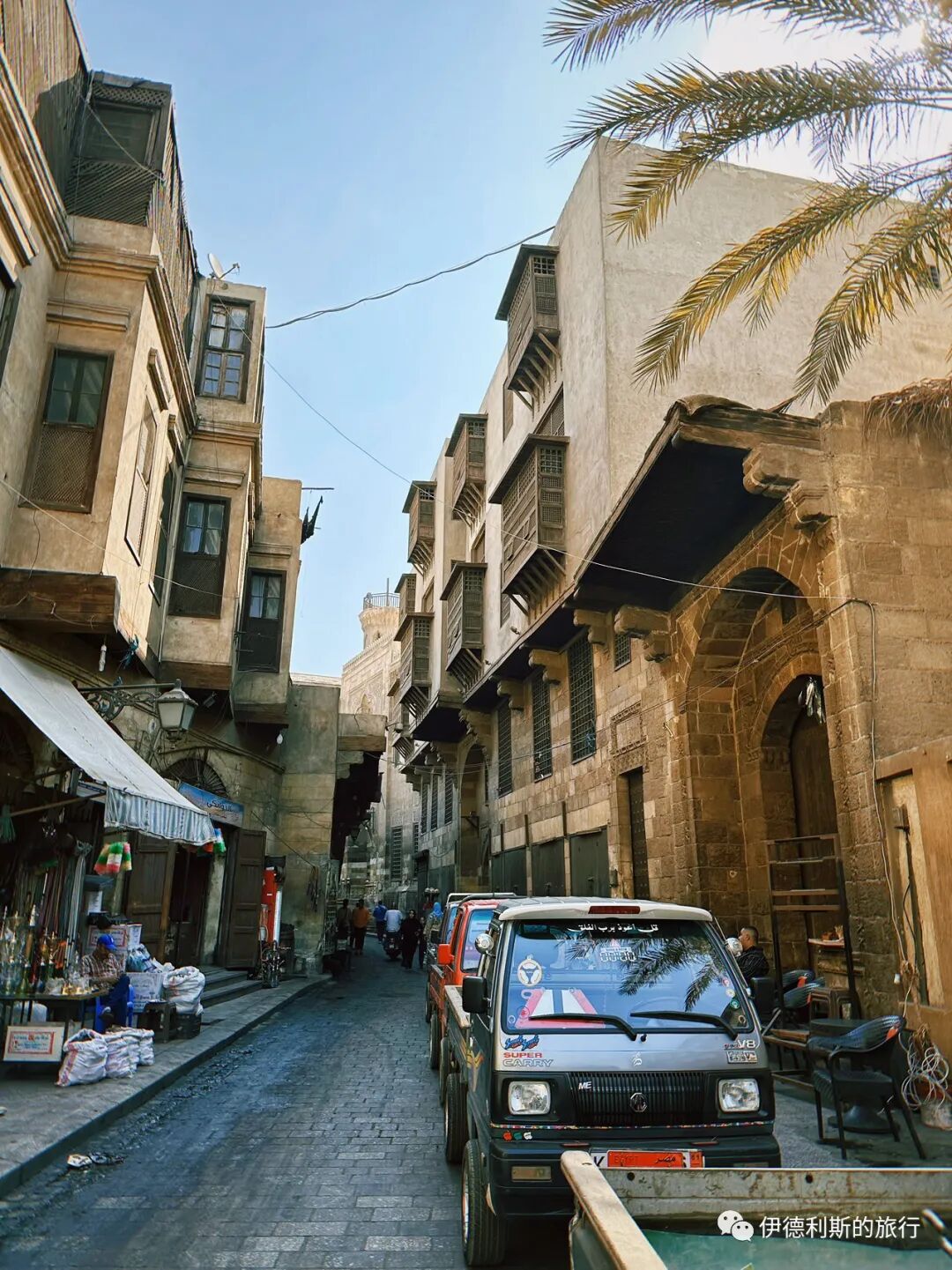
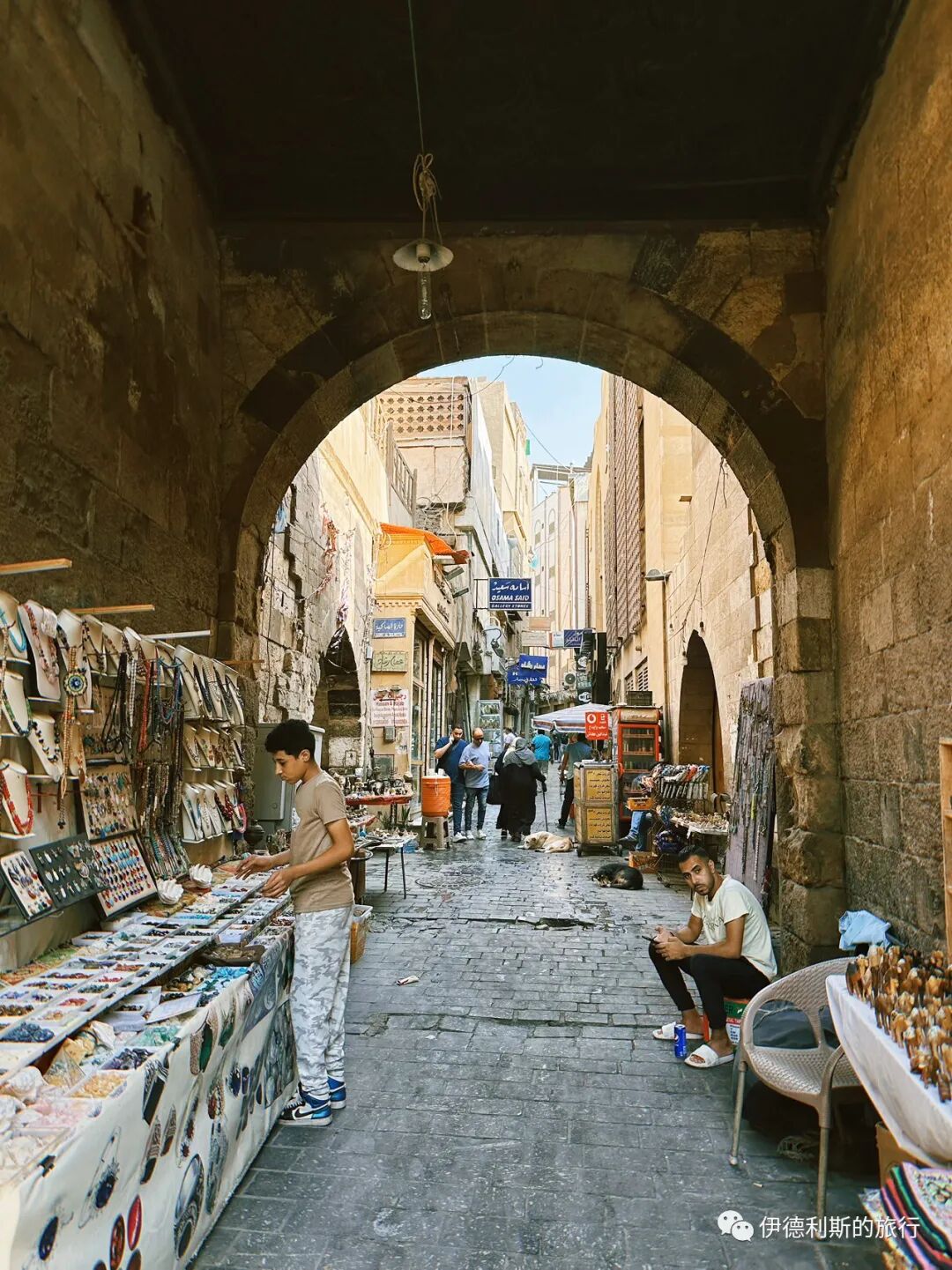
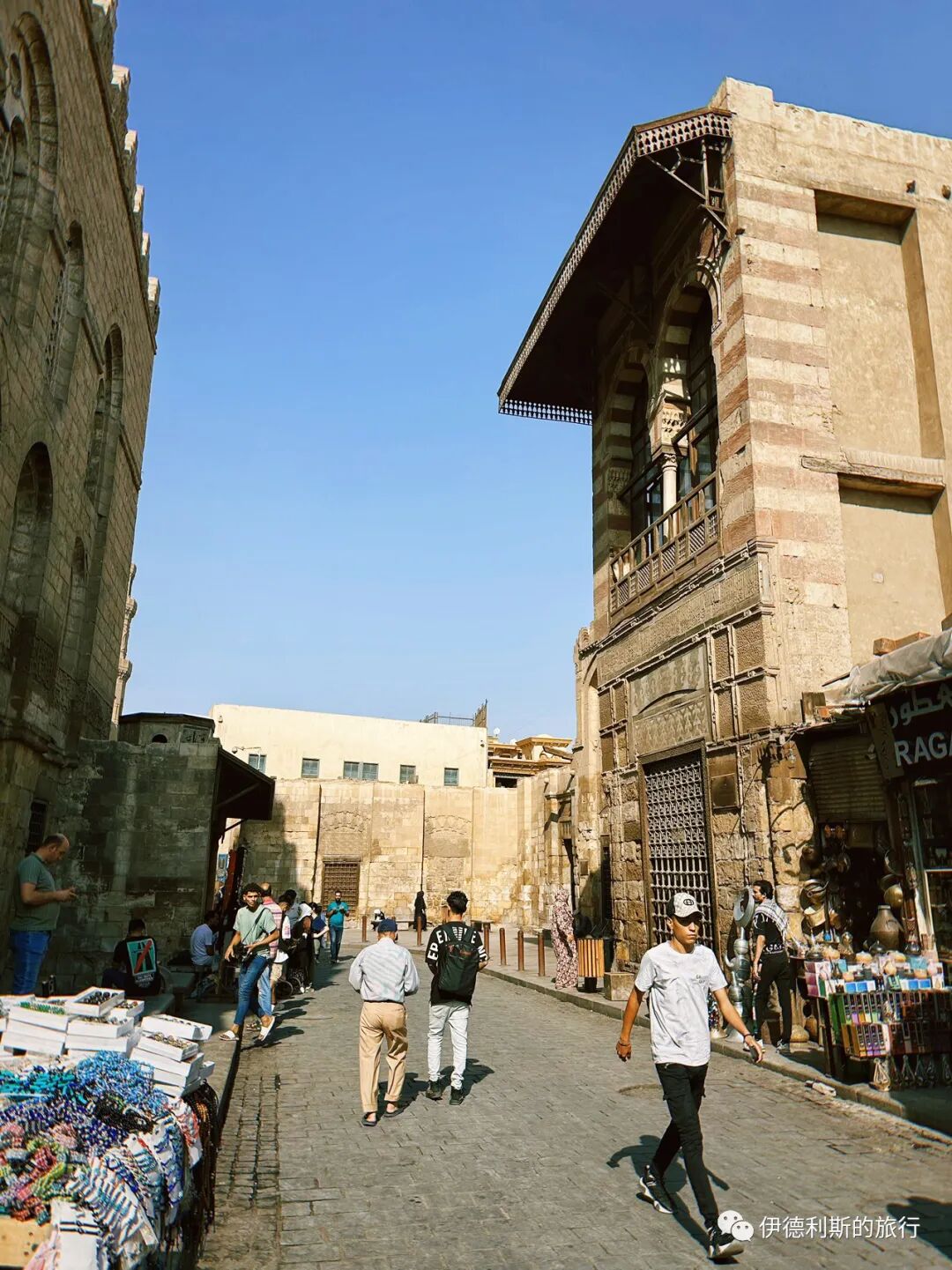
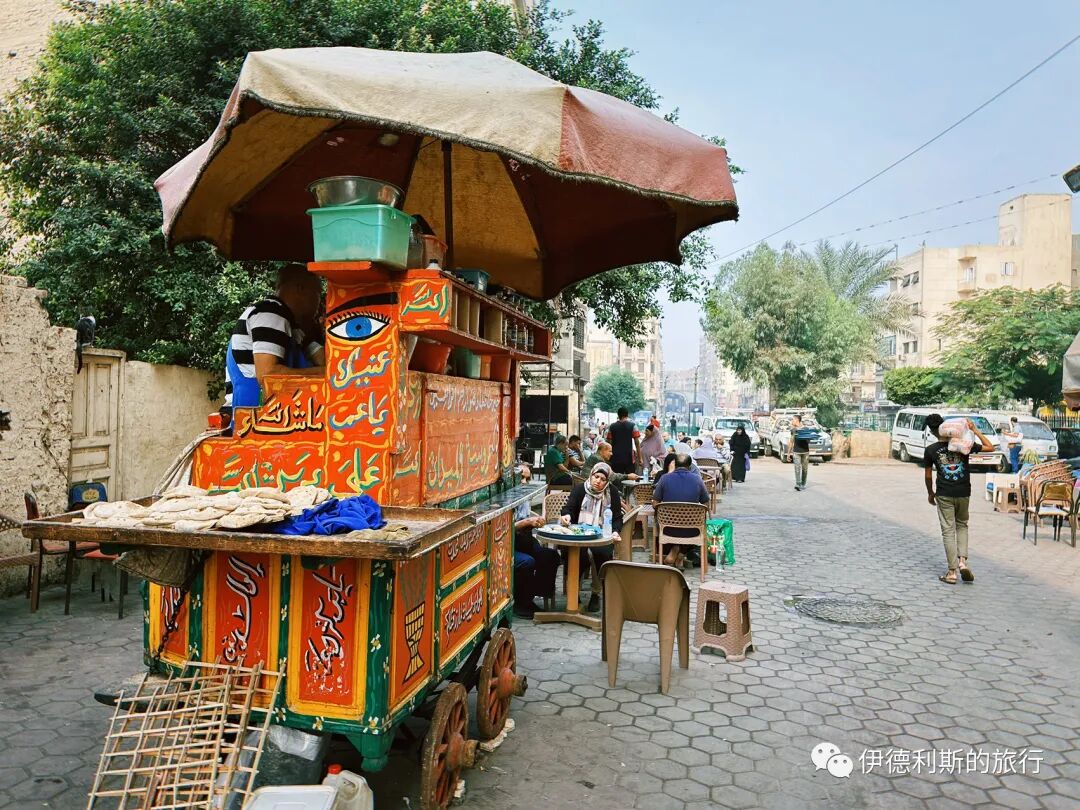
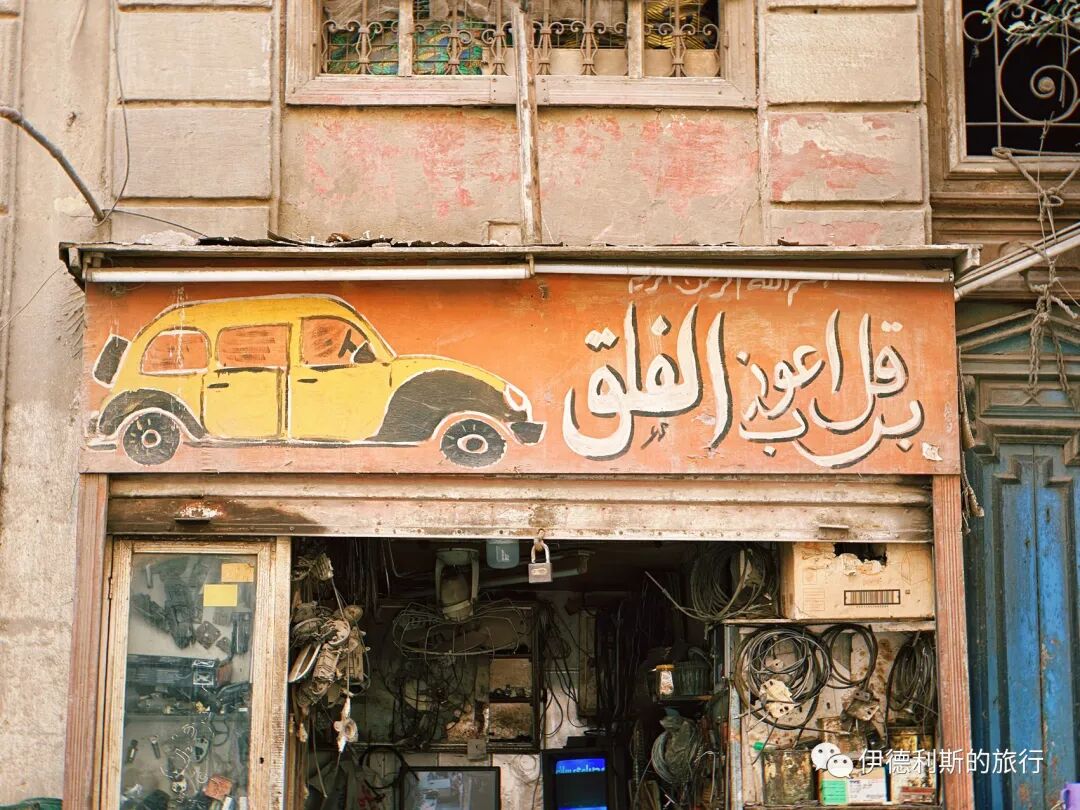
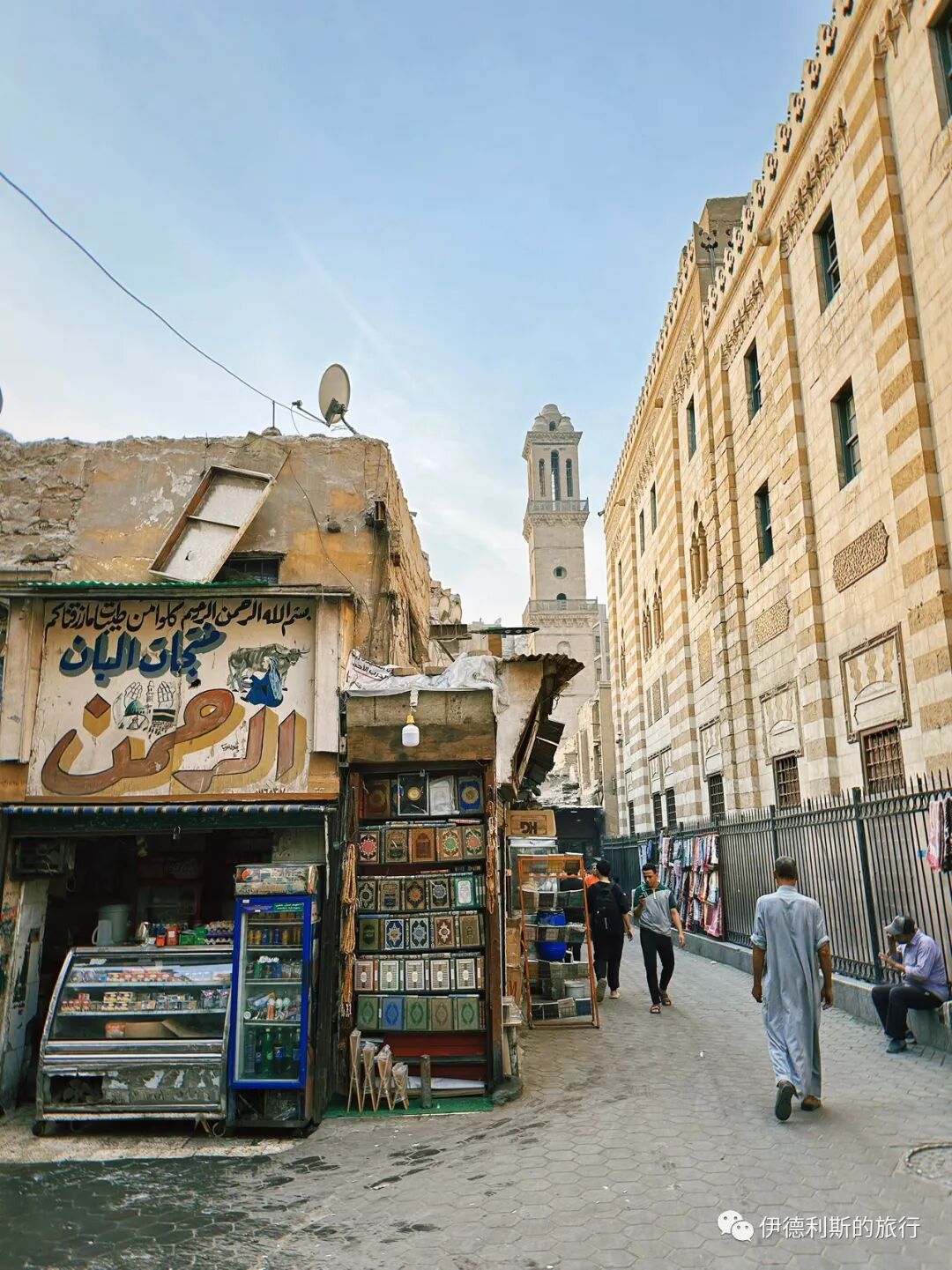
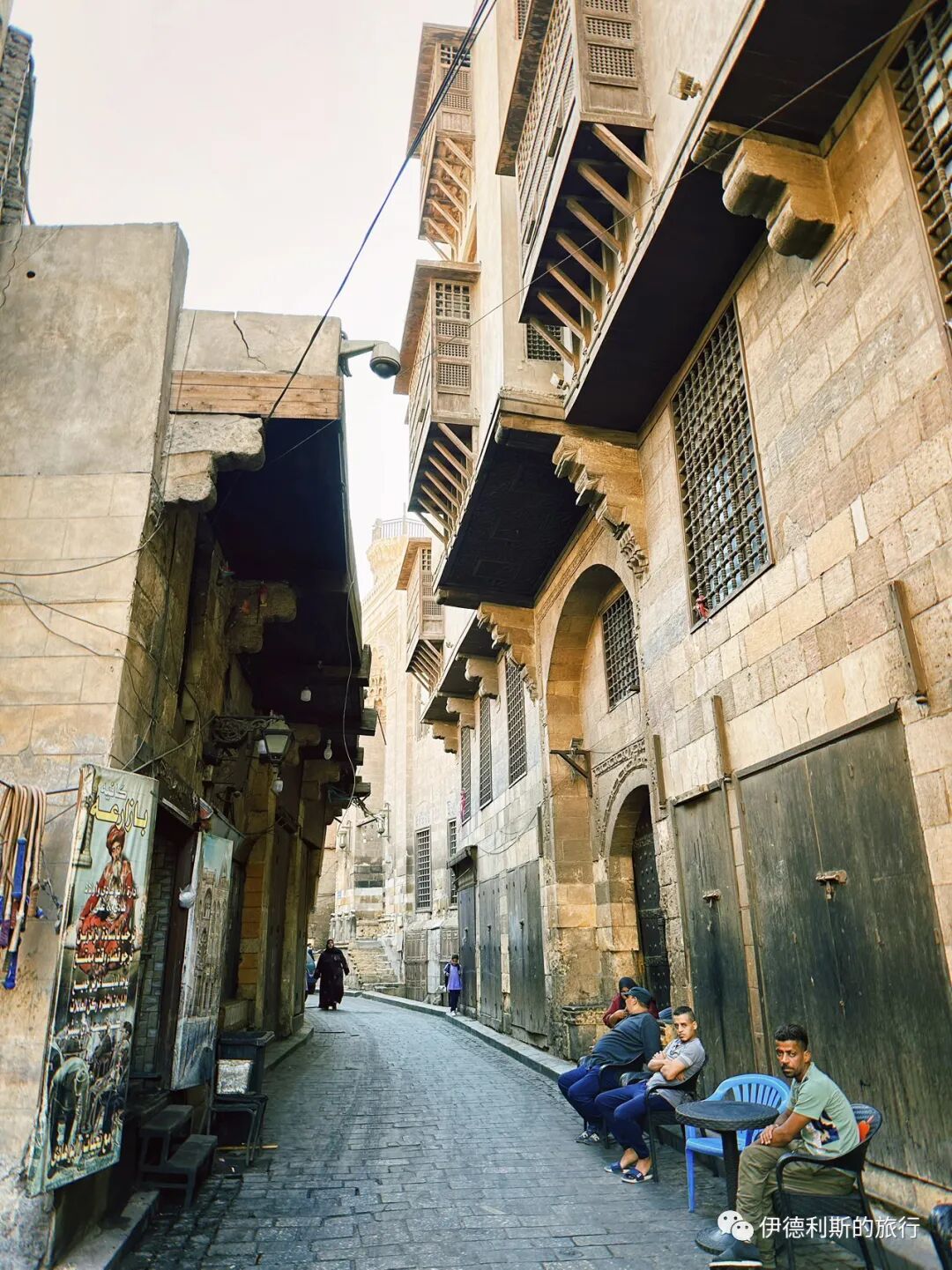
The main street of Cairo's old city, Al-Mu'izz Street (Al-Mu'izz), at night. Al-Mu'izz Street is named after the fourth Fatimid Caliph, al-Mu'izz li-Din Allah (reigned 953-975), who moved the center of the Fatimid dynasty from Tunisia to Egypt and officially built the current old city of Cairo in 969. For a thousand years, Al-Mu'izz Street has been the north-south artery of the old city, commonly known as the main road (Qasaba), and is lined with markets, mosques, and madrasas.
During the Fatimid dynasty, only the Caliph's court, the army, and officials could enter Cairo, while ordinary people were not allowed inside. It was only after Saladin ended the Fatimid dynasty and established the Ayyubid dynasty in 1171 that the old city of Cairo became an economic center fully open to the public. Later, the Sunni Mamluk dynasty wanted to erase the influence of the Shia Fatimid dynasty on the old city, so they gradually demolished the Fatimid palaces in the north and turned them into markets, making Al-Mu'izz Street a busy commercial street from then on.
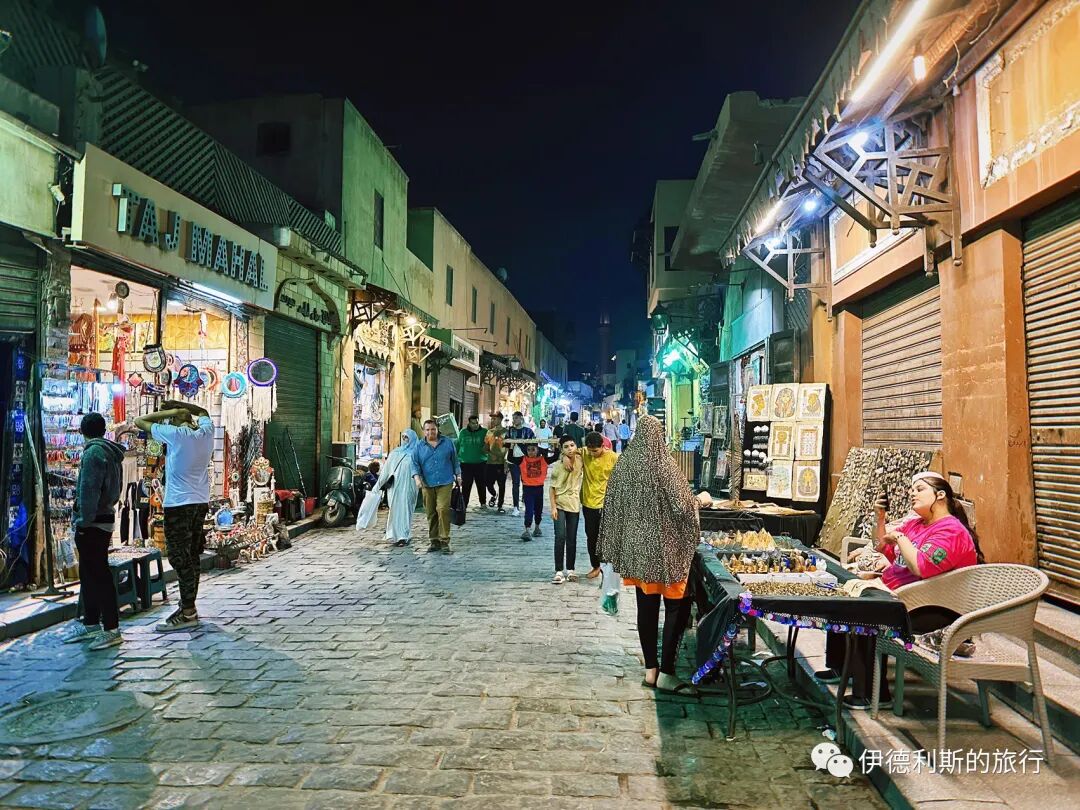
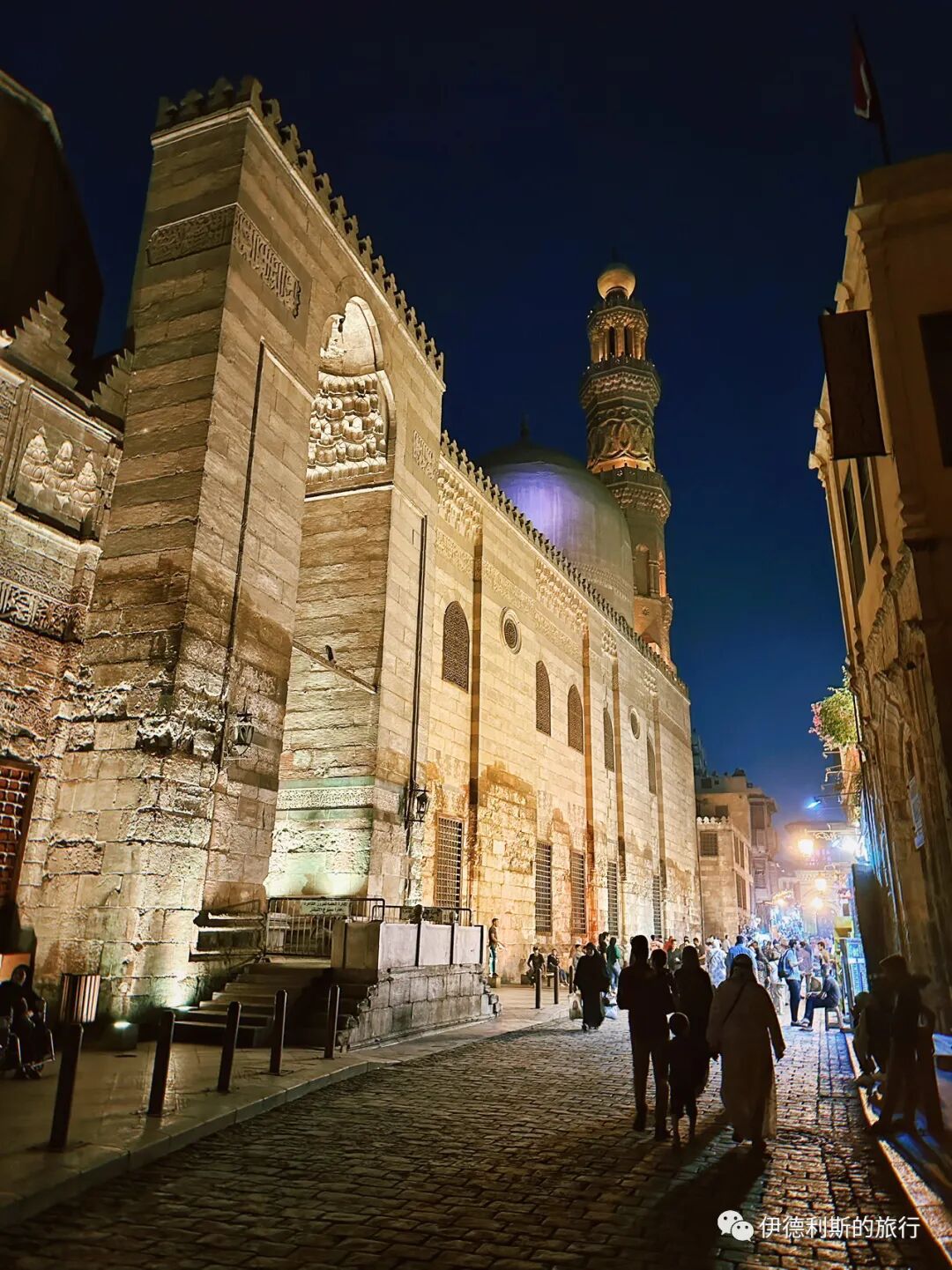
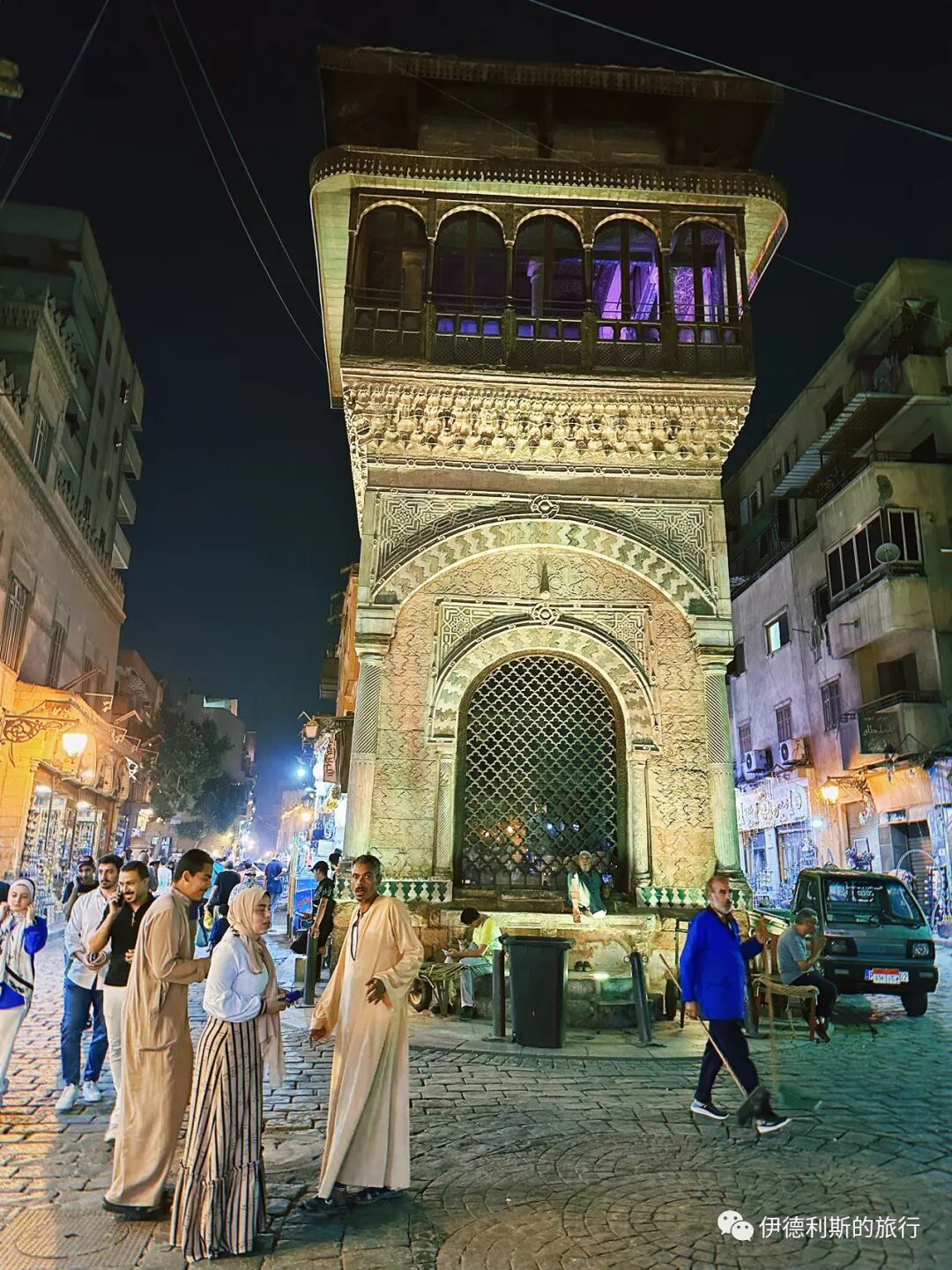
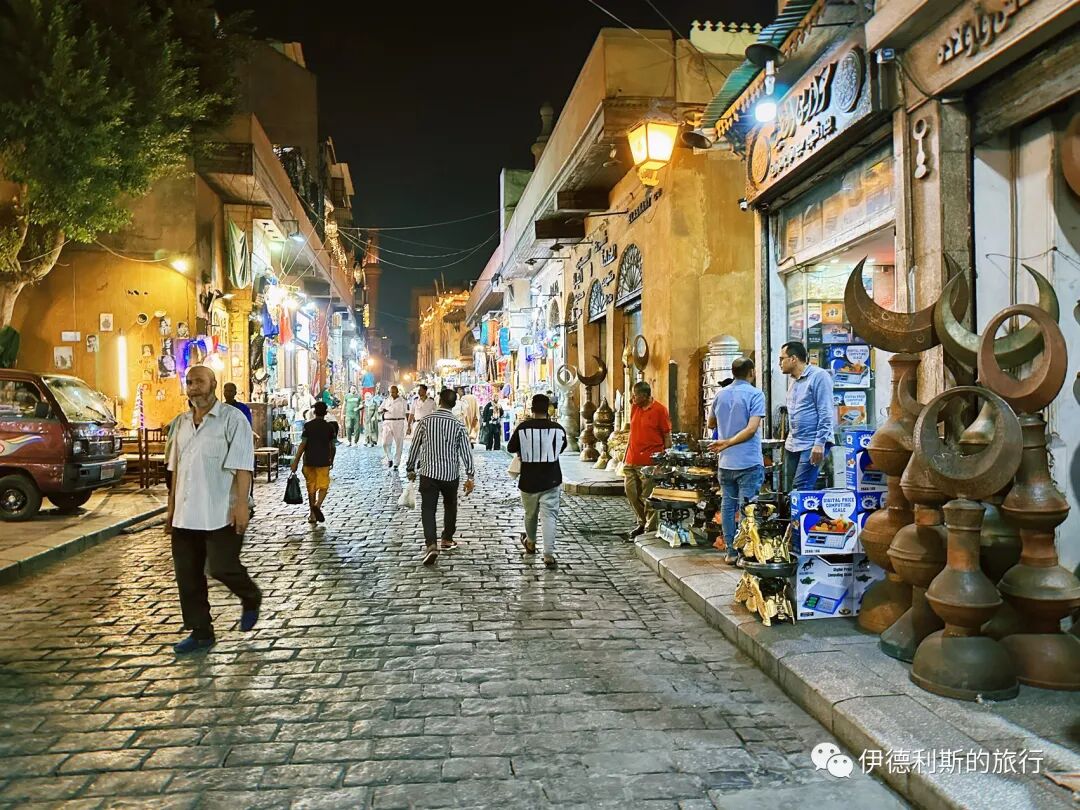
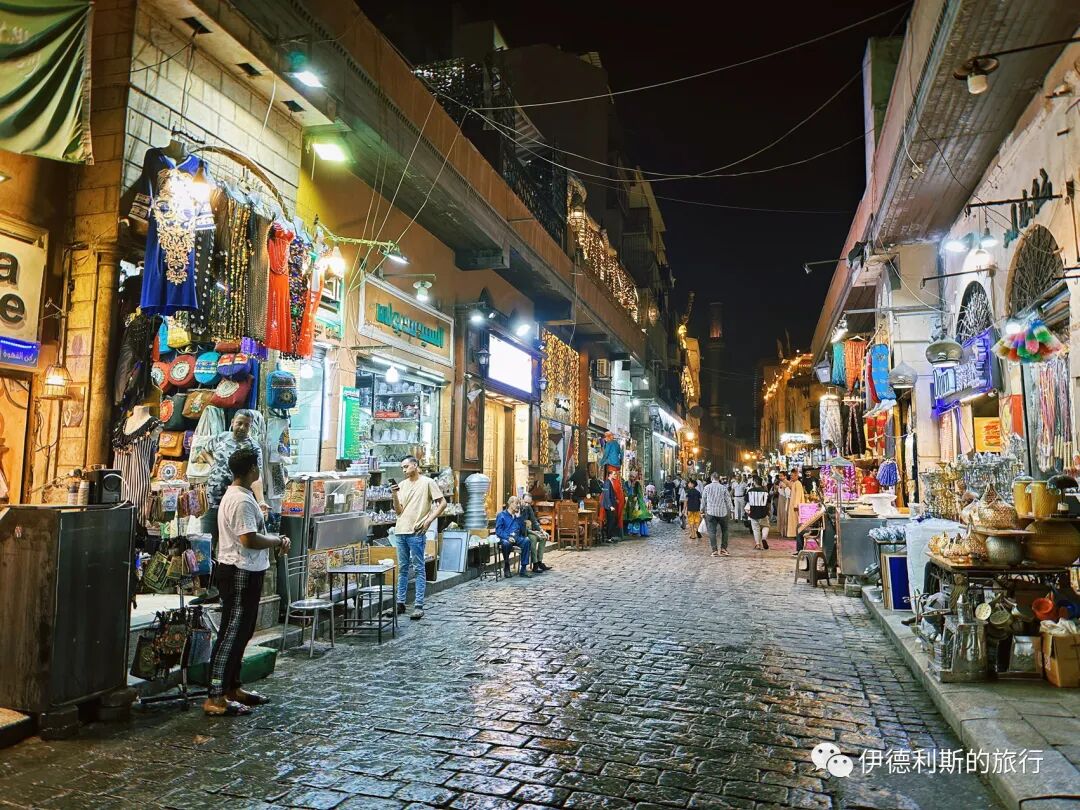
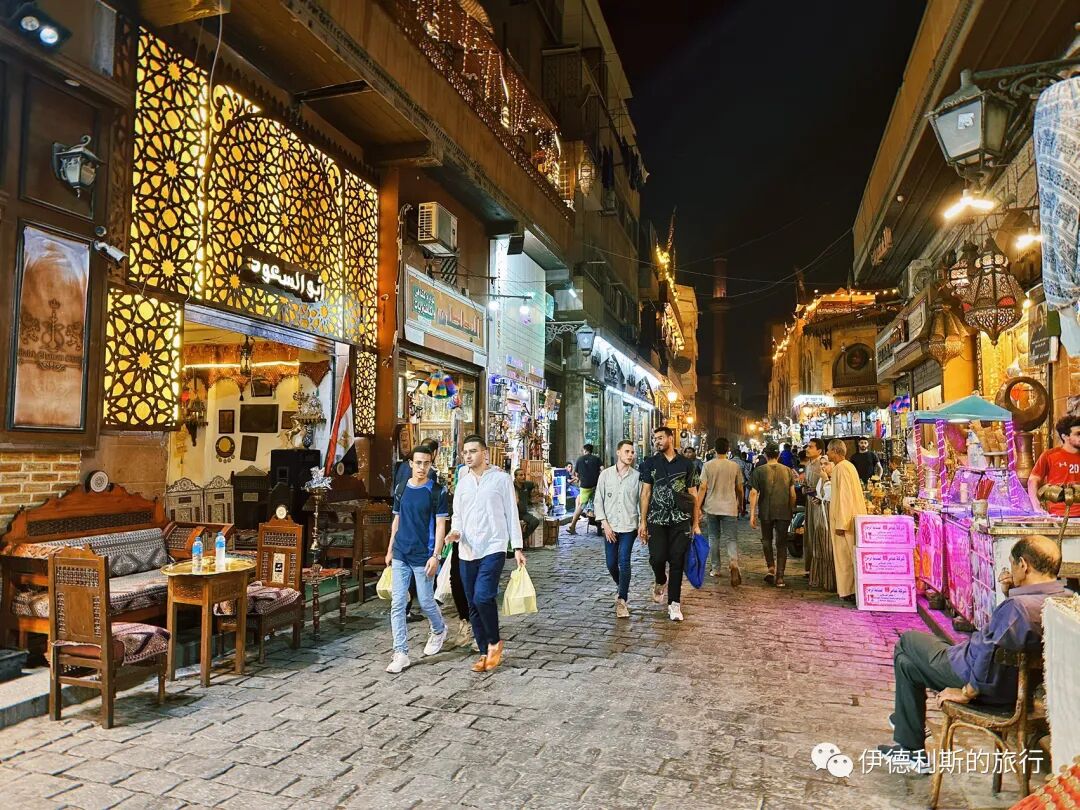
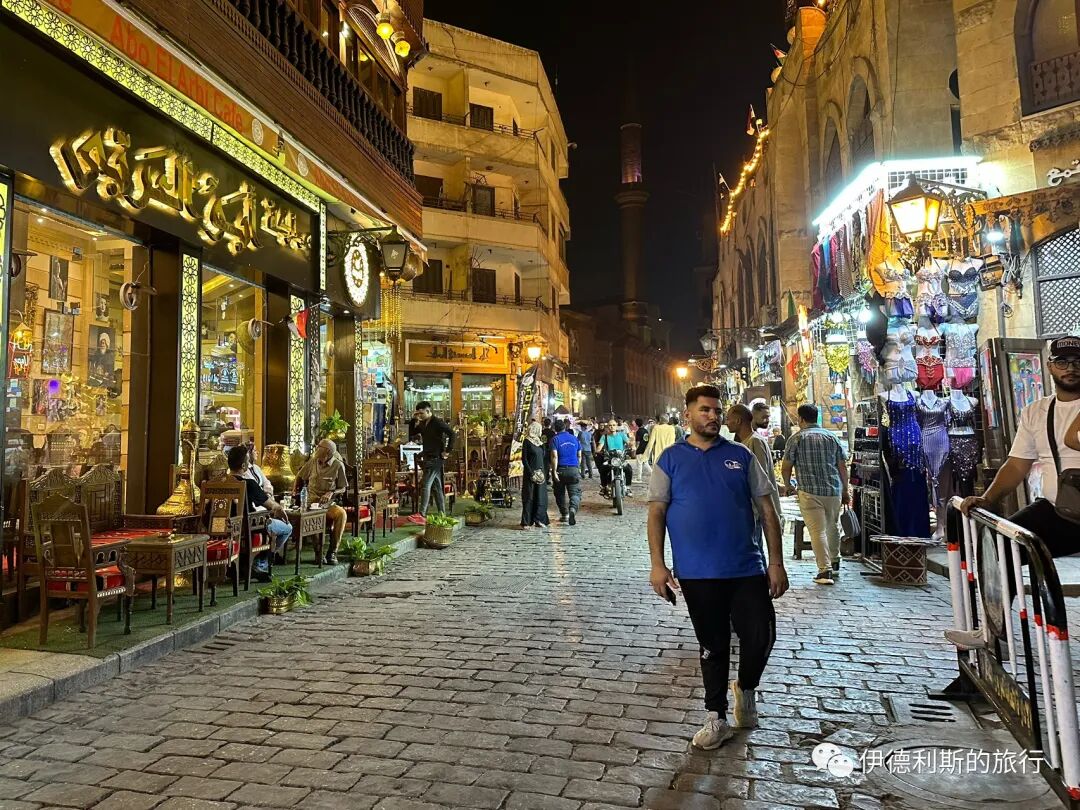
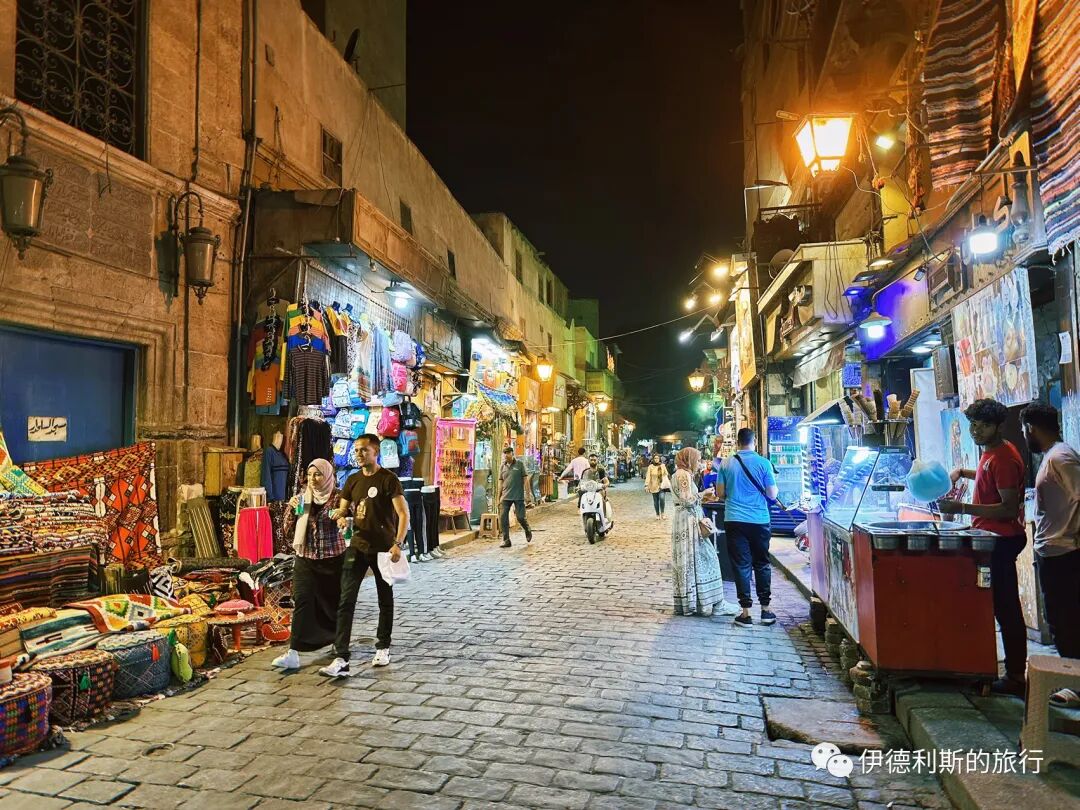
Khan el-Khalili market in the old city of Cairo at night; this is the liveliest place in the old city.
Khan el-Khalili market was first built in the 1380s by Barquq, the first Sultan of the Mamluk Burji dynasty. At that time, the Sultan sent his subordinate Jaharkas al-Khalili to demolish the Fatimid royal tombs and build the first structure of the market on the original site, which is why it has been called Khan el-Khalili ever since. Legend has it that al-Khalili dumped the remains of the Fatimid royal family into the garbage hills on the east side of the old city of Cairo.
The Mamluk dynasty continued to expand the market until the second-to-last Sultan, Al-Ashraf Qansuh al-Ghuri (reigned 1501-1516), rebuilt it on a large scale in 1511, finally forming the appearance we see today. The market built by al-Ghuri is quite similar in style to the Bedesten market of the Ottoman dynasty, with the most precious goods sold in the center and a roof that can be locked.
Today, Khan el-Khalili market is mainly a souvenir market for tourists, though a few craft workshops still operate inside, along with some famous cafes.
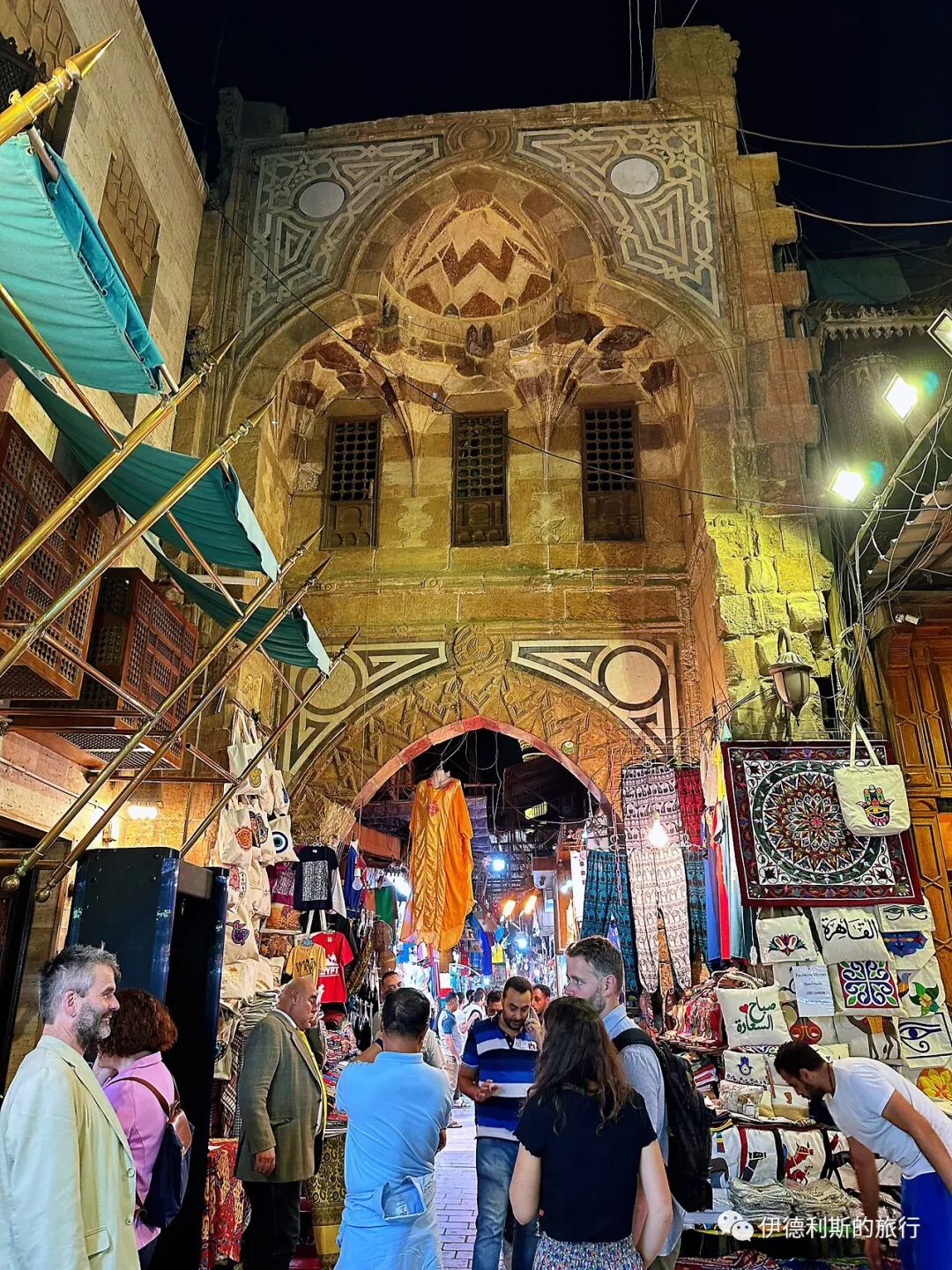
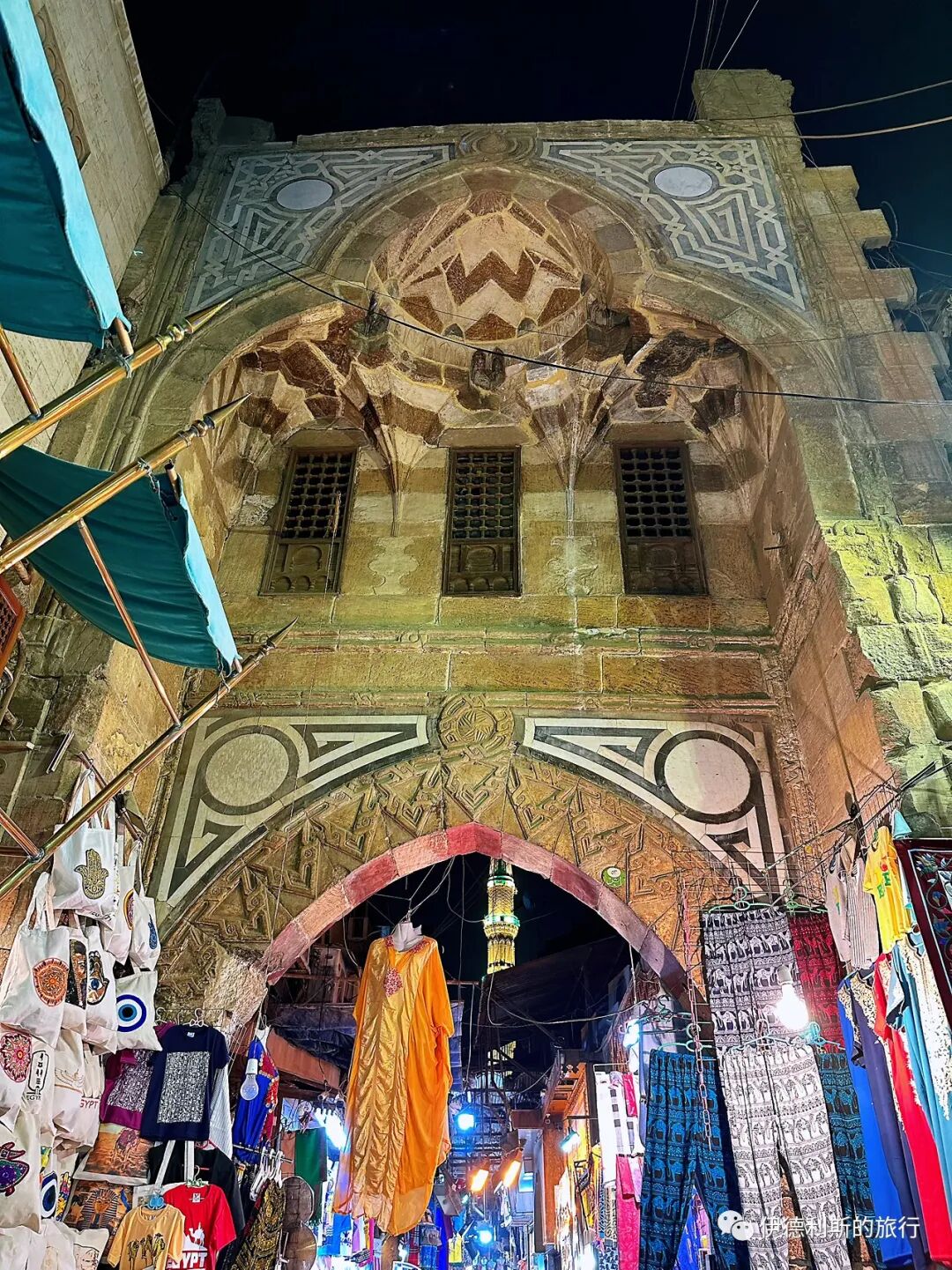
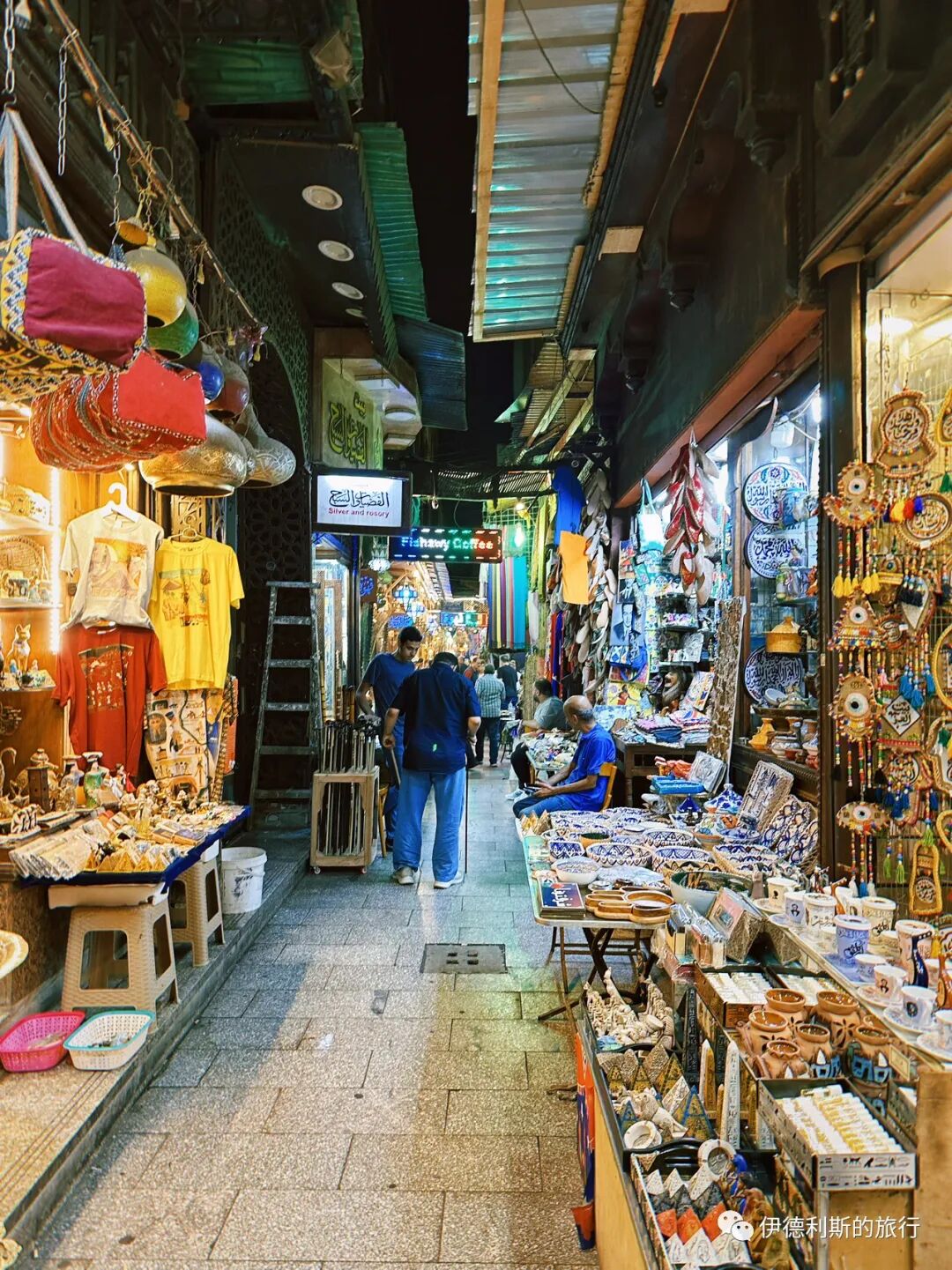
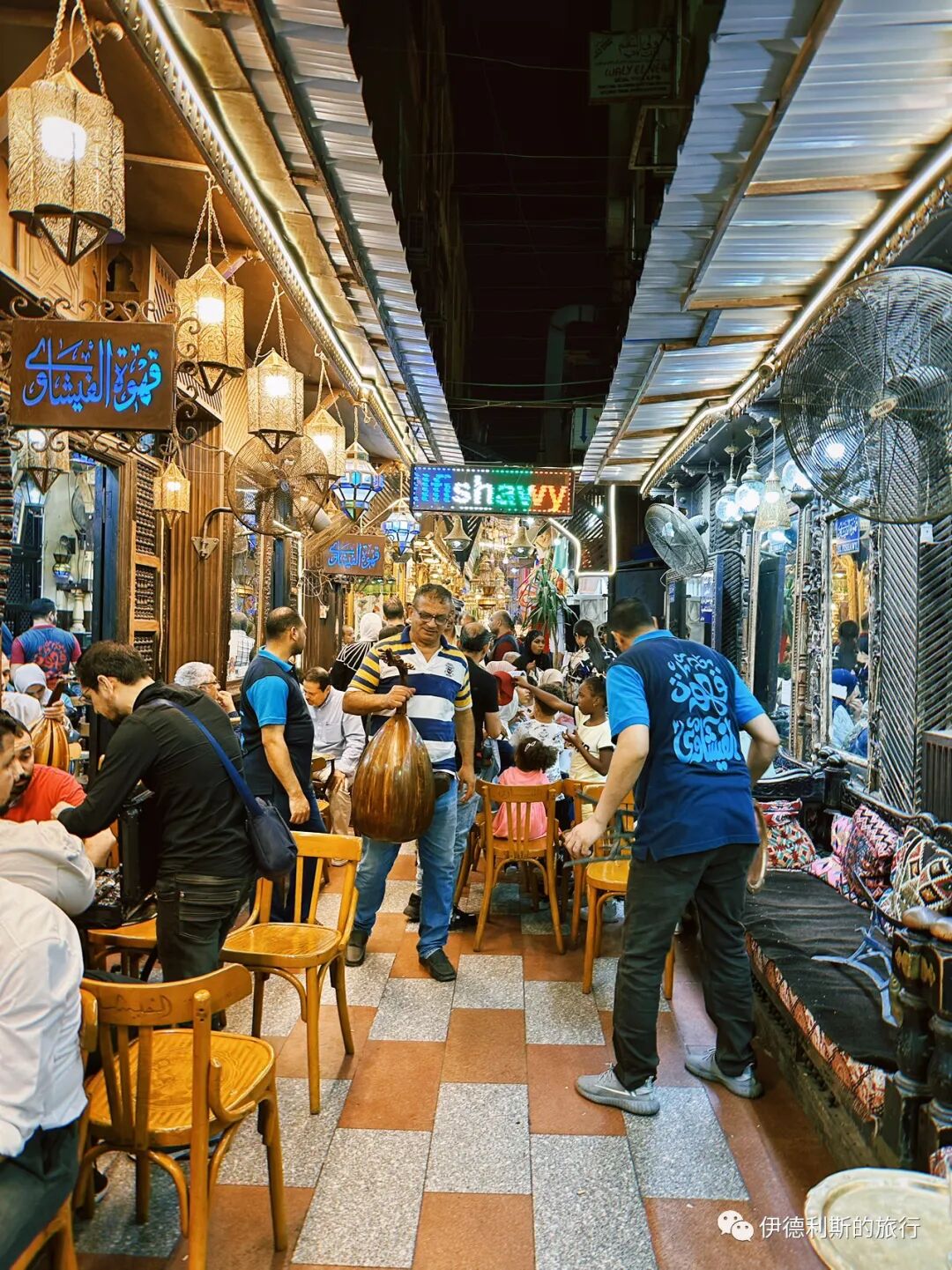
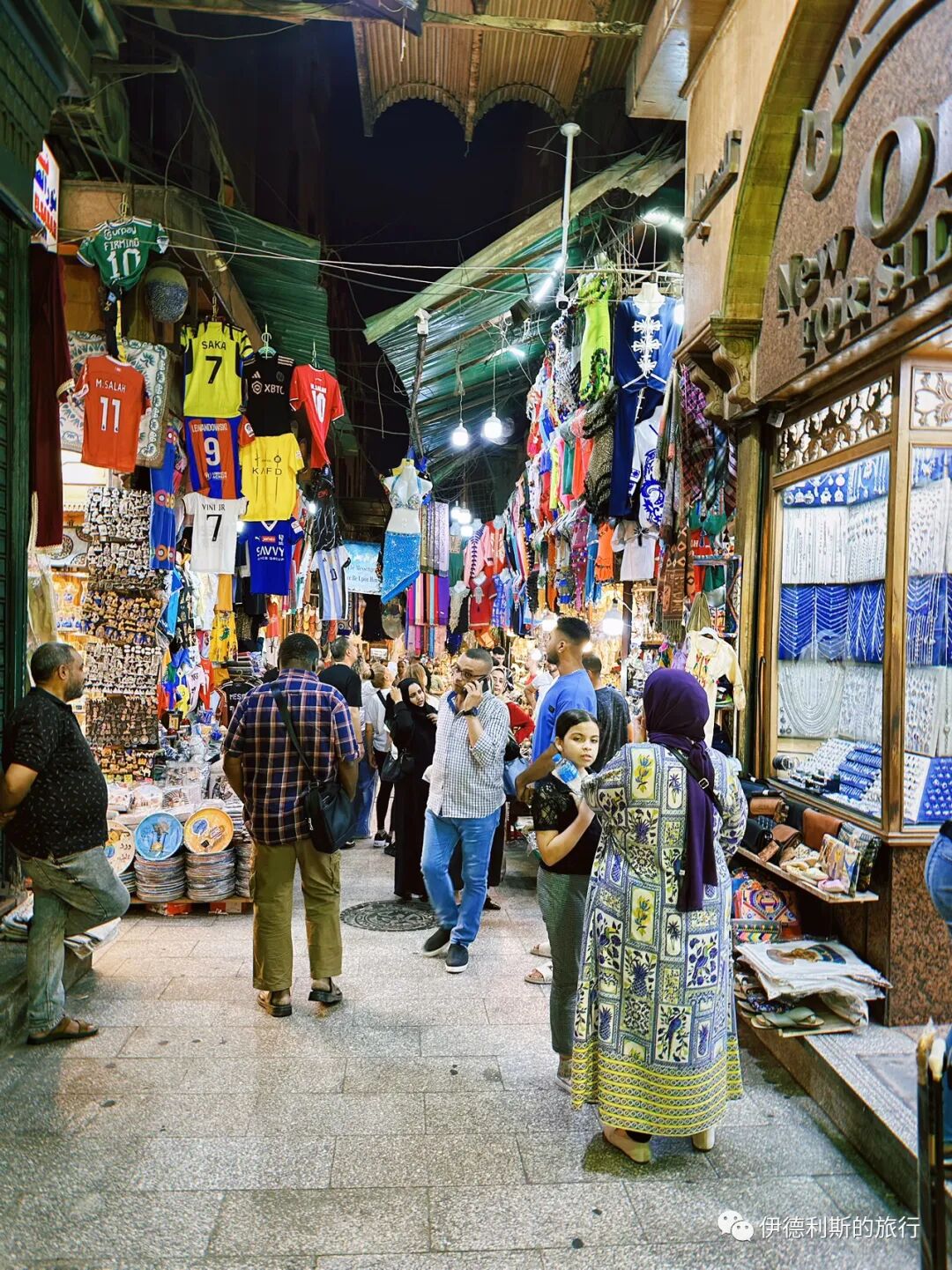
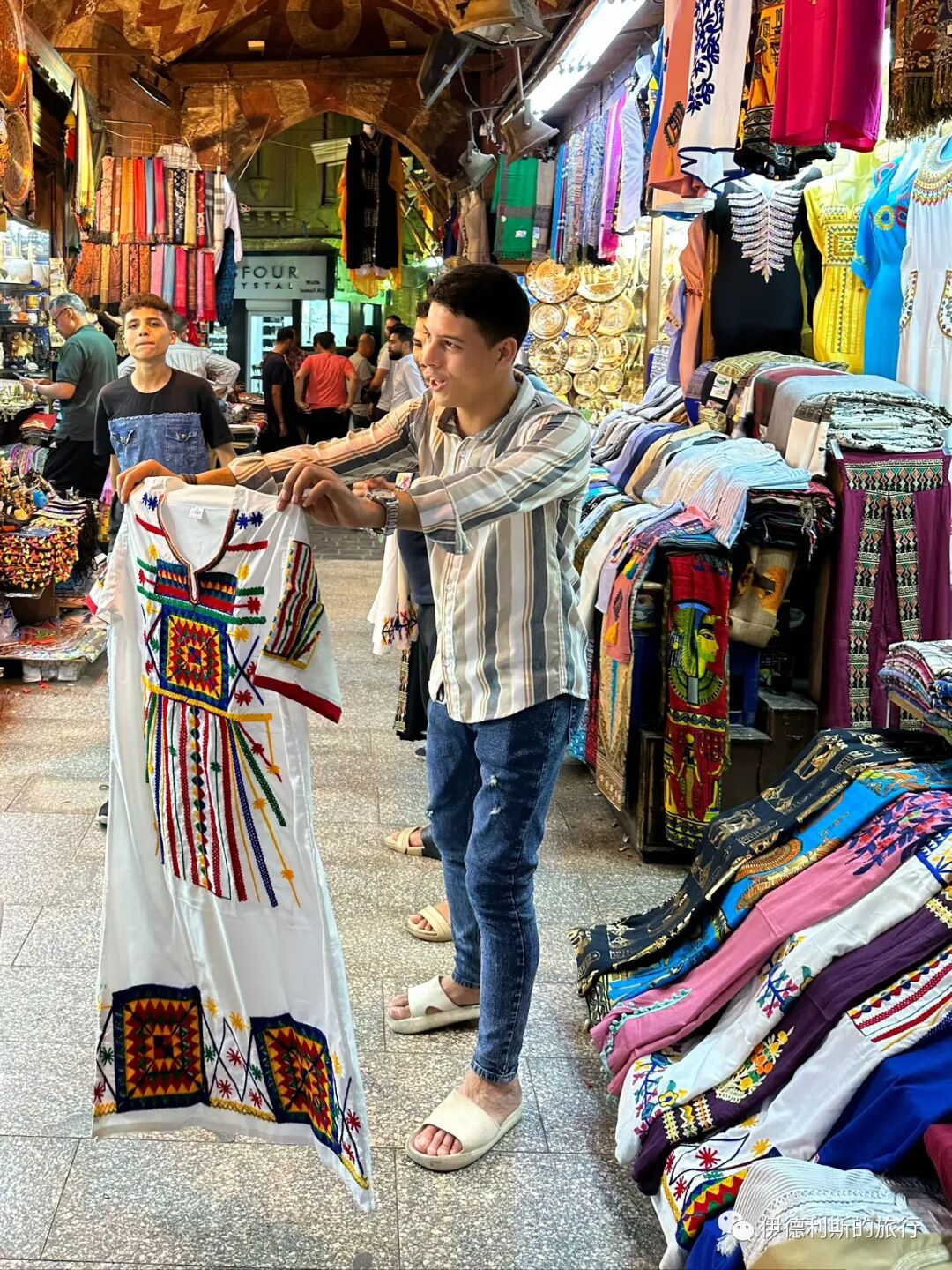
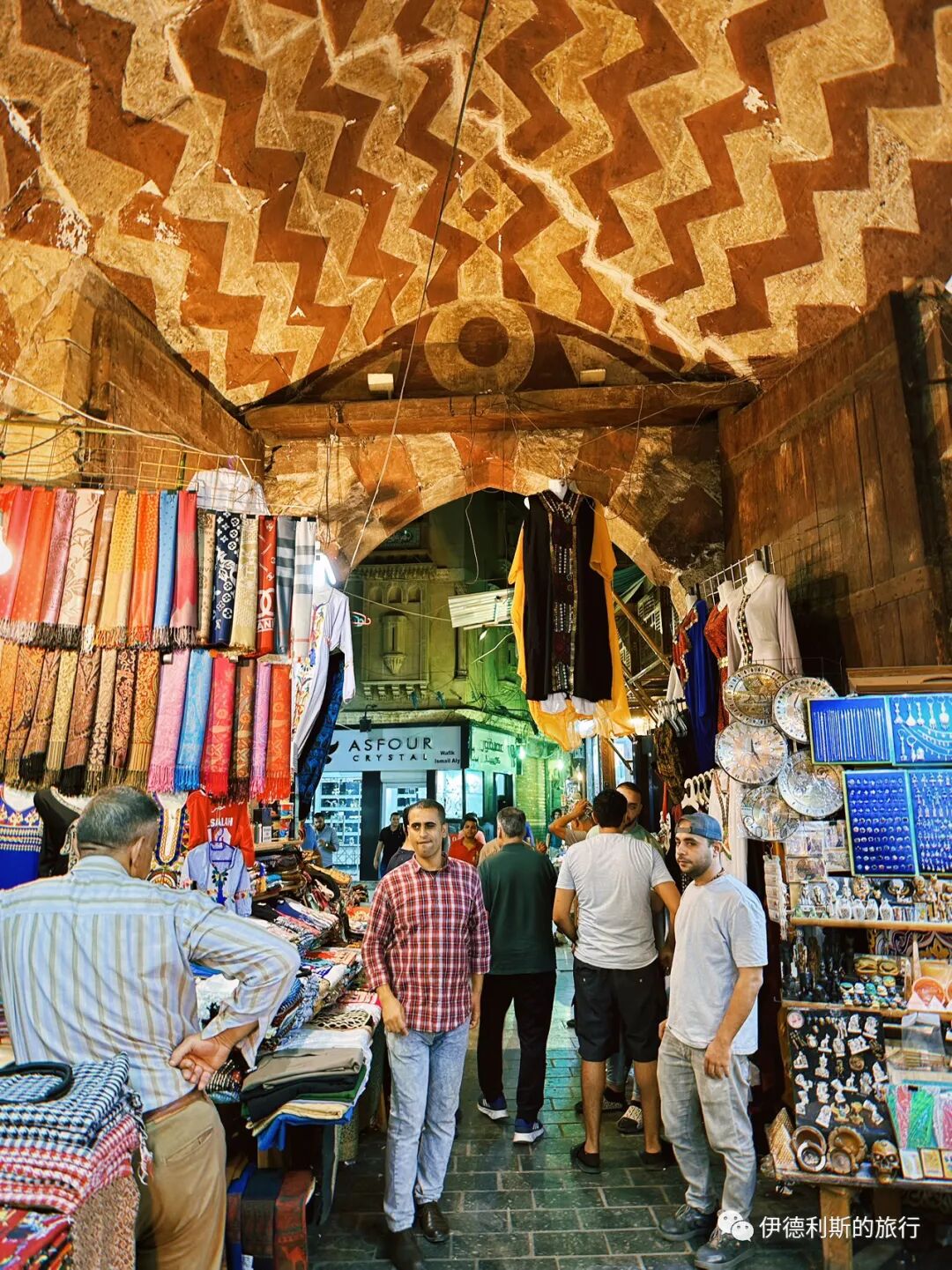
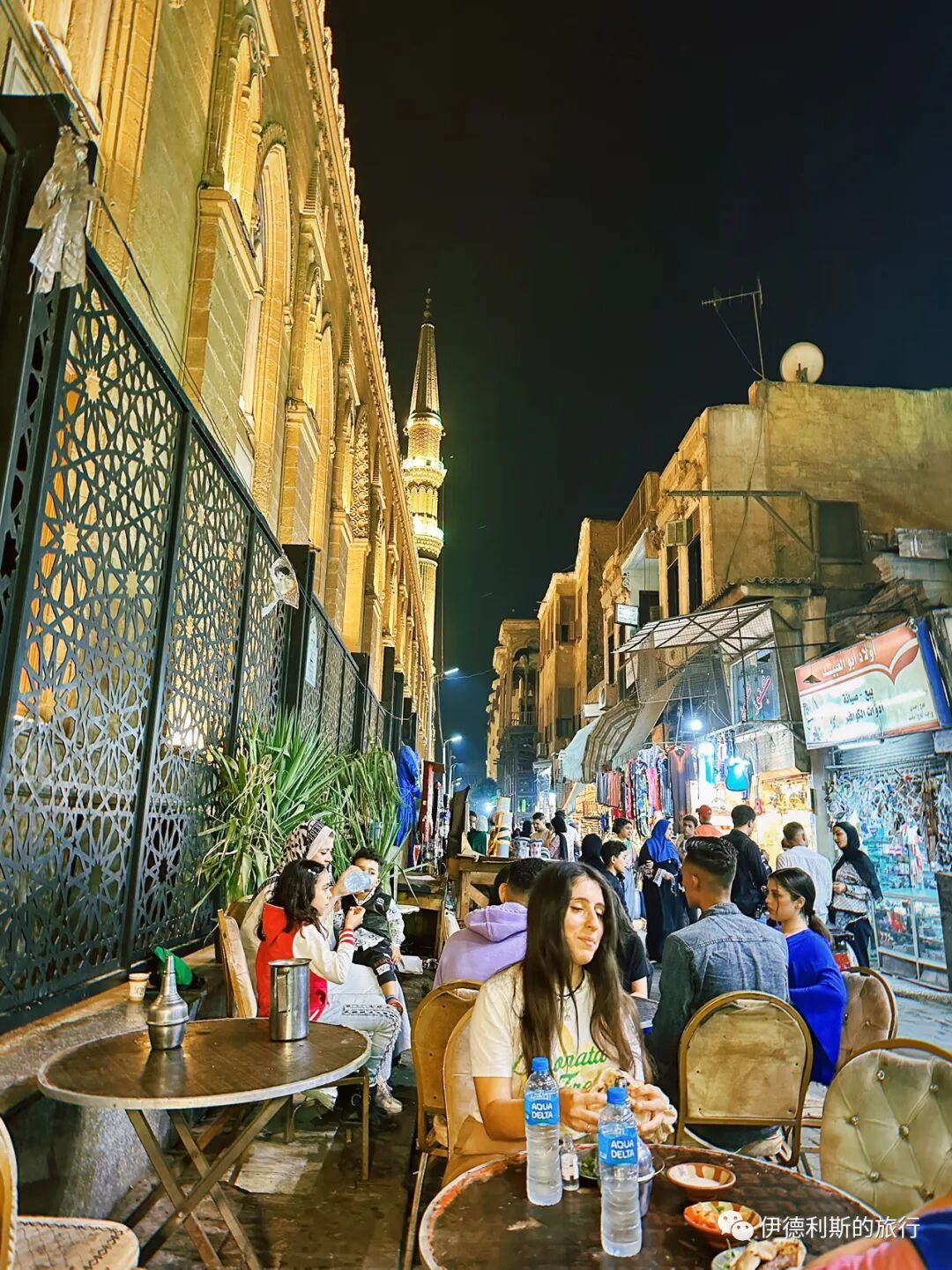
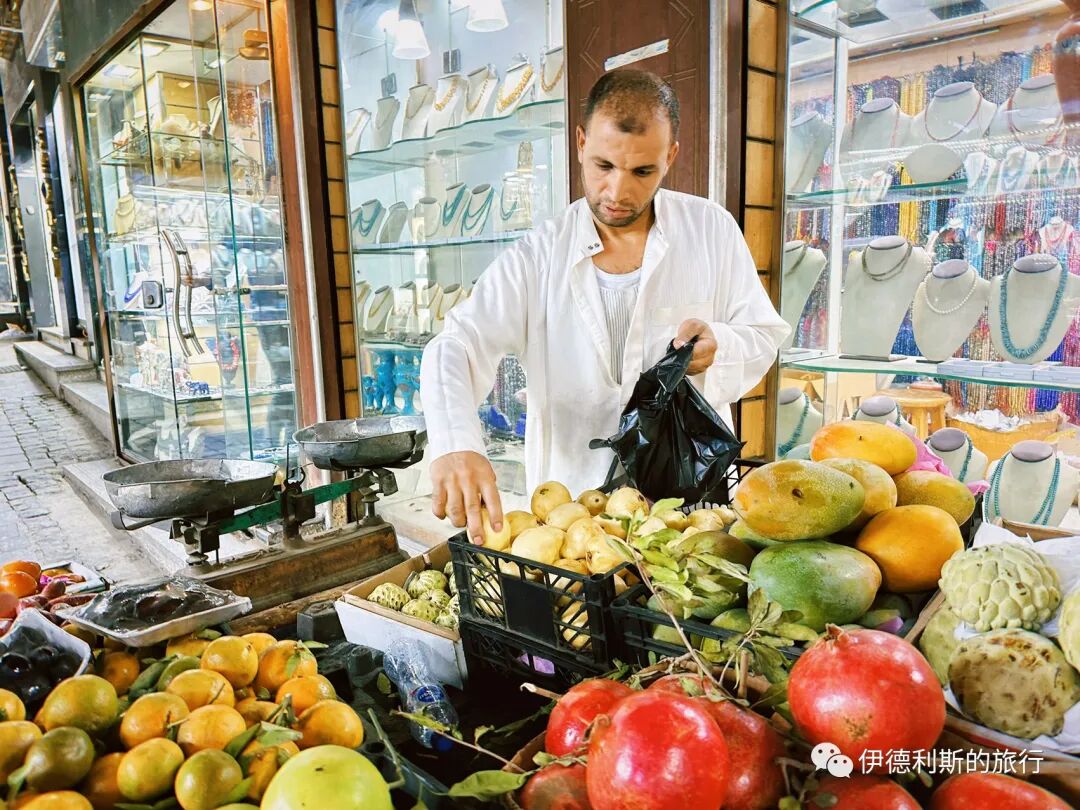
Roasted corn on the streets of Old Cairo.
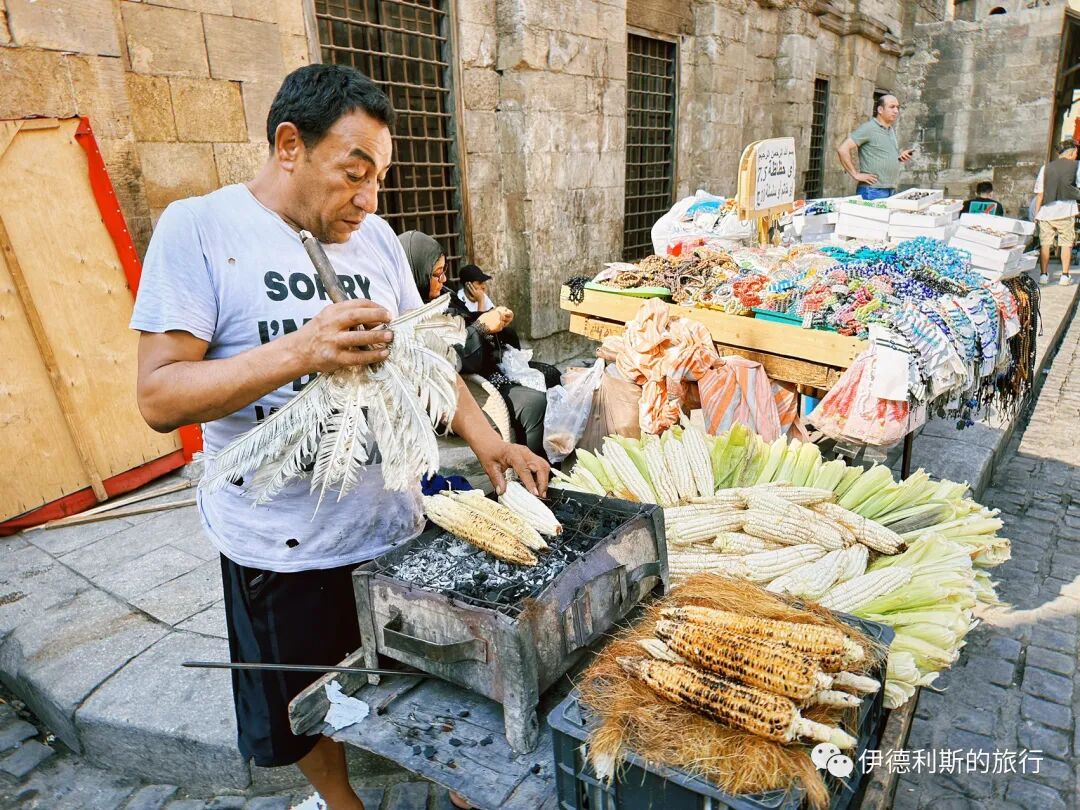
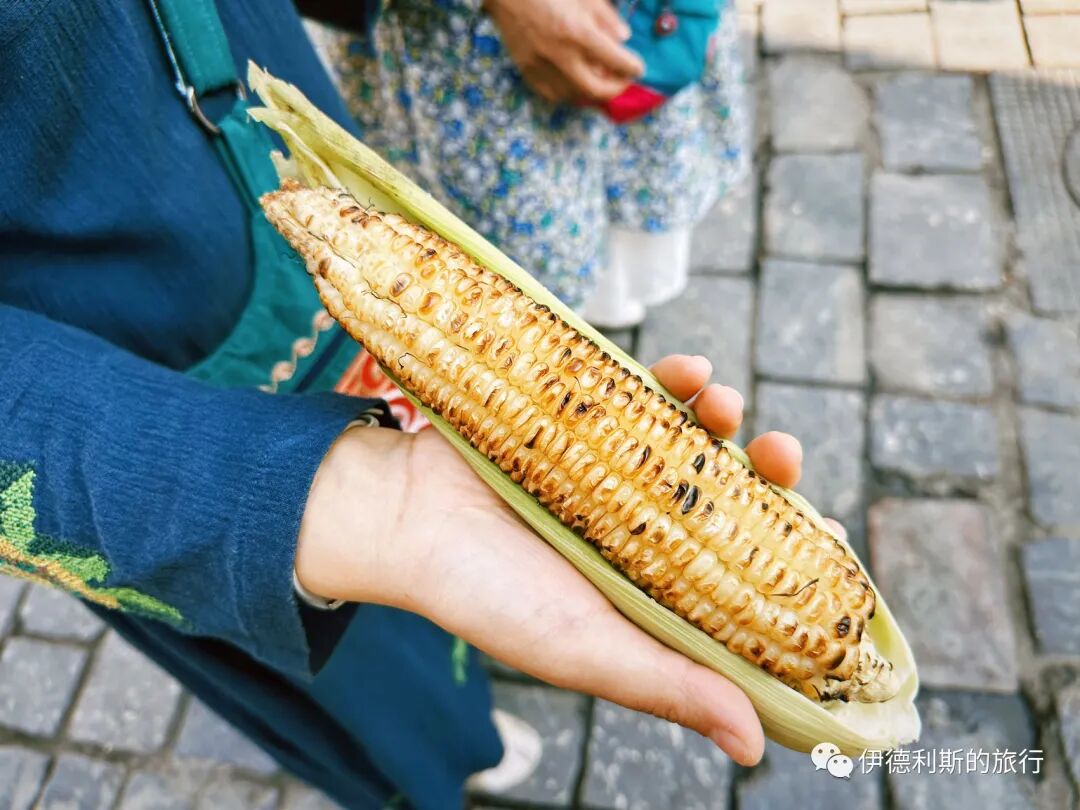
Hibiscus tea (karkadeh), a drink that has lasted since the time of the pharaohs, as the hibiscus flower is native to Africa.
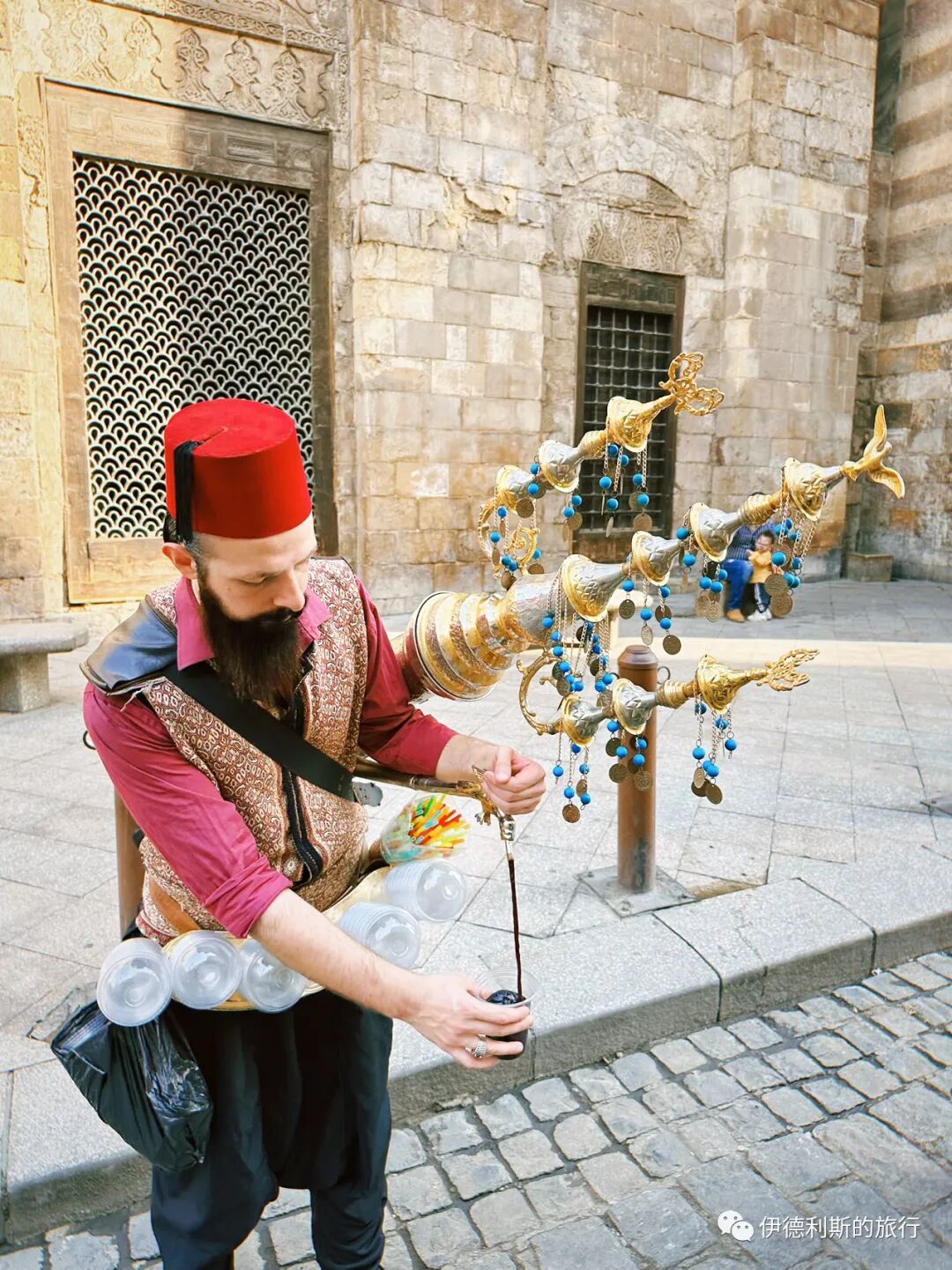
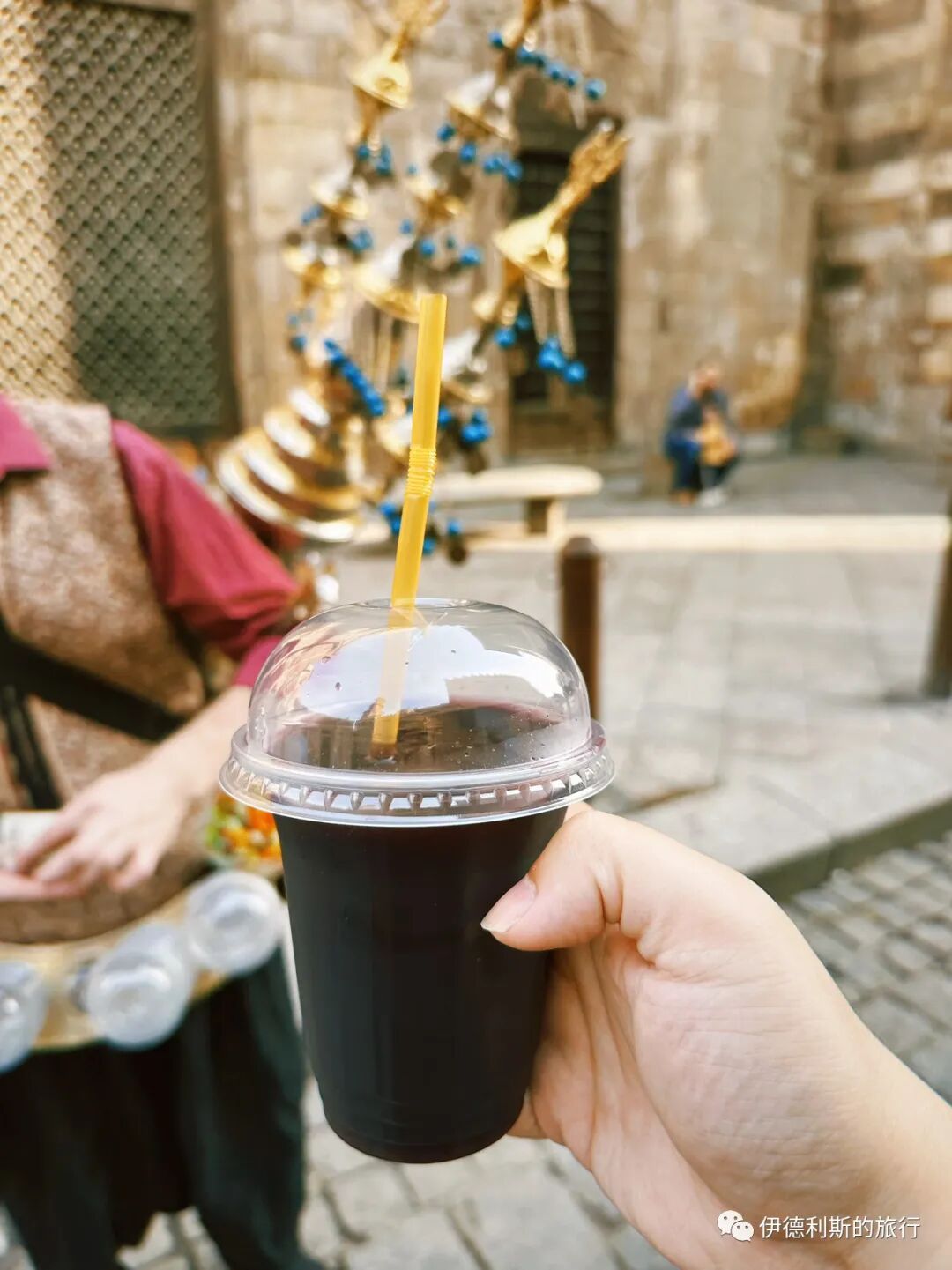
Roasted chicken served with tahini sauce (tehina, a mix of sesame paste, lemon juice, and garlic) and village salad (salata baladi).
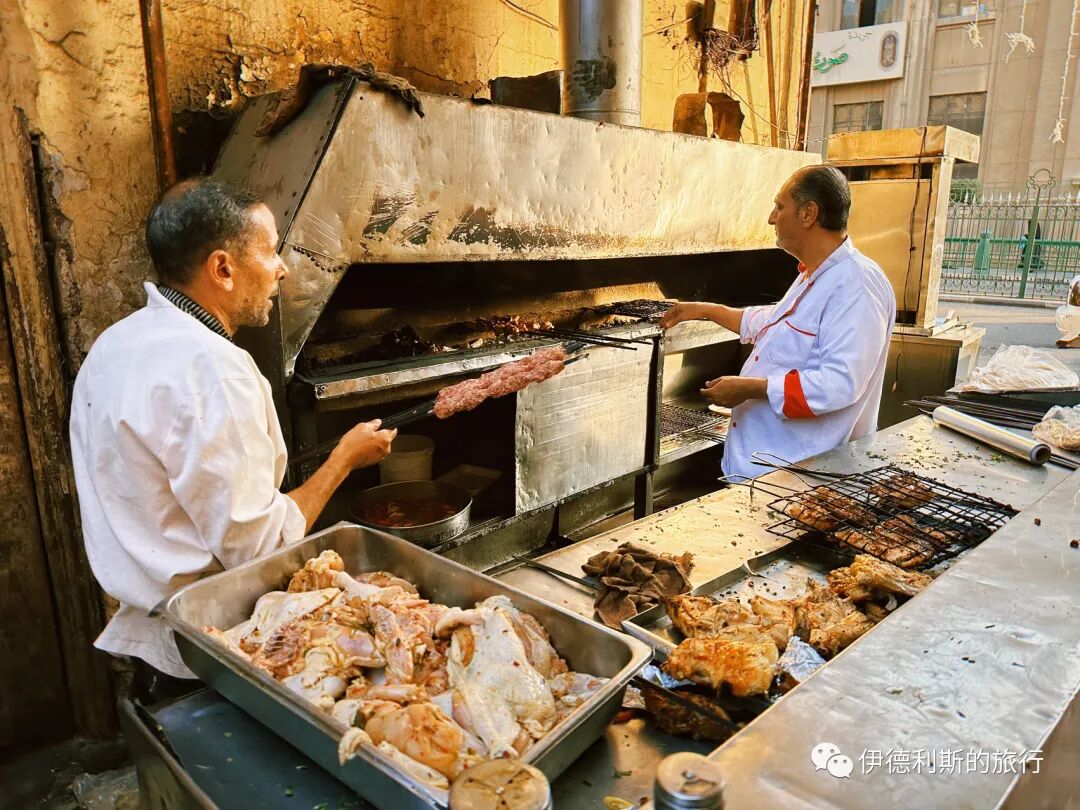
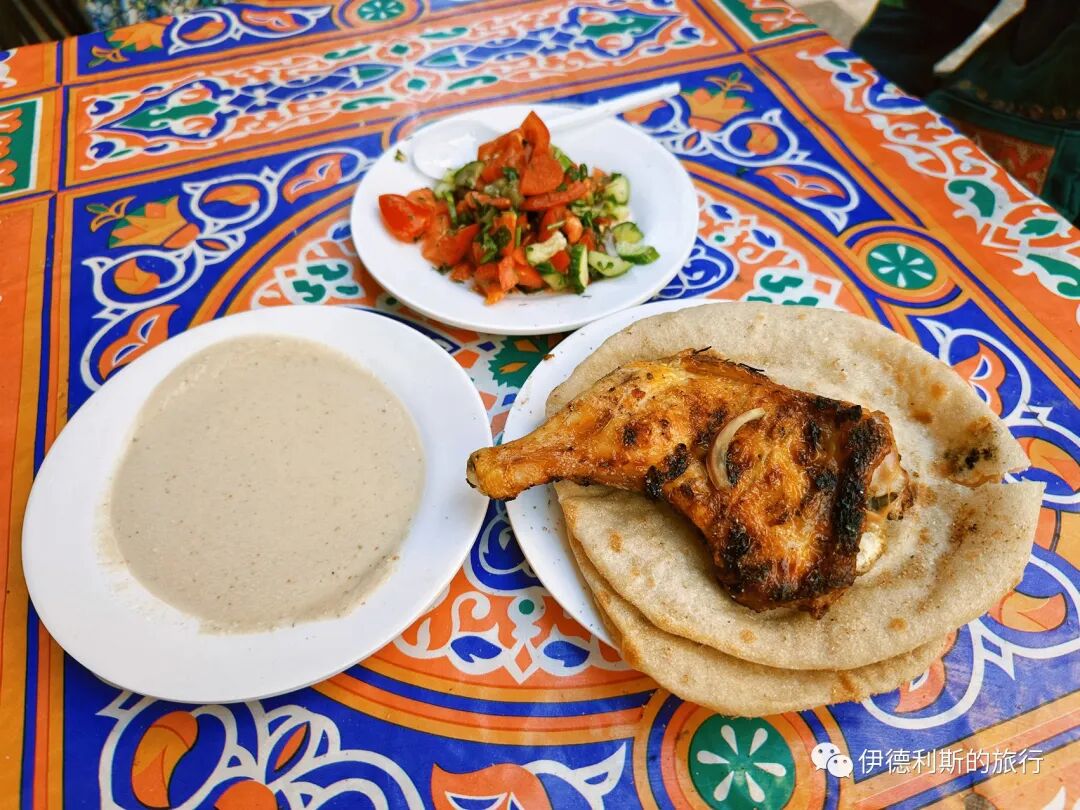
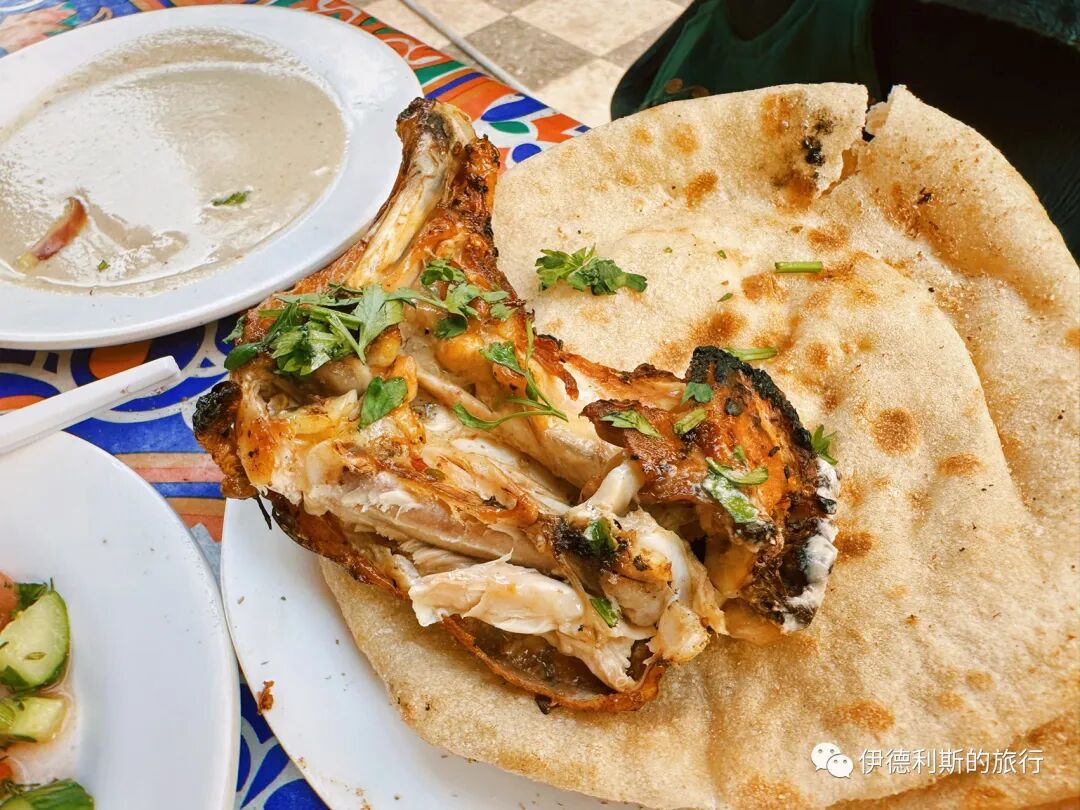
Pastry shop.
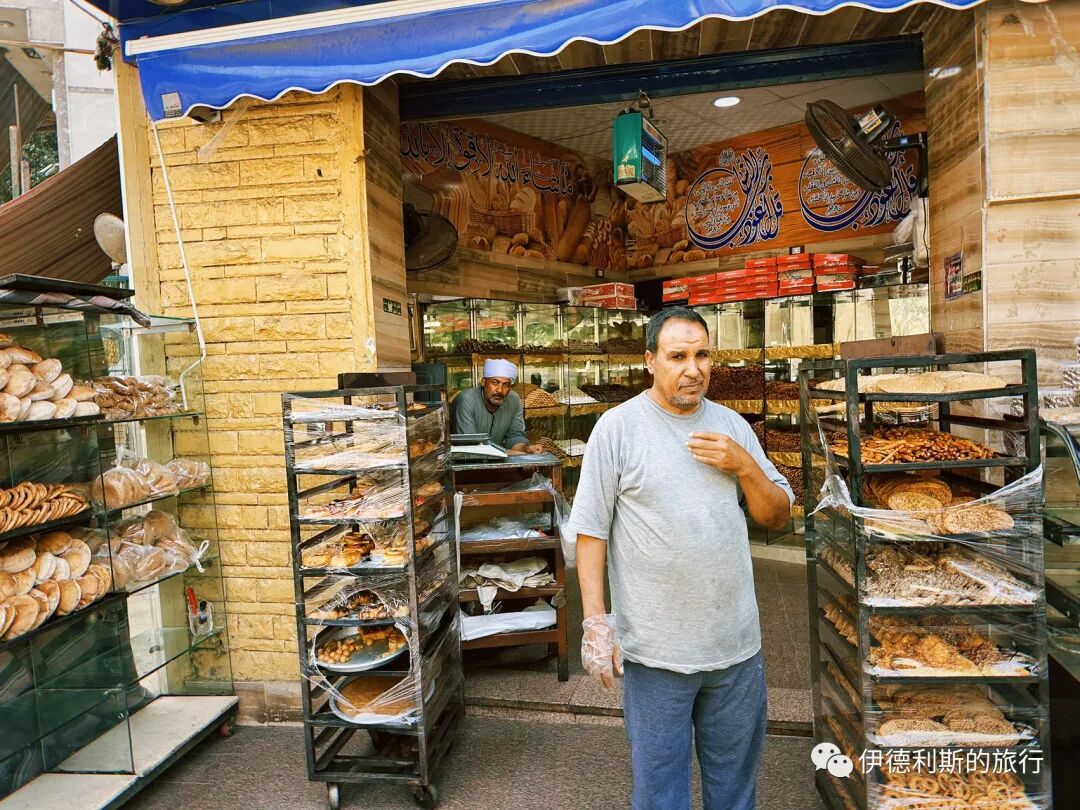
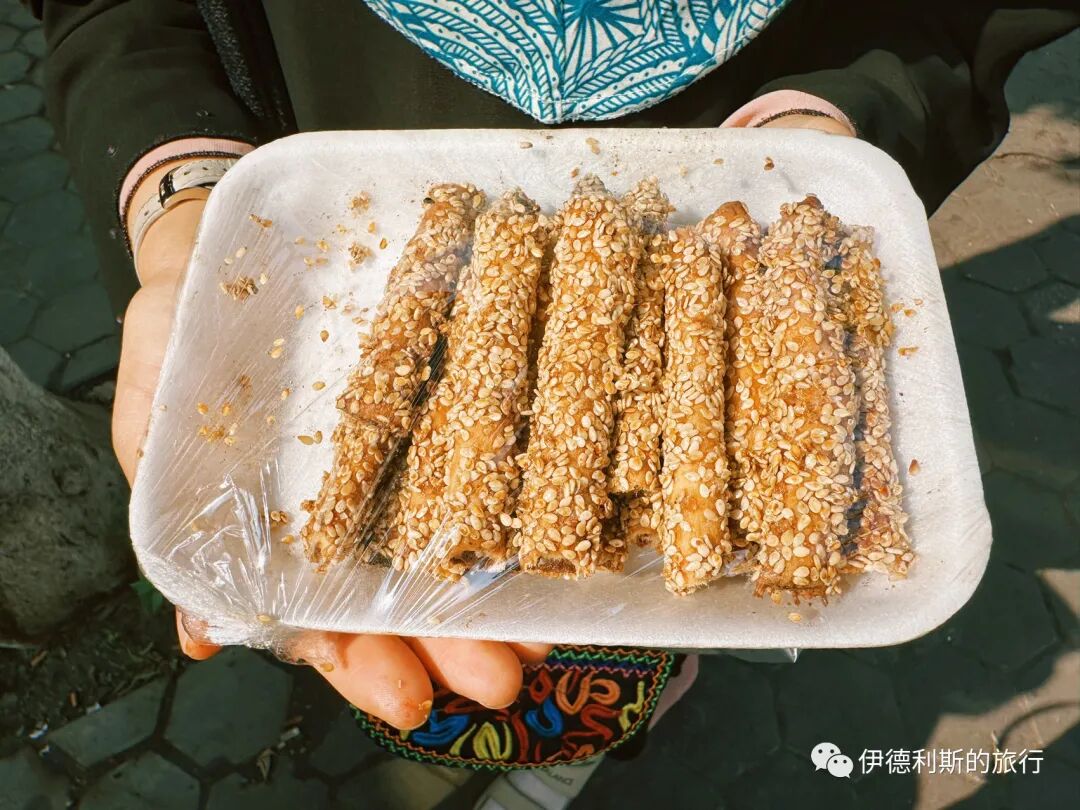
At a restaurant in an alley across from the National Museum of Egyptian Civilization, I had beef tendon rice and pasta in white sauce, and drank lemon mint water.
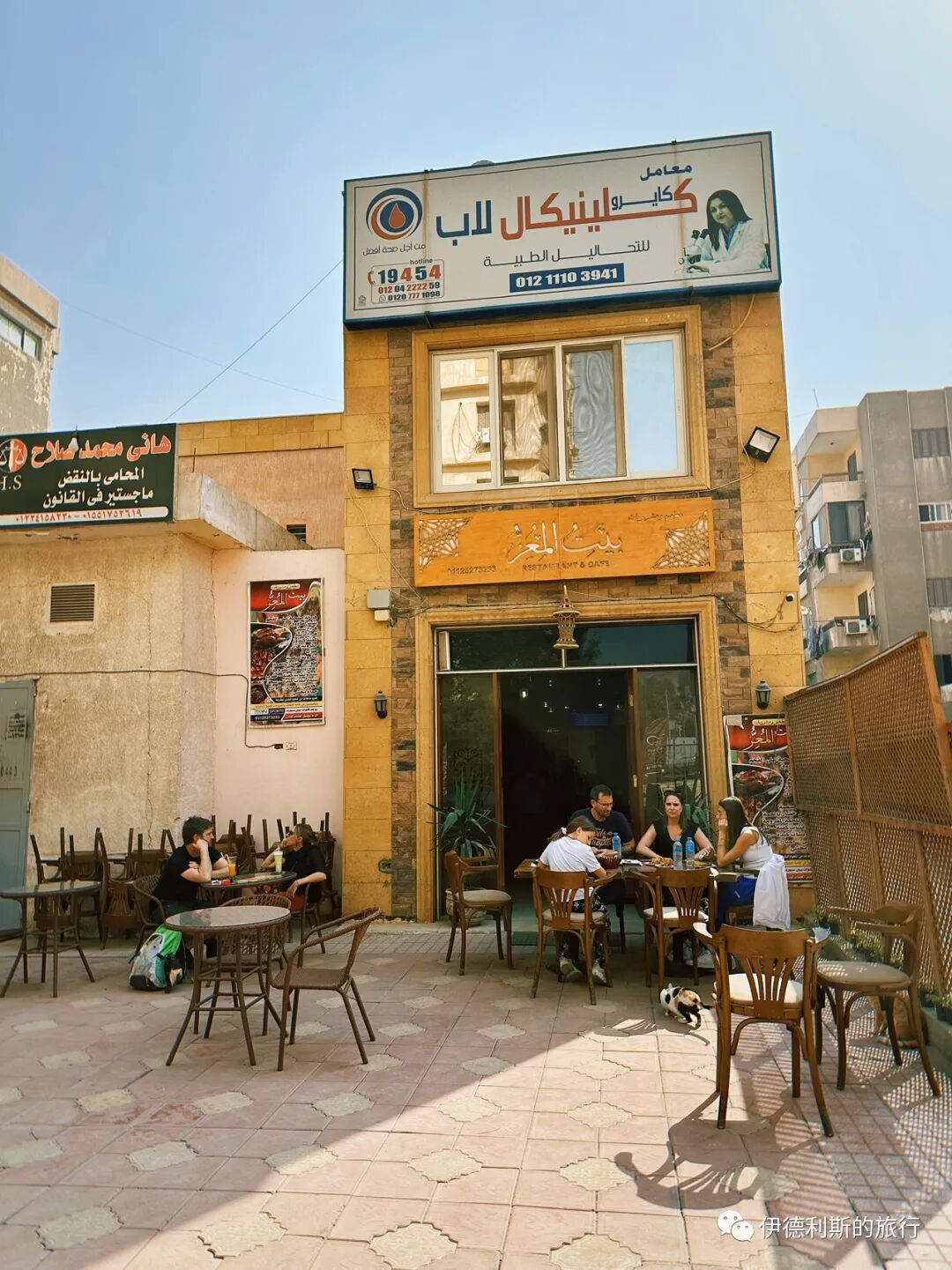
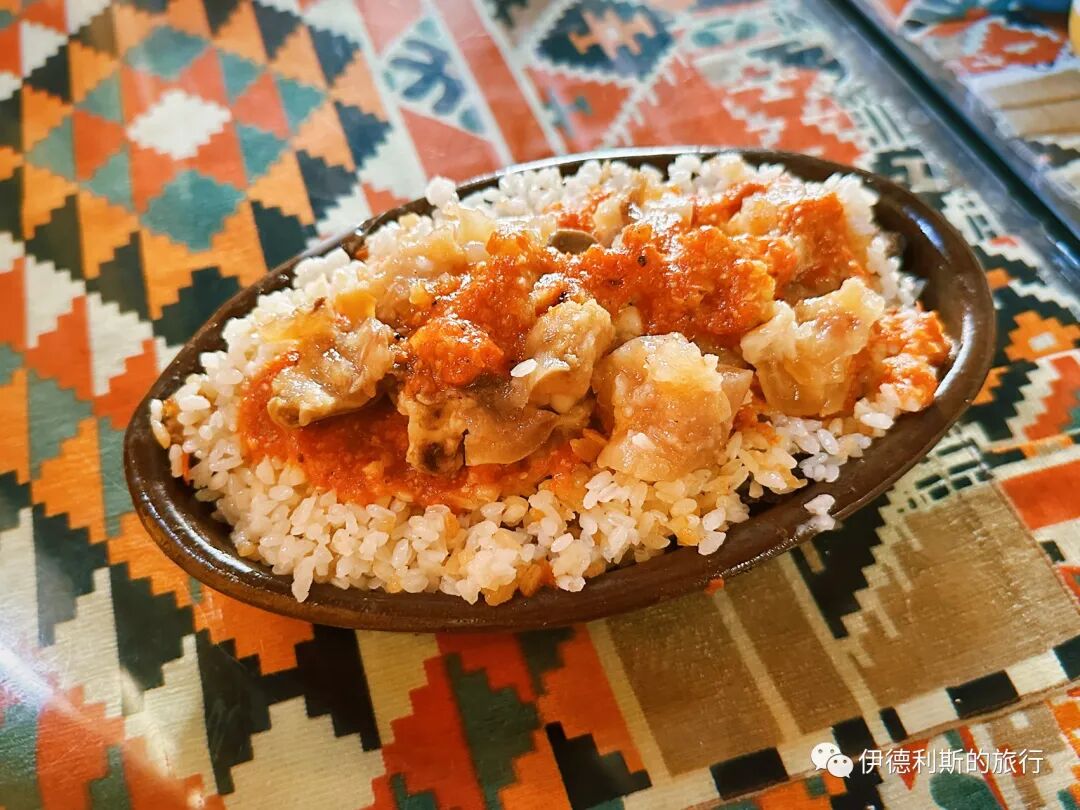

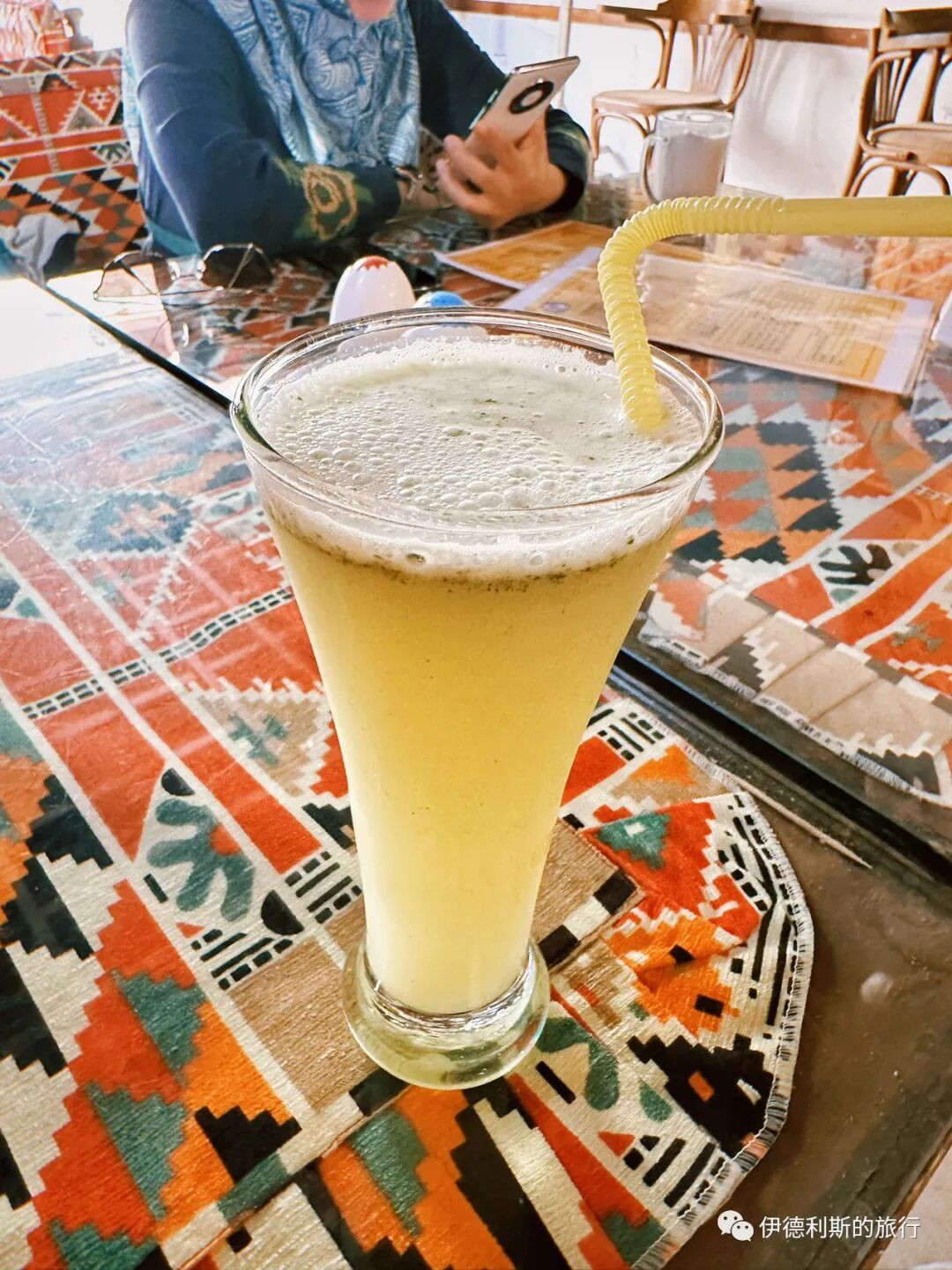
Koshary is the most classic street snack in Cairo. It is a mix of spaghetti, macaroni, Egyptian rice, and lentils, topped with tomato sauce, garlic sauce, chickpeas, and fried onions. As early as the ancient Egyptian period, people ate a dish called koshir made from lentils, wheat, chickpeas, garlic, and onions cooked in clay pots. It only gradually developed into the modern koshary after the introduction of pasta and tomatoes in the 19th century. This snack is vegan and very cheap, often called the food of the poor.


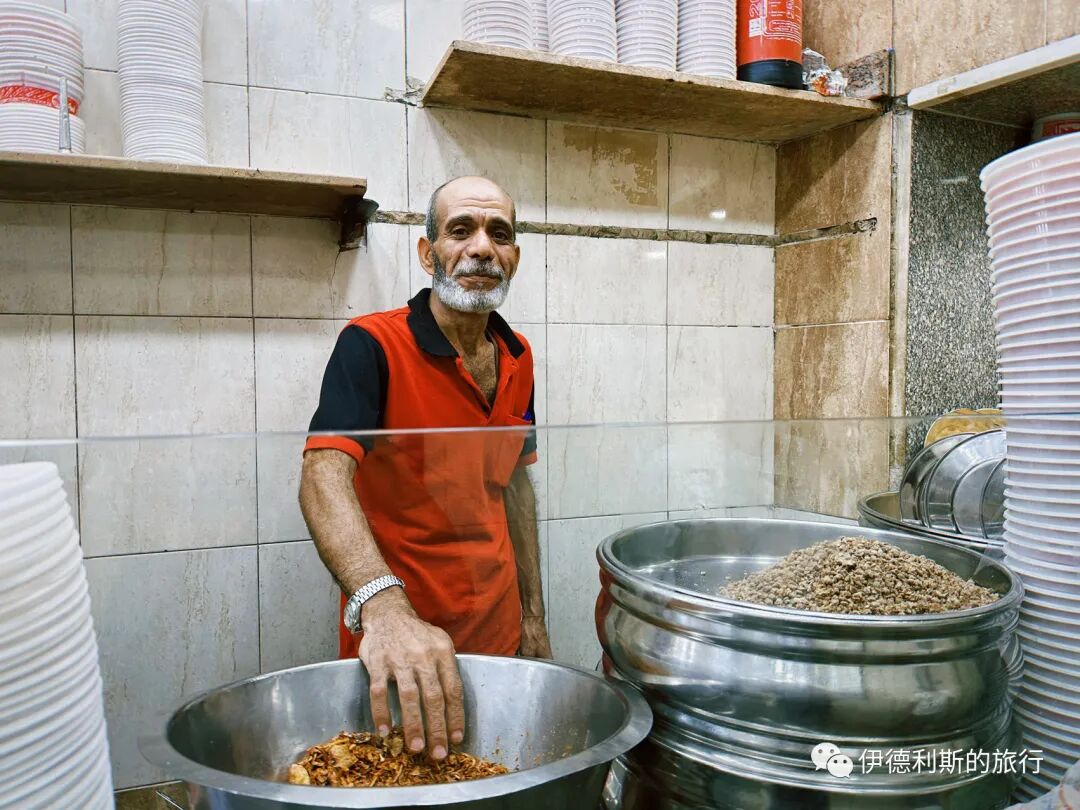
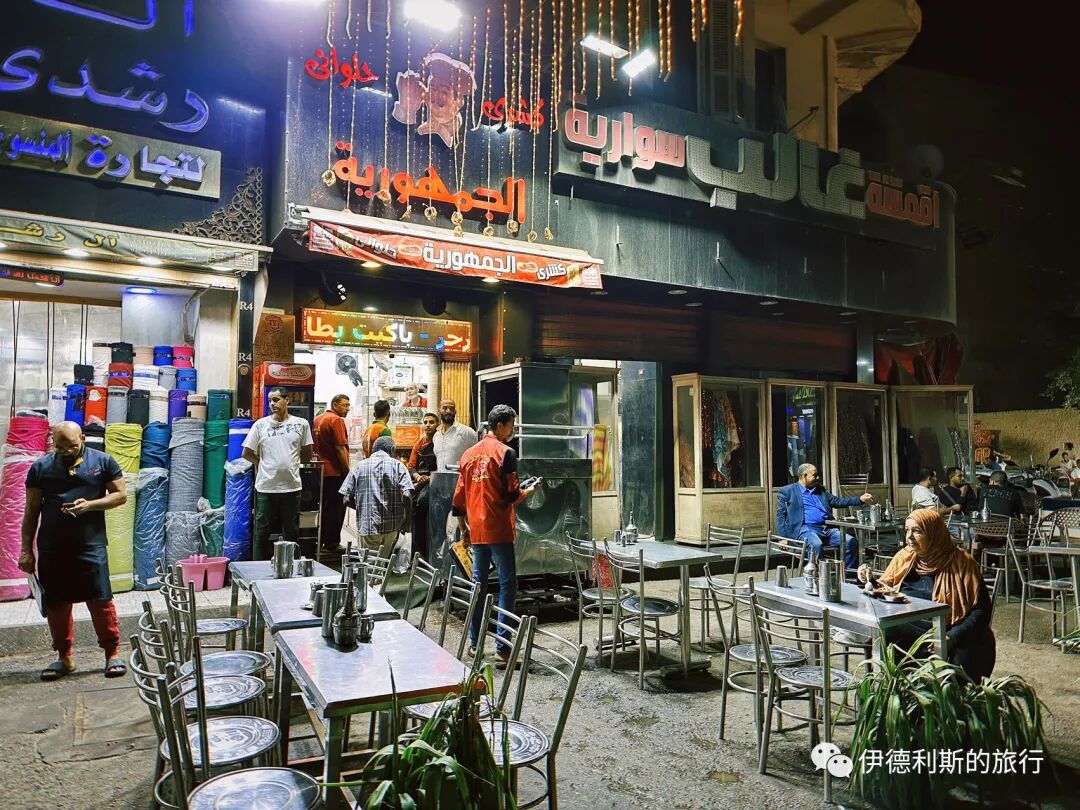
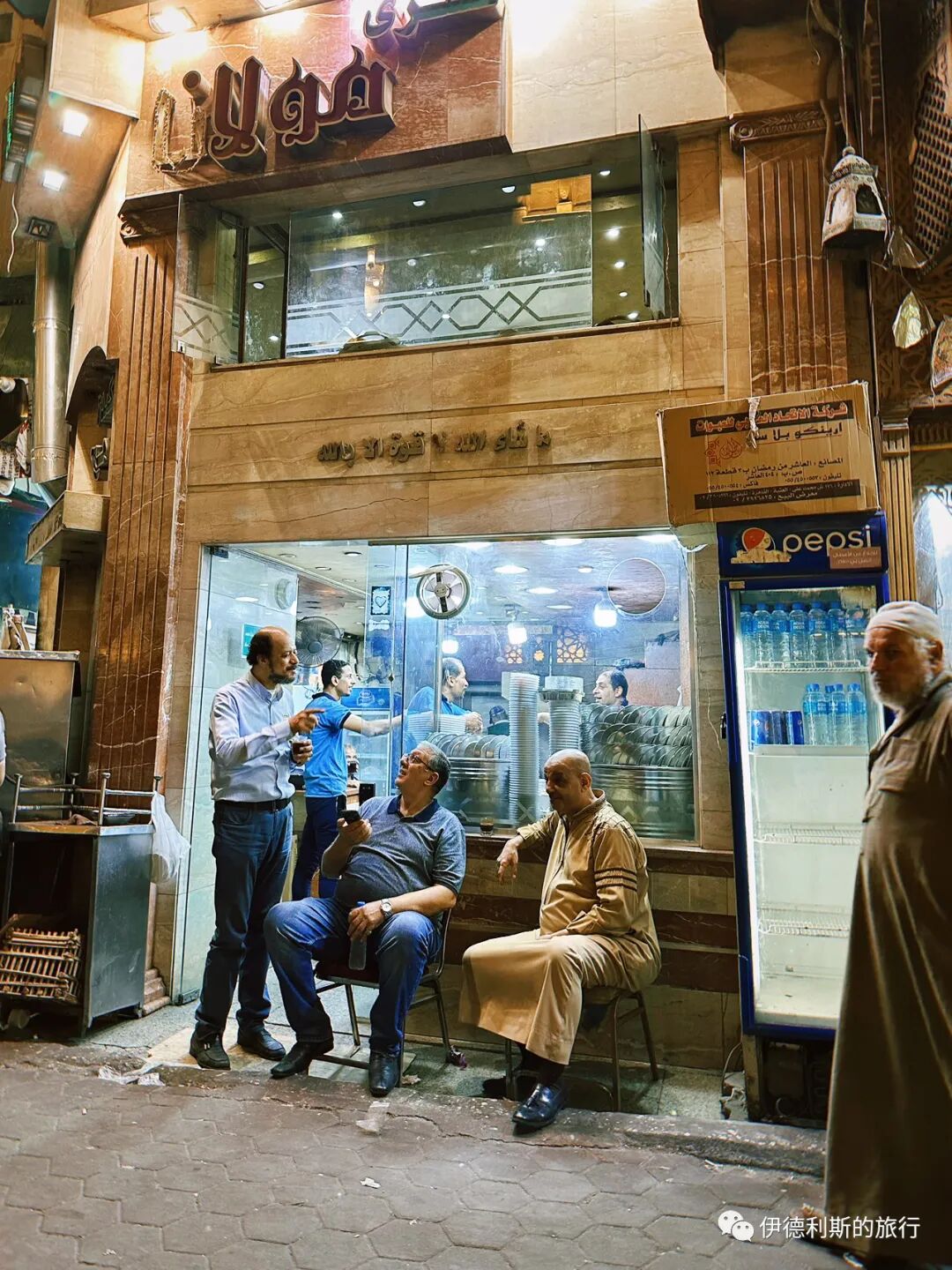

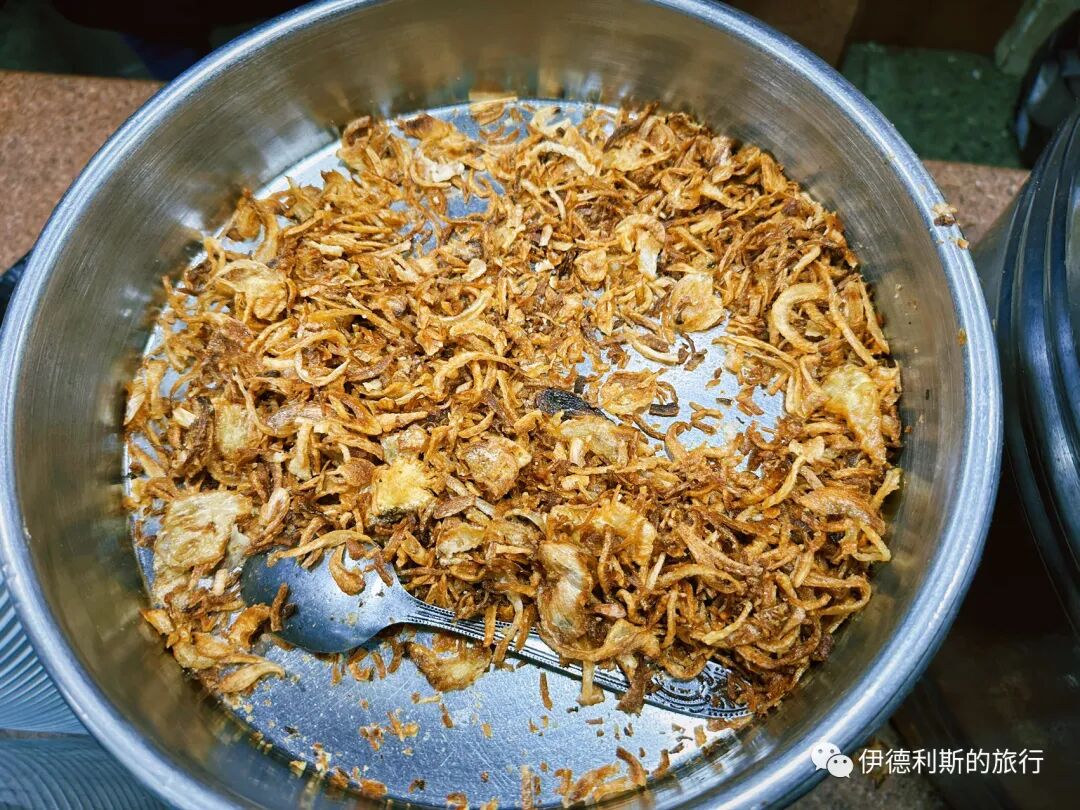
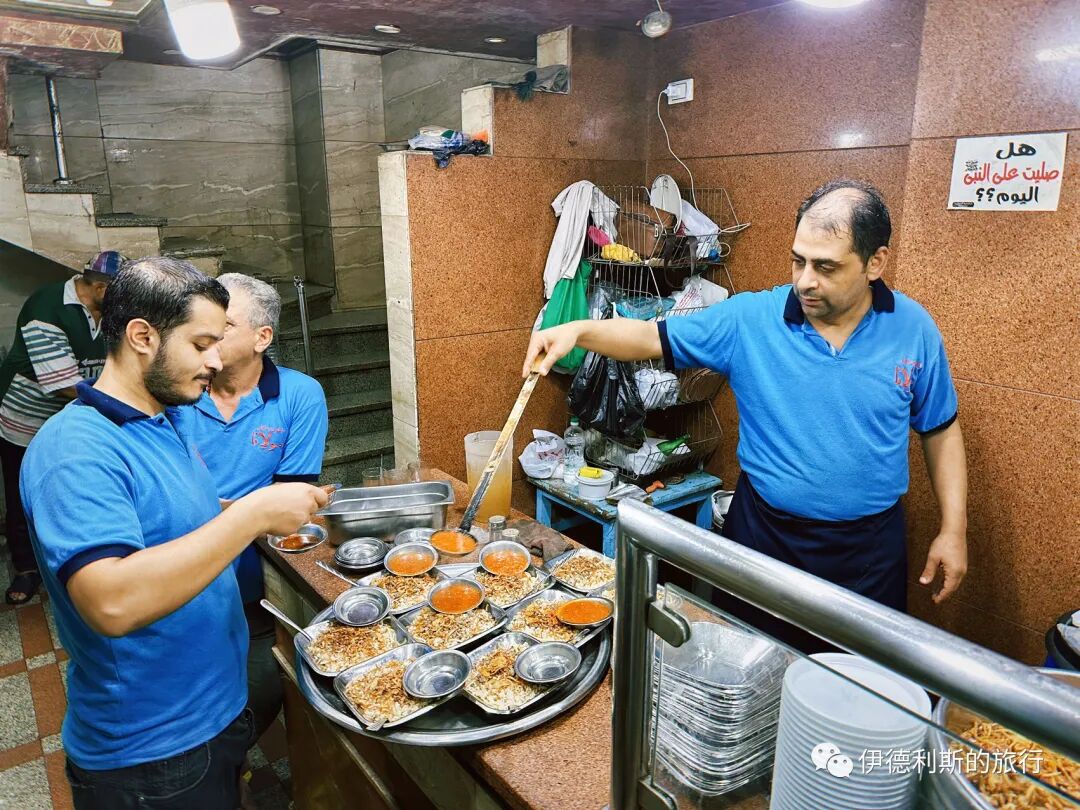
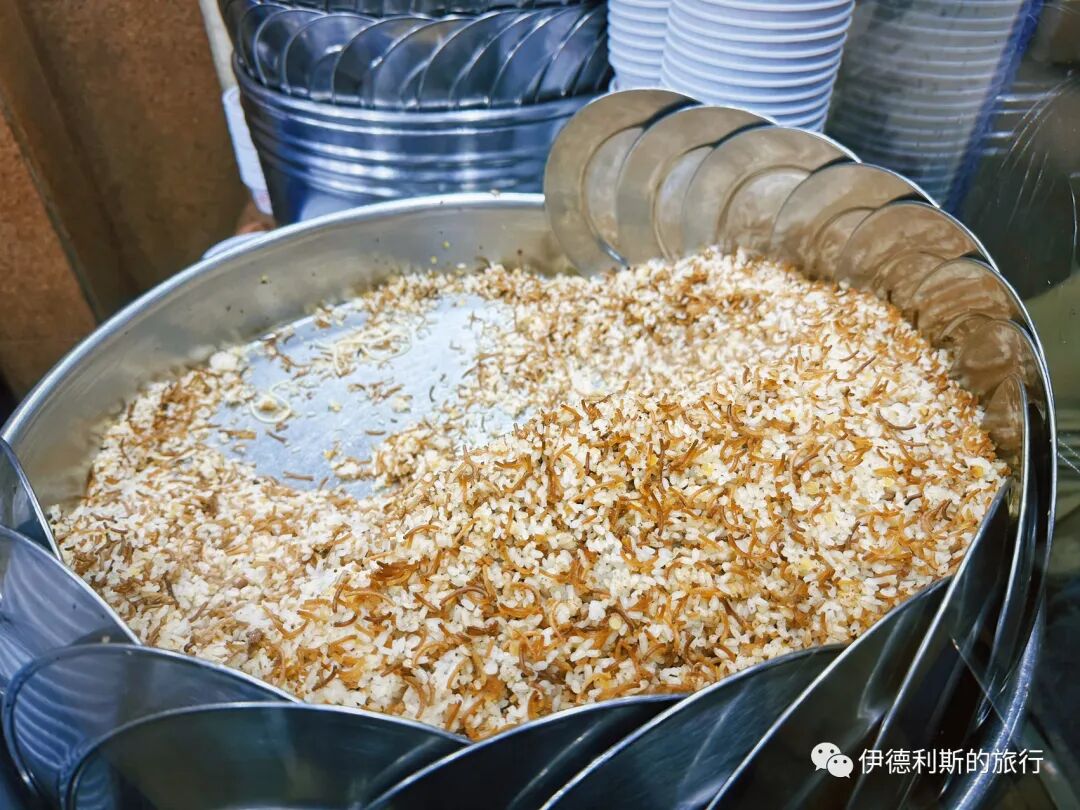
A dark street snack in Old Cairo is grilled lamb offal, which includes lung, rice sausage, lamb brain, large intestine, meatballs, and cartilage. It is spicy and eaten with flatbread.
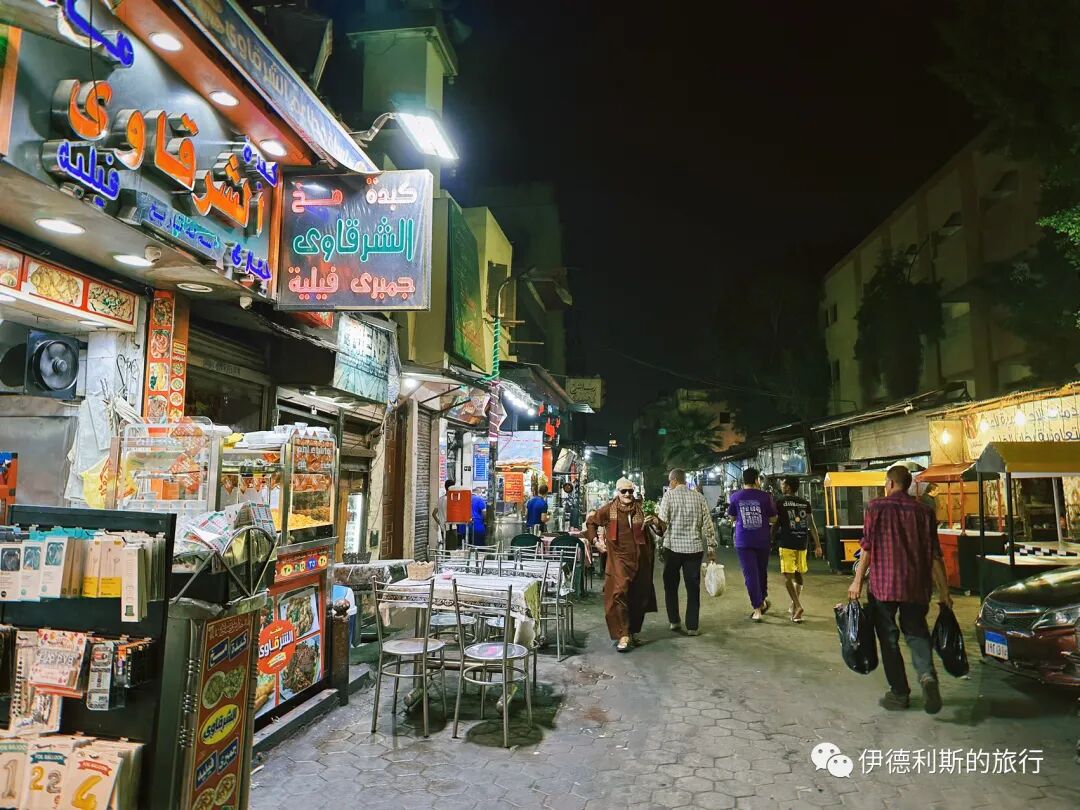
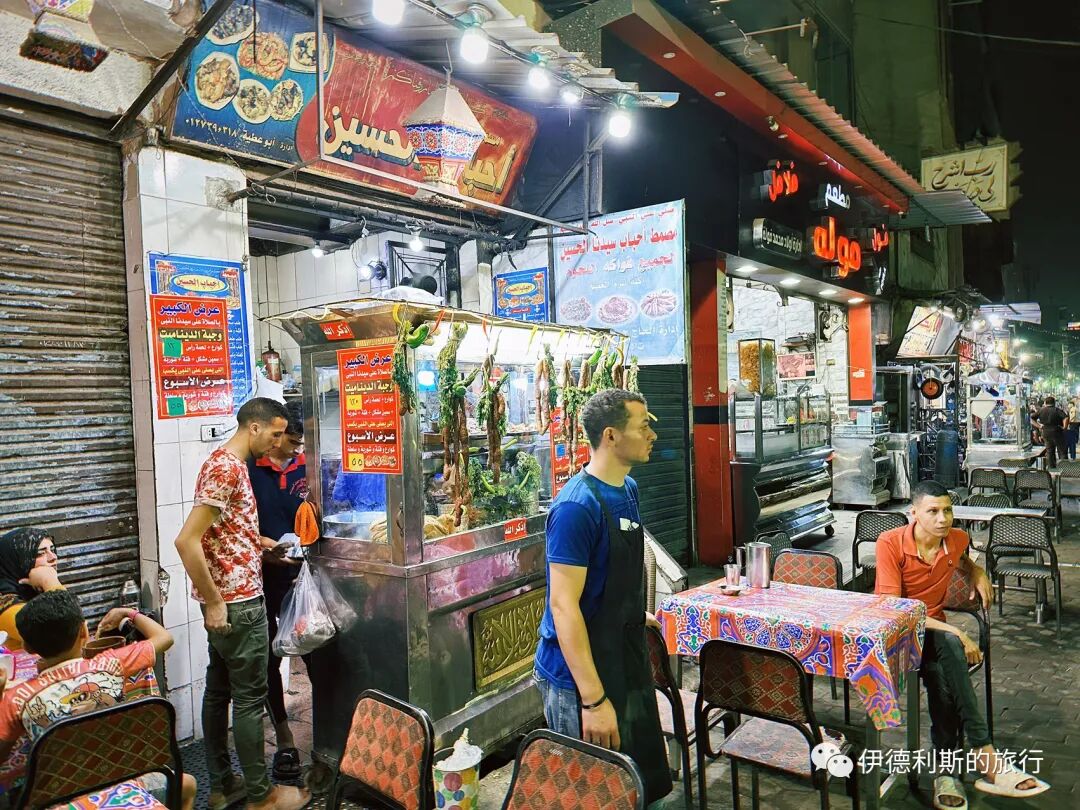
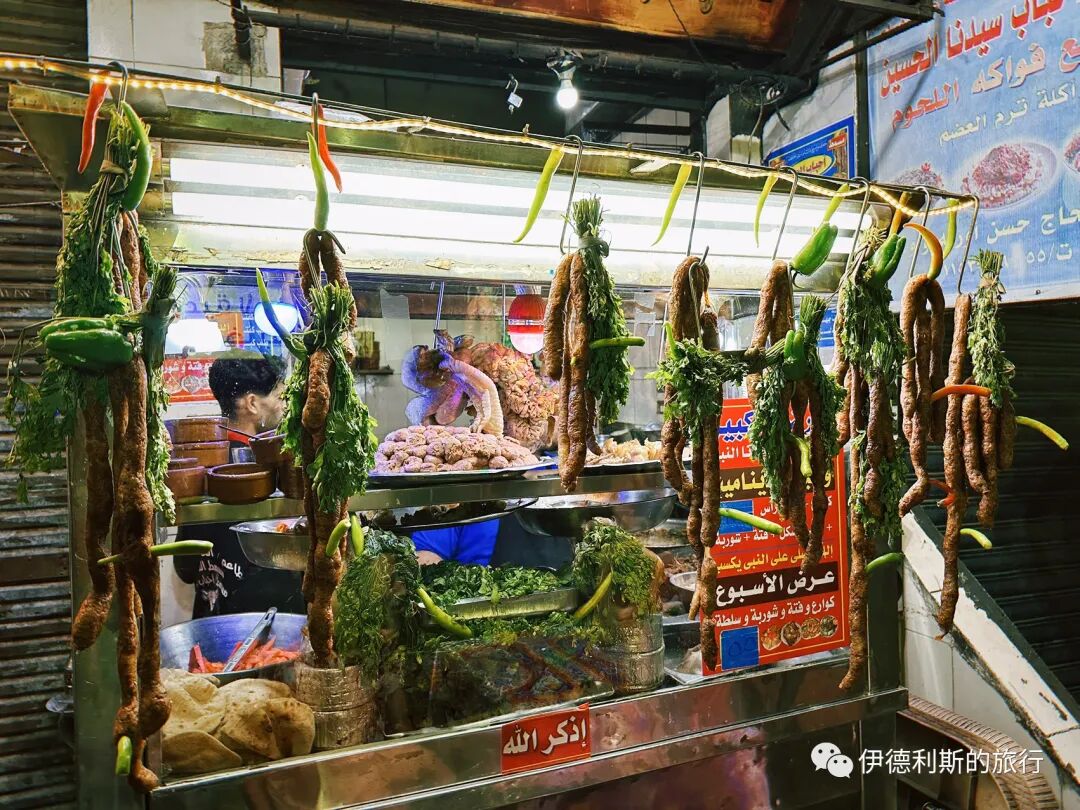
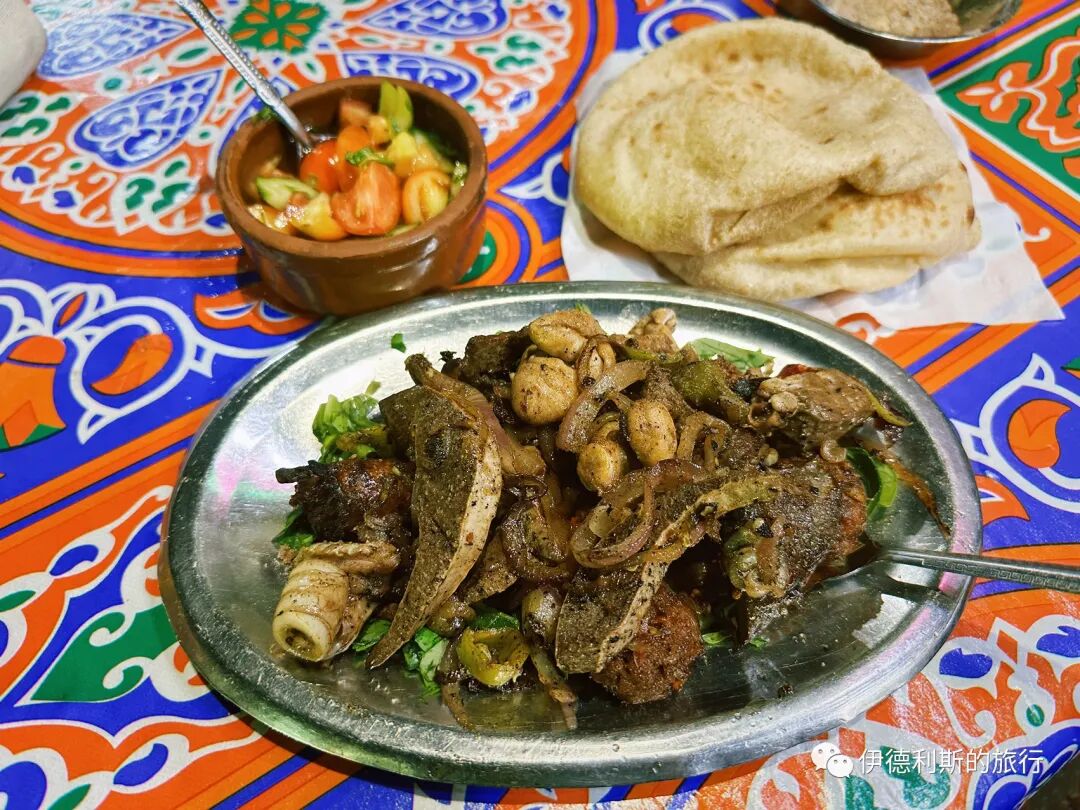
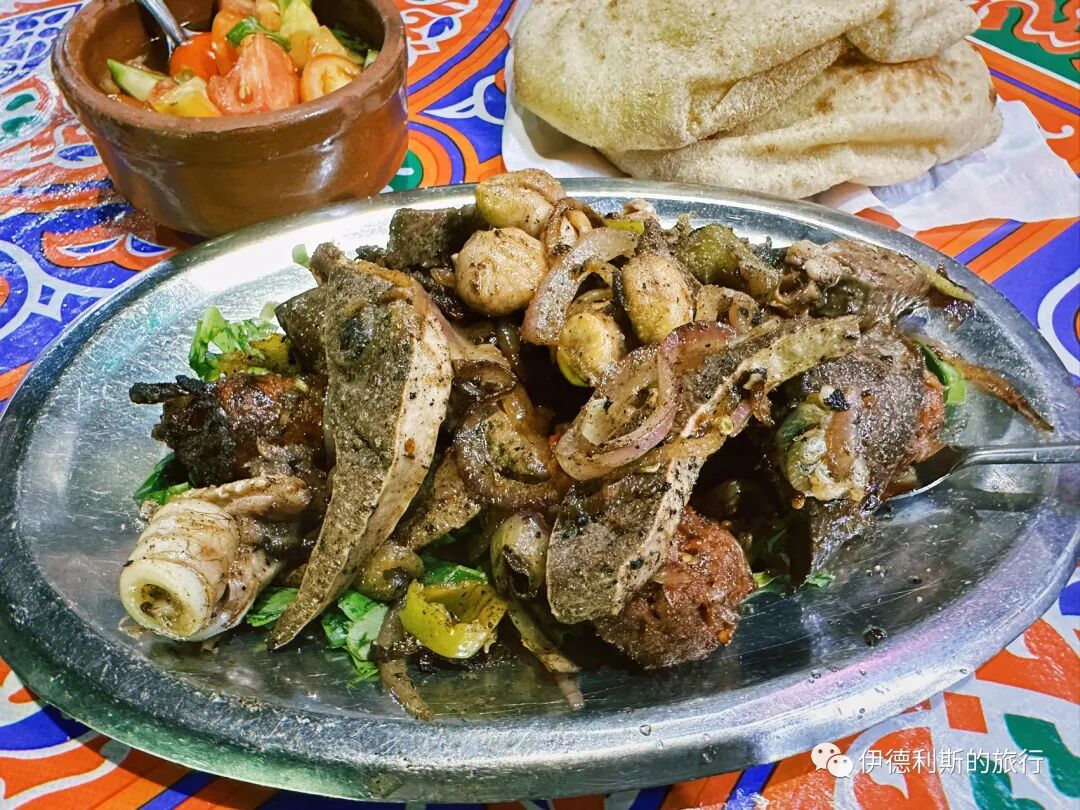
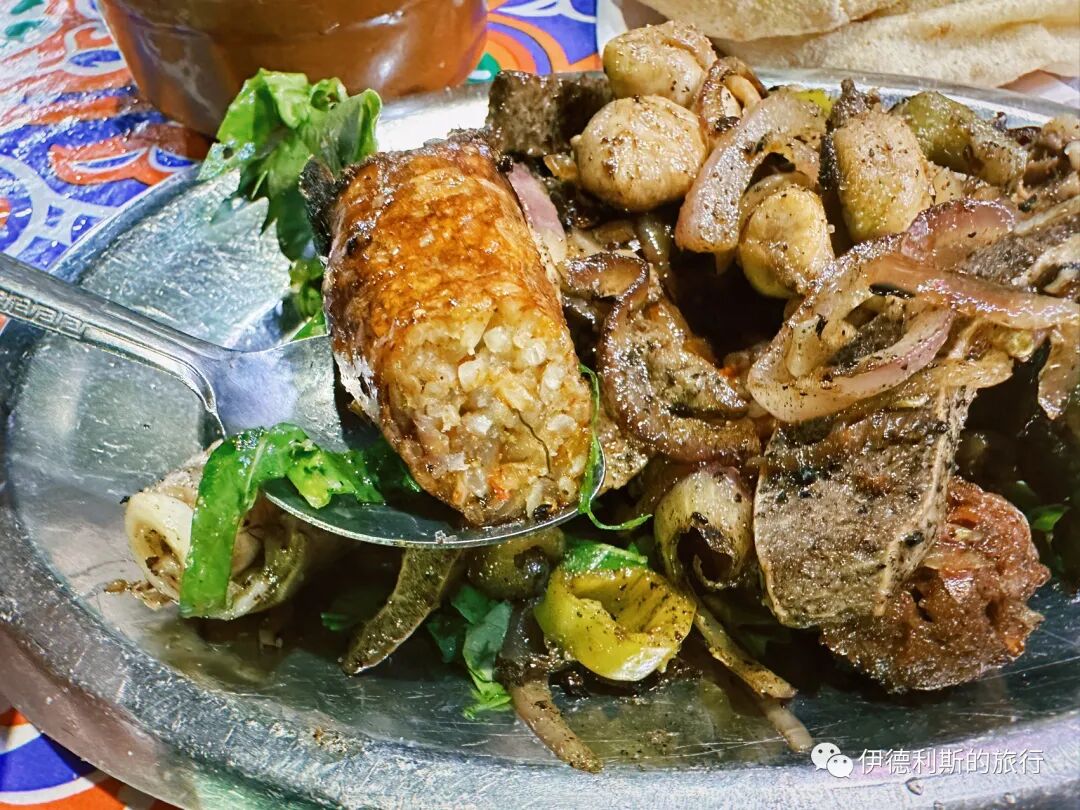
Roasted sweet potatoes on the streets of Old Cairo.
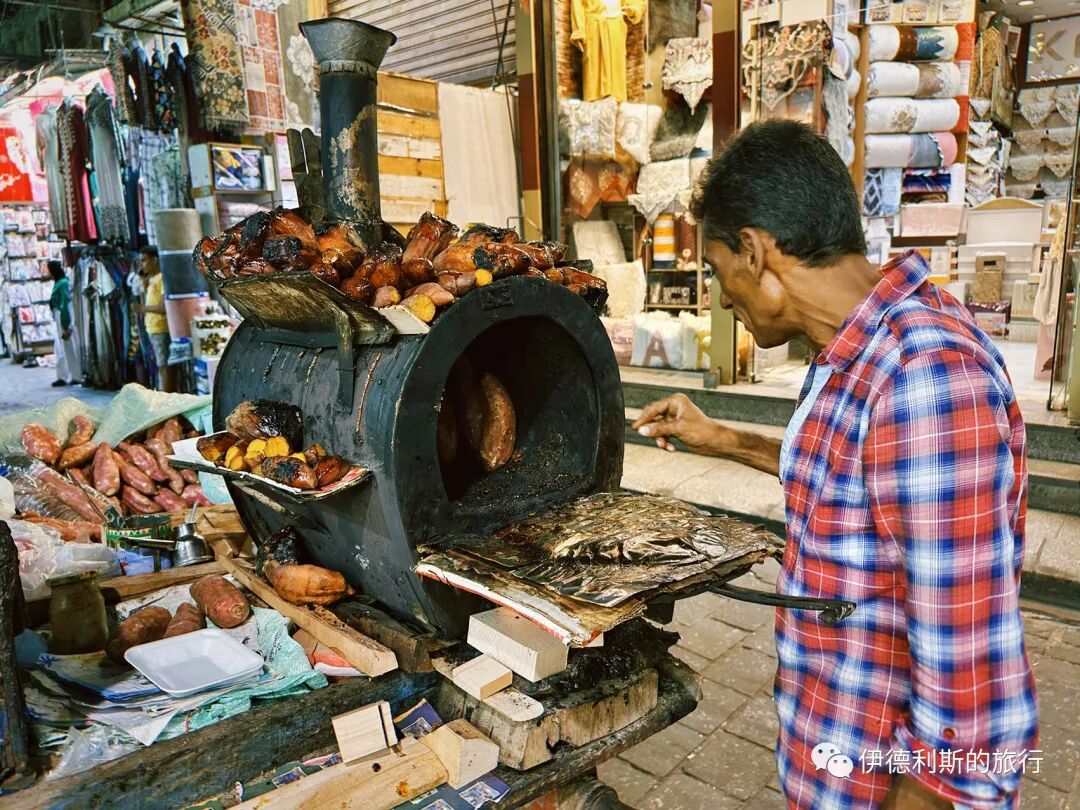
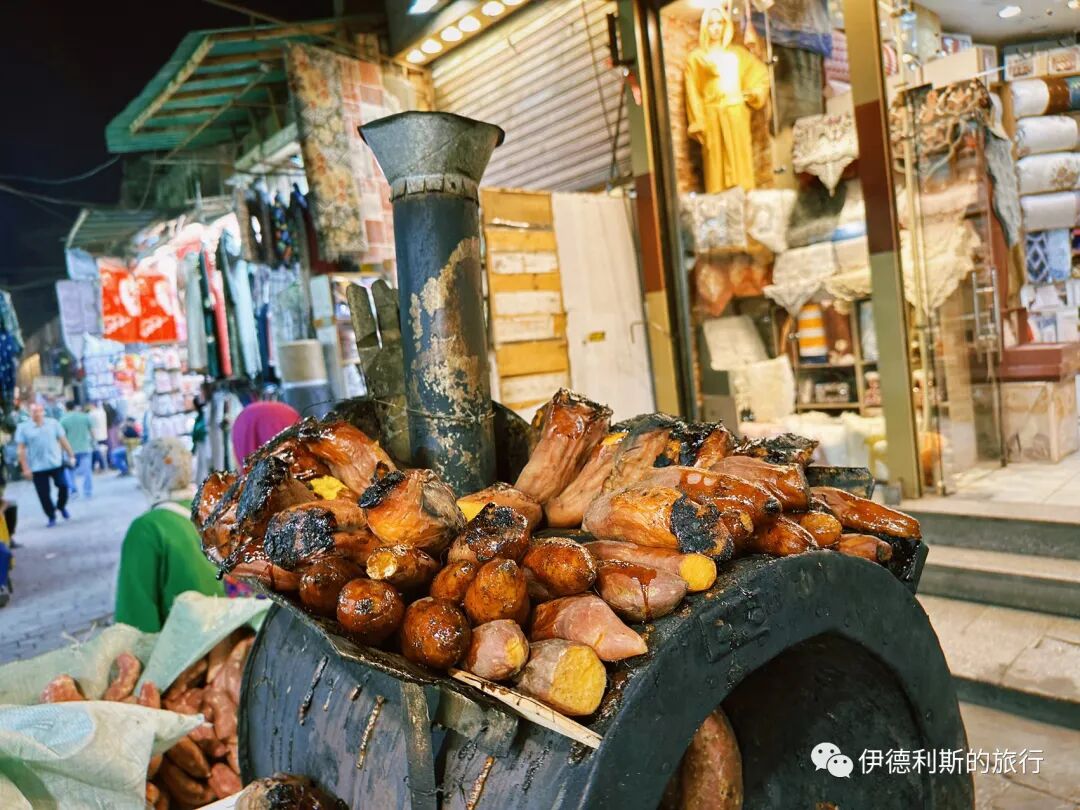
I had fried fish and seafood soup near the Citadel of Saladin in Cairo; the soup contained fish chunks, shrimp, and small crabs.
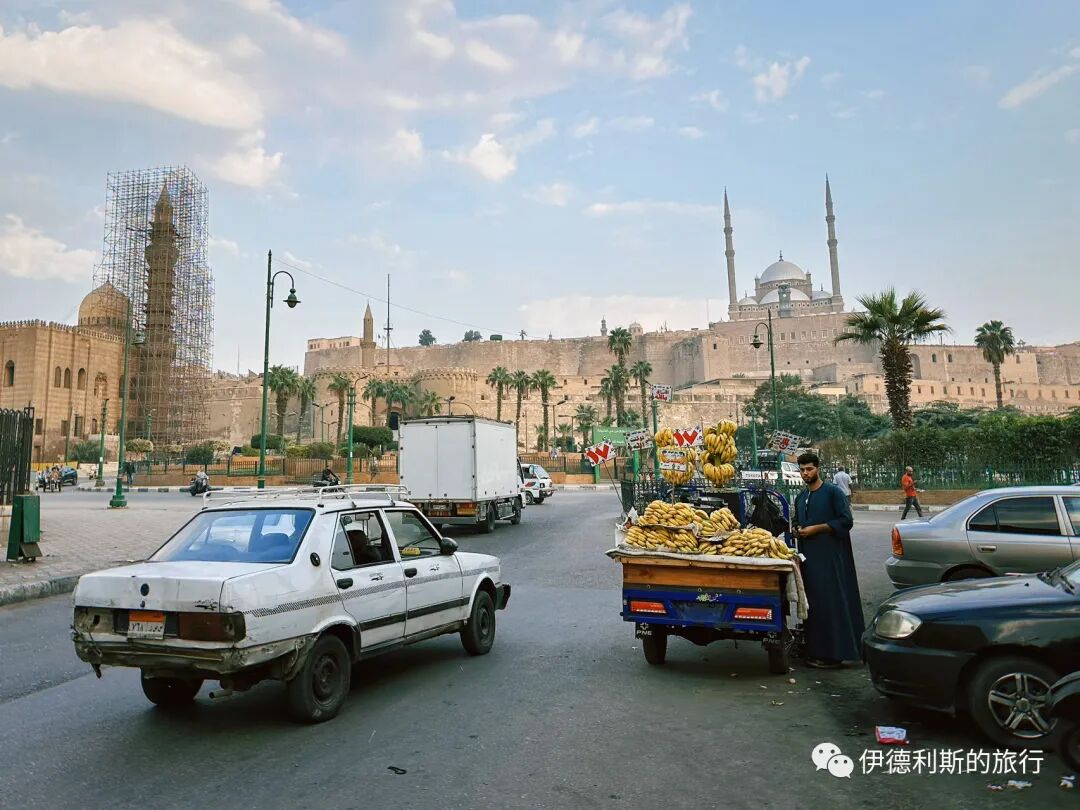
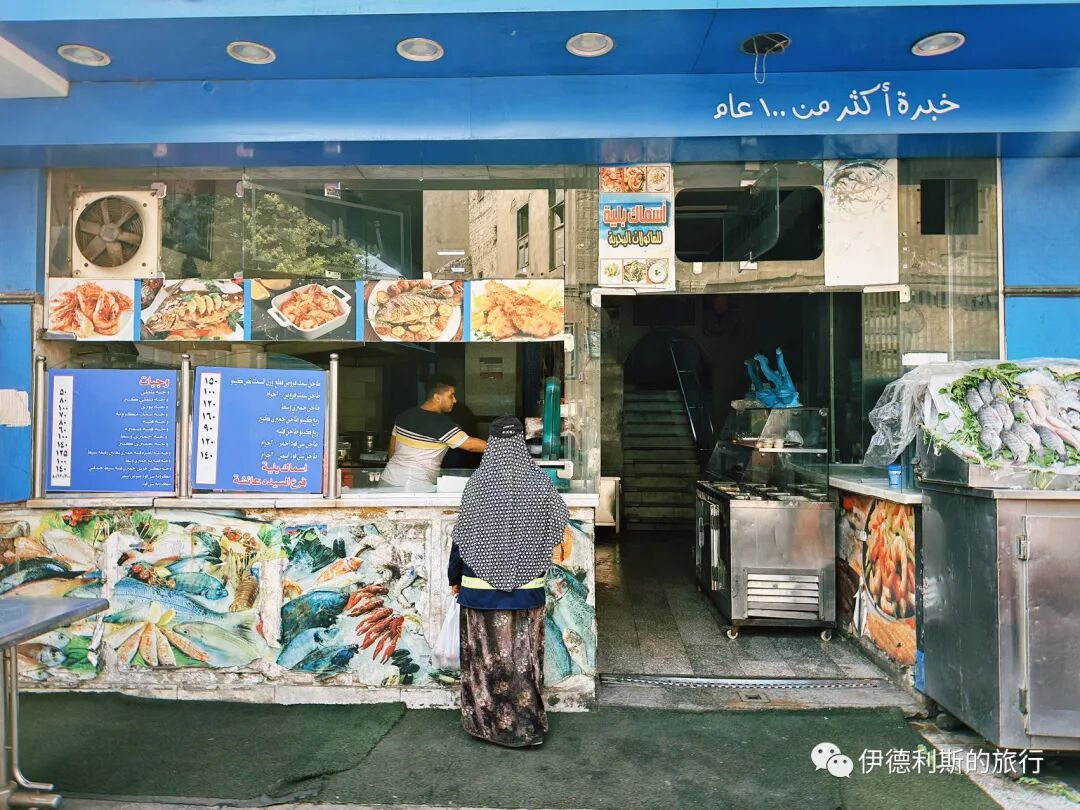


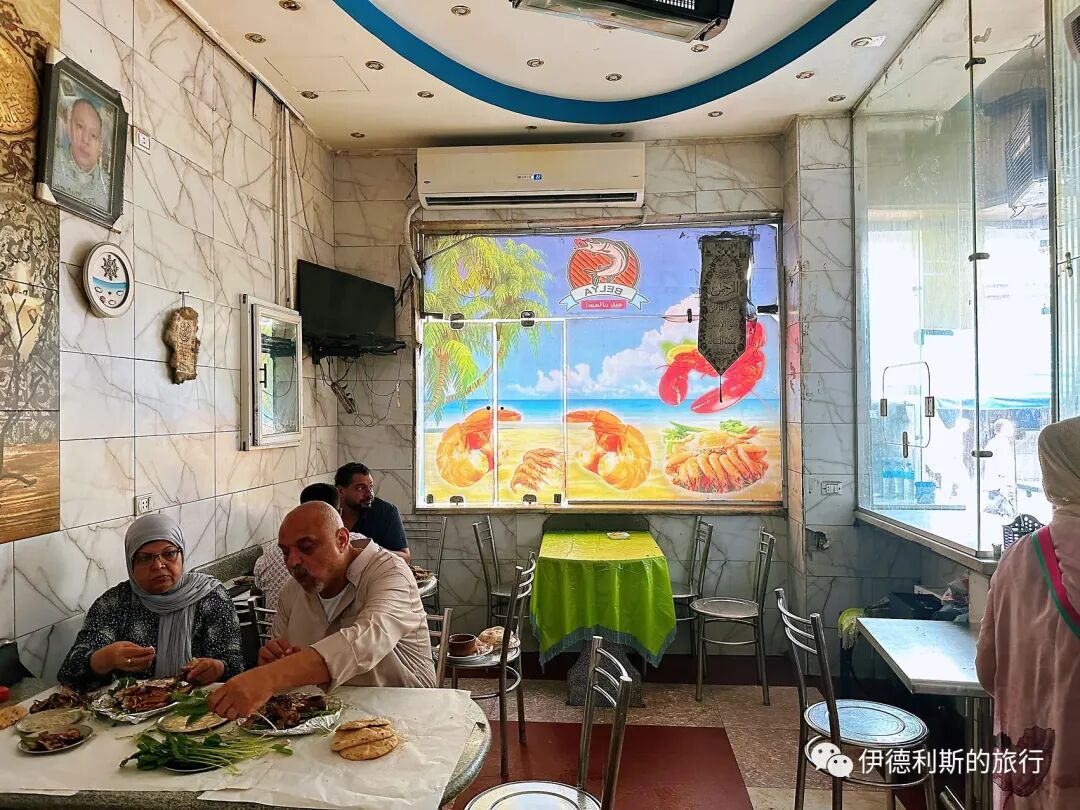
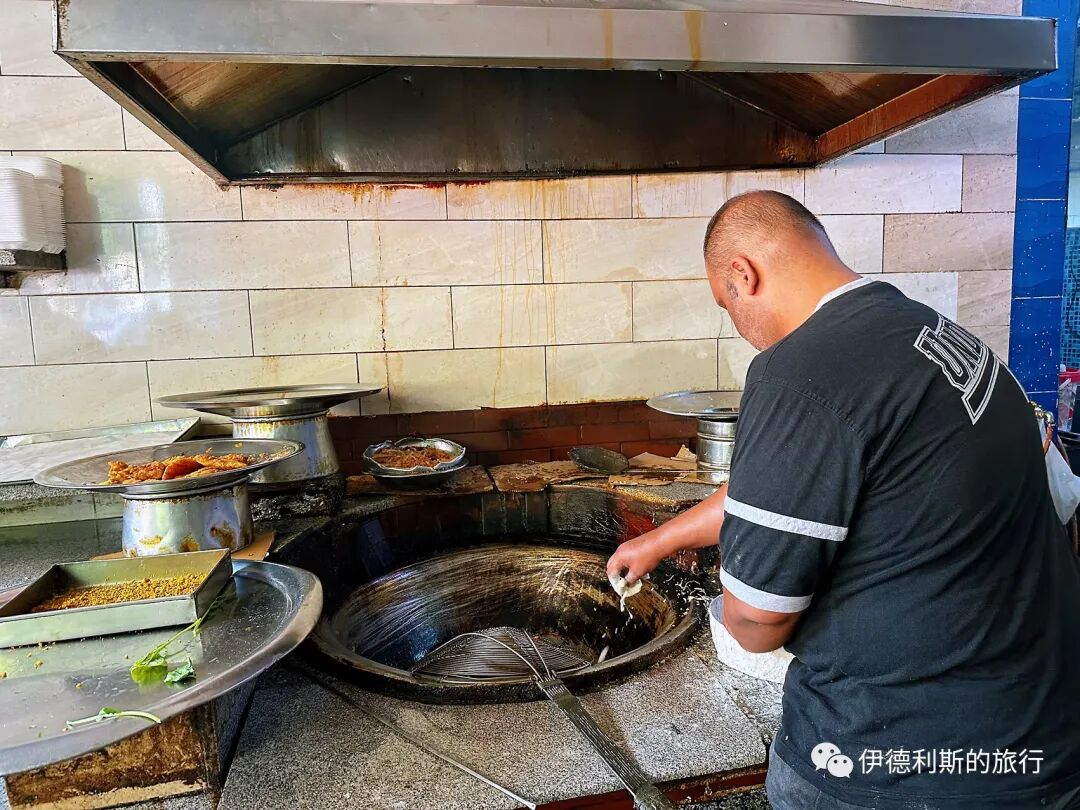

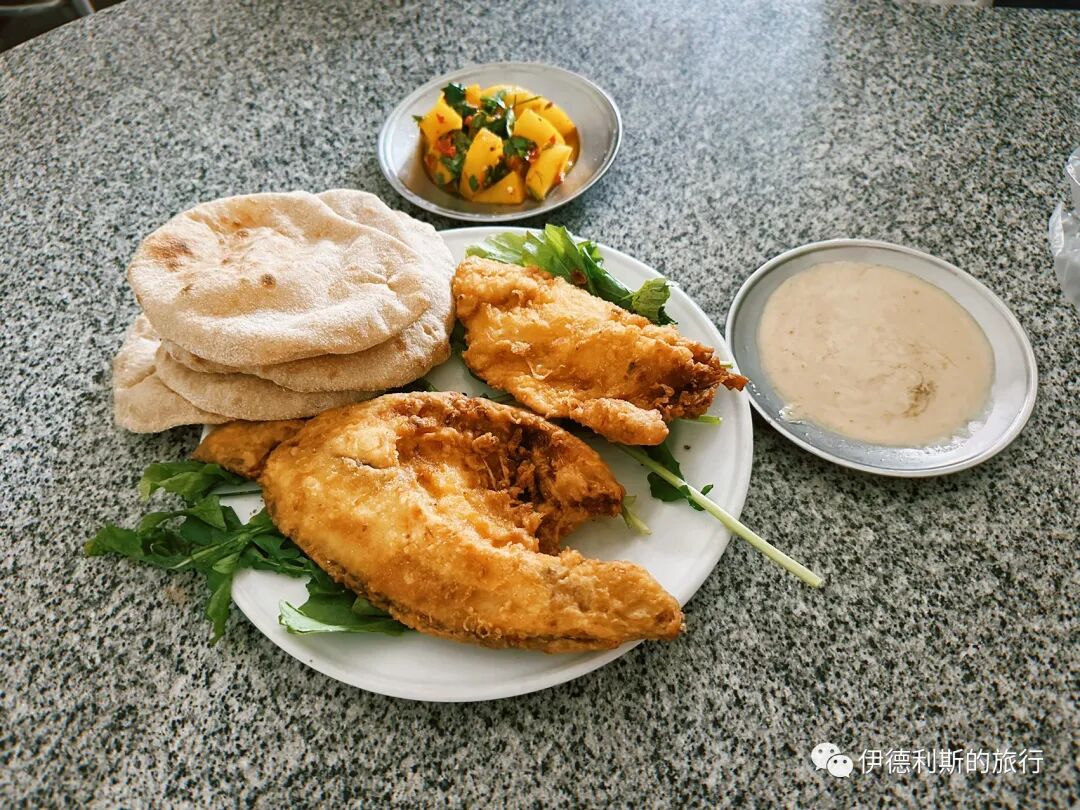
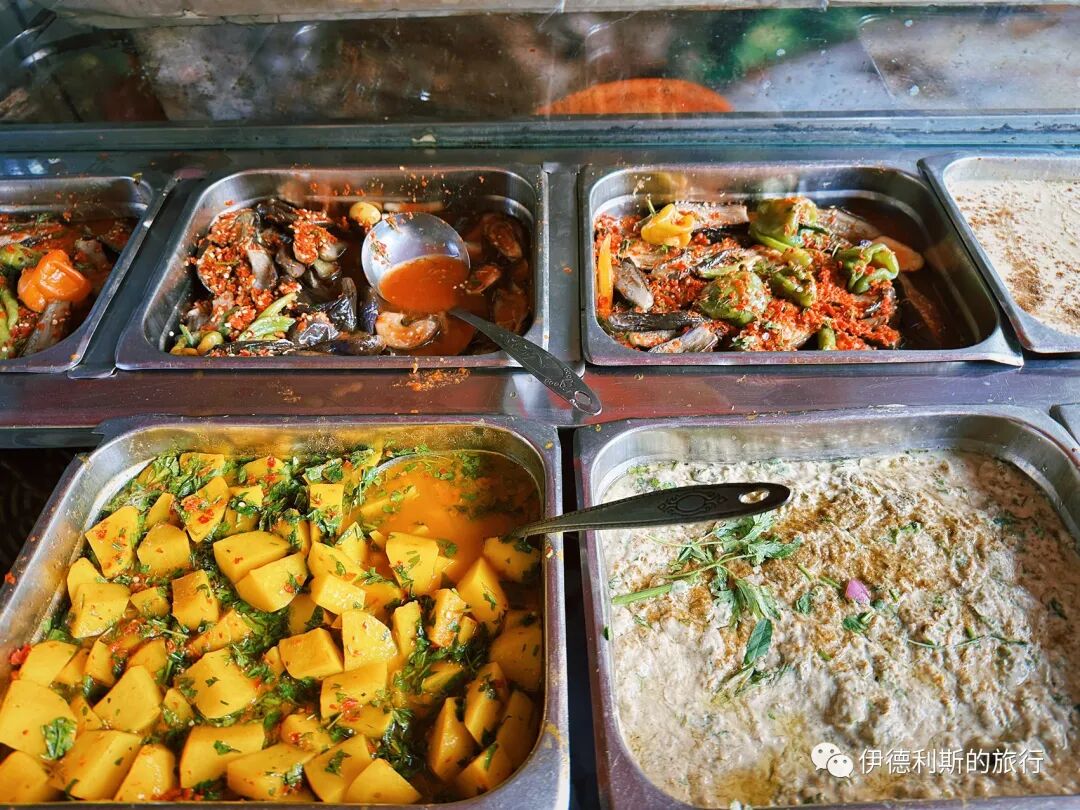
Egyptians cannot eat without their local flatbread (eish baladi). Seeing delivery guys riding bicycles with stacks of bread on their heads is a real sight in Old Cairo.
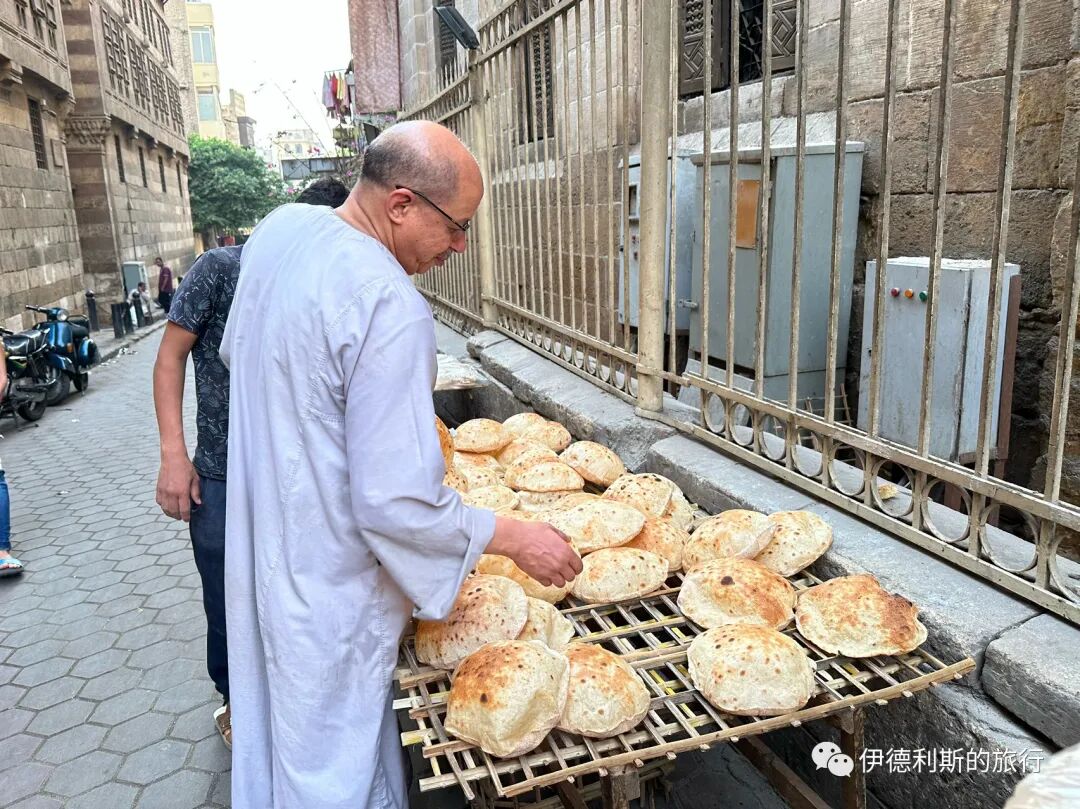
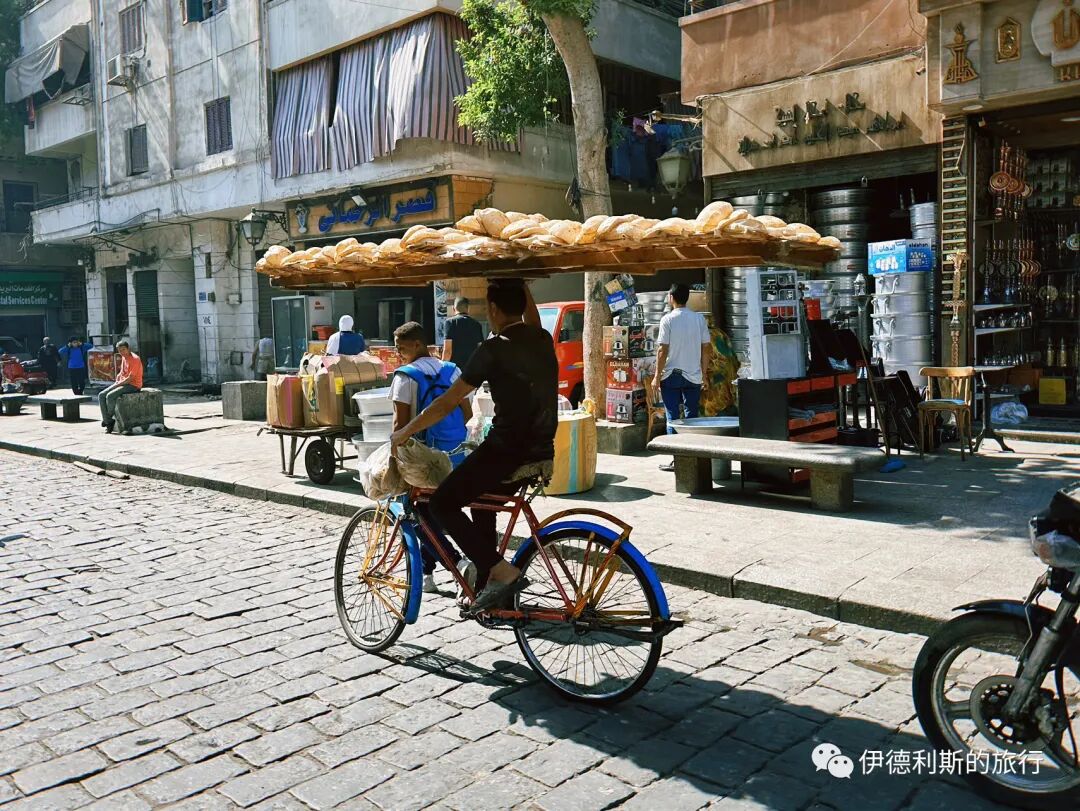
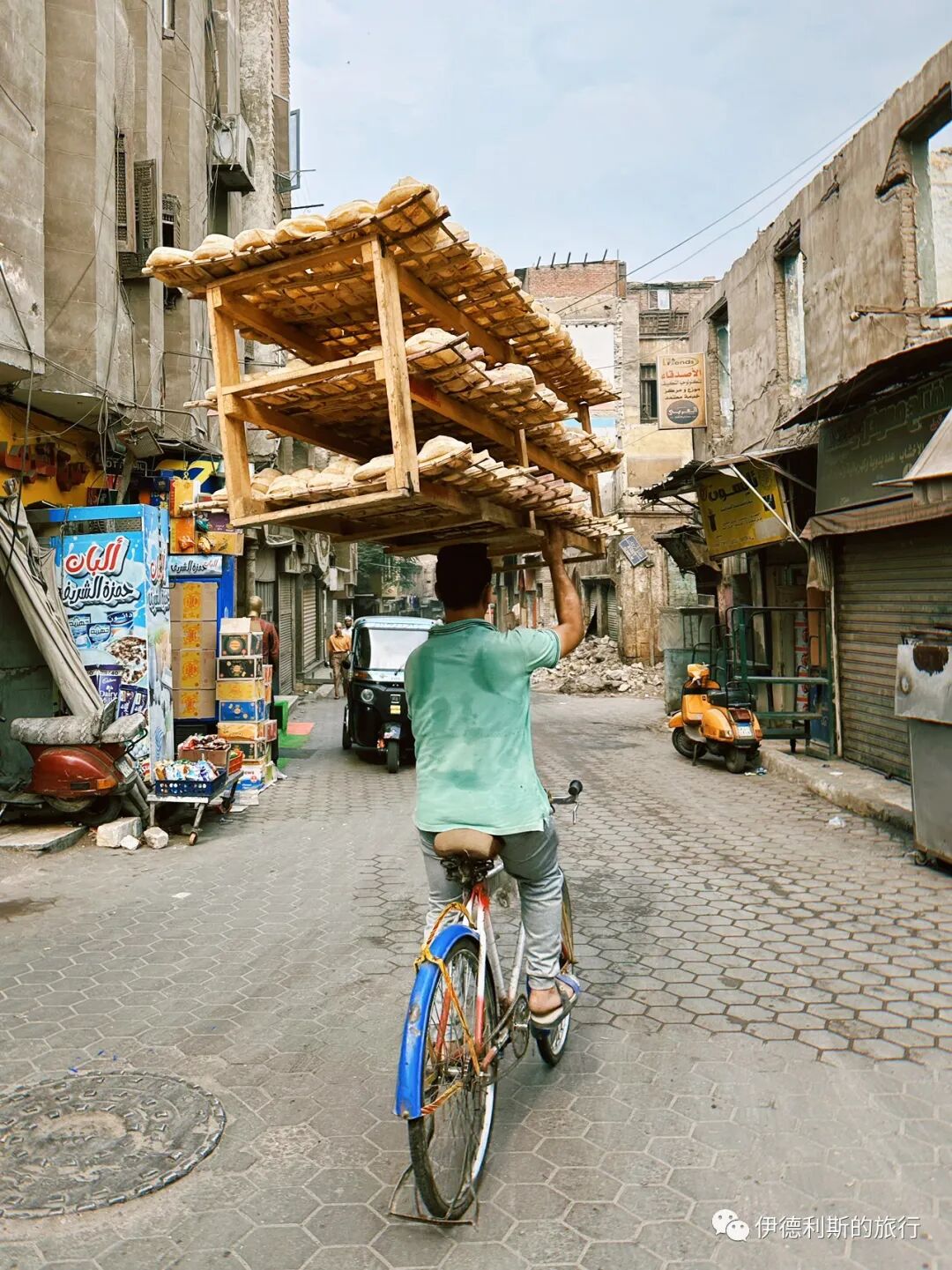
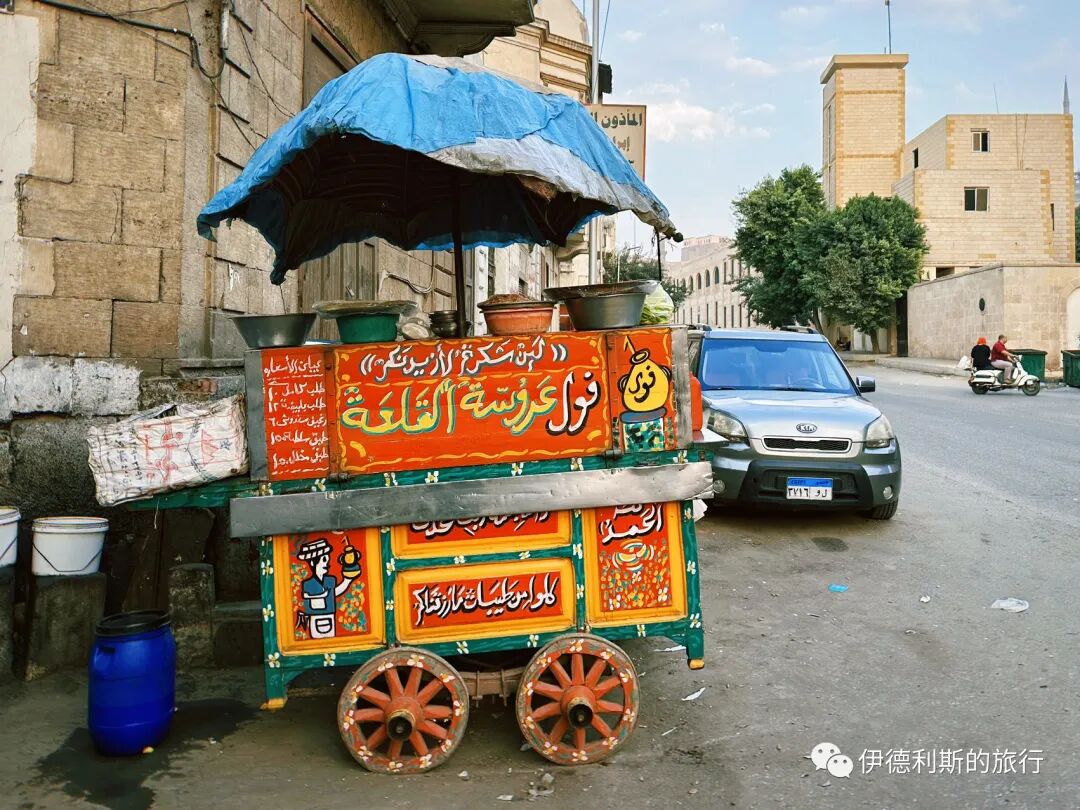
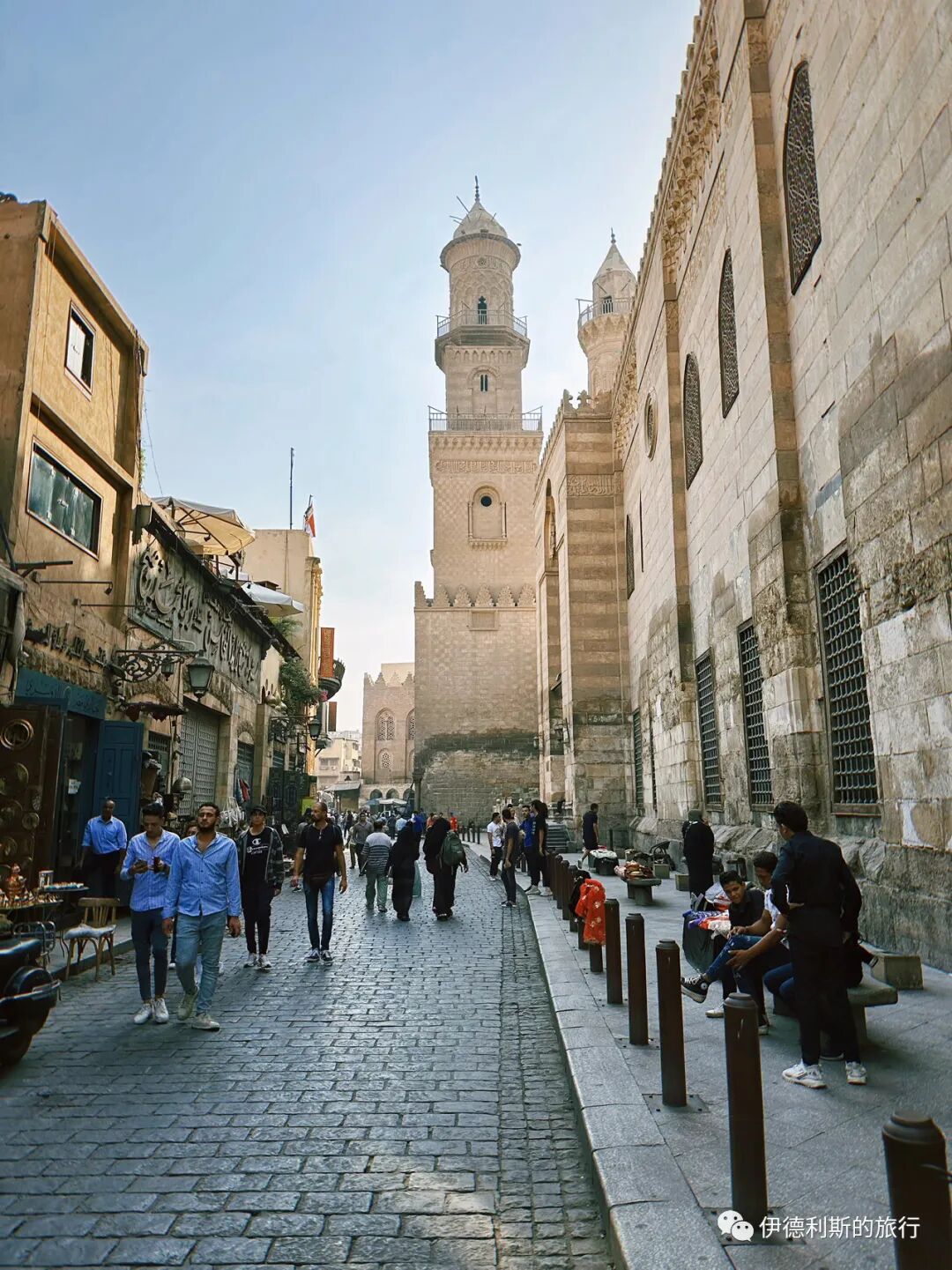
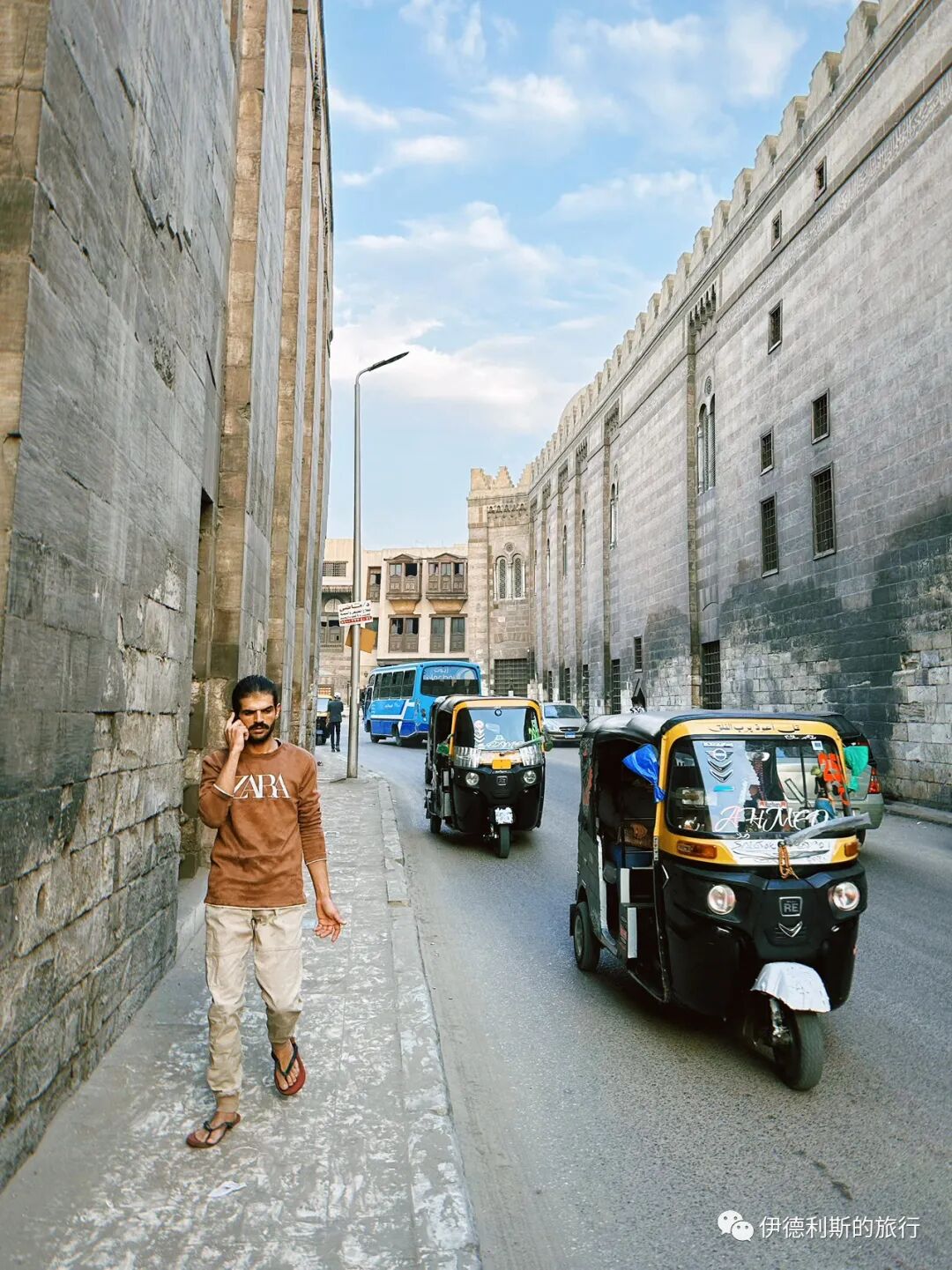
I had lunch at The Citadel Restaurant inside Al-Azhar Park on the east side of the old city.
Al-Azhar Park was originally a trash heap that had existed in Old Cairo for 500 years. In 1992, the 49th Imam of the Ismaili sect, Aga Khan IV, donated funds for its transformation. His Aga Khan Historic Cities Programme led the project, which restored the Ayyubid wall on the west side while building the park. The park officially opened in 2005 and became the best leisure spot for residents of Old Cairo.
The Citadel Restaurant is on the north side of Al-Azhar Park, with a direct view of the Ayyubid Citadel. The restaurant is built in a traditional Egyptian style and has a great atmosphere.
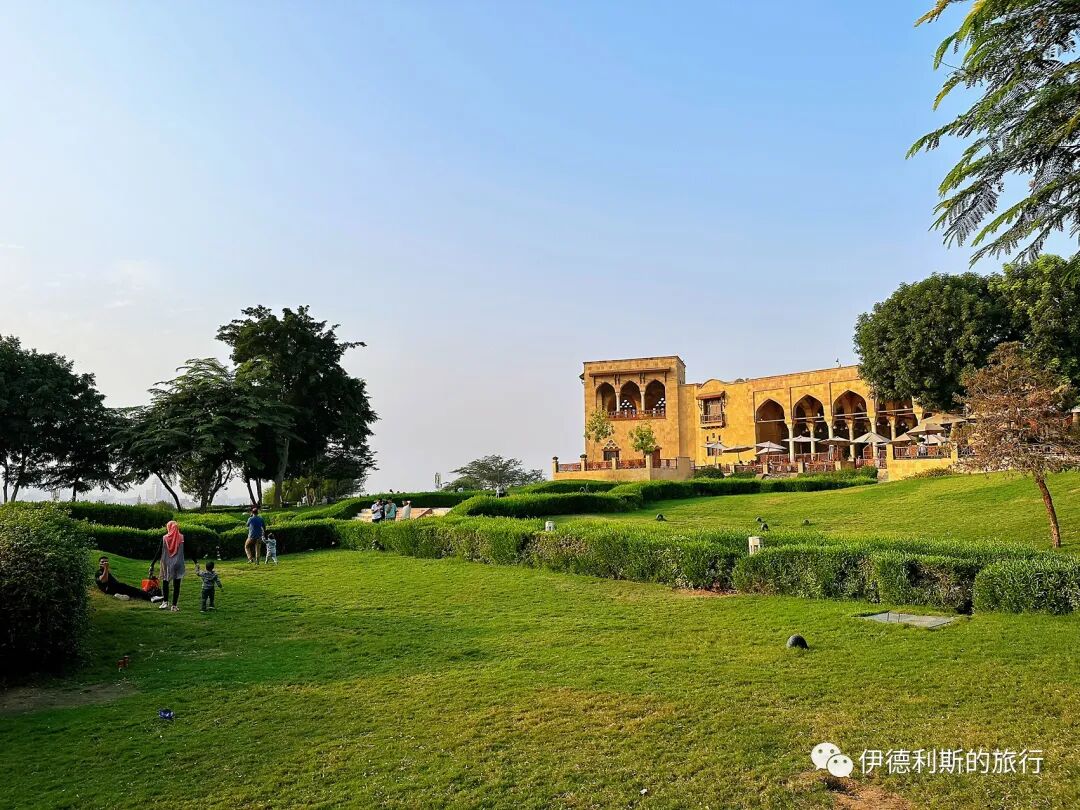
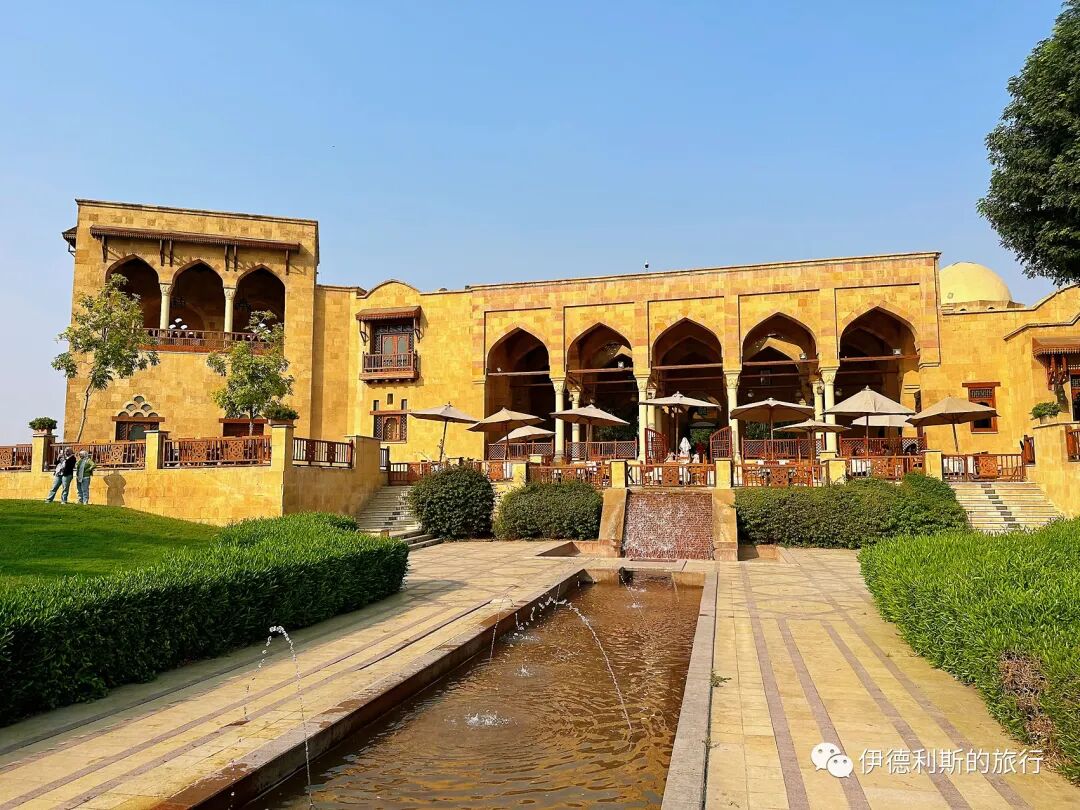
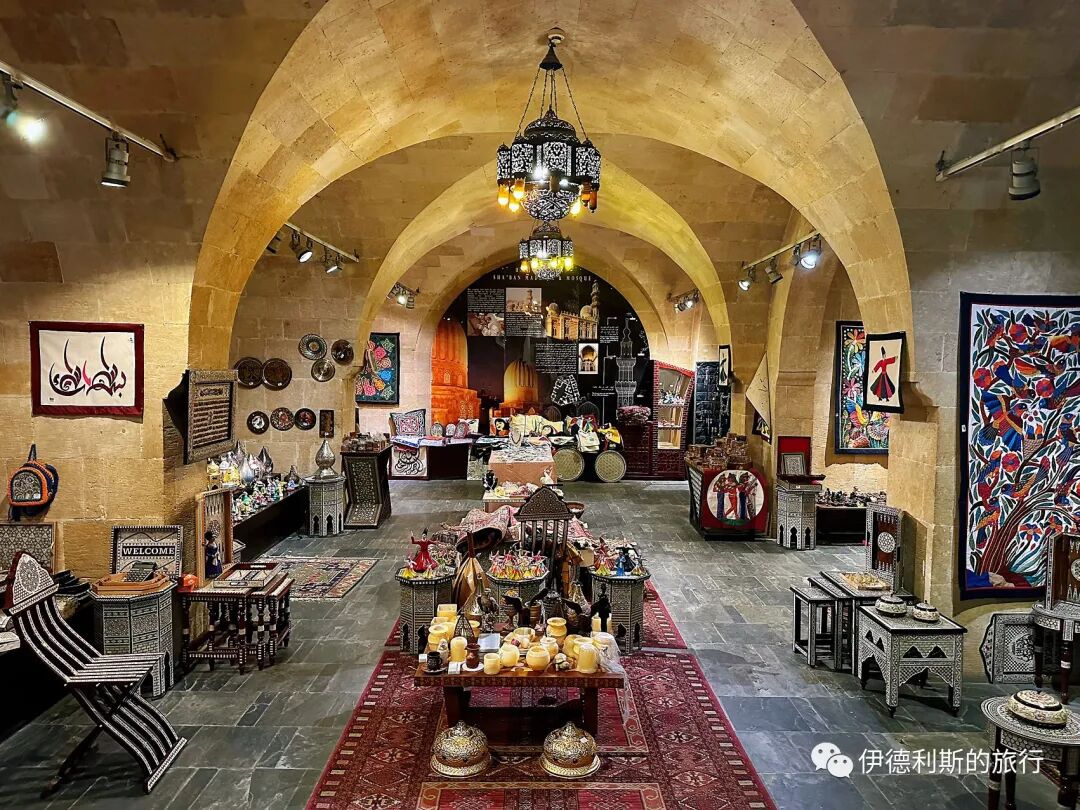
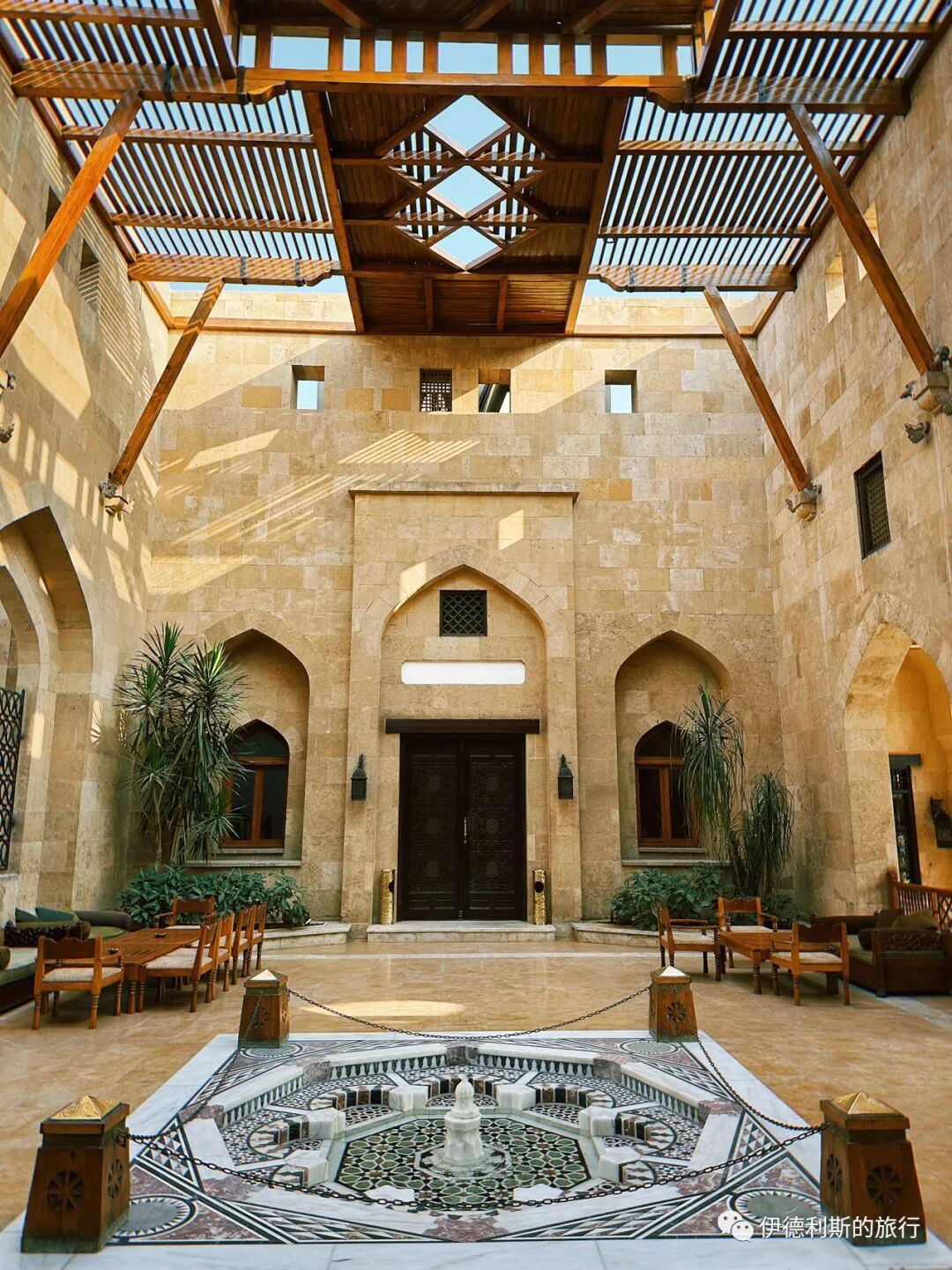
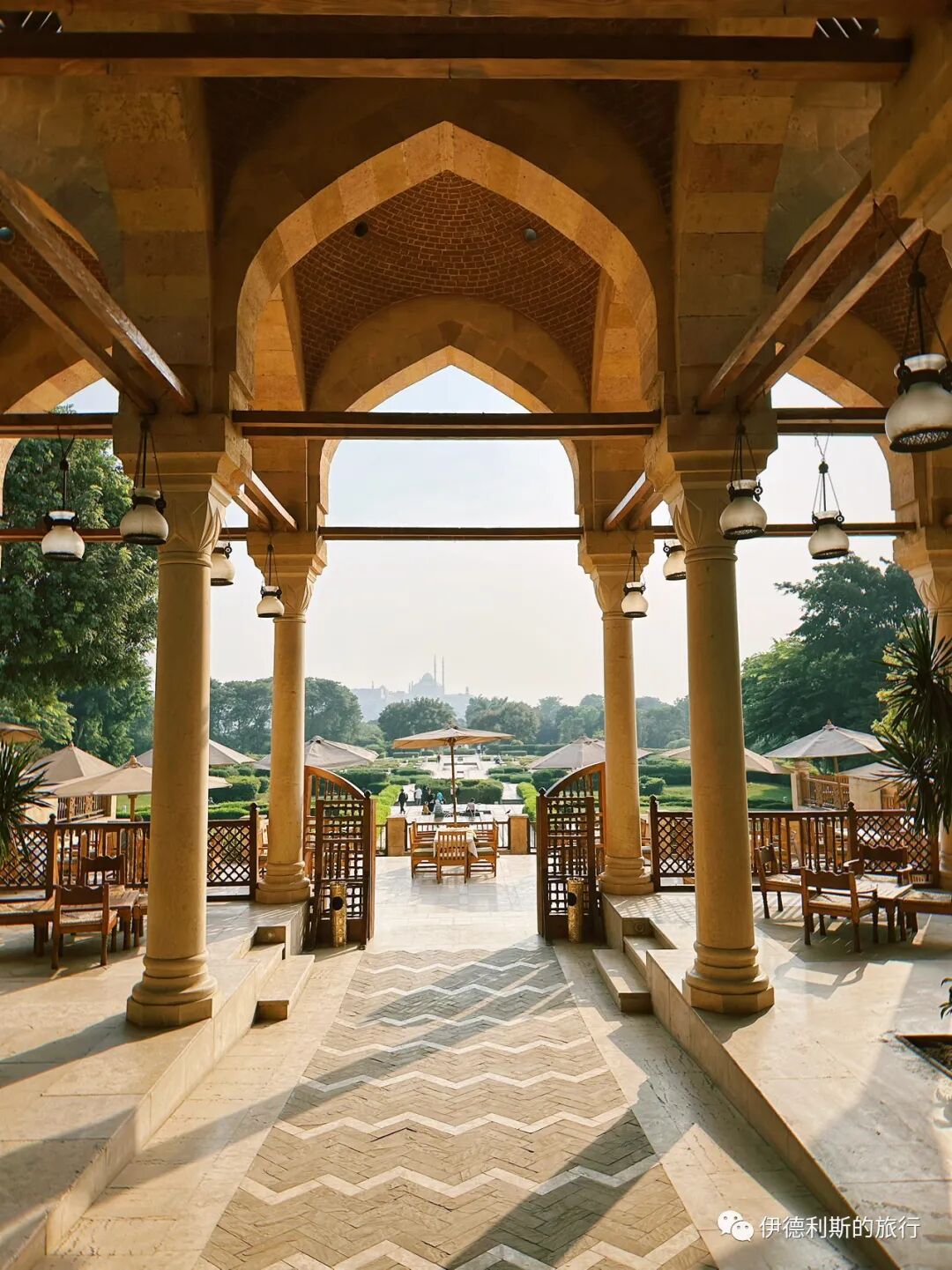
We ordered an appetizer platter, Shawaya grilled chicken, and the traditional Egyptian dessert Om Ali.
The appetizer platter included chickpea dip (hommus), bread salad (fatoush), parsley salad (tabula), eggplant dip (mottabal), Alexandrian beef liver, fried pastry triangles (sambosak), and fried vegetable balls (kobeba), which we ate by dipping with flatbread (eish baladi); it felt very worthwhile.
The Shawaya includes various grilled chicken pieces, including shish taouk, a traditional Ottoman chicken skewer marinated in yogurt and lemon juice before grilling.
Om Ali is made by mixing cake with pistachios, coconut flakes, raisins, and sugar, then pouring cream over it, sprinkling it with cinnamon, and baking it in the oven until golden brown.
Om Ali means "Mother of Ali" and refers to the mother of Al-Mansur Ali, the second sultan of the Mamluk dynasty who reigned from 1257 to 1259. Legend has it that the Mamluk dynasty's founding sultan, Aybak, and Queen Shajar al-Durr had major conflicts in their later years. Shajar al-Durr plotted to have servants kill the sultan, after which the sultan's son, Al-Mansur Ali, took the throne. Ali's mother and the servants beat Shajar al-Durr to death together and served this dessert to everyone to celebrate the queen's death.

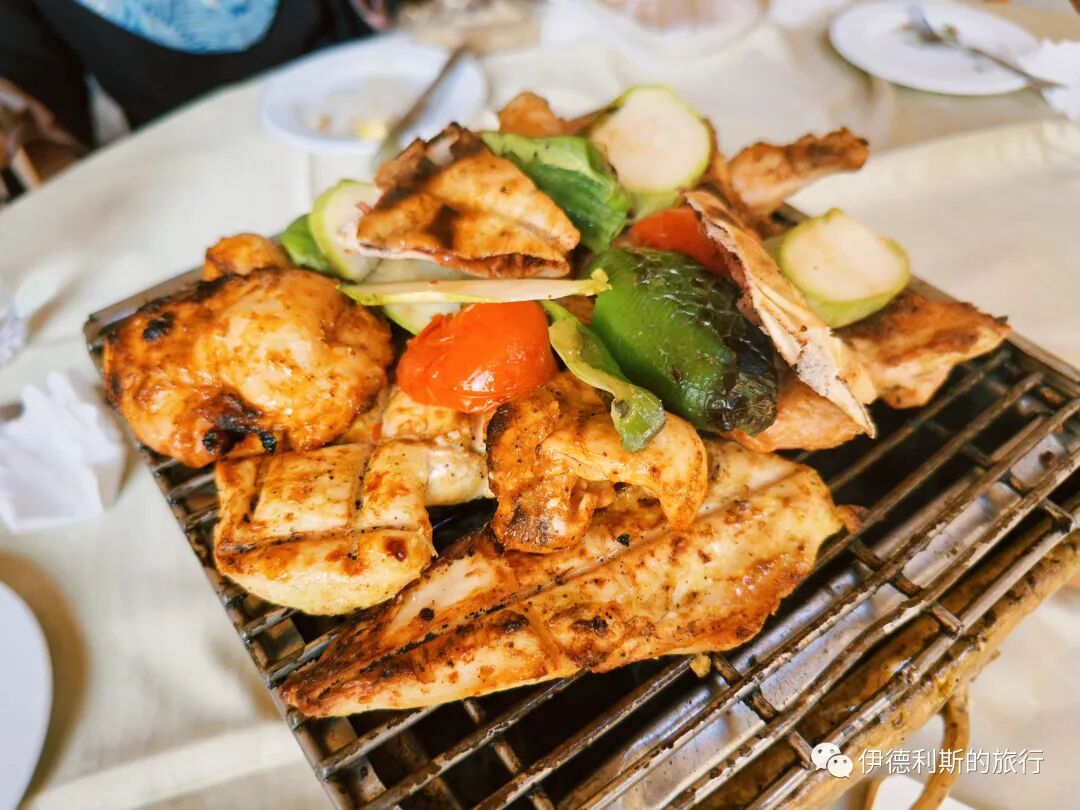
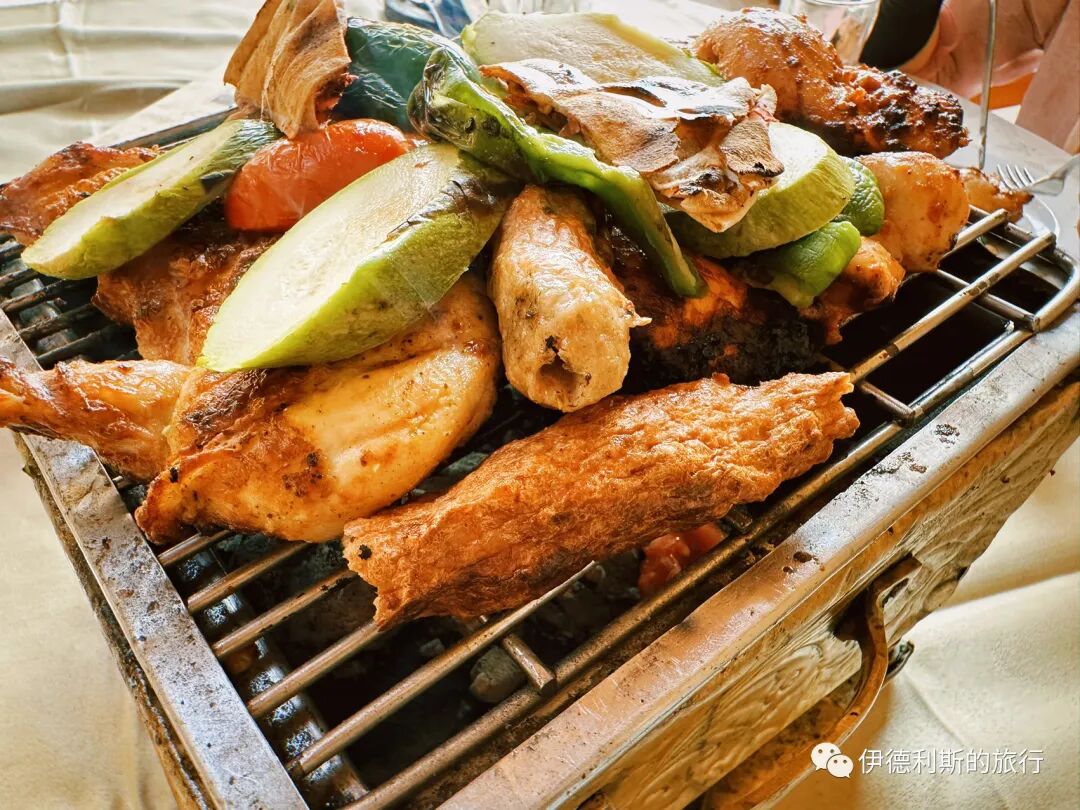
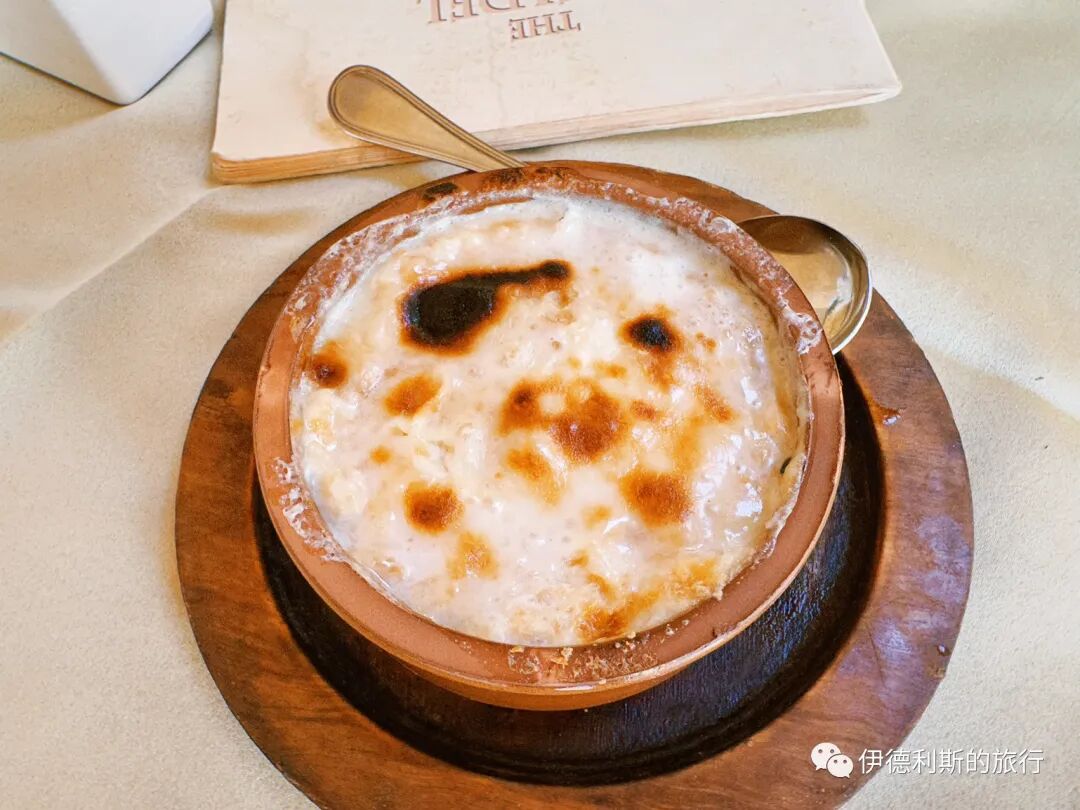
Khan Shaheen Cafe on the main Al-Mu'izz street in Old Cairo is located inside a historic caravanserai building. I had coffee inside; the service charge was a bit high, but the environment was truly quite nice.
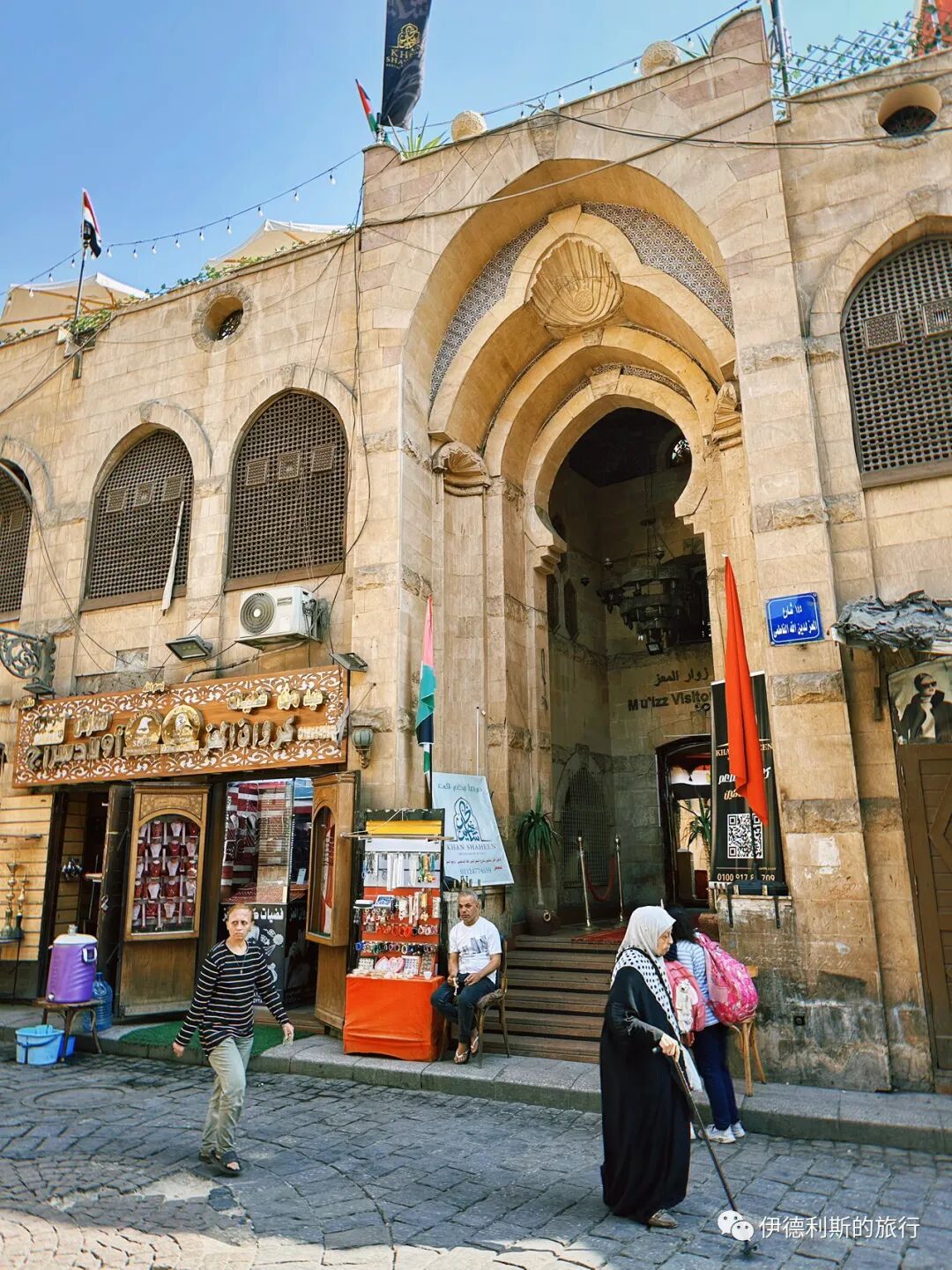
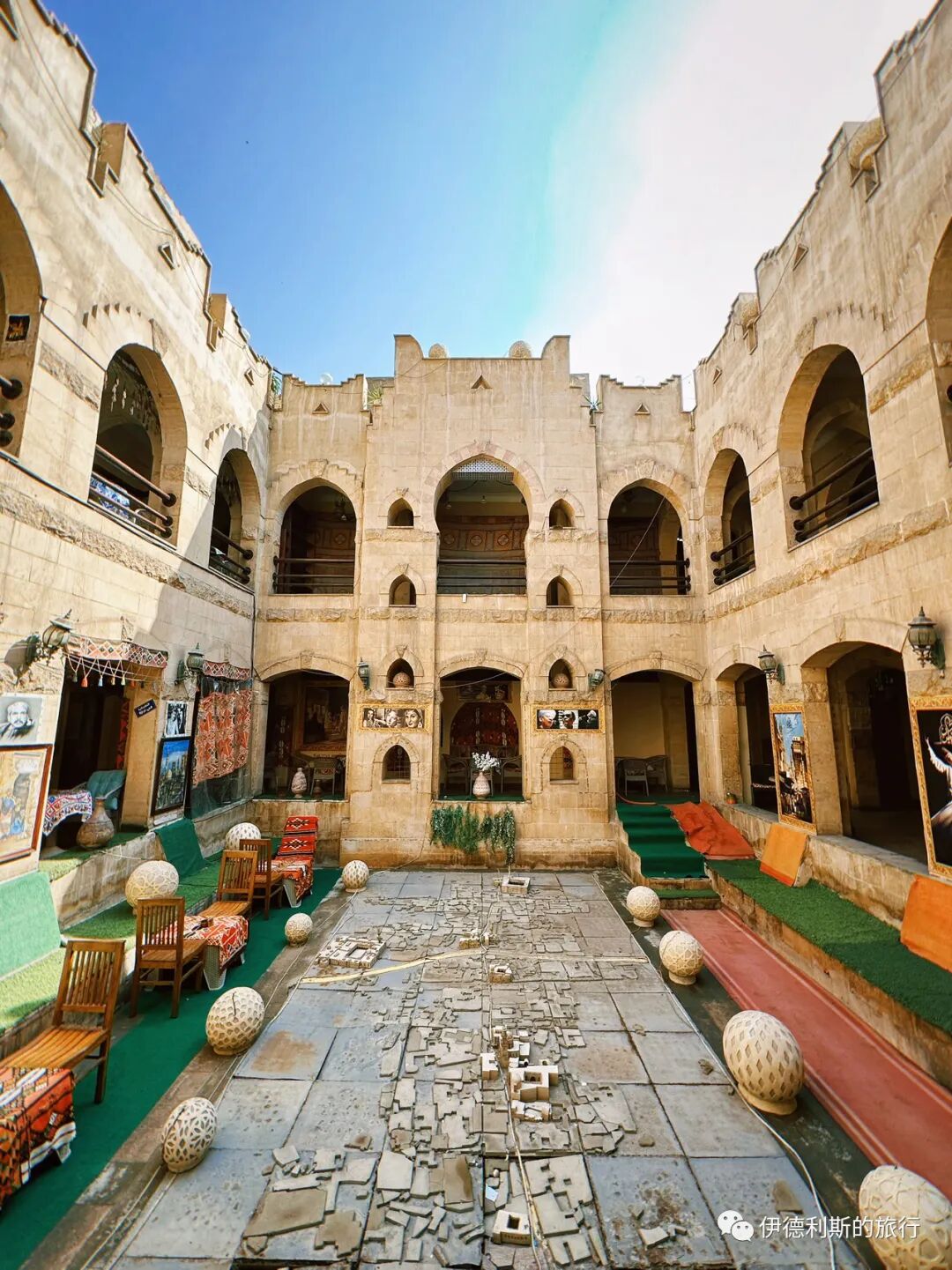
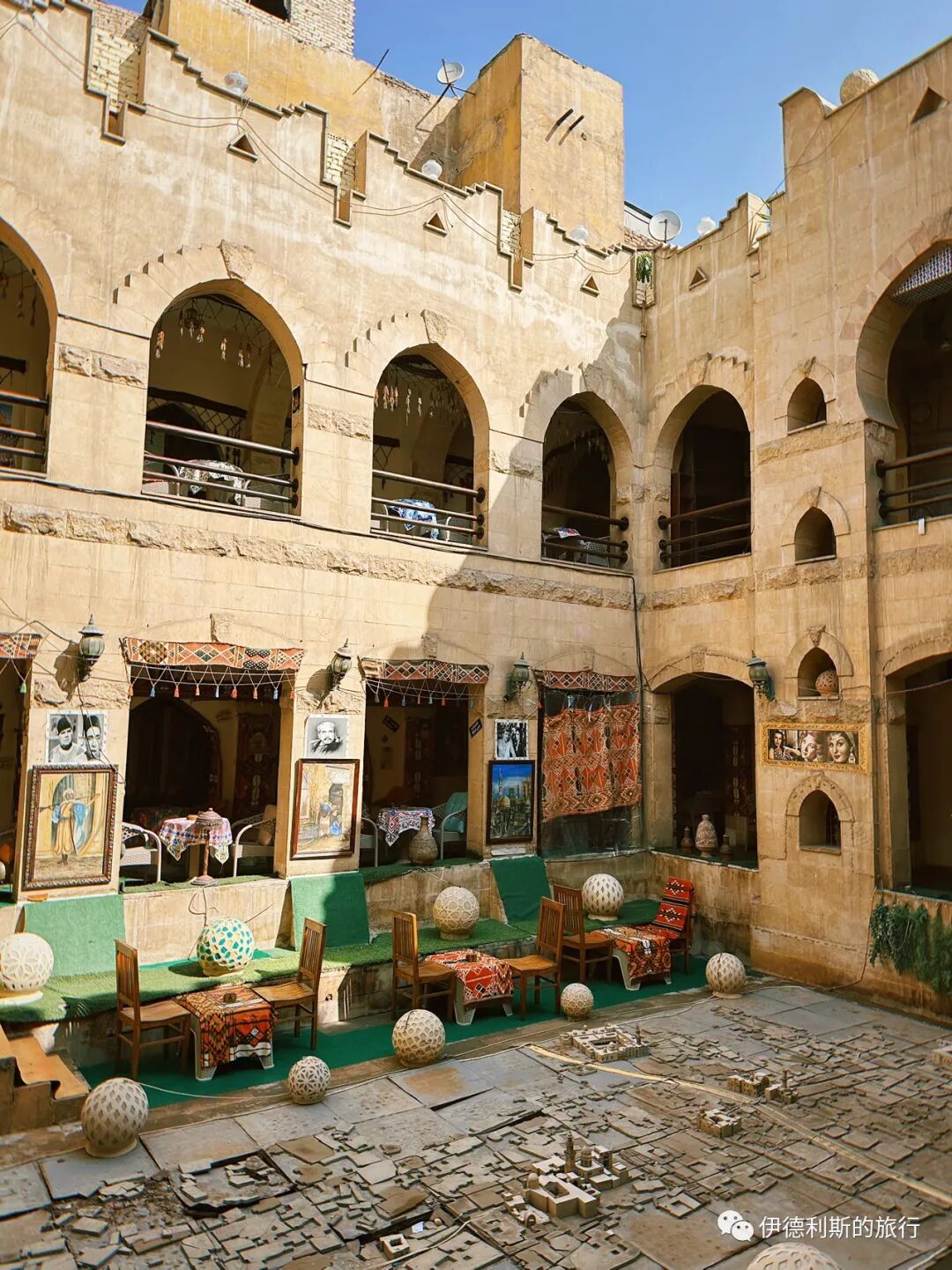
I bought a handmade traditional Al-Azhar fez (tarboush) at a hat shop in Old Cairo, where students from Egypt's Al-Azhar University buy their hats.
The tarboush hat is a fez, and the term tarboush is mainly used in the Levant and Egypt. In 1829, Ottoman Sultan Mahmud issued a decree requiring all officials to wear the fez, and from then on, the fez became a symbol of the Ottoman dynasty.
After the Ottoman Empire collapsed, the Republic of Turkey led a hat revolution in 1925 and banned the wearing of the fez hat. In 1954, the Republic of Egypt also ordered a ban on the fez hat, which symbolized the Ottoman Empire, as part of its modernization movement. Before this, Cairo had always been a major production center for the fez. Although fez production later recovered in Egypt, it shifted mainly to cater to tourists.
Today, in the textile market west of the Al-Azhar Mosque in the old city of Cairo, there is still a century-old shop called Al Trapiche tarboush that insists on making Tarboush hats by hand. The Trapiche family has run this hat shop for over a hundred years. Their main customers today are imams from various mosques in Egypt and students from Al-Azhar University.
The machine used in the shop to heat and shape the wool felt is called a Waga. It was bought by the owner's great-grandfather a century ago. The last master craftsman who knew how to build a Waga passed away decades ago, and this machine is now out of production.
After we arrived at the shop, the owner measured my head, used a reed-woven hat mold to test the size, then put the red felt on the machine to press and shape it. He then sewed in the lining and the black tassel, and finally wrapped it with white cloth. After about forty minutes of work, a Tarboush hat was finished.
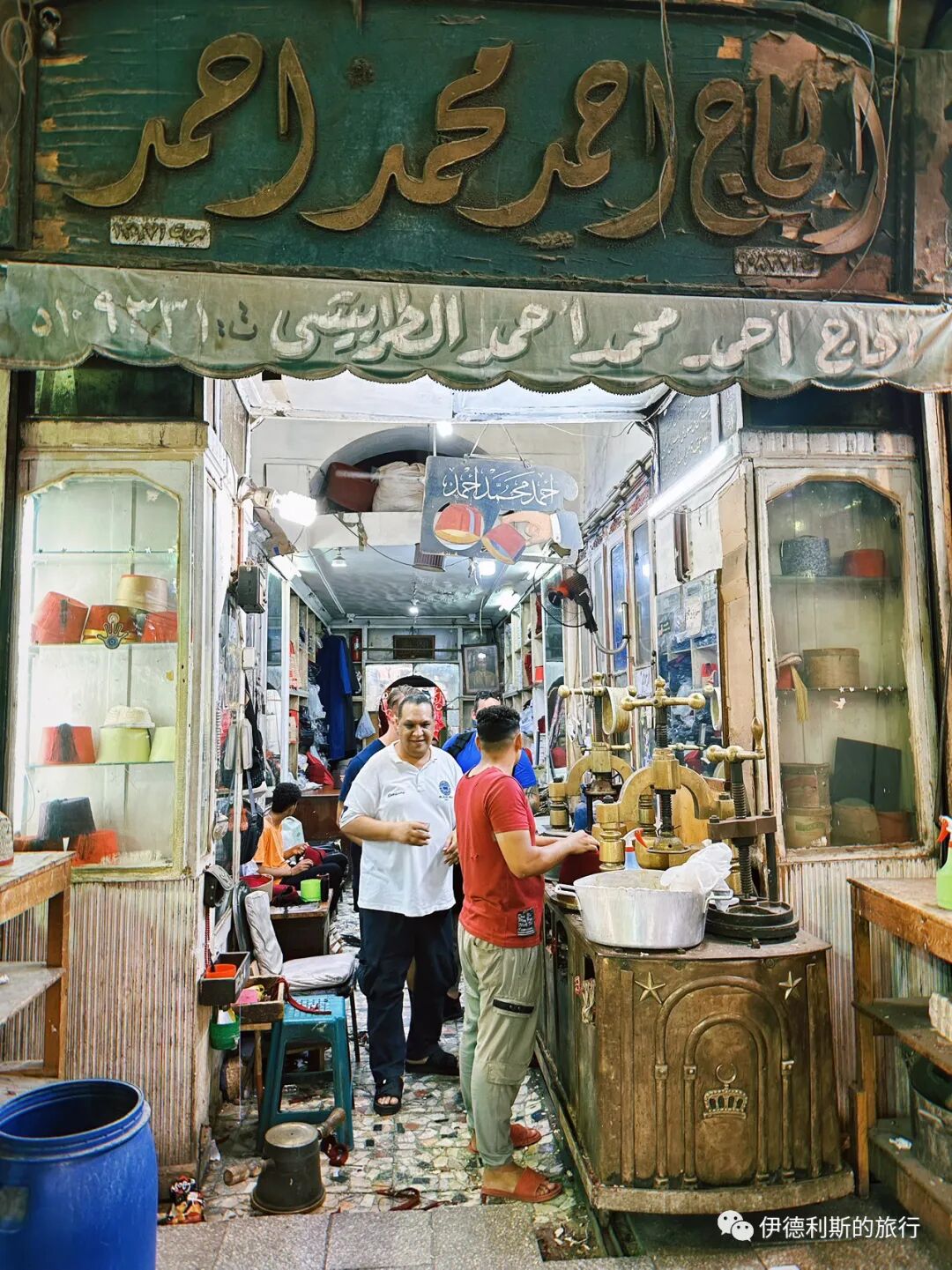
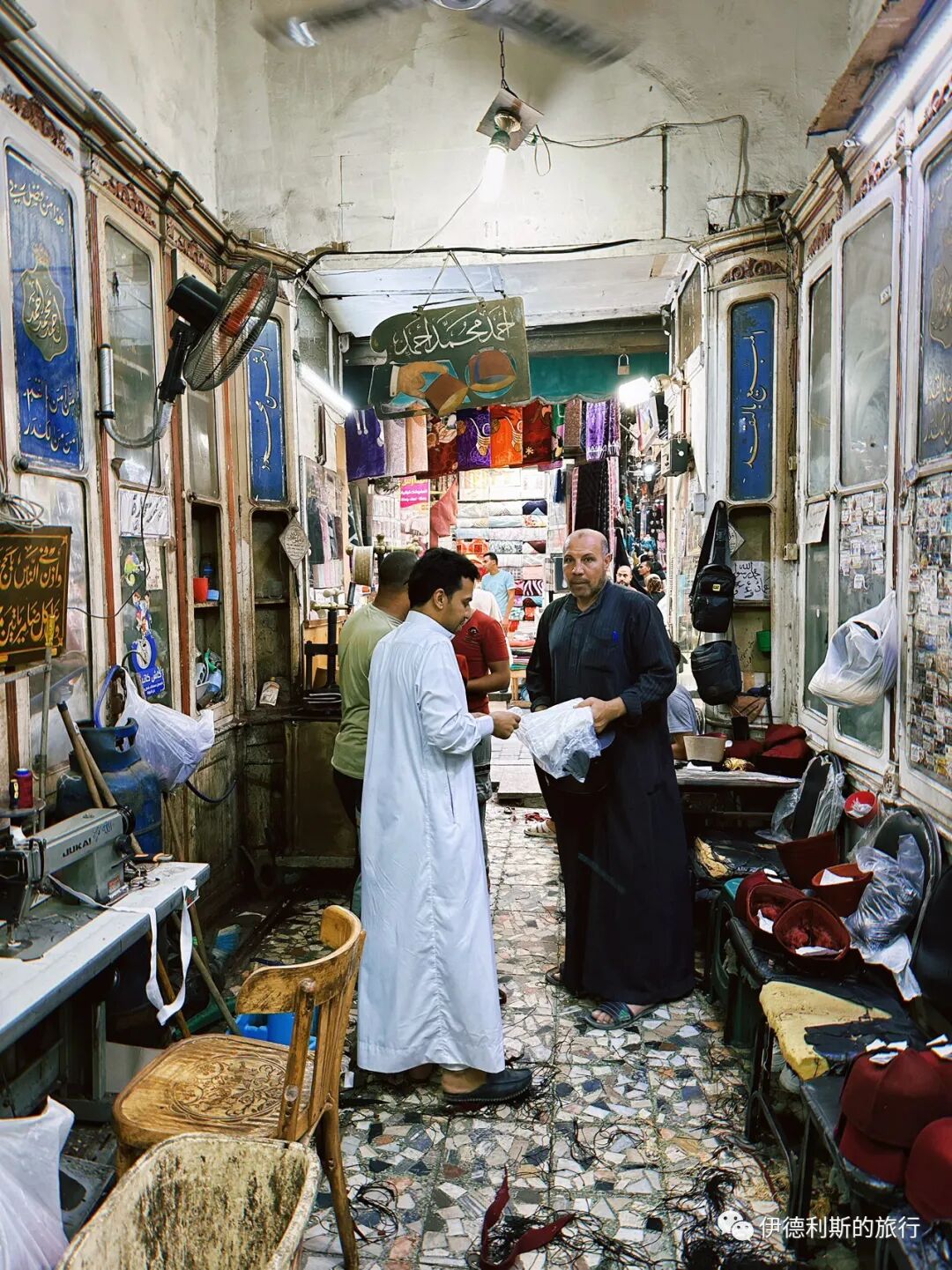
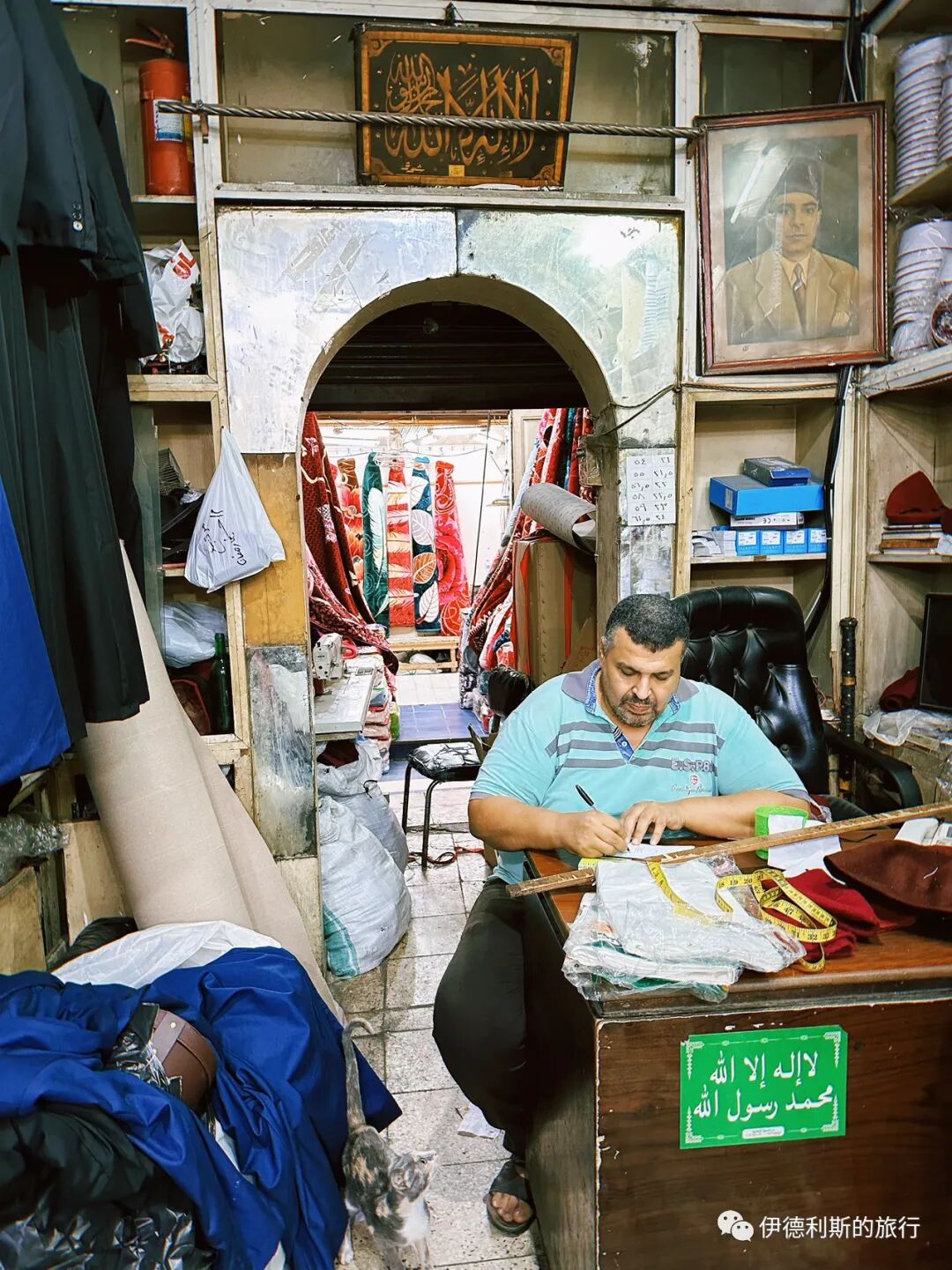
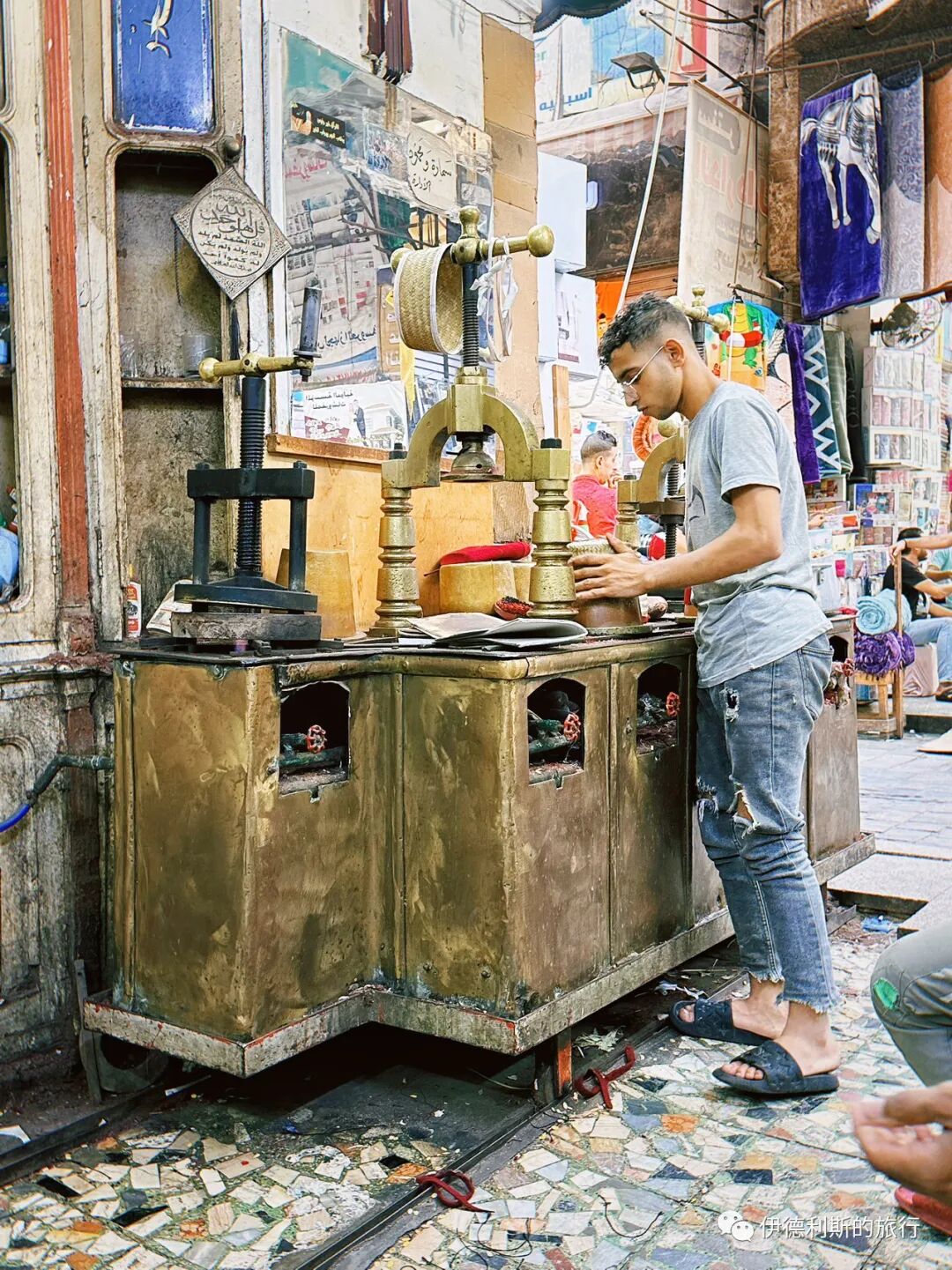
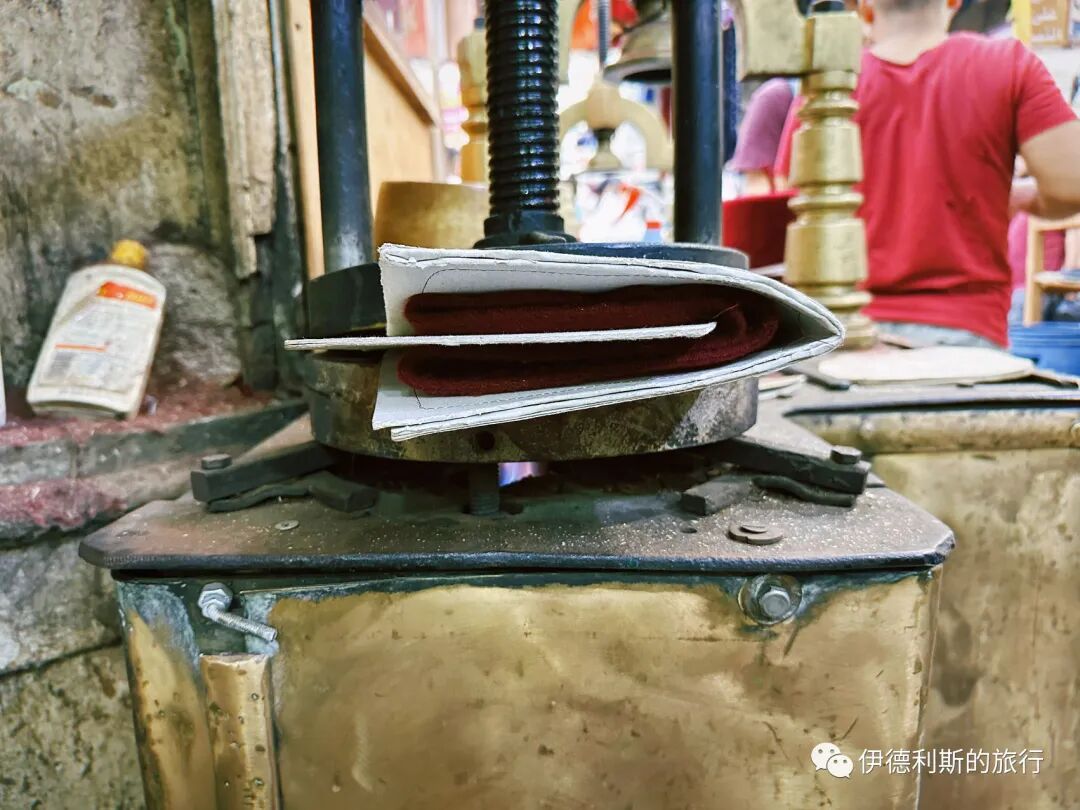
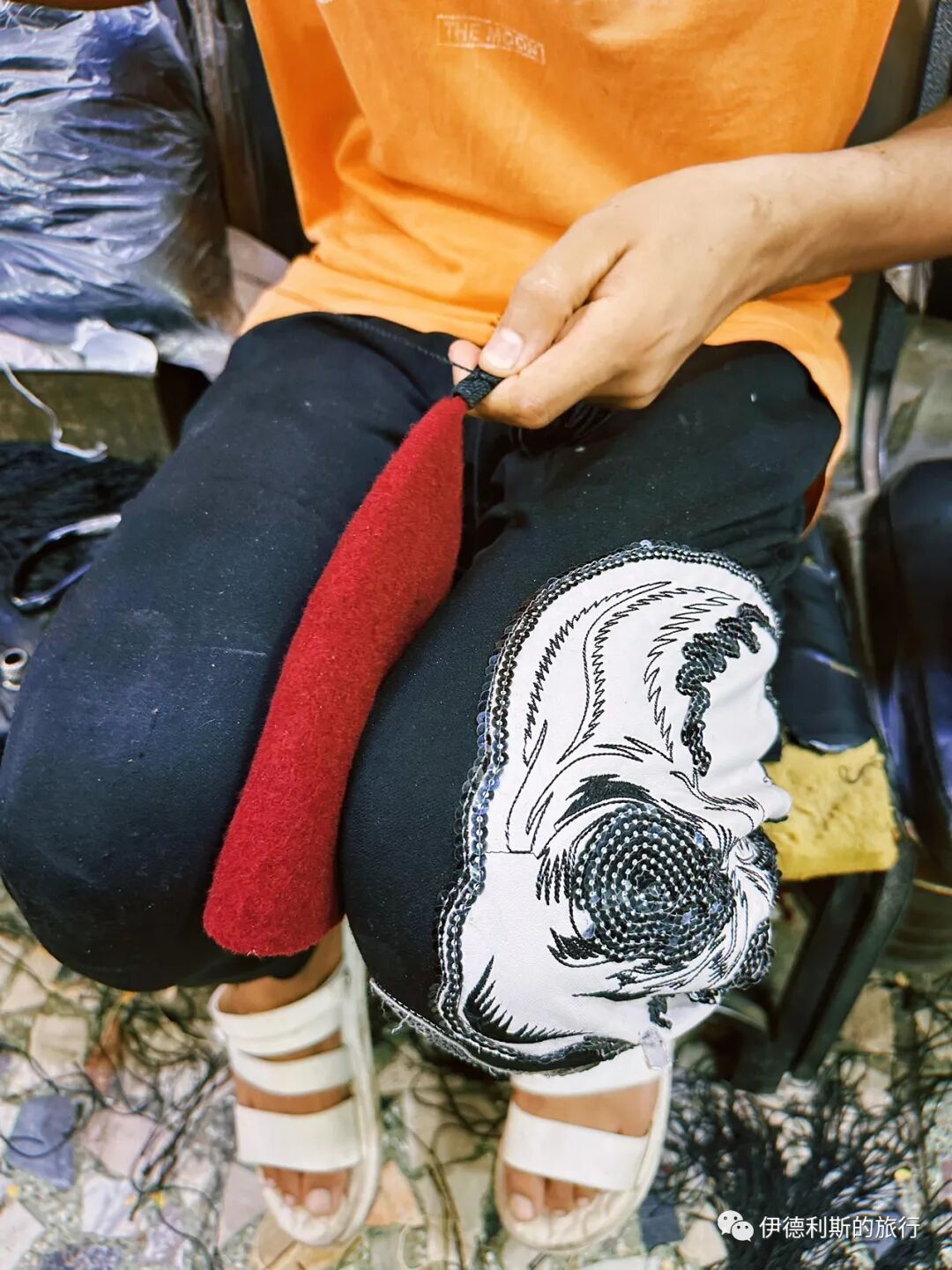
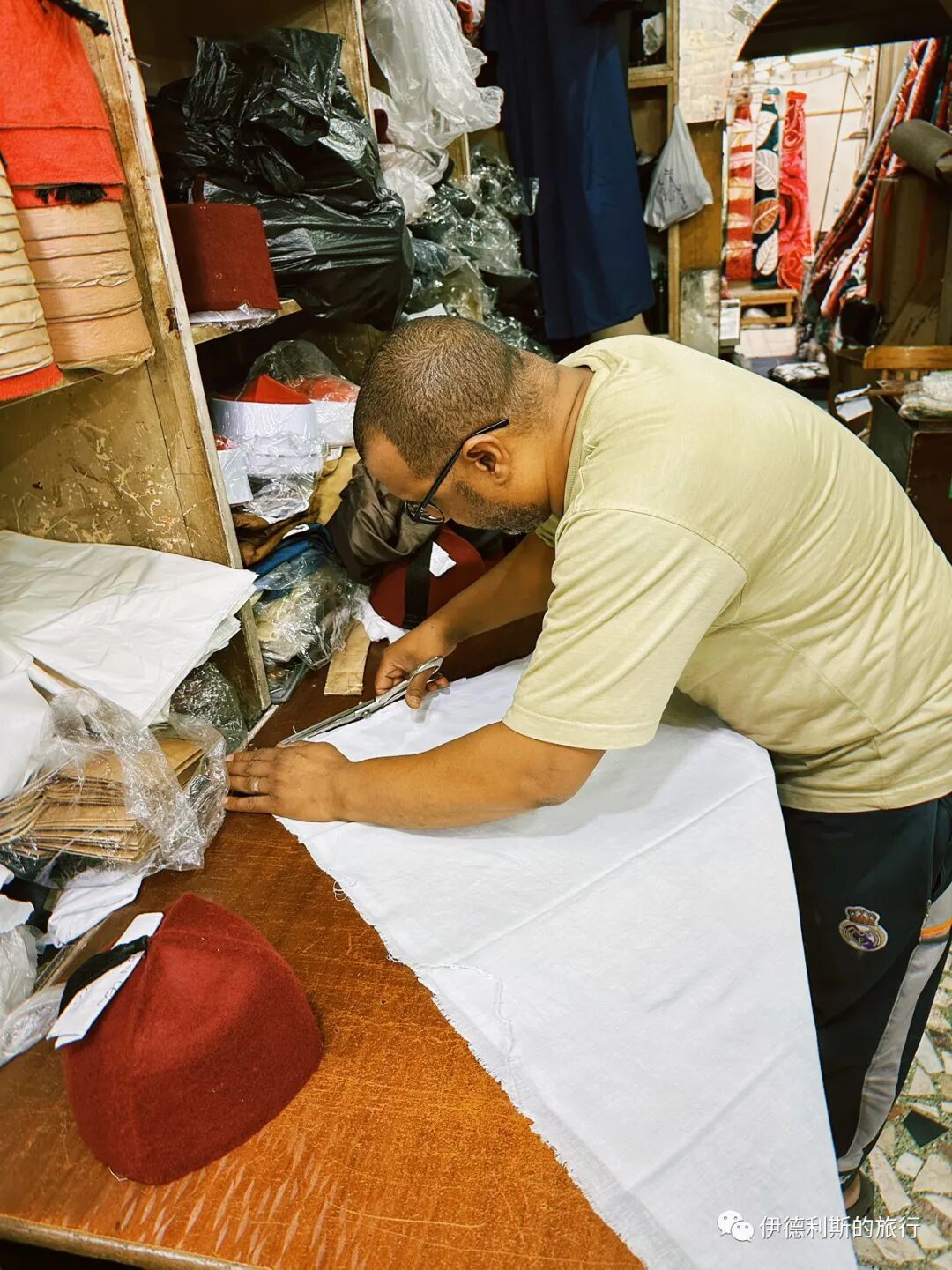
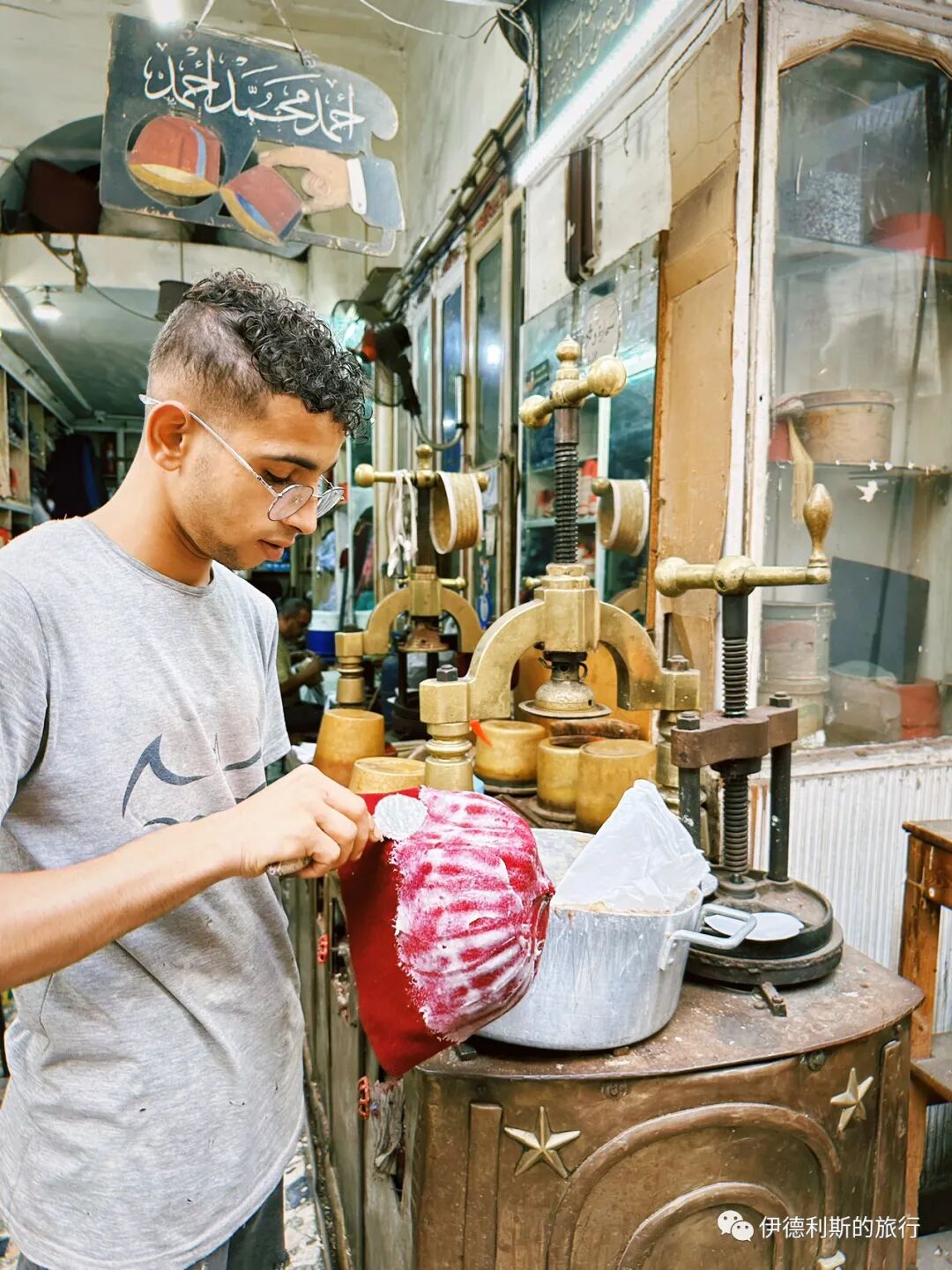
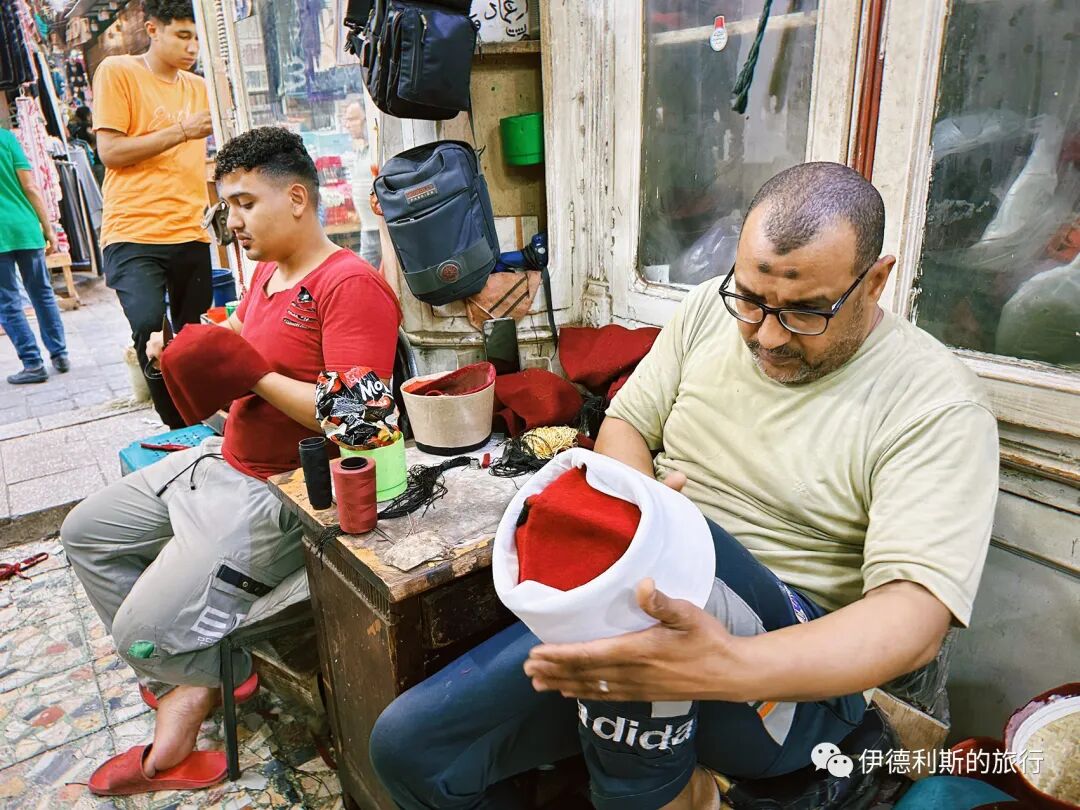
Al Trapiche tarboush mainly makes two types of Tarboush hats. One version is for the teachers and students of Al-Azhar University; it has a cross-shaped ridge with a black tassel, and the bottom is wrapped in white cloth, leaving only the top exposed, with a fabric lining inside. The other is the traditional 19th-century version. It is cylindrical, has no tassel on top, is not wrapped in white cloth, and has a reed lining inside.
Halal Food Guide: Old Cairo - Markets, Street Food and Muslim Travel (Part 2)
Articles • ali2007fr posted the article • 0 comments • 136 views • 2026-05-19 06:55
Outside the southern gate of Old Cairo sits the Souq al-Khayamiya, a textile market built in 1650 during the Ottoman period. It is the last place in Old Cairo that specializes in selling traditional Egyptian appliqué textiles known as Khayamiya.
Souq al-Khayamiya is also called Radwan Bey Qasaba. It was built by Radwan Bey, a Mamluk leader who dominated Egyptian politics from 1631 to 1656. The market stands as an important witness to Radwan Bey's efforts to expand Old Cairo southward in the 17th century.
Khayamiya is a traditional type of textile that dates back to ancient Egypt. It was generally used inside tents like curtains. These textiles feature colorful cotton appliqué decorations and help protect against the hot, dry, and dusty climate. Khayamiya pieces are all hand-stitched. The patterns come from Islamic geometric designs and arabesque motifs, as well as ancient Egyptian pharaonic art. Khayamiya from the 19th and early 20th centuries usually featured large appliqué designs, while today's pieces are made with much finer detail.
We bought a Khayamiya textile featuring traditional Arabic calligraphy at one shop and a small shoulder bag at another.
Next to Al-Azhar Mosque, we bought a traditional inlaid book stand. This inlay technique dates back to the ancient Egyptian pharaonic era around 3000 BC. It uses geometric mosaic patterns and is inlaid with mother-of-pearl.
We watched a performance of traditional Sufi music and the whirling Tanoura dance by the Al Tanoura Egyptian Heritage Dance Troupe at the Khanqah of Sultan al-Ghuri, a Mamluk-era building in Old Cairo built in 1504. Since it was built, the Khanqah of Sultan al-Ghuri has been a place for Sufis to perform dhikr, or the remembrance of Allah. Today, the Al Tanoura Egyptian Heritage Dance Troupe regularly performs Sufi music and dance here.
We left the Al-Azhar Mosque area around 6:40 PM to line up. We bought our tickets and went inside shortly after, taking seats in the middle section. People kept buying tickets and coming in, and by the time the show started at 7:30 PM, the place was completely full. The entire performance was divided into three parts: the first was a display of traditional music, the second was a demonstration of the Sufi whirling ritual (El Darwish), and the third was a musical and dance improvisation.
In Arabic, Tanoura originally refers to the colorful skirts worn by Sufi practitioners. This form of dhikr developed from the Sama whirling dance of the Mevlevi Sufi order in Turkey. Today, the Tanoura is not only used for Sufi practice but has also become a part of folk dance. view all
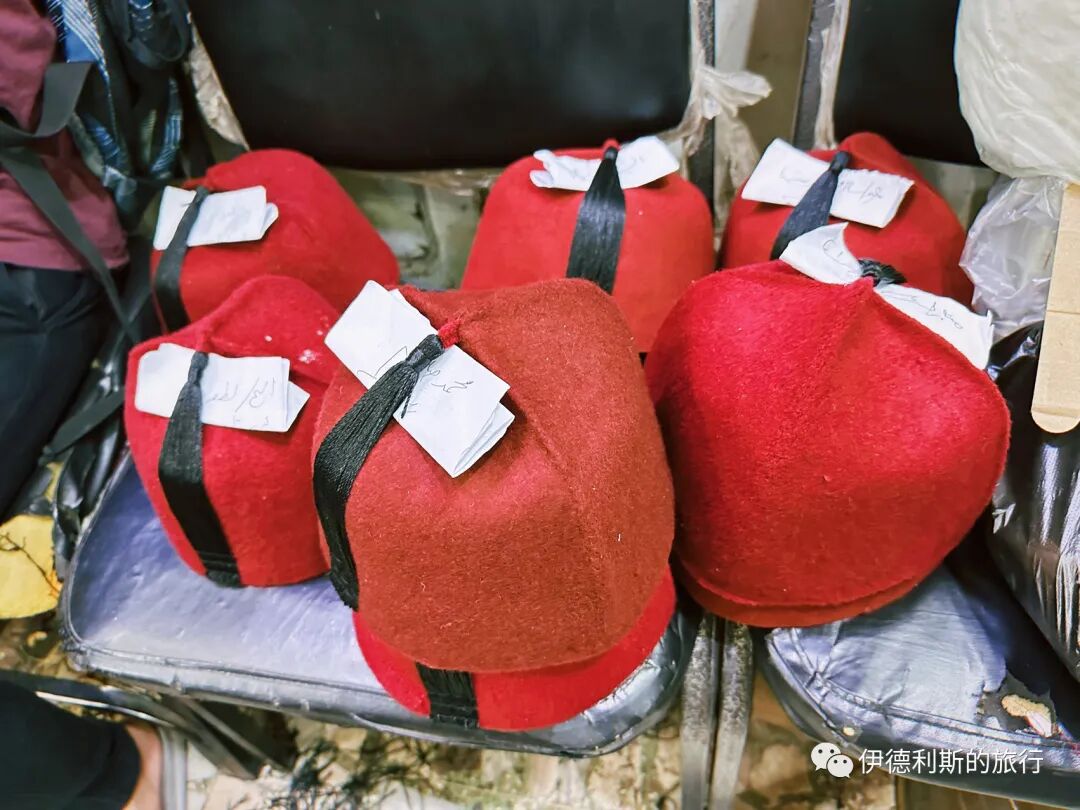
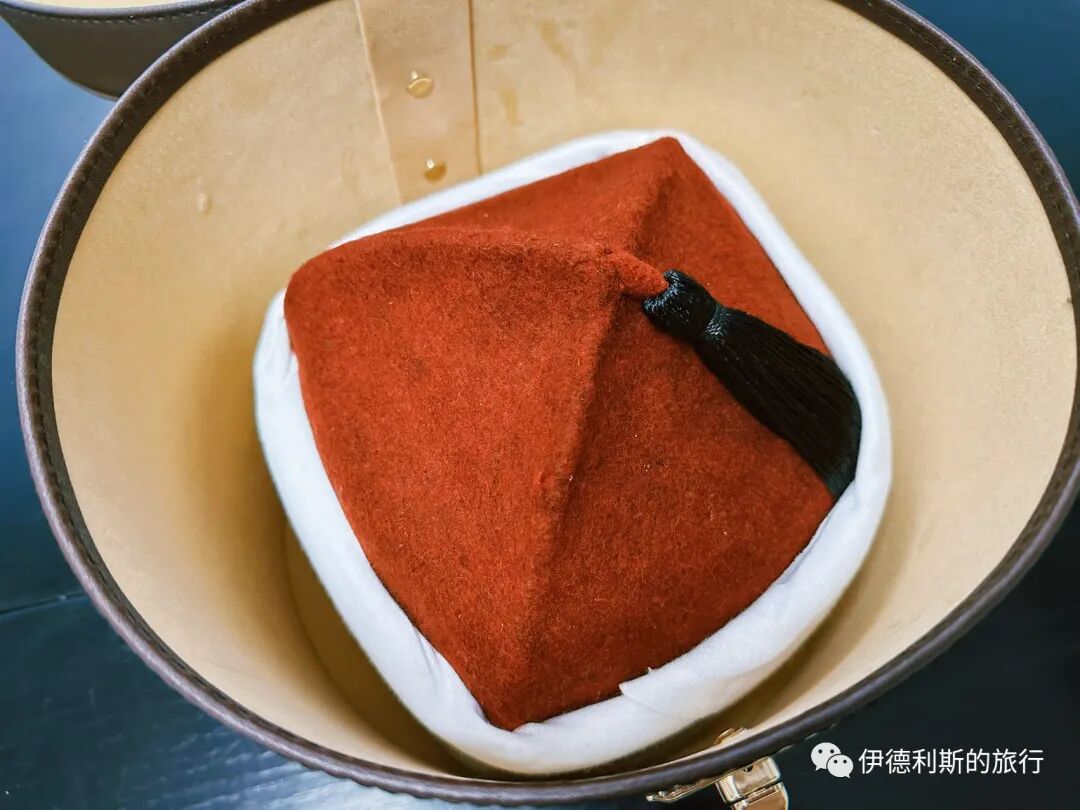
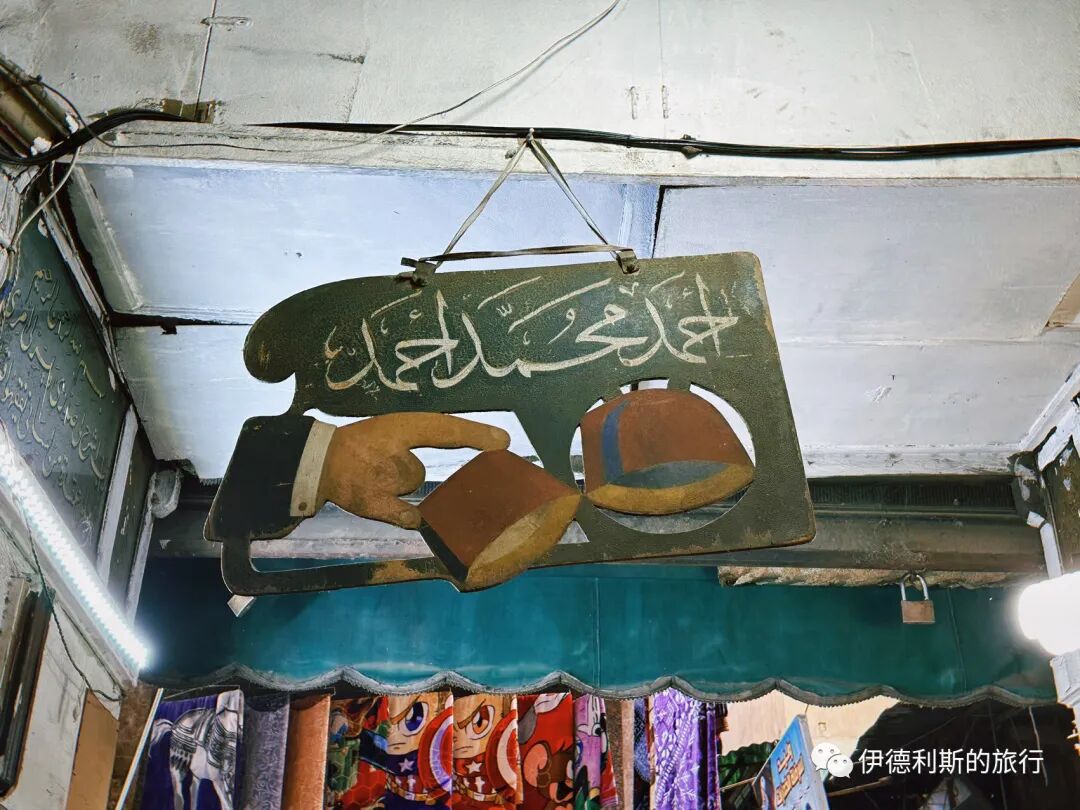
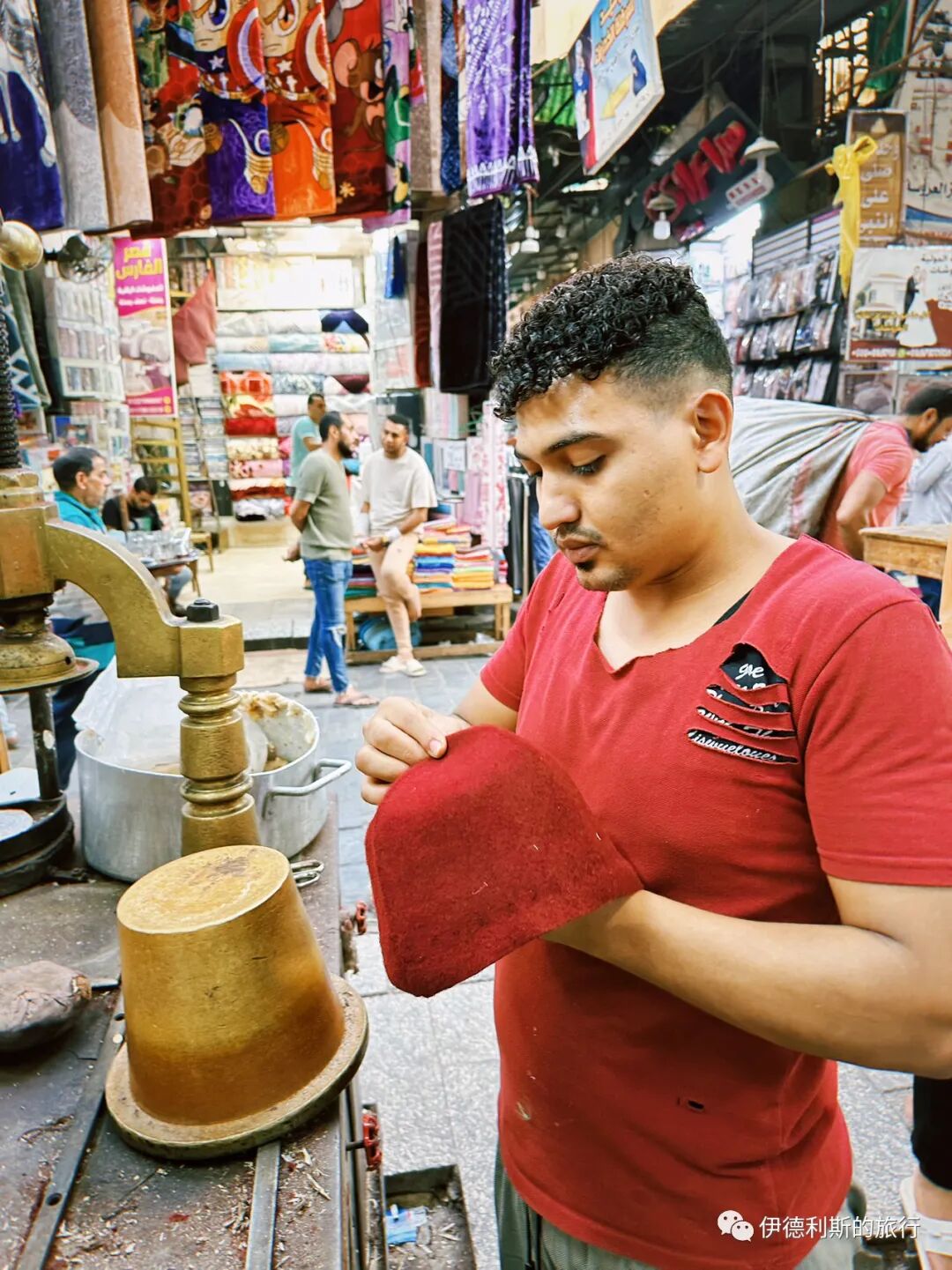
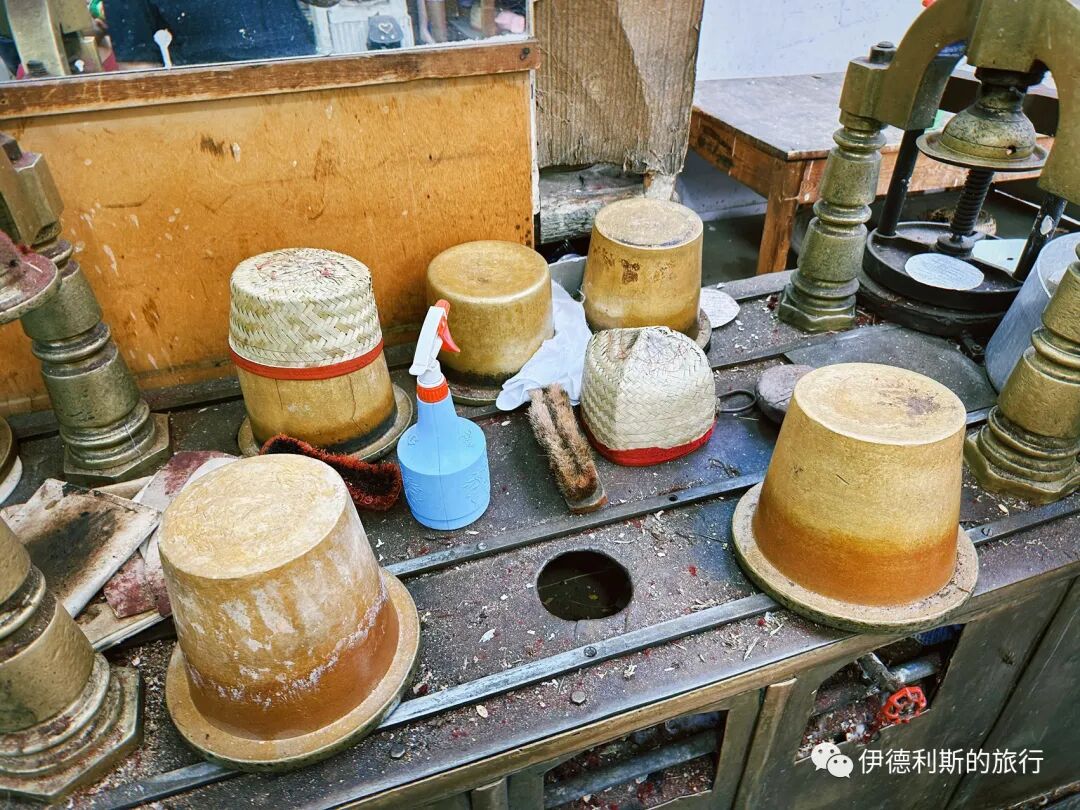
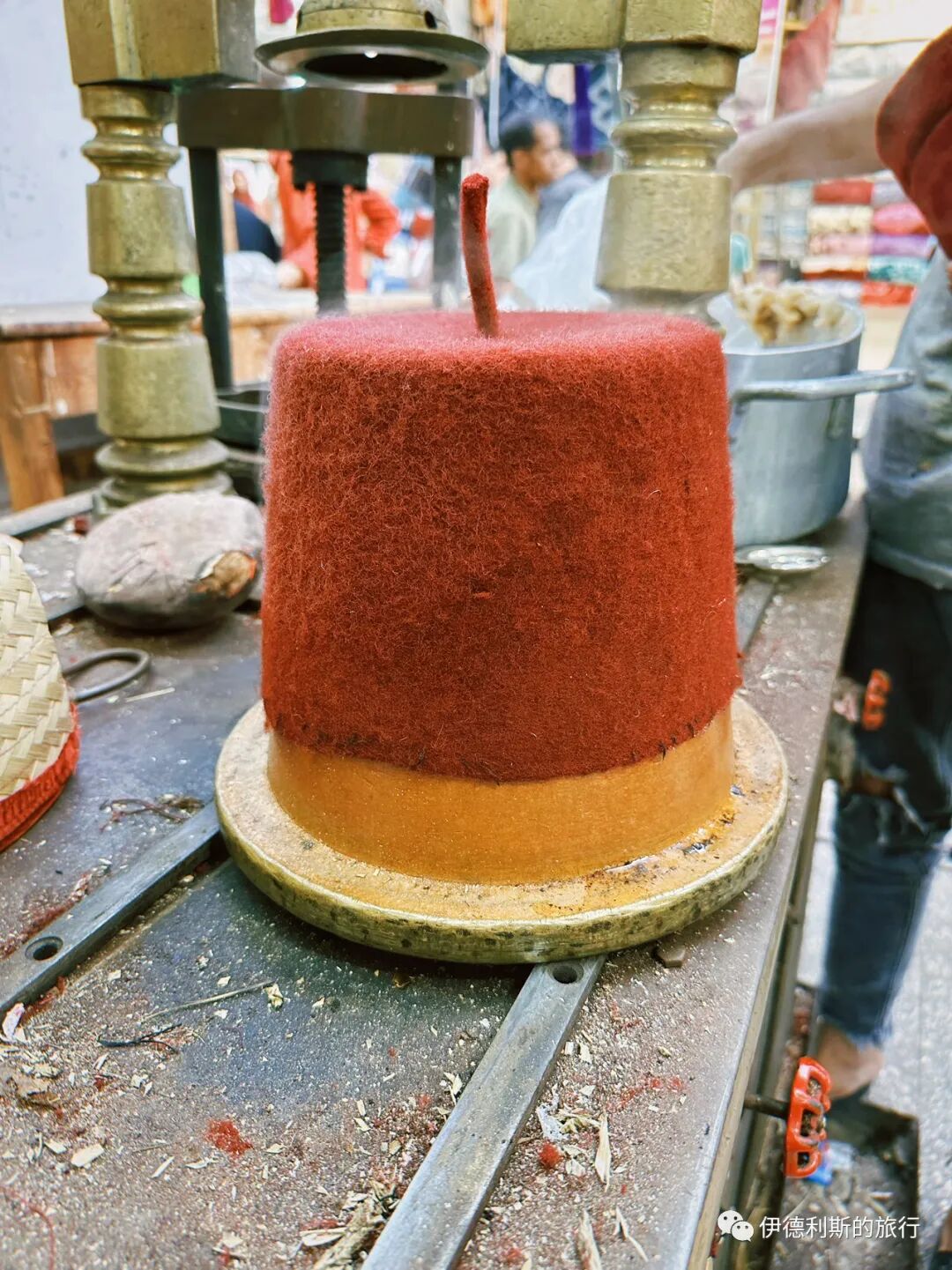
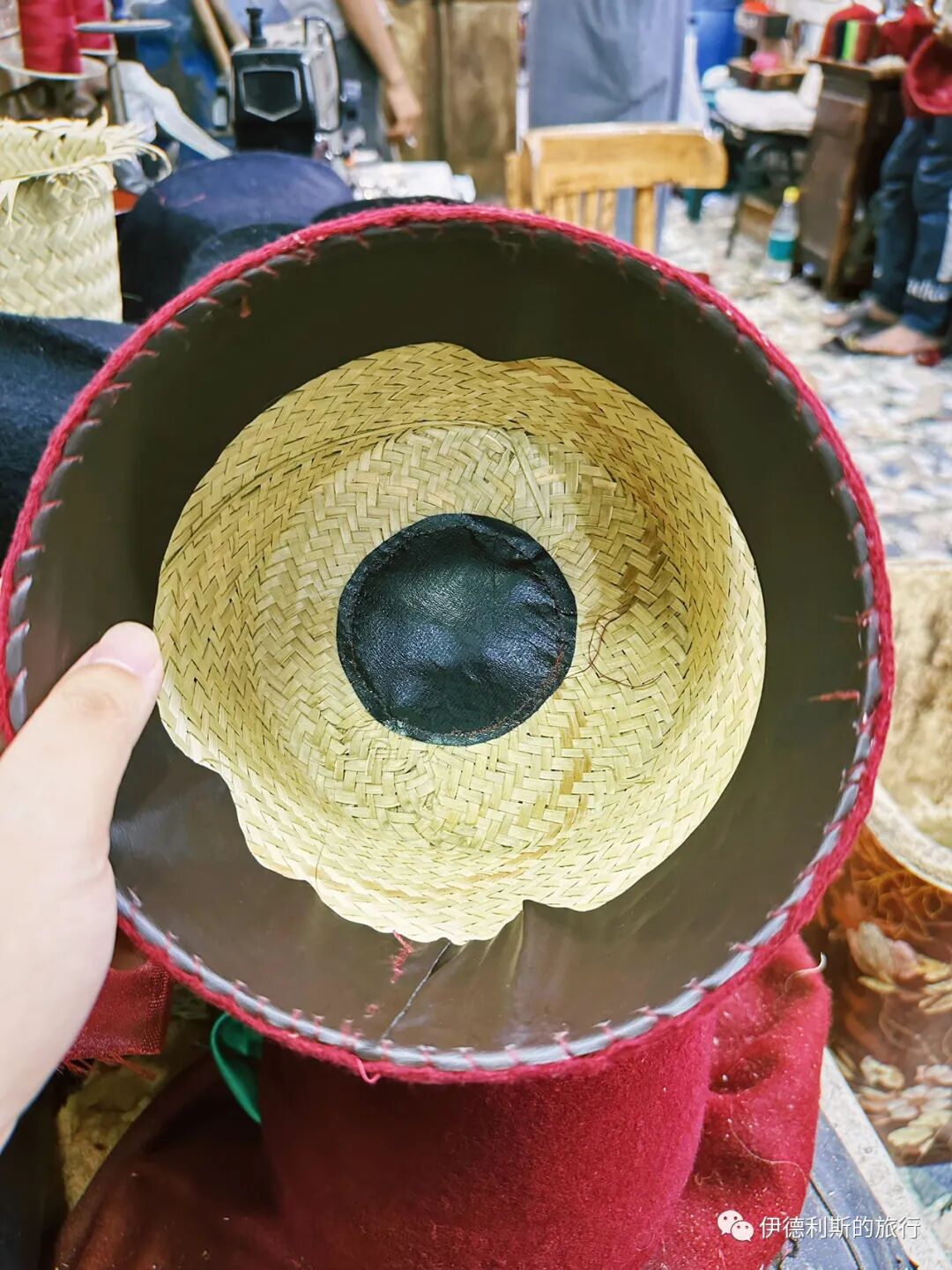
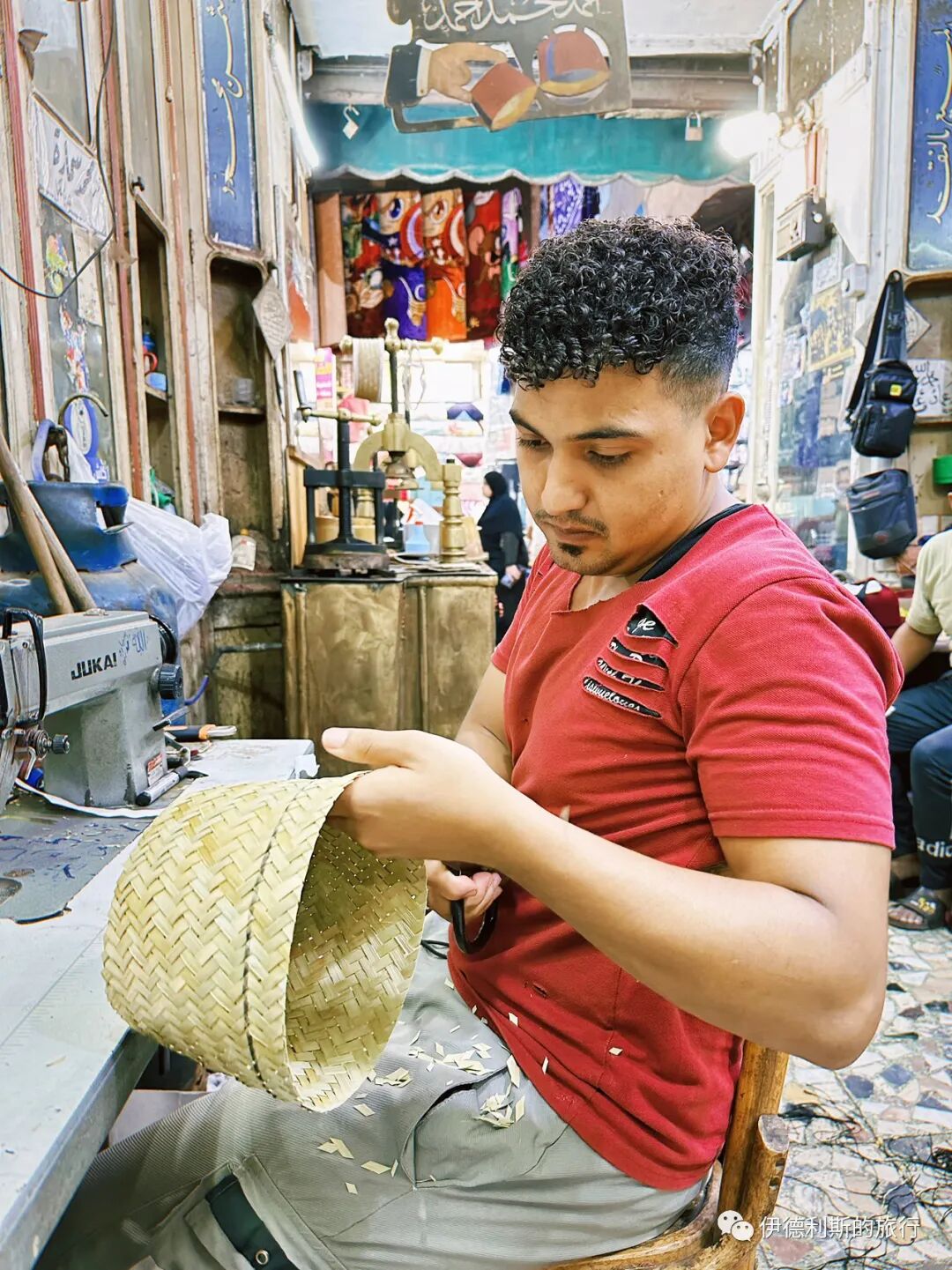
Outside the southern gate of Old Cairo sits the Souq al-Khayamiya, a textile market built in 1650 during the Ottoman period. It is the last place in Old Cairo that specializes in selling traditional Egyptian appliqué textiles known as Khayamiya.
Souq al-Khayamiya is also called Radwan Bey Qasaba. It was built by Radwan Bey, a Mamluk leader who dominated Egyptian politics from 1631 to 1656. The market stands as an important witness to Radwan Bey's efforts to expand Old Cairo southward in the 17th century.
Khayamiya is a traditional type of textile that dates back to ancient Egypt. It was generally used inside tents like curtains. These textiles feature colorful cotton appliqué decorations and help protect against the hot, dry, and dusty climate. Khayamiya pieces are all hand-stitched. The patterns come from Islamic geometric designs and arabesque motifs, as well as ancient Egyptian pharaonic art. Khayamiya from the 19th and early 20th centuries usually featured large appliqué designs, while today's pieces are made with much finer detail.
We bought a Khayamiya textile featuring traditional Arabic calligraphy at one shop and a small shoulder bag at another.
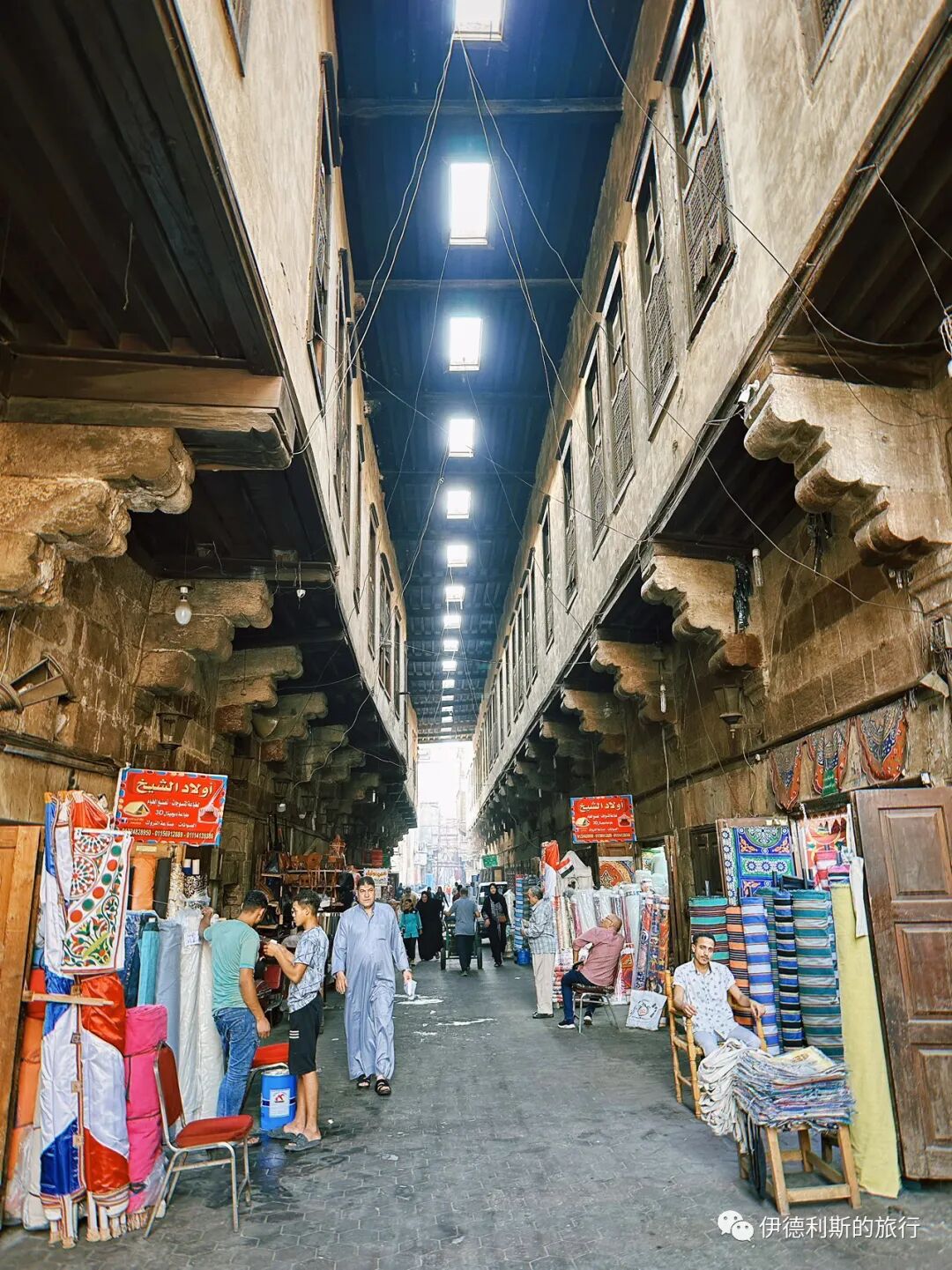
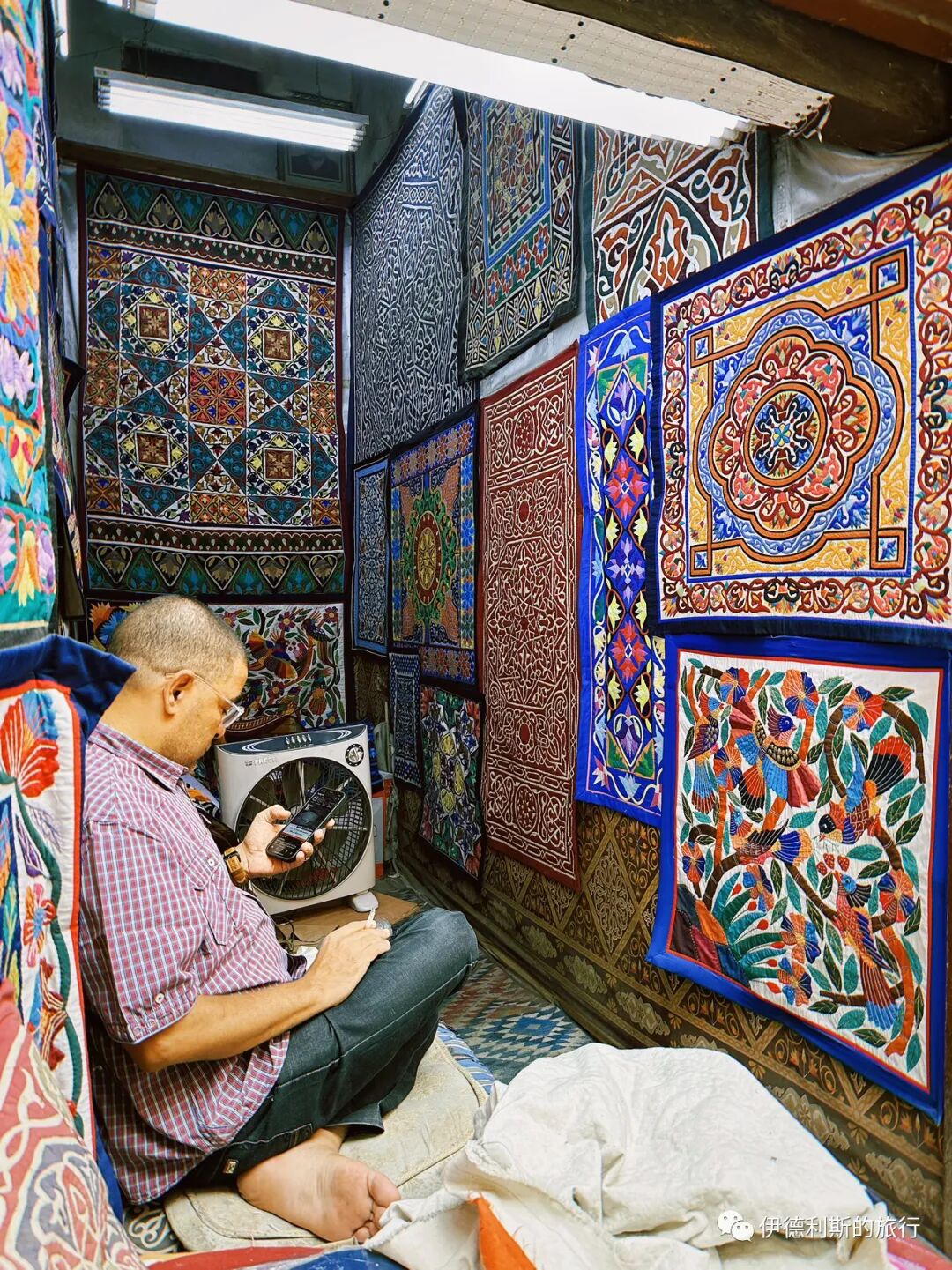
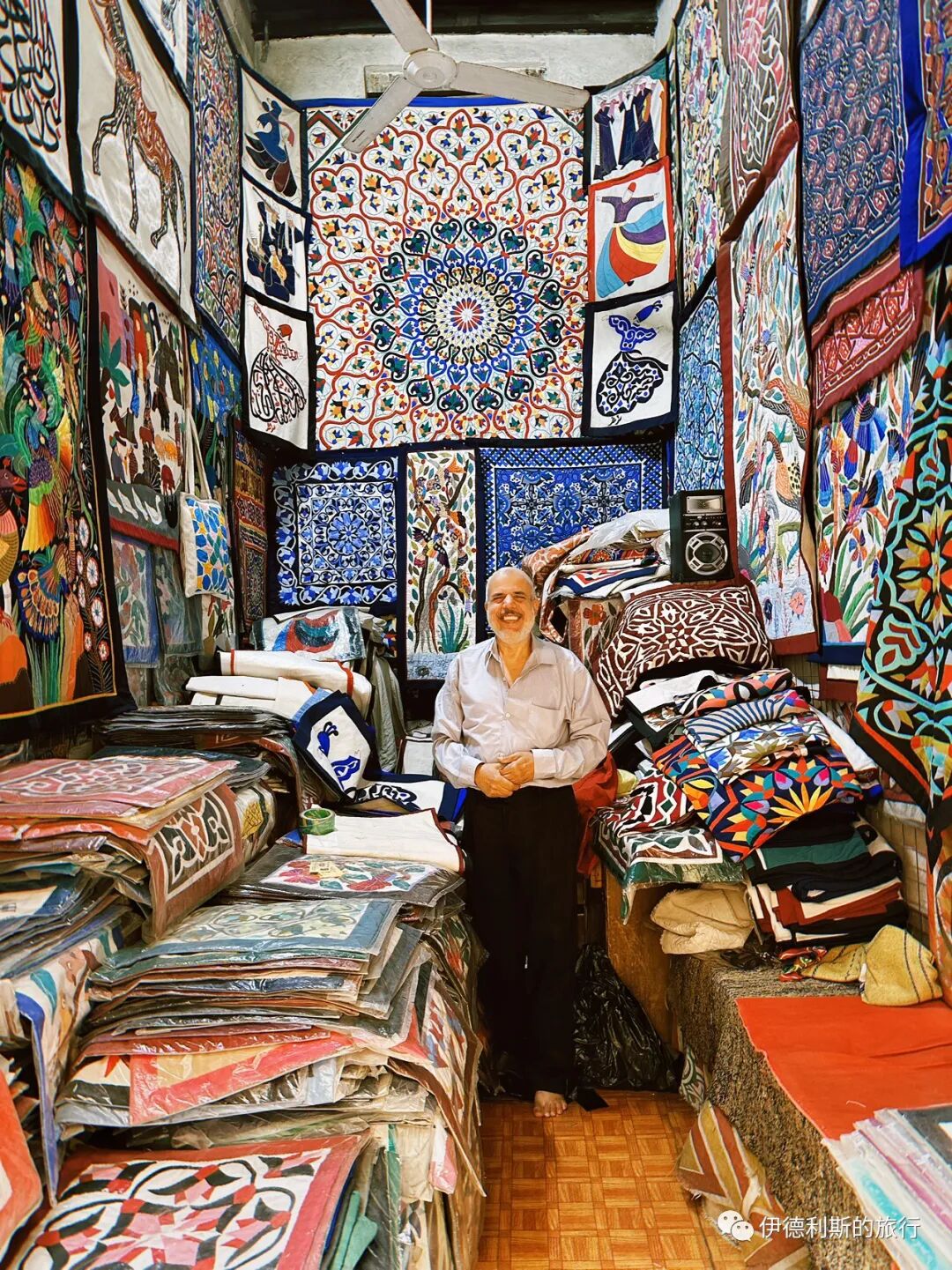
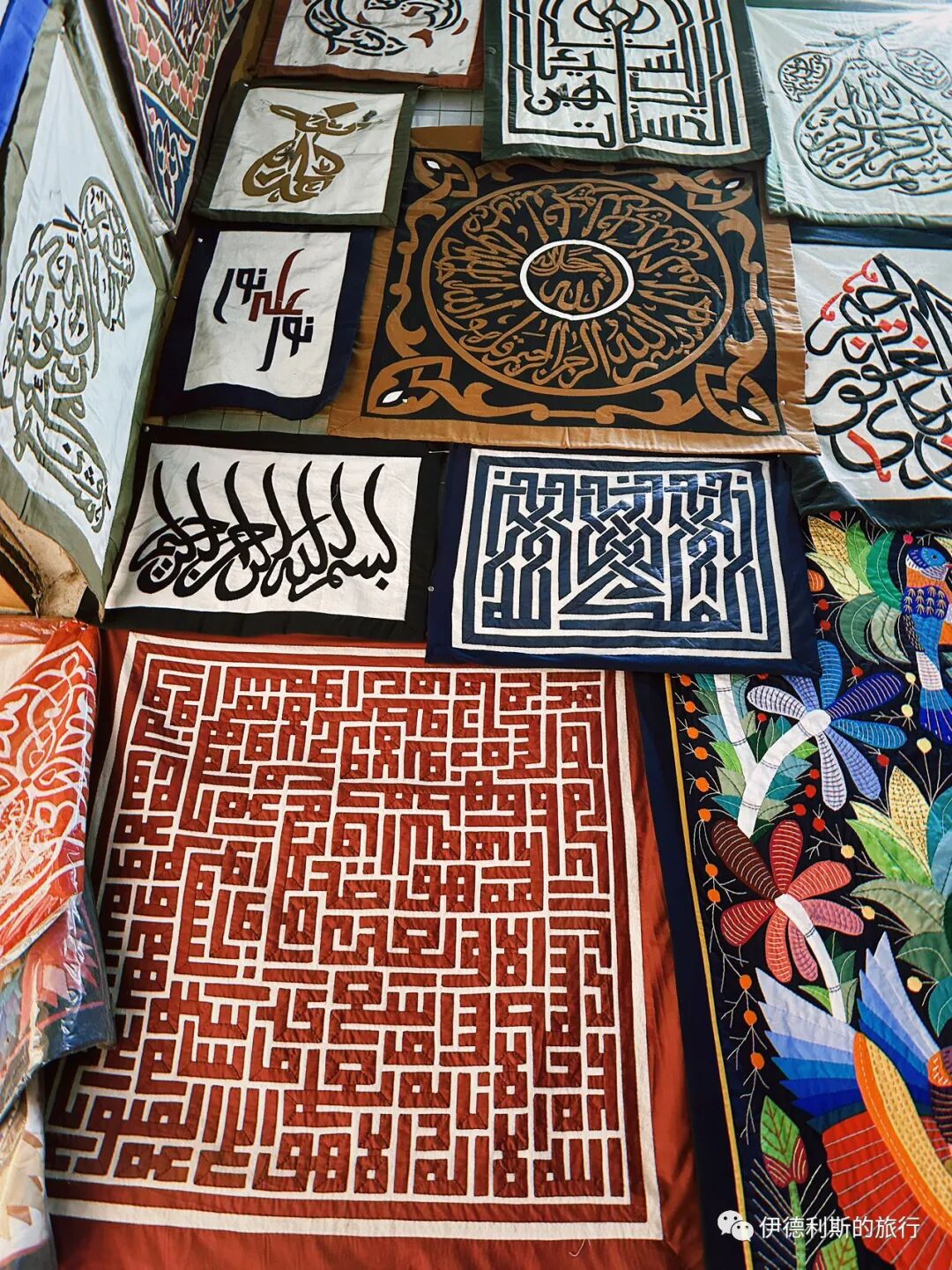
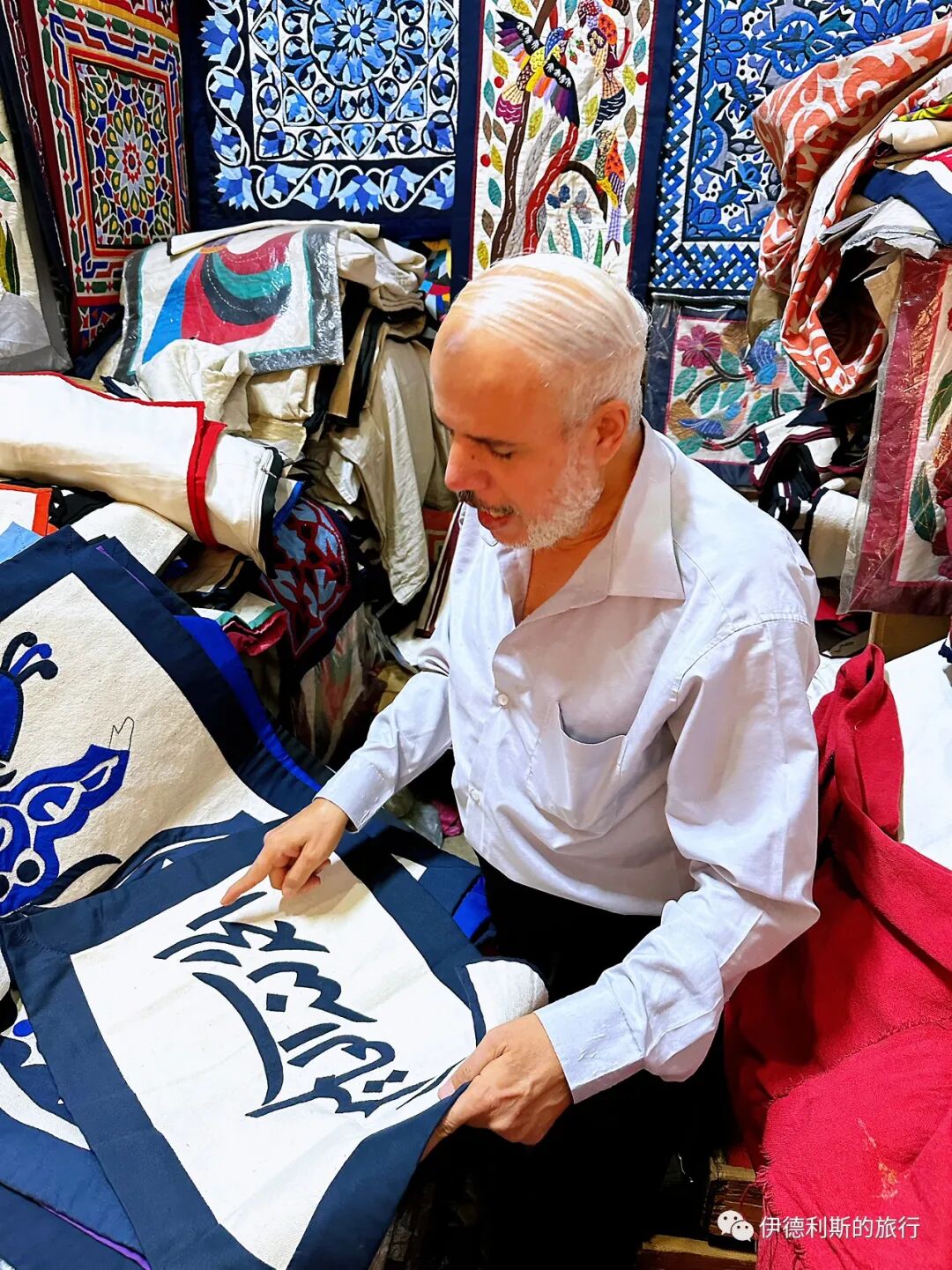
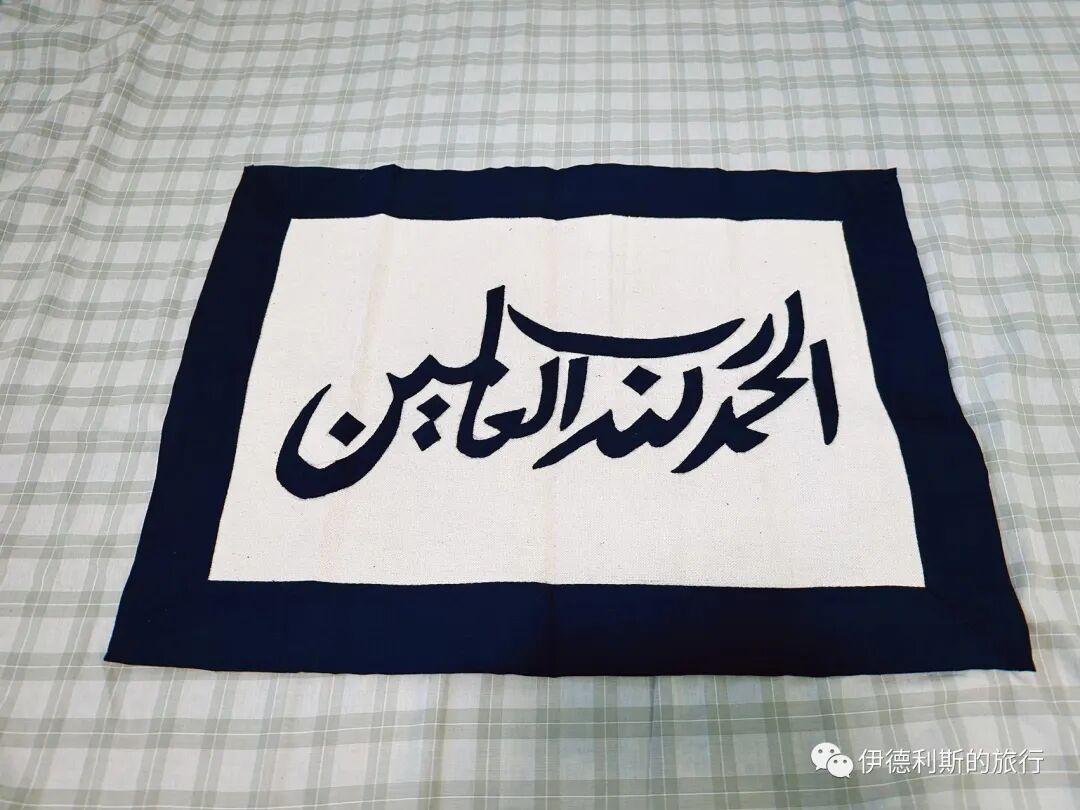
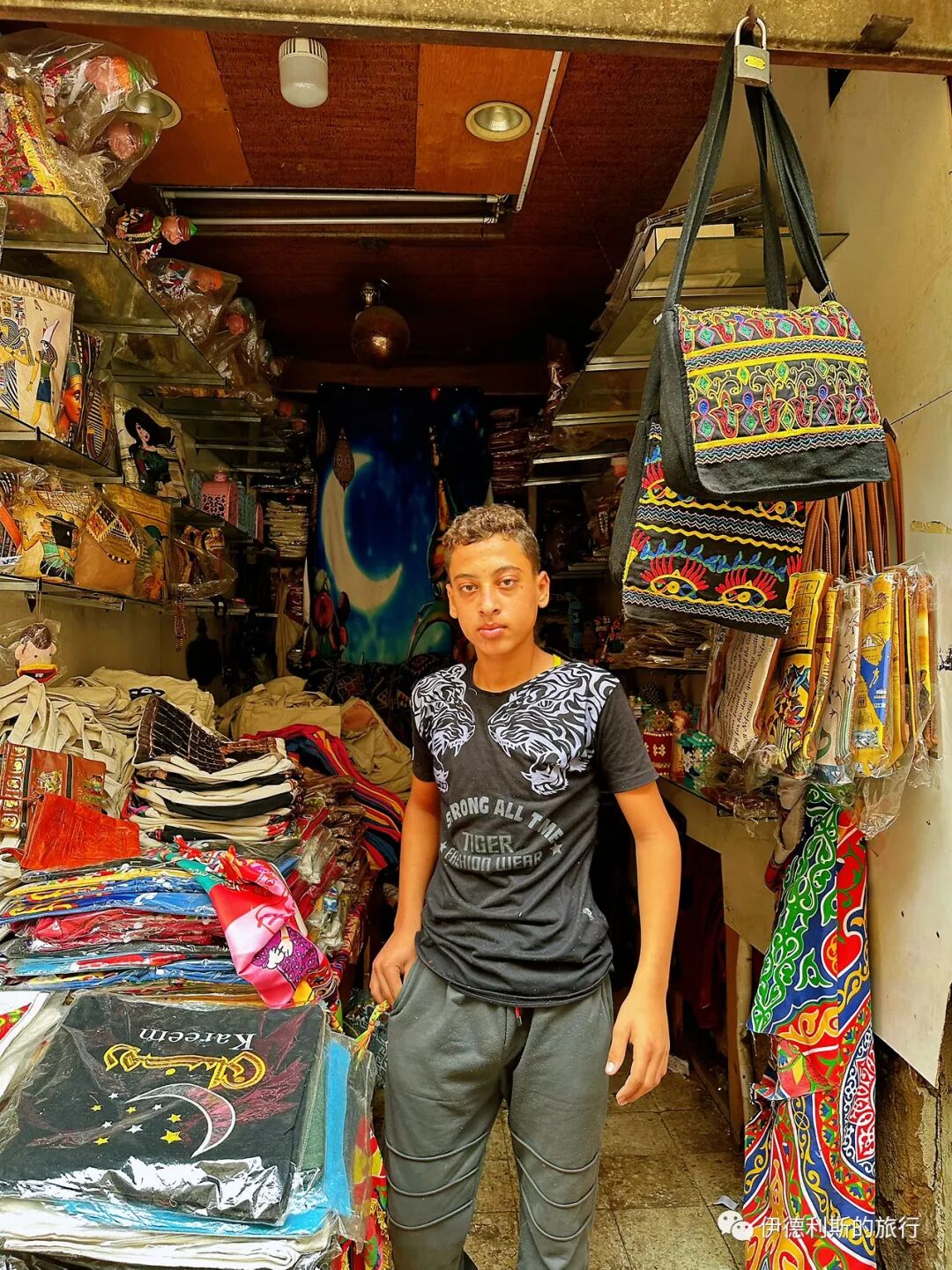
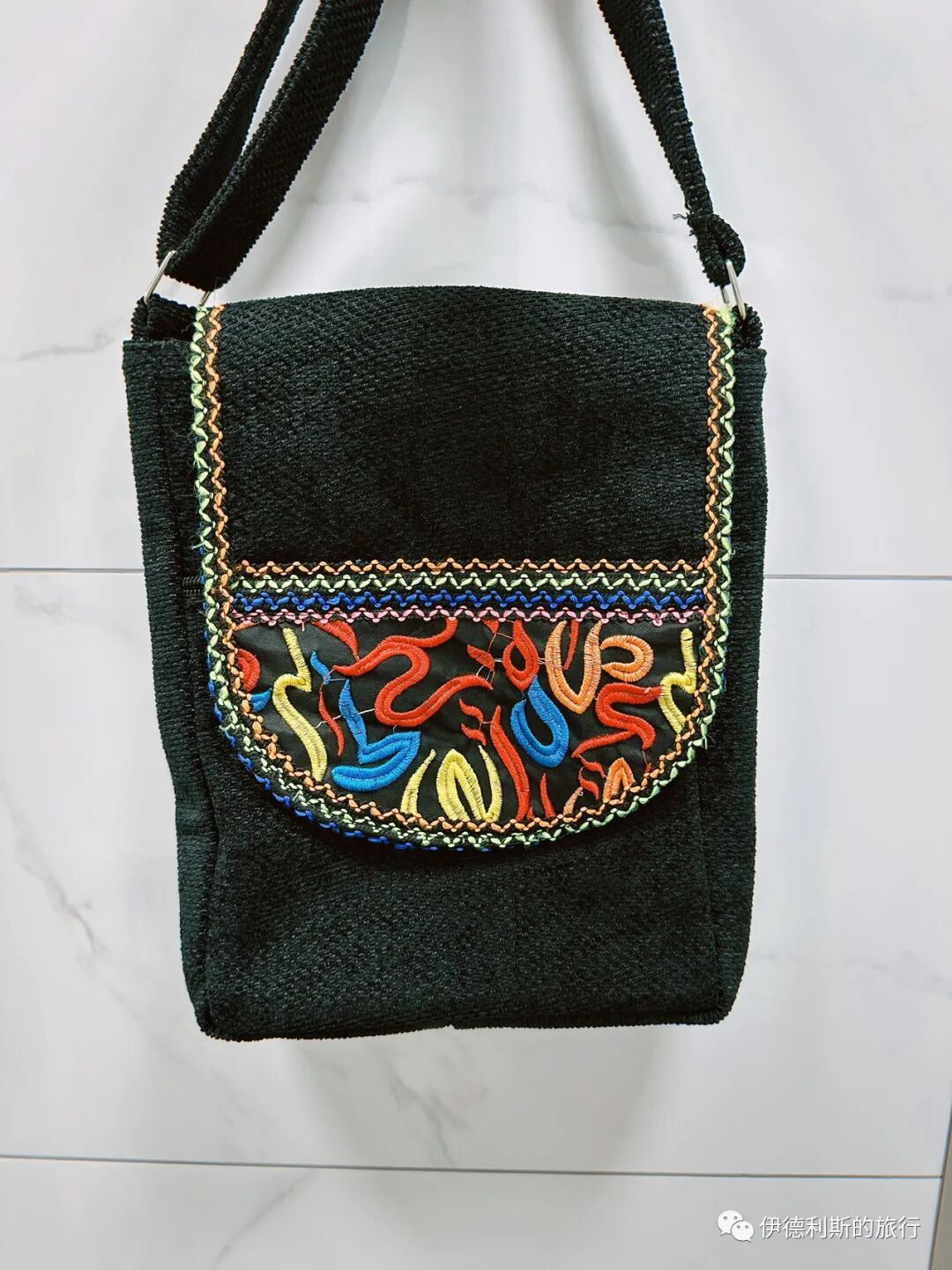
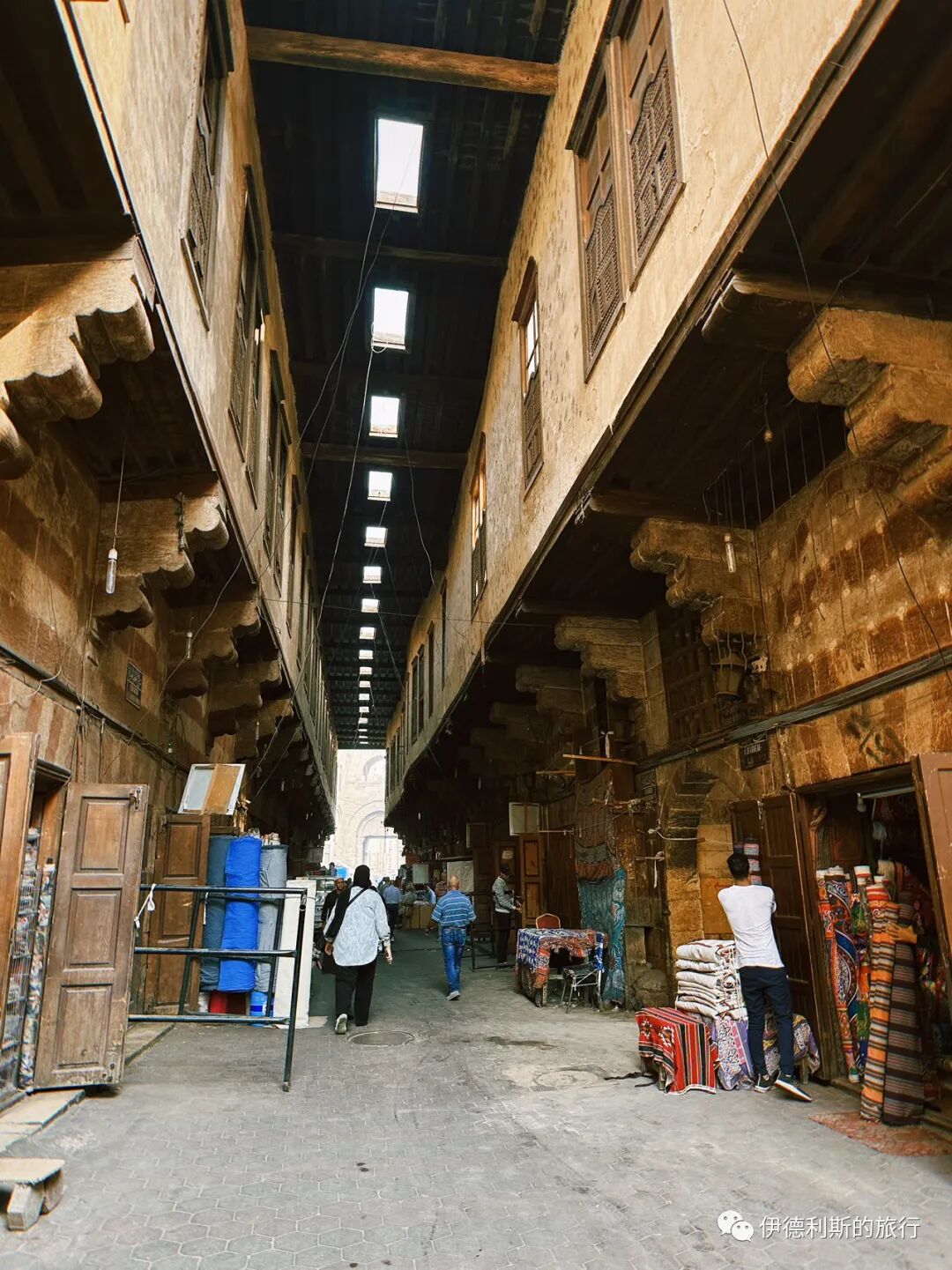
Next to Al-Azhar Mosque, we bought a traditional inlaid book stand. This inlay technique dates back to the ancient Egyptian pharaonic era around 3000 BC. It uses geometric mosaic patterns and is inlaid with mother-of-pearl.
We watched a performance of traditional Sufi music and the whirling Tanoura dance by the Al Tanoura Egyptian Heritage Dance Troupe at the Khanqah of Sultan al-Ghuri, a Mamluk-era building in Old Cairo built in 1504. Since it was built, the Khanqah of Sultan al-Ghuri has been a place for Sufis to perform dhikr, or the remembrance of Allah. Today, the Al Tanoura Egyptian Heritage Dance Troupe regularly performs Sufi music and dance here.
We left the Al-Azhar Mosque area around 6:40 PM to line up. We bought our tickets and went inside shortly after, taking seats in the middle section. People kept buying tickets and coming in, and by the time the show started at 7:30 PM, the place was completely full. The entire performance was divided into three parts: the first was a display of traditional music, the second was a demonstration of the Sufi whirling ritual (El Darwish), and the third was a musical and dance improvisation.
In Arabic, Tanoura originally refers to the colorful skirts worn by Sufi practitioners. This form of dhikr developed from the Sama whirling dance of the Mevlevi Sufi order in Turkey. Today, the Tanoura is not only used for Sufi practice but has also become a part of folk dance.
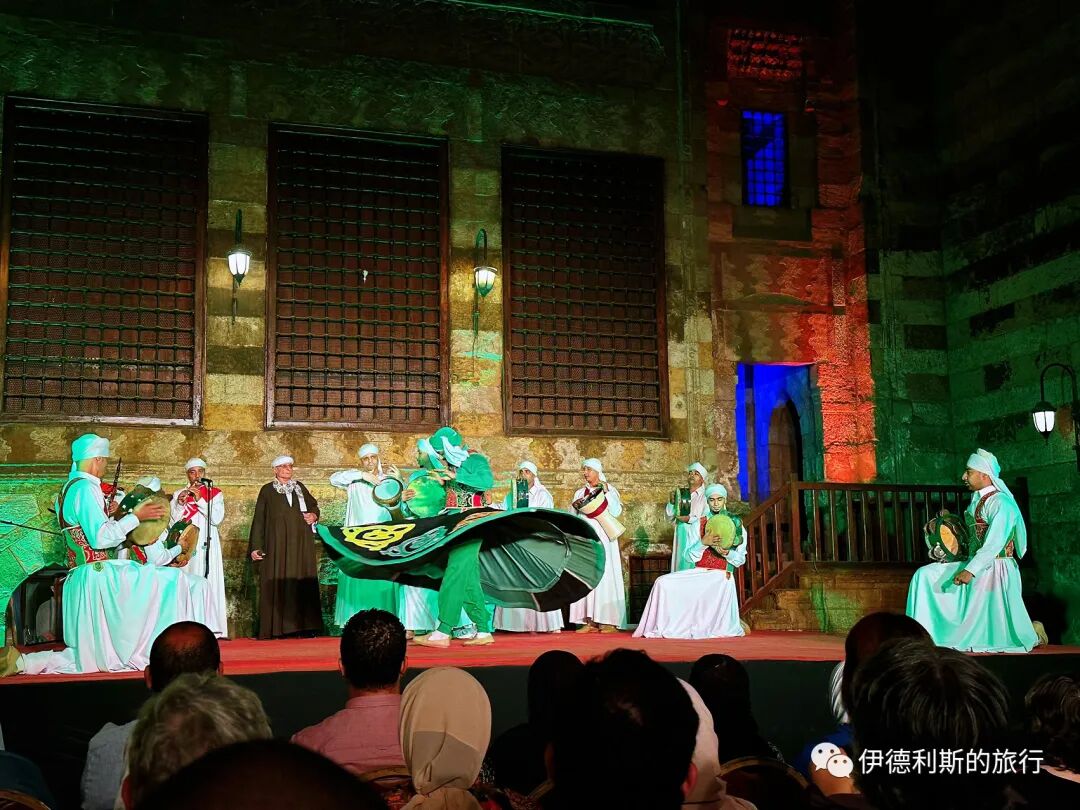
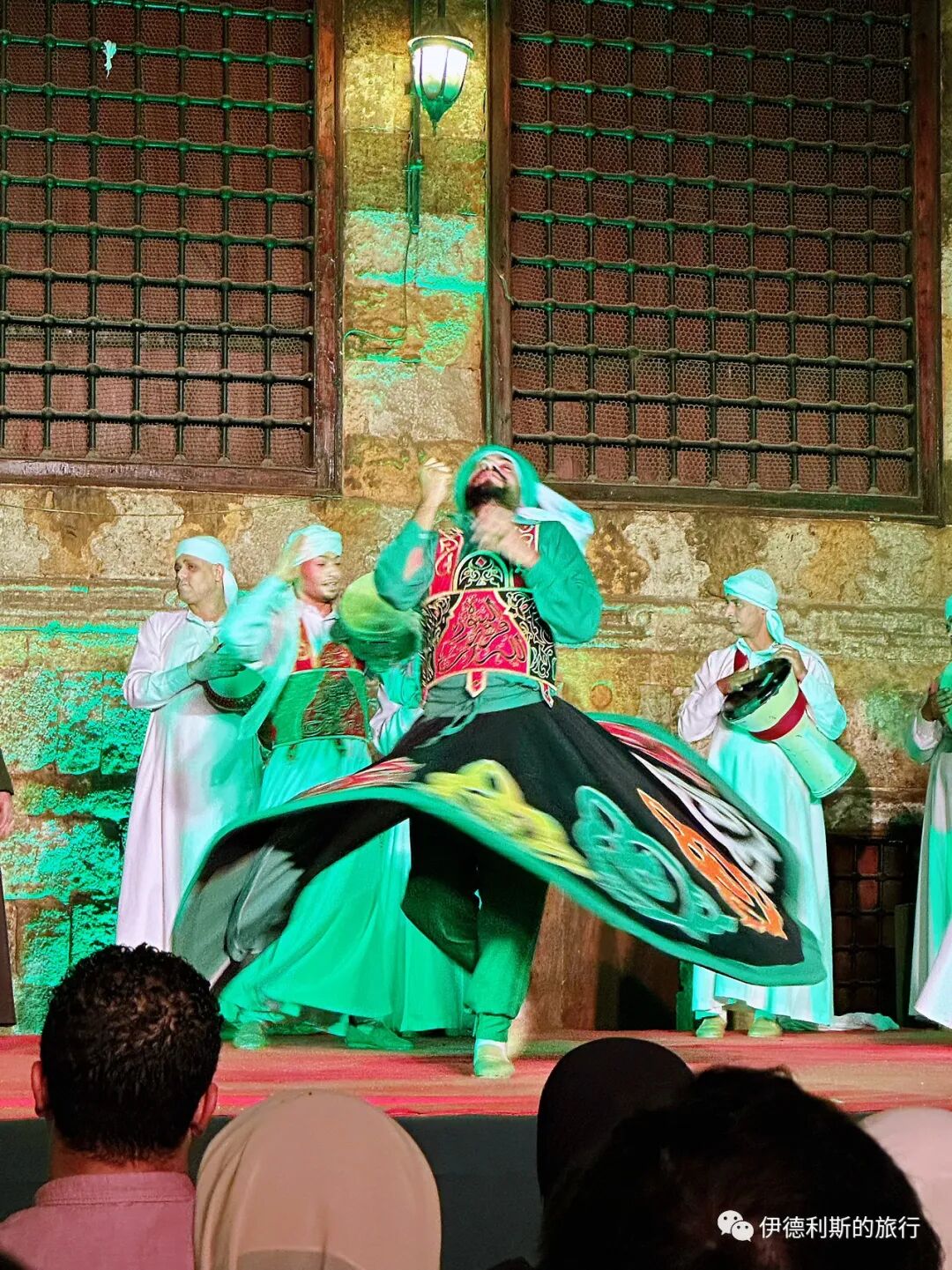
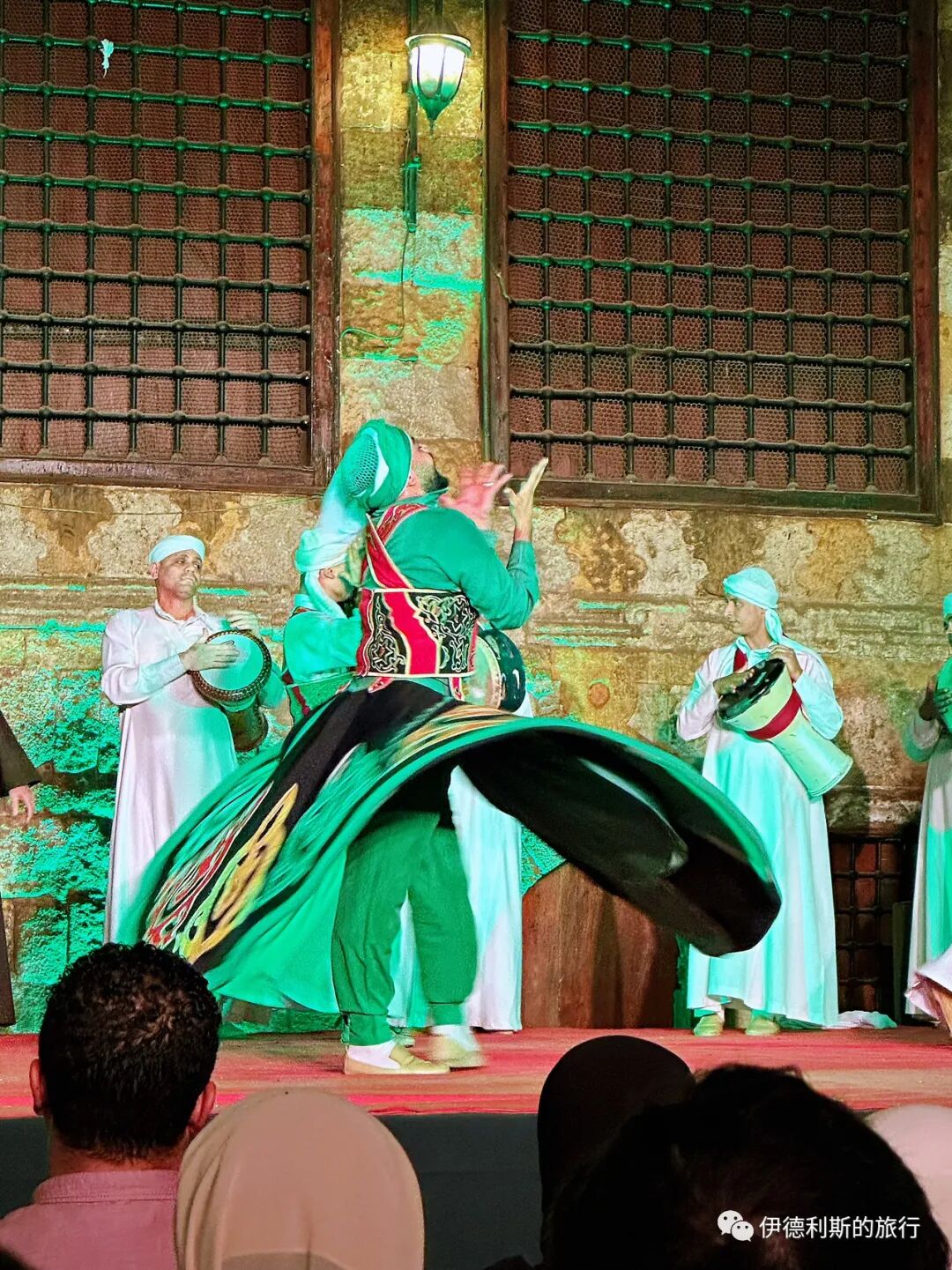
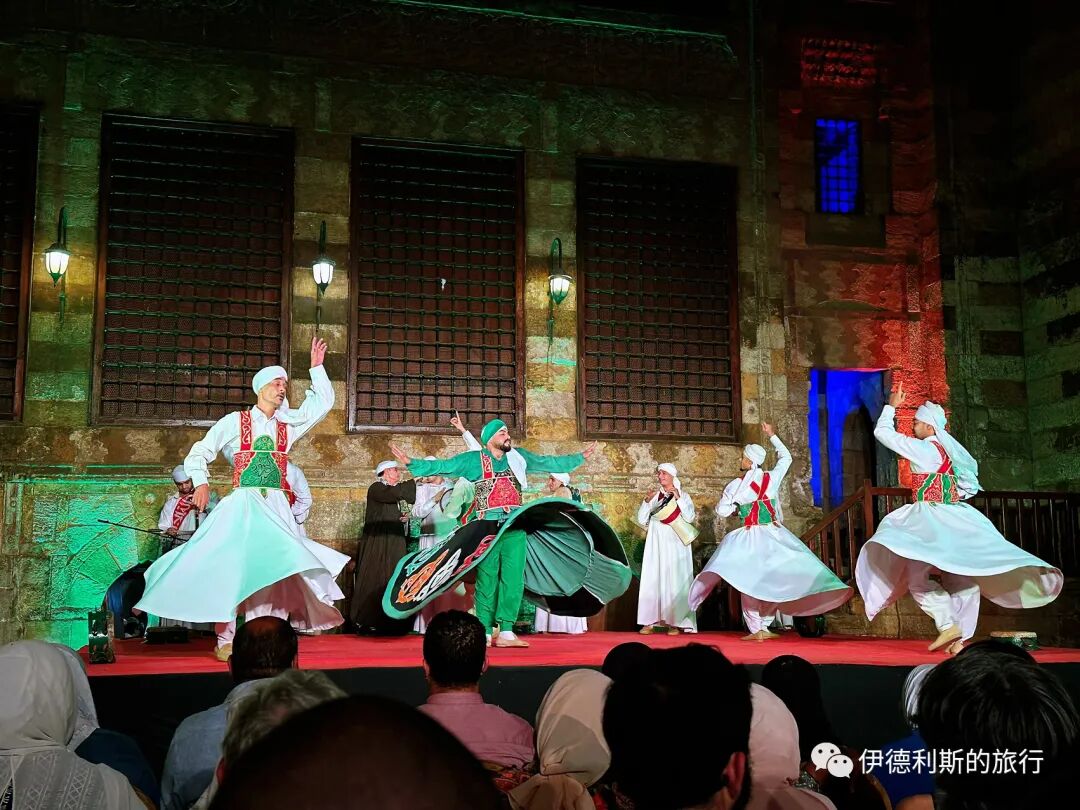
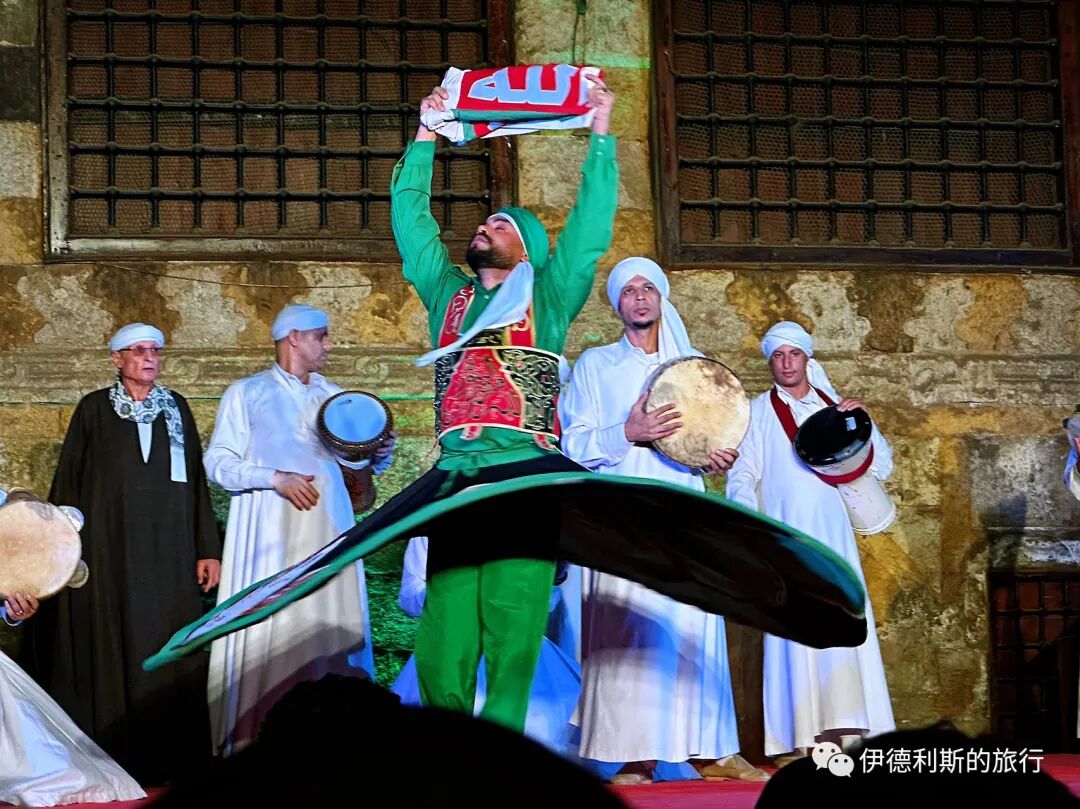
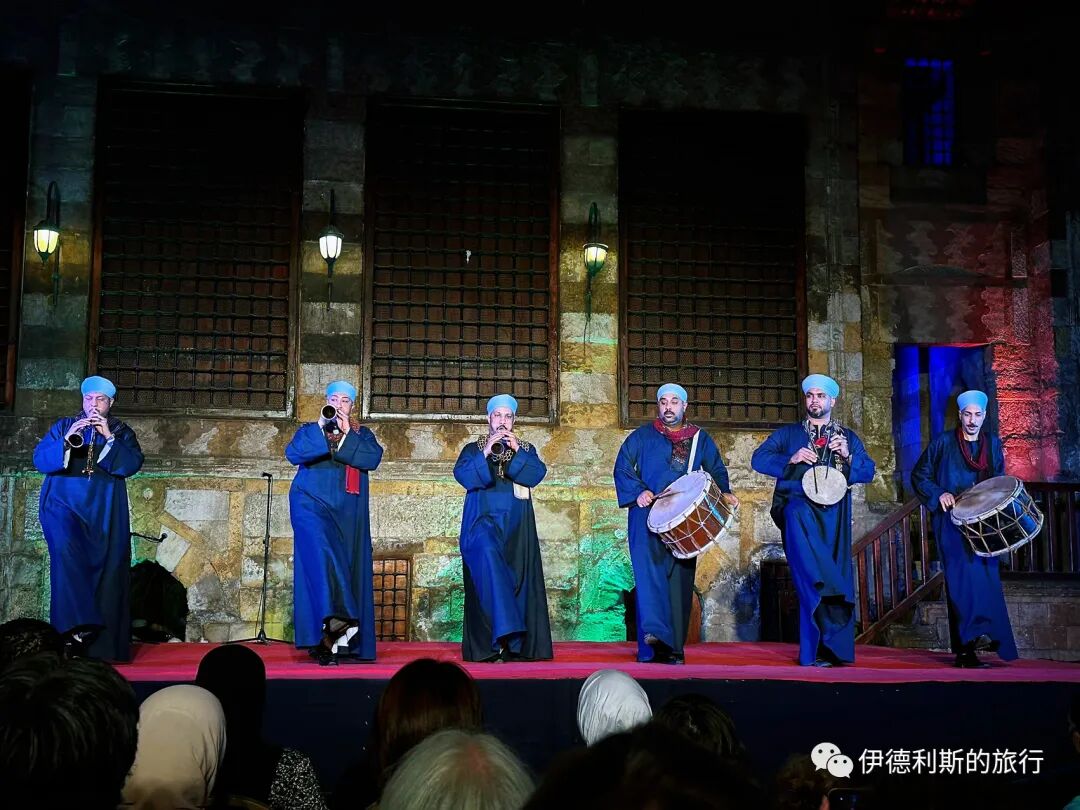
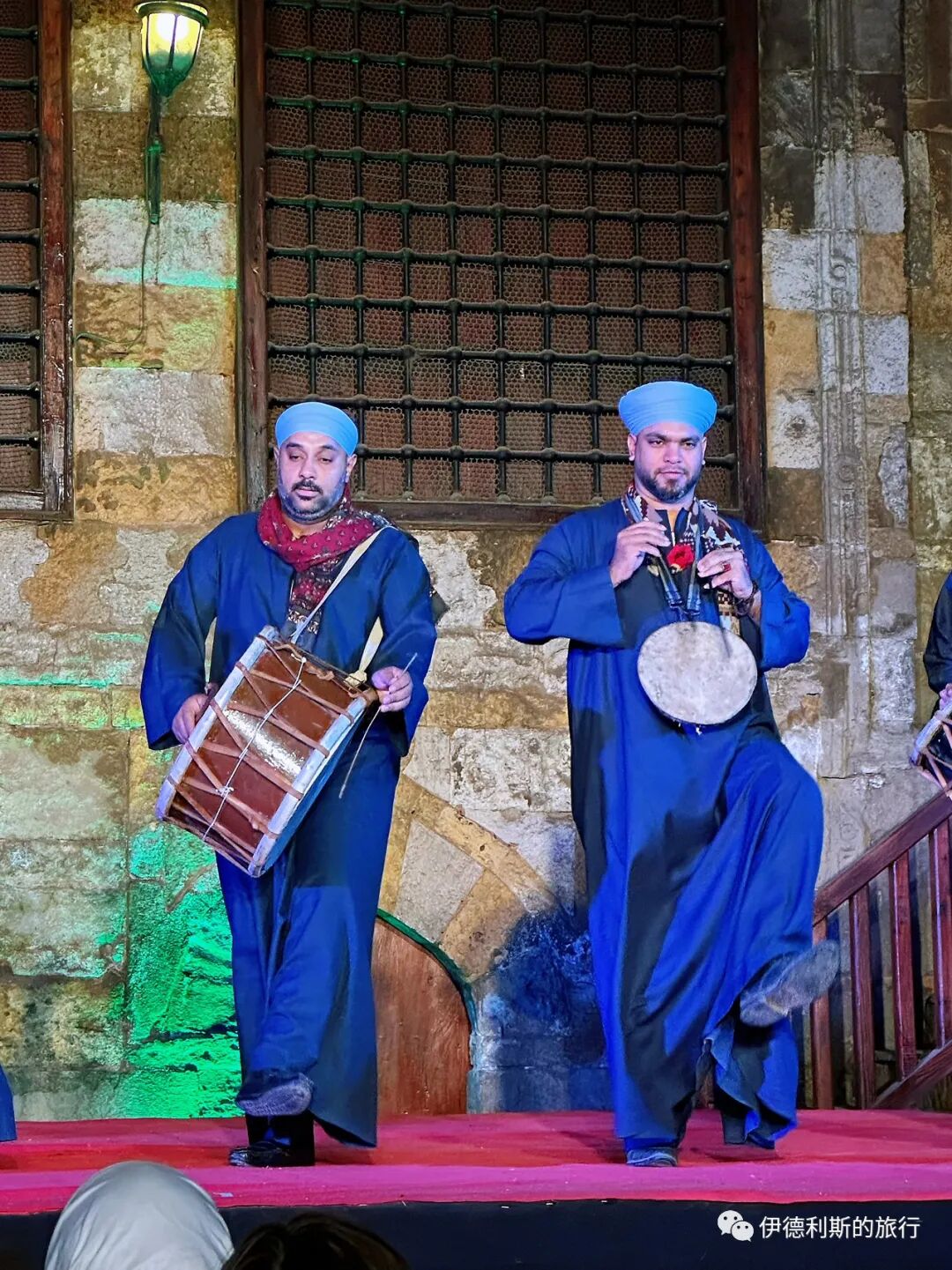
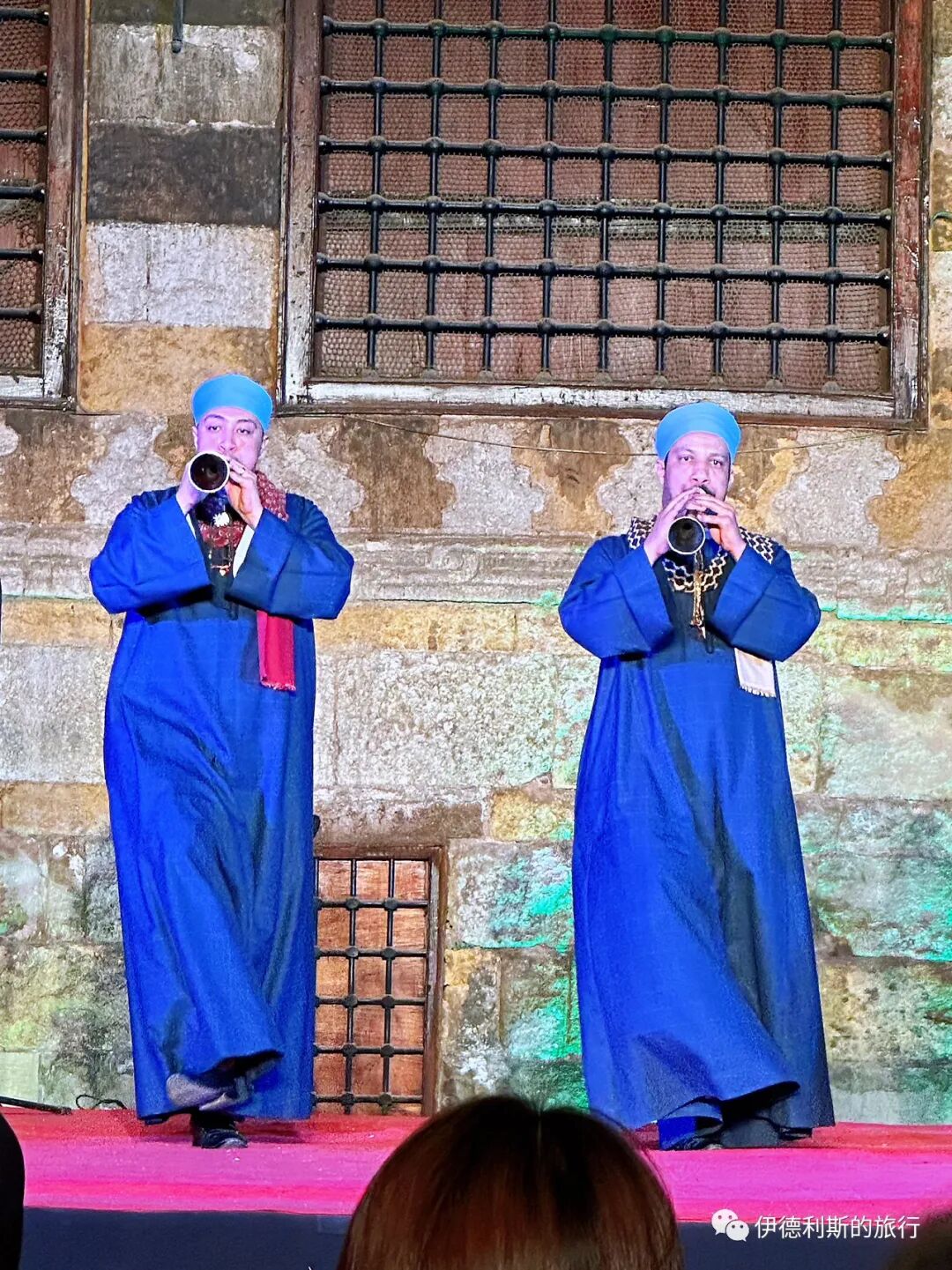
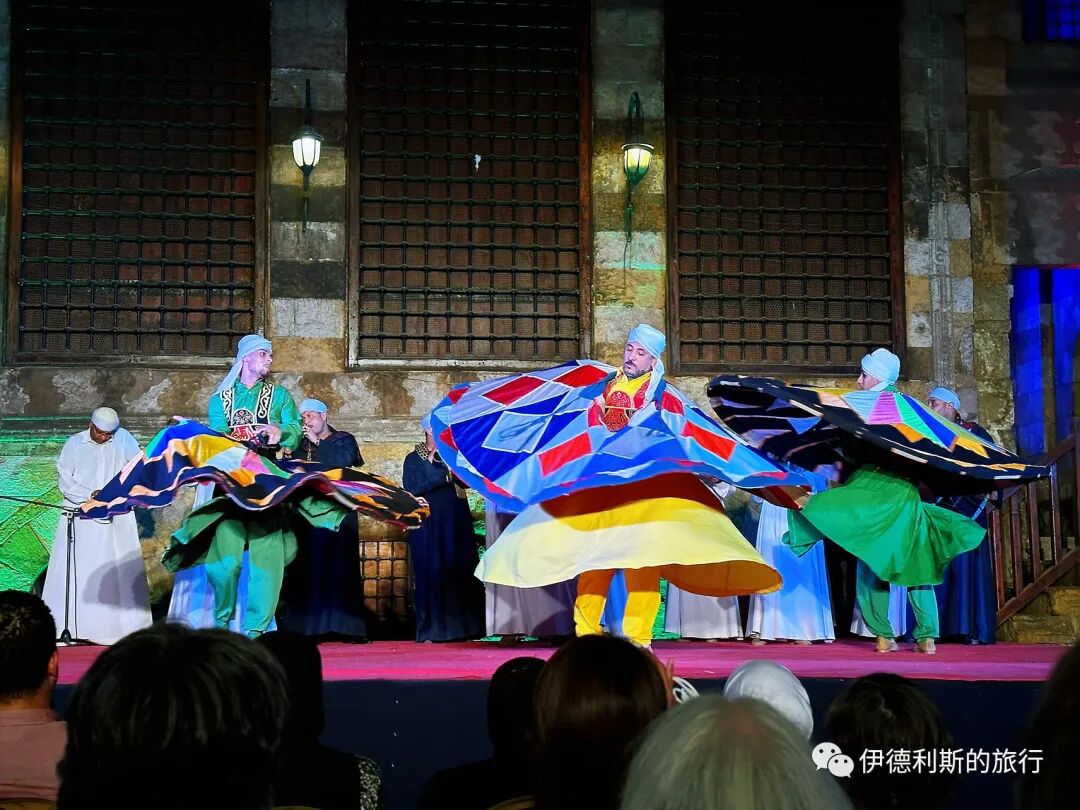
Muslim History Guide Cairo: Old City Gates, Mosques and Thousand-Year Heritage
Articles • yusuf908 posted the article • 0 comments • 157 views • 2026-05-23 23:22
Summary: This Old Cairo travel account walks inside the northern gate of the historic city and follows its mosques, streets, gates, and layered Islamic history. It keeps the original place names, dates, buildings, and travel route without adding outside claims.
The history of Cairo as a city goes back over a thousand years. Back in the ancient Roman era, the Romans built the Babylon Fortress in the south of Cairo. After the Arabs took Cairo in 641 AD, they built the city of Fustat to the northeast of the Babylon Fortress. Over the next 300 years, Muslim rulers from different dynasties built several cities near Cairo, but none of them survived. In 969 AD, the Shia Fatimid dynasty conquered Egypt and spent four years building what is now the old city of Cairo. By this count, the old city of Cairo is now 1,055 years old.
The walls of old Cairo were started in 969 AD. They were first made of brick, then expanded with stone during the reign of the Fatimid Caliph al-Mustansir Billah (reigned 1036-1094), and finally finished in 1087. The north gates of the old city, the Gate of Conquest (Bab al-Futuh) and the Gate of Victory (Bab al-Nasr), were both built during this time. In this article, I will take you through the north gate into old Cairo to experience its thousand-year history.
Gate of Conquest and Gate of Conquest: 1087
The Gate of Conquest is 22 meters high and has two round towers. The stone carving details may have been influenced by Syrian or Byzantine craftsmen. Above the arch, the surface is covered in diamond patterns containing rosettes and crosses. The parts of the towers that hang outward are carved with ram heads, which are symbols of Mars in the zodiac. Inside the gate, the dome and the rectangular space connect through a pendentive, which is a typical feature of Byzantine architecture.
The Gate of Victory is on the east side of the Gate of Conquest. Unlike the round towers of the Gate of Conquest, the towers of the Gate of Victory are square and contain guard rooms and living areas. There are shield carvings above the gate, which symbolize protecting the city from invasion. The shield features an Arabic inscription from its 1087 reconstruction, along with a Shia version of the Shahada that mentions Ali as the friend (wali) of Allah.
Al-Hakim Mosque: 1013.
Right next to the northern wall of Old Cairo stands the Al-Hakim Mosque, named after the sixth Fatimid caliph and the 16th imam of the Ismaili branch of Shia Islam, al-Hakim bi-Amr Allah (reigned 996-1021). The mosque was started in 990 by the fifth Fatimid caliph, al-Aziz Billah (reigned 975-996), and finished in 1013 by Caliph al-Hakim, making it 1,010 years old today.
The Al-Hakim Mosque was originally outside the walls of Cairo, but it was brought inside the city after the walls were rebuilt in 1087. The mosque's architectural style is similar to the Al-Azhar Mosque, but it is twice as large. The most striking features inside are the two minarets built on square brick bases. When the minarets were first built in 1003, they were separate structures, and they were only encased in brick in 1010. Some scholars suggest this might be linked to the ruler of Mecca rejecting Fatimid authority in 1010, which weakened the dynasty's power. The outer wall of the southern brick base has marble Kufic Arabic inscriptions from the Fatimid period, while the Kufic inscriptions on the northern base were moved to the outside of the city wall when it was incorporated into the northern wall of Old Cairo in 1087.
During the Crusades, the mosque was used as a prison by the Franks and later as a stable by Saladin. It was renovated during the Mamluk period in the 14th century but later fell into ruins for a long time. The mosque was renovated in 1808, and a small, colorful marble mihrab added during that time still survives today.
In the 20th century, the mosque served as a school until 1980, when the Dawoodi Bohra branch of Shia Islam carried out a massive reconstruction and renovation using white marble. Inside the main hall after the reconstruction, only the original stucco carvings, wooden beams, and scriptures were preserved. This restoration caused a lack of authenticity that sparked criticism and widespread discussion among scholars. In 2017, the Dawoodi Bohra community and the Egyptian Ministry of Tourism and Antiquities launched a new round of restoration, and it did not reopen until February 2023.
Caravanserai of Qaitbay: 1481
Enter the old city of Cairo through the Gate of Victory (Bab al-Futuh) onto El-Gamaleya Street. The first thing you see is the caravanserai (wikala) of Sultan Qaitbay, which is currently under renovation. It was built in 1481 by Sultan Qaitbay (reigned 1468-1496) of the Mamluk dynasty. Qaitbay was one of the Mamluk sultans who sponsored the most architecture. Although the Mamluk dynasty was in decline, the situation remained relatively stable under his rule, and trade flourished.
Like other Mamluk caravanserais (wikala), this place not only provided short-term housing for passing caravans but also offered long-term rental apartment units (rab). It was used as apartments for hundreds of years until the Egyptian Ministry of Antiquities began renovations in 2015. Work is still ongoing, and you can still see the wooden lattice windows (mashrabiya) facing the street.
Gate of the Caravanserai of Qawsun: 1341
Continuing south, you can see the remains of the gate of the caravanserai (wikala) of Emir Qawsun. This inn was built in 1341 by the famous Mamluk Emir Qawsun (1302-1342). It was used by soap and coffee merchants from Palestine in the 17th and 18th centuries, so it is also called the Soap Inn. The inn was demolished in 1960 to be rebuilt as a school, and only the gate remains. Above the gate is a stone carving of a pair of cups, because Emir Qawsun once served as the Sultan's cupbearer (saqi).
Qawsun was born on the Kipchak steppe under the rule of the Golden Horde and started out as a merchant. In 1320, Princess Tulunbay of the Golden Horde married the Mamluk Sultan of Egypt. Qawsun came to Cairo as part of her entourage and stayed in Cairo to sell leather goods. Qawsun was highly valued by the Sultan in Cairo and became his personal attendant. He then rose quickly through the ranks and married the Sultan's daughter. After the old Sultan died in 1341, Qawsun became the regent and held actual power over the Mamluk dynasty. However, he was defeated by political rivals a few months later and was killed in prison.
Continuing south along El-Gamaleya Street, you can see several more historical buildings.
Khanqah of Baybars II: 1310
On the east side of the middle section of El-Gamaleya Street stands the Khanqah of Baybars II, built in 1310. Baybars II was the 12th Sultan of the Mamluk dynasty and reigned for only one year, from 1309 to 1310. Baybars II served as vice-sultan from 1299 to 1309 and led the Mamluk Sultanate against the Ilkhanate in the Battle of Marj al-Saffar in Syria in 1303. This battle resulted in the total defeat of the Mongol army that had marched west into Syria. People say the Sultan led his captives from the Gate of Victory along El-Gamaleya Street into the old city of Cairo. Singers and dancers from all over came to celebrate, and the city was decorated with lights for days of festivities.
The exquisite Islamic geometric patterns (Girih) on the gate of the Khanqah of Baybars II form complex designs through overlapping and interlacing.
It is very interesting that the threshold of the gate is made of stone blocks carved with ancient Egyptian hieroglyphs, which is the first time I have ever seen this.
Bayt al-Suhaymi: 1648
Walking west from the Khanqah of Baybars II, you can see the Bayt al-Suhaymi on Darb al-Asfar Street. Built in 1648, it is the best-preserved private residence from the Ottoman period in old Cairo and is now open as a tourist site.
This residence is built around a courtyard (Sahn) with a small garden planted with palm trees in the center. You can see beautiful wooden lattice windows (Mashrabiya) in the courtyard. The south side of the mansion is the original 1648 structure, while the north side was expanded in 1797. It is now named after its last owner, Sheikh Muhammad Amin al-Suhaymi, who was a sheikh at Al-Azhar Mosque. In 1930, King Fuad I of Egypt provided funds to purchase the mansion and placed it under the management of the Committee for the Preservation of Arab Art Monuments.
The ornate ceiling decorations of Bayt al-Suhaymi.
The wood-carved furniture and colorful marble floors inside Bayt al-Suhaymi.
Mosque-Sabil of Sulayman Agha al-Silahdar: 1839
Continuing west back to the main road of old Cairo, Al-Mu'izz Street, the first thing you see is the Mosque-Sabil of Sulayman Agha al-Silahdar, built in 1839. This fountain has a fancy Ottoman Baroque facade with floral patterns from the European Renaissance. The fountain is made of marble and was used to keep the water cool during the summer. Next to the fountain is a primary school (kuttab) that was once used to teach children how to read, write, and recite scripture. Here, we can also enter the huge underground water reservoir of the fountain, which is rarely seen in typical fountains.
Aqmar Mosque: 1125-6
Walking south along Al-Muizz Street, we stop at the famous Fatimid-era Aqmar Mosque. The Aqmar Mosque was built in 1125-6 by order of the Fatimid vizier Al-Ma'mun al-Bata'ihi. It sits at the northeast corner of the former Eastern Fatimid Palace, right next to the palace grounds.
The Aqmar Mosque holds a groundbreaking place in Egyptian architectural history. It is the first mosque where the entrance is flush with the street rather than aligned with the qibla wall, making it the first mosque planned according to Cairo's street layout. It is also the first mosque to feature complex stone carvings. The facade of the Aqmar Mosque is very luxurious. Above the entrance is a large medallion surrounded by a grille, with the names of the Prophet and Ali in the center and verses written around them. This type of decoration is unique in Cairo.
At the top of the left facade, there are carvings of a door and a window. The window on the left symbolizes the ceremonial grille that the Fatimids took back from the palace of their rivals, the Abbasids in Baghdad, serving as a symbol of victory. Inside the window is a lamp and a six-pointed star, based on the Shia hadith: 'The stars are a promise to the world, and it will not be submerged.' Below the window, there is a carving of a plant growing out of a flower pot, which comes from the Prophet's reference to Hasan and Husayn as 'my two aromatic herbs in the world.' The door in the upper right corner comes from the famous Shia hadith: 'I am the city of knowledge, and Ali is its gate.'
Because it was near the Fatimid palace, the Aqmar Mosque did not originally have a minaret. One was not added until the end of the 14th century by the Mamluk dynasty, and the cylindrical top was rebuilt during the Ottoman era.
In 1993, the Dawoodi Bohra branch of the Shia community carried out a large-scale renovation of the Aqmar Mosque. Most of the historical elements inside the main hall were not preserved, which drew criticism.
Madrasa of Emir Jamal al-Din al-Ustadar: 1407
Turn back into al-Gamaleya Street along the alley south of the Aqmar Mosque to see the Madrasa of Amir Jamal al-Din al-Ustadar, built in 1407 by the Mamluk general Amir Jamal al-Din al-Ustadar. Jamal al-Din built many structures in Cairo, and al-Gamaleya Street is named after him.
This is a classic cruciform madrasa structure with an open courtyard in the center and an iwan (arched hall) on each of the four sides, each used to teach one of the four schools of Islamic jurisprudence. The decoration inside the main hall is very ornate, as People say Jamal al-Din modeled it after Mamluk palace designs and invested a large amount of money and materials. Jamal al-Din was executed just four years after the mosque was completed. The Sultan wanted to demolish the site, but a judge (Qadi) stopped him, and in the end, only Jamal al-Din's name was removed.
After the Ottoman Empire conquered Istanbul in 1517, many marble slabs from the inner walls of the madrasa were taken to Istanbul. The building was damaged again in the 1992 earthquake and was not fully restored until 2002.
Dhu al-Fiqar Fountain-Primary School (Sabil-Kuttab): 1673
Opposite the Madrasa of Amir Jamal al-Din al-Ustadar is the Ottoman-era Dhu al-Fiqar Sabil-Kuttab, built in 1673 by Dhu al-Fiqar Katkhuda Mustahfizan and his brother Muhammad. This Sabil-Kuttab consists of two prominent wooden awnings, and the caravanserai (wikala) behind it was once a center for the coffee trade in 18th-century Cairo.
Maq’ad Mamay al-Sayfi Palace: 1496
Continue south to the Maq’ad Mamay al-Sayfi Palace on Beet Al Qadi Street, built in 1496 by the Mamluk general Sayf al-Din Mamay ibn Khadad, who served as a Mamluk diplomat to the Ottoman Empire in the early 1490s.
During the Ottoman period, this place served as a high court and the residence of judges, so it is also called Bayt al-Qadi. In the late 19th century, Egypt's ruler Isma'il Pasha (reigned 1863-79) carried out urban renewal in Cairo, and most of the palace was demolished, leaving only a large house used for summer retreats. The house consists of an upper pavilion and a lower storage room. The lotus capitals of the pavilion are the only example in Islamic architecture in Cairo that directly uses architectural forms from the ancient Egyptian pharaonic era. The interior of the pavilion has complex decorations and calligraphy, but unfortunately, it was not open when we visited.
Abd al-Rahman Katkhuda Sabil-Kuttab: 1744
Walk south from the Aqmar Mosque to see the Sabil-Kuttab of Abd al-Rahman Katkhuda, a fountain-school built in 1744 during the Ottoman era. It is a landmark building on Al-Muizz Street, the main road in Old Cairo. During the Mamluk and Ottoman dynasties, these fountain-schools were very common in Cairo. The ground floor fountain (sabil) provided free drinking water to passersby, while the second floor school (kuttab) taught children how to read and write.
Although this fountain-school was built in the Mamluk style, it incorporates many Ottoman architectural elements. The builder, Abd al-Rahman Katkhuda, was a high-ranking Mamluk emir officer known for his noble lifestyle and patronage of the arts. He renovated or built 33 structures in Cairo.
Across from the Khanqah of Baybars II stands the Qitas Bey fountain-school (sabil-kuttab), built in 1630 during the Ottoman period. In the Mamluk and Ottoman eras, most fountain-schools in the old city of Egypt were built on street corners.
Bashtak Palace: 1334-1339.
Southeast of the Sabil-Kuttab of Abd al-Rahman Katkhuda is the Mamluk-era Bashtak Palace (Qasr Bashtak), built between 1334 and 1339 by the Mamluk emir and general Sayf al-Din Bashtak al-Nasiri. Bashtak was a powerful Mamluk emir who married the daughter of a Mamluk sultan and held important positions in the royal court. He chose a section of the former Fatimid eastern palace to build his own palace and stables, which became a model of Mamluk architecture.
Only a portion of the Bashtak Palace remains today, the most important part being the reception hall (qa'a). The hall features a wooden paneled ceiling, stained glass, and an inlaid marble fountain. The upper level has wooden lattice windows (mashrabiyya), all of which are typical architectural styles of the Mamluk period. view all
Summary: This Old Cairo travel account walks inside the northern gate of the historic city and follows its mosques, streets, gates, and layered Islamic history. It keeps the original place names, dates, buildings, and travel route without adding outside claims.
The history of Cairo as a city goes back over a thousand years. Back in the ancient Roman era, the Romans built the Babylon Fortress in the south of Cairo. After the Arabs took Cairo in 641 AD, they built the city of Fustat to the northeast of the Babylon Fortress. Over the next 300 years, Muslim rulers from different dynasties built several cities near Cairo, but none of them survived. In 969 AD, the Shia Fatimid dynasty conquered Egypt and spent four years building what is now the old city of Cairo. By this count, the old city of Cairo is now 1,055 years old.
The walls of old Cairo were started in 969 AD. They were first made of brick, then expanded with stone during the reign of the Fatimid Caliph al-Mustansir Billah (reigned 1036-1094), and finally finished in 1087. The north gates of the old city, the Gate of Conquest (Bab al-Futuh) and the Gate of Victory (Bab al-Nasr), were both built during this time. In this article, I will take you through the north gate into old Cairo to experience its thousand-year history.
Gate of Conquest and Gate of Conquest: 1087
The Gate of Conquest is 22 meters high and has two round towers. The stone carving details may have been influenced by Syrian or Byzantine craftsmen. Above the arch, the surface is covered in diamond patterns containing rosettes and crosses. The parts of the towers that hang outward are carved with ram heads, which are symbols of Mars in the zodiac. Inside the gate, the dome and the rectangular space connect through a pendentive, which is a typical feature of Byzantine architecture.
The Gate of Victory is on the east side of the Gate of Conquest. Unlike the round towers of the Gate of Conquest, the towers of the Gate of Victory are square and contain guard rooms and living areas. There are shield carvings above the gate, which symbolize protecting the city from invasion. The shield features an Arabic inscription from its 1087 reconstruction, along with a Shia version of the Shahada that mentions Ali as the friend (wali) of Allah.
Al-Hakim Mosque: 1013.
Right next to the northern wall of Old Cairo stands the Al-Hakim Mosque, named after the sixth Fatimid caliph and the 16th imam of the Ismaili branch of Shia Islam, al-Hakim bi-Amr Allah (reigned 996-1021). The mosque was started in 990 by the fifth Fatimid caliph, al-Aziz Billah (reigned 975-996), and finished in 1013 by Caliph al-Hakim, making it 1,010 years old today.
The Al-Hakim Mosque was originally outside the walls of Cairo, but it was brought inside the city after the walls were rebuilt in 1087. The mosque's architectural style is similar to the Al-Azhar Mosque, but it is twice as large. The most striking features inside are the two minarets built on square brick bases. When the minarets were first built in 1003, they were separate structures, and they were only encased in brick in 1010. Some scholars suggest this might be linked to the ruler of Mecca rejecting Fatimid authority in 1010, which weakened the dynasty's power. The outer wall of the southern brick base has marble Kufic Arabic inscriptions from the Fatimid period, while the Kufic inscriptions on the northern base were moved to the outside of the city wall when it was incorporated into the northern wall of Old Cairo in 1087.
During the Crusades, the mosque was used as a prison by the Franks and later as a stable by Saladin. It was renovated during the Mamluk period in the 14th century but later fell into ruins for a long time. The mosque was renovated in 1808, and a small, colorful marble mihrab added during that time still survives today.
In the 20th century, the mosque served as a school until 1980, when the Dawoodi Bohra branch of Shia Islam carried out a massive reconstruction and renovation using white marble. Inside the main hall after the reconstruction, only the original stucco carvings, wooden beams, and scriptures were preserved. This restoration caused a lack of authenticity that sparked criticism and widespread discussion among scholars. In 2017, the Dawoodi Bohra community and the Egyptian Ministry of Tourism and Antiquities launched a new round of restoration, and it did not reopen until February 2023.
Caravanserai of Qaitbay: 1481
Enter the old city of Cairo through the Gate of Victory (Bab al-Futuh) onto El-Gamaleya Street. The first thing you see is the caravanserai (wikala) of Sultan Qaitbay, which is currently under renovation. It was built in 1481 by Sultan Qaitbay (reigned 1468-1496) of the Mamluk dynasty. Qaitbay was one of the Mamluk sultans who sponsored the most architecture. Although the Mamluk dynasty was in decline, the situation remained relatively stable under his rule, and trade flourished.
Like other Mamluk caravanserais (wikala), this place not only provided short-term housing for passing caravans but also offered long-term rental apartment units (rab). It was used as apartments for hundreds of years until the Egyptian Ministry of Antiquities began renovations in 2015. Work is still ongoing, and you can still see the wooden lattice windows (mashrabiya) facing the street.
Gate of the Caravanserai of Qawsun: 1341
Continuing south, you can see the remains of the gate of the caravanserai (wikala) of Emir Qawsun. This inn was built in 1341 by the famous Mamluk Emir Qawsun (1302-1342). It was used by soap and coffee merchants from Palestine in the 17th and 18th centuries, so it is also called the Soap Inn. The inn was demolished in 1960 to be rebuilt as a school, and only the gate remains. Above the gate is a stone carving of a pair of cups, because Emir Qawsun once served as the Sultan's cupbearer (saqi).
Qawsun was born on the Kipchak steppe under the rule of the Golden Horde and started out as a merchant. In 1320, Princess Tulunbay of the Golden Horde married the Mamluk Sultan of Egypt. Qawsun came to Cairo as part of her entourage and stayed in Cairo to sell leather goods. Qawsun was highly valued by the Sultan in Cairo and became his personal attendant. He then rose quickly through the ranks and married the Sultan's daughter. After the old Sultan died in 1341, Qawsun became the regent and held actual power over the Mamluk dynasty. However, he was defeated by political rivals a few months later and was killed in prison.
Continuing south along El-Gamaleya Street, you can see several more historical buildings.
Khanqah of Baybars II: 1310
On the east side of the middle section of El-Gamaleya Street stands the Khanqah of Baybars II, built in 1310. Baybars II was the 12th Sultan of the Mamluk dynasty and reigned for only one year, from 1309 to 1310. Baybars II served as vice-sultan from 1299 to 1309 and led the Mamluk Sultanate against the Ilkhanate in the Battle of Marj al-Saffar in Syria in 1303. This battle resulted in the total defeat of the Mongol army that had marched west into Syria. People say the Sultan led his captives from the Gate of Victory along El-Gamaleya Street into the old city of Cairo. Singers and dancers from all over came to celebrate, and the city was decorated with lights for days of festivities.
The exquisite Islamic geometric patterns (Girih) on the gate of the Khanqah of Baybars II form complex designs through overlapping and interlacing.
It is very interesting that the threshold of the gate is made of stone blocks carved with ancient Egyptian hieroglyphs, which is the first time I have ever seen this.
Bayt al-Suhaymi: 1648
Walking west from the Khanqah of Baybars II, you can see the Bayt al-Suhaymi on Darb al-Asfar Street. Built in 1648, it is the best-preserved private residence from the Ottoman period in old Cairo and is now open as a tourist site.
This residence is built around a courtyard (Sahn) with a small garden planted with palm trees in the center. You can see beautiful wooden lattice windows (Mashrabiya) in the courtyard. The south side of the mansion is the original 1648 structure, while the north side was expanded in 1797. It is now named after its last owner, Sheikh Muhammad Amin al-Suhaymi, who was a sheikh at Al-Azhar Mosque. In 1930, King Fuad I of Egypt provided funds to purchase the mansion and placed it under the management of the Committee for the Preservation of Arab Art Monuments.
The ornate ceiling decorations of Bayt al-Suhaymi.
The wood-carved furniture and colorful marble floors inside Bayt al-Suhaymi.
Mosque-Sabil of Sulayman Agha al-Silahdar: 1839
Continuing west back to the main road of old Cairo, Al-Mu'izz Street, the first thing you see is the Mosque-Sabil of Sulayman Agha al-Silahdar, built in 1839. This fountain has a fancy Ottoman Baroque facade with floral patterns from the European Renaissance. The fountain is made of marble and was used to keep the water cool during the summer. Next to the fountain is a primary school (kuttab) that was once used to teach children how to read, write, and recite scripture. Here, we can also enter the huge underground water reservoir of the fountain, which is rarely seen in typical fountains.
Aqmar Mosque: 1125-6
Walking south along Al-Muizz Street, we stop at the famous Fatimid-era Aqmar Mosque. The Aqmar Mosque was built in 1125-6 by order of the Fatimid vizier Al-Ma'mun al-Bata'ihi. It sits at the northeast corner of the former Eastern Fatimid Palace, right next to the palace grounds.
The Aqmar Mosque holds a groundbreaking place in Egyptian architectural history. It is the first mosque where the entrance is flush with the street rather than aligned with the qibla wall, making it the first mosque planned according to Cairo's street layout. It is also the first mosque to feature complex stone carvings. The facade of the Aqmar Mosque is very luxurious. Above the entrance is a large medallion surrounded by a grille, with the names of the Prophet and Ali in the center and verses written around them. This type of decoration is unique in Cairo.
At the top of the left facade, there are carvings of a door and a window. The window on the left symbolizes the ceremonial grille that the Fatimids took back from the palace of their rivals, the Abbasids in Baghdad, serving as a symbol of victory. Inside the window is a lamp and a six-pointed star, based on the Shia hadith: 'The stars are a promise to the world, and it will not be submerged.' Below the window, there is a carving of a plant growing out of a flower pot, which comes from the Prophet's reference to Hasan and Husayn as 'my two aromatic herbs in the world.' The door in the upper right corner comes from the famous Shia hadith: 'I am the city of knowledge, and Ali is its gate.'
Because it was near the Fatimid palace, the Aqmar Mosque did not originally have a minaret. One was not added until the end of the 14th century by the Mamluk dynasty, and the cylindrical top was rebuilt during the Ottoman era.
In 1993, the Dawoodi Bohra branch of the Shia community carried out a large-scale renovation of the Aqmar Mosque. Most of the historical elements inside the main hall were not preserved, which drew criticism.
Madrasa of Emir Jamal al-Din al-Ustadar: 1407
Turn back into al-Gamaleya Street along the alley south of the Aqmar Mosque to see the Madrasa of Amir Jamal al-Din al-Ustadar, built in 1407 by the Mamluk general Amir Jamal al-Din al-Ustadar. Jamal al-Din built many structures in Cairo, and al-Gamaleya Street is named after him.
This is a classic cruciform madrasa structure with an open courtyard in the center and an iwan (arched hall) on each of the four sides, each used to teach one of the four schools of Islamic jurisprudence. The decoration inside the main hall is very ornate, as People say Jamal al-Din modeled it after Mamluk palace designs and invested a large amount of money and materials. Jamal al-Din was executed just four years after the mosque was completed. The Sultan wanted to demolish the site, but a judge (Qadi) stopped him, and in the end, only Jamal al-Din's name was removed.
After the Ottoman Empire conquered Istanbul in 1517, many marble slabs from the inner walls of the madrasa were taken to Istanbul. The building was damaged again in the 1992 earthquake and was not fully restored until 2002.
Dhu al-Fiqar Fountain-Primary School (Sabil-Kuttab): 1673
Opposite the Madrasa of Amir Jamal al-Din al-Ustadar is the Ottoman-era Dhu al-Fiqar Sabil-Kuttab, built in 1673 by Dhu al-Fiqar Katkhuda Mustahfizan and his brother Muhammad. This Sabil-Kuttab consists of two prominent wooden awnings, and the caravanserai (wikala) behind it was once a center for the coffee trade in 18th-century Cairo.
Maq’ad Mamay al-Sayfi Palace: 1496
Continue south to the Maq’ad Mamay al-Sayfi Palace on Beet Al Qadi Street, built in 1496 by the Mamluk general Sayf al-Din Mamay ibn Khadad, who served as a Mamluk diplomat to the Ottoman Empire in the early 1490s.
During the Ottoman period, this place served as a high court and the residence of judges, so it is also called Bayt al-Qadi. In the late 19th century, Egypt's ruler Isma'il Pasha (reigned 1863-79) carried out urban renewal in Cairo, and most of the palace was demolished, leaving only a large house used for summer retreats. The house consists of an upper pavilion and a lower storage room. The lotus capitals of the pavilion are the only example in Islamic architecture in Cairo that directly uses architectural forms from the ancient Egyptian pharaonic era. The interior of the pavilion has complex decorations and calligraphy, but unfortunately, it was not open when we visited.
Abd al-Rahman Katkhuda Sabil-Kuttab: 1744
Walk south from the Aqmar Mosque to see the Sabil-Kuttab of Abd al-Rahman Katkhuda, a fountain-school built in 1744 during the Ottoman era. It is a landmark building on Al-Muizz Street, the main road in Old Cairo. During the Mamluk and Ottoman dynasties, these fountain-schools were very common in Cairo. The ground floor fountain (sabil) provided free drinking water to passersby, while the second floor school (kuttab) taught children how to read and write.
Although this fountain-school was built in the Mamluk style, it incorporates many Ottoman architectural elements. The builder, Abd al-Rahman Katkhuda, was a high-ranking Mamluk emir officer known for his noble lifestyle and patronage of the arts. He renovated or built 33 structures in Cairo.
Across from the Khanqah of Baybars II stands the Qitas Bey fountain-school (sabil-kuttab), built in 1630 during the Ottoman period. In the Mamluk and Ottoman eras, most fountain-schools in the old city of Egypt were built on street corners.
Bashtak Palace: 1334-1339.
Southeast of the Sabil-Kuttab of Abd al-Rahman Katkhuda is the Mamluk-era Bashtak Palace (Qasr Bashtak), built between 1334 and 1339 by the Mamluk emir and general Sayf al-Din Bashtak al-Nasiri. Bashtak was a powerful Mamluk emir who married the daughter of a Mamluk sultan and held important positions in the royal court. He chose a section of the former Fatimid eastern palace to build his own palace and stables, which became a model of Mamluk architecture.
Only a portion of the Bashtak Palace remains today, the most important part being the reception hall (qa'a). The hall features a wooden paneled ceiling, stained glass, and an inlaid marble fountain. The upper level has wooden lattice windows (mashrabiyya), all of which are typical architectural styles of the Mamluk period.
Islamic History Guide: Old Cairo - Al-Azhar Mosque and Historic Streets
Articles • ali2007fr posted the article • 0 comments • 169 views • 2026-05-19 21:17
Summary: Old Cairo - Al-Azhar Mosque and Historic Streets is presented as a clear English travel account for readers interested in Muslim life, halal food, mosques, and local history. The article keeps the original place names, food details, photographs, and cultural context while focusing on Old Cairo, Al-Azhar Mosque, Islamic History.
In our first article, 'Experiencing the Thousand-Year History of Old Cairo (Inside the North Gate),' we started at the North Gate of Cairo, built during the 11th-century Fatimid Caliphate. We entered the thousand-year-old city from there and visited 13 historic buildings from the Fatimid, Mamluk, and Ottoman eras, moving from north to south.
In the second article, 'Experiencing the Thousand-Year History of Old Cairo (Between Two Palaces),' we continued south. We visited eight grand building complexes from the Ayyubid, Mamluk, and Ottoman dynasties that were built on the ruins of Fatimid palaces.
In the third article, we reached the heart of Old Cairo to visit the Al-Azhar Mosque and the historic buildings surrounding it.
1. Al-Azhar Mosque: 972
2. Al-Hussein Mosque: First built in 1154, rebuilt in 1874
3. Qaytbay Caravanserai complex: 1477
4. Abu al-Dhahab Mosque: 1774
5. Al-Ghuri complex: 1505
6. Other buildings
1. Al-Azhar Mosque: 972
In 969 AD, the Shia Ismaili Fatimid dynasty conquered Egypt and immediately began building their new capital, Cairo. At that time, the Sunni city of Fustat was already densely populated in the south of Cairo, so the newly built Cairo became the religious center for the Shia Ismailis.
After two years of construction, the first Friday mosque (Jami al-Qahira) in Cairo officially opened in 972 and was named after the city. The mosque was later renamed the Al-Azhar Mosque (al-Jami al-Azhar), with Al-Azhar meaning "the radiant."
After the Al-Azhar Mosque opened, the Ismailis shifted from secret to public preaching. The mosque's first chief judge, Qadi al-Numan, became the founder of Ismaili law and the author of the authoritative Ismaili text, The Pillars of Islam (Kitab da'a'im al-Islam).
The main prayer hall of the Al-Azhar Mosque is a hypostyle hall. The marble columns in its four rows of arcades came from architectural ruins of different eras, including those of the pharaohs, ancient Rome, and the Copts, and they were leveled using column bases of varying heights.
The main hall originally had three domes on top, but none survived later renovations. The original mihrab was rediscovered in 1933, and the prayer niche still holds ornate stucco carvings from the Fatimid period.
Several Fatimid caliphs expanded and renovated Al-Azhar Mosque. Caliph al-Hafiz (reigned 1132-1149) carried out a major renovation in 1138. The four-centered arches in the courtyard and the dome at the entrance to the main hall date back to this time. The stucco patterns in the courtyard also come from this period, though they were renovated again in 1891.
In 1171, Saladin overthrew the Fatimid dynasty and established the Sunni Ayyubid dynasty. Cairo's main Friday mosque moved to Al-Hakim Mosque in the north of the city, and Al-Azhar Mosque was neglected because it had been the center of Ismaili teachings. Saladin removed the silver bands inscribed with the names of Fatimid caliphs from the mihrab niche at Al-Azhar Mosque and destroyed all the Ismaili manuscripts kept there.
It was not until 1266 that the Mamluk Sultan Baybars (reigned 1260-1277) restored Friday prayers at Al-Azhar Mosque and repaired the building. The Ayyubid dynasty followed the Shafi'i school of law, which held that a community could have only one main Friday mosque, while the Mamluk dynasty followed the Hanafi school, which had no such rule.
The Mamluk dynasty left two grand minarets for the Al-Azhar Mosque—the Qaytbay minaret and the twin minarets of Ghuri—along with a Qaytbay gate. The Qaytbay minaret was built in 1483 or 1495 and features three balconies decorated with ornate carvings, while the Qaytbay gate was built in 1495 and leads directly into the courtyard. Both are fine examples of late Mamluk dynasty architecture. During the reign of Sultan Qaytbay (1468-96), the Mamluk dynasty enjoyed political and economic stability and won several military victories against the Ottoman dynasty. The Sultan had a deep interest in art and architecture and funded as many as 230 buildings.
In 1509, the Mamluk Sultan Ghuri (Al-Ashraf Qansuh al-Ghuri, reigned 1501-16) built the twin minarets of Ghuri. Ghuri was the last powerful ruler of the Mamluk dynasty; he was eventually defeated by the Ottoman dynasty and fell on the battlefield in Syria.
In 1517, the Ottoman dynasty conquered the Mamluk dynasty and occupied Egypt, causing the status of the Al-Azhar Mosque to decline once again. It was not until after the 18th century, when the Mamluk elite regained influence in Egypt, that the renovation and expansion of the Al-Azhar Mosque continued.
In 1749, Abd al-Rahman was appointed as the head of the guards (Katkhuda). In 1753, he oversaw the construction of three Ottoman-style gates for the Al-Azhar Mosque: the Barbers' Gate (Bab al-Muzayinīn), the Sa'ayida Gate (Bab al-Sa'ayida), and the Soup Gate (Bab al-Shurba). Outside the Barbers' Gate was where students got their hair cut, Sa'ayida means people from Upper Egypt, and the Soup Gate was where students went to get soup. From then on, the Barbers' Gate became the main entrance to the Al-Azhar Mosque.
Abd al-Rahman also doubled the size of the main prayer hall of the Al-Azhar Mosque by expanding it to the south and added a new mihrab, giving the hall its final shape. After Abd al-Rahman died in 1776, he was buried inside the Al-Azhar Mosque, becoming the last person in history to be buried there.
After the 18th century, the Al-Azhar Mosque became the most influential educational institution in Egypt, and the ulama (scholars) were able to report to the pasha (governor) as official advisors.
Napoleon occupied Cairo on July 22, 1798. On October 21, an uprising against the French broke out at the Al-Azhar Mosque. Napoleon shelled the mosque directly from the Cairo Citadel, resulting in over 3,000 Egyptian casualties and the deaths of six ulama from the Al-Azhar Mosque. Napoleon's army tied their horses to the mihrab of Al-Azhar Mosque and looted the student dorms and library. In 1800, a student from Al-Azhar assassinated the commander-in-chief of the French expeditionary force, leading Napoleon to order the closure of Al-Azhar Mosque. Cairo was recaptured by the British and the Ottoman Empire in June 1801, and Al-Azhar Mosque reopened.
Between 1892 and 1901, Abbas II Hilmi Pasha, the last Khedive of Egypt under the Ottoman Empire, rebuilt the facade of Al-Azhar Mosque as part of the modernization wave in British-occupied Egypt. At the same time, Al-Azhar University carried out educational reforms to oppose fundamentalism. To counter the influence of the Saudi Wahhabi movement, many students from Southeast Asia, including Indonesia, came to study at Al-Azhar University during this period.
The last two photos show the Fatimid dynasty stucco carvings restored by the Committee for the Conservation of Monuments of Arab Art during the reign of Abbas II Hilmi Pasha.
2. Al-Hussein Mosque: First built in 1154, rebuilt in 1874
Across from the Al-Azhar Mosque is the Al-Hussein Mosque, where Shia Muslims believe the head of Imam Hussein is buried. The mosque was first built in 1154, but the current structure dates back to its reconstruction in 1874.
The Fatimid dynasty believed that the Abbasid dynasty secretly moved Imam Hussein's head from a grave at the Umayyad Mosque in Damascus. The Fatimids later rediscovered it in 1091 and built a shrine for it in Ashkelon, Palestine.
In 1153, the Fatimid dynasty ordered the head of Hussein to be moved to Cairo to be buried with the Fatimid caliphs, and they built the Al-Hussein Mosque in 1154. Today, the lower part of the south gate of the Al-Hussein Mosque still keeps its original Fatimid structure.
The Ayyubid dynasty rebuilt the Al-Hussein Mosque in 1237, but it later burned down, leaving only one Ayyubid minaret (bangke ta) standing today.
In 1874, Isma'il Pasha, the ruler of the Muhammad Ali dynasty who reigned from 1863 to 1879, rebuilt the Al-Hussein Mosque in a Gothic Revival style and added a minaret that blends Gothic and Ottoman styles. During his rule, Isma'il Pasha carried out large-scale modernization projects to make Egypt more European, and the Al-Hussein Mosque was part of this transformation.
In 1893, a room for storing items of the Prophet (Bab al-Mukhallafat al-Nabawiyya) was added next to the shrine of the head of Hussein. It contains four strands of the Prophet's hair, a linen cloak he wore during his lifetime, his lantern, a copper kohl applicator, his staff, and a sword given to him by one of his companions.
Today, the center of the shrine of the head of Hussein is the Zarih grille, which was crafted in Mumbai in 1965 by Taher Saifuddin, the leader of the Dawoodi Bohras branch of Ismailism. People say this Zarih was originally designed for the shrine of Abbas ibn Ali in Karbala, but it could not be installed there. Taher Saifuddin believed this was guided by Allah, so he had the Zarih flown to Cairo and installed inside the Hussein Mosque.
The area around the Hussein Mosque is very busy. There are so many people during namaz that sometimes they cannot all fit in at once and have to pray in two separate groups, which is a rare sight in Cairo.
3. Qaytbay Caravanserai complex: 1477
Right next to the south wall of the Al-Azhar Mosque is the Qaytbay caravanserai (Wikala) complex, built in 1477 by the Mamluk Sultan Qaytbay. The entire complex consists of a caravanserai (Wikala), a fountain (Sabil), an elementary school (Kuttab), and an animal drinking trough (Hod). Sultan Qaytbay built two caravanserais in Cairo. We have already introduced the other one, which is located inside the north gate.
The caravan inn consists of storage rooms on the first floor and guest rooms on the second floor. The upstairs area is now abandoned, while the ground floor has become a street of bookstores. To the west of the caravan inn is a fountain-primary school. The fountain on the ground floor provides drinking water for the community, and the classrooms upstairs are where children study the Quran. At that time, it was very popular for sultans of the Mamluk dynasty to build fountain-primary schools as a waqf (endowment) to seek the mercy of Allah.
4. Abu al-Dhahab Mosque: 1774
Right next to the west wall of the Al-Azhar Mosque stands the Abu al-Dhahab Mosque, built in 1774 by the Egyptian Mamluk ruler Abu al-Dhahab. This was the last large building complex constructed by the Mamluks in Egypt, but only the mosque remains today.
Abu al-Dhahab means 'Father of Gold,' and he was a wealthy and generous Mamluk emir. During the Russo-Turkish War, the Mamluk emir Ali Bey of Egypt declared independence from the Ottoman Empire, and Abu al-Dhahab led an army to conquer most of the Hejaz and Syria. After taking Damascus in 1772, Abu al-Dhahab turned his army to occupy Cairo and became the de facto ruler of Egypt until he died suddenly of the plague in 1775 while conquering Palestine.
The architecture of the Abu al-Dhahab Mosque mixes different styles, featuring Mamluk-style outer walls and Ottoman-style domes, while the minaret was inspired by the early 16th-century minaret of the nearby Sultan al-Ghuri complex.
The mihrab (prayer niche) and minbar (pulpit) of the Abu al-Dhahab Mosque feature Mamluk-style decorations inlaid with mother-of-pearl and marble.
The tomb of Abu al-Dhahab is in the northeast corner of the mosque's front portico, with walls decorated in tiles from Iznik, Istanbul, Tunisia, and local Cairo.
On the west side of the Abu al-Dhahab Mosque is the Abu al-Dhahab Sufi lodge (takiya) built in the late 18th century, which is now the museum for the Nobel Prize-winning Egyptian novelist Naguib Mahfouz.
5. Al-Ghuri complex: 1505
Heading west from the Al-Azhar Mosque back to al-Muizz Street, the main road of Old Cairo, you can see the Al-Ghuri complex built between 1503 and 1505 by the Mamluk Sultan Al-Ashraf Qansuh al-Ghuri, who reigned from 1501 to 1516. This massive complex includes a caravanserai, a mausoleum, a Sufi lodge (daotang), a fountain, a primary school, a main hall, and a madrasa.
The Ghouri Caravanserai (Wikala) sits at the far east end of the complex and was built between 1504 and 1505. The ground floor of the inn stored goods and livestock, the second floor held guest rooms for merchants, and the third and fourth floors were apartment units (Rab). Income from the inn and apartments went toward a charitable endowment (Waqf). The inn features beautiful latticed window screens (Mashrabiyas), which were a signature style for Mamluk-era caravanserais.
I compared the Sultan Ghouri complex I photographed with a painting by Orientalist artist David Roberts from 1839. This area has been a textile market in Old Cairo for hundreds of years.
The west building of the Ghouri complex houses the main hall and madrasa. It follows the classic late Mamluk layout of a central courtyard with four vaulted halls (Iwan). The building is decorated with rich, colorful marble and arabesque stone carvings. Elegant Kufic calligraphy is inlaid into white marble using black bitumen. The mihrab in the main hall features black and white marble mosaic patterns, with marble mosaic panels covering both sides.
The east building of the Qansuh al-Ghuri complex houses the tomb and the prayer hall (daotang). The prayer hall is where Sufis perform dhikr, and today it serves as a venue for whirling dervish dances and traditional music.
Next to the prayer hall is a fountain-primary school, which is a classic example of Mamluk dynasty architecture.
On August 24, 1516, the Mamluk Sultanate and the Ottoman Empire fought a decisive battle in the town of Dabiq, Syria. Sultan al-Ghuri was killed in the battle, and the Ottoman Empire successfully occupied Syria. Because Sultan al-Ghuri's body (mayyit) was never found, he is not buried in the Sultan al-Ghuri tomb.
Today, the tomb holds the remains of Tuman Bay II, the last sultan of the Mamluk dynasty, who reigned from 1516 to 1517. Tuman Bay II took the throne after Sultan al-Ghuri died in Syria. On January 22, 1517, he fought a final battle against the Ottoman army at Ridaniya in Egypt. Sultan Tuman Bay II bravely charged into the Ottoman camp and personally killed the Ottoman Grand Vizier, Hadım Sinan Pasha. But he was eventually defeated by the Ottoman army and retreated to Giza on the other side of the Nile.
In late March 1517, Sultan Tuman Bay II led his army in a final battle against the Ottoman forces beneath the Giza pyramids. After two days of bitter fighting, the Sultan was betrayed by his Bedouin allies and taken prisoner by the Ottoman dynasty. On April 15, 1517, Sultan Tuman Bay II was hanged at the gates of Cairo, and his body was left hanging there for three days, marking the end of the Mamluk dynasty that had ruled Egypt for 267 years.
6. Other buildings
The Ottoman-era Zarakesha caravan inn (Khan) features beautiful wooden lattice (Mashrabiya) window shutters.
The Ainy Madrasa was built in 1411 by the famous Hanafi scholar Muhammad Badr El-Din El-Ayntabi, who served as an advisor in the courts of three Mamluk sultans.
The residence of Mamluk Princess Zeinab Khatoon was built in 1486 during the Mamluk dynasty and was later renovated in 1713. view all
Summary: Old Cairo - Al-Azhar Mosque and Historic Streets is presented as a clear English travel account for readers interested in Muslim life, halal food, mosques, and local history. The article keeps the original place names, food details, photographs, and cultural context while focusing on Old Cairo, Al-Azhar Mosque, Islamic History.
In our first article, 'Experiencing the Thousand-Year History of Old Cairo (Inside the North Gate),' we started at the North Gate of Cairo, built during the 11th-century Fatimid Caliphate. We entered the thousand-year-old city from there and visited 13 historic buildings from the Fatimid, Mamluk, and Ottoman eras, moving from north to south.
In the second article, 'Experiencing the Thousand-Year History of Old Cairo (Between Two Palaces),' we continued south. We visited eight grand building complexes from the Ayyubid, Mamluk, and Ottoman dynasties that were built on the ruins of Fatimid palaces.
In the third article, we reached the heart of Old Cairo to visit the Al-Azhar Mosque and the historic buildings surrounding it.
1. Al-Azhar Mosque: 972
2. Al-Hussein Mosque: First built in 1154, rebuilt in 1874
3. Qaytbay Caravanserai complex: 1477
4. Abu al-Dhahab Mosque: 1774
5. Al-Ghuri complex: 1505
6. Other buildings
1. Al-Azhar Mosque: 972
In 969 AD, the Shia Ismaili Fatimid dynasty conquered Egypt and immediately began building their new capital, Cairo. At that time, the Sunni city of Fustat was already densely populated in the south of Cairo, so the newly built Cairo became the religious center for the Shia Ismailis.
After two years of construction, the first Friday mosque (Jami al-Qahira) in Cairo officially opened in 972 and was named after the city. The mosque was later renamed the Al-Azhar Mosque (al-Jami al-Azhar), with Al-Azhar meaning "the radiant."
After the Al-Azhar Mosque opened, the Ismailis shifted from secret to public preaching. The mosque's first chief judge, Qadi al-Numan, became the founder of Ismaili law and the author of the authoritative Ismaili text, The Pillars of Islam (Kitab da'a'im al-Islam).
The main prayer hall of the Al-Azhar Mosque is a hypostyle hall. The marble columns in its four rows of arcades came from architectural ruins of different eras, including those of the pharaohs, ancient Rome, and the Copts, and they were leveled using column bases of varying heights.
The main hall originally had three domes on top, but none survived later renovations. The original mihrab was rediscovered in 1933, and the prayer niche still holds ornate stucco carvings from the Fatimid period.
Several Fatimid caliphs expanded and renovated Al-Azhar Mosque. Caliph al-Hafiz (reigned 1132-1149) carried out a major renovation in 1138. The four-centered arches in the courtyard and the dome at the entrance to the main hall date back to this time. The stucco patterns in the courtyard also come from this period, though they were renovated again in 1891.
In 1171, Saladin overthrew the Fatimid dynasty and established the Sunni Ayyubid dynasty. Cairo's main Friday mosque moved to Al-Hakim Mosque in the north of the city, and Al-Azhar Mosque was neglected because it had been the center of Ismaili teachings. Saladin removed the silver bands inscribed with the names of Fatimid caliphs from the mihrab niche at Al-Azhar Mosque and destroyed all the Ismaili manuscripts kept there.
It was not until 1266 that the Mamluk Sultan Baybars (reigned 1260-1277) restored Friday prayers at Al-Azhar Mosque and repaired the building. The Ayyubid dynasty followed the Shafi'i school of law, which held that a community could have only one main Friday mosque, while the Mamluk dynasty followed the Hanafi school, which had no such rule.
The Mamluk dynasty left two grand minarets for the Al-Azhar Mosque—the Qaytbay minaret and the twin minarets of Ghuri—along with a Qaytbay gate. The Qaytbay minaret was built in 1483 or 1495 and features three balconies decorated with ornate carvings, while the Qaytbay gate was built in 1495 and leads directly into the courtyard. Both are fine examples of late Mamluk dynasty architecture. During the reign of Sultan Qaytbay (1468-96), the Mamluk dynasty enjoyed political and economic stability and won several military victories against the Ottoman dynasty. The Sultan had a deep interest in art and architecture and funded as many as 230 buildings.
In 1509, the Mamluk Sultan Ghuri (Al-Ashraf Qansuh al-Ghuri, reigned 1501-16) built the twin minarets of Ghuri. Ghuri was the last powerful ruler of the Mamluk dynasty; he was eventually defeated by the Ottoman dynasty and fell on the battlefield in Syria.
In 1517, the Ottoman dynasty conquered the Mamluk dynasty and occupied Egypt, causing the status of the Al-Azhar Mosque to decline once again. It was not until after the 18th century, when the Mamluk elite regained influence in Egypt, that the renovation and expansion of the Al-Azhar Mosque continued.
In 1749, Abd al-Rahman was appointed as the head of the guards (Katkhuda). In 1753, he oversaw the construction of three Ottoman-style gates for the Al-Azhar Mosque: the Barbers' Gate (Bab al-Muzayinīn), the Sa'ayida Gate (Bab al-Sa'ayida), and the Soup Gate (Bab al-Shurba). Outside the Barbers' Gate was where students got their hair cut, Sa'ayida means people from Upper Egypt, and the Soup Gate was where students went to get soup. From then on, the Barbers' Gate became the main entrance to the Al-Azhar Mosque.
Abd al-Rahman also doubled the size of the main prayer hall of the Al-Azhar Mosque by expanding it to the south and added a new mihrab, giving the hall its final shape. After Abd al-Rahman died in 1776, he was buried inside the Al-Azhar Mosque, becoming the last person in history to be buried there.
After the 18th century, the Al-Azhar Mosque became the most influential educational institution in Egypt, and the ulama (scholars) were able to report to the pasha (governor) as official advisors.
Napoleon occupied Cairo on July 22, 1798. On October 21, an uprising against the French broke out at the Al-Azhar Mosque. Napoleon shelled the mosque directly from the Cairo Citadel, resulting in over 3,000 Egyptian casualties and the deaths of six ulama from the Al-Azhar Mosque. Napoleon's army tied their horses to the mihrab of Al-Azhar Mosque and looted the student dorms and library. In 1800, a student from Al-Azhar assassinated the commander-in-chief of the French expeditionary force, leading Napoleon to order the closure of Al-Azhar Mosque. Cairo was recaptured by the British and the Ottoman Empire in June 1801, and Al-Azhar Mosque reopened.
Between 1892 and 1901, Abbas II Hilmi Pasha, the last Khedive of Egypt under the Ottoman Empire, rebuilt the facade of Al-Azhar Mosque as part of the modernization wave in British-occupied Egypt. At the same time, Al-Azhar University carried out educational reforms to oppose fundamentalism. To counter the influence of the Saudi Wahhabi movement, many students from Southeast Asia, including Indonesia, came to study at Al-Azhar University during this period.
The last two photos show the Fatimid dynasty stucco carvings restored by the Committee for the Conservation of Monuments of Arab Art during the reign of Abbas II Hilmi Pasha.
2. Al-Hussein Mosque: First built in 1154, rebuilt in 1874
Across from the Al-Azhar Mosque is the Al-Hussein Mosque, where Shia Muslims believe the head of Imam Hussein is buried. The mosque was first built in 1154, but the current structure dates back to its reconstruction in 1874.
The Fatimid dynasty believed that the Abbasid dynasty secretly moved Imam Hussein's head from a grave at the Umayyad Mosque in Damascus. The Fatimids later rediscovered it in 1091 and built a shrine for it in Ashkelon, Palestine.
In 1153, the Fatimid dynasty ordered the head of Hussein to be moved to Cairo to be buried with the Fatimid caliphs, and they built the Al-Hussein Mosque in 1154. Today, the lower part of the south gate of the Al-Hussein Mosque still keeps its original Fatimid structure.
The Ayyubid dynasty rebuilt the Al-Hussein Mosque in 1237, but it later burned down, leaving only one Ayyubid minaret (bangke ta) standing today.
In 1874, Isma'il Pasha, the ruler of the Muhammad Ali dynasty who reigned from 1863 to 1879, rebuilt the Al-Hussein Mosque in a Gothic Revival style and added a minaret that blends Gothic and Ottoman styles. During his rule, Isma'il Pasha carried out large-scale modernization projects to make Egypt more European, and the Al-Hussein Mosque was part of this transformation.
In 1893, a room for storing items of the Prophet (Bab al-Mukhallafat al-Nabawiyya) was added next to the shrine of the head of Hussein. It contains four strands of the Prophet's hair, a linen cloak he wore during his lifetime, his lantern, a copper kohl applicator, his staff, and a sword given to him by one of his companions.
Today, the center of the shrine of the head of Hussein is the Zarih grille, which was crafted in Mumbai in 1965 by Taher Saifuddin, the leader of the Dawoodi Bohras branch of Ismailism. People say this Zarih was originally designed for the shrine of Abbas ibn Ali in Karbala, but it could not be installed there. Taher Saifuddin believed this was guided by Allah, so he had the Zarih flown to Cairo and installed inside the Hussein Mosque.
The area around the Hussein Mosque is very busy. There are so many people during namaz that sometimes they cannot all fit in at once and have to pray in two separate groups, which is a rare sight in Cairo.
3. Qaytbay Caravanserai complex: 1477
Right next to the south wall of the Al-Azhar Mosque is the Qaytbay caravanserai (Wikala) complex, built in 1477 by the Mamluk Sultan Qaytbay. The entire complex consists of a caravanserai (Wikala), a fountain (Sabil), an elementary school (Kuttab), and an animal drinking trough (Hod). Sultan Qaytbay built two caravanserais in Cairo. We have already introduced the other one, which is located inside the north gate.
The caravan inn consists of storage rooms on the first floor and guest rooms on the second floor. The upstairs area is now abandoned, while the ground floor has become a street of bookstores. To the west of the caravan inn is a fountain-primary school. The fountain on the ground floor provides drinking water for the community, and the classrooms upstairs are where children study the Quran. At that time, it was very popular for sultans of the Mamluk dynasty to build fountain-primary schools as a waqf (endowment) to seek the mercy of Allah.
4. Abu al-Dhahab Mosque: 1774
Right next to the west wall of the Al-Azhar Mosque stands the Abu al-Dhahab Mosque, built in 1774 by the Egyptian Mamluk ruler Abu al-Dhahab. This was the last large building complex constructed by the Mamluks in Egypt, but only the mosque remains today.
Abu al-Dhahab means 'Father of Gold,' and he was a wealthy and generous Mamluk emir. During the Russo-Turkish War, the Mamluk emir Ali Bey of Egypt declared independence from the Ottoman Empire, and Abu al-Dhahab led an army to conquer most of the Hejaz and Syria. After taking Damascus in 1772, Abu al-Dhahab turned his army to occupy Cairo and became the de facto ruler of Egypt until he died suddenly of the plague in 1775 while conquering Palestine.
The architecture of the Abu al-Dhahab Mosque mixes different styles, featuring Mamluk-style outer walls and Ottoman-style domes, while the minaret was inspired by the early 16th-century minaret of the nearby Sultan al-Ghuri complex.
The mihrab (prayer niche) and minbar (pulpit) of the Abu al-Dhahab Mosque feature Mamluk-style decorations inlaid with mother-of-pearl and marble.
The tomb of Abu al-Dhahab is in the northeast corner of the mosque's front portico, with walls decorated in tiles from Iznik, Istanbul, Tunisia, and local Cairo.
On the west side of the Abu al-Dhahab Mosque is the Abu al-Dhahab Sufi lodge (takiya) built in the late 18th century, which is now the museum for the Nobel Prize-winning Egyptian novelist Naguib Mahfouz.
5. Al-Ghuri complex: 1505
Heading west from the Al-Azhar Mosque back to al-Muizz Street, the main road of Old Cairo, you can see the Al-Ghuri complex built between 1503 and 1505 by the Mamluk Sultan Al-Ashraf Qansuh al-Ghuri, who reigned from 1501 to 1516. This massive complex includes a caravanserai, a mausoleum, a Sufi lodge (daotang), a fountain, a primary school, a main hall, and a madrasa.
The Ghouri Caravanserai (Wikala) sits at the far east end of the complex and was built between 1504 and 1505. The ground floor of the inn stored goods and livestock, the second floor held guest rooms for merchants, and the third and fourth floors were apartment units (Rab). Income from the inn and apartments went toward a charitable endowment (Waqf). The inn features beautiful latticed window screens (Mashrabiyas), which were a signature style for Mamluk-era caravanserais.
I compared the Sultan Ghouri complex I photographed with a painting by Orientalist artist David Roberts from 1839. This area has been a textile market in Old Cairo for hundreds of years.
The west building of the Ghouri complex houses the main hall and madrasa. It follows the classic late Mamluk layout of a central courtyard with four vaulted halls (Iwan). The building is decorated with rich, colorful marble and arabesque stone carvings. Elegant Kufic calligraphy is inlaid into white marble using black bitumen. The mihrab in the main hall features black and white marble mosaic patterns, with marble mosaic panels covering both sides.
The east building of the Qansuh al-Ghuri complex houses the tomb and the prayer hall (daotang). The prayer hall is where Sufis perform dhikr, and today it serves as a venue for whirling dervish dances and traditional music.
Next to the prayer hall is a fountain-primary school, which is a classic example of Mamluk dynasty architecture.
On August 24, 1516, the Mamluk Sultanate and the Ottoman Empire fought a decisive battle in the town of Dabiq, Syria. Sultan al-Ghuri was killed in the battle, and the Ottoman Empire successfully occupied Syria. Because Sultan al-Ghuri's body (mayyit) was never found, he is not buried in the Sultan al-Ghuri tomb.
Today, the tomb holds the remains of Tuman Bay II, the last sultan of the Mamluk dynasty, who reigned from 1516 to 1517. Tuman Bay II took the throne after Sultan al-Ghuri died in Syria. On January 22, 1517, he fought a final battle against the Ottoman army at Ridaniya in Egypt. Sultan Tuman Bay II bravely charged into the Ottoman camp and personally killed the Ottoman Grand Vizier, Hadım Sinan Pasha. But he was eventually defeated by the Ottoman army and retreated to Giza on the other side of the Nile.
In late March 1517, Sultan Tuman Bay II led his army in a final battle against the Ottoman forces beneath the Giza pyramids. After two days of bitter fighting, the Sultan was betrayed by his Bedouin allies and taken prisoner by the Ottoman dynasty. On April 15, 1517, Sultan Tuman Bay II was hanged at the gates of Cairo, and his body was left hanging there for three days, marking the end of the Mamluk dynasty that had ruled Egypt for 267 years.
6. Other buildings
The Ottoman-era Zarakesha caravan inn (Khan) features beautiful wooden lattice (Mashrabiya) window shutters.
The Ainy Madrasa was built in 1411 by the famous Hanafi scholar Muhammad Badr El-Din El-Ayntabi, who served as an advisor in the courts of three Mamluk sultans.
The residence of Mamluk Princess Zeinab Khatoon was built in 1486 during the Mamluk dynasty and was later renovated in 1713.
Islamic History Guide: Old Cairo - Bayn al-Qasrayn and a Thousand Years of Heritage
Articles • ali2007fr posted the article • 0 comments • 230 views • 2026-05-19 10:02
Summary: Islamic History Guide: Old Cairo - Bayn al-Qasrayn and a Thousand Years of Heritage is presented here as a firsthand travel account in clear, natural English. The account focuses on Old Cairo, Islamic History, Bayn al-Qasrayn while preserving the names, places, food, photos, and historical details from the Chinese source.
In our first article, 'Experiencing the Thousand-Year History of Old Cairo (Inside the North Gate)', we started at the North Gate of Cairo, built in the 11th century during the Fatimid dynasty, to enter the thousand-year-old historic city. We then traveled from north to south to visit 13 historic buildings, including:
The 11th-century Al-Hakim Mosque and the 12th-century Al-Aqmar Mosque from the Fatimid dynasty.
From the 14th-century Mamluk dynasty, we saw the gate of the Qawsun Caravanserai, the Khanqah of Baybars II, and the Beshtak Palace. From the 15th century, we visited the Qaitbay Caravanserai, the Madrasa of Amir Jamal al-Din al-Ustadar, and the Maq'ad of Mamay al-Sayfi.
From the 17th-century Ottoman dynasty, we saw the Al-Suhaymi House, the Sabil-Kuttab of Qitas Bey, and the Sabil-Kuttab of Dhu al-Fiqar. We also visited the 18th-century Sabil-Kuttab of Abd al-Rahman Katkhuda and the 19th-century Mosque-Sabil of Sulayman Agha al-Silahdar.
In this article, we will continue south to visit eight magnificent building complexes from the Ayyubid and Mamluk dynasties in Old Cairo.
Bayn al-Qasrayn is located in the heart of Old Cairo, and its name literally means 'between the two palaces'. This was originally a square between two grand palaces built by the Fatimid dynasty in the 10th century. Later, the Ayyubid, Mamluk, and Ottoman dynasties built many structures here, and many of them are still standing today.
Al-Kamil Madrasa: 1225
Barquq Madrasa: 1386
An-Nasir Muhammad Madrasa: 1303
Qalawun Complex: 1285
As-Salih Ayyub Mausoleum: 1250
As-Salihia Madrasa: 1243
Al-Ashraf Complex: 1424
Al-Kamil Madrasa: 1225
The Al-Kamil Madrasa was built in 1225 by the Ayyubid Sultan Al-Kamil, who reigned from 1218 to 1238. During the 13th and 14th centuries, this place was a center for the study of Hadith in Egypt. A great famine hit Egypt between 1400 and 1404, causing the population to drop sharply and leading to the decline of the Al-Kamil Madrasa.
Al-Kamil was the nephew of Sultan Saladin and a key leader for Egypt during the Fifth and Sixth Crusades. During the Fifth Crusade, he opened the Nile dams to trade for eight years of peace. During the Sixth Crusade, he handed Jerusalem over to the Crusaders to trade for ten years of peace, which was the only Crusade resolved through diplomacy.
Today, the only part of the Ayyubid-era building left is the Iwan arch on the west side. The arch once featured plaster decorations in Kufic calligraphy, which are now kept at the Museum of Islamic Art in Cairo. The main hall at the entrance was built in 1752 by the Ottoman official Prince Hassan Sharawi.
Barquq Madrasa: 1386
South of the Kamil Madrasa stands the Barquq Madrasa, built in 1386 by Barquq, the first sultan of the Mamluk Burji dynasty (reigned 1382–1389 and 1390–1399). This was the first building of the Mamluk Burji dynasty (1382–1517) and holds great historical significance.
The architect of the madrasa was Ahmad al-Tuluni. Ahmad came from a family of carpenters and stonemasons. He was one of the few master architects to achieve great success in the late 14th century and was highly valued by the sultan.
The project supervisor for the madrasa was Emir Jarkas al-Khalili. He built the famous Khan el-Khalili market in Cairo, which is named after him.
The entire madrasa complex consists of a prayer hall, classrooms, a mausoleum, and a dervish lodge. It taught knowledge from the four major schools of Islamic jurisprudence: Hanafi, Maliki, Shafi'i, and Hanbali. The main gate of the madrasa features a monumental arched entrance (Pishtaq), decorated with beautiful honeycomb-like carvings (Muqarnas) and calligraphy.
After entering the gate, a passageway leads to the courtyard (Sahn). In the middle of the courtyard is a fountain (Sabil), which was rebuilt in the late 19th century by the Committee for the Preservation of the Monuments of Arab Art (Comité). The courtyard has an arched hall (iwan) on each of its four sides. The prayer hall on the east side is covered by a massive wooden roof, while the other three sides have stone domes.
The prayer hall ceiling features intricate painted designs, and the floor is decorated with colorful marble mosaics and panels. The pulpit (minbar) inside the prayer hall was a gift from the Mamluk Sultan Sayf al-Din Jaqmaq (reigned 1438–1453) in 1440. It is made of Aleppo pine and inlaid with ebony and ivory. Sadly, the pulpit was stolen twice in 2012 and 2013, and most of its decorative pieces are now missing.
Beneath the dome of the Barquq Madrasa is a tomb chamber, but Sultan Barquq himself is not buried here. His daughter Fatima is buried in this space instead.
The following photos show the wood carvings and copper work on the main gate of the madrasa.
Barquq was born into a Circassian family living under the rule of the Golden Horde. After a battle, he was captured as a slave and sold to a bathhouse in Crimea. Later, he was sold again and moved to Egypt, where he became a Mamluk slave soldier. In 1377, civil unrest broke out in the Mamluk Sultanate. The young sultan who had just taken the throne held no real power. Barquq used this chance to strengthen his own position. In 1382, he seized the throne, ending the 132-year rule of the Kipchak Turkic Bahri dynasty and establishing the Circassian Caucasian Burji dynasty.
During his reign, Barquq joined forces with the Ottoman Sultan Bayezid I to fight against the Timurid Empire and executed Timur's envoy. In 1394, Barquq and Timur fought a war near the Euphrates River, which ended with Timur leading his army in retreat.
The days and nights at the Madrasa of Barquq are busy, as the lively Al-Mu'izz Street in Old Cairo sits right in front of the gate. This street is known as the main artery of Old Cairo. It connects the north gate to the south gate and serves as the main axis of the old city.
An-Nasir Muhammad Madrasa: 1303
To the south of the Madrasa of Barquq stands the Madrasa of Al-Nasir Muhammad, which was built between 1295 and 1303 by the Mamluk Sultan Al-Nasir Muhammad (who reigned from 1293-1294, 1299-1309, and 1310-1341).
Al-Nasir Muhammad was the youngest son of Sultan Qalawun. He took the throne at age 9, but he did not hold real power until his third period of rule at age 24. Under his rule, the Mamluk Sultanate reached its peak. The economy thrived at home, there were no major threats from abroad, and envoys from the Pope and the King of France visited his court with gifts. The reign of Nasir Muhammad is known as a high point for Egyptian culture, the greatest since the Ptolemaic Hellenistic period. He reopened the canal connecting Alexandria to the Nile, built many public buildings in Cairo, and renovated over thirty mosques.
The madrasa has a very unique Gothic gate. It was taken from a church in Acre after the Mamluk Sultanate completely defeated the Crusaders in 1291. The 1291 Siege of Acre is called the last battle of the Crusades, marking the end of the nearly 200-year-long Crusades. When the Siege of Acre ended, the Sultan ordered his army to tear down the city walls and churches, and this gate was transported back to Cairo.
The minaret of the madrasa has very complex stucco decorations. It is the only remaining all-stucco minaret in the old city of Cairo. The medallions and arched decorations follow the styles of the Fatimid and Ayyubid dynasties, while the floral patterns are a signature feature of the Mamluk period. The plaster decorations feature both Kufic and Thuluth calligraphy, and they are carved beautifully. Some historians believe that craftsmen from the Maghreb or Andalusia likely helped create these high-quality plaster carvings.
Like the Barquq Madrasa to the north, the Madrasa of an-Nasir Muhammad taught the four major schools of Islamic law: Hanafi, Hanbali, Shafi'i, and Maliki. The main hall contains the last plaster mihrab in Egypt, which features a unique egg-shaped protrusion similar to plaster carvings from Tabriz, Iran, during the Ilkhanate period. Because of this, historians suggest that this mihrab was likely made by craftsmen from Iran.
Qalawun Complex: 1285
Further south is the most magnificent part of the Bayn al-Qasrayn area, the Qalawun complex. This complex includes a hospital, a madrasa, and a mausoleum. It was built in 1285 by the Mamluk Sultan Qalawun, who reigned from 1279 to 1290, and it is considered a masterpiece of Mamluk architecture.
Standing at the entrance of the building complex, the most eye-catching feature is the towering three-story minaret (bangke ta). The top of the minaret features a unique decoration called a papyrus cornice, which is how the Mamluk dynasty showed its legitimacy by looking back to the era of the pharaohs.
The facade of the entire complex is 67 meters long, similar in style to Gothic Crusader churches of the same period, with windows surrounded by pointed arch panels of different sizes and exquisite stucco calligraphy carvings underneath.
The Mausoleum of Sultan Qalawun is known as a symbol of the power of the Mamluk dynasty and held great significance in 13th to 16th-century Egypt. This is one of the most magnificent imperial mausoleums I have ever visited, with an incredible wealth of stucco carvings, marble mosaics, and gilded woodwork. The tomb hall is supported by four towering stone columns decorated with Corinthian capitals. Above the capitals is an architrave decorated with vine patterns and stucco carvings in Thuluth calligraphy.
Sultan Qalawun was known as the King of Victory. In 1281, he led the Mamluk army to defeat the Mongol Ilkhanate forces commanded by Mongke Temur, the son of Hulagu Khan, in Homs, Syria. Mongke Temur was wounded and fled. The following year, the Ilkhan Tekuder converted to Islam and formed an alliance with the Mamluk Sultanate. The Battle of Homs is known as a major turning point in the Mongol westward expansion, marking the first time Mongol cavalry suffered a defeat in the Middle East.
After the threat from the Ilkhanate faded, Sultan Qalawun launched a series of wars against the Crusaders starting in 1285, eventually recapturing Tripoli, the largest city in northern Lebanon, in 1289.
The mihrab in the mausoleum of Sultan Qalawun is considered the most exquisite mihrab of the Mamluk period. The design of the mihrab was inspired by Syria and was created using colorful marble mosaics.
The madrasa of Sultan Qalawun consists of two iwan vaulted structures, with classrooms and a prayer hall on either side of the courtyard. The mihrab in the center of the prayer hall does not use the marble mosaics common in the Mamluk period, but instead features glass and mother-of-pearl mosaics. This is a throwback to the decorative art of the Umayyad Caliphate in Syria, showing how the Mamluks claimed to inherit the orthodoxy of the faith.
As-Salih Ayyub Mausoleum: 1250
Across from the Qalawun complex stands the tomb built in 1250 by Shajar al-Durr, the widow of the Ayyubid Sultan As-Salih Ayyub (reigned 1240–49), for her husband.
Sultan As-Salih was the last major ruler of the Ayyubid dynasty, and he saw the rise of the Mamluk dynasty. Because he did not trust the local Egyptian emirs, he began buying large numbers of Kipchak Turks who had been enslaved after the Mongol invasion of Central Asia. These slaves soon became the core of the Ayyubid army and were known as Mamluks.
Sultan As-Salih also made great progress in the wars against the Crusaders. In 1244, he invited 10,000 Khwarazmian mercenary cavalrymen to sack and retake Jerusalem, which caused great panic among the surrounding regimes. A Christian army made up of the Kingdom of Jerusalem, the Teutonic Knights, the Knights Templar, the Knights Hospitaller, and the Order of Saint Lazarus formed an alliance with a Muslim army led by the emirs of Homs, Damascus, and Kerak to fight against as-Salih. The two armies met in a small village northeast of Gaza, where as-Salih's army and Khwarazmian mercenaries fought hard and eventually won. More than 5,000 Crusaders died in this battle, including the Grand Master and Marshal of the Knights Templar, as well as bishops from several cities.
After this battle, Christian power in the Holy Land collapsed, and the Kingdom of Jerusalem was never again able to organize an effective military campaign. In 1245, the Pope called for a new Crusade. In 1249, the Seventh Crusade, led by King Louis IX of France, officially began. When as-Salih heard the news, he quickly returned to Egypt to set up camp, but he died of illness shortly after. After as-Salih died, his widow Shajar al-Durr decided to hide the news of the Sultan's death and ordered the Mamluk army to successfully defeat the Crusader attack.
As-Salihia Madrasa: 1243
On the south side of the Sultan Salih Ayyub tomb stands the Salihiyya madrasa, which Salih built in 1242. Known as the 'Castle of Scholars,' the Salihiyya madrasa was the first in Cairo to teach the four major schools of Islamic law: Hanafi, Hanbali, Shafi'i, and Maliki. The north building of the school taught Shafi'i and Maliki law, while the south building taught Hanafi and Hanbali law.
The Salihiyya madrasa was abandoned after the Ottoman Empire conquered Egypt in the early 16th century. Today, most of it is a market, but the main gate and the minaret remain. The Salihiyya madrasa broke the Ayyubid tradition of only building minarets at Friday mosques by adding one to the gate of the school.
Al-Ashraf Complex: 1424
Continuing south, you will find the Al-Ashraf complex, built in 1424 by the Mamluk Sultan Al-Ashraf Barsbay, who reigned from 1422 to 1438. The entire complex includes a main hall, a school, a tomb, and a prayer hall (daotang), featuring a dome with geometric carvings, which is an early example of decorative dome carving.
Barsbay was once a Mamluk slave of the Mamluk Sultan Barquq, and he later became the tutor for the young Sultan Muhammad. With the support of the governor of Damascus and other emirs, Barsbay deposed the young sultan in 1422 and took the throne as the new sultan.
The 16 years of Barsbay's rule were a time of relative safety and stability for the Mamluk Sultanate, with almost no war. He was very generous to the poor and to Sufis, and he carried out a series of administrative reforms.
Barsbay was known as the "Merchant Sultan" and placed great importance on the role of trade. He took a series of measures to strengthen control over the Mediterranean and the Red Sea, diverted Indian Ocean trade routes through Jeddah, and established state monopolies on sugar and pepper. He attracted merchants by lowering tariffs and monopolized most of the trade from the East, which angered many European powers. view all
Summary: Islamic History Guide: Old Cairo - Bayn al-Qasrayn and a Thousand Years of Heritage is presented here as a firsthand travel account in clear, natural English. The account focuses on Old Cairo, Islamic History, Bayn al-Qasrayn while preserving the names, places, food, photos, and historical details from the Chinese source.
In our first article, 'Experiencing the Thousand-Year History of Old Cairo (Inside the North Gate)', we started at the North Gate of Cairo, built in the 11th century during the Fatimid dynasty, to enter the thousand-year-old historic city. We then traveled from north to south to visit 13 historic buildings, including:
The 11th-century Al-Hakim Mosque and the 12th-century Al-Aqmar Mosque from the Fatimid dynasty.
From the 14th-century Mamluk dynasty, we saw the gate of the Qawsun Caravanserai, the Khanqah of Baybars II, and the Beshtak Palace. From the 15th century, we visited the Qaitbay Caravanserai, the Madrasa of Amir Jamal al-Din al-Ustadar, and the Maq'ad of Mamay al-Sayfi.
From the 17th-century Ottoman dynasty, we saw the Al-Suhaymi House, the Sabil-Kuttab of Qitas Bey, and the Sabil-Kuttab of Dhu al-Fiqar. We also visited the 18th-century Sabil-Kuttab of Abd al-Rahman Katkhuda and the 19th-century Mosque-Sabil of Sulayman Agha al-Silahdar.
In this article, we will continue south to visit eight magnificent building complexes from the Ayyubid and Mamluk dynasties in Old Cairo.
Bayn al-Qasrayn is located in the heart of Old Cairo, and its name literally means 'between the two palaces'. This was originally a square between two grand palaces built by the Fatimid dynasty in the 10th century. Later, the Ayyubid, Mamluk, and Ottoman dynasties built many structures here, and many of them are still standing today.
Al-Kamil Madrasa: 1225
Barquq Madrasa: 1386
An-Nasir Muhammad Madrasa: 1303
Qalawun Complex: 1285
As-Salih Ayyub Mausoleum: 1250
As-Salihia Madrasa: 1243
Al-Ashraf Complex: 1424
Al-Kamil Madrasa: 1225
The Al-Kamil Madrasa was built in 1225 by the Ayyubid Sultan Al-Kamil, who reigned from 1218 to 1238. During the 13th and 14th centuries, this place was a center for the study of Hadith in Egypt. A great famine hit Egypt between 1400 and 1404, causing the population to drop sharply and leading to the decline of the Al-Kamil Madrasa.
Al-Kamil was the nephew of Sultan Saladin and a key leader for Egypt during the Fifth and Sixth Crusades. During the Fifth Crusade, he opened the Nile dams to trade for eight years of peace. During the Sixth Crusade, he handed Jerusalem over to the Crusaders to trade for ten years of peace, which was the only Crusade resolved through diplomacy.
Today, the only part of the Ayyubid-era building left is the Iwan arch on the west side. The arch once featured plaster decorations in Kufic calligraphy, which are now kept at the Museum of Islamic Art in Cairo. The main hall at the entrance was built in 1752 by the Ottoman official Prince Hassan Sharawi.
Barquq Madrasa: 1386
South of the Kamil Madrasa stands the Barquq Madrasa, built in 1386 by Barquq, the first sultan of the Mamluk Burji dynasty (reigned 1382–1389 and 1390–1399). This was the first building of the Mamluk Burji dynasty (1382–1517) and holds great historical significance.
The architect of the madrasa was Ahmad al-Tuluni. Ahmad came from a family of carpenters and stonemasons. He was one of the few master architects to achieve great success in the late 14th century and was highly valued by the sultan.
The project supervisor for the madrasa was Emir Jarkas al-Khalili. He built the famous Khan el-Khalili market in Cairo, which is named after him.
The entire madrasa complex consists of a prayer hall, classrooms, a mausoleum, and a dervish lodge. It taught knowledge from the four major schools of Islamic jurisprudence: Hanafi, Maliki, Shafi'i, and Hanbali. The main gate of the madrasa features a monumental arched entrance (Pishtaq), decorated with beautiful honeycomb-like carvings (Muqarnas) and calligraphy.
After entering the gate, a passageway leads to the courtyard (Sahn). In the middle of the courtyard is a fountain (Sabil), which was rebuilt in the late 19th century by the Committee for the Preservation of the Monuments of Arab Art (Comité). The courtyard has an arched hall (iwan) on each of its four sides. The prayer hall on the east side is covered by a massive wooden roof, while the other three sides have stone domes.
The prayer hall ceiling features intricate painted designs, and the floor is decorated with colorful marble mosaics and panels. The pulpit (minbar) inside the prayer hall was a gift from the Mamluk Sultan Sayf al-Din Jaqmaq (reigned 1438–1453) in 1440. It is made of Aleppo pine and inlaid with ebony and ivory. Sadly, the pulpit was stolen twice in 2012 and 2013, and most of its decorative pieces are now missing.
Beneath the dome of the Barquq Madrasa is a tomb chamber, but Sultan Barquq himself is not buried here. His daughter Fatima is buried in this space instead.
The following photos show the wood carvings and copper work on the main gate of the madrasa.
Barquq was born into a Circassian family living under the rule of the Golden Horde. After a battle, he was captured as a slave and sold to a bathhouse in Crimea. Later, he was sold again and moved to Egypt, where he became a Mamluk slave soldier. In 1377, civil unrest broke out in the Mamluk Sultanate. The young sultan who had just taken the throne held no real power. Barquq used this chance to strengthen his own position. In 1382, he seized the throne, ending the 132-year rule of the Kipchak Turkic Bahri dynasty and establishing the Circassian Caucasian Burji dynasty.
During his reign, Barquq joined forces with the Ottoman Sultan Bayezid I to fight against the Timurid Empire and executed Timur's envoy. In 1394, Barquq and Timur fought a war near the Euphrates River, which ended with Timur leading his army in retreat.
The days and nights at the Madrasa of Barquq are busy, as the lively Al-Mu'izz Street in Old Cairo sits right in front of the gate. This street is known as the main artery of Old Cairo. It connects the north gate to the south gate and serves as the main axis of the old city.
An-Nasir Muhammad Madrasa: 1303
To the south of the Madrasa of Barquq stands the Madrasa of Al-Nasir Muhammad, which was built between 1295 and 1303 by the Mamluk Sultan Al-Nasir Muhammad (who reigned from 1293-1294, 1299-1309, and 1310-1341).
Al-Nasir Muhammad was the youngest son of Sultan Qalawun. He took the throne at age 9, but he did not hold real power until his third period of rule at age 24. Under his rule, the Mamluk Sultanate reached its peak. The economy thrived at home, there were no major threats from abroad, and envoys from the Pope and the King of France visited his court with gifts. The reign of Nasir Muhammad is known as a high point for Egyptian culture, the greatest since the Ptolemaic Hellenistic period. He reopened the canal connecting Alexandria to the Nile, built many public buildings in Cairo, and renovated over thirty mosques.
The madrasa has a very unique Gothic gate. It was taken from a church in Acre after the Mamluk Sultanate completely defeated the Crusaders in 1291. The 1291 Siege of Acre is called the last battle of the Crusades, marking the end of the nearly 200-year-long Crusades. When the Siege of Acre ended, the Sultan ordered his army to tear down the city walls and churches, and this gate was transported back to Cairo.
The minaret of the madrasa has very complex stucco decorations. It is the only remaining all-stucco minaret in the old city of Cairo. The medallions and arched decorations follow the styles of the Fatimid and Ayyubid dynasties, while the floral patterns are a signature feature of the Mamluk period. The plaster decorations feature both Kufic and Thuluth calligraphy, and they are carved beautifully. Some historians believe that craftsmen from the Maghreb or Andalusia likely helped create these high-quality plaster carvings.
Like the Barquq Madrasa to the north, the Madrasa of an-Nasir Muhammad taught the four major schools of Islamic law: Hanafi, Hanbali, Shafi'i, and Maliki. The main hall contains the last plaster mihrab in Egypt, which features a unique egg-shaped protrusion similar to plaster carvings from Tabriz, Iran, during the Ilkhanate period. Because of this, historians suggest that this mihrab was likely made by craftsmen from Iran.
Qalawun Complex: 1285
Further south is the most magnificent part of the Bayn al-Qasrayn area, the Qalawun complex. This complex includes a hospital, a madrasa, and a mausoleum. It was built in 1285 by the Mamluk Sultan Qalawun, who reigned from 1279 to 1290, and it is considered a masterpiece of Mamluk architecture.
Standing at the entrance of the building complex, the most eye-catching feature is the towering three-story minaret (bangke ta). The top of the minaret features a unique decoration called a papyrus cornice, which is how the Mamluk dynasty showed its legitimacy by looking back to the era of the pharaohs.
The facade of the entire complex is 67 meters long, similar in style to Gothic Crusader churches of the same period, with windows surrounded by pointed arch panels of different sizes and exquisite stucco calligraphy carvings underneath.
The Mausoleum of Sultan Qalawun is known as a symbol of the power of the Mamluk dynasty and held great significance in 13th to 16th-century Egypt. This is one of the most magnificent imperial mausoleums I have ever visited, with an incredible wealth of stucco carvings, marble mosaics, and gilded woodwork. The tomb hall is supported by four towering stone columns decorated with Corinthian capitals. Above the capitals is an architrave decorated with vine patterns and stucco carvings in Thuluth calligraphy.
Sultan Qalawun was known as the King of Victory. In 1281, he led the Mamluk army to defeat the Mongol Ilkhanate forces commanded by Mongke Temur, the son of Hulagu Khan, in Homs, Syria. Mongke Temur was wounded and fled. The following year, the Ilkhan Tekuder converted to Islam and formed an alliance with the Mamluk Sultanate. The Battle of Homs is known as a major turning point in the Mongol westward expansion, marking the first time Mongol cavalry suffered a defeat in the Middle East.
After the threat from the Ilkhanate faded, Sultan Qalawun launched a series of wars against the Crusaders starting in 1285, eventually recapturing Tripoli, the largest city in northern Lebanon, in 1289.
The mihrab in the mausoleum of Sultan Qalawun is considered the most exquisite mihrab of the Mamluk period. The design of the mihrab was inspired by Syria and was created using colorful marble mosaics.
The madrasa of Sultan Qalawun consists of two iwan vaulted structures, with classrooms and a prayer hall on either side of the courtyard. The mihrab in the center of the prayer hall does not use the marble mosaics common in the Mamluk period, but instead features glass and mother-of-pearl mosaics. This is a throwback to the decorative art of the Umayyad Caliphate in Syria, showing how the Mamluks claimed to inherit the orthodoxy of the faith.
As-Salih Ayyub Mausoleum: 1250
Across from the Qalawun complex stands the tomb built in 1250 by Shajar al-Durr, the widow of the Ayyubid Sultan As-Salih Ayyub (reigned 1240–49), for her husband.
Sultan As-Salih was the last major ruler of the Ayyubid dynasty, and he saw the rise of the Mamluk dynasty. Because he did not trust the local Egyptian emirs, he began buying large numbers of Kipchak Turks who had been enslaved after the Mongol invasion of Central Asia. These slaves soon became the core of the Ayyubid army and were known as Mamluks.
Sultan As-Salih also made great progress in the wars against the Crusaders. In 1244, he invited 10,000 Khwarazmian mercenary cavalrymen to sack and retake Jerusalem, which caused great panic among the surrounding regimes. A Christian army made up of the Kingdom of Jerusalem, the Teutonic Knights, the Knights Templar, the Knights Hospitaller, and the Order of Saint Lazarus formed an alliance with a Muslim army led by the emirs of Homs, Damascus, and Kerak to fight against as-Salih. The two armies met in a small village northeast of Gaza, where as-Salih's army and Khwarazmian mercenaries fought hard and eventually won. More than 5,000 Crusaders died in this battle, including the Grand Master and Marshal of the Knights Templar, as well as bishops from several cities.
After this battle, Christian power in the Holy Land collapsed, and the Kingdom of Jerusalem was never again able to organize an effective military campaign. In 1245, the Pope called for a new Crusade. In 1249, the Seventh Crusade, led by King Louis IX of France, officially began. When as-Salih heard the news, he quickly returned to Egypt to set up camp, but he died of illness shortly after. After as-Salih died, his widow Shajar al-Durr decided to hide the news of the Sultan's death and ordered the Mamluk army to successfully defeat the Crusader attack.
As-Salihia Madrasa: 1243
On the south side of the Sultan Salih Ayyub tomb stands the Salihiyya madrasa, which Salih built in 1242. Known as the 'Castle of Scholars,' the Salihiyya madrasa was the first in Cairo to teach the four major schools of Islamic law: Hanafi, Hanbali, Shafi'i, and Maliki. The north building of the school taught Shafi'i and Maliki law, while the south building taught Hanafi and Hanbali law.
The Salihiyya madrasa was abandoned after the Ottoman Empire conquered Egypt in the early 16th century. Today, most of it is a market, but the main gate and the minaret remain. The Salihiyya madrasa broke the Ayyubid tradition of only building minarets at Friday mosques by adding one to the gate of the school.
Al-Ashraf Complex: 1424
Continuing south, you will find the Al-Ashraf complex, built in 1424 by the Mamluk Sultan Al-Ashraf Barsbay, who reigned from 1422 to 1438. The entire complex includes a main hall, a school, a tomb, and a prayer hall (daotang), featuring a dome with geometric carvings, which is an early example of decorative dome carving.
Barsbay was once a Mamluk slave of the Mamluk Sultan Barquq, and he later became the tutor for the young Sultan Muhammad. With the support of the governor of Damascus and other emirs, Barsbay deposed the young sultan in 1422 and took the throne as the new sultan.
The 16 years of Barsbay's rule were a time of relative safety and stability for the Mamluk Sultanate, with almost no war. He was very generous to the poor and to Sufis, and he carried out a series of administrative reforms.
Barsbay was known as the "Merchant Sultan" and placed great importance on the role of trade. He took a series of measures to strengthen control over the Mediterranean and the Red Sea, diverted Indian Ocean trade routes through Jeddah, and established state monopolies on sugar and pepper. He attracted merchants by lowering tariffs and monopolized most of the trade from the East, which angered many European powers.
Halal Travel Guide: Old Cairo - North Gate, Mosques and Thousand-Year History
Articles • ali2007fr posted the article • 0 comments • 162 views • 2026-05-19 07:24
Summary: This Old Cairo travel account walks inside the northern gate of the historic city and follows its mosques, streets, gates, and layered Islamic history. It keeps the original place names, dates, buildings, and travel route without adding outside claims.
The history of Cairo as a city goes back over a thousand years. Back in the ancient Roman era, the Romans built the Babylon Fortress in the south of Cairo. After the Arabs took Cairo in 641 AD, they built the city of Fustat to the northeast of the Babylon Fortress. Over the next 300 years, Muslim rulers from different dynasties built several cities near Cairo, but none of them survived. In 969 AD, the Shia Fatimid dynasty conquered Egypt and spent four years building what is now the old city of Cairo. By this count, the old city of Cairo is now 1,055 years old.
The walls of old Cairo were started in 969 AD. They were first made of brick, then expanded with stone during the reign of the Fatimid Caliph al-Mustansir Billah (reigned 1036-1094), and finally finished in 1087. The north gates of the old city, the Gate of Conquest (Bab al-Futuh) and the Gate of Victory (Bab al-Nasr), were both built during this time. In this article, I will take you through the north gate into old Cairo to experience its thousand-year history.
Gate of Conquest and Gate of Conquest: 1087
The Gate of Conquest is 22 meters high and has two round towers. The stone carving details may have been influenced by Syrian or Byzantine craftsmen. Above the arch, the surface is covered in diamond patterns containing rosettes and crosses. The parts of the towers that hang outward are carved with ram heads, which are symbols of Mars in the zodiac. Inside the gate, the dome and the rectangular space connect through a pendentive, which is a typical feature of Byzantine architecture.
The Gate of Victory is on the east side of the Gate of Conquest. Unlike the round towers of the Gate of Conquest, the towers of the Gate of Victory are square and contain guard rooms and living areas. There are shield carvings above the gate, which symbolize protecting the city from invasion. The shield features an Arabic inscription from its 1087 reconstruction, along with a Shia version of the Shahada that mentions Ali as the friend (wali) of Allah.
Al-Hakim Mosque: 1013.
Right next to the northern wall of Old Cairo stands the Al-Hakim Mosque, named after the sixth Fatimid caliph and the 16th imam of the Ismaili branch of Shia Islam, al-Hakim bi-Amr Allah (reigned 996-1021). The mosque was started in 990 by the fifth Fatimid caliph, al-Aziz Billah (reigned 975-996), and finished in 1013 by Caliph al-Hakim, making it 1,010 years old today.
The Al-Hakim Mosque was originally outside the walls of Cairo, but it was brought inside the city after the walls were rebuilt in 1087. The mosque's architectural style is similar to the Al-Azhar Mosque, but it is twice as large. The most striking features inside are the two minarets built on square brick bases. When the minarets were first built in 1003, they were separate structures, and they were only encased in brick in 1010. Some scholars suggest this might be linked to the ruler of Mecca rejecting Fatimid authority in 1010, which weakened the dynasty's power. The outer wall of the southern brick base has marble Kufic Arabic inscriptions from the Fatimid period, while the Kufic inscriptions on the northern base were moved to the outside of the city wall when it was incorporated into the northern wall of Old Cairo in 1087.
During the Crusades, the mosque was used as a prison by the Franks and later as a stable by Saladin. It was renovated during the Mamluk period in the 14th century but later fell into ruins for a long time. The mosque was renovated in 1808, and a small, colorful marble mihrab added during that time still survives today.
In the 20th century, the mosque served as a school until 1980, when the Dawoodi Bohra branch of Shia Islam carried out a massive reconstruction and renovation using white marble. Inside the main hall after the reconstruction, only the original stucco carvings, wooden beams, and scriptures were preserved. This restoration caused a lack of authenticity that sparked criticism and widespread discussion among scholars. In 2017, the Dawoodi Bohra community and the Egyptian Ministry of Tourism and Antiquities launched a new round of restoration, and it did not reopen until February 2023.
Caravanserai of Qaitbay: 1481
Enter the old city of Cairo through the Gate of Victory (Bab al-Futuh) onto El-Gamaleya Street. The first thing you see is the caravanserai (wikala) of Sultan Qaitbay, which is currently under renovation. It was built in 1481 by Sultan Qaitbay (reigned 1468-1496) of the Mamluk dynasty. Qaitbay was one of the Mamluk sultans who sponsored the most architecture. Although the Mamluk dynasty was in decline, the situation remained relatively stable under his rule, and trade flourished.
Like other Mamluk caravanserais (wikala), this place not only provided short-term housing for passing caravans but also offered long-term rental apartment units (rab). It was used as apartments for hundreds of years until the Egyptian Ministry of Antiquities began renovations in 2015. Work is still ongoing, and you can still see the wooden lattice windows (mashrabiya) facing the street.
Gate of the Caravanserai of Qawsun: 1341
Continuing south, you can see the remains of the gate of the caravanserai (wikala) of Emir Qawsun. This inn was built in 1341 by the famous Mamluk Emir Qawsun (1302-1342). It was used by soap and coffee merchants from Palestine in the 17th and 18th centuries, so it is also called the Soap Inn. The inn was demolished in 1960 to be rebuilt as a school, and only the gate remains. Above the gate is a stone carving of a pair of cups, because Emir Qawsun once served as the Sultan's cupbearer (saqi).
Qawsun was born on the Kipchak steppe under the rule of the Golden Horde and started out as a merchant. In 1320, Princess Tulunbay of the Golden Horde married the Mamluk Sultan of Egypt. Qawsun came to Cairo as part of her entourage and stayed in Cairo to sell leather goods. Qawsun was highly valued by the Sultan in Cairo and became his personal attendant. He then rose quickly through the ranks and married the Sultan's daughter. After the old Sultan died in 1341, Qawsun became the regent and held actual power over the Mamluk dynasty. However, he was defeated by political rivals a few months later and was killed in prison.
Continuing south along El-Gamaleya Street, you can see several more historical buildings.
Khanqah of Baybars II: 1310
On the east side of the middle section of El-Gamaleya Street stands the Khanqah of Baybars II, built in 1310. Baybars II was the 12th Sultan of the Mamluk dynasty and reigned for only one year, from 1309 to 1310. Baybars II served as vice-sultan from 1299 to 1309 and led the Mamluk Sultanate against the Ilkhanate in the Battle of Marj al-Saffar in Syria in 1303. This battle resulted in the total defeat of the Mongol army that had marched west into Syria. People say the Sultan led his captives from the Gate of Victory along El-Gamaleya Street into the old city of Cairo. Singers and dancers from all over came to celebrate, and the city was decorated with lights for days of festivities.
The exquisite Islamic geometric patterns (Girih) on the gate of the Khanqah of Baybars II form complex designs through overlapping and interlacing.
It is very interesting that the threshold of the gate is made of stone blocks carved with ancient Egyptian hieroglyphs, which is the first time I have ever seen this.
Bayt al-Suhaymi: 1648
Walking west from the Khanqah of Baybars II, you can see the Bayt al-Suhaymi on Darb al-Asfar Street. Built in 1648, it is the best-preserved private residence from the Ottoman period in old Cairo and is now open as a tourist site.
This residence is built around a courtyard (Sahn) with a small garden planted with palm trees in the center. You can see beautiful wooden lattice windows (Mashrabiya) in the courtyard. The south side of the mansion is the original 1648 structure, while the north side was expanded in 1797. It is now named after its last owner, Sheikh Muhammad Amin al-Suhaymi, who was a sheikh at Al-Azhar Mosque. In 1930, King Fuad I of Egypt provided funds to purchase the mansion and placed it under the management of the Committee for the Preservation of Arab Art Monuments.
The ornate ceiling decorations of Bayt al-Suhaymi.
The wood-carved furniture and colorful marble floors inside Bayt al-Suhaymi.
Mosque-Sabil of Sulayman Agha al-Silahdar: 1839
Continuing west back to the main road of old Cairo, Al-Mu'izz Street, the first thing you see is the Mosque-Sabil of Sulayman Agha al-Silahdar, built in 1839. This fountain has a fancy Ottoman Baroque facade with floral patterns from the European Renaissance. The fountain is made of marble and was used to keep the water cool during the summer. Next to the fountain is a primary school (kuttab) that was once used to teach children how to read, write, and recite scripture. Here, we can also enter the huge underground water reservoir of the fountain, which is rarely seen in typical fountains.
Aqmar Mosque: 1125-6
Walking south along Al-Muizz Street, we stop at the famous Fatimid-era Aqmar Mosque. The Aqmar Mosque was built in 1125-6 by order of the Fatimid vizier Al-Ma'mun al-Bata'ihi. It sits at the northeast corner of the former Eastern Fatimid Palace, right next to the palace grounds.
The Aqmar Mosque holds a groundbreaking place in Egyptian architectural history. It is the first mosque where the entrance is flush with the street rather than aligned with the qibla wall, making it the first mosque planned according to Cairo's street layout. It is also the first mosque to feature complex stone carvings. The facade of the Aqmar Mosque is very luxurious. Above the entrance is a large medallion surrounded by a grille, with the names of the Prophet and Ali in the center and verses written around them. This type of decoration is unique in Cairo.
At the top of the left facade, there are carvings of a door and a window. The window on the left symbolizes the ceremonial grille that the Fatimids took back from the palace of their rivals, the Abbasids in Baghdad, serving as a symbol of victory. Inside the window is a lamp and a six-pointed star, based on the Shia hadith: 'The stars are a promise to the world, and it will not be submerged.' Below the window, there is a carving of a plant growing out of a flower pot, which comes from the Prophet's reference to Hasan and Husayn as 'my two aromatic herbs in the world.' The door in the upper right corner comes from the famous Shia hadith: 'I am the city of knowledge, and Ali is its gate.'
Because it was near the Fatimid palace, the Aqmar Mosque did not originally have a minaret. One was not added until the end of the 14th century by the Mamluk dynasty, and the cylindrical top was rebuilt during the Ottoman era.
In 1993, the Dawoodi Bohra branch of the Shia community carried out a large-scale renovation of the Aqmar Mosque. Most of the historical elements inside the main hall were not preserved, which drew criticism.
Madrasa of Emir Jamal al-Din al-Ustadar: 1407
Turn back into al-Gamaleya Street along the alley south of the Aqmar Mosque to see the Madrasa of Amir Jamal al-Din al-Ustadar, built in 1407 by the Mamluk general Amir Jamal al-Din al-Ustadar. Jamal al-Din built many structures in Cairo, and al-Gamaleya Street is named after him.
This is a classic cruciform madrasa structure with an open courtyard in the center and an iwan (arched hall) on each of the four sides, each used to teach one of the four schools of Islamic jurisprudence. The decoration inside the main hall is very ornate, as People say Jamal al-Din modeled it after Mamluk palace designs and invested a large amount of money and materials. Jamal al-Din was executed just four years after the mosque was completed. The Sultan wanted to demolish the site, but a judge (Qadi) stopped him, and in the end, only Jamal al-Din's name was removed.
After the Ottoman Empire conquered Istanbul in 1517, many marble slabs from the inner walls of the madrasa were taken to Istanbul. The building was damaged again in the 1992 earthquake and was not fully restored until 2002.
Dhu al-Fiqar Fountain-Primary School (Sabil-Kuttab): 1673
Opposite the Madrasa of Amir Jamal al-Din al-Ustadar is the Ottoman-era Dhu al-Fiqar Sabil-Kuttab, built in 1673 by Dhu al-Fiqar Katkhuda Mustahfizan and his brother Muhammad. This Sabil-Kuttab consists of two prominent wooden awnings, and the caravanserai (wikala) behind it was once a center for the coffee trade in 18th-century Cairo.
Maq’ad Mamay al-Sayfi Palace: 1496
Continue south to the Maq’ad Mamay al-Sayfi Palace on Beet Al Qadi Street, built in 1496 by the Mamluk general Sayf al-Din Mamay ibn Khadad, who served as a Mamluk diplomat to the Ottoman Empire in the early 1490s.
During the Ottoman period, this place served as a high court and the residence of judges, so it is also called Bayt al-Qadi. In the late 19th century, Egypt's ruler Isma'il Pasha (reigned 1863-79) carried out urban renewal in Cairo, and most of the palace was demolished, leaving only a large house used for summer retreats. The house consists of an upper pavilion and a lower storage room. The lotus capitals of the pavilion are the only example in Islamic architecture in Cairo that directly uses architectural forms from the ancient Egyptian pharaonic era. The interior of the pavilion has complex decorations and calligraphy, but unfortunately, it was not open when we visited.
Abd al-Rahman Katkhuda Sabil-Kuttab: 1744
Walk south from the Aqmar Mosque to see the Sabil-Kuttab of Abd al-Rahman Katkhuda, a fountain-school built in 1744 during the Ottoman era. It is a landmark building on Al-Muizz Street, the main road in Old Cairo. During the Mamluk and Ottoman dynasties, these fountain-schools were very common in Cairo. The ground floor fountain (sabil) provided free drinking water to passersby, while the second floor school (kuttab) taught children how to read and write.
Although this fountain-school was built in the Mamluk style, it incorporates many Ottoman architectural elements. The builder, Abd al-Rahman Katkhuda, was a high-ranking Mamluk emir officer known for his noble lifestyle and patronage of the arts. He renovated or built 33 structures in Cairo.
Across from the Khanqah of Baybars II stands the Qitas Bey fountain-school (sabil-kuttab), built in 1630 during the Ottoman period. In the Mamluk and Ottoman eras, most fountain-schools in the old city of Egypt were built on street corners.
Bashtak Palace: 1334-1339.
Southeast of the Sabil-Kuttab of Abd al-Rahman Katkhuda is the Mamluk-era Bashtak Palace (Qasr Bashtak), built between 1334 and 1339 by the Mamluk emir and general Sayf al-Din Bashtak al-Nasiri. Bashtak was a powerful Mamluk emir who married the daughter of a Mamluk sultan and held important positions in the royal court. He chose a section of the former Fatimid eastern palace to build his own palace and stables, which became a model of Mamluk architecture.
Only a portion of the Bashtak Palace remains today, the most important part being the reception hall (qa'a). The hall features a wooden paneled ceiling, stained glass, and an inlaid marble fountain. The upper level has wooden lattice windows (mashrabiyya), all of which are typical architectural styles of the Mamluk period. view all
Summary: This Old Cairo travel account walks inside the northern gate of the historic city and follows its mosques, streets, gates, and layered Islamic history. It keeps the original place names, dates, buildings, and travel route without adding outside claims.
The history of Cairo as a city goes back over a thousand years. Back in the ancient Roman era, the Romans built the Babylon Fortress in the south of Cairo. After the Arabs took Cairo in 641 AD, they built the city of Fustat to the northeast of the Babylon Fortress. Over the next 300 years, Muslim rulers from different dynasties built several cities near Cairo, but none of them survived. In 969 AD, the Shia Fatimid dynasty conquered Egypt and spent four years building what is now the old city of Cairo. By this count, the old city of Cairo is now 1,055 years old.
The walls of old Cairo were started in 969 AD. They were first made of brick, then expanded with stone during the reign of the Fatimid Caliph al-Mustansir Billah (reigned 1036-1094), and finally finished in 1087. The north gates of the old city, the Gate of Conquest (Bab al-Futuh) and the Gate of Victory (Bab al-Nasr), were both built during this time. In this article, I will take you through the north gate into old Cairo to experience its thousand-year history.
Gate of Conquest and Gate of Conquest: 1087
The Gate of Conquest is 22 meters high and has two round towers. The stone carving details may have been influenced by Syrian or Byzantine craftsmen. Above the arch, the surface is covered in diamond patterns containing rosettes and crosses. The parts of the towers that hang outward are carved with ram heads, which are symbols of Mars in the zodiac. Inside the gate, the dome and the rectangular space connect through a pendentive, which is a typical feature of Byzantine architecture.
The Gate of Victory is on the east side of the Gate of Conquest. Unlike the round towers of the Gate of Conquest, the towers of the Gate of Victory are square and contain guard rooms and living areas. There are shield carvings above the gate, which symbolize protecting the city from invasion. The shield features an Arabic inscription from its 1087 reconstruction, along with a Shia version of the Shahada that mentions Ali as the friend (wali) of Allah.
Al-Hakim Mosque: 1013.
Right next to the northern wall of Old Cairo stands the Al-Hakim Mosque, named after the sixth Fatimid caliph and the 16th imam of the Ismaili branch of Shia Islam, al-Hakim bi-Amr Allah (reigned 996-1021). The mosque was started in 990 by the fifth Fatimid caliph, al-Aziz Billah (reigned 975-996), and finished in 1013 by Caliph al-Hakim, making it 1,010 years old today.
The Al-Hakim Mosque was originally outside the walls of Cairo, but it was brought inside the city after the walls were rebuilt in 1087. The mosque's architectural style is similar to the Al-Azhar Mosque, but it is twice as large. The most striking features inside are the two minarets built on square brick bases. When the minarets were first built in 1003, they were separate structures, and they were only encased in brick in 1010. Some scholars suggest this might be linked to the ruler of Mecca rejecting Fatimid authority in 1010, which weakened the dynasty's power. The outer wall of the southern brick base has marble Kufic Arabic inscriptions from the Fatimid period, while the Kufic inscriptions on the northern base were moved to the outside of the city wall when it was incorporated into the northern wall of Old Cairo in 1087.
During the Crusades, the mosque was used as a prison by the Franks and later as a stable by Saladin. It was renovated during the Mamluk period in the 14th century but later fell into ruins for a long time. The mosque was renovated in 1808, and a small, colorful marble mihrab added during that time still survives today.
In the 20th century, the mosque served as a school until 1980, when the Dawoodi Bohra branch of Shia Islam carried out a massive reconstruction and renovation using white marble. Inside the main hall after the reconstruction, only the original stucco carvings, wooden beams, and scriptures were preserved. This restoration caused a lack of authenticity that sparked criticism and widespread discussion among scholars. In 2017, the Dawoodi Bohra community and the Egyptian Ministry of Tourism and Antiquities launched a new round of restoration, and it did not reopen until February 2023.
Caravanserai of Qaitbay: 1481
Enter the old city of Cairo through the Gate of Victory (Bab al-Futuh) onto El-Gamaleya Street. The first thing you see is the caravanserai (wikala) of Sultan Qaitbay, which is currently under renovation. It was built in 1481 by Sultan Qaitbay (reigned 1468-1496) of the Mamluk dynasty. Qaitbay was one of the Mamluk sultans who sponsored the most architecture. Although the Mamluk dynasty was in decline, the situation remained relatively stable under his rule, and trade flourished.
Like other Mamluk caravanserais (wikala), this place not only provided short-term housing for passing caravans but also offered long-term rental apartment units (rab). It was used as apartments for hundreds of years until the Egyptian Ministry of Antiquities began renovations in 2015. Work is still ongoing, and you can still see the wooden lattice windows (mashrabiya) facing the street.
Gate of the Caravanserai of Qawsun: 1341
Continuing south, you can see the remains of the gate of the caravanserai (wikala) of Emir Qawsun. This inn was built in 1341 by the famous Mamluk Emir Qawsun (1302-1342). It was used by soap and coffee merchants from Palestine in the 17th and 18th centuries, so it is also called the Soap Inn. The inn was demolished in 1960 to be rebuilt as a school, and only the gate remains. Above the gate is a stone carving of a pair of cups, because Emir Qawsun once served as the Sultan's cupbearer (saqi).
Qawsun was born on the Kipchak steppe under the rule of the Golden Horde and started out as a merchant. In 1320, Princess Tulunbay of the Golden Horde married the Mamluk Sultan of Egypt. Qawsun came to Cairo as part of her entourage and stayed in Cairo to sell leather goods. Qawsun was highly valued by the Sultan in Cairo and became his personal attendant. He then rose quickly through the ranks and married the Sultan's daughter. After the old Sultan died in 1341, Qawsun became the regent and held actual power over the Mamluk dynasty. However, he was defeated by political rivals a few months later and was killed in prison.
Continuing south along El-Gamaleya Street, you can see several more historical buildings.
Khanqah of Baybars II: 1310
On the east side of the middle section of El-Gamaleya Street stands the Khanqah of Baybars II, built in 1310. Baybars II was the 12th Sultan of the Mamluk dynasty and reigned for only one year, from 1309 to 1310. Baybars II served as vice-sultan from 1299 to 1309 and led the Mamluk Sultanate against the Ilkhanate in the Battle of Marj al-Saffar in Syria in 1303. This battle resulted in the total defeat of the Mongol army that had marched west into Syria. People say the Sultan led his captives from the Gate of Victory along El-Gamaleya Street into the old city of Cairo. Singers and dancers from all over came to celebrate, and the city was decorated with lights for days of festivities.
The exquisite Islamic geometric patterns (Girih) on the gate of the Khanqah of Baybars II form complex designs through overlapping and interlacing.
It is very interesting that the threshold of the gate is made of stone blocks carved with ancient Egyptian hieroglyphs, which is the first time I have ever seen this.
Bayt al-Suhaymi: 1648
Walking west from the Khanqah of Baybars II, you can see the Bayt al-Suhaymi on Darb al-Asfar Street. Built in 1648, it is the best-preserved private residence from the Ottoman period in old Cairo and is now open as a tourist site.
This residence is built around a courtyard (Sahn) with a small garden planted with palm trees in the center. You can see beautiful wooden lattice windows (Mashrabiya) in the courtyard. The south side of the mansion is the original 1648 structure, while the north side was expanded in 1797. It is now named after its last owner, Sheikh Muhammad Amin al-Suhaymi, who was a sheikh at Al-Azhar Mosque. In 1930, King Fuad I of Egypt provided funds to purchase the mansion and placed it under the management of the Committee for the Preservation of Arab Art Monuments.
The ornate ceiling decorations of Bayt al-Suhaymi.
The wood-carved furniture and colorful marble floors inside Bayt al-Suhaymi.
Mosque-Sabil of Sulayman Agha al-Silahdar: 1839
Continuing west back to the main road of old Cairo, Al-Mu'izz Street, the first thing you see is the Mosque-Sabil of Sulayman Agha al-Silahdar, built in 1839. This fountain has a fancy Ottoman Baroque facade with floral patterns from the European Renaissance. The fountain is made of marble and was used to keep the water cool during the summer. Next to the fountain is a primary school (kuttab) that was once used to teach children how to read, write, and recite scripture. Here, we can also enter the huge underground water reservoir of the fountain, which is rarely seen in typical fountains.
Aqmar Mosque: 1125-6
Walking south along Al-Muizz Street, we stop at the famous Fatimid-era Aqmar Mosque. The Aqmar Mosque was built in 1125-6 by order of the Fatimid vizier Al-Ma'mun al-Bata'ihi. It sits at the northeast corner of the former Eastern Fatimid Palace, right next to the palace grounds.
The Aqmar Mosque holds a groundbreaking place in Egyptian architectural history. It is the first mosque where the entrance is flush with the street rather than aligned with the qibla wall, making it the first mosque planned according to Cairo's street layout. It is also the first mosque to feature complex stone carvings. The facade of the Aqmar Mosque is very luxurious. Above the entrance is a large medallion surrounded by a grille, with the names of the Prophet and Ali in the center and verses written around them. This type of decoration is unique in Cairo.
At the top of the left facade, there are carvings of a door and a window. The window on the left symbolizes the ceremonial grille that the Fatimids took back from the palace of their rivals, the Abbasids in Baghdad, serving as a symbol of victory. Inside the window is a lamp and a six-pointed star, based on the Shia hadith: 'The stars are a promise to the world, and it will not be submerged.' Below the window, there is a carving of a plant growing out of a flower pot, which comes from the Prophet's reference to Hasan and Husayn as 'my two aromatic herbs in the world.' The door in the upper right corner comes from the famous Shia hadith: 'I am the city of knowledge, and Ali is its gate.'
Because it was near the Fatimid palace, the Aqmar Mosque did not originally have a minaret. One was not added until the end of the 14th century by the Mamluk dynasty, and the cylindrical top was rebuilt during the Ottoman era.
In 1993, the Dawoodi Bohra branch of the Shia community carried out a large-scale renovation of the Aqmar Mosque. Most of the historical elements inside the main hall were not preserved, which drew criticism.
Madrasa of Emir Jamal al-Din al-Ustadar: 1407
Turn back into al-Gamaleya Street along the alley south of the Aqmar Mosque to see the Madrasa of Amir Jamal al-Din al-Ustadar, built in 1407 by the Mamluk general Amir Jamal al-Din al-Ustadar. Jamal al-Din built many structures in Cairo, and al-Gamaleya Street is named after him.
This is a classic cruciform madrasa structure with an open courtyard in the center and an iwan (arched hall) on each of the four sides, each used to teach one of the four schools of Islamic jurisprudence. The decoration inside the main hall is very ornate, as People say Jamal al-Din modeled it after Mamluk palace designs and invested a large amount of money and materials. Jamal al-Din was executed just four years after the mosque was completed. The Sultan wanted to demolish the site, but a judge (Qadi) stopped him, and in the end, only Jamal al-Din's name was removed.
After the Ottoman Empire conquered Istanbul in 1517, many marble slabs from the inner walls of the madrasa were taken to Istanbul. The building was damaged again in the 1992 earthquake and was not fully restored until 2002.
Dhu al-Fiqar Fountain-Primary School (Sabil-Kuttab): 1673
Opposite the Madrasa of Amir Jamal al-Din al-Ustadar is the Ottoman-era Dhu al-Fiqar Sabil-Kuttab, built in 1673 by Dhu al-Fiqar Katkhuda Mustahfizan and his brother Muhammad. This Sabil-Kuttab consists of two prominent wooden awnings, and the caravanserai (wikala) behind it was once a center for the coffee trade in 18th-century Cairo.
Maq’ad Mamay al-Sayfi Palace: 1496
Continue south to the Maq’ad Mamay al-Sayfi Palace on Beet Al Qadi Street, built in 1496 by the Mamluk general Sayf al-Din Mamay ibn Khadad, who served as a Mamluk diplomat to the Ottoman Empire in the early 1490s.
During the Ottoman period, this place served as a high court and the residence of judges, so it is also called Bayt al-Qadi. In the late 19th century, Egypt's ruler Isma'il Pasha (reigned 1863-79) carried out urban renewal in Cairo, and most of the palace was demolished, leaving only a large house used for summer retreats. The house consists of an upper pavilion and a lower storage room. The lotus capitals of the pavilion are the only example in Islamic architecture in Cairo that directly uses architectural forms from the ancient Egyptian pharaonic era. The interior of the pavilion has complex decorations and calligraphy, but unfortunately, it was not open when we visited.
Abd al-Rahman Katkhuda Sabil-Kuttab: 1744
Walk south from the Aqmar Mosque to see the Sabil-Kuttab of Abd al-Rahman Katkhuda, a fountain-school built in 1744 during the Ottoman era. It is a landmark building on Al-Muizz Street, the main road in Old Cairo. During the Mamluk and Ottoman dynasties, these fountain-schools were very common in Cairo. The ground floor fountain (sabil) provided free drinking water to passersby, while the second floor school (kuttab) taught children how to read and write.
Although this fountain-school was built in the Mamluk style, it incorporates many Ottoman architectural elements. The builder, Abd al-Rahman Katkhuda, was a high-ranking Mamluk emir officer known for his noble lifestyle and patronage of the arts. He renovated or built 33 structures in Cairo.
Across from the Khanqah of Baybars II stands the Qitas Bey fountain-school (sabil-kuttab), built in 1630 during the Ottoman period. In the Mamluk and Ottoman eras, most fountain-schools in the old city of Egypt were built on street corners.
Bashtak Palace: 1334-1339.
Southeast of the Sabil-Kuttab of Abd al-Rahman Katkhuda is the Mamluk-era Bashtak Palace (Qasr Bashtak), built between 1334 and 1339 by the Mamluk emir and general Sayf al-Din Bashtak al-Nasiri. Bashtak was a powerful Mamluk emir who married the daughter of a Mamluk sultan and held important positions in the royal court. He chose a section of the former Fatimid eastern palace to build his own palace and stables, which became a model of Mamluk architecture.
Only a portion of the Bashtak Palace remains today, the most important part being the reception hall (qa'a). The hall features a wooden paneled ceiling, stained glass, and an inlaid marble fountain. The upper level has wooden lattice windows (mashrabiyya), all of which are typical architectural styles of the Mamluk period.
Halal Food Guide: Old Cairo - Mosques, Markets and Egyptian Food (Part 1)
Articles • ali2007fr posted the article • 0 comments • 144 views • 2026-05-19 06:55
As a cultural capital with over a thousand years of history and hundreds of historic sites, Islamic Cairo was added to the UNESCO World Heritage list back in 1979. However, due to the noisy environment, traffic congestion, and concerning sanitary conditions, few Chinese tourists seem willing to explore deep into the old Islamic city, except for the Khan el-Khalili market which specializes in tourist souvenirs. I spent four days in the old city of Cairo this time, visiting almost all the mosques, gongbei, religious halls (daotang), mansions, inns, and madrasas inside.
To make it easier to walk around the old city, I started looking for suitable accommodation online. Most tourists visiting Cairo choose to stay in the embassy district where the environment is slightly better, as there are almost no places suitable for tourists inside the old city. However, I still managed to find the Gamaleya Heritage Hotel, which only opened in 2021.
The owner of Gamaleya, Ibrahim Kassissia, and his family have lived here since the 1930s. He moved to Canada 40 years ago, but while traveling in China, he got the idea to return to his hometown to open a heritage hotel. He later bought back the long-abandoned old house and renovated it into the current heritage hotel.
The first floor of the hotel is a cultural workshop where master craftsmen in silver, copper, wood, and leather work and teach apprentices on-site. Every morning when we head out, we see a group of students learning diligently from the masters. The second floor is where breakfast is served. It is a semi-buffet style where food is made fresh every morning based on the guests' requests. The third floor and above are guest rooms. Although the accommodation conditions cannot compare to large hotels, it is undoubtedly the best choice for visiting the old city of Cairo.
The Gamaleya Heritage Hotel features crafts made by various veteran artists, including copperware from Mousaad Mohamed Abd El-Maqsoud.
The current old city of Cairo was built in 969 by the Fatimid dynasty. It later went through the Ayyubid, Mamluk, Ottoman, and Muhammad Ali dynasties, leaving behind hundreds of historical buildings over the past thousand years.
As dawn breaks, the entire old city gradually wakes up to the sound of the adhan. Then, roosters crow and dogs bark, people get up for namaz, and breakfast shops set up their tables and chairs to open. This is how a day in the old city of Cairo begins.
After the morning prayer (fajr), people rest for a while. Most mosques and ticketed attractions in the old city open after nine o'clock. The old city is very quiet at this time, making it perfect for wandering through empty streets and feeling a thousand years of history.
Since we kept eating breakfast at the hotel, we missed the chance to try the local breakfast in the old city of Cairo. The most classic combination is various appetizer dips (Muqabilat) served with flatbread (Eish Baladi). After breakfast, some breakfast shops turn into tea and coffee houses where people chat and let time slowly drift by.
The main street of Cairo's old city, Al-Mu'izz Street (Al-Mu'izz), at night. Al-Mu'izz Street is named after the fourth Fatimid Caliph, al-Mu'izz li-Din Allah (reigned 953-975), who moved the center of the Fatimid dynasty from Tunisia to Egypt and officially built the current old city of Cairo in 969. For a thousand years, Al-Mu'izz Street has been the north-south artery of the old city, commonly known as the main road (Qasaba), and is lined with markets, mosques, and madrasas.
During the Fatimid dynasty, only the Caliph's court, the army, and officials could enter Cairo, while ordinary people were not allowed inside. It was only after Saladin ended the Fatimid dynasty and established the Ayyubid dynasty in 1171 that the old city of Cairo became an economic center fully open to the public. Later, the Sunni Mamluk dynasty wanted to erase the influence of the Shia Fatimid dynasty on the old city, so they gradually demolished the Fatimid palaces in the north and turned them into markets, making Al-Mu'izz Street a busy commercial street from then on.
Khan el-Khalili market in the old city of Cairo at night; this is the liveliest place in the old city.
Khan el-Khalili market was first built in the 1380s by Barquq, the first Sultan of the Mamluk Burji dynasty. At that time, the Sultan sent his subordinate Jaharkas al-Khalili to demolish the Fatimid royal tombs and build the first structure of the market on the original site, which is why it has been called Khan el-Khalili ever since. Legend has it that al-Khalili dumped the remains of the Fatimid royal family into the garbage hills on the east side of the old city of Cairo.
The Mamluk dynasty continued to expand the market until the second-to-last Sultan, Al-Ashraf Qansuh al-Ghuri (reigned 1501-1516), rebuilt it on a large scale in 1511, finally forming the appearance we see today. The market built by al-Ghuri is quite similar in style to the Bedesten market of the Ottoman dynasty, with the most precious goods sold in the center and a roof that can be locked.
Today, Khan el-Khalili market is mainly a souvenir market for tourists, though a few craft workshops still operate inside, along with some famous cafes.
Roasted corn on the streets of Old Cairo.
Hibiscus tea (karkadeh), a drink that has lasted since the time of the pharaohs, as the hibiscus flower is native to Africa.
Roasted chicken served with tahini sauce (tehina, a mix of sesame paste, lemon juice, and garlic) and village salad (salata baladi).
Pastry shop.
At a restaurant in an alley across from the National Museum of Egyptian Civilization, I had beef tendon rice and pasta in white sauce, and drank lemon mint water.
Koshary is the most classic street snack in Cairo. It is a mix of spaghetti, macaroni, Egyptian rice, and lentils, topped with tomato sauce, garlic sauce, chickpeas, and fried onions. As early as the ancient Egyptian period, people ate a dish called koshir made from lentils, wheat, chickpeas, garlic, and onions cooked in clay pots. It only gradually developed into the modern koshary after the introduction of pasta and tomatoes in the 19th century. This snack is vegan and very cheap, often called the food of the poor.
A dark street snack in Old Cairo is grilled lamb offal, which includes lung, rice sausage, lamb brain, large intestine, meatballs, and cartilage. It is spicy and eaten with flatbread.
Roasted sweet potatoes on the streets of Old Cairo.
I had fried fish and seafood soup near the Citadel of Saladin in Cairo; the soup contained fish chunks, shrimp, and small crabs.
Egyptians cannot eat without their local flatbread (eish baladi). Seeing delivery guys riding bicycles with stacks of bread on their heads is a real sight in Old Cairo.
I had lunch at The Citadel Restaurant inside Al-Azhar Park on the east side of the old city.
Al-Azhar Park was originally a trash heap that had existed in Old Cairo for 500 years. In 1992, the 49th Imam of the Ismaili sect, Aga Khan IV, donated funds for its transformation. His Aga Khan Historic Cities Programme led the project, which restored the Ayyubid wall on the west side while building the park. The park officially opened in 2005 and became the best leisure spot for residents of Old Cairo.
The Citadel Restaurant is on the north side of Al-Azhar Park, with a direct view of the Ayyubid Citadel. The restaurant is built in a traditional Egyptian style and has a great atmosphere.
We ordered an appetizer platter, Shawaya grilled chicken, and the traditional Egyptian dessert Om Ali.
The appetizer platter included chickpea dip (hommus), bread salad (fatoush), parsley salad (tabula), eggplant dip (mottabal), Alexandrian beef liver, fried pastry triangles (sambosak), and fried vegetable balls (kobeba), which we ate by dipping with flatbread (eish baladi); it felt very worthwhile.
The Shawaya includes various grilled chicken pieces, including shish taouk, a traditional Ottoman chicken skewer marinated in yogurt and lemon juice before grilling.
Om Ali is made by mixing cake with pistachios, coconut flakes, raisins, and sugar, then pouring cream over it, sprinkling it with cinnamon, and baking it in the oven until golden brown.
Om Ali means "Mother of Ali" and refers to the mother of Al-Mansur Ali, the second sultan of the Mamluk dynasty who reigned from 1257 to 1259. Legend has it that the Mamluk dynasty's founding sultan, Aybak, and Queen Shajar al-Durr had major conflicts in their later years. Shajar al-Durr plotted to have servants kill the sultan, after which the sultan's son, Al-Mansur Ali, took the throne. Ali's mother and the servants beat Shajar al-Durr to death together and served this dessert to everyone to celebrate the queen's death.
Khan Shaheen Cafe on the main Al-Mu'izz street in Old Cairo is located inside a historic caravanserai building. I had coffee inside; the service charge was a bit high, but the environment was truly quite nice.
I bought a handmade traditional Al-Azhar fez (tarboush) at a hat shop in Old Cairo, where students from Egypt's Al-Azhar University buy their hats.
The tarboush hat is a fez, and the term tarboush is mainly used in the Levant and Egypt. In 1829, Ottoman Sultan Mahmud issued a decree requiring all officials to wear the fez, and from then on, the fez became a symbol of the Ottoman dynasty.
After the Ottoman Empire collapsed, the Republic of Turkey led a hat revolution in 1925 and banned the wearing of the fez hat. In 1954, the Republic of Egypt also ordered a ban on the fez hat, which symbolized the Ottoman Empire, as part of its modernization movement. Before this, Cairo had always been a major production center for the fez. Although fez production later recovered in Egypt, it shifted mainly to cater to tourists.
Today, in the textile market west of the Al-Azhar Mosque in the old city of Cairo, there is still a century-old shop called Al Trapiche tarboush that insists on making Tarboush hats by hand. The Trapiche family has run this hat shop for over a hundred years. Their main customers today are imams from various mosques in Egypt and students from Al-Azhar University.
The machine used in the shop to heat and shape the wool felt is called a Waga. It was bought by the owner's great-grandfather a century ago. The last master craftsman who knew how to build a Waga passed away decades ago, and this machine is now out of production.
After we arrived at the shop, the owner measured my head, used a reed-woven hat mold to test the size, then put the red felt on the machine to press and shape it. He then sewed in the lining and the black tassel, and finally wrapped it with white cloth. After about forty minutes of work, a Tarboush hat was finished.
Al Trapiche tarboush mainly makes two types of Tarboush hats. One version is for the teachers and students of Al-Azhar University; it has a cross-shaped ridge with a black tassel, and the bottom is wrapped in white cloth, leaving only the top exposed, with a fabric lining inside. The other is the traditional 19th-century version. It is cylindrical, has no tassel on top, is not wrapped in white cloth, and has a reed lining inside. view all
As a cultural capital with over a thousand years of history and hundreds of historic sites, Islamic Cairo was added to the UNESCO World Heritage list back in 1979. However, due to the noisy environment, traffic congestion, and concerning sanitary conditions, few Chinese tourists seem willing to explore deep into the old Islamic city, except for the Khan el-Khalili market which specializes in tourist souvenirs. I spent four days in the old city of Cairo this time, visiting almost all the mosques, gongbei, religious halls (daotang), mansions, inns, and madrasas inside.
To make it easier to walk around the old city, I started looking for suitable accommodation online. Most tourists visiting Cairo choose to stay in the embassy district where the environment is slightly better, as there are almost no places suitable for tourists inside the old city. However, I still managed to find the Gamaleya Heritage Hotel, which only opened in 2021.
The owner of Gamaleya, Ibrahim Kassissia, and his family have lived here since the 1930s. He moved to Canada 40 years ago, but while traveling in China, he got the idea to return to his hometown to open a heritage hotel. He later bought back the long-abandoned old house and renovated it into the current heritage hotel.
The first floor of the hotel is a cultural workshop where master craftsmen in silver, copper, wood, and leather work and teach apprentices on-site. Every morning when we head out, we see a group of students learning diligently from the masters. The second floor is where breakfast is served. It is a semi-buffet style where food is made fresh every morning based on the guests' requests. The third floor and above are guest rooms. Although the accommodation conditions cannot compare to large hotels, it is undoubtedly the best choice for visiting the old city of Cairo.
The Gamaleya Heritage Hotel features crafts made by various veteran artists, including copperware from Mousaad Mohamed Abd El-Maqsoud.
The current old city of Cairo was built in 969 by the Fatimid dynasty. It later went through the Ayyubid, Mamluk, Ottoman, and Muhammad Ali dynasties, leaving behind hundreds of historical buildings over the past thousand years.
As dawn breaks, the entire old city gradually wakes up to the sound of the adhan. Then, roosters crow and dogs bark, people get up for namaz, and breakfast shops set up their tables and chairs to open. This is how a day in the old city of Cairo begins.
After the morning prayer (fajr), people rest for a while. Most mosques and ticketed attractions in the old city open after nine o'clock. The old city is very quiet at this time, making it perfect for wandering through empty streets and feeling a thousand years of history.
Since we kept eating breakfast at the hotel, we missed the chance to try the local breakfast in the old city of Cairo. The most classic combination is various appetizer dips (Muqabilat) served with flatbread (Eish Baladi). After breakfast, some breakfast shops turn into tea and coffee houses where people chat and let time slowly drift by.
The main street of Cairo's old city, Al-Mu'izz Street (Al-Mu'izz), at night. Al-Mu'izz Street is named after the fourth Fatimid Caliph, al-Mu'izz li-Din Allah (reigned 953-975), who moved the center of the Fatimid dynasty from Tunisia to Egypt and officially built the current old city of Cairo in 969. For a thousand years, Al-Mu'izz Street has been the north-south artery of the old city, commonly known as the main road (Qasaba), and is lined with markets, mosques, and madrasas.
During the Fatimid dynasty, only the Caliph's court, the army, and officials could enter Cairo, while ordinary people were not allowed inside. It was only after Saladin ended the Fatimid dynasty and established the Ayyubid dynasty in 1171 that the old city of Cairo became an economic center fully open to the public. Later, the Sunni Mamluk dynasty wanted to erase the influence of the Shia Fatimid dynasty on the old city, so they gradually demolished the Fatimid palaces in the north and turned them into markets, making Al-Mu'izz Street a busy commercial street from then on.
Khan el-Khalili market in the old city of Cairo at night; this is the liveliest place in the old city.
Khan el-Khalili market was first built in the 1380s by Barquq, the first Sultan of the Mamluk Burji dynasty. At that time, the Sultan sent his subordinate Jaharkas al-Khalili to demolish the Fatimid royal tombs and build the first structure of the market on the original site, which is why it has been called Khan el-Khalili ever since. Legend has it that al-Khalili dumped the remains of the Fatimid royal family into the garbage hills on the east side of the old city of Cairo.
The Mamluk dynasty continued to expand the market until the second-to-last Sultan, Al-Ashraf Qansuh al-Ghuri (reigned 1501-1516), rebuilt it on a large scale in 1511, finally forming the appearance we see today. The market built by al-Ghuri is quite similar in style to the Bedesten market of the Ottoman dynasty, with the most precious goods sold in the center and a roof that can be locked.
Today, Khan el-Khalili market is mainly a souvenir market for tourists, though a few craft workshops still operate inside, along with some famous cafes.
Roasted corn on the streets of Old Cairo.
Hibiscus tea (karkadeh), a drink that has lasted since the time of the pharaohs, as the hibiscus flower is native to Africa.
Roasted chicken served with tahini sauce (tehina, a mix of sesame paste, lemon juice, and garlic) and village salad (salata baladi).
Pastry shop.
At a restaurant in an alley across from the National Museum of Egyptian Civilization, I had beef tendon rice and pasta in white sauce, and drank lemon mint water.
Koshary is the most classic street snack in Cairo. It is a mix of spaghetti, macaroni, Egyptian rice, and lentils, topped with tomato sauce, garlic sauce, chickpeas, and fried onions. As early as the ancient Egyptian period, people ate a dish called koshir made from lentils, wheat, chickpeas, garlic, and onions cooked in clay pots. It only gradually developed into the modern koshary after the introduction of pasta and tomatoes in the 19th century. This snack is vegan and very cheap, often called the food of the poor.
A dark street snack in Old Cairo is grilled lamb offal, which includes lung, rice sausage, lamb brain, large intestine, meatballs, and cartilage. It is spicy and eaten with flatbread.
Roasted sweet potatoes on the streets of Old Cairo.
I had fried fish and seafood soup near the Citadel of Saladin in Cairo; the soup contained fish chunks, shrimp, and small crabs.
Egyptians cannot eat without their local flatbread (eish baladi). Seeing delivery guys riding bicycles with stacks of bread on their heads is a real sight in Old Cairo.
I had lunch at The Citadel Restaurant inside Al-Azhar Park on the east side of the old city.
Al-Azhar Park was originally a trash heap that had existed in Old Cairo for 500 years. In 1992, the 49th Imam of the Ismaili sect, Aga Khan IV, donated funds for its transformation. His Aga Khan Historic Cities Programme led the project, which restored the Ayyubid wall on the west side while building the park. The park officially opened in 2005 and became the best leisure spot for residents of Old Cairo.
The Citadel Restaurant is on the north side of Al-Azhar Park, with a direct view of the Ayyubid Citadel. The restaurant is built in a traditional Egyptian style and has a great atmosphere.
We ordered an appetizer platter, Shawaya grilled chicken, and the traditional Egyptian dessert Om Ali.
The appetizer platter included chickpea dip (hommus), bread salad (fatoush), parsley salad (tabula), eggplant dip (mottabal), Alexandrian beef liver, fried pastry triangles (sambosak), and fried vegetable balls (kobeba), which we ate by dipping with flatbread (eish baladi); it felt very worthwhile.
The Shawaya includes various grilled chicken pieces, including shish taouk, a traditional Ottoman chicken skewer marinated in yogurt and lemon juice before grilling.
Om Ali is made by mixing cake with pistachios, coconut flakes, raisins, and sugar, then pouring cream over it, sprinkling it with cinnamon, and baking it in the oven until golden brown.
Om Ali means "Mother of Ali" and refers to the mother of Al-Mansur Ali, the second sultan of the Mamluk dynasty who reigned from 1257 to 1259. Legend has it that the Mamluk dynasty's founding sultan, Aybak, and Queen Shajar al-Durr had major conflicts in their later years. Shajar al-Durr plotted to have servants kill the sultan, after which the sultan's son, Al-Mansur Ali, took the throne. Ali's mother and the servants beat Shajar al-Durr to death together and served this dessert to everyone to celebrate the queen's death.
Khan Shaheen Cafe on the main Al-Mu'izz street in Old Cairo is located inside a historic caravanserai building. I had coffee inside; the service charge was a bit high, but the environment was truly quite nice.
I bought a handmade traditional Al-Azhar fez (tarboush) at a hat shop in Old Cairo, where students from Egypt's Al-Azhar University buy their hats.
The tarboush hat is a fez, and the term tarboush is mainly used in the Levant and Egypt. In 1829, Ottoman Sultan Mahmud issued a decree requiring all officials to wear the fez, and from then on, the fez became a symbol of the Ottoman dynasty.
After the Ottoman Empire collapsed, the Republic of Turkey led a hat revolution in 1925 and banned the wearing of the fez hat. In 1954, the Republic of Egypt also ordered a ban on the fez hat, which symbolized the Ottoman Empire, as part of its modernization movement. Before this, Cairo had always been a major production center for the fez. Although fez production later recovered in Egypt, it shifted mainly to cater to tourists.
Today, in the textile market west of the Al-Azhar Mosque in the old city of Cairo, there is still a century-old shop called Al Trapiche tarboush that insists on making Tarboush hats by hand. The Trapiche family has run this hat shop for over a hundred years. Their main customers today are imams from various mosques in Egypt and students from Al-Azhar University.
The machine used in the shop to heat and shape the wool felt is called a Waga. It was bought by the owner's great-grandfather a century ago. The last master craftsman who knew how to build a Waga passed away decades ago, and this machine is now out of production.
After we arrived at the shop, the owner measured my head, used a reed-woven hat mold to test the size, then put the red felt on the machine to press and shape it. He then sewed in the lining and the black tassel, and finally wrapped it with white cloth. After about forty minutes of work, a Tarboush hat was finished.
Al Trapiche tarboush mainly makes two types of Tarboush hats. One version is for the teachers and students of Al-Azhar University; it has a cross-shaped ridge with a black tassel, and the bottom is wrapped in white cloth, leaving only the top exposed, with a fabric lining inside. The other is the traditional 19th-century version. It is cylindrical, has no tassel on top, is not wrapped in white cloth, and has a reed lining inside.
Halal Food Guide: Old Cairo - Markets, Street Food and Muslim Travel (Part 2)
Articles • ali2007fr posted the article • 0 comments • 136 views • 2026-05-19 06:55
Outside the southern gate of Old Cairo sits the Souq al-Khayamiya, a textile market built in 1650 during the Ottoman period. It is the last place in Old Cairo that specializes in selling traditional Egyptian appliqué textiles known as Khayamiya.
Souq al-Khayamiya is also called Radwan Bey Qasaba. It was built by Radwan Bey, a Mamluk leader who dominated Egyptian politics from 1631 to 1656. The market stands as an important witness to Radwan Bey's efforts to expand Old Cairo southward in the 17th century.
Khayamiya is a traditional type of textile that dates back to ancient Egypt. It was generally used inside tents like curtains. These textiles feature colorful cotton appliqué decorations and help protect against the hot, dry, and dusty climate. Khayamiya pieces are all hand-stitched. The patterns come from Islamic geometric designs and arabesque motifs, as well as ancient Egyptian pharaonic art. Khayamiya from the 19th and early 20th centuries usually featured large appliqué designs, while today's pieces are made with much finer detail.
We bought a Khayamiya textile featuring traditional Arabic calligraphy at one shop and a small shoulder bag at another.
Next to Al-Azhar Mosque, we bought a traditional inlaid book stand. This inlay technique dates back to the ancient Egyptian pharaonic era around 3000 BC. It uses geometric mosaic patterns and is inlaid with mother-of-pearl.
We watched a performance of traditional Sufi music and the whirling Tanoura dance by the Al Tanoura Egyptian Heritage Dance Troupe at the Khanqah of Sultan al-Ghuri, a Mamluk-era building in Old Cairo built in 1504. Since it was built, the Khanqah of Sultan al-Ghuri has been a place for Sufis to perform dhikr, or the remembrance of Allah. Today, the Al Tanoura Egyptian Heritage Dance Troupe regularly performs Sufi music and dance here.
We left the Al-Azhar Mosque area around 6:40 PM to line up. We bought our tickets and went inside shortly after, taking seats in the middle section. People kept buying tickets and coming in, and by the time the show started at 7:30 PM, the place was completely full. The entire performance was divided into three parts: the first was a display of traditional music, the second was a demonstration of the Sufi whirling ritual (El Darwish), and the third was a musical and dance improvisation.
In Arabic, Tanoura originally refers to the colorful skirts worn by Sufi practitioners. This form of dhikr developed from the Sama whirling dance of the Mevlevi Sufi order in Turkey. Today, the Tanoura is not only used for Sufi practice but has also become a part of folk dance. view all
Outside the southern gate of Old Cairo sits the Souq al-Khayamiya, a textile market built in 1650 during the Ottoman period. It is the last place in Old Cairo that specializes in selling traditional Egyptian appliqué textiles known as Khayamiya.
Souq al-Khayamiya is also called Radwan Bey Qasaba. It was built by Radwan Bey, a Mamluk leader who dominated Egyptian politics from 1631 to 1656. The market stands as an important witness to Radwan Bey's efforts to expand Old Cairo southward in the 17th century.
Khayamiya is a traditional type of textile that dates back to ancient Egypt. It was generally used inside tents like curtains. These textiles feature colorful cotton appliqué decorations and help protect against the hot, dry, and dusty climate. Khayamiya pieces are all hand-stitched. The patterns come from Islamic geometric designs and arabesque motifs, as well as ancient Egyptian pharaonic art. Khayamiya from the 19th and early 20th centuries usually featured large appliqué designs, while today's pieces are made with much finer detail.
We bought a Khayamiya textile featuring traditional Arabic calligraphy at one shop and a small shoulder bag at another.
Next to Al-Azhar Mosque, we bought a traditional inlaid book stand. This inlay technique dates back to the ancient Egyptian pharaonic era around 3000 BC. It uses geometric mosaic patterns and is inlaid with mother-of-pearl.
We watched a performance of traditional Sufi music and the whirling Tanoura dance by the Al Tanoura Egyptian Heritage Dance Troupe at the Khanqah of Sultan al-Ghuri, a Mamluk-era building in Old Cairo built in 1504. Since it was built, the Khanqah of Sultan al-Ghuri has been a place for Sufis to perform dhikr, or the remembrance of Allah. Today, the Al Tanoura Egyptian Heritage Dance Troupe regularly performs Sufi music and dance here.
We left the Al-Azhar Mosque area around 6:40 PM to line up. We bought our tickets and went inside shortly after, taking seats in the middle section. People kept buying tickets and coming in, and by the time the show started at 7:30 PM, the place was completely full. The entire performance was divided into three parts: the first was a display of traditional music, the second was a demonstration of the Sufi whirling ritual (El Darwish), and the third was a musical and dance improvisation.
In Arabic, Tanoura originally refers to the colorful skirts worn by Sufi practitioners. This form of dhikr developed from the Sama whirling dance of the Mevlevi Sufi order in Turkey. Today, the Tanoura is not only used for Sufi practice but has also become a part of folk dance.