
Halal Travel Guide: Old Cairo - North Gate, Mosques and Thousand-Year History
Reposted from the web
Summary: This Old Cairo travel account walks inside the northern gate of the historic city and follows its mosques, streets, gates, and layered Islamic history. It keeps the original place names, dates, buildings, and travel route without adding outside claims.
The history of Cairo as a city goes back over a thousand years. Back in the ancient Roman era, the Romans built the Babylon Fortress in the south of Cairo. After the Arabs took Cairo in 641 AD, they built the city of Fustat to the northeast of the Babylon Fortress. Over the next 300 years, Muslim rulers from different dynasties built several cities near Cairo, but none of them survived. In 969 AD, the Shia Fatimid dynasty conquered Egypt and spent four years building what is now the old city of Cairo. By this count, the old city of Cairo is now 1,055 years old.
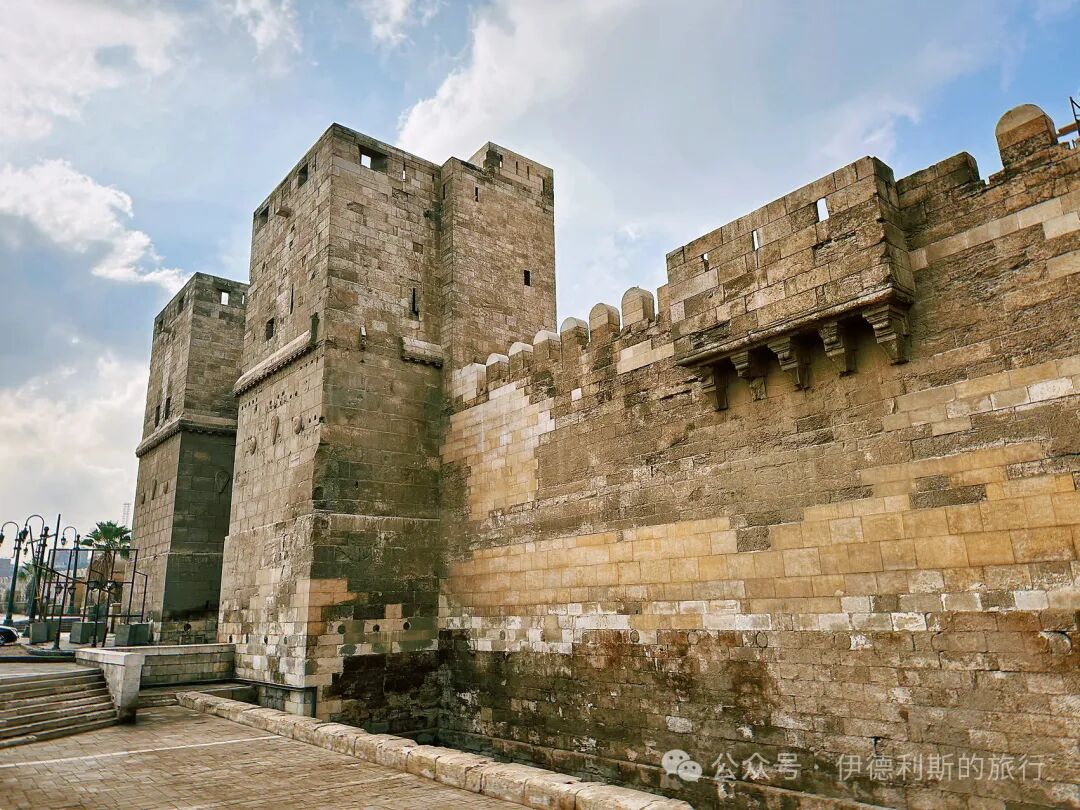
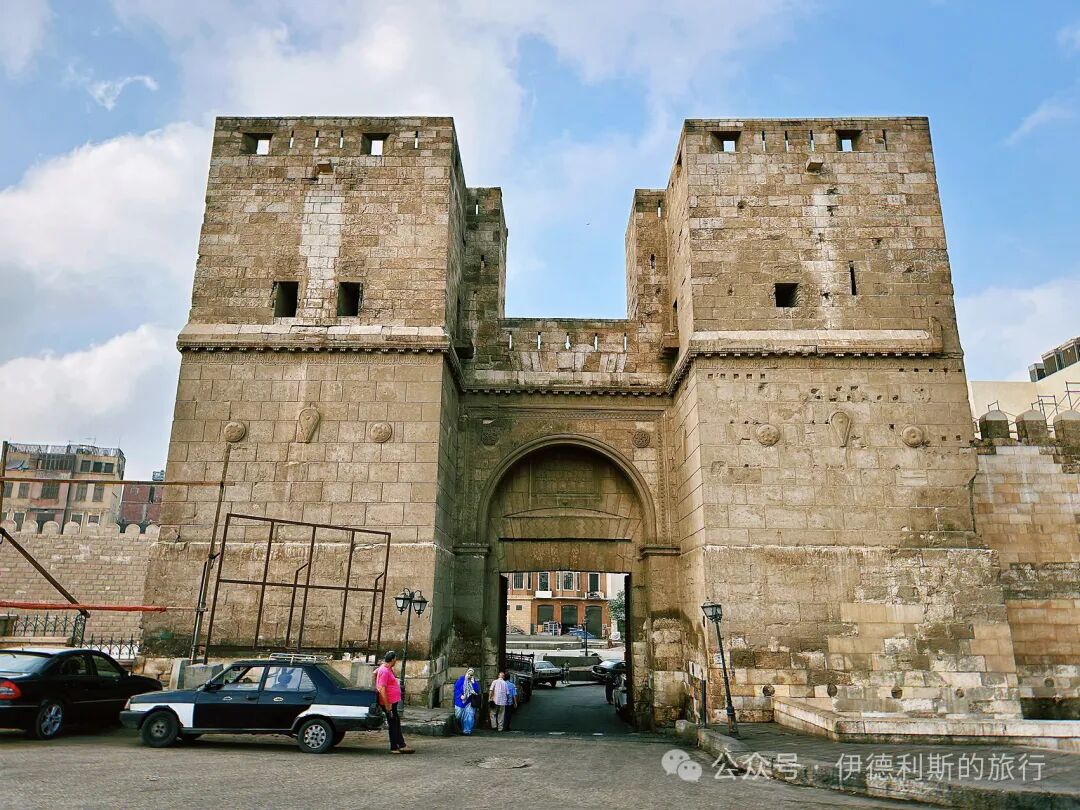
The walls of old Cairo were started in 969 AD. They were first made of brick, then expanded with stone during the reign of the Fatimid Caliph al-Mustansir Billah (reigned 1036-1094), and finally finished in 1087. The north gates of the old city, the Gate of Conquest (Bab al-Futuh) and the Gate of Victory (Bab al-Nasr), were both built during this time. In this article, I will take you through the north gate into old Cairo to experience its thousand-year history.
Gate of Conquest and Gate of Conquest: 1087
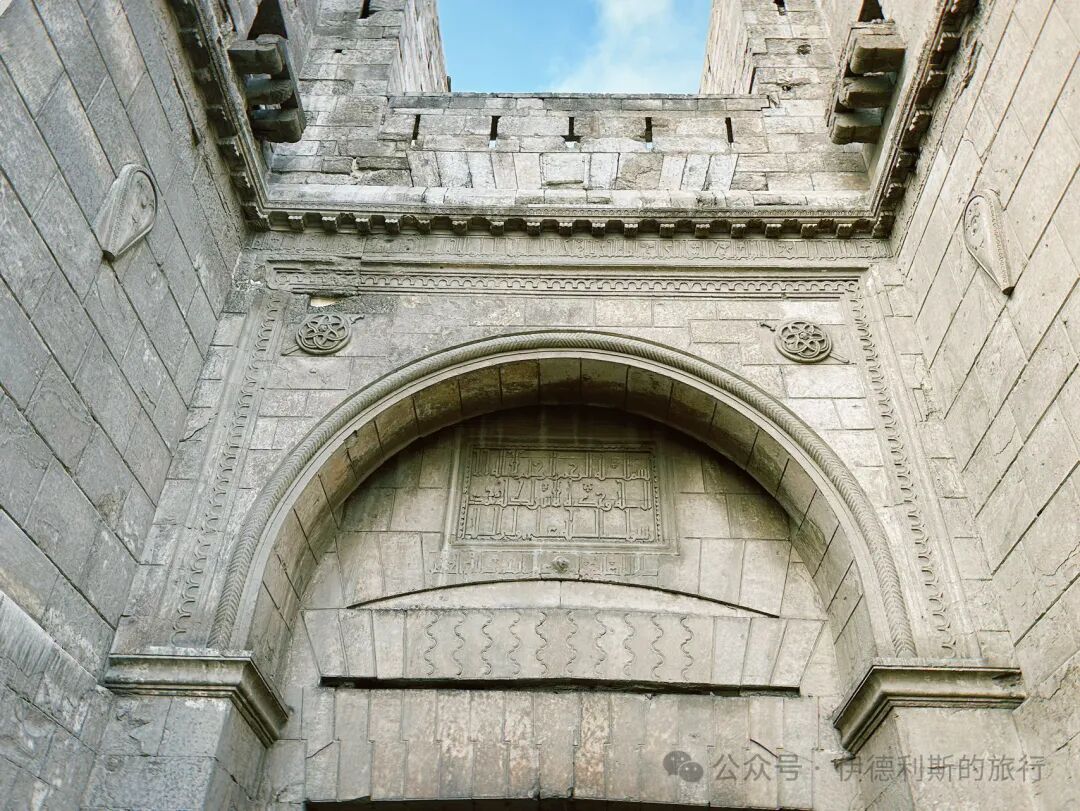
The Gate of Conquest is 22 meters high and has two round towers. The stone carving details may have been influenced by Syrian or Byzantine craftsmen. Above the arch, the surface is covered in diamond patterns containing rosettes and crosses. The parts of the towers that hang outward are carved with ram heads, which are symbols of Mars in the zodiac. Inside the gate, the dome and the rectangular space connect through a pendentive, which is a typical feature of Byzantine architecture.
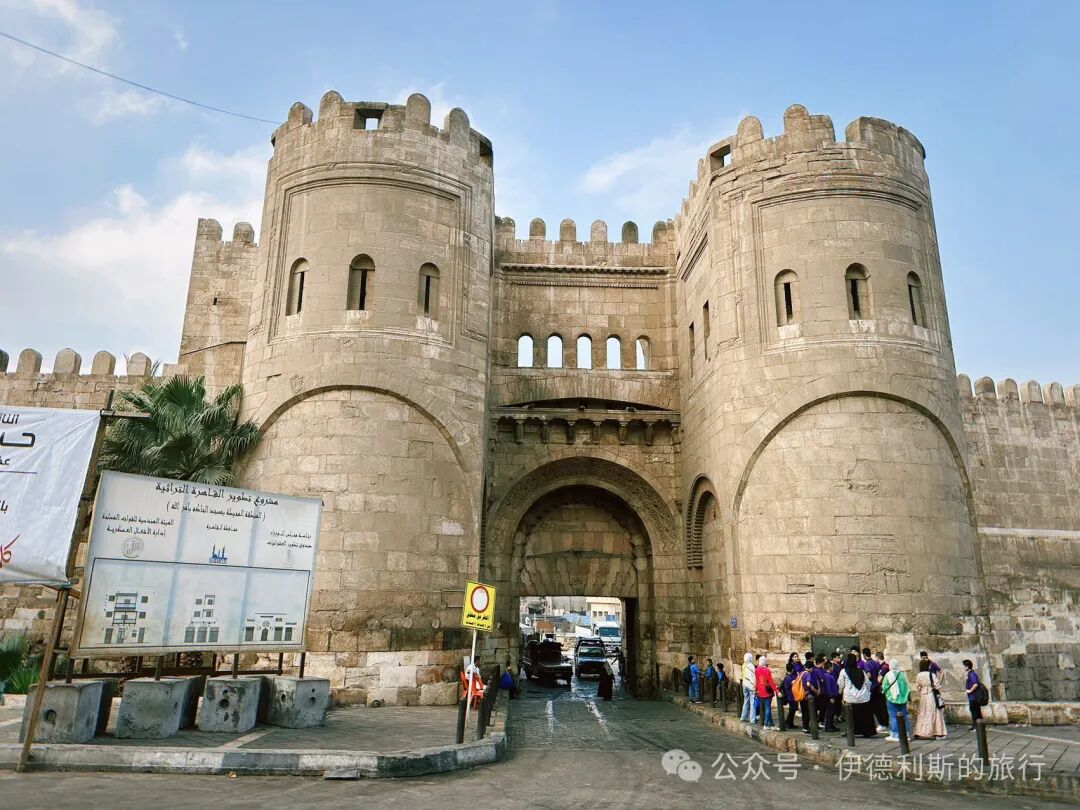
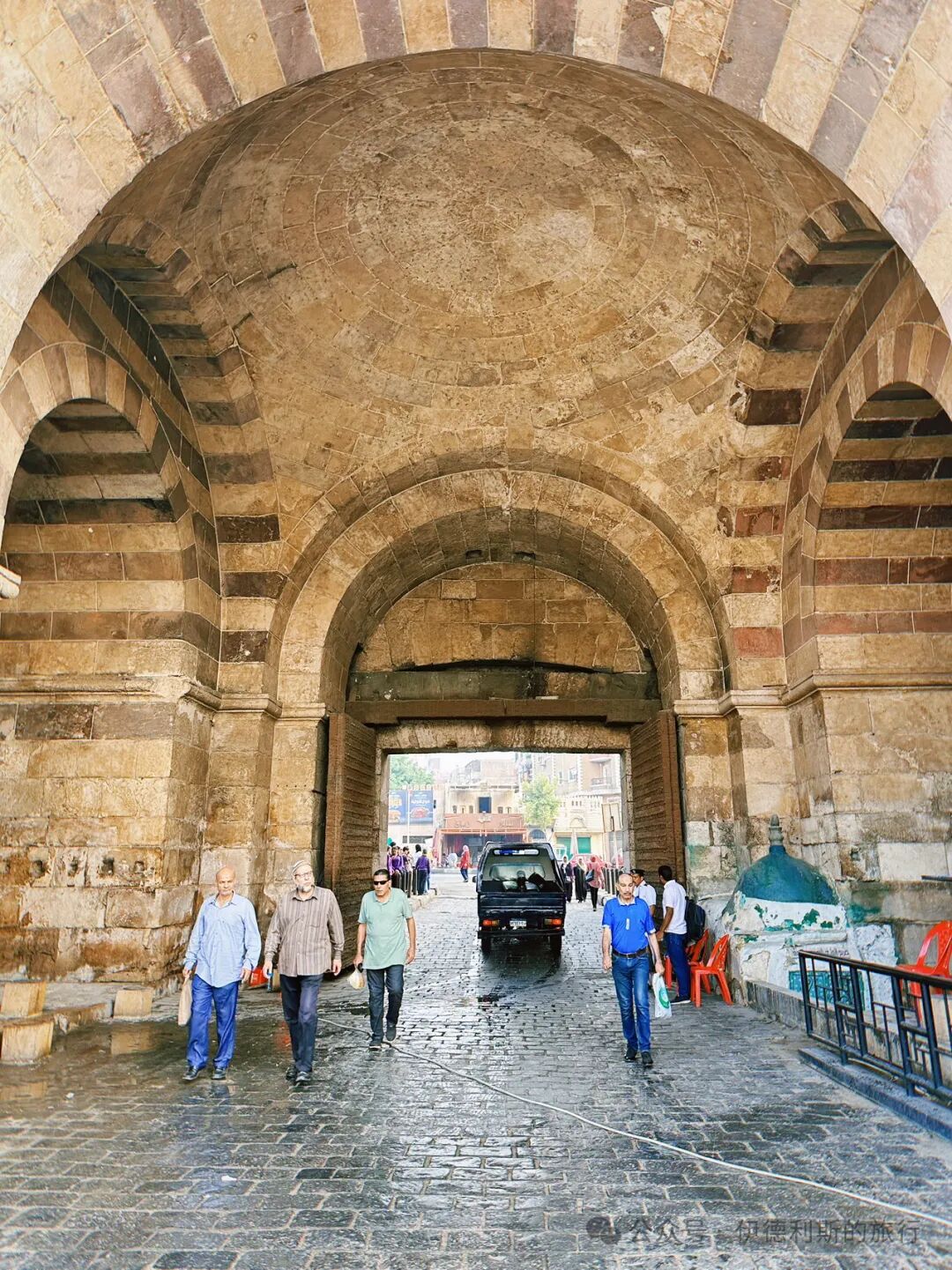
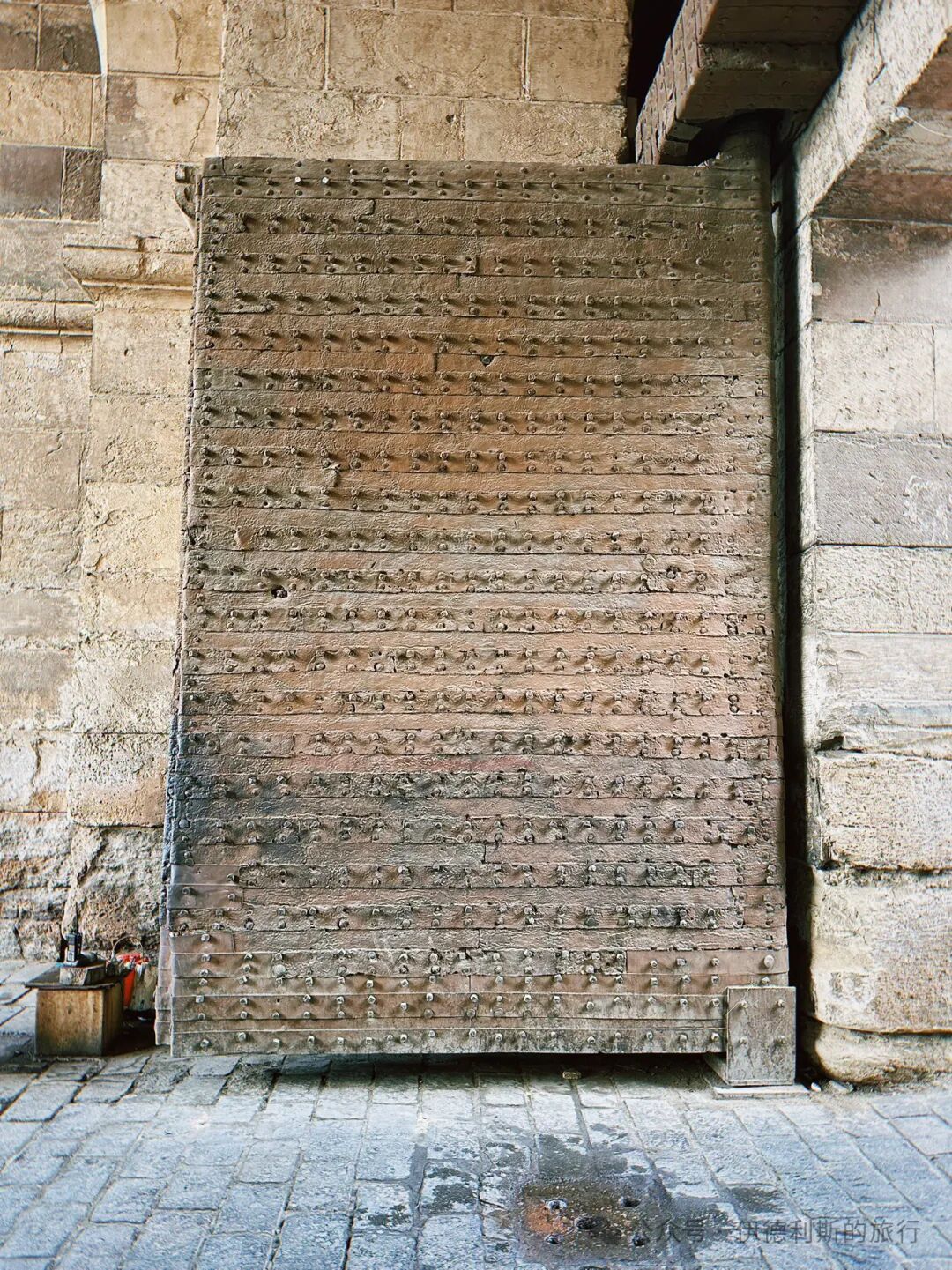
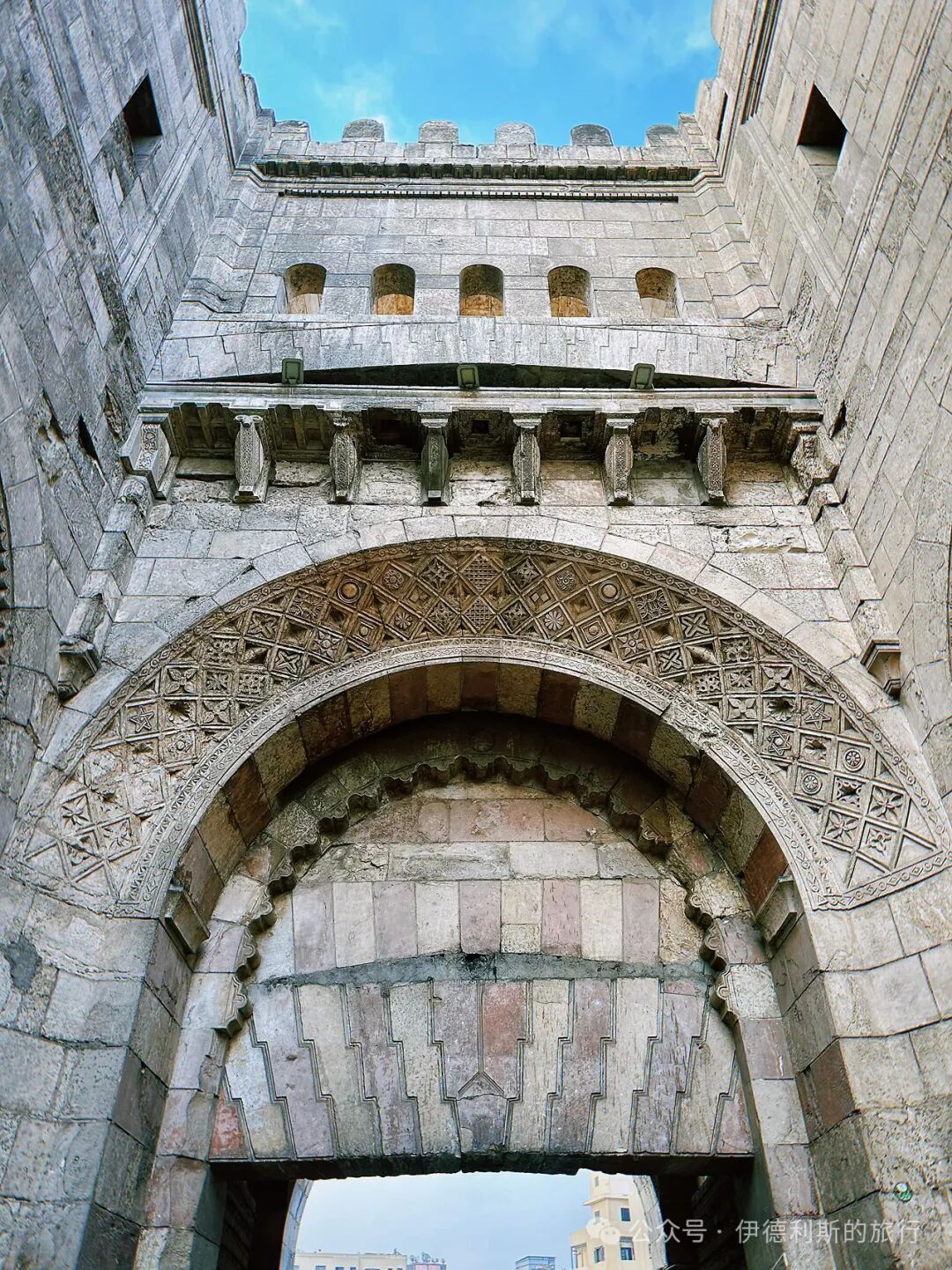
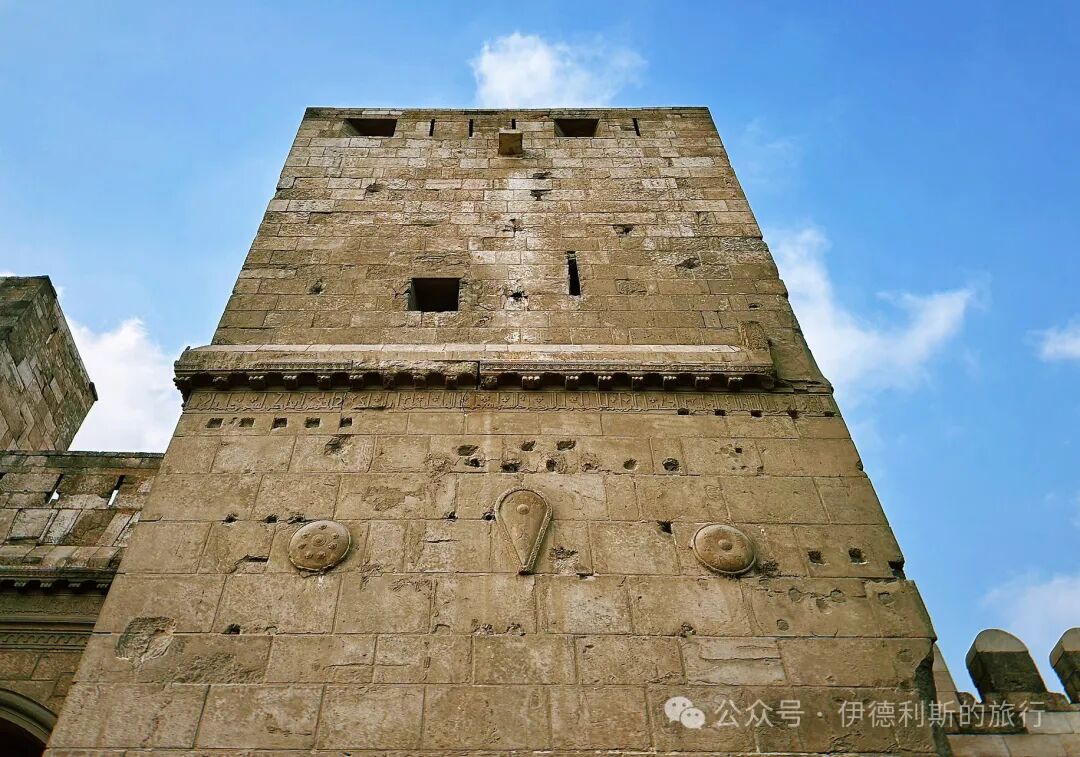
The Gate of Victory is on the east side of the Gate of Conquest. Unlike the round towers of the Gate of Conquest, the towers of the Gate of Victory are square and contain guard rooms and living areas. There are shield carvings above the gate, which symbolize protecting the city from invasion. The shield features an Arabic inscription from its 1087 reconstruction, along with a Shia version of the Shahada that mentions Ali as the friend (wali) of Allah.
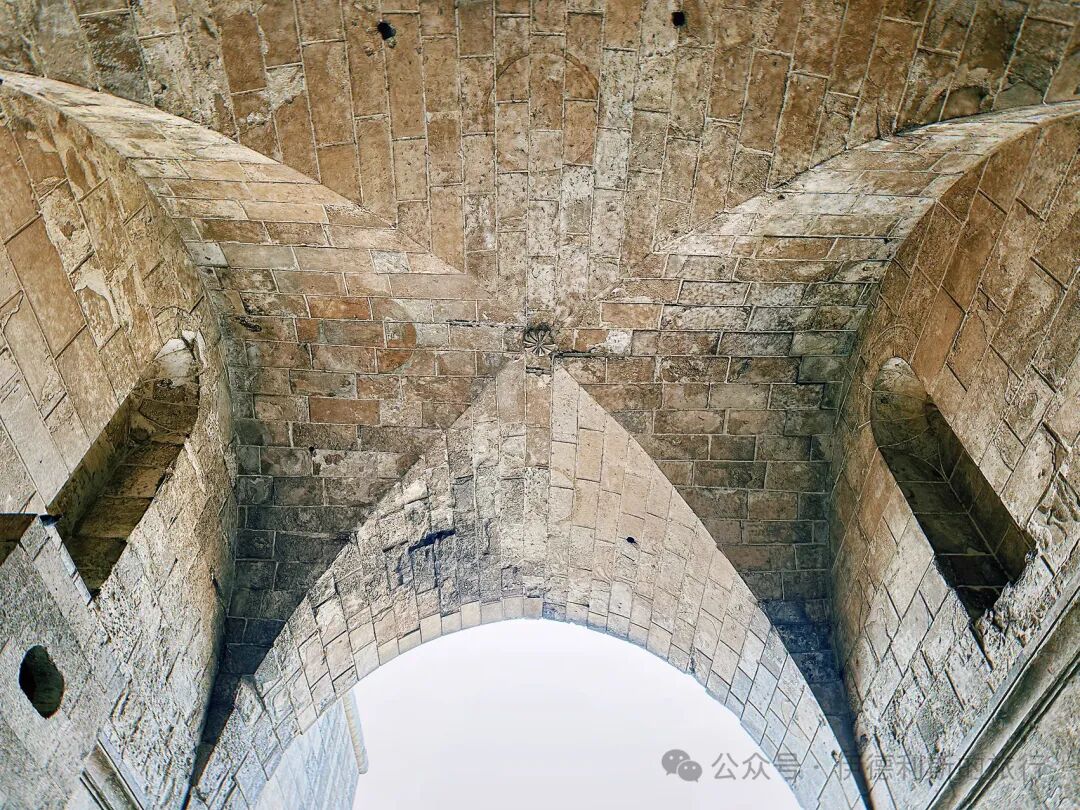
Al-Hakim Mosque: 1013.
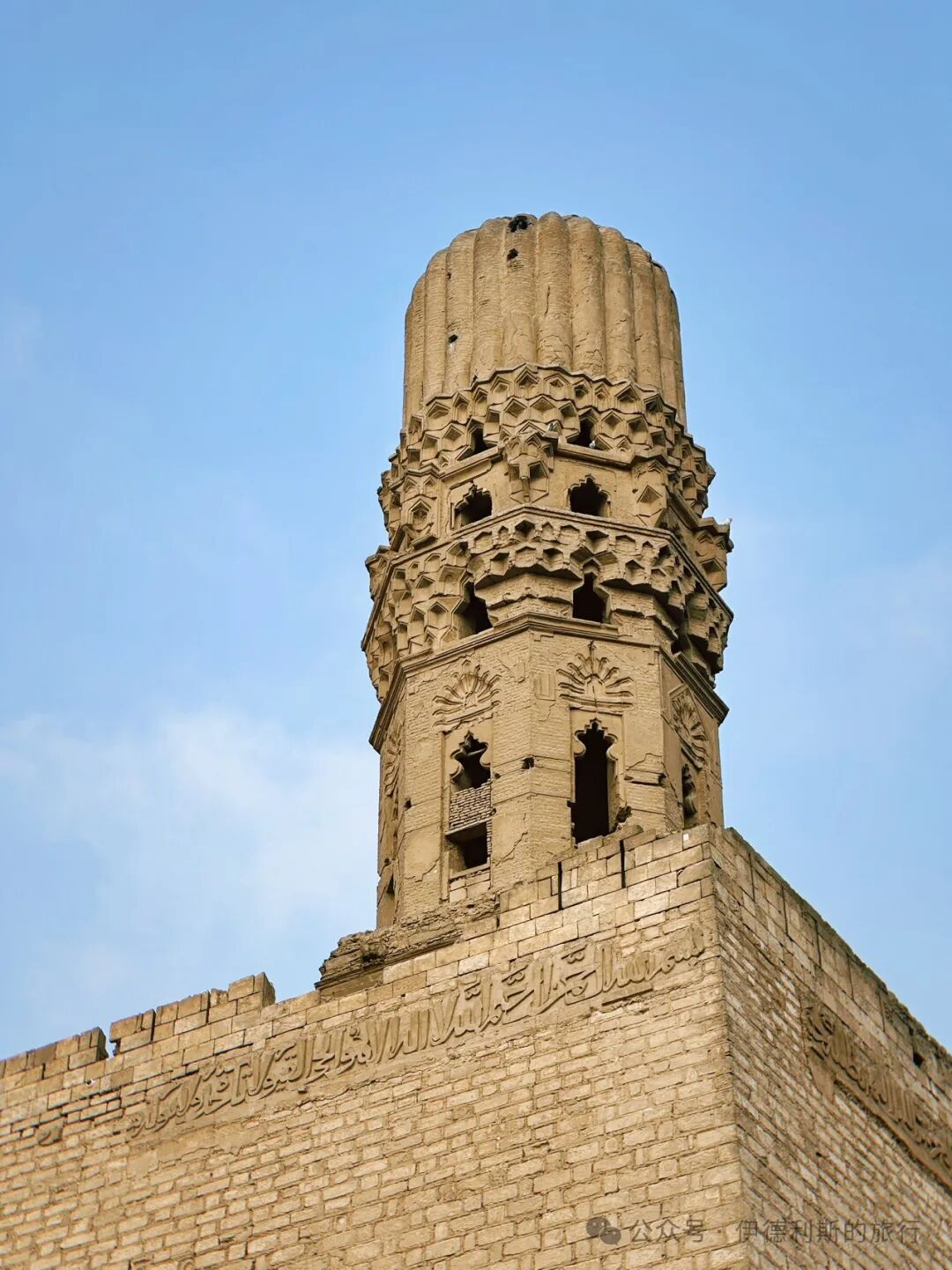
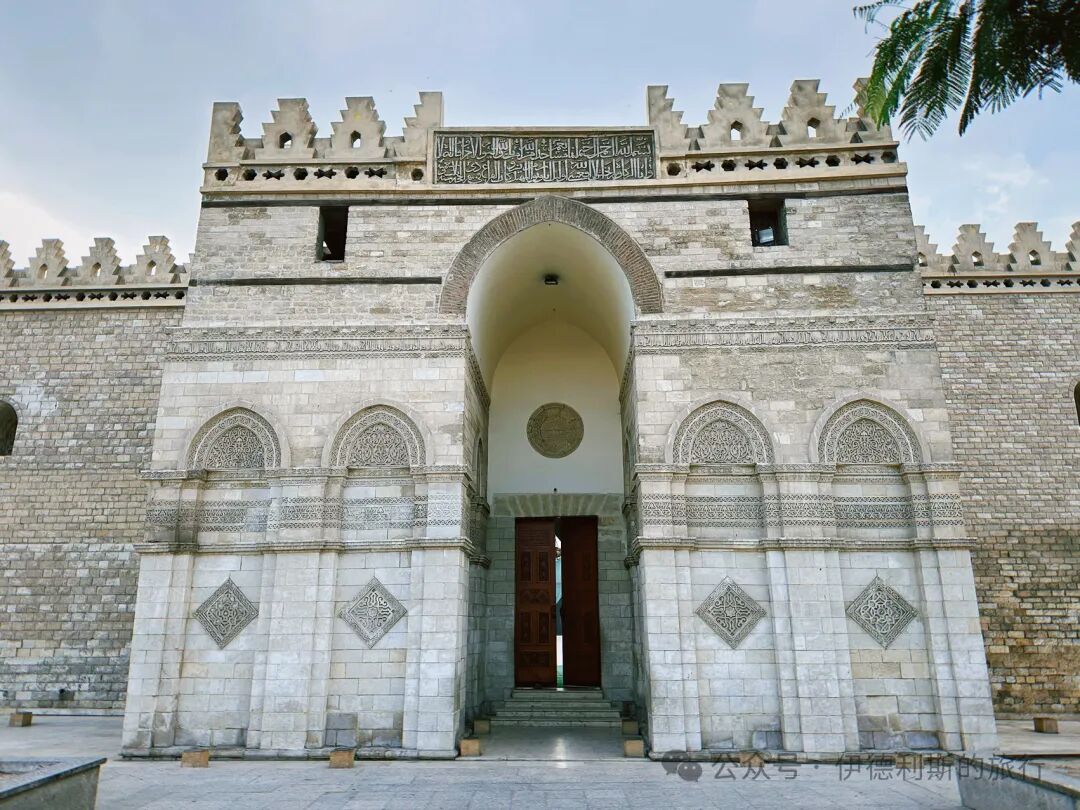
Right next to the northern wall of Old Cairo stands the Al-Hakim Mosque, named after the sixth Fatimid caliph and the 16th imam of the Ismaili branch of Shia Islam, al-Hakim bi-Amr Allah (reigned 996-1021). The mosque was started in 990 by the fifth Fatimid caliph, al-Aziz Billah (reigned 975-996), and finished in 1013 by Caliph al-Hakim, making it 1,010 years old today.
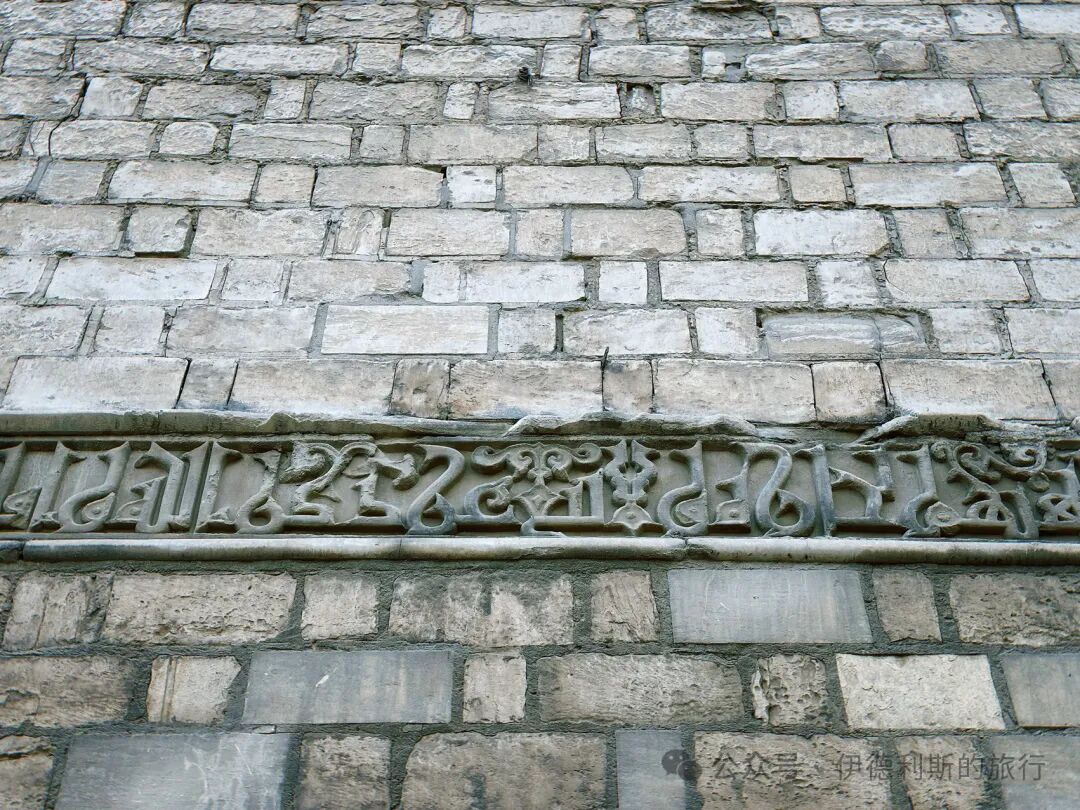
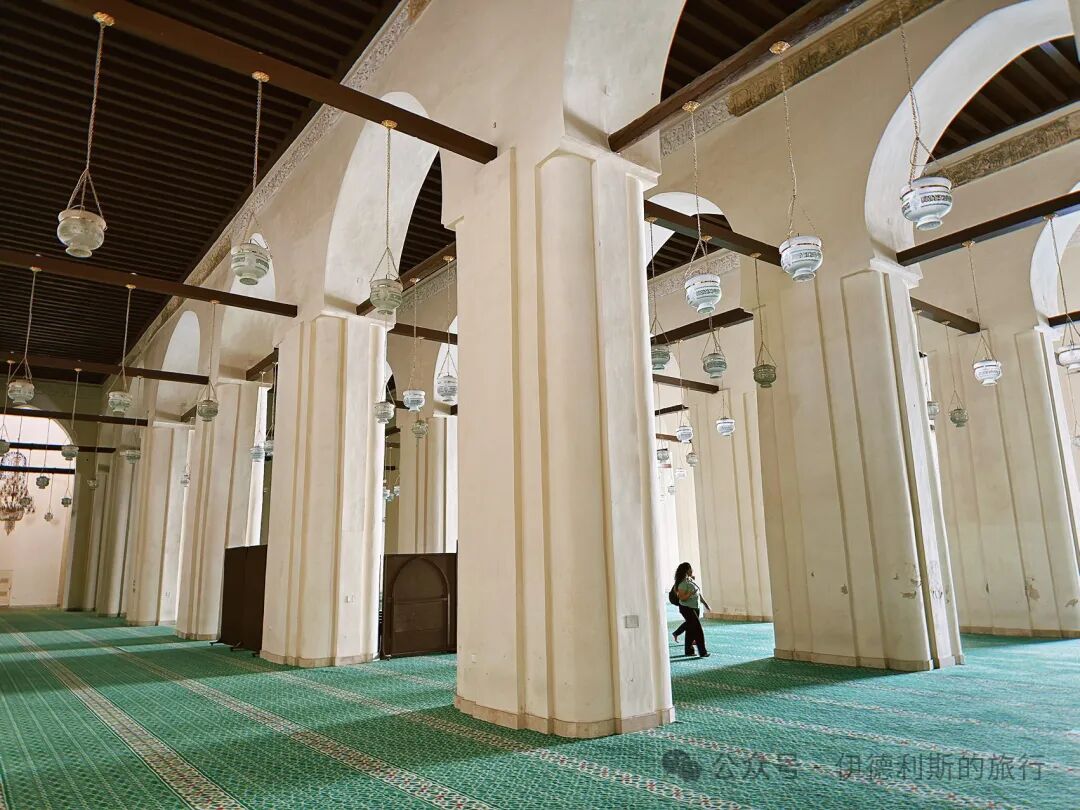
The Al-Hakim Mosque was originally outside the walls of Cairo, but it was brought inside the city after the walls were rebuilt in 1087. The mosque's architectural style is similar to the Al-Azhar Mosque, but it is twice as large. The most striking features inside are the two minarets built on square brick bases. When the minarets were first built in 1003, they were separate structures, and they were only encased in brick in 1010. Some scholars suggest this might be linked to the ruler of Mecca rejecting Fatimid authority in 1010, which weakened the dynasty's power. The outer wall of the southern brick base has marble Kufic Arabic inscriptions from the Fatimid period, while the Kufic inscriptions on the northern base were moved to the outside of the city wall when it was incorporated into the northern wall of Old Cairo in 1087.
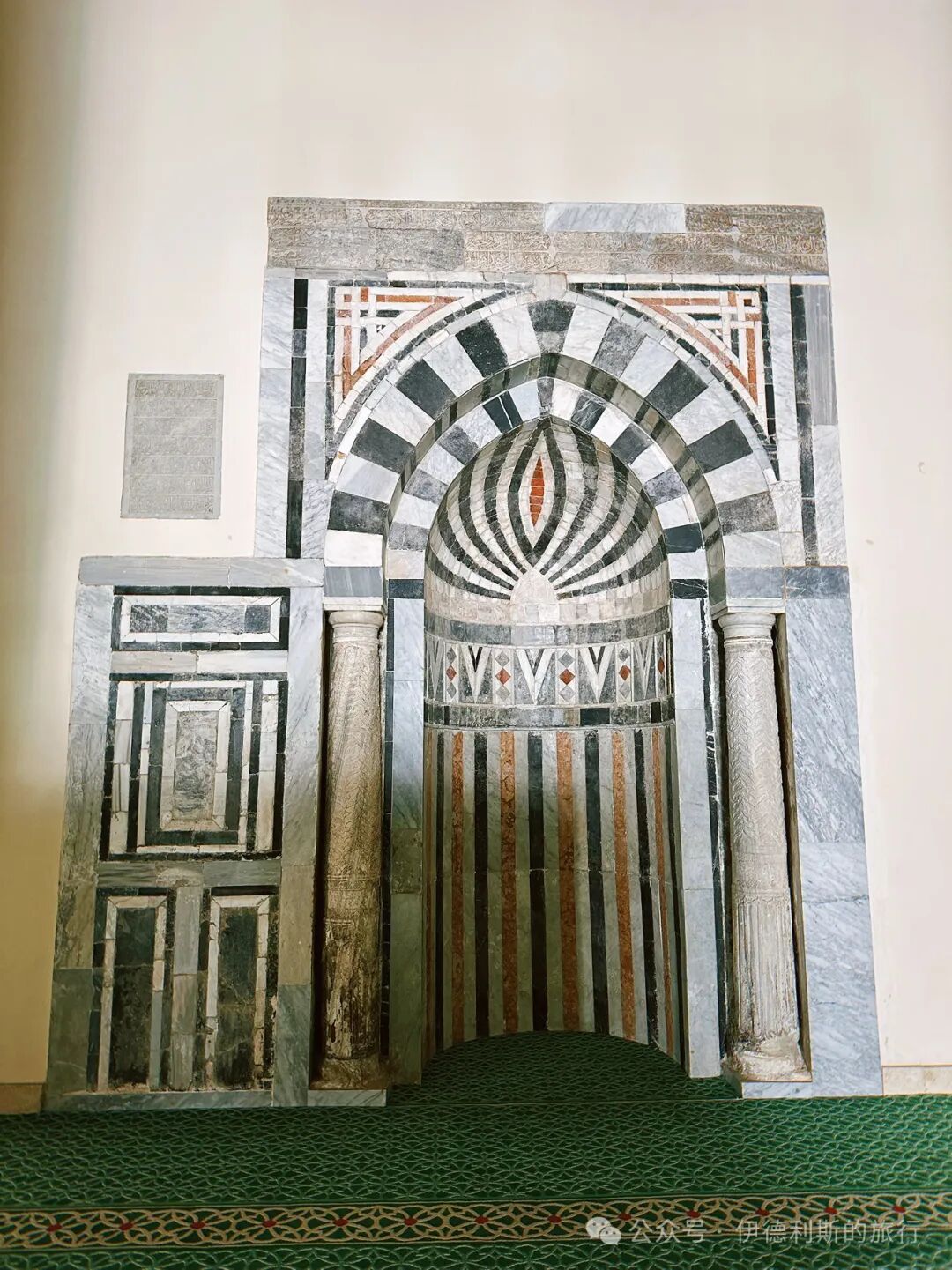
During the Crusades, the mosque was used as a prison by the Franks and later as a stable by Saladin. It was renovated during the Mamluk period in the 14th century but later fell into ruins for a long time. The mosque was renovated in 1808, and a small, colorful marble mihrab added during that time still survives today.
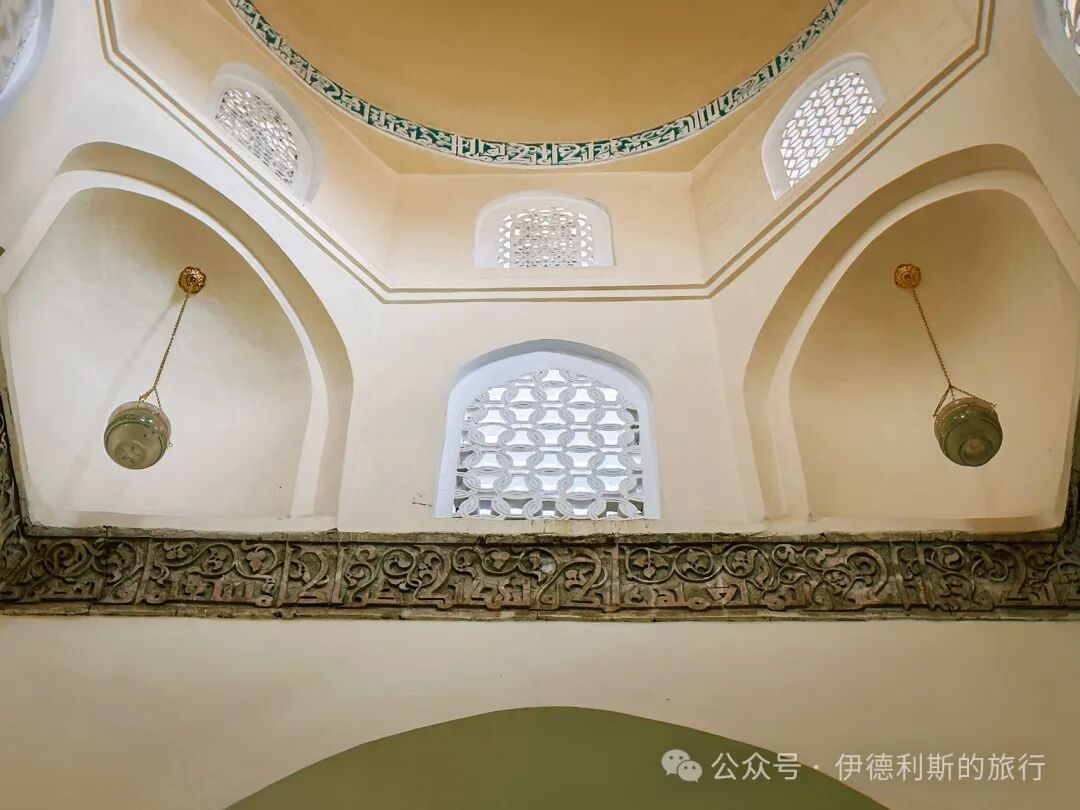
In the 20th century, the mosque served as a school until 1980, when the Dawoodi Bohra branch of Shia Islam carried out a massive reconstruction and renovation using white marble. Inside the main hall after the reconstruction, only the original stucco carvings, wooden beams, and scriptures were preserved. This restoration caused a lack of authenticity that sparked criticism and widespread discussion among scholars. In 2017, the Dawoodi Bohra community and the Egyptian Ministry of Tourism and Antiquities launched a new round of restoration, and it did not reopen until February 2023.
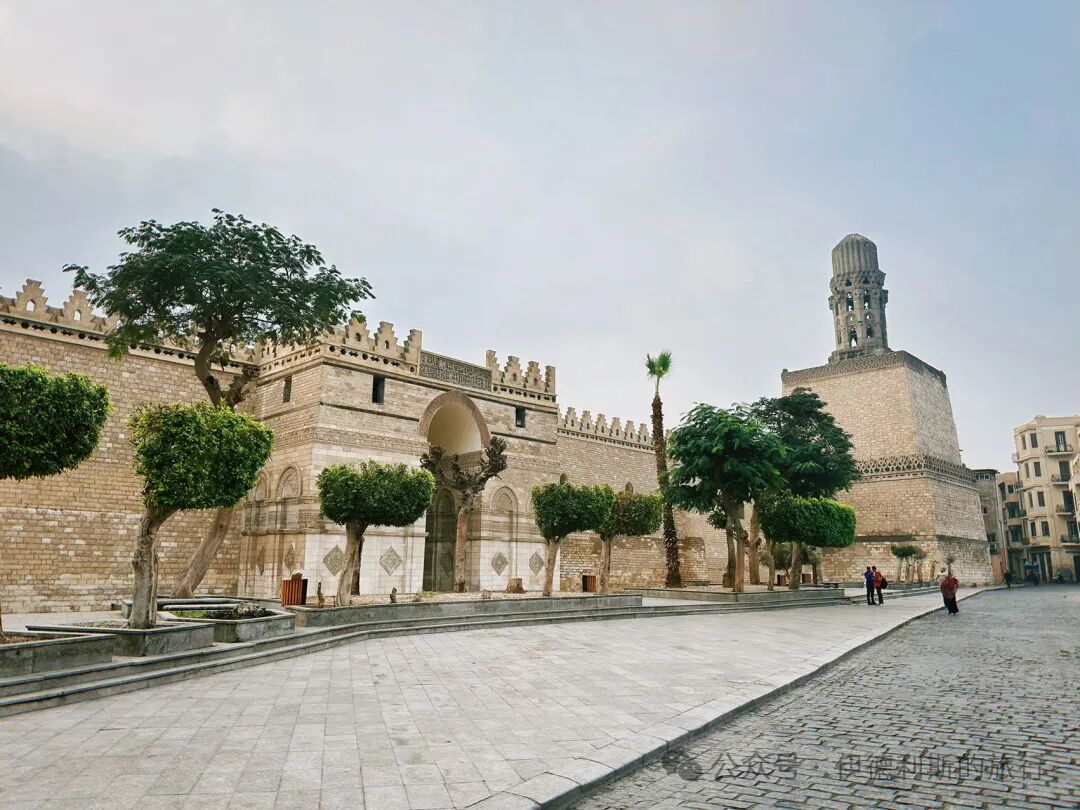
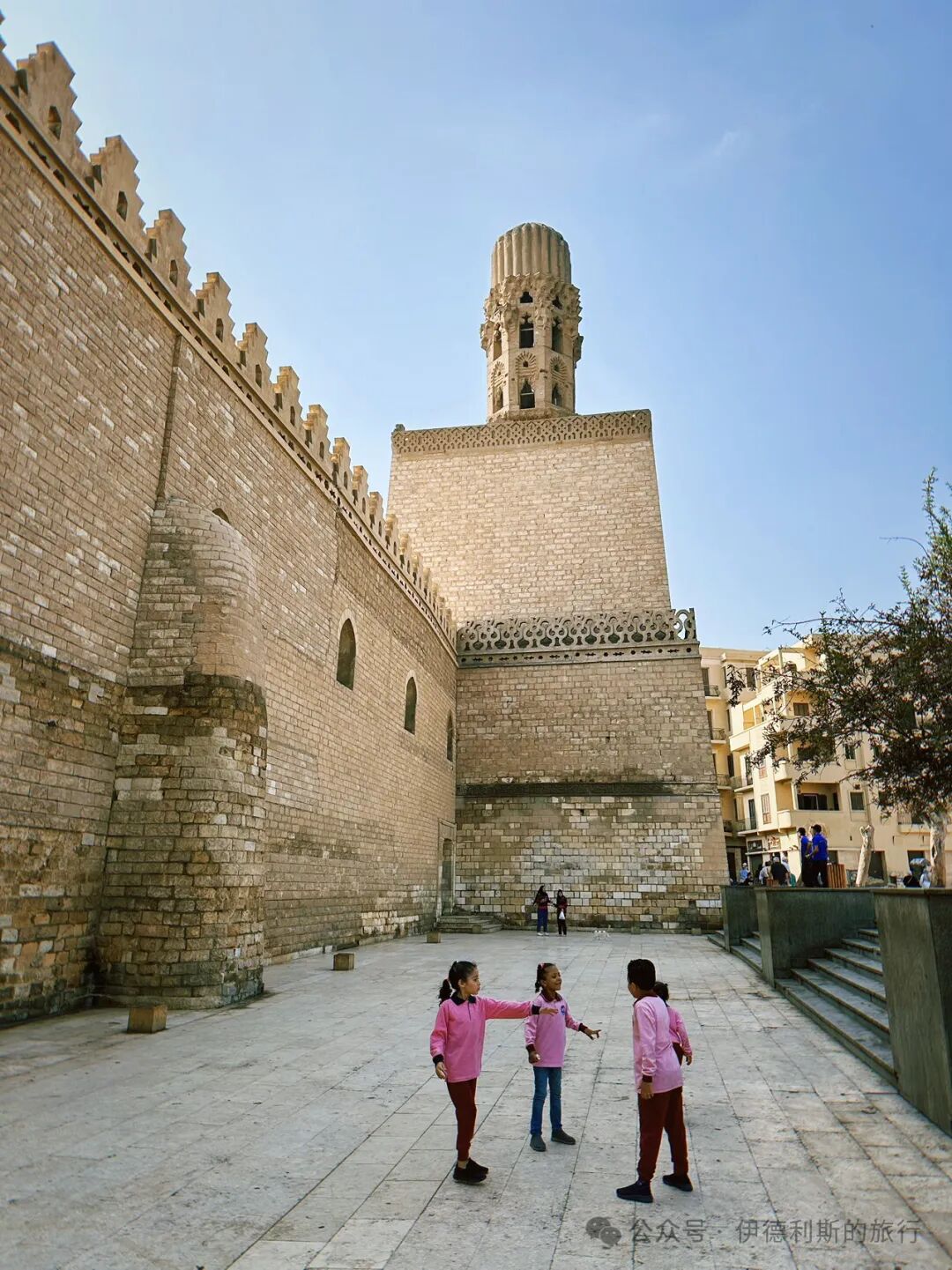
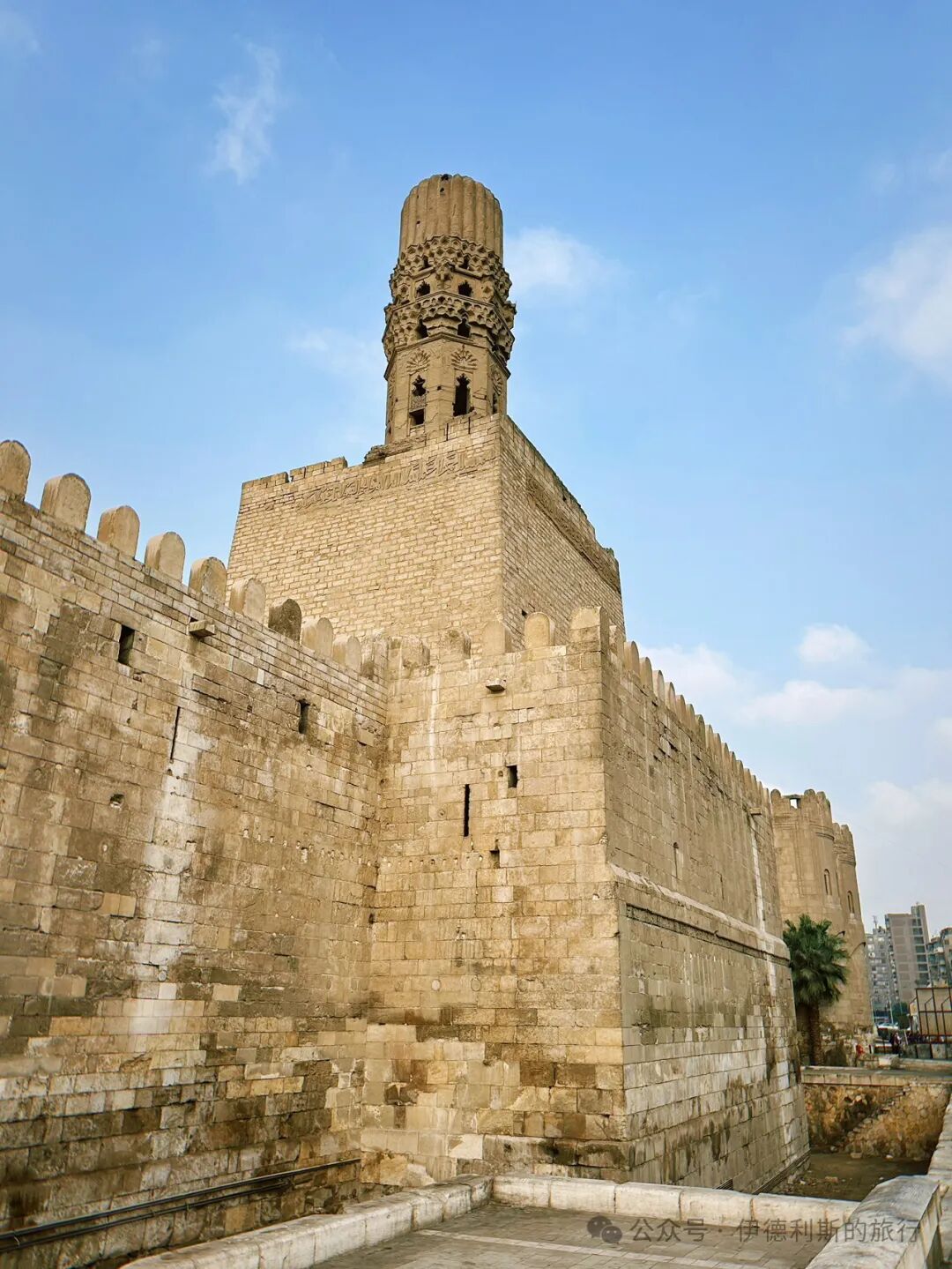
Caravanserai of Qaitbay: 1481
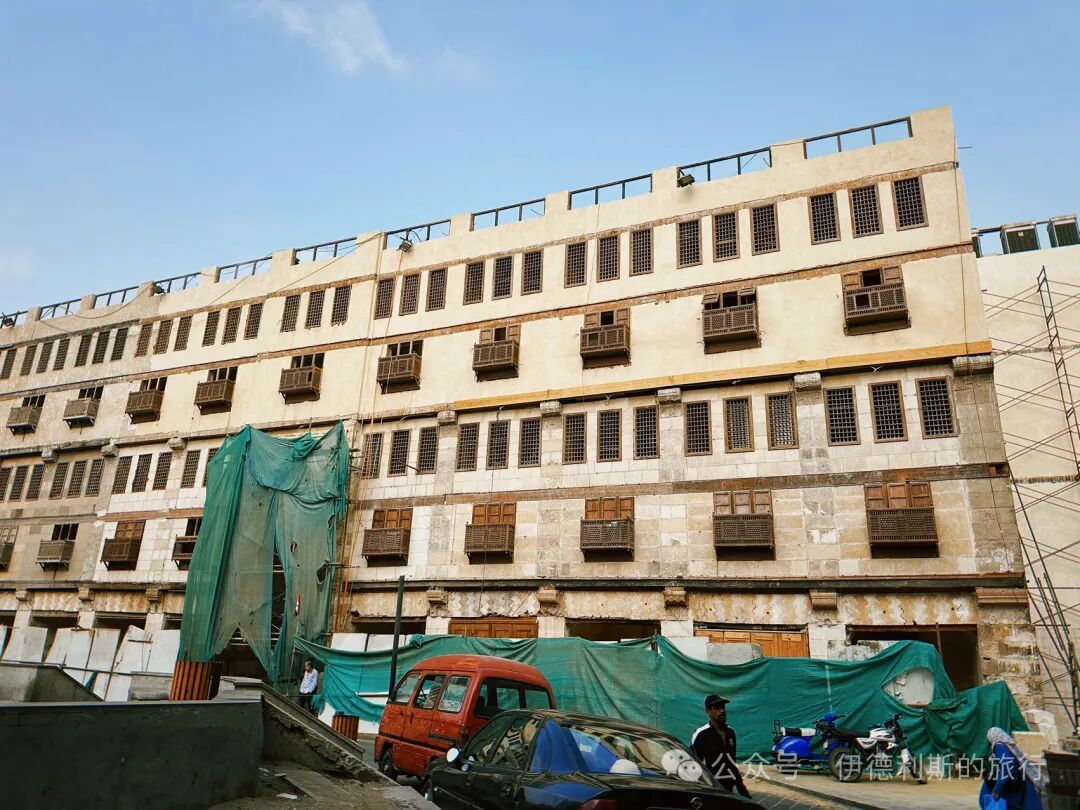
Enter the old city of Cairo through the Gate of Victory (Bab al-Futuh) onto El-Gamaleya Street. The first thing you see is the caravanserai (wikala) of Sultan Qaitbay, which is currently under renovation. It was built in 1481 by Sultan Qaitbay (reigned 1468-1496) of the Mamluk dynasty. Qaitbay was one of the Mamluk sultans who sponsored the most architecture. Although the Mamluk dynasty was in decline, the situation remained relatively stable under his rule, and trade flourished.
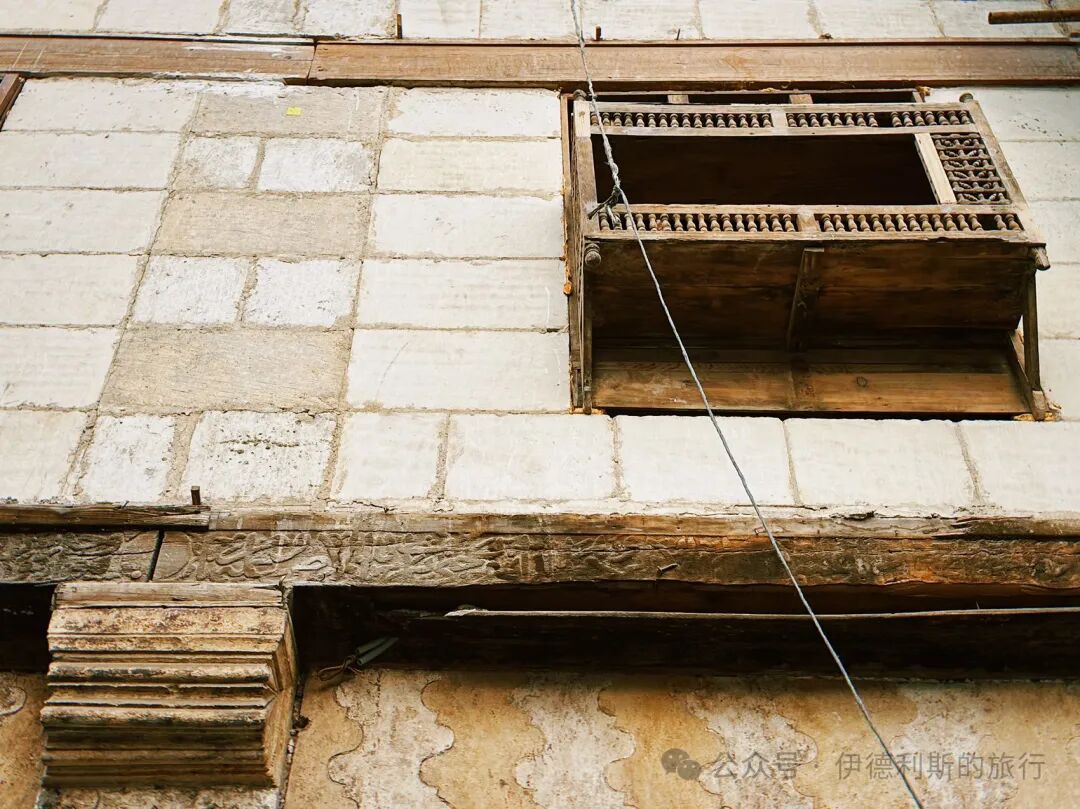
Like other Mamluk caravanserais (wikala), this place not only provided short-term housing for passing caravans but also offered long-term rental apartment units (rab). It was used as apartments for hundreds of years until the Egyptian Ministry of Antiquities began renovations in 2015. Work is still ongoing, and you can still see the wooden lattice windows (mashrabiya) facing the street.
Gate of the Caravanserai of Qawsun: 1341
Continuing south, you can see the remains of the gate of the caravanserai (wikala) of Emir Qawsun. This inn was built in 1341 by the famous Mamluk Emir Qawsun (1302-1342). It was used by soap and coffee merchants from Palestine in the 17th and 18th centuries, so it is also called the Soap Inn. The inn was demolished in 1960 to be rebuilt as a school, and only the gate remains. Above the gate is a stone carving of a pair of cups, because Emir Qawsun once served as the Sultan's cupbearer (saqi).
Qawsun was born on the Kipchak steppe under the rule of the Golden Horde and started out as a merchant. In 1320, Princess Tulunbay of the Golden Horde married the Mamluk Sultan of Egypt. Qawsun came to Cairo as part of her entourage and stayed in Cairo to sell leather goods. Qawsun was highly valued by the Sultan in Cairo and became his personal attendant. He then rose quickly through the ranks and married the Sultan's daughter. After the old Sultan died in 1341, Qawsun became the regent and held actual power over the Mamluk dynasty. However, he was defeated by political rivals a few months later and was killed in prison.
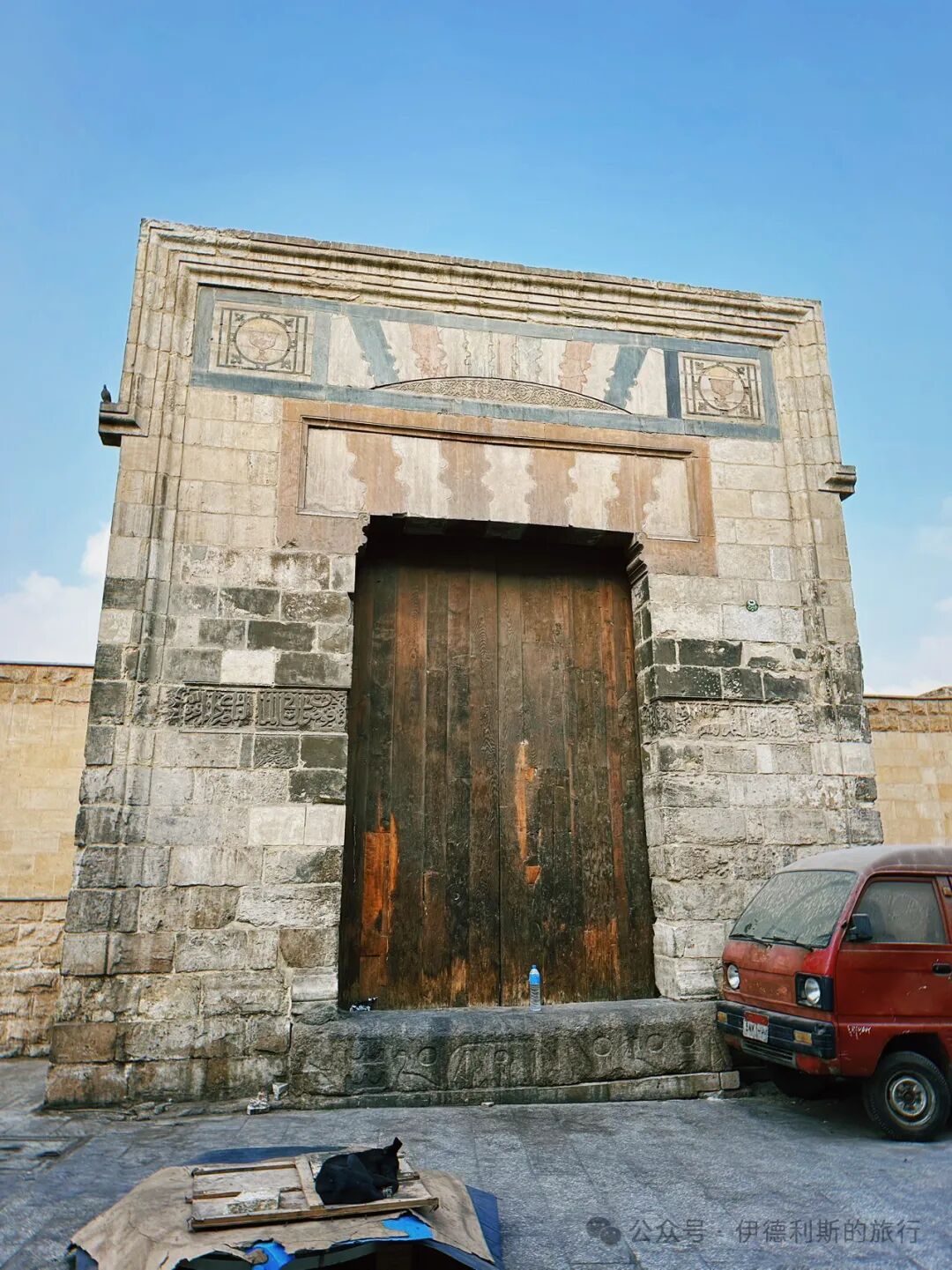
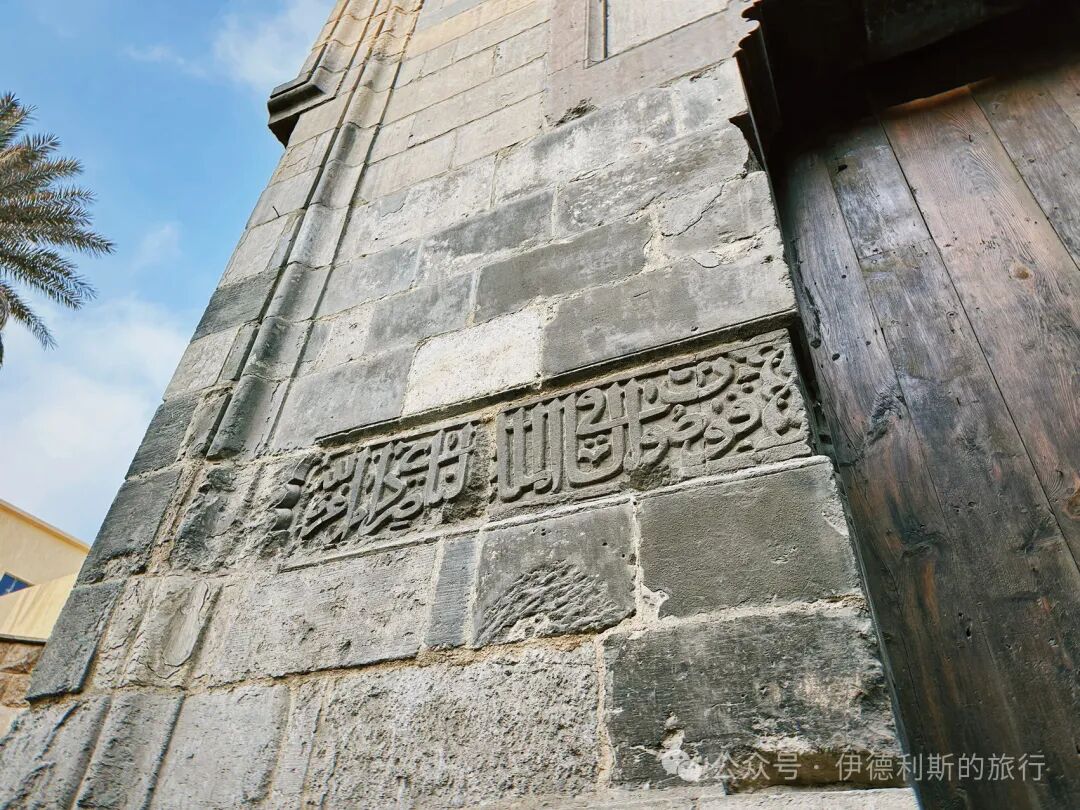
Continuing south along El-Gamaleya Street, you can see several more historical buildings.
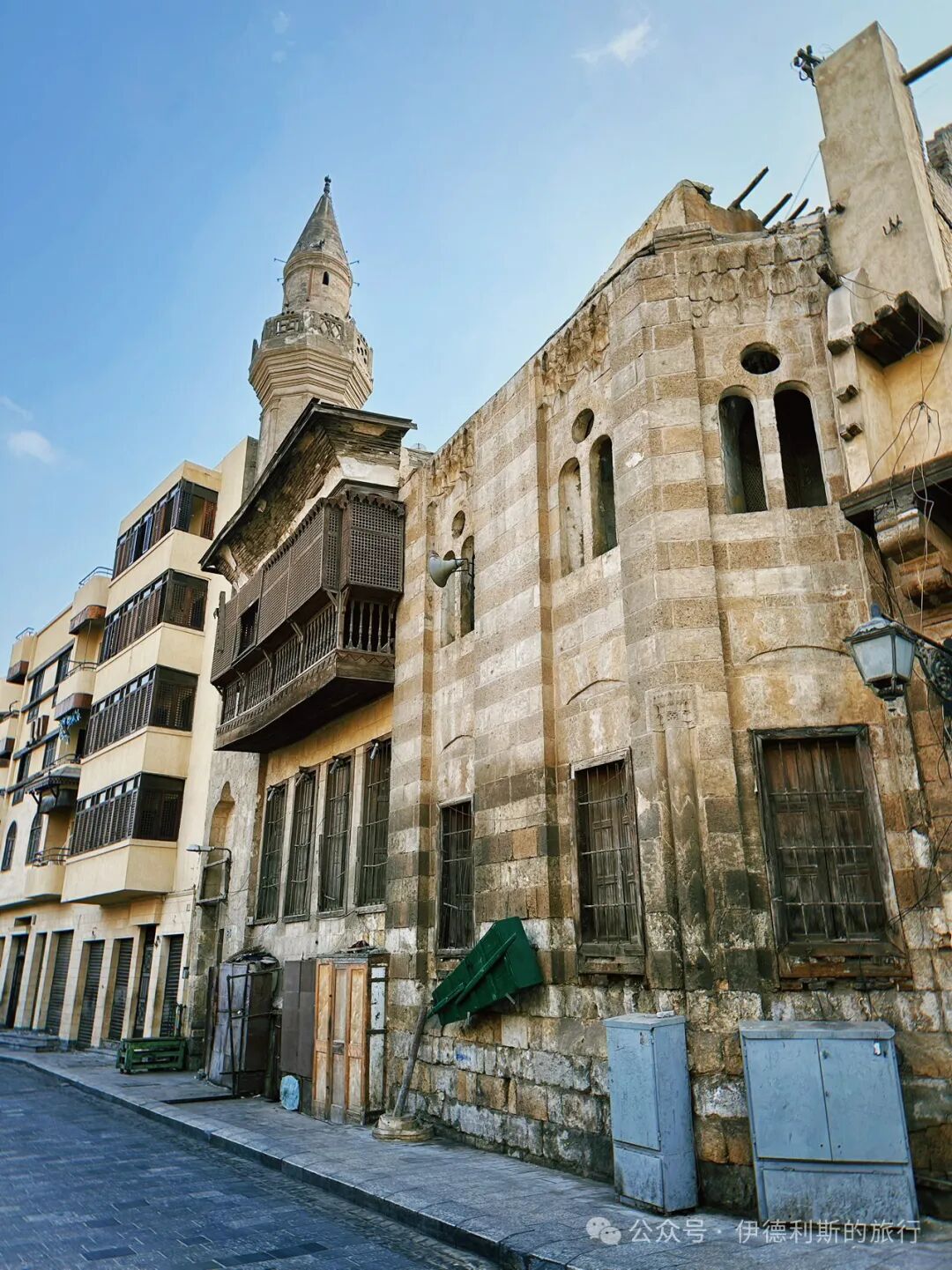
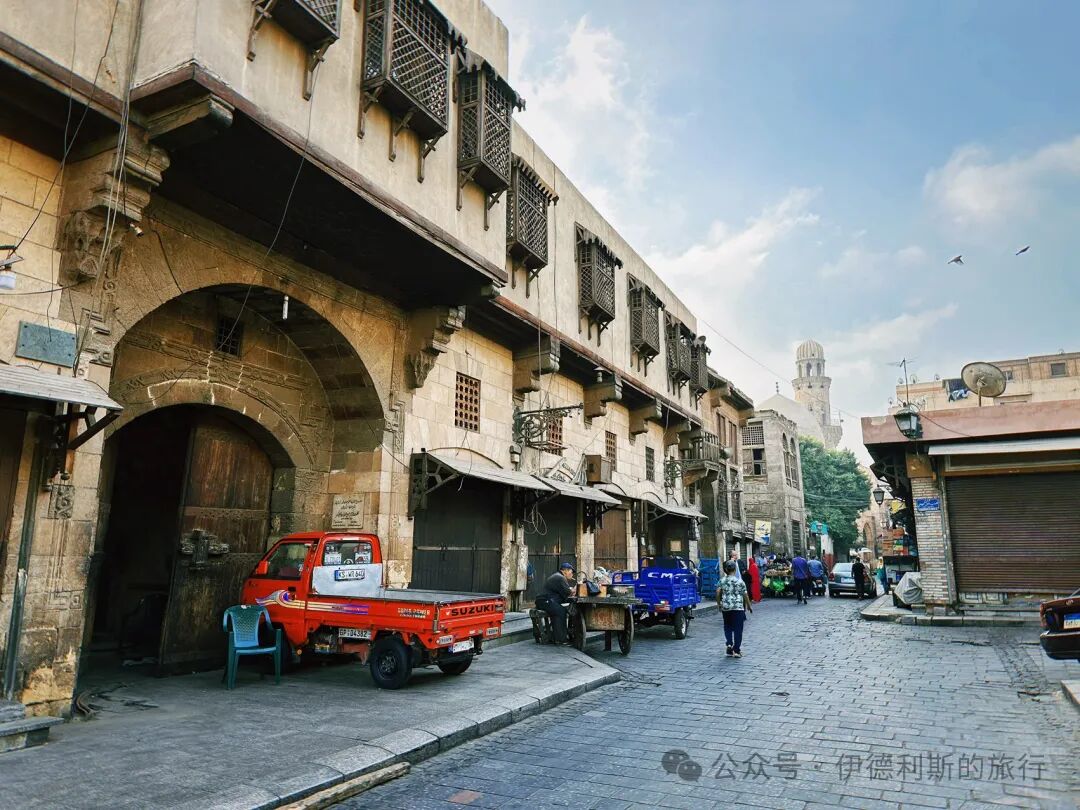
Khanqah of Baybars II: 1310
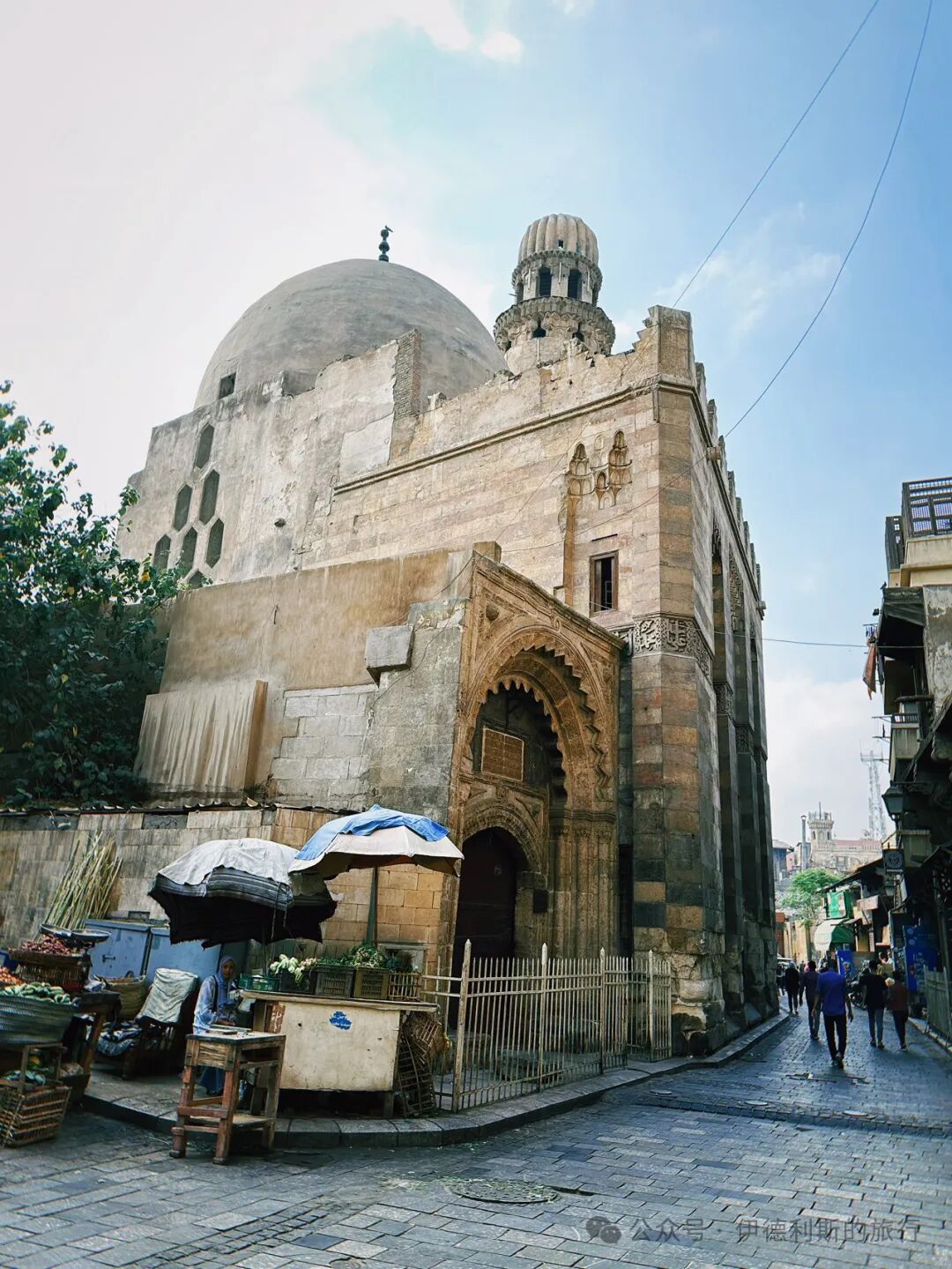
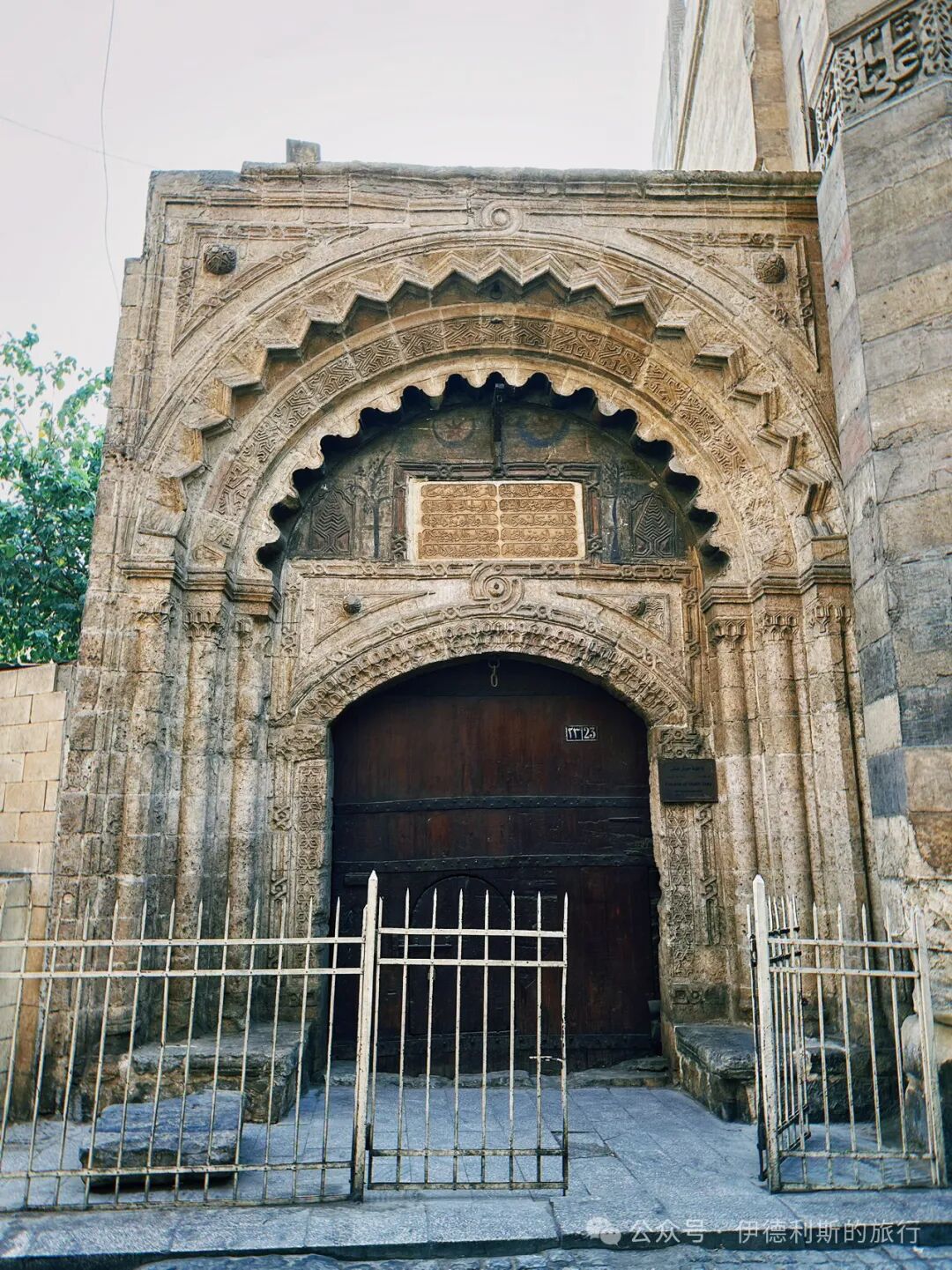
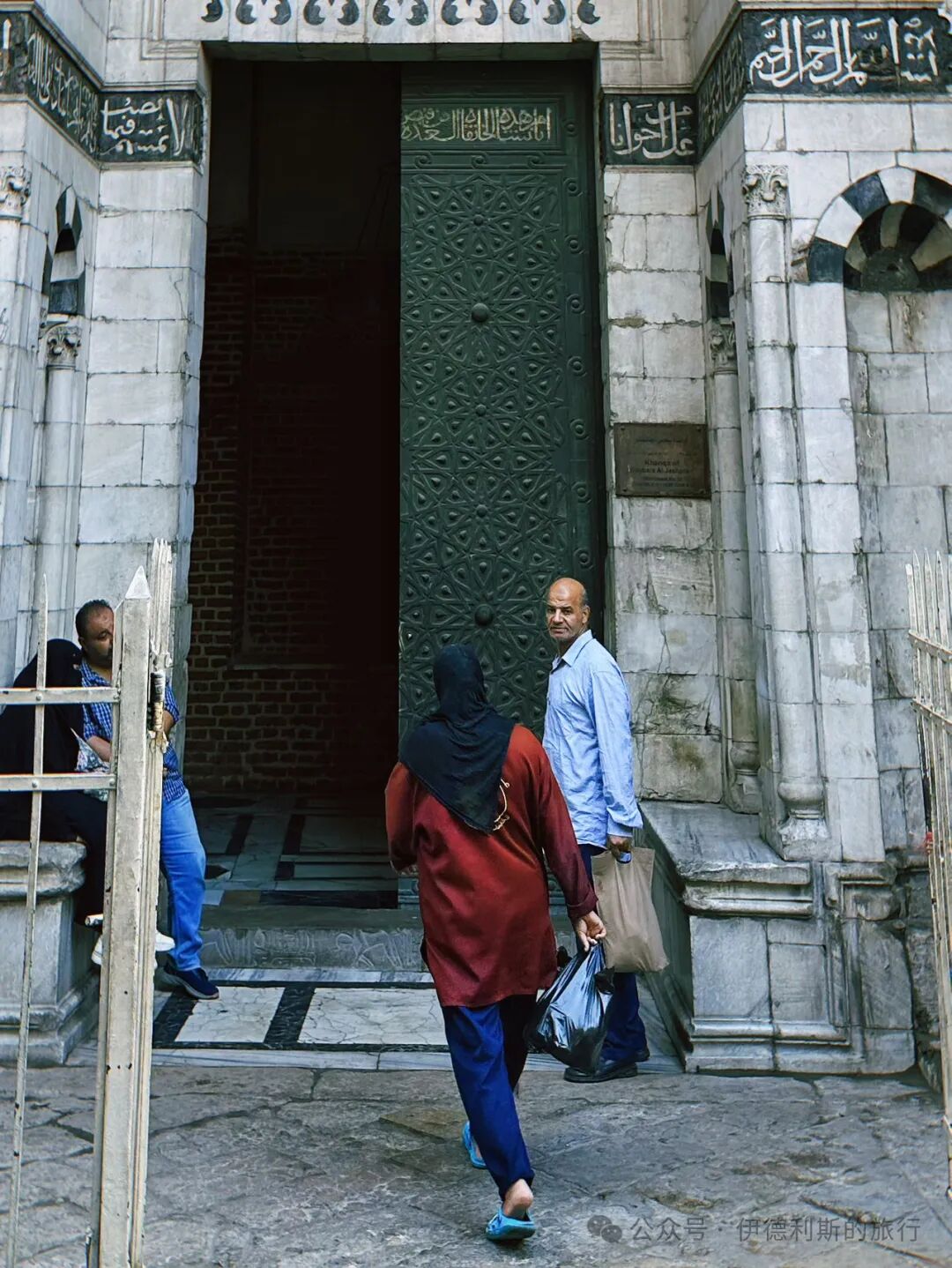
On the east side of the middle section of El-Gamaleya Street stands the Khanqah of Baybars II, built in 1310. Baybars II was the 12th Sultan of the Mamluk dynasty and reigned for only one year, from 1309 to 1310. Baybars II served as vice-sultan from 1299 to 1309 and led the Mamluk Sultanate against the Ilkhanate in the Battle of Marj al-Saffar in Syria in 1303. This battle resulted in the total defeat of the Mongol army that had marched west into Syria. People say the Sultan led his captives from the Gate of Victory along El-Gamaleya Street into the old city of Cairo. Singers and dancers from all over came to celebrate, and the city was decorated with lights for days of festivities.
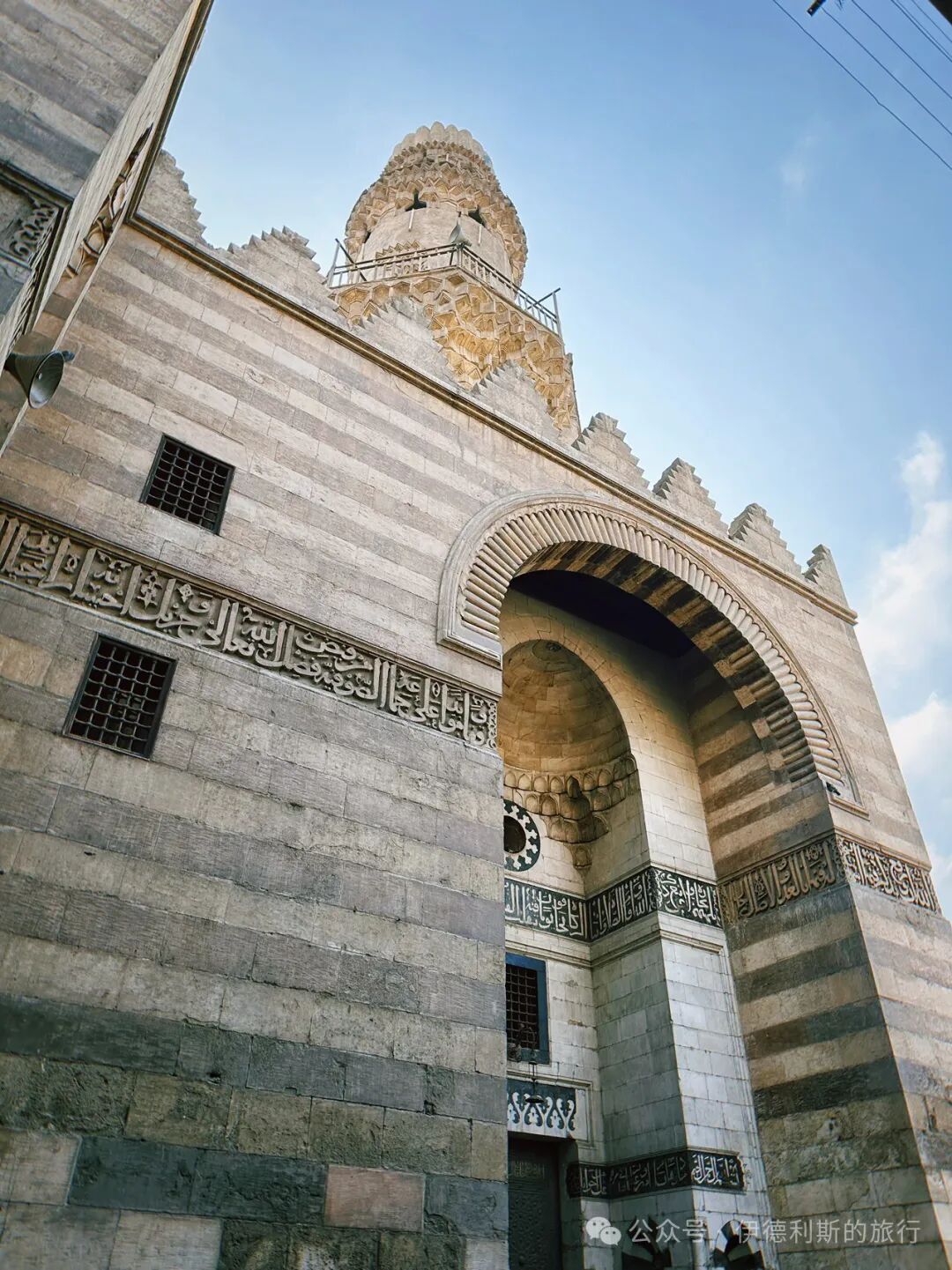
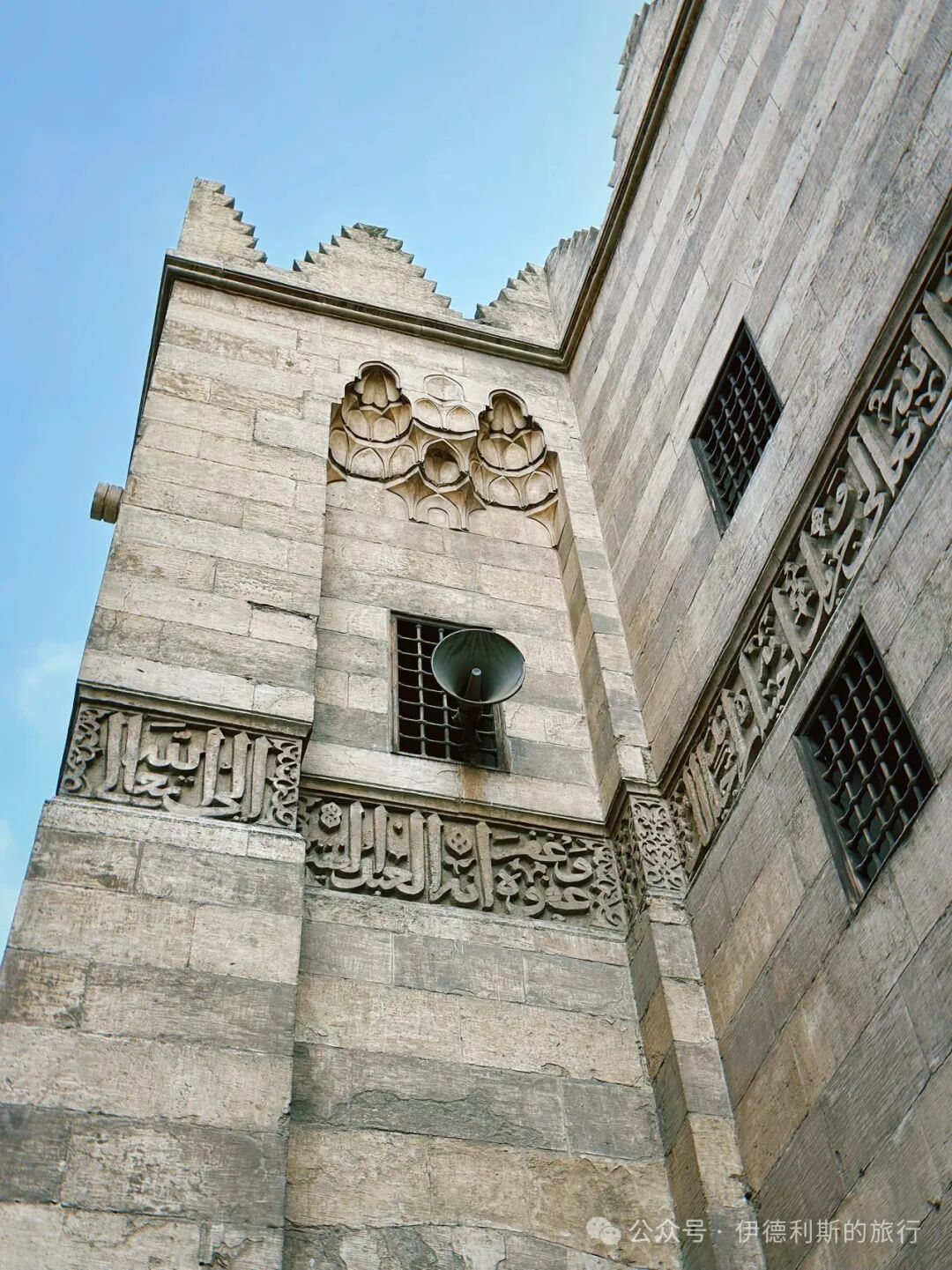
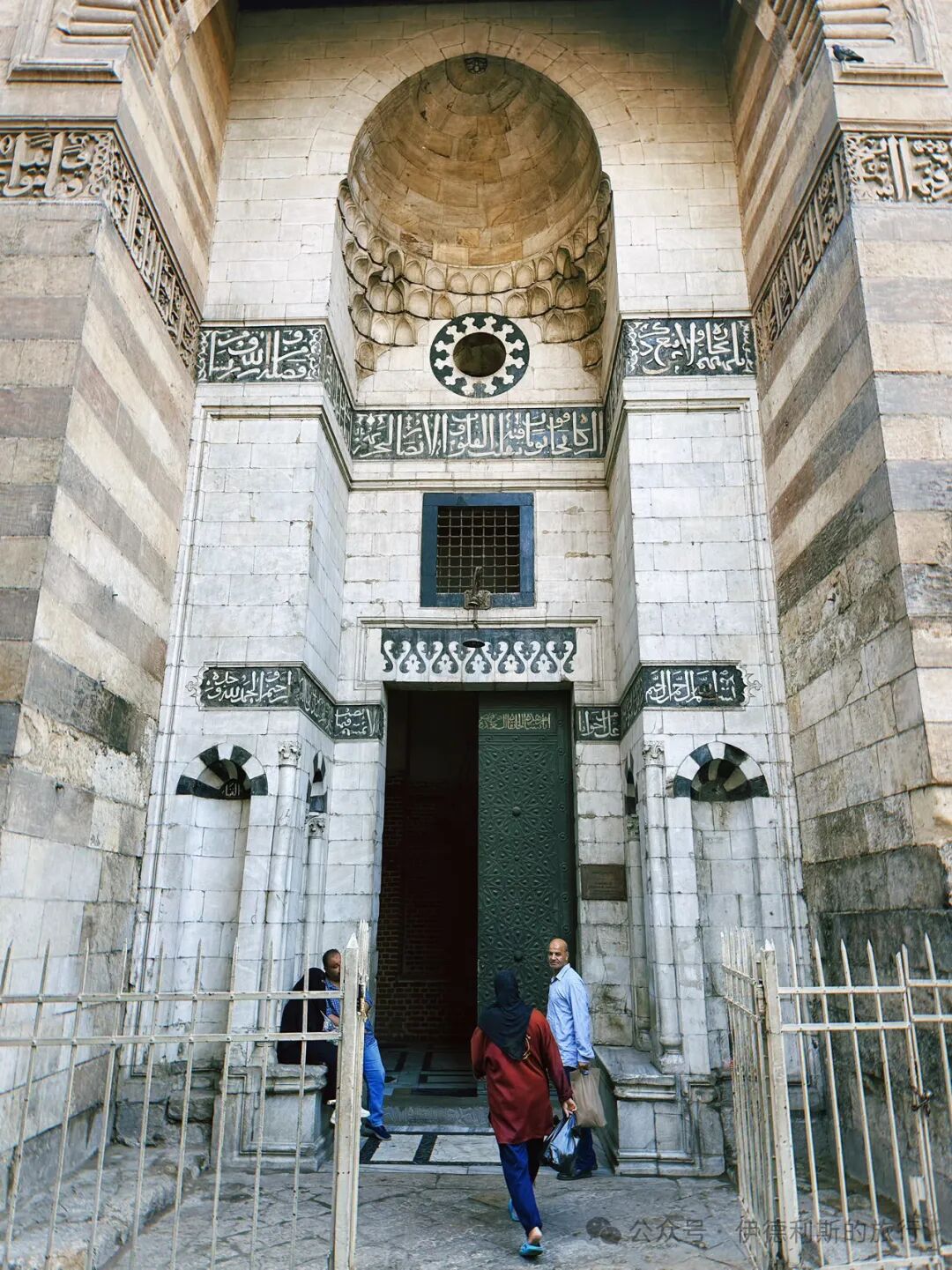
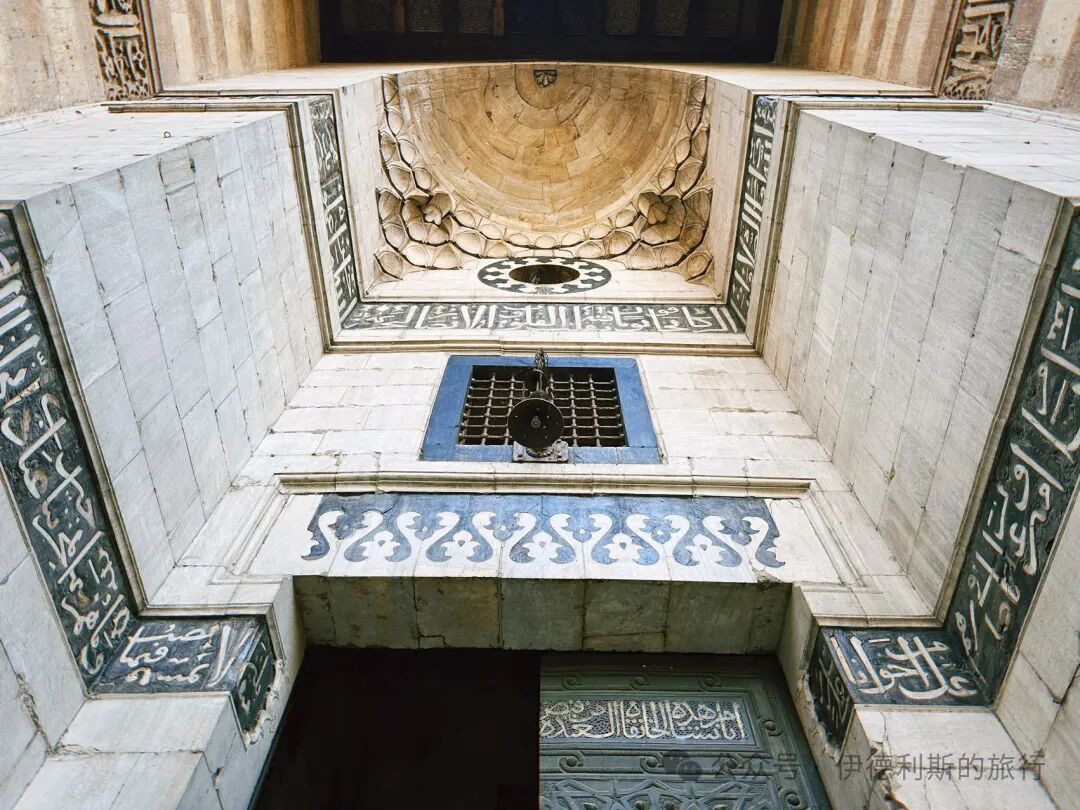
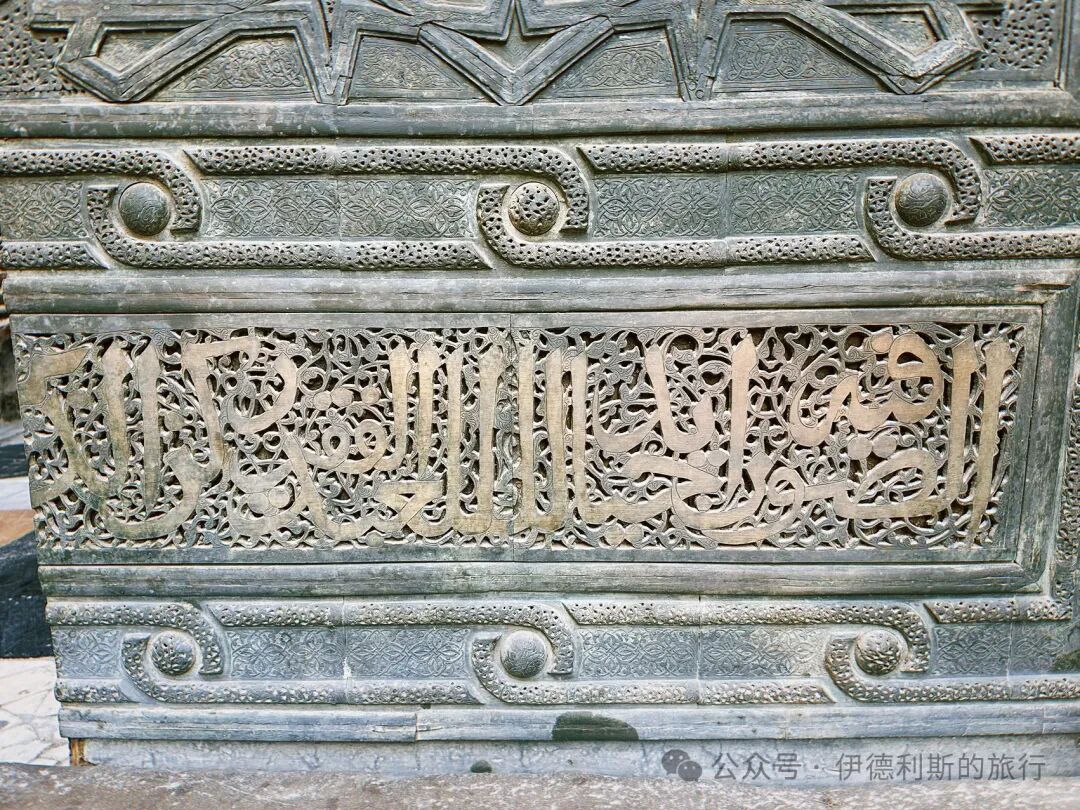
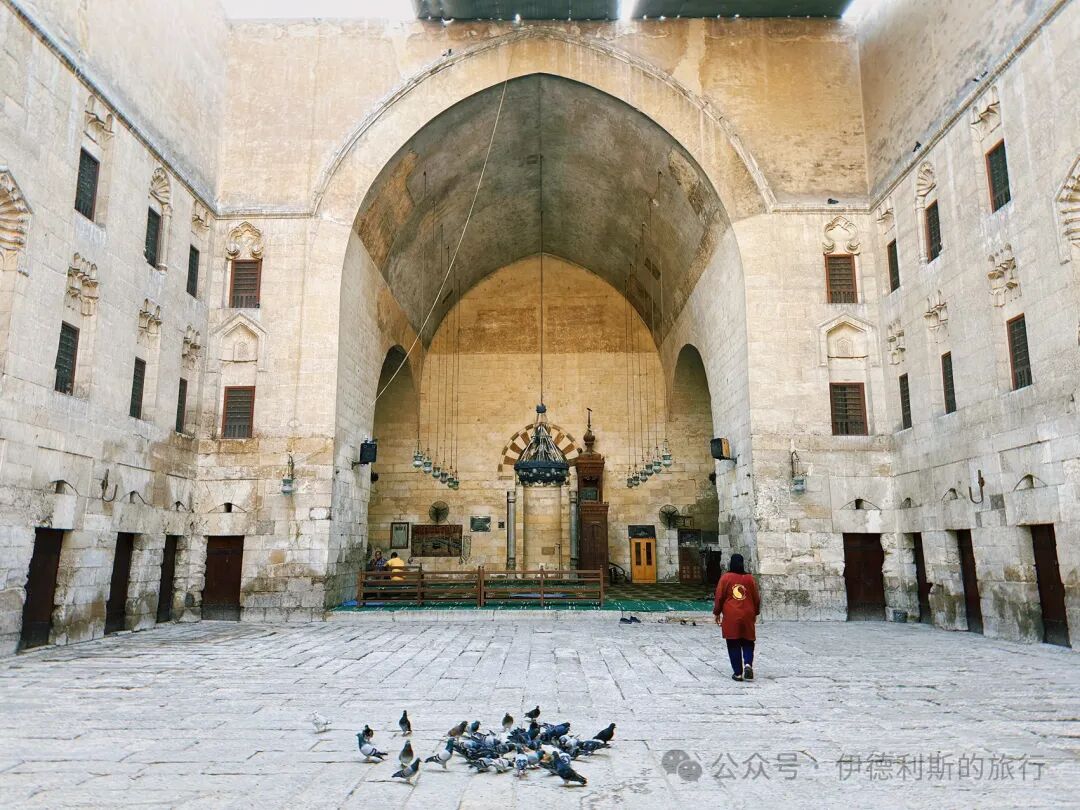
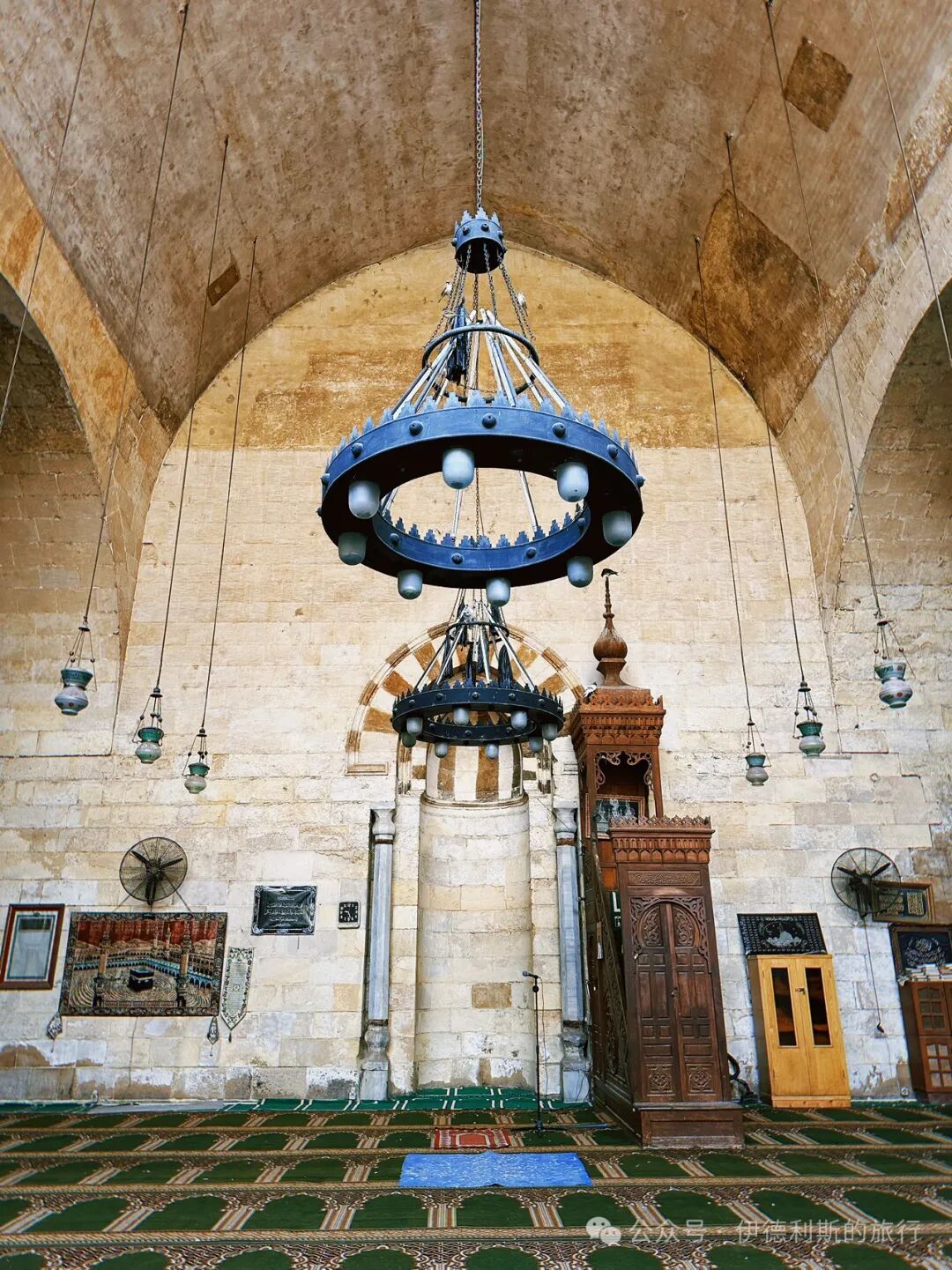
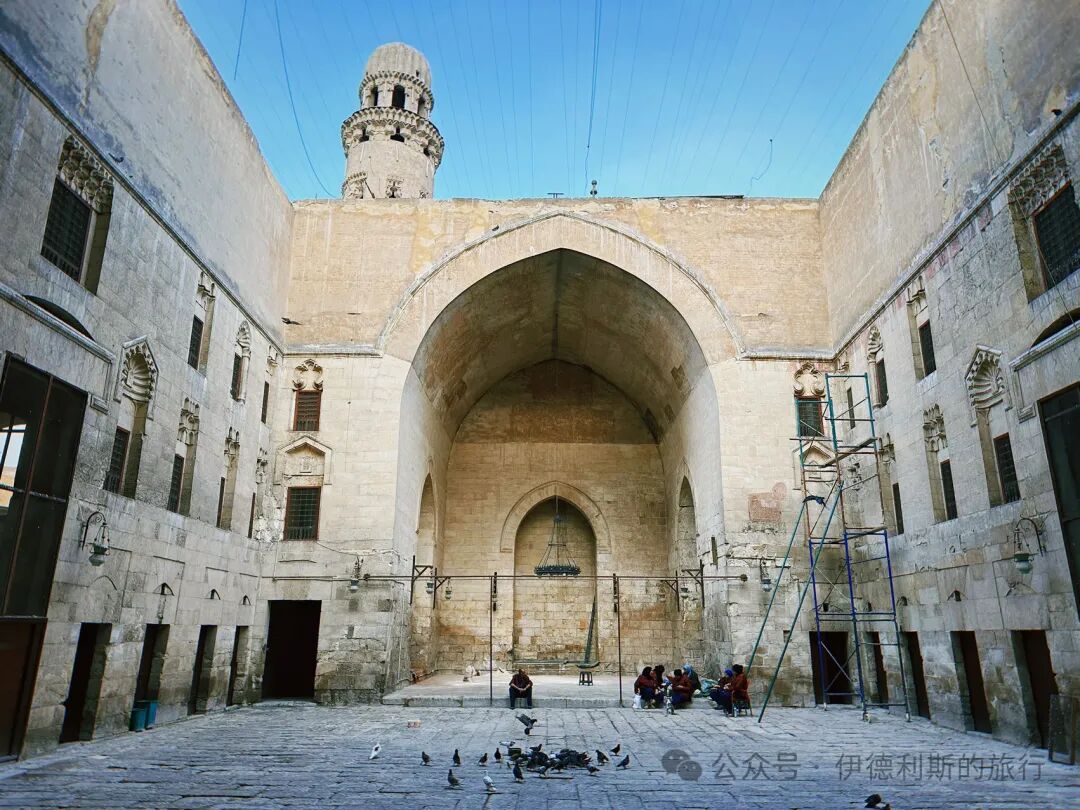
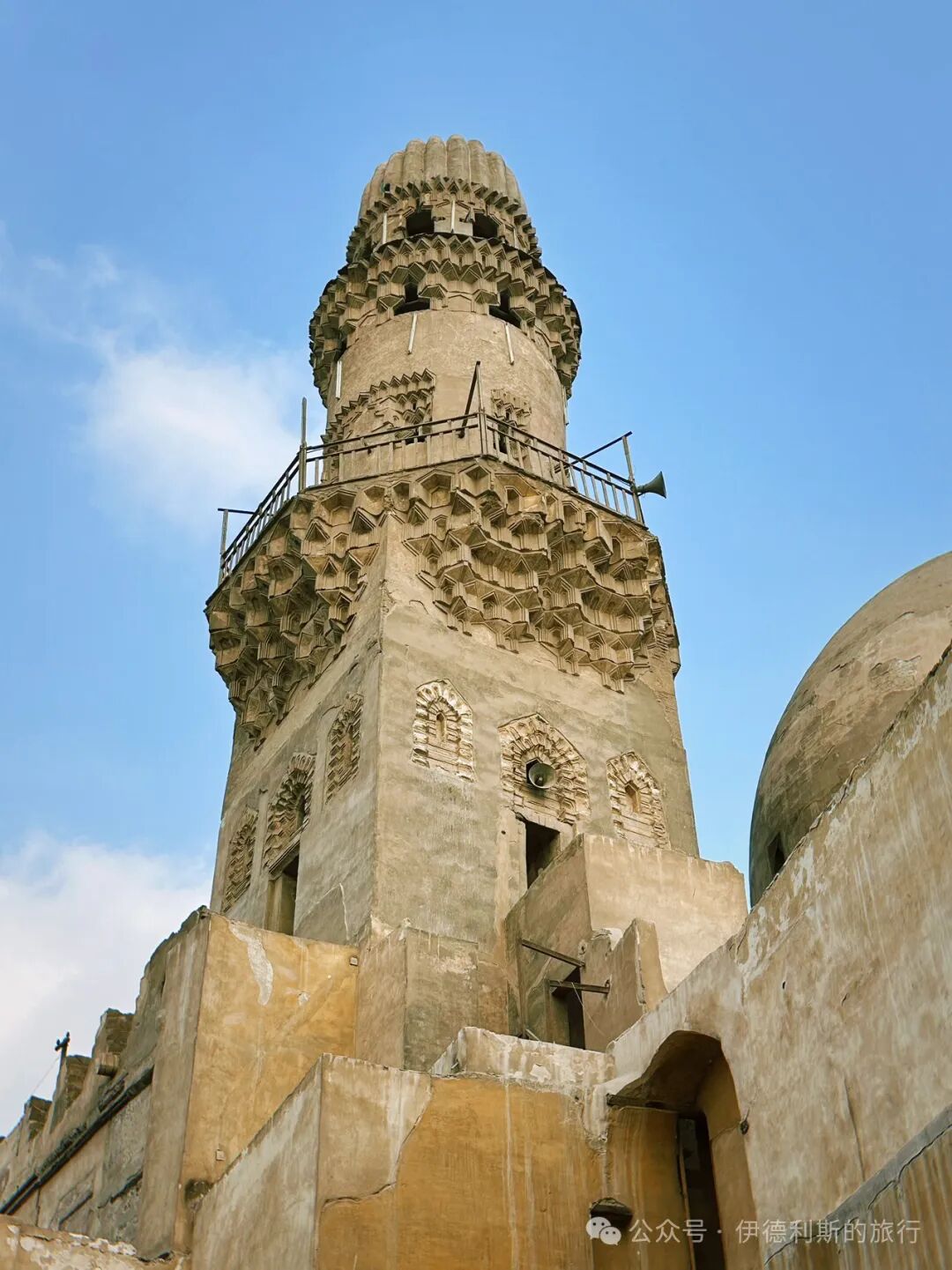
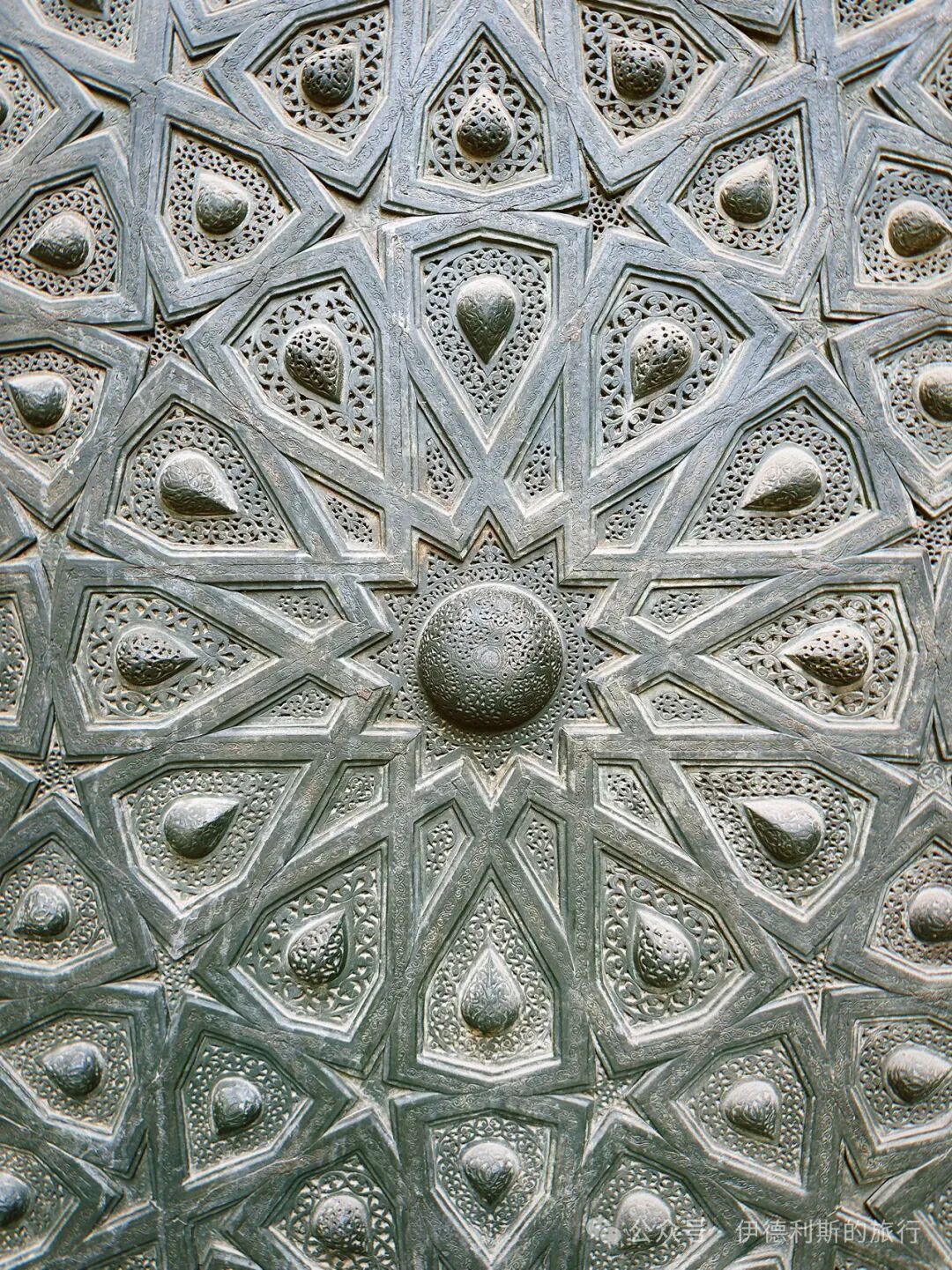
The exquisite Islamic geometric patterns (Girih) on the gate of the Khanqah of Baybars II form complex designs through overlapping and interlacing.
It is very interesting that the threshold of the gate is made of stone blocks carved with ancient Egyptian hieroglyphs, which is the first time I have ever seen this.
Bayt al-Suhaymi: 1648
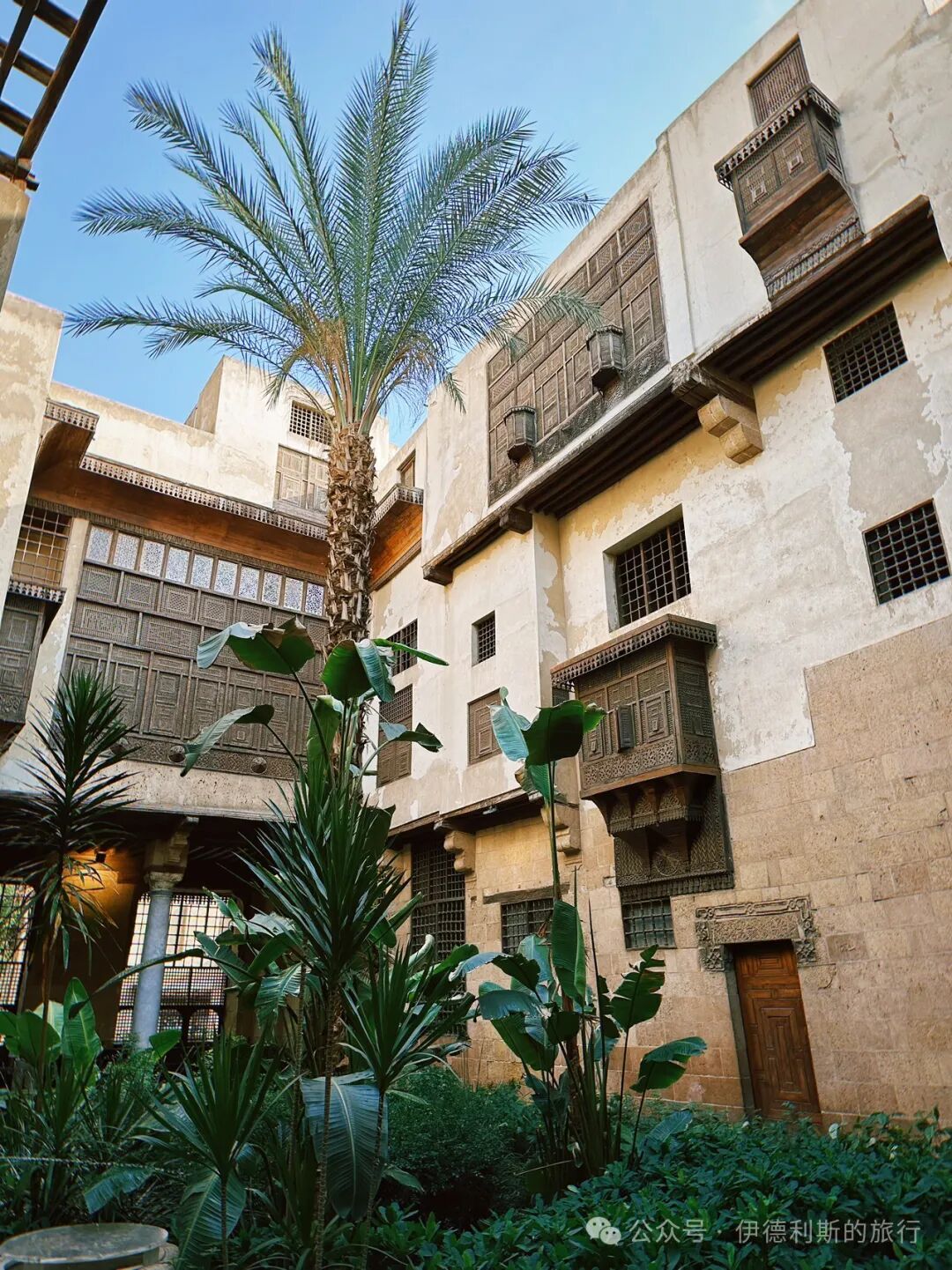
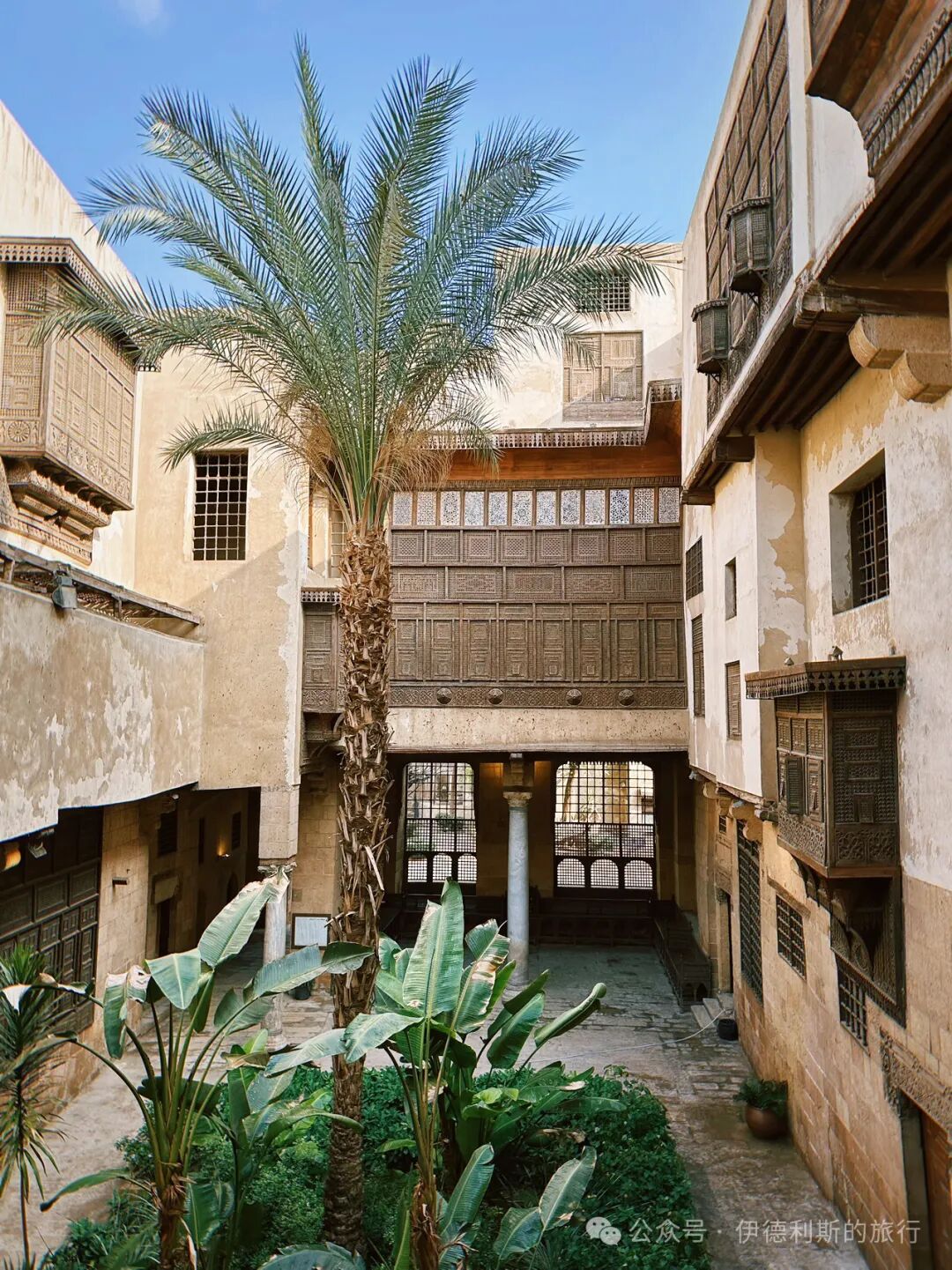
Walking west from the Khanqah of Baybars II, you can see the Bayt al-Suhaymi on Darb al-Asfar Street. Built in 1648, it is the best-preserved private residence from the Ottoman period in old Cairo and is now open as a tourist site.
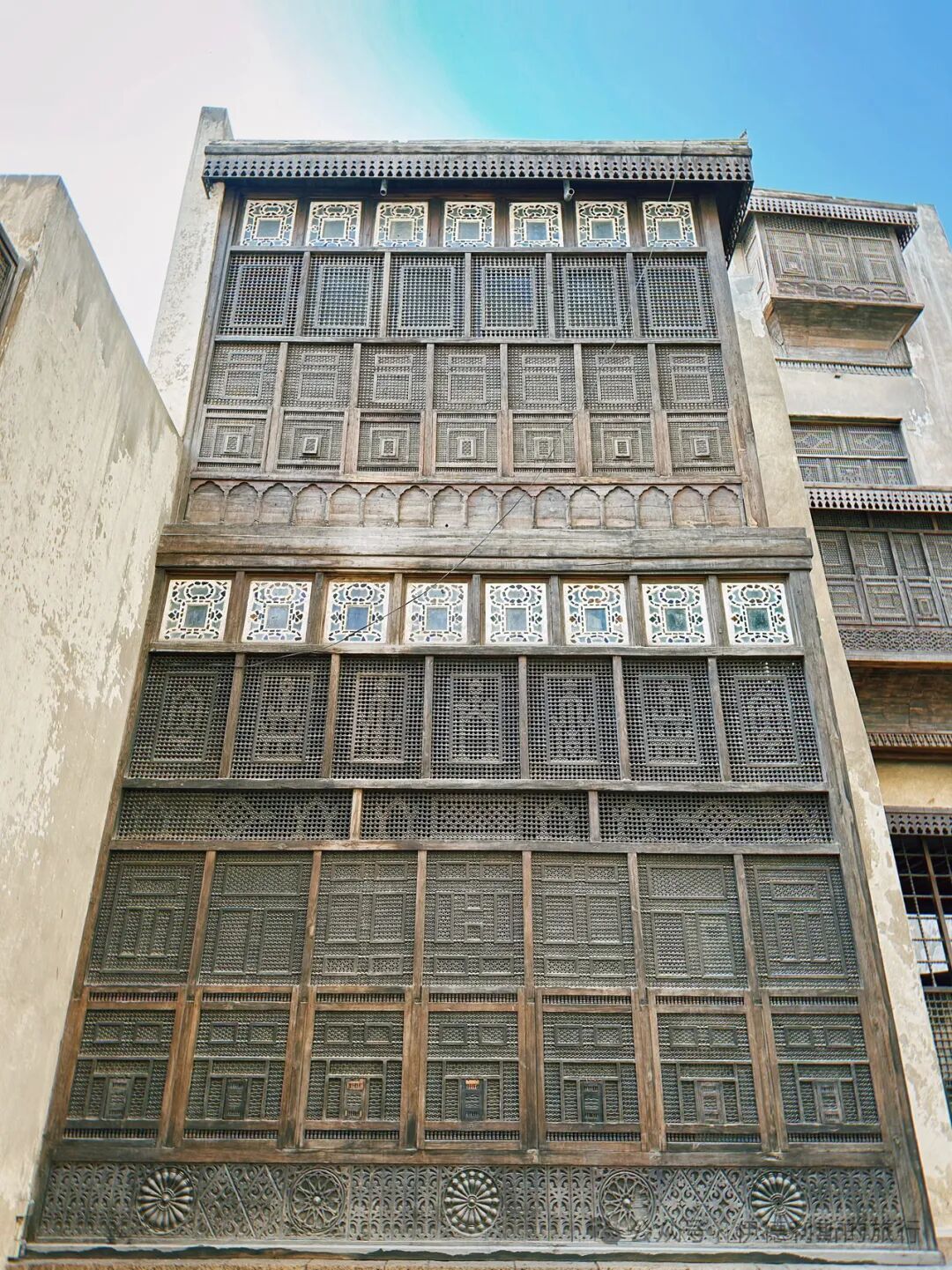
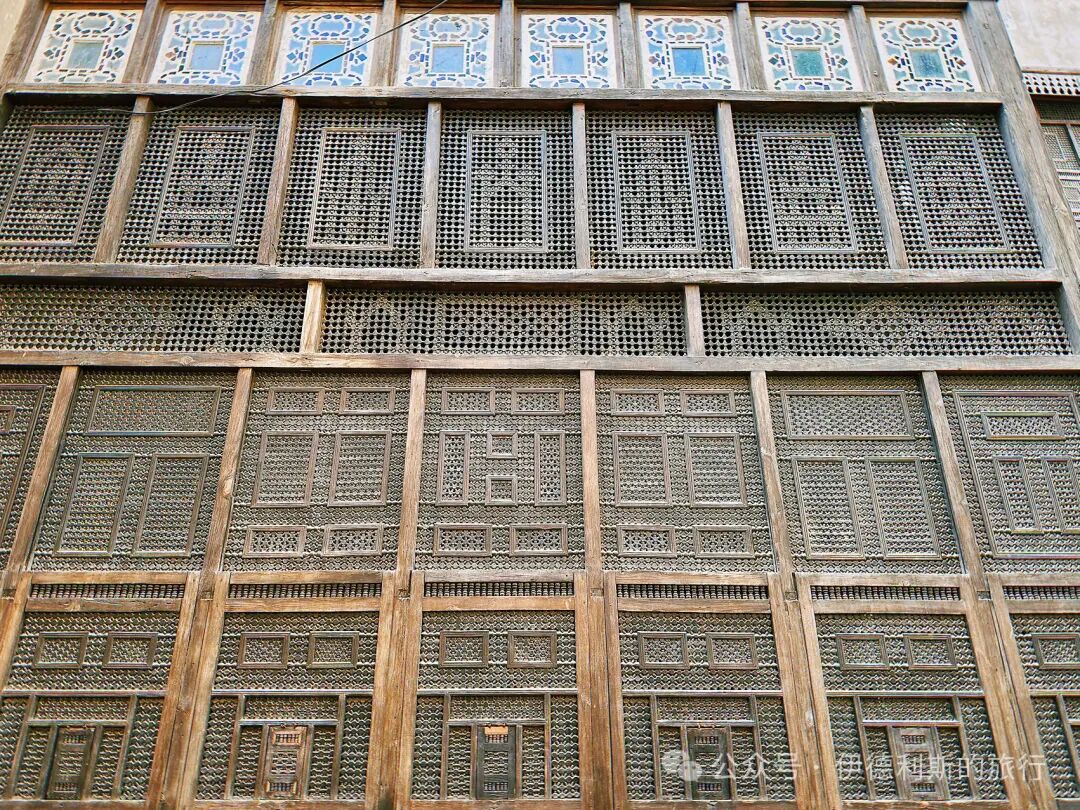
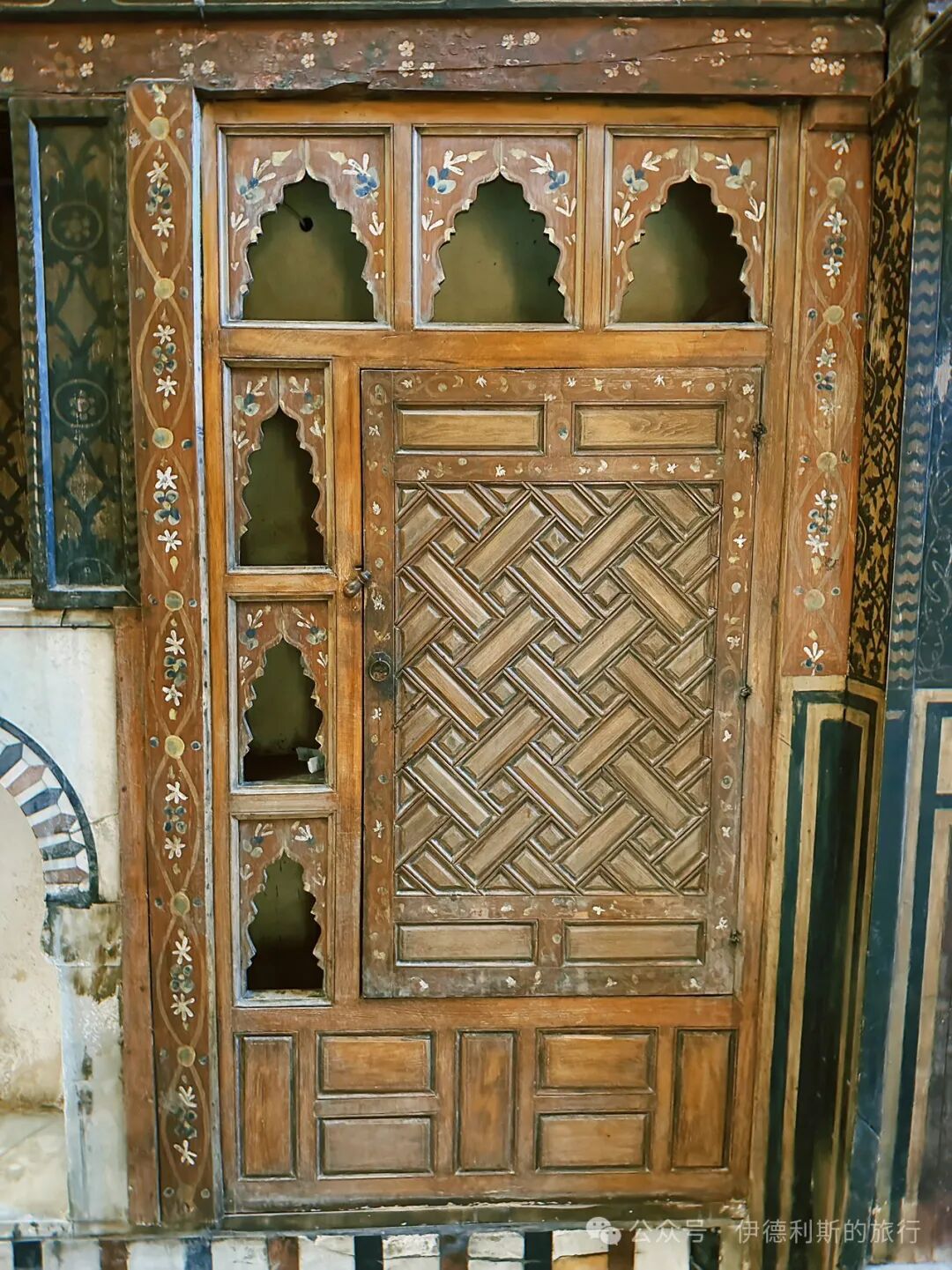
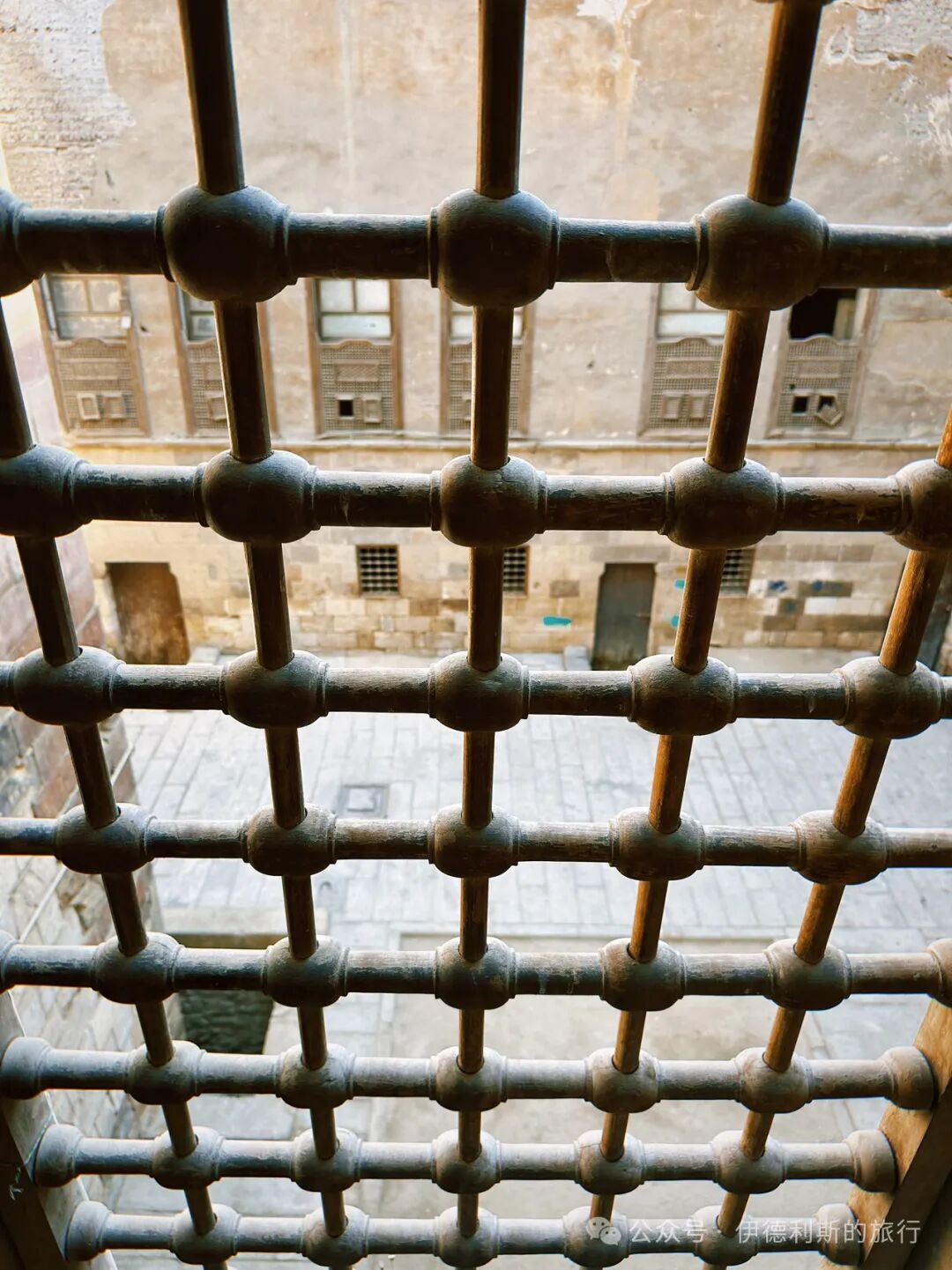
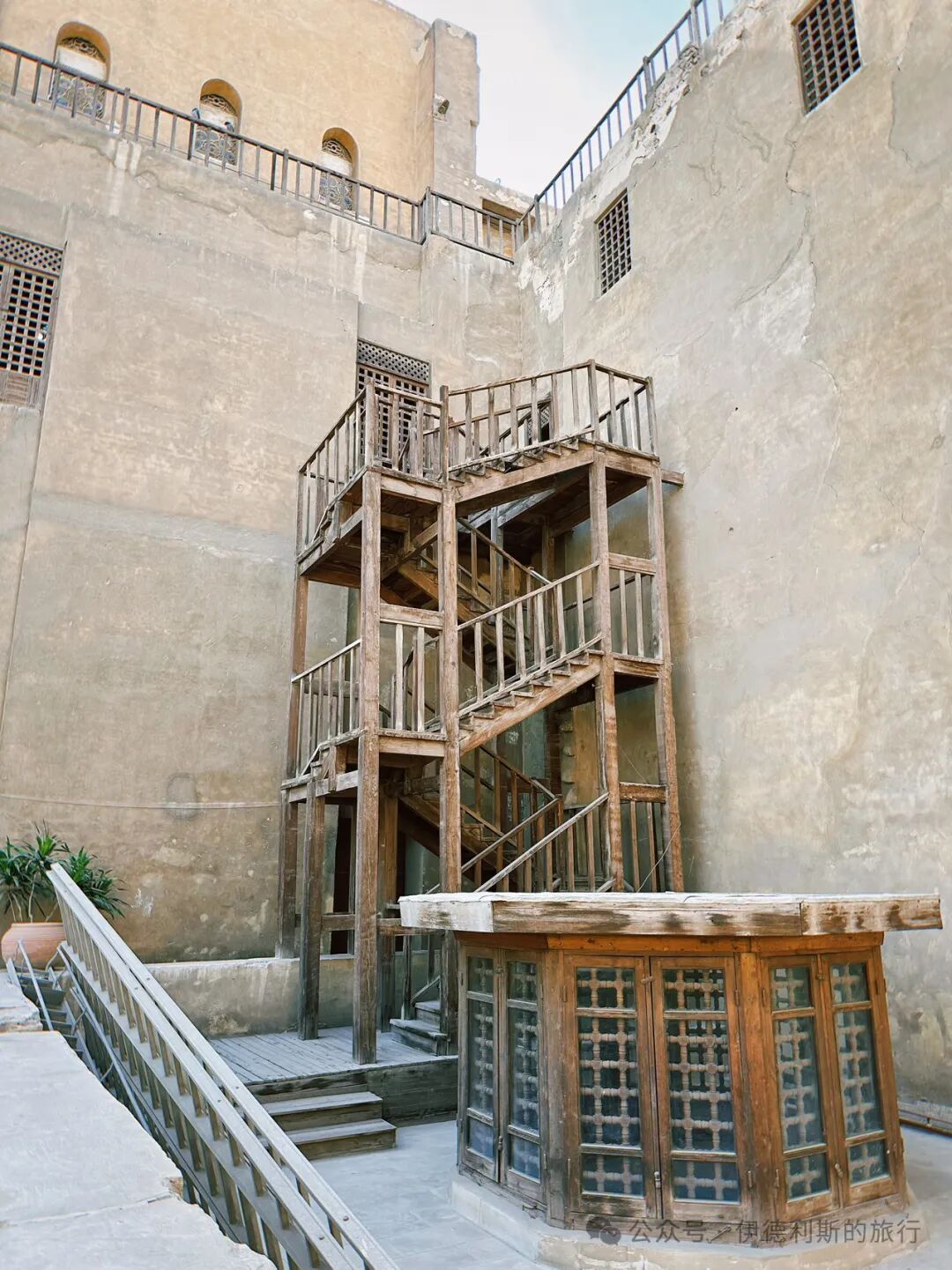
This residence is built around a courtyard (Sahn) with a small garden planted with palm trees in the center. You can see beautiful wooden lattice windows (Mashrabiya) in the courtyard. The south side of the mansion is the original 1648 structure, while the north side was expanded in 1797. It is now named after its last owner, Sheikh Muhammad Amin al-Suhaymi, who was a sheikh at Al-Azhar Mosque. In 1930, King Fuad I of Egypt provided funds to purchase the mansion and placed it under the management of the Committee for the Preservation of Arab Art Monuments.
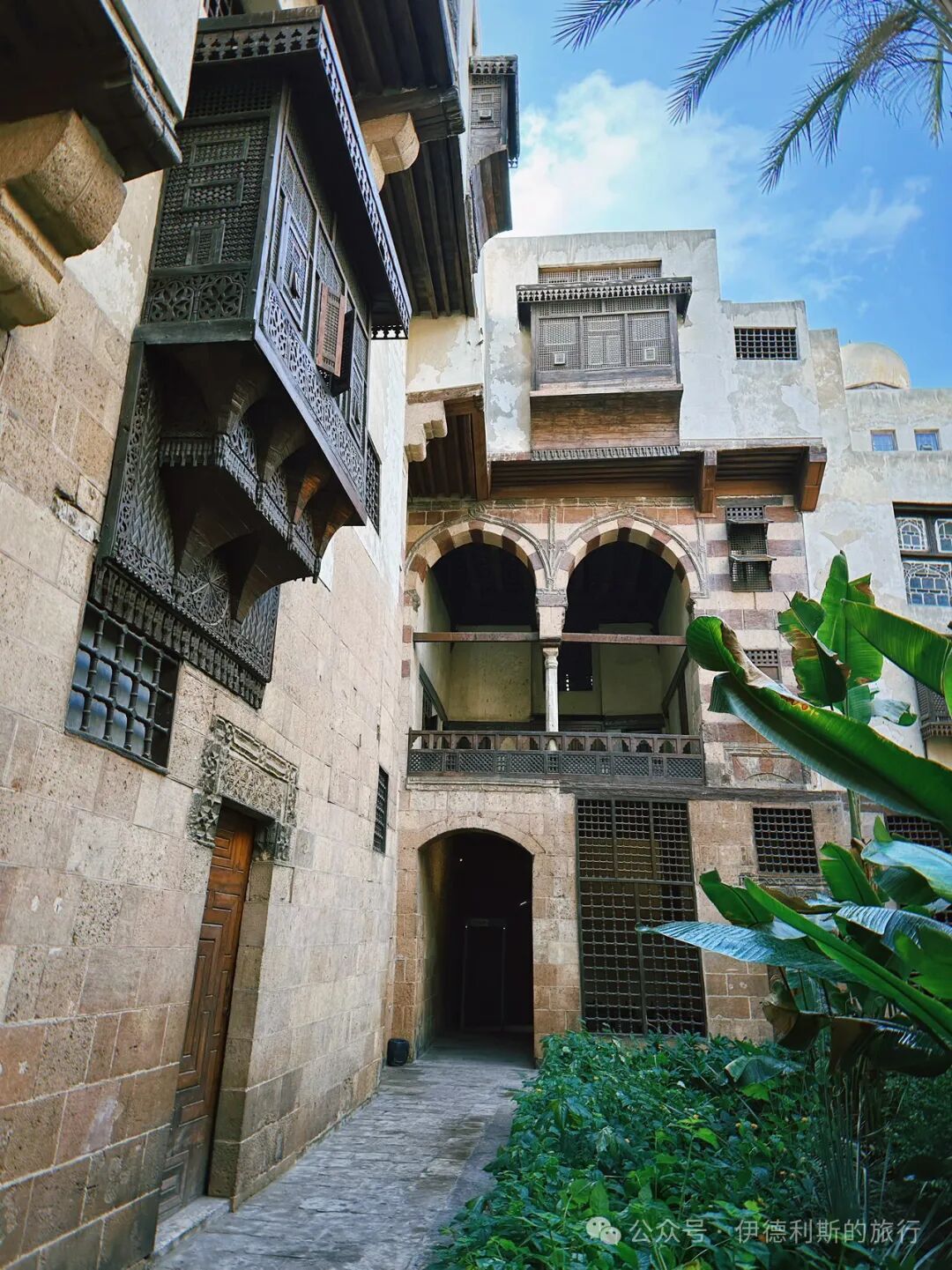
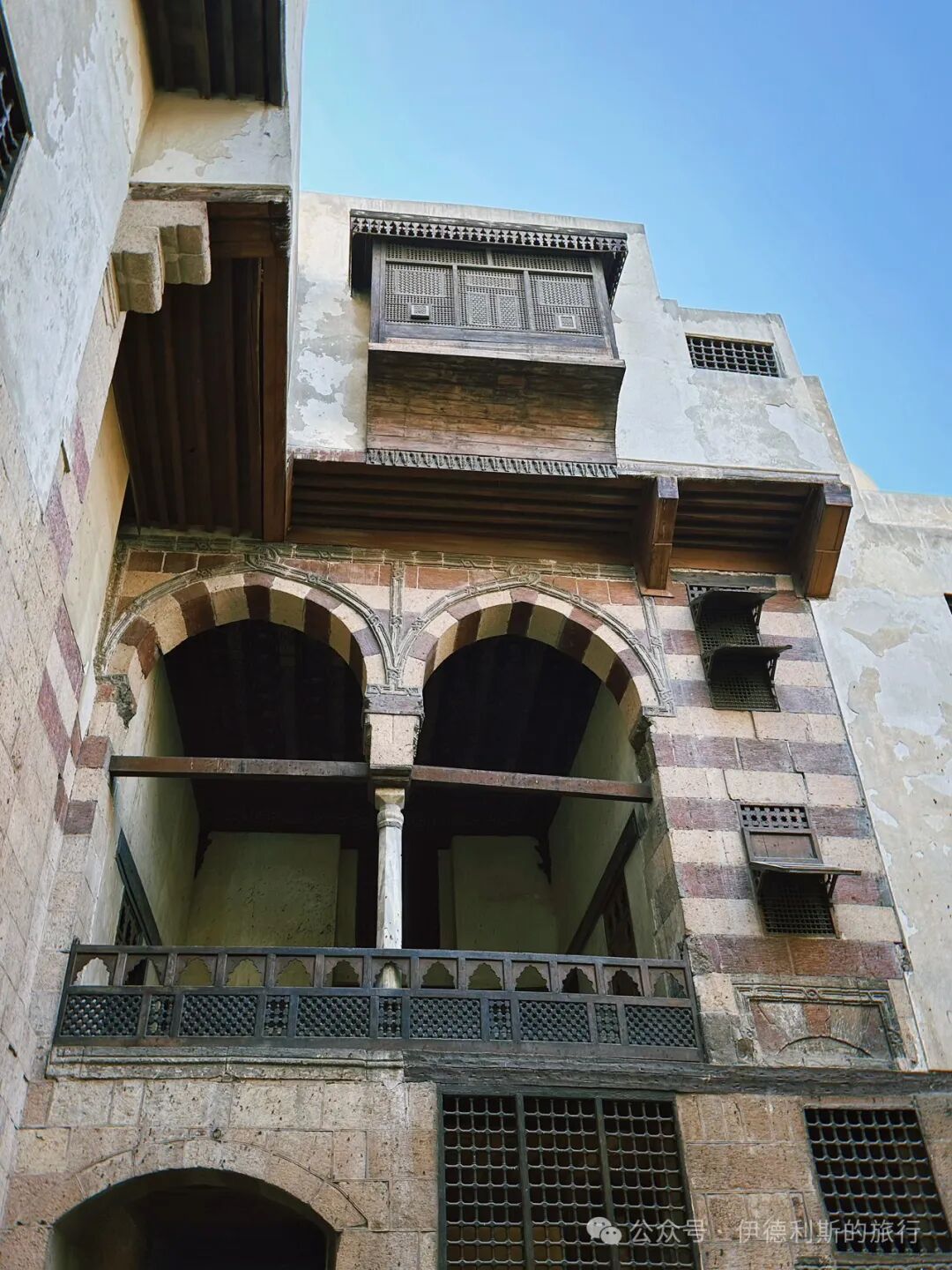
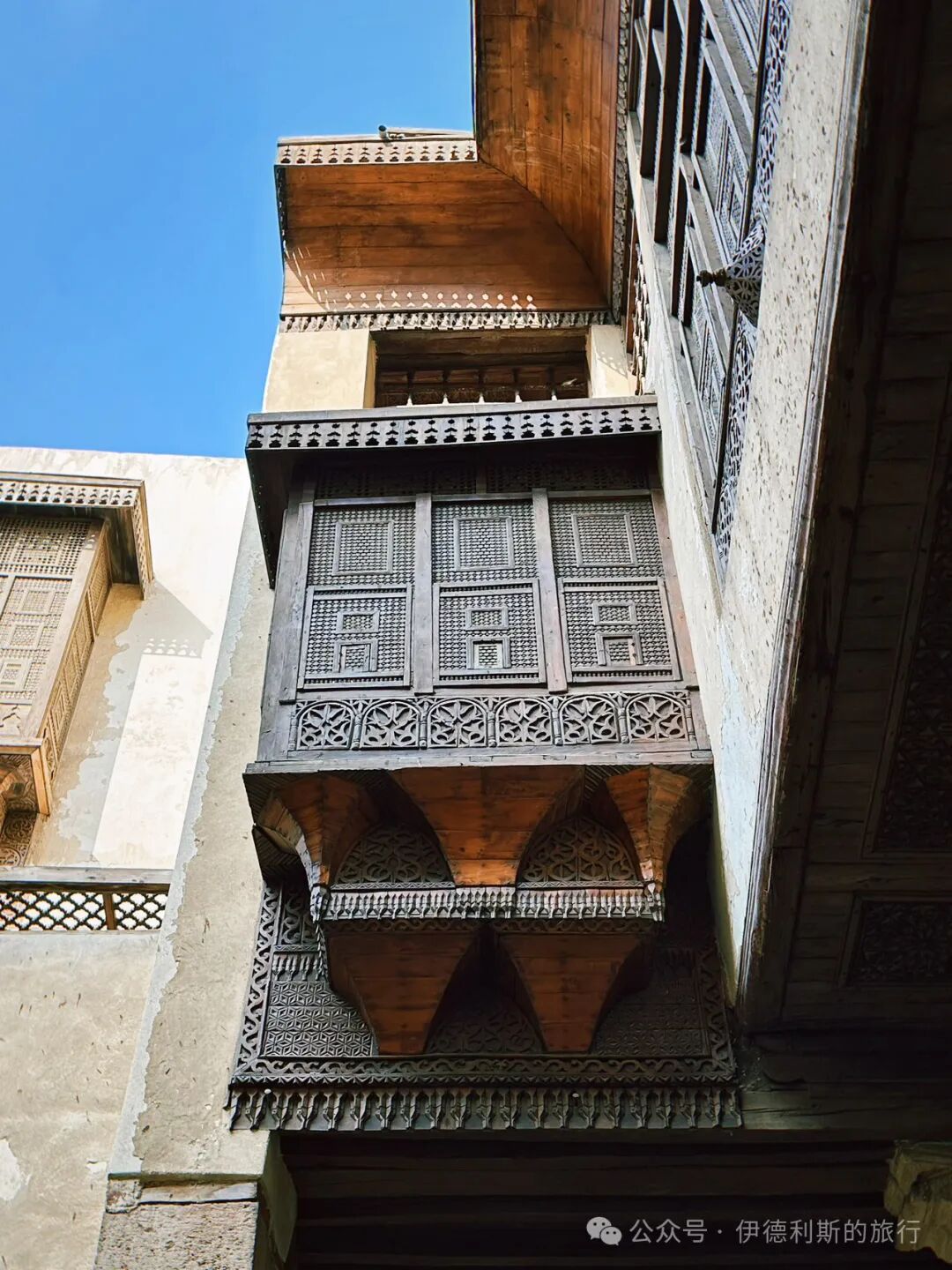
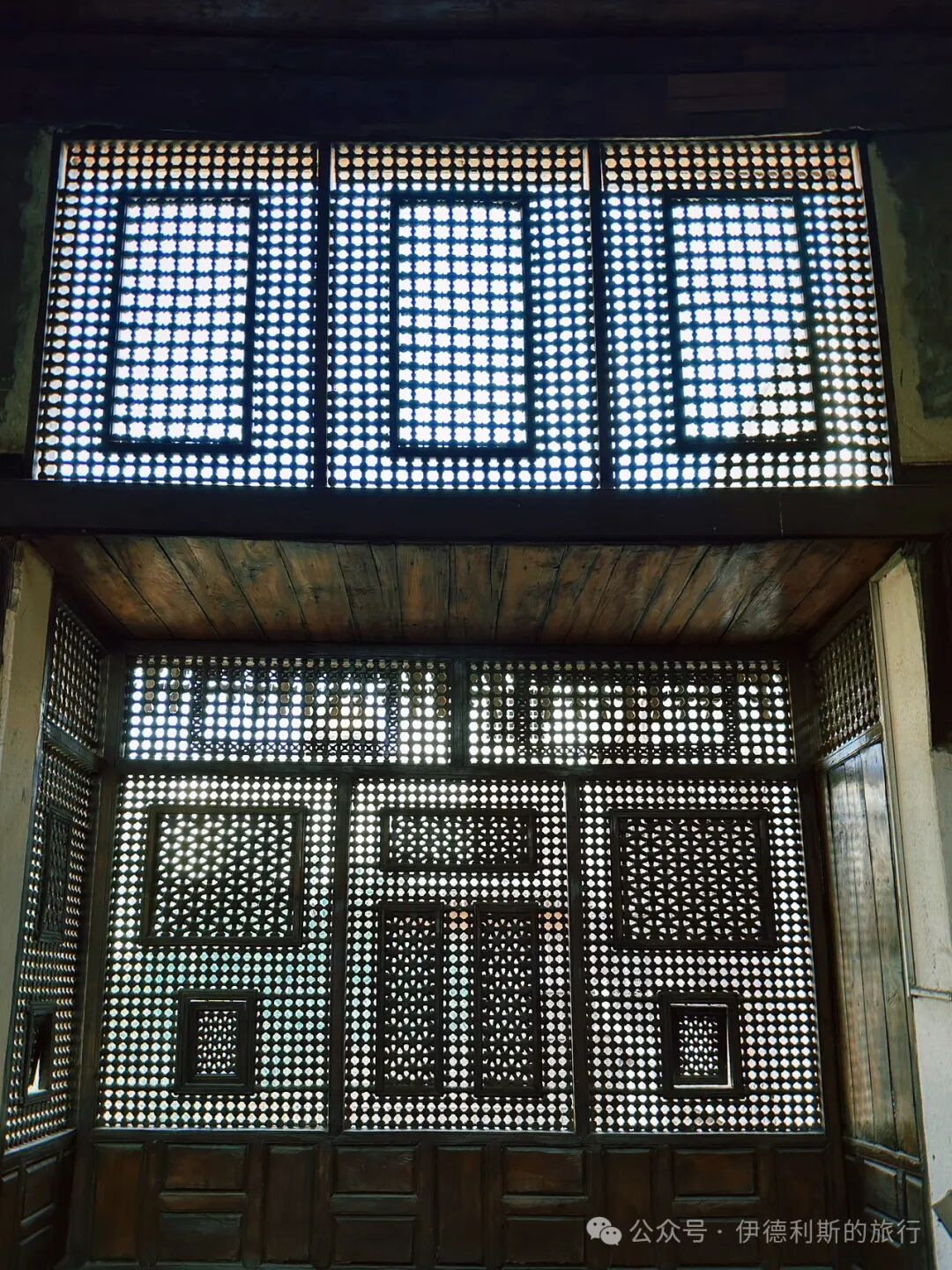
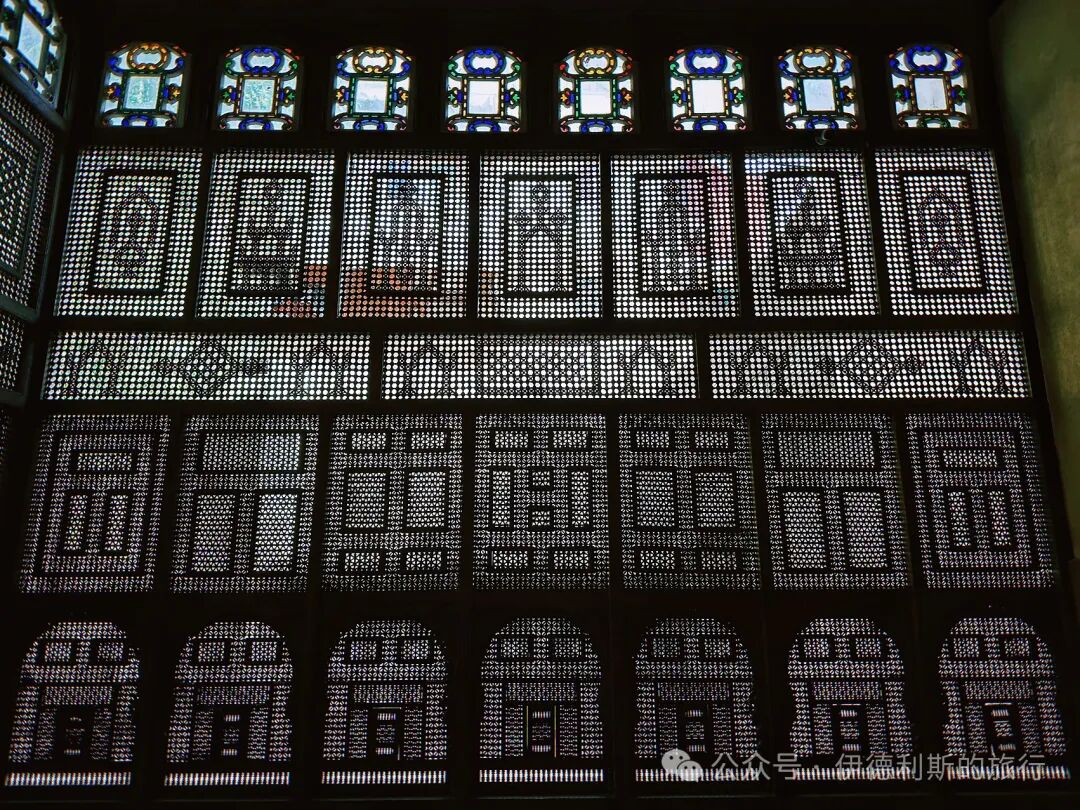
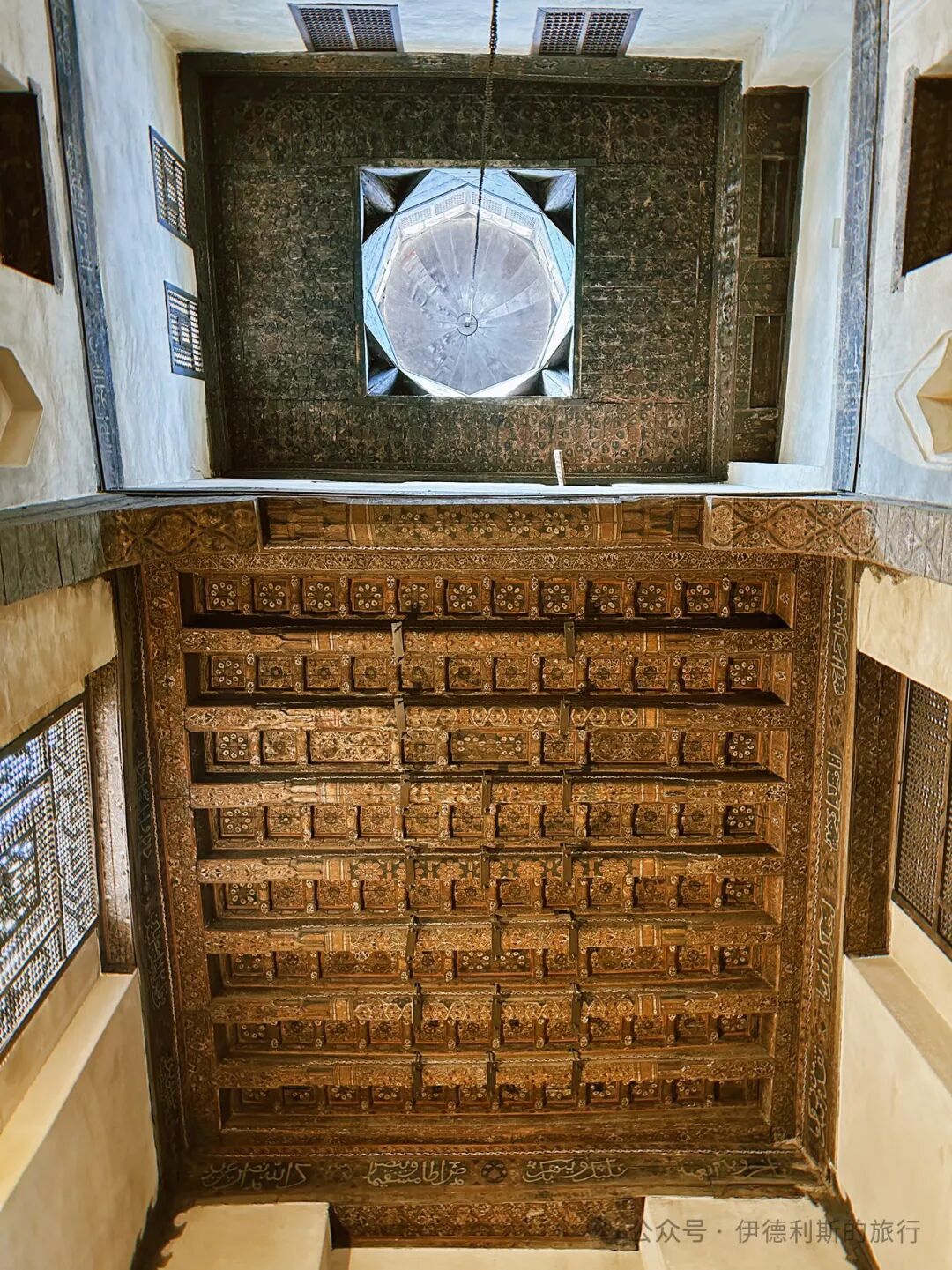
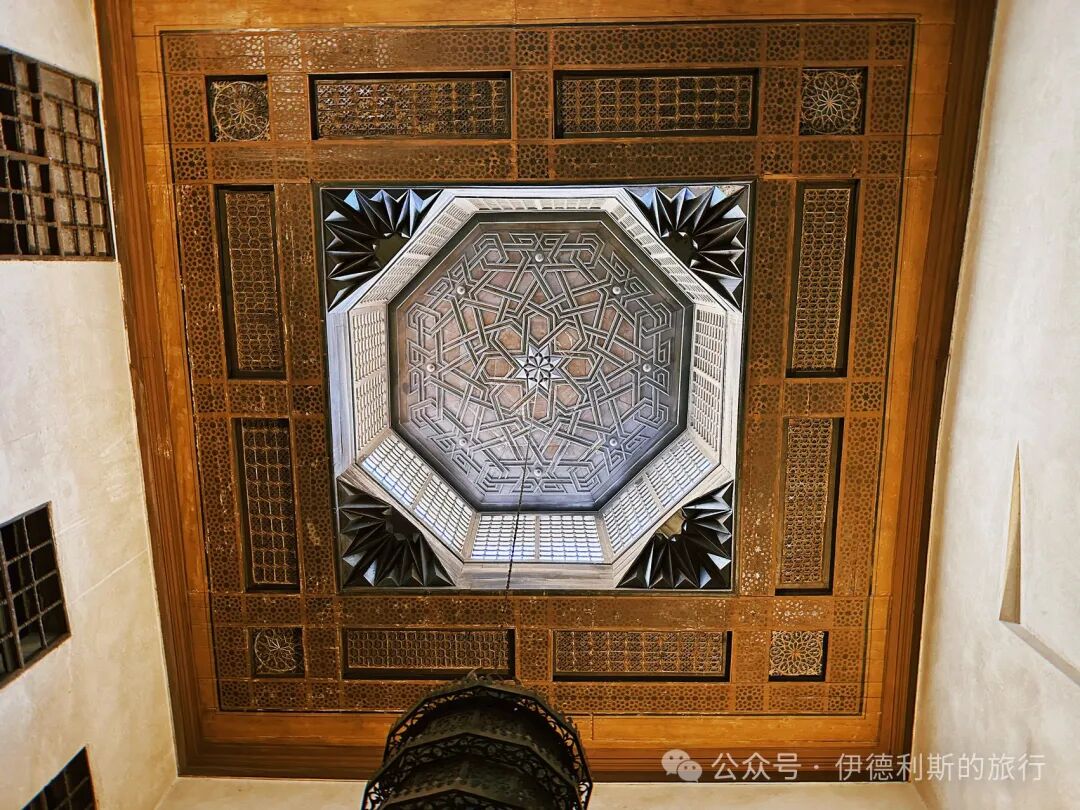
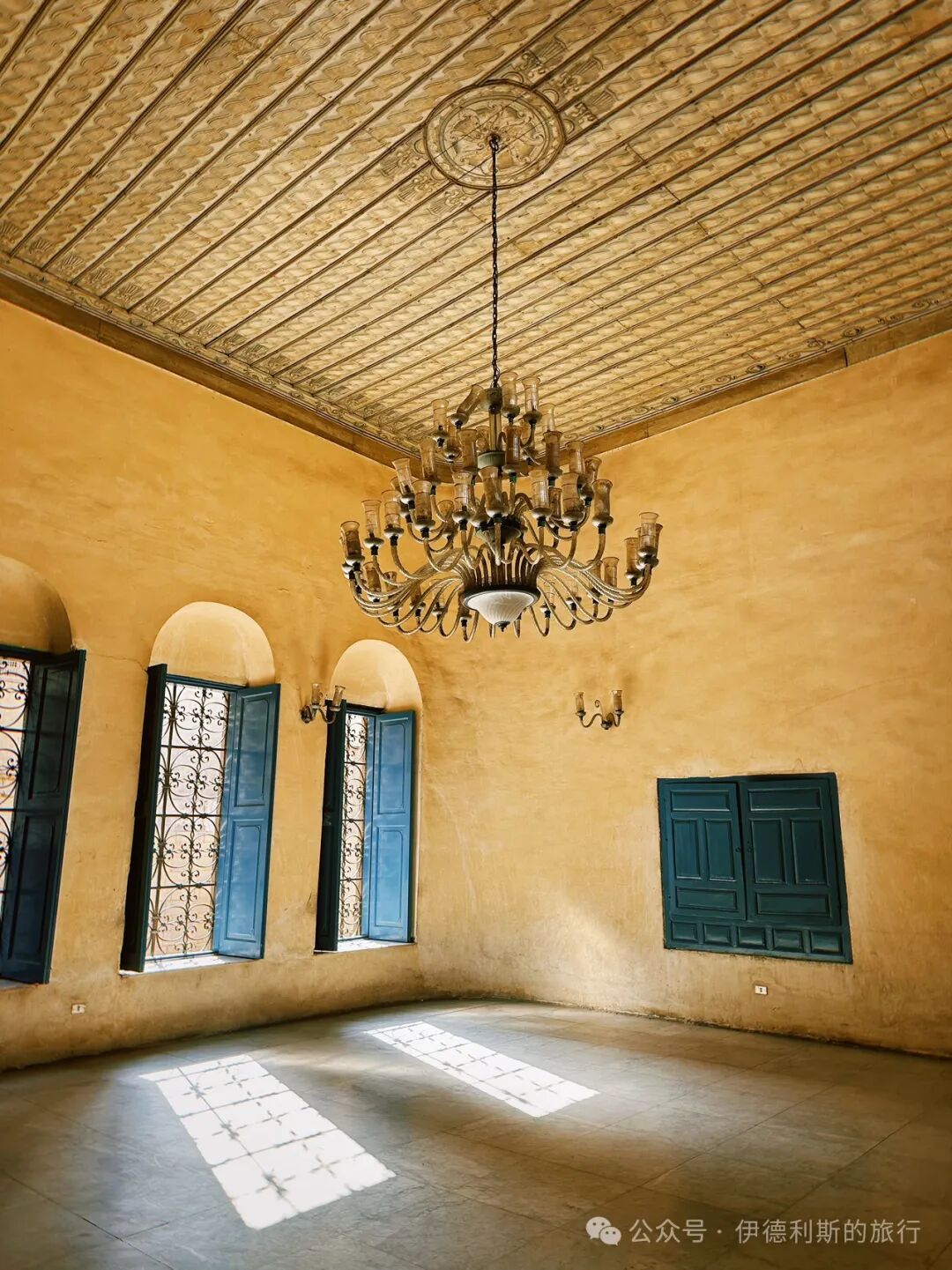
The ornate ceiling decorations of Bayt al-Suhaymi.
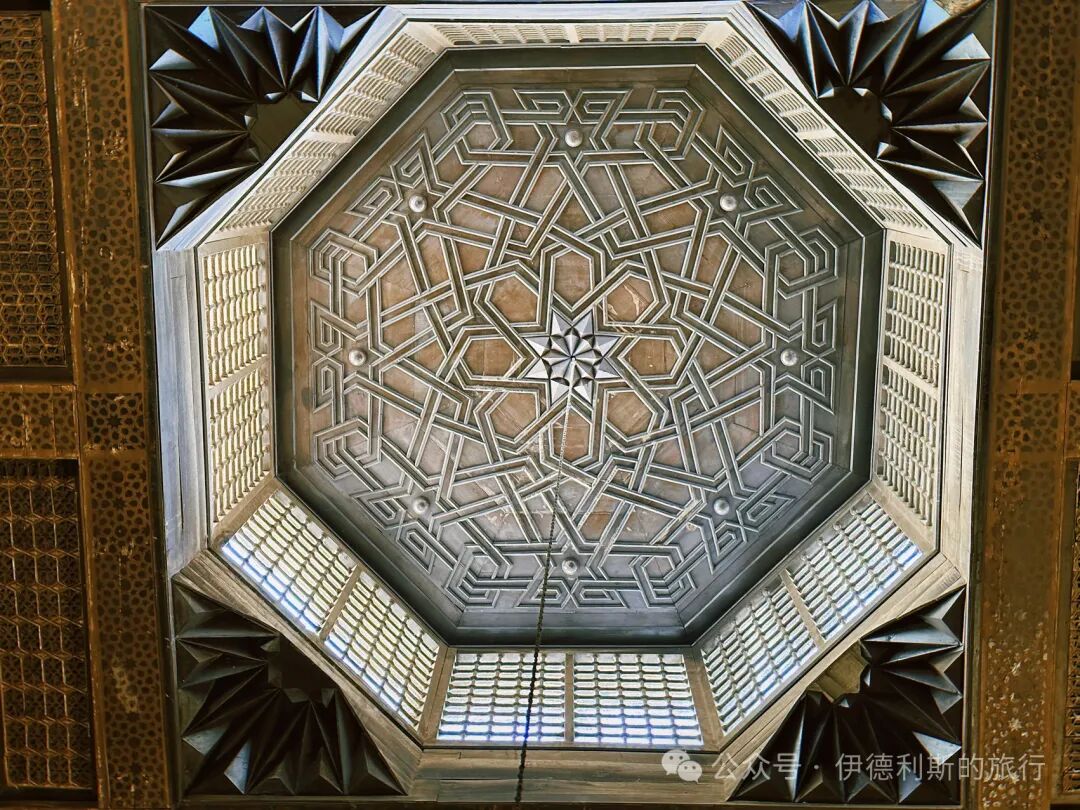
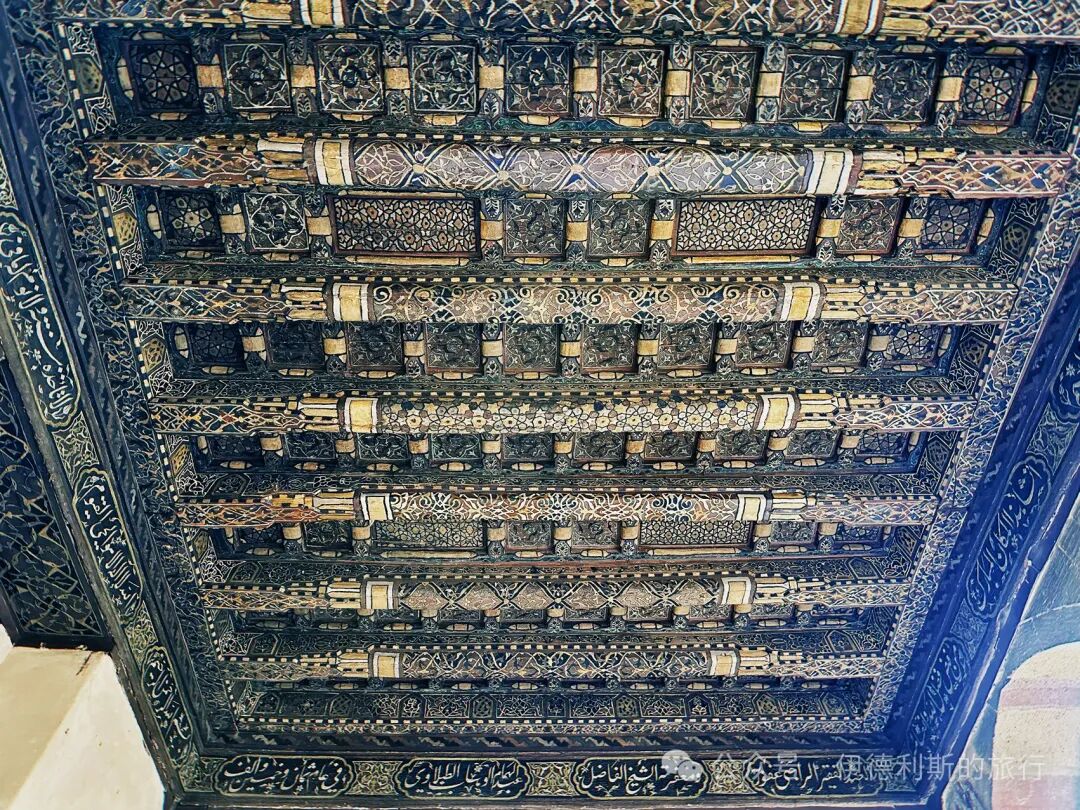
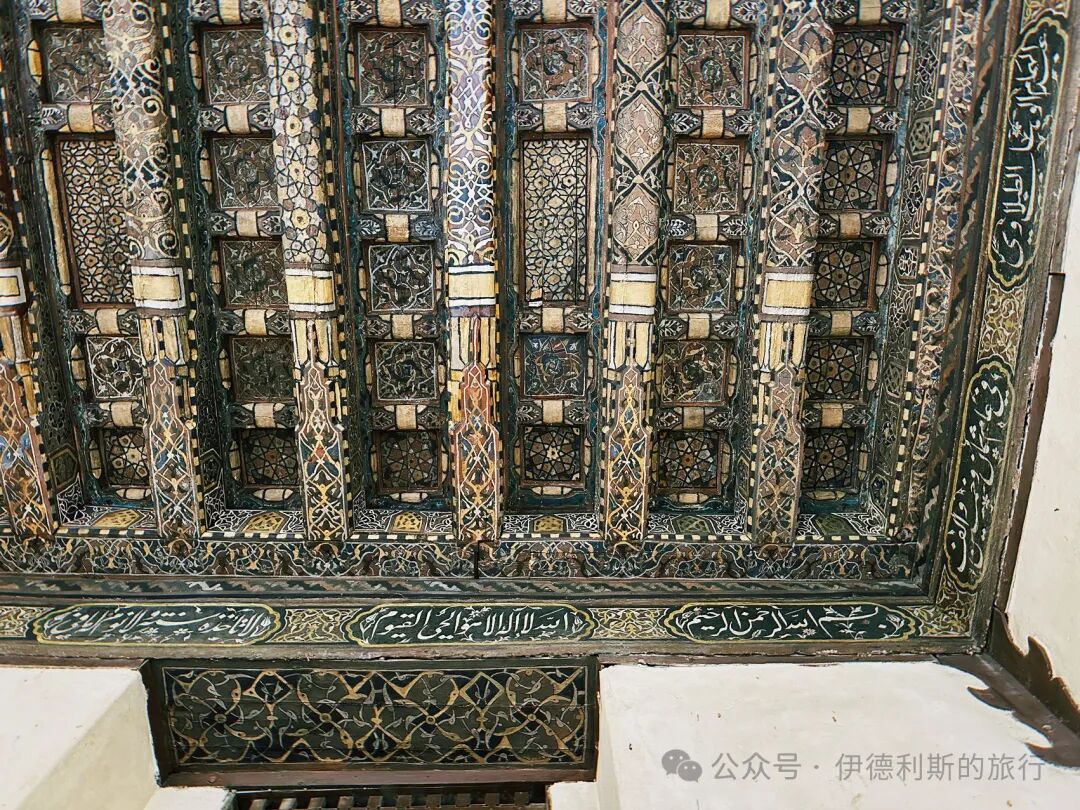
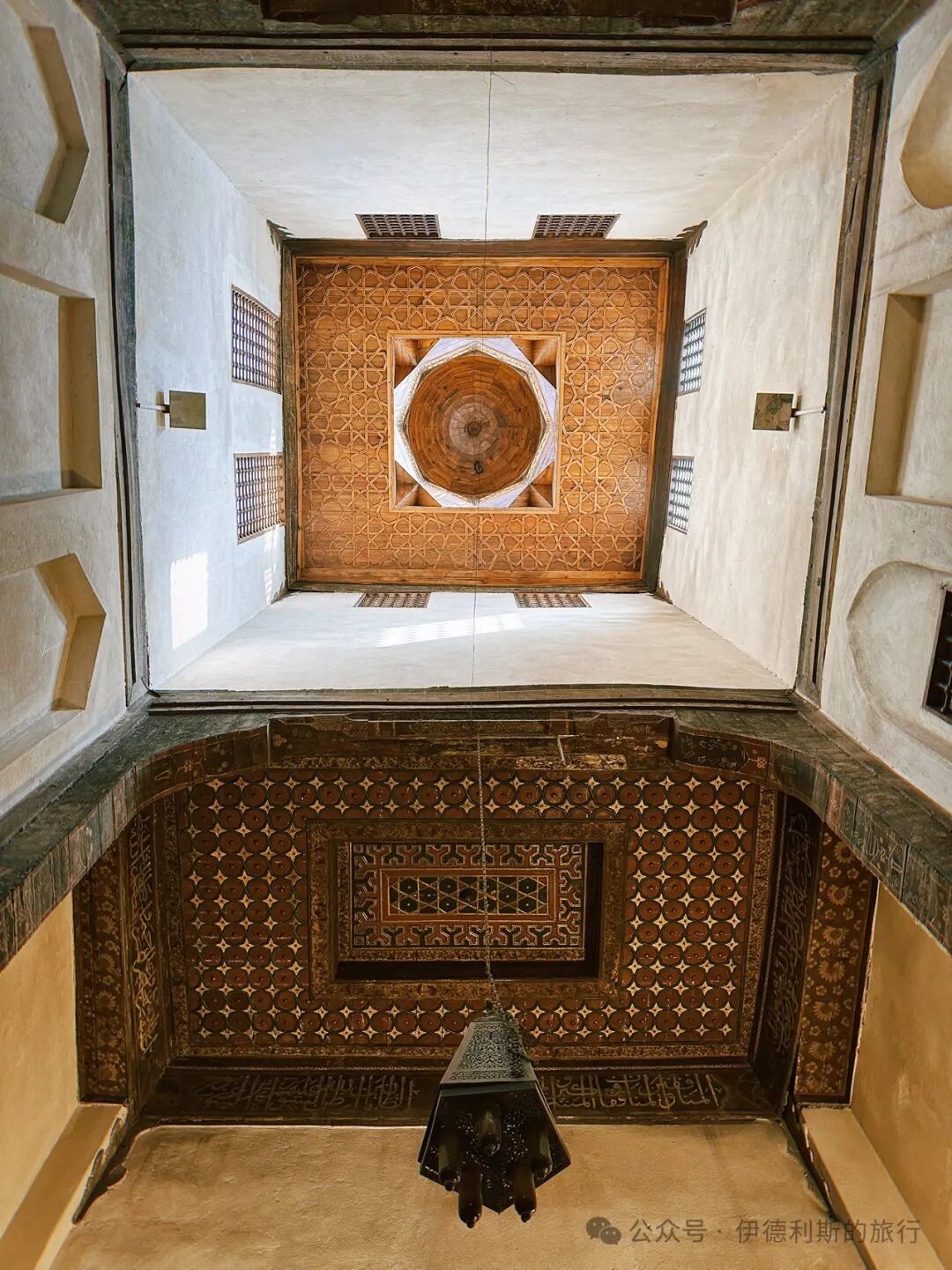
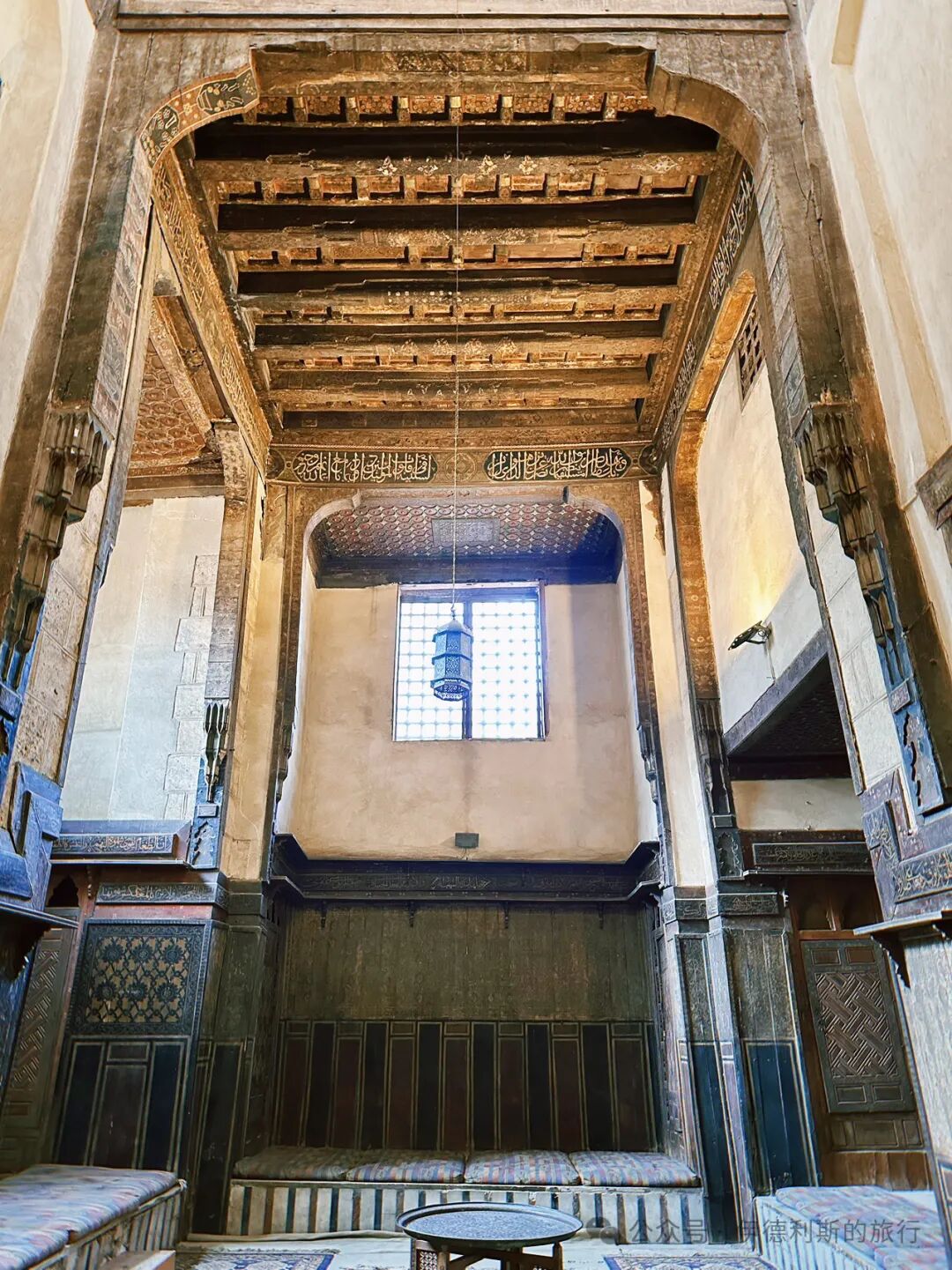
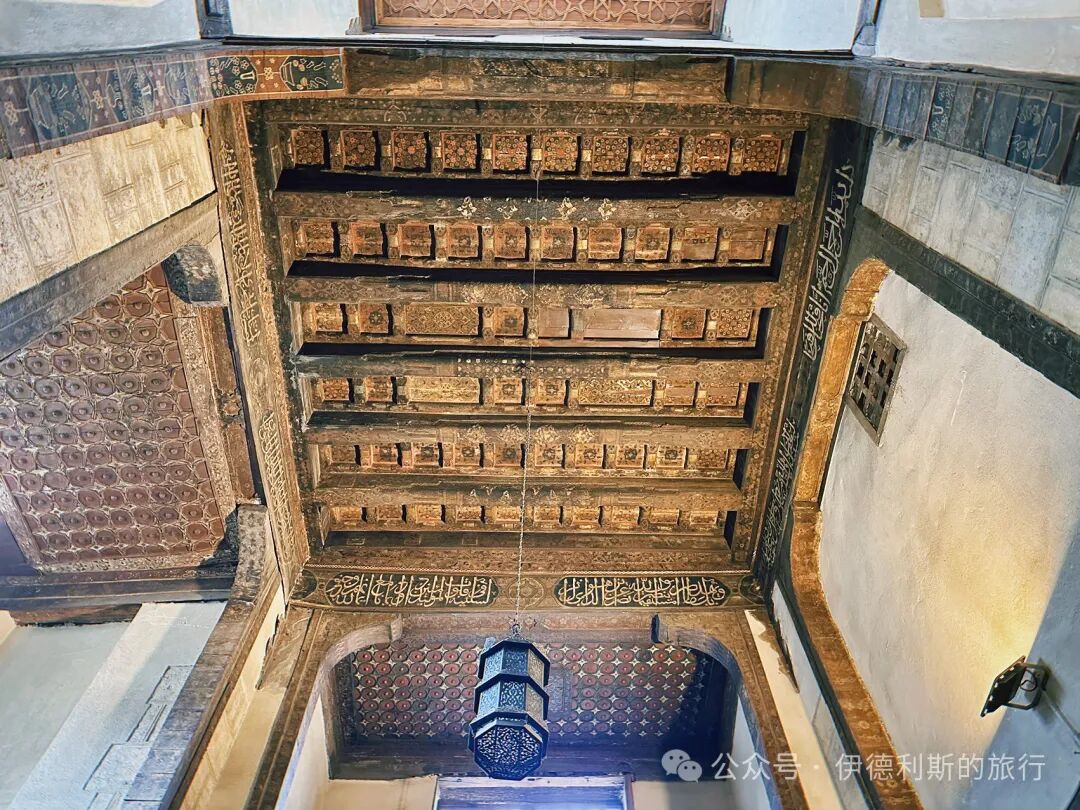
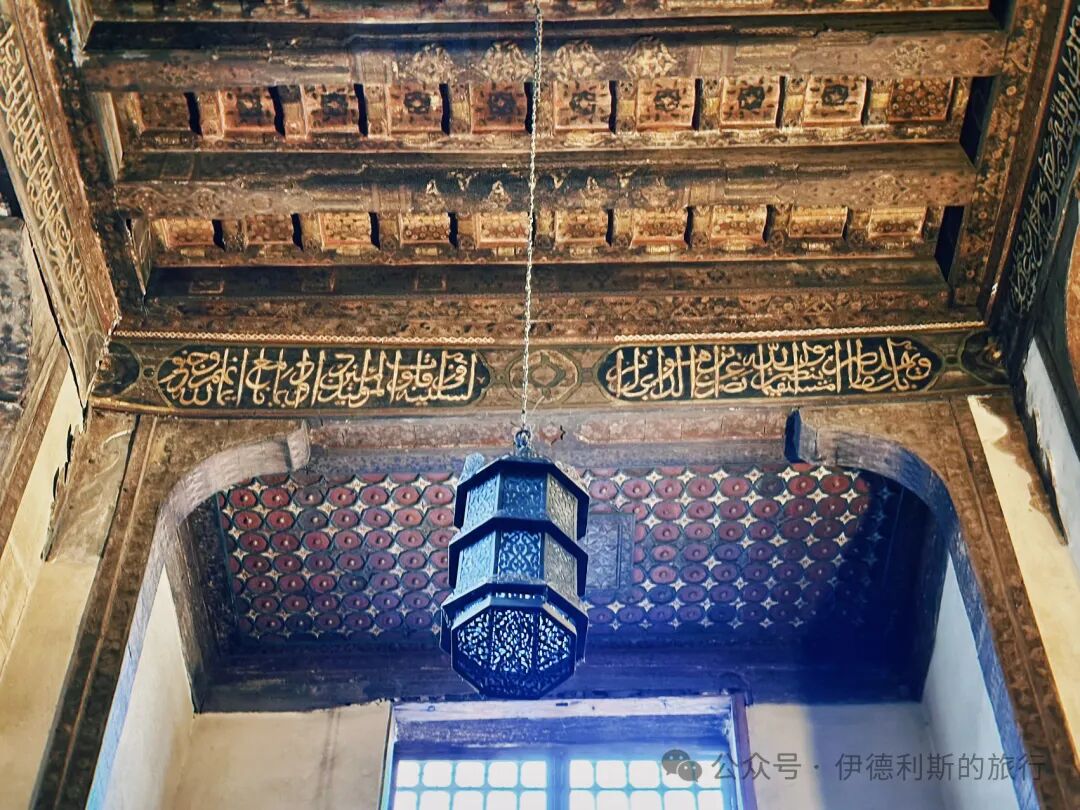
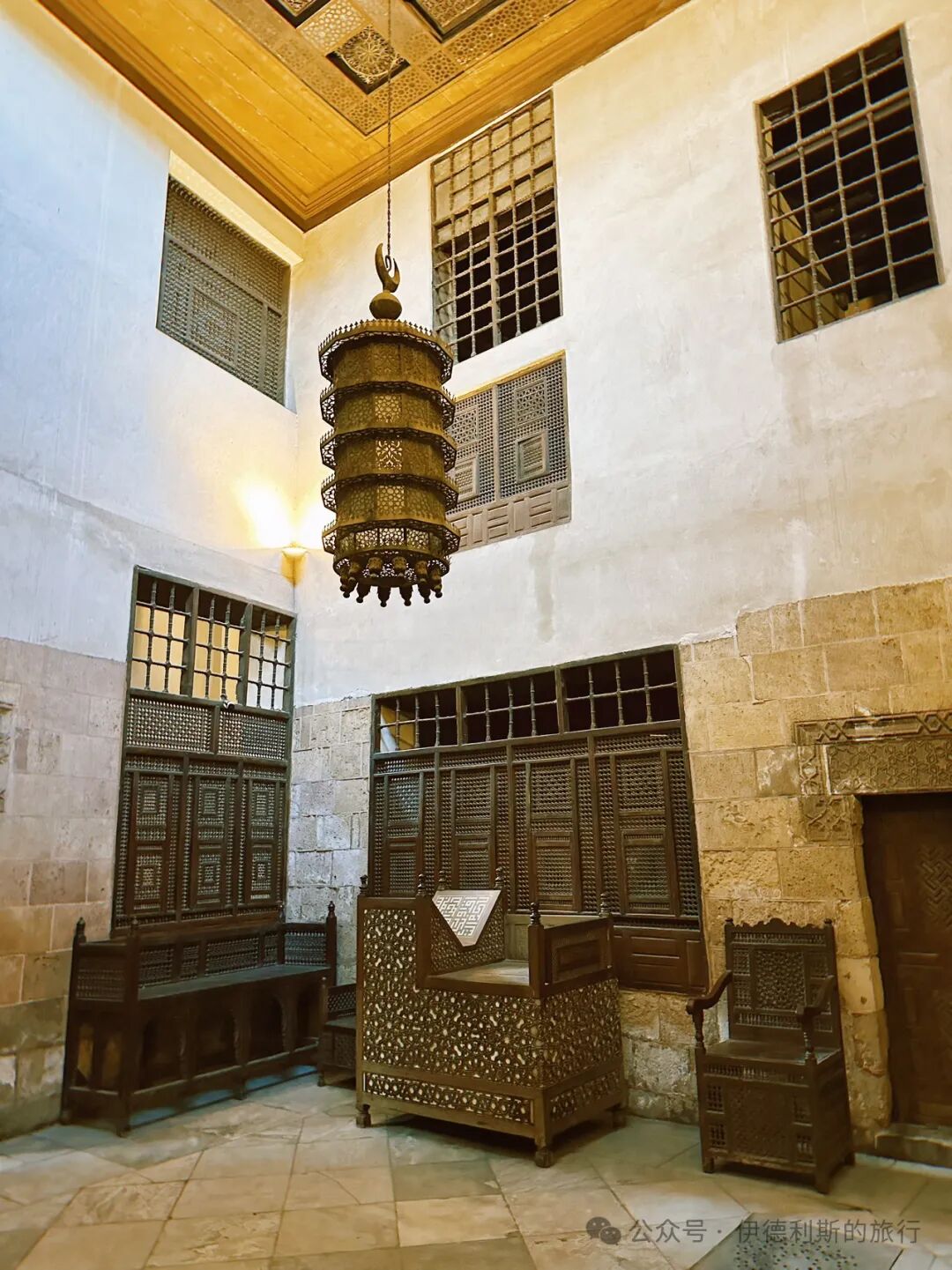
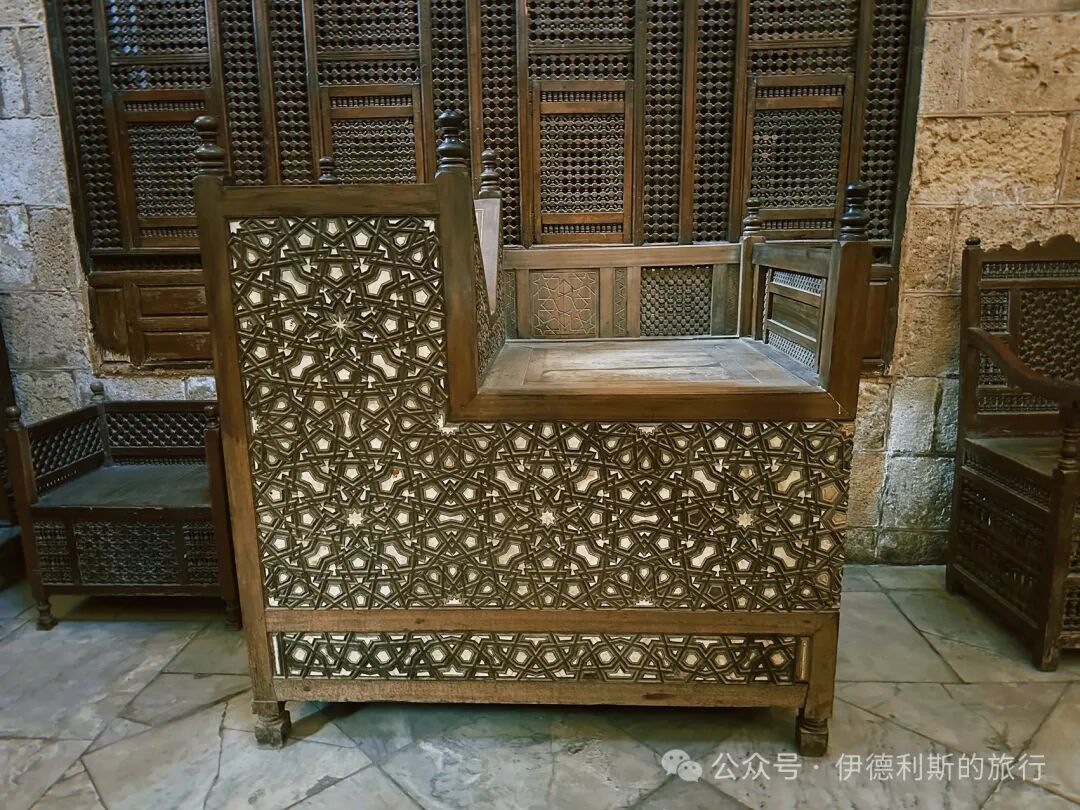
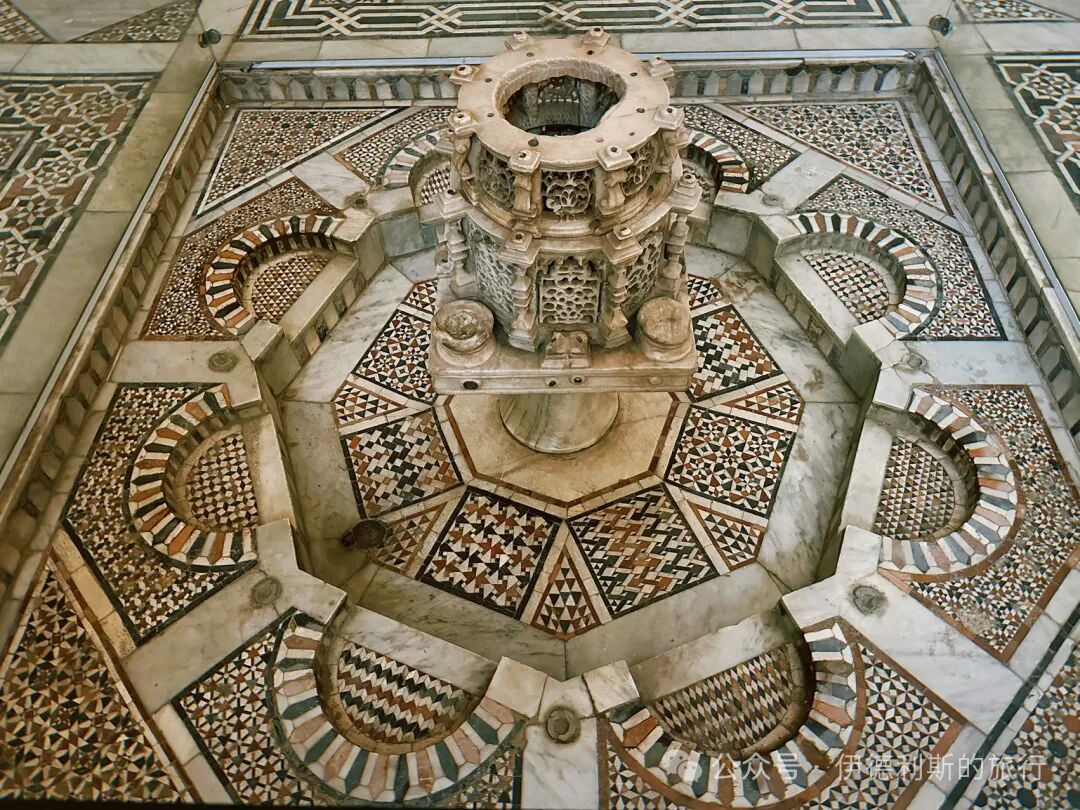
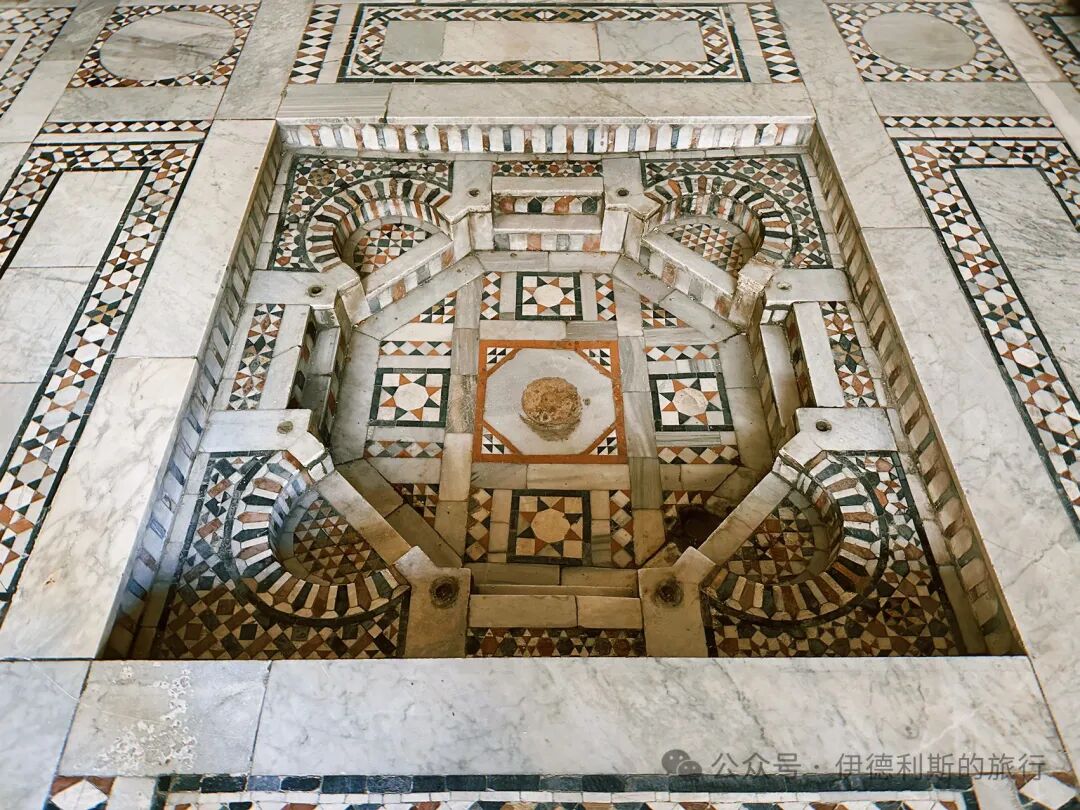
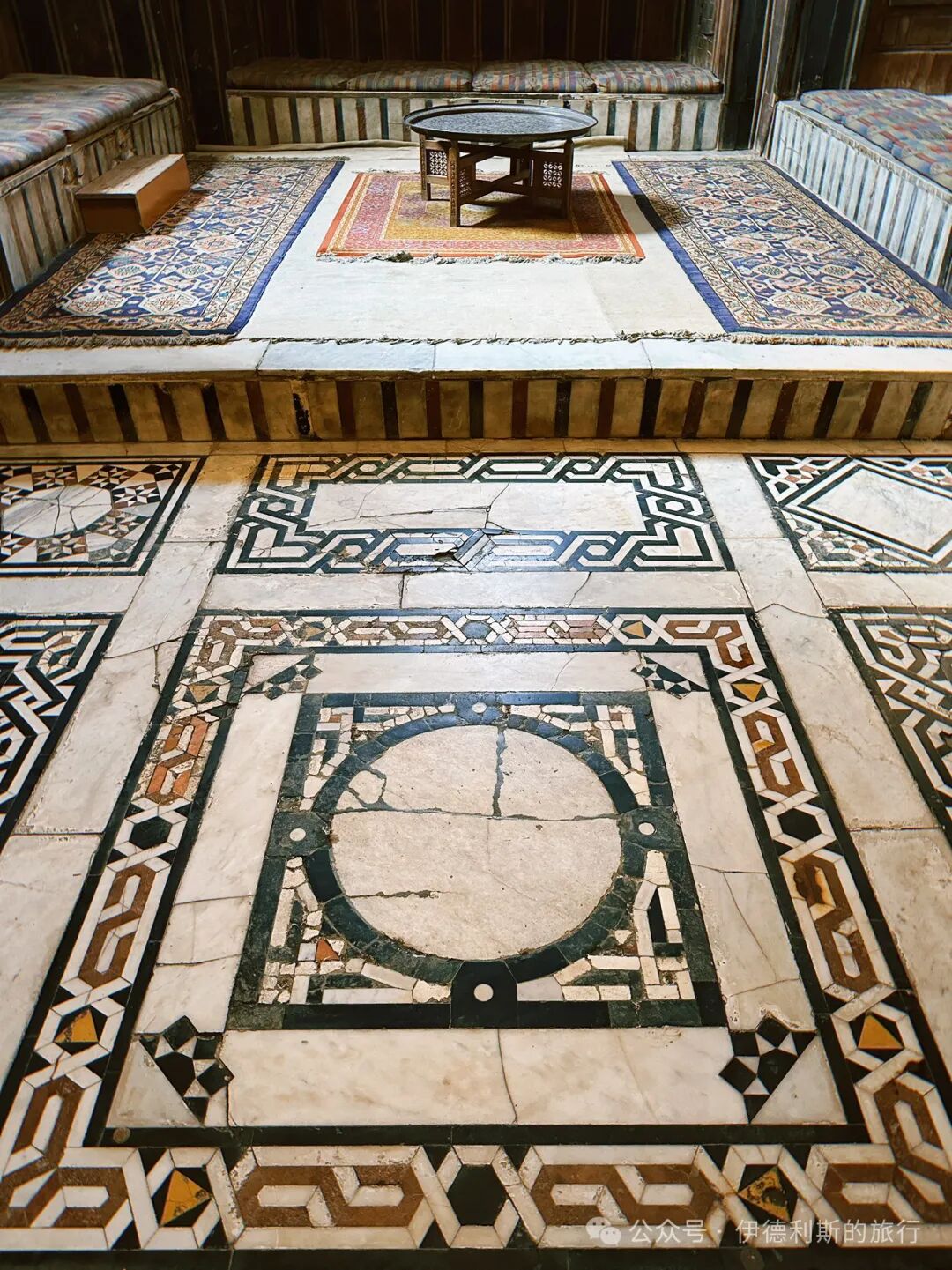
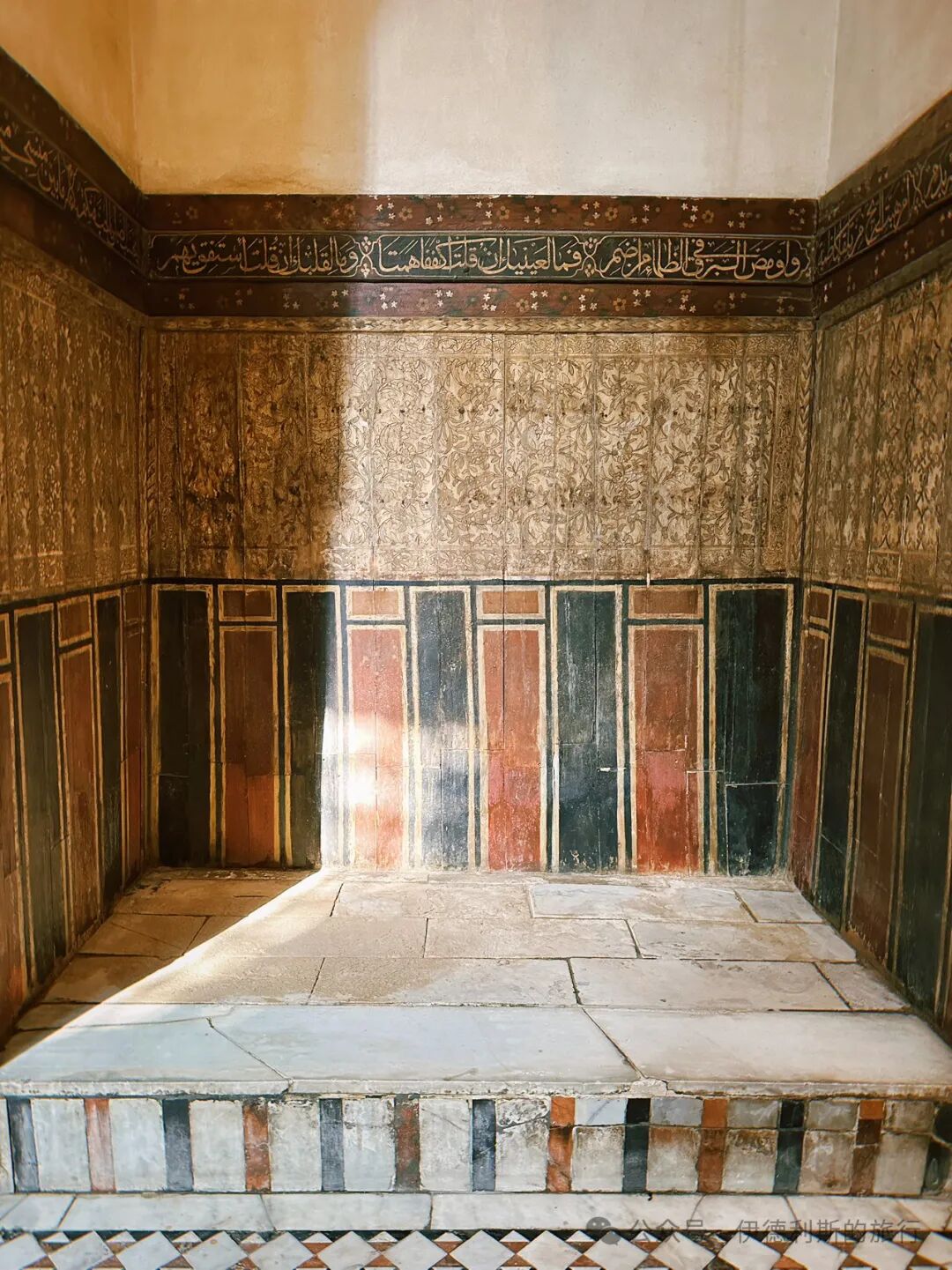
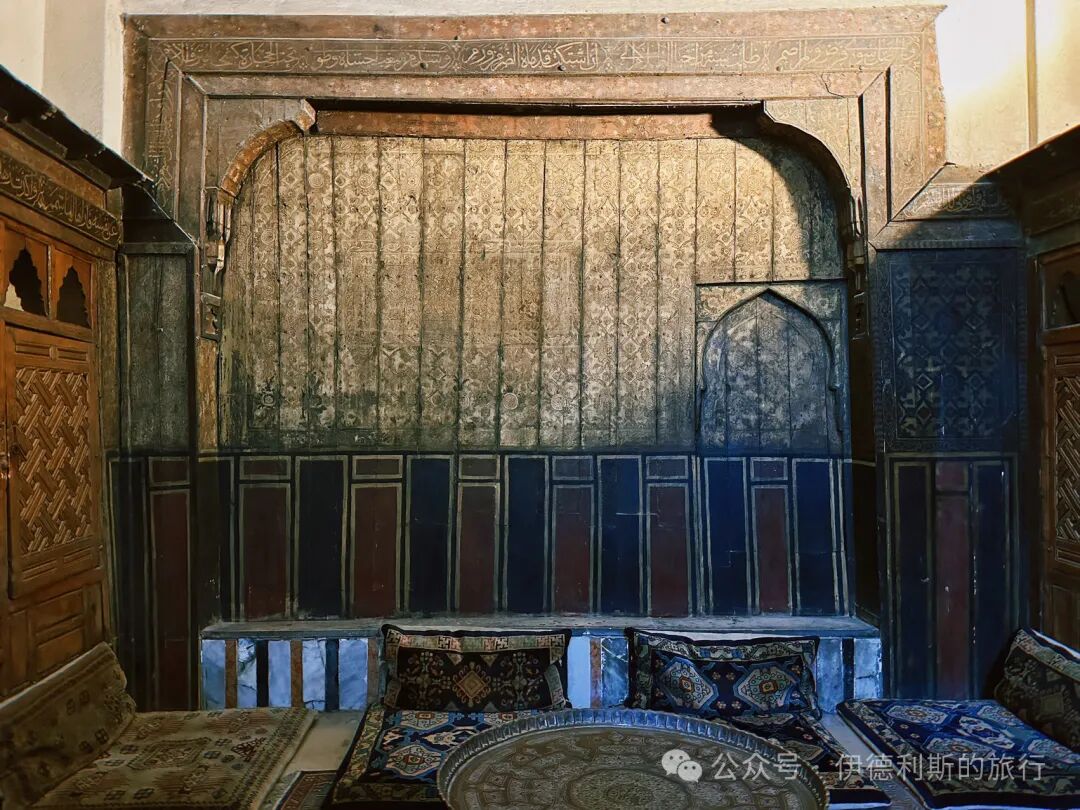
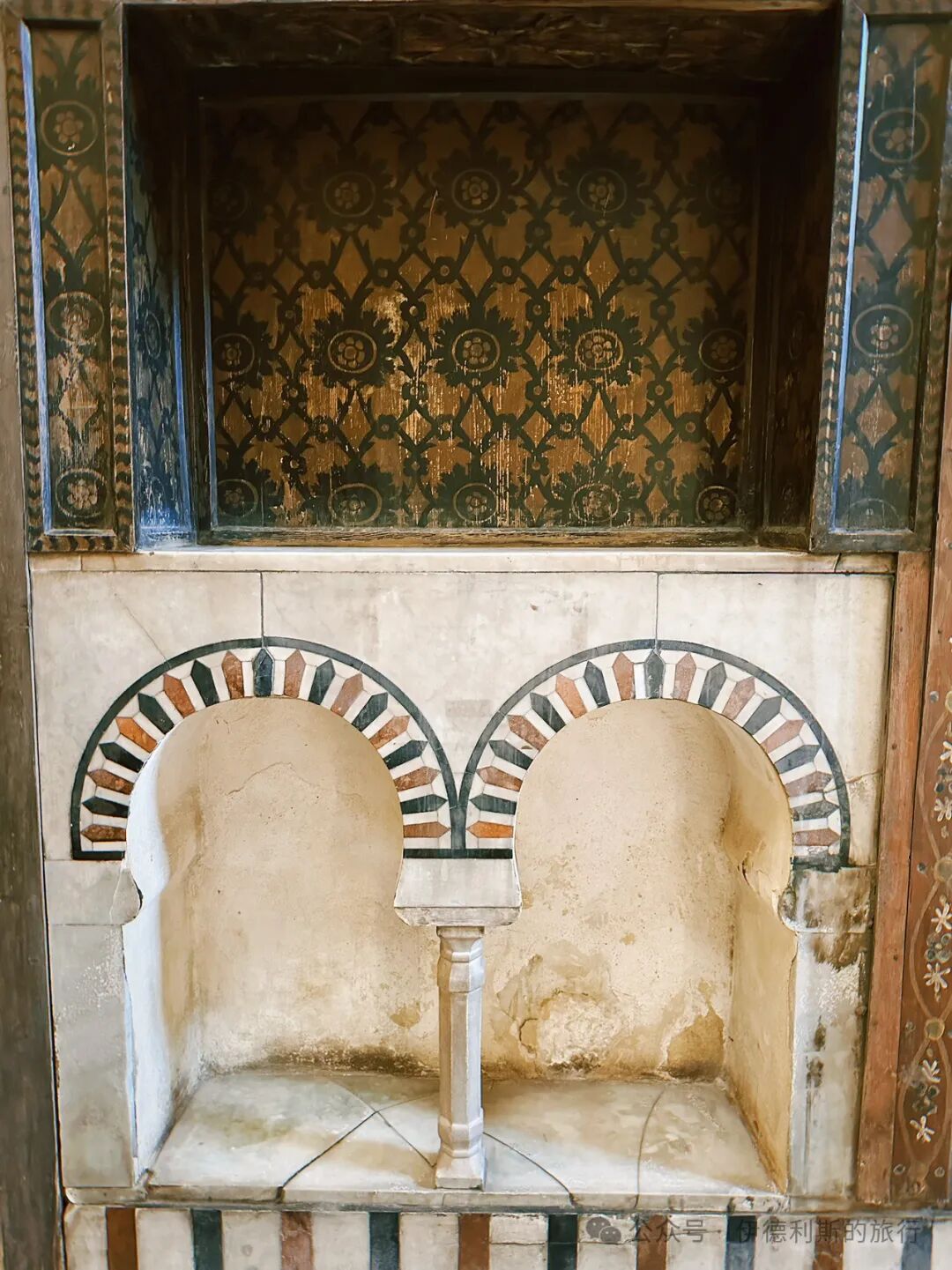
The wood-carved furniture and colorful marble floors inside Bayt al-Suhaymi.
Mosque-Sabil of Sulayman Agha al-Silahdar: 1839
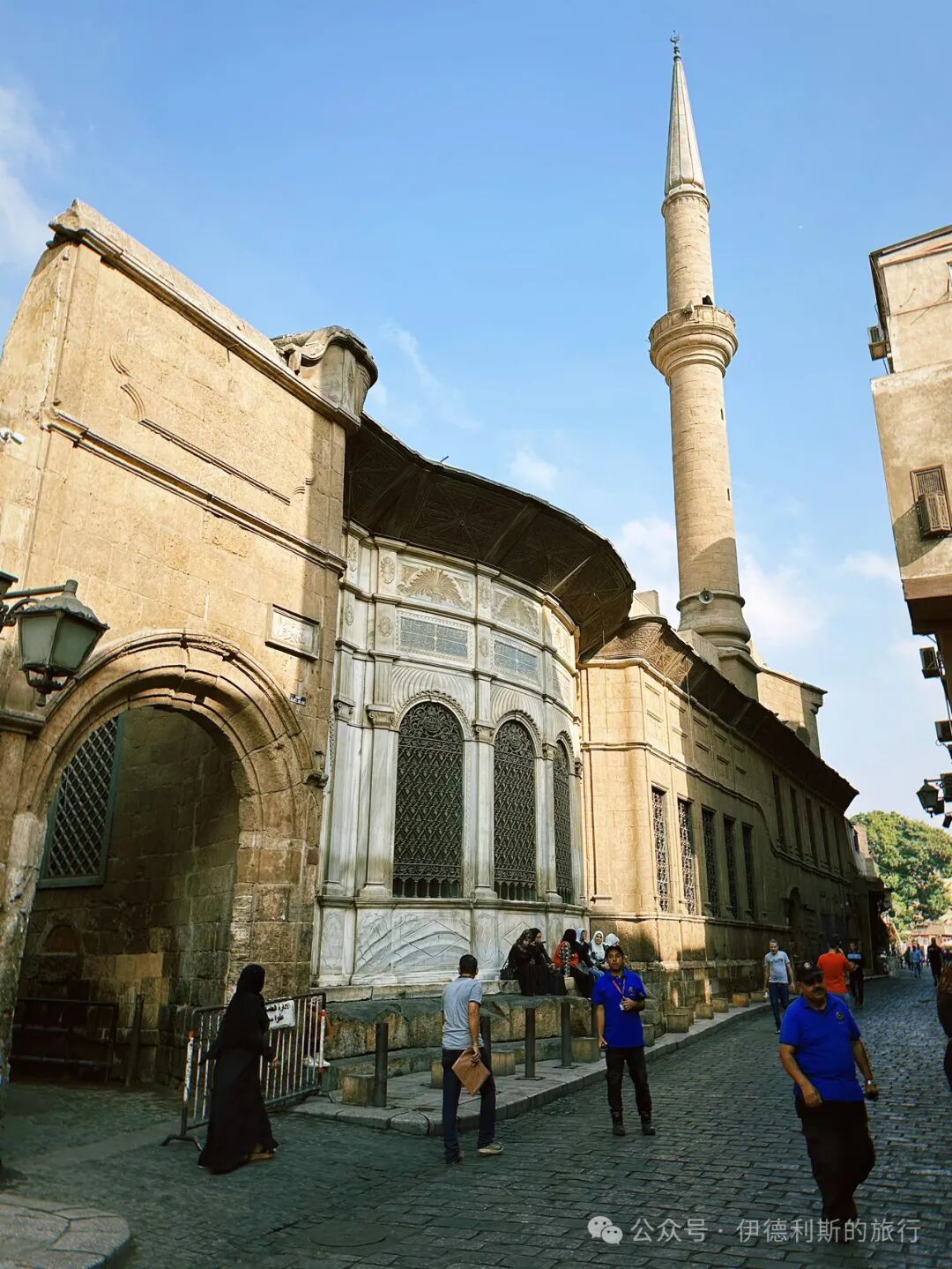
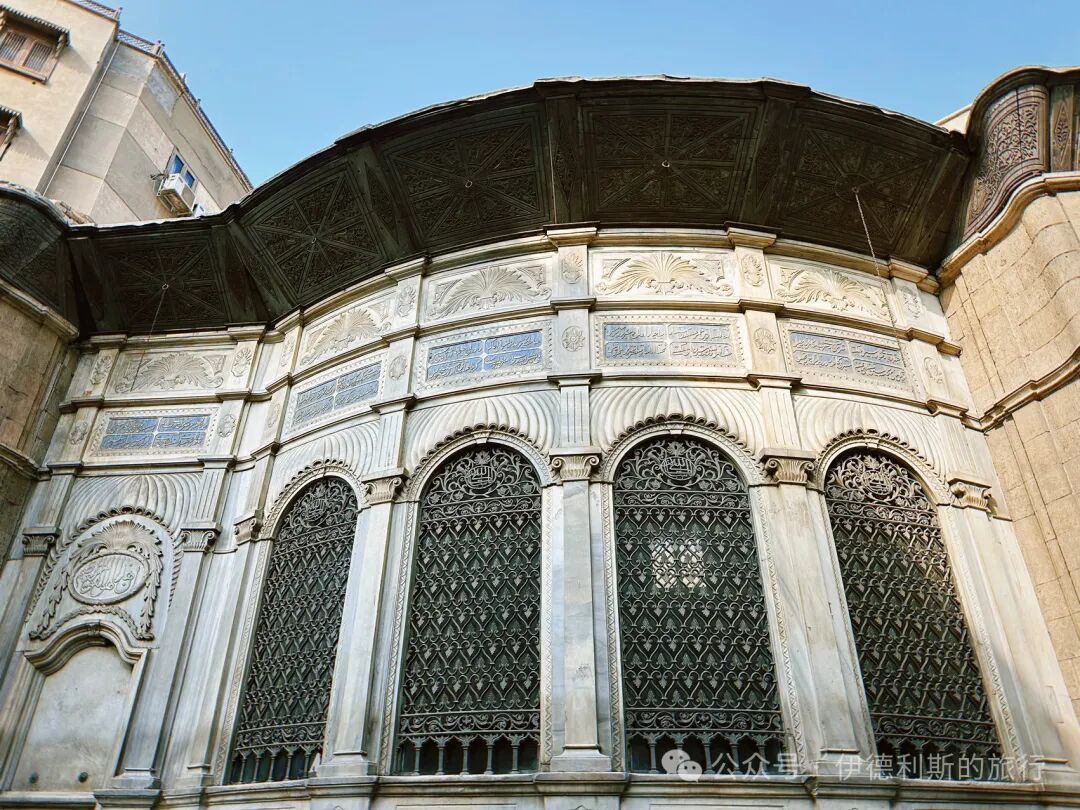
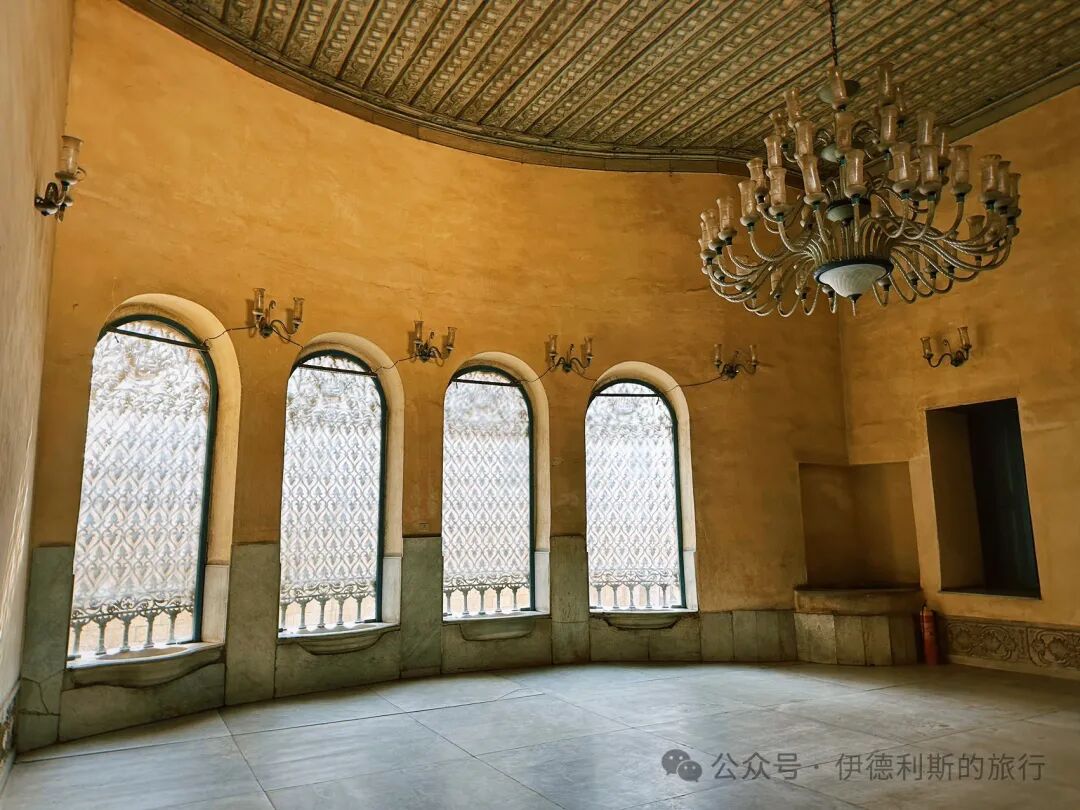
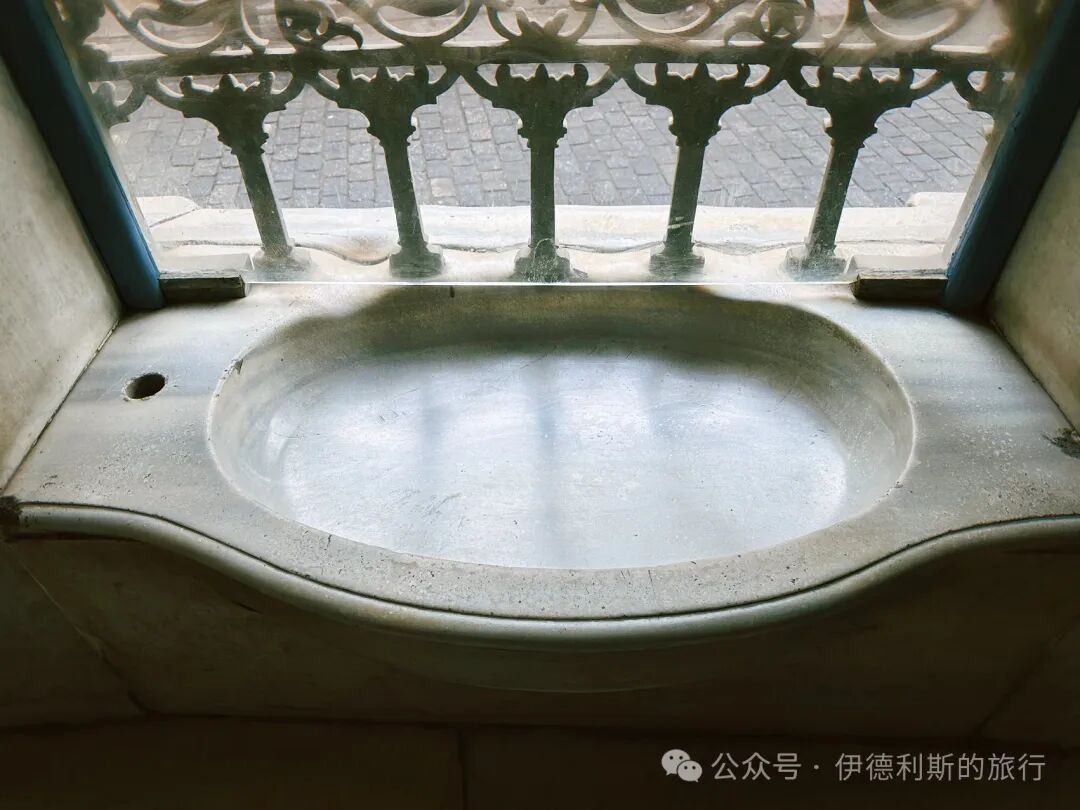
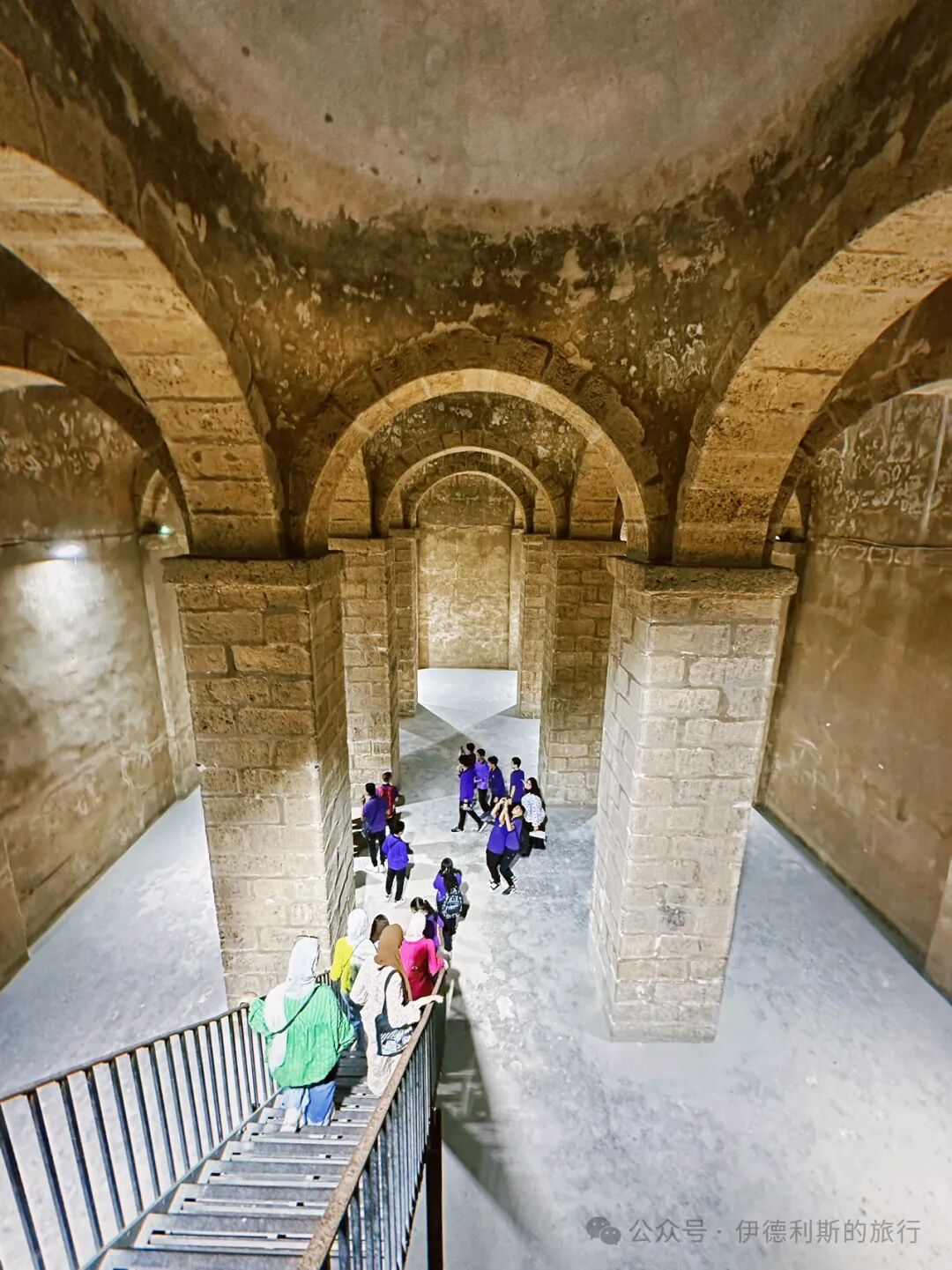
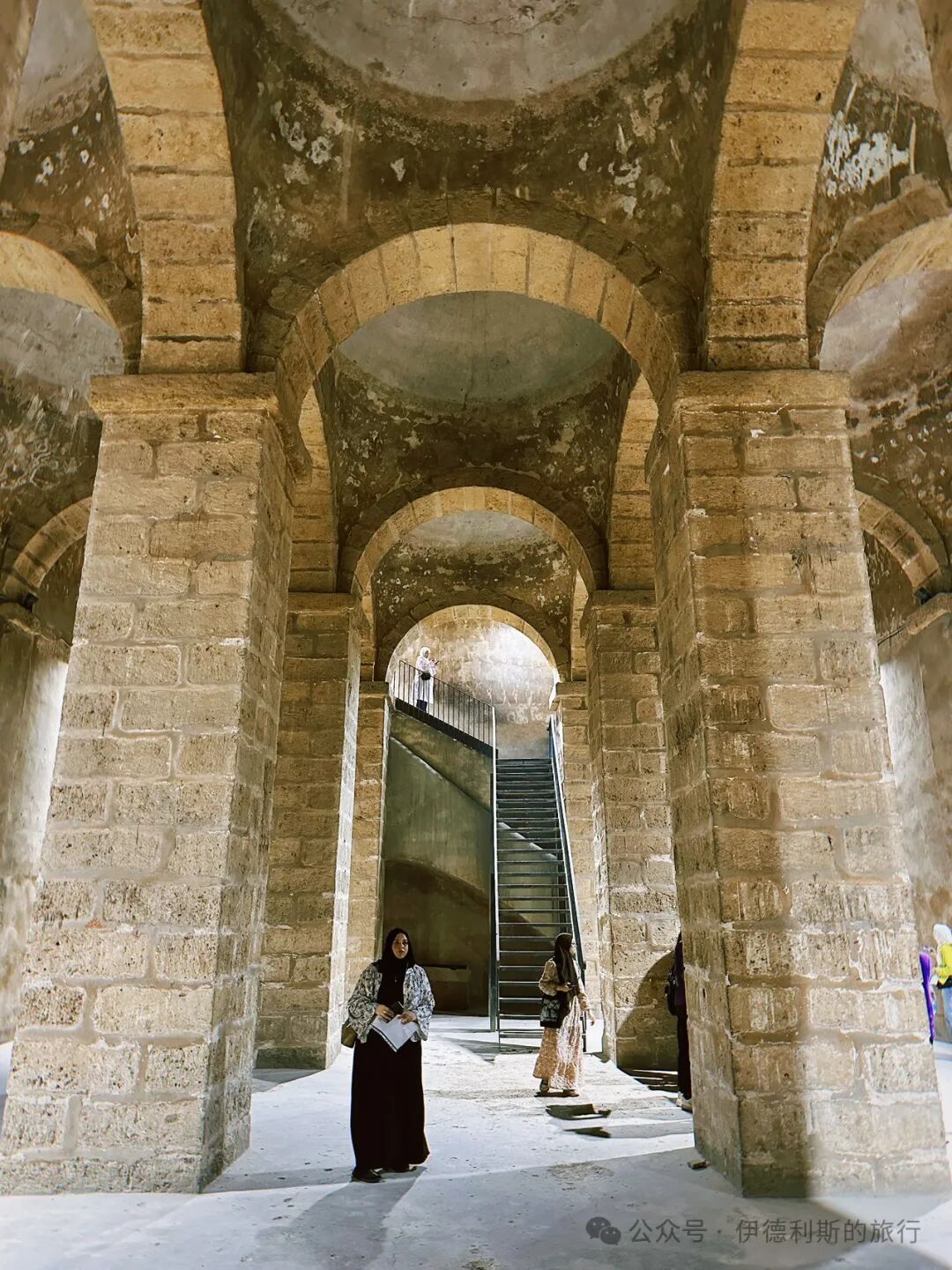
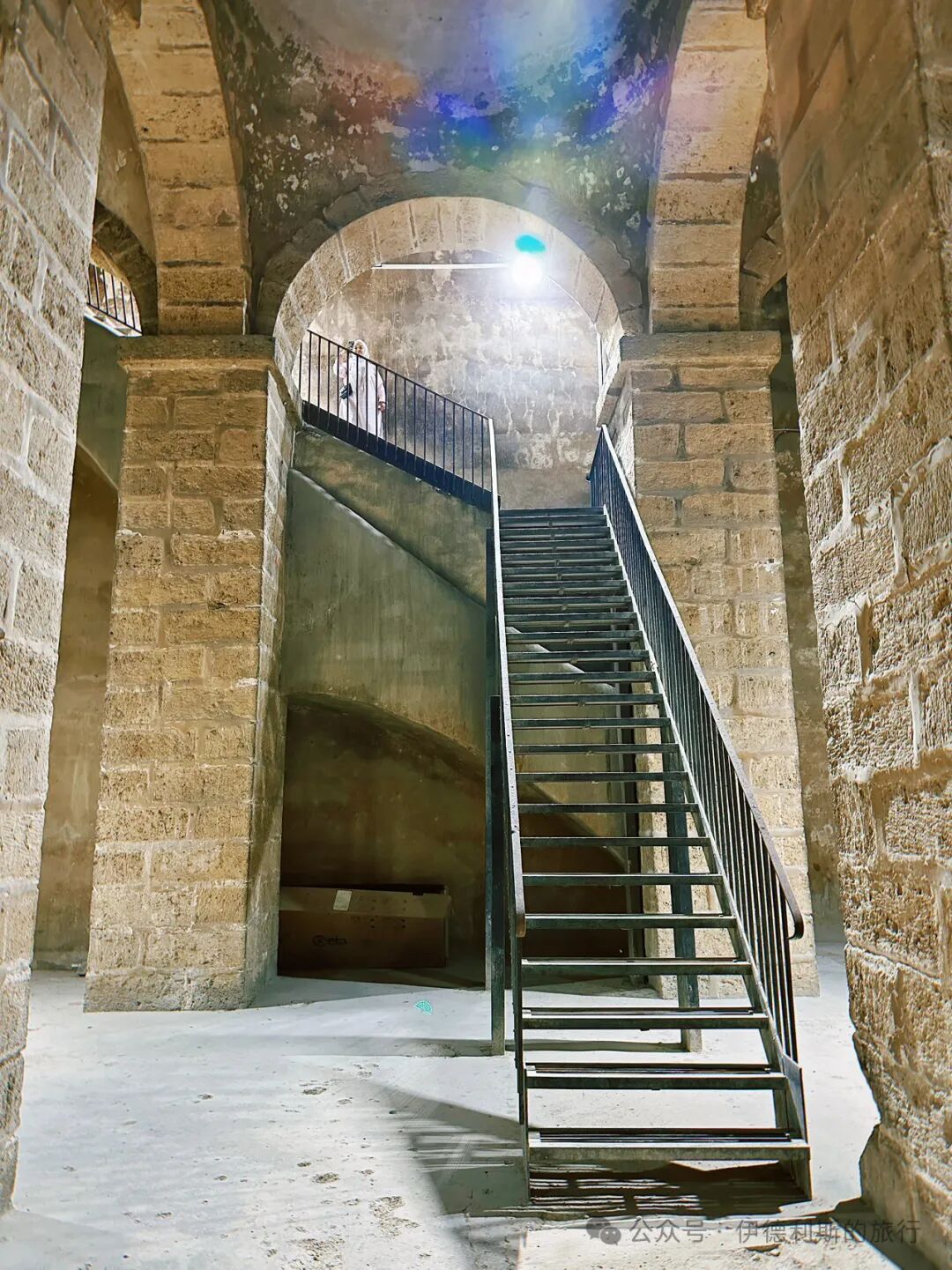
Continuing west back to the main road of old Cairo, Al-Mu'izz Street, the first thing you see is the Mosque-Sabil of Sulayman Agha al-Silahdar, built in 1839. This fountain has a fancy Ottoman Baroque facade with floral patterns from the European Renaissance. The fountain is made of marble and was used to keep the water cool during the summer. Next to the fountain is a primary school (kuttab) that was once used to teach children how to read, write, and recite scripture. Here, we can also enter the huge underground water reservoir of the fountain, which is rarely seen in typical fountains.
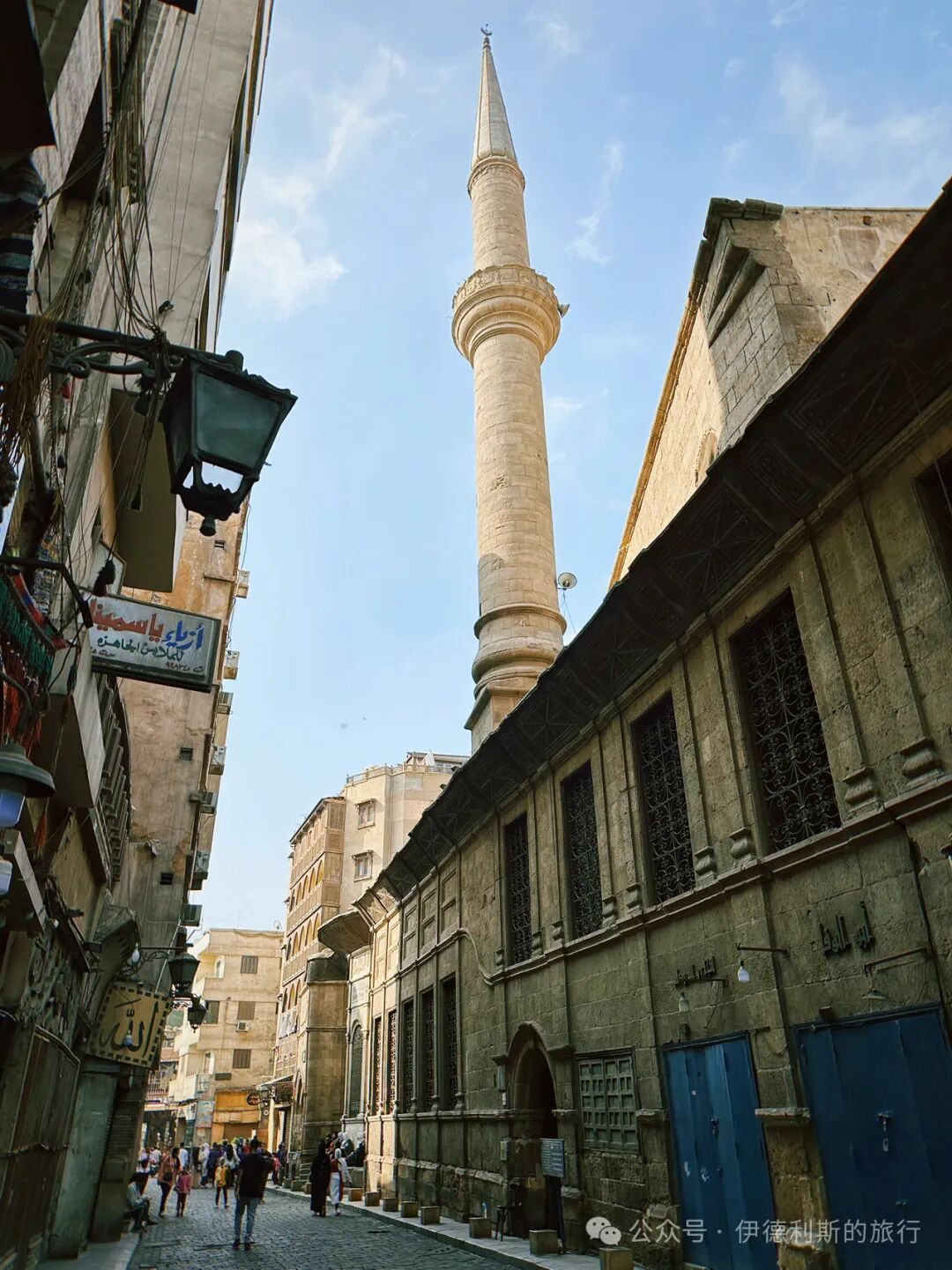
Aqmar Mosque: 1125-6
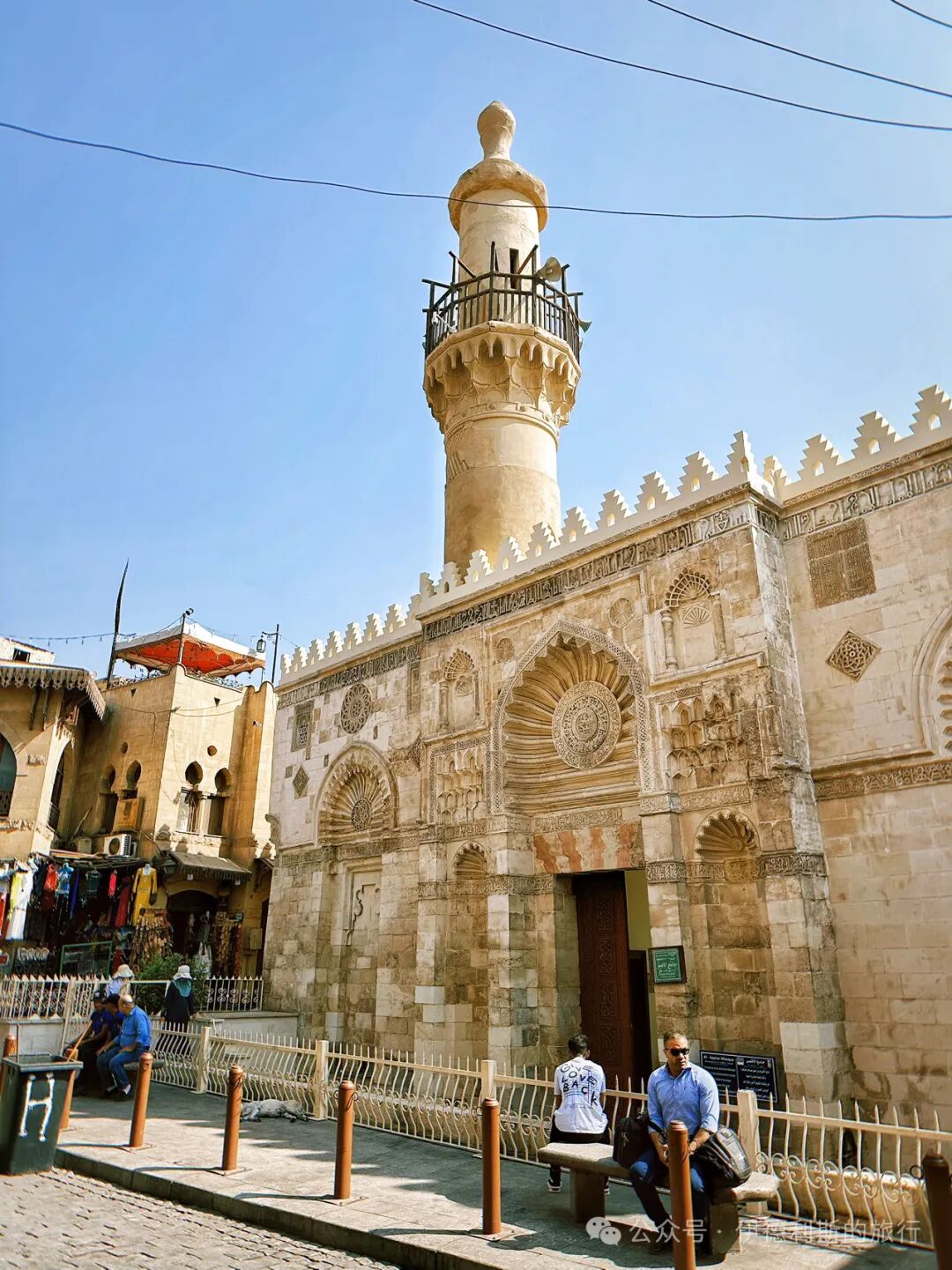
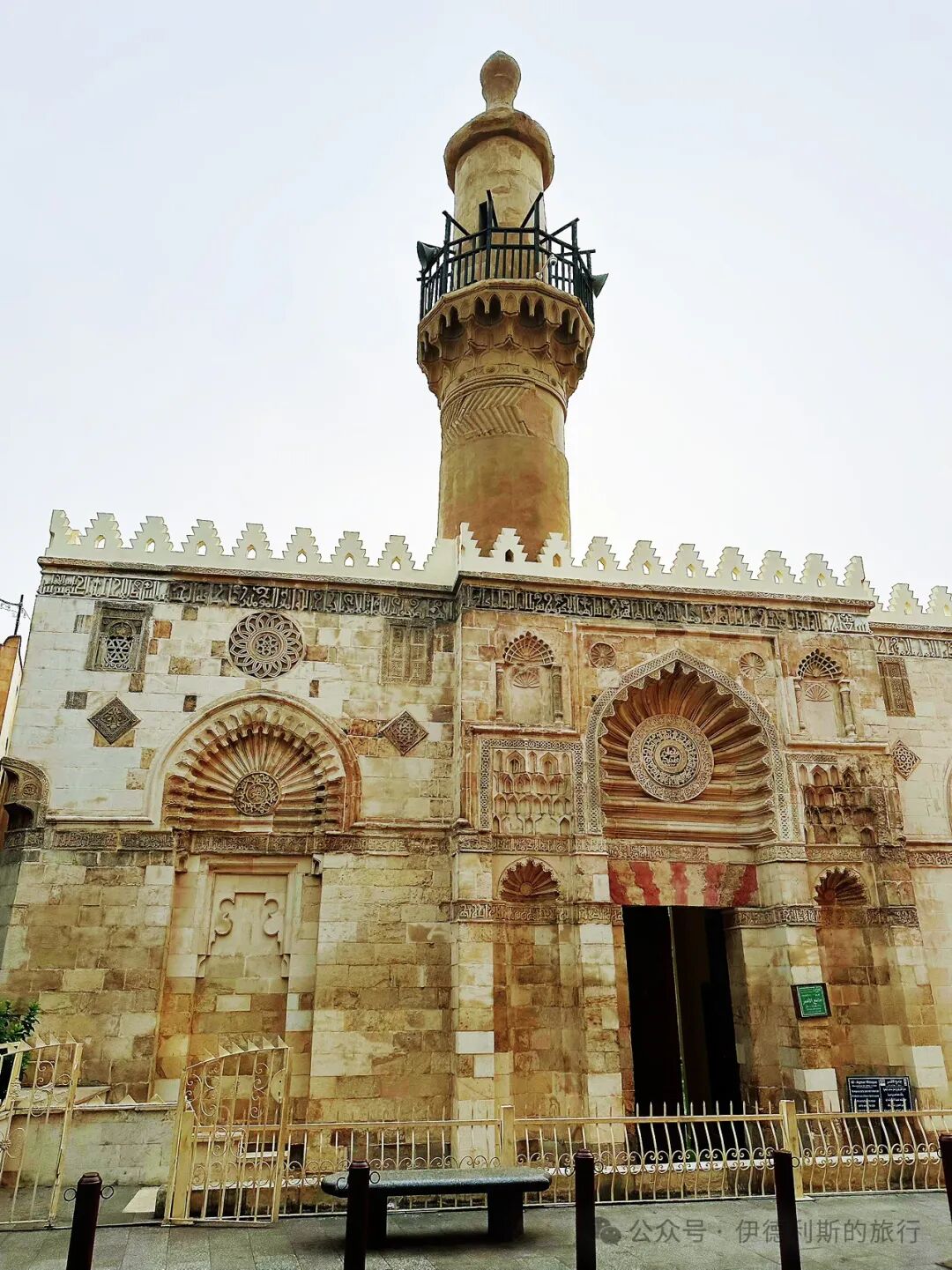
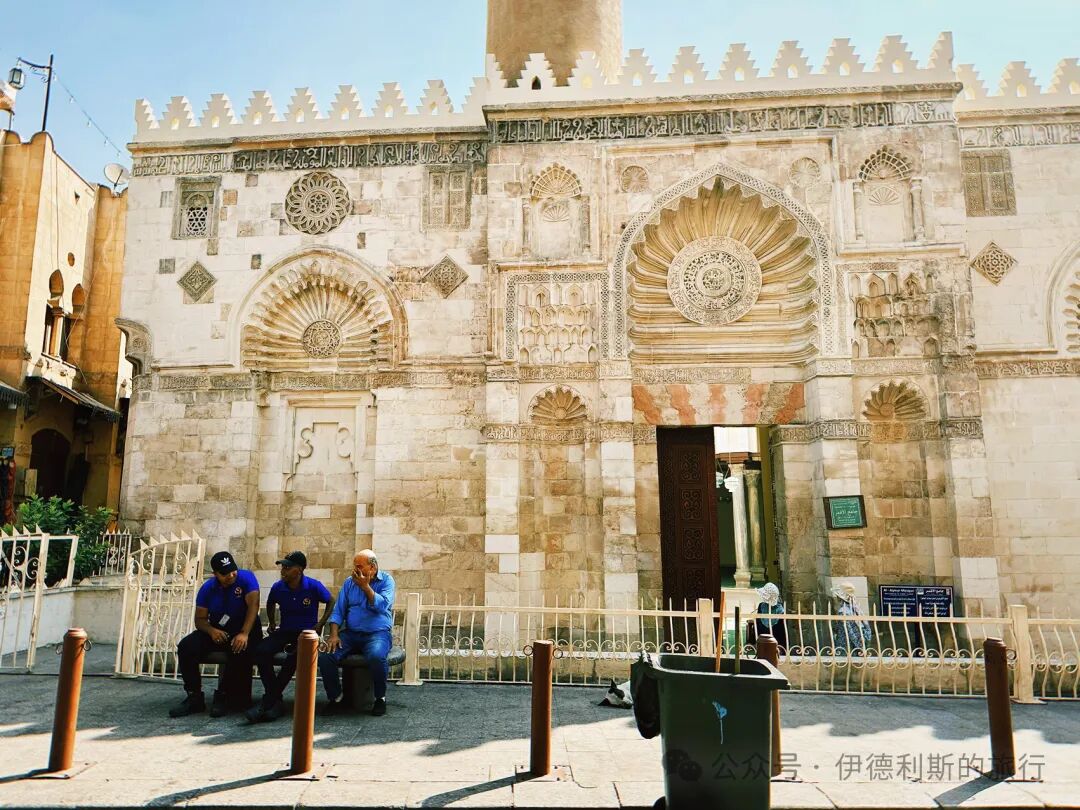
Walking south along Al-Muizz Street, we stop at the famous Fatimid-era Aqmar Mosque. The Aqmar Mosque was built in 1125-6 by order of the Fatimid vizier Al-Ma'mun al-Bata'ihi. It sits at the northeast corner of the former Eastern Fatimid Palace, right next to the palace grounds.
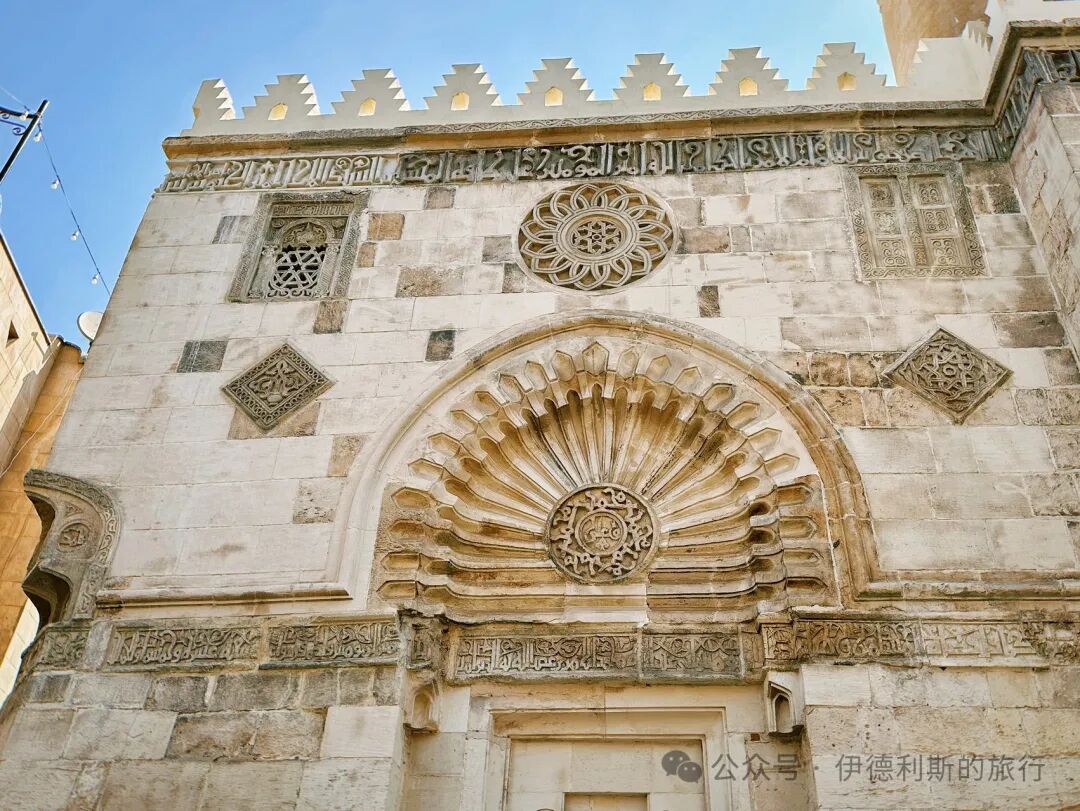
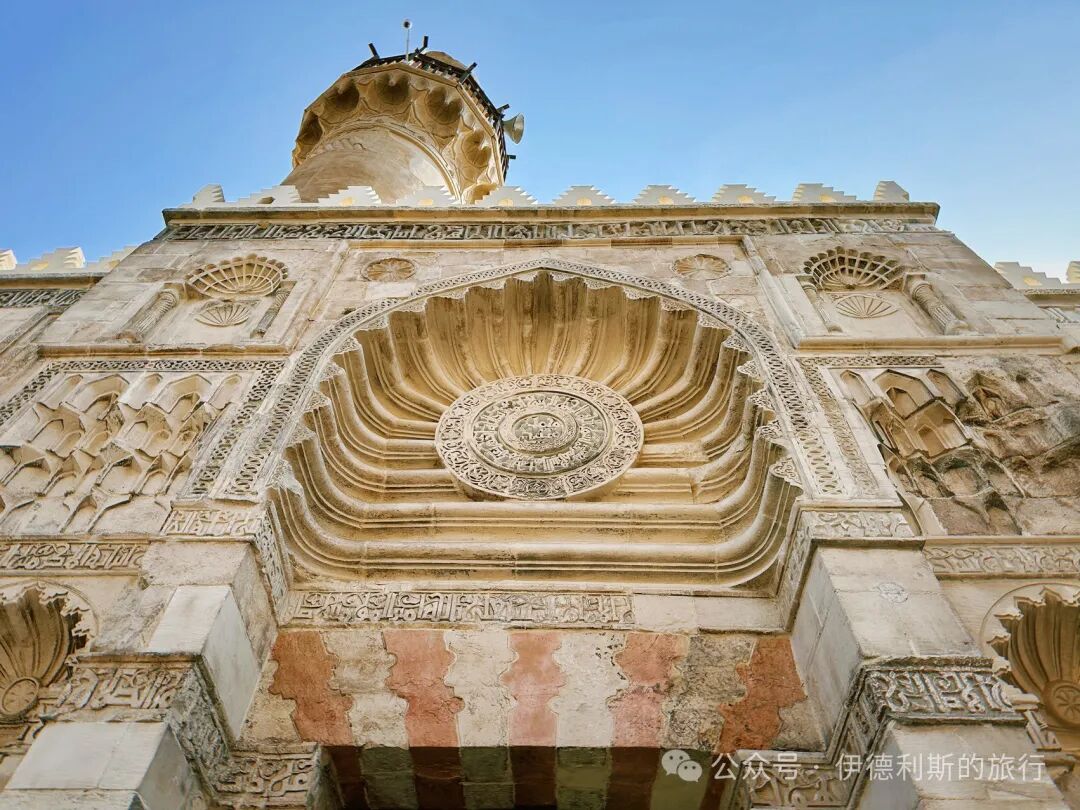
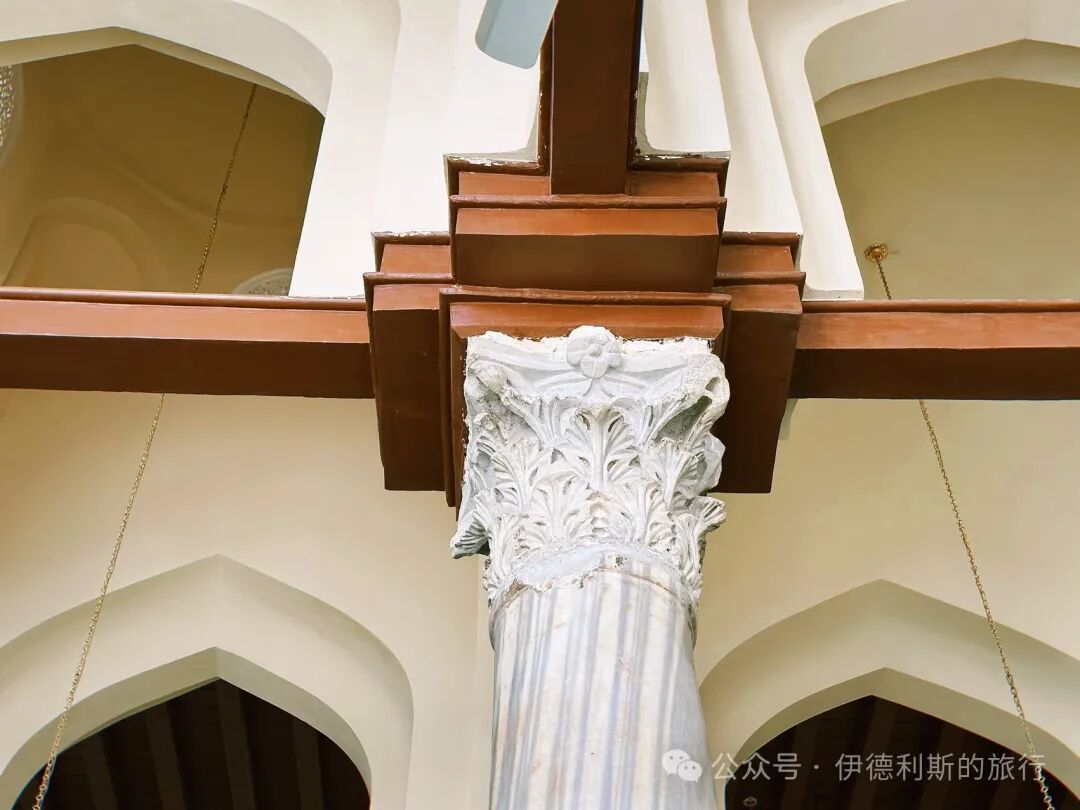
The Aqmar Mosque holds a groundbreaking place in Egyptian architectural history. It is the first mosque where the entrance is flush with the street rather than aligned with the qibla wall, making it the first mosque planned according to Cairo's street layout. It is also the first mosque to feature complex stone carvings. The facade of the Aqmar Mosque is very luxurious. Above the entrance is a large medallion surrounded by a grille, with the names of the Prophet and Ali in the center and verses written around them. This type of decoration is unique in Cairo.
At the top of the left facade, there are carvings of a door and a window. The window on the left symbolizes the ceremonial grille that the Fatimids took back from the palace of their rivals, the Abbasids in Baghdad, serving as a symbol of victory. Inside the window is a lamp and a six-pointed star, based on the Shia hadith: 'The stars are a promise to the world, and it will not be submerged.' Below the window, there is a carving of a plant growing out of a flower pot, which comes from the Prophet's reference to Hasan and Husayn as 'my two aromatic herbs in the world.' The door in the upper right corner comes from the famous Shia hadith: 'I am the city of knowledge, and Ali is its gate.'
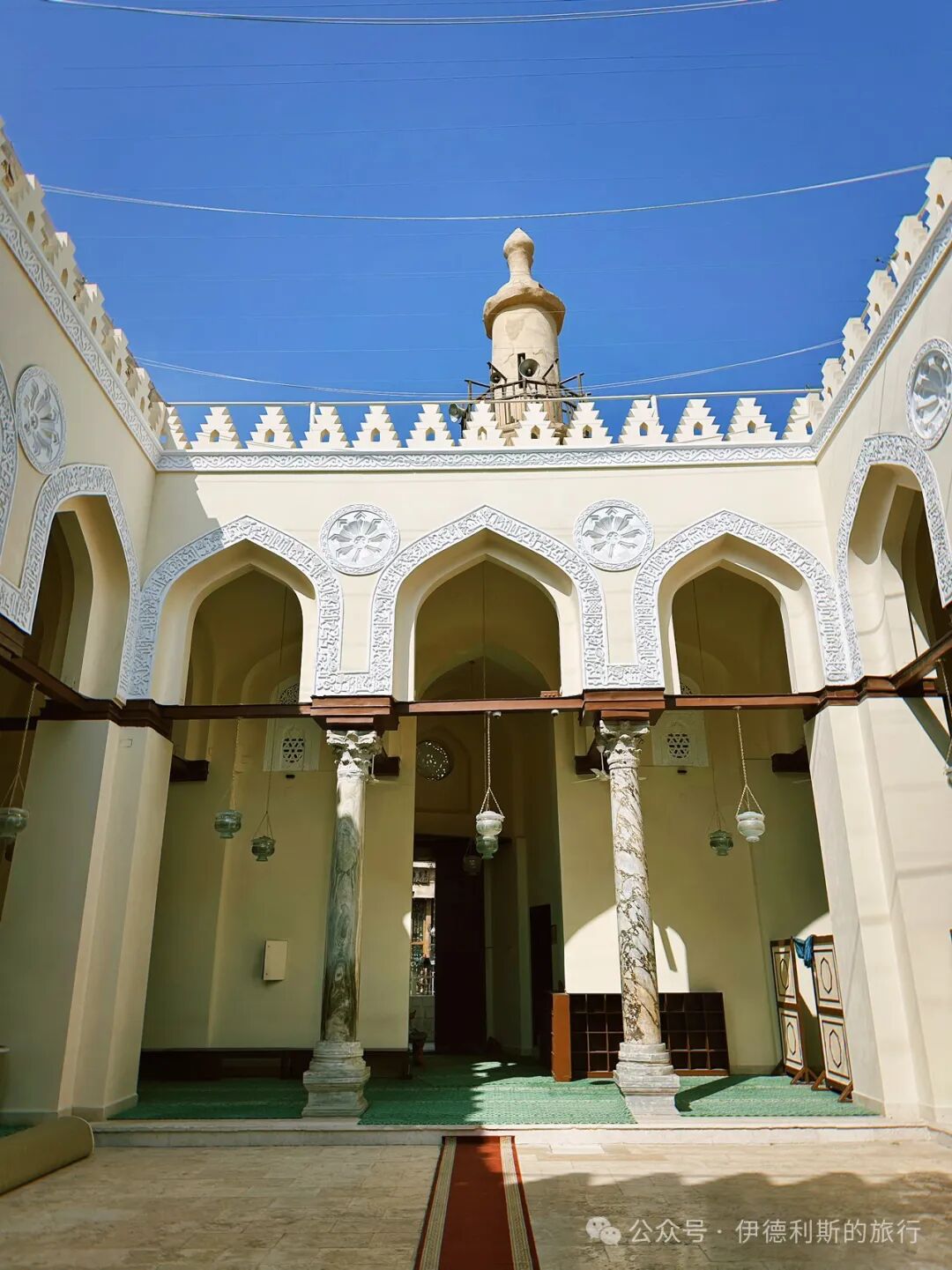
Because it was near the Fatimid palace, the Aqmar Mosque did not originally have a minaret. One was not added until the end of the 14th century by the Mamluk dynasty, and the cylindrical top was rebuilt during the Ottoman era.
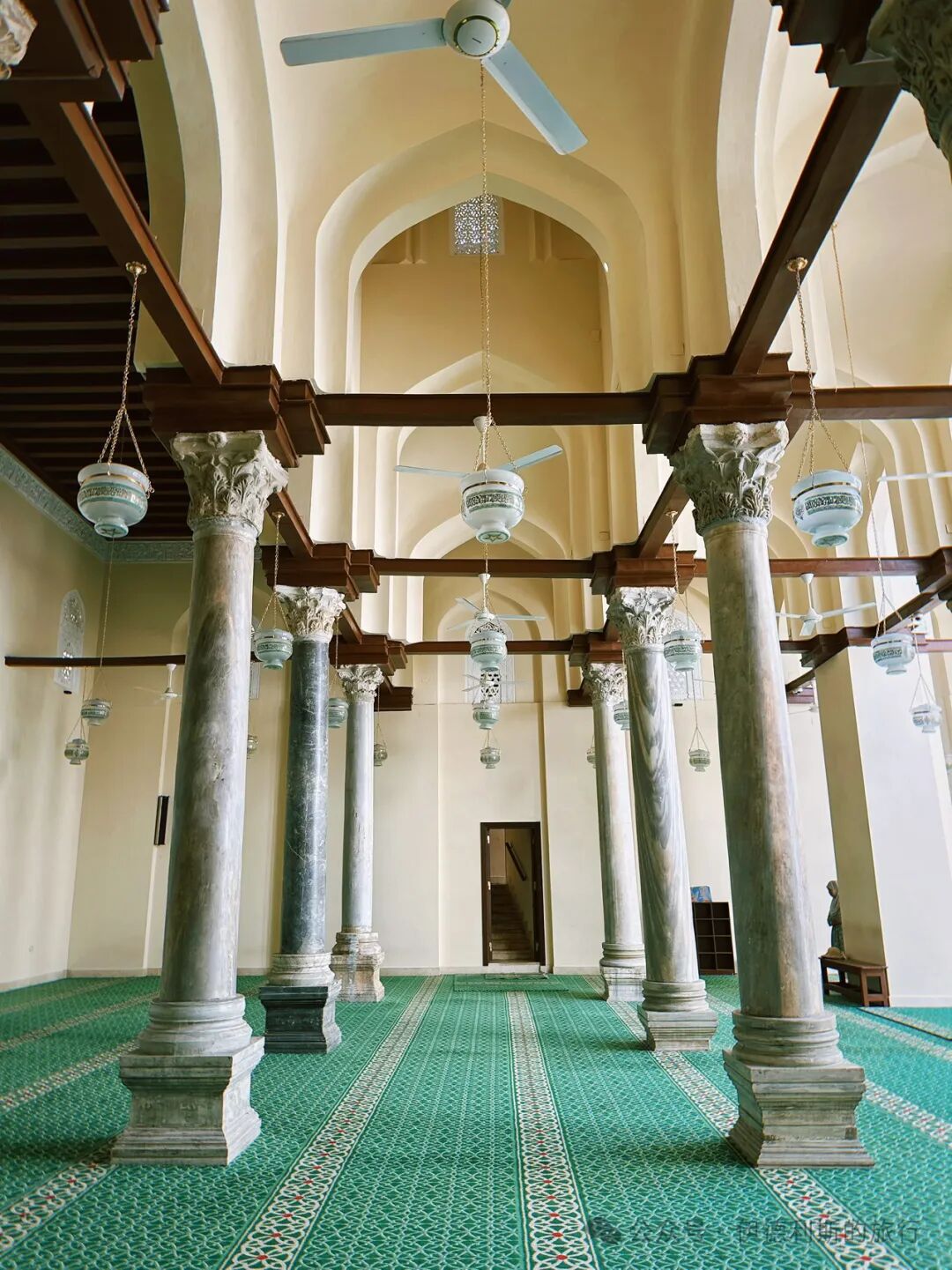
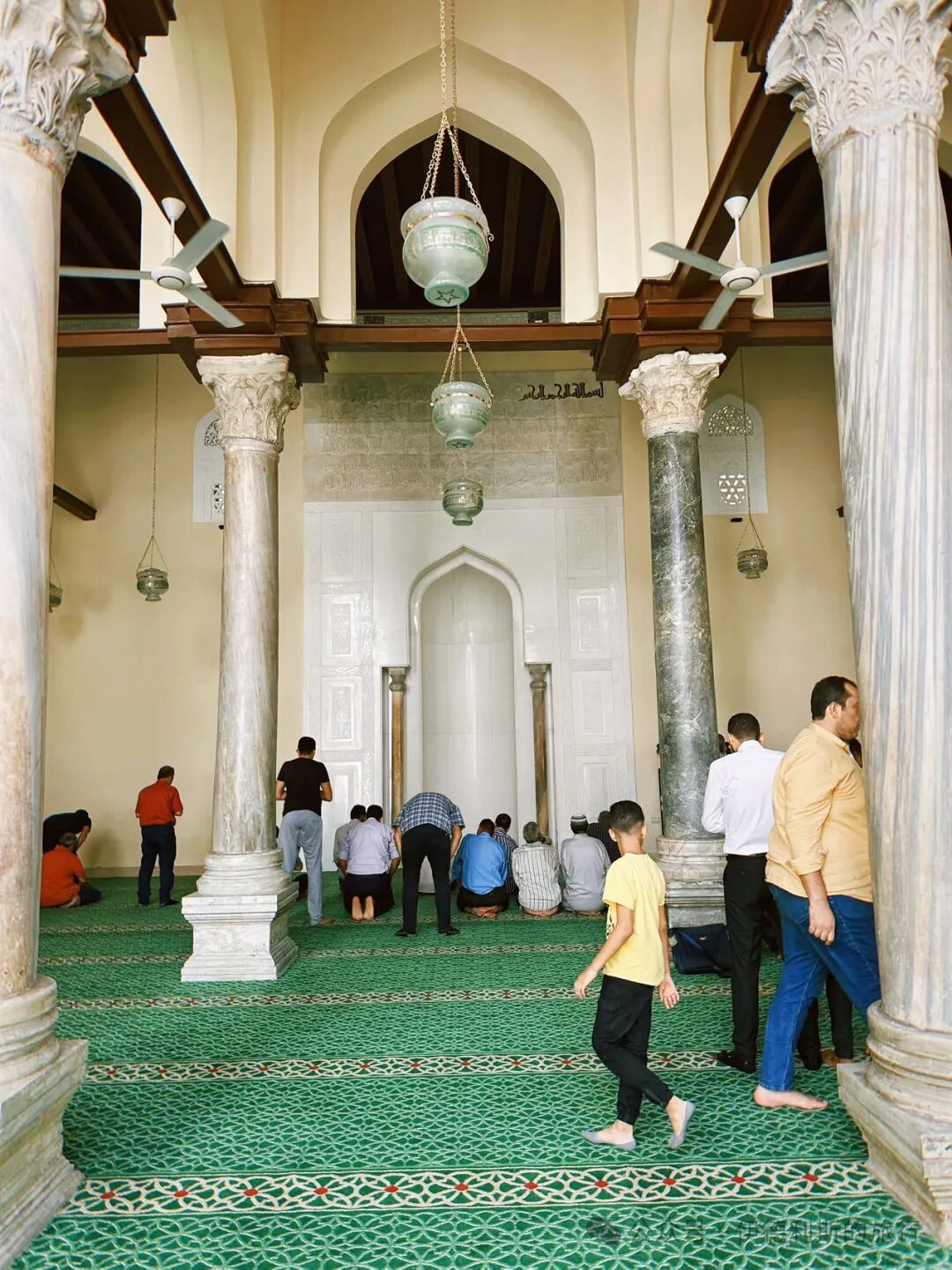
In 1993, the Dawoodi Bohra branch of the Shia community carried out a large-scale renovation of the Aqmar Mosque. Most of the historical elements inside the main hall were not preserved, which drew criticism.
Madrasa of Emir Jamal al-Din al-Ustadar: 1407
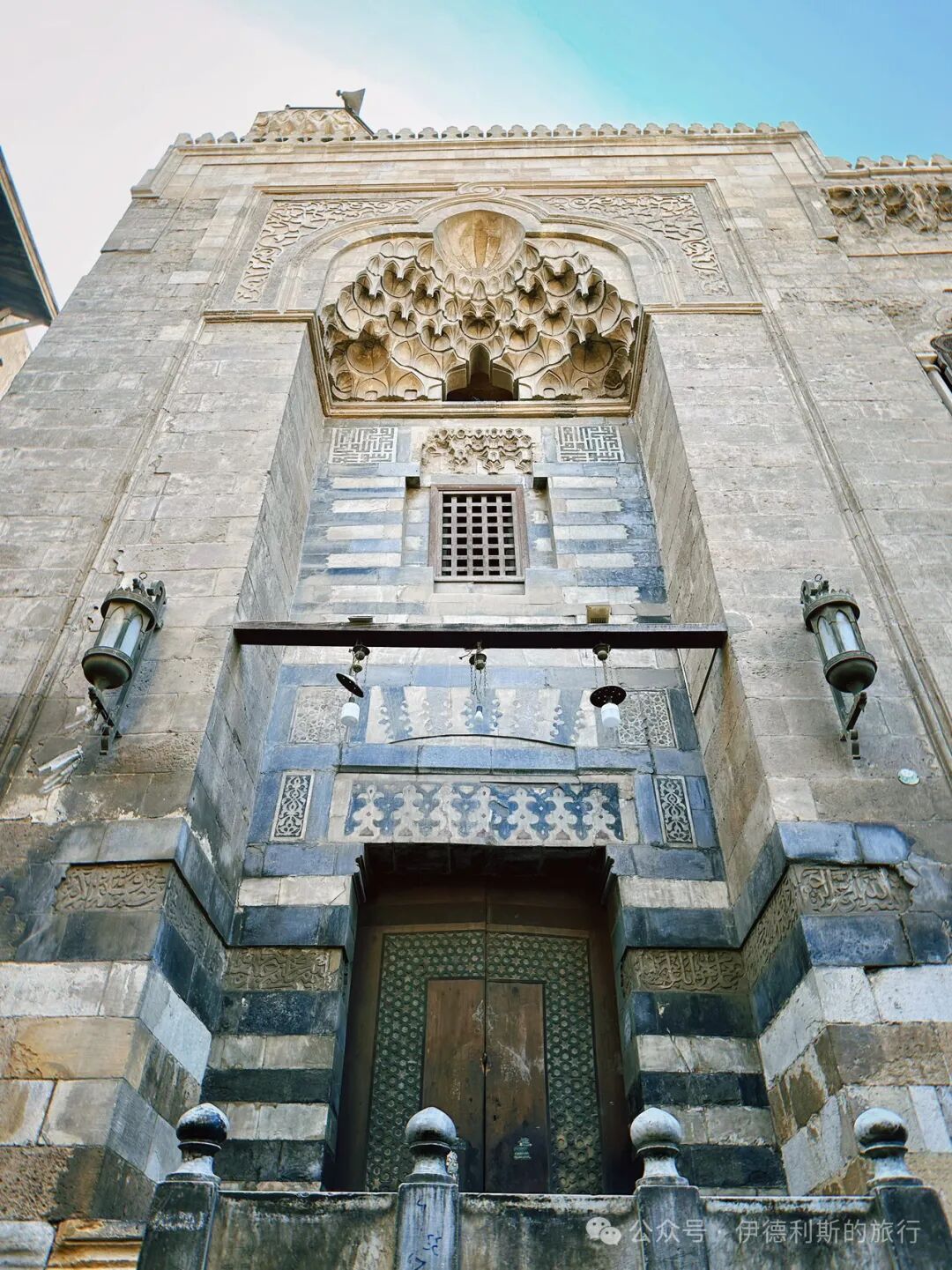
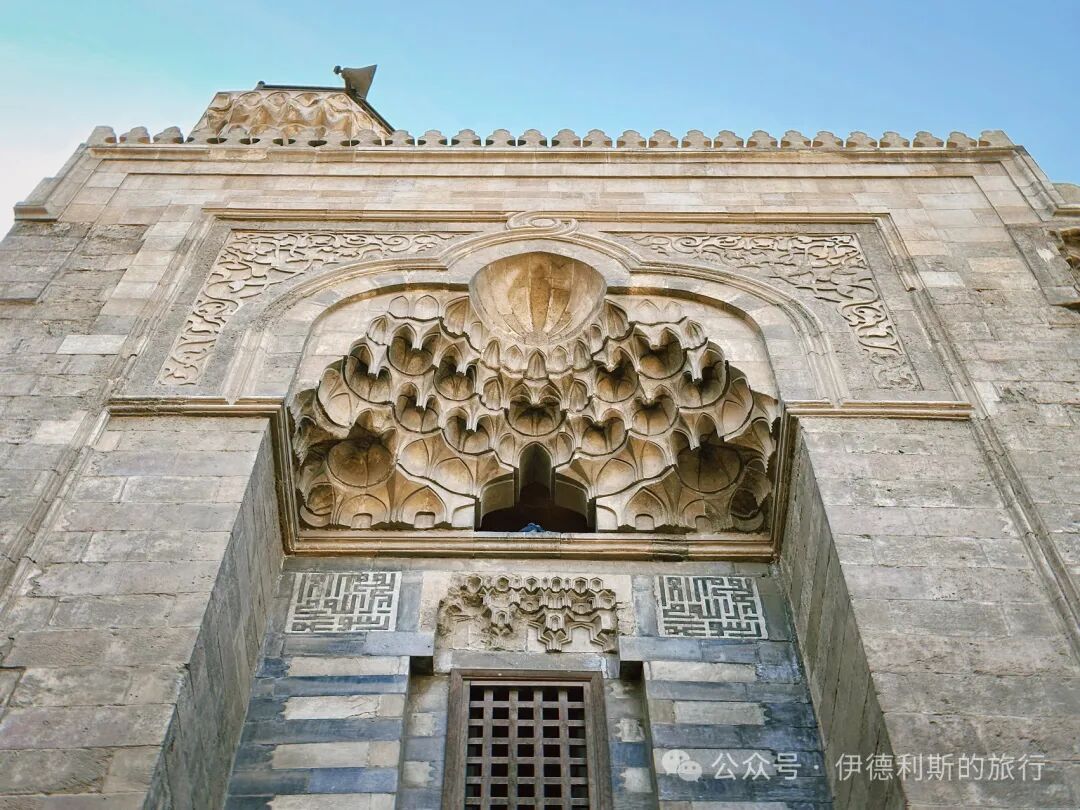
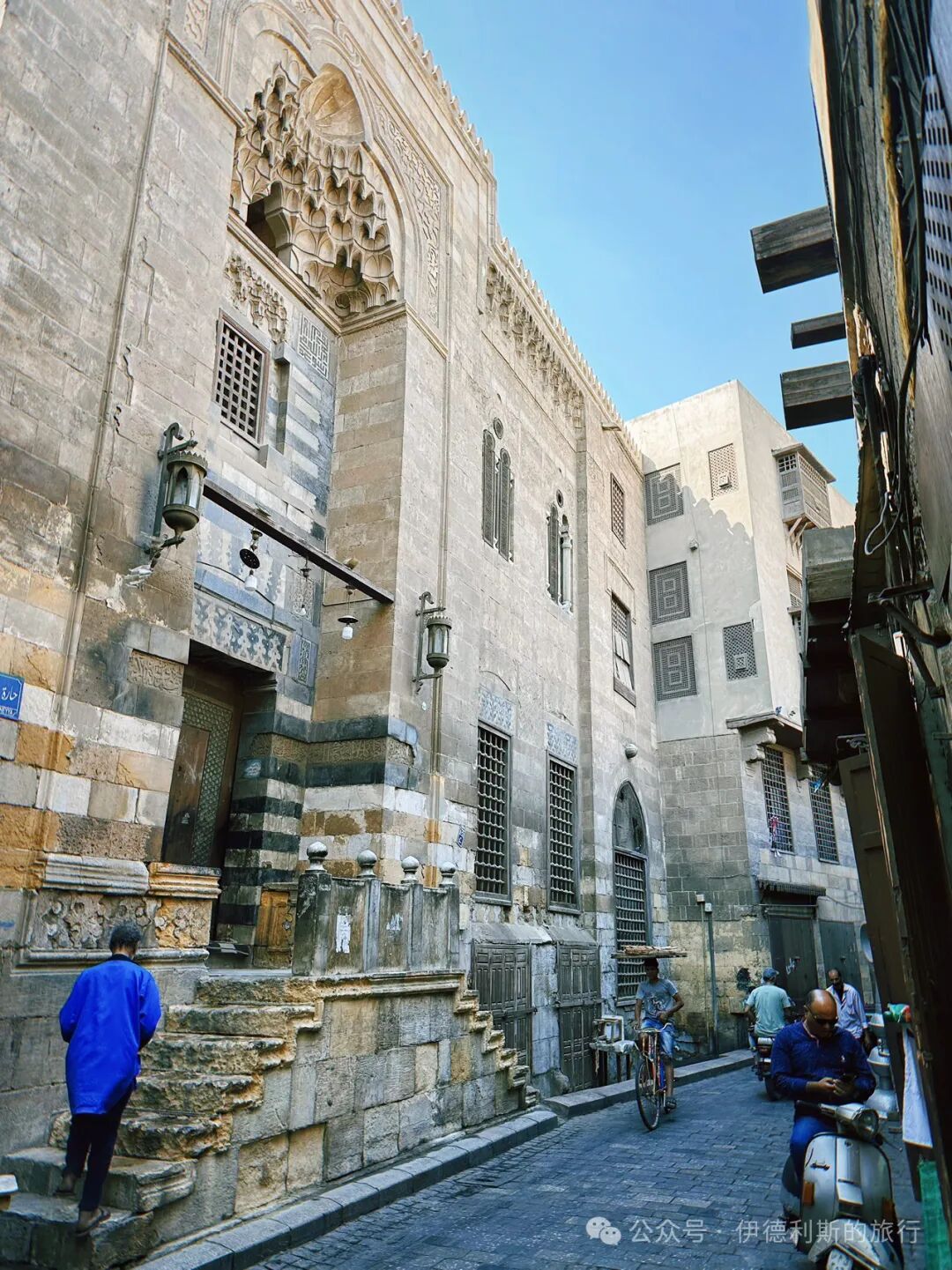
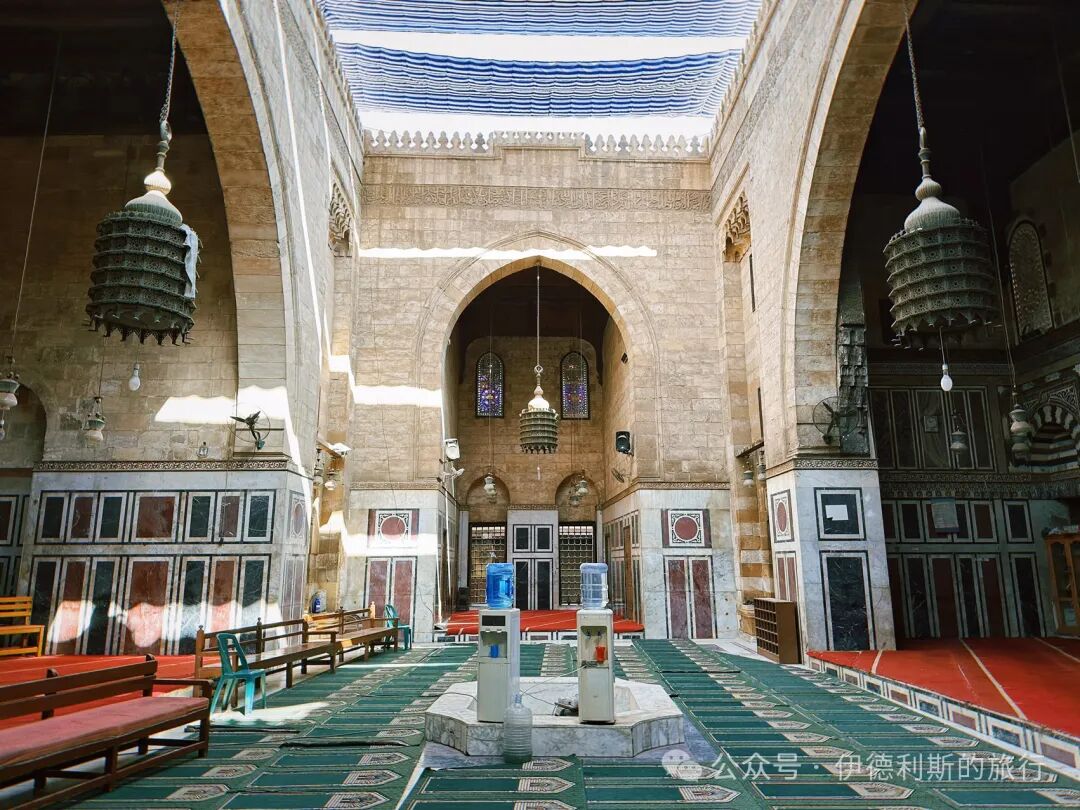
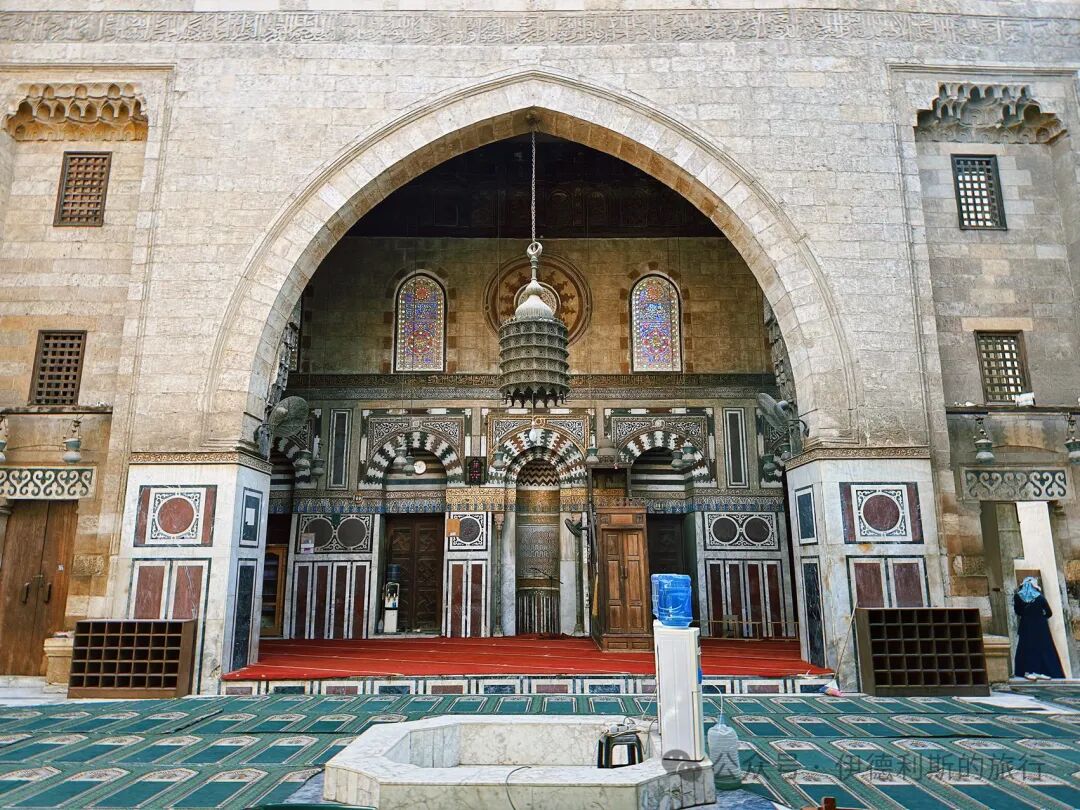
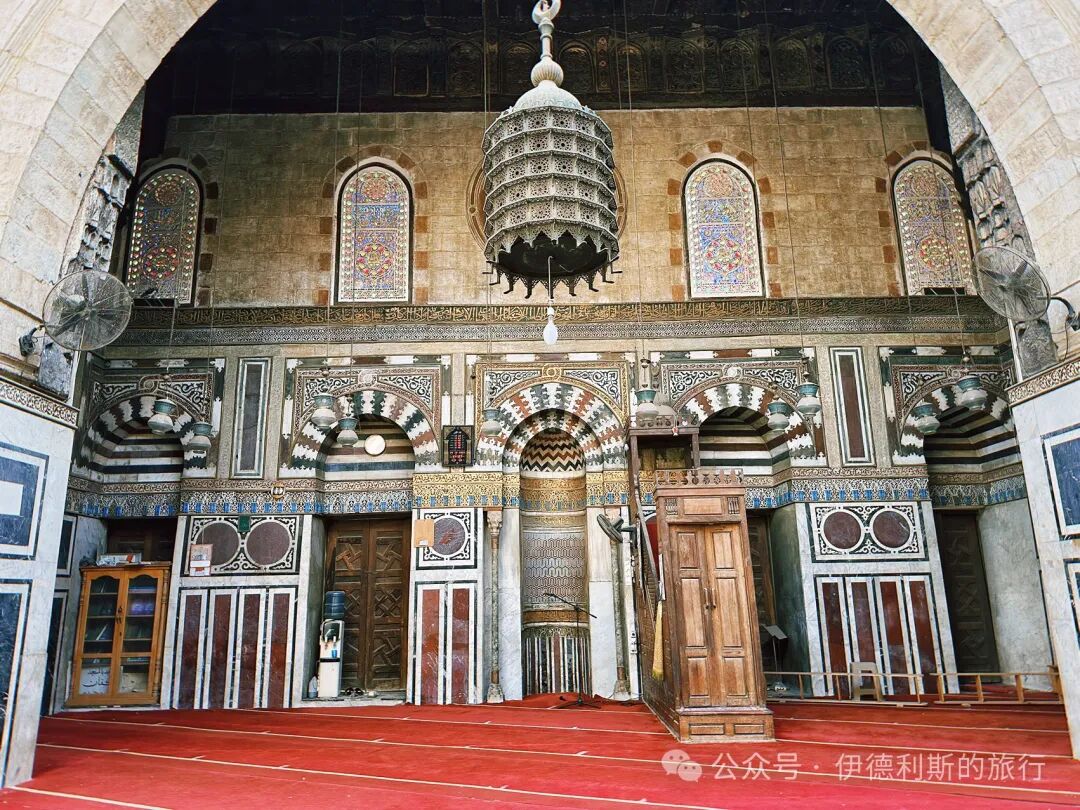
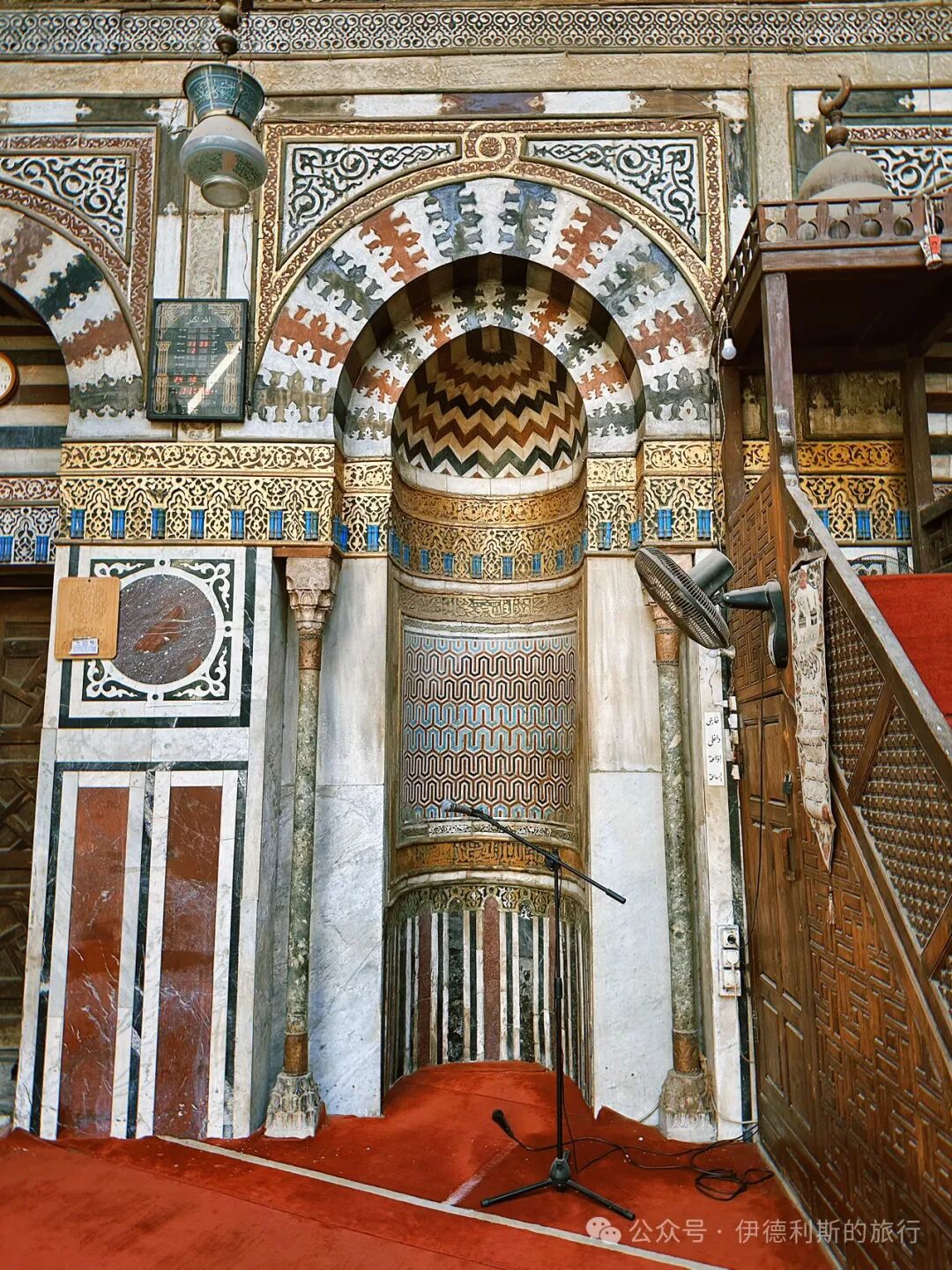
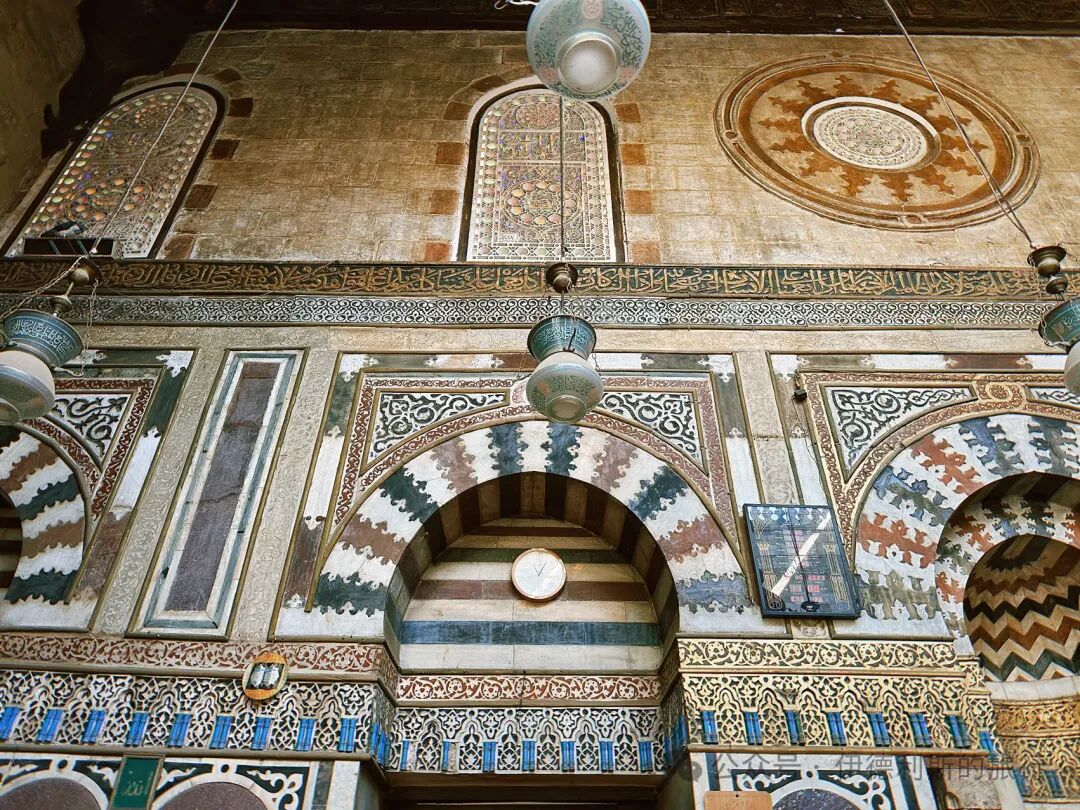
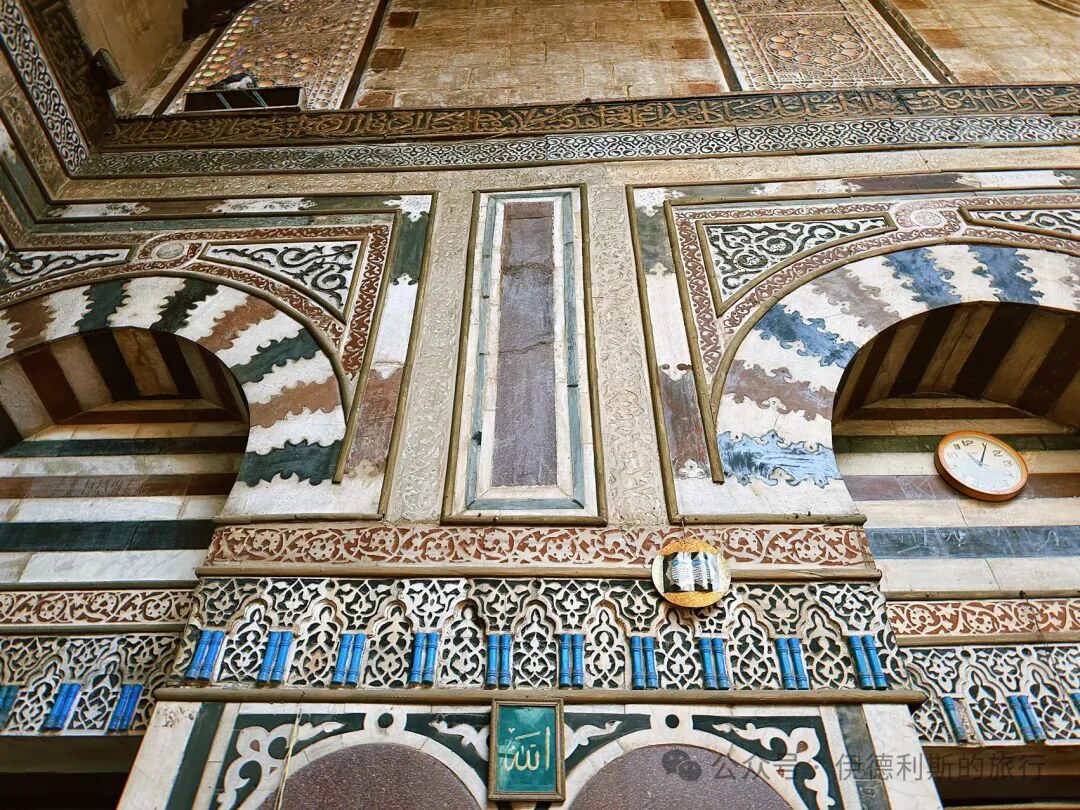
Turn back into al-Gamaleya Street along the alley south of the Aqmar Mosque to see the Madrasa of Amir Jamal al-Din al-Ustadar, built in 1407 by the Mamluk general Amir Jamal al-Din al-Ustadar. Jamal al-Din built many structures in Cairo, and al-Gamaleya Street is named after him.
This is a classic cruciform madrasa structure with an open courtyard in the center and an iwan (arched hall) on each of the four sides, each used to teach one of the four schools of Islamic jurisprudence. The decoration inside the main hall is very ornate, as People say Jamal al-Din modeled it after Mamluk palace designs and invested a large amount of money and materials. Jamal al-Din was executed just four years after the mosque was completed. The Sultan wanted to demolish the site, but a judge (Qadi) stopped him, and in the end, only Jamal al-Din's name was removed.
After the Ottoman Empire conquered Istanbul in 1517, many marble slabs from the inner walls of the madrasa were taken to Istanbul. The building was damaged again in the 1992 earthquake and was not fully restored until 2002.
Dhu al-Fiqar Fountain-Primary School (Sabil-Kuttab): 1673
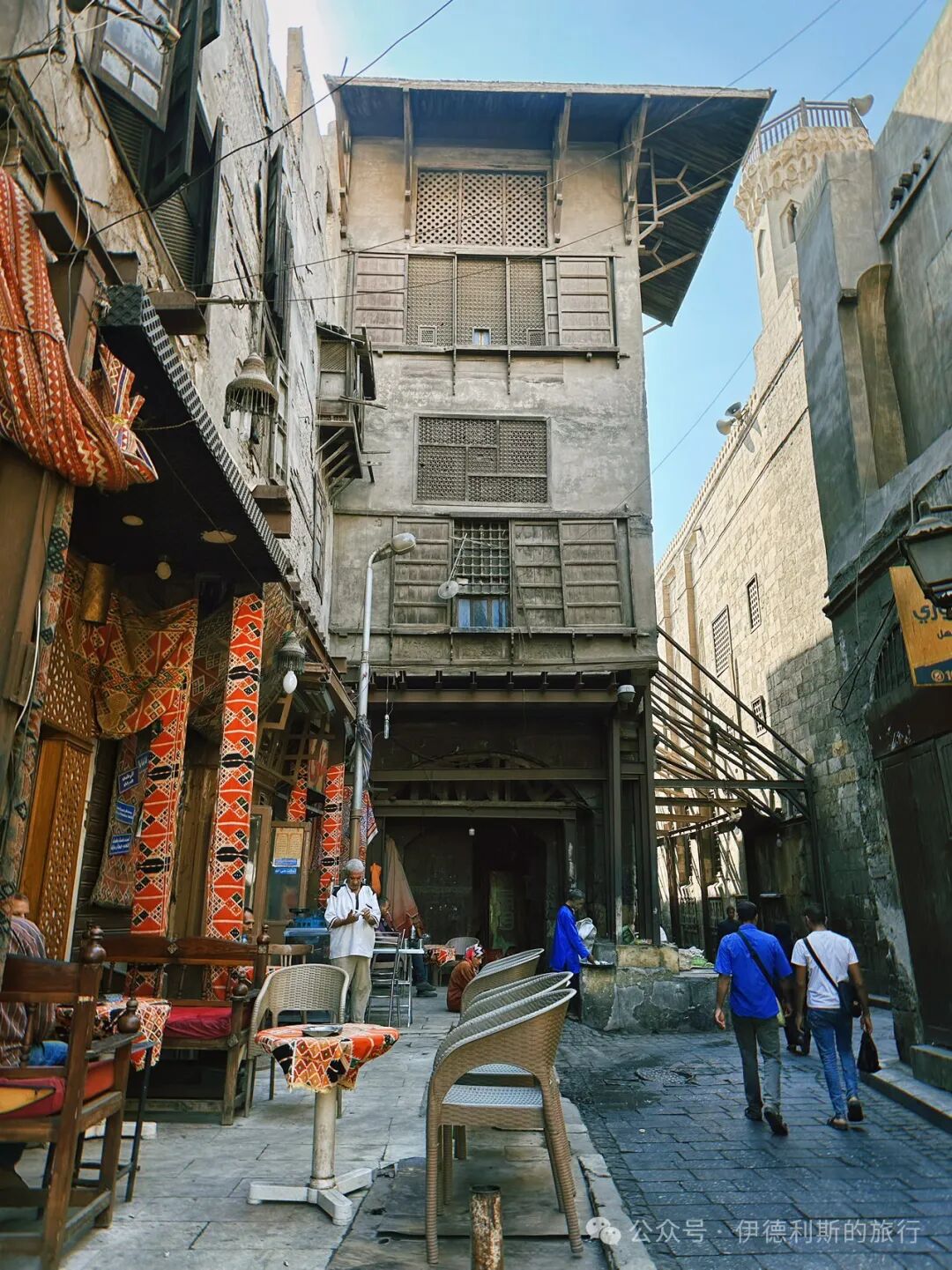
Opposite the Madrasa of Amir Jamal al-Din al-Ustadar is the Ottoman-era Dhu al-Fiqar Sabil-Kuttab, built in 1673 by Dhu al-Fiqar Katkhuda Mustahfizan and his brother Muhammad. This Sabil-Kuttab consists of two prominent wooden awnings, and the caravanserai (wikala) behind it was once a center for the coffee trade in 18th-century Cairo.
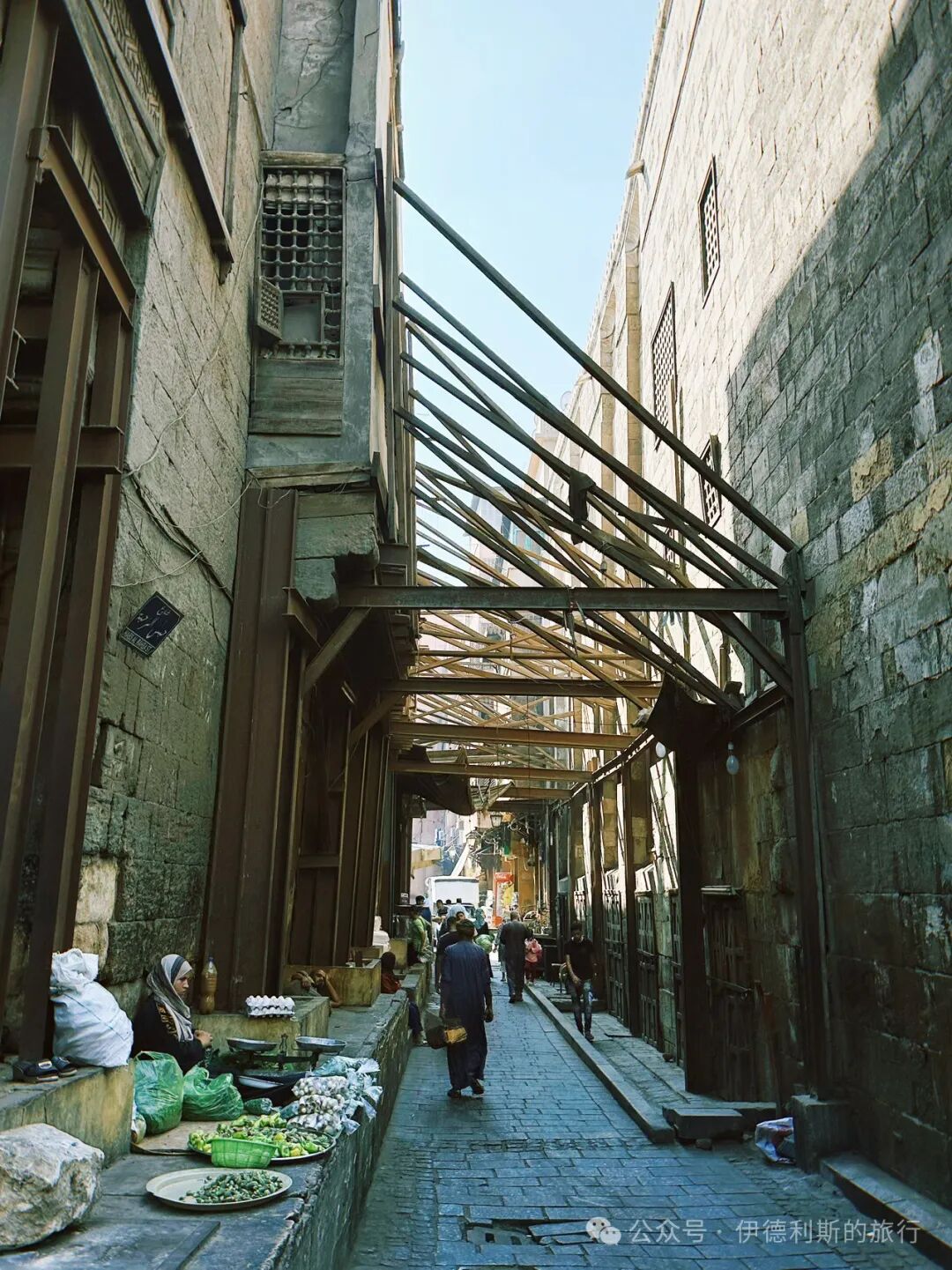
Maq’ad Mamay al-Sayfi Palace: 1496
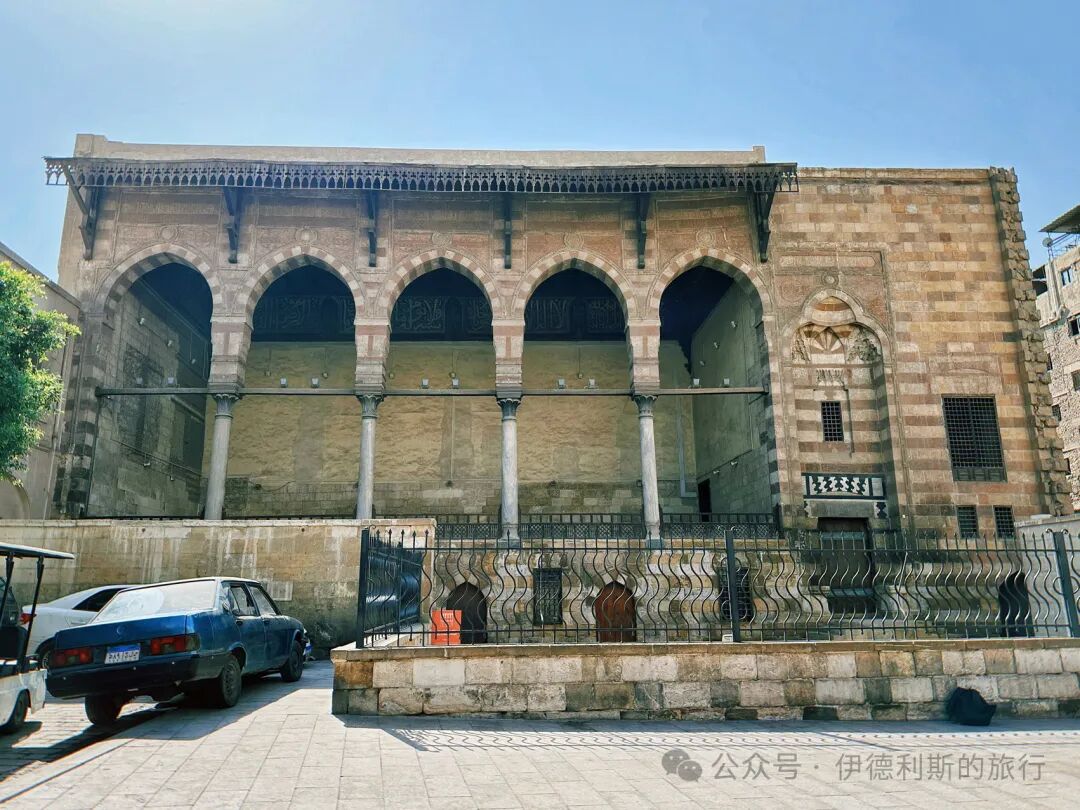
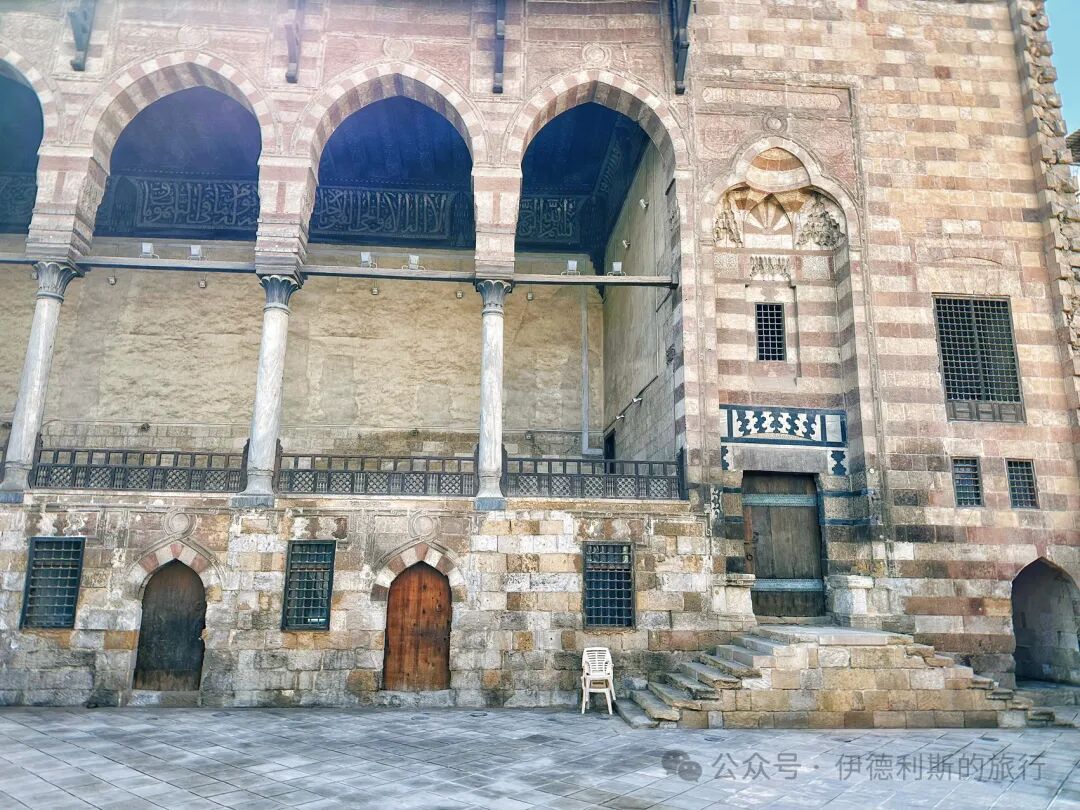
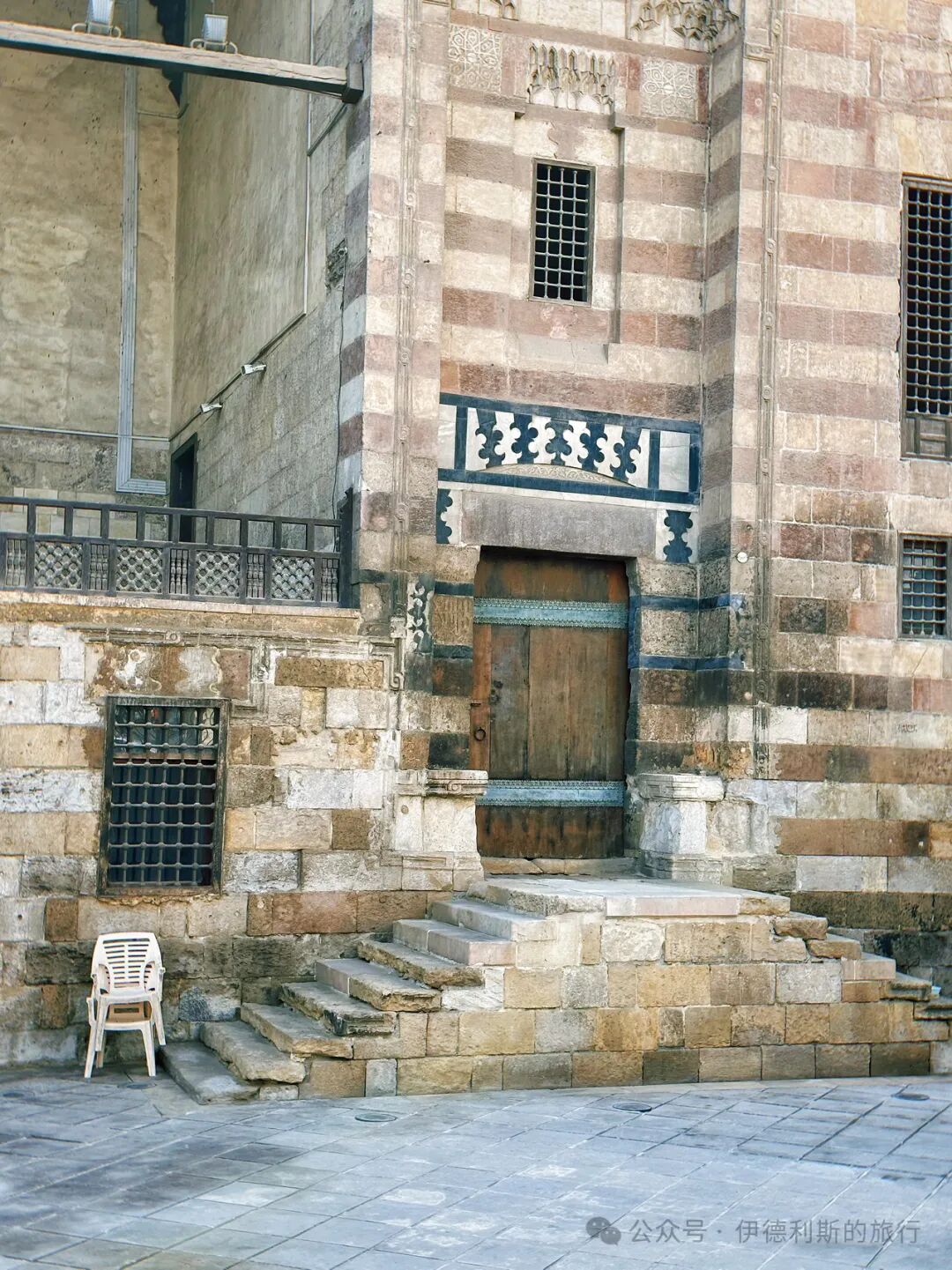
Continue south to the Maq’ad Mamay al-Sayfi Palace on Beet Al Qadi Street, built in 1496 by the Mamluk general Sayf al-Din Mamay ibn Khadad, who served as a Mamluk diplomat to the Ottoman Empire in the early 1490s.
During the Ottoman period, this place served as a high court and the residence of judges, so it is also called Bayt al-Qadi. In the late 19th century, Egypt's ruler Isma'il Pasha (reigned 1863-79) carried out urban renewal in Cairo, and most of the palace was demolished, leaving only a large house used for summer retreats. The house consists of an upper pavilion and a lower storage room. The lotus capitals of the pavilion are the only example in Islamic architecture in Cairo that directly uses architectural forms from the ancient Egyptian pharaonic era. The interior of the pavilion has complex decorations and calligraphy, but unfortunately, it was not open when we visited.
Abd al-Rahman Katkhuda Sabil-Kuttab: 1744
Walk south from the Aqmar Mosque to see the Sabil-Kuttab of Abd al-Rahman Katkhuda, a fountain-school built in 1744 during the Ottoman era. It is a landmark building on Al-Muizz Street, the main road in Old Cairo. During the Mamluk and Ottoman dynasties, these fountain-schools were very common in Cairo. The ground floor fountain (sabil) provided free drinking water to passersby, while the second floor school (kuttab) taught children how to read and write.
Although this fountain-school was built in the Mamluk style, it incorporates many Ottoman architectural elements. The builder, Abd al-Rahman Katkhuda, was a high-ranking Mamluk emir officer known for his noble lifestyle and patronage of the arts. He renovated or built 33 structures in Cairo.
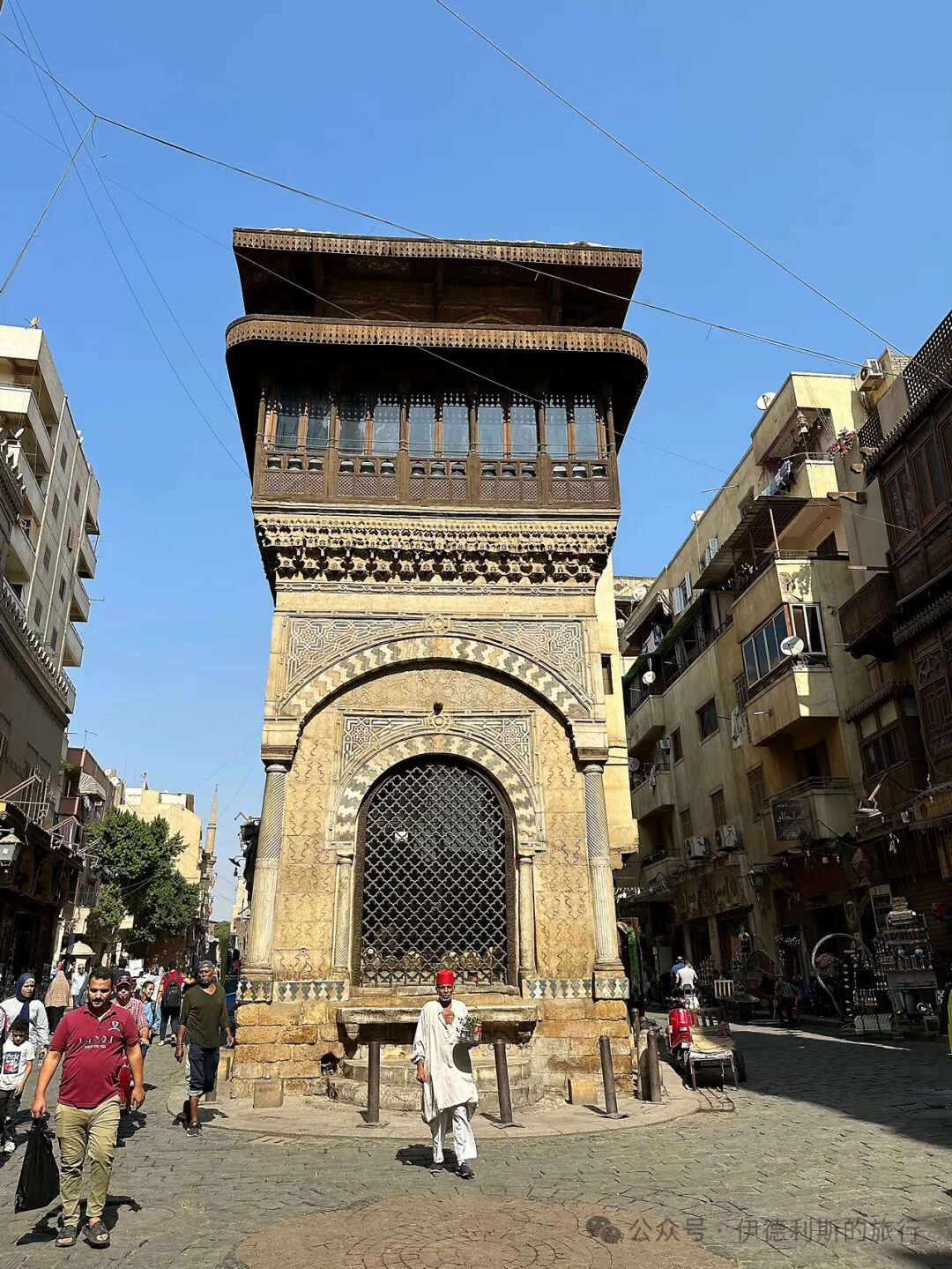
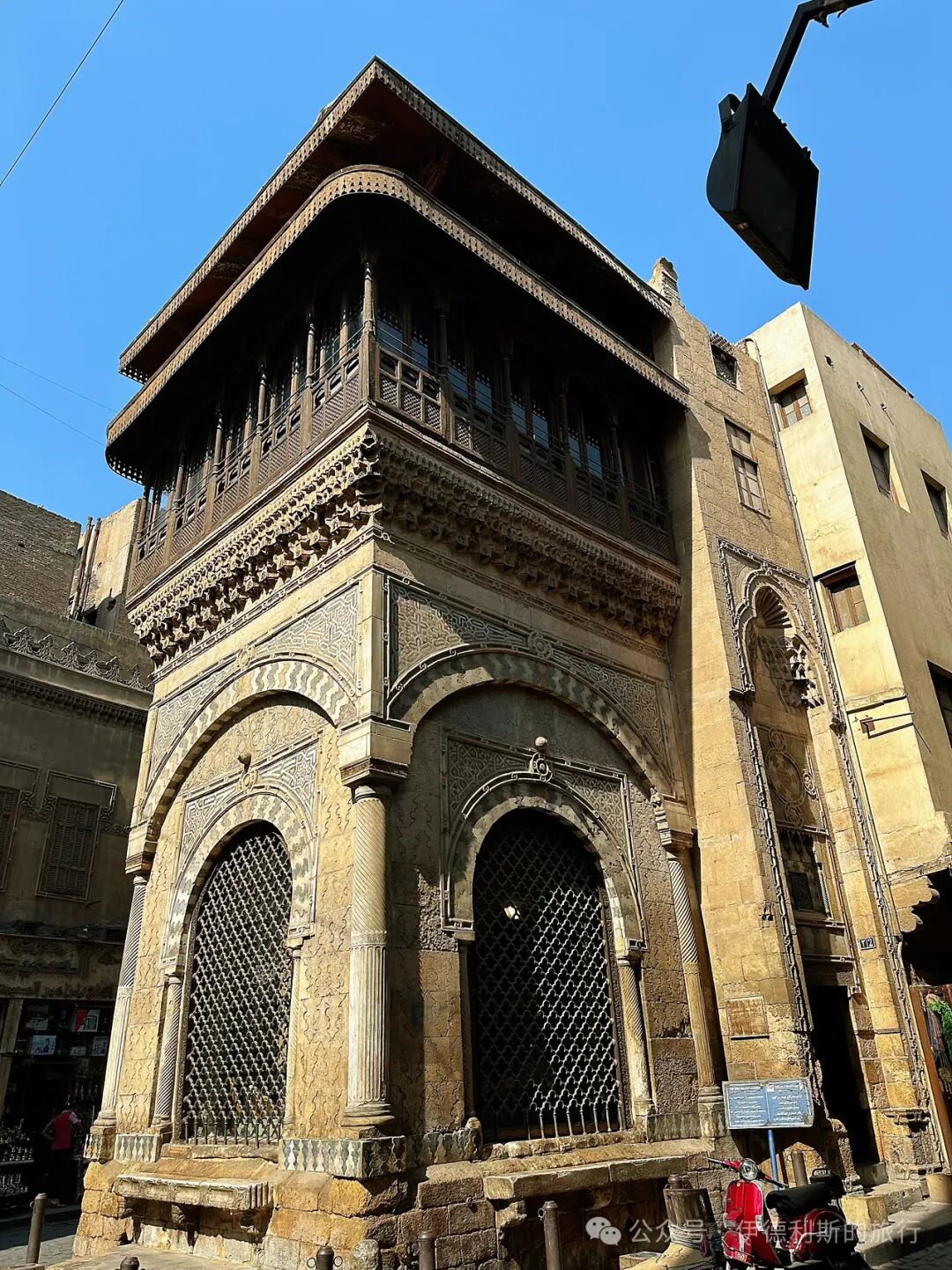
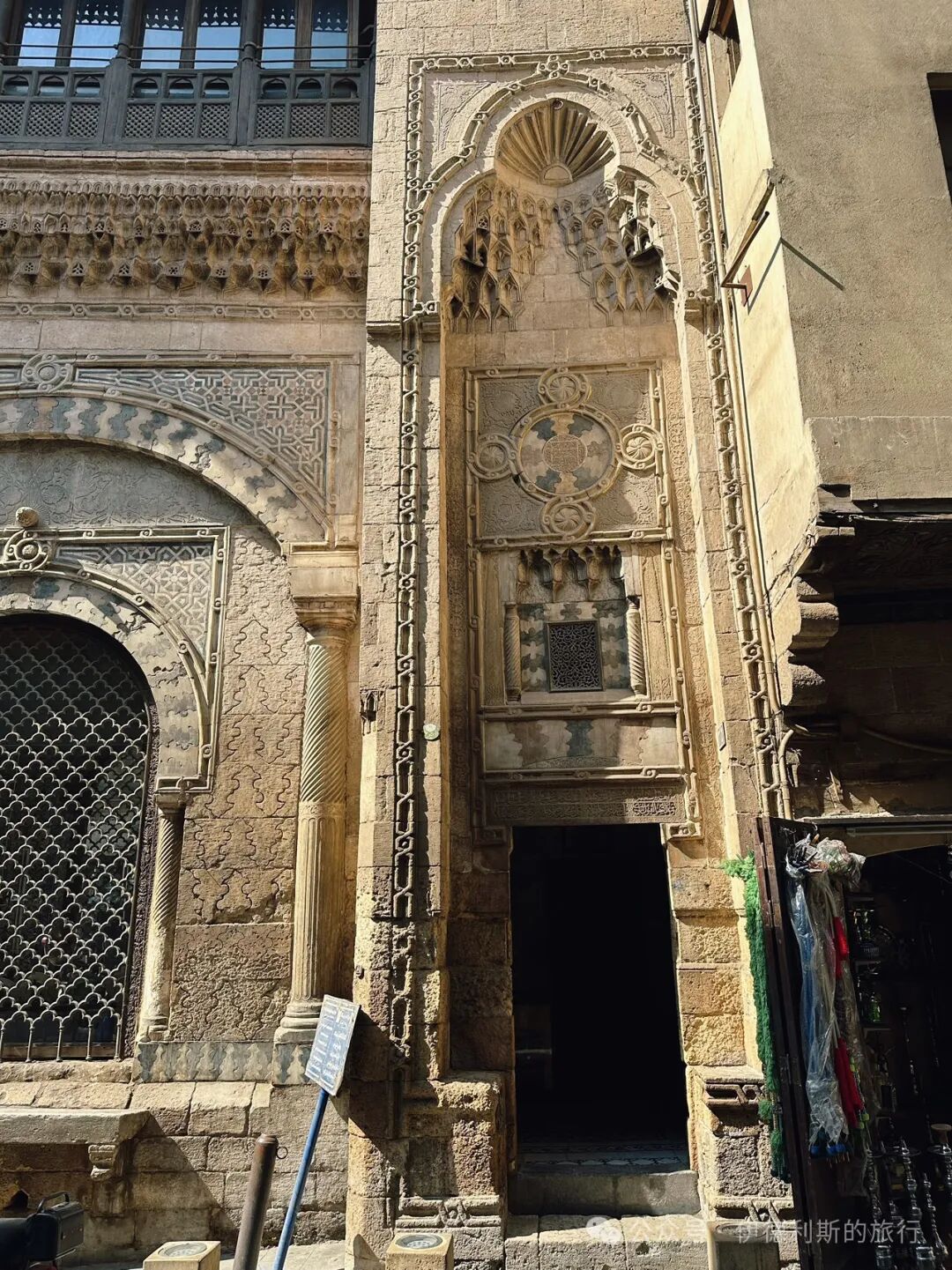
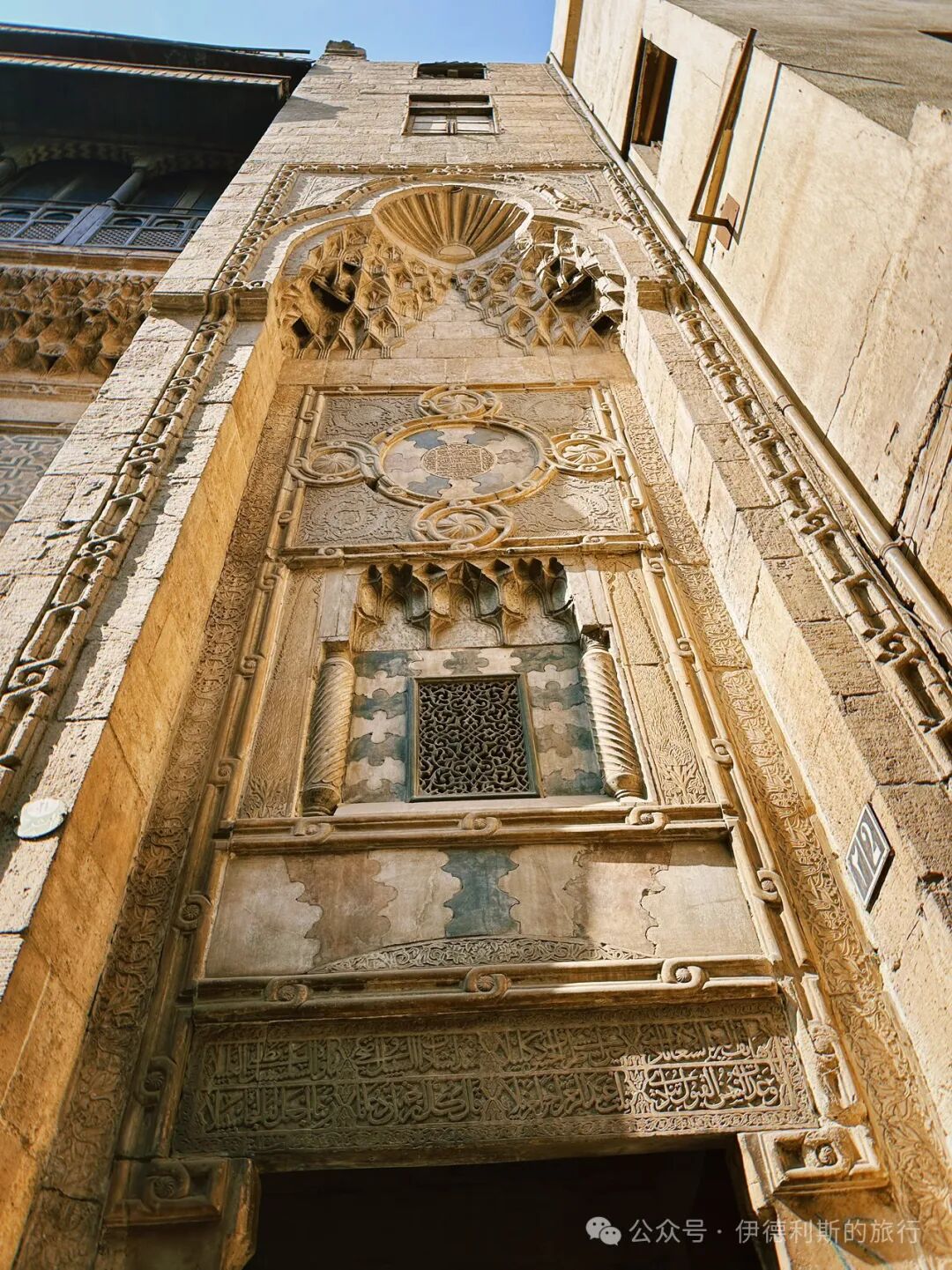
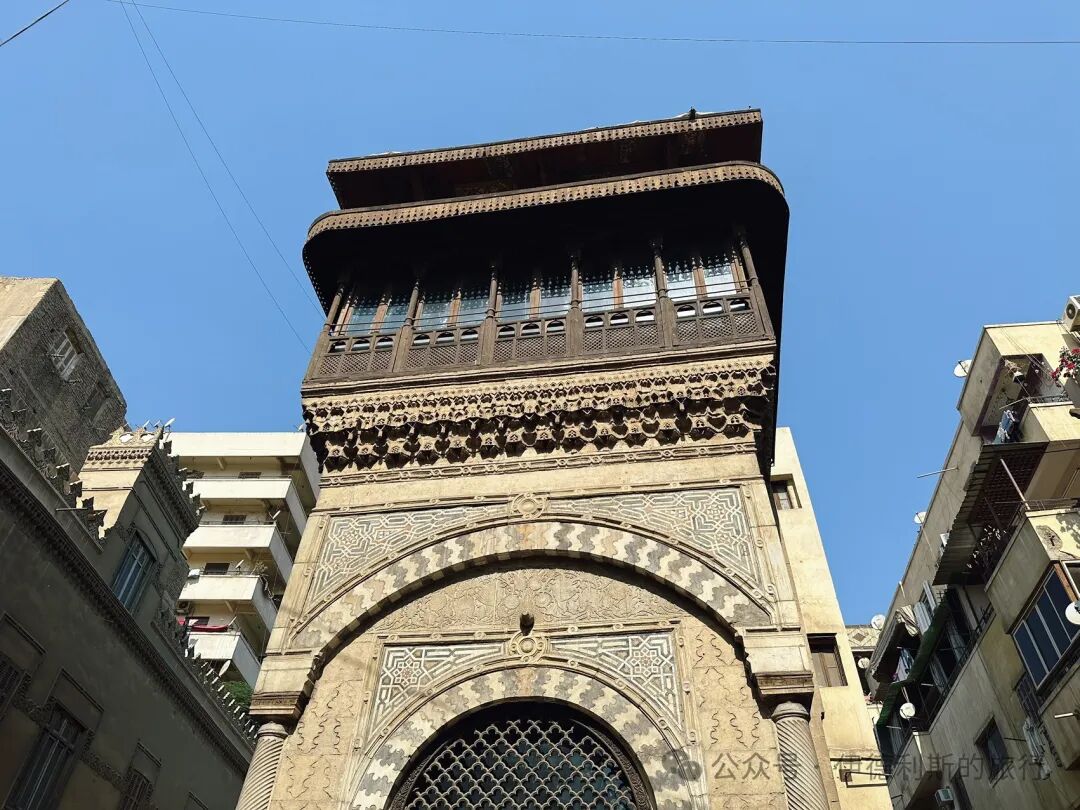
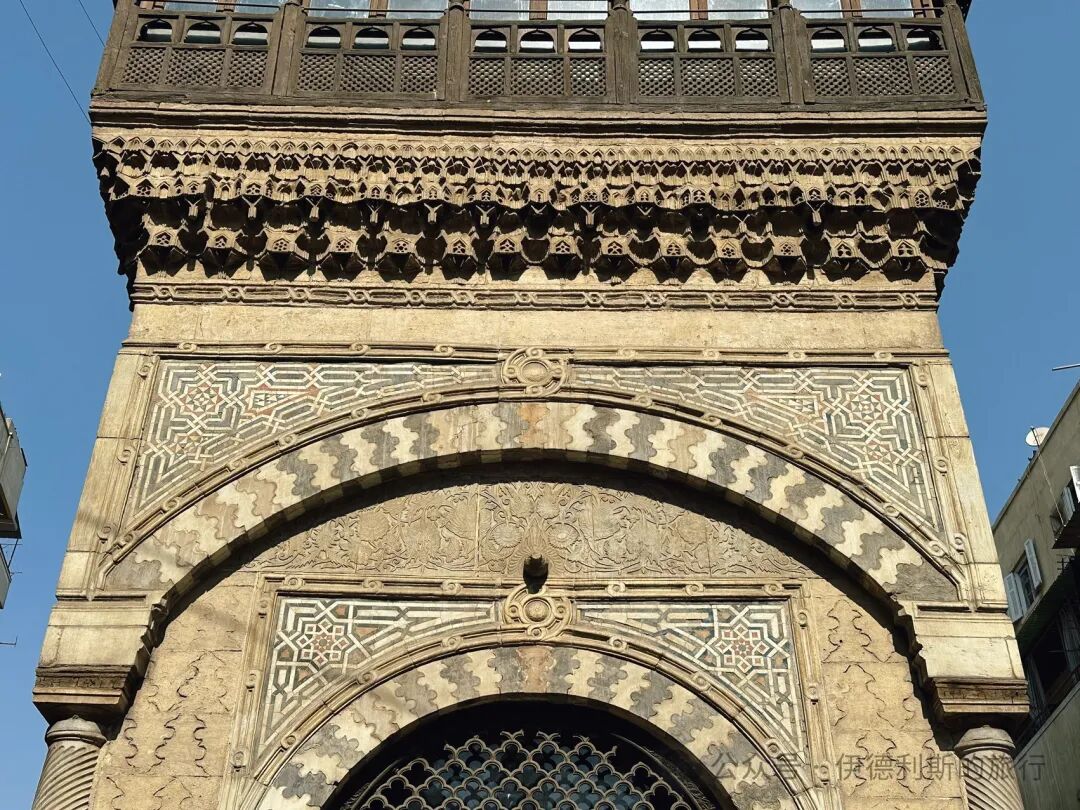
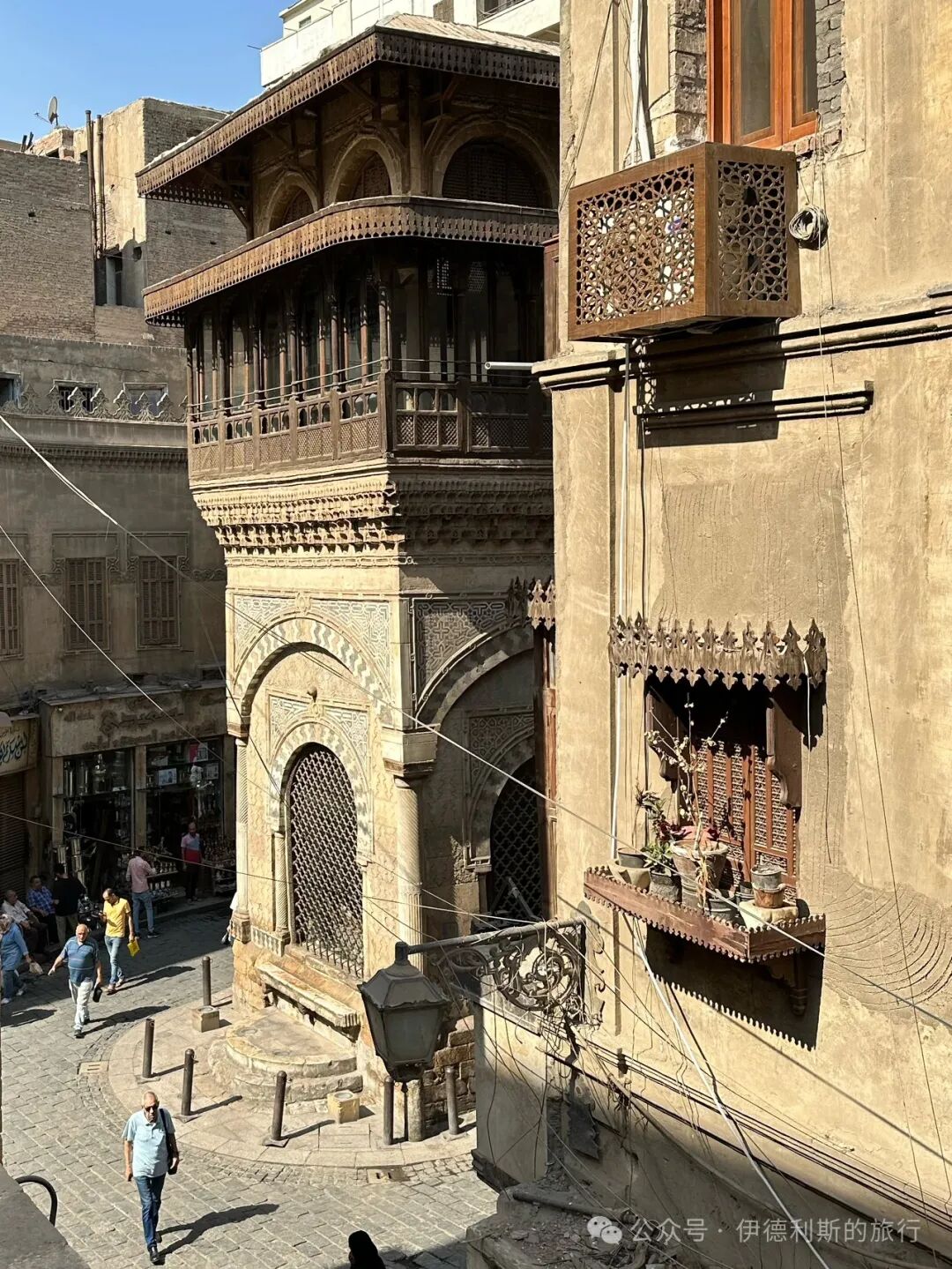
Across from the Khanqah of Baybars II stands the Qitas Bey fountain-school (sabil-kuttab), built in 1630 during the Ottoman period. In the Mamluk and Ottoman eras, most fountain-schools in the old city of Egypt were built on street corners.
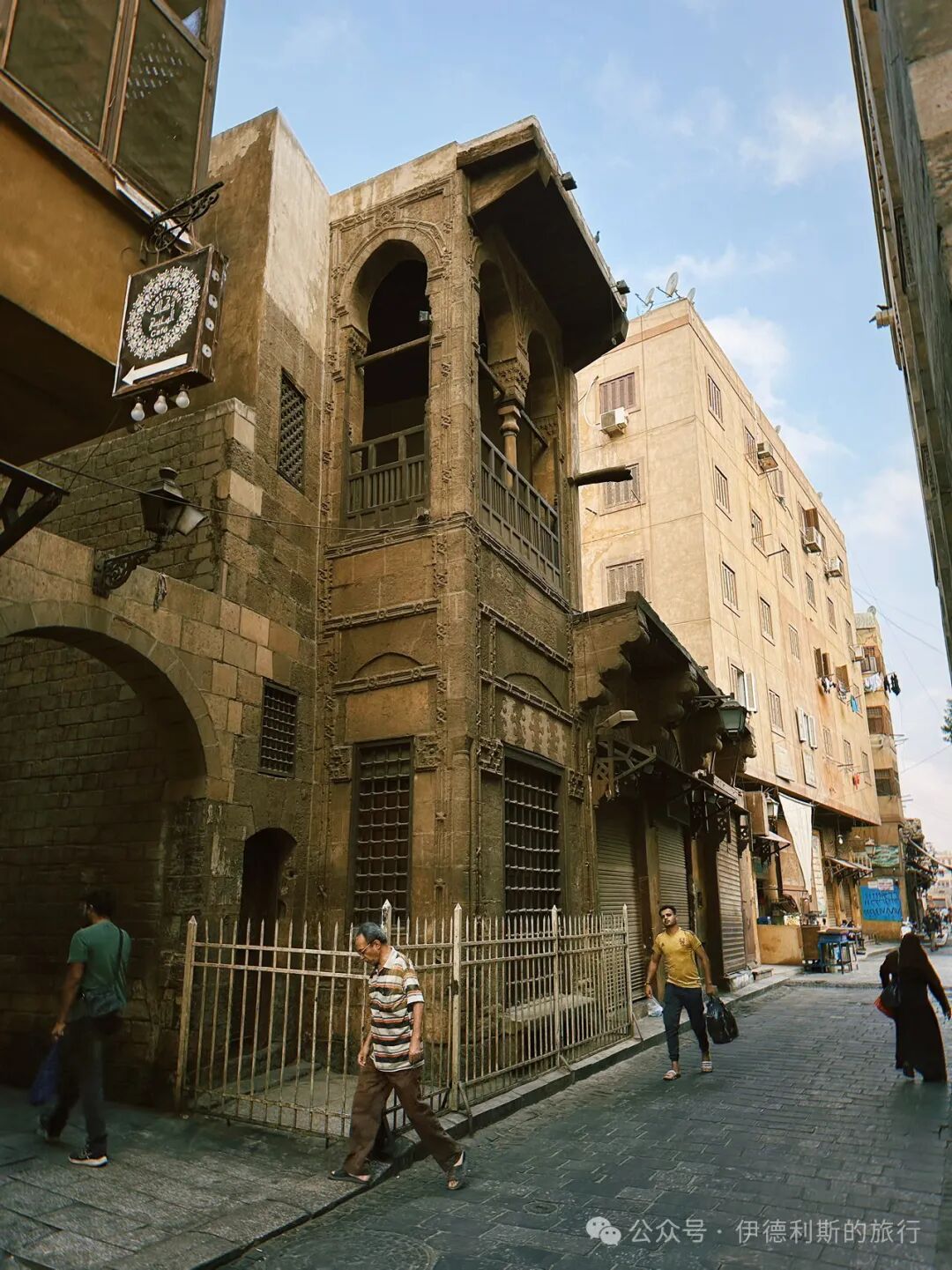
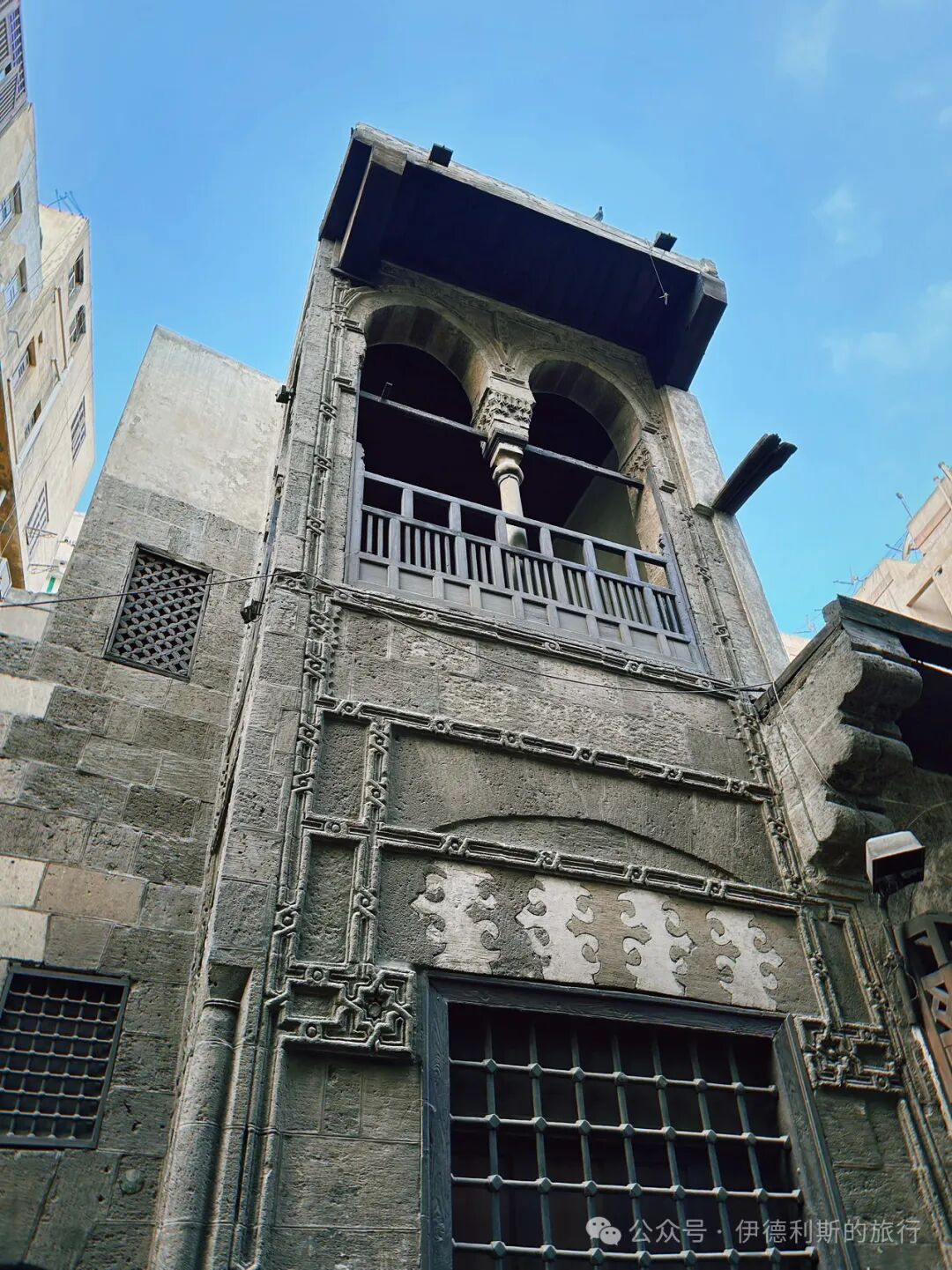
Bashtak Palace: 1334-1339.
Southeast of the Sabil-Kuttab of Abd al-Rahman Katkhuda is the Mamluk-era Bashtak Palace (Qasr Bashtak), built between 1334 and 1339 by the Mamluk emir and general Sayf al-Din Bashtak al-Nasiri. Bashtak was a powerful Mamluk emir who married the daughter of a Mamluk sultan and held important positions in the royal court. He chose a section of the former Fatimid eastern palace to build his own palace and stables, which became a model of Mamluk architecture.
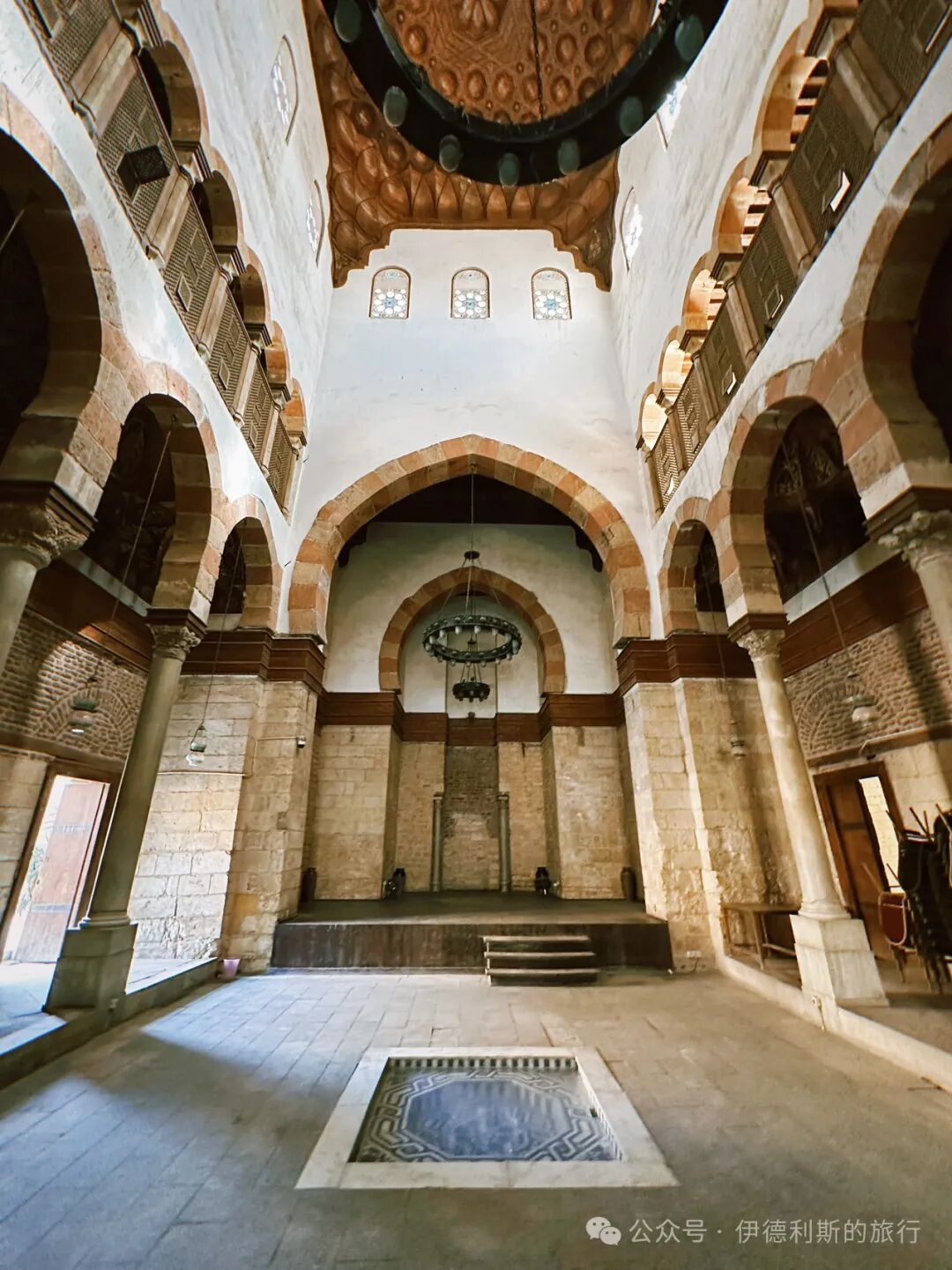
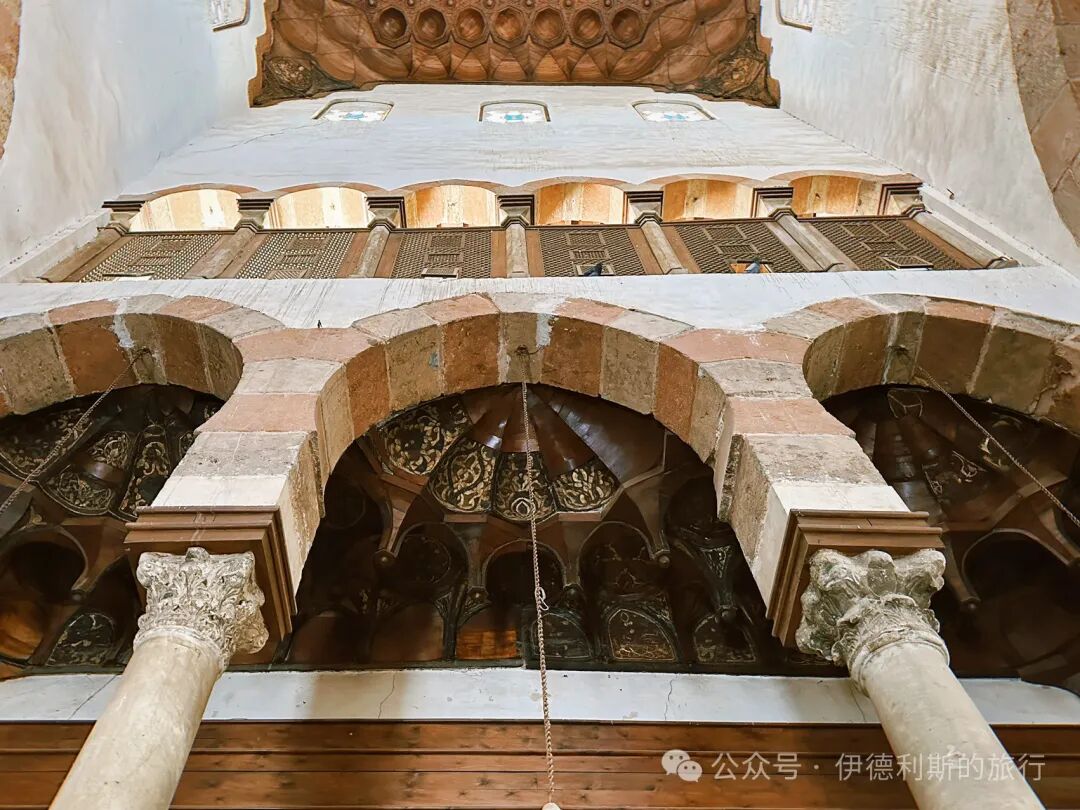
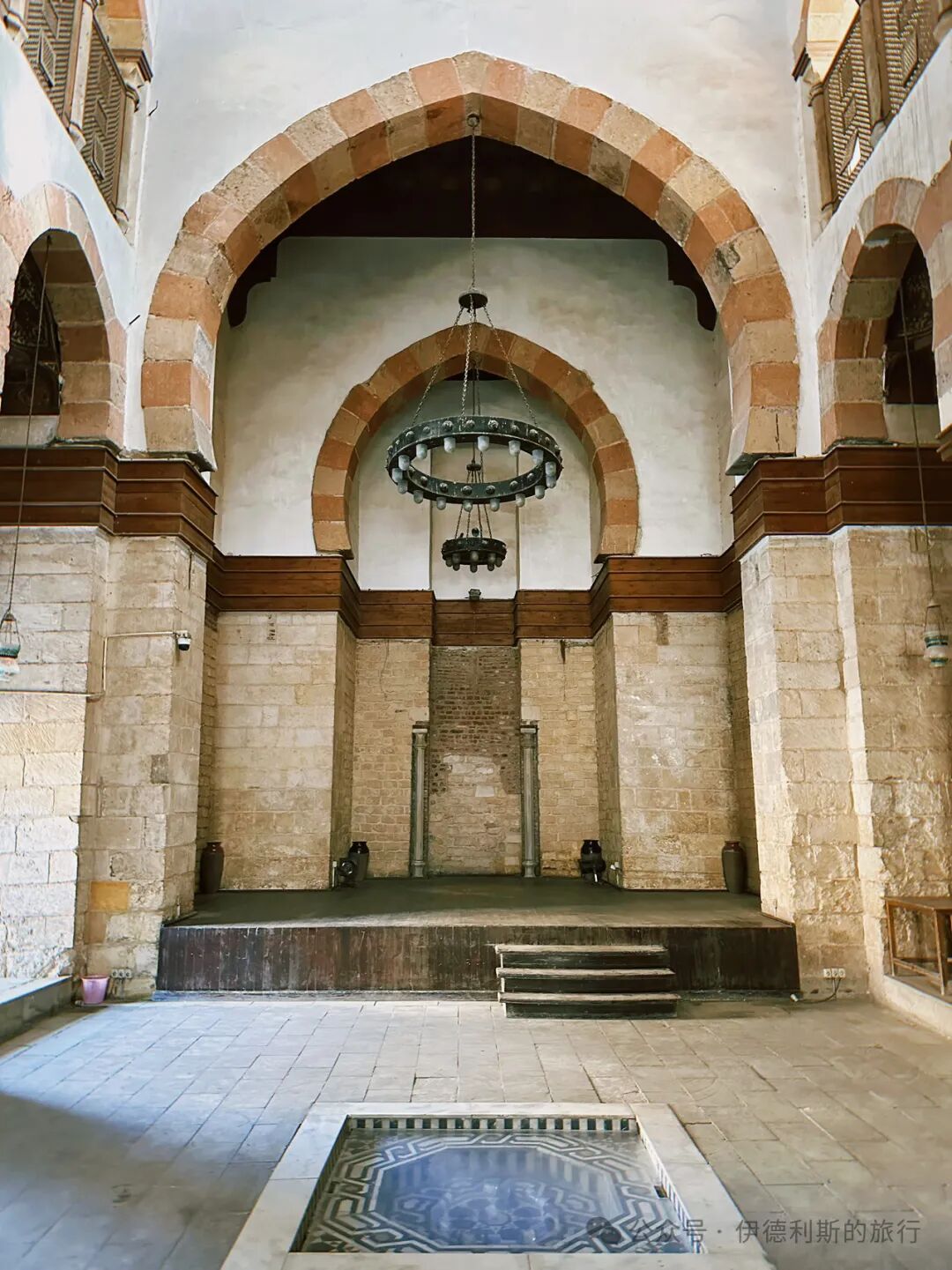
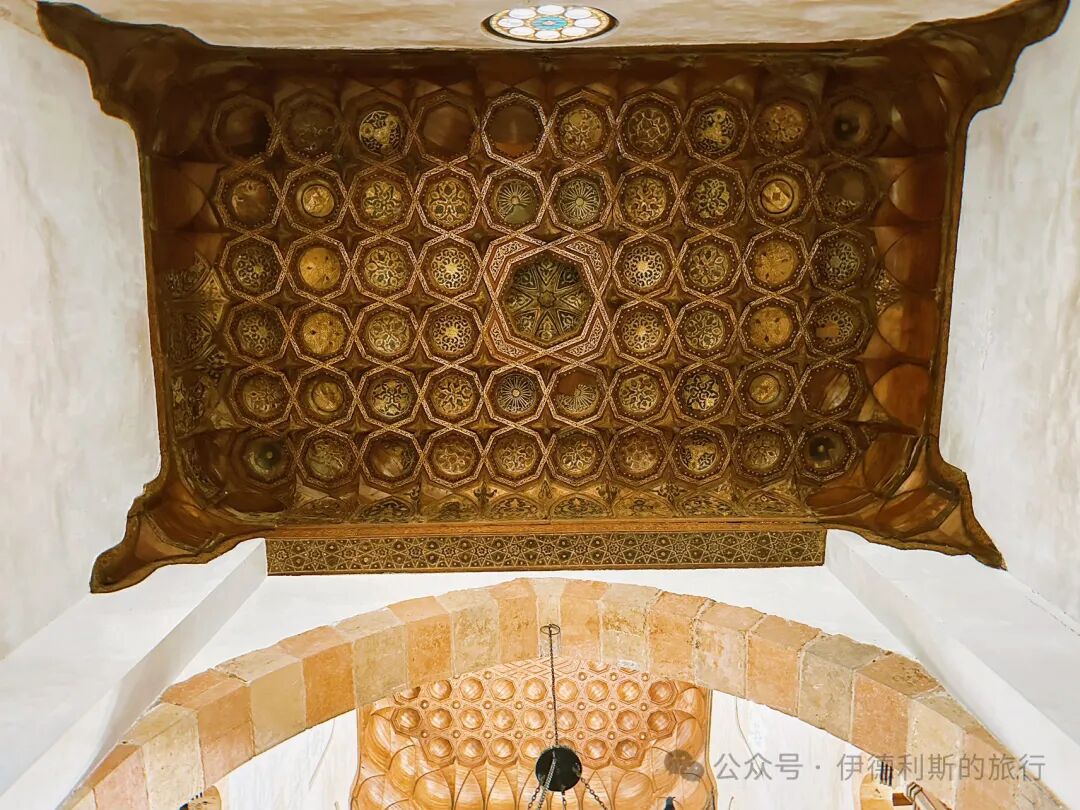
Only a portion of the Bashtak Palace remains today, the most important part being the reception hall (qa'a). The hall features a wooden paneled ceiling, stained glass, and an inlaid marble fountain. The upper level has wooden lattice windows (mashrabiyya), all of which are typical architectural styles of the Mamluk period.
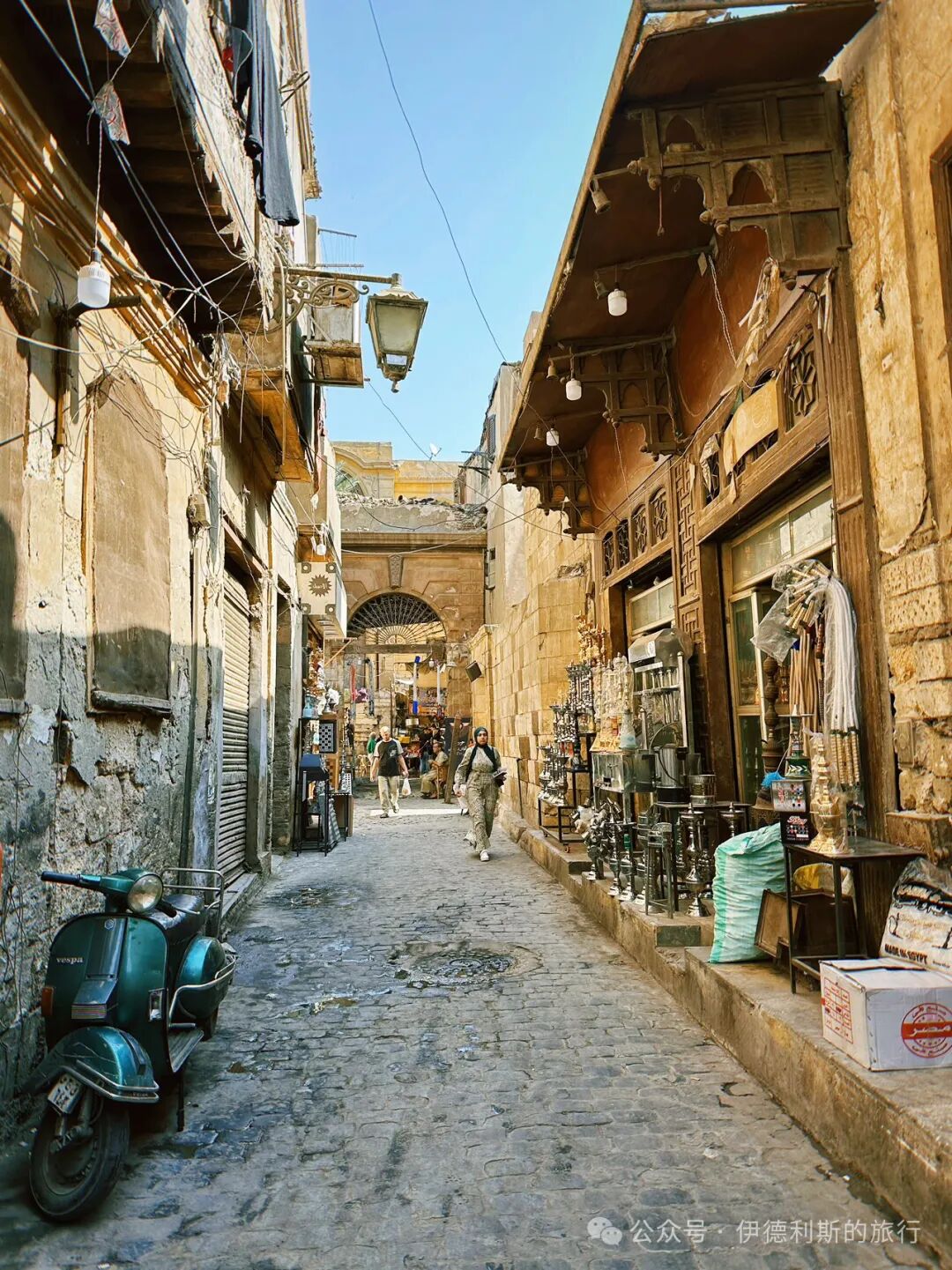
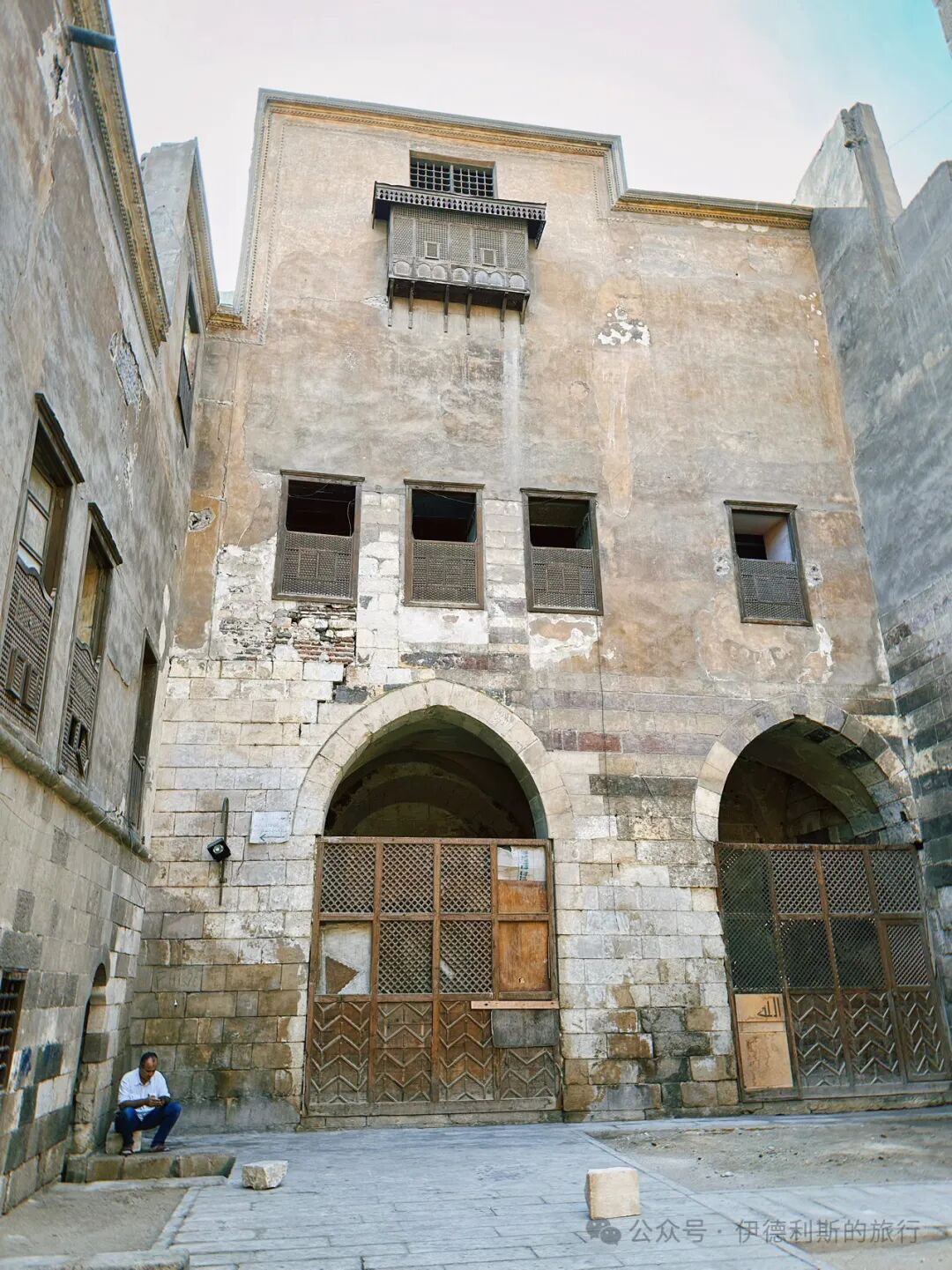
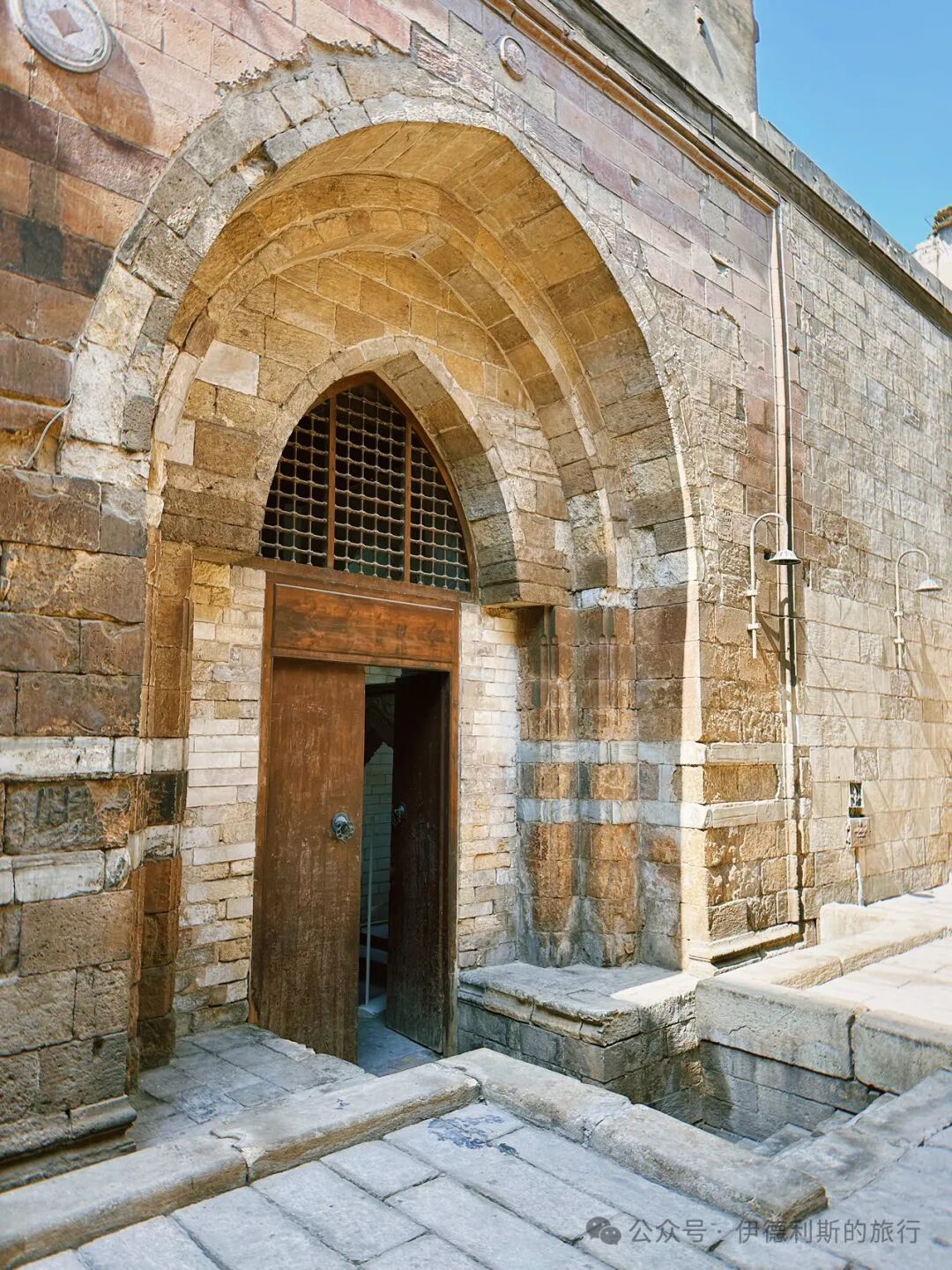
Summary: This Old Cairo travel account walks inside the northern gate of the historic city and follows its mosques, streets, gates, and layered Islamic history. It keeps the original place names, dates, buildings, and travel route without adding outside claims.
The history of Cairo as a city goes back over a thousand years. Back in the ancient Roman era, the Romans built the Babylon Fortress in the south of Cairo. After the Arabs took Cairo in 641 AD, they built the city of Fustat to the northeast of the Babylon Fortress. Over the next 300 years, Muslim rulers from different dynasties built several cities near Cairo, but none of them survived. In 969 AD, the Shia Fatimid dynasty conquered Egypt and spent four years building what is now the old city of Cairo. By this count, the old city of Cairo is now 1,055 years old.
The walls of old Cairo were started in 969 AD. They were first made of brick, then expanded with stone during the reign of the Fatimid Caliph al-Mustansir Billah (reigned 1036-1094), and finally finished in 1087. The north gates of the old city, the Gate of Conquest (Bab al-Futuh) and the Gate of Victory (Bab al-Nasr), were both built during this time. In this article, I will take you through the north gate into old Cairo to experience its thousand-year history.
Gate of Conquest and Gate of Conquest: 1087
The Gate of Conquest is 22 meters high and has two round towers. The stone carving details may have been influenced by Syrian or Byzantine craftsmen. Above the arch, the surface is covered in diamond patterns containing rosettes and crosses. The parts of the towers that hang outward are carved with ram heads, which are symbols of Mars in the zodiac. Inside the gate, the dome and the rectangular space connect through a pendentive, which is a typical feature of Byzantine architecture.
The Gate of Victory is on the east side of the Gate of Conquest. Unlike the round towers of the Gate of Conquest, the towers of the Gate of Victory are square and contain guard rooms and living areas. There are shield carvings above the gate, which symbolize protecting the city from invasion. The shield features an Arabic inscription from its 1087 reconstruction, along with a Shia version of the Shahada that mentions Ali as the friend (wali) of Allah.
Al-Hakim Mosque: 1013.
Right next to the northern wall of Old Cairo stands the Al-Hakim Mosque, named after the sixth Fatimid caliph and the 16th imam of the Ismaili branch of Shia Islam, al-Hakim bi-Amr Allah (reigned 996-1021). The mosque was started in 990 by the fifth Fatimid caliph, al-Aziz Billah (reigned 975-996), and finished in 1013 by Caliph al-Hakim, making it 1,010 years old today.
The Al-Hakim Mosque was originally outside the walls of Cairo, but it was brought inside the city after the walls were rebuilt in 1087. The mosque's architectural style is similar to the Al-Azhar Mosque, but it is twice as large. The most striking features inside are the two minarets built on square brick bases. When the minarets were first built in 1003, they were separate structures, and they were only encased in brick in 1010. Some scholars suggest this might be linked to the ruler of Mecca rejecting Fatimid authority in 1010, which weakened the dynasty's power. The outer wall of the southern brick base has marble Kufic Arabic inscriptions from the Fatimid period, while the Kufic inscriptions on the northern base were moved to the outside of the city wall when it was incorporated into the northern wall of Old Cairo in 1087.
During the Crusades, the mosque was used as a prison by the Franks and later as a stable by Saladin. It was renovated during the Mamluk period in the 14th century but later fell into ruins for a long time. The mosque was renovated in 1808, and a small, colorful marble mihrab added during that time still survives today.
In the 20th century, the mosque served as a school until 1980, when the Dawoodi Bohra branch of Shia Islam carried out a massive reconstruction and renovation using white marble. Inside the main hall after the reconstruction, only the original stucco carvings, wooden beams, and scriptures were preserved. This restoration caused a lack of authenticity that sparked criticism and widespread discussion among scholars. In 2017, the Dawoodi Bohra community and the Egyptian Ministry of Tourism and Antiquities launched a new round of restoration, and it did not reopen until February 2023.
Caravanserai of Qaitbay: 1481
Enter the old city of Cairo through the Gate of Victory (Bab al-Futuh) onto El-Gamaleya Street. The first thing you see is the caravanserai (wikala) of Sultan Qaitbay, which is currently under renovation. It was built in 1481 by Sultan Qaitbay (reigned 1468-1496) of the Mamluk dynasty. Qaitbay was one of the Mamluk sultans who sponsored the most architecture. Although the Mamluk dynasty was in decline, the situation remained relatively stable under his rule, and trade flourished.
Like other Mamluk caravanserais (wikala), this place not only provided short-term housing for passing caravans but also offered long-term rental apartment units (rab). It was used as apartments for hundreds of years until the Egyptian Ministry of Antiquities began renovations in 2015. Work is still ongoing, and you can still see the wooden lattice windows (mashrabiya) facing the street.
Gate of the Caravanserai of Qawsun: 1341
Continuing south, you can see the remains of the gate of the caravanserai (wikala) of Emir Qawsun. This inn was built in 1341 by the famous Mamluk Emir Qawsun (1302-1342). It was used by soap and coffee merchants from Palestine in the 17th and 18th centuries, so it is also called the Soap Inn. The inn was demolished in 1960 to be rebuilt as a school, and only the gate remains. Above the gate is a stone carving of a pair of cups, because Emir Qawsun once served as the Sultan's cupbearer (saqi).
Qawsun was born on the Kipchak steppe under the rule of the Golden Horde and started out as a merchant. In 1320, Princess Tulunbay of the Golden Horde married the Mamluk Sultan of Egypt. Qawsun came to Cairo as part of her entourage and stayed in Cairo to sell leather goods. Qawsun was highly valued by the Sultan in Cairo and became his personal attendant. He then rose quickly through the ranks and married the Sultan's daughter. After the old Sultan died in 1341, Qawsun became the regent and held actual power over the Mamluk dynasty. However, he was defeated by political rivals a few months later and was killed in prison.
Continuing south along El-Gamaleya Street, you can see several more historical buildings.
Khanqah of Baybars II: 1310
On the east side of the middle section of El-Gamaleya Street stands the Khanqah of Baybars II, built in 1310. Baybars II was the 12th Sultan of the Mamluk dynasty and reigned for only one year, from 1309 to 1310. Baybars II served as vice-sultan from 1299 to 1309 and led the Mamluk Sultanate against the Ilkhanate in the Battle of Marj al-Saffar in Syria in 1303. This battle resulted in the total defeat of the Mongol army that had marched west into Syria. People say the Sultan led his captives from the Gate of Victory along El-Gamaleya Street into the old city of Cairo. Singers and dancers from all over came to celebrate, and the city was decorated with lights for days of festivities.
The exquisite Islamic geometric patterns (Girih) on the gate of the Khanqah of Baybars II form complex designs through overlapping and interlacing.
It is very interesting that the threshold of the gate is made of stone blocks carved with ancient Egyptian hieroglyphs, which is the first time I have ever seen this.
Bayt al-Suhaymi: 1648
Walking west from the Khanqah of Baybars II, you can see the Bayt al-Suhaymi on Darb al-Asfar Street. Built in 1648, it is the best-preserved private residence from the Ottoman period in old Cairo and is now open as a tourist site.
This residence is built around a courtyard (Sahn) with a small garden planted with palm trees in the center. You can see beautiful wooden lattice windows (Mashrabiya) in the courtyard. The south side of the mansion is the original 1648 structure, while the north side was expanded in 1797. It is now named after its last owner, Sheikh Muhammad Amin al-Suhaymi, who was a sheikh at Al-Azhar Mosque. In 1930, King Fuad I of Egypt provided funds to purchase the mansion and placed it under the management of the Committee for the Preservation of Arab Art Monuments.
The ornate ceiling decorations of Bayt al-Suhaymi.
The wood-carved furniture and colorful marble floors inside Bayt al-Suhaymi.
Mosque-Sabil of Sulayman Agha al-Silahdar: 1839
Continuing west back to the main road of old Cairo, Al-Mu'izz Street, the first thing you see is the Mosque-Sabil of Sulayman Agha al-Silahdar, built in 1839. This fountain has a fancy Ottoman Baroque facade with floral patterns from the European Renaissance. The fountain is made of marble and was used to keep the water cool during the summer. Next to the fountain is a primary school (kuttab) that was once used to teach children how to read, write, and recite scripture. Here, we can also enter the huge underground water reservoir of the fountain, which is rarely seen in typical fountains.
Aqmar Mosque: 1125-6
Walking south along Al-Muizz Street, we stop at the famous Fatimid-era Aqmar Mosque. The Aqmar Mosque was built in 1125-6 by order of the Fatimid vizier Al-Ma'mun al-Bata'ihi. It sits at the northeast corner of the former Eastern Fatimid Palace, right next to the palace grounds.
The Aqmar Mosque holds a groundbreaking place in Egyptian architectural history. It is the first mosque where the entrance is flush with the street rather than aligned with the qibla wall, making it the first mosque planned according to Cairo's street layout. It is also the first mosque to feature complex stone carvings. The facade of the Aqmar Mosque is very luxurious. Above the entrance is a large medallion surrounded by a grille, with the names of the Prophet and Ali in the center and verses written around them. This type of decoration is unique in Cairo.
At the top of the left facade, there are carvings of a door and a window. The window on the left symbolizes the ceremonial grille that the Fatimids took back from the palace of their rivals, the Abbasids in Baghdad, serving as a symbol of victory. Inside the window is a lamp and a six-pointed star, based on the Shia hadith: 'The stars are a promise to the world, and it will not be submerged.' Below the window, there is a carving of a plant growing out of a flower pot, which comes from the Prophet's reference to Hasan and Husayn as 'my two aromatic herbs in the world.' The door in the upper right corner comes from the famous Shia hadith: 'I am the city of knowledge, and Ali is its gate.'
Because it was near the Fatimid palace, the Aqmar Mosque did not originally have a minaret. One was not added until the end of the 14th century by the Mamluk dynasty, and the cylindrical top was rebuilt during the Ottoman era.
In 1993, the Dawoodi Bohra branch of the Shia community carried out a large-scale renovation of the Aqmar Mosque. Most of the historical elements inside the main hall were not preserved, which drew criticism.
Madrasa of Emir Jamal al-Din al-Ustadar: 1407
Turn back into al-Gamaleya Street along the alley south of the Aqmar Mosque to see the Madrasa of Amir Jamal al-Din al-Ustadar, built in 1407 by the Mamluk general Amir Jamal al-Din al-Ustadar. Jamal al-Din built many structures in Cairo, and al-Gamaleya Street is named after him.
This is a classic cruciform madrasa structure with an open courtyard in the center and an iwan (arched hall) on each of the four sides, each used to teach one of the four schools of Islamic jurisprudence. The decoration inside the main hall is very ornate, as People say Jamal al-Din modeled it after Mamluk palace designs and invested a large amount of money and materials. Jamal al-Din was executed just four years after the mosque was completed. The Sultan wanted to demolish the site, but a judge (Qadi) stopped him, and in the end, only Jamal al-Din's name was removed.
After the Ottoman Empire conquered Istanbul in 1517, many marble slabs from the inner walls of the madrasa were taken to Istanbul. The building was damaged again in the 1992 earthquake and was not fully restored until 2002.
Dhu al-Fiqar Fountain-Primary School (Sabil-Kuttab): 1673
Opposite the Madrasa of Amir Jamal al-Din al-Ustadar is the Ottoman-era Dhu al-Fiqar Sabil-Kuttab, built in 1673 by Dhu al-Fiqar Katkhuda Mustahfizan and his brother Muhammad. This Sabil-Kuttab consists of two prominent wooden awnings, and the caravanserai (wikala) behind it was once a center for the coffee trade in 18th-century Cairo.
Maq’ad Mamay al-Sayfi Palace: 1496
Continue south to the Maq’ad Mamay al-Sayfi Palace on Beet Al Qadi Street, built in 1496 by the Mamluk general Sayf al-Din Mamay ibn Khadad, who served as a Mamluk diplomat to the Ottoman Empire in the early 1490s.
During the Ottoman period, this place served as a high court and the residence of judges, so it is also called Bayt al-Qadi. In the late 19th century, Egypt's ruler Isma'il Pasha (reigned 1863-79) carried out urban renewal in Cairo, and most of the palace was demolished, leaving only a large house used for summer retreats. The house consists of an upper pavilion and a lower storage room. The lotus capitals of the pavilion are the only example in Islamic architecture in Cairo that directly uses architectural forms from the ancient Egyptian pharaonic era. The interior of the pavilion has complex decorations and calligraphy, but unfortunately, it was not open when we visited.
Abd al-Rahman Katkhuda Sabil-Kuttab: 1744
Walk south from the Aqmar Mosque to see the Sabil-Kuttab of Abd al-Rahman Katkhuda, a fountain-school built in 1744 during the Ottoman era. It is a landmark building on Al-Muizz Street, the main road in Old Cairo. During the Mamluk and Ottoman dynasties, these fountain-schools were very common in Cairo. The ground floor fountain (sabil) provided free drinking water to passersby, while the second floor school (kuttab) taught children how to read and write.
Although this fountain-school was built in the Mamluk style, it incorporates many Ottoman architectural elements. The builder, Abd al-Rahman Katkhuda, was a high-ranking Mamluk emir officer known for his noble lifestyle and patronage of the arts. He renovated or built 33 structures in Cairo.
Across from the Khanqah of Baybars II stands the Qitas Bey fountain-school (sabil-kuttab), built in 1630 during the Ottoman period. In the Mamluk and Ottoman eras, most fountain-schools in the old city of Egypt were built on street corners.
Bashtak Palace: 1334-1339.
Southeast of the Sabil-Kuttab of Abd al-Rahman Katkhuda is the Mamluk-era Bashtak Palace (Qasr Bashtak), built between 1334 and 1339 by the Mamluk emir and general Sayf al-Din Bashtak al-Nasiri. Bashtak was a powerful Mamluk emir who married the daughter of a Mamluk sultan and held important positions in the royal court. He chose a section of the former Fatimid eastern palace to build his own palace and stables, which became a model of Mamluk architecture.
Only a portion of the Bashtak Palace remains today, the most important part being the reception hall (qa'a). The hall features a wooden paneled ceiling, stained glass, and an inlaid marble fountain. The upper level has wooden lattice windows (mashrabiyya), all of which are typical architectural styles of the Mamluk period.
