
Islamic History Guide: Old Cairo - Bayn al-Qasrayn and a Thousand Years of Heritage
Reposted from the web
Summary: Islamic History Guide: Old Cairo - Bayn al-Qasrayn and a Thousand Years of Heritage is presented here as a firsthand travel account in clear, natural English. The account focuses on Old Cairo, Islamic History, Bayn al-Qasrayn while preserving the names, places, food, photos, and historical details from the Chinese source.
In our first article, 'Experiencing the Thousand-Year History of Old Cairo (Inside the North Gate)', we started at the North Gate of Cairo, built in the 11th century during the Fatimid dynasty, to enter the thousand-year-old historic city. We then traveled from north to south to visit 13 historic buildings, including:
The 11th-century Al-Hakim Mosque and the 12th-century Al-Aqmar Mosque from the Fatimid dynasty.
From the 14th-century Mamluk dynasty, we saw the gate of the Qawsun Caravanserai, the Khanqah of Baybars II, and the Beshtak Palace. From the 15th century, we visited the Qaitbay Caravanserai, the Madrasa of Amir Jamal al-Din al-Ustadar, and the Maq'ad of Mamay al-Sayfi.
From the 17th-century Ottoman dynasty, we saw the Al-Suhaymi House, the Sabil-Kuttab of Qitas Bey, and the Sabil-Kuttab of Dhu al-Fiqar. We also visited the 18th-century Sabil-Kuttab of Abd al-Rahman Katkhuda and the 19th-century Mosque-Sabil of Sulayman Agha al-Silahdar.
In this article, we will continue south to visit eight magnificent building complexes from the Ayyubid and Mamluk dynasties in Old Cairo.
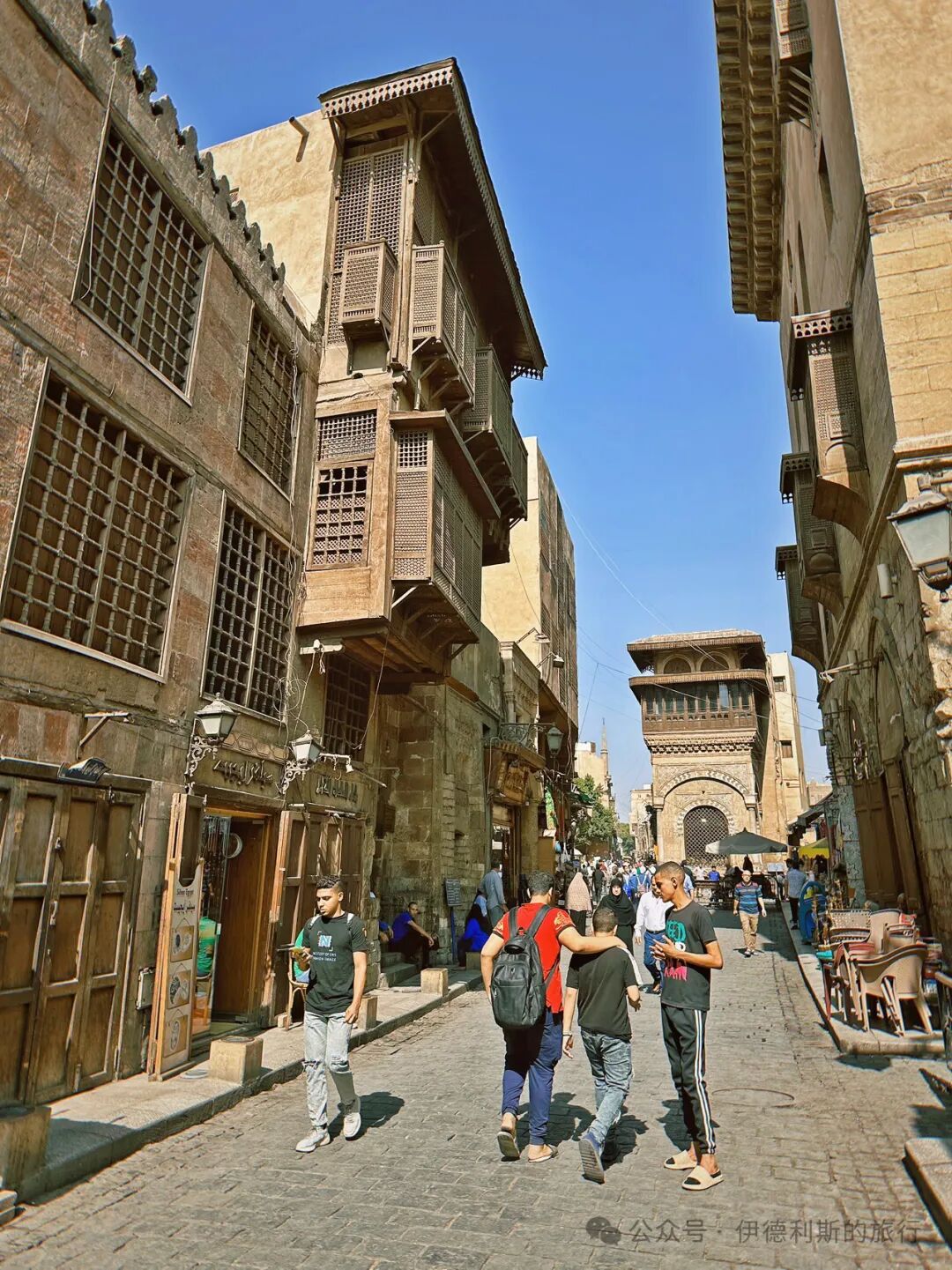
Bayn al-Qasrayn is located in the heart of Old Cairo, and its name literally means 'between the two palaces'. This was originally a square between two grand palaces built by the Fatimid dynasty in the 10th century. Later, the Ayyubid, Mamluk, and Ottoman dynasties built many structures here, and many of them are still standing today.
Al-Kamil Madrasa: 1225
Barquq Madrasa: 1386
An-Nasir Muhammad Madrasa: 1303
Qalawun Complex: 1285
As-Salih Ayyub Mausoleum: 1250
As-Salihia Madrasa: 1243
Al-Ashraf Complex: 1424
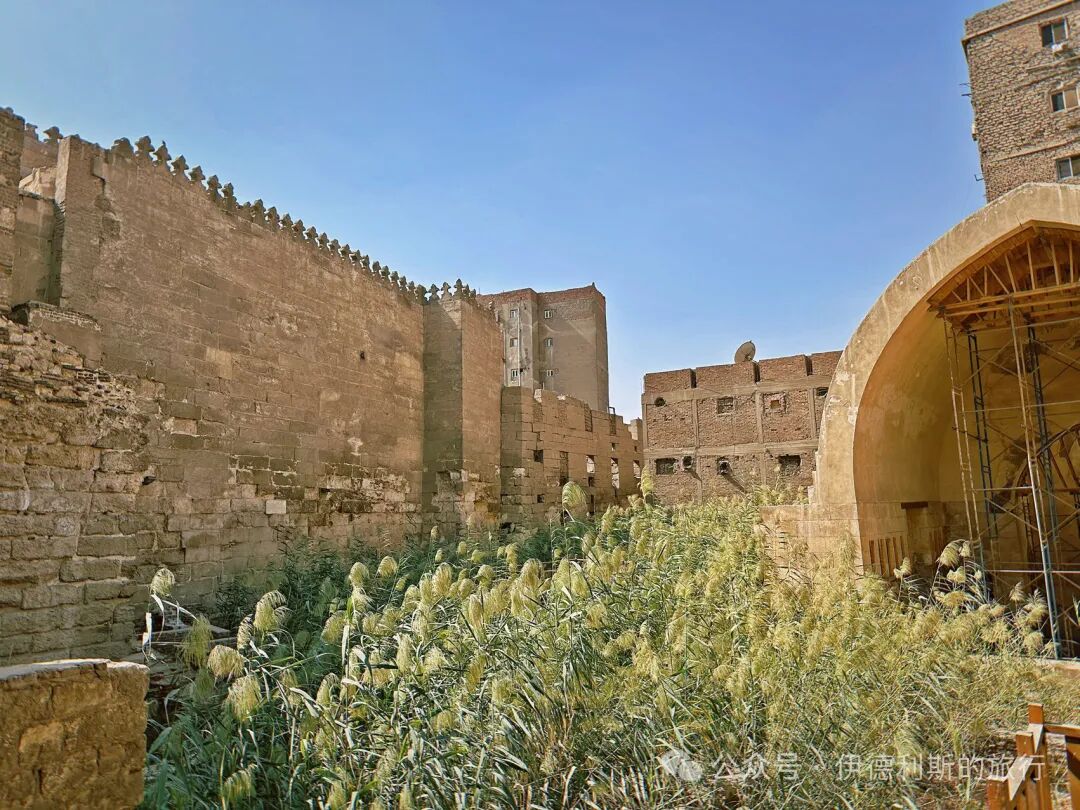
Al-Kamil Madrasa: 1225
The Al-Kamil Madrasa was built in 1225 by the Ayyubid Sultan Al-Kamil, who reigned from 1218 to 1238. During the 13th and 14th centuries, this place was a center for the study of Hadith in Egypt. A great famine hit Egypt between 1400 and 1404, causing the population to drop sharply and leading to the decline of the Al-Kamil Madrasa.
Al-Kamil was the nephew of Sultan Saladin and a key leader for Egypt during the Fifth and Sixth Crusades. During the Fifth Crusade, he opened the Nile dams to trade for eight years of peace. During the Sixth Crusade, he handed Jerusalem over to the Crusaders to trade for ten years of peace, which was the only Crusade resolved through diplomacy.
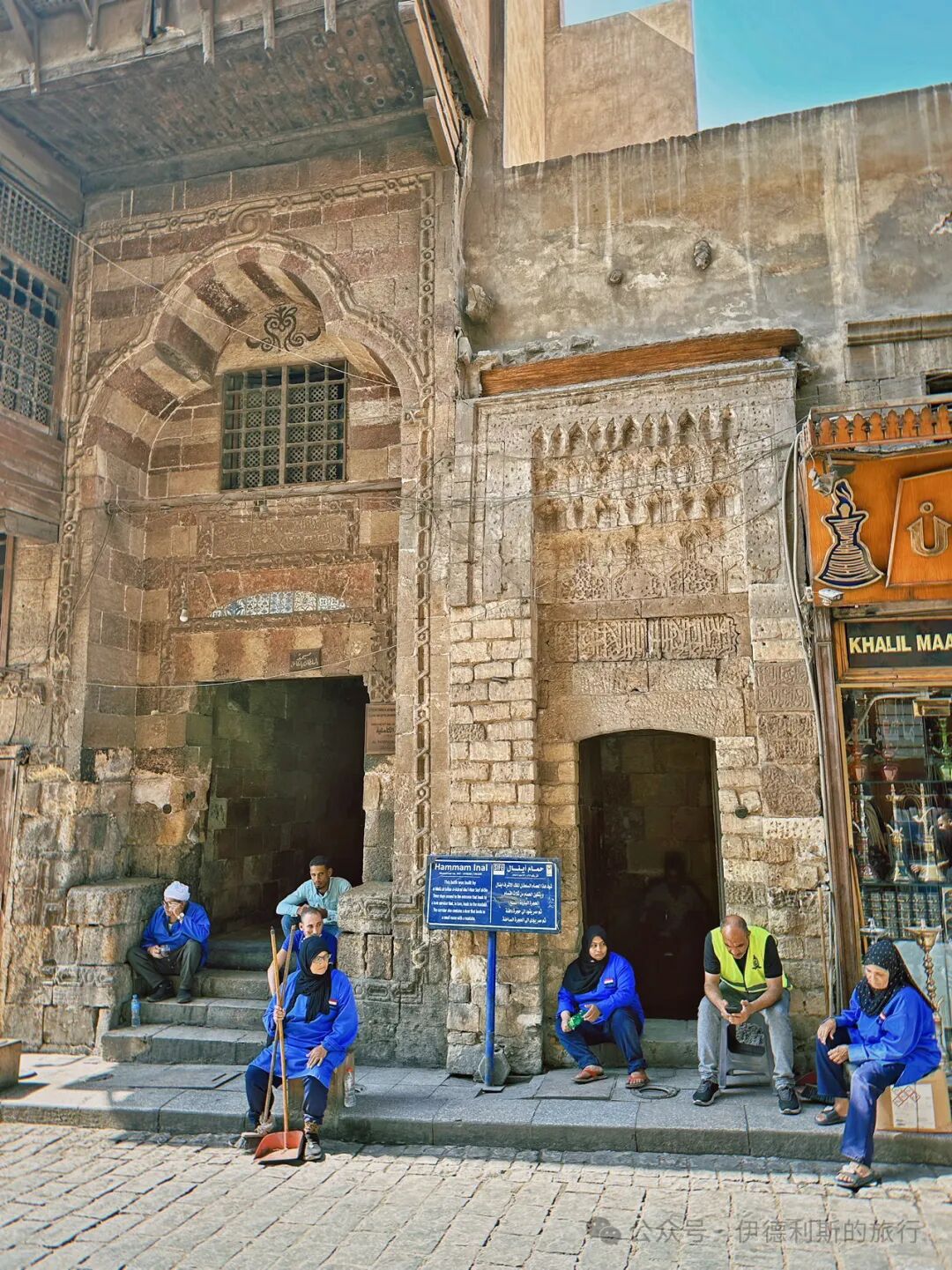
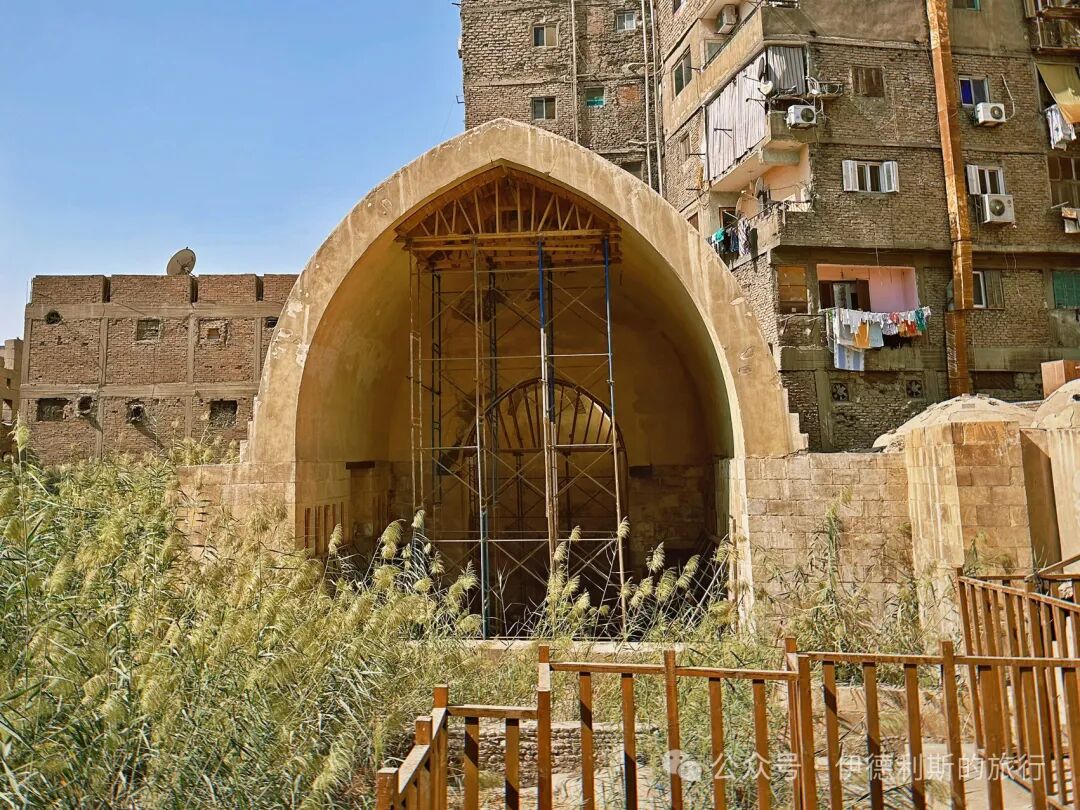
Today, the only part of the Ayyubid-era building left is the Iwan arch on the west side. The arch once featured plaster decorations in Kufic calligraphy, which are now kept at the Museum of Islamic Art in Cairo. The main hall at the entrance was built in 1752 by the Ottoman official Prince Hassan Sharawi.
Barquq Madrasa: 1386
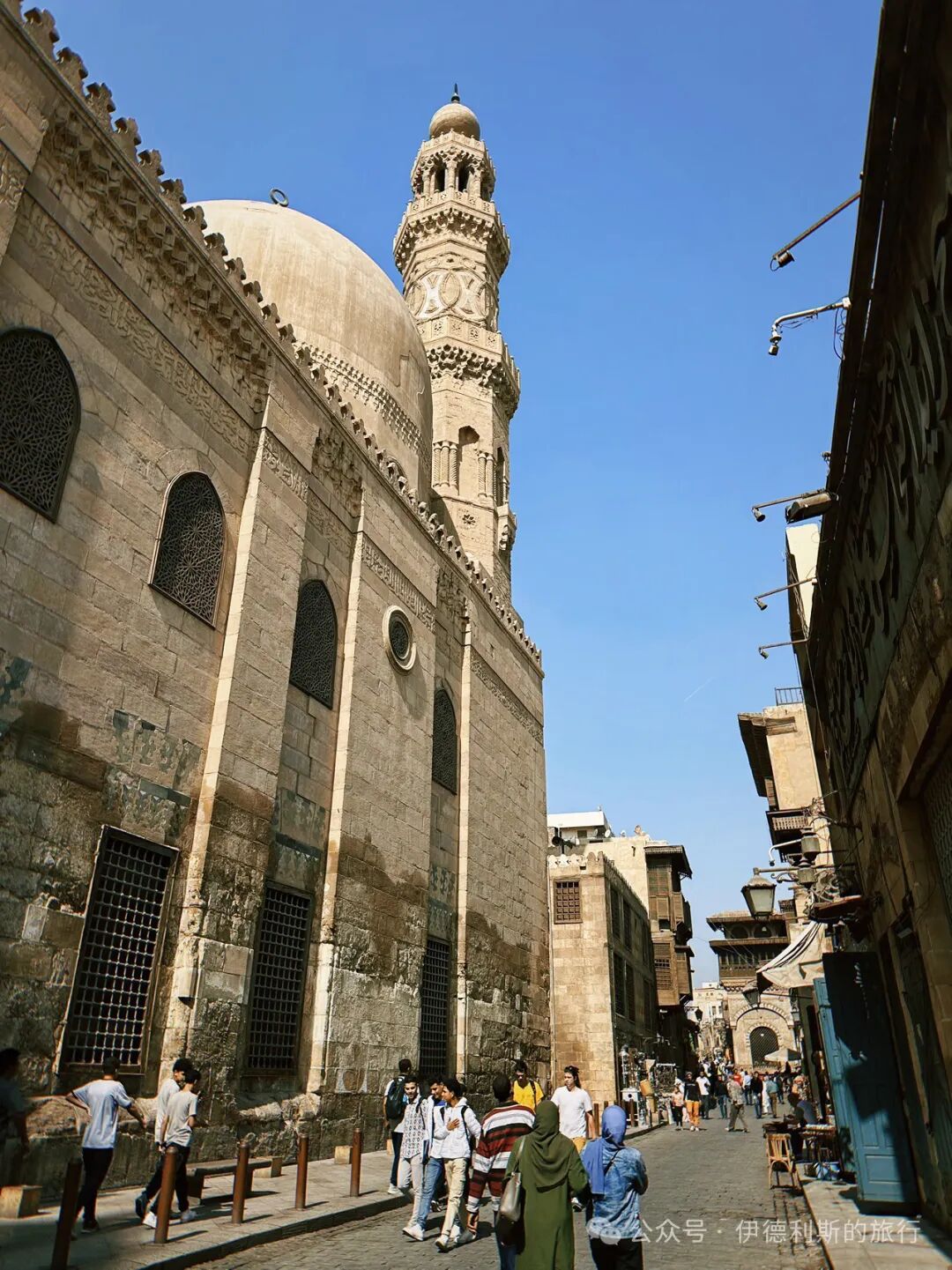
South of the Kamil Madrasa stands the Barquq Madrasa, built in 1386 by Barquq, the first sultan of the Mamluk Burji dynasty (reigned 1382–1389 and 1390–1399). This was the first building of the Mamluk Burji dynasty (1382–1517) and holds great historical significance.
The architect of the madrasa was Ahmad al-Tuluni. Ahmad came from a family of carpenters and stonemasons. He was one of the few master architects to achieve great success in the late 14th century and was highly valued by the sultan.
The project supervisor for the madrasa was Emir Jarkas al-Khalili. He built the famous Khan el-Khalili market in Cairo, which is named after him.
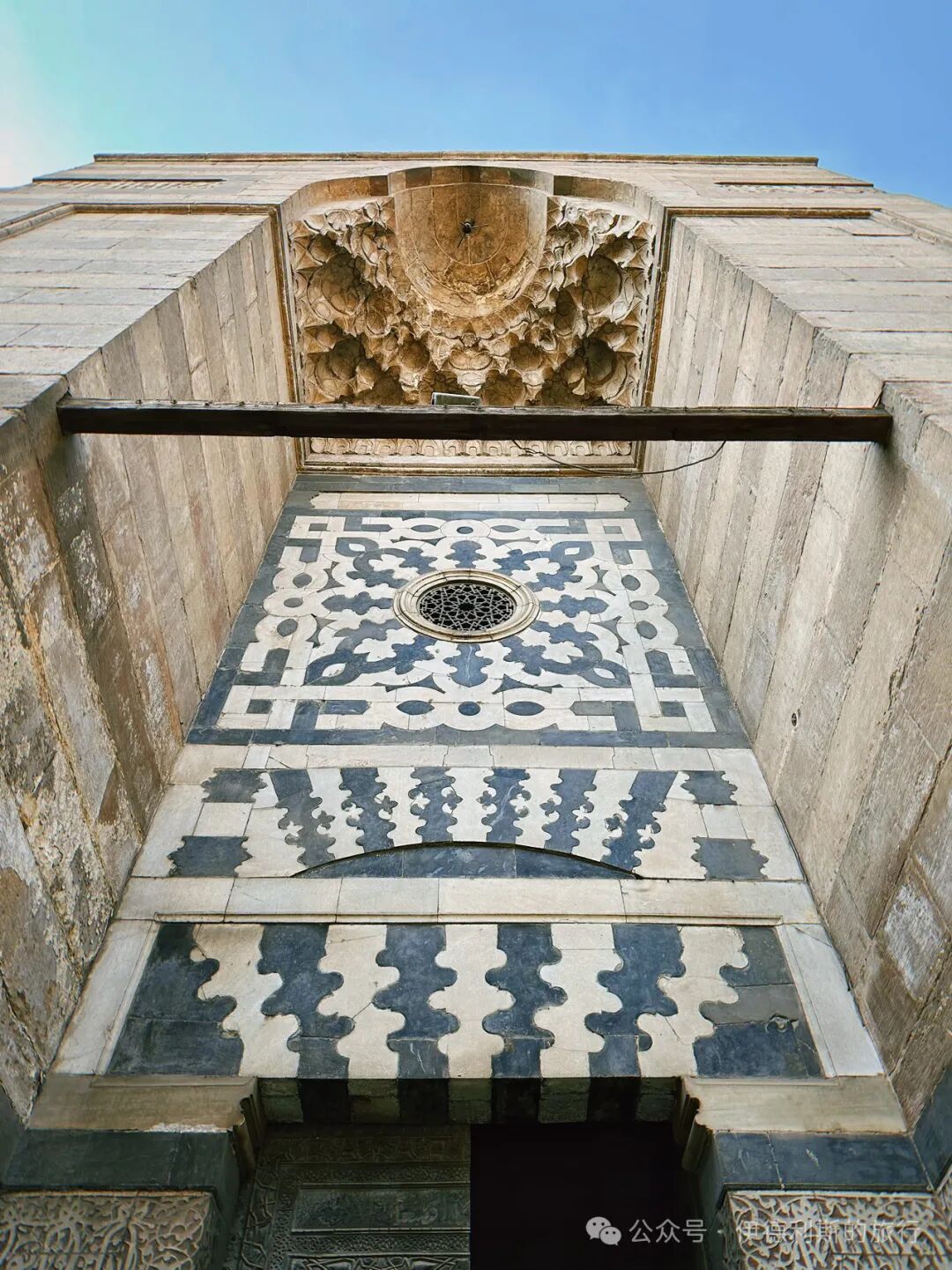
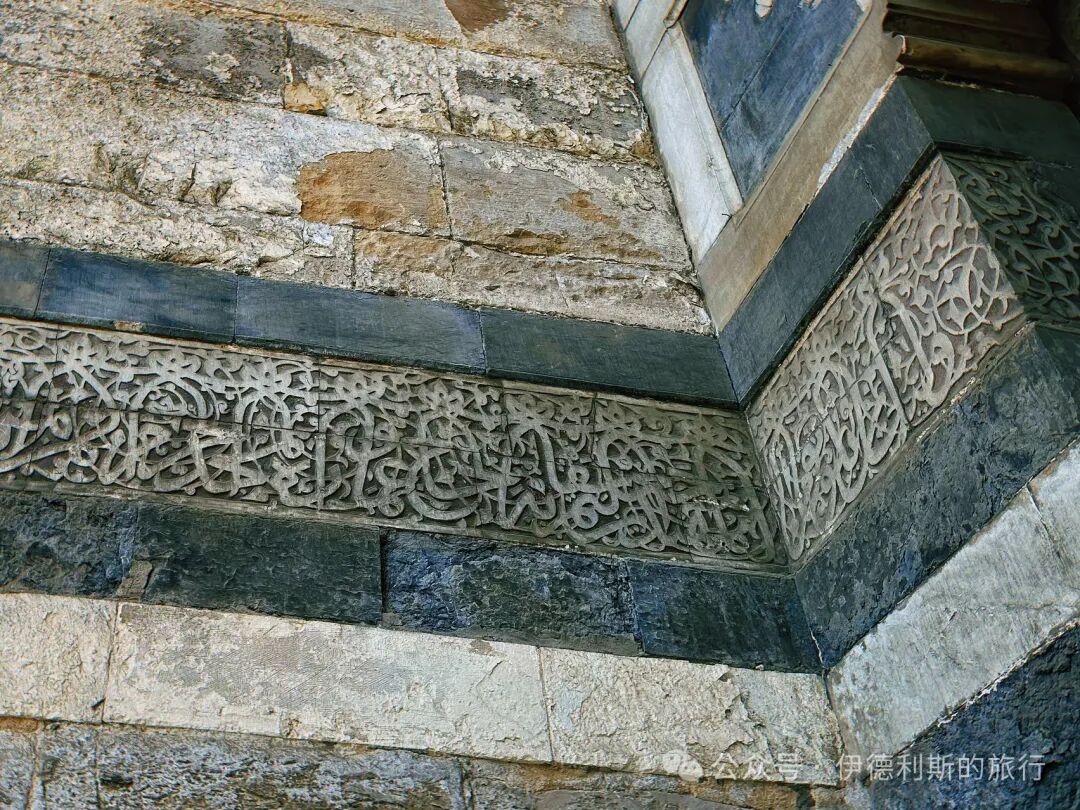
The entire madrasa complex consists of a prayer hall, classrooms, a mausoleum, and a dervish lodge. It taught knowledge from the four major schools of Islamic jurisprudence: Hanafi, Maliki, Shafi'i, and Hanbali. The main gate of the madrasa features a monumental arched entrance (Pishtaq), decorated with beautiful honeycomb-like carvings (Muqarnas) and calligraphy.
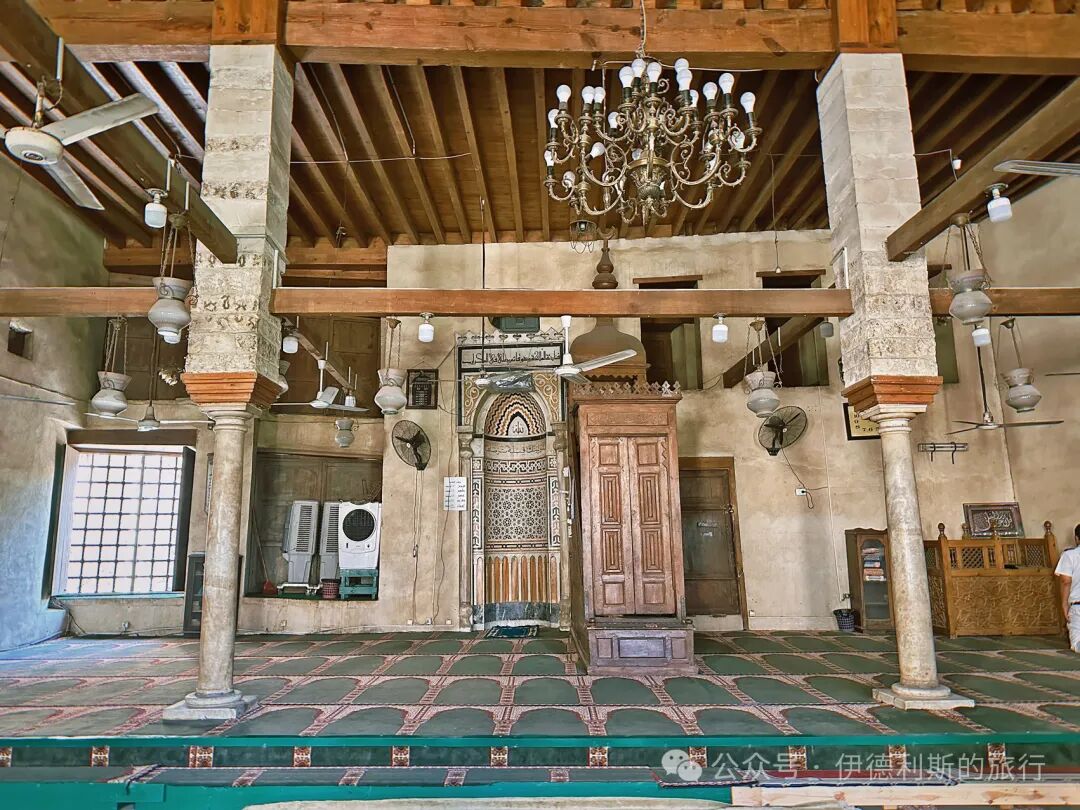
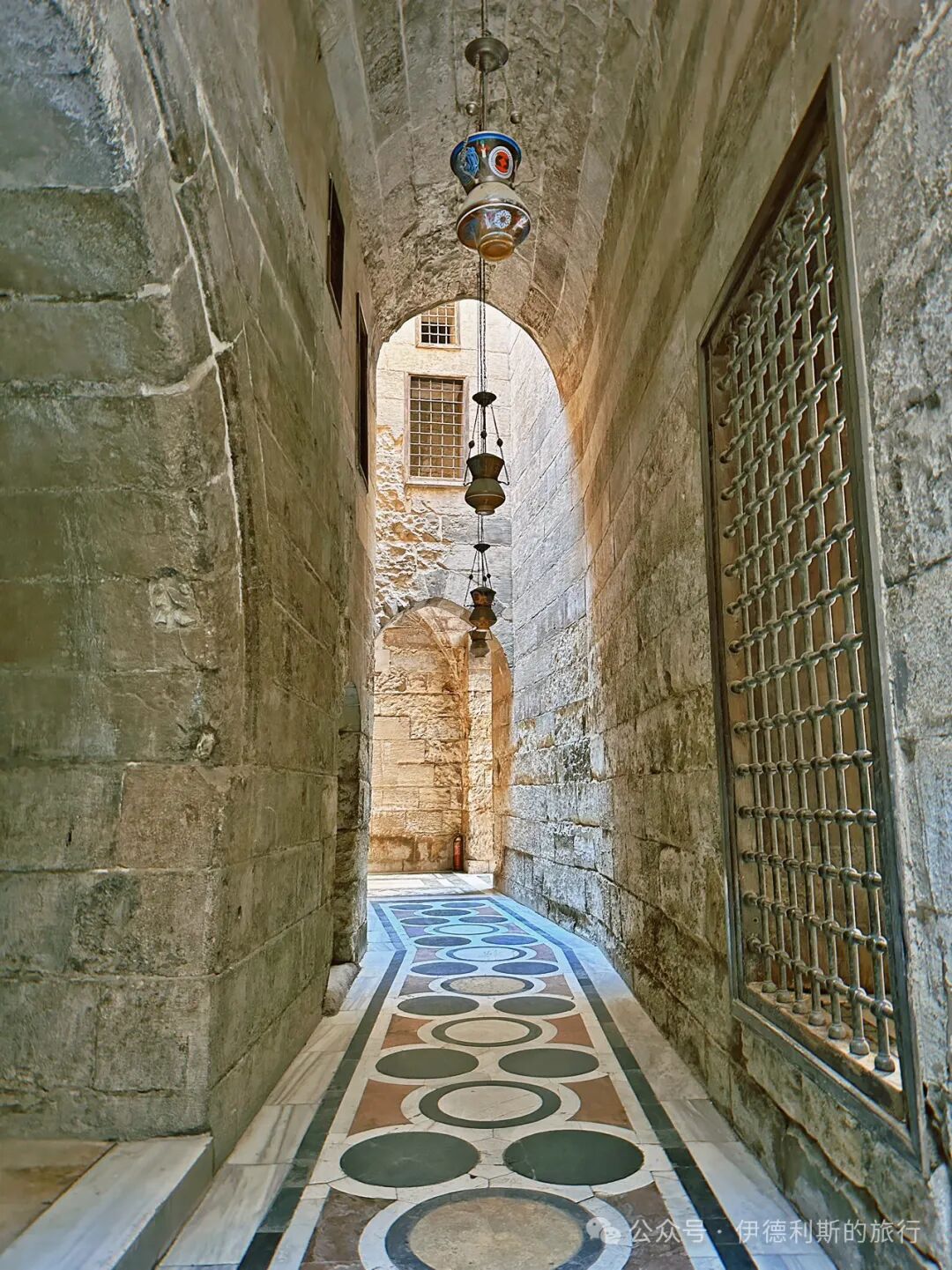
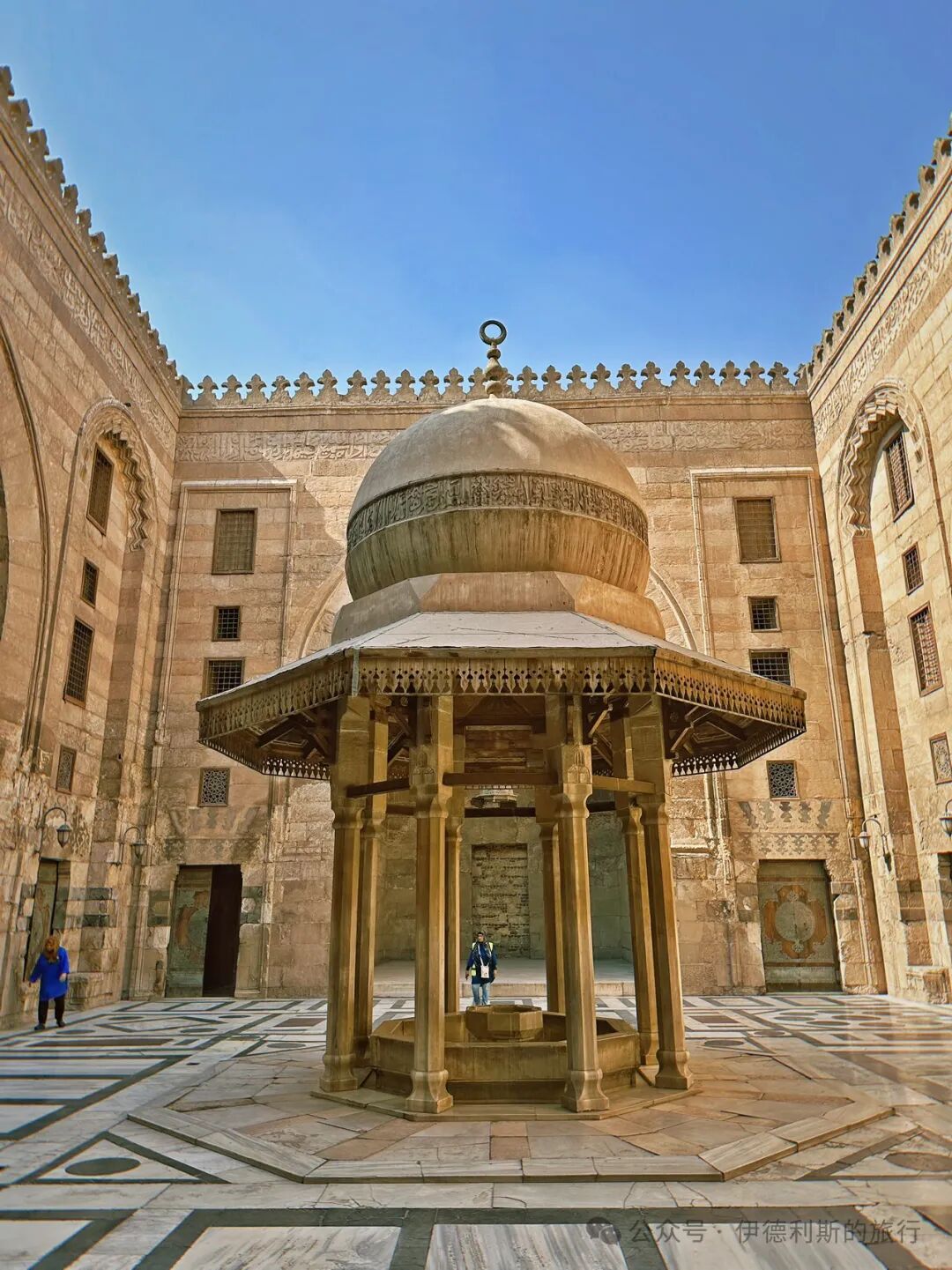
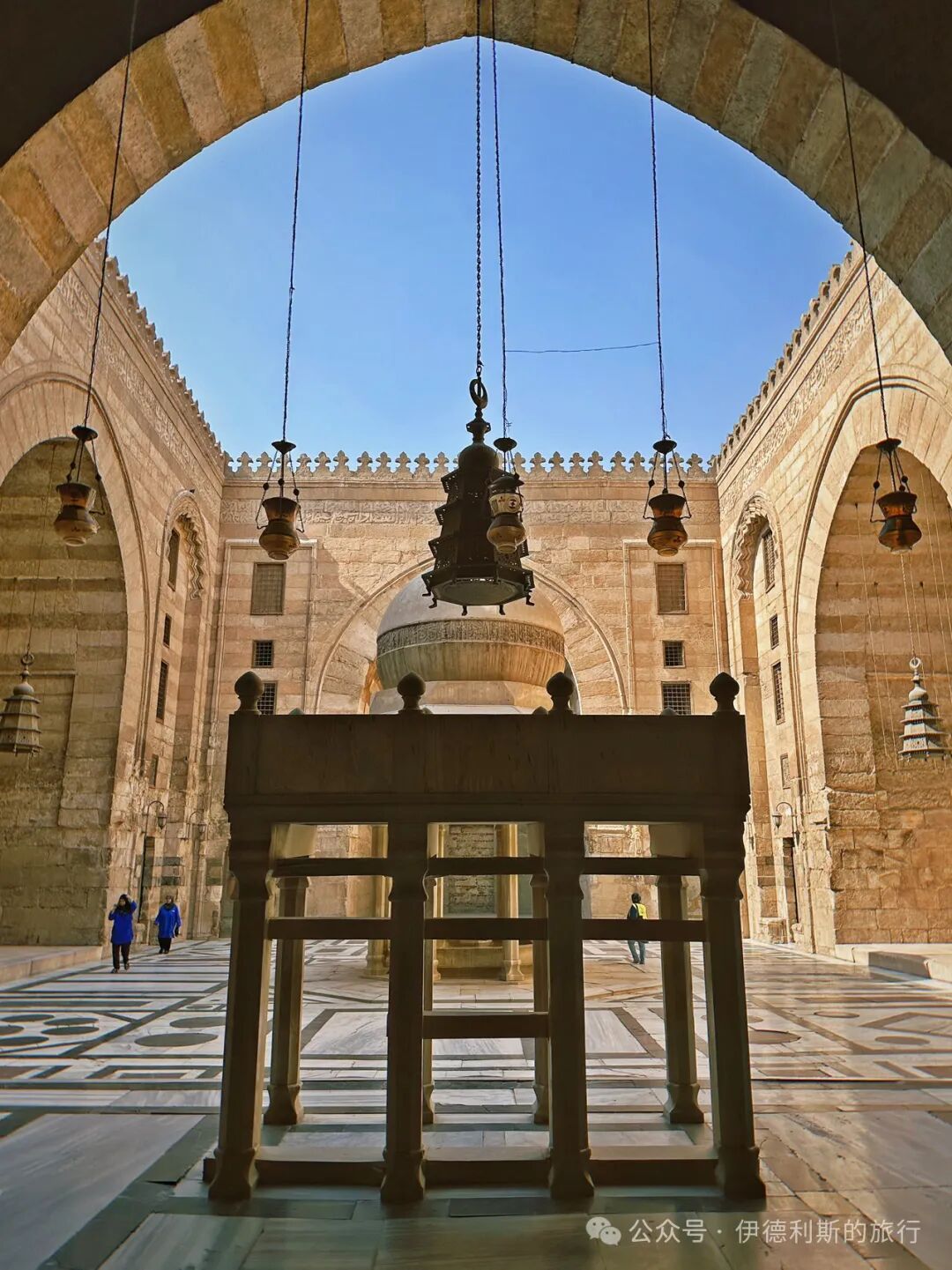
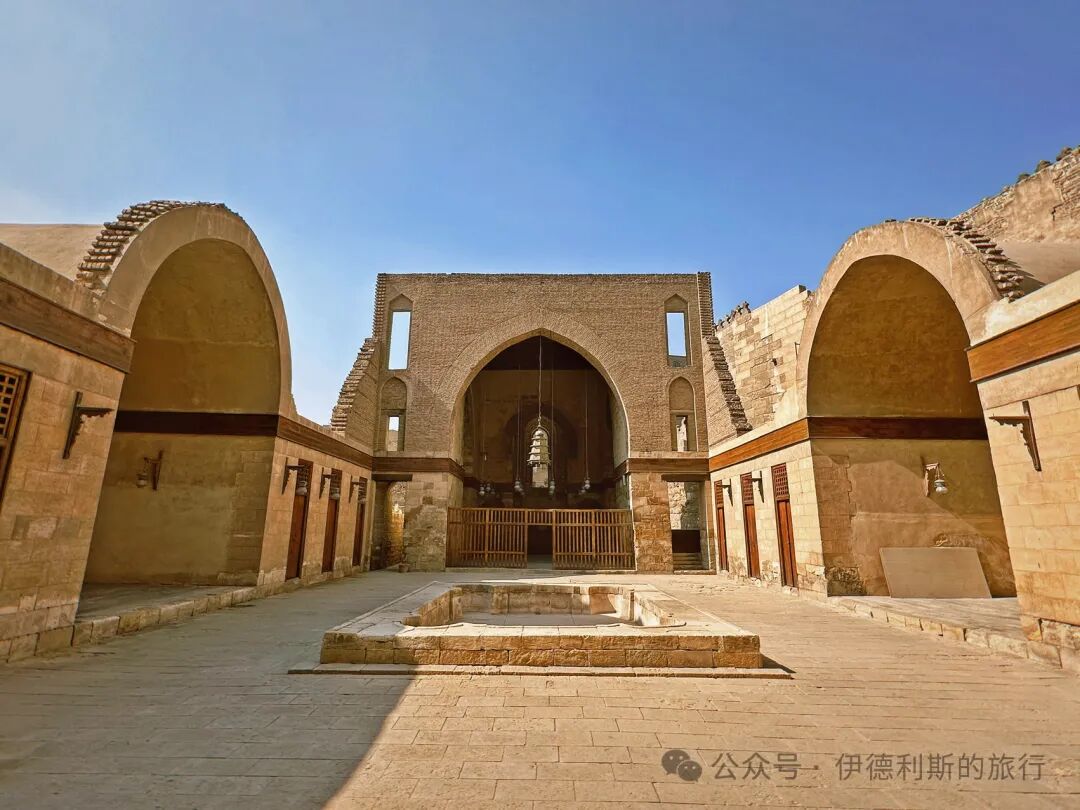
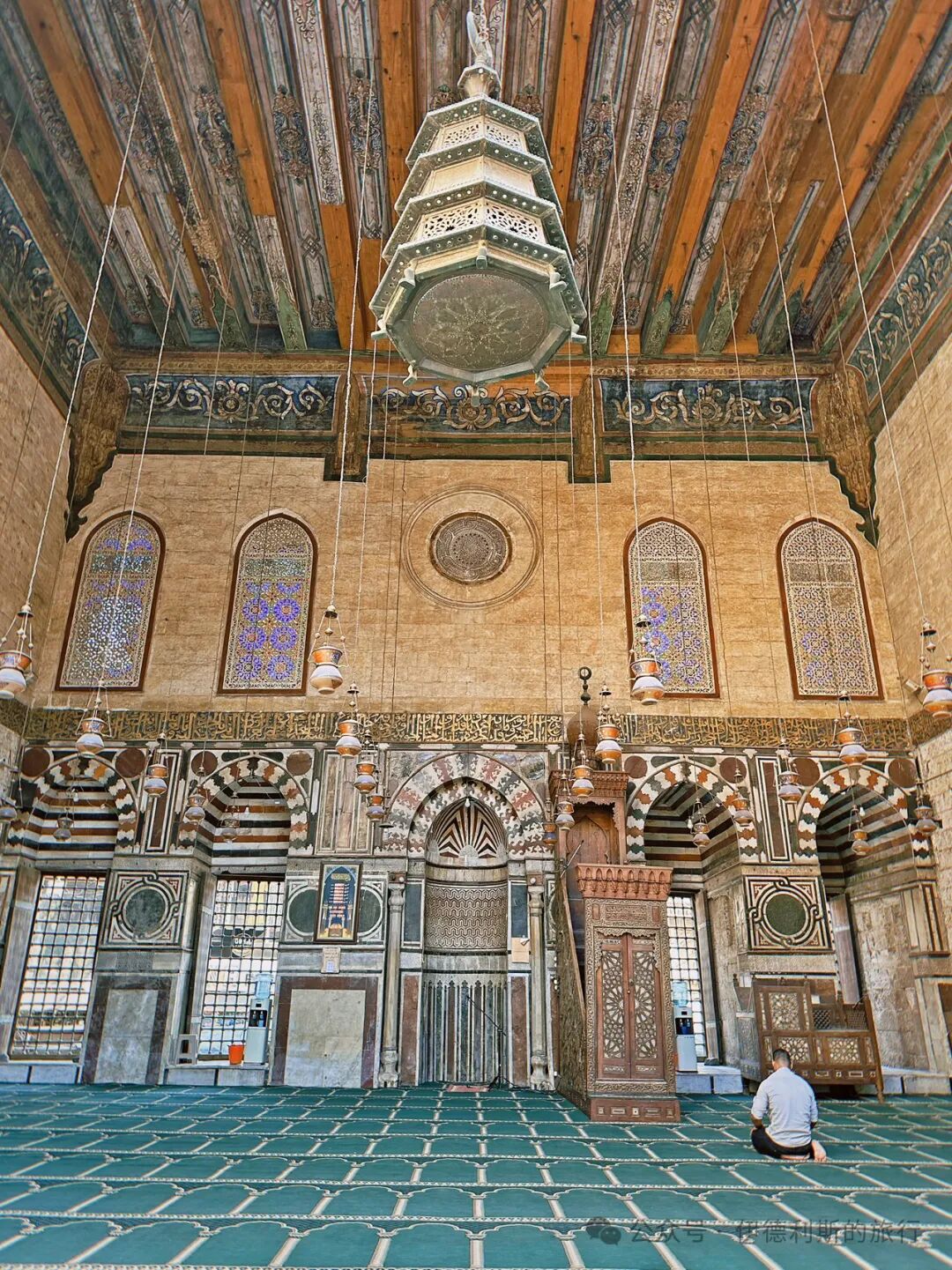
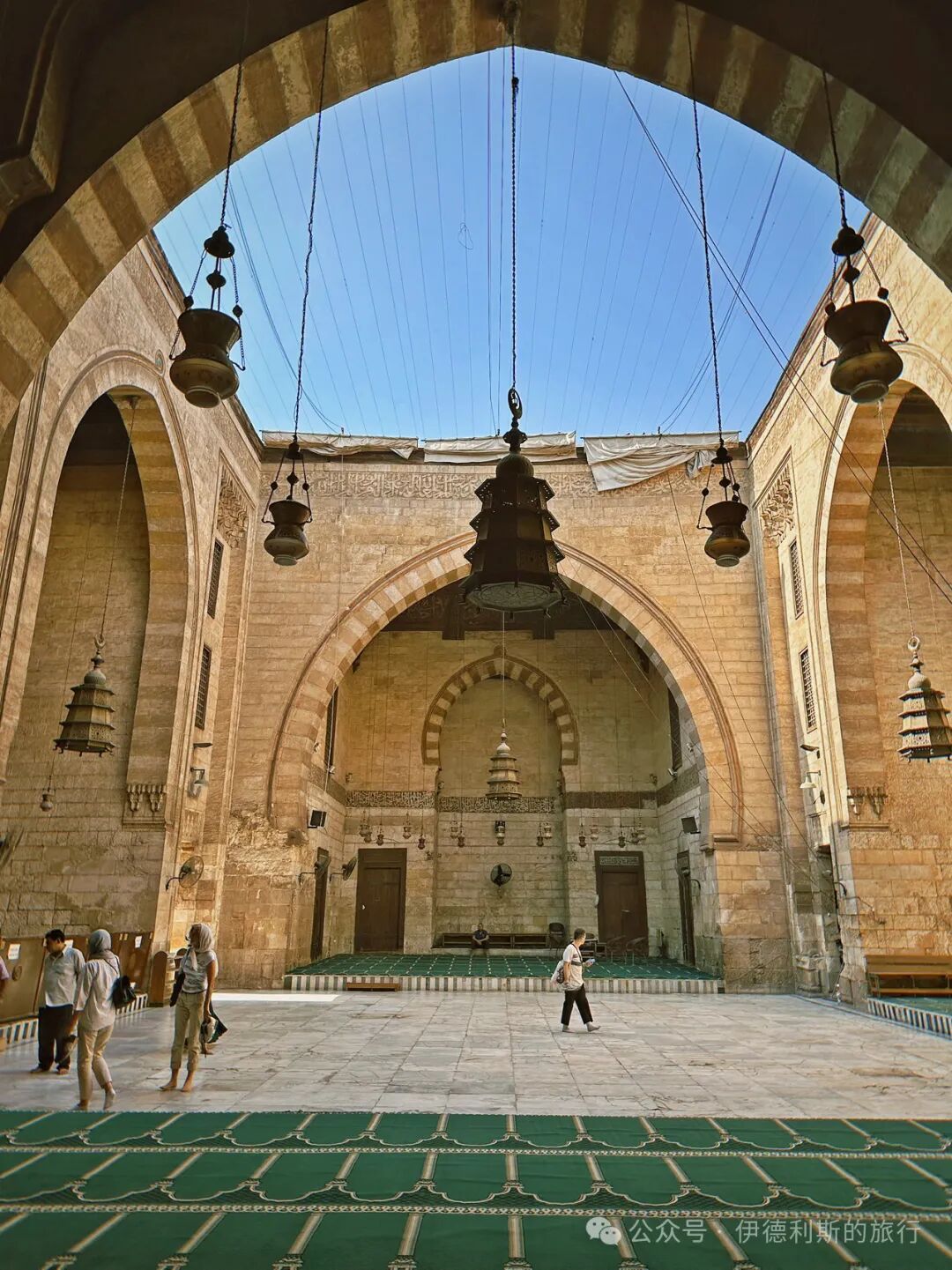
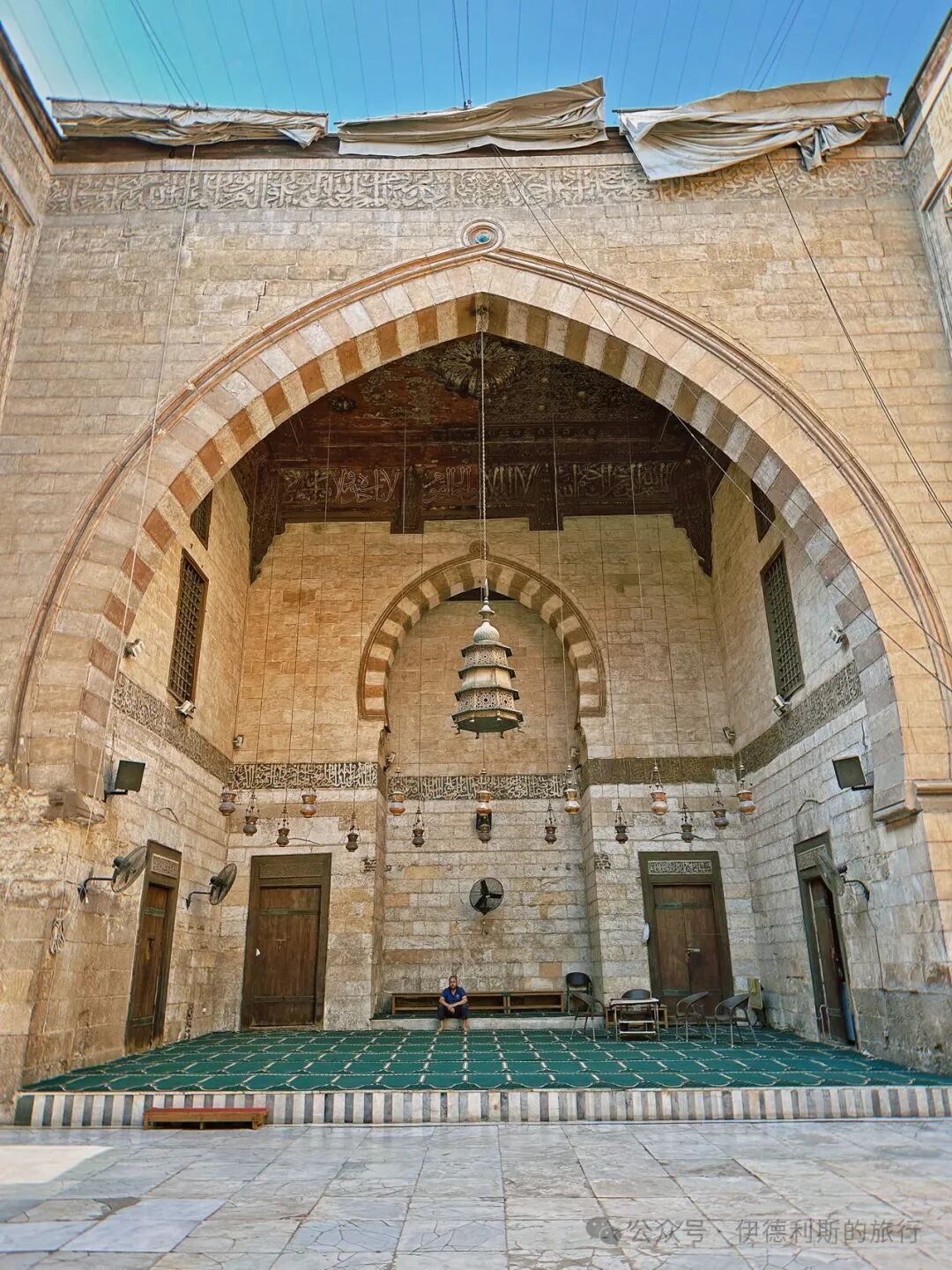
After entering the gate, a passageway leads to the courtyard (Sahn). In the middle of the courtyard is a fountain (Sabil), which was rebuilt in the late 19th century by the Committee for the Preservation of the Monuments of Arab Art (Comité). The courtyard has an arched hall (iwan) on each of its four sides. The prayer hall on the east side is covered by a massive wooden roof, while the other three sides have stone domes.
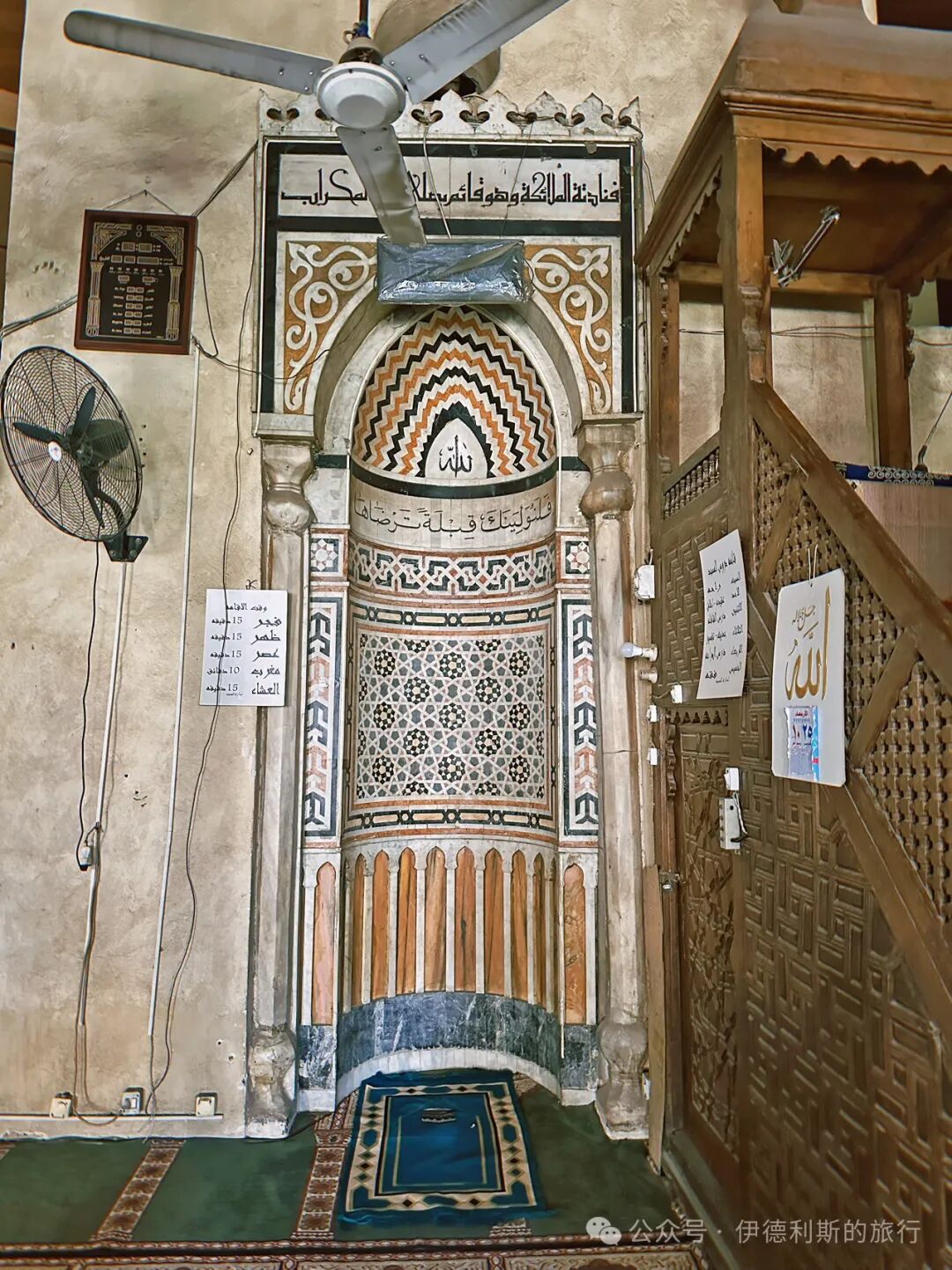
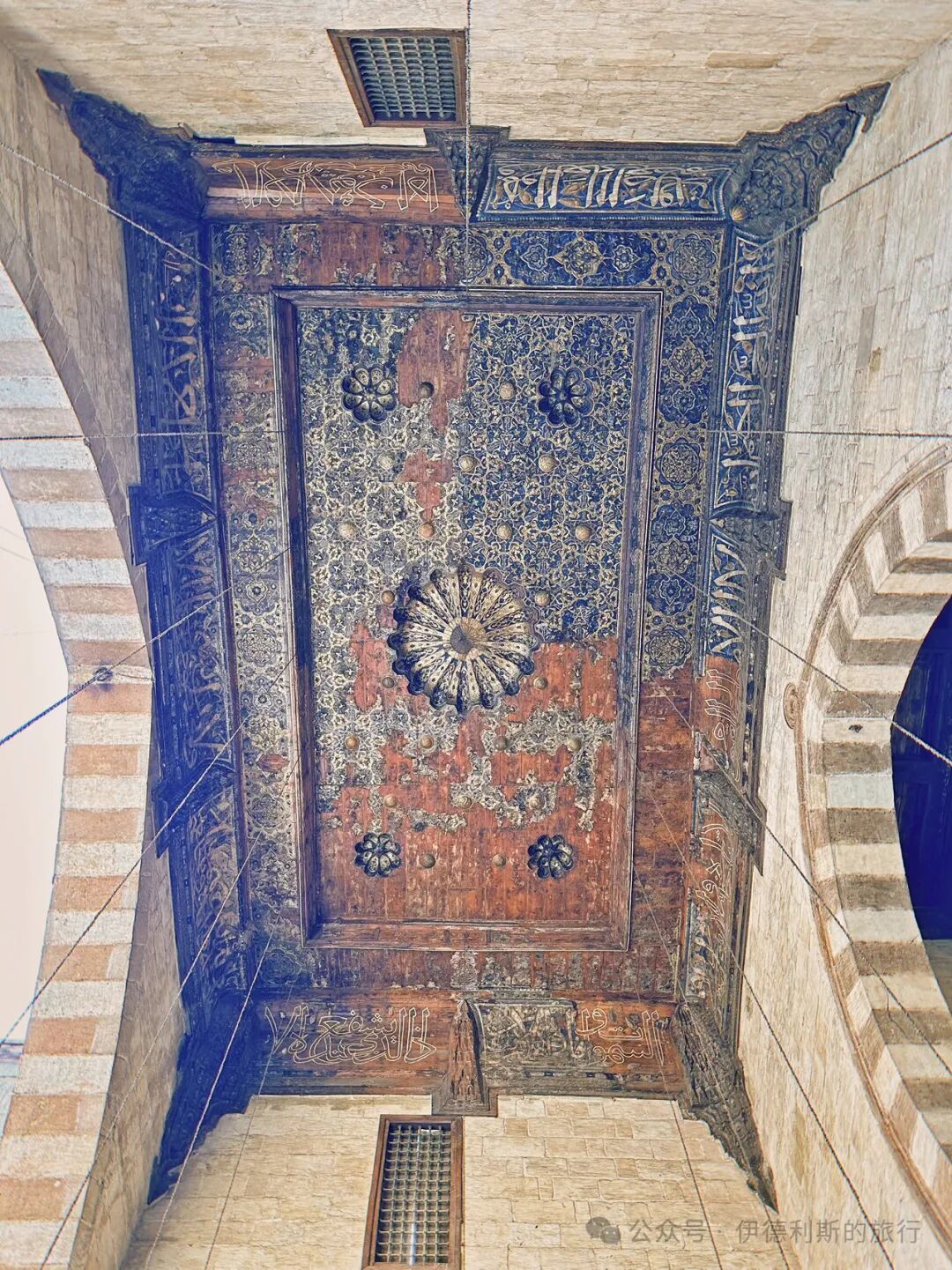
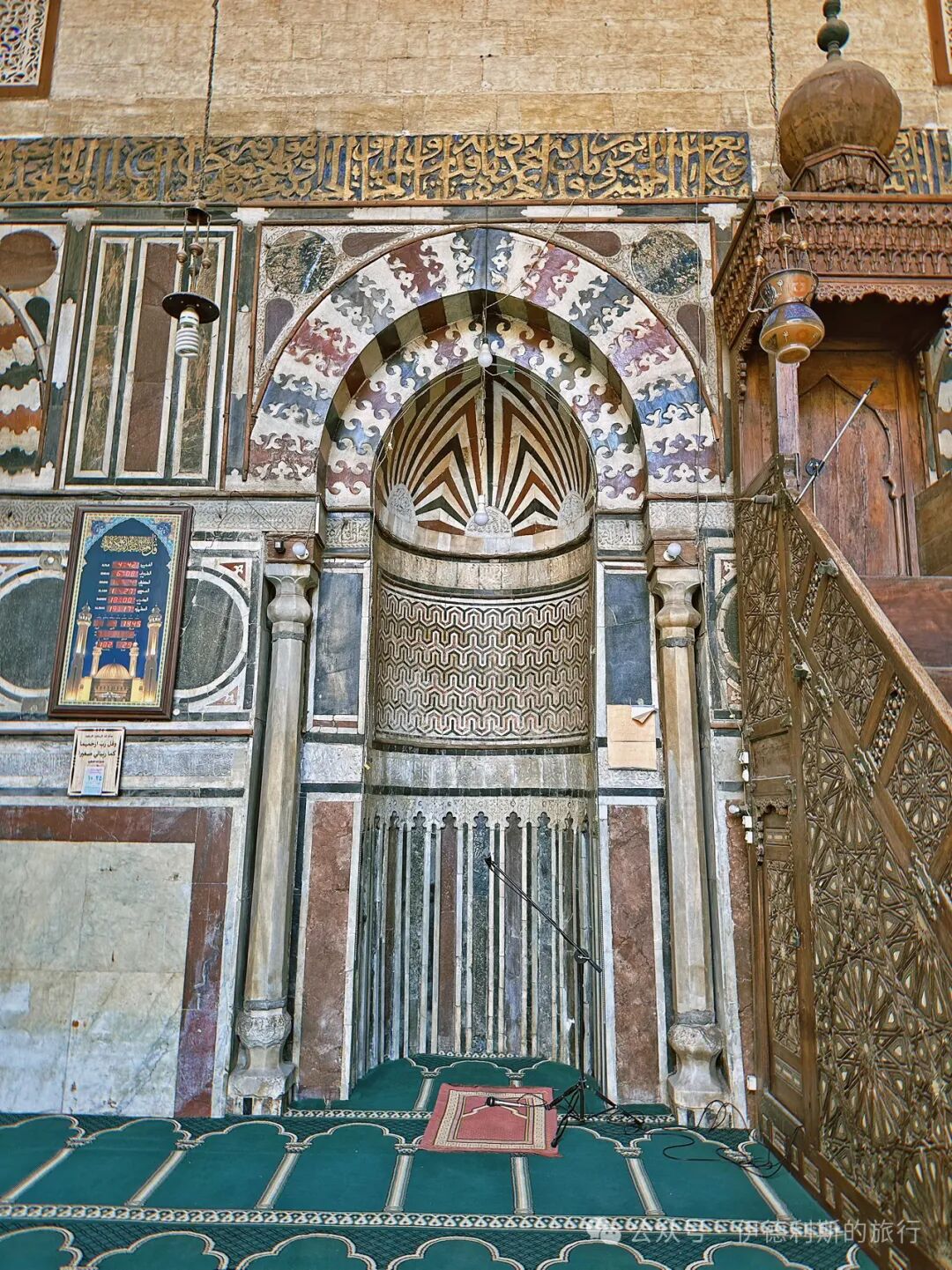
The prayer hall ceiling features intricate painted designs, and the floor is decorated with colorful marble mosaics and panels. The pulpit (minbar) inside the prayer hall was a gift from the Mamluk Sultan Sayf al-Din Jaqmaq (reigned 1438–1453) in 1440. It is made of Aleppo pine and inlaid with ebony and ivory. Sadly, the pulpit was stolen twice in 2012 and 2013, and most of its decorative pieces are now missing.
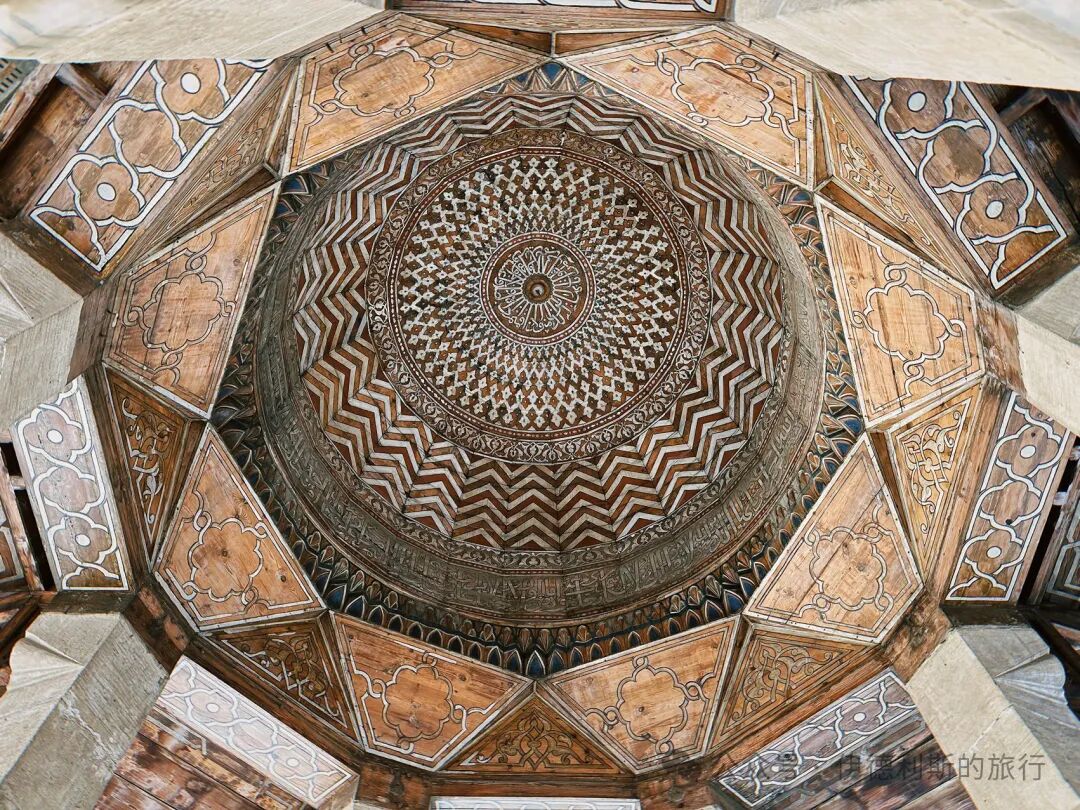
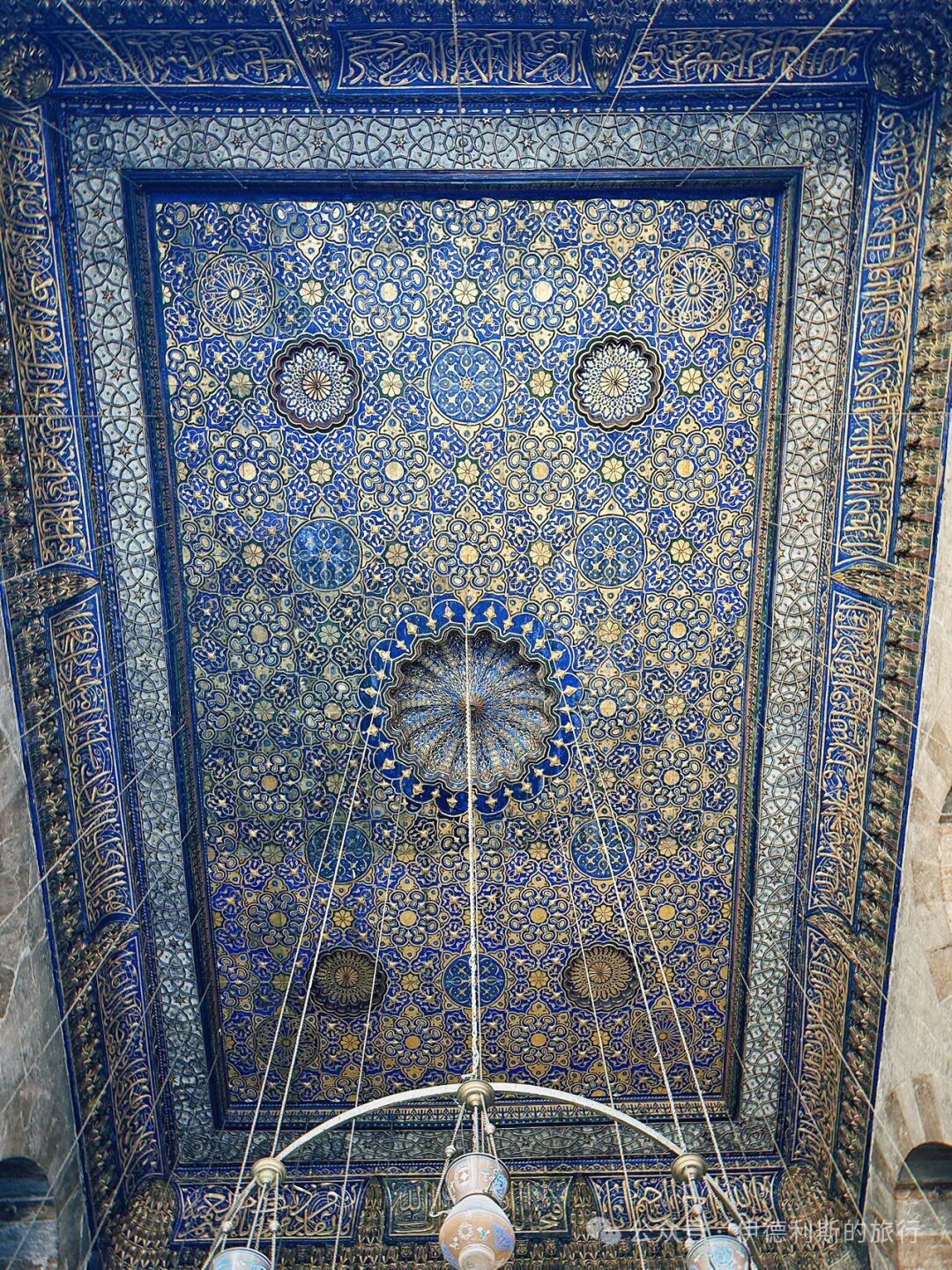
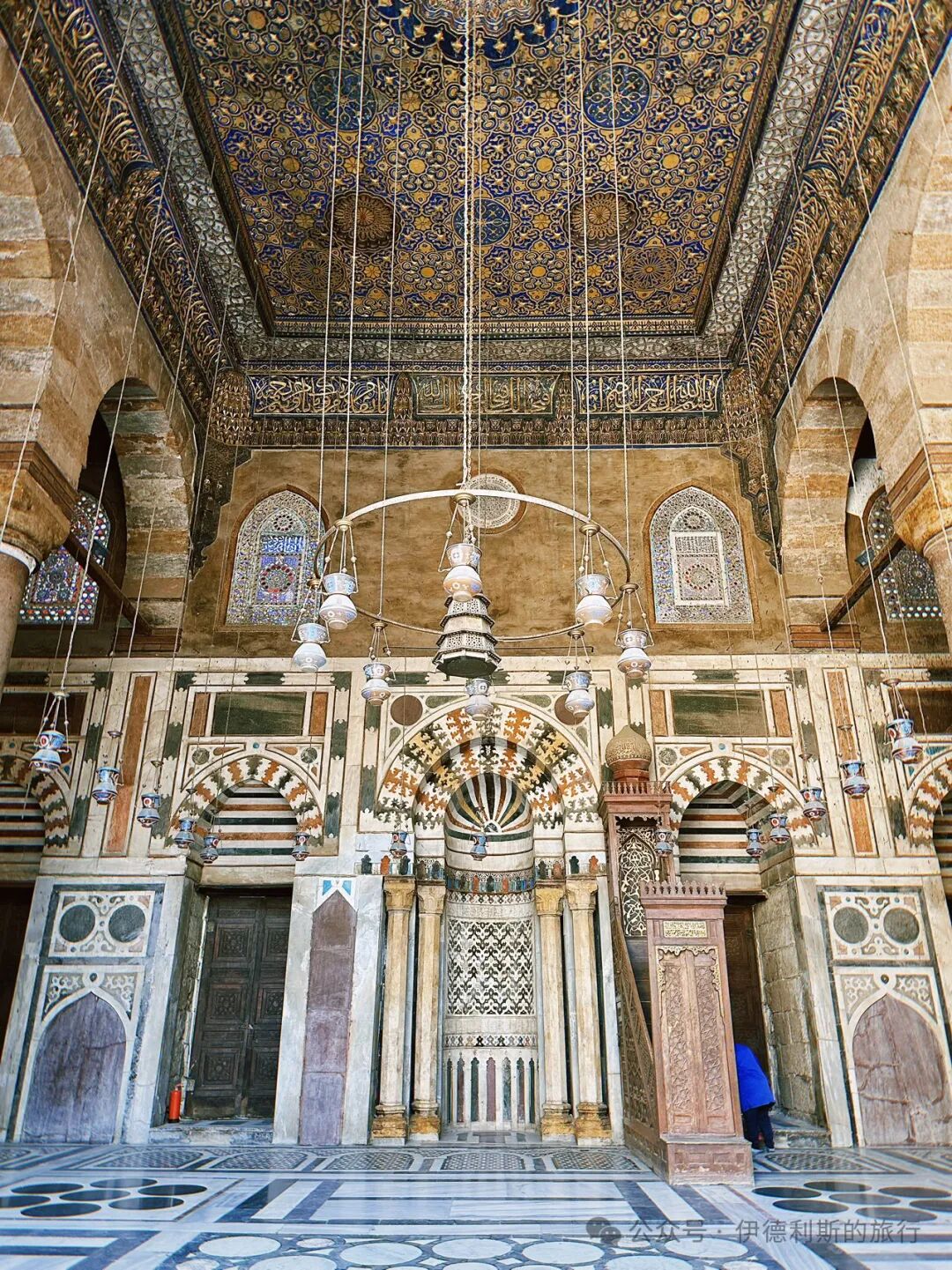
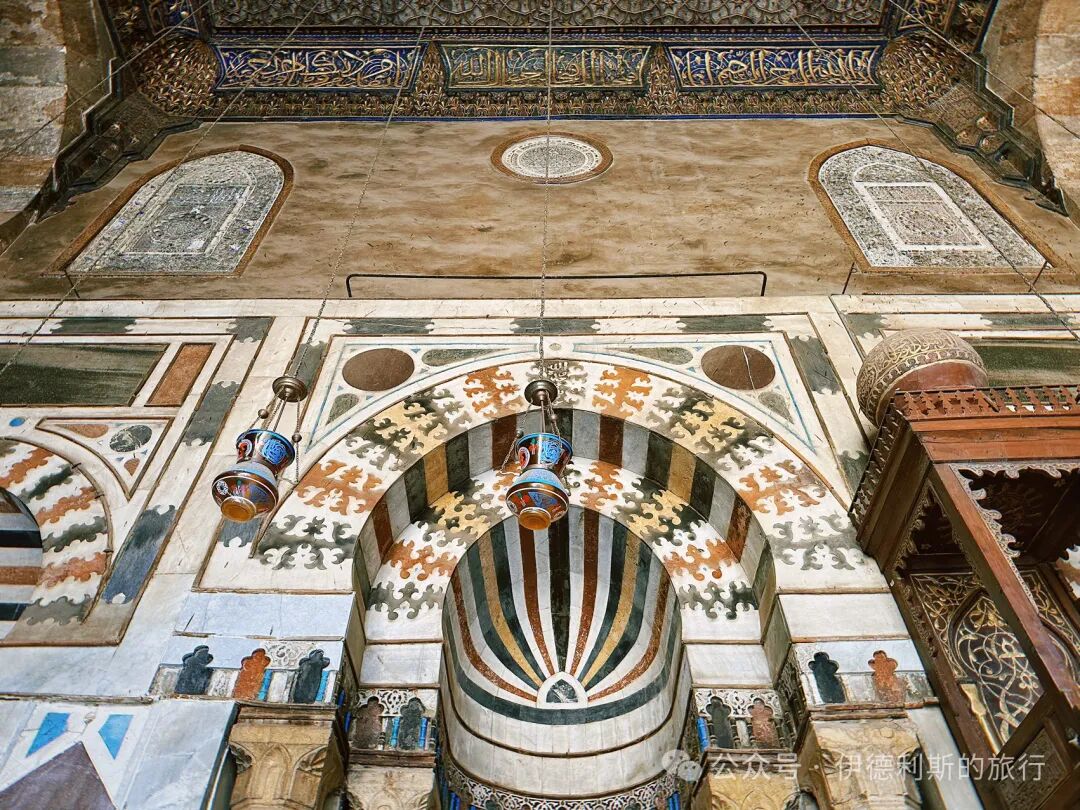
Beneath the dome of the Barquq Madrasa is a tomb chamber, but Sultan Barquq himself is not buried here. His daughter Fatima is buried in this space instead.
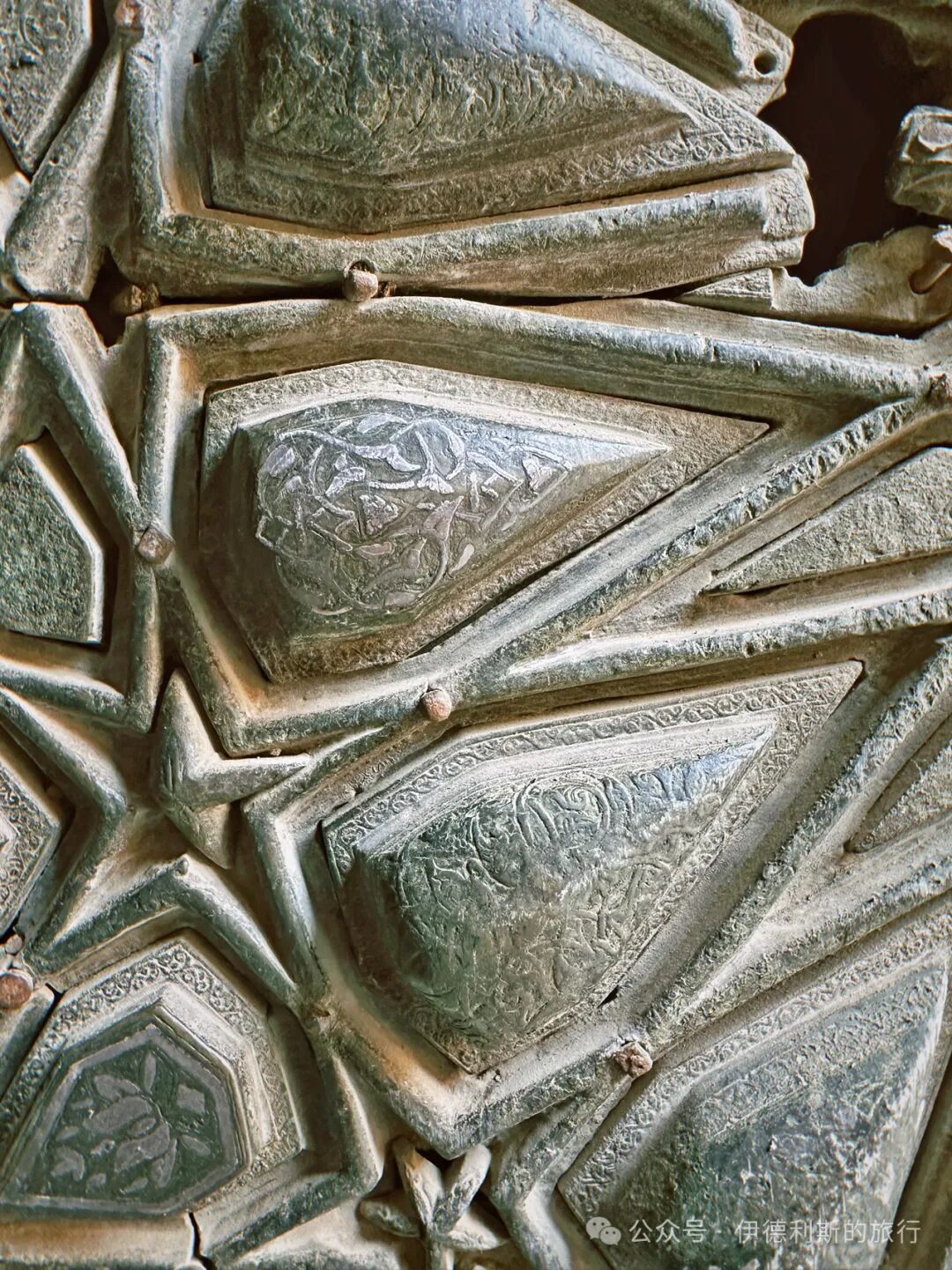
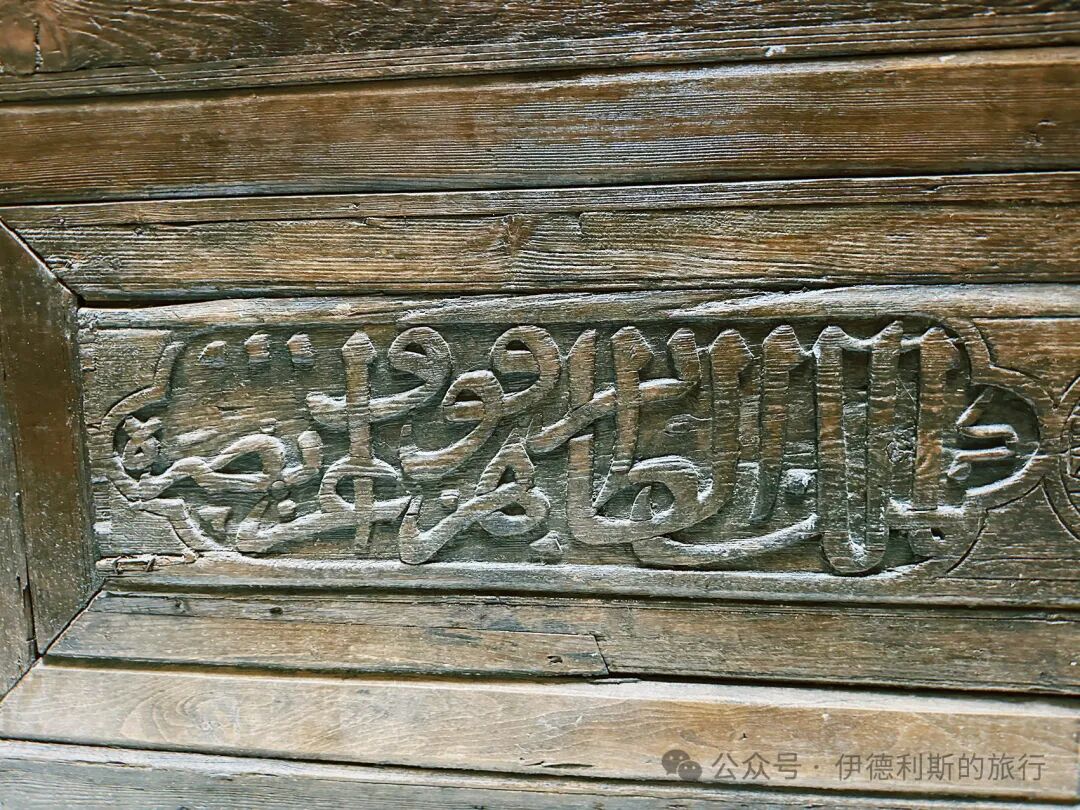
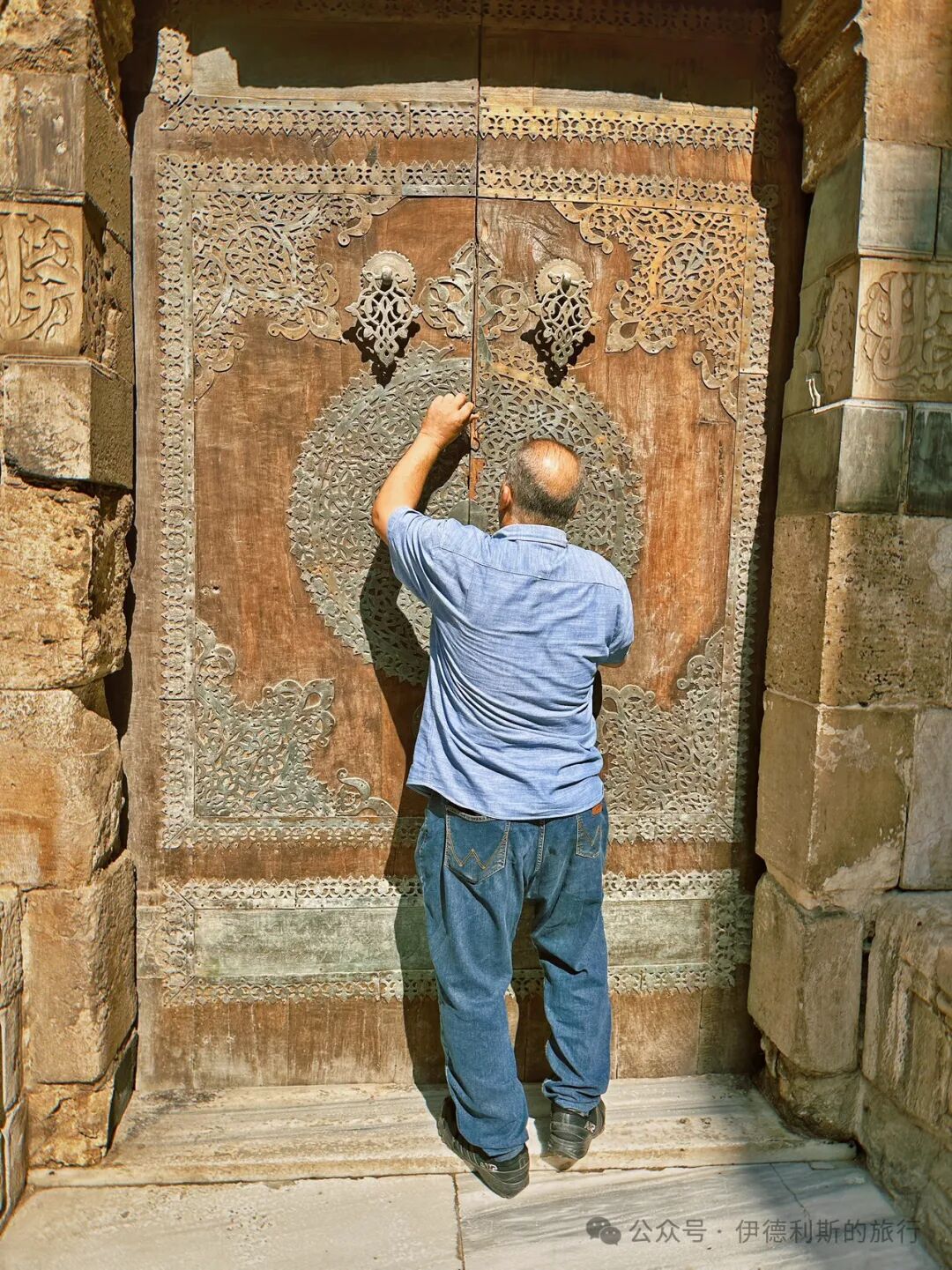
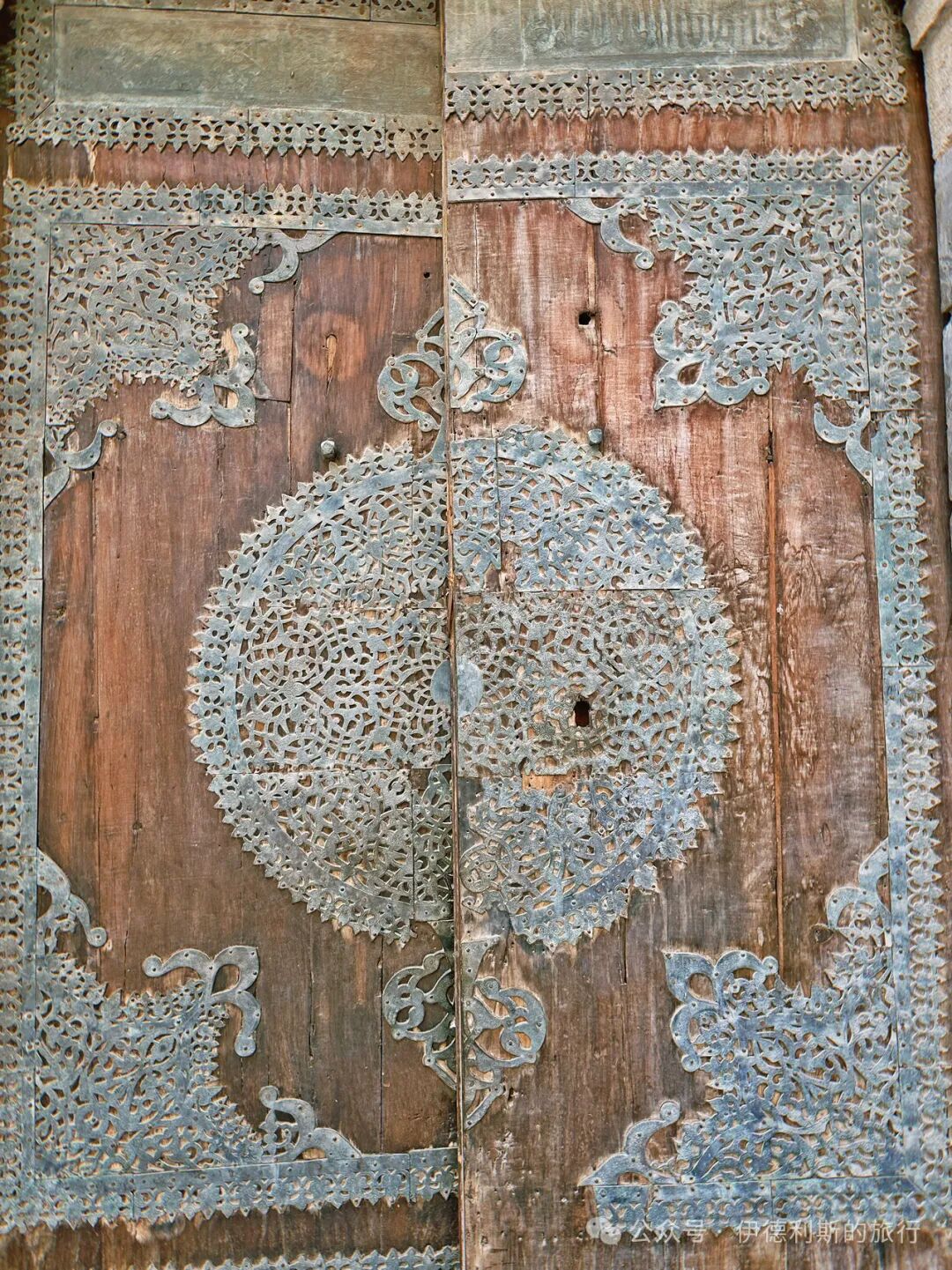
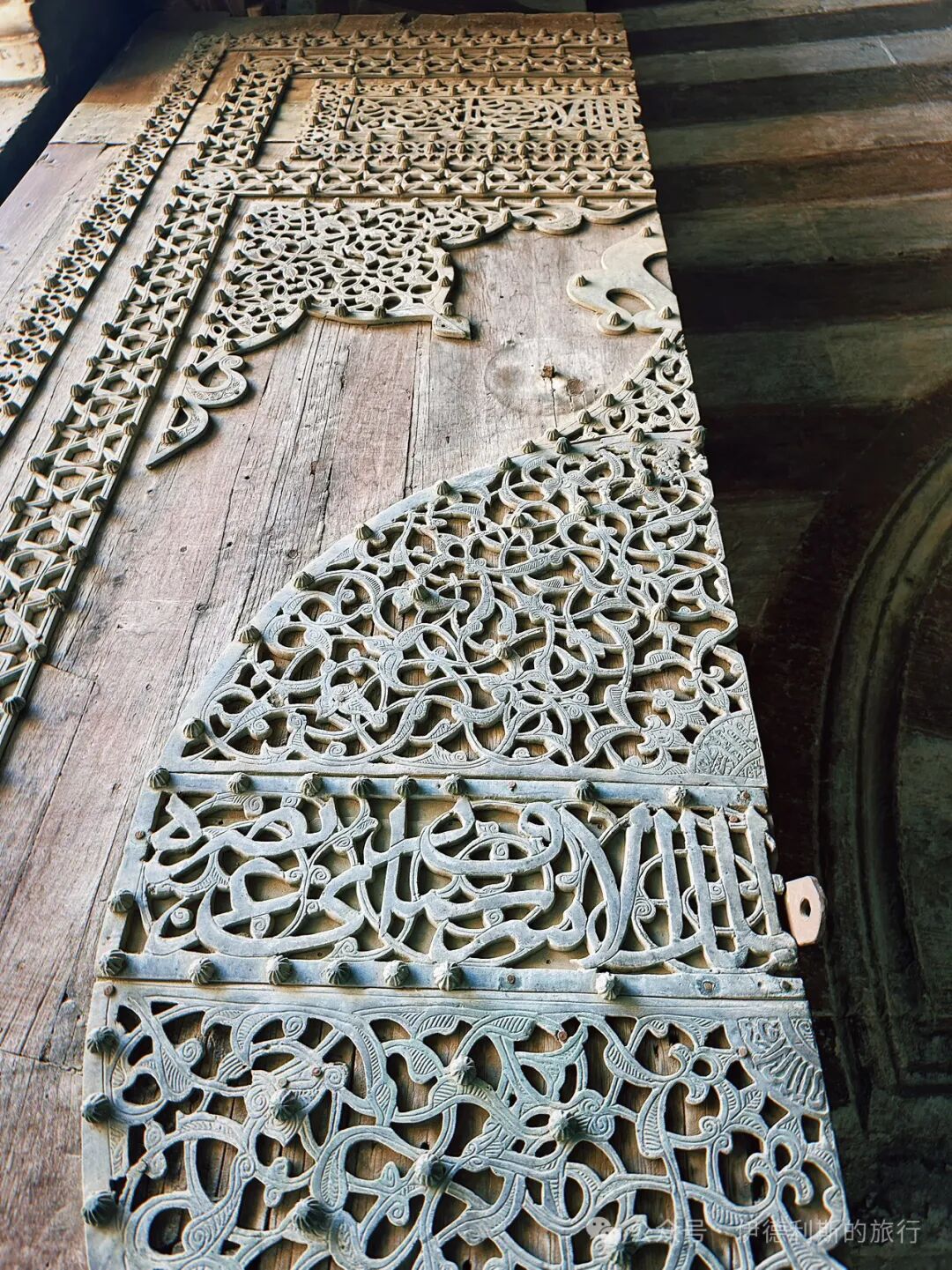
The following photos show the wood carvings and copper work on the main gate of the madrasa.
Barquq was born into a Circassian family living under the rule of the Golden Horde. After a battle, he was captured as a slave and sold to a bathhouse in Crimea. Later, he was sold again and moved to Egypt, where he became a Mamluk slave soldier. In 1377, civil unrest broke out in the Mamluk Sultanate. The young sultan who had just taken the throne held no real power. Barquq used this chance to strengthen his own position. In 1382, he seized the throne, ending the 132-year rule of the Kipchak Turkic Bahri dynasty and establishing the Circassian Caucasian Burji dynasty.
During his reign, Barquq joined forces with the Ottoman Sultan Bayezid I to fight against the Timurid Empire and executed Timur's envoy. In 1394, Barquq and Timur fought a war near the Euphrates River, which ended with Timur leading his army in retreat.
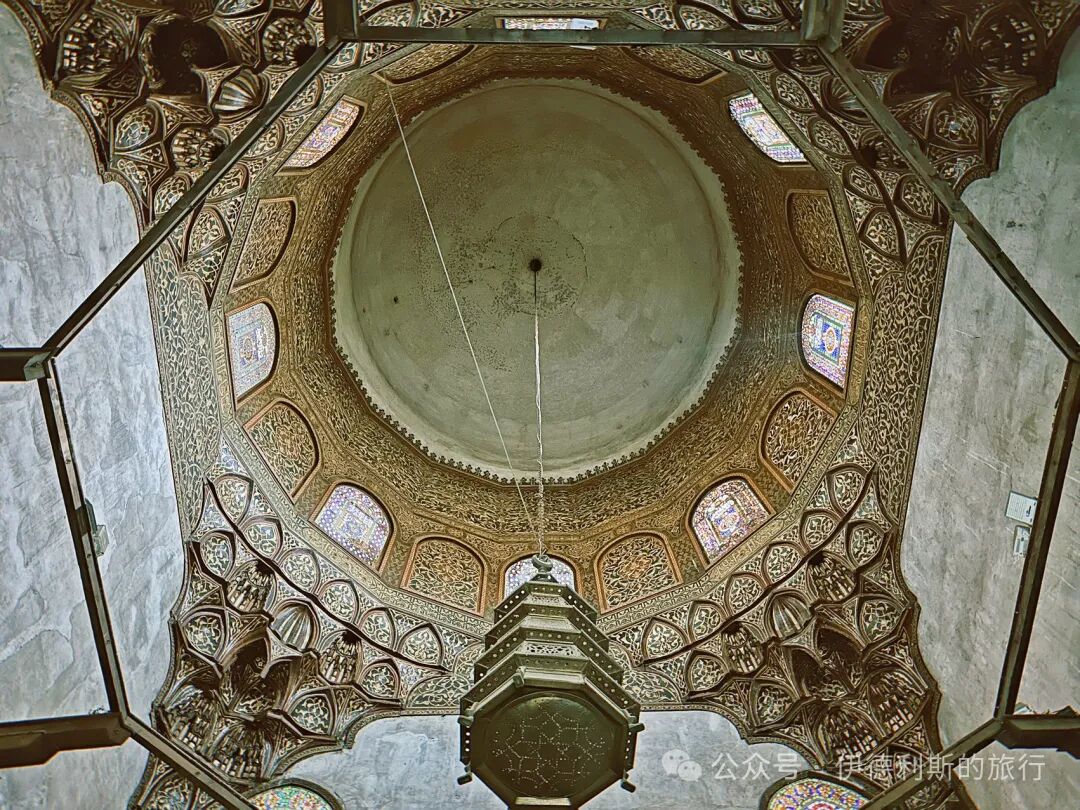
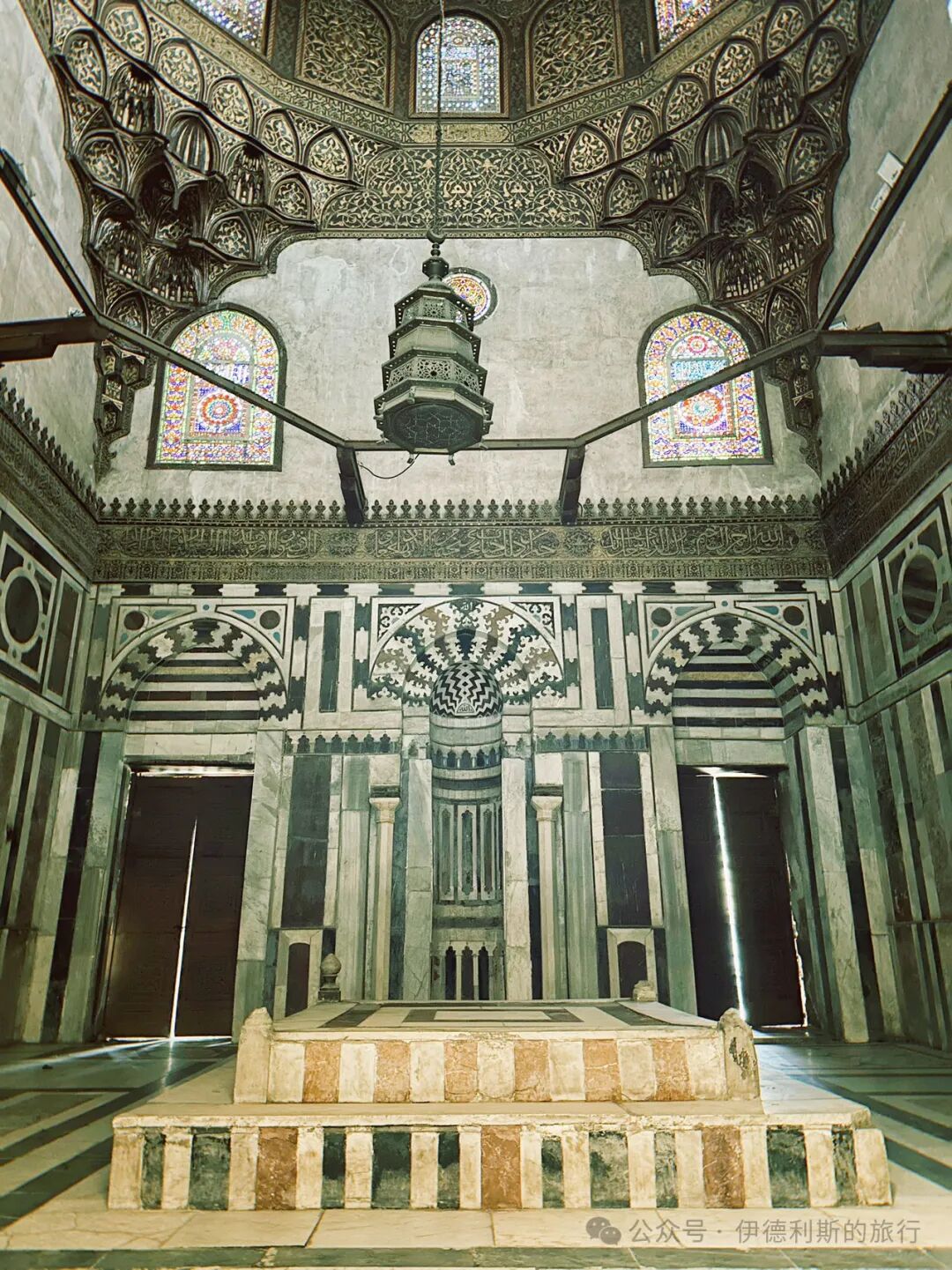
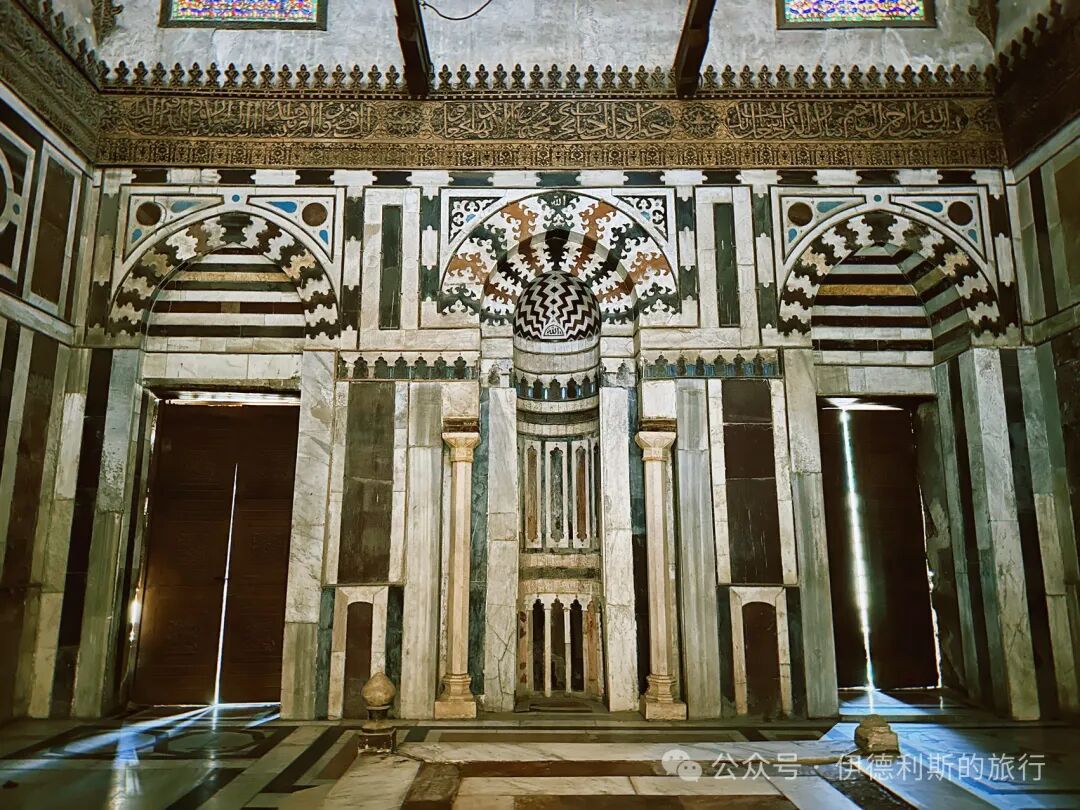
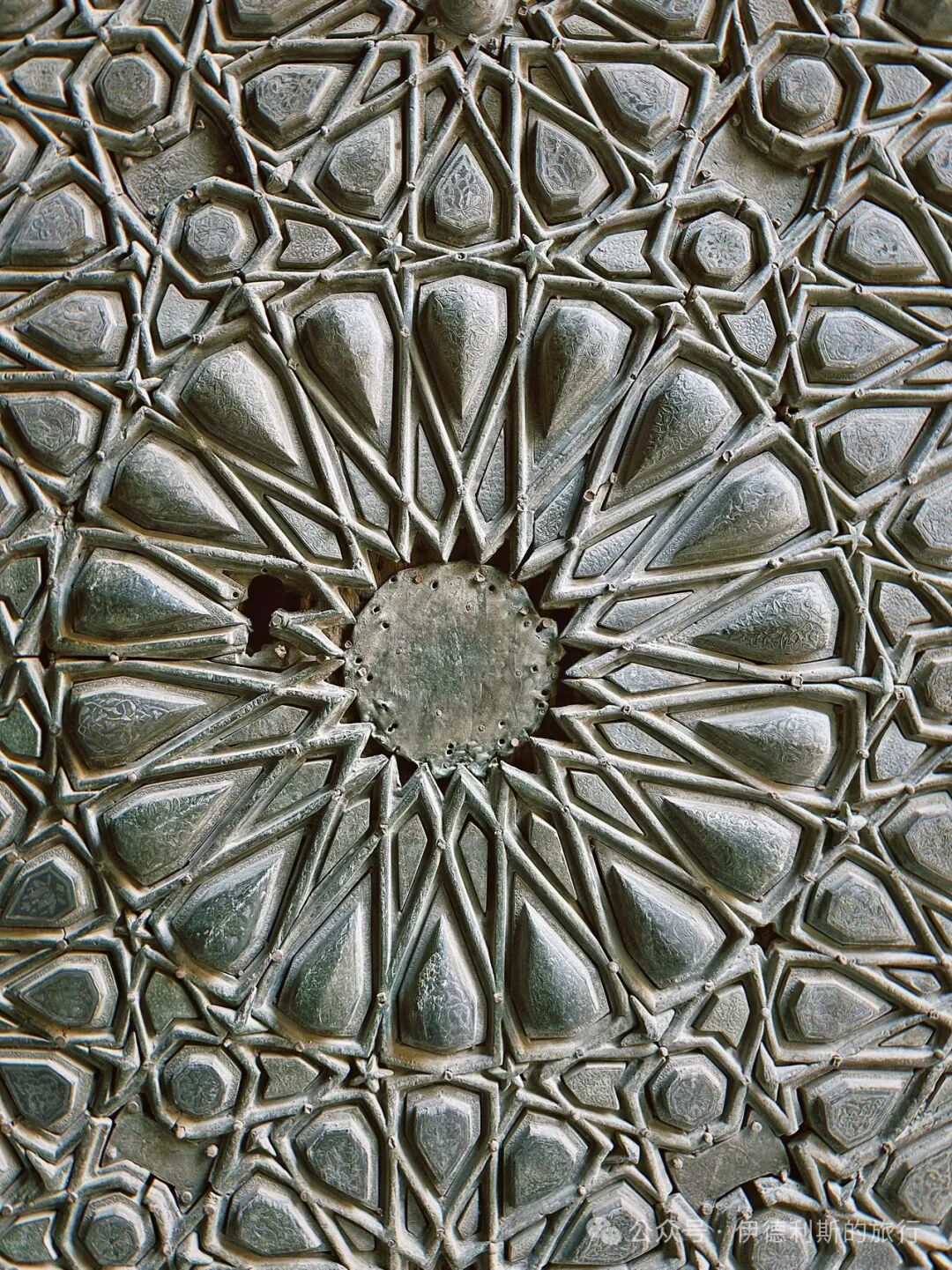
The days and nights at the Madrasa of Barquq are busy, as the lively Al-Mu'izz Street in Old Cairo sits right in front of the gate. This street is known as the main artery of Old Cairo. It connects the north gate to the south gate and serves as the main axis of the old city.
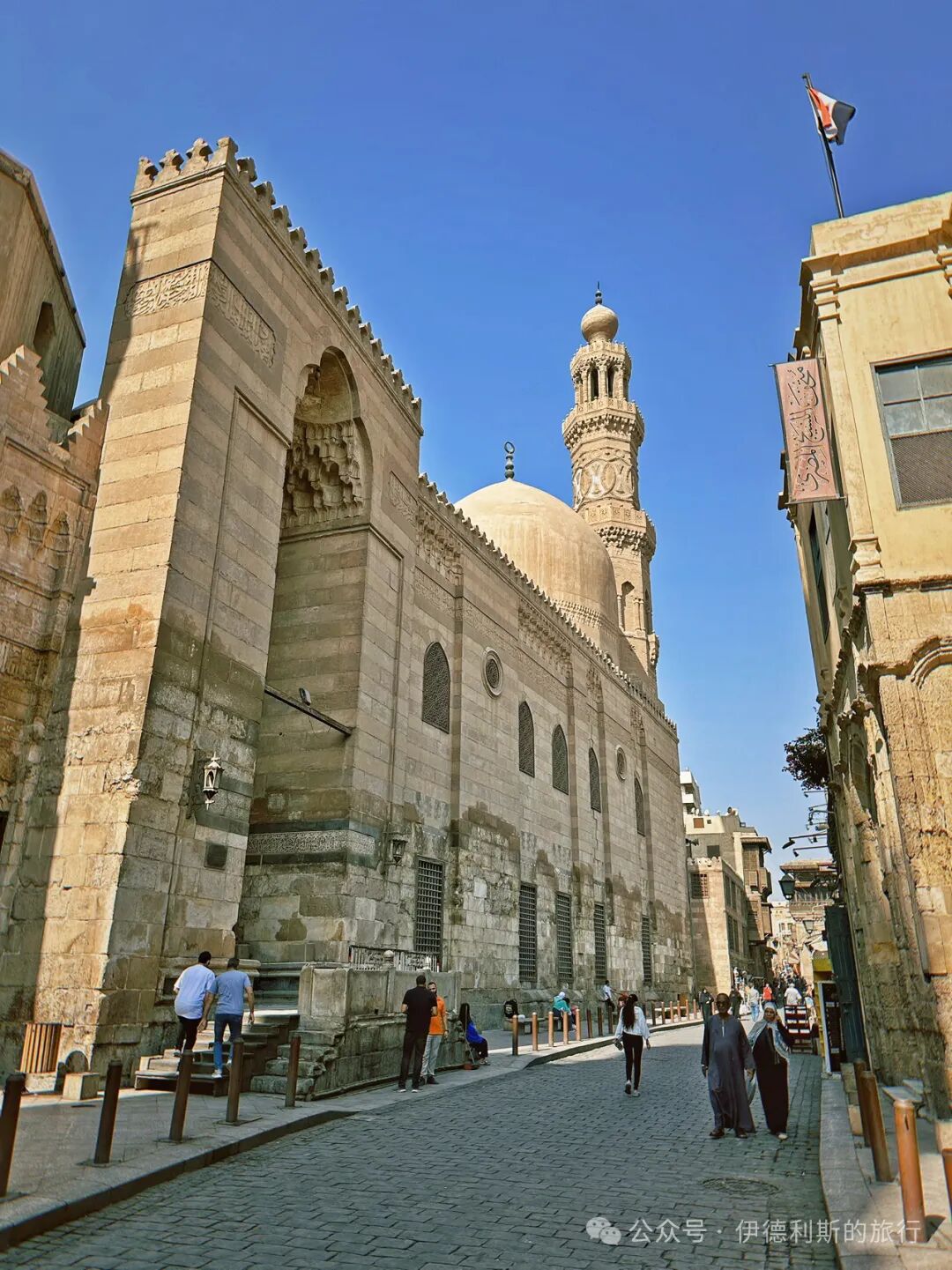
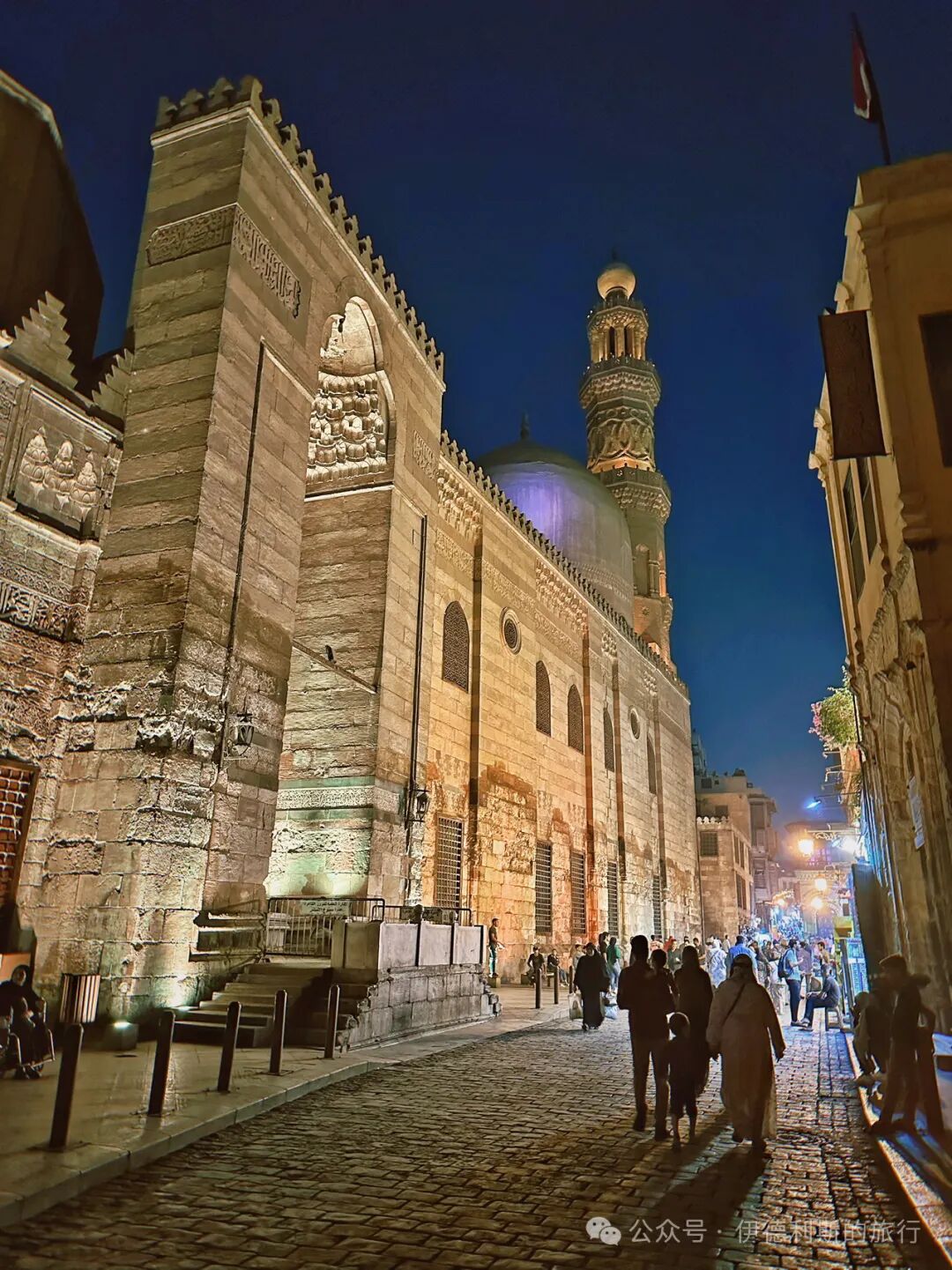
An-Nasir Muhammad Madrasa: 1303
To the south of the Madrasa of Barquq stands the Madrasa of Al-Nasir Muhammad, which was built between 1295 and 1303 by the Mamluk Sultan Al-Nasir Muhammad (who reigned from 1293-1294, 1299-1309, and 1310-1341).
Al-Nasir Muhammad was the youngest son of Sultan Qalawun. He took the throne at age 9, but he did not hold real power until his third period of rule at age 24. Under his rule, the Mamluk Sultanate reached its peak. The economy thrived at home, there were no major threats from abroad, and envoys from the Pope and the King of France visited his court with gifts. The reign of Nasir Muhammad is known as a high point for Egyptian culture, the greatest since the Ptolemaic Hellenistic period. He reopened the canal connecting Alexandria to the Nile, built many public buildings in Cairo, and renovated over thirty mosques.
The madrasa has a very unique Gothic gate. It was taken from a church in Acre after the Mamluk Sultanate completely defeated the Crusaders in 1291. The 1291 Siege of Acre is called the last battle of the Crusades, marking the end of the nearly 200-year-long Crusades. When the Siege of Acre ended, the Sultan ordered his army to tear down the city walls and churches, and this gate was transported back to Cairo.
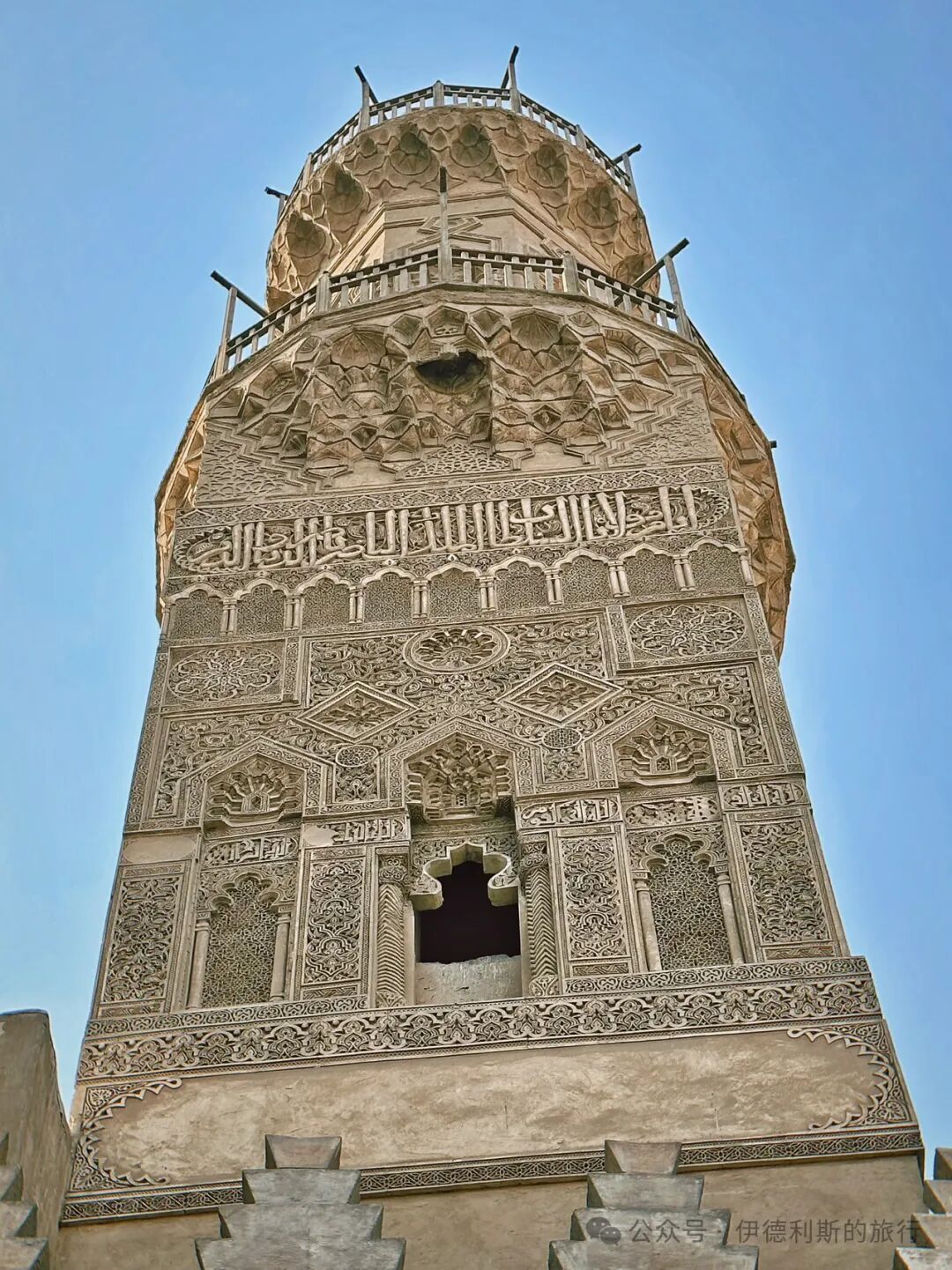
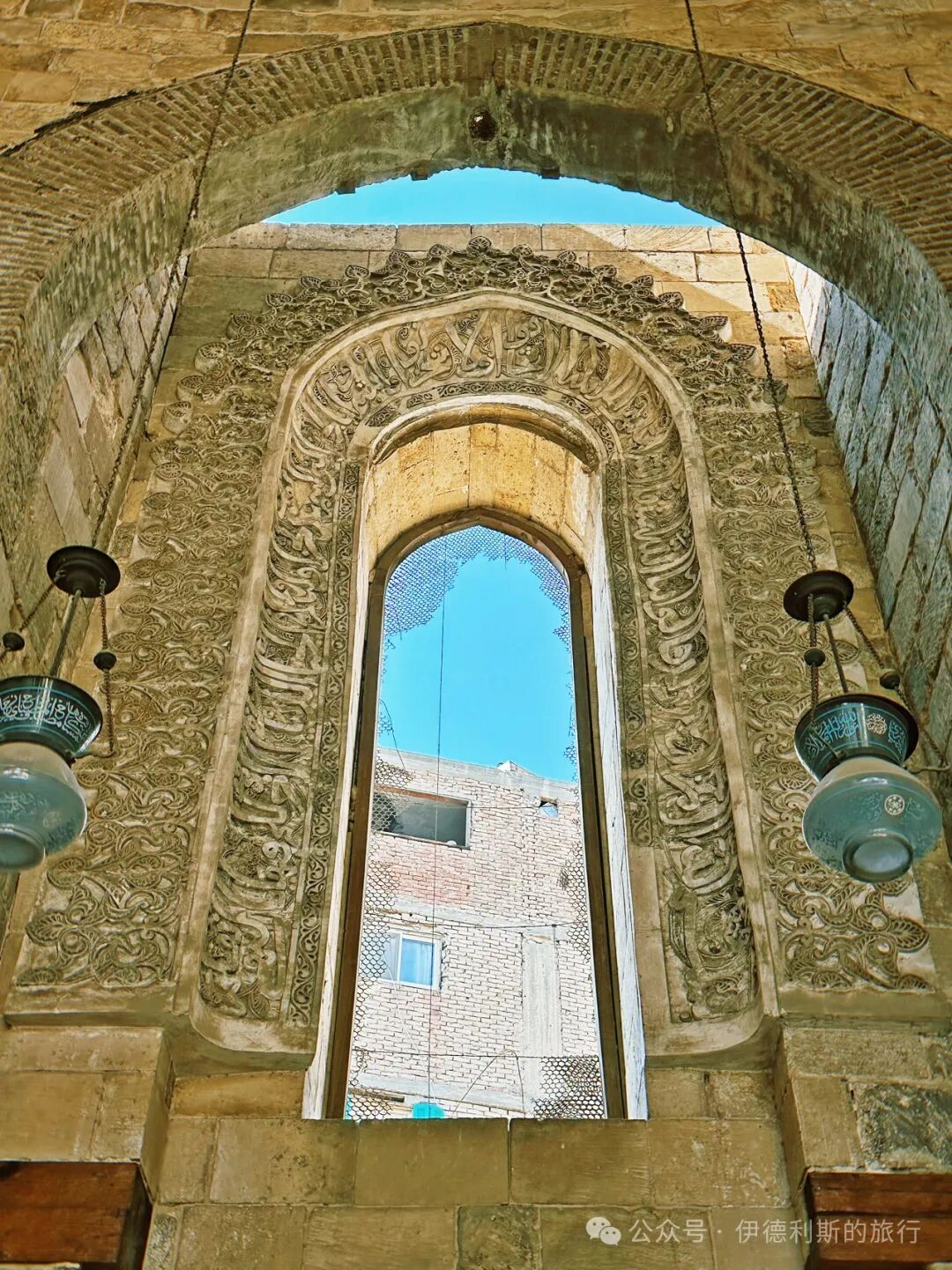
The minaret of the madrasa has very complex stucco decorations. It is the only remaining all-stucco minaret in the old city of Cairo. The medallions and arched decorations follow the styles of the Fatimid and Ayyubid dynasties, while the floral patterns are a signature feature of the Mamluk period. The plaster decorations feature both Kufic and Thuluth calligraphy, and they are carved beautifully. Some historians believe that craftsmen from the Maghreb or Andalusia likely helped create these high-quality plaster carvings.
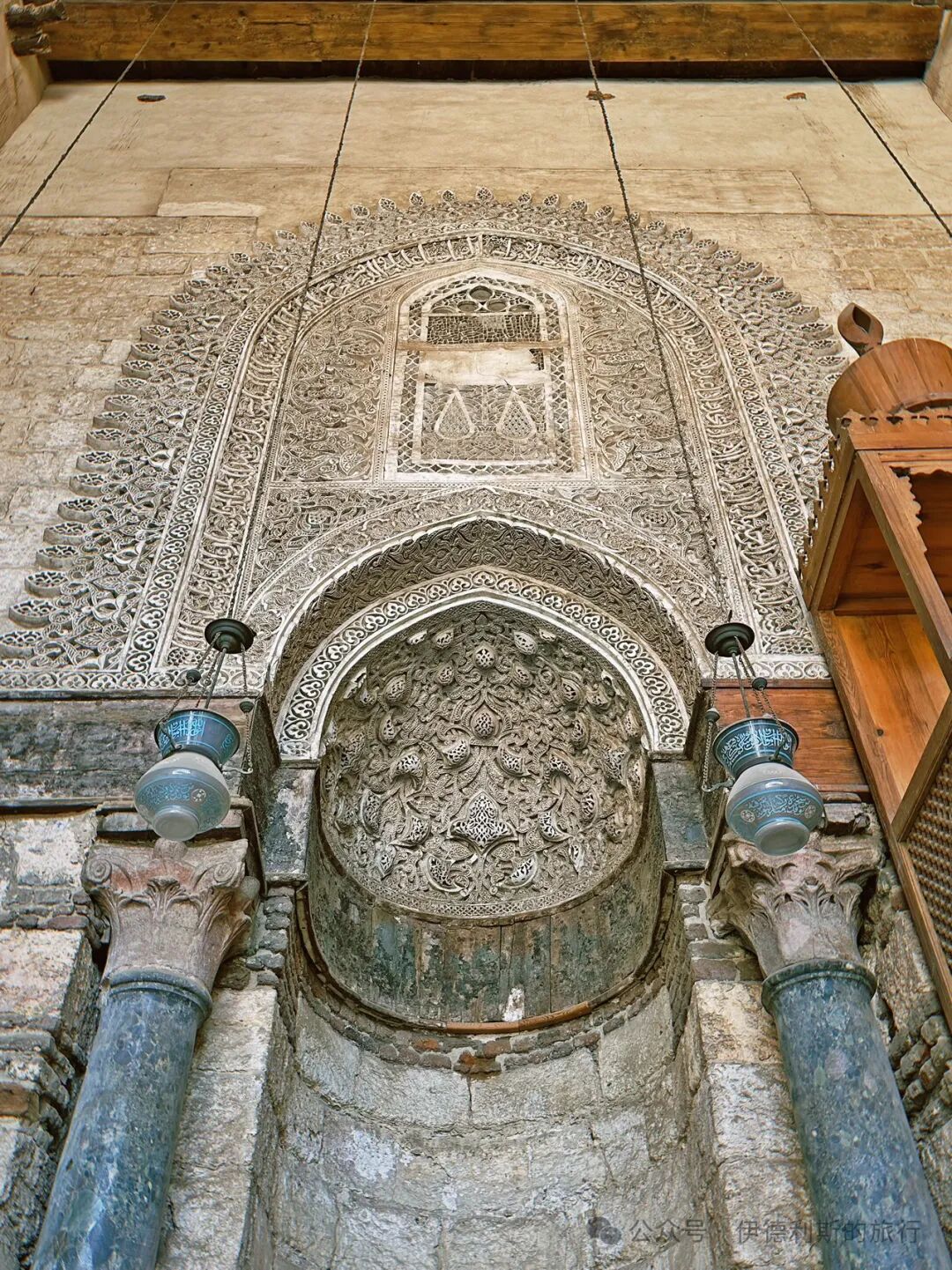
Like the Barquq Madrasa to the north, the Madrasa of an-Nasir Muhammad taught the four major schools of Islamic law: Hanafi, Hanbali, Shafi'i, and Maliki. The main hall contains the last plaster mihrab in Egypt, which features a unique egg-shaped protrusion similar to plaster carvings from Tabriz, Iran, during the Ilkhanate period. Because of this, historians suggest that this mihrab was likely made by craftsmen from Iran.
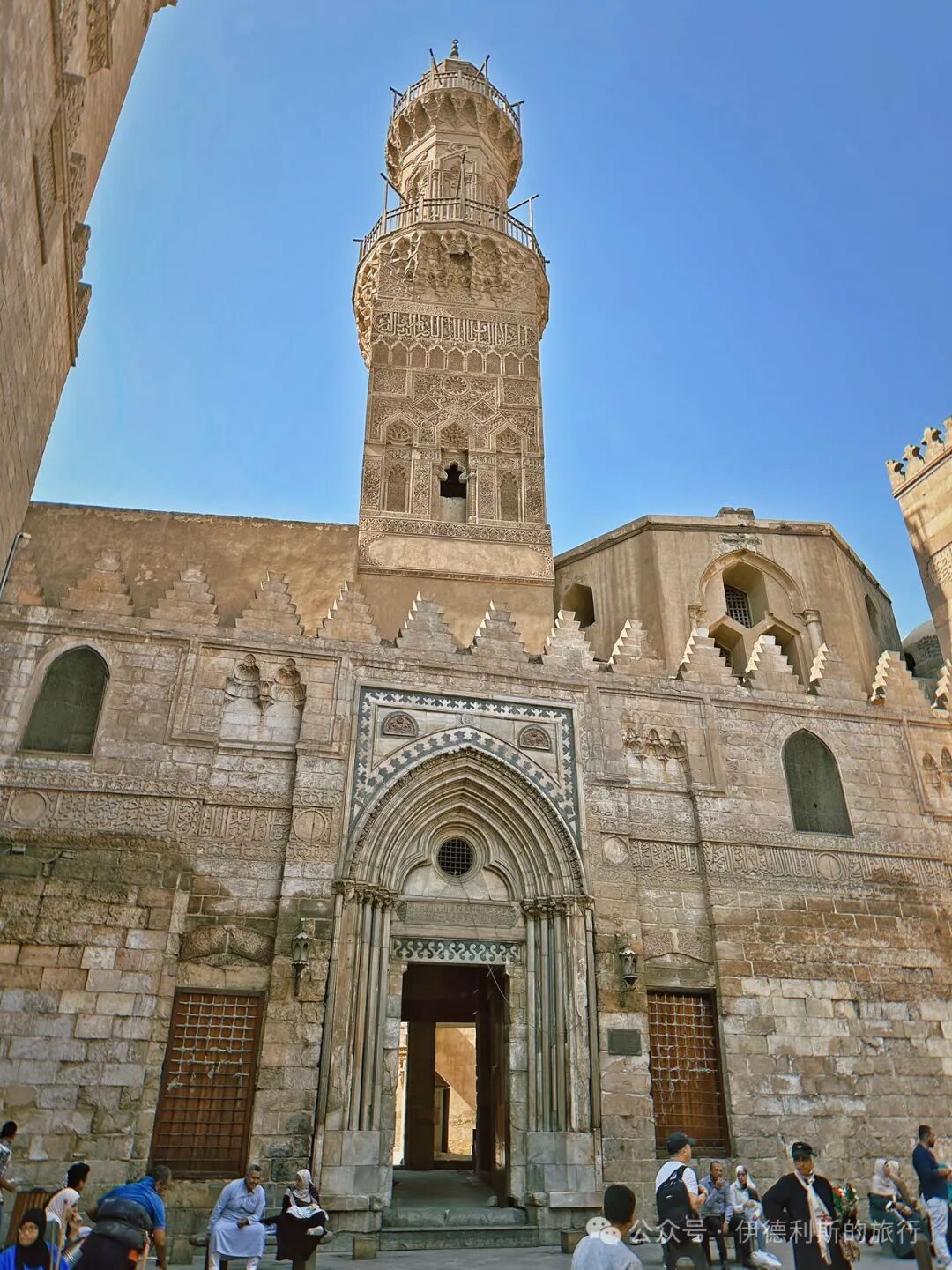
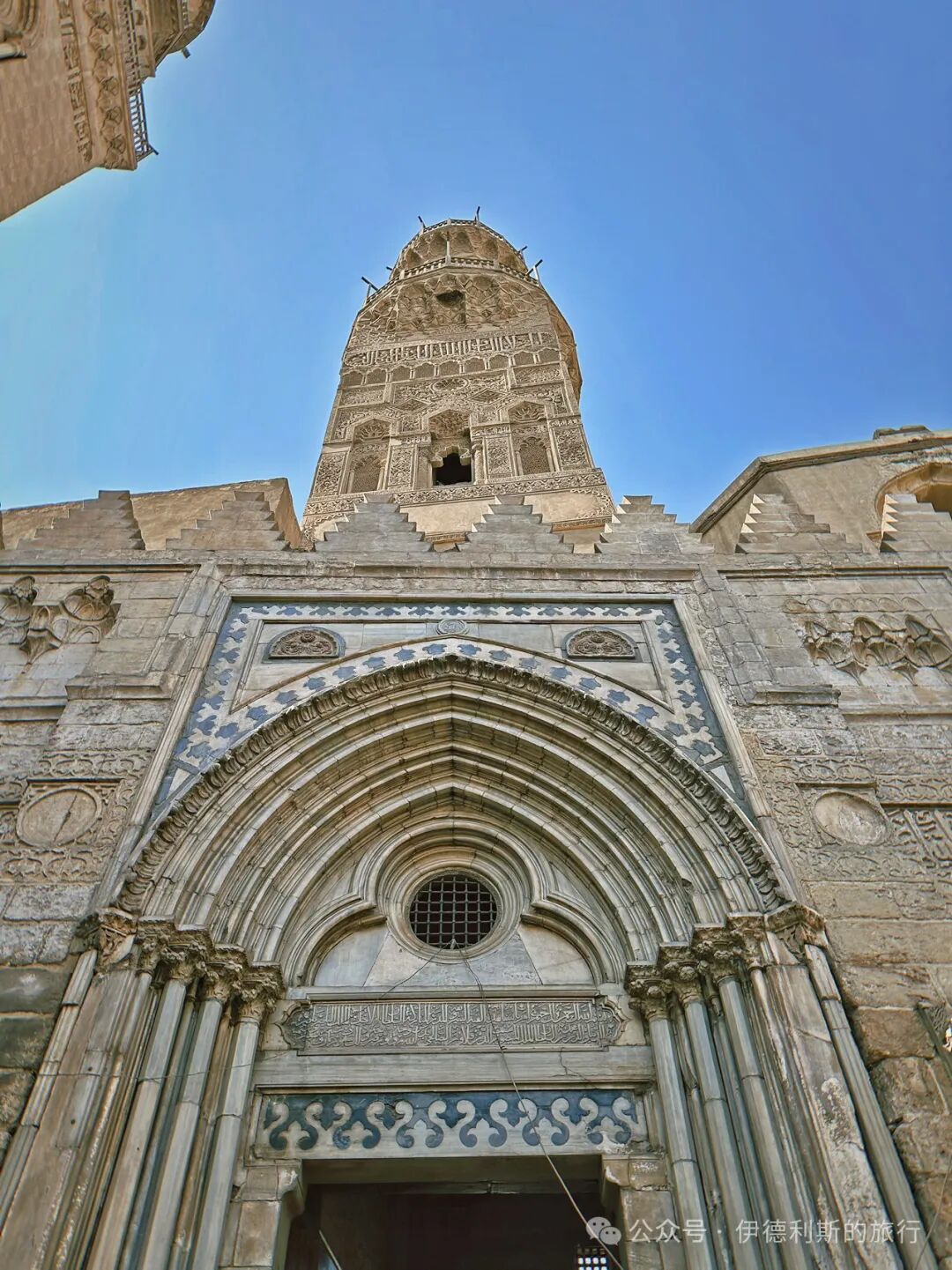
Qalawun Complex: 1285
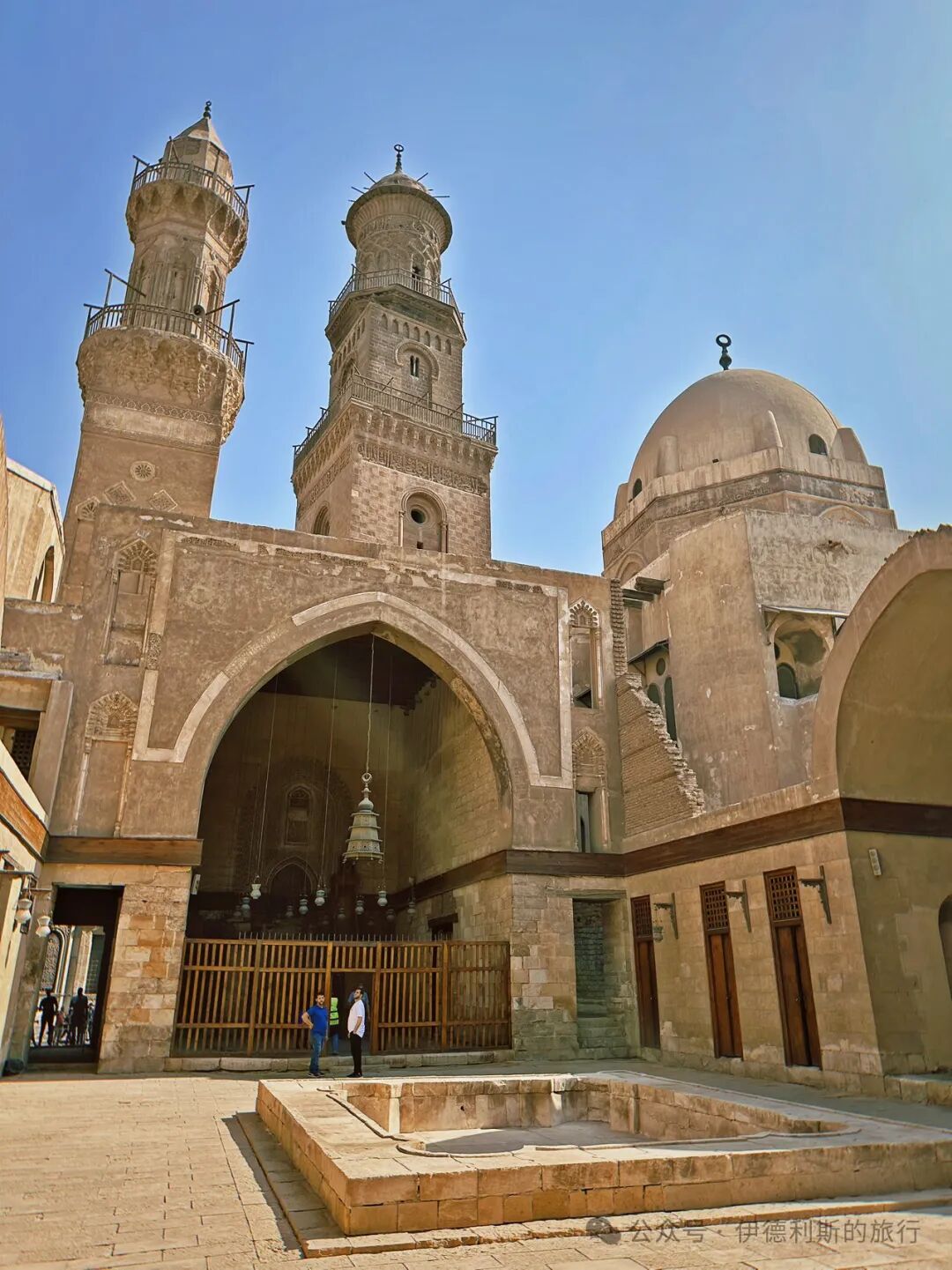
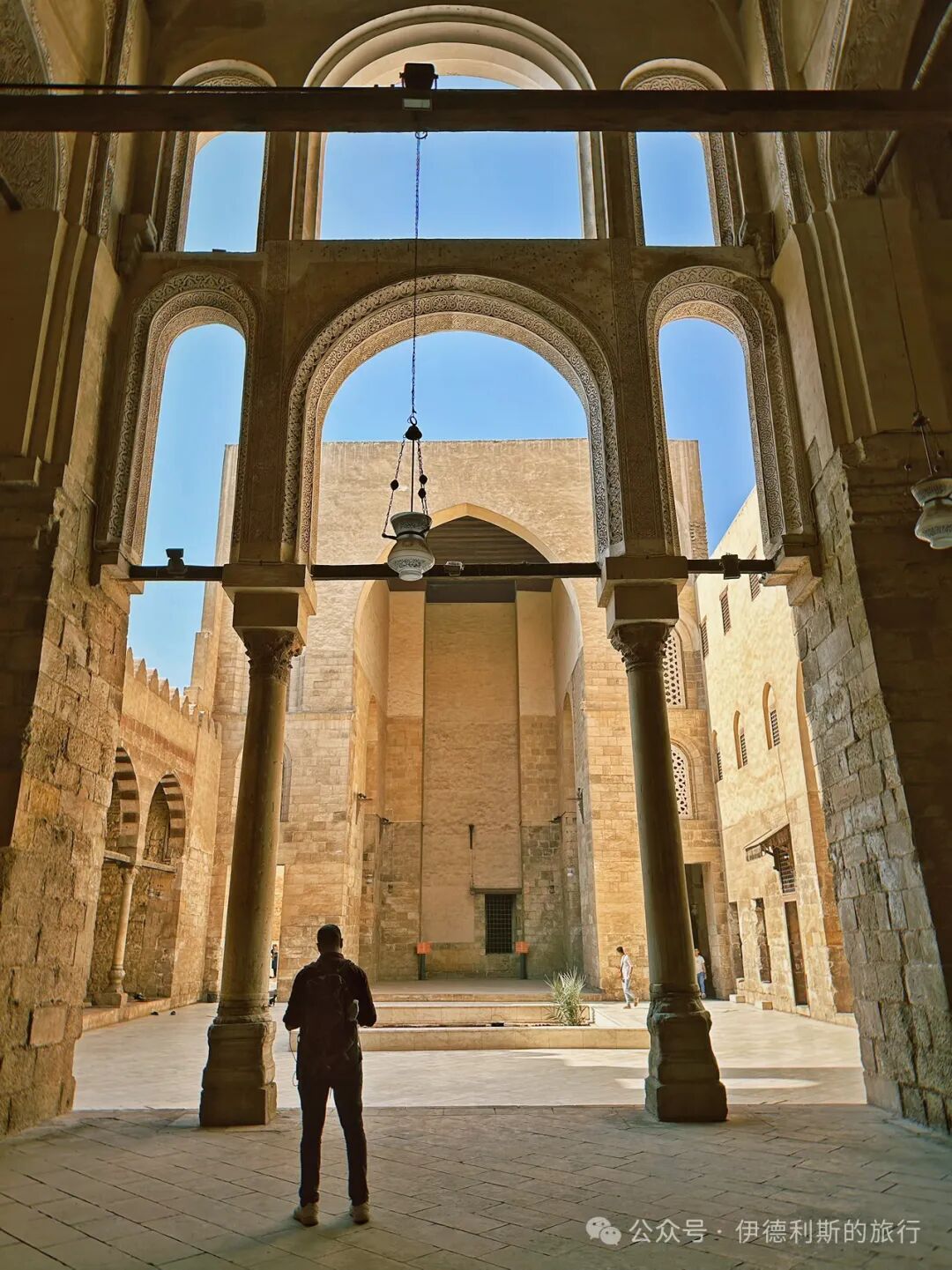
Further south is the most magnificent part of the Bayn al-Qasrayn area, the Qalawun complex. This complex includes a hospital, a madrasa, and a mausoleum. It was built in 1285 by the Mamluk Sultan Qalawun, who reigned from 1279 to 1290, and it is considered a masterpiece of Mamluk architecture.
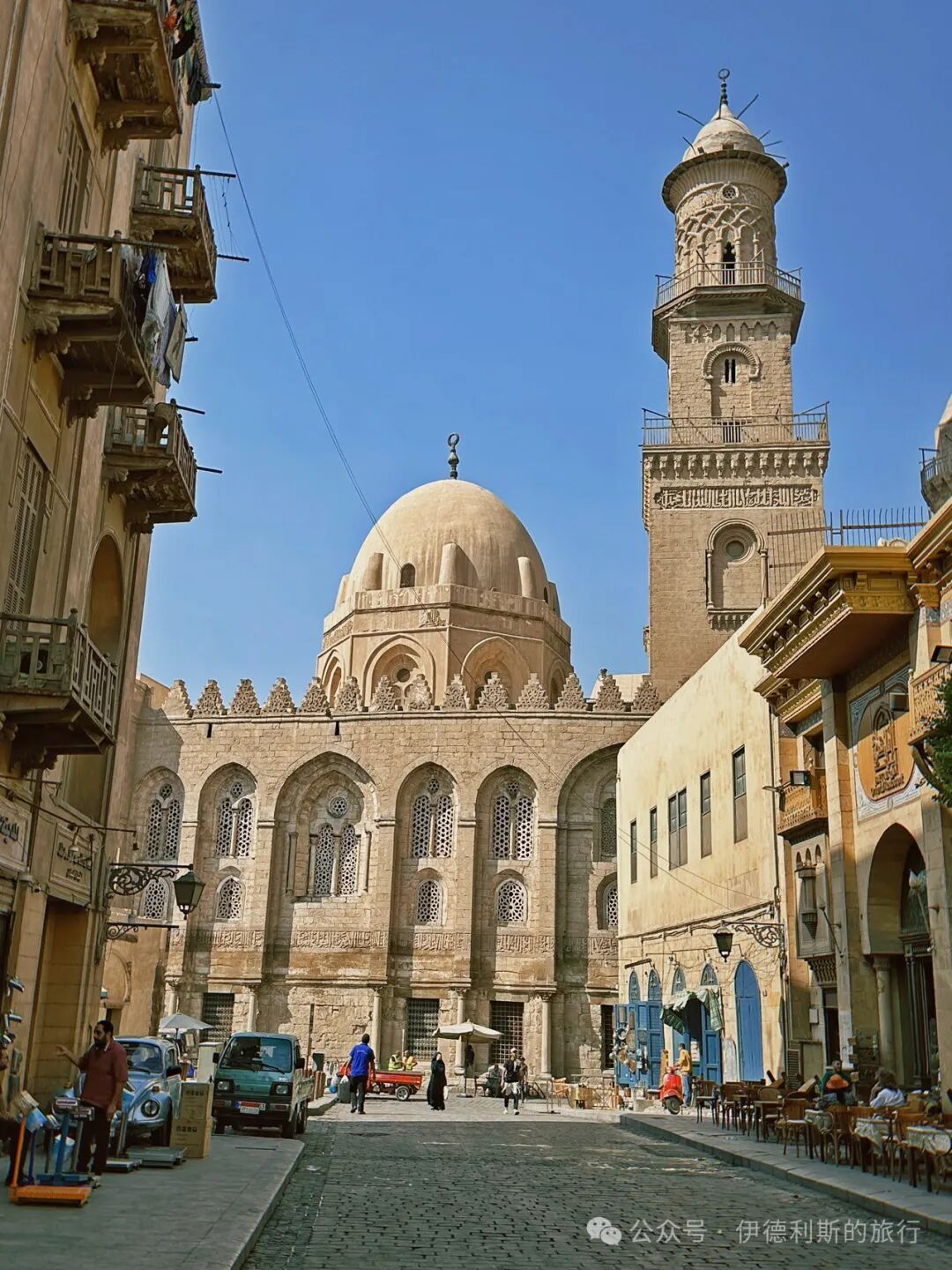
Standing at the entrance of the building complex, the most eye-catching feature is the towering three-story minaret (bangke ta). The top of the minaret features a unique decoration called a papyrus cornice, which is how the Mamluk dynasty showed its legitimacy by looking back to the era of the pharaohs.
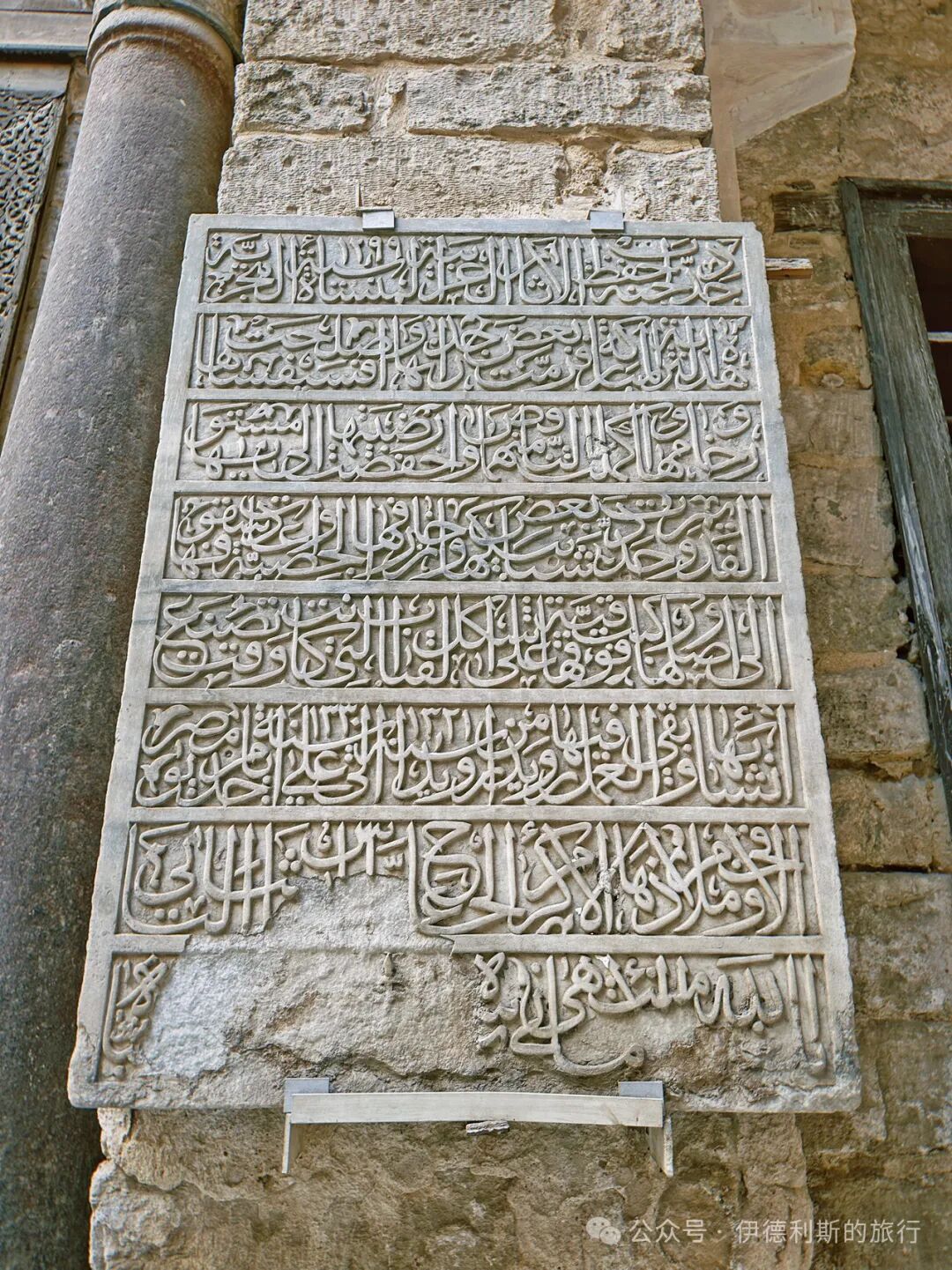
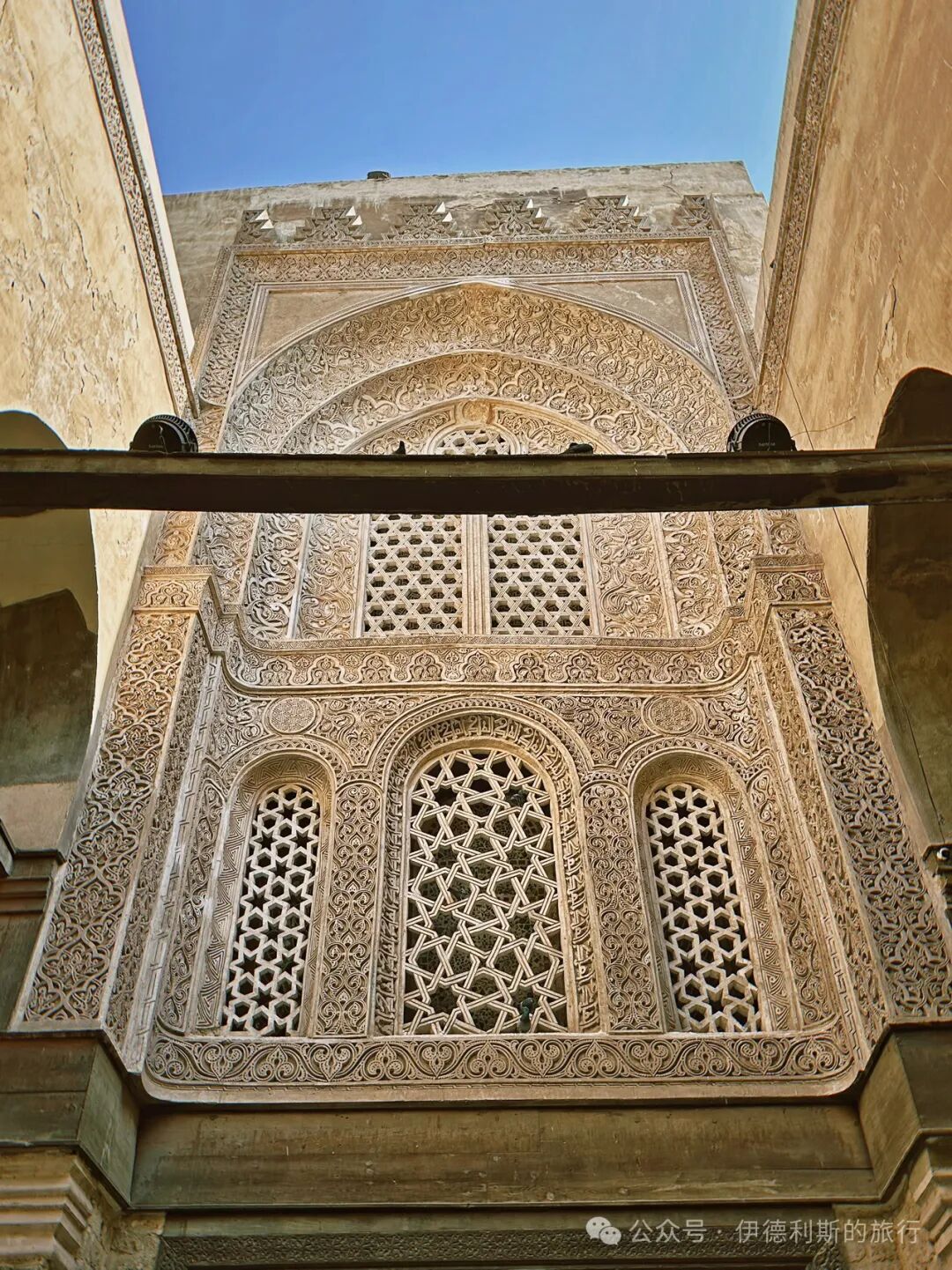
The facade of the entire complex is 67 meters long, similar in style to Gothic Crusader churches of the same period, with windows surrounded by pointed arch panels of different sizes and exquisite stucco calligraphy carvings underneath.
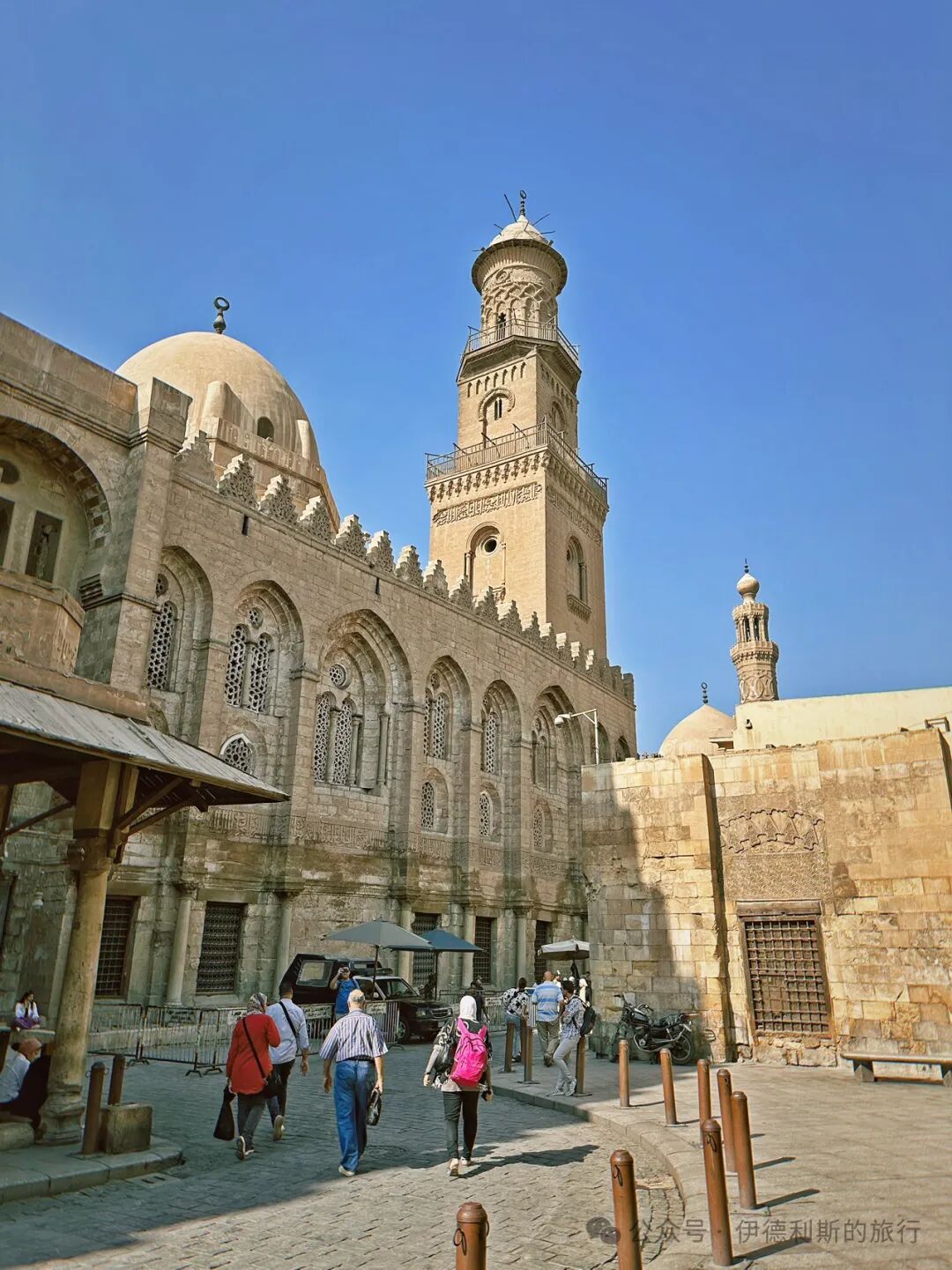
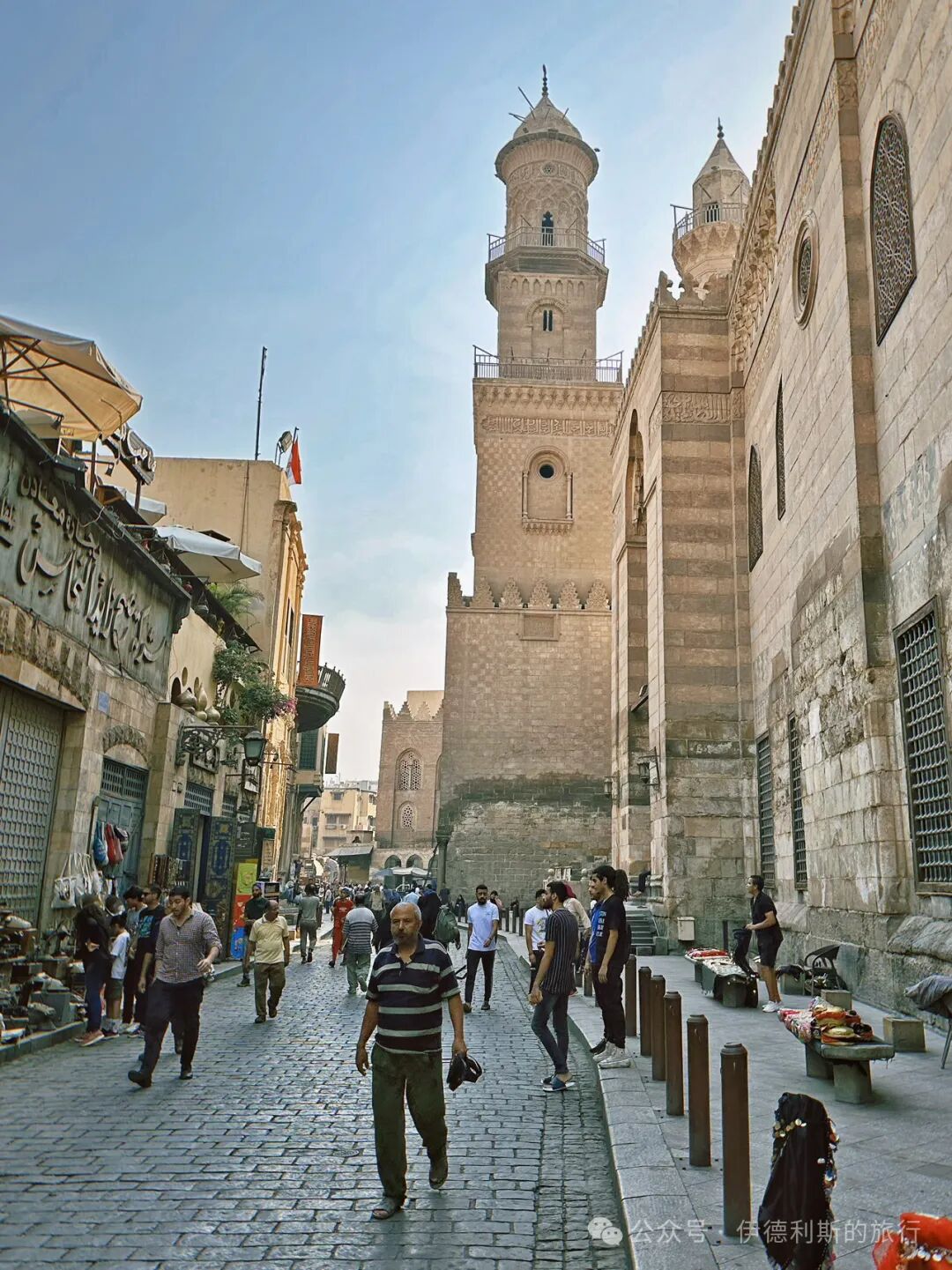
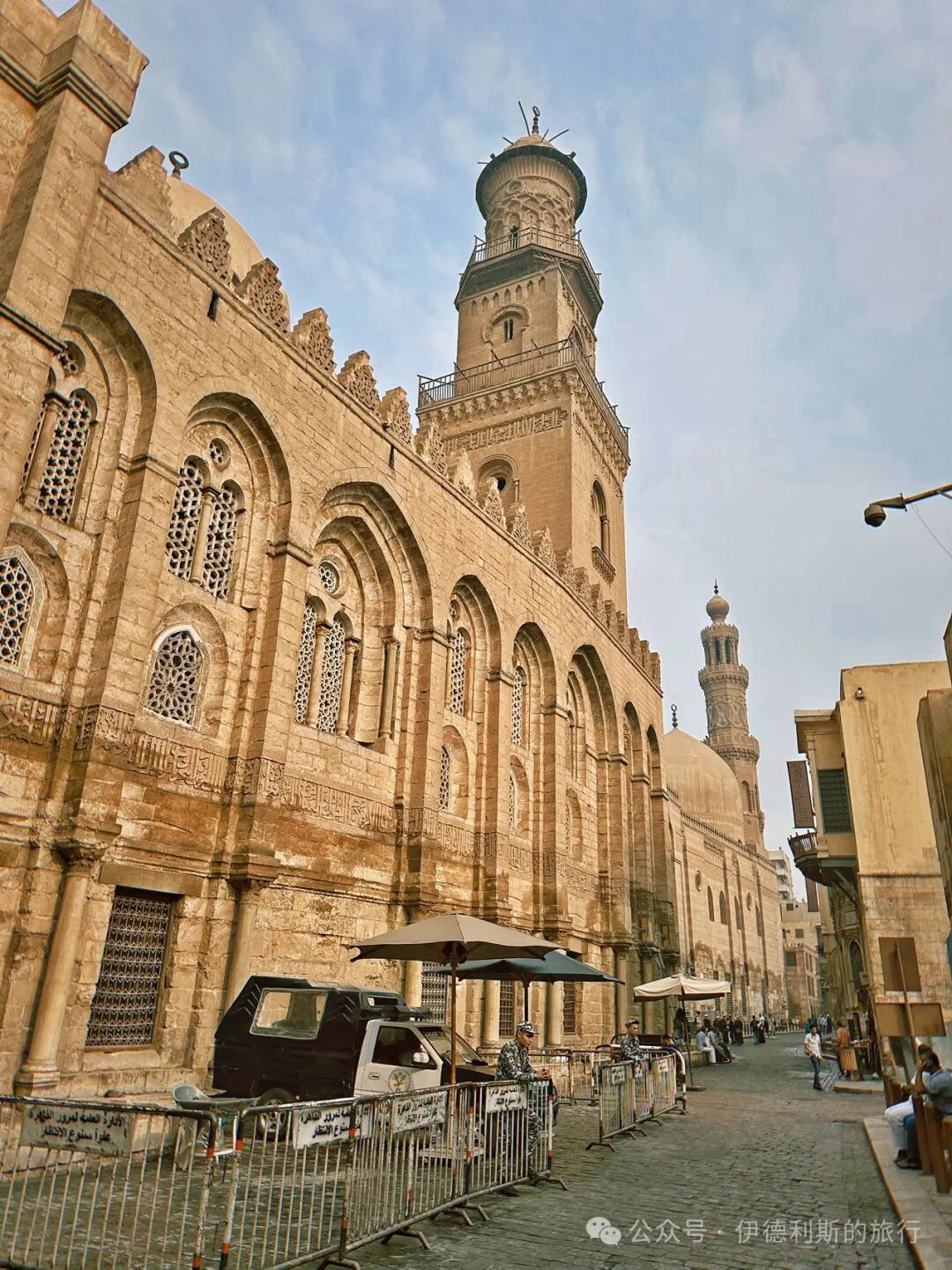
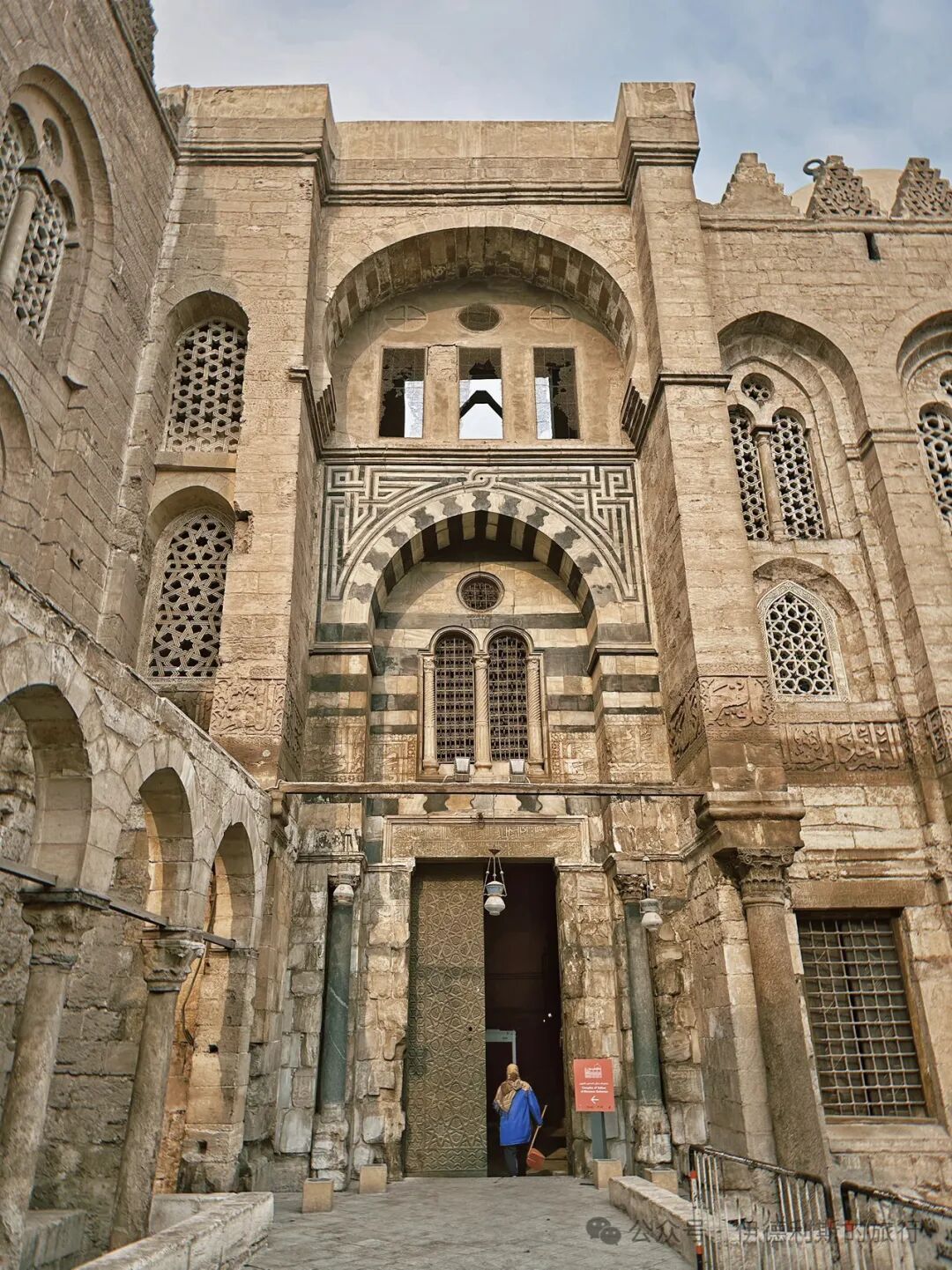
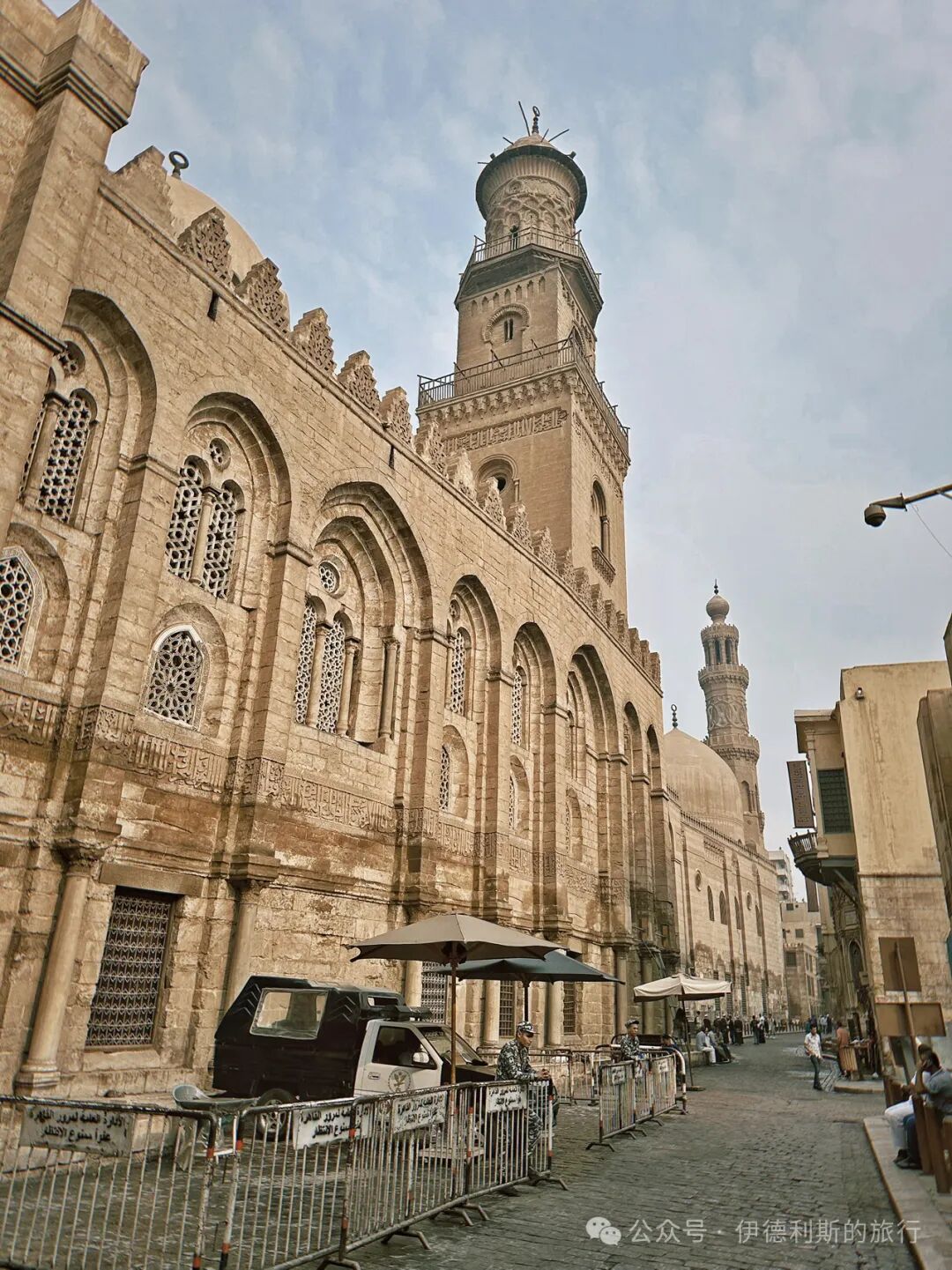
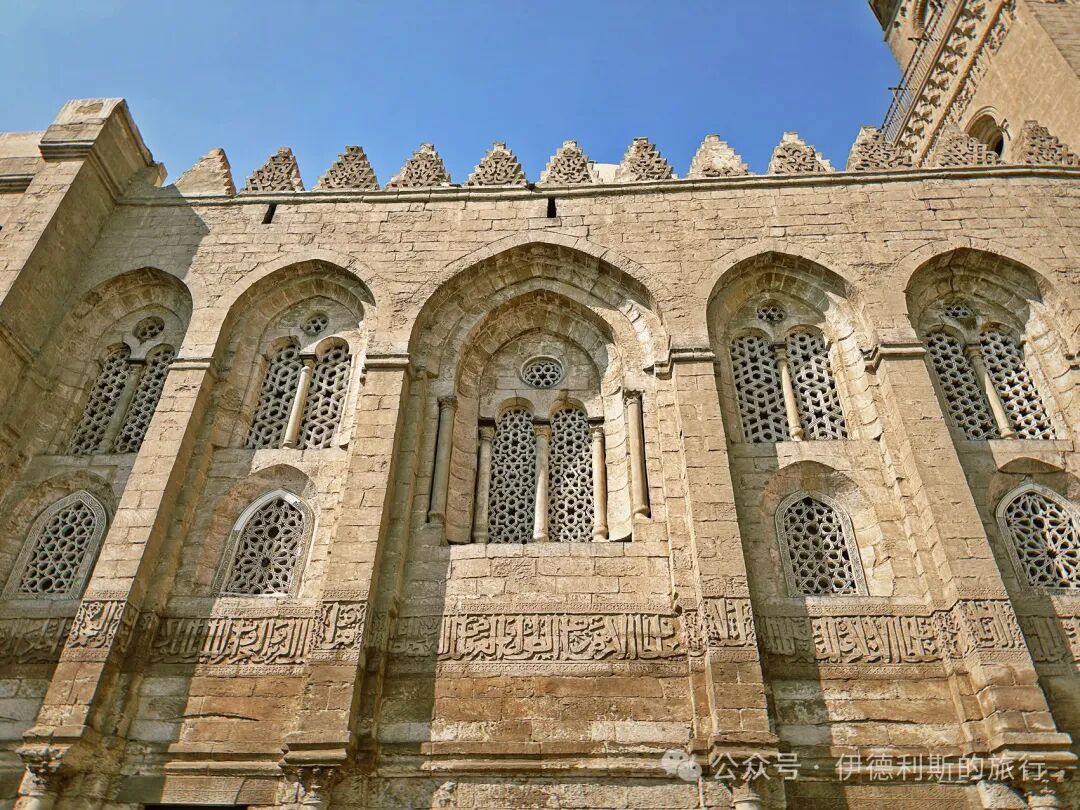
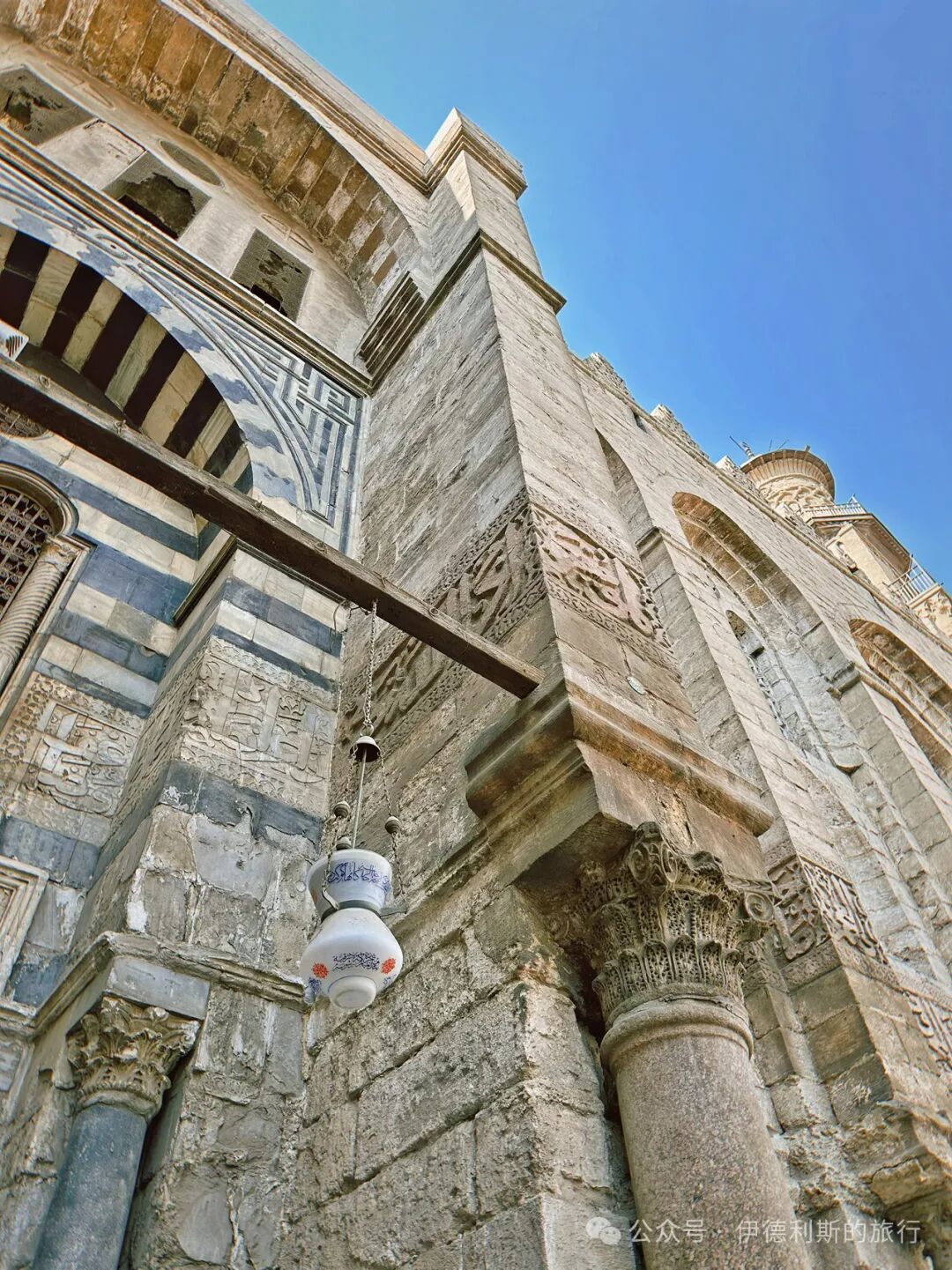
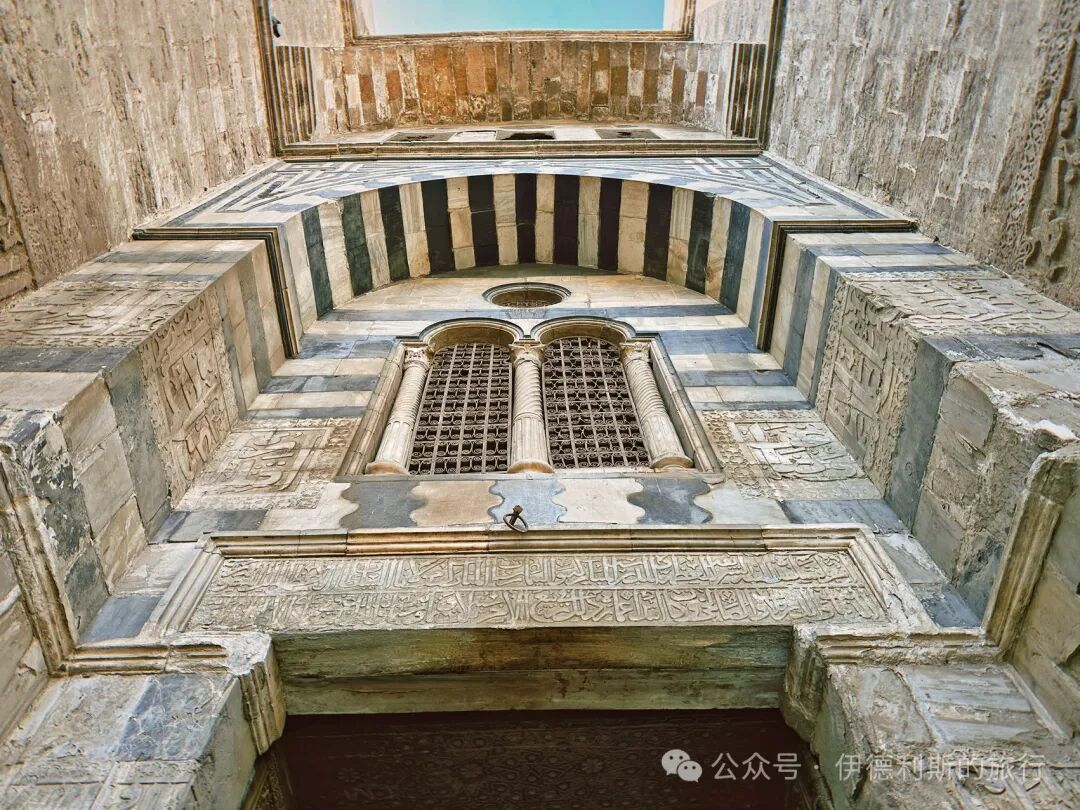
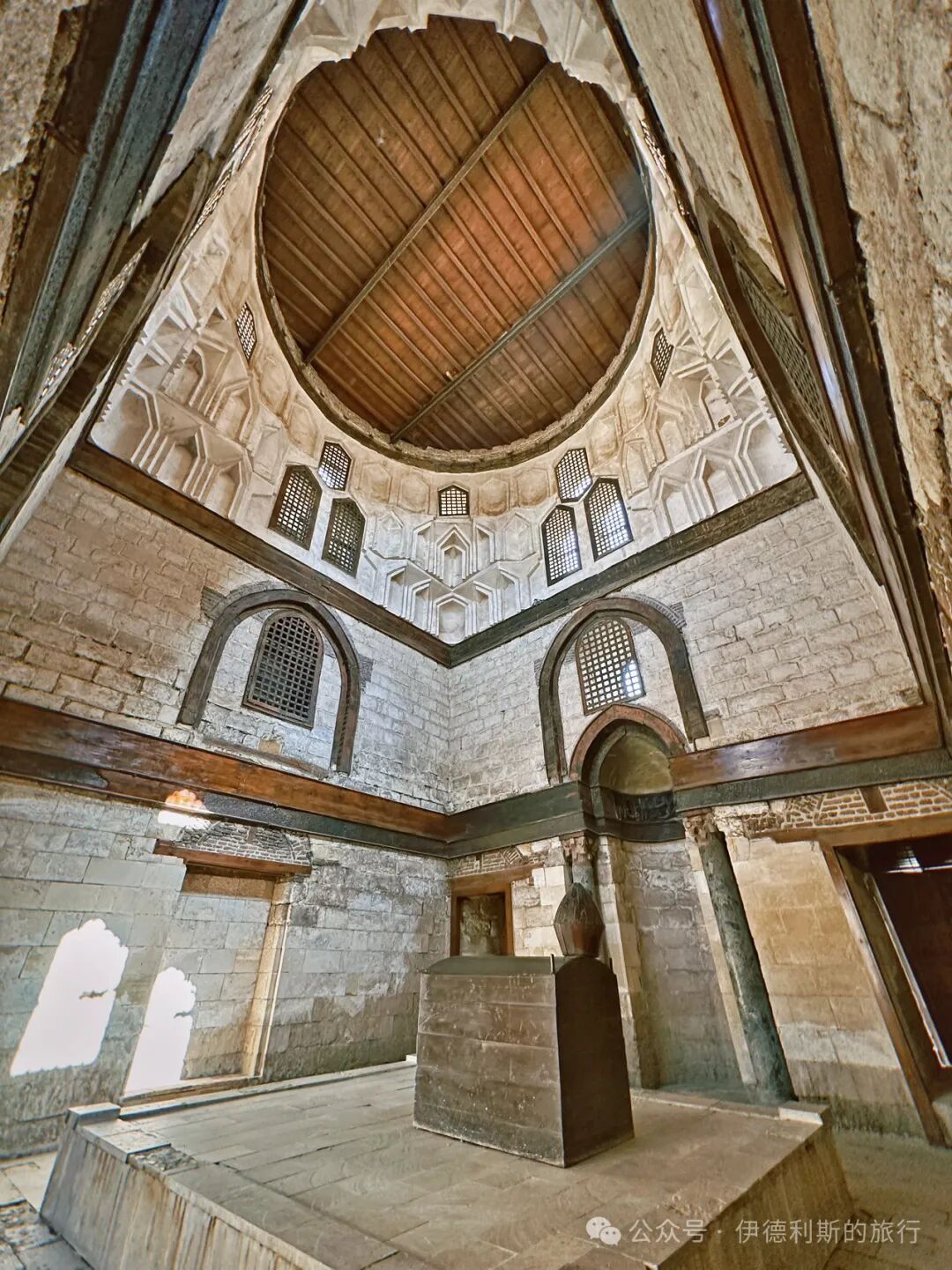
The Mausoleum of Sultan Qalawun is known as a symbol of the power of the Mamluk dynasty and held great significance in 13th to 16th-century Egypt. This is one of the most magnificent imperial mausoleums I have ever visited, with an incredible wealth of stucco carvings, marble mosaics, and gilded woodwork. The tomb hall is supported by four towering stone columns decorated with Corinthian capitals. Above the capitals is an architrave decorated with vine patterns and stucco carvings in Thuluth calligraphy.
Sultan Qalawun was known as the King of Victory. In 1281, he led the Mamluk army to defeat the Mongol Ilkhanate forces commanded by Mongke Temur, the son of Hulagu Khan, in Homs, Syria. Mongke Temur was wounded and fled. The following year, the Ilkhan Tekuder converted to Islam and formed an alliance with the Mamluk Sultanate. The Battle of Homs is known as a major turning point in the Mongol westward expansion, marking the first time Mongol cavalry suffered a defeat in the Middle East.
After the threat from the Ilkhanate faded, Sultan Qalawun launched a series of wars against the Crusaders starting in 1285, eventually recapturing Tripoli, the largest city in northern Lebanon, in 1289.
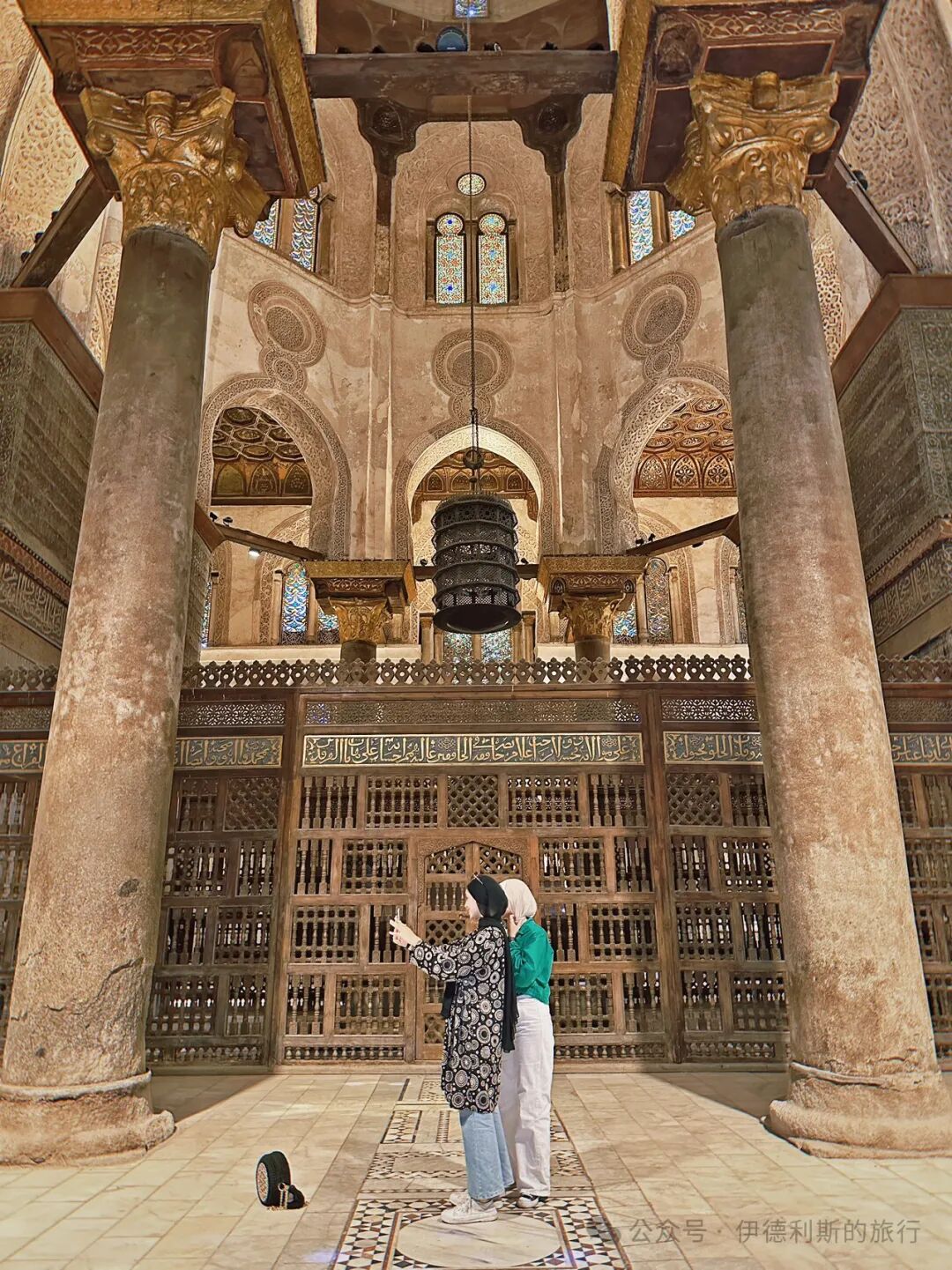
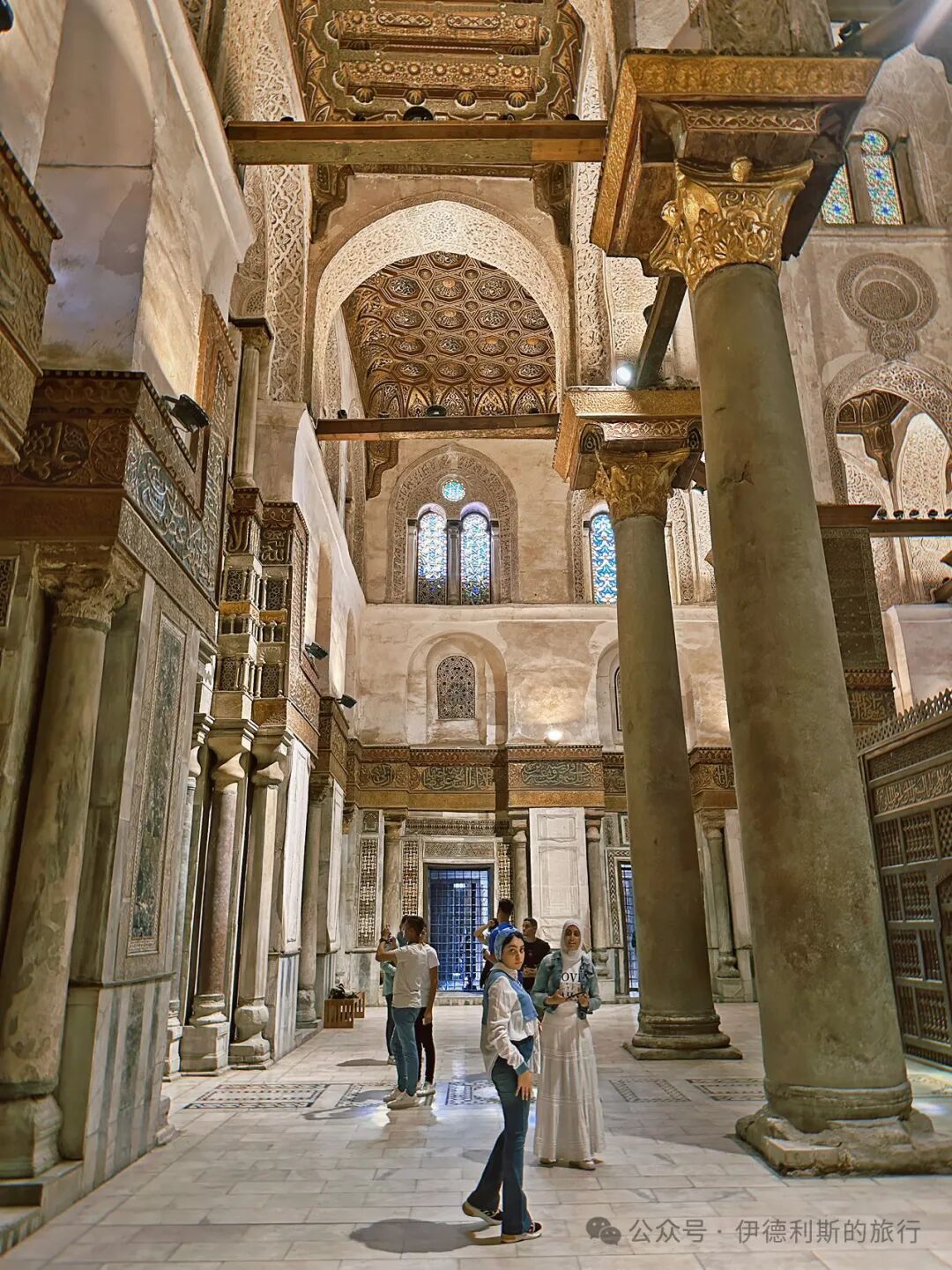
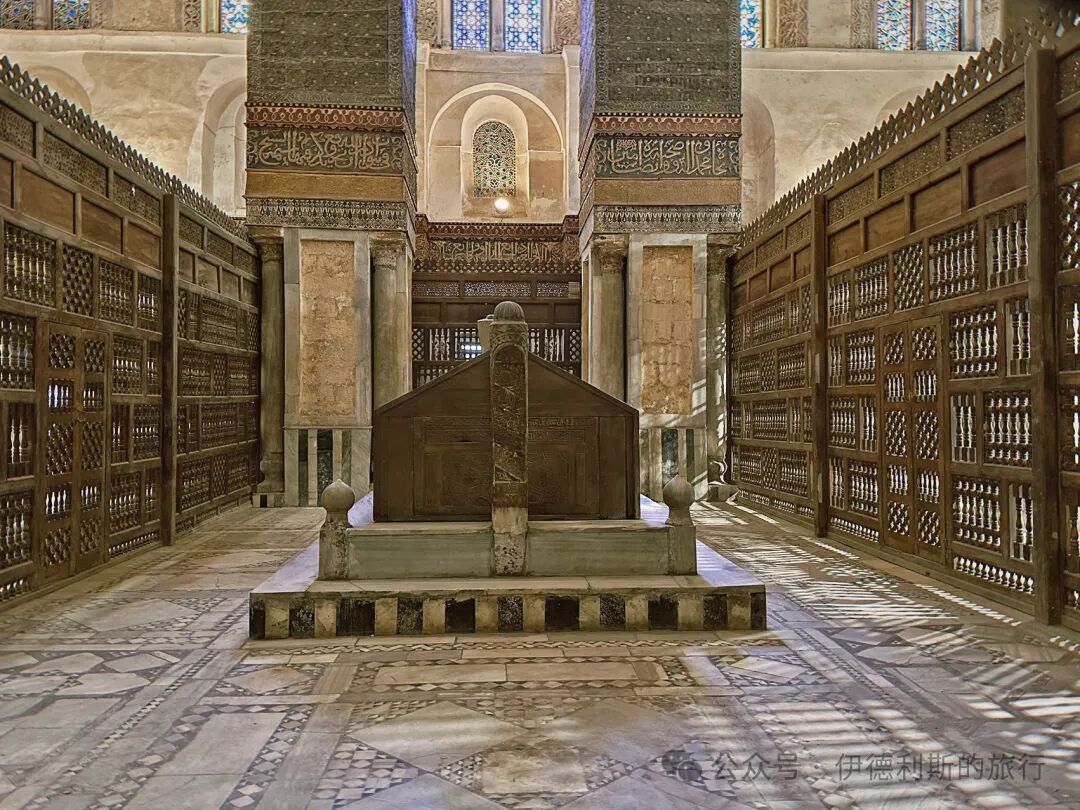
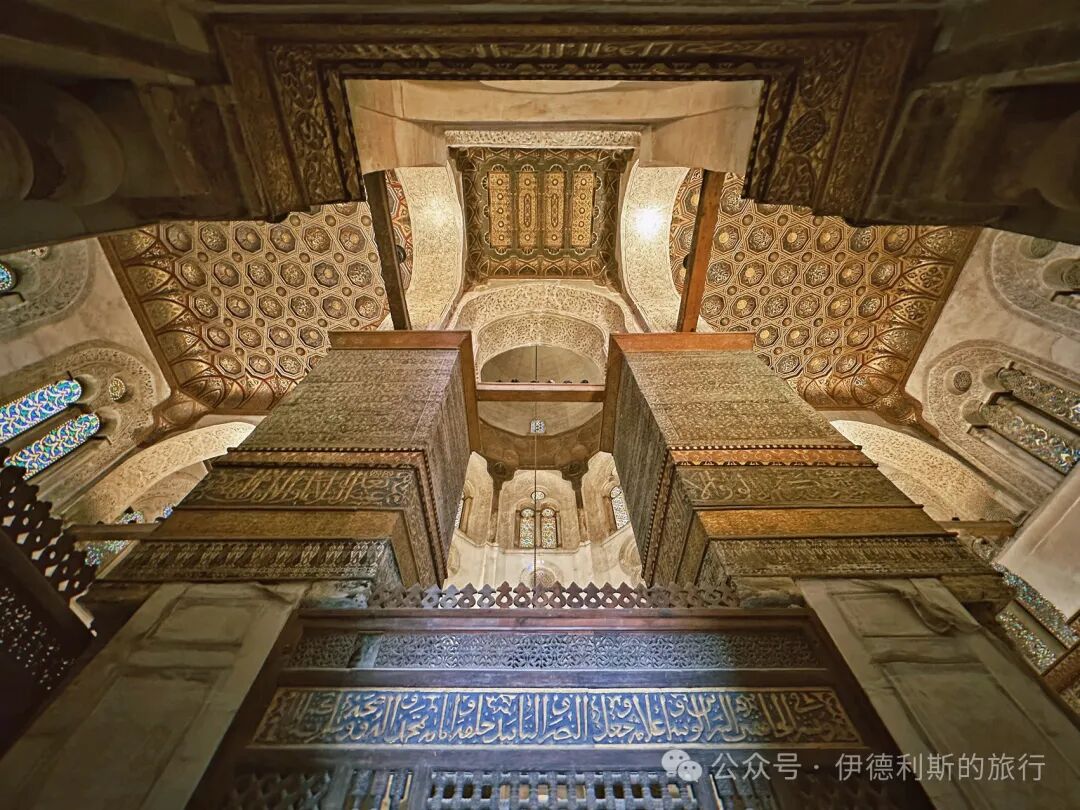
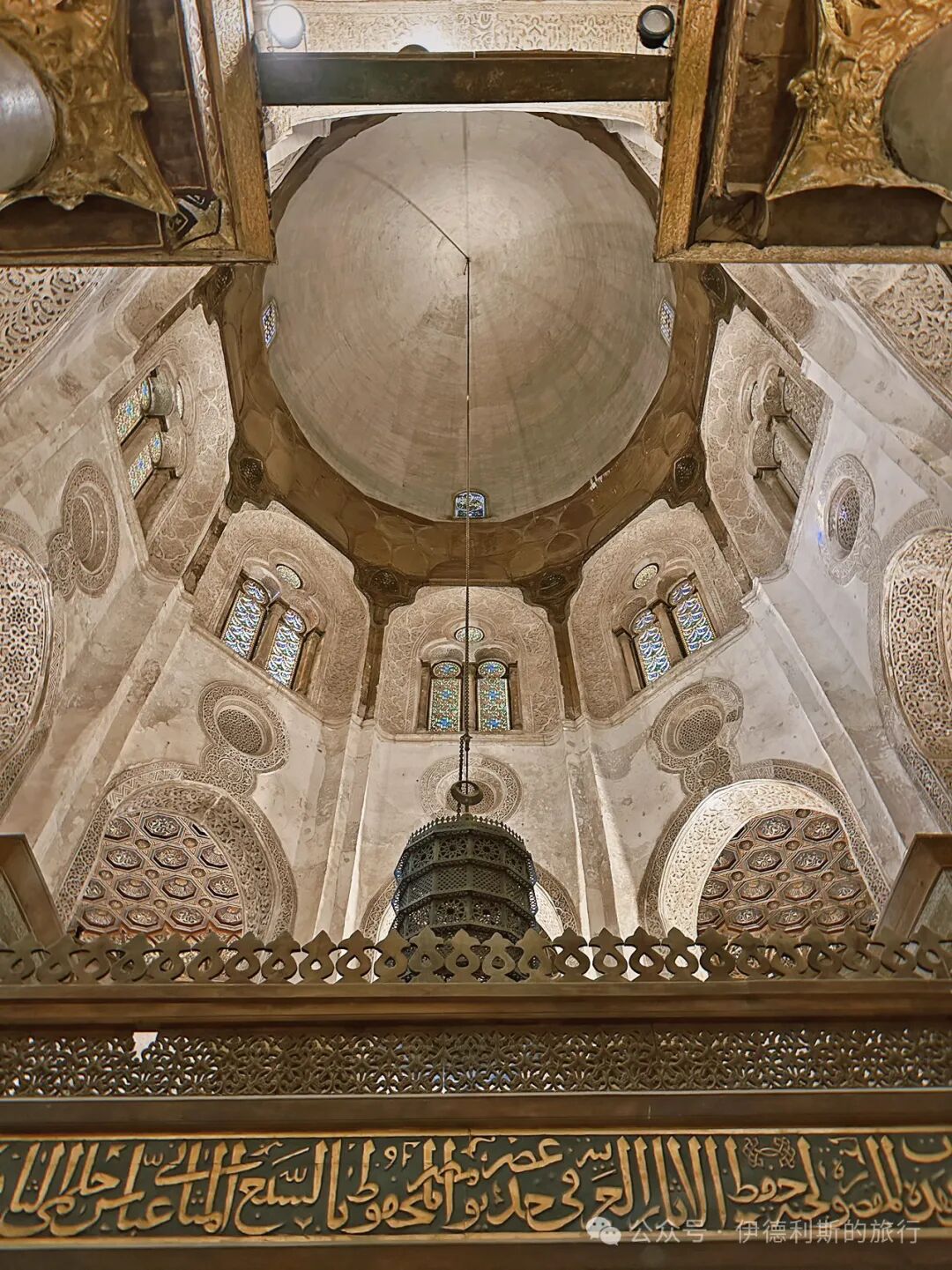
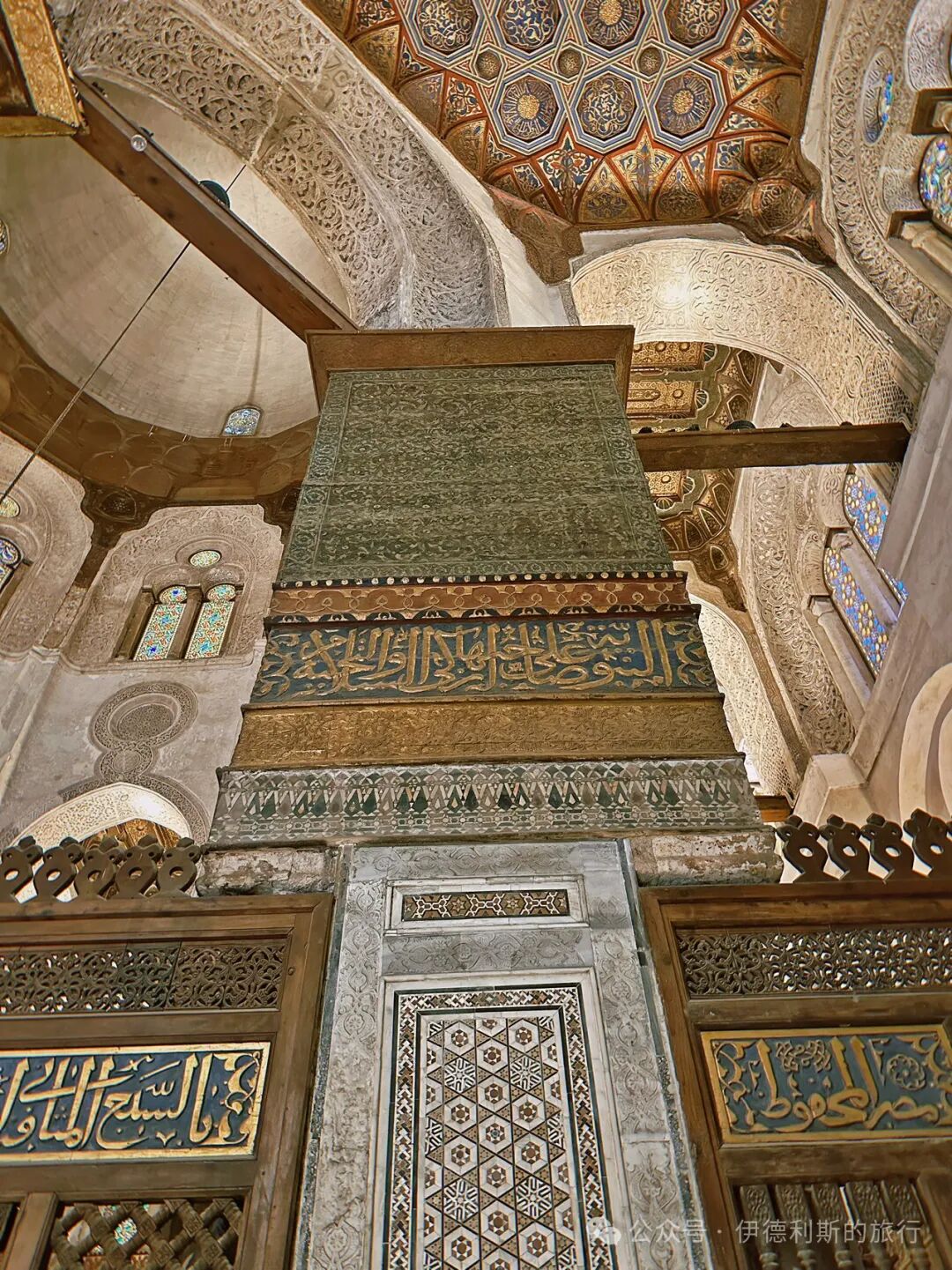
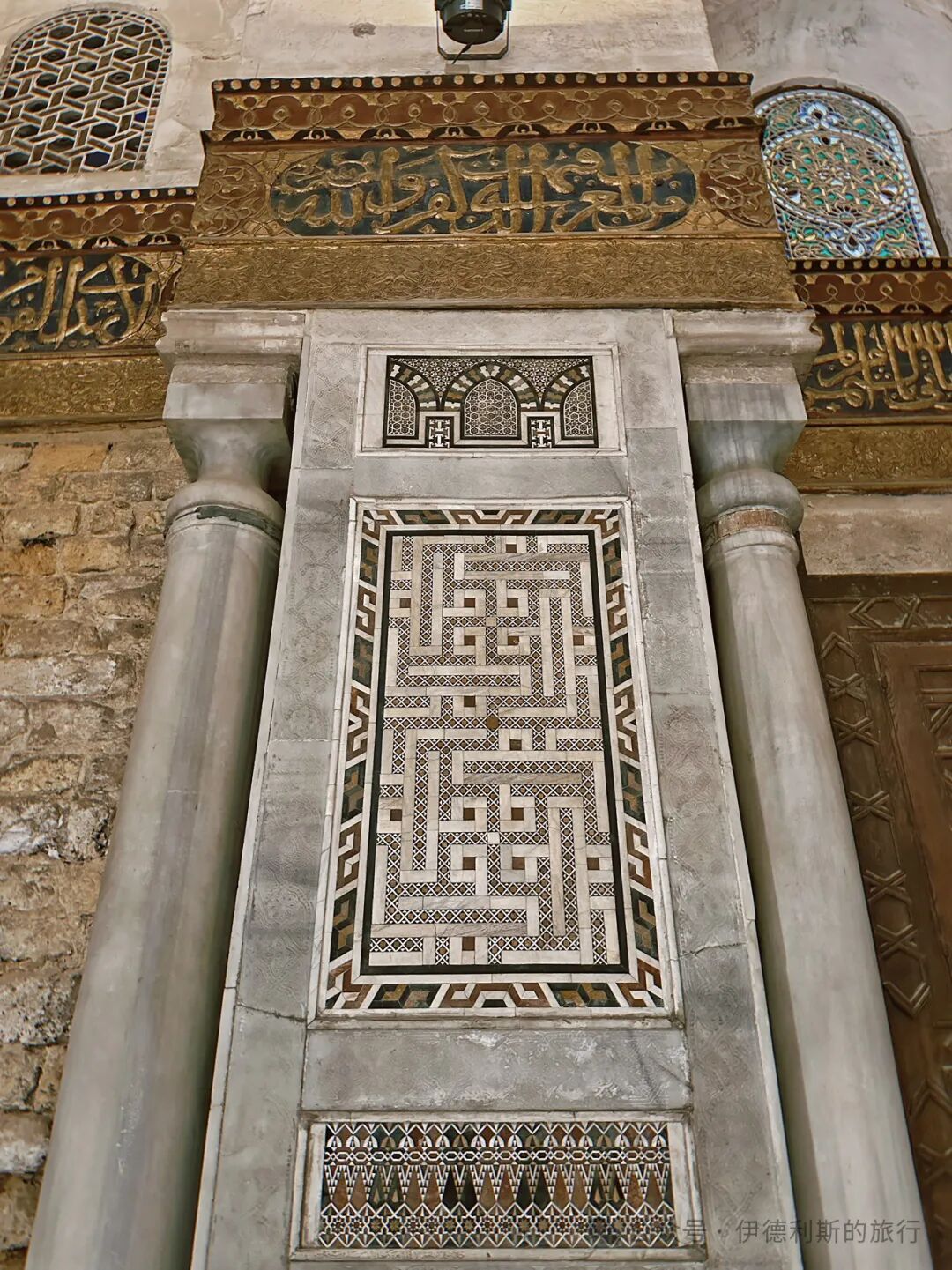
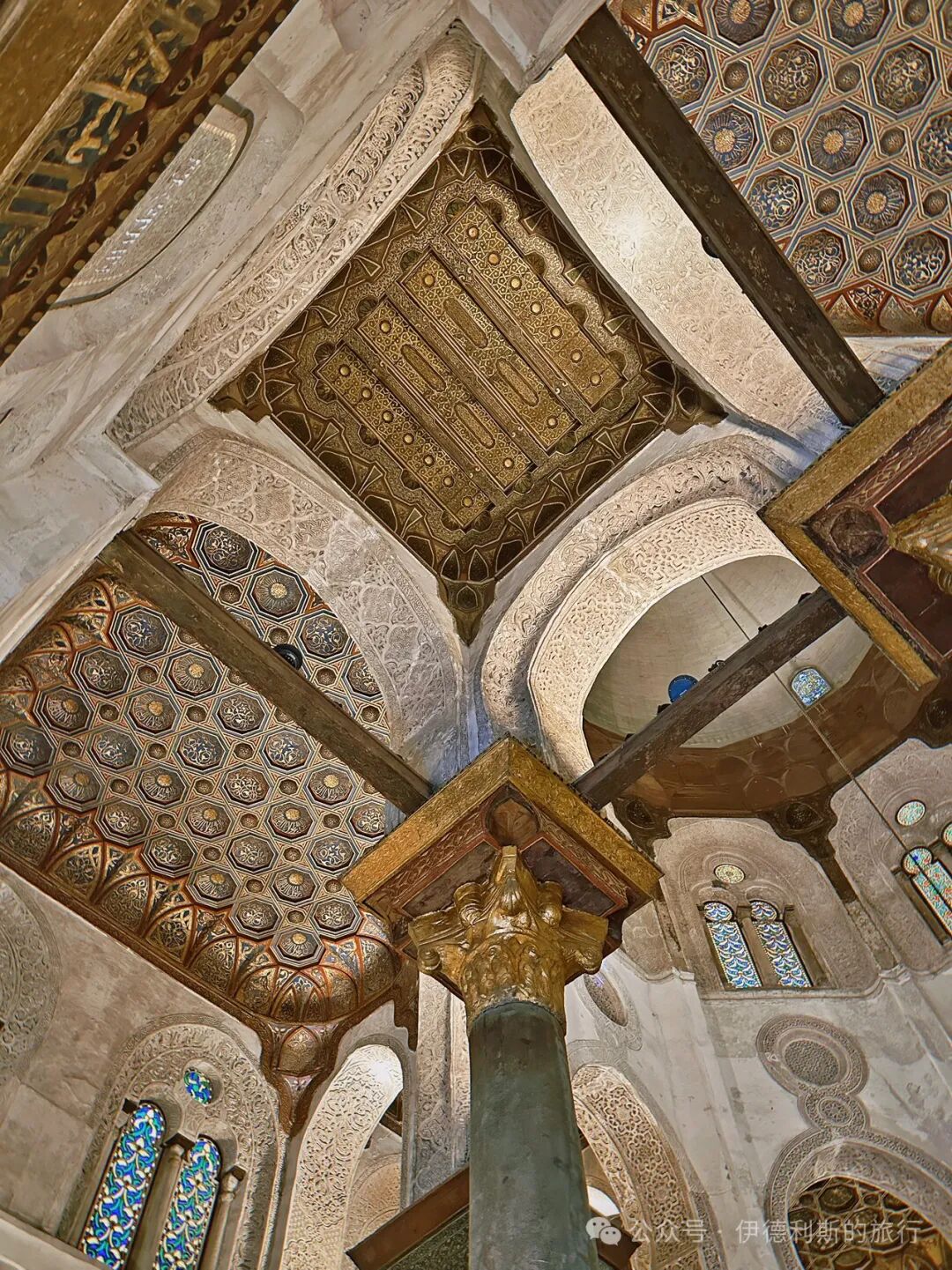
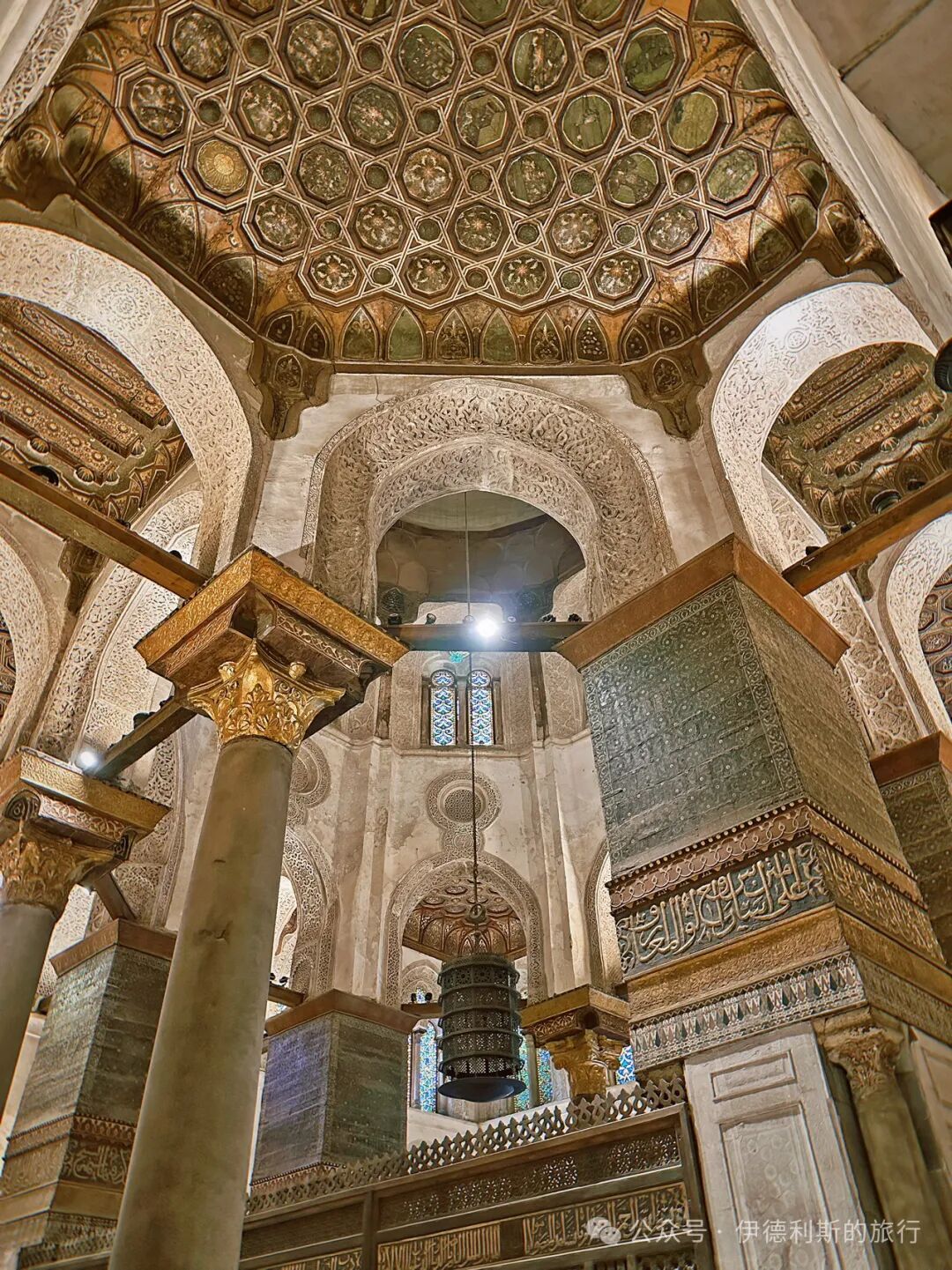
The mihrab in the mausoleum of Sultan Qalawun is considered the most exquisite mihrab of the Mamluk period. The design of the mihrab was inspired by Syria and was created using colorful marble mosaics.
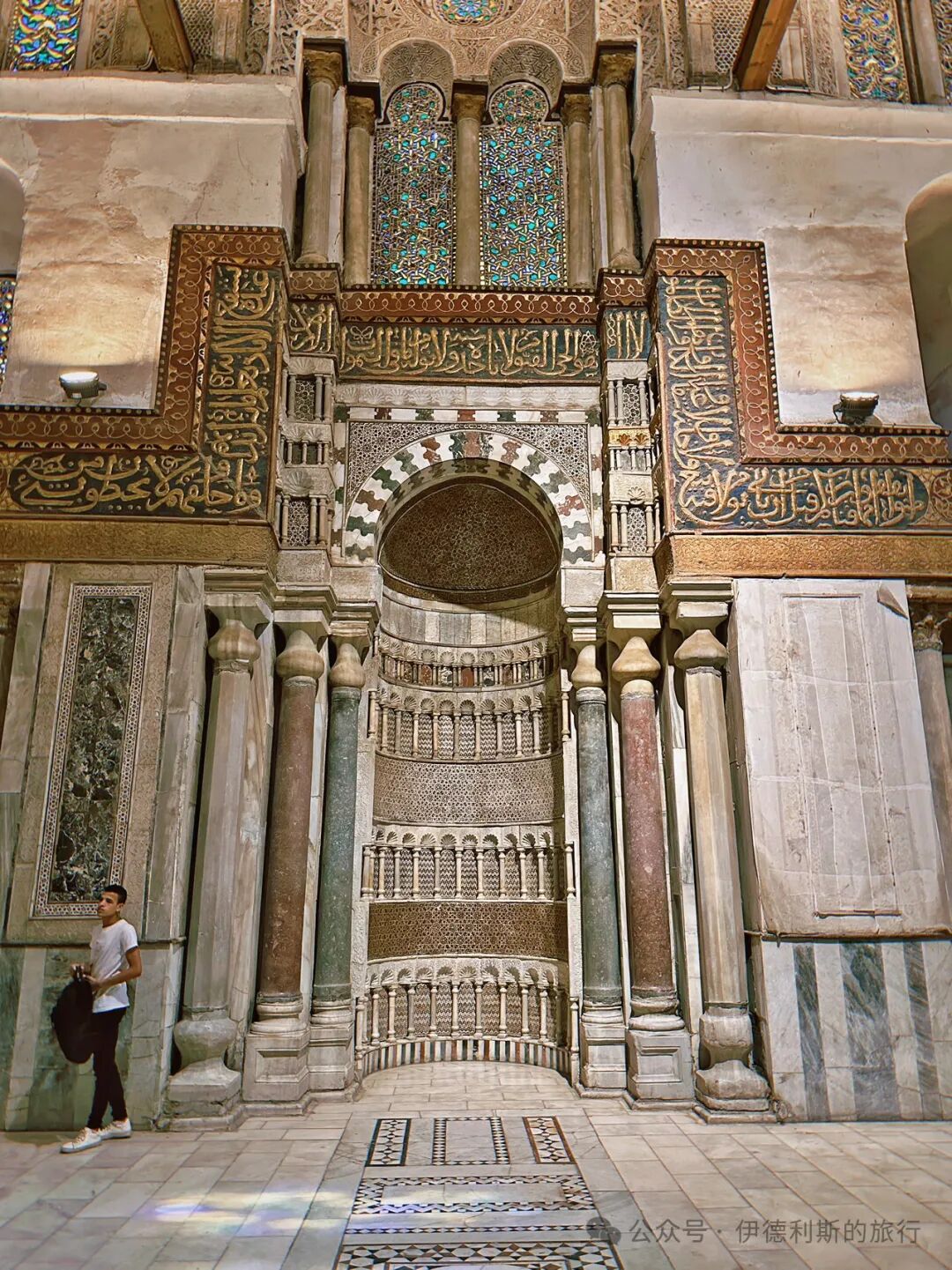
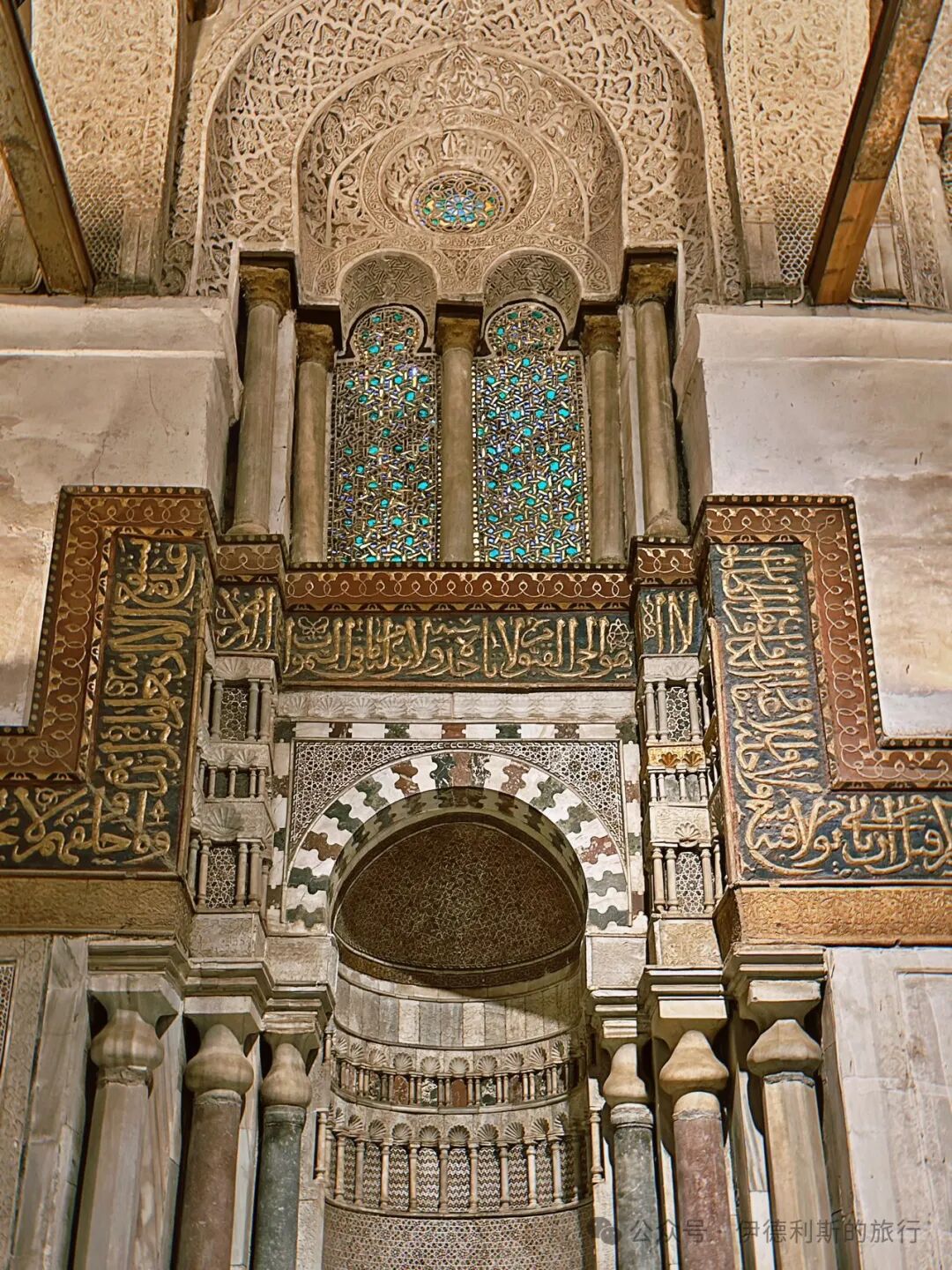
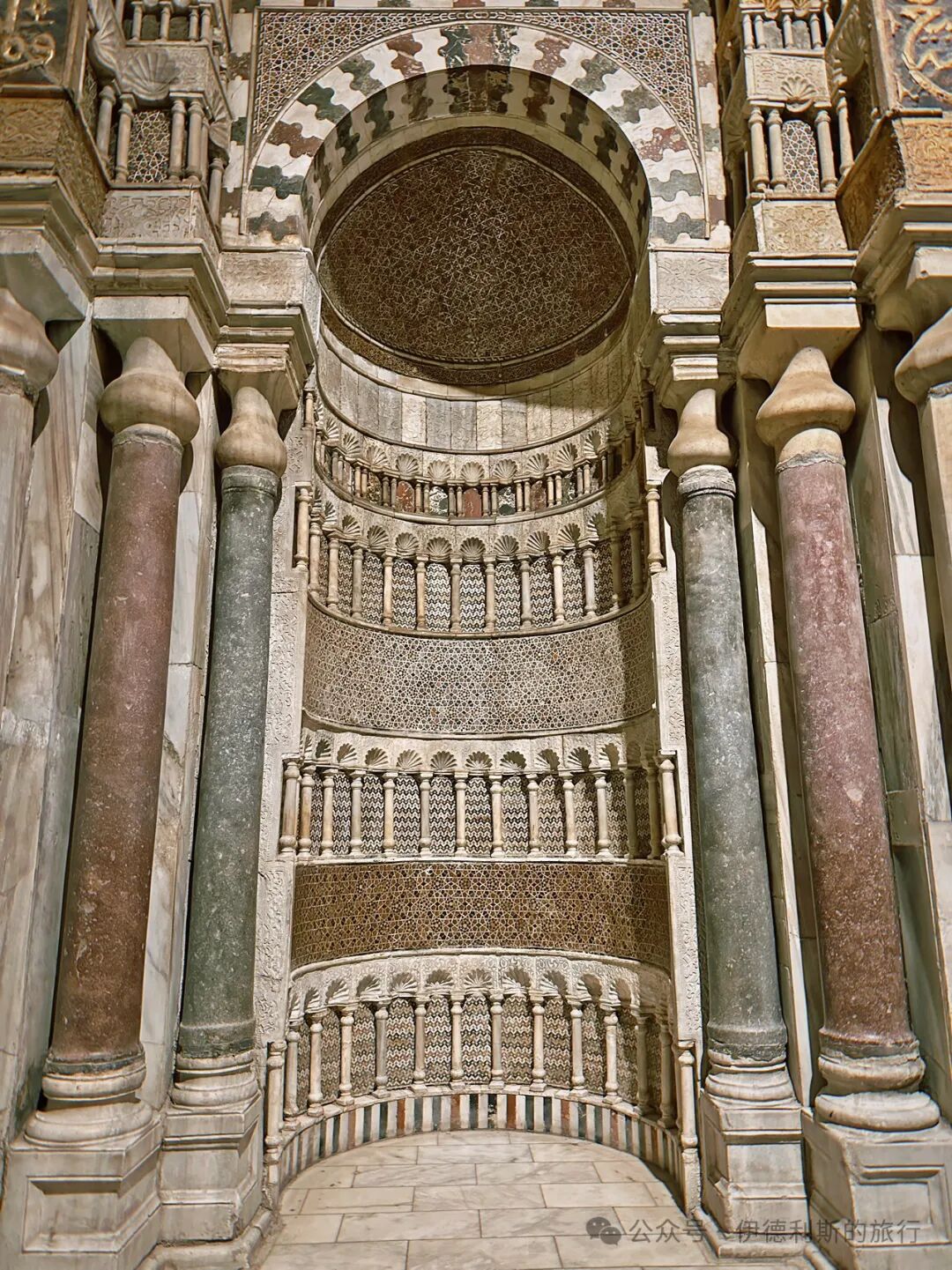
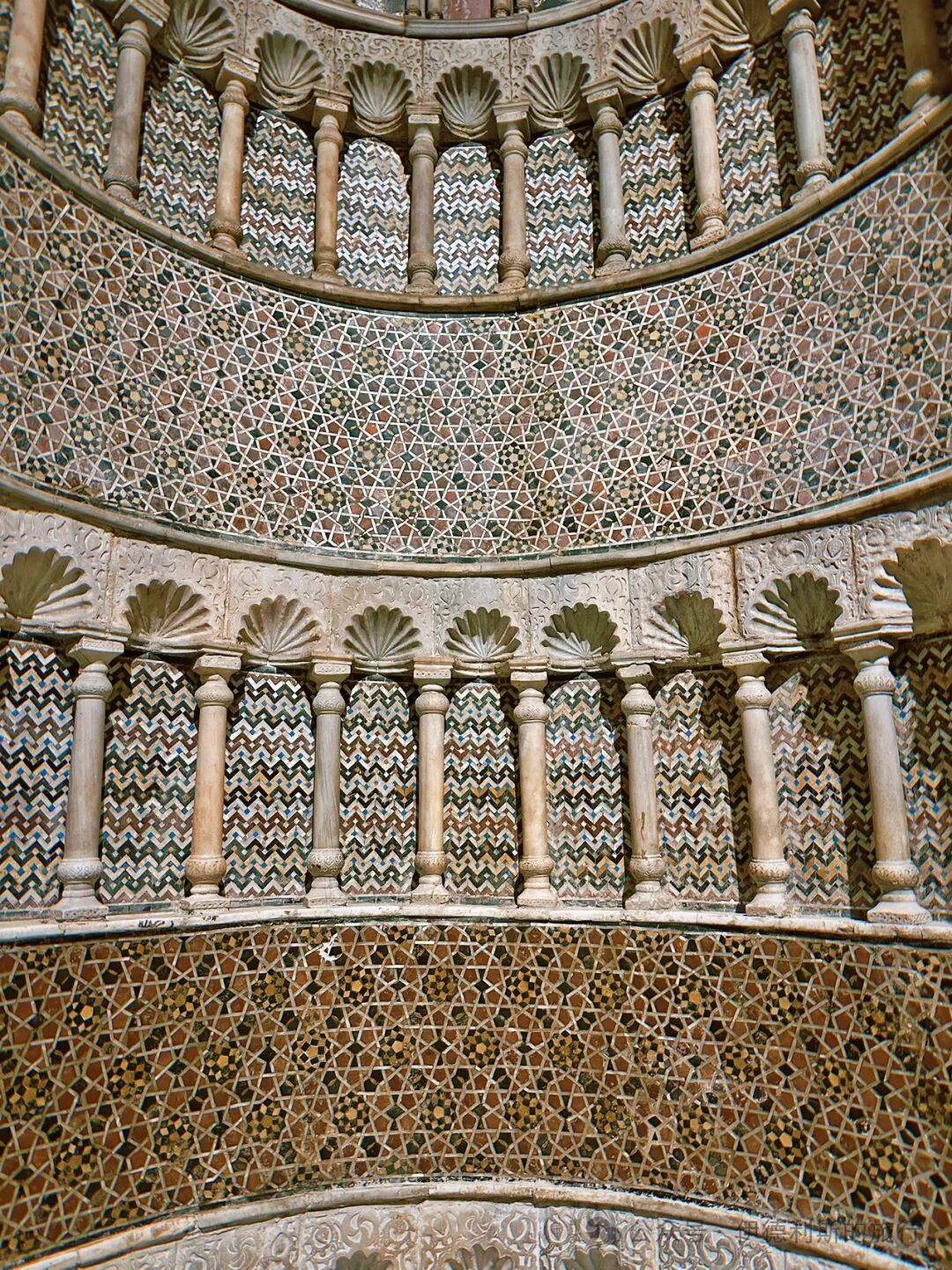
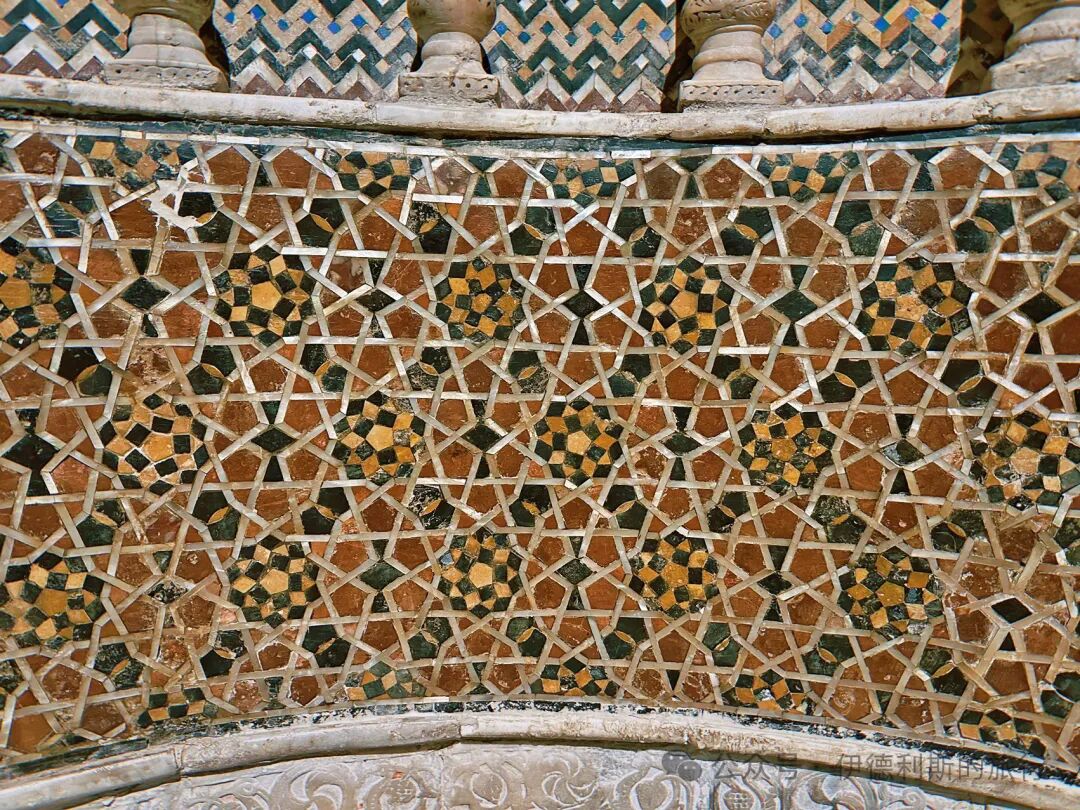
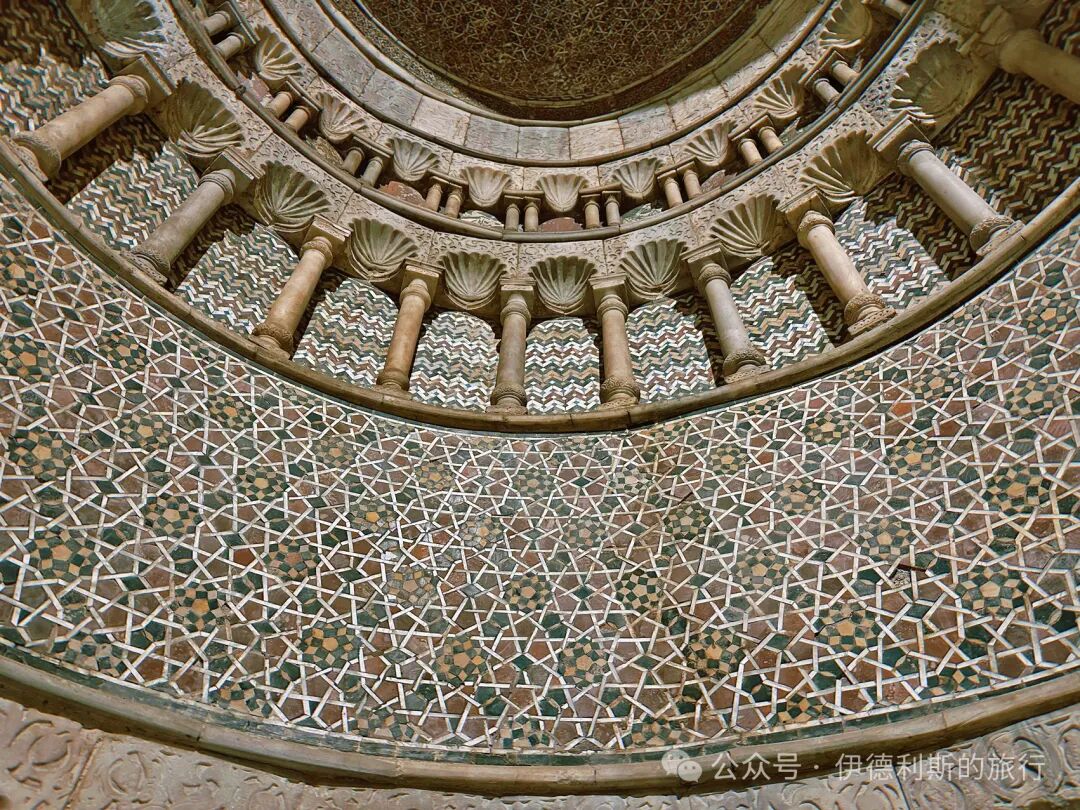
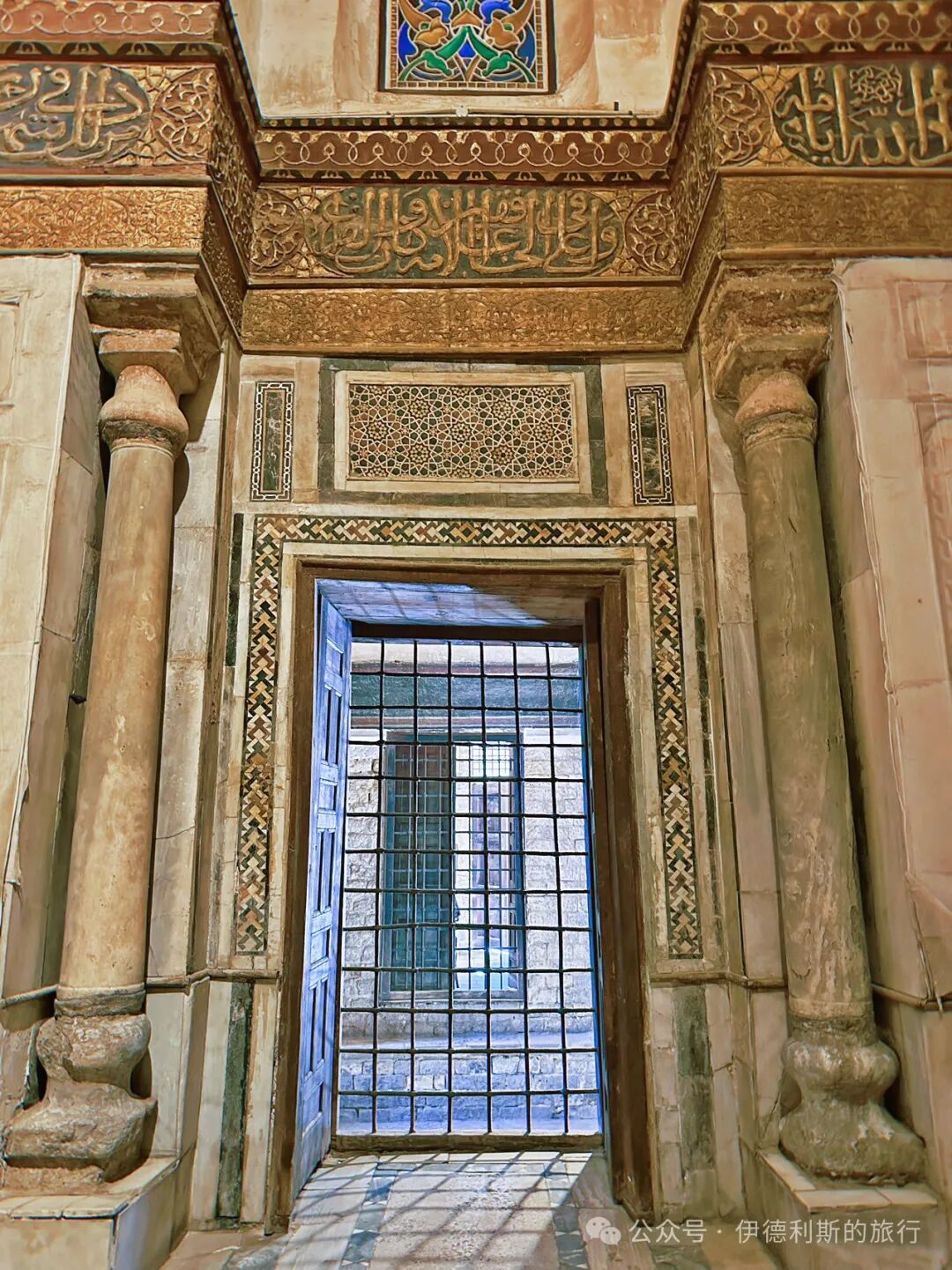
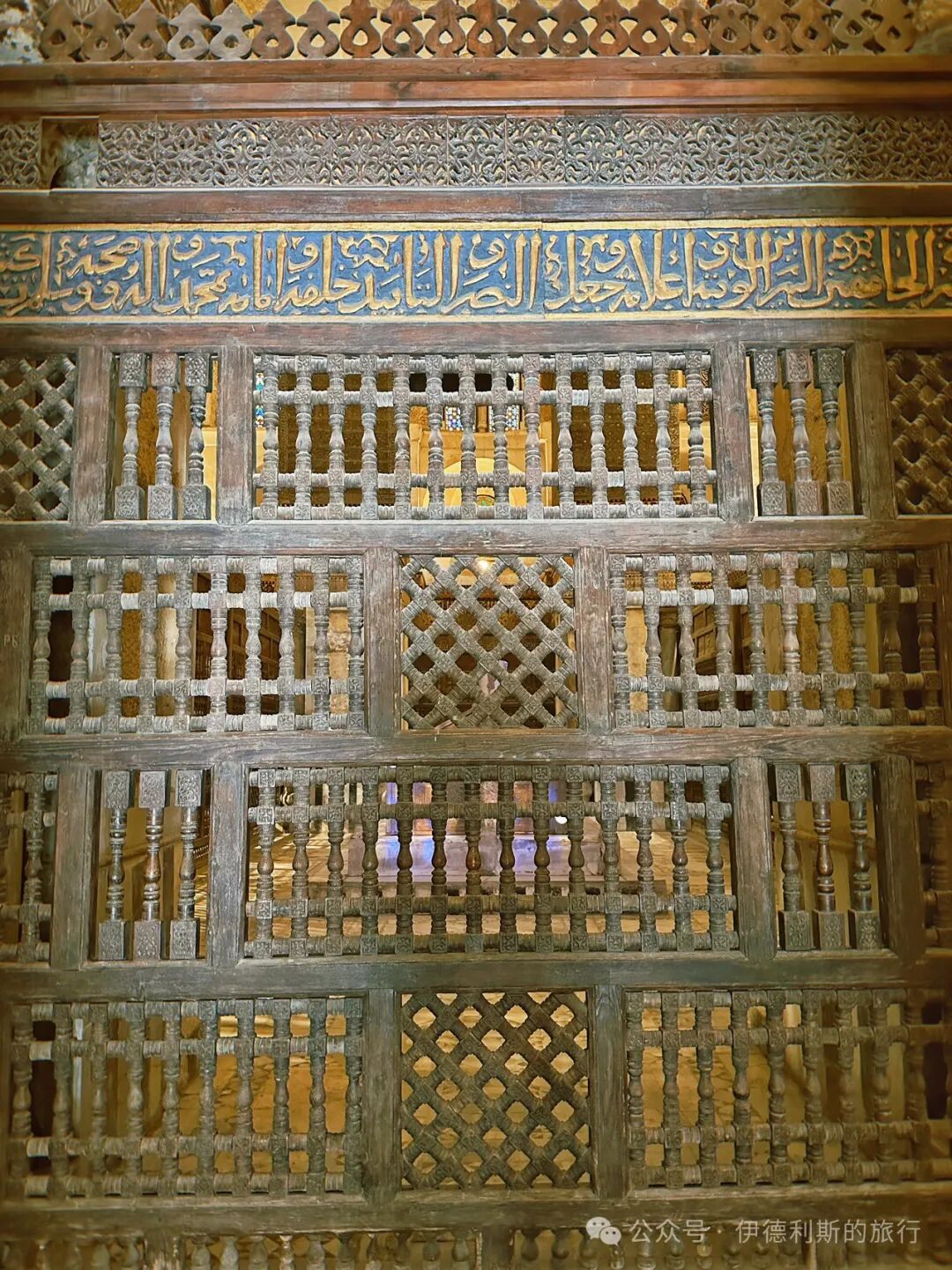
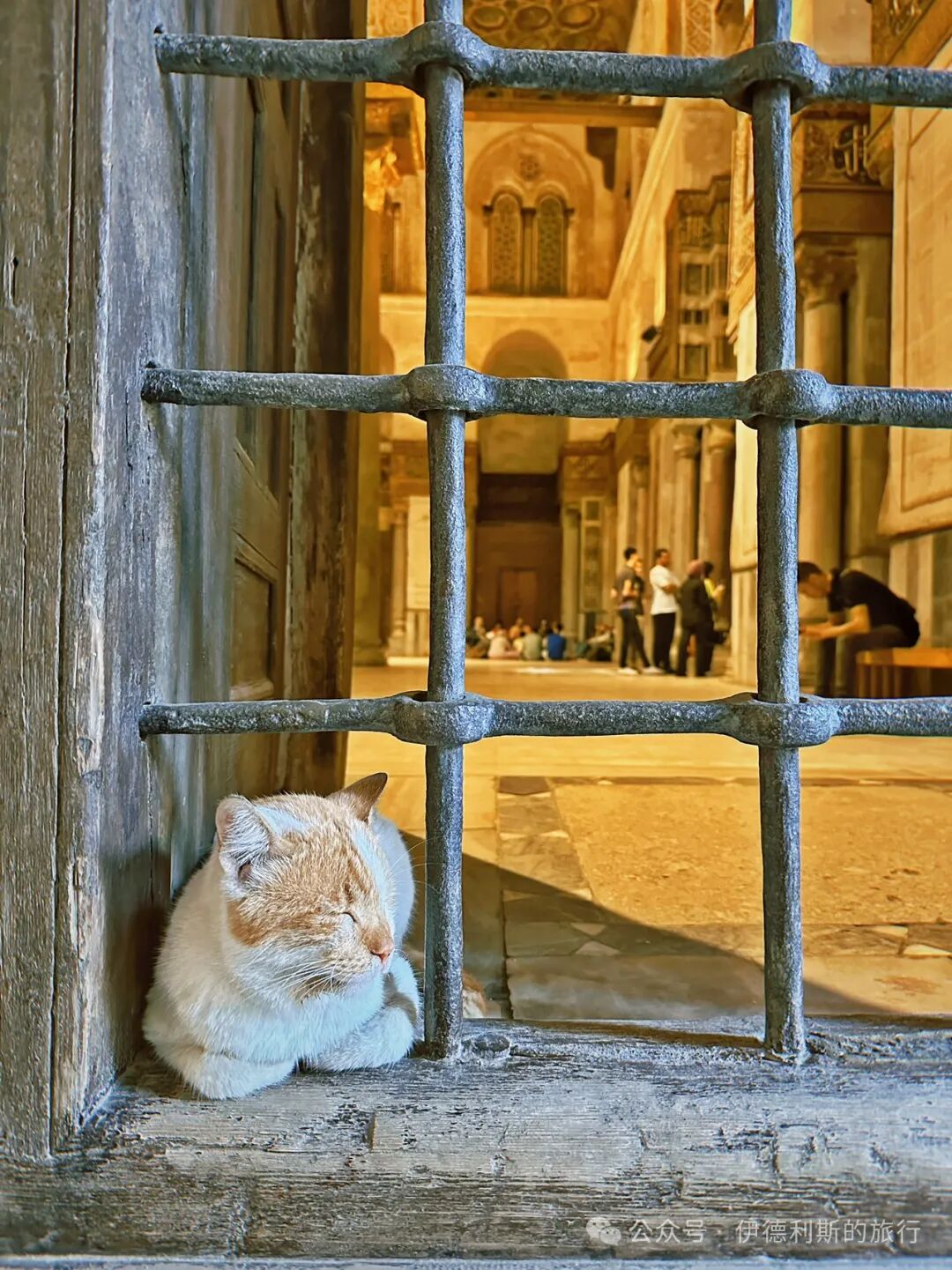
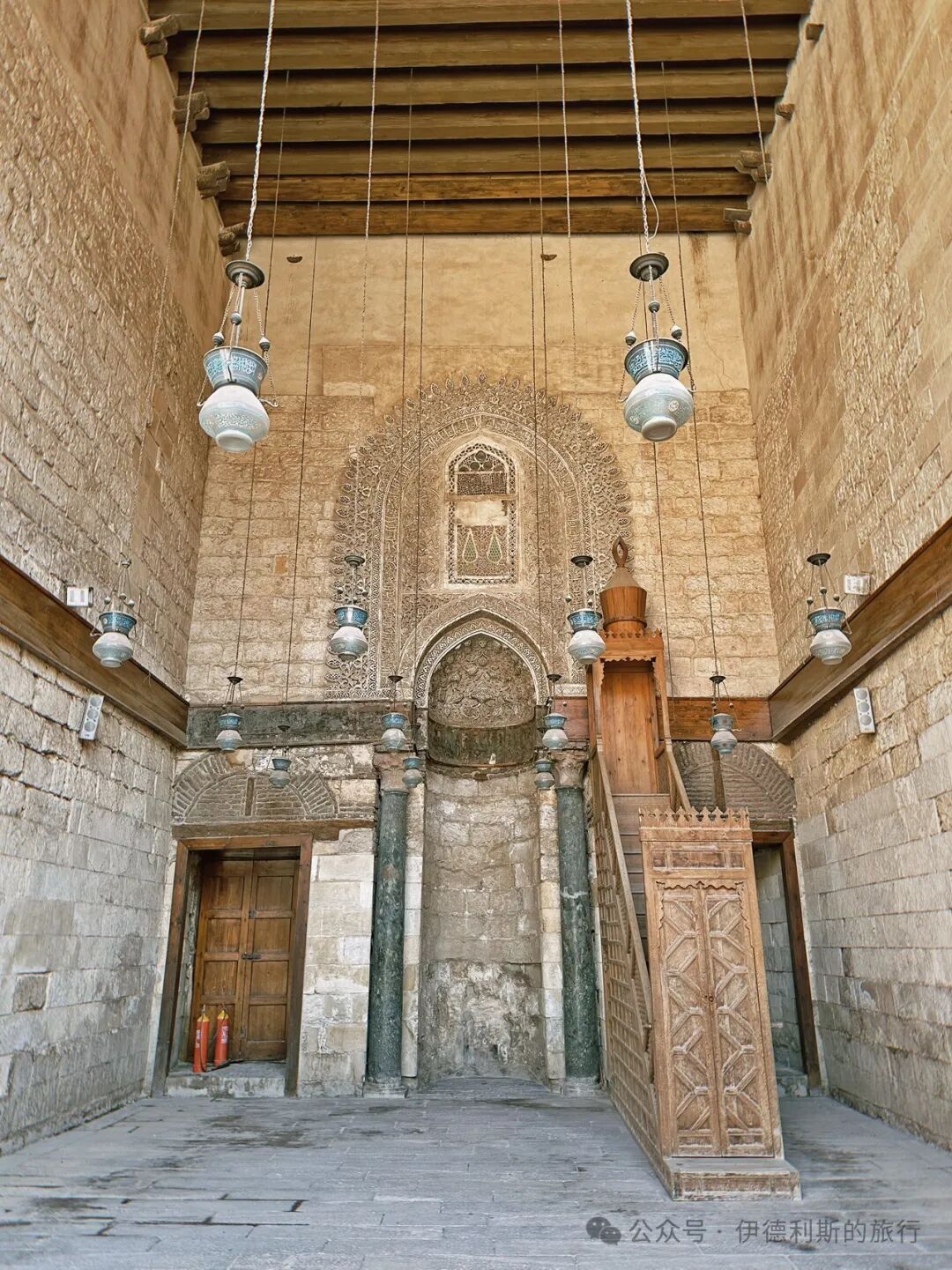
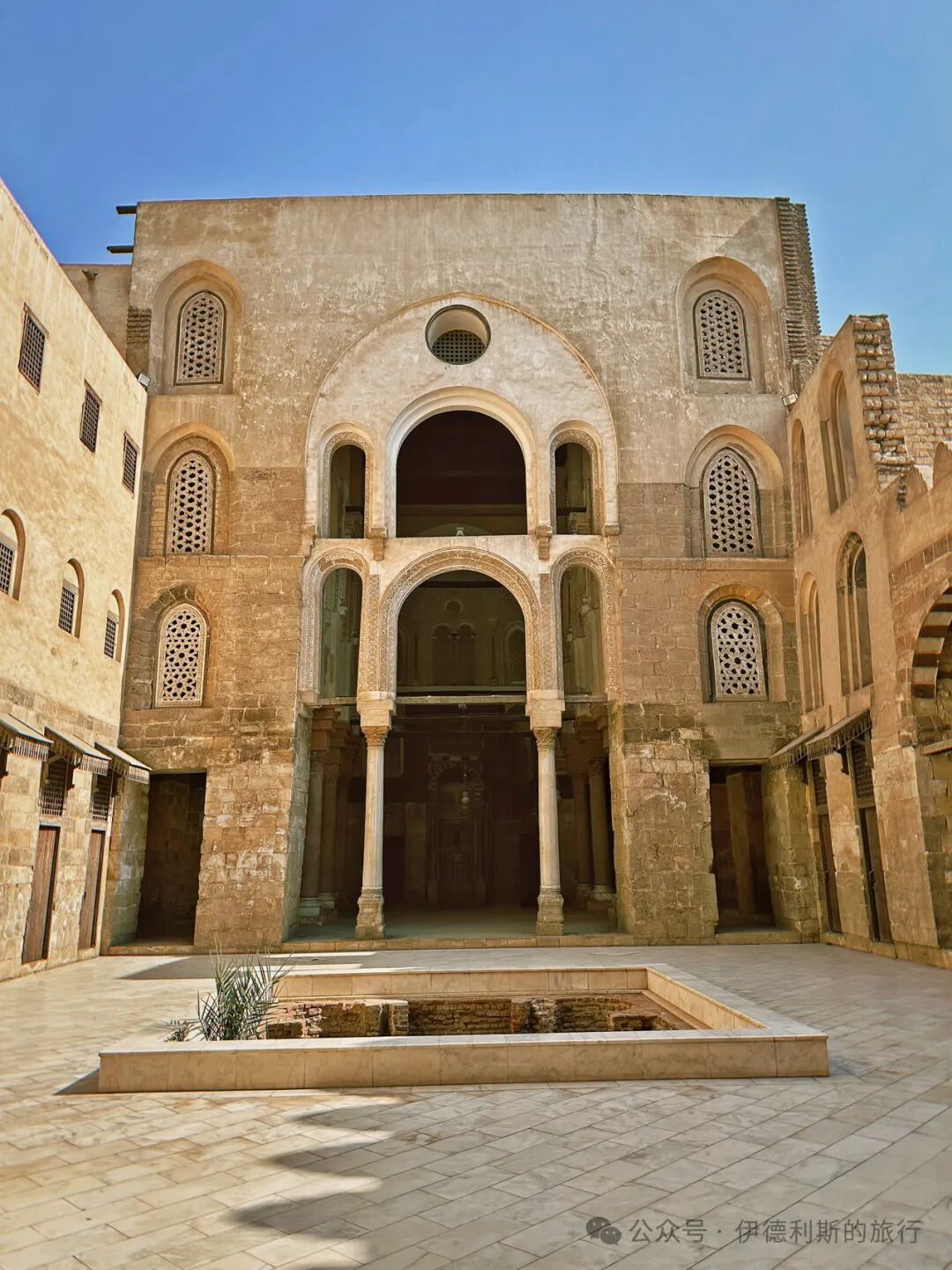
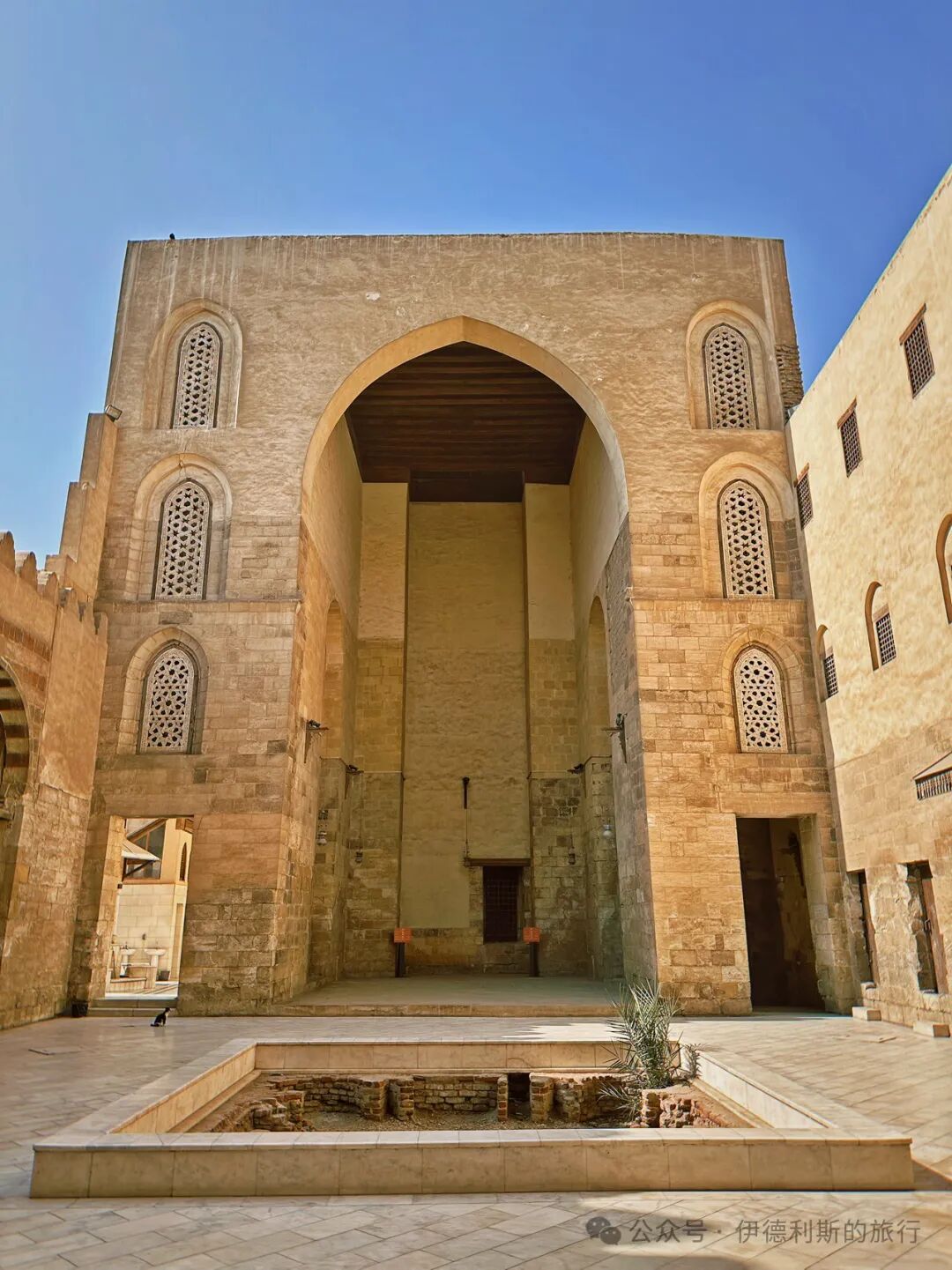
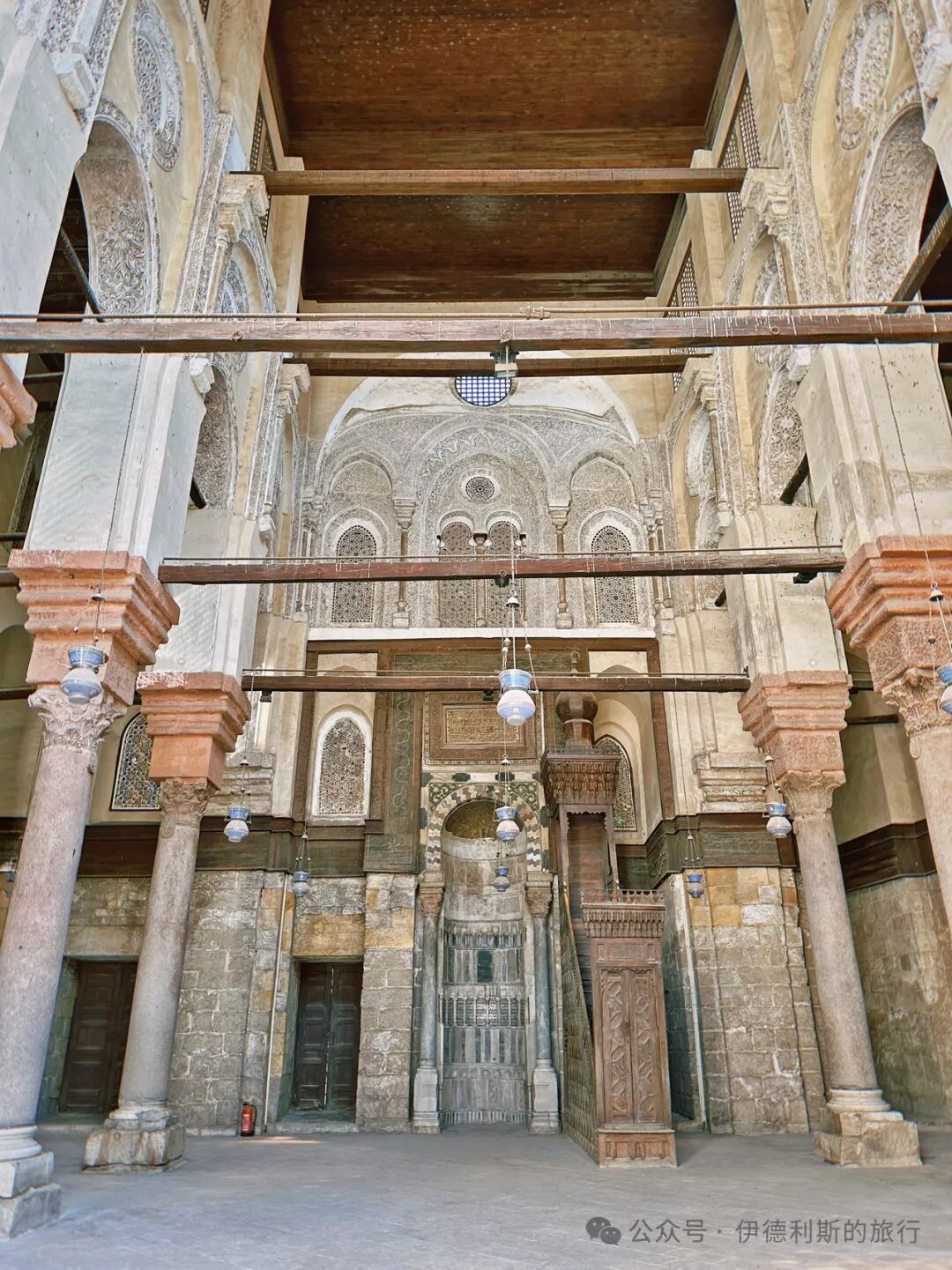
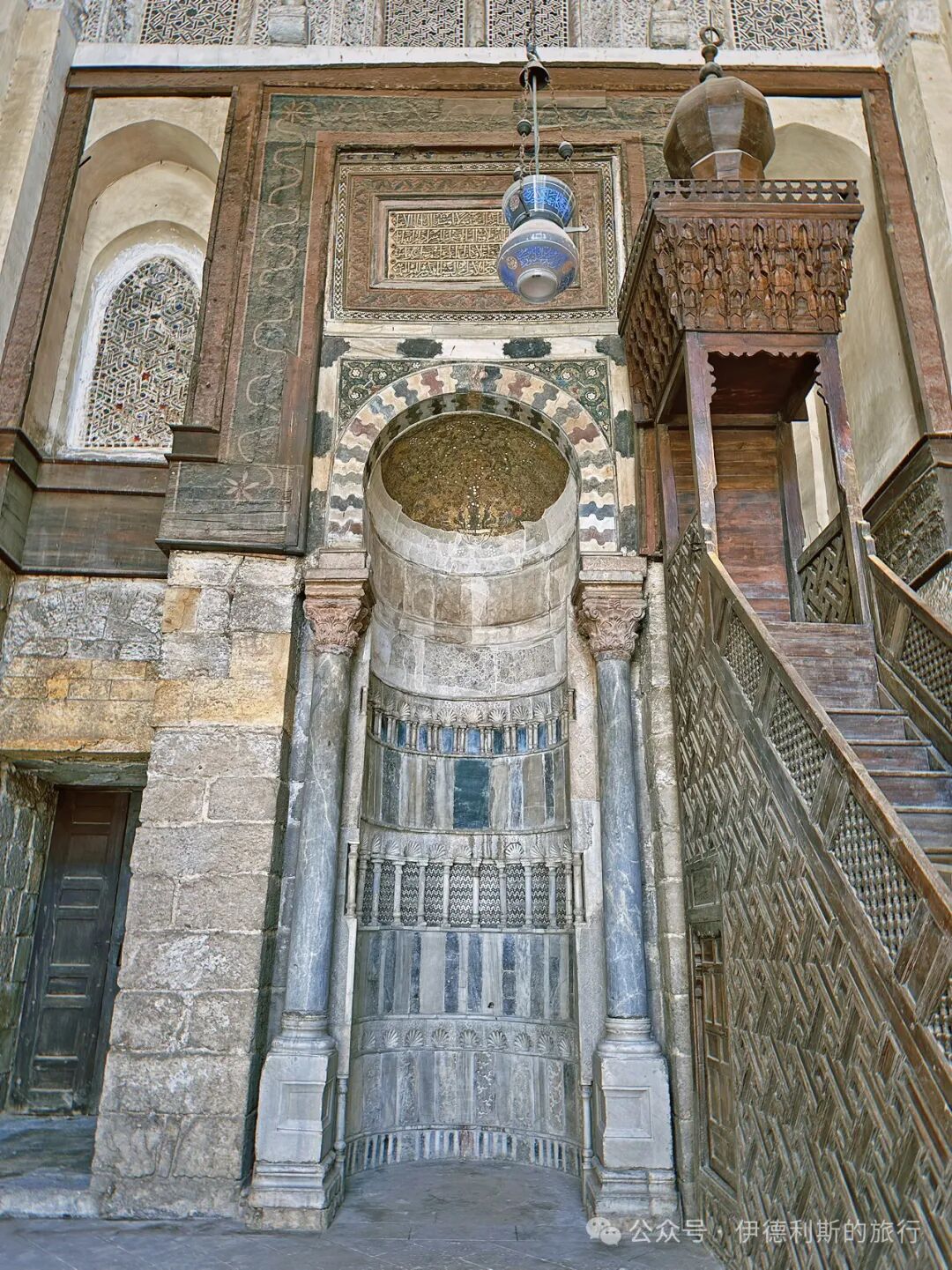
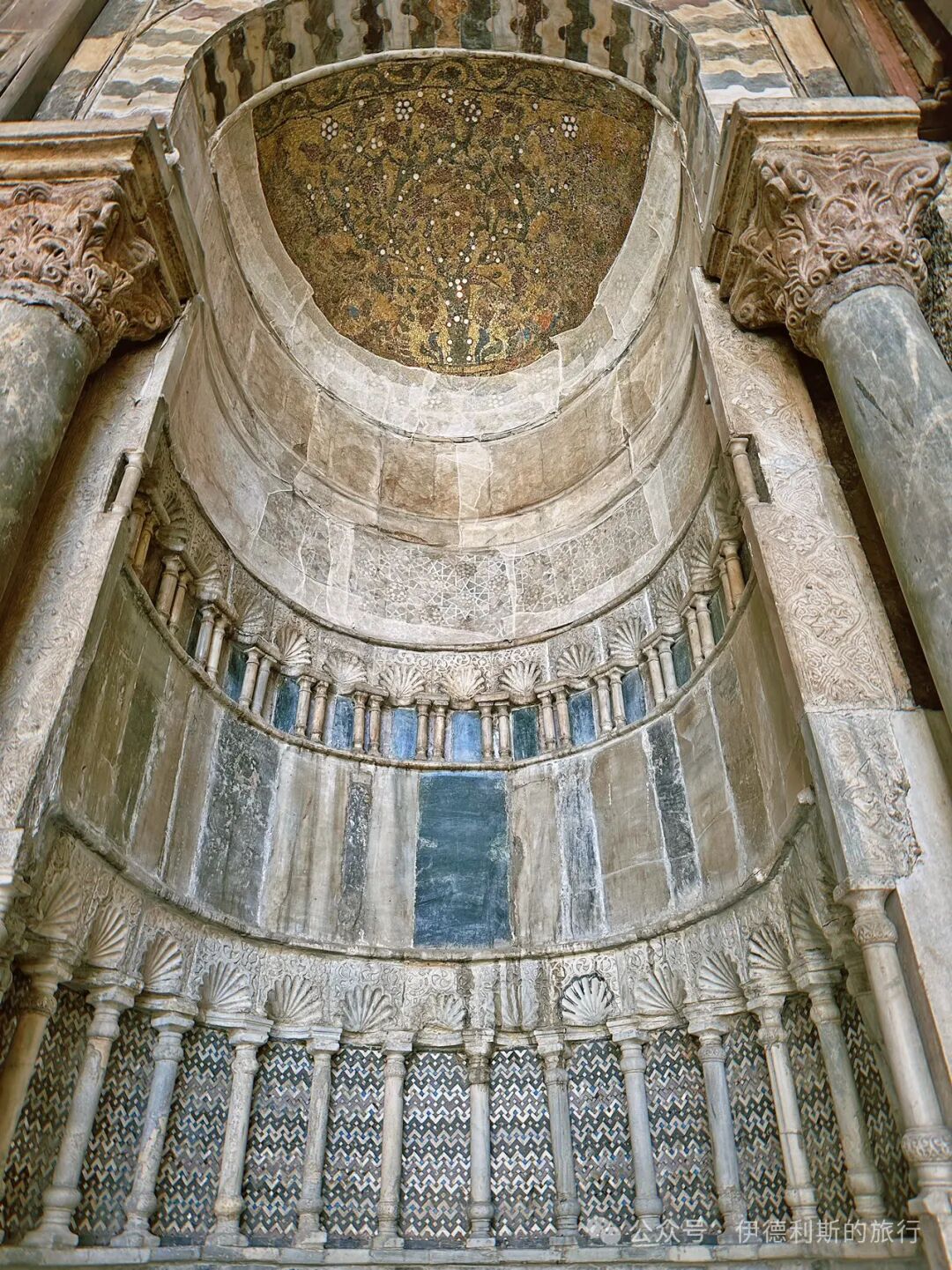
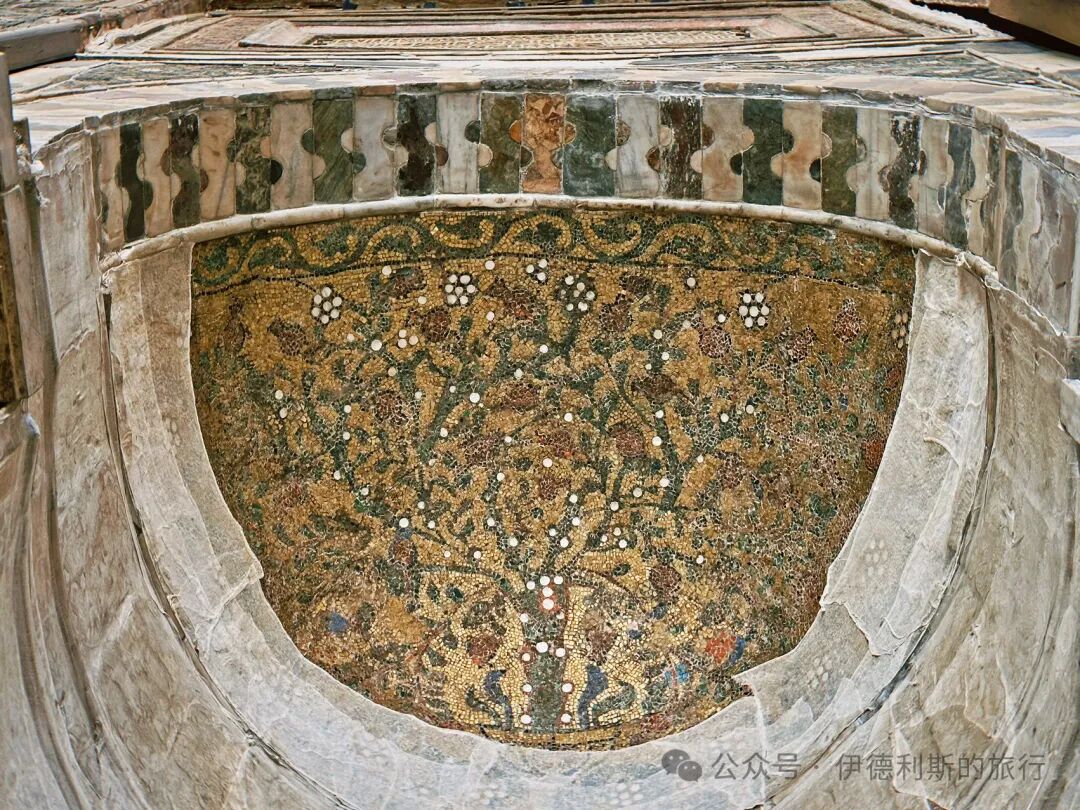
The madrasa of Sultan Qalawun consists of two iwan vaulted structures, with classrooms and a prayer hall on either side of the courtyard. The mihrab in the center of the prayer hall does not use the marble mosaics common in the Mamluk period, but instead features glass and mother-of-pearl mosaics. This is a throwback to the decorative art of the Umayyad Caliphate in Syria, showing how the Mamluks claimed to inherit the orthodoxy of the faith.
As-Salih Ayyub Mausoleum: 1250
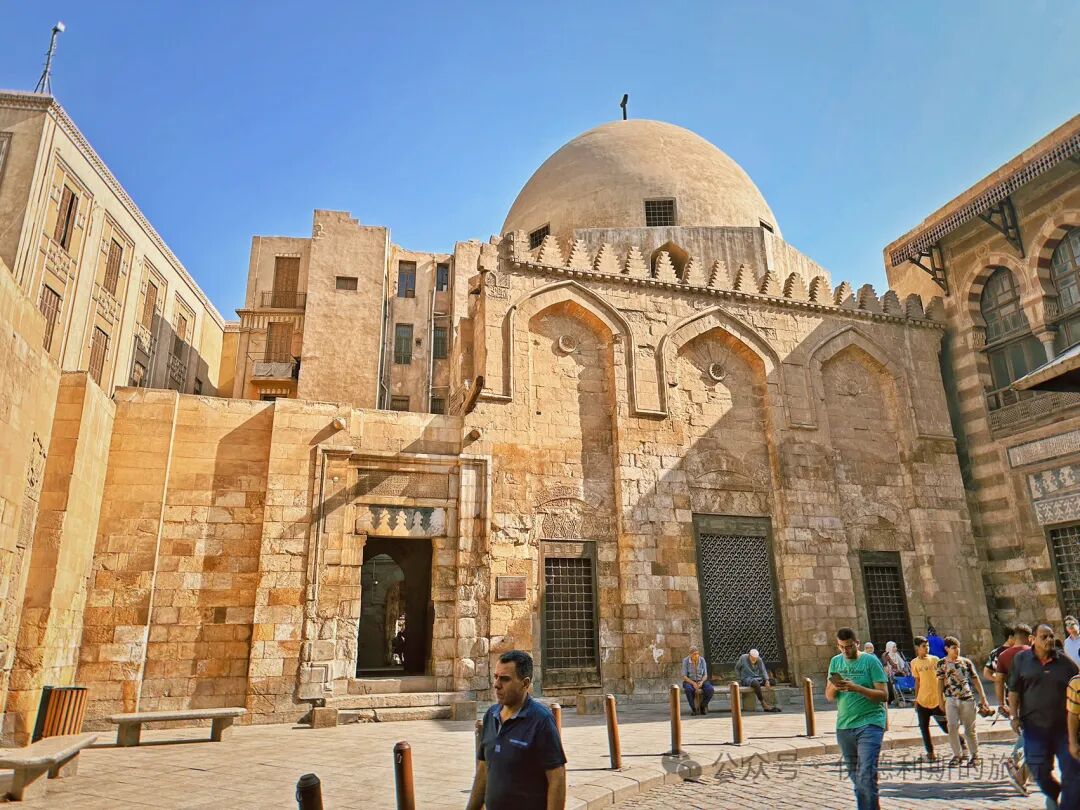
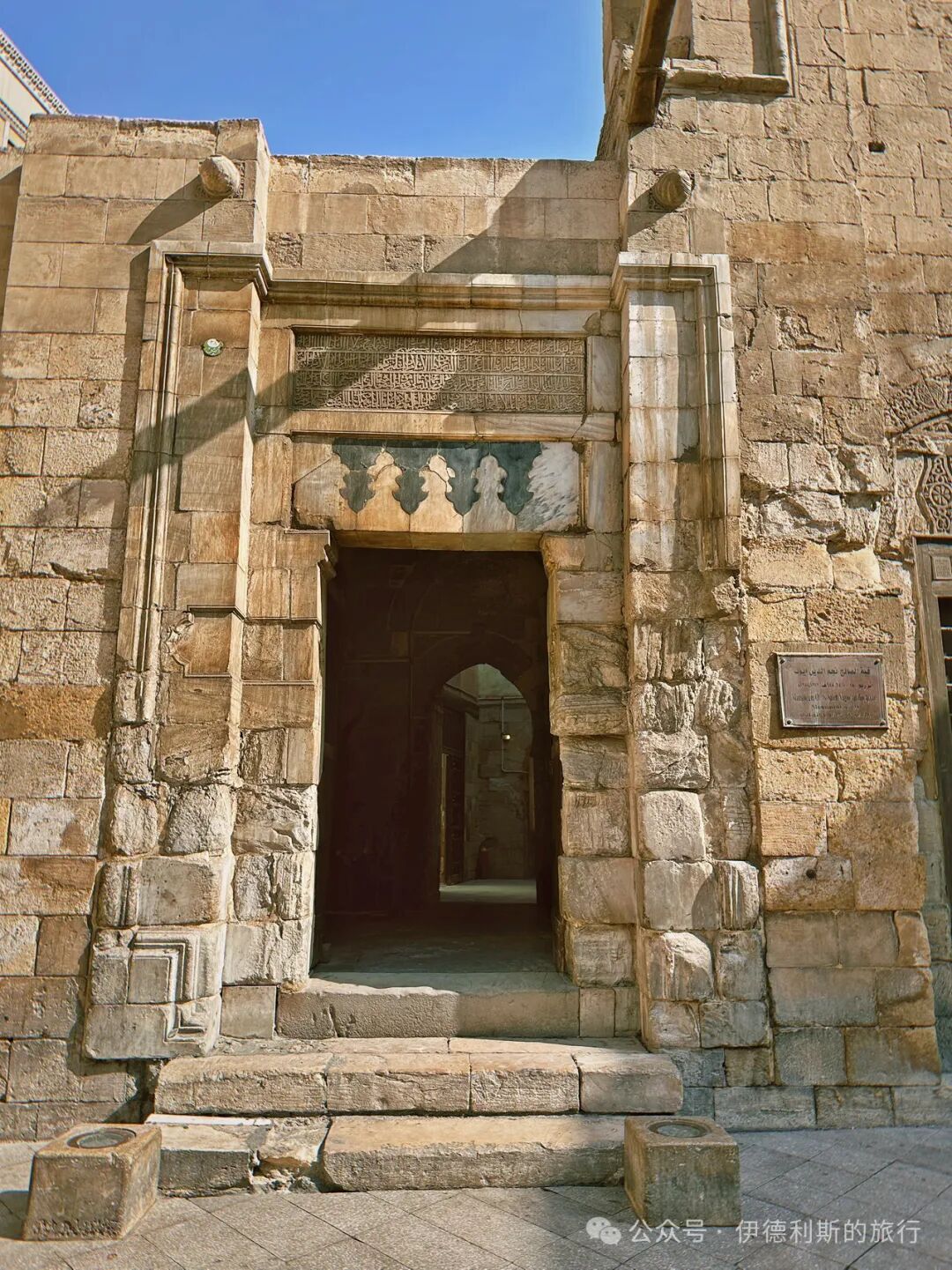
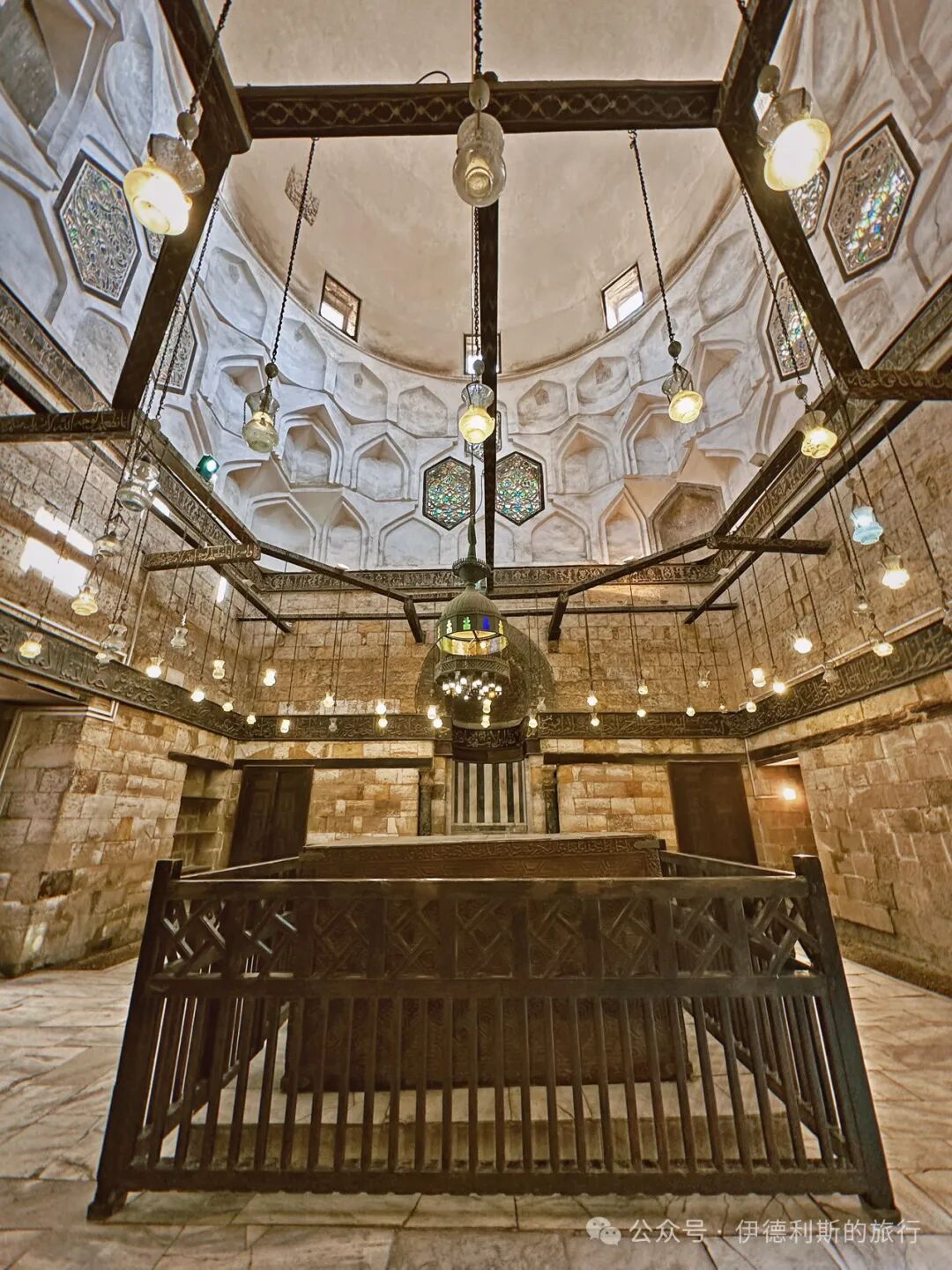
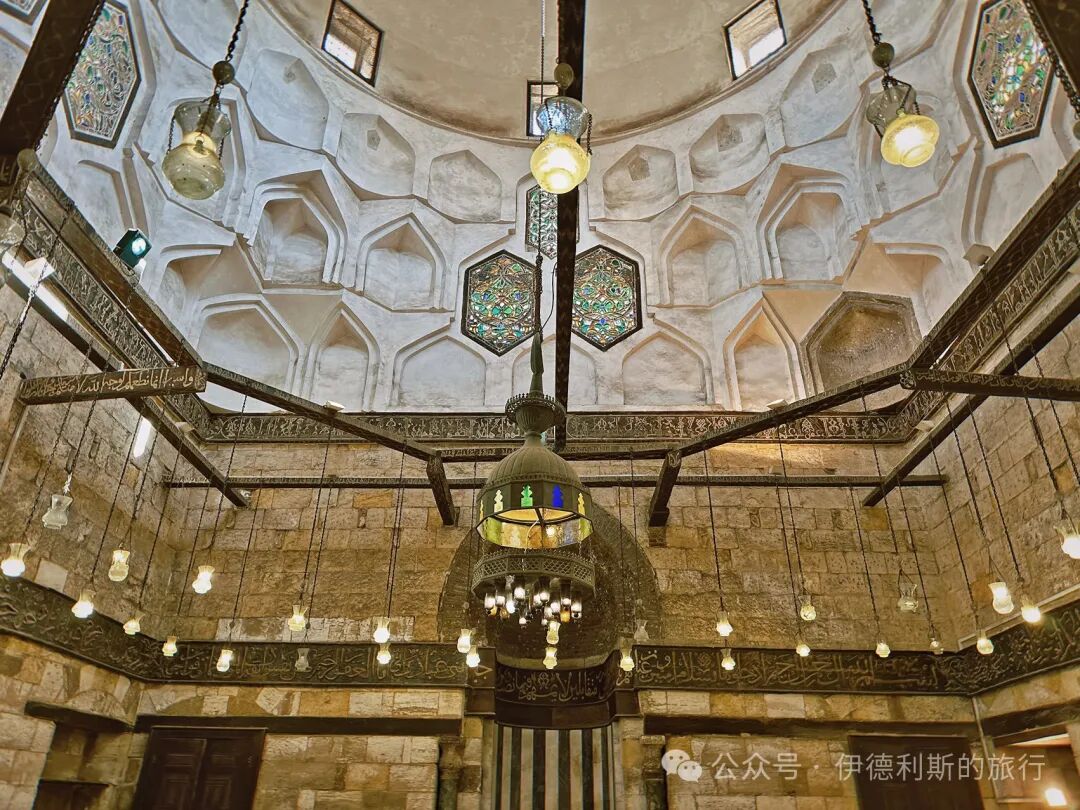
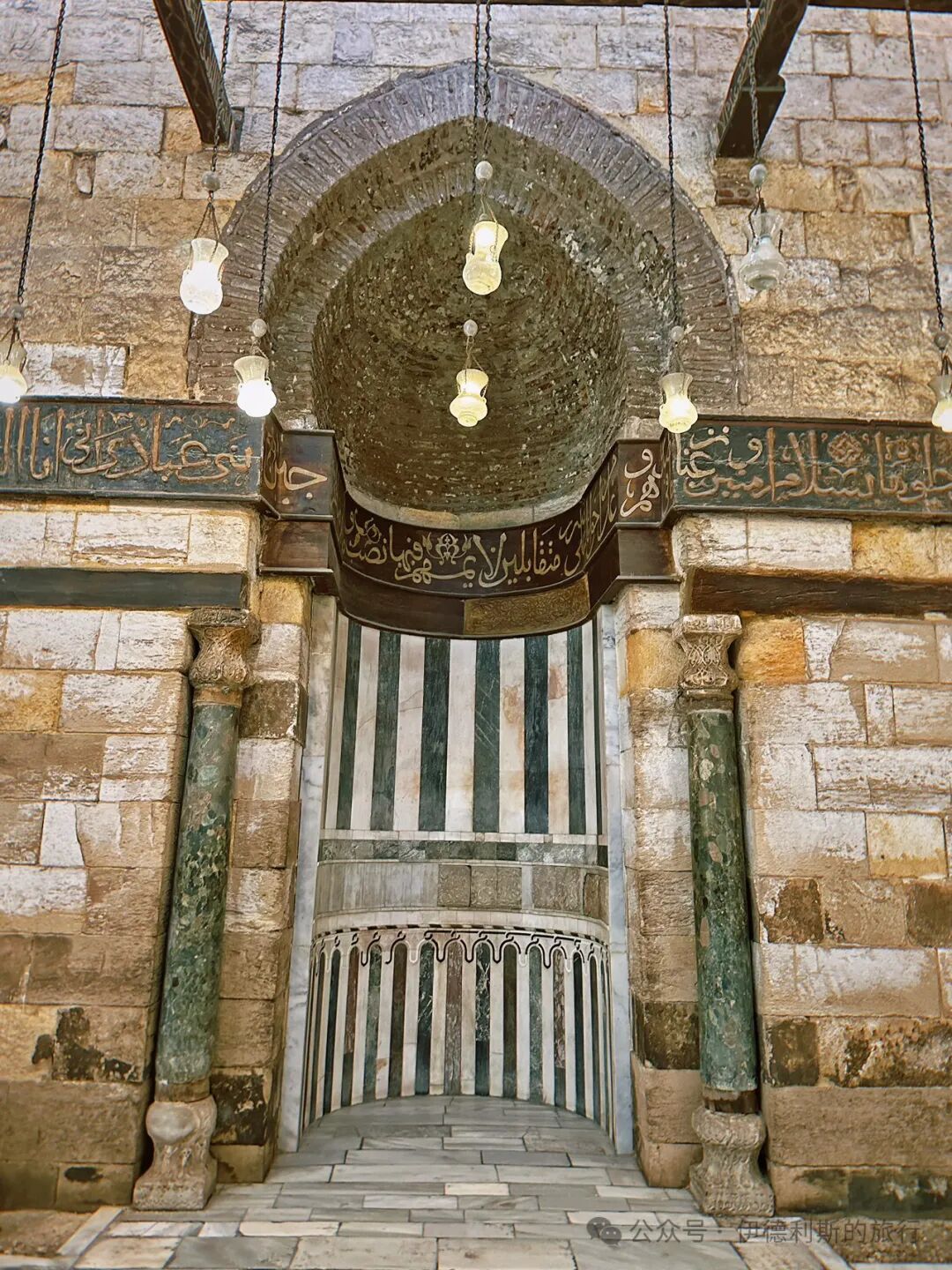
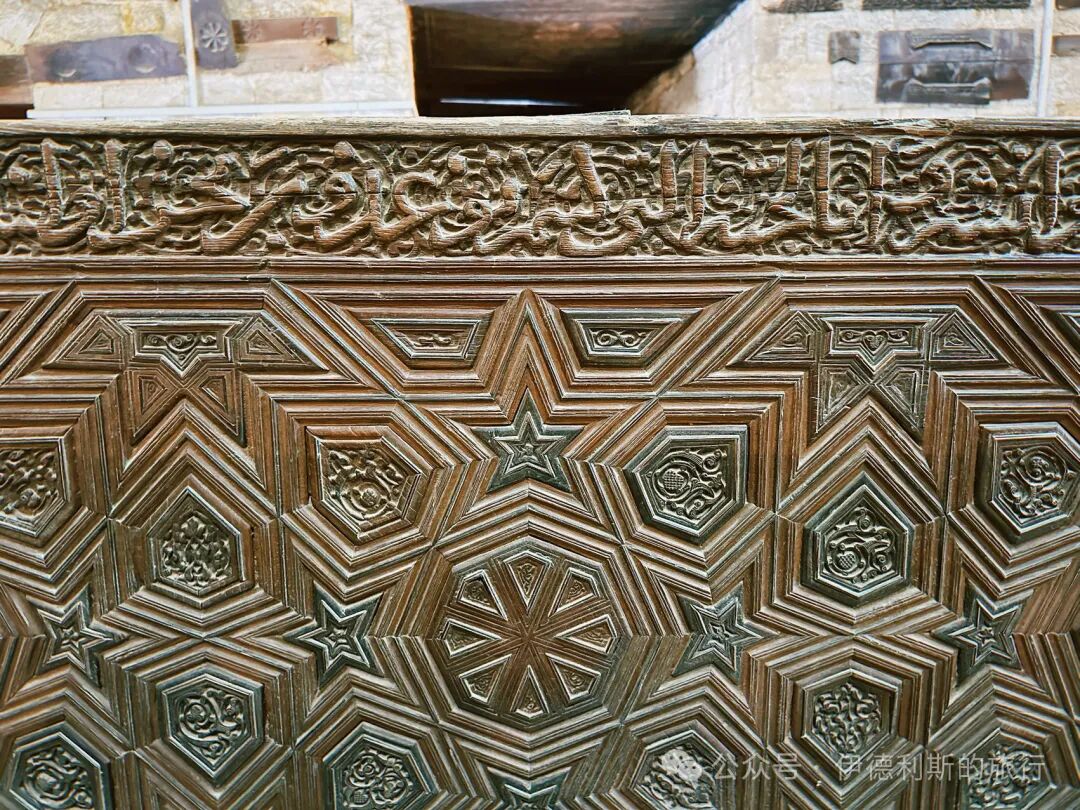
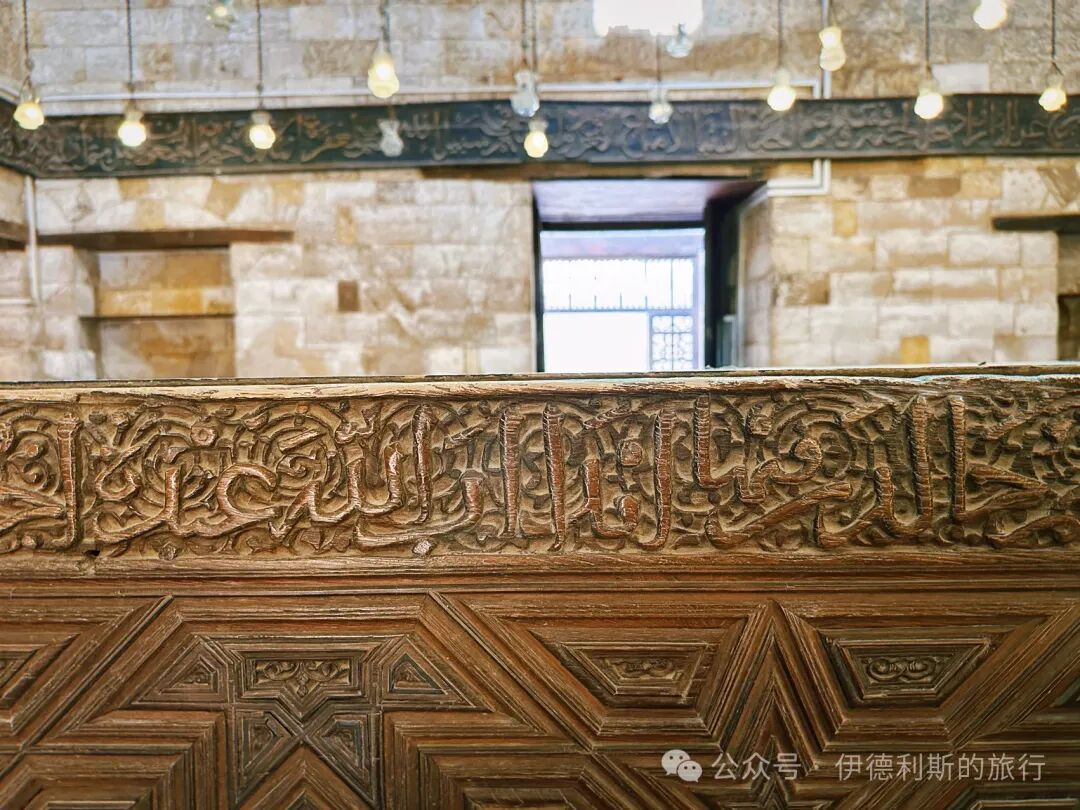
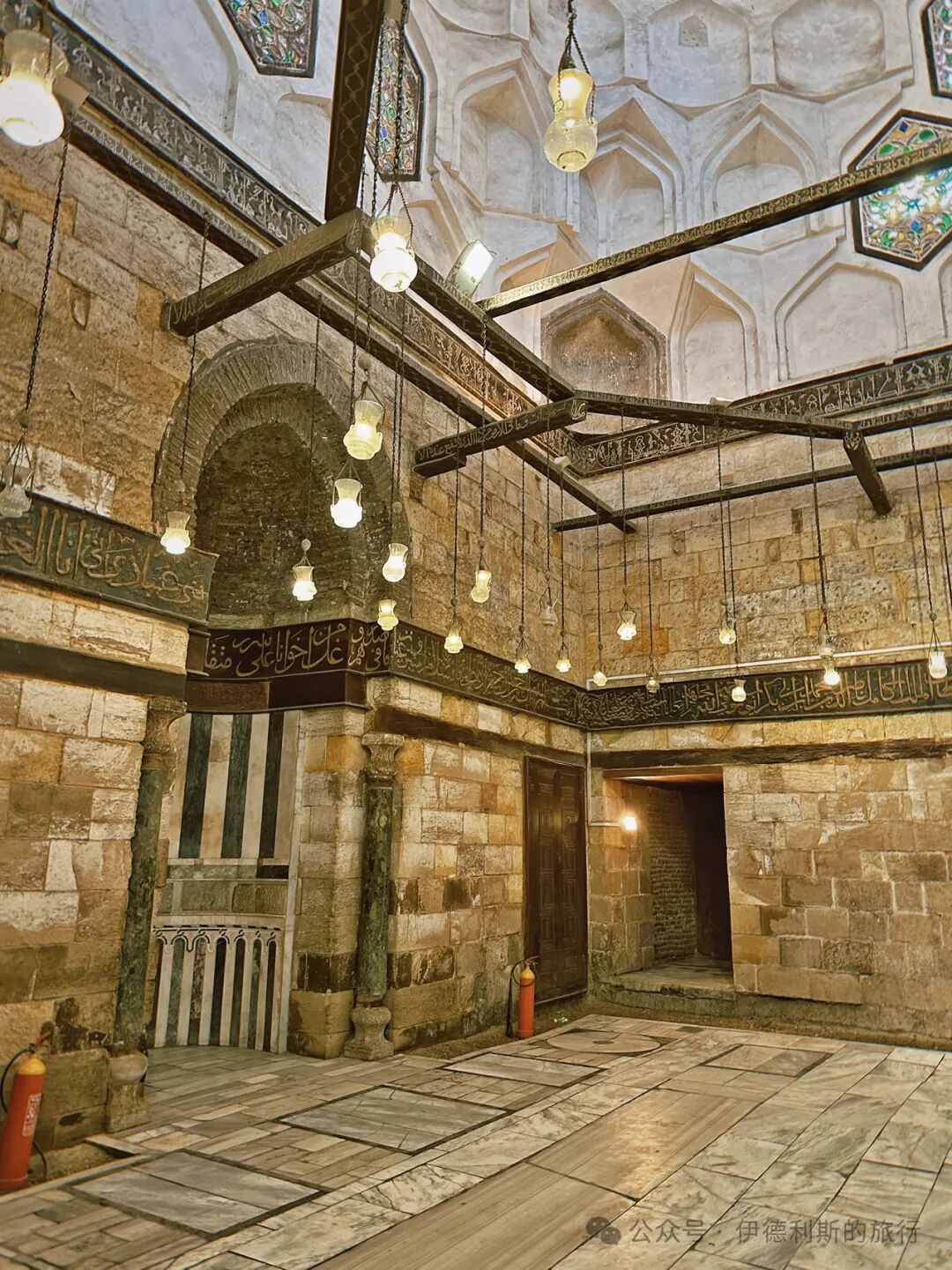
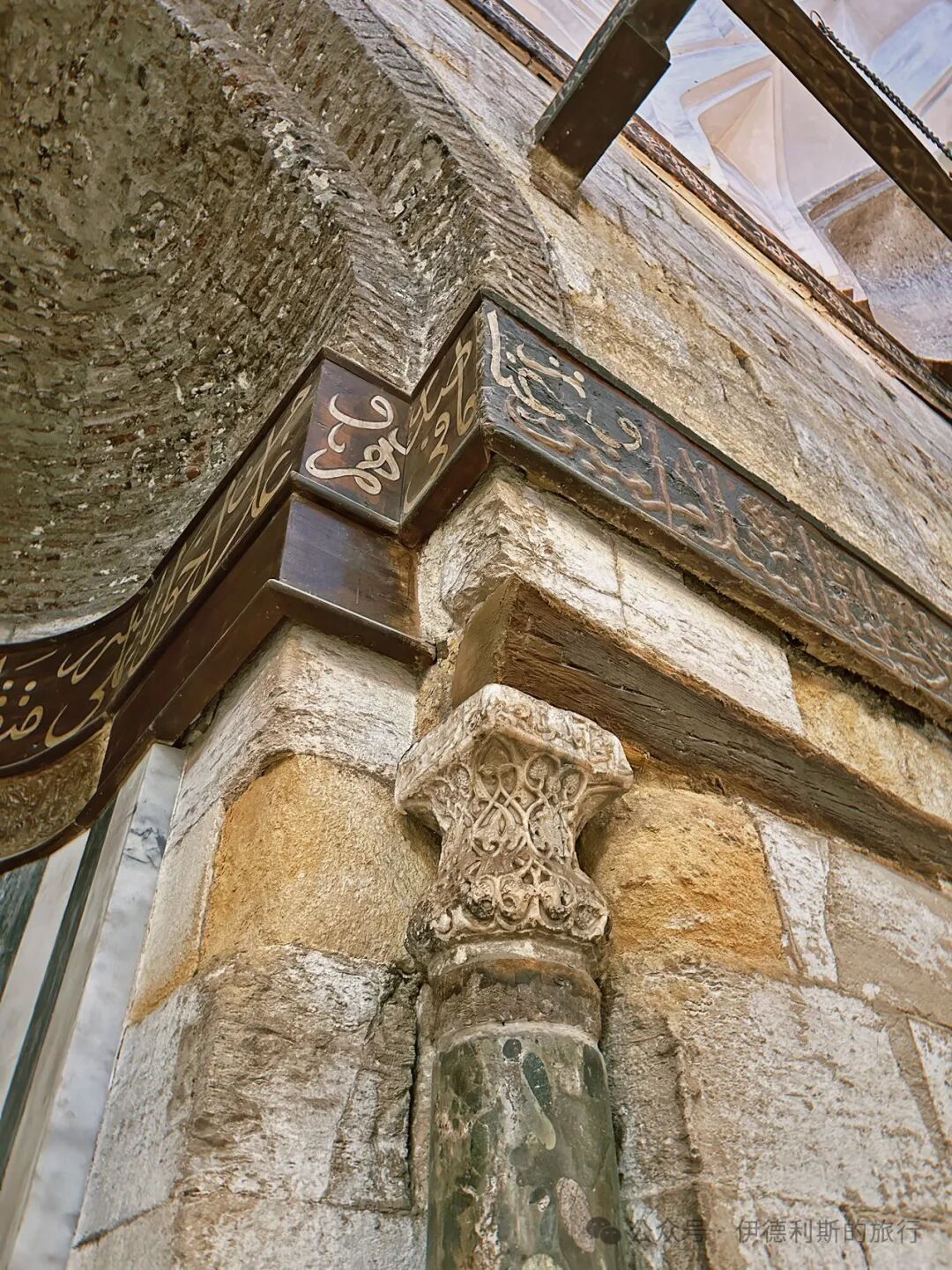
Across from the Qalawun complex stands the tomb built in 1250 by Shajar al-Durr, the widow of the Ayyubid Sultan As-Salih Ayyub (reigned 1240–49), for her husband.
Sultan As-Salih was the last major ruler of the Ayyubid dynasty, and he saw the rise of the Mamluk dynasty. Because he did not trust the local Egyptian emirs, he began buying large numbers of Kipchak Turks who had been enslaved after the Mongol invasion of Central Asia. These slaves soon became the core of the Ayyubid army and were known as Mamluks.
Sultan As-Salih also made great progress in the wars against the Crusaders. In 1244, he invited 10,000 Khwarazmian mercenary cavalrymen to sack and retake Jerusalem, which caused great panic among the surrounding regimes. A Christian army made up of the Kingdom of Jerusalem, the Teutonic Knights, the Knights Templar, the Knights Hospitaller, and the Order of Saint Lazarus formed an alliance with a Muslim army led by the emirs of Homs, Damascus, and Kerak to fight against as-Salih. The two armies met in a small village northeast of Gaza, where as-Salih's army and Khwarazmian mercenaries fought hard and eventually won. More than 5,000 Crusaders died in this battle, including the Grand Master and Marshal of the Knights Templar, as well as bishops from several cities.
After this battle, Christian power in the Holy Land collapsed, and the Kingdom of Jerusalem was never again able to organize an effective military campaign. In 1245, the Pope called for a new Crusade. In 1249, the Seventh Crusade, led by King Louis IX of France, officially began. When as-Salih heard the news, he quickly returned to Egypt to set up camp, but he died of illness shortly after. After as-Salih died, his widow Shajar al-Durr decided to hide the news of the Sultan's death and ordered the Mamluk army to successfully defeat the Crusader attack.
As-Salihia Madrasa: 1243
On the south side of the Sultan Salih Ayyub tomb stands the Salihiyya madrasa, which Salih built in 1242. Known as the 'Castle of Scholars,' the Salihiyya madrasa was the first in Cairo to teach the four major schools of Islamic law: Hanafi, Hanbali, Shafi'i, and Maliki. The north building of the school taught Shafi'i and Maliki law, while the south building taught Hanafi and Hanbali law.
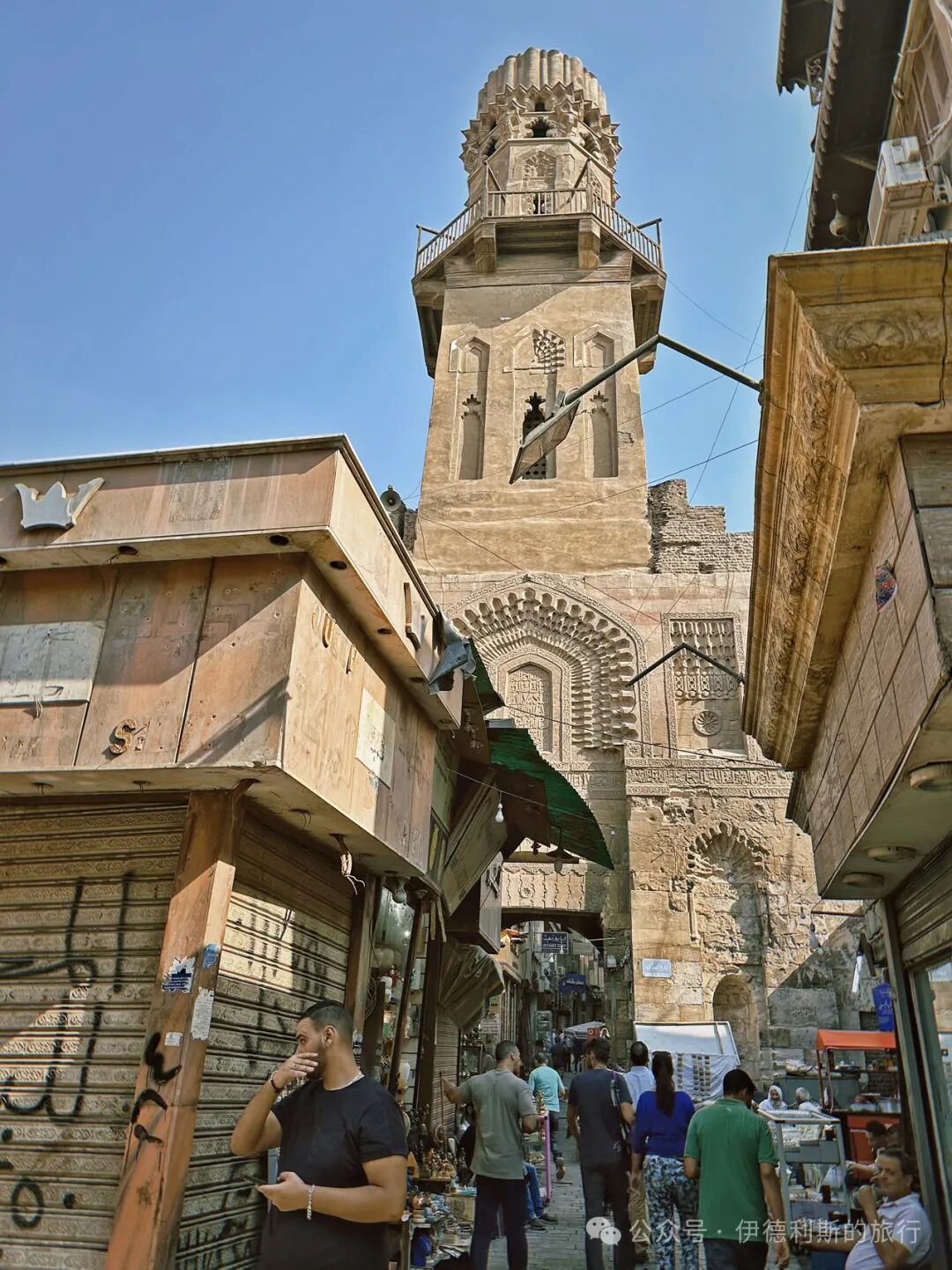
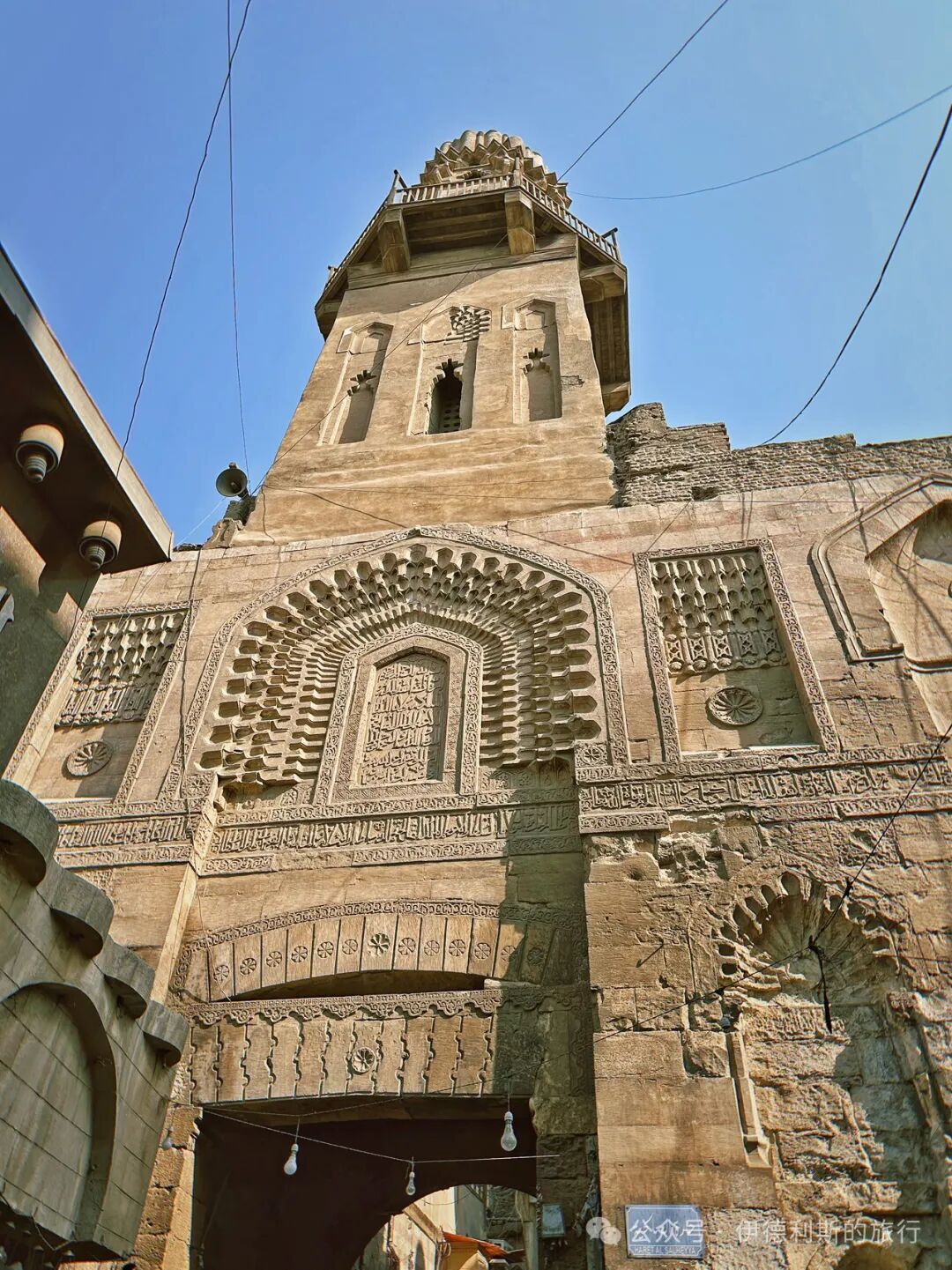
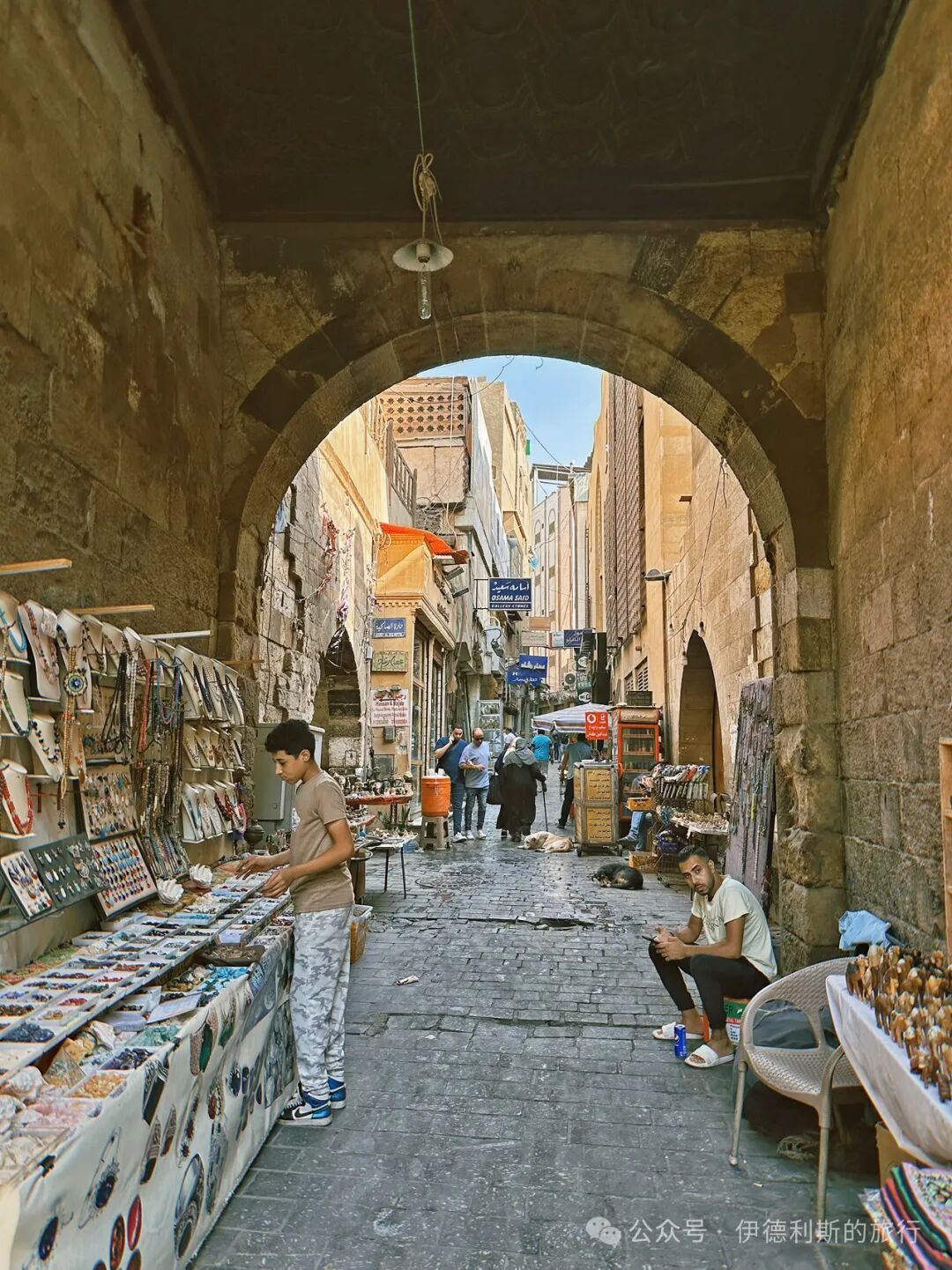
The Salihiyya madrasa was abandoned after the Ottoman Empire conquered Egypt in the early 16th century. Today, most of it is a market, but the main gate and the minaret remain. The Salihiyya madrasa broke the Ayyubid tradition of only building minarets at Friday mosques by adding one to the gate of the school.
Al-Ashraf Complex: 1424
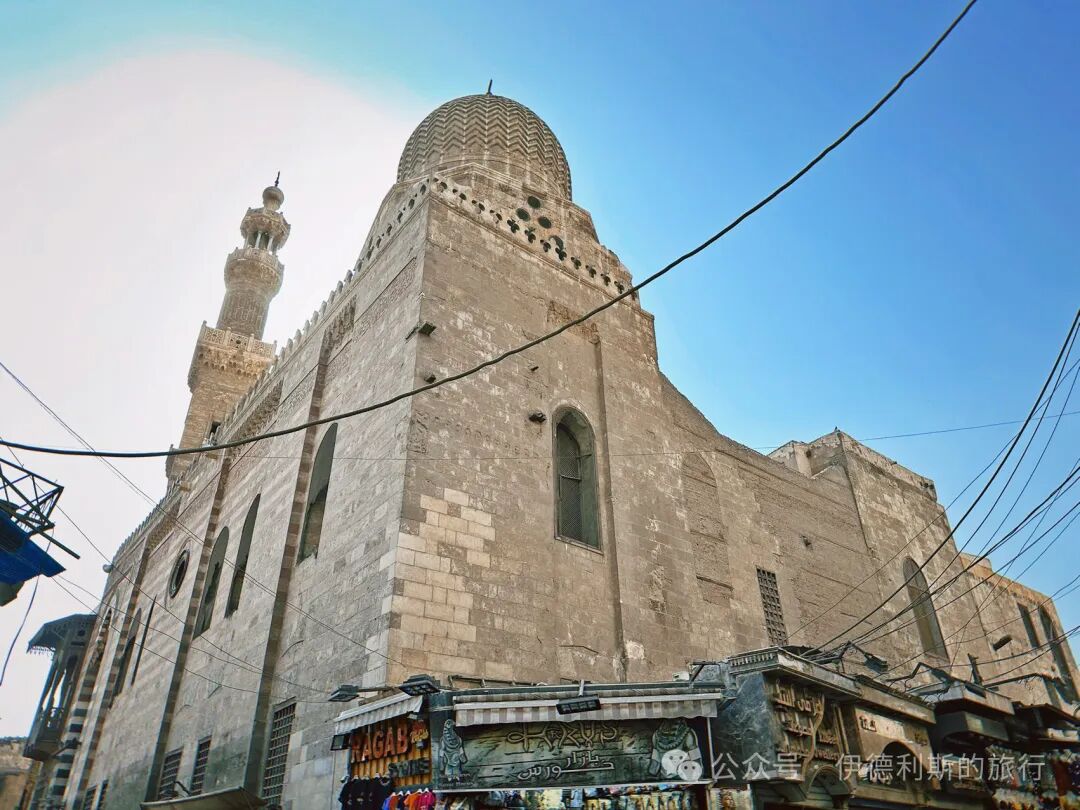
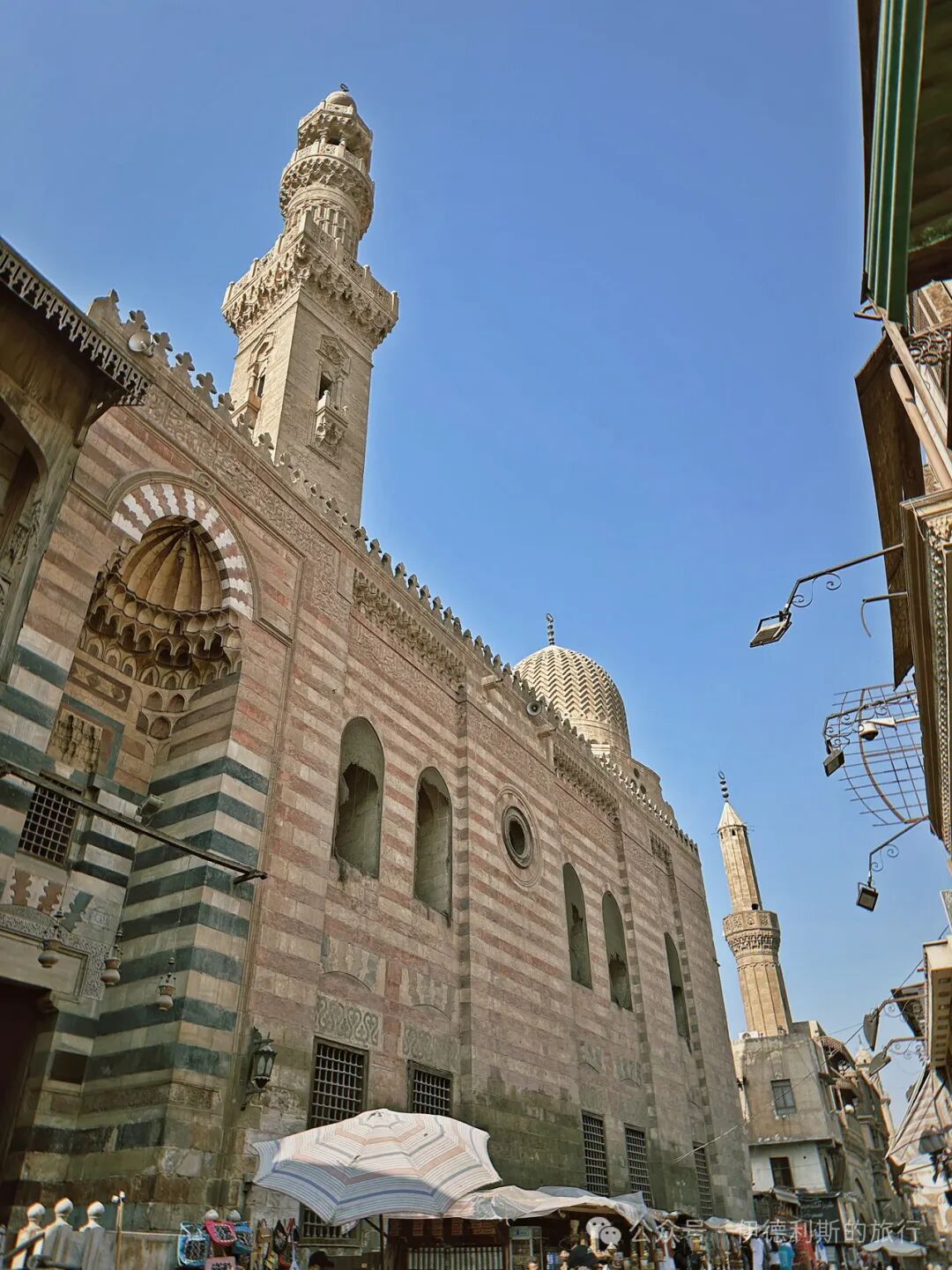
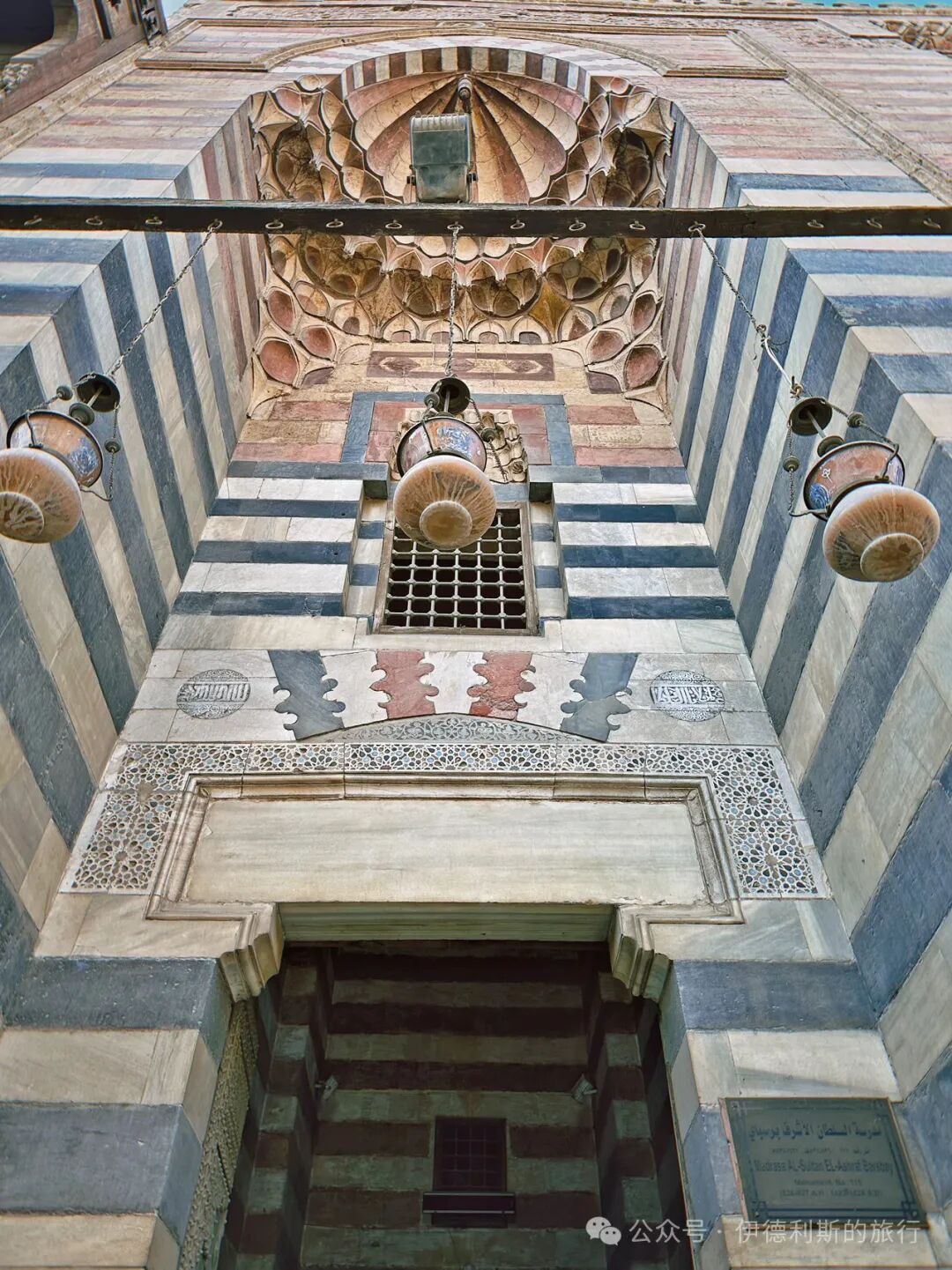
Continuing south, you will find the Al-Ashraf complex, built in 1424 by the Mamluk Sultan Al-Ashraf Barsbay, who reigned from 1422 to 1438. The entire complex includes a main hall, a school, a tomb, and a prayer hall (daotang), featuring a dome with geometric carvings, which is an early example of decorative dome carving.
Barsbay was once a Mamluk slave of the Mamluk Sultan Barquq, and he later became the tutor for the young Sultan Muhammad. With the support of the governor of Damascus and other emirs, Barsbay deposed the young sultan in 1422 and took the throne as the new sultan.
The 16 years of Barsbay's rule were a time of relative safety and stability for the Mamluk Sultanate, with almost no war. He was very generous to the poor and to Sufis, and he carried out a series of administrative reforms.
Barsbay was known as the "Merchant Sultan" and placed great importance on the role of trade. He took a series of measures to strengthen control over the Mediterranean and the Red Sea, diverted Indian Ocean trade routes through Jeddah, and established state monopolies on sugar and pepper. He attracted merchants by lowering tariffs and monopolized most of the trade from the East, which angered many European powers.
Summary: Islamic History Guide: Old Cairo - Bayn al-Qasrayn and a Thousand Years of Heritage is presented here as a firsthand travel account in clear, natural English. The account focuses on Old Cairo, Islamic History, Bayn al-Qasrayn while preserving the names, places, food, photos, and historical details from the Chinese source.
In our first article, 'Experiencing the Thousand-Year History of Old Cairo (Inside the North Gate)', we started at the North Gate of Cairo, built in the 11th century during the Fatimid dynasty, to enter the thousand-year-old historic city. We then traveled from north to south to visit 13 historic buildings, including:
The 11th-century Al-Hakim Mosque and the 12th-century Al-Aqmar Mosque from the Fatimid dynasty.
From the 14th-century Mamluk dynasty, we saw the gate of the Qawsun Caravanserai, the Khanqah of Baybars II, and the Beshtak Palace. From the 15th century, we visited the Qaitbay Caravanserai, the Madrasa of Amir Jamal al-Din al-Ustadar, and the Maq'ad of Mamay al-Sayfi.
From the 17th-century Ottoman dynasty, we saw the Al-Suhaymi House, the Sabil-Kuttab of Qitas Bey, and the Sabil-Kuttab of Dhu al-Fiqar. We also visited the 18th-century Sabil-Kuttab of Abd al-Rahman Katkhuda and the 19th-century Mosque-Sabil of Sulayman Agha al-Silahdar.
In this article, we will continue south to visit eight magnificent building complexes from the Ayyubid and Mamluk dynasties in Old Cairo.
Bayn al-Qasrayn is located in the heart of Old Cairo, and its name literally means 'between the two palaces'. This was originally a square between two grand palaces built by the Fatimid dynasty in the 10th century. Later, the Ayyubid, Mamluk, and Ottoman dynasties built many structures here, and many of them are still standing today.
Al-Kamil Madrasa: 1225
Barquq Madrasa: 1386
An-Nasir Muhammad Madrasa: 1303
Qalawun Complex: 1285
As-Salih Ayyub Mausoleum: 1250
As-Salihia Madrasa: 1243
Al-Ashraf Complex: 1424
Al-Kamil Madrasa: 1225
The Al-Kamil Madrasa was built in 1225 by the Ayyubid Sultan Al-Kamil, who reigned from 1218 to 1238. During the 13th and 14th centuries, this place was a center for the study of Hadith in Egypt. A great famine hit Egypt between 1400 and 1404, causing the population to drop sharply and leading to the decline of the Al-Kamil Madrasa.
Al-Kamil was the nephew of Sultan Saladin and a key leader for Egypt during the Fifth and Sixth Crusades. During the Fifth Crusade, he opened the Nile dams to trade for eight years of peace. During the Sixth Crusade, he handed Jerusalem over to the Crusaders to trade for ten years of peace, which was the only Crusade resolved through diplomacy.
Today, the only part of the Ayyubid-era building left is the Iwan arch on the west side. The arch once featured plaster decorations in Kufic calligraphy, which are now kept at the Museum of Islamic Art in Cairo. The main hall at the entrance was built in 1752 by the Ottoman official Prince Hassan Sharawi.
Barquq Madrasa: 1386
South of the Kamil Madrasa stands the Barquq Madrasa, built in 1386 by Barquq, the first sultan of the Mamluk Burji dynasty (reigned 1382–1389 and 1390–1399). This was the first building of the Mamluk Burji dynasty (1382–1517) and holds great historical significance.
The architect of the madrasa was Ahmad al-Tuluni. Ahmad came from a family of carpenters and stonemasons. He was one of the few master architects to achieve great success in the late 14th century and was highly valued by the sultan.
The project supervisor for the madrasa was Emir Jarkas al-Khalili. He built the famous Khan el-Khalili market in Cairo, which is named after him.
The entire madrasa complex consists of a prayer hall, classrooms, a mausoleum, and a dervish lodge. It taught knowledge from the four major schools of Islamic jurisprudence: Hanafi, Maliki, Shafi'i, and Hanbali. The main gate of the madrasa features a monumental arched entrance (Pishtaq), decorated with beautiful honeycomb-like carvings (Muqarnas) and calligraphy.
After entering the gate, a passageway leads to the courtyard (Sahn). In the middle of the courtyard is a fountain (Sabil), which was rebuilt in the late 19th century by the Committee for the Preservation of the Monuments of Arab Art (Comité). The courtyard has an arched hall (iwan) on each of its four sides. The prayer hall on the east side is covered by a massive wooden roof, while the other three sides have stone domes.
The prayer hall ceiling features intricate painted designs, and the floor is decorated with colorful marble mosaics and panels. The pulpit (minbar) inside the prayer hall was a gift from the Mamluk Sultan Sayf al-Din Jaqmaq (reigned 1438–1453) in 1440. It is made of Aleppo pine and inlaid with ebony and ivory. Sadly, the pulpit was stolen twice in 2012 and 2013, and most of its decorative pieces are now missing.
Beneath the dome of the Barquq Madrasa is a tomb chamber, but Sultan Barquq himself is not buried here. His daughter Fatima is buried in this space instead.
The following photos show the wood carvings and copper work on the main gate of the madrasa.
Barquq was born into a Circassian family living under the rule of the Golden Horde. After a battle, he was captured as a slave and sold to a bathhouse in Crimea. Later, he was sold again and moved to Egypt, where he became a Mamluk slave soldier. In 1377, civil unrest broke out in the Mamluk Sultanate. The young sultan who had just taken the throne held no real power. Barquq used this chance to strengthen his own position. In 1382, he seized the throne, ending the 132-year rule of the Kipchak Turkic Bahri dynasty and establishing the Circassian Caucasian Burji dynasty.
During his reign, Barquq joined forces with the Ottoman Sultan Bayezid I to fight against the Timurid Empire and executed Timur's envoy. In 1394, Barquq and Timur fought a war near the Euphrates River, which ended with Timur leading his army in retreat.
The days and nights at the Madrasa of Barquq are busy, as the lively Al-Mu'izz Street in Old Cairo sits right in front of the gate. This street is known as the main artery of Old Cairo. It connects the north gate to the south gate and serves as the main axis of the old city.
An-Nasir Muhammad Madrasa: 1303
To the south of the Madrasa of Barquq stands the Madrasa of Al-Nasir Muhammad, which was built between 1295 and 1303 by the Mamluk Sultan Al-Nasir Muhammad (who reigned from 1293-1294, 1299-1309, and 1310-1341).
Al-Nasir Muhammad was the youngest son of Sultan Qalawun. He took the throne at age 9, but he did not hold real power until his third period of rule at age 24. Under his rule, the Mamluk Sultanate reached its peak. The economy thrived at home, there were no major threats from abroad, and envoys from the Pope and the King of France visited his court with gifts. The reign of Nasir Muhammad is known as a high point for Egyptian culture, the greatest since the Ptolemaic Hellenistic period. He reopened the canal connecting Alexandria to the Nile, built many public buildings in Cairo, and renovated over thirty mosques.
The madrasa has a very unique Gothic gate. It was taken from a church in Acre after the Mamluk Sultanate completely defeated the Crusaders in 1291. The 1291 Siege of Acre is called the last battle of the Crusades, marking the end of the nearly 200-year-long Crusades. When the Siege of Acre ended, the Sultan ordered his army to tear down the city walls and churches, and this gate was transported back to Cairo.
The minaret of the madrasa has very complex stucco decorations. It is the only remaining all-stucco minaret in the old city of Cairo. The medallions and arched decorations follow the styles of the Fatimid and Ayyubid dynasties, while the floral patterns are a signature feature of the Mamluk period. The plaster decorations feature both Kufic and Thuluth calligraphy, and they are carved beautifully. Some historians believe that craftsmen from the Maghreb or Andalusia likely helped create these high-quality plaster carvings.
Like the Barquq Madrasa to the north, the Madrasa of an-Nasir Muhammad taught the four major schools of Islamic law: Hanafi, Hanbali, Shafi'i, and Maliki. The main hall contains the last plaster mihrab in Egypt, which features a unique egg-shaped protrusion similar to plaster carvings from Tabriz, Iran, during the Ilkhanate period. Because of this, historians suggest that this mihrab was likely made by craftsmen from Iran.
Qalawun Complex: 1285
Further south is the most magnificent part of the Bayn al-Qasrayn area, the Qalawun complex. This complex includes a hospital, a madrasa, and a mausoleum. It was built in 1285 by the Mamluk Sultan Qalawun, who reigned from 1279 to 1290, and it is considered a masterpiece of Mamluk architecture.
Standing at the entrance of the building complex, the most eye-catching feature is the towering three-story minaret (bangke ta). The top of the minaret features a unique decoration called a papyrus cornice, which is how the Mamluk dynasty showed its legitimacy by looking back to the era of the pharaohs.
The facade of the entire complex is 67 meters long, similar in style to Gothic Crusader churches of the same period, with windows surrounded by pointed arch panels of different sizes and exquisite stucco calligraphy carvings underneath.
The Mausoleum of Sultan Qalawun is known as a symbol of the power of the Mamluk dynasty and held great significance in 13th to 16th-century Egypt. This is one of the most magnificent imperial mausoleums I have ever visited, with an incredible wealth of stucco carvings, marble mosaics, and gilded woodwork. The tomb hall is supported by four towering stone columns decorated with Corinthian capitals. Above the capitals is an architrave decorated with vine patterns and stucco carvings in Thuluth calligraphy.
Sultan Qalawun was known as the King of Victory. In 1281, he led the Mamluk army to defeat the Mongol Ilkhanate forces commanded by Mongke Temur, the son of Hulagu Khan, in Homs, Syria. Mongke Temur was wounded and fled. The following year, the Ilkhan Tekuder converted to Islam and formed an alliance with the Mamluk Sultanate. The Battle of Homs is known as a major turning point in the Mongol westward expansion, marking the first time Mongol cavalry suffered a defeat in the Middle East.
After the threat from the Ilkhanate faded, Sultan Qalawun launched a series of wars against the Crusaders starting in 1285, eventually recapturing Tripoli, the largest city in northern Lebanon, in 1289.
The mihrab in the mausoleum of Sultan Qalawun is considered the most exquisite mihrab of the Mamluk period. The design of the mihrab was inspired by Syria and was created using colorful marble mosaics.
The madrasa of Sultan Qalawun consists of two iwan vaulted structures, with classrooms and a prayer hall on either side of the courtyard. The mihrab in the center of the prayer hall does not use the marble mosaics common in the Mamluk period, but instead features glass and mother-of-pearl mosaics. This is a throwback to the decorative art of the Umayyad Caliphate in Syria, showing how the Mamluks claimed to inherit the orthodoxy of the faith.
As-Salih Ayyub Mausoleum: 1250
Across from the Qalawun complex stands the tomb built in 1250 by Shajar al-Durr, the widow of the Ayyubid Sultan As-Salih Ayyub (reigned 1240–49), for her husband.
Sultan As-Salih was the last major ruler of the Ayyubid dynasty, and he saw the rise of the Mamluk dynasty. Because he did not trust the local Egyptian emirs, he began buying large numbers of Kipchak Turks who had been enslaved after the Mongol invasion of Central Asia. These slaves soon became the core of the Ayyubid army and were known as Mamluks.
Sultan As-Salih also made great progress in the wars against the Crusaders. In 1244, he invited 10,000 Khwarazmian mercenary cavalrymen to sack and retake Jerusalem, which caused great panic among the surrounding regimes. A Christian army made up of the Kingdom of Jerusalem, the Teutonic Knights, the Knights Templar, the Knights Hospitaller, and the Order of Saint Lazarus formed an alliance with a Muslim army led by the emirs of Homs, Damascus, and Kerak to fight against as-Salih. The two armies met in a small village northeast of Gaza, where as-Salih's army and Khwarazmian mercenaries fought hard and eventually won. More than 5,000 Crusaders died in this battle, including the Grand Master and Marshal of the Knights Templar, as well as bishops from several cities.
After this battle, Christian power in the Holy Land collapsed, and the Kingdom of Jerusalem was never again able to organize an effective military campaign. In 1245, the Pope called for a new Crusade. In 1249, the Seventh Crusade, led by King Louis IX of France, officially began. When as-Salih heard the news, he quickly returned to Egypt to set up camp, but he died of illness shortly after. After as-Salih died, his widow Shajar al-Durr decided to hide the news of the Sultan's death and ordered the Mamluk army to successfully defeat the Crusader attack.
As-Salihia Madrasa: 1243
On the south side of the Sultan Salih Ayyub tomb stands the Salihiyya madrasa, which Salih built in 1242. Known as the 'Castle of Scholars,' the Salihiyya madrasa was the first in Cairo to teach the four major schools of Islamic law: Hanafi, Hanbali, Shafi'i, and Maliki. The north building of the school taught Shafi'i and Maliki law, while the south building taught Hanafi and Hanbali law.
The Salihiyya madrasa was abandoned after the Ottoman Empire conquered Egypt in the early 16th century. Today, most of it is a market, but the main gate and the minaret remain. The Salihiyya madrasa broke the Ayyubid tradition of only building minarets at Friday mosques by adding one to the gate of the school.
Al-Ashraf Complex: 1424
Continuing south, you will find the Al-Ashraf complex, built in 1424 by the Mamluk Sultan Al-Ashraf Barsbay, who reigned from 1422 to 1438. The entire complex includes a main hall, a school, a tomb, and a prayer hall (daotang), featuring a dome with geometric carvings, which is an early example of decorative dome carving.
Barsbay was once a Mamluk slave of the Mamluk Sultan Barquq, and he later became the tutor for the young Sultan Muhammad. With the support of the governor of Damascus and other emirs, Barsbay deposed the young sultan in 1422 and took the throne as the new sultan.
The 16 years of Barsbay's rule were a time of relative safety and stability for the Mamluk Sultanate, with almost no war. He was very generous to the poor and to Sufis, and he carried out a series of administrative reforms.
Barsbay was known as the "Merchant Sultan" and placed great importance on the role of trade. He took a series of measures to strengthen control over the Mediterranean and the Red Sea, diverted Indian Ocean trade routes through Jeddah, and established state monopolies on sugar and pepper. He attracted merchants by lowering tariffs and monopolized most of the trade from the East, which angered many European powers.
