
Islamic Art Guide: Quanzhou Maritime Museum Song-Yuan Stone Inscriptions (Part 2)
Reposted from the web
Summary: Islamic Art Guide: Quanzhou Maritime Museum Song-Yuan Stone Inscriptions (Part 2) is presented here as a firsthand travel account in clear, natural English. The account focuses on Quanzhou, Islamic Art, Stone Inscriptions while preserving the names, places, food, photos, and historical details from the Chinese source.
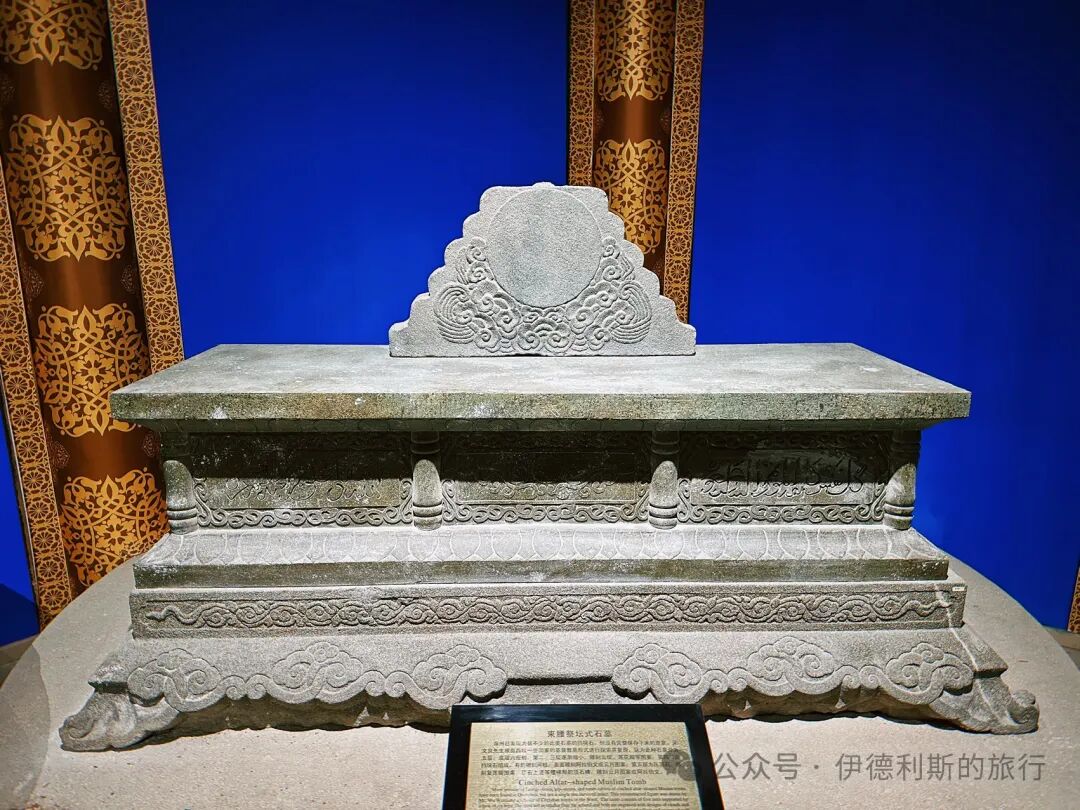
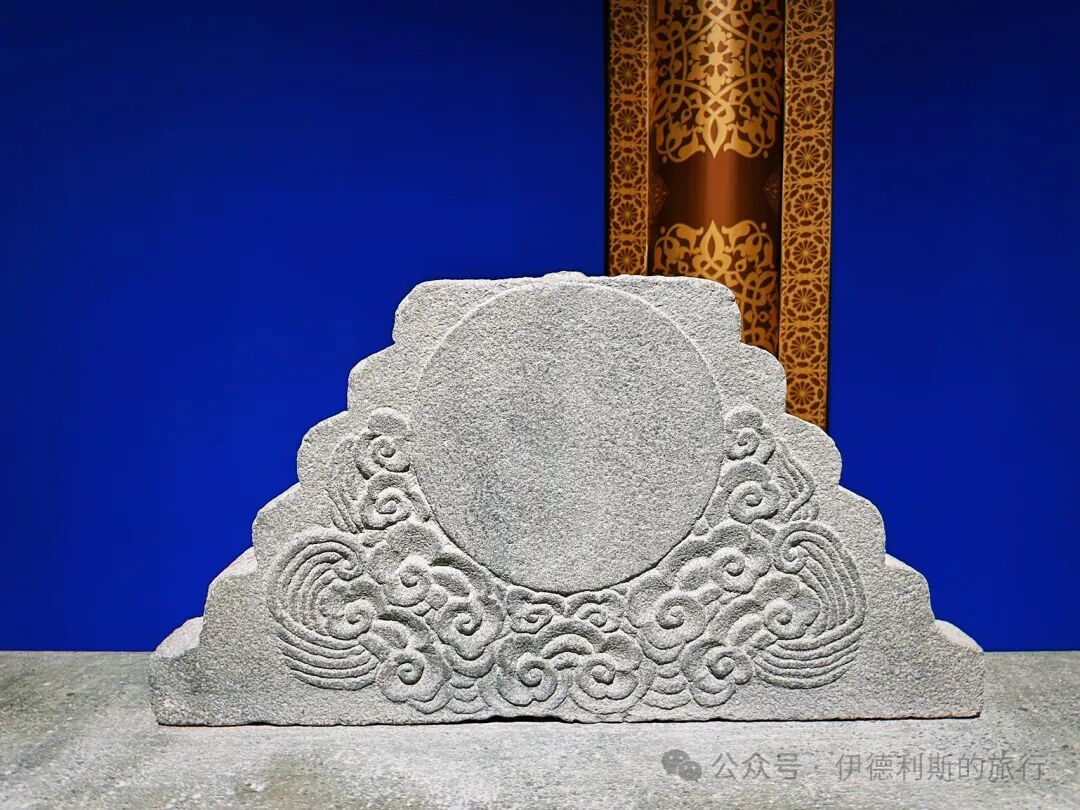
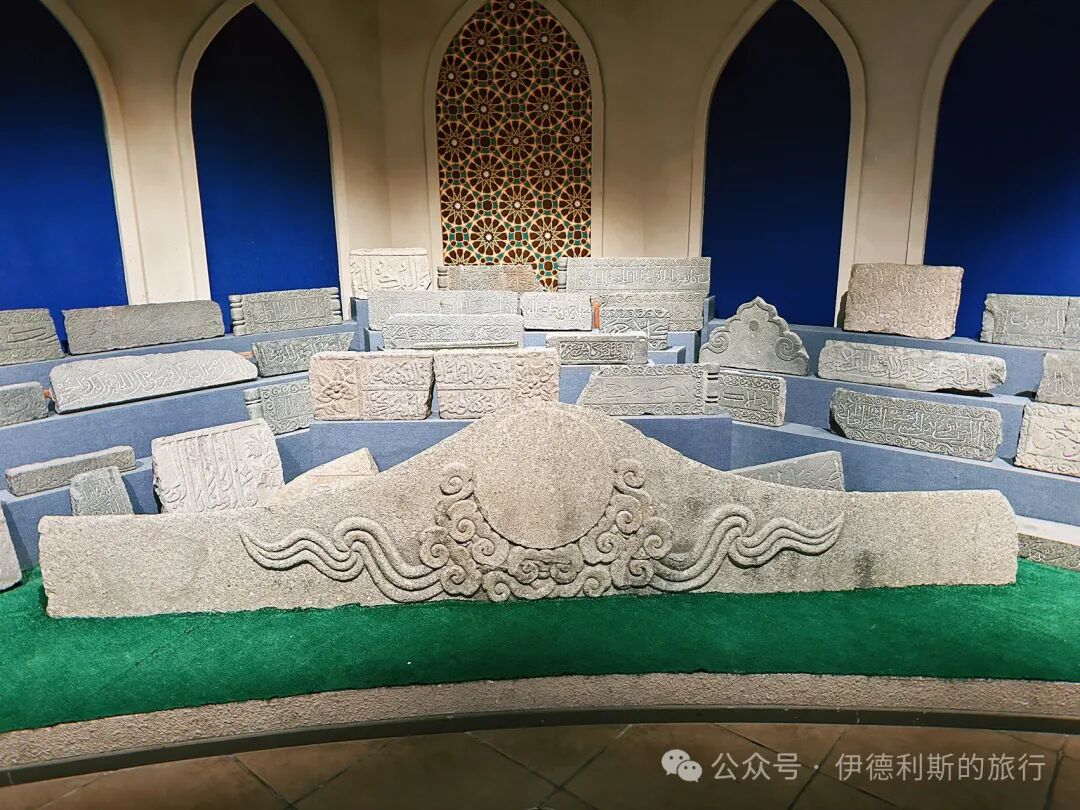
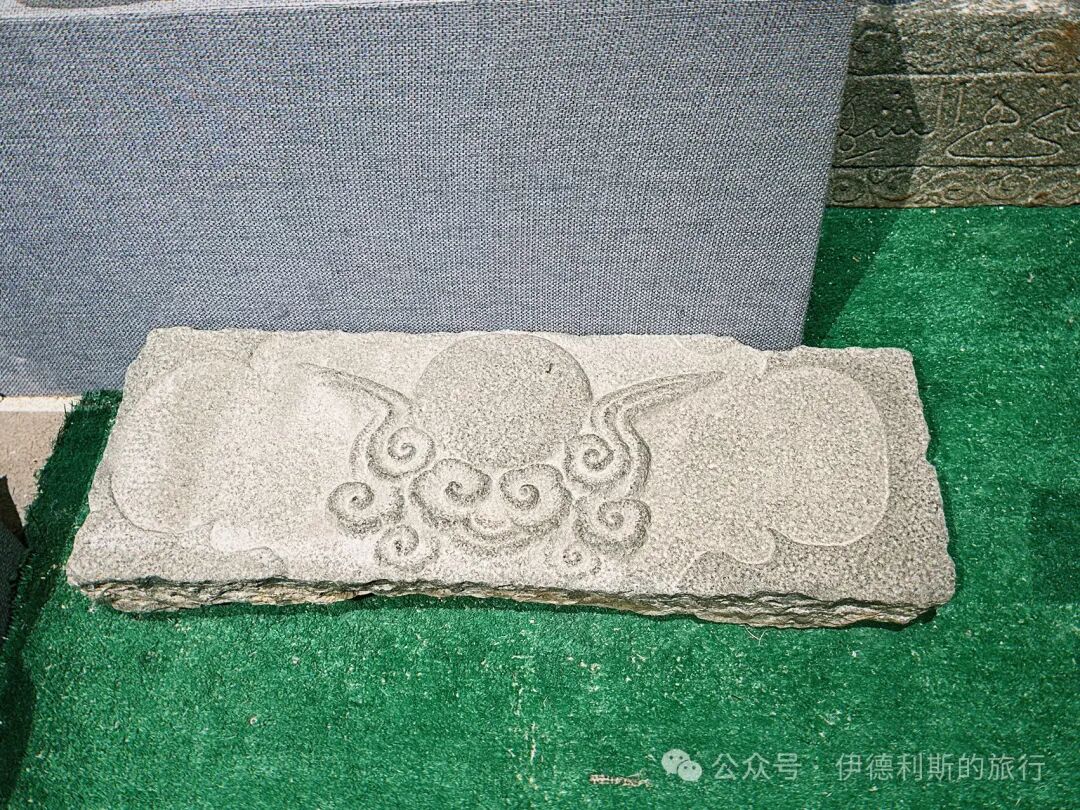
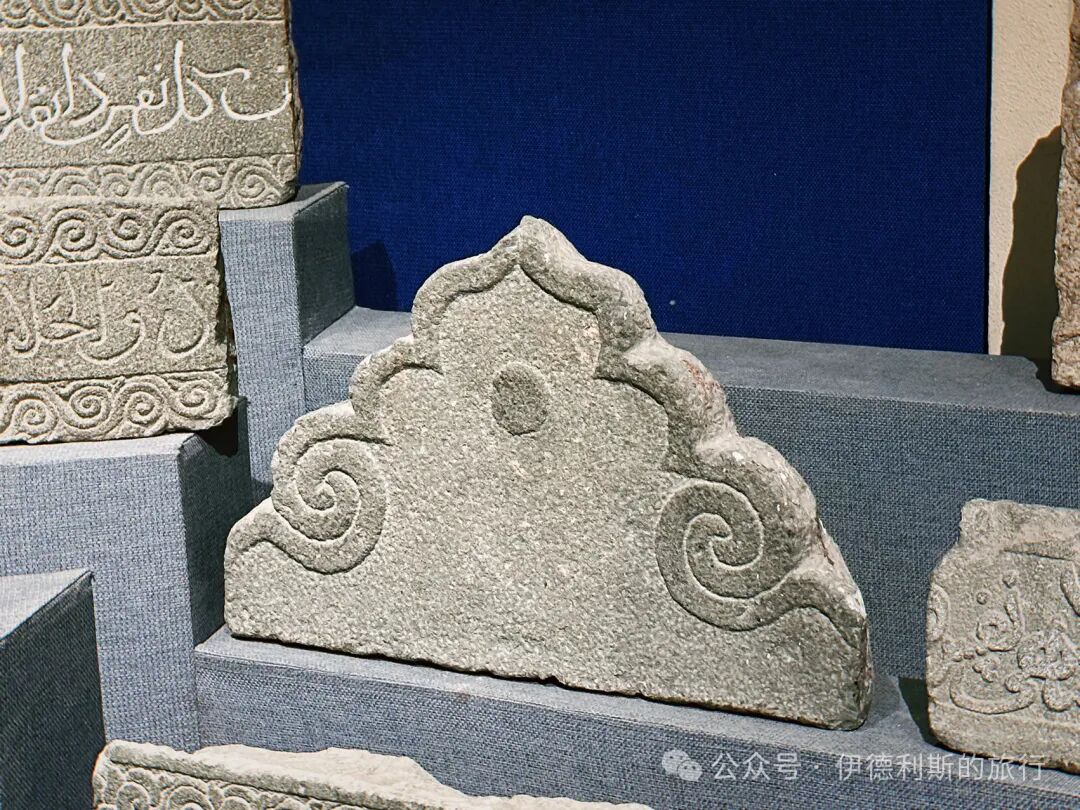
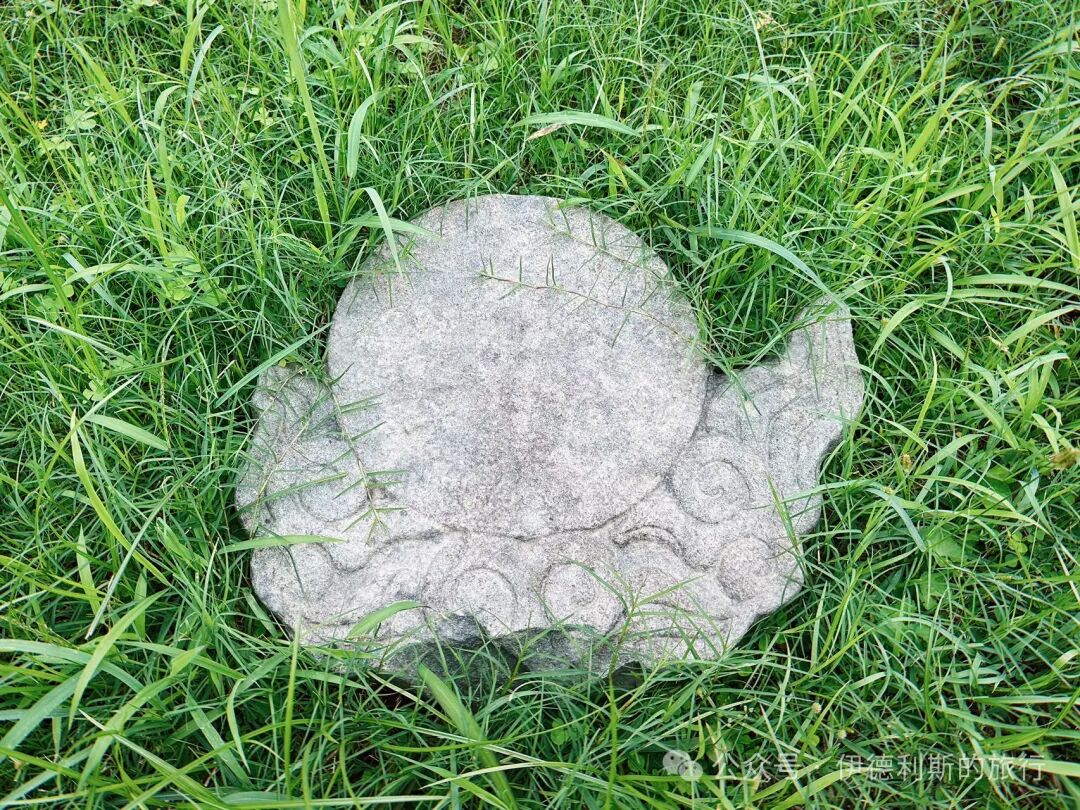
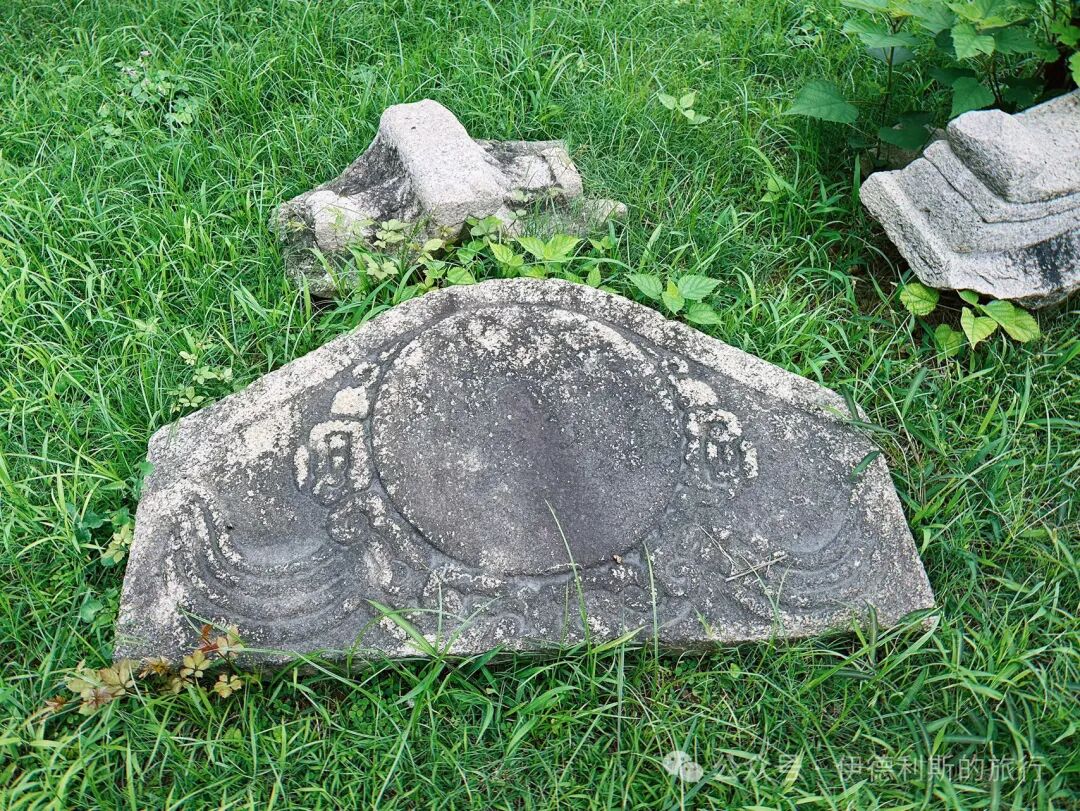
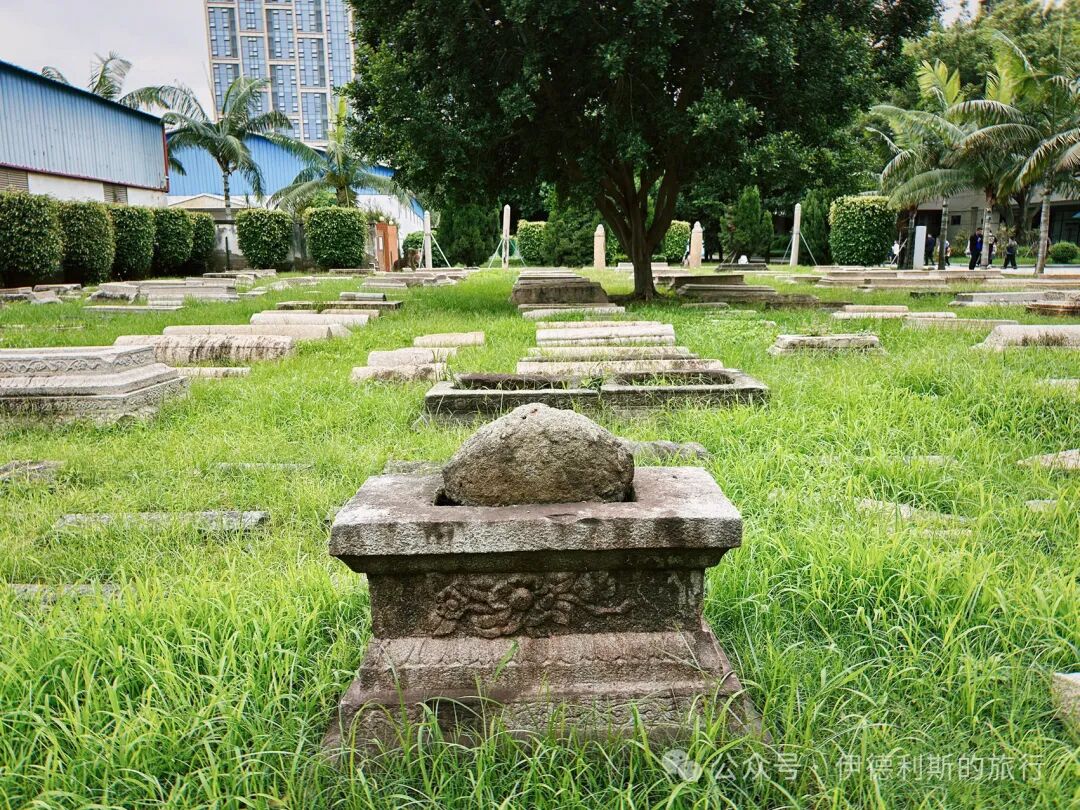
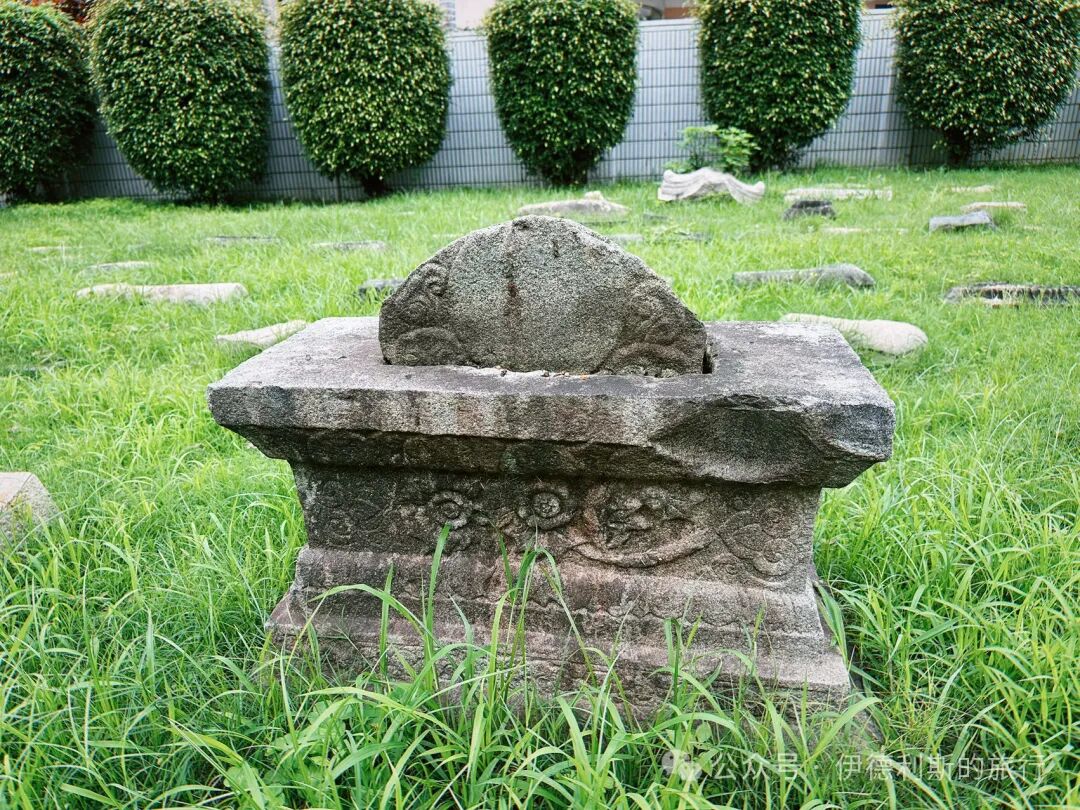
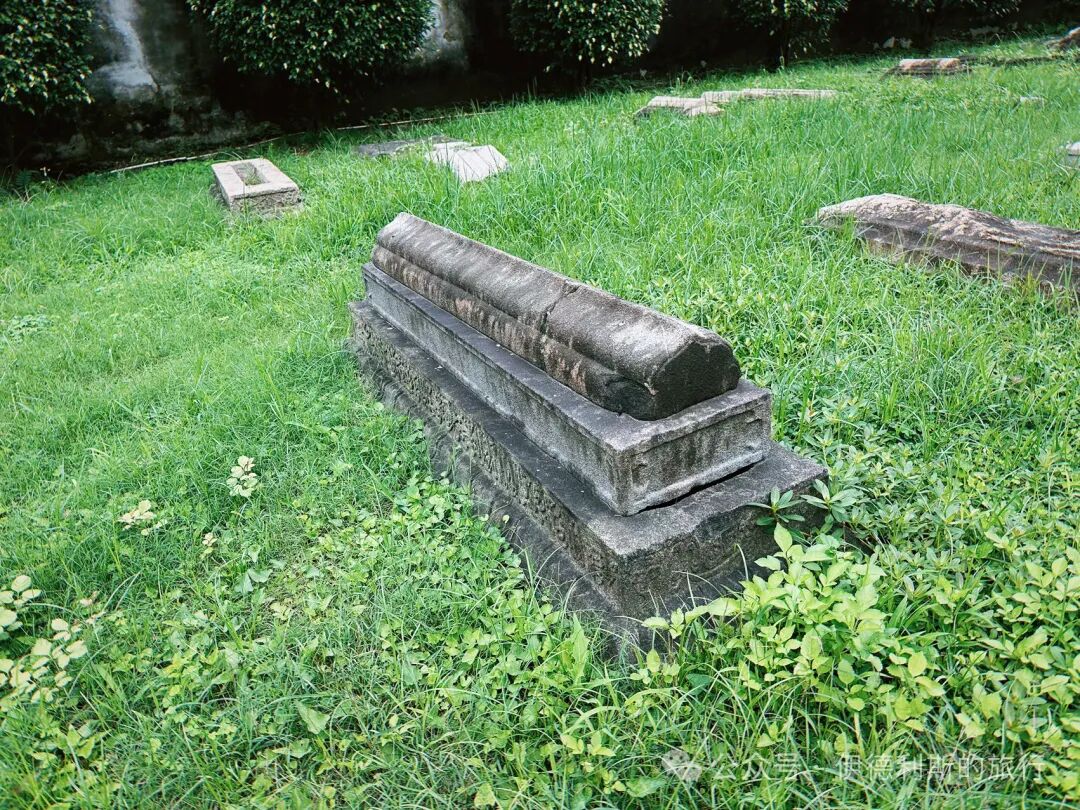
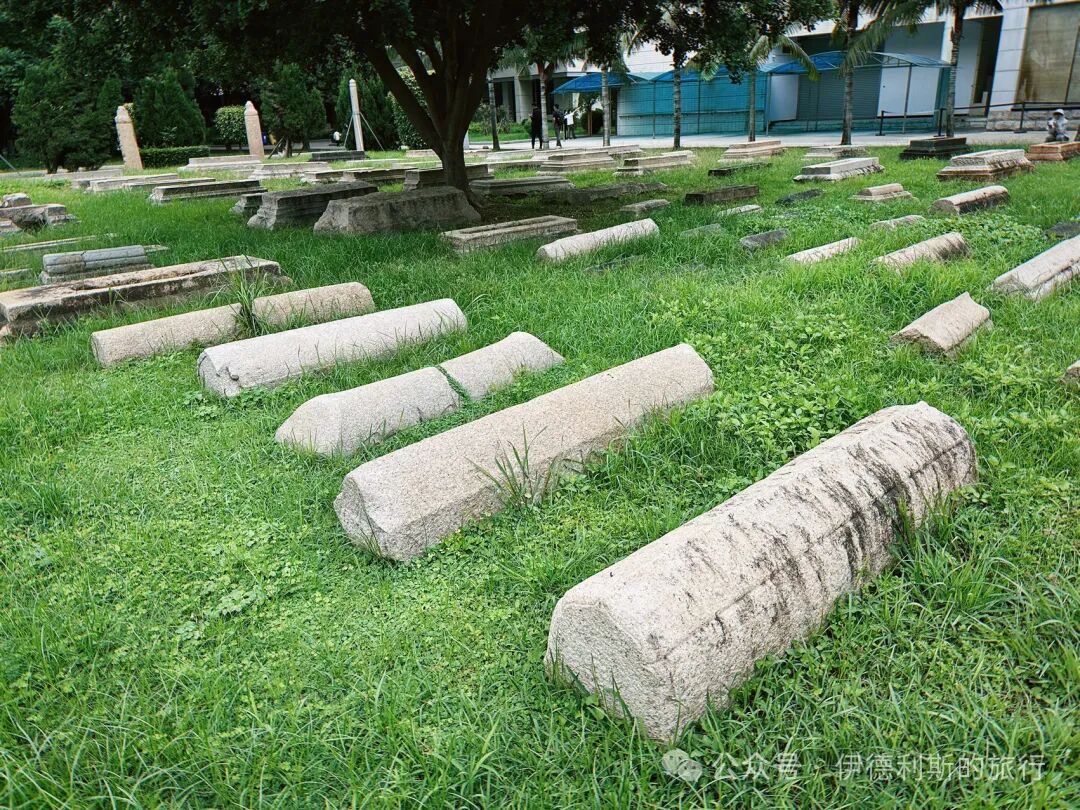
The gravestones feature cloud and moon patterns, including both capstones and base stones. After the Ming Dynasty, cloud and moon shaped gravestones became common in Quanzhou. Most do not have inscriptions and are a variation of the gravestones used by the faith community during the Yuan Dynasty.
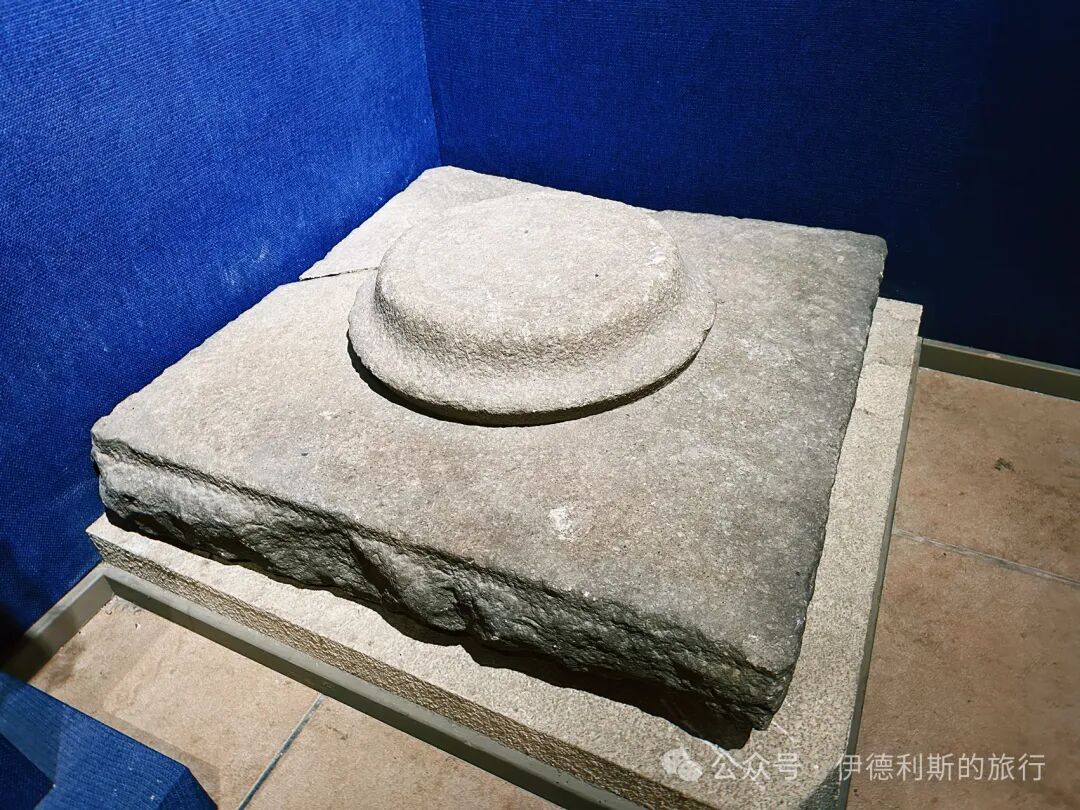
Mosque column base.
This mosque column base was unearthed in 1998 at Jintoupu Village, outside Tonghuai Gate at the East Gate of Quanzhou.
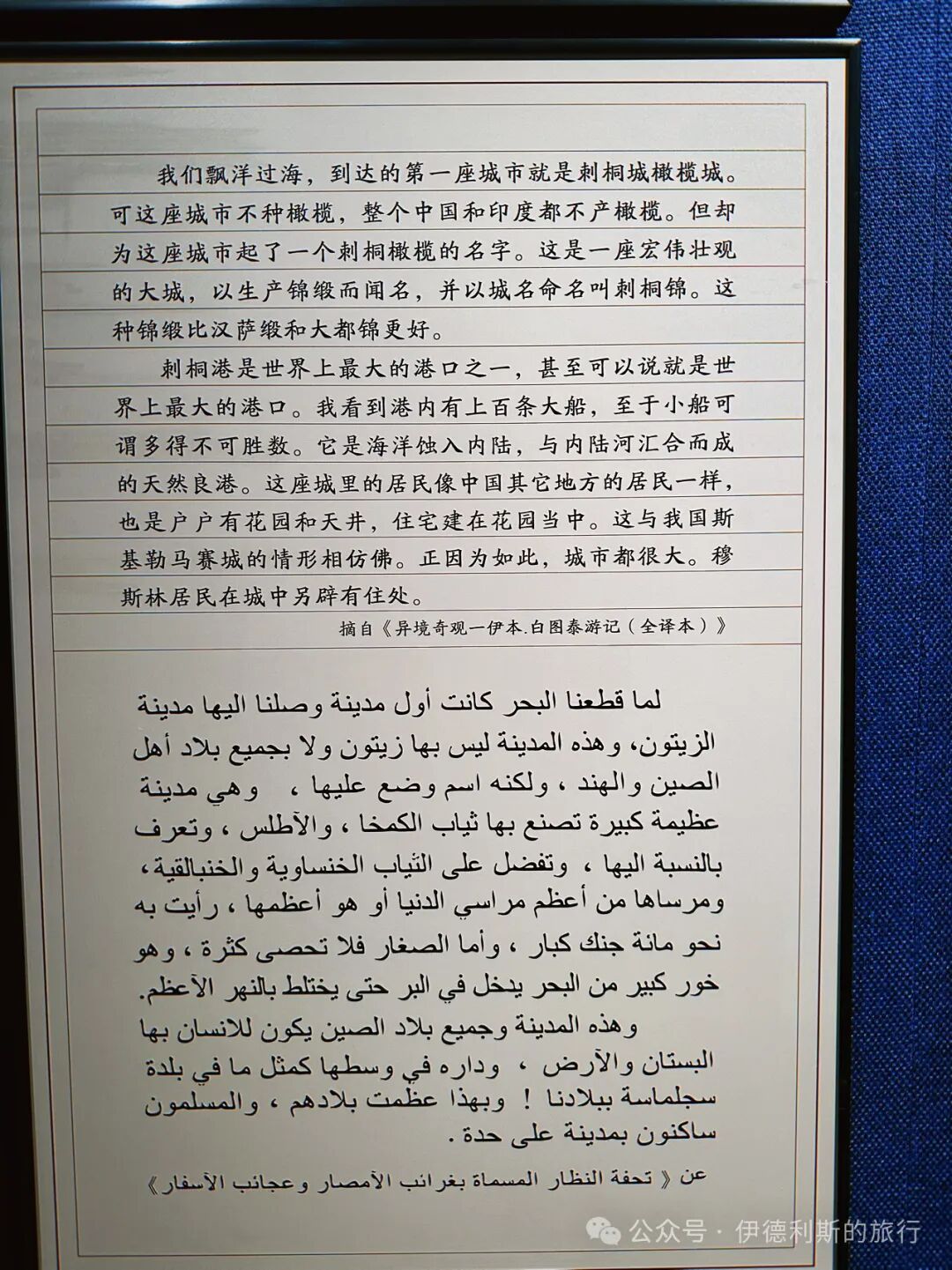
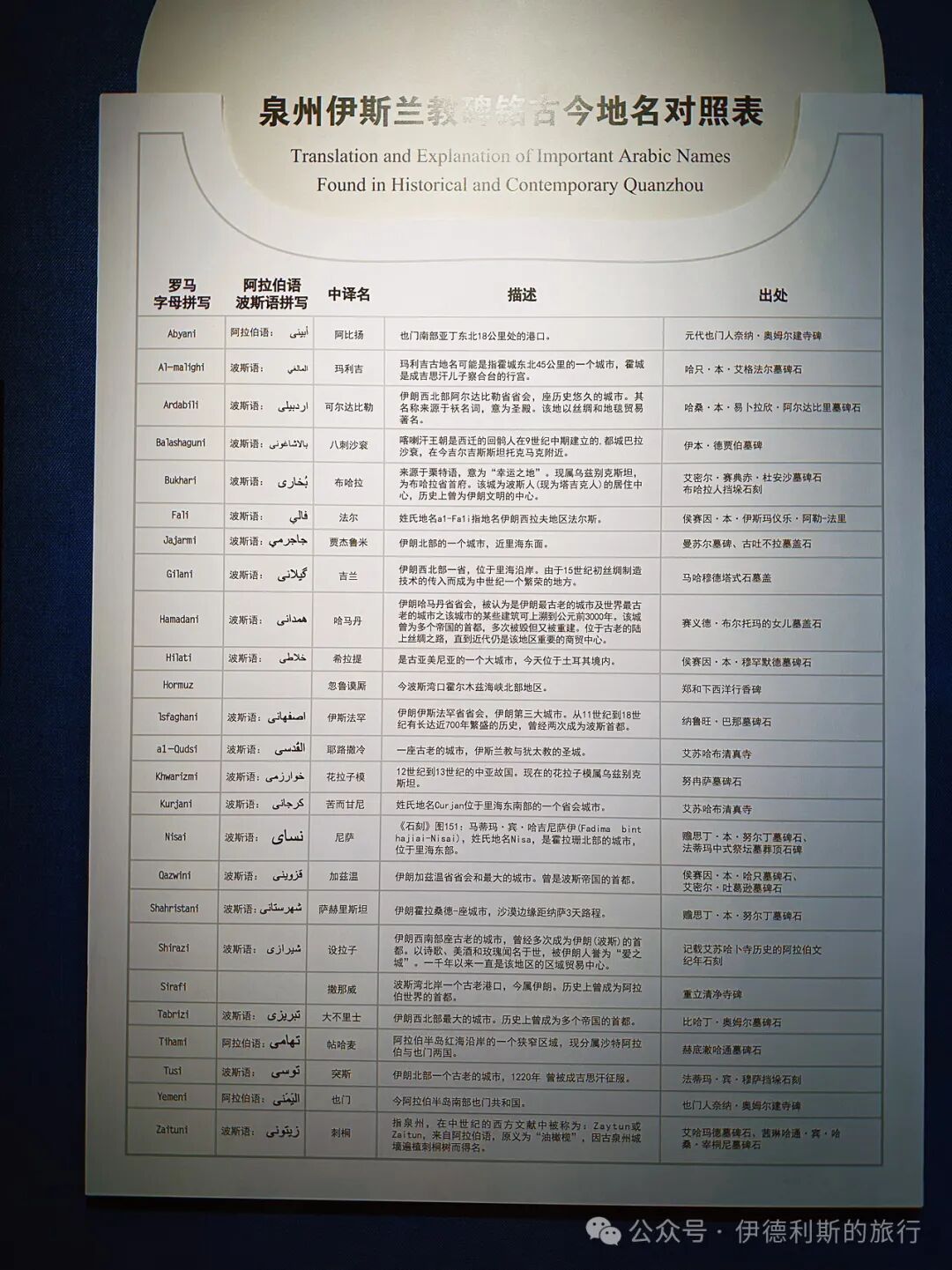
The comparison table of ancient and modern place names on Quanzhou religious inscriptions is very interesting. It shows that most of the friends (dosti) who came to Quanzhou during the Song and Yuan dynasties were from Iran, including Ardabil, Fars, Jajarm, Gilan, Hamadan, Hormuz, Isfahan, Qazvin, Shiraz, Siraf, and Tabriz. Others came from Bukhara and Khwarazm in Uzbekistan, Balasagun in Kyrgyzstan, Ahlat in Turkey, Jerusalem in Palestine, Yemen, and Huocheng in Xinjiang, China.
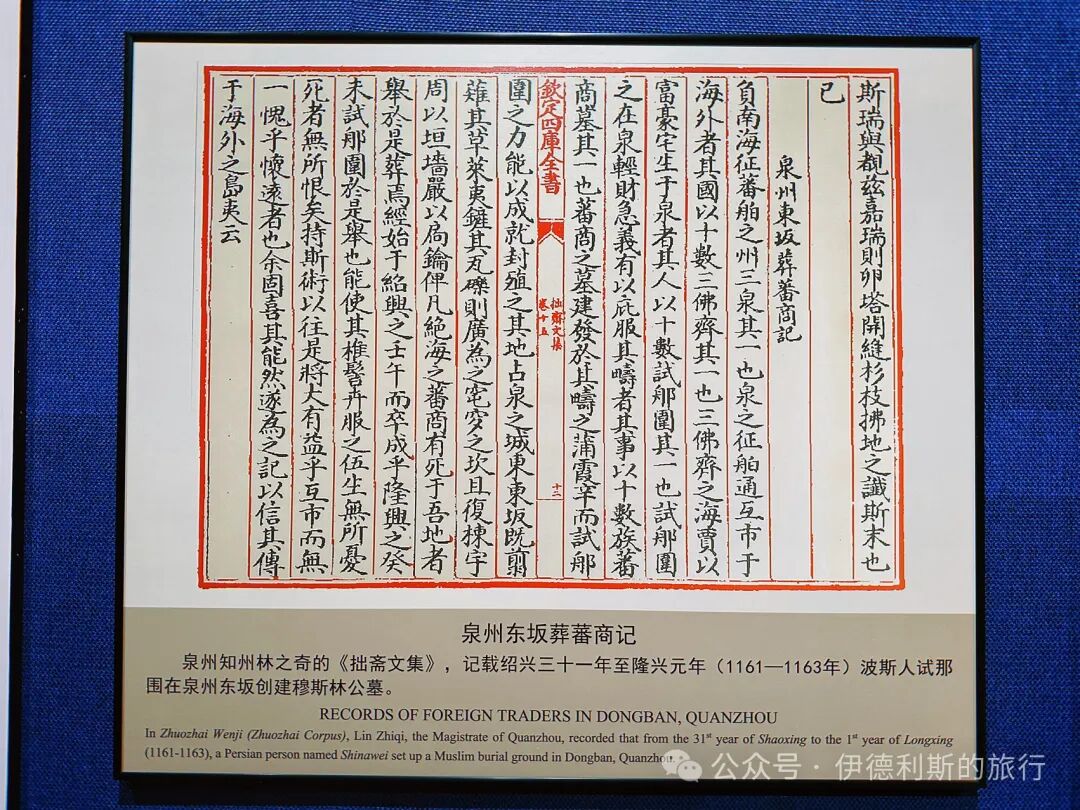
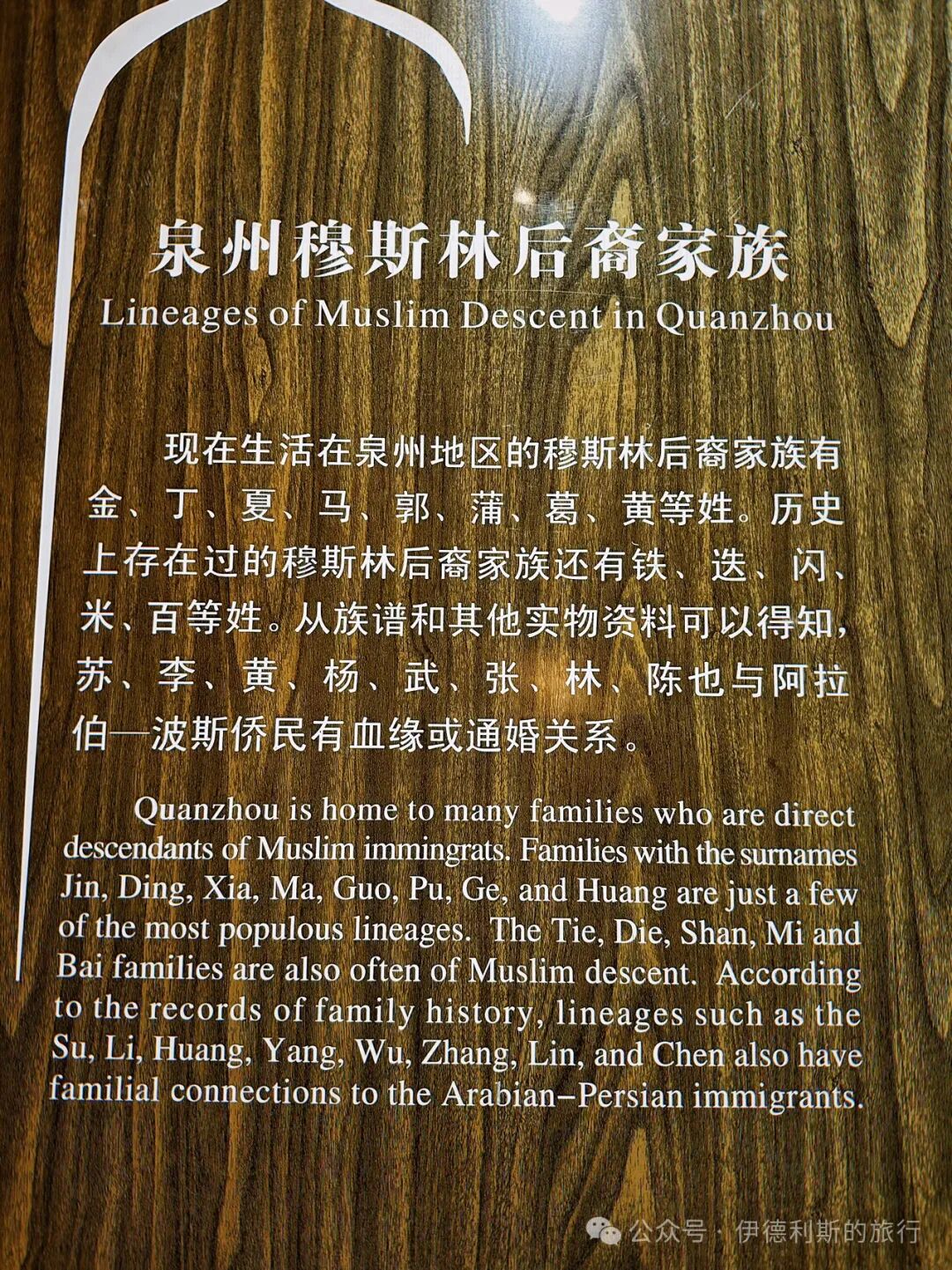
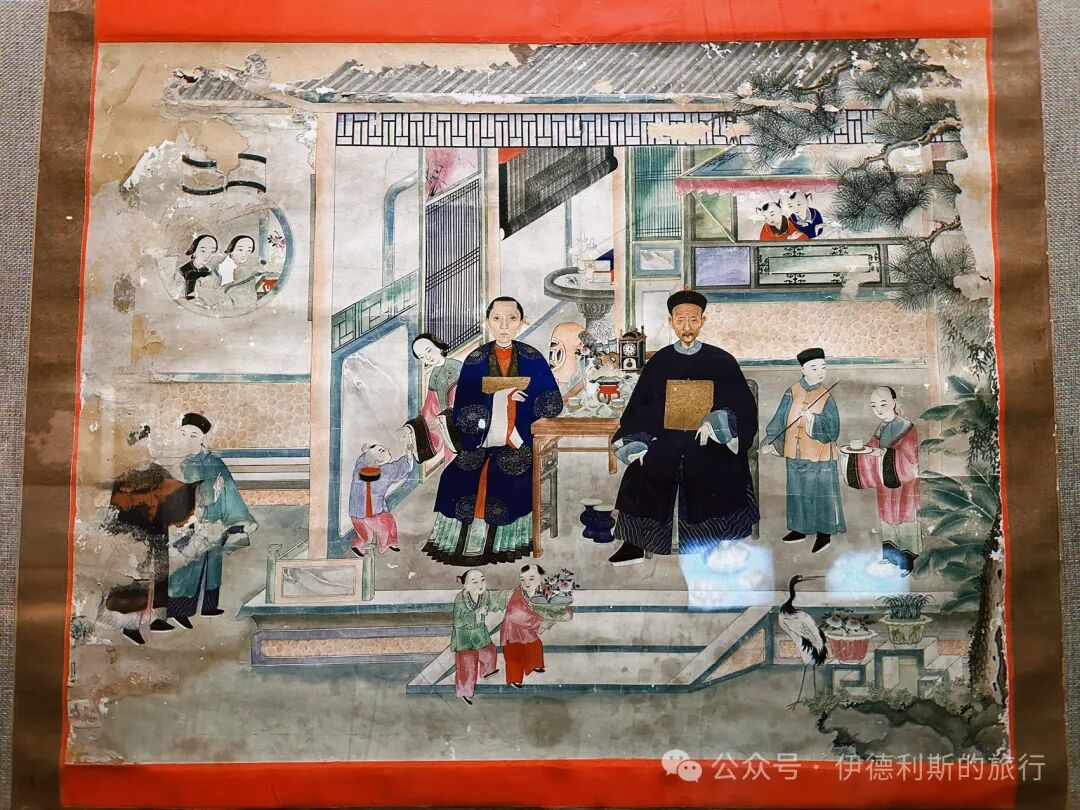
Descendants of Quanzhou Muslims.
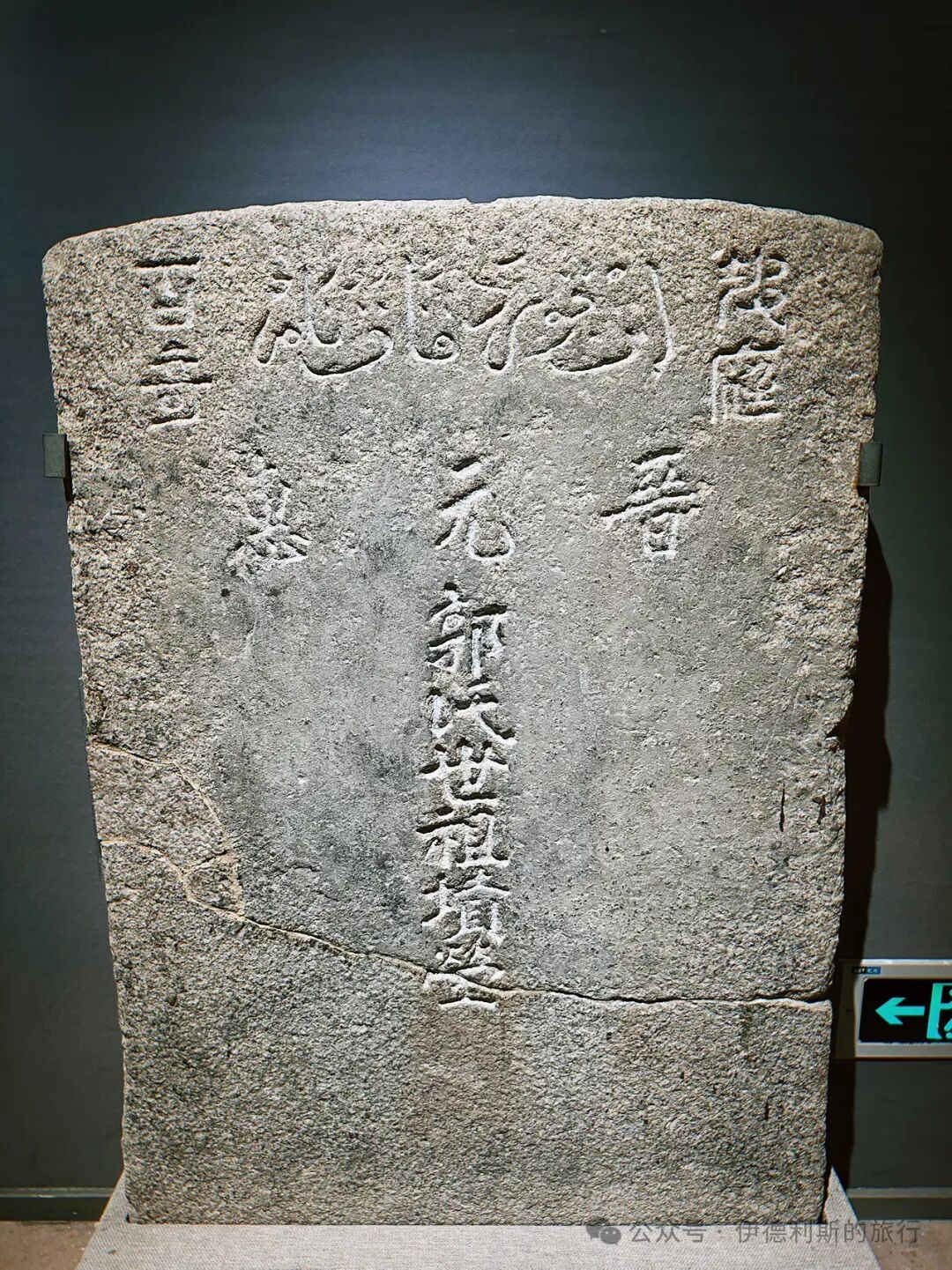
The tombstone of the Guo family ancestors was discovered by a survey team from the Maritime Museum in Fashi Village, in the eastern suburbs of Quanzhou, in 1974. It was moved to the Maritime Museum for preservation in 1978.
According to family records, the ancestors of the Baiqi Guo family were from Guojia Village in Fuyang, Hangzhou. They arrived in Quanzhou during the Yuan Dynasty, lived on East Street at first, and later moved to Fashi Port outside the East Gate. In 1956, villagers on Stone Street in Fashi Village were leveling land at a site commonly known as Liugongqi. They dug up a large tomb belonging to a foreign merchant (fanke) and turned the area into a garden. Villagers said the tomb had a large, square stone platform with two levels. Each level held two stone tombs shaped like Sumeru pedestals (xumizuo). A tombstone stood at the head of the upper level, but villagers broke it into two pieces and carried them back to the village to use as flooring for a communal warehouse.
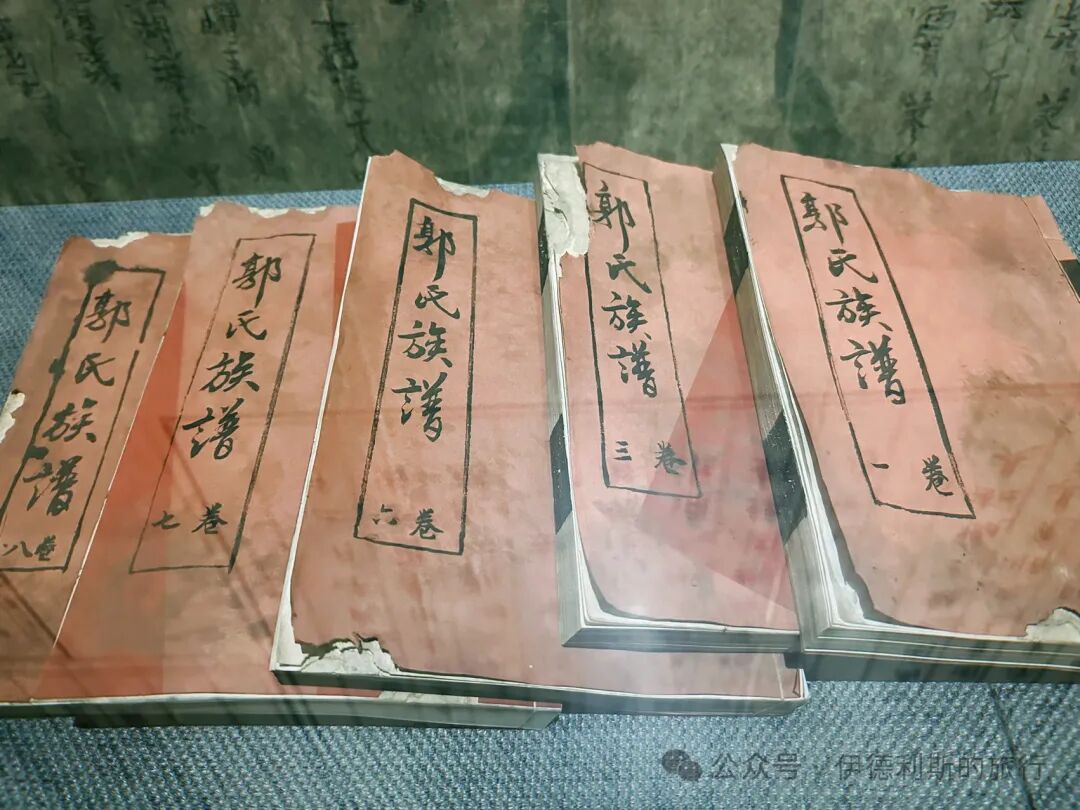
In 1959 and 1974, a research team from the Quanzhou Maritime Museum followed clues from the Guo Clan Genealogy of Baiqi (Baiqi Guo Shi Zupu). After many searches in Fashi Village, they finally found the Guo family ancestral tombstone with Arabic writing. It was moved to the museum for safekeeping in 1978.
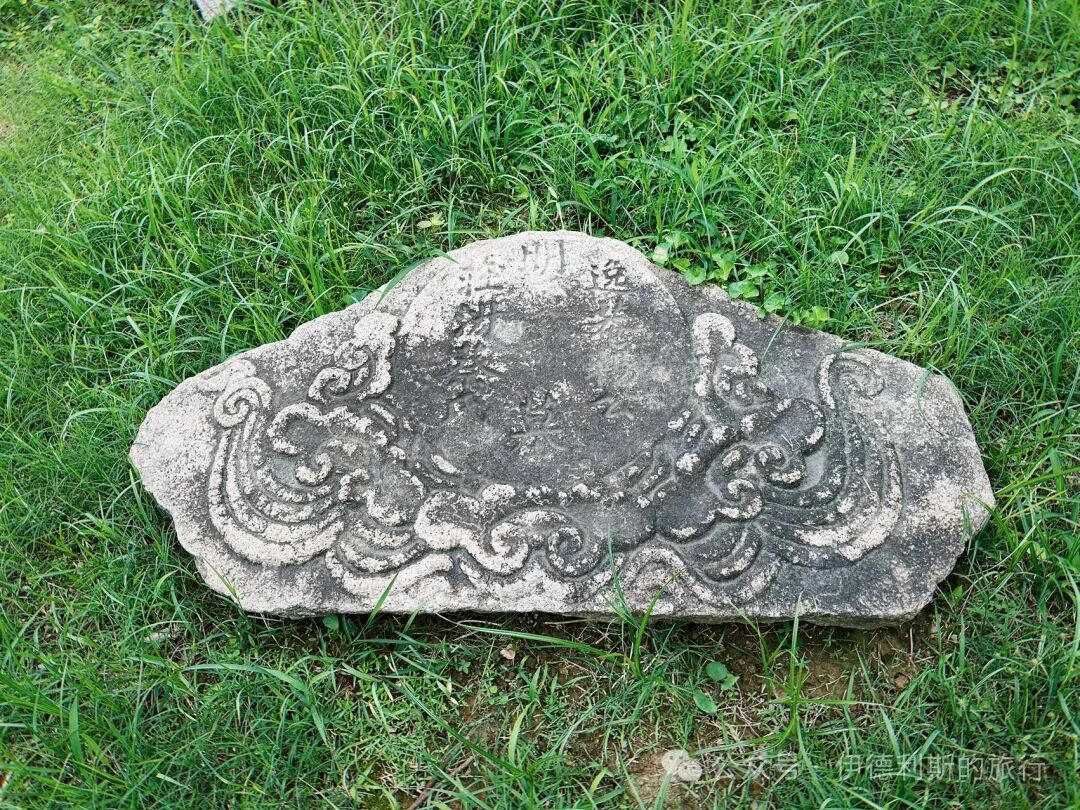
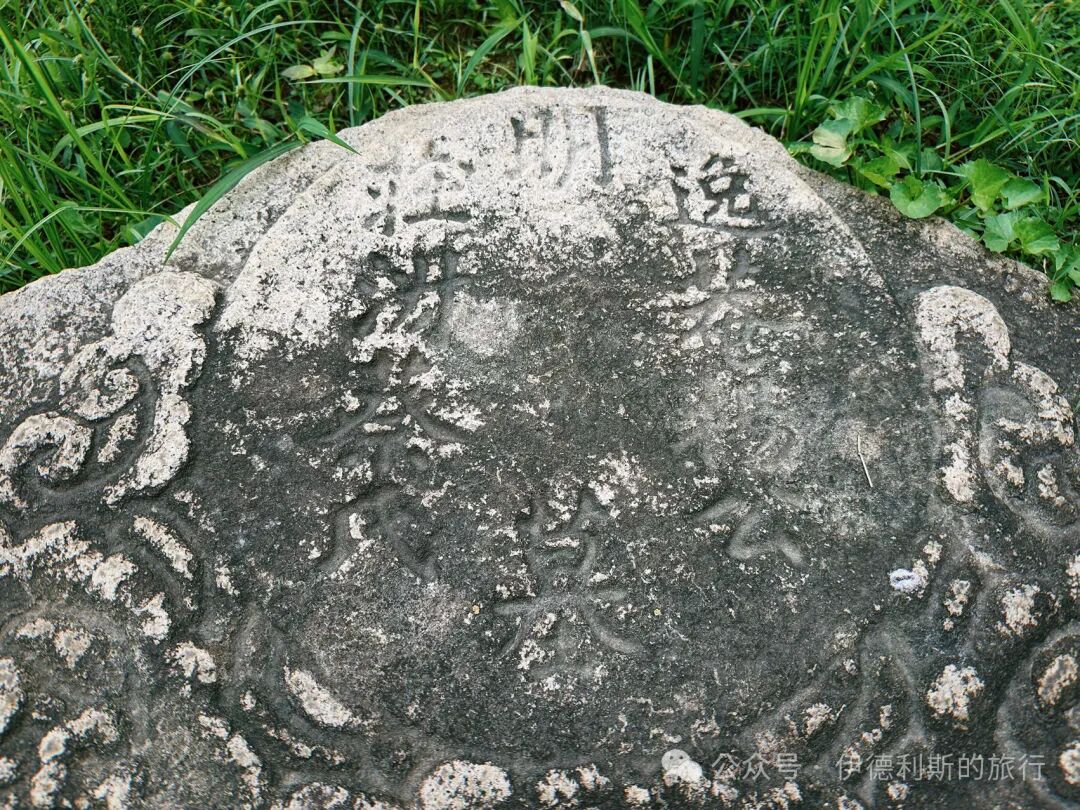
The top right corner of the tombstone has the words Tingpo carved in seal script, with Jin carved below it. This represents Tingpo in Fashi, Jinjiang County. The top left corner has the words Baiqi carved in seal script, with Hui carved below it. This represents Baiqi in Hui'an County. These two places are where the Baiqi Guo clan lived at different times. Below that, the words Ancestral Tomb of the Yuan Dynasty Guo Clan (Yuan Guo Shi Zu Fen Ying) are carved in regular script.
The Chinese characters on the tombstone are easy to explain, but the Arabic inscription is very difficult to interpret. In the early 1980s, the views of Chen Dasheng, the director of the Maritime Museum, became the mainstream opinion. He interpreted the Arabic as 'lbn Qds Daqqaq Nam', or 'Ibn Quds Daqqaq Nam'. Because 'nam' means 'famous' in Persian, he believed the ancestors of the Baiqi Guo family were Persian.
Professor Wu Youxiong from Quanzhou Normal University offered a completely different interpretation in his work, 'The Origins of the Baiqi Guo Surname and Mosque Education (Jingtang Jiaoyu)'. After consulting the director of the Arabic department at China National Radio, Wu Youxiong concluded that the text was actually Minnan dialect spelled out in Arabic script: 'Yin Go Zi Ta-gag Mou', meaning 'Tomb of Guo Deguang of the Yuan Dynasty'. He argued that previous researchers failed to translate it because they were unfamiliar with Minnan dialect, and that the evidence for the Guo family's Persian origins does not exist.
The method of using Arabic script to write Chinese is called 'Xiao'erjing' or 'Xiao'erjin', also known as 'Xiaojing'. It was used for annotations in mosque education (Jingtang Jiaoyu). According to the Guo family genealogy, the tomb of Guo Deguang was renovated many times. This tombstone was likely re-erected during the Qing Dynasty by Guo descendants who had returned to the faith.
In 1709 (the 48th year of the Kangxi reign), Chen Yougong, the regional commander of Tingyan-Shao and a left-wing commander-in-chief, came to Quanzhou. He revived the faith and established a school for mosque education (Jingtang Jiaoyu) at the Qingjing Mosque. At that time, Guo Honglong, a member of the eighth generation of the Guo family's fourth branch, moved from Hecuo in Baiqi to live at the Qingjing Mosque and returned to the faith, citing the principle of 'strengthening the trunk and weakening the branches'. After Honglong returned to the faith, other members of the Guo family who came to Quanzhou city for business began visiting the Qingjing Mosque. As the number of converts grew, Chen Yougong funded the construction of a mosque in Daishang Village, where the four branches of the Guo family lived. According to the Fenyang Guo Family Migration Map to Quanzhou Tonghuai Street, during the Kangxi year of Jichou, Commander Chen Yougong served at the Quanzhou Xiecan Office. He revived the faith, and after Baiqi and his nephew came to the city to trade, many more people joined the faith. The Daishang Mosque was built by Mr. Chen.
After Guo Honglong converted, most of his descendants moved to live near the Qingjing Mosque in Quanzhou, while others lived at the Daishang Mosque. According to the Fenyang Guo Family Migration Map to Quanzhou Tonghuai Street, during the Qianlong era, Guo Honglong's grandson Guo Shifu lived near the Qingjing Mosque in Quanzhou, while another grandson, Guo Shili, lived at the Daishang Mosque. According to the family genealogy Yizhai Gong Xing Shu, Guo Shifu helped renovate the Qingjing Mosque in 1794 (the 59th year of the Qianlong reign) alongside Bai Yunhan, the deputy commander of the Zhangzhou Left Battalion.
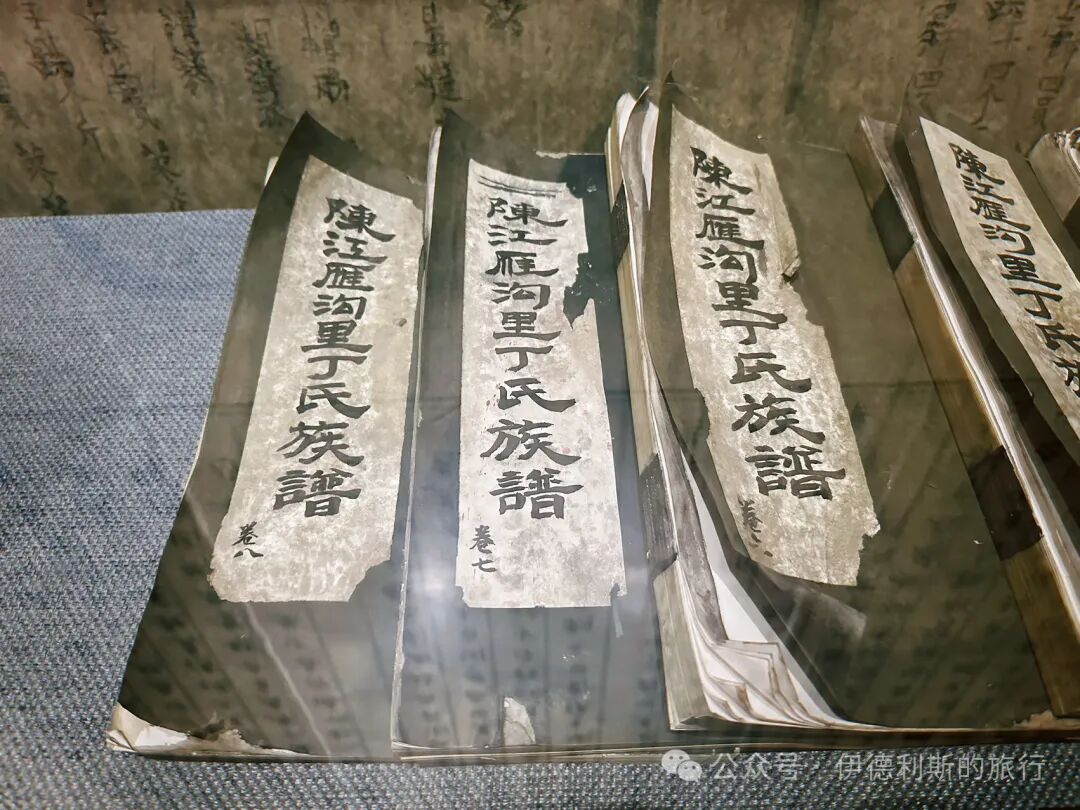
The Ding family of Chendai is known as the 'Ten Thousand Ding' and lives in Chendai Town, Jinjiang. They arrived in Quanzhou City during the Yuan Dynasty. In the late Yuan and early Ming dynasties, they moved to Chendai to give up business for farming. By the mid-Ming Dynasty, they left the faith through the processes of clan formation and the imperial examination system. The owners of Anta, Xtep, 361°, and Qiaodan are all from the Ding family of Chendai.
The Pu family are descendants of Pu Shougeng, a key figure in Quanzhou during the Song and Yuan dynasties. Because Pu Shougeng massacred the Song dynasty royal family, the Ming dynasty ordered that all remaining members of the Pu family be sent to serve in the military, forcing his descendants to flee and hide.
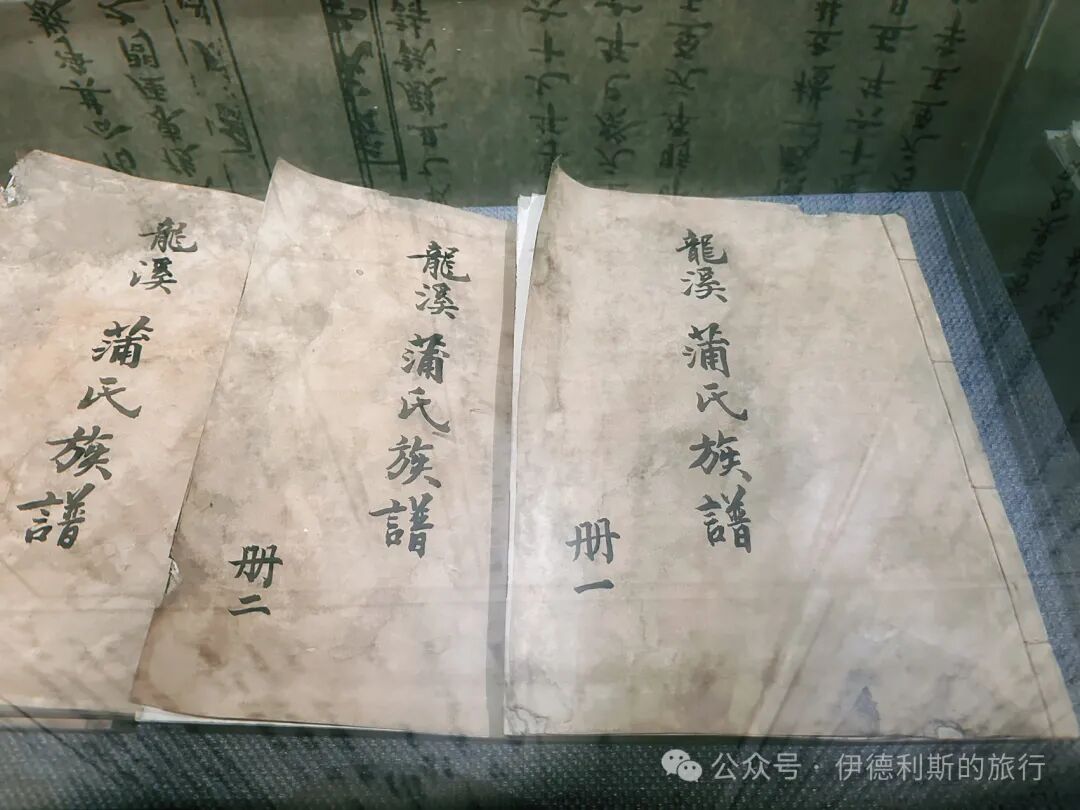
The ancestor of the Jin family of Qingyuan, Jin Ji, served as a military general (wulue jiangjun) during the Zhishun era of the Yuan dynasty to guard the Quanzhou circuit, and he later helped end the Ispah rebellion. During the Wanli era of the Ming dynasty, a descendant of the Jin family named Jin Ali helped renovate the Qingjing Mosque.
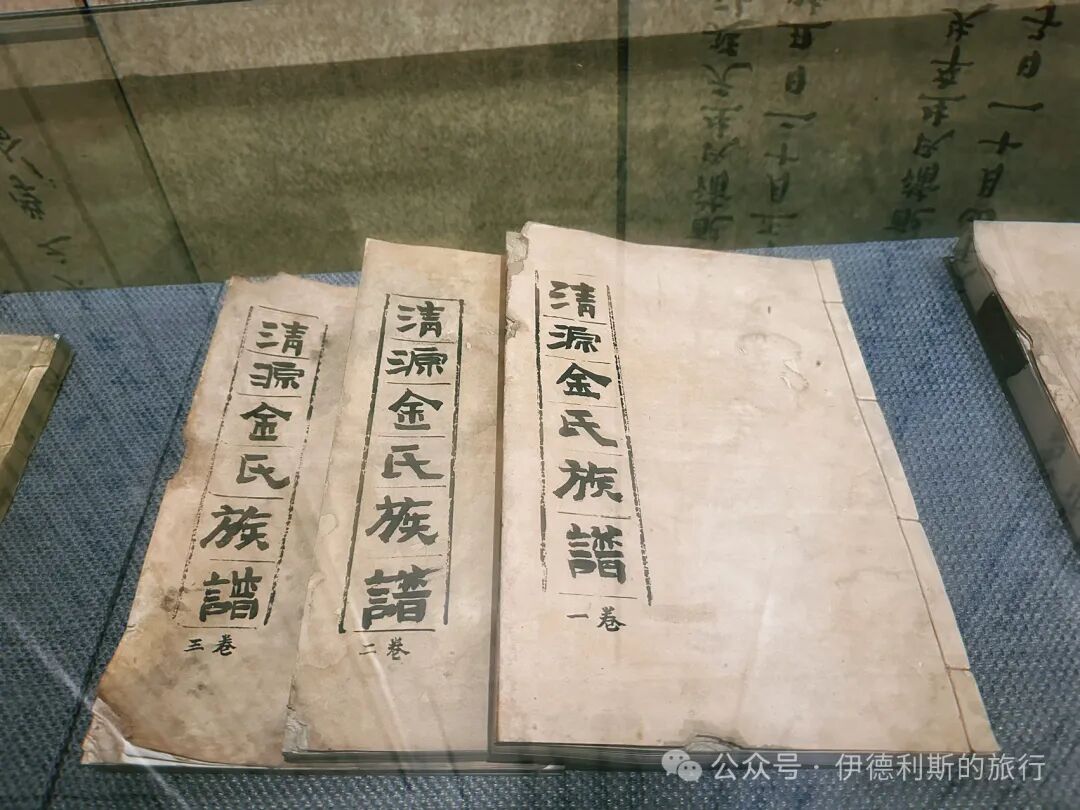
The Su family of Yanzhi Lane originally came from Gushi County in Guangzhou, Henan, and moved to Quanzhou with Wang Chao at the end of the Tang dynasty. In 1307, the seventh year of the Yuan Dade era, the Su family ran into trouble while transporting government grain to the capital. The imperial court punished them severely, so Su Tangshe hid in Yanzhi Lane in Quanzhou, converted to Islam, changed his name to Ahema, and his family married Hui Muslims for generations.
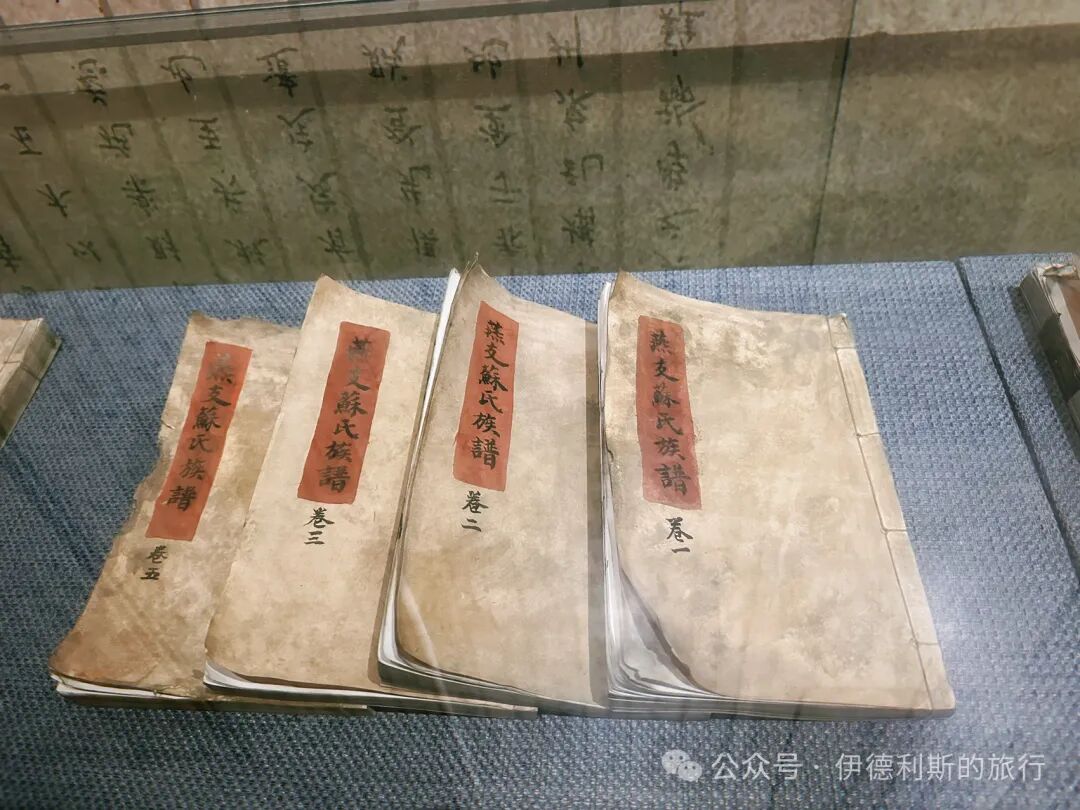
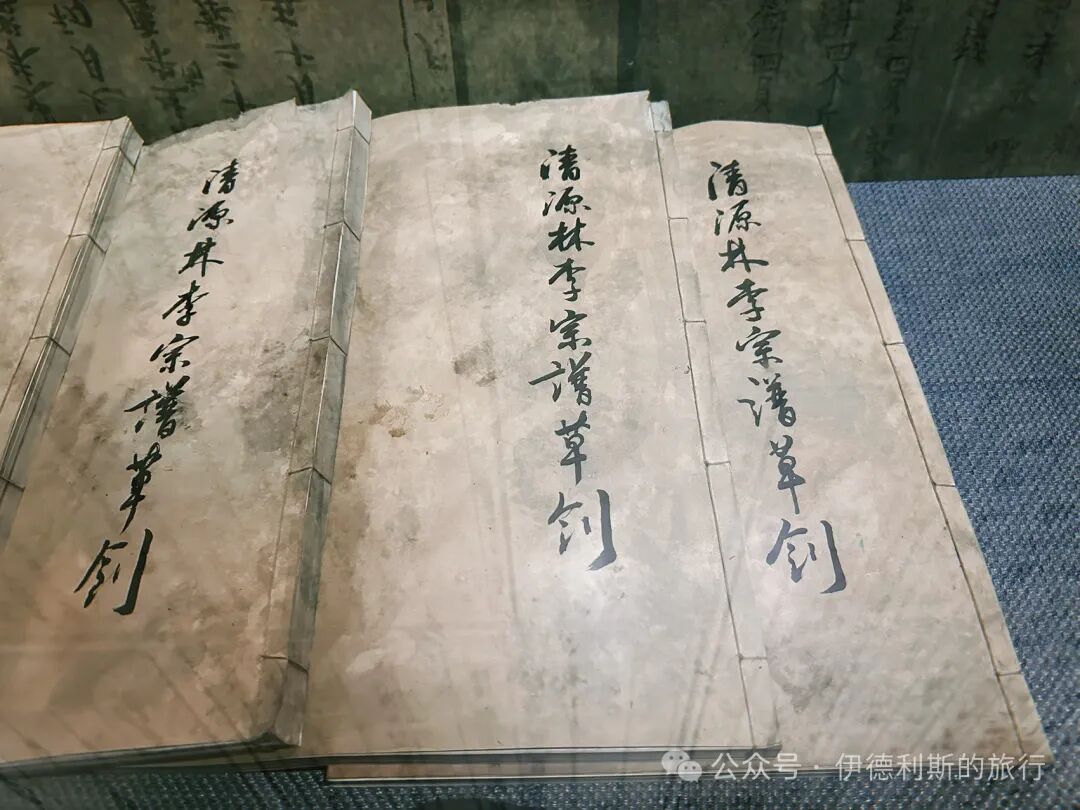
The Lin family of Quanzhou originally came from Henan. In 1384, the seventeenth year of the Ming Hongwu era, Lin Nu sailed to the Western Oceans. Because he felt that different religions caused disharmony, he converted to Islam, married a Semu woman, and his descendants continued to practice the faith. Lin Qicai passed the imperial examination in 1559 (the 38th year of the Jiajing reign of the Ming Dynasty). He wrote the 'Stele Record of the Imperial Reconstruction of Faming Mosque' for Faming Mosque, one of the four major official temples in Beijing during the Ming Dynasty, and the 'Stele for the Protection of the Tomb of Bo Hazhi' for the tomb of the Western Regions sage Bo Hazhi in Changping, Beijing. Some of Lin's descendants changed their surname to Li. The great Ming Dynasty thinker Li Zhi was a cousin of Lin Qicai.
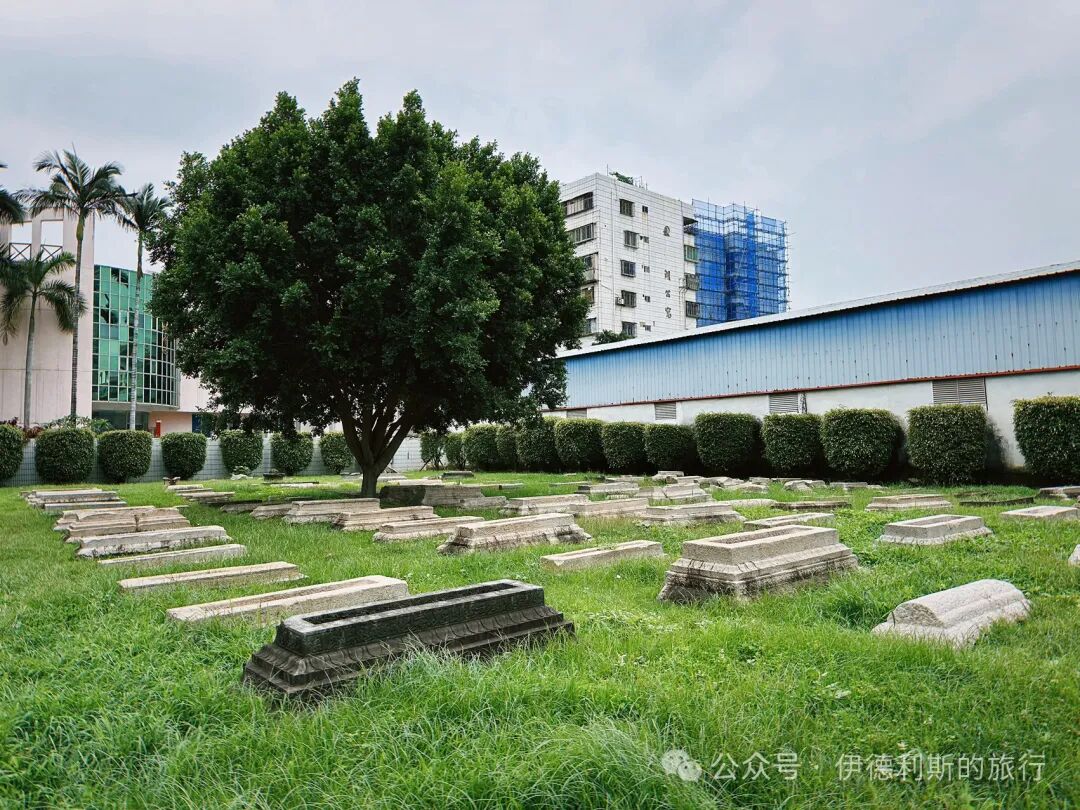
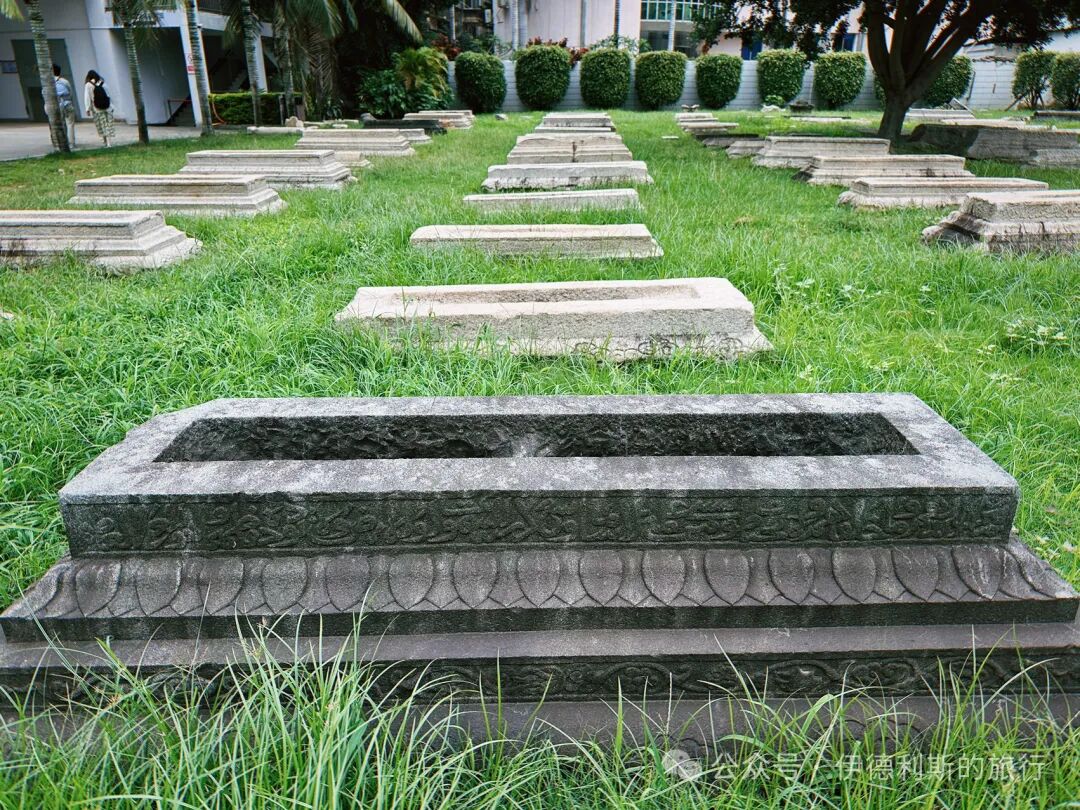
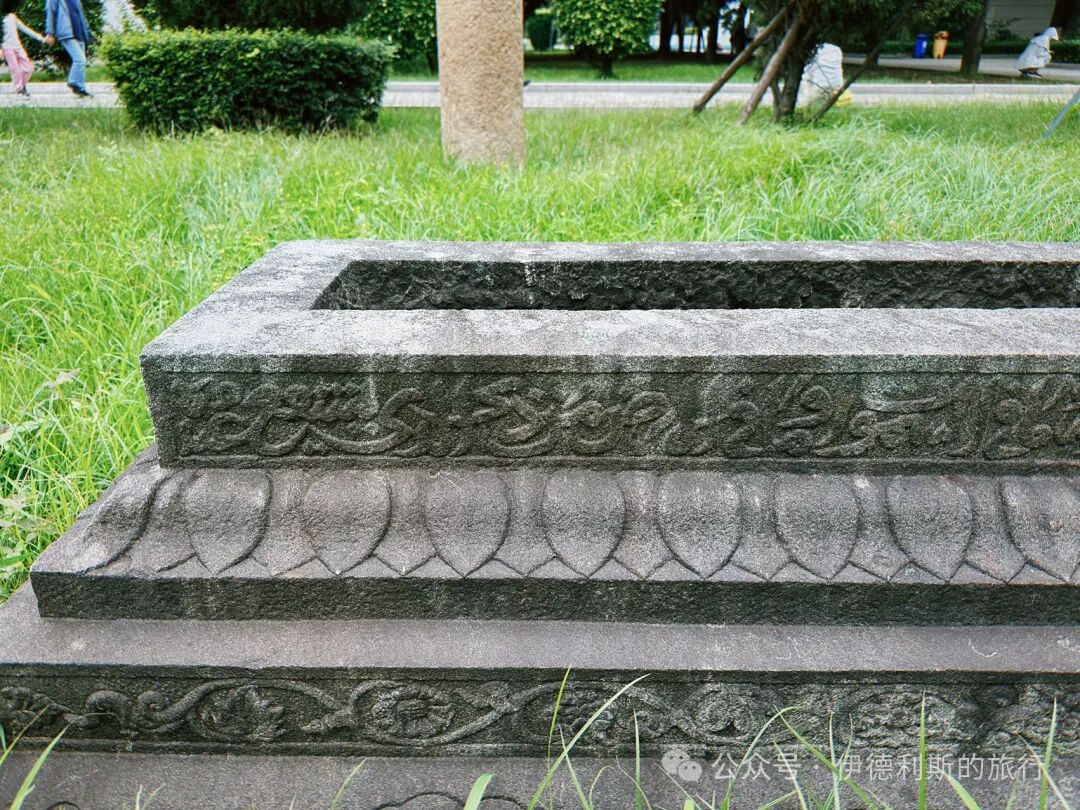
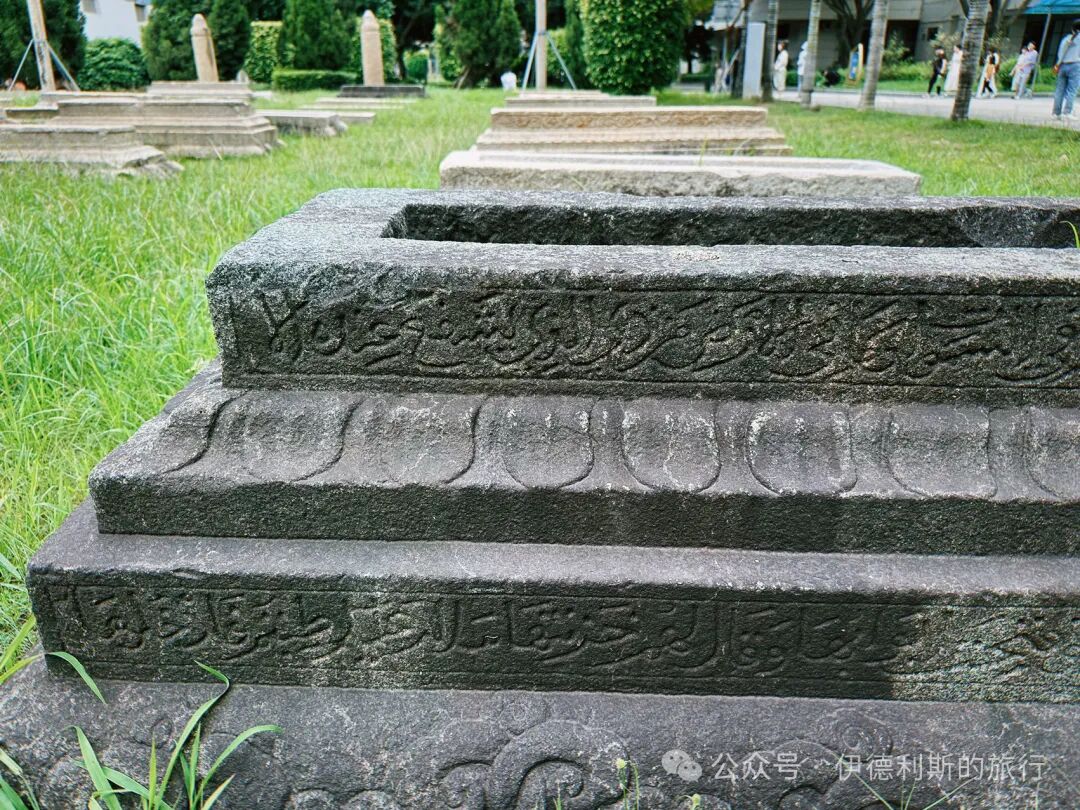
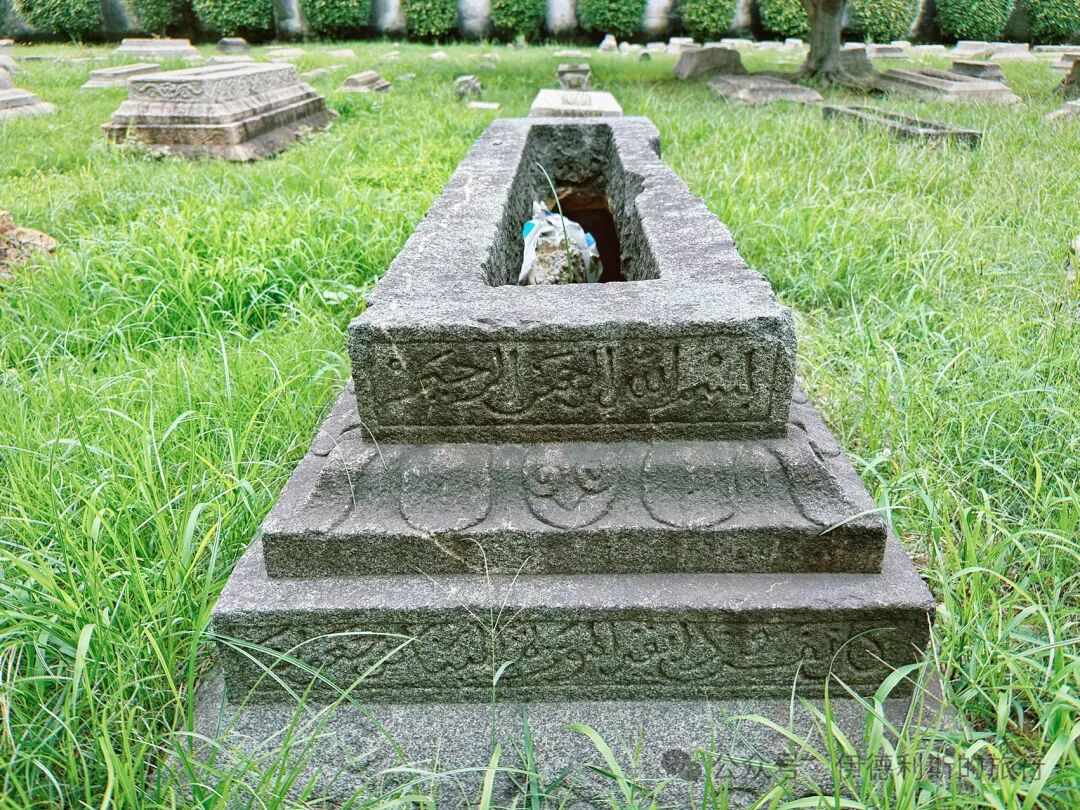
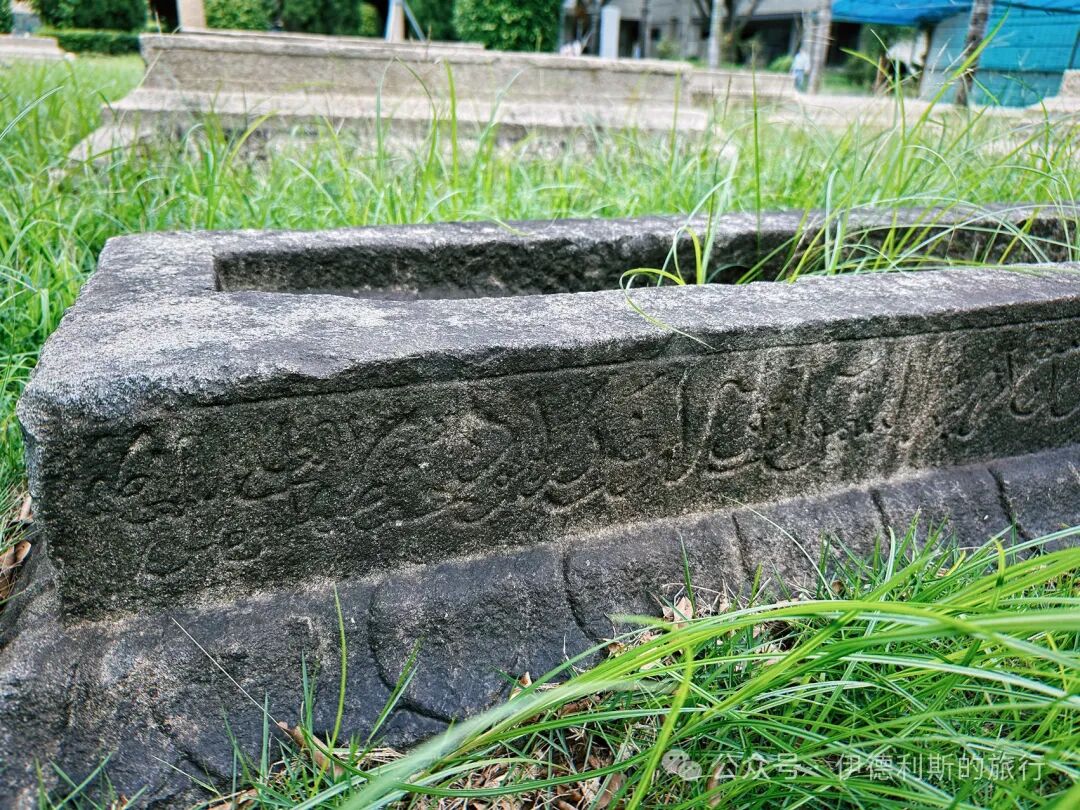
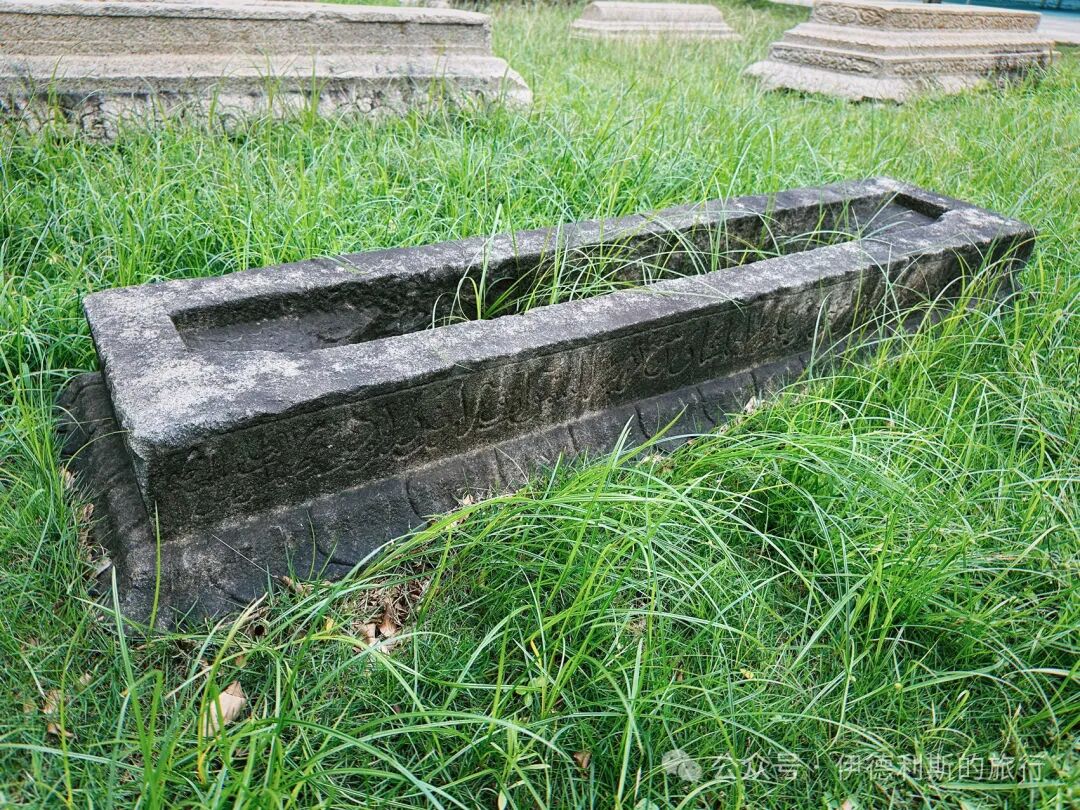
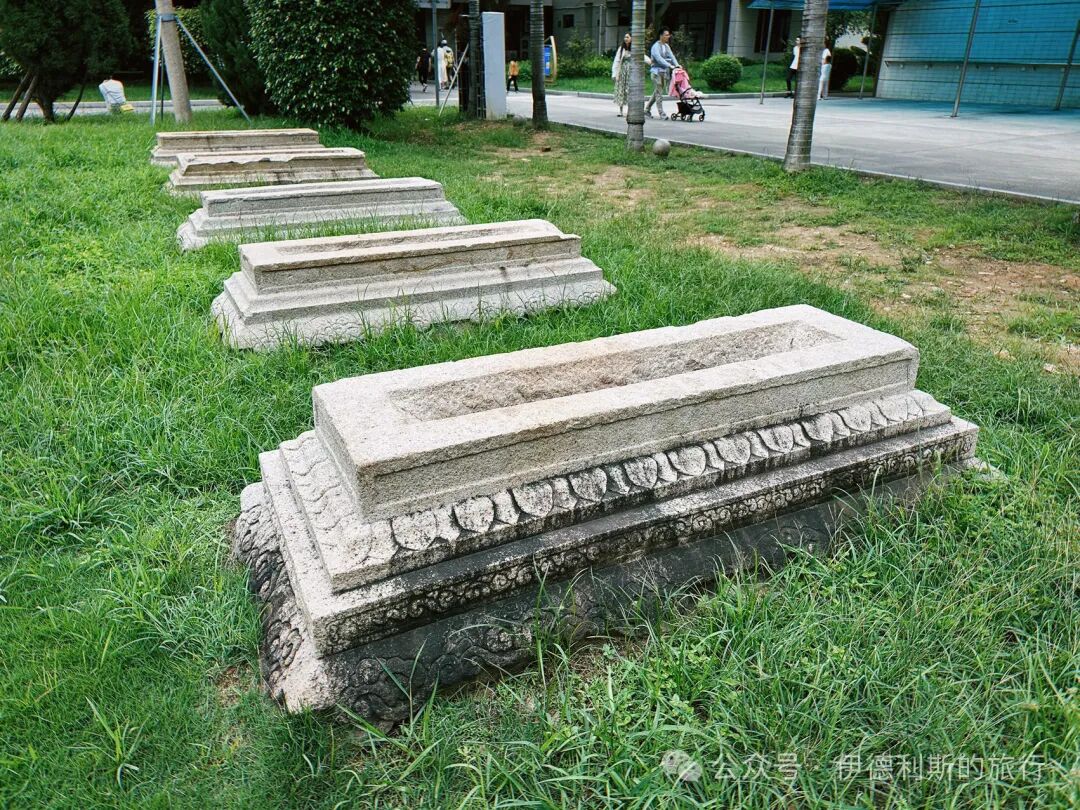
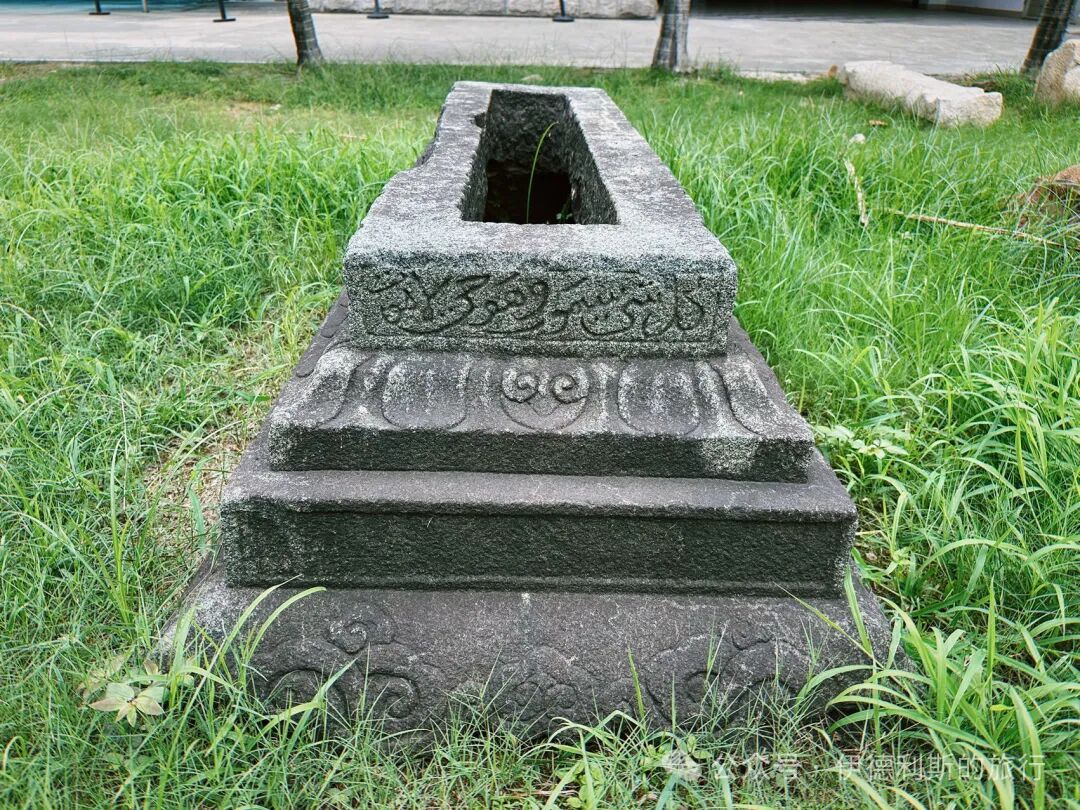
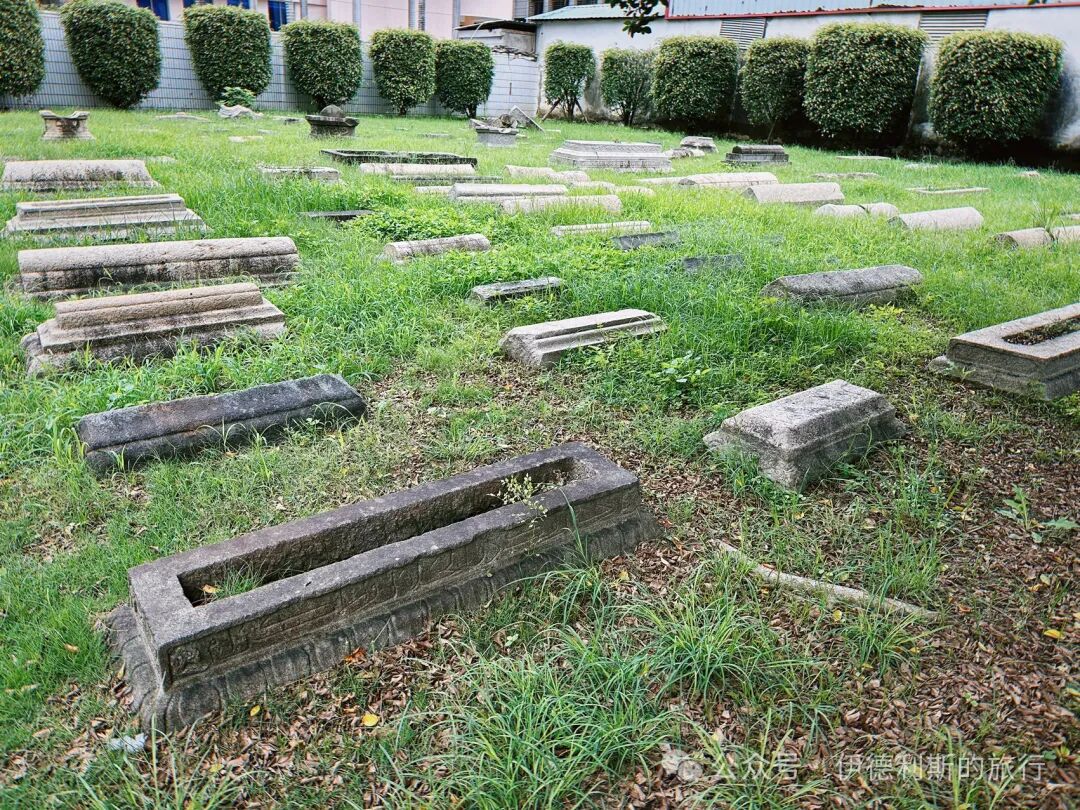
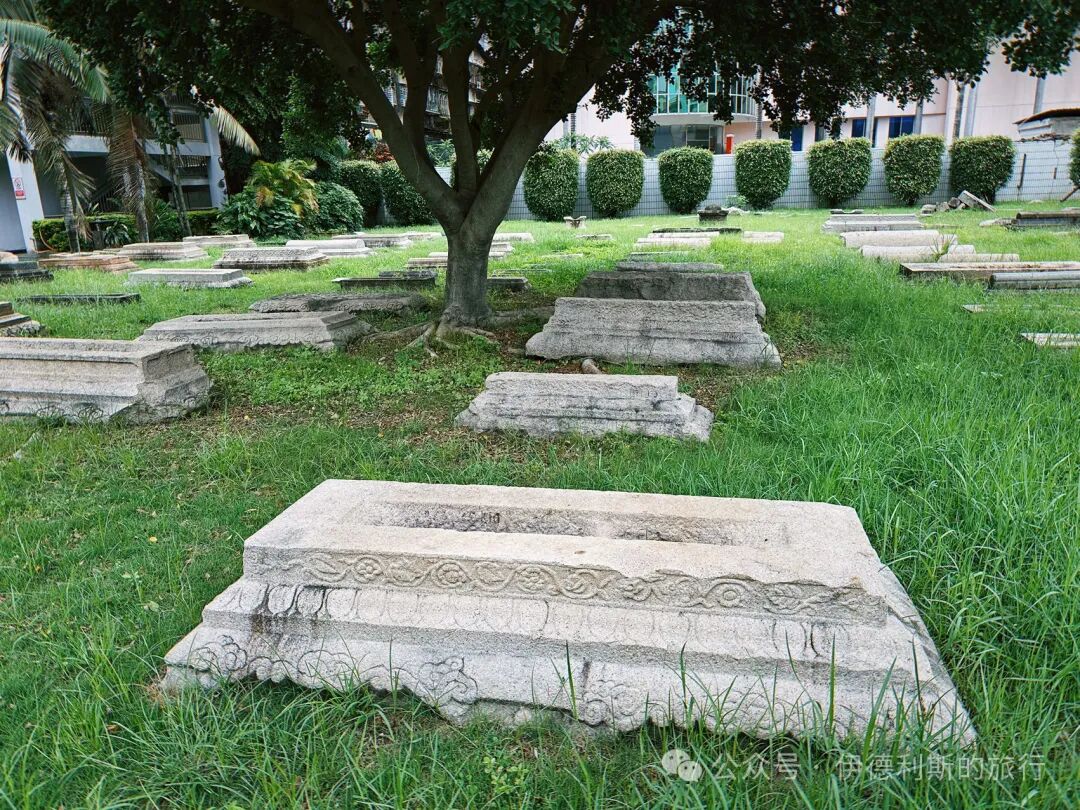
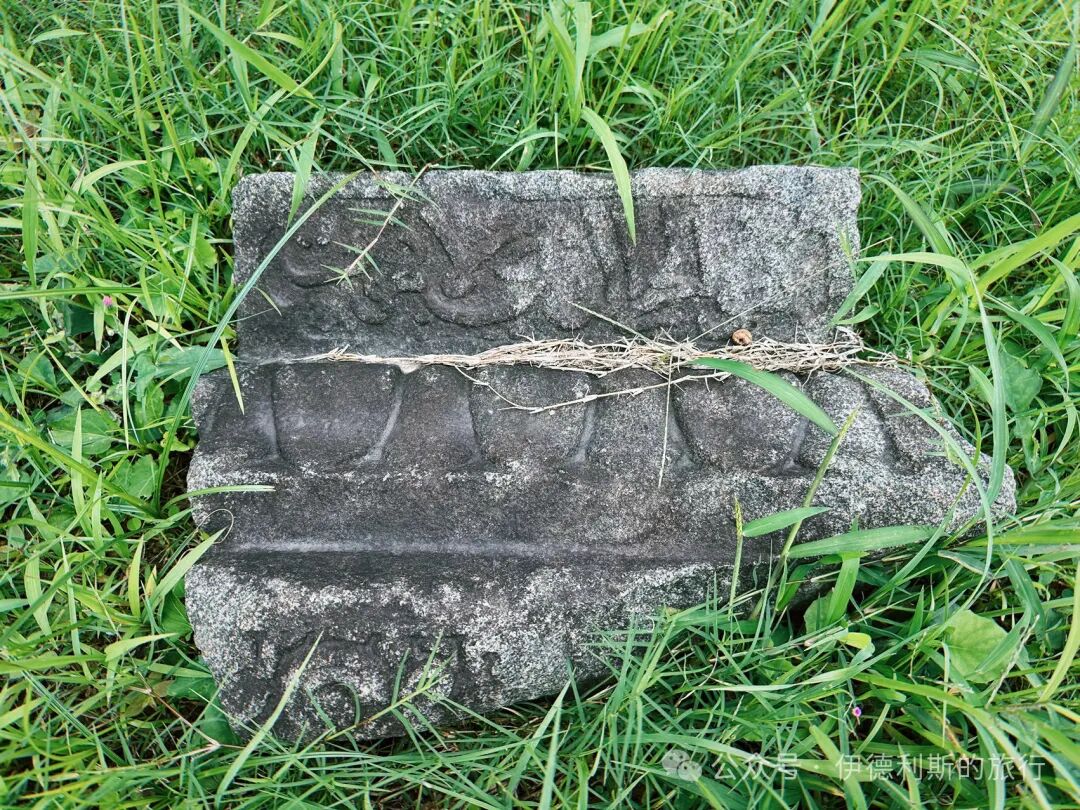
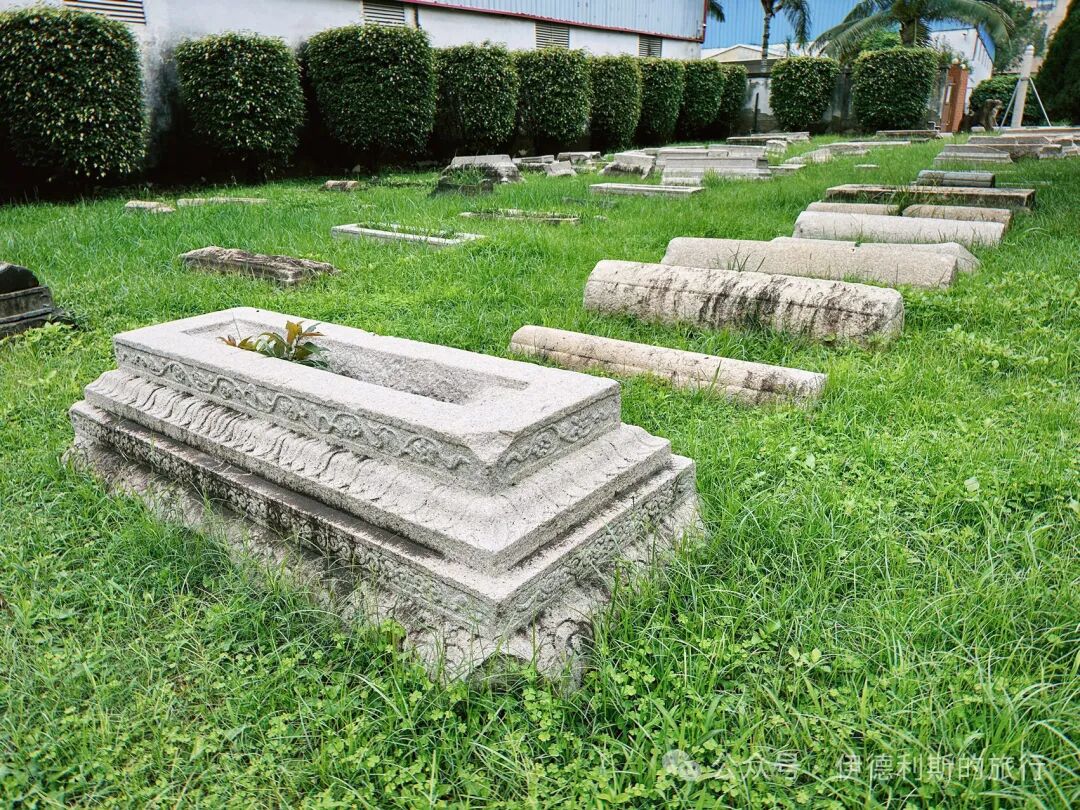
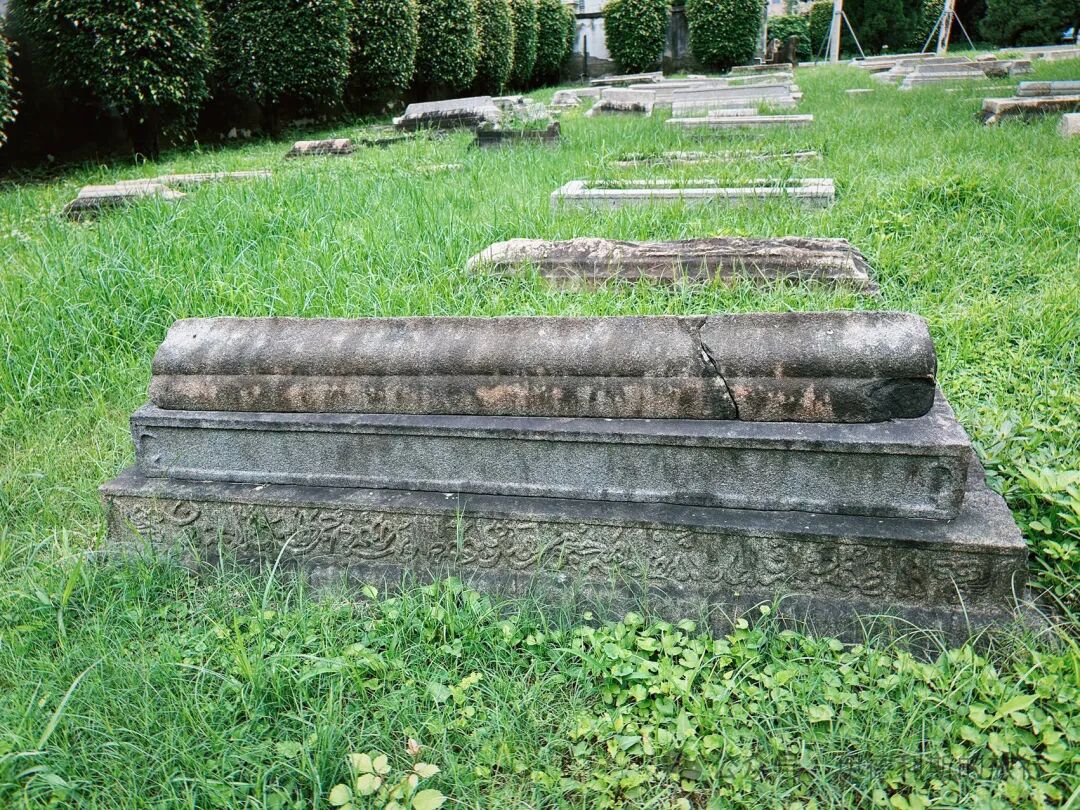
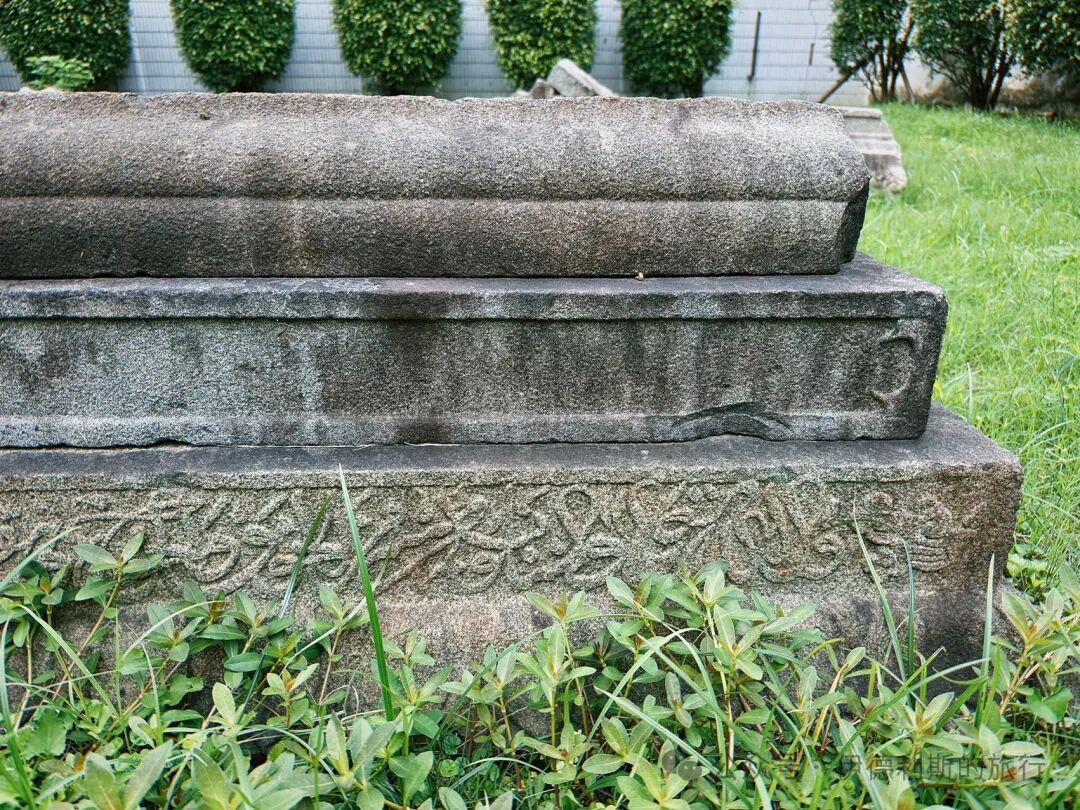
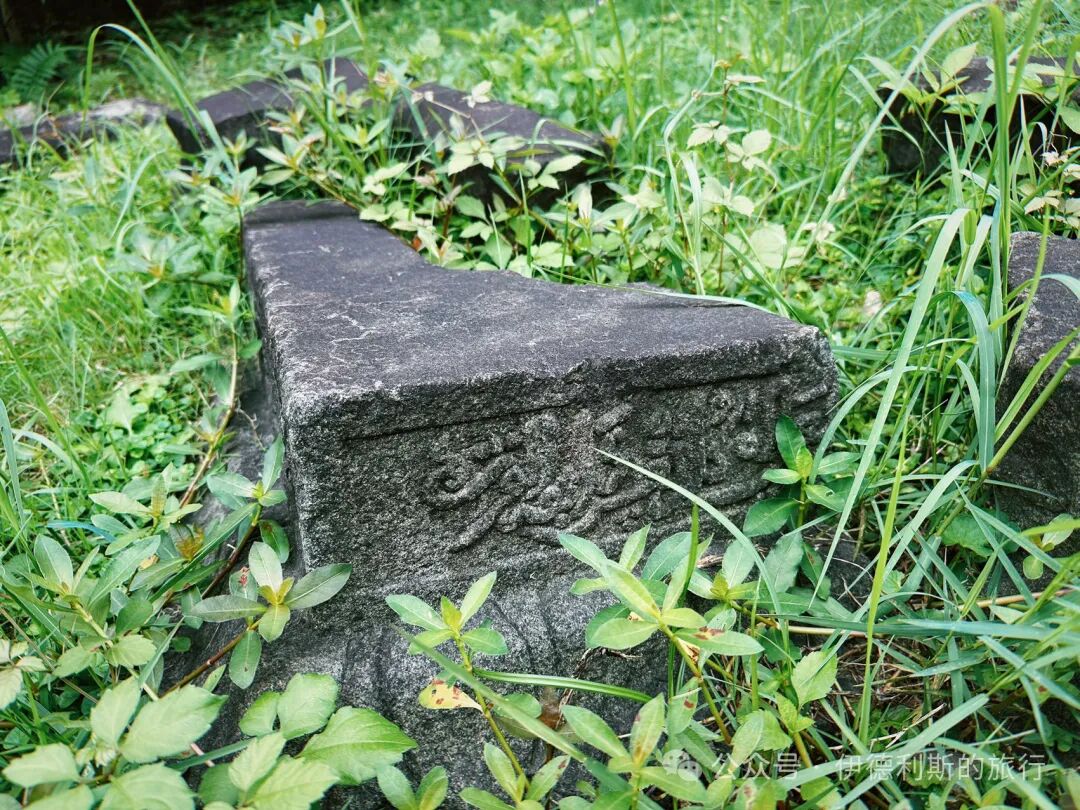
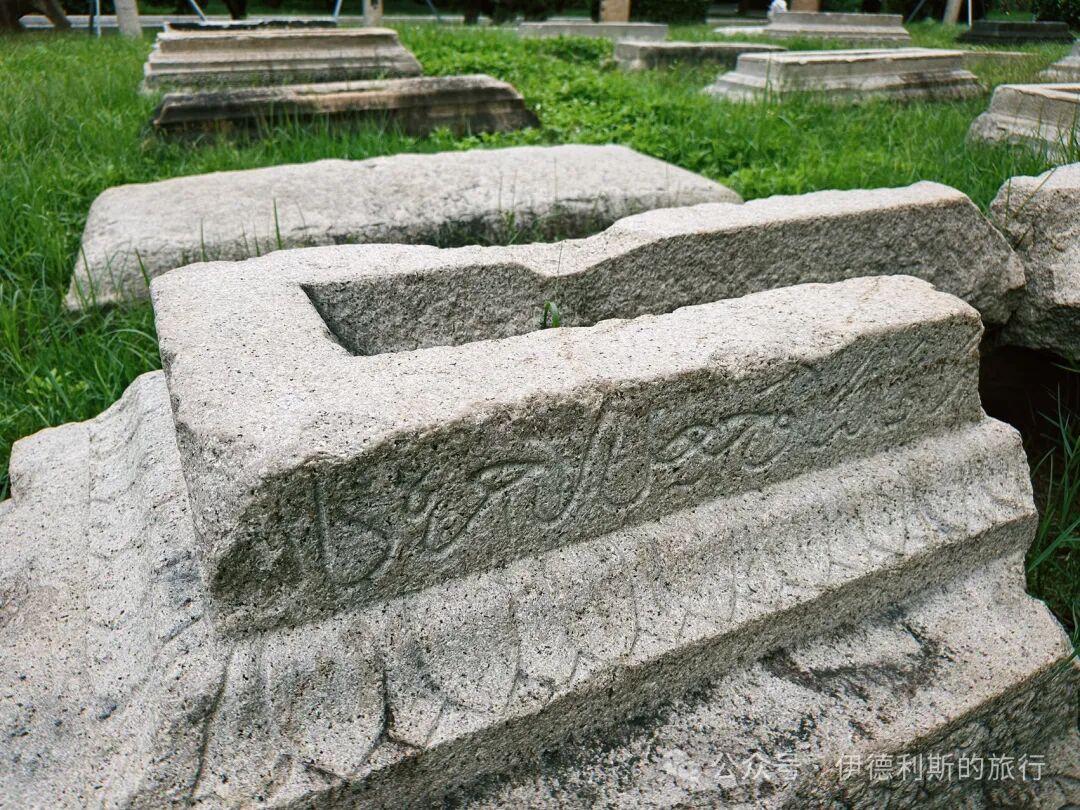
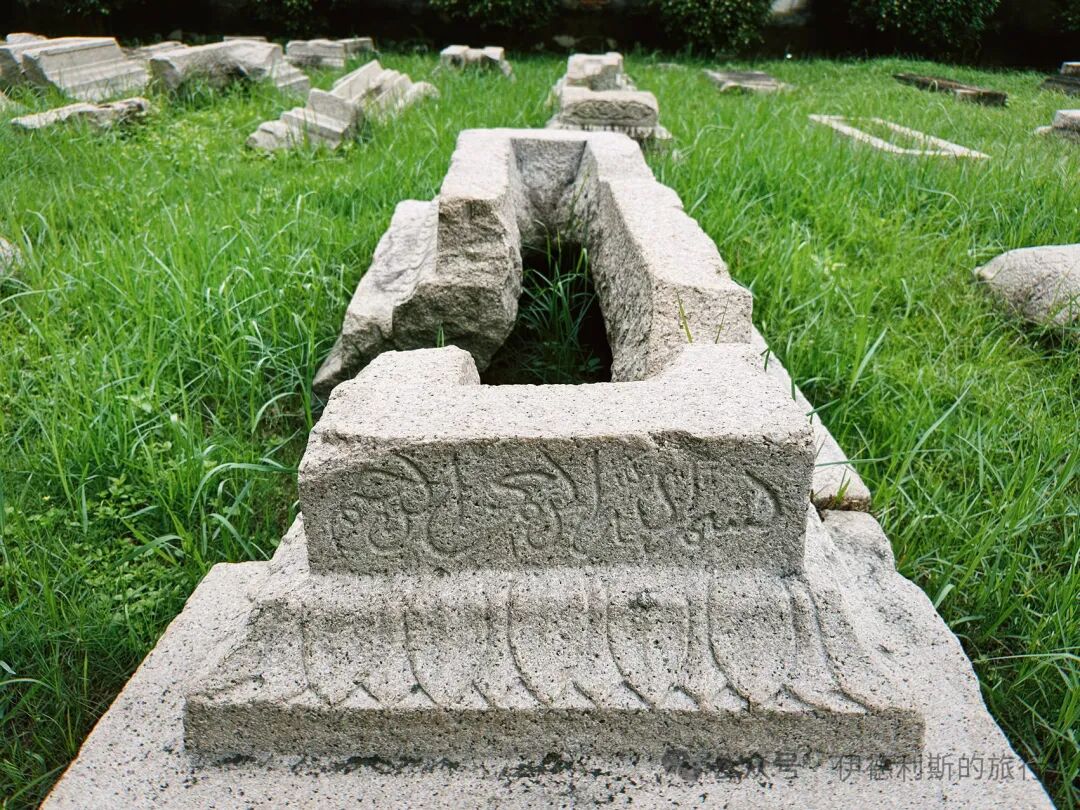
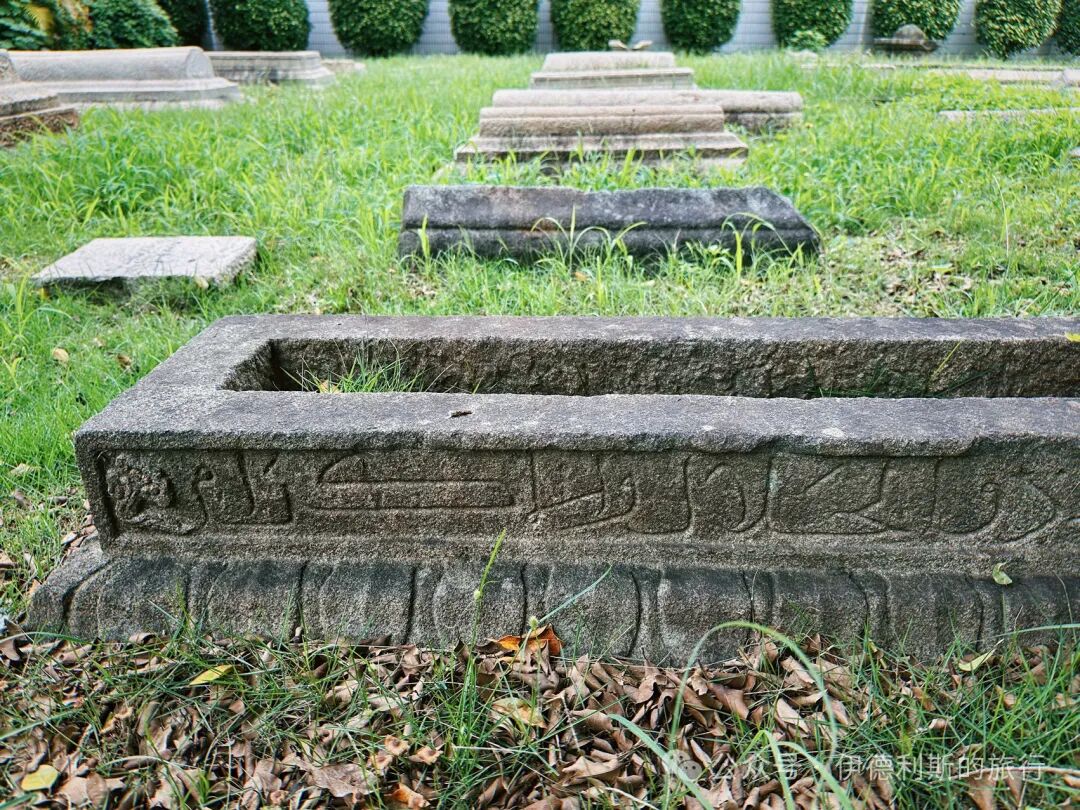
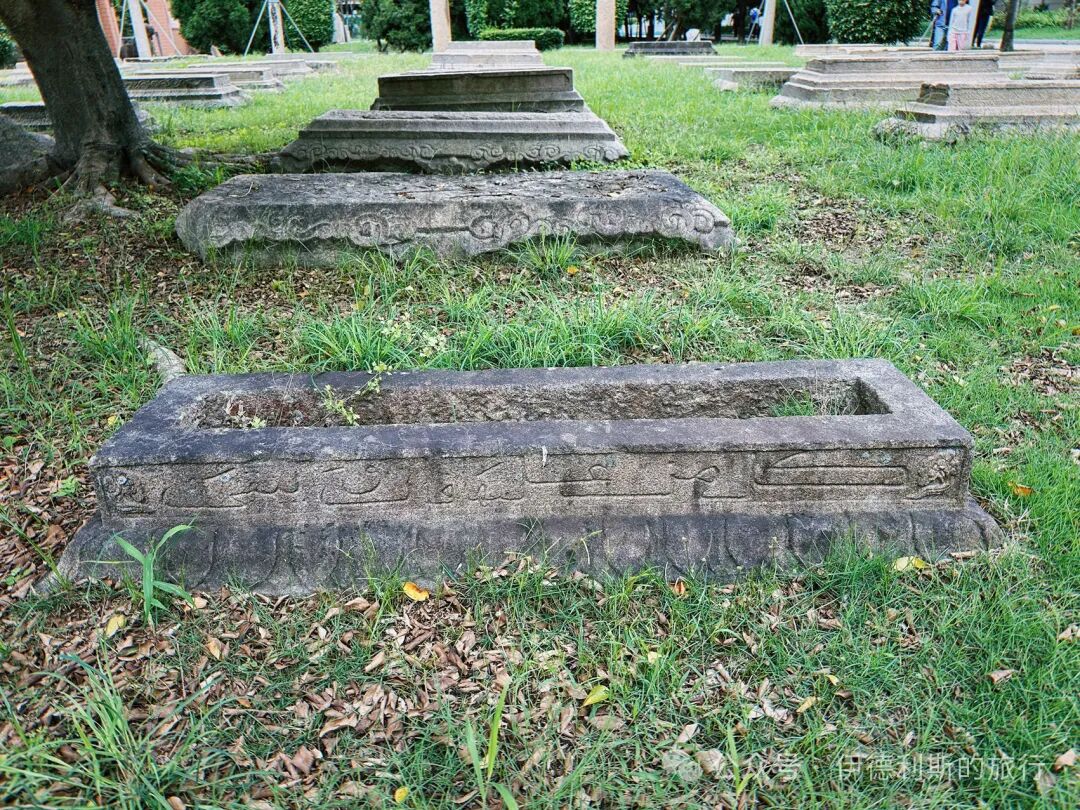
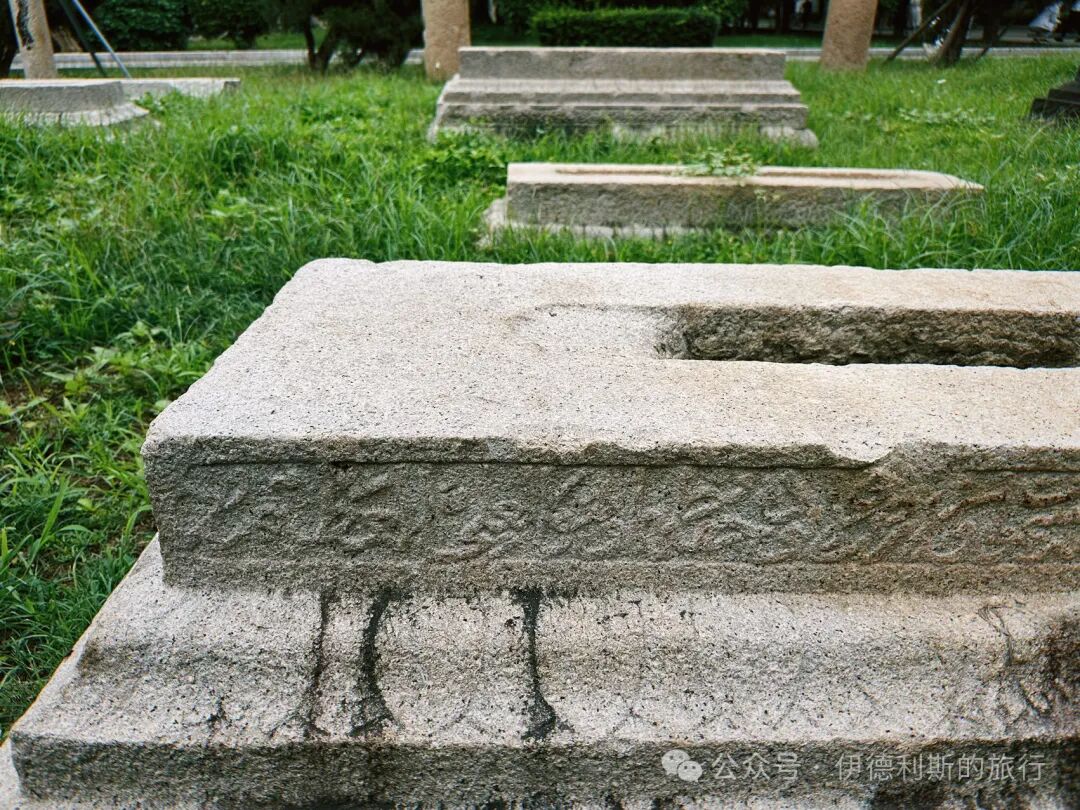
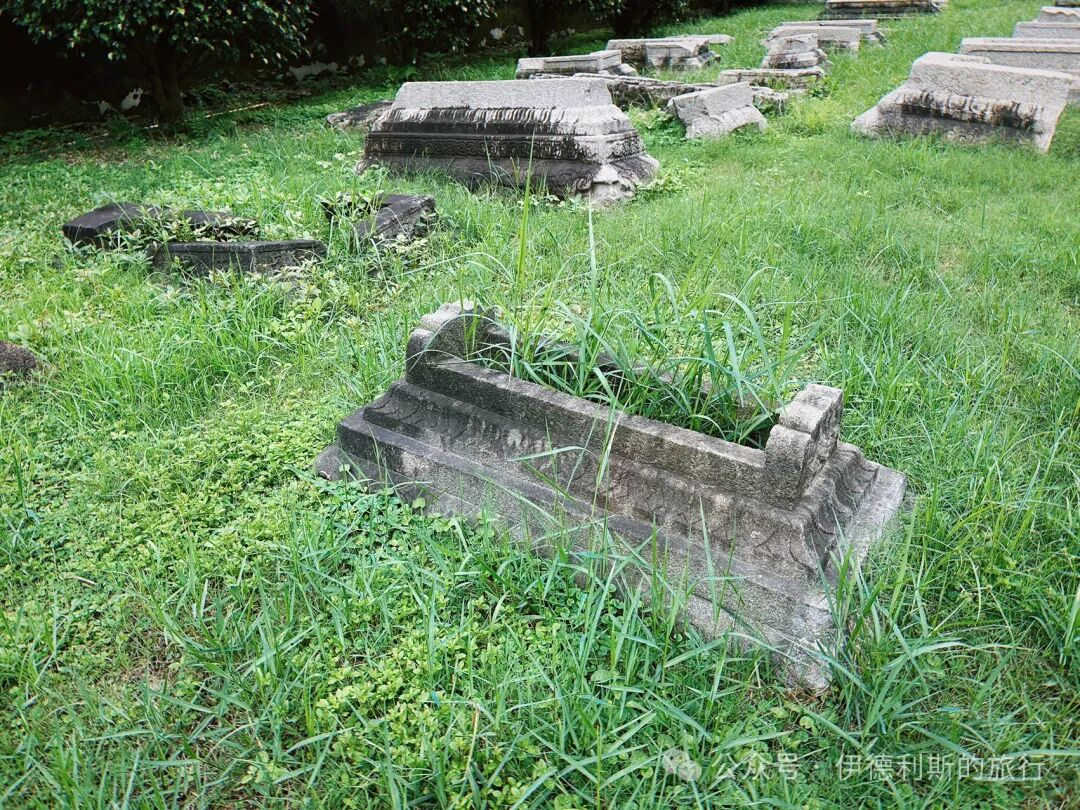
The lawn of the Maritime Museum displays many stone tombs with pedestal bases (xumizuo). Many are carved with beautiful Arabic calligraphy, mostly featuring verses from the Quran.
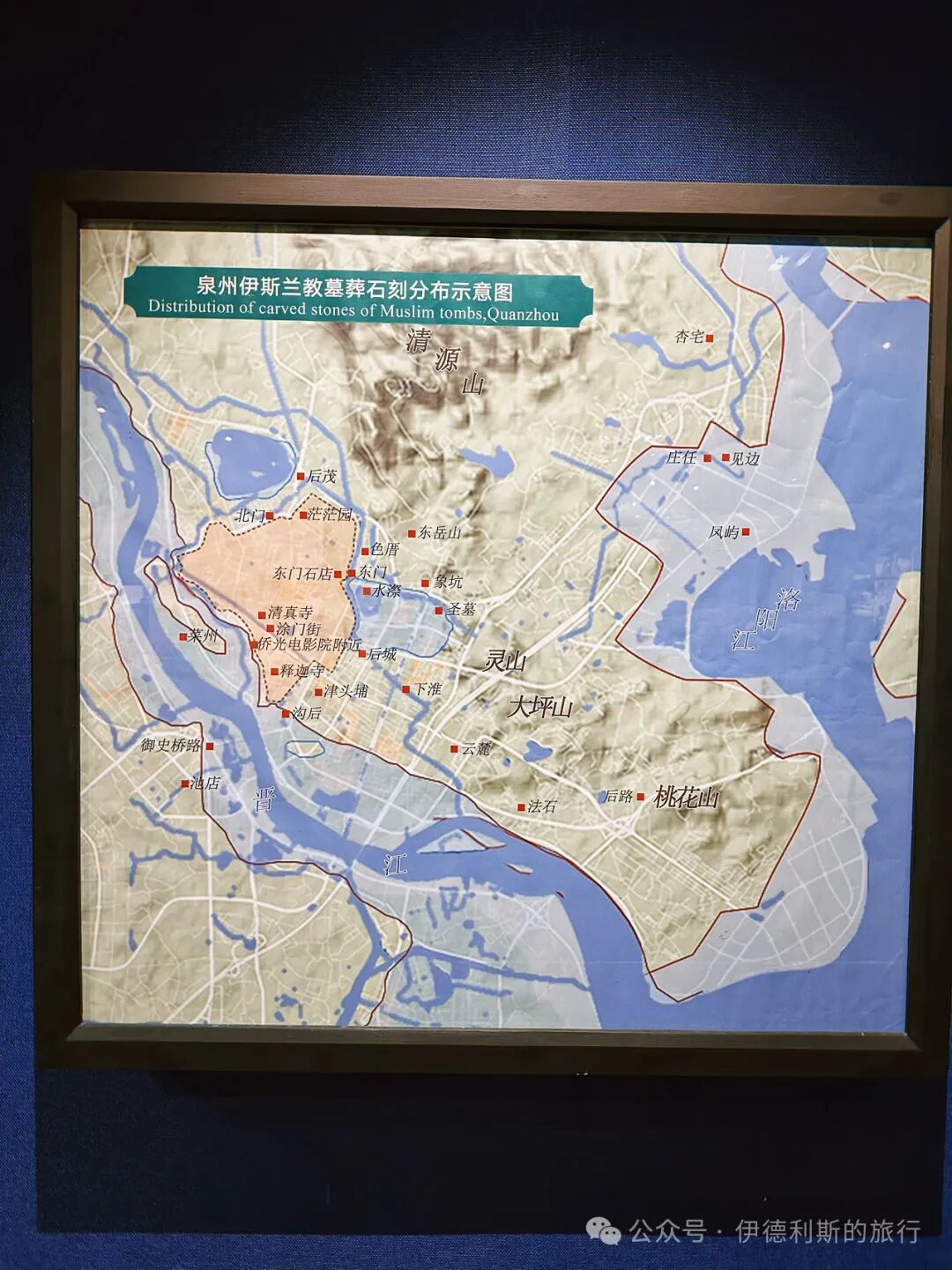
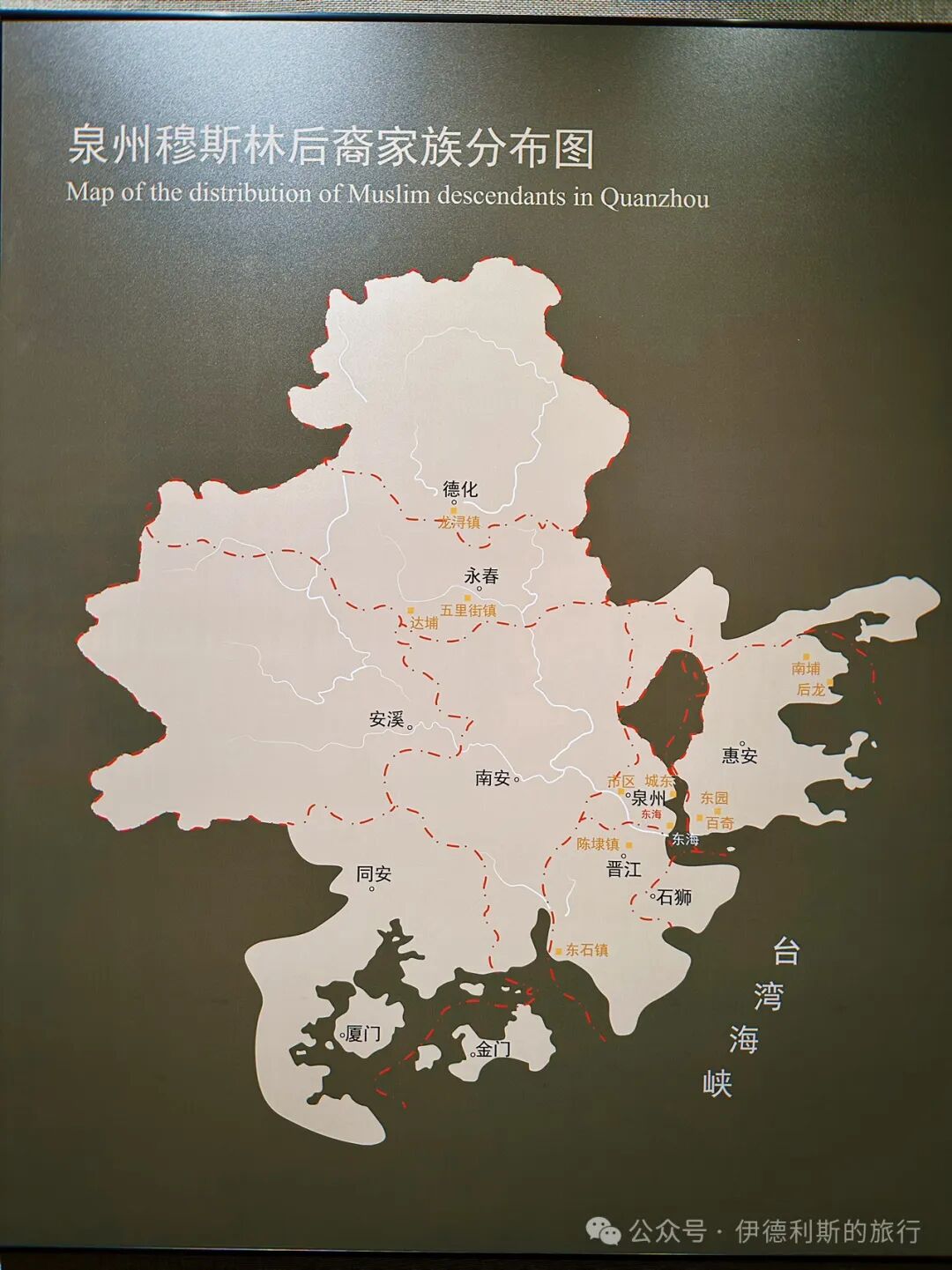
During the Song and Yuan dynasties, Quanzhou had large areas of cemeteries for foreign merchants (fanke). These were mainly concentrated in the areas from Tumen Street to Jintoupu, Houban, Fashi, and Meishan in the southeast suburbs.
In the Song and Yuan dynasties, one could travel from Tonghuai Gate, pass through Jintoupu, and head southeast to reach the Houzhu seaport. The road from Tonghuai Gate to Fashi was built on alluvial beach land, so it often sank into the mud. Because of this, after the Ming Dynasty, local residents often used the stone tomb components with pedestal bases from the Song and Yuan dynasties as materials for slope protection and pond embankments when building roads and ponds. There were once three ponds at Puwei in Jintoupu. When the water dried up in winter, more than thirty Islamic tomb stones could be seen. South of Jintoupu, there is a small temple called Houban Palace. Just under its northeast wall, nearly ten stone tomb components with pedestal bases (xumizuo) are used as foundation stones. Several more Islamic tomb stones are also found near the drainage ditches and rice paddy mud in Houban Village.
Additionally, a large number of stone tomb components from the Song and Yuan dynasties were discovered in the areas of Jincuowei, Secuowei, Xiacuopu, Dingcuoshan, and Tiecuowei in the eastern suburbs of Quanzhou. Jin, Ding, Xia, and Tie are the surnames of the 'half-southern barbarians' (bannanfan)—the descendants of intermarriages between Arabs, Iranians, and local Quanzhou people—though these families no longer practice Islam today.
Summary: Islamic Art Guide: Quanzhou Maritime Museum Song-Yuan Stone Inscriptions (Part 2) is presented here as a firsthand travel account in clear, natural English. The account focuses on Quanzhou, Islamic Art, Stone Inscriptions while preserving the names, places, food, photos, and historical details from the Chinese source.
The gravestones feature cloud and moon patterns, including both capstones and base stones. After the Ming Dynasty, cloud and moon shaped gravestones became common in Quanzhou. Most do not have inscriptions and are a variation of the gravestones used by the faith community during the Yuan Dynasty.
Mosque column base.
This mosque column base was unearthed in 1998 at Jintoupu Village, outside Tonghuai Gate at the East Gate of Quanzhou.
The comparison table of ancient and modern place names on Quanzhou religious inscriptions is very interesting. It shows that most of the friends (dosti) who came to Quanzhou during the Song and Yuan dynasties were from Iran, including Ardabil, Fars, Jajarm, Gilan, Hamadan, Hormuz, Isfahan, Qazvin, Shiraz, Siraf, and Tabriz. Others came from Bukhara and Khwarazm in Uzbekistan, Balasagun in Kyrgyzstan, Ahlat in Turkey, Jerusalem in Palestine, Yemen, and Huocheng in Xinjiang, China.
Descendants of Quanzhou Muslims.
The tombstone of the Guo family ancestors was discovered by a survey team from the Maritime Museum in Fashi Village, in the eastern suburbs of Quanzhou, in 1974. It was moved to the Maritime Museum for preservation in 1978.
According to family records, the ancestors of the Baiqi Guo family were from Guojia Village in Fuyang, Hangzhou. They arrived in Quanzhou during the Yuan Dynasty, lived on East Street at first, and later moved to Fashi Port outside the East Gate. In 1956, villagers on Stone Street in Fashi Village were leveling land at a site commonly known as Liugongqi. They dug up a large tomb belonging to a foreign merchant (fanke) and turned the area into a garden. Villagers said the tomb had a large, square stone platform with two levels. Each level held two stone tombs shaped like Sumeru pedestals (xumizuo). A tombstone stood at the head of the upper level, but villagers broke it into two pieces and carried them back to the village to use as flooring for a communal warehouse.
In 1959 and 1974, a research team from the Quanzhou Maritime Museum followed clues from the Guo Clan Genealogy of Baiqi (Baiqi Guo Shi Zupu). After many searches in Fashi Village, they finally found the Guo family ancestral tombstone with Arabic writing. It was moved to the museum for safekeeping in 1978.
The top right corner of the tombstone has the words Tingpo carved in seal script, with Jin carved below it. This represents Tingpo in Fashi, Jinjiang County. The top left corner has the words Baiqi carved in seal script, with Hui carved below it. This represents Baiqi in Hui'an County. These two places are where the Baiqi Guo clan lived at different times. Below that, the words Ancestral Tomb of the Yuan Dynasty Guo Clan (Yuan Guo Shi Zu Fen Ying) are carved in regular script.
The Chinese characters on the tombstone are easy to explain, but the Arabic inscription is very difficult to interpret. In the early 1980s, the views of Chen Dasheng, the director of the Maritime Museum, became the mainstream opinion. He interpreted the Arabic as 'lbn Qds Daqqaq Nam', or 'Ibn Quds Daqqaq Nam'. Because 'nam' means 'famous' in Persian, he believed the ancestors of the Baiqi Guo family were Persian.
Professor Wu Youxiong from Quanzhou Normal University offered a completely different interpretation in his work, 'The Origins of the Baiqi Guo Surname and Mosque Education (Jingtang Jiaoyu)'. After consulting the director of the Arabic department at China National Radio, Wu Youxiong concluded that the text was actually Minnan dialect spelled out in Arabic script: 'Yin Go Zi Ta-gag Mou', meaning 'Tomb of Guo Deguang of the Yuan Dynasty'. He argued that previous researchers failed to translate it because they were unfamiliar with Minnan dialect, and that the evidence for the Guo family's Persian origins does not exist.
The method of using Arabic script to write Chinese is called 'Xiao'erjing' or 'Xiao'erjin', also known as 'Xiaojing'. It was used for annotations in mosque education (Jingtang Jiaoyu). According to the Guo family genealogy, the tomb of Guo Deguang was renovated many times. This tombstone was likely re-erected during the Qing Dynasty by Guo descendants who had returned to the faith.
In 1709 (the 48th year of the Kangxi reign), Chen Yougong, the regional commander of Tingyan-Shao and a left-wing commander-in-chief, came to Quanzhou. He revived the faith and established a school for mosque education (Jingtang Jiaoyu) at the Qingjing Mosque. At that time, Guo Honglong, a member of the eighth generation of the Guo family's fourth branch, moved from Hecuo in Baiqi to live at the Qingjing Mosque and returned to the faith, citing the principle of 'strengthening the trunk and weakening the branches'. After Honglong returned to the faith, other members of the Guo family who came to Quanzhou city for business began visiting the Qingjing Mosque. As the number of converts grew, Chen Yougong funded the construction of a mosque in Daishang Village, where the four branches of the Guo family lived. According to the Fenyang Guo Family Migration Map to Quanzhou Tonghuai Street, during the Kangxi year of Jichou, Commander Chen Yougong served at the Quanzhou Xiecan Office. He revived the faith, and after Baiqi and his nephew came to the city to trade, many more people joined the faith. The Daishang Mosque was built by Mr. Chen.
After Guo Honglong converted, most of his descendants moved to live near the Qingjing Mosque in Quanzhou, while others lived at the Daishang Mosque. According to the Fenyang Guo Family Migration Map to Quanzhou Tonghuai Street, during the Qianlong era, Guo Honglong's grandson Guo Shifu lived near the Qingjing Mosque in Quanzhou, while another grandson, Guo Shili, lived at the Daishang Mosque. According to the family genealogy Yizhai Gong Xing Shu, Guo Shifu helped renovate the Qingjing Mosque in 1794 (the 59th year of the Qianlong reign) alongside Bai Yunhan, the deputy commander of the Zhangzhou Left Battalion.
The Ding family of Chendai is known as the 'Ten Thousand Ding' and lives in Chendai Town, Jinjiang. They arrived in Quanzhou City during the Yuan Dynasty. In the late Yuan and early Ming dynasties, they moved to Chendai to give up business for farming. By the mid-Ming Dynasty, they left the faith through the processes of clan formation and the imperial examination system. The owners of Anta, Xtep, 361°, and Qiaodan are all from the Ding family of Chendai.
The Pu family are descendants of Pu Shougeng, a key figure in Quanzhou during the Song and Yuan dynasties. Because Pu Shougeng massacred the Song dynasty royal family, the Ming dynasty ordered that all remaining members of the Pu family be sent to serve in the military, forcing his descendants to flee and hide.
The ancestor of the Jin family of Qingyuan, Jin Ji, served as a military general (wulue jiangjun) during the Zhishun era of the Yuan dynasty to guard the Quanzhou circuit, and he later helped end the Ispah rebellion. During the Wanli era of the Ming dynasty, a descendant of the Jin family named Jin Ali helped renovate the Qingjing Mosque.
The Su family of Yanzhi Lane originally came from Gushi County in Guangzhou, Henan, and moved to Quanzhou with Wang Chao at the end of the Tang dynasty. In 1307, the seventh year of the Yuan Dade era, the Su family ran into trouble while transporting government grain to the capital. The imperial court punished them severely, so Su Tangshe hid in Yanzhi Lane in Quanzhou, converted to Islam, changed his name to Ahema, and his family married Hui Muslims for generations.
The Lin family of Quanzhou originally came from Henan. In 1384, the seventeenth year of the Ming Hongwu era, Lin Nu sailed to the Western Oceans. Because he felt that different religions caused disharmony, he converted to Islam, married a Semu woman, and his descendants continued to practice the faith. Lin Qicai passed the imperial examination in 1559 (the 38th year of the Jiajing reign of the Ming Dynasty). He wrote the 'Stele Record of the Imperial Reconstruction of Faming Mosque' for Faming Mosque, one of the four major official temples in Beijing during the Ming Dynasty, and the 'Stele for the Protection of the Tomb of Bo Hazhi' for the tomb of the Western Regions sage Bo Hazhi in Changping, Beijing. Some of Lin's descendants changed their surname to Li. The great Ming Dynasty thinker Li Zhi was a cousin of Lin Qicai.
The lawn of the Maritime Museum displays many stone tombs with pedestal bases (xumizuo). Many are carved with beautiful Arabic calligraphy, mostly featuring verses from the Quran.
During the Song and Yuan dynasties, Quanzhou had large areas of cemeteries for foreign merchants (fanke). These were mainly concentrated in the areas from Tumen Street to Jintoupu, Houban, Fashi, and Meishan in the southeast suburbs.
In the Song and Yuan dynasties, one could travel from Tonghuai Gate, pass through Jintoupu, and head southeast to reach the Houzhu seaport. The road from Tonghuai Gate to Fashi was built on alluvial beach land, so it often sank into the mud. Because of this, after the Ming Dynasty, local residents often used the stone tomb components with pedestal bases from the Song and Yuan dynasties as materials for slope protection and pond embankments when building roads and ponds. There were once three ponds at Puwei in Jintoupu. When the water dried up in winter, more than thirty Islamic tomb stones could be seen. South of Jintoupu, there is a small temple called Houban Palace. Just under its northeast wall, nearly ten stone tomb components with pedestal bases (xumizuo) are used as foundation stones. Several more Islamic tomb stones are also found near the drainage ditches and rice paddy mud in Houban Village.
Additionally, a large number of stone tomb components from the Song and Yuan dynasties were discovered in the areas of Jincuowei, Secuowei, Xiacuopu, Dingcuoshan, and Tiecuowei in the eastern suburbs of Quanzhou. Jin, Ding, Xia, and Tie are the surnames of the 'half-southern barbarians' (bannanfan)—the descendants of intermarriages between Arabs, Iranians, and local Quanzhou people—though these families no longer practice Islam today.
