

Quanzhou
Islamic History Guide: Quanzhou Chendai Mosque and Chendai Hui Muslim History Museum
Articles • ali2007fr posted the article • 0 comments • 191 views • 2026-05-19 21:24
Summary: Quanzhou Chendai Mosque and Chendai Hui Muslim History Museum is presented as a clear English travel account for readers interested in Muslim life, halal food, mosques, and local history. The article keeps the original names, food details, photographs, and cultural context while focusing on Quanzhou, Chendai Mosque, Hui Muslims.
Quanzhou background summary:
The thousand-year-old Qingjing Mosque in Quanzhou.
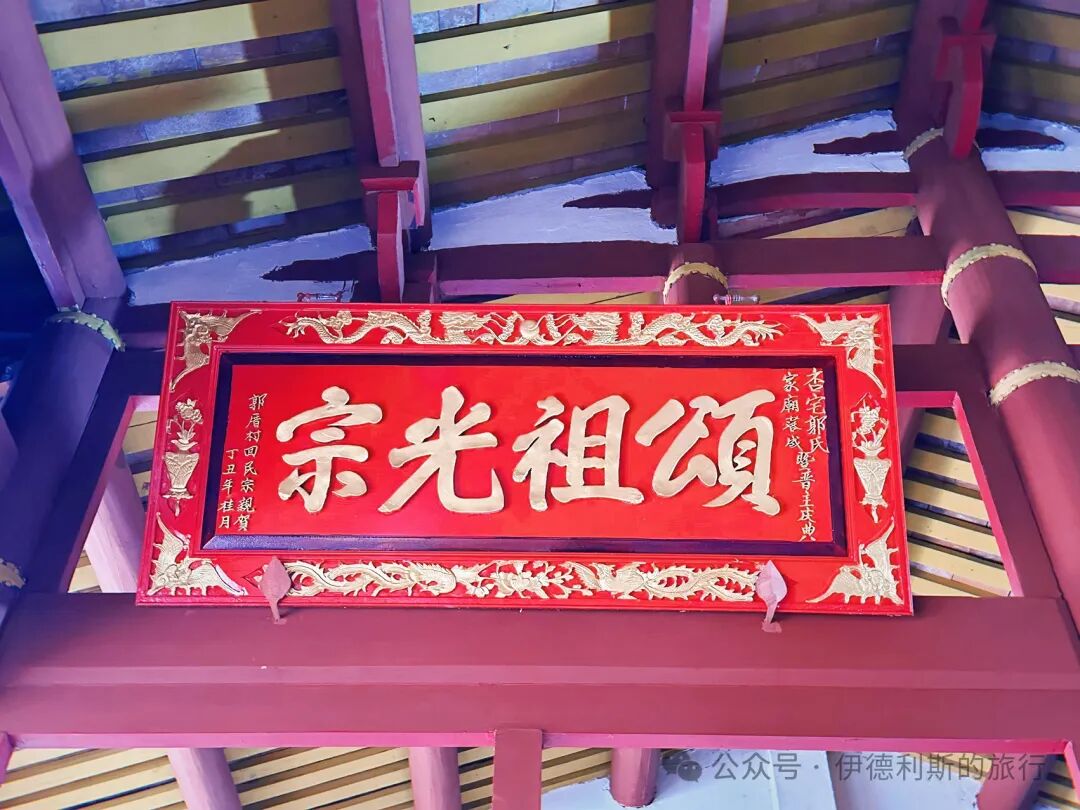
Echoes of the faith: The Hui Muslim family temple of the Guo clan in Xingzhai, Quanzhou.
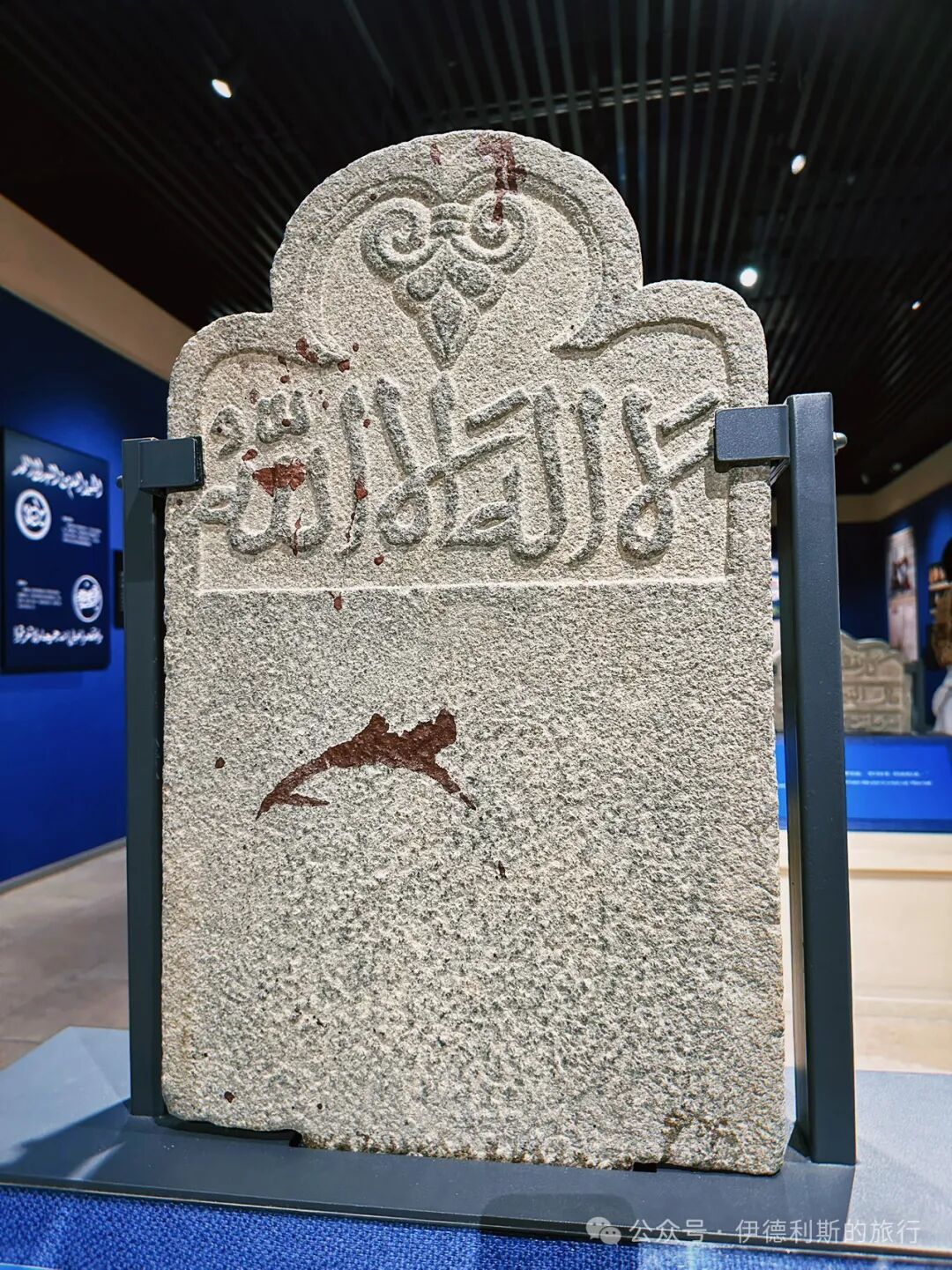
Stone carvings from the Islamic faith of the Song and Yuan dynasties at the Quanzhou Maritime Museum.
At noon, I took a taxi south of Quanzhou to Chendai Mosque, which is the other mosque in Quanzhou besides Qingjing Mosque.
According to family records, the first ancestor of the Chendai Ding clan, Ding Jin, whose courtesy name was Jiezhai, was originally from Suzhou and settled in Quanzhou for trade. The third ancestor, Ding Kui (1298-1379), moved with the fourth ancestor, Ding Shan (1343-1420), from Quanzhou city to Chendai, over ten kilometers south of the city.
The Chendai Ding clan maintained their Islamic faith for over two hundred years from the 13th to the 16th century. The tenth-generation descendant Ding Yanxia, born around 1517, recorded the Islamic customs he experienced during his childhood in great detail in his work, 'Zujiao Shuo' (Discourse on Ancestral Faith). By the mid-16th century, the religious practices of the Ding family in Chendai underwent major changes. According to the records of the 12th-generation descendant Ding Qing in the Jiyi Jiyan, Fenxi Gong (Ding Yi) was the first to enter official service, and he followed the rites of the scholar-officials to honor his ancestors without daring to violate the teachings of Islam. However, when three generations—Huai Gong (Ding Zishen), Wuting Gong (Ding Rijin), and Zhechu Gong (Ding Qijun)—all passed the imperial examinations, the family's reputation soared, and the practice of Islam nearly faded away. Starting with the 8th-generation Ding Yi, the Chendai Ding family began their path into officialdom by passing the imperial examinations. By the 10th generation, 20 family members had become scholars. These men followed Confucian ethics and social norms in everything they did, which sped up the disappearance of their religious traditions.
It was not until the early 20th century, nearly 400 years later, that the religious life of the Chendai Ding family began to revive. In the early 1920s, the famous Hui Muslim Tang Kesan served as the director of the Xiamen Customs. He recommended his fellow townsman Zhang Guangyu to lead religious affairs in the Quanzhou area. After Imam Zhang Guangyu arrived in Quanzhou, he worked diligently on religious matters, and the religious life in Chendai began to reappear. In 1939, Chendai established the Chenjiang Branch of the China Islamic National Salvation Association. Some members of the Chendai Ding family went to the Qingjing Mosque in Quanzhou for their weekly Friday prayer (jumu'ah). Later, they converted the Wenchang Shrine in the Sijing village into a mosque and hired Imam Tie from Quanzhou to lead their religious services. Between 1937 and 1944, the Chengda Normal School moved south to Guilin. Its founders, Tang Kesan and Imam Ma Songting, accepted 17 young men from the Ding family of Chendai to study there.
In the late 1950s, religious activities in Chendai were forced to stop. Ding Jinshun, a graduate of Chengda Normal School, was criticized and struggled because he mentioned in class that he was a Hui Muslim. In 1983, Ding Jinshun and Ding Jinhe attended the founding meeting of the Fujian Islamic Association. After that, Chengda Normal School graduates Ding Jinshun, Ding Jinhe, Ding Jinke, Ding Jinhong, and over twenty other people dedicated to the faith formed the Chendai Islamic Association Group and began to restore religious life. They borrowed the second-floor meeting room of the Chendai Hui Affairs Committee and the back hall of the Ding Family Ancestral Hall to hold Friday prayers (Jumu'ah), with Ding Jinshun serving as the imam. During the two Eids (Eid al-Fitr and Eid al-Adha), they invited classmates from Chengda Normal School in Guilin and an imam from Jiaxing, Zhejiang, to lead the services.
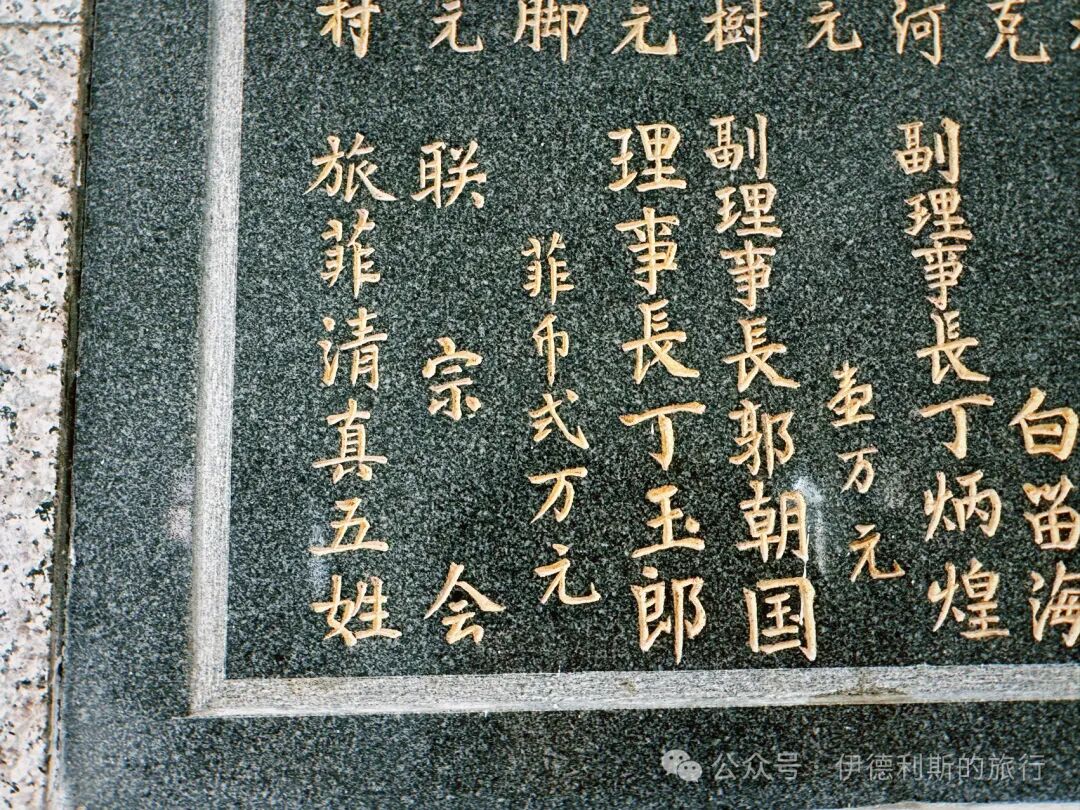
After the Chendai Islamic Association Group was established, they began preparing to build the Chendai Mosque. They sent out a letter to Muslims across the country, but only a few mosques in Ankang, Shaanxi, and Yunnan sent a few hundred yuan in funds. After this, former classmates from Yuanchengda Normal School in Hong Kong sent the Letter to Ding Clan Relatives to Ding family members in Hong Kong, Taiwan, and overseas. They received 70,000 yuan in donations from the Five Halal Surnames Association (Jin, Ding, Ma, Bai, and Guo, all originating from Hui Muslims in Quanzhou) based in Hong Kong, Taiwan, Singapore, and the Philippines.
Chendai Mosque was built in 1991 and officially opened in 1993, when the Jinjiang Islamic Association was also established. The Ding family of Chendai hired Imam Ma Zhiwei from Inner Mongolia as their first religious leader, while Ding Jinke and Ding Jinshun served as the first directors of the mosque management committee and the Islamic Association, respectively. After the 1990s, the Chendai Ding family sent nearly 60 young people to study religion at home and abroad, with some attending Arabic language schools in Inner Mongolia.
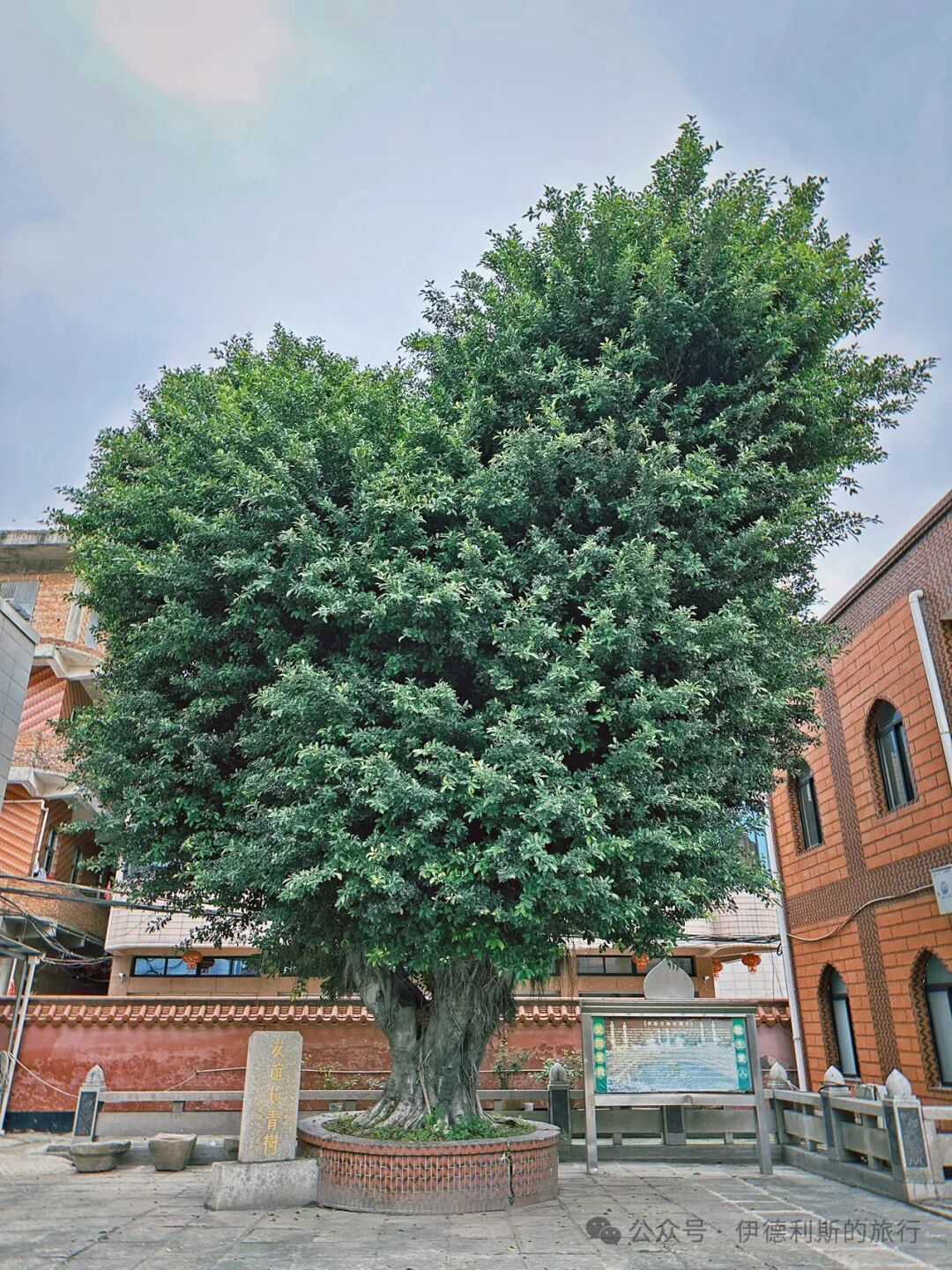
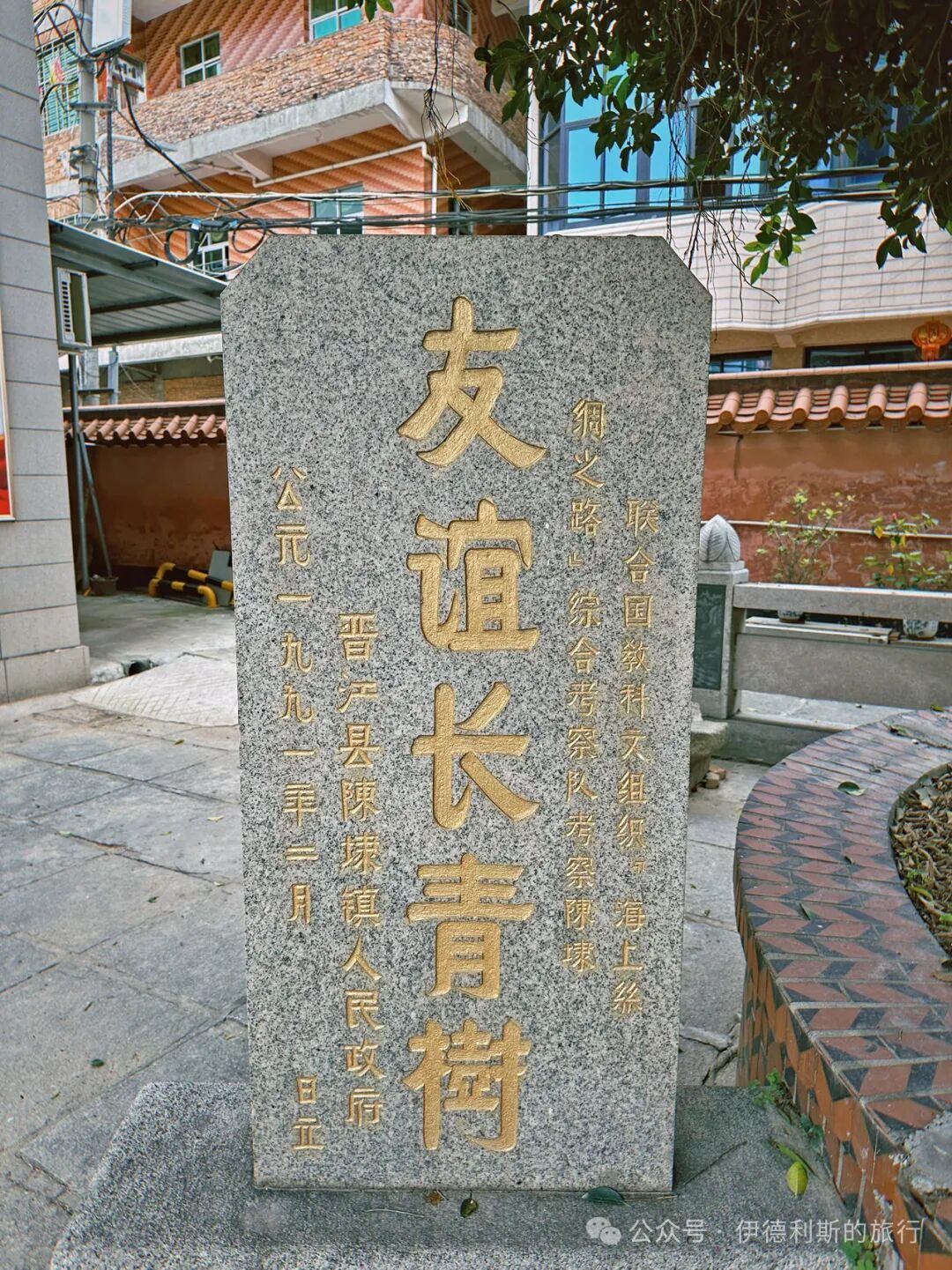
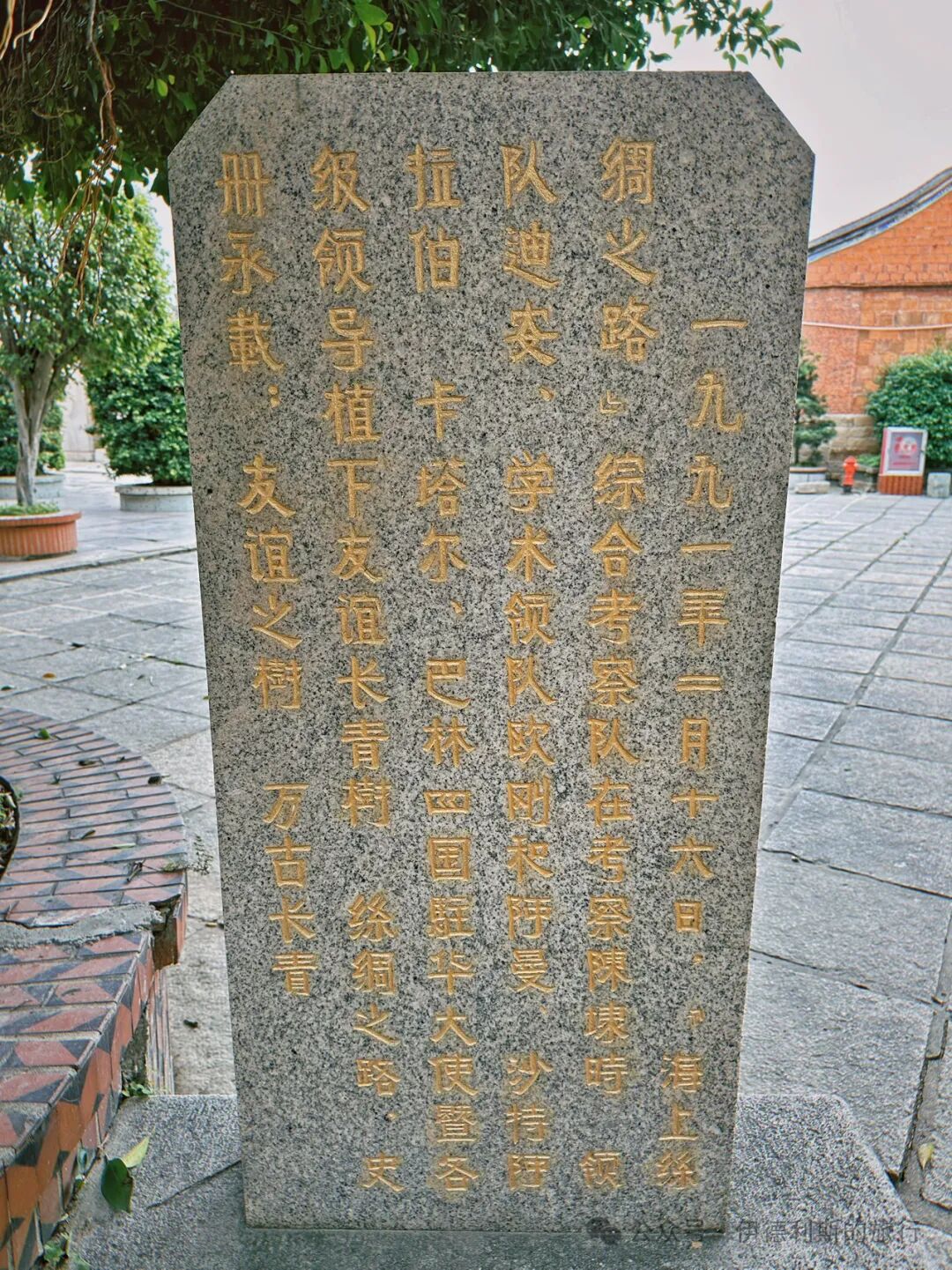
Inside the courtyard of Chendai Mosque stands a Tree of Friendship planted in 1991 by the UNESCO Maritime Silk Road expedition team and the then-ambassadors to China from Saudi Arabia, Qatar, and Bahrain. It is now lush and green.
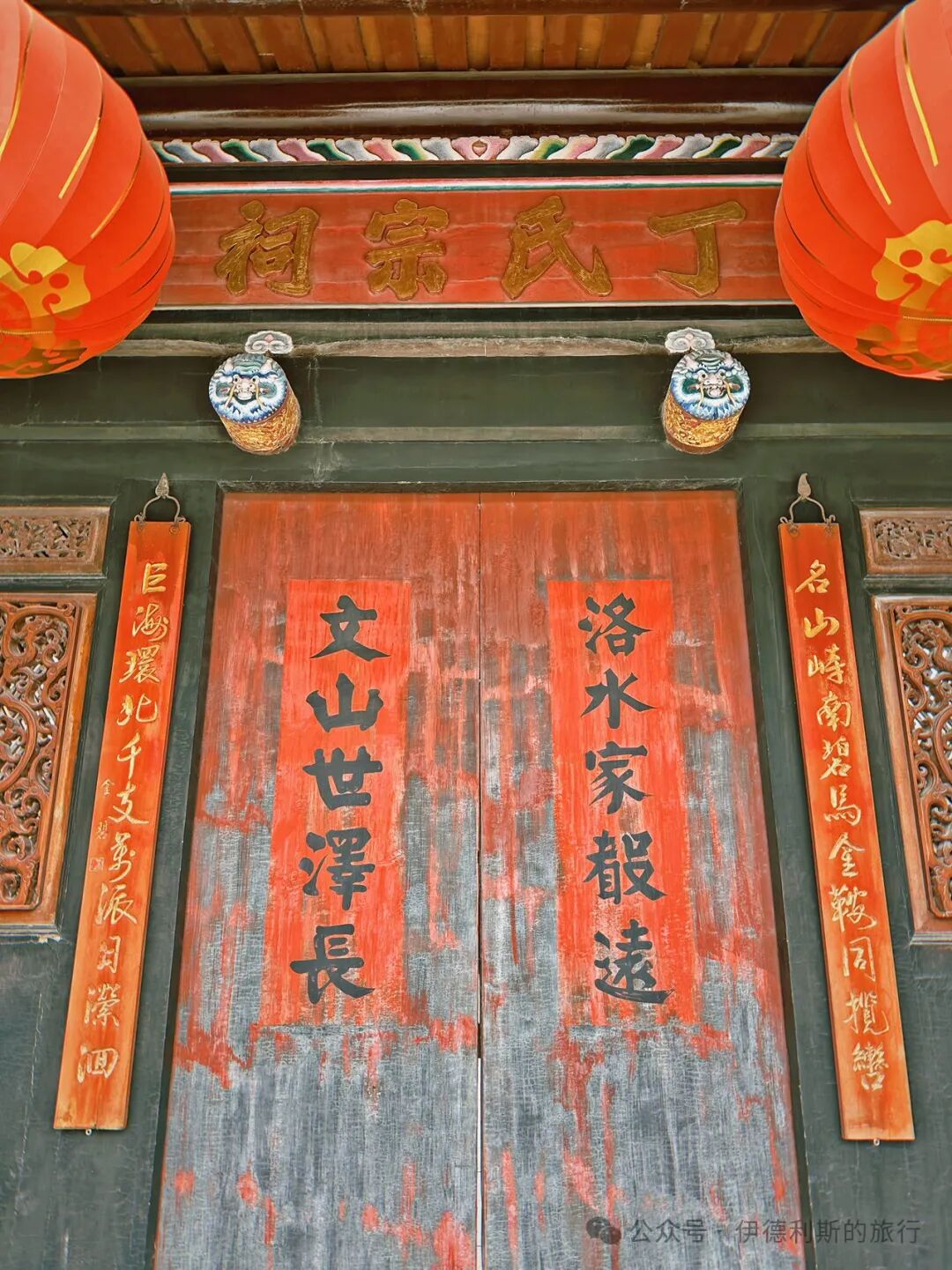
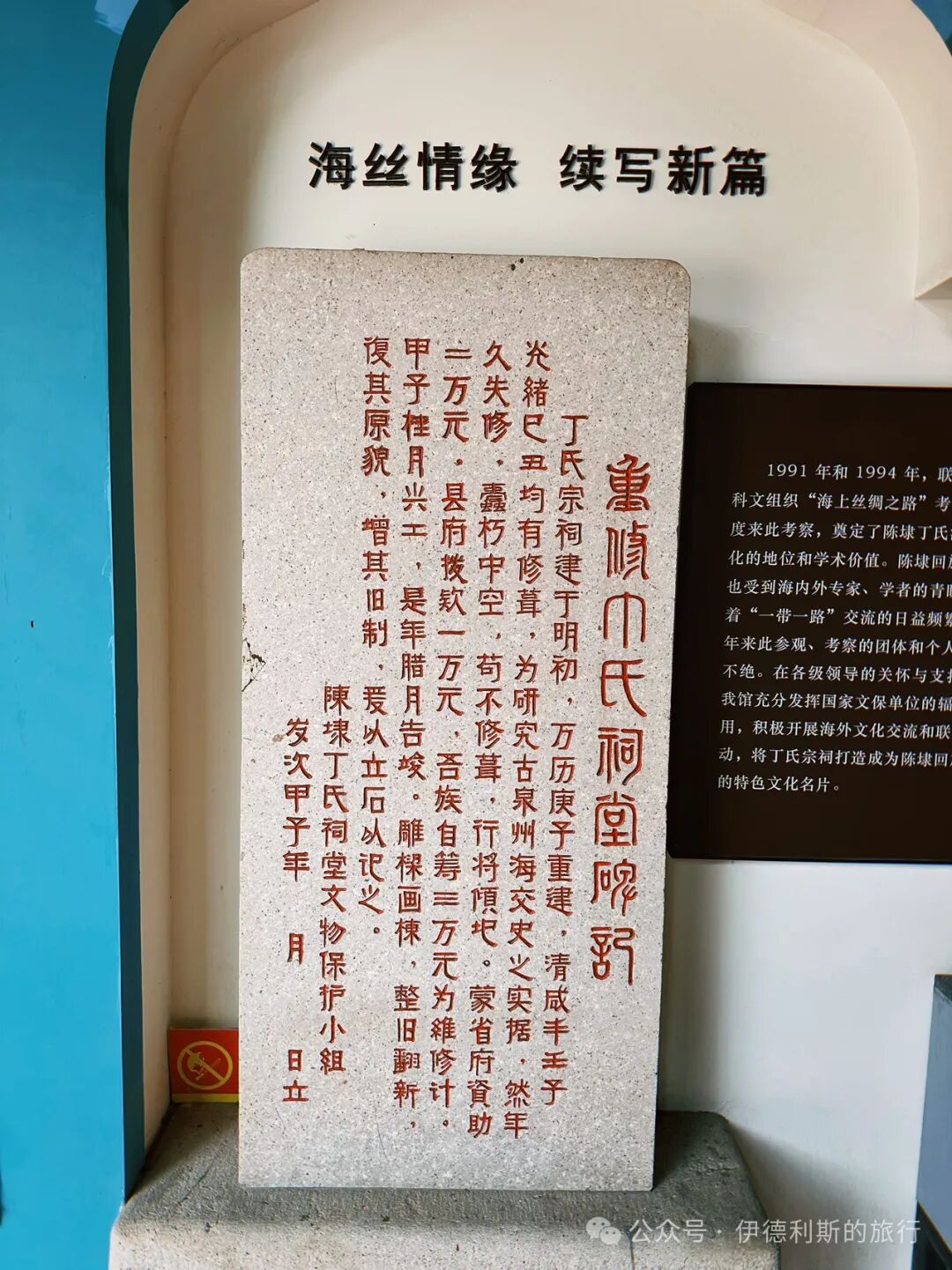
The Chendai Hui Muslim History Museum is located inside the Ding Family Ancestral Hall, and you can enter it directly from the courtyard of Chendai Mosque. The Ding Family Ancestral Hall was first built in the early 15th century. It was destroyed during the Wokou pirate raids in 1561 (the 40th year of the Jiajing reign). It was soon rebuilt under the leadership of Ding Yi and Ding Zishen, expanded again by Ding Rijin in 1599 (the 27th year of the Wanli reign), and renovated several times during the Xianfeng and Guangxu periods. The Chendai Hui Muslim History Museum opened inside the Ding Family Ancestral Hall in 1984 to display the cultural heritage of the Chendai Ding Hui Muslims.
The Chendai Hui Muslims History Museum is usually closed. Just call Uncle Ding, the caretaker, using the number on the wall by the door. He will come over to open it for you, and admission is free.
Inside the museum, you can see plaques for the Chendai Hui Muslims History Museum and the Chendai Ten Thousand Dings, both inscribed by Yang Jingren, who served as the head of the United Front Work Department and the director of the State Ethnic Affairs Commission. Next to the plaques, there are beautiful wood carvings of Kufic script, which is a style of Arabic calligraphy.
The auspicious bird symbol of the Chendai Ding family reminds people of the Lion of Ali emblem found on walls in Shia communities in Bangkok. These are all symbols of ethnic identity.
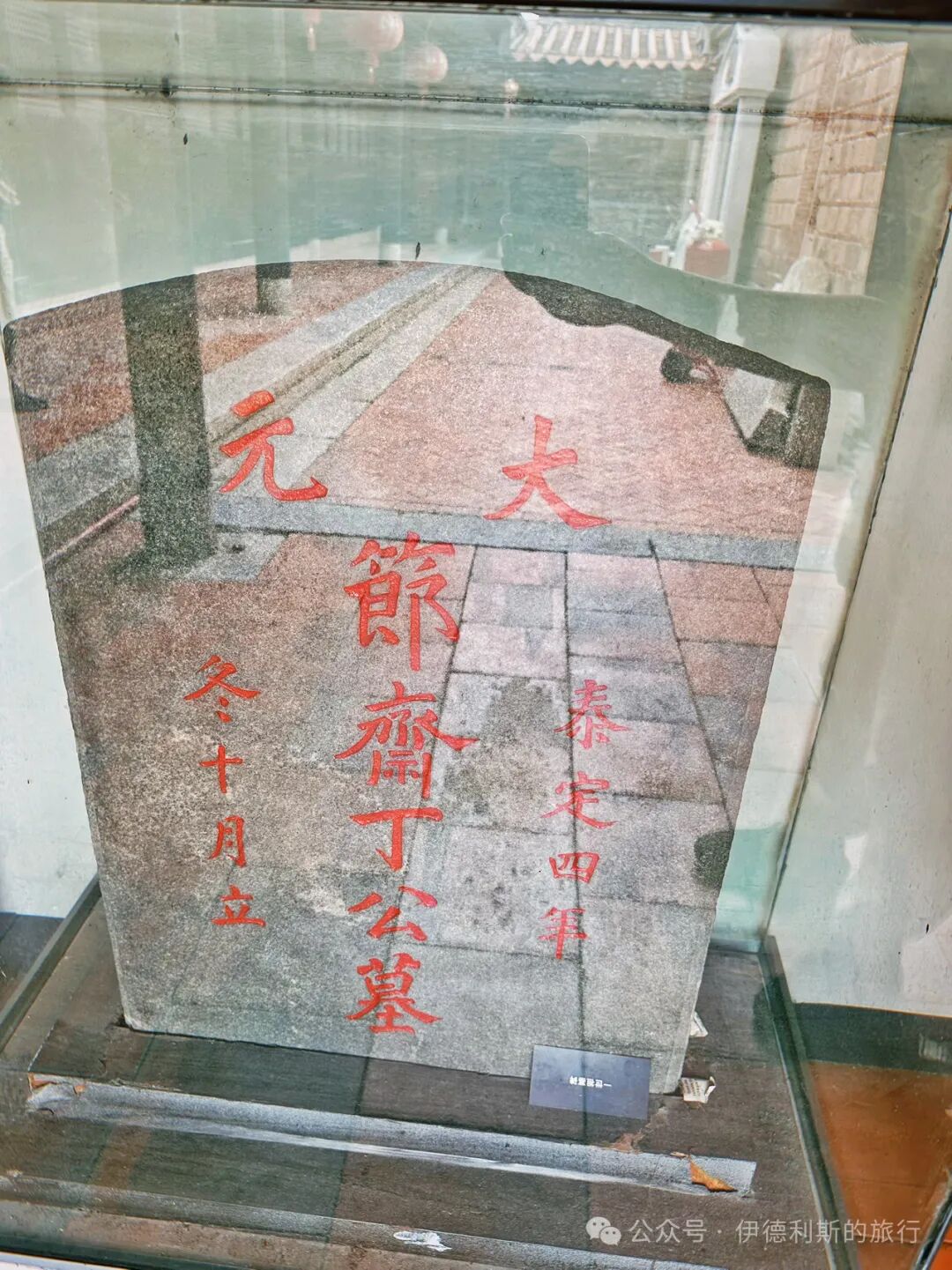
The most important artifact in the Chendai Hui Muslims History Museum is the tombstone of Ding Jiezhai, the ancestor of the Chendai Ding family. The front of the tombstone is inscribed with 'Erected in the winter of the fourth year of the Taiding era (1327), Tomb of Ding Jiezhai of the Great Yuan,' and the back says 'Buried at the original site of Lingtang Mountain in Dongtangtou.' Wu Wenliang discovered the Ding Jiezhai tombstone in 1940 while digging at the foundation of the East Gate in Quanzhou. In 2003, his children donated it to the Chendai Hui Muslims History Museum, where it is kept today.
According to the Ding family genealogy, the Ren'an Fujun Biography, 'Master Jiezhai came from Suzhou to trade in Minquan and chose to settle in Quanzhou city.' The inscription mentioning Dongtangtou Lingtang Mountain refers to the Lingshan Sacred Tomb, which has been the burial site for the Ding family of Chendai since the Yuan Dynasty.
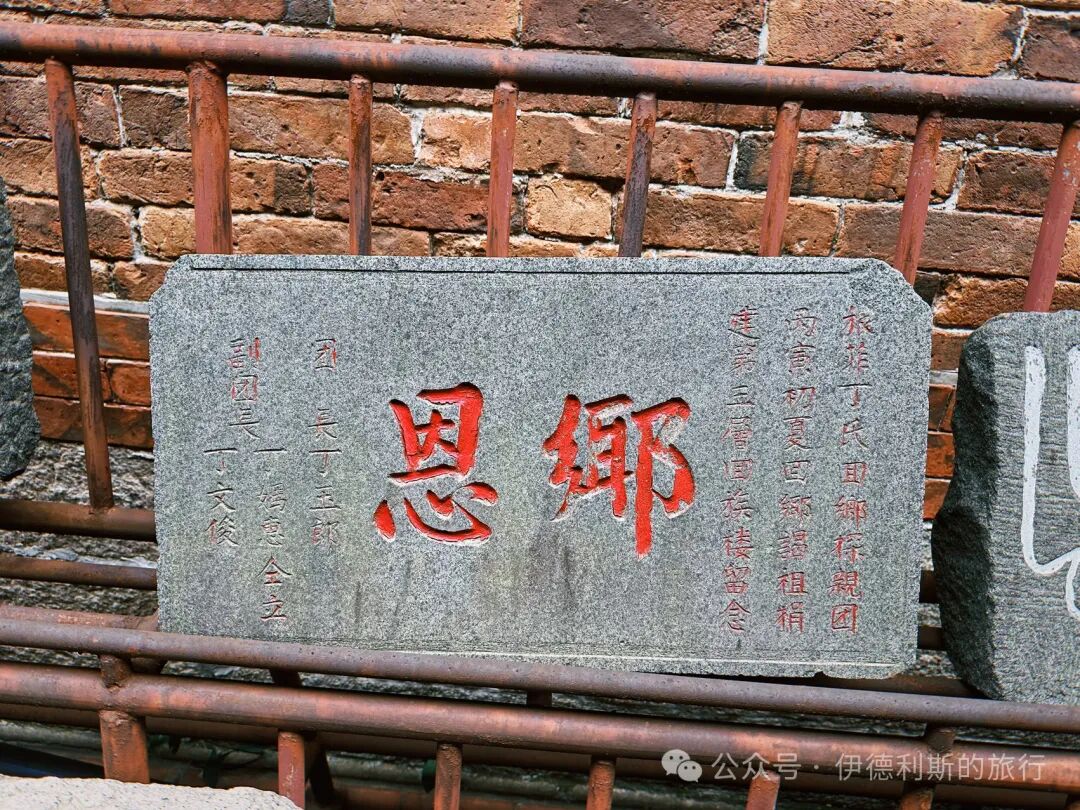
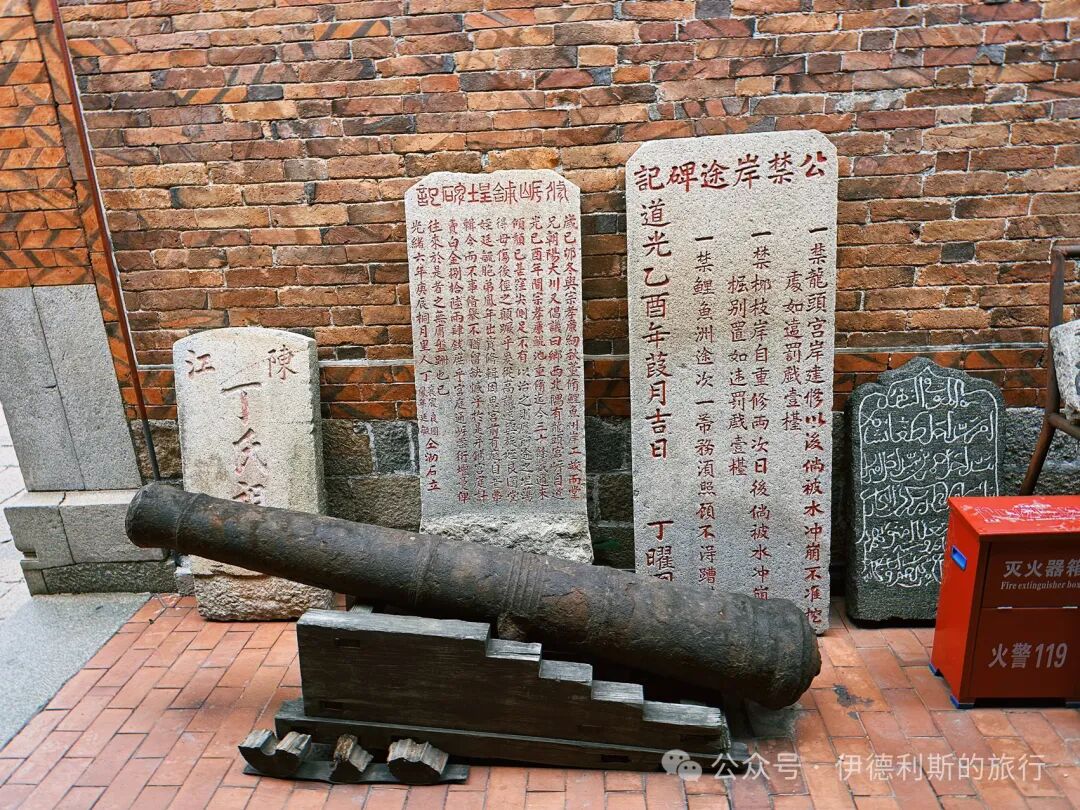
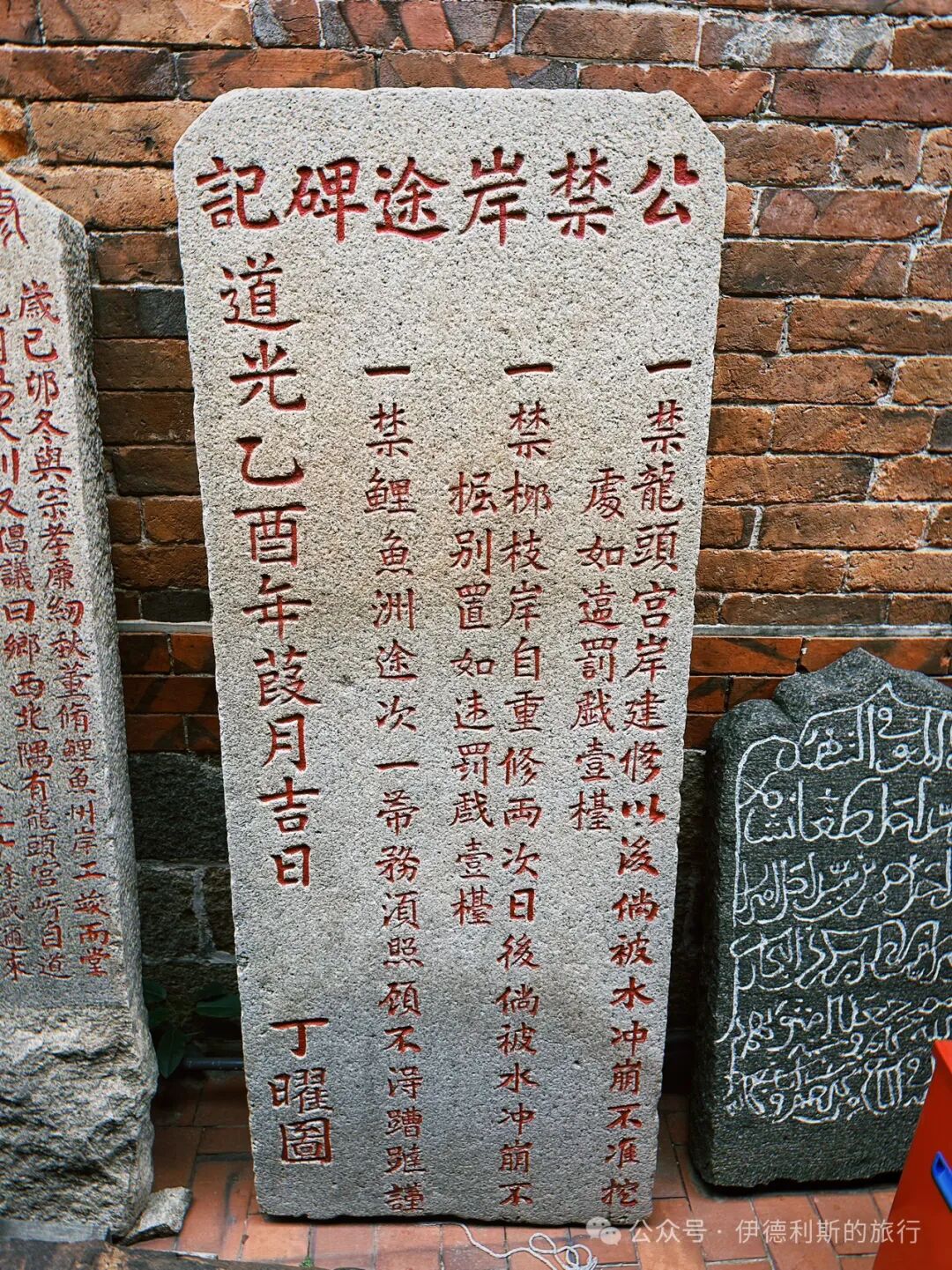
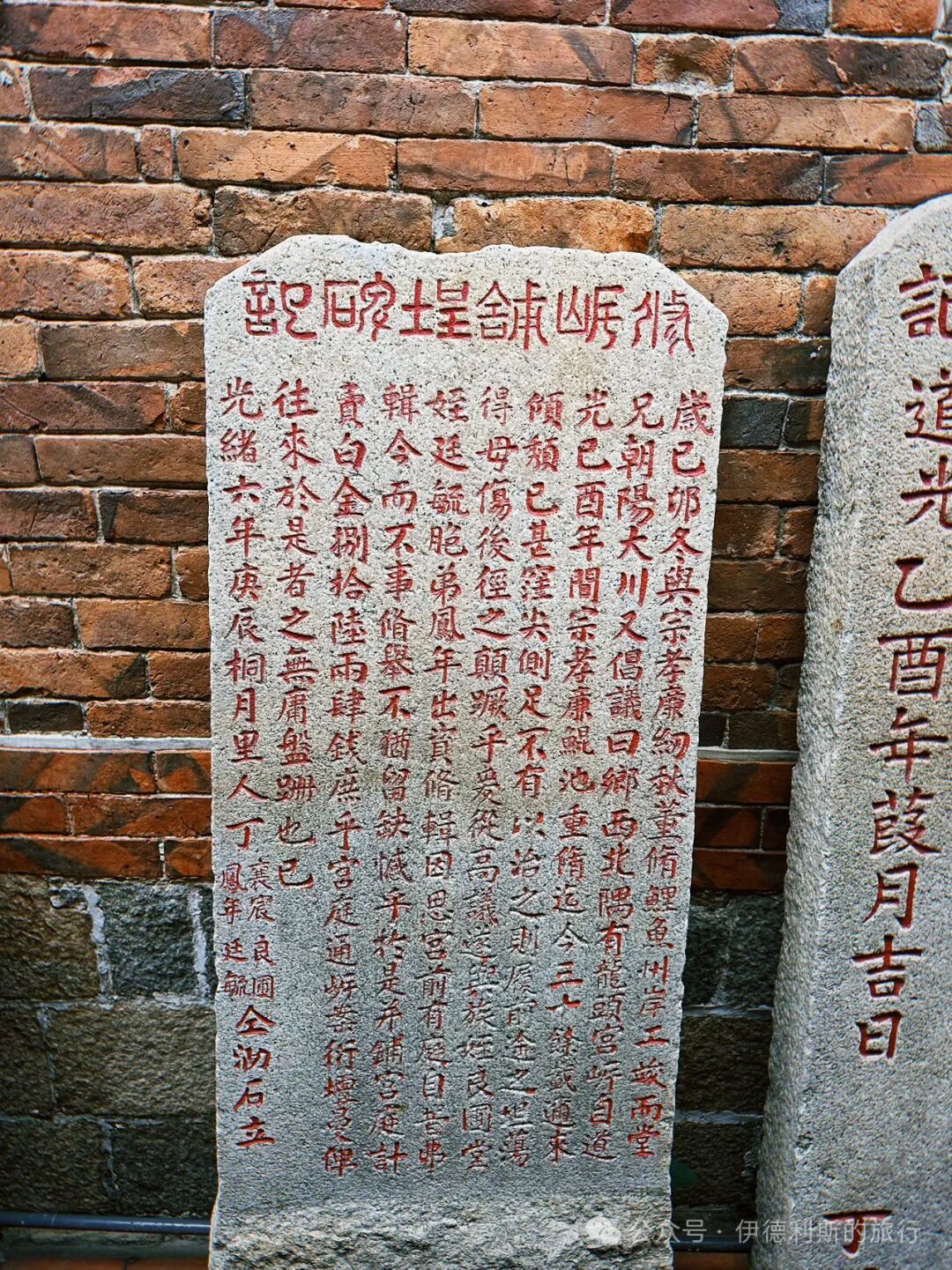
Various stone carvings on display at the Chendai Hui Muslims History Museum.
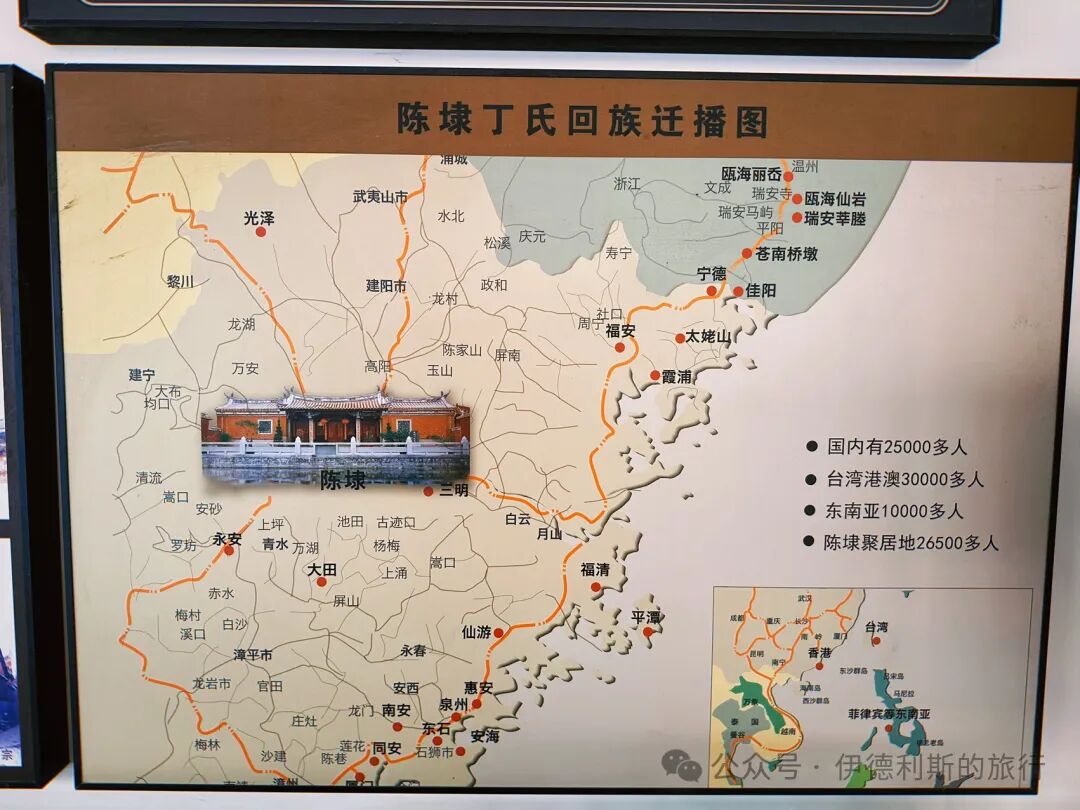
Famous figures from the Ding family of Chendai introduced inside the Chendai Hui Muslims History Museum.
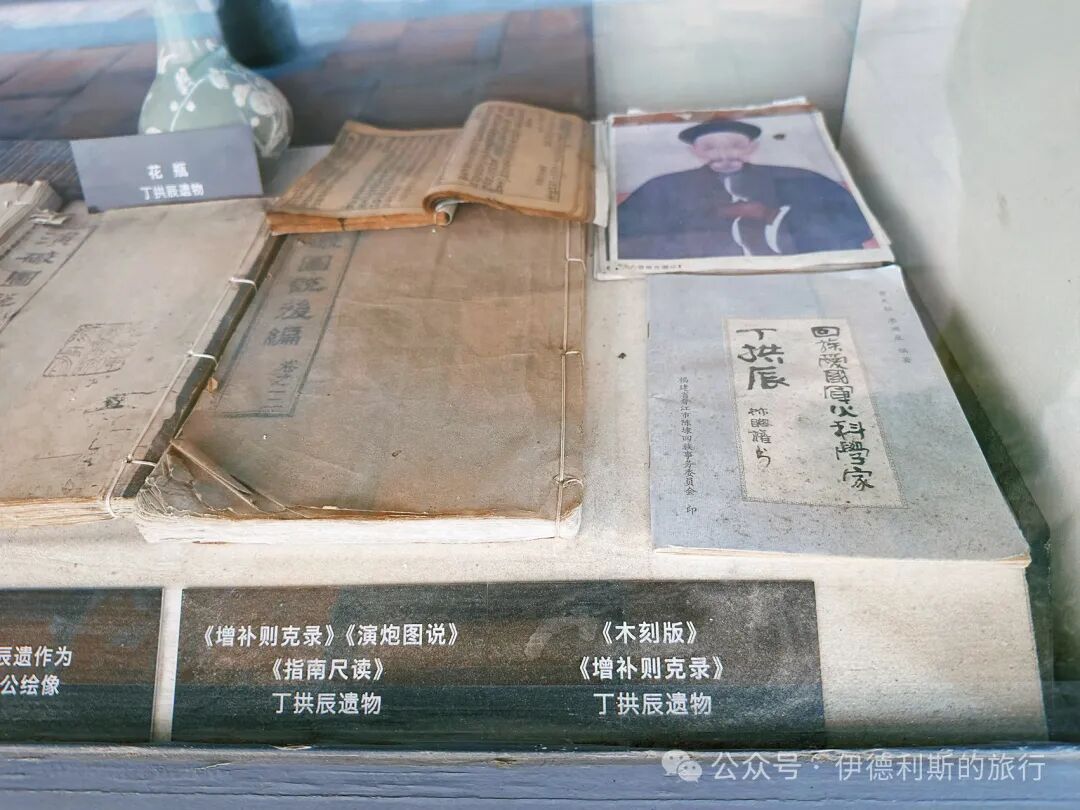
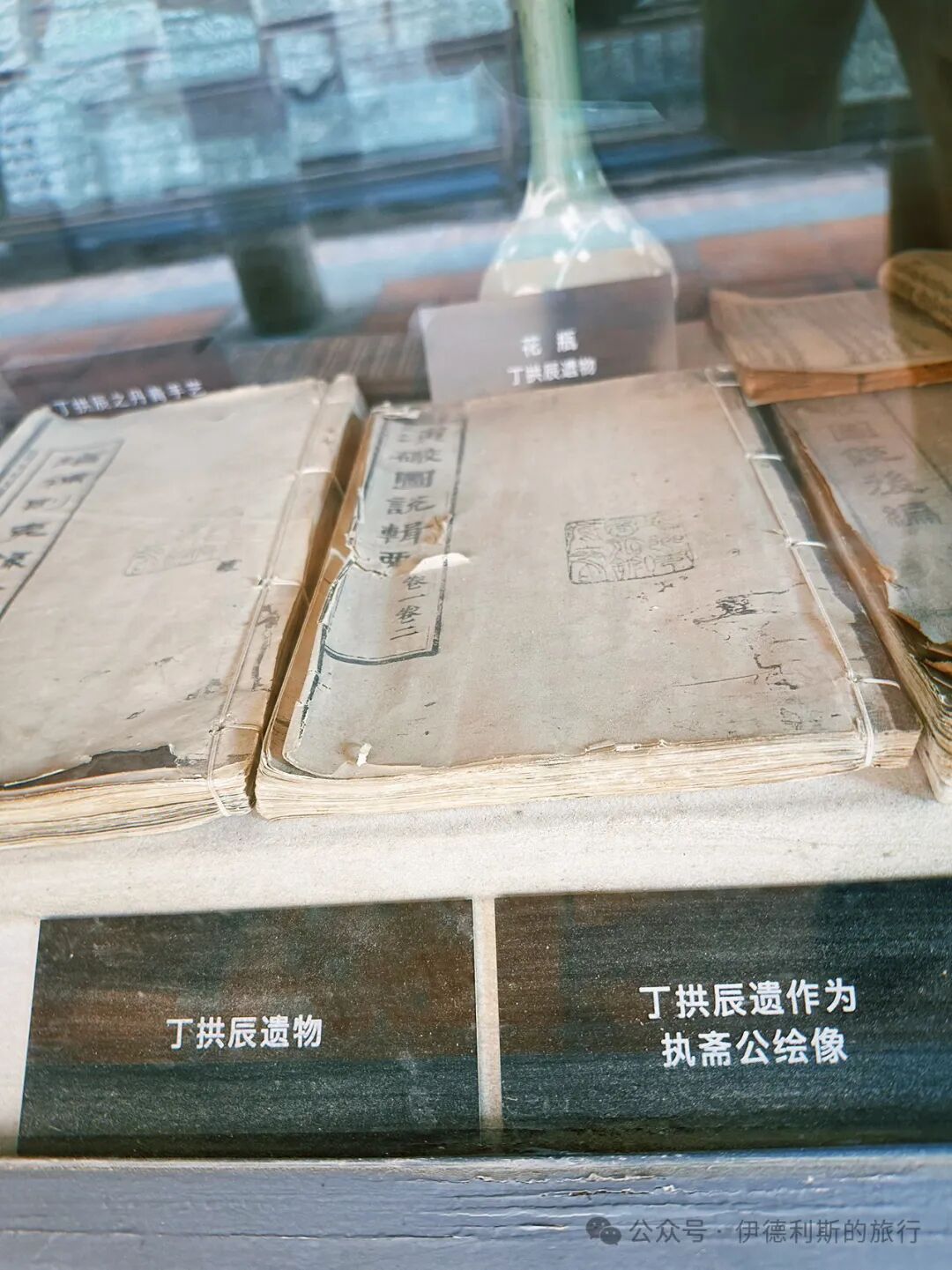
Ding Gongchen (1800-1875) was a mechanical engineering expert in the late Qing Dynasty. When he was young, he traveled abroad for business to places like the Philippines, Iran, and Arabia, where he gathered a lot of knowledge about Western machinery. After Ding Gongchen returned to China in 1840, the Opium War broke out. Based on his research into Western firearms, he wrote the book Illustrated Explanation of Artillery (Yanpao Tushuo) and tested cast cannons in Guangdong, which became the most advanced artillery in the Qing Dynasty at that time. After the war, Ding Gongchen revised his book into the Essentials of Illustrated Explanation of Artillery (Yanpao Tushuo Jiyao). The attached section, Illustrated Explanation of Western Steam-Powered Vehicles and Ships, was the first book written by a Chinese author about steam engines, trains, and steamships. In 1850, Ding Gongchen successfully developed a modern large rocket made from a metal rocket tube in Guilin, marking the beginning of modern rocket research in China.
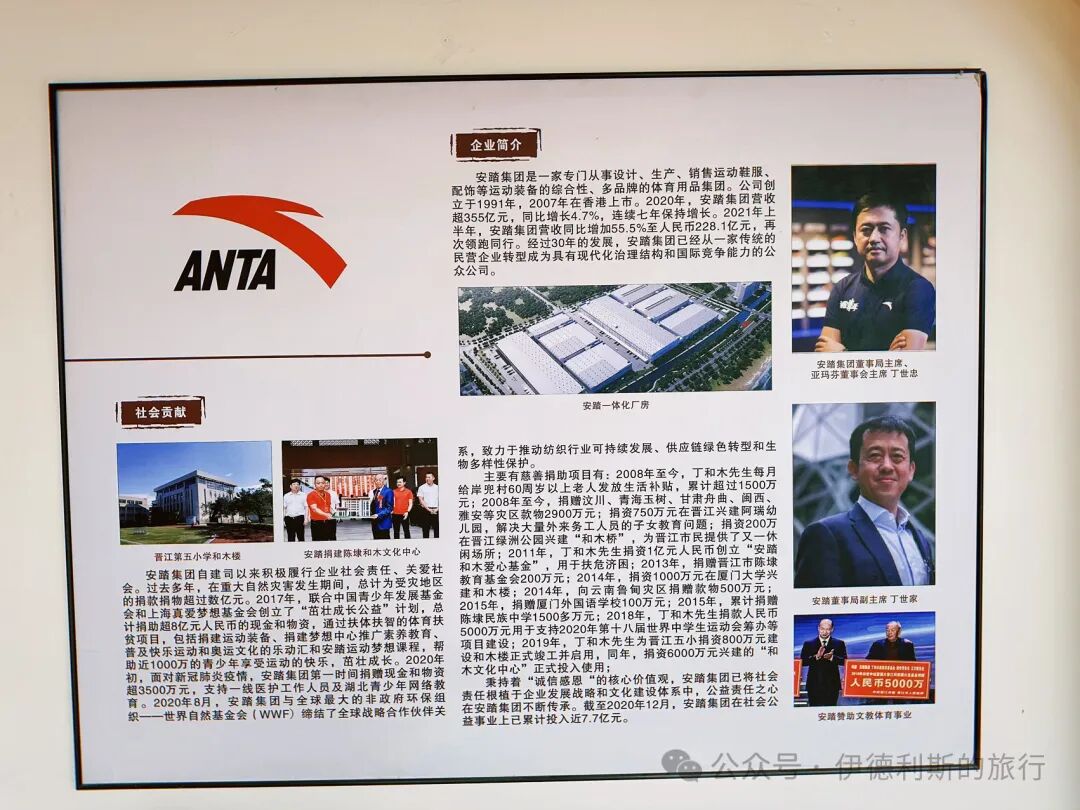
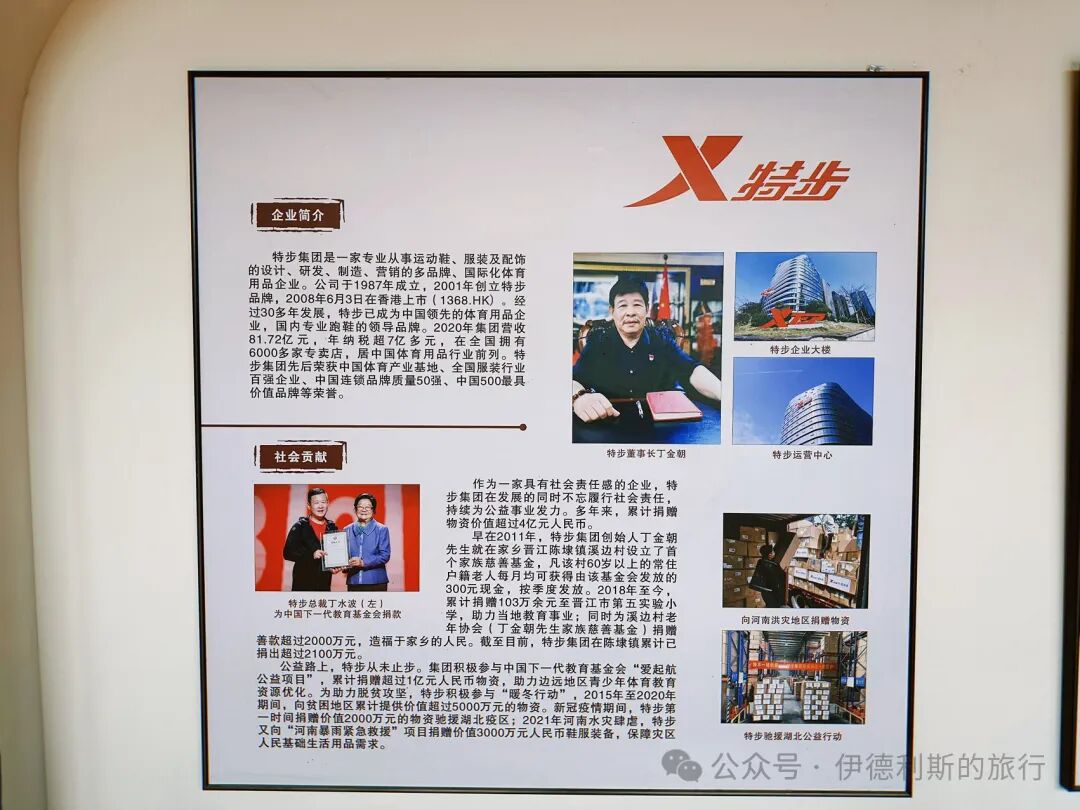
entrepreneurs from the Ding family of Chendai include Anta Group Chairman Ding Shizhong and Vice Chairman Ding Shijia, Xtep Group founder Ding Jinzhao and President Ding Shuibo, 361° Chairman Ding Wuhao, and Silan Group Chairman Ding Zongyin.
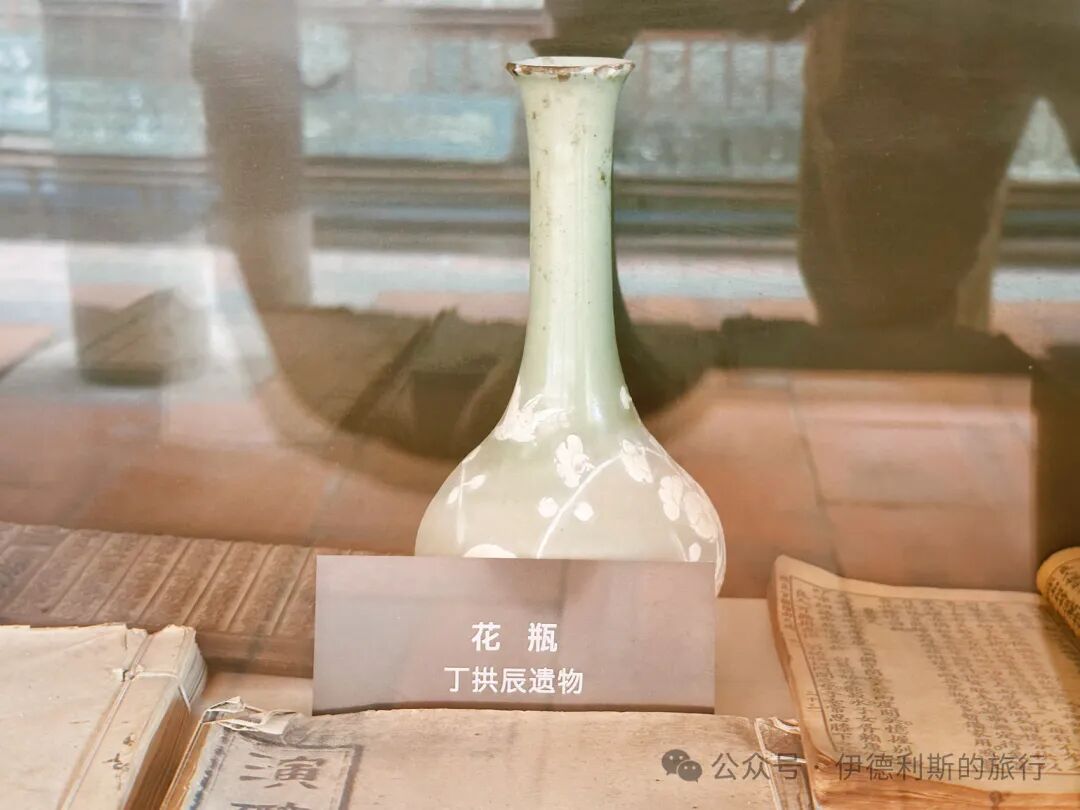
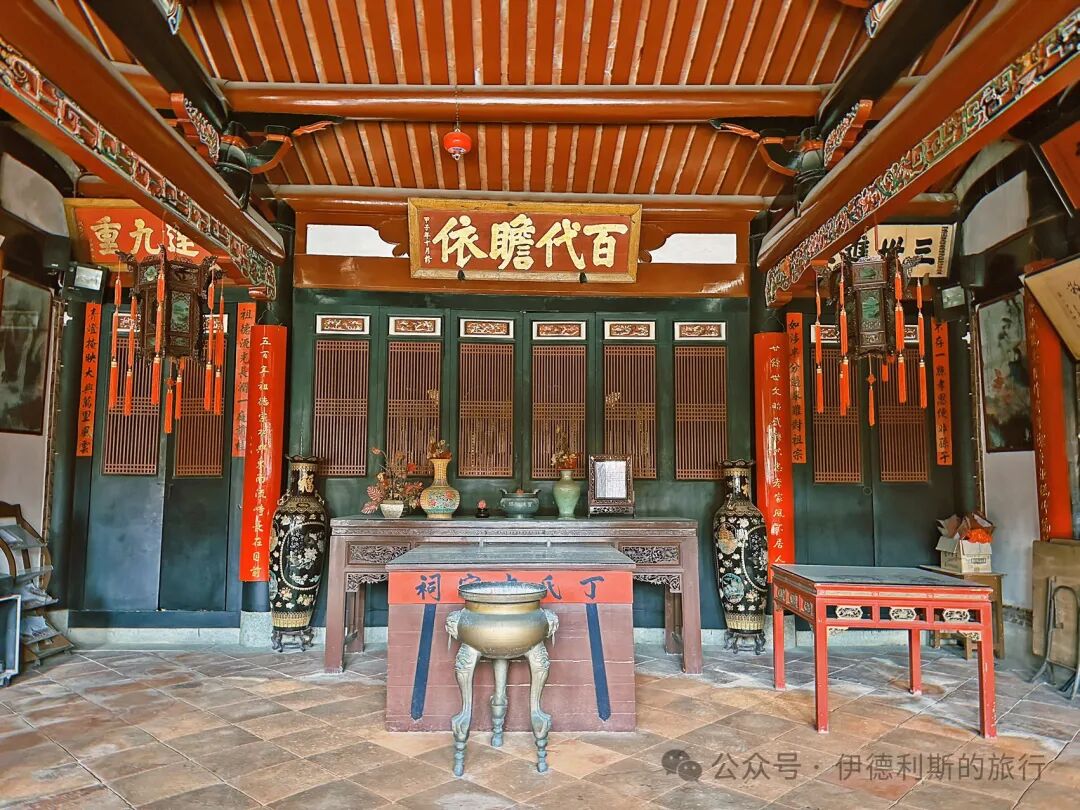
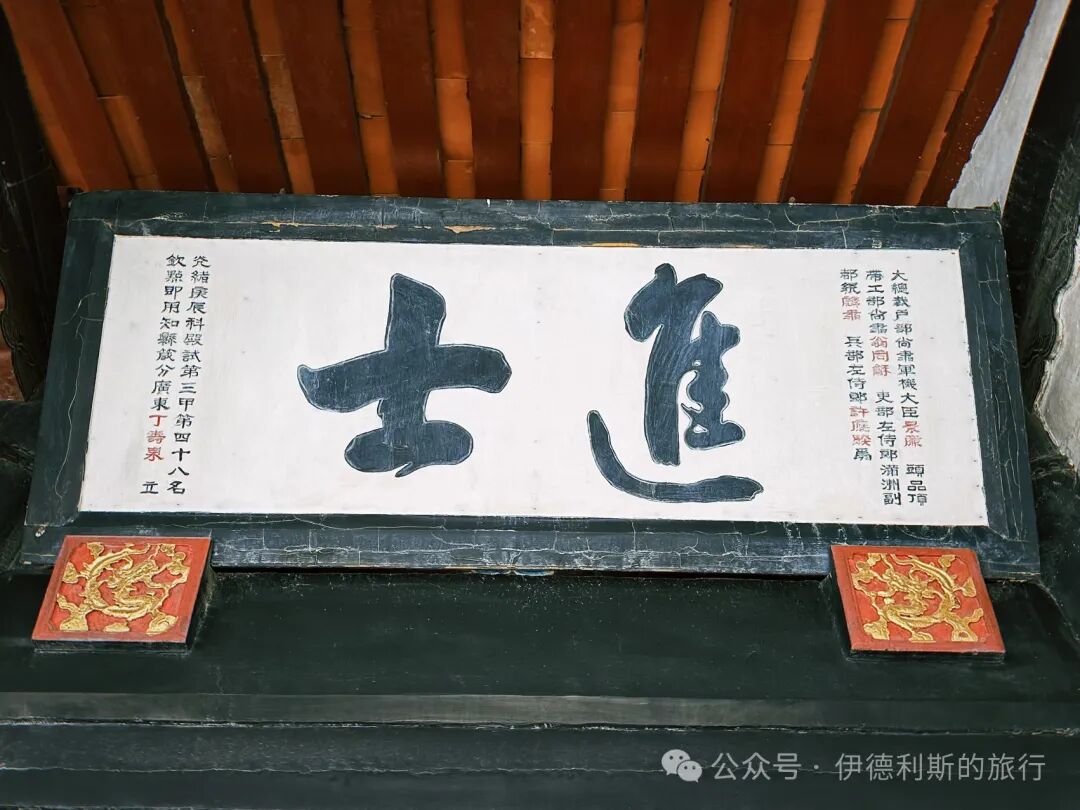
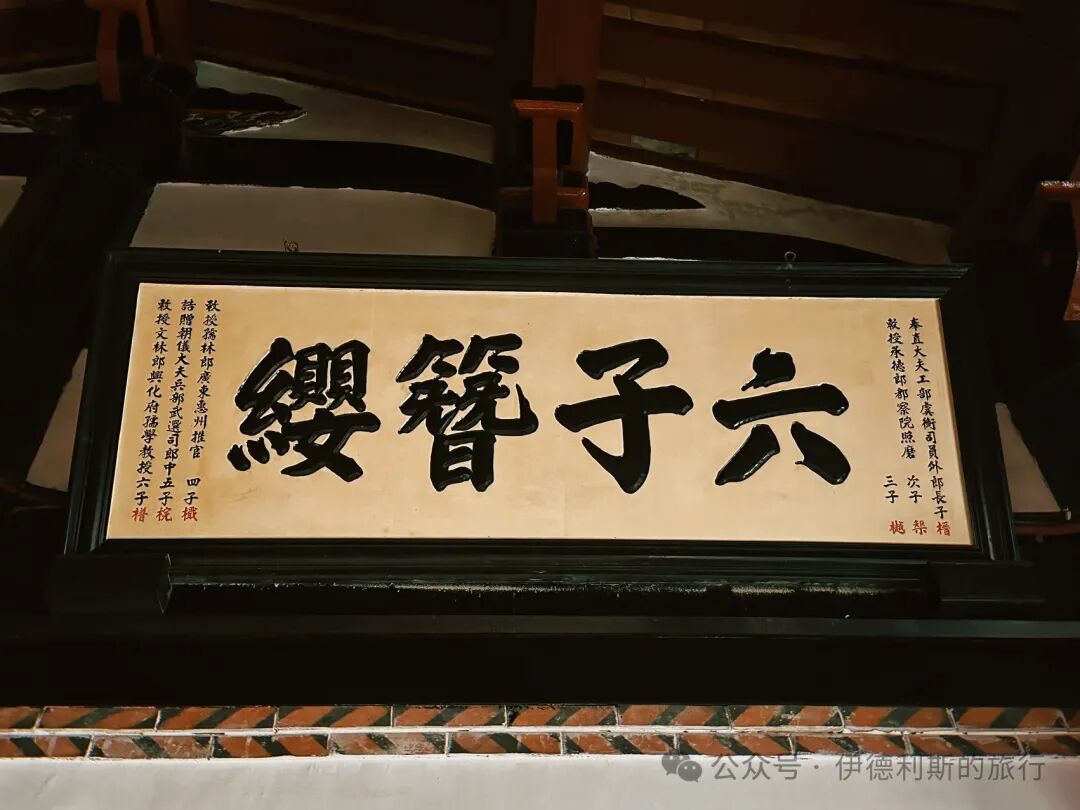
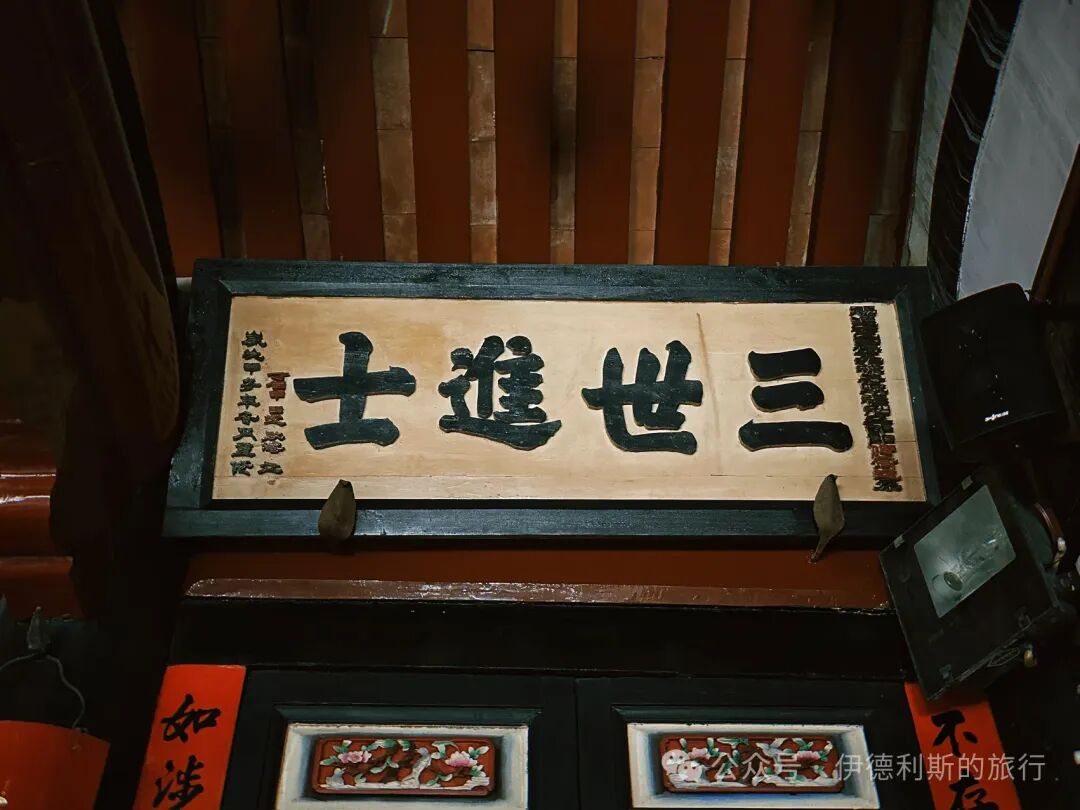
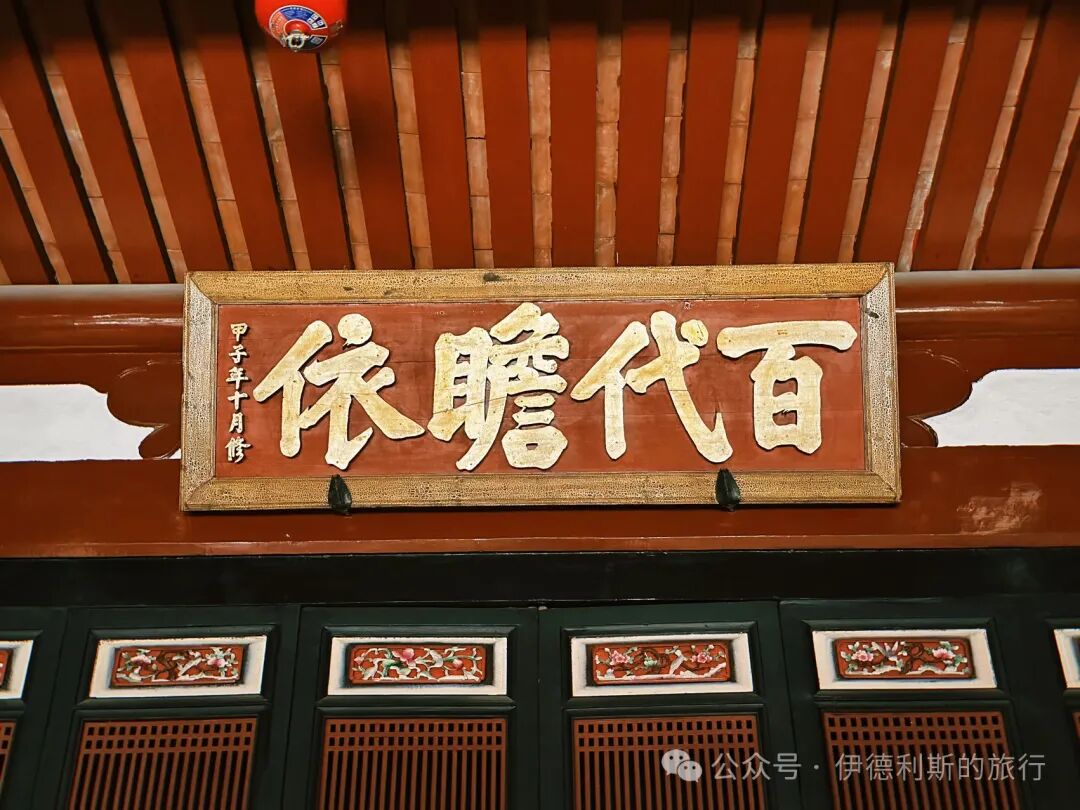
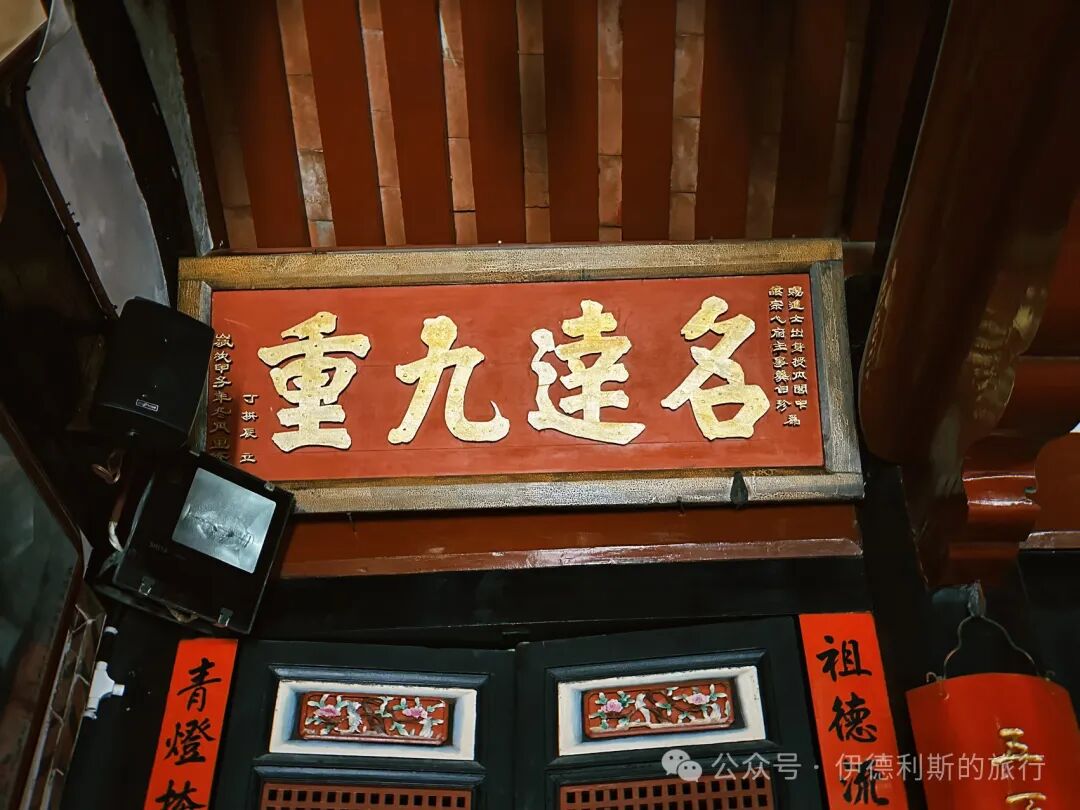
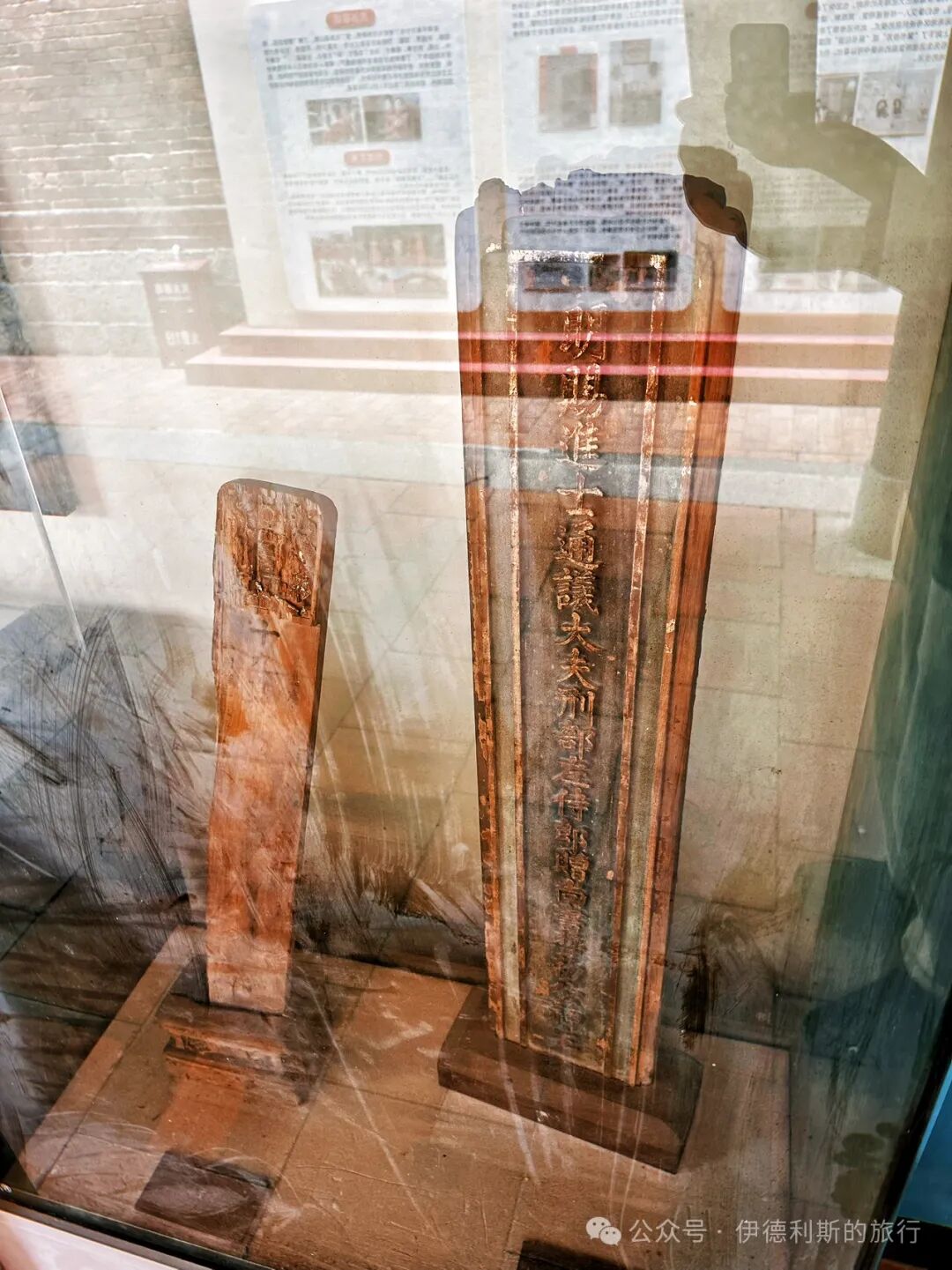
The plaques and ancestral spirit tablets inside the Chendai Hui Muslims History Museum. view all
Summary: Quanzhou Chendai Mosque and Chendai Hui Muslim History Museum is presented as a clear English travel account for readers interested in Muslim life, halal food, mosques, and local history. The article keeps the original names, food details, photographs, and cultural context while focusing on Quanzhou, Chendai Mosque, Hui Muslims.
Quanzhou background summary:
The thousand-year-old Qingjing Mosque in Quanzhou.
Echoes of the faith: The Hui Muslim family temple of the Guo clan in Xingzhai, Quanzhou.
Stone carvings from the Islamic faith of the Song and Yuan dynasties at the Quanzhou Maritime Museum.
At noon, I took a taxi south of Quanzhou to Chendai Mosque, which is the other mosque in Quanzhou besides Qingjing Mosque.
According to family records, the first ancestor of the Chendai Ding clan, Ding Jin, whose courtesy name was Jiezhai, was originally from Suzhou and settled in Quanzhou for trade. The third ancestor, Ding Kui (1298-1379), moved with the fourth ancestor, Ding Shan (1343-1420), from Quanzhou city to Chendai, over ten kilometers south of the city.
The Chendai Ding clan maintained their Islamic faith for over two hundred years from the 13th to the 16th century. The tenth-generation descendant Ding Yanxia, born around 1517, recorded the Islamic customs he experienced during his childhood in great detail in his work, 'Zujiao Shuo' (Discourse on Ancestral Faith). By the mid-16th century, the religious practices of the Ding family in Chendai underwent major changes. According to the records of the 12th-generation descendant Ding Qing in the Jiyi Jiyan, Fenxi Gong (Ding Yi) was the first to enter official service, and he followed the rites of the scholar-officials to honor his ancestors without daring to violate the teachings of Islam. However, when three generations—Huai Gong (Ding Zishen), Wuting Gong (Ding Rijin), and Zhechu Gong (Ding Qijun)—all passed the imperial examinations, the family's reputation soared, and the practice of Islam nearly faded away. Starting with the 8th-generation Ding Yi, the Chendai Ding family began their path into officialdom by passing the imperial examinations. By the 10th generation, 20 family members had become scholars. These men followed Confucian ethics and social norms in everything they did, which sped up the disappearance of their religious traditions.
It was not until the early 20th century, nearly 400 years later, that the religious life of the Chendai Ding family began to revive. In the early 1920s, the famous Hui Muslim Tang Kesan served as the director of the Xiamen Customs. He recommended his fellow townsman Zhang Guangyu to lead religious affairs in the Quanzhou area. After Imam Zhang Guangyu arrived in Quanzhou, he worked diligently on religious matters, and the religious life in Chendai began to reappear. In 1939, Chendai established the Chenjiang Branch of the China Islamic National Salvation Association. Some members of the Chendai Ding family went to the Qingjing Mosque in Quanzhou for their weekly Friday prayer (jumu'ah). Later, they converted the Wenchang Shrine in the Sijing village into a mosque and hired Imam Tie from Quanzhou to lead their religious services. Between 1937 and 1944, the Chengda Normal School moved south to Guilin. Its founders, Tang Kesan and Imam Ma Songting, accepted 17 young men from the Ding family of Chendai to study there.
In the late 1950s, religious activities in Chendai were forced to stop. Ding Jinshun, a graduate of Chengda Normal School, was criticized and struggled because he mentioned in class that he was a Hui Muslim. In 1983, Ding Jinshun and Ding Jinhe attended the founding meeting of the Fujian Islamic Association. After that, Chengda Normal School graduates Ding Jinshun, Ding Jinhe, Ding Jinke, Ding Jinhong, and over twenty other people dedicated to the faith formed the Chendai Islamic Association Group and began to restore religious life. They borrowed the second-floor meeting room of the Chendai Hui Affairs Committee and the back hall of the Ding Family Ancestral Hall to hold Friday prayers (Jumu'ah), with Ding Jinshun serving as the imam. During the two Eids (Eid al-Fitr and Eid al-Adha), they invited classmates from Chengda Normal School in Guilin and an imam from Jiaxing, Zhejiang, to lead the services.
After the Chendai Islamic Association Group was established, they began preparing to build the Chendai Mosque. They sent out a letter to Muslims across the country, but only a few mosques in Ankang, Shaanxi, and Yunnan sent a few hundred yuan in funds. After this, former classmates from Yuanchengda Normal School in Hong Kong sent the Letter to Ding Clan Relatives to Ding family members in Hong Kong, Taiwan, and overseas. They received 70,000 yuan in donations from the Five Halal Surnames Association (Jin, Ding, Ma, Bai, and Guo, all originating from Hui Muslims in Quanzhou) based in Hong Kong, Taiwan, Singapore, and the Philippines.
Chendai Mosque was built in 1991 and officially opened in 1993, when the Jinjiang Islamic Association was also established. The Ding family of Chendai hired Imam Ma Zhiwei from Inner Mongolia as their first religious leader, while Ding Jinke and Ding Jinshun served as the first directors of the mosque management committee and the Islamic Association, respectively. After the 1990s, the Chendai Ding family sent nearly 60 young people to study religion at home and abroad, with some attending Arabic language schools in Inner Mongolia.
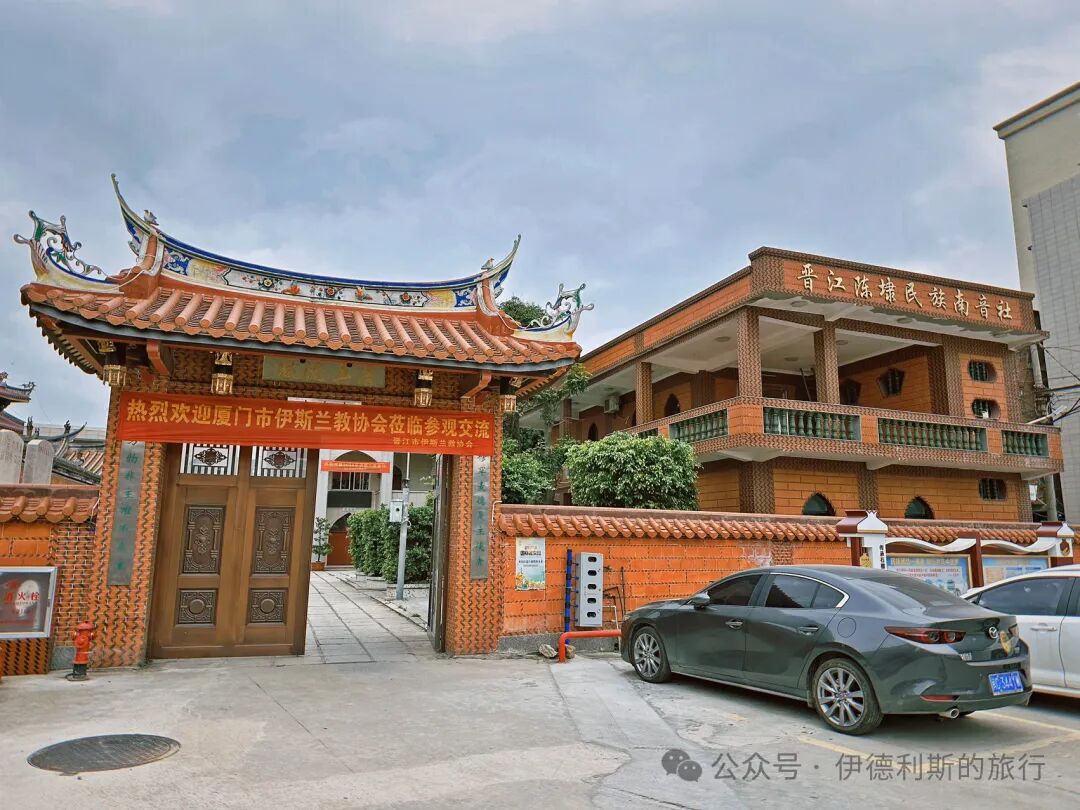
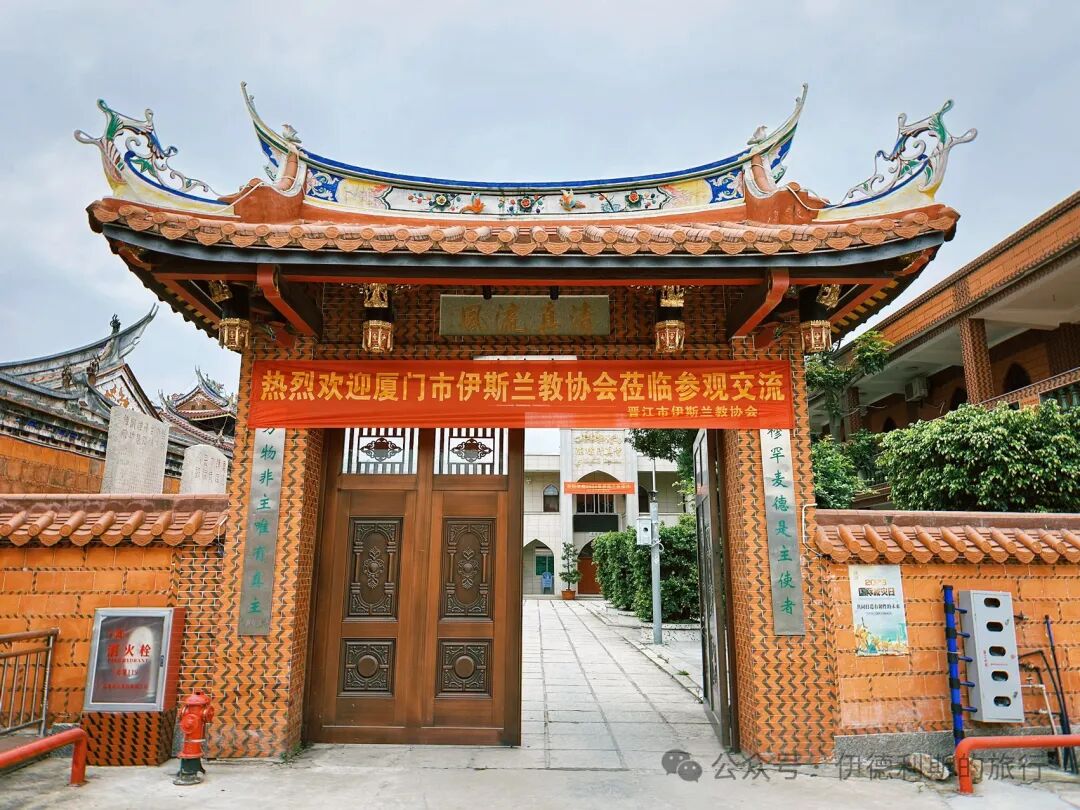
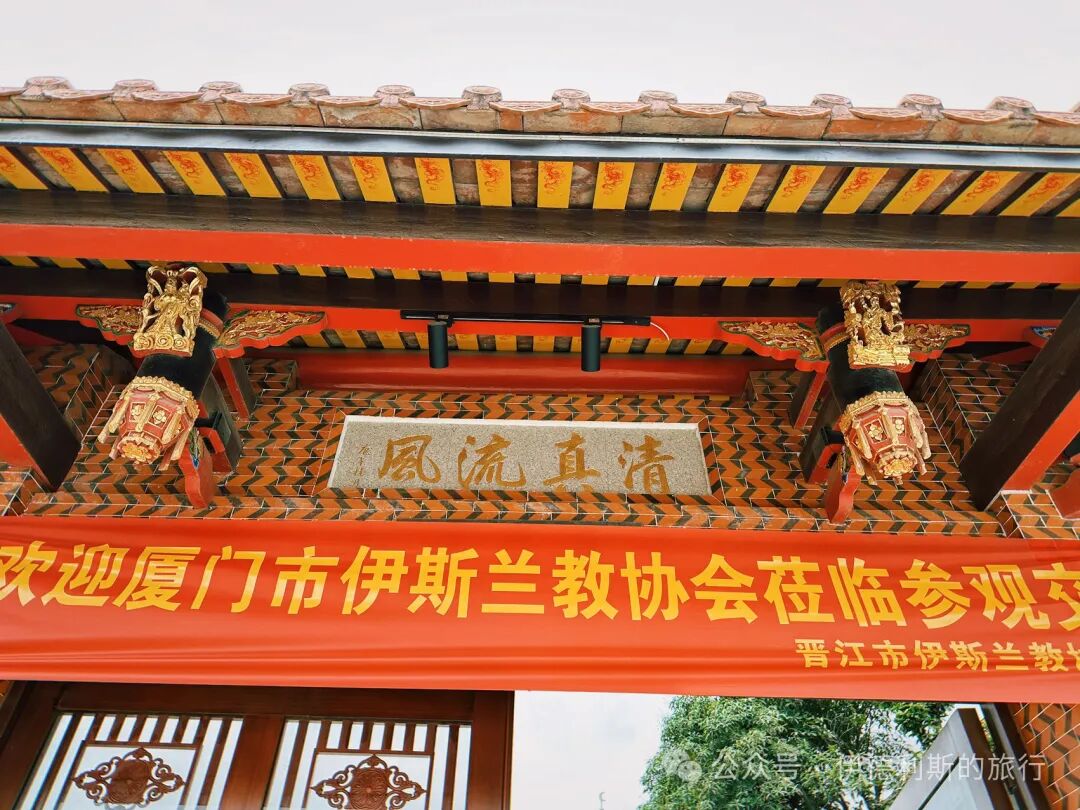
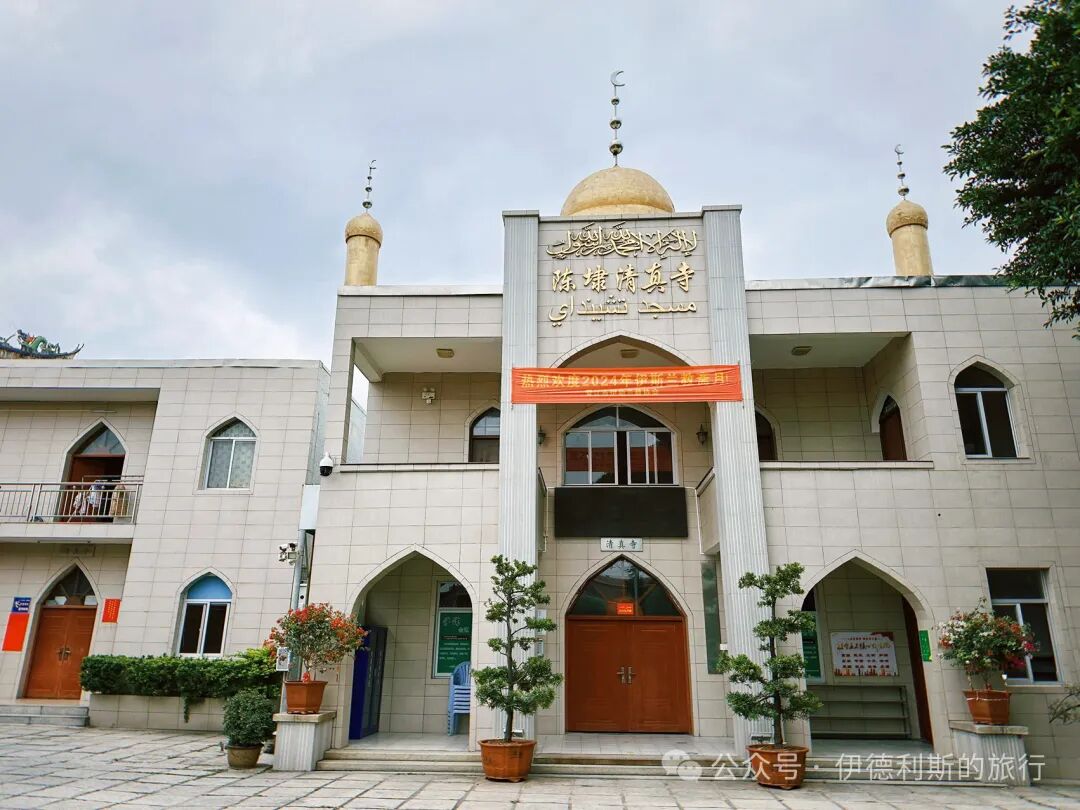
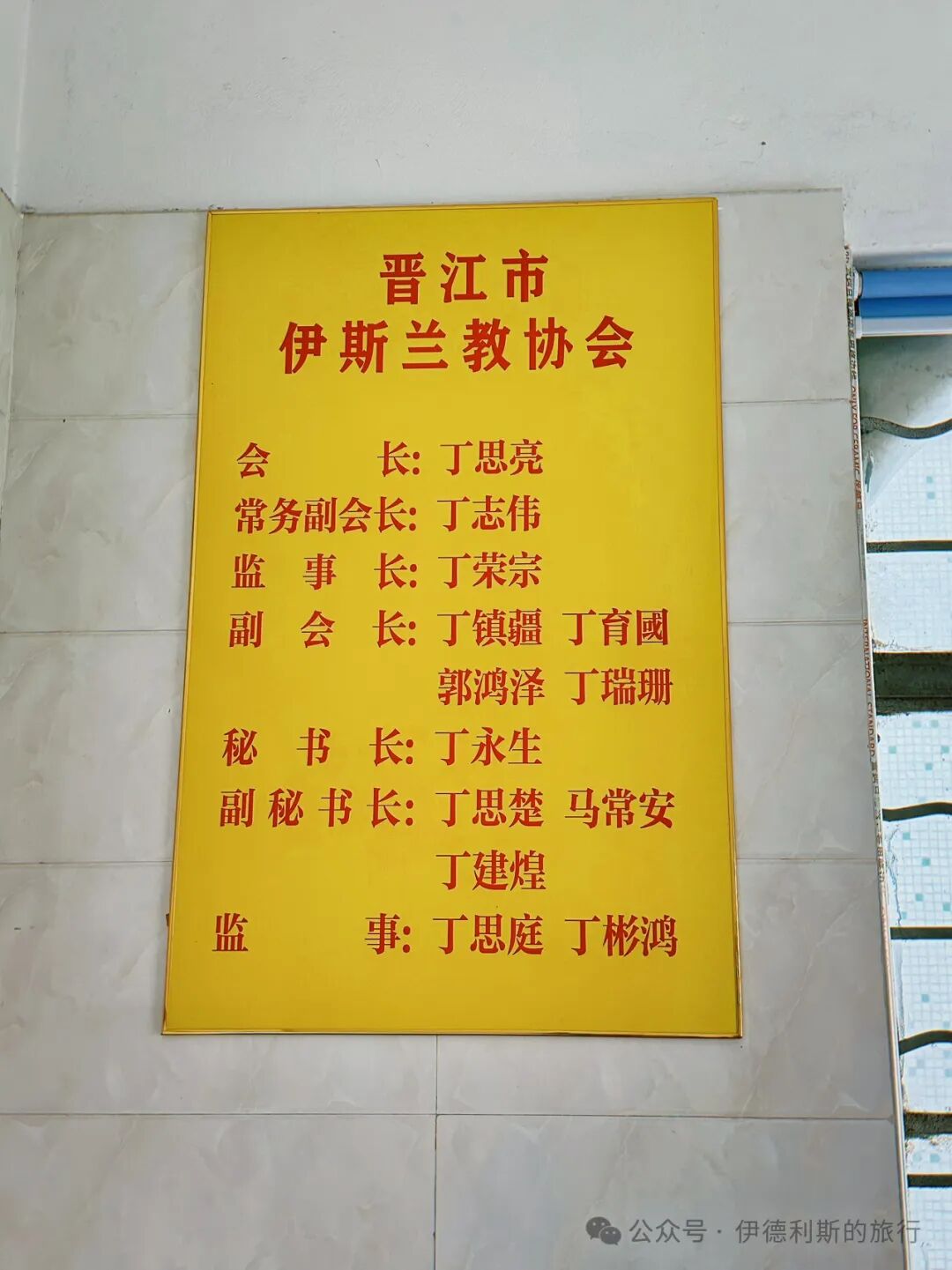
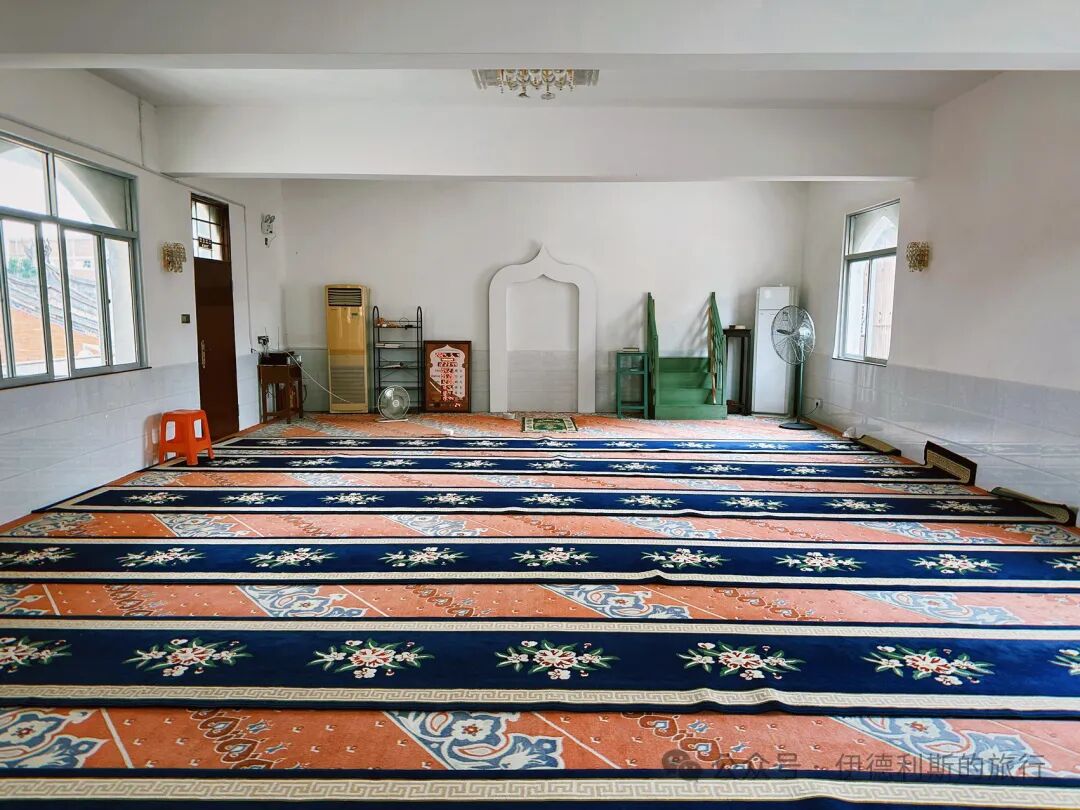
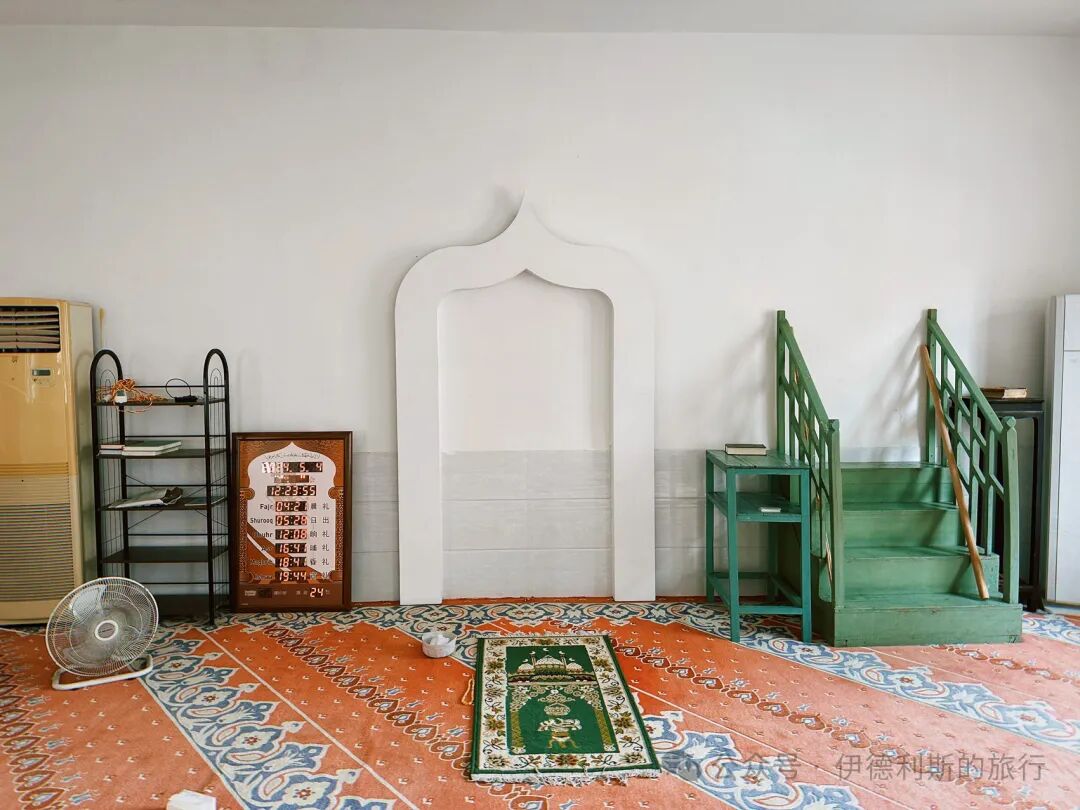
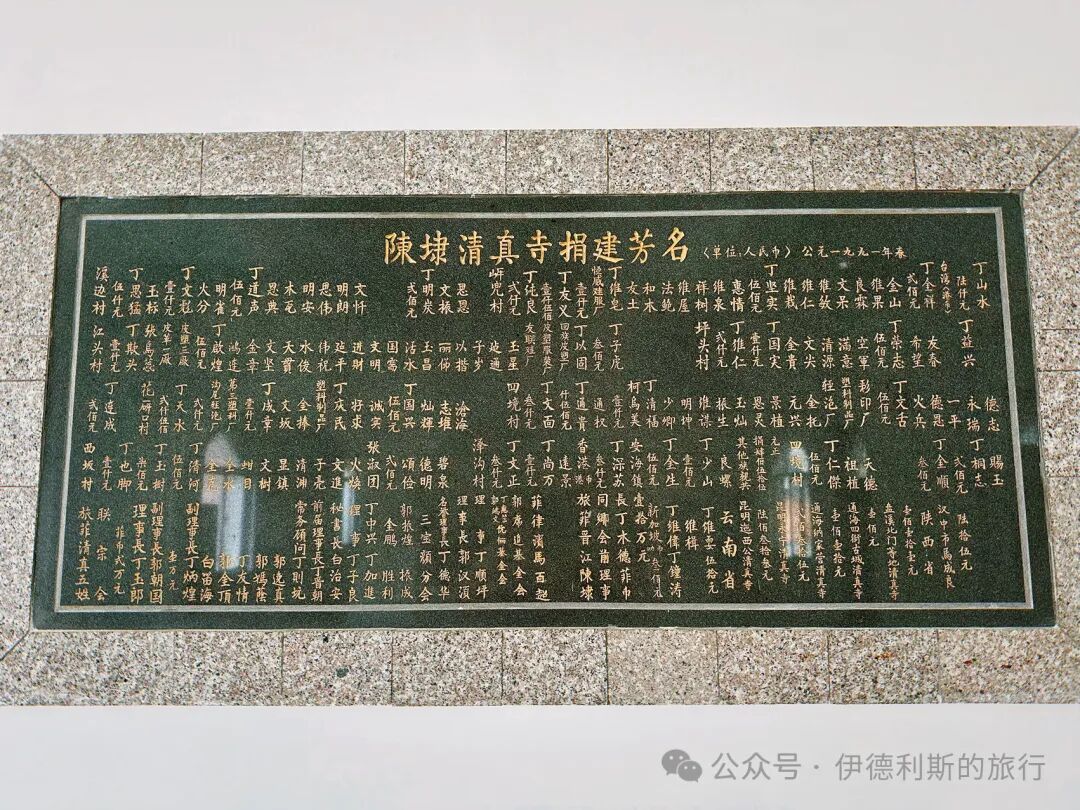
Inside the courtyard of Chendai Mosque stands a Tree of Friendship planted in 1991 by the UNESCO Maritime Silk Road expedition team and the then-ambassadors to China from Saudi Arabia, Qatar, and Bahrain. It is now lush and green.
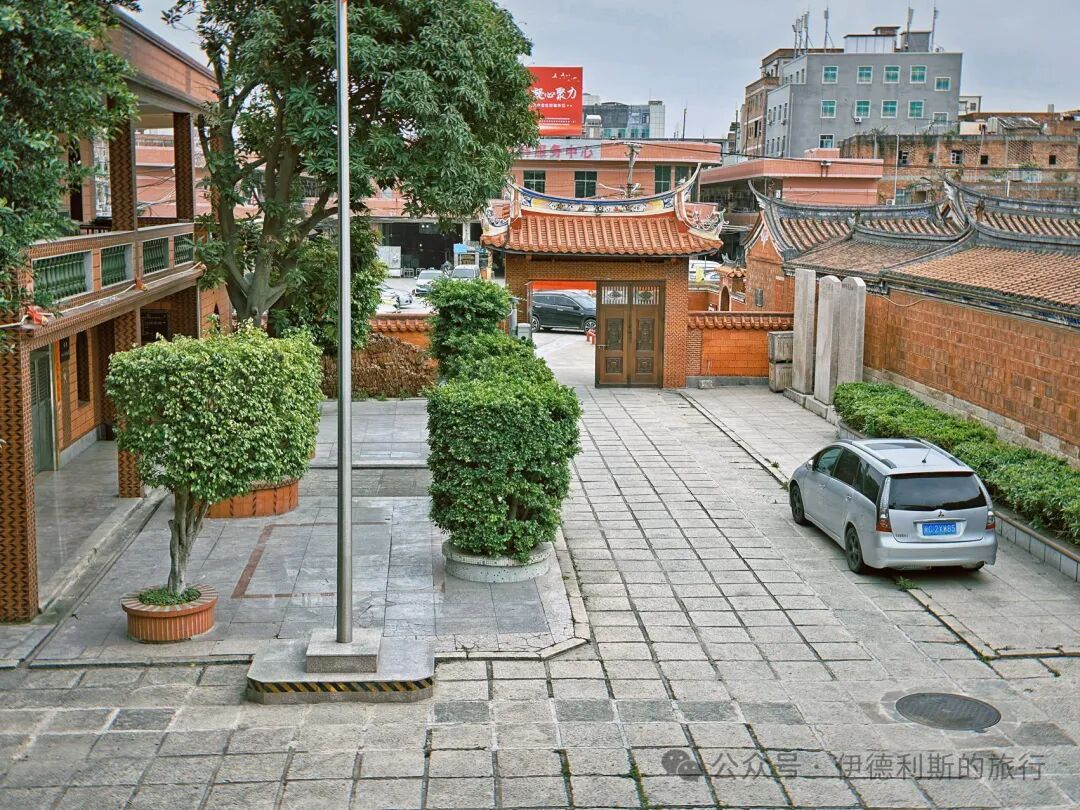
The Chendai Hui Muslim History Museum is located inside the Ding Family Ancestral Hall, and you can enter it directly from the courtyard of Chendai Mosque. The Ding Family Ancestral Hall was first built in the early 15th century. It was destroyed during the Wokou pirate raids in 1561 (the 40th year of the Jiajing reign). It was soon rebuilt under the leadership of Ding Yi and Ding Zishen, expanded again by Ding Rijin in 1599 (the 27th year of the Wanli reign), and renovated several times during the Xianfeng and Guangxu periods. The Chendai Hui Muslim History Museum opened inside the Ding Family Ancestral Hall in 1984 to display the cultural heritage of the Chendai Ding Hui Muslims.
The Chendai Hui Muslims History Museum is usually closed. Just call Uncle Ding, the caretaker, using the number on the wall by the door. He will come over to open it for you, and admission is free.
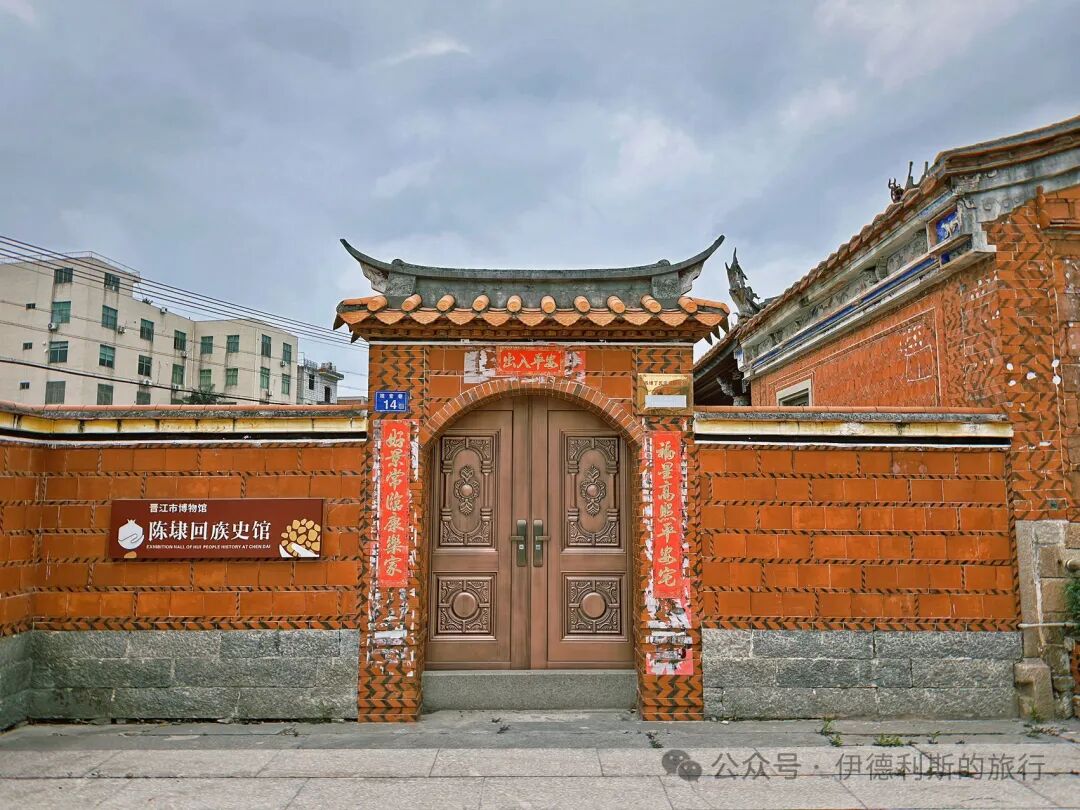
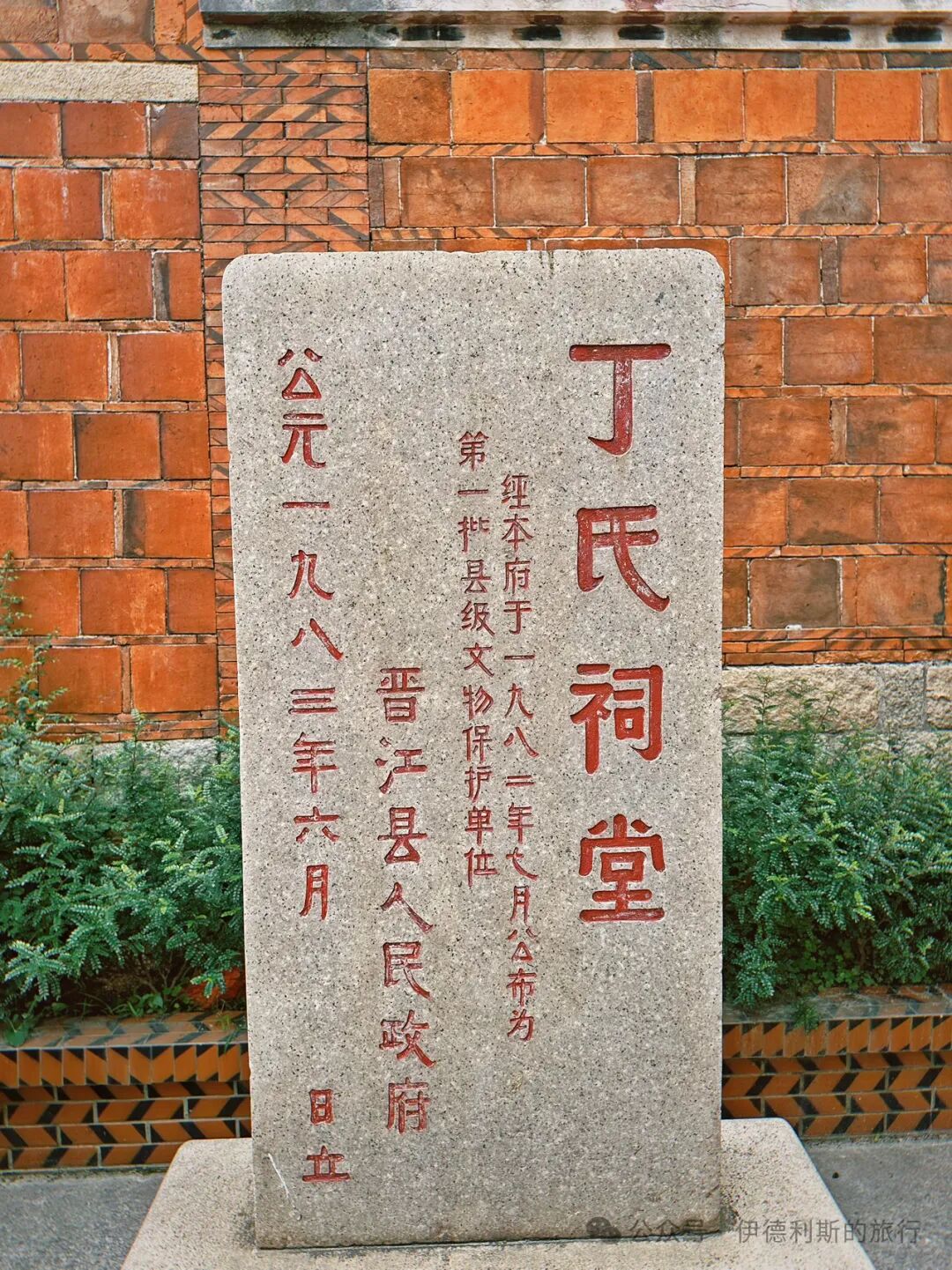
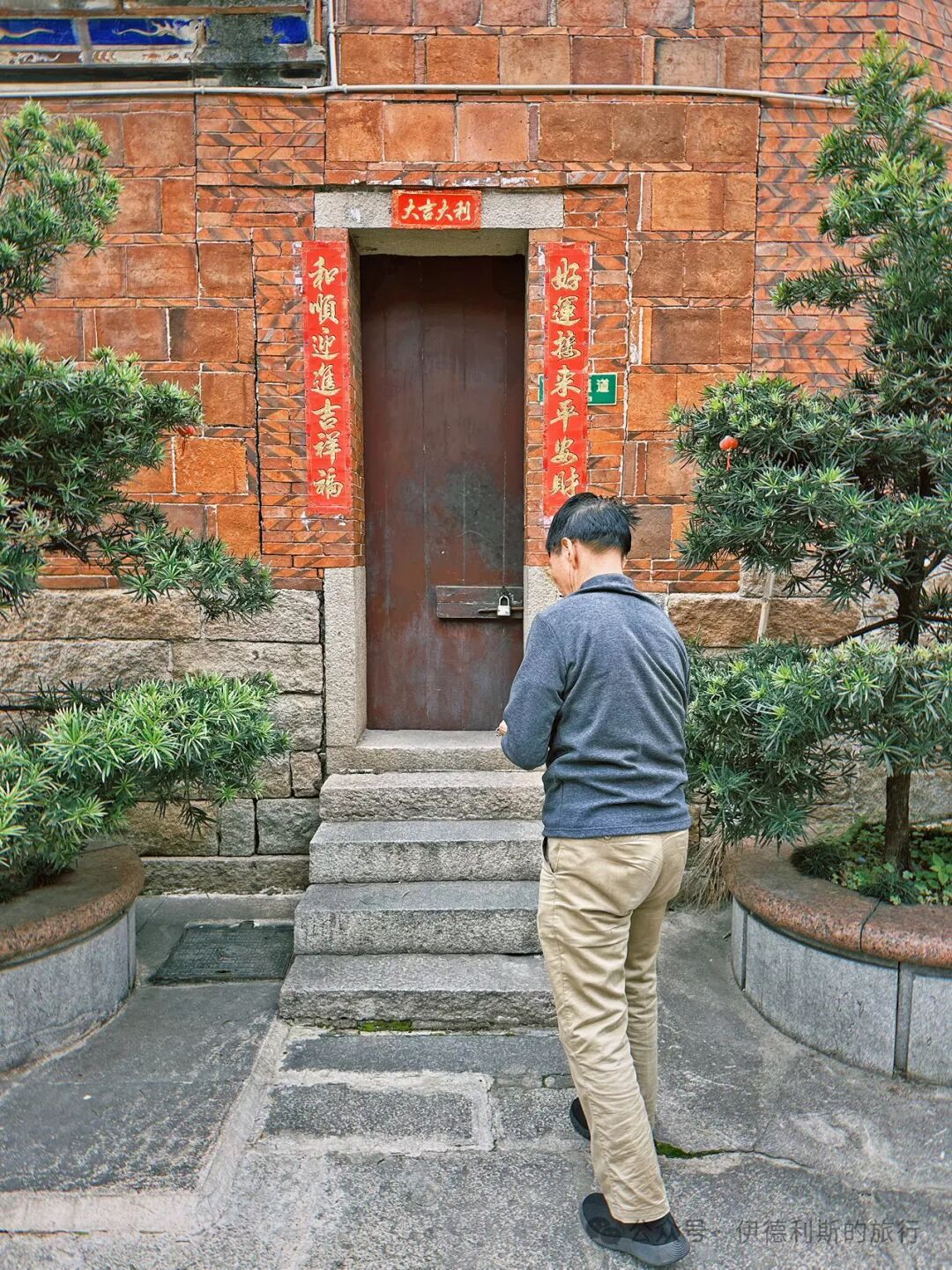
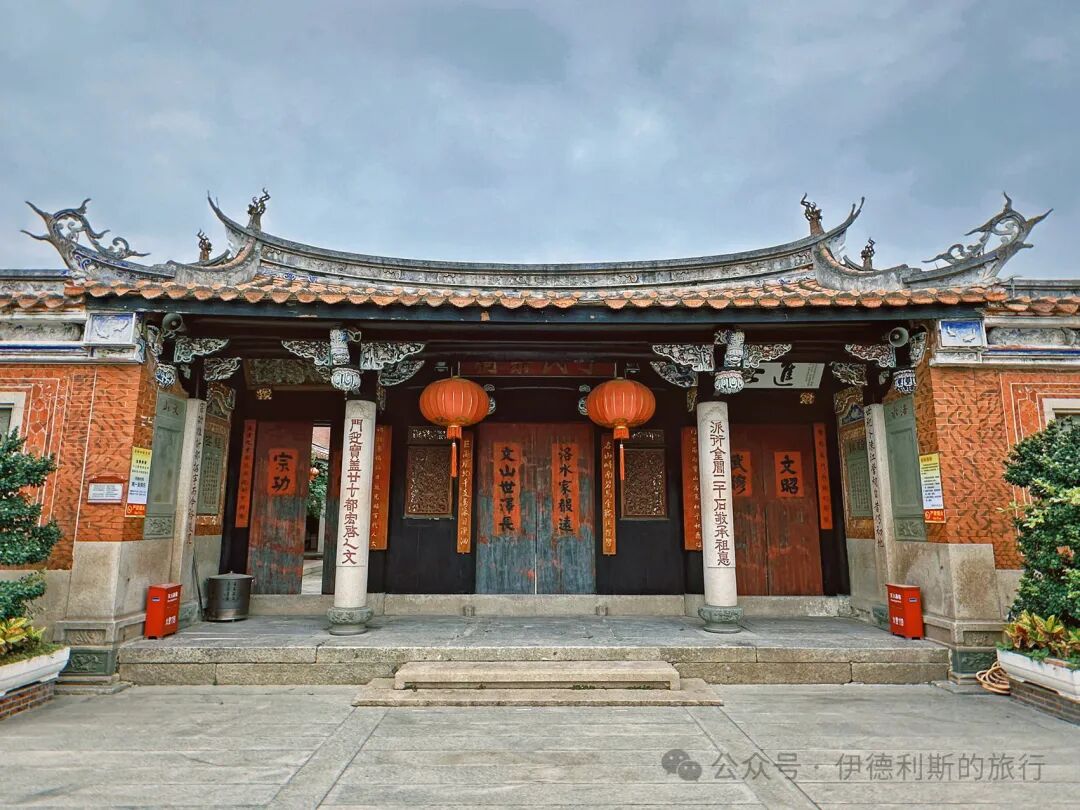
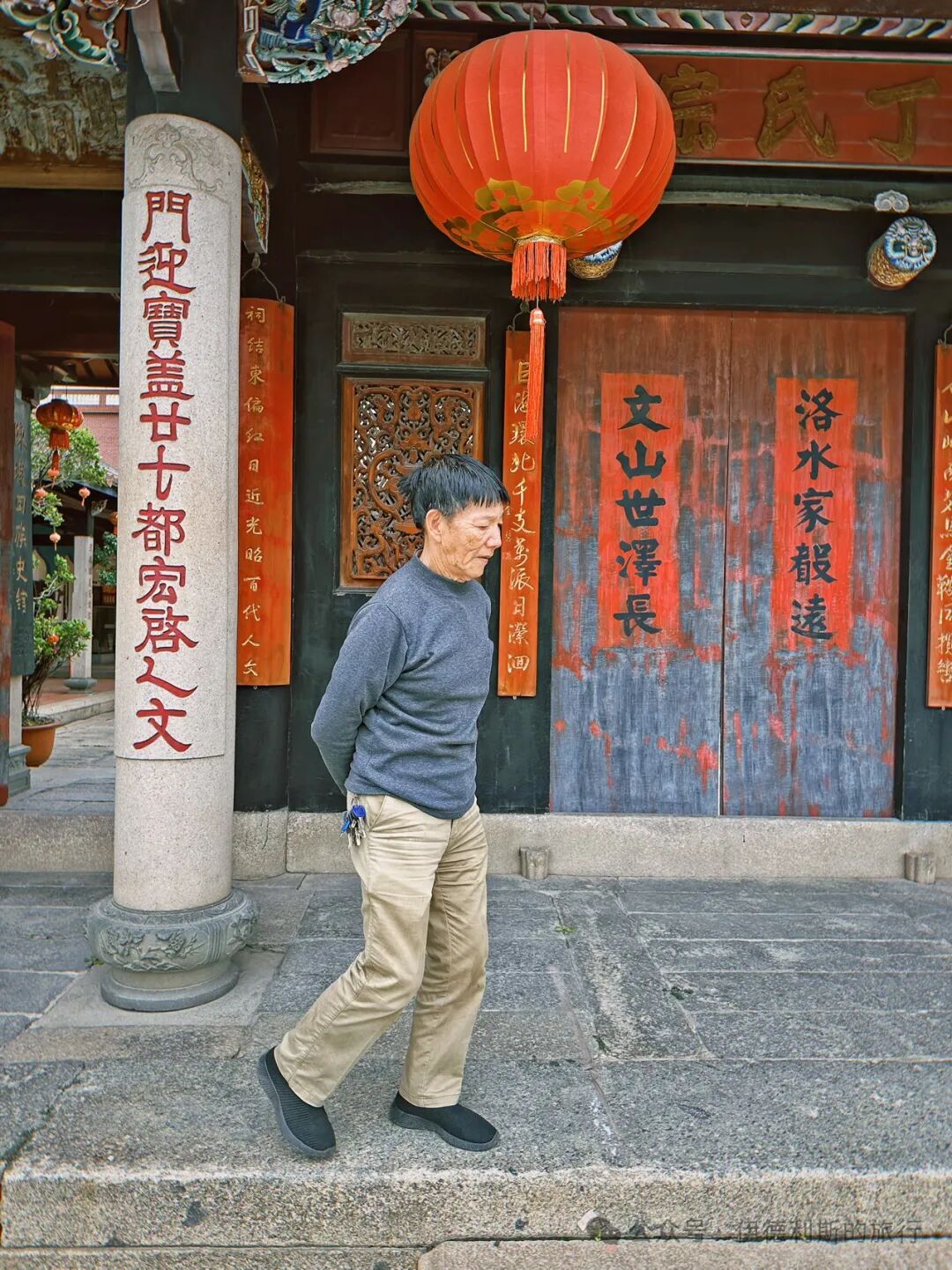
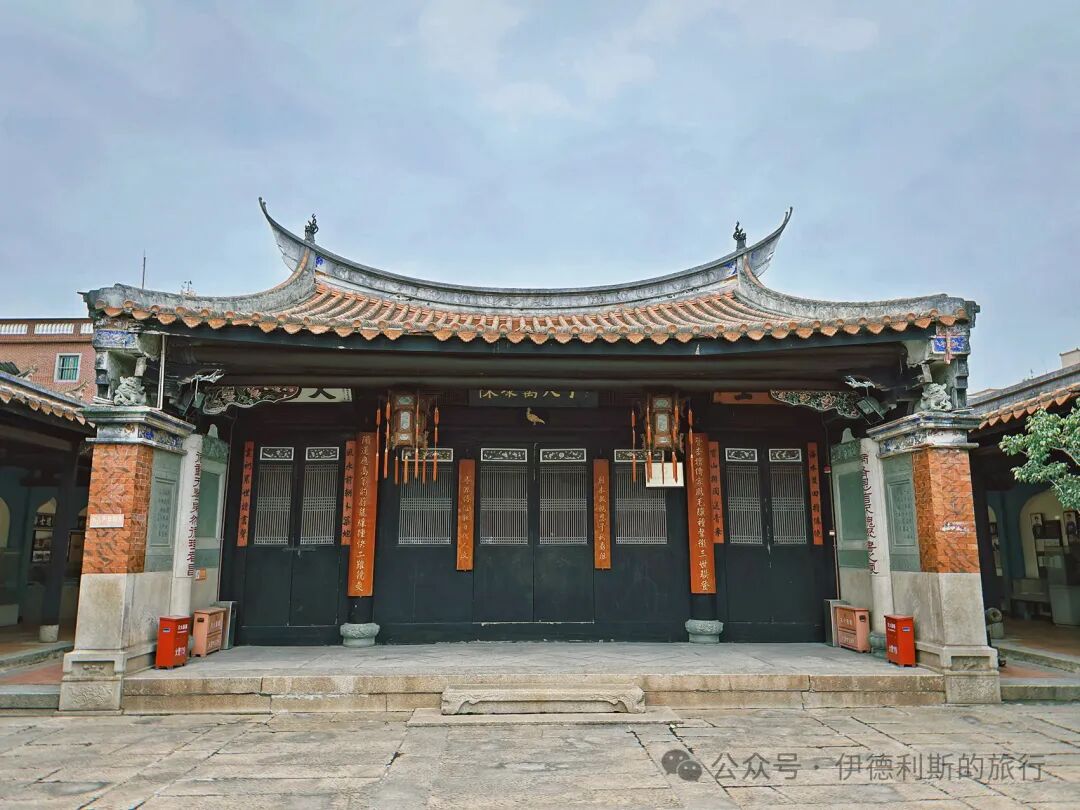
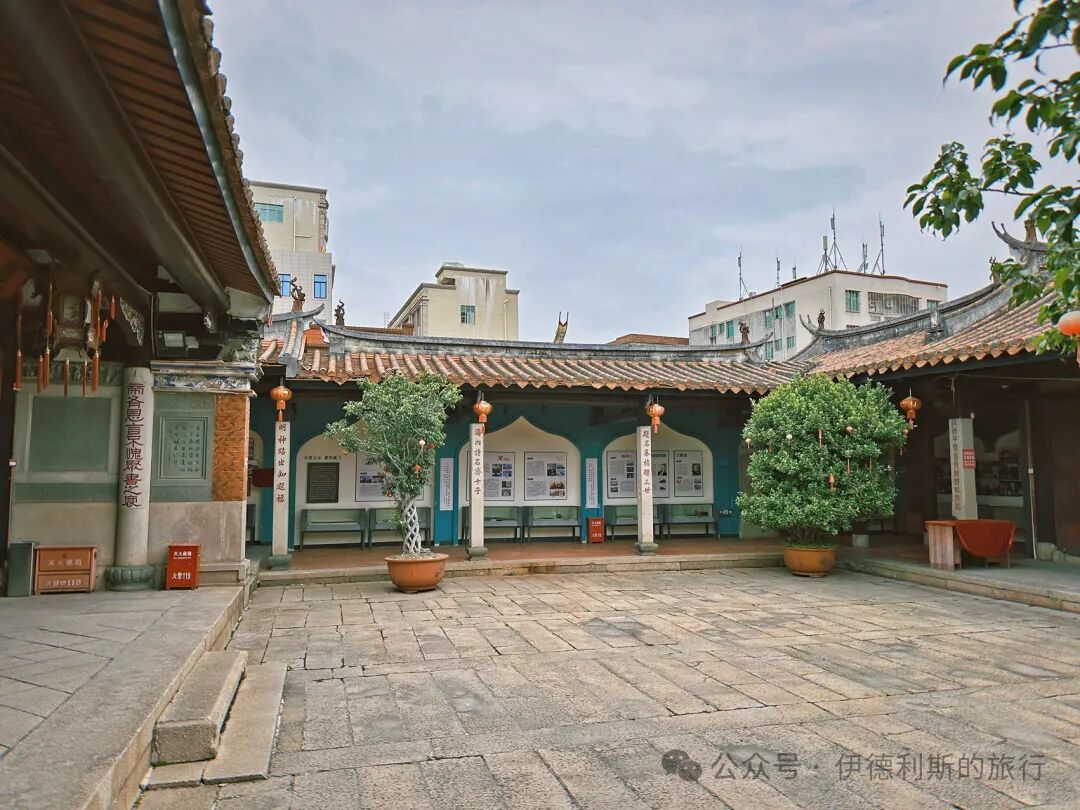
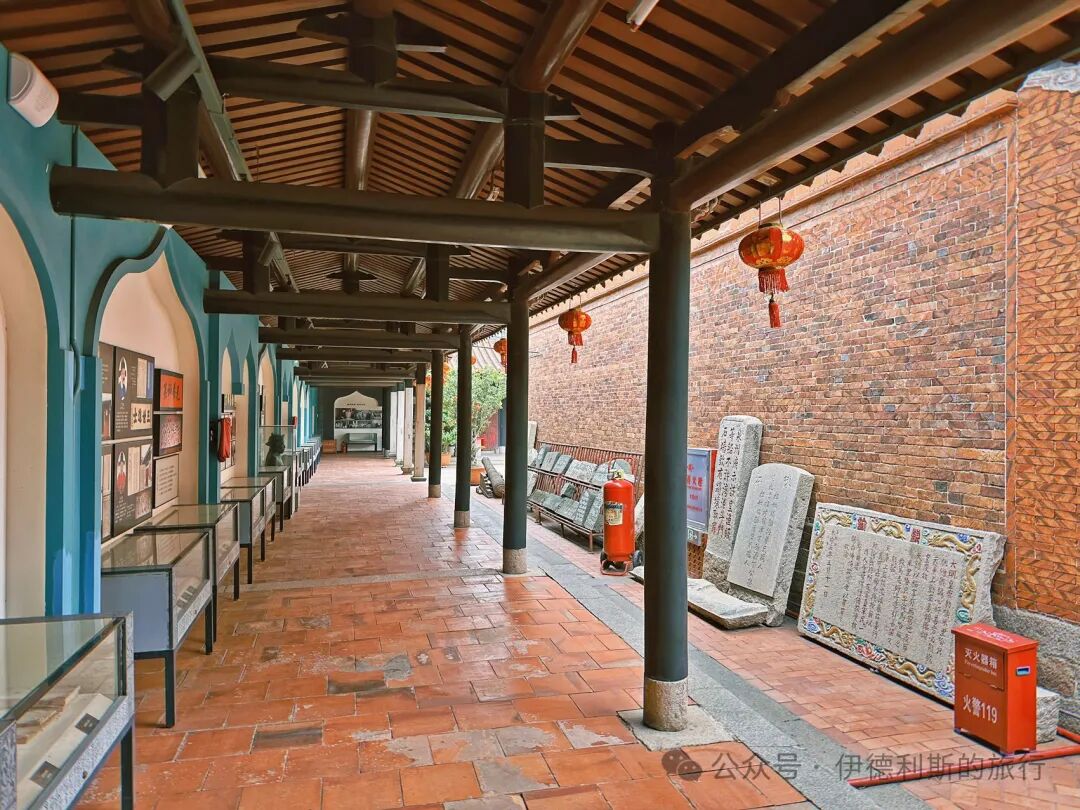
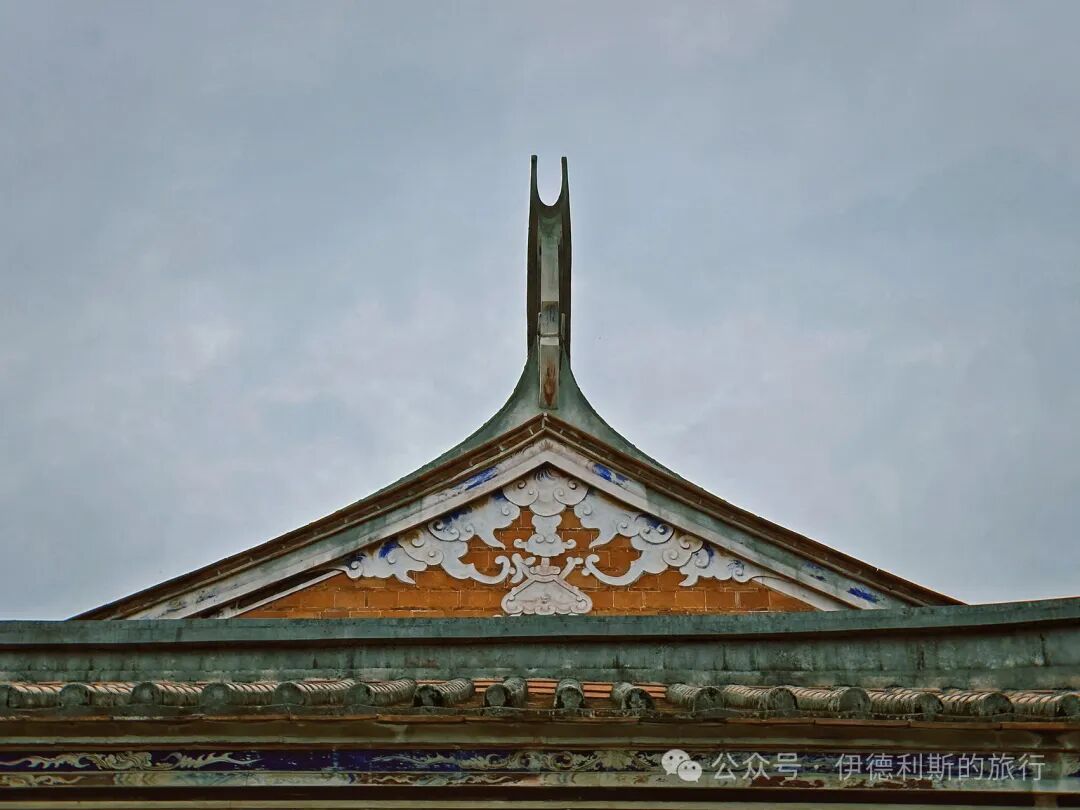
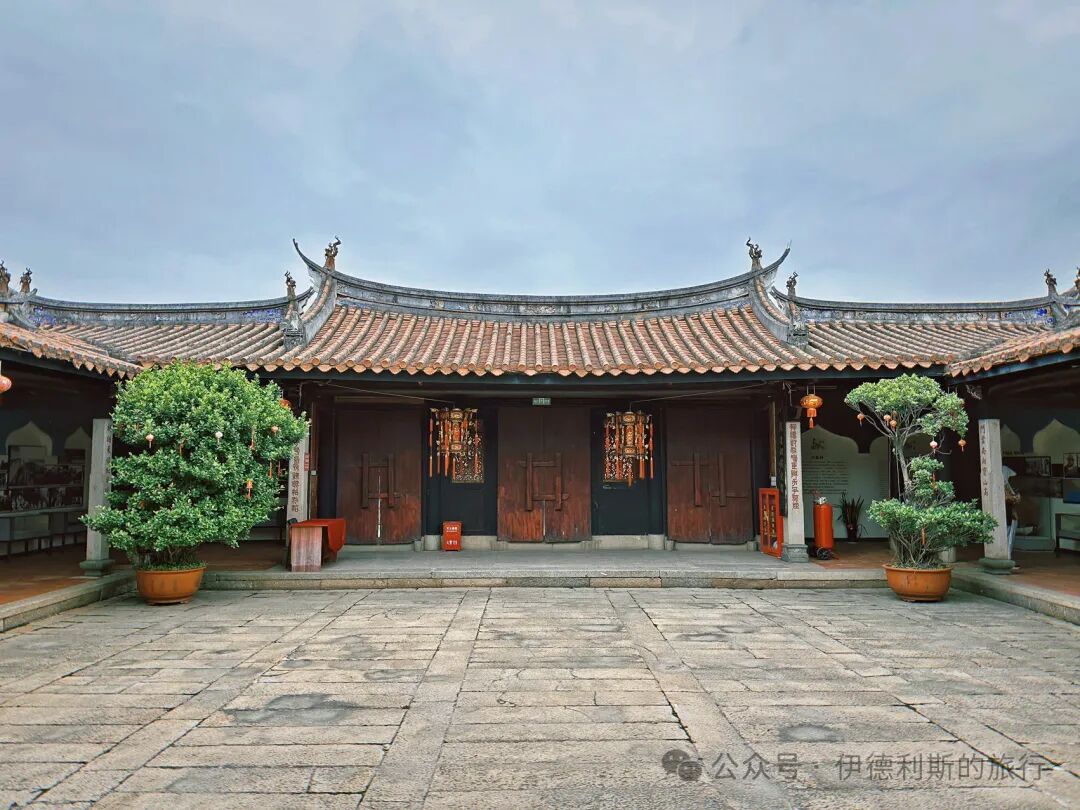
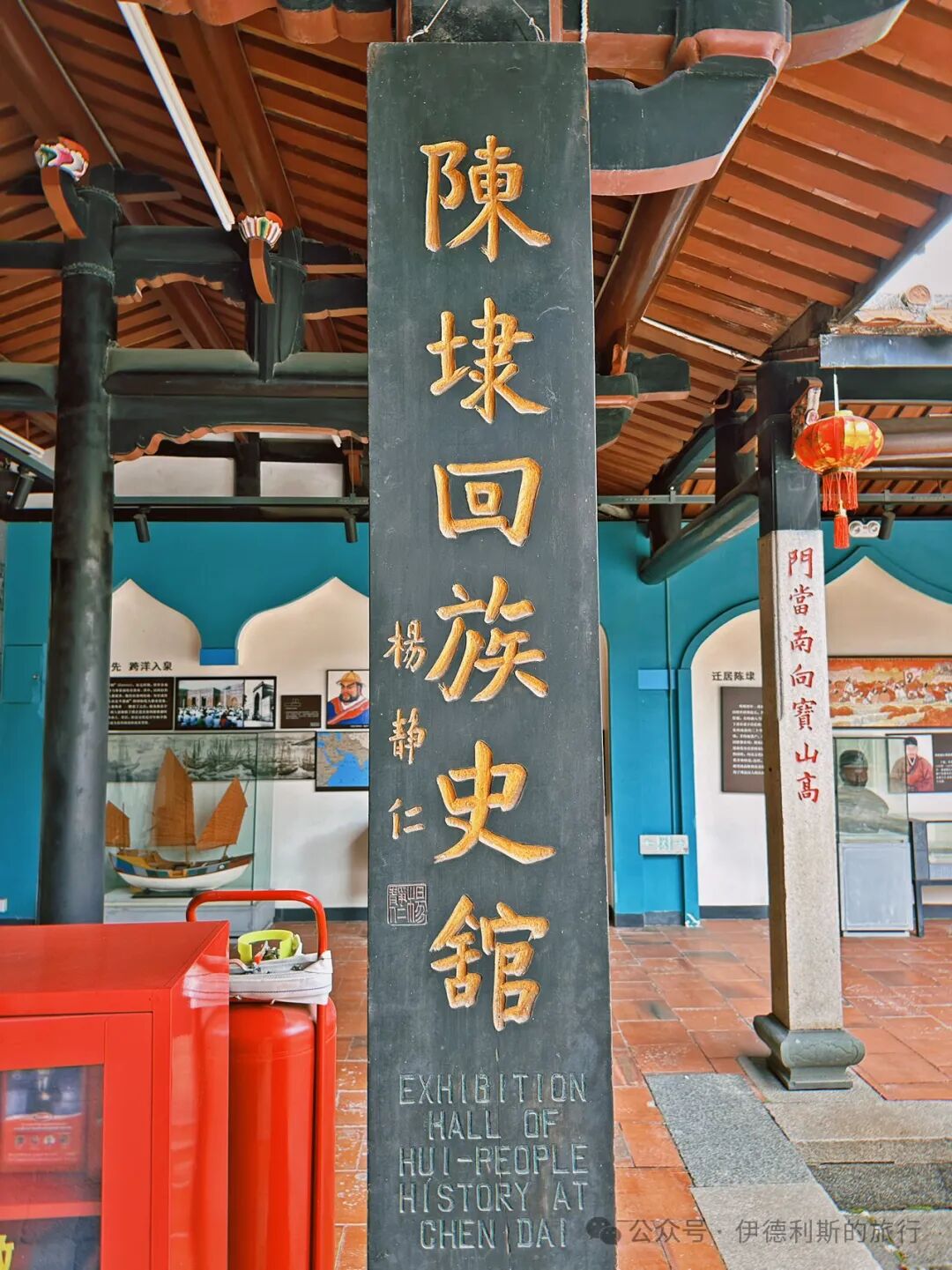
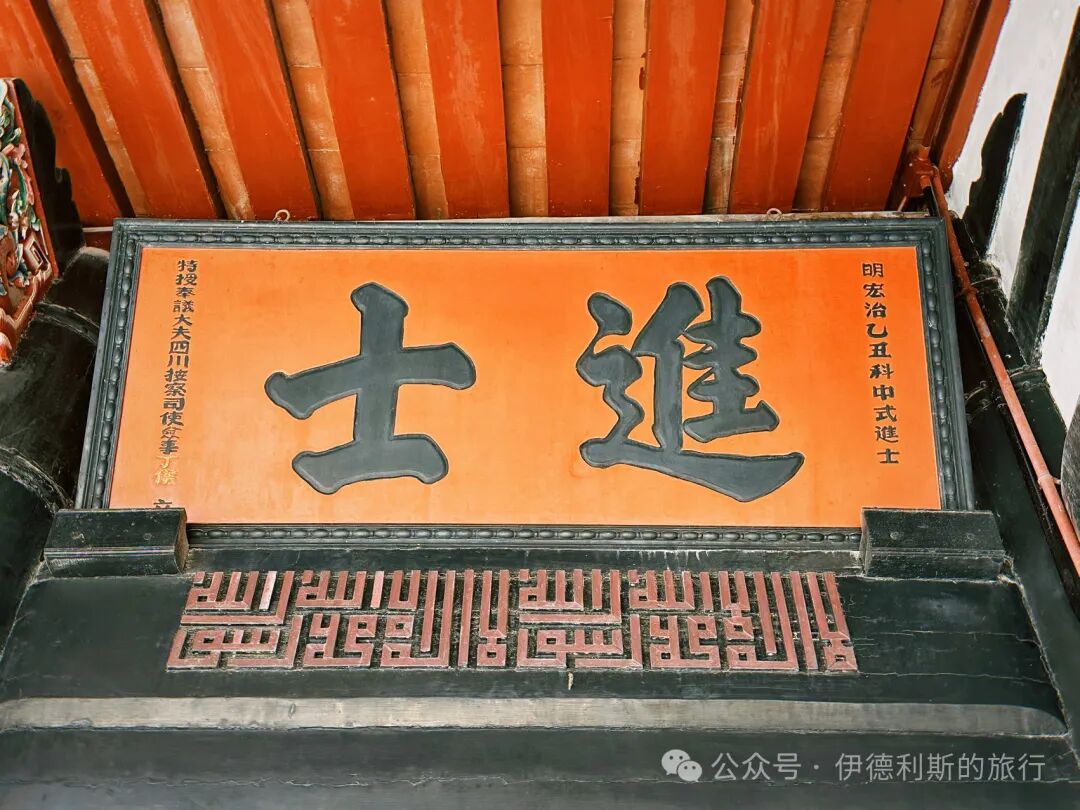
Inside the museum, you can see plaques for the Chendai Hui Muslims History Museum and the Chendai Ten Thousand Dings, both inscribed by Yang Jingren, who served as the head of the United Front Work Department and the director of the State Ethnic Affairs Commission. Next to the plaques, there are beautiful wood carvings of Kufic script, which is a style of Arabic calligraphy.
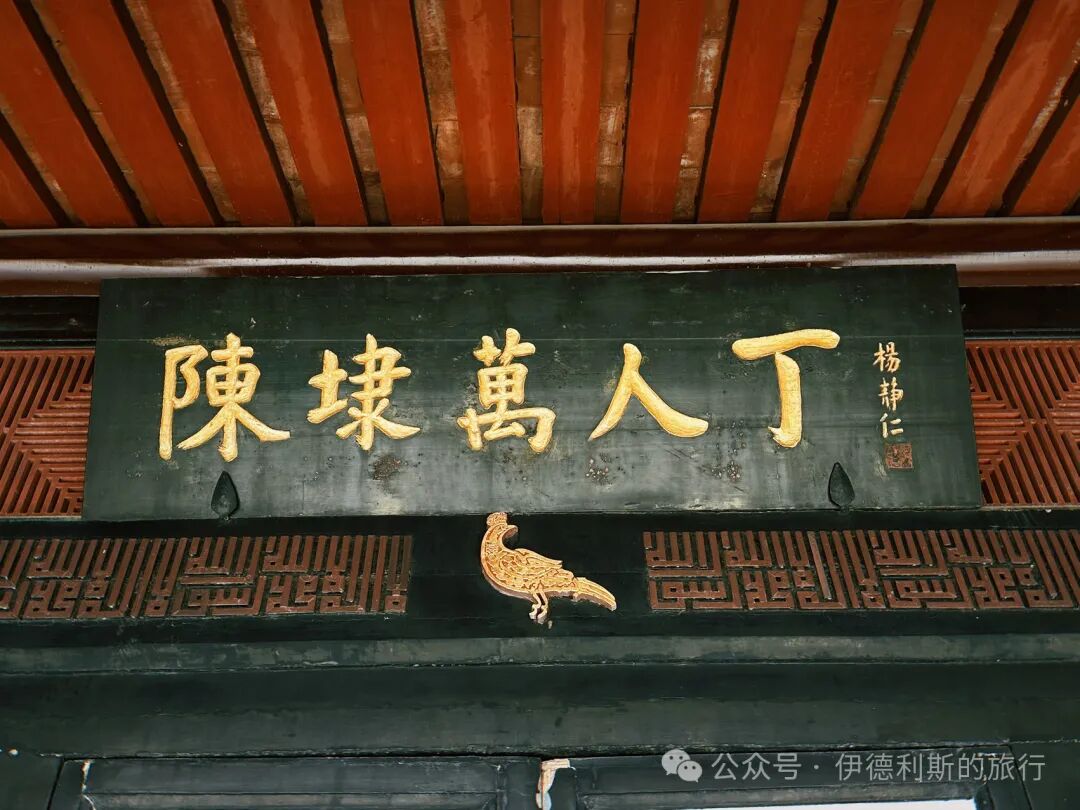
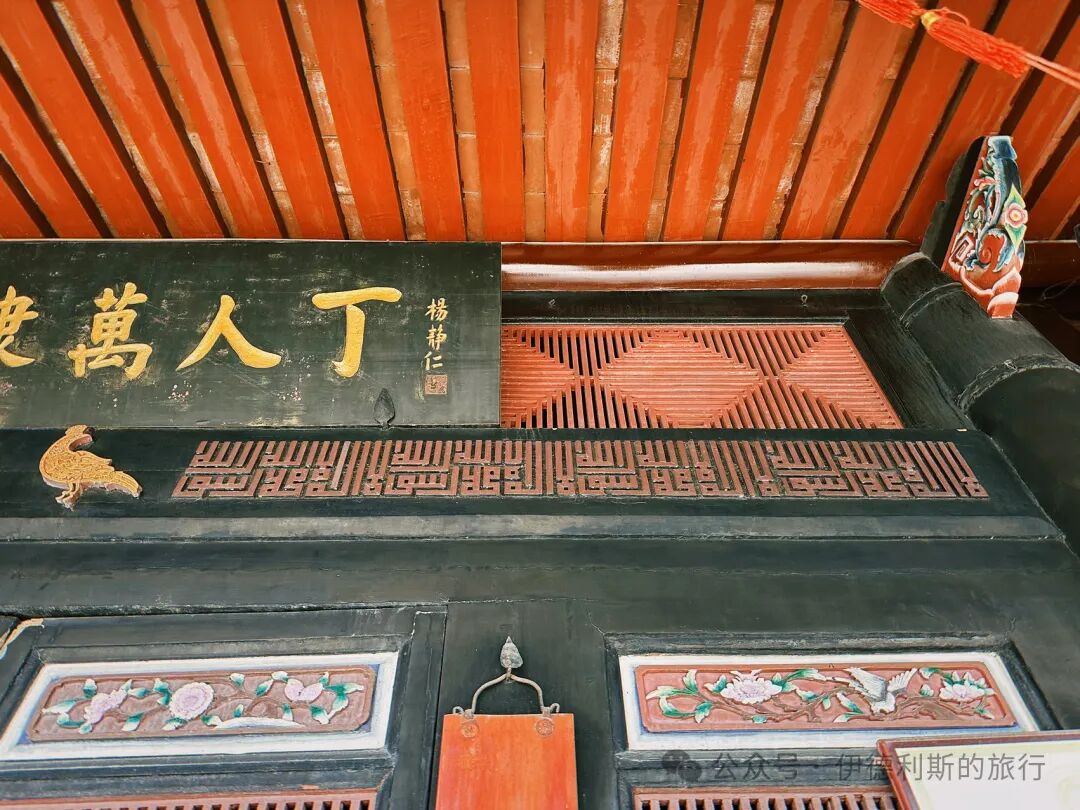
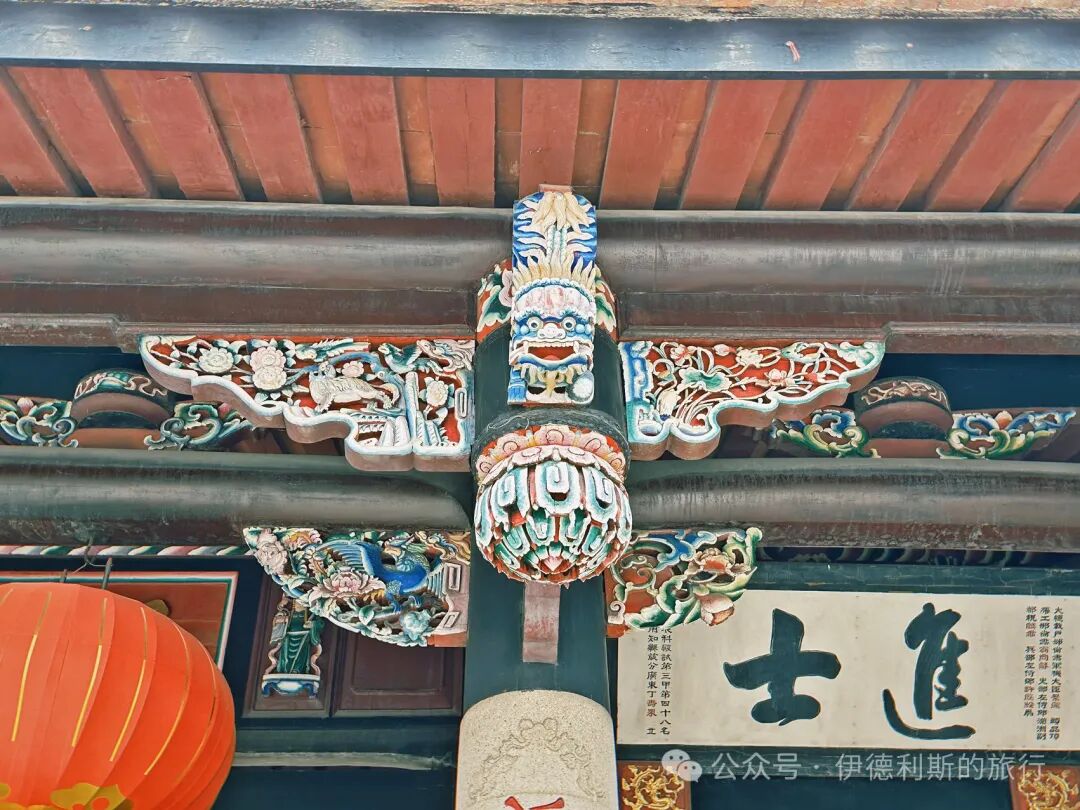
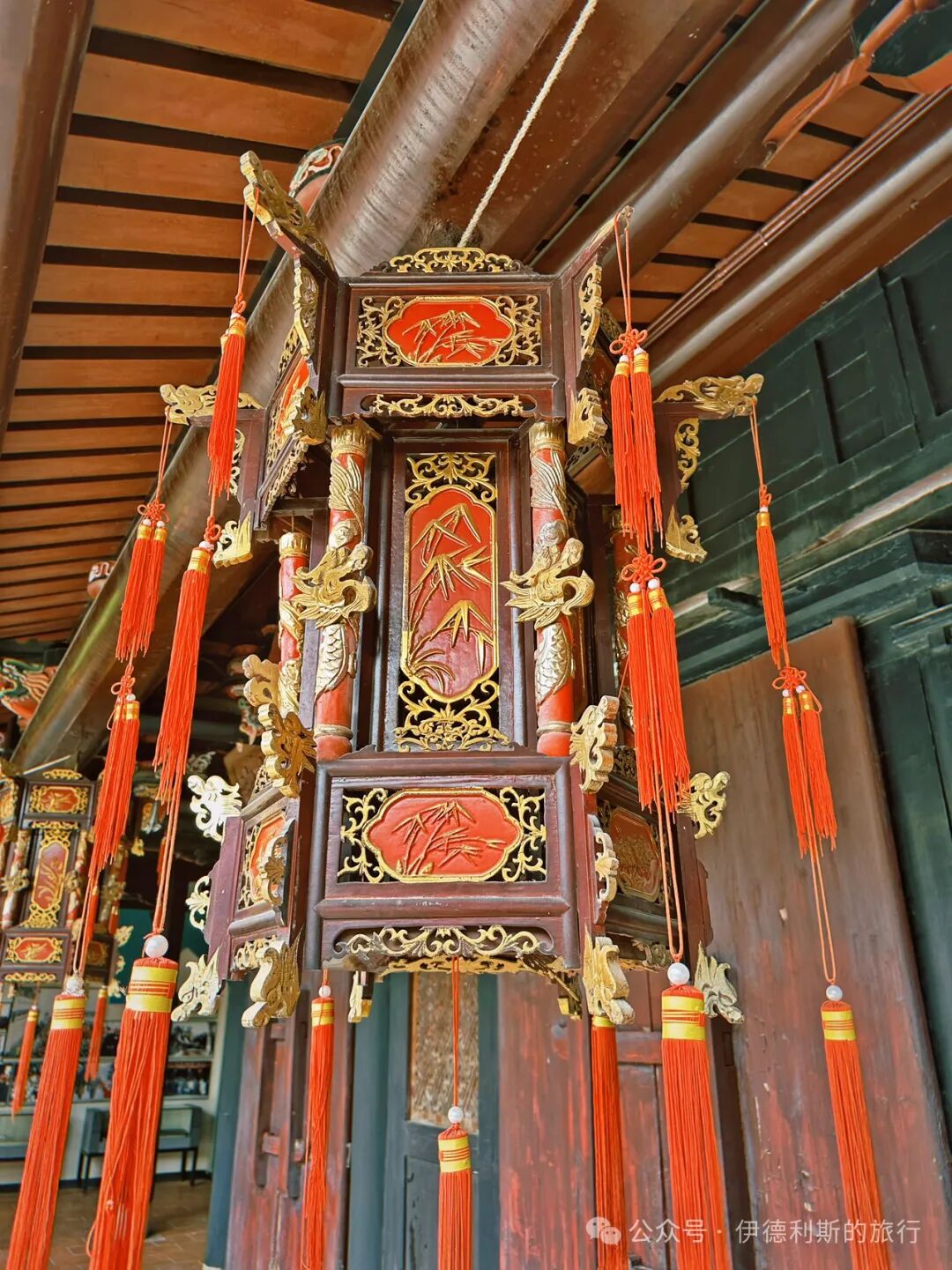
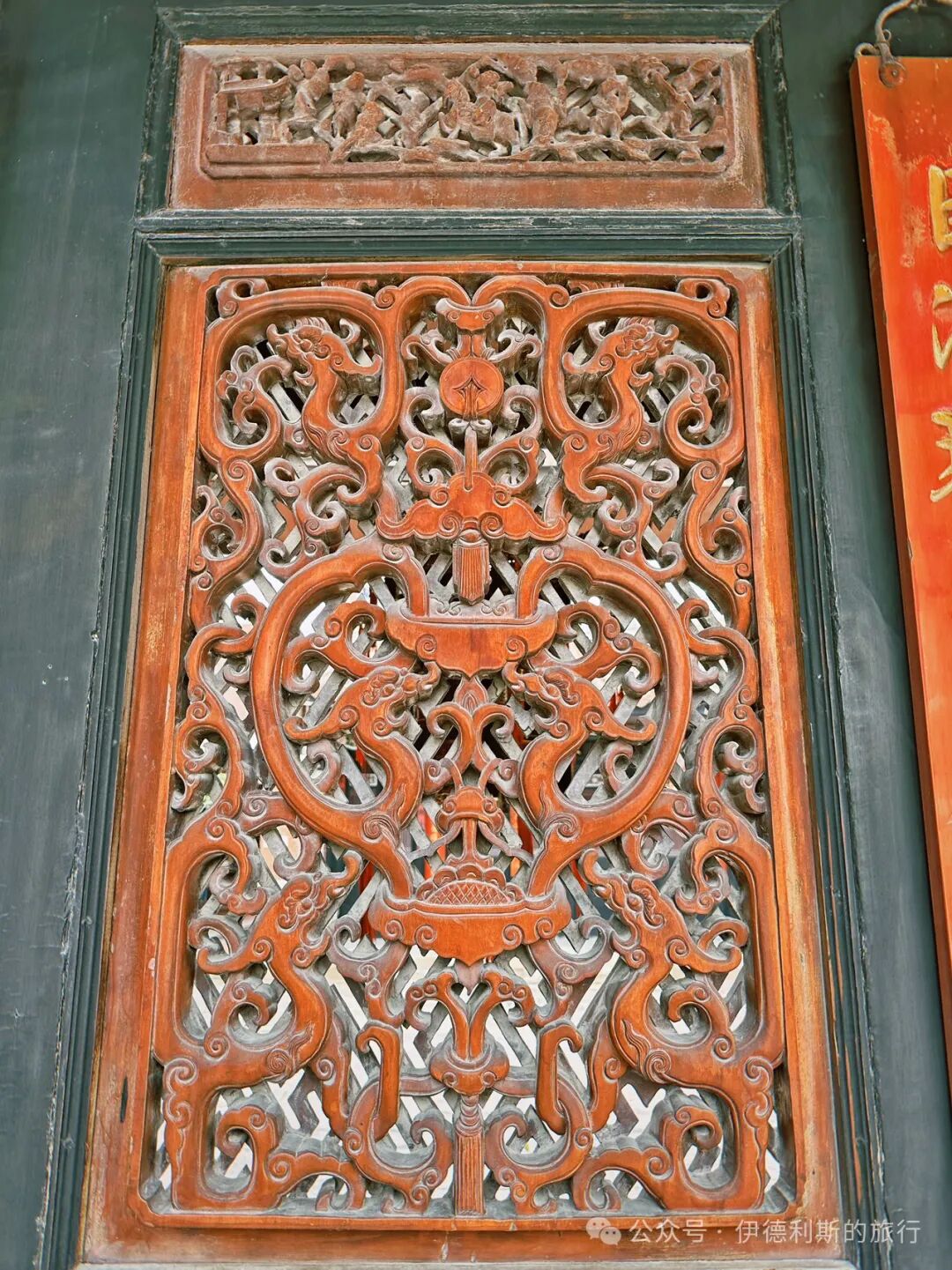
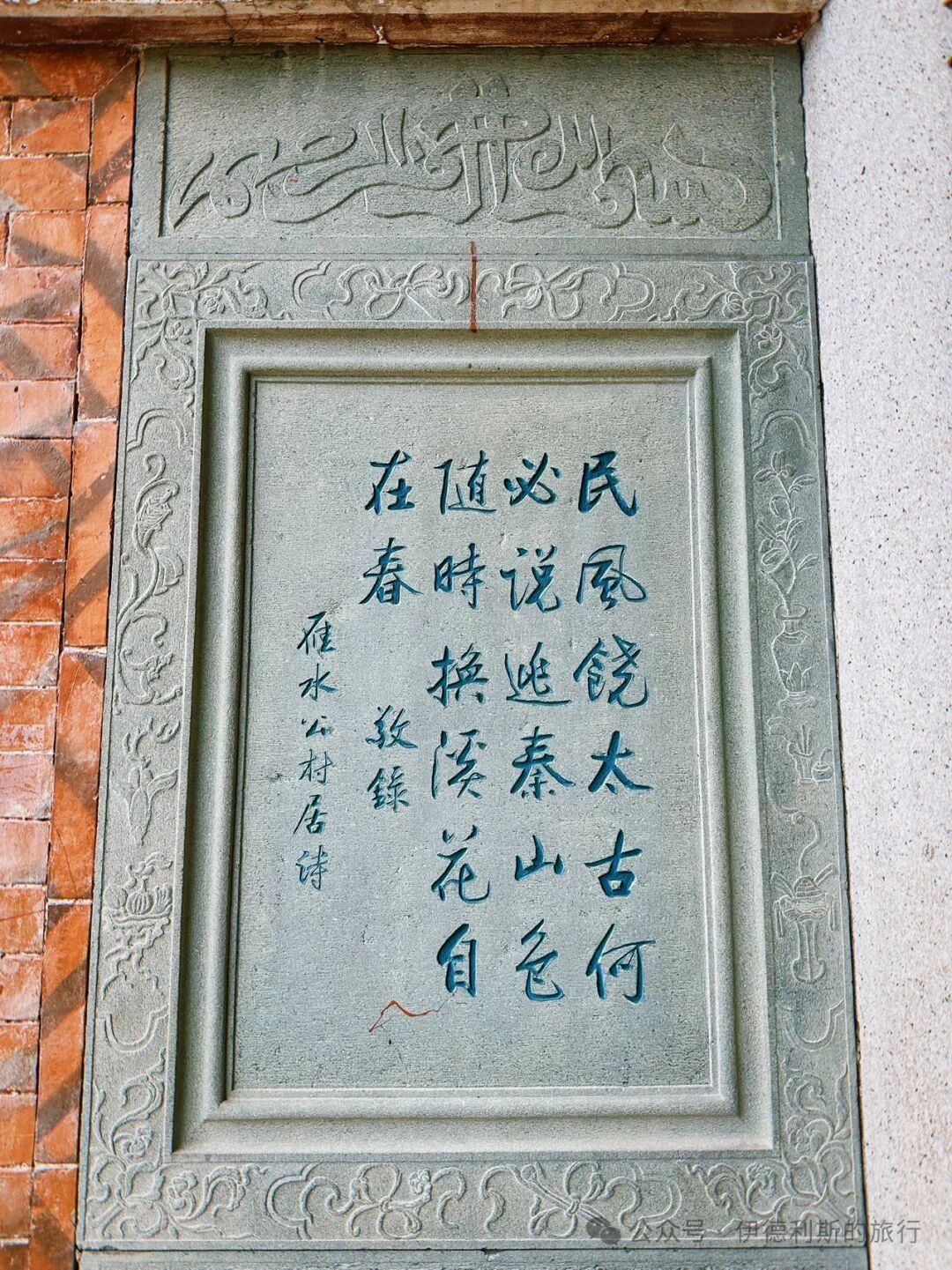
The auspicious bird symbol of the Chendai Ding family reminds people of the Lion of Ali emblem found on walls in Shia communities in Bangkok. These are all symbols of ethnic identity.
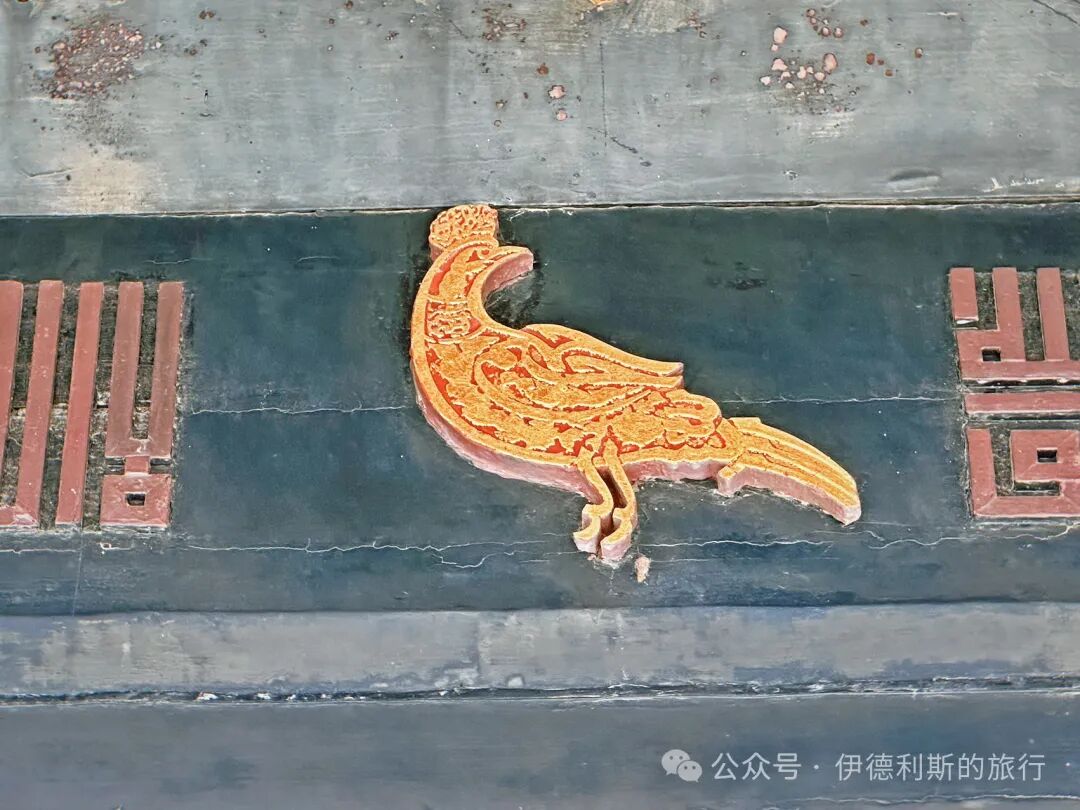
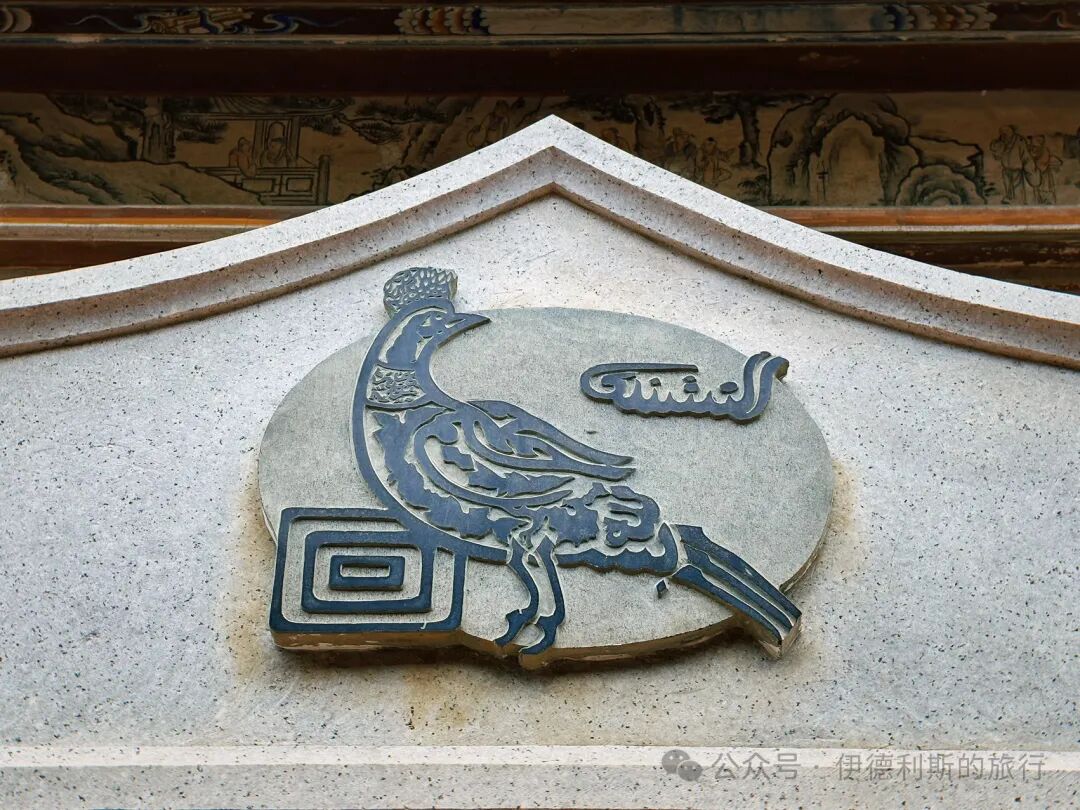
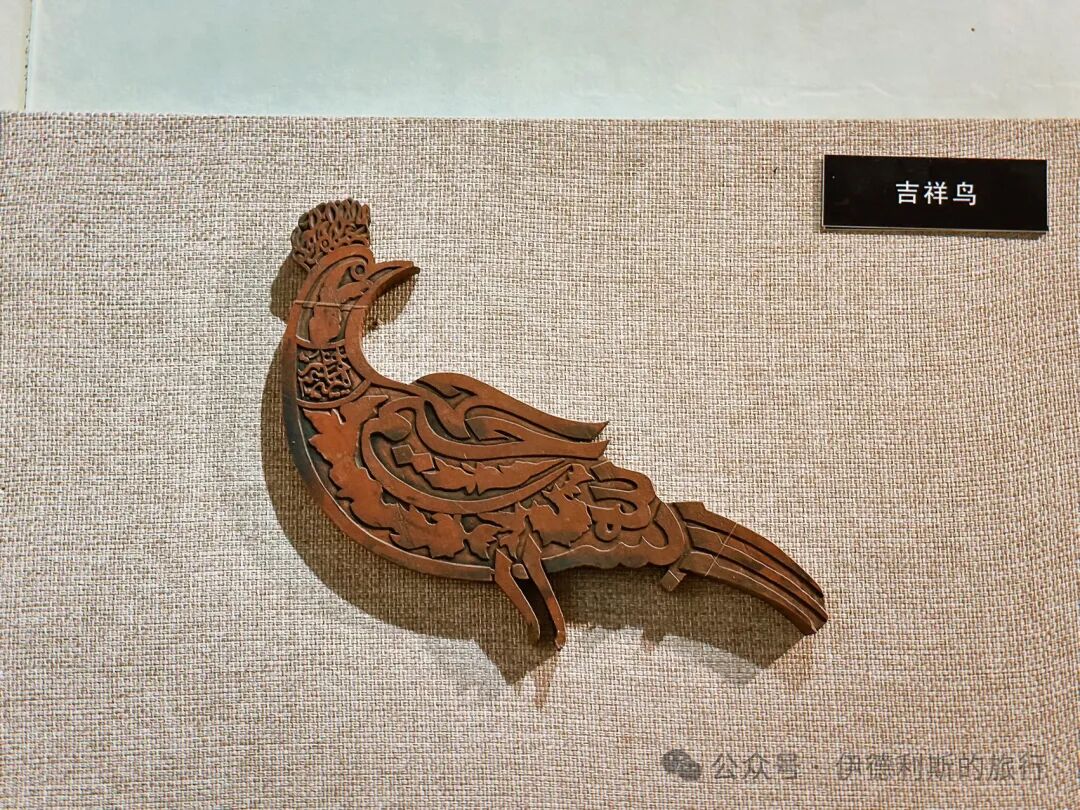
The most important artifact in the Chendai Hui Muslims History Museum is the tombstone of Ding Jiezhai, the ancestor of the Chendai Ding family. The front of the tombstone is inscribed with 'Erected in the winter of the fourth year of the Taiding era (1327), Tomb of Ding Jiezhai of the Great Yuan,' and the back says 'Buried at the original site of Lingtang Mountain in Dongtangtou.' Wu Wenliang discovered the Ding Jiezhai tombstone in 1940 while digging at the foundation of the East Gate in Quanzhou. In 2003, his children donated it to the Chendai Hui Muslims History Museum, where it is kept today.
According to the Ding family genealogy, the Ren'an Fujun Biography, 'Master Jiezhai came from Suzhou to trade in Minquan and chose to settle in Quanzhou city.' The inscription mentioning Dongtangtou Lingtang Mountain refers to the Lingshan Sacred Tomb, which has been the burial site for the Ding family of Chendai since the Yuan Dynasty.
Various stone carvings on display at the Chendai Hui Muslims History Museum.
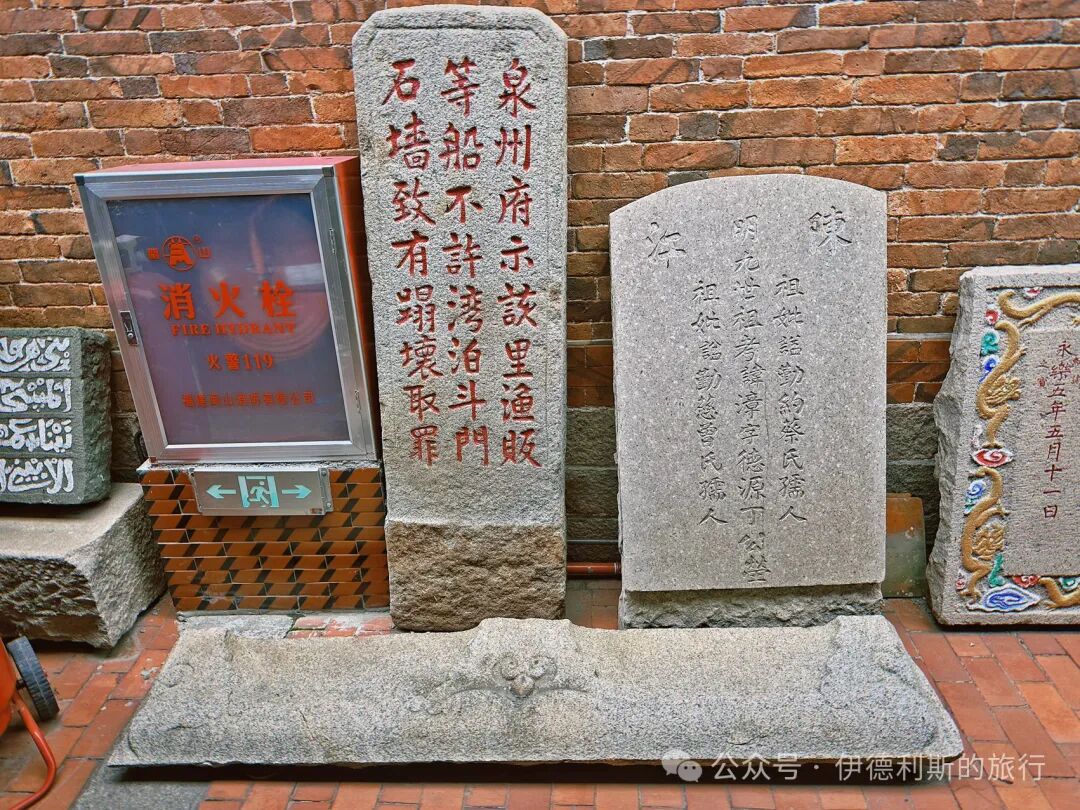
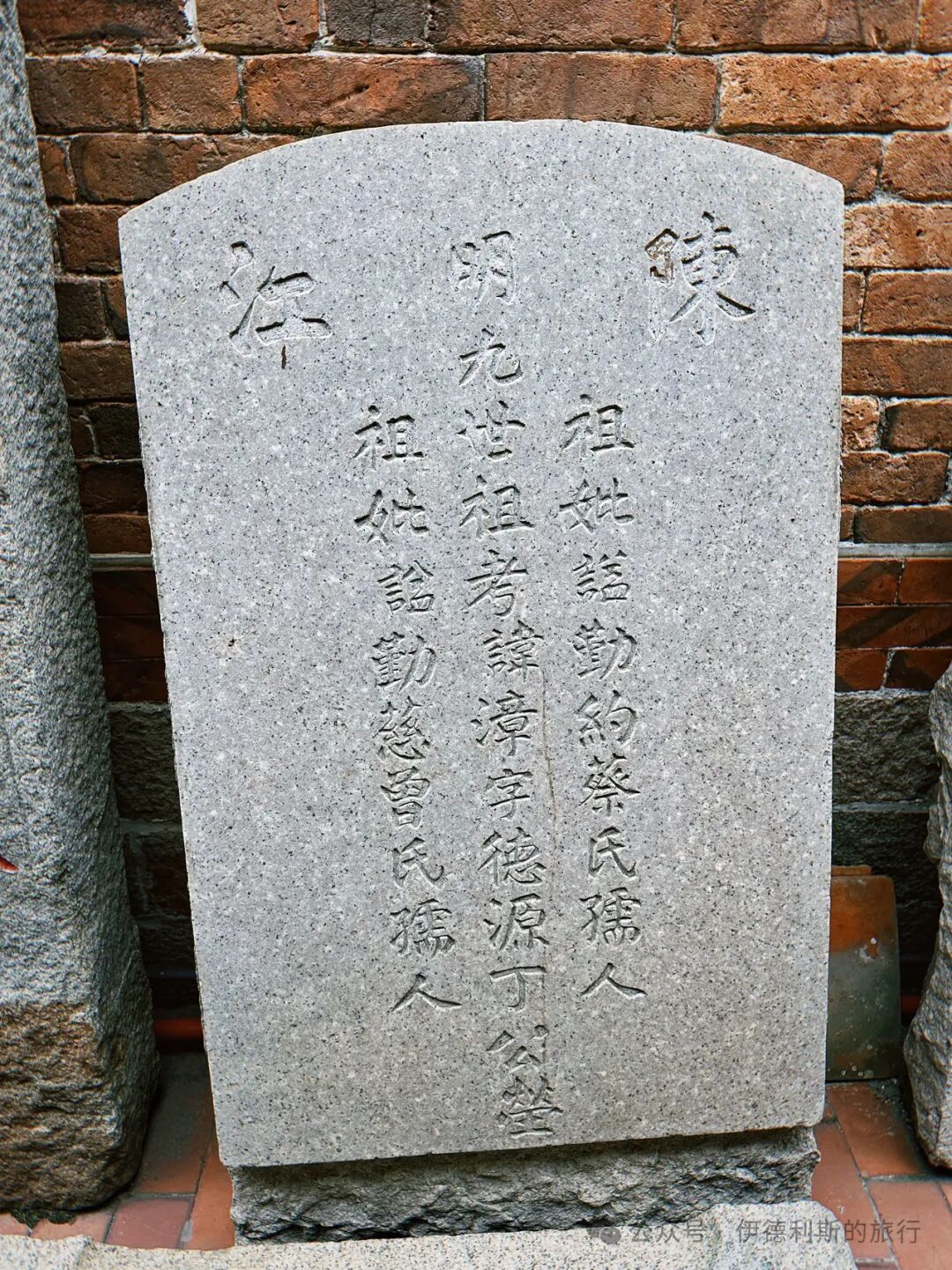
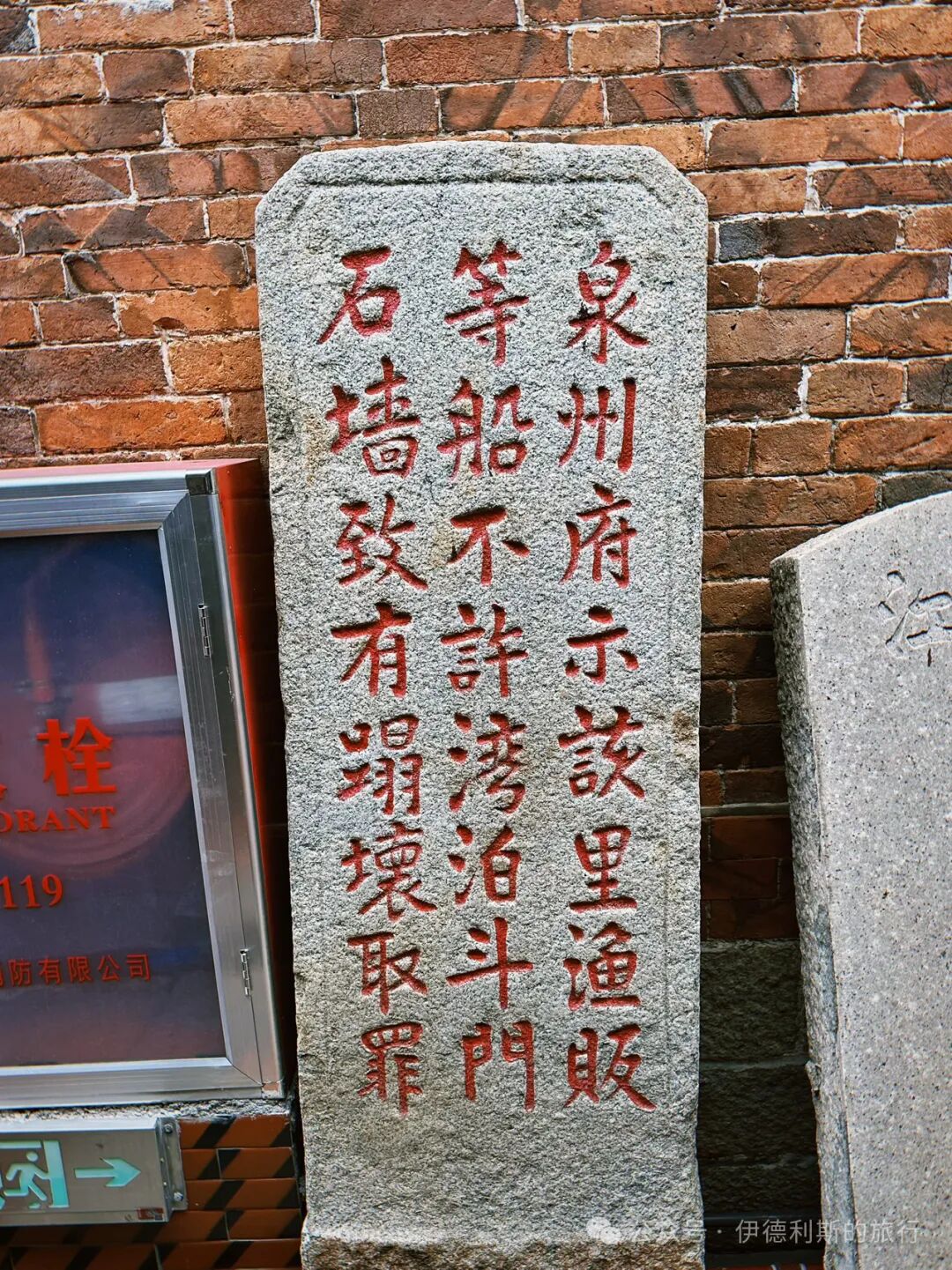
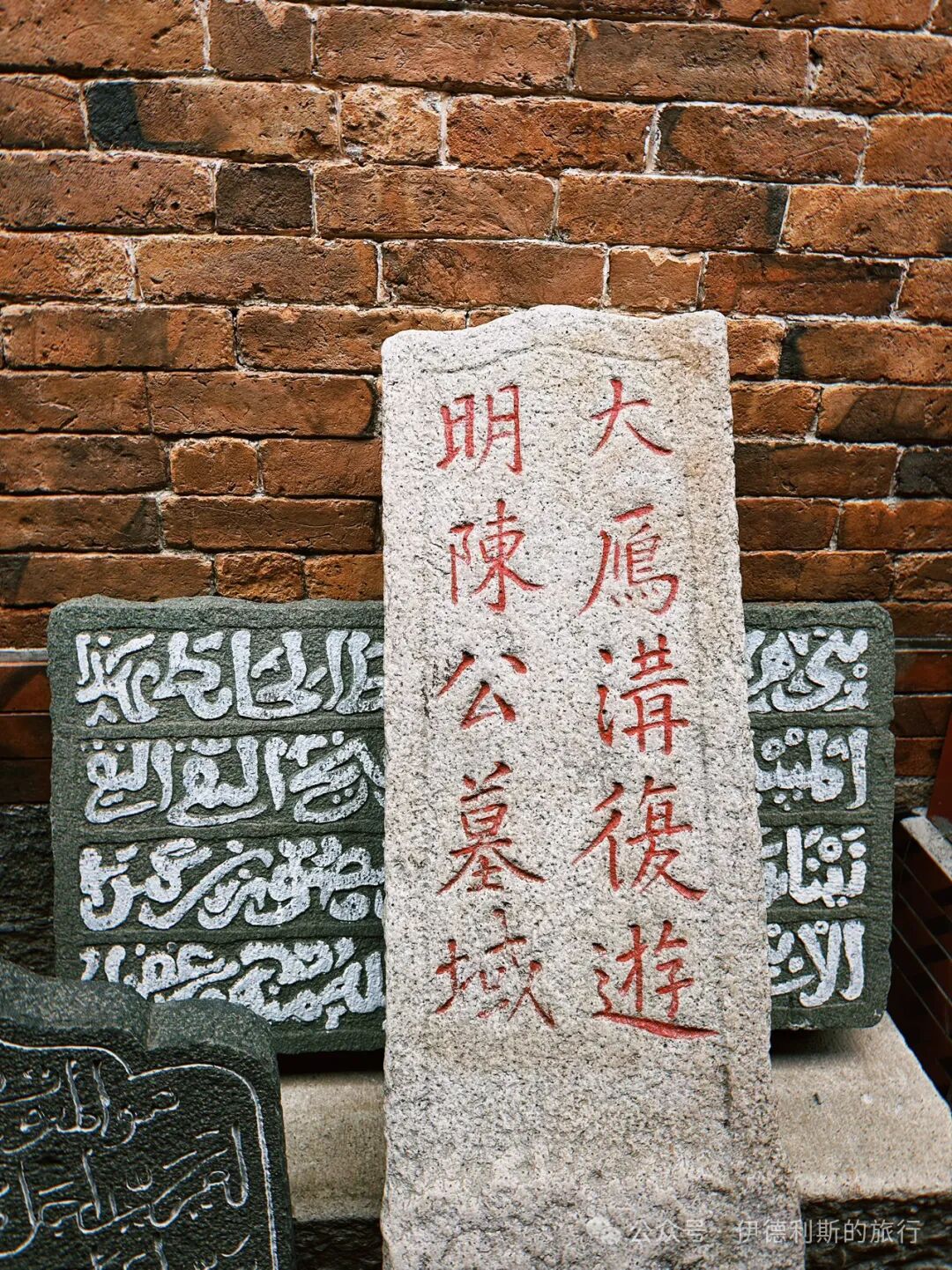
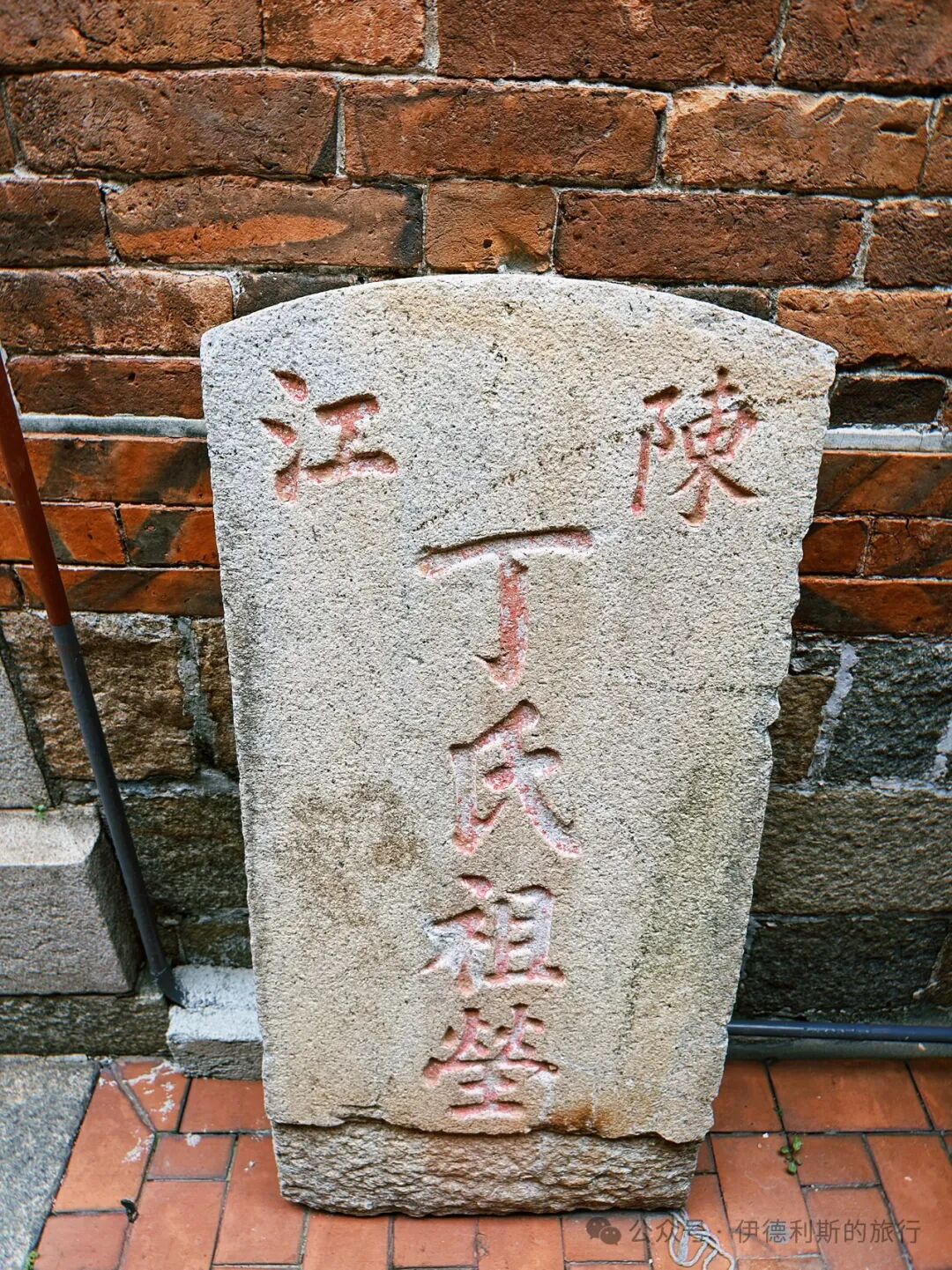
Famous figures from the Ding family of Chendai introduced inside the Chendai Hui Muslims History Museum.
Ding Gongchen (1800-1875) was a mechanical engineering expert in the late Qing Dynasty. When he was young, he traveled abroad for business to places like the Philippines, Iran, and Arabia, where he gathered a lot of knowledge about Western machinery. After Ding Gongchen returned to China in 1840, the Opium War broke out. Based on his research into Western firearms, he wrote the book Illustrated Explanation of Artillery (Yanpao Tushuo) and tested cast cannons in Guangdong, which became the most advanced artillery in the Qing Dynasty at that time. After the war, Ding Gongchen revised his book into the Essentials of Illustrated Explanation of Artillery (Yanpao Tushuo Jiyao). The attached section, Illustrated Explanation of Western Steam-Powered Vehicles and Ships, was the first book written by a Chinese author about steam engines, trains, and steamships. In 1850, Ding Gongchen successfully developed a modern large rocket made from a metal rocket tube in Guilin, marking the beginning of modern rocket research in China.
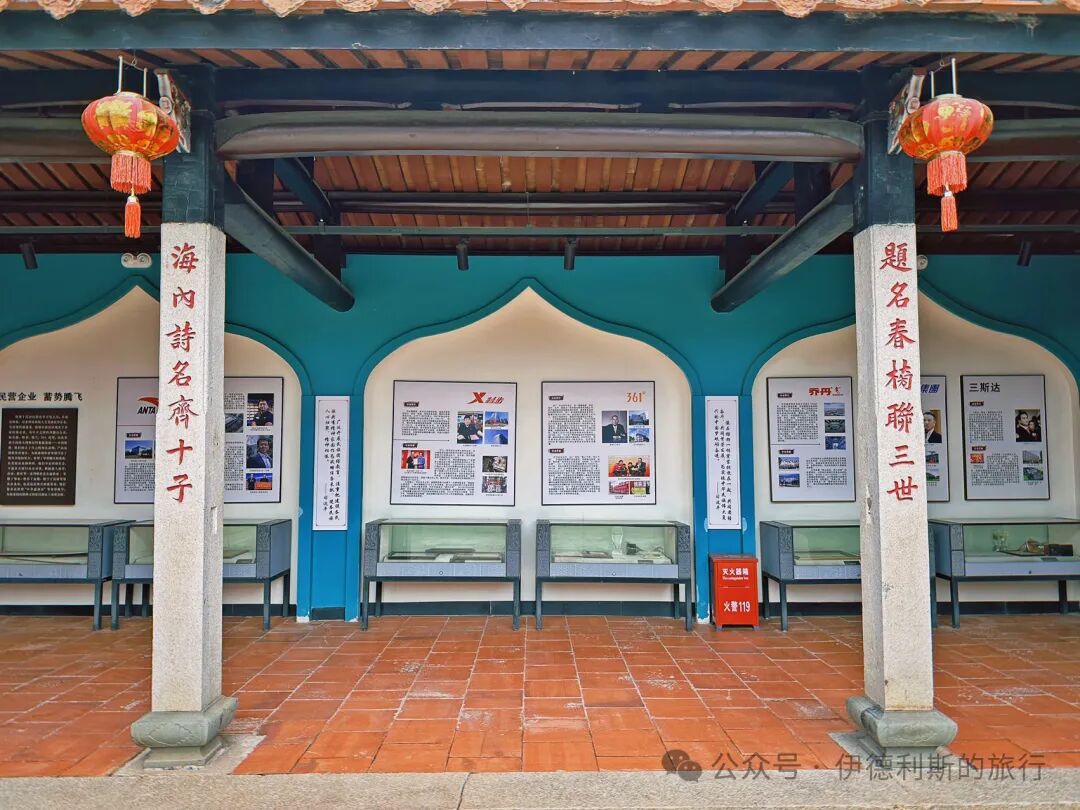
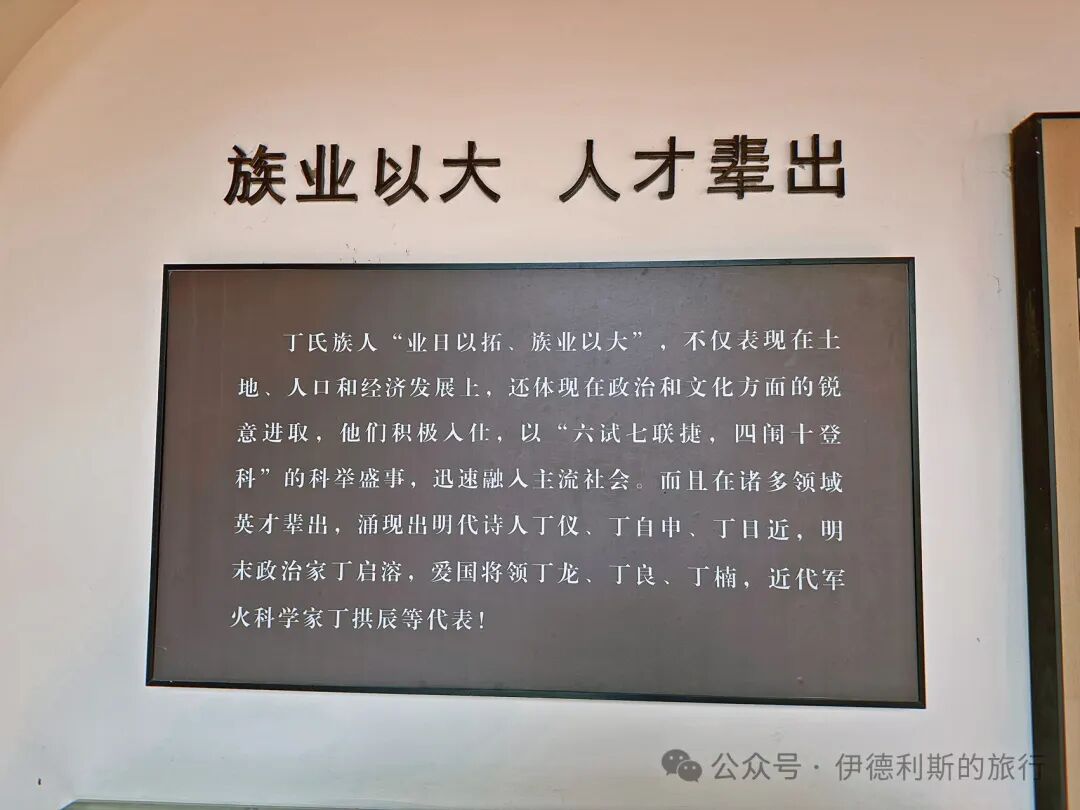
entrepreneurs from the Ding family of Chendai include Anta Group Chairman Ding Shizhong and Vice Chairman Ding Shijia, Xtep Group founder Ding Jinzhao and President Ding Shuibo, 361° Chairman Ding Wuhao, and Silan Group Chairman Ding Zongyin.
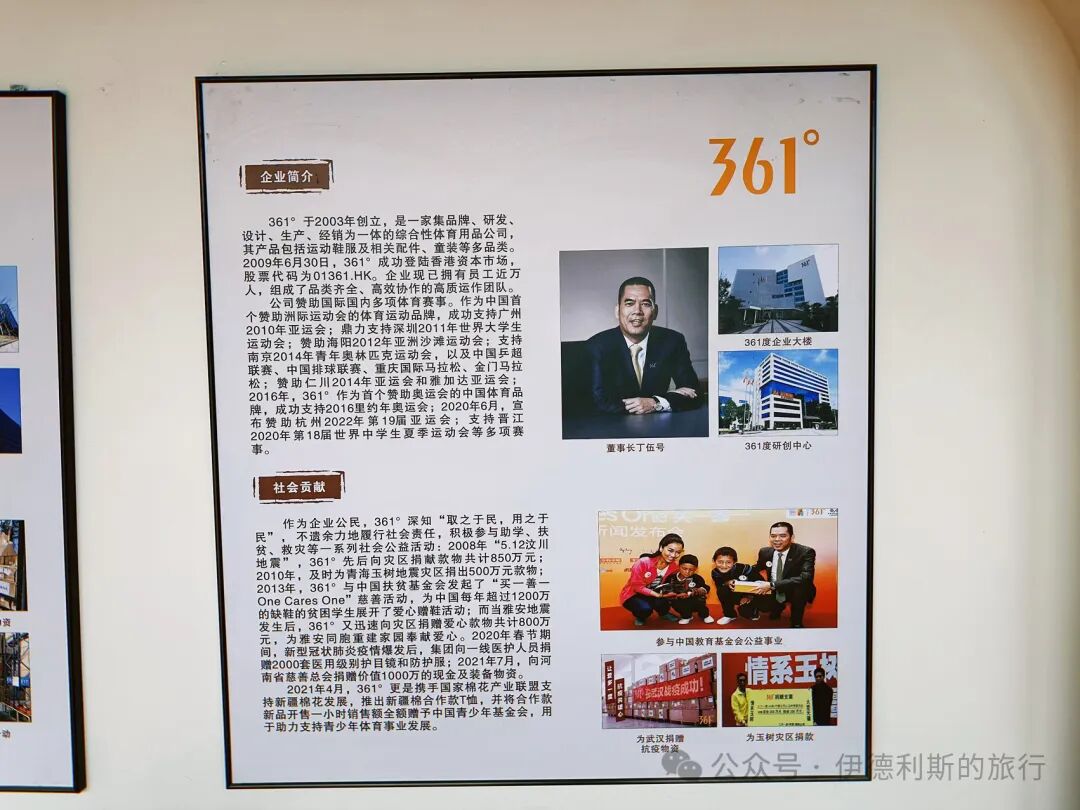
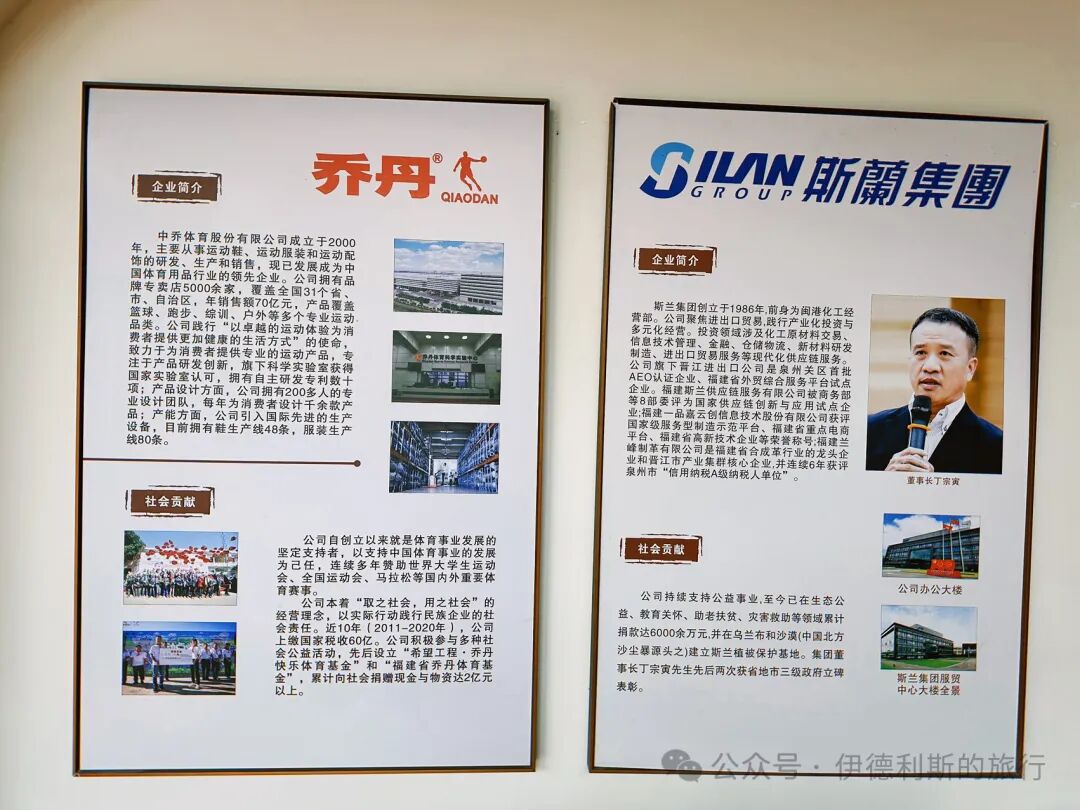
The plaques and ancestral spirit tablets inside the Chendai Hui Muslims History Museum.
Islamic History Guide: Quanzhou Xingzhai Guo Family Ancestral Hall and Hui Muslim Heritage
Articles • ali2007fr posted the article • 0 comments • 237 views • 2026-05-19 10:24
Summary: Quanzhou Xingzhai Guo Family Ancestral Hall and Hui Muslim Heritage is presented as a clear English travel account for readers interested in Muslim life, halal food, mosques, and local history. The article keeps the original place names, food details, photographs, and cultural context while focusing on Quanzhou, Hui Muslims, Family Heritage.
In Quanzhou, besides the famous Baiqi Guo family of Hui Muslims, there is another branch known as the Jundong Guo family of Hui Muslims. According to family records, the ancestors of both the Baiqi Guo and Jundong Guo families came from Guo Family Village in Fuyang, Zhejiang, and were descendants of Guo Zhang. At the end of the Yuan Dynasty, Guo Zhang's sons, Guo Deguang and Guo Dezhao, along with Guo Dezhao's grandson Guo Mengliang, all moved to Quanzhou. The Quanzhou Prefecture Gazetteer records: 'Guo Tong, courtesy name Mengliang, art name Leqiao, was originally from Fuyang, Zhejiang.' At the end of the Yuan Dynasty, he followed his grand-uncle to Quanzhou to serve as the Salt Commissioner.
Because Guo Mengliang lived on East Street in Quanzhou, his descendants became known as the Jundong Guo family. During the Chenghua period of the Ming Dynasty, Guo Mengliang's fifth-generation grandsons, Guo Quan and Guo Yuan, moved from East Street to Xingzhai Village, and their descendants are also called the Xingzhai Guo family.
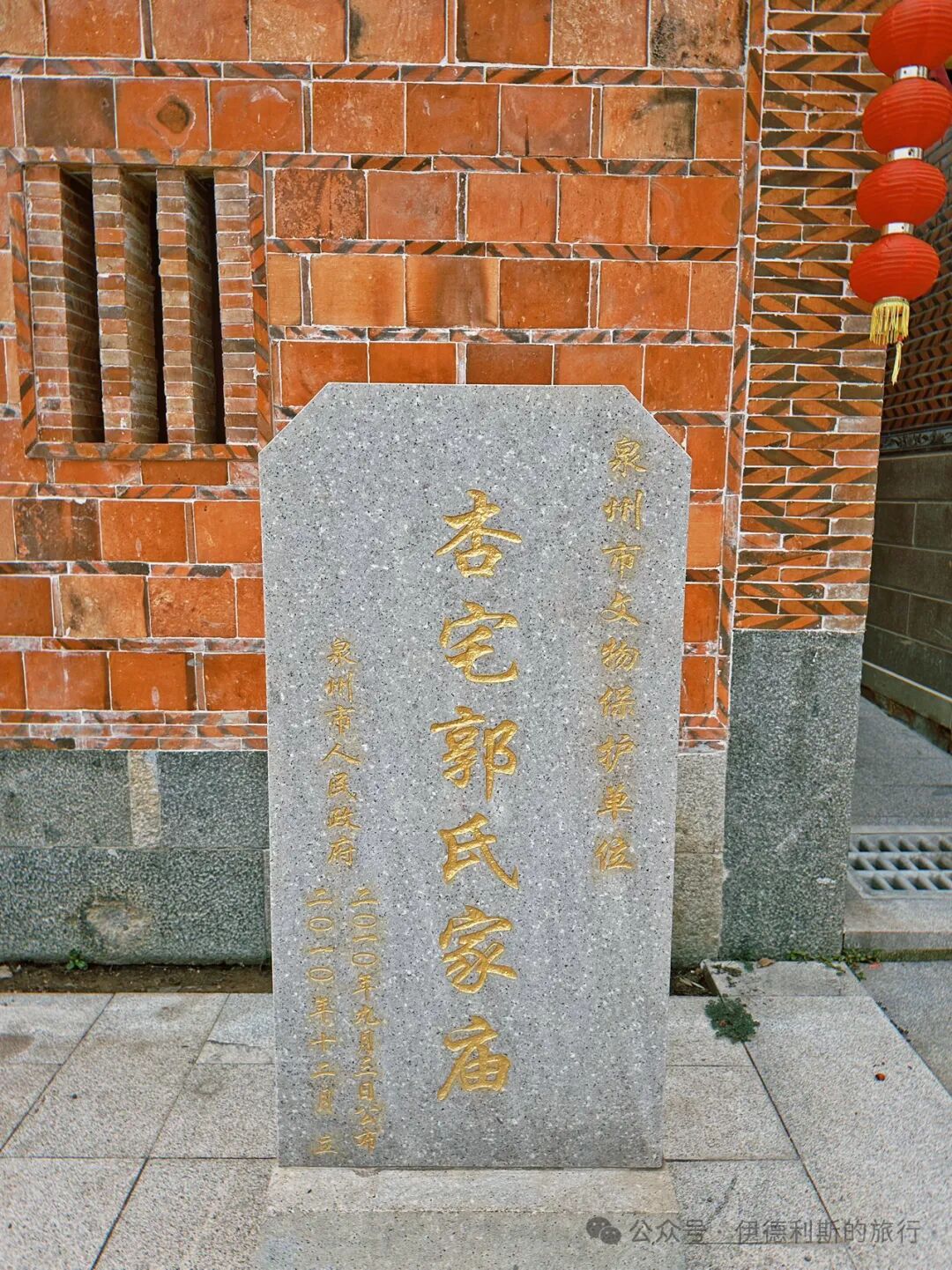
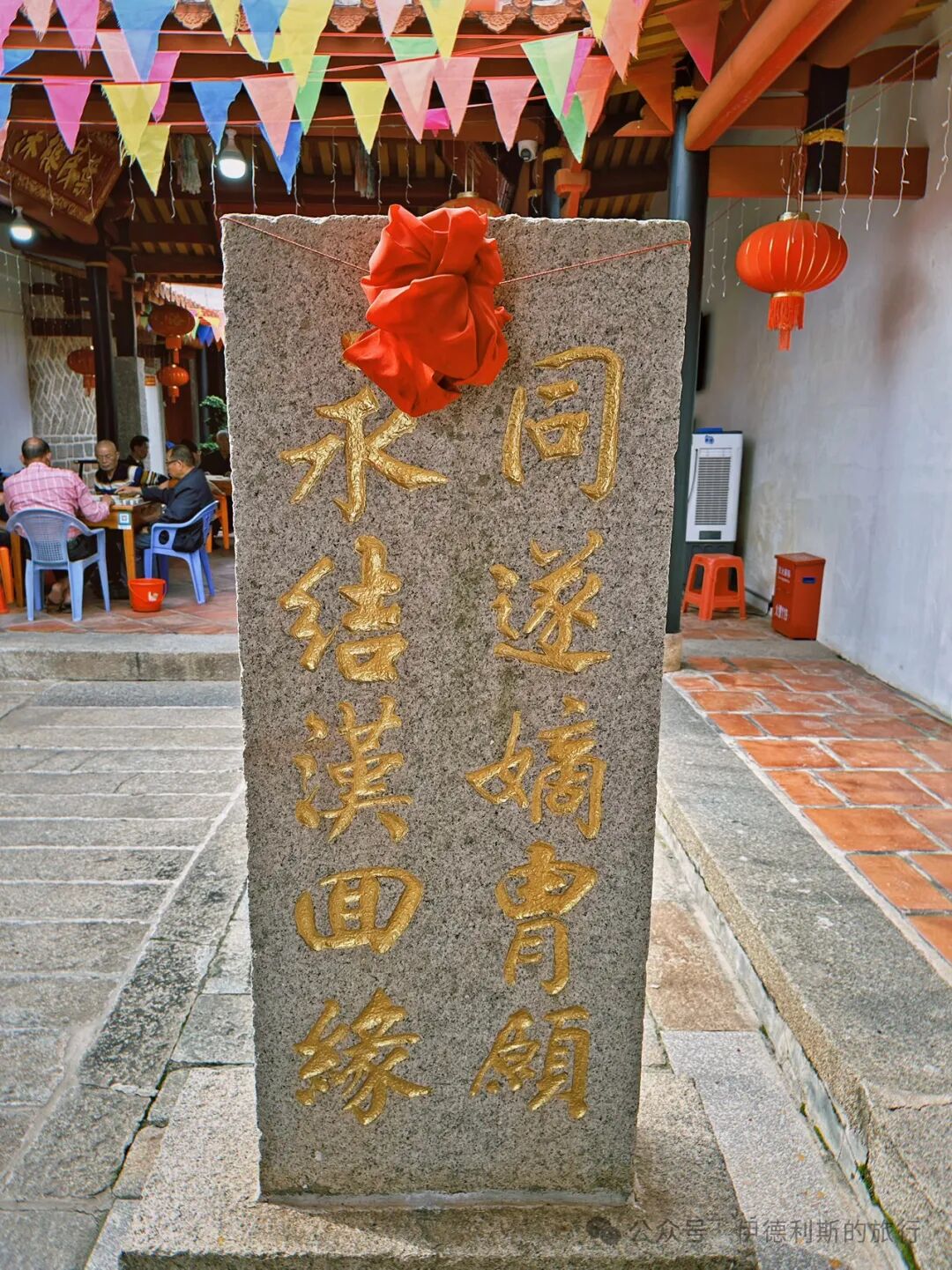
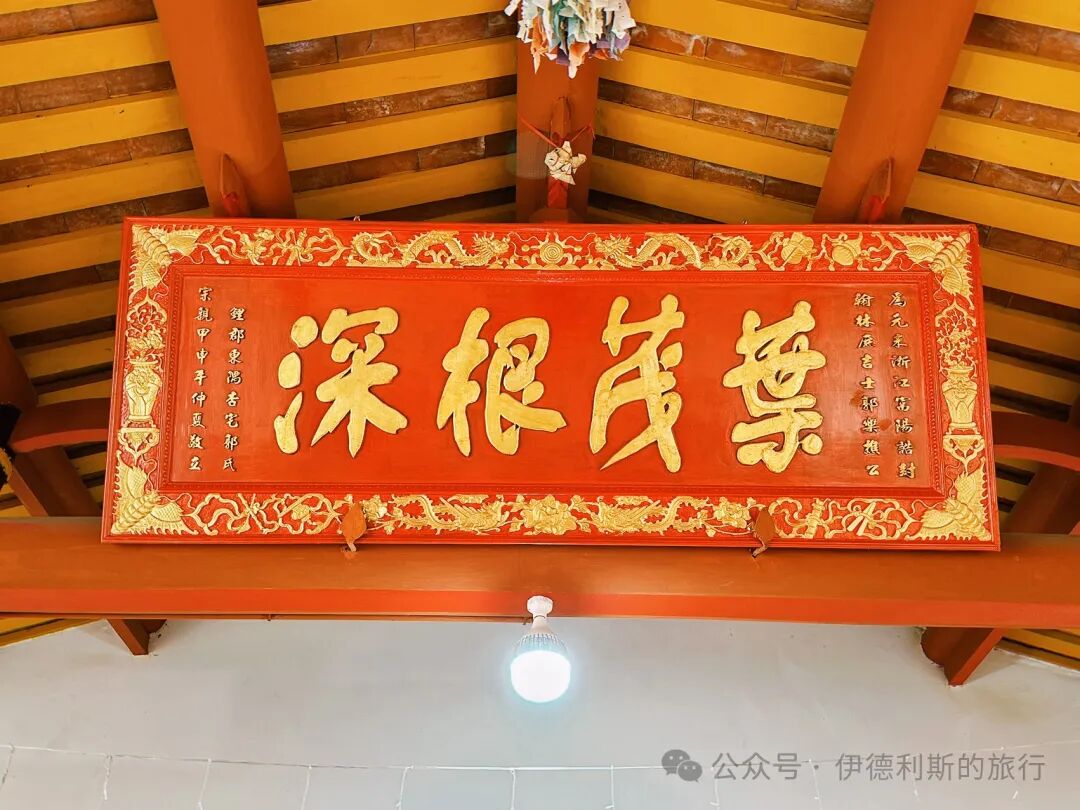
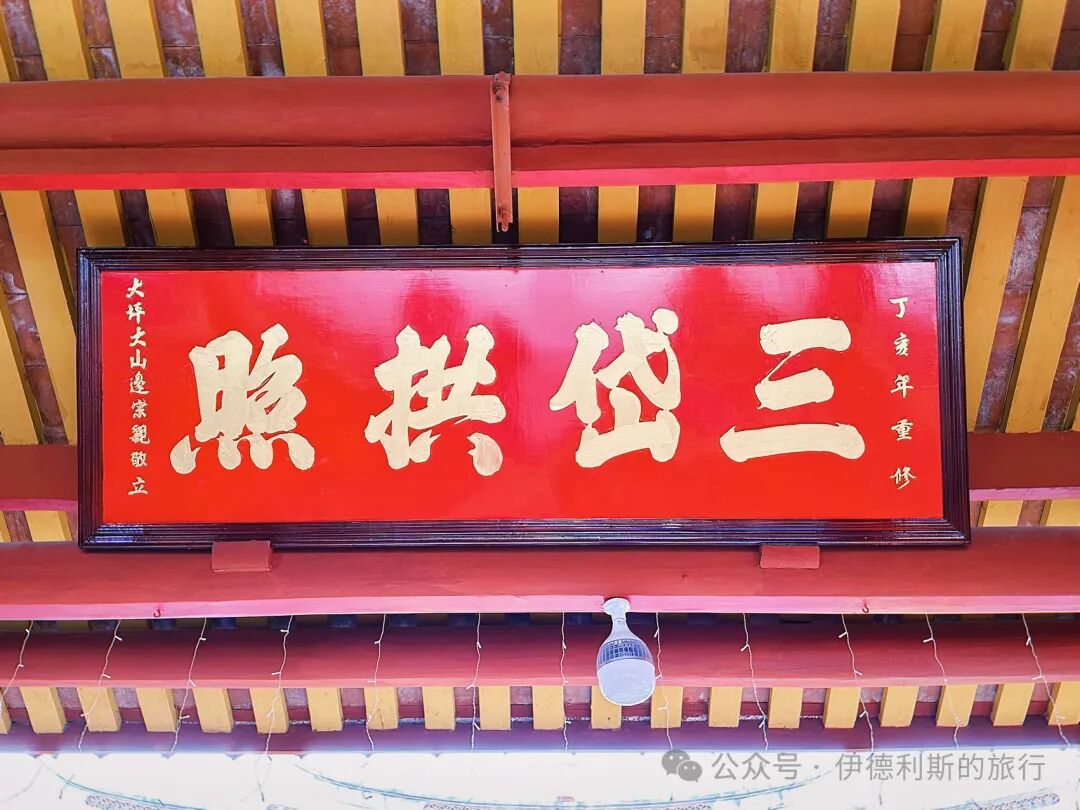
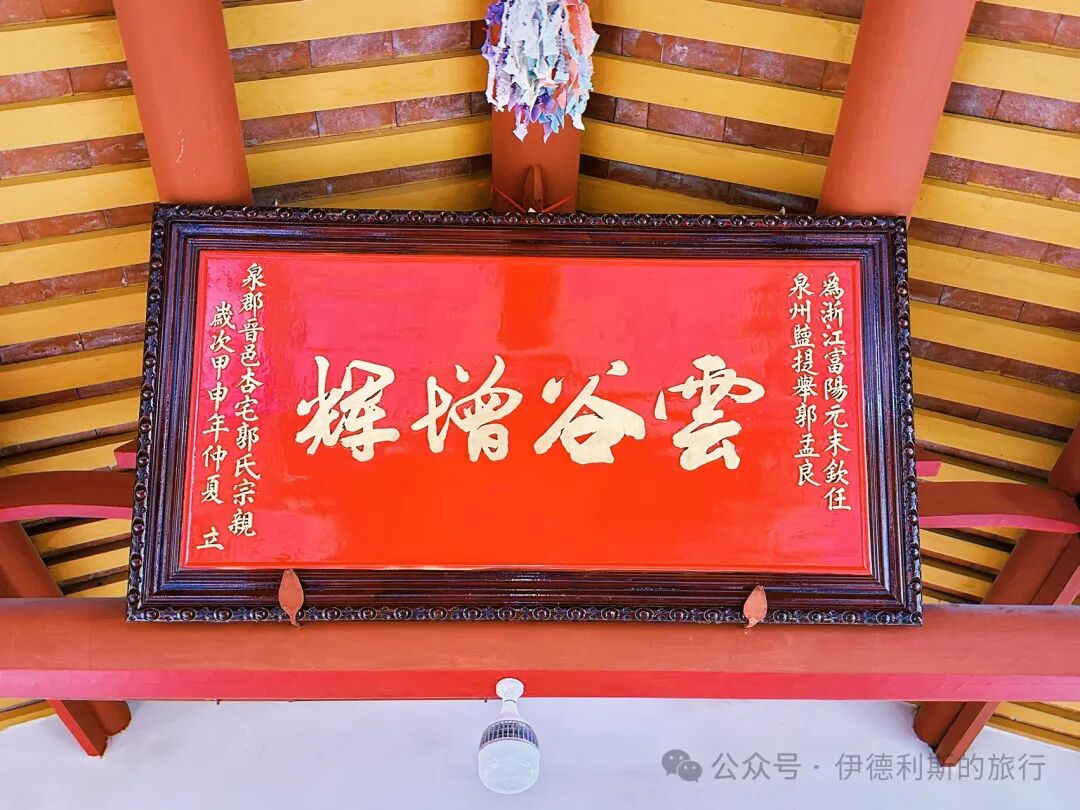
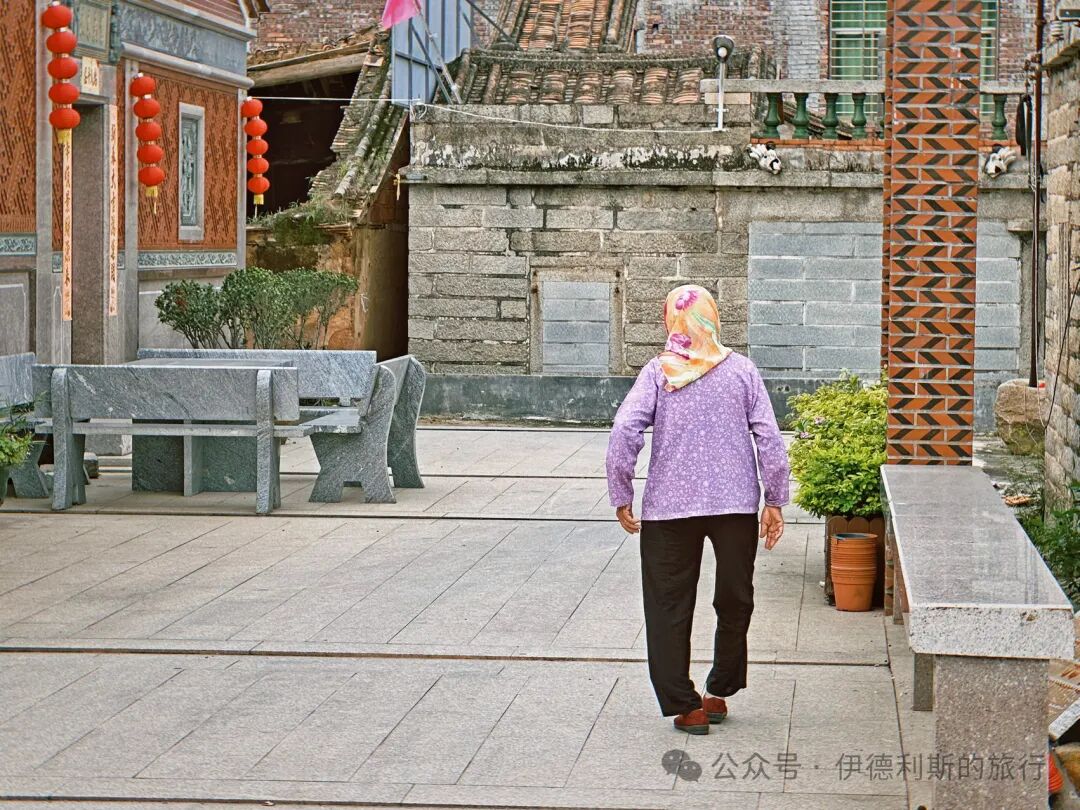
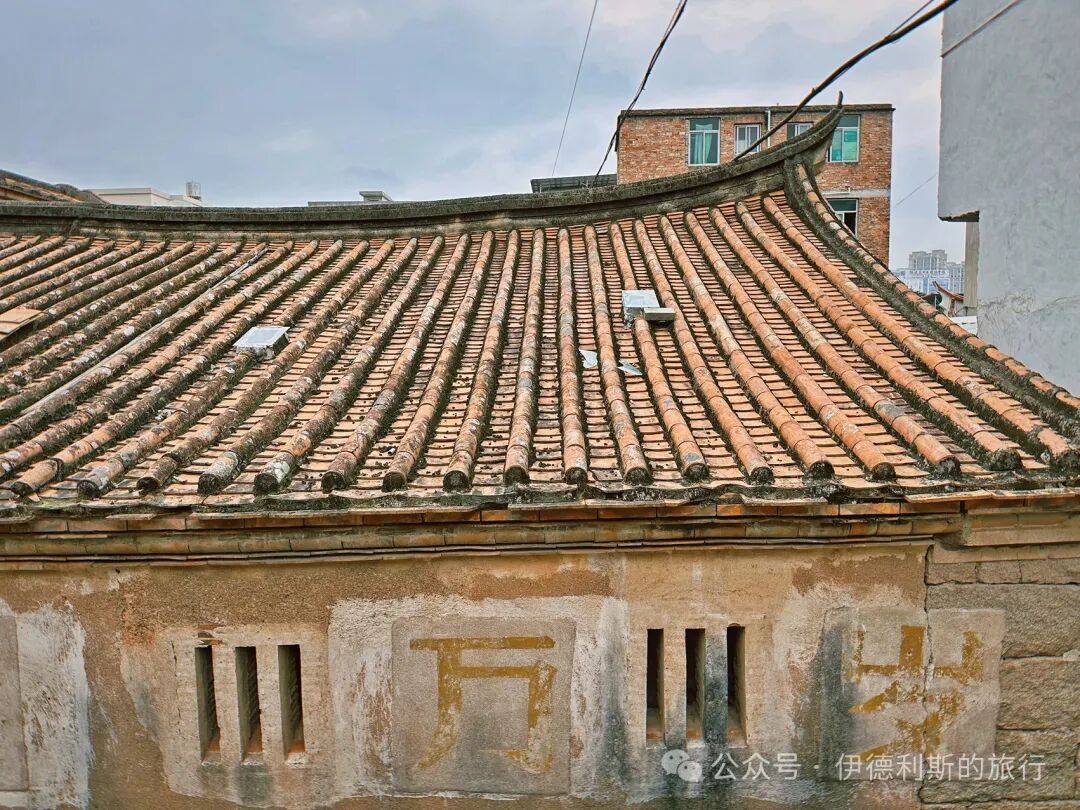
The Xingzhai Guo family ancestral temple was first built in the mid-Ming Dynasty, rebuilt after being struck by lightning in 1670, expanded again in 1947, and has undergone many repairs since then. Today, the Xingzhai Guo Family Ancestral Hall is a large Minnan-style ancestral shrine with three rows of buildings and two courtyards. It is a protected cultural site in Quanzhou and serves as the cultural activity center for the Xingzhai Hui Muslim Seniors Association. When we visited, there were many elderly people playing mahjong in the courtyard.
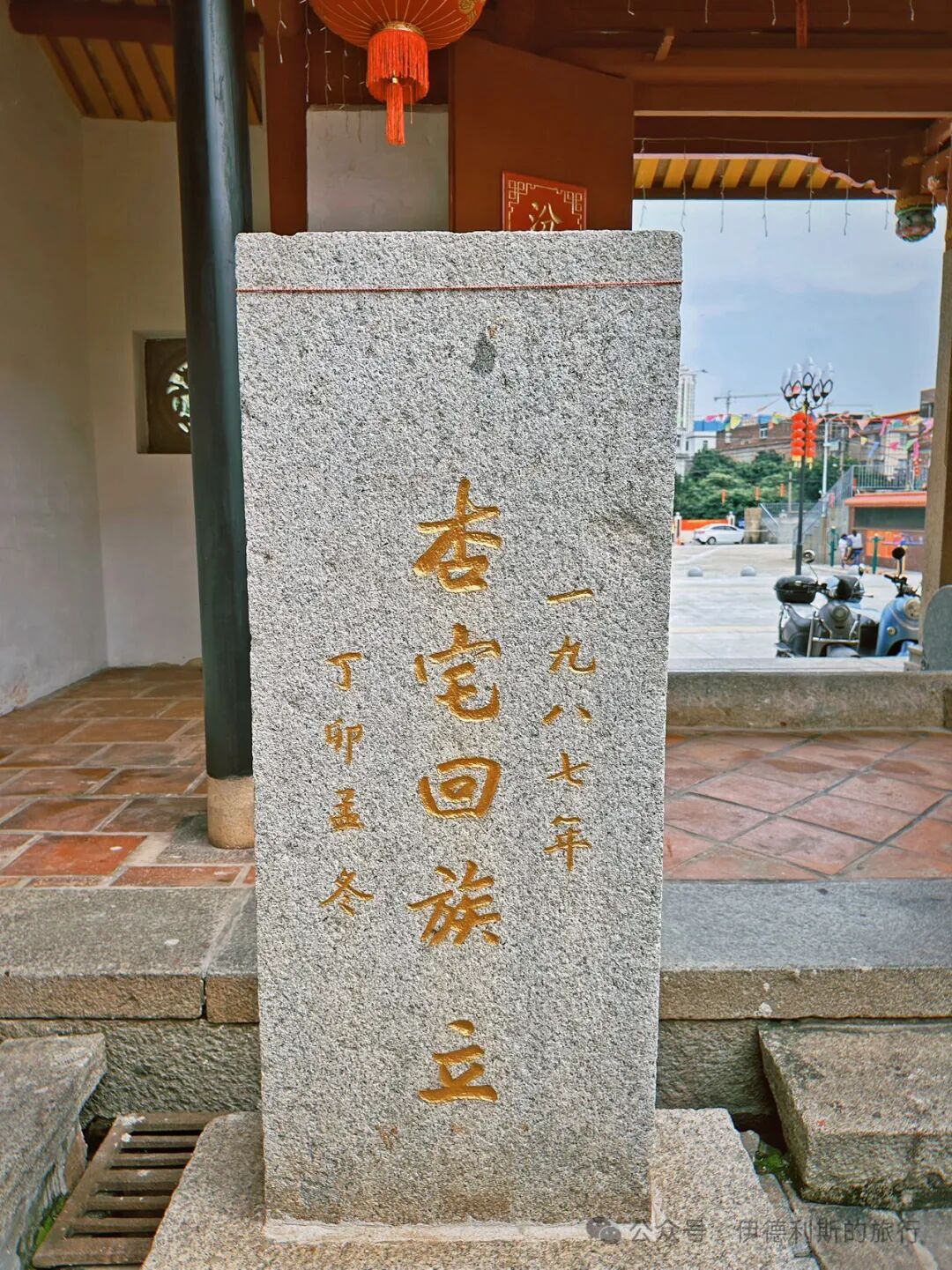
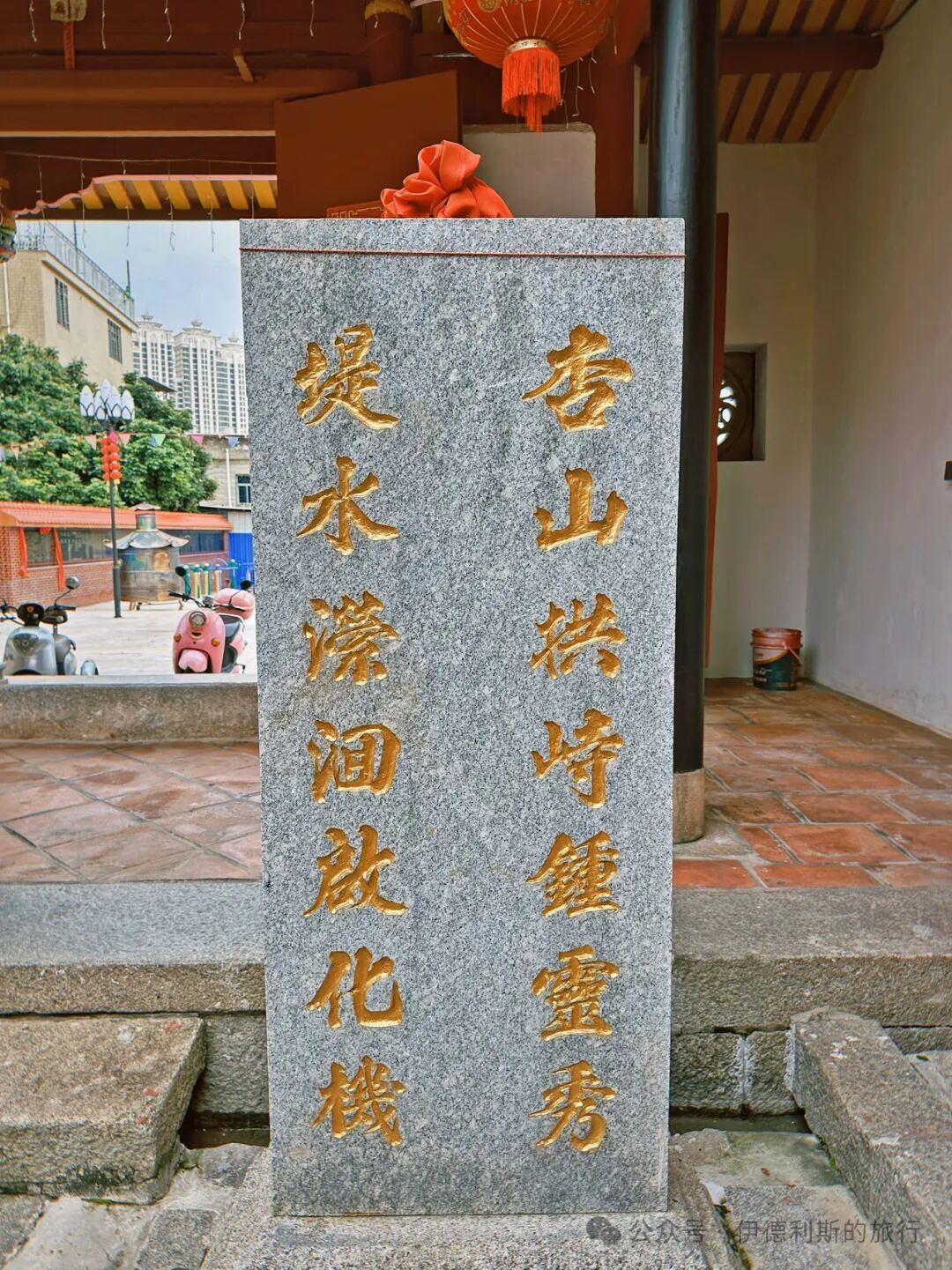
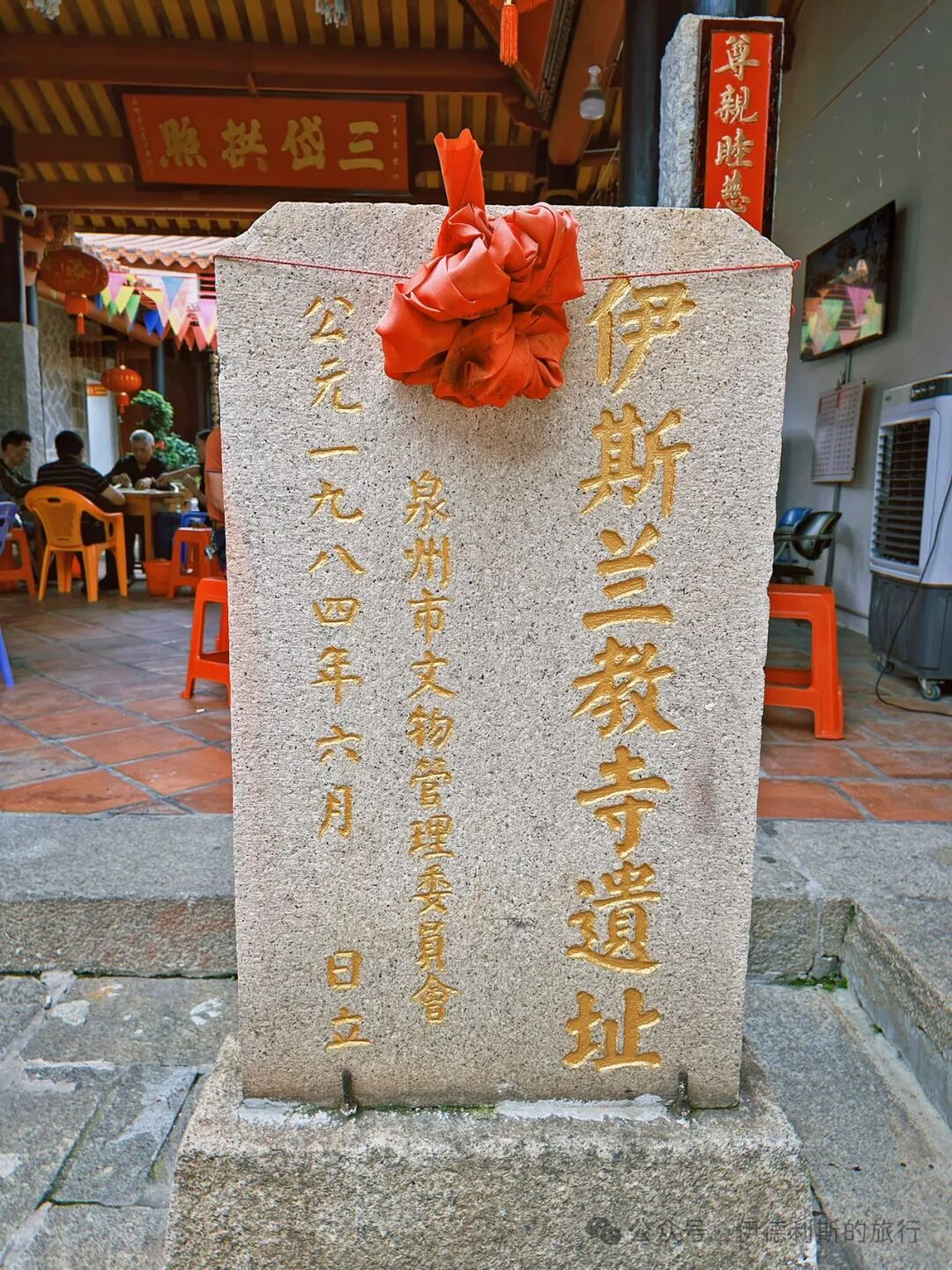
Inside the Xingzhai Guo Family Ancestral Hall, there are several stone tablets. One is carved with the words, 'Sharing the same noble lineage, forever bonding the Han and Hui,' and another is inscribed with 'Site of the Islamic Mosque'. People say there was once a mosque inside the Xingzhai Guo Family Ancestral Hall, but no written records have been found to confirm this yet.
Compared to the Guo Hui Muslims of Baiqi, the history of religious changes among the Xingzhai Guo Hui Muslims is much less clear. Guo Zhongyuan, the first ancestor to move to Baiqi, was a cousin of Guo Mengliang, the first ancestor to move to Xingzhai. After moving to Baiqi in the early Ming Dynasty, he built a mosque. According to the Guo family genealogy, 'Preface to Returning to the Hui Teachings,' it states: 'Since our ancestor established the foundation in Baiqi, he kept thirty volumes of the holy scriptures, built a mosque, respected the teachings, and made recognizing Allah the foundation.' According to the book 'Quanzhou Religious Stone Carvings,' the Xingzhai Guo Family Ancestral Hall held a collection of Muslim tombstone fragments before it was renovated. There were also Muslim tomb stones dug up by the Xingzhai Guo clan in 1973 while they were reclaiming land from the sea. Unfortunately, I did not see these tomb stones when I visited the Xingzhai Guo Family Ancestral Hall this time.
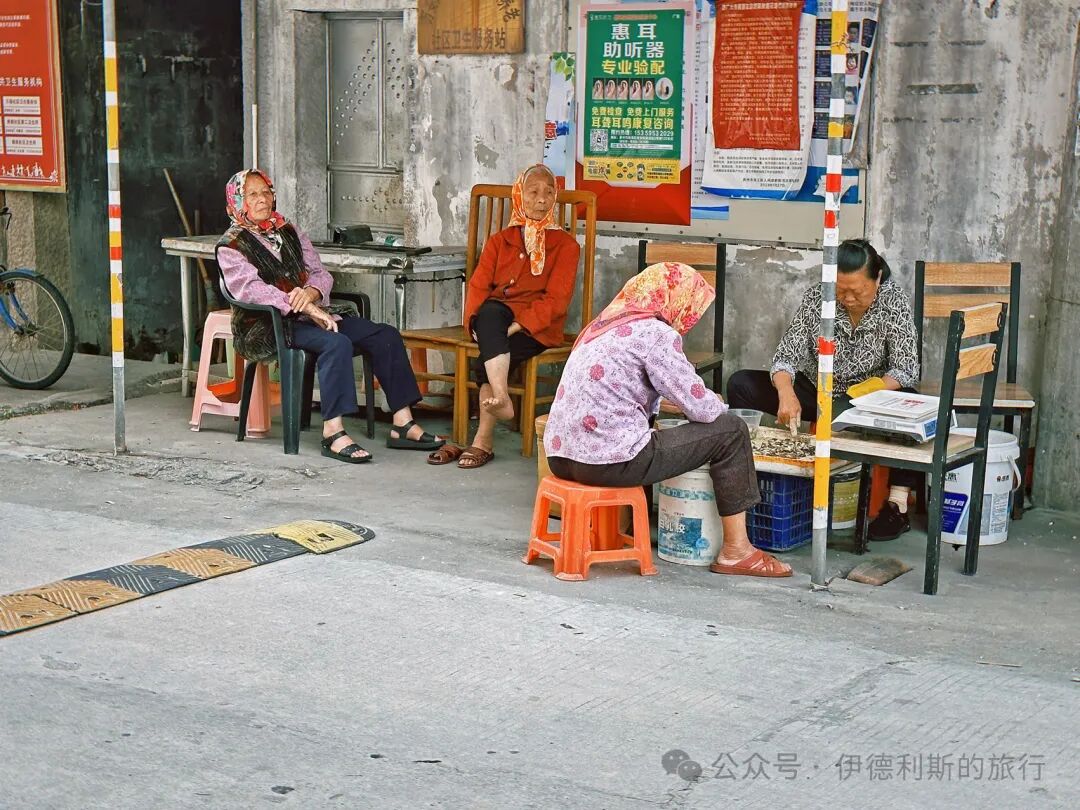
The street scene near the Guo Family Ancestral Hall in Xingzhai, where local women also have the custom of wearing headscarves. view all
Summary: Quanzhou Xingzhai Guo Family Ancestral Hall and Hui Muslim Heritage is presented as a clear English travel account for readers interested in Muslim life, halal food, mosques, and local history. The article keeps the original place names, food details, photographs, and cultural context while focusing on Quanzhou, Hui Muslims, Family Heritage.
In Quanzhou, besides the famous Baiqi Guo family of Hui Muslims, there is another branch known as the Jundong Guo family of Hui Muslims. According to family records, the ancestors of both the Baiqi Guo and Jundong Guo families came from Guo Family Village in Fuyang, Zhejiang, and were descendants of Guo Zhang. At the end of the Yuan Dynasty, Guo Zhang's sons, Guo Deguang and Guo Dezhao, along with Guo Dezhao's grandson Guo Mengliang, all moved to Quanzhou. The Quanzhou Prefecture Gazetteer records: 'Guo Tong, courtesy name Mengliang, art name Leqiao, was originally from Fuyang, Zhejiang.' At the end of the Yuan Dynasty, he followed his grand-uncle to Quanzhou to serve as the Salt Commissioner.
Because Guo Mengliang lived on East Street in Quanzhou, his descendants became known as the Jundong Guo family. During the Chenghua period of the Ming Dynasty, Guo Mengliang's fifth-generation grandsons, Guo Quan and Guo Yuan, moved from East Street to Xingzhai Village, and their descendants are also called the Xingzhai Guo family.
The Xingzhai Guo family ancestral temple was first built in the mid-Ming Dynasty, rebuilt after being struck by lightning in 1670, expanded again in 1947, and has undergone many repairs since then. Today, the Xingzhai Guo Family Ancestral Hall is a large Minnan-style ancestral shrine with three rows of buildings and two courtyards. It is a protected cultural site in Quanzhou and serves as the cultural activity center for the Xingzhai Hui Muslim Seniors Association. When we visited, there were many elderly people playing mahjong in the courtyard.
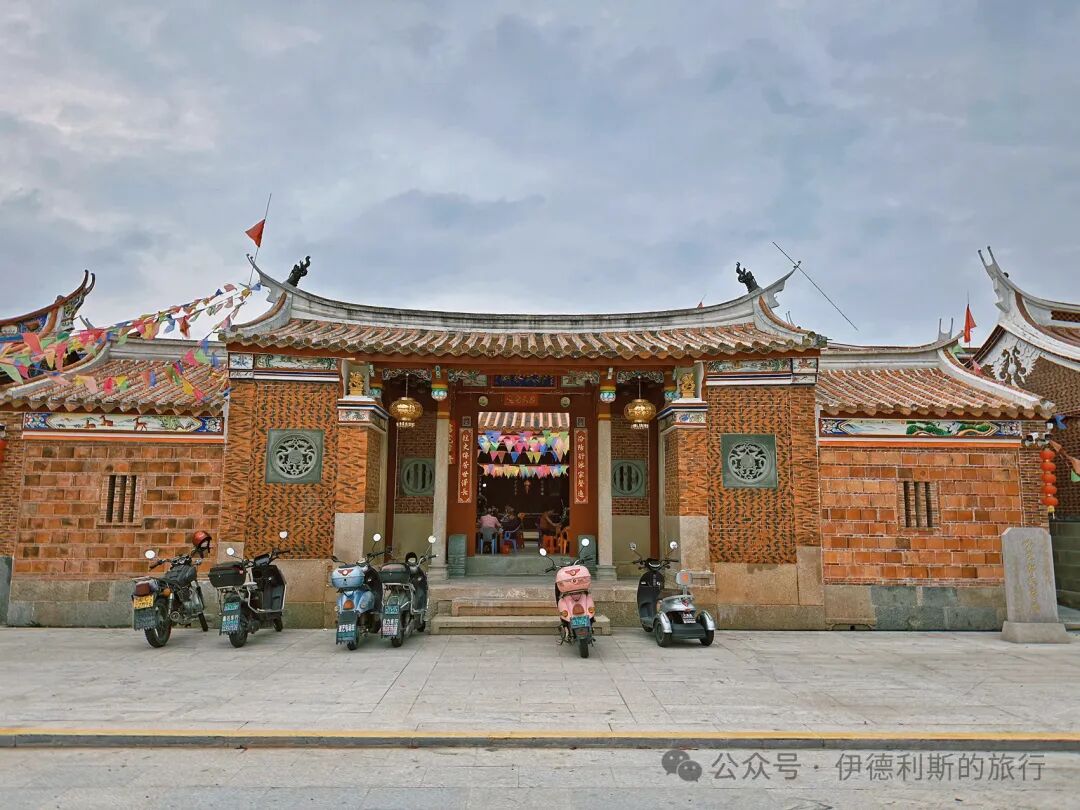
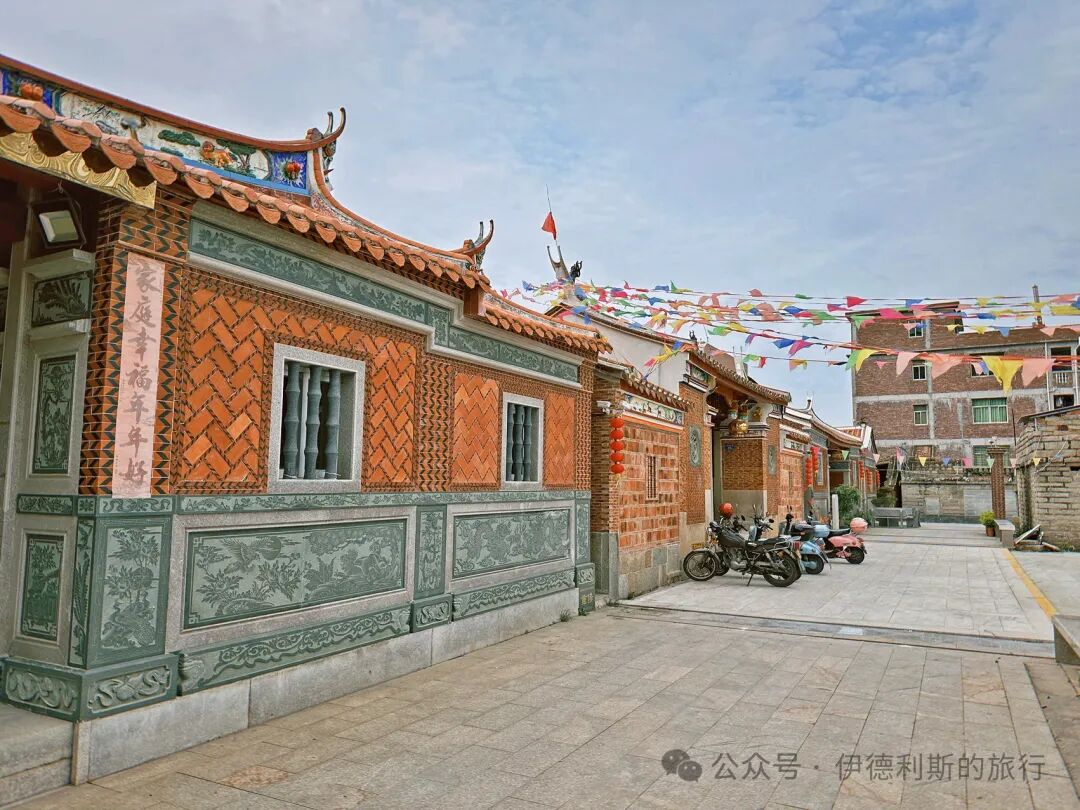
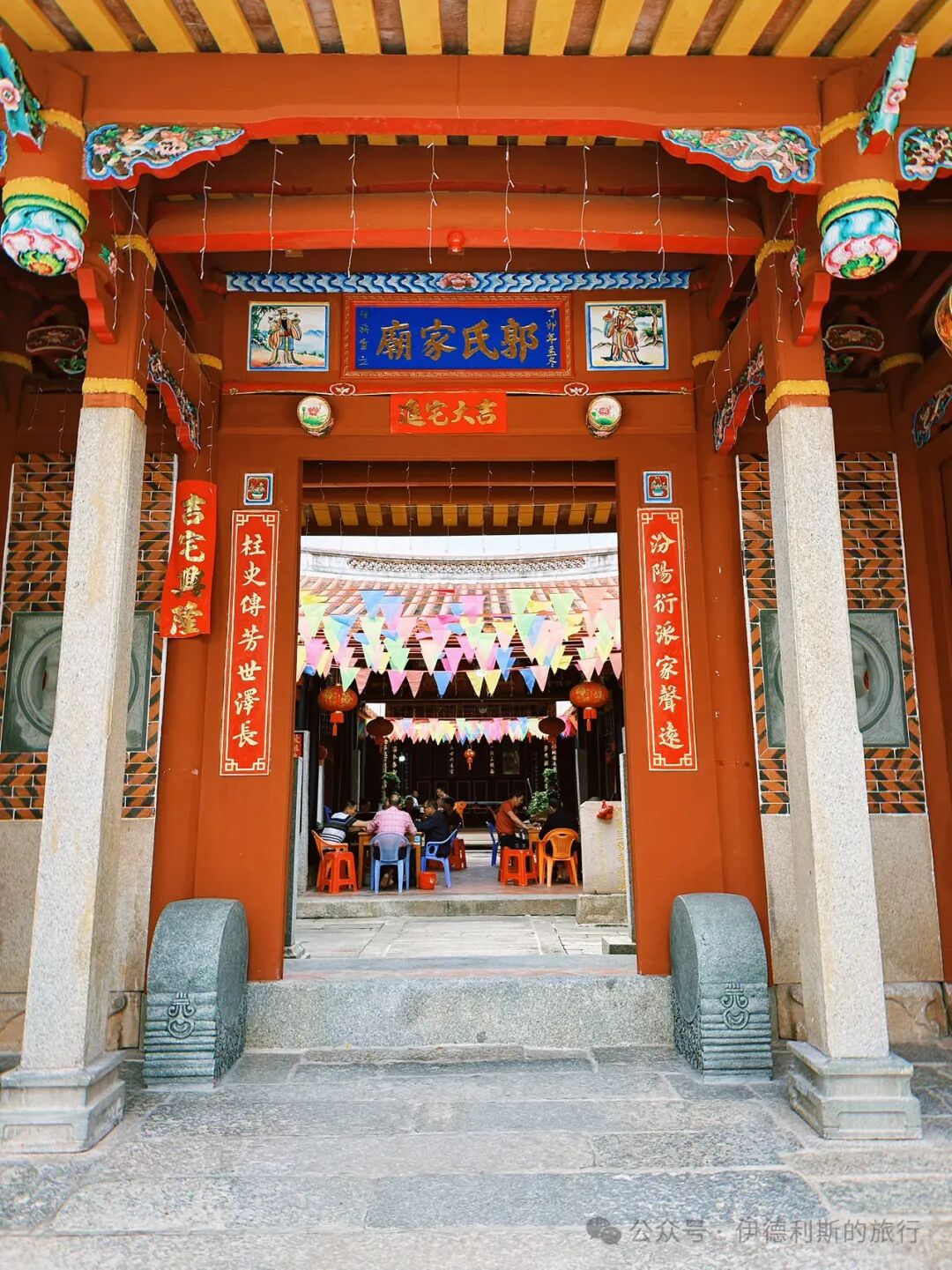
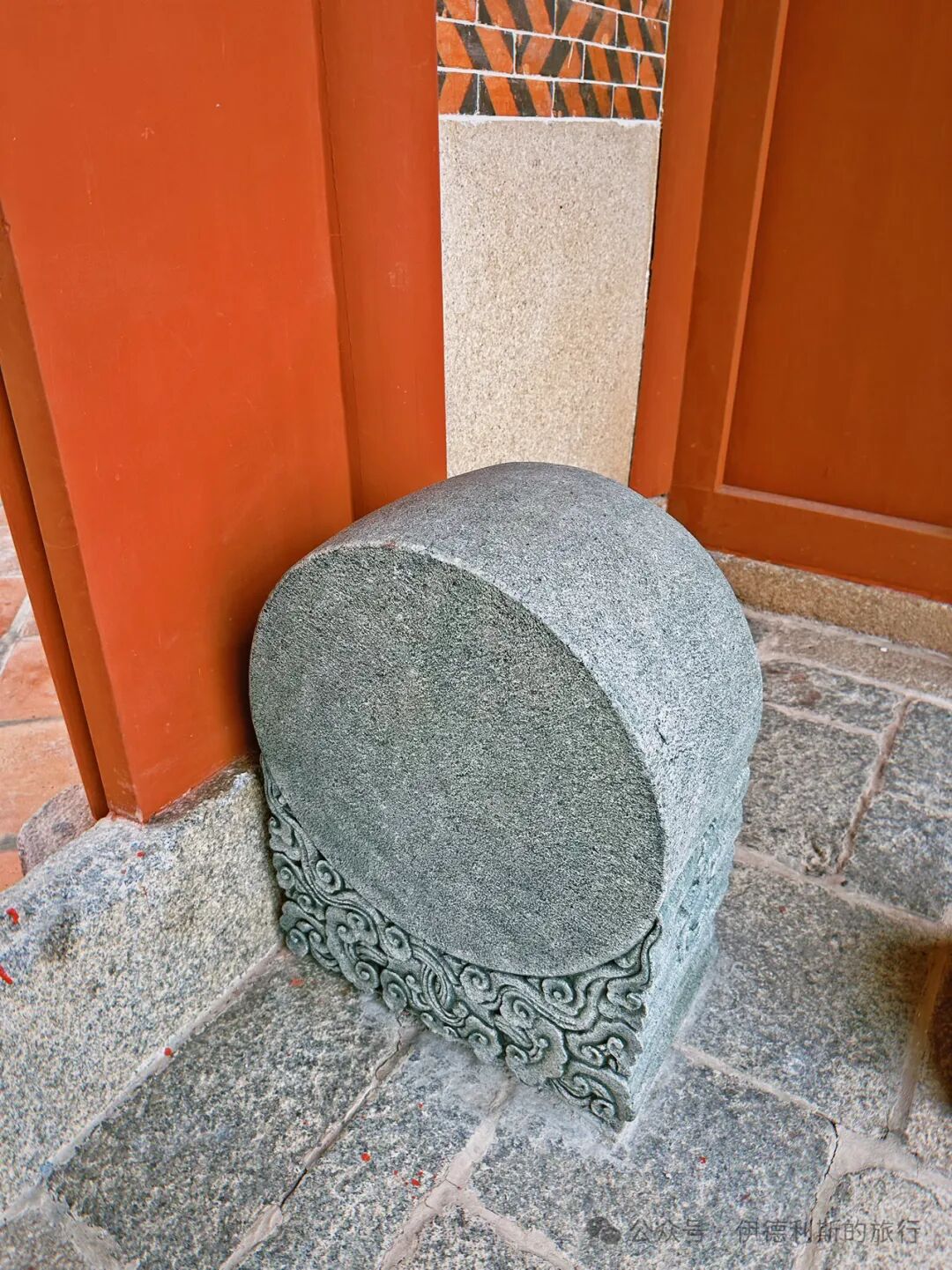
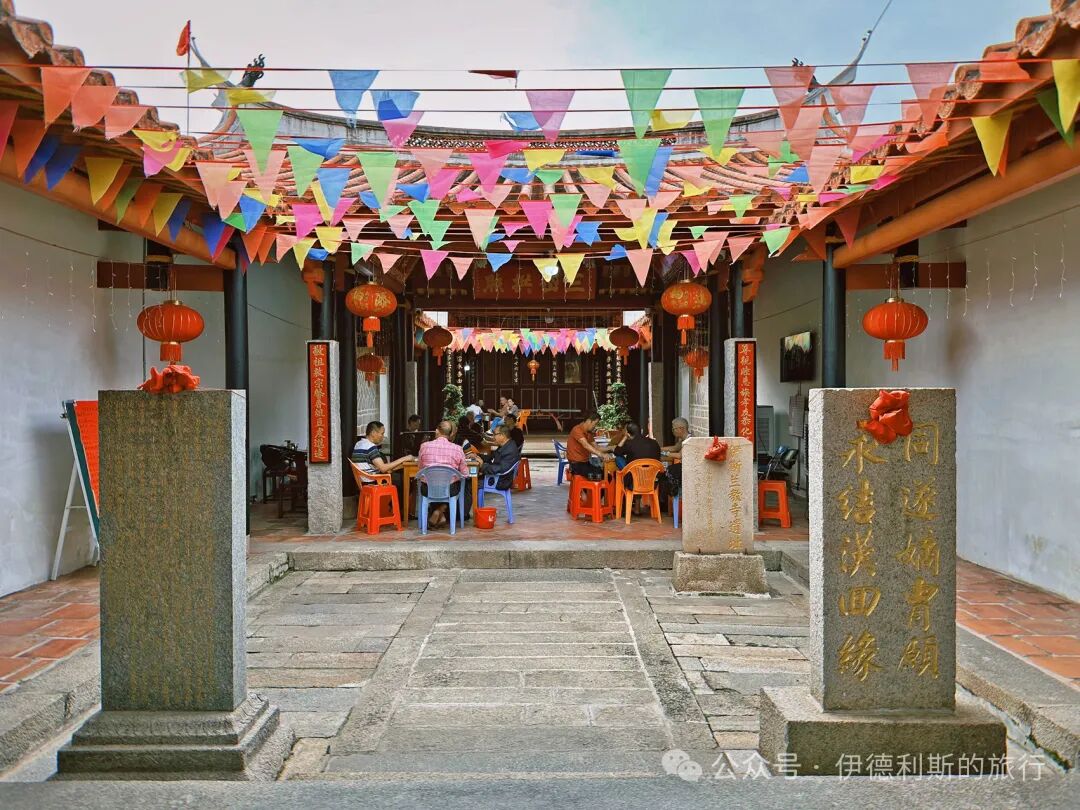
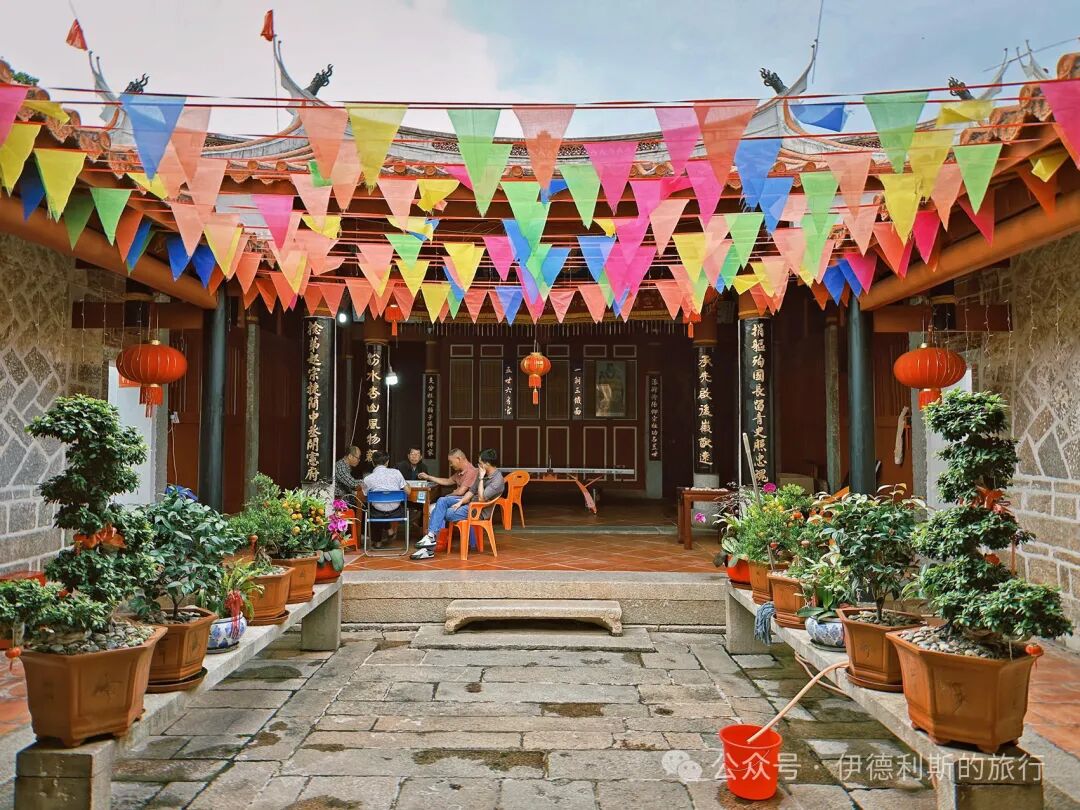
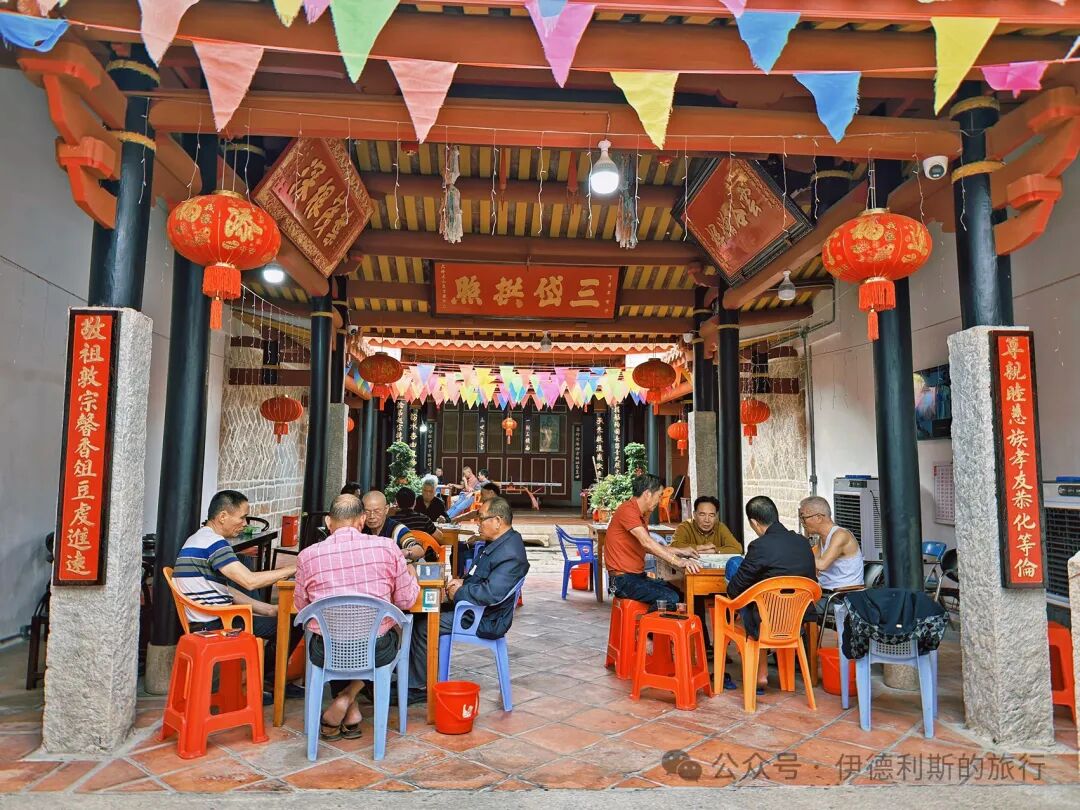
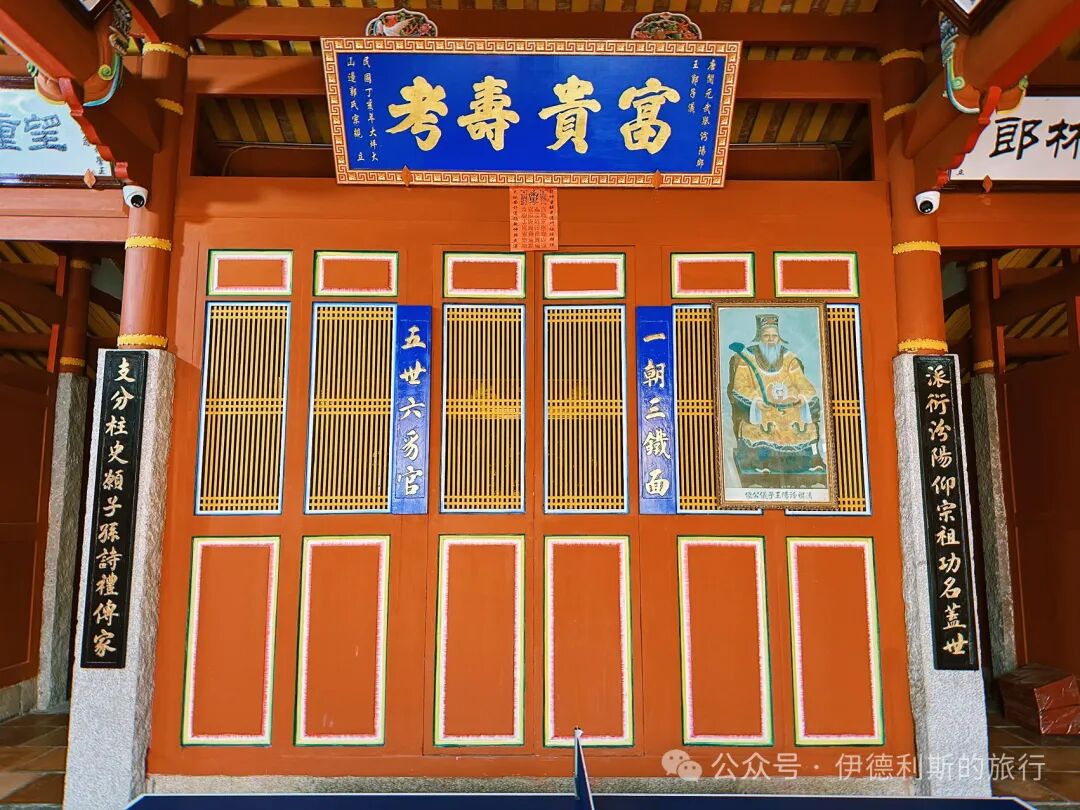
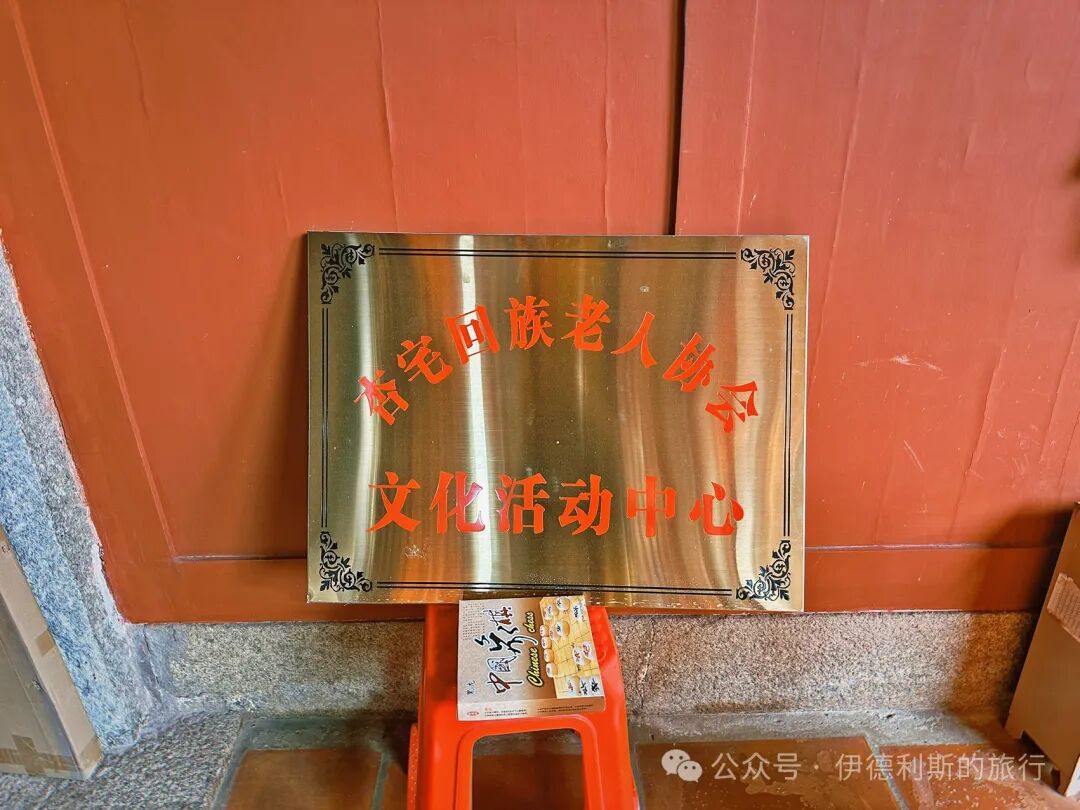
Inside the Xingzhai Guo Family Ancestral Hall, there are several stone tablets. One is carved with the words, 'Sharing the same noble lineage, forever bonding the Han and Hui,' and another is inscribed with 'Site of the Islamic Mosque'. People say there was once a mosque inside the Xingzhai Guo Family Ancestral Hall, but no written records have been found to confirm this yet.
Compared to the Guo Hui Muslims of Baiqi, the history of religious changes among the Xingzhai Guo Hui Muslims is much less clear. Guo Zhongyuan, the first ancestor to move to Baiqi, was a cousin of Guo Mengliang, the first ancestor to move to Xingzhai. After moving to Baiqi in the early Ming Dynasty, he built a mosque. According to the Guo family genealogy, 'Preface to Returning to the Hui Teachings,' it states: 'Since our ancestor established the foundation in Baiqi, he kept thirty volumes of the holy scriptures, built a mosque, respected the teachings, and made recognizing Allah the foundation.' According to the book 'Quanzhou Religious Stone Carvings,' the Xingzhai Guo Family Ancestral Hall held a collection of Muslim tombstone fragments before it was renovated. There were also Muslim tomb stones dug up by the Xingzhai Guo clan in 1973 while they were reclaiming land from the sea. Unfortunately, I did not see these tomb stones when I visited the Xingzhai Guo Family Ancestral Hall this time.
The street scene near the Guo Family Ancestral Hall in Xingzhai, where local women also have the custom of wearing headscarves.
Islamic Art Guide: Quanzhou Maritime Museum Song-Yuan Stone Inscriptions (Part 1)
Articles • ali2007fr posted the article • 0 comments • 253 views • 2026-05-19 10:05
Summary: Islamic Art Guide: Quanzhou Maritime Museum Song-Yuan Stone Inscriptions (Part 1) is presented here as a firsthand travel account in clear, natural English. The account focuses on Quanzhou, Islamic Art, Stone Inscriptions while preserving the names, places, food, photos, and historical details from the Chinese source.
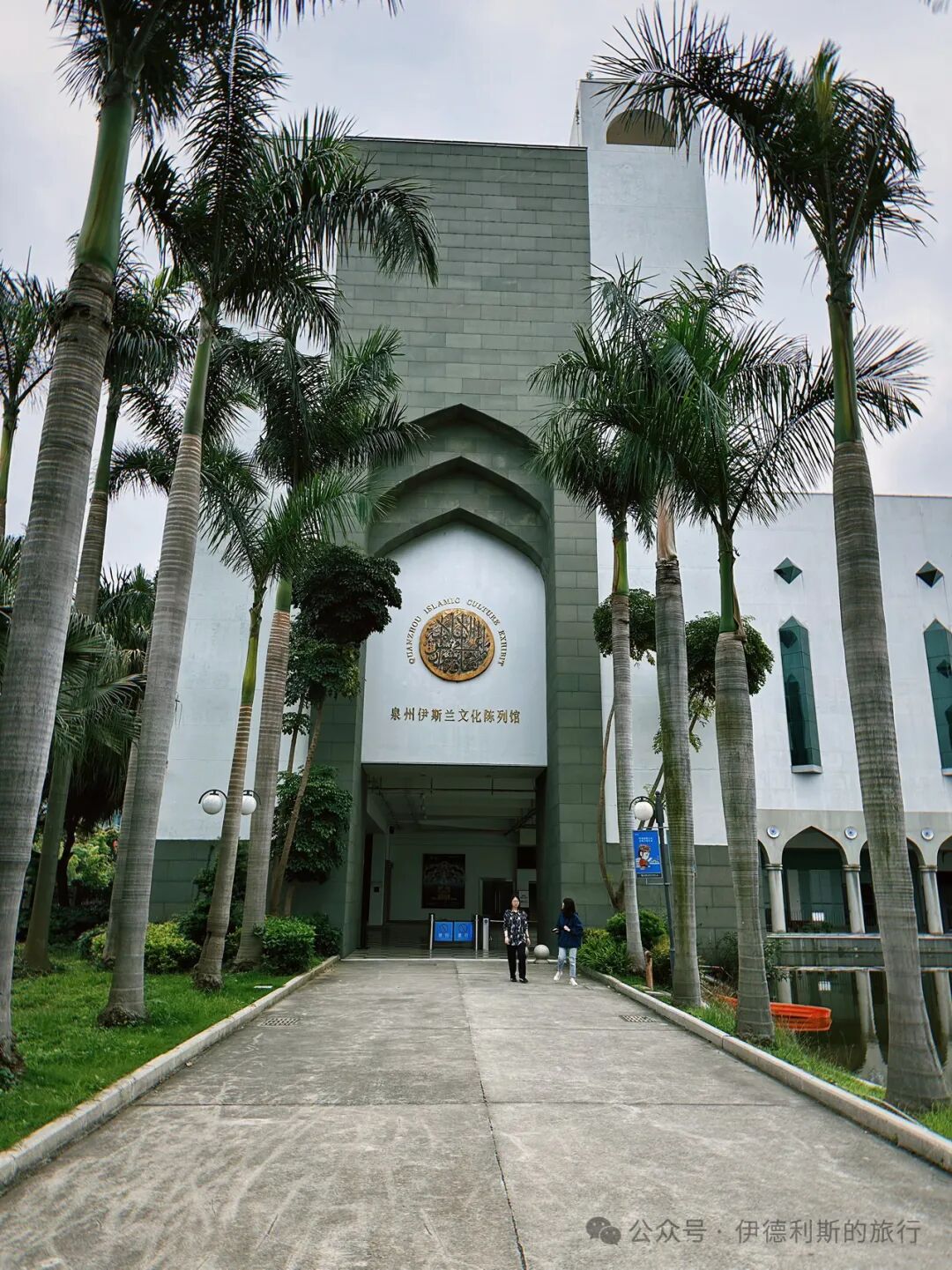
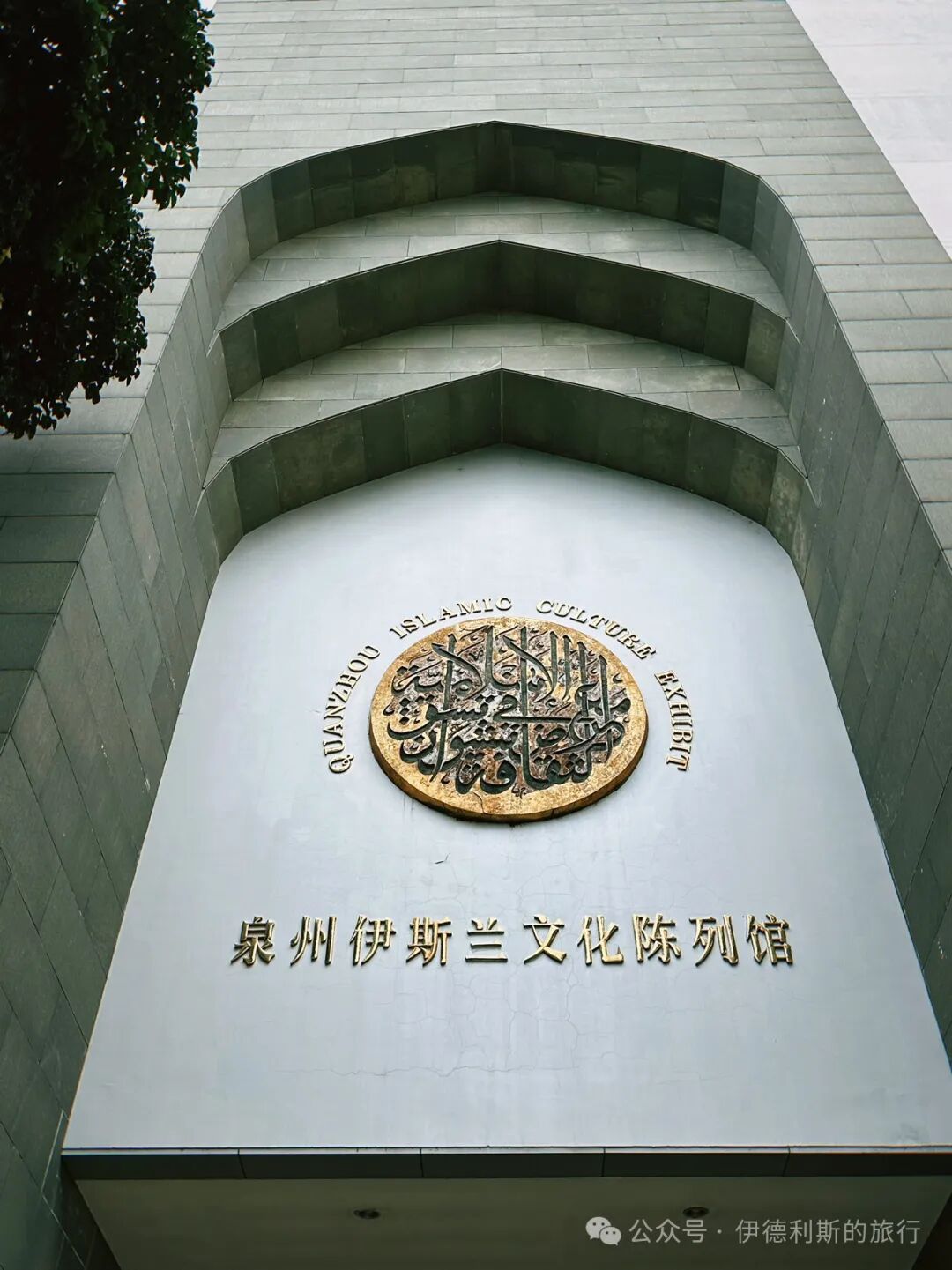
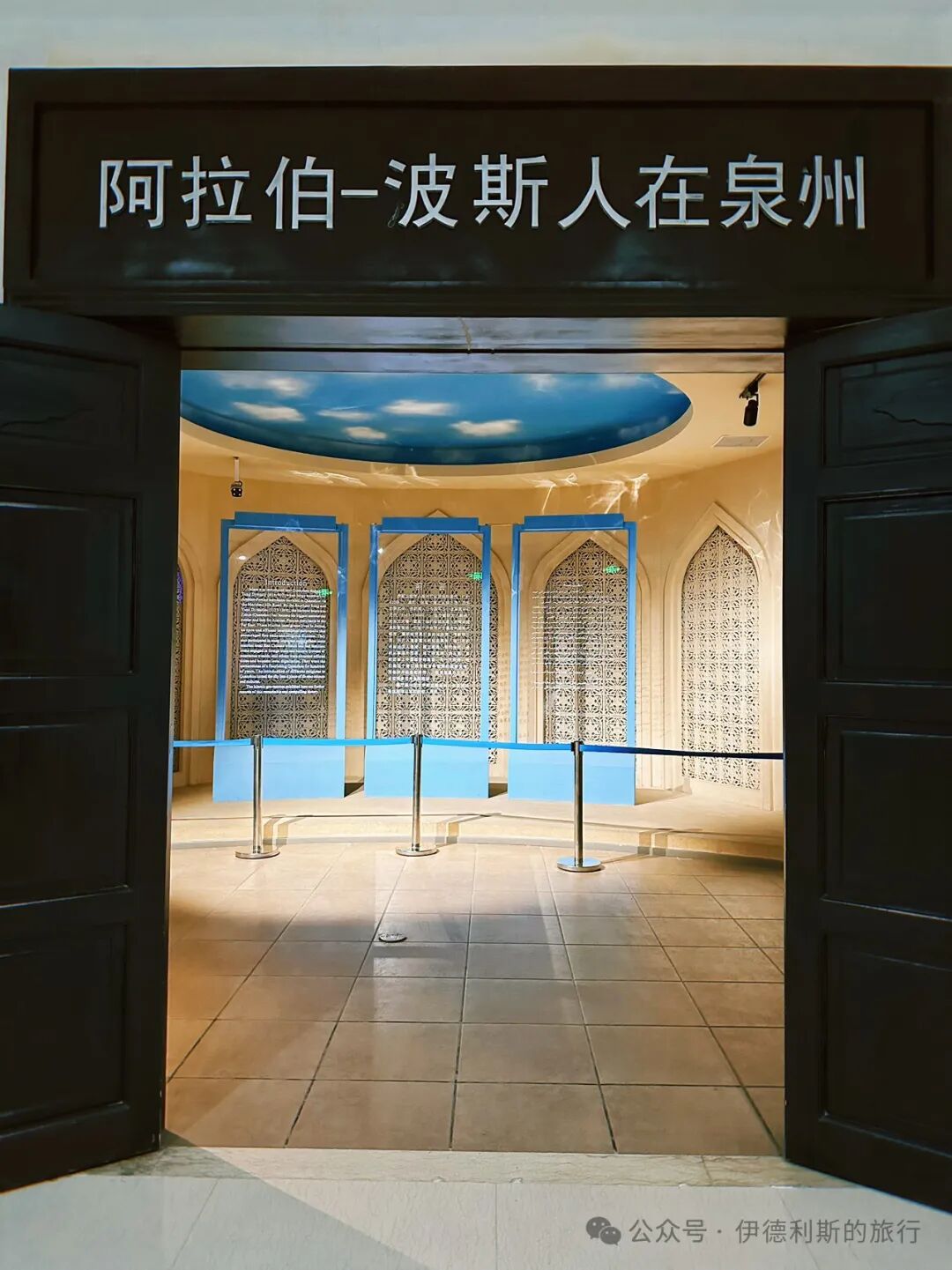
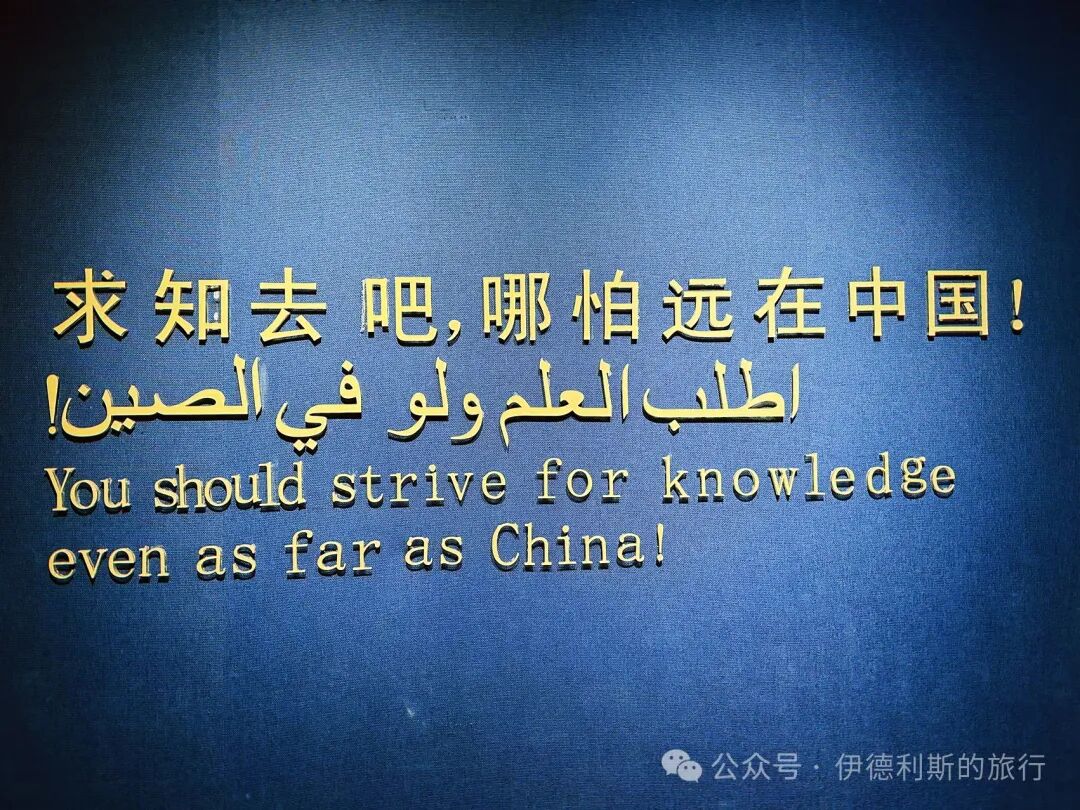
The Quanzhou Maritime Museum was built in 1959. The Quanzhou Islamic Culture Exhibition Hall opened in 2003, and the 'Arabs and Persians in Quanzhou' exhibition launched in 2008, featuring over 200 stone carvings from the Song and Yuan dynasties. I visited the 'Arabs and Persians in Quanzhou' exhibition in 2017. Returning seven years later, the layout has not changed much, but some of the most iconic stone tablets, such as the tombstone of 'Consul Pan,' have been moved to the 'Quanzhou: World Maritime Trade Center in Song and Yuan China' exhibition, with replicas now in their place.
Tombstone
The largest category of Song and Yuan dynasty Islamic stone carvings in the museum's collection is tombstones.
The tombstone in the picture below was once used as a stone tabletop under the eaves of Yuanshan Hall (later renamed Fentuoshi) on Zhongshan Middle Road in Quanzhou. It is said to have been moved there in 1952 when building materials were purchased from the city's East Gate wall foundations for construction. Ms. Wu Yuanying donated it to the museum in 1965.
The person buried is named Husayn b. Muhammad Khalati. Khalati refers to the ancient city of Ahlat in what is now southeastern Turkey. Historically, Ahlat was part of the Armenian Kingdom, was occupied by Arabs in the mid-7th century, and developed into an important trade hub in southeastern Turkey by the 10th century. Ahlat was captured by the Seljuk Empire in 1071 and later became the capital of the Turkmen beylik known as Shah-Armens.
Because the inscription is written in a very irregular way, there are still many questions about how to read it. If we read the date as 567 in the Islamic calendar, which is 1171 in the Gregorian calendar, this stone would be the oldest Arabic inscription found in Quanzhou.
The tombstone in the picture below was found in 1939 when the North Gate (Chaotian Gate) of Quanzhou was torn down. The person buried there was named Nuransa Ibn Khwaja Balad-shah b. Khwaja Haji Harbk Khorazmi, who died in 1322.
In his name, Nuransa is his given name, and Balad-shah is his father's name, which means leader in Persian. Harbk is his grandfather's name, Khwaja shows his noble status, Haji means his grandfather had been on the Hajj, and Khorazmi shows his family came from the Khwarezm region of Central Asia.
The Khwarezmian Empire was destroyed by the Mongol Empire in 1221 and was later divided between the Chagatai Khanate and the Golden Horde. In the 14th century, Khwarezm was an important trade center in Central Asia until it was destroyed by the Timurid Empire in 1388.
The tombstone in the picture below was found in 1936 at Jintoupu Village outside the East Gate (Tonghuai Gate) of Quanzhou. The person buried there died in 1358 and was named Banan b. Ghasim Isfahani, who came from the famous Iranian city of Isfahan.
Isfahan became the capital of the Seljuk Empire in the mid-11th century and reached its peak in the late 11th century. Isfahan declined after the fall of the Seljuk Empire in the 13th century. It suffered a massacre by Timur in 1387 and did not revive until the Safavid dynasty in the 16th century.
The tombstone in the picture below was unearthed in 1931 at Jintoupu outside Tonghuai Gate in Quanzhou. The person buried there was Sihab al-dunya sa l-din b. Daghab, the son of a garrison commander from Balashaghun. He died in 1301, and the inscription includes a verse from the Quran (3:185).
Balashaghun is located on the banks of the Chu River in Kyrgyzstan. It was once the capital of the Kara-Khanid Khanate and the new capital of the Western Liao dynasty. It is the hometown of Yusuf Khass Hajib, the author of Wisdom of Royal Glory (Kutadgu Bilig). Balashaghun was captured by the Mongol Empire in 1218 and gradually became a ruin by the 14th century.
The tombstone in the picture below was unearthed in 1933 from the city wall of Renfeng Gate in Quanzhou. The person buried there was Muhammad b. Su'ud Yahya, who died in 1326.
The tombstone in the picture below was unearthed in 1939 from the city wall of Tonghuai Gate in Quanzhou. The person buried there was Khwaja Ali b. Uthman al-Jilani, who died in 1357.
Gilan is located on the southern coast of the Caspian Sea in northwestern Iran. It was ruled by locals until the 11th to 16th centuries. It was occupied by the Ilkhanate in 1307 but regained its independence in 1336.
The tombstone in the picture below.
This was unearthed in 1978 on a street in Houhai Road Village, outside Tonghuai Gate in Quanzhou, and it is carved with verses from the Quran (21:35, 28:88).
The bottom half of the tombstone in the picture below was found in 1934 on a field path outside Tonghuai Gate in Quanzhou, while the top half was found in 1942 while digging for city wall foundation stones at the East Gate of Quanzhou. The person buried here was named Shaikh Aklab Umar, who passed away in 1303, and the inscription also features verses from the Quran (55:26-27, 3:185).
The tombstone in the picture below was found in 1938 while digging for city foundation stones at Renfeng Gate, the East Gate of Quanzhou; the person buried here was named Granto Takin b. Sultan Husayn, who passed away in 1308. Takin is a Turkic title for a prince or noble.
The tombstone in the picture below is a replica, and the original is on display in the main hall of the Maritime Museum. It was discovered in the summer of 1934 within the city foundations at the East Gate of Quanzhou. The top is carved with scripture (28:88) and also Chinese characters: 'General Manager Pan died on the first day of the fourth lunar month.' According to the History of Song, Volume 7 on Official Positions, the position of General Manager was created during the Jianyan era of Emperor Gaozong of the Southern Song Dynasty (1127-1130) to manage money, grain, and taxes. By the Shaoxing era of the Southern Song Dynasty, the General Manager could directly participate in military and political affairs and held great power. However, the Yuan Dianzhang records that the title of General Manager was used for minor officials in the prisons of various prefectures and counties.
The tombstone in the picture below was found in April 1958 in the city foundation near Tonghuai Gate at the East Gate of Quanzhou. The tomb owner was named Haji Khwaja b. Hasam al-Din b. Yalaki Siraf, who passed away in 1362.
Siraf is also translated in historical records as Shiluowei, Shilafu, Sanawei, Shilafu, or Siluofu. It is located in southern Iran and was the largest trading port in the Persian Gulf between the 9th and 13th centuries. Most Persian merchants traveling to Quanzhou during the Song and Yuan dynasties set off from here.
The tombstone in the picture below was discovered in 1926 by the famous archaeologist Chen Wanli on South Street in Quanzhou (now Zhongshan Road). He asked the Quanzhou government to move it to the Construction Bureau for safekeeping, but it was lost during a flood in 1935. In 1955, residents digging at the old Construction Bureau site found a stone tablet, but the bottom part with the date was broken. The person buried there was the daughter of Sayyid Burtumi b. Sayyid Muhammad al-Hamdani.
Hamadan is located southwest of Tehran and serves as an important commercial center and transport hub in northwestern Iran. Hamadan became the capital of the Seljuk Empire in the 11th century, but it was destroyed by the Mongol army in 1220 and again during the Timurid invasion in the 14th century, only recovering during the Safavid dynasty in the 16th century.
The tombstone in the picture below was found in 1929 when the Renfeng Gate wall at the East Gate of Quanzhou was torn down. It broke into three pieces and was stacked into a house wall, then rediscovered in 1950 after the wall collapsed. A corner of the tombstone was lost in the late 1960s. The person buried there died in 1337, and the inscription is a verse from the Quran (21:34-35).
The tombstone in the picture below was found in September 1958 next to a field in Huazhou Village outside the South Gate of Quanzhou. Local villagers said it was a city stone dug up from the Quanzhou South Gate wall over 20 years earlier. They originally planned to use it to build a house, but after realizing it was a tombstone, they used it to pave a path in the field instead. The person buried there was named Abu Masman Ghath, and the inscription is a verse from the Quran (55:26-27).
The tombstone in the picture below was found on the road surface of West Street in Quanzhou in 1932. It was originally taken from the city wall to pave the road. The person buried there is named Khadija bint Fanshah.
The tombstone in the picture below was unearthed in 1981 at a villager's home in Jinputou, outside Tonghuai Gate at the East Gate of Quanzhou. The person buried there is named al-Hamd Suad.
The tombstone in the picture below was found in a resident's home near the South Gate factory area in Quanzhou in 1945 and was recovered for preservation in 1953. The inscription is a verse from the Quran (29:57).
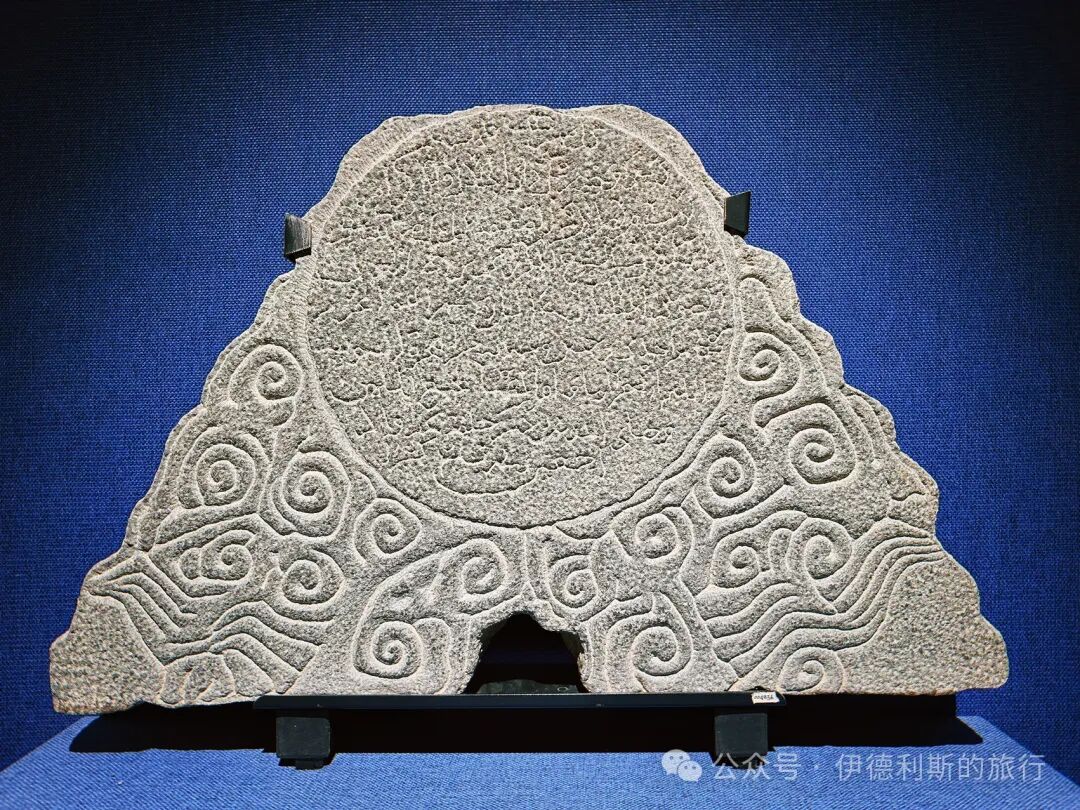
The tombstone in the picture below was excavated from the city wall at the East Gate of Quanzhou in 1930. The center features a full moon carved in Arabic script, with a swirling cloud on each side, creating a cloud and moon pattern. The top center of the tombstone features the Shahada, surrounded by dua.
The tombstone in the picture below was found in 1940 while digging city foundations near Jiaochangtou, close to Tonghuai Gate at the East Gate of Quanzhou. The tombstone features a cloud and moon design, with a full moon in the center and swirling cloud patterns on both sides. The person buried here died in 1350, and the inscription is a verse from the Quran (55:26-27).
The tombstone in the picture below was found in June 1959 in Xiawei Village, outside Tonghuai Gate at the East Gate of Quanzhou. According to local villagers, this stone was dug up from the city wall many years ago and used to pave a small path in the fields. It was dug up again during road construction and kept in an ancestral hall because the writing on it looked unusual. The inscription consists of verses from the Quran (39:4, 55:26-27).
The tombstone in the picture below was found in 1947 in the city foundations of Deji Gate at the South Gate of Quanzhou. That same year, it was used to build a pier for the Shunji Bridge at the South Gate, but it was later discovered and moved. The inscription is a verse from the Quran (55:26-27).
The tombstone inscription in the picture below is a verse from the Quran (55:26-27). The lower part of the tombstone is damaged, so we only know the person was a "pure servant who died on Saturday, May 2nd, in the year..."
The tombstone in the picture below was found in a field near East Lake outside the Small East Gate of Quanzhou in April 1962. Local villagers say it was dug up from the city wall years ago to pave the road. The inscription is a verse from the Quran (3:85).
The tombstone in the picture below was found in a pond outside Renfeng Gate at the East Gate of Quanzhou in 1939. The tomb owner's title is Sayyid al-Ajall al-Kabir, which translates to "the first, the respected, the important." The other side is carved with Chinese characters reading "Fengxun Dafu, Darughachi of Yongchun County..."
Darughachi was a government position during the Yuan Dynasty, held only by Mongols or powerful Semu people. Yongchun County is under the jurisdiction of Quanzhou. According to the Yongchun Prefecture Records, there was once a darughachi named Tuohuanshaduoluoboer, who might be the same person as the tomb owner.
The tombstone in the picture below was found in 1931 when the East Gate of Quanzhou was dismantled. The tomb owner was named Khwaja Jalal al-Din b. Muhammad b. Ibrahim, who passed away in 1305. The back is carved with verses from the Quran (89:28-30).
The tombstone in the picture below was found in 1942 at a stone shop on Renfeng Street outside the East Gate of Quanzhou. It had been dug out from the city wall. The tomb owner was named Amir Tughasun Amir Ali b. Hasan b. Ali al-Ghazwini, who passed away in 1371 (some say 1273). Amir, also translated as Yimi, originally meant commander and was later used to refer to a lord.
In his book Religious Stone Inscriptions of Quanzhou, Wu Wenliang speculates that this Amir was the imam of the foreign quarter in Quanzhou at that time. In the early Ming Dynasty, the government briefly followed the open policies of the Yuan Dynasty, encouraged foreign trade, and established a Maritime Trade Office in Quanzhou. This policy did not last long. In 1371, the Ming Dynasty issued a maritime ban, and in 1374, it closed the Quanzhou Maritime Trade Office. The once-thriving foreign quarter in Quanzhou quickly declined.
Qazvin is located in northwestern Iran, south of the Caspian Sea. In 1220, the Mongol army massacred the population of Qazvin. Afterward, many Turkic-speaking people moved to Qazvin to settle. In 1295, Qazvin suffered heavy damage during the turmoil of Ghazan Khan's struggle for the throne of the Ilkhanate, and many people left the city.
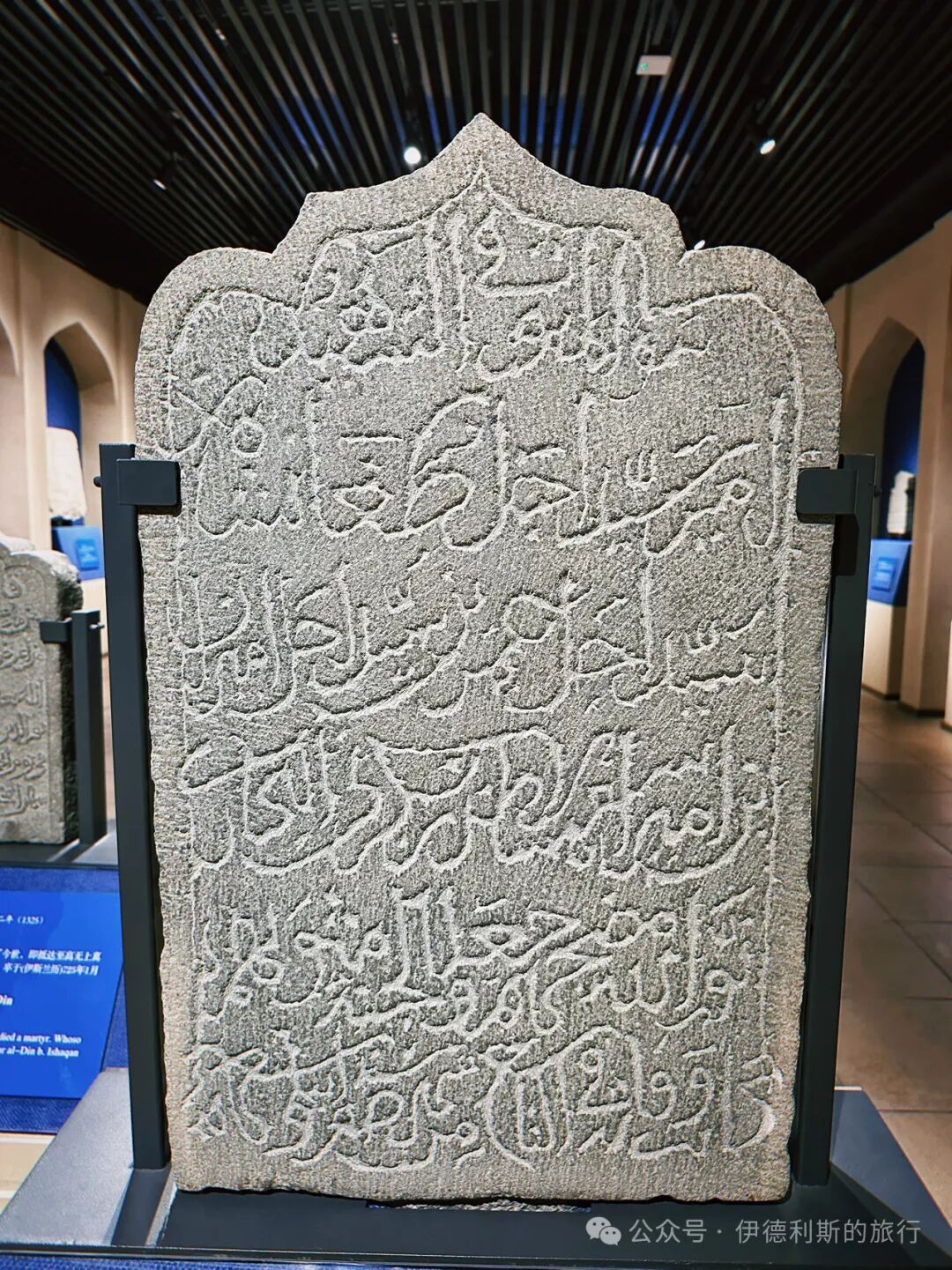
The tombstone in the picture below was discovered in 1940 when the Renfeng Gate at the east gate of Quanzhou was demolished. The person buried there was Shams al-Din b. Nur al-Din b. Ishaqan Shahristani, who died in 1325 and came from Shahristan in Iran. The back features a verse from the Quran (3:19).
The tombstone in the picture below was found in March 1963 in the home of a farmer at Ruifengling outside the east gate of Quanzhou. The family said it was discovered when an old wall that had stood for a hundred years collapsed. Several gravestones belonging to the faith were found near Ruifeng Ridge, marking it as one of the burial sites for Muslims in Quanzhou during the Song and Yuan dynasties. The person buried there was named Fatima bint Naina, who passed away in 1306. The back of the stone is carved with verses from the Quran (55:26-27).
The gravestone in the picture below is broken into several pieces, with two parts remaining today; they were unearthed in 1953 and 1956 at Jintoupu, outside the Tonghuai Gate of Quanzhou's East Gate. The person buried there was named Abu Bakr b. Husayn Sinan, who passed away in 1319.
The gravestone in the picture below was excavated from the city wall at Quanzhou's East Gate in 1929; the person buried there was named Haji b. Agfar Beg b. Haji al-Malighi, who passed away in 1387 (though some say 1290). If the date is 1387, it is a rare gravestone from the Ming dynasty. The back is carved with a verse from the Quran (2:156) and a hadith stating, 'Whoever dies in a foreign land dies a martyr.'
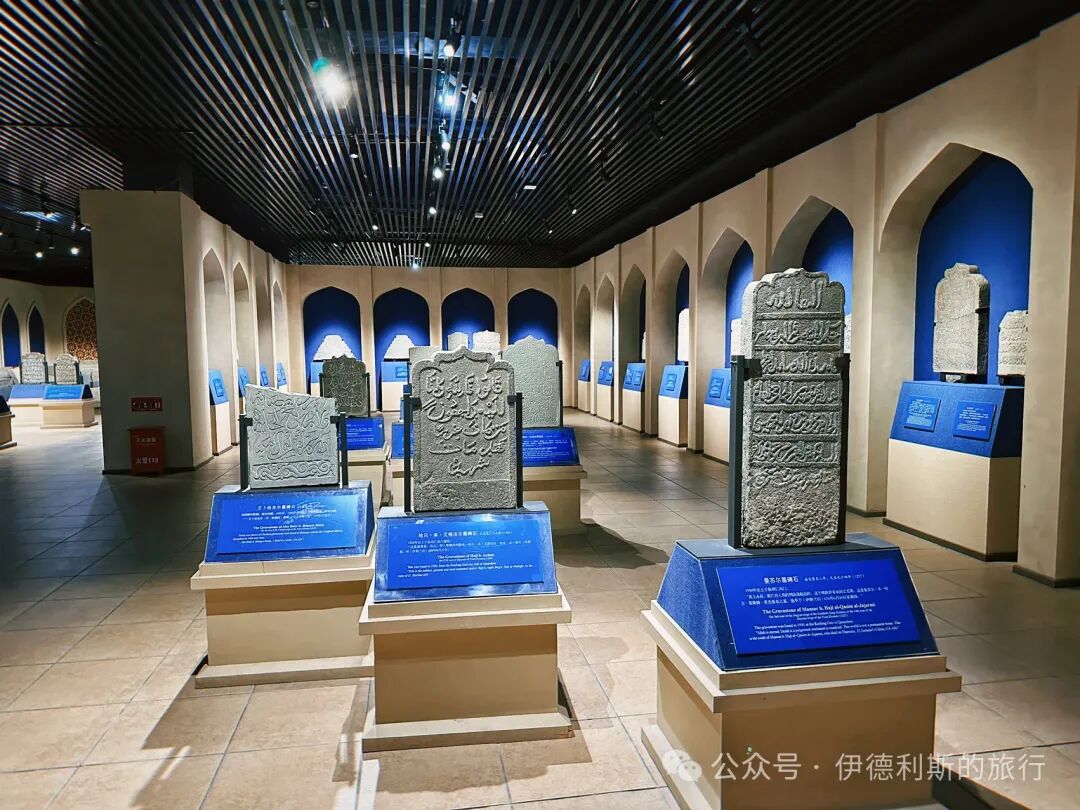
The tombstone in the picture below was found in 1930 when the East Gate of Quanzhou was demolished. The person buried there was named Mansur b. Haji al-Qasim al-Jajarmi, who died in 1277. The back features the Shahada and a verse from the Quran (28:88). This Mansur and the previously mentioned Qutb al-Din Ya'qub both came from Jajarm in the North Khorasan province of Iran.
In 1276, the Yuan army captured Lin'an, and Wen Tianxiang and others supported Emperor Duanzong as they fled to Quanzhou. The Song army seized 2,000 of Pu Shougeng's ships (some say over 400) and confiscated his property. This led Pu Shougeng to carry out a retaliatory massacre of the Southern Song royal family members living abroad and to hunt down Emperor Duanzong. In 1277, the Yuan army arrived in Quanzhou, and Pu Shougeng surrendered the city, marking a new chapter in Quanzhou's history.
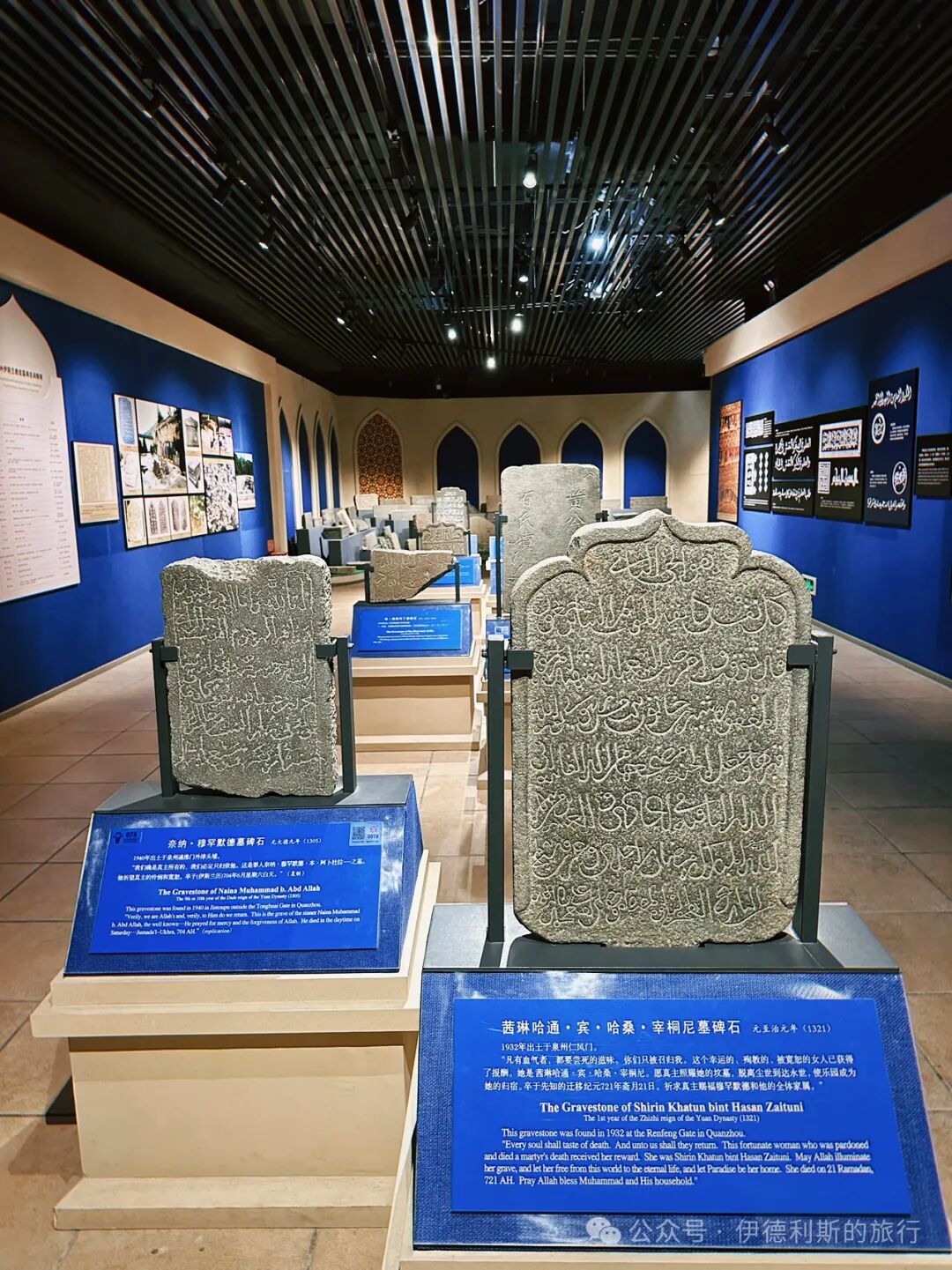
The tombstone in the picture below was found in 1932 when the Renfeng Gate of the Quanzhou East Gate city wall was demolished. The person buried there was named Shirin Khatun bint Hasan Zaituni, who died in 1321. In Turkic languages, Khatun means queen or lady. The inscription also features a verse from the Quran (29:57).
Citong is another name for Quanzhou, named after the coral trees (citong) planted everywhere since the Five Dynasties period. During the Song and Yuan dynasties, Arab merchants called Quanzhou Zaitun because the name sounded like the Arabic word for olive (zaitun).
The tombstone in the picture below was found in November 1978 inside a family home at Jintoupu, outside Tonghuai Gate in Quanzhou, where it was being used as a foundation stone. Before that, it had been excavated from the city walls of Tonghuai Gate. The person buried there was named Ibn Ghawamar al-Din al-Ghar... The inscription describes him as a Khwaja, a leader of the faith, and a leader of the Mawla. The text uses Persian several times, so the person buried there likely came from a Persian cultural background.
The tombstone in the picture below was unearthed in March 1964 at the construction site of the Overseas Chinese Mansion in downtown Quanzhou. This site was once the location of the Haiqing Pavilion during the Qing Dynasty. When the Senate building was built in the early 1940s, the city walls of the east and south gates of Quanzhou were torn down for building materials, and this stone tablet was likely buried in the wall foundation at that time. One side of the tombstone is carved with the Shahada, and the other side is carved with a verse from the Quran (3:185).
The tombstone in the picture below was found in the foundation of the east gate of Quanzhou in 1944. One side is carved with the Basmala and the Shahada, and the other side is carved with a verse from the Quran (29:57).
The tombstone in the picture below was unearthed in 1973 during the cleaning of the North Canal in Quanzhou and is carved with verses from the Quran (89:28-30).
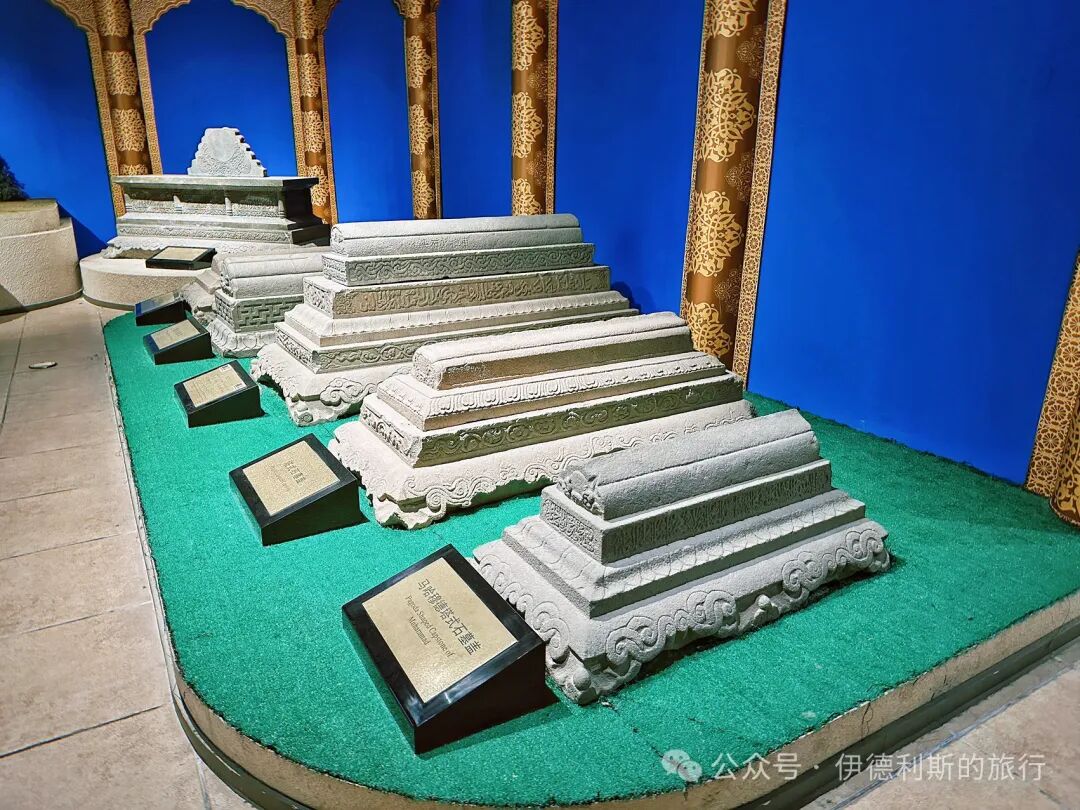
Sumeru-pedestal stone tomb.
The second largest category after tombstones is the Sumeru-pedestal stone tomb.
These are two Sumeru-pedestal style tomb stones. The upper tomb cap stone was found near Dongchan Mosque outside the east gate of Quanzhou in 1927 and was recovered and preserved in the Maritime Museum in 1958.
The person buried here was named Qutb al-Din Ya'qub. He came from Jajarm in the North Khorasan province of Iran and passed away in 1309. The inscription begins by saying, 'He is eternal and never dies; he has moved from the world of destruction to the world of eternity.'
Jajarm sits on the edge of the central Iranian desert and holds many historical and archaeological sites. This city was an important trade hub in Khorasan during the 10th and 11th centuries, but it slowly declined after the Persian Safavid dynasty in the 16th century.
The lower half has five layers. The fourth layer is carved with scripture (2:255). In 1958, the Quanzhou Cultural Relics Management Committee temporarily stored it in the main hall of the Qingjing Mosque, later moved it to the Lingshan Islamic Cemetery area, and finally placed it in the Maritime Museum.
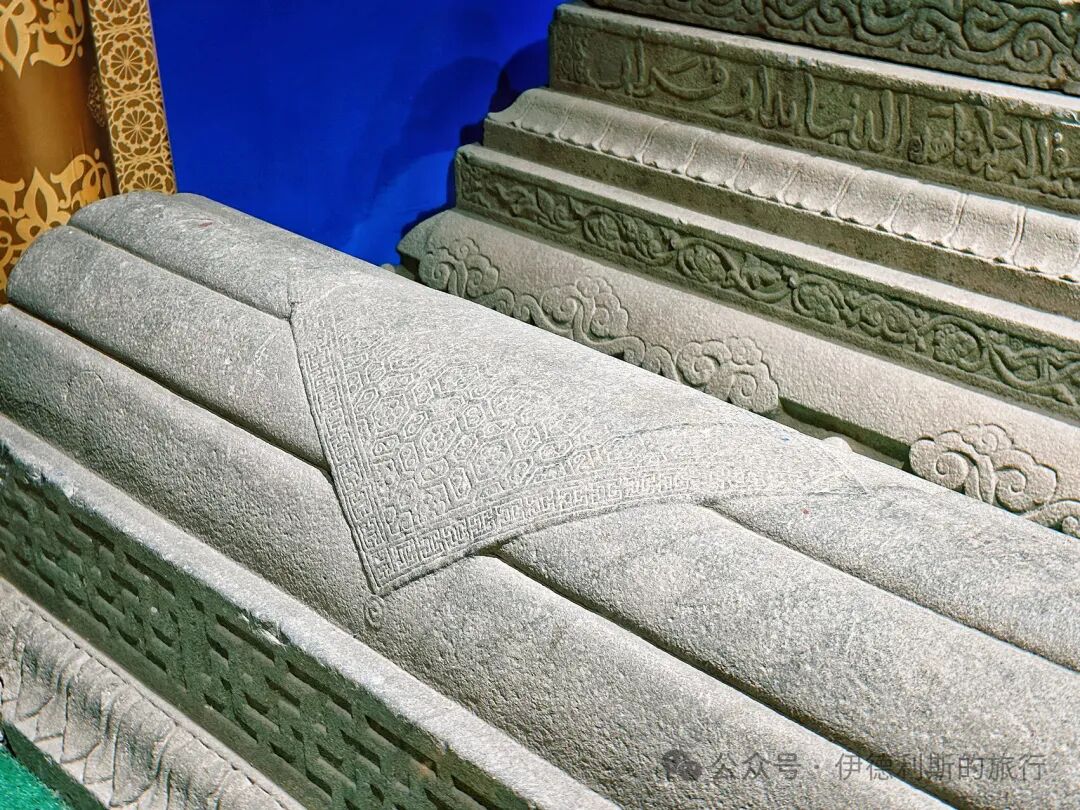
The patterns on this Sumeru-style stone tomb are very unique. The bottom and second layers are destroyed. The third layer features overlapping lotus petal reliefs, the fourth layer has continuous swastika pattern reliefs, and the fifth layer shows a cloud and moon relief on the front with a square cloth relief in the middle. This tombstone was found in 1959 by the seaside in Meishan, Fashi Township, 5 kilometers outside the Tonghuai Gate of Quanzhou. It was later moved to the Maritime Museum for preservation.
Several other Sumeru-style stone tombs.
The tombstone base of a pedestal-style altar tomb.
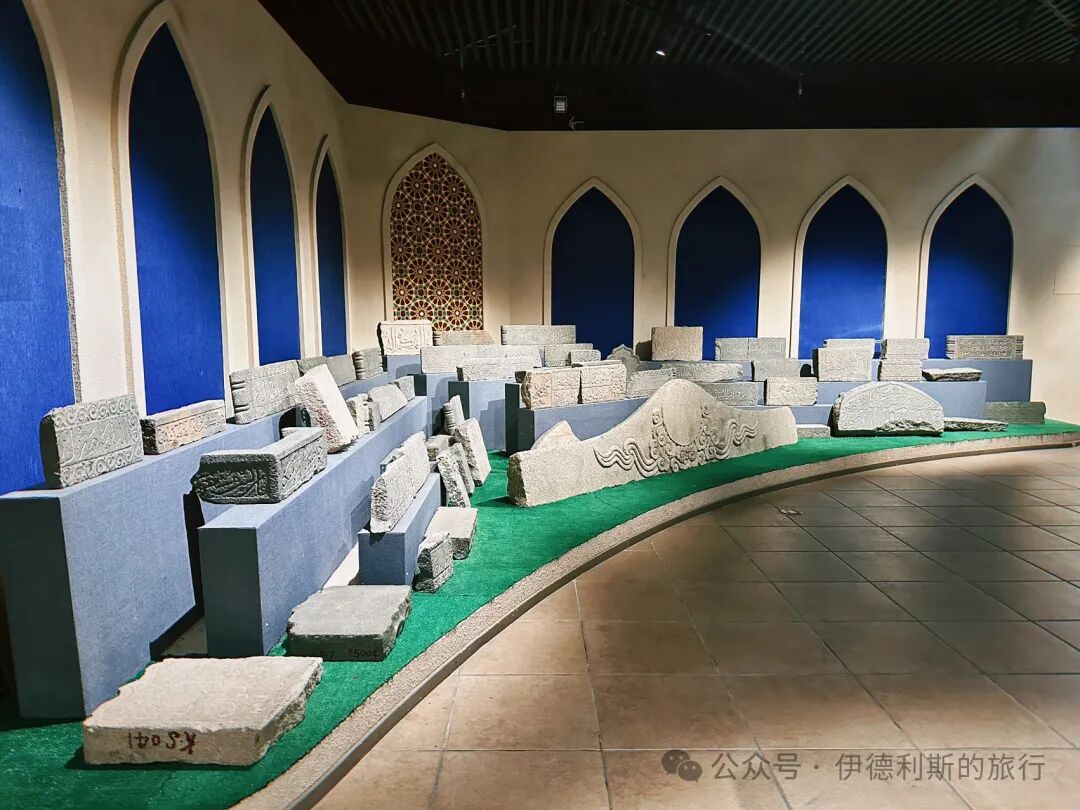
A corner of the Maritime Museum (Haijiaoguan) is piled with many tombstones. There are no labels, and many are hard to see because they are stacked on top of each other. They were arranged this way when I visited in 2017, and nothing has changed after seven years.
Found in 1937 at Jintoupu Village outside Tonghuai Gate at the East Gate of Quanzhou, the inscription reads, 'Everyone (shall taste death).'
Found in 1943 inside the city wall foundation at the East Gate of Quanzhou, the inscription contains Quranic verses (9:21-22).
The tombstone base above was found in 1939 inside the city wall at Tonghuai Gate at the East Gate of Quanzhou, and it contains Quranic verses (29:57).
Found in 1943 near the East Drill Ground (Dongjiaochang) in Quanzhou, the inscription reads, 'Your Lord of Might.'
The tombstone base in the picture below was found in 1959 in a pile of rubble at the Qingjing Mosque. This pile of rubble was dug up from the city wall foundation near Tonghuai Gate at the East Gate of Quanzhou, and it was moved to the Maritime Museum (Haijiaoguan) for preservation in 1964. The inscription states the tomb owner's name is Toghan-shah b. Umar b. Sayyid Ajall. Toghan means eagle in Turkic, and Shah means king in Persian, which is how Central Asians addressed nobles. Sayyid Ajall means honorable gentleman in Arabic, and it is a respectful title for descendants of the Prophet.
Coincidentally, a tombstone unearthed in 1952 at the foundation of the Southeast Drill Ground in Quanzhou likely belongs to the same person as the Toghan-shah tombstone mentioned above. Unfortunately, this tombstone was moved to the National Museum of China in 1959 and is not currently on display, so the Maritime Museum only shows a replica. This tombstone states the owner's name is Amir Sayyid Ajall Tohgan-shah b. Sayyid Ajall Umar b. Sayyid Ajall Amiran b. Amir Isfahasalar Darnakrani al-Buhari, who passed away in 1302. The term Isfahasalar is made up of the Persian word Isfahah and the Turkic word Salar, meaning military general.
Both tombstones mention that Toghan-shah's father was named Umar Sayyid Ajall. The second son of Nasulading, who was the son of the famous Yuan Dynasty politician Sayyid Ajjal Shams al-Din, was named Umar Sayyid Ajjal. Umar once served as the administrator of the Fujian Branch Secretariat in Quanzhou. According to Rashid al-Din's History of the Mongols, Sayyid Ajjal Shams al-Din was from Bukhara, which matches the records on the tombstone.
The tombstone in the picture below was found in 1987. One side is carved with the testimony of faith, and the other side, translated by Imam Wang Yaodong from Ningxia, says the person buried there was named Haji Abdullah.
The tombstone base stone above was found in the foundation of the East Gate of Quanzhou in 1944 and is carved with a verse from the Quran (21:35). The bottom left of Figure 1 shows a tombstone base stone from a pedestal-style altar. It was found near the South Gate of Quanzhou in 1959, and local residents say it was recovered when the South Gate was torn down between 1946 and 1948. The inscription on the stone features a verse from the Quran (24:35).
The tombstone base stone above was found in the foundation of the East Gate of Quanzhou in 1944 and is carved with a verse from the Quran (28:88).
The tombstone marker in the middle of the picture below was found in 1960 among a pile of rubble at the entrance of Chongfu Mosque at the East Gate of Quanzhou. It reads, 'Everything will perish except Him.'
The shape of this stone carving is quite unique and different from any other tombstones or tombstone markers seen so far. It was found in 1948 in Jintoupu Village outside the Tonghuai Gate at the East Gate of Quanzhou. Villagers said it was dug up from the foundation of the city wall.
The tombstone marker in the picture below was built into the east wall of a vegetable market near the South Drill Ground in Quanzhou in the autumn of 1953. It is said to have been bought when the market purchased stones from the city wall foundation for construction. It was removed in the 1990s when the market was rebuilt. The inscription is a verse from the Quran (28:88).
It was found in 1954 in Jintoupu Village outside the Tonghuai Gate at the East Gate of Quanzhou.
It was found in 1957 in a field between the Small East Gate and Jintoupu Village in Quanzhou. The content is a verse from the Quran (39:74).
It was purchased in 1949 from a stonemason's shop at the East Gate of Quanzhou.
The tombstone base in the picture below was found in 1948 at Jintoupu Village outside the Tonghuai Gate of Quanzhou's East Gate. In 1973, Liu Wanru, the widow of Mr. Wu Wenliang, donated it to the Quanzhou Cultural Relics Management Committee. It features Quranic verses (55:26-27).
The tombstone base in the picture below was found in 1948 in Tingdian Village, 3 kilometers outside Quanzhou's South Gate. It features Quranic verses (89:29-30).
The tombstone base in the picture below was found in 1938 inside the city wall of Quanzhou's East Gate. It features a Quranic verse (30:11).
Lintel stone of a gongbei
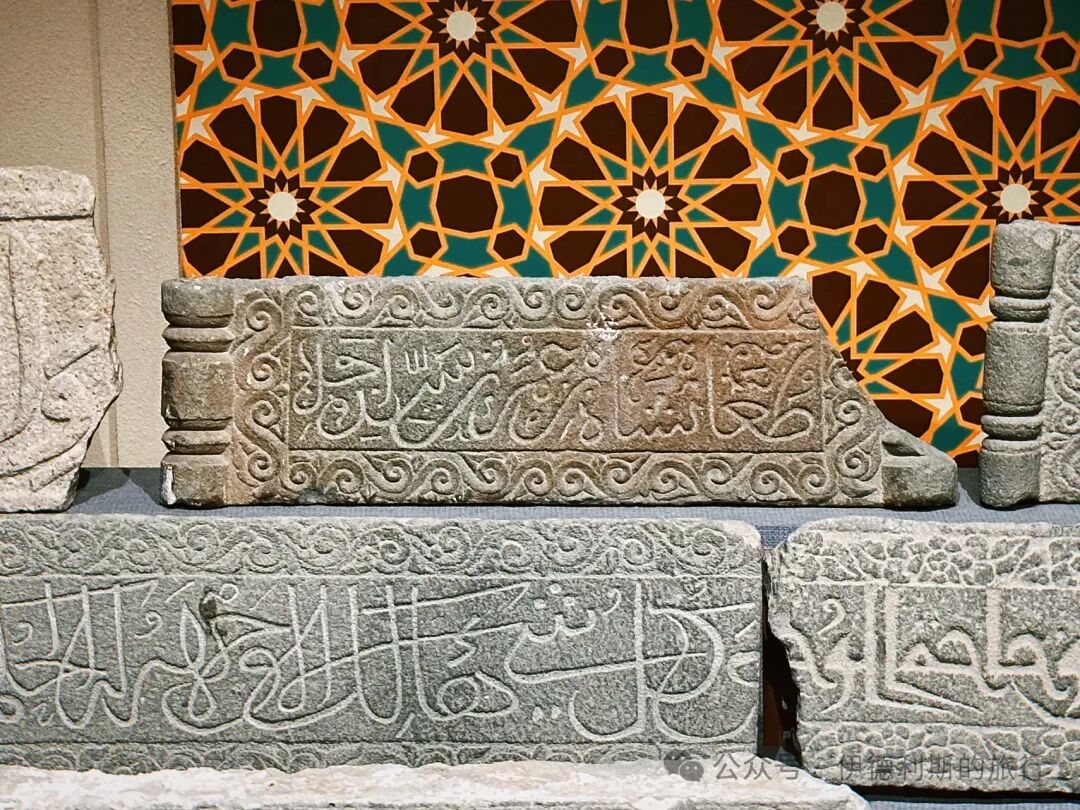
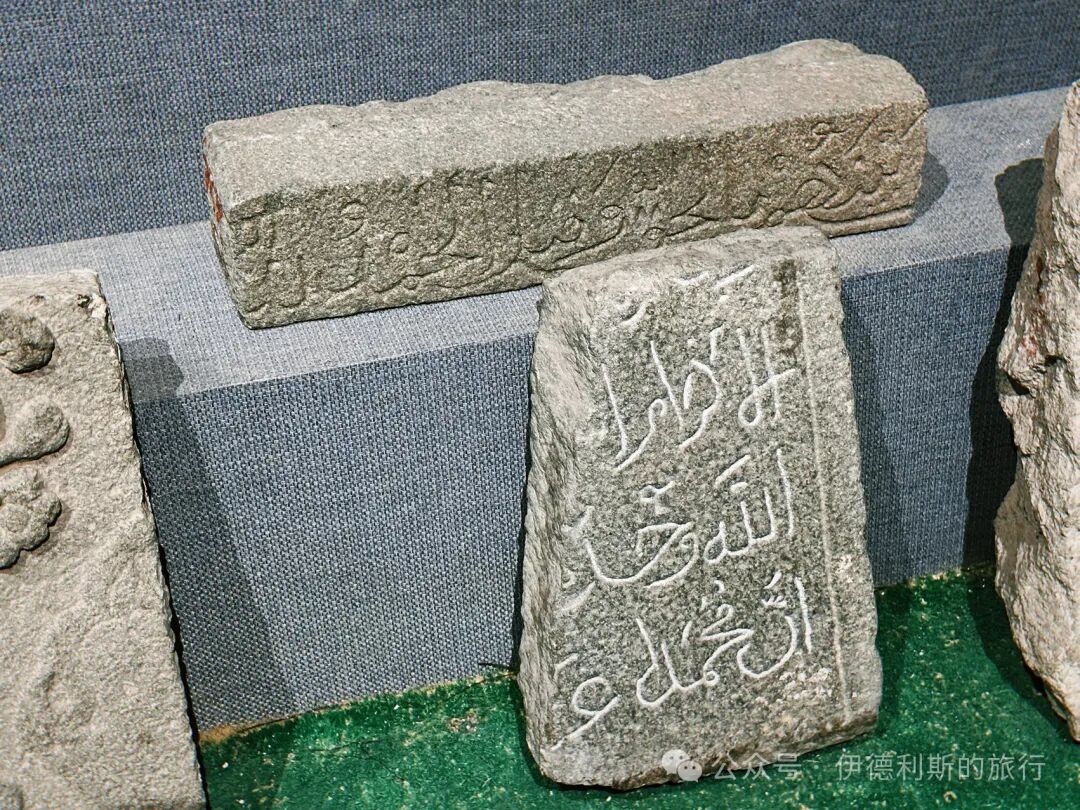
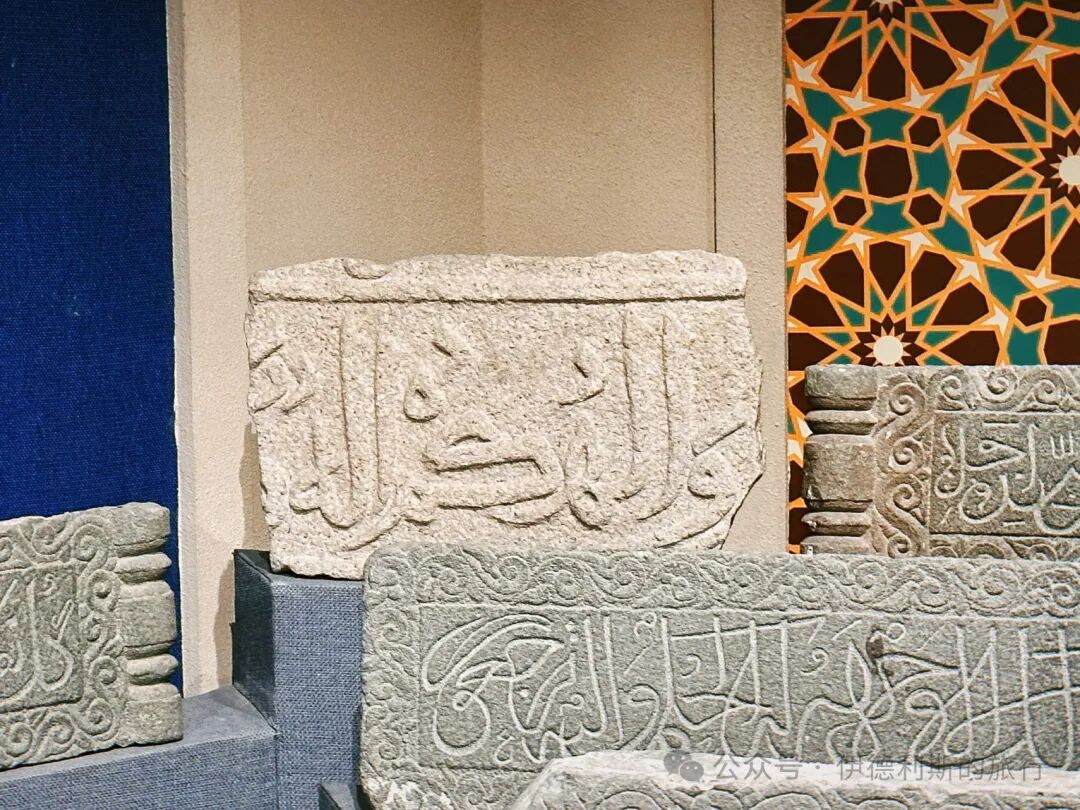
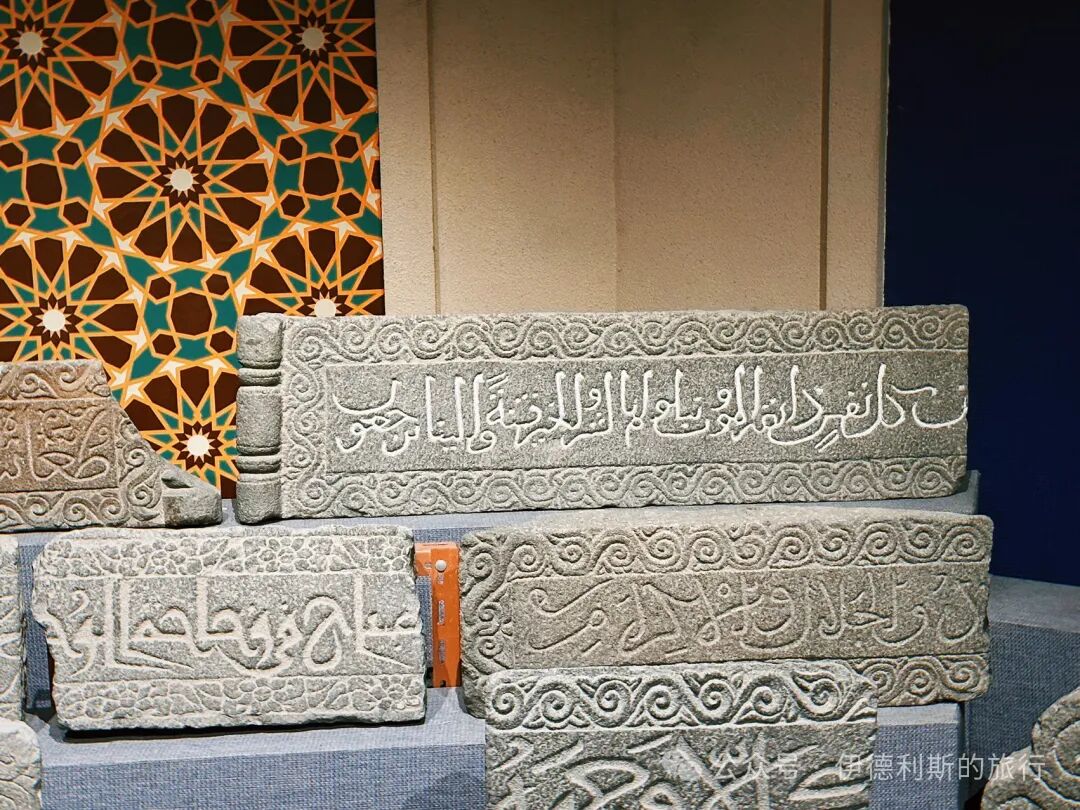
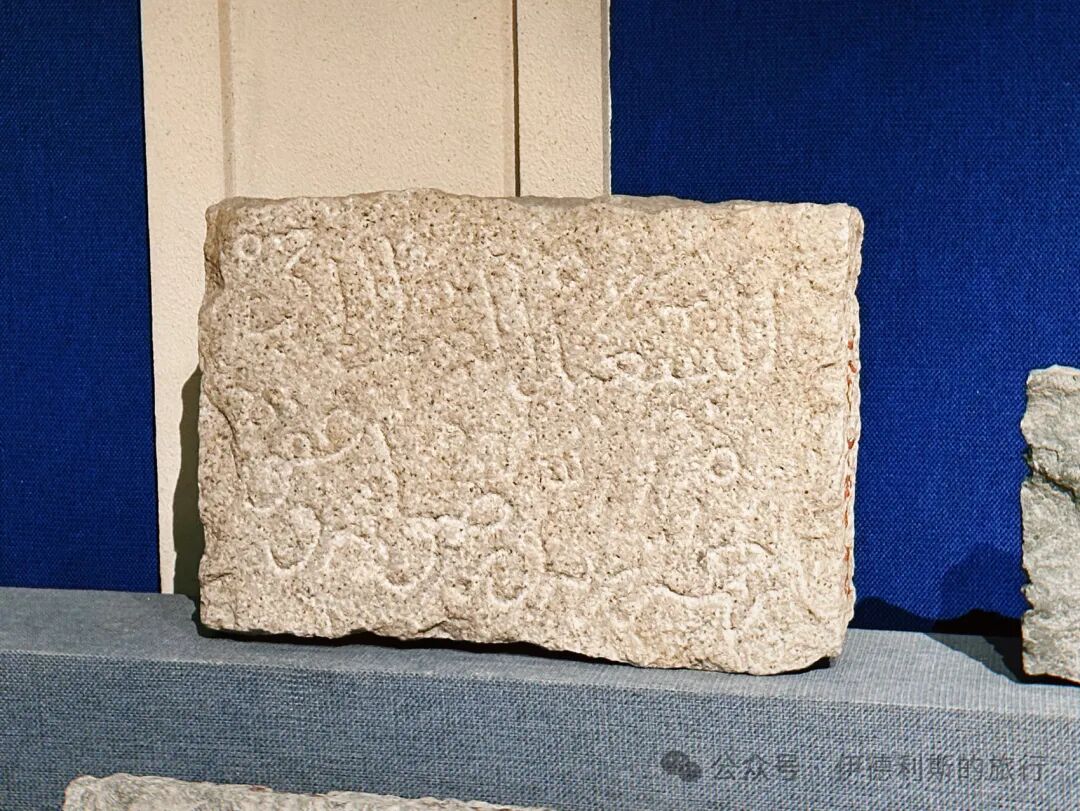
Besides tombstones, Sumeru-pedestal style stone tombs, and Sumeru-pedestal altar-style stone tombs, the Maritime Museum also houses another type of religious stone carving: the lintel stone of a gongbei (a domed tomb for a Sufi saint). Unfortunately, only the lintel stone has been found so far, so we do not know what the original gongbei looked like.
The item in the picture below was dug up in 1946 from the foundation of Quanzhou's South Gate. The front is inscribed with Quranic verses (9:21-22), and the beginning mentions 'minbar,' which is the pulpit inside a mosque, though its specific meaning here is unclear.
The item in the picture below was found in 1958 in a villager's home not far from the South Gate of Quanzhou. The villager said he found it deep in the city wall foundation while helping dig at the South Gate between 1946 and 1948. I originally wanted to take them home to build a wall, but I left them behind because their shapes made them hard to stack. The text reads, "(Every living thing) will die, (He is the Everlasting) who does not die."
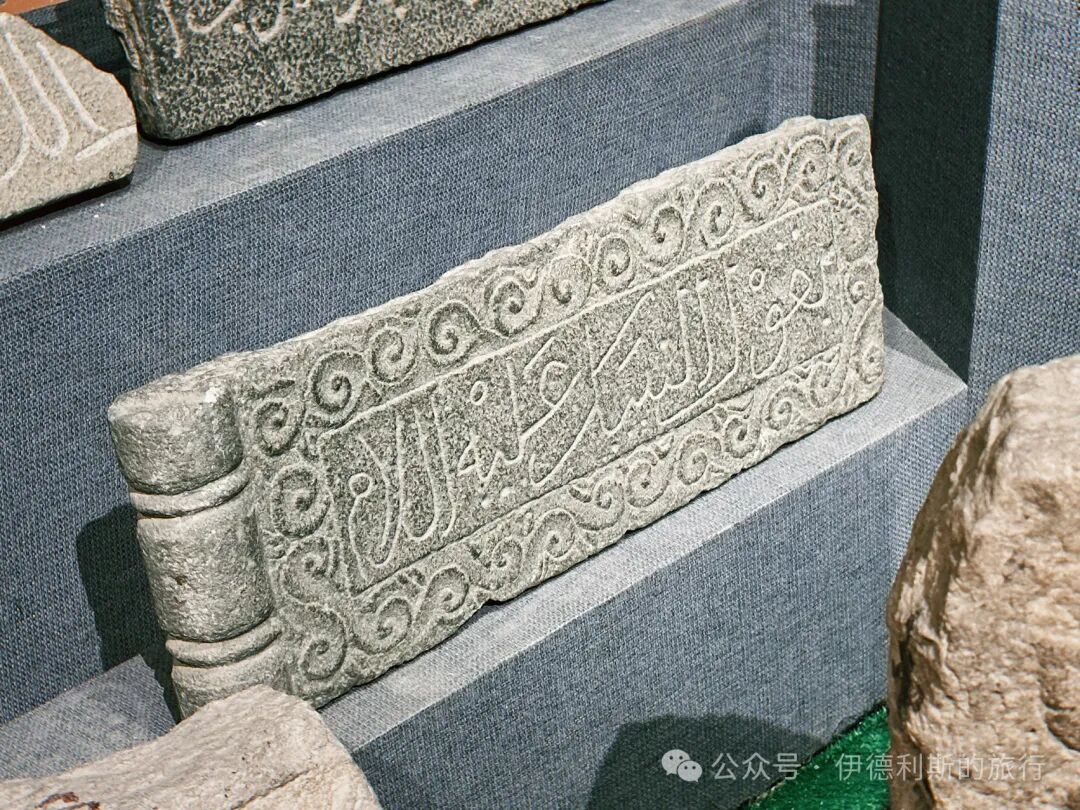
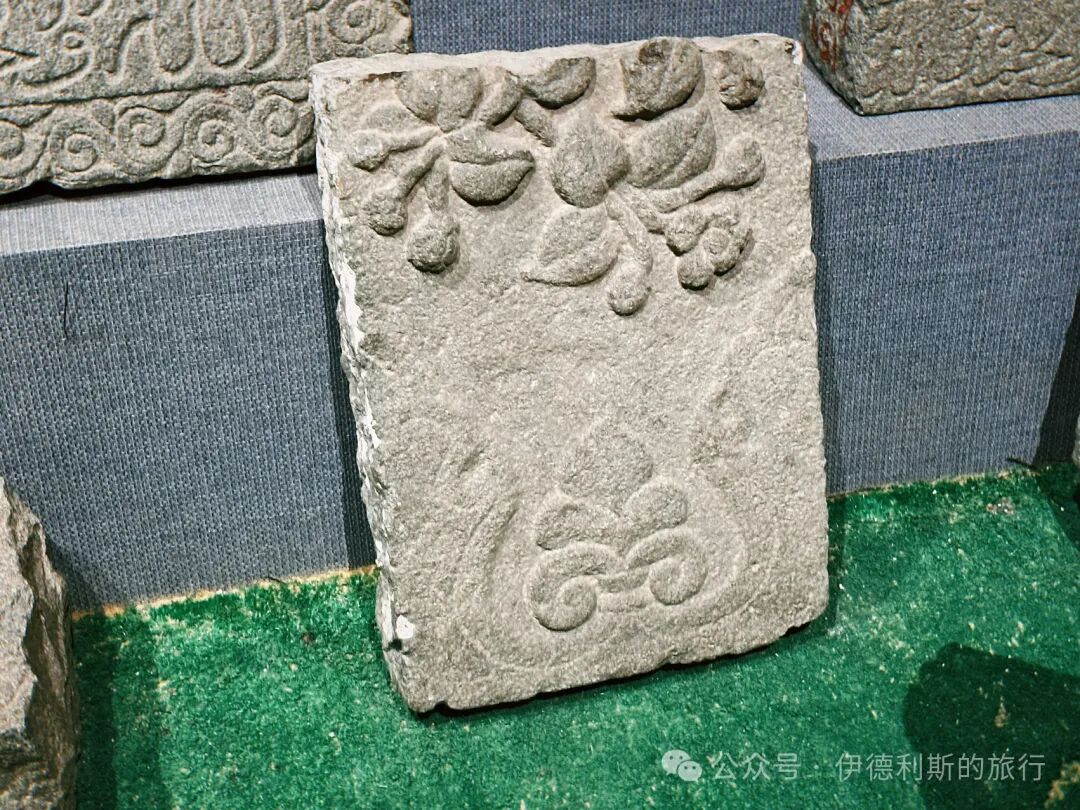
The image below shows the pivot stone from a gongbei lintel. It was found in a resident's home near the south gate city wall of Quanzhou in 1959, and it is said to have been taken when the south city gate was torn down between 1946 and 1948. The left square of the stone carving features a relief of a camellia branch, the right square features a relief of a peony branch, and the back features a relief of a melon-petal-shaped door pivot. The text reads, "If anyone in this world could live forever, the Messenger of Allah would be the one to live forever in this world." No one can escape death, for the Prophet Muhammad faced the decree of death."
The image below shows a lintel stone from a gongbei tomb, with a relief of a peony branch on the right side. The stone carving was originally laid on a grain-drying ground on the south side of the street in Jintoupu Village, outside Tonghuai Gate at the east gate of Quanzhou. It was moved to the Maritime Museum for preservation in 1978.
The altar-style stone tomb with a pedestal base (xumizuo) restored by Mr. Wu Wenliang. Quanzhou has found many tomb wall stones and some tomb roof stones, but so far, no complete altar-style stone tomb with a pedestal base (xumizuo) from the faith has been discovered. view all
Summary: Islamic Art Guide: Quanzhou Maritime Museum Song-Yuan Stone Inscriptions (Part 1) is presented here as a firsthand travel account in clear, natural English. The account focuses on Quanzhou, Islamic Art, Stone Inscriptions while preserving the names, places, food, photos, and historical details from the Chinese source.
The Quanzhou Maritime Museum was built in 1959. The Quanzhou Islamic Culture Exhibition Hall opened in 2003, and the 'Arabs and Persians in Quanzhou' exhibition launched in 2008, featuring over 200 stone carvings from the Song and Yuan dynasties. I visited the 'Arabs and Persians in Quanzhou' exhibition in 2017. Returning seven years later, the layout has not changed much, but some of the most iconic stone tablets, such as the tombstone of 'Consul Pan,' have been moved to the 'Quanzhou: World Maritime Trade Center in Song and Yuan China' exhibition, with replicas now in their place.
Tombstone
The largest category of Song and Yuan dynasty Islamic stone carvings in the museum's collection is tombstones.
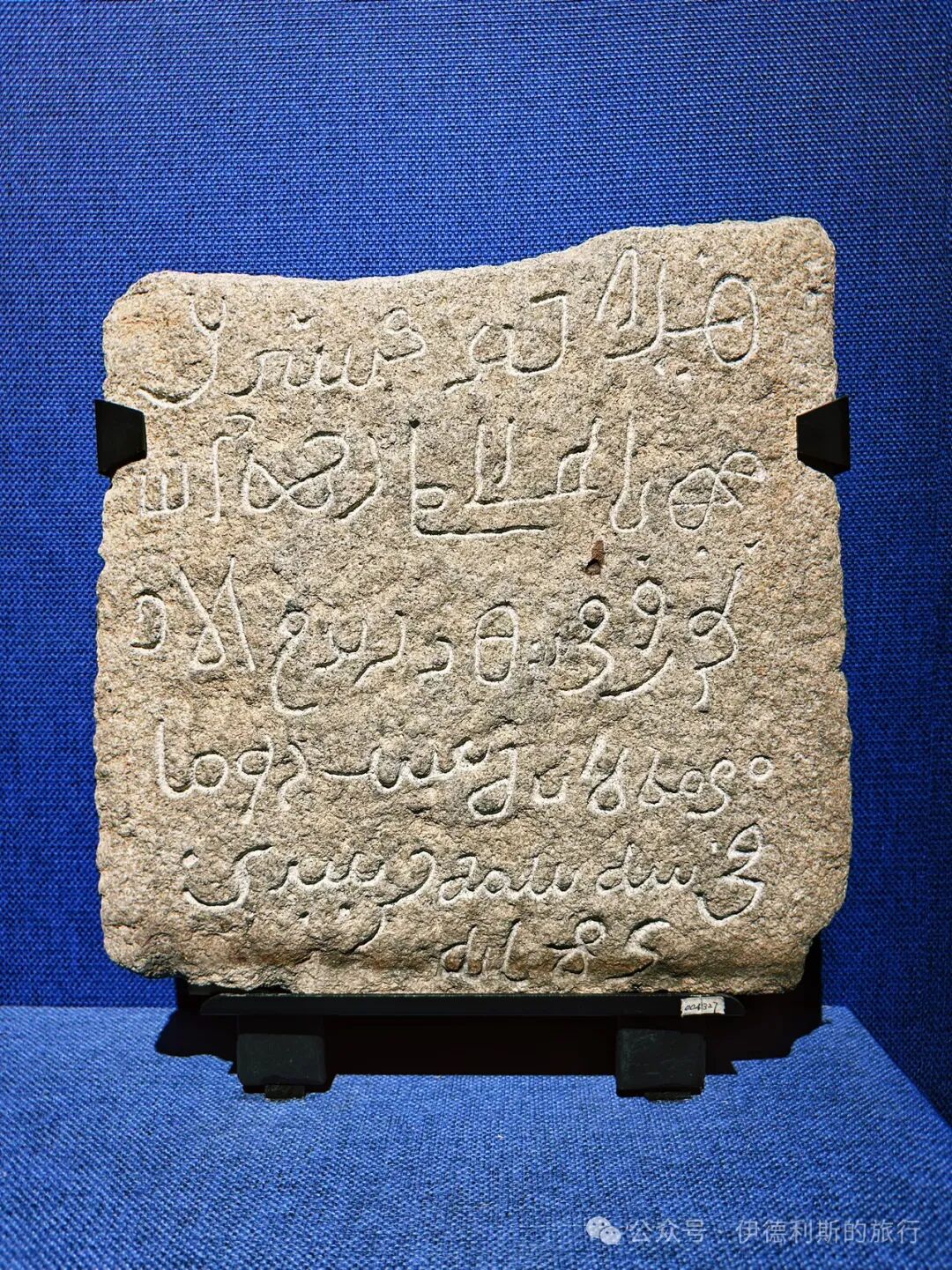
The tombstone in the picture below was once used as a stone tabletop under the eaves of Yuanshan Hall (later renamed Fentuoshi) on Zhongshan Middle Road in Quanzhou. It is said to have been moved there in 1952 when building materials were purchased from the city's East Gate wall foundations for construction. Ms. Wu Yuanying donated it to the museum in 1965.
The person buried is named Husayn b. Muhammad Khalati. Khalati refers to the ancient city of Ahlat in what is now southeastern Turkey. Historically, Ahlat was part of the Armenian Kingdom, was occupied by Arabs in the mid-7th century, and developed into an important trade hub in southeastern Turkey by the 10th century. Ahlat was captured by the Seljuk Empire in 1071 and later became the capital of the Turkmen beylik known as Shah-Armens.
Because the inscription is written in a very irregular way, there are still many questions about how to read it. If we read the date as 567 in the Islamic calendar, which is 1171 in the Gregorian calendar, this stone would be the oldest Arabic inscription found in Quanzhou.
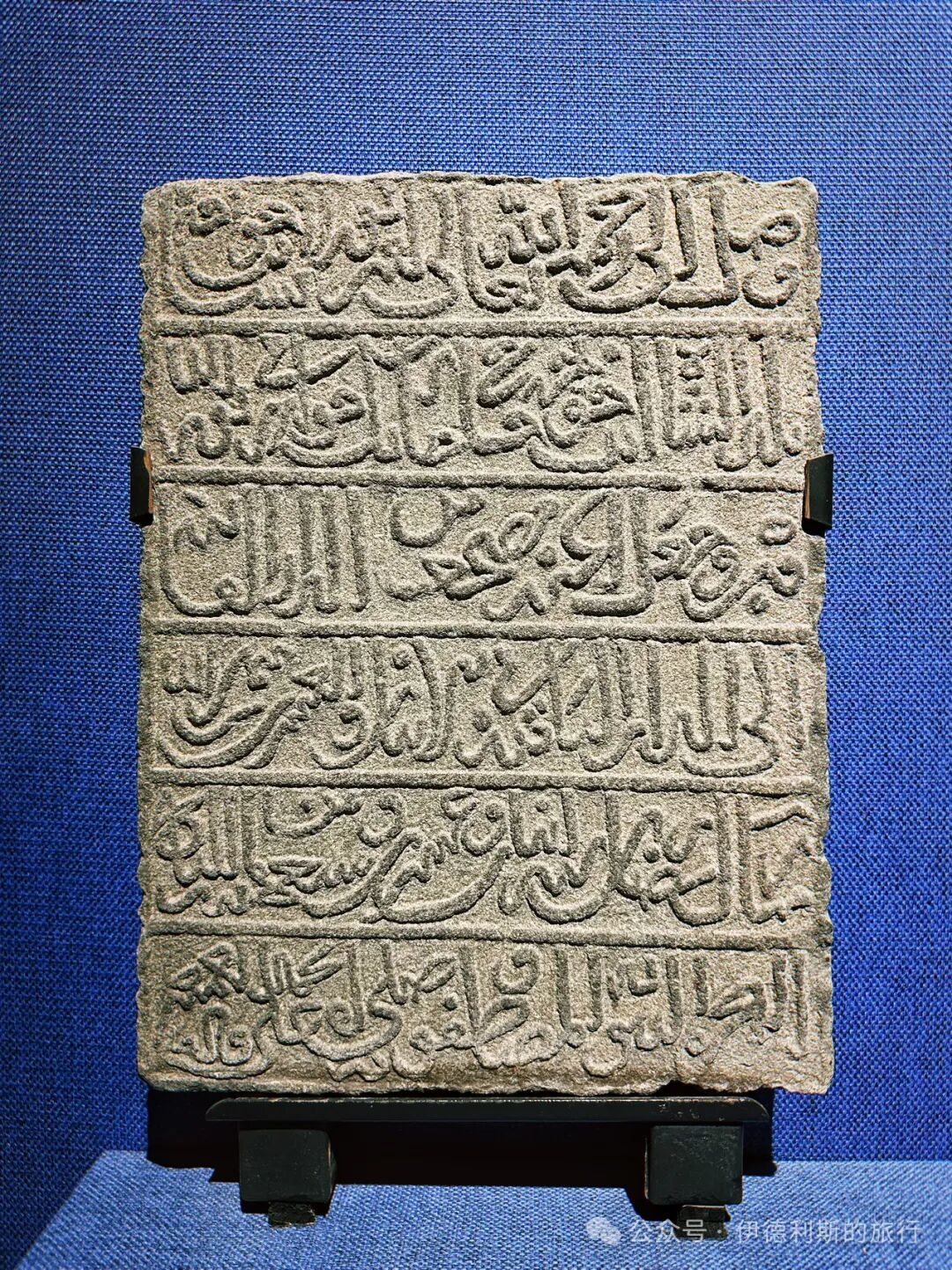
The tombstone in the picture below was found in 1939 when the North Gate (Chaotian Gate) of Quanzhou was torn down. The person buried there was named Nuransa Ibn Khwaja Balad-shah b. Khwaja Haji Harbk Khorazmi, who died in 1322.
In his name, Nuransa is his given name, and Balad-shah is his father's name, which means leader in Persian. Harbk is his grandfather's name, Khwaja shows his noble status, Haji means his grandfather had been on the Hajj, and Khorazmi shows his family came from the Khwarezm region of Central Asia.
The Khwarezmian Empire was destroyed by the Mongol Empire in 1221 and was later divided between the Chagatai Khanate and the Golden Horde. In the 14th century, Khwarezm was an important trade center in Central Asia until it was destroyed by the Timurid Empire in 1388.
The tombstone in the picture below was found in 1936 at Jintoupu Village outside the East Gate (Tonghuai Gate) of Quanzhou. The person buried there died in 1358 and was named Banan b. Ghasim Isfahani, who came from the famous Iranian city of Isfahan.
Isfahan became the capital of the Seljuk Empire in the mid-11th century and reached its peak in the late 11th century. Isfahan declined after the fall of the Seljuk Empire in the 13th century. It suffered a massacre by Timur in 1387 and did not revive until the Safavid dynasty in the 16th century.
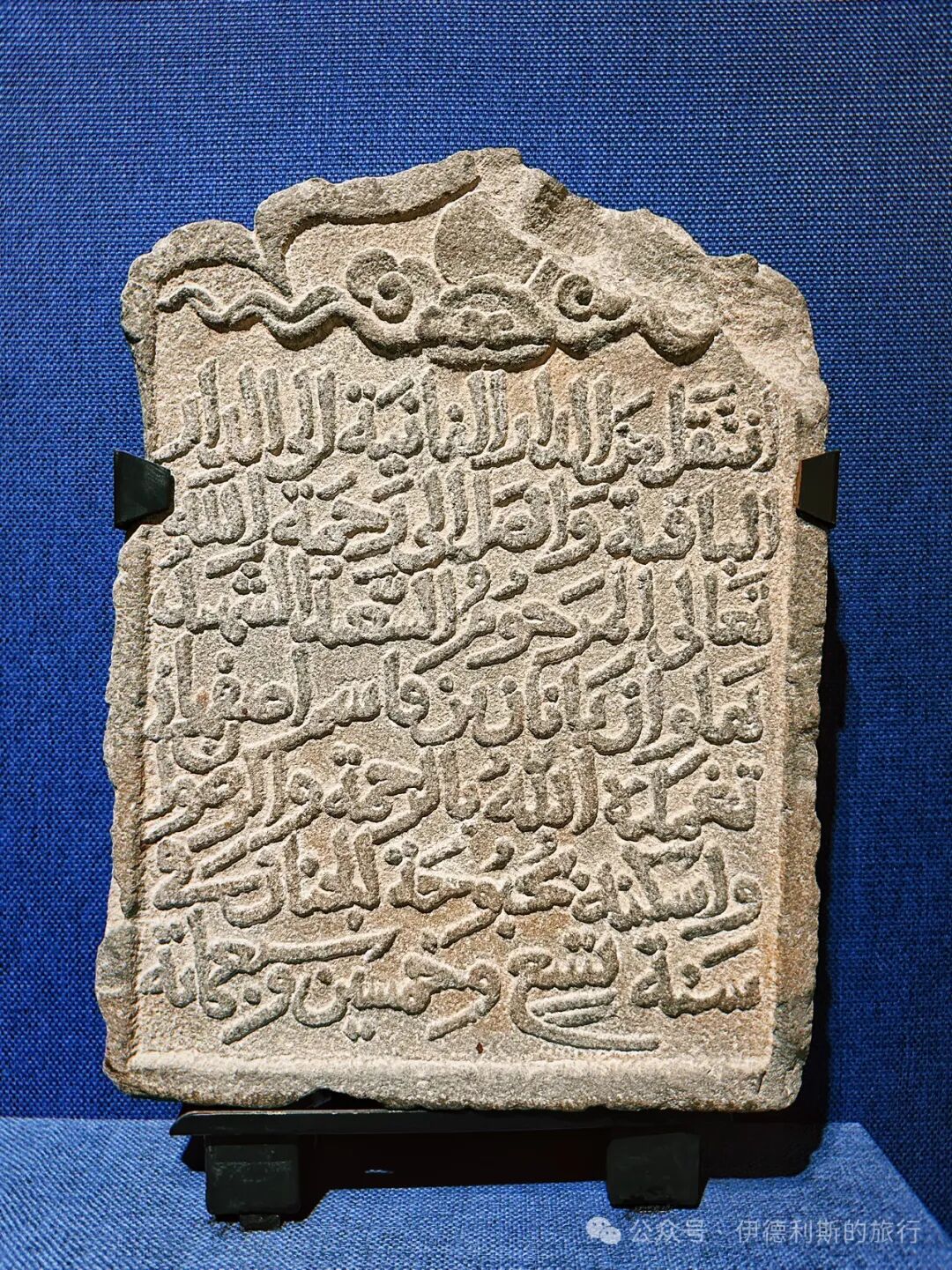
The tombstone in the picture below was unearthed in 1931 at Jintoupu outside Tonghuai Gate in Quanzhou. The person buried there was Sihab al-dunya sa l-din b. Daghab, the son of a garrison commander from Balashaghun. He died in 1301, and the inscription includes a verse from the Quran (3:185).
Balashaghun is located on the banks of the Chu River in Kyrgyzstan. It was once the capital of the Kara-Khanid Khanate and the new capital of the Western Liao dynasty. It is the hometown of Yusuf Khass Hajib, the author of Wisdom of Royal Glory (Kutadgu Bilig). Balashaghun was captured by the Mongol Empire in 1218 and gradually became a ruin by the 14th century.
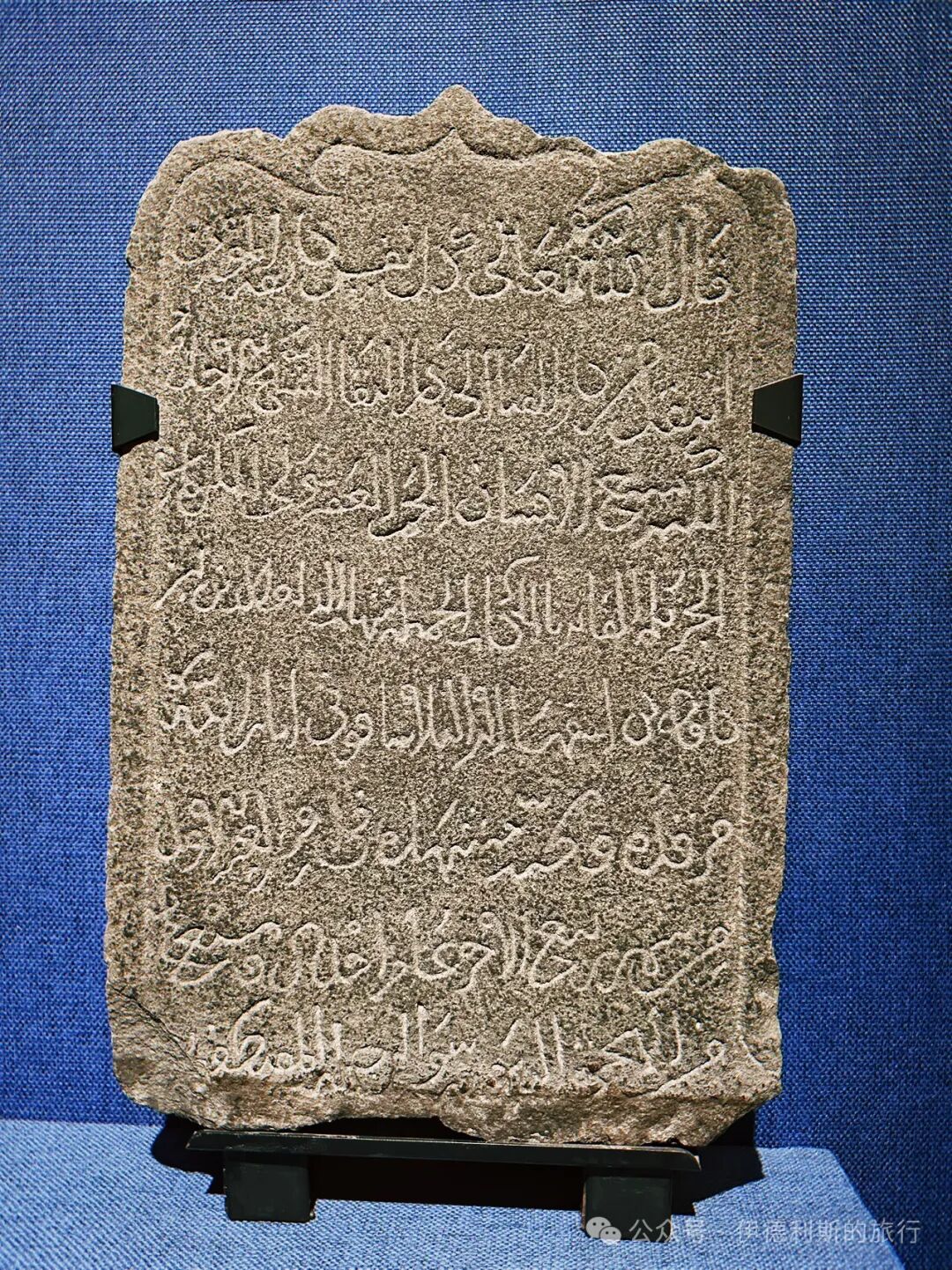
The tombstone in the picture below was unearthed in 1933 from the city wall of Renfeng Gate in Quanzhou. The person buried there was Muhammad b. Su'ud Yahya, who died in 1326.
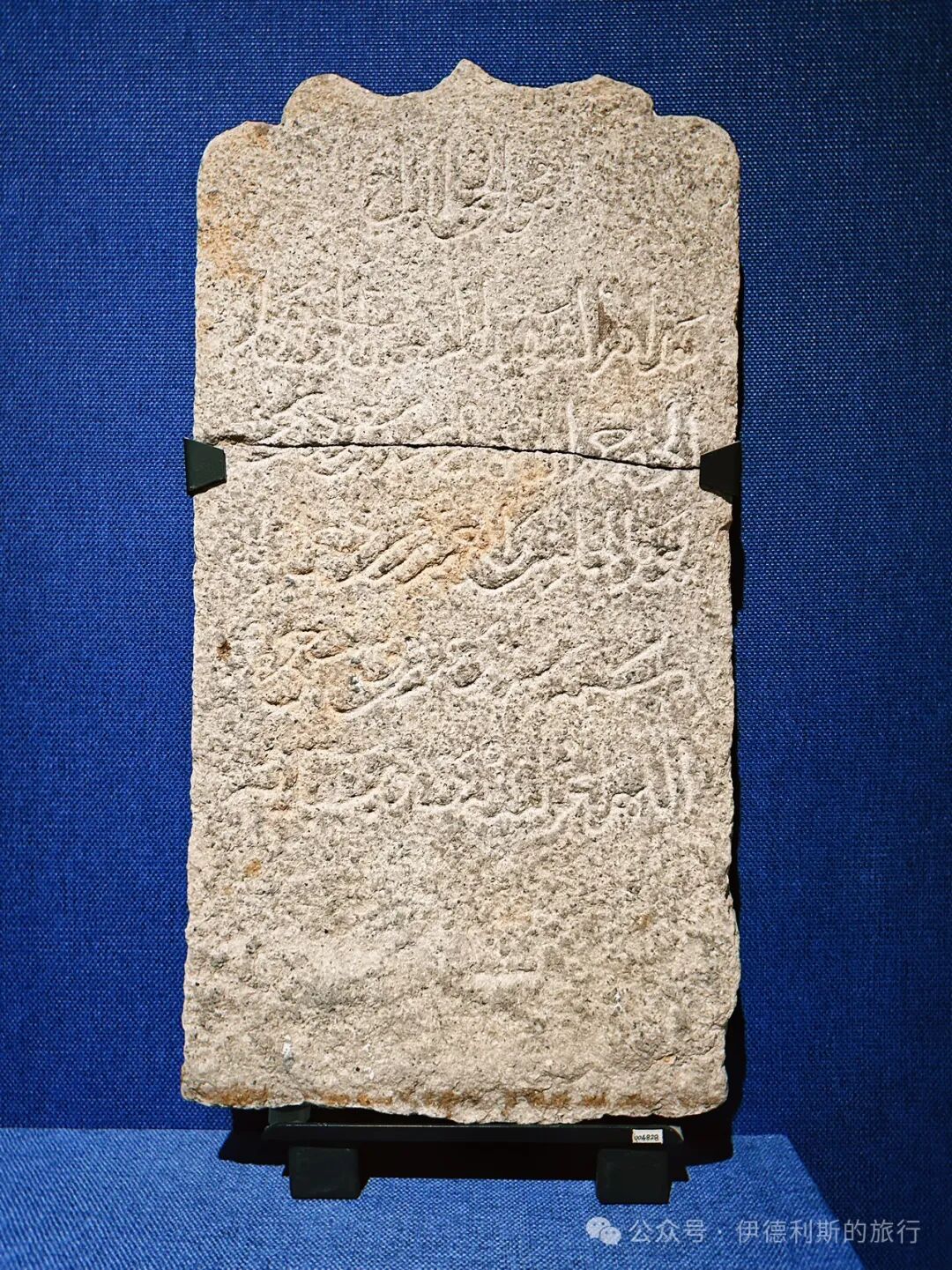
The tombstone in the picture below was unearthed in 1939 from the city wall of Tonghuai Gate in Quanzhou. The person buried there was Khwaja Ali b. Uthman al-Jilani, who died in 1357.
Gilan is located on the southern coast of the Caspian Sea in northwestern Iran. It was ruled by locals until the 11th to 16th centuries. It was occupied by the Ilkhanate in 1307 but regained its independence in 1336.
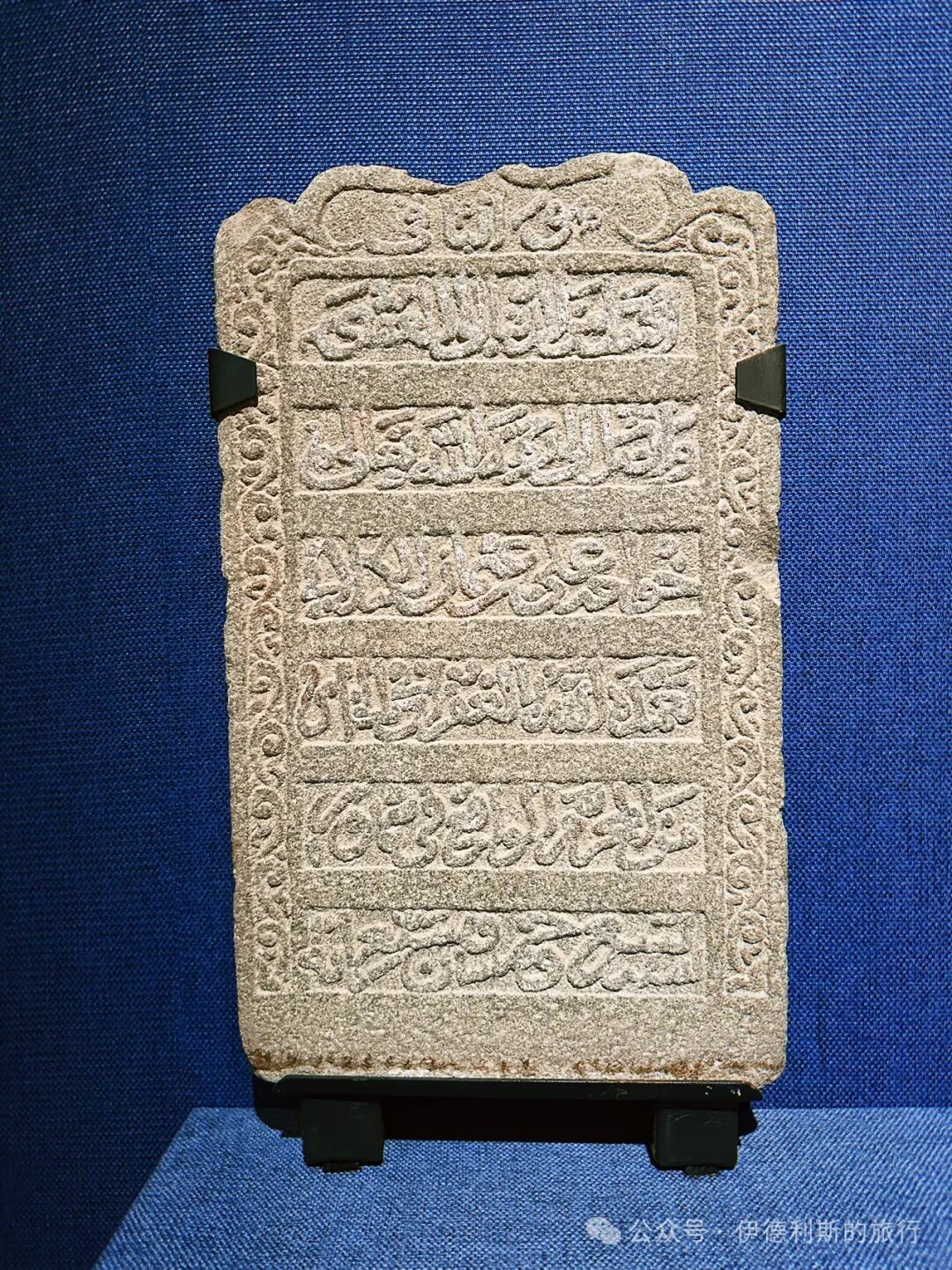
The tombstone in the picture below.
This was unearthed in 1978 on a street in Houhai Road Village, outside Tonghuai Gate in Quanzhou, and it is carved with verses from the Quran (21:35, 28:88).
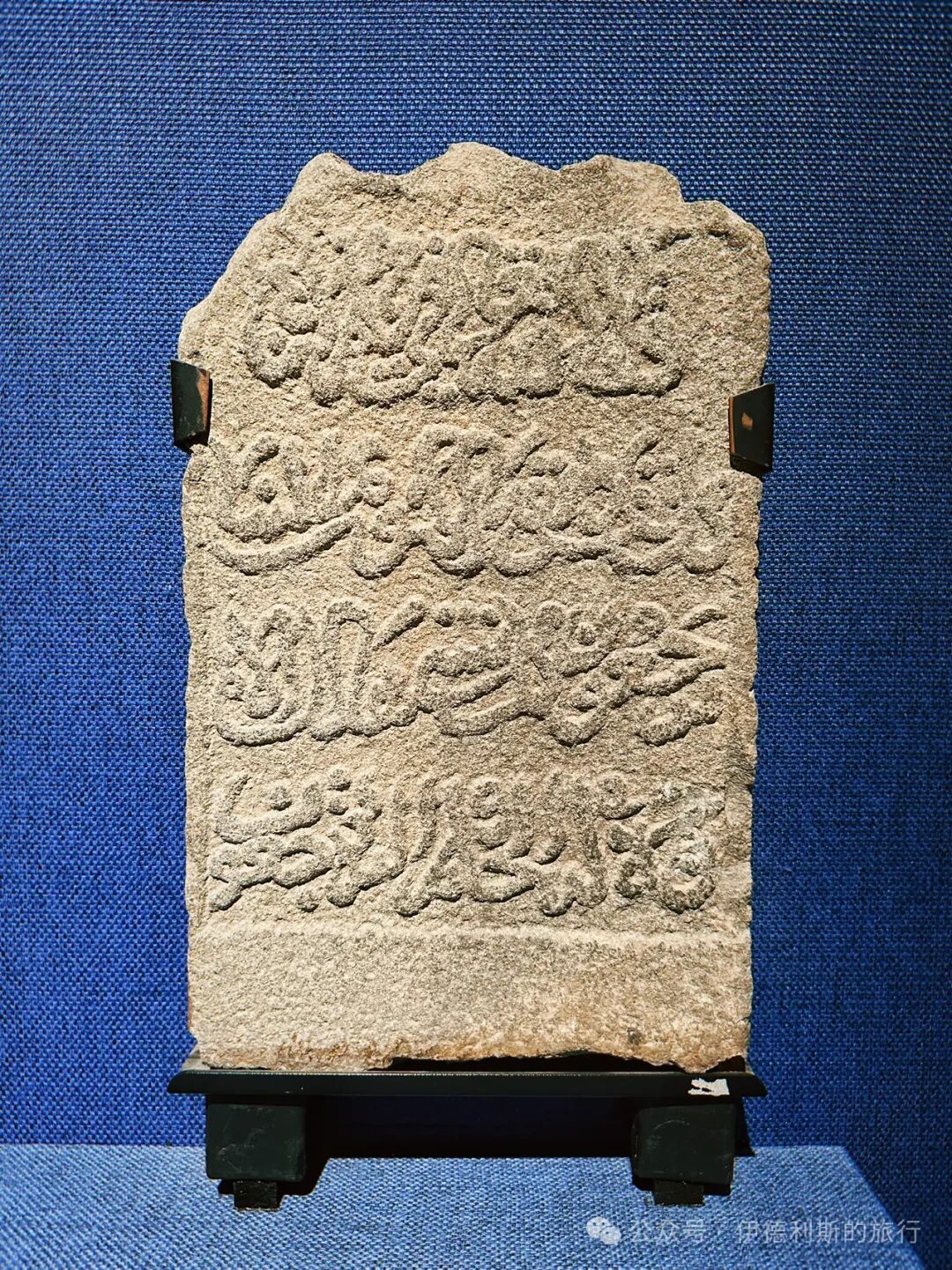
The bottom half of the tombstone in the picture below was found in 1934 on a field path outside Tonghuai Gate in Quanzhou, while the top half was found in 1942 while digging for city wall foundation stones at the East Gate of Quanzhou. The person buried here was named Shaikh Aklab Umar, who passed away in 1303, and the inscription also features verses from the Quran (55:26-27, 3:185).
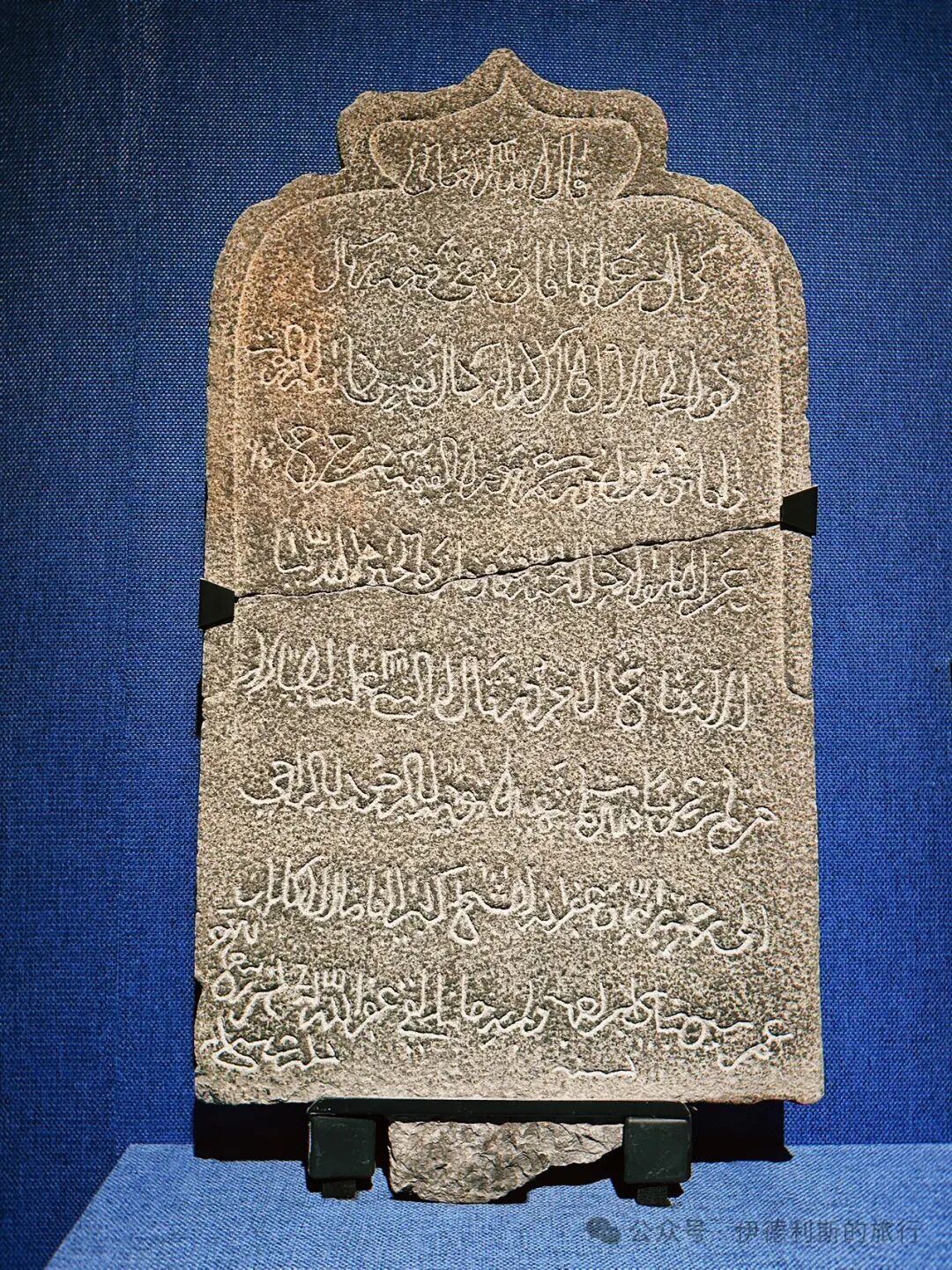
The tombstone in the picture below was found in 1938 while digging for city foundation stones at Renfeng Gate, the East Gate of Quanzhou; the person buried here was named Granto Takin b. Sultan Husayn, who passed away in 1308. Takin is a Turkic title for a prince or noble.
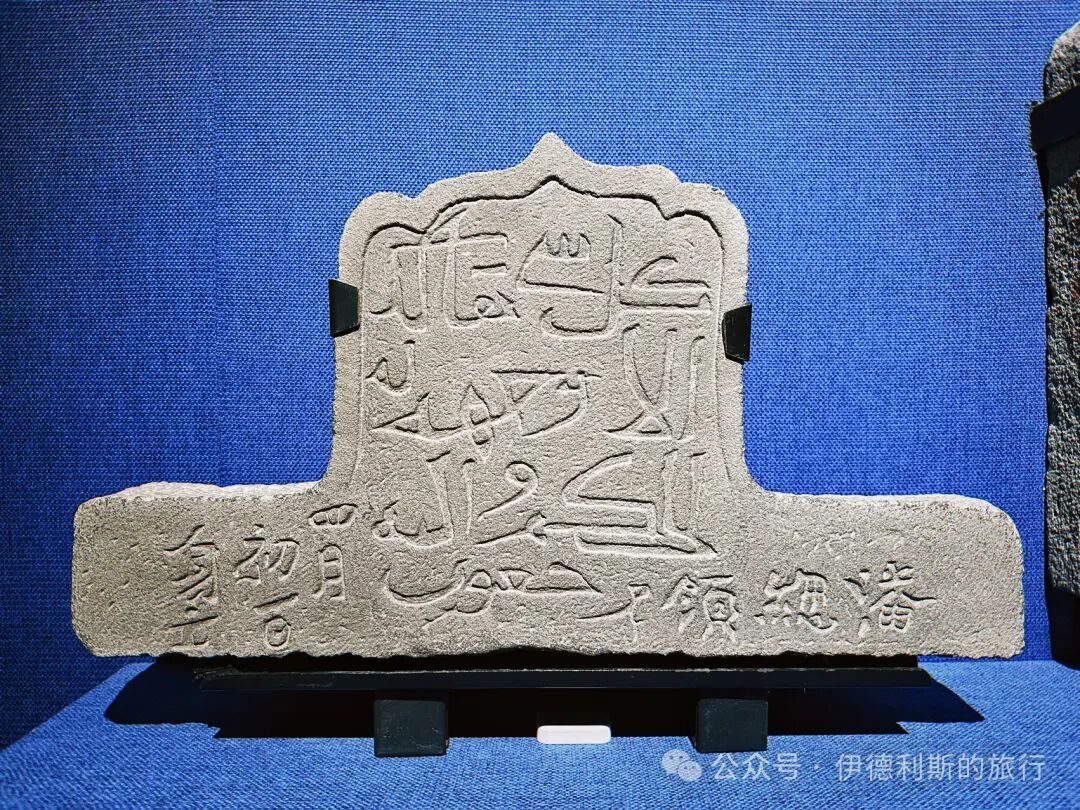
The tombstone in the picture below is a replica, and the original is on display in the main hall of the Maritime Museum. It was discovered in the summer of 1934 within the city foundations at the East Gate of Quanzhou. The top is carved with scripture (28:88) and also Chinese characters: 'General Manager Pan died on the first day of the fourth lunar month.' According to the History of Song, Volume 7 on Official Positions, the position of General Manager was created during the Jianyan era of Emperor Gaozong of the Southern Song Dynasty (1127-1130) to manage money, grain, and taxes. By the Shaoxing era of the Southern Song Dynasty, the General Manager could directly participate in military and political affairs and held great power. However, the Yuan Dianzhang records that the title of General Manager was used for minor officials in the prisons of various prefectures and counties.
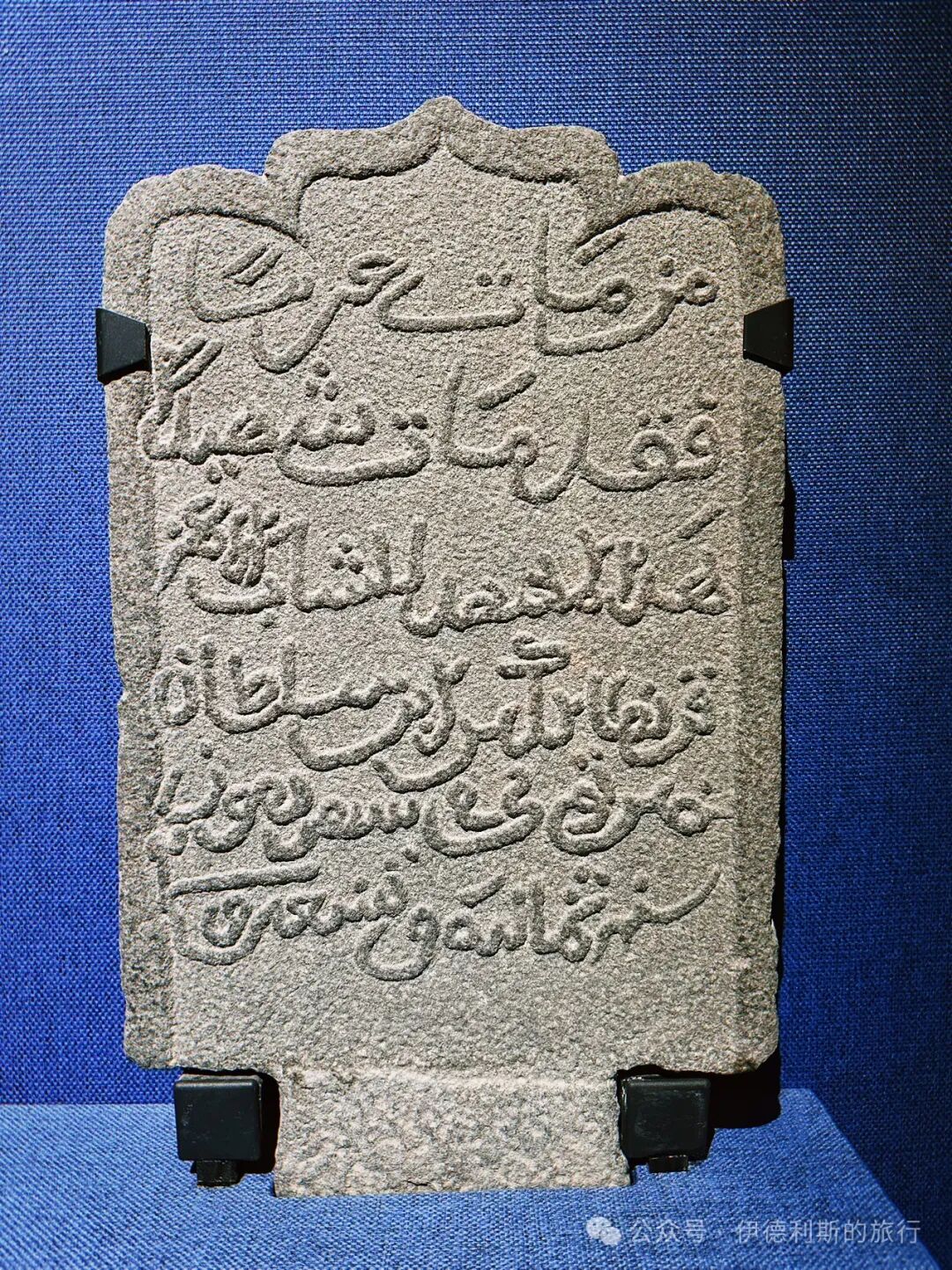
The tombstone in the picture below was found in April 1958 in the city foundation near Tonghuai Gate at the East Gate of Quanzhou. The tomb owner was named Haji Khwaja b. Hasam al-Din b. Yalaki Siraf, who passed away in 1362.
Siraf is also translated in historical records as Shiluowei, Shilafu, Sanawei, Shilafu, or Siluofu. It is located in southern Iran and was the largest trading port in the Persian Gulf between the 9th and 13th centuries. Most Persian merchants traveling to Quanzhou during the Song and Yuan dynasties set off from here.
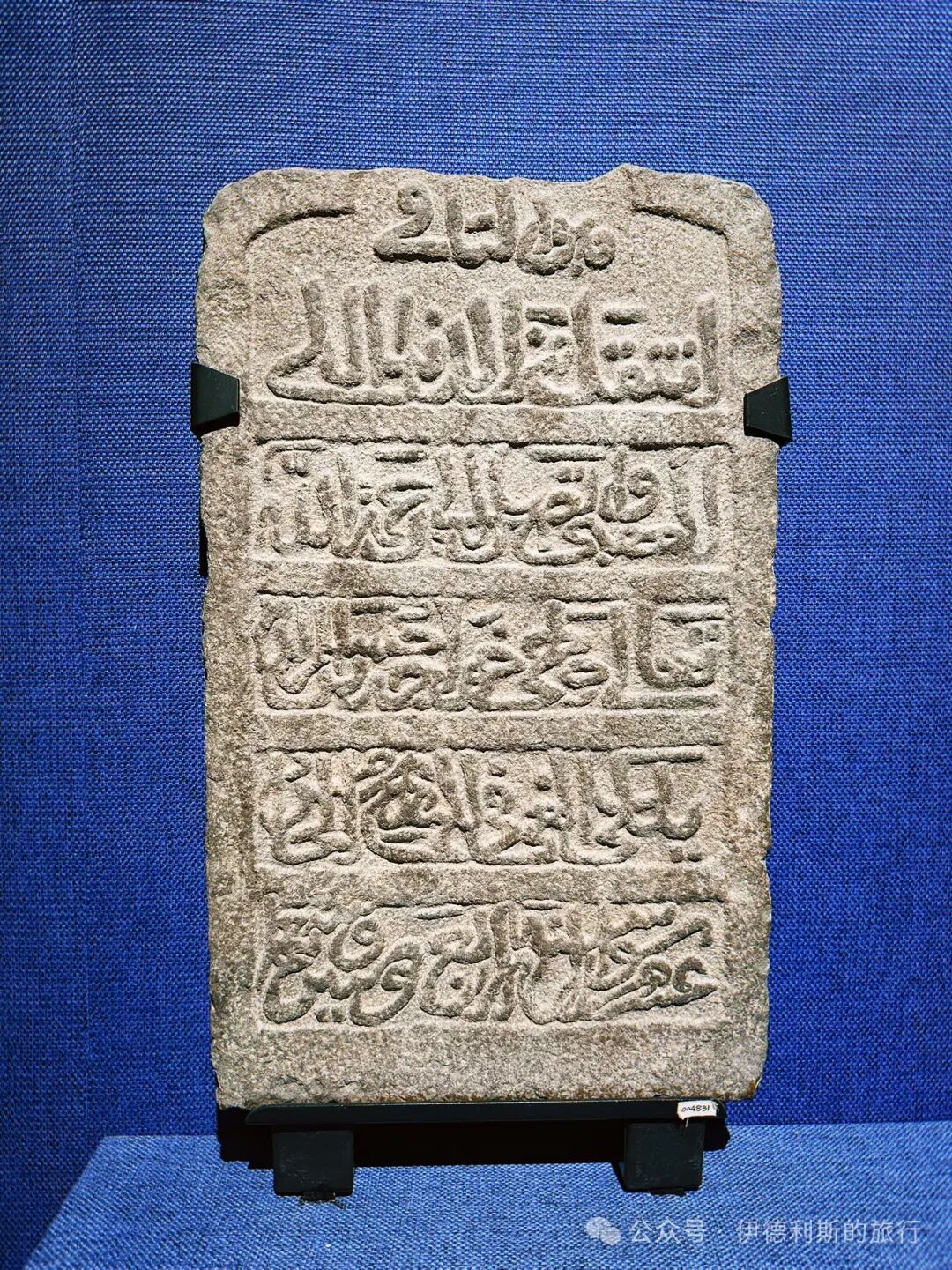
The tombstone in the picture below was discovered in 1926 by the famous archaeologist Chen Wanli on South Street in Quanzhou (now Zhongshan Road). He asked the Quanzhou government to move it to the Construction Bureau for safekeeping, but it was lost during a flood in 1935. In 1955, residents digging at the old Construction Bureau site found a stone tablet, but the bottom part with the date was broken. The person buried there was the daughter of Sayyid Burtumi b. Sayyid Muhammad al-Hamdani.
Hamadan is located southwest of Tehran and serves as an important commercial center and transport hub in northwestern Iran. Hamadan became the capital of the Seljuk Empire in the 11th century, but it was destroyed by the Mongol army in 1220 and again during the Timurid invasion in the 14th century, only recovering during the Safavid dynasty in the 16th century.
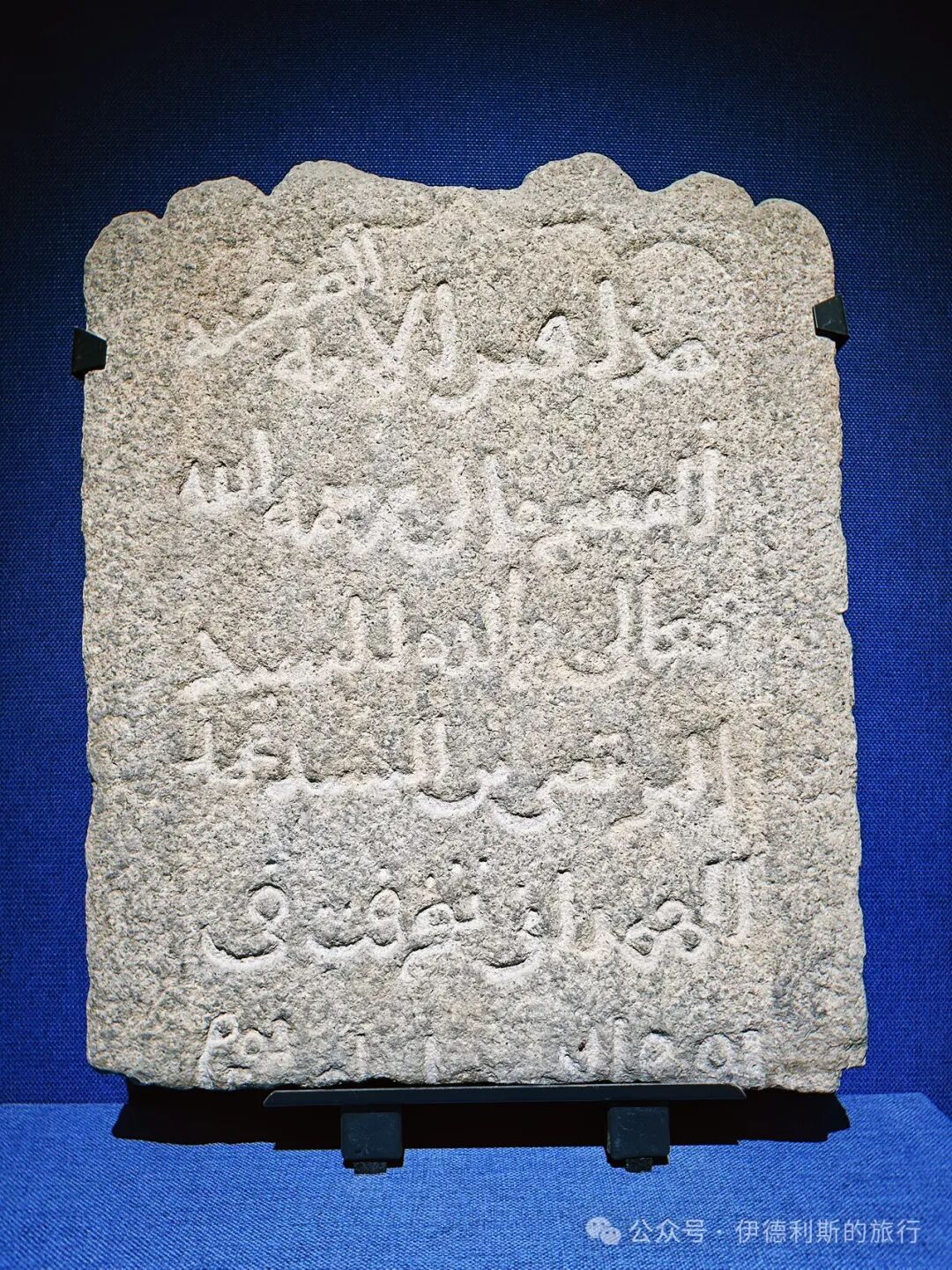
The tombstone in the picture below was found in 1929 when the Renfeng Gate wall at the East Gate of Quanzhou was torn down. It broke into three pieces and was stacked into a house wall, then rediscovered in 1950 after the wall collapsed. A corner of the tombstone was lost in the late 1960s. The person buried there died in 1337, and the inscription is a verse from the Quran (21:34-35).
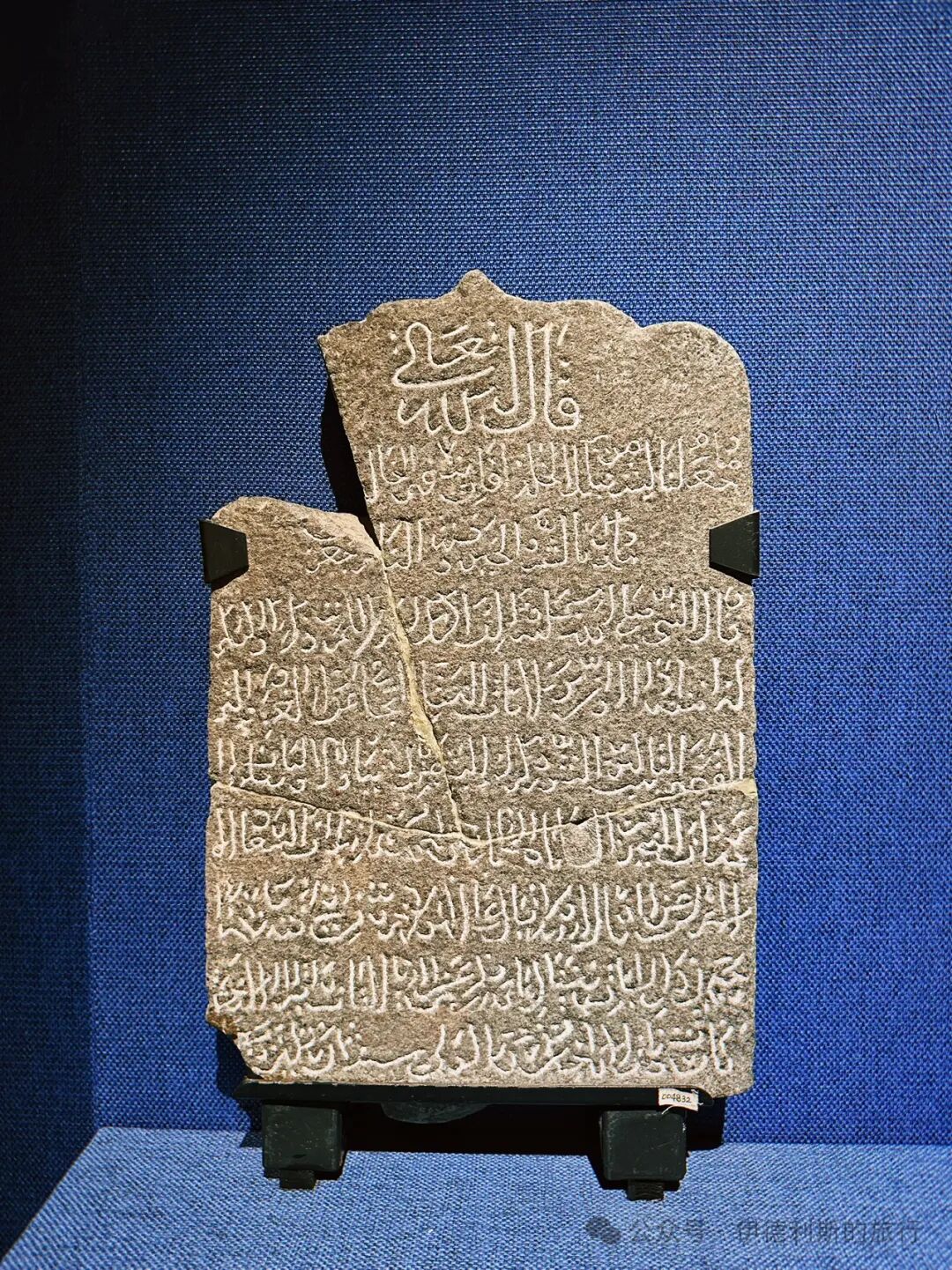
The tombstone in the picture below was found in September 1958 next to a field in Huazhou Village outside the South Gate of Quanzhou. Local villagers said it was a city stone dug up from the Quanzhou South Gate wall over 20 years earlier. They originally planned to use it to build a house, but after realizing it was a tombstone, they used it to pave a path in the field instead. The person buried there was named Abu Masman Ghath, and the inscription is a verse from the Quran (55:26-27).
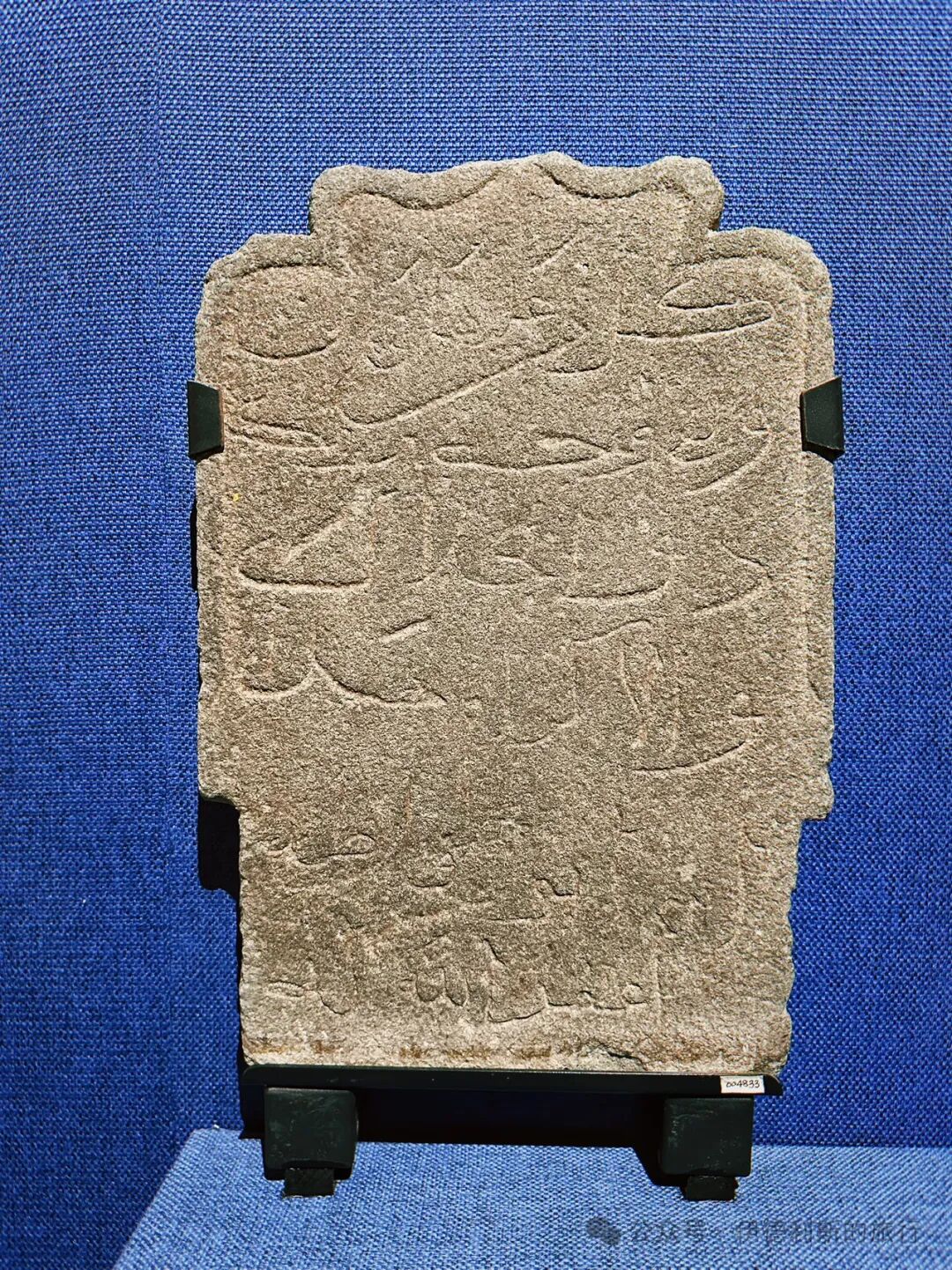
The tombstone in the picture below was found on the road surface of West Street in Quanzhou in 1932. It was originally taken from the city wall to pave the road. The person buried there is named Khadija bint Fanshah.
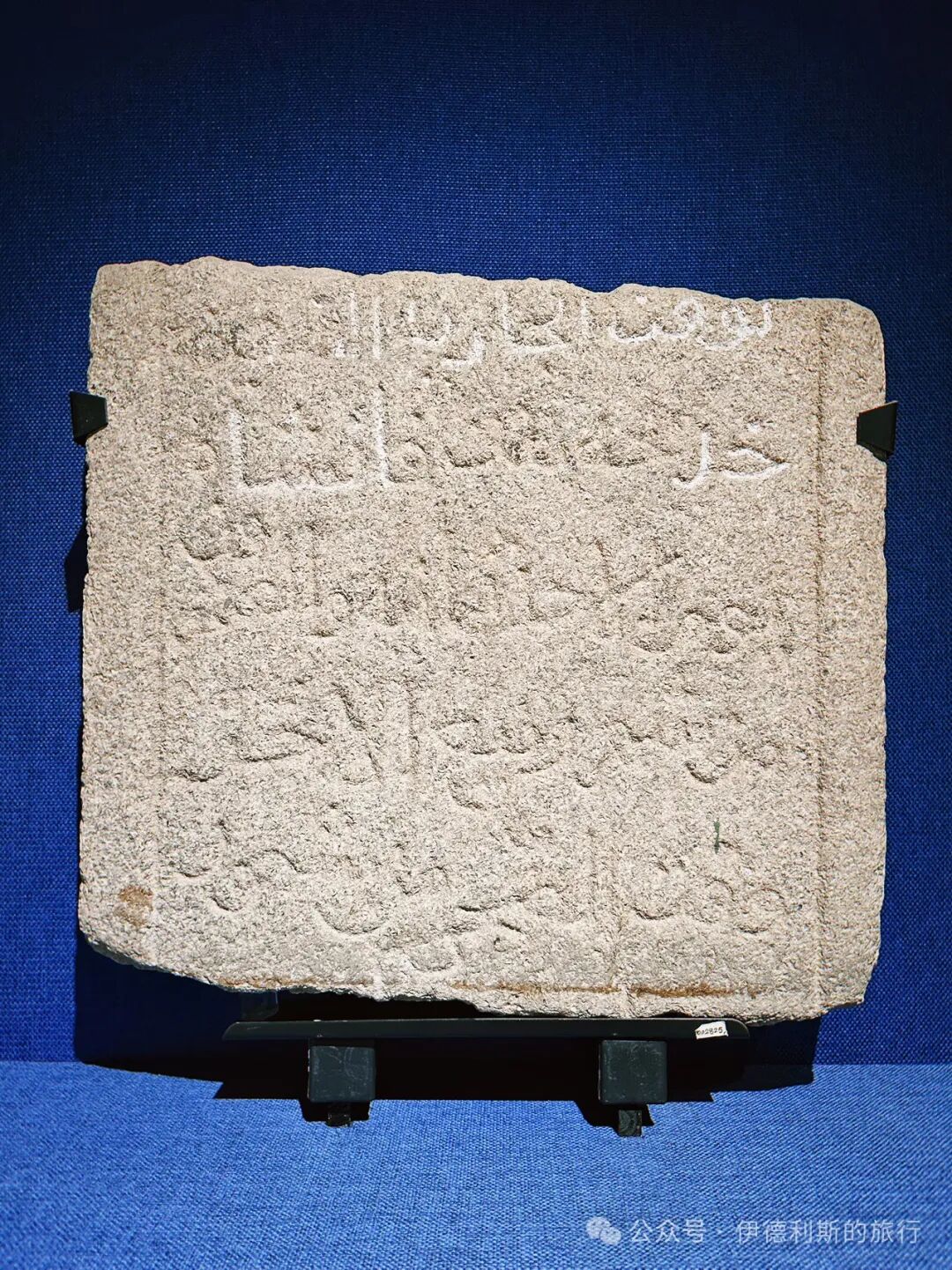
The tombstone in the picture below was unearthed in 1981 at a villager's home in Jinputou, outside Tonghuai Gate at the East Gate of Quanzhou. The person buried there is named al-Hamd Suad.
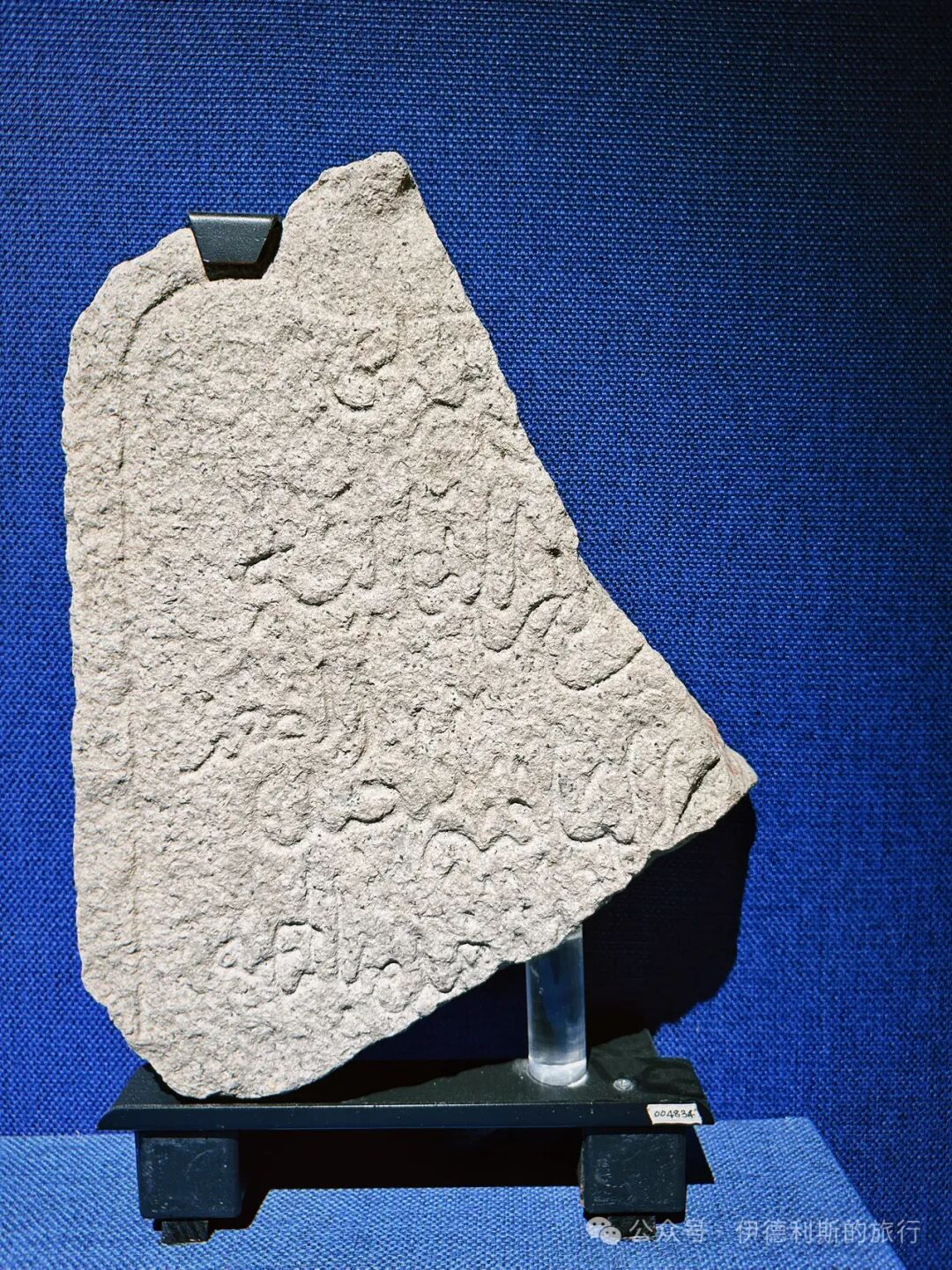
The tombstone in the picture below was found in a resident's home near the South Gate factory area in Quanzhou in 1945 and was recovered for preservation in 1953. The inscription is a verse from the Quran (29:57).
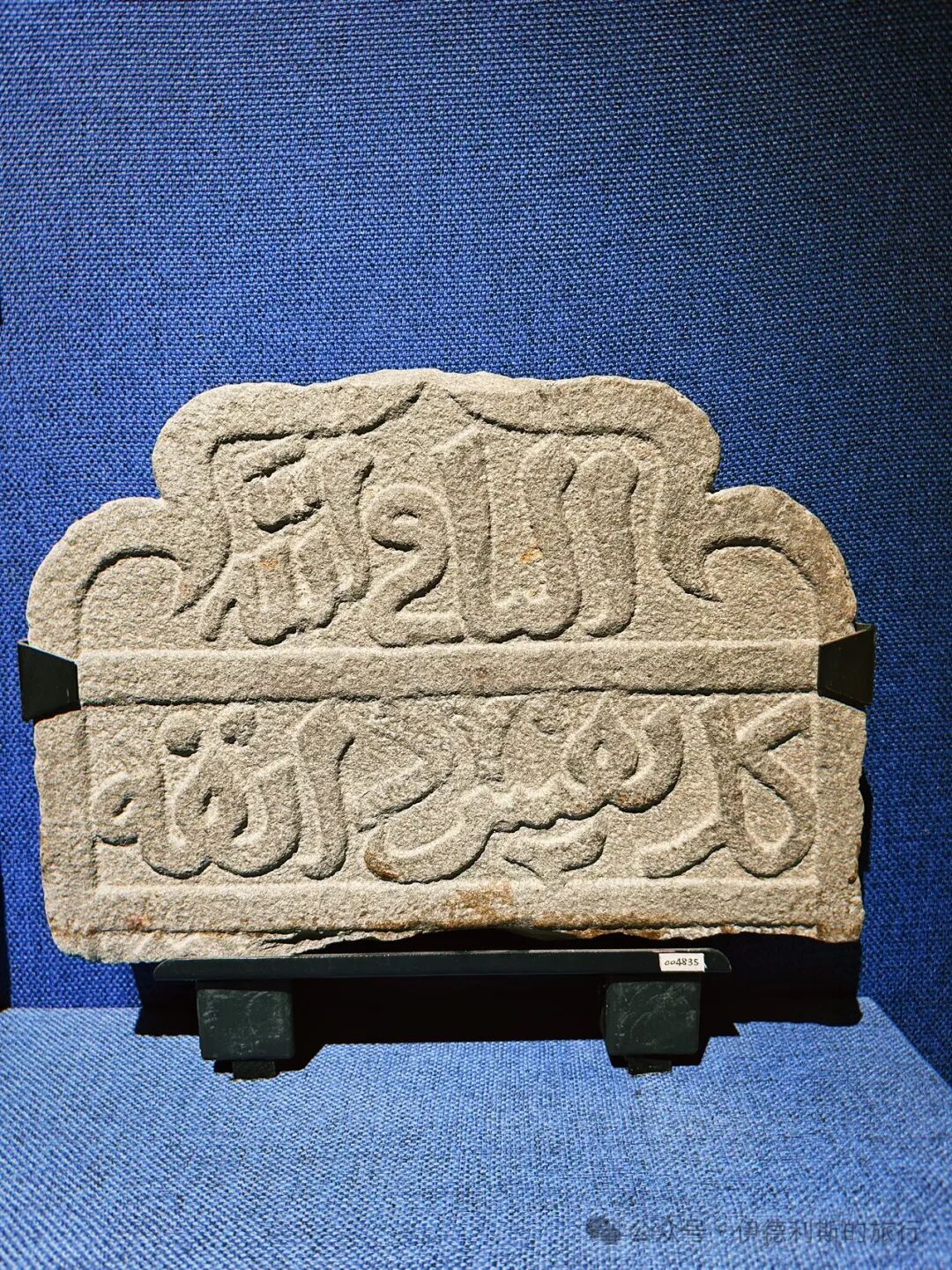
The tombstone in the picture below was excavated from the city wall at the East Gate of Quanzhou in 1930. The center features a full moon carved in Arabic script, with a swirling cloud on each side, creating a cloud and moon pattern. The top center of the tombstone features the Shahada, surrounded by dua.
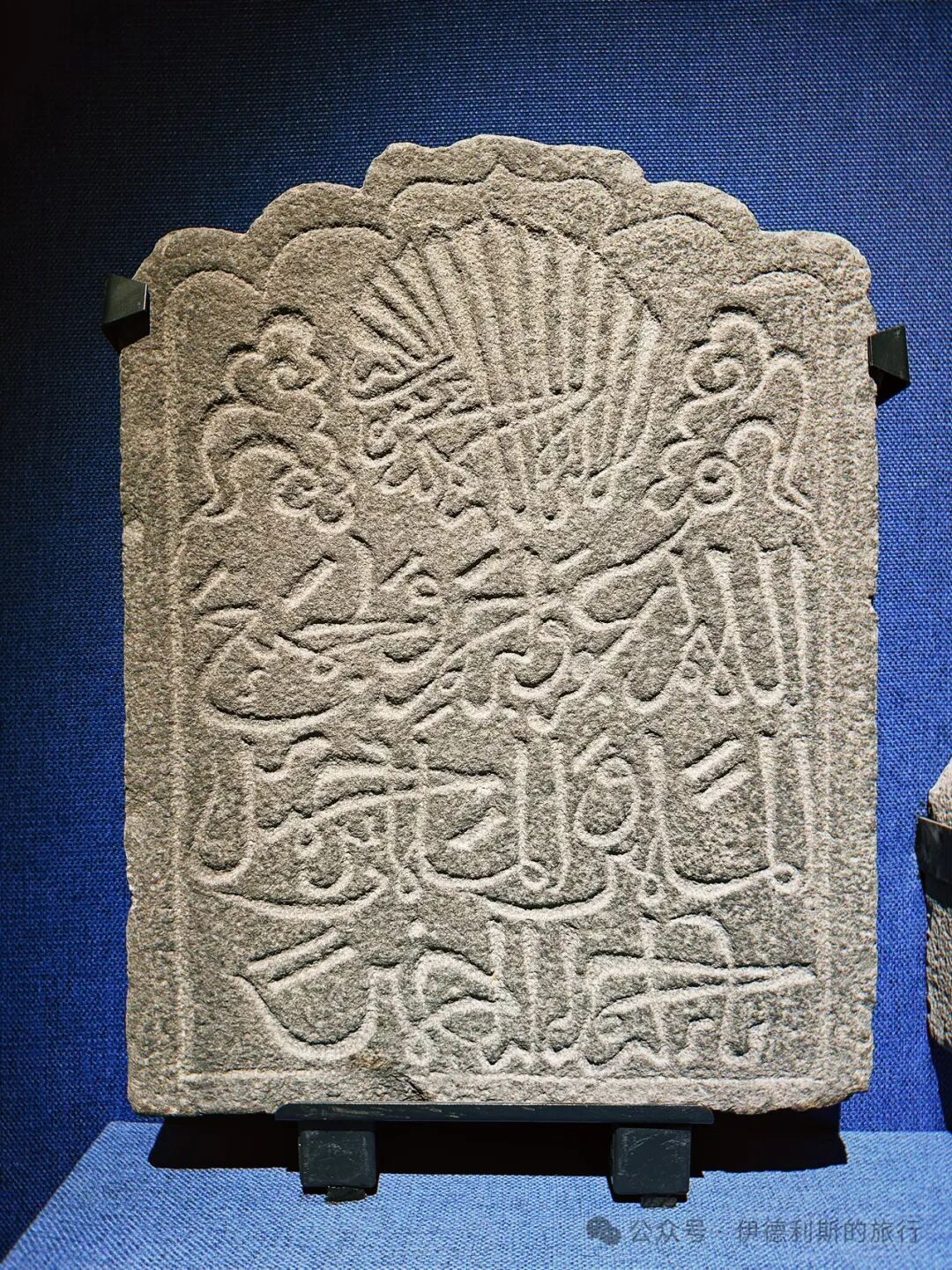
The tombstone in the picture below was found in 1940 while digging city foundations near Jiaochangtou, close to Tonghuai Gate at the East Gate of Quanzhou. The tombstone features a cloud and moon design, with a full moon in the center and swirling cloud patterns on both sides. The person buried here died in 1350, and the inscription is a verse from the Quran (55:26-27).
The tombstone in the picture below was found in June 1959 in Xiawei Village, outside Tonghuai Gate at the East Gate of Quanzhou. According to local villagers, this stone was dug up from the city wall many years ago and used to pave a small path in the fields. It was dug up again during road construction and kept in an ancestral hall because the writing on it looked unusual. The inscription consists of verses from the Quran (39:4, 55:26-27).
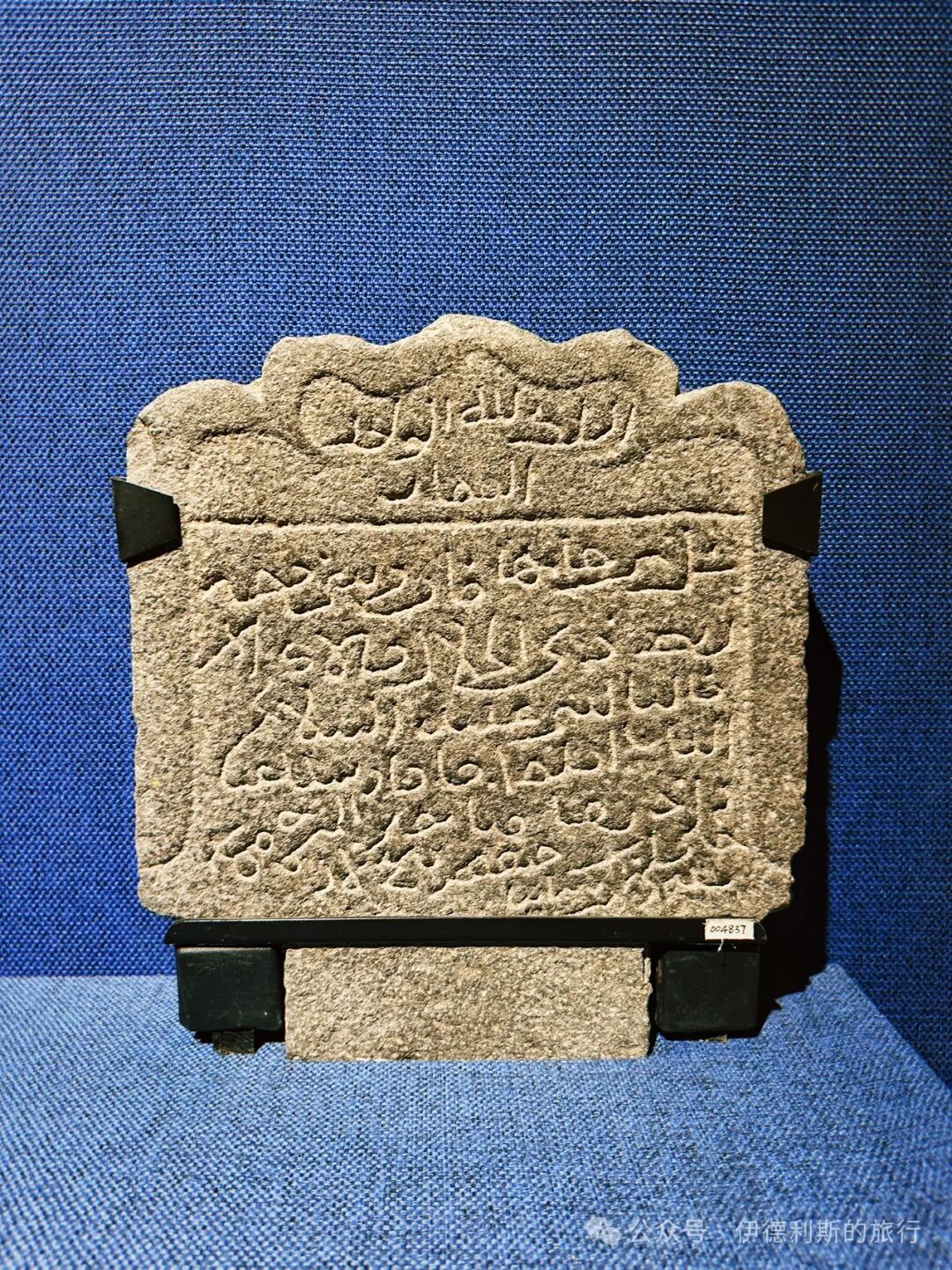
The tombstone in the picture below was found in 1947 in the city foundations of Deji Gate at the South Gate of Quanzhou. That same year, it was used to build a pier for the Shunji Bridge at the South Gate, but it was later discovered and moved. The inscription is a verse from the Quran (55:26-27).
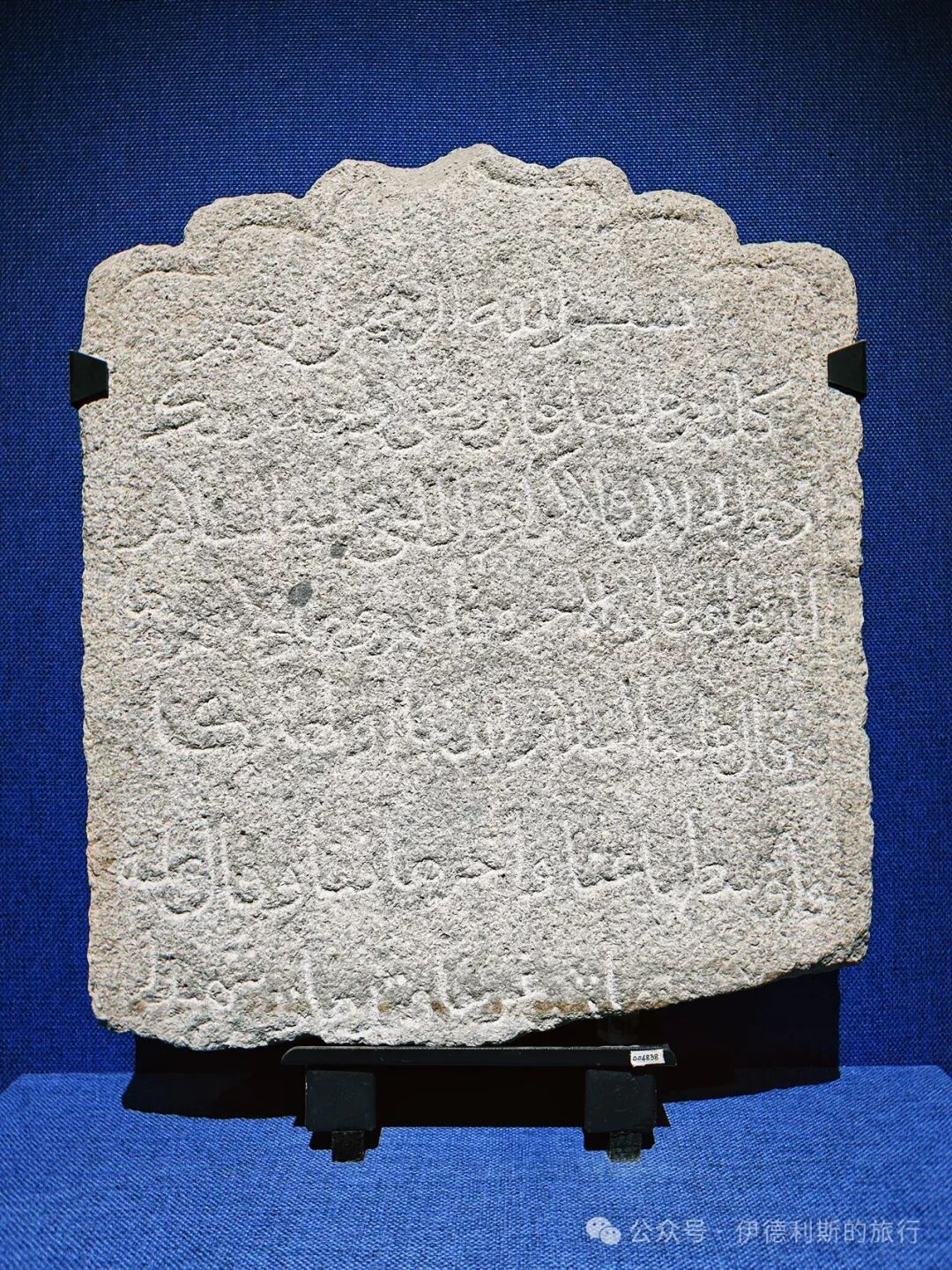
The tombstone inscription in the picture below is a verse from the Quran (55:26-27). The lower part of the tombstone is damaged, so we only know the person was a "pure servant who died on Saturday, May 2nd, in the year..."
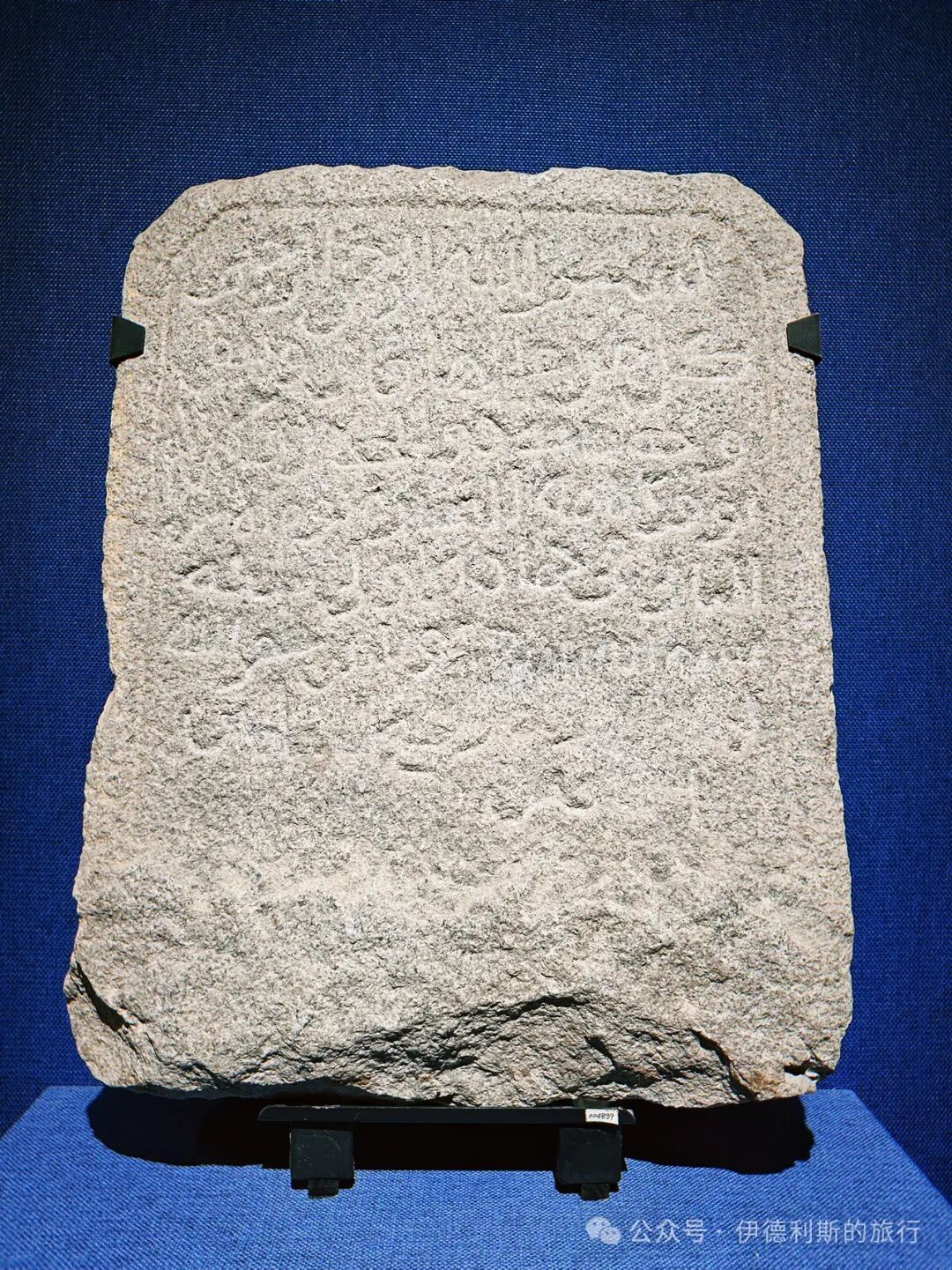
The tombstone in the picture below was found in a field near East Lake outside the Small East Gate of Quanzhou in April 1962. Local villagers say it was dug up from the city wall years ago to pave the road. The inscription is a verse from the Quran (3:85).
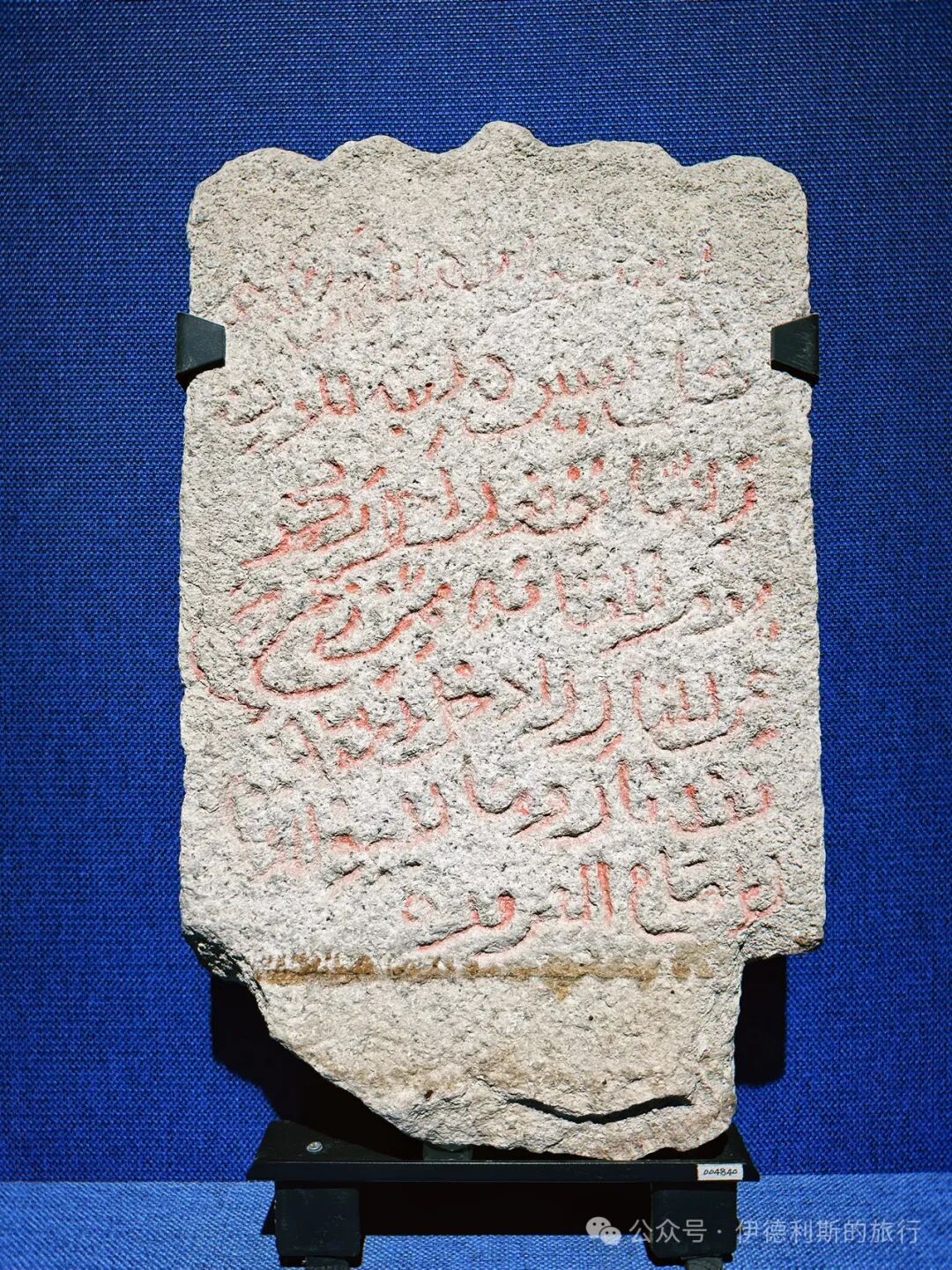
The tombstone in the picture below was found in a pond outside Renfeng Gate at the East Gate of Quanzhou in 1939. The tomb owner's title is Sayyid al-Ajall al-Kabir, which translates to "the first, the respected, the important." The other side is carved with Chinese characters reading "Fengxun Dafu, Darughachi of Yongchun County..."
Darughachi was a government position during the Yuan Dynasty, held only by Mongols or powerful Semu people. Yongchun County is under the jurisdiction of Quanzhou. According to the Yongchun Prefecture Records, there was once a darughachi named Tuohuanshaduoluoboer, who might be the same person as the tomb owner.
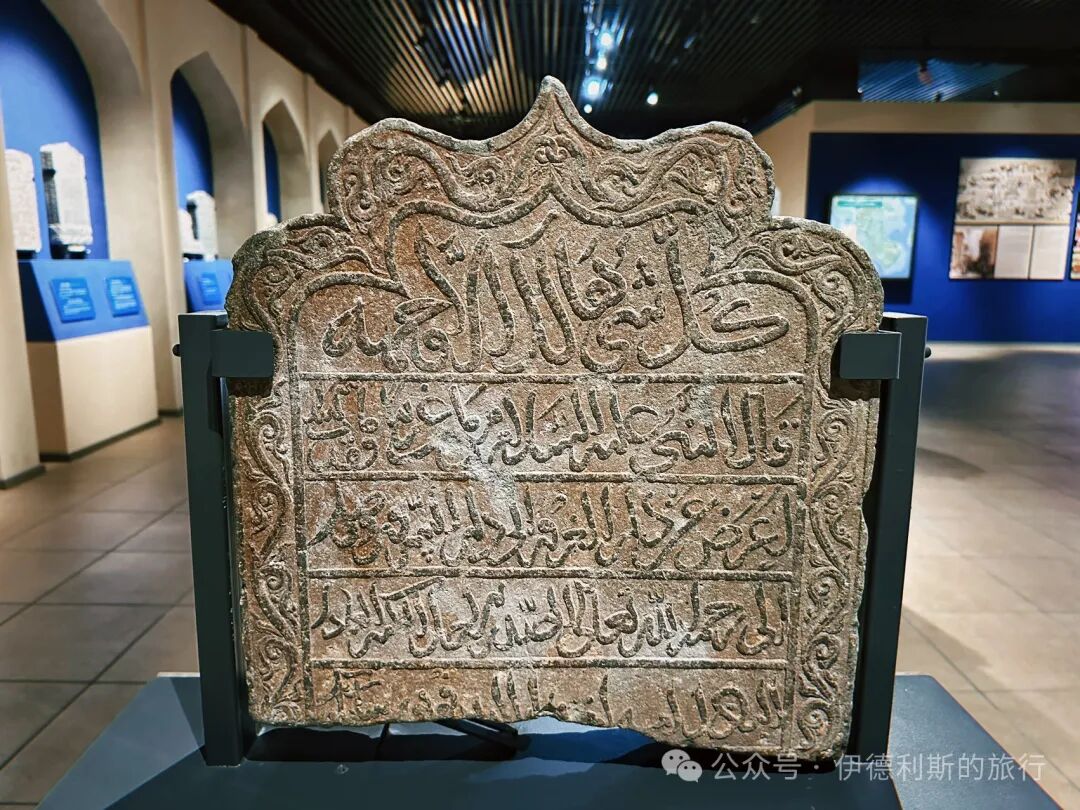
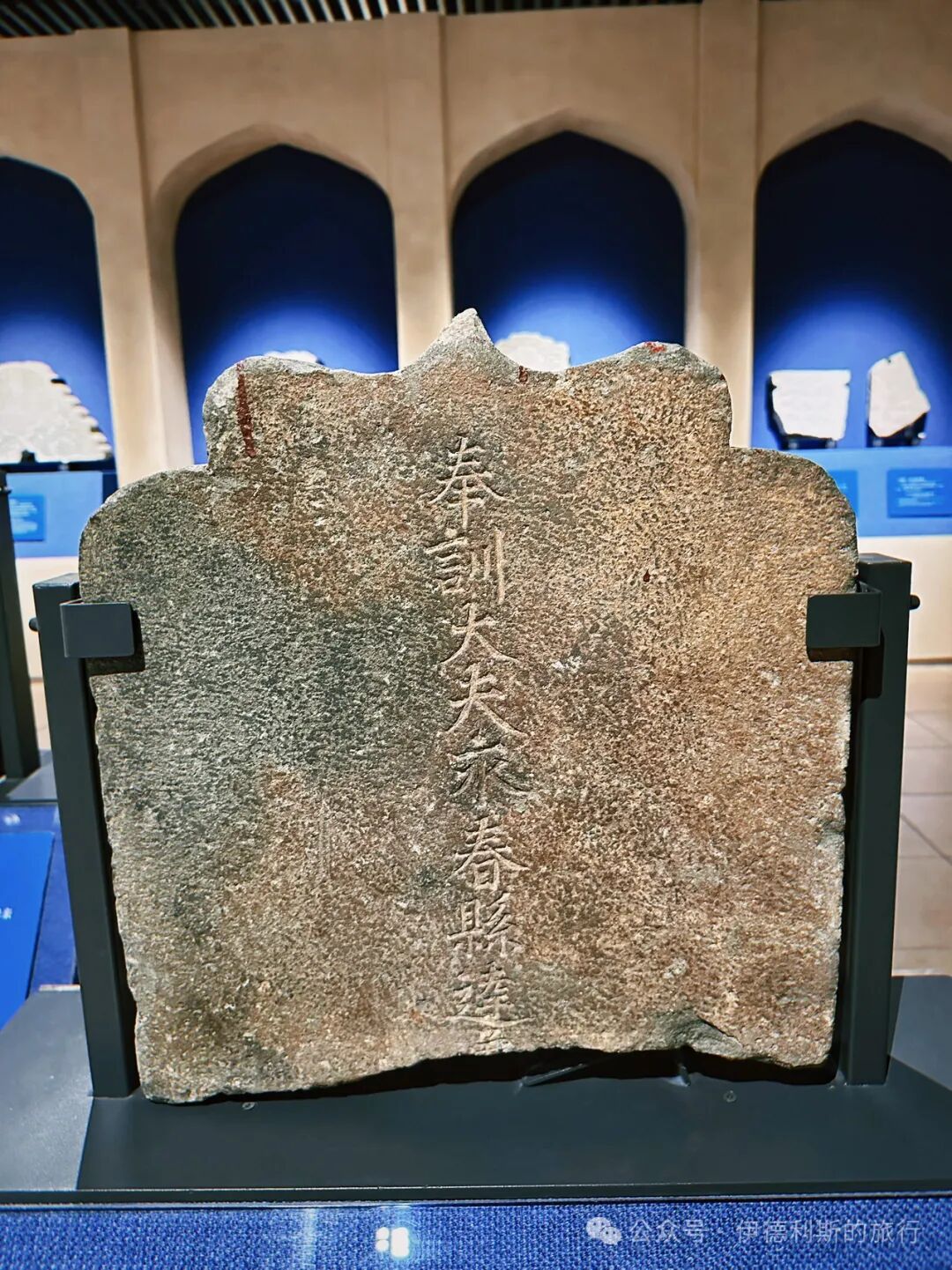
The tombstone in the picture below was found in 1931 when the East Gate of Quanzhou was dismantled. The tomb owner was named Khwaja Jalal al-Din b. Muhammad b. Ibrahim, who passed away in 1305. The back is carved with verses from the Quran (89:28-30).
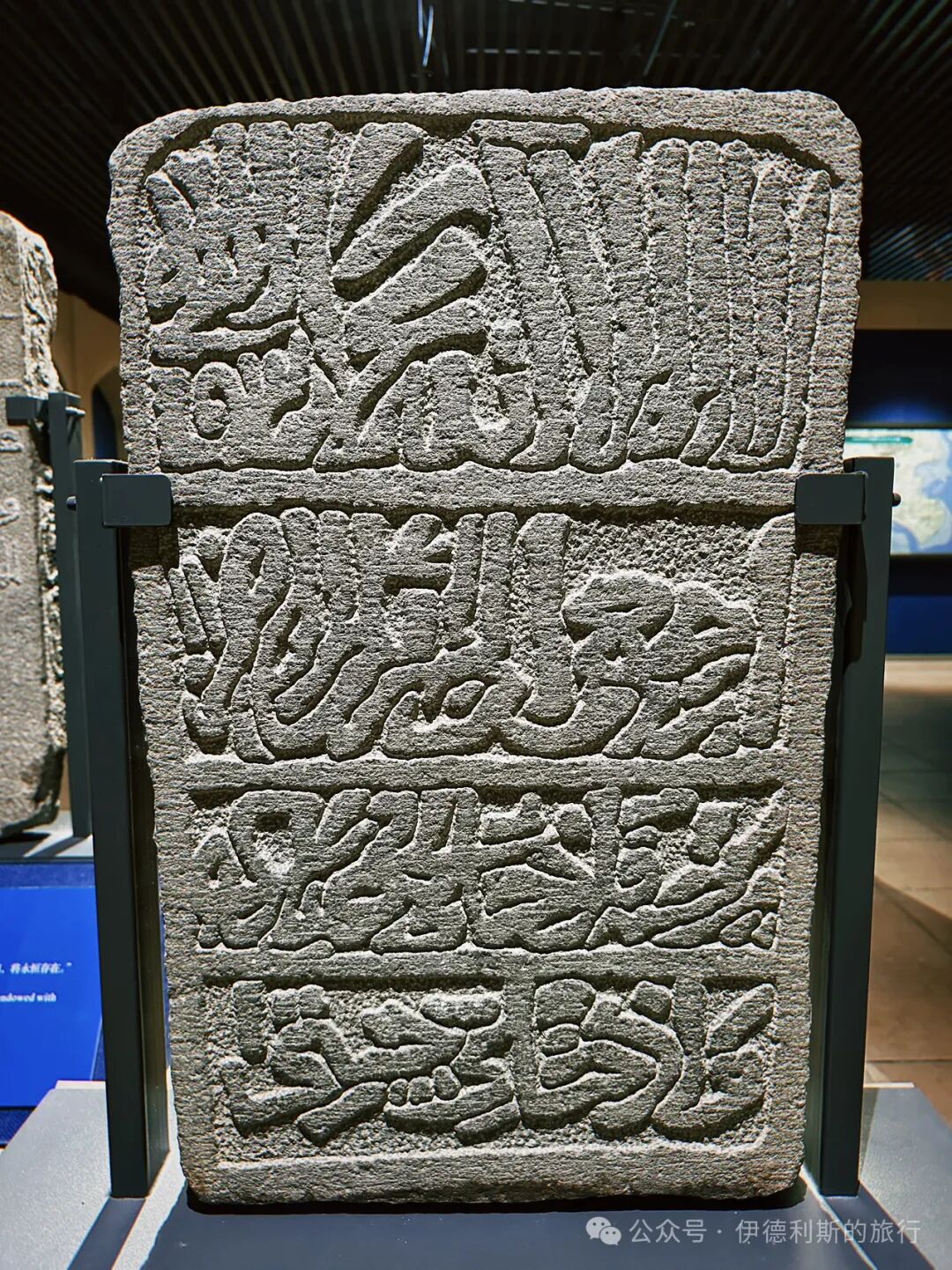
The tombstone in the picture below was found in 1942 at a stone shop on Renfeng Street outside the East Gate of Quanzhou. It had been dug out from the city wall. The tomb owner was named Amir Tughasun Amir Ali b. Hasan b. Ali al-Ghazwini, who passed away in 1371 (some say 1273). Amir, also translated as Yimi, originally meant commander and was later used to refer to a lord.
In his book Religious Stone Inscriptions of Quanzhou, Wu Wenliang speculates that this Amir was the imam of the foreign quarter in Quanzhou at that time. In the early Ming Dynasty, the government briefly followed the open policies of the Yuan Dynasty, encouraged foreign trade, and established a Maritime Trade Office in Quanzhou. This policy did not last long. In 1371, the Ming Dynasty issued a maritime ban, and in 1374, it closed the Quanzhou Maritime Trade Office. The once-thriving foreign quarter in Quanzhou quickly declined.
Qazvin is located in northwestern Iran, south of the Caspian Sea. In 1220, the Mongol army massacred the population of Qazvin. Afterward, many Turkic-speaking people moved to Qazvin to settle. In 1295, Qazvin suffered heavy damage during the turmoil of Ghazan Khan's struggle for the throne of the Ilkhanate, and many people left the city.
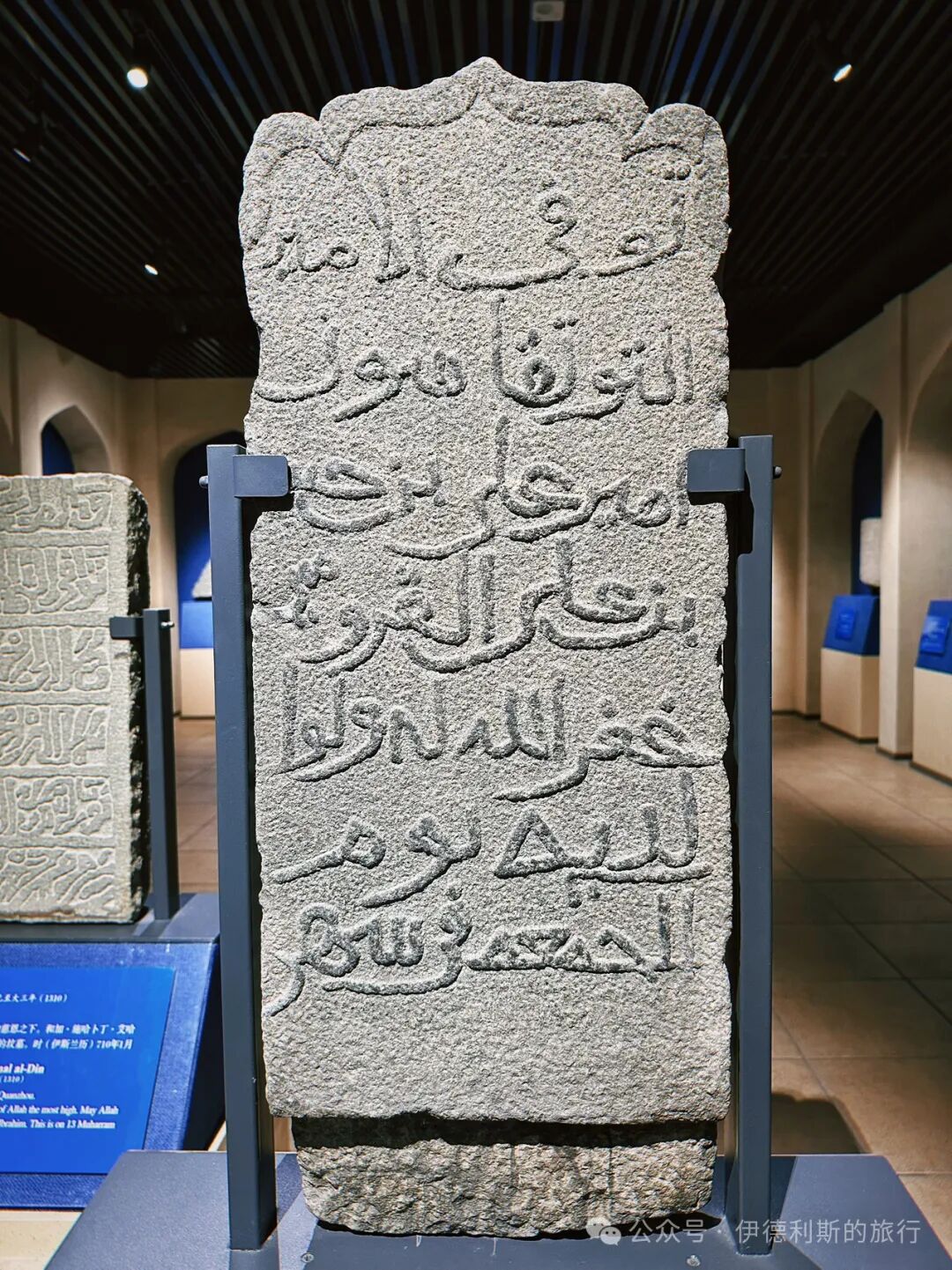
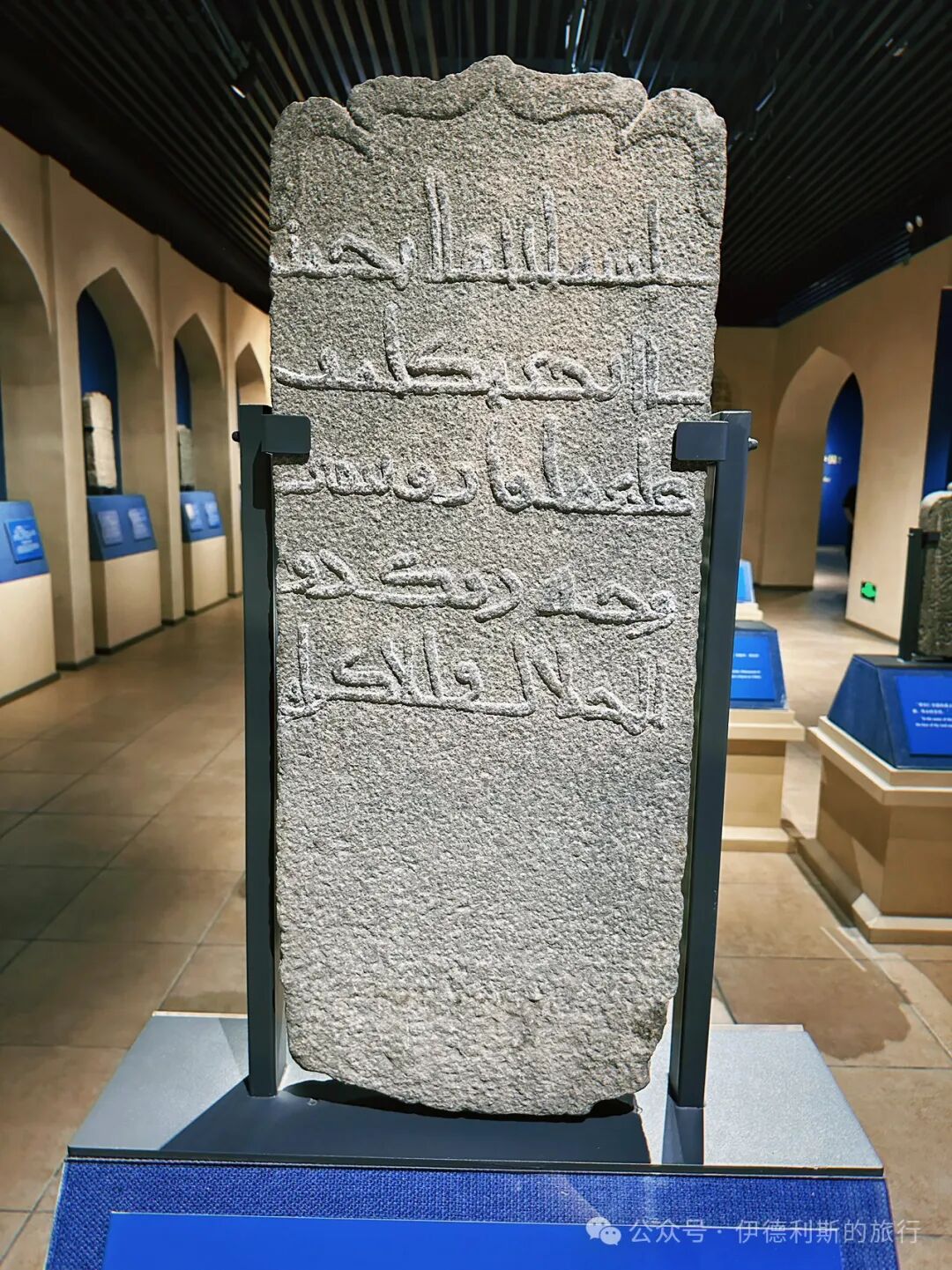
The tombstone in the picture below was discovered in 1940 when the Renfeng Gate at the east gate of Quanzhou was demolished. The person buried there was Shams al-Din b. Nur al-Din b. Ishaqan Shahristani, who died in 1325 and came from Shahristan in Iran. The back features a verse from the Quran (3:19).
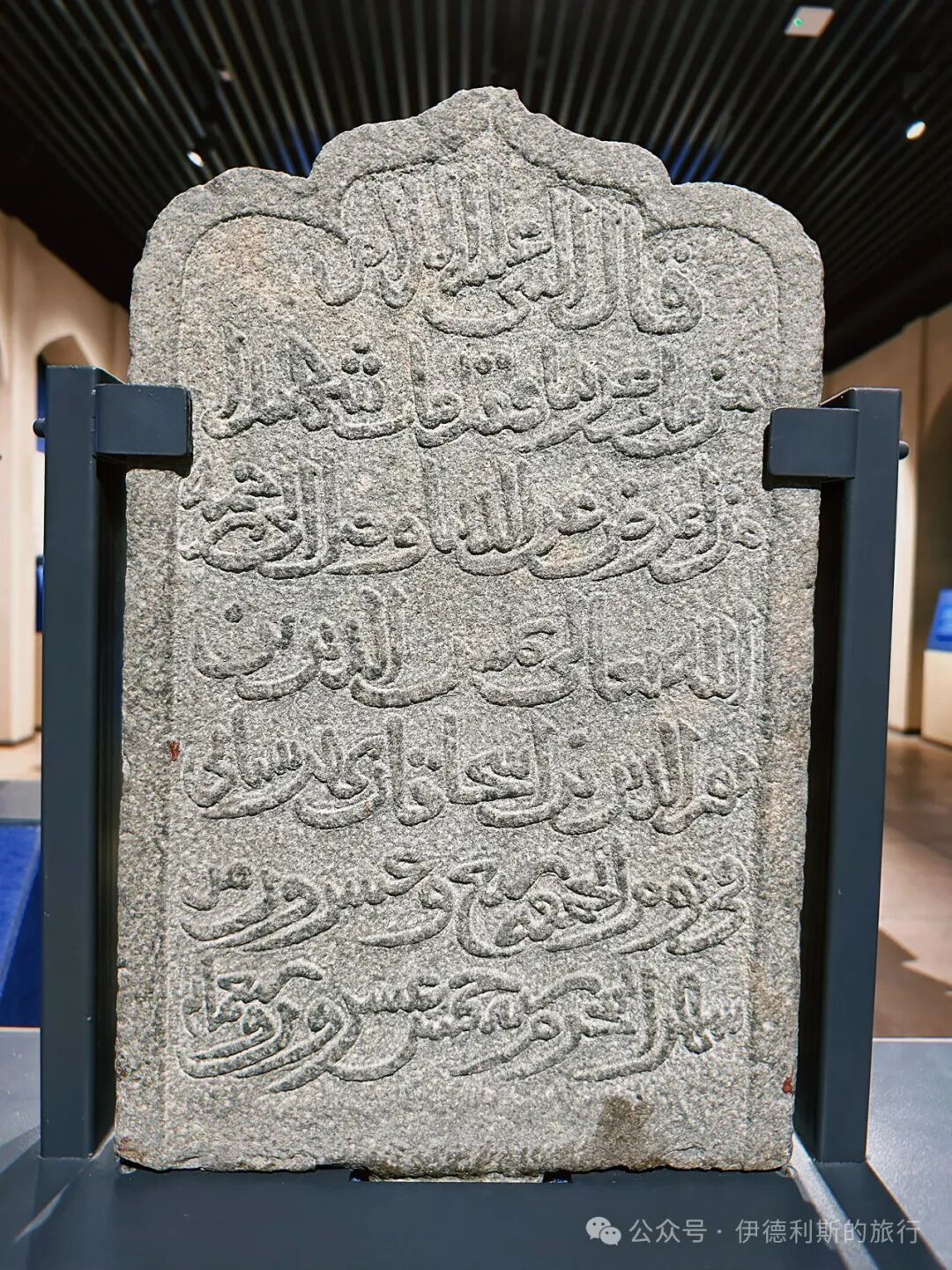
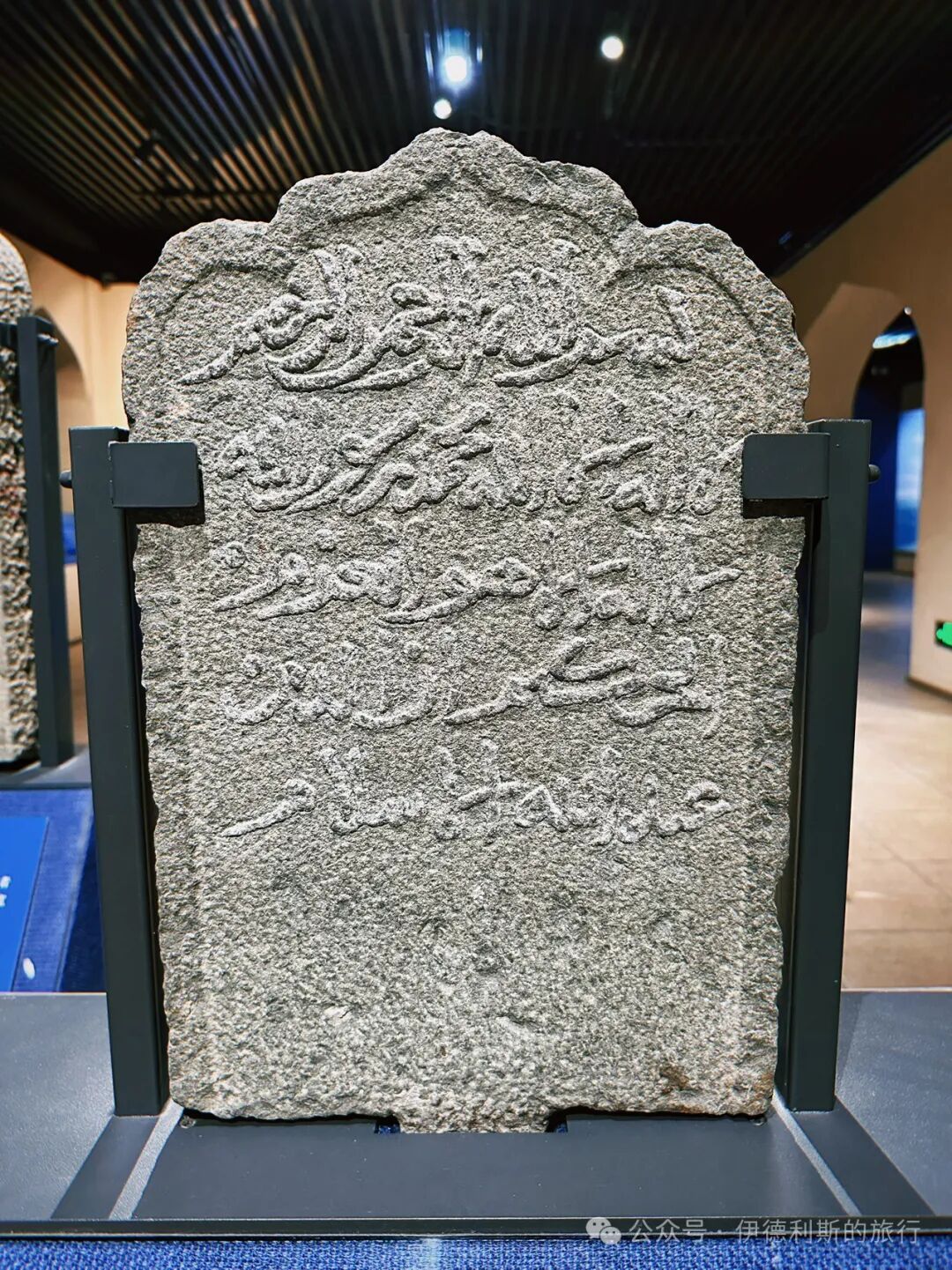
The tombstone in the picture below was found in March 1963 in the home of a farmer at Ruifengling outside the east gate of Quanzhou. The family said it was discovered when an old wall that had stood for a hundred years collapsed. Several gravestones belonging to the faith were found near Ruifeng Ridge, marking it as one of the burial sites for Muslims in Quanzhou during the Song and Yuan dynasties. The person buried there was named Fatima bint Naina, who passed away in 1306. The back of the stone is carved with verses from the Quran (55:26-27).
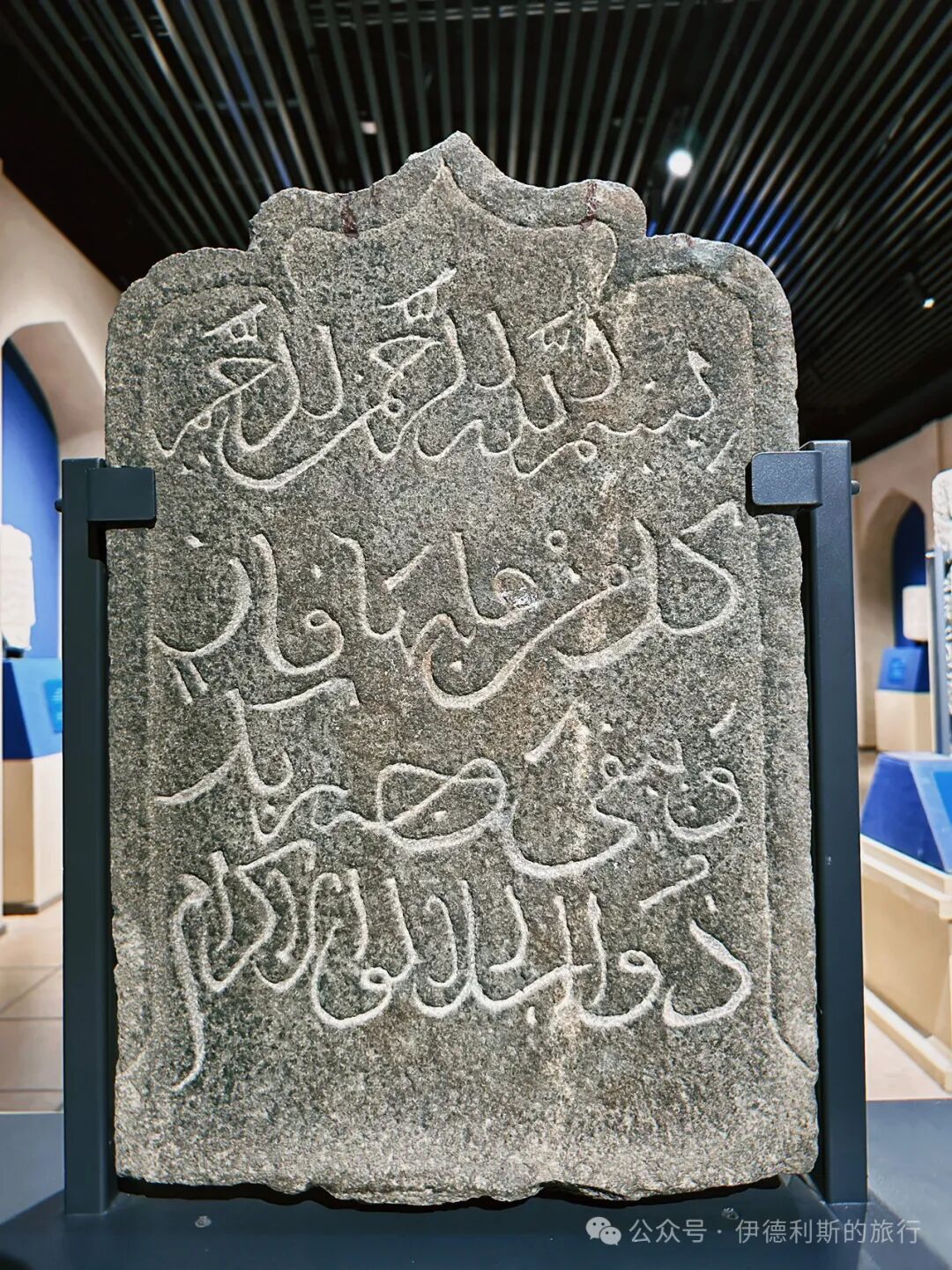
The gravestone in the picture below is broken into several pieces, with two parts remaining today; they were unearthed in 1953 and 1956 at Jintoupu, outside the Tonghuai Gate of Quanzhou's East Gate. The person buried there was named Abu Bakr b. Husayn Sinan, who passed away in 1319.
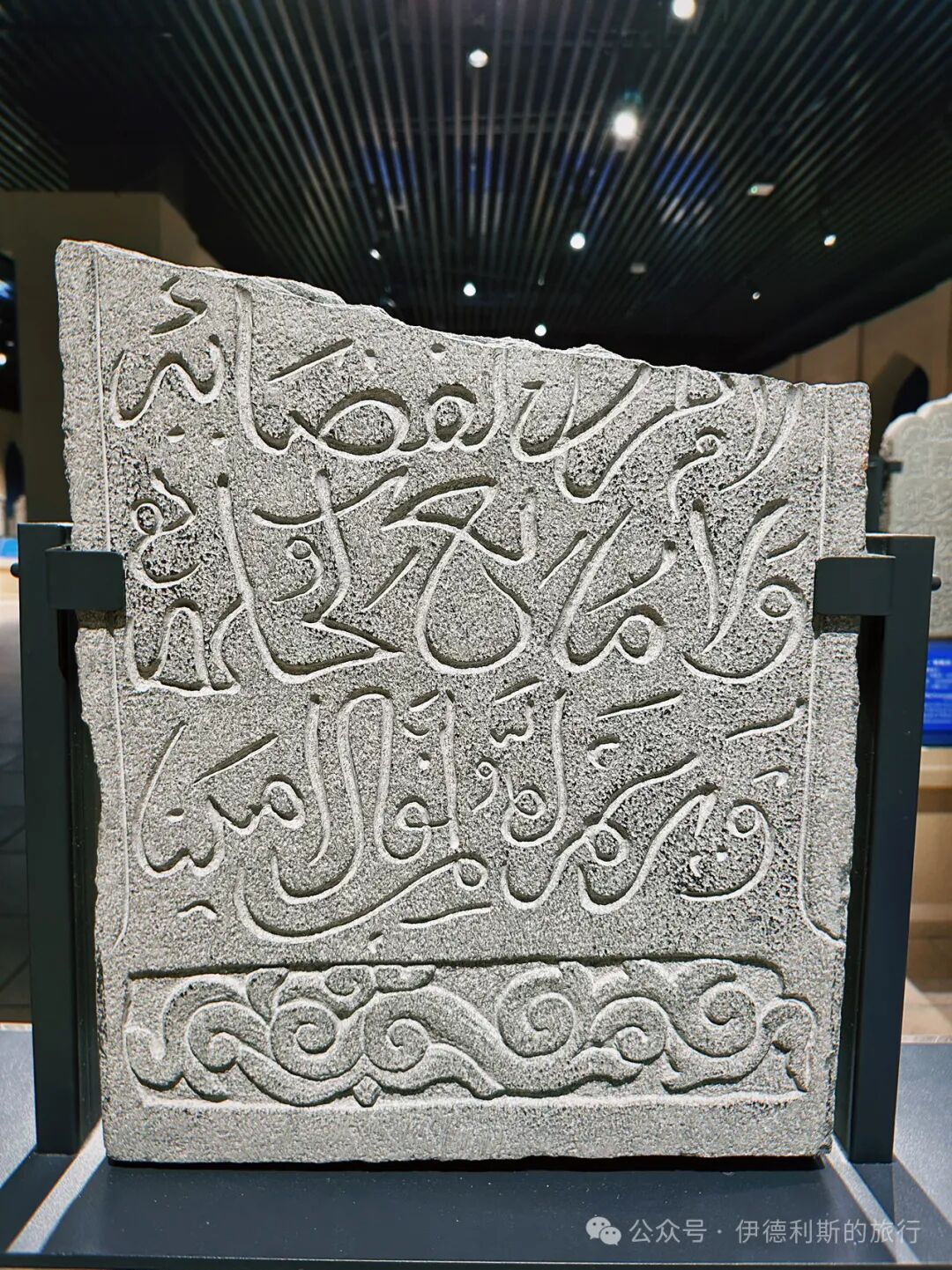
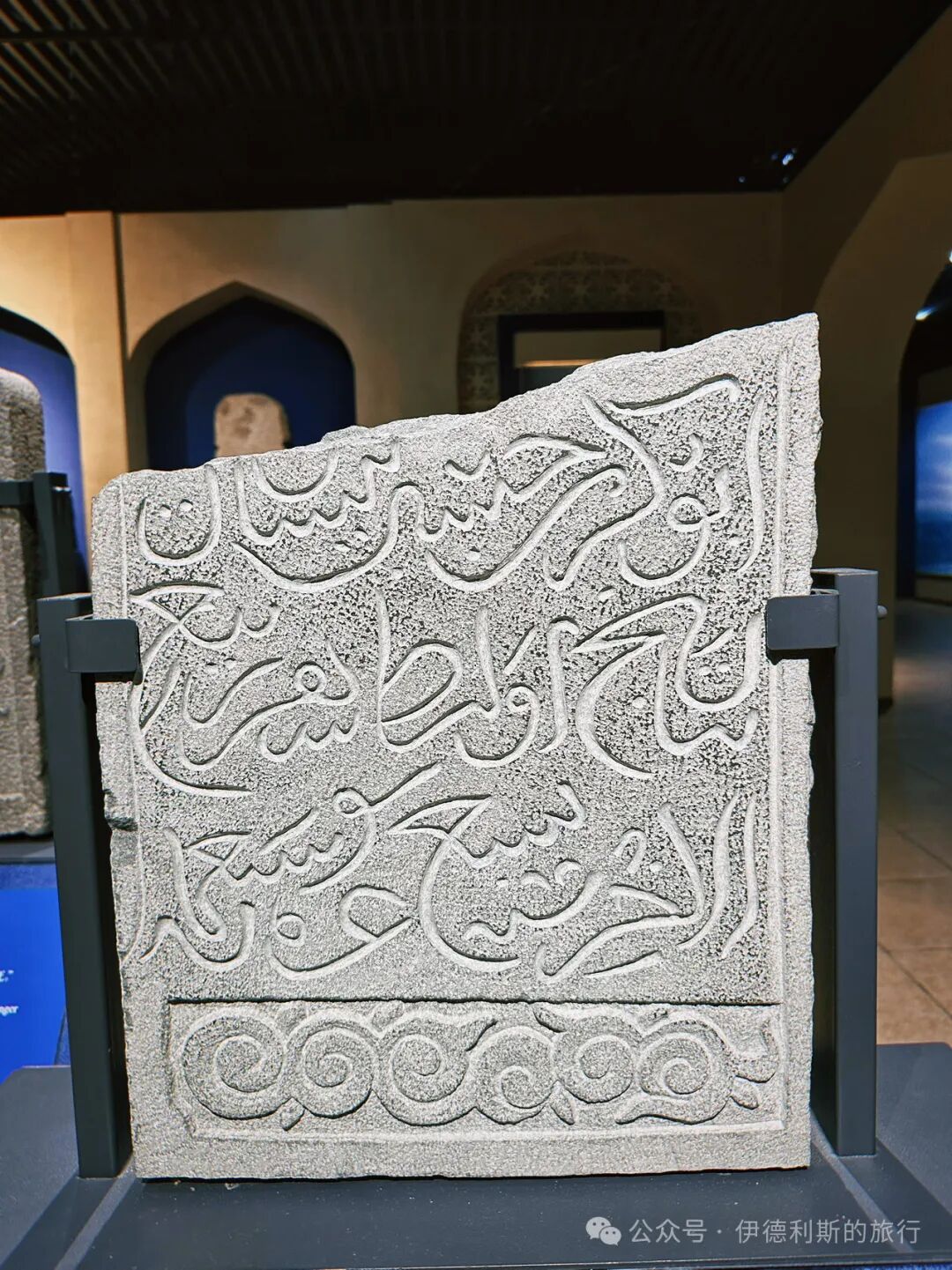
The gravestone in the picture below was excavated from the city wall at Quanzhou's East Gate in 1929; the person buried there was named Haji b. Agfar Beg b. Haji al-Malighi, who passed away in 1387 (though some say 1290). If the date is 1387, it is a rare gravestone from the Ming dynasty. The back is carved with a verse from the Quran (2:156) and a hadith stating, 'Whoever dies in a foreign land dies a martyr.'
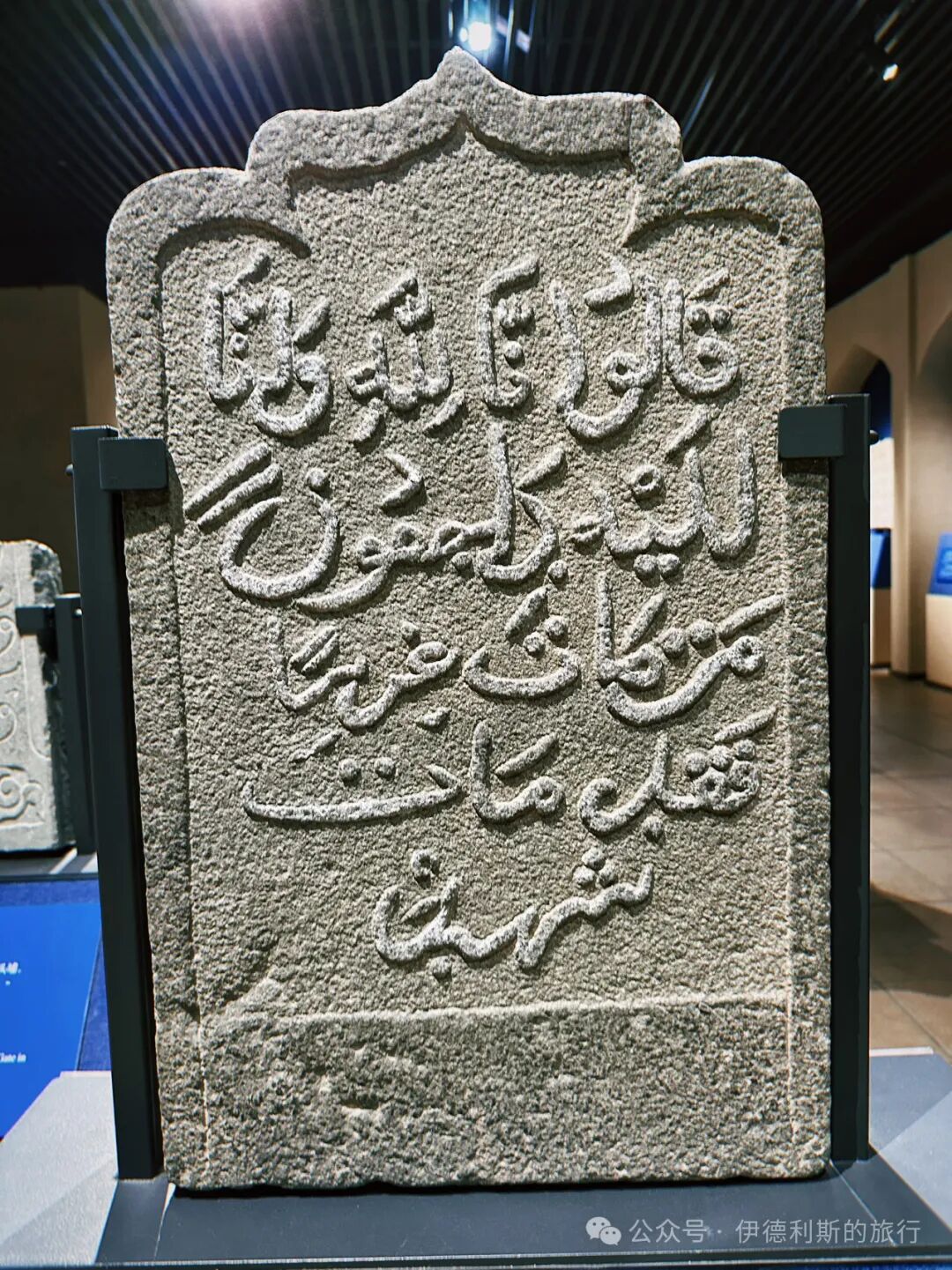
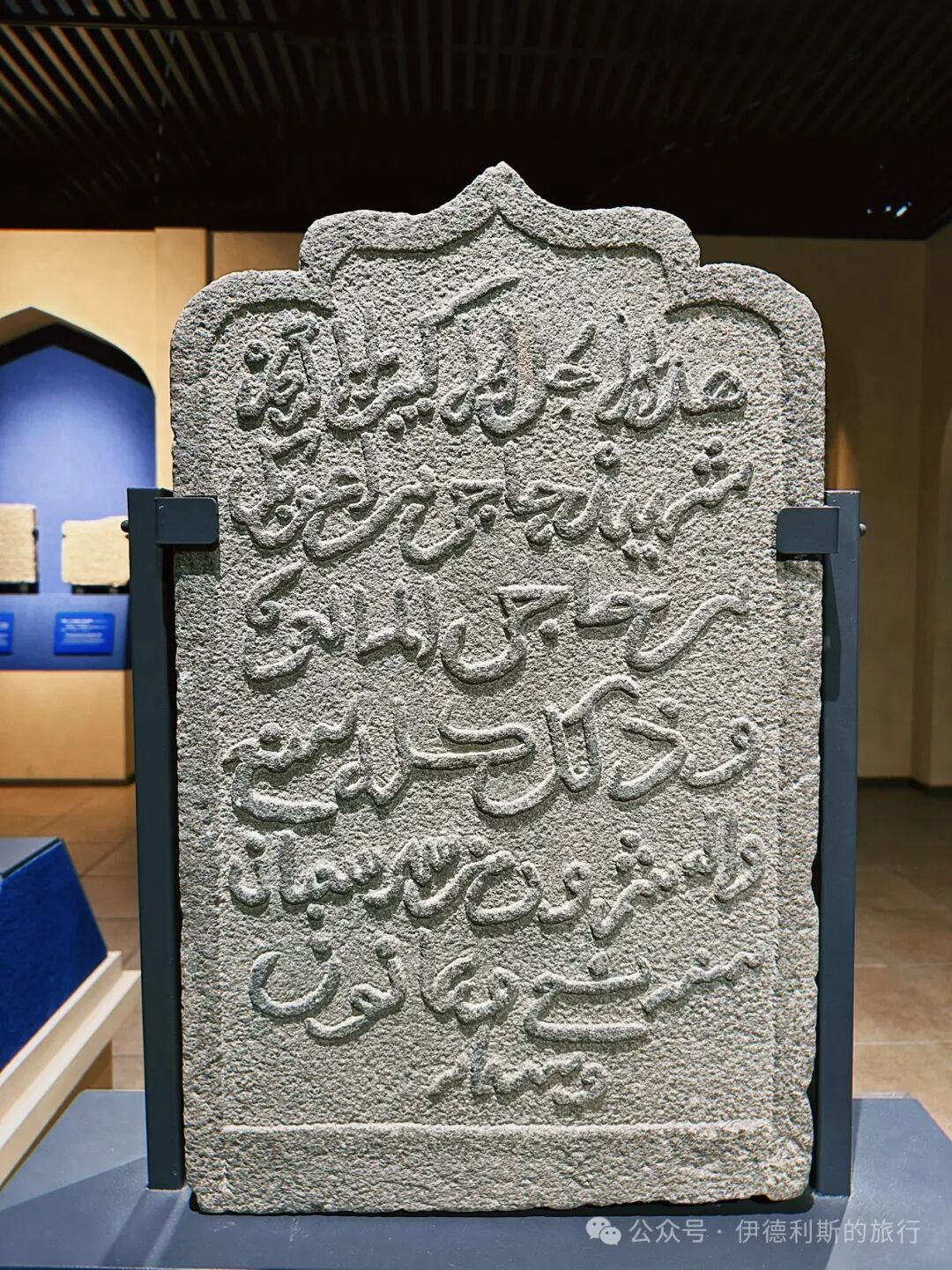
The tombstone in the picture below was found in 1930 when the East Gate of Quanzhou was demolished. The person buried there was named Mansur b. Haji al-Qasim al-Jajarmi, who died in 1277. The back features the Shahada and a verse from the Quran (28:88). This Mansur and the previously mentioned Qutb al-Din Ya'qub both came from Jajarm in the North Khorasan province of Iran.
In 1276, the Yuan army captured Lin'an, and Wen Tianxiang and others supported Emperor Duanzong as they fled to Quanzhou. The Song army seized 2,000 of Pu Shougeng's ships (some say over 400) and confiscated his property. This led Pu Shougeng to carry out a retaliatory massacre of the Southern Song royal family members living abroad and to hunt down Emperor Duanzong. In 1277, the Yuan army arrived in Quanzhou, and Pu Shougeng surrendered the city, marking a new chapter in Quanzhou's history.
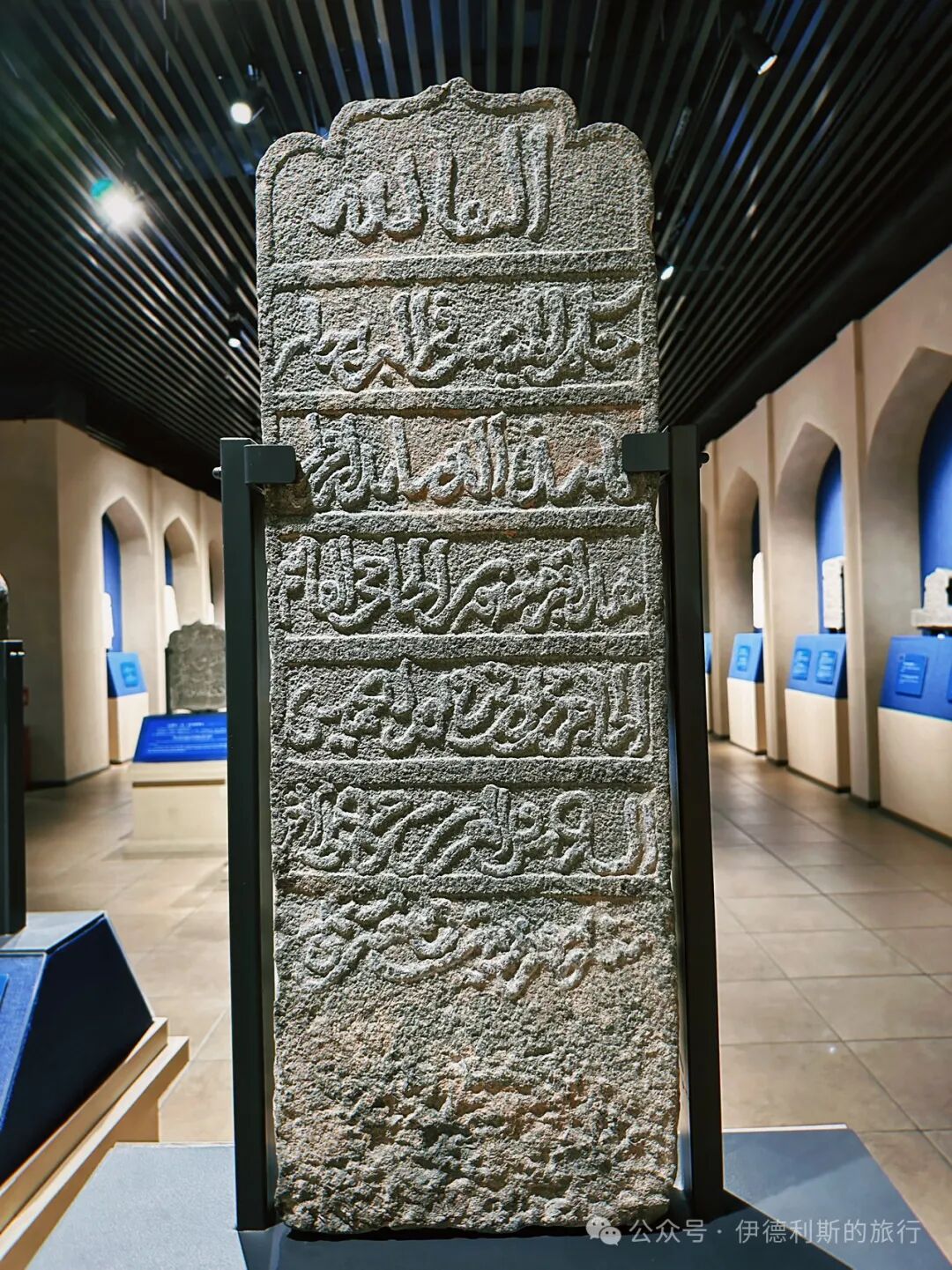
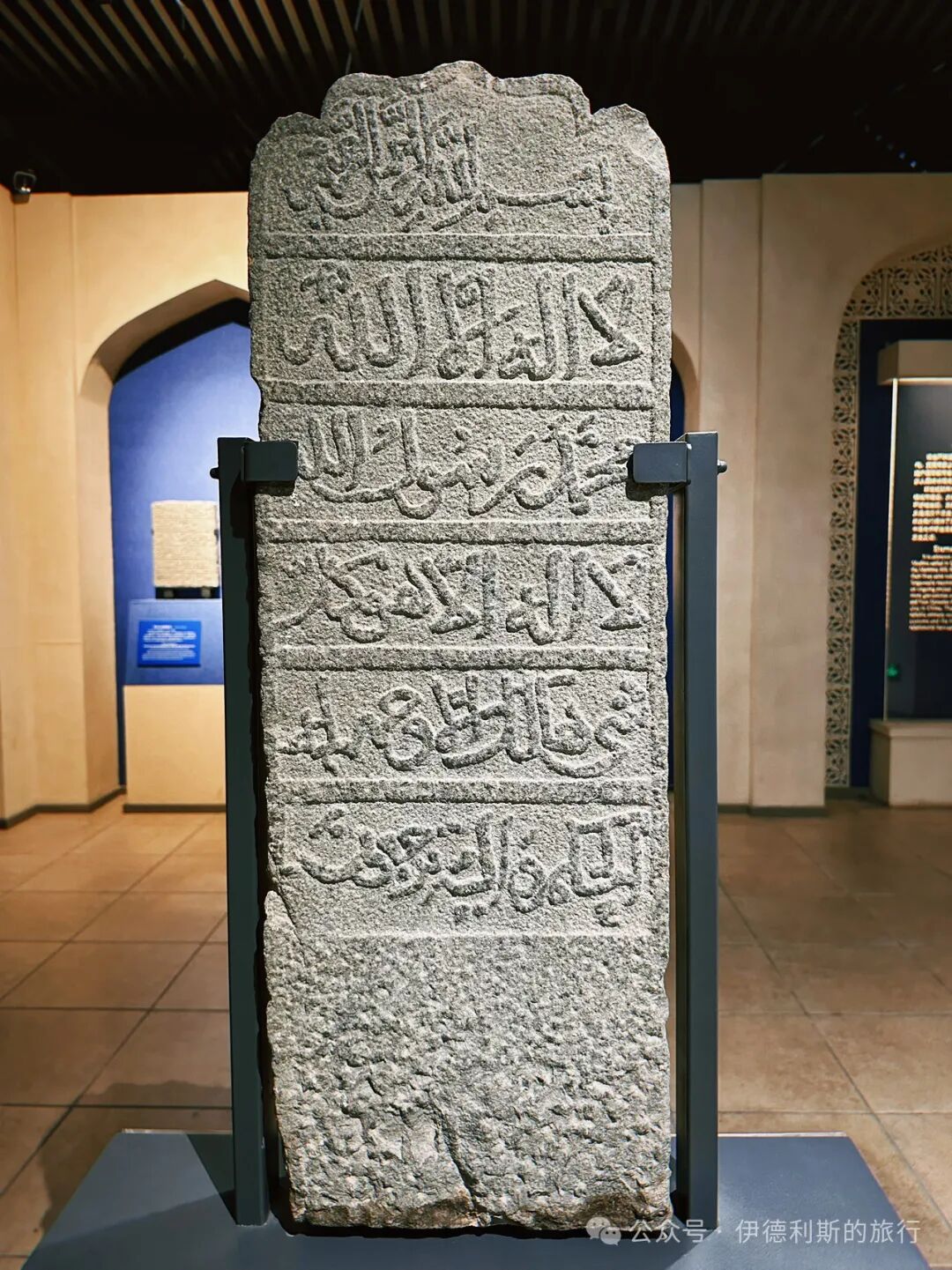
The tombstone in the picture below was found in 1932 when the Renfeng Gate of the Quanzhou East Gate city wall was demolished. The person buried there was named Shirin Khatun bint Hasan Zaituni, who died in 1321. In Turkic languages, Khatun means queen or lady. The inscription also features a verse from the Quran (29:57).
Citong is another name for Quanzhou, named after the coral trees (citong) planted everywhere since the Five Dynasties period. During the Song and Yuan dynasties, Arab merchants called Quanzhou Zaitun because the name sounded like the Arabic word for olive (zaitun).
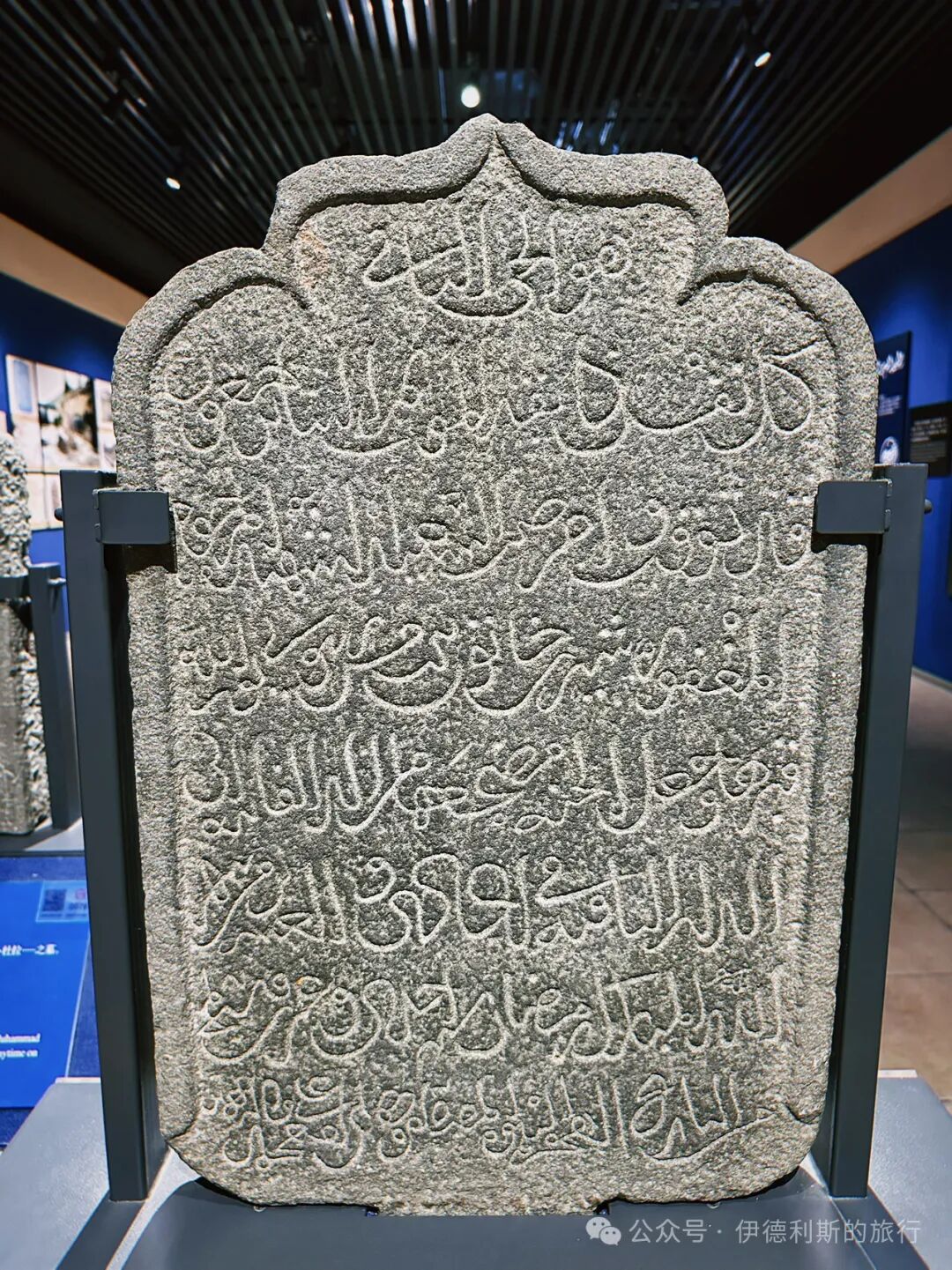
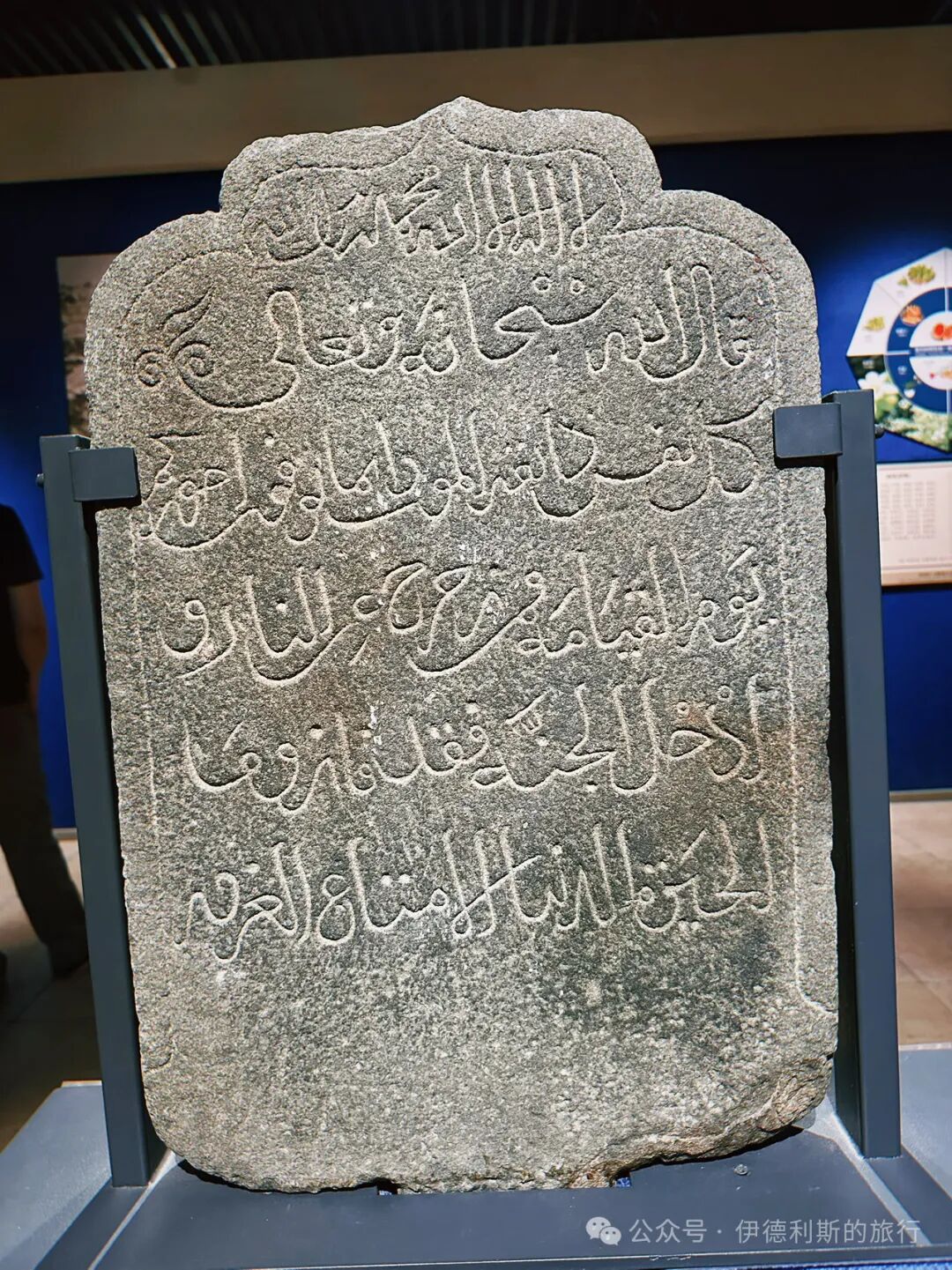
The tombstone in the picture below was found in November 1978 inside a family home at Jintoupu, outside Tonghuai Gate in Quanzhou, where it was being used as a foundation stone. Before that, it had been excavated from the city walls of Tonghuai Gate. The person buried there was named Ibn Ghawamar al-Din al-Ghar... The inscription describes him as a Khwaja, a leader of the faith, and a leader of the Mawla. The text uses Persian several times, so the person buried there likely came from a Persian cultural background.
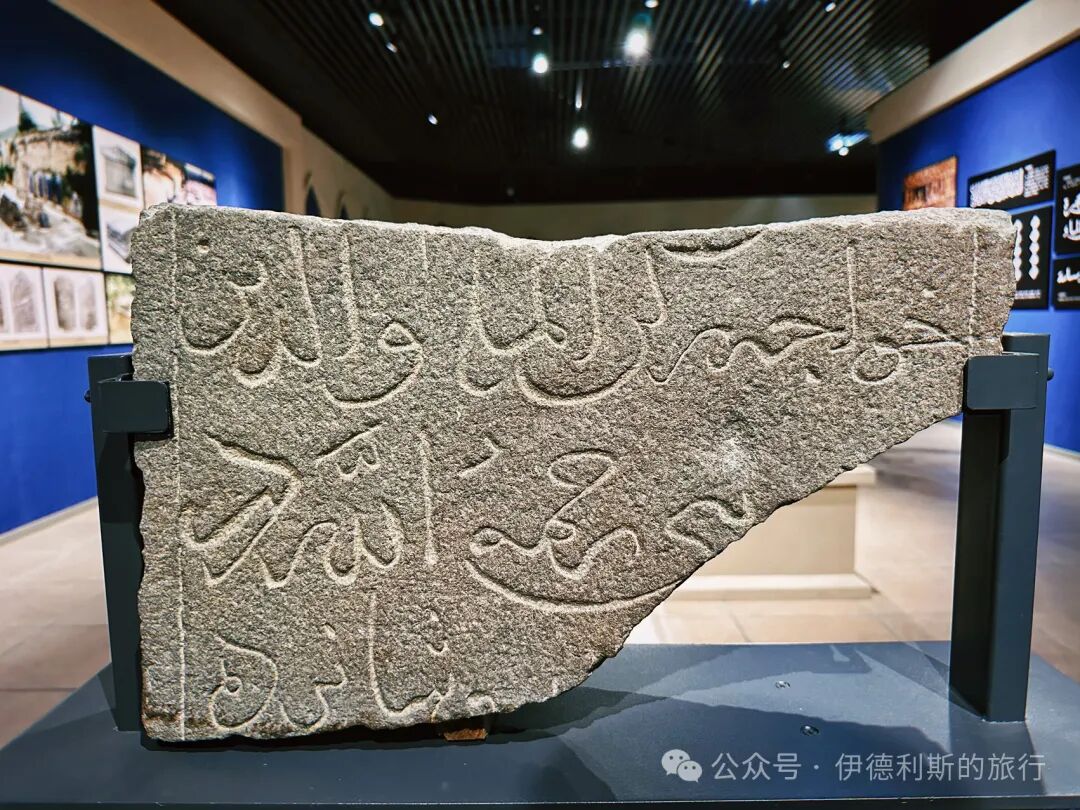
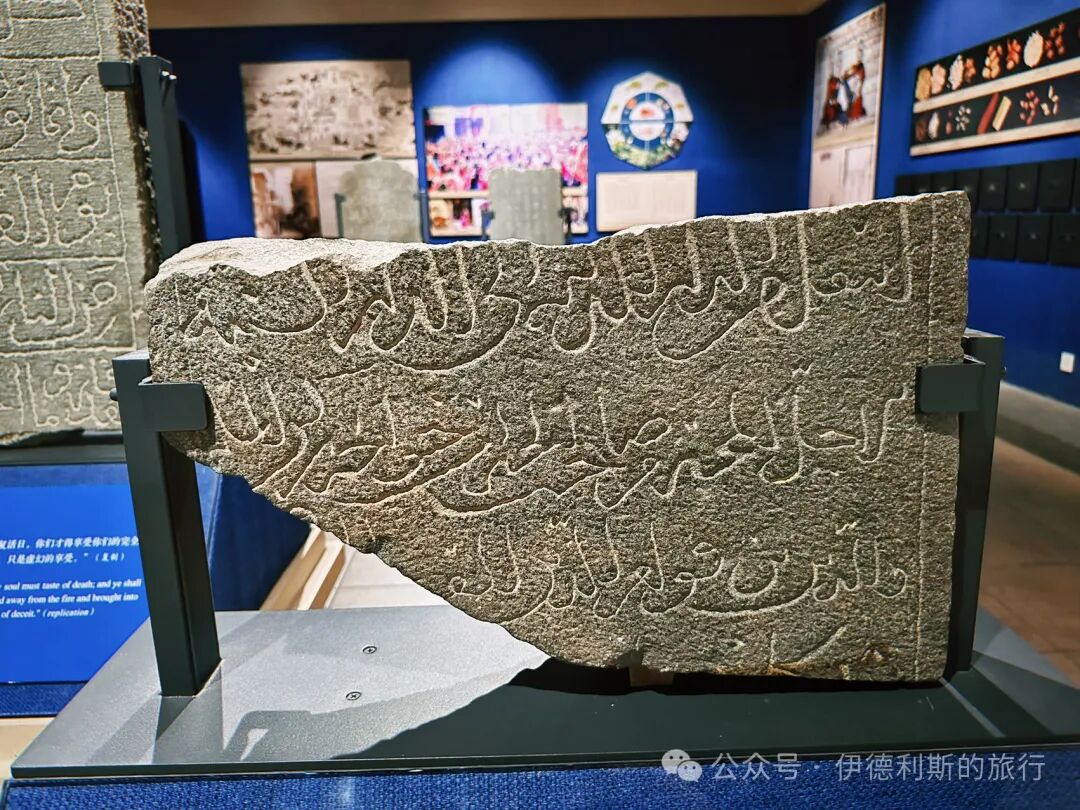
The tombstone in the picture below was unearthed in March 1964 at the construction site of the Overseas Chinese Mansion in downtown Quanzhou. This site was once the location of the Haiqing Pavilion during the Qing Dynasty. When the Senate building was built in the early 1940s, the city walls of the east and south gates of Quanzhou were torn down for building materials, and this stone tablet was likely buried in the wall foundation at that time. One side of the tombstone is carved with the Shahada, and the other side is carved with a verse from the Quran (3:185).
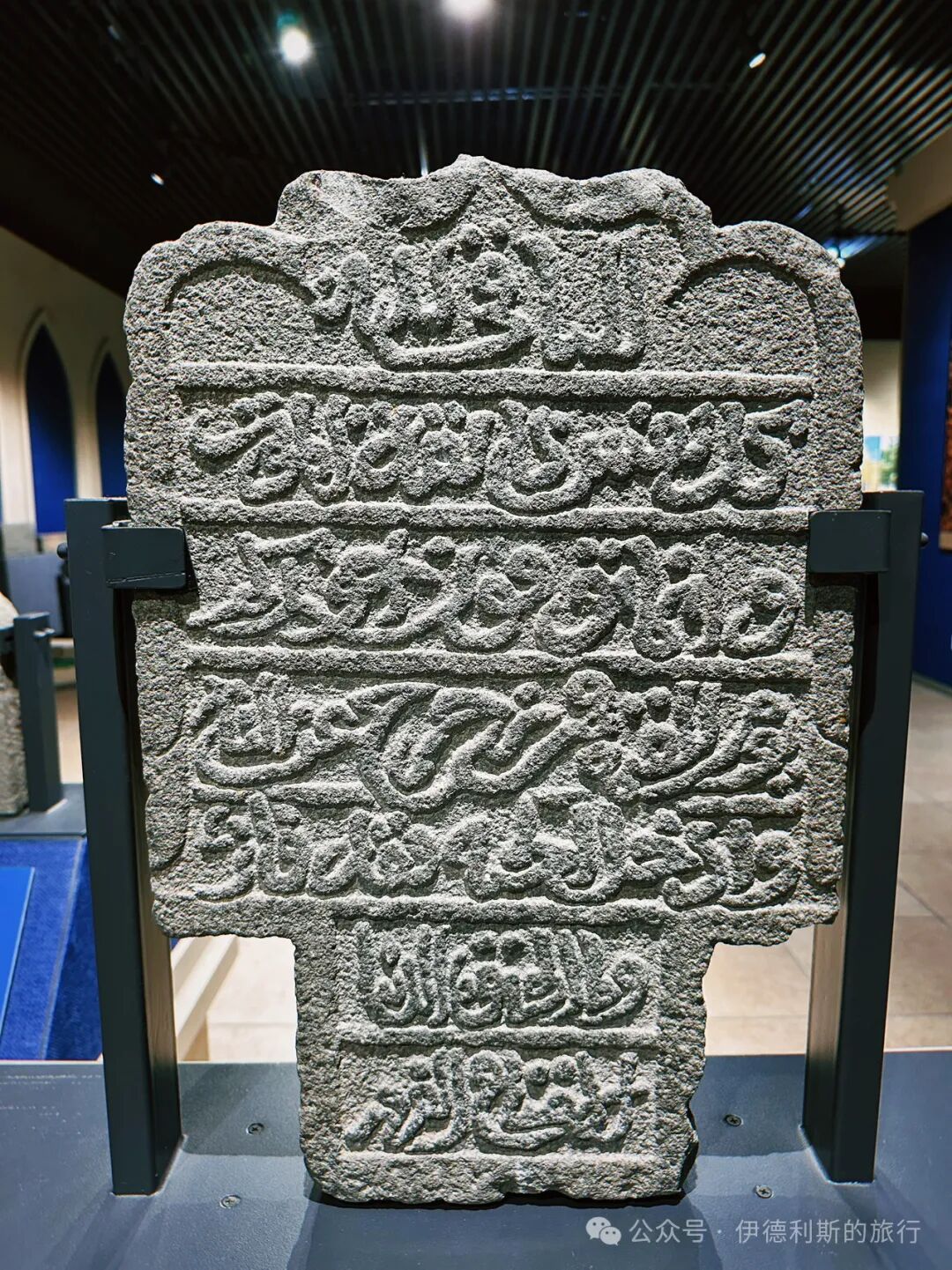
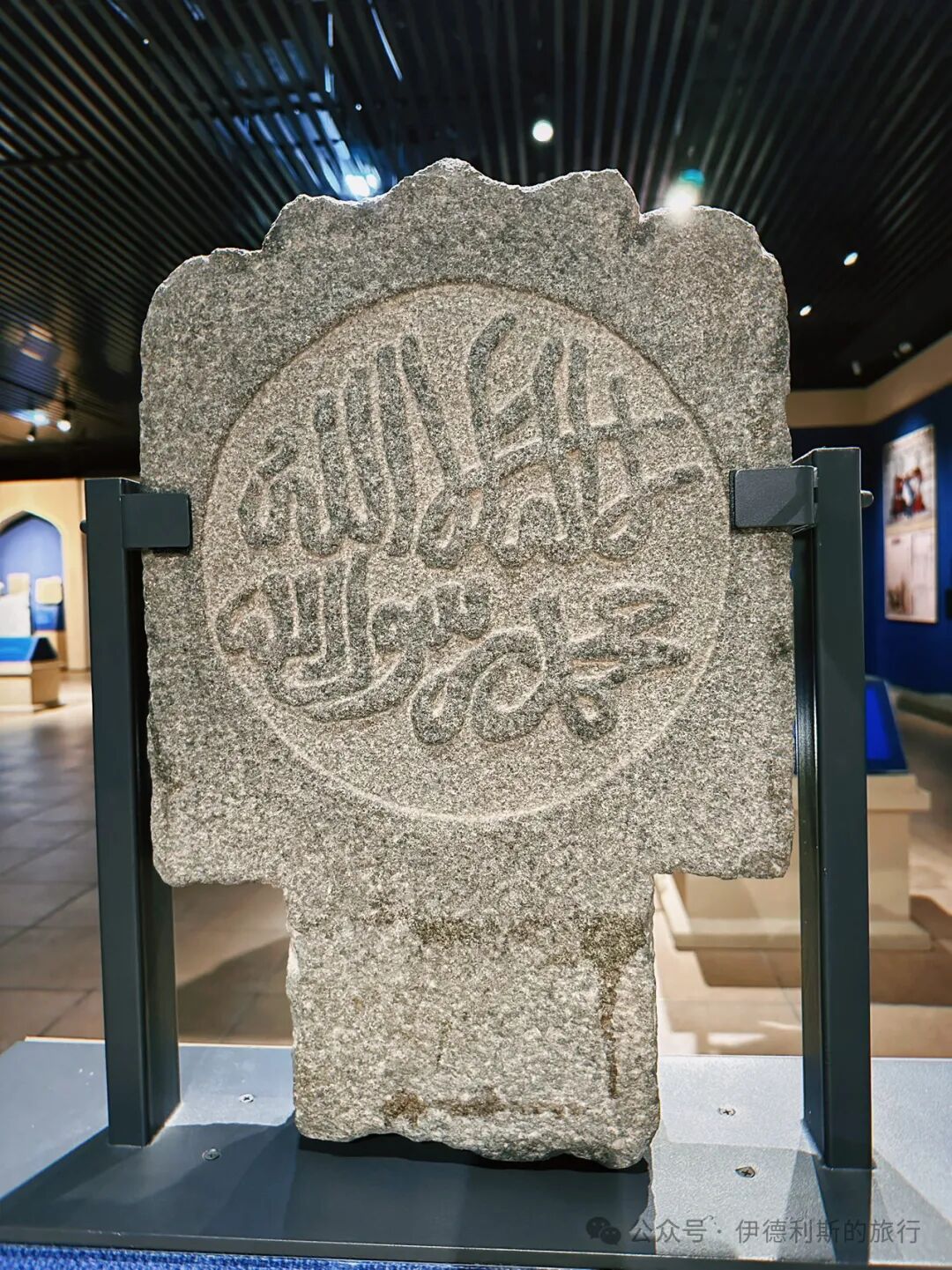
The tombstone in the picture below was found in the foundation of the east gate of Quanzhou in 1944. One side is carved with the Basmala and the Shahada, and the other side is carved with a verse from the Quran (29:57).
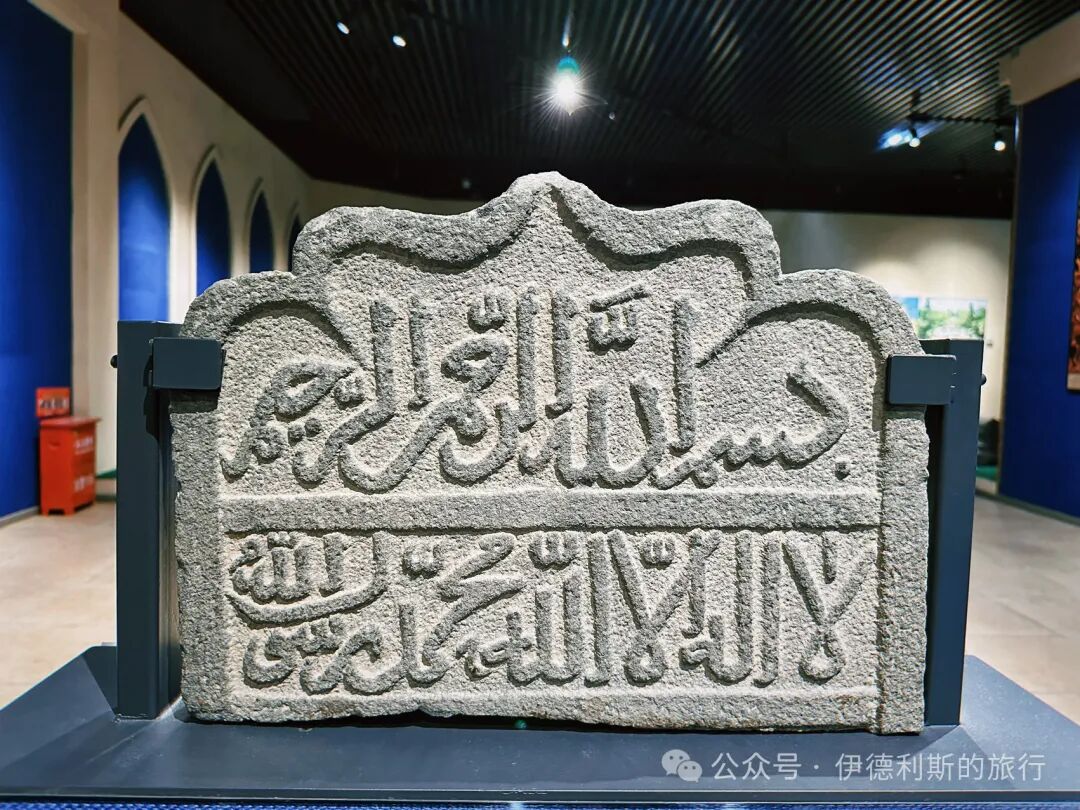
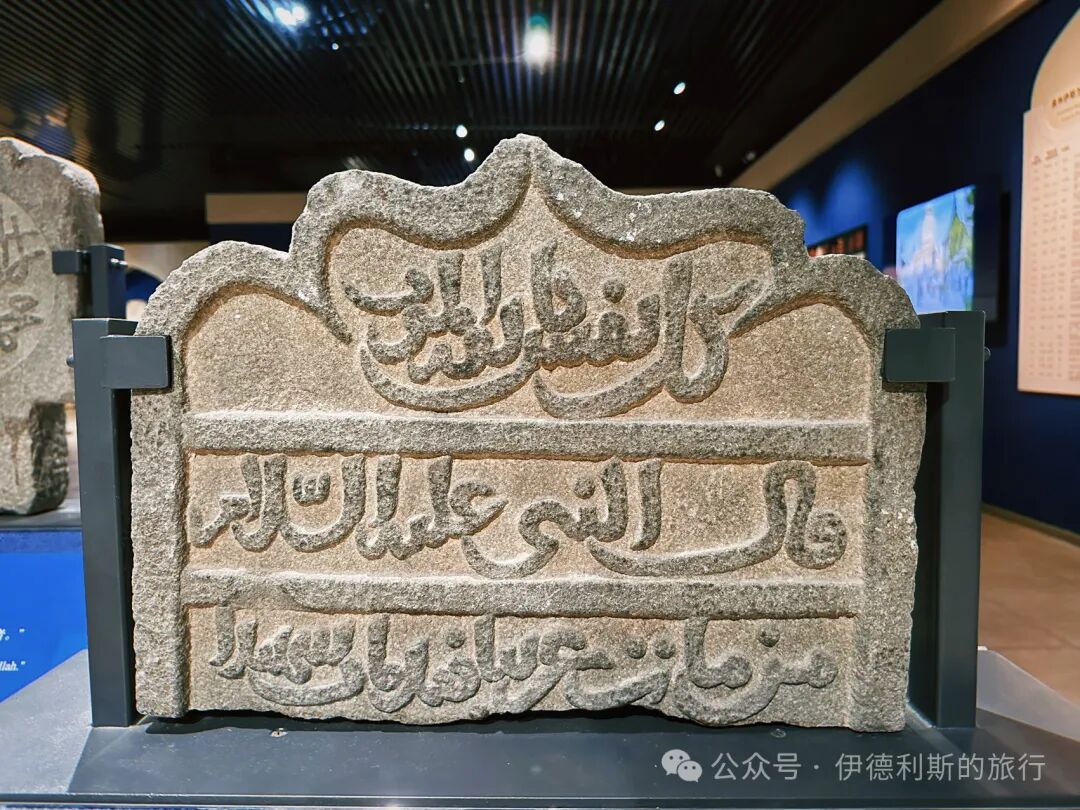
The tombstone in the picture below was unearthed in 1973 during the cleaning of the North Canal in Quanzhou and is carved with verses from the Quran (89:28-30).
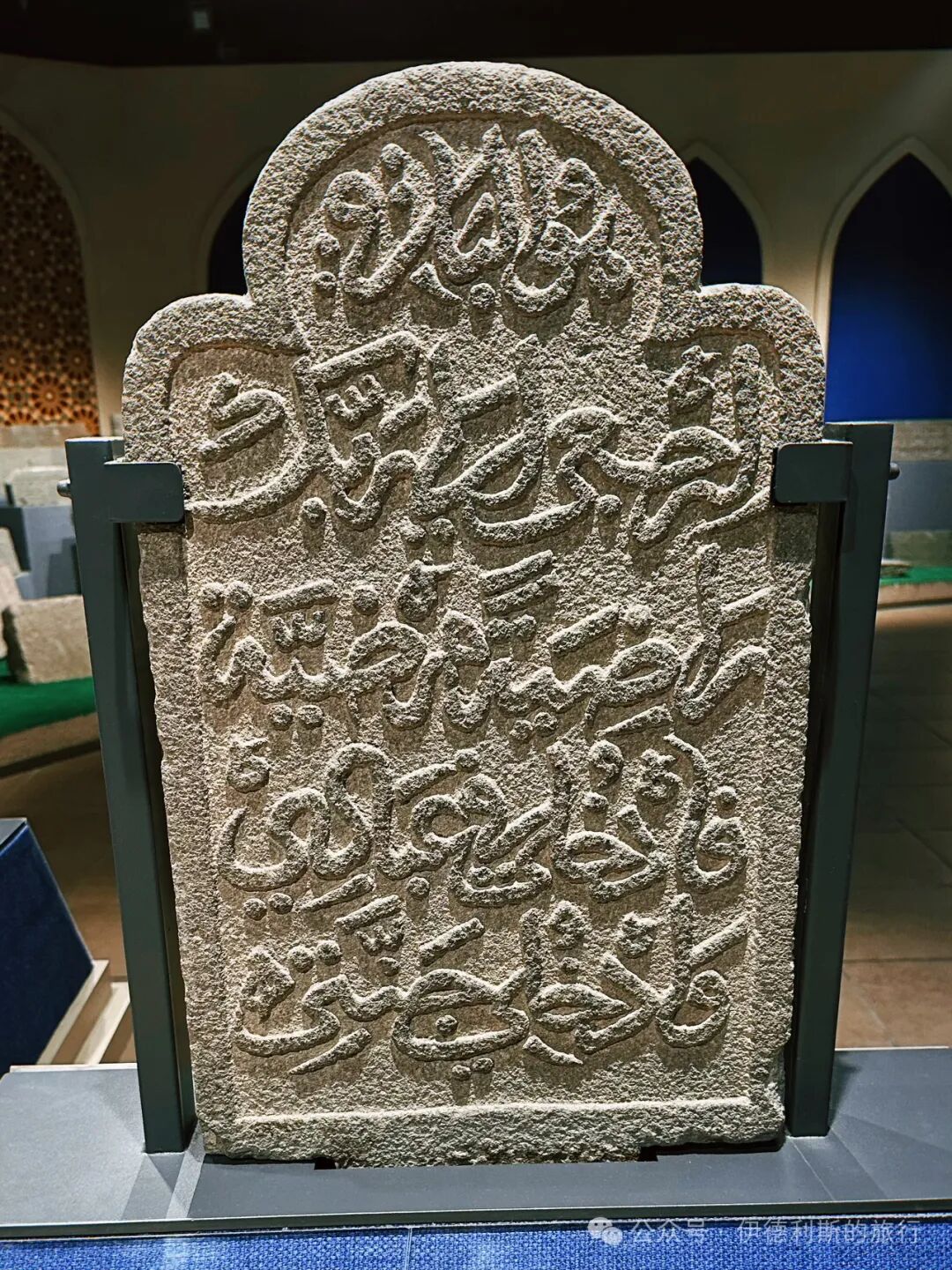
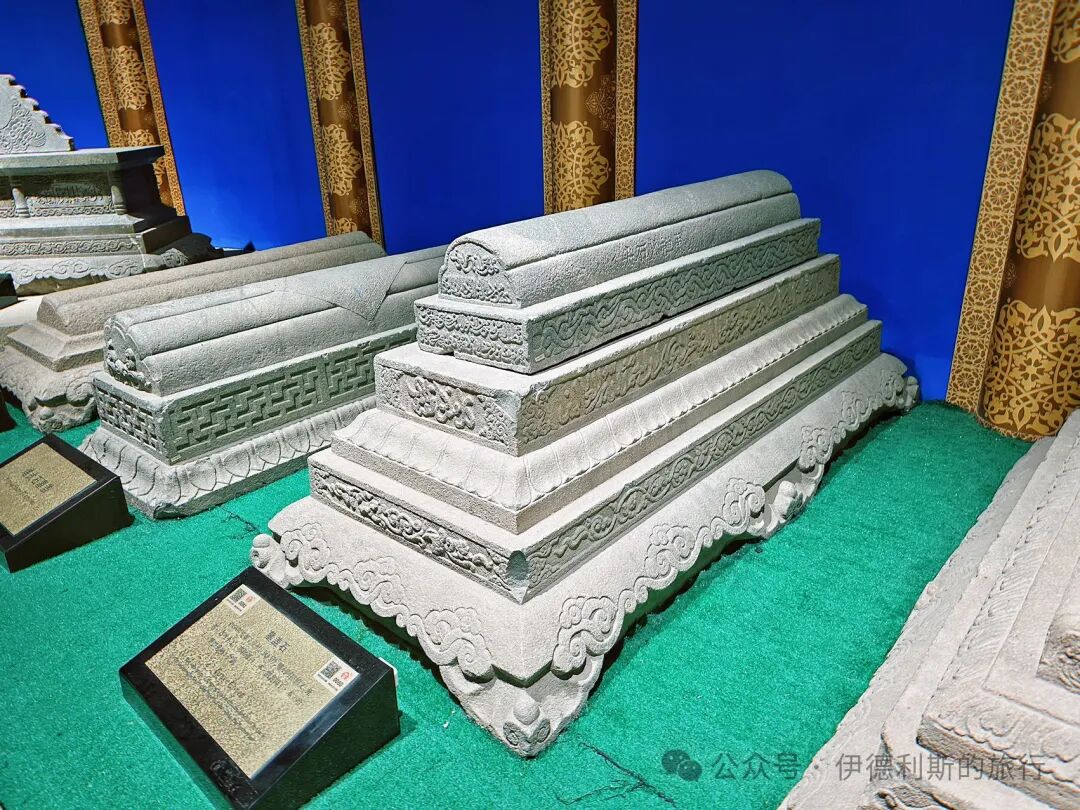
Sumeru-pedestal stone tomb.
The second largest category after tombstones is the Sumeru-pedestal stone tomb.
These are two Sumeru-pedestal style tomb stones. The upper tomb cap stone was found near Dongchan Mosque outside the east gate of Quanzhou in 1927 and was recovered and preserved in the Maritime Museum in 1958.
The person buried here was named Qutb al-Din Ya'qub. He came from Jajarm in the North Khorasan province of Iran and passed away in 1309. The inscription begins by saying, 'He is eternal and never dies; he has moved from the world of destruction to the world of eternity.'
Jajarm sits on the edge of the central Iranian desert and holds many historical and archaeological sites. This city was an important trade hub in Khorasan during the 10th and 11th centuries, but it slowly declined after the Persian Safavid dynasty in the 16th century.
The lower half has five layers. The fourth layer is carved with scripture (2:255). In 1958, the Quanzhou Cultural Relics Management Committee temporarily stored it in the main hall of the Qingjing Mosque, later moved it to the Lingshan Islamic Cemetery area, and finally placed it in the Maritime Museum.
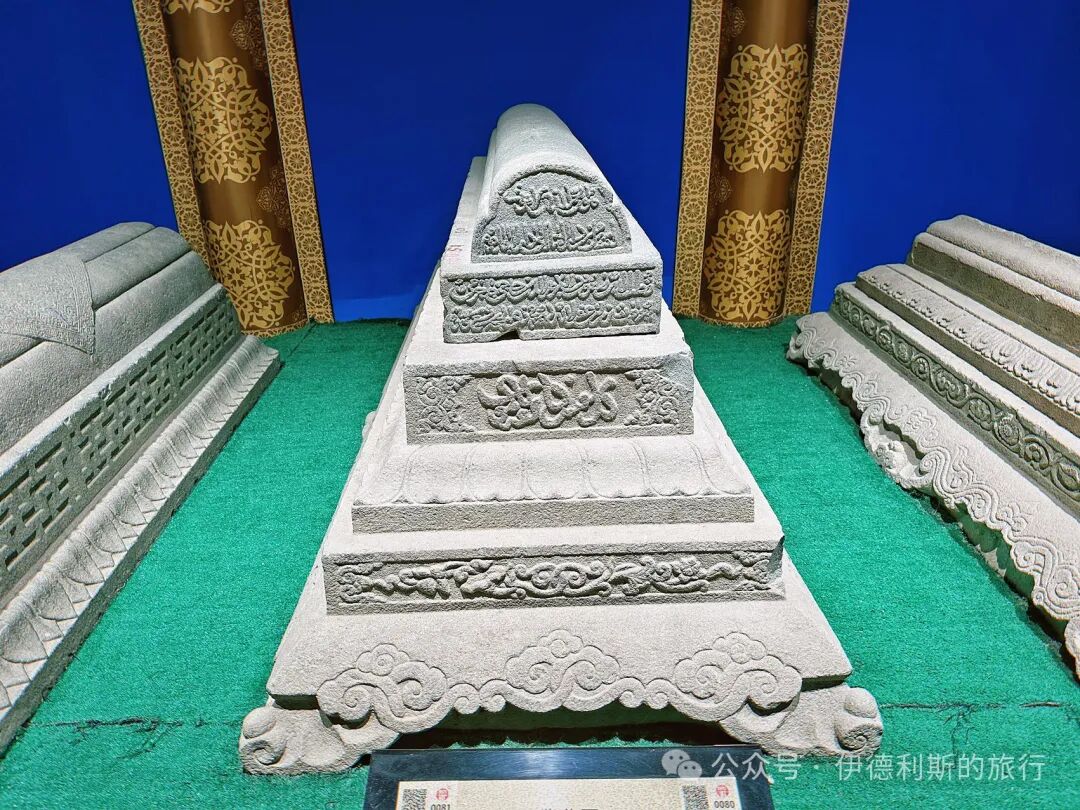
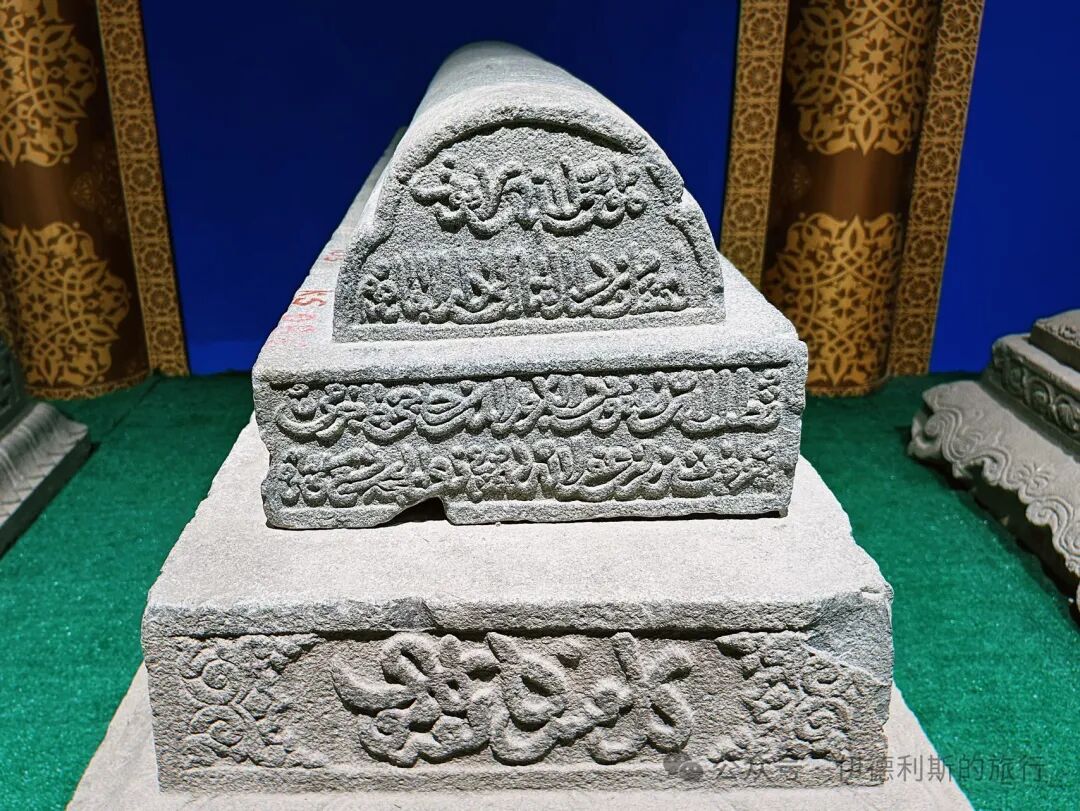
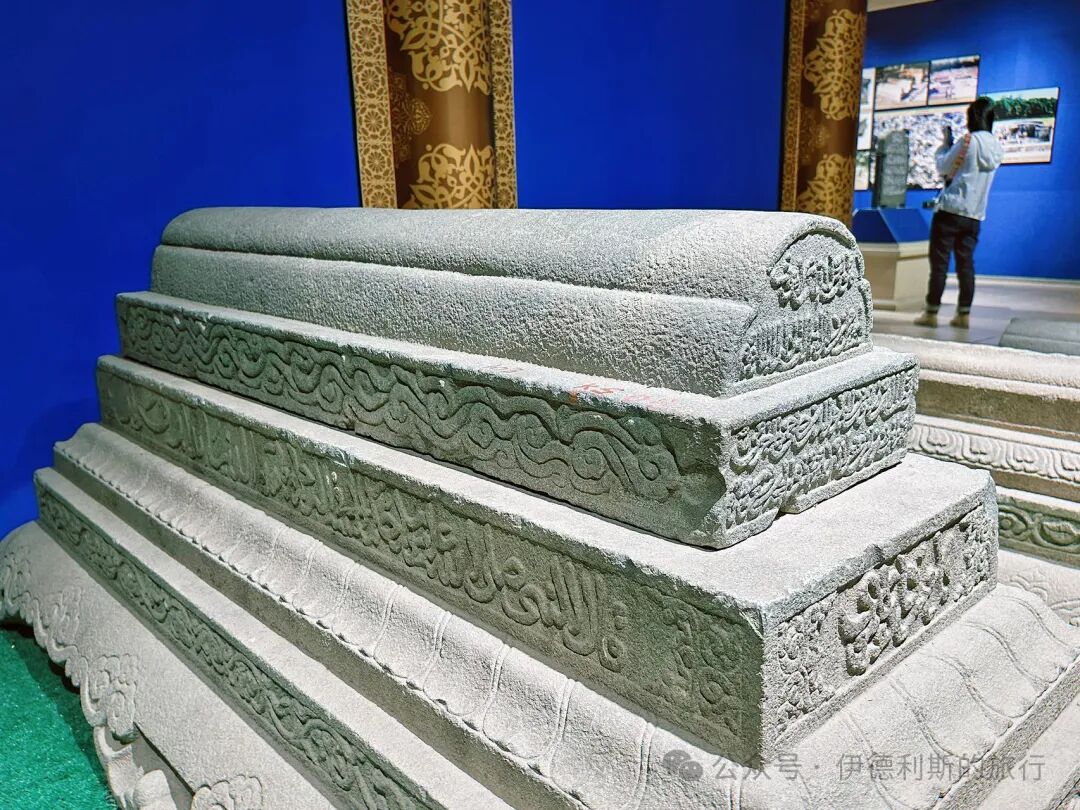
The patterns on this Sumeru-style stone tomb are very unique. The bottom and second layers are destroyed. The third layer features overlapping lotus petal reliefs, the fourth layer has continuous swastika pattern reliefs, and the fifth layer shows a cloud and moon relief on the front with a square cloth relief in the middle. This tombstone was found in 1959 by the seaside in Meishan, Fashi Township, 5 kilometers outside the Tonghuai Gate of Quanzhou. It was later moved to the Maritime Museum for preservation.
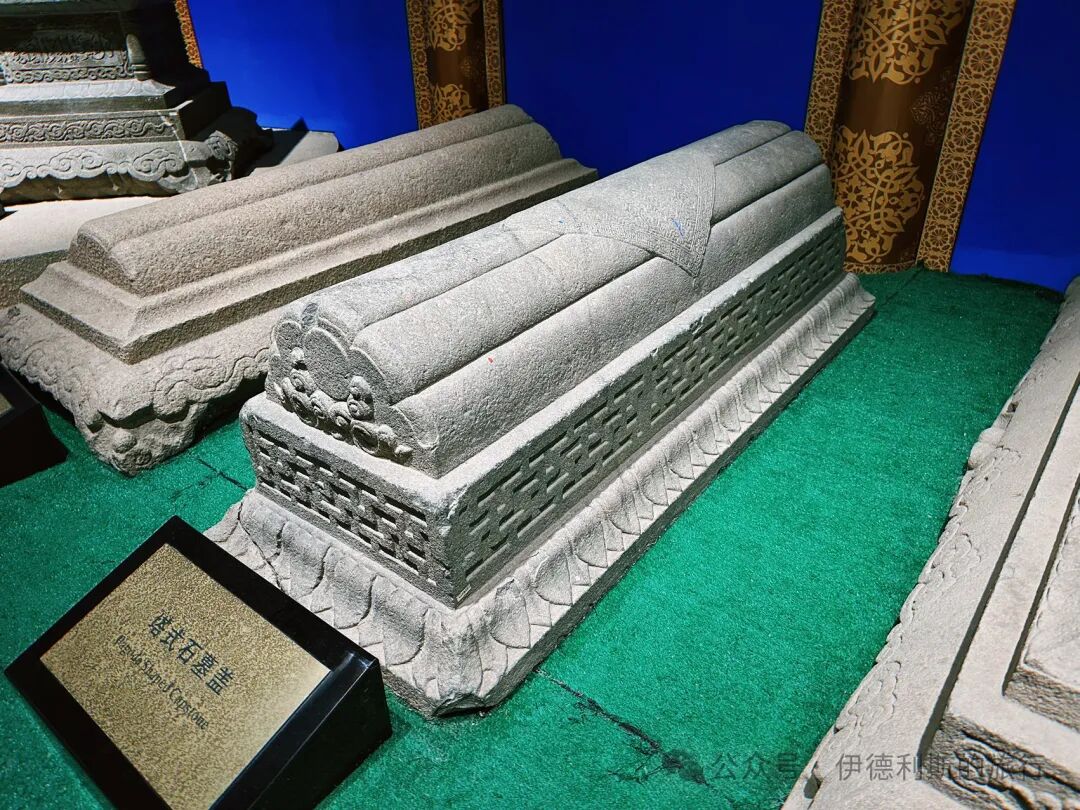
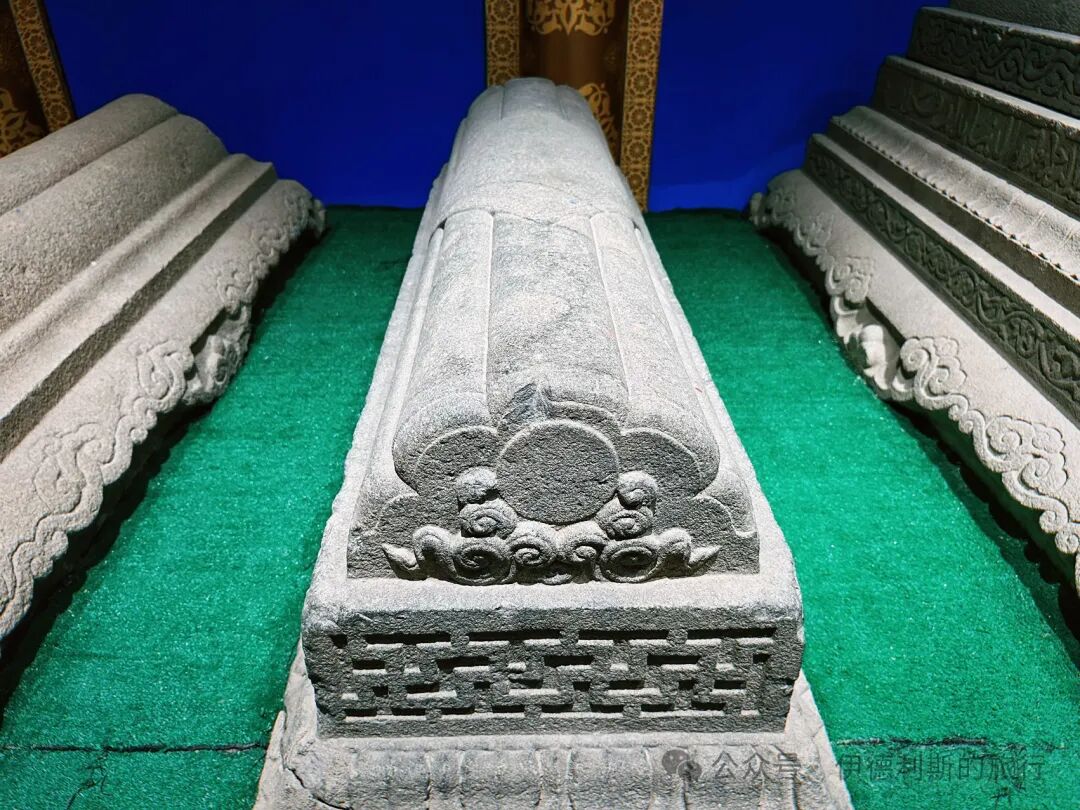
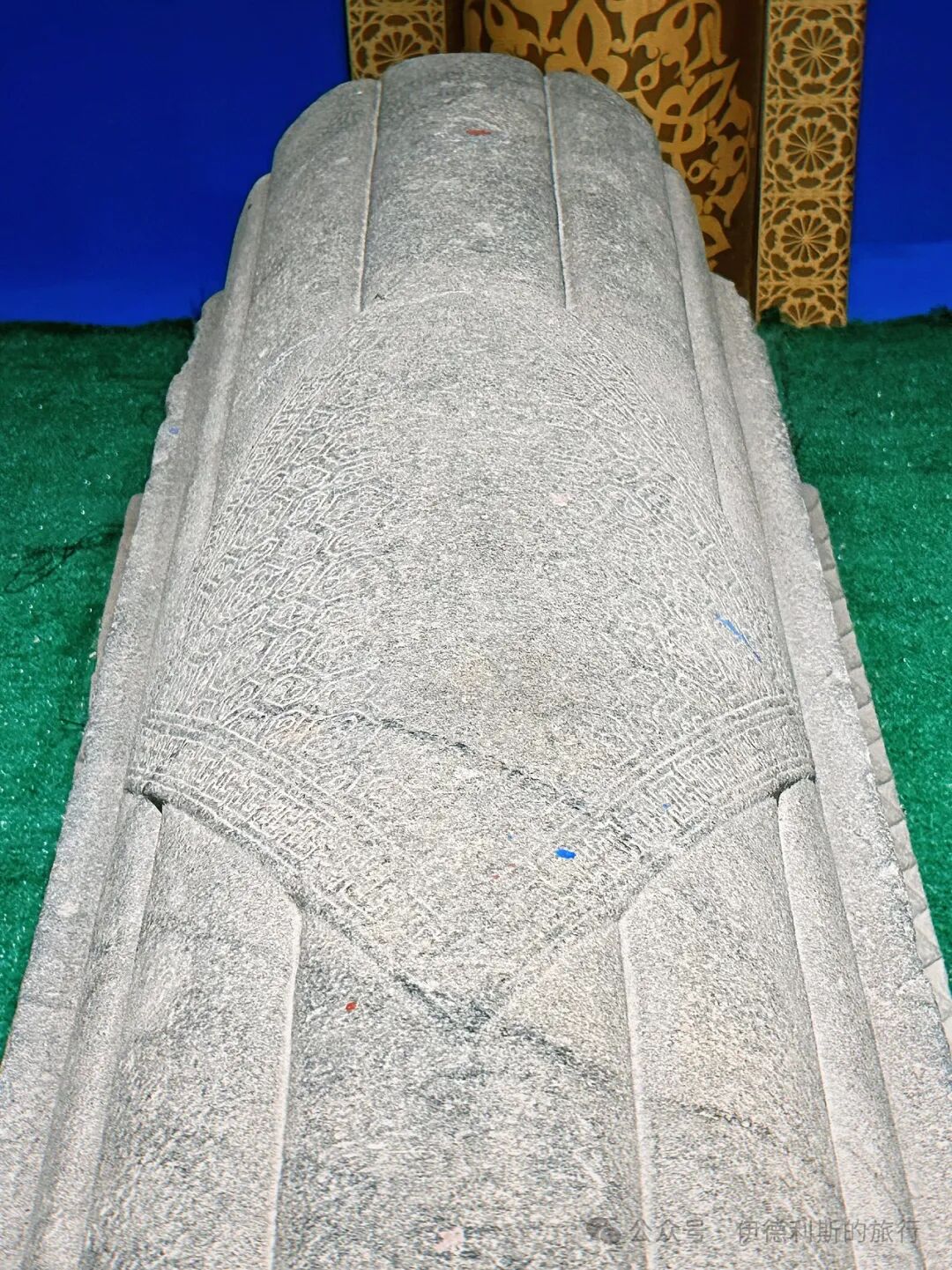
Several other Sumeru-style stone tombs.
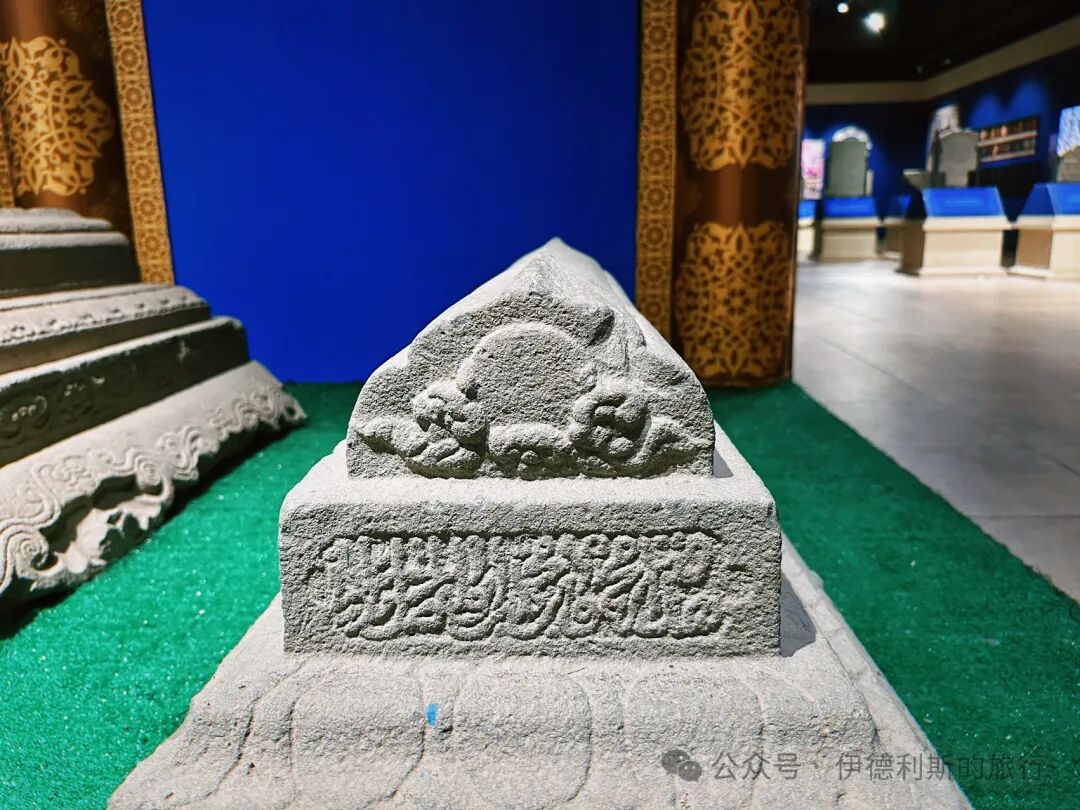
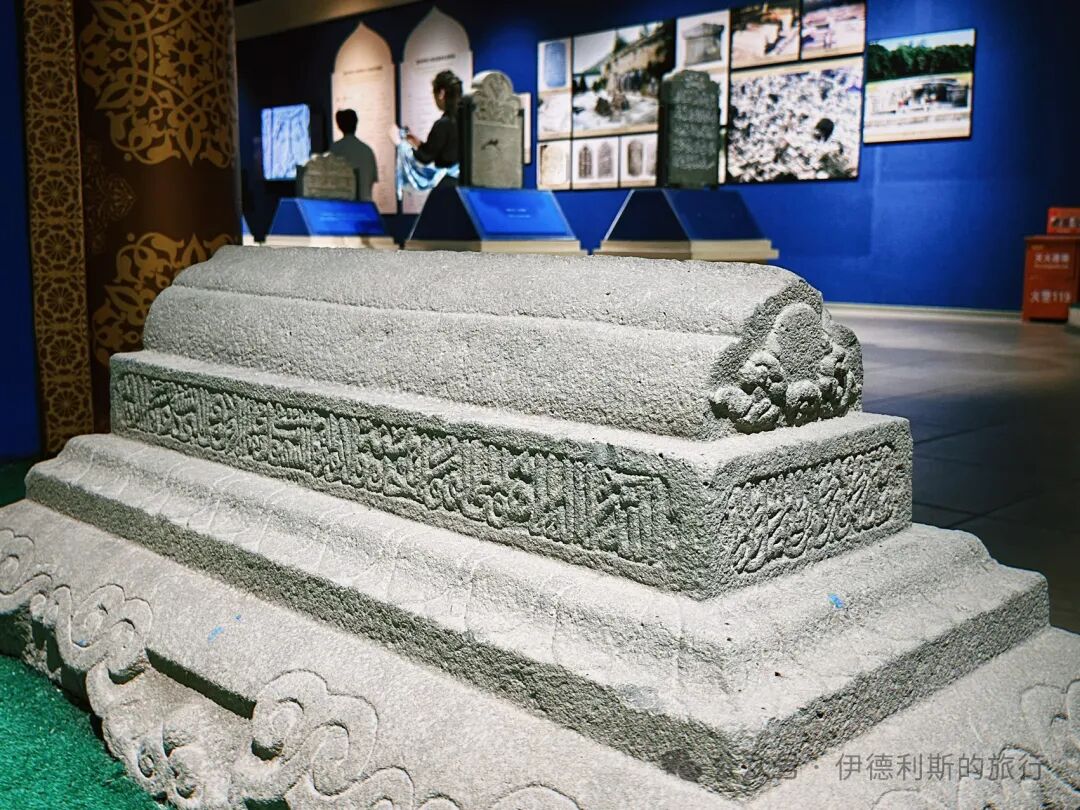
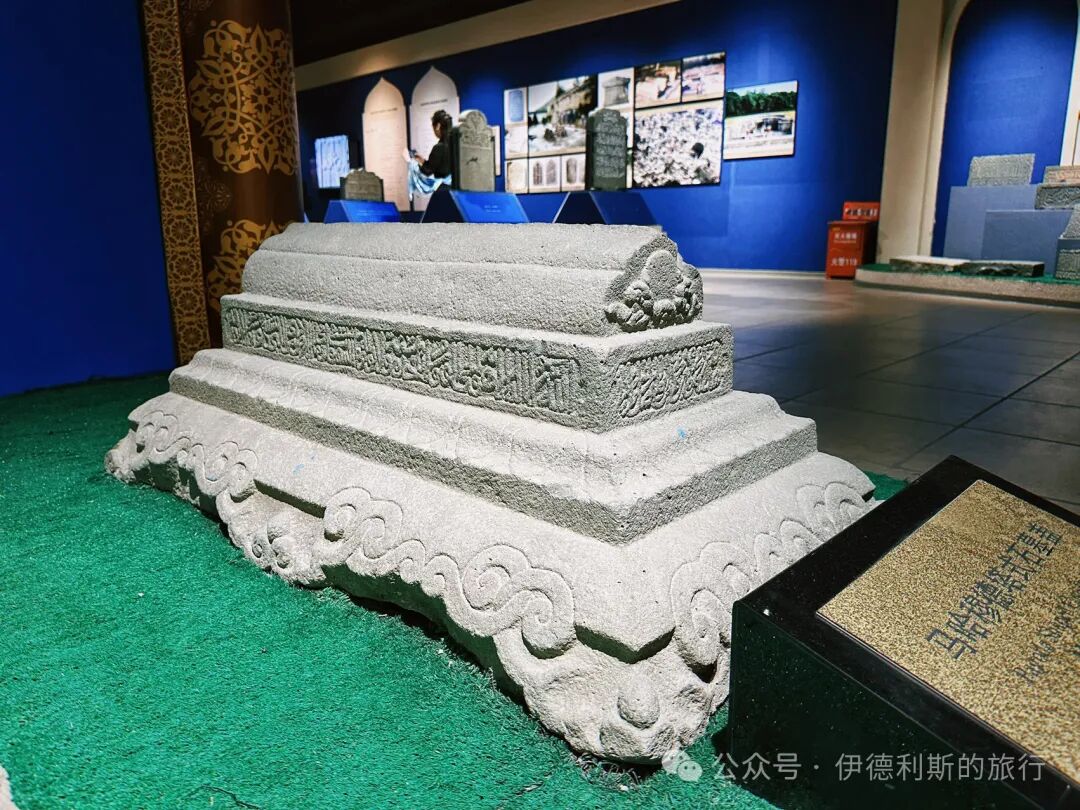
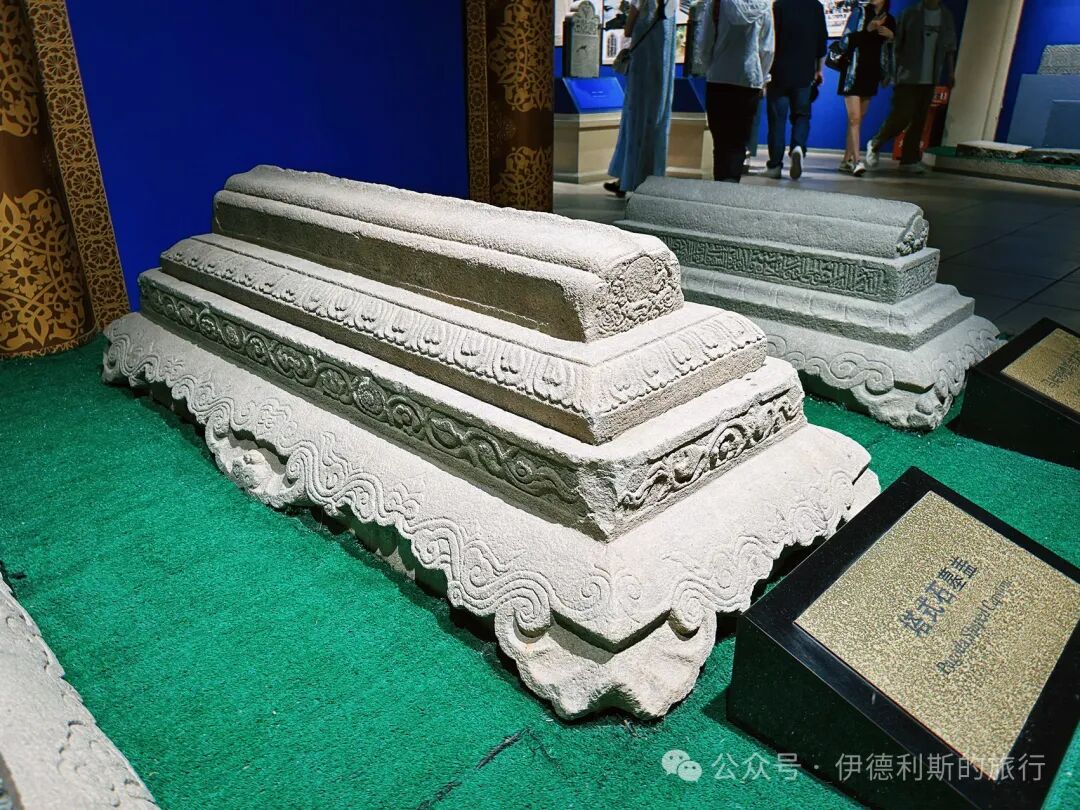
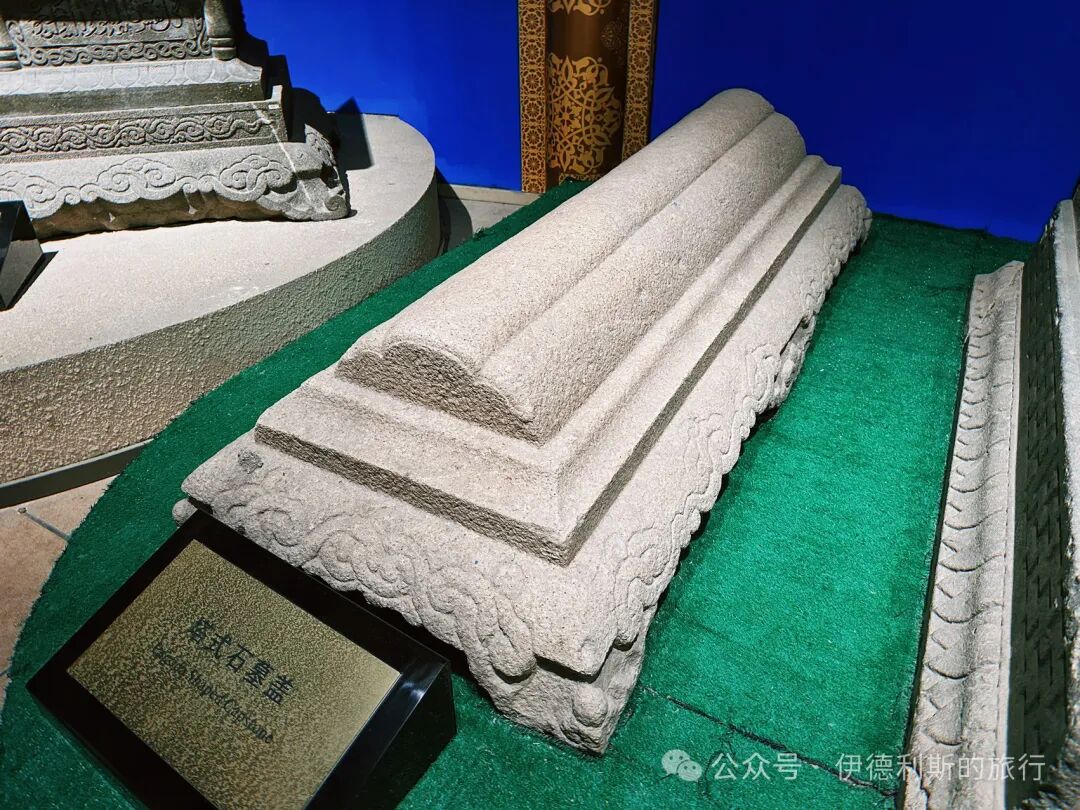
The tombstone base of a pedestal-style altar tomb.
A corner of the Maritime Museum (Haijiaoguan) is piled with many tombstones. There are no labels, and many are hard to see because they are stacked on top of each other. They were arranged this way when I visited in 2017, and nothing has changed after seven years.
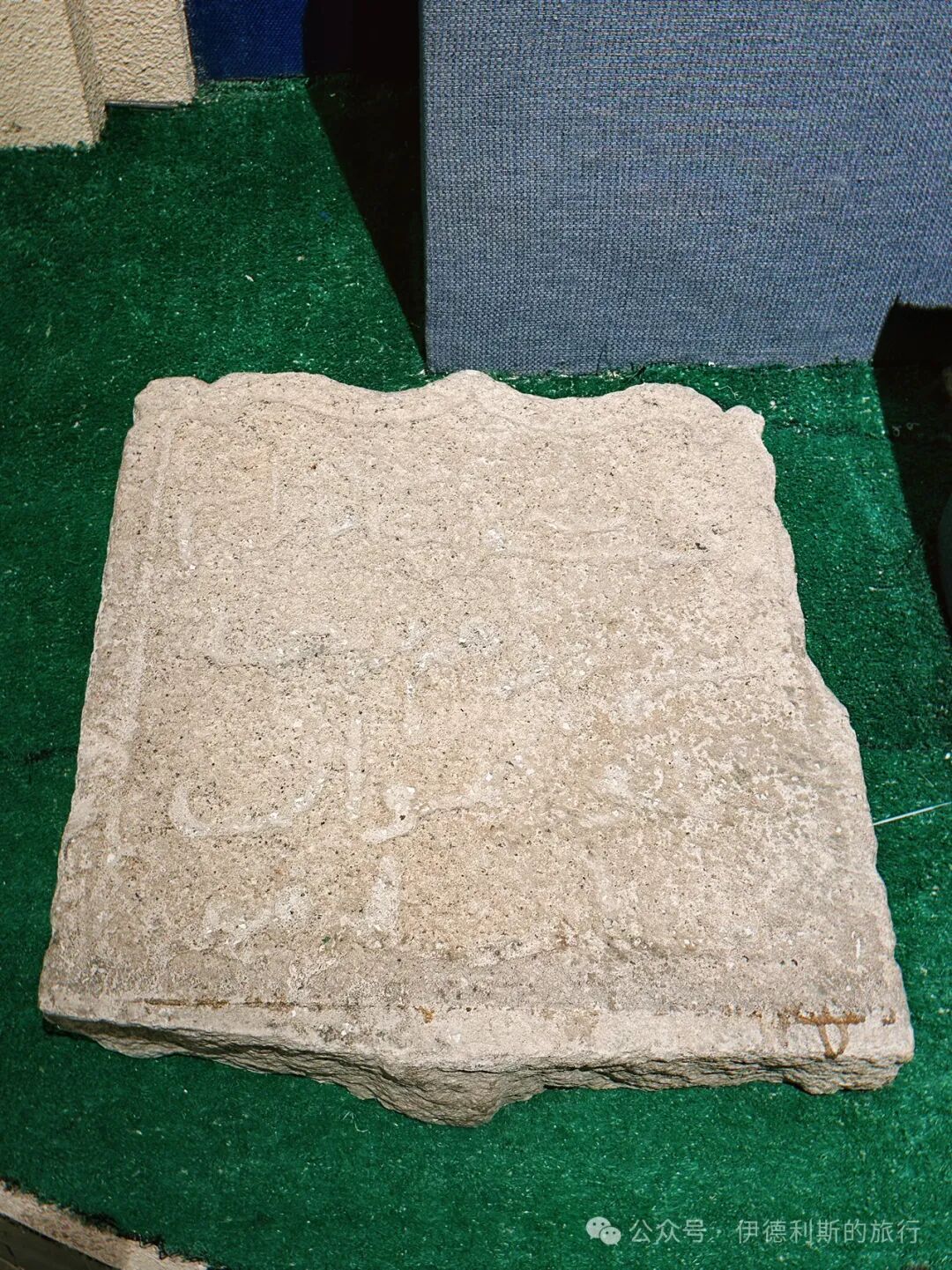
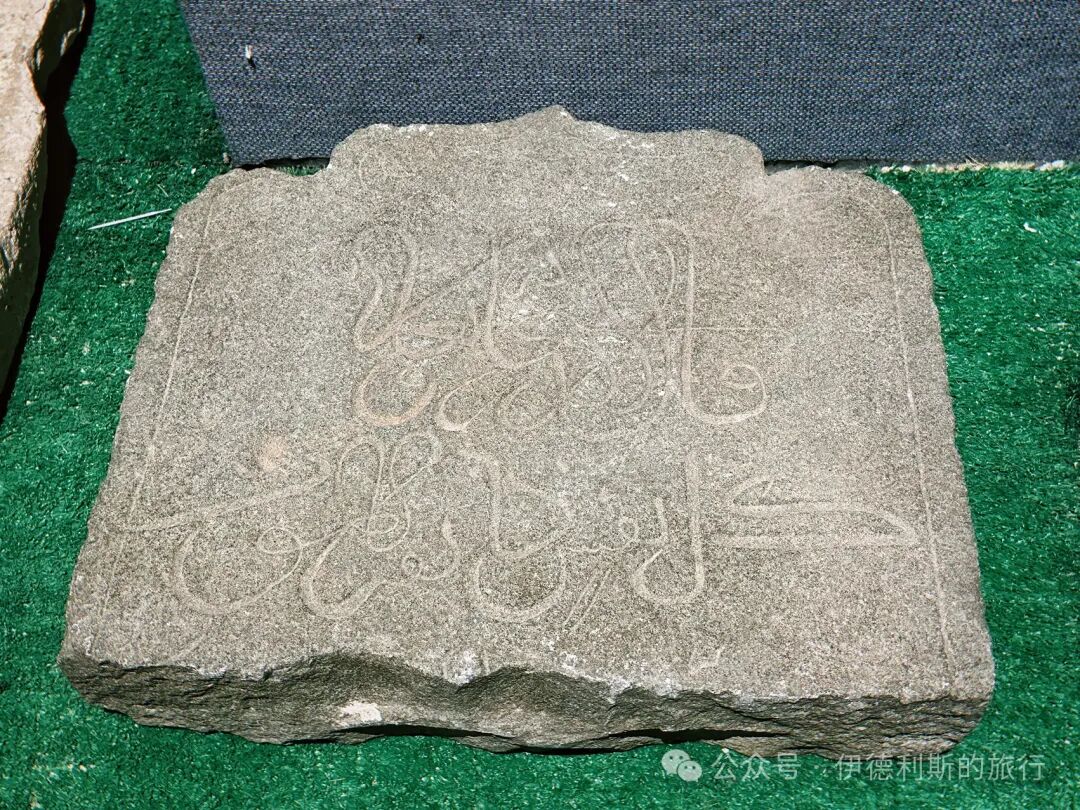
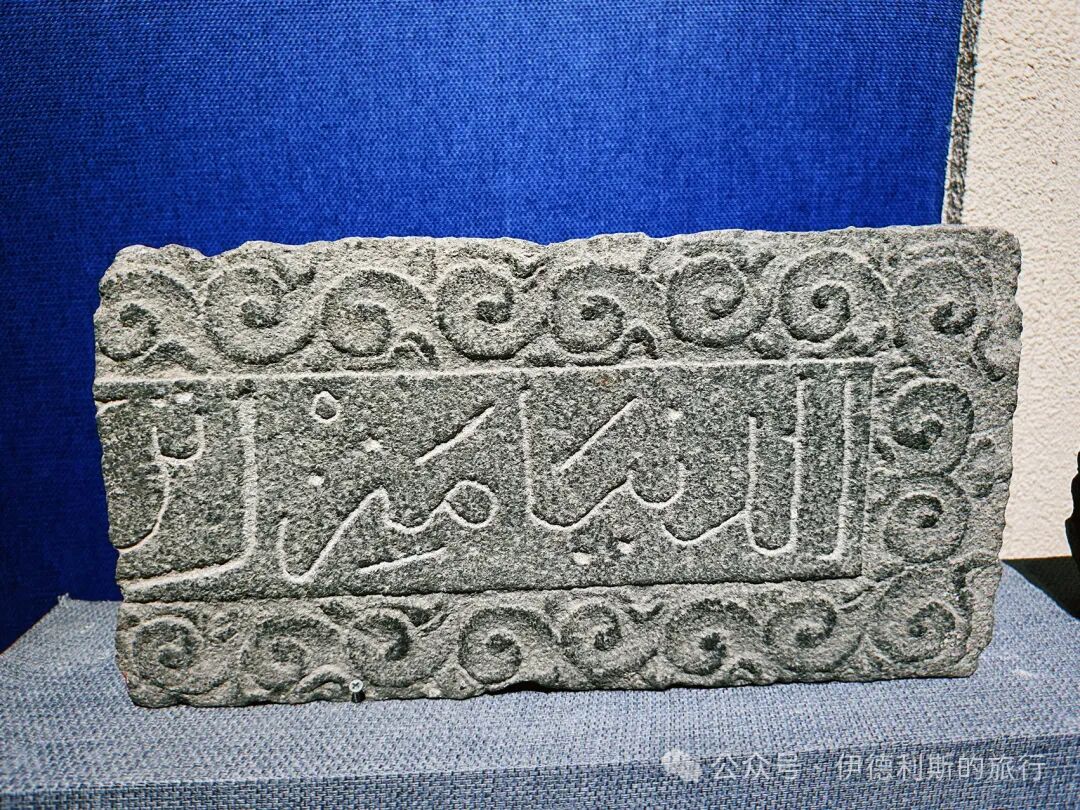
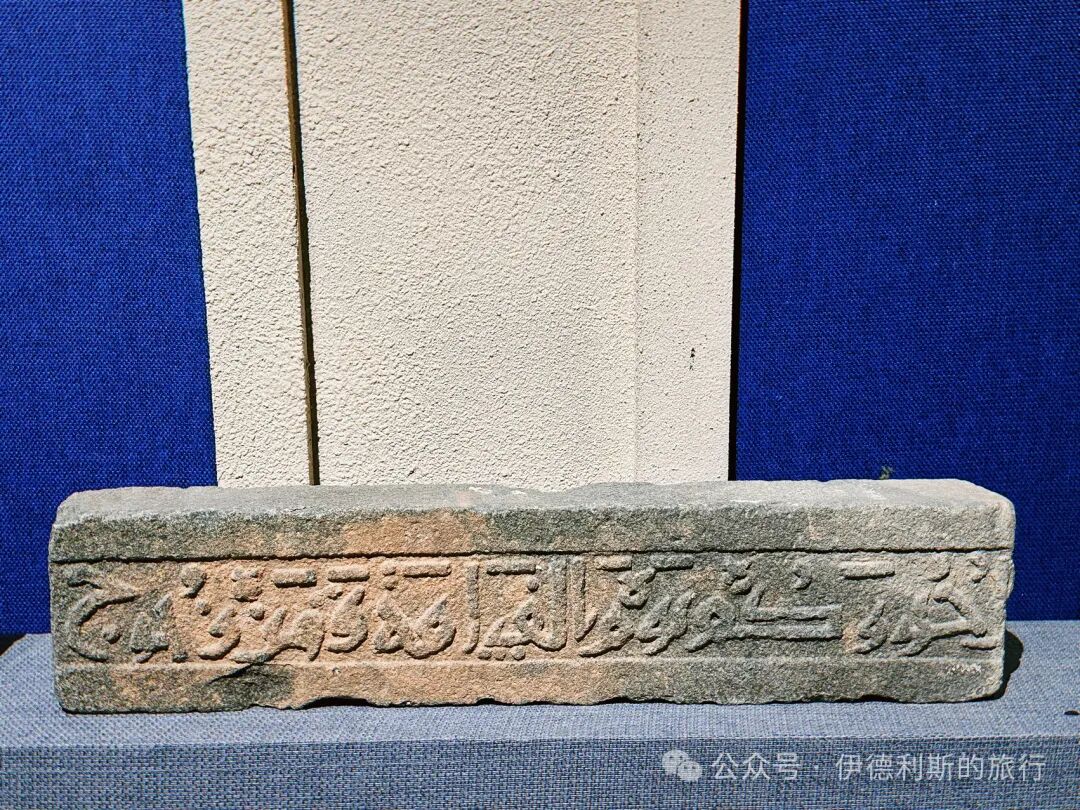
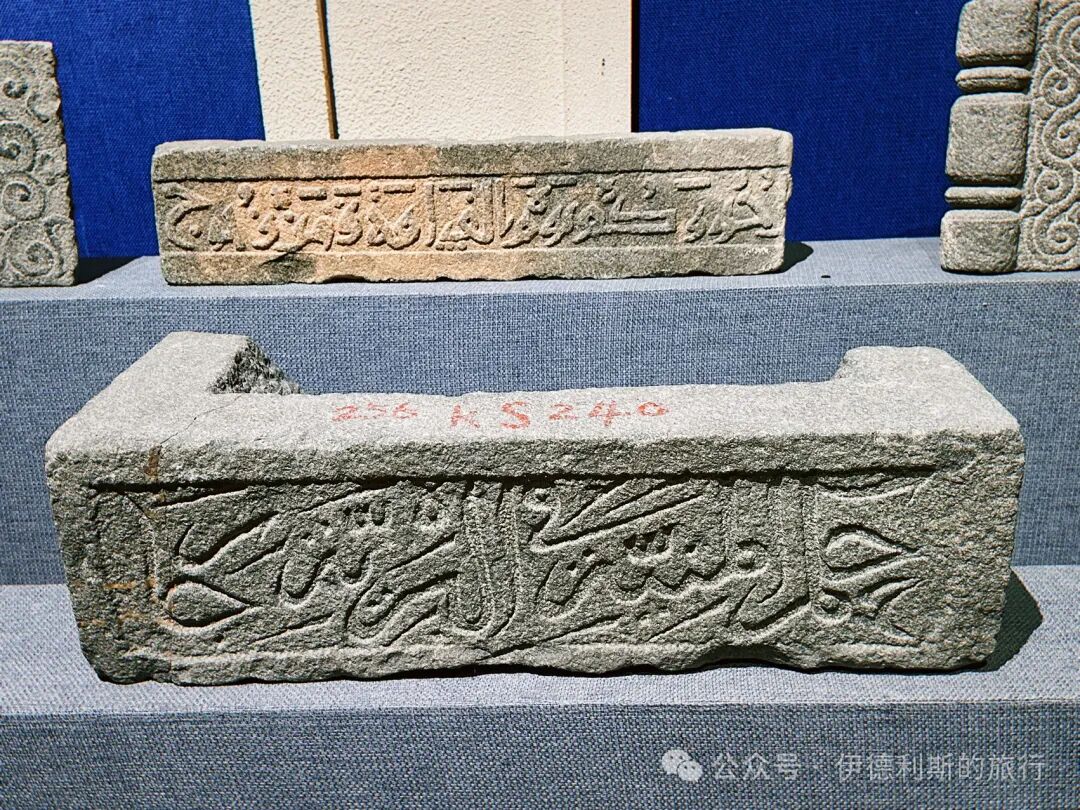
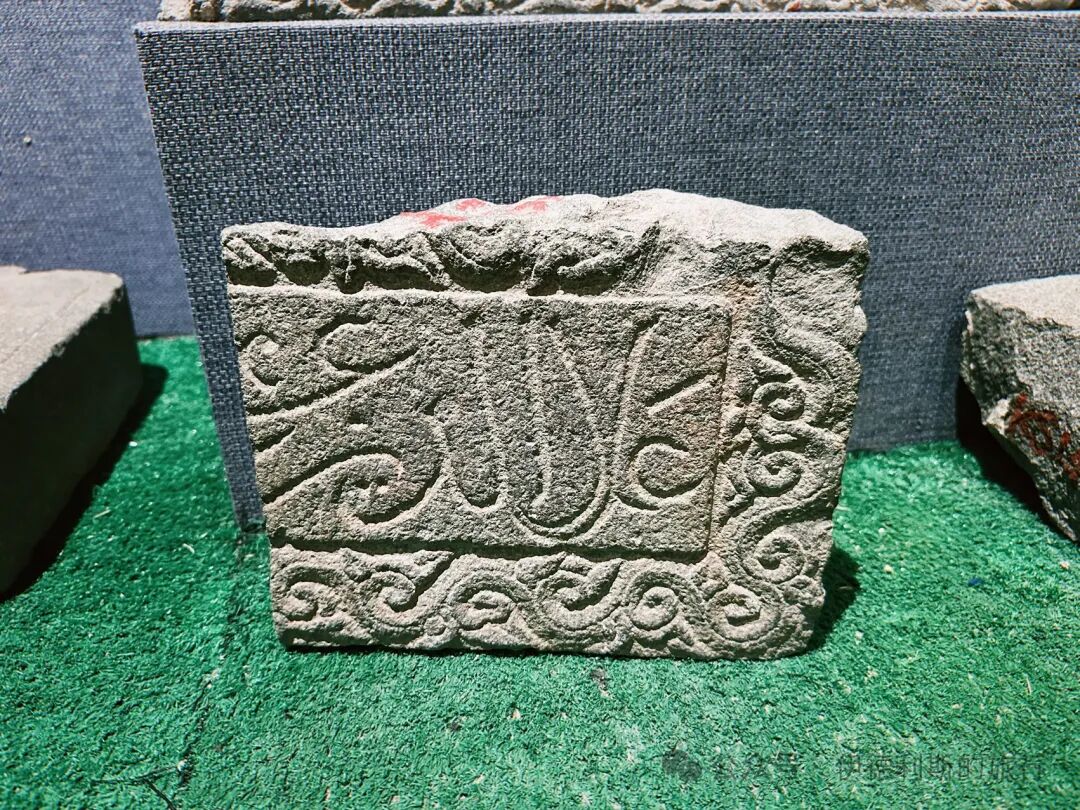
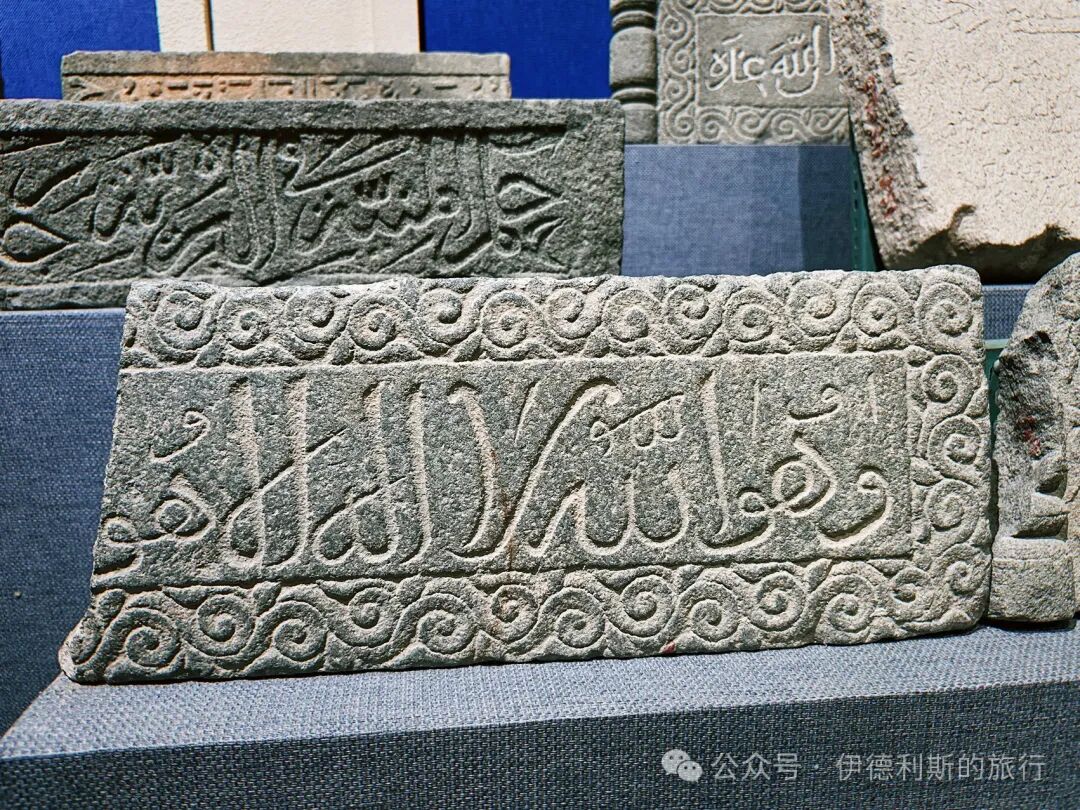
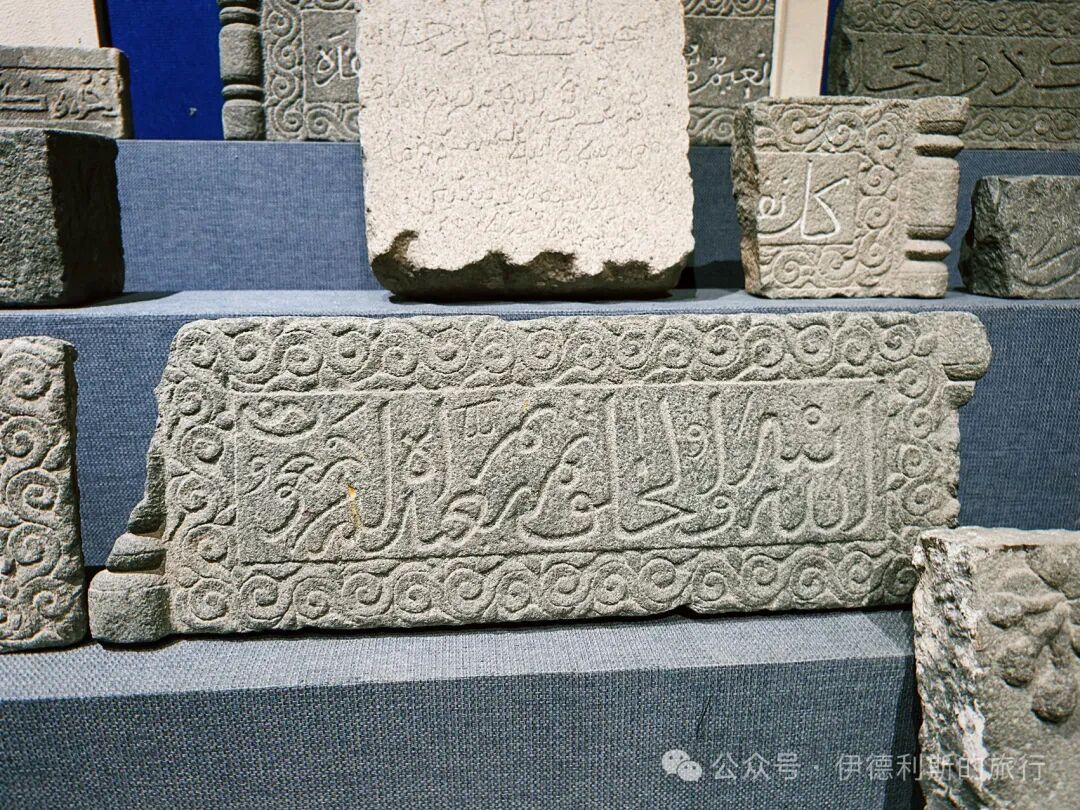
Found in 1937 at Jintoupu Village outside Tonghuai Gate at the East Gate of Quanzhou, the inscription reads, 'Everyone (shall taste death).'
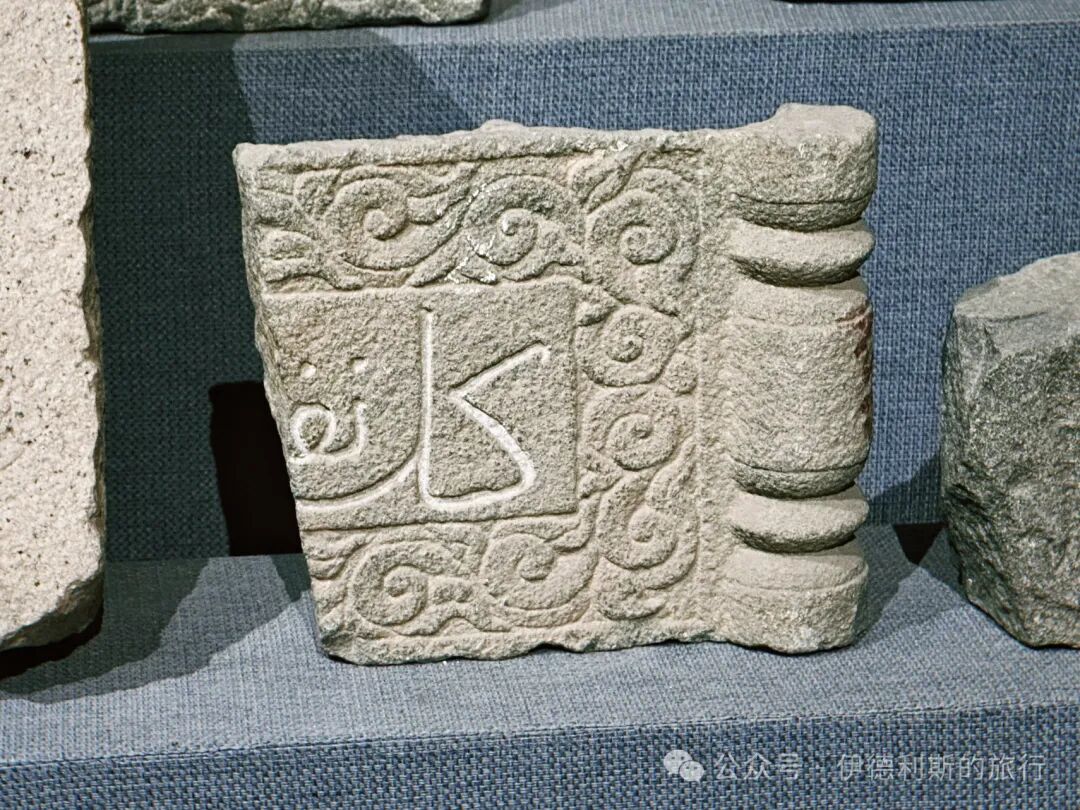
Found in 1943 inside the city wall foundation at the East Gate of Quanzhou, the inscription contains Quranic verses (9:21-22).
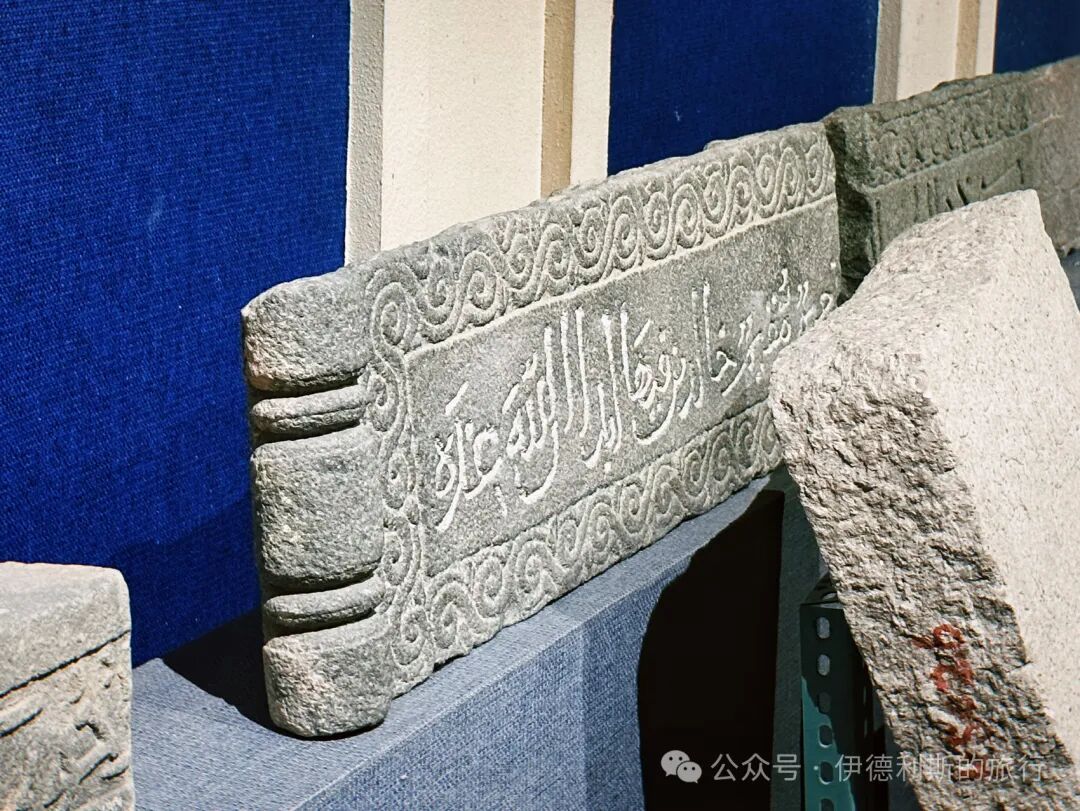
The tombstone base above was found in 1939 inside the city wall at Tonghuai Gate at the East Gate of Quanzhou, and it contains Quranic verses (29:57).
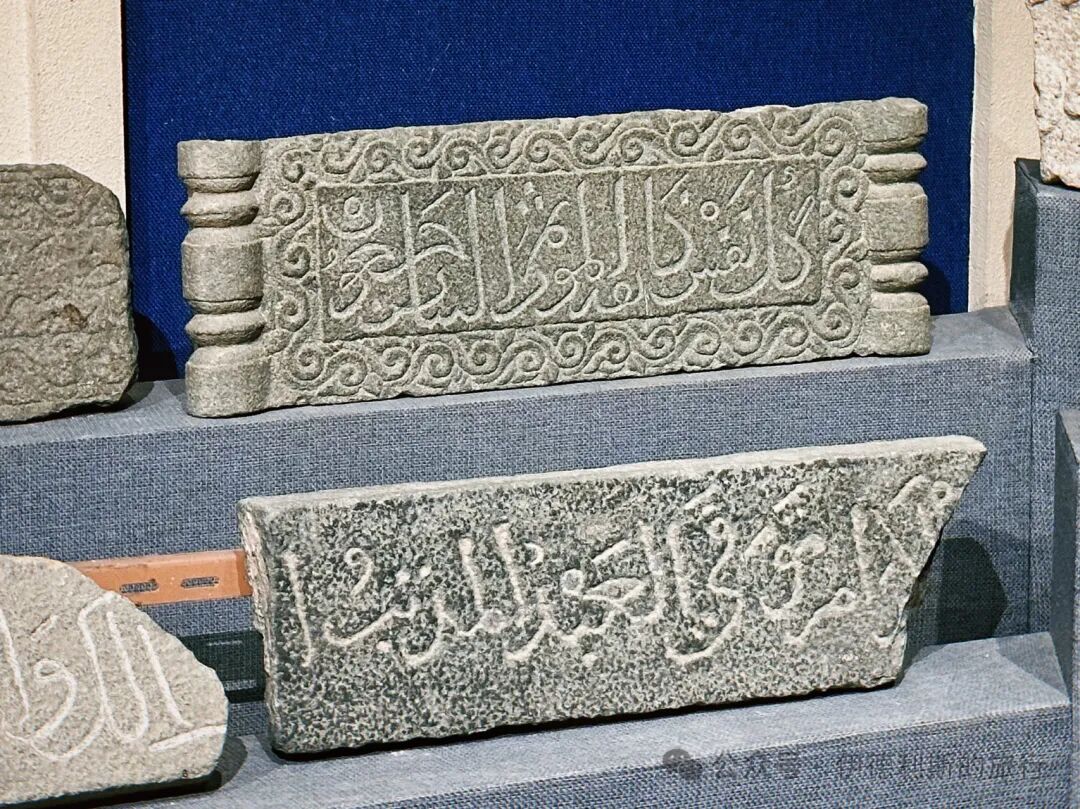
Found in 1943 near the East Drill Ground (Dongjiaochang) in Quanzhou, the inscription reads, 'Your Lord of Might.'
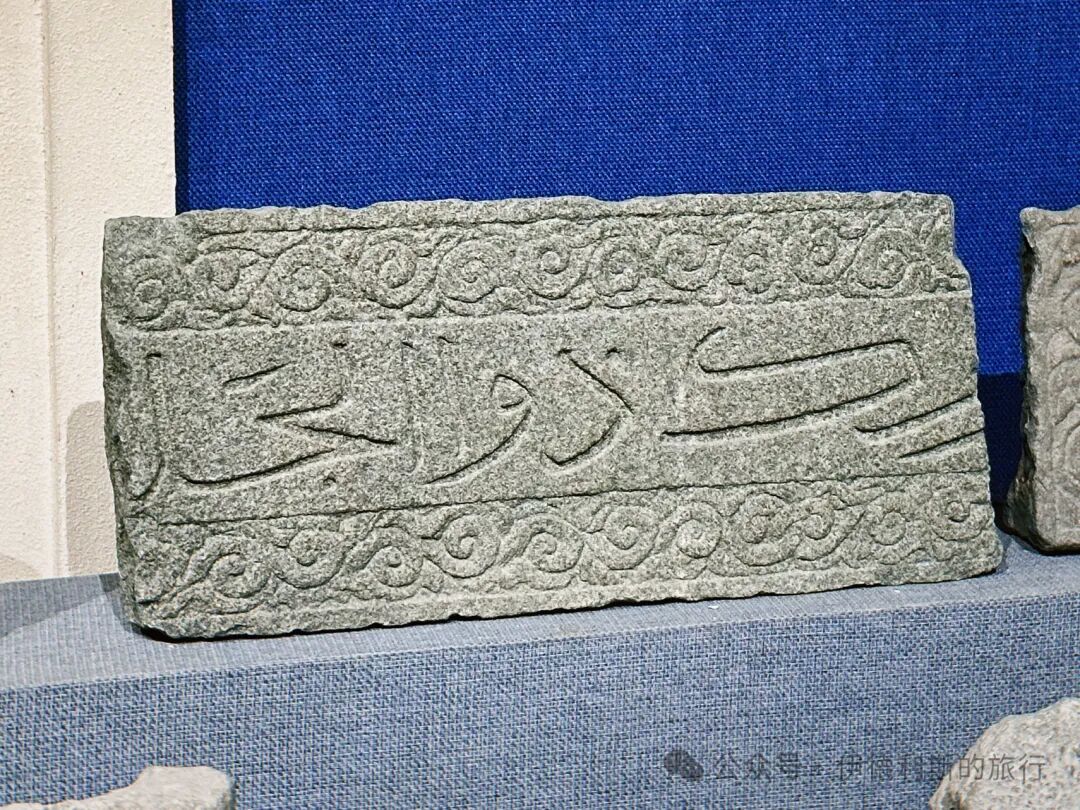
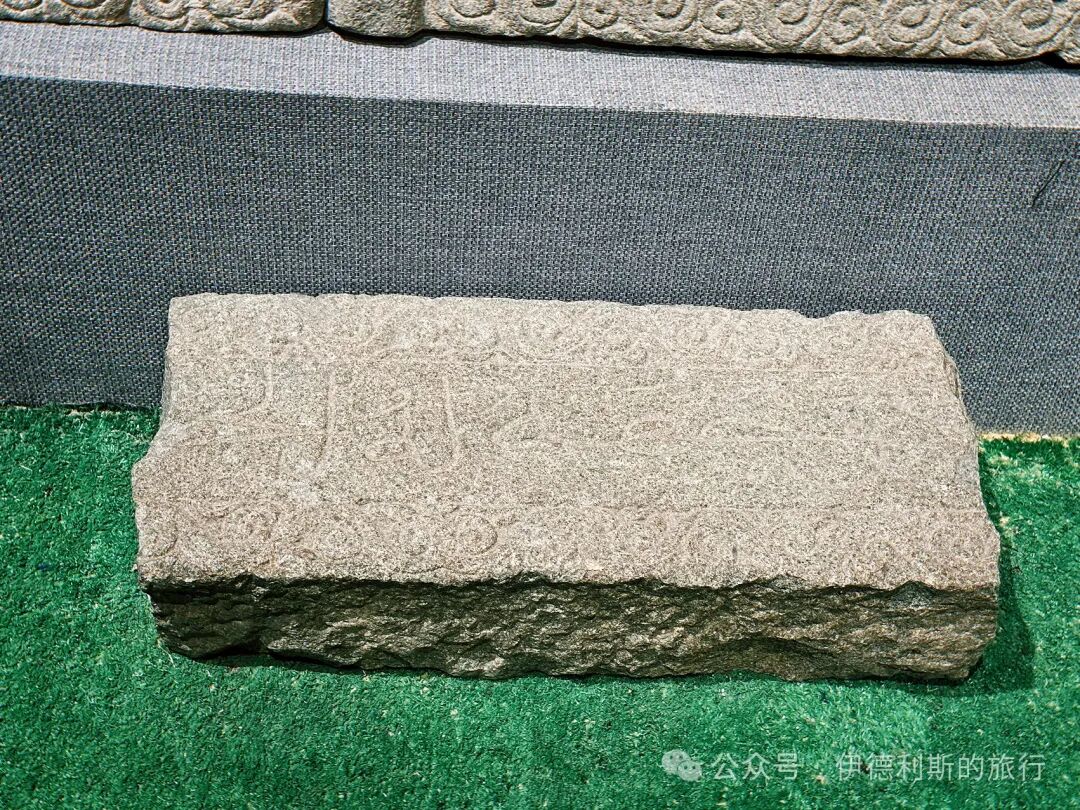
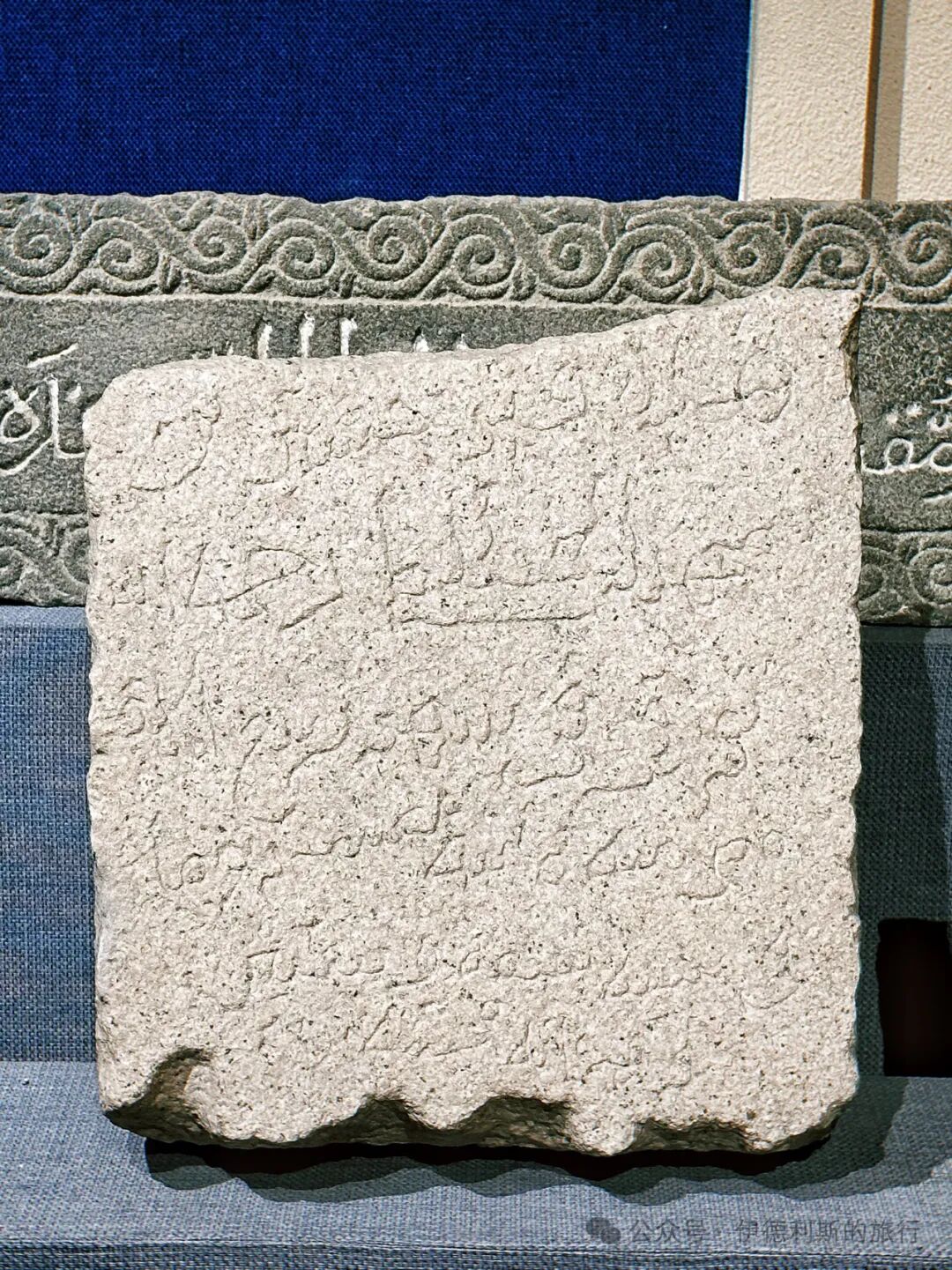
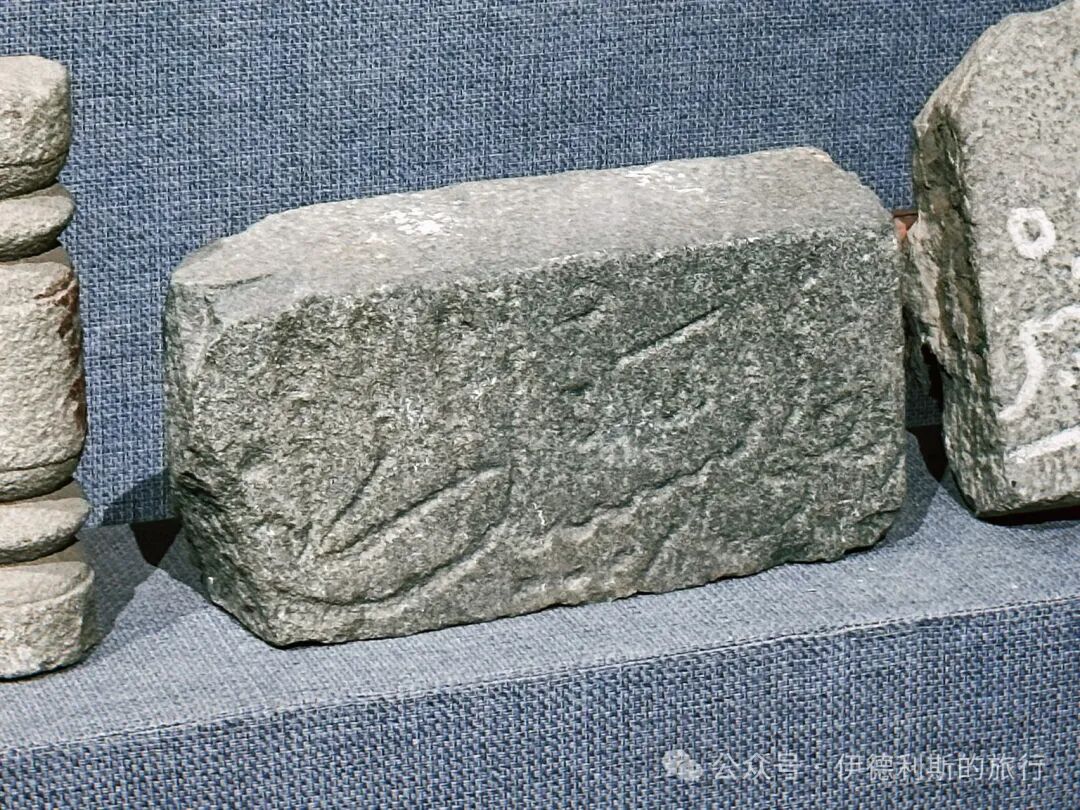
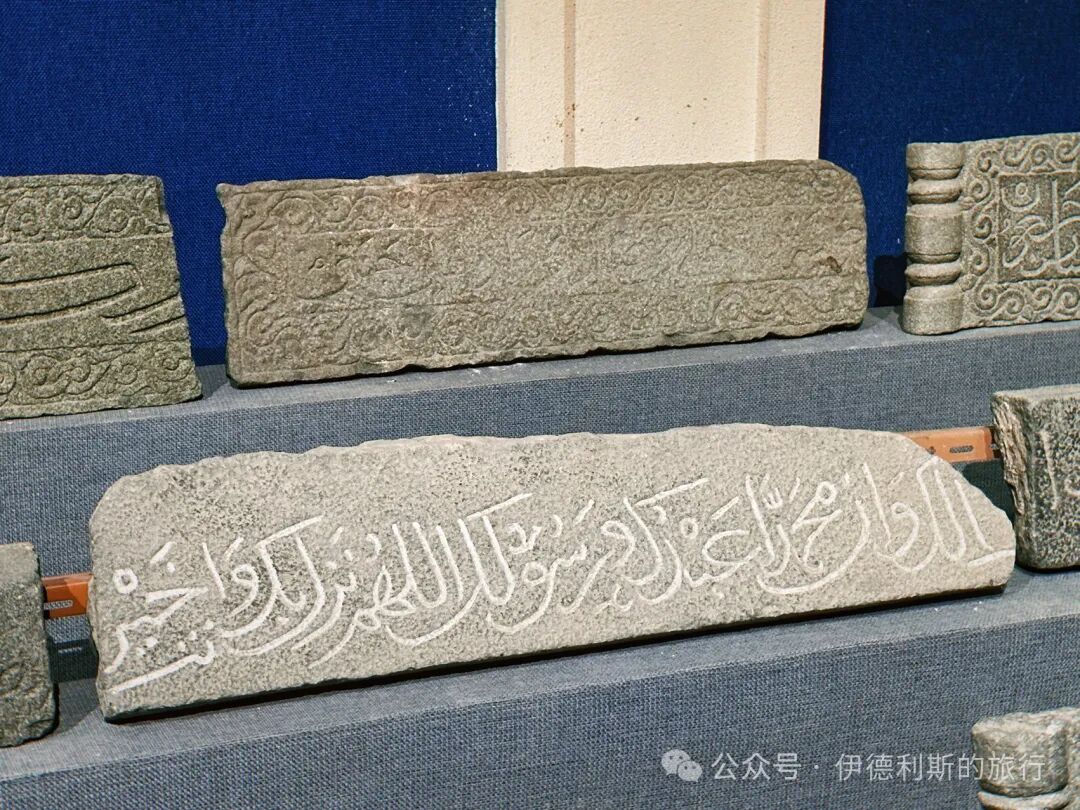
The tombstone base in the picture below was found in 1959 in a pile of rubble at the Qingjing Mosque. This pile of rubble was dug up from the city wall foundation near Tonghuai Gate at the East Gate of Quanzhou, and it was moved to the Maritime Museum (Haijiaoguan) for preservation in 1964. The inscription states the tomb owner's name is Toghan-shah b. Umar b. Sayyid Ajall. Toghan means eagle in Turkic, and Shah means king in Persian, which is how Central Asians addressed nobles. Sayyid Ajall means honorable gentleman in Arabic, and it is a respectful title for descendants of the Prophet.
Coincidentally, a tombstone unearthed in 1952 at the foundation of the Southeast Drill Ground in Quanzhou likely belongs to the same person as the Toghan-shah tombstone mentioned above. Unfortunately, this tombstone was moved to the National Museum of China in 1959 and is not currently on display, so the Maritime Museum only shows a replica. This tombstone states the owner's name is Amir Sayyid Ajall Tohgan-shah b. Sayyid Ajall Umar b. Sayyid Ajall Amiran b. Amir Isfahasalar Darnakrani al-Buhari, who passed away in 1302. The term Isfahasalar is made up of the Persian word Isfahah and the Turkic word Salar, meaning military general.
Both tombstones mention that Toghan-shah's father was named Umar Sayyid Ajall. The second son of Nasulading, who was the son of the famous Yuan Dynasty politician Sayyid Ajjal Shams al-Din, was named Umar Sayyid Ajjal. Umar once served as the administrator of the Fujian Branch Secretariat in Quanzhou. According to Rashid al-Din's History of the Mongols, Sayyid Ajjal Shams al-Din was from Bukhara, which matches the records on the tombstone.
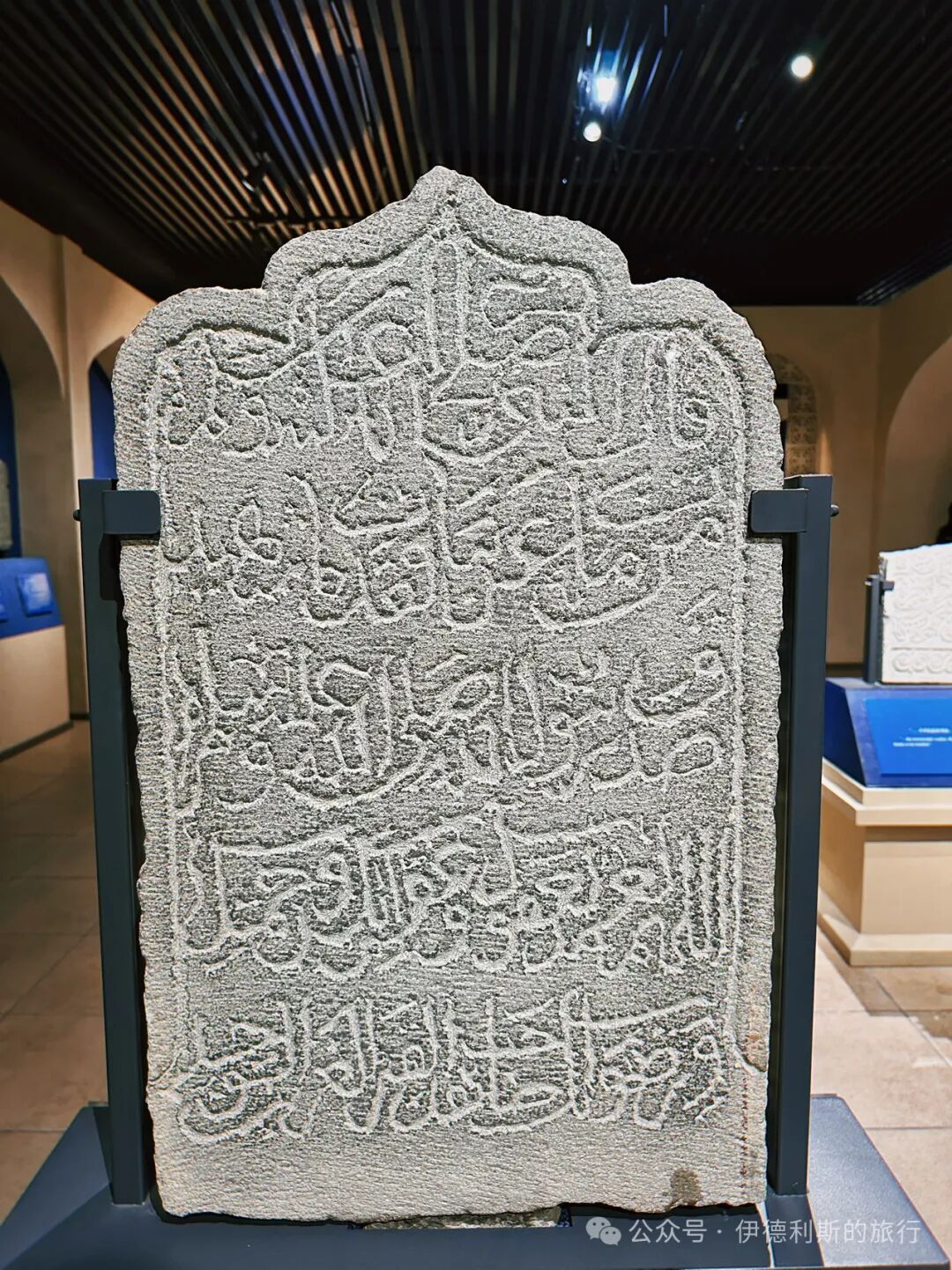
The tombstone in the picture below was found in 1987. One side is carved with the testimony of faith, and the other side, translated by Imam Wang Yaodong from Ningxia, says the person buried there was named Haji Abdullah.
The tombstone base stone above was found in the foundation of the East Gate of Quanzhou in 1944 and is carved with a verse from the Quran (21:35). The bottom left of Figure 1 shows a tombstone base stone from a pedestal-style altar. It was found near the South Gate of Quanzhou in 1959, and local residents say it was recovered when the South Gate was torn down between 1946 and 1948. The inscription on the stone features a verse from the Quran (24:35).
The tombstone base stone above was found in the foundation of the East Gate of Quanzhou in 1944 and is carved with a verse from the Quran (28:88).
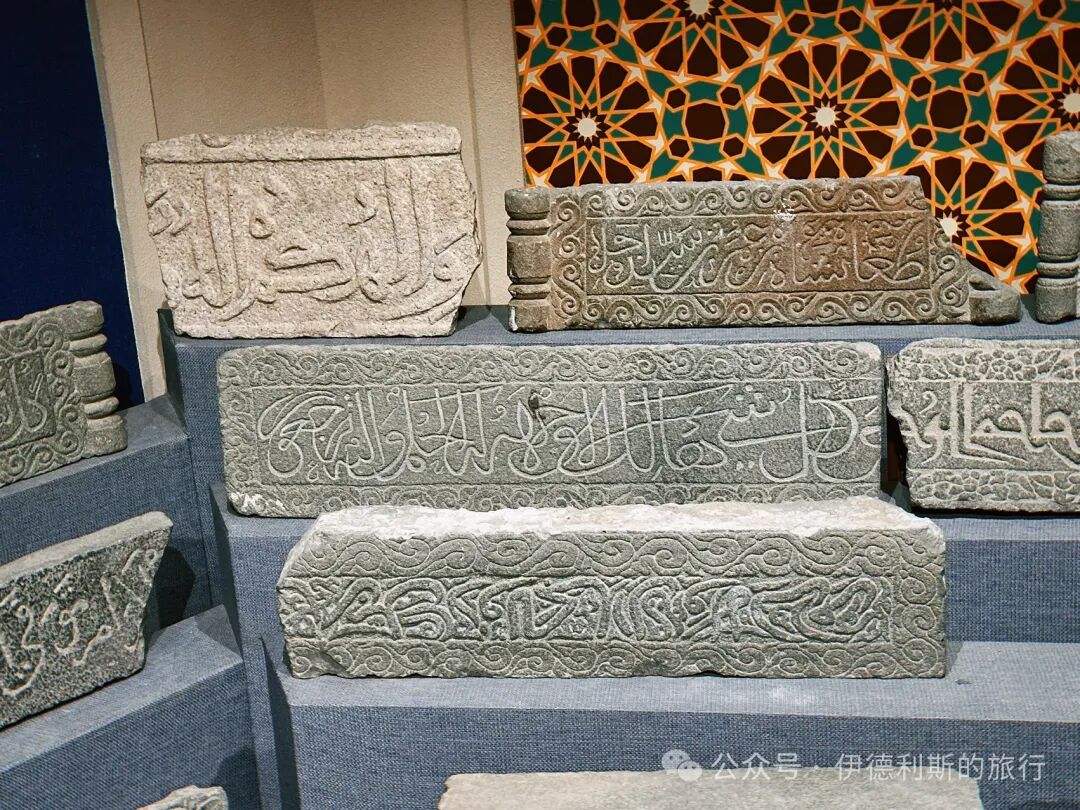
The tombstone marker in the middle of the picture below was found in 1960 among a pile of rubble at the entrance of Chongfu Mosque at the East Gate of Quanzhou. It reads, 'Everything will perish except Him.'
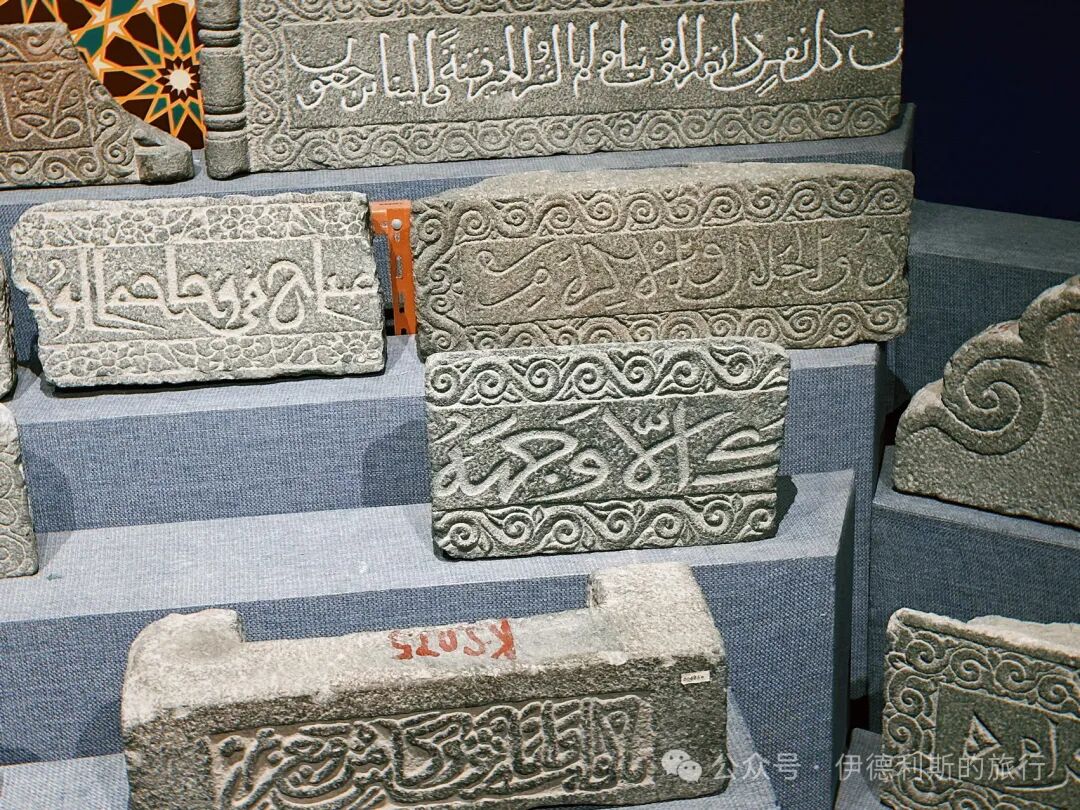
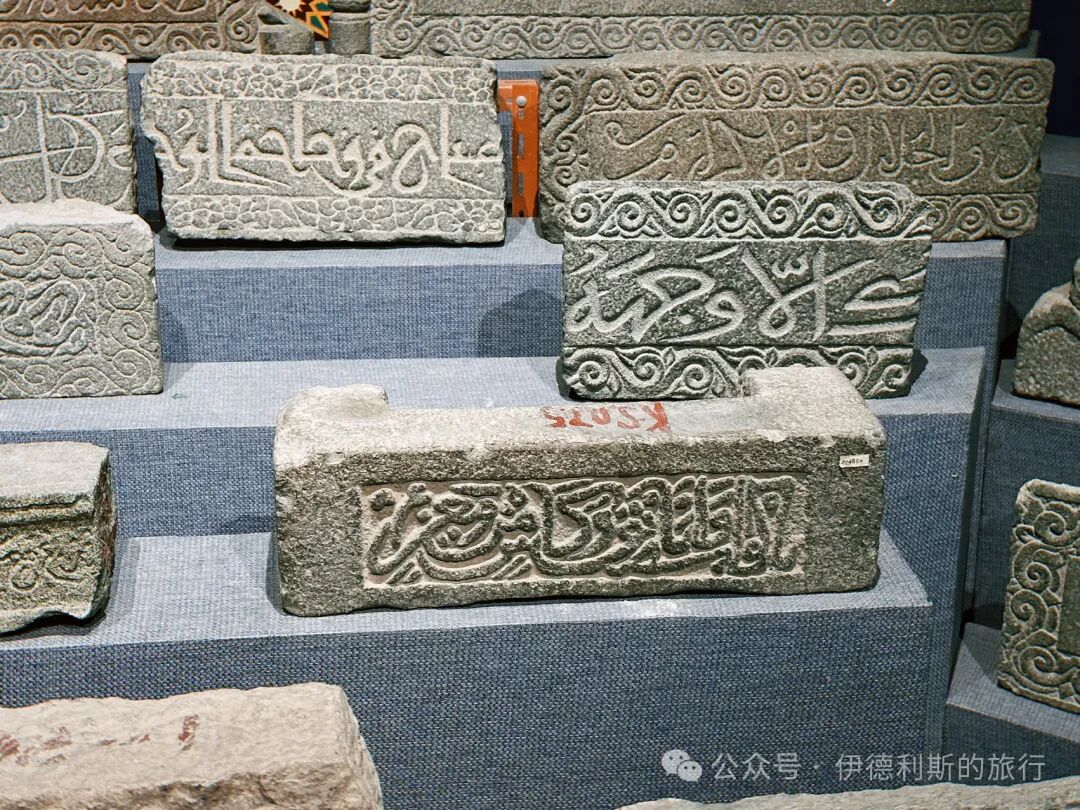
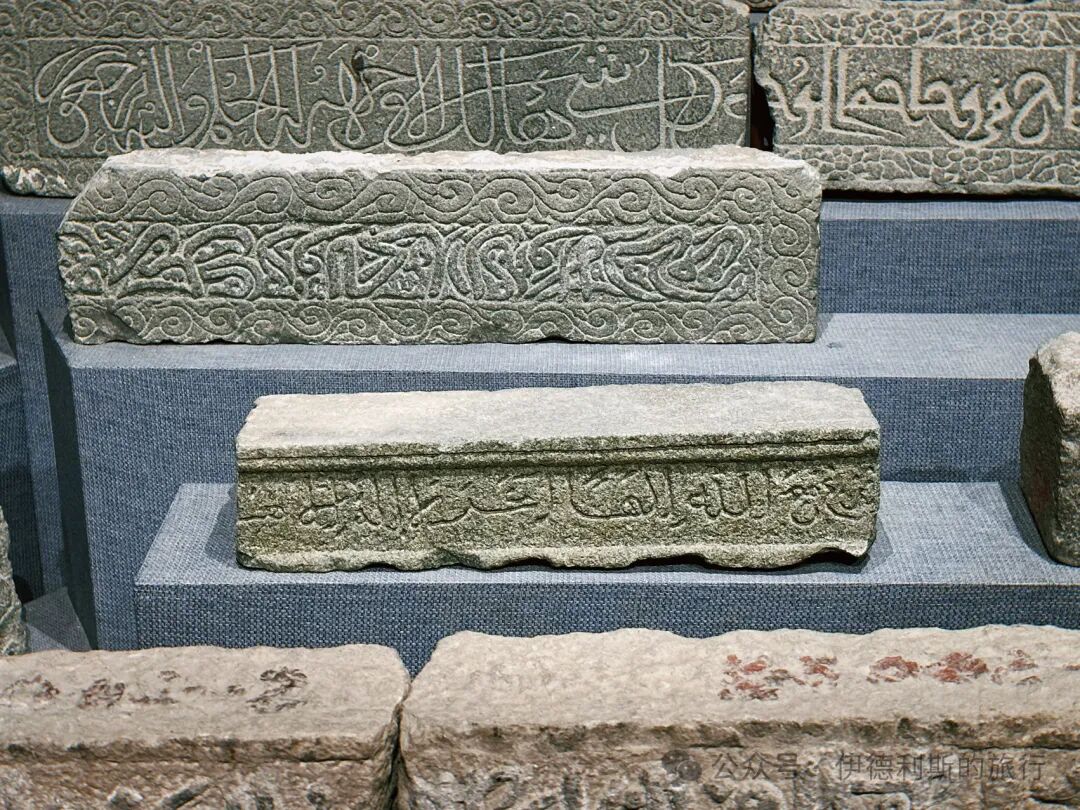
The shape of this stone carving is quite unique and different from any other tombstones or tombstone markers seen so far. It was found in 1948 in Jintoupu Village outside the Tonghuai Gate at the East Gate of Quanzhou. Villagers said it was dug up from the foundation of the city wall.
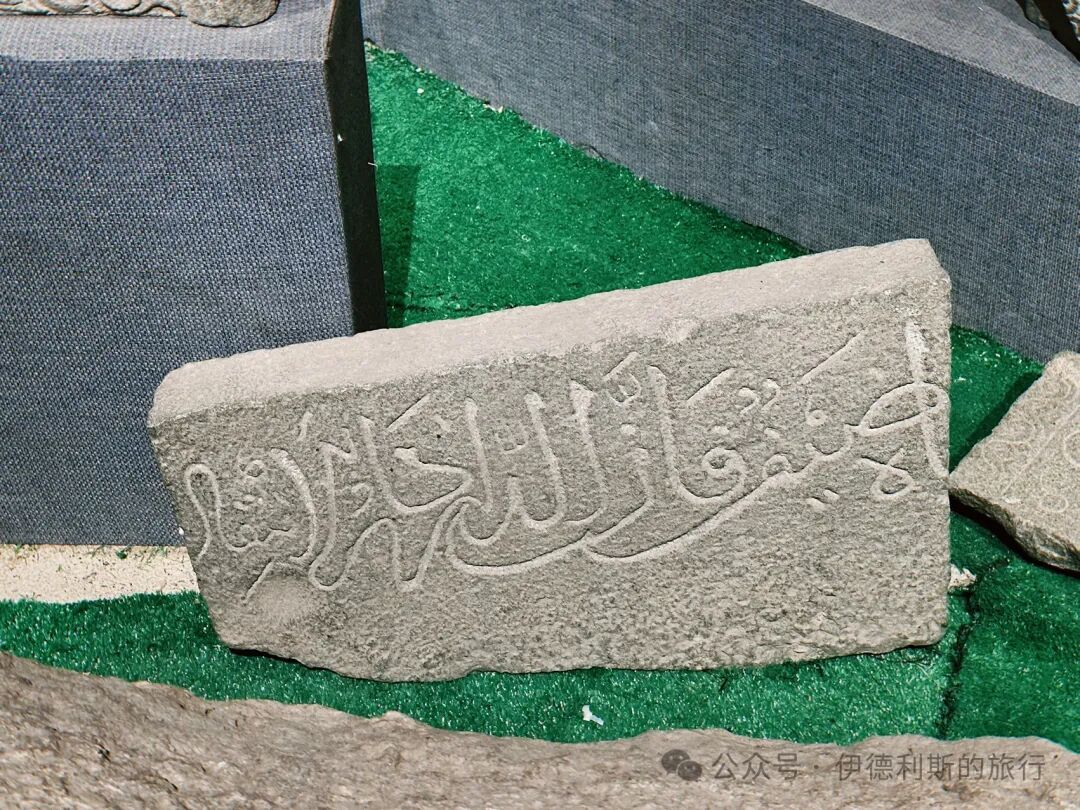
The tombstone marker in the picture below was built into the east wall of a vegetable market near the South Drill Ground in Quanzhou in the autumn of 1953. It is said to have been bought when the market purchased stones from the city wall foundation for construction. It was removed in the 1990s when the market was rebuilt. The inscription is a verse from the Quran (28:88).
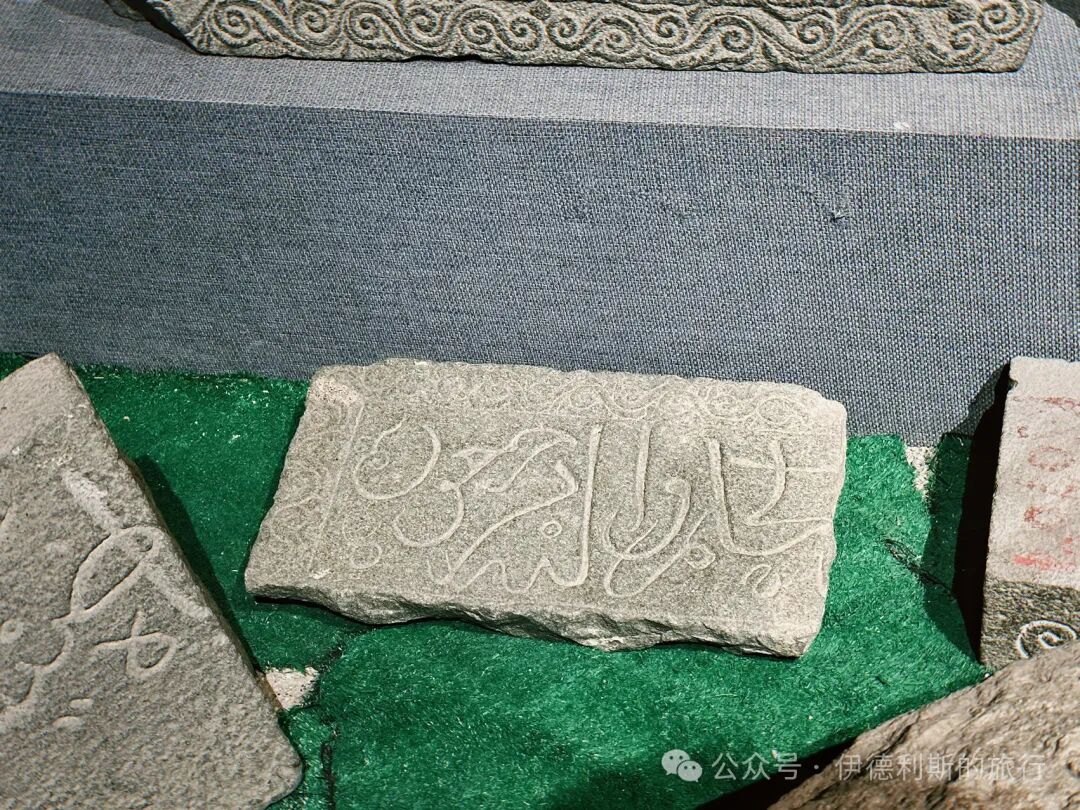
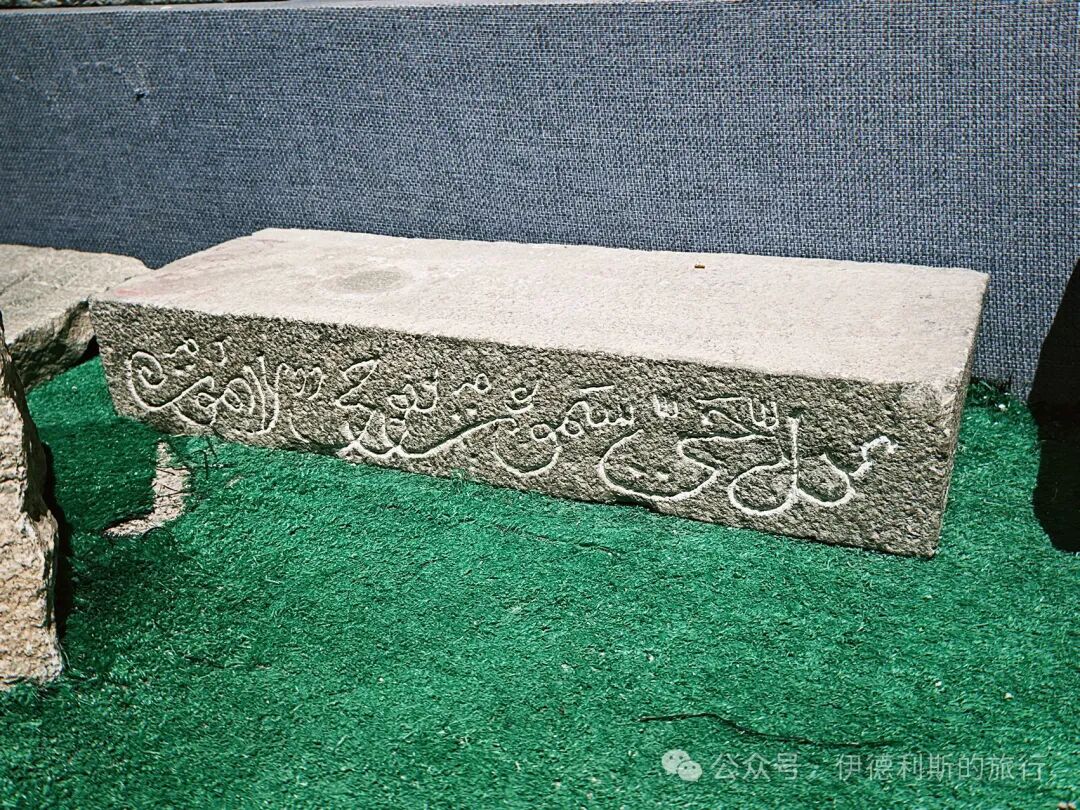
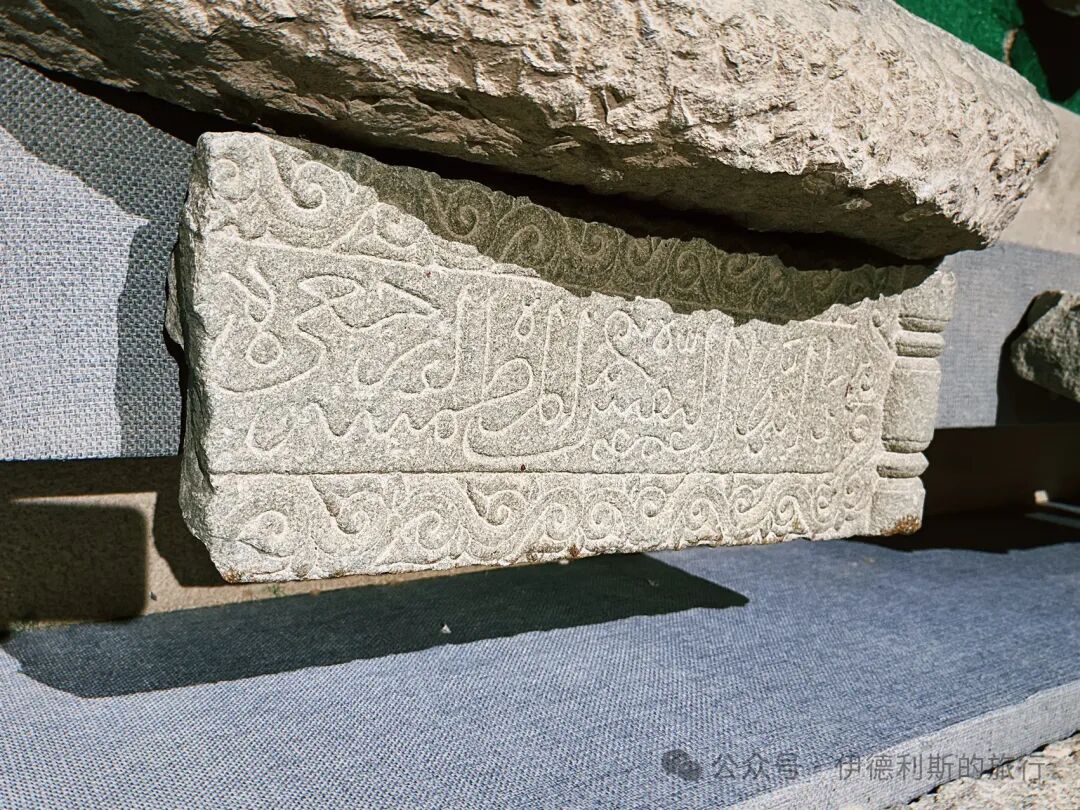
It was found in 1954 in Jintoupu Village outside the Tonghuai Gate at the East Gate of Quanzhou.
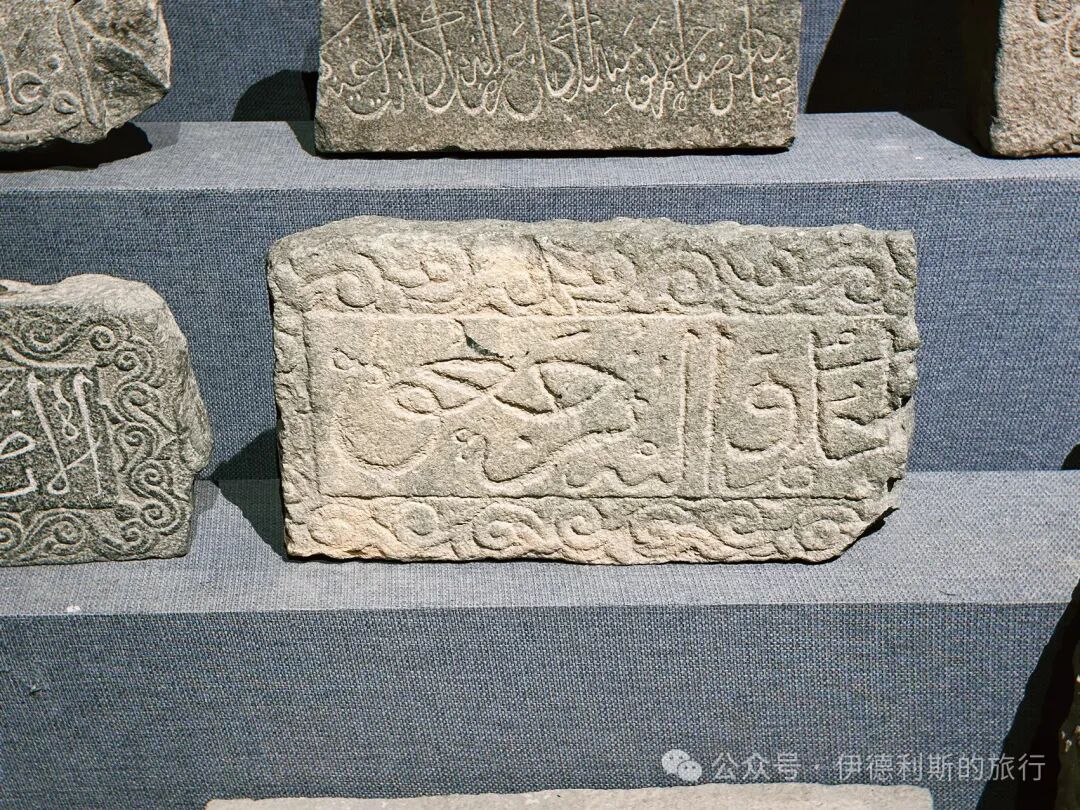
It was found in 1957 in a field between the Small East Gate and Jintoupu Village in Quanzhou. The content is a verse from the Quran (39:74).
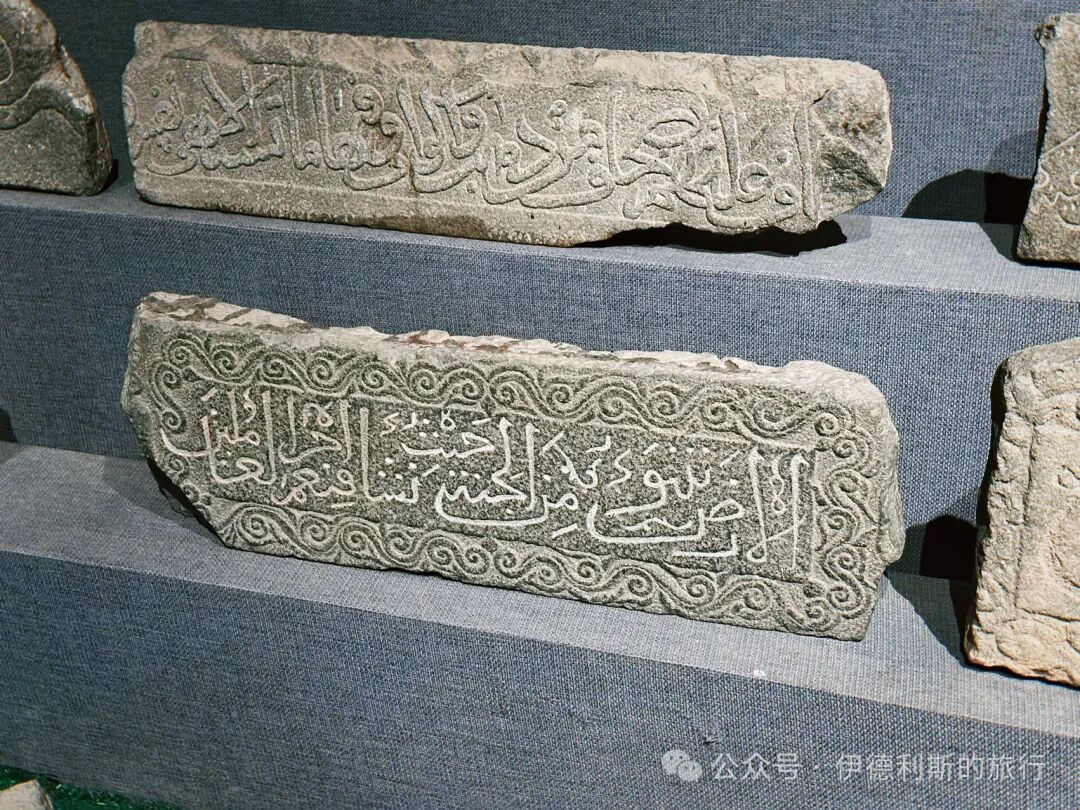
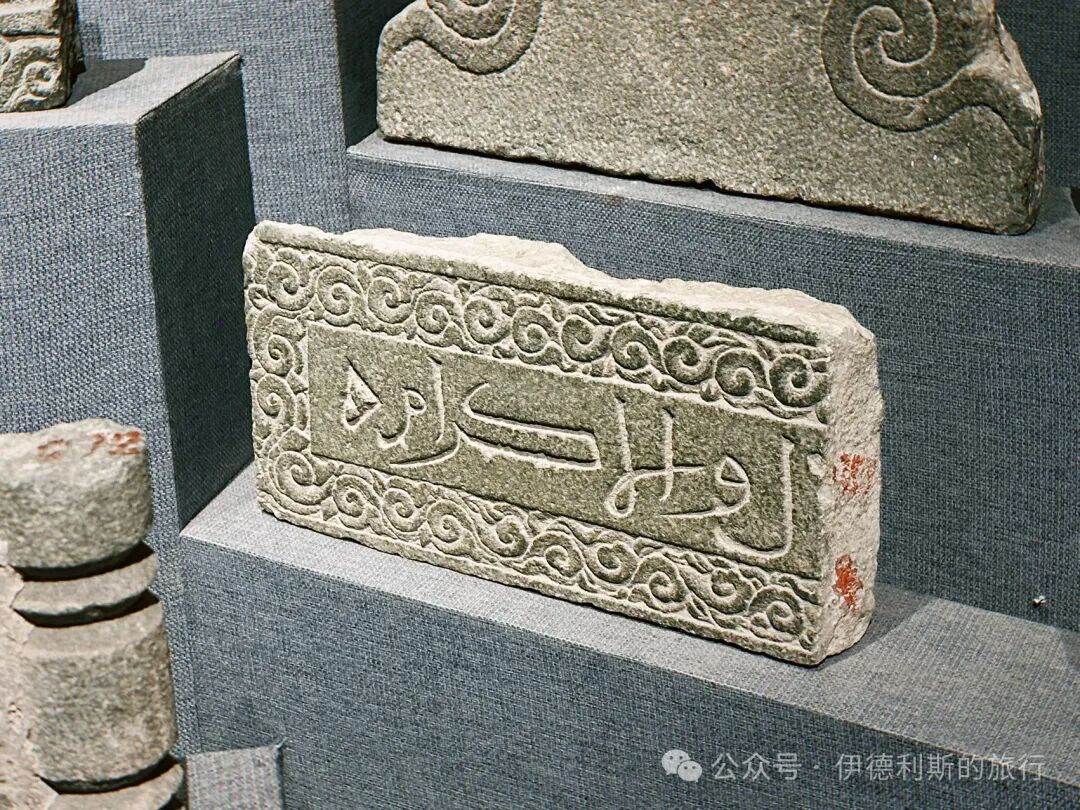
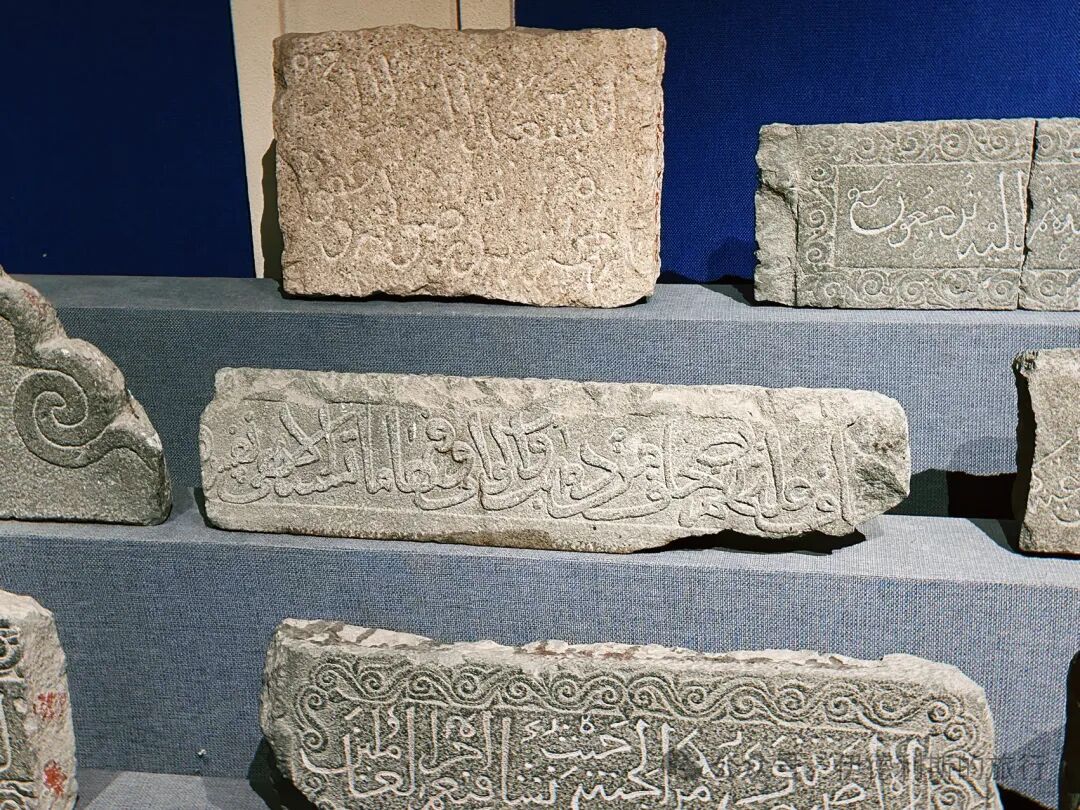
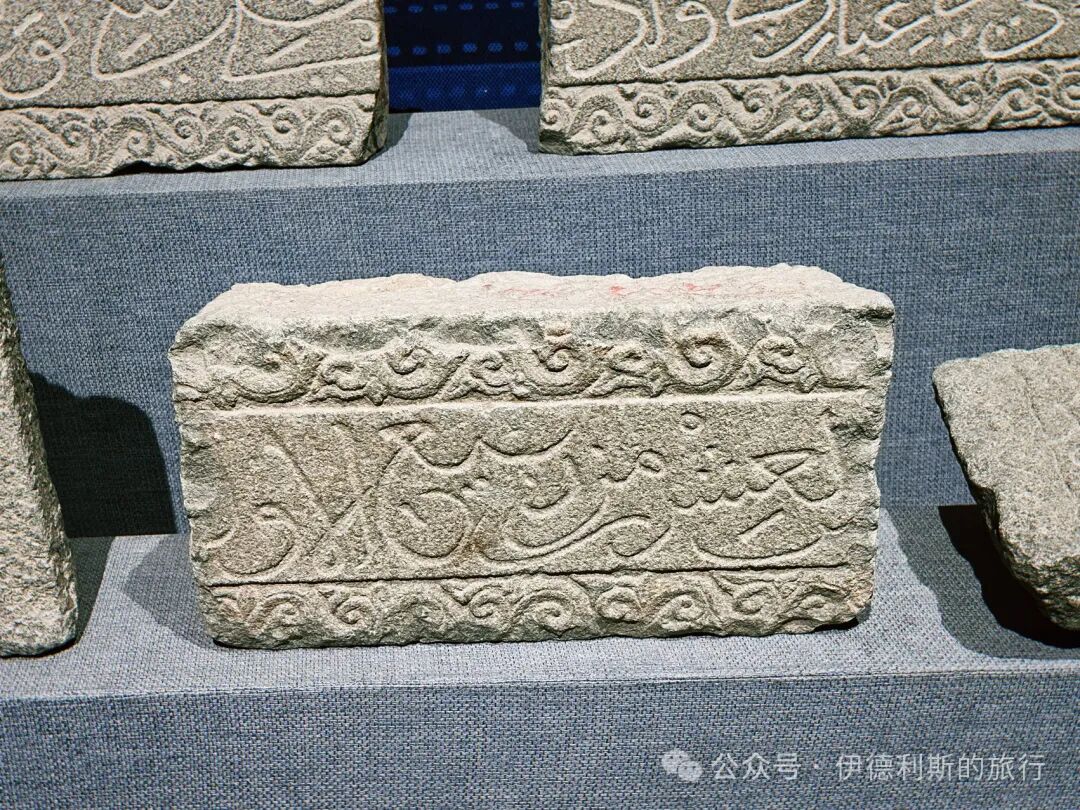
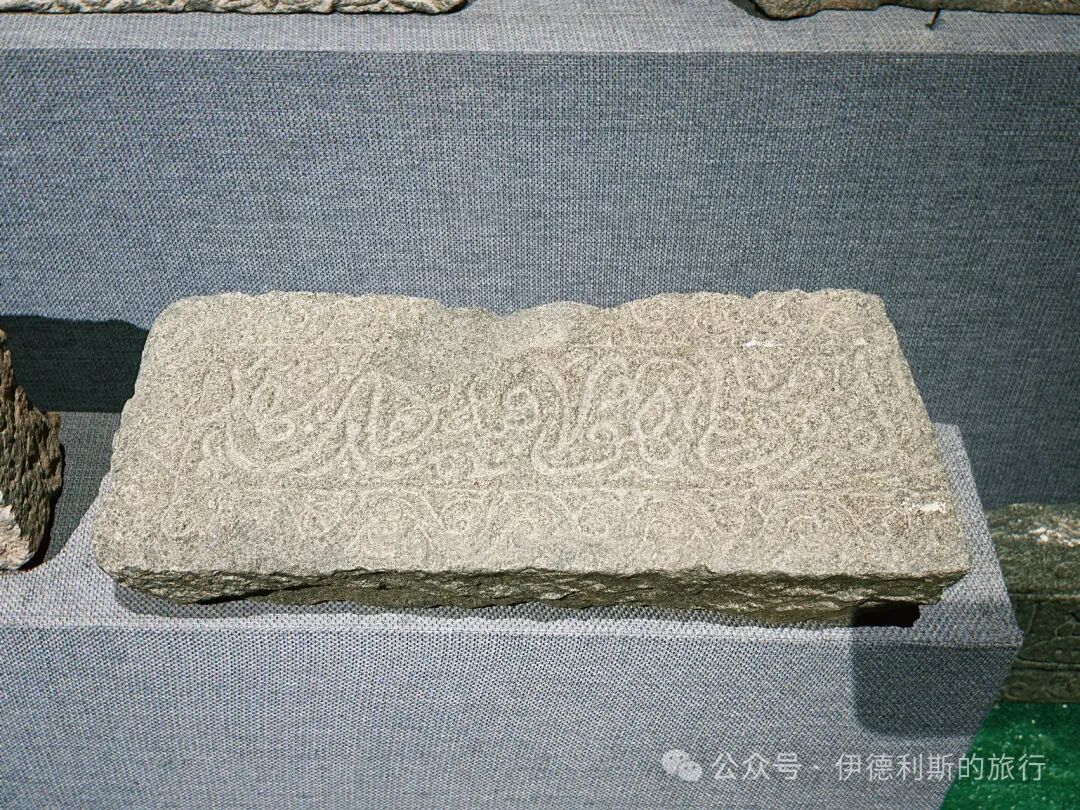
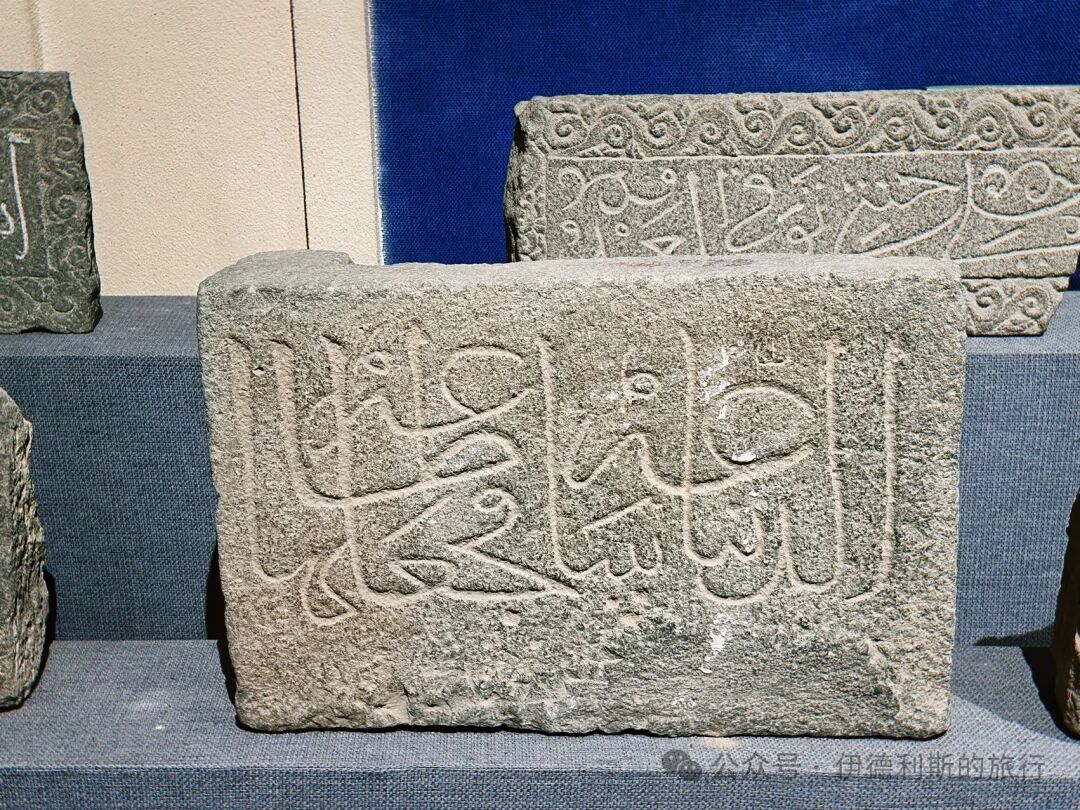
It was purchased in 1949 from a stonemason's shop at the East Gate of Quanzhou.
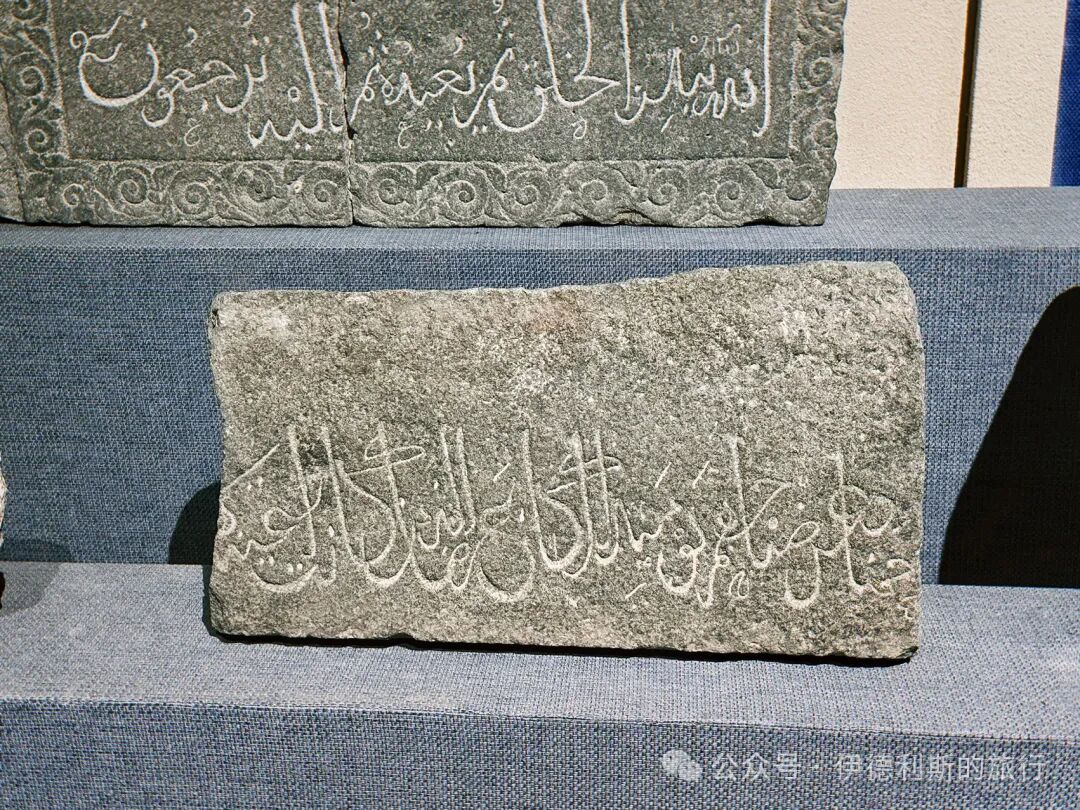
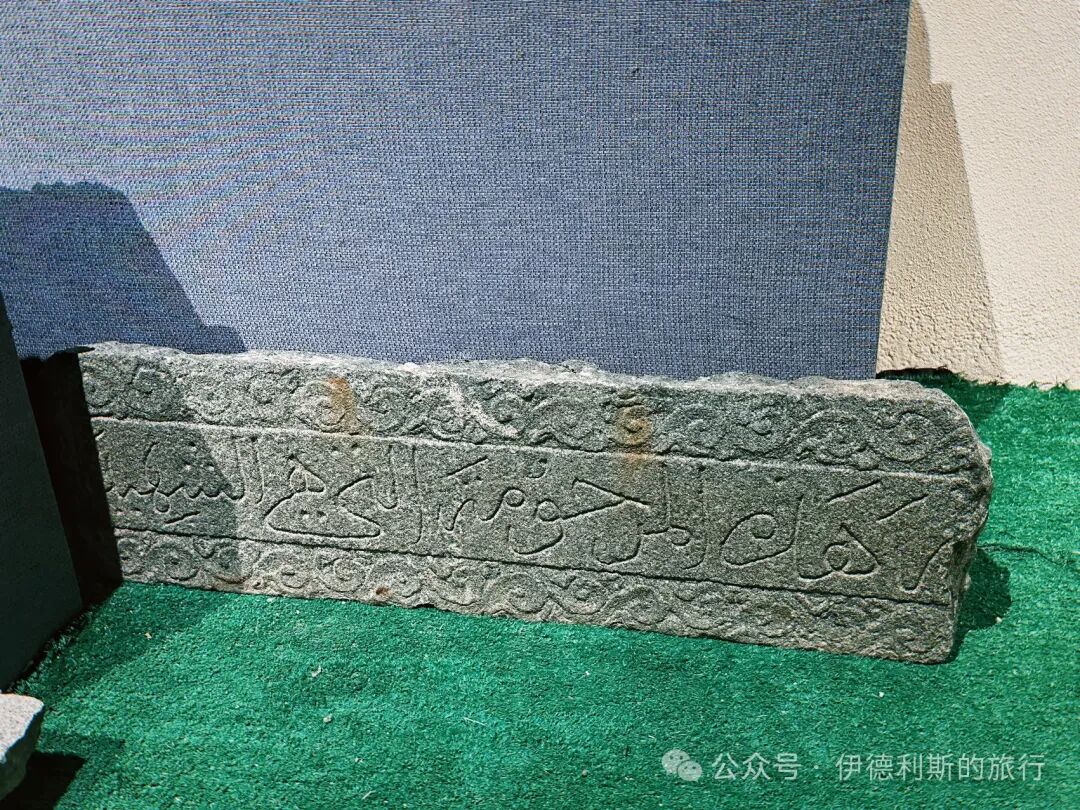
The tombstone base in the picture below was found in 1948 at Jintoupu Village outside the Tonghuai Gate of Quanzhou's East Gate. In 1973, Liu Wanru, the widow of Mr. Wu Wenliang, donated it to the Quanzhou Cultural Relics Management Committee. It features Quranic verses (55:26-27).
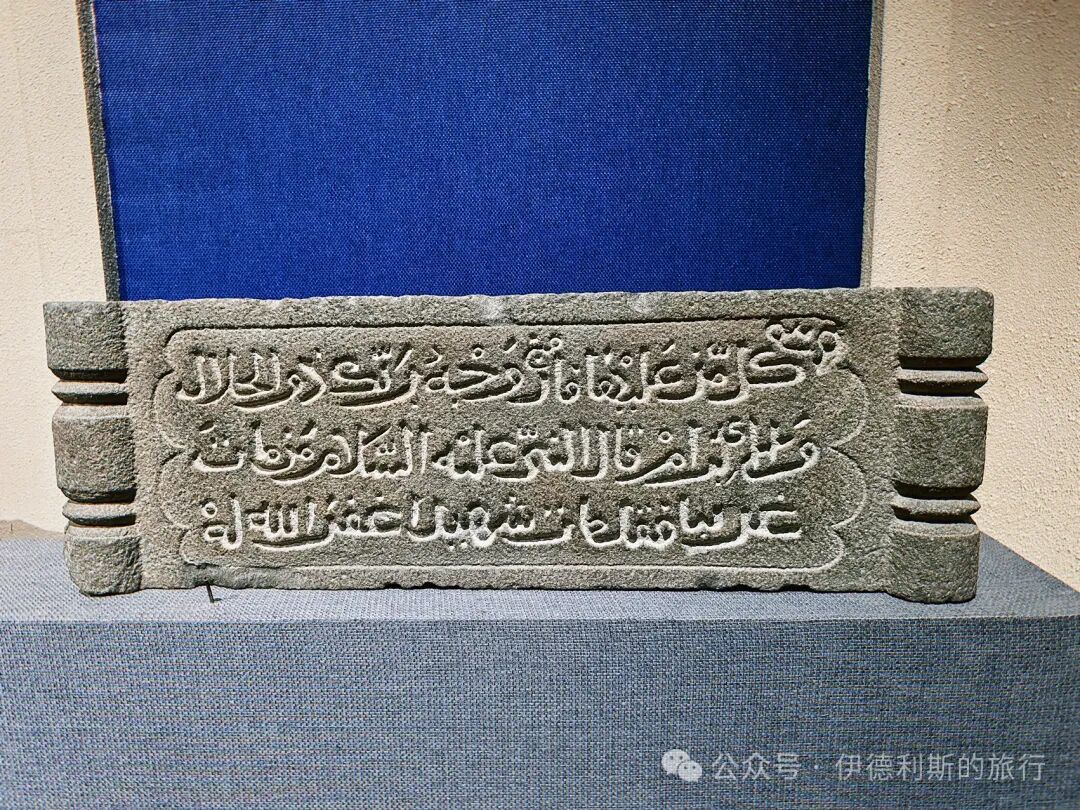
The tombstone base in the picture below was found in 1948 in Tingdian Village, 3 kilometers outside Quanzhou's South Gate. It features Quranic verses (89:29-30).
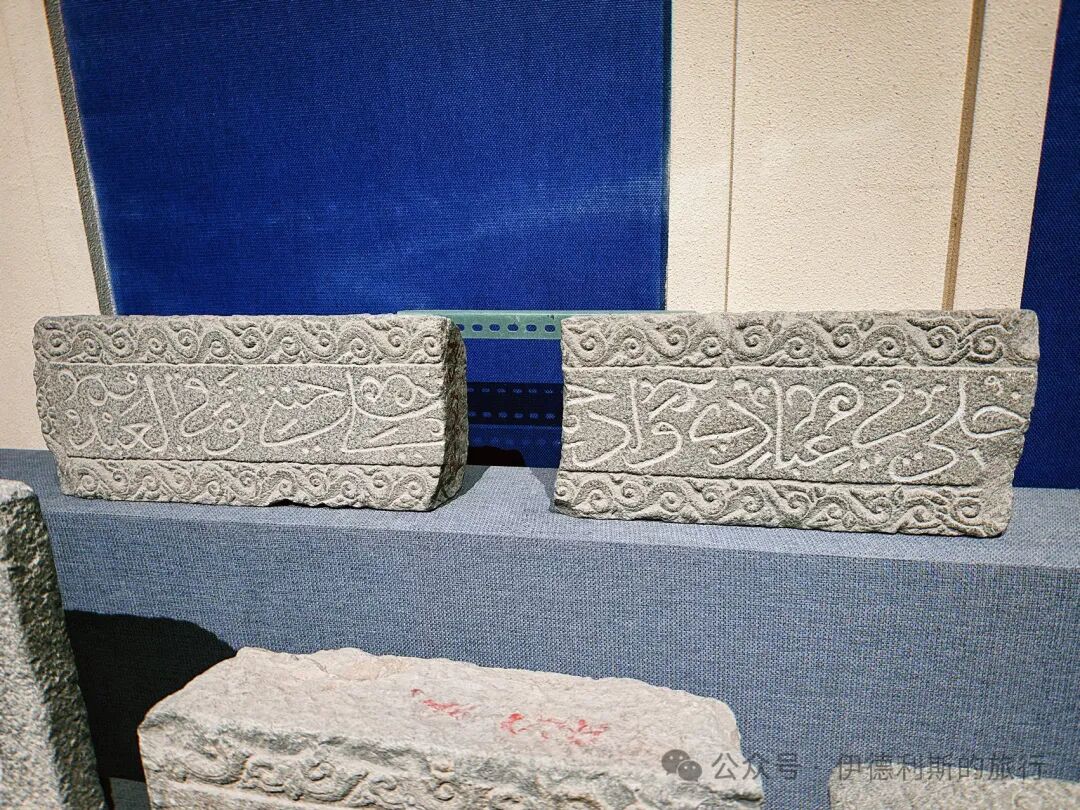
The tombstone base in the picture below was found in 1938 inside the city wall of Quanzhou's East Gate. It features a Quranic verse (30:11).
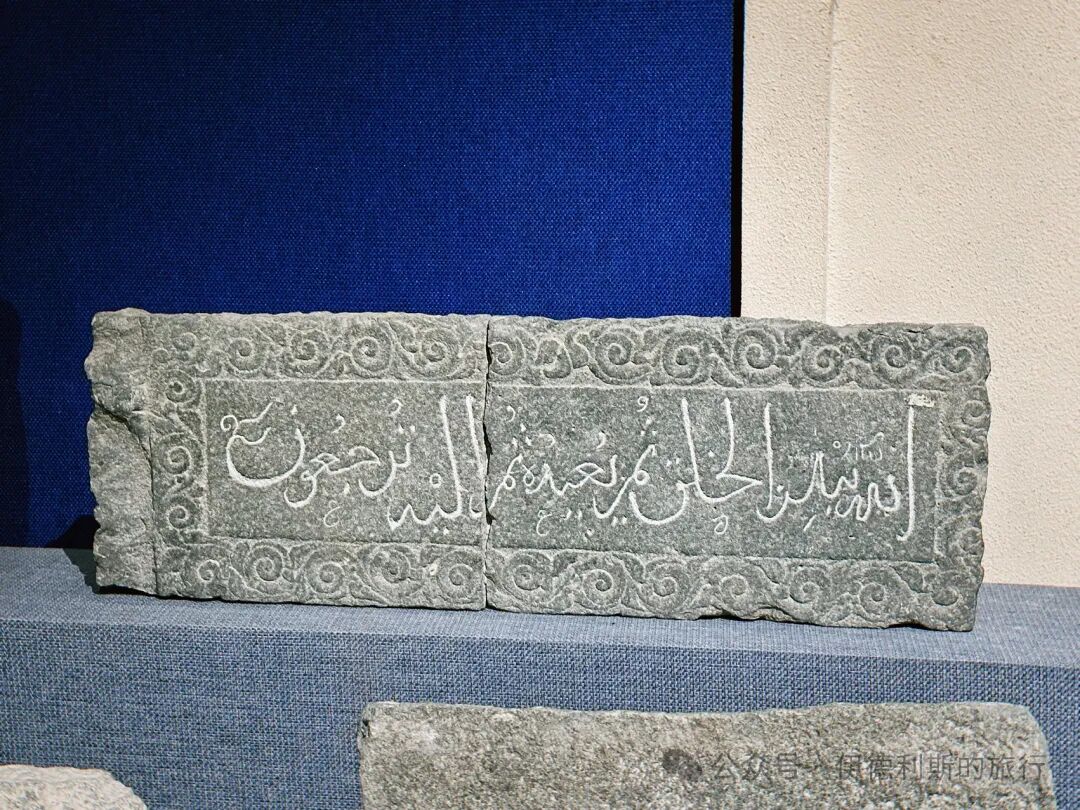
Lintel stone of a gongbei
Besides tombstones, Sumeru-pedestal style stone tombs, and Sumeru-pedestal altar-style stone tombs, the Maritime Museum also houses another type of religious stone carving: the lintel stone of a gongbei (a domed tomb for a Sufi saint). Unfortunately, only the lintel stone has been found so far, so we do not know what the original gongbei looked like.
The item in the picture below was dug up in 1946 from the foundation of Quanzhou's South Gate. The front is inscribed with Quranic verses (9:21-22), and the beginning mentions 'minbar,' which is the pulpit inside a mosque, though its specific meaning here is unclear.
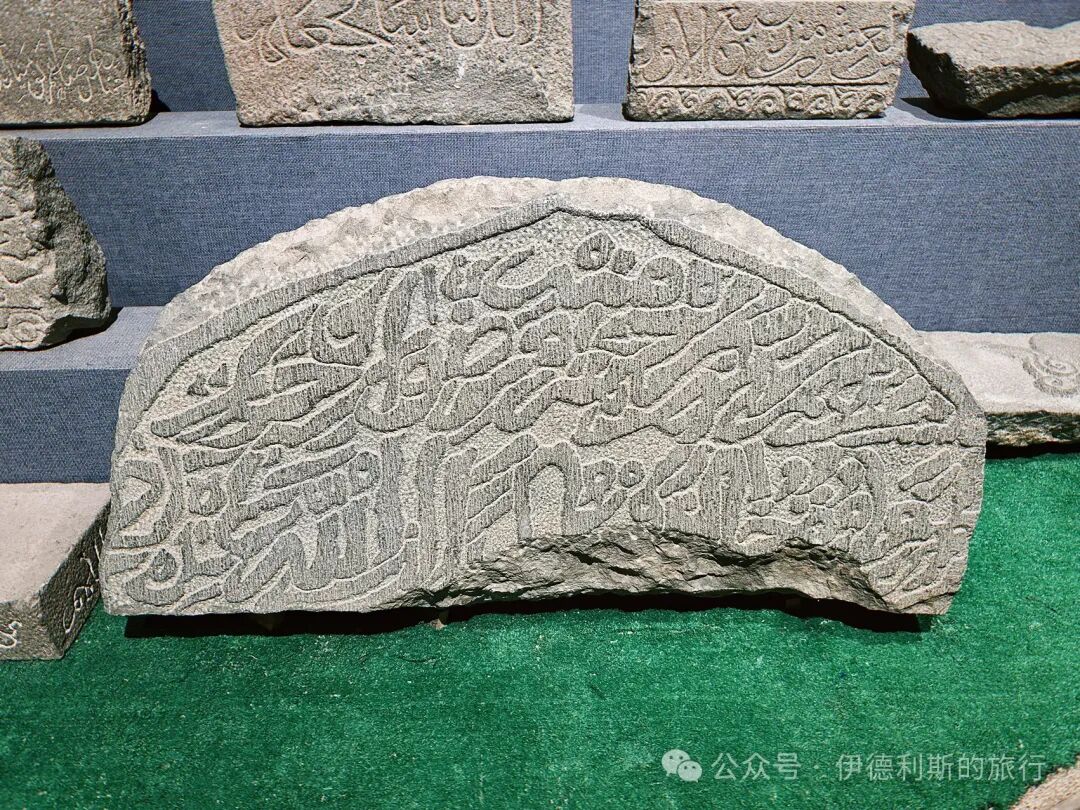
The item in the picture below was found in 1958 in a villager's home not far from the South Gate of Quanzhou. The villager said he found it deep in the city wall foundation while helping dig at the South Gate between 1946 and 1948. I originally wanted to take them home to build a wall, but I left them behind because their shapes made them hard to stack. The text reads, "(Every living thing) will die, (He is the Everlasting) who does not die."
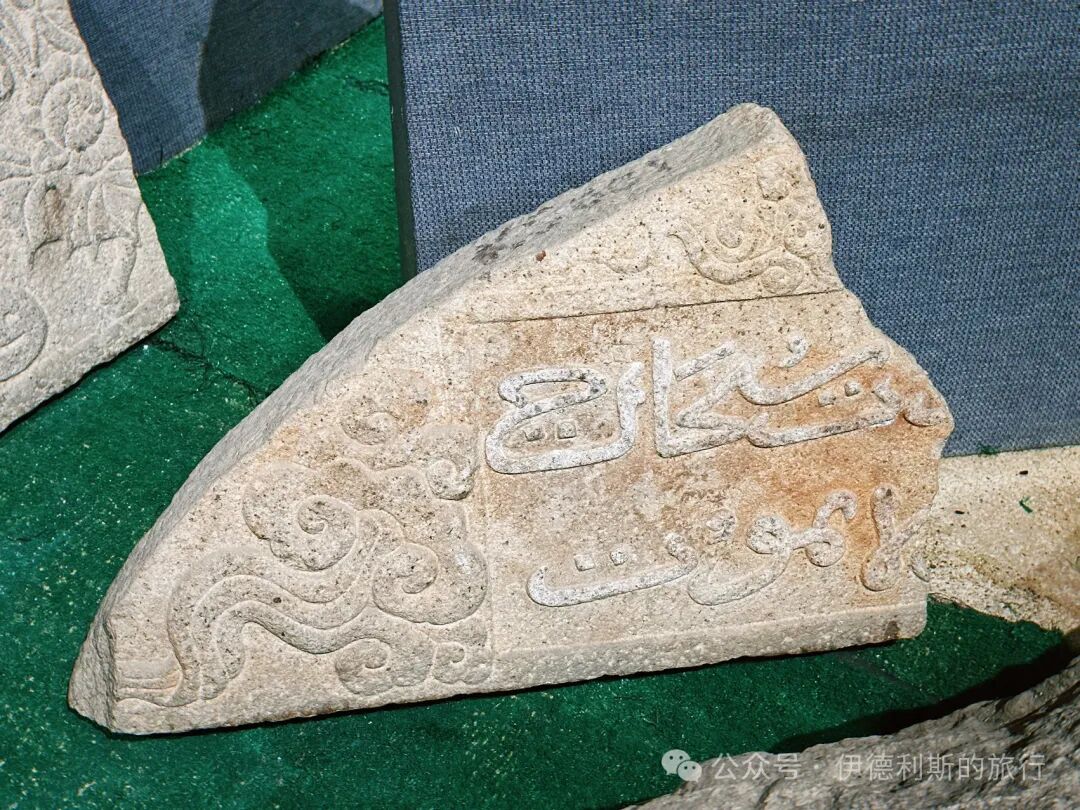
The image below shows the pivot stone from a gongbei lintel. It was found in a resident's home near the south gate city wall of Quanzhou in 1959, and it is said to have been taken when the south city gate was torn down between 1946 and 1948. The left square of the stone carving features a relief of a camellia branch, the right square features a relief of a peony branch, and the back features a relief of a melon-petal-shaped door pivot. The text reads, "If anyone in this world could live forever, the Messenger of Allah would be the one to live forever in this world." No one can escape death, for the Prophet Muhammad faced the decree of death."
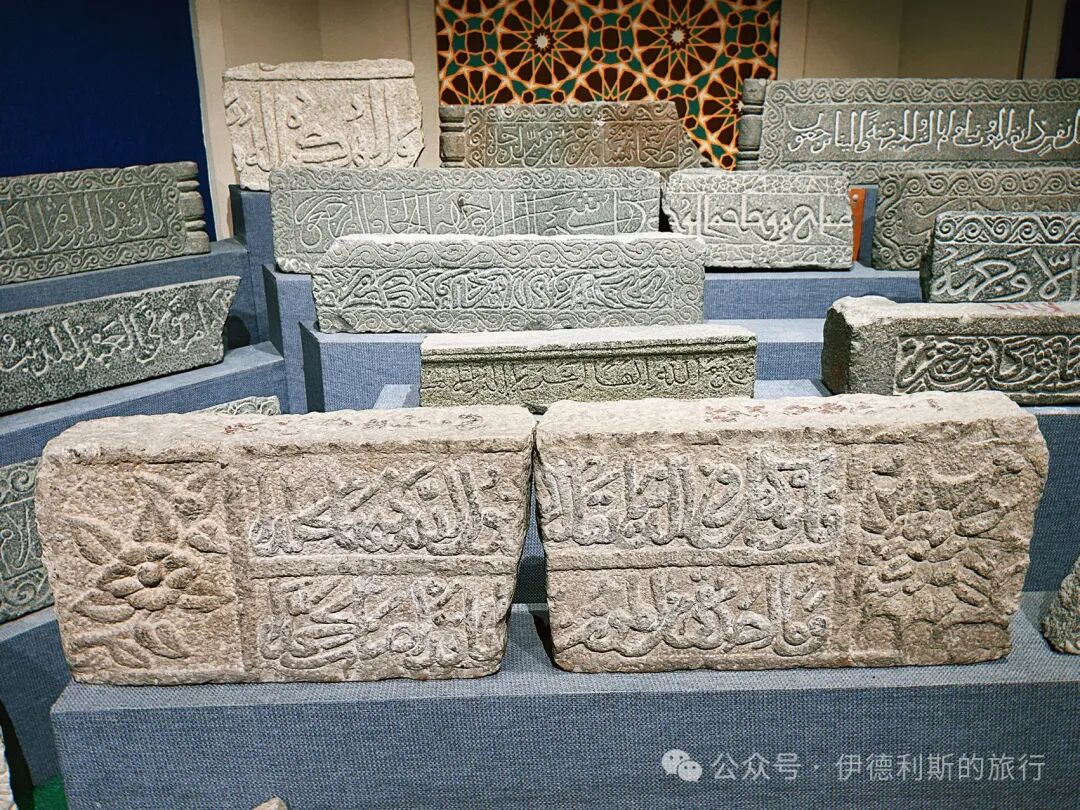
The image below shows a lintel stone from a gongbei tomb, with a relief of a peony branch on the right side. The stone carving was originally laid on a grain-drying ground on the south side of the street in Jintoupu Village, outside Tonghuai Gate at the east gate of Quanzhou. It was moved to the Maritime Museum for preservation in 1978.
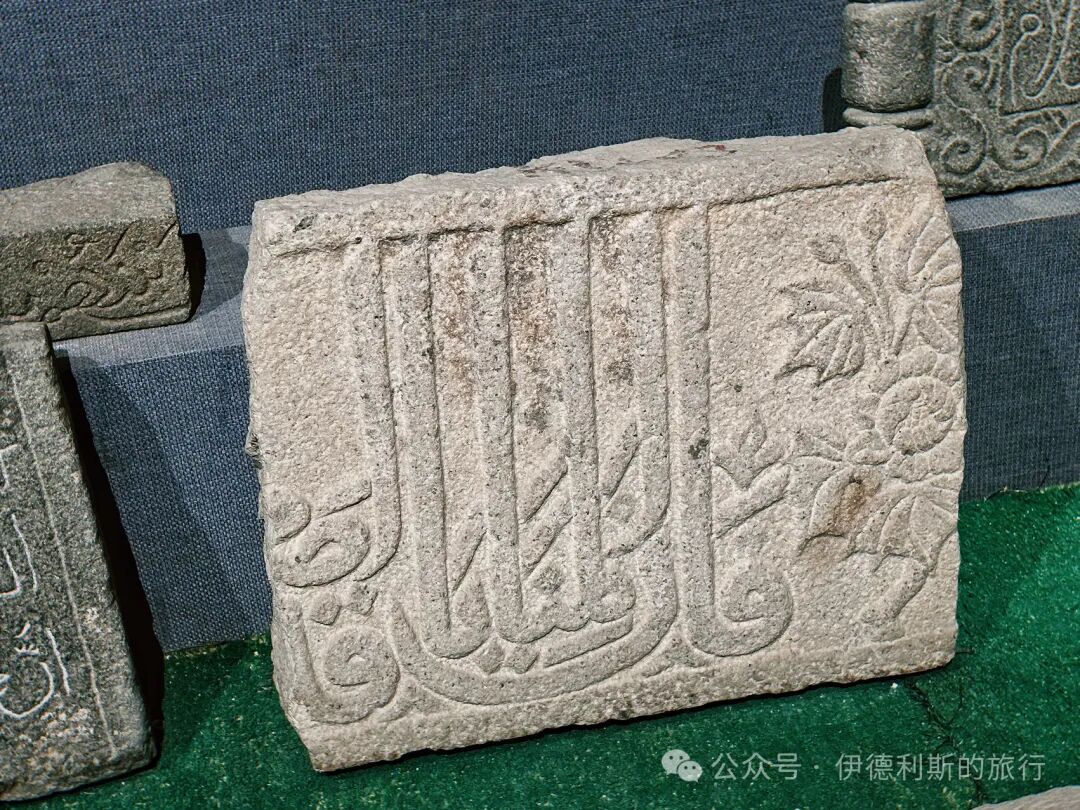
The altar-style stone tomb with a pedestal base (xumizuo) restored by Mr. Wu Wenliang. Quanzhou has found many tomb wall stones and some tomb roof stones, but so far, no complete altar-style stone tomb with a pedestal base (xumizuo) from the faith has been discovered.
Islamic History Guide: Quanzhou Qingjing Mosque - A Thousand Years of Muslim Heritage
Articles • ali2007fr posted the article • 0 comments • 307 views • 2026-05-19 10:02
Summary: Islamic History Guide: Quanzhou Qingjing Mosque - A Thousand Years of Muslim Heritage is presented here as a firsthand travel account in clear, natural English. The account focuses on Quanzhou, Qingjing Mosque, Islamic History while preserving the names, places, food, photos, and historical details from the Chinese source.
I arrived in Quanzhou at night and went straight to the Qingjing Mosque to pray. Imam Ma at the Qingjing Mosque is from Hualong, Qinghai. During the day, he leads namaz in the main hall donated by Oman, but after the tourist area closes, he leads prayers in the smaller Mingshan Hall.
Mingshan Hall was first built in 1567 (the first year of the Longqing reign of the Ming Dynasty). After the roof of the main hall of the Qingjing Mosque collapsed in the early Qing Dynasty, Mingshan Hall became the place for worship. In 1818 (the 23rd year of the Jiaqing reign), Ma Jianji, a military commander from Sichuan stationed in Quanzhou, rebuilt Mingshan Hall in the traditional architectural style of southern Fujian. In 1871 (the 10th year of the Tongzhi reign), Jiang Changgui, the military commander for Fujian Province, rebuilt Mingshan Hall again.
During the Tongzhi reign, Jiang Changgui collected many stone tablets with Arabic inscriptions from the Yuan Dynasty in Quanzhou and embedded them into the walls of Mingshan Hall. These stone tablets were not removed until the major renovation of Mingshan Hall in the spring of 1983. Many of these tablets are Yuan Dynasty tombstones. The people buried there came from places like Tabriz and Tehran in Iran, Adana in Turkey, Nablus in Palestine, and Khwarezm in Uzbekistan.
Mingshan Hall sits just north of Bagua Ditch, which served as the city moat for Quanzhou during the Five Dynasties and Northern Song periods. A granite stone bridge from the Song Dynasty originally crossed the ditch, but it was rebuilt in 1998 when Bagua Ditch was widened.
Night view of Qingjing Mosque.
The next morning, I continued exploring Qingjing Mosque.
The gate tower of Qingjing Mosque is built from diabase and white granite, with Quranic verses (3:18-19) carved into the front.
The moon-sighting platform at the top of the gate is where people used to look for the new moon during Ramadan. When the local Muslim community was still active in Quanzhou, they hung three large lanterns on the gate every Ramadan. A large palace lantern hung in the center of the pointed arch, inscribed with the words 'Islam' in both Chinese and Arabic. Two long, oval-shaped government-style lanterns hung on either side, with the left one reading 'Ancient Faith of the Hui Muslims' and the right one reading 'Ancient Qingzhen Qilin Mosque'. Every night, the names of household heads are listed on a round plaque inside the mosque, and each family takes turns lighting the lamps.
The inside of the main gate is made of three layers of arches. The outer layer is a pointed arch. At the top, there is an open hanging lotus flower carved from diabase. Below it are sixteen layers of curved stone blocks that get higher and narrower until they meet at the lotus. The middle arch is made of five fan-shaped white granite blocks with turtle-back patterns. There are foundation stones underneath, and the inner layer is a dome. On the stone walls on both sides of each layer, there is a pair of pointed-arch niches (yaokan).
Above the back of the main gate, there are two lines of Arabic inscriptions carved into white granite. They record that the Qingjing Mosque was first built in 1009 and rebuilt by Ahmad in 1310. This is also where the mosque's original name, Ashab Mosque, or "Mosque of the Holy Companions," is mentioned. Professor Ma Jian translated it in 1956 as follows:
"This mosque is the first holy mosque for the followers of Islam residing in this country." It is the oldest and most authentic, revered by all, and thus named the Mosque of the Holy Friend (Shengyou zhi Si), built in the year 400 of the Hijri calendar. Three hundred years later, in the year 710 of the Hijri calendar, a pilgrim from Jerusalem named Muhammad, also known as Shiraz (Shelashi), had a son named Ahmad who funded the renovation of this holy mosque. The dome above the main gate, the roof, the golden gate corridor, and the doors and windows were all made brand new to honor Allah. They offer dua to Allah and the Prophet Muhammad and his family, asking for their forgiveness in the future.
The inscription mentions two place names, one being al-Quds, which is the Arabic name for Jerusalem. The other is Shiraz, an ancient city in southern Iran.
The east side of the main gate originally held a minaret (bangke ta), but it was blown down by a strong wind in 1687 (the 26th year of the Kangxi reign) and has not been repaired since.
To the west of the main gate is the south wall of the main prayer hall, where eight square windows were added during the Wanli period of the Ming Dynasty. The upper part is carved with 19 meters of scripture, containing the entire 76th chapter of the Quran.
Inside the main gate of the Qingjing Mosque, on the east side, stand two stone tablets from the Ming Dynasty. The first one, the Stele for the Re-establishment of Qingjing Mosque (Chongli Qingjing Si Bei), was originally written by Wu Jian in 1350 (the tenth year of the Zhizheng era of the Yuan Dynasty) and kept in the Qingjing Mosque, which was built in 1131 (the first year of the Shaoxing era of the Southern Song Dynasty) in the south of Quanzhou city. The Qingjing Mosque was destroyed at the end of the Yuan Dynasty, and the stone tablet was moved to the Shengyou Mosque in the east of the city. When the Shengyou Mosque was renovated in 1507 (the second year of the Zhengde era of the Ming Dynasty), the inscription was re-carved. Over time, the Shengyou Mosque was renamed the Qingjing Mosque.
The second tablet is the Record of the Renovation of Qingjing Mosque (Chongxiu Qingjing Si Beiji), written by Li Guangjin in 1609 (the 37th year of the Wanli era of the Ming Dynasty).
Rubbings of these two stone tablets are also on display at the Quanzhou Maritime Museum. The Stele for the Re-establishment of Qingjing Mosque mentions the construction process of the Song and Yuan Dynasty Qingjing Mosque, which no longer exists: In the first year of the Shaoxing era of the Song Dynasty, a man named Nazhibu Muzhiluding came to Quanzhou from Sanawi on a merchant ship and founded this mosque in the south of Quanzhou city. It mentions that 'Sanawi' is the ancient Iranian port of Siraf on the north shore of the Persian Gulf.
Turn left after entering the main gate to reach the entrance of the prayer hall. Above the entrance, inside a pointed arch, are three lines of white granite carvings featuring verses from the Quran (2:125, 127).
Inside the prayer hall, the qibla wall has seven pointed-arch niches. The middle one, the mihrab known as the 'Altar of Heaven' (Fengtiantan), is the largest. Above the niches is a 13.2-meter-long stone carving entirely covered in Quranic verses. In the old days, Hui Muslims in Quanzhou called the 27th night of Ramadan, the 'Night of Power' (Laylat al-Qadr), the 'Night of Twenty-Eight.' On this day, every Hui Muslim family would prepare food. That evening, they would light a pair of large red candles on both sides of the mihrab Altar of Heaven to symbolize that the revelation of the scripture is brilliant and glorious.
Archaeological excavations of the prayer hall foundation in 1987 uncovered Yuan dynasty floor tiles, drainage ditches, and wall foundations 1.6 meters below the surface in the southwest corner. A row of Southern Song dynasty floor tiles was also found in the northwest corner.
Since the roof of the prayer hall collapsed in the early Qing dynasty, it is now impossible to know what its original shape was. According to the Ming dynasty Wanli era 'Stele Record of the Renovation of Qingjing Mosque,' it states: 'There are twelve pillars, representing the twelve months.' Based on the stone pillars and column bases remaining in the hall today, it seems they could not have supported an overly massive dome.
Mingshan Hall is full of tourists during the day.
Inside the Mingshan Hall courtyard sits an exquisite Song Dynasty incense burner featuring a lotus flower rising from the water (chushui lianhua). The incense burner was originally inside the main hall of the Qingjing Mosque. It was moved to Mingshan Hall after the main hall's roof collapsed in the early Qing Dynasty.
The Qingjing Mosque also preserves a thousand-year-old stone well from the Song Dynasty.
Tonghuai Street, where the Qingjing Mosque is located, was the site of Quanzhou's foreign quarter (fanfang) during the Song and Yuan dynasties, and many people were buried nearby after they passed away. In the 1950s, three stone tombs with Sumeru-style pedestals (xumizuo) were discovered under a house at the intersection of Tonghuai Street and Jiangwu Lane. Many more of these stone tombs were unearthed between 1995 and 1998 when Tonghuai Street was widened. Haji Huang Runqiu, an imam at the Qingjing Mosque, collected some of these tombs and their components to keep inside the mosque. This is how the Sumeru-style stone tombs currently kept at the Qingjing Mosque came to be there.
The Sumeru-style stone tombs at the Qingjing Mosque range from two to five layers high. All the top stones are missing, and the bottom layers all feature six ruyi-shaped feet.
In the spring of 1983, the Qingjing Mosque underwent major renovations. Twelve Hui Muslim families who had lived inside the mosque since the Kangxi era moved out, and a collection of stone tablets was discovered in the walls and underground of the Mingshan Hall. When I visited in 2017, most of these stone carvings were displayed on the west side of the main hall. When I returned in 2024, most of them had been moved elsewhere for preservation.
The only tombstone currently kept inside the Qingjing Mosque was dug up from a garden belonging to a family named Pu in the late Qing Dynasty. It was moved to the mosque and built into the south side of the west wall of the Mingshan Hall. The tombstone is similar to the Yuan Dynasty Arabic tombstones at the Puhaddin Cemetery in Yangzhou and is considered one of the most exquisite ancient Arabic tombstones in Quanzhou. The person buried there was named Ahmed, who passed away in 1362.
The Pu family in Quanzhou are descendants of Pu Shougeng. After the Ming Dynasty, most of them left the faith or changed their surnames, and only one branch still lives on the former site of Pu Shougeng's residence. According to the Genealogy of the Pu Family in the South Gate of Quanzhou, Pu Shougeng had two sons, Shiwen and Shisi. Shisi was promoted to an official in the Hanlin Academy in 1284 and built the Baiguo Garden inside the south gate of Quanzhou city for his own enjoyment. Huayuantou has always been an old place name in the south of Quanzhou city.
Three plaques hang inside Mingshan Hall.
In the 23rd year of the Jiaqing reign of the Qing dynasty, Ma Jianji, the commander of the Fujian provincial land forces and general of Zhangzhou, dedicated the plaque reading "Ten Thousand Differences, One Origin" (Wanshu Yiben).
Ma Jianji was a Hui Muslim from Sichuan. While serving in Fujian during the Qing Jiaqing period, he renovated the Qingjing Mosque and the Lingshan Sacred Tomb, and he also carved an inscription on the Wind-Moving Rock at Lingshan.
In the 11th year of the Republic of China, Xiamen Superintendent Tang Kesan wrote the plaque reading "Recognize the Oneness of Allah" (Renzhu Duyi).
In the 13th year of the Republic of China, Tang Kesan, a recipient of the Second Class Order of the Golden Grain and former Xiamen Customs Superintendent, dedicated the plaque reading "Three Fears and Four Admonitions" (Sanwei Sizhen). The original plaques were destroyed between the 1960s and 1970s, and the ones currently on display are replicas.
Tang Kesan was a Hui Muslim from Shandong. He graduated from the Imperial University of Peking in the late Qing dynasty and became a social activist and educator during the Republican era. He served as the principal of Chengda Normal School and made significant contributions to the faith. In 1919, Tang Kesan became the Xiamen Customs Superintendent and donated funds to renovate the Qingjing Mosque during his tenure. In 1936, Tang Kesan appointed Imam Zhang Yuguang to lead the Qingjing Mosque. He started a religious study class and an adult literacy night school inside the mosque. In 1940, the Qingjing Mosque opened the Chengda Normal School Affiliated Primary School, later renamed the Qingzhen National School. It sent three groups of local Hui Muslim youth from Quanzhou to study at the Chengda Normal School in Guangxi.
The Qingjing Mosque keeps a white granite stele of the Ming Dynasty Yongle Imperial Edict. It is a copy of the edict issued by the Yongle Emperor, Zhu Di, to Mir Haji in 1407, the fifth year of the Yongle reign. The word 'Mir' refers to 'Amir,' meaning leader, and 'Haji' refers to someone who has made the pilgrimage to the Hejaz. Because of this, the actual name of the person who received the edict does not appear.
The original edict was found in 1956 at the home of Lan Xiaoyang, the hereditary imam of the Puhading Tomb in Yangzhou, and is now kept at the Cultural Palace of Nationalities in Beijing. This edict provided great protection for the faith, so the mosque in Fuzhou also made a copy of it, just like the one in Quanzhou.
I bought some magnets at the Quanzhou Liwu shop featuring the Qingjing Mosque and the Lingshan Sacred Tomb. I think the designs are beautiful and worth collecting. view all
Summary: Islamic History Guide: Quanzhou Qingjing Mosque - A Thousand Years of Muslim Heritage is presented here as a firsthand travel account in clear, natural English. The account focuses on Quanzhou, Qingjing Mosque, Islamic History while preserving the names, places, food, photos, and historical details from the Chinese source.
I arrived in Quanzhou at night and went straight to the Qingjing Mosque to pray. Imam Ma at the Qingjing Mosque is from Hualong, Qinghai. During the day, he leads namaz in the main hall donated by Oman, but after the tourist area closes, he leads prayers in the smaller Mingshan Hall.
Mingshan Hall was first built in 1567 (the first year of the Longqing reign of the Ming Dynasty). After the roof of the main hall of the Qingjing Mosque collapsed in the early Qing Dynasty, Mingshan Hall became the place for worship. In 1818 (the 23rd year of the Jiaqing reign), Ma Jianji, a military commander from Sichuan stationed in Quanzhou, rebuilt Mingshan Hall in the traditional architectural style of southern Fujian. In 1871 (the 10th year of the Tongzhi reign), Jiang Changgui, the military commander for Fujian Province, rebuilt Mingshan Hall again.
During the Tongzhi reign, Jiang Changgui collected many stone tablets with Arabic inscriptions from the Yuan Dynasty in Quanzhou and embedded them into the walls of Mingshan Hall. These stone tablets were not removed until the major renovation of Mingshan Hall in the spring of 1983. Many of these tablets are Yuan Dynasty tombstones. The people buried there came from places like Tabriz and Tehran in Iran, Adana in Turkey, Nablus in Palestine, and Khwarezm in Uzbekistan.
Mingshan Hall sits just north of Bagua Ditch, which served as the city moat for Quanzhou during the Five Dynasties and Northern Song periods. A granite stone bridge from the Song Dynasty originally crossed the ditch, but it was rebuilt in 1998 when Bagua Ditch was widened.
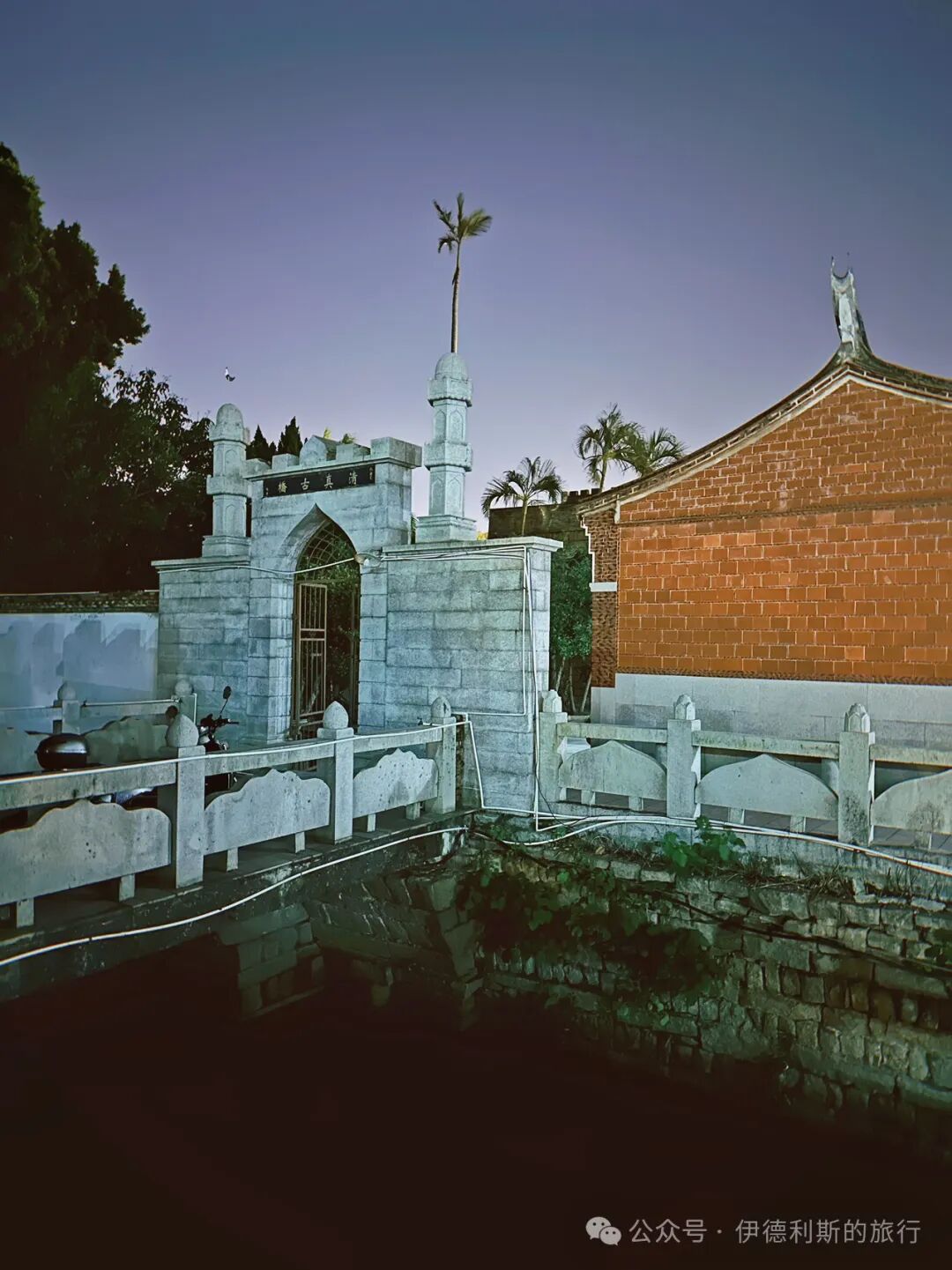
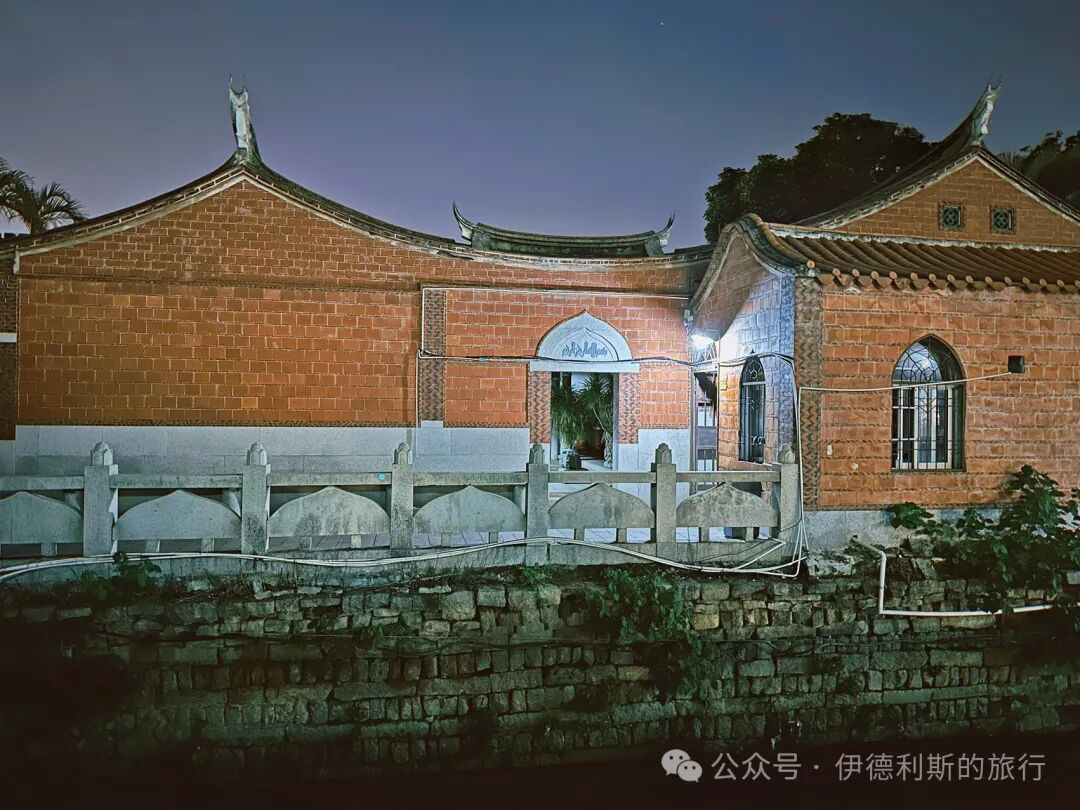
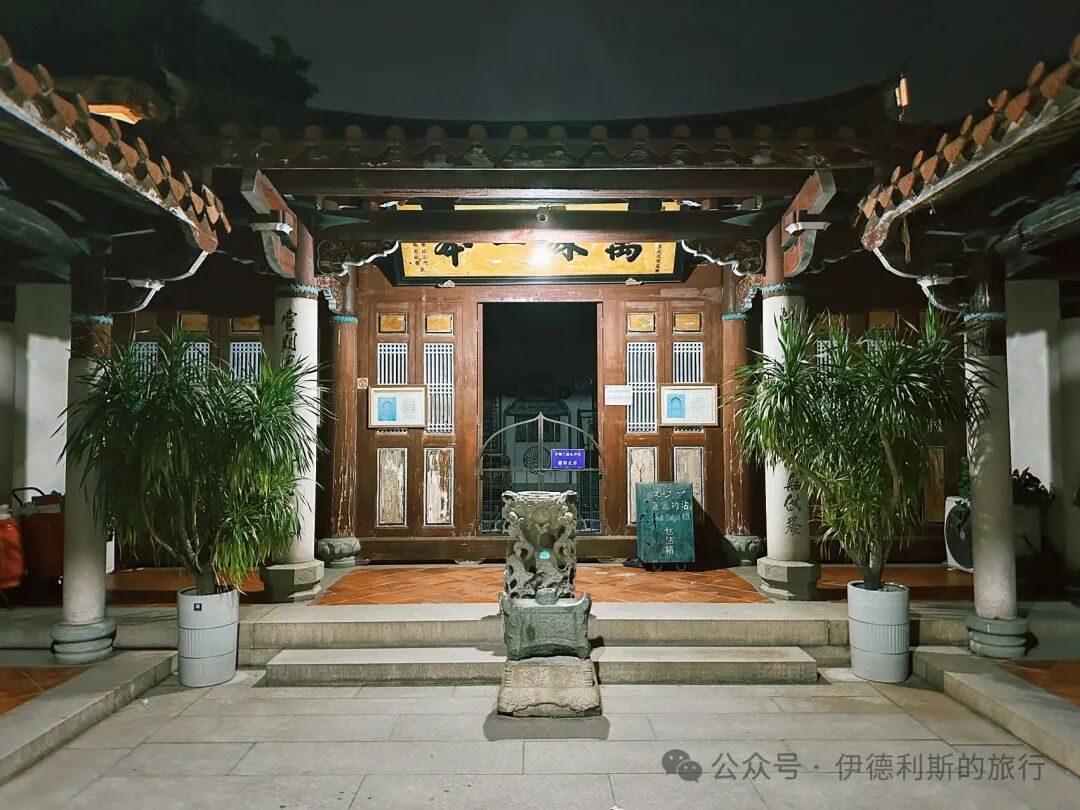
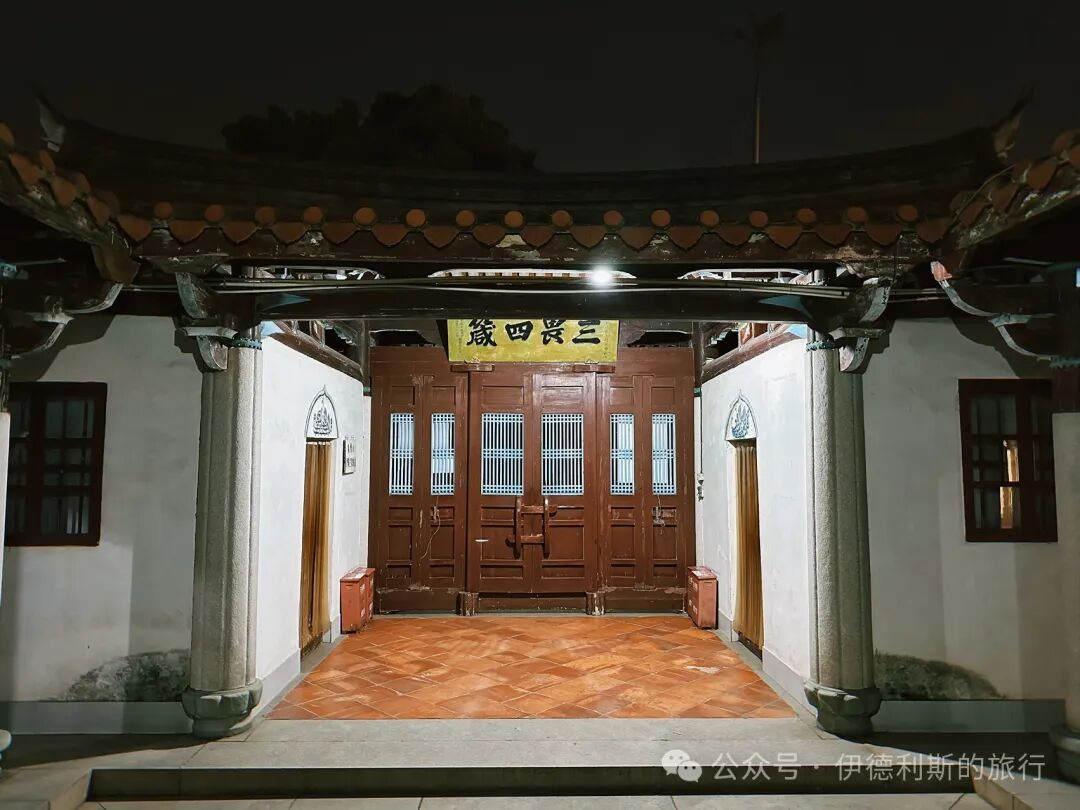
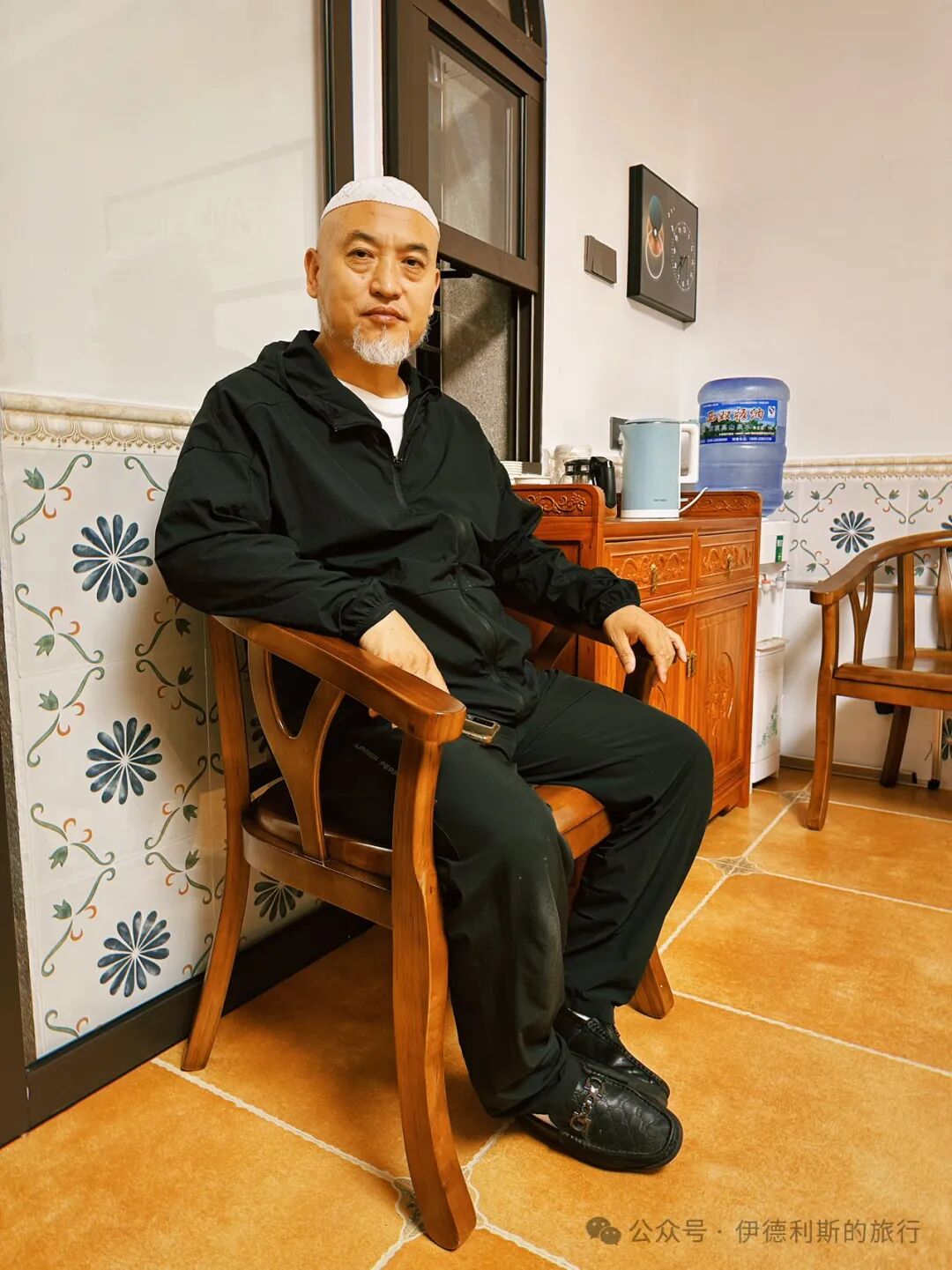
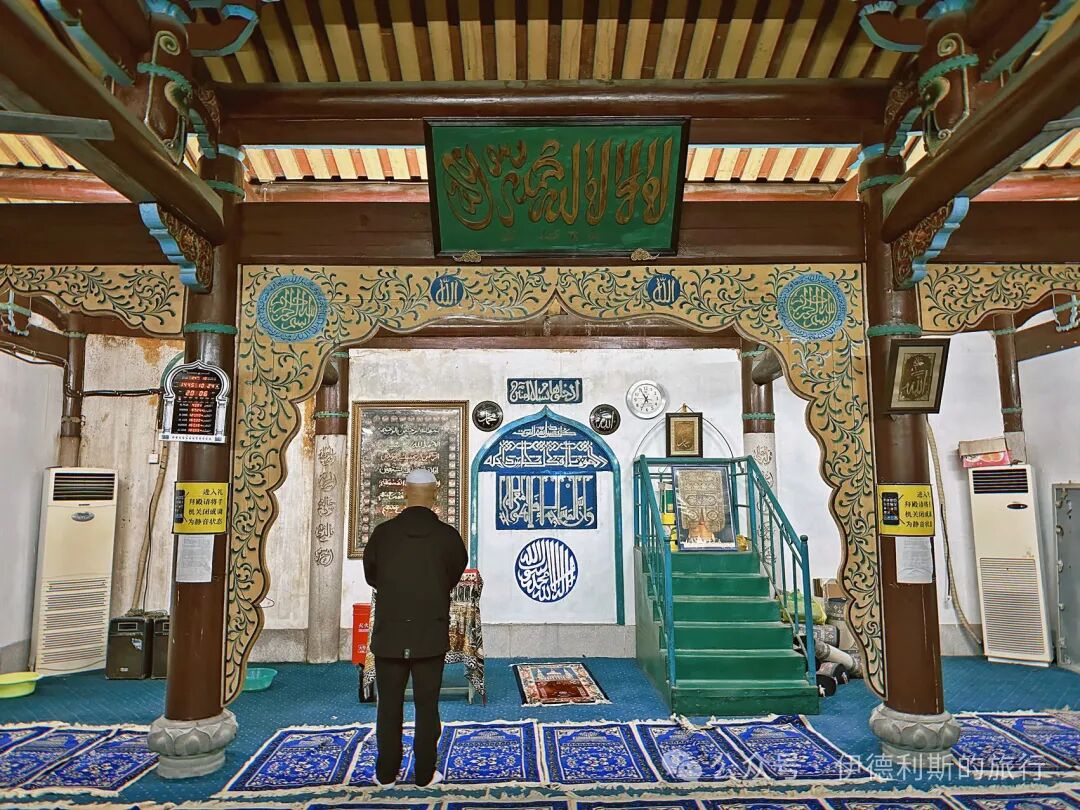
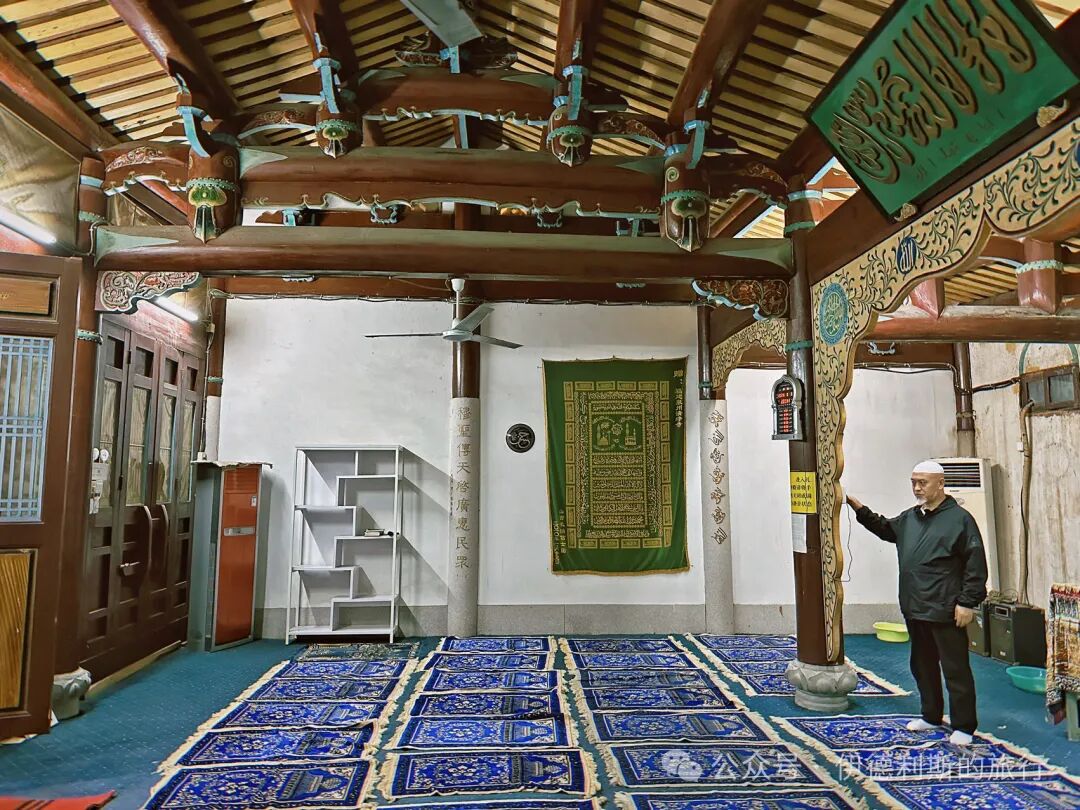
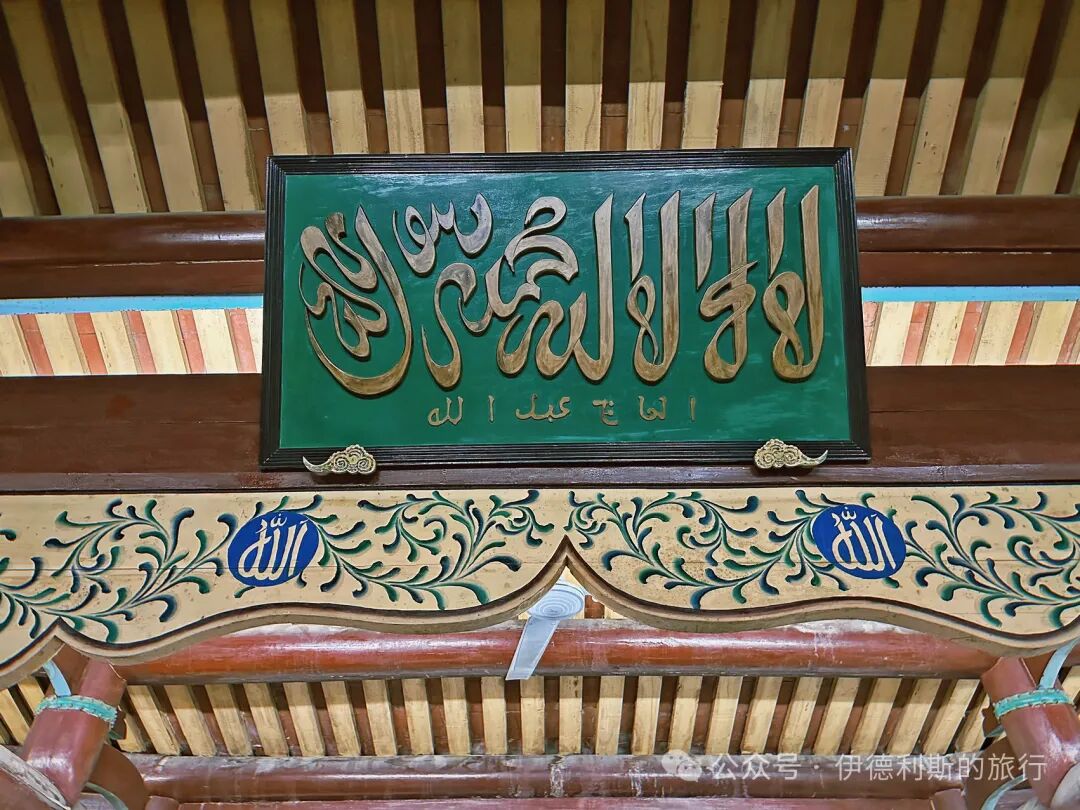
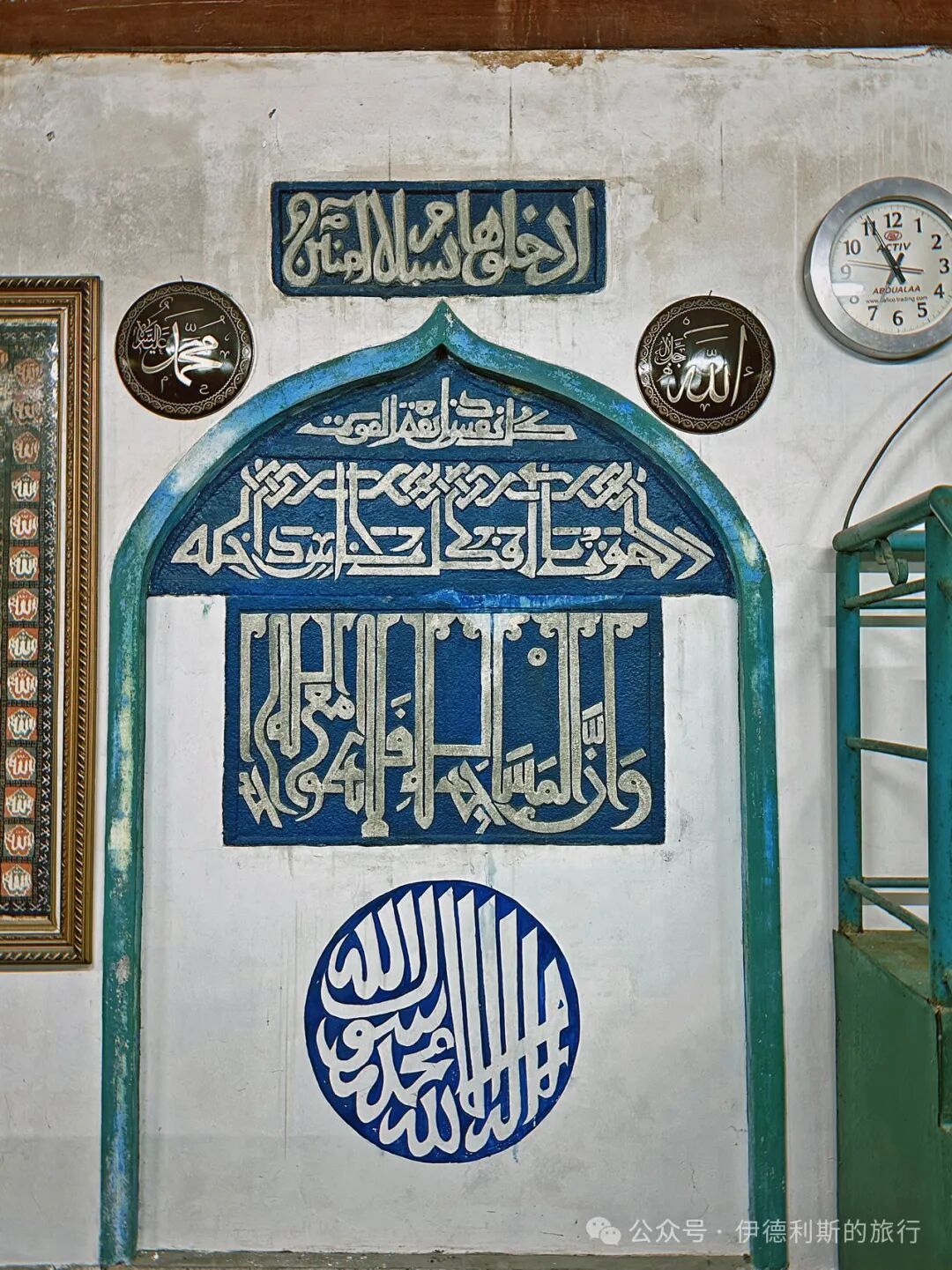
Night view of Qingjing Mosque.
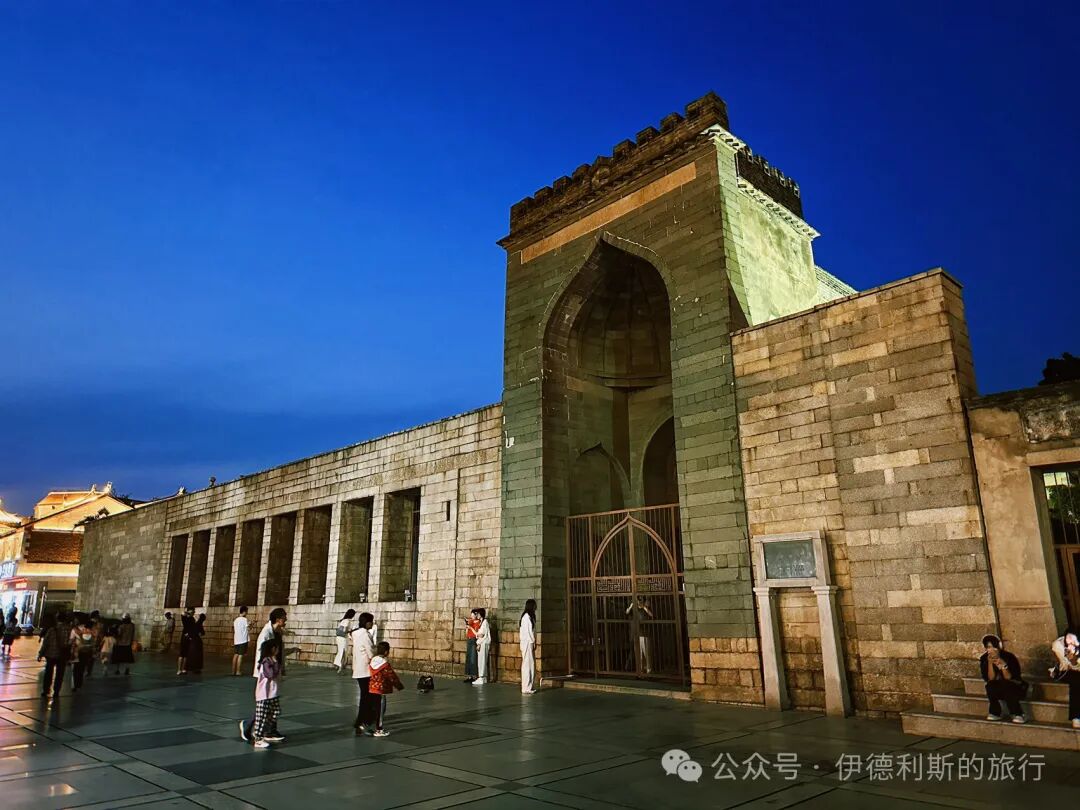
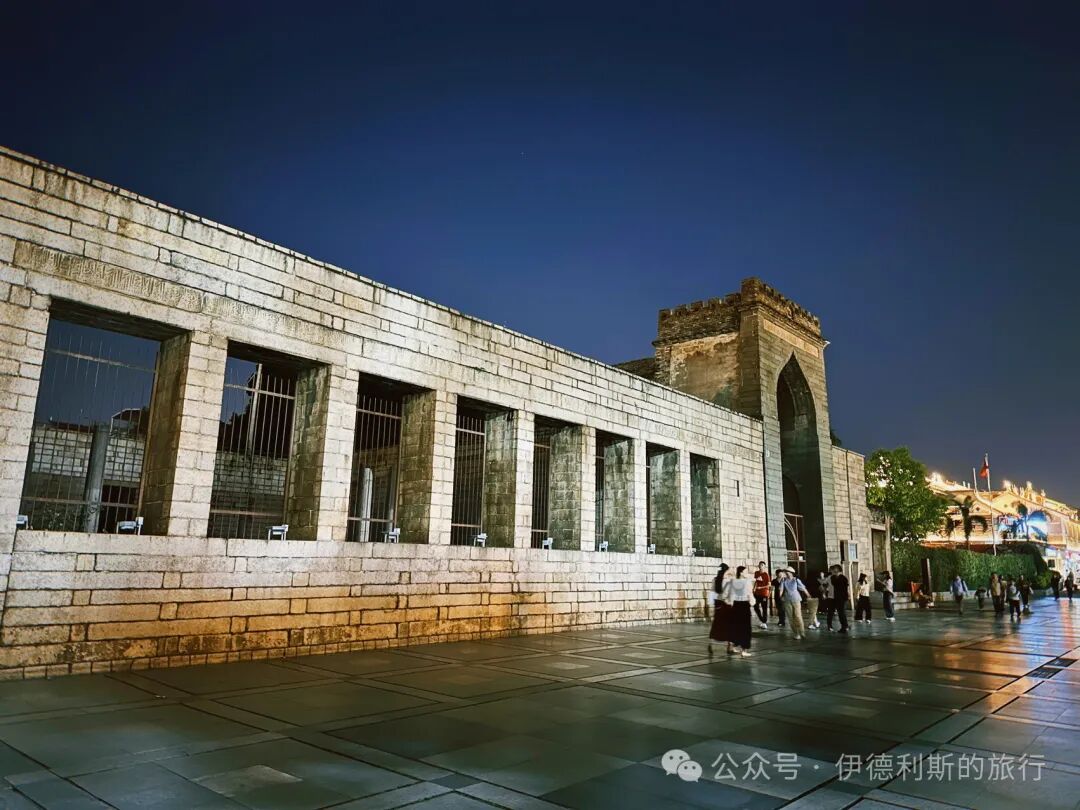
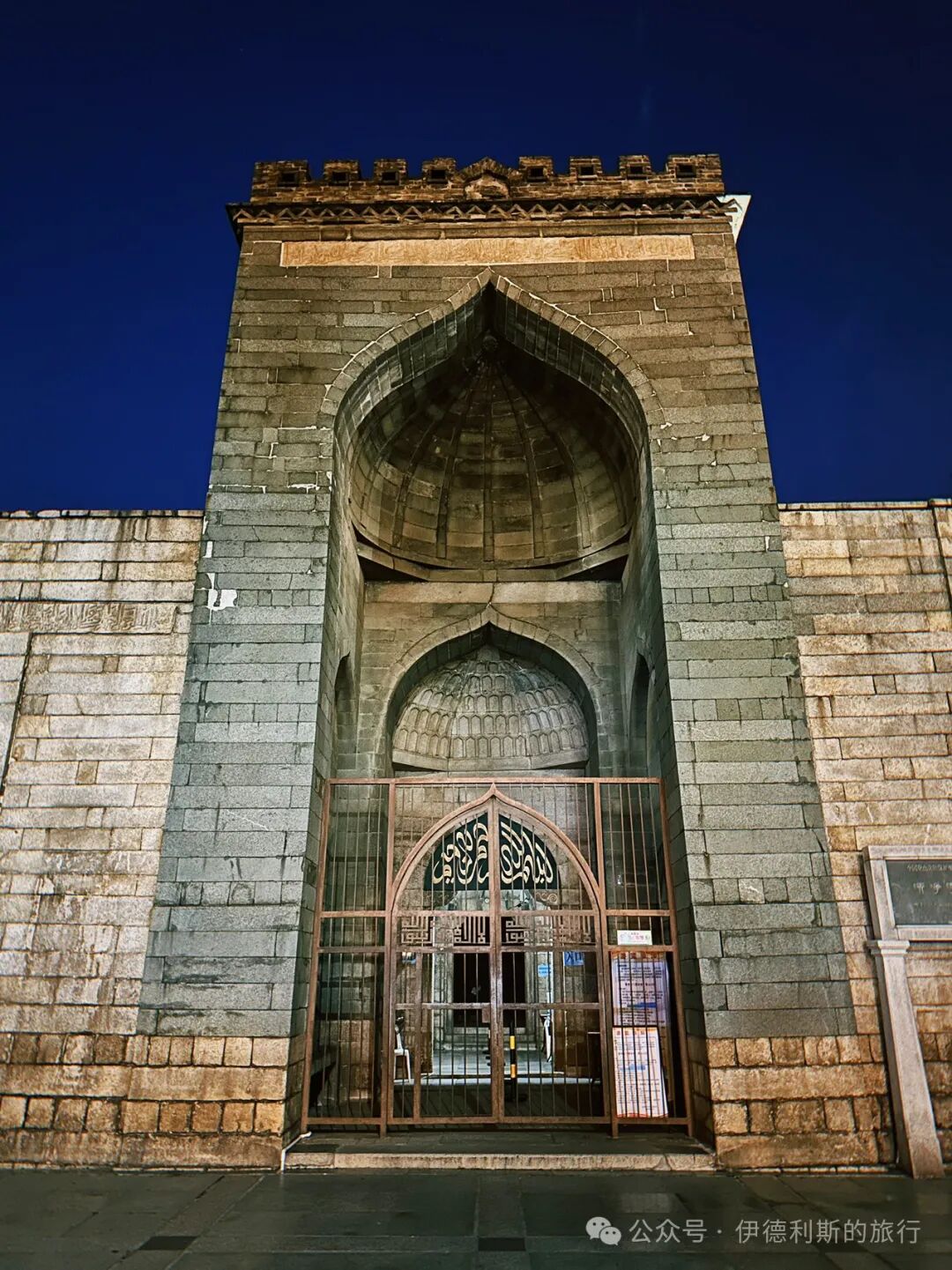
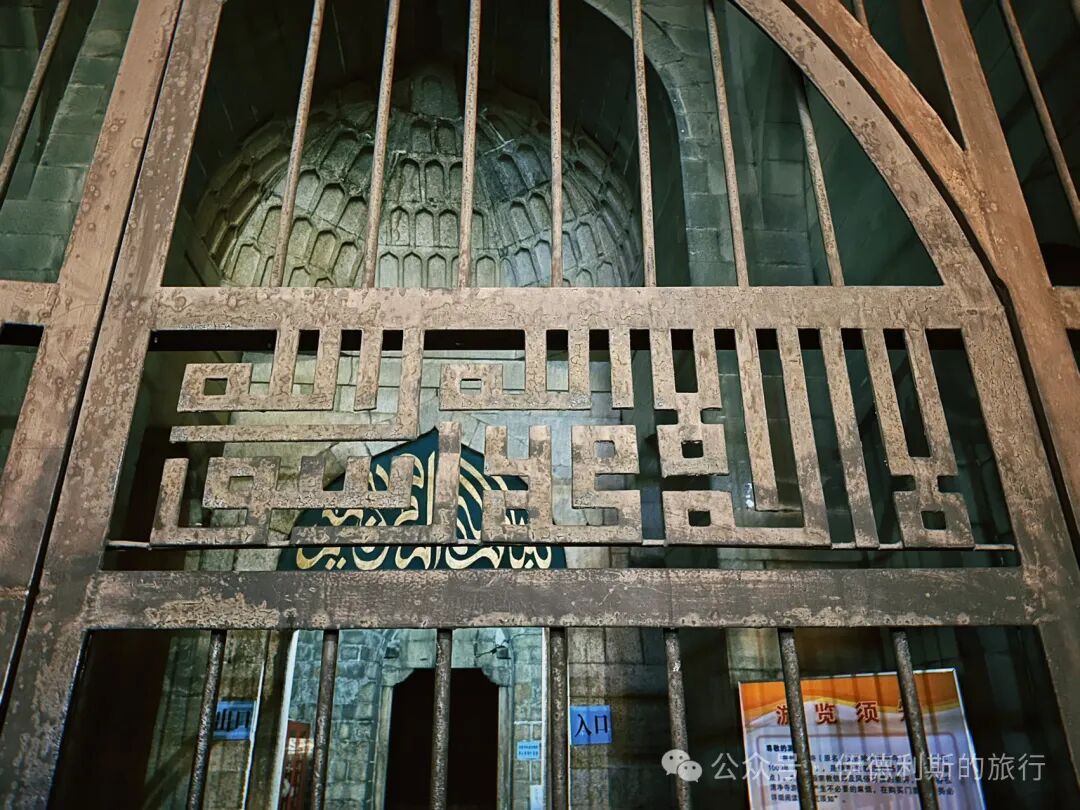
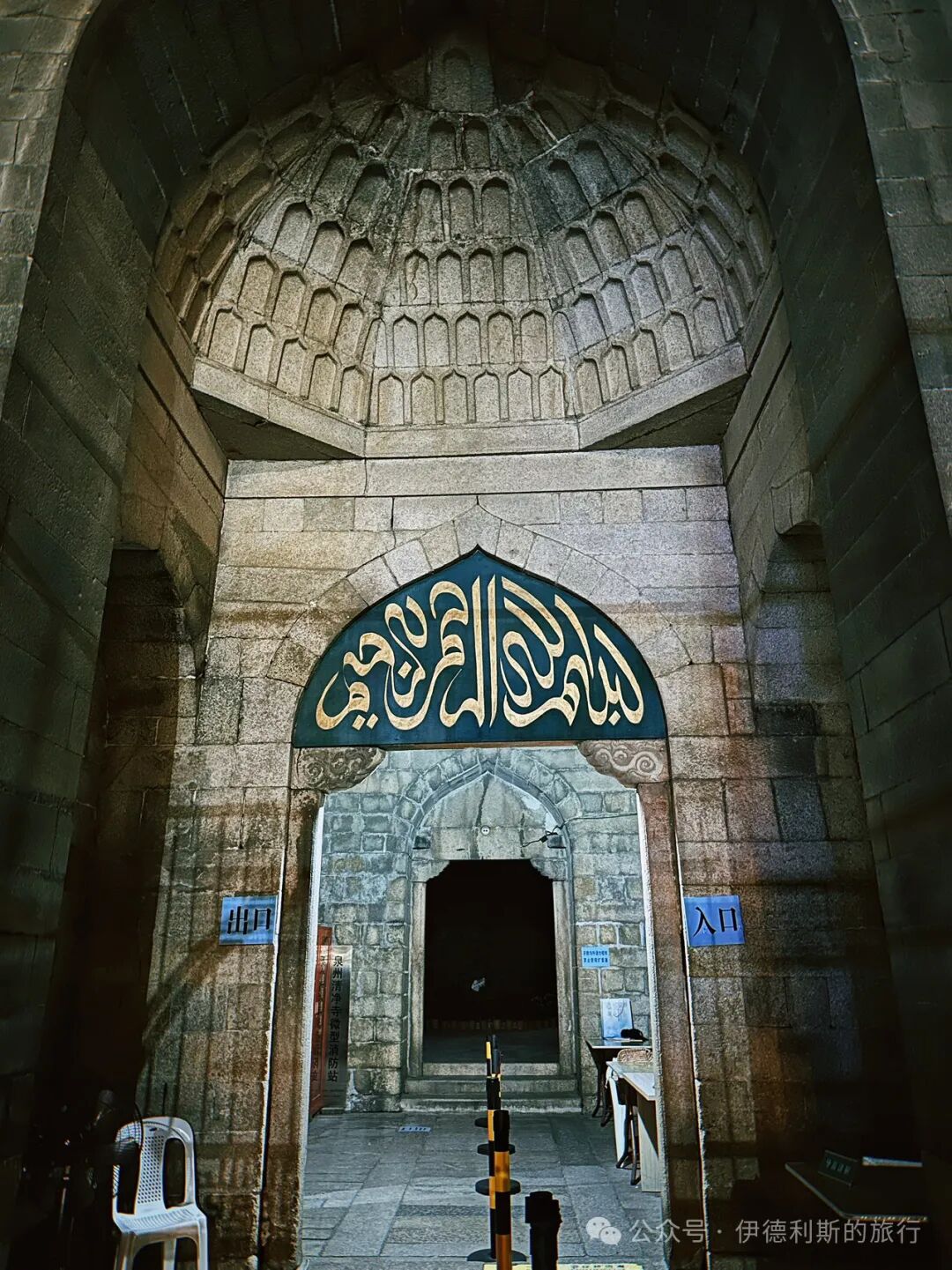
The next morning, I continued exploring Qingjing Mosque.
The gate tower of Qingjing Mosque is built from diabase and white granite, with Quranic verses (3:18-19) carved into the front.
The moon-sighting platform at the top of the gate is where people used to look for the new moon during Ramadan. When the local Muslim community was still active in Quanzhou, they hung three large lanterns on the gate every Ramadan. A large palace lantern hung in the center of the pointed arch, inscribed with the words 'Islam' in both Chinese and Arabic. Two long, oval-shaped government-style lanterns hung on either side, with the left one reading 'Ancient Faith of the Hui Muslims' and the right one reading 'Ancient Qingzhen Qilin Mosque'. Every night, the names of household heads are listed on a round plaque inside the mosque, and each family takes turns lighting the lamps.
The inside of the main gate is made of three layers of arches. The outer layer is a pointed arch. At the top, there is an open hanging lotus flower carved from diabase. Below it are sixteen layers of curved stone blocks that get higher and narrower until they meet at the lotus. The middle arch is made of five fan-shaped white granite blocks with turtle-back patterns. There are foundation stones underneath, and the inner layer is a dome. On the stone walls on both sides of each layer, there is a pair of pointed-arch niches (yaokan).
Above the back of the main gate, there are two lines of Arabic inscriptions carved into white granite. They record that the Qingjing Mosque was first built in 1009 and rebuilt by Ahmad in 1310. This is also where the mosque's original name, Ashab Mosque, or "Mosque of the Holy Companions," is mentioned. Professor Ma Jian translated it in 1956 as follows:
"This mosque is the first holy mosque for the followers of Islam residing in this country." It is the oldest and most authentic, revered by all, and thus named the Mosque of the Holy Friend (Shengyou zhi Si), built in the year 400 of the Hijri calendar. Three hundred years later, in the year 710 of the Hijri calendar, a pilgrim from Jerusalem named Muhammad, also known as Shiraz (Shelashi), had a son named Ahmad who funded the renovation of this holy mosque. The dome above the main gate, the roof, the golden gate corridor, and the doors and windows were all made brand new to honor Allah. They offer dua to Allah and the Prophet Muhammad and his family, asking for their forgiveness in the future.
The inscription mentions two place names, one being al-Quds, which is the Arabic name for Jerusalem. The other is Shiraz, an ancient city in southern Iran.
The east side of the main gate originally held a minaret (bangke ta), but it was blown down by a strong wind in 1687 (the 26th year of the Kangxi reign) and has not been repaired since.
To the west of the main gate is the south wall of the main prayer hall, where eight square windows were added during the Wanli period of the Ming Dynasty. The upper part is carved with 19 meters of scripture, containing the entire 76th chapter of the Quran.
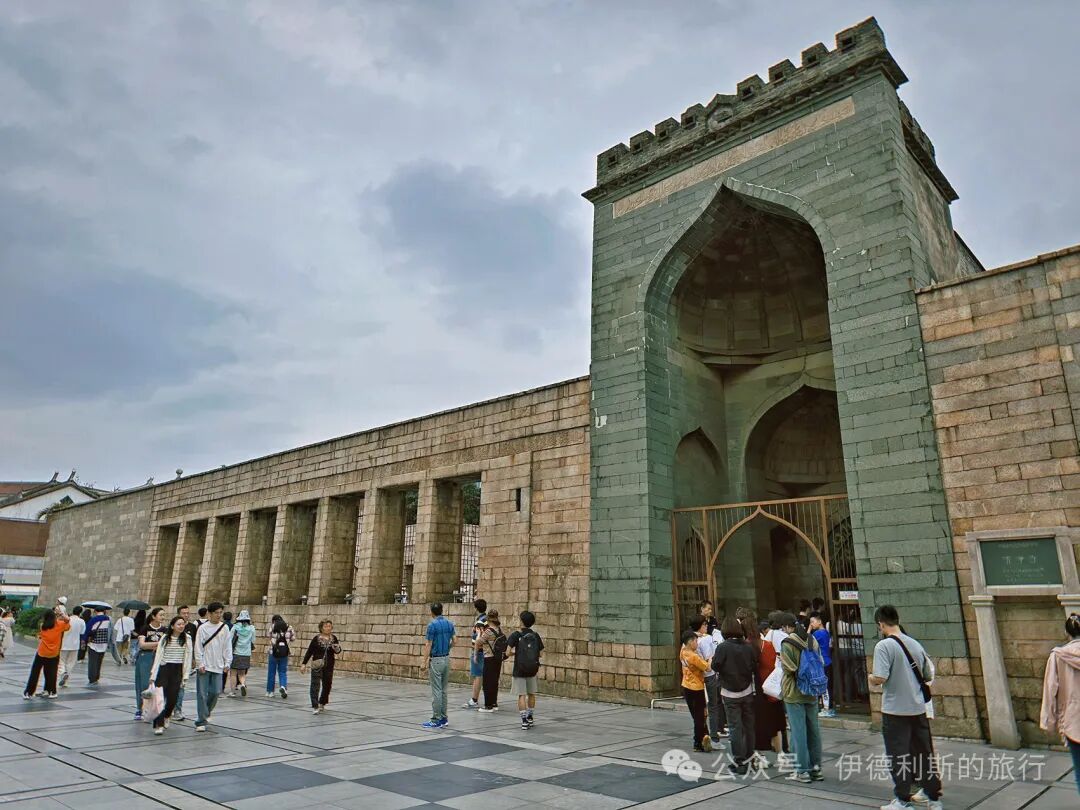
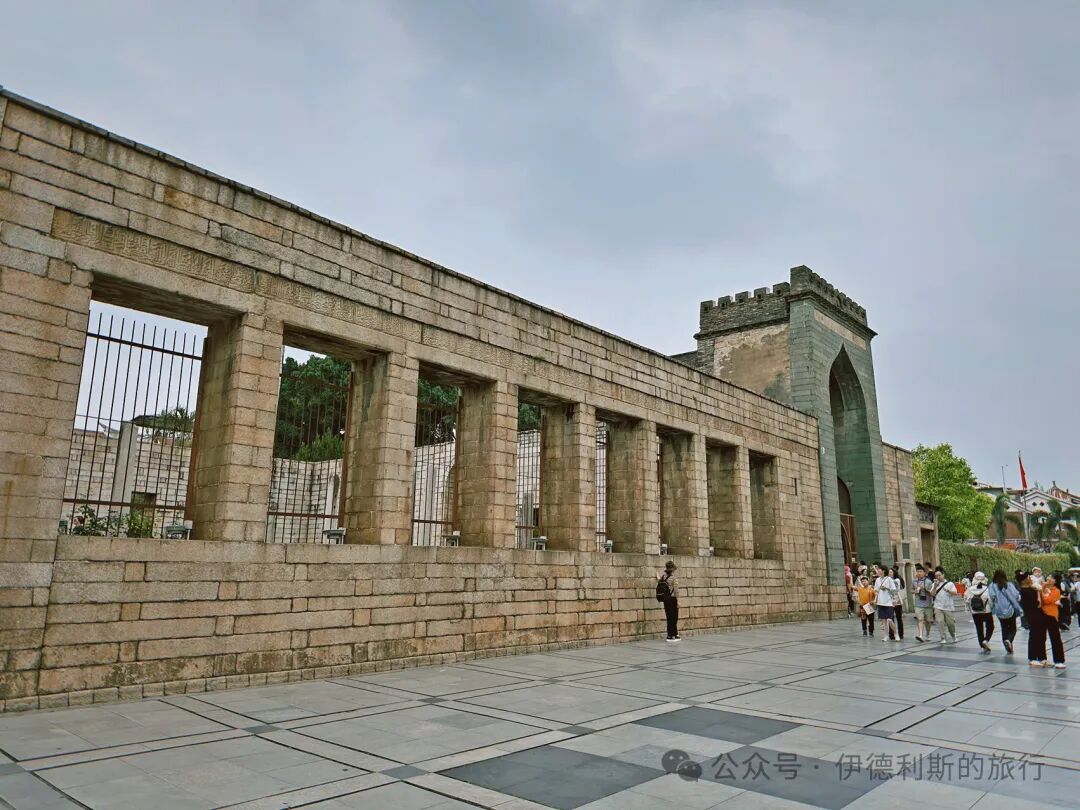
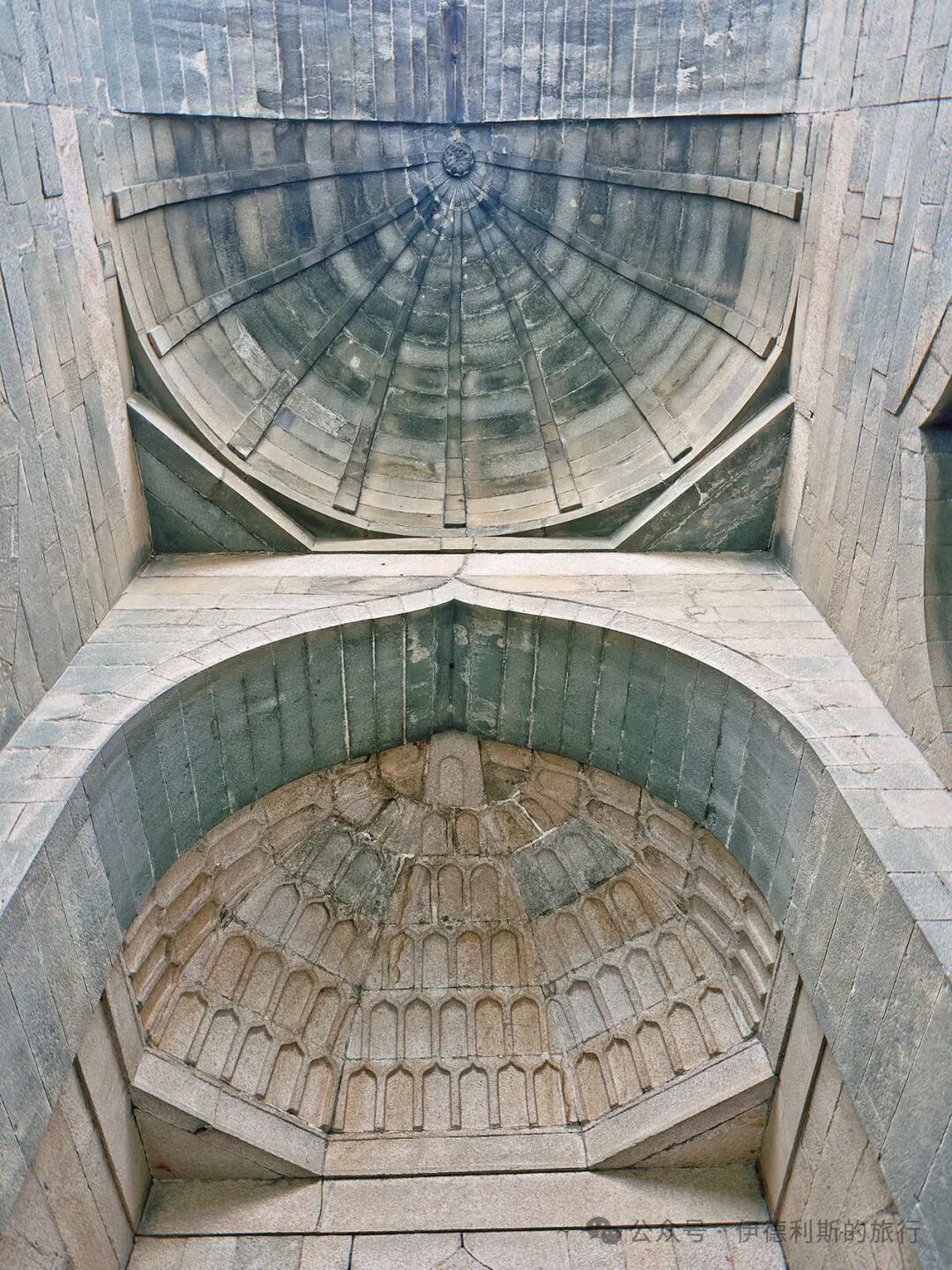
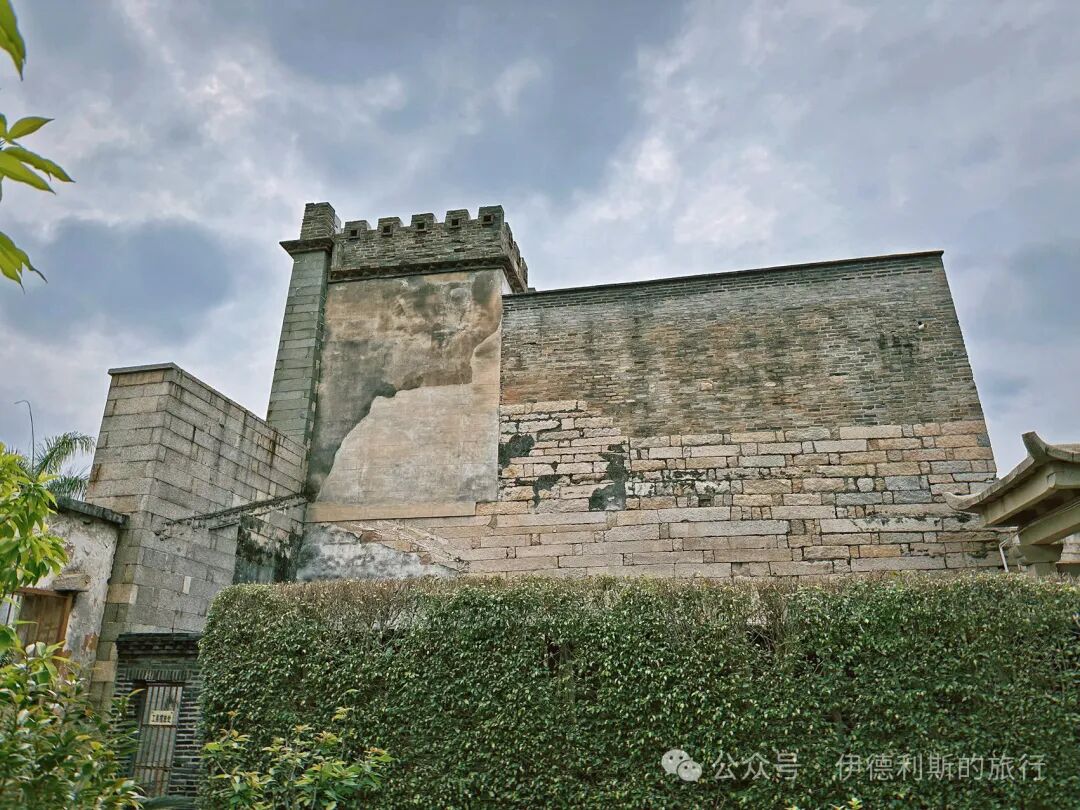
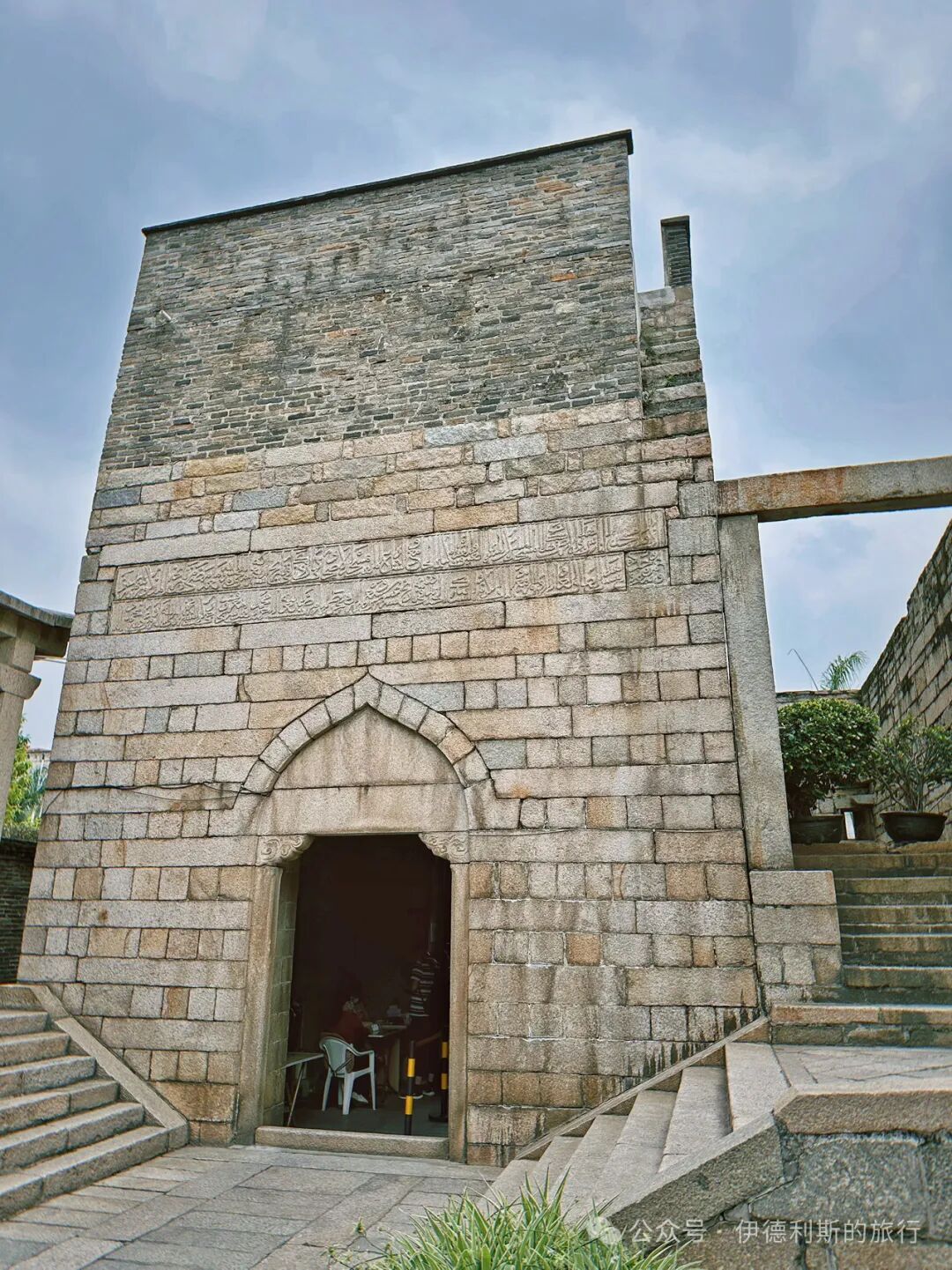
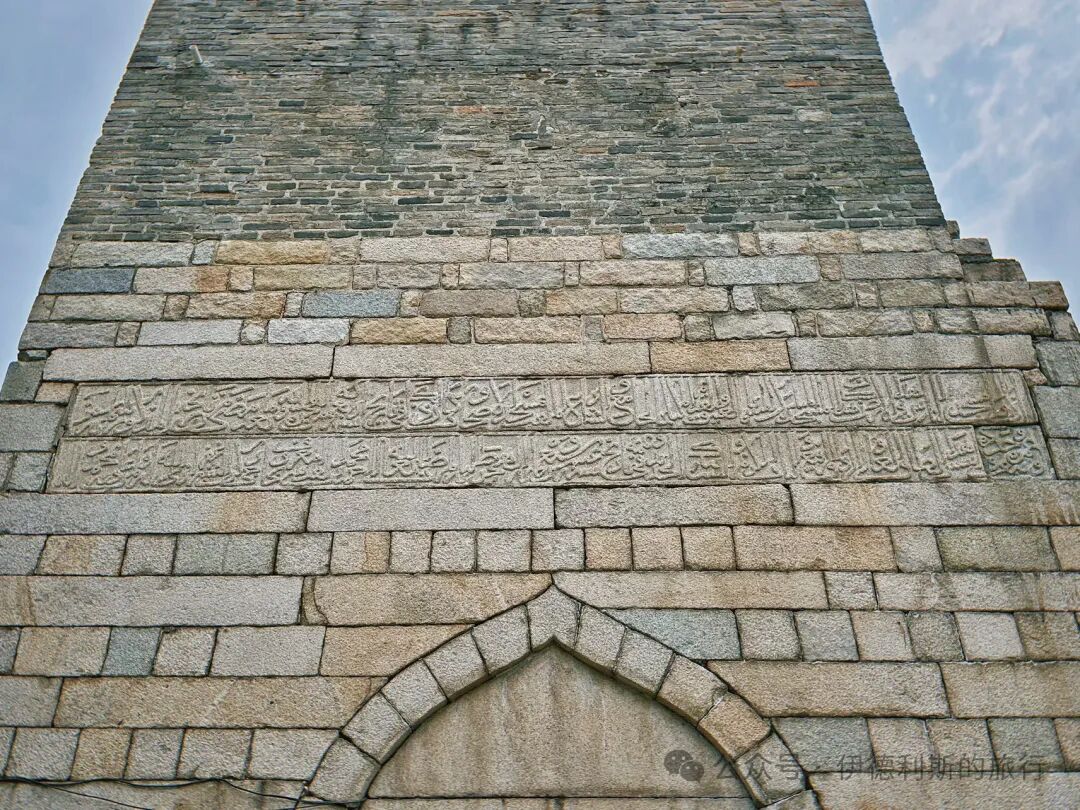
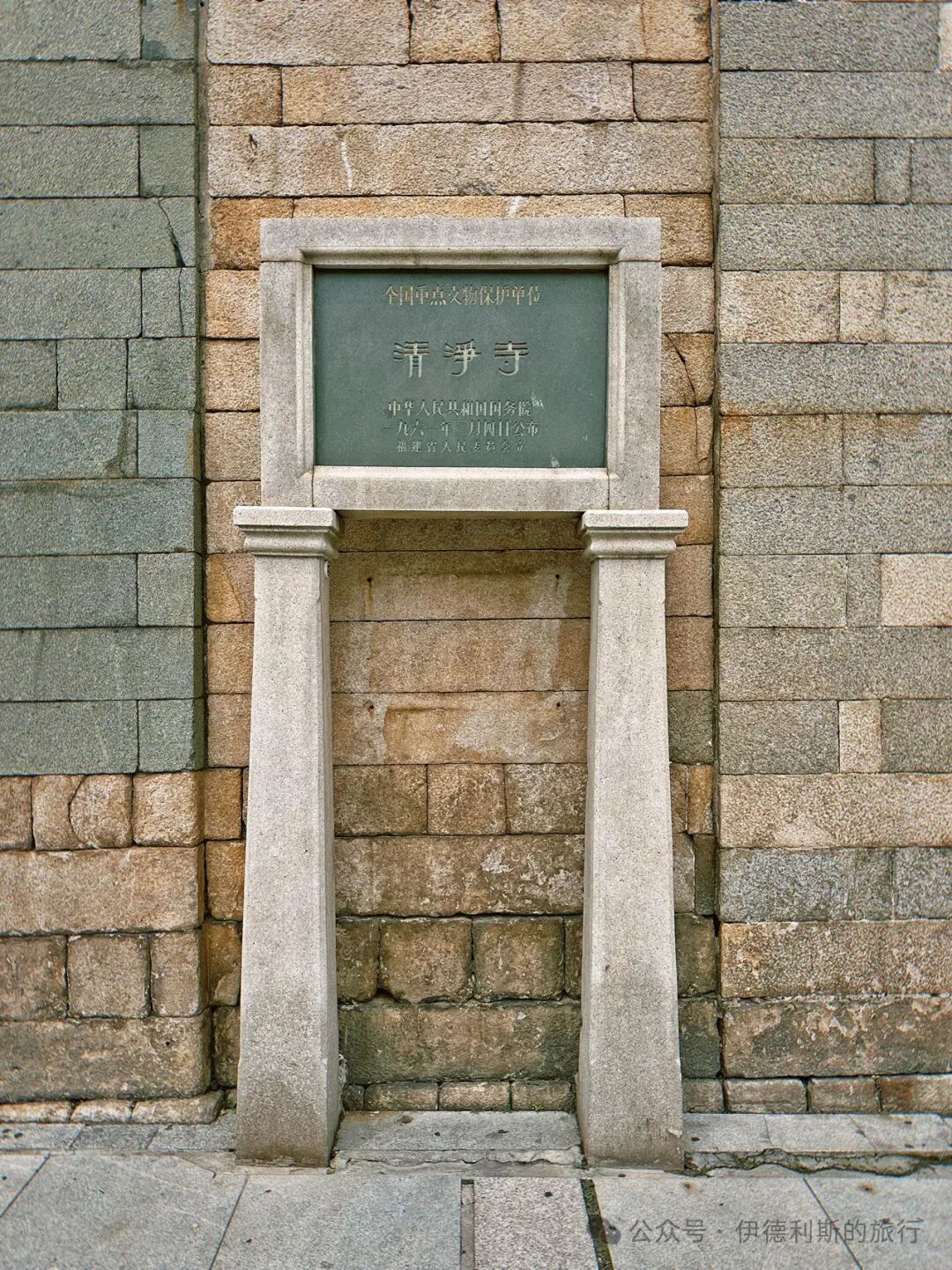
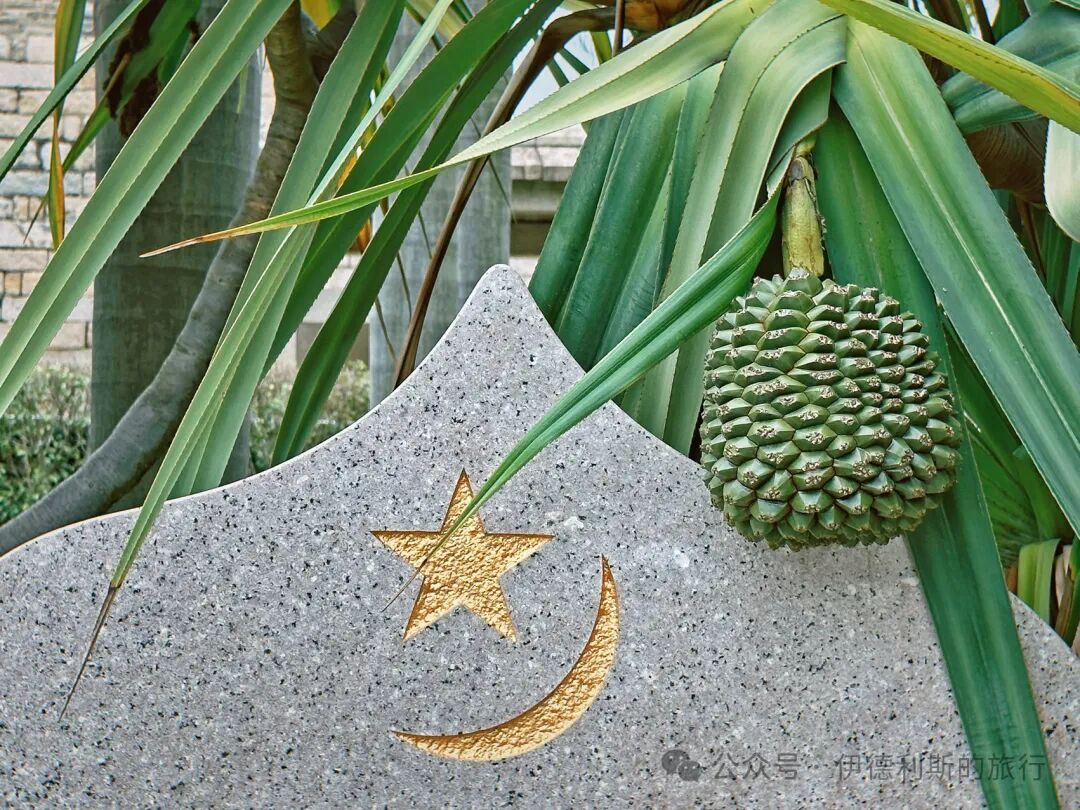
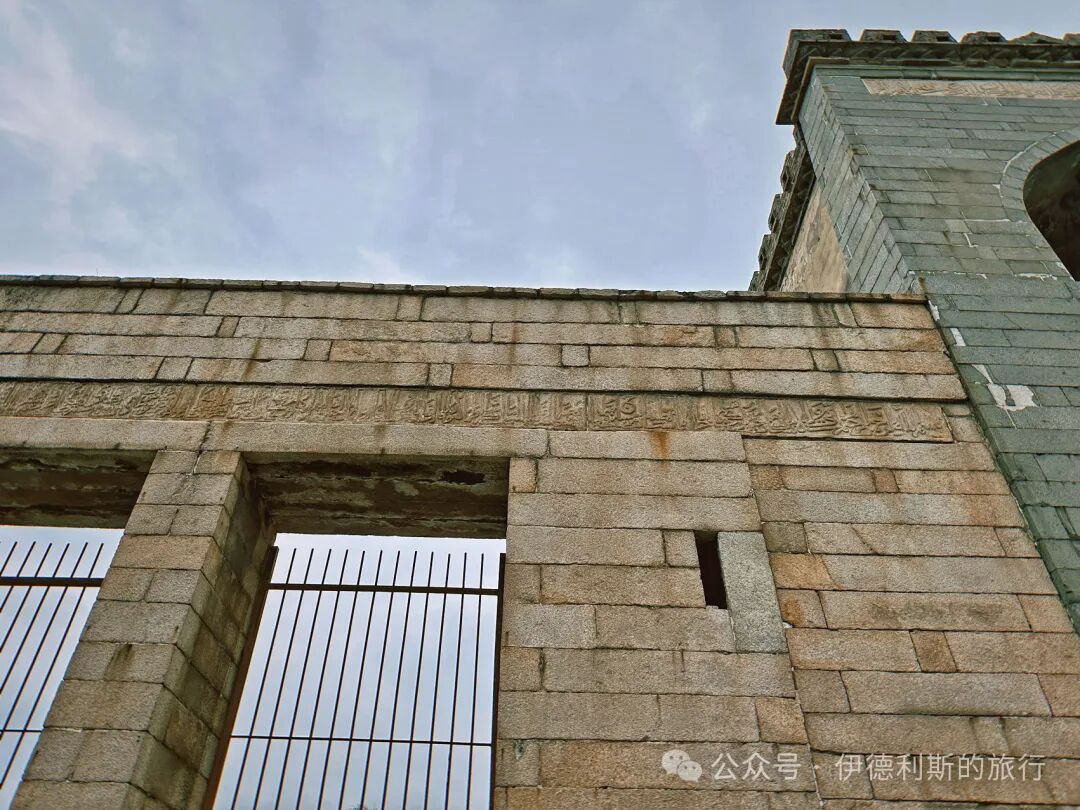
Inside the main gate of the Qingjing Mosque, on the east side, stand two stone tablets from the Ming Dynasty. The first one, the Stele for the Re-establishment of Qingjing Mosque (Chongli Qingjing Si Bei), was originally written by Wu Jian in 1350 (the tenth year of the Zhizheng era of the Yuan Dynasty) and kept in the Qingjing Mosque, which was built in 1131 (the first year of the Shaoxing era of the Southern Song Dynasty) in the south of Quanzhou city. The Qingjing Mosque was destroyed at the end of the Yuan Dynasty, and the stone tablet was moved to the Shengyou Mosque in the east of the city. When the Shengyou Mosque was renovated in 1507 (the second year of the Zhengde era of the Ming Dynasty), the inscription was re-carved. Over time, the Shengyou Mosque was renamed the Qingjing Mosque.
The second tablet is the Record of the Renovation of Qingjing Mosque (Chongxiu Qingjing Si Beiji), written by Li Guangjin in 1609 (the 37th year of the Wanli era of the Ming Dynasty).
Rubbings of these two stone tablets are also on display at the Quanzhou Maritime Museum. The Stele for the Re-establishment of Qingjing Mosque mentions the construction process of the Song and Yuan Dynasty Qingjing Mosque, which no longer exists: In the first year of the Shaoxing era of the Song Dynasty, a man named Nazhibu Muzhiluding came to Quanzhou from Sanawi on a merchant ship and founded this mosque in the south of Quanzhou city. It mentions that 'Sanawi' is the ancient Iranian port of Siraf on the north shore of the Persian Gulf.
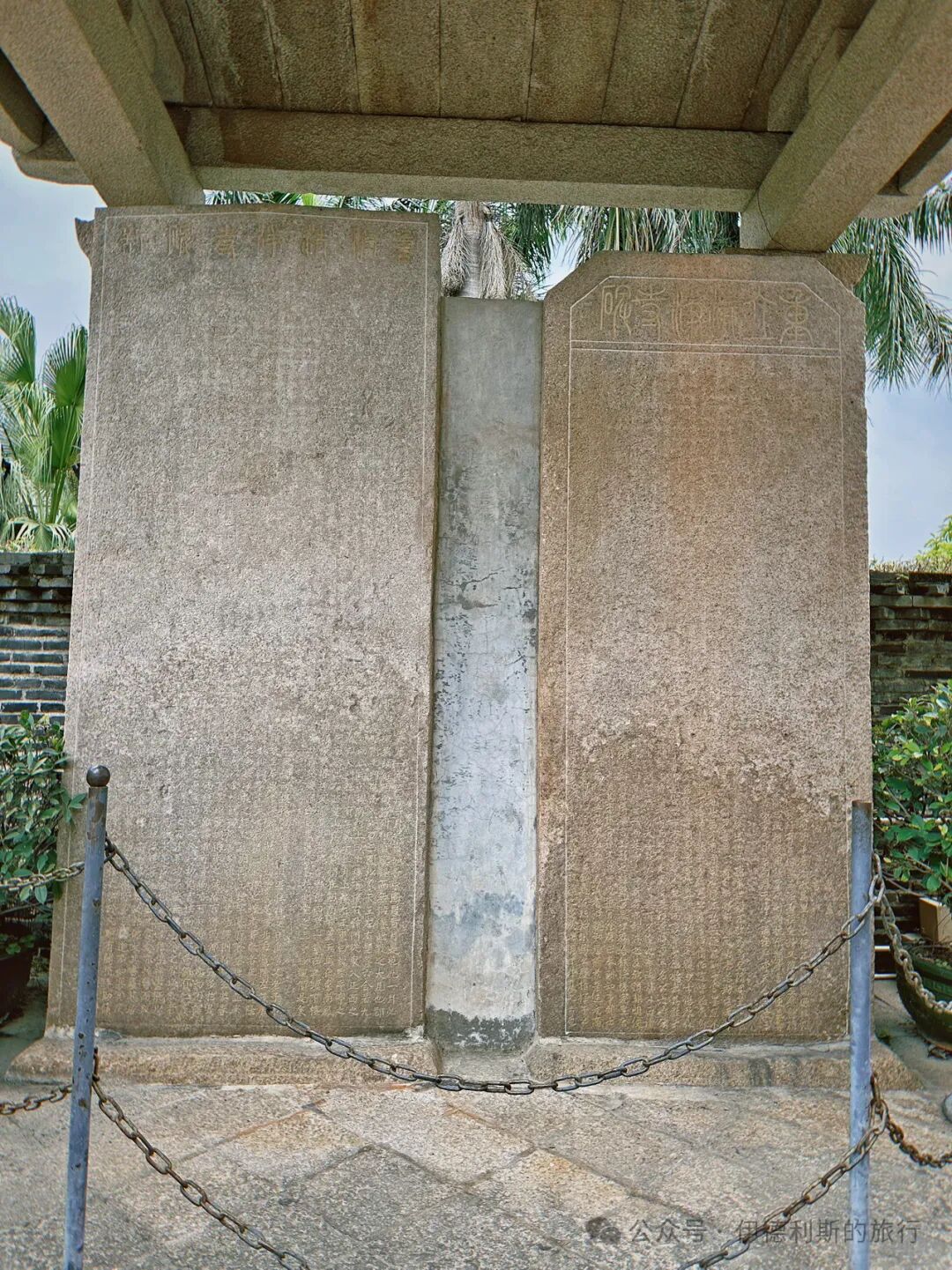
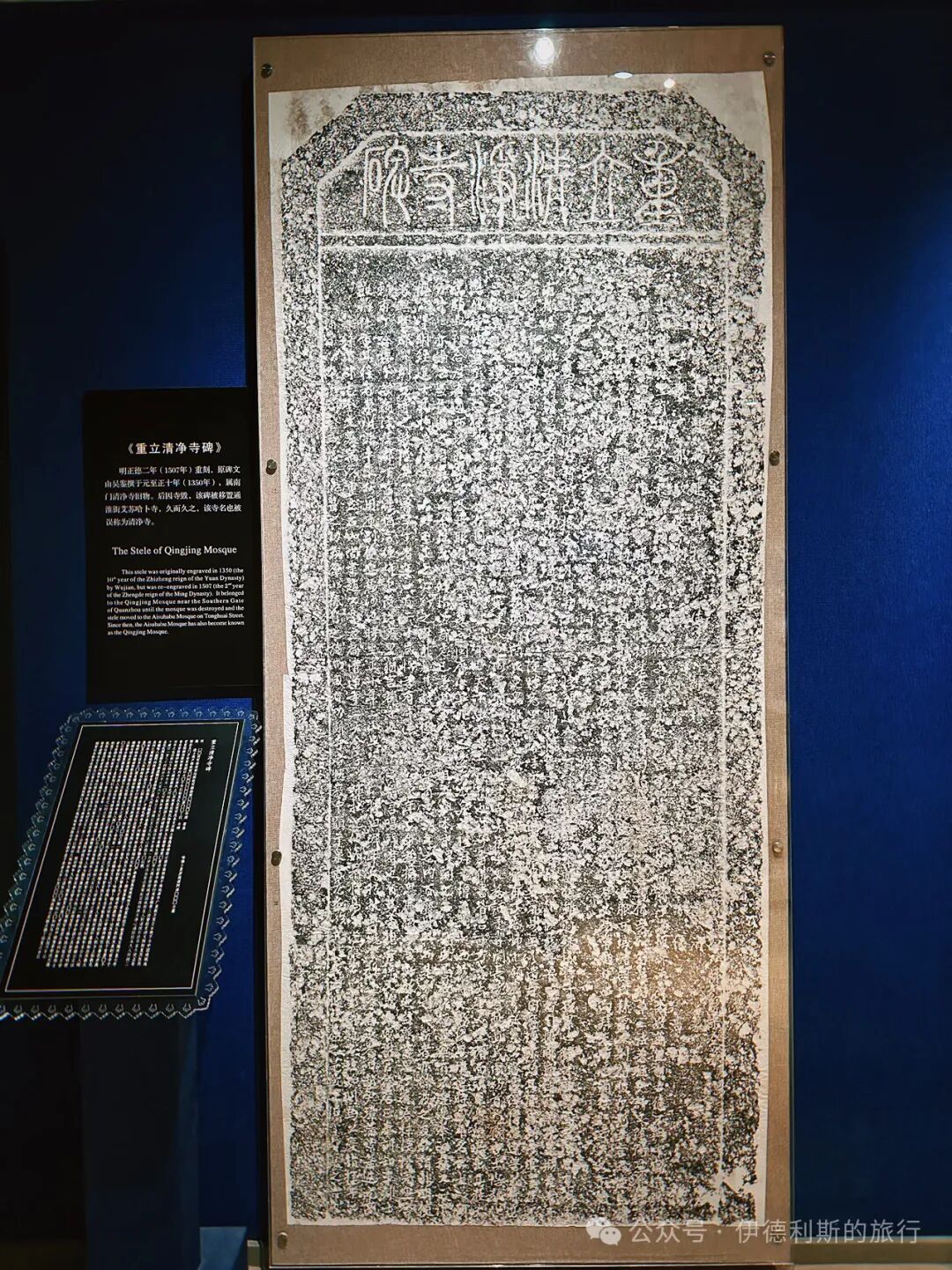
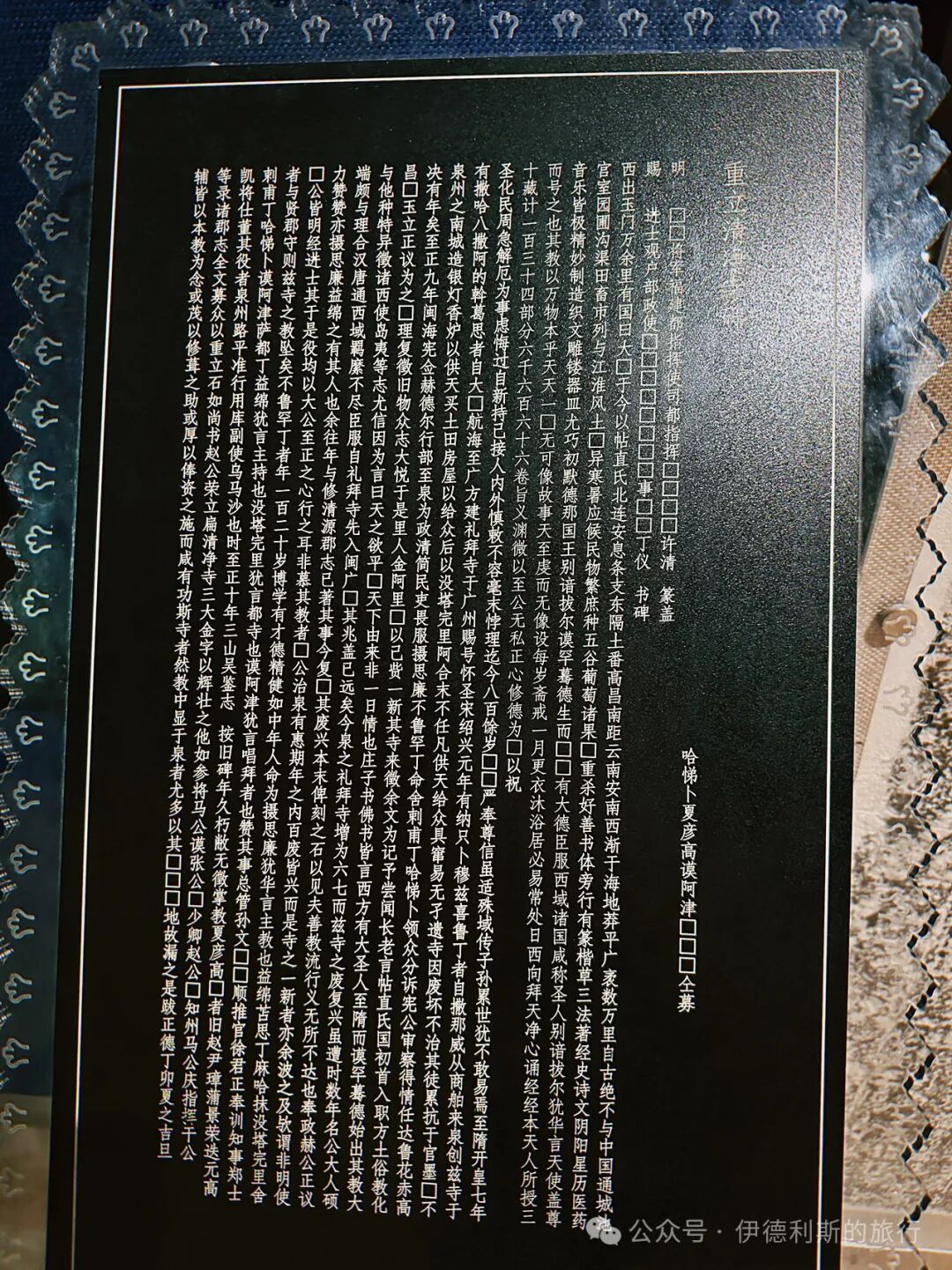
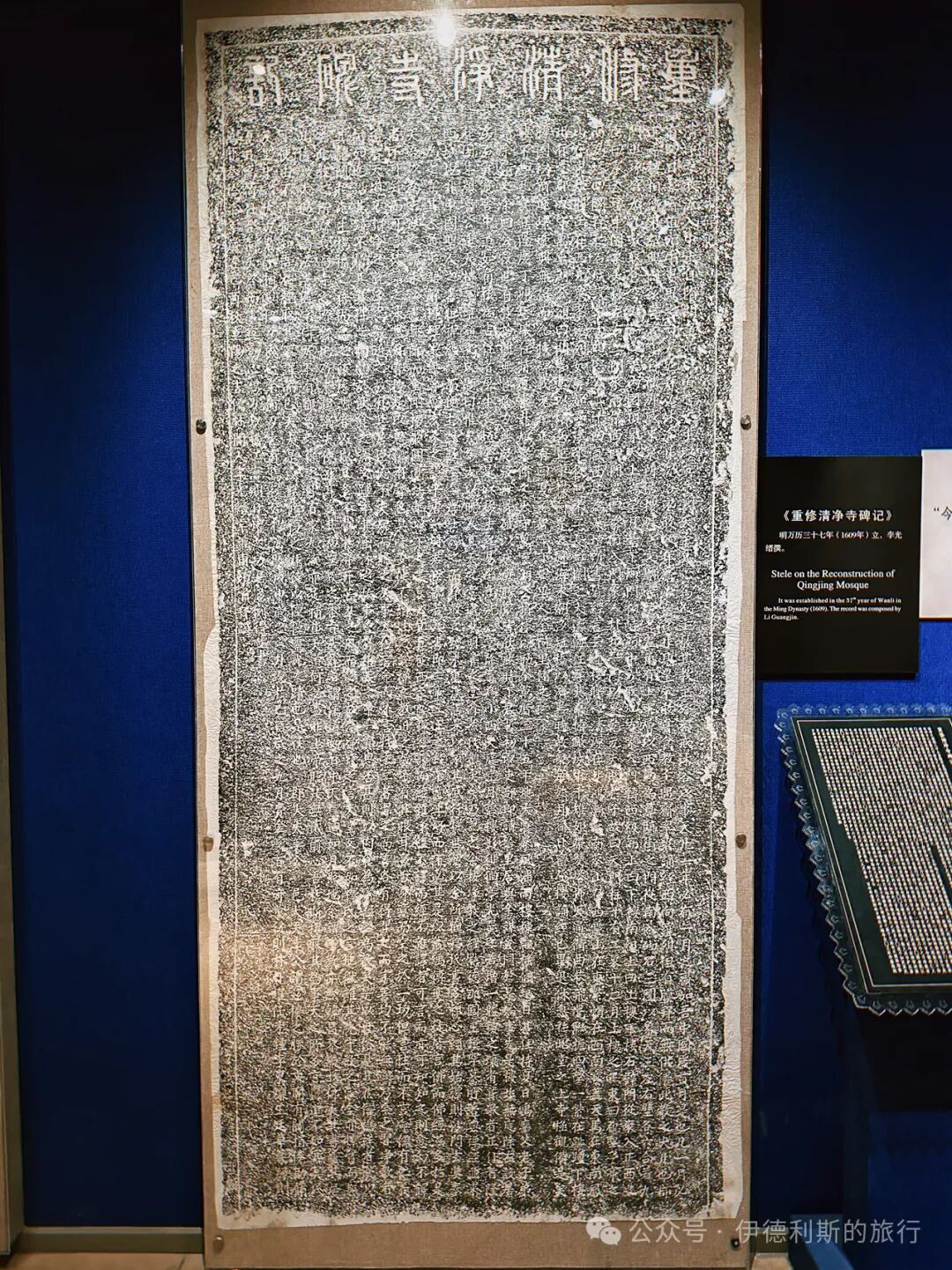
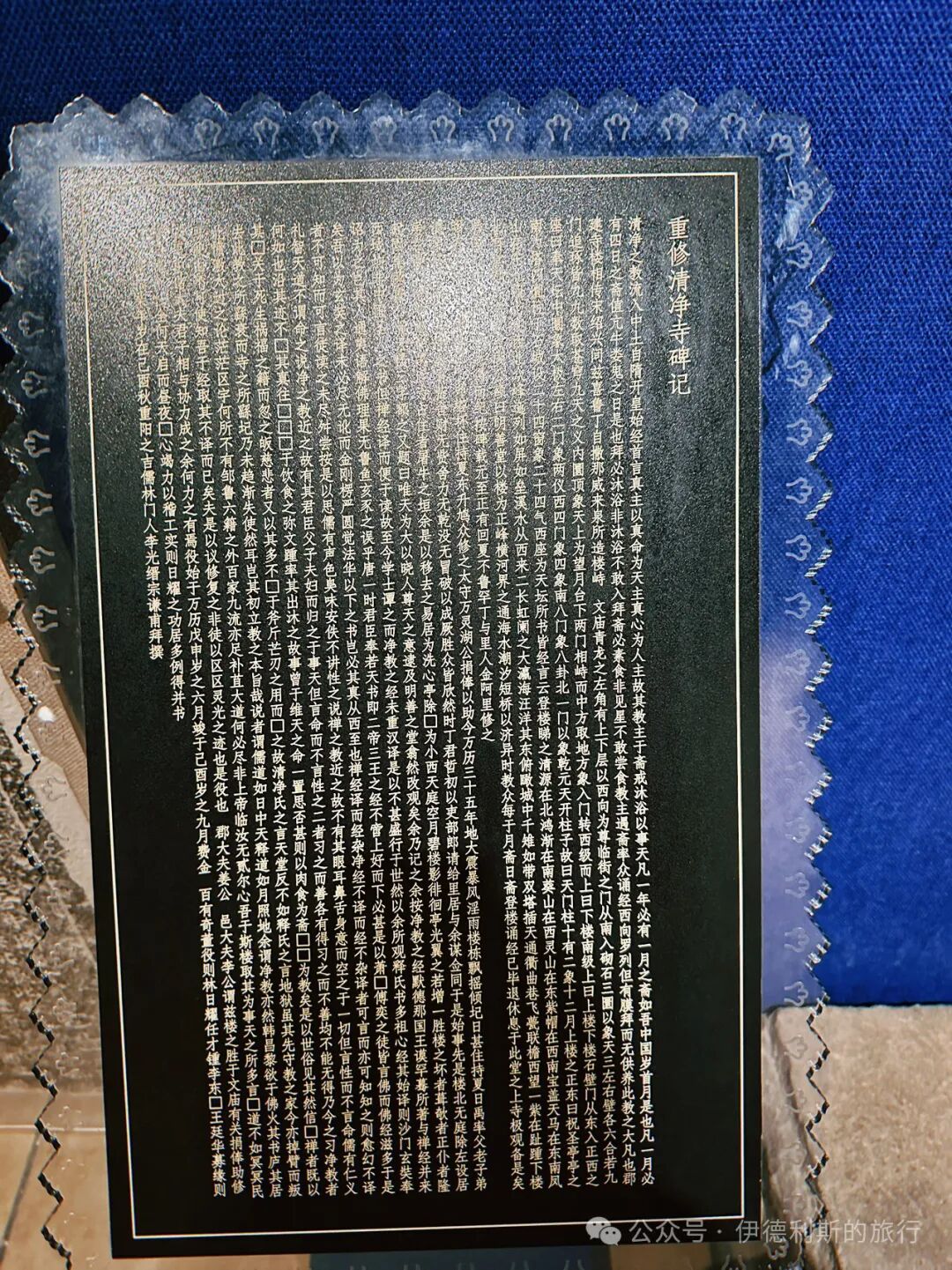
Turn left after entering the main gate to reach the entrance of the prayer hall. Above the entrance, inside a pointed arch, are three lines of white granite carvings featuring verses from the Quran (2:125, 127).
Inside the prayer hall, the qibla wall has seven pointed-arch niches. The middle one, the mihrab known as the 'Altar of Heaven' (Fengtiantan), is the largest. Above the niches is a 13.2-meter-long stone carving entirely covered in Quranic verses. In the old days, Hui Muslims in Quanzhou called the 27th night of Ramadan, the 'Night of Power' (Laylat al-Qadr), the 'Night of Twenty-Eight.' On this day, every Hui Muslim family would prepare food. That evening, they would light a pair of large red candles on both sides of the mihrab Altar of Heaven to symbolize that the revelation of the scripture is brilliant and glorious.
Archaeological excavations of the prayer hall foundation in 1987 uncovered Yuan dynasty floor tiles, drainage ditches, and wall foundations 1.6 meters below the surface in the southwest corner. A row of Southern Song dynasty floor tiles was also found in the northwest corner.
Since the roof of the prayer hall collapsed in the early Qing dynasty, it is now impossible to know what its original shape was. According to the Ming dynasty Wanli era 'Stele Record of the Renovation of Qingjing Mosque,' it states: 'There are twelve pillars, representing the twelve months.' Based on the stone pillars and column bases remaining in the hall today, it seems they could not have supported an overly massive dome.
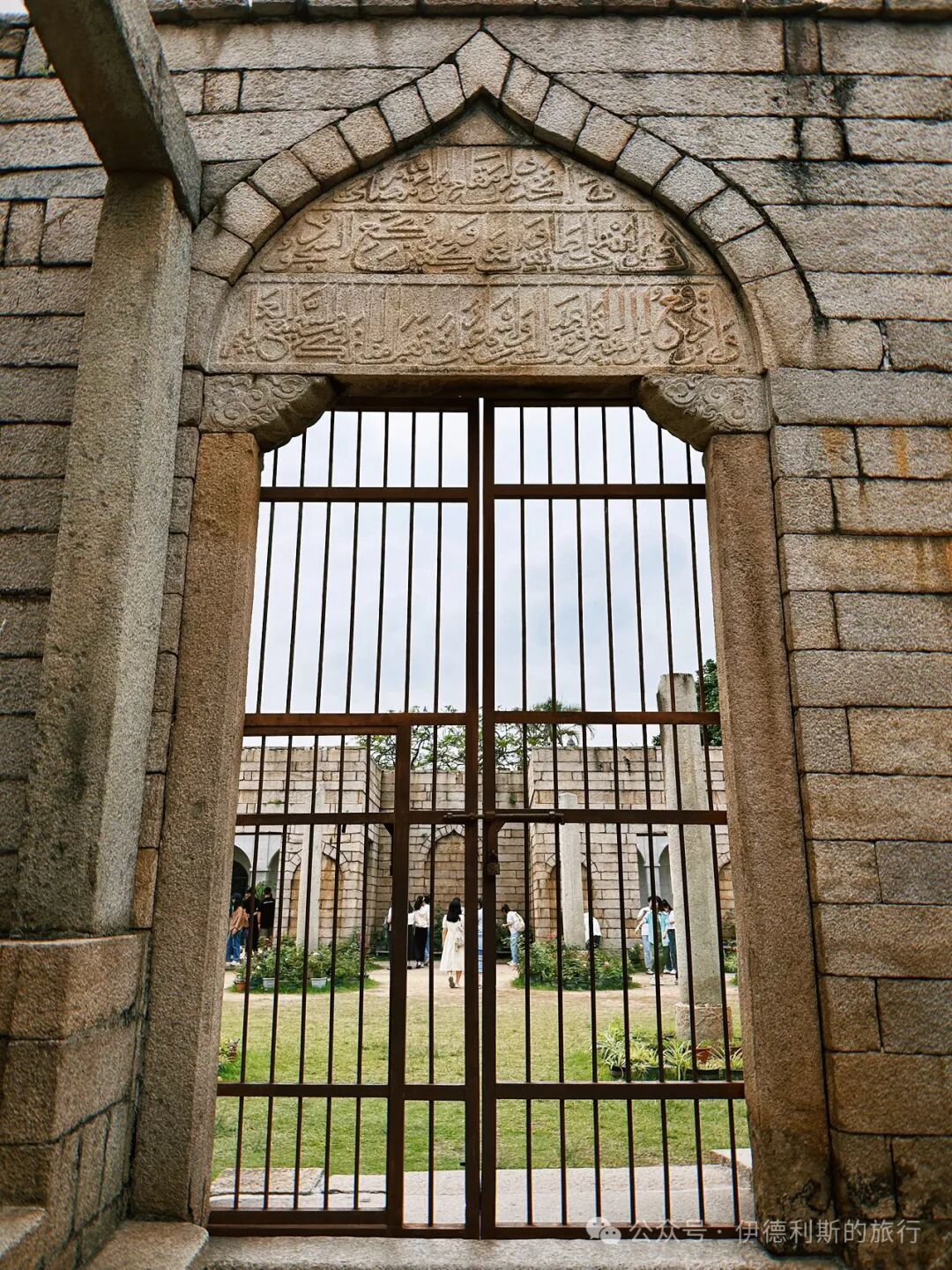
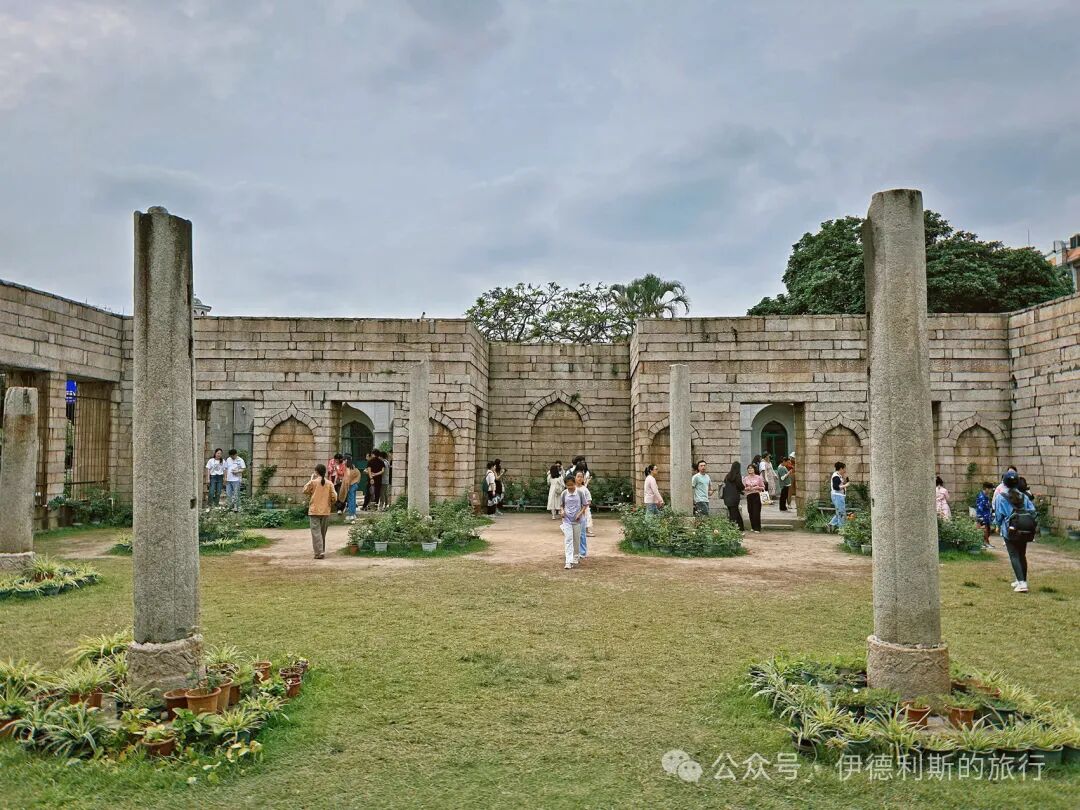
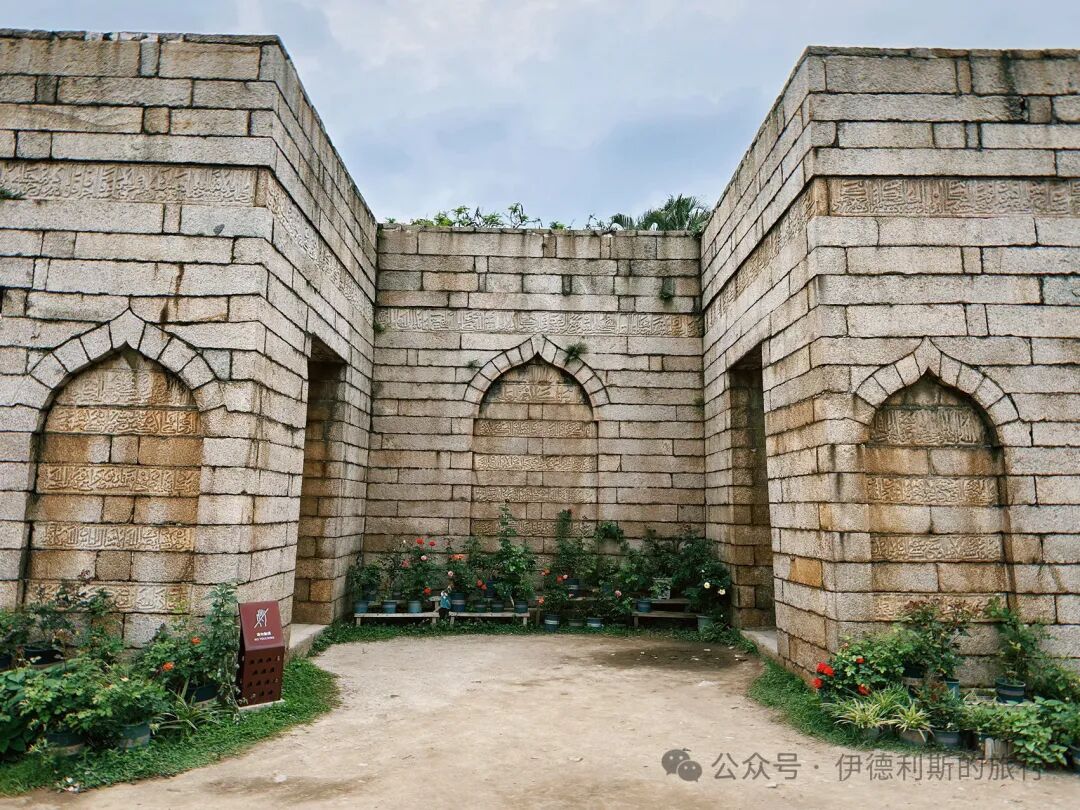
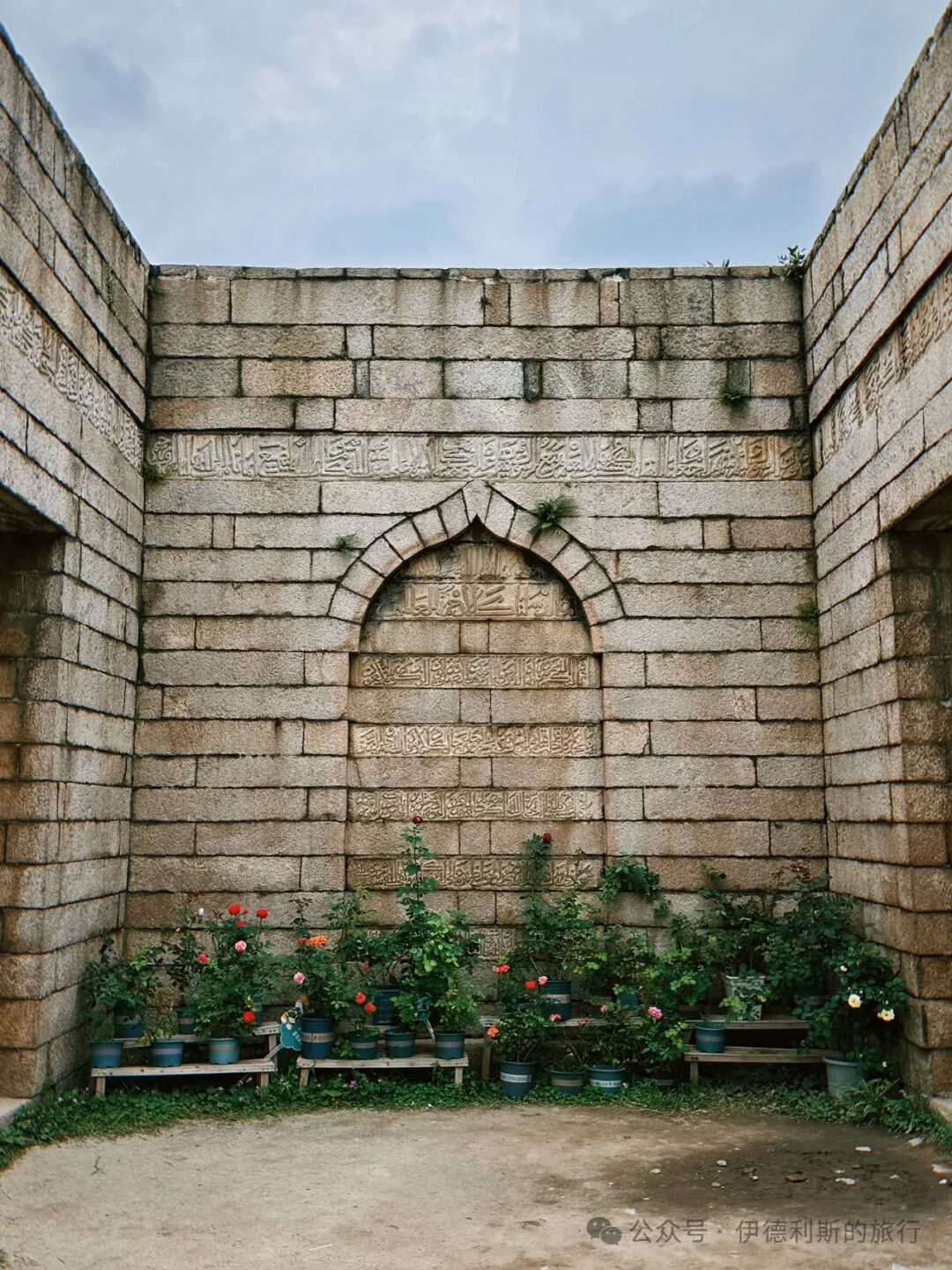
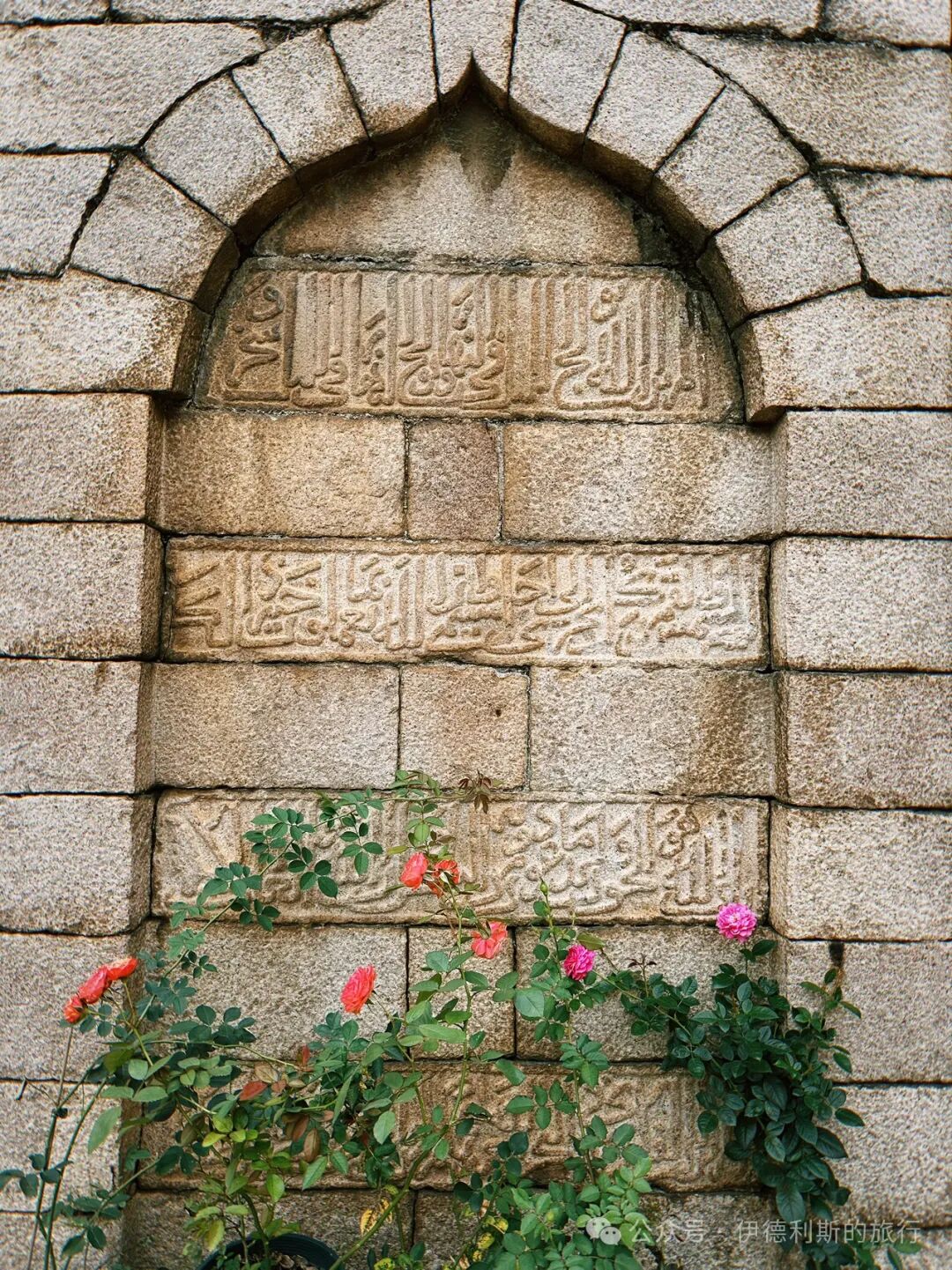
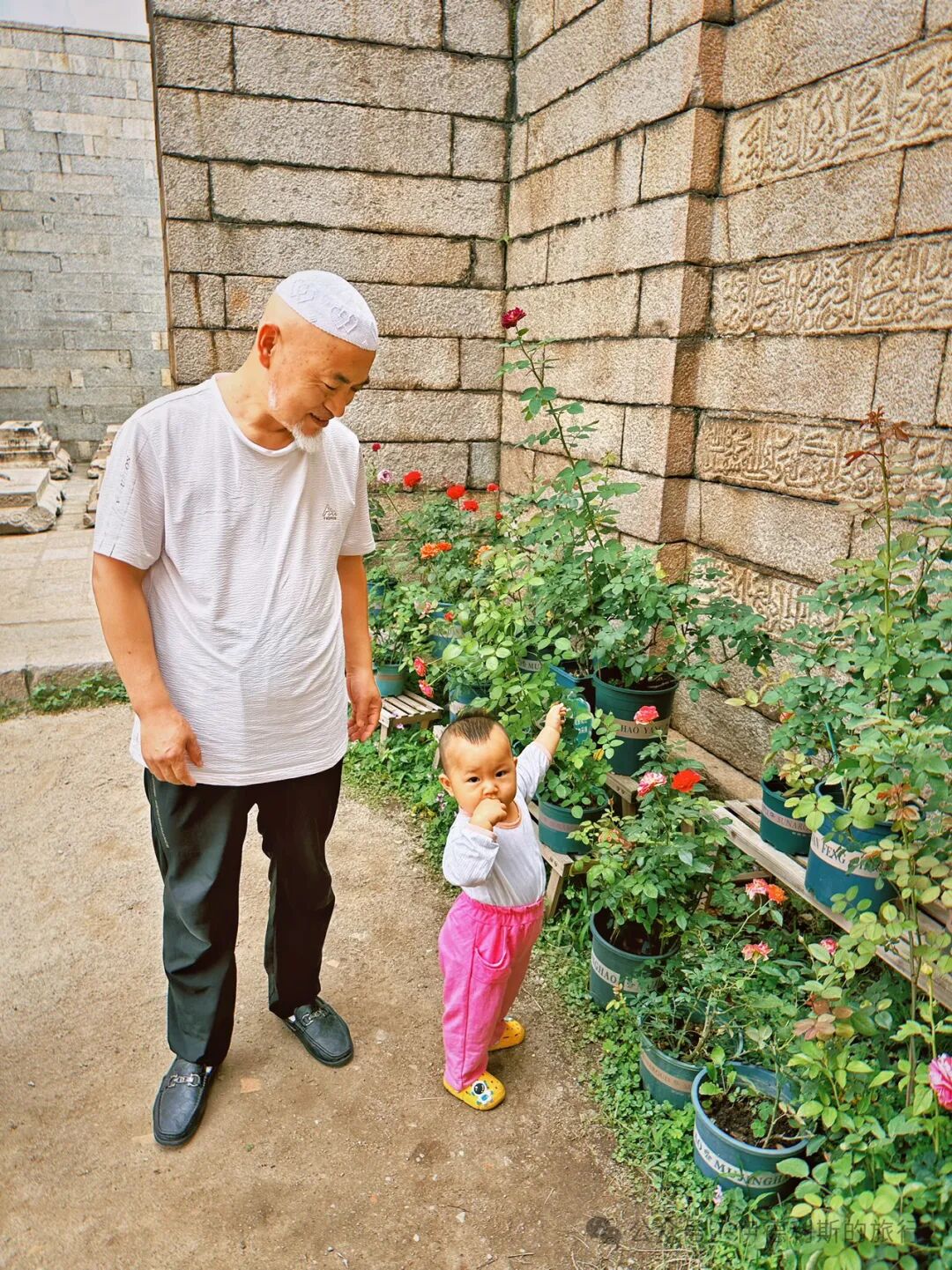
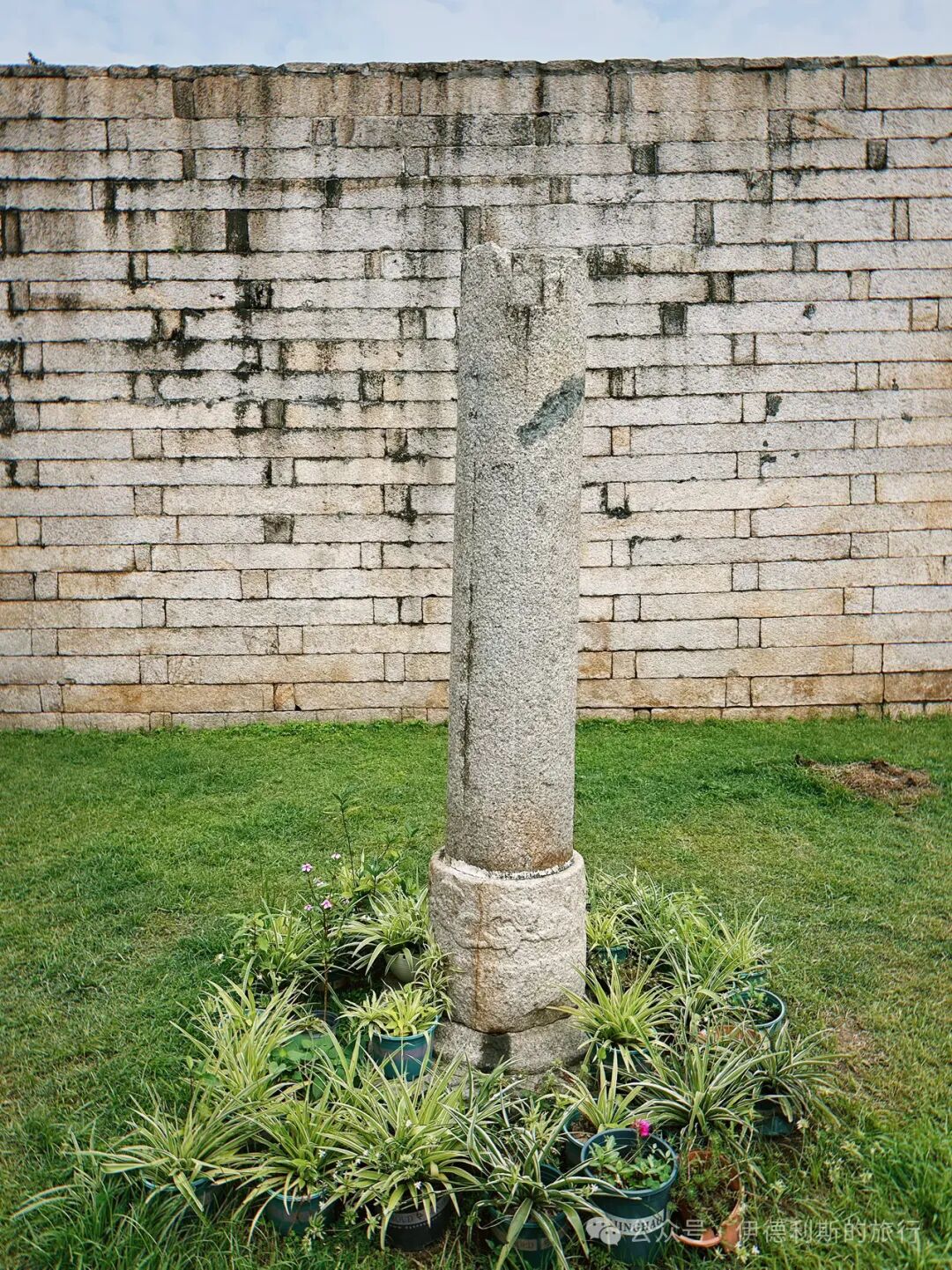
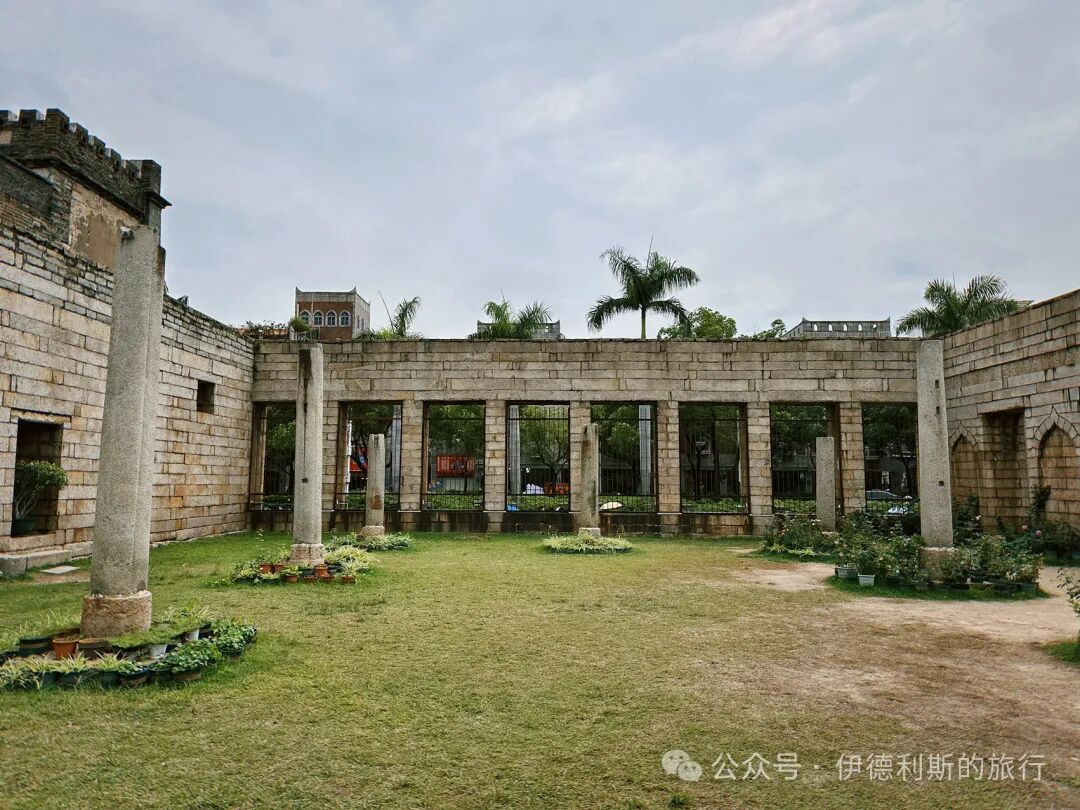
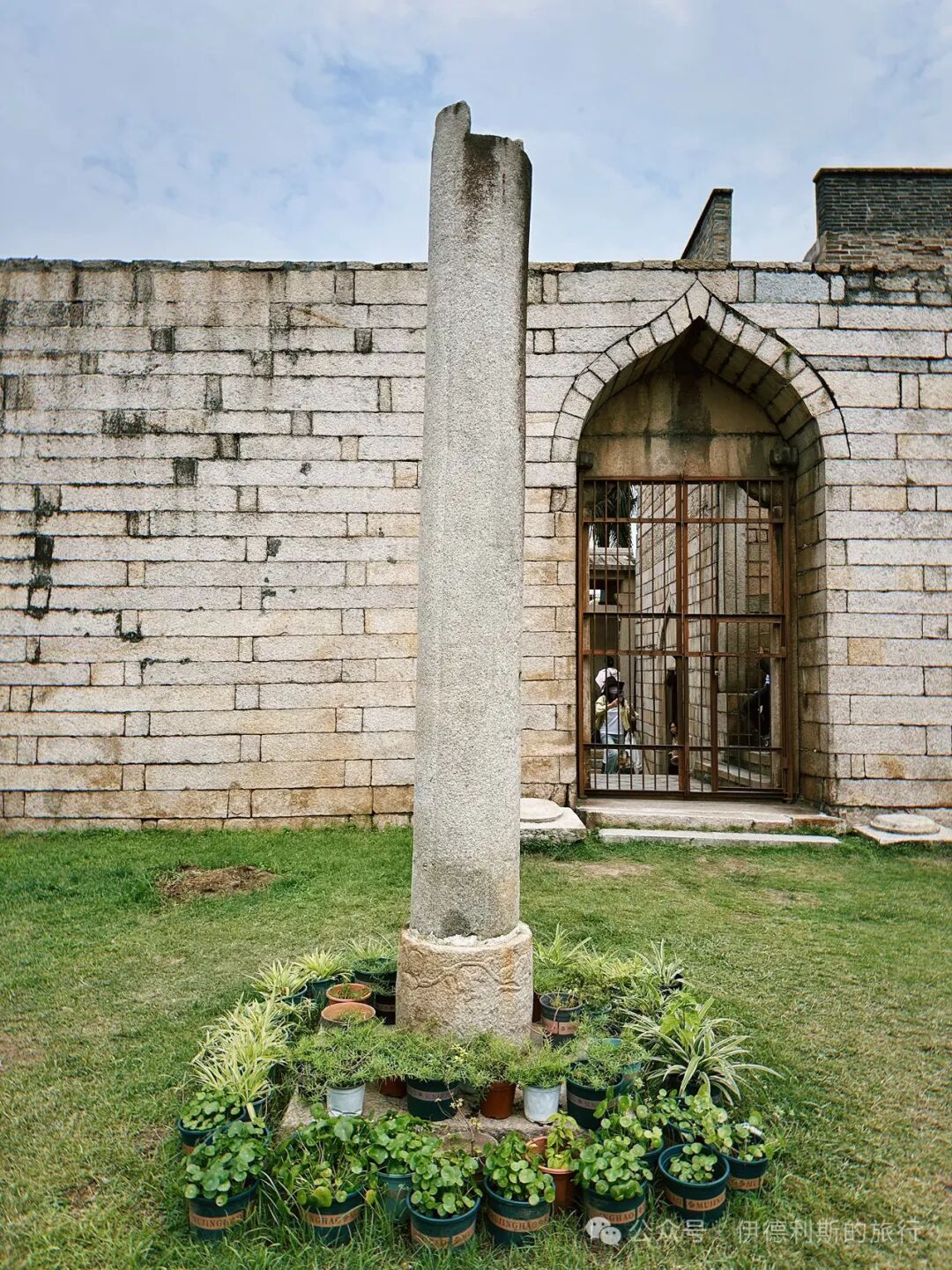
Mingshan Hall is full of tourists during the day.
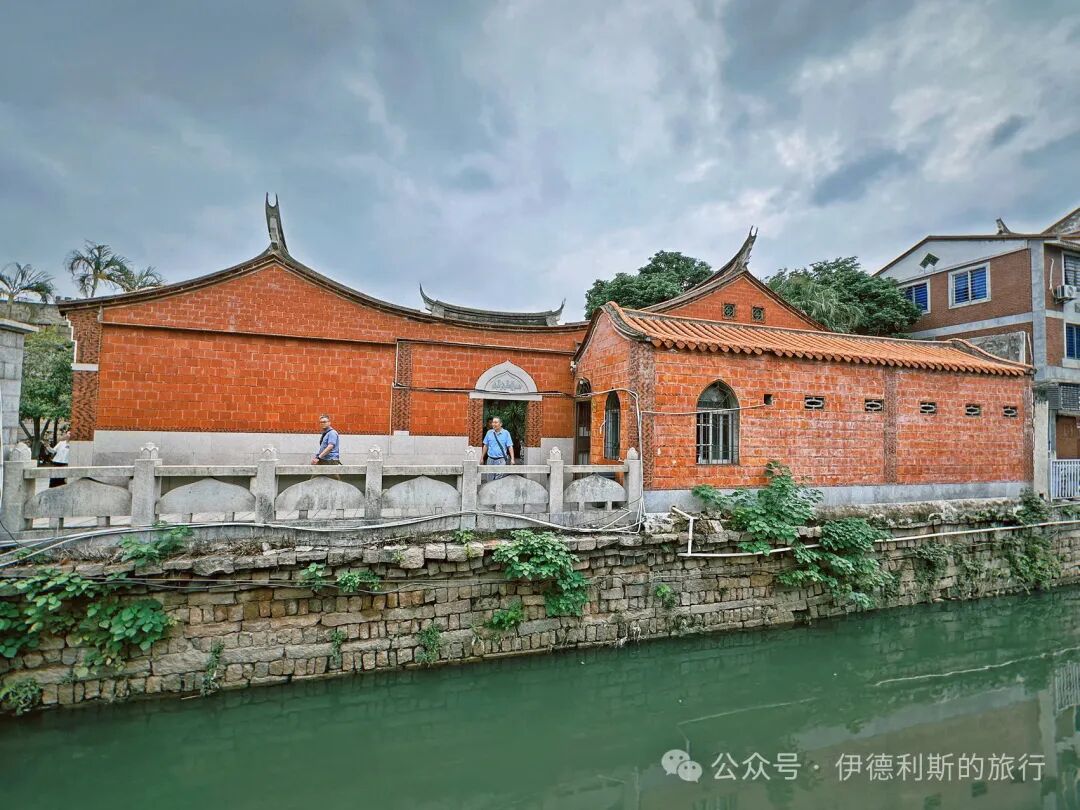
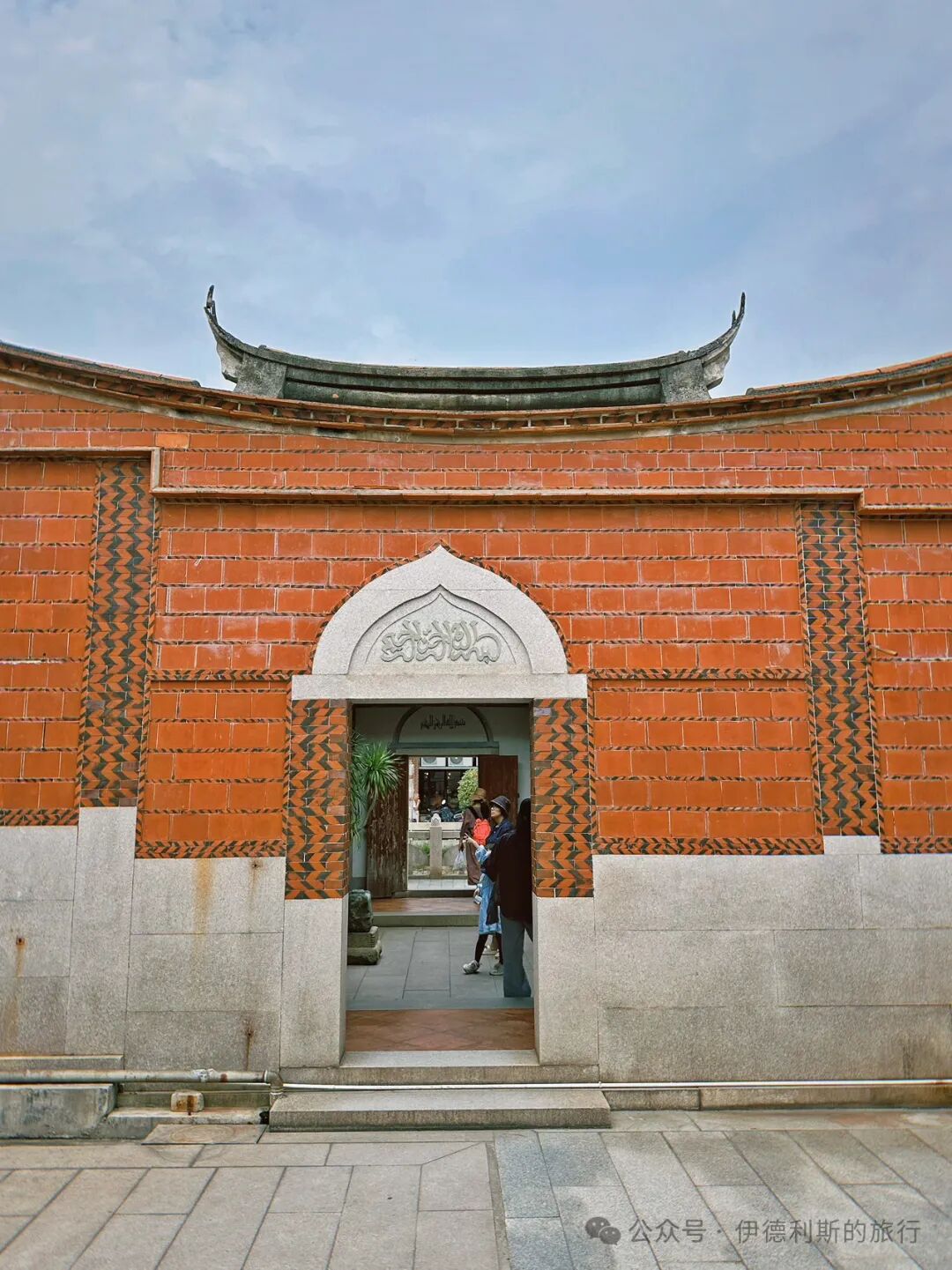
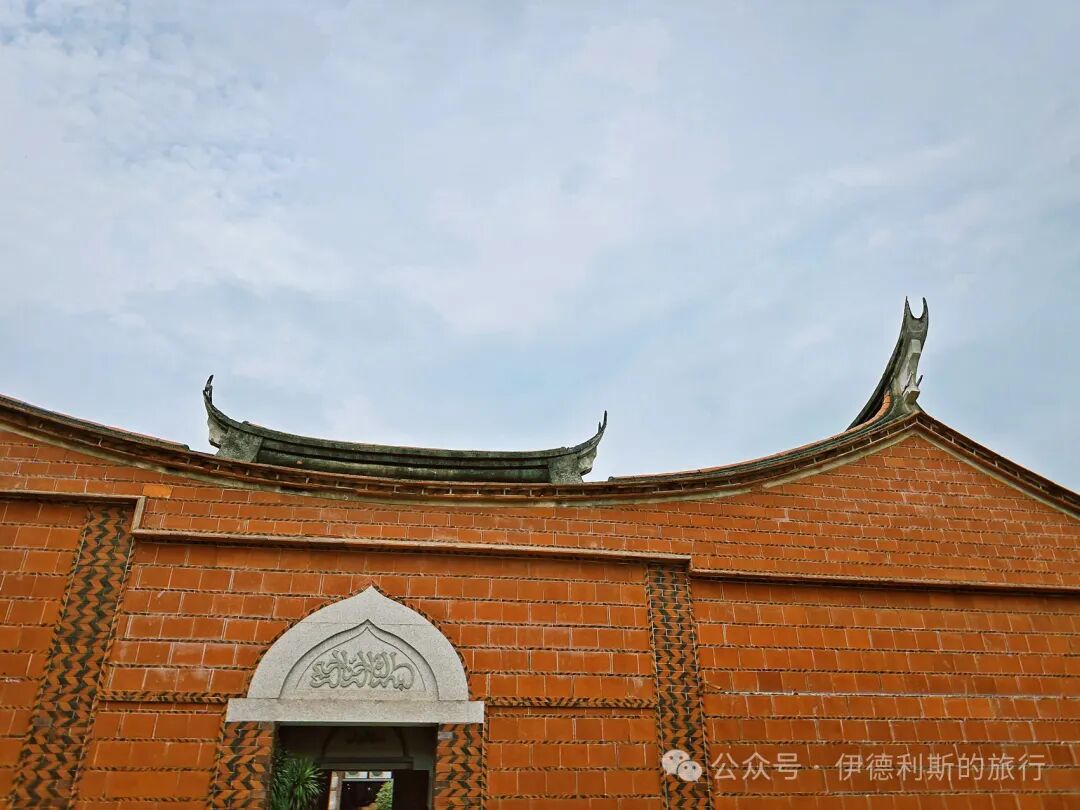
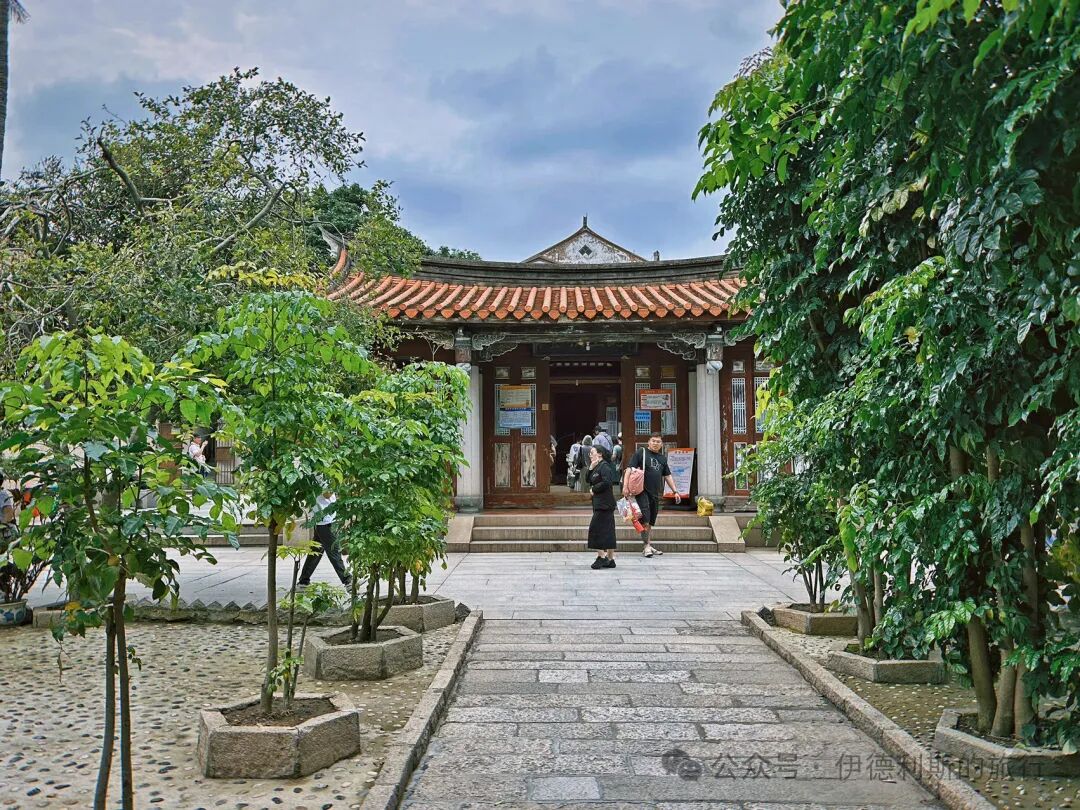
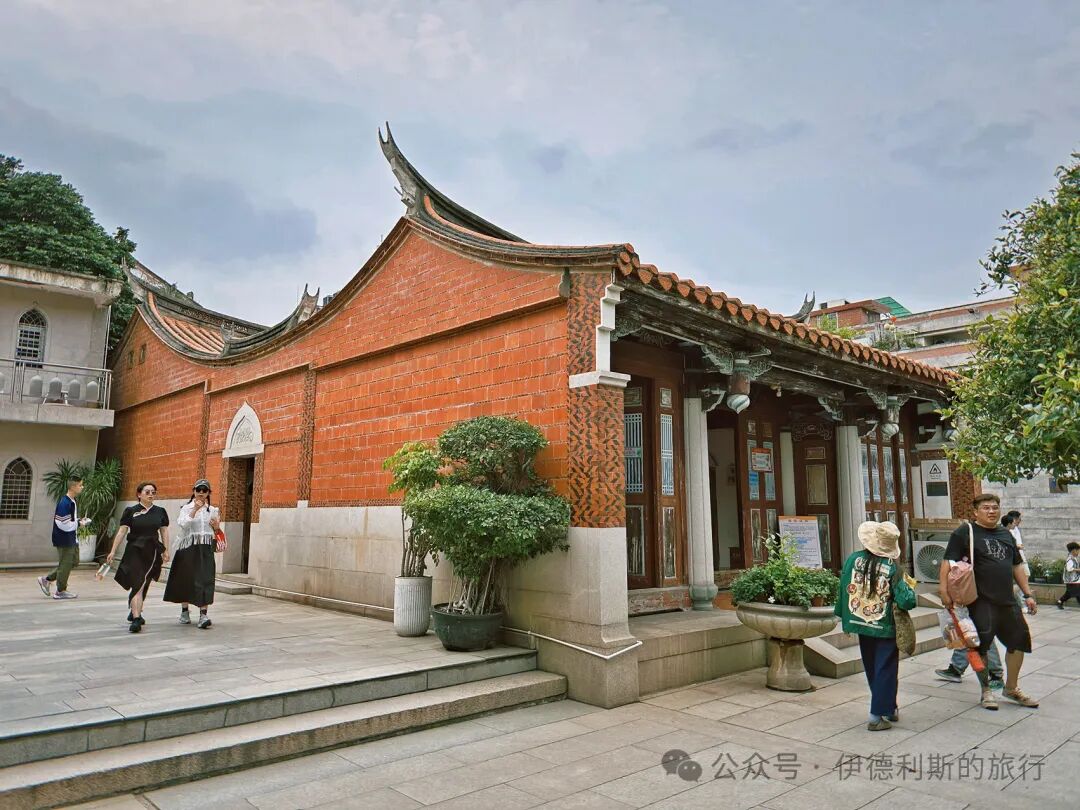
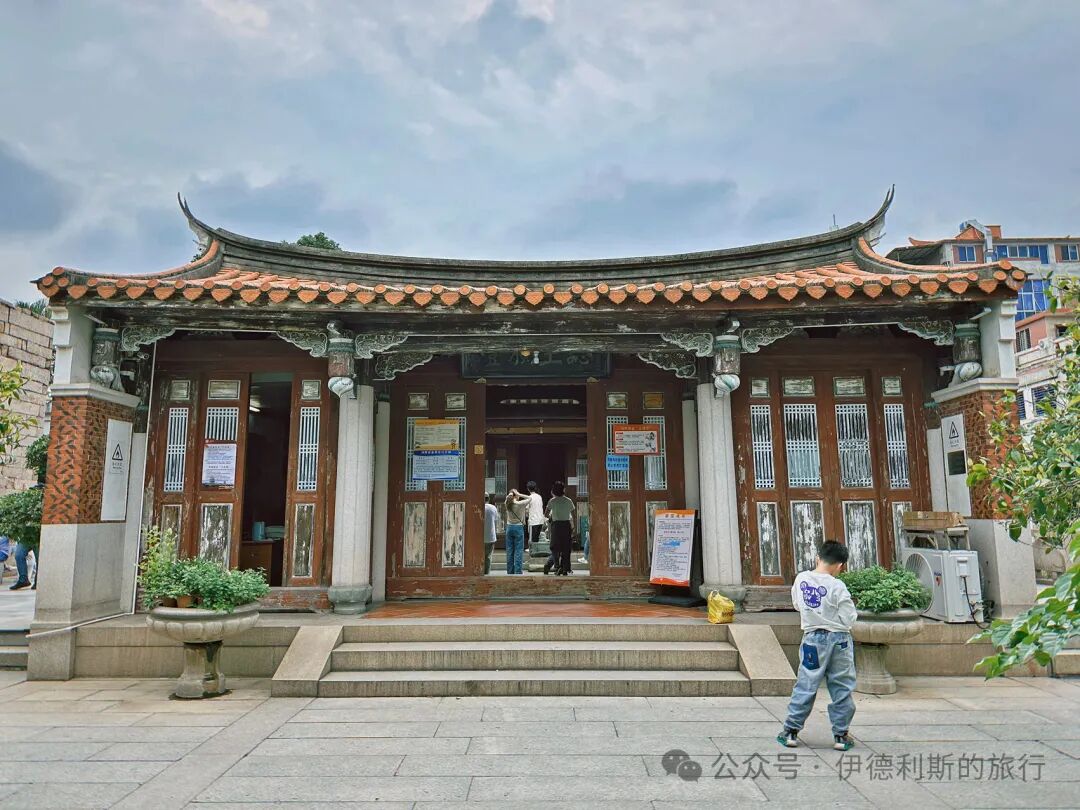
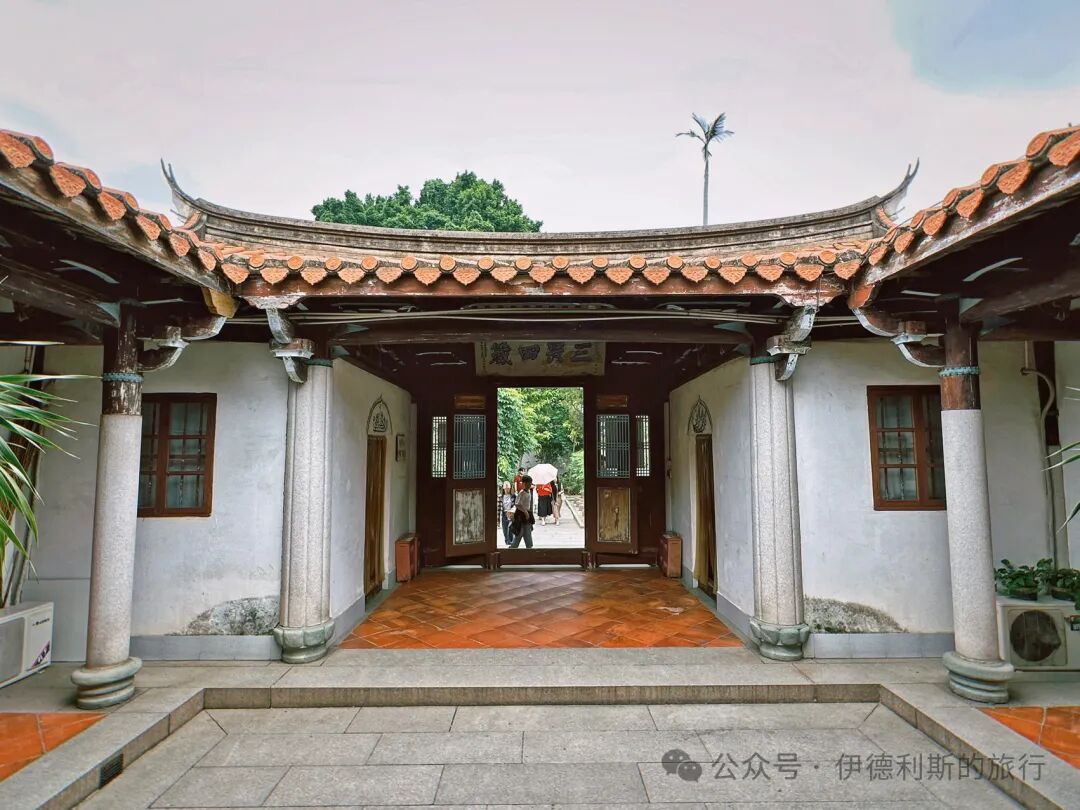
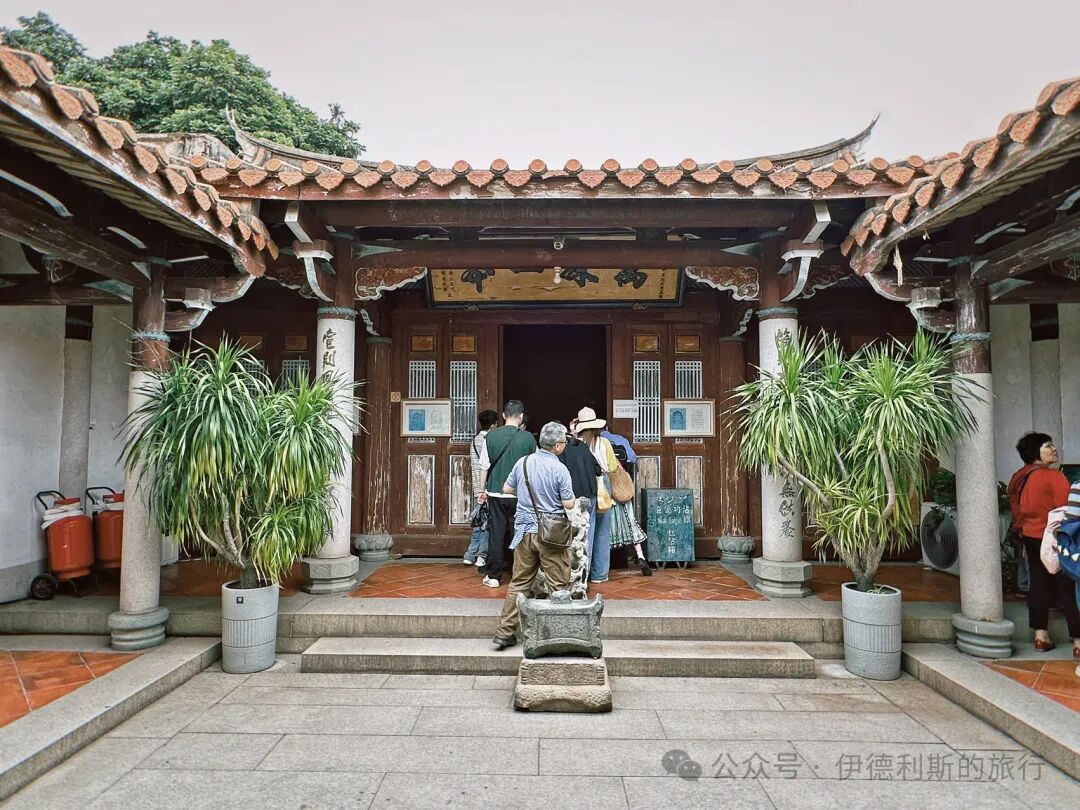
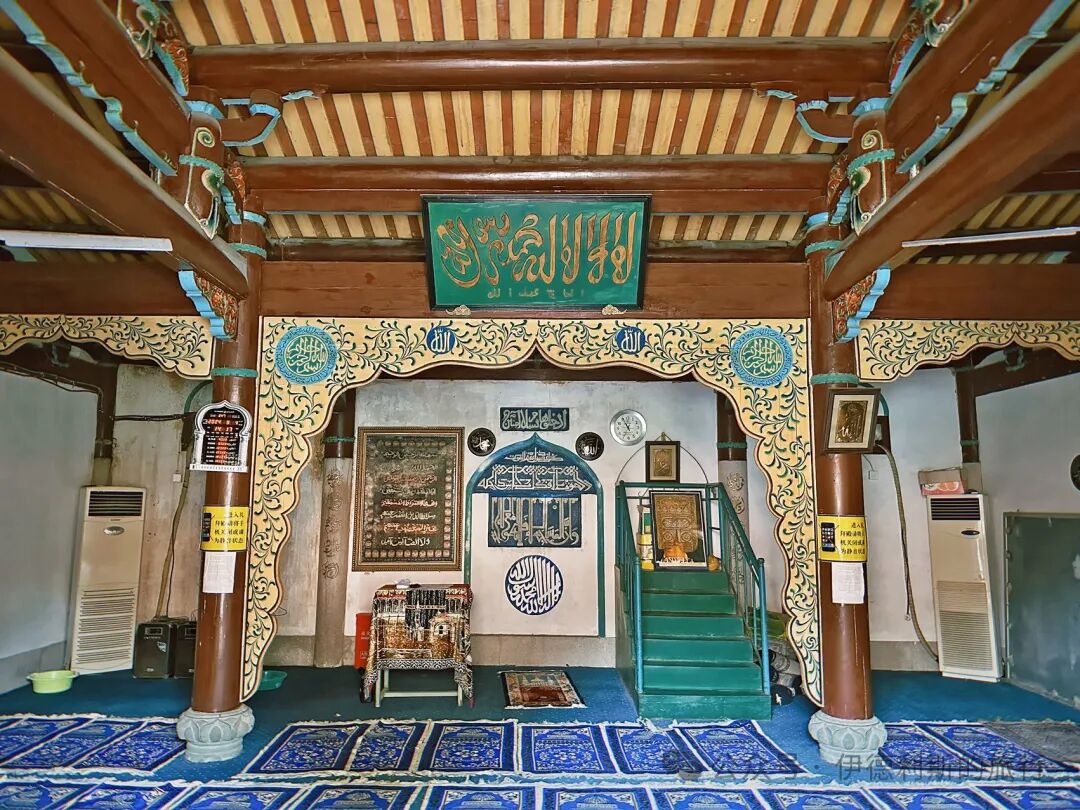
Inside the Mingshan Hall courtyard sits an exquisite Song Dynasty incense burner featuring a lotus flower rising from the water (chushui lianhua). The incense burner was originally inside the main hall of the Qingjing Mosque. It was moved to Mingshan Hall after the main hall's roof collapsed in the early Qing Dynasty.
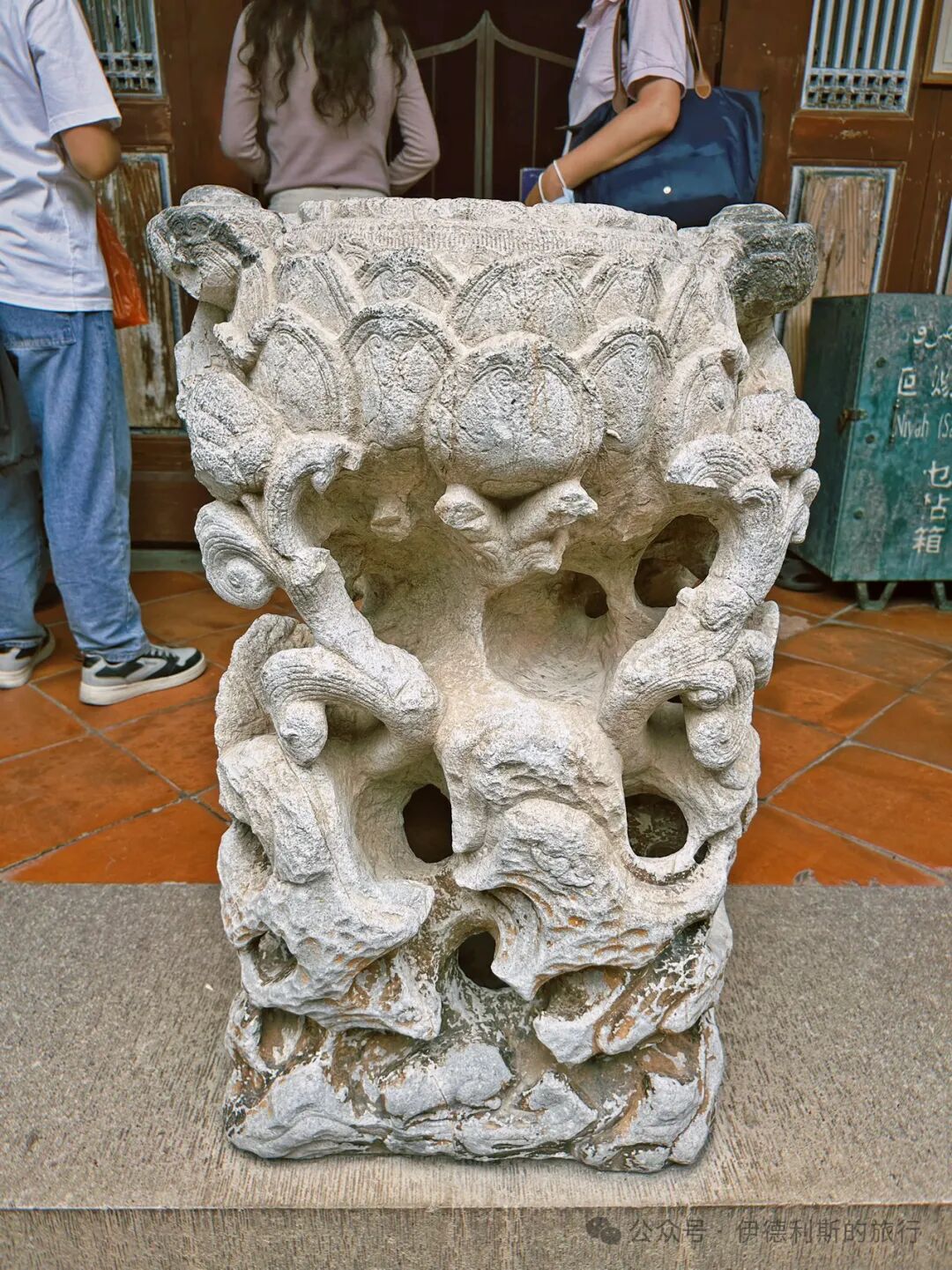
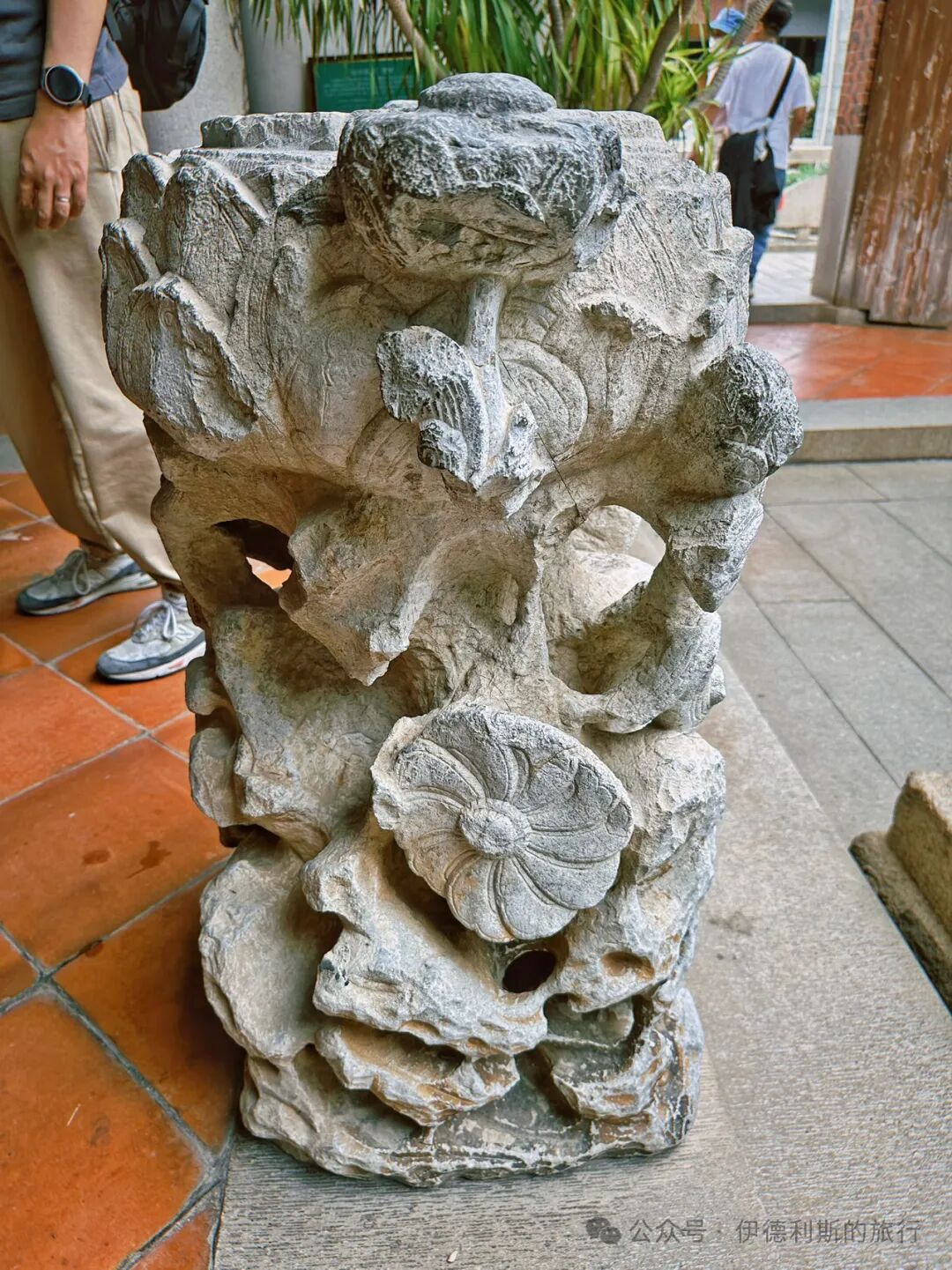
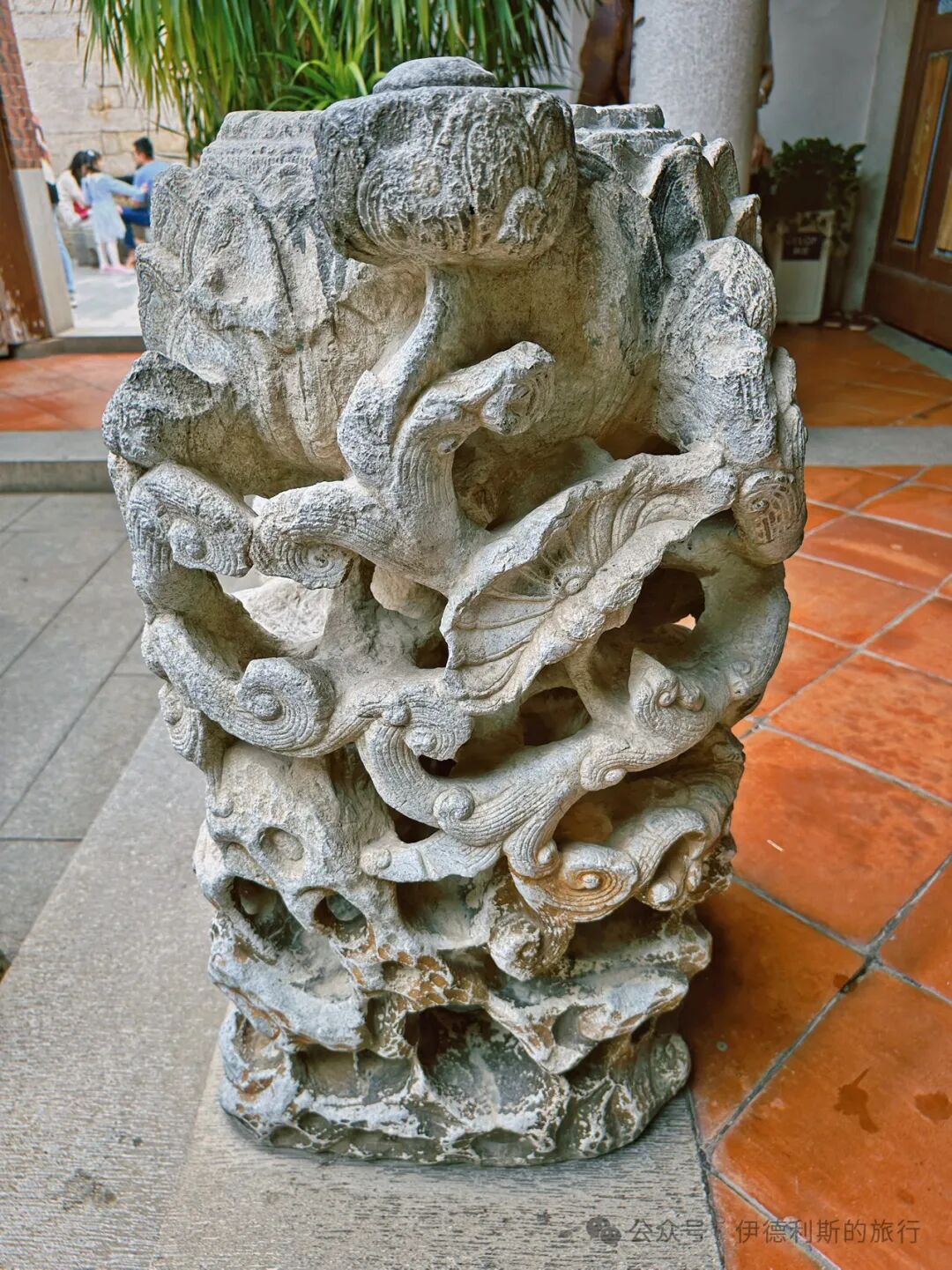
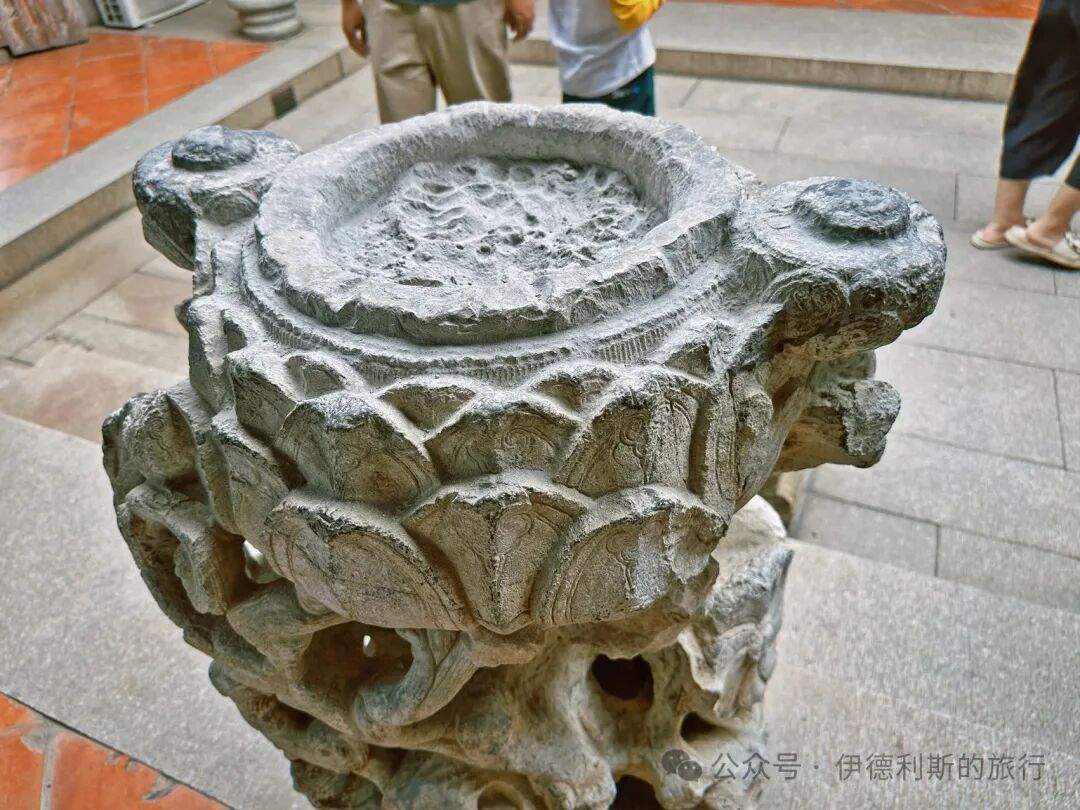
The Qingjing Mosque also preserves a thousand-year-old stone well from the Song Dynasty.
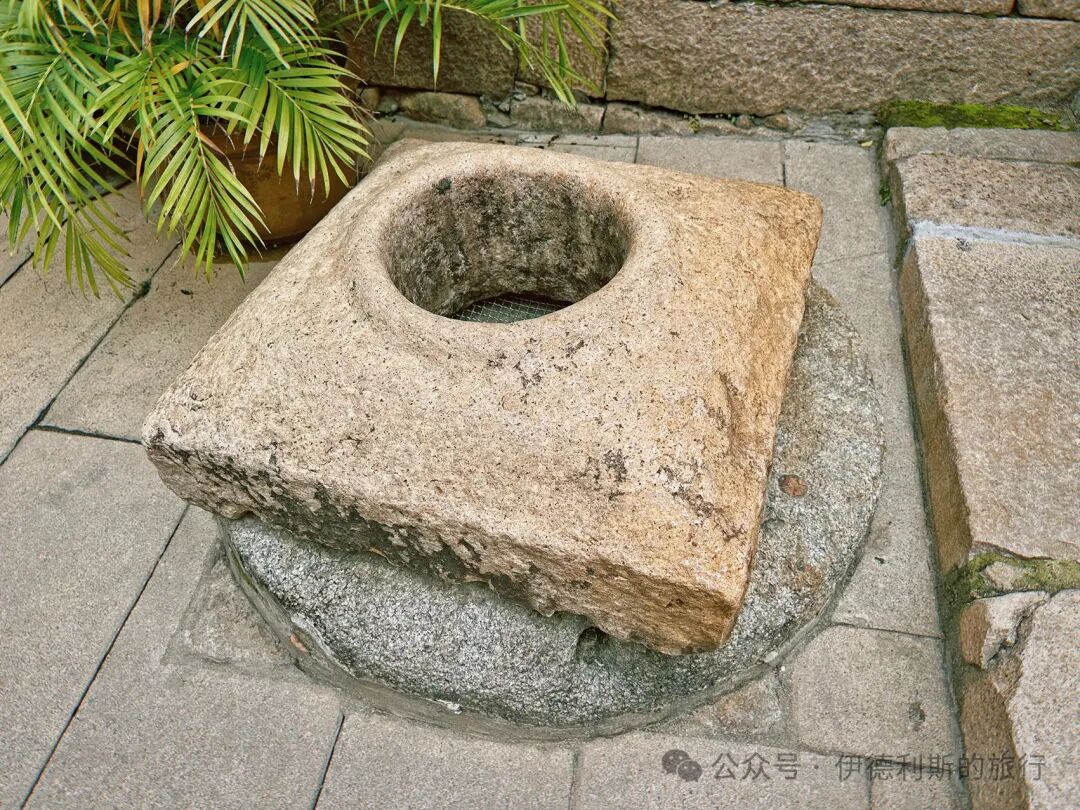
Tonghuai Street, where the Qingjing Mosque is located, was the site of Quanzhou's foreign quarter (fanfang) during the Song and Yuan dynasties, and many people were buried nearby after they passed away. In the 1950s, three stone tombs with Sumeru-style pedestals (xumizuo) were discovered under a house at the intersection of Tonghuai Street and Jiangwu Lane. Many more of these stone tombs were unearthed between 1995 and 1998 when Tonghuai Street was widened. Haji Huang Runqiu, an imam at the Qingjing Mosque, collected some of these tombs and their components to keep inside the mosque. This is how the Sumeru-style stone tombs currently kept at the Qingjing Mosque came to be there.
The Sumeru-style stone tombs at the Qingjing Mosque range from two to five layers high. All the top stones are missing, and the bottom layers all feature six ruyi-shaped feet.
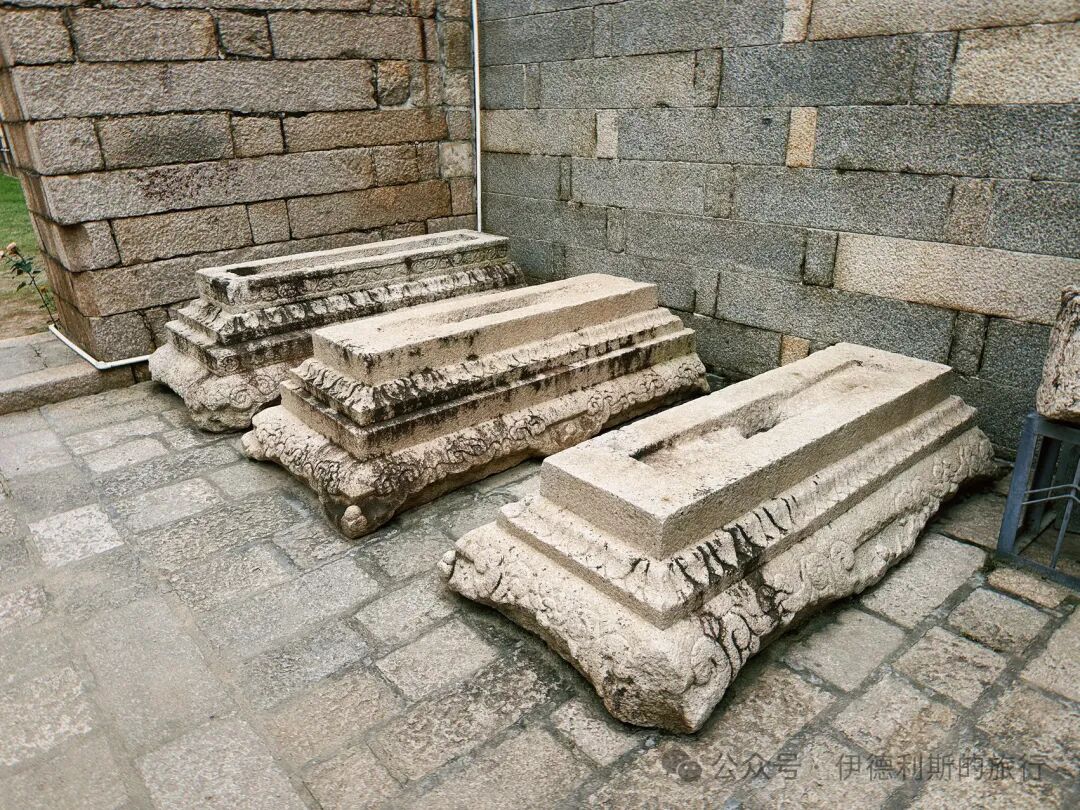
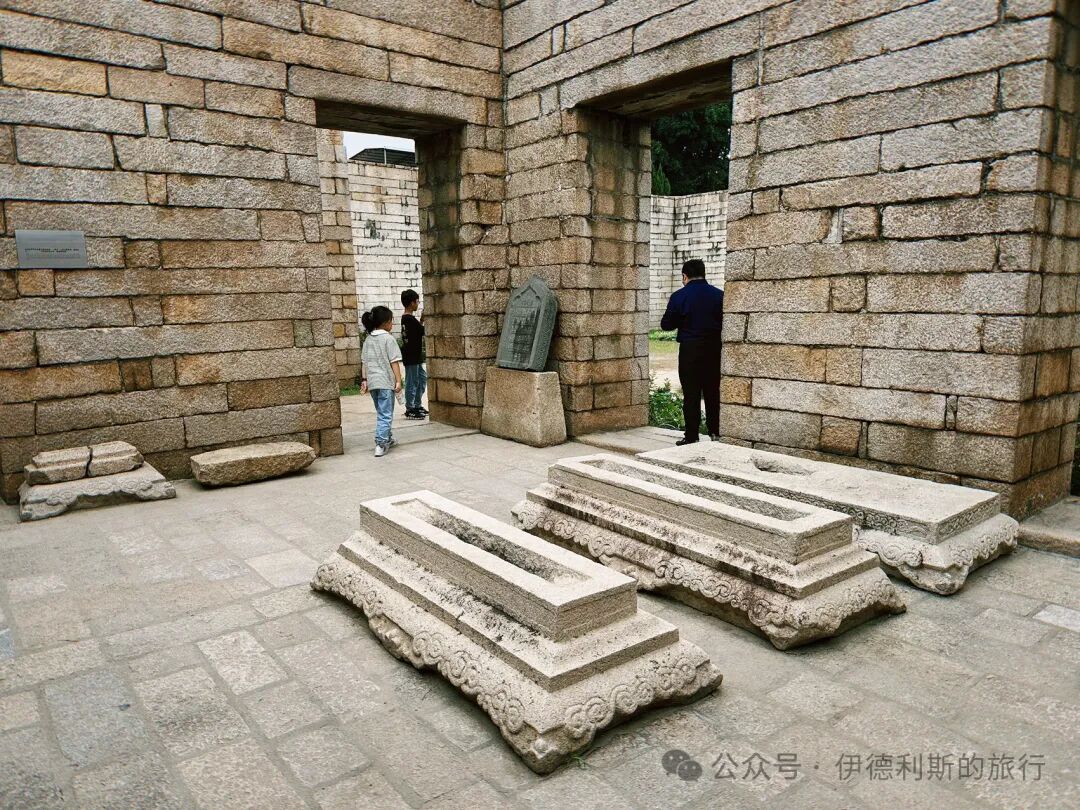
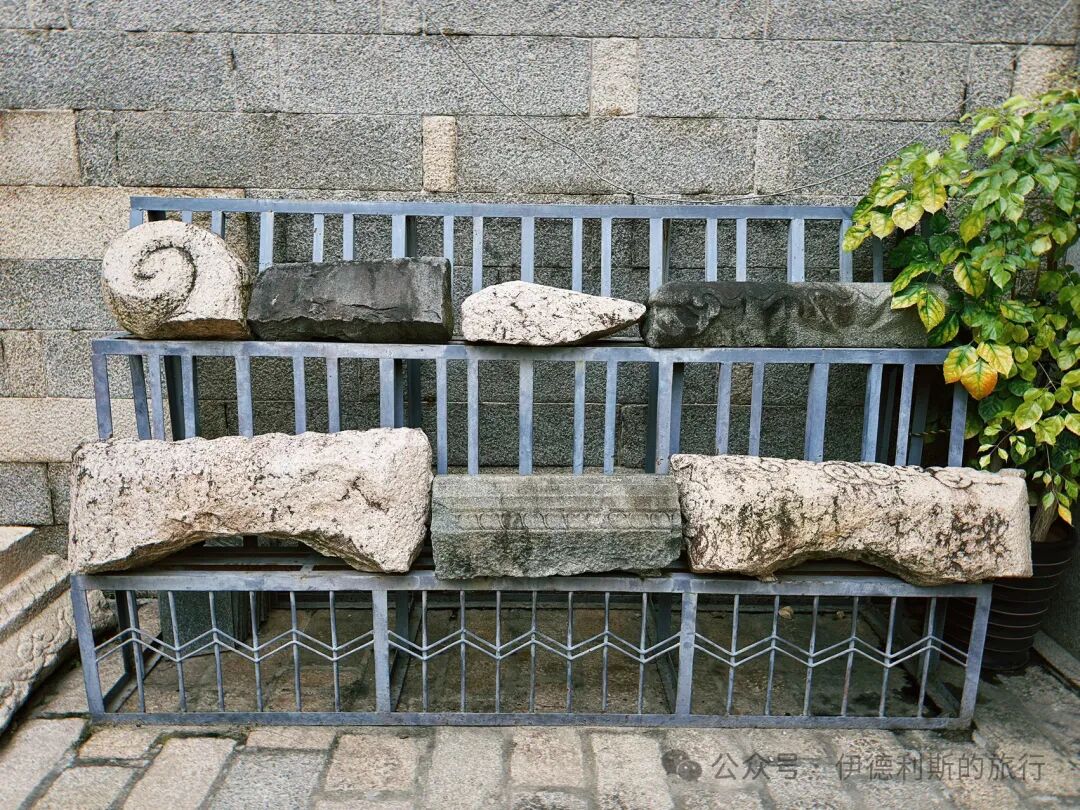
In the spring of 1983, the Qingjing Mosque underwent major renovations. Twelve Hui Muslim families who had lived inside the mosque since the Kangxi era moved out, and a collection of stone tablets was discovered in the walls and underground of the Mingshan Hall. When I visited in 2017, most of these stone carvings were displayed on the west side of the main hall. When I returned in 2024, most of them had been moved elsewhere for preservation.
The only tombstone currently kept inside the Qingjing Mosque was dug up from a garden belonging to a family named Pu in the late Qing Dynasty. It was moved to the mosque and built into the south side of the west wall of the Mingshan Hall. The tombstone is similar to the Yuan Dynasty Arabic tombstones at the Puhaddin Cemetery in Yangzhou and is considered one of the most exquisite ancient Arabic tombstones in Quanzhou. The person buried there was named Ahmed, who passed away in 1362.
The Pu family in Quanzhou are descendants of Pu Shougeng. After the Ming Dynasty, most of them left the faith or changed their surnames, and only one branch still lives on the former site of Pu Shougeng's residence. According to the Genealogy of the Pu Family in the South Gate of Quanzhou, Pu Shougeng had two sons, Shiwen and Shisi. Shisi was promoted to an official in the Hanlin Academy in 1284 and built the Baiguo Garden inside the south gate of Quanzhou city for his own enjoyment. Huayuantou has always been an old place name in the south of Quanzhou city.
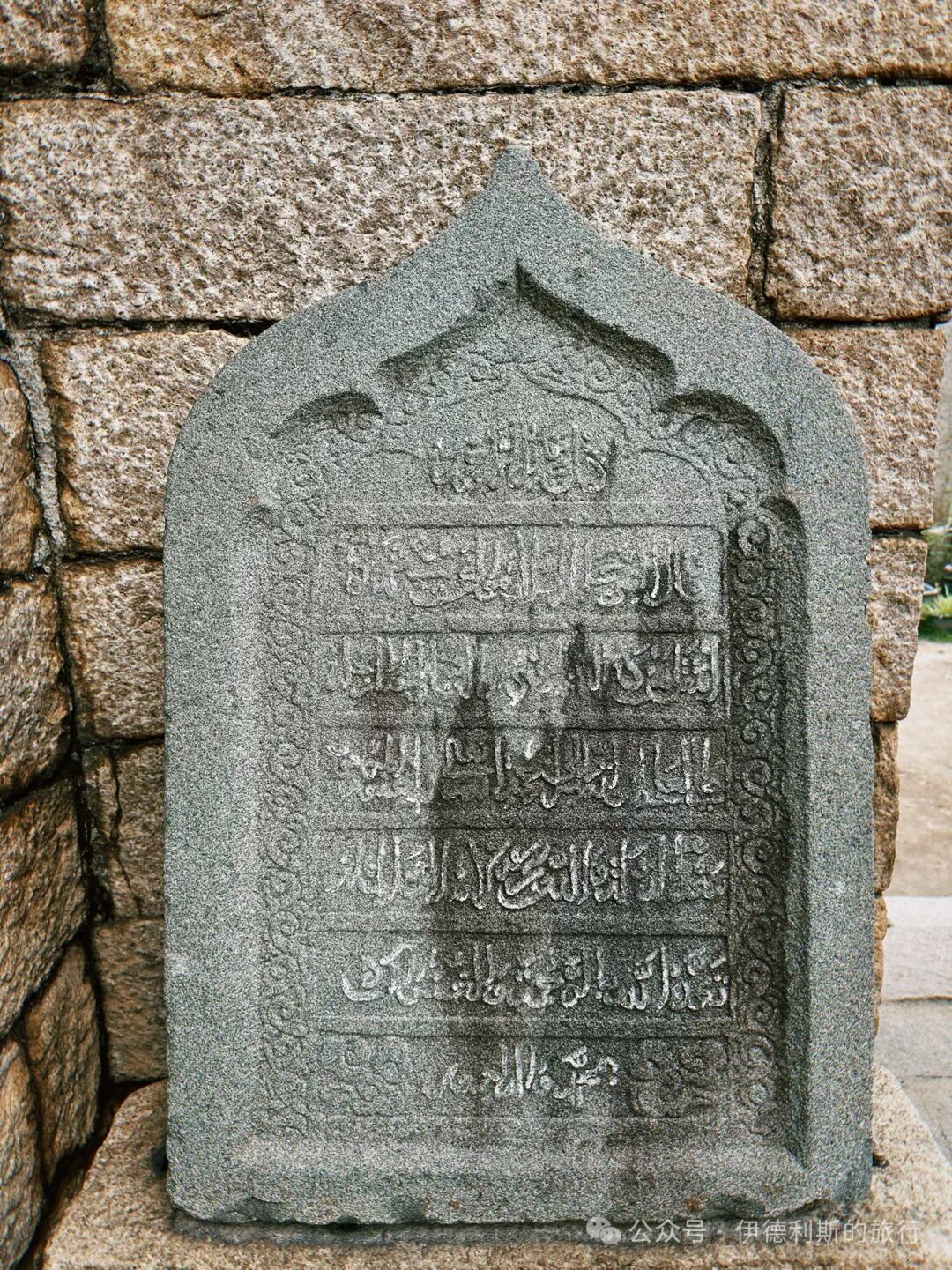
Three plaques hang inside Mingshan Hall.
In the 23rd year of the Jiaqing reign of the Qing dynasty, Ma Jianji, the commander of the Fujian provincial land forces and general of Zhangzhou, dedicated the plaque reading "Ten Thousand Differences, One Origin" (Wanshu Yiben).
Ma Jianji was a Hui Muslim from Sichuan. While serving in Fujian during the Qing Jiaqing period, he renovated the Qingjing Mosque and the Lingshan Sacred Tomb, and he also carved an inscription on the Wind-Moving Rock at Lingshan.
In the 11th year of the Republic of China, Xiamen Superintendent Tang Kesan wrote the plaque reading "Recognize the Oneness of Allah" (Renzhu Duyi).
In the 13th year of the Republic of China, Tang Kesan, a recipient of the Second Class Order of the Golden Grain and former Xiamen Customs Superintendent, dedicated the plaque reading "Three Fears and Four Admonitions" (Sanwei Sizhen). The original plaques were destroyed between the 1960s and 1970s, and the ones currently on display are replicas.
Tang Kesan was a Hui Muslim from Shandong. He graduated from the Imperial University of Peking in the late Qing dynasty and became a social activist and educator during the Republican era. He served as the principal of Chengda Normal School and made significant contributions to the faith. In 1919, Tang Kesan became the Xiamen Customs Superintendent and donated funds to renovate the Qingjing Mosque during his tenure. In 1936, Tang Kesan appointed Imam Zhang Yuguang to lead the Qingjing Mosque. He started a religious study class and an adult literacy night school inside the mosque. In 1940, the Qingjing Mosque opened the Chengda Normal School Affiliated Primary School, later renamed the Qingzhen National School. It sent three groups of local Hui Muslim youth from Quanzhou to study at the Chengda Normal School in Guangxi.
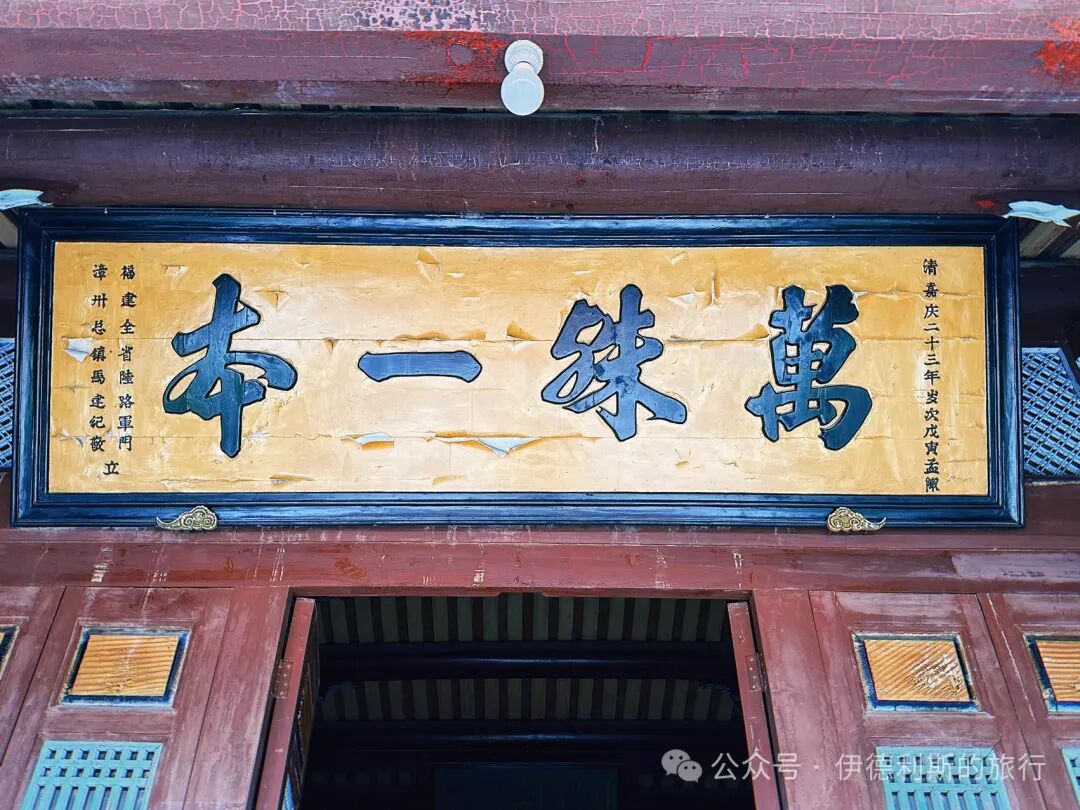
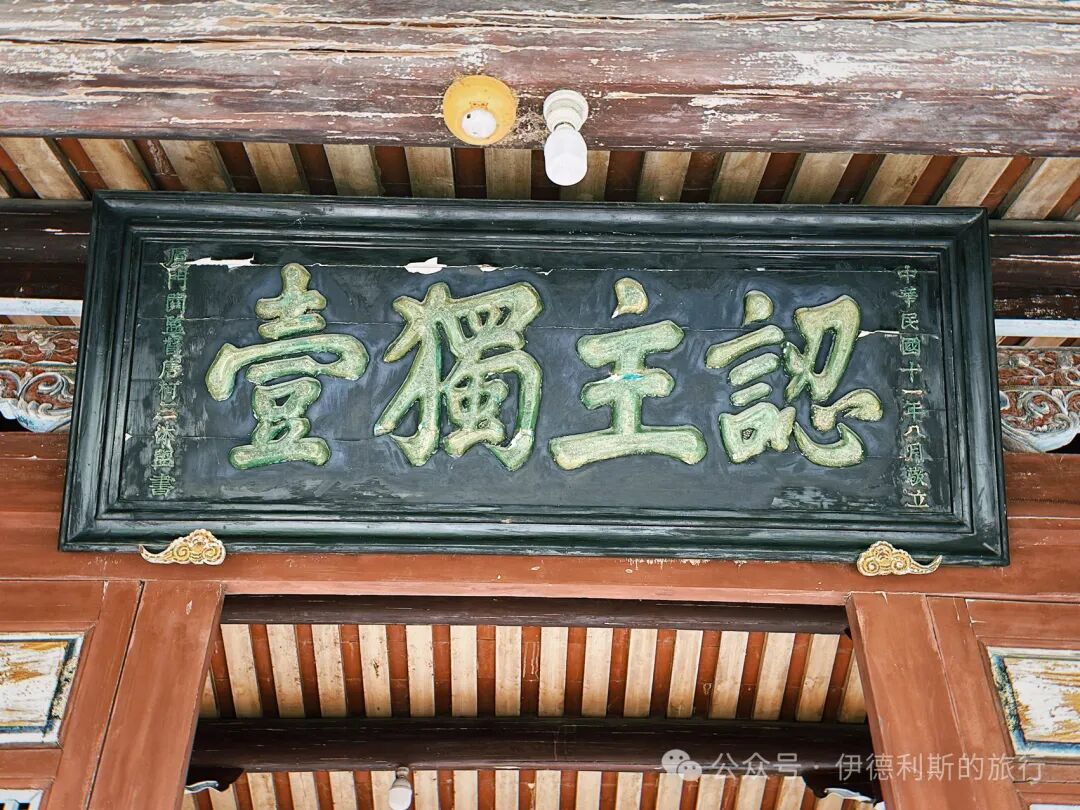
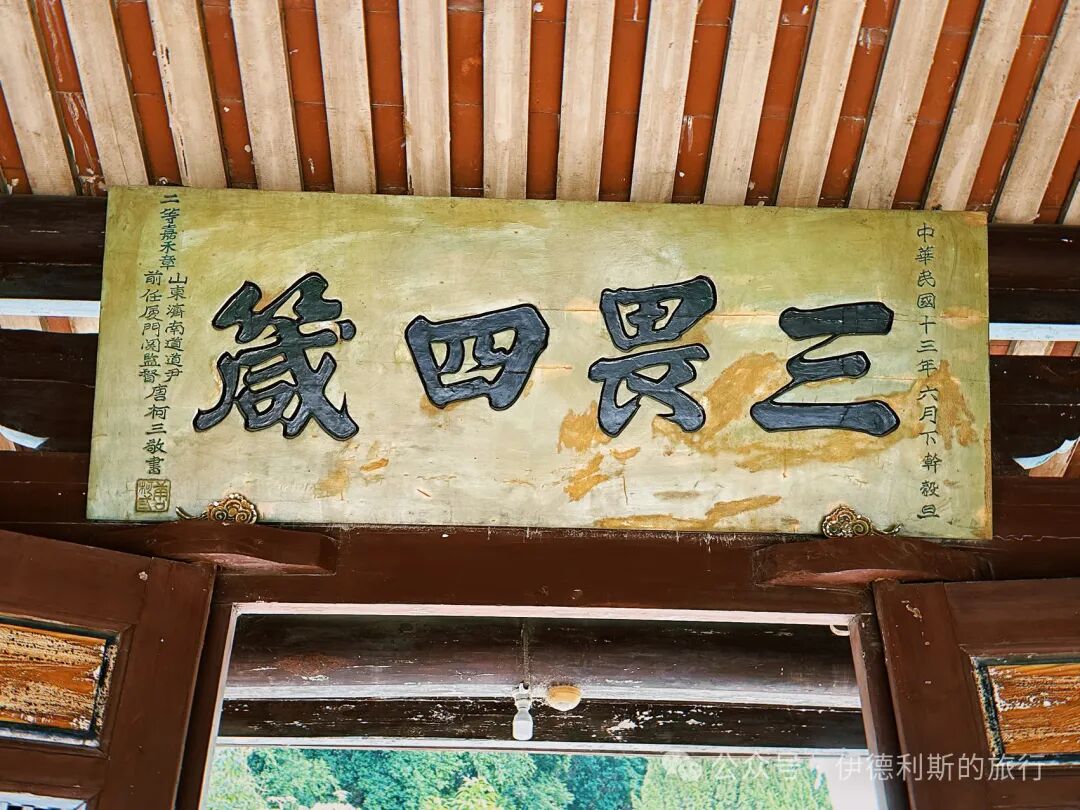
The Qingjing Mosque keeps a white granite stele of the Ming Dynasty Yongle Imperial Edict. It is a copy of the edict issued by the Yongle Emperor, Zhu Di, to Mir Haji in 1407, the fifth year of the Yongle reign. The word 'Mir' refers to 'Amir,' meaning leader, and 'Haji' refers to someone who has made the pilgrimage to the Hejaz. Because of this, the actual name of the person who received the edict does not appear.
The original edict was found in 1956 at the home of Lan Xiaoyang, the hereditary imam of the Puhading Tomb in Yangzhou, and is now kept at the Cultural Palace of Nationalities in Beijing. This edict provided great protection for the faith, so the mosque in Fuzhou also made a copy of it, just like the one in Quanzhou.
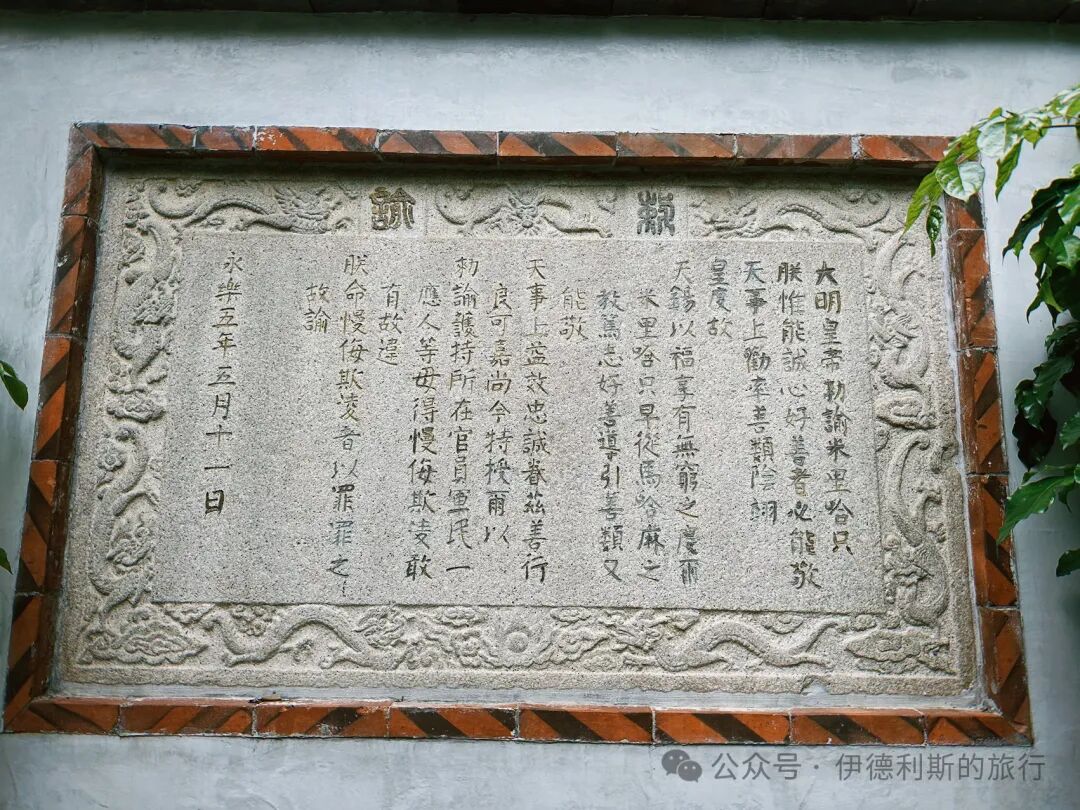
I bought some magnets at the Quanzhou Liwu shop featuring the Qingjing Mosque and the Lingshan Sacred Tomb. I think the designs are beautiful and worth collecting.
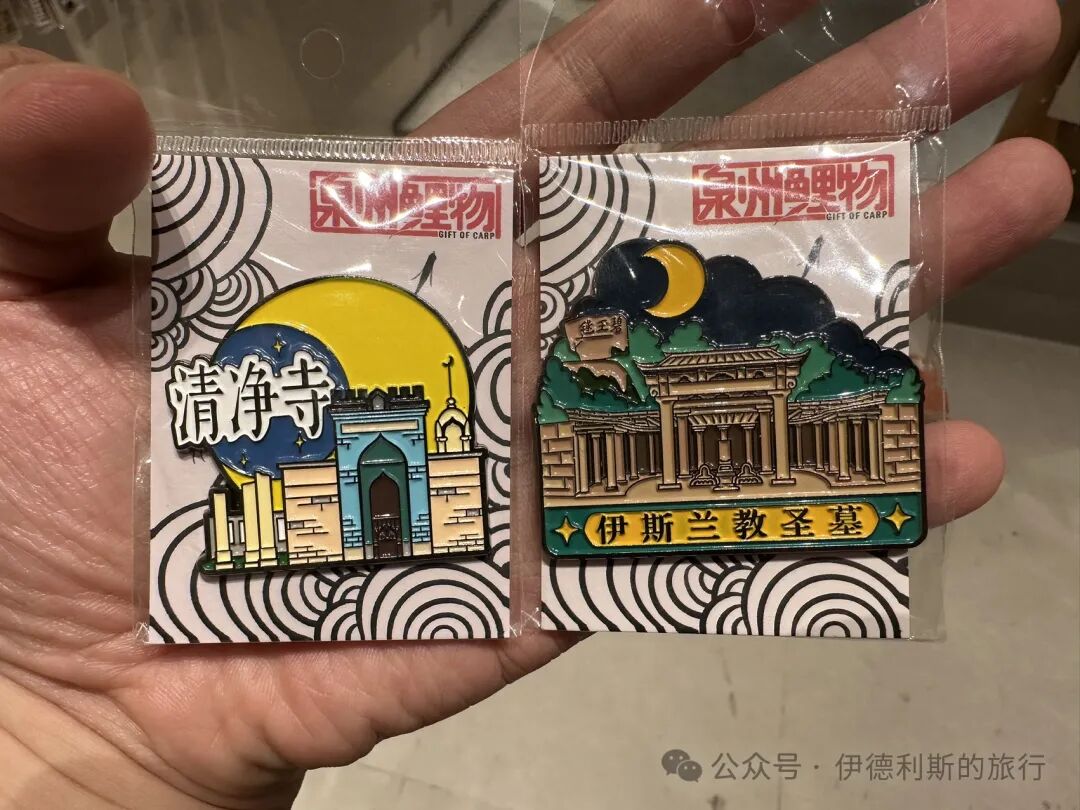
Islamic Art Guide: Quanzhou Maritime Museum Song-Yuan Stone Inscriptions (Part 2)
Articles • ali2007fr posted the article • 0 comments • 274 views • 2026-05-19 09:31
Summary: Islamic Art Guide: Quanzhou Maritime Museum Song-Yuan Stone Inscriptions (Part 2) is presented here as a firsthand travel account in clear, natural English. The account focuses on Quanzhou, Islamic Art, Stone Inscriptions while preserving the names, places, food, photos, and historical details from the Chinese source.
The gravestones feature cloud and moon patterns, including both capstones and base stones. After the Ming Dynasty, cloud and moon shaped gravestones became common in Quanzhou. Most do not have inscriptions and are a variation of the gravestones used by the faith community during the Yuan Dynasty.
Mosque column base.
This mosque column base was unearthed in 1998 at Jintoupu Village, outside Tonghuai Gate at the East Gate of Quanzhou.
The comparison table of ancient and modern place names on Quanzhou religious inscriptions is very interesting. It shows that most of the friends (dosti) who came to Quanzhou during the Song and Yuan dynasties were from Iran, including Ardabil, Fars, Jajarm, Gilan, Hamadan, Hormuz, Isfahan, Qazvin, Shiraz, Siraf, and Tabriz. Others came from Bukhara and Khwarazm in Uzbekistan, Balasagun in Kyrgyzstan, Ahlat in Turkey, Jerusalem in Palestine, Yemen, and Huocheng in Xinjiang, China.
Descendants of Quanzhou Muslims.
The tombstone of the Guo family ancestors was discovered by a survey team from the Maritime Museum in Fashi Village, in the eastern suburbs of Quanzhou, in 1974. It was moved to the Maritime Museum for preservation in 1978.
According to family records, the ancestors of the Baiqi Guo family were from Guojia Village in Fuyang, Hangzhou. They arrived in Quanzhou during the Yuan Dynasty, lived on East Street at first, and later moved to Fashi Port outside the East Gate. In 1956, villagers on Stone Street in Fashi Village were leveling land at a site commonly known as Liugongqi. They dug up a large tomb belonging to a foreign merchant (fanke) and turned the area into a garden. Villagers said the tomb had a large, square stone platform with two levels. Each level held two stone tombs shaped like Sumeru pedestals (xumizuo). A tombstone stood at the head of the upper level, but villagers broke it into two pieces and carried them back to the village to use as flooring for a communal warehouse.
In 1959 and 1974, a research team from the Quanzhou Maritime Museum followed clues from the Guo Clan Genealogy of Baiqi (Baiqi Guo Shi Zupu). After many searches in Fashi Village, they finally found the Guo family ancestral tombstone with Arabic writing. It was moved to the museum for safekeeping in 1978.
The top right corner of the tombstone has the words Tingpo carved in seal script, with Jin carved below it. This represents Tingpo in Fashi, Jinjiang County. The top left corner has the words Baiqi carved in seal script, with Hui carved below it. This represents Baiqi in Hui'an County. These two places are where the Baiqi Guo clan lived at different times. Below that, the words Ancestral Tomb of the Yuan Dynasty Guo Clan (Yuan Guo Shi Zu Fen Ying) are carved in regular script.
The Chinese characters on the tombstone are easy to explain, but the Arabic inscription is very difficult to interpret. In the early 1980s, the views of Chen Dasheng, the director of the Maritime Museum, became the mainstream opinion. He interpreted the Arabic as 'lbn Qds Daqqaq Nam', or 'Ibn Quds Daqqaq Nam'. Because 'nam' means 'famous' in Persian, he believed the ancestors of the Baiqi Guo family were Persian.
Professor Wu Youxiong from Quanzhou Normal University offered a completely different interpretation in his work, 'The Origins of the Baiqi Guo Surname and Mosque Education (Jingtang Jiaoyu)'. After consulting the director of the Arabic department at China National Radio, Wu Youxiong concluded that the text was actually Minnan dialect spelled out in Arabic script: 'Yin Go Zi Ta-gag Mou', meaning 'Tomb of Guo Deguang of the Yuan Dynasty'. He argued that previous researchers failed to translate it because they were unfamiliar with Minnan dialect, and that the evidence for the Guo family's Persian origins does not exist.
The method of using Arabic script to write Chinese is called 'Xiao'erjing' or 'Xiao'erjin', also known as 'Xiaojing'. It was used for annotations in mosque education (Jingtang Jiaoyu). According to the Guo family genealogy, the tomb of Guo Deguang was renovated many times. This tombstone was likely re-erected during the Qing Dynasty by Guo descendants who had returned to the faith.
In 1709 (the 48th year of the Kangxi reign), Chen Yougong, the regional commander of Tingyan-Shao and a left-wing commander-in-chief, came to Quanzhou. He revived the faith and established a school for mosque education (Jingtang Jiaoyu) at the Qingjing Mosque. At that time, Guo Honglong, a member of the eighth generation of the Guo family's fourth branch, moved from Hecuo in Baiqi to live at the Qingjing Mosque and returned to the faith, citing the principle of 'strengthening the trunk and weakening the branches'. After Honglong returned to the faith, other members of the Guo family who came to Quanzhou city for business began visiting the Qingjing Mosque. As the number of converts grew, Chen Yougong funded the construction of a mosque in Daishang Village, where the four branches of the Guo family lived. According to the Fenyang Guo Family Migration Map to Quanzhou Tonghuai Street, during the Kangxi year of Jichou, Commander Chen Yougong served at the Quanzhou Xiecan Office. He revived the faith, and after Baiqi and his nephew came to the city to trade, many more people joined the faith. The Daishang Mosque was built by Mr. Chen.
After Guo Honglong converted, most of his descendants moved to live near the Qingjing Mosque in Quanzhou, while others lived at the Daishang Mosque. According to the Fenyang Guo Family Migration Map to Quanzhou Tonghuai Street, during the Qianlong era, Guo Honglong's grandson Guo Shifu lived near the Qingjing Mosque in Quanzhou, while another grandson, Guo Shili, lived at the Daishang Mosque. According to the family genealogy Yizhai Gong Xing Shu, Guo Shifu helped renovate the Qingjing Mosque in 1794 (the 59th year of the Qianlong reign) alongside Bai Yunhan, the deputy commander of the Zhangzhou Left Battalion.
The Ding family of Chendai is known as the 'Ten Thousand Ding' and lives in Chendai Town, Jinjiang. They arrived in Quanzhou City during the Yuan Dynasty. In the late Yuan and early Ming dynasties, they moved to Chendai to give up business for farming. By the mid-Ming Dynasty, they left the faith through the processes of clan formation and the imperial examination system. The owners of Anta, Xtep, 361°, and Qiaodan are all from the Ding family of Chendai.
The Pu family are descendants of Pu Shougeng, a key figure in Quanzhou during the Song and Yuan dynasties. Because Pu Shougeng massacred the Song dynasty royal family, the Ming dynasty ordered that all remaining members of the Pu family be sent to serve in the military, forcing his descendants to flee and hide.
The ancestor of the Jin family of Qingyuan, Jin Ji, served as a military general (wulue jiangjun) during the Zhishun era of the Yuan dynasty to guard the Quanzhou circuit, and he later helped end the Ispah rebellion. During the Wanli era of the Ming dynasty, a descendant of the Jin family named Jin Ali helped renovate the Qingjing Mosque.
The Su family of Yanzhi Lane originally came from Gushi County in Guangzhou, Henan, and moved to Quanzhou with Wang Chao at the end of the Tang dynasty. In 1307, the seventh year of the Yuan Dade era, the Su family ran into trouble while transporting government grain to the capital. The imperial court punished them severely, so Su Tangshe hid in Yanzhi Lane in Quanzhou, converted to Islam, changed his name to Ahema, and his family married Hui Muslims for generations.
The Lin family of Quanzhou originally came from Henan. In 1384, the seventeenth year of the Ming Hongwu era, Lin Nu sailed to the Western Oceans. Because he felt that different religions caused disharmony, he converted to Islam, married a Semu woman, and his descendants continued to practice the faith. Lin Qicai passed the imperial examination in 1559 (the 38th year of the Jiajing reign of the Ming Dynasty). He wrote the 'Stele Record of the Imperial Reconstruction of Faming Mosque' for Faming Mosque, one of the four major official temples in Beijing during the Ming Dynasty, and the 'Stele for the Protection of the Tomb of Bo Hazhi' for the tomb of the Western Regions sage Bo Hazhi in Changping, Beijing. Some of Lin's descendants changed their surname to Li. The great Ming Dynasty thinker Li Zhi was a cousin of Lin Qicai.
The lawn of the Maritime Museum displays many stone tombs with pedestal bases (xumizuo). Many are carved with beautiful Arabic calligraphy, mostly featuring verses from the Quran.
During the Song and Yuan dynasties, Quanzhou had large areas of cemeteries for foreign merchants (fanke). These were mainly concentrated in the areas from Tumen Street to Jintoupu, Houban, Fashi, and Meishan in the southeast suburbs.
In the Song and Yuan dynasties, one could travel from Tonghuai Gate, pass through Jintoupu, and head southeast to reach the Houzhu seaport. The road from Tonghuai Gate to Fashi was built on alluvial beach land, so it often sank into the mud. Because of this, after the Ming Dynasty, local residents often used the stone tomb components with pedestal bases from the Song and Yuan dynasties as materials for slope protection and pond embankments when building roads and ponds. There were once three ponds at Puwei in Jintoupu. When the water dried up in winter, more than thirty Islamic tomb stones could be seen. South of Jintoupu, there is a small temple called Houban Palace. Just under its northeast wall, nearly ten stone tomb components with pedestal bases (xumizuo) are used as foundation stones. Several more Islamic tomb stones are also found near the drainage ditches and rice paddy mud in Houban Village.
Additionally, a large number of stone tomb components from the Song and Yuan dynasties were discovered in the areas of Jincuowei, Secuowei, Xiacuopu, Dingcuoshan, and Tiecuowei in the eastern suburbs of Quanzhou. Jin, Ding, Xia, and Tie are the surnames of the 'half-southern barbarians' (bannanfan)—the descendants of intermarriages between Arabs, Iranians, and local Quanzhou people—though these families no longer practice Islam today. view all
Summary: Islamic Art Guide: Quanzhou Maritime Museum Song-Yuan Stone Inscriptions (Part 2) is presented here as a firsthand travel account in clear, natural English. The account focuses on Quanzhou, Islamic Art, Stone Inscriptions while preserving the names, places, food, photos, and historical details from the Chinese source.
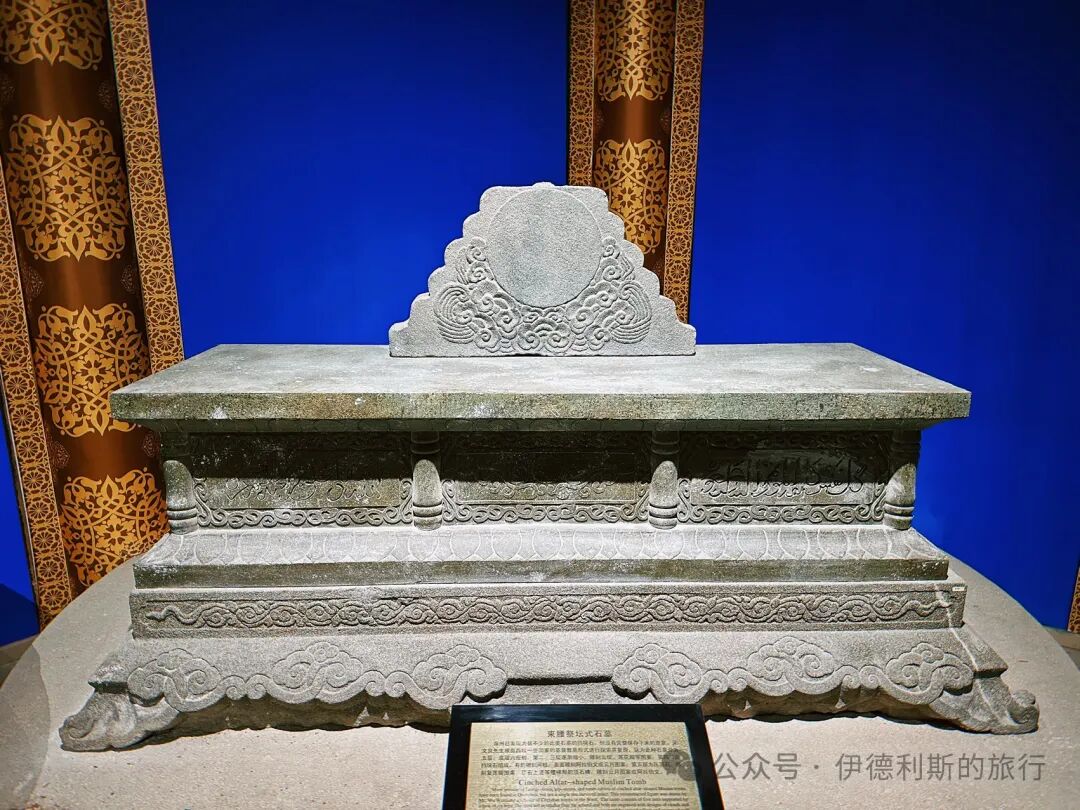
The gravestones feature cloud and moon patterns, including both capstones and base stones. After the Ming Dynasty, cloud and moon shaped gravestones became common in Quanzhou. Most do not have inscriptions and are a variation of the gravestones used by the faith community during the Yuan Dynasty.
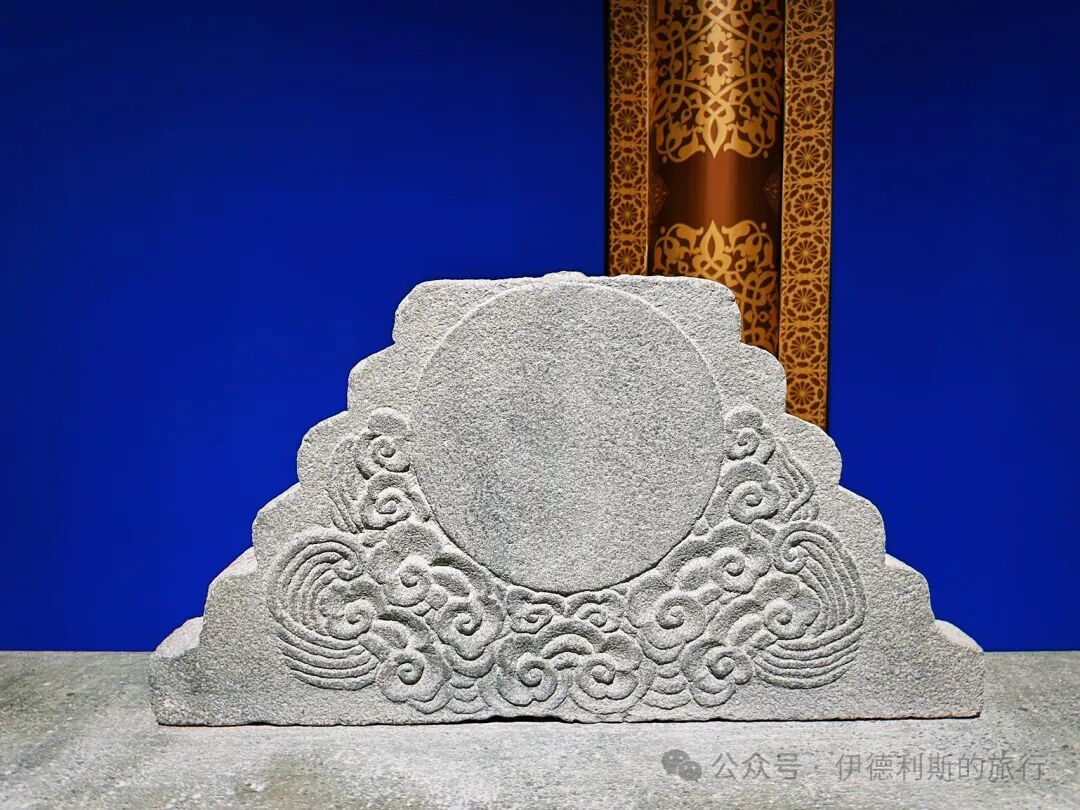
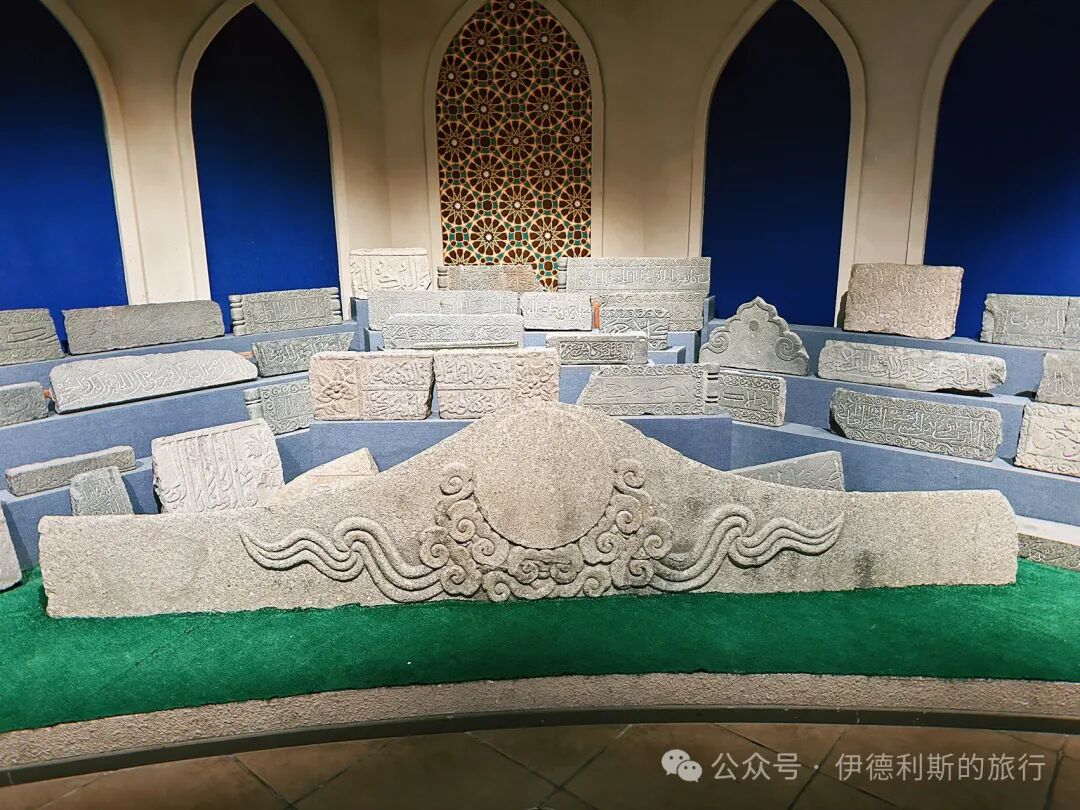
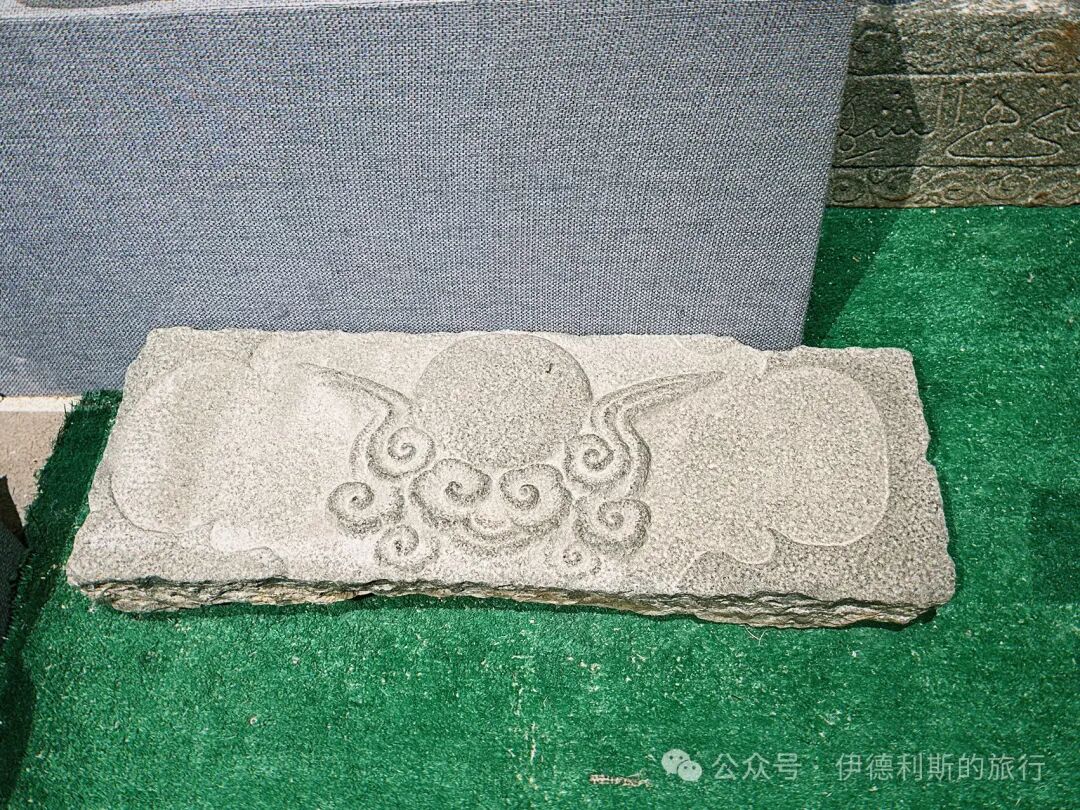
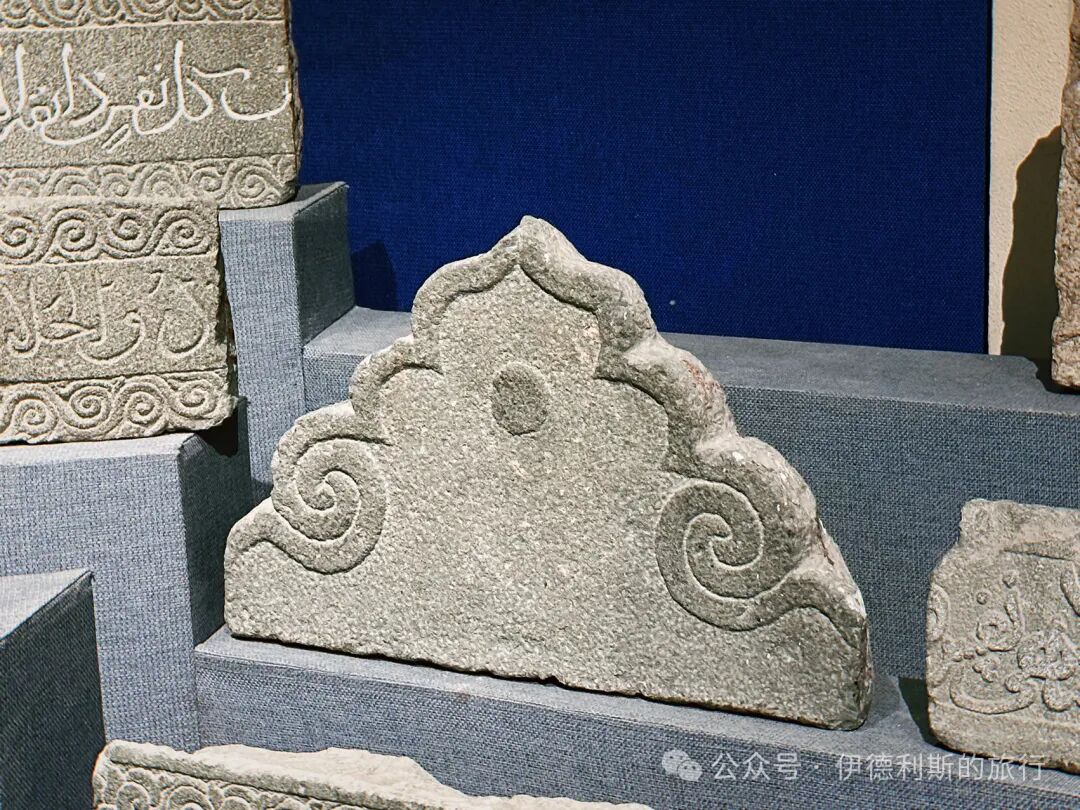
Mosque column base.
This mosque column base was unearthed in 1998 at Jintoupu Village, outside Tonghuai Gate at the East Gate of Quanzhou.
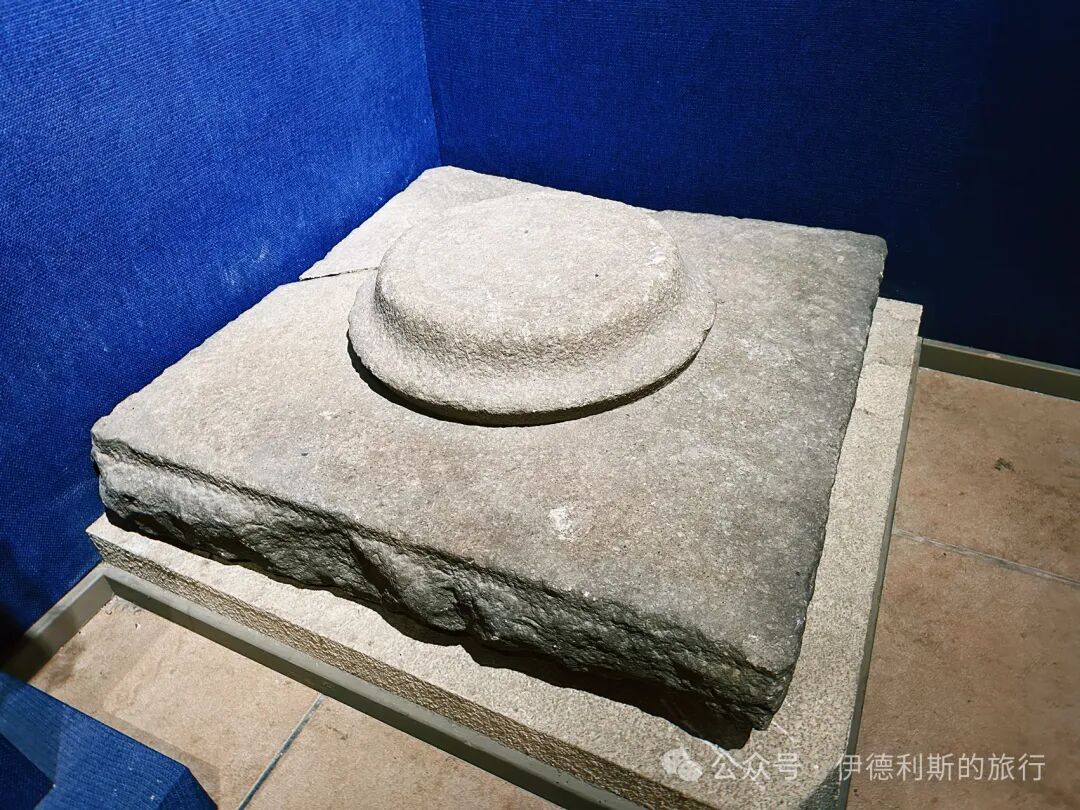
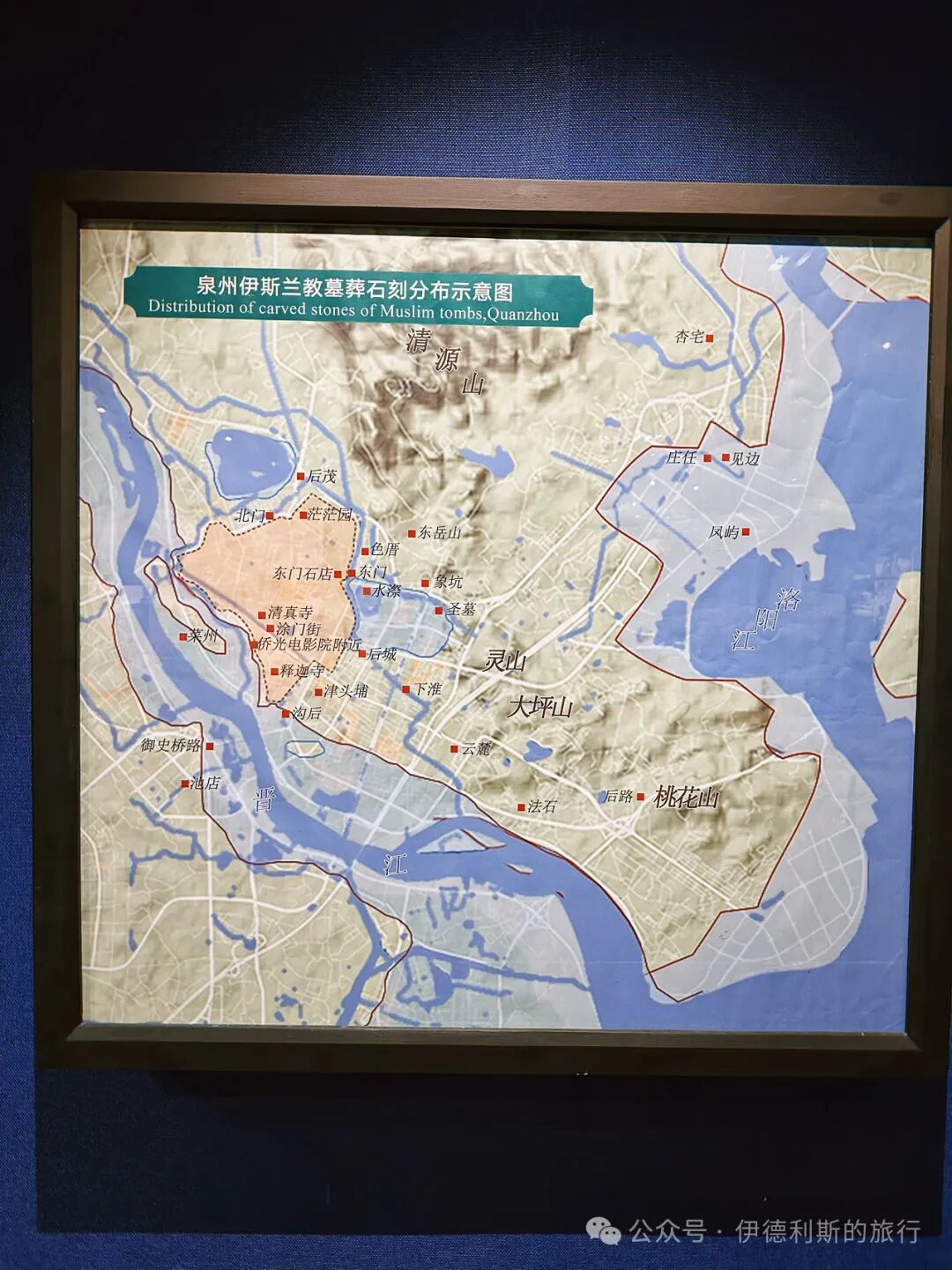
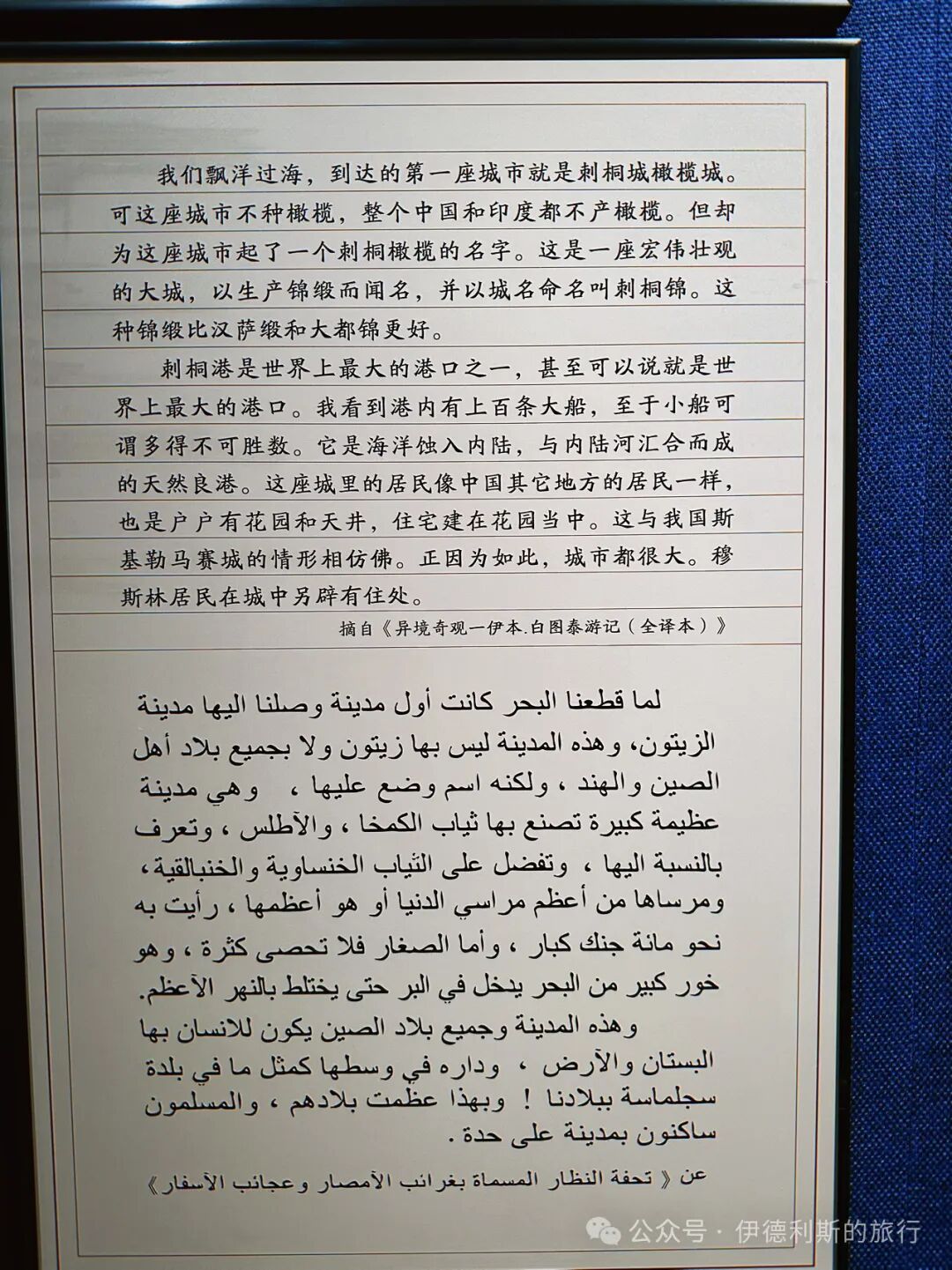
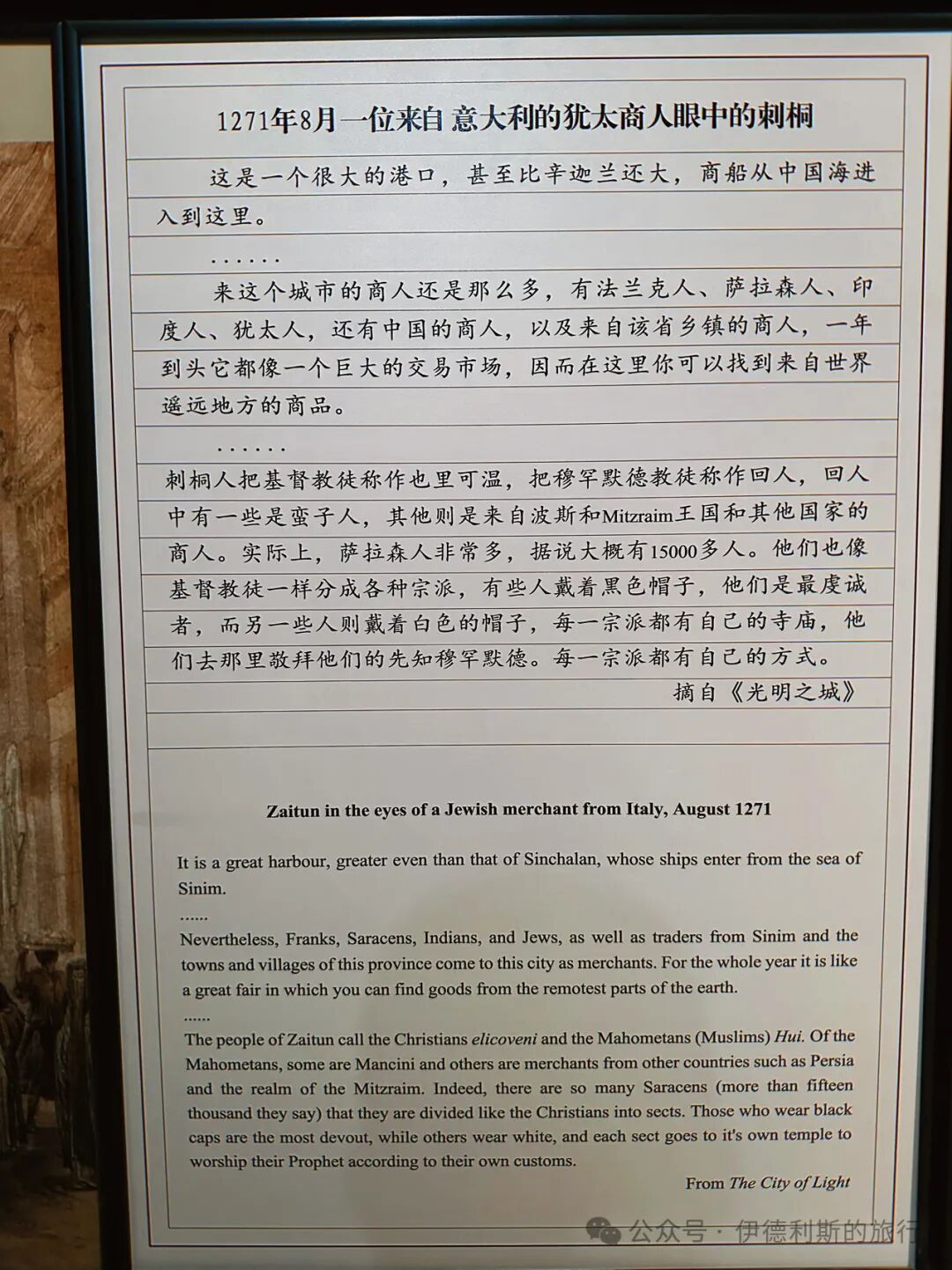
The comparison table of ancient and modern place names on Quanzhou religious inscriptions is very interesting. It shows that most of the friends (dosti) who came to Quanzhou during the Song and Yuan dynasties were from Iran, including Ardabil, Fars, Jajarm, Gilan, Hamadan, Hormuz, Isfahan, Qazvin, Shiraz, Siraf, and Tabriz. Others came from Bukhara and Khwarazm in Uzbekistan, Balasagun in Kyrgyzstan, Ahlat in Turkey, Jerusalem in Palestine, Yemen, and Huocheng in Xinjiang, China.
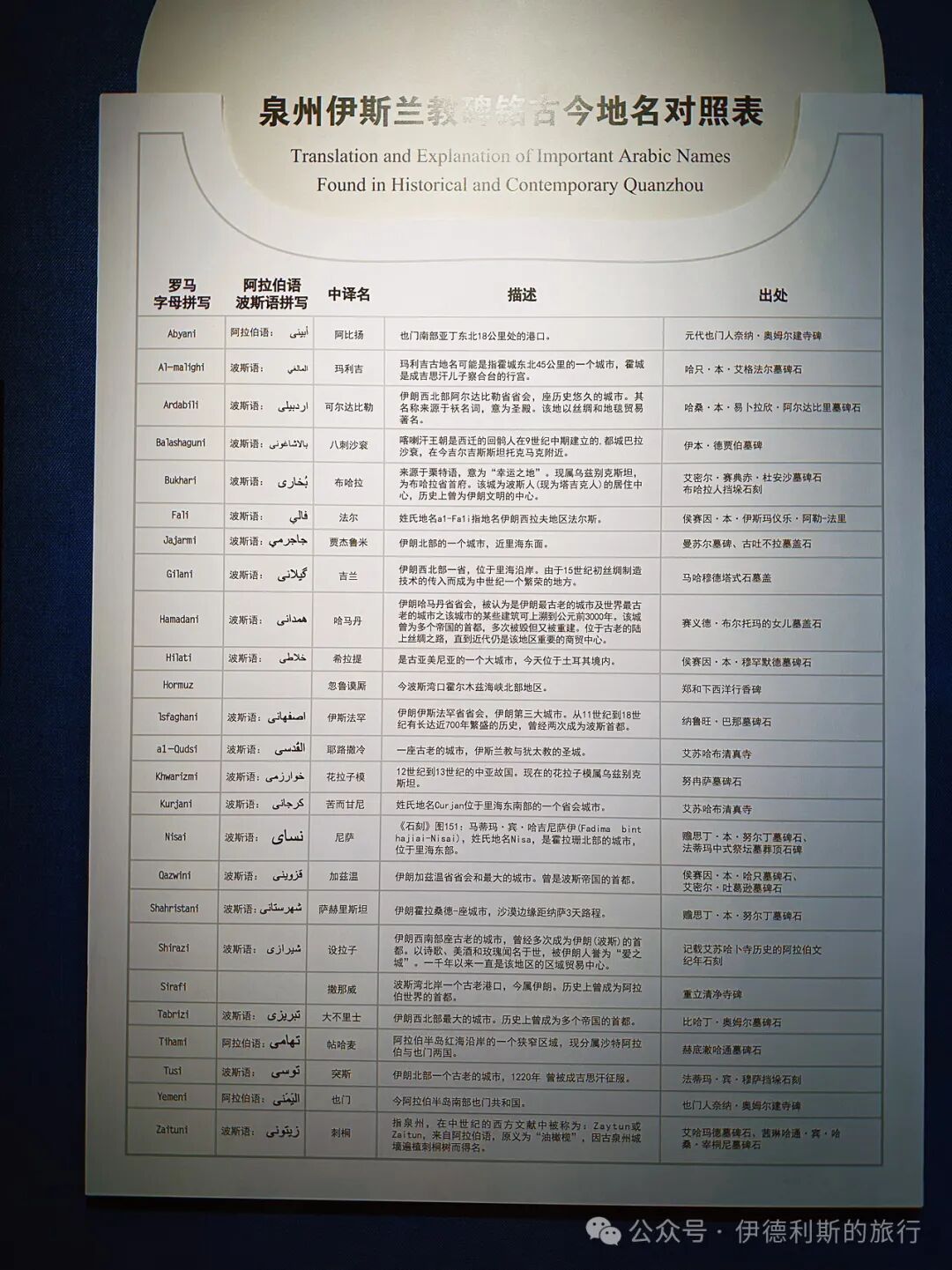
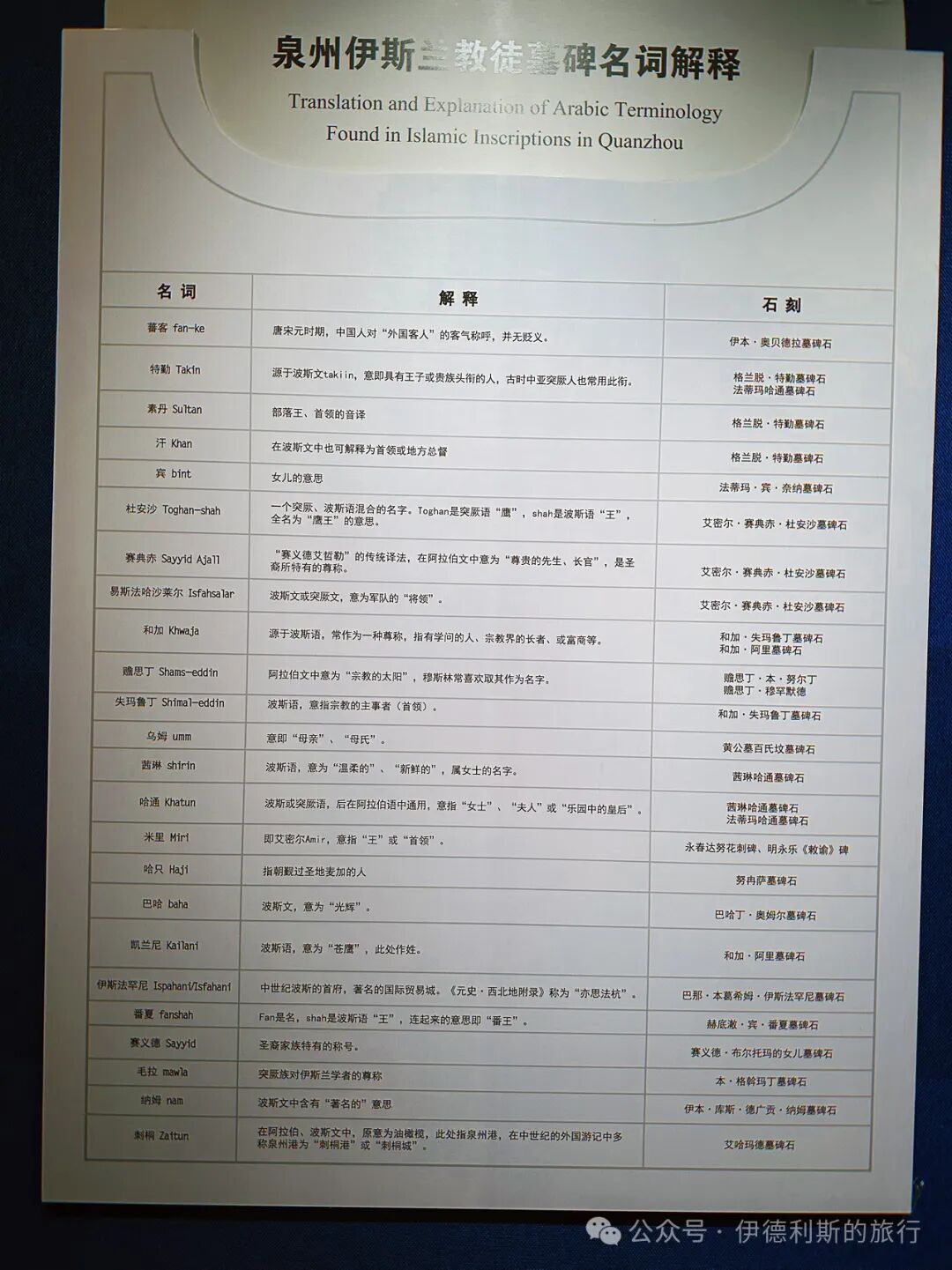
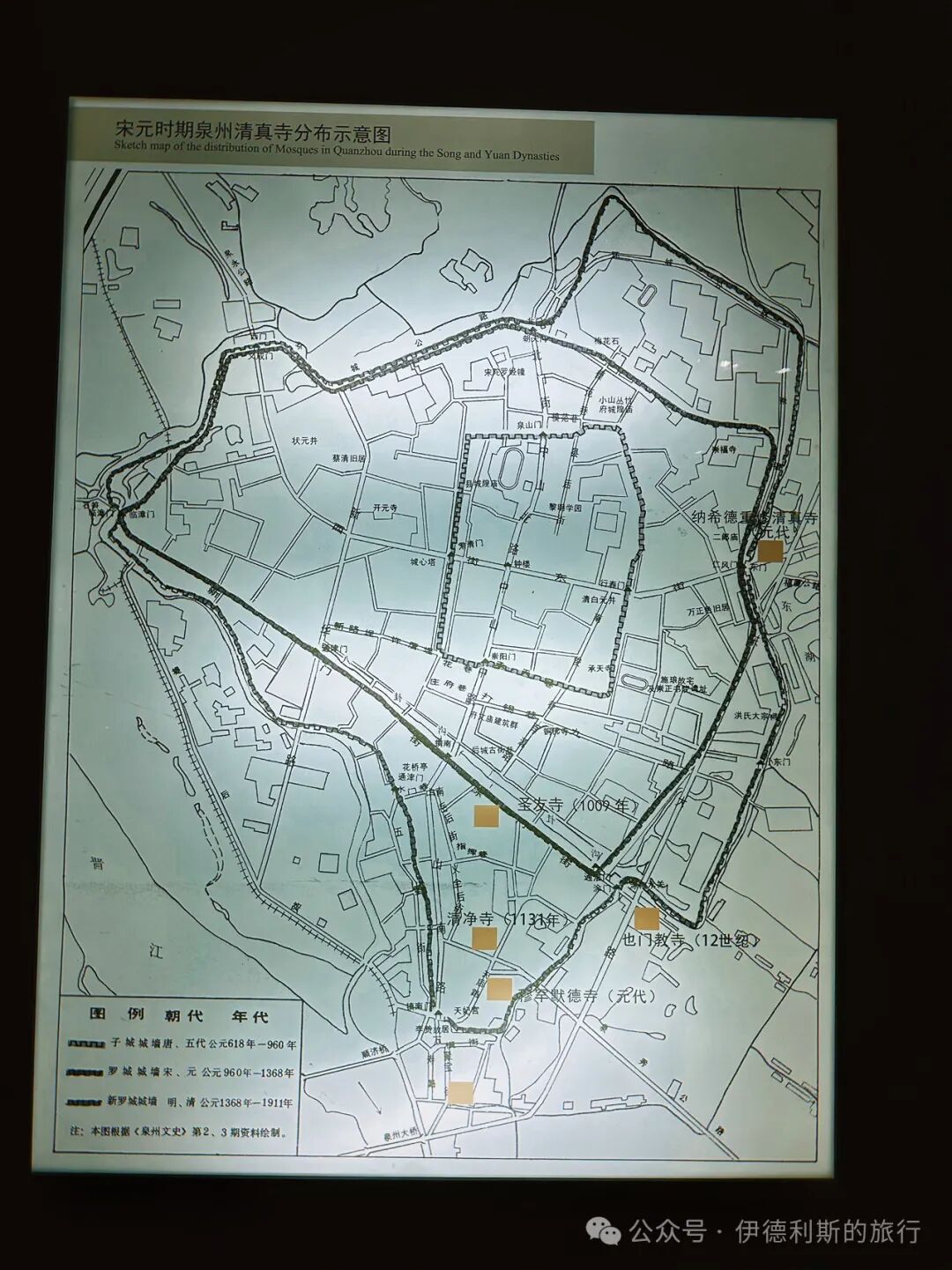
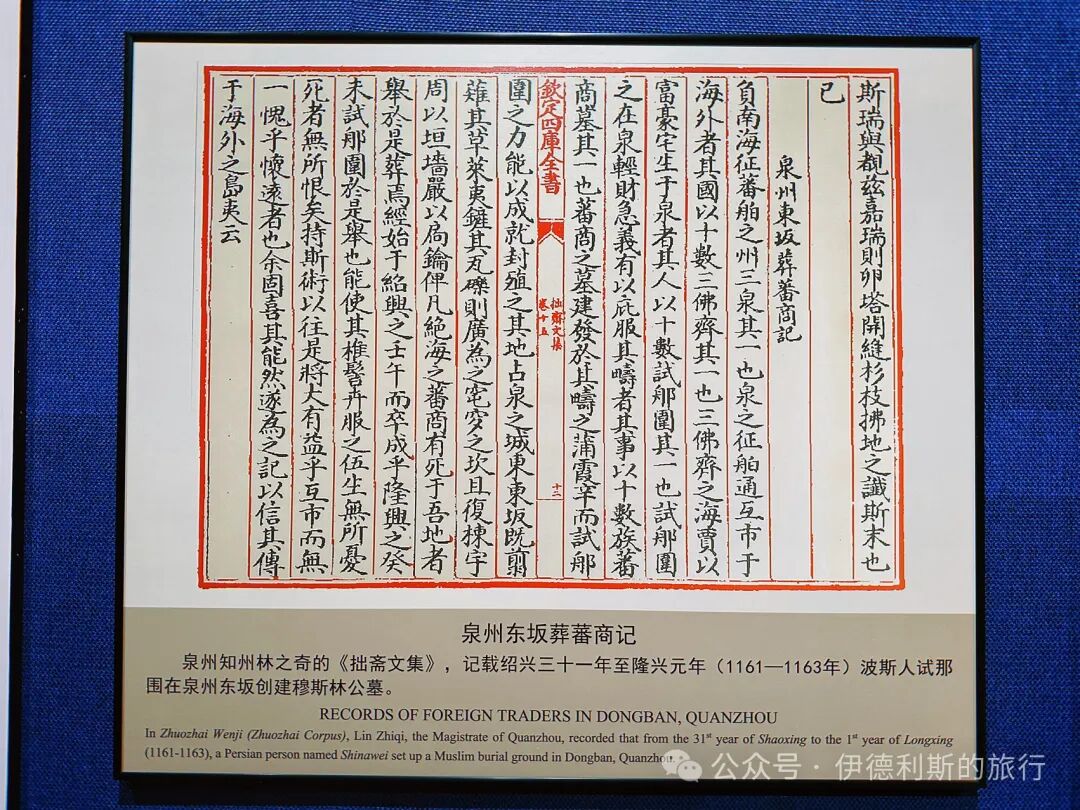
Descendants of Quanzhou Muslims.
The tombstone of the Guo family ancestors was discovered by a survey team from the Maritime Museum in Fashi Village, in the eastern suburbs of Quanzhou, in 1974. It was moved to the Maritime Museum for preservation in 1978.
According to family records, the ancestors of the Baiqi Guo family were from Guojia Village in Fuyang, Hangzhou. They arrived in Quanzhou during the Yuan Dynasty, lived on East Street at first, and later moved to Fashi Port outside the East Gate. In 1956, villagers on Stone Street in Fashi Village were leveling land at a site commonly known as Liugongqi. They dug up a large tomb belonging to a foreign merchant (fanke) and turned the area into a garden. Villagers said the tomb had a large, square stone platform with two levels. Each level held two stone tombs shaped like Sumeru pedestals (xumizuo). A tombstone stood at the head of the upper level, but villagers broke it into two pieces and carried them back to the village to use as flooring for a communal warehouse.
In 1959 and 1974, a research team from the Quanzhou Maritime Museum followed clues from the Guo Clan Genealogy of Baiqi (Baiqi Guo Shi Zupu). After many searches in Fashi Village, they finally found the Guo family ancestral tombstone with Arabic writing. It was moved to the museum for safekeeping in 1978.
The top right corner of the tombstone has the words Tingpo carved in seal script, with Jin carved below it. This represents Tingpo in Fashi, Jinjiang County. The top left corner has the words Baiqi carved in seal script, with Hui carved below it. This represents Baiqi in Hui'an County. These two places are where the Baiqi Guo clan lived at different times. Below that, the words Ancestral Tomb of the Yuan Dynasty Guo Clan (Yuan Guo Shi Zu Fen Ying) are carved in regular script.
The Chinese characters on the tombstone are easy to explain, but the Arabic inscription is very difficult to interpret. In the early 1980s, the views of Chen Dasheng, the director of the Maritime Museum, became the mainstream opinion. He interpreted the Arabic as 'lbn Qds Daqqaq Nam', or 'Ibn Quds Daqqaq Nam'. Because 'nam' means 'famous' in Persian, he believed the ancestors of the Baiqi Guo family were Persian.
Professor Wu Youxiong from Quanzhou Normal University offered a completely different interpretation in his work, 'The Origins of the Baiqi Guo Surname and Mosque Education (Jingtang Jiaoyu)'. After consulting the director of the Arabic department at China National Radio, Wu Youxiong concluded that the text was actually Minnan dialect spelled out in Arabic script: 'Yin Go Zi Ta-gag Mou', meaning 'Tomb of Guo Deguang of the Yuan Dynasty'. He argued that previous researchers failed to translate it because they were unfamiliar with Minnan dialect, and that the evidence for the Guo family's Persian origins does not exist.
The method of using Arabic script to write Chinese is called 'Xiao'erjing' or 'Xiao'erjin', also known as 'Xiaojing'. It was used for annotations in mosque education (Jingtang Jiaoyu). According to the Guo family genealogy, the tomb of Guo Deguang was renovated many times. This tombstone was likely re-erected during the Qing Dynasty by Guo descendants who had returned to the faith.
In 1709 (the 48th year of the Kangxi reign), Chen Yougong, the regional commander of Tingyan-Shao and a left-wing commander-in-chief, came to Quanzhou. He revived the faith and established a school for mosque education (Jingtang Jiaoyu) at the Qingjing Mosque. At that time, Guo Honglong, a member of the eighth generation of the Guo family's fourth branch, moved from Hecuo in Baiqi to live at the Qingjing Mosque and returned to the faith, citing the principle of 'strengthening the trunk and weakening the branches'. After Honglong returned to the faith, other members of the Guo family who came to Quanzhou city for business began visiting the Qingjing Mosque. As the number of converts grew, Chen Yougong funded the construction of a mosque in Daishang Village, where the four branches of the Guo family lived. According to the Fenyang Guo Family Migration Map to Quanzhou Tonghuai Street, during the Kangxi year of Jichou, Commander Chen Yougong served at the Quanzhou Xiecan Office. He revived the faith, and after Baiqi and his nephew came to the city to trade, many more people joined the faith. The Daishang Mosque was built by Mr. Chen.
After Guo Honglong converted, most of his descendants moved to live near the Qingjing Mosque in Quanzhou, while others lived at the Daishang Mosque. According to the Fenyang Guo Family Migration Map to Quanzhou Tonghuai Street, during the Qianlong era, Guo Honglong's grandson Guo Shifu lived near the Qingjing Mosque in Quanzhou, while another grandson, Guo Shili, lived at the Daishang Mosque. According to the family genealogy Yizhai Gong Xing Shu, Guo Shifu helped renovate the Qingjing Mosque in 1794 (the 59th year of the Qianlong reign) alongside Bai Yunhan, the deputy commander of the Zhangzhou Left Battalion.
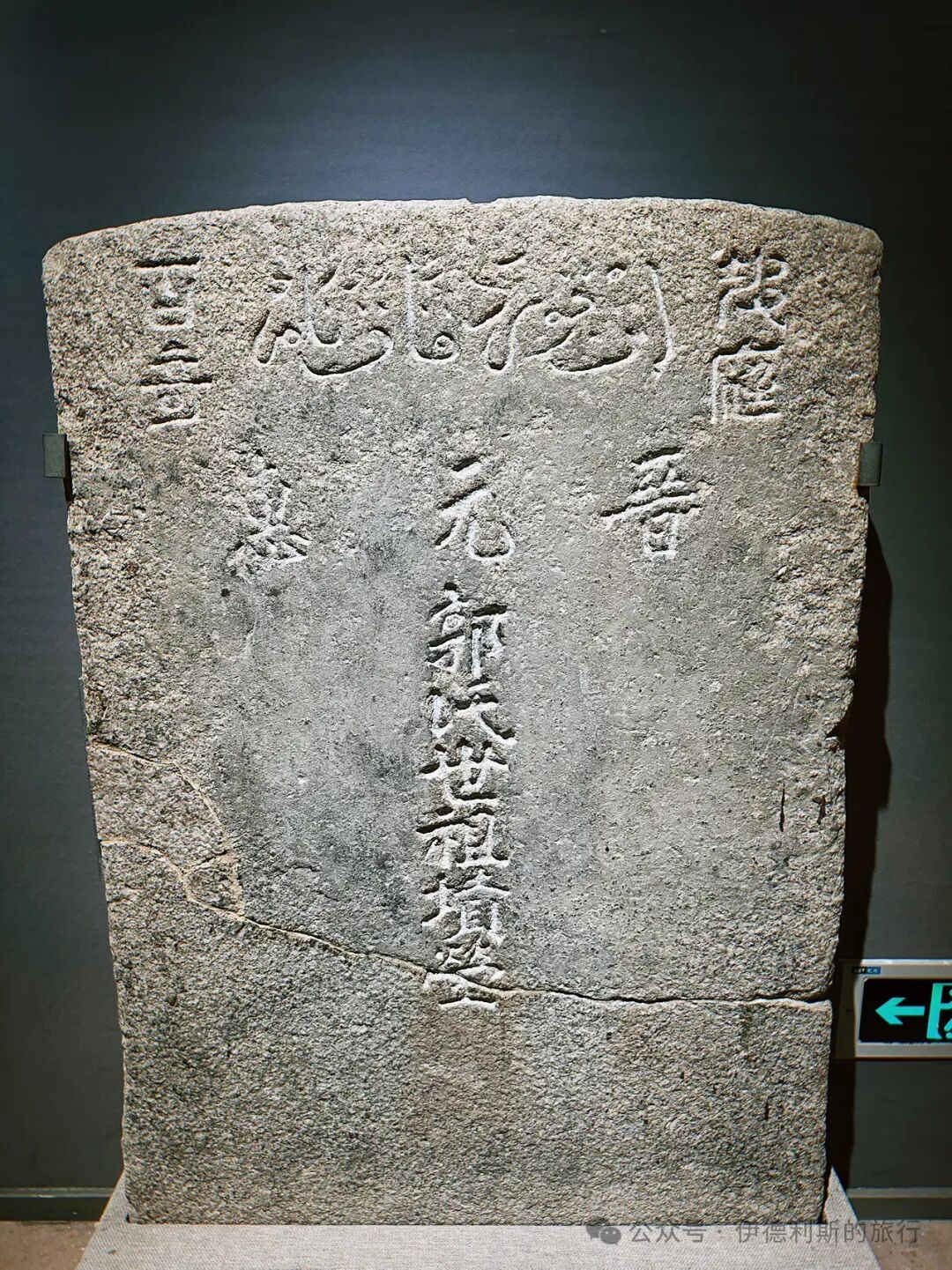
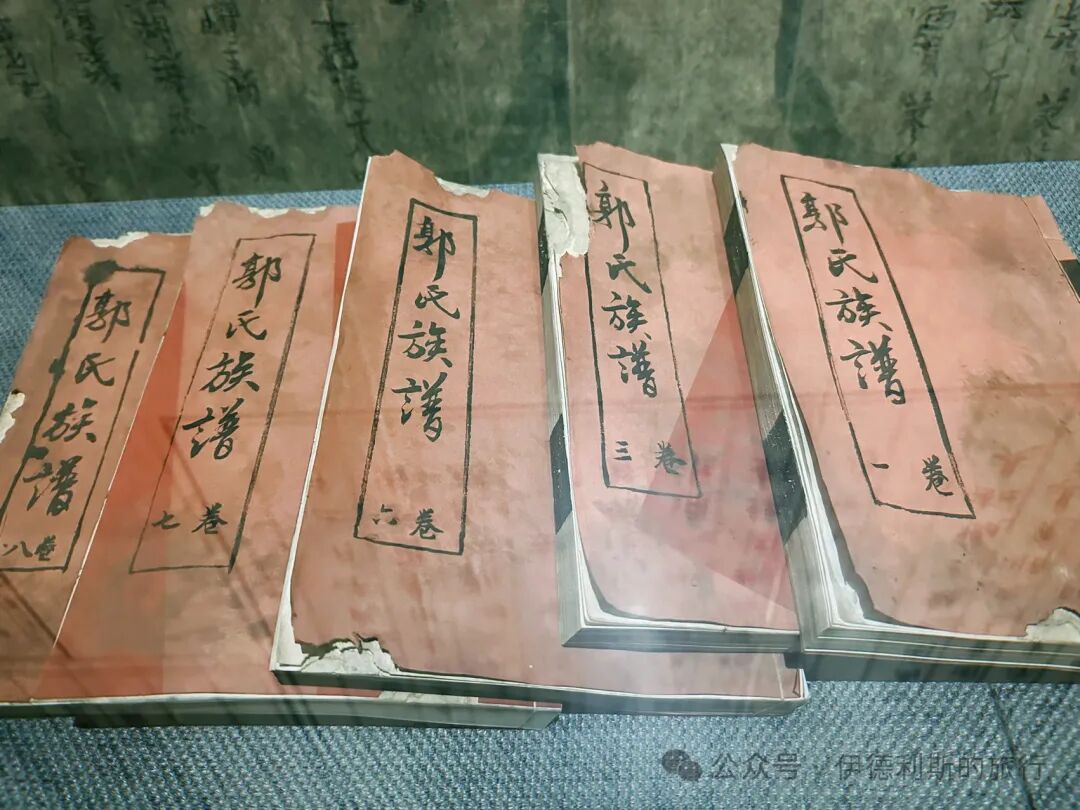
The Ding family of Chendai is known as the 'Ten Thousand Ding' and lives in Chendai Town, Jinjiang. They arrived in Quanzhou City during the Yuan Dynasty. In the late Yuan and early Ming dynasties, they moved to Chendai to give up business for farming. By the mid-Ming Dynasty, they left the faith through the processes of clan formation and the imperial examination system. The owners of Anta, Xtep, 361°, and Qiaodan are all from the Ding family of Chendai.
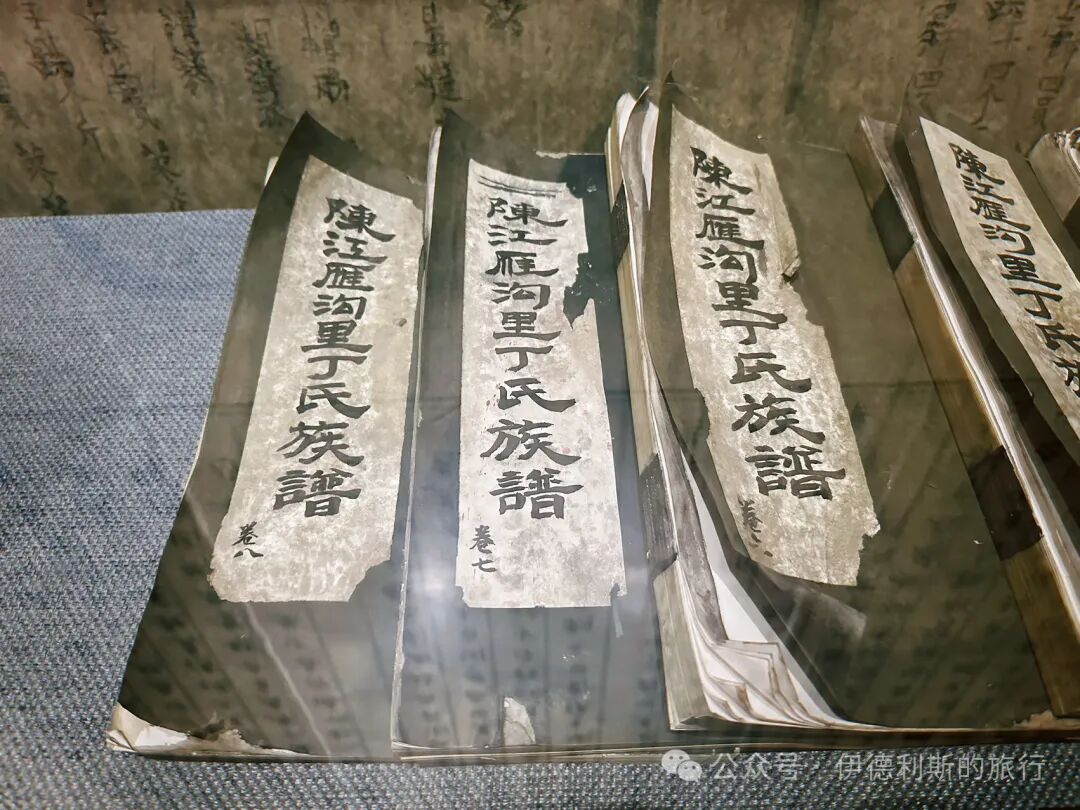
The Pu family are descendants of Pu Shougeng, a key figure in Quanzhou during the Song and Yuan dynasties. Because Pu Shougeng massacred the Song dynasty royal family, the Ming dynasty ordered that all remaining members of the Pu family be sent to serve in the military, forcing his descendants to flee and hide.
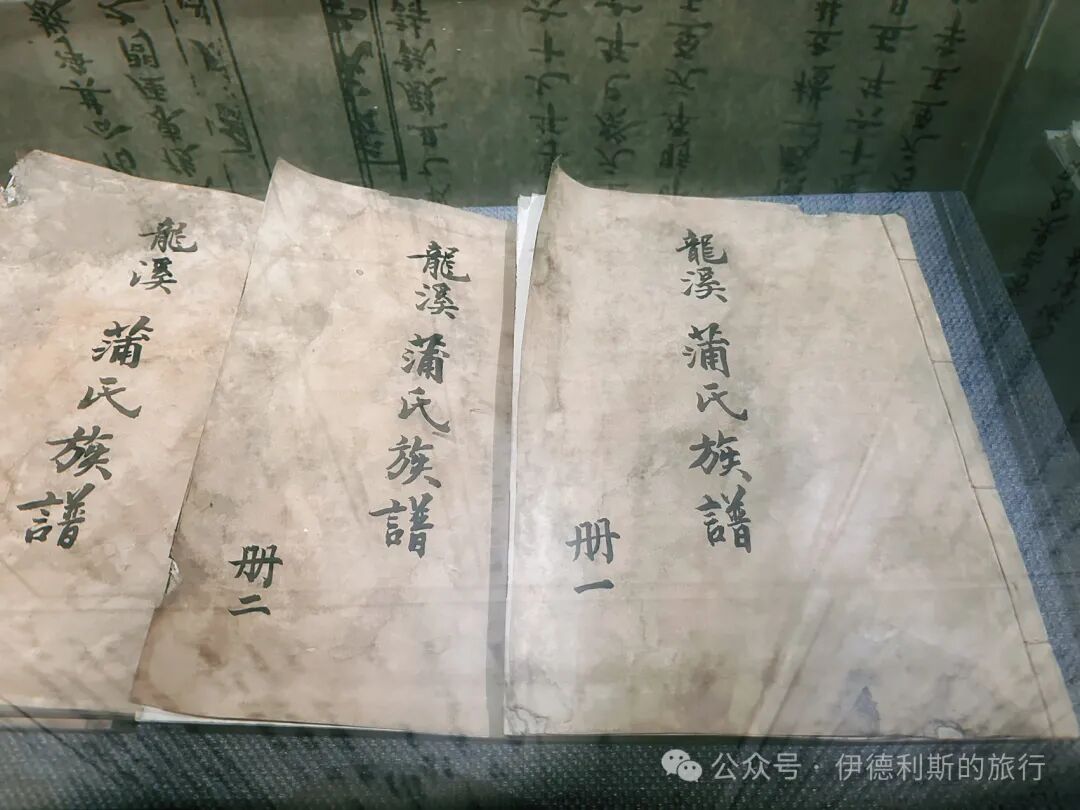
The ancestor of the Jin family of Qingyuan, Jin Ji, served as a military general (wulue jiangjun) during the Zhishun era of the Yuan dynasty to guard the Quanzhou circuit, and he later helped end the Ispah rebellion. During the Wanli era of the Ming dynasty, a descendant of the Jin family named Jin Ali helped renovate the Qingjing Mosque.
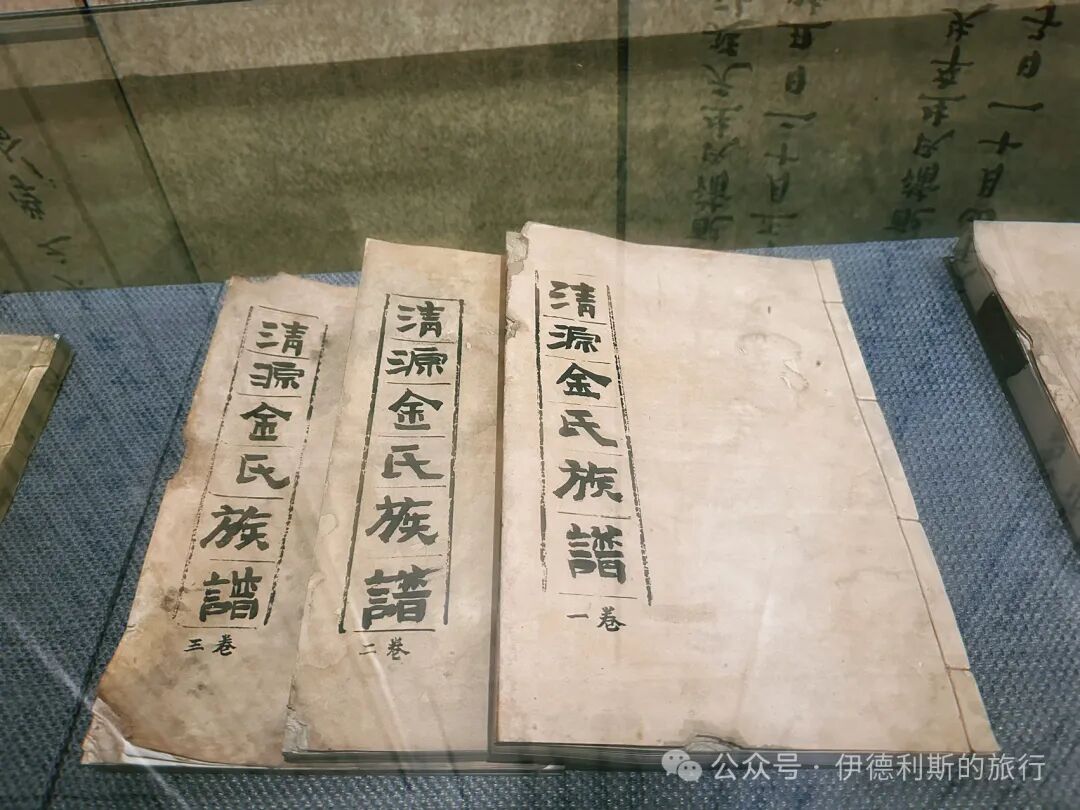
The Su family of Yanzhi Lane originally came from Gushi County in Guangzhou, Henan, and moved to Quanzhou with Wang Chao at the end of the Tang dynasty. In 1307, the seventh year of the Yuan Dade era, the Su family ran into trouble while transporting government grain to the capital. The imperial court punished them severely, so Su Tangshe hid in Yanzhi Lane in Quanzhou, converted to Islam, changed his name to Ahema, and his family married Hui Muslims for generations.
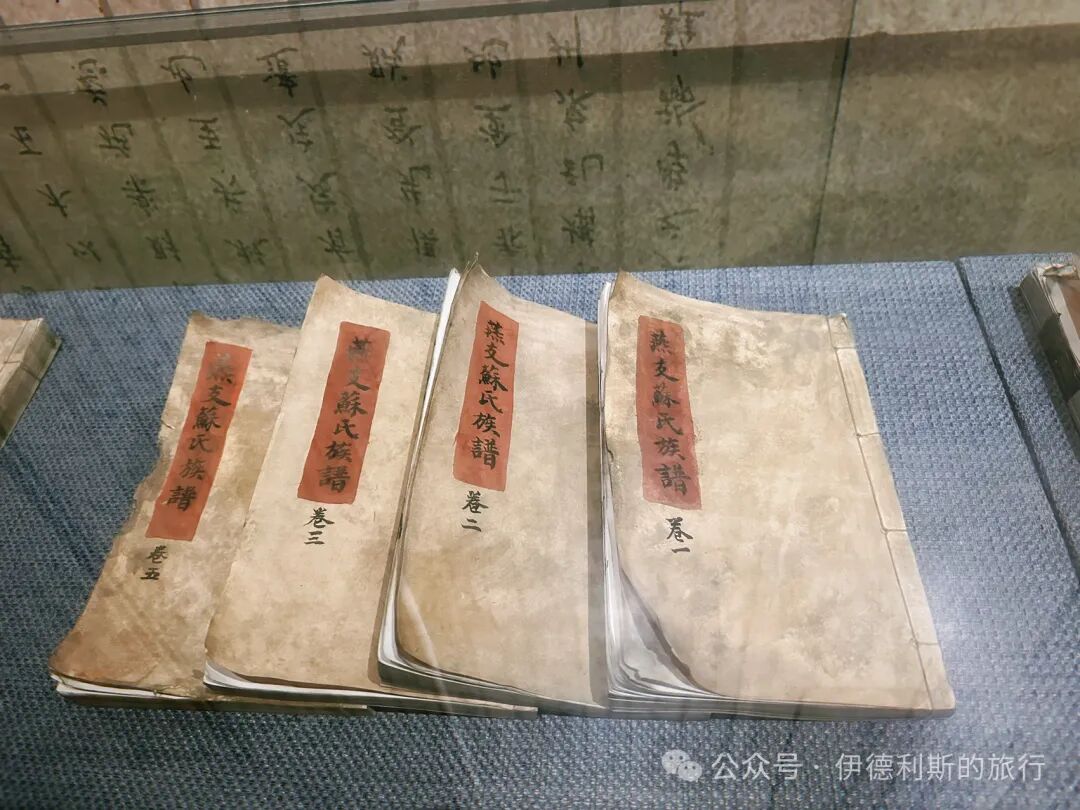
The Lin family of Quanzhou originally came from Henan. In 1384, the seventeenth year of the Ming Hongwu era, Lin Nu sailed to the Western Oceans. Because he felt that different religions caused disharmony, he converted to Islam, married a Semu woman, and his descendants continued to practice the faith. Lin Qicai passed the imperial examination in 1559 (the 38th year of the Jiajing reign of the Ming Dynasty). He wrote the 'Stele Record of the Imperial Reconstruction of Faming Mosque' for Faming Mosque, one of the four major official temples in Beijing during the Ming Dynasty, and the 'Stele for the Protection of the Tomb of Bo Hazhi' for the tomb of the Western Regions sage Bo Hazhi in Changping, Beijing. Some of Lin's descendants changed their surname to Li. The great Ming Dynasty thinker Li Zhi was a cousin of Lin Qicai.
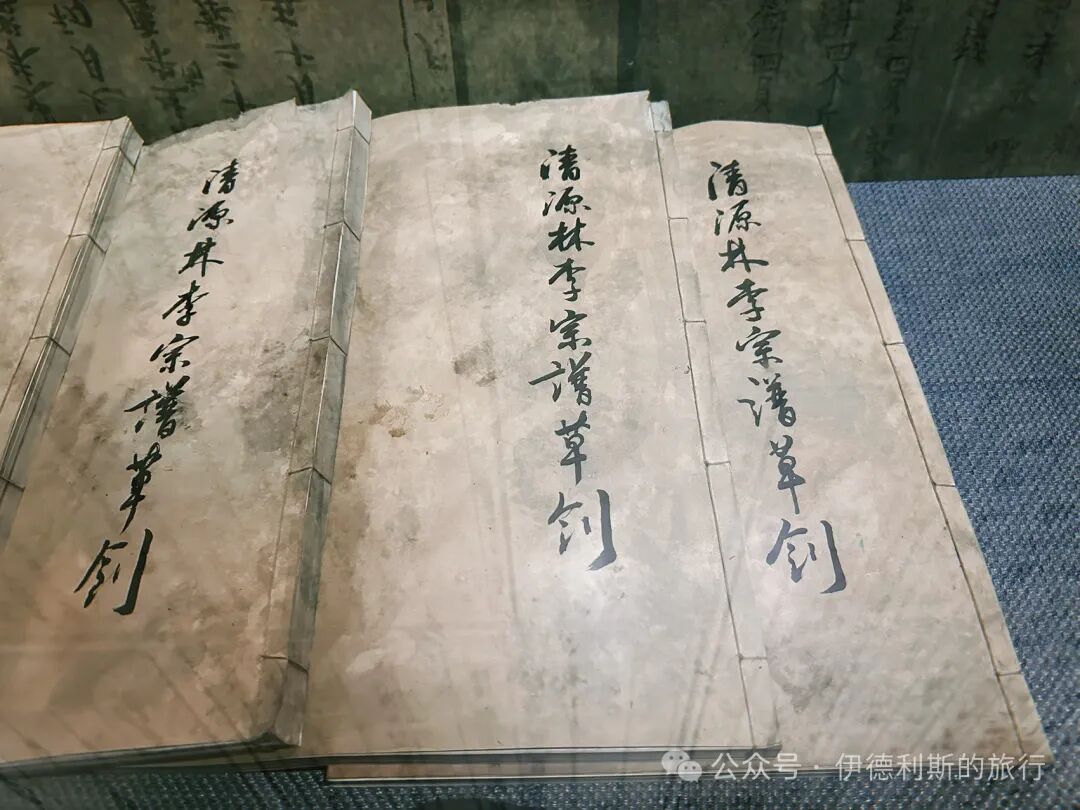
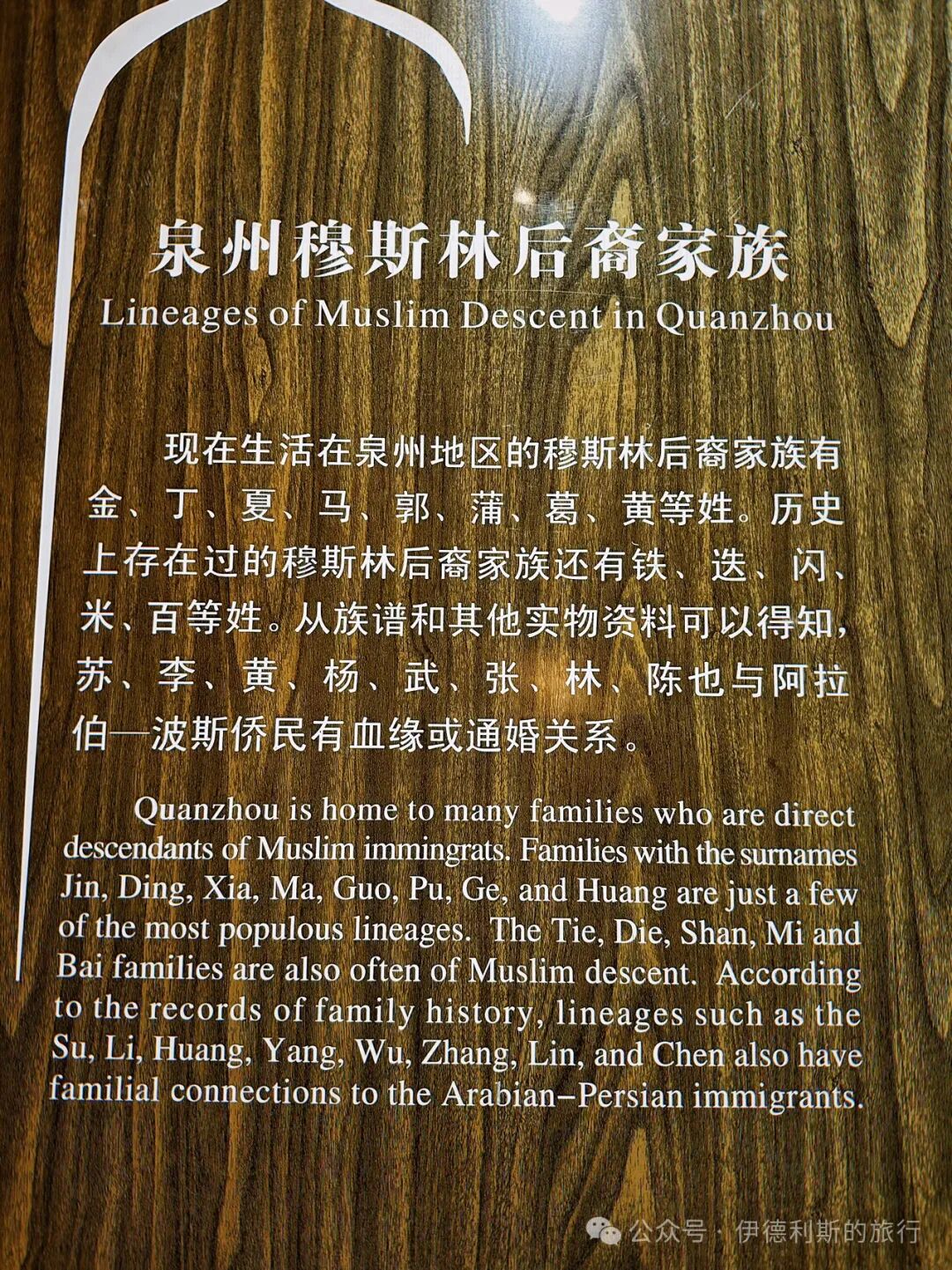
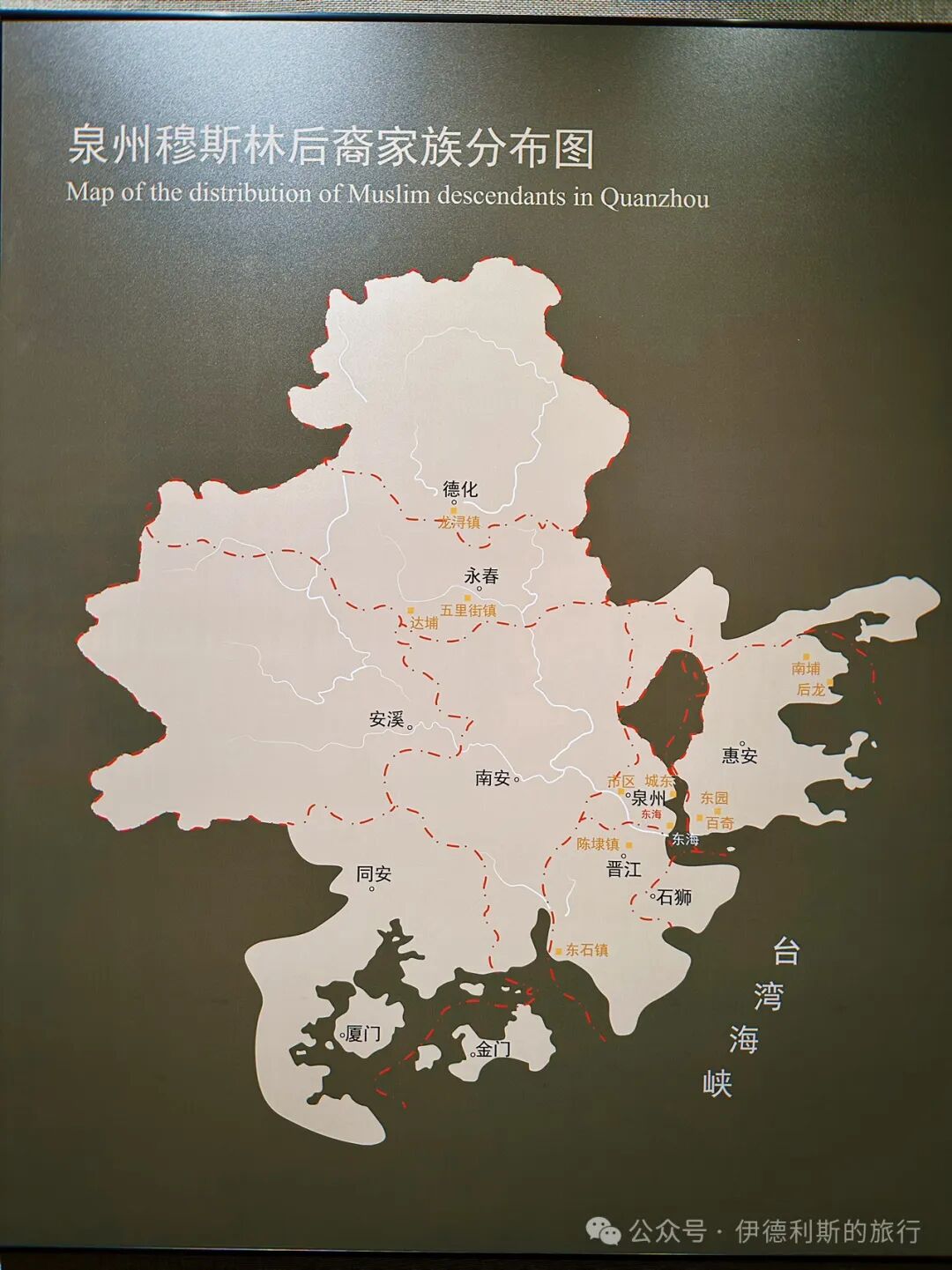
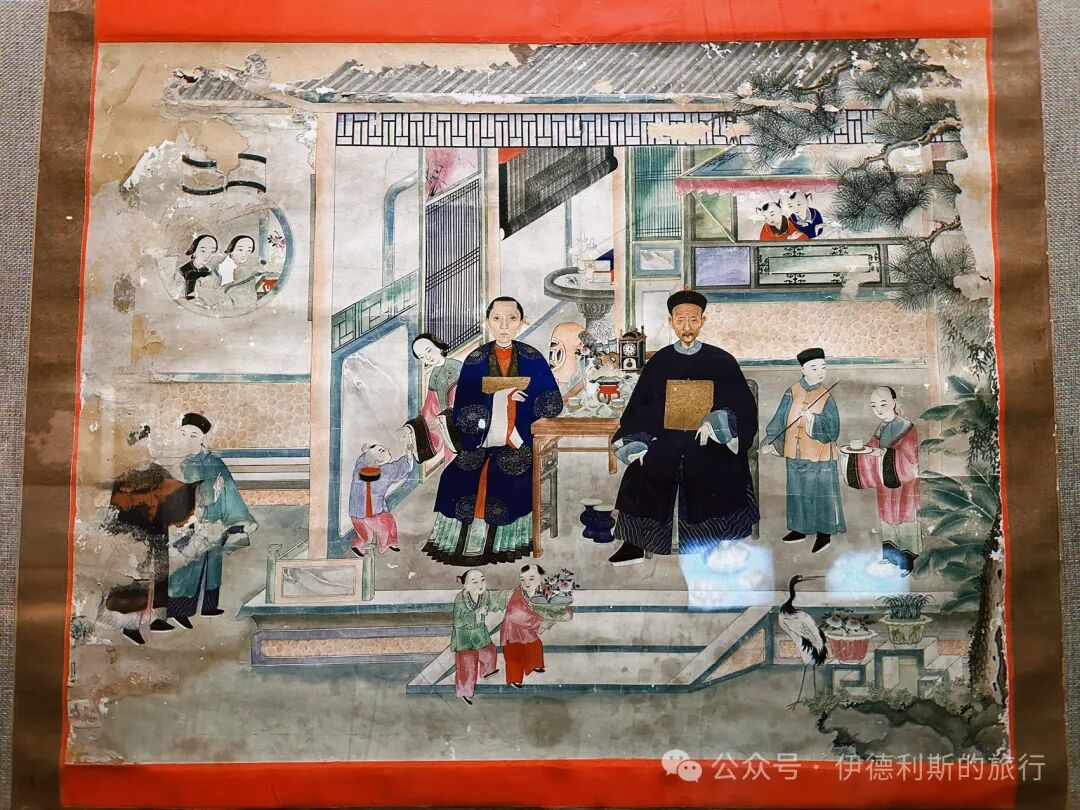
The lawn of the Maritime Museum displays many stone tombs with pedestal bases (xumizuo). Many are carved with beautiful Arabic calligraphy, mostly featuring verses from the Quran.
During the Song and Yuan dynasties, Quanzhou had large areas of cemeteries for foreign merchants (fanke). These were mainly concentrated in the areas from Tumen Street to Jintoupu, Houban, Fashi, and Meishan in the southeast suburbs.
In the Song and Yuan dynasties, one could travel from Tonghuai Gate, pass through Jintoupu, and head southeast to reach the Houzhu seaport. The road from Tonghuai Gate to Fashi was built on alluvial beach land, so it often sank into the mud. Because of this, after the Ming Dynasty, local residents often used the stone tomb components with pedestal bases from the Song and Yuan dynasties as materials for slope protection and pond embankments when building roads and ponds. There were once three ponds at Puwei in Jintoupu. When the water dried up in winter, more than thirty Islamic tomb stones could be seen. South of Jintoupu, there is a small temple called Houban Palace. Just under its northeast wall, nearly ten stone tomb components with pedestal bases (xumizuo) are used as foundation stones. Several more Islamic tomb stones are also found near the drainage ditches and rice paddy mud in Houban Village.
Additionally, a large number of stone tomb components from the Song and Yuan dynasties were discovered in the areas of Jincuowei, Secuowei, Xiacuopu, Dingcuoshan, and Tiecuowei in the eastern suburbs of Quanzhou. Jin, Ding, Xia, and Tie are the surnames of the 'half-southern barbarians' (bannanfan)—the descendants of intermarriages between Arabs, Iranians, and local Quanzhou people—though these families no longer practice Islam today.
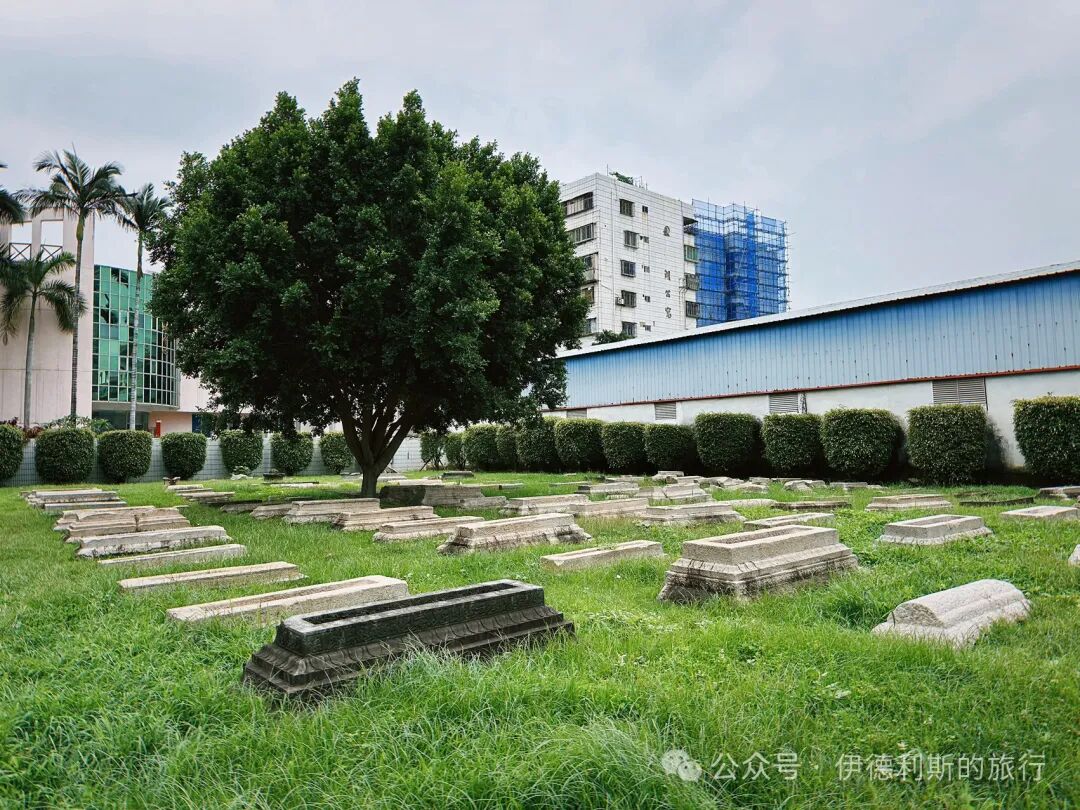
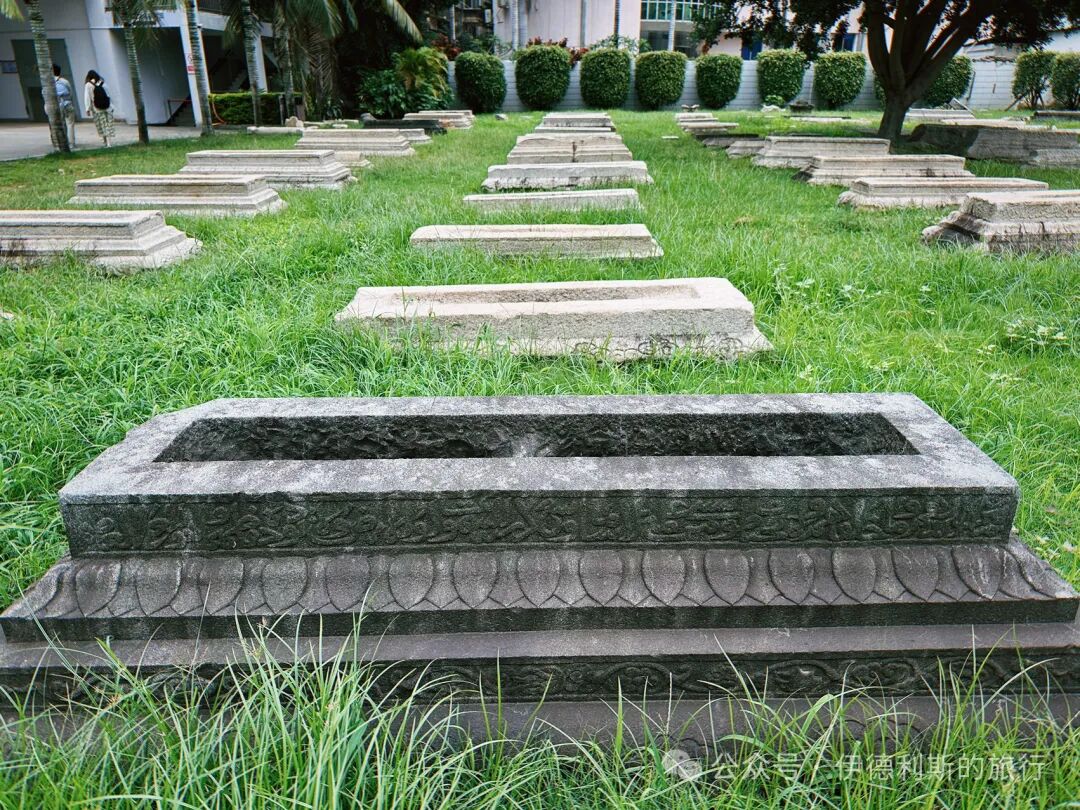
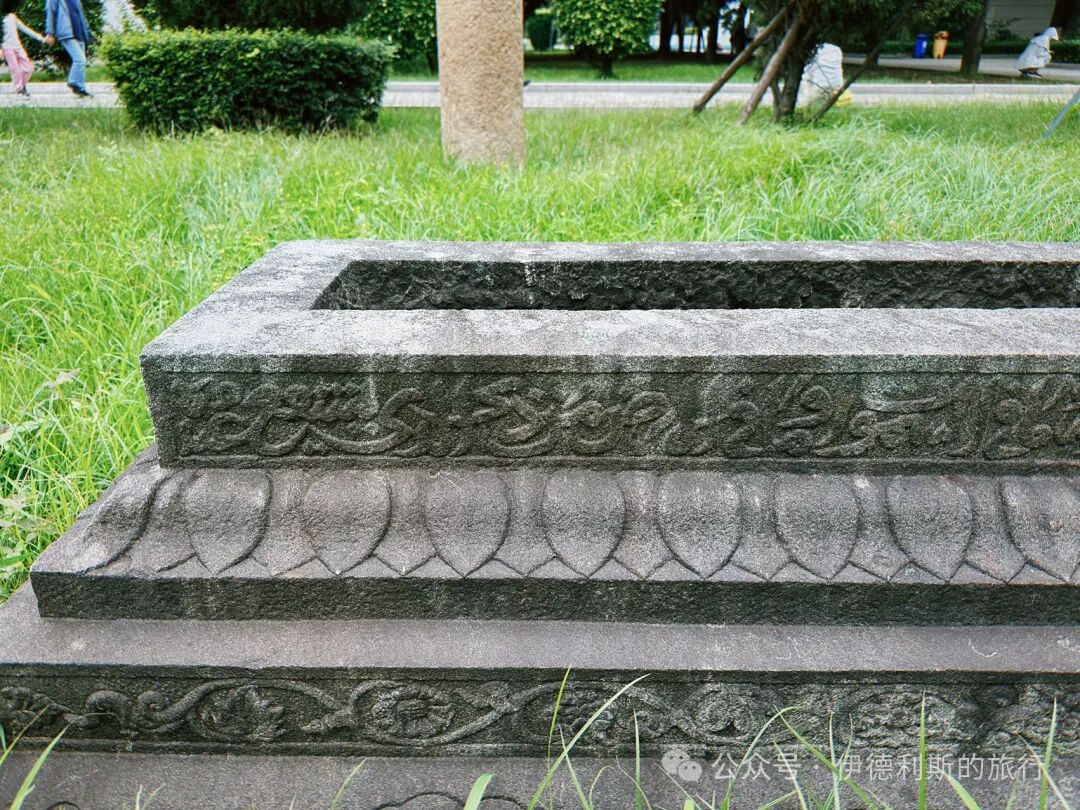
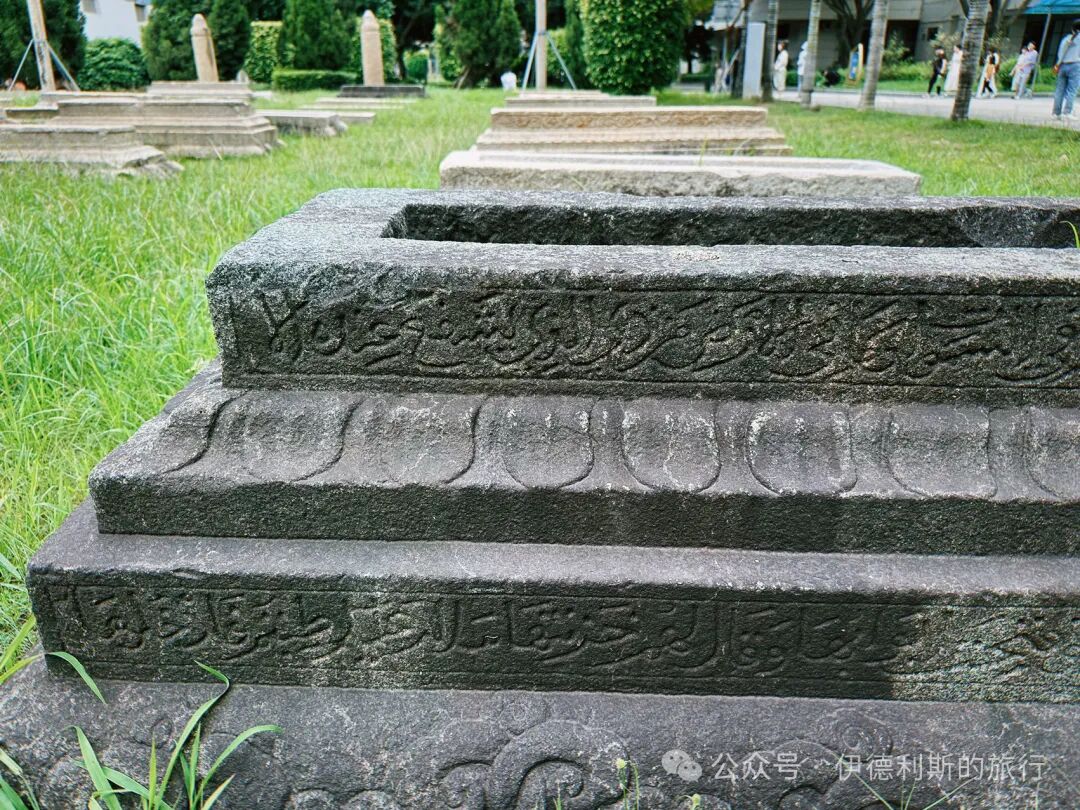
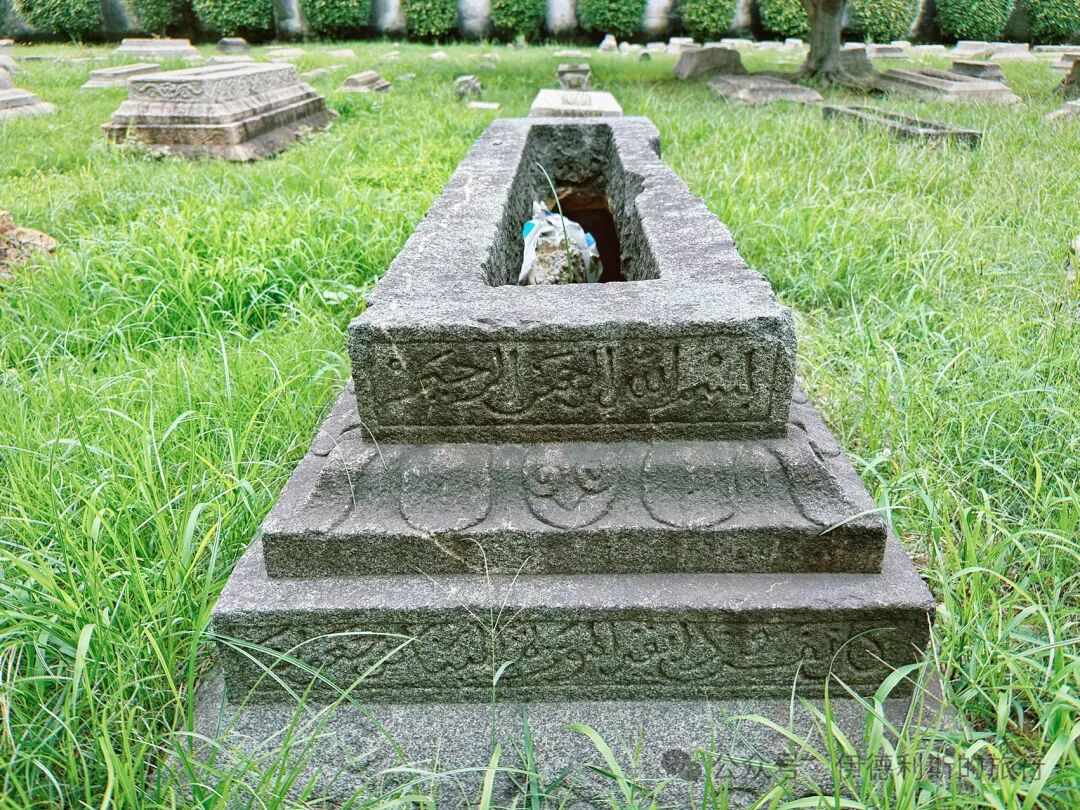
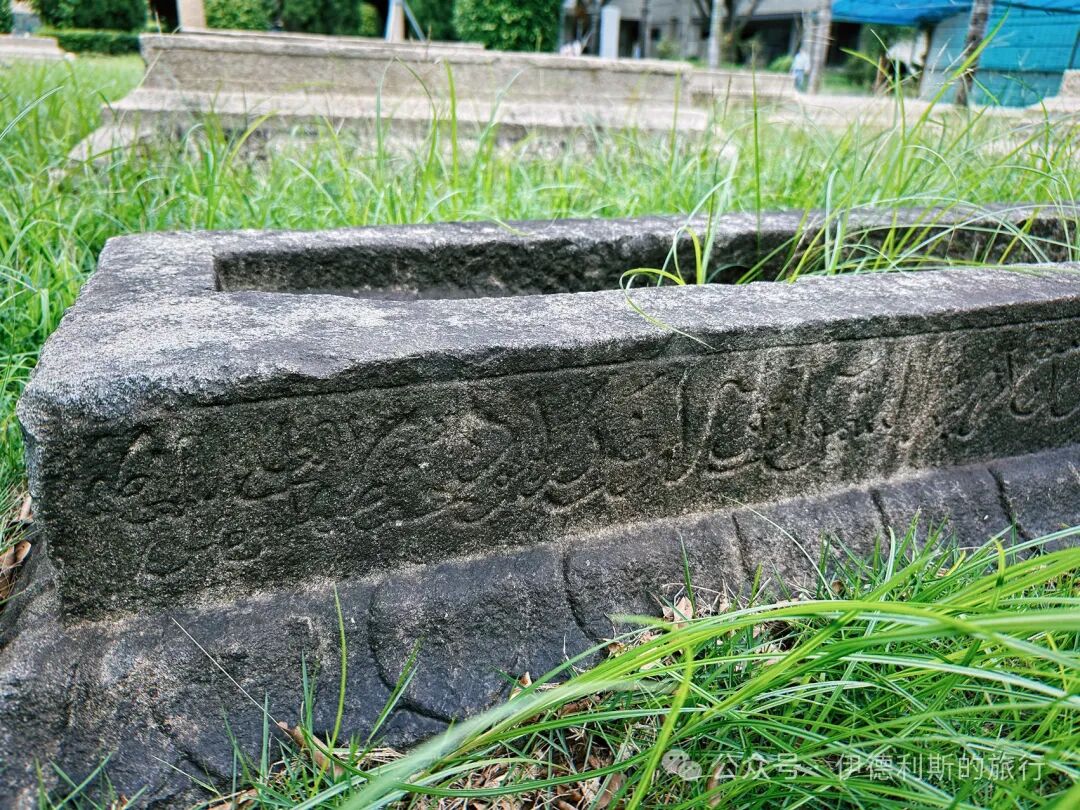
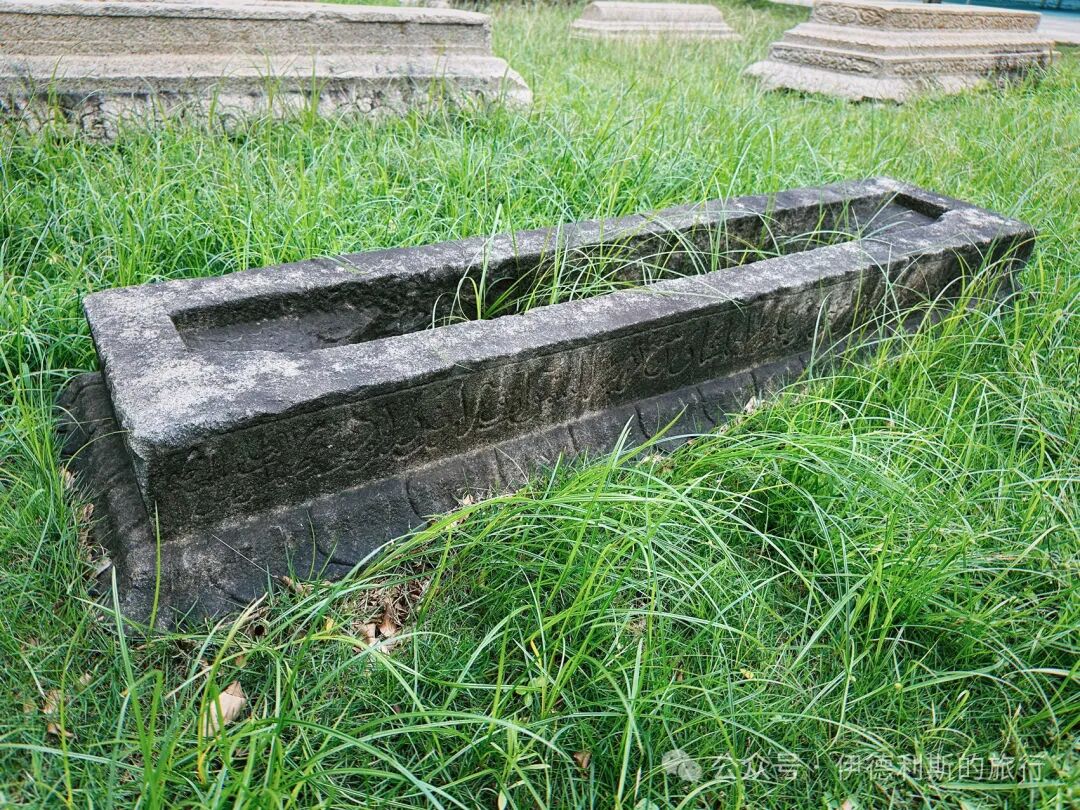
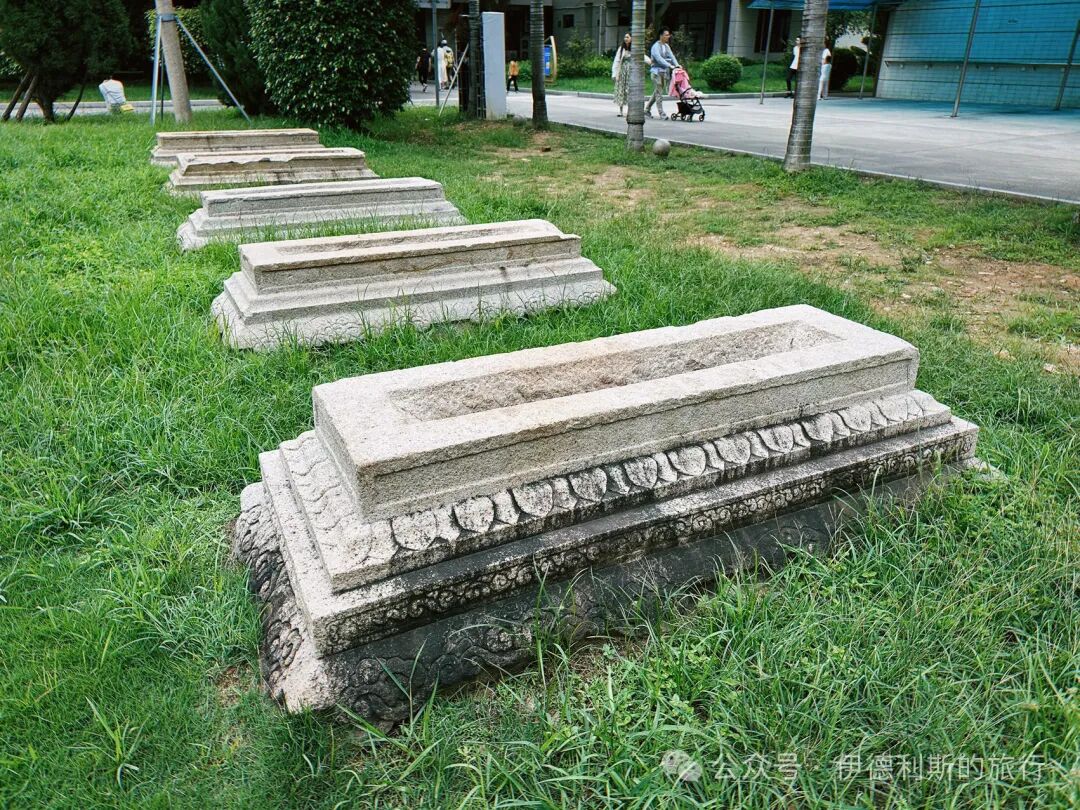
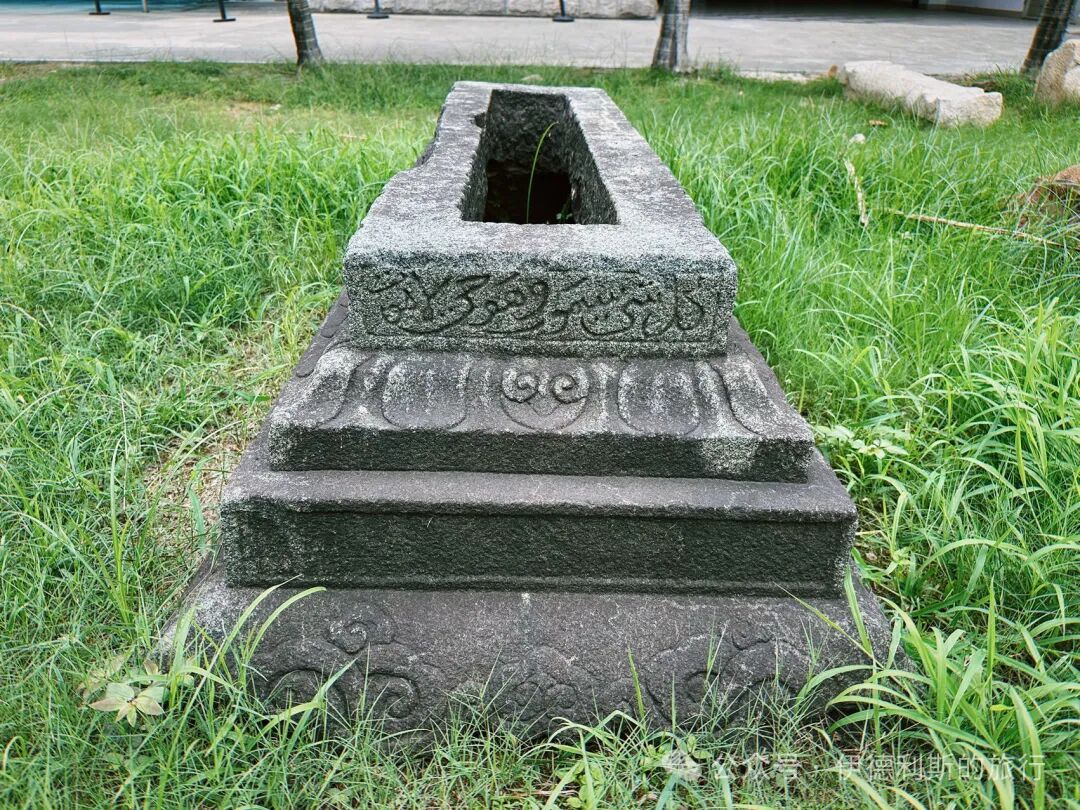
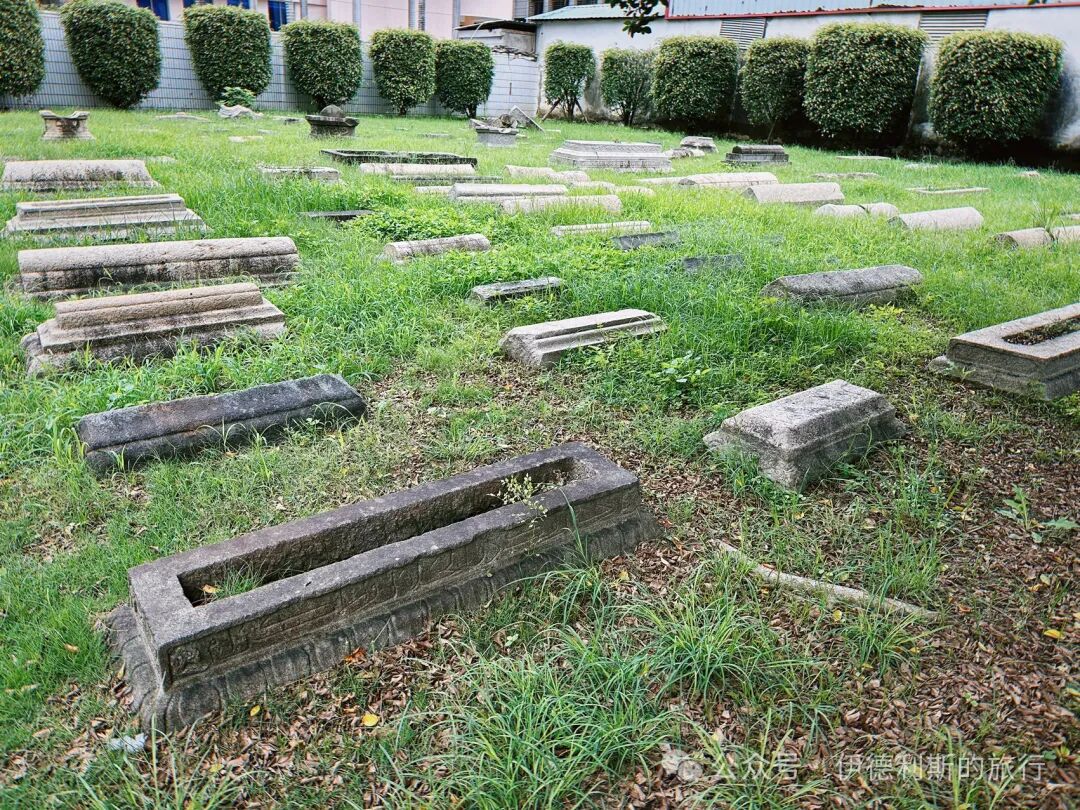
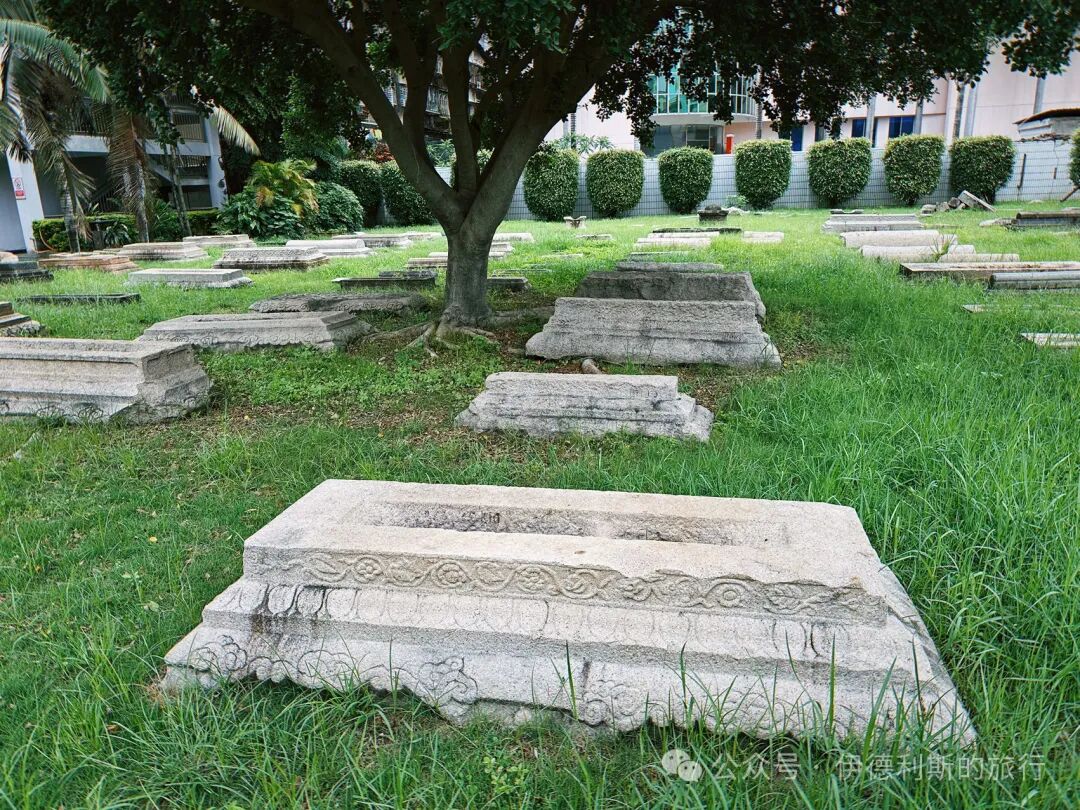
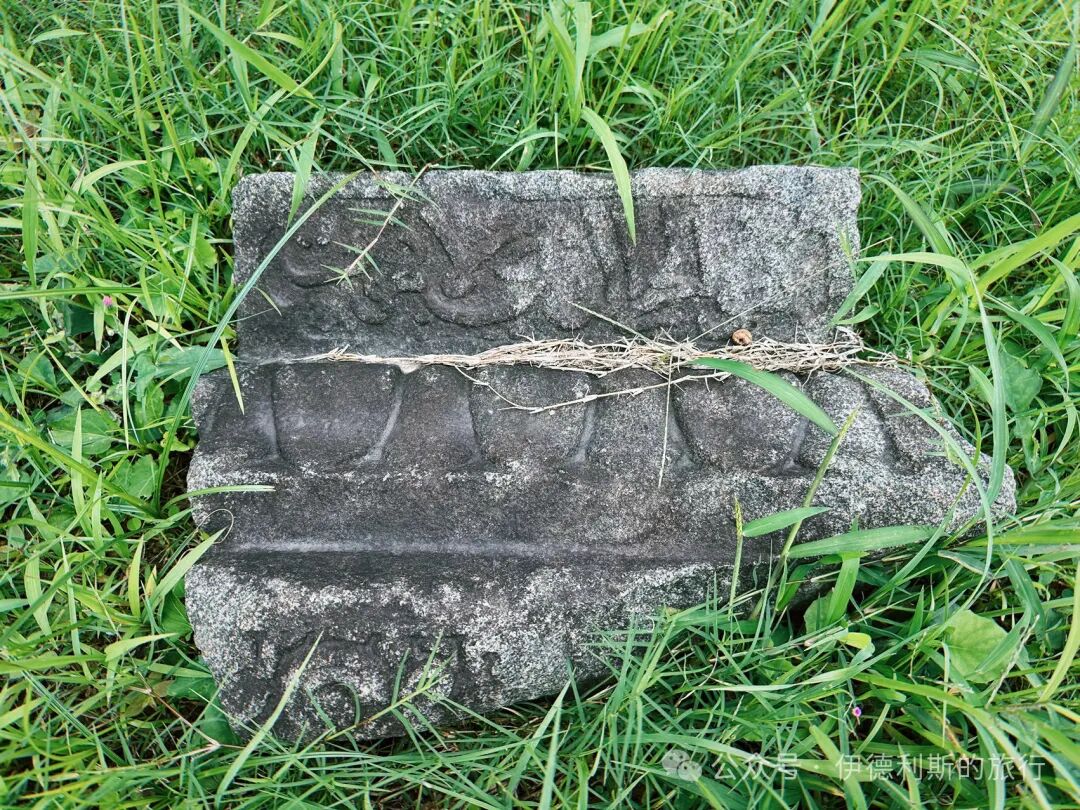
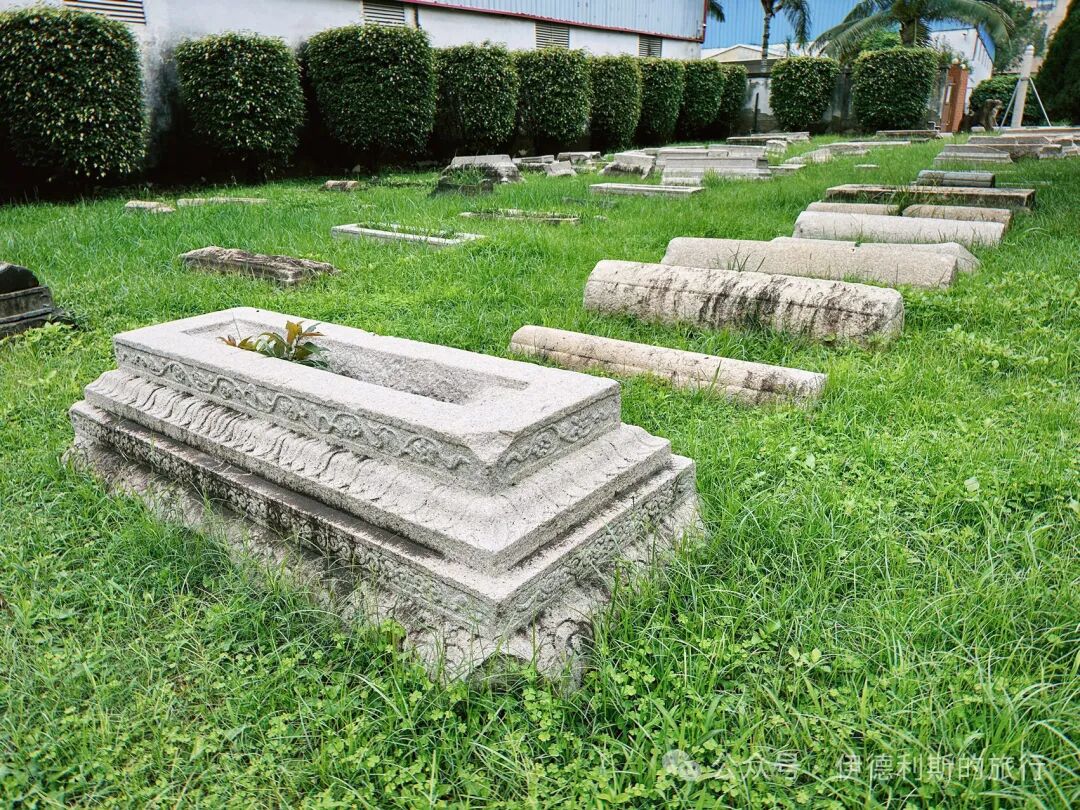
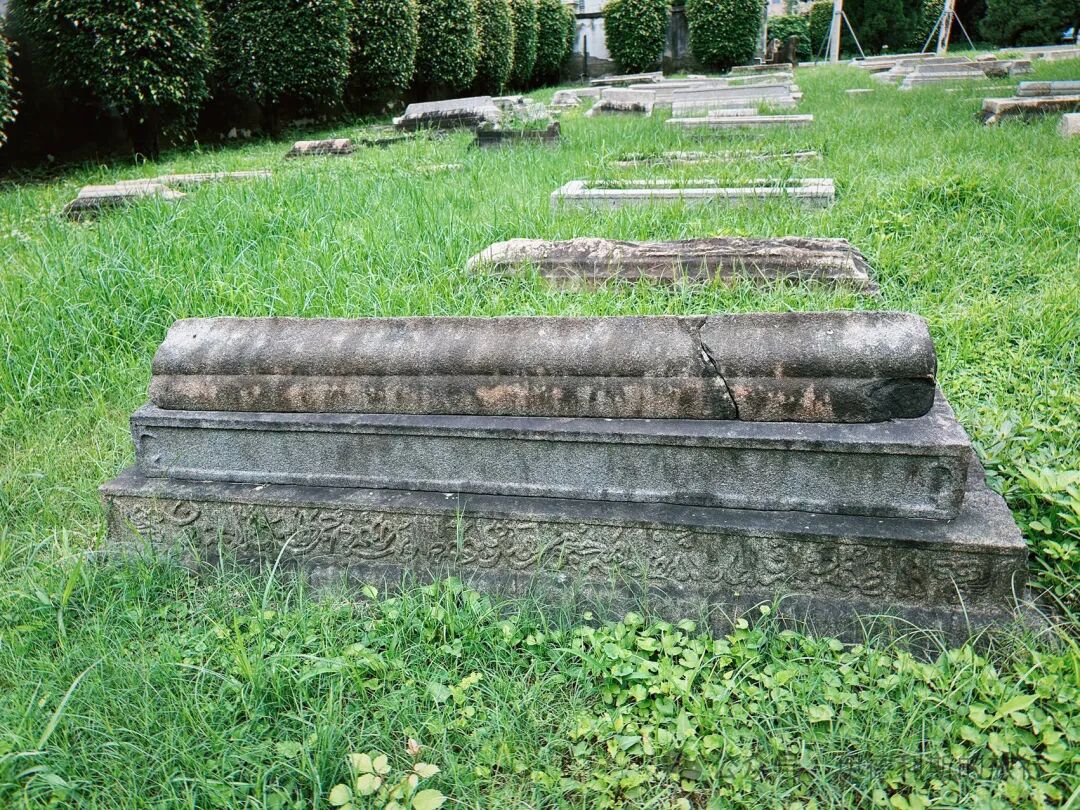
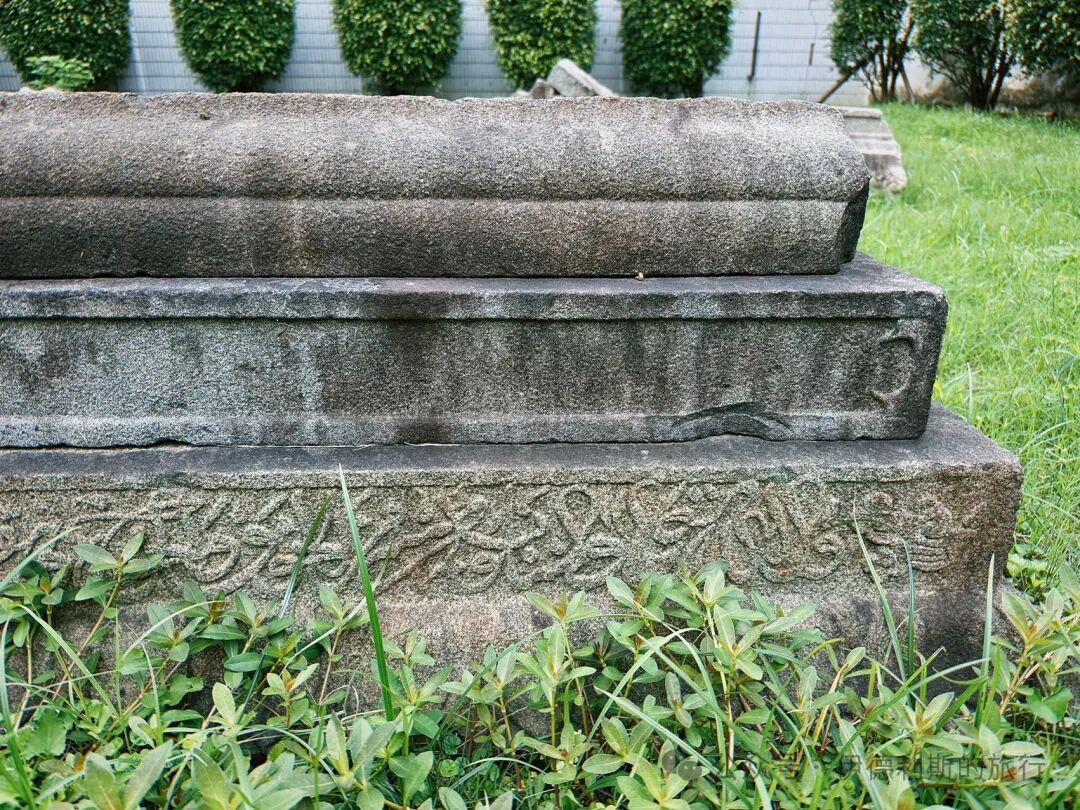
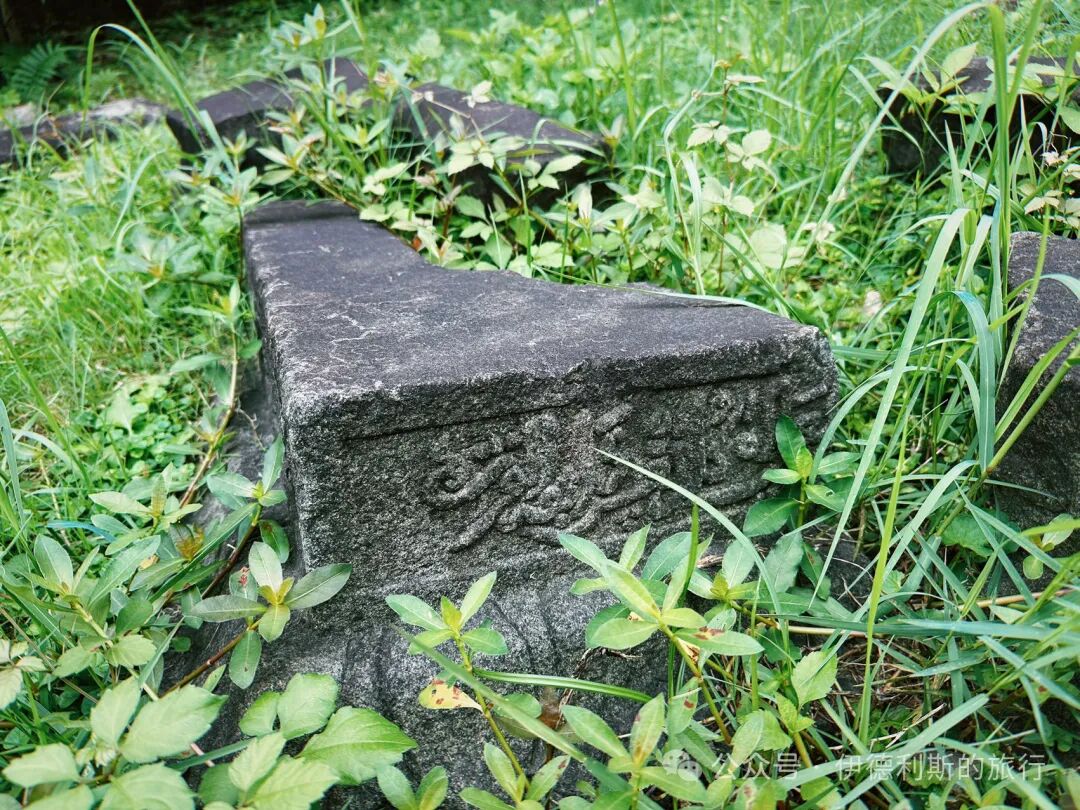
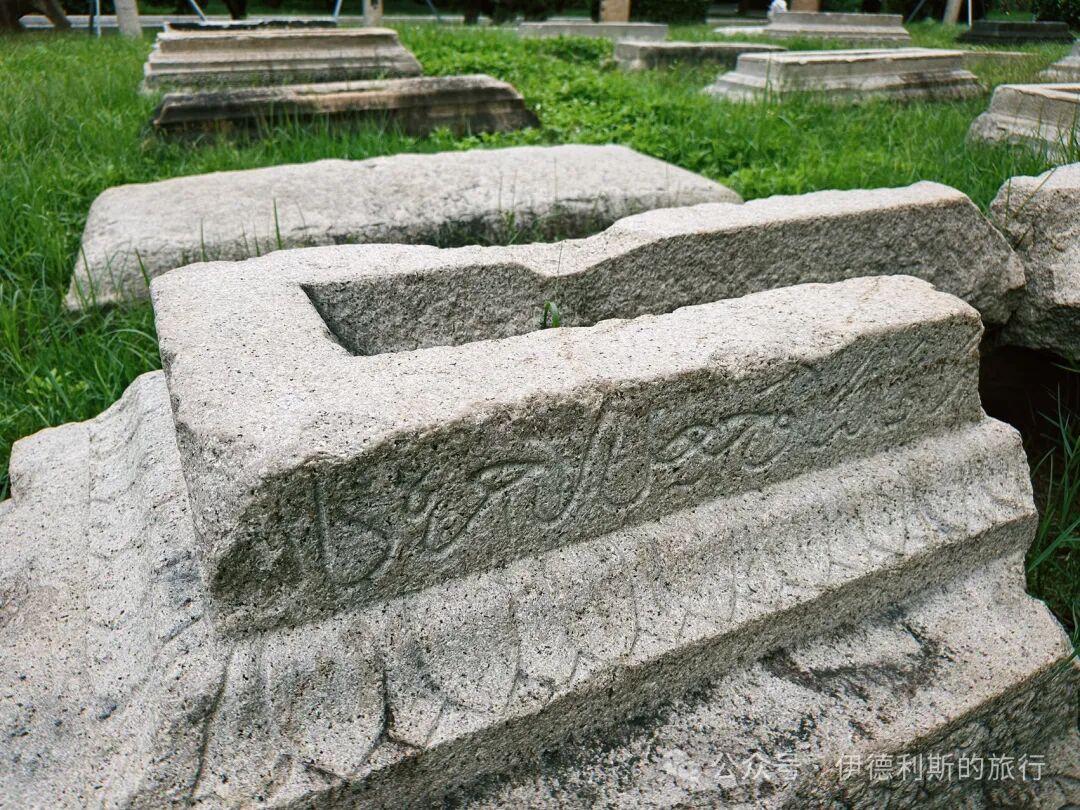
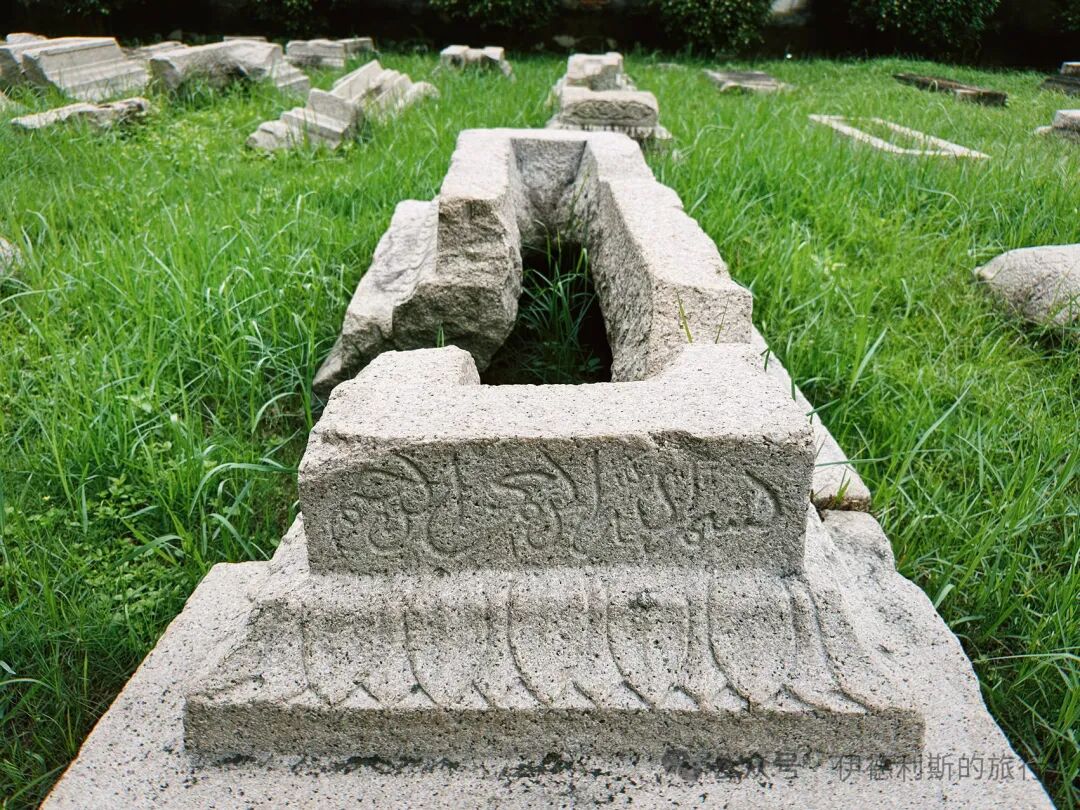
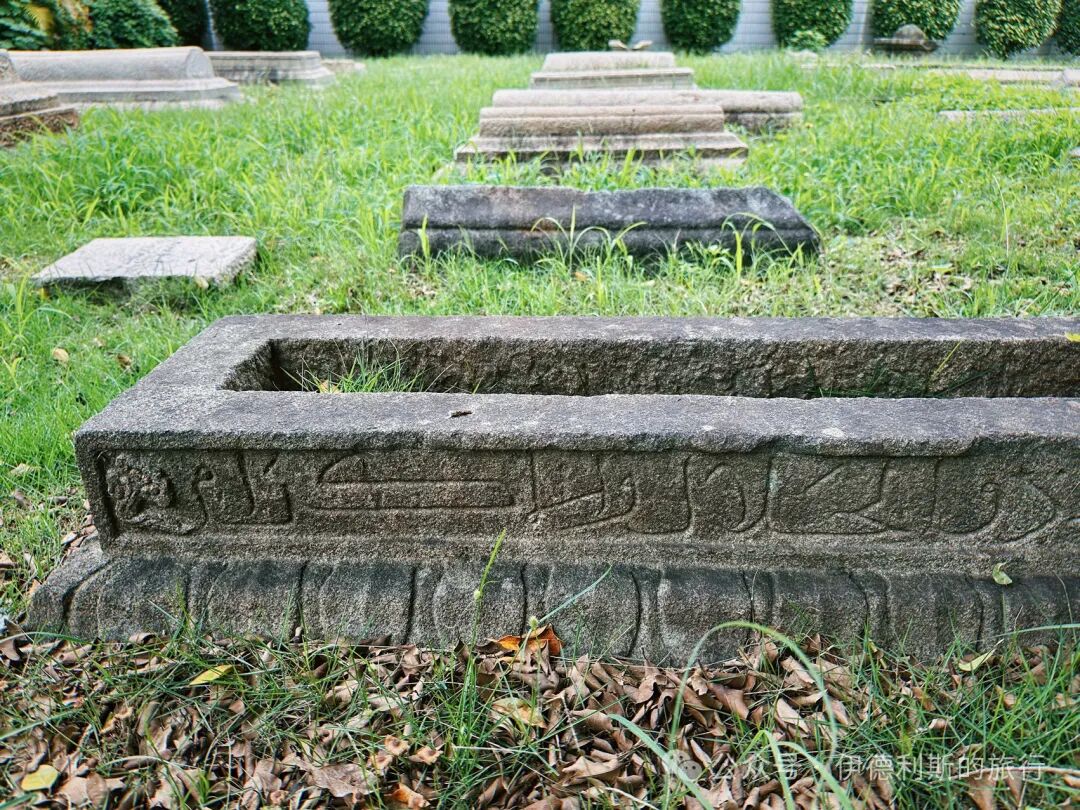
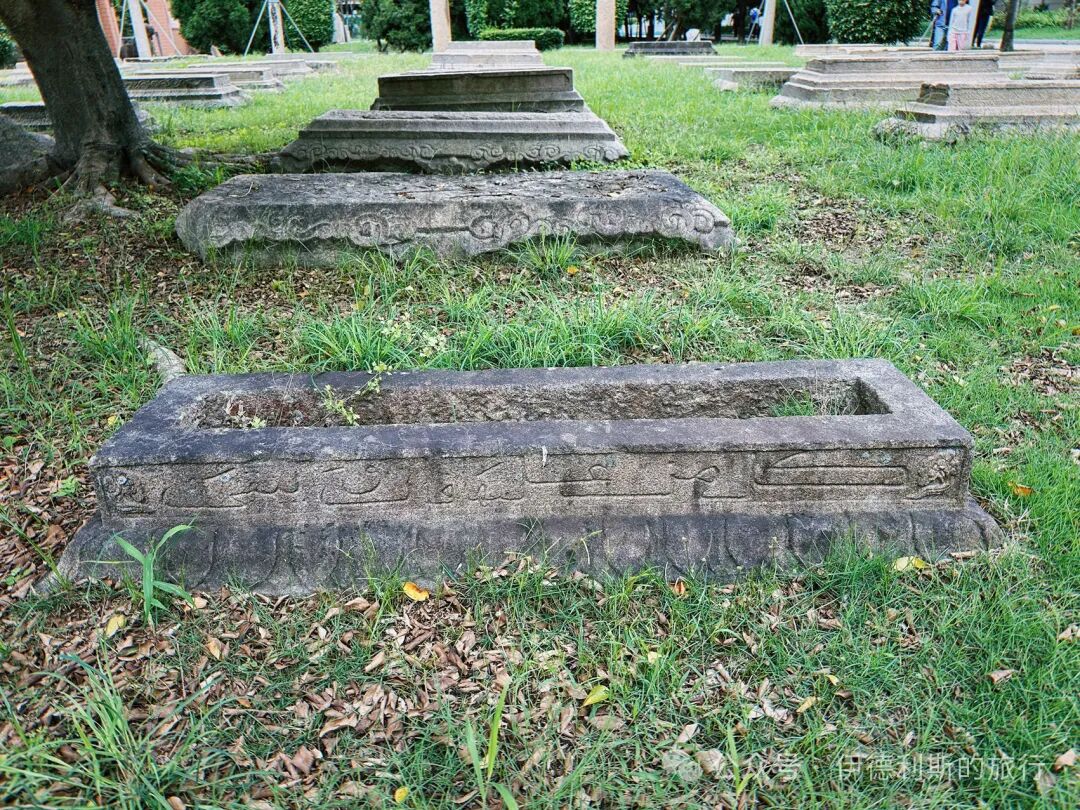
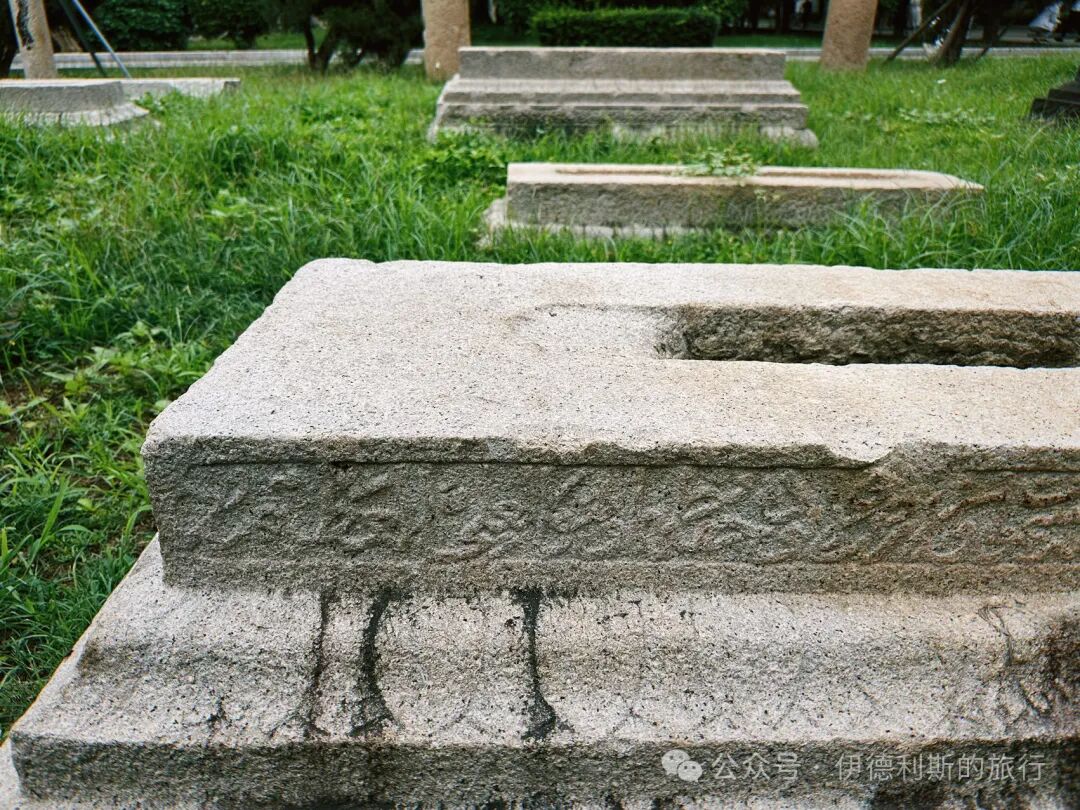
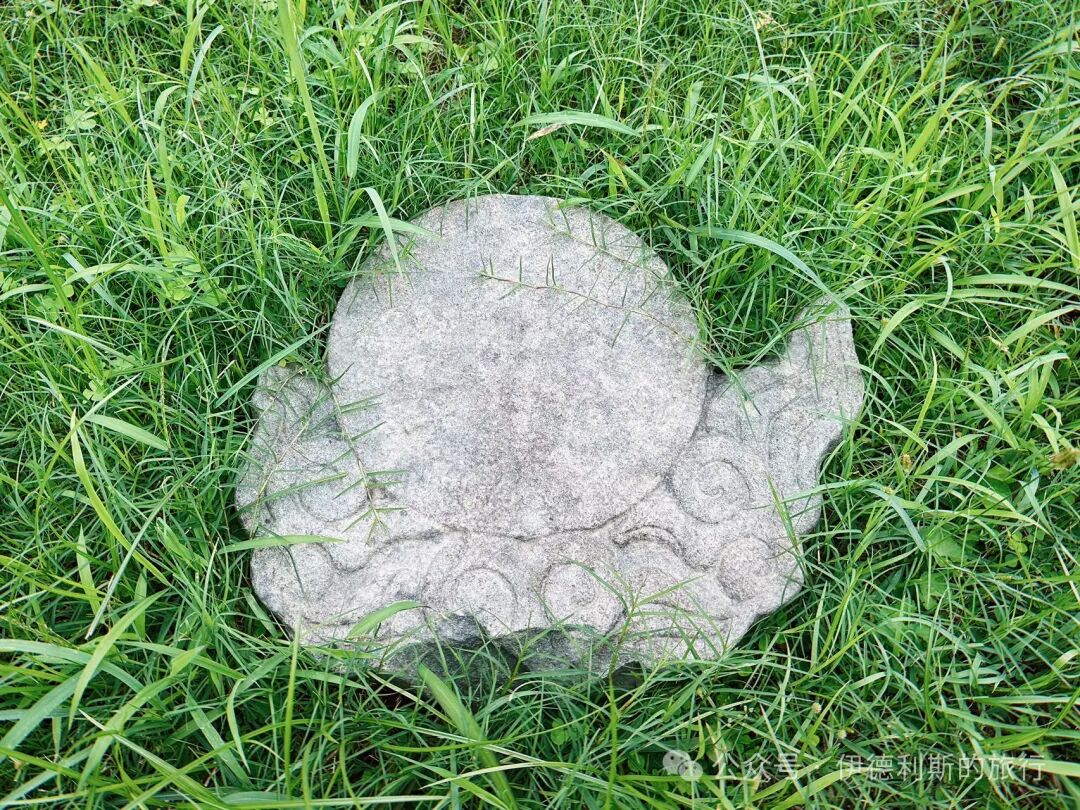
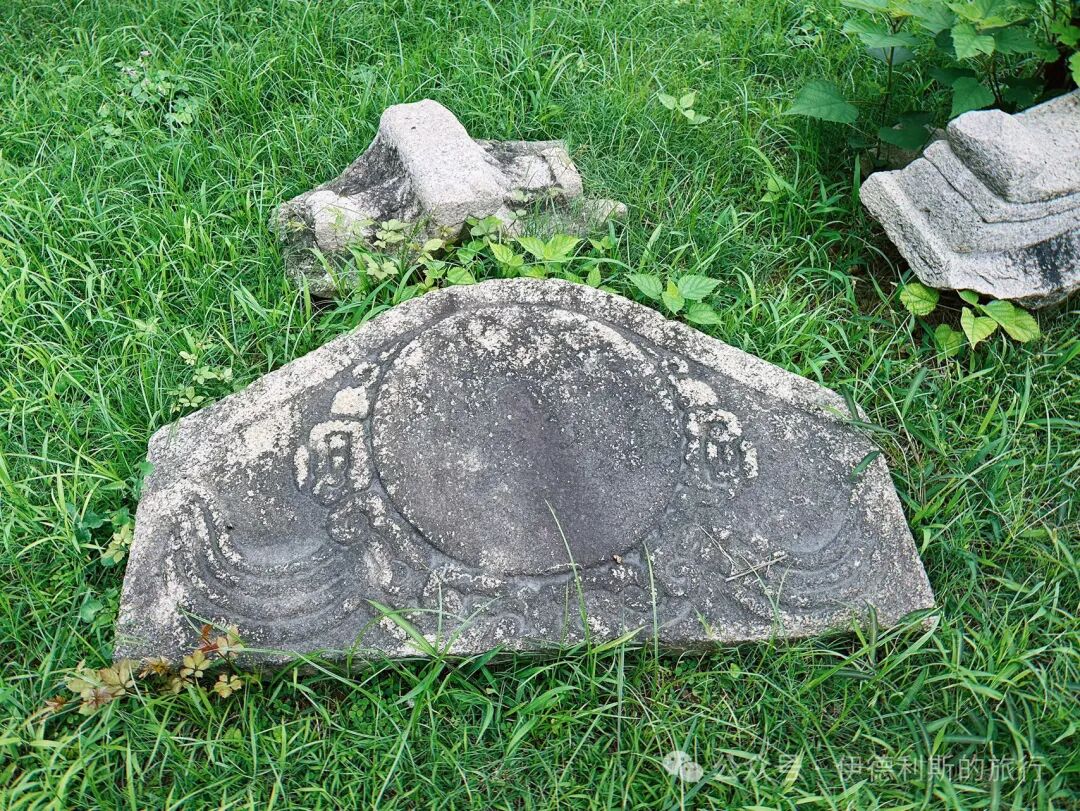
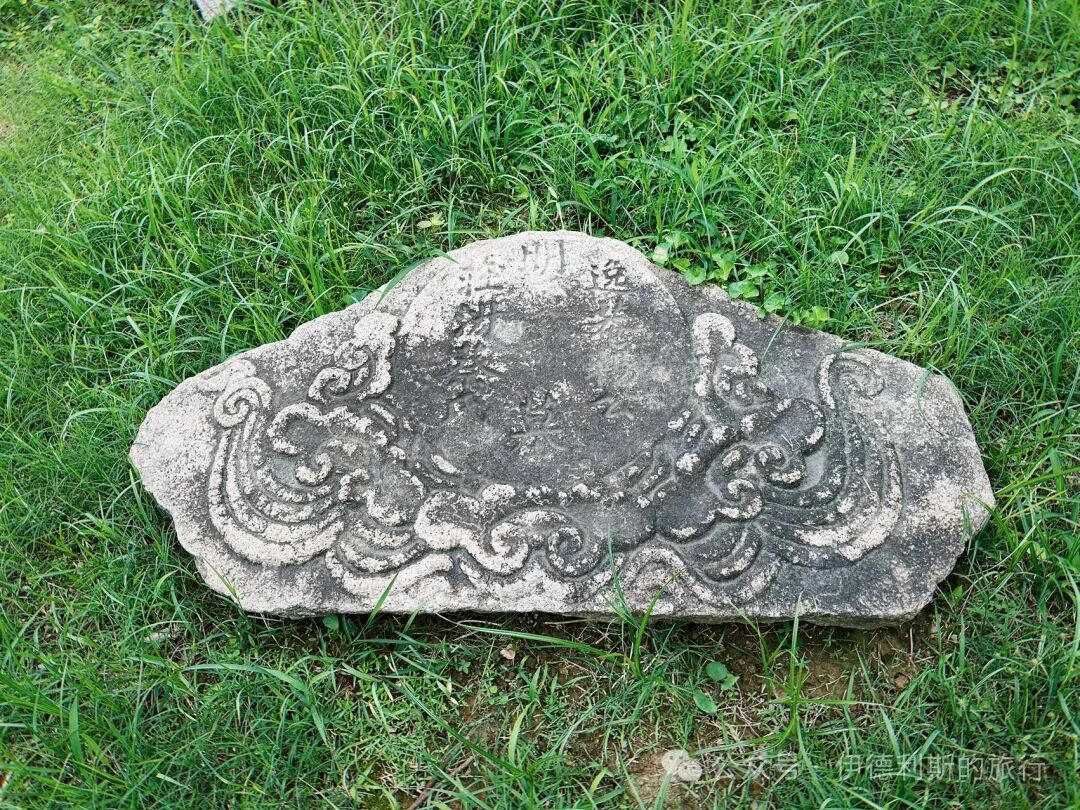
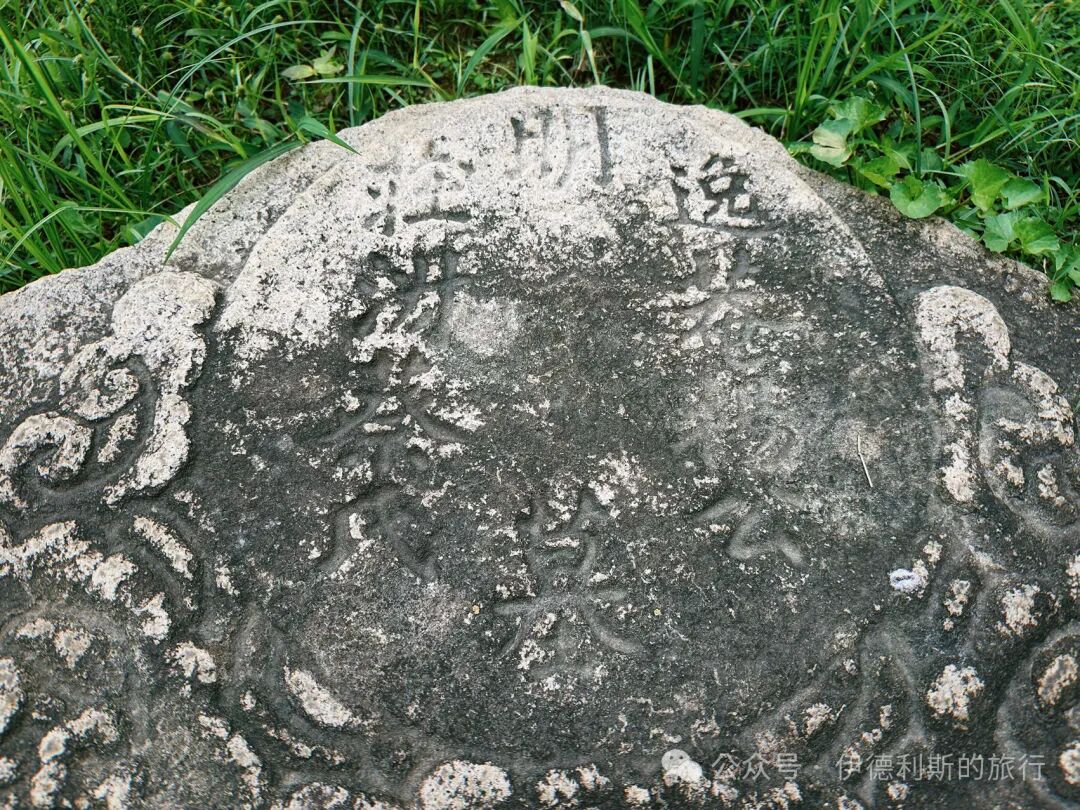
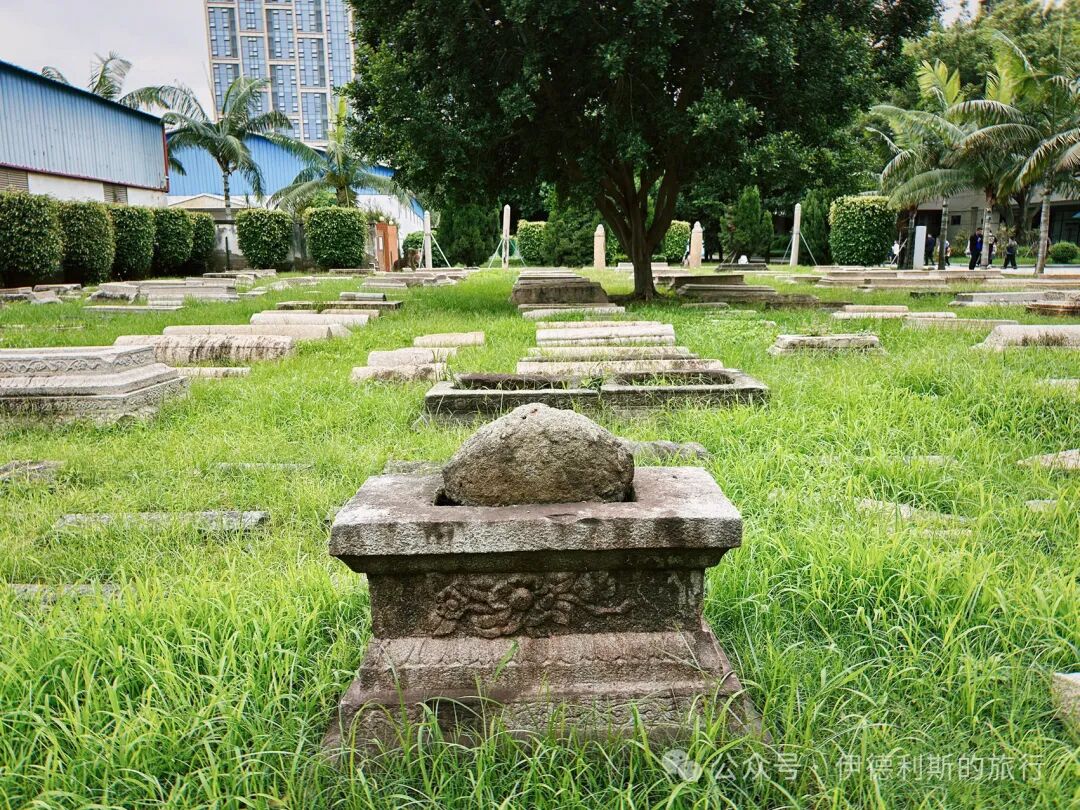
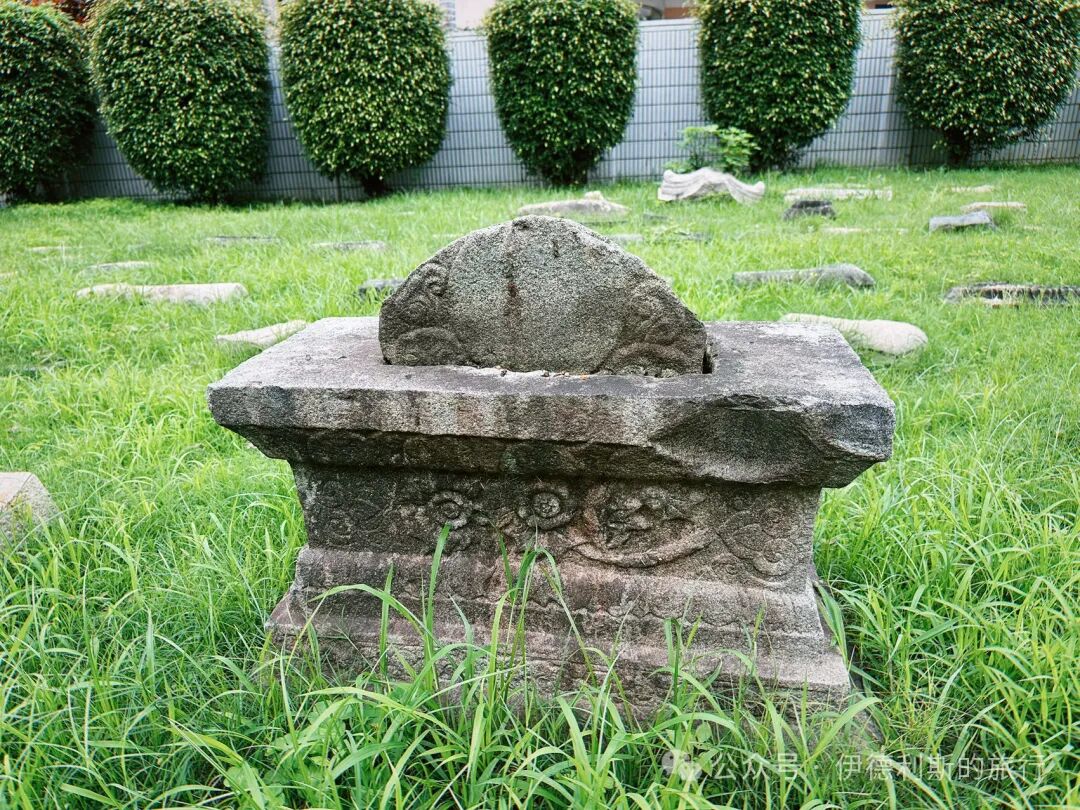
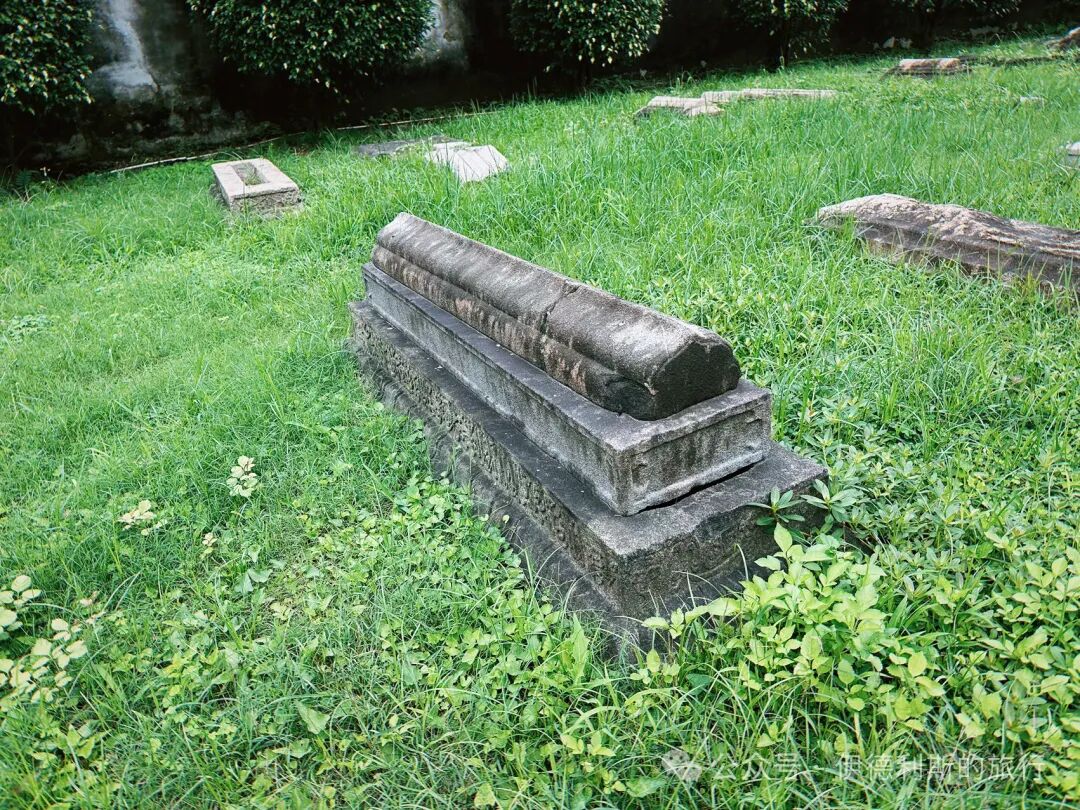
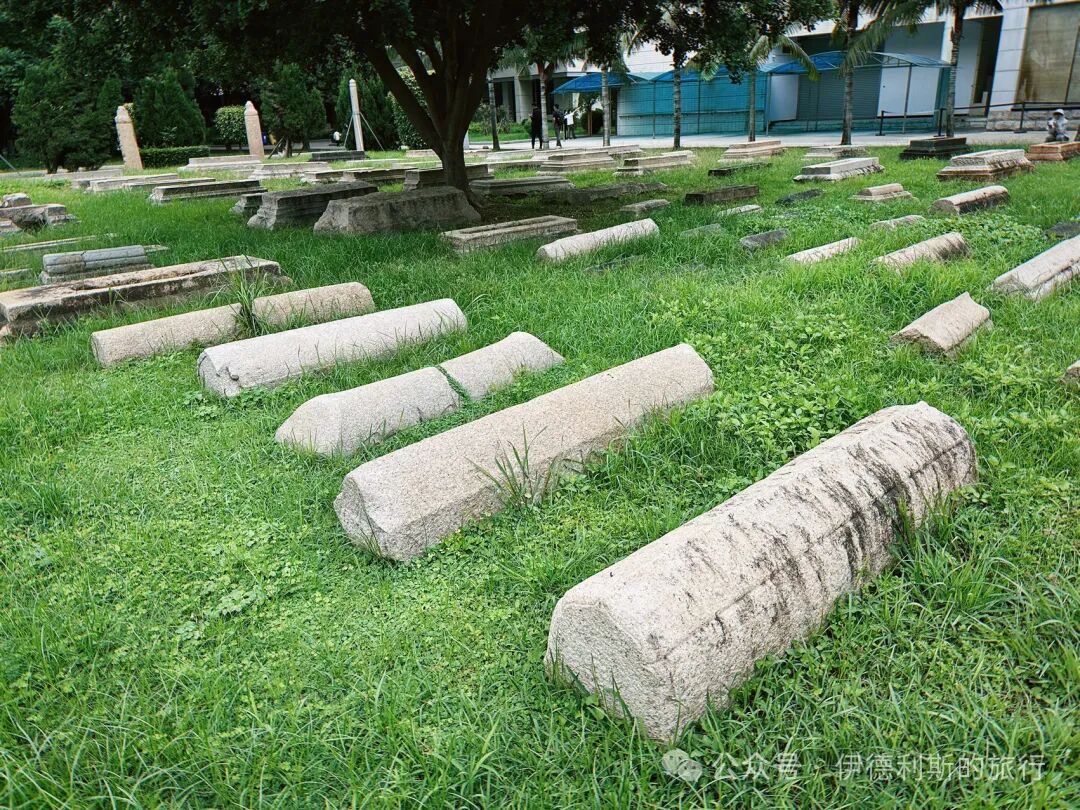
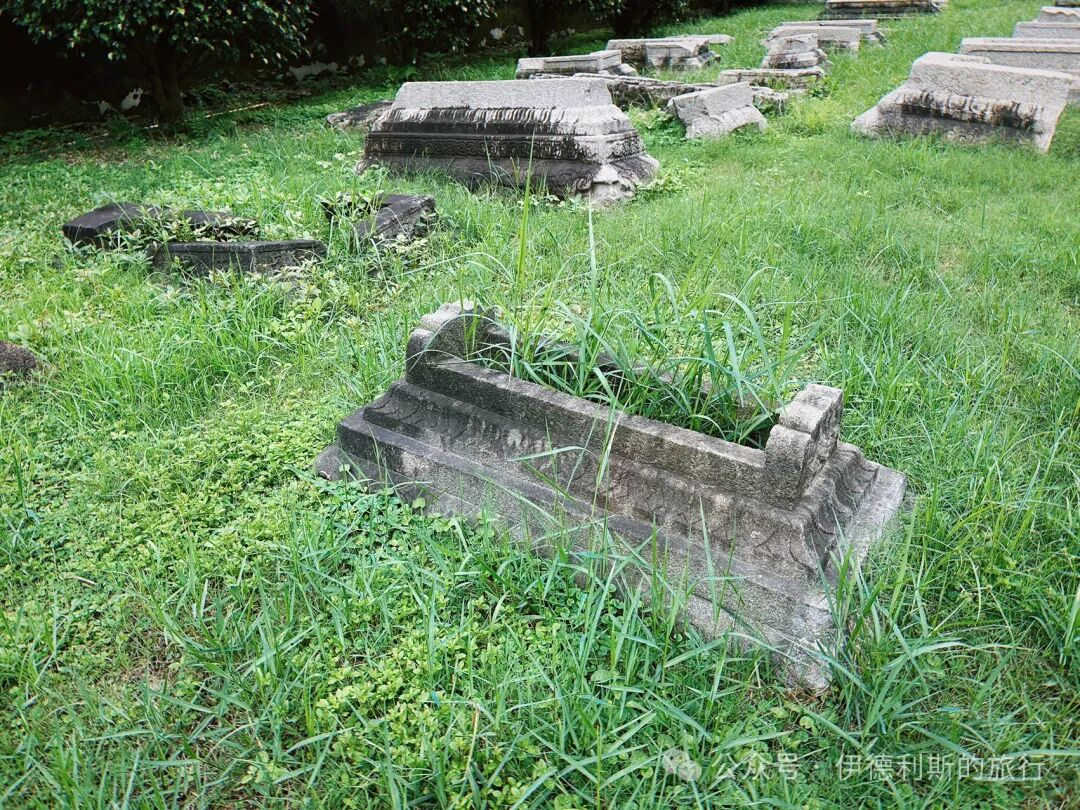
Quanzhou Islamic Relics (Part 1)
Articles • ali2007fr posted the article • 0 comments • 165 views • 2026-05-16 22:58
Summary: This travel note introduces Quanzhou Islamic Relics (Part 1). In July 2021, 'Quanzhou: World Maritime Trade Center in Song-Yuan China' was officially inscribed on the UNESCO World Heritage List. It is useful for readers interested in Quanzhou, Islamic History, Muslim Travel.
In July 2021, 'Quanzhou: World Maritime Trade Center in Song-Yuan China' was officially inscribed on the UNESCO World Heritage List. Congratulations to the two Islamic historical sites in Quanzhou, the Qingjing Mosque and the Lingshan Islamic Tombs, for becoming World Cultural Heritage sites. Below, I will share the Islamic relics I recorded during my trip to Quanzhou in 2017.
I. Qingjing Mosque
1. The Main Gate
2. The Main Prayer Hall
3. Mingshan Hall
4. Collected Stone Carvings
II. Lingshan Islamic Tombs
1. The Main Tombs
2. Scattered Stone Tombs
3. Local Hui Muslim Tombs
4. The Ding Family Cemetery in Chendai
III. Quanzhou Maritime Museum
IV. Deji Gate Site
V. Muslim Tomb Stones in the Museum of Quanzhou Maritime Silk Road
VI. Baiqi Guo Family Tombs
1. Tomb of Guo Zhongyuan and his wife
2. Tomb of Guo Mengwei and his wife
3. Tomb of Guo Shiyuan's family
I. Qingjing Mosque
Qingjing Mosque is the only ancient mosque in Quanzhou that has been preserved to this day. It was first built in 1009 (the second year of Dazhong Xiangfu in the Northern Song Dynasty) and rebuilt in 1309 (the second year of Zhida in the Yuan Dynasty) by Ahmad from Shiraz, Persia.
The original name of 'Qingjing Mosque' should be 'Ashab Mosque'. 'Qingjing Mosque' was originally another mosque located in the south of Quanzhou city, built in 1131 (the first year of Shaoxing in the Southern Song Dynasty). After it was destroyed at the end of the Yuan Dynasty, some stone inscriptions from it were moved to the Ashab Mosque in the east of the city. When the Ashab Mosque was renovated in 1507 (the second year of Zhengde in the Ming Dynasty), a Yuan Dynasty stone inscription titled 'Record of Qingjing Mosque' was re-engraved as 'Record of the Re-establishment of Qingjing Mosque', and the Minister Zhao Rong inscribed the plaque 'Qingjing Mosque', which officially made the Ashab Mosque the Qingjing Mosque.
1. The Main Gate
The gate tower of the Qingjing Mosque is built of diabase and white granite. The outer layer features a line of Quranic inscriptions. At the top of the gate tower is the Moon-Sighting Terrace, where the moon was sighted every Ramadan. In the old days, three large lanterns would be hung under the archway after the start of Ramadan each year. A large palace lantern was hung in the center of the pointed arch, inscribed with 'Islam' in both Chinese and Arabic. Two long, oval-shaped government-style lanterns were hung on both sides; the one on the left read 'Ancient Religion of the Hui People', and the one on the right read 'Ancient Qingzhen Qilin Mosque'. Every night, the mosque would set up a round sign listing the names of the heads of each household, and the Hui Muslims would take turns lighting the lamps. Throughout Ramadan, Muslims would come to the front of the prayer hall at Qingjing Mosque every night to burn pairs of black bamboo-handled 'Anxi incense' sticks.
The stone inscriptions on the outside of the main gate are from the full text of Chapter 3, Verse 18 and an excerpt from Verse 19 of the Quran.
The interior is composed of three layers of domes. The outer layer is a pointed arch dome. The top is a hanging lotus carved from diabase, and below it are sixteen layers of curved stone strips that become higher and narrower until they close at the lotus.
The middle dome is composed of five fan-shaped white granite stones with tortoise-shell patterns, with foundation stones laid underneath. The inner layer is a dome. There is a pair of pointed arch false doors on the stone walls on both sides of each layer.
Above the rear of the main gate, there are two lines of Arabic stone inscriptions carved in white granite. This inscription records that Ahmad from the ancient Persian city of Shiraz rebuilt the Mosque of the Holy Friend in 1310.
On the east side of the main gate stand two Chinese stone tablets: the 'Record of the Re-establishment of Qingjing Mosque' (re-engraved in 1507 from the 1351 original) and the 'Record of the Renovation of Qingjing Mosque' from 1609.
2. The Main Prayer Hall
To the left of the main hall entrance is the pointed arch main door of the hall. Inside the arch are three lines of white granite inscriptions, featuring an excerpt from Chapter 2, Verse 125 and the full text of Verse 127 of the Quran.
There are 8 outer windows on the south side of the main hall facing the street, with a 19-meter-long stone inscription above them, which is the entire Chapter 76 of the Quran.
There are seven pointed arch niches on the west wall of the prayer hall, each with stone inscriptions inside. Above the niches is another long strip of stone inscriptions, all of which are from the Quran.
In the middle of the west wall is the protruding 'Fengtian Altar', which is the Mihrab kiln hall. The niche inside the Mihrab is the largest, with seven lines of inscriptions starting with the Shahada, followed by excerpts from the Quran. The inscriptions in the other niches on the west wall are also all from the Quran. At the top of the niche is a 13.2-meter-long inscription from the full text of Chapter 2, Verses 142, 143, and 144 of the Quran.
In the past, Quanzhou Hui Muslims considered the 27th night of Ramadan as the 'Erba Night', or 'Laylat al-Qadr', the night when Allah revealed the Quran. On this day, every Hui Muslim household in Quanzhou would prepare festive food and slaughter livestock and poultry. That night, each household would light a pair of large red candles on both sides of the Mihrab niche in the main hall of the Qingjing Mosque, signifying that the revelation of the Quran by Allah is brilliant and glorious.
3. Mingshan Hall
Mingshan Hall was first built in 1567. According to the 'Record of the Renovation of Qingjing Mosque' in the mosque, 'The congregation would climb the building to recite the Quran during the fasting month, and after finishing, they would retire to rest in this hall.' After the roof of the main hall of the Qingjing Mosque collapsed in the early Qing Dynasty, Mingshan Hall was converted into a place for prayer.
In 1818, Ma Jianji, the Commander-in-Chief of the Fujian Provincial Land Forces from Zhangzhou, stationed in Quanzhou, rebuilt Mingshan Hall in the traditional architectural style of Southern Fujian. In 1871, Jiang Changgui, the Commander-in-Chief of the Fujian Provincial Land Forces, rebuilt Mingshan Hall again.
The 'Water Lotus' stone incense burner carved from Shoushan stone was an original item from the main hall of the Qingjing Mosque and was moved into Mingshan Hall after the roof of the main hall collapsed.
Mingshan Hall hangs the 'Ten Thousand Differences, One Origin' plaque established by Ma Jianji in 1818, the 'Recognize the One Lord' plaque written by Tang Kesan, the Xiamen Customs Superintendent in 1923, and the 'Three Fears and Four Admonitions' plaque established in 1925.
4. Collected Stone Carvings
During the major renovation of the Qingjing Mosque in the spring of 1983, the 12 Hui Muslim households who had lived in the mosque since the Kangxi period were relocated, and a batch of stone tablets was discovered from the walls and underground of Mingshan Hall. Except for one from the end of the Southern Song Dynasty, all the dated tombstones are from the end of the Yuan Dynasty. The tomb owners came from Tabriz and Tehran in Iran, Adana in Turkey, Nablus in Palestine, and Khwarazm in Central Asia.
The picture below shows a diabase Yuan Dynasty tombstone, which was dug up from a garden belonging to a Pu family at the end of the Qing Dynasty. It was moved to the Qingjing Mosque and built into the south side of the west wall of Mingshan Hall, and was removed during the renovation of Mingshan Hall in 1983. Both sides of the tombstone are carved with continuous scroll patterns, and the front is recessed into a pointed arch stone niche, with cloud patterns carved on both sides. It is similar to the Yuan Dynasty Arabic tombstones in the Puhaddin Cemetery in Yangzhou and can be considered one of the most exquisite ancient Arabic tombstones in Quanzhou. The tomb owner was named Ahmad, who died in 1362.
The bottom right corner of the picture below is the right half of a diabase Sumeru-pedestal altar-style tombstone waist stone. It was discovered in 1984 by Mr. Wang Aichen when he was building a house near Yinju Bridge Lane (Tonghuai Street) in Quanzhou and was donated to the Qingjing Mosque. In 1972, the widow of Mr. Wu Wenliang, author of 'Quanzhou Religious Stone Carvings', donated the left half of this stone carving to the Quanzhou Maritime Museum. After the two pieces were joined, one can see the eight auspicious patterns carved on the left and right sides, and the text in the middle is from an excerpt of Chapter 43, Verses 67, 68, and 72 of the Quran.
On the right side of the picture below is a diabase Southern Song Dynasty tombstone, which was removed during the renovation of Mingshan Hall of the Qingjing Mosque in 1983. The tomb owner was named Khwarazm Khan bin Muhammad Khan, who died in 1271. 1271 was six years before the Yuan army captured Quanzhou. Khwarazm refers to the Khwarazmian Empire.
On the left is a white granite tombstone, which was unearthed from underground during the renovation of Mingshan Hall of the Qingjing Mosque in 1997.
In the center of the picture below is a diabase tombstone, which was dug up from a garden belonging to a Xia family at the end of the Qing Dynasty. It was moved to the Qingjing Mosque and built into the north wall of the Mingshan Hall lobby, and was removed during the renovation of Mingshan Hall in 1983. The tomb owner came from the ancient Iranian city of Tabriz. Tabriz was a trade center on the northwestern plateau of Iran and was historically the capital of the Ilkhanate, the Kara Koyunlu, the Ak Koyunlu, and the Persian Safavid Dynasty.
The first one on the left in the top row of the picture below is a diabase Sumeru-pedestal tombstone, which was dug up from a garden belonging to a Xia family at the end of the Qing Dynasty. It was moved to the Qingjing Mosque and built into the center of the south wall of the Mingshan Hall lobby, and was removed during the renovation of Mingshan Hall in 1983. The tomb owner was a woman named Fatimah, from Hadula, which is the city of Adana in southeastern Turkey, northeast of the island of Cyprus, near the Mediterranean Sea.
The second one on the left in the top row is a diabase Sumeru-pedestal tombstone, which was dug up from a garden belonging to a Xia family at the end of the Qing Dynasty. It was moved to the Qingjing Mosque and built into the north side of the west wall of the Mingshan Hall lobby, and was removed during the renovation of Mingshan Hall in 1983. It reads, 'Everything will perish, He (Allah) is the Everlasting.' "
The bottom left of the picture is a white granite tombstone, which was excavated from the residential area of Qipan Garden in the South School Field of Quanzhou at the end of the Qing Dynasty. It was later transported to the Qingjing Mosque, and the two pieces were built into the south and north walls of the Mingshan Hall lobby, respectively, and were removed from the walls during the renovation of Mingshan Hall in 1983. The ancient Arabic script on the stone carving is thinner and longer than that on the walls of the Qingjing Mosque, and the border is wider, so it is very likely a stone carving belonging to a destroyed mosque. The translation is: 'The mosque belongs to Allah, and with Allah, you cannot pray to anyone.' "
The top left is a white granite tombstone, which was dug up from a garden belonging to a Pu family at the end of the Qing Dynasty. It was moved into the Qingjing Mosque and built into the south side of the west wall of the Mingshan Hall lobby, and was removed during the renovation of Mingshan Hall in 1983. The tomb owner, Fatimah, was a maid from Nablus, a city north of Jerusalem. She most likely died in Quanzhou while accompanying her master from Nablus to Quanzhou for business. This tombstone has no decorations and is very simple, which is different from the typical Arabic and Persian tombstones in Quanzhou. This is likely related to the status of the tomb owner. Based on the shape, this tombstone was likely built on top of another tombstone base in front of the stone tomb.
The second one from the right in the top row of the picture below is the right side of a diabase Sumeru-pedestal altar-style tombstone fragment. It was unearthed from the ground on the north side of the outer courtyard during the renovation of Mingshan Hall of the Qingjing Mosque in 1983. Continuous cloud patterns are carved on the bottom, and the text is from an excerpt of Chapter 98, Verse 8 of the Quran.
The first one on the right in the top row is a diabase tombstone, which was unearthed from underground during the renovation of Mingshan Hall of the Qingjing Mosque in 1997. The first one on the left in the bottom row is a diabase tombstone, which was dug up from a garden belonging to a Pu family at the end of the Qing Dynasty. It was moved into the Qingjing Mosque and built into the center of the south side of the west wall of the Mingshan Hall lobby, and was removed during the renovation of Mingshan Hall in 1983. The tomb owner came from the ancient Iranian city of Tabriz and died in 1362 (or 1365 according to another translation).
The white granite tombstone in the second position from the left in the bottom row was discovered in 1984 when residents were demolishing houses east of the gate tower of the Qingjing Mosque (the original site of the Zhusheng Pavilion). The tomb owner was Abdullah from Oman. Oman is a country in the southeastern part of the Arabian Peninsula. Abdullah's date of death is translated as 1342 in one version and 1360 in another.
The third one from the left in the bottom row is a diabase Yuan Dynasty tombstone, which was dug up from a garden belonging to a Xia family at the end of the Qing Dynasty. It was moved into the Qingjing Mosque and built into the north side of the west wall of the Mingshan Hall lobby, and was removed during the renovation of Mingshan Hall in 1983. The tomb owner was Ms. Khadija, who died in 1335 and came from Tehran, Iran. The inscription states that she was the 'daughter of the late Prime Minister Sa'd-ud-din'. It is speculated that the late Prime Minister Sa'd-ud-din was likely the Prime Minister Sa'd-ud-din appointed by the Persian King Ghazan in 1298, as mentioned in 'The History of the Mongols' by D'Ohsson. King Ghazan died in 1304, and his brother Öljaitü succeeded him. In 1312, Öljaitü killed Sa'd-ud-din. The tomb owner may have come to Quanzhou by sea with merchants after her father was killed.
The top right of the picture is a diabase Sumeru-pedestal tombstone, which was dug up from a garden belonging to a Pu family at the end of the Qing Dynasty. It was moved into the Qingjing Mosque and built into the north wall of the Mingshan Hall lobby, and was removed during the renovation of Mingshan Hall in 1983. The content of the inscription is an excerpt from Chapter 29, Verse 57 and the full text of Chapter 55, Verse 26 of the Quran.
Tonghuai Street, where the Qingjing Mosque is located, was the site of the 'Fanfang' (foreign quarter) in Quanzhou during the Song and Yuan dynasties, and many Muslims were buried nearby after they passed away. In the 1950s, a row of 3 Sumeru-pedestal stone tombs was discovered underground in a residential house at the intersection of Tonghuai Street and Jiangwu Lane. From 1995 to 1998, when Tonghuai Street was widened, many Sumeru-pedestal stone tombs were unearthed. The Imam of the Qingjing Mosque, Haji Huang Runqiu, collected some of these stone tombs and components in the Qingjing Mosque. This is the origin of the 7 Sumeru-pedestal stone tombs currently preserved in the Qingjing Mosque.
The Sumeru-pedestal stone tombs in the Qingjing Mosque range from two to five layers. All the tomb-top stones have been lost, and the bottom layers all have ruyi-shaped six-legged bases. Among them, a small stone tomb is stacked on top of the second tomb from the right in the front row, which should be a child's tomb.
The Sumeru-style stone tomb on the left in the picture below is the most exquisite one preserved in the Qingjing Mosque. The second and fourth layers are carved with continuous branch patterns, the third layer is carved with overlapping lotus petals, and the bottom layer is carved with ruyi-shaped six-legged bases.
The Sumeru-pedestal stone tomb in the picture below only has two layers preserved, with ruyi-shaped feet on the bottom layer and floral patterns carved on the second layer.
II. Lingshan Islamic Tombs
1. The Main Tombs
The Lingshan Islamic Tombs are located 1 kilometer east of Quanzhou city and are also known as the 'Tombs of the Three and Four Sages'. The theory of the 'Three and Four Sages' is mainly based on the records in 'Min Shu: Geography' by He Qiaoyuan in 1629 (the second year of Chongzhen in the Ming Dynasty). The 'Min Shu' cites a legend that four disciples of the Prophet Muhammad came to the Tang Dynasty to preach during the Wude period of Emperor Gaozu of Tang (618-626). One sage preached in Guangzhou, two in Yangzhou, and the third and fourth in Quanzhou. After the third and fourth sages passed away, they were buried in Quanzhou, and at night they emitted light and performed miracles, becoming the Holy Tombs.
The 'Min Shu' records that during the Wude period of the Tang Dynasty, the Prophet Muhammad was in a difficult situation, and Quanzhou had not yet been built as a city at that time. Between the Five Dynasties and the Southern Song Dynasty, Lingshan was the cemetery for the monks of Chengtian Mosque, and it was not abandoned until the end of the Southern Song Dynasty after Chengtian Mosque failed in its resistance against the Yuan.
The Holy Tombs currently have a Yuan Dynasty Arabic renovation tablet from 1322, which records: 'These two deceased came to this country during the Faghur era. It is said that they were people of great virtue, and therefore they reached the eternal world from the earthly world after death.' This is a relatively reliable basis. According to Chen Dasheng's 'A Preliminary Study on the Dating of the Lingshan Islamic Tombs in Quanzhou', Faghur is a transliteration of the Persian word 'Bagh pur' in Arabic, which specifically referred to the Emperor of China in Persian literature during the Five Dynasties to the Song and Yuan periods.
The 'Quanzhou Prefecture Gazetteer' records that when Zhou Daoguang, the Prefect of Quanzhou, visited the Lingshan Islamic Tombs in 1562 (the 41st year of Jiajing in the Ming Dynasty), he mentioned 'there are three tombs with manes'. The 'Min Shu Chao', written during the Chongzhen period, records that the owner of the third tomb was 'Gao Di Shi Xu Ba Ba'. In the 1930s, the wooden frame of the tomb pavilion at the Lingshan Islamic Tombs had collapsed and broken, leaving only four stone-carved shuttle-shaped pavilion pillars. At that time, the three Sumeru-style stone tombs arranged in a 'pin' shape were still well-preserved, with tomb-top stones covering them.
However, in 1958, the Quanzhou Municipal Bureau of Culture and the Municipal Management Committee, in order to cater to the legends in the 'Min Shu', moved one of the stone tombs away and placed it on the hillside to the north. In March 1959, a new stone tomb pavilion was built, with three layers of terraces and stairs on both sides. All other tomb stones in front of the tombs were moved away, and a lawn was created, forming the current layout.
The Holy Tombs currently have two granite tombs, divided into three layers, with lotus petal patterns carved on the bottom layer. In the past, every Eid al-Fitr and Eid al-Adha, after Quanzhou Hui Muslims participated in the congregational prayer at the Qingjing Mosque, the Imam would lead the heads of each household to visit the homes of Hui Muslims around the Qingjing Mosque to 'pay respects', and then all the Hui Muslims would go to Lingshan to visit the graves together. When visiting the graves, they would first recite the Quran at the Holy Tombs, and then go to their respective family graves.
2. Scattered Stone Tombs
In 1958, the Fuzhou-Xiamen highway outside the East Gate of Quanzhou was widened, and several Sumeru-pedestal Islamic stone tombs along the road were moved to the side of the Lingshan Islamic Tombs. In the same year, farmers in Jintoupu Township outside Tonghuai Gate in Quanzhou were accumulating fertilizer and dredging pond sludge, and unearthed more than ten Sumeru-pedestal stone tombs, which were temporarily transported to the Qingjing Mosque and then moved to the side of the Lingshan Islamic Tombs for preservation. In the same year, three side-by-side Sumeru-pedestal stone tombs were unearthed when residents of Tonghuai Street were building houses, and they were also placed next to the Lingshan Islamic Tombs for preservation.
The left side of the picture below is a four-layer Sumeru-pedestal stone tomb. The first layer is a ruyi-shaped scroll-patterned six-legged base, the second layer is plain, the third layer is an overlapping lotus petal pattern, and the fourth layer is a dome-shaped tomb-top stone, with a lotus flower carved on the front and a floating cloud carved on the back.
The picture below is a five-layer Sumeru-pedestal stone tomb, chiseled from a piece of white granite. The first layer is a ruyi-shaped scroll-patterned six-legged base, the second layer is continuous flower branches, the third layer is repeated overlapping lotus petals, the fourth layer is Arabic text, and the fifth layer is destroyed. The text on the tomb is from Chapter 3, Verses 16, 17, and 18 of the Quran.
3. Local Hui Muslim Tombs
Next to the Lingshan Islamic Tombs is the cemetery for local Hui Muslims in Quanzhou. In the past, Quanzhou Hui Muslims would come here to visit the graves every year during Eid al-Fitr and Eid al-Adha. When visiting the graves, they would first light Anxi incense, then paint the text on the tombstones red, and finally invite the Imam to recite the Quran.
Among the local Hui Muslims in Quanzhou, the Guo family moved from Baiqi. In the past, they mostly operated gold and silver jewelry businesses. The Ge, Ma, and Huang families were descendants of generations of Imams and mostly operated leather businesses in the past. They all lived in the Qingjing Mosque before 1983. The Pu family is the only branch of Pu Shougeng's descendants who remained in Quanzhou city and still lives on the site of Pu Shougeng's former residence. The Xia family made a living by farming vegetable gardens, where a large number of Song and Yuan Islamic stone carvings were unearthed. In addition, there are Hui Muslims who moved in after the Republic of China, such as the Yang, Tie, Shan, and Mi families. They once lived in the Muslim community around the Qingjing Mosque in the Quanzhou urban area, but this community has scattered and disintegrated following the major renovation of the Qingjing Mosque in 1983 and the demolition of Tumen Street in 1998.
According to records, the ancestor of the Xia Hui Muslims was Xia Burhanuddin from the Dashi Kingdom. He came to Quanzhou with a tribute ship from the dynasty between 1312 and 1313, served as the Imam of the Qingjing Mosque, and later settled in Quanzhou. His descendants took the surname Xia in the Ming Dynasty. Xia Chi, Xia Chi's eldest son, Xia Yangao, Xia Desheng, Xia Riyu, and other Xia descendants inherited the position of Imam of the Qingjing Mosque.
According to the genealogy, the ancestors of the Guo Hui Muslims once lived in Guojia Village, Fuyang, Hangzhou, and came to Quanzhou during the Yuan Dynasty. Guo Zhongyuan moved from Quanzhou to Baiqi, across from Houzhu Port, during the Hongwu period of the Ming Dynasty, forming the current Baiqi Hui Ethnic Township. The Baiqi Guo family left the religion in 1607 (the 35th year of Wanli in the Ming Dynasty). In 1709 (the 48th year of Kangxi), Chen Yougong, the Regional Commander of Fujian Ting, Yan, and Shao, came to Quanzhou to revive the religion and set up schools in the Qingjing Mosque to conduct scripture education. At that time, Guo Honglong, the eighth-generation descendant of the fourth branch of the Guo family, moved from Hecuo in Baiqi to live in the Qingjing Mosque due to the 'distinction between the strong and the weak' and re-entered the religion. After Guo Honglong entered the religion, his descendants lived in the Qingjing Mosque. His descendant Guo Shifu once renovated the mosque together with Bai Yunhan, the Deputy General of the Zhangzhou Left Battalion, in 1794 (the 59th year of Qianlong).
4. The Ding Family Cemetery in Chendai
There is also a large cemetery of the Ding family from Chendai on Lingshan. According to the genealogy, the first ancestor of the Ding family, Ding Jin (1251-1298), was originally from Suzhou and settled in Quanzhou due to trade. By the time of the third ancestor, Ding Kui (1298-1379), he brought the fourth ancestor, Ding Shan (1343-1420), from Quanzhou city to Chendai, more than twenty miles south of the city. In the early Ming Dynasty, the fourth ancestor, Ding Shan, officially settled in Chendai.
The first, second, and third generations of the Ding family were all buried on Lingshan. In 1993, due to road construction, a large number of Ding family tombstones from Chendai were moved from outside the East Gate of Quanzhou, Luyuan, and other places to Lingshan. The joint tomb of the first, second, and third ancestors was also renovated during this period.
The earliest Ding family tomb from Chendai currently existing on Lingshan is the tomb of the fourth ancestor Ding Shan (1343-1420) and his wife Zhuang Xiniang. Ding Shan and his wife were originally buried in Luyuan, east of Quanzhou city. 'Luyuan' means 'Paradise' in the Quran.
This stone tomb is a traditional Islamic diabase tomb, with two Sumeru-style five-layer tomb stones placed on a Sumeru-pedestal altar-style platform. The first layer of the tomb stone has six gui-shaped feet, carved with ruyi patterns; The second layer is carved with continuous branch patterns; The third layer is carved with overlapping lotus petal patterns; The fourth layer is carved with Quranic verses; The fifth layer is a curved arch tomb-top stone. Behind the tomb stone is a tombstone erected in 1910. The scripture on the tomb stone is from an excerpt of Chapter 2, Verse 255 of the Quran.
The tomb of the fifth generation Ding Mabao, his wife Pu, and his successor Wang. Ding Mabao (1366-1431), courtesy name Shilong, pseudonym Yi'an, was the eldest son of the fourth ancestor Ding Shan who founded the family in Chendai. He was the ancestor of the Great Eldest Branch of the Chendai Ding family and was originally buried with his two wives in the Chengui Baoxue cave on Daping Mountain, east of Quanzhou city.
The tombs of the fifth generation Ding Guanbao, the sixth generation Ding Kuan, and the sixth generation Ding Min. The fifth generation Ding Guanbao (1369-1436), courtesy name Shifu, pseudonym Chengzhai, was the second son of Ding Shan and the ancestor of the Great Second Branch of the Chendai Ding family. He was originally buried at the foot of Shuiuniulin, east of Quanzhou city.
The sixth generation Ding Kuan (1395-1446), courtesy name Tingyu, pseudonym Longyin, was the second son of Ding Guanbao and was originally buried to the left of Ding Shan's tomb in Luyuan Mountain.
The sixth generation Ding Min (1407-1456), courtesy name Tingxue, pseudonym Yizhai, was the fourth son of Ding Guanbao and was originally buried at the foot of Shuiuniulin, east of Quanzhou city. Ding Min was the local sage who first promoted literary education among the Chendai Ding family.
The fifth generation Ding Fubao (1375-1432), courtesy name Shizhang, pseudonym Yingjie, was the third son of Ding Shan and the ancestor of the Great Third Branch of the Chendai Ding family, buried on Lingshan, east of Quanzhou city. The tomb is placed on a traditional Islamic Sumeru-pedestal altar-style platform with two Sumeru-style stone tombs. The waist of the platform is carved with swastikas and two lions playing with a pearl.
The tomb of the seventh generation Ding Lun and his wife Zhuang. The seventh generation Ding Lun (1442-1485), courtesy name Zhaorui, was the third son of the sixth generation Ding Xin.
The tomb of Ding Jinke, the reviver of the Chendai religion.
Ding Jinke (1923-1997), religious name Yunus, studied at Guangxi Chengda Normal School and Hong Kong Dade College. He participated in the revolution during the War of Liberation and later worked in the Financial Committee of the State Council and in colleges and universities in Beijing and Xinjiang. After retiring and returning to his hometown in 1983, he participated in the construction of the Chendai Mosque and the establishment of the Jinjiang Islamic Association, serving as the executive deputy director of the Jinjiang Islamic Association. Later, he cultivated dozens of young people from the Chendai Ding family to study at Islamic colleges and universities at home and abroad.
III. Quanzhou Maritime Museum
The Quanzhou Maritime Museum was built in 1959, moved to Donghu Street in 1991, and the 'Quanzhou Islamic Culture Exhibition Hall' was built in 2003. Most of the Song and Yuan Islamic stone carvings in Quanzhou are collected here. Among them, 'Arabs and Persians in Quanzhou' exhibits 121 Islamic stone carvings, but not all of them are exhibited at the same time. I went in 2017, so I only saw some of the stone carvings.
During the Song and Yuan dynasties, Quanzhou had large areas of 'foreign guest' cemeteries, mainly concentrated in the areas of Tumen Street to Jintoupu, Houban, Fashi, and Meishan in the southeastern suburbs. The earliest record of Muslim cemeteries in the eastern suburbs of Quanzhou comes from the 'Record of Burying Foreign Merchants in Dongban, Quanzhou' by Lin Zhiqi (1112-1176), the Superintendent of the Quanzhou Maritime Trade Office in the Southern Song Dynasty. The text records that the Muslim merchant Shi Nawei donated money to buy land between 1162 and 1163 to build a Muslim public cemetery in Dongban, Quanzhou. 'Shi Nawei' refers to the ancient port of Siraf in the Persian Gulf.
During the Song and Yuan dynasties, one could reach the Houzhu seaport by leaving the city through Tonghuai Gate and passing through Jintoupu all the way to the southeast. The road from Tonghuai Gate to Fashi was alluvial beach land, and the road often sank into the mud. Therefore, after the Ming Dynasty, local residents often used Song and Yuan Muslim Sumeru-pedestal tomb stones as materials for slope protection and pond bank construction when building roads and ponds. There were once three ponds in Puwei, Jintoupu. When the pond water dried up in winter, one could see more than thirty Muslim tomb stones. There is a small temple called Houbangong south of Jintoupu. Just under the northeast wall, nearly ten Muslim Sumeru-pedestal tomb stones were used as wall foundation stones. There are also several Muslim tomb stones by the water ditches and rice paddy mud in Houban Village.
In addition, a large number of Song and Yuan Muslim tomb stones were also discovered in the areas of Jincuowei, Secuowei, Xiacuopu, Dingcuoshan, and Tiecuowei in the eastern suburbs of Quanzhou. Jin, Ding, Xia, and Tie are the surnames of the 'Half-Southern Foreigners' (descendants of Arabs and Iranians who intermarried with local people in Quanzhou), but they no longer believe in Islam today.
As soon as you enter the exhibition hall, you can see the three major types of Song and Yuan Muslim stone carvings in Quanzhou: on the left are Sumeru-pedestal tomb stones, on the right are Sumeru-pedestal altar-style tomb stones, and inside are tombstones.
The picture below shows Sumeru-pedestal tomb stones.
The Sumeru-pedestal tomb stone in the picture below was discovered near Chan Mosque outside the East Gate of Quanzhou in 1927, recovered in 1958, and later preserved in the Maritime Museum. The tomb owner was Ghutub Allah Ya'qub from the ancient city of Jajarm in the northeastern Khorasan province of Iran, who died in 1309.
The one at the very front of the picture below is the cloud-moon-shaped tomb stone common in Quanzhou during the Ming Dynasty. It is very large and is a variant of the Song and Yuan Sumeru-pedestal tomb stones. Behind it are all tomb-stacking stones of Sumeru-pedestal altar-style stone tombs.
The picture below shows all tomb-stacking stones of diabase Sumeru-pedestal altar-style stone tombs, introduced from top to bottom: The first one on the right in the first row was discovered in a farmer's home near the East Gate of Quanzhou in November 1946. It is said to have been dug out from the city wall and used as stone steps. It was recovered and preserved in the spring of 1957 and donated to the Quanzhou Cultural Relics Management Committee by Liu Wanru, the widow of Mr. Wu Wenliang, on August 29, 1973. There are pillars at both ends of the tomb stone, and continuous scroll patterns are carved all around, with Chapter 30, Verse 11 of the Quran carved on it.
The third one on the right in the first row was discovered in a pile of rubble at the Qingjing Mosque in 1959. This pile of rubble was dug out from the city foundation near Tonghuai Gate in Quanzhou and moved to the Maritime Museum in 1964. The tomb owner was Toghan Shah bin Umar bin Sayyid Ajjal from the ancient Central Asian city of Bukhara. Toghan is a Turkic word meaning 'eagle', and Shah is 'king'. Sayyid Ajjal is the Yuan Dynasty transliteration of Sayyid.
The first one on the right in the second row was discovered in 1978 when the former site of Pu Shougeng's residence in the Yuan Dynasty at Shijia Mosque in Donglu Lane, Quanzhou, was converted into a shoe factory, from the west wall of the north-facing bungalow next to the well in the mosque. It is carved with an excerpt from Chapter 2, Verse 156 of the Quran.
The second one on the right in the second row was discovered near the South Gate of Quanzhou in 1959. According to local residents, it was obtained when the South Gate of Quanzhou was demolished between 1946 and 1948. The tomb stone is carved with four-season flowers on the top and bottom, and is carved with an excerpt from Chapter 24, Verse 35 of the Quran.
The fourth one on the right in the second row was excavated from the East City Gate of Quanzhou in 1944 and is carved with an excerpt from Chapter 28, Verse 88 of the Quran.
The second one on the right in the third row was discovered in a pile of rubble at the entrance of Chongfu Mosque at the East Gate of Quanzhou in 1960. Continuous scroll patterns are carved on the top and bottom of the tomb stone. Translation: 'Everything will perish except Himself.' "
The picture below still shows tomb-stacking stones of diabase Sumeru-pedestal altar-style stone tombs. From top to bottom:
The first one on the right in the first row was donated by Mr. Ye Daoyi of Huaqiao University in the 1980s. The original state of the tombstone should have cloud patterns carved on both sides, with a full moon in the middle. Now, the cloud pattern on one side is damaged. The text in the full moon is from the full text of Chapter 44, Verses 50, 51, 52, and 53 of the Quran.
The second one on the right in the second row was discovered in Tingdian Township, 3 kilometers outside the South Gate of Quanzhou, in 1948. Continuous scroll patterns are carved on the top and bottom of the tomb stone, and it is carved with Chapter 89, Verses 29 and 30 of the Quran.
The first one on the right in the third row is a lintel stone of a tomb, discovered in a villager's home not far from the South City Gate in December 1958. The villager said that the stone carving was discovered deep in the city foundation when the South Gate city wall was excavated in 1946-1948. The translation is from an excerpt of Chapter 29, Verse 57 and Chapter 55, Verse 26 of the Quran: 'Everyone shall taste (the flavor of death), and everything on earth shall (perish).'
Going further in, it starts to be all tombstones. The tombstone on the left was discovered at the North Canal construction site in 1978, with a hanging lotus pistil on it, and 'There is no god but Allah' carved below.
The back of the tombstone on the right in the picture above is carved with Chapter 3, Verse 185 of the Quran.
The diabase tombstone in the image below was unearthed in 1973 during the cleaning of the moat north of Quanzhou city; it is inscribed with verses 28, 29, and 30 of Chapter 89 of the Quran.
The diabase tombstone in the image below was unearthed in March 1964 at the construction site of the Overseas Chinese Mansion in downtown Quanzhou. This was the site of the Haiqing Pavilion during the Qing Dynasty. When the Senate building was constructed in the early 1940s, the city walls of the East and South Gates of Quanzhou were dismantled for building materials, and this stone tablet was likely filled into the wall foundation at that time. The front of the tombstone is inscribed with verse 185 of Chapter 3 of the Quran. The back is inscribed with the Shahada.
The diabase tombstone in the image below was discovered in 1944 in the foundation of the East Gate of Quanzhou. It is inscribed with an excerpt from verse 57 of Chapter 29 of the Quran.
The back of the image above is inscribed with the Basmala at the top and the Shahada at the bottom.
The diabase tombstone in the image below was discovered in November 1978 in a household at Jintoupu outside Tonghuai Gate, where it was being used as a base stone; prior to that, it had been excavated from the ramparts of Tonghuai Gate. Because the inscription is incomplete, it can only be translated as: 'He has moved from the lowly world to the world of desire.' The noble doer of good, Khwaja, leader of the religion and leader of the Mullahs, Ibn Ghawamar al-Din al-Ghar...', and the back reads '... Khwaja, leader of the religion and leader of the Mullahs... in the mercy of Allah... in... ten... eight...'. Given the frequent use of Persian in the text, the tomb owner may have come from Iran.
The diabase tombstone in the image below was discovered in 1932 during the demolition of the East Gate of Quanzhou; the tomb owner is named Shirin Khatun. The front of the tombstone first features verse 57 of Chapter 29 of the Quran, followed by the identity of the tomb owner: 'This famous Khatun is the daughter of the ruler Hasan,' and the date of death is 1321. Khatun means 'queen' or 'lady' in Turkic languages.
The Yuan Dynasty diabase tombstones in figures 2 and 3 were discovered in 1930 during the demolition of the East Gate of Quanzhou; the tomb owner was a Haji who had made the pilgrimage to Mecca and died in 1362. The translation of the front is: 'Everlastingness belongs to Allah, and the life and death of all things are predestined.' The present world is not a world of stability. The tomb owner is a Haji. XXX. Died on Thursday, June 26, 764 (Hijri). ', and the back features the Shahada and an excerpt from verse 88 of Chapter 28 of the Quran.
Back
The diabase tombstone in the image below was excavated from the ramparts of the East Gate of Quanzhou in 1929; the tomb owner was a Haji named Haji b. Abubak, who died in 1387 (the 20th year of the Hongwu reign of the Ming Dynasty), making it a rare Ming Dynasty Islamic tombstone in the Maritime Museum. The front of the tombstone is inscribed with information about the tomb owner, and the back is inscribed with an excerpt from verse 156 of Chapter 2 of the Quran and the Hadith: 'He who dies in a foreign land dies a martyr.'
Back view all
Summary: This travel note introduces Quanzhou Islamic Relics (Part 1). In July 2021, 'Quanzhou: World Maritime Trade Center in Song-Yuan China' was officially inscribed on the UNESCO World Heritage List. It is useful for readers interested in Quanzhou, Islamic History, Muslim Travel.
In July 2021, 'Quanzhou: World Maritime Trade Center in Song-Yuan China' was officially inscribed on the UNESCO World Heritage List. Congratulations to the two Islamic historical sites in Quanzhou, the Qingjing Mosque and the Lingshan Islamic Tombs, for becoming World Cultural Heritage sites. Below, I will share the Islamic relics I recorded during my trip to Quanzhou in 2017.
I. Qingjing Mosque
1. The Main Gate
2. The Main Prayer Hall
3. Mingshan Hall
4. Collected Stone Carvings
II. Lingshan Islamic Tombs
1. The Main Tombs
2. Scattered Stone Tombs
3. Local Hui Muslim Tombs
4. The Ding Family Cemetery in Chendai
III. Quanzhou Maritime Museum
IV. Deji Gate Site
V. Muslim Tomb Stones in the Museum of Quanzhou Maritime Silk Road
VI. Baiqi Guo Family Tombs
1. Tomb of Guo Zhongyuan and his wife
2. Tomb of Guo Mengwei and his wife
3. Tomb of Guo Shiyuan's family
I. Qingjing Mosque
Qingjing Mosque is the only ancient mosque in Quanzhou that has been preserved to this day. It was first built in 1009 (the second year of Dazhong Xiangfu in the Northern Song Dynasty) and rebuilt in 1309 (the second year of Zhida in the Yuan Dynasty) by Ahmad from Shiraz, Persia.
The original name of 'Qingjing Mosque' should be 'Ashab Mosque'. 'Qingjing Mosque' was originally another mosque located in the south of Quanzhou city, built in 1131 (the first year of Shaoxing in the Southern Song Dynasty). After it was destroyed at the end of the Yuan Dynasty, some stone inscriptions from it were moved to the Ashab Mosque in the east of the city. When the Ashab Mosque was renovated in 1507 (the second year of Zhengde in the Ming Dynasty), a Yuan Dynasty stone inscription titled 'Record of Qingjing Mosque' was re-engraved as 'Record of the Re-establishment of Qingjing Mosque', and the Minister Zhao Rong inscribed the plaque 'Qingjing Mosque', which officially made the Ashab Mosque the Qingjing Mosque.
1. The Main Gate
The gate tower of the Qingjing Mosque is built of diabase and white granite. The outer layer features a line of Quranic inscriptions. At the top of the gate tower is the Moon-Sighting Terrace, where the moon was sighted every Ramadan. In the old days, three large lanterns would be hung under the archway after the start of Ramadan each year. A large palace lantern was hung in the center of the pointed arch, inscribed with 'Islam' in both Chinese and Arabic. Two long, oval-shaped government-style lanterns were hung on both sides; the one on the left read 'Ancient Religion of the Hui People', and the one on the right read 'Ancient Qingzhen Qilin Mosque'. Every night, the mosque would set up a round sign listing the names of the heads of each household, and the Hui Muslims would take turns lighting the lamps. Throughout Ramadan, Muslims would come to the front of the prayer hall at Qingjing Mosque every night to burn pairs of black bamboo-handled 'Anxi incense' sticks.
The stone inscriptions on the outside of the main gate are from the full text of Chapter 3, Verse 18 and an excerpt from Verse 19 of the Quran.
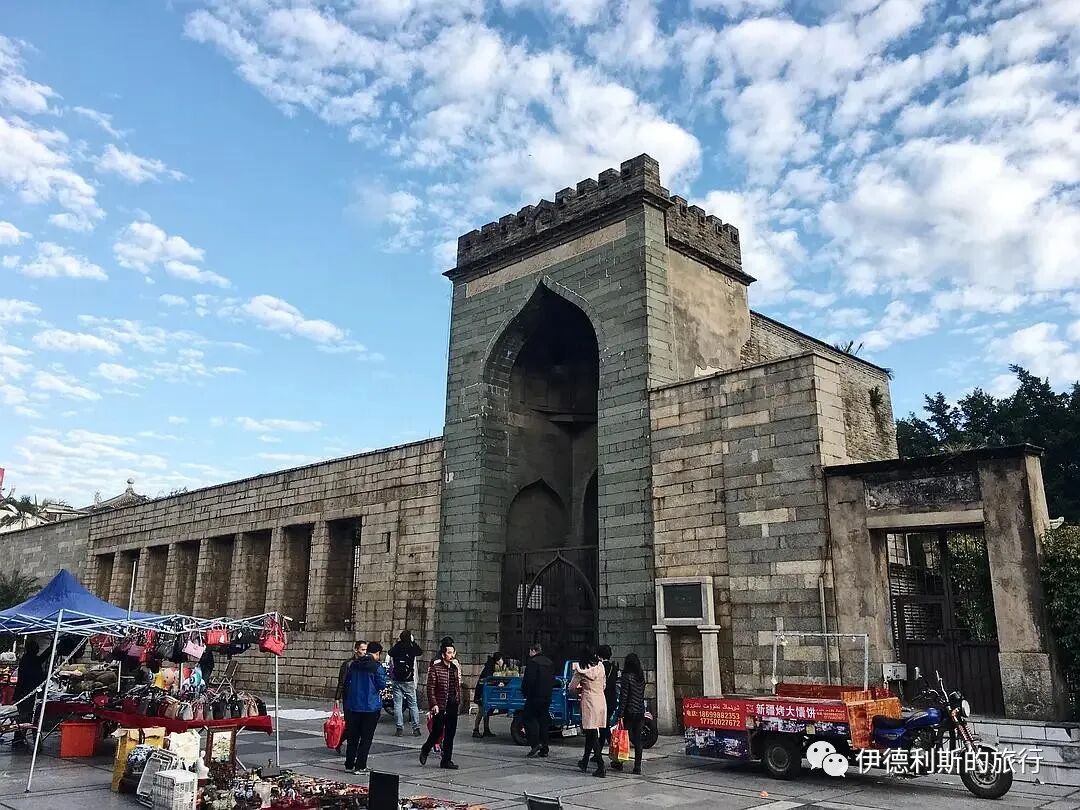
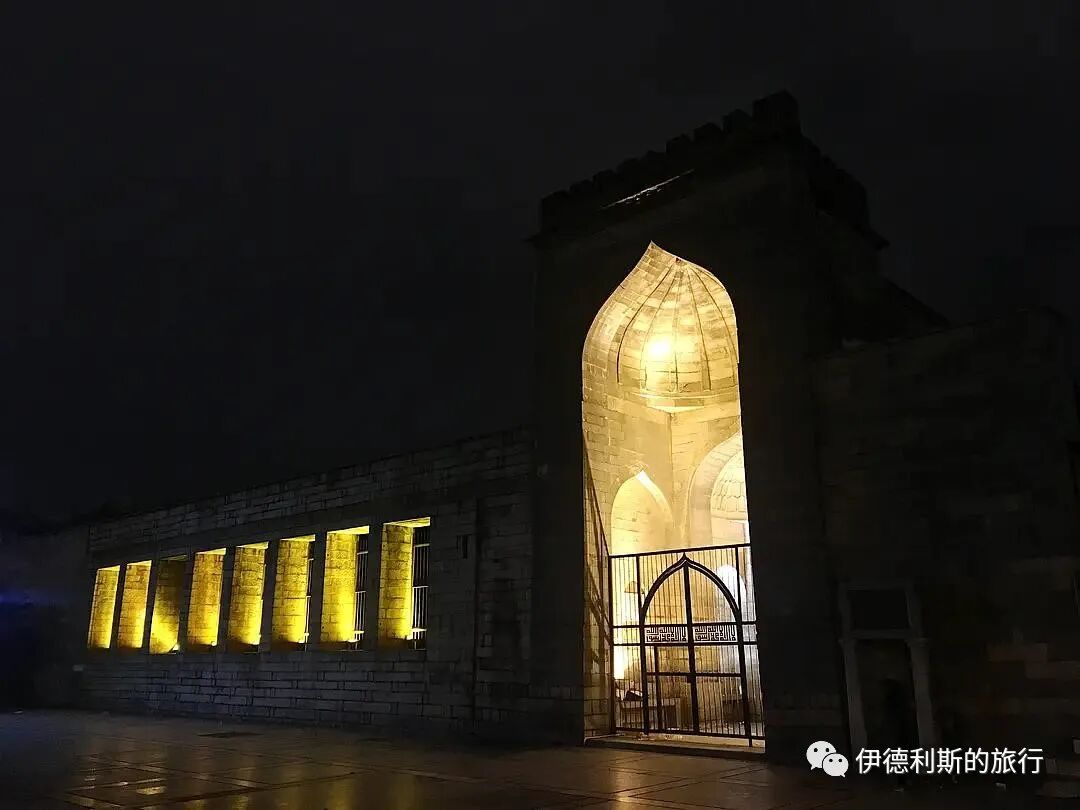
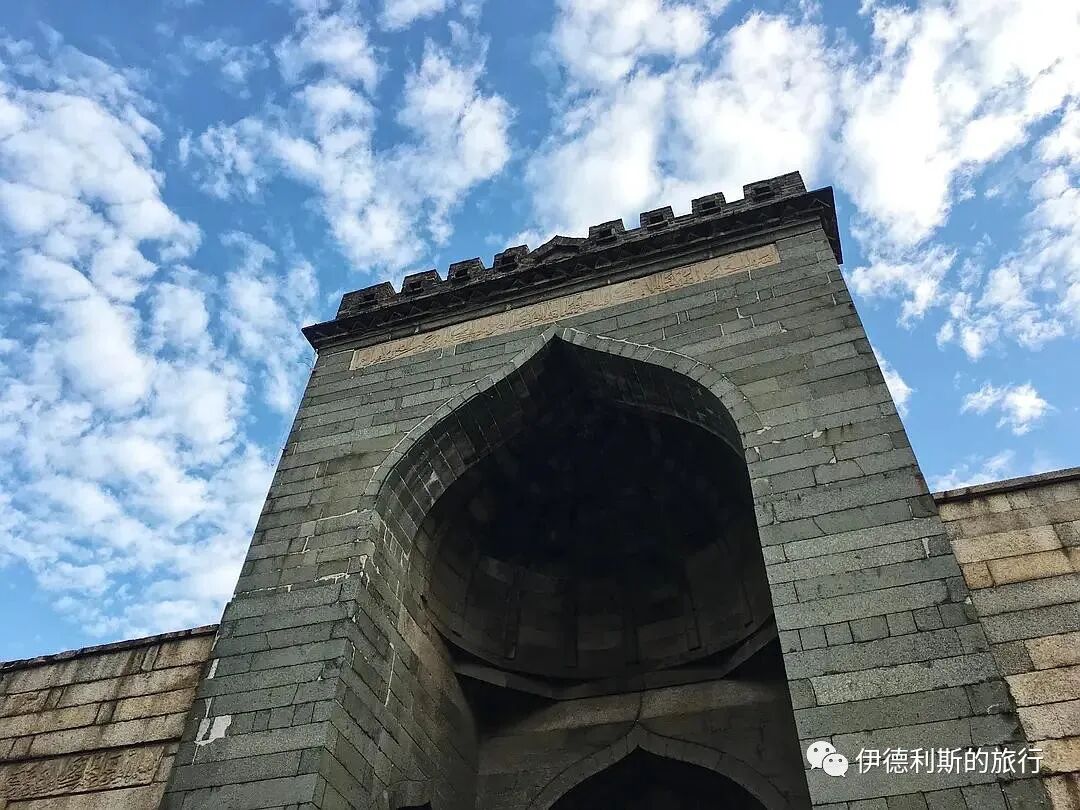
The interior is composed of three layers of domes. The outer layer is a pointed arch dome. The top is a hanging lotus carved from diabase, and below it are sixteen layers of curved stone strips that become higher and narrower until they close at the lotus.
The middle dome is composed of five fan-shaped white granite stones with tortoise-shell patterns, with foundation stones laid underneath. The inner layer is a dome. There is a pair of pointed arch false doors on the stone walls on both sides of each layer.
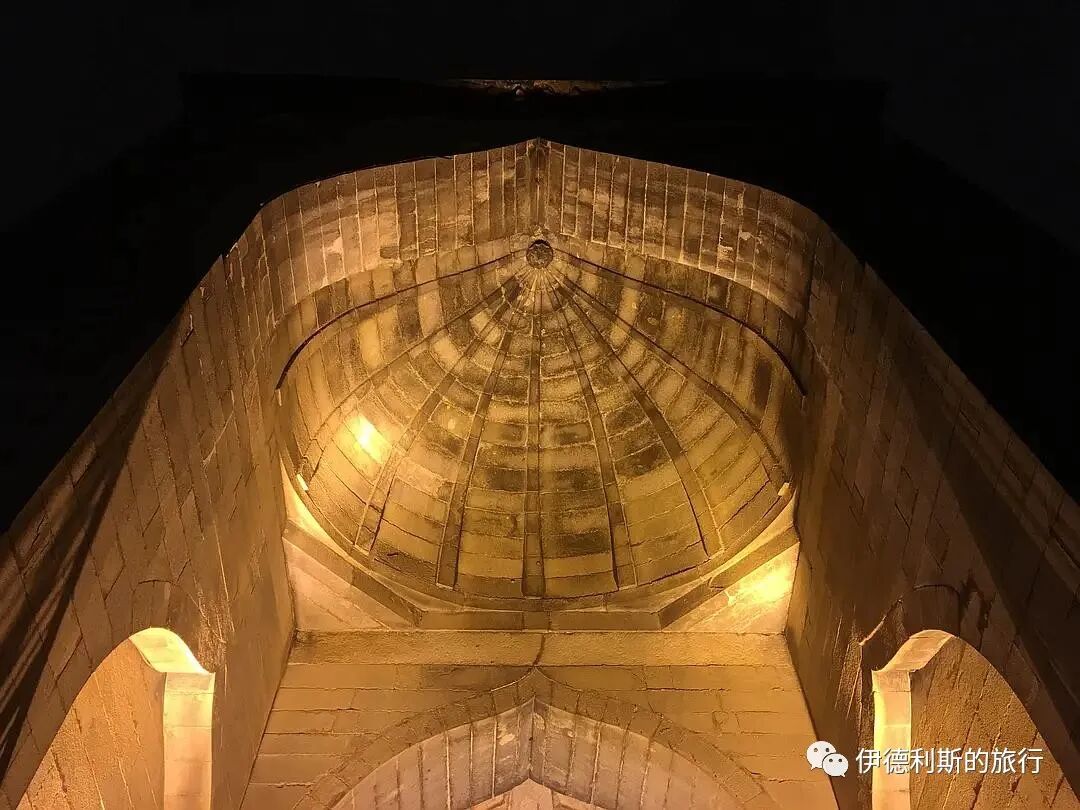
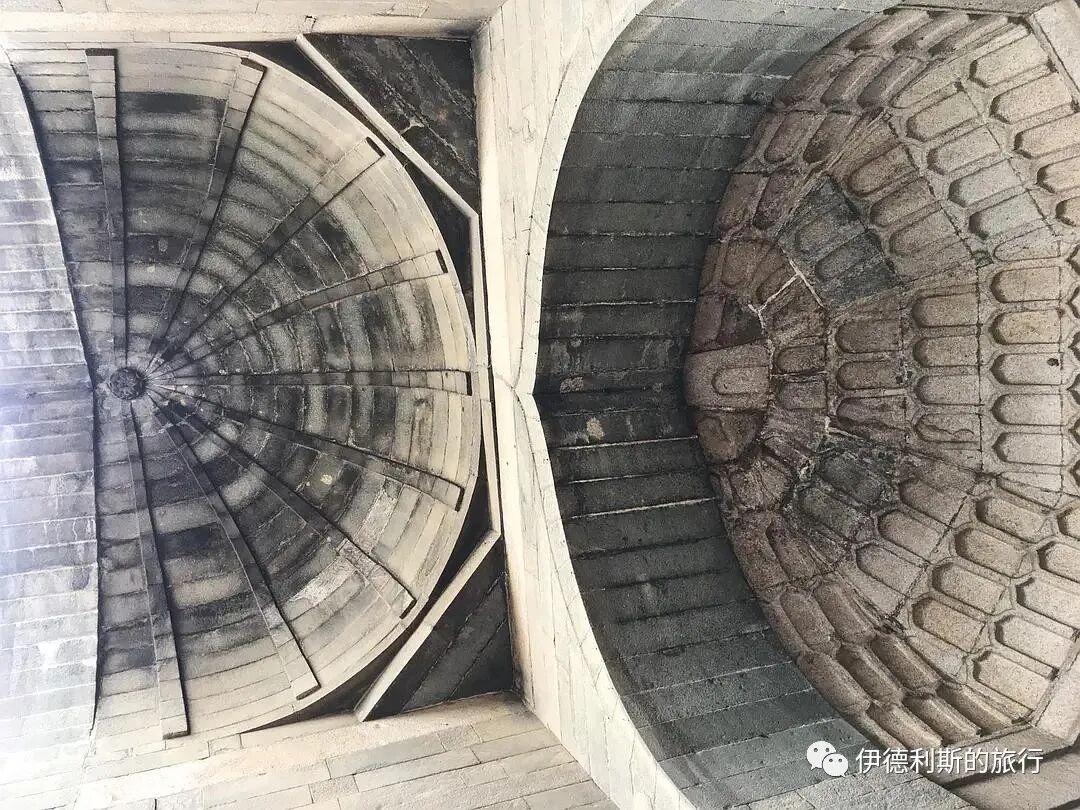
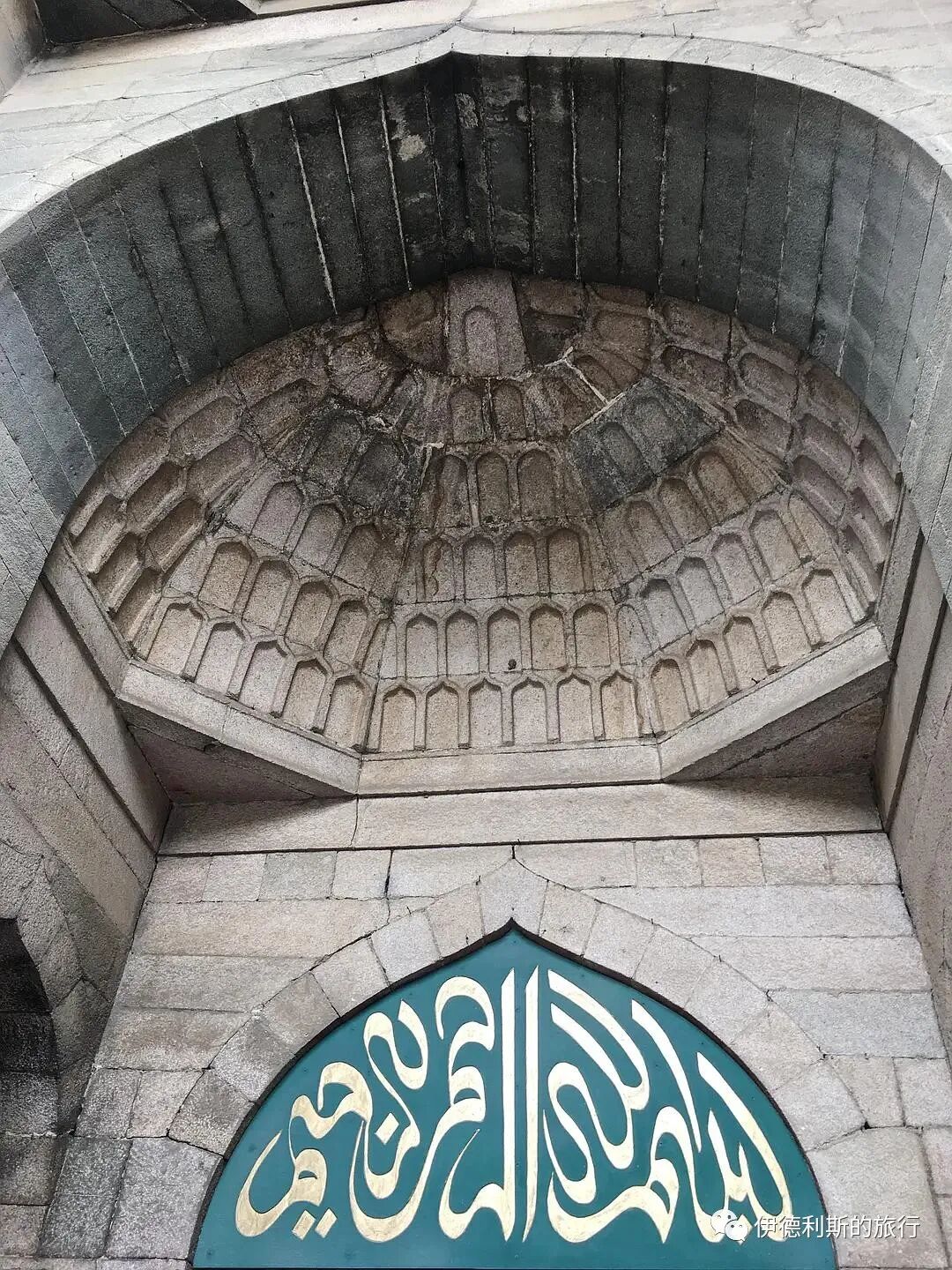
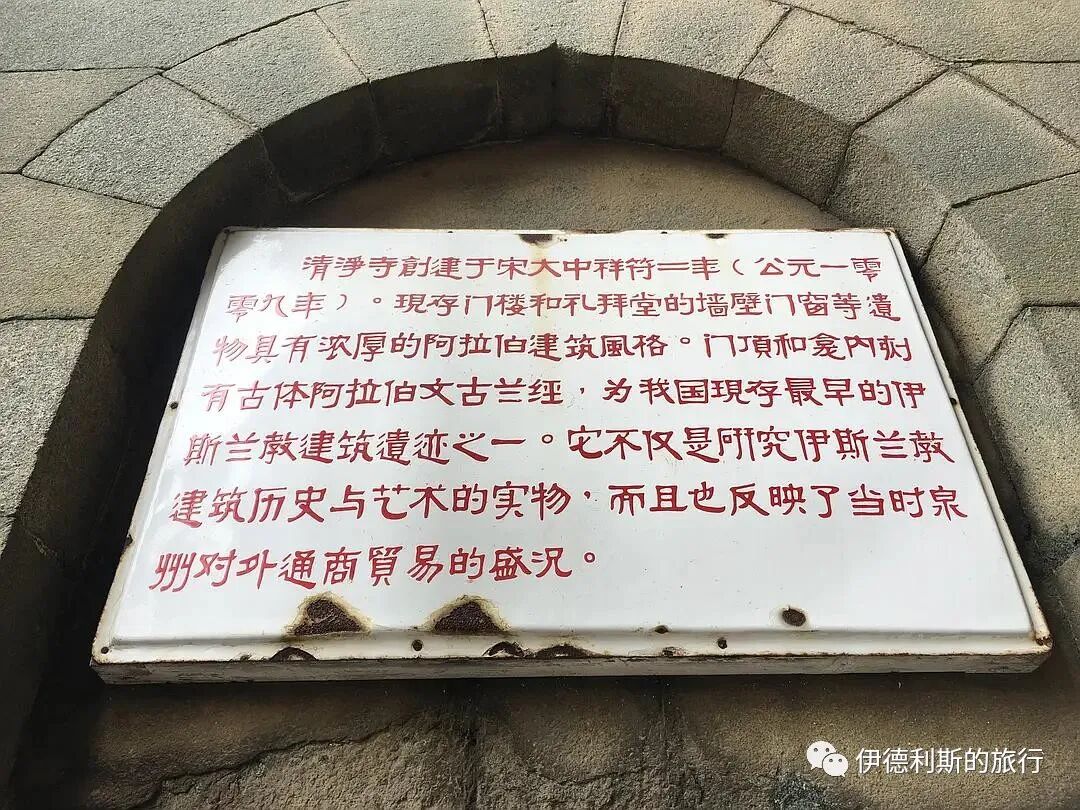
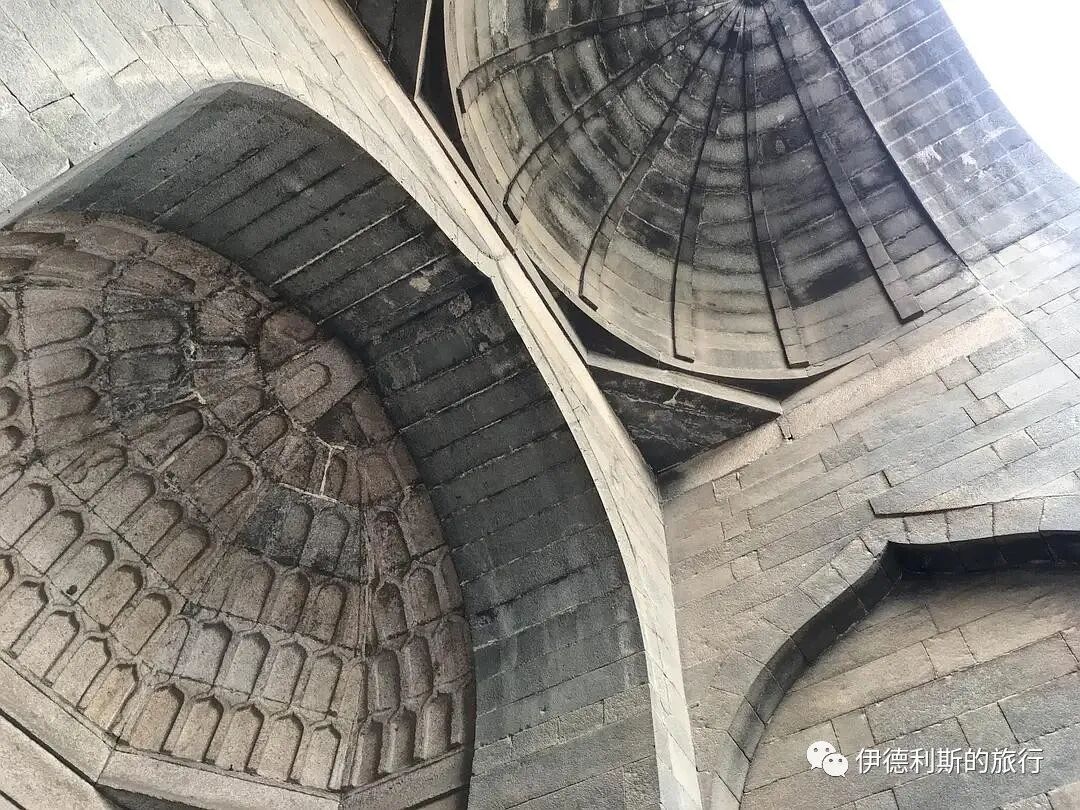
Above the rear of the main gate, there are two lines of Arabic stone inscriptions carved in white granite. This inscription records that Ahmad from the ancient Persian city of Shiraz rebuilt the Mosque of the Holy Friend in 1310.
On the east side of the main gate stand two Chinese stone tablets: the 'Record of the Re-establishment of Qingjing Mosque' (re-engraved in 1507 from the 1351 original) and the 'Record of the Renovation of Qingjing Mosque' from 1609.
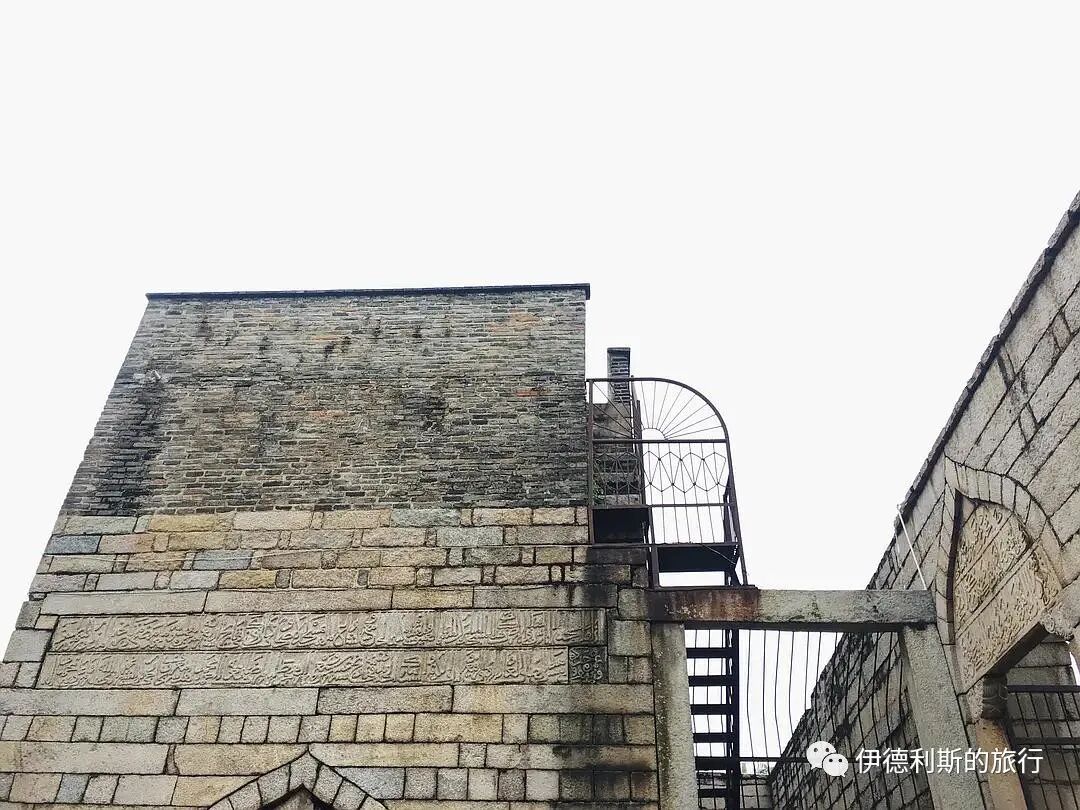
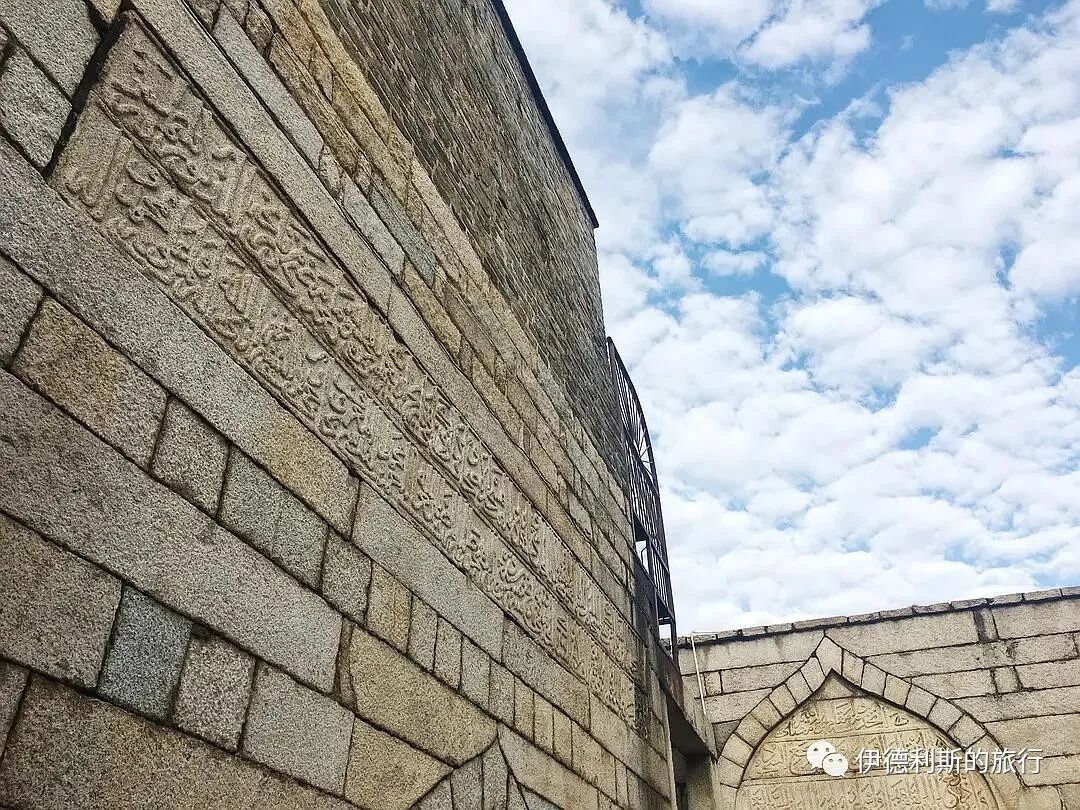
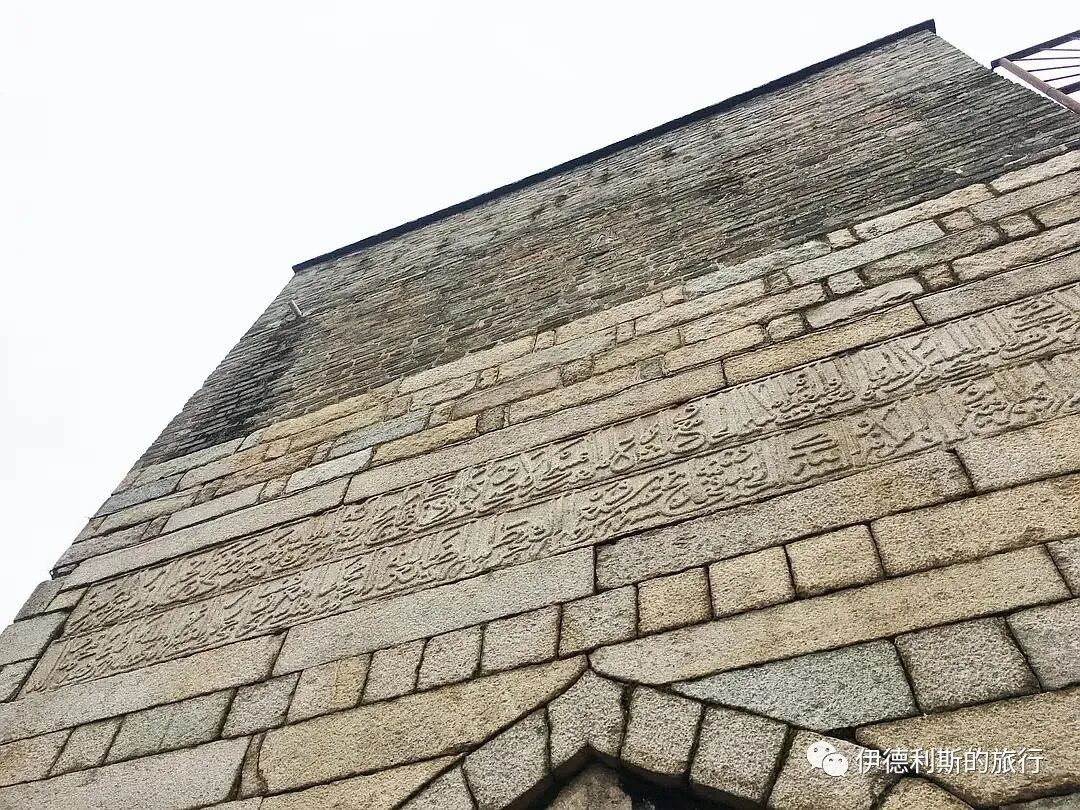
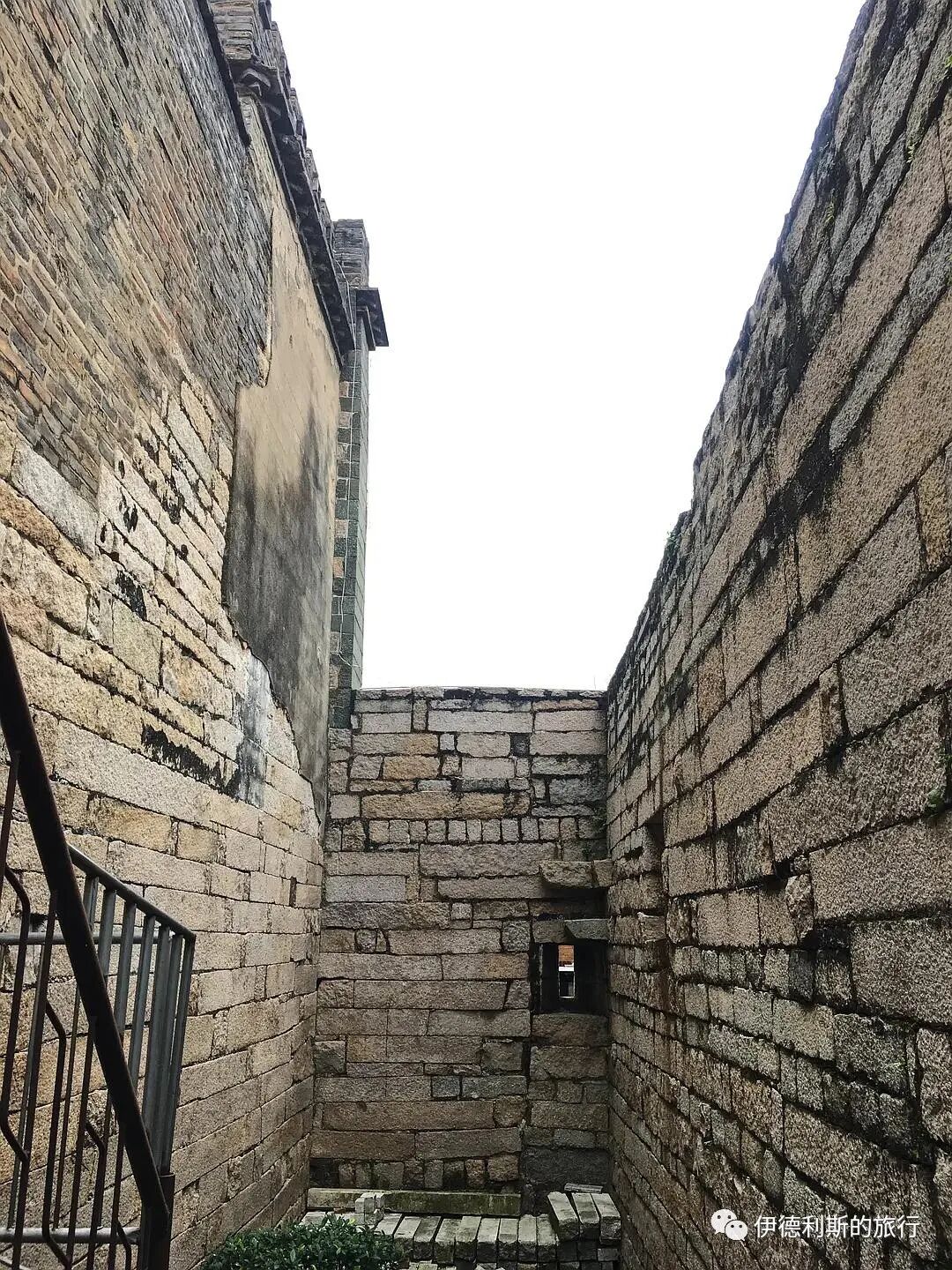
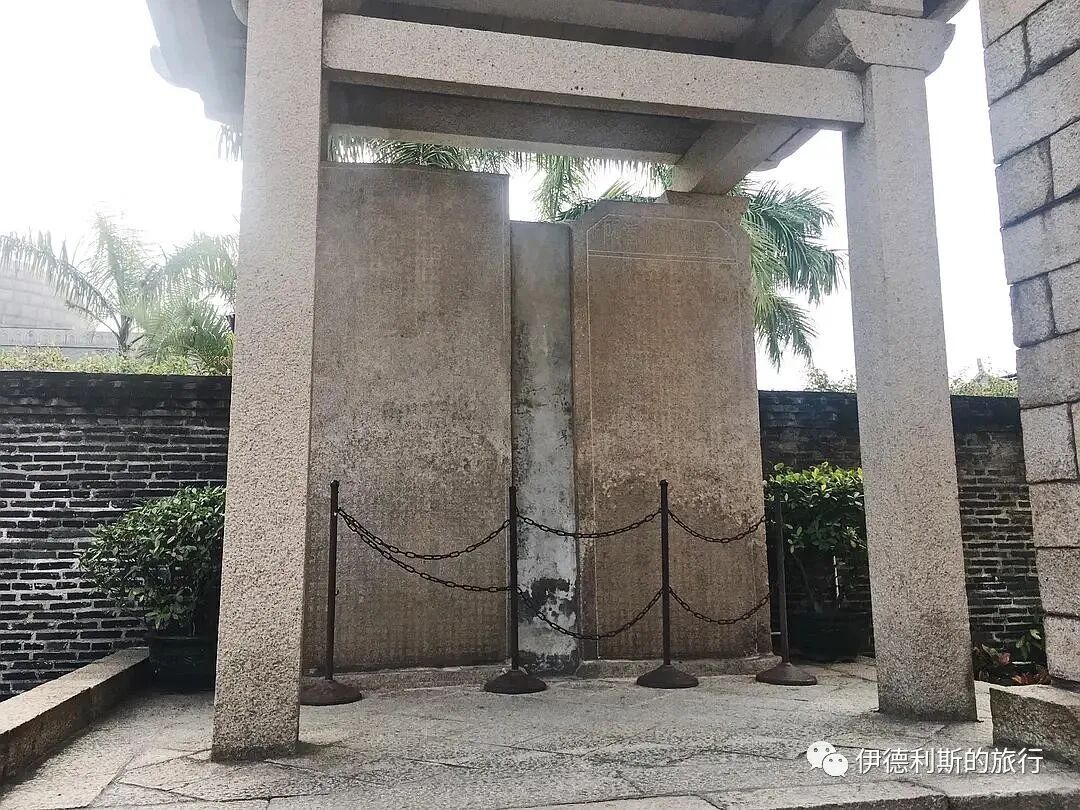
2. The Main Prayer Hall
To the left of the main hall entrance is the pointed arch main door of the hall. Inside the arch are three lines of white granite inscriptions, featuring an excerpt from Chapter 2, Verse 125 and the full text of Verse 127 of the Quran.
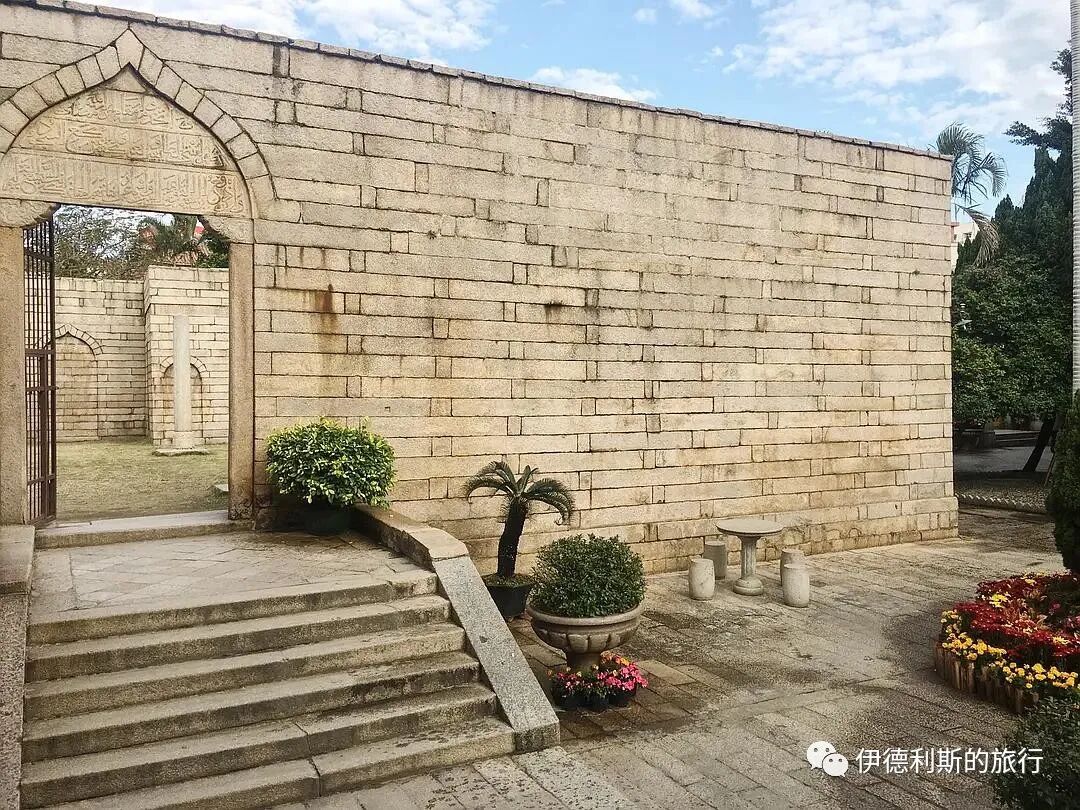
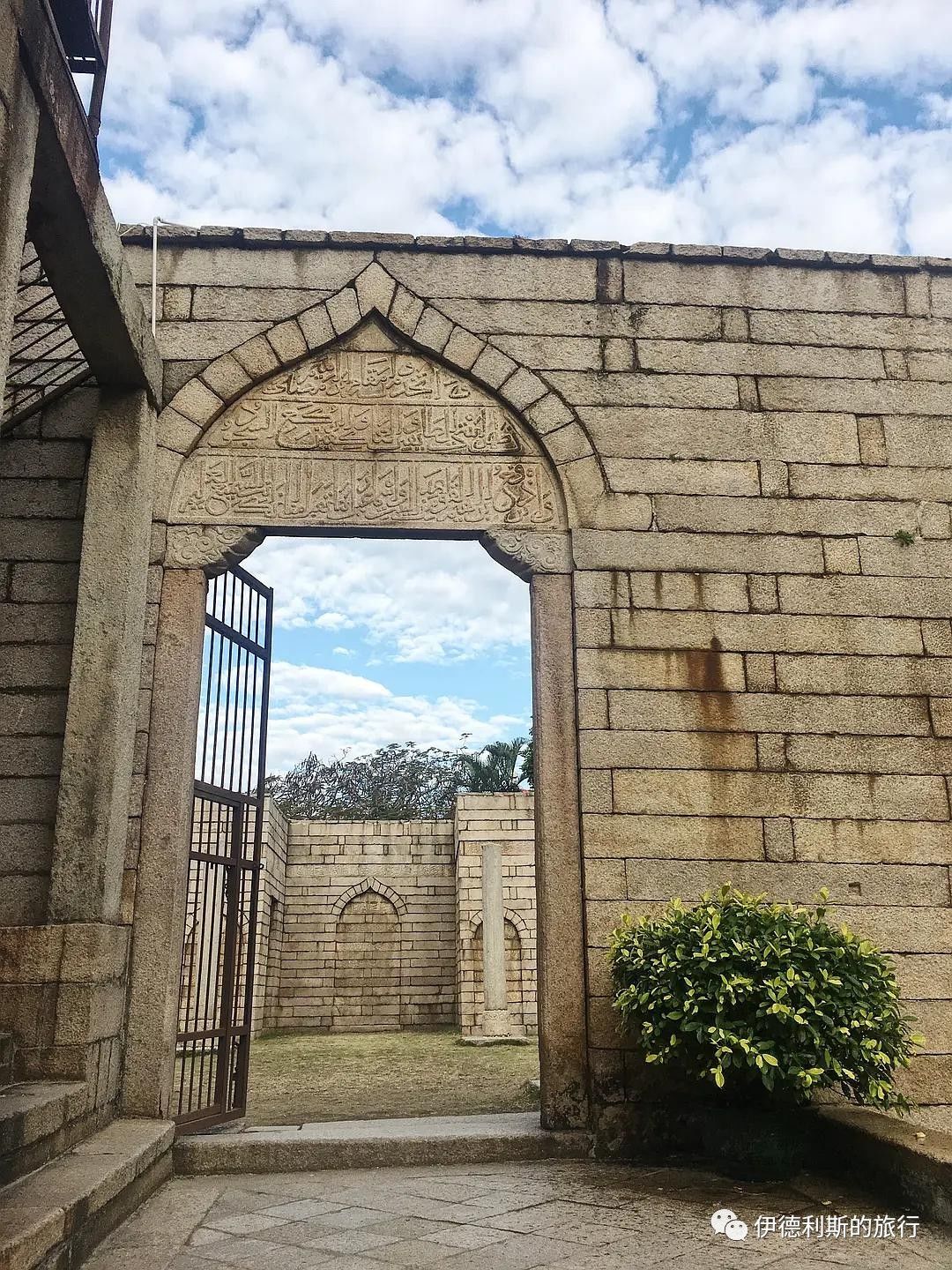
There are 8 outer windows on the south side of the main hall facing the street, with a 19-meter-long stone inscription above them, which is the entire Chapter 76 of the Quran.
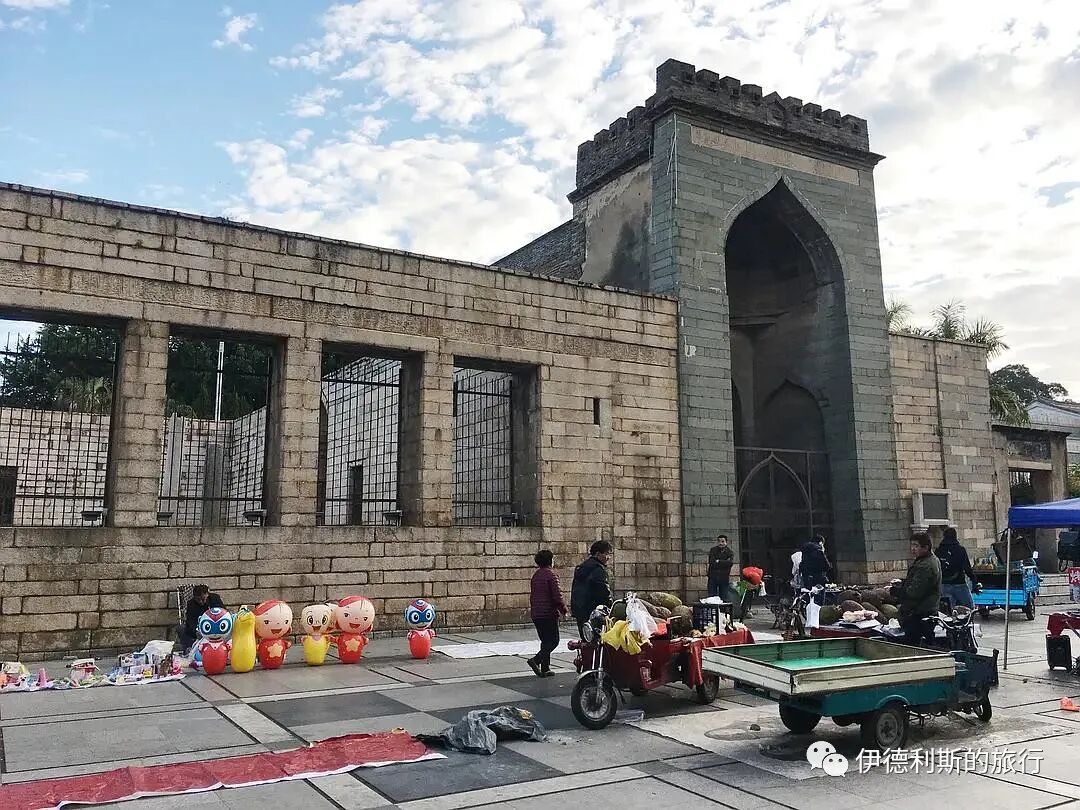
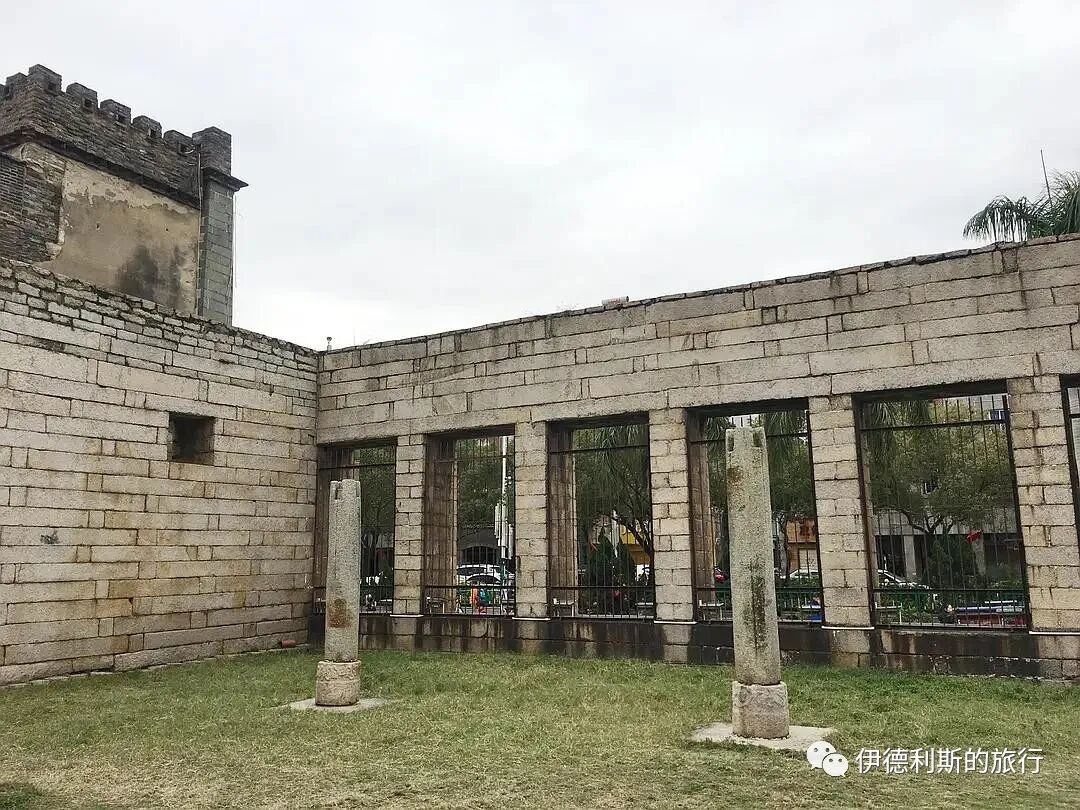
There are seven pointed arch niches on the west wall of the prayer hall, each with stone inscriptions inside. Above the niches is another long strip of stone inscriptions, all of which are from the Quran.
In the middle of the west wall is the protruding 'Fengtian Altar', which is the Mihrab kiln hall. The niche inside the Mihrab is the largest, with seven lines of inscriptions starting with the Shahada, followed by excerpts from the Quran. The inscriptions in the other niches on the west wall are also all from the Quran. At the top of the niche is a 13.2-meter-long inscription from the full text of Chapter 2, Verses 142, 143, and 144 of the Quran.
In the past, Quanzhou Hui Muslims considered the 27th night of Ramadan as the 'Erba Night', or 'Laylat al-Qadr', the night when Allah revealed the Quran. On this day, every Hui Muslim household in Quanzhou would prepare festive food and slaughter livestock and poultry. That night, each household would light a pair of large red candles on both sides of the Mihrab niche in the main hall of the Qingjing Mosque, signifying that the revelation of the Quran by Allah is brilliant and glorious.
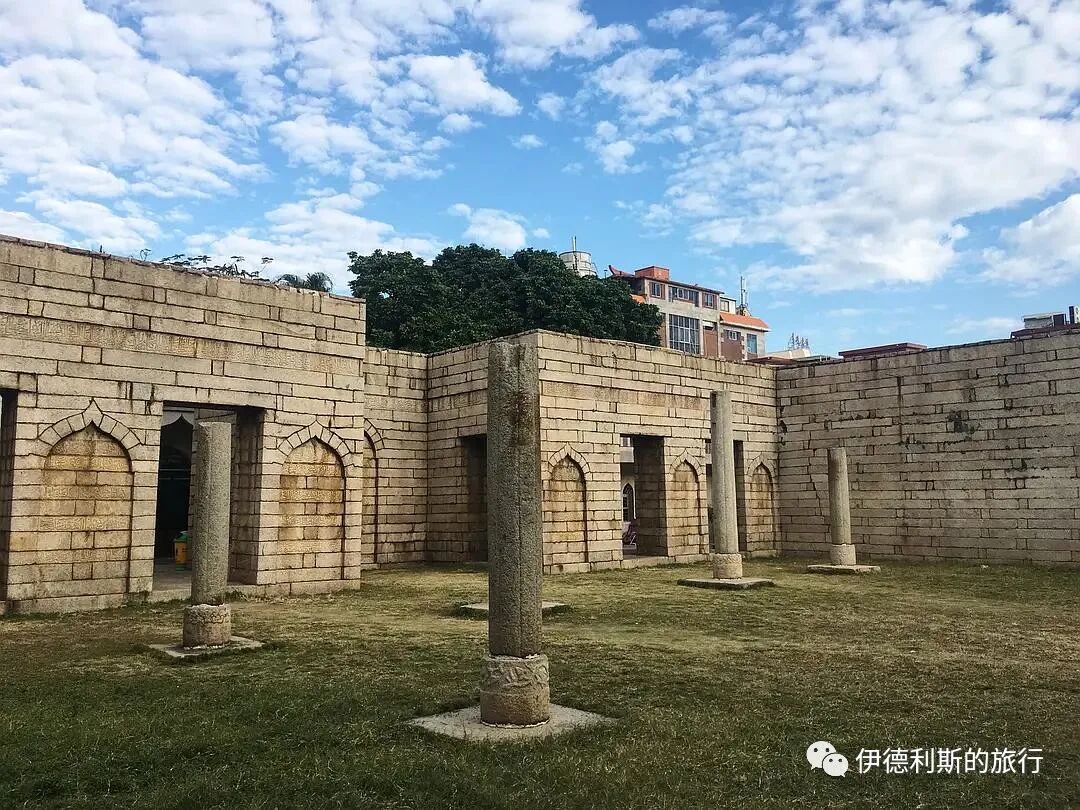
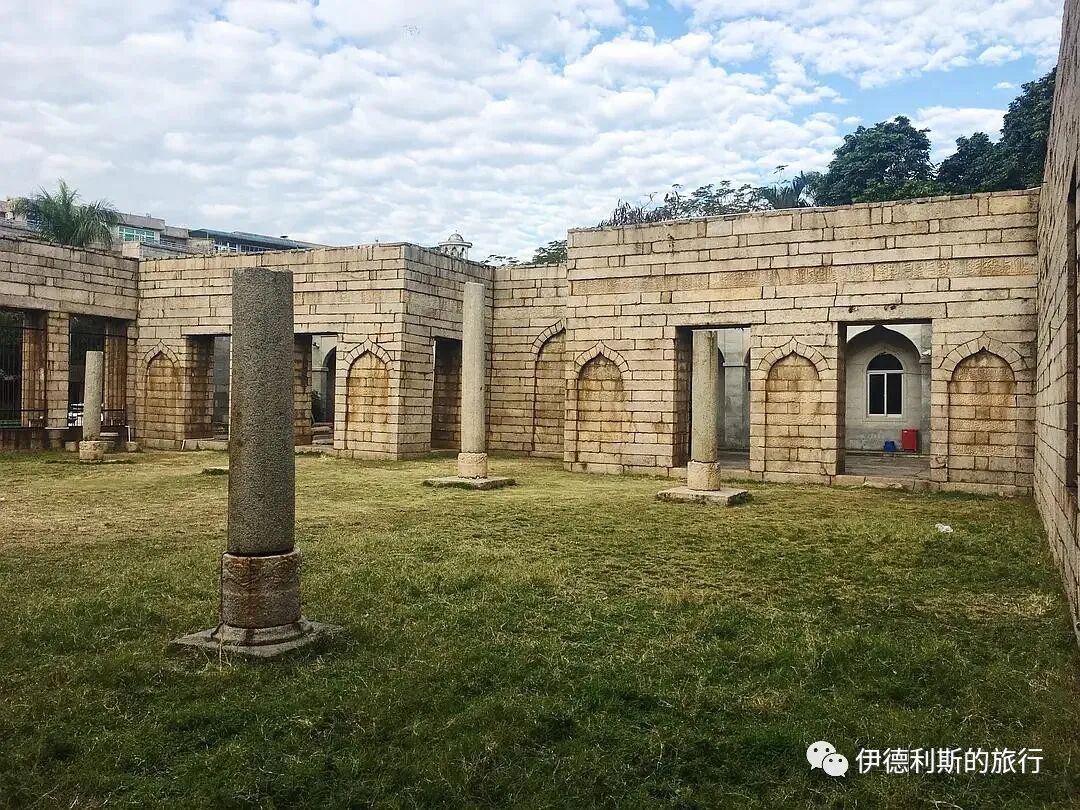
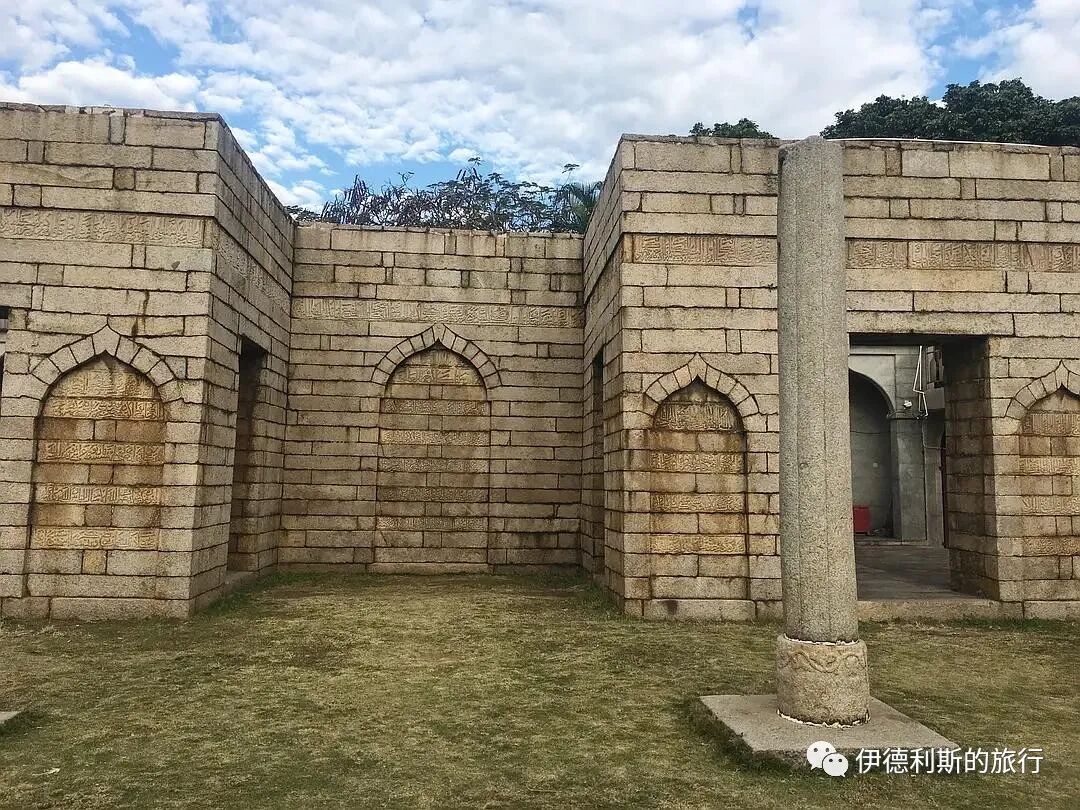
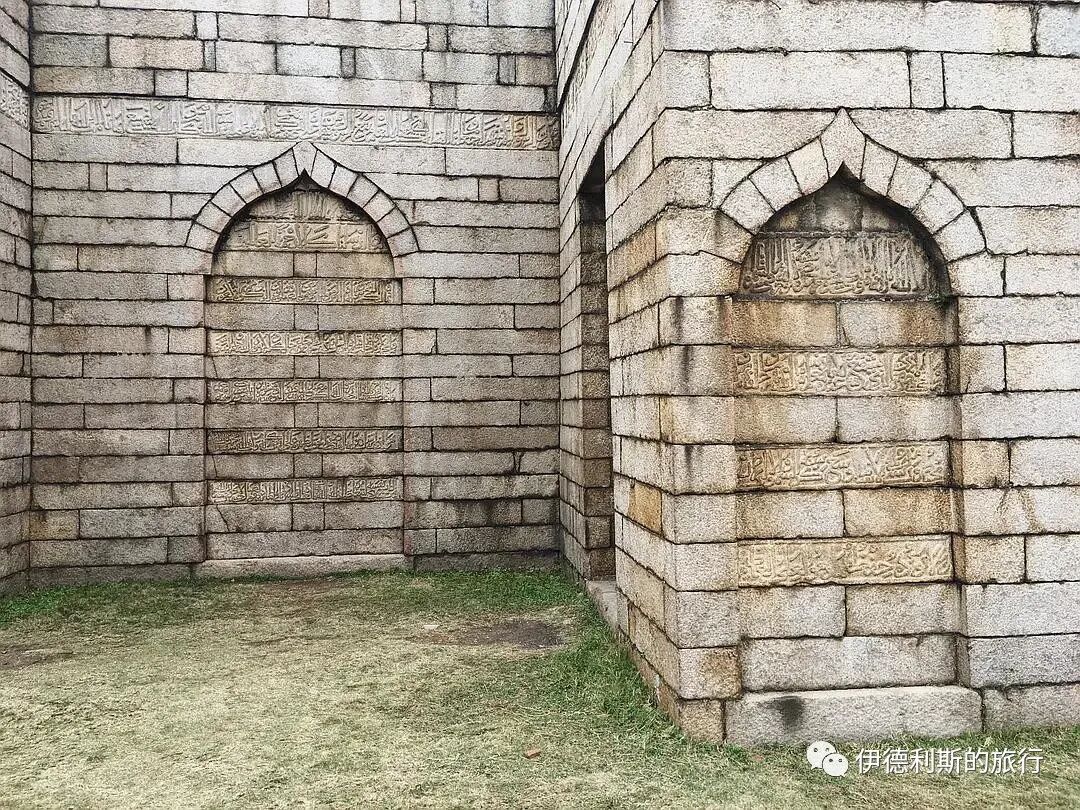
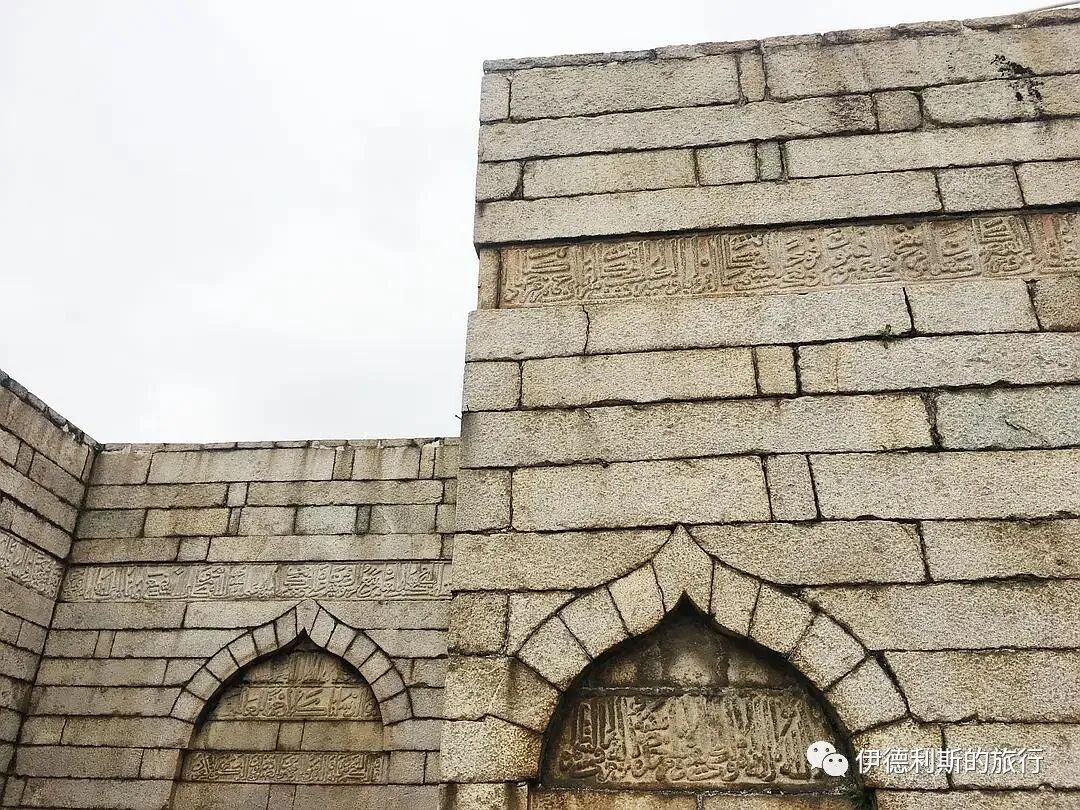
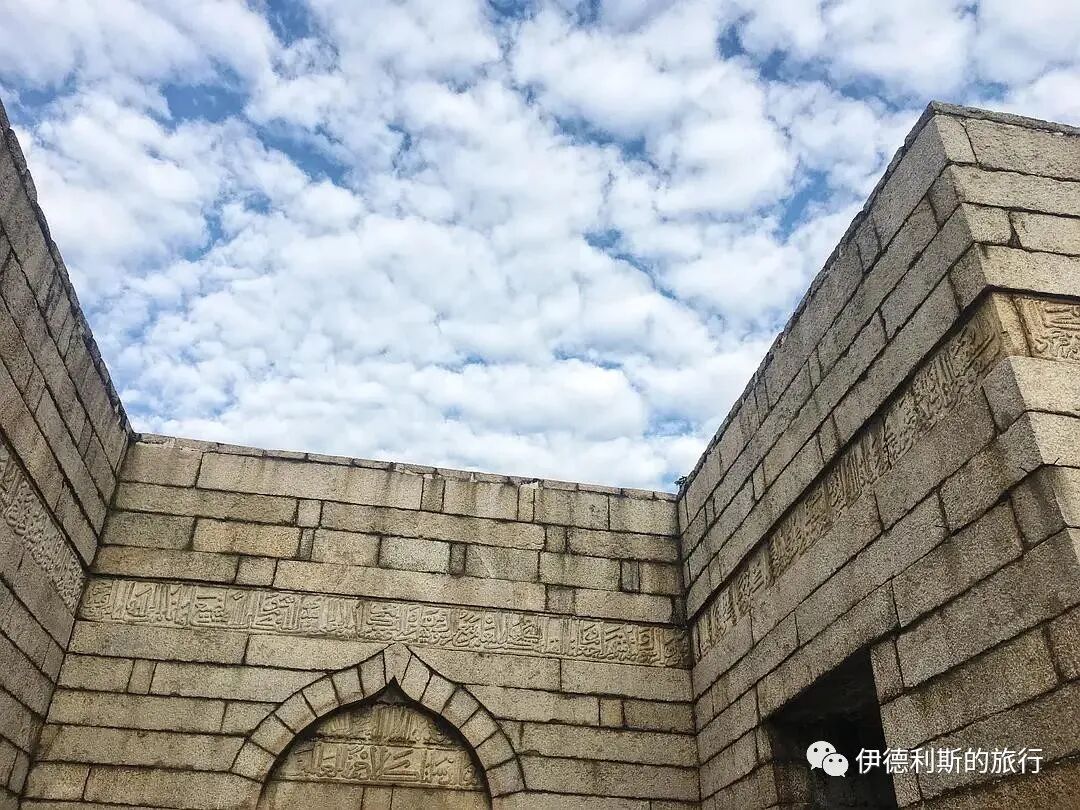
3. Mingshan Hall
Mingshan Hall was first built in 1567. According to the 'Record of the Renovation of Qingjing Mosque' in the mosque, 'The congregation would climb the building to recite the Quran during the fasting month, and after finishing, they would retire to rest in this hall.' After the roof of the main hall of the Qingjing Mosque collapsed in the early Qing Dynasty, Mingshan Hall was converted into a place for prayer.
In 1818, Ma Jianji, the Commander-in-Chief of the Fujian Provincial Land Forces from Zhangzhou, stationed in Quanzhou, rebuilt Mingshan Hall in the traditional architectural style of Southern Fujian. In 1871, Jiang Changgui, the Commander-in-Chief of the Fujian Provincial Land Forces, rebuilt Mingshan Hall again.
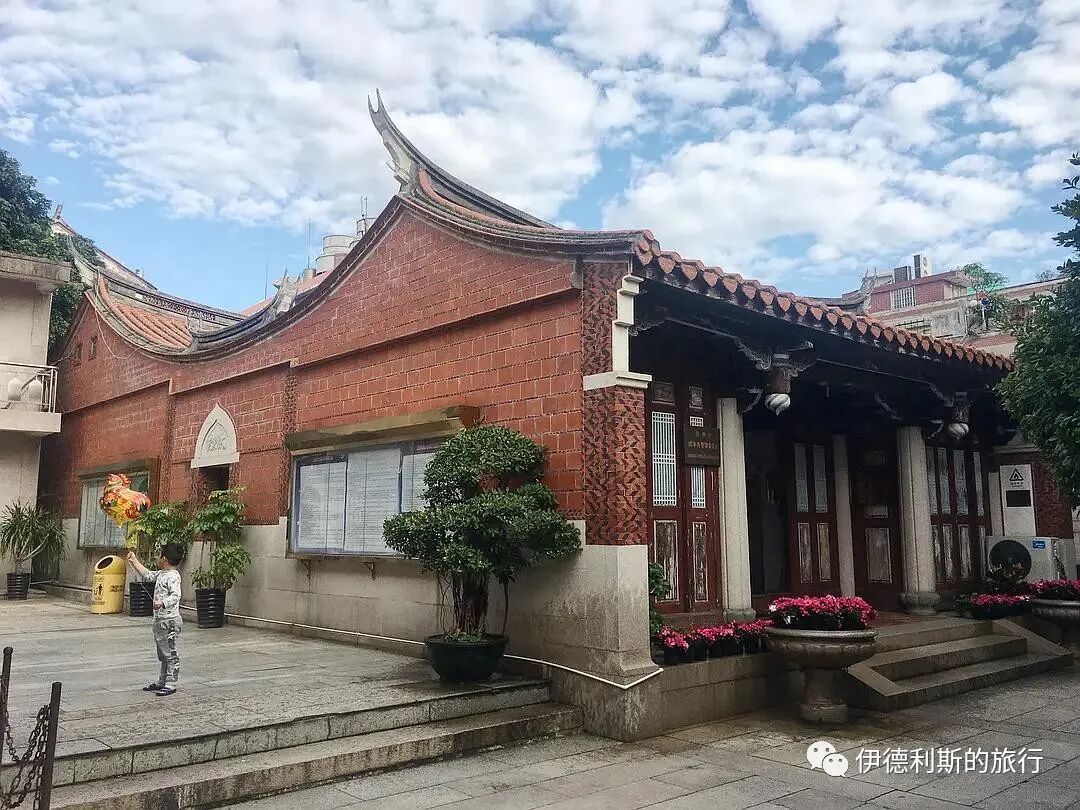
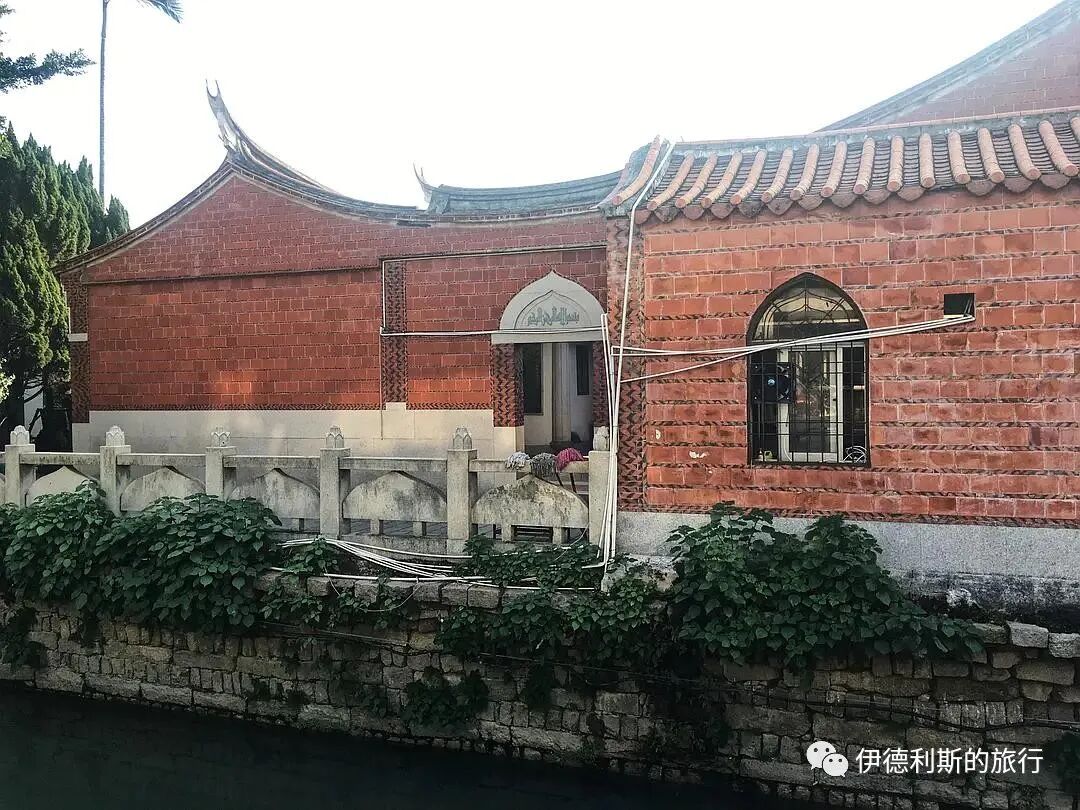
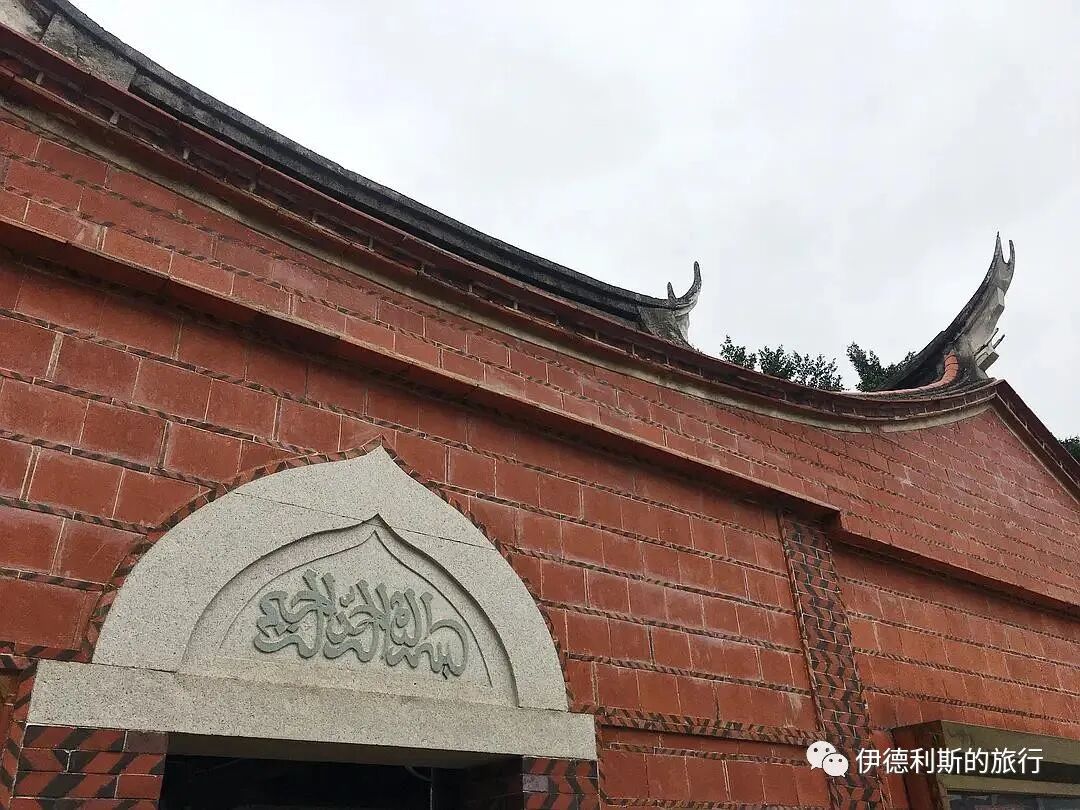
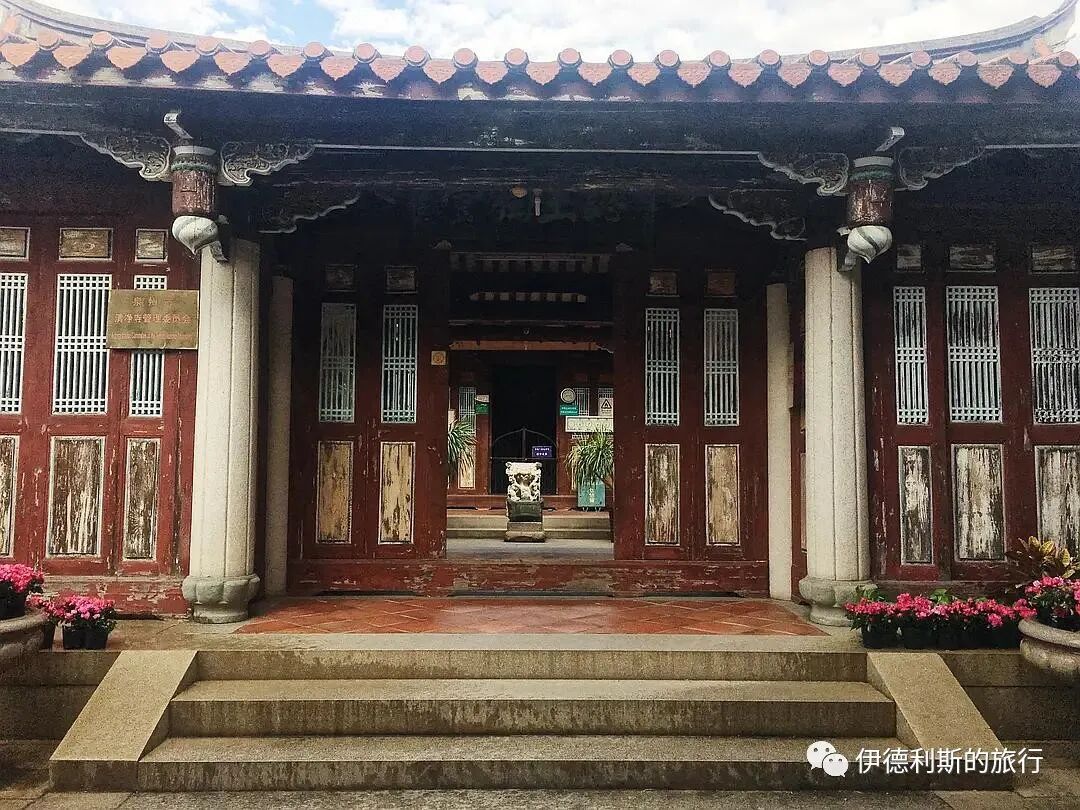
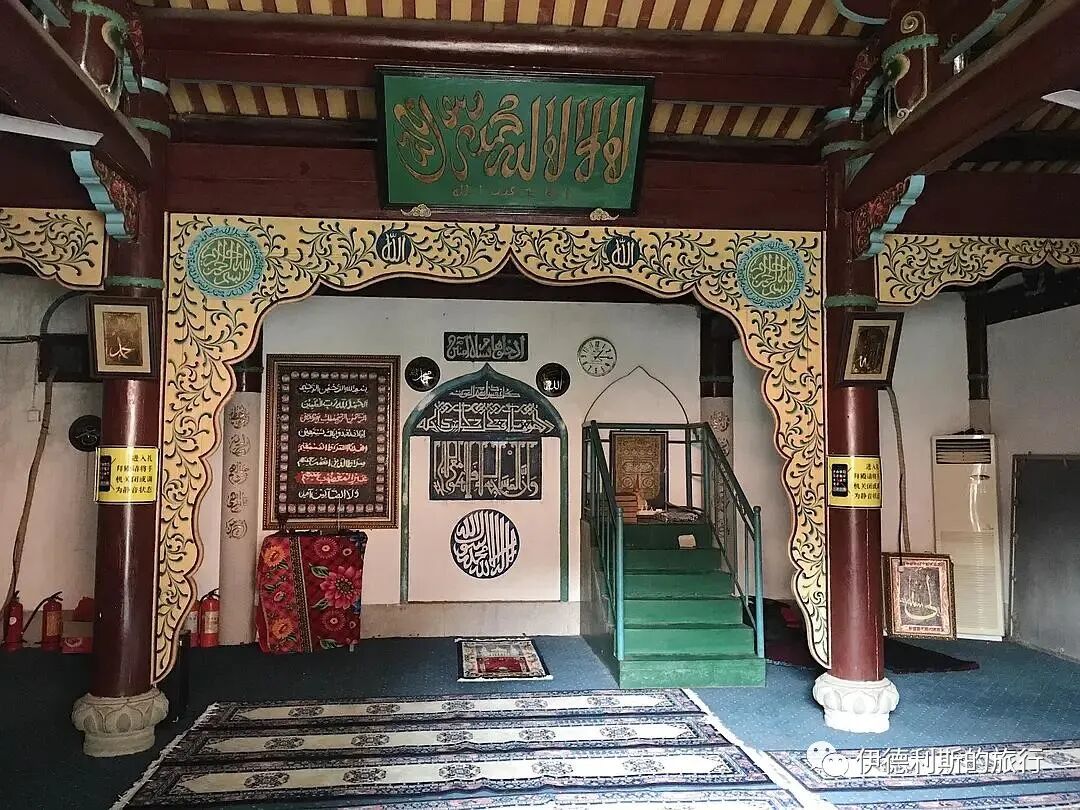
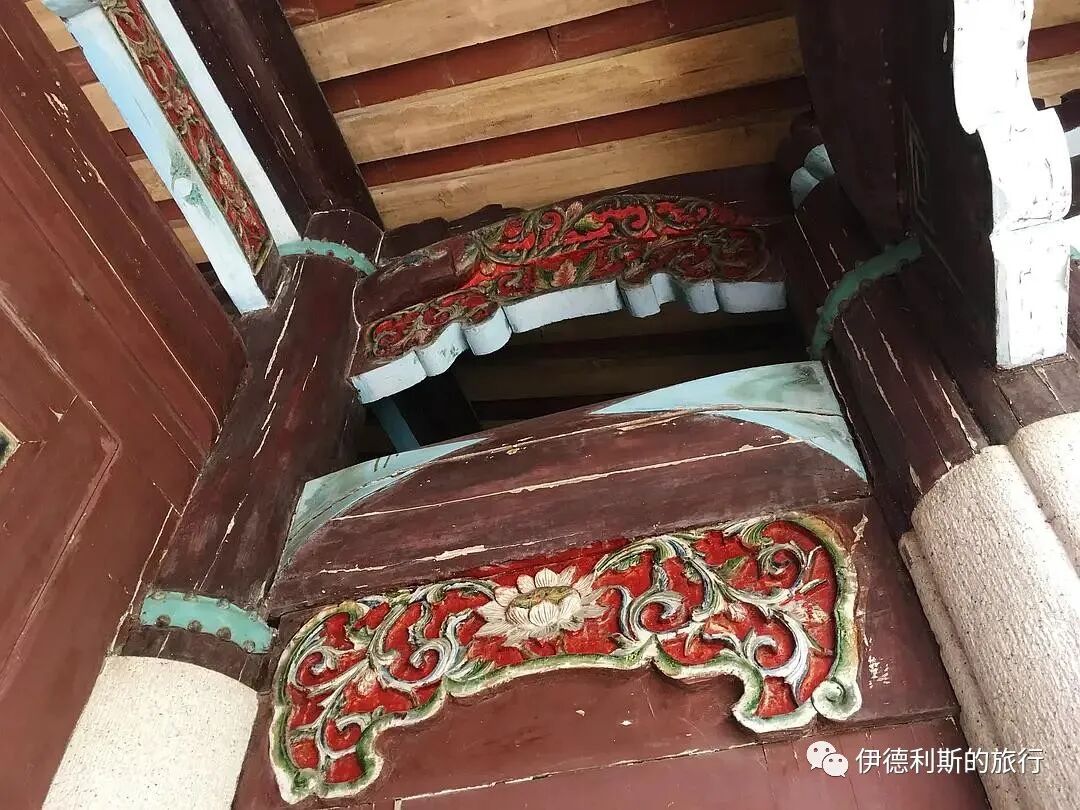
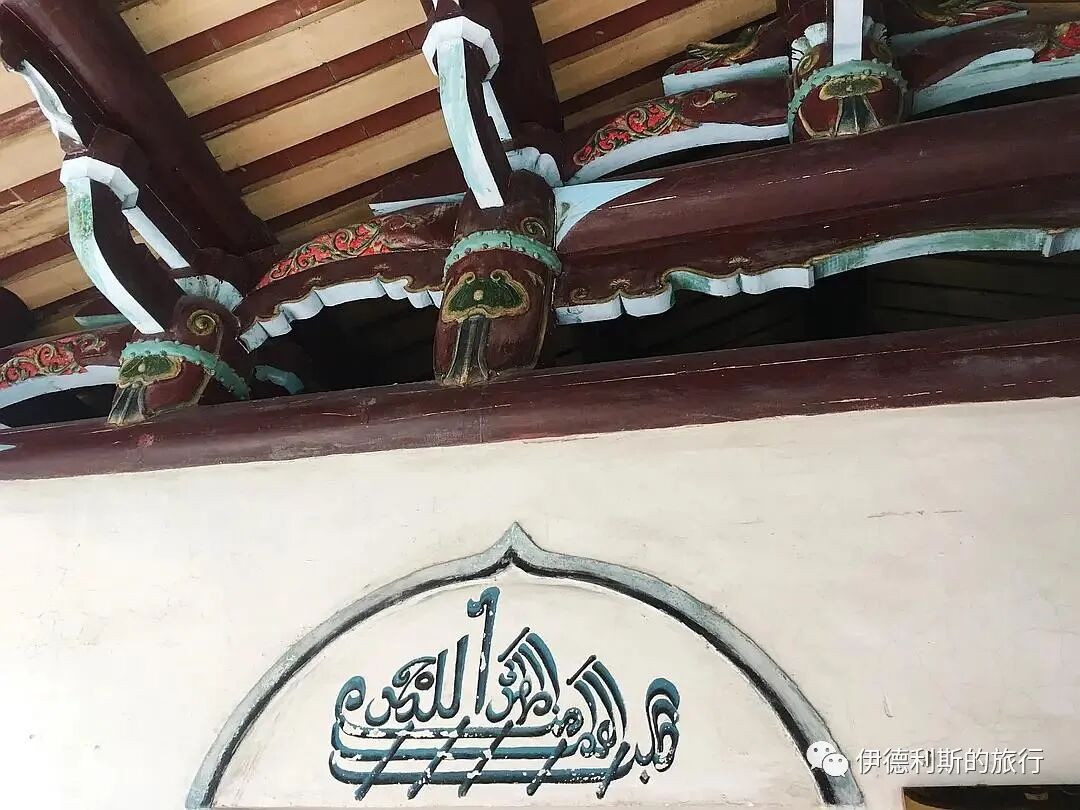
The 'Water Lotus' stone incense burner carved from Shoushan stone was an original item from the main hall of the Qingjing Mosque and was moved into Mingshan Hall after the roof of the main hall collapsed.
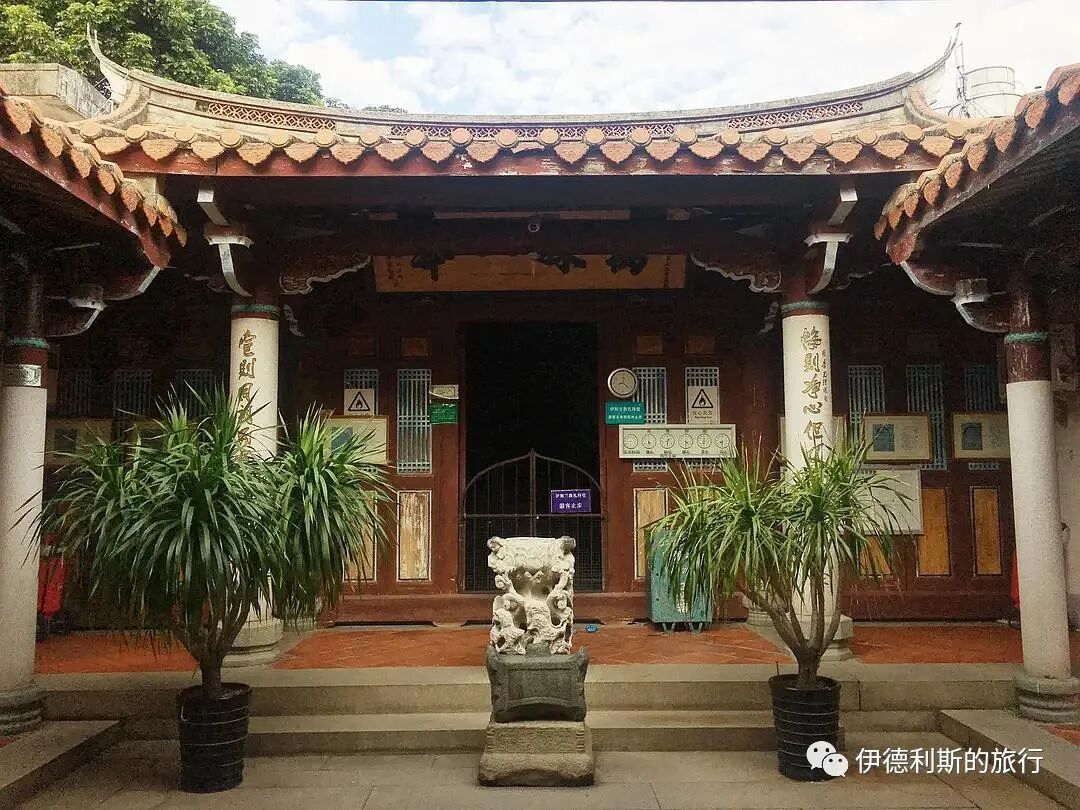
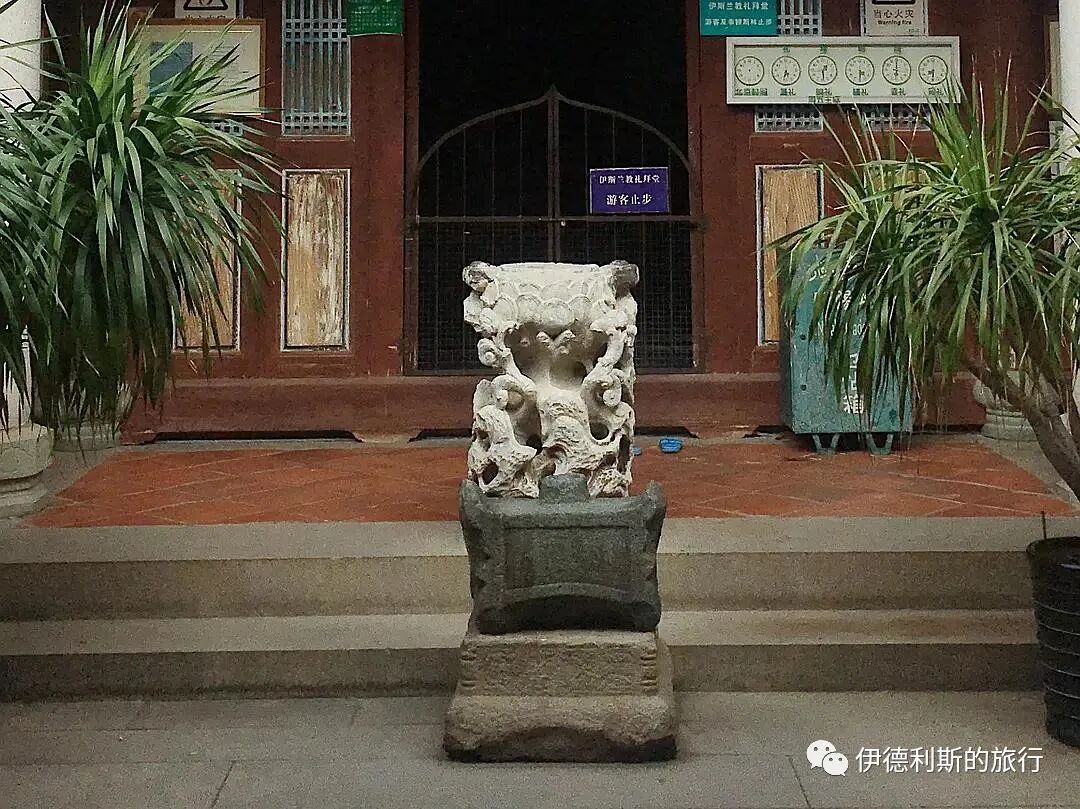
Mingshan Hall hangs the 'Ten Thousand Differences, One Origin' plaque established by Ma Jianji in 1818, the 'Recognize the One Lord' plaque written by Tang Kesan, the Xiamen Customs Superintendent in 1923, and the 'Three Fears and Four Admonitions' plaque established in 1925.
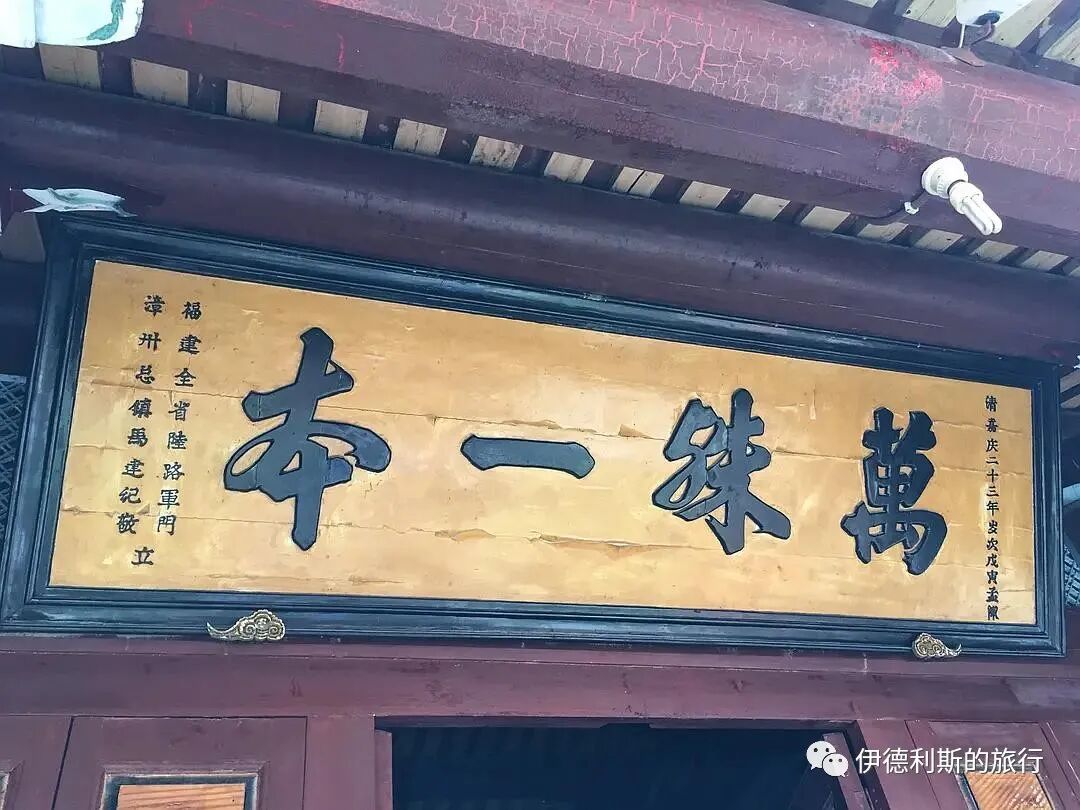
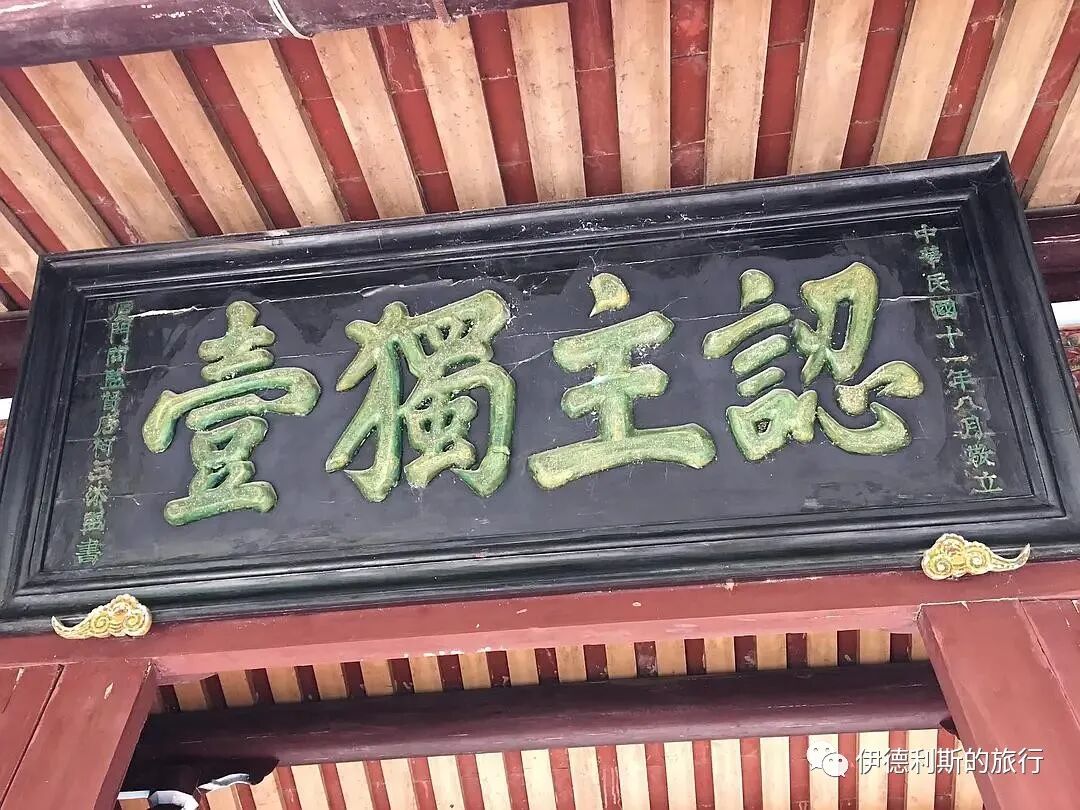
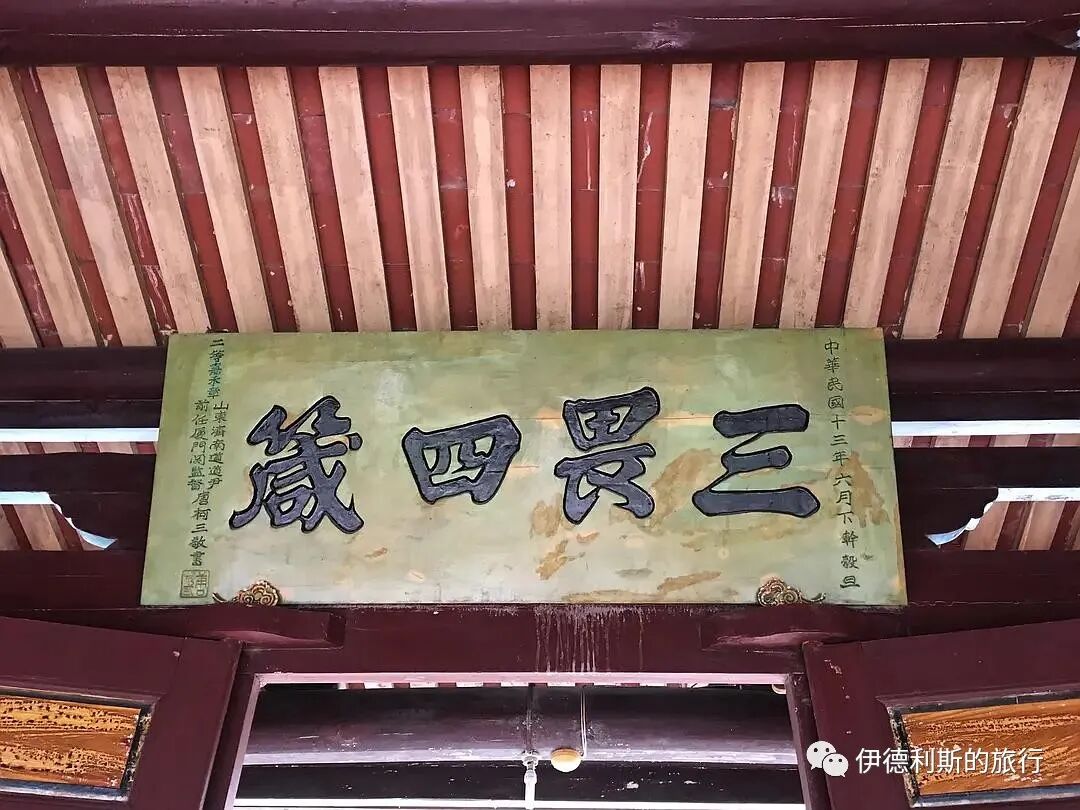
4. Collected Stone Carvings
During the major renovation of the Qingjing Mosque in the spring of 1983, the 12 Hui Muslim households who had lived in the mosque since the Kangxi period were relocated, and a batch of stone tablets was discovered from the walls and underground of Mingshan Hall. Except for one from the end of the Southern Song Dynasty, all the dated tombstones are from the end of the Yuan Dynasty. The tomb owners came from Tabriz and Tehran in Iran, Adana in Turkey, Nablus in Palestine, and Khwarazm in Central Asia.
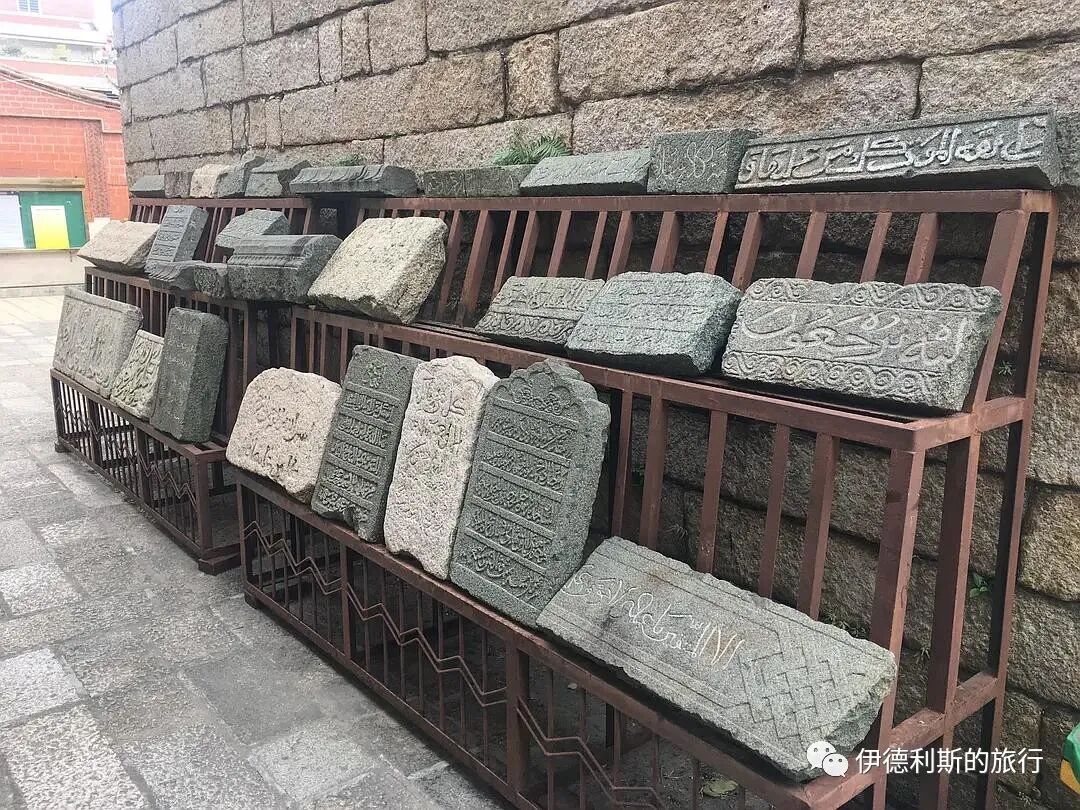
The picture below shows a diabase Yuan Dynasty tombstone, which was dug up from a garden belonging to a Pu family at the end of the Qing Dynasty. It was moved to the Qingjing Mosque and built into the south side of the west wall of Mingshan Hall, and was removed during the renovation of Mingshan Hall in 1983. Both sides of the tombstone are carved with continuous scroll patterns, and the front is recessed into a pointed arch stone niche, with cloud patterns carved on both sides. It is similar to the Yuan Dynasty Arabic tombstones in the Puhaddin Cemetery in Yangzhou and can be considered one of the most exquisite ancient Arabic tombstones in Quanzhou. The tomb owner was named Ahmad, who died in 1362.
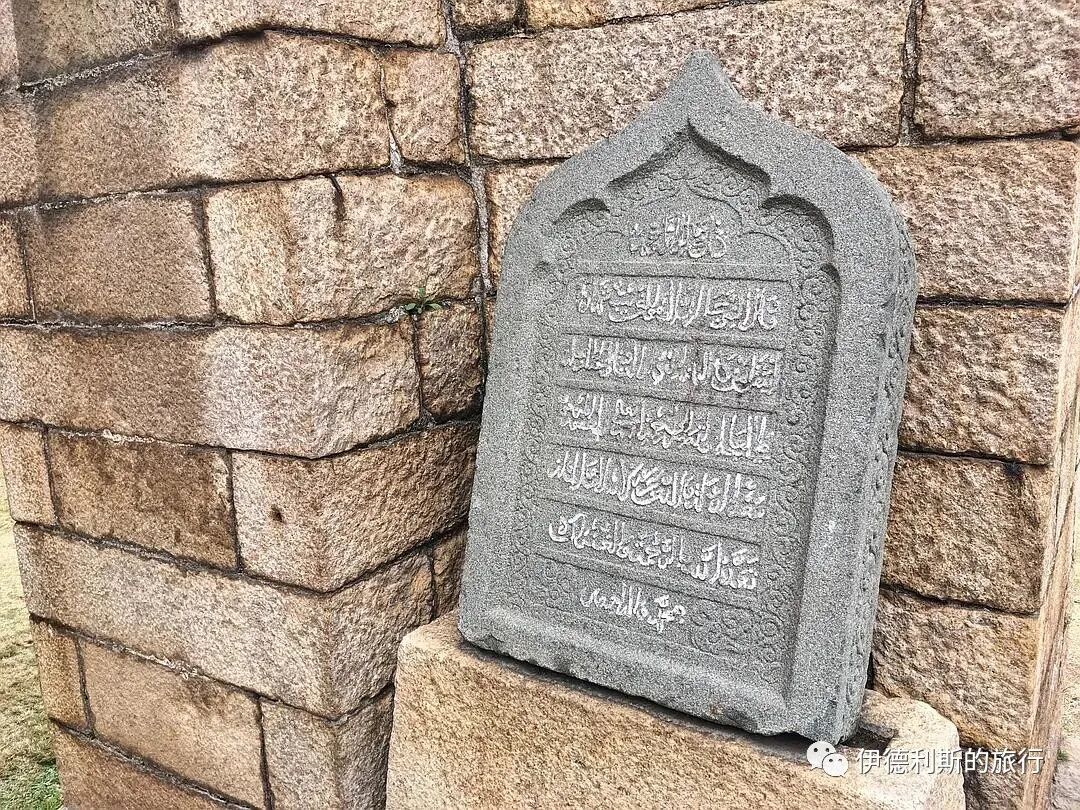
The bottom right corner of the picture below is the right half of a diabase Sumeru-pedestal altar-style tombstone waist stone. It was discovered in 1984 by Mr. Wang Aichen when he was building a house near Yinju Bridge Lane (Tonghuai Street) in Quanzhou and was donated to the Qingjing Mosque. In 1972, the widow of Mr. Wu Wenliang, author of 'Quanzhou Religious Stone Carvings', donated the left half of this stone carving to the Quanzhou Maritime Museum. After the two pieces were joined, one can see the eight auspicious patterns carved on the left and right sides, and the text in the middle is from an excerpt of Chapter 43, Verses 67, 68, and 72 of the Quran.
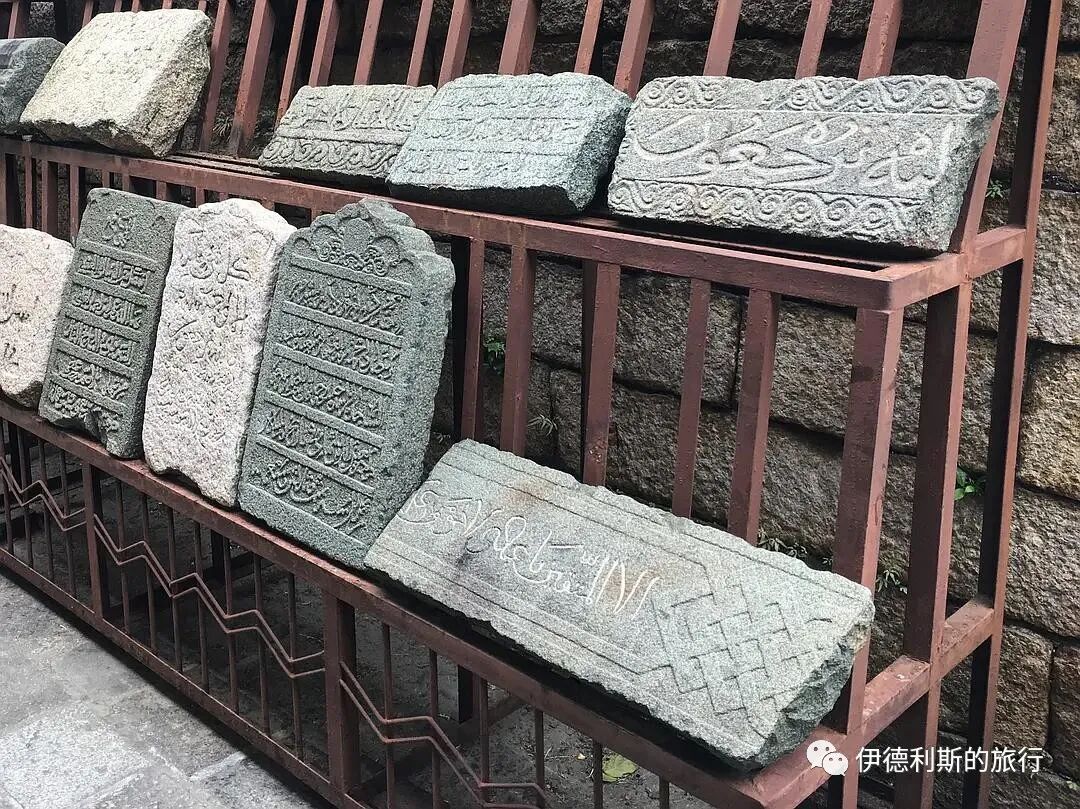
On the right side of the picture below is a diabase Southern Song Dynasty tombstone, which was removed during the renovation of Mingshan Hall of the Qingjing Mosque in 1983. The tomb owner was named Khwarazm Khan bin Muhammad Khan, who died in 1271. 1271 was six years before the Yuan army captured Quanzhou. Khwarazm refers to the Khwarazmian Empire.
On the left is a white granite tombstone, which was unearthed from underground during the renovation of Mingshan Hall of the Qingjing Mosque in 1997.
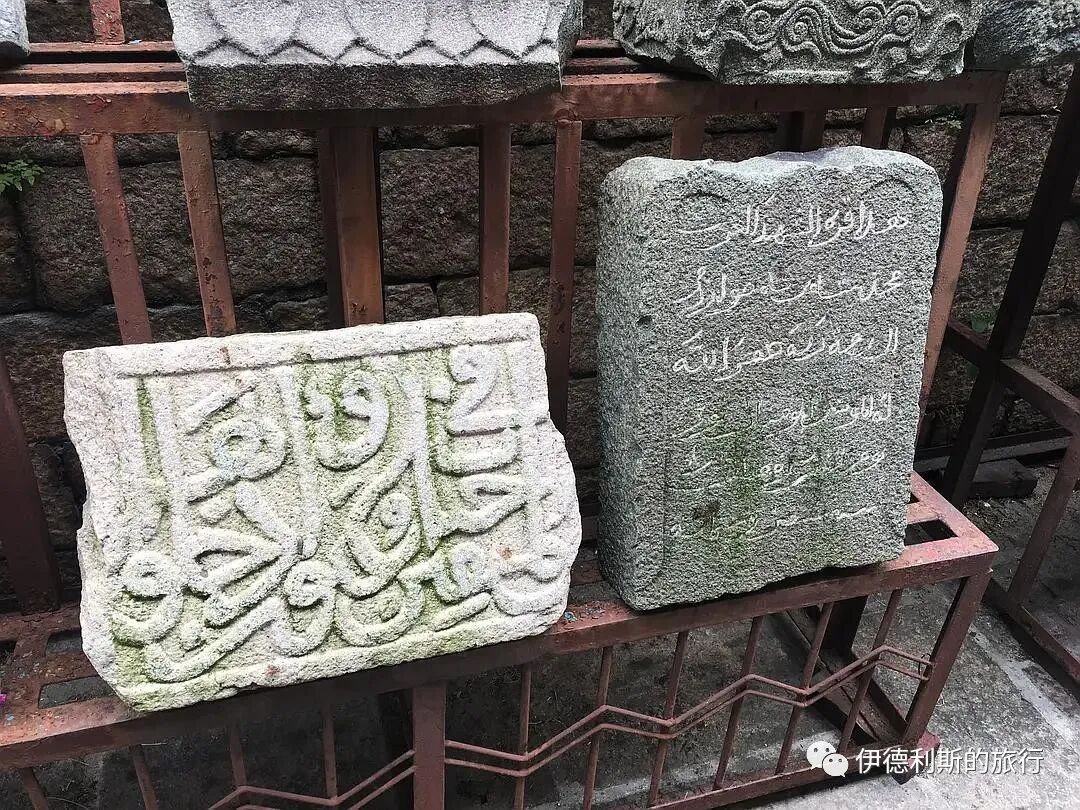
In the center of the picture below is a diabase tombstone, which was dug up from a garden belonging to a Xia family at the end of the Qing Dynasty. It was moved to the Qingjing Mosque and built into the north wall of the Mingshan Hall lobby, and was removed during the renovation of Mingshan Hall in 1983. The tomb owner came from the ancient Iranian city of Tabriz. Tabriz was a trade center on the northwestern plateau of Iran and was historically the capital of the Ilkhanate, the Kara Koyunlu, the Ak Koyunlu, and the Persian Safavid Dynasty.
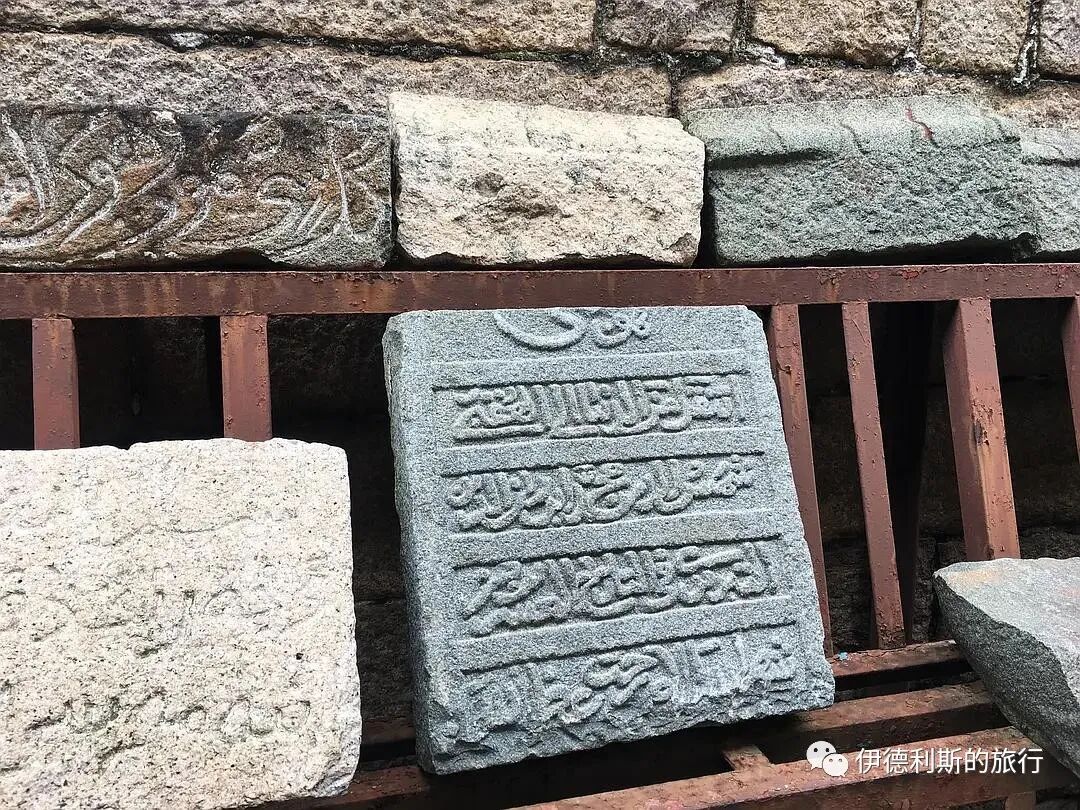
The first one on the left in the top row of the picture below is a diabase Sumeru-pedestal tombstone, which was dug up from a garden belonging to a Xia family at the end of the Qing Dynasty. It was moved to the Qingjing Mosque and built into the center of the south wall of the Mingshan Hall lobby, and was removed during the renovation of Mingshan Hall in 1983. The tomb owner was a woman named Fatimah, from Hadula, which is the city of Adana in southeastern Turkey, northeast of the island of Cyprus, near the Mediterranean Sea.
The second one on the left in the top row is a diabase Sumeru-pedestal tombstone, which was dug up from a garden belonging to a Xia family at the end of the Qing Dynasty. It was moved to the Qingjing Mosque and built into the north side of the west wall of the Mingshan Hall lobby, and was removed during the renovation of Mingshan Hall in 1983. It reads, 'Everything will perish, He (Allah) is the Everlasting.' "
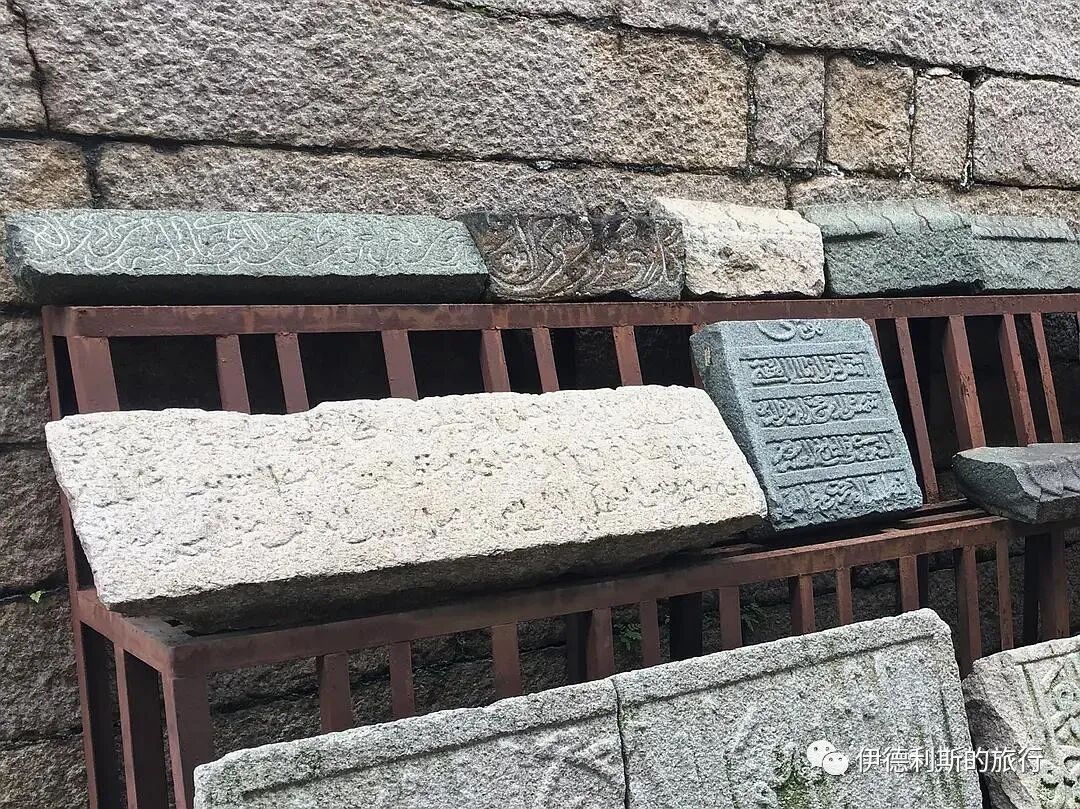
The bottom left of the picture is a white granite tombstone, which was excavated from the residential area of Qipan Garden in the South School Field of Quanzhou at the end of the Qing Dynasty. It was later transported to the Qingjing Mosque, and the two pieces were built into the south and north walls of the Mingshan Hall lobby, respectively, and were removed from the walls during the renovation of Mingshan Hall in 1983. The ancient Arabic script on the stone carving is thinner and longer than that on the walls of the Qingjing Mosque, and the border is wider, so it is very likely a stone carving belonging to a destroyed mosque. The translation is: 'The mosque belongs to Allah, and with Allah, you cannot pray to anyone.' "
The top left is a white granite tombstone, which was dug up from a garden belonging to a Pu family at the end of the Qing Dynasty. It was moved into the Qingjing Mosque and built into the south side of the west wall of the Mingshan Hall lobby, and was removed during the renovation of Mingshan Hall in 1983. The tomb owner, Fatimah, was a maid from Nablus, a city north of Jerusalem. She most likely died in Quanzhou while accompanying her master from Nablus to Quanzhou for business. This tombstone has no decorations and is very simple, which is different from the typical Arabic and Persian tombstones in Quanzhou. This is likely related to the status of the tomb owner. Based on the shape, this tombstone was likely built on top of another tombstone base in front of the stone tomb.
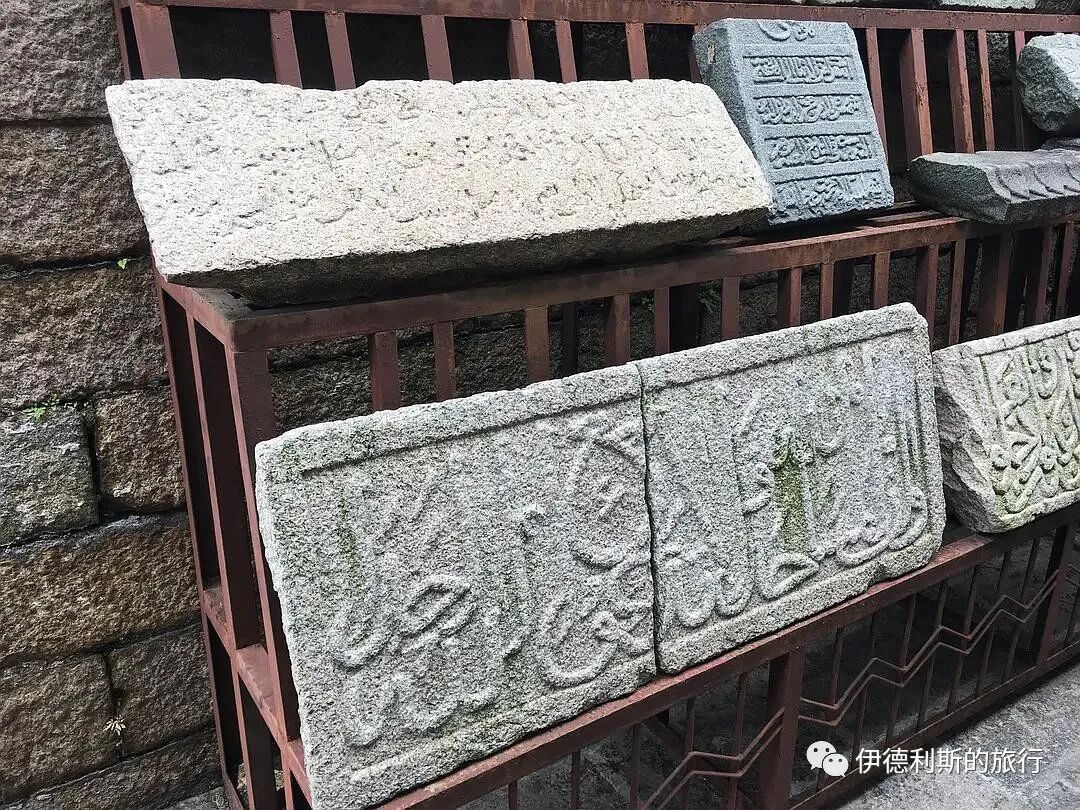
The second one from the right in the top row of the picture below is the right side of a diabase Sumeru-pedestal altar-style tombstone fragment. It was unearthed from the ground on the north side of the outer courtyard during the renovation of Mingshan Hall of the Qingjing Mosque in 1983. Continuous cloud patterns are carved on the bottom, and the text is from an excerpt of Chapter 98, Verse 8 of the Quran.
The first one on the right in the top row is a diabase tombstone, which was unearthed from underground during the renovation of Mingshan Hall of the Qingjing Mosque in 1997. The first one on the left in the bottom row is a diabase tombstone, which was dug up from a garden belonging to a Pu family at the end of the Qing Dynasty. It was moved into the Qingjing Mosque and built into the center of the south side of the west wall of the Mingshan Hall lobby, and was removed during the renovation of Mingshan Hall in 1983. The tomb owner came from the ancient Iranian city of Tabriz and died in 1362 (or 1365 according to another translation).
The white granite tombstone in the second position from the left in the bottom row was discovered in 1984 when residents were demolishing houses east of the gate tower of the Qingjing Mosque (the original site of the Zhusheng Pavilion). The tomb owner was Abdullah from Oman. Oman is a country in the southeastern part of the Arabian Peninsula. Abdullah's date of death is translated as 1342 in one version and 1360 in another.
The third one from the left in the bottom row is a diabase Yuan Dynasty tombstone, which was dug up from a garden belonging to a Xia family at the end of the Qing Dynasty. It was moved into the Qingjing Mosque and built into the north side of the west wall of the Mingshan Hall lobby, and was removed during the renovation of Mingshan Hall in 1983. The tomb owner was Ms. Khadija, who died in 1335 and came from Tehran, Iran. The inscription states that she was the 'daughter of the late Prime Minister Sa'd-ud-din'. It is speculated that the late Prime Minister Sa'd-ud-din was likely the Prime Minister Sa'd-ud-din appointed by the Persian King Ghazan in 1298, as mentioned in 'The History of the Mongols' by D'Ohsson. King Ghazan died in 1304, and his brother Öljaitü succeeded him. In 1312, Öljaitü killed Sa'd-ud-din. The tomb owner may have come to Quanzhou by sea with merchants after her father was killed.
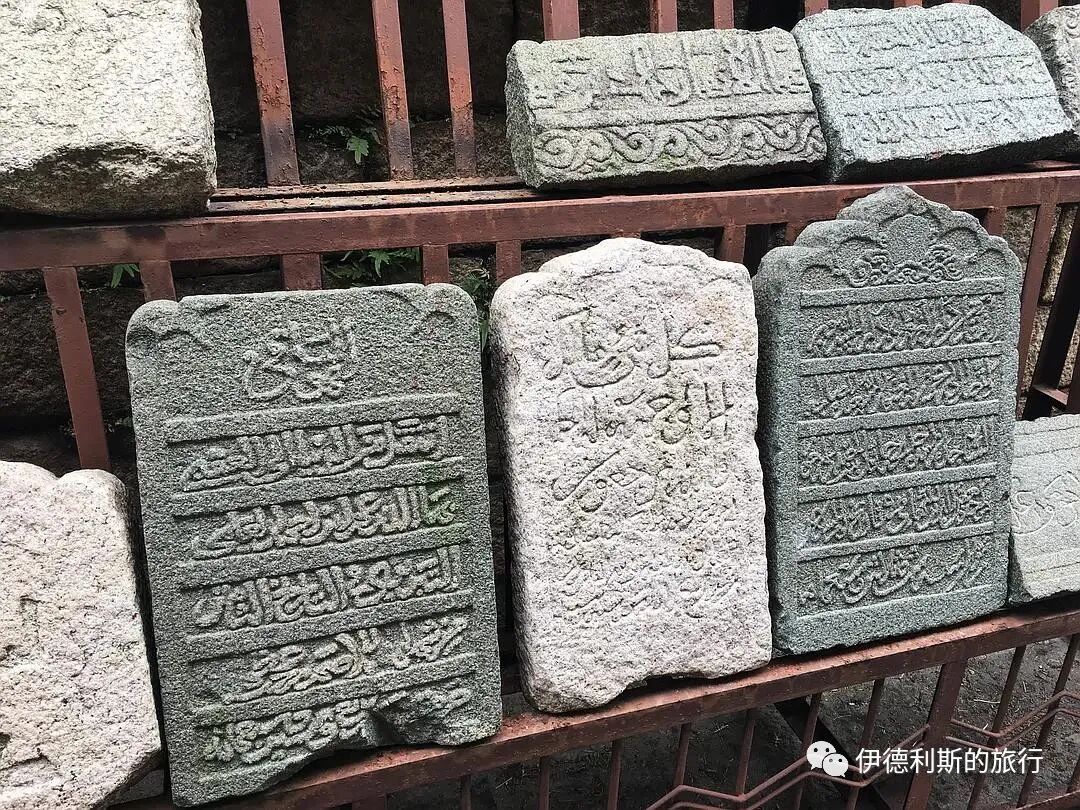
The top right of the picture is a diabase Sumeru-pedestal tombstone, which was dug up from a garden belonging to a Pu family at the end of the Qing Dynasty. It was moved into the Qingjing Mosque and built into the north wall of the Mingshan Hall lobby, and was removed during the renovation of Mingshan Hall in 1983. The content of the inscription is an excerpt from Chapter 29, Verse 57 and the full text of Chapter 55, Verse 26 of the Quran.
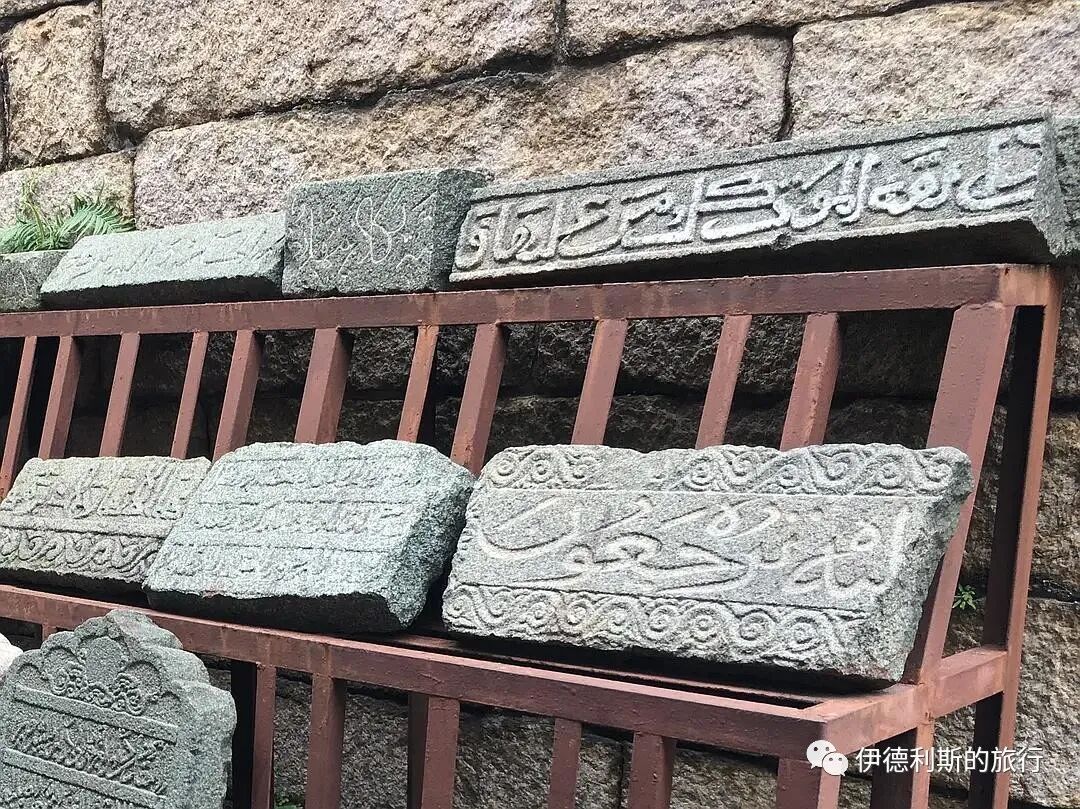
Tonghuai Street, where the Qingjing Mosque is located, was the site of the 'Fanfang' (foreign quarter) in Quanzhou during the Song and Yuan dynasties, and many Muslims were buried nearby after they passed away. In the 1950s, a row of 3 Sumeru-pedestal stone tombs was discovered underground in a residential house at the intersection of Tonghuai Street and Jiangwu Lane. From 1995 to 1998, when Tonghuai Street was widened, many Sumeru-pedestal stone tombs were unearthed. The Imam of the Qingjing Mosque, Haji Huang Runqiu, collected some of these stone tombs and components in the Qingjing Mosque. This is the origin of the 7 Sumeru-pedestal stone tombs currently preserved in the Qingjing Mosque.
The Sumeru-pedestal stone tombs in the Qingjing Mosque range from two to five layers. All the tomb-top stones have been lost, and the bottom layers all have ruyi-shaped six-legged bases. Among them, a small stone tomb is stacked on top of the second tomb from the right in the front row, which should be a child's tomb.
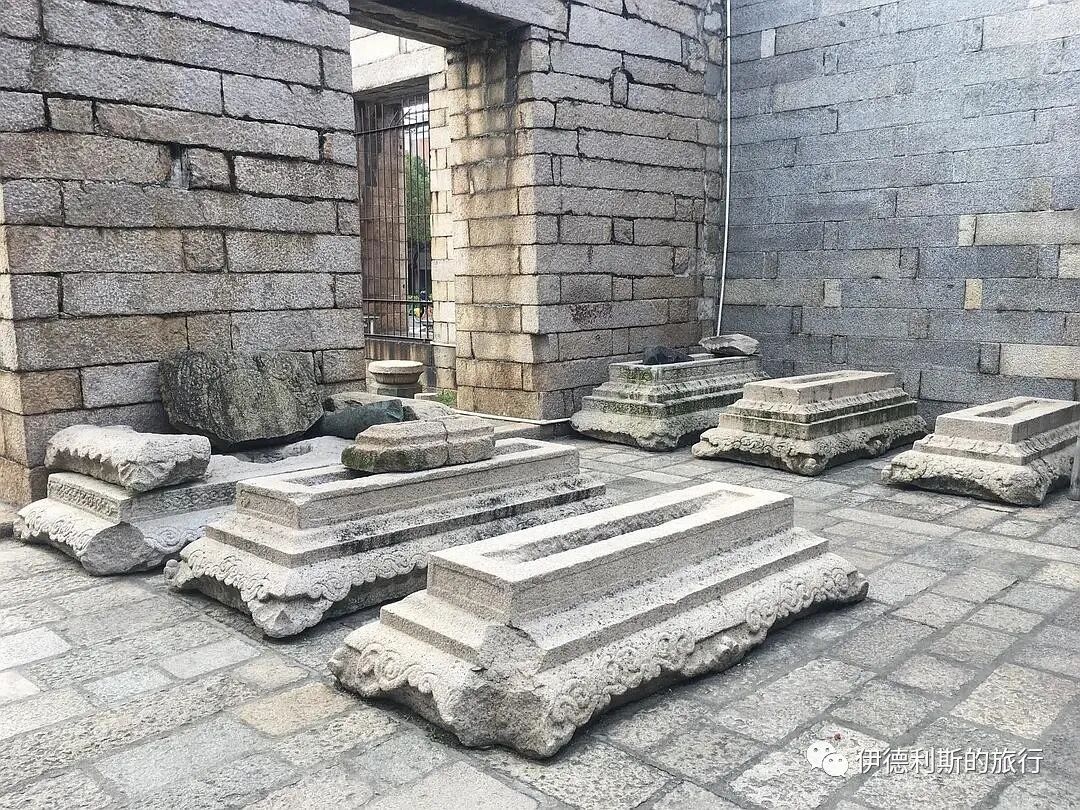
The Sumeru-style stone tomb on the left in the picture below is the most exquisite one preserved in the Qingjing Mosque. The second and fourth layers are carved with continuous branch patterns, the third layer is carved with overlapping lotus petals, and the bottom layer is carved with ruyi-shaped six-legged bases.
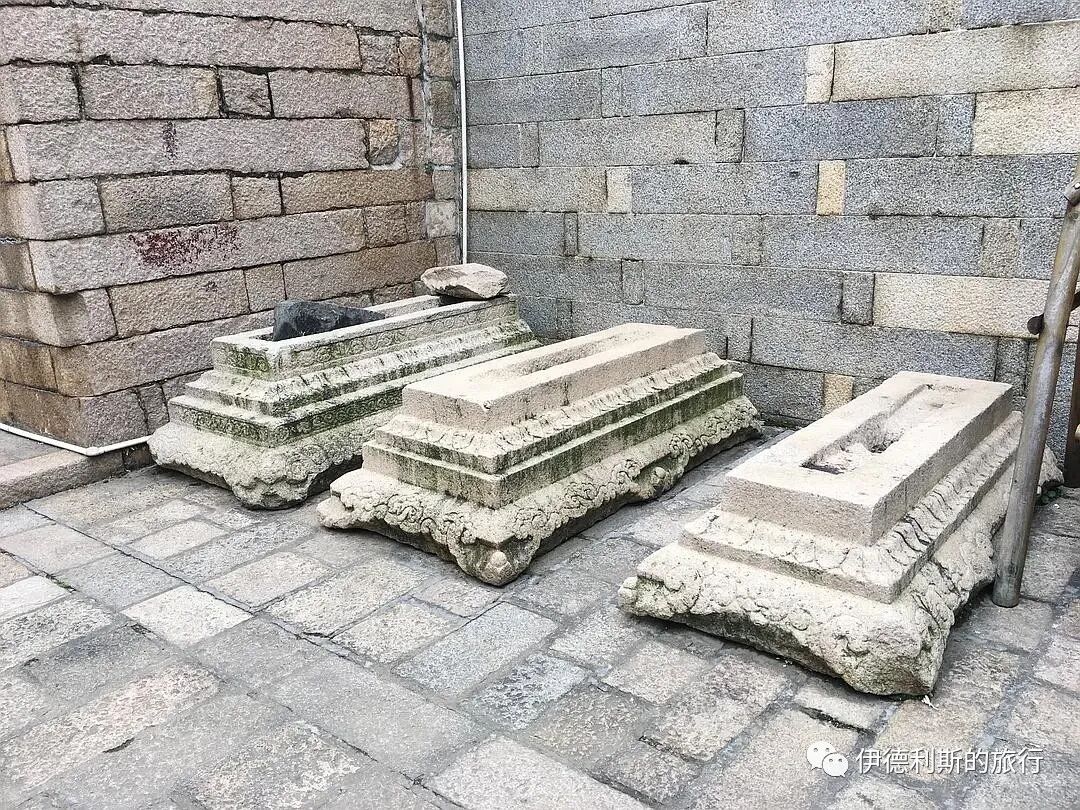
The Sumeru-pedestal stone tomb in the picture below only has two layers preserved, with ruyi-shaped feet on the bottom layer and floral patterns carved on the second layer.
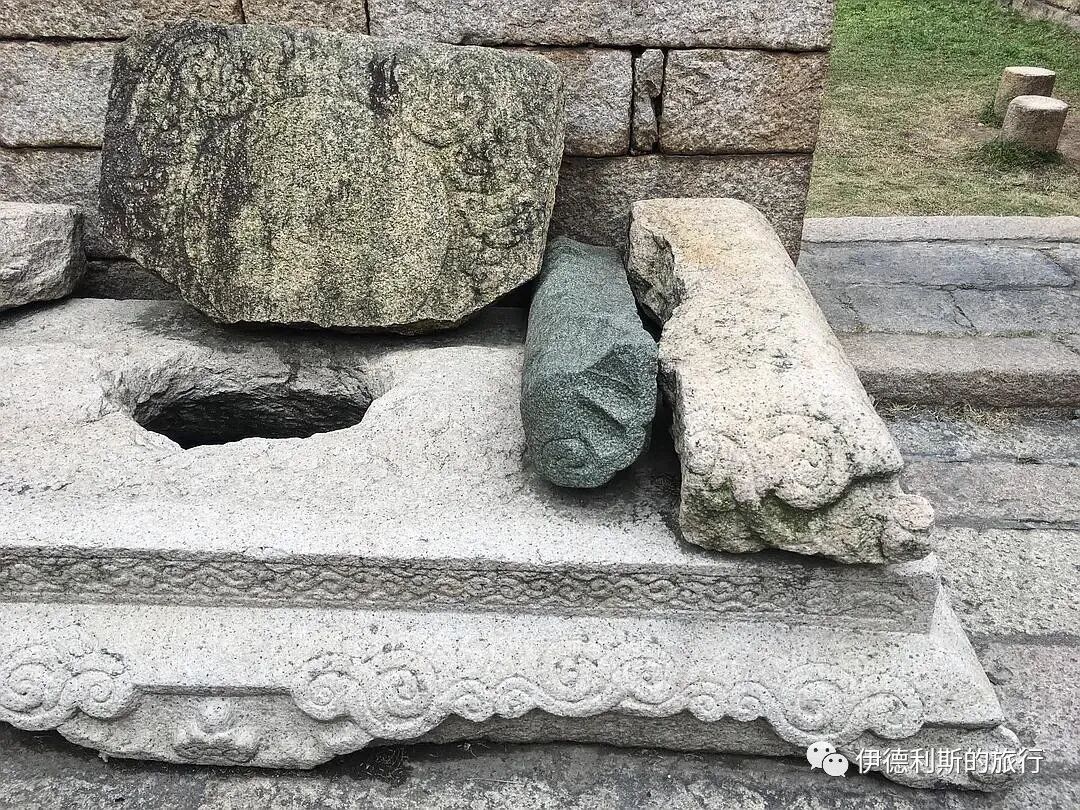
II. Lingshan Islamic Tombs
1. The Main Tombs
The Lingshan Islamic Tombs are located 1 kilometer east of Quanzhou city and are also known as the 'Tombs of the Three and Four Sages'. The theory of the 'Three and Four Sages' is mainly based on the records in 'Min Shu: Geography' by He Qiaoyuan in 1629 (the second year of Chongzhen in the Ming Dynasty). The 'Min Shu' cites a legend that four disciples of the Prophet Muhammad came to the Tang Dynasty to preach during the Wude period of Emperor Gaozu of Tang (618-626). One sage preached in Guangzhou, two in Yangzhou, and the third and fourth in Quanzhou. After the third and fourth sages passed away, they were buried in Quanzhou, and at night they emitted light and performed miracles, becoming the Holy Tombs.
The 'Min Shu' records that during the Wude period of the Tang Dynasty, the Prophet Muhammad was in a difficult situation, and Quanzhou had not yet been built as a city at that time. Between the Five Dynasties and the Southern Song Dynasty, Lingshan was the cemetery for the monks of Chengtian Mosque, and it was not abandoned until the end of the Southern Song Dynasty after Chengtian Mosque failed in its resistance against the Yuan.
The Holy Tombs currently have a Yuan Dynasty Arabic renovation tablet from 1322, which records: 'These two deceased came to this country during the Faghur era. It is said that they were people of great virtue, and therefore they reached the eternal world from the earthly world after death.' This is a relatively reliable basis. According to Chen Dasheng's 'A Preliminary Study on the Dating of the Lingshan Islamic Tombs in Quanzhou', Faghur is a transliteration of the Persian word 'Bagh pur' in Arabic, which specifically referred to the Emperor of China in Persian literature during the Five Dynasties to the Song and Yuan periods.
The 'Quanzhou Prefecture Gazetteer' records that when Zhou Daoguang, the Prefect of Quanzhou, visited the Lingshan Islamic Tombs in 1562 (the 41st year of Jiajing in the Ming Dynasty), he mentioned 'there are three tombs with manes'. The 'Min Shu Chao', written during the Chongzhen period, records that the owner of the third tomb was 'Gao Di Shi Xu Ba Ba'. In the 1930s, the wooden frame of the tomb pavilion at the Lingshan Islamic Tombs had collapsed and broken, leaving only four stone-carved shuttle-shaped pavilion pillars. At that time, the three Sumeru-style stone tombs arranged in a 'pin' shape were still well-preserved, with tomb-top stones covering them.
However, in 1958, the Quanzhou Municipal Bureau of Culture and the Municipal Management Committee, in order to cater to the legends in the 'Min Shu', moved one of the stone tombs away and placed it on the hillside to the north. In March 1959, a new stone tomb pavilion was built, with three layers of terraces and stairs on both sides. All other tomb stones in front of the tombs were moved away, and a lawn was created, forming the current layout.
The Holy Tombs currently have two granite tombs, divided into three layers, with lotus petal patterns carved on the bottom layer. In the past, every Eid al-Fitr and Eid al-Adha, after Quanzhou Hui Muslims participated in the congregational prayer at the Qingjing Mosque, the Imam would lead the heads of each household to visit the homes of Hui Muslims around the Qingjing Mosque to 'pay respects', and then all the Hui Muslims would go to Lingshan to visit the graves together. When visiting the graves, they would first recite the Quran at the Holy Tombs, and then go to their respective family graves.
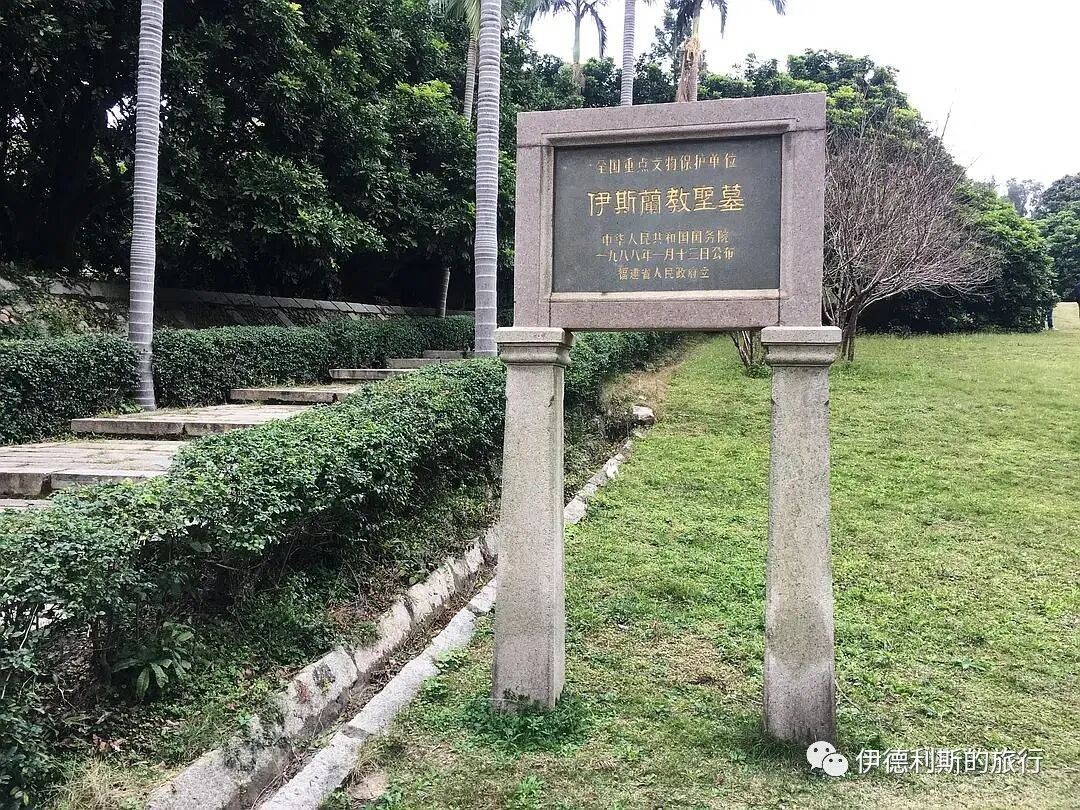
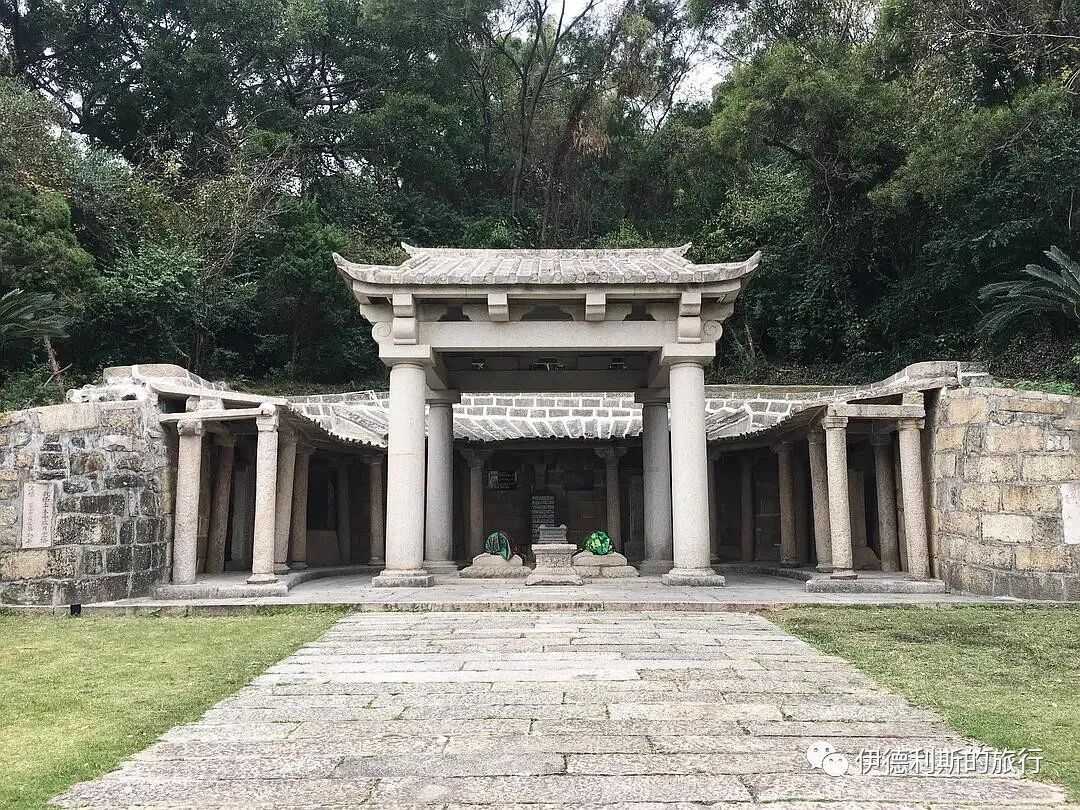
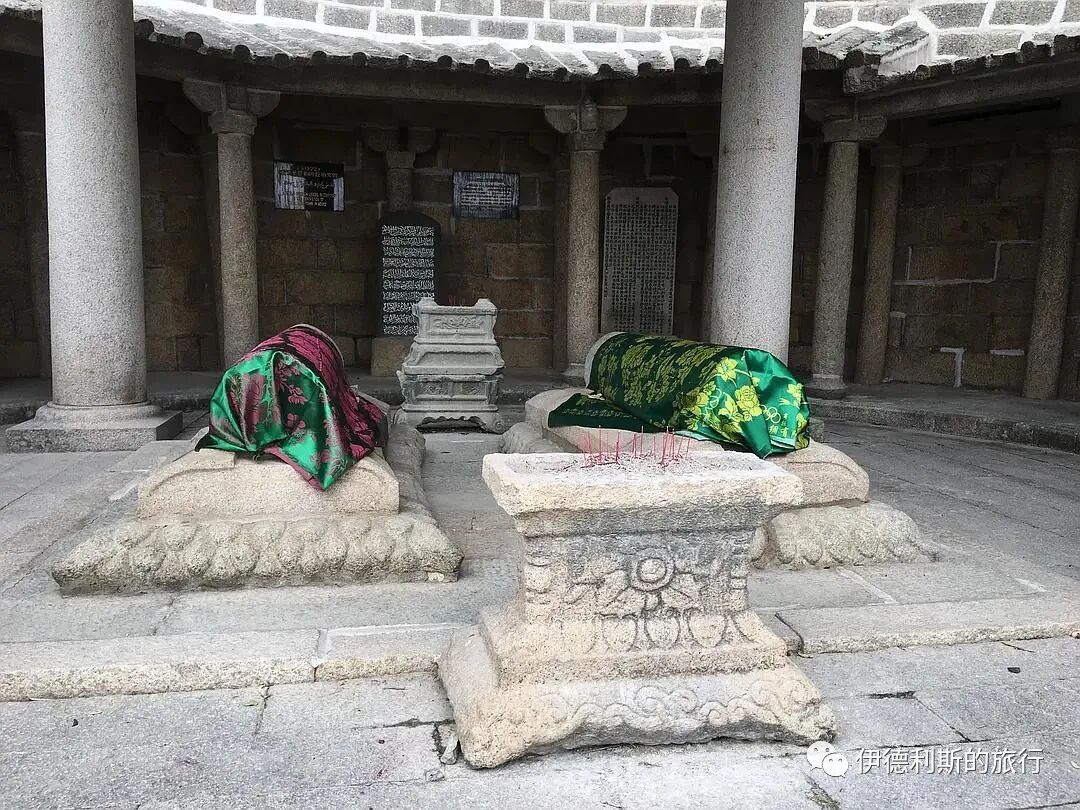
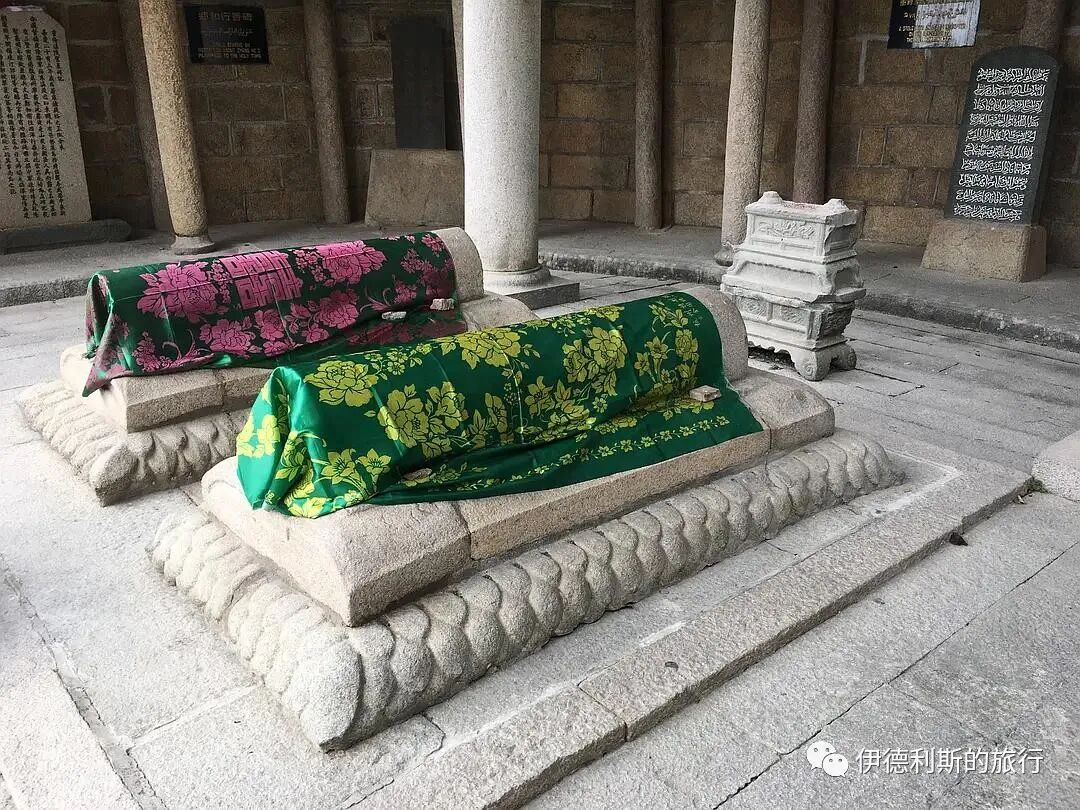
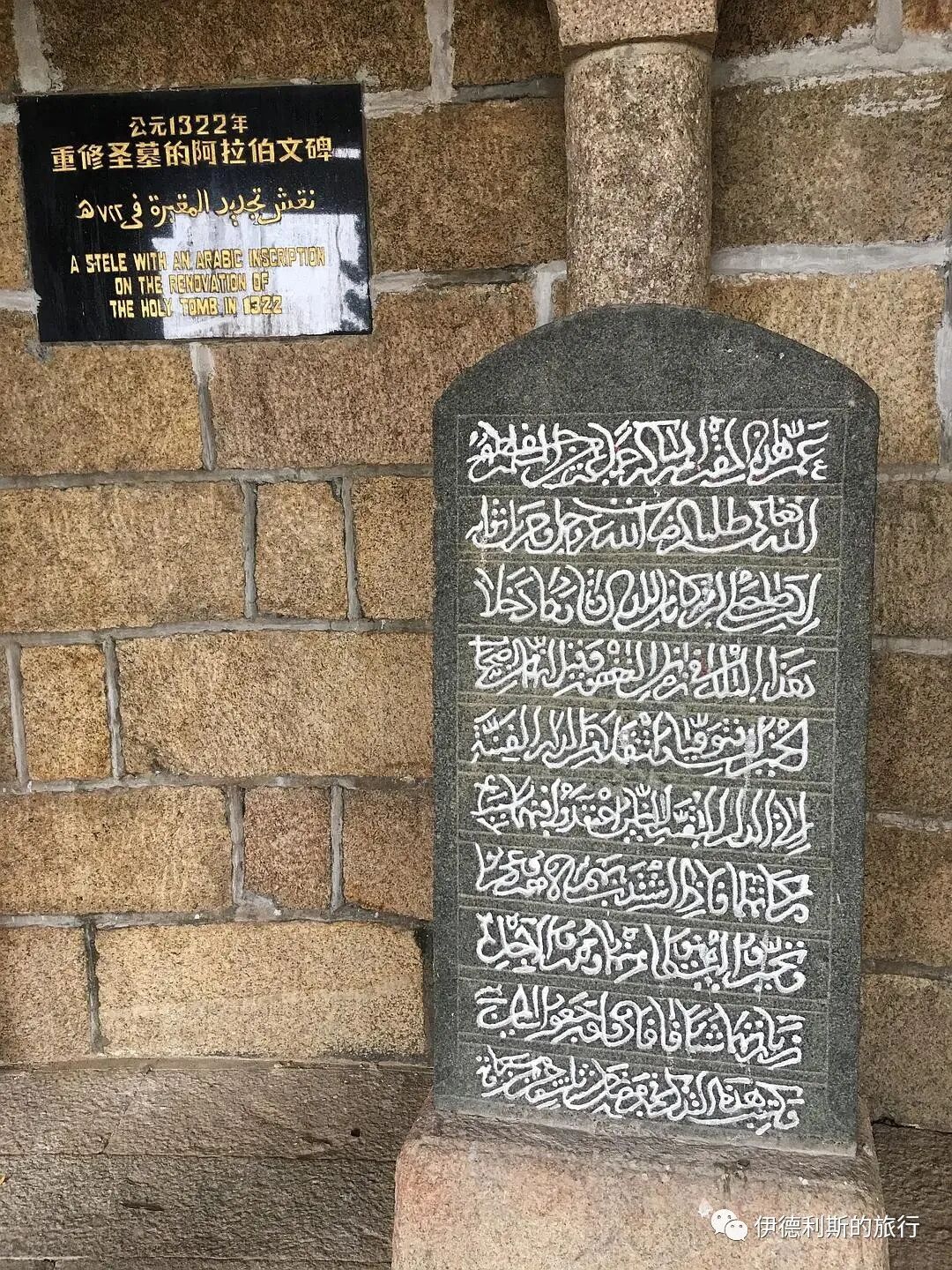
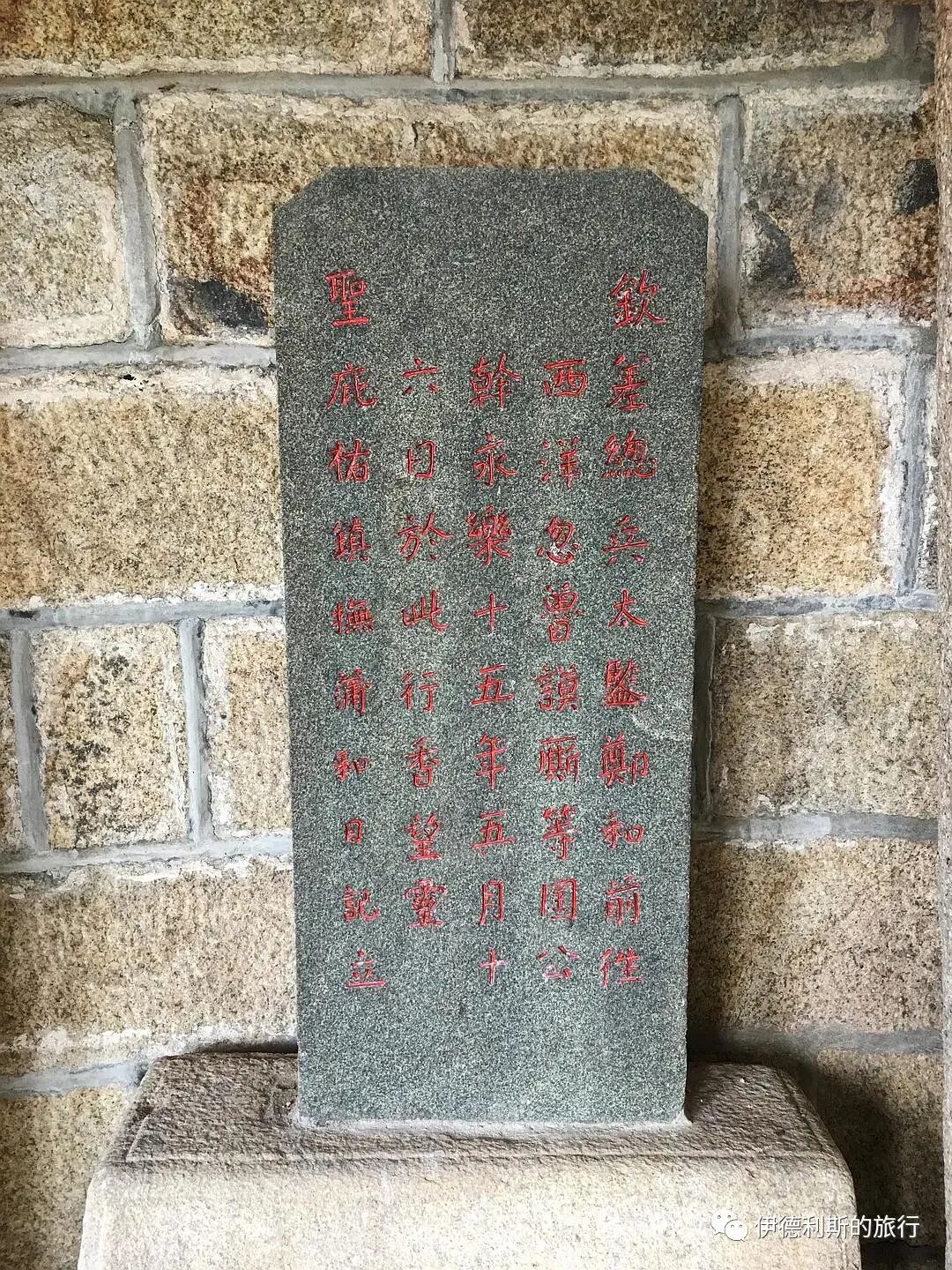
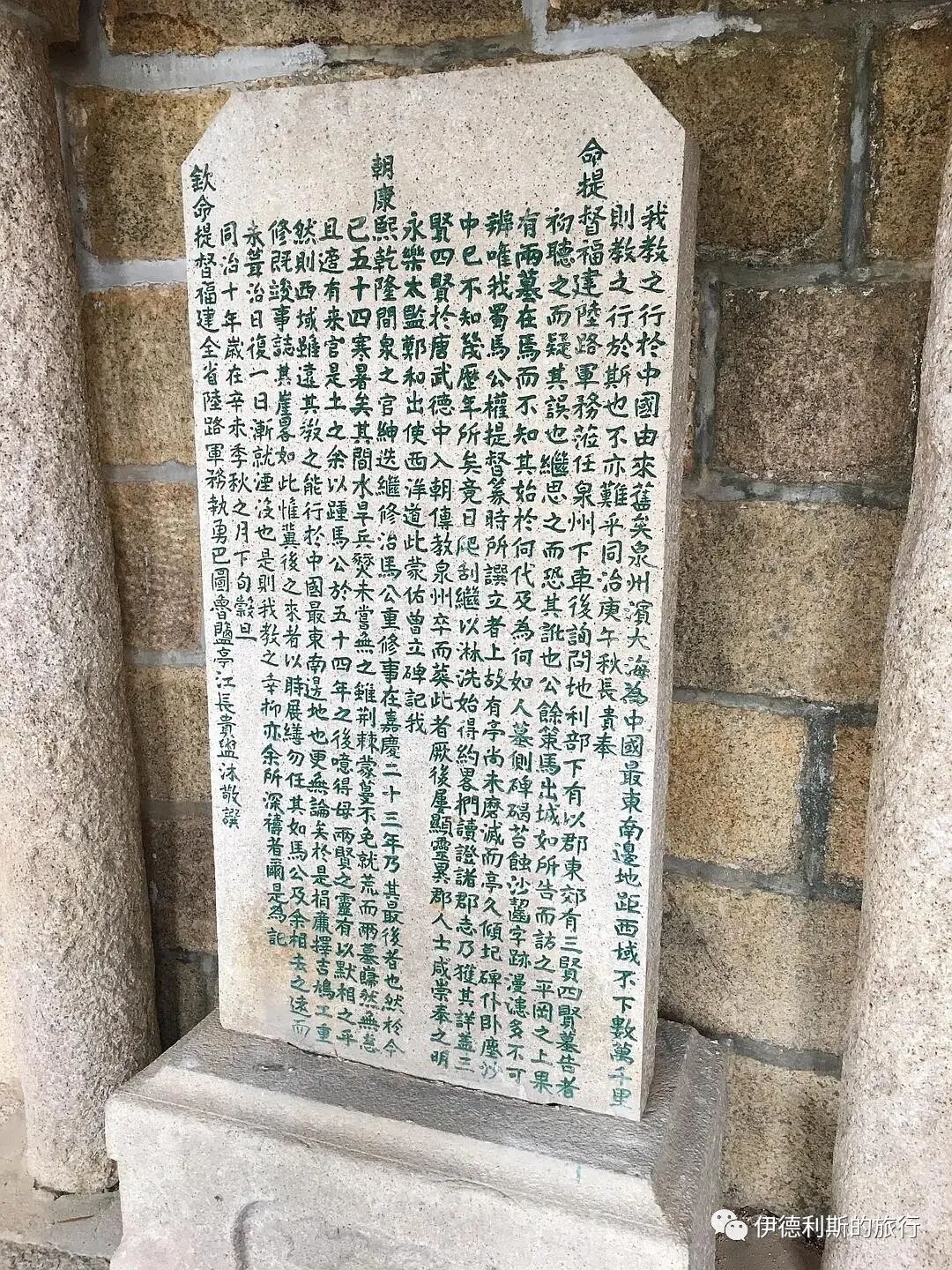
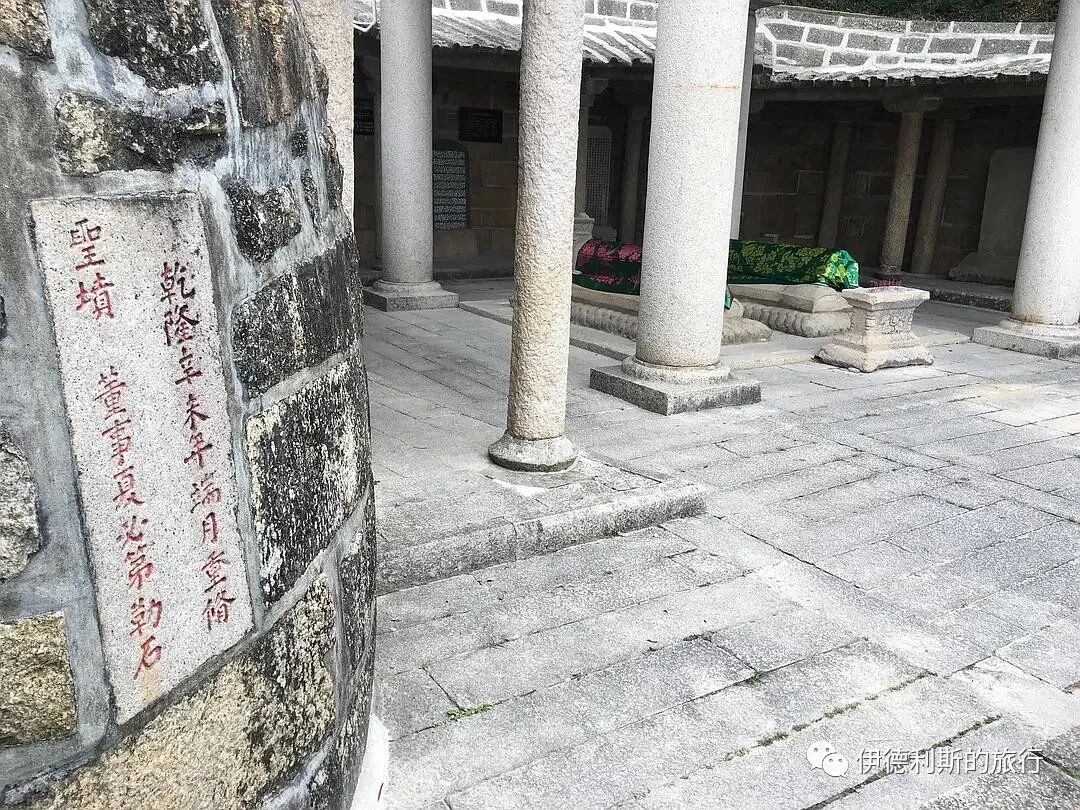
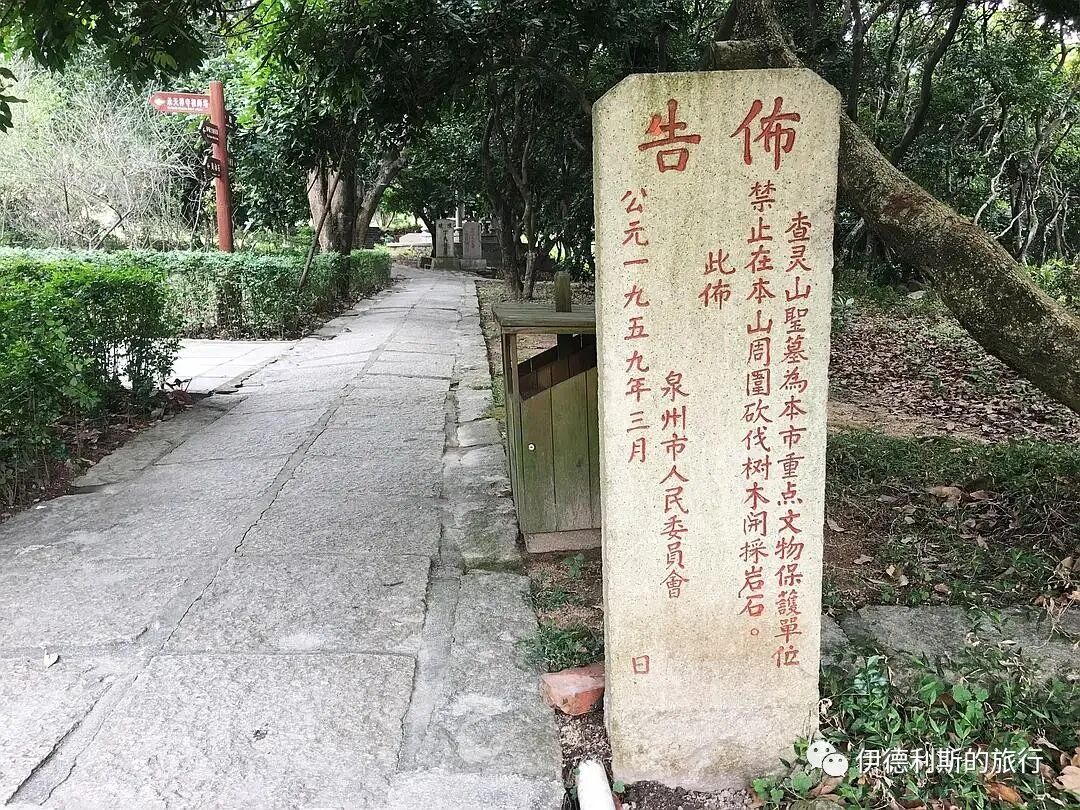
2. Scattered Stone Tombs
In 1958, the Fuzhou-Xiamen highway outside the East Gate of Quanzhou was widened, and several Sumeru-pedestal Islamic stone tombs along the road were moved to the side of the Lingshan Islamic Tombs. In the same year, farmers in Jintoupu Township outside Tonghuai Gate in Quanzhou were accumulating fertilizer and dredging pond sludge, and unearthed more than ten Sumeru-pedestal stone tombs, which were temporarily transported to the Qingjing Mosque and then moved to the side of the Lingshan Islamic Tombs for preservation. In the same year, three side-by-side Sumeru-pedestal stone tombs were unearthed when residents of Tonghuai Street were building houses, and they were also placed next to the Lingshan Islamic Tombs for preservation.
The left side of the picture below is a four-layer Sumeru-pedestal stone tomb. The first layer is a ruyi-shaped scroll-patterned six-legged base, the second layer is plain, the third layer is an overlapping lotus petal pattern, and the fourth layer is a dome-shaped tomb-top stone, with a lotus flower carved on the front and a floating cloud carved on the back.
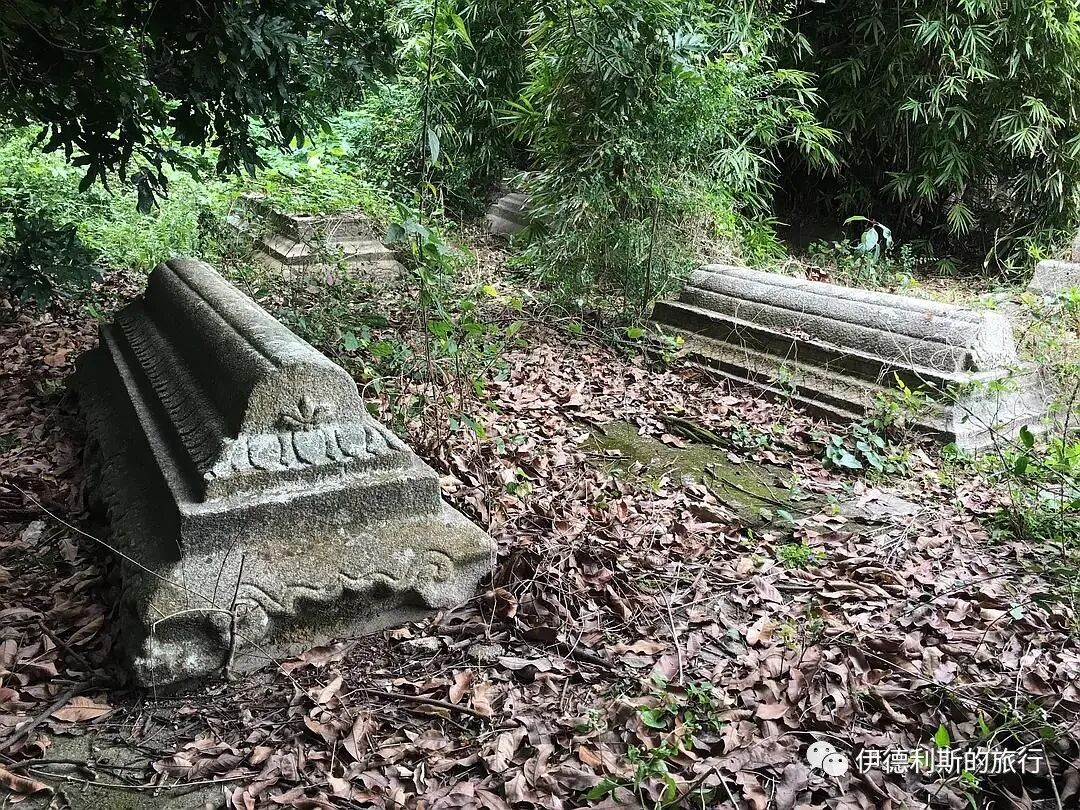
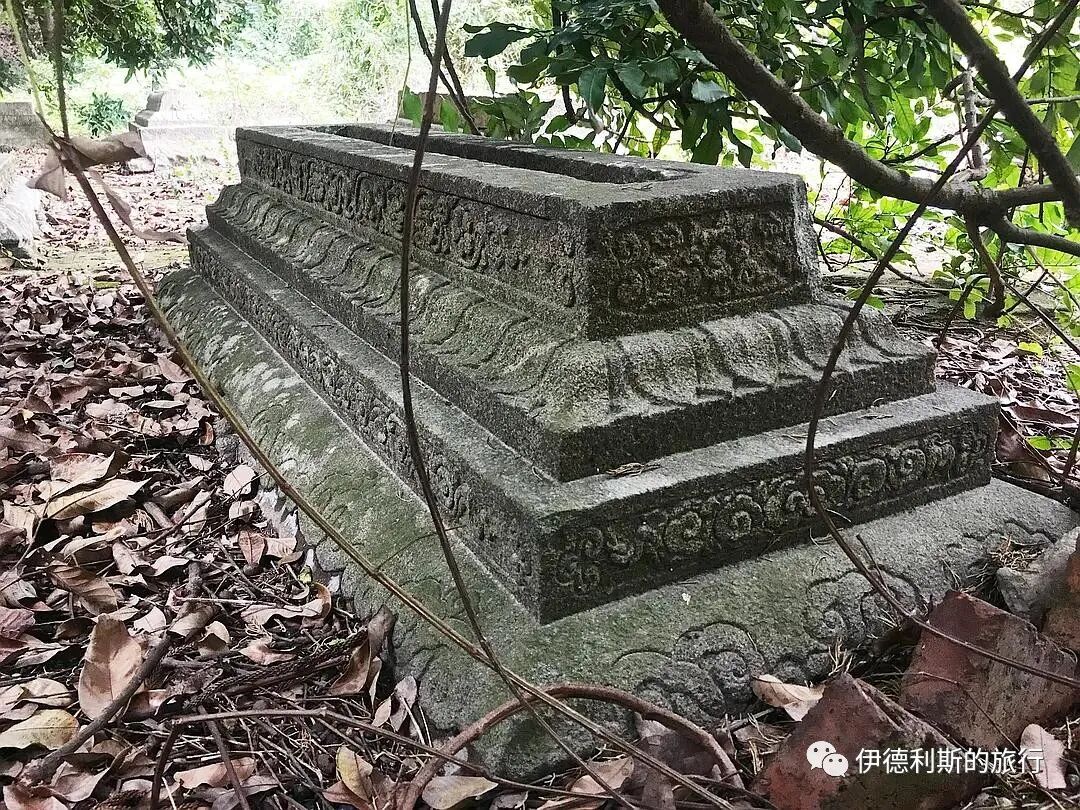
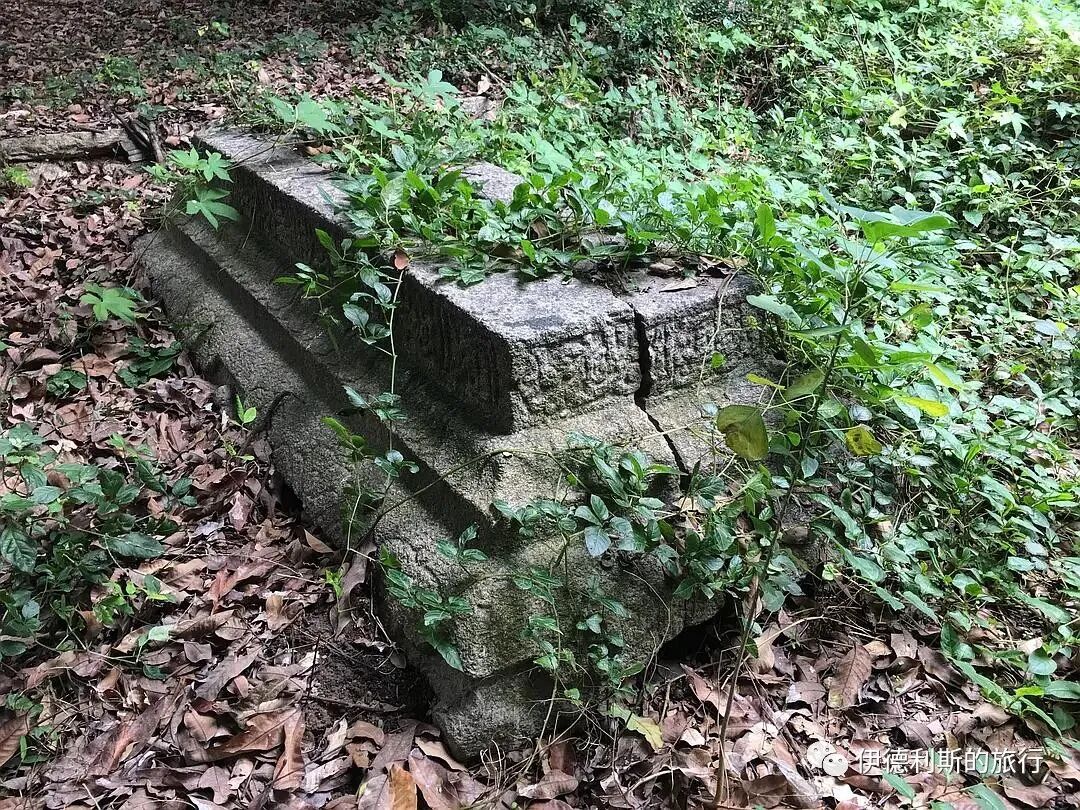
The picture below is a five-layer Sumeru-pedestal stone tomb, chiseled from a piece of white granite. The first layer is a ruyi-shaped scroll-patterned six-legged base, the second layer is continuous flower branches, the third layer is repeated overlapping lotus petals, the fourth layer is Arabic text, and the fifth layer is destroyed. The text on the tomb is from Chapter 3, Verses 16, 17, and 18 of the Quran.
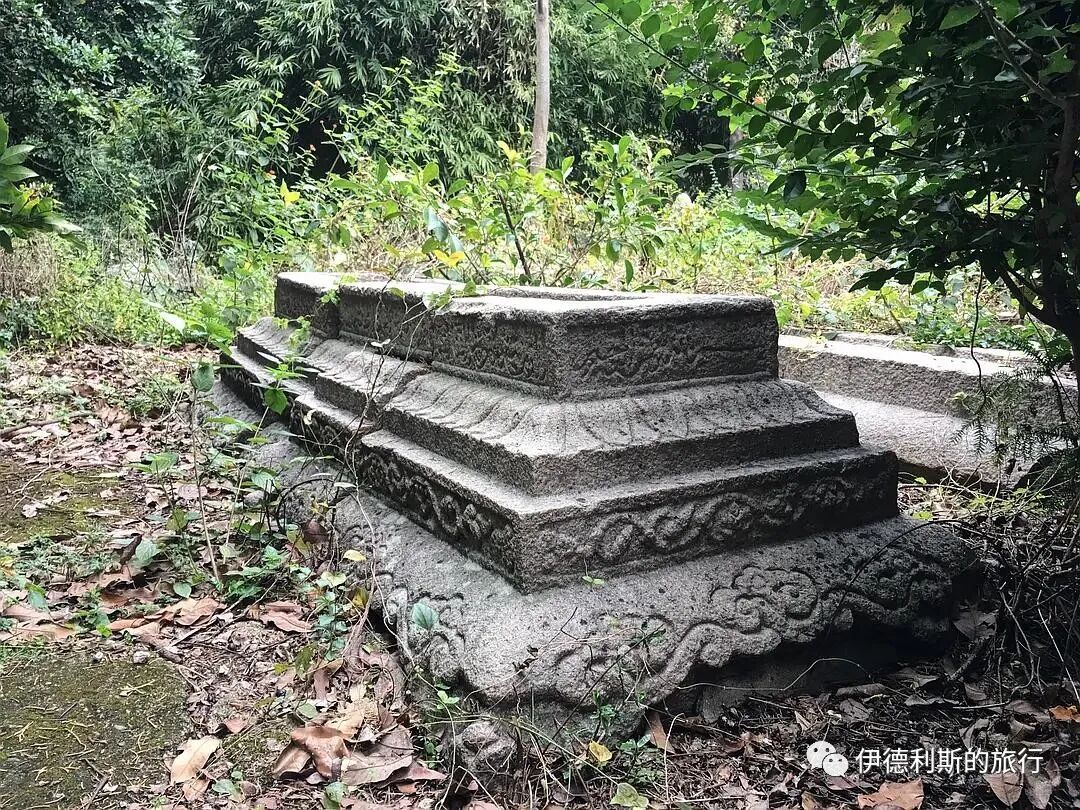
3. Local Hui Muslim Tombs
Next to the Lingshan Islamic Tombs is the cemetery for local Hui Muslims in Quanzhou. In the past, Quanzhou Hui Muslims would come here to visit the graves every year during Eid al-Fitr and Eid al-Adha. When visiting the graves, they would first light Anxi incense, then paint the text on the tombstones red, and finally invite the Imam to recite the Quran.
Among the local Hui Muslims in Quanzhou, the Guo family moved from Baiqi. In the past, they mostly operated gold and silver jewelry businesses. The Ge, Ma, and Huang families were descendants of generations of Imams and mostly operated leather businesses in the past. They all lived in the Qingjing Mosque before 1983. The Pu family is the only branch of Pu Shougeng's descendants who remained in Quanzhou city and still lives on the site of Pu Shougeng's former residence. The Xia family made a living by farming vegetable gardens, where a large number of Song and Yuan Islamic stone carvings were unearthed. In addition, there are Hui Muslims who moved in after the Republic of China, such as the Yang, Tie, Shan, and Mi families. They once lived in the Muslim community around the Qingjing Mosque in the Quanzhou urban area, but this community has scattered and disintegrated following the major renovation of the Qingjing Mosque in 1983 and the demolition of Tumen Street in 1998.
According to records, the ancestor of the Xia Hui Muslims was Xia Burhanuddin from the Dashi Kingdom. He came to Quanzhou with a tribute ship from the dynasty between 1312 and 1313, served as the Imam of the Qingjing Mosque, and later settled in Quanzhou. His descendants took the surname Xia in the Ming Dynasty. Xia Chi, Xia Chi's eldest son, Xia Yangao, Xia Desheng, Xia Riyu, and other Xia descendants inherited the position of Imam of the Qingjing Mosque.
According to the genealogy, the ancestors of the Guo Hui Muslims once lived in Guojia Village, Fuyang, Hangzhou, and came to Quanzhou during the Yuan Dynasty. Guo Zhongyuan moved from Quanzhou to Baiqi, across from Houzhu Port, during the Hongwu period of the Ming Dynasty, forming the current Baiqi Hui Ethnic Township. The Baiqi Guo family left the religion in 1607 (the 35th year of Wanli in the Ming Dynasty). In 1709 (the 48th year of Kangxi), Chen Yougong, the Regional Commander of Fujian Ting, Yan, and Shao, came to Quanzhou to revive the religion and set up schools in the Qingjing Mosque to conduct scripture education. At that time, Guo Honglong, the eighth-generation descendant of the fourth branch of the Guo family, moved from Hecuo in Baiqi to live in the Qingjing Mosque due to the 'distinction between the strong and the weak' and re-entered the religion. After Guo Honglong entered the religion, his descendants lived in the Qingjing Mosque. His descendant Guo Shifu once renovated the mosque together with Bai Yunhan, the Deputy General of the Zhangzhou Left Battalion, in 1794 (the 59th year of Qianlong).
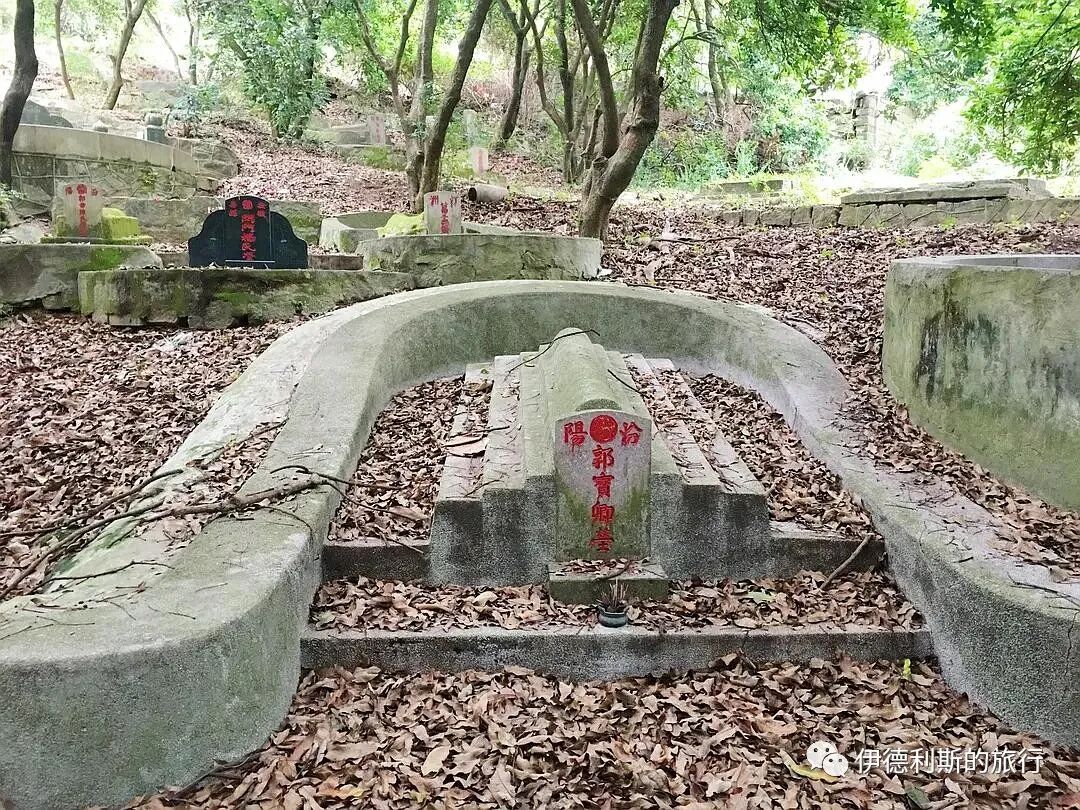
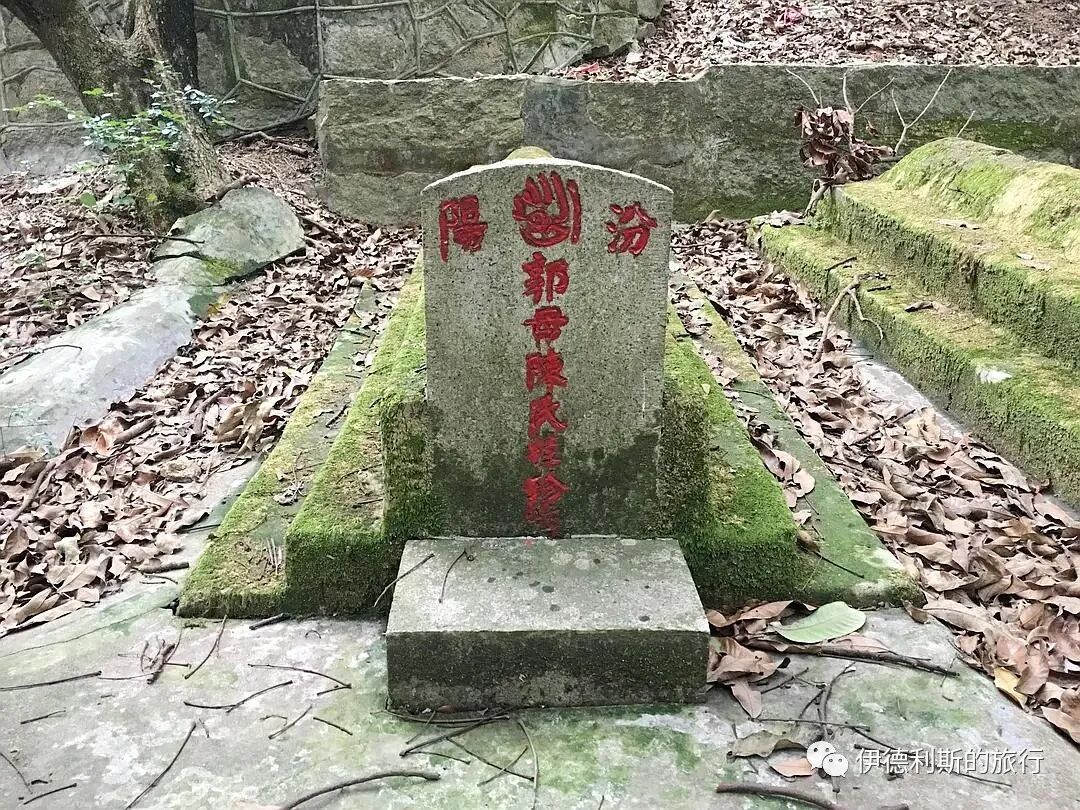
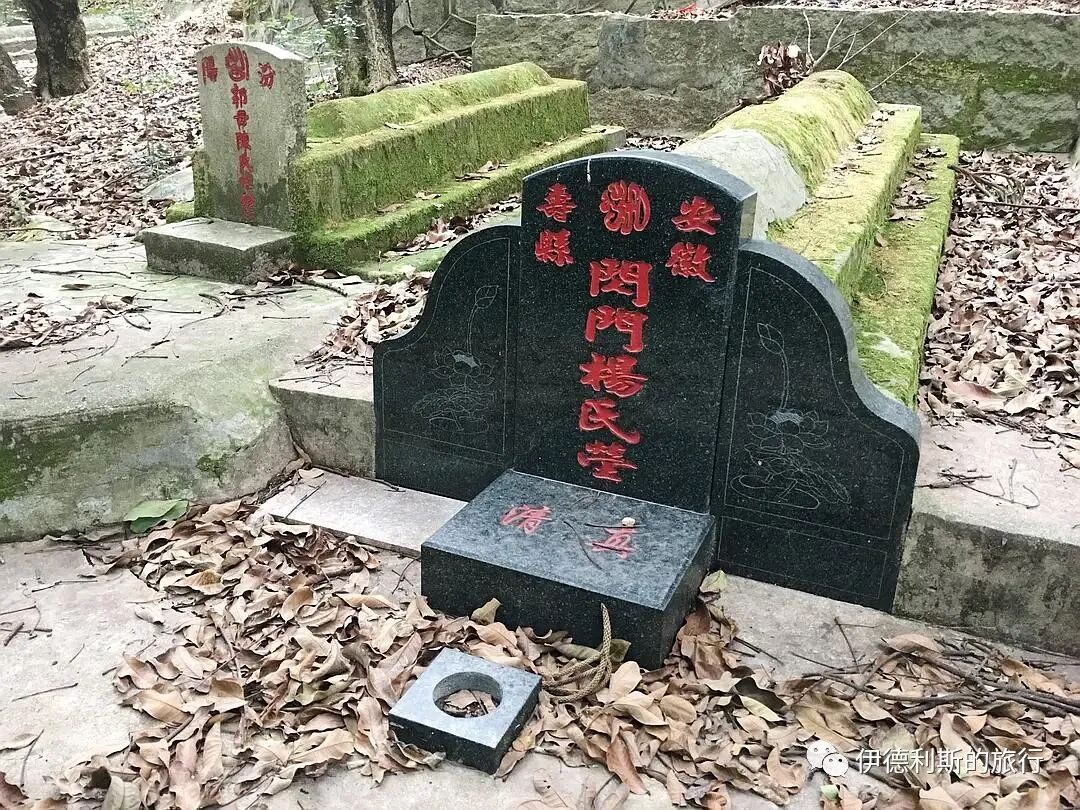
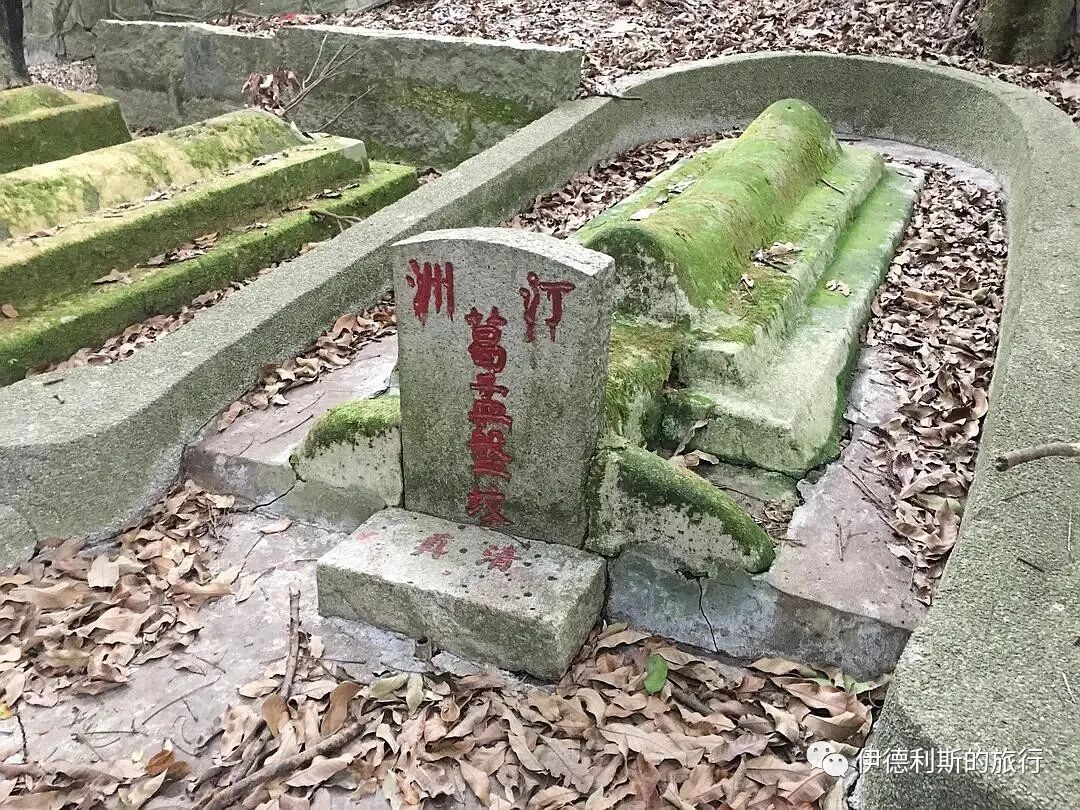
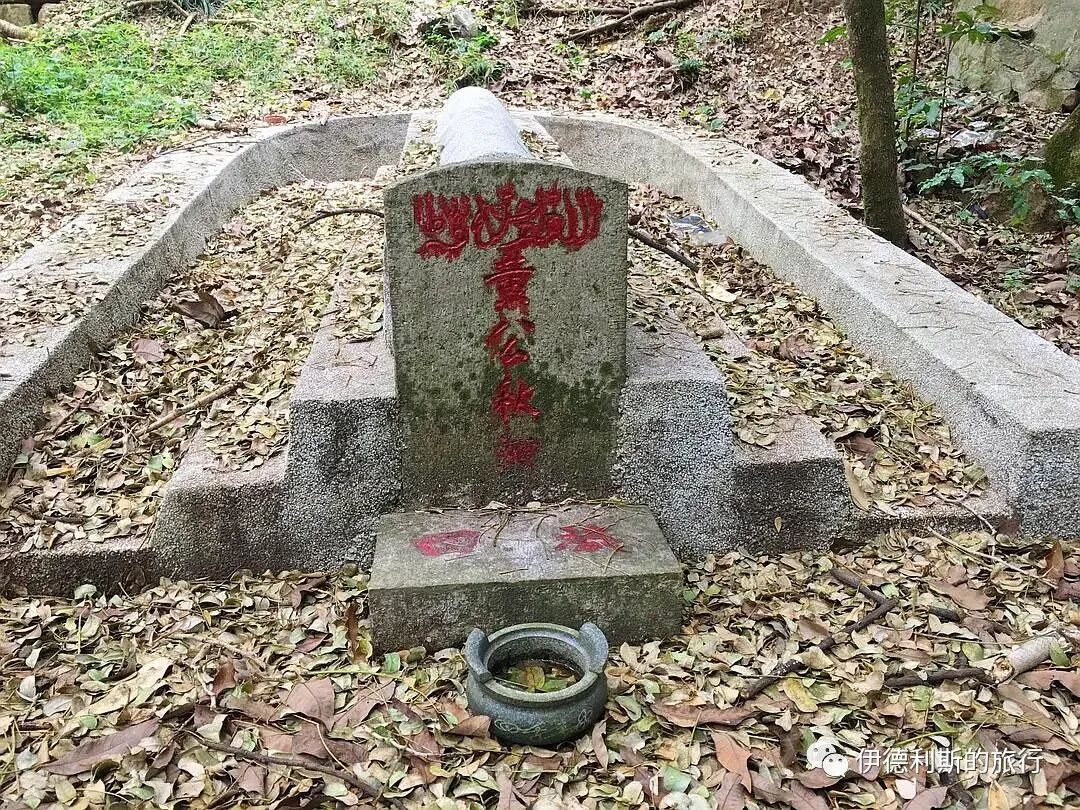
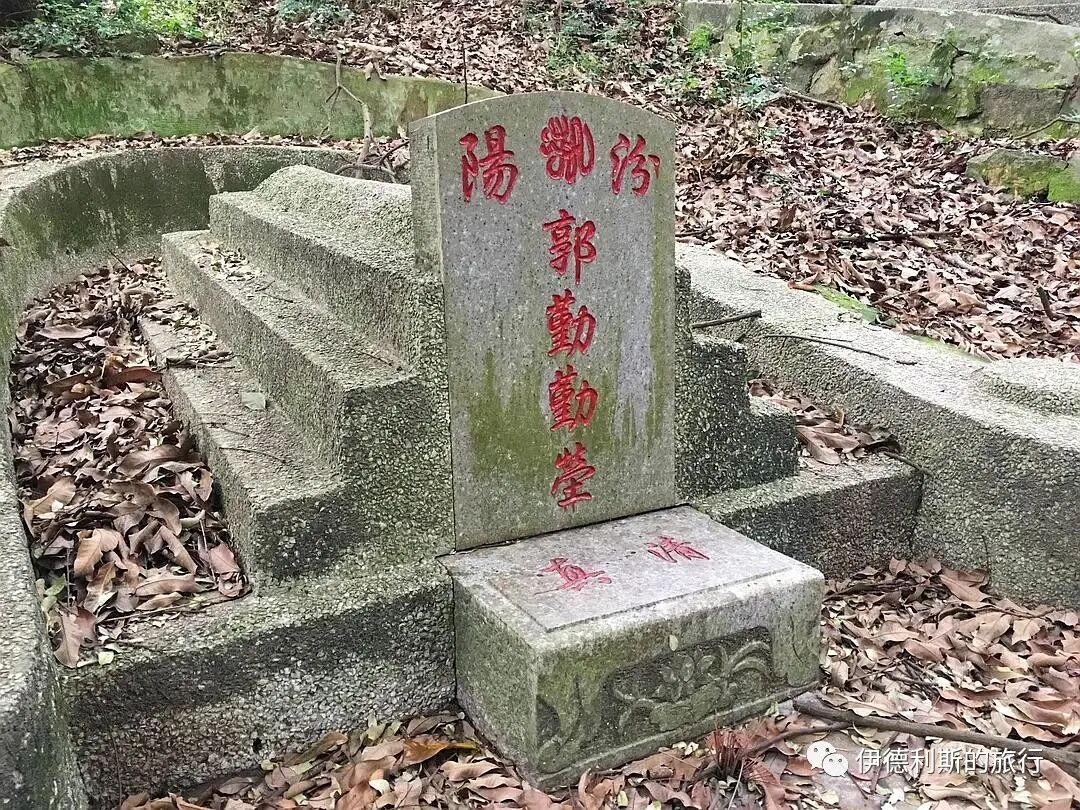
4. The Ding Family Cemetery in Chendai
There is also a large cemetery of the Ding family from Chendai on Lingshan. According to the genealogy, the first ancestor of the Ding family, Ding Jin (1251-1298), was originally from Suzhou and settled in Quanzhou due to trade. By the time of the third ancestor, Ding Kui (1298-1379), he brought the fourth ancestor, Ding Shan (1343-1420), from Quanzhou city to Chendai, more than twenty miles south of the city. In the early Ming Dynasty, the fourth ancestor, Ding Shan, officially settled in Chendai.
The first, second, and third generations of the Ding family were all buried on Lingshan. In 1993, due to road construction, a large number of Ding family tombstones from Chendai were moved from outside the East Gate of Quanzhou, Luyuan, and other places to Lingshan. The joint tomb of the first, second, and third ancestors was also renovated during this period.
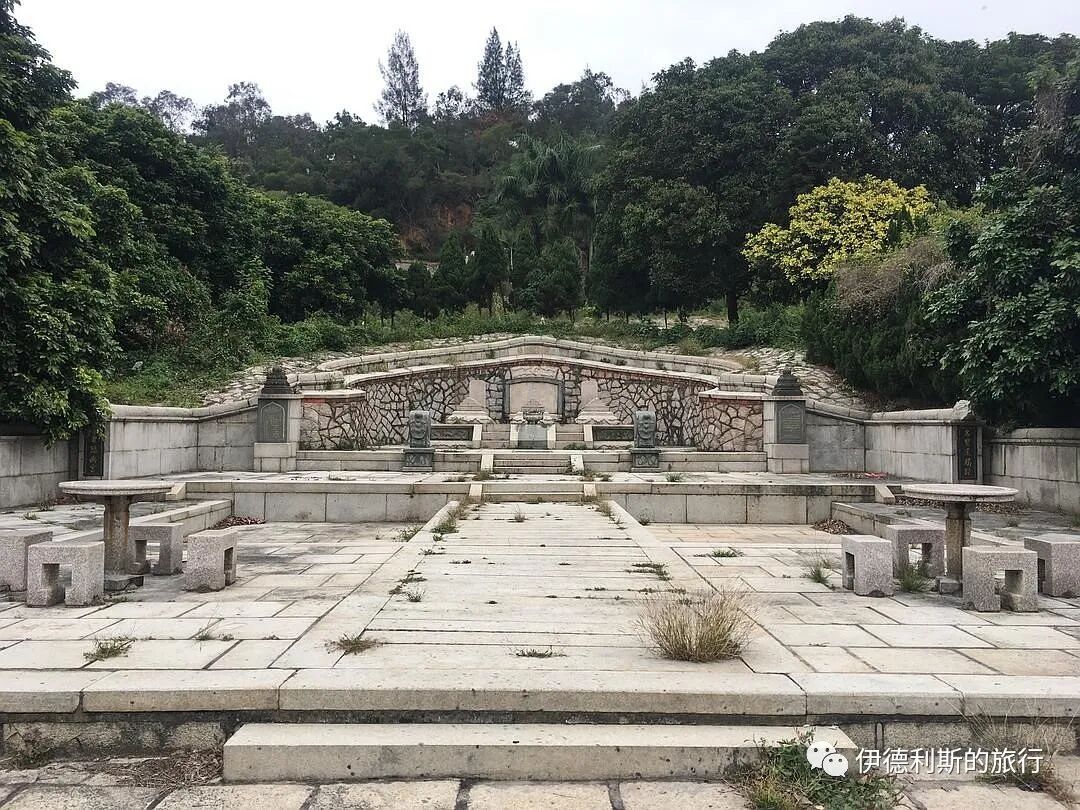
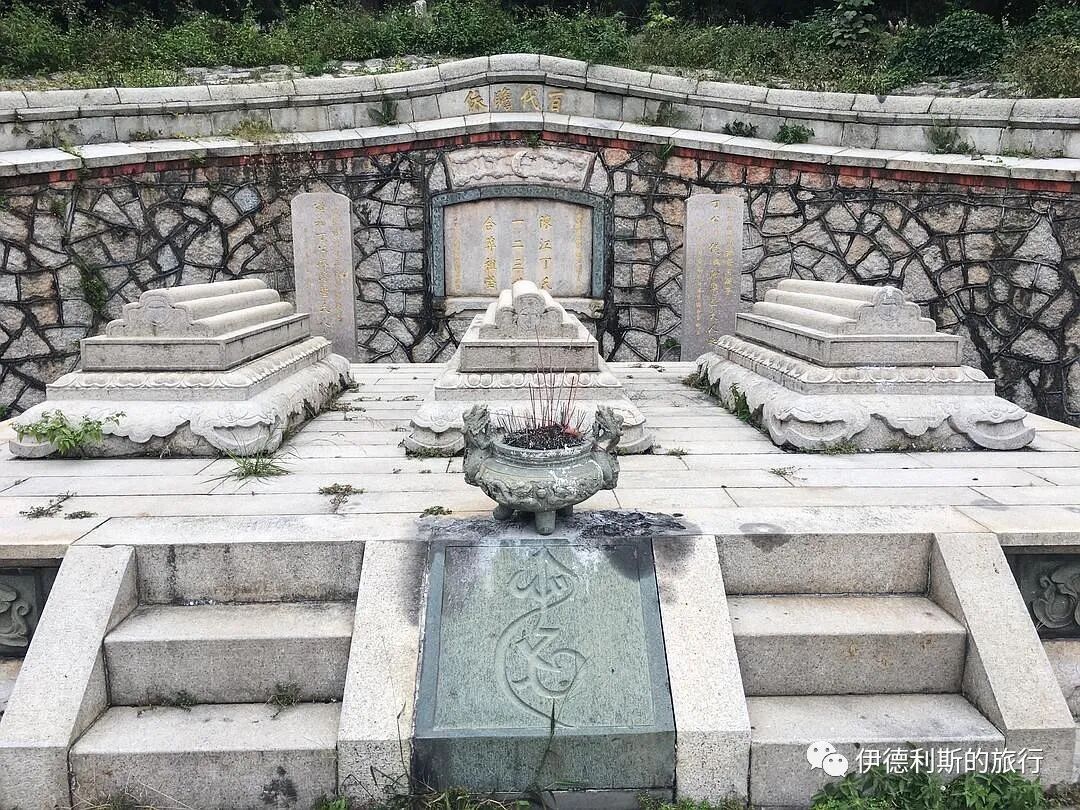
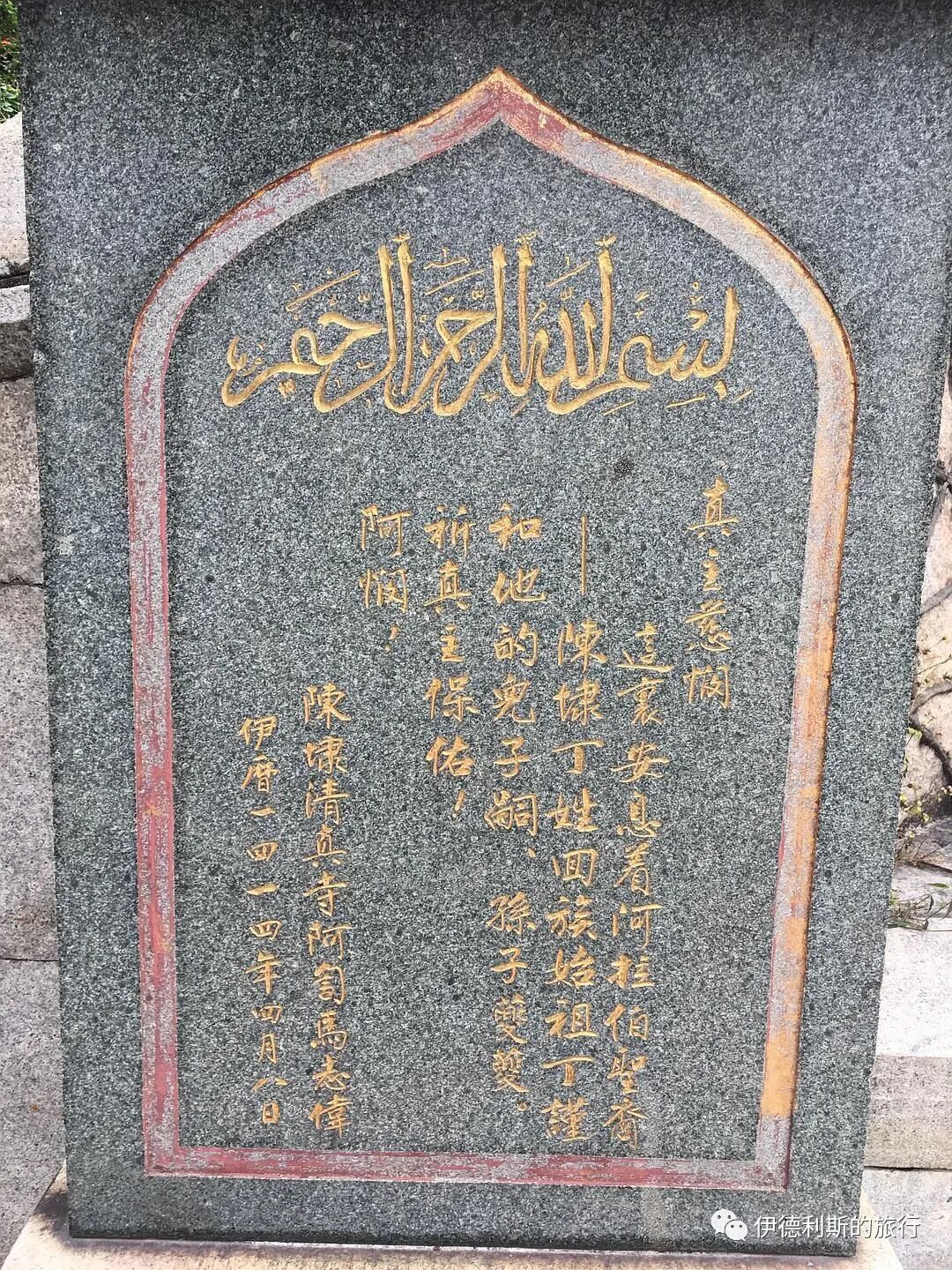
The earliest Ding family tomb from Chendai currently existing on Lingshan is the tomb of the fourth ancestor Ding Shan (1343-1420) and his wife Zhuang Xiniang. Ding Shan and his wife were originally buried in Luyuan, east of Quanzhou city. 'Luyuan' means 'Paradise' in the Quran.
This stone tomb is a traditional Islamic diabase tomb, with two Sumeru-style five-layer tomb stones placed on a Sumeru-pedestal altar-style platform. The first layer of the tomb stone has six gui-shaped feet, carved with ruyi patterns; The second layer is carved with continuous branch patterns; The third layer is carved with overlapping lotus petal patterns; The fourth layer is carved with Quranic verses; The fifth layer is a curved arch tomb-top stone. Behind the tomb stone is a tombstone erected in 1910. The scripture on the tomb stone is from an excerpt of Chapter 2, Verse 255 of the Quran.
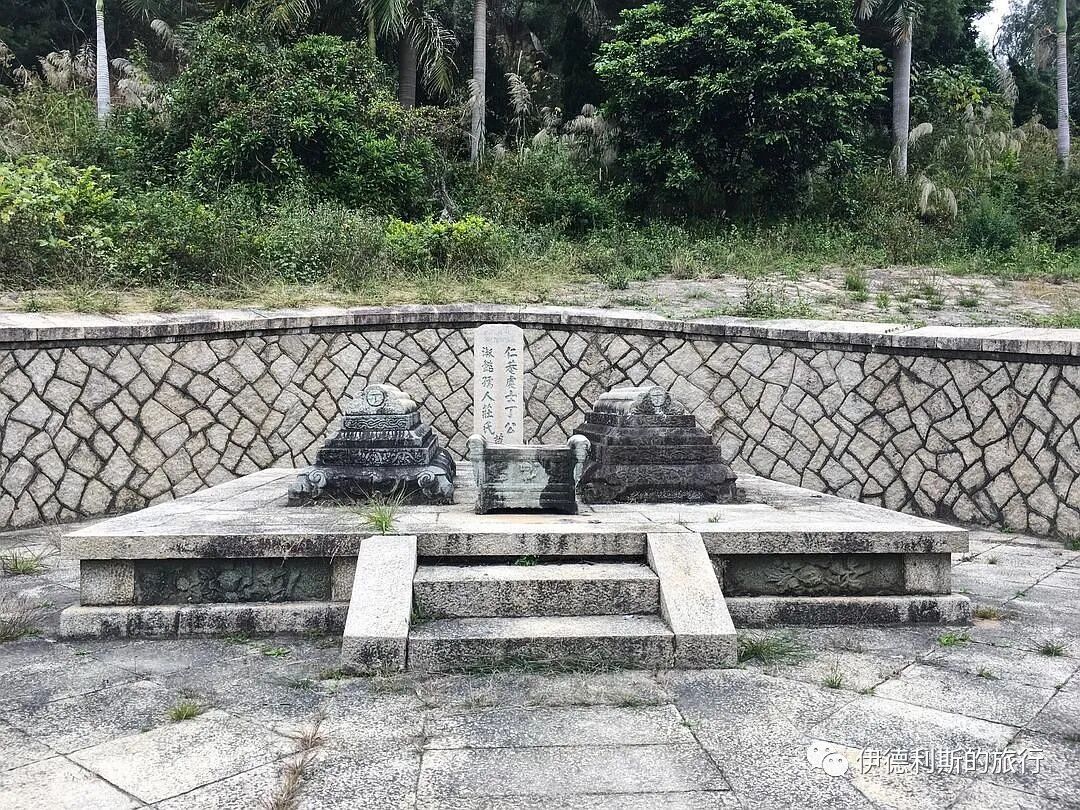
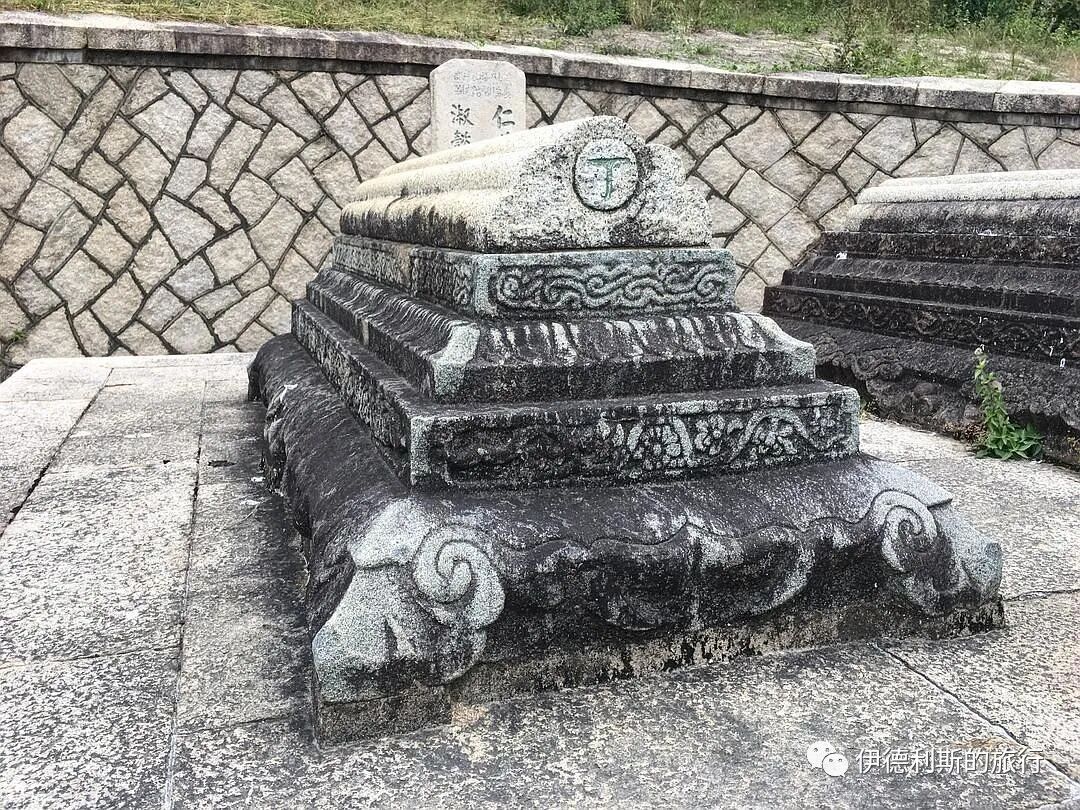
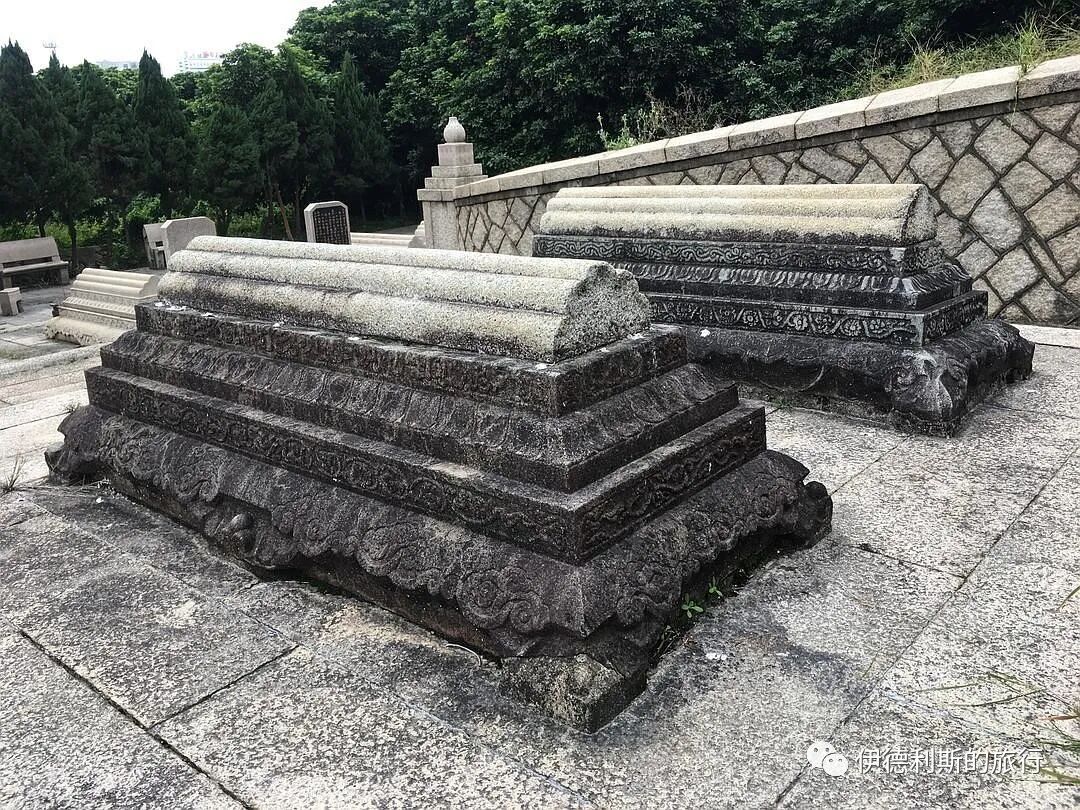
The tomb of the fifth generation Ding Mabao, his wife Pu, and his successor Wang. Ding Mabao (1366-1431), courtesy name Shilong, pseudonym Yi'an, was the eldest son of the fourth ancestor Ding Shan who founded the family in Chendai. He was the ancestor of the Great Eldest Branch of the Chendai Ding family and was originally buried with his two wives in the Chengui Baoxue cave on Daping Mountain, east of Quanzhou city.
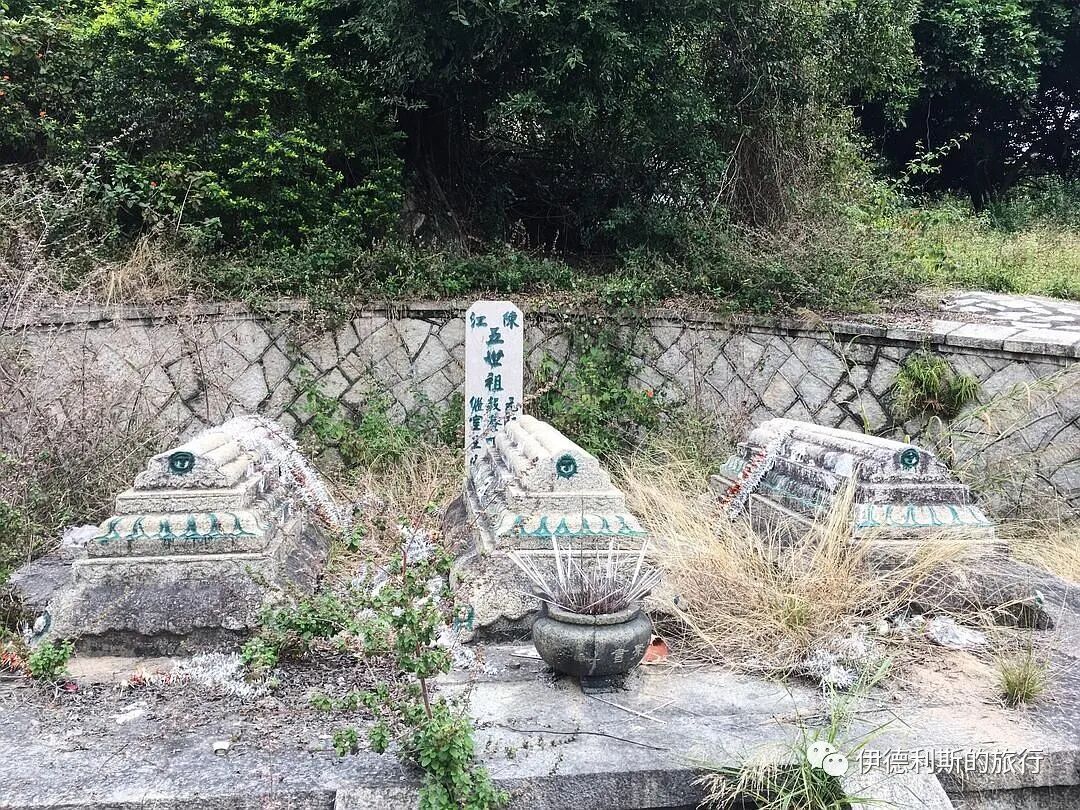
The tombs of the fifth generation Ding Guanbao, the sixth generation Ding Kuan, and the sixth generation Ding Min. The fifth generation Ding Guanbao (1369-1436), courtesy name Shifu, pseudonym Chengzhai, was the second son of Ding Shan and the ancestor of the Great Second Branch of the Chendai Ding family. He was originally buried at the foot of Shuiuniulin, east of Quanzhou city.
The sixth generation Ding Kuan (1395-1446), courtesy name Tingyu, pseudonym Longyin, was the second son of Ding Guanbao and was originally buried to the left of Ding Shan's tomb in Luyuan Mountain.
The sixth generation Ding Min (1407-1456), courtesy name Tingxue, pseudonym Yizhai, was the fourth son of Ding Guanbao and was originally buried at the foot of Shuiuniulin, east of Quanzhou city. Ding Min was the local sage who first promoted literary education among the Chendai Ding family.
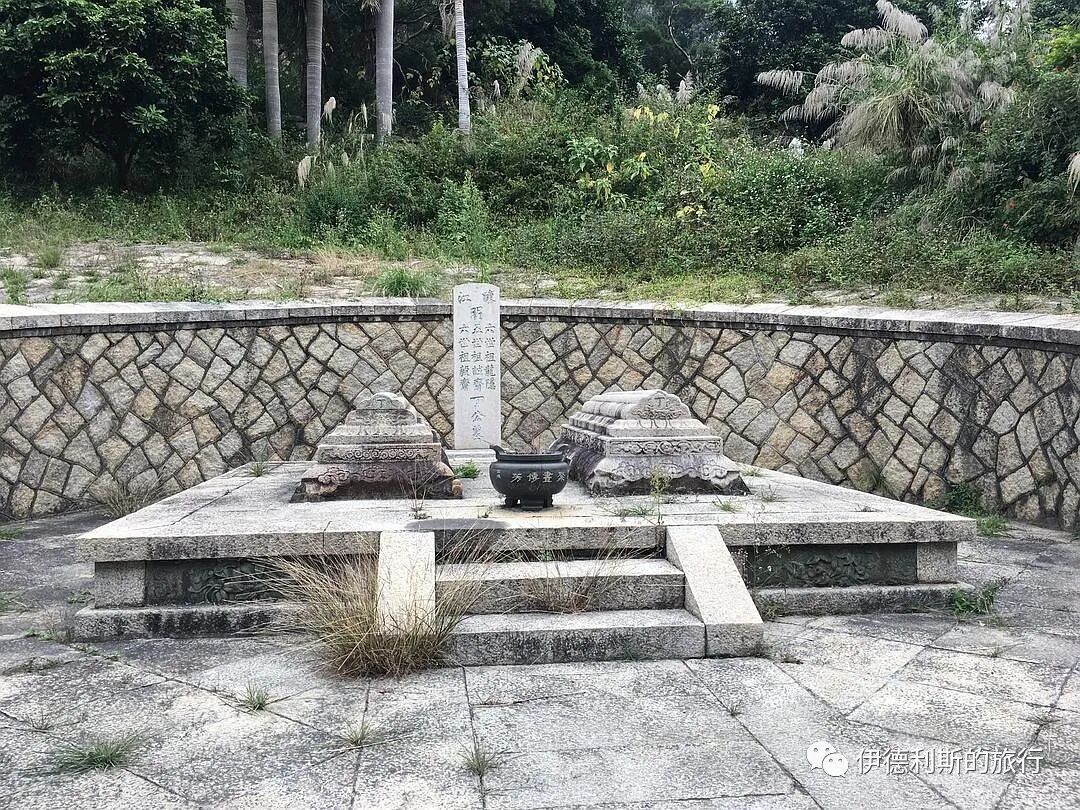
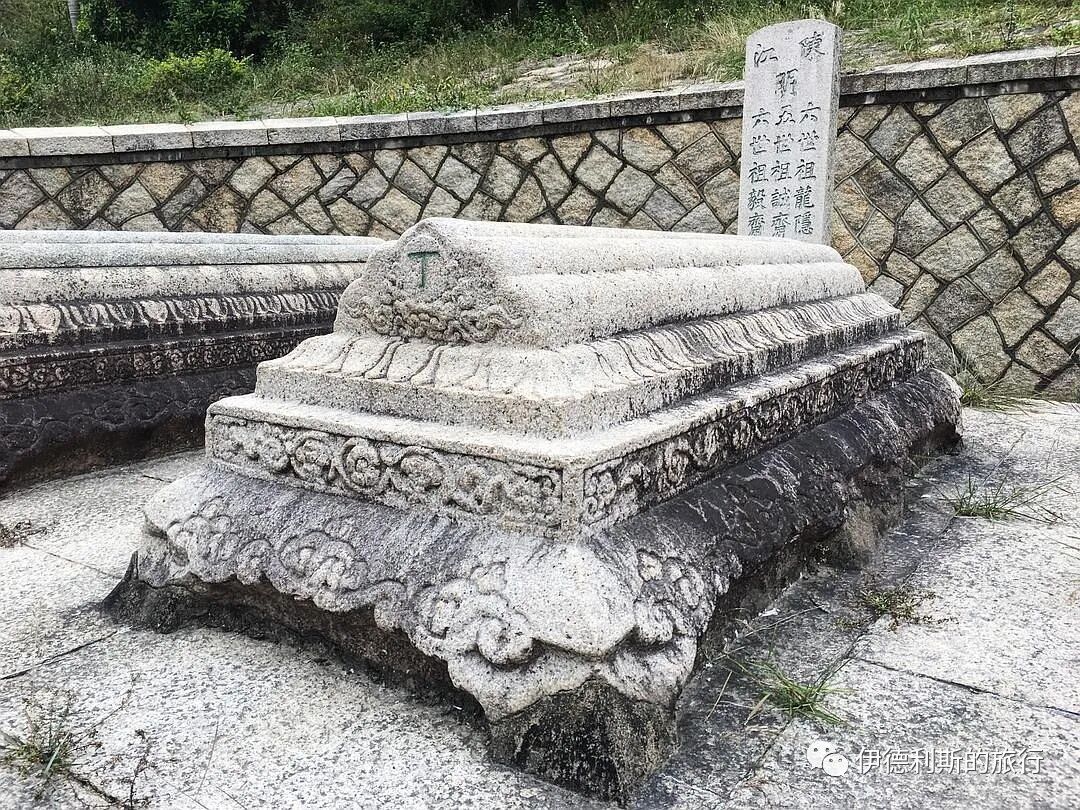
The fifth generation Ding Fubao (1375-1432), courtesy name Shizhang, pseudonym Yingjie, was the third son of Ding Shan and the ancestor of the Great Third Branch of the Chendai Ding family, buried on Lingshan, east of Quanzhou city. The tomb is placed on a traditional Islamic Sumeru-pedestal altar-style platform with two Sumeru-style stone tombs. The waist of the platform is carved with swastikas and two lions playing with a pearl.
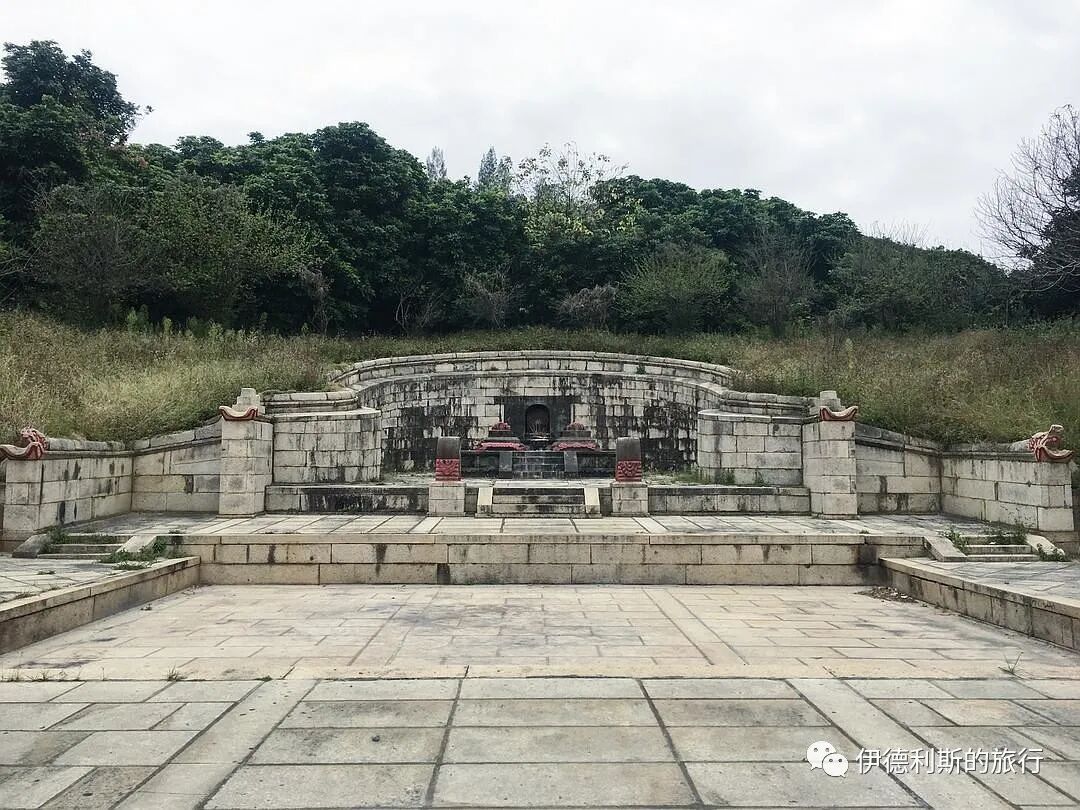
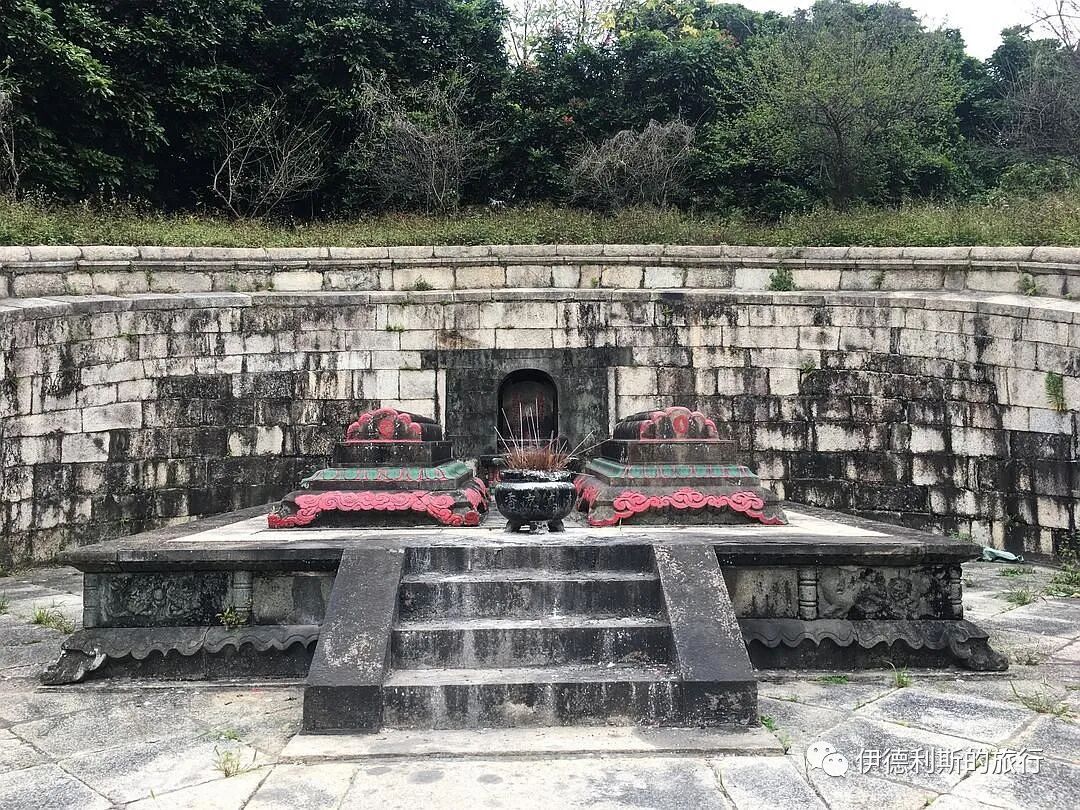
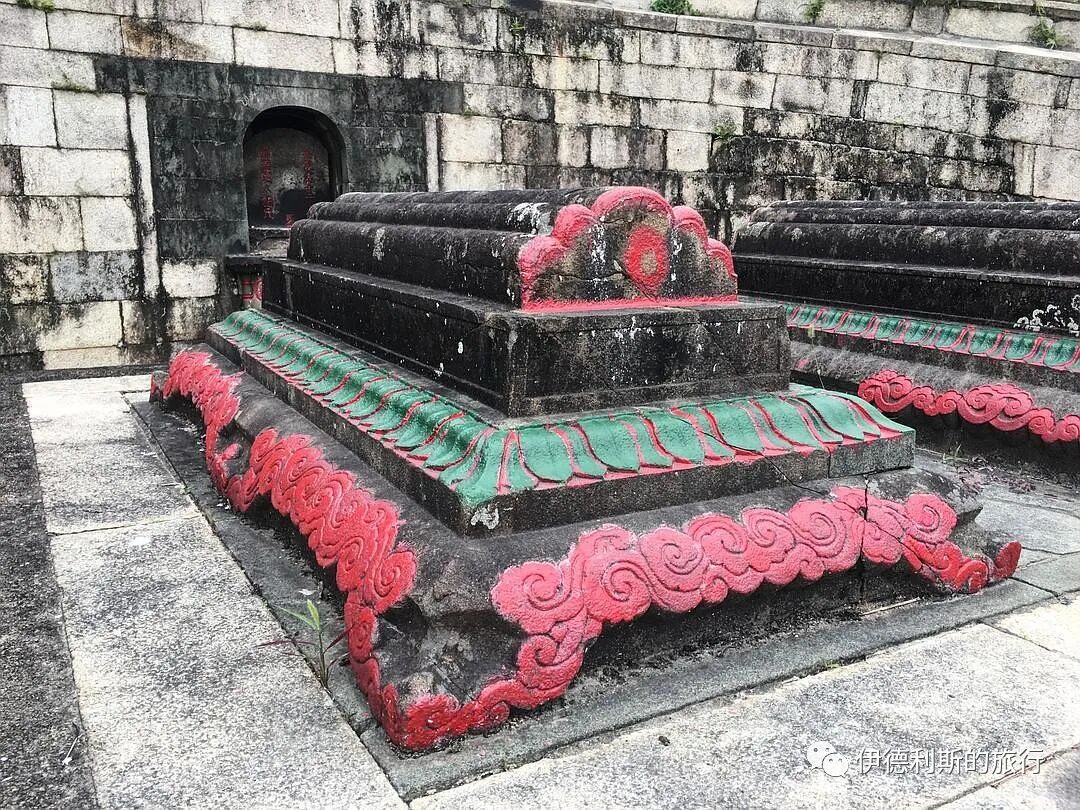
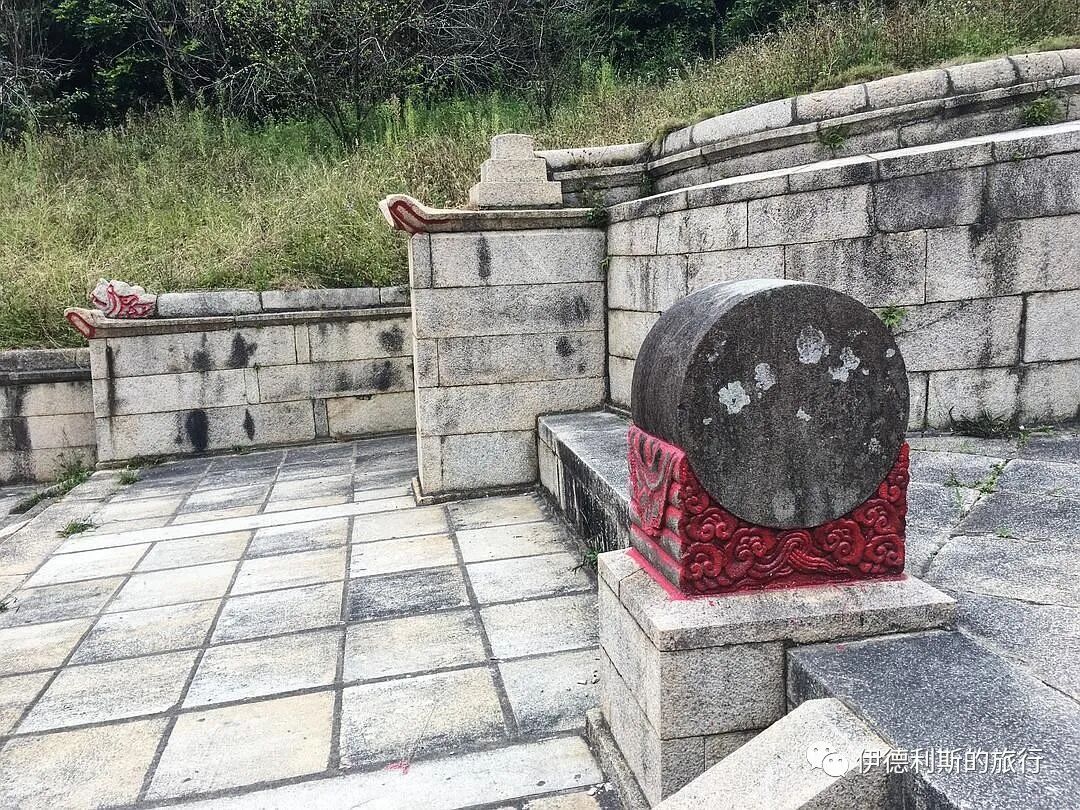
The tomb of the seventh generation Ding Lun and his wife Zhuang. The seventh generation Ding Lun (1442-1485), courtesy name Zhaorui, was the third son of the sixth generation Ding Xin.
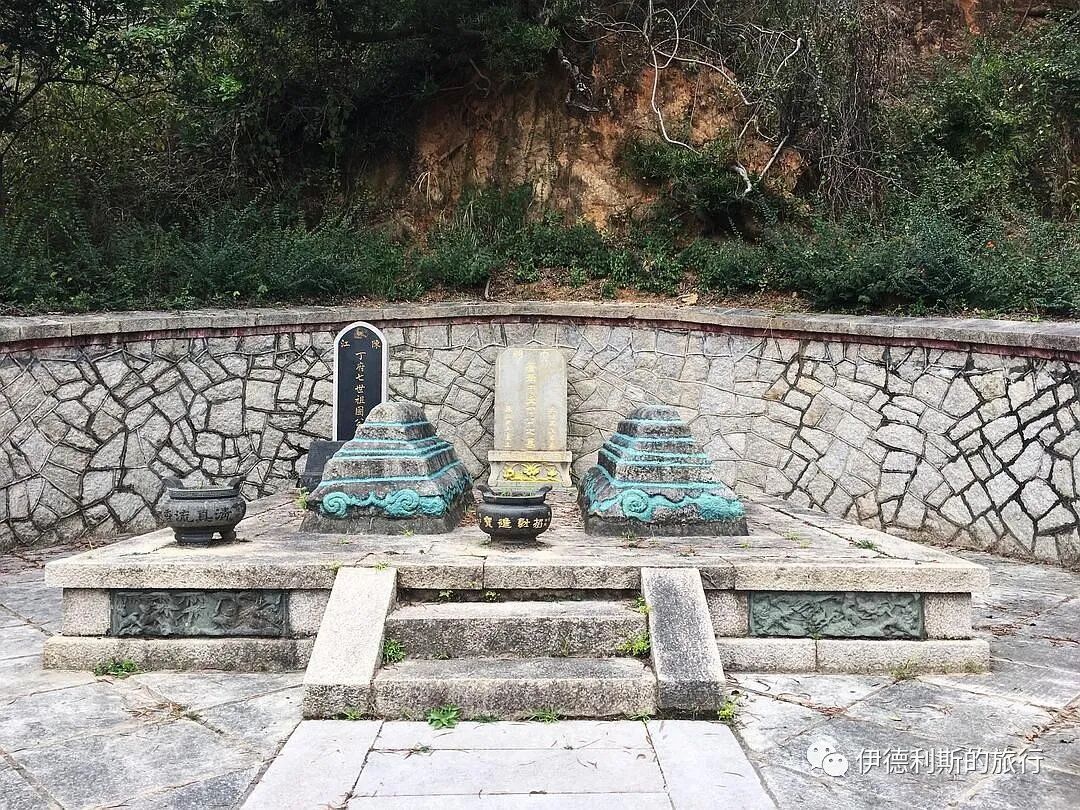
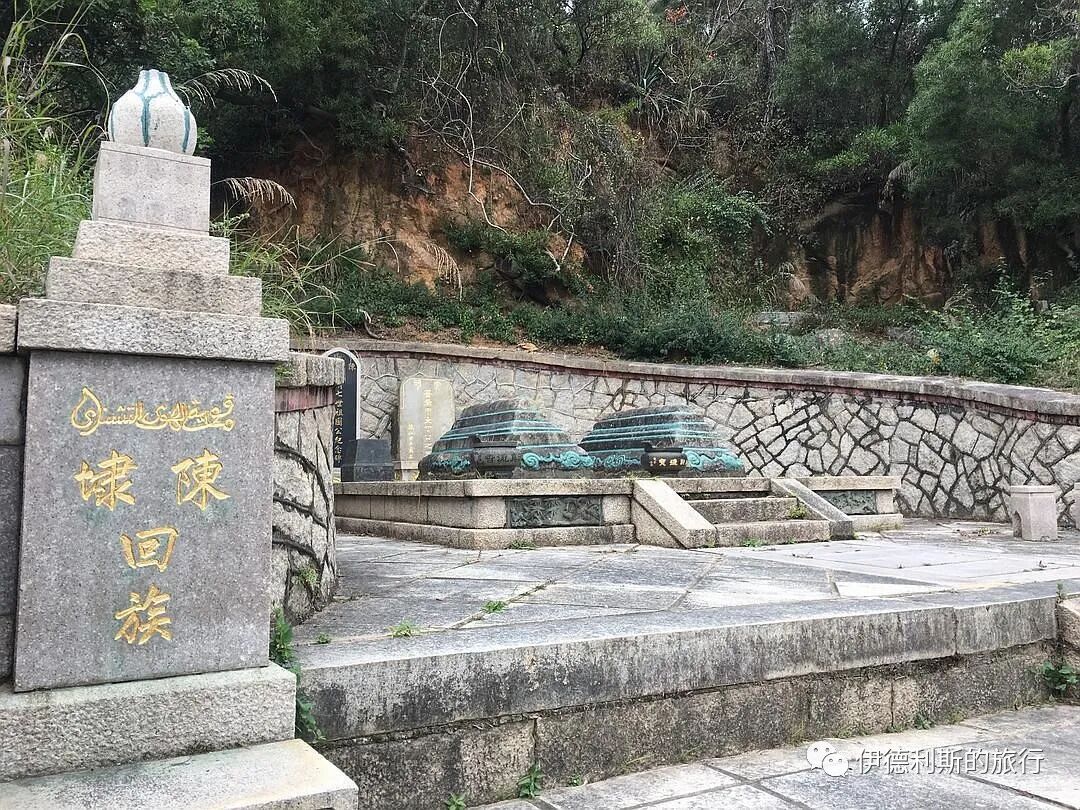
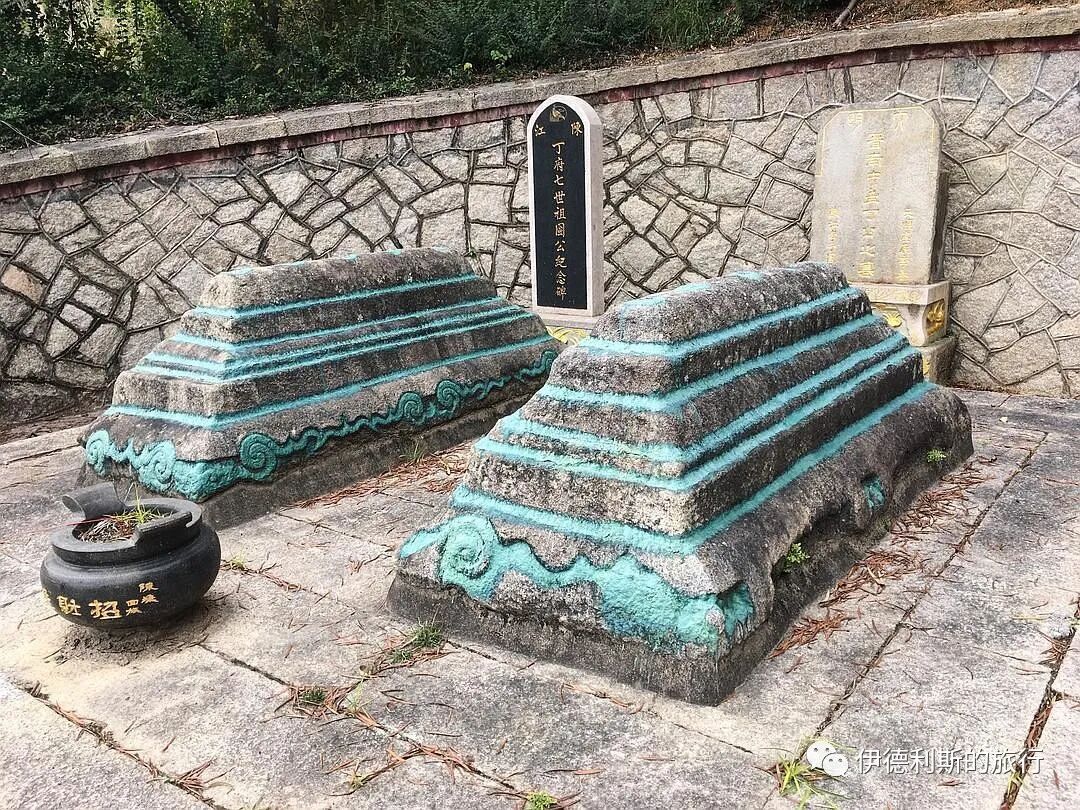
The tomb of Ding Jinke, the reviver of the Chendai religion.
Ding Jinke (1923-1997), religious name Yunus, studied at Guangxi Chengda Normal School and Hong Kong Dade College. He participated in the revolution during the War of Liberation and later worked in the Financial Committee of the State Council and in colleges and universities in Beijing and Xinjiang. After retiring and returning to his hometown in 1983, he participated in the construction of the Chendai Mosque and the establishment of the Jinjiang Islamic Association, serving as the executive deputy director of the Jinjiang Islamic Association. Later, he cultivated dozens of young people from the Chendai Ding family to study at Islamic colleges and universities at home and abroad.
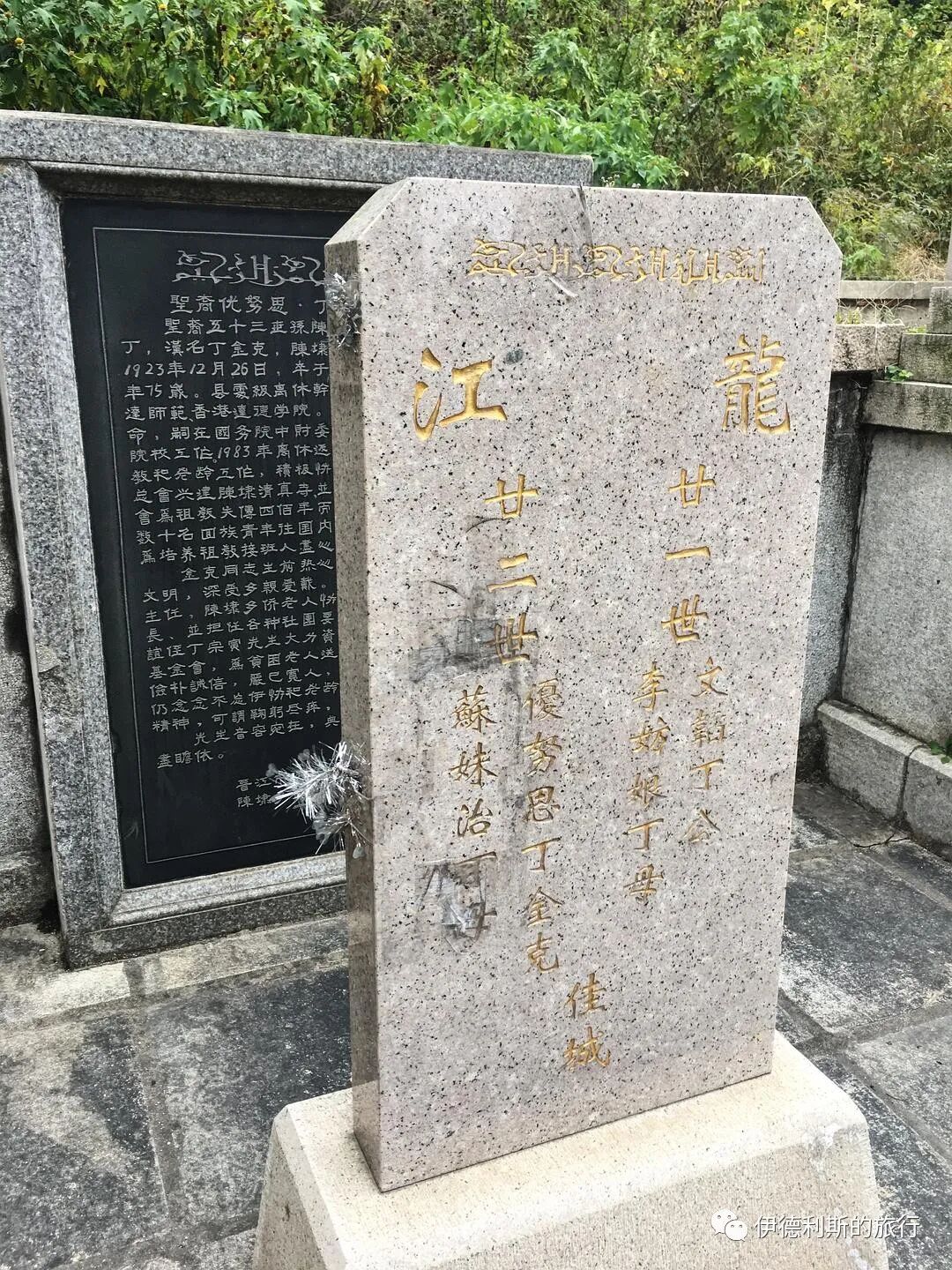
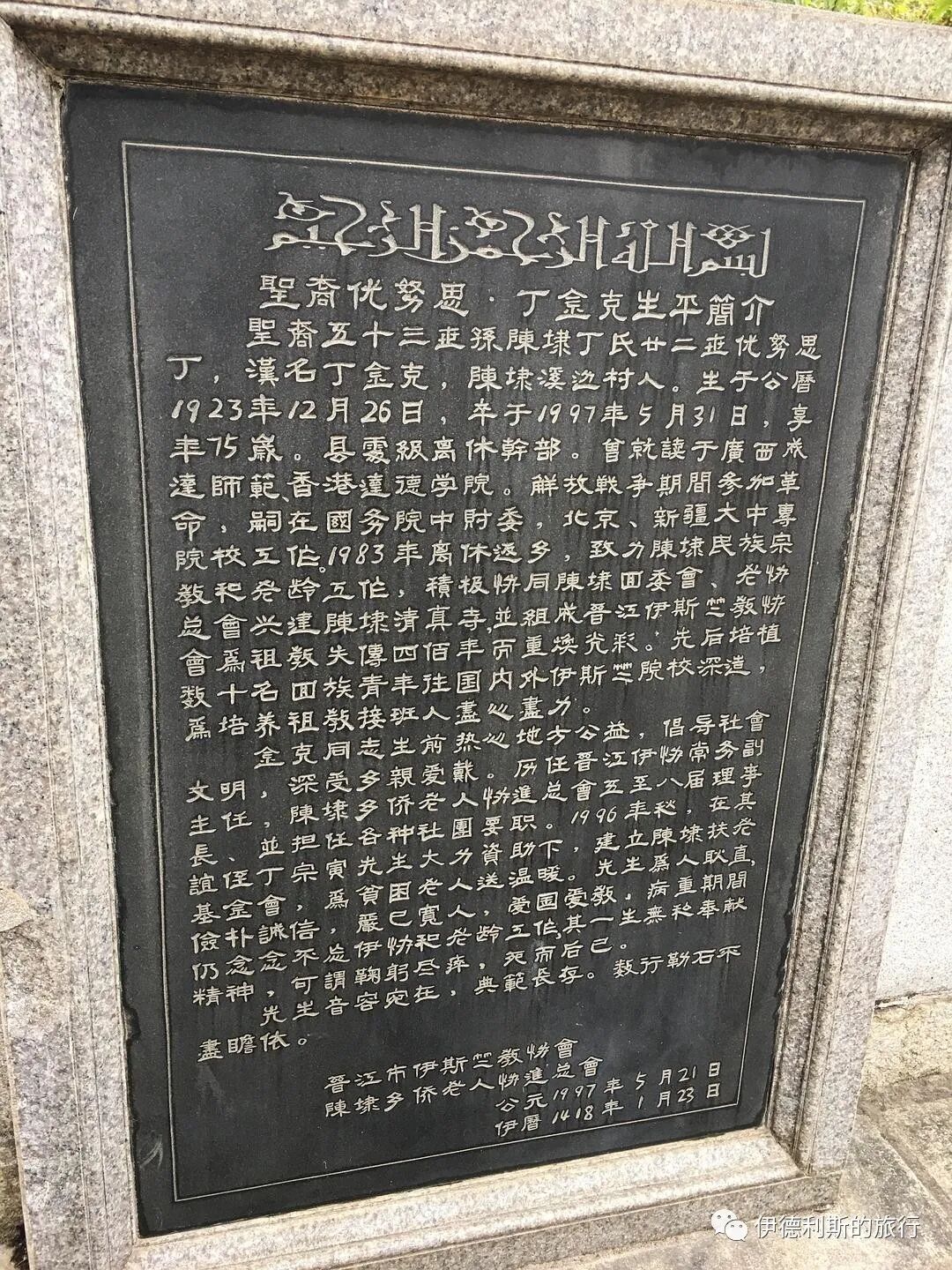
III. Quanzhou Maritime Museum
The Quanzhou Maritime Museum was built in 1959, moved to Donghu Street in 1991, and the 'Quanzhou Islamic Culture Exhibition Hall' was built in 2003. Most of the Song and Yuan Islamic stone carvings in Quanzhou are collected here. Among them, 'Arabs and Persians in Quanzhou' exhibits 121 Islamic stone carvings, but not all of them are exhibited at the same time. I went in 2017, so I only saw some of the stone carvings.
During the Song and Yuan dynasties, Quanzhou had large areas of 'foreign guest' cemeteries, mainly concentrated in the areas of Tumen Street to Jintoupu, Houban, Fashi, and Meishan in the southeastern suburbs. The earliest record of Muslim cemeteries in the eastern suburbs of Quanzhou comes from the 'Record of Burying Foreign Merchants in Dongban, Quanzhou' by Lin Zhiqi (1112-1176), the Superintendent of the Quanzhou Maritime Trade Office in the Southern Song Dynasty. The text records that the Muslim merchant Shi Nawei donated money to buy land between 1162 and 1163 to build a Muslim public cemetery in Dongban, Quanzhou. 'Shi Nawei' refers to the ancient port of Siraf in the Persian Gulf.
During the Song and Yuan dynasties, one could reach the Houzhu seaport by leaving the city through Tonghuai Gate and passing through Jintoupu all the way to the southeast. The road from Tonghuai Gate to Fashi was alluvial beach land, and the road often sank into the mud. Therefore, after the Ming Dynasty, local residents often used Song and Yuan Muslim Sumeru-pedestal tomb stones as materials for slope protection and pond bank construction when building roads and ponds. There were once three ponds in Puwei, Jintoupu. When the pond water dried up in winter, one could see more than thirty Muslim tomb stones. There is a small temple called Houbangong south of Jintoupu. Just under the northeast wall, nearly ten Muslim Sumeru-pedestal tomb stones were used as wall foundation stones. There are also several Muslim tomb stones by the water ditches and rice paddy mud in Houban Village.
In addition, a large number of Song and Yuan Muslim tomb stones were also discovered in the areas of Jincuowei, Secuowei, Xiacuopu, Dingcuoshan, and Tiecuowei in the eastern suburbs of Quanzhou. Jin, Ding, Xia, and Tie are the surnames of the 'Half-Southern Foreigners' (descendants of Arabs and Iranians who intermarried with local people in Quanzhou), but they no longer believe in Islam today.
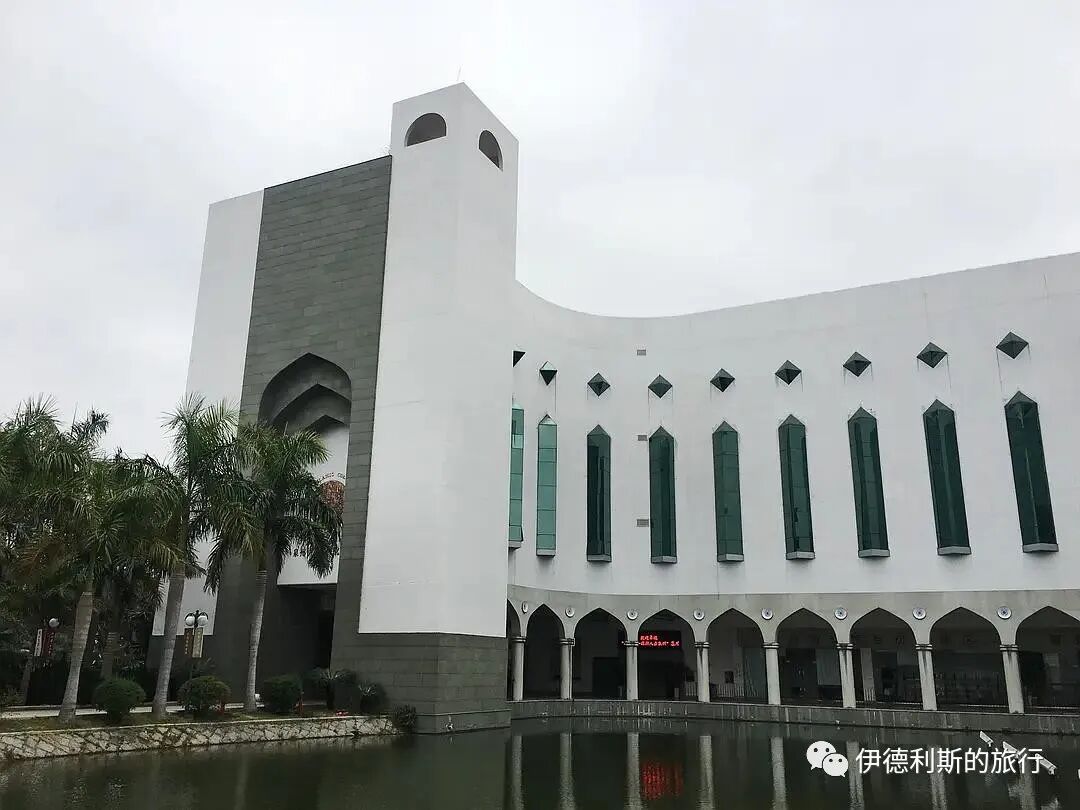
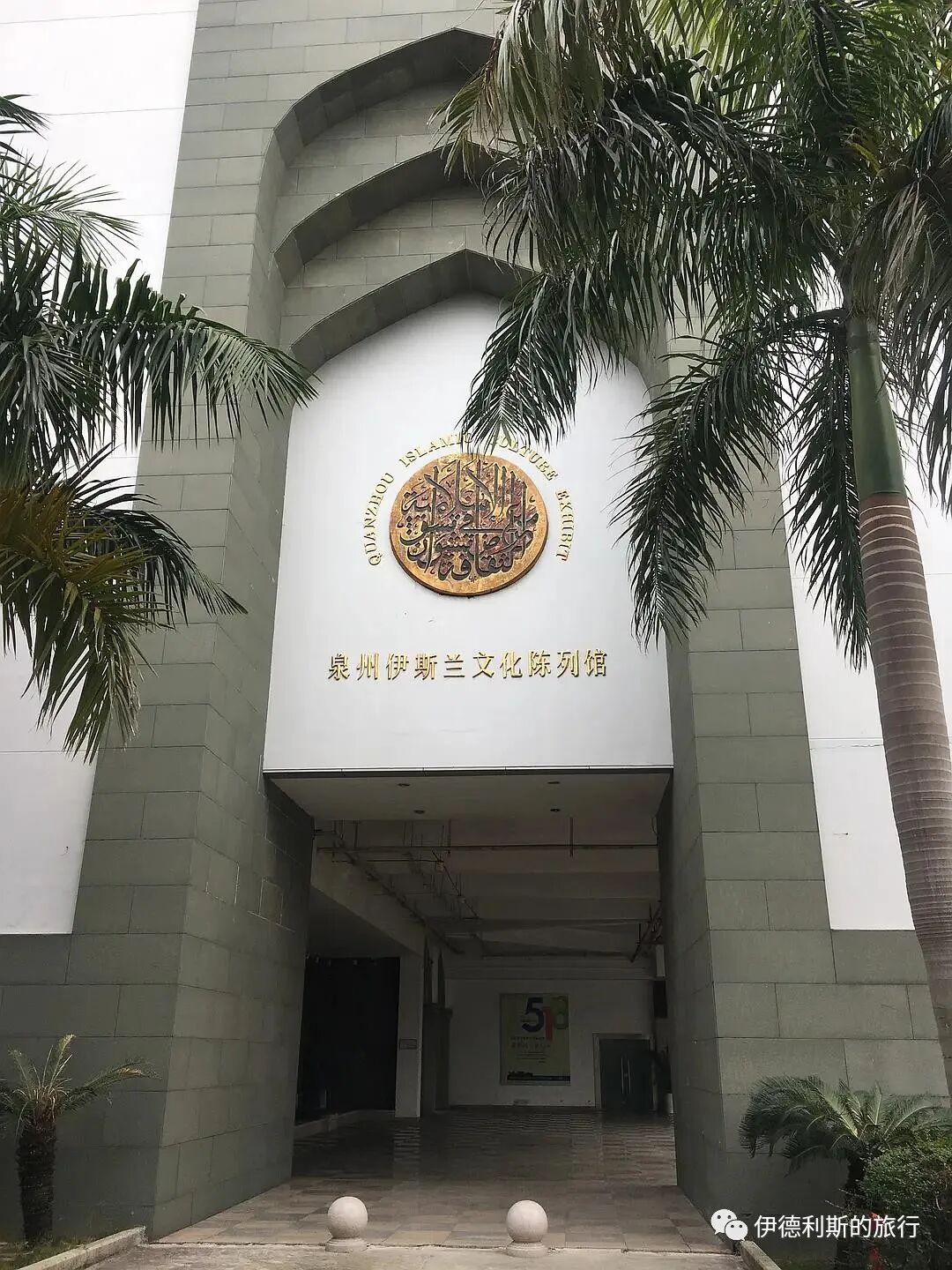
As soon as you enter the exhibition hall, you can see the three major types of Song and Yuan Muslim stone carvings in Quanzhou: on the left are Sumeru-pedestal tomb stones, on the right are Sumeru-pedestal altar-style tomb stones, and inside are tombstones.
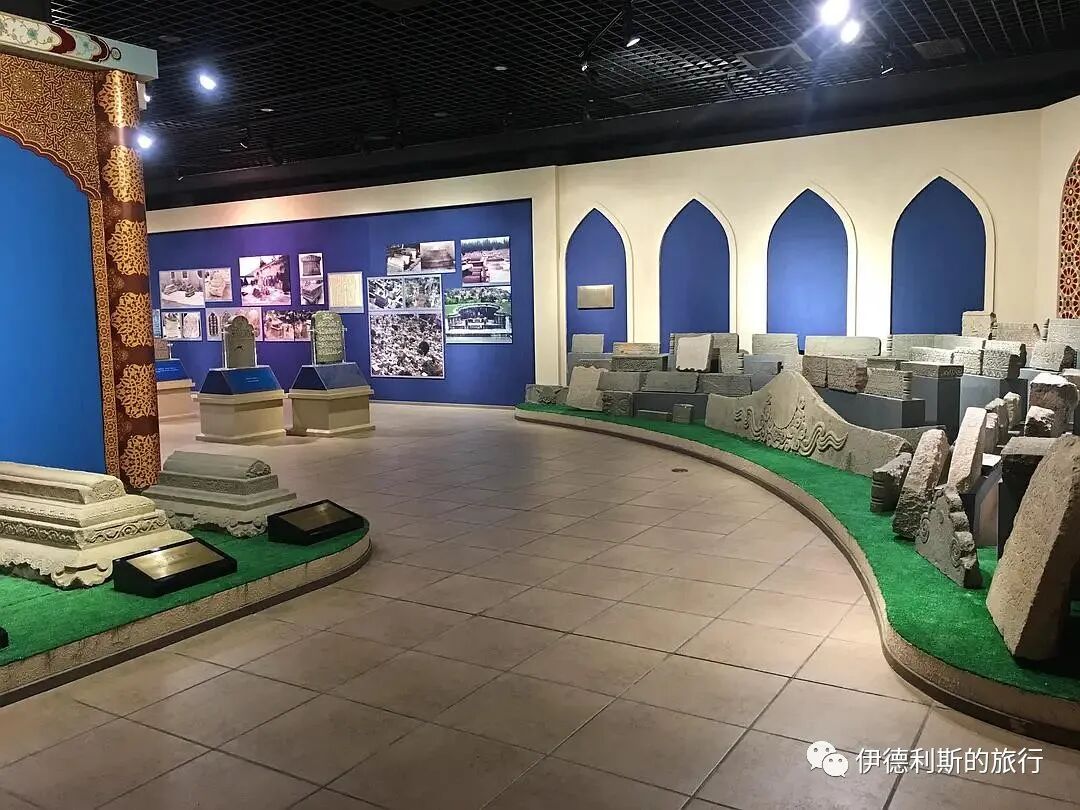
The picture below shows Sumeru-pedestal tomb stones.
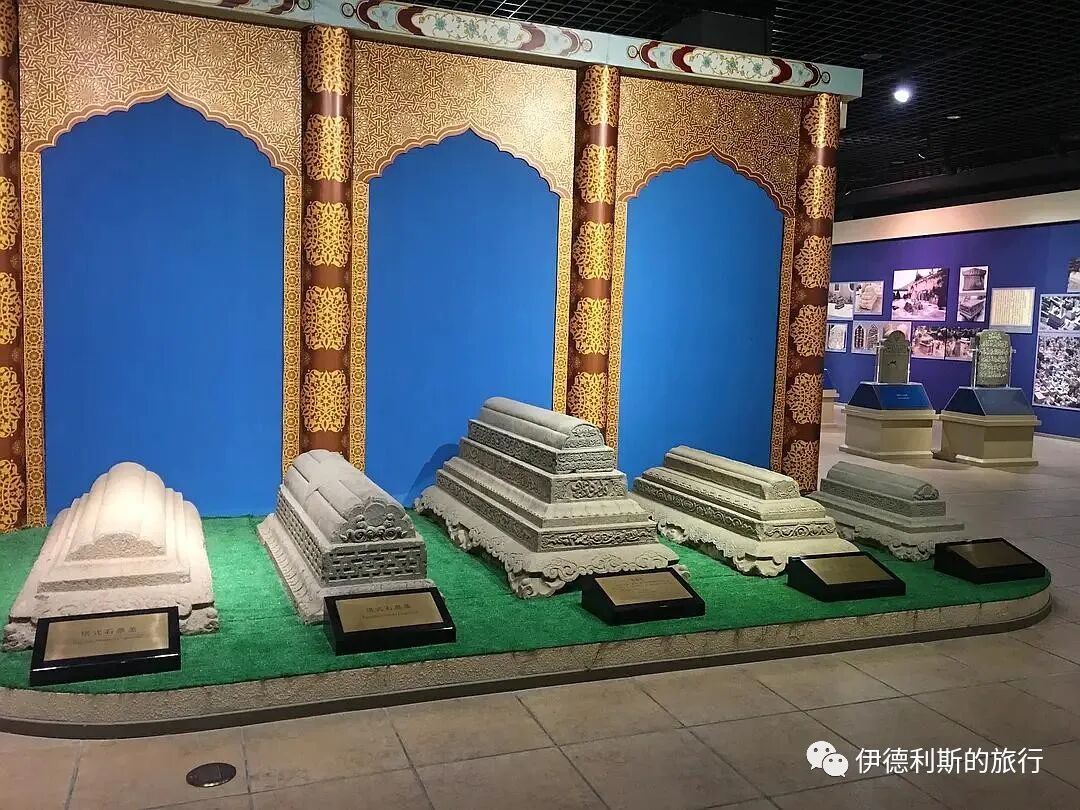
The Sumeru-pedestal tomb stone in the picture below was discovered near Chan Mosque outside the East Gate of Quanzhou in 1927, recovered in 1958, and later preserved in the Maritime Museum. The tomb owner was Ghutub Allah Ya'qub from the ancient city of Jajarm in the northeastern Khorasan province of Iran, who died in 1309.
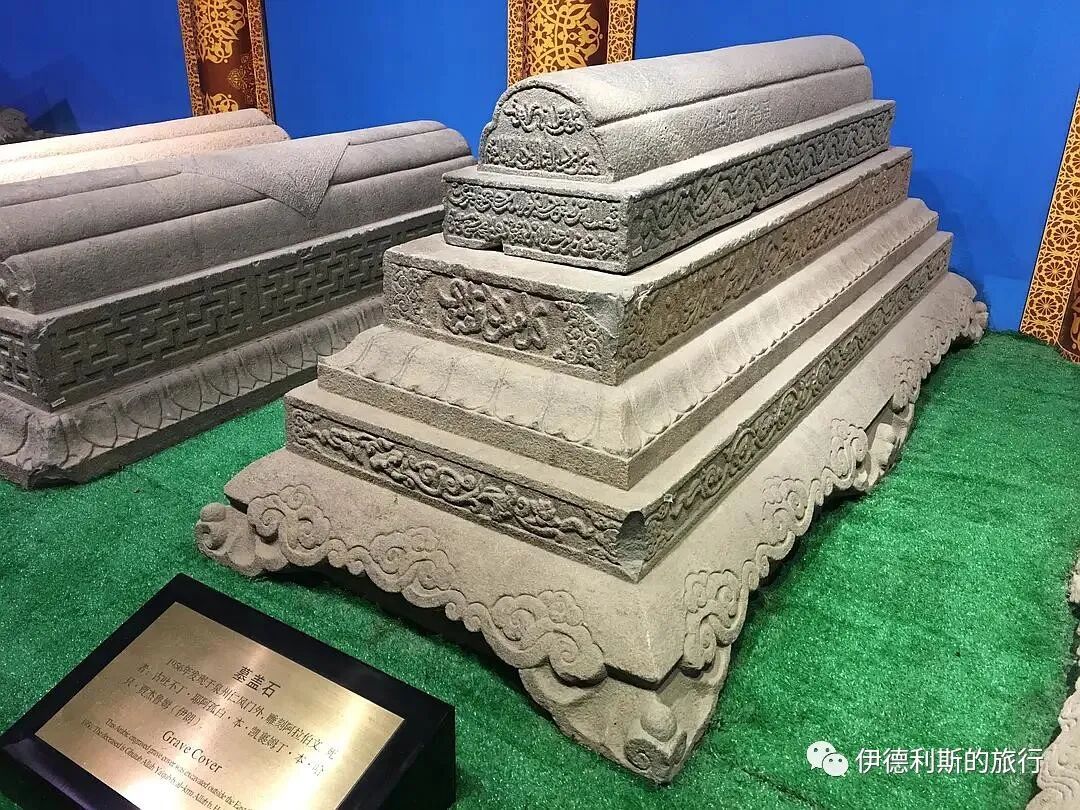
The one at the very front of the picture below is the cloud-moon-shaped tomb stone common in Quanzhou during the Ming Dynasty. It is very large and is a variant of the Song and Yuan Sumeru-pedestal tomb stones. Behind it are all tomb-stacking stones of Sumeru-pedestal altar-style stone tombs.
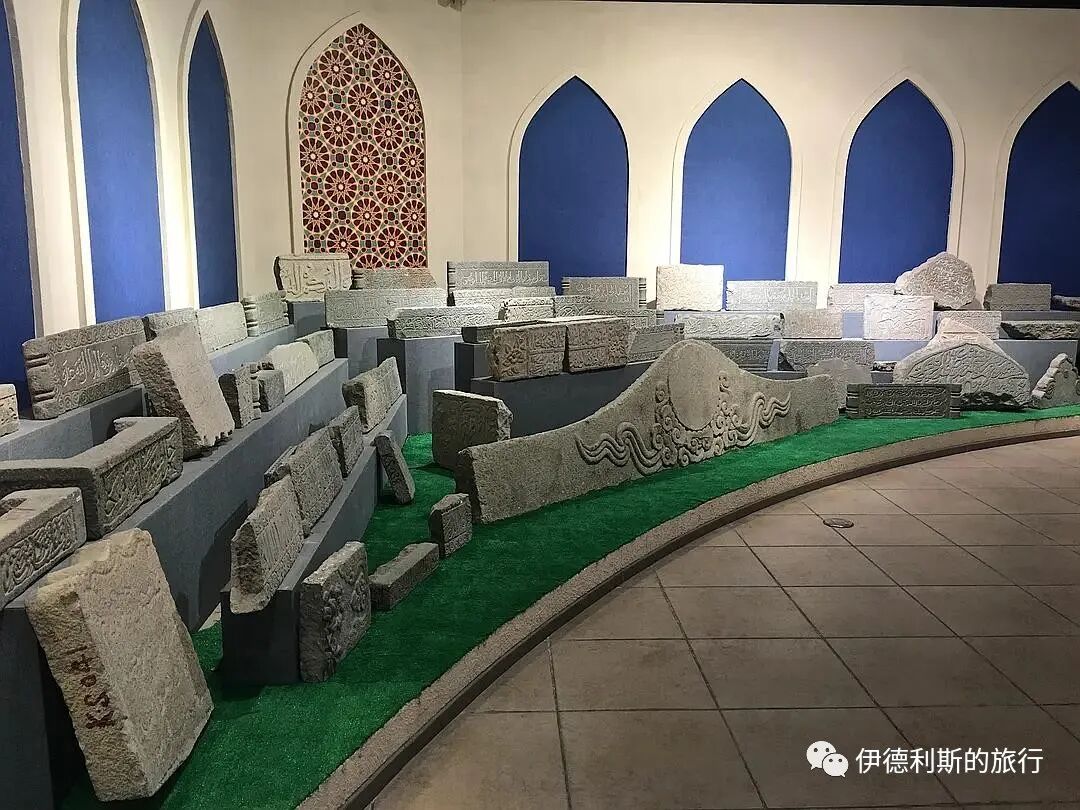
The picture below shows all tomb-stacking stones of diabase Sumeru-pedestal altar-style stone tombs, introduced from top to bottom: The first one on the right in the first row was discovered in a farmer's home near the East Gate of Quanzhou in November 1946. It is said to have been dug out from the city wall and used as stone steps. It was recovered and preserved in the spring of 1957 and donated to the Quanzhou Cultural Relics Management Committee by Liu Wanru, the widow of Mr. Wu Wenliang, on August 29, 1973. There are pillars at both ends of the tomb stone, and continuous scroll patterns are carved all around, with Chapter 30, Verse 11 of the Quran carved on it.
The third one on the right in the first row was discovered in a pile of rubble at the Qingjing Mosque in 1959. This pile of rubble was dug out from the city foundation near Tonghuai Gate in Quanzhou and moved to the Maritime Museum in 1964. The tomb owner was Toghan Shah bin Umar bin Sayyid Ajjal from the ancient Central Asian city of Bukhara. Toghan is a Turkic word meaning 'eagle', and Shah is 'king'. Sayyid Ajjal is the Yuan Dynasty transliteration of Sayyid.
The first one on the right in the second row was discovered in 1978 when the former site of Pu Shougeng's residence in the Yuan Dynasty at Shijia Mosque in Donglu Lane, Quanzhou, was converted into a shoe factory, from the west wall of the north-facing bungalow next to the well in the mosque. It is carved with an excerpt from Chapter 2, Verse 156 of the Quran.
The second one on the right in the second row was discovered near the South Gate of Quanzhou in 1959. According to local residents, it was obtained when the South Gate of Quanzhou was demolished between 1946 and 1948. The tomb stone is carved with four-season flowers on the top and bottom, and is carved with an excerpt from Chapter 24, Verse 35 of the Quran.
The fourth one on the right in the second row was excavated from the East City Gate of Quanzhou in 1944 and is carved with an excerpt from Chapter 28, Verse 88 of the Quran.
The second one on the right in the third row was discovered in a pile of rubble at the entrance of Chongfu Mosque at the East Gate of Quanzhou in 1960. Continuous scroll patterns are carved on the top and bottom of the tomb stone. Translation: 'Everything will perish except Himself.' "
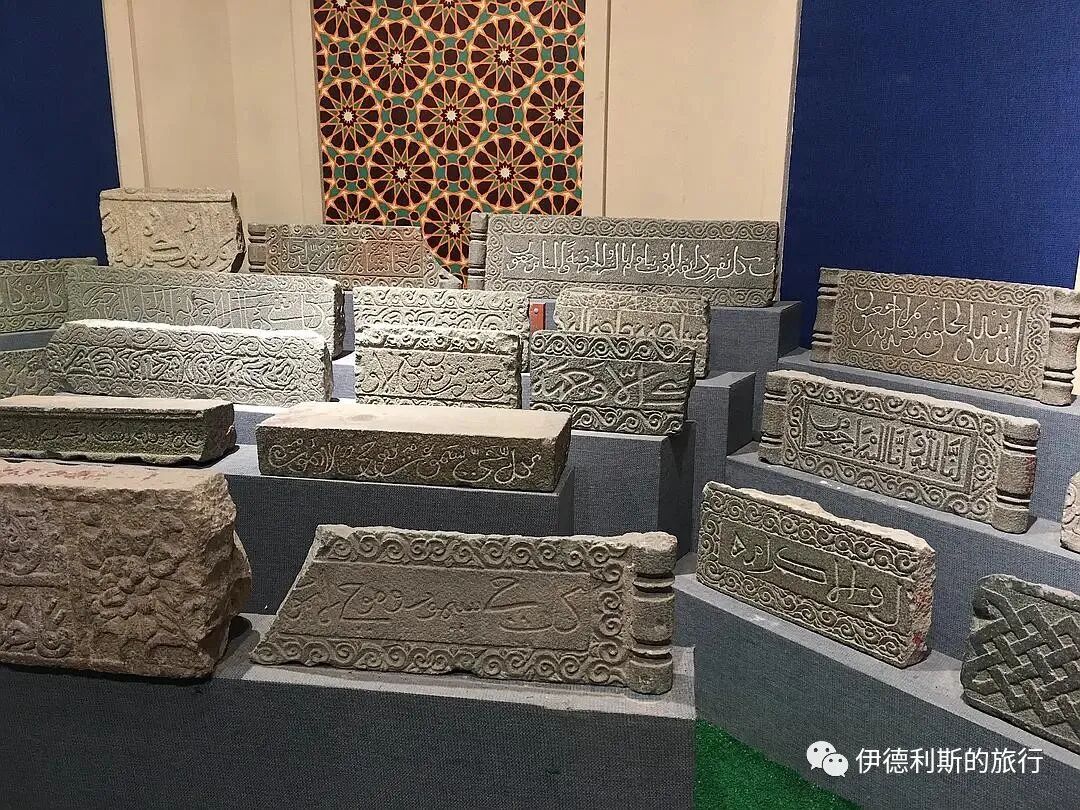
The picture below still shows tomb-stacking stones of diabase Sumeru-pedestal altar-style stone tombs. From top to bottom:
The first one on the right in the first row was donated by Mr. Ye Daoyi of Huaqiao University in the 1980s. The original state of the tombstone should have cloud patterns carved on both sides, with a full moon in the middle. Now, the cloud pattern on one side is damaged. The text in the full moon is from the full text of Chapter 44, Verses 50, 51, 52, and 53 of the Quran.
The second one on the right in the second row was discovered in Tingdian Township, 3 kilometers outside the South Gate of Quanzhou, in 1948. Continuous scroll patterns are carved on the top and bottom of the tomb stone, and it is carved with Chapter 89, Verses 29 and 30 of the Quran.
The first one on the right in the third row is a lintel stone of a tomb, discovered in a villager's home not far from the South City Gate in December 1958. The villager said that the stone carving was discovered deep in the city foundation when the South Gate city wall was excavated in 1946-1948. The translation is from an excerpt of Chapter 29, Verse 57 and Chapter 55, Verse 26 of the Quran: 'Everyone shall taste (the flavor of death), and everything on earth shall (perish).'
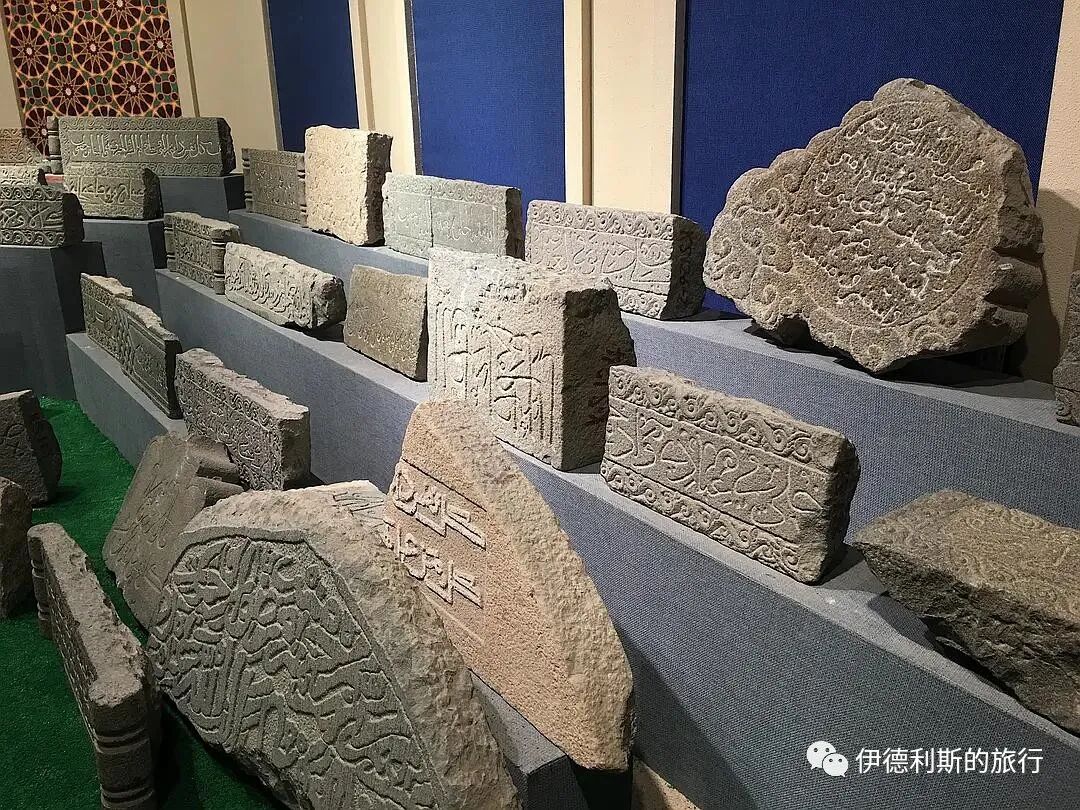
Going further in, it starts to be all tombstones. The tombstone on the left was discovered at the North Canal construction site in 1978, with a hanging lotus pistil on it, and 'There is no god but Allah' carved below.
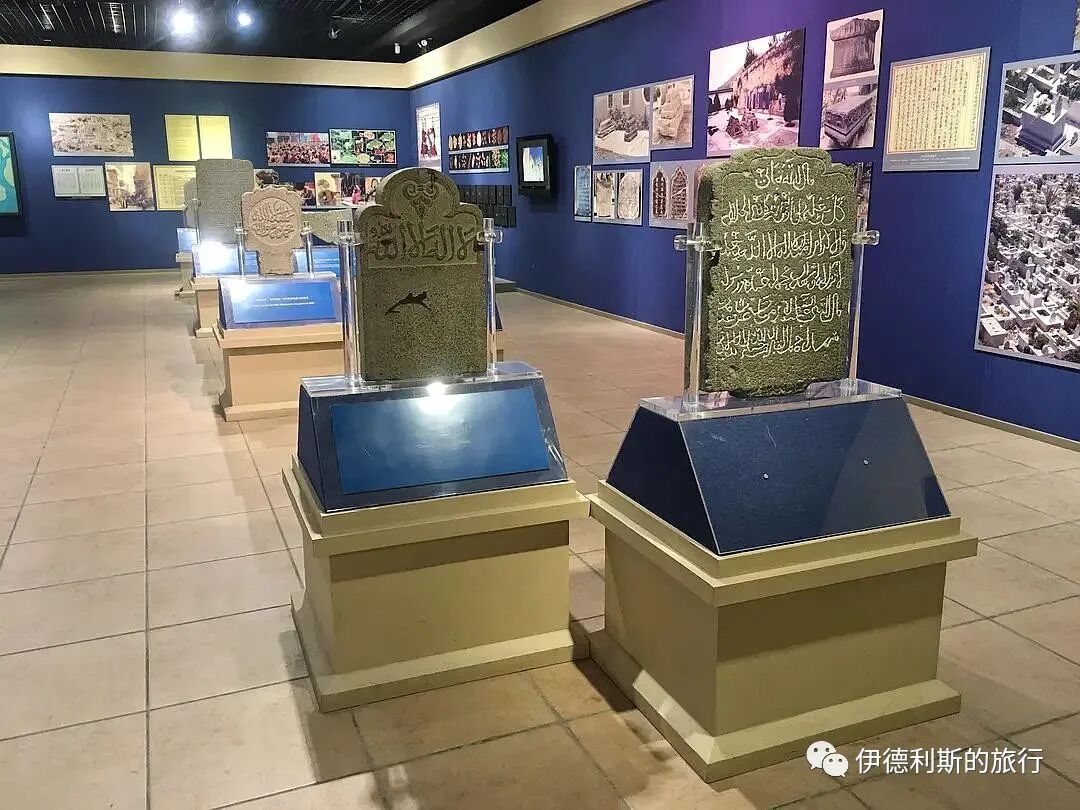
The back of the tombstone on the right in the picture above is carved with Chapter 3, Verse 185 of the Quran.
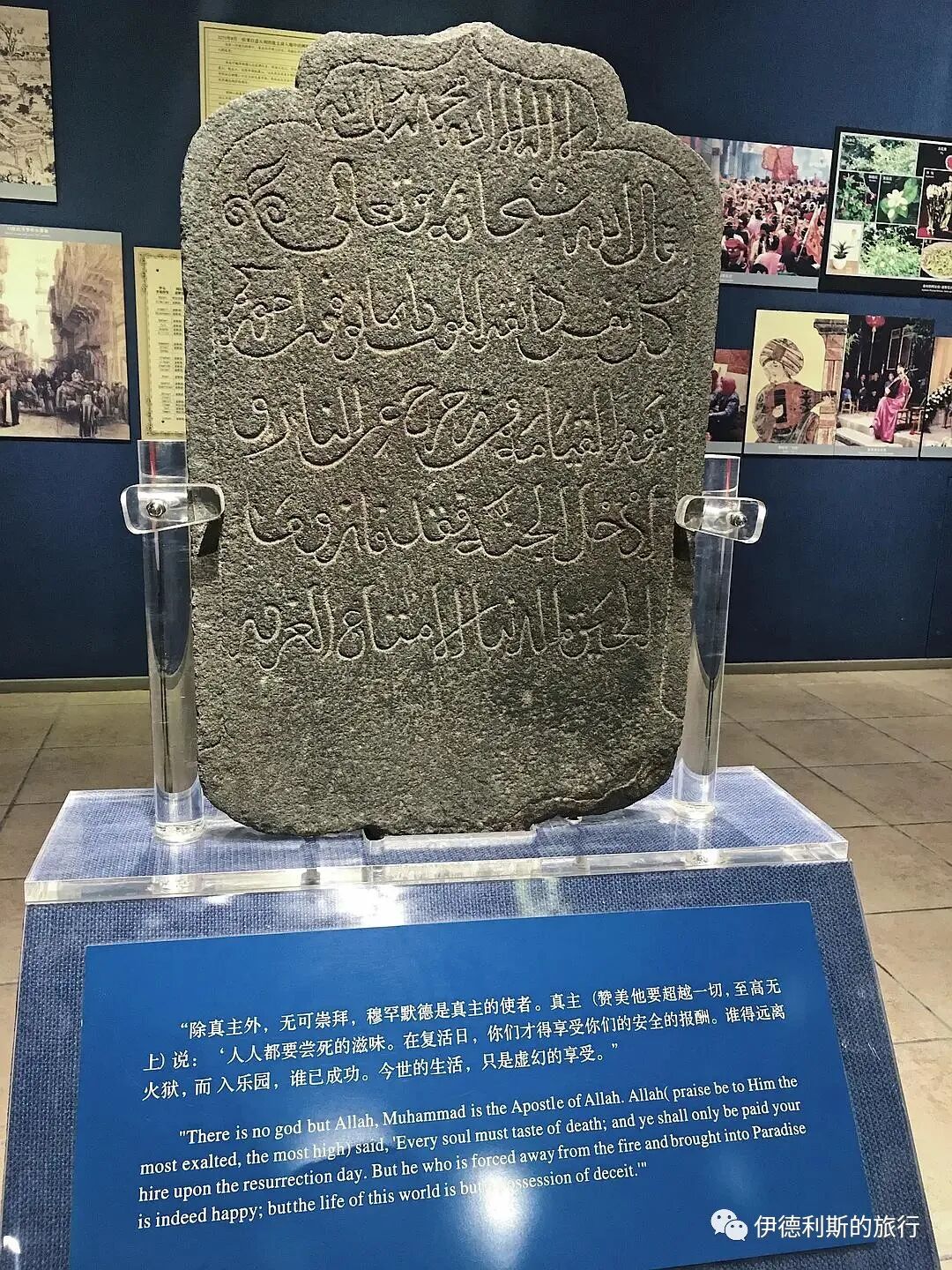
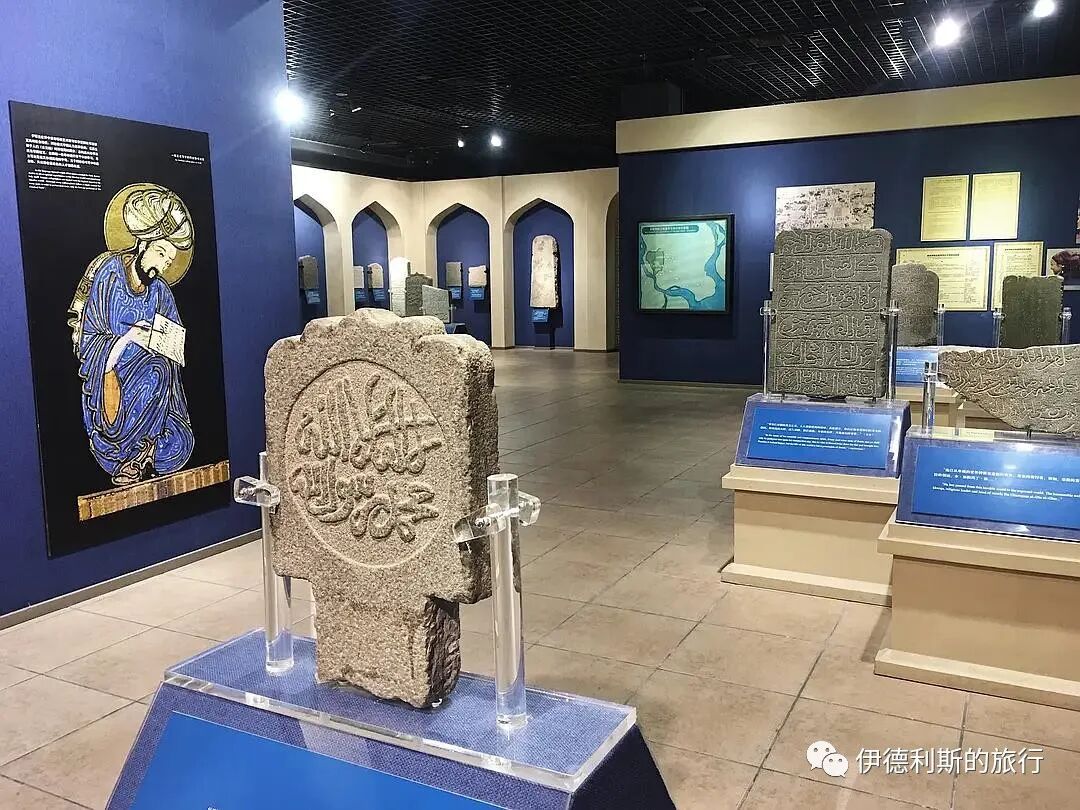
The diabase tombstone in the image below was unearthed in 1973 during the cleaning of the moat north of Quanzhou city; it is inscribed with verses 28, 29, and 30 of Chapter 89 of the Quran.
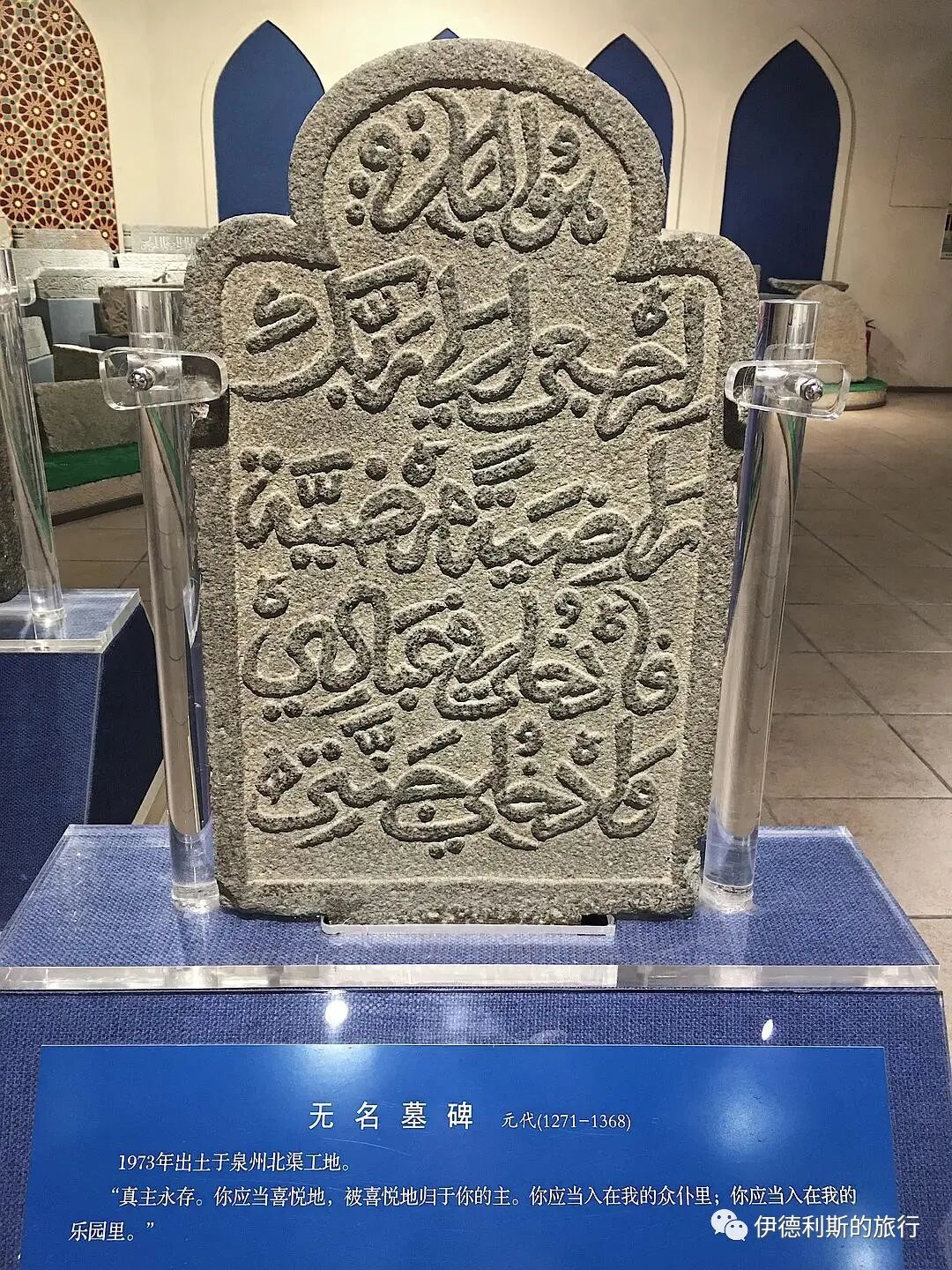
The diabase tombstone in the image below was unearthed in March 1964 at the construction site of the Overseas Chinese Mansion in downtown Quanzhou. This was the site of the Haiqing Pavilion during the Qing Dynasty. When the Senate building was constructed in the early 1940s, the city walls of the East and South Gates of Quanzhou were dismantled for building materials, and this stone tablet was likely filled into the wall foundation at that time. The front of the tombstone is inscribed with verse 185 of Chapter 3 of the Quran. The back is inscribed with the Shahada.
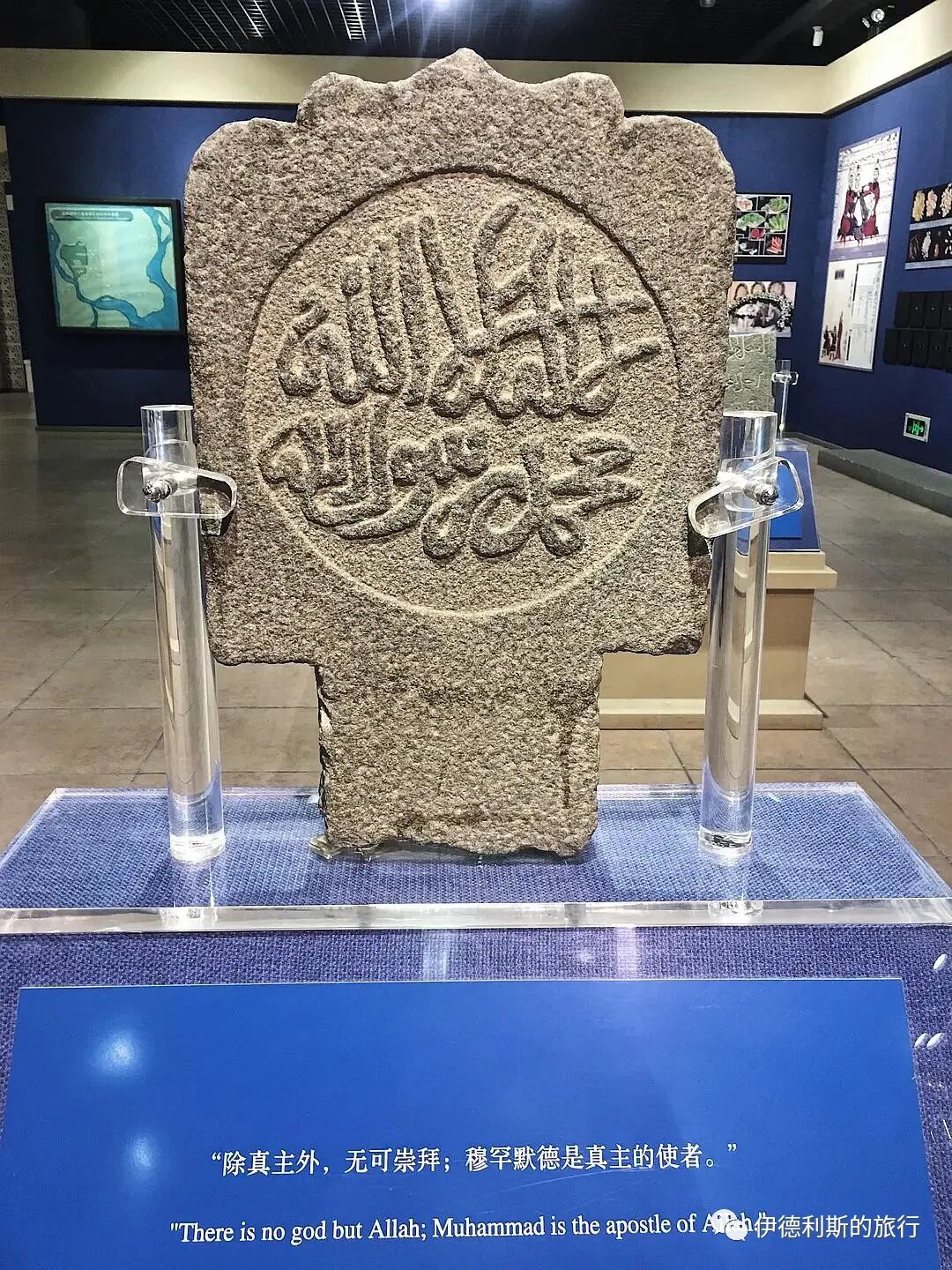
The diabase tombstone in the image below was discovered in 1944 in the foundation of the East Gate of Quanzhou. It is inscribed with an excerpt from verse 57 of Chapter 29 of the Quran.
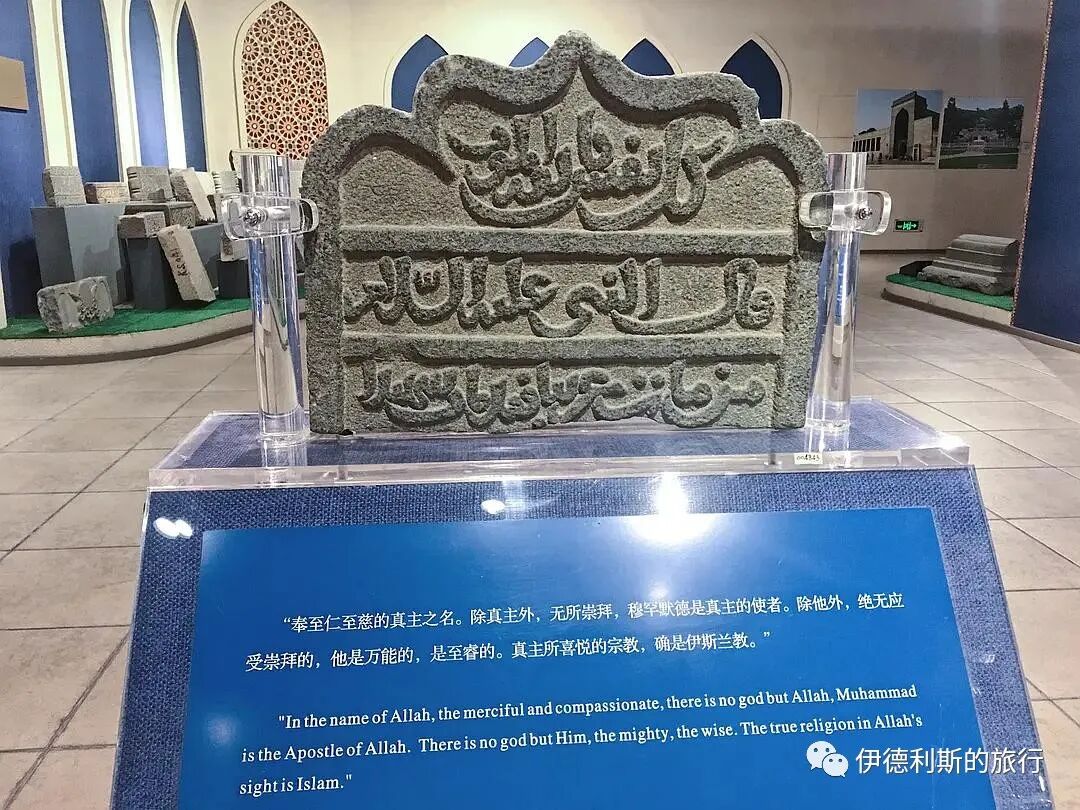
The back of the image above is inscribed with the Basmala at the top and the Shahada at the bottom.
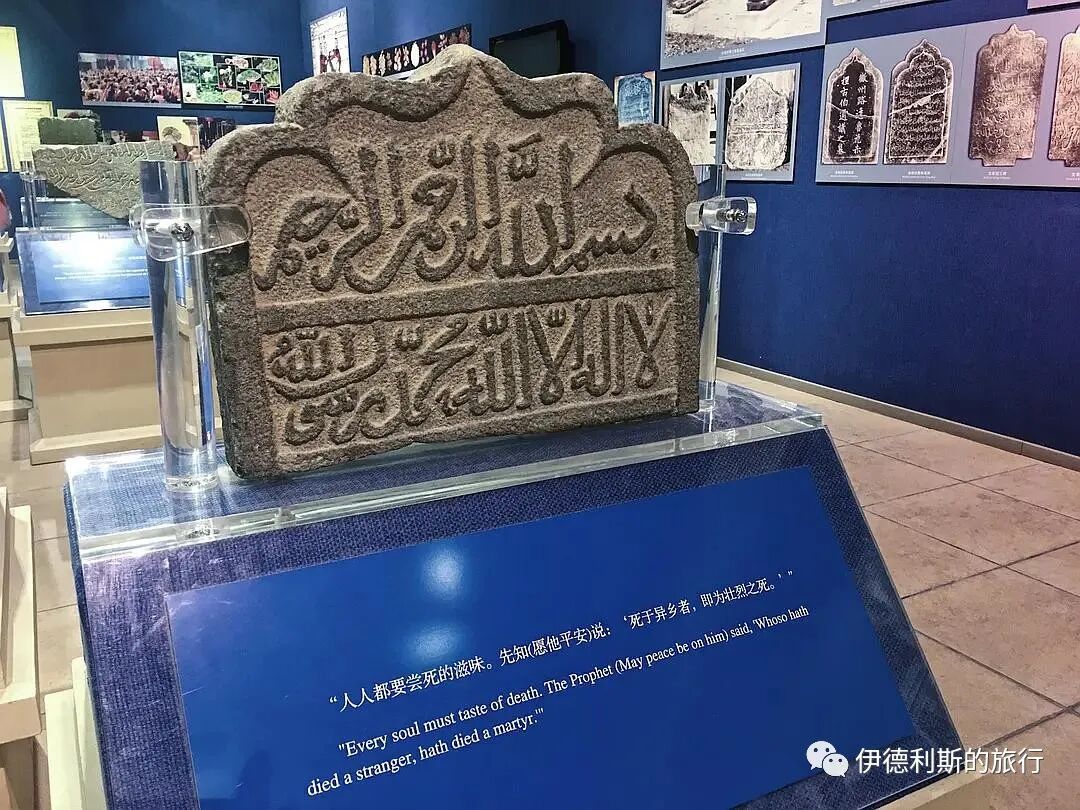
The diabase tombstone in the image below was discovered in November 1978 in a household at Jintoupu outside Tonghuai Gate, where it was being used as a base stone; prior to that, it had been excavated from the ramparts of Tonghuai Gate. Because the inscription is incomplete, it can only be translated as: 'He has moved from the lowly world to the world of desire.' The noble doer of good, Khwaja, leader of the religion and leader of the Mullahs, Ibn Ghawamar al-Din al-Ghar...', and the back reads '... Khwaja, leader of the religion and leader of the Mullahs... in the mercy of Allah... in... ten... eight...'. Given the frequent use of Persian in the text, the tomb owner may have come from Iran.
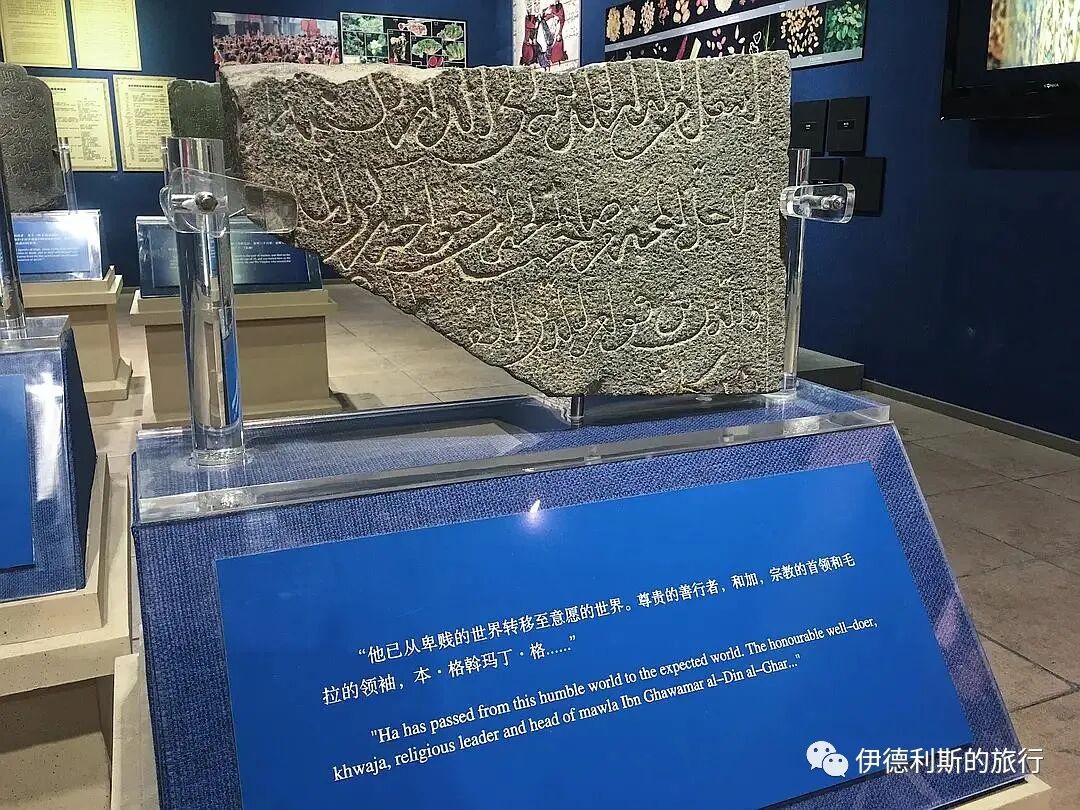
The diabase tombstone in the image below was discovered in 1932 during the demolition of the East Gate of Quanzhou; the tomb owner is named Shirin Khatun. The front of the tombstone first features verse 57 of Chapter 29 of the Quran, followed by the identity of the tomb owner: 'This famous Khatun is the daughter of the ruler Hasan,' and the date of death is 1321. Khatun means 'queen' or 'lady' in Turkic languages.
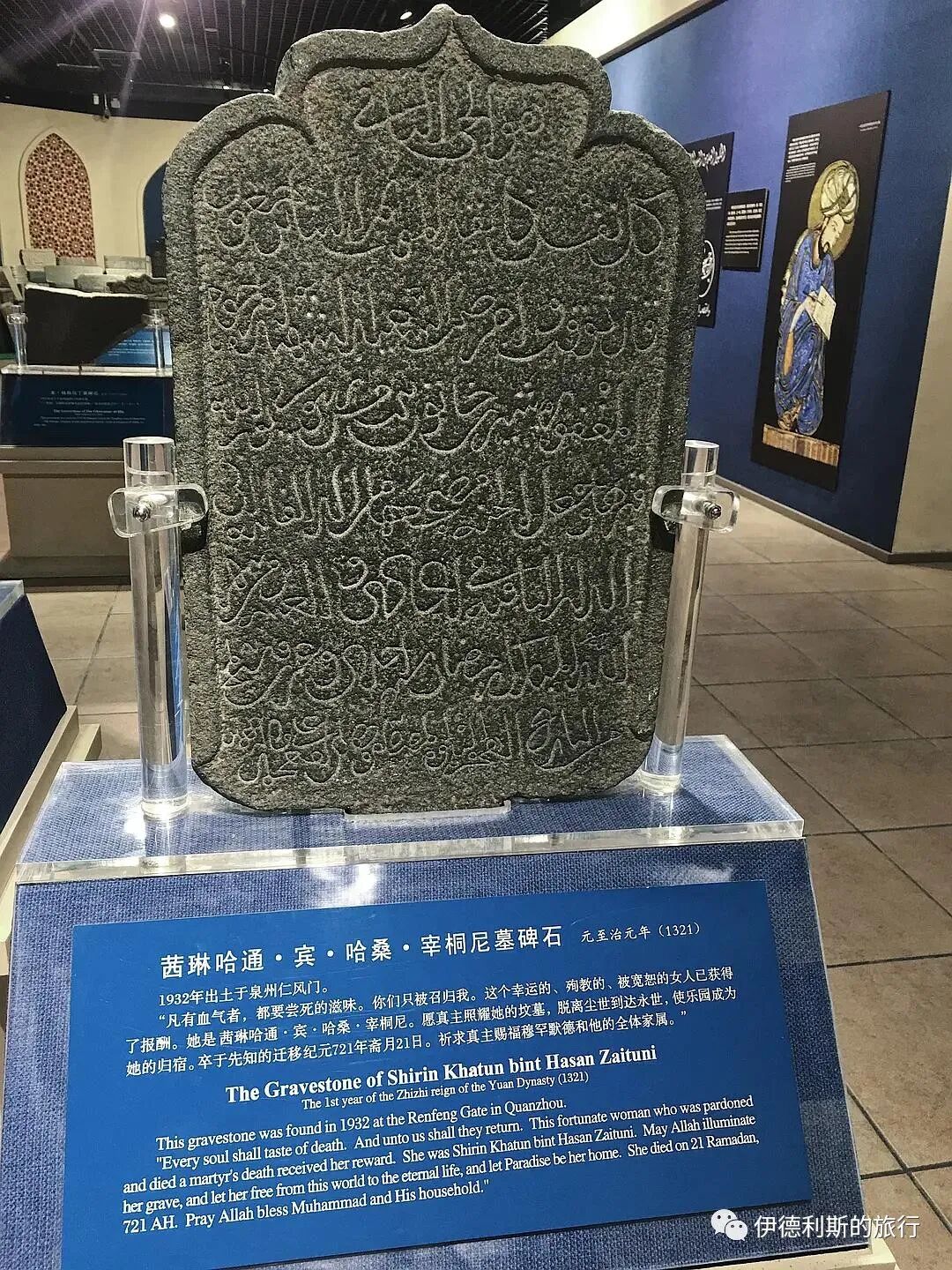
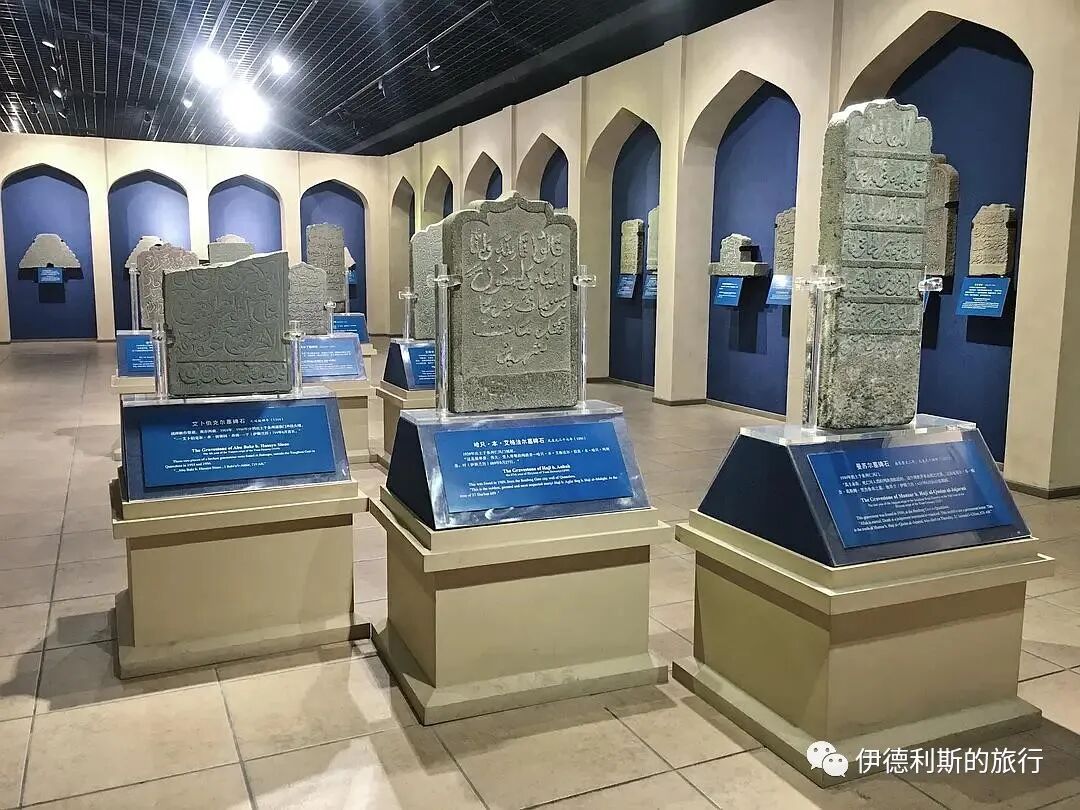
The Yuan Dynasty diabase tombstones in figures 2 and 3 were discovered in 1930 during the demolition of the East Gate of Quanzhou; the tomb owner was a Haji who had made the pilgrimage to Mecca and died in 1362. The translation of the front is: 'Everlastingness belongs to Allah, and the life and death of all things are predestined.' The present world is not a world of stability. The tomb owner is a Haji. XXX. Died on Thursday, June 26, 764 (Hijri). ', and the back features the Shahada and an excerpt from verse 88 of Chapter 28 of the Quran.
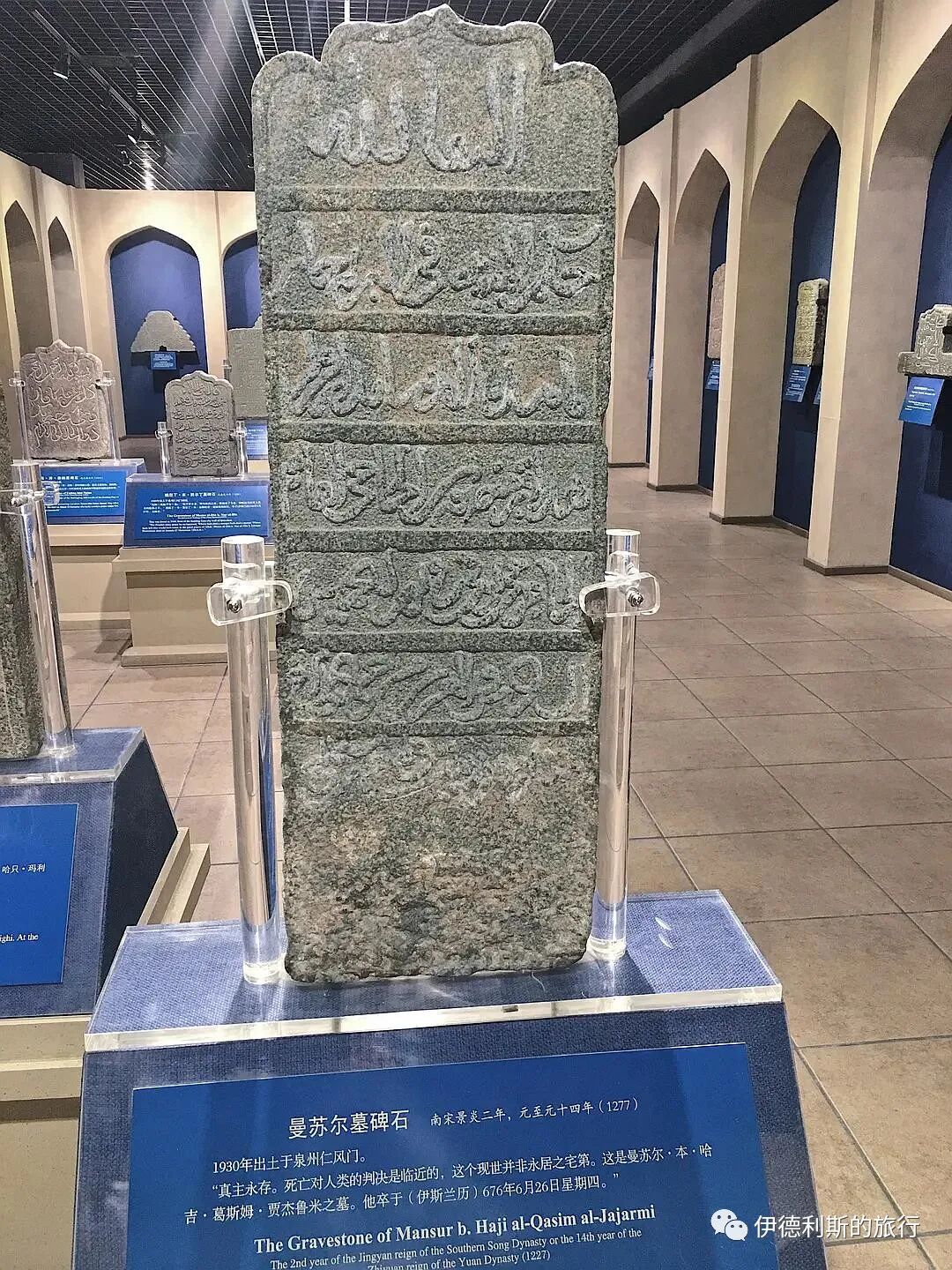
Back
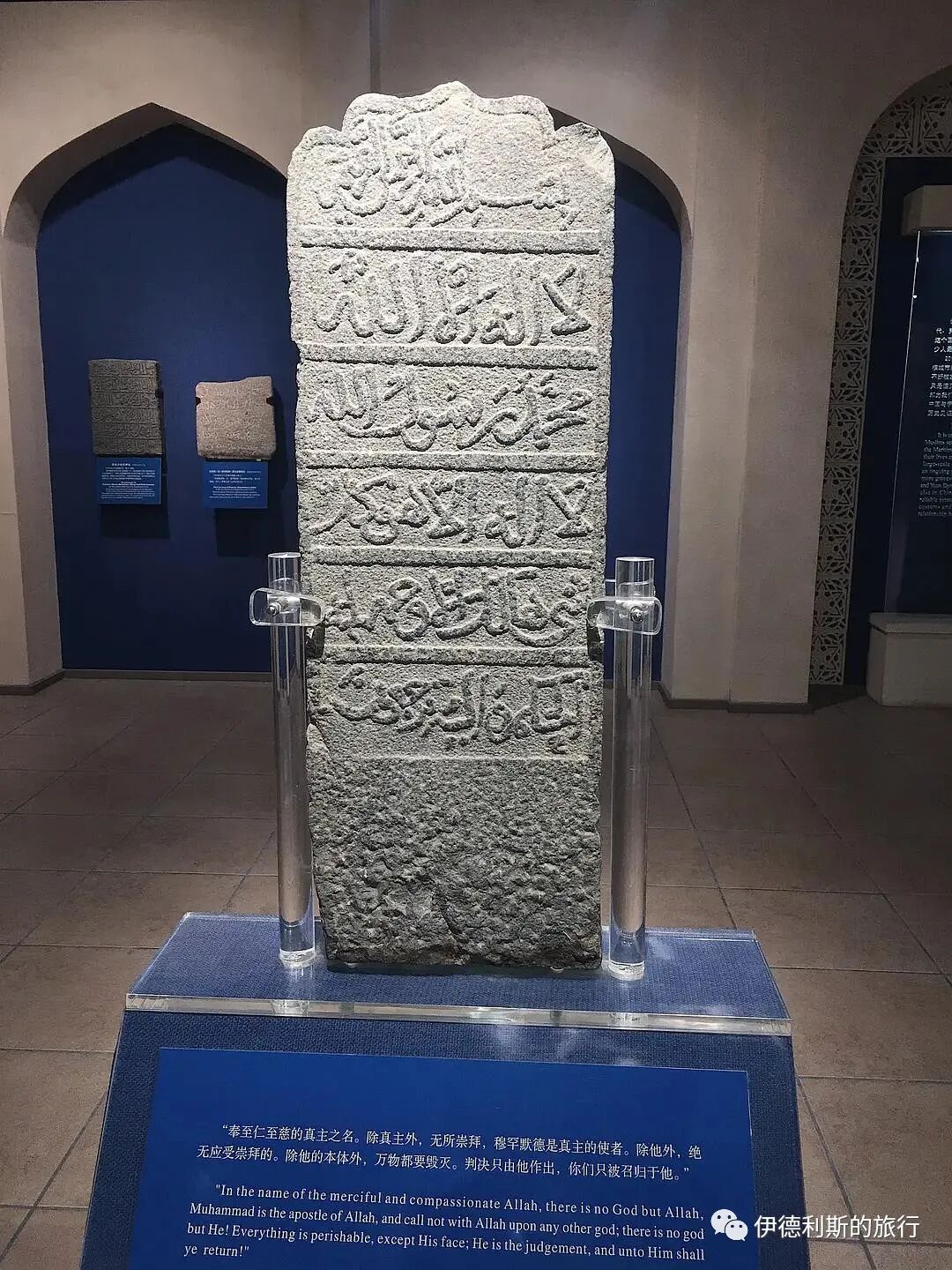
The diabase tombstone in the image below was excavated from the ramparts of the East Gate of Quanzhou in 1929; the tomb owner was a Haji named Haji b. Abubak, who died in 1387 (the 20th year of the Hongwu reign of the Ming Dynasty), making it a rare Ming Dynasty Islamic tombstone in the Maritime Museum. The front of the tombstone is inscribed with information about the tomb owner, and the back is inscribed with an excerpt from verse 156 of Chapter 2 of the Quran and the Hadith: 'He who dies in a foreign land dies a martyr.'
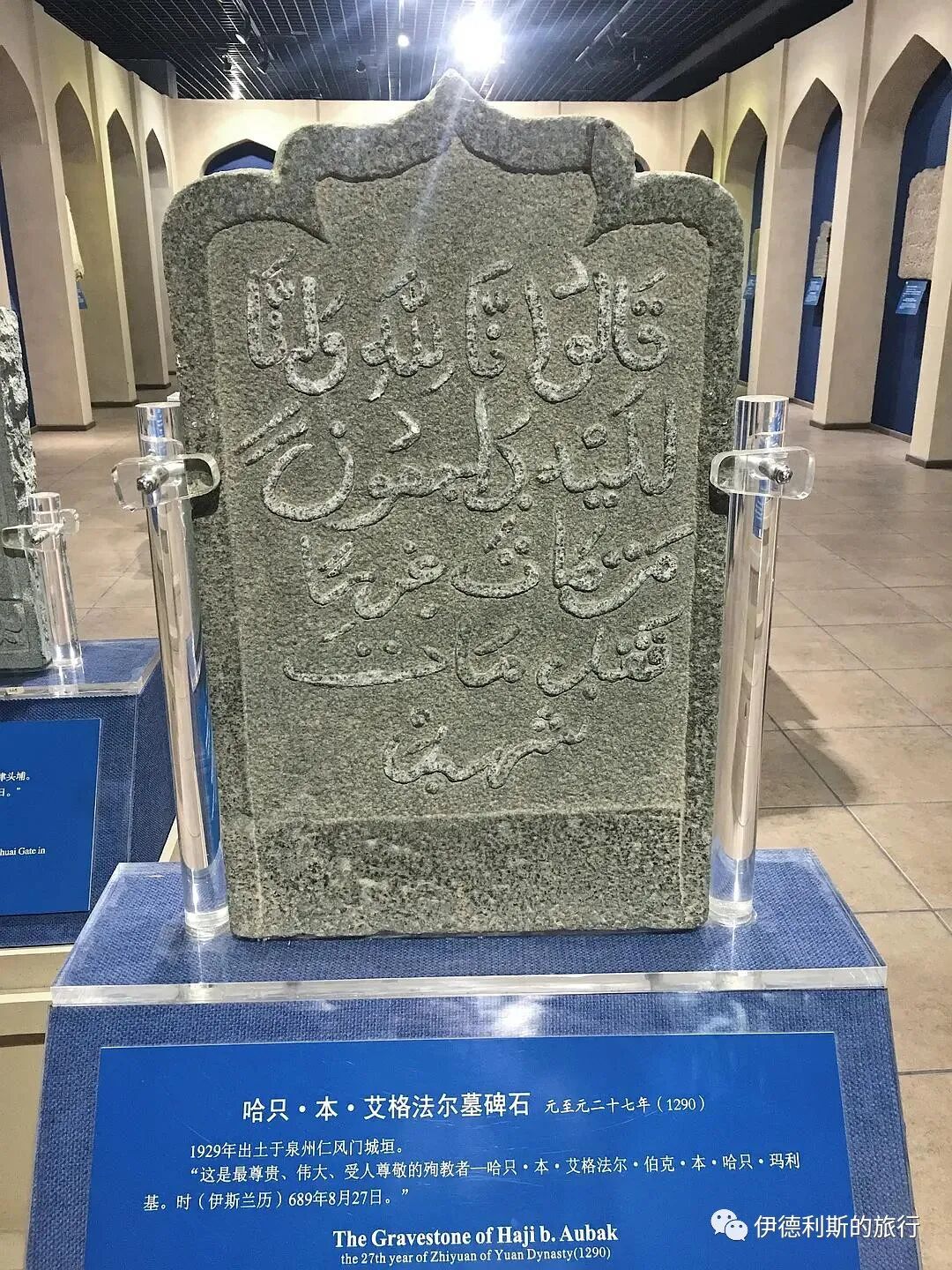
Back
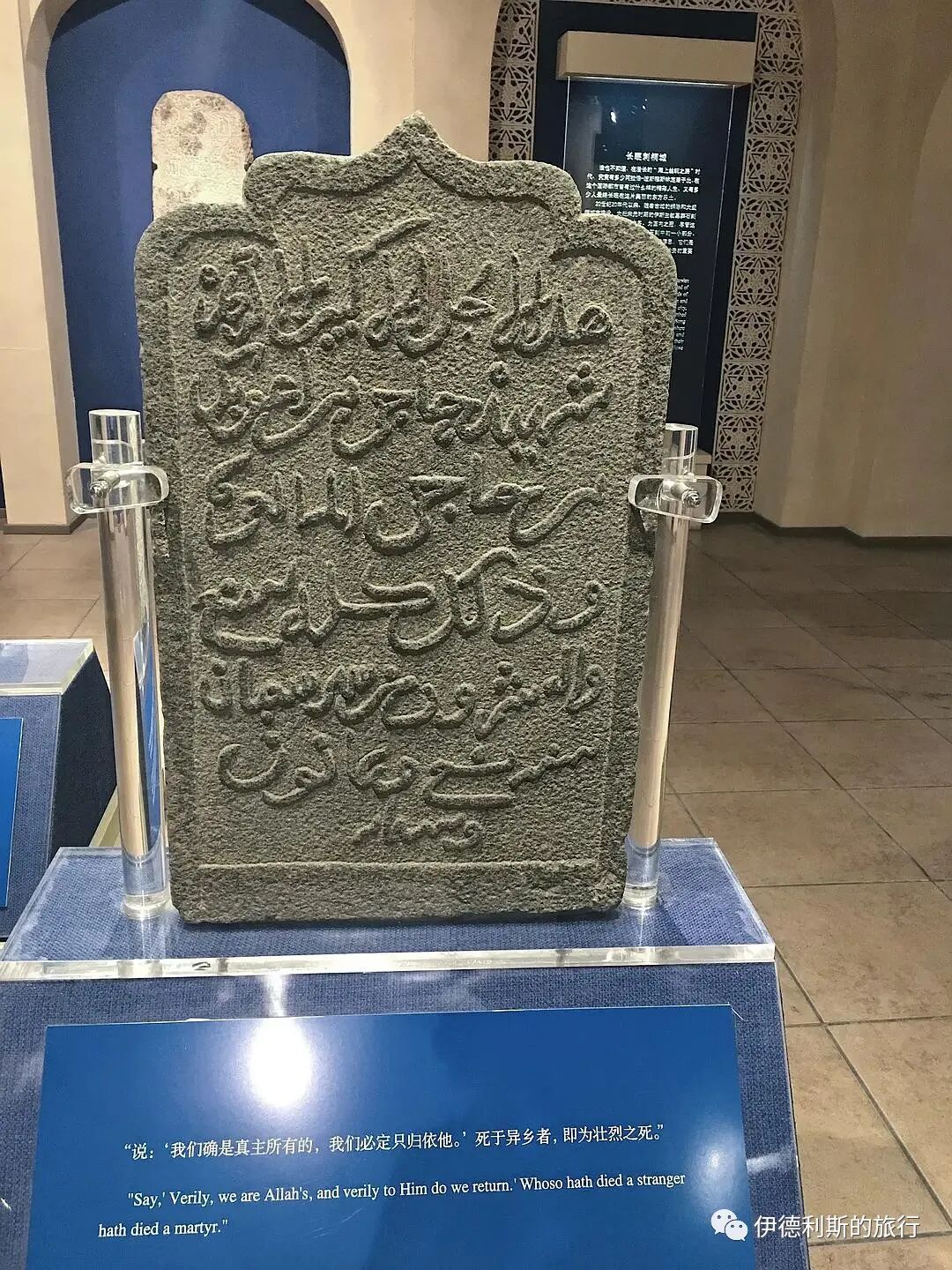
Quanzhou Islamic Relics (Part 2)
Articles • ali2007fr posted the article • 0 comments • 155 views • 2026-05-16 22:58
Summary: This travel note introduces Quanzhou Islamic Relics (Part 2). The chlorite tombstone on the right was discovered in 1940 when the East Gate of Quanzhou was demolished. It is useful for readers interested in Quanzhou, Islamic History, Muslim Travel.
The chlorite tombstone on the right was discovered in 1940 when the East Gate of Quanzhou was demolished. The tomb owner was named Shams Din, who passed away in 1325 (the second year of the Taiding era of the Yuan Dynasty). Part of the text on the back is an excerpt from the Quran, Chapter 3, Verse 19.
The chlorite tombstone in the image below was discovered in March 1963 at the home of a farmer in Ruifengling, outside the East Gate of Quanzhou. According to the family, it was found when an old wall on their property, which had stood for a hundred years, collapsed. Several Islamic stone tombs were once discovered near Ruifengling, making it one of the burial sites for Muslims in Quanzhou during the Song and Yuan dynasties. The tomb owner was named Fatima, who passed away in 1306 (the tenth year of the Dade era of the Yuan Dynasty). The translation on the back is from the Quran, Chapter 55, Verses 26 and 27.
The chlorite tombstone in the image below was discovered in 1942 in a stone shop on Renfeng Street, outside the East Gate of Quanzhou; it had been excavated from the city wall. The tomb owner was an imam from the Qazvin region of Persia, named "Tutka Mainunai Amir Ali ibn Hasan ibn Ali Karom," who passed away in 1273 (or 1370). Qazvin is located south of the Caspian Sea and northwest of Tehran. The ancient city was destroyed during the Mongol invasion, rebuilt during the Safavid Dynasty, and served as the capital between 1548 and 1598.
The white granite tombstone in the image below was discovered in April 1962 in a field near Donghu, outside the Small East Gate of Quanzhou. According to villagers, it had been dug up from the city wall years earlier to pave the road. The entire text of the Quran, Chapter 3, Verse 85, is carved on the stone.
The granite tombstone in the image below is carved with the Quran, Chapter 55, Verses 26 and 27. The lower half containing the tomb owner's information is damaged, leaving only the knowledge that "the innocent servant died on Saturday, May 2nd, in the year..."
The white granite tombstone in the image below was discovered in 1947 in the foundation of the Deji Gate at the South Gate of Quanzhou. It was later built into the pier of the Shunji Bridge at the South Gate during bridge repairs that same year, and was only removed after being rediscovered. It is carved with the Quran, Chapter 55, Verses 26 and 27.
The chlorite tombstone in the image below was discovered in June 1959 in Xiawei Village, outside the Tonghuai Gate of Quanzhou. According to local villagers, this stone tablet was excavated from the city wall many years ago and used to pave a small field path. It was later dug up again during road repairs and kept in an ancestral hall because of its unique script. The content of the inscription includes an excerpt from the Quran, Chapter 39, Verse 4, and the full text of Chapter 55, Verses 26 and 27.
The chlorite tombstone in the image below was discovered in 1940 while excavating city foundations in the Jiaochangtou area of the Tumen Gate in Quanzhou. The tombstone features a "cloud and moon" design, with a full moon in the center and cloud patterns on both sides. The tomb owner's name is no longer legible; they passed away in 1350. Part of the inscription contains the Quran, Chapter 55, Verses 26 and 27.
The chlorite tombstone on the left in the image below was excavated from the city wall at the East Gate of Quanzhou in 1930. A full moon is carved in the center in Arabic, with a cloud pattern on each side, forming a "cloud and moon" design. The upper center of the inscription features the Shahada, surrounded by "O Allah! You are the Most Merciful, please forgive and have mercy on all Muslim men and women." "
The chlorite tombstone on the right was discovered in 1945 in a resident's home at Chankou, South Gate of Quanzhou, and was recovered for preservation in 1953. Part of the inscription is an excerpt from the Quran, Chapter 29, Verse 57.
The chlorite tombstone in the image below was discovered in 1932 on the road surface of West Street in Quanzhou; it had originally been removed from the city wall to pave the road. The tomb owner was Khadija bint Fan Shah. The date of death is illegible, only "early morning, Sunday, April 28th" is known.
The chlorite tombstone in the image below was discovered in 1939 in a pond outside the East Gate of Quanzhou. The tomb owner's title was Sa'd al-Ajall al-Kabir, translated as "the first, the respected, the important." Regrettably, the other side was forgotten to be photographed at the time. It was written in Chinese characters: "Fengxun Dafu, Darughachi of Yongchun County..." Darughachi was a Yuan Dynasty official title that only Mongols and powerful Semu people could hold, and Fengxun was a subordinate official of the province. Yongchun County is 86 kilometers from Quanzhou. According to the "Yongchun Prefecture Gazetteer," there was once a Darughachi in Yongchun County named "Tuohuan Shaduo Luobo'er," who may be the same person as the tomb owner.
The chlorite tombstone in the image below was discovered in September 1958 beside a field in Huazhou Village, outside the South Gate of Quanzhou. According to local villagers, it was a city stone dug up from the South Gate wall of Quanzhou over 20 years ago. It was originally intended for building a house, but was later used to pave a small field path after it was discovered to be a tombstone. The tomb owner was named Abu Fatima, which means "father of Fatima." Additionally, part of the translation comes from the Quran, Chapter 55, Verses 26 and 27.
The chlorite tombstone in the image below was excavated in 1929 when the Renfeng Gate wall in Quanzhou was demolished. It was broken into three pieces and stacked into a residential wall, reappearing in 1950 after the wall collapsed. A corner of the stone was lost in the late 1960s. The tomb owner passed away in 1337. The inscription content is from the Quran, Chapter 21, Verses 34 and 35.
The white granite tombstone in the image below was discovered in 1926 by the famous archaeologist Chen Wanli on the South Main Street of Quanzhou. He entrusted the local government to move it to the Construction Bureau for preservation. The Construction Bureau moved shortly after, and the stone was left at the old site. During the 1935 Quanzhou flood, the old site collapsed and the stone was lost. In 1955, a resident dug up the stone in the ruins of the old Construction Bureau, but the bottom part containing the date was damaged. The tomb owner was the daughter of Sayyid Burtumi b. Sayyid Muhammad al-Hamdani, from Hamadan. Hamdani refers to the ancient Persian capital of Hamadan, located southwest of Tehran, which was an important commercial center and transportation hub in northwestern Persia.
The chlorite tombstone from the Yuan Dynasty in the image below was discovered in April 1958 in the city foundation near the Tonghuai Gate of Quanzhou. The tomb owner was named Haji Khwaja b. Hasam al-Din b. Yalaki Siraf, who passed away in 1362. "Haji" indicates he had performed the Hajj, and "Khwaja" is a Persian honorific for a gentleman or elder. Siraf (also translated in historical records as Shilowei, Shilafu, Sanawei, Shiluo, or Siluo) was the largest trading port in the Persian Gulf between the 9th and 13th centuries. During the Song and Yuan dynasties, many Persian merchants traveled through here to Quanzhou for trade.
The chlorite tombstone in the image below was discovered in the summer of 1934 in the city foundation of the East Gate of Quanzhou. In addition to Arabic, it is also carved with Chinese characters: "Pan Zongling passed away on the first day of the fourth lunar month." The Arabic content is an excerpt from the Quran, Chapter 28, Verse 88. According to the "History of Song: Official Posts 7," the position of Zongling was established during the Jianyan era of Emperor Gaozong of the Southern Song Dynasty (1127–1130 AD) to manage money, grain, and taxes. By the Shaoxing era of the Southern Song Dynasty, the Zongling could directly participate in military and political affairs, holding significant power. However, the "Yuan Dianzhang" records that Zongling was a title for minor officials in prisons of various circuits, prefectures, and counties.
The chlorite tombstone from the Yuan Dynasty in the image below was discovered in 1938 while digging for city stones at the East Gate of Quanzhou. The tomb owner was named Granto Takin b. Sultan Husayn, who passed away in 1308. "Takin" is a Turkic title for a prince or noble.
The chlorite tombstone from the Yuan Dynasty in the image below: the lower half was discovered in 1934 on a small field path outside the Tonghuai Gate of Quanzhou, and the upper half was excavated in 1942 while digging for foundation stones at the East Gate of Quanzhou. The tomb owner was an imam named Umar. Additionally, part of the text is from the Quran, Chapter 55, Verses 26 and 27, and Chapter 3, Verse 185.
The chlorite tombstone in the image below was unearthed in 1978 on a street in Houlucun, Donghai Commune, outside the Tonghuai Gate of Quanzhou. It is carved with the Quran, Chapter 21, Verse 35, and Chapter 28, Verse 88.
The chlorite tombstone in the image below was unearthed in 1935 at Jintoupu, outside the Tonghuai Gate of Quanzhou. The tomb owner was named Ibn Daghab b. Isfhasalar Jelashaghuni, who passed away in 1301. The inscription refers to him as a shaikh and also contains the Quran, Chapter 3, Verse 185.
The chlorite tombstone from the Yuan Dynasty in the image below was discovered in 1936 in Jintoupu Village, outside the Tonghuai Gate of Quanzhou. The tomb owner passed away in 1358 and was named Banan b. Ghasim Isfahani. Here, "Banan" is the given name, "Ghasim" is the father's name, "Pahlavan" means monarch or king, and Isfahan is a famous ancient city in Persia.
The chlorite tombstone in the image below was discovered in 1939 when the North Gate (Chaotian Gate) of Quanzhou was demolished. The tomb owner passed away in 1322 and was named Nuransa Ibn Khwaja Balad-shah b. Khwaja Haji Harbk Khorazmi. In this long string of names, "Nuransa" is his given name, "Balad-shah" is his father's name (meaning leader in Persian), "Harbk" is his grandfather's name, "Khwaja" indicates noble status, "Haji" indicates his grandfather had performed the Hajj, and "Khorazmi" indicates his family came from the ancient Central Asian city of Khwarazm.
The white granite tombstone in the image below was originally used as a stone tabletop under the eaves of the Yuan Shan Tang (later changed to Fentuoshi) on Zhongshan Middle Road in Quanzhou. It is said to have been moved there in 1952 when buying city foundation stones from the East Gate of Quanzhou to build a house. In 1965, Ms. Wu Yuanying donated the stone to the Quanzhou Maritime Museum. The tomb owner was Husayn b. Muhammad Khalati. Khalati refers to Khalat, which was once the capital of Armenia.
Because the inscription is written in a very irregular style, there are still many doubts regarding its interpretation. If interpreted as "Hijri 567" (1171 AD), this stone would be the oldest Arabic stone tablet discovered in Quanzhou.
The chlorite stone on the left in the image below was discovered in 1940 during the demolition of the Tonghuai Gate in Quanzhou. It was carried home by workers to pave the floor. In 1956, it was found in the home of a farmer in Jintoupu, outside the Tonghuai Gate, alongside some large Indian-style carved bluestone and other Arabic inscriptions unearthed nearby. According to the farmer, these stones were bought as building materials. This stone was initially used as a washboard and later as a paved step. This inscription records that an elder named Naina Umar b. Ahmed b. Mansur b. Umar, from the ancient city of Abyani in Yemen, built the gate and walls of a blessed mosque.
The chlorite stone on the right was discovered in 1948 in the city foundation of the South Gate of Quanzhou. It tells of a man named Muhammad b. Abi Bakr, also known as Mairding, who built a mosque.
The image below shows a mosque column base unearthed in 1998 at Jintoupu, outside the Tonghuai Gate of Quanzhou.
The "Yuan Dynasty Guo Family Ancestral Tombstone" in the image below was discovered in 1974 in the home of a villager in Fashi Village, outside the Tonghui Gate of Quanzhou. The original site was the "Liu Gong Qi" cemetery, also known as the "Chessboard Hole" cemetery, located east of Guangtang Palace and Tiantang Well in Fashi Village. Liu Gong Qi was quite large, consisting of a large square stone platform with two levels, each with two Muslim tower-style stone tomb covers. The Guo family tombstone was erected in front of the upper tomb cover. In 1956, Liu Gong Qi was demolished to level the land, and the stone was laid flat over the tomb. In 1967, a villager took the stone to pave a warehouse floor, breaking it into two pieces in the process. It was later discovered and protected by descendants of the Guo family. In 1974, the investigation team of the Quanzhou Maritime Museum, following clues from the "Baiqi Guo Family Genealogy," conducted multiple investigations in Fashi Village and finally discovered the tombstone, which was moved to the Quanzhou Maritime Museum for collection in 1978.
The upper right corner of the tombstone is vertically carved with the seal script "Tingpo," with "Jin" below it, representing Tingpo, Fashi, Jinjiang County. The upper left corner is vertically carved with the seal script "Baiqi," with "Hui" below it, representing Baiqi, Hui'an County. These two places are where the Baiqi Guo family lived successively. Below is vertically carved in regular script: "Yuan Dynasty Guo Family Ancestral Tomb."
Fashi Village is on the north bank of the Jinjiang River in the eastern suburbs of Quanzhou and was an important commercial wharf for the Port of Quanzhou during the Song and Yuan dynasties. During the Yuan Dynasty, there was a stone street along the river several miles long from Meishan to Bantou in Fashi. In 1346, the Moroccan traveler Ibn Battuta arrived at the Port of Quanzhou. In his "Travels of Ibn Battuta," he wrote: "The city's port is one of the great ports of the world, perhaps even the largest. We saw about a hundred large ships in the port, and countless small boats. This port is a huge bay extending into the land, meeting the great river." "
The Chinese characters on the tombstone are easy to explain, but the Arabic interpretation is very difficult. In the early 1980s, Chen Dasheng, director of the Quanzhou Maritime Museum, interpreted the Arabic as "Ibn Qds Daqqaq Nam," meaning "Ibn Quds Daqqaq Nam." Because "nam" means "famous" in Persian, he believed the Baiqi Guo family were descendants of Persians.
However, Professor Wu Youxiong of Quanzhou Normal University proposed a completely different interpretation in his book "The Origin of the Baiqi Guo Surname and Scripture Hall Education." After consulting with the director of the Arabic Department of China National Radio, Wu Youxiong believed this passage was written in Arabic script to spell out the Minnan dialect "Yin Go Zi Ta-gag Mou," meaning "Tomb of Guo Deguang of the Yuan Dynasty." Because previous interpreters were unfamiliar with the Minnan dialect, they had not translated it. Guo Deguang was the ancestor of the Baiqi Guo family who came to Quanzhou, moving from Zhejiang to Quanzhou during the Yuan Dynasty to settle down.
The method of using Arabic script to spell out Chinese is called "Xiao'erjing" or "Xiao'erjin," also known as "Xiao Jing," and was used to annotate Islamic classics while studying them. According to the Guo family genealogy, Guo Deguang's tomb was rebuilt several times. This tombstone was very likely re-erected in the Qing Dynasty by Guo descendants who practiced Islam.
In 1709 (the 48th year of the Kangxi era), Chen Yougong, the regional commander of Ting, Yan, and Shao in Fujian, came to Quanzhou to revive the faith and established scripture hall education in the Qingjing Mosque. At that time, Guo Honglong, of the fourth branch and eighth generation of the Guo family, moved from He Cuo in Baiqi to live in the Qingjing Mosque and converted to Islam due to the "distinction between strong and weak branches." After Honglong converted, other Guo family members who came to Quanzhou city for business also came to the Qingjing Mosque to convert. According to the Guo family genealogy "Preface to Returning to the Hui Faith," after the Guo family re-entered the faith, led by the eighth-generation descendant Guo Sizhi and the tenth-generation descendant Guo Zhiquan, and through the education of two imams, "Master Zhuang" and "Master Ge," more than a hundred people joined Islam, mainly from the fourth branch to which Guo Honglong belonged. Therefore, the Guo descendants at this time should have been able to use Arabic script to spell out Minnan dialect to write Xiao Jing.
On the south lawn of the Maritime Museum, there are hundreds of Muslim Sumeru-pedestal stone tombs from the Song and Yuan dynasties. Most have ruyi-shaped six feet at the bottom, with plain or lotus-petal designs in the middle, a few are carved with Arabic, and the top tomb stones are mostly missing.
A granite tomb top stone placed separately.
IV. Deji Gate Site
The Deji Gate at the South Gate of Quanzhou was built in 1320 (the third year of the Shaoding era of the Southern Song Dynasty) and was originally named Zhennan Gate. In 1352 (the 12th year of the Zhizheng era of the Yuan Dynasty), after the expansion of Quanzhou city, it was renamed Deji Gate. In the early Hongwu years of the Ming Dynasty, the city gate was expanded and a barbican was added.
In 1948, the Deji Gate was destroyed by fire, and nearby villagers dug up many Song and Yuan Muslim tomb stones from the city foundation to take home for building houses and paving roads. Since then, the Deji Gate foundation was buried underground, and the surface became residential houses. In the 1950s, researchers visited villages near the Deji Gate and discovered some Song and Yuan Muslim tomb stones that had been taken away when the city gate was demolished. These stones are now collected in the Quanzhou Maritime Museum.
In September 2001, while renovating the square opposite the Tianfei Palace at the Deji Gate, the Deji Gate foundation, 3 meters underground, was rediscovered. After cleaning and excavation, a large number of Song and Yuan Indian, Christian, and Islamic stone carvings were unearthed again. These stone carvings were likely transported to the Deji Gate and built into the foundation as base stones after the Ming army entered Quanzhou in the early Hongwu years and destroyed Hindu temples, as well as Christian and Muslim tombstones.
V. Muslim Tomb Stones in the Museum of Quanzhou Maritime Silk Road
The image below shows a fragment of a four-layer white granite Sumeru-pedestal stone tomb. The bottom layer has ruyi-shaped six feet, the second layer has relief lotus petals, the third layer is carved with Arabic, and the top tomb stone is missing. Originally collected by the Shishi City Museum, it is now in the Museum of Quanzhou Maritime Silk Road.
VI. Chendai Mosque, Jinjiang
In the early 1920s, the famous Hui person Tang Kexan, while serving as the Superintendent of the Xiamen Customs, paid great attention to the faith in Quanzhou. On the eve of the War of Resistance, he recommended his fellow townsman Zhang Guangyu to preside over the religious work in the Quanzhou area. After arriving in Quanzhou, Zhang Guangyu earnestly carried out religious affairs, and the faith in Chendai began to reappear.
In 1939, the "China Islamic National Salvation Association Chenjiang Branch" was established in Chendai. Some Ding family members from Chendai often went to the Qingjing Mosque in Quanzhou for Jumu'ah prayers. Later, they converted the "Wenchang Shrine" in Sijing Village into a mosque and hired Imam Tie from Quanzhou to preside over religious affairs.
Between 1937 and 1944, the most famous modern Islamic school during the Republic of China, the Chengda Normal School, moved south to Guilin. The founders, Tang Kexan and Ma Songting, successively accepted 17 young men from the Ding family in Chendai to study there.
In the late 1950s, all Islamic activities in Chendai were forced to stop. Ding Jinshun, a graduate of Chengda Normal School, was criticized and struggled against for mentioning in class that he was a Hui Muslim.
In 1983, Ding Jinshun and Ding Jinhe, both graduates of Chengda Normal School, attended the founding meeting of the Fujian Islamic Association. After this, Chengda Normal graduates Ding Jinshun, Ding Jinhe, Ding Jinke, and Ding Jinhong, along with twenty other enthusiastic believers, established the "Chendai Islamic Association Group" and began to restore the faith. They borrowed the second-floor conference room of the Chendai Hui Affairs Committee and the back hall of the Ding family ancestral hall for Jumu'ah prayers, with Ding Jinshun serving as the imam. During Eid al-Fitr and Eid al-Adha, they invited their former Chengda Normal classmates who were now imams in Guilin, as well as imams from Jiaxing, Zhejiang, to preside over the congregational prayers.
After the Chendai Islamic Association Group was established, they began preparing to build a mosque. They issued a "Letter to Muslim Compatriots Nationwide" to the national Islamic association, but only a few hundred yuan in funds were sent from a few mosques in Ankang, Shaanxi, and Yunnan. After this, former Chengda Normal classmates in Hong Kong forwarded the "Letter to Ding Family Compatriots" to the Ding family in Hong Kong, Taiwan, and overseas. They received 70,000 yuan in donations from the "Five Surnames Mosque Association (Jin, Ding, Ma, Bai, Guo, originating from Quanzhou Hui Muslims) of Philippine Travelers" in Hong Kong, Taiwan, Singapore, and the Philippines.
In 1991, the Chendai Mosque was completed, and it officially opened in 1993, immediately followed by the establishment of the Jinjiang Islamic Association. The Ding family of Chendai hired Imam Ma Zhiwei from Inner Mongolia as the first religious leader, and Ding Jinke and Ding Jinshun served as the first director of the mosque management committee and director of the Islamic Association, respectively.
After the 1990s, the Ding family of Chendai selected nearly 60 young people to study Islam at home and abroad, some of whom went to Arabic language schools in mosques in Inner Mongolia.
VI. Baiqi Guo Family Tombs
During the Hongwu years of the Ming Dynasty, the Muslim Guo Zhongyuan moved from Fashi, Quanzhou, to live in Baiqi, across from Houzhu Port, forming what is now the Baiqi Hui Ethnic Township. Today, more than 10,000 Hui Muslims with the surname Guo live there, known as "Baiqi Guo" or "Jiuxiang Guo."
1. Tomb of Guo Zhongyuan and his wife
According to the Guo family genealogy "Preface to Returning to the Hui Faith," Guo Zhongyuan built a mosque in Baiqi and collected many Islamic classics. Guo Zhongyuan passed away in 1422 at the age of 75. His wife, surnamed Chen, passed away in 1433 at the age of 82. They are buried under Longtou Mountain, east of Xiadai Village, commonly known as the "Stone Lion Public Tomb."
The tomb of Guo Zhongyuan and his wife is a typical Song and Yuan Muslim Sumeru-pedestal stone tomb in Quanzhou. This type of tomb with a stone cover on the pedestal is called a "religious tomb" by the Guo family, commonly known as a "cake tomb," representing Islam.
The stone tomb is made of granite, common in Quanzhou, and is divided into five layers. The first layer is carved with six feet and ruyi patterns, the second layer is carved with continuous flower branches, and the third layer is carved with lotus petals. The fourth layer on the left side of Mrs. Chen's tomb is carved with lotus and branch patterns, and the right side of Guo Zhongyuan's tomb is carved with the Quran, Chapter 55, Verses 26 and 27:
Everyone on earth will perish; Only the essence of your Lord, possessing majesty and honor, will exist eternally.
This scripture appears in large numbers on Muslim tomb cover stones in Quanzhou from the Song and Yuan dynasties, and it is also the most commonly carved passage on ancient Muslim tombs in Sanya.
Two stone tombs are placed side by side on a stone platform, with a horseshoe-shaped retaining wall built behind them. In the center of the retaining wall is a cloud-and-moon-shaped stone tablet, a design that can also be seen in Song and Yuan Islamic stone tombs in Quanzhou.
2. Tomb of Guo Mengwei and his wife
Guo Mengwei was the second son of Guo Zhongyuan's eldest son, Guo Shichu. He passed away in 1480 at the age of 77. His wife, surnamed Huang, passed away in 1474 at the age of 69. After they passed away, they were buried next to Guo Zhongyuan's tomb. It is also an Islamic Sumeru-pedestal stone tomb, but without any patterns. Behind the tomb is a restoration tablet from 1983.
3. Tomb of Guo Shiyuan's family
Guo Shiyuan was the second son of Guo Zhongyuan. He passed away in 1407 at the age of only 34 and was buried east of Lichun Village, commonly known as the "Second Branch Public Tomb."
Guo Shiyuan's tomb is also an Islamic Sumeru-pedestal stone tomb, with an intaglio cloud and moon pattern on the front of the tomb cover and branch patterns around the base.
Next to Guo Shiyuan's tomb are two Islamic Sumeru-pedestal stone tombs; the one on the east is buried with Guo Shiyuan's wife, surnamed Chen, and the one on the west is buried with the wife of Guo Shiyuan's eldest son, Guo Bangyong, surnamed Zeng. Mrs. Chen passed away in 1457 and the stone tomb has no patterns; Mrs. Zeng passed away during the Chenghua era of the Ming Dynasty (1465–1487) and the stone tomb has branch patterns.
In addition, there are stone tombs of Guo Shiyuan's descendants buried behind Guo Shiyuan's tomb. Because the gate was closed when I visited the Guo Shiyuan cemetery, I was unable to see the tombs behind:
Tomb of Guo Yiqin, the eldest grandson of Guo Shiyuan and fourth generation, who passed away in 1504.
Tomb of Guo Yiqin's first wife, surnamed Wang; year of death unknown.
Tomb of Guo Yiqin's second wife, surnamed Li; year of death unknown.
Tomb of Guo Yiqin's eldest son, Guo Xuyuan, fifth generation, who passed away in 1526.
The tomb of Guo Huaiqin, Guo Yiqin's third younger brother and fourth generation, and his wife, surnamed Hu, were relocated here in 1994 due to construction at the original site.
The tomb of Guo Lianfu, fifth generation of the Guo family's Xin branch (fifth branch), and his wife, surnamed Pu, were relocated here in 1997 due to construction at the original site. view all
Summary: This travel note introduces Quanzhou Islamic Relics (Part 2). The chlorite tombstone on the right was discovered in 1940 when the East Gate of Quanzhou was demolished. It is useful for readers interested in Quanzhou, Islamic History, Muslim Travel.
The chlorite tombstone on the right was discovered in 1940 when the East Gate of Quanzhou was demolished. The tomb owner was named Shams Din, who passed away in 1325 (the second year of the Taiding era of the Yuan Dynasty). Part of the text on the back is an excerpt from the Quran, Chapter 3, Verse 19.
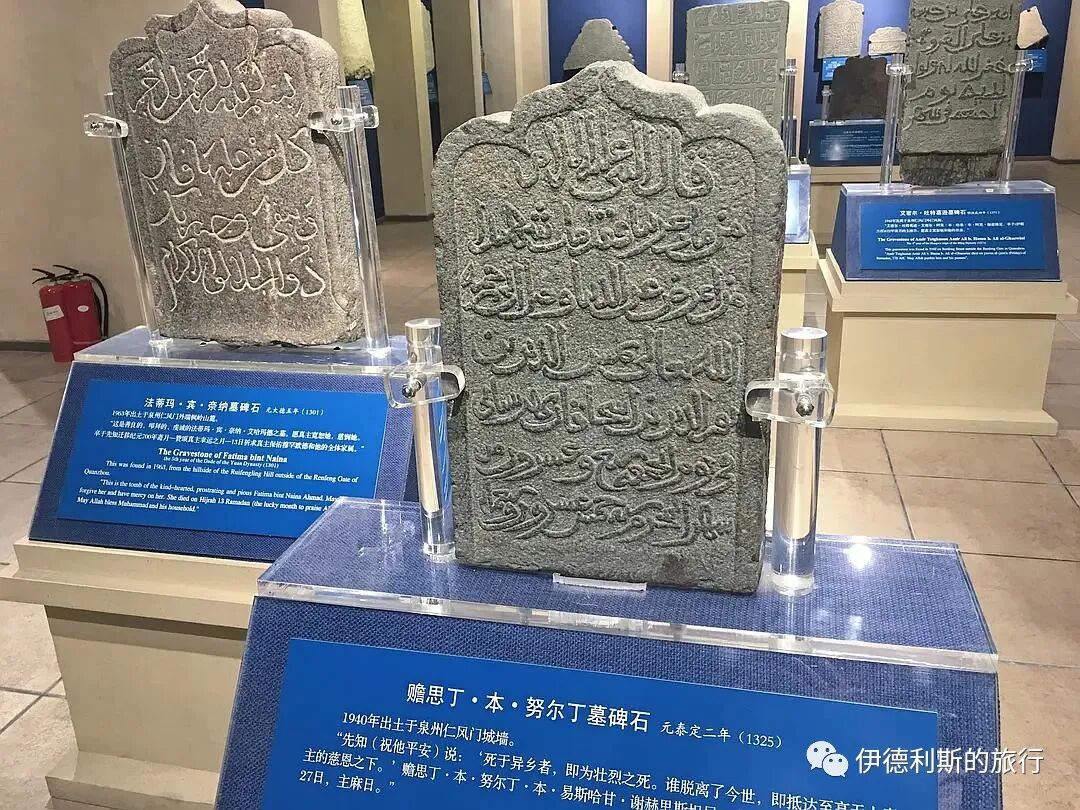
The chlorite tombstone in the image below was discovered in March 1963 at the home of a farmer in Ruifengling, outside the East Gate of Quanzhou. According to the family, it was found when an old wall on their property, which had stood for a hundred years, collapsed. Several Islamic stone tombs were once discovered near Ruifengling, making it one of the burial sites for Muslims in Quanzhou during the Song and Yuan dynasties. The tomb owner was named Fatima, who passed away in 1306 (the tenth year of the Dade era of the Yuan Dynasty). The translation on the back is from the Quran, Chapter 55, Verses 26 and 27.
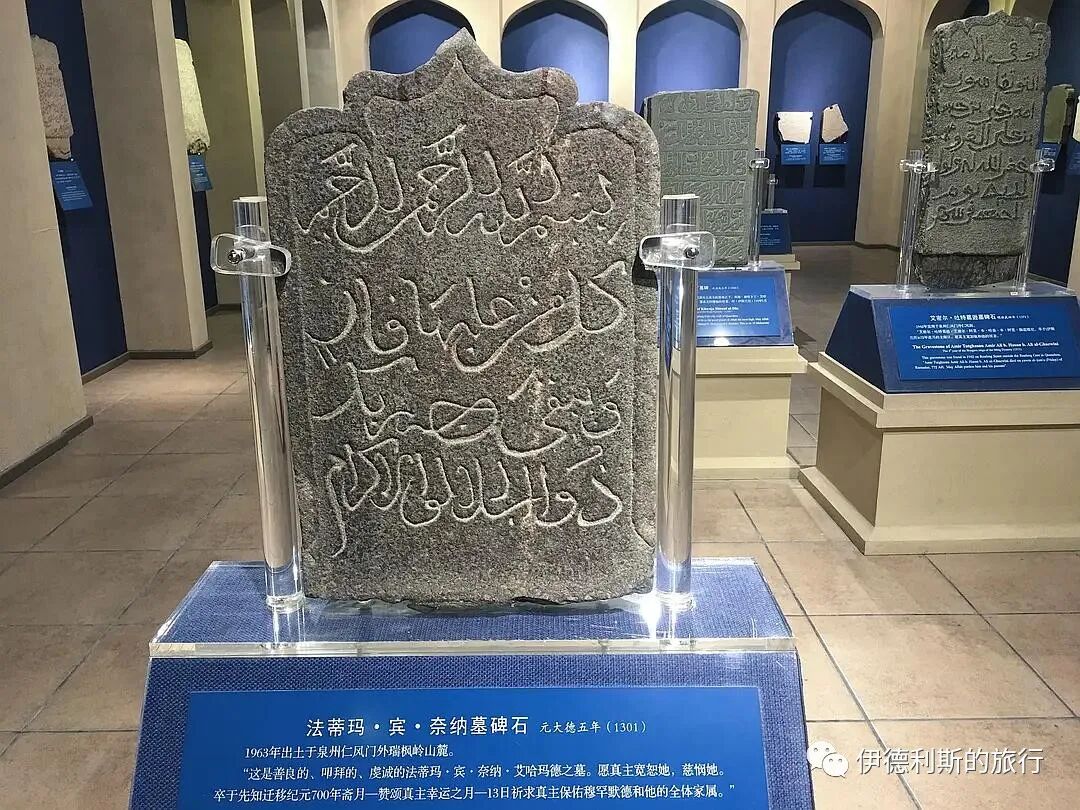
The chlorite tombstone in the image below was discovered in 1942 in a stone shop on Renfeng Street, outside the East Gate of Quanzhou; it had been excavated from the city wall. The tomb owner was an imam from the Qazvin region of Persia, named "Tutka Mainunai Amir Ali ibn Hasan ibn Ali Karom," who passed away in 1273 (or 1370). Qazvin is located south of the Caspian Sea and northwest of Tehran. The ancient city was destroyed during the Mongol invasion, rebuilt during the Safavid Dynasty, and served as the capital between 1548 and 1598.
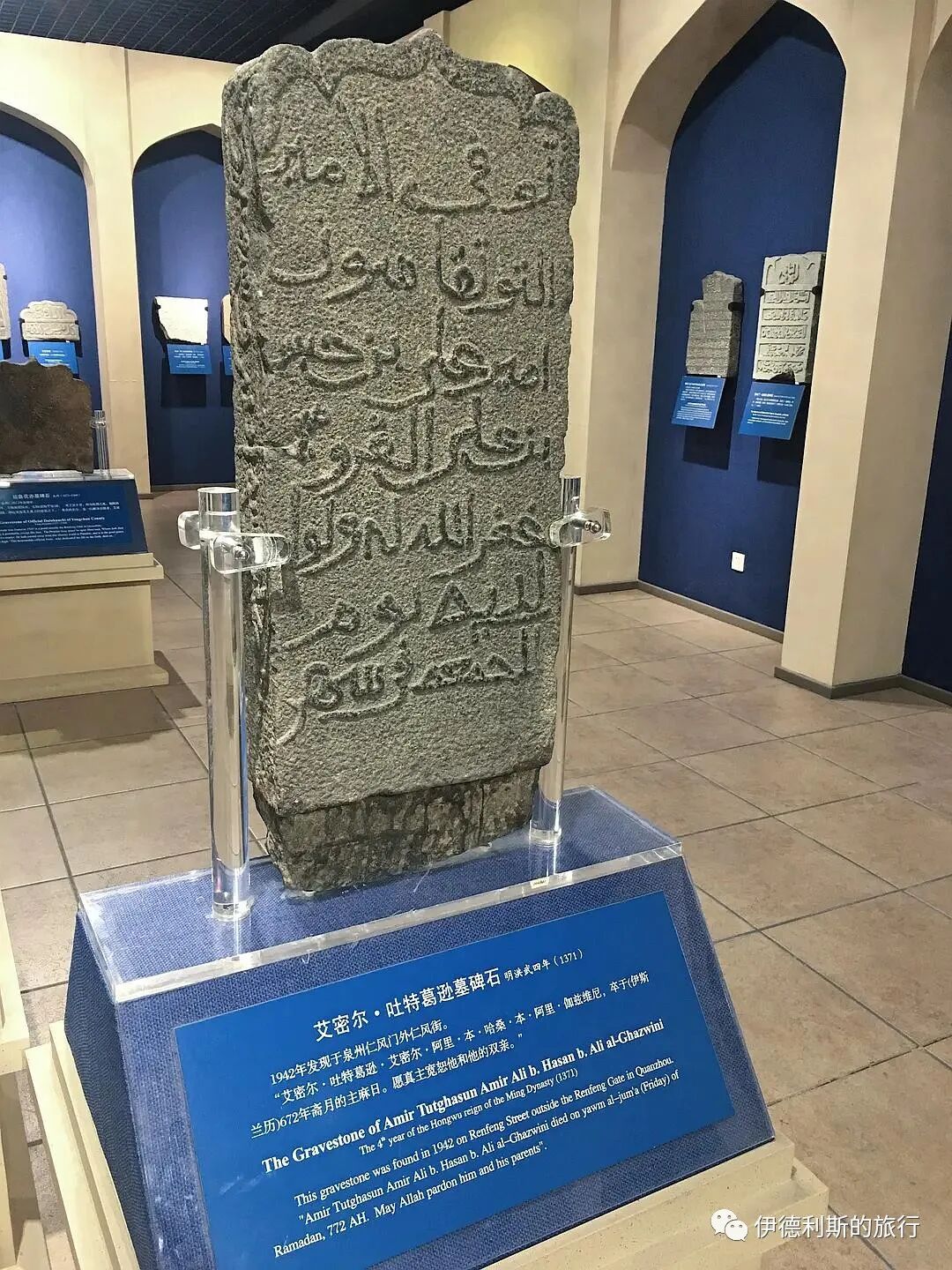
The white granite tombstone in the image below was discovered in April 1962 in a field near Donghu, outside the Small East Gate of Quanzhou. According to villagers, it had been dug up from the city wall years earlier to pave the road. The entire text of the Quran, Chapter 3, Verse 85, is carved on the stone.
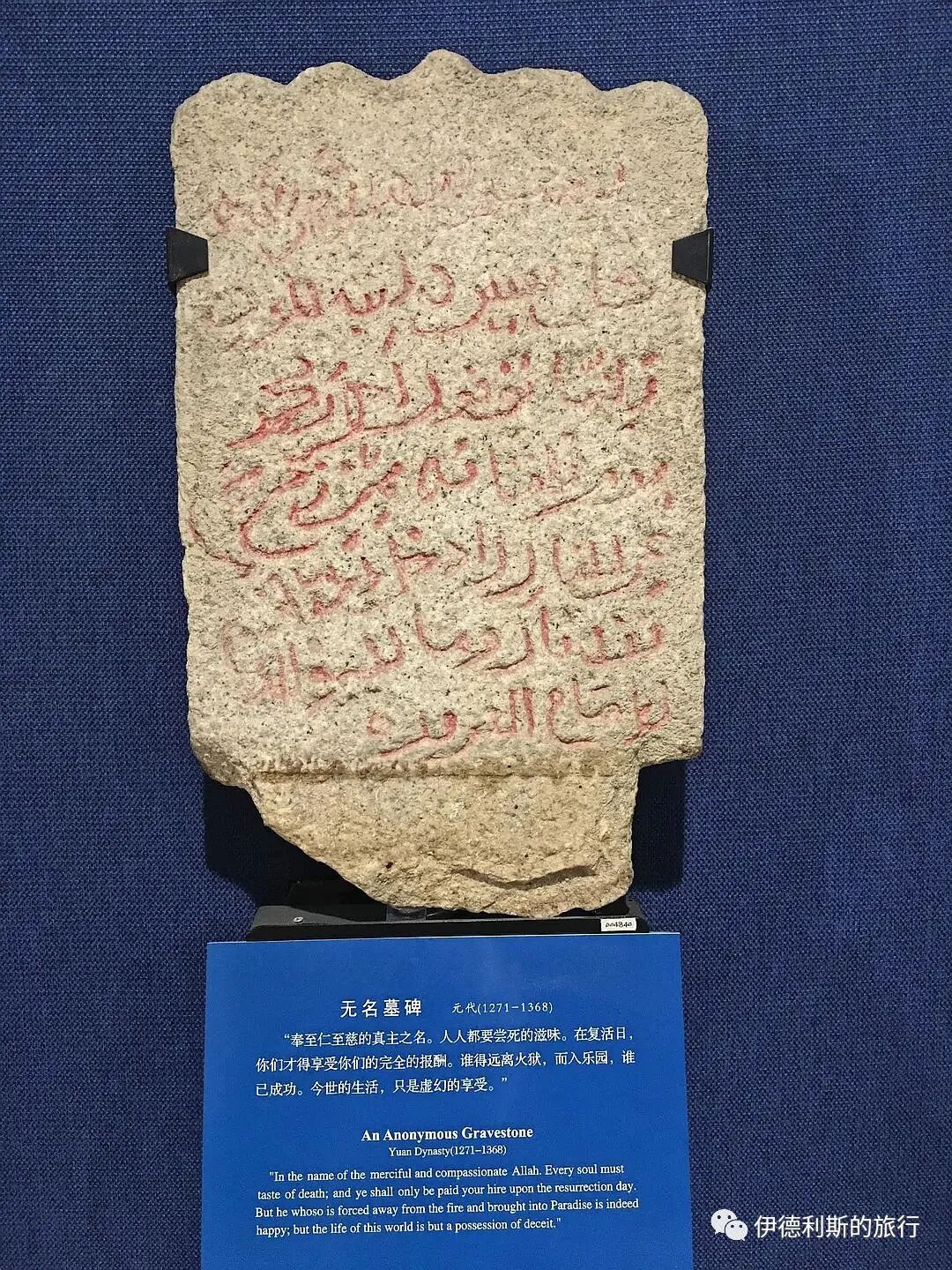
The granite tombstone in the image below is carved with the Quran, Chapter 55, Verses 26 and 27. The lower half containing the tomb owner's information is damaged, leaving only the knowledge that "the innocent servant died on Saturday, May 2nd, in the year..."
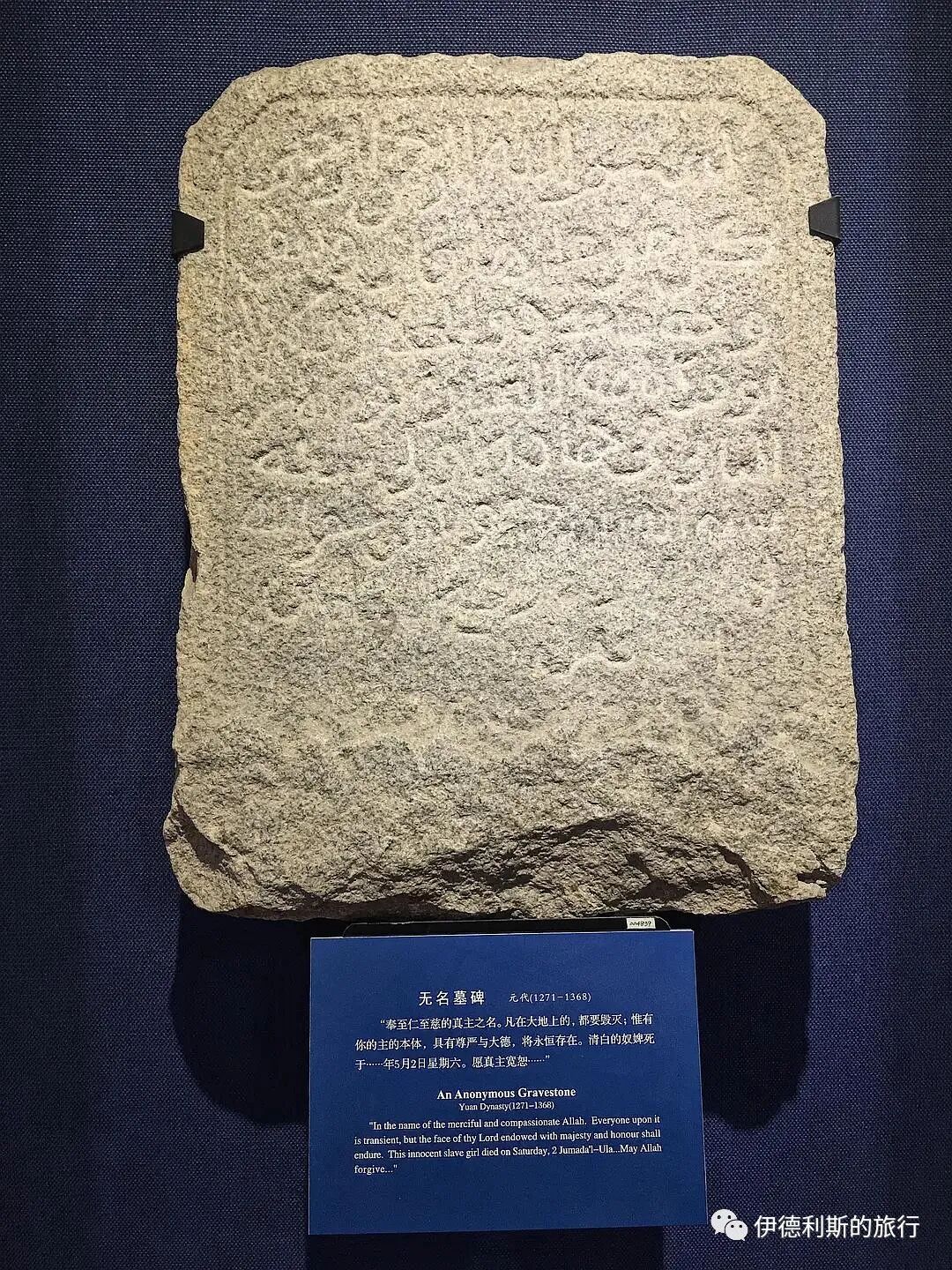
The white granite tombstone in the image below was discovered in 1947 in the foundation of the Deji Gate at the South Gate of Quanzhou. It was later built into the pier of the Shunji Bridge at the South Gate during bridge repairs that same year, and was only removed after being rediscovered. It is carved with the Quran, Chapter 55, Verses 26 and 27.
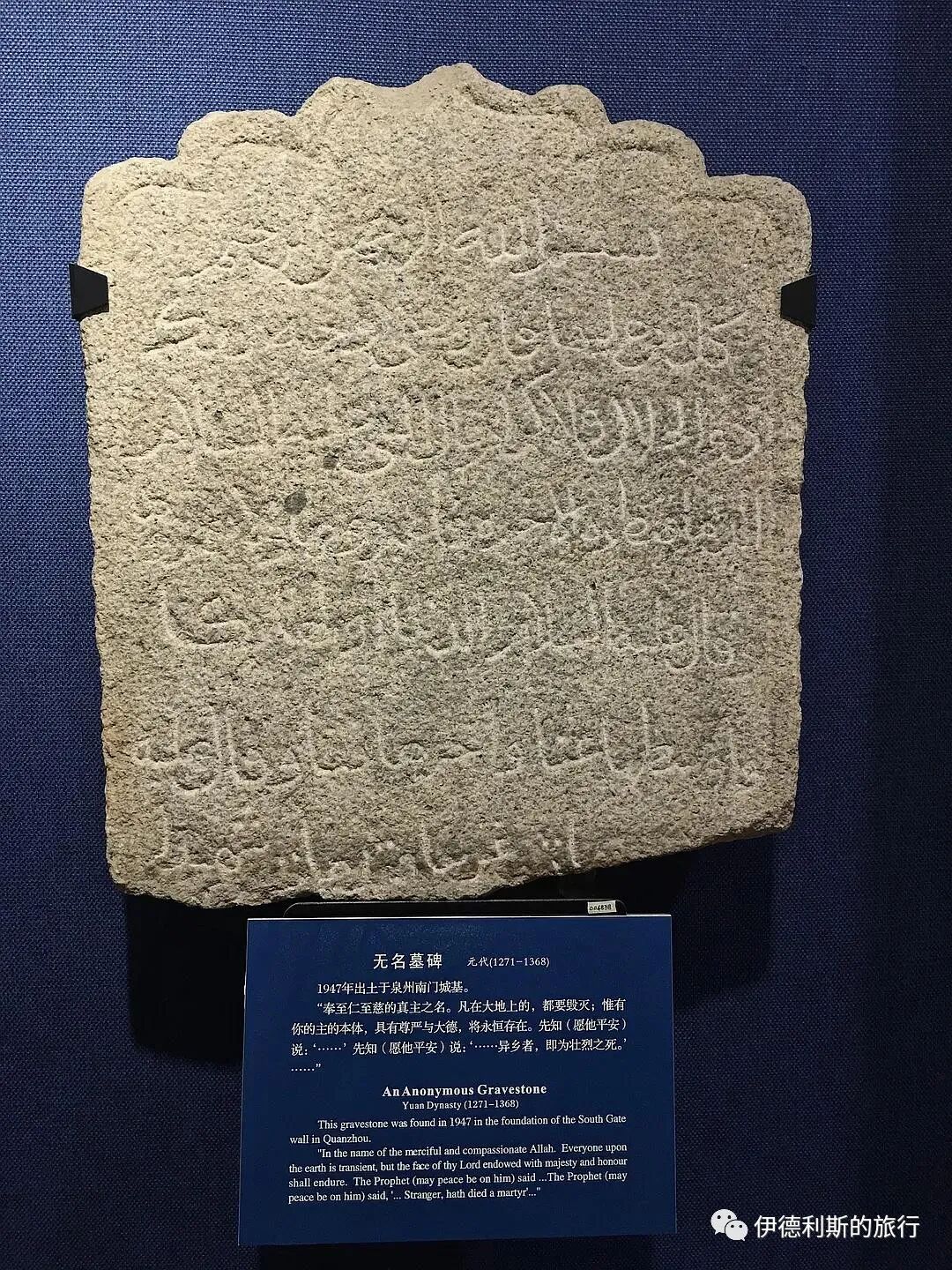
The chlorite tombstone in the image below was discovered in June 1959 in Xiawei Village, outside the Tonghuai Gate of Quanzhou. According to local villagers, this stone tablet was excavated from the city wall many years ago and used to pave a small field path. It was later dug up again during road repairs and kept in an ancestral hall because of its unique script. The content of the inscription includes an excerpt from the Quran, Chapter 39, Verse 4, and the full text of Chapter 55, Verses 26 and 27.
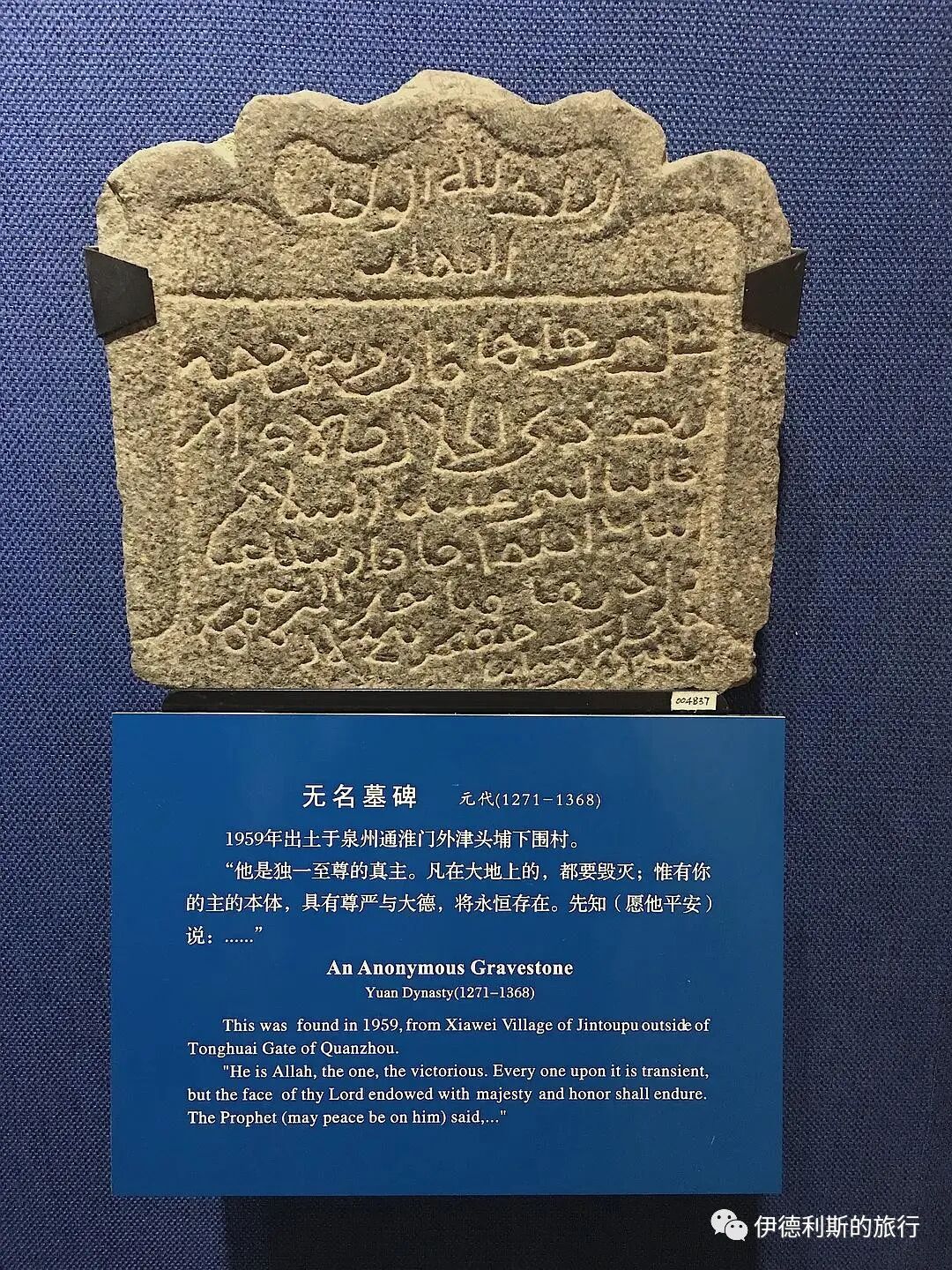
The chlorite tombstone in the image below was discovered in 1940 while excavating city foundations in the Jiaochangtou area of the Tumen Gate in Quanzhou. The tombstone features a "cloud and moon" design, with a full moon in the center and cloud patterns on both sides. The tomb owner's name is no longer legible; they passed away in 1350. Part of the inscription contains the Quran, Chapter 55, Verses 26 and 27.
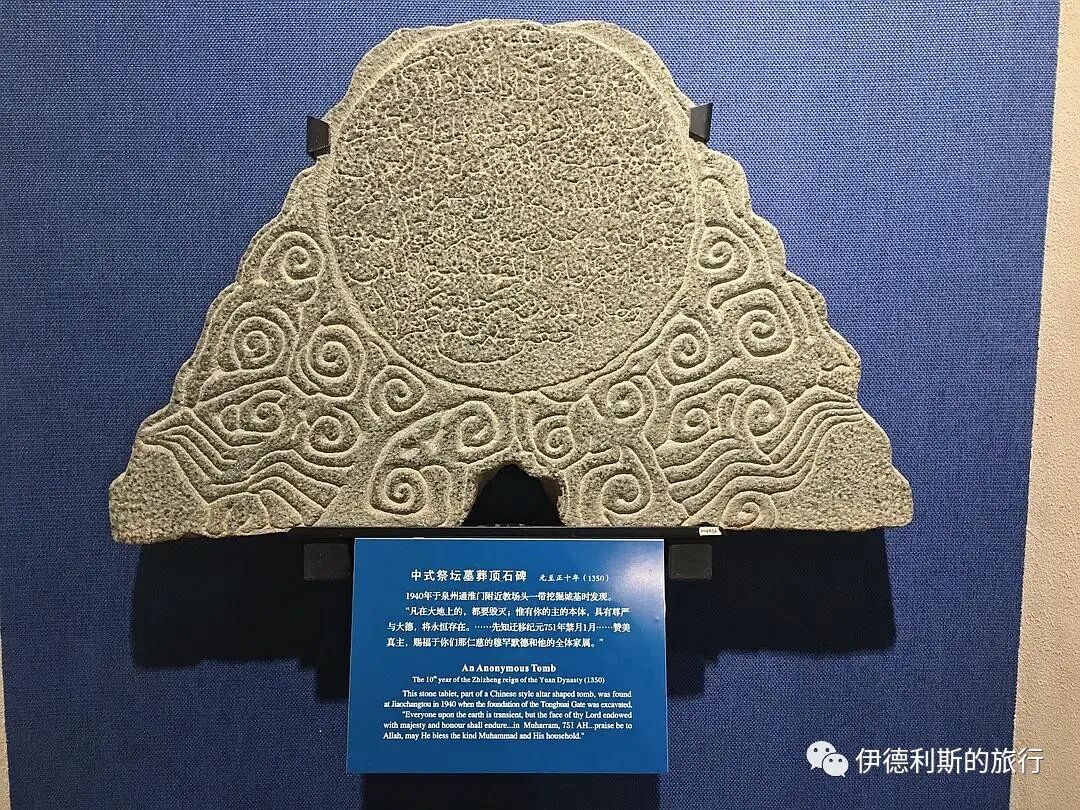
The chlorite tombstone on the left in the image below was excavated from the city wall at the East Gate of Quanzhou in 1930. A full moon is carved in the center in Arabic, with a cloud pattern on each side, forming a "cloud and moon" design. The upper center of the inscription features the Shahada, surrounded by "O Allah! You are the Most Merciful, please forgive and have mercy on all Muslim men and women." "
The chlorite tombstone on the right was discovered in 1945 in a resident's home at Chankou, South Gate of Quanzhou, and was recovered for preservation in 1953. Part of the inscription is an excerpt from the Quran, Chapter 29, Verse 57.
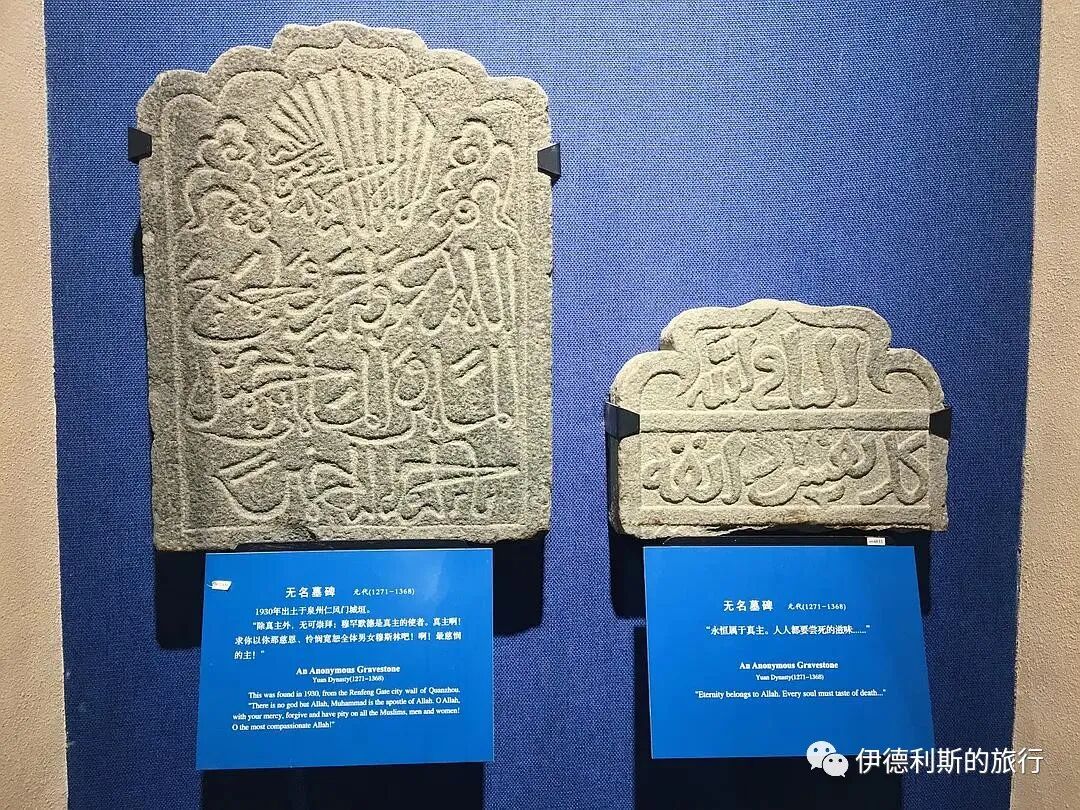
The chlorite tombstone in the image below was discovered in 1932 on the road surface of West Street in Quanzhou; it had originally been removed from the city wall to pave the road. The tomb owner was Khadija bint Fan Shah. The date of death is illegible, only "early morning, Sunday, April 28th" is known.
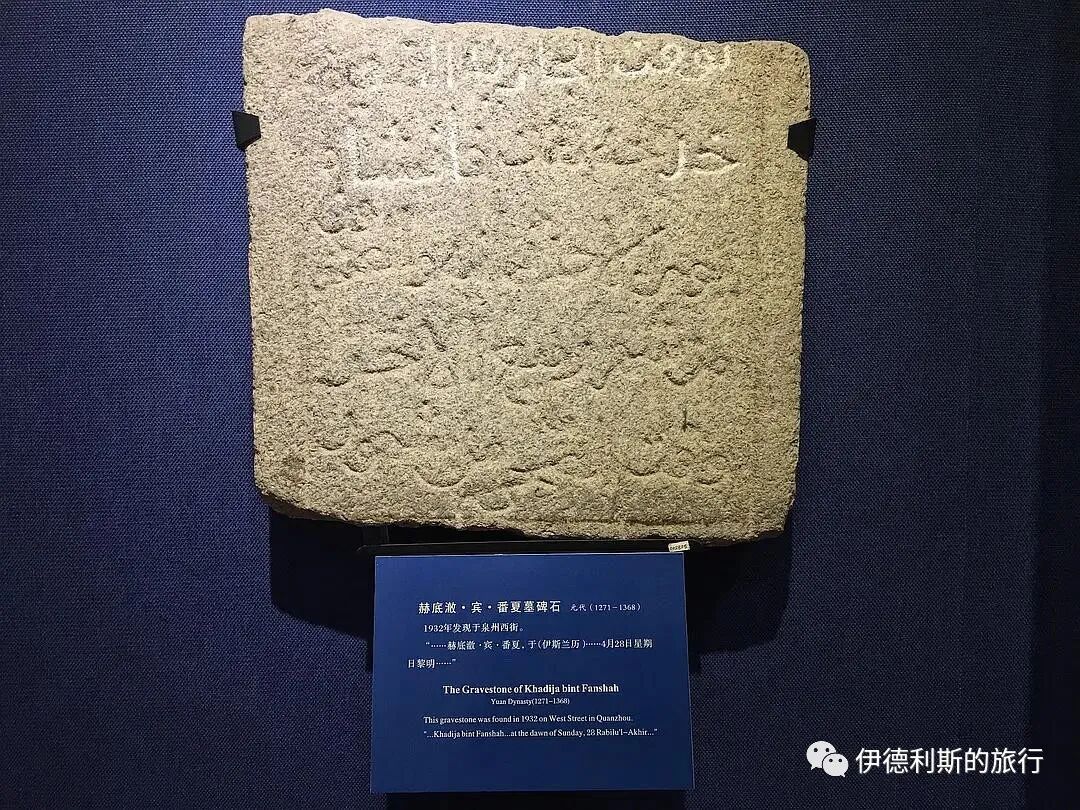
The chlorite tombstone in the image below was discovered in 1939 in a pond outside the East Gate of Quanzhou. The tomb owner's title was Sa'd al-Ajall al-Kabir, translated as "the first, the respected, the important." Regrettably, the other side was forgotten to be photographed at the time. It was written in Chinese characters: "Fengxun Dafu, Darughachi of Yongchun County..." Darughachi was a Yuan Dynasty official title that only Mongols and powerful Semu people could hold, and Fengxun was a subordinate official of the province. Yongchun County is 86 kilometers from Quanzhou. According to the "Yongchun Prefecture Gazetteer," there was once a Darughachi in Yongchun County named "Tuohuan Shaduo Luobo'er," who may be the same person as the tomb owner.
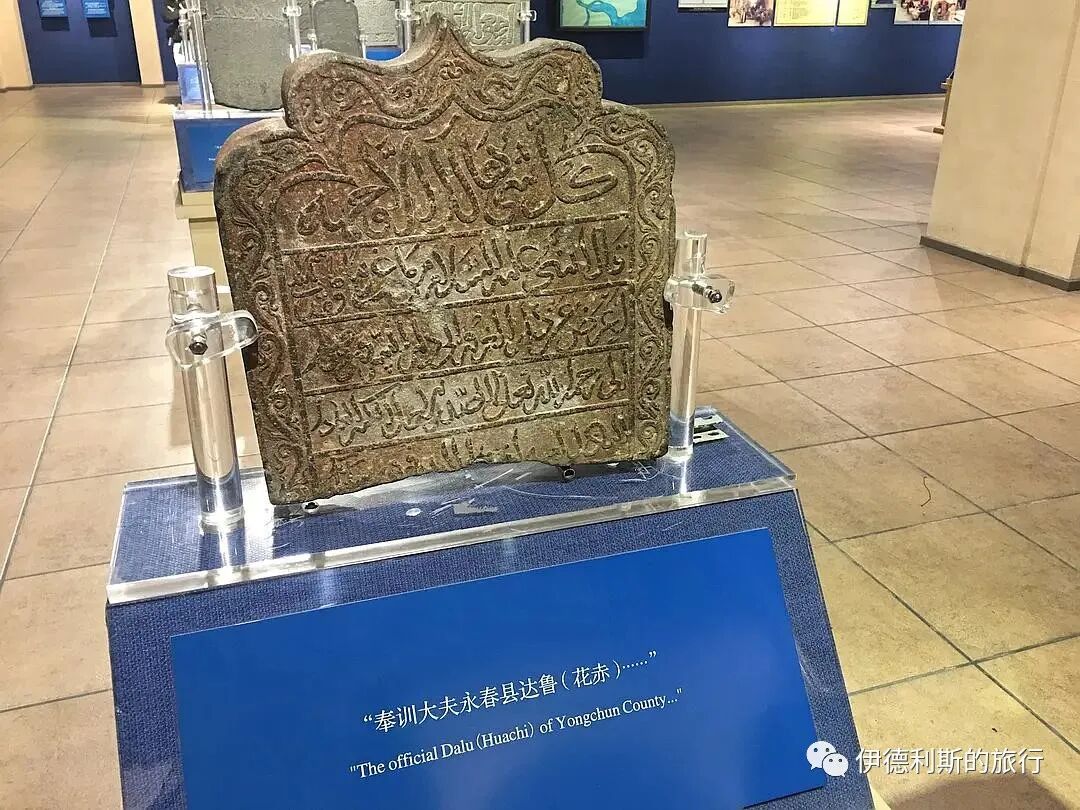
The chlorite tombstone in the image below was discovered in September 1958 beside a field in Huazhou Village, outside the South Gate of Quanzhou. According to local villagers, it was a city stone dug up from the South Gate wall of Quanzhou over 20 years ago. It was originally intended for building a house, but was later used to pave a small field path after it was discovered to be a tombstone. The tomb owner was named Abu Fatima, which means "father of Fatima." Additionally, part of the translation comes from the Quran, Chapter 55, Verses 26 and 27.
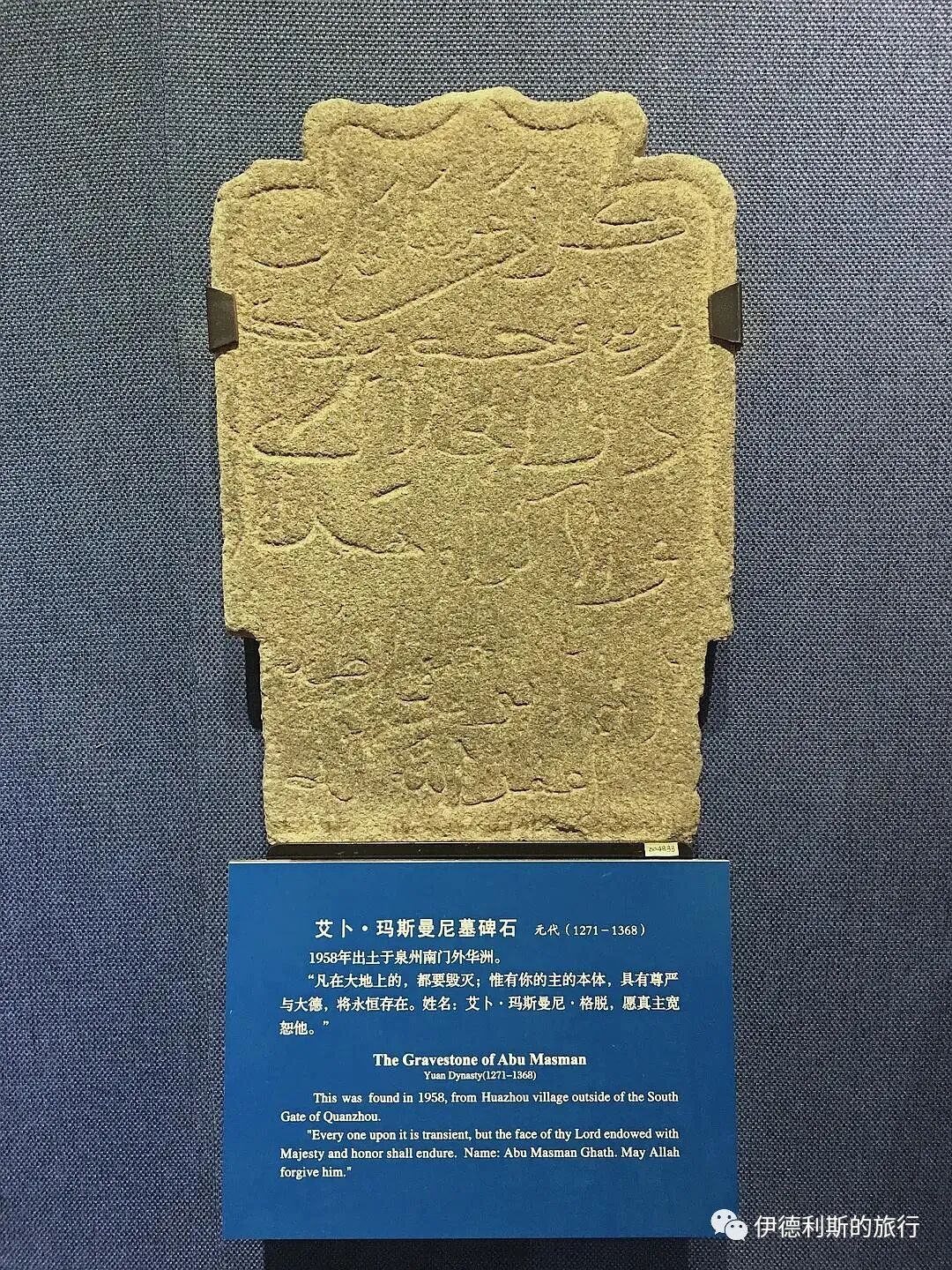
The chlorite tombstone in the image below was excavated in 1929 when the Renfeng Gate wall in Quanzhou was demolished. It was broken into three pieces and stacked into a residential wall, reappearing in 1950 after the wall collapsed. A corner of the stone was lost in the late 1960s. The tomb owner passed away in 1337. The inscription content is from the Quran, Chapter 21, Verses 34 and 35.
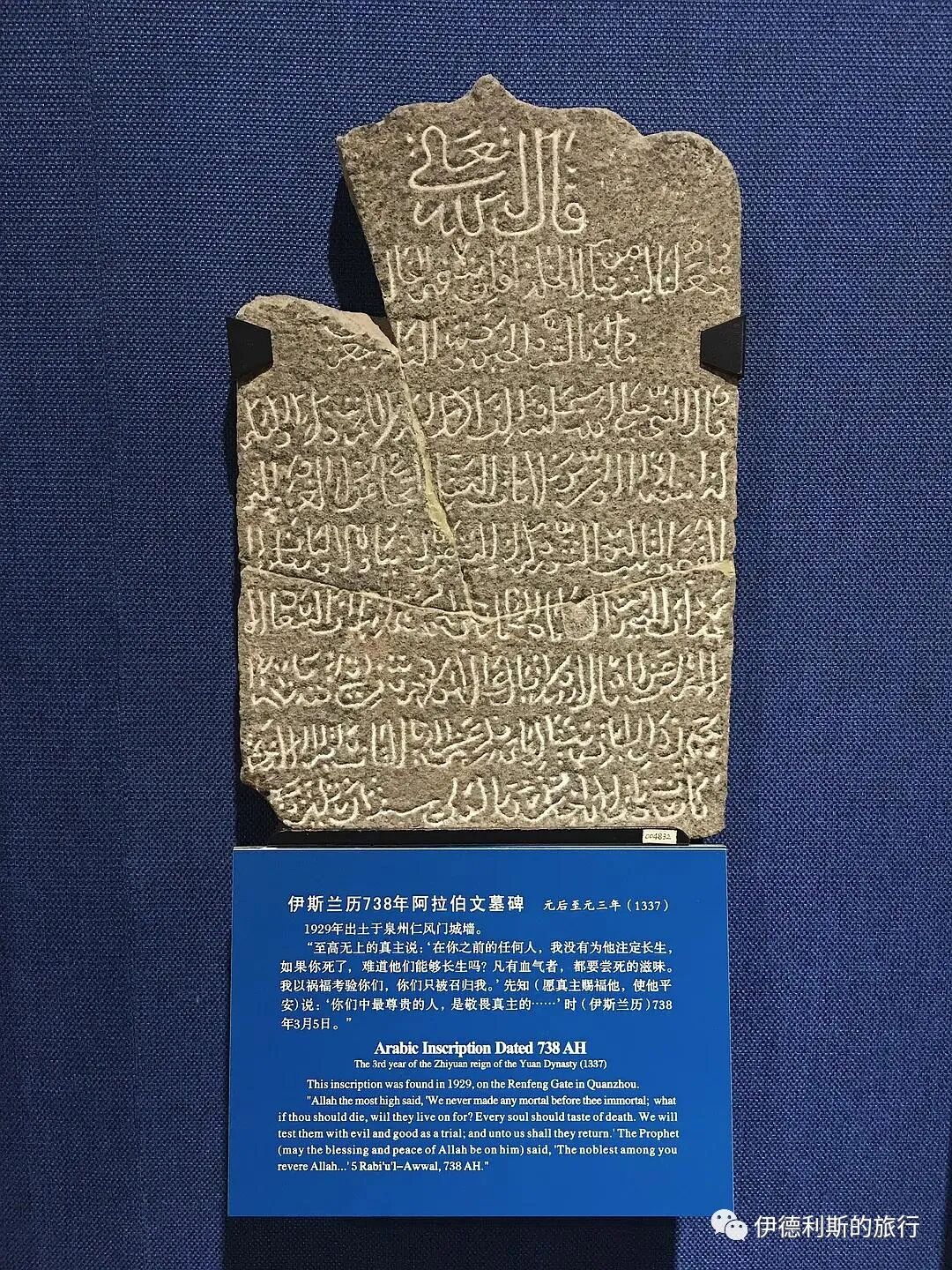
The white granite tombstone in the image below was discovered in 1926 by the famous archaeologist Chen Wanli on the South Main Street of Quanzhou. He entrusted the local government to move it to the Construction Bureau for preservation. The Construction Bureau moved shortly after, and the stone was left at the old site. During the 1935 Quanzhou flood, the old site collapsed and the stone was lost. In 1955, a resident dug up the stone in the ruins of the old Construction Bureau, but the bottom part containing the date was damaged. The tomb owner was the daughter of Sayyid Burtumi b. Sayyid Muhammad al-Hamdani, from Hamadan. Hamdani refers to the ancient Persian capital of Hamadan, located southwest of Tehran, which was an important commercial center and transportation hub in northwestern Persia.
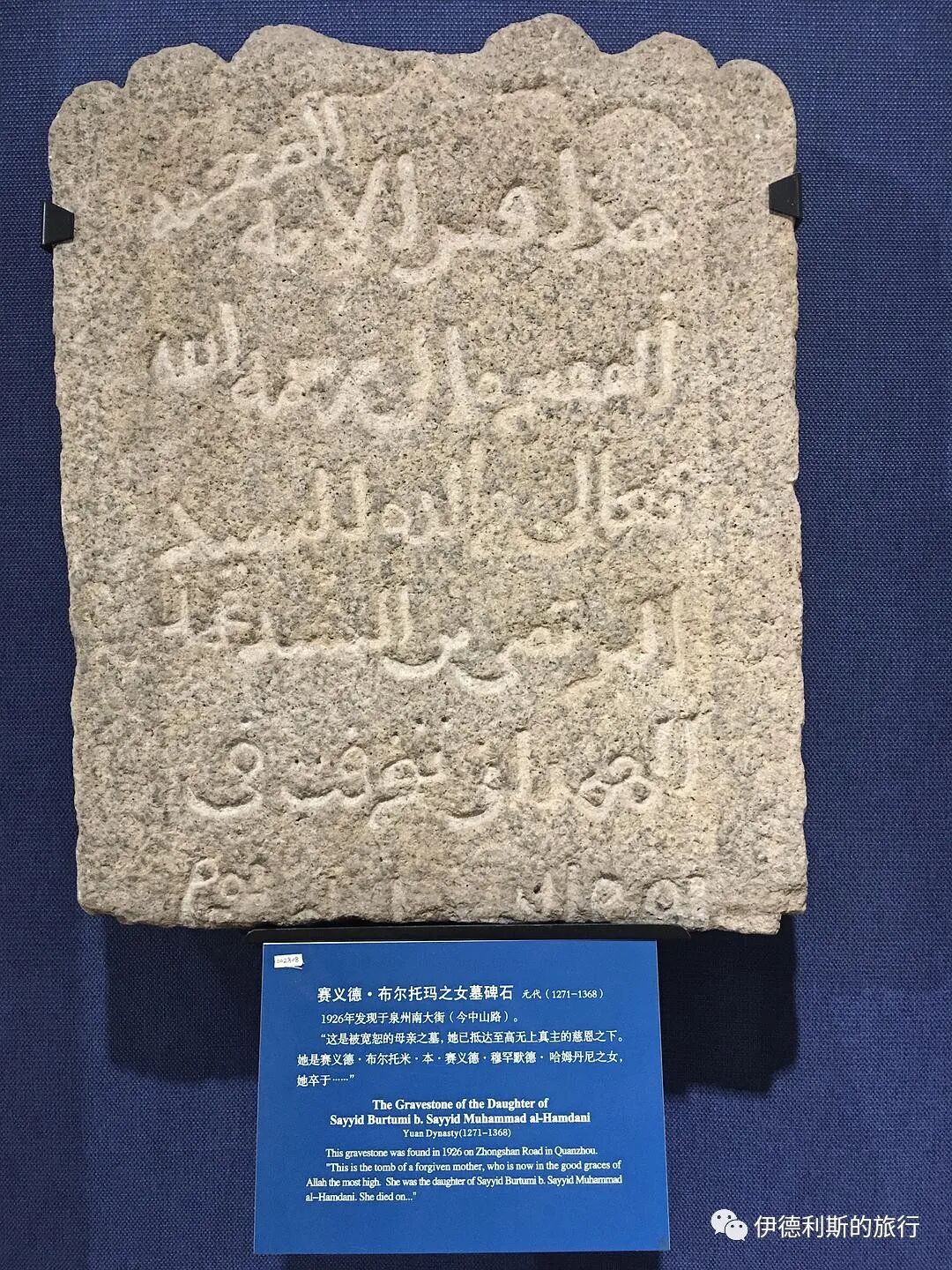
The chlorite tombstone from the Yuan Dynasty in the image below was discovered in April 1958 in the city foundation near the Tonghuai Gate of Quanzhou. The tomb owner was named Haji Khwaja b. Hasam al-Din b. Yalaki Siraf, who passed away in 1362. "Haji" indicates he had performed the Hajj, and "Khwaja" is a Persian honorific for a gentleman or elder. Siraf (also translated in historical records as Shilowei, Shilafu, Sanawei, Shiluo, or Siluo) was the largest trading port in the Persian Gulf between the 9th and 13th centuries. During the Song and Yuan dynasties, many Persian merchants traveled through here to Quanzhou for trade.
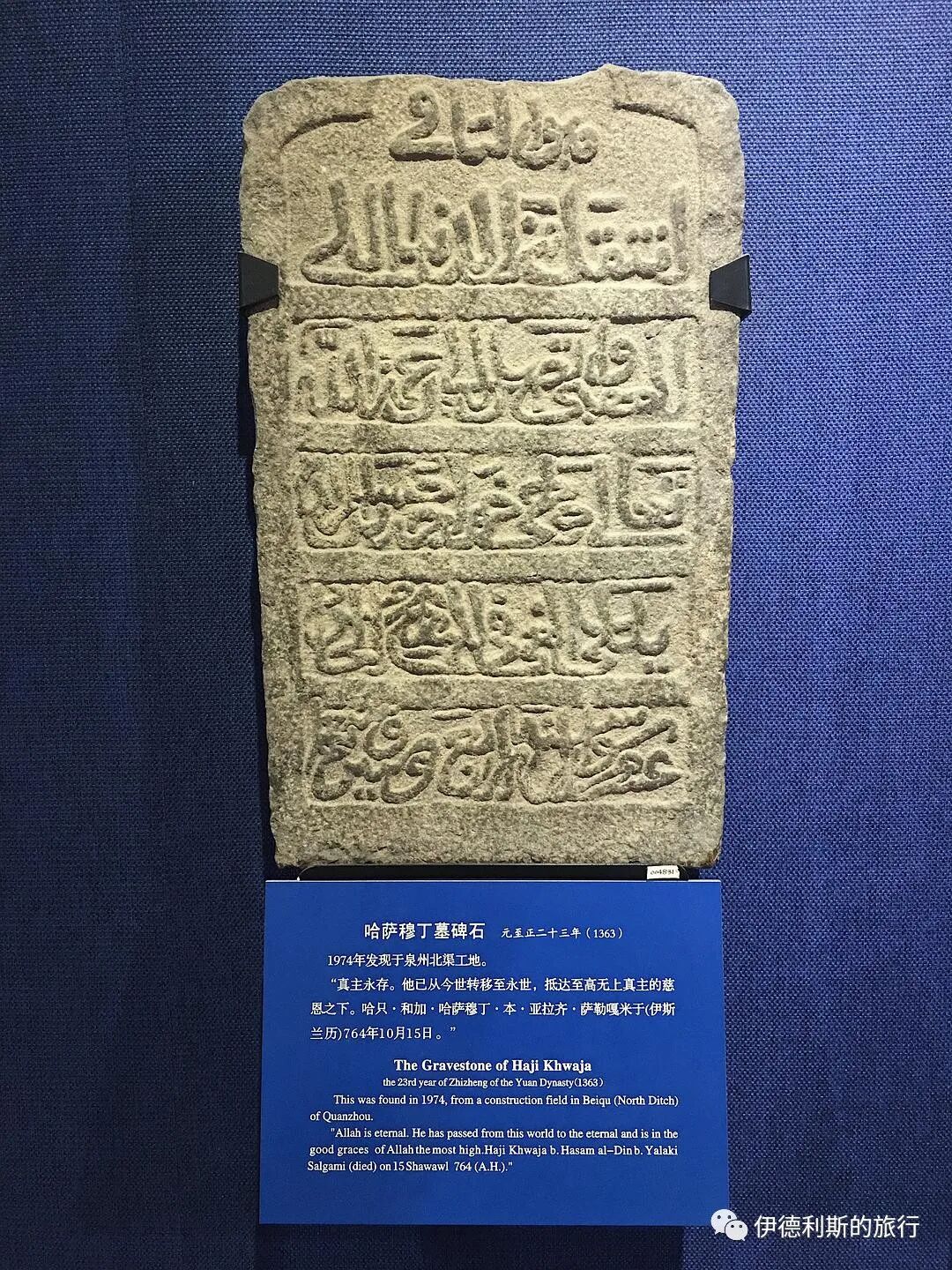
The chlorite tombstone in the image below was discovered in the summer of 1934 in the city foundation of the East Gate of Quanzhou. In addition to Arabic, it is also carved with Chinese characters: "Pan Zongling passed away on the first day of the fourth lunar month." The Arabic content is an excerpt from the Quran, Chapter 28, Verse 88. According to the "History of Song: Official Posts 7," the position of Zongling was established during the Jianyan era of Emperor Gaozong of the Southern Song Dynasty (1127–1130 AD) to manage money, grain, and taxes. By the Shaoxing era of the Southern Song Dynasty, the Zongling could directly participate in military and political affairs, holding significant power. However, the "Yuan Dianzhang" records that Zongling was a title for minor officials in prisons of various circuits, prefectures, and counties.
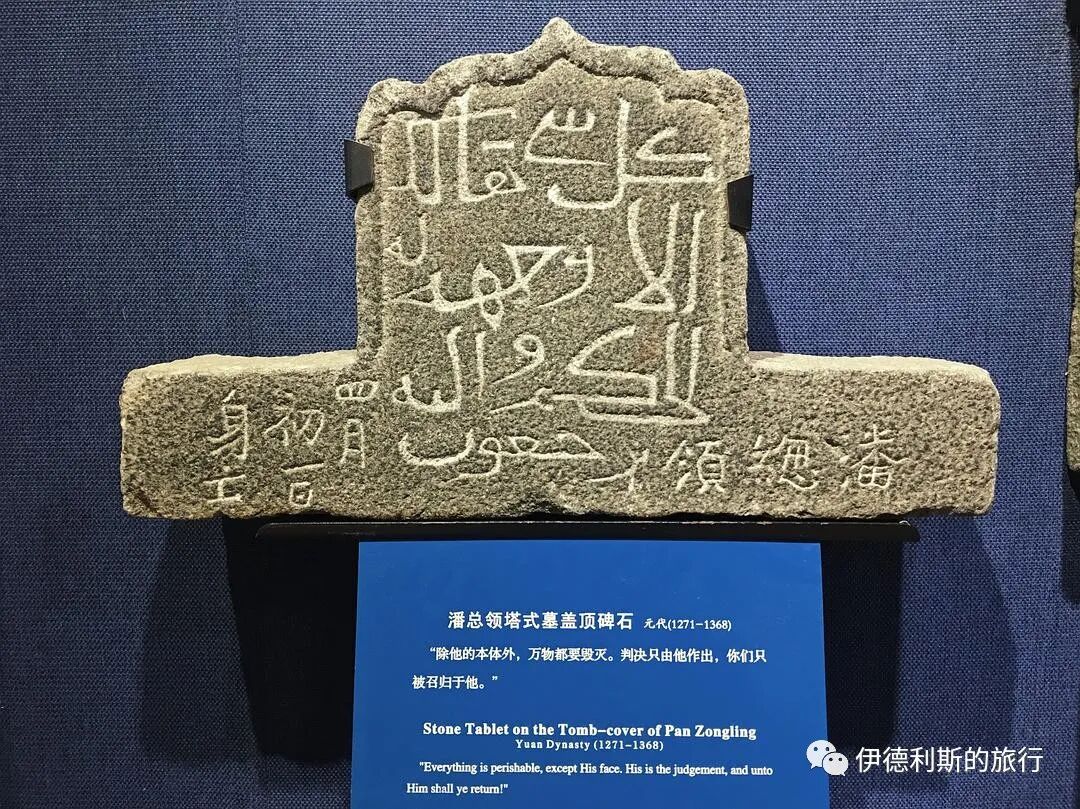
The chlorite tombstone from the Yuan Dynasty in the image below was discovered in 1938 while digging for city stones at the East Gate of Quanzhou. The tomb owner was named Granto Takin b. Sultan Husayn, who passed away in 1308. "Takin" is a Turkic title for a prince or noble.
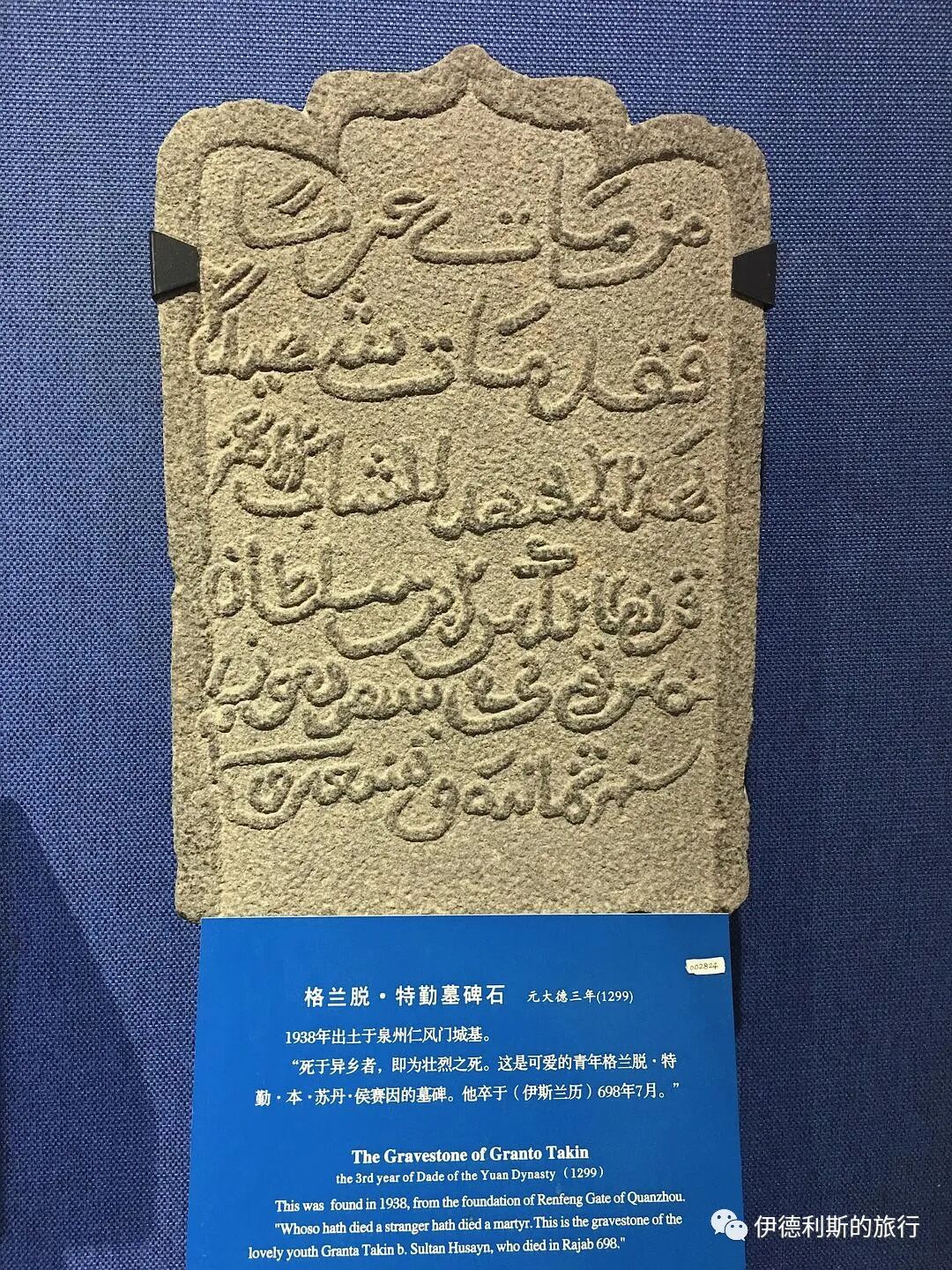
The chlorite tombstone from the Yuan Dynasty in the image below: the lower half was discovered in 1934 on a small field path outside the Tonghuai Gate of Quanzhou, and the upper half was excavated in 1942 while digging for foundation stones at the East Gate of Quanzhou. The tomb owner was an imam named Umar. Additionally, part of the text is from the Quran, Chapter 55, Verses 26 and 27, and Chapter 3, Verse 185.
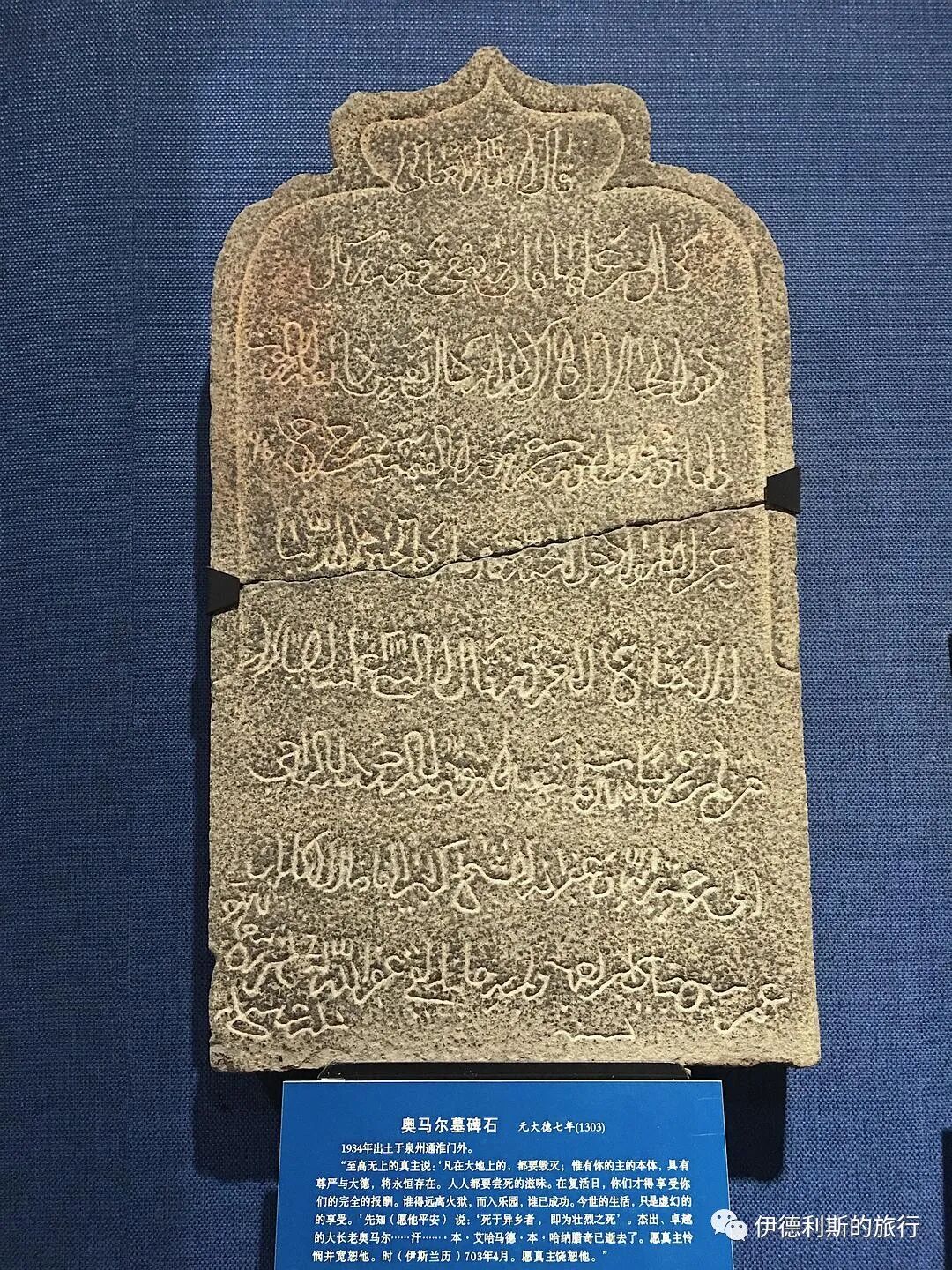
The chlorite tombstone in the image below was unearthed in 1978 on a street in Houlucun, Donghai Commune, outside the Tonghuai Gate of Quanzhou. It is carved with the Quran, Chapter 21, Verse 35, and Chapter 28, Verse 88.
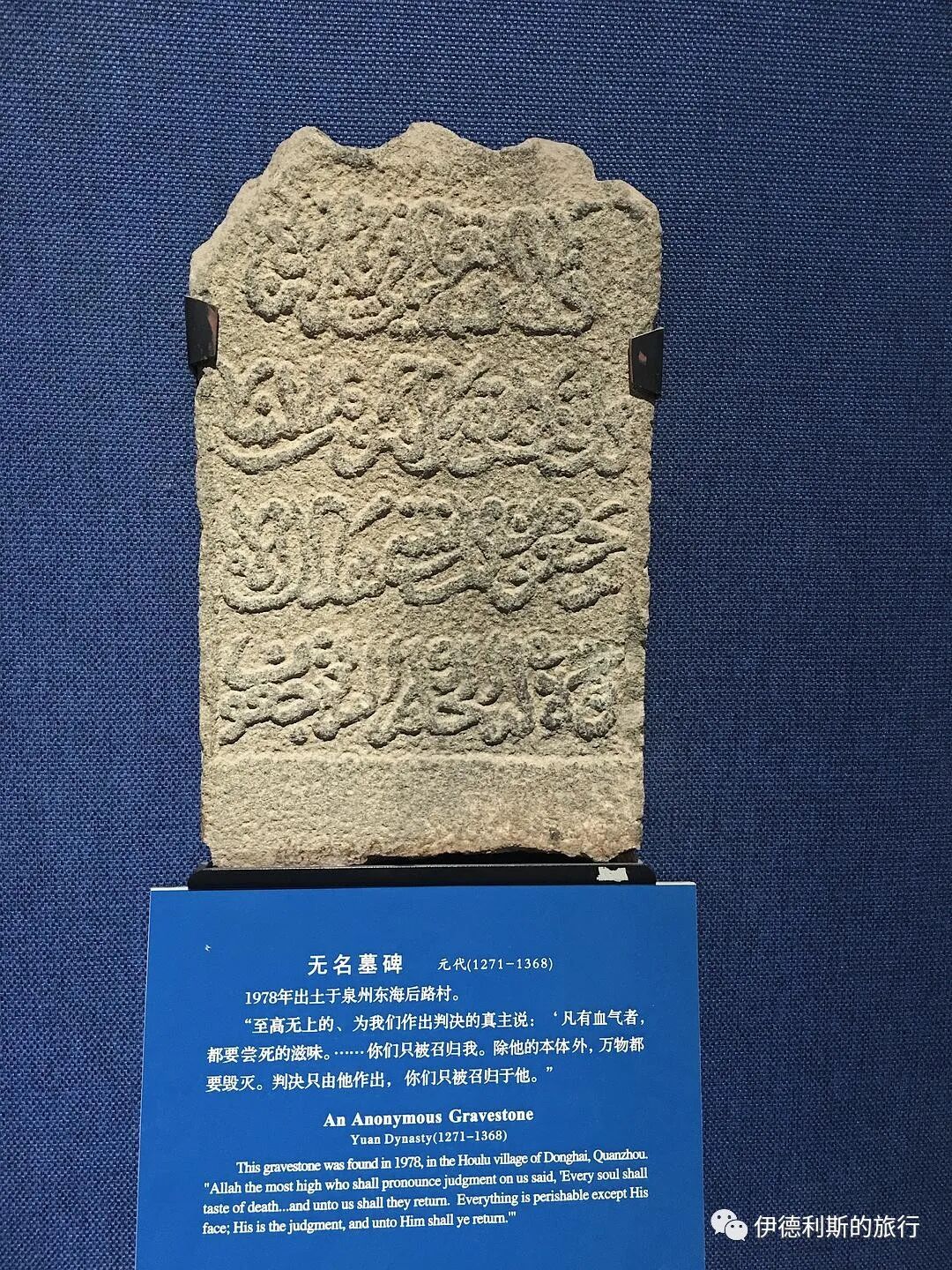
The chlorite tombstone in the image below was unearthed in 1935 at Jintoupu, outside the Tonghuai Gate of Quanzhou. The tomb owner was named Ibn Daghab b. Isfhasalar Jelashaghuni, who passed away in 1301. The inscription refers to him as a shaikh and also contains the Quran, Chapter 3, Verse 185.
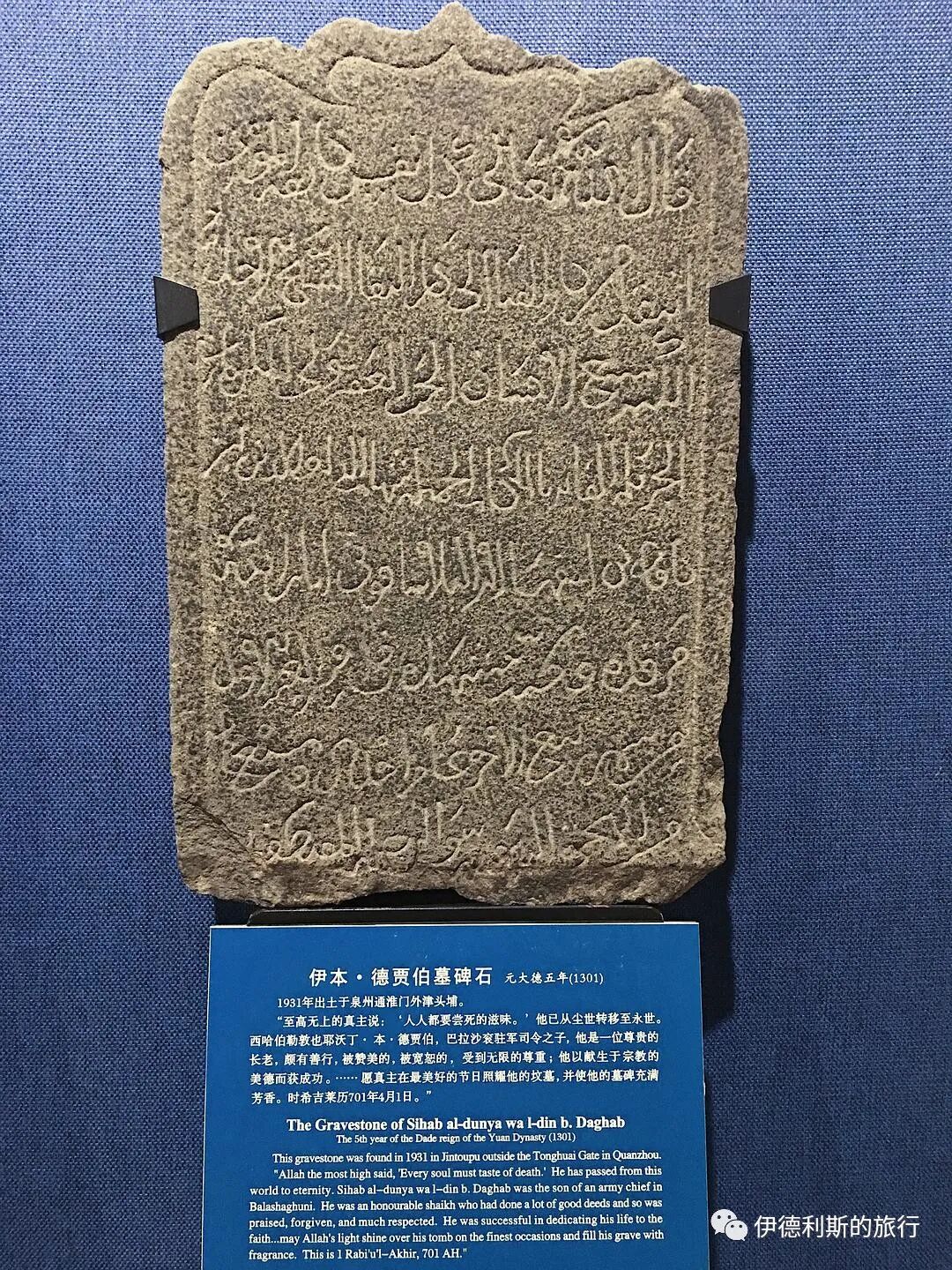
The chlorite tombstone from the Yuan Dynasty in the image below was discovered in 1936 in Jintoupu Village, outside the Tonghuai Gate of Quanzhou. The tomb owner passed away in 1358 and was named Banan b. Ghasim Isfahani. Here, "Banan" is the given name, "Ghasim" is the father's name, "Pahlavan" means monarch or king, and Isfahan is a famous ancient city in Persia.
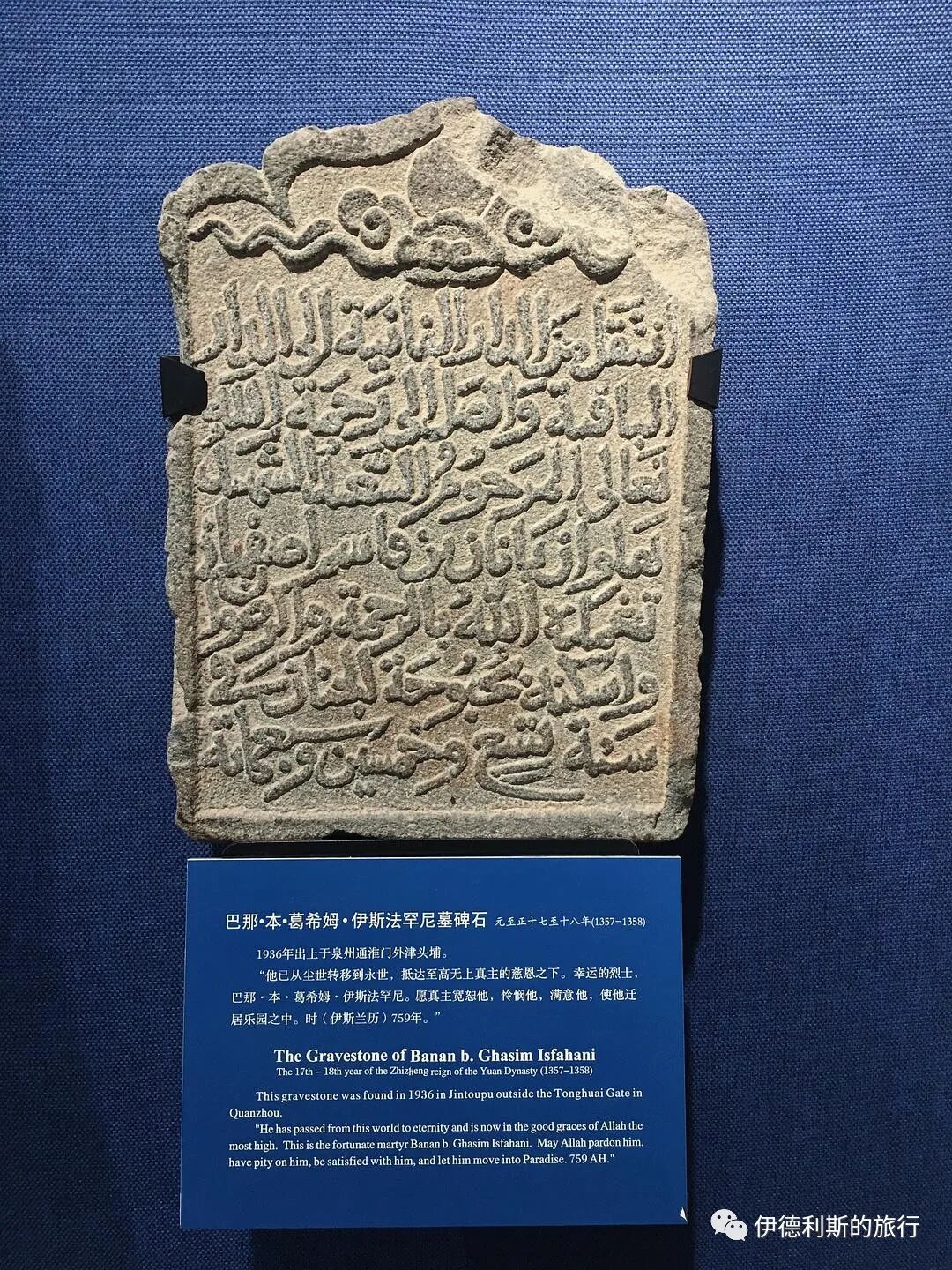
The chlorite tombstone in the image below was discovered in 1939 when the North Gate (Chaotian Gate) of Quanzhou was demolished. The tomb owner passed away in 1322 and was named Nuransa Ibn Khwaja Balad-shah b. Khwaja Haji Harbk Khorazmi. In this long string of names, "Nuransa" is his given name, "Balad-shah" is his father's name (meaning leader in Persian), "Harbk" is his grandfather's name, "Khwaja" indicates noble status, "Haji" indicates his grandfather had performed the Hajj, and "Khorazmi" indicates his family came from the ancient Central Asian city of Khwarazm.
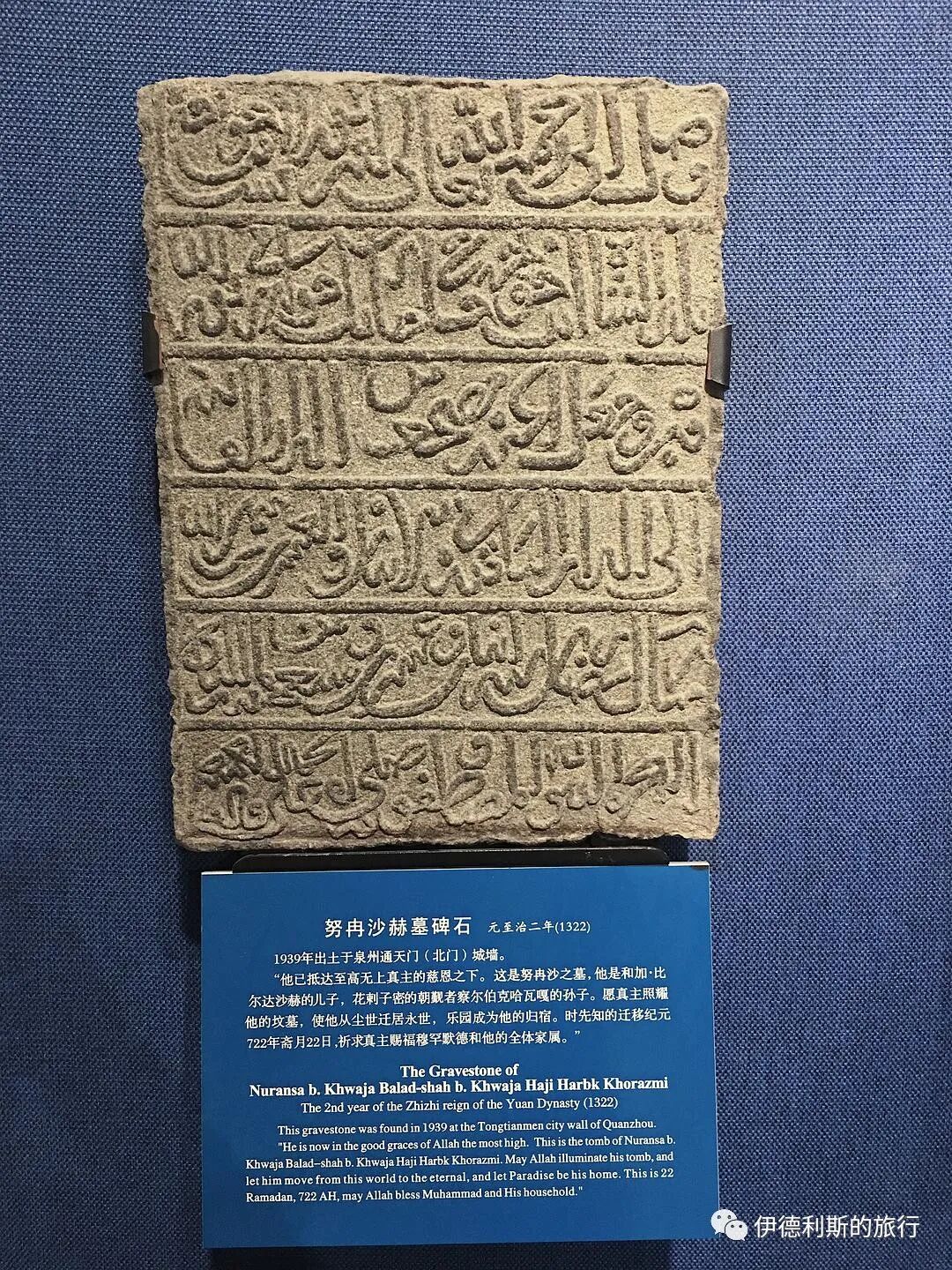
The white granite tombstone in the image below was originally used as a stone tabletop under the eaves of the Yuan Shan Tang (later changed to Fentuoshi) on Zhongshan Middle Road in Quanzhou. It is said to have been moved there in 1952 when buying city foundation stones from the East Gate of Quanzhou to build a house. In 1965, Ms. Wu Yuanying donated the stone to the Quanzhou Maritime Museum. The tomb owner was Husayn b. Muhammad Khalati. Khalati refers to Khalat, which was once the capital of Armenia.
Because the inscription is written in a very irregular style, there are still many doubts regarding its interpretation. If interpreted as "Hijri 567" (1171 AD), this stone would be the oldest Arabic stone tablet discovered in Quanzhou.
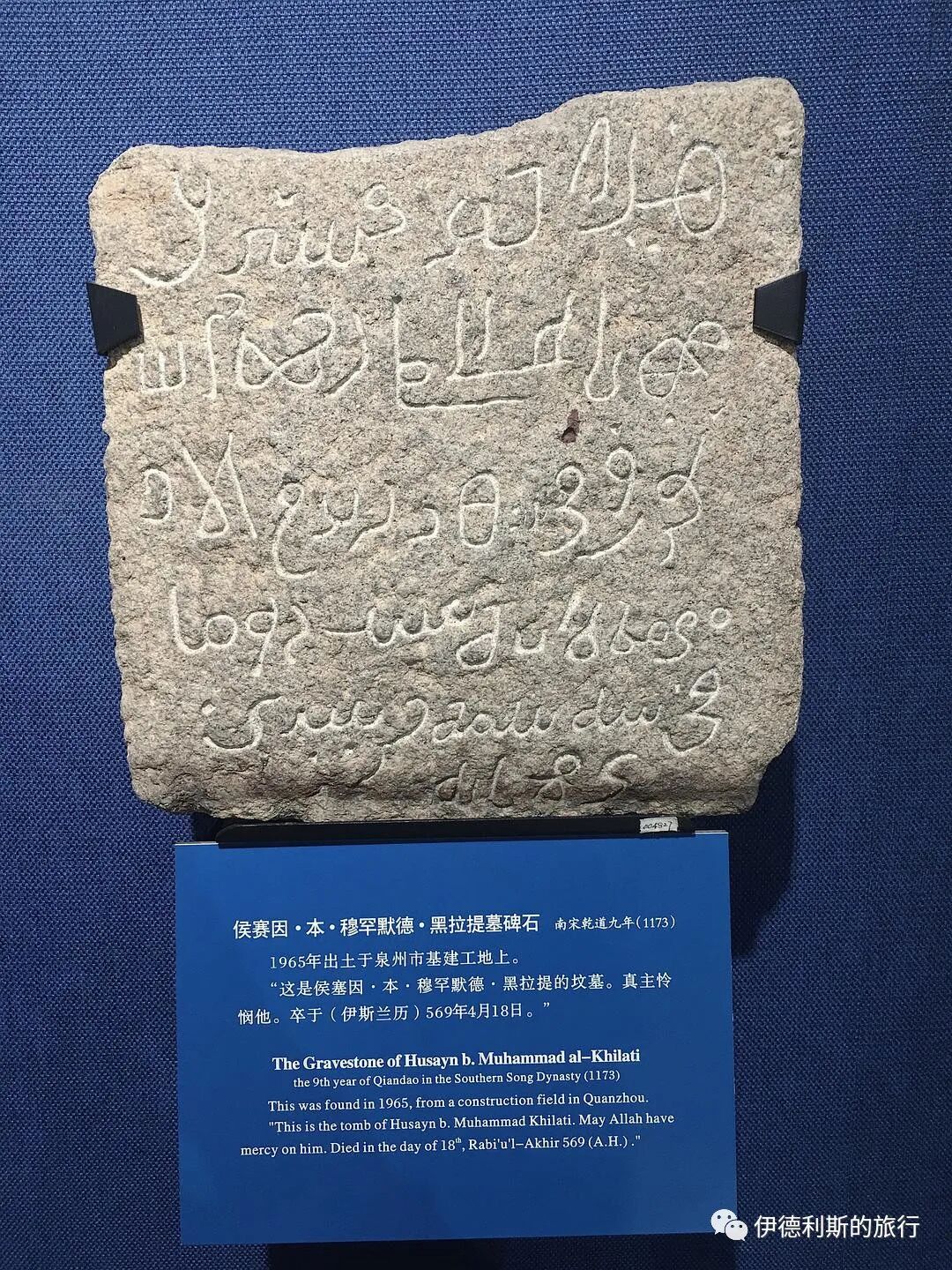
The chlorite stone on the left in the image below was discovered in 1940 during the demolition of the Tonghuai Gate in Quanzhou. It was carried home by workers to pave the floor. In 1956, it was found in the home of a farmer in Jintoupu, outside the Tonghuai Gate, alongside some large Indian-style carved bluestone and other Arabic inscriptions unearthed nearby. According to the farmer, these stones were bought as building materials. This stone was initially used as a washboard and later as a paved step. This inscription records that an elder named Naina Umar b. Ahmed b. Mansur b. Umar, from the ancient city of Abyani in Yemen, built the gate and walls of a blessed mosque.
The chlorite stone on the right was discovered in 1948 in the city foundation of the South Gate of Quanzhou. It tells of a man named Muhammad b. Abi Bakr, also known as Mairding, who built a mosque.
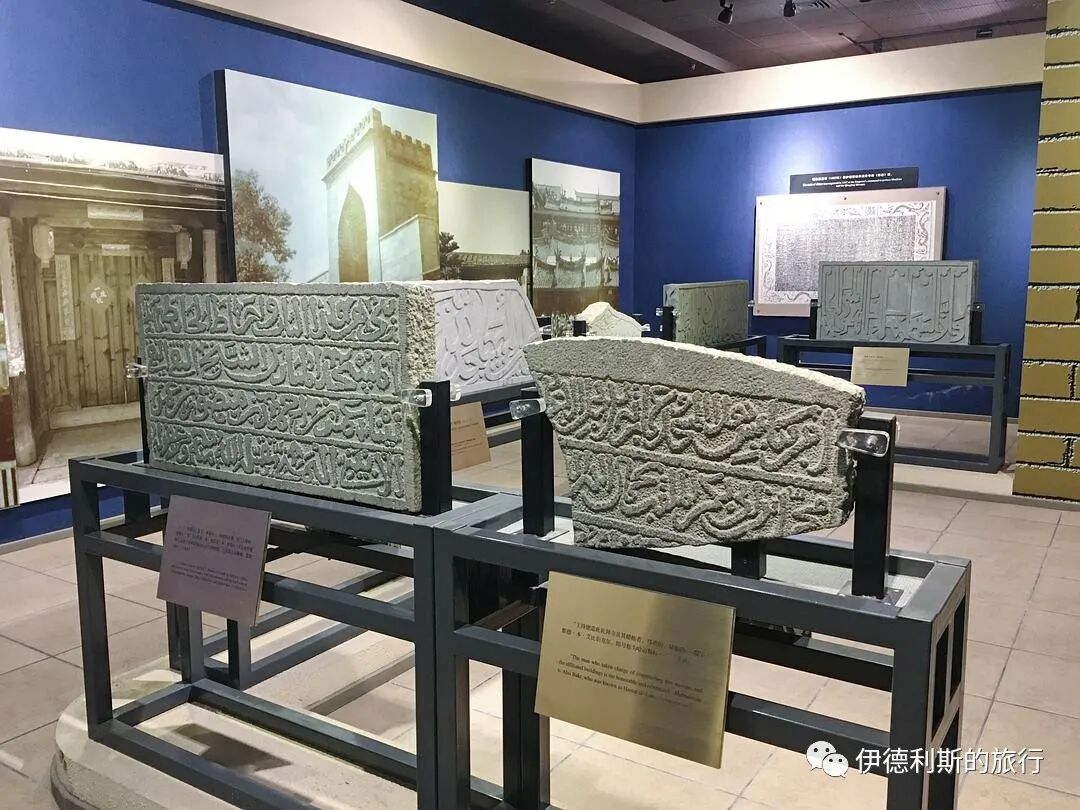
The image below shows a mosque column base unearthed in 1998 at Jintoupu, outside the Tonghuai Gate of Quanzhou.
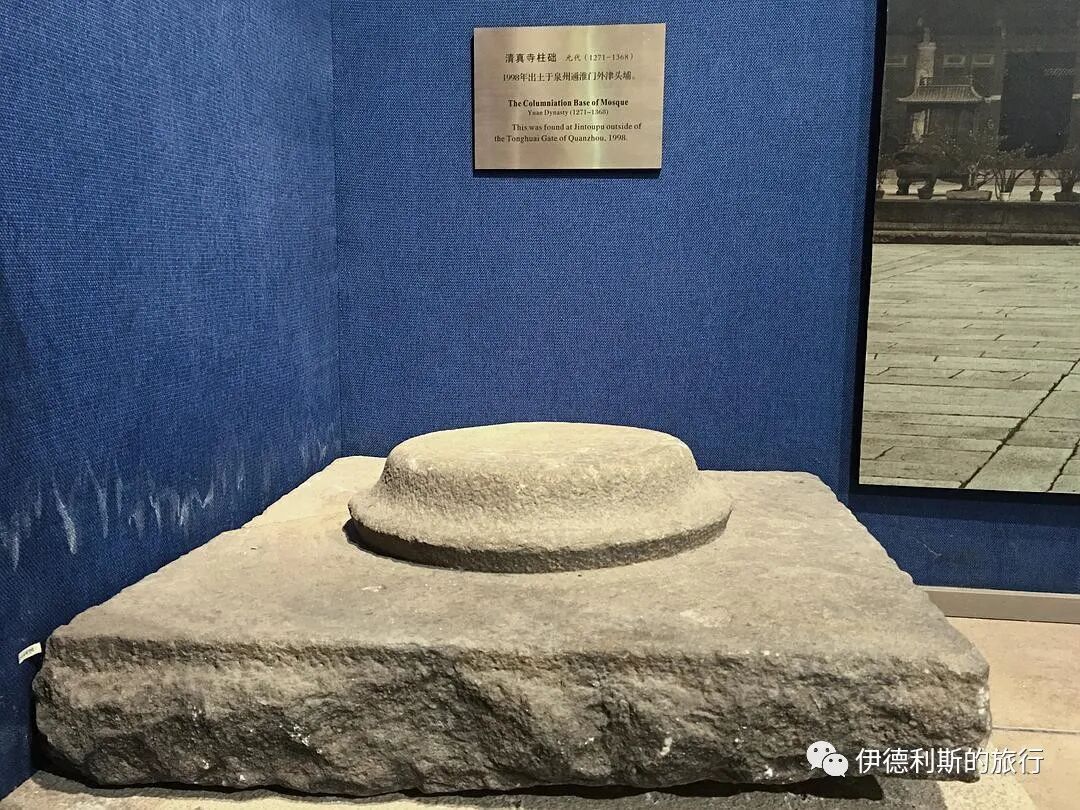
The "Yuan Dynasty Guo Family Ancestral Tombstone" in the image below was discovered in 1974 in the home of a villager in Fashi Village, outside the Tonghui Gate of Quanzhou. The original site was the "Liu Gong Qi" cemetery, also known as the "Chessboard Hole" cemetery, located east of Guangtang Palace and Tiantang Well in Fashi Village. Liu Gong Qi was quite large, consisting of a large square stone platform with two levels, each with two Muslim tower-style stone tomb covers. The Guo family tombstone was erected in front of the upper tomb cover. In 1956, Liu Gong Qi was demolished to level the land, and the stone was laid flat over the tomb. In 1967, a villager took the stone to pave a warehouse floor, breaking it into two pieces in the process. It was later discovered and protected by descendants of the Guo family. In 1974, the investigation team of the Quanzhou Maritime Museum, following clues from the "Baiqi Guo Family Genealogy," conducted multiple investigations in Fashi Village and finally discovered the tombstone, which was moved to the Quanzhou Maritime Museum for collection in 1978.
The upper right corner of the tombstone is vertically carved with the seal script "Tingpo," with "Jin" below it, representing Tingpo, Fashi, Jinjiang County. The upper left corner is vertically carved with the seal script "Baiqi," with "Hui" below it, representing Baiqi, Hui'an County. These two places are where the Baiqi Guo family lived successively. Below is vertically carved in regular script: "Yuan Dynasty Guo Family Ancestral Tomb."
Fashi Village is on the north bank of the Jinjiang River in the eastern suburbs of Quanzhou and was an important commercial wharf for the Port of Quanzhou during the Song and Yuan dynasties. During the Yuan Dynasty, there was a stone street along the river several miles long from Meishan to Bantou in Fashi. In 1346, the Moroccan traveler Ibn Battuta arrived at the Port of Quanzhou. In his "Travels of Ibn Battuta," he wrote: "The city's port is one of the great ports of the world, perhaps even the largest. We saw about a hundred large ships in the port, and countless small boats. This port is a huge bay extending into the land, meeting the great river." "
The Chinese characters on the tombstone are easy to explain, but the Arabic interpretation is very difficult. In the early 1980s, Chen Dasheng, director of the Quanzhou Maritime Museum, interpreted the Arabic as "Ibn Qds Daqqaq Nam," meaning "Ibn Quds Daqqaq Nam." Because "nam" means "famous" in Persian, he believed the Baiqi Guo family were descendants of Persians.
However, Professor Wu Youxiong of Quanzhou Normal University proposed a completely different interpretation in his book "The Origin of the Baiqi Guo Surname and Scripture Hall Education." After consulting with the director of the Arabic Department of China National Radio, Wu Youxiong believed this passage was written in Arabic script to spell out the Minnan dialect "Yin Go Zi Ta-gag Mou," meaning "Tomb of Guo Deguang of the Yuan Dynasty." Because previous interpreters were unfamiliar with the Minnan dialect, they had not translated it. Guo Deguang was the ancestor of the Baiqi Guo family who came to Quanzhou, moving from Zhejiang to Quanzhou during the Yuan Dynasty to settle down.
The method of using Arabic script to spell out Chinese is called "Xiao'erjing" or "Xiao'erjin," also known as "Xiao Jing," and was used to annotate Islamic classics while studying them. According to the Guo family genealogy, Guo Deguang's tomb was rebuilt several times. This tombstone was very likely re-erected in the Qing Dynasty by Guo descendants who practiced Islam.
In 1709 (the 48th year of the Kangxi era), Chen Yougong, the regional commander of Ting, Yan, and Shao in Fujian, came to Quanzhou to revive the faith and established scripture hall education in the Qingjing Mosque. At that time, Guo Honglong, of the fourth branch and eighth generation of the Guo family, moved from He Cuo in Baiqi to live in the Qingjing Mosque and converted to Islam due to the "distinction between strong and weak branches." After Honglong converted, other Guo family members who came to Quanzhou city for business also came to the Qingjing Mosque to convert. According to the Guo family genealogy "Preface to Returning to the Hui Faith," after the Guo family re-entered the faith, led by the eighth-generation descendant Guo Sizhi and the tenth-generation descendant Guo Zhiquan, and through the education of two imams, "Master Zhuang" and "Master Ge," more than a hundred people joined Islam, mainly from the fourth branch to which Guo Honglong belonged. Therefore, the Guo descendants at this time should have been able to use Arabic script to spell out Minnan dialect to write Xiao Jing.
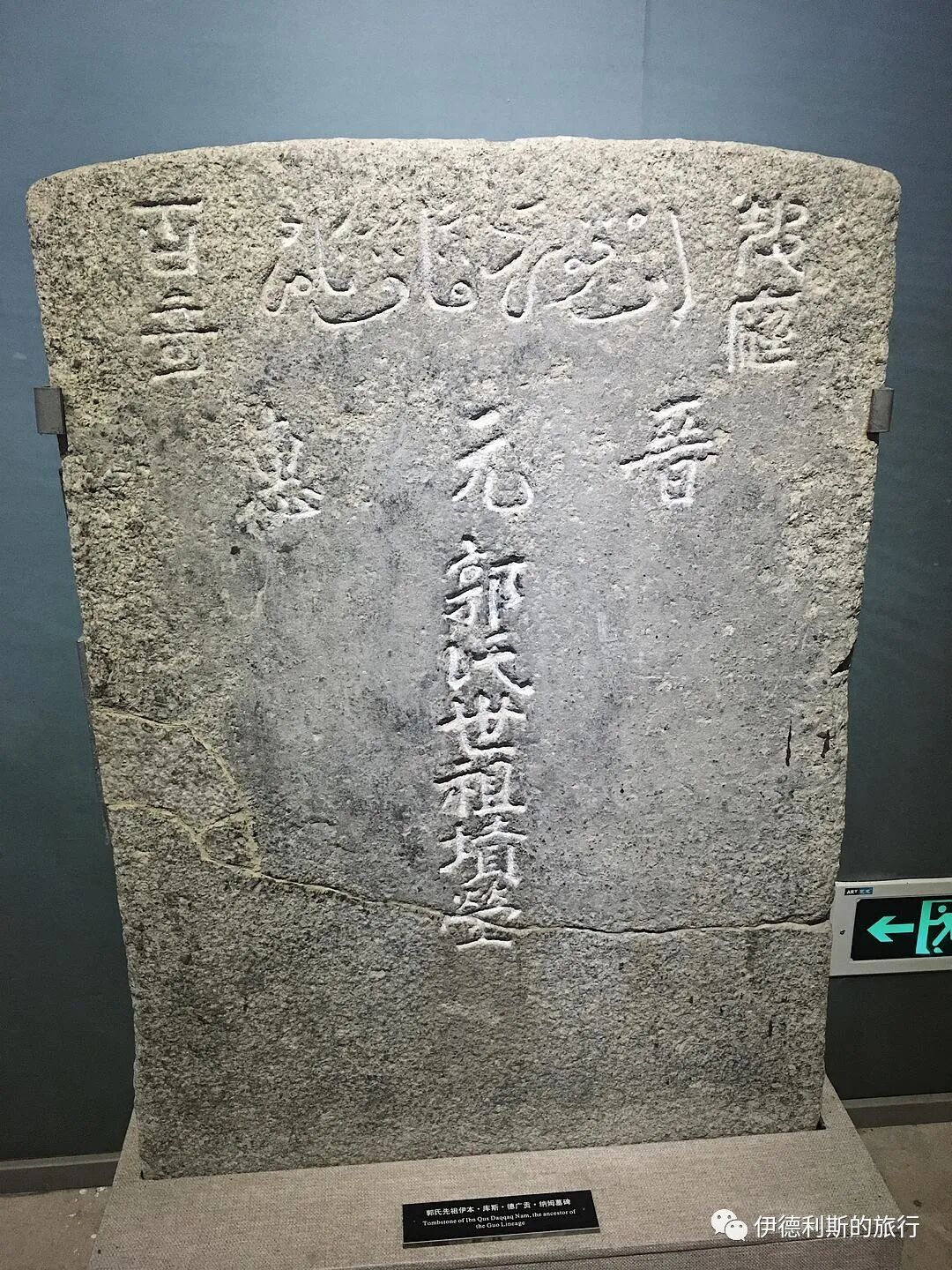
On the south lawn of the Maritime Museum, there are hundreds of Muslim Sumeru-pedestal stone tombs from the Song and Yuan dynasties. Most have ruyi-shaped six feet at the bottom, with plain or lotus-petal designs in the middle, a few are carved with Arabic, and the top tomb stones are mostly missing.
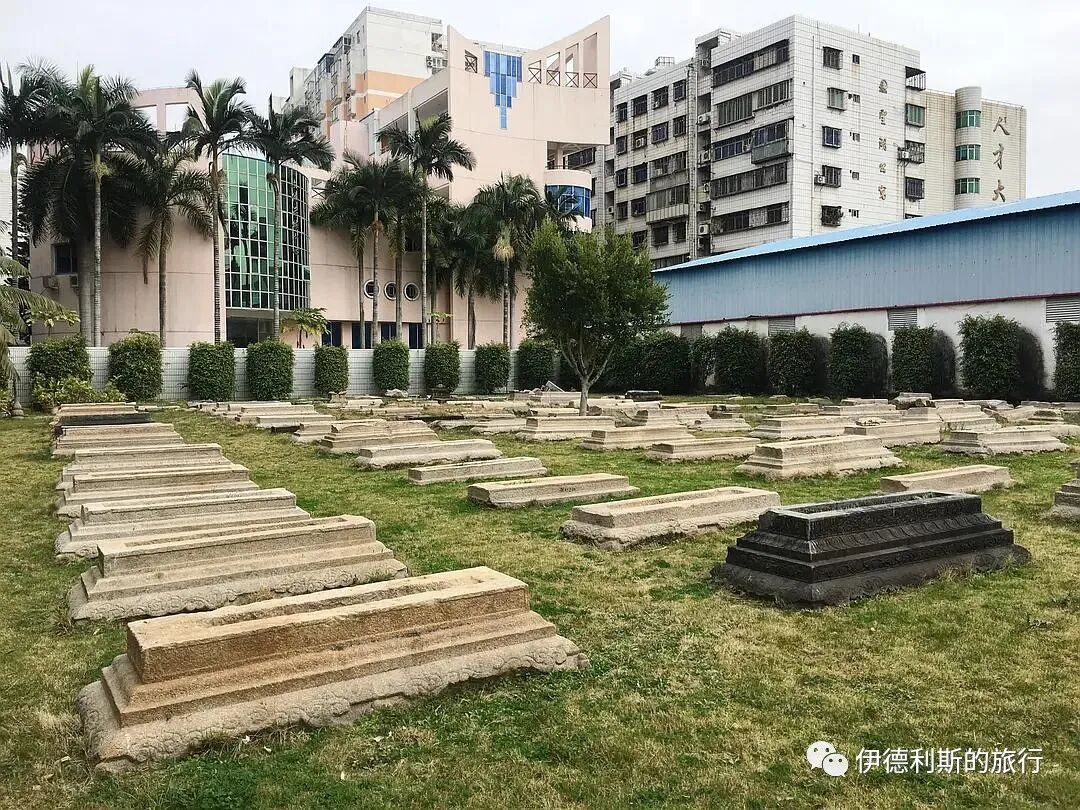
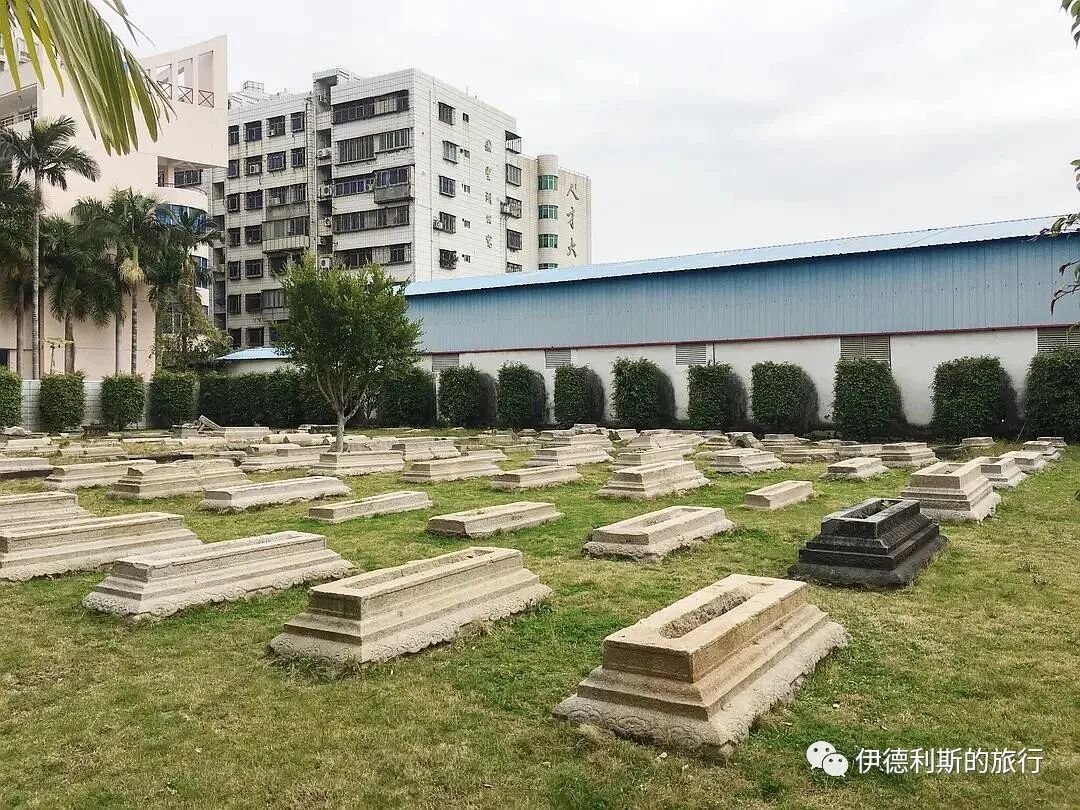
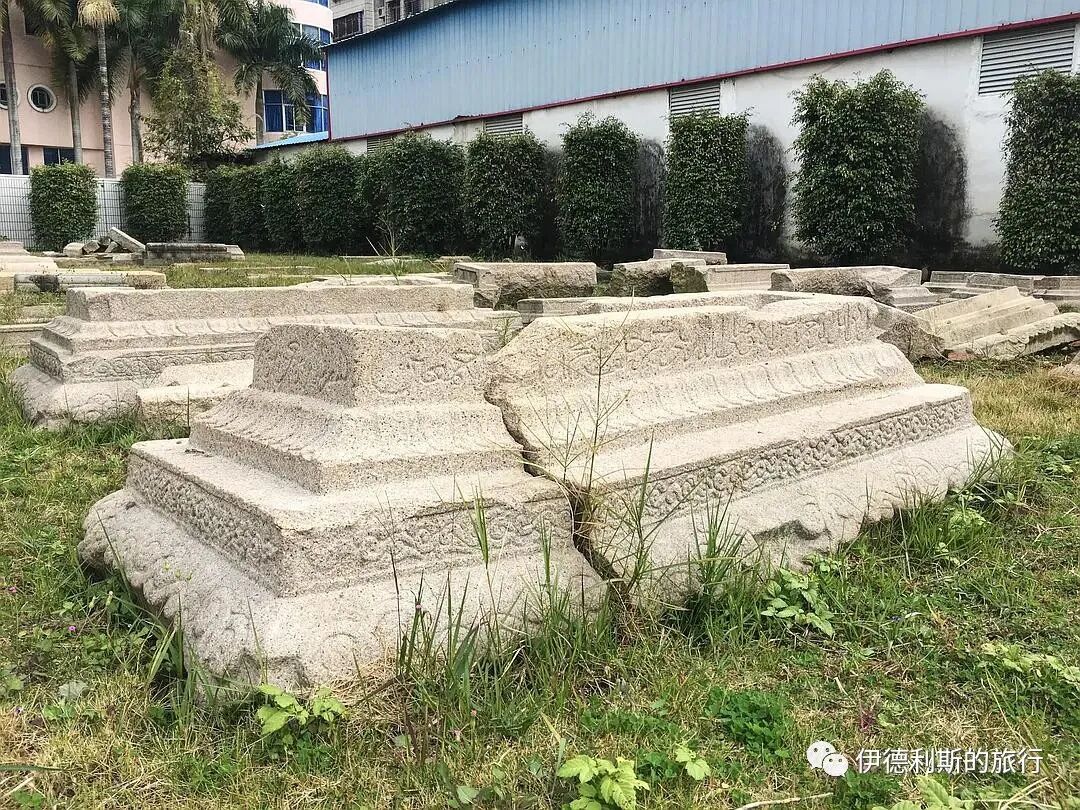
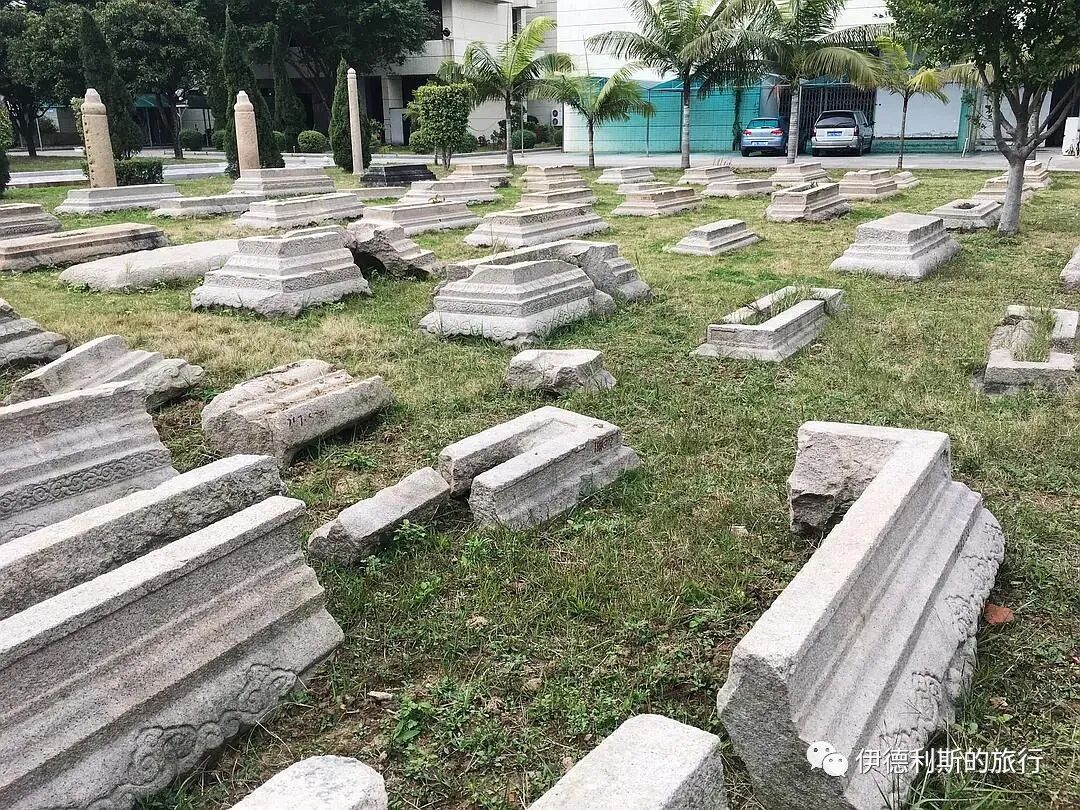
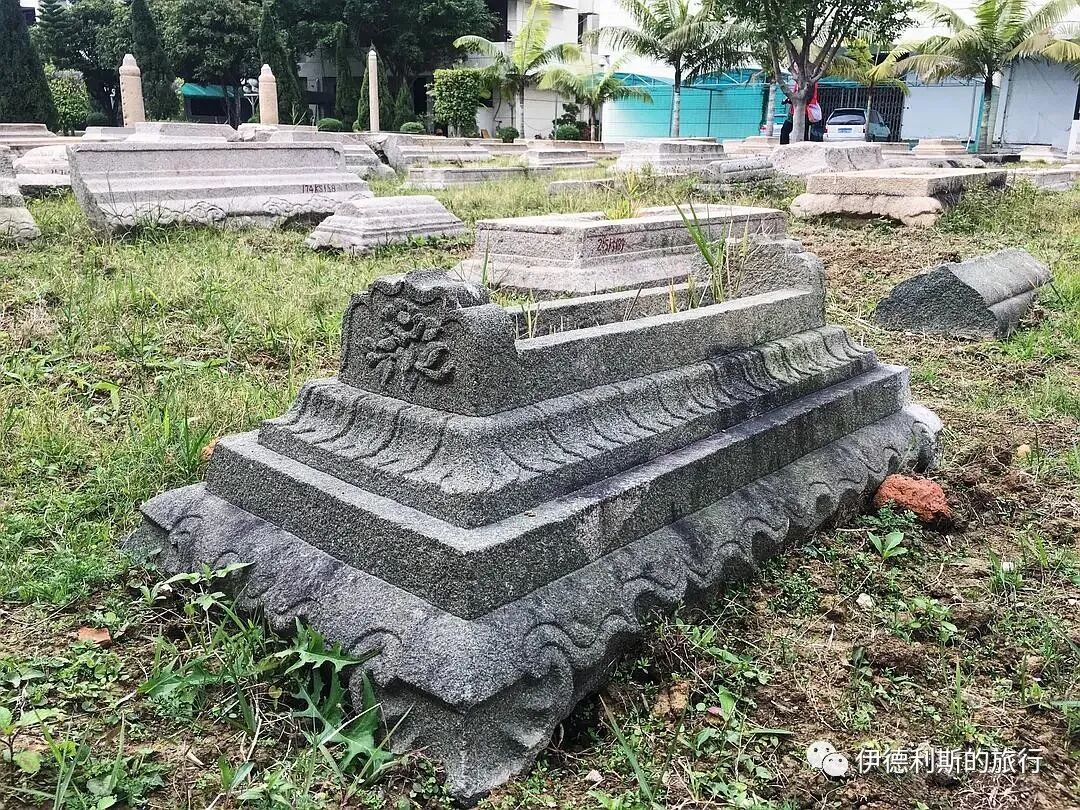
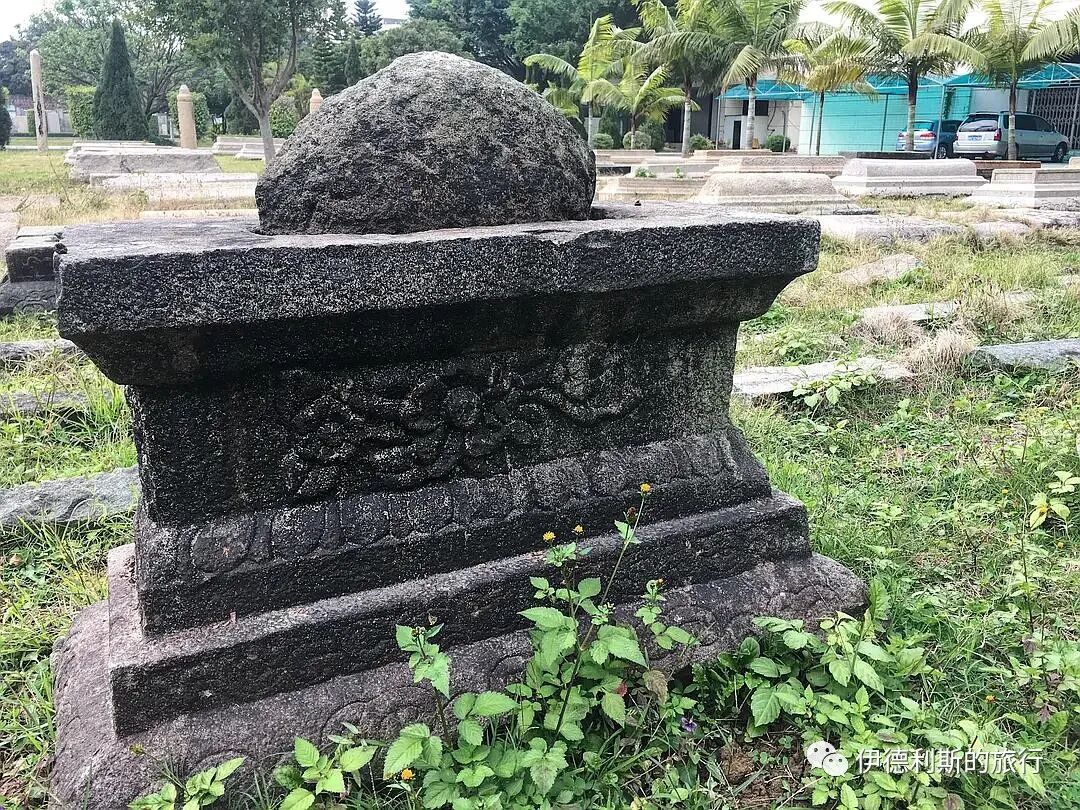
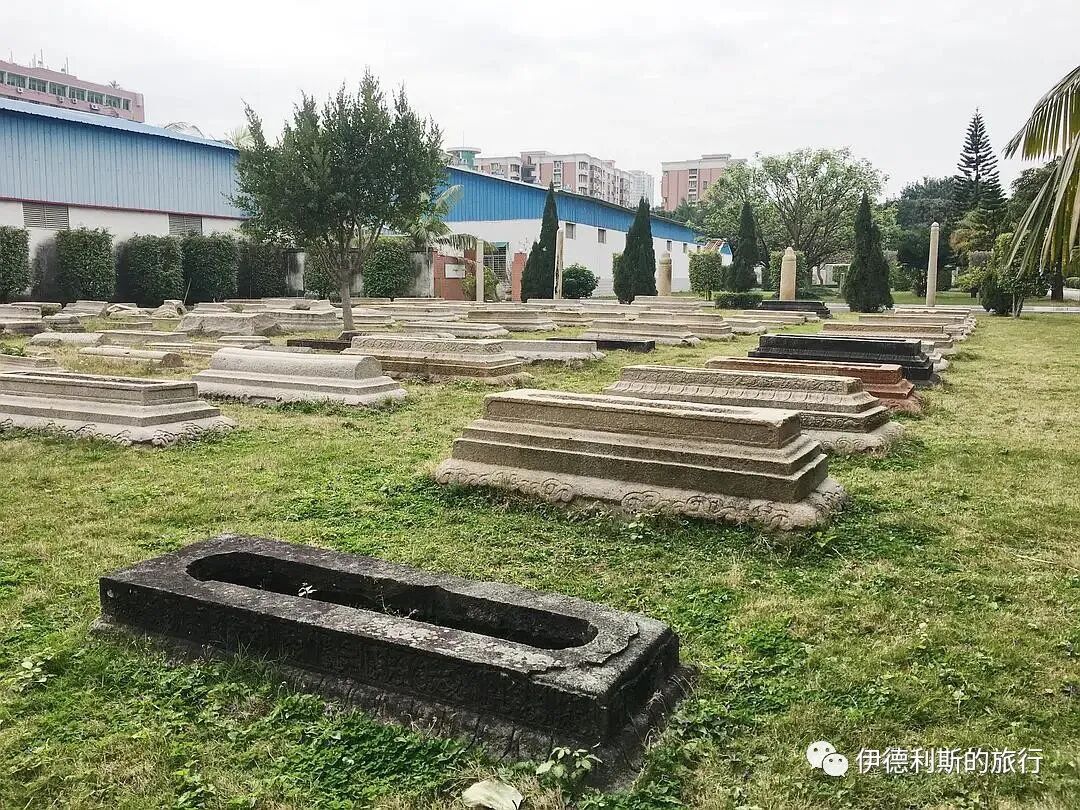
A granite tomb top stone placed separately.
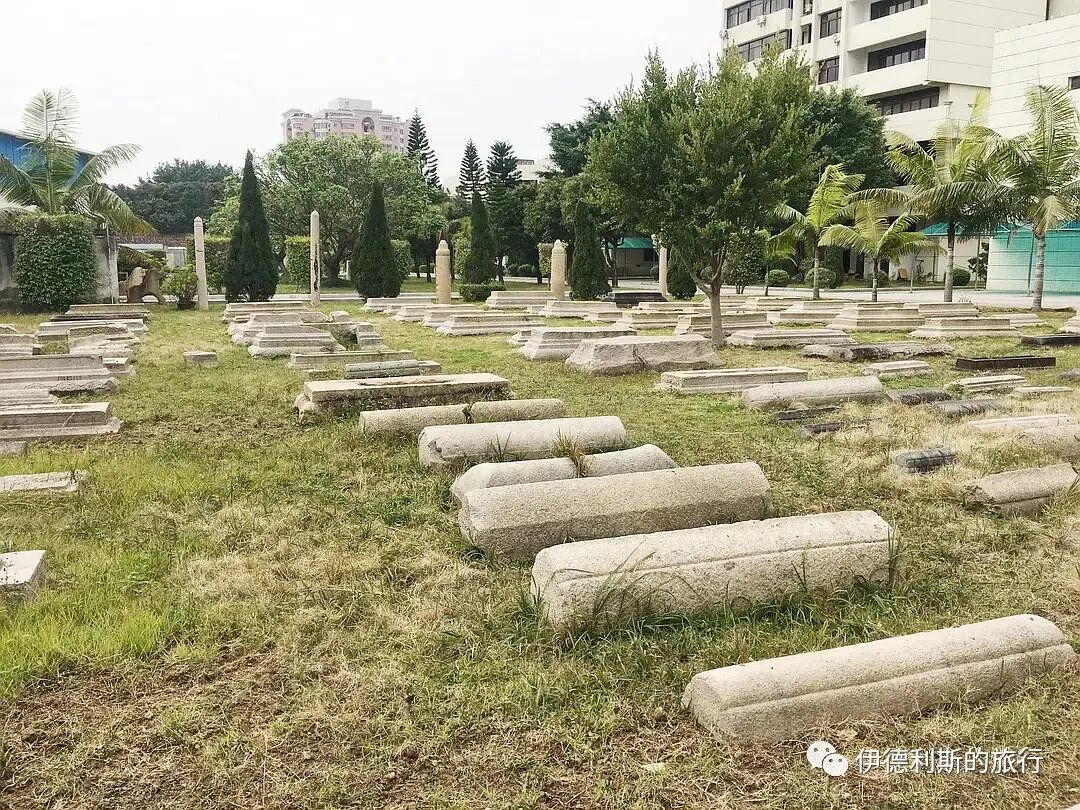
IV. Deji Gate Site
The Deji Gate at the South Gate of Quanzhou was built in 1320 (the third year of the Shaoding era of the Southern Song Dynasty) and was originally named Zhennan Gate. In 1352 (the 12th year of the Zhizheng era of the Yuan Dynasty), after the expansion of Quanzhou city, it was renamed Deji Gate. In the early Hongwu years of the Ming Dynasty, the city gate was expanded and a barbican was added.
In 1948, the Deji Gate was destroyed by fire, and nearby villagers dug up many Song and Yuan Muslim tomb stones from the city foundation to take home for building houses and paving roads. Since then, the Deji Gate foundation was buried underground, and the surface became residential houses. In the 1950s, researchers visited villages near the Deji Gate and discovered some Song and Yuan Muslim tomb stones that had been taken away when the city gate was demolished. These stones are now collected in the Quanzhou Maritime Museum.
In September 2001, while renovating the square opposite the Tianfei Palace at the Deji Gate, the Deji Gate foundation, 3 meters underground, was rediscovered. After cleaning and excavation, a large number of Song and Yuan Indian, Christian, and Islamic stone carvings were unearthed again. These stone carvings were likely transported to the Deji Gate and built into the foundation as base stones after the Ming army entered Quanzhou in the early Hongwu years and destroyed Hindu temples, as well as Christian and Muslim tombstones.
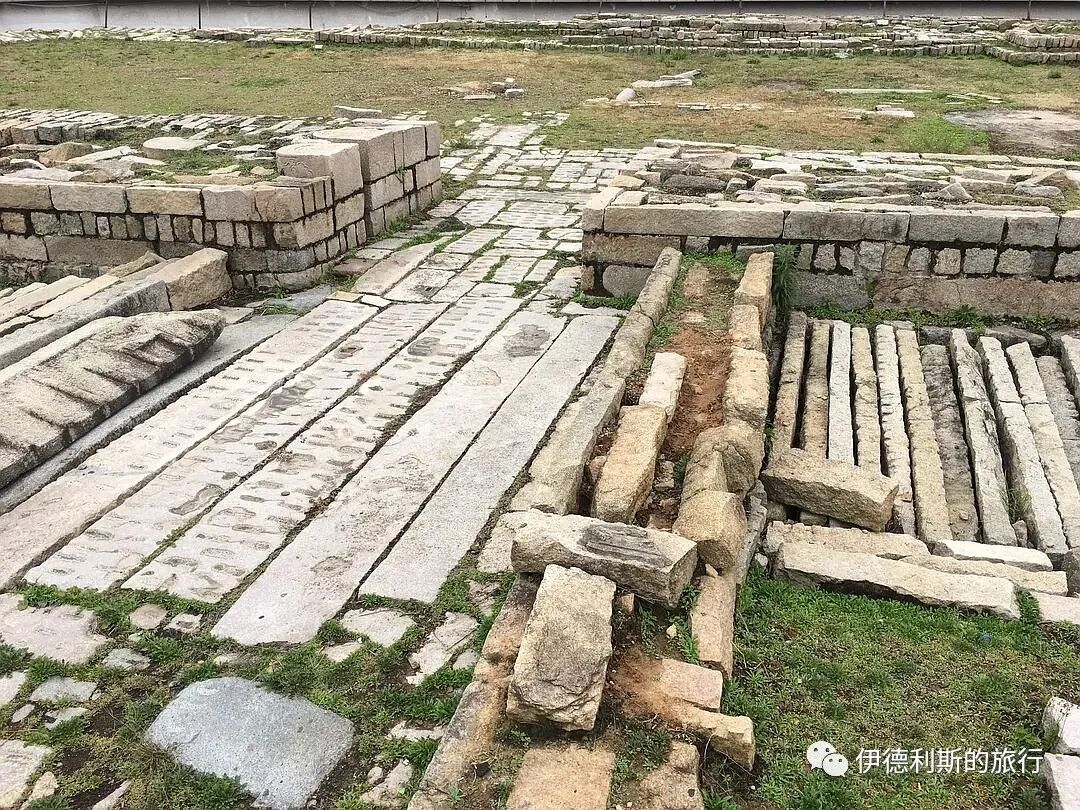
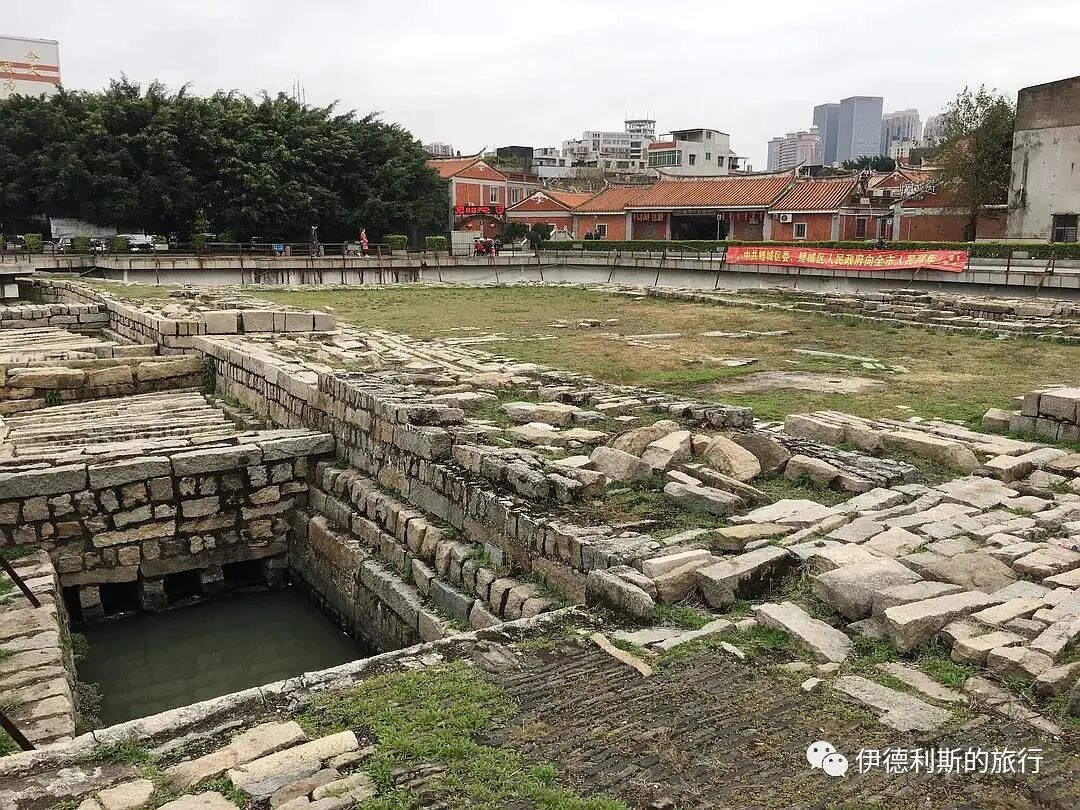
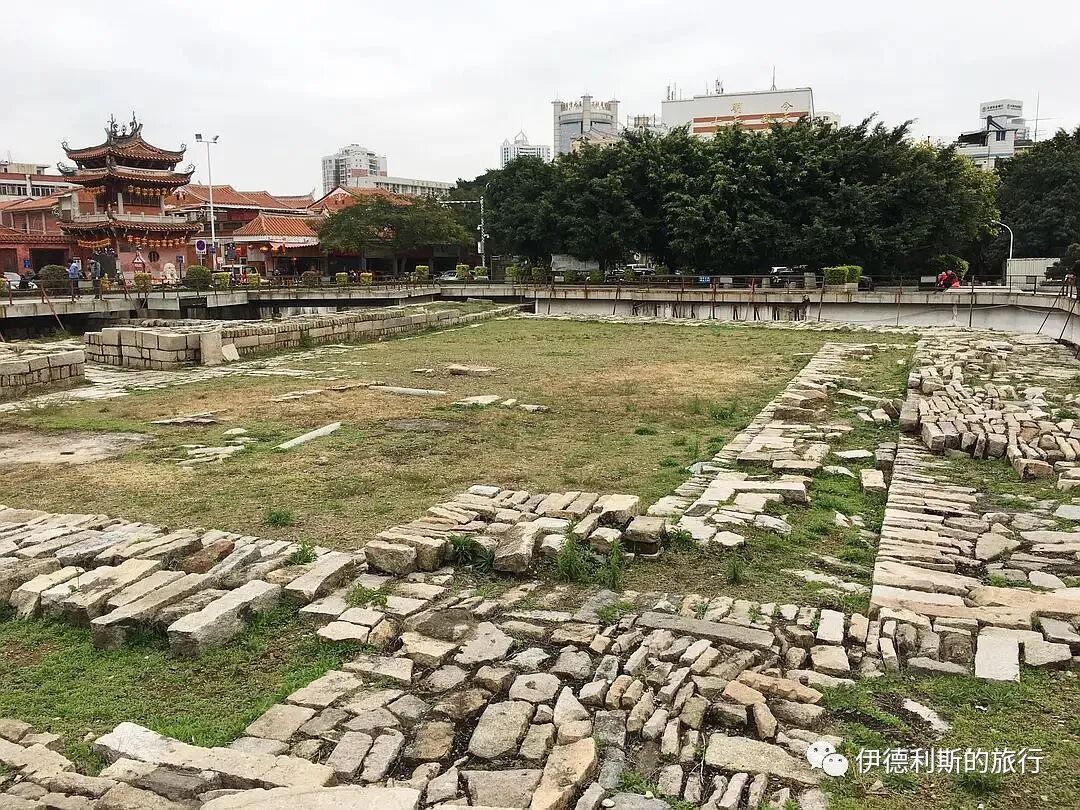
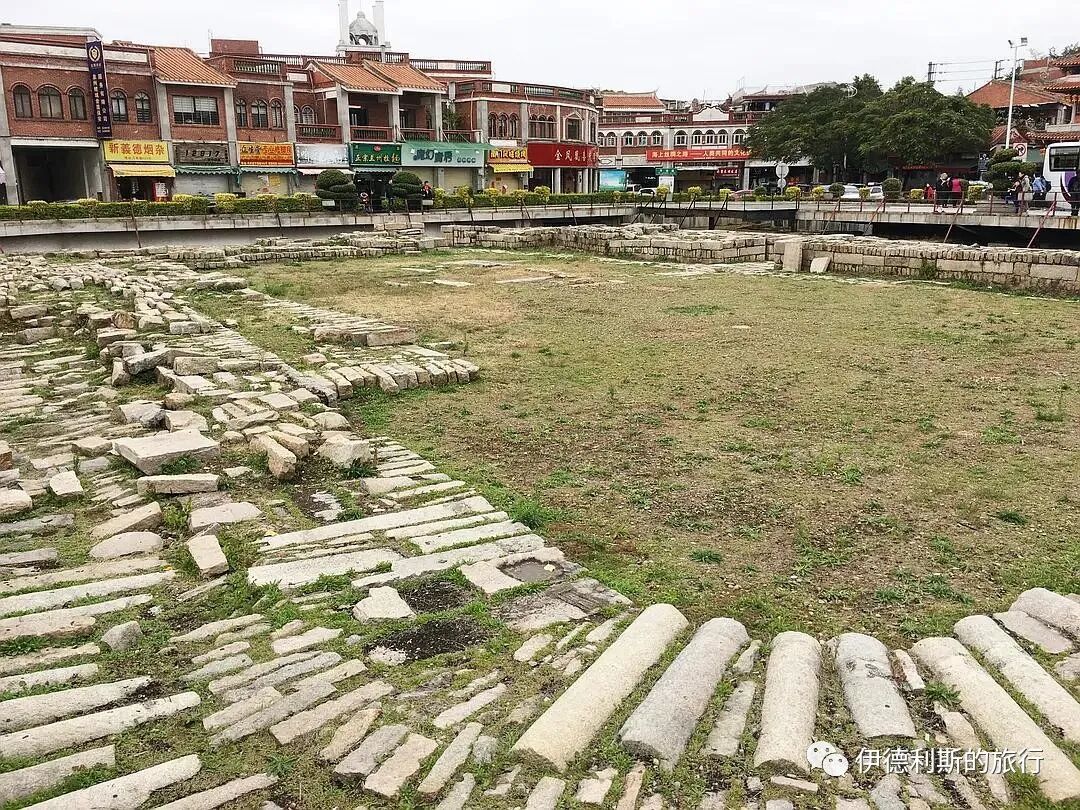
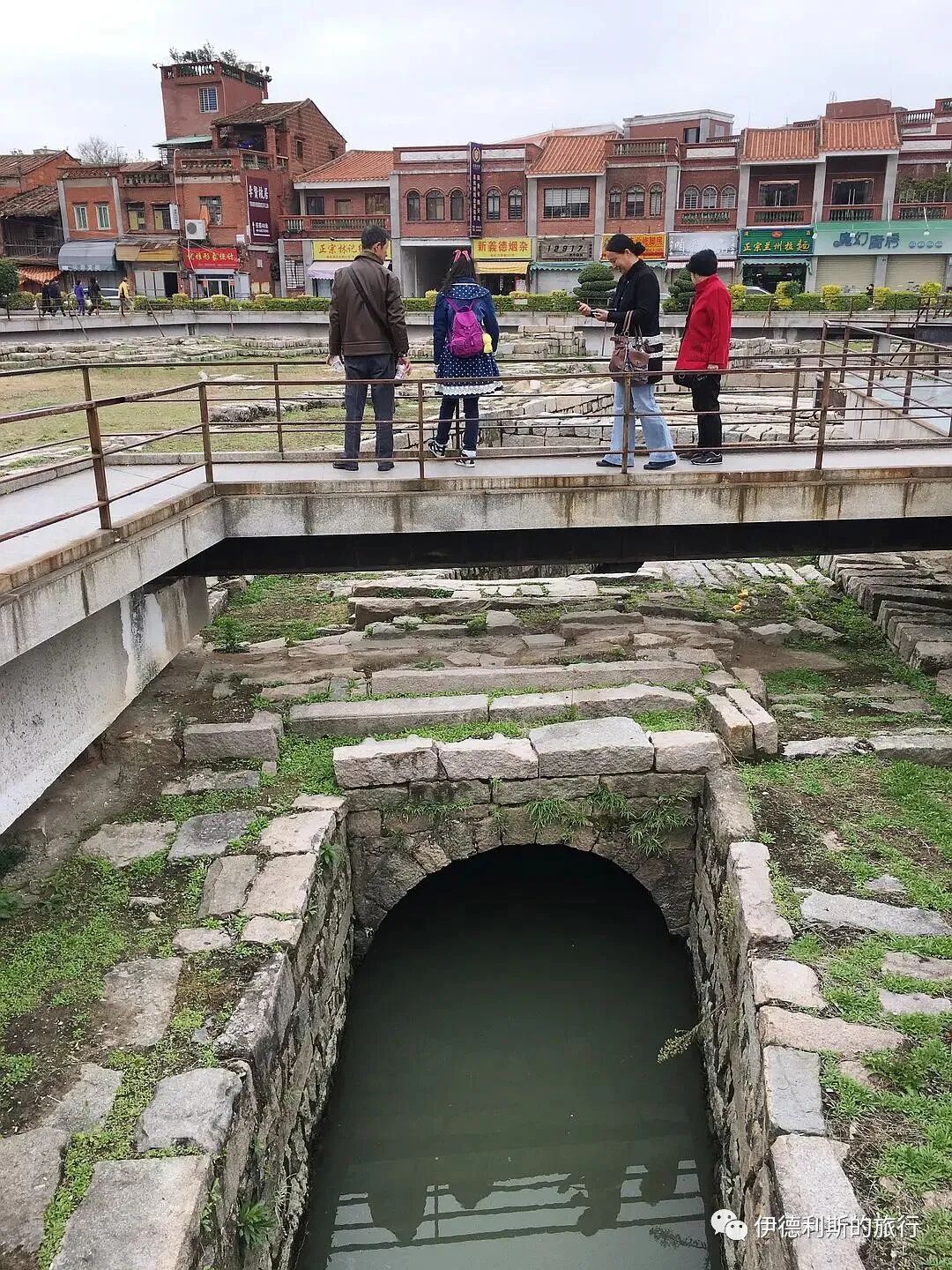
V. Muslim Tomb Stones in the Museum of Quanzhou Maritime Silk Road
The image below shows a fragment of a four-layer white granite Sumeru-pedestal stone tomb. The bottom layer has ruyi-shaped six feet, the second layer has relief lotus petals, the third layer is carved with Arabic, and the top tomb stone is missing. Originally collected by the Shishi City Museum, it is now in the Museum of Quanzhou Maritime Silk Road.
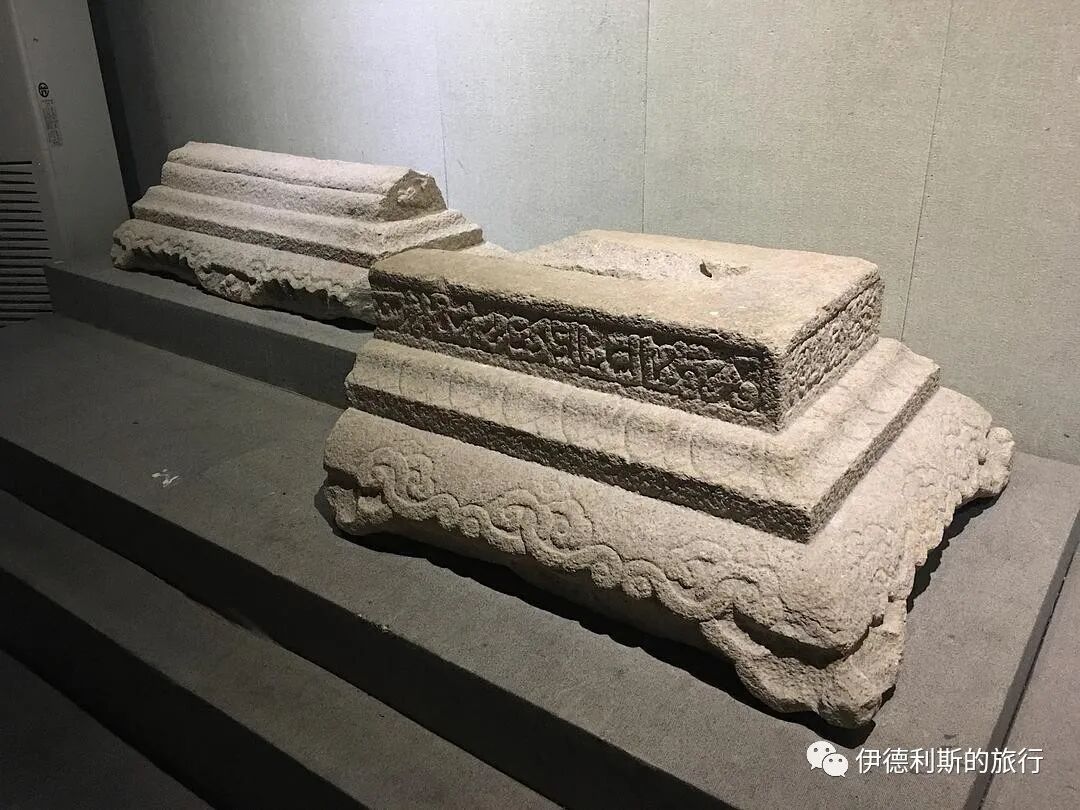
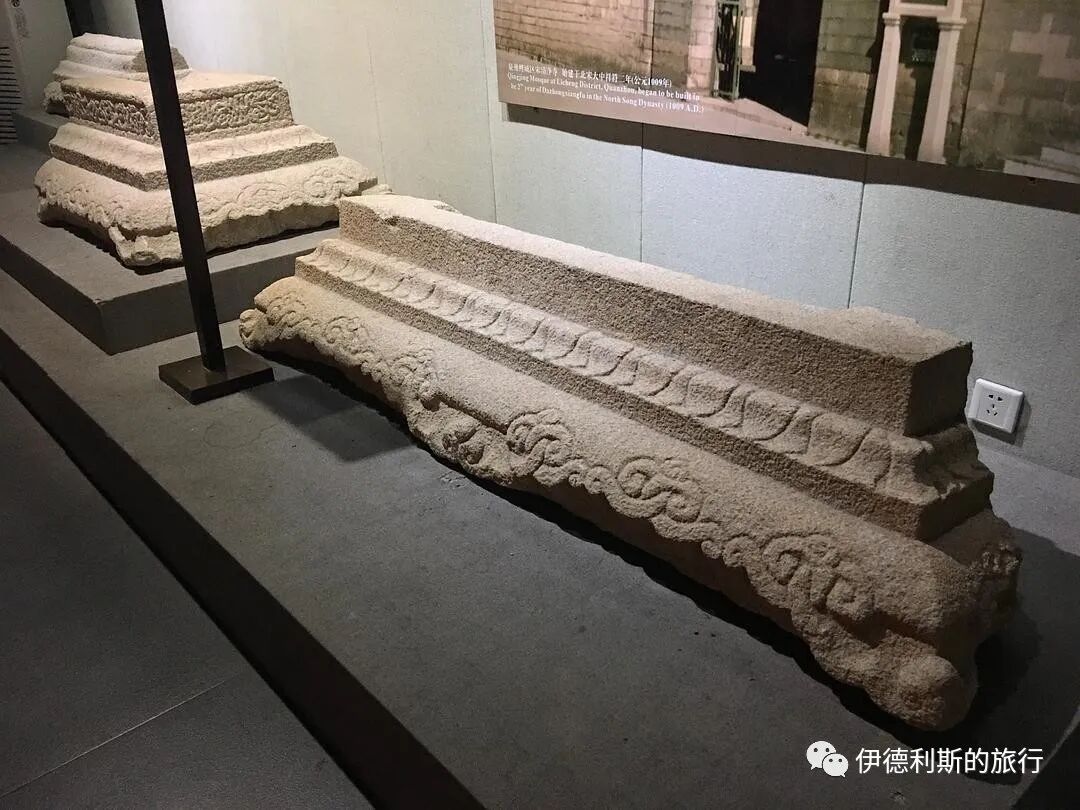
VI. Chendai Mosque, Jinjiang
In the early 1920s, the famous Hui person Tang Kexan, while serving as the Superintendent of the Xiamen Customs, paid great attention to the faith in Quanzhou. On the eve of the War of Resistance, he recommended his fellow townsman Zhang Guangyu to preside over the religious work in the Quanzhou area. After arriving in Quanzhou, Zhang Guangyu earnestly carried out religious affairs, and the faith in Chendai began to reappear.
In 1939, the "China Islamic National Salvation Association Chenjiang Branch" was established in Chendai. Some Ding family members from Chendai often went to the Qingjing Mosque in Quanzhou for Jumu'ah prayers. Later, they converted the "Wenchang Shrine" in Sijing Village into a mosque and hired Imam Tie from Quanzhou to preside over religious affairs.
Between 1937 and 1944, the most famous modern Islamic school during the Republic of China, the Chengda Normal School, moved south to Guilin. The founders, Tang Kexan and Ma Songting, successively accepted 17 young men from the Ding family in Chendai to study there.
In the late 1950s, all Islamic activities in Chendai were forced to stop. Ding Jinshun, a graduate of Chengda Normal School, was criticized and struggled against for mentioning in class that he was a Hui Muslim.
In 1983, Ding Jinshun and Ding Jinhe, both graduates of Chengda Normal School, attended the founding meeting of the Fujian Islamic Association. After this, Chengda Normal graduates Ding Jinshun, Ding Jinhe, Ding Jinke, and Ding Jinhong, along with twenty other enthusiastic believers, established the "Chendai Islamic Association Group" and began to restore the faith. They borrowed the second-floor conference room of the Chendai Hui Affairs Committee and the back hall of the Ding family ancestral hall for Jumu'ah prayers, with Ding Jinshun serving as the imam. During Eid al-Fitr and Eid al-Adha, they invited their former Chengda Normal classmates who were now imams in Guilin, as well as imams from Jiaxing, Zhejiang, to preside over the congregational prayers.
After the Chendai Islamic Association Group was established, they began preparing to build a mosque. They issued a "Letter to Muslim Compatriots Nationwide" to the national Islamic association, but only a few hundred yuan in funds were sent from a few mosques in Ankang, Shaanxi, and Yunnan. After this, former Chengda Normal classmates in Hong Kong forwarded the "Letter to Ding Family Compatriots" to the Ding family in Hong Kong, Taiwan, and overseas. They received 70,000 yuan in donations from the "Five Surnames Mosque Association (Jin, Ding, Ma, Bai, Guo, originating from Quanzhou Hui Muslims) of Philippine Travelers" in Hong Kong, Taiwan, Singapore, and the Philippines.
In 1991, the Chendai Mosque was completed, and it officially opened in 1993, immediately followed by the establishment of the Jinjiang Islamic Association. The Ding family of Chendai hired Imam Ma Zhiwei from Inner Mongolia as the first religious leader, and Ding Jinke and Ding Jinshun served as the first director of the mosque management committee and director of the Islamic Association, respectively.
After the 1990s, the Ding family of Chendai selected nearly 60 young people to study Islam at home and abroad, some of whom went to Arabic language schools in mosques in Inner Mongolia.
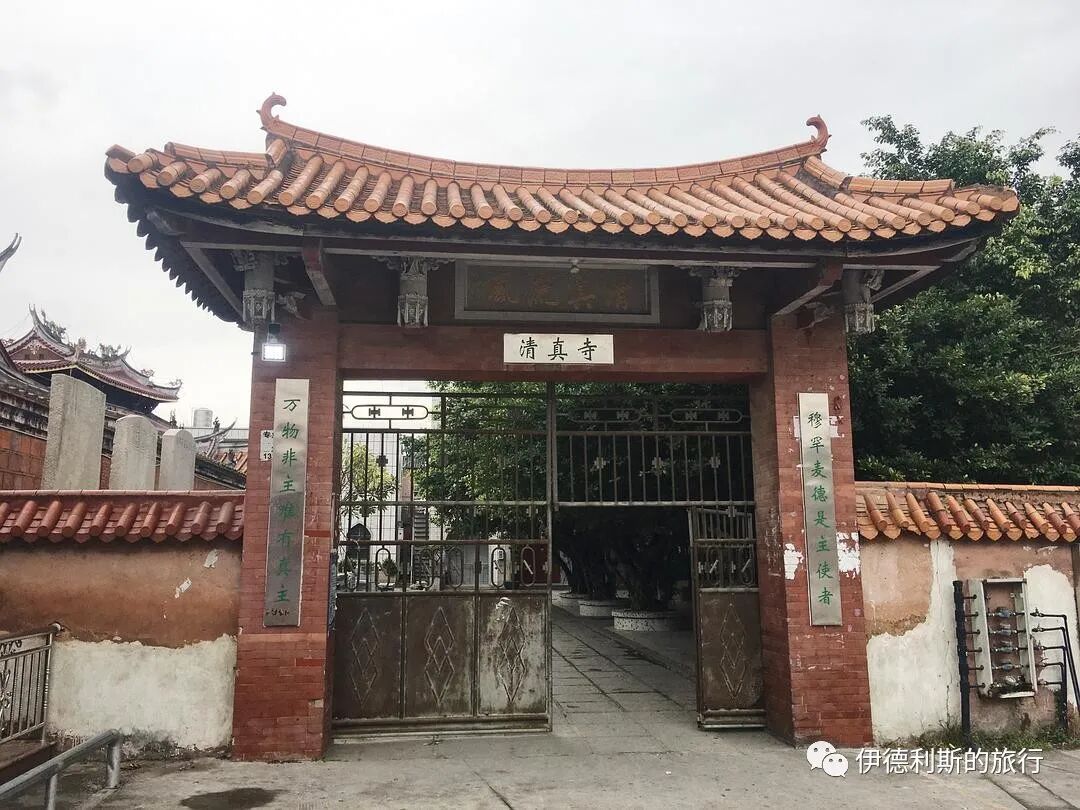
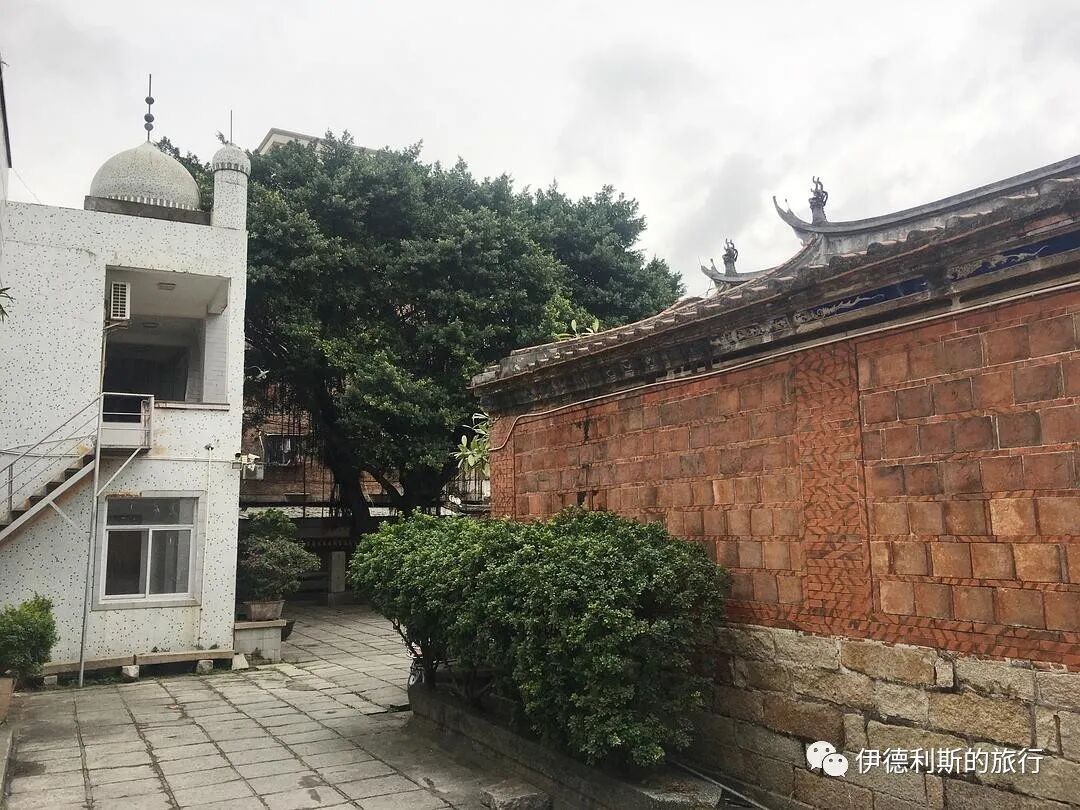
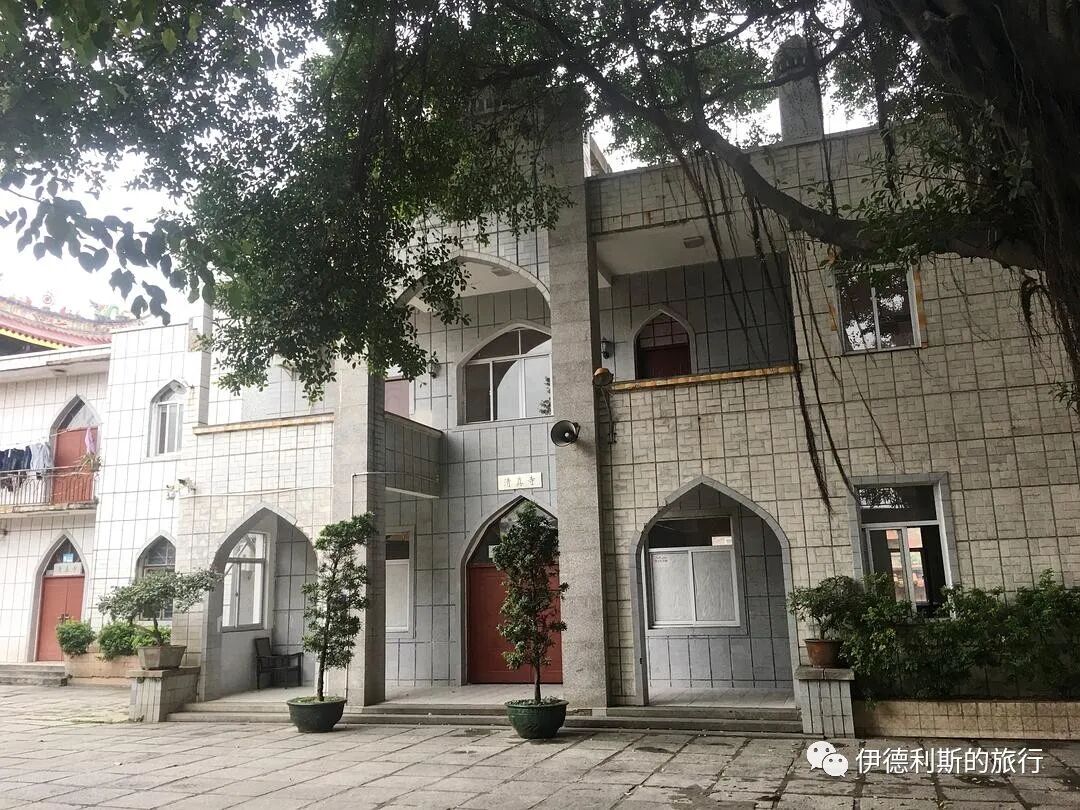
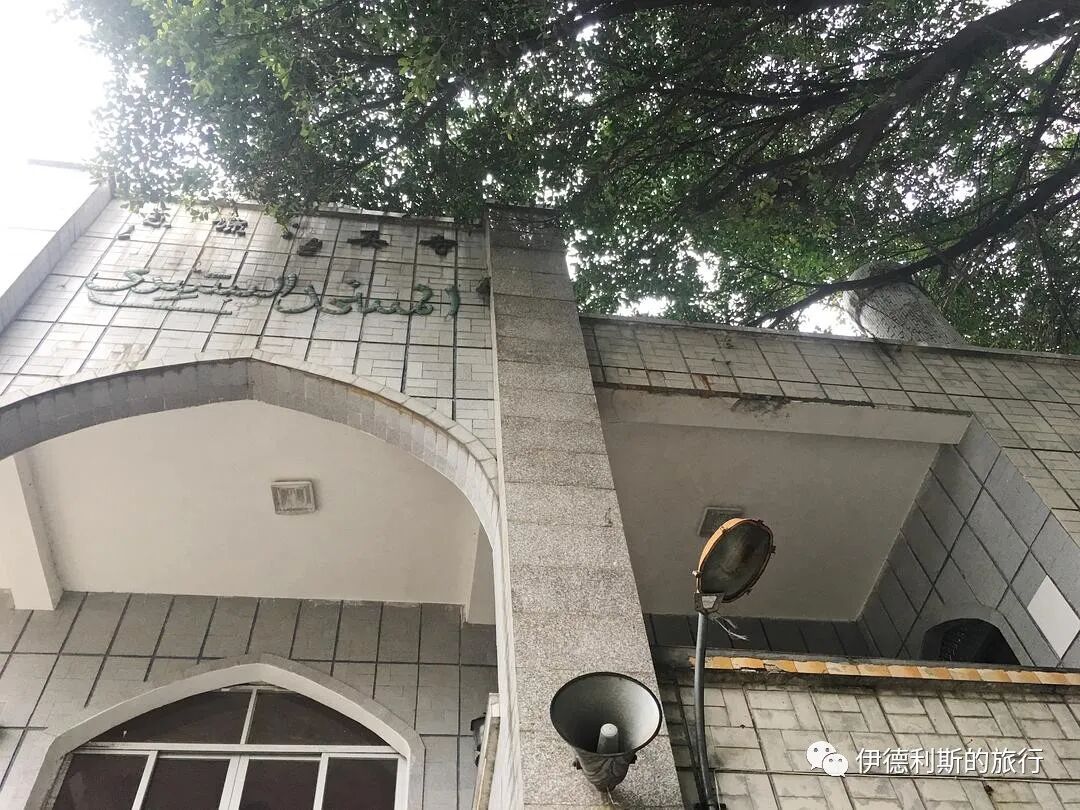
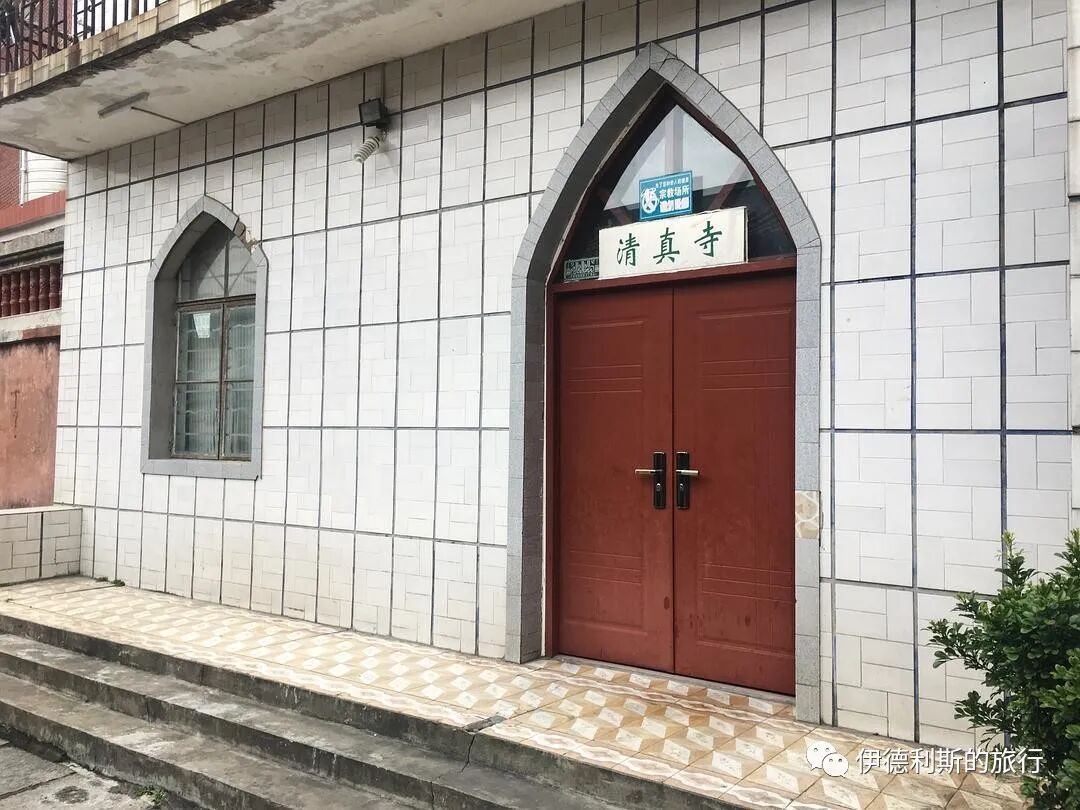
VI. Baiqi Guo Family Tombs
During the Hongwu years of the Ming Dynasty, the Muslim Guo Zhongyuan moved from Fashi, Quanzhou, to live in Baiqi, across from Houzhu Port, forming what is now the Baiqi Hui Ethnic Township. Today, more than 10,000 Hui Muslims with the surname Guo live there, known as "Baiqi Guo" or "Jiuxiang Guo."
1. Tomb of Guo Zhongyuan and his wife
According to the Guo family genealogy "Preface to Returning to the Hui Faith," Guo Zhongyuan built a mosque in Baiqi and collected many Islamic classics. Guo Zhongyuan passed away in 1422 at the age of 75. His wife, surnamed Chen, passed away in 1433 at the age of 82. They are buried under Longtou Mountain, east of Xiadai Village, commonly known as the "Stone Lion Public Tomb."
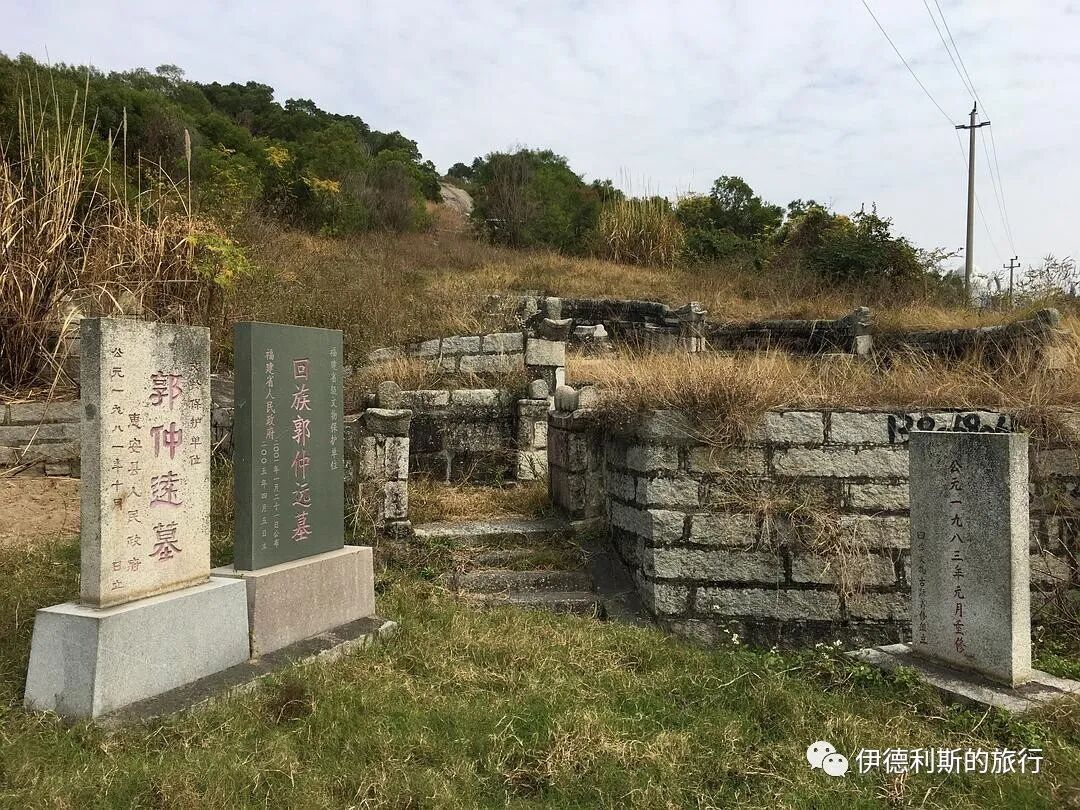
The tomb of Guo Zhongyuan and his wife is a typical Song and Yuan Muslim Sumeru-pedestal stone tomb in Quanzhou. This type of tomb with a stone cover on the pedestal is called a "religious tomb" by the Guo family, commonly known as a "cake tomb," representing Islam.
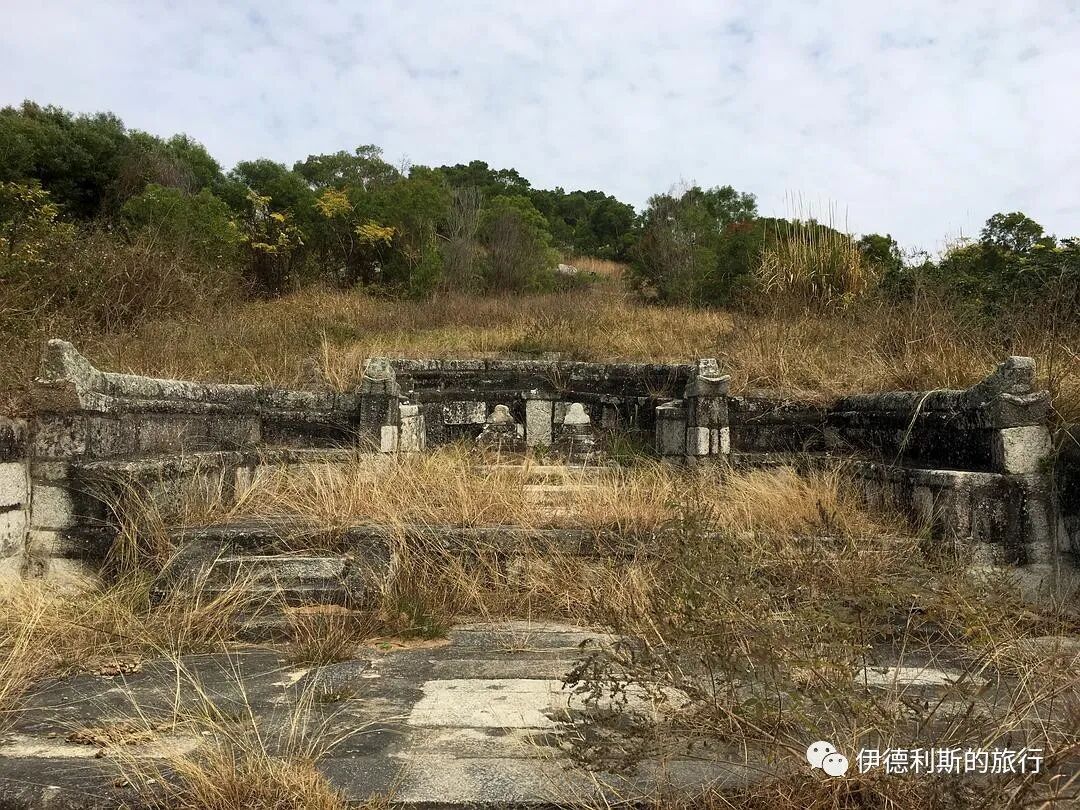
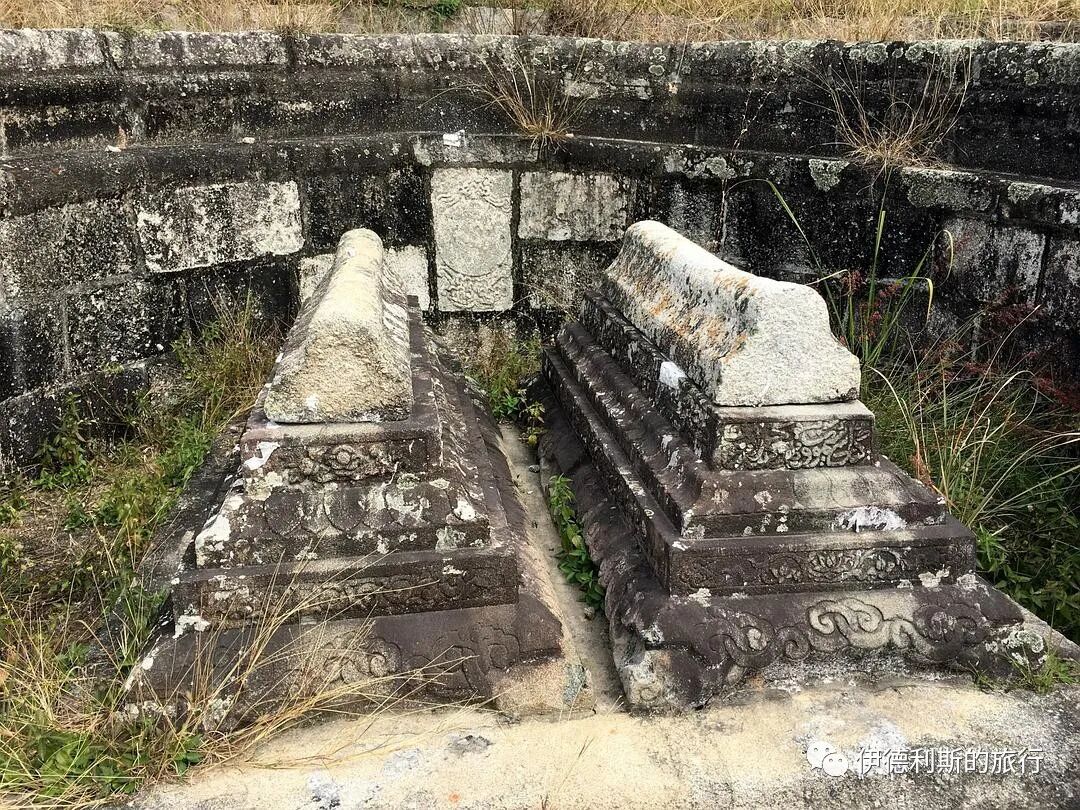
The stone tomb is made of granite, common in Quanzhou, and is divided into five layers. The first layer is carved with six feet and ruyi patterns, the second layer is carved with continuous flower branches, and the third layer is carved with lotus petals. The fourth layer on the left side of Mrs. Chen's tomb is carved with lotus and branch patterns, and the right side of Guo Zhongyuan's tomb is carved with the Quran, Chapter 55, Verses 26 and 27:
Everyone on earth will perish; Only the essence of your Lord, possessing majesty and honor, will exist eternally.
This scripture appears in large numbers on Muslim tomb cover stones in Quanzhou from the Song and Yuan dynasties, and it is also the most commonly carved passage on ancient Muslim tombs in Sanya.
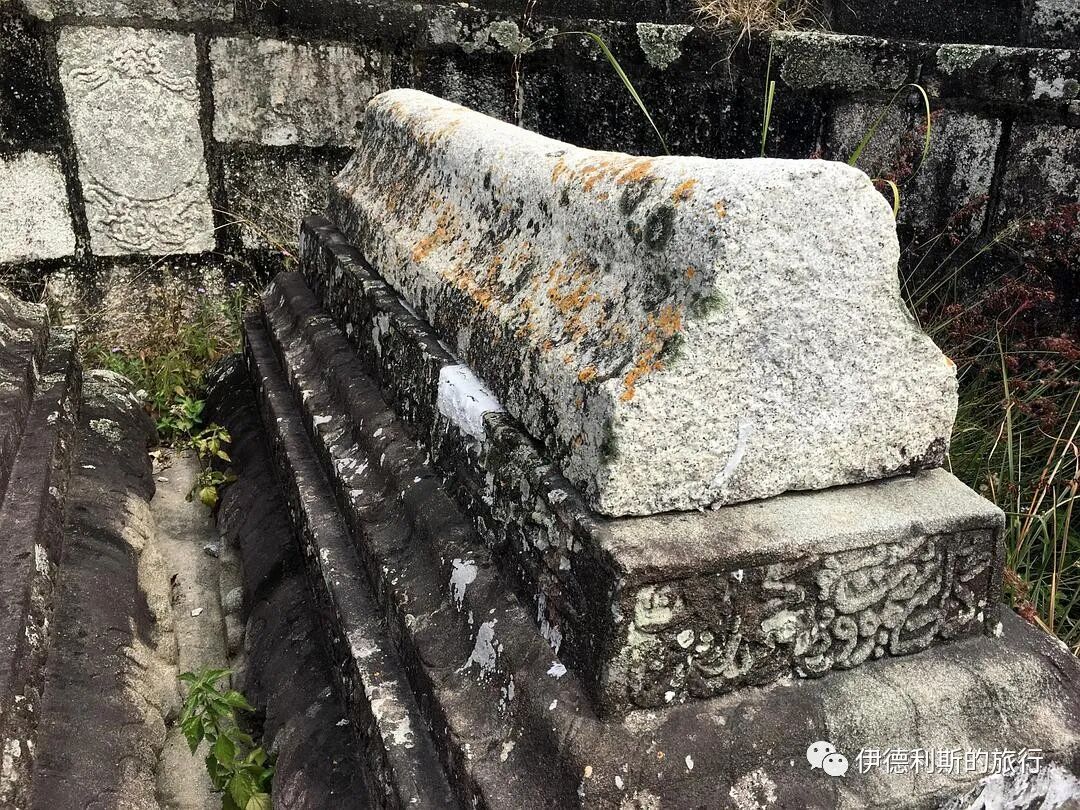
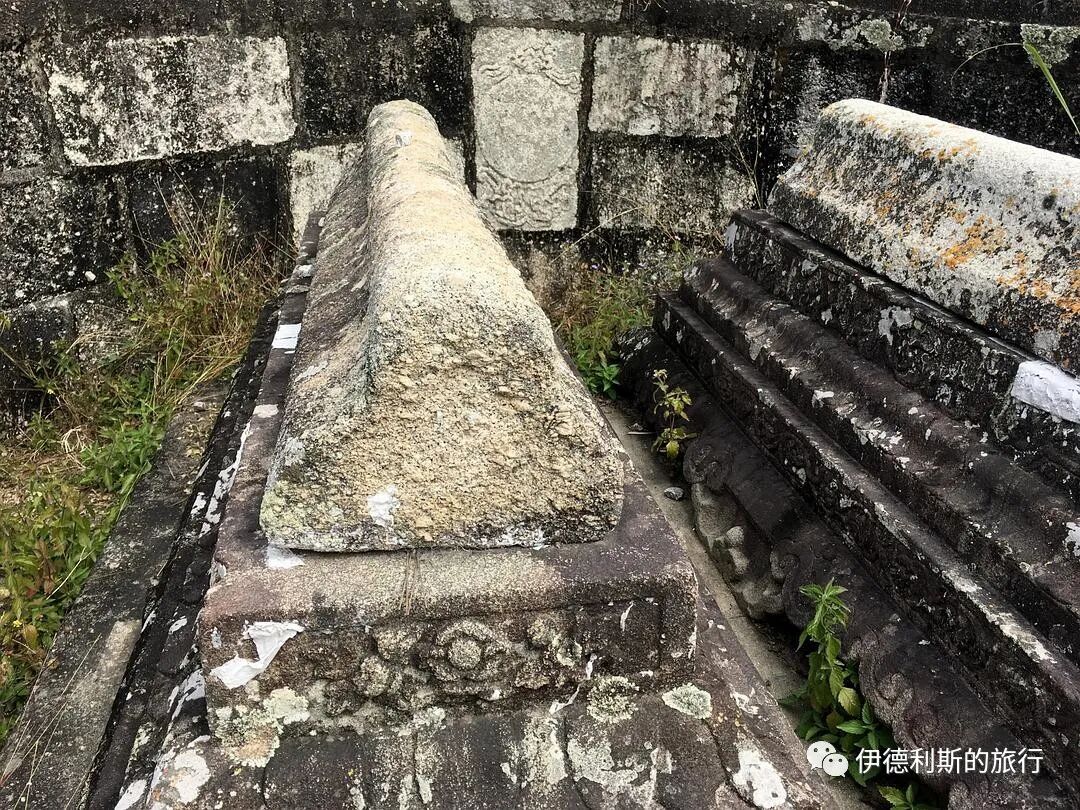
Two stone tombs are placed side by side on a stone platform, with a horseshoe-shaped retaining wall built behind them. In the center of the retaining wall is a cloud-and-moon-shaped stone tablet, a design that can also be seen in Song and Yuan Islamic stone tombs in Quanzhou.
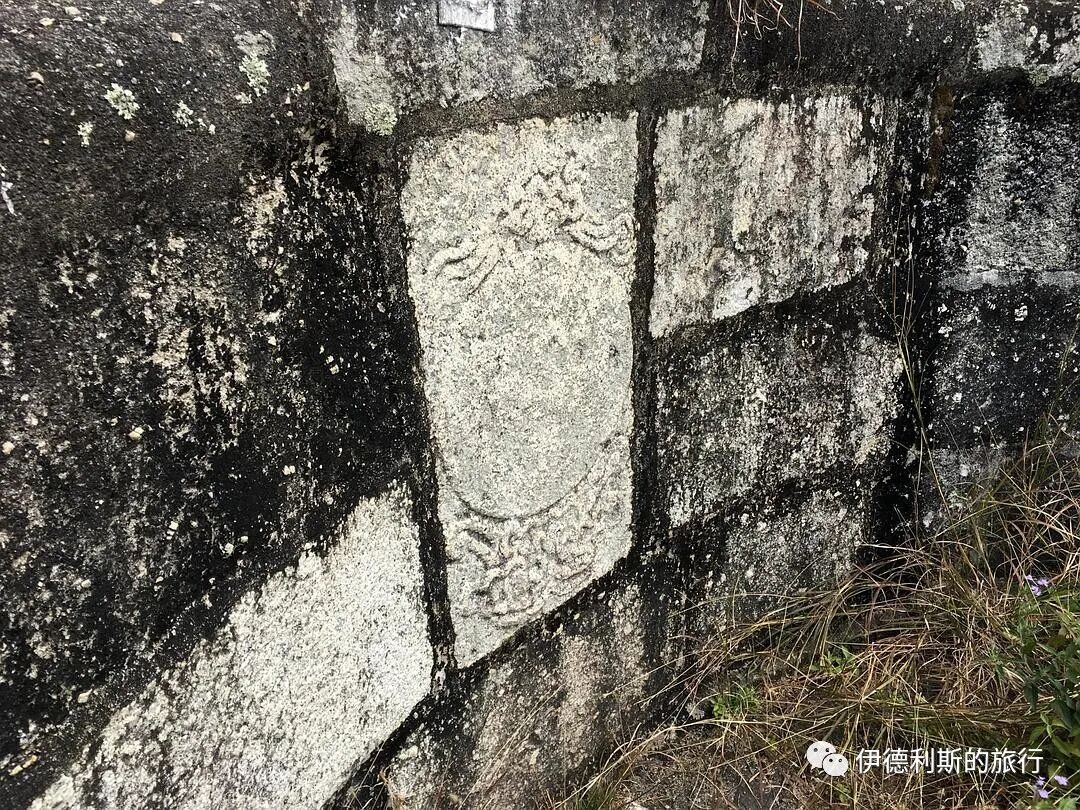
2. Tomb of Guo Mengwei and his wife
Guo Mengwei was the second son of Guo Zhongyuan's eldest son, Guo Shichu. He passed away in 1480 at the age of 77. His wife, surnamed Huang, passed away in 1474 at the age of 69. After they passed away, they were buried next to Guo Zhongyuan's tomb. It is also an Islamic Sumeru-pedestal stone tomb, but without any patterns. Behind the tomb is a restoration tablet from 1983.
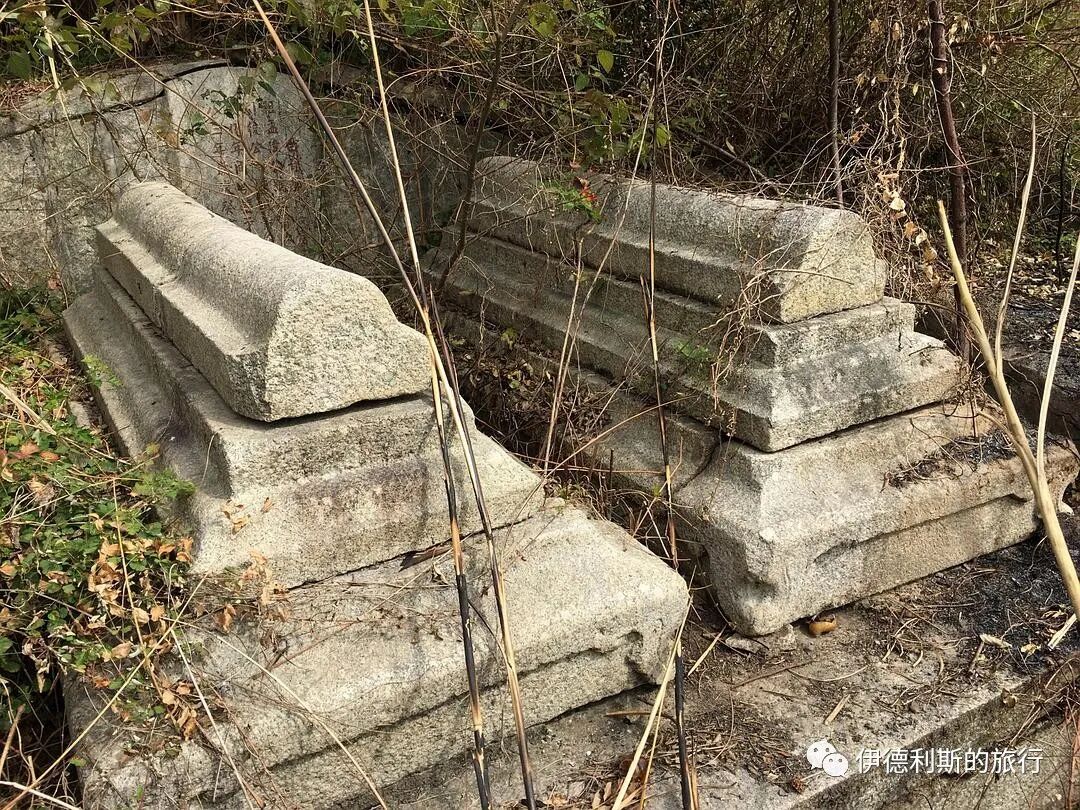
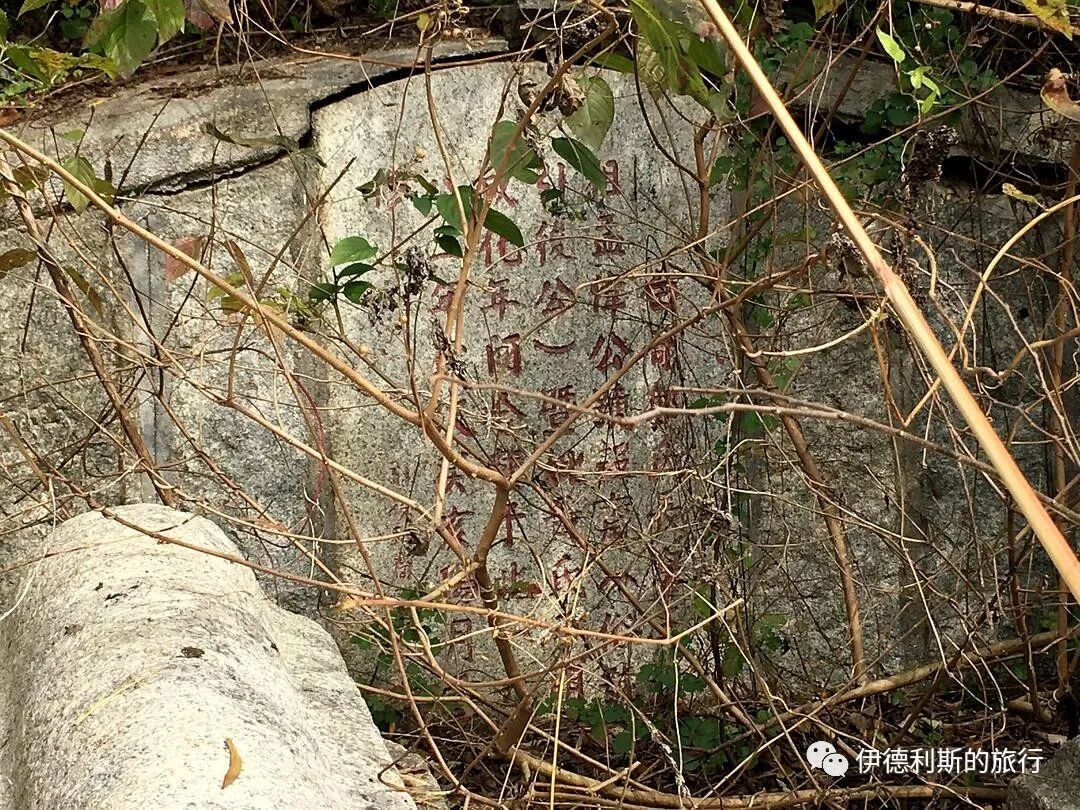
3. Tomb of Guo Shiyuan's family
Guo Shiyuan was the second son of Guo Zhongyuan. He passed away in 1407 at the age of only 34 and was buried east of Lichun Village, commonly known as the "Second Branch Public Tomb."
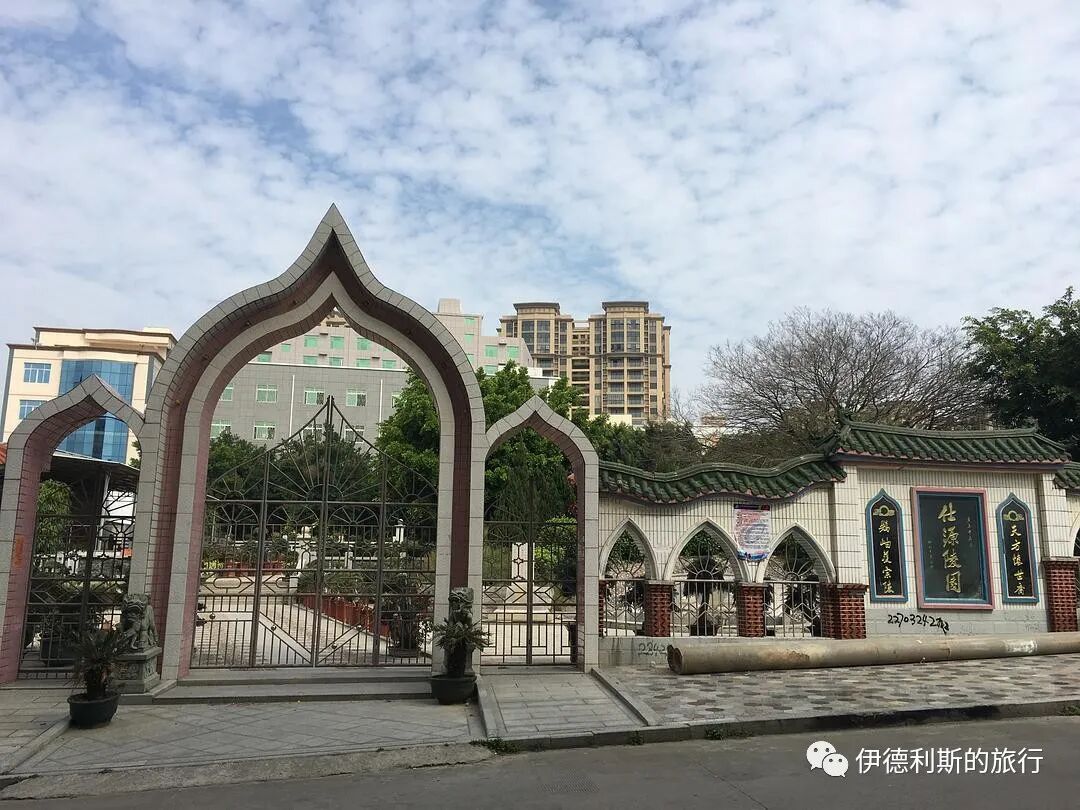
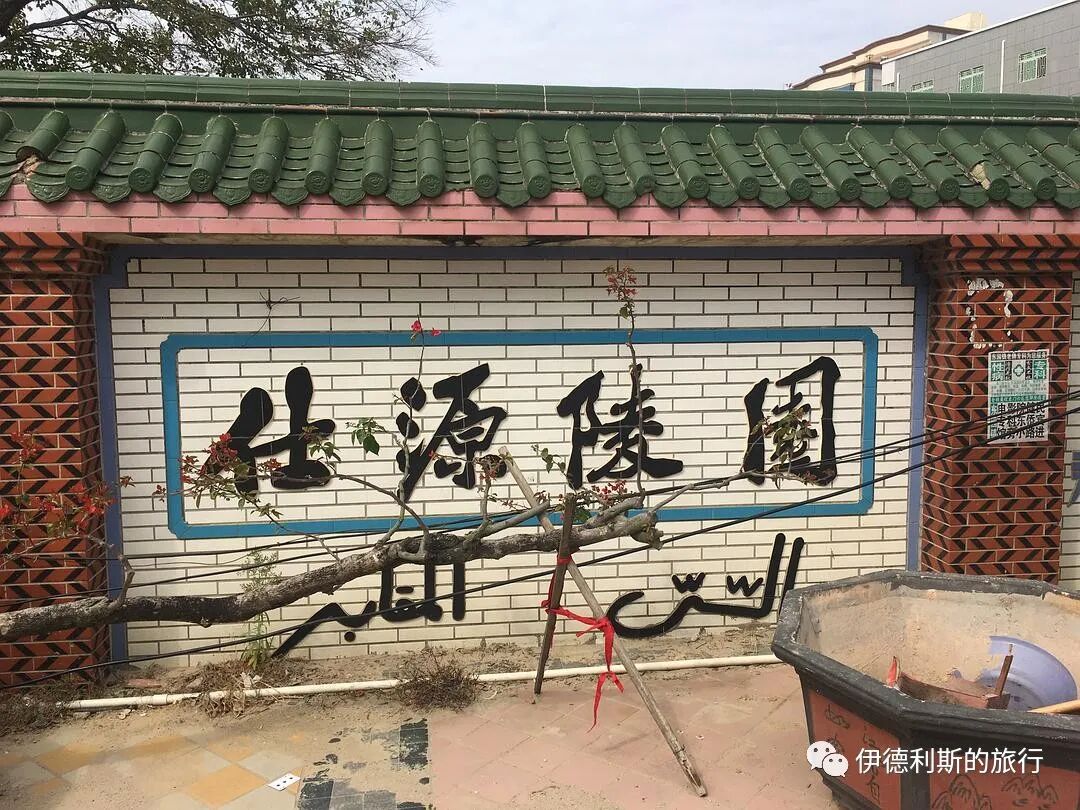
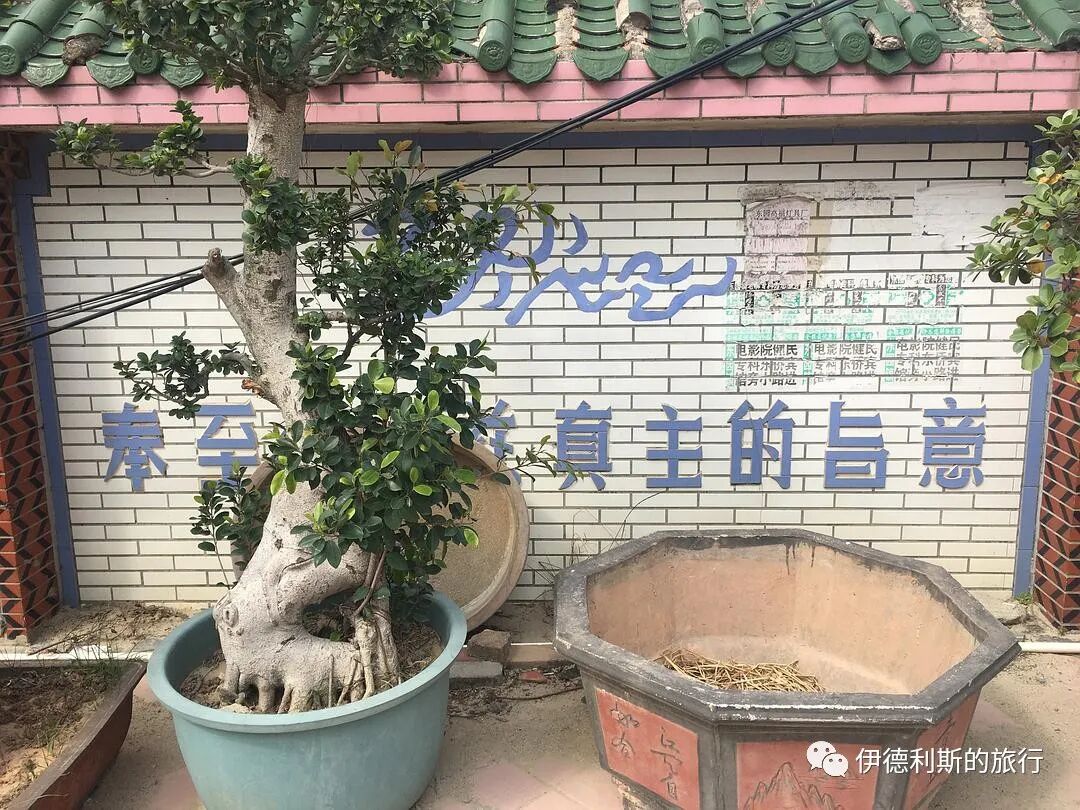
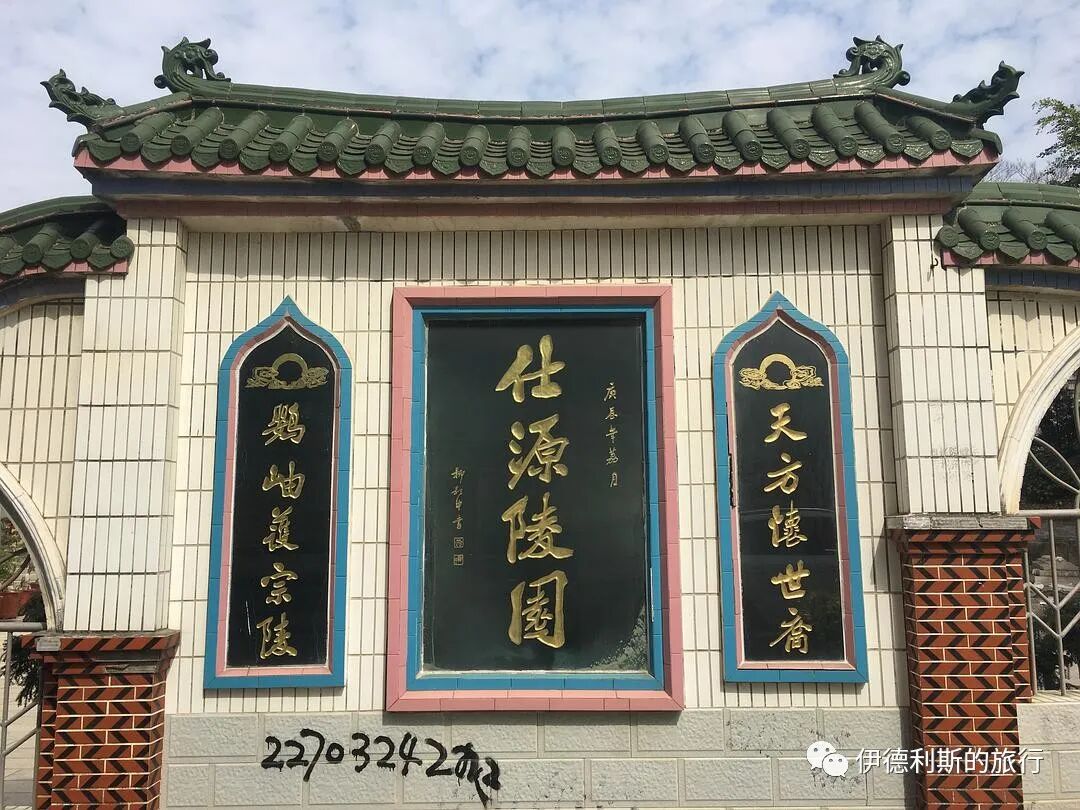
Guo Shiyuan's tomb is also an Islamic Sumeru-pedestal stone tomb, with an intaglio cloud and moon pattern on the front of the tomb cover and branch patterns around the base.
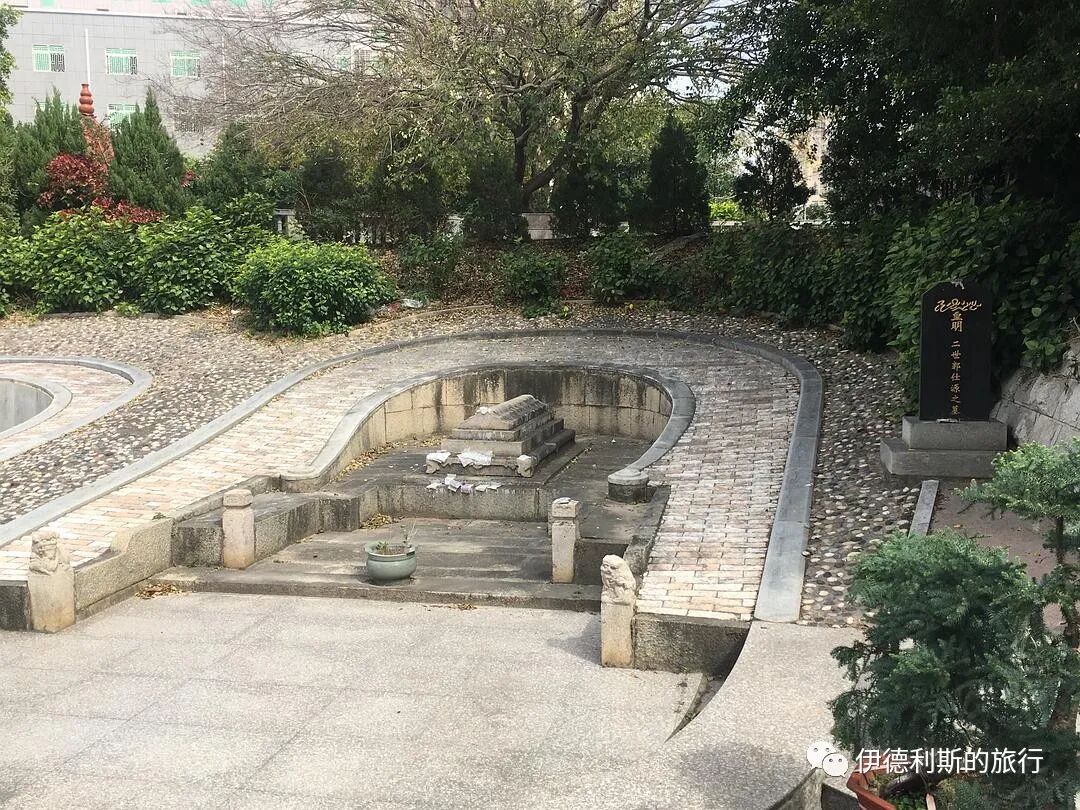
Next to Guo Shiyuan's tomb are two Islamic Sumeru-pedestal stone tombs; the one on the east is buried with Guo Shiyuan's wife, surnamed Chen, and the one on the west is buried with the wife of Guo Shiyuan's eldest son, Guo Bangyong, surnamed Zeng. Mrs. Chen passed away in 1457 and the stone tomb has no patterns; Mrs. Zeng passed away during the Chenghua era of the Ming Dynasty (1465–1487) and the stone tomb has branch patterns.
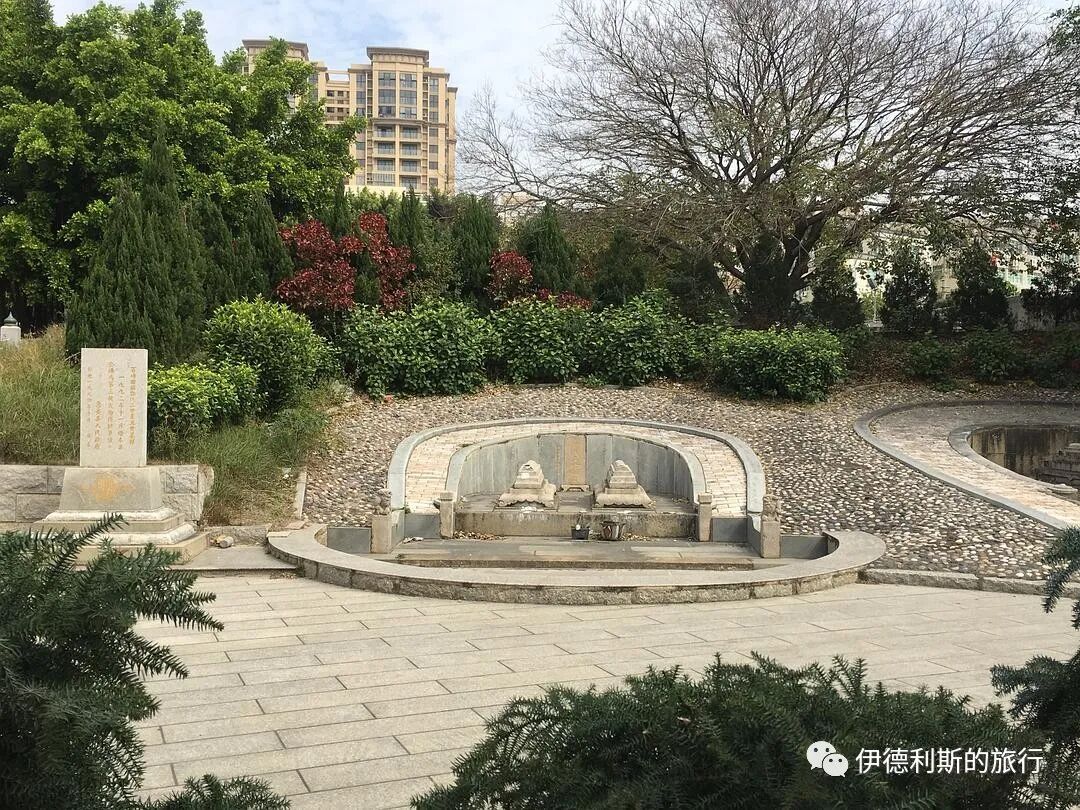
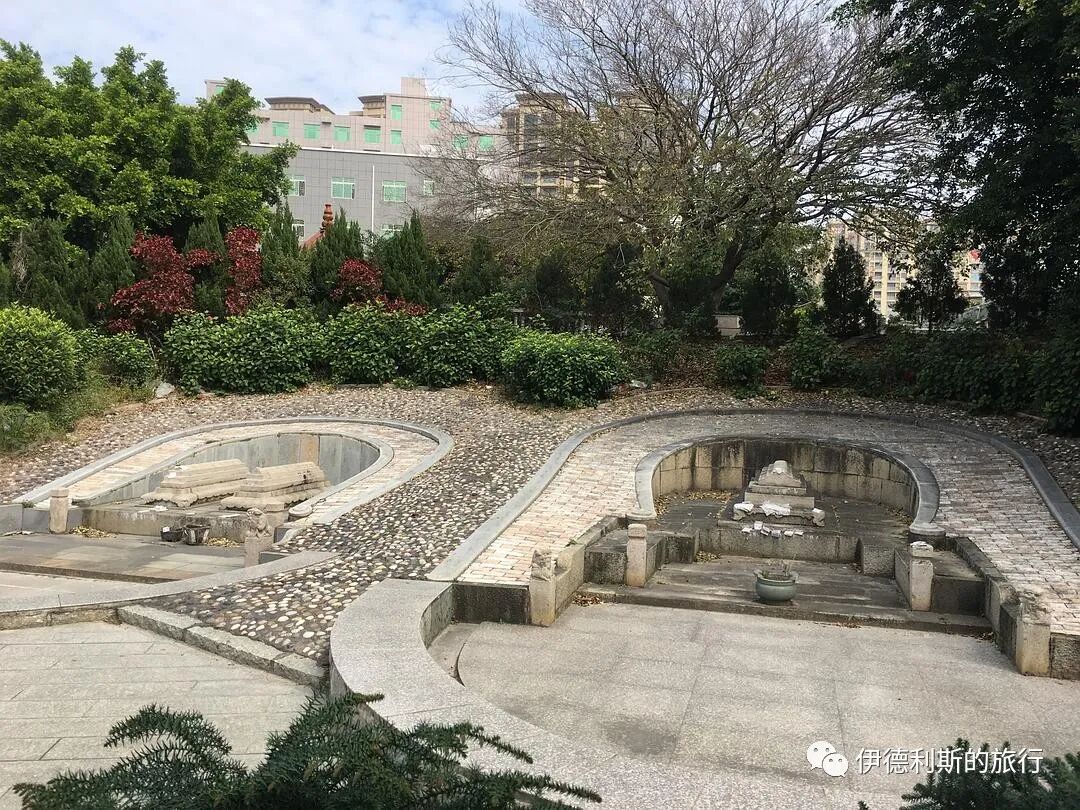
In addition, there are stone tombs of Guo Shiyuan's descendants buried behind Guo Shiyuan's tomb. Because the gate was closed when I visited the Guo Shiyuan cemetery, I was unable to see the tombs behind:
Tomb of Guo Yiqin, the eldest grandson of Guo Shiyuan and fourth generation, who passed away in 1504.
Tomb of Guo Yiqin's first wife, surnamed Wang; year of death unknown.
Tomb of Guo Yiqin's second wife, surnamed Li; year of death unknown.
Tomb of Guo Yiqin's eldest son, Guo Xuyuan, fifth generation, who passed away in 1526.
The tomb of Guo Huaiqin, Guo Yiqin's third younger brother and fourth generation, and his wife, surnamed Hu, were relocated here in 1994 due to construction at the original site.
The tomb of Guo Lianfu, fifth generation of the Guo family's Xin branch (fifth branch), and his wife, surnamed Pu, were relocated here in 1997 due to construction at the original site.
Islamic History Guide: Quanzhou Chendai Mosque and Chendai Hui Muslim History Museum
Articles • ali2007fr posted the article • 0 comments • 191 views • 2026-05-19 21:24
Summary: Quanzhou Chendai Mosque and Chendai Hui Muslim History Museum is presented as a clear English travel account for readers interested in Muslim life, halal food, mosques, and local history. The article keeps the original names, food details, photographs, and cultural context while focusing on Quanzhou, Chendai Mosque, Hui Muslims.
Quanzhou background summary:
The thousand-year-old Qingjing Mosque in Quanzhou.
Echoes of the faith: The Hui Muslim family temple of the Guo clan in Xingzhai, Quanzhou.
Stone carvings from the Islamic faith of the Song and Yuan dynasties at the Quanzhou Maritime Museum.
At noon, I took a taxi south of Quanzhou to Chendai Mosque, which is the other mosque in Quanzhou besides Qingjing Mosque.
According to family records, the first ancestor of the Chendai Ding clan, Ding Jin, whose courtesy name was Jiezhai, was originally from Suzhou and settled in Quanzhou for trade. The third ancestor, Ding Kui (1298-1379), moved with the fourth ancestor, Ding Shan (1343-1420), from Quanzhou city to Chendai, over ten kilometers south of the city.
The Chendai Ding clan maintained their Islamic faith for over two hundred years from the 13th to the 16th century. The tenth-generation descendant Ding Yanxia, born around 1517, recorded the Islamic customs he experienced during his childhood in great detail in his work, 'Zujiao Shuo' (Discourse on Ancestral Faith). By the mid-16th century, the religious practices of the Ding family in Chendai underwent major changes. According to the records of the 12th-generation descendant Ding Qing in the Jiyi Jiyan, Fenxi Gong (Ding Yi) was the first to enter official service, and he followed the rites of the scholar-officials to honor his ancestors without daring to violate the teachings of Islam. However, when three generations—Huai Gong (Ding Zishen), Wuting Gong (Ding Rijin), and Zhechu Gong (Ding Qijun)—all passed the imperial examinations, the family's reputation soared, and the practice of Islam nearly faded away. Starting with the 8th-generation Ding Yi, the Chendai Ding family began their path into officialdom by passing the imperial examinations. By the 10th generation, 20 family members had become scholars. These men followed Confucian ethics and social norms in everything they did, which sped up the disappearance of their religious traditions.
It was not until the early 20th century, nearly 400 years later, that the religious life of the Chendai Ding family began to revive. In the early 1920s, the famous Hui Muslim Tang Kesan served as the director of the Xiamen Customs. He recommended his fellow townsman Zhang Guangyu to lead religious affairs in the Quanzhou area. After Imam Zhang Guangyu arrived in Quanzhou, he worked diligently on religious matters, and the religious life in Chendai began to reappear. In 1939, Chendai established the Chenjiang Branch of the China Islamic National Salvation Association. Some members of the Chendai Ding family went to the Qingjing Mosque in Quanzhou for their weekly Friday prayer (jumu'ah). Later, they converted the Wenchang Shrine in the Sijing village into a mosque and hired Imam Tie from Quanzhou to lead their religious services. Between 1937 and 1944, the Chengda Normal School moved south to Guilin. Its founders, Tang Kesan and Imam Ma Songting, accepted 17 young men from the Ding family of Chendai to study there.
In the late 1950s, religious activities in Chendai were forced to stop. Ding Jinshun, a graduate of Chengda Normal School, was criticized and struggled because he mentioned in class that he was a Hui Muslim. In 1983, Ding Jinshun and Ding Jinhe attended the founding meeting of the Fujian Islamic Association. After that, Chengda Normal School graduates Ding Jinshun, Ding Jinhe, Ding Jinke, Ding Jinhong, and over twenty other people dedicated to the faith formed the Chendai Islamic Association Group and began to restore religious life. They borrowed the second-floor meeting room of the Chendai Hui Affairs Committee and the back hall of the Ding Family Ancestral Hall to hold Friday prayers (Jumu'ah), with Ding Jinshun serving as the imam. During the two Eids (Eid al-Fitr and Eid al-Adha), they invited classmates from Chengda Normal School in Guilin and an imam from Jiaxing, Zhejiang, to lead the services.
After the Chendai Islamic Association Group was established, they began preparing to build the Chendai Mosque. They sent out a letter to Muslims across the country, but only a few mosques in Ankang, Shaanxi, and Yunnan sent a few hundred yuan in funds. After this, former classmates from Yuanchengda Normal School in Hong Kong sent the Letter to Ding Clan Relatives to Ding family members in Hong Kong, Taiwan, and overseas. They received 70,000 yuan in donations from the Five Halal Surnames Association (Jin, Ding, Ma, Bai, and Guo, all originating from Hui Muslims in Quanzhou) based in Hong Kong, Taiwan, Singapore, and the Philippines.
Chendai Mosque was built in 1991 and officially opened in 1993, when the Jinjiang Islamic Association was also established. The Ding family of Chendai hired Imam Ma Zhiwei from Inner Mongolia as their first religious leader, while Ding Jinke and Ding Jinshun served as the first directors of the mosque management committee and the Islamic Association, respectively. After the 1990s, the Chendai Ding family sent nearly 60 young people to study religion at home and abroad, with some attending Arabic language schools in Inner Mongolia.
Inside the courtyard of Chendai Mosque stands a Tree of Friendship planted in 1991 by the UNESCO Maritime Silk Road expedition team and the then-ambassadors to China from Saudi Arabia, Qatar, and Bahrain. It is now lush and green.
The Chendai Hui Muslim History Museum is located inside the Ding Family Ancestral Hall, and you can enter it directly from the courtyard of Chendai Mosque. The Ding Family Ancestral Hall was first built in the early 15th century. It was destroyed during the Wokou pirate raids in 1561 (the 40th year of the Jiajing reign). It was soon rebuilt under the leadership of Ding Yi and Ding Zishen, expanded again by Ding Rijin in 1599 (the 27th year of the Wanli reign), and renovated several times during the Xianfeng and Guangxu periods. The Chendai Hui Muslim History Museum opened inside the Ding Family Ancestral Hall in 1984 to display the cultural heritage of the Chendai Ding Hui Muslims.
The Chendai Hui Muslims History Museum is usually closed. Just call Uncle Ding, the caretaker, using the number on the wall by the door. He will come over to open it for you, and admission is free.
Inside the museum, you can see plaques for the Chendai Hui Muslims History Museum and the Chendai Ten Thousand Dings, both inscribed by Yang Jingren, who served as the head of the United Front Work Department and the director of the State Ethnic Affairs Commission. Next to the plaques, there are beautiful wood carvings of Kufic script, which is a style of Arabic calligraphy.
The auspicious bird symbol of the Chendai Ding family reminds people of the Lion of Ali emblem found on walls in Shia communities in Bangkok. These are all symbols of ethnic identity.
The most important artifact in the Chendai Hui Muslims History Museum is the tombstone of Ding Jiezhai, the ancestor of the Chendai Ding family. The front of the tombstone is inscribed with 'Erected in the winter of the fourth year of the Taiding era (1327), Tomb of Ding Jiezhai of the Great Yuan,' and the back says 'Buried at the original site of Lingtang Mountain in Dongtangtou.' Wu Wenliang discovered the Ding Jiezhai tombstone in 1940 while digging at the foundation of the East Gate in Quanzhou. In 2003, his children donated it to the Chendai Hui Muslims History Museum, where it is kept today.
According to the Ding family genealogy, the Ren'an Fujun Biography, 'Master Jiezhai came from Suzhou to trade in Minquan and chose to settle in Quanzhou city.' The inscription mentioning Dongtangtou Lingtang Mountain refers to the Lingshan Sacred Tomb, which has been the burial site for the Ding family of Chendai since the Yuan Dynasty.
Various stone carvings on display at the Chendai Hui Muslims History Museum.
Famous figures from the Ding family of Chendai introduced inside the Chendai Hui Muslims History Museum.
Ding Gongchen (1800-1875) was a mechanical engineering expert in the late Qing Dynasty. When he was young, he traveled abroad for business to places like the Philippines, Iran, and Arabia, where he gathered a lot of knowledge about Western machinery. After Ding Gongchen returned to China in 1840, the Opium War broke out. Based on his research into Western firearms, he wrote the book Illustrated Explanation of Artillery (Yanpao Tushuo) and tested cast cannons in Guangdong, which became the most advanced artillery in the Qing Dynasty at that time. After the war, Ding Gongchen revised his book into the Essentials of Illustrated Explanation of Artillery (Yanpao Tushuo Jiyao). The attached section, Illustrated Explanation of Western Steam-Powered Vehicles and Ships, was the first book written by a Chinese author about steam engines, trains, and steamships. In 1850, Ding Gongchen successfully developed a modern large rocket made from a metal rocket tube in Guilin, marking the beginning of modern rocket research in China.
entrepreneurs from the Ding family of Chendai include Anta Group Chairman Ding Shizhong and Vice Chairman Ding Shijia, Xtep Group founder Ding Jinzhao and President Ding Shuibo, 361° Chairman Ding Wuhao, and Silan Group Chairman Ding Zongyin.
The plaques and ancestral spirit tablets inside the Chendai Hui Muslims History Museum. view all
Summary: Quanzhou Chendai Mosque and Chendai Hui Muslim History Museum is presented as a clear English travel account for readers interested in Muslim life, halal food, mosques, and local history. The article keeps the original names, food details, photographs, and cultural context while focusing on Quanzhou, Chendai Mosque, Hui Muslims.
Quanzhou background summary:
The thousand-year-old Qingjing Mosque in Quanzhou.
Echoes of the faith: The Hui Muslim family temple of the Guo clan in Xingzhai, Quanzhou.
Stone carvings from the Islamic faith of the Song and Yuan dynasties at the Quanzhou Maritime Museum.
At noon, I took a taxi south of Quanzhou to Chendai Mosque, which is the other mosque in Quanzhou besides Qingjing Mosque.
According to family records, the first ancestor of the Chendai Ding clan, Ding Jin, whose courtesy name was Jiezhai, was originally from Suzhou and settled in Quanzhou for trade. The third ancestor, Ding Kui (1298-1379), moved with the fourth ancestor, Ding Shan (1343-1420), from Quanzhou city to Chendai, over ten kilometers south of the city.
The Chendai Ding clan maintained their Islamic faith for over two hundred years from the 13th to the 16th century. The tenth-generation descendant Ding Yanxia, born around 1517, recorded the Islamic customs he experienced during his childhood in great detail in his work, 'Zujiao Shuo' (Discourse on Ancestral Faith). By the mid-16th century, the religious practices of the Ding family in Chendai underwent major changes. According to the records of the 12th-generation descendant Ding Qing in the Jiyi Jiyan, Fenxi Gong (Ding Yi) was the first to enter official service, and he followed the rites of the scholar-officials to honor his ancestors without daring to violate the teachings of Islam. However, when three generations—Huai Gong (Ding Zishen), Wuting Gong (Ding Rijin), and Zhechu Gong (Ding Qijun)—all passed the imperial examinations, the family's reputation soared, and the practice of Islam nearly faded away. Starting with the 8th-generation Ding Yi, the Chendai Ding family began their path into officialdom by passing the imperial examinations. By the 10th generation, 20 family members had become scholars. These men followed Confucian ethics and social norms in everything they did, which sped up the disappearance of their religious traditions.
It was not until the early 20th century, nearly 400 years later, that the religious life of the Chendai Ding family began to revive. In the early 1920s, the famous Hui Muslim Tang Kesan served as the director of the Xiamen Customs. He recommended his fellow townsman Zhang Guangyu to lead religious affairs in the Quanzhou area. After Imam Zhang Guangyu arrived in Quanzhou, he worked diligently on religious matters, and the religious life in Chendai began to reappear. In 1939, Chendai established the Chenjiang Branch of the China Islamic National Salvation Association. Some members of the Chendai Ding family went to the Qingjing Mosque in Quanzhou for their weekly Friday prayer (jumu'ah). Later, they converted the Wenchang Shrine in the Sijing village into a mosque and hired Imam Tie from Quanzhou to lead their religious services. Between 1937 and 1944, the Chengda Normal School moved south to Guilin. Its founders, Tang Kesan and Imam Ma Songting, accepted 17 young men from the Ding family of Chendai to study there.
In the late 1950s, religious activities in Chendai were forced to stop. Ding Jinshun, a graduate of Chengda Normal School, was criticized and struggled because he mentioned in class that he was a Hui Muslim. In 1983, Ding Jinshun and Ding Jinhe attended the founding meeting of the Fujian Islamic Association. After that, Chengda Normal School graduates Ding Jinshun, Ding Jinhe, Ding Jinke, Ding Jinhong, and over twenty other people dedicated to the faith formed the Chendai Islamic Association Group and began to restore religious life. They borrowed the second-floor meeting room of the Chendai Hui Affairs Committee and the back hall of the Ding Family Ancestral Hall to hold Friday prayers (Jumu'ah), with Ding Jinshun serving as the imam. During the two Eids (Eid al-Fitr and Eid al-Adha), they invited classmates from Chengda Normal School in Guilin and an imam from Jiaxing, Zhejiang, to lead the services.
After the Chendai Islamic Association Group was established, they began preparing to build the Chendai Mosque. They sent out a letter to Muslims across the country, but only a few mosques in Ankang, Shaanxi, and Yunnan sent a few hundred yuan in funds. After this, former classmates from Yuanchengda Normal School in Hong Kong sent the Letter to Ding Clan Relatives to Ding family members in Hong Kong, Taiwan, and overseas. They received 70,000 yuan in donations from the Five Halal Surnames Association (Jin, Ding, Ma, Bai, and Guo, all originating from Hui Muslims in Quanzhou) based in Hong Kong, Taiwan, Singapore, and the Philippines.
Chendai Mosque was built in 1991 and officially opened in 1993, when the Jinjiang Islamic Association was also established. The Ding family of Chendai hired Imam Ma Zhiwei from Inner Mongolia as their first religious leader, while Ding Jinke and Ding Jinshun served as the first directors of the mosque management committee and the Islamic Association, respectively. After the 1990s, the Chendai Ding family sent nearly 60 young people to study religion at home and abroad, with some attending Arabic language schools in Inner Mongolia.
Inside the courtyard of Chendai Mosque stands a Tree of Friendship planted in 1991 by the UNESCO Maritime Silk Road expedition team and the then-ambassadors to China from Saudi Arabia, Qatar, and Bahrain. It is now lush and green.
The Chendai Hui Muslim History Museum is located inside the Ding Family Ancestral Hall, and you can enter it directly from the courtyard of Chendai Mosque. The Ding Family Ancestral Hall was first built in the early 15th century. It was destroyed during the Wokou pirate raids in 1561 (the 40th year of the Jiajing reign). It was soon rebuilt under the leadership of Ding Yi and Ding Zishen, expanded again by Ding Rijin in 1599 (the 27th year of the Wanli reign), and renovated several times during the Xianfeng and Guangxu periods. The Chendai Hui Muslim History Museum opened inside the Ding Family Ancestral Hall in 1984 to display the cultural heritage of the Chendai Ding Hui Muslims.
The Chendai Hui Muslims History Museum is usually closed. Just call Uncle Ding, the caretaker, using the number on the wall by the door. He will come over to open it for you, and admission is free.
Inside the museum, you can see plaques for the Chendai Hui Muslims History Museum and the Chendai Ten Thousand Dings, both inscribed by Yang Jingren, who served as the head of the United Front Work Department and the director of the State Ethnic Affairs Commission. Next to the plaques, there are beautiful wood carvings of Kufic script, which is a style of Arabic calligraphy.
The auspicious bird symbol of the Chendai Ding family reminds people of the Lion of Ali emblem found on walls in Shia communities in Bangkok. These are all symbols of ethnic identity.
The most important artifact in the Chendai Hui Muslims History Museum is the tombstone of Ding Jiezhai, the ancestor of the Chendai Ding family. The front of the tombstone is inscribed with 'Erected in the winter of the fourth year of the Taiding era (1327), Tomb of Ding Jiezhai of the Great Yuan,' and the back says 'Buried at the original site of Lingtang Mountain in Dongtangtou.' Wu Wenliang discovered the Ding Jiezhai tombstone in 1940 while digging at the foundation of the East Gate in Quanzhou. In 2003, his children donated it to the Chendai Hui Muslims History Museum, where it is kept today.
According to the Ding family genealogy, the Ren'an Fujun Biography, 'Master Jiezhai came from Suzhou to trade in Minquan and chose to settle in Quanzhou city.' The inscription mentioning Dongtangtou Lingtang Mountain refers to the Lingshan Sacred Tomb, which has been the burial site for the Ding family of Chendai since the Yuan Dynasty.
Various stone carvings on display at the Chendai Hui Muslims History Museum.
Famous figures from the Ding family of Chendai introduced inside the Chendai Hui Muslims History Museum.
Ding Gongchen (1800-1875) was a mechanical engineering expert in the late Qing Dynasty. When he was young, he traveled abroad for business to places like the Philippines, Iran, and Arabia, where he gathered a lot of knowledge about Western machinery. After Ding Gongchen returned to China in 1840, the Opium War broke out. Based on his research into Western firearms, he wrote the book Illustrated Explanation of Artillery (Yanpao Tushuo) and tested cast cannons in Guangdong, which became the most advanced artillery in the Qing Dynasty at that time. After the war, Ding Gongchen revised his book into the Essentials of Illustrated Explanation of Artillery (Yanpao Tushuo Jiyao). The attached section, Illustrated Explanation of Western Steam-Powered Vehicles and Ships, was the first book written by a Chinese author about steam engines, trains, and steamships. In 1850, Ding Gongchen successfully developed a modern large rocket made from a metal rocket tube in Guilin, marking the beginning of modern rocket research in China.
entrepreneurs from the Ding family of Chendai include Anta Group Chairman Ding Shizhong and Vice Chairman Ding Shijia, Xtep Group founder Ding Jinzhao and President Ding Shuibo, 361° Chairman Ding Wuhao, and Silan Group Chairman Ding Zongyin.
The plaques and ancestral spirit tablets inside the Chendai Hui Muslims History Museum.
Islamic History Guide: Quanzhou Xingzhai Guo Family Ancestral Hall and Hui Muslim Heritage
Articles • ali2007fr posted the article • 0 comments • 237 views • 2026-05-19 10:24
Summary: Quanzhou Xingzhai Guo Family Ancestral Hall and Hui Muslim Heritage is presented as a clear English travel account for readers interested in Muslim life, halal food, mosques, and local history. The article keeps the original place names, food details, photographs, and cultural context while focusing on Quanzhou, Hui Muslims, Family Heritage.
In Quanzhou, besides the famous Baiqi Guo family of Hui Muslims, there is another branch known as the Jundong Guo family of Hui Muslims. According to family records, the ancestors of both the Baiqi Guo and Jundong Guo families came from Guo Family Village in Fuyang, Zhejiang, and were descendants of Guo Zhang. At the end of the Yuan Dynasty, Guo Zhang's sons, Guo Deguang and Guo Dezhao, along with Guo Dezhao's grandson Guo Mengliang, all moved to Quanzhou. The Quanzhou Prefecture Gazetteer records: 'Guo Tong, courtesy name Mengliang, art name Leqiao, was originally from Fuyang, Zhejiang.' At the end of the Yuan Dynasty, he followed his grand-uncle to Quanzhou to serve as the Salt Commissioner.
Because Guo Mengliang lived on East Street in Quanzhou, his descendants became known as the Jundong Guo family. During the Chenghua period of the Ming Dynasty, Guo Mengliang's fifth-generation grandsons, Guo Quan and Guo Yuan, moved from East Street to Xingzhai Village, and their descendants are also called the Xingzhai Guo family.
The Xingzhai Guo family ancestral temple was first built in the mid-Ming Dynasty, rebuilt after being struck by lightning in 1670, expanded again in 1947, and has undergone many repairs since then. Today, the Xingzhai Guo Family Ancestral Hall is a large Minnan-style ancestral shrine with three rows of buildings and two courtyards. It is a protected cultural site in Quanzhou and serves as the cultural activity center for the Xingzhai Hui Muslim Seniors Association. When we visited, there were many elderly people playing mahjong in the courtyard.
Inside the Xingzhai Guo Family Ancestral Hall, there are several stone tablets. One is carved with the words, 'Sharing the same noble lineage, forever bonding the Han and Hui,' and another is inscribed with 'Site of the Islamic Mosque'. People say there was once a mosque inside the Xingzhai Guo Family Ancestral Hall, but no written records have been found to confirm this yet.
Compared to the Guo Hui Muslims of Baiqi, the history of religious changes among the Xingzhai Guo Hui Muslims is much less clear. Guo Zhongyuan, the first ancestor to move to Baiqi, was a cousin of Guo Mengliang, the first ancestor to move to Xingzhai. After moving to Baiqi in the early Ming Dynasty, he built a mosque. According to the Guo family genealogy, 'Preface to Returning to the Hui Teachings,' it states: 'Since our ancestor established the foundation in Baiqi, he kept thirty volumes of the holy scriptures, built a mosque, respected the teachings, and made recognizing Allah the foundation.' According to the book 'Quanzhou Religious Stone Carvings,' the Xingzhai Guo Family Ancestral Hall held a collection of Muslim tombstone fragments before it was renovated. There were also Muslim tomb stones dug up by the Xingzhai Guo clan in 1973 while they were reclaiming land from the sea. Unfortunately, I did not see these tomb stones when I visited the Xingzhai Guo Family Ancestral Hall this time.
The street scene near the Guo Family Ancestral Hall in Xingzhai, where local women also have the custom of wearing headscarves. view all
Summary: Quanzhou Xingzhai Guo Family Ancestral Hall and Hui Muslim Heritage is presented as a clear English travel account for readers interested in Muslim life, halal food, mosques, and local history. The article keeps the original place names, food details, photographs, and cultural context while focusing on Quanzhou, Hui Muslims, Family Heritage.
In Quanzhou, besides the famous Baiqi Guo family of Hui Muslims, there is another branch known as the Jundong Guo family of Hui Muslims. According to family records, the ancestors of both the Baiqi Guo and Jundong Guo families came from Guo Family Village in Fuyang, Zhejiang, and were descendants of Guo Zhang. At the end of the Yuan Dynasty, Guo Zhang's sons, Guo Deguang and Guo Dezhao, along with Guo Dezhao's grandson Guo Mengliang, all moved to Quanzhou. The Quanzhou Prefecture Gazetteer records: 'Guo Tong, courtesy name Mengliang, art name Leqiao, was originally from Fuyang, Zhejiang.' At the end of the Yuan Dynasty, he followed his grand-uncle to Quanzhou to serve as the Salt Commissioner.
Because Guo Mengliang lived on East Street in Quanzhou, his descendants became known as the Jundong Guo family. During the Chenghua period of the Ming Dynasty, Guo Mengliang's fifth-generation grandsons, Guo Quan and Guo Yuan, moved from East Street to Xingzhai Village, and their descendants are also called the Xingzhai Guo family.
The Xingzhai Guo family ancestral temple was first built in the mid-Ming Dynasty, rebuilt after being struck by lightning in 1670, expanded again in 1947, and has undergone many repairs since then. Today, the Xingzhai Guo Family Ancestral Hall is a large Minnan-style ancestral shrine with three rows of buildings and two courtyards. It is a protected cultural site in Quanzhou and serves as the cultural activity center for the Xingzhai Hui Muslim Seniors Association. When we visited, there were many elderly people playing mahjong in the courtyard.
Inside the Xingzhai Guo Family Ancestral Hall, there are several stone tablets. One is carved with the words, 'Sharing the same noble lineage, forever bonding the Han and Hui,' and another is inscribed with 'Site of the Islamic Mosque'. People say there was once a mosque inside the Xingzhai Guo Family Ancestral Hall, but no written records have been found to confirm this yet.
Compared to the Guo Hui Muslims of Baiqi, the history of religious changes among the Xingzhai Guo Hui Muslims is much less clear. Guo Zhongyuan, the first ancestor to move to Baiqi, was a cousin of Guo Mengliang, the first ancestor to move to Xingzhai. After moving to Baiqi in the early Ming Dynasty, he built a mosque. According to the Guo family genealogy, 'Preface to Returning to the Hui Teachings,' it states: 'Since our ancestor established the foundation in Baiqi, he kept thirty volumes of the holy scriptures, built a mosque, respected the teachings, and made recognizing Allah the foundation.' According to the book 'Quanzhou Religious Stone Carvings,' the Xingzhai Guo Family Ancestral Hall held a collection of Muslim tombstone fragments before it was renovated. There were also Muslim tomb stones dug up by the Xingzhai Guo clan in 1973 while they were reclaiming land from the sea. Unfortunately, I did not see these tomb stones when I visited the Xingzhai Guo Family Ancestral Hall this time.
The street scene near the Guo Family Ancestral Hall in Xingzhai, where local women also have the custom of wearing headscarves.
Islamic Art Guide: Quanzhou Maritime Museum Song-Yuan Stone Inscriptions (Part 1)
Articles • ali2007fr posted the article • 0 comments • 253 views • 2026-05-19 10:05
Summary: Islamic Art Guide: Quanzhou Maritime Museum Song-Yuan Stone Inscriptions (Part 1) is presented here as a firsthand travel account in clear, natural English. The account focuses on Quanzhou, Islamic Art, Stone Inscriptions while preserving the names, places, food, photos, and historical details from the Chinese source.
The Quanzhou Maritime Museum was built in 1959. The Quanzhou Islamic Culture Exhibition Hall opened in 2003, and the 'Arabs and Persians in Quanzhou' exhibition launched in 2008, featuring over 200 stone carvings from the Song and Yuan dynasties. I visited the 'Arabs and Persians in Quanzhou' exhibition in 2017. Returning seven years later, the layout has not changed much, but some of the most iconic stone tablets, such as the tombstone of 'Consul Pan,' have been moved to the 'Quanzhou: World Maritime Trade Center in Song and Yuan China' exhibition, with replicas now in their place.
Tombstone
The largest category of Song and Yuan dynasty Islamic stone carvings in the museum's collection is tombstones.
The tombstone in the picture below was once used as a stone tabletop under the eaves of Yuanshan Hall (later renamed Fentuoshi) on Zhongshan Middle Road in Quanzhou. It is said to have been moved there in 1952 when building materials were purchased from the city's East Gate wall foundations for construction. Ms. Wu Yuanying donated it to the museum in 1965.
The person buried is named Husayn b. Muhammad Khalati. Khalati refers to the ancient city of Ahlat in what is now southeastern Turkey. Historically, Ahlat was part of the Armenian Kingdom, was occupied by Arabs in the mid-7th century, and developed into an important trade hub in southeastern Turkey by the 10th century. Ahlat was captured by the Seljuk Empire in 1071 and later became the capital of the Turkmen beylik known as Shah-Armens.
Because the inscription is written in a very irregular way, there are still many questions about how to read it. If we read the date as 567 in the Islamic calendar, which is 1171 in the Gregorian calendar, this stone would be the oldest Arabic inscription found in Quanzhou.
The tombstone in the picture below was found in 1939 when the North Gate (Chaotian Gate) of Quanzhou was torn down. The person buried there was named Nuransa Ibn Khwaja Balad-shah b. Khwaja Haji Harbk Khorazmi, who died in 1322.
In his name, Nuransa is his given name, and Balad-shah is his father's name, which means leader in Persian. Harbk is his grandfather's name, Khwaja shows his noble status, Haji means his grandfather had been on the Hajj, and Khorazmi shows his family came from the Khwarezm region of Central Asia.
The Khwarezmian Empire was destroyed by the Mongol Empire in 1221 and was later divided between the Chagatai Khanate and the Golden Horde. In the 14th century, Khwarezm was an important trade center in Central Asia until it was destroyed by the Timurid Empire in 1388.
The tombstone in the picture below was found in 1936 at Jintoupu Village outside the East Gate (Tonghuai Gate) of Quanzhou. The person buried there died in 1358 and was named Banan b. Ghasim Isfahani, who came from the famous Iranian city of Isfahan.
Isfahan became the capital of the Seljuk Empire in the mid-11th century and reached its peak in the late 11th century. Isfahan declined after the fall of the Seljuk Empire in the 13th century. It suffered a massacre by Timur in 1387 and did not revive until the Safavid dynasty in the 16th century.
The tombstone in the picture below was unearthed in 1931 at Jintoupu outside Tonghuai Gate in Quanzhou. The person buried there was Sihab al-dunya sa l-din b. Daghab, the son of a garrison commander from Balashaghun. He died in 1301, and the inscription includes a verse from the Quran (3:185).
Balashaghun is located on the banks of the Chu River in Kyrgyzstan. It was once the capital of the Kara-Khanid Khanate and the new capital of the Western Liao dynasty. It is the hometown of Yusuf Khass Hajib, the author of Wisdom of Royal Glory (Kutadgu Bilig). Balashaghun was captured by the Mongol Empire in 1218 and gradually became a ruin by the 14th century.
The tombstone in the picture below was unearthed in 1933 from the city wall of Renfeng Gate in Quanzhou. The person buried there was Muhammad b. Su'ud Yahya, who died in 1326.
The tombstone in the picture below was unearthed in 1939 from the city wall of Tonghuai Gate in Quanzhou. The person buried there was Khwaja Ali b. Uthman al-Jilani, who died in 1357.
Gilan is located on the southern coast of the Caspian Sea in northwestern Iran. It was ruled by locals until the 11th to 16th centuries. It was occupied by the Ilkhanate in 1307 but regained its independence in 1336.
The tombstone in the picture below.
This was unearthed in 1978 on a street in Houhai Road Village, outside Tonghuai Gate in Quanzhou, and it is carved with verses from the Quran (21:35, 28:88).
The bottom half of the tombstone in the picture below was found in 1934 on a field path outside Tonghuai Gate in Quanzhou, while the top half was found in 1942 while digging for city wall foundation stones at the East Gate of Quanzhou. The person buried here was named Shaikh Aklab Umar, who passed away in 1303, and the inscription also features verses from the Quran (55:26-27, 3:185).
The tombstone in the picture below was found in 1938 while digging for city foundation stones at Renfeng Gate, the East Gate of Quanzhou; the person buried here was named Granto Takin b. Sultan Husayn, who passed away in 1308. Takin is a Turkic title for a prince or noble.
The tombstone in the picture below is a replica, and the original is on display in the main hall of the Maritime Museum. It was discovered in the summer of 1934 within the city foundations at the East Gate of Quanzhou. The top is carved with scripture (28:88) and also Chinese characters: 'General Manager Pan died on the first day of the fourth lunar month.' According to the History of Song, Volume 7 on Official Positions, the position of General Manager was created during the Jianyan era of Emperor Gaozong of the Southern Song Dynasty (1127-1130) to manage money, grain, and taxes. By the Shaoxing era of the Southern Song Dynasty, the General Manager could directly participate in military and political affairs and held great power. However, the Yuan Dianzhang records that the title of General Manager was used for minor officials in the prisons of various prefectures and counties.
The tombstone in the picture below was found in April 1958 in the city foundation near Tonghuai Gate at the East Gate of Quanzhou. The tomb owner was named Haji Khwaja b. Hasam al-Din b. Yalaki Siraf, who passed away in 1362.
Siraf is also translated in historical records as Shiluowei, Shilafu, Sanawei, Shilafu, or Siluofu. It is located in southern Iran and was the largest trading port in the Persian Gulf between the 9th and 13th centuries. Most Persian merchants traveling to Quanzhou during the Song and Yuan dynasties set off from here.
The tombstone in the picture below was discovered in 1926 by the famous archaeologist Chen Wanli on South Street in Quanzhou (now Zhongshan Road). He asked the Quanzhou government to move it to the Construction Bureau for safekeeping, but it was lost during a flood in 1935. In 1955, residents digging at the old Construction Bureau site found a stone tablet, but the bottom part with the date was broken. The person buried there was the daughter of Sayyid Burtumi b. Sayyid Muhammad al-Hamdani.
Hamadan is located southwest of Tehran and serves as an important commercial center and transport hub in northwestern Iran. Hamadan became the capital of the Seljuk Empire in the 11th century, but it was destroyed by the Mongol army in 1220 and again during the Timurid invasion in the 14th century, only recovering during the Safavid dynasty in the 16th century.
The tombstone in the picture below was found in 1929 when the Renfeng Gate wall at the East Gate of Quanzhou was torn down. It broke into three pieces and was stacked into a house wall, then rediscovered in 1950 after the wall collapsed. A corner of the tombstone was lost in the late 1960s. The person buried there died in 1337, and the inscription is a verse from the Quran (21:34-35).
The tombstone in the picture below was found in September 1958 next to a field in Huazhou Village outside the South Gate of Quanzhou. Local villagers said it was a city stone dug up from the Quanzhou South Gate wall over 20 years earlier. They originally planned to use it to build a house, but after realizing it was a tombstone, they used it to pave a path in the field instead. The person buried there was named Abu Masman Ghath, and the inscription is a verse from the Quran (55:26-27).
The tombstone in the picture below was found on the road surface of West Street in Quanzhou in 1932. It was originally taken from the city wall to pave the road. The person buried there is named Khadija bint Fanshah.
The tombstone in the picture below was unearthed in 1981 at a villager's home in Jinputou, outside Tonghuai Gate at the East Gate of Quanzhou. The person buried there is named al-Hamd Suad.
The tombstone in the picture below was found in a resident's home near the South Gate factory area in Quanzhou in 1945 and was recovered for preservation in 1953. The inscription is a verse from the Quran (29:57).
The tombstone in the picture below was excavated from the city wall at the East Gate of Quanzhou in 1930. The center features a full moon carved in Arabic script, with a swirling cloud on each side, creating a cloud and moon pattern. The top center of the tombstone features the Shahada, surrounded by dua.
The tombstone in the picture below was found in 1940 while digging city foundations near Jiaochangtou, close to Tonghuai Gate at the East Gate of Quanzhou. The tombstone features a cloud and moon design, with a full moon in the center and swirling cloud patterns on both sides. The person buried here died in 1350, and the inscription is a verse from the Quran (55:26-27).
The tombstone in the picture below was found in June 1959 in Xiawei Village, outside Tonghuai Gate at the East Gate of Quanzhou. According to local villagers, this stone was dug up from the city wall many years ago and used to pave a small path in the fields. It was dug up again during road construction and kept in an ancestral hall because the writing on it looked unusual. The inscription consists of verses from the Quran (39:4, 55:26-27).
The tombstone in the picture below was found in 1947 in the city foundations of Deji Gate at the South Gate of Quanzhou. That same year, it was used to build a pier for the Shunji Bridge at the South Gate, but it was later discovered and moved. The inscription is a verse from the Quran (55:26-27).
The tombstone inscription in the picture below is a verse from the Quran (55:26-27). The lower part of the tombstone is damaged, so we only know the person was a "pure servant who died on Saturday, May 2nd, in the year..."
The tombstone in the picture below was found in a field near East Lake outside the Small East Gate of Quanzhou in April 1962. Local villagers say it was dug up from the city wall years ago to pave the road. The inscription is a verse from the Quran (3:85).
The tombstone in the picture below was found in a pond outside Renfeng Gate at the East Gate of Quanzhou in 1939. The tomb owner's title is Sayyid al-Ajall al-Kabir, which translates to "the first, the respected, the important." The other side is carved with Chinese characters reading "Fengxun Dafu, Darughachi of Yongchun County..."
Darughachi was a government position during the Yuan Dynasty, held only by Mongols or powerful Semu people. Yongchun County is under the jurisdiction of Quanzhou. According to the Yongchun Prefecture Records, there was once a darughachi named Tuohuanshaduoluoboer, who might be the same person as the tomb owner.
The tombstone in the picture below was found in 1931 when the East Gate of Quanzhou was dismantled. The tomb owner was named Khwaja Jalal al-Din b. Muhammad b. Ibrahim, who passed away in 1305. The back is carved with verses from the Quran (89:28-30).
The tombstone in the picture below was found in 1942 at a stone shop on Renfeng Street outside the East Gate of Quanzhou. It had been dug out from the city wall. The tomb owner was named Amir Tughasun Amir Ali b. Hasan b. Ali al-Ghazwini, who passed away in 1371 (some say 1273). Amir, also translated as Yimi, originally meant commander and was later used to refer to a lord.
In his book Religious Stone Inscriptions of Quanzhou, Wu Wenliang speculates that this Amir was the imam of the foreign quarter in Quanzhou at that time. In the early Ming Dynasty, the government briefly followed the open policies of the Yuan Dynasty, encouraged foreign trade, and established a Maritime Trade Office in Quanzhou. This policy did not last long. In 1371, the Ming Dynasty issued a maritime ban, and in 1374, it closed the Quanzhou Maritime Trade Office. The once-thriving foreign quarter in Quanzhou quickly declined.
Qazvin is located in northwestern Iran, south of the Caspian Sea. In 1220, the Mongol army massacred the population of Qazvin. Afterward, many Turkic-speaking people moved to Qazvin to settle. In 1295, Qazvin suffered heavy damage during the turmoil of Ghazan Khan's struggle for the throne of the Ilkhanate, and many people left the city.
The tombstone in the picture below was discovered in 1940 when the Renfeng Gate at the east gate of Quanzhou was demolished. The person buried there was Shams al-Din b. Nur al-Din b. Ishaqan Shahristani, who died in 1325 and came from Shahristan in Iran. The back features a verse from the Quran (3:19).
The tombstone in the picture below was found in March 1963 in the home of a farmer at Ruifengling outside the east gate of Quanzhou. The family said it was discovered when an old wall that had stood for a hundred years collapsed. Several gravestones belonging to the faith were found near Ruifeng Ridge, marking it as one of the burial sites for Muslims in Quanzhou during the Song and Yuan dynasties. The person buried there was named Fatima bint Naina, who passed away in 1306. The back of the stone is carved with verses from the Quran (55:26-27).
The gravestone in the picture below is broken into several pieces, with two parts remaining today; they were unearthed in 1953 and 1956 at Jintoupu, outside the Tonghuai Gate of Quanzhou's East Gate. The person buried there was named Abu Bakr b. Husayn Sinan, who passed away in 1319.
The gravestone in the picture below was excavated from the city wall at Quanzhou's East Gate in 1929; the person buried there was named Haji b. Agfar Beg b. Haji al-Malighi, who passed away in 1387 (though some say 1290). If the date is 1387, it is a rare gravestone from the Ming dynasty. The back is carved with a verse from the Quran (2:156) and a hadith stating, 'Whoever dies in a foreign land dies a martyr.'
The tombstone in the picture below was found in 1930 when the East Gate of Quanzhou was demolished. The person buried there was named Mansur b. Haji al-Qasim al-Jajarmi, who died in 1277. The back features the Shahada and a verse from the Quran (28:88). This Mansur and the previously mentioned Qutb al-Din Ya'qub both came from Jajarm in the North Khorasan province of Iran.
In 1276, the Yuan army captured Lin'an, and Wen Tianxiang and others supported Emperor Duanzong as they fled to Quanzhou. The Song army seized 2,000 of Pu Shougeng's ships (some say over 400) and confiscated his property. This led Pu Shougeng to carry out a retaliatory massacre of the Southern Song royal family members living abroad and to hunt down Emperor Duanzong. In 1277, the Yuan army arrived in Quanzhou, and Pu Shougeng surrendered the city, marking a new chapter in Quanzhou's history.
The tombstone in the picture below was found in 1932 when the Renfeng Gate of the Quanzhou East Gate city wall was demolished. The person buried there was named Shirin Khatun bint Hasan Zaituni, who died in 1321. In Turkic languages, Khatun means queen or lady. The inscription also features a verse from the Quran (29:57).
Citong is another name for Quanzhou, named after the coral trees (citong) planted everywhere since the Five Dynasties period. During the Song and Yuan dynasties, Arab merchants called Quanzhou Zaitun because the name sounded like the Arabic word for olive (zaitun).
The tombstone in the picture below was found in November 1978 inside a family home at Jintoupu, outside Tonghuai Gate in Quanzhou, where it was being used as a foundation stone. Before that, it had been excavated from the city walls of Tonghuai Gate. The person buried there was named Ibn Ghawamar al-Din al-Ghar... The inscription describes him as a Khwaja, a leader of the faith, and a leader of the Mawla. The text uses Persian several times, so the person buried there likely came from a Persian cultural background.
The tombstone in the picture below was unearthed in March 1964 at the construction site of the Overseas Chinese Mansion in downtown Quanzhou. This site was once the location of the Haiqing Pavilion during the Qing Dynasty. When the Senate building was built in the early 1940s, the city walls of the east and south gates of Quanzhou were torn down for building materials, and this stone tablet was likely buried in the wall foundation at that time. One side of the tombstone is carved with the Shahada, and the other side is carved with a verse from the Quran (3:185).
The tombstone in the picture below was found in the foundation of the east gate of Quanzhou in 1944. One side is carved with the Basmala and the Shahada, and the other side is carved with a verse from the Quran (29:57).
The tombstone in the picture below was unearthed in 1973 during the cleaning of the North Canal in Quanzhou and is carved with verses from the Quran (89:28-30).
Sumeru-pedestal stone tomb.
The second largest category after tombstones is the Sumeru-pedestal stone tomb.
These are two Sumeru-pedestal style tomb stones. The upper tomb cap stone was found near Dongchan Mosque outside the east gate of Quanzhou in 1927 and was recovered and preserved in the Maritime Museum in 1958.
The person buried here was named Qutb al-Din Ya'qub. He came from Jajarm in the North Khorasan province of Iran and passed away in 1309. The inscription begins by saying, 'He is eternal and never dies; he has moved from the world of destruction to the world of eternity.'
Jajarm sits on the edge of the central Iranian desert and holds many historical and archaeological sites. This city was an important trade hub in Khorasan during the 10th and 11th centuries, but it slowly declined after the Persian Safavid dynasty in the 16th century.
The lower half has five layers. The fourth layer is carved with scripture (2:255). In 1958, the Quanzhou Cultural Relics Management Committee temporarily stored it in the main hall of the Qingjing Mosque, later moved it to the Lingshan Islamic Cemetery area, and finally placed it in the Maritime Museum.
The patterns on this Sumeru-style stone tomb are very unique. The bottom and second layers are destroyed. The third layer features overlapping lotus petal reliefs, the fourth layer has continuous swastika pattern reliefs, and the fifth layer shows a cloud and moon relief on the front with a square cloth relief in the middle. This tombstone was found in 1959 by the seaside in Meishan, Fashi Township, 5 kilometers outside the Tonghuai Gate of Quanzhou. It was later moved to the Maritime Museum for preservation.
Several other Sumeru-style stone tombs.
The tombstone base of a pedestal-style altar tomb.
A corner of the Maritime Museum (Haijiaoguan) is piled with many tombstones. There are no labels, and many are hard to see because they are stacked on top of each other. They were arranged this way when I visited in 2017, and nothing has changed after seven years.
Found in 1937 at Jintoupu Village outside Tonghuai Gate at the East Gate of Quanzhou, the inscription reads, 'Everyone (shall taste death).'
Found in 1943 inside the city wall foundation at the East Gate of Quanzhou, the inscription contains Quranic verses (9:21-22).
The tombstone base above was found in 1939 inside the city wall at Tonghuai Gate at the East Gate of Quanzhou, and it contains Quranic verses (29:57).
Found in 1943 near the East Drill Ground (Dongjiaochang) in Quanzhou, the inscription reads, 'Your Lord of Might.'
The tombstone base in the picture below was found in 1959 in a pile of rubble at the Qingjing Mosque. This pile of rubble was dug up from the city wall foundation near Tonghuai Gate at the East Gate of Quanzhou, and it was moved to the Maritime Museum (Haijiaoguan) for preservation in 1964. The inscription states the tomb owner's name is Toghan-shah b. Umar b. Sayyid Ajall. Toghan means eagle in Turkic, and Shah means king in Persian, which is how Central Asians addressed nobles. Sayyid Ajall means honorable gentleman in Arabic, and it is a respectful title for descendants of the Prophet.
Coincidentally, a tombstone unearthed in 1952 at the foundation of the Southeast Drill Ground in Quanzhou likely belongs to the same person as the Toghan-shah tombstone mentioned above. Unfortunately, this tombstone was moved to the National Museum of China in 1959 and is not currently on display, so the Maritime Museum only shows a replica. This tombstone states the owner's name is Amir Sayyid Ajall Tohgan-shah b. Sayyid Ajall Umar b. Sayyid Ajall Amiran b. Amir Isfahasalar Darnakrani al-Buhari, who passed away in 1302. The term Isfahasalar is made up of the Persian word Isfahah and the Turkic word Salar, meaning military general.
Both tombstones mention that Toghan-shah's father was named Umar Sayyid Ajall. The second son of Nasulading, who was the son of the famous Yuan Dynasty politician Sayyid Ajjal Shams al-Din, was named Umar Sayyid Ajjal. Umar once served as the administrator of the Fujian Branch Secretariat in Quanzhou. According to Rashid al-Din's History of the Mongols, Sayyid Ajjal Shams al-Din was from Bukhara, which matches the records on the tombstone.
The tombstone in the picture below was found in 1987. One side is carved with the testimony of faith, and the other side, translated by Imam Wang Yaodong from Ningxia, says the person buried there was named Haji Abdullah.
The tombstone base stone above was found in the foundation of the East Gate of Quanzhou in 1944 and is carved with a verse from the Quran (21:35). The bottom left of Figure 1 shows a tombstone base stone from a pedestal-style altar. It was found near the South Gate of Quanzhou in 1959, and local residents say it was recovered when the South Gate was torn down between 1946 and 1948. The inscription on the stone features a verse from the Quran (24:35).
The tombstone base stone above was found in the foundation of the East Gate of Quanzhou in 1944 and is carved with a verse from the Quran (28:88).
The tombstone marker in the middle of the picture below was found in 1960 among a pile of rubble at the entrance of Chongfu Mosque at the East Gate of Quanzhou. It reads, 'Everything will perish except Him.'
The shape of this stone carving is quite unique and different from any other tombstones or tombstone markers seen so far. It was found in 1948 in Jintoupu Village outside the Tonghuai Gate at the East Gate of Quanzhou. Villagers said it was dug up from the foundation of the city wall.
The tombstone marker in the picture below was built into the east wall of a vegetable market near the South Drill Ground in Quanzhou in the autumn of 1953. It is said to have been bought when the market purchased stones from the city wall foundation for construction. It was removed in the 1990s when the market was rebuilt. The inscription is a verse from the Quran (28:88).
It was found in 1954 in Jintoupu Village outside the Tonghuai Gate at the East Gate of Quanzhou.
It was found in 1957 in a field between the Small East Gate and Jintoupu Village in Quanzhou. The content is a verse from the Quran (39:74).
It was purchased in 1949 from a stonemason's shop at the East Gate of Quanzhou.
The tombstone base in the picture below was found in 1948 at Jintoupu Village outside the Tonghuai Gate of Quanzhou's East Gate. In 1973, Liu Wanru, the widow of Mr. Wu Wenliang, donated it to the Quanzhou Cultural Relics Management Committee. It features Quranic verses (55:26-27).
The tombstone base in the picture below was found in 1948 in Tingdian Village, 3 kilometers outside Quanzhou's South Gate. It features Quranic verses (89:29-30).
The tombstone base in the picture below was found in 1938 inside the city wall of Quanzhou's East Gate. It features a Quranic verse (30:11).
Lintel stone of a gongbei
Besides tombstones, Sumeru-pedestal style stone tombs, and Sumeru-pedestal altar-style stone tombs, the Maritime Museum also houses another type of religious stone carving: the lintel stone of a gongbei (a domed tomb for a Sufi saint). Unfortunately, only the lintel stone has been found so far, so we do not know what the original gongbei looked like.
The item in the picture below was dug up in 1946 from the foundation of Quanzhou's South Gate. The front is inscribed with Quranic verses (9:21-22), and the beginning mentions 'minbar,' which is the pulpit inside a mosque, though its specific meaning here is unclear.
The item in the picture below was found in 1958 in a villager's home not far from the South Gate of Quanzhou. The villager said he found it deep in the city wall foundation while helping dig at the South Gate between 1946 and 1948. I originally wanted to take them home to build a wall, but I left them behind because their shapes made them hard to stack. The text reads, "(Every living thing) will die, (He is the Everlasting) who does not die."
The image below shows the pivot stone from a gongbei lintel. It was found in a resident's home near the south gate city wall of Quanzhou in 1959, and it is said to have been taken when the south city gate was torn down between 1946 and 1948. The left square of the stone carving features a relief of a camellia branch, the right square features a relief of a peony branch, and the back features a relief of a melon-petal-shaped door pivot. The text reads, "If anyone in this world could live forever, the Messenger of Allah would be the one to live forever in this world." No one can escape death, for the Prophet Muhammad faced the decree of death."
The image below shows a lintel stone from a gongbei tomb, with a relief of a peony branch on the right side. The stone carving was originally laid on a grain-drying ground on the south side of the street in Jintoupu Village, outside Tonghuai Gate at the east gate of Quanzhou. It was moved to the Maritime Museum for preservation in 1978.
The altar-style stone tomb with a pedestal base (xumizuo) restored by Mr. Wu Wenliang. Quanzhou has found many tomb wall stones and some tomb roof stones, but so far, no complete altar-style stone tomb with a pedestal base (xumizuo) from the faith has been discovered. view all
Summary: Islamic Art Guide: Quanzhou Maritime Museum Song-Yuan Stone Inscriptions (Part 1) is presented here as a firsthand travel account in clear, natural English. The account focuses on Quanzhou, Islamic Art, Stone Inscriptions while preserving the names, places, food, photos, and historical details from the Chinese source.
The Quanzhou Maritime Museum was built in 1959. The Quanzhou Islamic Culture Exhibition Hall opened in 2003, and the 'Arabs and Persians in Quanzhou' exhibition launched in 2008, featuring over 200 stone carvings from the Song and Yuan dynasties. I visited the 'Arabs and Persians in Quanzhou' exhibition in 2017. Returning seven years later, the layout has not changed much, but some of the most iconic stone tablets, such as the tombstone of 'Consul Pan,' have been moved to the 'Quanzhou: World Maritime Trade Center in Song and Yuan China' exhibition, with replicas now in their place.
Tombstone
The largest category of Song and Yuan dynasty Islamic stone carvings in the museum's collection is tombstones.
The tombstone in the picture below was once used as a stone tabletop under the eaves of Yuanshan Hall (later renamed Fentuoshi) on Zhongshan Middle Road in Quanzhou. It is said to have been moved there in 1952 when building materials were purchased from the city's East Gate wall foundations for construction. Ms. Wu Yuanying donated it to the museum in 1965.
The person buried is named Husayn b. Muhammad Khalati. Khalati refers to the ancient city of Ahlat in what is now southeastern Turkey. Historically, Ahlat was part of the Armenian Kingdom, was occupied by Arabs in the mid-7th century, and developed into an important trade hub in southeastern Turkey by the 10th century. Ahlat was captured by the Seljuk Empire in 1071 and later became the capital of the Turkmen beylik known as Shah-Armens.
Because the inscription is written in a very irregular way, there are still many questions about how to read it. If we read the date as 567 in the Islamic calendar, which is 1171 in the Gregorian calendar, this stone would be the oldest Arabic inscription found in Quanzhou.
The tombstone in the picture below was found in 1939 when the North Gate (Chaotian Gate) of Quanzhou was torn down. The person buried there was named Nuransa Ibn Khwaja Balad-shah b. Khwaja Haji Harbk Khorazmi, who died in 1322.
In his name, Nuransa is his given name, and Balad-shah is his father's name, which means leader in Persian. Harbk is his grandfather's name, Khwaja shows his noble status, Haji means his grandfather had been on the Hajj, and Khorazmi shows his family came from the Khwarezm region of Central Asia.
The Khwarezmian Empire was destroyed by the Mongol Empire in 1221 and was later divided between the Chagatai Khanate and the Golden Horde. In the 14th century, Khwarezm was an important trade center in Central Asia until it was destroyed by the Timurid Empire in 1388.
The tombstone in the picture below was found in 1936 at Jintoupu Village outside the East Gate (Tonghuai Gate) of Quanzhou. The person buried there died in 1358 and was named Banan b. Ghasim Isfahani, who came from the famous Iranian city of Isfahan.
Isfahan became the capital of the Seljuk Empire in the mid-11th century and reached its peak in the late 11th century. Isfahan declined after the fall of the Seljuk Empire in the 13th century. It suffered a massacre by Timur in 1387 and did not revive until the Safavid dynasty in the 16th century.
The tombstone in the picture below was unearthed in 1931 at Jintoupu outside Tonghuai Gate in Quanzhou. The person buried there was Sihab al-dunya sa l-din b. Daghab, the son of a garrison commander from Balashaghun. He died in 1301, and the inscription includes a verse from the Quran (3:185).
Balashaghun is located on the banks of the Chu River in Kyrgyzstan. It was once the capital of the Kara-Khanid Khanate and the new capital of the Western Liao dynasty. It is the hometown of Yusuf Khass Hajib, the author of Wisdom of Royal Glory (Kutadgu Bilig). Balashaghun was captured by the Mongol Empire in 1218 and gradually became a ruin by the 14th century.
The tombstone in the picture below was unearthed in 1933 from the city wall of Renfeng Gate in Quanzhou. The person buried there was Muhammad b. Su'ud Yahya, who died in 1326.
The tombstone in the picture below was unearthed in 1939 from the city wall of Tonghuai Gate in Quanzhou. The person buried there was Khwaja Ali b. Uthman al-Jilani, who died in 1357.
Gilan is located on the southern coast of the Caspian Sea in northwestern Iran. It was ruled by locals until the 11th to 16th centuries. It was occupied by the Ilkhanate in 1307 but regained its independence in 1336.
The tombstone in the picture below.
This was unearthed in 1978 on a street in Houhai Road Village, outside Tonghuai Gate in Quanzhou, and it is carved with verses from the Quran (21:35, 28:88).
The bottom half of the tombstone in the picture below was found in 1934 on a field path outside Tonghuai Gate in Quanzhou, while the top half was found in 1942 while digging for city wall foundation stones at the East Gate of Quanzhou. The person buried here was named Shaikh Aklab Umar, who passed away in 1303, and the inscription also features verses from the Quran (55:26-27, 3:185).
The tombstone in the picture below was found in 1938 while digging for city foundation stones at Renfeng Gate, the East Gate of Quanzhou; the person buried here was named Granto Takin b. Sultan Husayn, who passed away in 1308. Takin is a Turkic title for a prince or noble.
The tombstone in the picture below is a replica, and the original is on display in the main hall of the Maritime Museum. It was discovered in the summer of 1934 within the city foundations at the East Gate of Quanzhou. The top is carved with scripture (28:88) and also Chinese characters: 'General Manager Pan died on the first day of the fourth lunar month.' According to the History of Song, Volume 7 on Official Positions, the position of General Manager was created during the Jianyan era of Emperor Gaozong of the Southern Song Dynasty (1127-1130) to manage money, grain, and taxes. By the Shaoxing era of the Southern Song Dynasty, the General Manager could directly participate in military and political affairs and held great power. However, the Yuan Dianzhang records that the title of General Manager was used for minor officials in the prisons of various prefectures and counties.
The tombstone in the picture below was found in April 1958 in the city foundation near Tonghuai Gate at the East Gate of Quanzhou. The tomb owner was named Haji Khwaja b. Hasam al-Din b. Yalaki Siraf, who passed away in 1362.
Siraf is also translated in historical records as Shiluowei, Shilafu, Sanawei, Shilafu, or Siluofu. It is located in southern Iran and was the largest trading port in the Persian Gulf between the 9th and 13th centuries. Most Persian merchants traveling to Quanzhou during the Song and Yuan dynasties set off from here.
The tombstone in the picture below was discovered in 1926 by the famous archaeologist Chen Wanli on South Street in Quanzhou (now Zhongshan Road). He asked the Quanzhou government to move it to the Construction Bureau for safekeeping, but it was lost during a flood in 1935. In 1955, residents digging at the old Construction Bureau site found a stone tablet, but the bottom part with the date was broken. The person buried there was the daughter of Sayyid Burtumi b. Sayyid Muhammad al-Hamdani.
Hamadan is located southwest of Tehran and serves as an important commercial center and transport hub in northwestern Iran. Hamadan became the capital of the Seljuk Empire in the 11th century, but it was destroyed by the Mongol army in 1220 and again during the Timurid invasion in the 14th century, only recovering during the Safavid dynasty in the 16th century.
The tombstone in the picture below was found in 1929 when the Renfeng Gate wall at the East Gate of Quanzhou was torn down. It broke into three pieces and was stacked into a house wall, then rediscovered in 1950 after the wall collapsed. A corner of the tombstone was lost in the late 1960s. The person buried there died in 1337, and the inscription is a verse from the Quran (21:34-35).
The tombstone in the picture below was found in September 1958 next to a field in Huazhou Village outside the South Gate of Quanzhou. Local villagers said it was a city stone dug up from the Quanzhou South Gate wall over 20 years earlier. They originally planned to use it to build a house, but after realizing it was a tombstone, they used it to pave a path in the field instead. The person buried there was named Abu Masman Ghath, and the inscription is a verse from the Quran (55:26-27).
The tombstone in the picture below was found on the road surface of West Street in Quanzhou in 1932. It was originally taken from the city wall to pave the road. The person buried there is named Khadija bint Fanshah.
The tombstone in the picture below was unearthed in 1981 at a villager's home in Jinputou, outside Tonghuai Gate at the East Gate of Quanzhou. The person buried there is named al-Hamd Suad.
The tombstone in the picture below was found in a resident's home near the South Gate factory area in Quanzhou in 1945 and was recovered for preservation in 1953. The inscription is a verse from the Quran (29:57).
The tombstone in the picture below was excavated from the city wall at the East Gate of Quanzhou in 1930. The center features a full moon carved in Arabic script, with a swirling cloud on each side, creating a cloud and moon pattern. The top center of the tombstone features the Shahada, surrounded by dua.
The tombstone in the picture below was found in 1940 while digging city foundations near Jiaochangtou, close to Tonghuai Gate at the East Gate of Quanzhou. The tombstone features a cloud and moon design, with a full moon in the center and swirling cloud patterns on both sides. The person buried here died in 1350, and the inscription is a verse from the Quran (55:26-27).
The tombstone in the picture below was found in June 1959 in Xiawei Village, outside Tonghuai Gate at the East Gate of Quanzhou. According to local villagers, this stone was dug up from the city wall many years ago and used to pave a small path in the fields. It was dug up again during road construction and kept in an ancestral hall because the writing on it looked unusual. The inscription consists of verses from the Quran (39:4, 55:26-27).
The tombstone in the picture below was found in 1947 in the city foundations of Deji Gate at the South Gate of Quanzhou. That same year, it was used to build a pier for the Shunji Bridge at the South Gate, but it was later discovered and moved. The inscription is a verse from the Quran (55:26-27).
The tombstone inscription in the picture below is a verse from the Quran (55:26-27). The lower part of the tombstone is damaged, so we only know the person was a "pure servant who died on Saturday, May 2nd, in the year..."
The tombstone in the picture below was found in a field near East Lake outside the Small East Gate of Quanzhou in April 1962. Local villagers say it was dug up from the city wall years ago to pave the road. The inscription is a verse from the Quran (3:85).
The tombstone in the picture below was found in a pond outside Renfeng Gate at the East Gate of Quanzhou in 1939. The tomb owner's title is Sayyid al-Ajall al-Kabir, which translates to "the first, the respected, the important." The other side is carved with Chinese characters reading "Fengxun Dafu, Darughachi of Yongchun County..."
Darughachi was a government position during the Yuan Dynasty, held only by Mongols or powerful Semu people. Yongchun County is under the jurisdiction of Quanzhou. According to the Yongchun Prefecture Records, there was once a darughachi named Tuohuanshaduoluoboer, who might be the same person as the tomb owner.
The tombstone in the picture below was found in 1931 when the East Gate of Quanzhou was dismantled. The tomb owner was named Khwaja Jalal al-Din b. Muhammad b. Ibrahim, who passed away in 1305. The back is carved with verses from the Quran (89:28-30).
The tombstone in the picture below was found in 1942 at a stone shop on Renfeng Street outside the East Gate of Quanzhou. It had been dug out from the city wall. The tomb owner was named Amir Tughasun Amir Ali b. Hasan b. Ali al-Ghazwini, who passed away in 1371 (some say 1273). Amir, also translated as Yimi, originally meant commander and was later used to refer to a lord.
In his book Religious Stone Inscriptions of Quanzhou, Wu Wenliang speculates that this Amir was the imam of the foreign quarter in Quanzhou at that time. In the early Ming Dynasty, the government briefly followed the open policies of the Yuan Dynasty, encouraged foreign trade, and established a Maritime Trade Office in Quanzhou. This policy did not last long. In 1371, the Ming Dynasty issued a maritime ban, and in 1374, it closed the Quanzhou Maritime Trade Office. The once-thriving foreign quarter in Quanzhou quickly declined.
Qazvin is located in northwestern Iran, south of the Caspian Sea. In 1220, the Mongol army massacred the population of Qazvin. Afterward, many Turkic-speaking people moved to Qazvin to settle. In 1295, Qazvin suffered heavy damage during the turmoil of Ghazan Khan's struggle for the throne of the Ilkhanate, and many people left the city.
The tombstone in the picture below was discovered in 1940 when the Renfeng Gate at the east gate of Quanzhou was demolished. The person buried there was Shams al-Din b. Nur al-Din b. Ishaqan Shahristani, who died in 1325 and came from Shahristan in Iran. The back features a verse from the Quran (3:19).
The tombstone in the picture below was found in March 1963 in the home of a farmer at Ruifengling outside the east gate of Quanzhou. The family said it was discovered when an old wall that had stood for a hundred years collapsed. Several gravestones belonging to the faith were found near Ruifeng Ridge, marking it as one of the burial sites for Muslims in Quanzhou during the Song and Yuan dynasties. The person buried there was named Fatima bint Naina, who passed away in 1306. The back of the stone is carved with verses from the Quran (55:26-27).
The gravestone in the picture below is broken into several pieces, with two parts remaining today; they were unearthed in 1953 and 1956 at Jintoupu, outside the Tonghuai Gate of Quanzhou's East Gate. The person buried there was named Abu Bakr b. Husayn Sinan, who passed away in 1319.
The gravestone in the picture below was excavated from the city wall at Quanzhou's East Gate in 1929; the person buried there was named Haji b. Agfar Beg b. Haji al-Malighi, who passed away in 1387 (though some say 1290). If the date is 1387, it is a rare gravestone from the Ming dynasty. The back is carved with a verse from the Quran (2:156) and a hadith stating, 'Whoever dies in a foreign land dies a martyr.'
The tombstone in the picture below was found in 1930 when the East Gate of Quanzhou was demolished. The person buried there was named Mansur b. Haji al-Qasim al-Jajarmi, who died in 1277. The back features the Shahada and a verse from the Quran (28:88). This Mansur and the previously mentioned Qutb al-Din Ya'qub both came from Jajarm in the North Khorasan province of Iran.
In 1276, the Yuan army captured Lin'an, and Wen Tianxiang and others supported Emperor Duanzong as they fled to Quanzhou. The Song army seized 2,000 of Pu Shougeng's ships (some say over 400) and confiscated his property. This led Pu Shougeng to carry out a retaliatory massacre of the Southern Song royal family members living abroad and to hunt down Emperor Duanzong. In 1277, the Yuan army arrived in Quanzhou, and Pu Shougeng surrendered the city, marking a new chapter in Quanzhou's history.
The tombstone in the picture below was found in 1932 when the Renfeng Gate of the Quanzhou East Gate city wall was demolished. The person buried there was named Shirin Khatun bint Hasan Zaituni, who died in 1321. In Turkic languages, Khatun means queen or lady. The inscription also features a verse from the Quran (29:57).
Citong is another name for Quanzhou, named after the coral trees (citong) planted everywhere since the Five Dynasties period. During the Song and Yuan dynasties, Arab merchants called Quanzhou Zaitun because the name sounded like the Arabic word for olive (zaitun).
The tombstone in the picture below was found in November 1978 inside a family home at Jintoupu, outside Tonghuai Gate in Quanzhou, where it was being used as a foundation stone. Before that, it had been excavated from the city walls of Tonghuai Gate. The person buried there was named Ibn Ghawamar al-Din al-Ghar... The inscription describes him as a Khwaja, a leader of the faith, and a leader of the Mawla. The text uses Persian several times, so the person buried there likely came from a Persian cultural background.
The tombstone in the picture below was unearthed in March 1964 at the construction site of the Overseas Chinese Mansion in downtown Quanzhou. This site was once the location of the Haiqing Pavilion during the Qing Dynasty. When the Senate building was built in the early 1940s, the city walls of the east and south gates of Quanzhou were torn down for building materials, and this stone tablet was likely buried in the wall foundation at that time. One side of the tombstone is carved with the Shahada, and the other side is carved with a verse from the Quran (3:185).
The tombstone in the picture below was found in the foundation of the east gate of Quanzhou in 1944. One side is carved with the Basmala and the Shahada, and the other side is carved with a verse from the Quran (29:57).
The tombstone in the picture below was unearthed in 1973 during the cleaning of the North Canal in Quanzhou and is carved with verses from the Quran (89:28-30).
Sumeru-pedestal stone tomb.
The second largest category after tombstones is the Sumeru-pedestal stone tomb.
These are two Sumeru-pedestal style tomb stones. The upper tomb cap stone was found near Dongchan Mosque outside the east gate of Quanzhou in 1927 and was recovered and preserved in the Maritime Museum in 1958.
The person buried here was named Qutb al-Din Ya'qub. He came from Jajarm in the North Khorasan province of Iran and passed away in 1309. The inscription begins by saying, 'He is eternal and never dies; he has moved from the world of destruction to the world of eternity.'
Jajarm sits on the edge of the central Iranian desert and holds many historical and archaeological sites. This city was an important trade hub in Khorasan during the 10th and 11th centuries, but it slowly declined after the Persian Safavid dynasty in the 16th century.
The lower half has five layers. The fourth layer is carved with scripture (2:255). In 1958, the Quanzhou Cultural Relics Management Committee temporarily stored it in the main hall of the Qingjing Mosque, later moved it to the Lingshan Islamic Cemetery area, and finally placed it in the Maritime Museum.
The patterns on this Sumeru-style stone tomb are very unique. The bottom and second layers are destroyed. The third layer features overlapping lotus petal reliefs, the fourth layer has continuous swastika pattern reliefs, and the fifth layer shows a cloud and moon relief on the front with a square cloth relief in the middle. This tombstone was found in 1959 by the seaside in Meishan, Fashi Township, 5 kilometers outside the Tonghuai Gate of Quanzhou. It was later moved to the Maritime Museum for preservation.
Several other Sumeru-style stone tombs.
The tombstone base of a pedestal-style altar tomb.
A corner of the Maritime Museum (Haijiaoguan) is piled with many tombstones. There are no labels, and many are hard to see because they are stacked on top of each other. They were arranged this way when I visited in 2017, and nothing has changed after seven years.
Found in 1937 at Jintoupu Village outside Tonghuai Gate at the East Gate of Quanzhou, the inscription reads, 'Everyone (shall taste death).'
Found in 1943 inside the city wall foundation at the East Gate of Quanzhou, the inscription contains Quranic verses (9:21-22).
The tombstone base above was found in 1939 inside the city wall at Tonghuai Gate at the East Gate of Quanzhou, and it contains Quranic verses (29:57).
Found in 1943 near the East Drill Ground (Dongjiaochang) in Quanzhou, the inscription reads, 'Your Lord of Might.'
The tombstone base in the picture below was found in 1959 in a pile of rubble at the Qingjing Mosque. This pile of rubble was dug up from the city wall foundation near Tonghuai Gate at the East Gate of Quanzhou, and it was moved to the Maritime Museum (Haijiaoguan) for preservation in 1964. The inscription states the tomb owner's name is Toghan-shah b. Umar b. Sayyid Ajall. Toghan means eagle in Turkic, and Shah means king in Persian, which is how Central Asians addressed nobles. Sayyid Ajall means honorable gentleman in Arabic, and it is a respectful title for descendants of the Prophet.
Coincidentally, a tombstone unearthed in 1952 at the foundation of the Southeast Drill Ground in Quanzhou likely belongs to the same person as the Toghan-shah tombstone mentioned above. Unfortunately, this tombstone was moved to the National Museum of China in 1959 and is not currently on display, so the Maritime Museum only shows a replica. This tombstone states the owner's name is Amir Sayyid Ajall Tohgan-shah b. Sayyid Ajall Umar b. Sayyid Ajall Amiran b. Amir Isfahasalar Darnakrani al-Buhari, who passed away in 1302. The term Isfahasalar is made up of the Persian word Isfahah and the Turkic word Salar, meaning military general.
Both tombstones mention that Toghan-shah's father was named Umar Sayyid Ajall. The second son of Nasulading, who was the son of the famous Yuan Dynasty politician Sayyid Ajjal Shams al-Din, was named Umar Sayyid Ajjal. Umar once served as the administrator of the Fujian Branch Secretariat in Quanzhou. According to Rashid al-Din's History of the Mongols, Sayyid Ajjal Shams al-Din was from Bukhara, which matches the records on the tombstone.
The tombstone in the picture below was found in 1987. One side is carved with the testimony of faith, and the other side, translated by Imam Wang Yaodong from Ningxia, says the person buried there was named Haji Abdullah.
The tombstone base stone above was found in the foundation of the East Gate of Quanzhou in 1944 and is carved with a verse from the Quran (21:35). The bottom left of Figure 1 shows a tombstone base stone from a pedestal-style altar. It was found near the South Gate of Quanzhou in 1959, and local residents say it was recovered when the South Gate was torn down between 1946 and 1948. The inscription on the stone features a verse from the Quran (24:35).
The tombstone base stone above was found in the foundation of the East Gate of Quanzhou in 1944 and is carved with a verse from the Quran (28:88).
The tombstone marker in the middle of the picture below was found in 1960 among a pile of rubble at the entrance of Chongfu Mosque at the East Gate of Quanzhou. It reads, 'Everything will perish except Him.'
The shape of this stone carving is quite unique and different from any other tombstones or tombstone markers seen so far. It was found in 1948 in Jintoupu Village outside the Tonghuai Gate at the East Gate of Quanzhou. Villagers said it was dug up from the foundation of the city wall.
The tombstone marker in the picture below was built into the east wall of a vegetable market near the South Drill Ground in Quanzhou in the autumn of 1953. It is said to have been bought when the market purchased stones from the city wall foundation for construction. It was removed in the 1990s when the market was rebuilt. The inscription is a verse from the Quran (28:88).
It was found in 1954 in Jintoupu Village outside the Tonghuai Gate at the East Gate of Quanzhou.
It was found in 1957 in a field between the Small East Gate and Jintoupu Village in Quanzhou. The content is a verse from the Quran (39:74).
It was purchased in 1949 from a stonemason's shop at the East Gate of Quanzhou.
The tombstone base in the picture below was found in 1948 at Jintoupu Village outside the Tonghuai Gate of Quanzhou's East Gate. In 1973, Liu Wanru, the widow of Mr. Wu Wenliang, donated it to the Quanzhou Cultural Relics Management Committee. It features Quranic verses (55:26-27).
The tombstone base in the picture below was found in 1948 in Tingdian Village, 3 kilometers outside Quanzhou's South Gate. It features Quranic verses (89:29-30).
The tombstone base in the picture below was found in 1938 inside the city wall of Quanzhou's East Gate. It features a Quranic verse (30:11).
Lintel stone of a gongbei
Besides tombstones, Sumeru-pedestal style stone tombs, and Sumeru-pedestal altar-style stone tombs, the Maritime Museum also houses another type of religious stone carving: the lintel stone of a gongbei (a domed tomb for a Sufi saint). Unfortunately, only the lintel stone has been found so far, so we do not know what the original gongbei looked like.
The item in the picture below was dug up in 1946 from the foundation of Quanzhou's South Gate. The front is inscribed with Quranic verses (9:21-22), and the beginning mentions 'minbar,' which is the pulpit inside a mosque, though its specific meaning here is unclear.
The item in the picture below was found in 1958 in a villager's home not far from the South Gate of Quanzhou. The villager said he found it deep in the city wall foundation while helping dig at the South Gate between 1946 and 1948. I originally wanted to take them home to build a wall, but I left them behind because their shapes made them hard to stack. The text reads, "(Every living thing) will die, (He is the Everlasting) who does not die."
The image below shows the pivot stone from a gongbei lintel. It was found in a resident's home near the south gate city wall of Quanzhou in 1959, and it is said to have been taken when the south city gate was torn down between 1946 and 1948. The left square of the stone carving features a relief of a camellia branch, the right square features a relief of a peony branch, and the back features a relief of a melon-petal-shaped door pivot. The text reads, "If anyone in this world could live forever, the Messenger of Allah would be the one to live forever in this world." No one can escape death, for the Prophet Muhammad faced the decree of death."
The image below shows a lintel stone from a gongbei tomb, with a relief of a peony branch on the right side. The stone carving was originally laid on a grain-drying ground on the south side of the street in Jintoupu Village, outside Tonghuai Gate at the east gate of Quanzhou. It was moved to the Maritime Museum for preservation in 1978.
The altar-style stone tomb with a pedestal base (xumizuo) restored by Mr. Wu Wenliang. Quanzhou has found many tomb wall stones and some tomb roof stones, but so far, no complete altar-style stone tomb with a pedestal base (xumizuo) from the faith has been discovered.
Islamic History Guide: Quanzhou Qingjing Mosque - A Thousand Years of Muslim Heritage
Articles • ali2007fr posted the article • 0 comments • 307 views • 2026-05-19 10:02
Summary: Islamic History Guide: Quanzhou Qingjing Mosque - A Thousand Years of Muslim Heritage is presented here as a firsthand travel account in clear, natural English. The account focuses on Quanzhou, Qingjing Mosque, Islamic History while preserving the names, places, food, photos, and historical details from the Chinese source.
I arrived in Quanzhou at night and went straight to the Qingjing Mosque to pray. Imam Ma at the Qingjing Mosque is from Hualong, Qinghai. During the day, he leads namaz in the main hall donated by Oman, but after the tourist area closes, he leads prayers in the smaller Mingshan Hall.
Mingshan Hall was first built in 1567 (the first year of the Longqing reign of the Ming Dynasty). After the roof of the main hall of the Qingjing Mosque collapsed in the early Qing Dynasty, Mingshan Hall became the place for worship. In 1818 (the 23rd year of the Jiaqing reign), Ma Jianji, a military commander from Sichuan stationed in Quanzhou, rebuilt Mingshan Hall in the traditional architectural style of southern Fujian. In 1871 (the 10th year of the Tongzhi reign), Jiang Changgui, the military commander for Fujian Province, rebuilt Mingshan Hall again.
During the Tongzhi reign, Jiang Changgui collected many stone tablets with Arabic inscriptions from the Yuan Dynasty in Quanzhou and embedded them into the walls of Mingshan Hall. These stone tablets were not removed until the major renovation of Mingshan Hall in the spring of 1983. Many of these tablets are Yuan Dynasty tombstones. The people buried there came from places like Tabriz and Tehran in Iran, Adana in Turkey, Nablus in Palestine, and Khwarezm in Uzbekistan.
Mingshan Hall sits just north of Bagua Ditch, which served as the city moat for Quanzhou during the Five Dynasties and Northern Song periods. A granite stone bridge from the Song Dynasty originally crossed the ditch, but it was rebuilt in 1998 when Bagua Ditch was widened.
Night view of Qingjing Mosque.
The next morning, I continued exploring Qingjing Mosque.
The gate tower of Qingjing Mosque is built from diabase and white granite, with Quranic verses (3:18-19) carved into the front.
The moon-sighting platform at the top of the gate is where people used to look for the new moon during Ramadan. When the local Muslim community was still active in Quanzhou, they hung three large lanterns on the gate every Ramadan. A large palace lantern hung in the center of the pointed arch, inscribed with the words 'Islam' in both Chinese and Arabic. Two long, oval-shaped government-style lanterns hung on either side, with the left one reading 'Ancient Faith of the Hui Muslims' and the right one reading 'Ancient Qingzhen Qilin Mosque'. Every night, the names of household heads are listed on a round plaque inside the mosque, and each family takes turns lighting the lamps.
The inside of the main gate is made of three layers of arches. The outer layer is a pointed arch. At the top, there is an open hanging lotus flower carved from diabase. Below it are sixteen layers of curved stone blocks that get higher and narrower until they meet at the lotus. The middle arch is made of five fan-shaped white granite blocks with turtle-back patterns. There are foundation stones underneath, and the inner layer is a dome. On the stone walls on both sides of each layer, there is a pair of pointed-arch niches (yaokan).
Above the back of the main gate, there are two lines of Arabic inscriptions carved into white granite. They record that the Qingjing Mosque was first built in 1009 and rebuilt by Ahmad in 1310. This is also where the mosque's original name, Ashab Mosque, or "Mosque of the Holy Companions," is mentioned. Professor Ma Jian translated it in 1956 as follows:
"This mosque is the first holy mosque for the followers of Islam residing in this country." It is the oldest and most authentic, revered by all, and thus named the Mosque of the Holy Friend (Shengyou zhi Si), built in the year 400 of the Hijri calendar. Three hundred years later, in the year 710 of the Hijri calendar, a pilgrim from Jerusalem named Muhammad, also known as Shiraz (Shelashi), had a son named Ahmad who funded the renovation of this holy mosque. The dome above the main gate, the roof, the golden gate corridor, and the doors and windows were all made brand new to honor Allah. They offer dua to Allah and the Prophet Muhammad and his family, asking for their forgiveness in the future.
The inscription mentions two place names, one being al-Quds, which is the Arabic name for Jerusalem. The other is Shiraz, an ancient city in southern Iran.
The east side of the main gate originally held a minaret (bangke ta), but it was blown down by a strong wind in 1687 (the 26th year of the Kangxi reign) and has not been repaired since.
To the west of the main gate is the south wall of the main prayer hall, where eight square windows were added during the Wanli period of the Ming Dynasty. The upper part is carved with 19 meters of scripture, containing the entire 76th chapter of the Quran.
Inside the main gate of the Qingjing Mosque, on the east side, stand two stone tablets from the Ming Dynasty. The first one, the Stele for the Re-establishment of Qingjing Mosque (Chongli Qingjing Si Bei), was originally written by Wu Jian in 1350 (the tenth year of the Zhizheng era of the Yuan Dynasty) and kept in the Qingjing Mosque, which was built in 1131 (the first year of the Shaoxing era of the Southern Song Dynasty) in the south of Quanzhou city. The Qingjing Mosque was destroyed at the end of the Yuan Dynasty, and the stone tablet was moved to the Shengyou Mosque in the east of the city. When the Shengyou Mosque was renovated in 1507 (the second year of the Zhengde era of the Ming Dynasty), the inscription was re-carved. Over time, the Shengyou Mosque was renamed the Qingjing Mosque.
The second tablet is the Record of the Renovation of Qingjing Mosque (Chongxiu Qingjing Si Beiji), written by Li Guangjin in 1609 (the 37th year of the Wanli era of the Ming Dynasty).
Rubbings of these two stone tablets are also on display at the Quanzhou Maritime Museum. The Stele for the Re-establishment of Qingjing Mosque mentions the construction process of the Song and Yuan Dynasty Qingjing Mosque, which no longer exists: In the first year of the Shaoxing era of the Song Dynasty, a man named Nazhibu Muzhiluding came to Quanzhou from Sanawi on a merchant ship and founded this mosque in the south of Quanzhou city. It mentions that 'Sanawi' is the ancient Iranian port of Siraf on the north shore of the Persian Gulf.
Turn left after entering the main gate to reach the entrance of the prayer hall. Above the entrance, inside a pointed arch, are three lines of white granite carvings featuring verses from the Quran (2:125, 127).
Inside the prayer hall, the qibla wall has seven pointed-arch niches. The middle one, the mihrab known as the 'Altar of Heaven' (Fengtiantan), is the largest. Above the niches is a 13.2-meter-long stone carving entirely covered in Quranic verses. In the old days, Hui Muslims in Quanzhou called the 27th night of Ramadan, the 'Night of Power' (Laylat al-Qadr), the 'Night of Twenty-Eight.' On this day, every Hui Muslim family would prepare food. That evening, they would light a pair of large red candles on both sides of the mihrab Altar of Heaven to symbolize that the revelation of the scripture is brilliant and glorious.
Archaeological excavations of the prayer hall foundation in 1987 uncovered Yuan dynasty floor tiles, drainage ditches, and wall foundations 1.6 meters below the surface in the southwest corner. A row of Southern Song dynasty floor tiles was also found in the northwest corner.
Since the roof of the prayer hall collapsed in the early Qing dynasty, it is now impossible to know what its original shape was. According to the Ming dynasty Wanli era 'Stele Record of the Renovation of Qingjing Mosque,' it states: 'There are twelve pillars, representing the twelve months.' Based on the stone pillars and column bases remaining in the hall today, it seems they could not have supported an overly massive dome.
Mingshan Hall is full of tourists during the day.
Inside the Mingshan Hall courtyard sits an exquisite Song Dynasty incense burner featuring a lotus flower rising from the water (chushui lianhua). The incense burner was originally inside the main hall of the Qingjing Mosque. It was moved to Mingshan Hall after the main hall's roof collapsed in the early Qing Dynasty.
The Qingjing Mosque also preserves a thousand-year-old stone well from the Song Dynasty.
Tonghuai Street, where the Qingjing Mosque is located, was the site of Quanzhou's foreign quarter (fanfang) during the Song and Yuan dynasties, and many people were buried nearby after they passed away. In the 1950s, three stone tombs with Sumeru-style pedestals (xumizuo) were discovered under a house at the intersection of Tonghuai Street and Jiangwu Lane. Many more of these stone tombs were unearthed between 1995 and 1998 when Tonghuai Street was widened. Haji Huang Runqiu, an imam at the Qingjing Mosque, collected some of these tombs and their components to keep inside the mosque. This is how the Sumeru-style stone tombs currently kept at the Qingjing Mosque came to be there.
The Sumeru-style stone tombs at the Qingjing Mosque range from two to five layers high. All the top stones are missing, and the bottom layers all feature six ruyi-shaped feet.
In the spring of 1983, the Qingjing Mosque underwent major renovations. Twelve Hui Muslim families who had lived inside the mosque since the Kangxi era moved out, and a collection of stone tablets was discovered in the walls and underground of the Mingshan Hall. When I visited in 2017, most of these stone carvings were displayed on the west side of the main hall. When I returned in 2024, most of them had been moved elsewhere for preservation.
The only tombstone currently kept inside the Qingjing Mosque was dug up from a garden belonging to a family named Pu in the late Qing Dynasty. It was moved to the mosque and built into the south side of the west wall of the Mingshan Hall. The tombstone is similar to the Yuan Dynasty Arabic tombstones at the Puhaddin Cemetery in Yangzhou and is considered one of the most exquisite ancient Arabic tombstones in Quanzhou. The person buried there was named Ahmed, who passed away in 1362.
The Pu family in Quanzhou are descendants of Pu Shougeng. After the Ming Dynasty, most of them left the faith or changed their surnames, and only one branch still lives on the former site of Pu Shougeng's residence. According to the Genealogy of the Pu Family in the South Gate of Quanzhou, Pu Shougeng had two sons, Shiwen and Shisi. Shisi was promoted to an official in the Hanlin Academy in 1284 and built the Baiguo Garden inside the south gate of Quanzhou city for his own enjoyment. Huayuantou has always been an old place name in the south of Quanzhou city.
Three plaques hang inside Mingshan Hall.
In the 23rd year of the Jiaqing reign of the Qing dynasty, Ma Jianji, the commander of the Fujian provincial land forces and general of Zhangzhou, dedicated the plaque reading "Ten Thousand Differences, One Origin" (Wanshu Yiben).
Ma Jianji was a Hui Muslim from Sichuan. While serving in Fujian during the Qing Jiaqing period, he renovated the Qingjing Mosque and the Lingshan Sacred Tomb, and he also carved an inscription on the Wind-Moving Rock at Lingshan.
In the 11th year of the Republic of China, Xiamen Superintendent Tang Kesan wrote the plaque reading "Recognize the Oneness of Allah" (Renzhu Duyi).
In the 13th year of the Republic of China, Tang Kesan, a recipient of the Second Class Order of the Golden Grain and former Xiamen Customs Superintendent, dedicated the plaque reading "Three Fears and Four Admonitions" (Sanwei Sizhen). The original plaques were destroyed between the 1960s and 1970s, and the ones currently on display are replicas.
Tang Kesan was a Hui Muslim from Shandong. He graduated from the Imperial University of Peking in the late Qing dynasty and became a social activist and educator during the Republican era. He served as the principal of Chengda Normal School and made significant contributions to the faith. In 1919, Tang Kesan became the Xiamen Customs Superintendent and donated funds to renovate the Qingjing Mosque during his tenure. In 1936, Tang Kesan appointed Imam Zhang Yuguang to lead the Qingjing Mosque. He started a religious study class and an adult literacy night school inside the mosque. In 1940, the Qingjing Mosque opened the Chengda Normal School Affiliated Primary School, later renamed the Qingzhen National School. It sent three groups of local Hui Muslim youth from Quanzhou to study at the Chengda Normal School in Guangxi.
The Qingjing Mosque keeps a white granite stele of the Ming Dynasty Yongle Imperial Edict. It is a copy of the edict issued by the Yongle Emperor, Zhu Di, to Mir Haji in 1407, the fifth year of the Yongle reign. The word 'Mir' refers to 'Amir,' meaning leader, and 'Haji' refers to someone who has made the pilgrimage to the Hejaz. Because of this, the actual name of the person who received the edict does not appear.
The original edict was found in 1956 at the home of Lan Xiaoyang, the hereditary imam of the Puhading Tomb in Yangzhou, and is now kept at the Cultural Palace of Nationalities in Beijing. This edict provided great protection for the faith, so the mosque in Fuzhou also made a copy of it, just like the one in Quanzhou.
I bought some magnets at the Quanzhou Liwu shop featuring the Qingjing Mosque and the Lingshan Sacred Tomb. I think the designs are beautiful and worth collecting. view all
Summary: Islamic History Guide: Quanzhou Qingjing Mosque - A Thousand Years of Muslim Heritage is presented here as a firsthand travel account in clear, natural English. The account focuses on Quanzhou, Qingjing Mosque, Islamic History while preserving the names, places, food, photos, and historical details from the Chinese source.
I arrived in Quanzhou at night and went straight to the Qingjing Mosque to pray. Imam Ma at the Qingjing Mosque is from Hualong, Qinghai. During the day, he leads namaz in the main hall donated by Oman, but after the tourist area closes, he leads prayers in the smaller Mingshan Hall.
Mingshan Hall was first built in 1567 (the first year of the Longqing reign of the Ming Dynasty). After the roof of the main hall of the Qingjing Mosque collapsed in the early Qing Dynasty, Mingshan Hall became the place for worship. In 1818 (the 23rd year of the Jiaqing reign), Ma Jianji, a military commander from Sichuan stationed in Quanzhou, rebuilt Mingshan Hall in the traditional architectural style of southern Fujian. In 1871 (the 10th year of the Tongzhi reign), Jiang Changgui, the military commander for Fujian Province, rebuilt Mingshan Hall again.
During the Tongzhi reign, Jiang Changgui collected many stone tablets with Arabic inscriptions from the Yuan Dynasty in Quanzhou and embedded them into the walls of Mingshan Hall. These stone tablets were not removed until the major renovation of Mingshan Hall in the spring of 1983. Many of these tablets are Yuan Dynasty tombstones. The people buried there came from places like Tabriz and Tehran in Iran, Adana in Turkey, Nablus in Palestine, and Khwarezm in Uzbekistan.
Mingshan Hall sits just north of Bagua Ditch, which served as the city moat for Quanzhou during the Five Dynasties and Northern Song periods. A granite stone bridge from the Song Dynasty originally crossed the ditch, but it was rebuilt in 1998 when Bagua Ditch was widened.
Night view of Qingjing Mosque.
The next morning, I continued exploring Qingjing Mosque.
The gate tower of Qingjing Mosque is built from diabase and white granite, with Quranic verses (3:18-19) carved into the front.
The moon-sighting platform at the top of the gate is where people used to look for the new moon during Ramadan. When the local Muslim community was still active in Quanzhou, they hung three large lanterns on the gate every Ramadan. A large palace lantern hung in the center of the pointed arch, inscribed with the words 'Islam' in both Chinese and Arabic. Two long, oval-shaped government-style lanterns hung on either side, with the left one reading 'Ancient Faith of the Hui Muslims' and the right one reading 'Ancient Qingzhen Qilin Mosque'. Every night, the names of household heads are listed on a round plaque inside the mosque, and each family takes turns lighting the lamps.
The inside of the main gate is made of three layers of arches. The outer layer is a pointed arch. At the top, there is an open hanging lotus flower carved from diabase. Below it are sixteen layers of curved stone blocks that get higher and narrower until they meet at the lotus. The middle arch is made of five fan-shaped white granite blocks with turtle-back patterns. There are foundation stones underneath, and the inner layer is a dome. On the stone walls on both sides of each layer, there is a pair of pointed-arch niches (yaokan).
Above the back of the main gate, there are two lines of Arabic inscriptions carved into white granite. They record that the Qingjing Mosque was first built in 1009 and rebuilt by Ahmad in 1310. This is also where the mosque's original name, Ashab Mosque, or "Mosque of the Holy Companions," is mentioned. Professor Ma Jian translated it in 1956 as follows:
"This mosque is the first holy mosque for the followers of Islam residing in this country." It is the oldest and most authentic, revered by all, and thus named the Mosque of the Holy Friend (Shengyou zhi Si), built in the year 400 of the Hijri calendar. Three hundred years later, in the year 710 of the Hijri calendar, a pilgrim from Jerusalem named Muhammad, also known as Shiraz (Shelashi), had a son named Ahmad who funded the renovation of this holy mosque. The dome above the main gate, the roof, the golden gate corridor, and the doors and windows were all made brand new to honor Allah. They offer dua to Allah and the Prophet Muhammad and his family, asking for their forgiveness in the future.
The inscription mentions two place names, one being al-Quds, which is the Arabic name for Jerusalem. The other is Shiraz, an ancient city in southern Iran.
The east side of the main gate originally held a minaret (bangke ta), but it was blown down by a strong wind in 1687 (the 26th year of the Kangxi reign) and has not been repaired since.
To the west of the main gate is the south wall of the main prayer hall, where eight square windows were added during the Wanli period of the Ming Dynasty. The upper part is carved with 19 meters of scripture, containing the entire 76th chapter of the Quran.
Inside the main gate of the Qingjing Mosque, on the east side, stand two stone tablets from the Ming Dynasty. The first one, the Stele for the Re-establishment of Qingjing Mosque (Chongli Qingjing Si Bei), was originally written by Wu Jian in 1350 (the tenth year of the Zhizheng era of the Yuan Dynasty) and kept in the Qingjing Mosque, which was built in 1131 (the first year of the Shaoxing era of the Southern Song Dynasty) in the south of Quanzhou city. The Qingjing Mosque was destroyed at the end of the Yuan Dynasty, and the stone tablet was moved to the Shengyou Mosque in the east of the city. When the Shengyou Mosque was renovated in 1507 (the second year of the Zhengde era of the Ming Dynasty), the inscription was re-carved. Over time, the Shengyou Mosque was renamed the Qingjing Mosque.
The second tablet is the Record of the Renovation of Qingjing Mosque (Chongxiu Qingjing Si Beiji), written by Li Guangjin in 1609 (the 37th year of the Wanli era of the Ming Dynasty).
Rubbings of these two stone tablets are also on display at the Quanzhou Maritime Museum. The Stele for the Re-establishment of Qingjing Mosque mentions the construction process of the Song and Yuan Dynasty Qingjing Mosque, which no longer exists: In the first year of the Shaoxing era of the Song Dynasty, a man named Nazhibu Muzhiluding came to Quanzhou from Sanawi on a merchant ship and founded this mosque in the south of Quanzhou city. It mentions that 'Sanawi' is the ancient Iranian port of Siraf on the north shore of the Persian Gulf.
Turn left after entering the main gate to reach the entrance of the prayer hall. Above the entrance, inside a pointed arch, are three lines of white granite carvings featuring verses from the Quran (2:125, 127).
Inside the prayer hall, the qibla wall has seven pointed-arch niches. The middle one, the mihrab known as the 'Altar of Heaven' (Fengtiantan), is the largest. Above the niches is a 13.2-meter-long stone carving entirely covered in Quranic verses. In the old days, Hui Muslims in Quanzhou called the 27th night of Ramadan, the 'Night of Power' (Laylat al-Qadr), the 'Night of Twenty-Eight.' On this day, every Hui Muslim family would prepare food. That evening, they would light a pair of large red candles on both sides of the mihrab Altar of Heaven to symbolize that the revelation of the scripture is brilliant and glorious.
Archaeological excavations of the prayer hall foundation in 1987 uncovered Yuan dynasty floor tiles, drainage ditches, and wall foundations 1.6 meters below the surface in the southwest corner. A row of Southern Song dynasty floor tiles was also found in the northwest corner.
Since the roof of the prayer hall collapsed in the early Qing dynasty, it is now impossible to know what its original shape was. According to the Ming dynasty Wanli era 'Stele Record of the Renovation of Qingjing Mosque,' it states: 'There are twelve pillars, representing the twelve months.' Based on the stone pillars and column bases remaining in the hall today, it seems they could not have supported an overly massive dome.
Mingshan Hall is full of tourists during the day.
Inside the Mingshan Hall courtyard sits an exquisite Song Dynasty incense burner featuring a lotus flower rising from the water (chushui lianhua). The incense burner was originally inside the main hall of the Qingjing Mosque. It was moved to Mingshan Hall after the main hall's roof collapsed in the early Qing Dynasty.
The Qingjing Mosque also preserves a thousand-year-old stone well from the Song Dynasty.
Tonghuai Street, where the Qingjing Mosque is located, was the site of Quanzhou's foreign quarter (fanfang) during the Song and Yuan dynasties, and many people were buried nearby after they passed away. In the 1950s, three stone tombs with Sumeru-style pedestals (xumizuo) were discovered under a house at the intersection of Tonghuai Street and Jiangwu Lane. Many more of these stone tombs were unearthed between 1995 and 1998 when Tonghuai Street was widened. Haji Huang Runqiu, an imam at the Qingjing Mosque, collected some of these tombs and their components to keep inside the mosque. This is how the Sumeru-style stone tombs currently kept at the Qingjing Mosque came to be there.
The Sumeru-style stone tombs at the Qingjing Mosque range from two to five layers high. All the top stones are missing, and the bottom layers all feature six ruyi-shaped feet.
In the spring of 1983, the Qingjing Mosque underwent major renovations. Twelve Hui Muslim families who had lived inside the mosque since the Kangxi era moved out, and a collection of stone tablets was discovered in the walls and underground of the Mingshan Hall. When I visited in 2017, most of these stone carvings were displayed on the west side of the main hall. When I returned in 2024, most of them had been moved elsewhere for preservation.
The only tombstone currently kept inside the Qingjing Mosque was dug up from a garden belonging to a family named Pu in the late Qing Dynasty. It was moved to the mosque and built into the south side of the west wall of the Mingshan Hall. The tombstone is similar to the Yuan Dynasty Arabic tombstones at the Puhaddin Cemetery in Yangzhou and is considered one of the most exquisite ancient Arabic tombstones in Quanzhou. The person buried there was named Ahmed, who passed away in 1362.
The Pu family in Quanzhou are descendants of Pu Shougeng. After the Ming Dynasty, most of them left the faith or changed their surnames, and only one branch still lives on the former site of Pu Shougeng's residence. According to the Genealogy of the Pu Family in the South Gate of Quanzhou, Pu Shougeng had two sons, Shiwen and Shisi. Shisi was promoted to an official in the Hanlin Academy in 1284 and built the Baiguo Garden inside the south gate of Quanzhou city for his own enjoyment. Huayuantou has always been an old place name in the south of Quanzhou city.
Three plaques hang inside Mingshan Hall.
In the 23rd year of the Jiaqing reign of the Qing dynasty, Ma Jianji, the commander of the Fujian provincial land forces and general of Zhangzhou, dedicated the plaque reading "Ten Thousand Differences, One Origin" (Wanshu Yiben).
Ma Jianji was a Hui Muslim from Sichuan. While serving in Fujian during the Qing Jiaqing period, he renovated the Qingjing Mosque and the Lingshan Sacred Tomb, and he also carved an inscription on the Wind-Moving Rock at Lingshan.
In the 11th year of the Republic of China, Xiamen Superintendent Tang Kesan wrote the plaque reading "Recognize the Oneness of Allah" (Renzhu Duyi).
In the 13th year of the Republic of China, Tang Kesan, a recipient of the Second Class Order of the Golden Grain and former Xiamen Customs Superintendent, dedicated the plaque reading "Three Fears and Four Admonitions" (Sanwei Sizhen). The original plaques were destroyed between the 1960s and 1970s, and the ones currently on display are replicas.
Tang Kesan was a Hui Muslim from Shandong. He graduated from the Imperial University of Peking in the late Qing dynasty and became a social activist and educator during the Republican era. He served as the principal of Chengda Normal School and made significant contributions to the faith. In 1919, Tang Kesan became the Xiamen Customs Superintendent and donated funds to renovate the Qingjing Mosque during his tenure. In 1936, Tang Kesan appointed Imam Zhang Yuguang to lead the Qingjing Mosque. He started a religious study class and an adult literacy night school inside the mosque. In 1940, the Qingjing Mosque opened the Chengda Normal School Affiliated Primary School, later renamed the Qingzhen National School. It sent three groups of local Hui Muslim youth from Quanzhou to study at the Chengda Normal School in Guangxi.
The Qingjing Mosque keeps a white granite stele of the Ming Dynasty Yongle Imperial Edict. It is a copy of the edict issued by the Yongle Emperor, Zhu Di, to Mir Haji in 1407, the fifth year of the Yongle reign. The word 'Mir' refers to 'Amir,' meaning leader, and 'Haji' refers to someone who has made the pilgrimage to the Hejaz. Because of this, the actual name of the person who received the edict does not appear.
The original edict was found in 1956 at the home of Lan Xiaoyang, the hereditary imam of the Puhading Tomb in Yangzhou, and is now kept at the Cultural Palace of Nationalities in Beijing. This edict provided great protection for the faith, so the mosque in Fuzhou also made a copy of it, just like the one in Quanzhou.
I bought some magnets at the Quanzhou Liwu shop featuring the Qingjing Mosque and the Lingshan Sacred Tomb. I think the designs are beautiful and worth collecting.
Islamic Art Guide: Quanzhou Maritime Museum Song-Yuan Stone Inscriptions (Part 2)
Articles • ali2007fr posted the article • 0 comments • 274 views • 2026-05-19 09:31
Summary: Islamic Art Guide: Quanzhou Maritime Museum Song-Yuan Stone Inscriptions (Part 2) is presented here as a firsthand travel account in clear, natural English. The account focuses on Quanzhou, Islamic Art, Stone Inscriptions while preserving the names, places, food, photos, and historical details from the Chinese source.
The gravestones feature cloud and moon patterns, including both capstones and base stones. After the Ming Dynasty, cloud and moon shaped gravestones became common in Quanzhou. Most do not have inscriptions and are a variation of the gravestones used by the faith community during the Yuan Dynasty.
Mosque column base.
This mosque column base was unearthed in 1998 at Jintoupu Village, outside Tonghuai Gate at the East Gate of Quanzhou.
The comparison table of ancient and modern place names on Quanzhou religious inscriptions is very interesting. It shows that most of the friends (dosti) who came to Quanzhou during the Song and Yuan dynasties were from Iran, including Ardabil, Fars, Jajarm, Gilan, Hamadan, Hormuz, Isfahan, Qazvin, Shiraz, Siraf, and Tabriz. Others came from Bukhara and Khwarazm in Uzbekistan, Balasagun in Kyrgyzstan, Ahlat in Turkey, Jerusalem in Palestine, Yemen, and Huocheng in Xinjiang, China.
Descendants of Quanzhou Muslims.
The tombstone of the Guo family ancestors was discovered by a survey team from the Maritime Museum in Fashi Village, in the eastern suburbs of Quanzhou, in 1974. It was moved to the Maritime Museum for preservation in 1978.
According to family records, the ancestors of the Baiqi Guo family were from Guojia Village in Fuyang, Hangzhou. They arrived in Quanzhou during the Yuan Dynasty, lived on East Street at first, and later moved to Fashi Port outside the East Gate. In 1956, villagers on Stone Street in Fashi Village were leveling land at a site commonly known as Liugongqi. They dug up a large tomb belonging to a foreign merchant (fanke) and turned the area into a garden. Villagers said the tomb had a large, square stone platform with two levels. Each level held two stone tombs shaped like Sumeru pedestals (xumizuo). A tombstone stood at the head of the upper level, but villagers broke it into two pieces and carried them back to the village to use as flooring for a communal warehouse.
In 1959 and 1974, a research team from the Quanzhou Maritime Museum followed clues from the Guo Clan Genealogy of Baiqi (Baiqi Guo Shi Zupu). After many searches in Fashi Village, they finally found the Guo family ancestral tombstone with Arabic writing. It was moved to the museum for safekeeping in 1978.
The top right corner of the tombstone has the words Tingpo carved in seal script, with Jin carved below it. This represents Tingpo in Fashi, Jinjiang County. The top left corner has the words Baiqi carved in seal script, with Hui carved below it. This represents Baiqi in Hui'an County. These two places are where the Baiqi Guo clan lived at different times. Below that, the words Ancestral Tomb of the Yuan Dynasty Guo Clan (Yuan Guo Shi Zu Fen Ying) are carved in regular script.
The Chinese characters on the tombstone are easy to explain, but the Arabic inscription is very difficult to interpret. In the early 1980s, the views of Chen Dasheng, the director of the Maritime Museum, became the mainstream opinion. He interpreted the Arabic as 'lbn Qds Daqqaq Nam', or 'Ibn Quds Daqqaq Nam'. Because 'nam' means 'famous' in Persian, he believed the ancestors of the Baiqi Guo family were Persian.
Professor Wu Youxiong from Quanzhou Normal University offered a completely different interpretation in his work, 'The Origins of the Baiqi Guo Surname and Mosque Education (Jingtang Jiaoyu)'. After consulting the director of the Arabic department at China National Radio, Wu Youxiong concluded that the text was actually Minnan dialect spelled out in Arabic script: 'Yin Go Zi Ta-gag Mou', meaning 'Tomb of Guo Deguang of the Yuan Dynasty'. He argued that previous researchers failed to translate it because they were unfamiliar with Minnan dialect, and that the evidence for the Guo family's Persian origins does not exist.
The method of using Arabic script to write Chinese is called 'Xiao'erjing' or 'Xiao'erjin', also known as 'Xiaojing'. It was used for annotations in mosque education (Jingtang Jiaoyu). According to the Guo family genealogy, the tomb of Guo Deguang was renovated many times. This tombstone was likely re-erected during the Qing Dynasty by Guo descendants who had returned to the faith.
In 1709 (the 48th year of the Kangxi reign), Chen Yougong, the regional commander of Tingyan-Shao and a left-wing commander-in-chief, came to Quanzhou. He revived the faith and established a school for mosque education (Jingtang Jiaoyu) at the Qingjing Mosque. At that time, Guo Honglong, a member of the eighth generation of the Guo family's fourth branch, moved from Hecuo in Baiqi to live at the Qingjing Mosque and returned to the faith, citing the principle of 'strengthening the trunk and weakening the branches'. After Honglong returned to the faith, other members of the Guo family who came to Quanzhou city for business began visiting the Qingjing Mosque. As the number of converts grew, Chen Yougong funded the construction of a mosque in Daishang Village, where the four branches of the Guo family lived. According to the Fenyang Guo Family Migration Map to Quanzhou Tonghuai Street, during the Kangxi year of Jichou, Commander Chen Yougong served at the Quanzhou Xiecan Office. He revived the faith, and after Baiqi and his nephew came to the city to trade, many more people joined the faith. The Daishang Mosque was built by Mr. Chen.
After Guo Honglong converted, most of his descendants moved to live near the Qingjing Mosque in Quanzhou, while others lived at the Daishang Mosque. According to the Fenyang Guo Family Migration Map to Quanzhou Tonghuai Street, during the Qianlong era, Guo Honglong's grandson Guo Shifu lived near the Qingjing Mosque in Quanzhou, while another grandson, Guo Shili, lived at the Daishang Mosque. According to the family genealogy Yizhai Gong Xing Shu, Guo Shifu helped renovate the Qingjing Mosque in 1794 (the 59th year of the Qianlong reign) alongside Bai Yunhan, the deputy commander of the Zhangzhou Left Battalion.
The Ding family of Chendai is known as the 'Ten Thousand Ding' and lives in Chendai Town, Jinjiang. They arrived in Quanzhou City during the Yuan Dynasty. In the late Yuan and early Ming dynasties, they moved to Chendai to give up business for farming. By the mid-Ming Dynasty, they left the faith through the processes of clan formation and the imperial examination system. The owners of Anta, Xtep, 361°, and Qiaodan are all from the Ding family of Chendai.
The Pu family are descendants of Pu Shougeng, a key figure in Quanzhou during the Song and Yuan dynasties. Because Pu Shougeng massacred the Song dynasty royal family, the Ming dynasty ordered that all remaining members of the Pu family be sent to serve in the military, forcing his descendants to flee and hide.
The ancestor of the Jin family of Qingyuan, Jin Ji, served as a military general (wulue jiangjun) during the Zhishun era of the Yuan dynasty to guard the Quanzhou circuit, and he later helped end the Ispah rebellion. During the Wanli era of the Ming dynasty, a descendant of the Jin family named Jin Ali helped renovate the Qingjing Mosque.
The Su family of Yanzhi Lane originally came from Gushi County in Guangzhou, Henan, and moved to Quanzhou with Wang Chao at the end of the Tang dynasty. In 1307, the seventh year of the Yuan Dade era, the Su family ran into trouble while transporting government grain to the capital. The imperial court punished them severely, so Su Tangshe hid in Yanzhi Lane in Quanzhou, converted to Islam, changed his name to Ahema, and his family married Hui Muslims for generations.
The Lin family of Quanzhou originally came from Henan. In 1384, the seventeenth year of the Ming Hongwu era, Lin Nu sailed to the Western Oceans. Because he felt that different religions caused disharmony, he converted to Islam, married a Semu woman, and his descendants continued to practice the faith. Lin Qicai passed the imperial examination in 1559 (the 38th year of the Jiajing reign of the Ming Dynasty). He wrote the 'Stele Record of the Imperial Reconstruction of Faming Mosque' for Faming Mosque, one of the four major official temples in Beijing during the Ming Dynasty, and the 'Stele for the Protection of the Tomb of Bo Hazhi' for the tomb of the Western Regions sage Bo Hazhi in Changping, Beijing. Some of Lin's descendants changed their surname to Li. The great Ming Dynasty thinker Li Zhi was a cousin of Lin Qicai.
The lawn of the Maritime Museum displays many stone tombs with pedestal bases (xumizuo). Many are carved with beautiful Arabic calligraphy, mostly featuring verses from the Quran.
During the Song and Yuan dynasties, Quanzhou had large areas of cemeteries for foreign merchants (fanke). These were mainly concentrated in the areas from Tumen Street to Jintoupu, Houban, Fashi, and Meishan in the southeast suburbs.
In the Song and Yuan dynasties, one could travel from Tonghuai Gate, pass through Jintoupu, and head southeast to reach the Houzhu seaport. The road from Tonghuai Gate to Fashi was built on alluvial beach land, so it often sank into the mud. Because of this, after the Ming Dynasty, local residents often used the stone tomb components with pedestal bases from the Song and Yuan dynasties as materials for slope protection and pond embankments when building roads and ponds. There were once three ponds at Puwei in Jintoupu. When the water dried up in winter, more than thirty Islamic tomb stones could be seen. South of Jintoupu, there is a small temple called Houban Palace. Just under its northeast wall, nearly ten stone tomb components with pedestal bases (xumizuo) are used as foundation stones. Several more Islamic tomb stones are also found near the drainage ditches and rice paddy mud in Houban Village.
Additionally, a large number of stone tomb components from the Song and Yuan dynasties were discovered in the areas of Jincuowei, Secuowei, Xiacuopu, Dingcuoshan, and Tiecuowei in the eastern suburbs of Quanzhou. Jin, Ding, Xia, and Tie are the surnames of the 'half-southern barbarians' (bannanfan)—the descendants of intermarriages between Arabs, Iranians, and local Quanzhou people—though these families no longer practice Islam today. view all
Summary: Islamic Art Guide: Quanzhou Maritime Museum Song-Yuan Stone Inscriptions (Part 2) is presented here as a firsthand travel account in clear, natural English. The account focuses on Quanzhou, Islamic Art, Stone Inscriptions while preserving the names, places, food, photos, and historical details from the Chinese source.
The gravestones feature cloud and moon patterns, including both capstones and base stones. After the Ming Dynasty, cloud and moon shaped gravestones became common in Quanzhou. Most do not have inscriptions and are a variation of the gravestones used by the faith community during the Yuan Dynasty.
Mosque column base.
This mosque column base was unearthed in 1998 at Jintoupu Village, outside Tonghuai Gate at the East Gate of Quanzhou.
The comparison table of ancient and modern place names on Quanzhou religious inscriptions is very interesting. It shows that most of the friends (dosti) who came to Quanzhou during the Song and Yuan dynasties were from Iran, including Ardabil, Fars, Jajarm, Gilan, Hamadan, Hormuz, Isfahan, Qazvin, Shiraz, Siraf, and Tabriz. Others came from Bukhara and Khwarazm in Uzbekistan, Balasagun in Kyrgyzstan, Ahlat in Turkey, Jerusalem in Palestine, Yemen, and Huocheng in Xinjiang, China.
Descendants of Quanzhou Muslims.
The tombstone of the Guo family ancestors was discovered by a survey team from the Maritime Museum in Fashi Village, in the eastern suburbs of Quanzhou, in 1974. It was moved to the Maritime Museum for preservation in 1978.
According to family records, the ancestors of the Baiqi Guo family were from Guojia Village in Fuyang, Hangzhou. They arrived in Quanzhou during the Yuan Dynasty, lived on East Street at first, and later moved to Fashi Port outside the East Gate. In 1956, villagers on Stone Street in Fashi Village were leveling land at a site commonly known as Liugongqi. They dug up a large tomb belonging to a foreign merchant (fanke) and turned the area into a garden. Villagers said the tomb had a large, square stone platform with two levels. Each level held two stone tombs shaped like Sumeru pedestals (xumizuo). A tombstone stood at the head of the upper level, but villagers broke it into two pieces and carried them back to the village to use as flooring for a communal warehouse.
In 1959 and 1974, a research team from the Quanzhou Maritime Museum followed clues from the Guo Clan Genealogy of Baiqi (Baiqi Guo Shi Zupu). After many searches in Fashi Village, they finally found the Guo family ancestral tombstone with Arabic writing. It was moved to the museum for safekeeping in 1978.
The top right corner of the tombstone has the words Tingpo carved in seal script, with Jin carved below it. This represents Tingpo in Fashi, Jinjiang County. The top left corner has the words Baiqi carved in seal script, with Hui carved below it. This represents Baiqi in Hui'an County. These two places are where the Baiqi Guo clan lived at different times. Below that, the words Ancestral Tomb of the Yuan Dynasty Guo Clan (Yuan Guo Shi Zu Fen Ying) are carved in regular script.
The Chinese characters on the tombstone are easy to explain, but the Arabic inscription is very difficult to interpret. In the early 1980s, the views of Chen Dasheng, the director of the Maritime Museum, became the mainstream opinion. He interpreted the Arabic as 'lbn Qds Daqqaq Nam', or 'Ibn Quds Daqqaq Nam'. Because 'nam' means 'famous' in Persian, he believed the ancestors of the Baiqi Guo family were Persian.
Professor Wu Youxiong from Quanzhou Normal University offered a completely different interpretation in his work, 'The Origins of the Baiqi Guo Surname and Mosque Education (Jingtang Jiaoyu)'. After consulting the director of the Arabic department at China National Radio, Wu Youxiong concluded that the text was actually Minnan dialect spelled out in Arabic script: 'Yin Go Zi Ta-gag Mou', meaning 'Tomb of Guo Deguang of the Yuan Dynasty'. He argued that previous researchers failed to translate it because they were unfamiliar with Minnan dialect, and that the evidence for the Guo family's Persian origins does not exist.
The method of using Arabic script to write Chinese is called 'Xiao'erjing' or 'Xiao'erjin', also known as 'Xiaojing'. It was used for annotations in mosque education (Jingtang Jiaoyu). According to the Guo family genealogy, the tomb of Guo Deguang was renovated many times. This tombstone was likely re-erected during the Qing Dynasty by Guo descendants who had returned to the faith.
In 1709 (the 48th year of the Kangxi reign), Chen Yougong, the regional commander of Tingyan-Shao and a left-wing commander-in-chief, came to Quanzhou. He revived the faith and established a school for mosque education (Jingtang Jiaoyu) at the Qingjing Mosque. At that time, Guo Honglong, a member of the eighth generation of the Guo family's fourth branch, moved from Hecuo in Baiqi to live at the Qingjing Mosque and returned to the faith, citing the principle of 'strengthening the trunk and weakening the branches'. After Honglong returned to the faith, other members of the Guo family who came to Quanzhou city for business began visiting the Qingjing Mosque. As the number of converts grew, Chen Yougong funded the construction of a mosque in Daishang Village, where the four branches of the Guo family lived. According to the Fenyang Guo Family Migration Map to Quanzhou Tonghuai Street, during the Kangxi year of Jichou, Commander Chen Yougong served at the Quanzhou Xiecan Office. He revived the faith, and after Baiqi and his nephew came to the city to trade, many more people joined the faith. The Daishang Mosque was built by Mr. Chen.
After Guo Honglong converted, most of his descendants moved to live near the Qingjing Mosque in Quanzhou, while others lived at the Daishang Mosque. According to the Fenyang Guo Family Migration Map to Quanzhou Tonghuai Street, during the Qianlong era, Guo Honglong's grandson Guo Shifu lived near the Qingjing Mosque in Quanzhou, while another grandson, Guo Shili, lived at the Daishang Mosque. According to the family genealogy Yizhai Gong Xing Shu, Guo Shifu helped renovate the Qingjing Mosque in 1794 (the 59th year of the Qianlong reign) alongside Bai Yunhan, the deputy commander of the Zhangzhou Left Battalion.
The Ding family of Chendai is known as the 'Ten Thousand Ding' and lives in Chendai Town, Jinjiang. They arrived in Quanzhou City during the Yuan Dynasty. In the late Yuan and early Ming dynasties, they moved to Chendai to give up business for farming. By the mid-Ming Dynasty, they left the faith through the processes of clan formation and the imperial examination system. The owners of Anta, Xtep, 361°, and Qiaodan are all from the Ding family of Chendai.
The Pu family are descendants of Pu Shougeng, a key figure in Quanzhou during the Song and Yuan dynasties. Because Pu Shougeng massacred the Song dynasty royal family, the Ming dynasty ordered that all remaining members of the Pu family be sent to serve in the military, forcing his descendants to flee and hide.
The ancestor of the Jin family of Qingyuan, Jin Ji, served as a military general (wulue jiangjun) during the Zhishun era of the Yuan dynasty to guard the Quanzhou circuit, and he later helped end the Ispah rebellion. During the Wanli era of the Ming dynasty, a descendant of the Jin family named Jin Ali helped renovate the Qingjing Mosque.
The Su family of Yanzhi Lane originally came from Gushi County in Guangzhou, Henan, and moved to Quanzhou with Wang Chao at the end of the Tang dynasty. In 1307, the seventh year of the Yuan Dade era, the Su family ran into trouble while transporting government grain to the capital. The imperial court punished them severely, so Su Tangshe hid in Yanzhi Lane in Quanzhou, converted to Islam, changed his name to Ahema, and his family married Hui Muslims for generations.
The Lin family of Quanzhou originally came from Henan. In 1384, the seventeenth year of the Ming Hongwu era, Lin Nu sailed to the Western Oceans. Because he felt that different religions caused disharmony, he converted to Islam, married a Semu woman, and his descendants continued to practice the faith. Lin Qicai passed the imperial examination in 1559 (the 38th year of the Jiajing reign of the Ming Dynasty). He wrote the 'Stele Record of the Imperial Reconstruction of Faming Mosque' for Faming Mosque, one of the four major official temples in Beijing during the Ming Dynasty, and the 'Stele for the Protection of the Tomb of Bo Hazhi' for the tomb of the Western Regions sage Bo Hazhi in Changping, Beijing. Some of Lin's descendants changed their surname to Li. The great Ming Dynasty thinker Li Zhi was a cousin of Lin Qicai.
The lawn of the Maritime Museum displays many stone tombs with pedestal bases (xumizuo). Many are carved with beautiful Arabic calligraphy, mostly featuring verses from the Quran.
During the Song and Yuan dynasties, Quanzhou had large areas of cemeteries for foreign merchants (fanke). These were mainly concentrated in the areas from Tumen Street to Jintoupu, Houban, Fashi, and Meishan in the southeast suburbs.
In the Song and Yuan dynasties, one could travel from Tonghuai Gate, pass through Jintoupu, and head southeast to reach the Houzhu seaport. The road from Tonghuai Gate to Fashi was built on alluvial beach land, so it often sank into the mud. Because of this, after the Ming Dynasty, local residents often used the stone tomb components with pedestal bases from the Song and Yuan dynasties as materials for slope protection and pond embankments when building roads and ponds. There were once three ponds at Puwei in Jintoupu. When the water dried up in winter, more than thirty Islamic tomb stones could be seen. South of Jintoupu, there is a small temple called Houban Palace. Just under its northeast wall, nearly ten stone tomb components with pedestal bases (xumizuo) are used as foundation stones. Several more Islamic tomb stones are also found near the drainage ditches and rice paddy mud in Houban Village.
Additionally, a large number of stone tomb components from the Song and Yuan dynasties were discovered in the areas of Jincuowei, Secuowei, Xiacuopu, Dingcuoshan, and Tiecuowei in the eastern suburbs of Quanzhou. Jin, Ding, Xia, and Tie are the surnames of the 'half-southern barbarians' (bannanfan)—the descendants of intermarriages between Arabs, Iranians, and local Quanzhou people—though these families no longer practice Islam today.
Quanzhou Islamic Relics (Part 1)
Articles • ali2007fr posted the article • 0 comments • 165 views • 2026-05-16 22:58
Summary: This travel note introduces Quanzhou Islamic Relics (Part 1). In July 2021, 'Quanzhou: World Maritime Trade Center in Song-Yuan China' was officially inscribed on the UNESCO World Heritage List. It is useful for readers interested in Quanzhou, Islamic History, Muslim Travel.
In July 2021, 'Quanzhou: World Maritime Trade Center in Song-Yuan China' was officially inscribed on the UNESCO World Heritage List. Congratulations to the two Islamic historical sites in Quanzhou, the Qingjing Mosque and the Lingshan Islamic Tombs, for becoming World Cultural Heritage sites. Below, I will share the Islamic relics I recorded during my trip to Quanzhou in 2017.
I. Qingjing Mosque
1. The Main Gate
2. The Main Prayer Hall
3. Mingshan Hall
4. Collected Stone Carvings
II. Lingshan Islamic Tombs
1. The Main Tombs
2. Scattered Stone Tombs
3. Local Hui Muslim Tombs
4. The Ding Family Cemetery in Chendai
III. Quanzhou Maritime Museum
IV. Deji Gate Site
V. Muslim Tomb Stones in the Museum of Quanzhou Maritime Silk Road
VI. Baiqi Guo Family Tombs
1. Tomb of Guo Zhongyuan and his wife
2. Tomb of Guo Mengwei and his wife
3. Tomb of Guo Shiyuan's family
I. Qingjing Mosque
Qingjing Mosque is the only ancient mosque in Quanzhou that has been preserved to this day. It was first built in 1009 (the second year of Dazhong Xiangfu in the Northern Song Dynasty) and rebuilt in 1309 (the second year of Zhida in the Yuan Dynasty) by Ahmad from Shiraz, Persia.
The original name of 'Qingjing Mosque' should be 'Ashab Mosque'. 'Qingjing Mosque' was originally another mosque located in the south of Quanzhou city, built in 1131 (the first year of Shaoxing in the Southern Song Dynasty). After it was destroyed at the end of the Yuan Dynasty, some stone inscriptions from it were moved to the Ashab Mosque in the east of the city. When the Ashab Mosque was renovated in 1507 (the second year of Zhengde in the Ming Dynasty), a Yuan Dynasty stone inscription titled 'Record of Qingjing Mosque' was re-engraved as 'Record of the Re-establishment of Qingjing Mosque', and the Minister Zhao Rong inscribed the plaque 'Qingjing Mosque', which officially made the Ashab Mosque the Qingjing Mosque.
1. The Main Gate
The gate tower of the Qingjing Mosque is built of diabase and white granite. The outer layer features a line of Quranic inscriptions. At the top of the gate tower is the Moon-Sighting Terrace, where the moon was sighted every Ramadan. In the old days, three large lanterns would be hung under the archway after the start of Ramadan each year. A large palace lantern was hung in the center of the pointed arch, inscribed with 'Islam' in both Chinese and Arabic. Two long, oval-shaped government-style lanterns were hung on both sides; the one on the left read 'Ancient Religion of the Hui People', and the one on the right read 'Ancient Qingzhen Qilin Mosque'. Every night, the mosque would set up a round sign listing the names of the heads of each household, and the Hui Muslims would take turns lighting the lamps. Throughout Ramadan, Muslims would come to the front of the prayer hall at Qingjing Mosque every night to burn pairs of black bamboo-handled 'Anxi incense' sticks.
The stone inscriptions on the outside of the main gate are from the full text of Chapter 3, Verse 18 and an excerpt from Verse 19 of the Quran.
The interior is composed of three layers of domes. The outer layer is a pointed arch dome. The top is a hanging lotus carved from diabase, and below it are sixteen layers of curved stone strips that become higher and narrower until they close at the lotus.
The middle dome is composed of five fan-shaped white granite stones with tortoise-shell patterns, with foundation stones laid underneath. The inner layer is a dome. There is a pair of pointed arch false doors on the stone walls on both sides of each layer.
Above the rear of the main gate, there are two lines of Arabic stone inscriptions carved in white granite. This inscription records that Ahmad from the ancient Persian city of Shiraz rebuilt the Mosque of the Holy Friend in 1310.
On the east side of the main gate stand two Chinese stone tablets: the 'Record of the Re-establishment of Qingjing Mosque' (re-engraved in 1507 from the 1351 original) and the 'Record of the Renovation of Qingjing Mosque' from 1609.
2. The Main Prayer Hall
To the left of the main hall entrance is the pointed arch main door of the hall. Inside the arch are three lines of white granite inscriptions, featuring an excerpt from Chapter 2, Verse 125 and the full text of Verse 127 of the Quran.
There are 8 outer windows on the south side of the main hall facing the street, with a 19-meter-long stone inscription above them, which is the entire Chapter 76 of the Quran.
There are seven pointed arch niches on the west wall of the prayer hall, each with stone inscriptions inside. Above the niches is another long strip of stone inscriptions, all of which are from the Quran.
In the middle of the west wall is the protruding 'Fengtian Altar', which is the Mihrab kiln hall. The niche inside the Mihrab is the largest, with seven lines of inscriptions starting with the Shahada, followed by excerpts from the Quran. The inscriptions in the other niches on the west wall are also all from the Quran. At the top of the niche is a 13.2-meter-long inscription from the full text of Chapter 2, Verses 142, 143, and 144 of the Quran.
In the past, Quanzhou Hui Muslims considered the 27th night of Ramadan as the 'Erba Night', or 'Laylat al-Qadr', the night when Allah revealed the Quran. On this day, every Hui Muslim household in Quanzhou would prepare festive food and slaughter livestock and poultry. That night, each household would light a pair of large red candles on both sides of the Mihrab niche in the main hall of the Qingjing Mosque, signifying that the revelation of the Quran by Allah is brilliant and glorious.
3. Mingshan Hall
Mingshan Hall was first built in 1567. According to the 'Record of the Renovation of Qingjing Mosque' in the mosque, 'The congregation would climb the building to recite the Quran during the fasting month, and after finishing, they would retire to rest in this hall.' After the roof of the main hall of the Qingjing Mosque collapsed in the early Qing Dynasty, Mingshan Hall was converted into a place for prayer.
In 1818, Ma Jianji, the Commander-in-Chief of the Fujian Provincial Land Forces from Zhangzhou, stationed in Quanzhou, rebuilt Mingshan Hall in the traditional architectural style of Southern Fujian. In 1871, Jiang Changgui, the Commander-in-Chief of the Fujian Provincial Land Forces, rebuilt Mingshan Hall again.
The 'Water Lotus' stone incense burner carved from Shoushan stone was an original item from the main hall of the Qingjing Mosque and was moved into Mingshan Hall after the roof of the main hall collapsed.
Mingshan Hall hangs the 'Ten Thousand Differences, One Origin' plaque established by Ma Jianji in 1818, the 'Recognize the One Lord' plaque written by Tang Kesan, the Xiamen Customs Superintendent in 1923, and the 'Three Fears and Four Admonitions' plaque established in 1925.
4. Collected Stone Carvings
During the major renovation of the Qingjing Mosque in the spring of 1983, the 12 Hui Muslim households who had lived in the mosque since the Kangxi period were relocated, and a batch of stone tablets was discovered from the walls and underground of Mingshan Hall. Except for one from the end of the Southern Song Dynasty, all the dated tombstones are from the end of the Yuan Dynasty. The tomb owners came from Tabriz and Tehran in Iran, Adana in Turkey, Nablus in Palestine, and Khwarazm in Central Asia.
The picture below shows a diabase Yuan Dynasty tombstone, which was dug up from a garden belonging to a Pu family at the end of the Qing Dynasty. It was moved to the Qingjing Mosque and built into the south side of the west wall of Mingshan Hall, and was removed during the renovation of Mingshan Hall in 1983. Both sides of the tombstone are carved with continuous scroll patterns, and the front is recessed into a pointed arch stone niche, with cloud patterns carved on both sides. It is similar to the Yuan Dynasty Arabic tombstones in the Puhaddin Cemetery in Yangzhou and can be considered one of the most exquisite ancient Arabic tombstones in Quanzhou. The tomb owner was named Ahmad, who died in 1362.
The bottom right corner of the picture below is the right half of a diabase Sumeru-pedestal altar-style tombstone waist stone. It was discovered in 1984 by Mr. Wang Aichen when he was building a house near Yinju Bridge Lane (Tonghuai Street) in Quanzhou and was donated to the Qingjing Mosque. In 1972, the widow of Mr. Wu Wenliang, author of 'Quanzhou Religious Stone Carvings', donated the left half of this stone carving to the Quanzhou Maritime Museum. After the two pieces were joined, one can see the eight auspicious patterns carved on the left and right sides, and the text in the middle is from an excerpt of Chapter 43, Verses 67, 68, and 72 of the Quran.
On the right side of the picture below is a diabase Southern Song Dynasty tombstone, which was removed during the renovation of Mingshan Hall of the Qingjing Mosque in 1983. The tomb owner was named Khwarazm Khan bin Muhammad Khan, who died in 1271. 1271 was six years before the Yuan army captured Quanzhou. Khwarazm refers to the Khwarazmian Empire.
On the left is a white granite tombstone, which was unearthed from underground during the renovation of Mingshan Hall of the Qingjing Mosque in 1997.
In the center of the picture below is a diabase tombstone, which was dug up from a garden belonging to a Xia family at the end of the Qing Dynasty. It was moved to the Qingjing Mosque and built into the north wall of the Mingshan Hall lobby, and was removed during the renovation of Mingshan Hall in 1983. The tomb owner came from the ancient Iranian city of Tabriz. Tabriz was a trade center on the northwestern plateau of Iran and was historically the capital of the Ilkhanate, the Kara Koyunlu, the Ak Koyunlu, and the Persian Safavid Dynasty.
The first one on the left in the top row of the picture below is a diabase Sumeru-pedestal tombstone, which was dug up from a garden belonging to a Xia family at the end of the Qing Dynasty. It was moved to the Qingjing Mosque and built into the center of the south wall of the Mingshan Hall lobby, and was removed during the renovation of Mingshan Hall in 1983. The tomb owner was a woman named Fatimah, from Hadula, which is the city of Adana in southeastern Turkey, northeast of the island of Cyprus, near the Mediterranean Sea.
The second one on the left in the top row is a diabase Sumeru-pedestal tombstone, which was dug up from a garden belonging to a Xia family at the end of the Qing Dynasty. It was moved to the Qingjing Mosque and built into the north side of the west wall of the Mingshan Hall lobby, and was removed during the renovation of Mingshan Hall in 1983. It reads, 'Everything will perish, He (Allah) is the Everlasting.' "
The bottom left of the picture is a white granite tombstone, which was excavated from the residential area of Qipan Garden in the South School Field of Quanzhou at the end of the Qing Dynasty. It was later transported to the Qingjing Mosque, and the two pieces were built into the south and north walls of the Mingshan Hall lobby, respectively, and were removed from the walls during the renovation of Mingshan Hall in 1983. The ancient Arabic script on the stone carving is thinner and longer than that on the walls of the Qingjing Mosque, and the border is wider, so it is very likely a stone carving belonging to a destroyed mosque. The translation is: 'The mosque belongs to Allah, and with Allah, you cannot pray to anyone.' "
The top left is a white granite tombstone, which was dug up from a garden belonging to a Pu family at the end of the Qing Dynasty. It was moved into the Qingjing Mosque and built into the south side of the west wall of the Mingshan Hall lobby, and was removed during the renovation of Mingshan Hall in 1983. The tomb owner, Fatimah, was a maid from Nablus, a city north of Jerusalem. She most likely died in Quanzhou while accompanying her master from Nablus to Quanzhou for business. This tombstone has no decorations and is very simple, which is different from the typical Arabic and Persian tombstones in Quanzhou. This is likely related to the status of the tomb owner. Based on the shape, this tombstone was likely built on top of another tombstone base in front of the stone tomb.
The second one from the right in the top row of the picture below is the right side of a diabase Sumeru-pedestal altar-style tombstone fragment. It was unearthed from the ground on the north side of the outer courtyard during the renovation of Mingshan Hall of the Qingjing Mosque in 1983. Continuous cloud patterns are carved on the bottom, and the text is from an excerpt of Chapter 98, Verse 8 of the Quran.
The first one on the right in the top row is a diabase tombstone, which was unearthed from underground during the renovation of Mingshan Hall of the Qingjing Mosque in 1997. The first one on the left in the bottom row is a diabase tombstone, which was dug up from a garden belonging to a Pu family at the end of the Qing Dynasty. It was moved into the Qingjing Mosque and built into the center of the south side of the west wall of the Mingshan Hall lobby, and was removed during the renovation of Mingshan Hall in 1983. The tomb owner came from the ancient Iranian city of Tabriz and died in 1362 (or 1365 according to another translation).
The white granite tombstone in the second position from the left in the bottom row was discovered in 1984 when residents were demolishing houses east of the gate tower of the Qingjing Mosque (the original site of the Zhusheng Pavilion). The tomb owner was Abdullah from Oman. Oman is a country in the southeastern part of the Arabian Peninsula. Abdullah's date of death is translated as 1342 in one version and 1360 in another.
The third one from the left in the bottom row is a diabase Yuan Dynasty tombstone, which was dug up from a garden belonging to a Xia family at the end of the Qing Dynasty. It was moved into the Qingjing Mosque and built into the north side of the west wall of the Mingshan Hall lobby, and was removed during the renovation of Mingshan Hall in 1983. The tomb owner was Ms. Khadija, who died in 1335 and came from Tehran, Iran. The inscription states that she was the 'daughter of the late Prime Minister Sa'd-ud-din'. It is speculated that the late Prime Minister Sa'd-ud-din was likely the Prime Minister Sa'd-ud-din appointed by the Persian King Ghazan in 1298, as mentioned in 'The History of the Mongols' by D'Ohsson. King Ghazan died in 1304, and his brother Öljaitü succeeded him. In 1312, Öljaitü killed Sa'd-ud-din. The tomb owner may have come to Quanzhou by sea with merchants after her father was killed.
The top right of the picture is a diabase Sumeru-pedestal tombstone, which was dug up from a garden belonging to a Pu family at the end of the Qing Dynasty. It was moved into the Qingjing Mosque and built into the north wall of the Mingshan Hall lobby, and was removed during the renovation of Mingshan Hall in 1983. The content of the inscription is an excerpt from Chapter 29, Verse 57 and the full text of Chapter 55, Verse 26 of the Quran.
Tonghuai Street, where the Qingjing Mosque is located, was the site of the 'Fanfang' (foreign quarter) in Quanzhou during the Song and Yuan dynasties, and many Muslims were buried nearby after they passed away. In the 1950s, a row of 3 Sumeru-pedestal stone tombs was discovered underground in a residential house at the intersection of Tonghuai Street and Jiangwu Lane. From 1995 to 1998, when Tonghuai Street was widened, many Sumeru-pedestal stone tombs were unearthed. The Imam of the Qingjing Mosque, Haji Huang Runqiu, collected some of these stone tombs and components in the Qingjing Mosque. This is the origin of the 7 Sumeru-pedestal stone tombs currently preserved in the Qingjing Mosque.
The Sumeru-pedestal stone tombs in the Qingjing Mosque range from two to five layers. All the tomb-top stones have been lost, and the bottom layers all have ruyi-shaped six-legged bases. Among them, a small stone tomb is stacked on top of the second tomb from the right in the front row, which should be a child's tomb.
The Sumeru-style stone tomb on the left in the picture below is the most exquisite one preserved in the Qingjing Mosque. The second and fourth layers are carved with continuous branch patterns, the third layer is carved with overlapping lotus petals, and the bottom layer is carved with ruyi-shaped six-legged bases.
The Sumeru-pedestal stone tomb in the picture below only has two layers preserved, with ruyi-shaped feet on the bottom layer and floral patterns carved on the second layer.
II. Lingshan Islamic Tombs
1. The Main Tombs
The Lingshan Islamic Tombs are located 1 kilometer east of Quanzhou city and are also known as the 'Tombs of the Three and Four Sages'. The theory of the 'Three and Four Sages' is mainly based on the records in 'Min Shu: Geography' by He Qiaoyuan in 1629 (the second year of Chongzhen in the Ming Dynasty). The 'Min Shu' cites a legend that four disciples of the Prophet Muhammad came to the Tang Dynasty to preach during the Wude period of Emperor Gaozu of Tang (618-626). One sage preached in Guangzhou, two in Yangzhou, and the third and fourth in Quanzhou. After the third and fourth sages passed away, they were buried in Quanzhou, and at night they emitted light and performed miracles, becoming the Holy Tombs.
The 'Min Shu' records that during the Wude period of the Tang Dynasty, the Prophet Muhammad was in a difficult situation, and Quanzhou had not yet been built as a city at that time. Between the Five Dynasties and the Southern Song Dynasty, Lingshan was the cemetery for the monks of Chengtian Mosque, and it was not abandoned until the end of the Southern Song Dynasty after Chengtian Mosque failed in its resistance against the Yuan.
The Holy Tombs currently have a Yuan Dynasty Arabic renovation tablet from 1322, which records: 'These two deceased came to this country during the Faghur era. It is said that they were people of great virtue, and therefore they reached the eternal world from the earthly world after death.' This is a relatively reliable basis. According to Chen Dasheng's 'A Preliminary Study on the Dating of the Lingshan Islamic Tombs in Quanzhou', Faghur is a transliteration of the Persian word 'Bagh pur' in Arabic, which specifically referred to the Emperor of China in Persian literature during the Five Dynasties to the Song and Yuan periods.
The 'Quanzhou Prefecture Gazetteer' records that when Zhou Daoguang, the Prefect of Quanzhou, visited the Lingshan Islamic Tombs in 1562 (the 41st year of Jiajing in the Ming Dynasty), he mentioned 'there are three tombs with manes'. The 'Min Shu Chao', written during the Chongzhen period, records that the owner of the third tomb was 'Gao Di Shi Xu Ba Ba'. In the 1930s, the wooden frame of the tomb pavilion at the Lingshan Islamic Tombs had collapsed and broken, leaving only four stone-carved shuttle-shaped pavilion pillars. At that time, the three Sumeru-style stone tombs arranged in a 'pin' shape were still well-preserved, with tomb-top stones covering them.
However, in 1958, the Quanzhou Municipal Bureau of Culture and the Municipal Management Committee, in order to cater to the legends in the 'Min Shu', moved one of the stone tombs away and placed it on the hillside to the north. In March 1959, a new stone tomb pavilion was built, with three layers of terraces and stairs on both sides. All other tomb stones in front of the tombs were moved away, and a lawn was created, forming the current layout.
The Holy Tombs currently have two granite tombs, divided into three layers, with lotus petal patterns carved on the bottom layer. In the past, every Eid al-Fitr and Eid al-Adha, after Quanzhou Hui Muslims participated in the congregational prayer at the Qingjing Mosque, the Imam would lead the heads of each household to visit the homes of Hui Muslims around the Qingjing Mosque to 'pay respects', and then all the Hui Muslims would go to Lingshan to visit the graves together. When visiting the graves, they would first recite the Quran at the Holy Tombs, and then go to their respective family graves.
2. Scattered Stone Tombs
In 1958, the Fuzhou-Xiamen highway outside the East Gate of Quanzhou was widened, and several Sumeru-pedestal Islamic stone tombs along the road were moved to the side of the Lingshan Islamic Tombs. In the same year, farmers in Jintoupu Township outside Tonghuai Gate in Quanzhou were accumulating fertilizer and dredging pond sludge, and unearthed more than ten Sumeru-pedestal stone tombs, which were temporarily transported to the Qingjing Mosque and then moved to the side of the Lingshan Islamic Tombs for preservation. In the same year, three side-by-side Sumeru-pedestal stone tombs were unearthed when residents of Tonghuai Street were building houses, and they were also placed next to the Lingshan Islamic Tombs for preservation.
The left side of the picture below is a four-layer Sumeru-pedestal stone tomb. The first layer is a ruyi-shaped scroll-patterned six-legged base, the second layer is plain, the third layer is an overlapping lotus petal pattern, and the fourth layer is a dome-shaped tomb-top stone, with a lotus flower carved on the front and a floating cloud carved on the back.
The picture below is a five-layer Sumeru-pedestal stone tomb, chiseled from a piece of white granite. The first layer is a ruyi-shaped scroll-patterned six-legged base, the second layer is continuous flower branches, the third layer is repeated overlapping lotus petals, the fourth layer is Arabic text, and the fifth layer is destroyed. The text on the tomb is from Chapter 3, Verses 16, 17, and 18 of the Quran.
3. Local Hui Muslim Tombs
Next to the Lingshan Islamic Tombs is the cemetery for local Hui Muslims in Quanzhou. In the past, Quanzhou Hui Muslims would come here to visit the graves every year during Eid al-Fitr and Eid al-Adha. When visiting the graves, they would first light Anxi incense, then paint the text on the tombstones red, and finally invite the Imam to recite the Quran.
Among the local Hui Muslims in Quanzhou, the Guo family moved from Baiqi. In the past, they mostly operated gold and silver jewelry businesses. The Ge, Ma, and Huang families were descendants of generations of Imams and mostly operated leather businesses in the past. They all lived in the Qingjing Mosque before 1983. The Pu family is the only branch of Pu Shougeng's descendants who remained in Quanzhou city and still lives on the site of Pu Shougeng's former residence. The Xia family made a living by farming vegetable gardens, where a large number of Song and Yuan Islamic stone carvings were unearthed. In addition, there are Hui Muslims who moved in after the Republic of China, such as the Yang, Tie, Shan, and Mi families. They once lived in the Muslim community around the Qingjing Mosque in the Quanzhou urban area, but this community has scattered and disintegrated following the major renovation of the Qingjing Mosque in 1983 and the demolition of Tumen Street in 1998.
According to records, the ancestor of the Xia Hui Muslims was Xia Burhanuddin from the Dashi Kingdom. He came to Quanzhou with a tribute ship from the dynasty between 1312 and 1313, served as the Imam of the Qingjing Mosque, and later settled in Quanzhou. His descendants took the surname Xia in the Ming Dynasty. Xia Chi, Xia Chi's eldest son, Xia Yangao, Xia Desheng, Xia Riyu, and other Xia descendants inherited the position of Imam of the Qingjing Mosque.
According to the genealogy, the ancestors of the Guo Hui Muslims once lived in Guojia Village, Fuyang, Hangzhou, and came to Quanzhou during the Yuan Dynasty. Guo Zhongyuan moved from Quanzhou to Baiqi, across from Houzhu Port, during the Hongwu period of the Ming Dynasty, forming the current Baiqi Hui Ethnic Township. The Baiqi Guo family left the religion in 1607 (the 35th year of Wanli in the Ming Dynasty). In 1709 (the 48th year of Kangxi), Chen Yougong, the Regional Commander of Fujian Ting, Yan, and Shao, came to Quanzhou to revive the religion and set up schools in the Qingjing Mosque to conduct scripture education. At that time, Guo Honglong, the eighth-generation descendant of the fourth branch of the Guo family, moved from Hecuo in Baiqi to live in the Qingjing Mosque due to the 'distinction between the strong and the weak' and re-entered the religion. After Guo Honglong entered the religion, his descendants lived in the Qingjing Mosque. His descendant Guo Shifu once renovated the mosque together with Bai Yunhan, the Deputy General of the Zhangzhou Left Battalion, in 1794 (the 59th year of Qianlong).
4. The Ding Family Cemetery in Chendai
There is also a large cemetery of the Ding family from Chendai on Lingshan. According to the genealogy, the first ancestor of the Ding family, Ding Jin (1251-1298), was originally from Suzhou and settled in Quanzhou due to trade. By the time of the third ancestor, Ding Kui (1298-1379), he brought the fourth ancestor, Ding Shan (1343-1420), from Quanzhou city to Chendai, more than twenty miles south of the city. In the early Ming Dynasty, the fourth ancestor, Ding Shan, officially settled in Chendai.
The first, second, and third generations of the Ding family were all buried on Lingshan. In 1993, due to road construction, a large number of Ding family tombstones from Chendai were moved from outside the East Gate of Quanzhou, Luyuan, and other places to Lingshan. The joint tomb of the first, second, and third ancestors was also renovated during this period.
The earliest Ding family tomb from Chendai currently existing on Lingshan is the tomb of the fourth ancestor Ding Shan (1343-1420) and his wife Zhuang Xiniang. Ding Shan and his wife were originally buried in Luyuan, east of Quanzhou city. 'Luyuan' means 'Paradise' in the Quran.
This stone tomb is a traditional Islamic diabase tomb, with two Sumeru-style five-layer tomb stones placed on a Sumeru-pedestal altar-style platform. The first layer of the tomb stone has six gui-shaped feet, carved with ruyi patterns; The second layer is carved with continuous branch patterns; The third layer is carved with overlapping lotus petal patterns; The fourth layer is carved with Quranic verses; The fifth layer is a curved arch tomb-top stone. Behind the tomb stone is a tombstone erected in 1910. The scripture on the tomb stone is from an excerpt of Chapter 2, Verse 255 of the Quran.
The tomb of the fifth generation Ding Mabao, his wife Pu, and his successor Wang. Ding Mabao (1366-1431), courtesy name Shilong, pseudonym Yi'an, was the eldest son of the fourth ancestor Ding Shan who founded the family in Chendai. He was the ancestor of the Great Eldest Branch of the Chendai Ding family and was originally buried with his two wives in the Chengui Baoxue cave on Daping Mountain, east of Quanzhou city.
The tombs of the fifth generation Ding Guanbao, the sixth generation Ding Kuan, and the sixth generation Ding Min. The fifth generation Ding Guanbao (1369-1436), courtesy name Shifu, pseudonym Chengzhai, was the second son of Ding Shan and the ancestor of the Great Second Branch of the Chendai Ding family. He was originally buried at the foot of Shuiuniulin, east of Quanzhou city.
The sixth generation Ding Kuan (1395-1446), courtesy name Tingyu, pseudonym Longyin, was the second son of Ding Guanbao and was originally buried to the left of Ding Shan's tomb in Luyuan Mountain.
The sixth generation Ding Min (1407-1456), courtesy name Tingxue, pseudonym Yizhai, was the fourth son of Ding Guanbao and was originally buried at the foot of Shuiuniulin, east of Quanzhou city. Ding Min was the local sage who first promoted literary education among the Chendai Ding family.
The fifth generation Ding Fubao (1375-1432), courtesy name Shizhang, pseudonym Yingjie, was the third son of Ding Shan and the ancestor of the Great Third Branch of the Chendai Ding family, buried on Lingshan, east of Quanzhou city. The tomb is placed on a traditional Islamic Sumeru-pedestal altar-style platform with two Sumeru-style stone tombs. The waist of the platform is carved with swastikas and two lions playing with a pearl.
The tomb of the seventh generation Ding Lun and his wife Zhuang. The seventh generation Ding Lun (1442-1485), courtesy name Zhaorui, was the third son of the sixth generation Ding Xin.
The tomb of Ding Jinke, the reviver of the Chendai religion.
Ding Jinke (1923-1997), religious name Yunus, studied at Guangxi Chengda Normal School and Hong Kong Dade College. He participated in the revolution during the War of Liberation and later worked in the Financial Committee of the State Council and in colleges and universities in Beijing and Xinjiang. After retiring and returning to his hometown in 1983, he participated in the construction of the Chendai Mosque and the establishment of the Jinjiang Islamic Association, serving as the executive deputy director of the Jinjiang Islamic Association. Later, he cultivated dozens of young people from the Chendai Ding family to study at Islamic colleges and universities at home and abroad.
III. Quanzhou Maritime Museum
The Quanzhou Maritime Museum was built in 1959, moved to Donghu Street in 1991, and the 'Quanzhou Islamic Culture Exhibition Hall' was built in 2003. Most of the Song and Yuan Islamic stone carvings in Quanzhou are collected here. Among them, 'Arabs and Persians in Quanzhou' exhibits 121 Islamic stone carvings, but not all of them are exhibited at the same time. I went in 2017, so I only saw some of the stone carvings.
During the Song and Yuan dynasties, Quanzhou had large areas of 'foreign guest' cemeteries, mainly concentrated in the areas of Tumen Street to Jintoupu, Houban, Fashi, and Meishan in the southeastern suburbs. The earliest record of Muslim cemeteries in the eastern suburbs of Quanzhou comes from the 'Record of Burying Foreign Merchants in Dongban, Quanzhou' by Lin Zhiqi (1112-1176), the Superintendent of the Quanzhou Maritime Trade Office in the Southern Song Dynasty. The text records that the Muslim merchant Shi Nawei donated money to buy land between 1162 and 1163 to build a Muslim public cemetery in Dongban, Quanzhou. 'Shi Nawei' refers to the ancient port of Siraf in the Persian Gulf.
During the Song and Yuan dynasties, one could reach the Houzhu seaport by leaving the city through Tonghuai Gate and passing through Jintoupu all the way to the southeast. The road from Tonghuai Gate to Fashi was alluvial beach land, and the road often sank into the mud. Therefore, after the Ming Dynasty, local residents often used Song and Yuan Muslim Sumeru-pedestal tomb stones as materials for slope protection and pond bank construction when building roads and ponds. There were once three ponds in Puwei, Jintoupu. When the pond water dried up in winter, one could see more than thirty Muslim tomb stones. There is a small temple called Houbangong south of Jintoupu. Just under the northeast wall, nearly ten Muslim Sumeru-pedestal tomb stones were used as wall foundation stones. There are also several Muslim tomb stones by the water ditches and rice paddy mud in Houban Village.
In addition, a large number of Song and Yuan Muslim tomb stones were also discovered in the areas of Jincuowei, Secuowei, Xiacuopu, Dingcuoshan, and Tiecuowei in the eastern suburbs of Quanzhou. Jin, Ding, Xia, and Tie are the surnames of the 'Half-Southern Foreigners' (descendants of Arabs and Iranians who intermarried with local people in Quanzhou), but they no longer believe in Islam today.
As soon as you enter the exhibition hall, you can see the three major types of Song and Yuan Muslim stone carvings in Quanzhou: on the left are Sumeru-pedestal tomb stones, on the right are Sumeru-pedestal altar-style tomb stones, and inside are tombstones.
The picture below shows Sumeru-pedestal tomb stones.
The Sumeru-pedestal tomb stone in the picture below was discovered near Chan Mosque outside the East Gate of Quanzhou in 1927, recovered in 1958, and later preserved in the Maritime Museum. The tomb owner was Ghutub Allah Ya'qub from the ancient city of Jajarm in the northeastern Khorasan province of Iran, who died in 1309.
The one at the very front of the picture below is the cloud-moon-shaped tomb stone common in Quanzhou during the Ming Dynasty. It is very large and is a variant of the Song and Yuan Sumeru-pedestal tomb stones. Behind it are all tomb-stacking stones of Sumeru-pedestal altar-style stone tombs.
The picture below shows all tomb-stacking stones of diabase Sumeru-pedestal altar-style stone tombs, introduced from top to bottom: The first one on the right in the first row was discovered in a farmer's home near the East Gate of Quanzhou in November 1946. It is said to have been dug out from the city wall and used as stone steps. It was recovered and preserved in the spring of 1957 and donated to the Quanzhou Cultural Relics Management Committee by Liu Wanru, the widow of Mr. Wu Wenliang, on August 29, 1973. There are pillars at both ends of the tomb stone, and continuous scroll patterns are carved all around, with Chapter 30, Verse 11 of the Quran carved on it.
The third one on the right in the first row was discovered in a pile of rubble at the Qingjing Mosque in 1959. This pile of rubble was dug out from the city foundation near Tonghuai Gate in Quanzhou and moved to the Maritime Museum in 1964. The tomb owner was Toghan Shah bin Umar bin Sayyid Ajjal from the ancient Central Asian city of Bukhara. Toghan is a Turkic word meaning 'eagle', and Shah is 'king'. Sayyid Ajjal is the Yuan Dynasty transliteration of Sayyid.
The first one on the right in the second row was discovered in 1978 when the former site of Pu Shougeng's residence in the Yuan Dynasty at Shijia Mosque in Donglu Lane, Quanzhou, was converted into a shoe factory, from the west wall of the north-facing bungalow next to the well in the mosque. It is carved with an excerpt from Chapter 2, Verse 156 of the Quran.
The second one on the right in the second row was discovered near the South Gate of Quanzhou in 1959. According to local residents, it was obtained when the South Gate of Quanzhou was demolished between 1946 and 1948. The tomb stone is carved with four-season flowers on the top and bottom, and is carved with an excerpt from Chapter 24, Verse 35 of the Quran.
The fourth one on the right in the second row was excavated from the East City Gate of Quanzhou in 1944 and is carved with an excerpt from Chapter 28, Verse 88 of the Quran.
The second one on the right in the third row was discovered in a pile of rubble at the entrance of Chongfu Mosque at the East Gate of Quanzhou in 1960. Continuous scroll patterns are carved on the top and bottom of the tomb stone. Translation: 'Everything will perish except Himself.' "
The picture below still shows tomb-stacking stones of diabase Sumeru-pedestal altar-style stone tombs. From top to bottom:
The first one on the right in the first row was donated by Mr. Ye Daoyi of Huaqiao University in the 1980s. The original state of the tombstone should have cloud patterns carved on both sides, with a full moon in the middle. Now, the cloud pattern on one side is damaged. The text in the full moon is from the full text of Chapter 44, Verses 50, 51, 52, and 53 of the Quran.
The second one on the right in the second row was discovered in Tingdian Township, 3 kilometers outside the South Gate of Quanzhou, in 1948. Continuous scroll patterns are carved on the top and bottom of the tomb stone, and it is carved with Chapter 89, Verses 29 and 30 of the Quran.
The first one on the right in the third row is a lintel stone of a tomb, discovered in a villager's home not far from the South City Gate in December 1958. The villager said that the stone carving was discovered deep in the city foundation when the South Gate city wall was excavated in 1946-1948. The translation is from an excerpt of Chapter 29, Verse 57 and Chapter 55, Verse 26 of the Quran: 'Everyone shall taste (the flavor of death), and everything on earth shall (perish).'
Going further in, it starts to be all tombstones. The tombstone on the left was discovered at the North Canal construction site in 1978, with a hanging lotus pistil on it, and 'There is no god but Allah' carved below.
The back of the tombstone on the right in the picture above is carved with Chapter 3, Verse 185 of the Quran.
The diabase tombstone in the image below was unearthed in 1973 during the cleaning of the moat north of Quanzhou city; it is inscribed with verses 28, 29, and 30 of Chapter 89 of the Quran.
The diabase tombstone in the image below was unearthed in March 1964 at the construction site of the Overseas Chinese Mansion in downtown Quanzhou. This was the site of the Haiqing Pavilion during the Qing Dynasty. When the Senate building was constructed in the early 1940s, the city walls of the East and South Gates of Quanzhou were dismantled for building materials, and this stone tablet was likely filled into the wall foundation at that time. The front of the tombstone is inscribed with verse 185 of Chapter 3 of the Quran. The back is inscribed with the Shahada.
The diabase tombstone in the image below was discovered in 1944 in the foundation of the East Gate of Quanzhou. It is inscribed with an excerpt from verse 57 of Chapter 29 of the Quran.
The back of the image above is inscribed with the Basmala at the top and the Shahada at the bottom.
The diabase tombstone in the image below was discovered in November 1978 in a household at Jintoupu outside Tonghuai Gate, where it was being used as a base stone; prior to that, it had been excavated from the ramparts of Tonghuai Gate. Because the inscription is incomplete, it can only be translated as: 'He has moved from the lowly world to the world of desire.' The noble doer of good, Khwaja, leader of the religion and leader of the Mullahs, Ibn Ghawamar al-Din al-Ghar...', and the back reads '... Khwaja, leader of the religion and leader of the Mullahs... in the mercy of Allah... in... ten... eight...'. Given the frequent use of Persian in the text, the tomb owner may have come from Iran.
The diabase tombstone in the image below was discovered in 1932 during the demolition of the East Gate of Quanzhou; the tomb owner is named Shirin Khatun. The front of the tombstone first features verse 57 of Chapter 29 of the Quran, followed by the identity of the tomb owner: 'This famous Khatun is the daughter of the ruler Hasan,' and the date of death is 1321. Khatun means 'queen' or 'lady' in Turkic languages.
The Yuan Dynasty diabase tombstones in figures 2 and 3 were discovered in 1930 during the demolition of the East Gate of Quanzhou; the tomb owner was a Haji who had made the pilgrimage to Mecca and died in 1362. The translation of the front is: 'Everlastingness belongs to Allah, and the life and death of all things are predestined.' The present world is not a world of stability. The tomb owner is a Haji. XXX. Died on Thursday, June 26, 764 (Hijri). ', and the back features the Shahada and an excerpt from verse 88 of Chapter 28 of the Quran.
Back
The diabase tombstone in the image below was excavated from the ramparts of the East Gate of Quanzhou in 1929; the tomb owner was a Haji named Haji b. Abubak, who died in 1387 (the 20th year of the Hongwu reign of the Ming Dynasty), making it a rare Ming Dynasty Islamic tombstone in the Maritime Museum. The front of the tombstone is inscribed with information about the tomb owner, and the back is inscribed with an excerpt from verse 156 of Chapter 2 of the Quran and the Hadith: 'He who dies in a foreign land dies a martyr.'
Back view all
Summary: This travel note introduces Quanzhou Islamic Relics (Part 1). In July 2021, 'Quanzhou: World Maritime Trade Center in Song-Yuan China' was officially inscribed on the UNESCO World Heritage List. It is useful for readers interested in Quanzhou, Islamic History, Muslim Travel.
In July 2021, 'Quanzhou: World Maritime Trade Center in Song-Yuan China' was officially inscribed on the UNESCO World Heritage List. Congratulations to the two Islamic historical sites in Quanzhou, the Qingjing Mosque and the Lingshan Islamic Tombs, for becoming World Cultural Heritage sites. Below, I will share the Islamic relics I recorded during my trip to Quanzhou in 2017.
I. Qingjing Mosque
1. The Main Gate
2. The Main Prayer Hall
3. Mingshan Hall
4. Collected Stone Carvings
II. Lingshan Islamic Tombs
1. The Main Tombs
2. Scattered Stone Tombs
3. Local Hui Muslim Tombs
4. The Ding Family Cemetery in Chendai
III. Quanzhou Maritime Museum
IV. Deji Gate Site
V. Muslim Tomb Stones in the Museum of Quanzhou Maritime Silk Road
VI. Baiqi Guo Family Tombs
1. Tomb of Guo Zhongyuan and his wife
2. Tomb of Guo Mengwei and his wife
3. Tomb of Guo Shiyuan's family
I. Qingjing Mosque
Qingjing Mosque is the only ancient mosque in Quanzhou that has been preserved to this day. It was first built in 1009 (the second year of Dazhong Xiangfu in the Northern Song Dynasty) and rebuilt in 1309 (the second year of Zhida in the Yuan Dynasty) by Ahmad from Shiraz, Persia.
The original name of 'Qingjing Mosque' should be 'Ashab Mosque'. 'Qingjing Mosque' was originally another mosque located in the south of Quanzhou city, built in 1131 (the first year of Shaoxing in the Southern Song Dynasty). After it was destroyed at the end of the Yuan Dynasty, some stone inscriptions from it were moved to the Ashab Mosque in the east of the city. When the Ashab Mosque was renovated in 1507 (the second year of Zhengde in the Ming Dynasty), a Yuan Dynasty stone inscription titled 'Record of Qingjing Mosque' was re-engraved as 'Record of the Re-establishment of Qingjing Mosque', and the Minister Zhao Rong inscribed the plaque 'Qingjing Mosque', which officially made the Ashab Mosque the Qingjing Mosque.
1. The Main Gate
The gate tower of the Qingjing Mosque is built of diabase and white granite. The outer layer features a line of Quranic inscriptions. At the top of the gate tower is the Moon-Sighting Terrace, where the moon was sighted every Ramadan. In the old days, three large lanterns would be hung under the archway after the start of Ramadan each year. A large palace lantern was hung in the center of the pointed arch, inscribed with 'Islam' in both Chinese and Arabic. Two long, oval-shaped government-style lanterns were hung on both sides; the one on the left read 'Ancient Religion of the Hui People', and the one on the right read 'Ancient Qingzhen Qilin Mosque'. Every night, the mosque would set up a round sign listing the names of the heads of each household, and the Hui Muslims would take turns lighting the lamps. Throughout Ramadan, Muslims would come to the front of the prayer hall at Qingjing Mosque every night to burn pairs of black bamboo-handled 'Anxi incense' sticks.
The stone inscriptions on the outside of the main gate are from the full text of Chapter 3, Verse 18 and an excerpt from Verse 19 of the Quran.
The interior is composed of three layers of domes. The outer layer is a pointed arch dome. The top is a hanging lotus carved from diabase, and below it are sixteen layers of curved stone strips that become higher and narrower until they close at the lotus.
The middle dome is composed of five fan-shaped white granite stones with tortoise-shell patterns, with foundation stones laid underneath. The inner layer is a dome. There is a pair of pointed arch false doors on the stone walls on both sides of each layer.
Above the rear of the main gate, there are two lines of Arabic stone inscriptions carved in white granite. This inscription records that Ahmad from the ancient Persian city of Shiraz rebuilt the Mosque of the Holy Friend in 1310.
On the east side of the main gate stand two Chinese stone tablets: the 'Record of the Re-establishment of Qingjing Mosque' (re-engraved in 1507 from the 1351 original) and the 'Record of the Renovation of Qingjing Mosque' from 1609.
2. The Main Prayer Hall
To the left of the main hall entrance is the pointed arch main door of the hall. Inside the arch are three lines of white granite inscriptions, featuring an excerpt from Chapter 2, Verse 125 and the full text of Verse 127 of the Quran.
There are 8 outer windows on the south side of the main hall facing the street, with a 19-meter-long stone inscription above them, which is the entire Chapter 76 of the Quran.
There are seven pointed arch niches on the west wall of the prayer hall, each with stone inscriptions inside. Above the niches is another long strip of stone inscriptions, all of which are from the Quran.
In the middle of the west wall is the protruding 'Fengtian Altar', which is the Mihrab kiln hall. The niche inside the Mihrab is the largest, with seven lines of inscriptions starting with the Shahada, followed by excerpts from the Quran. The inscriptions in the other niches on the west wall are also all from the Quran. At the top of the niche is a 13.2-meter-long inscription from the full text of Chapter 2, Verses 142, 143, and 144 of the Quran.
In the past, Quanzhou Hui Muslims considered the 27th night of Ramadan as the 'Erba Night', or 'Laylat al-Qadr', the night when Allah revealed the Quran. On this day, every Hui Muslim household in Quanzhou would prepare festive food and slaughter livestock and poultry. That night, each household would light a pair of large red candles on both sides of the Mihrab niche in the main hall of the Qingjing Mosque, signifying that the revelation of the Quran by Allah is brilliant and glorious.
3. Mingshan Hall
Mingshan Hall was first built in 1567. According to the 'Record of the Renovation of Qingjing Mosque' in the mosque, 'The congregation would climb the building to recite the Quran during the fasting month, and after finishing, they would retire to rest in this hall.' After the roof of the main hall of the Qingjing Mosque collapsed in the early Qing Dynasty, Mingshan Hall was converted into a place for prayer.
In 1818, Ma Jianji, the Commander-in-Chief of the Fujian Provincial Land Forces from Zhangzhou, stationed in Quanzhou, rebuilt Mingshan Hall in the traditional architectural style of Southern Fujian. In 1871, Jiang Changgui, the Commander-in-Chief of the Fujian Provincial Land Forces, rebuilt Mingshan Hall again.
The 'Water Lotus' stone incense burner carved from Shoushan stone was an original item from the main hall of the Qingjing Mosque and was moved into Mingshan Hall after the roof of the main hall collapsed.
Mingshan Hall hangs the 'Ten Thousand Differences, One Origin' plaque established by Ma Jianji in 1818, the 'Recognize the One Lord' plaque written by Tang Kesan, the Xiamen Customs Superintendent in 1923, and the 'Three Fears and Four Admonitions' plaque established in 1925.
4. Collected Stone Carvings
During the major renovation of the Qingjing Mosque in the spring of 1983, the 12 Hui Muslim households who had lived in the mosque since the Kangxi period were relocated, and a batch of stone tablets was discovered from the walls and underground of Mingshan Hall. Except for one from the end of the Southern Song Dynasty, all the dated tombstones are from the end of the Yuan Dynasty. The tomb owners came from Tabriz and Tehran in Iran, Adana in Turkey, Nablus in Palestine, and Khwarazm in Central Asia.
The picture below shows a diabase Yuan Dynasty tombstone, which was dug up from a garden belonging to a Pu family at the end of the Qing Dynasty. It was moved to the Qingjing Mosque and built into the south side of the west wall of Mingshan Hall, and was removed during the renovation of Mingshan Hall in 1983. Both sides of the tombstone are carved with continuous scroll patterns, and the front is recessed into a pointed arch stone niche, with cloud patterns carved on both sides. It is similar to the Yuan Dynasty Arabic tombstones in the Puhaddin Cemetery in Yangzhou and can be considered one of the most exquisite ancient Arabic tombstones in Quanzhou. The tomb owner was named Ahmad, who died in 1362.
The bottom right corner of the picture below is the right half of a diabase Sumeru-pedestal altar-style tombstone waist stone. It was discovered in 1984 by Mr. Wang Aichen when he was building a house near Yinju Bridge Lane (Tonghuai Street) in Quanzhou and was donated to the Qingjing Mosque. In 1972, the widow of Mr. Wu Wenliang, author of 'Quanzhou Religious Stone Carvings', donated the left half of this stone carving to the Quanzhou Maritime Museum. After the two pieces were joined, one can see the eight auspicious patterns carved on the left and right sides, and the text in the middle is from an excerpt of Chapter 43, Verses 67, 68, and 72 of the Quran.
On the right side of the picture below is a diabase Southern Song Dynasty tombstone, which was removed during the renovation of Mingshan Hall of the Qingjing Mosque in 1983. The tomb owner was named Khwarazm Khan bin Muhammad Khan, who died in 1271. 1271 was six years before the Yuan army captured Quanzhou. Khwarazm refers to the Khwarazmian Empire.
On the left is a white granite tombstone, which was unearthed from underground during the renovation of Mingshan Hall of the Qingjing Mosque in 1997.
In the center of the picture below is a diabase tombstone, which was dug up from a garden belonging to a Xia family at the end of the Qing Dynasty. It was moved to the Qingjing Mosque and built into the north wall of the Mingshan Hall lobby, and was removed during the renovation of Mingshan Hall in 1983. The tomb owner came from the ancient Iranian city of Tabriz. Tabriz was a trade center on the northwestern plateau of Iran and was historically the capital of the Ilkhanate, the Kara Koyunlu, the Ak Koyunlu, and the Persian Safavid Dynasty.
The first one on the left in the top row of the picture below is a diabase Sumeru-pedestal tombstone, which was dug up from a garden belonging to a Xia family at the end of the Qing Dynasty. It was moved to the Qingjing Mosque and built into the center of the south wall of the Mingshan Hall lobby, and was removed during the renovation of Mingshan Hall in 1983. The tomb owner was a woman named Fatimah, from Hadula, which is the city of Adana in southeastern Turkey, northeast of the island of Cyprus, near the Mediterranean Sea.
The second one on the left in the top row is a diabase Sumeru-pedestal tombstone, which was dug up from a garden belonging to a Xia family at the end of the Qing Dynasty. It was moved to the Qingjing Mosque and built into the north side of the west wall of the Mingshan Hall lobby, and was removed during the renovation of Mingshan Hall in 1983. It reads, 'Everything will perish, He (Allah) is the Everlasting.' "
The bottom left of the picture is a white granite tombstone, which was excavated from the residential area of Qipan Garden in the South School Field of Quanzhou at the end of the Qing Dynasty. It was later transported to the Qingjing Mosque, and the two pieces were built into the south and north walls of the Mingshan Hall lobby, respectively, and were removed from the walls during the renovation of Mingshan Hall in 1983. The ancient Arabic script on the stone carving is thinner and longer than that on the walls of the Qingjing Mosque, and the border is wider, so it is very likely a stone carving belonging to a destroyed mosque. The translation is: 'The mosque belongs to Allah, and with Allah, you cannot pray to anyone.' "
The top left is a white granite tombstone, which was dug up from a garden belonging to a Pu family at the end of the Qing Dynasty. It was moved into the Qingjing Mosque and built into the south side of the west wall of the Mingshan Hall lobby, and was removed during the renovation of Mingshan Hall in 1983. The tomb owner, Fatimah, was a maid from Nablus, a city north of Jerusalem. She most likely died in Quanzhou while accompanying her master from Nablus to Quanzhou for business. This tombstone has no decorations and is very simple, which is different from the typical Arabic and Persian tombstones in Quanzhou. This is likely related to the status of the tomb owner. Based on the shape, this tombstone was likely built on top of another tombstone base in front of the stone tomb.
The second one from the right in the top row of the picture below is the right side of a diabase Sumeru-pedestal altar-style tombstone fragment. It was unearthed from the ground on the north side of the outer courtyard during the renovation of Mingshan Hall of the Qingjing Mosque in 1983. Continuous cloud patterns are carved on the bottom, and the text is from an excerpt of Chapter 98, Verse 8 of the Quran.
The first one on the right in the top row is a diabase tombstone, which was unearthed from underground during the renovation of Mingshan Hall of the Qingjing Mosque in 1997. The first one on the left in the bottom row is a diabase tombstone, which was dug up from a garden belonging to a Pu family at the end of the Qing Dynasty. It was moved into the Qingjing Mosque and built into the center of the south side of the west wall of the Mingshan Hall lobby, and was removed during the renovation of Mingshan Hall in 1983. The tomb owner came from the ancient Iranian city of Tabriz and died in 1362 (or 1365 according to another translation).
The white granite tombstone in the second position from the left in the bottom row was discovered in 1984 when residents were demolishing houses east of the gate tower of the Qingjing Mosque (the original site of the Zhusheng Pavilion). The tomb owner was Abdullah from Oman. Oman is a country in the southeastern part of the Arabian Peninsula. Abdullah's date of death is translated as 1342 in one version and 1360 in another.
The third one from the left in the bottom row is a diabase Yuan Dynasty tombstone, which was dug up from a garden belonging to a Xia family at the end of the Qing Dynasty. It was moved into the Qingjing Mosque and built into the north side of the west wall of the Mingshan Hall lobby, and was removed during the renovation of Mingshan Hall in 1983. The tomb owner was Ms. Khadija, who died in 1335 and came from Tehran, Iran. The inscription states that she was the 'daughter of the late Prime Minister Sa'd-ud-din'. It is speculated that the late Prime Minister Sa'd-ud-din was likely the Prime Minister Sa'd-ud-din appointed by the Persian King Ghazan in 1298, as mentioned in 'The History of the Mongols' by D'Ohsson. King Ghazan died in 1304, and his brother Öljaitü succeeded him. In 1312, Öljaitü killed Sa'd-ud-din. The tomb owner may have come to Quanzhou by sea with merchants after her father was killed.
The top right of the picture is a diabase Sumeru-pedestal tombstone, which was dug up from a garden belonging to a Pu family at the end of the Qing Dynasty. It was moved into the Qingjing Mosque and built into the north wall of the Mingshan Hall lobby, and was removed during the renovation of Mingshan Hall in 1983. The content of the inscription is an excerpt from Chapter 29, Verse 57 and the full text of Chapter 55, Verse 26 of the Quran.
Tonghuai Street, where the Qingjing Mosque is located, was the site of the 'Fanfang' (foreign quarter) in Quanzhou during the Song and Yuan dynasties, and many Muslims were buried nearby after they passed away. In the 1950s, a row of 3 Sumeru-pedestal stone tombs was discovered underground in a residential house at the intersection of Tonghuai Street and Jiangwu Lane. From 1995 to 1998, when Tonghuai Street was widened, many Sumeru-pedestal stone tombs were unearthed. The Imam of the Qingjing Mosque, Haji Huang Runqiu, collected some of these stone tombs and components in the Qingjing Mosque. This is the origin of the 7 Sumeru-pedestal stone tombs currently preserved in the Qingjing Mosque.
The Sumeru-pedestal stone tombs in the Qingjing Mosque range from two to five layers. All the tomb-top stones have been lost, and the bottom layers all have ruyi-shaped six-legged bases. Among them, a small stone tomb is stacked on top of the second tomb from the right in the front row, which should be a child's tomb.
The Sumeru-style stone tomb on the left in the picture below is the most exquisite one preserved in the Qingjing Mosque. The second and fourth layers are carved with continuous branch patterns, the third layer is carved with overlapping lotus petals, and the bottom layer is carved with ruyi-shaped six-legged bases.
The Sumeru-pedestal stone tomb in the picture below only has two layers preserved, with ruyi-shaped feet on the bottom layer and floral patterns carved on the second layer.
II. Lingshan Islamic Tombs
1. The Main Tombs
The Lingshan Islamic Tombs are located 1 kilometer east of Quanzhou city and are also known as the 'Tombs of the Three and Four Sages'. The theory of the 'Three and Four Sages' is mainly based on the records in 'Min Shu: Geography' by He Qiaoyuan in 1629 (the second year of Chongzhen in the Ming Dynasty). The 'Min Shu' cites a legend that four disciples of the Prophet Muhammad came to the Tang Dynasty to preach during the Wude period of Emperor Gaozu of Tang (618-626). One sage preached in Guangzhou, two in Yangzhou, and the third and fourth in Quanzhou. After the third and fourth sages passed away, they were buried in Quanzhou, and at night they emitted light and performed miracles, becoming the Holy Tombs.
The 'Min Shu' records that during the Wude period of the Tang Dynasty, the Prophet Muhammad was in a difficult situation, and Quanzhou had not yet been built as a city at that time. Between the Five Dynasties and the Southern Song Dynasty, Lingshan was the cemetery for the monks of Chengtian Mosque, and it was not abandoned until the end of the Southern Song Dynasty after Chengtian Mosque failed in its resistance against the Yuan.
The Holy Tombs currently have a Yuan Dynasty Arabic renovation tablet from 1322, which records: 'These two deceased came to this country during the Faghur era. It is said that they were people of great virtue, and therefore they reached the eternal world from the earthly world after death.' This is a relatively reliable basis. According to Chen Dasheng's 'A Preliminary Study on the Dating of the Lingshan Islamic Tombs in Quanzhou', Faghur is a transliteration of the Persian word 'Bagh pur' in Arabic, which specifically referred to the Emperor of China in Persian literature during the Five Dynasties to the Song and Yuan periods.
The 'Quanzhou Prefecture Gazetteer' records that when Zhou Daoguang, the Prefect of Quanzhou, visited the Lingshan Islamic Tombs in 1562 (the 41st year of Jiajing in the Ming Dynasty), he mentioned 'there are three tombs with manes'. The 'Min Shu Chao', written during the Chongzhen period, records that the owner of the third tomb was 'Gao Di Shi Xu Ba Ba'. In the 1930s, the wooden frame of the tomb pavilion at the Lingshan Islamic Tombs had collapsed and broken, leaving only four stone-carved shuttle-shaped pavilion pillars. At that time, the three Sumeru-style stone tombs arranged in a 'pin' shape were still well-preserved, with tomb-top stones covering them.
However, in 1958, the Quanzhou Municipal Bureau of Culture and the Municipal Management Committee, in order to cater to the legends in the 'Min Shu', moved one of the stone tombs away and placed it on the hillside to the north. In March 1959, a new stone tomb pavilion was built, with three layers of terraces and stairs on both sides. All other tomb stones in front of the tombs were moved away, and a lawn was created, forming the current layout.
The Holy Tombs currently have two granite tombs, divided into three layers, with lotus petal patterns carved on the bottom layer. In the past, every Eid al-Fitr and Eid al-Adha, after Quanzhou Hui Muslims participated in the congregational prayer at the Qingjing Mosque, the Imam would lead the heads of each household to visit the homes of Hui Muslims around the Qingjing Mosque to 'pay respects', and then all the Hui Muslims would go to Lingshan to visit the graves together. When visiting the graves, they would first recite the Quran at the Holy Tombs, and then go to their respective family graves.
2. Scattered Stone Tombs
In 1958, the Fuzhou-Xiamen highway outside the East Gate of Quanzhou was widened, and several Sumeru-pedestal Islamic stone tombs along the road were moved to the side of the Lingshan Islamic Tombs. In the same year, farmers in Jintoupu Township outside Tonghuai Gate in Quanzhou were accumulating fertilizer and dredging pond sludge, and unearthed more than ten Sumeru-pedestal stone tombs, which were temporarily transported to the Qingjing Mosque and then moved to the side of the Lingshan Islamic Tombs for preservation. In the same year, three side-by-side Sumeru-pedestal stone tombs were unearthed when residents of Tonghuai Street were building houses, and they were also placed next to the Lingshan Islamic Tombs for preservation.
The left side of the picture below is a four-layer Sumeru-pedestal stone tomb. The first layer is a ruyi-shaped scroll-patterned six-legged base, the second layer is plain, the third layer is an overlapping lotus petal pattern, and the fourth layer is a dome-shaped tomb-top stone, with a lotus flower carved on the front and a floating cloud carved on the back.
The picture below is a five-layer Sumeru-pedestal stone tomb, chiseled from a piece of white granite. The first layer is a ruyi-shaped scroll-patterned six-legged base, the second layer is continuous flower branches, the third layer is repeated overlapping lotus petals, the fourth layer is Arabic text, and the fifth layer is destroyed. The text on the tomb is from Chapter 3, Verses 16, 17, and 18 of the Quran.
3. Local Hui Muslim Tombs
Next to the Lingshan Islamic Tombs is the cemetery for local Hui Muslims in Quanzhou. In the past, Quanzhou Hui Muslims would come here to visit the graves every year during Eid al-Fitr and Eid al-Adha. When visiting the graves, they would first light Anxi incense, then paint the text on the tombstones red, and finally invite the Imam to recite the Quran.
Among the local Hui Muslims in Quanzhou, the Guo family moved from Baiqi. In the past, they mostly operated gold and silver jewelry businesses. The Ge, Ma, and Huang families were descendants of generations of Imams and mostly operated leather businesses in the past. They all lived in the Qingjing Mosque before 1983. The Pu family is the only branch of Pu Shougeng's descendants who remained in Quanzhou city and still lives on the site of Pu Shougeng's former residence. The Xia family made a living by farming vegetable gardens, where a large number of Song and Yuan Islamic stone carvings were unearthed. In addition, there are Hui Muslims who moved in after the Republic of China, such as the Yang, Tie, Shan, and Mi families. They once lived in the Muslim community around the Qingjing Mosque in the Quanzhou urban area, but this community has scattered and disintegrated following the major renovation of the Qingjing Mosque in 1983 and the demolition of Tumen Street in 1998.
According to records, the ancestor of the Xia Hui Muslims was Xia Burhanuddin from the Dashi Kingdom. He came to Quanzhou with a tribute ship from the dynasty between 1312 and 1313, served as the Imam of the Qingjing Mosque, and later settled in Quanzhou. His descendants took the surname Xia in the Ming Dynasty. Xia Chi, Xia Chi's eldest son, Xia Yangao, Xia Desheng, Xia Riyu, and other Xia descendants inherited the position of Imam of the Qingjing Mosque.
According to the genealogy, the ancestors of the Guo Hui Muslims once lived in Guojia Village, Fuyang, Hangzhou, and came to Quanzhou during the Yuan Dynasty. Guo Zhongyuan moved from Quanzhou to Baiqi, across from Houzhu Port, during the Hongwu period of the Ming Dynasty, forming the current Baiqi Hui Ethnic Township. The Baiqi Guo family left the religion in 1607 (the 35th year of Wanli in the Ming Dynasty). In 1709 (the 48th year of Kangxi), Chen Yougong, the Regional Commander of Fujian Ting, Yan, and Shao, came to Quanzhou to revive the religion and set up schools in the Qingjing Mosque to conduct scripture education. At that time, Guo Honglong, the eighth-generation descendant of the fourth branch of the Guo family, moved from Hecuo in Baiqi to live in the Qingjing Mosque due to the 'distinction between the strong and the weak' and re-entered the religion. After Guo Honglong entered the religion, his descendants lived in the Qingjing Mosque. His descendant Guo Shifu once renovated the mosque together with Bai Yunhan, the Deputy General of the Zhangzhou Left Battalion, in 1794 (the 59th year of Qianlong).
4. The Ding Family Cemetery in Chendai
There is also a large cemetery of the Ding family from Chendai on Lingshan. According to the genealogy, the first ancestor of the Ding family, Ding Jin (1251-1298), was originally from Suzhou and settled in Quanzhou due to trade. By the time of the third ancestor, Ding Kui (1298-1379), he brought the fourth ancestor, Ding Shan (1343-1420), from Quanzhou city to Chendai, more than twenty miles south of the city. In the early Ming Dynasty, the fourth ancestor, Ding Shan, officially settled in Chendai.
The first, second, and third generations of the Ding family were all buried on Lingshan. In 1993, due to road construction, a large number of Ding family tombstones from Chendai were moved from outside the East Gate of Quanzhou, Luyuan, and other places to Lingshan. The joint tomb of the first, second, and third ancestors was also renovated during this period.
The earliest Ding family tomb from Chendai currently existing on Lingshan is the tomb of the fourth ancestor Ding Shan (1343-1420) and his wife Zhuang Xiniang. Ding Shan and his wife were originally buried in Luyuan, east of Quanzhou city. 'Luyuan' means 'Paradise' in the Quran.
This stone tomb is a traditional Islamic diabase tomb, with two Sumeru-style five-layer tomb stones placed on a Sumeru-pedestal altar-style platform. The first layer of the tomb stone has six gui-shaped feet, carved with ruyi patterns; The second layer is carved with continuous branch patterns; The third layer is carved with overlapping lotus petal patterns; The fourth layer is carved with Quranic verses; The fifth layer is a curved arch tomb-top stone. Behind the tomb stone is a tombstone erected in 1910. The scripture on the tomb stone is from an excerpt of Chapter 2, Verse 255 of the Quran.
The tomb of the fifth generation Ding Mabao, his wife Pu, and his successor Wang. Ding Mabao (1366-1431), courtesy name Shilong, pseudonym Yi'an, was the eldest son of the fourth ancestor Ding Shan who founded the family in Chendai. He was the ancestor of the Great Eldest Branch of the Chendai Ding family and was originally buried with his two wives in the Chengui Baoxue cave on Daping Mountain, east of Quanzhou city.
The tombs of the fifth generation Ding Guanbao, the sixth generation Ding Kuan, and the sixth generation Ding Min. The fifth generation Ding Guanbao (1369-1436), courtesy name Shifu, pseudonym Chengzhai, was the second son of Ding Shan and the ancestor of the Great Second Branch of the Chendai Ding family. He was originally buried at the foot of Shuiuniulin, east of Quanzhou city.
The sixth generation Ding Kuan (1395-1446), courtesy name Tingyu, pseudonym Longyin, was the second son of Ding Guanbao and was originally buried to the left of Ding Shan's tomb in Luyuan Mountain.
The sixth generation Ding Min (1407-1456), courtesy name Tingxue, pseudonym Yizhai, was the fourth son of Ding Guanbao and was originally buried at the foot of Shuiuniulin, east of Quanzhou city. Ding Min was the local sage who first promoted literary education among the Chendai Ding family.
The fifth generation Ding Fubao (1375-1432), courtesy name Shizhang, pseudonym Yingjie, was the third son of Ding Shan and the ancestor of the Great Third Branch of the Chendai Ding family, buried on Lingshan, east of Quanzhou city. The tomb is placed on a traditional Islamic Sumeru-pedestal altar-style platform with two Sumeru-style stone tombs. The waist of the platform is carved with swastikas and two lions playing with a pearl.
The tomb of the seventh generation Ding Lun and his wife Zhuang. The seventh generation Ding Lun (1442-1485), courtesy name Zhaorui, was the third son of the sixth generation Ding Xin.
The tomb of Ding Jinke, the reviver of the Chendai religion.
Ding Jinke (1923-1997), religious name Yunus, studied at Guangxi Chengda Normal School and Hong Kong Dade College. He participated in the revolution during the War of Liberation and later worked in the Financial Committee of the State Council and in colleges and universities in Beijing and Xinjiang. After retiring and returning to his hometown in 1983, he participated in the construction of the Chendai Mosque and the establishment of the Jinjiang Islamic Association, serving as the executive deputy director of the Jinjiang Islamic Association. Later, he cultivated dozens of young people from the Chendai Ding family to study at Islamic colleges and universities at home and abroad.
III. Quanzhou Maritime Museum
The Quanzhou Maritime Museum was built in 1959, moved to Donghu Street in 1991, and the 'Quanzhou Islamic Culture Exhibition Hall' was built in 2003. Most of the Song and Yuan Islamic stone carvings in Quanzhou are collected here. Among them, 'Arabs and Persians in Quanzhou' exhibits 121 Islamic stone carvings, but not all of them are exhibited at the same time. I went in 2017, so I only saw some of the stone carvings.
During the Song and Yuan dynasties, Quanzhou had large areas of 'foreign guest' cemeteries, mainly concentrated in the areas of Tumen Street to Jintoupu, Houban, Fashi, and Meishan in the southeastern suburbs. The earliest record of Muslim cemeteries in the eastern suburbs of Quanzhou comes from the 'Record of Burying Foreign Merchants in Dongban, Quanzhou' by Lin Zhiqi (1112-1176), the Superintendent of the Quanzhou Maritime Trade Office in the Southern Song Dynasty. The text records that the Muslim merchant Shi Nawei donated money to buy land between 1162 and 1163 to build a Muslim public cemetery in Dongban, Quanzhou. 'Shi Nawei' refers to the ancient port of Siraf in the Persian Gulf.
During the Song and Yuan dynasties, one could reach the Houzhu seaport by leaving the city through Tonghuai Gate and passing through Jintoupu all the way to the southeast. The road from Tonghuai Gate to Fashi was alluvial beach land, and the road often sank into the mud. Therefore, after the Ming Dynasty, local residents often used Song and Yuan Muslim Sumeru-pedestal tomb stones as materials for slope protection and pond bank construction when building roads and ponds. There were once three ponds in Puwei, Jintoupu. When the pond water dried up in winter, one could see more than thirty Muslim tomb stones. There is a small temple called Houbangong south of Jintoupu. Just under the northeast wall, nearly ten Muslim Sumeru-pedestal tomb stones were used as wall foundation stones. There are also several Muslim tomb stones by the water ditches and rice paddy mud in Houban Village.
In addition, a large number of Song and Yuan Muslim tomb stones were also discovered in the areas of Jincuowei, Secuowei, Xiacuopu, Dingcuoshan, and Tiecuowei in the eastern suburbs of Quanzhou. Jin, Ding, Xia, and Tie are the surnames of the 'Half-Southern Foreigners' (descendants of Arabs and Iranians who intermarried with local people in Quanzhou), but they no longer believe in Islam today.
As soon as you enter the exhibition hall, you can see the three major types of Song and Yuan Muslim stone carvings in Quanzhou: on the left are Sumeru-pedestal tomb stones, on the right are Sumeru-pedestal altar-style tomb stones, and inside are tombstones.
The picture below shows Sumeru-pedestal tomb stones.
The Sumeru-pedestal tomb stone in the picture below was discovered near Chan Mosque outside the East Gate of Quanzhou in 1927, recovered in 1958, and later preserved in the Maritime Museum. The tomb owner was Ghutub Allah Ya'qub from the ancient city of Jajarm in the northeastern Khorasan province of Iran, who died in 1309.
The one at the very front of the picture below is the cloud-moon-shaped tomb stone common in Quanzhou during the Ming Dynasty. It is very large and is a variant of the Song and Yuan Sumeru-pedestal tomb stones. Behind it are all tomb-stacking stones of Sumeru-pedestal altar-style stone tombs.
The picture below shows all tomb-stacking stones of diabase Sumeru-pedestal altar-style stone tombs, introduced from top to bottom: The first one on the right in the first row was discovered in a farmer's home near the East Gate of Quanzhou in November 1946. It is said to have been dug out from the city wall and used as stone steps. It was recovered and preserved in the spring of 1957 and donated to the Quanzhou Cultural Relics Management Committee by Liu Wanru, the widow of Mr. Wu Wenliang, on August 29, 1973. There are pillars at both ends of the tomb stone, and continuous scroll patterns are carved all around, with Chapter 30, Verse 11 of the Quran carved on it.
The third one on the right in the first row was discovered in a pile of rubble at the Qingjing Mosque in 1959. This pile of rubble was dug out from the city foundation near Tonghuai Gate in Quanzhou and moved to the Maritime Museum in 1964. The tomb owner was Toghan Shah bin Umar bin Sayyid Ajjal from the ancient Central Asian city of Bukhara. Toghan is a Turkic word meaning 'eagle', and Shah is 'king'. Sayyid Ajjal is the Yuan Dynasty transliteration of Sayyid.
The first one on the right in the second row was discovered in 1978 when the former site of Pu Shougeng's residence in the Yuan Dynasty at Shijia Mosque in Donglu Lane, Quanzhou, was converted into a shoe factory, from the west wall of the north-facing bungalow next to the well in the mosque. It is carved with an excerpt from Chapter 2, Verse 156 of the Quran.
The second one on the right in the second row was discovered near the South Gate of Quanzhou in 1959. According to local residents, it was obtained when the South Gate of Quanzhou was demolished between 1946 and 1948. The tomb stone is carved with four-season flowers on the top and bottom, and is carved with an excerpt from Chapter 24, Verse 35 of the Quran.
The fourth one on the right in the second row was excavated from the East City Gate of Quanzhou in 1944 and is carved with an excerpt from Chapter 28, Verse 88 of the Quran.
The second one on the right in the third row was discovered in a pile of rubble at the entrance of Chongfu Mosque at the East Gate of Quanzhou in 1960. Continuous scroll patterns are carved on the top and bottom of the tomb stone. Translation: 'Everything will perish except Himself.' "
The picture below still shows tomb-stacking stones of diabase Sumeru-pedestal altar-style stone tombs. From top to bottom:
The first one on the right in the first row was donated by Mr. Ye Daoyi of Huaqiao University in the 1980s. The original state of the tombstone should have cloud patterns carved on both sides, with a full moon in the middle. Now, the cloud pattern on one side is damaged. The text in the full moon is from the full text of Chapter 44, Verses 50, 51, 52, and 53 of the Quran.
The second one on the right in the second row was discovered in Tingdian Township, 3 kilometers outside the South Gate of Quanzhou, in 1948. Continuous scroll patterns are carved on the top and bottom of the tomb stone, and it is carved with Chapter 89, Verses 29 and 30 of the Quran.
The first one on the right in the third row is a lintel stone of a tomb, discovered in a villager's home not far from the South City Gate in December 1958. The villager said that the stone carving was discovered deep in the city foundation when the South Gate city wall was excavated in 1946-1948. The translation is from an excerpt of Chapter 29, Verse 57 and Chapter 55, Verse 26 of the Quran: 'Everyone shall taste (the flavor of death), and everything on earth shall (perish).'
Going further in, it starts to be all tombstones. The tombstone on the left was discovered at the North Canal construction site in 1978, with a hanging lotus pistil on it, and 'There is no god but Allah' carved below.
The back of the tombstone on the right in the picture above is carved with Chapter 3, Verse 185 of the Quran.
The diabase tombstone in the image below was unearthed in 1973 during the cleaning of the moat north of Quanzhou city; it is inscribed with verses 28, 29, and 30 of Chapter 89 of the Quran.
The diabase tombstone in the image below was unearthed in March 1964 at the construction site of the Overseas Chinese Mansion in downtown Quanzhou. This was the site of the Haiqing Pavilion during the Qing Dynasty. When the Senate building was constructed in the early 1940s, the city walls of the East and South Gates of Quanzhou were dismantled for building materials, and this stone tablet was likely filled into the wall foundation at that time. The front of the tombstone is inscribed with verse 185 of Chapter 3 of the Quran. The back is inscribed with the Shahada.
The diabase tombstone in the image below was discovered in 1944 in the foundation of the East Gate of Quanzhou. It is inscribed with an excerpt from verse 57 of Chapter 29 of the Quran.
The back of the image above is inscribed with the Basmala at the top and the Shahada at the bottom.
The diabase tombstone in the image below was discovered in November 1978 in a household at Jintoupu outside Tonghuai Gate, where it was being used as a base stone; prior to that, it had been excavated from the ramparts of Tonghuai Gate. Because the inscription is incomplete, it can only be translated as: 'He has moved from the lowly world to the world of desire.' The noble doer of good, Khwaja, leader of the religion and leader of the Mullahs, Ibn Ghawamar al-Din al-Ghar...', and the back reads '... Khwaja, leader of the religion and leader of the Mullahs... in the mercy of Allah... in... ten... eight...'. Given the frequent use of Persian in the text, the tomb owner may have come from Iran.
The diabase tombstone in the image below was discovered in 1932 during the demolition of the East Gate of Quanzhou; the tomb owner is named Shirin Khatun. The front of the tombstone first features verse 57 of Chapter 29 of the Quran, followed by the identity of the tomb owner: 'This famous Khatun is the daughter of the ruler Hasan,' and the date of death is 1321. Khatun means 'queen' or 'lady' in Turkic languages.
The Yuan Dynasty diabase tombstones in figures 2 and 3 were discovered in 1930 during the demolition of the East Gate of Quanzhou; the tomb owner was a Haji who had made the pilgrimage to Mecca and died in 1362. The translation of the front is: 'Everlastingness belongs to Allah, and the life and death of all things are predestined.' The present world is not a world of stability. The tomb owner is a Haji. XXX. Died on Thursday, June 26, 764 (Hijri). ', and the back features the Shahada and an excerpt from verse 88 of Chapter 28 of the Quran.
Back
The diabase tombstone in the image below was excavated from the ramparts of the East Gate of Quanzhou in 1929; the tomb owner was a Haji named Haji b. Abubak, who died in 1387 (the 20th year of the Hongwu reign of the Ming Dynasty), making it a rare Ming Dynasty Islamic tombstone in the Maritime Museum. The front of the tombstone is inscribed with information about the tomb owner, and the back is inscribed with an excerpt from verse 156 of Chapter 2 of the Quran and the Hadith: 'He who dies in a foreign land dies a martyr.'
Back
Quanzhou Islamic Relics (Part 2)
Articles • ali2007fr posted the article • 0 comments • 155 views • 2026-05-16 22:58
Summary: This travel note introduces Quanzhou Islamic Relics (Part 2). The chlorite tombstone on the right was discovered in 1940 when the East Gate of Quanzhou was demolished. It is useful for readers interested in Quanzhou, Islamic History, Muslim Travel.
The chlorite tombstone on the right was discovered in 1940 when the East Gate of Quanzhou was demolished. The tomb owner was named Shams Din, who passed away in 1325 (the second year of the Taiding era of the Yuan Dynasty). Part of the text on the back is an excerpt from the Quran, Chapter 3, Verse 19.
The chlorite tombstone in the image below was discovered in March 1963 at the home of a farmer in Ruifengling, outside the East Gate of Quanzhou. According to the family, it was found when an old wall on their property, which had stood for a hundred years, collapsed. Several Islamic stone tombs were once discovered near Ruifengling, making it one of the burial sites for Muslims in Quanzhou during the Song and Yuan dynasties. The tomb owner was named Fatima, who passed away in 1306 (the tenth year of the Dade era of the Yuan Dynasty). The translation on the back is from the Quran, Chapter 55, Verses 26 and 27.
The chlorite tombstone in the image below was discovered in 1942 in a stone shop on Renfeng Street, outside the East Gate of Quanzhou; it had been excavated from the city wall. The tomb owner was an imam from the Qazvin region of Persia, named "Tutka Mainunai Amir Ali ibn Hasan ibn Ali Karom," who passed away in 1273 (or 1370). Qazvin is located south of the Caspian Sea and northwest of Tehran. The ancient city was destroyed during the Mongol invasion, rebuilt during the Safavid Dynasty, and served as the capital between 1548 and 1598.
The white granite tombstone in the image below was discovered in April 1962 in a field near Donghu, outside the Small East Gate of Quanzhou. According to villagers, it had been dug up from the city wall years earlier to pave the road. The entire text of the Quran, Chapter 3, Verse 85, is carved on the stone.
The granite tombstone in the image below is carved with the Quran, Chapter 55, Verses 26 and 27. The lower half containing the tomb owner's information is damaged, leaving only the knowledge that "the innocent servant died on Saturday, May 2nd, in the year..."
The white granite tombstone in the image below was discovered in 1947 in the foundation of the Deji Gate at the South Gate of Quanzhou. It was later built into the pier of the Shunji Bridge at the South Gate during bridge repairs that same year, and was only removed after being rediscovered. It is carved with the Quran, Chapter 55, Verses 26 and 27.
The chlorite tombstone in the image below was discovered in June 1959 in Xiawei Village, outside the Tonghuai Gate of Quanzhou. According to local villagers, this stone tablet was excavated from the city wall many years ago and used to pave a small field path. It was later dug up again during road repairs and kept in an ancestral hall because of its unique script. The content of the inscription includes an excerpt from the Quran, Chapter 39, Verse 4, and the full text of Chapter 55, Verses 26 and 27.
The chlorite tombstone in the image below was discovered in 1940 while excavating city foundations in the Jiaochangtou area of the Tumen Gate in Quanzhou. The tombstone features a "cloud and moon" design, with a full moon in the center and cloud patterns on both sides. The tomb owner's name is no longer legible; they passed away in 1350. Part of the inscription contains the Quran, Chapter 55, Verses 26 and 27.
The chlorite tombstone on the left in the image below was excavated from the city wall at the East Gate of Quanzhou in 1930. A full moon is carved in the center in Arabic, with a cloud pattern on each side, forming a "cloud and moon" design. The upper center of the inscription features the Shahada, surrounded by "O Allah! You are the Most Merciful, please forgive and have mercy on all Muslim men and women." "
The chlorite tombstone on the right was discovered in 1945 in a resident's home at Chankou, South Gate of Quanzhou, and was recovered for preservation in 1953. Part of the inscription is an excerpt from the Quran, Chapter 29, Verse 57.
The chlorite tombstone in the image below was discovered in 1932 on the road surface of West Street in Quanzhou; it had originally been removed from the city wall to pave the road. The tomb owner was Khadija bint Fan Shah. The date of death is illegible, only "early morning, Sunday, April 28th" is known.
The chlorite tombstone in the image below was discovered in 1939 in a pond outside the East Gate of Quanzhou. The tomb owner's title was Sa'd al-Ajall al-Kabir, translated as "the first, the respected, the important." Regrettably, the other side was forgotten to be photographed at the time. It was written in Chinese characters: "Fengxun Dafu, Darughachi of Yongchun County..." Darughachi was a Yuan Dynasty official title that only Mongols and powerful Semu people could hold, and Fengxun was a subordinate official of the province. Yongchun County is 86 kilometers from Quanzhou. According to the "Yongchun Prefecture Gazetteer," there was once a Darughachi in Yongchun County named "Tuohuan Shaduo Luobo'er," who may be the same person as the tomb owner.
The chlorite tombstone in the image below was discovered in September 1958 beside a field in Huazhou Village, outside the South Gate of Quanzhou. According to local villagers, it was a city stone dug up from the South Gate wall of Quanzhou over 20 years ago. It was originally intended for building a house, but was later used to pave a small field path after it was discovered to be a tombstone. The tomb owner was named Abu Fatima, which means "father of Fatima." Additionally, part of the translation comes from the Quran, Chapter 55, Verses 26 and 27.
The chlorite tombstone in the image below was excavated in 1929 when the Renfeng Gate wall in Quanzhou was demolished. It was broken into three pieces and stacked into a residential wall, reappearing in 1950 after the wall collapsed. A corner of the stone was lost in the late 1960s. The tomb owner passed away in 1337. The inscription content is from the Quran, Chapter 21, Verses 34 and 35.
The white granite tombstone in the image below was discovered in 1926 by the famous archaeologist Chen Wanli on the South Main Street of Quanzhou. He entrusted the local government to move it to the Construction Bureau for preservation. The Construction Bureau moved shortly after, and the stone was left at the old site. During the 1935 Quanzhou flood, the old site collapsed and the stone was lost. In 1955, a resident dug up the stone in the ruins of the old Construction Bureau, but the bottom part containing the date was damaged. The tomb owner was the daughter of Sayyid Burtumi b. Sayyid Muhammad al-Hamdani, from Hamadan. Hamdani refers to the ancient Persian capital of Hamadan, located southwest of Tehran, which was an important commercial center and transportation hub in northwestern Persia.
The chlorite tombstone from the Yuan Dynasty in the image below was discovered in April 1958 in the city foundation near the Tonghuai Gate of Quanzhou. The tomb owner was named Haji Khwaja b. Hasam al-Din b. Yalaki Siraf, who passed away in 1362. "Haji" indicates he had performed the Hajj, and "Khwaja" is a Persian honorific for a gentleman or elder. Siraf (also translated in historical records as Shilowei, Shilafu, Sanawei, Shiluo, or Siluo) was the largest trading port in the Persian Gulf between the 9th and 13th centuries. During the Song and Yuan dynasties, many Persian merchants traveled through here to Quanzhou for trade.
The chlorite tombstone in the image below was discovered in the summer of 1934 in the city foundation of the East Gate of Quanzhou. In addition to Arabic, it is also carved with Chinese characters: "Pan Zongling passed away on the first day of the fourth lunar month." The Arabic content is an excerpt from the Quran, Chapter 28, Verse 88. According to the "History of Song: Official Posts 7," the position of Zongling was established during the Jianyan era of Emperor Gaozong of the Southern Song Dynasty (1127–1130 AD) to manage money, grain, and taxes. By the Shaoxing era of the Southern Song Dynasty, the Zongling could directly participate in military and political affairs, holding significant power. However, the "Yuan Dianzhang" records that Zongling was a title for minor officials in prisons of various circuits, prefectures, and counties.
The chlorite tombstone from the Yuan Dynasty in the image below was discovered in 1938 while digging for city stones at the East Gate of Quanzhou. The tomb owner was named Granto Takin b. Sultan Husayn, who passed away in 1308. "Takin" is a Turkic title for a prince or noble.
The chlorite tombstone from the Yuan Dynasty in the image below: the lower half was discovered in 1934 on a small field path outside the Tonghuai Gate of Quanzhou, and the upper half was excavated in 1942 while digging for foundation stones at the East Gate of Quanzhou. The tomb owner was an imam named Umar. Additionally, part of the text is from the Quran, Chapter 55, Verses 26 and 27, and Chapter 3, Verse 185.
The chlorite tombstone in the image below was unearthed in 1978 on a street in Houlucun, Donghai Commune, outside the Tonghuai Gate of Quanzhou. It is carved with the Quran, Chapter 21, Verse 35, and Chapter 28, Verse 88.
The chlorite tombstone in the image below was unearthed in 1935 at Jintoupu, outside the Tonghuai Gate of Quanzhou. The tomb owner was named Ibn Daghab b. Isfhasalar Jelashaghuni, who passed away in 1301. The inscription refers to him as a shaikh and also contains the Quran, Chapter 3, Verse 185.
The chlorite tombstone from the Yuan Dynasty in the image below was discovered in 1936 in Jintoupu Village, outside the Tonghuai Gate of Quanzhou. The tomb owner passed away in 1358 and was named Banan b. Ghasim Isfahani. Here, "Banan" is the given name, "Ghasim" is the father's name, "Pahlavan" means monarch or king, and Isfahan is a famous ancient city in Persia.
The chlorite tombstone in the image below was discovered in 1939 when the North Gate (Chaotian Gate) of Quanzhou was demolished. The tomb owner passed away in 1322 and was named Nuransa Ibn Khwaja Balad-shah b. Khwaja Haji Harbk Khorazmi. In this long string of names, "Nuransa" is his given name, "Balad-shah" is his father's name (meaning leader in Persian), "Harbk" is his grandfather's name, "Khwaja" indicates noble status, "Haji" indicates his grandfather had performed the Hajj, and "Khorazmi" indicates his family came from the ancient Central Asian city of Khwarazm.
The white granite tombstone in the image below was originally used as a stone tabletop under the eaves of the Yuan Shan Tang (later changed to Fentuoshi) on Zhongshan Middle Road in Quanzhou. It is said to have been moved there in 1952 when buying city foundation stones from the East Gate of Quanzhou to build a house. In 1965, Ms. Wu Yuanying donated the stone to the Quanzhou Maritime Museum. The tomb owner was Husayn b. Muhammad Khalati. Khalati refers to Khalat, which was once the capital of Armenia.
Because the inscription is written in a very irregular style, there are still many doubts regarding its interpretation. If interpreted as "Hijri 567" (1171 AD), this stone would be the oldest Arabic stone tablet discovered in Quanzhou.
The chlorite stone on the left in the image below was discovered in 1940 during the demolition of the Tonghuai Gate in Quanzhou. It was carried home by workers to pave the floor. In 1956, it was found in the home of a farmer in Jintoupu, outside the Tonghuai Gate, alongside some large Indian-style carved bluestone and other Arabic inscriptions unearthed nearby. According to the farmer, these stones were bought as building materials. This stone was initially used as a washboard and later as a paved step. This inscription records that an elder named Naina Umar b. Ahmed b. Mansur b. Umar, from the ancient city of Abyani in Yemen, built the gate and walls of a blessed mosque.
The chlorite stone on the right was discovered in 1948 in the city foundation of the South Gate of Quanzhou. It tells of a man named Muhammad b. Abi Bakr, also known as Mairding, who built a mosque.
The image below shows a mosque column base unearthed in 1998 at Jintoupu, outside the Tonghuai Gate of Quanzhou.
The "Yuan Dynasty Guo Family Ancestral Tombstone" in the image below was discovered in 1974 in the home of a villager in Fashi Village, outside the Tonghui Gate of Quanzhou. The original site was the "Liu Gong Qi" cemetery, also known as the "Chessboard Hole" cemetery, located east of Guangtang Palace and Tiantang Well in Fashi Village. Liu Gong Qi was quite large, consisting of a large square stone platform with two levels, each with two Muslim tower-style stone tomb covers. The Guo family tombstone was erected in front of the upper tomb cover. In 1956, Liu Gong Qi was demolished to level the land, and the stone was laid flat over the tomb. In 1967, a villager took the stone to pave a warehouse floor, breaking it into two pieces in the process. It was later discovered and protected by descendants of the Guo family. In 1974, the investigation team of the Quanzhou Maritime Museum, following clues from the "Baiqi Guo Family Genealogy," conducted multiple investigations in Fashi Village and finally discovered the tombstone, which was moved to the Quanzhou Maritime Museum for collection in 1978.
The upper right corner of the tombstone is vertically carved with the seal script "Tingpo," with "Jin" below it, representing Tingpo, Fashi, Jinjiang County. The upper left corner is vertically carved with the seal script "Baiqi," with "Hui" below it, representing Baiqi, Hui'an County. These two places are where the Baiqi Guo family lived successively. Below is vertically carved in regular script: "Yuan Dynasty Guo Family Ancestral Tomb."
Fashi Village is on the north bank of the Jinjiang River in the eastern suburbs of Quanzhou and was an important commercial wharf for the Port of Quanzhou during the Song and Yuan dynasties. During the Yuan Dynasty, there was a stone street along the river several miles long from Meishan to Bantou in Fashi. In 1346, the Moroccan traveler Ibn Battuta arrived at the Port of Quanzhou. In his "Travels of Ibn Battuta," he wrote: "The city's port is one of the great ports of the world, perhaps even the largest. We saw about a hundred large ships in the port, and countless small boats. This port is a huge bay extending into the land, meeting the great river." "
The Chinese characters on the tombstone are easy to explain, but the Arabic interpretation is very difficult. In the early 1980s, Chen Dasheng, director of the Quanzhou Maritime Museum, interpreted the Arabic as "Ibn Qds Daqqaq Nam," meaning "Ibn Quds Daqqaq Nam." Because "nam" means "famous" in Persian, he believed the Baiqi Guo family were descendants of Persians.
However, Professor Wu Youxiong of Quanzhou Normal University proposed a completely different interpretation in his book "The Origin of the Baiqi Guo Surname and Scripture Hall Education." After consulting with the director of the Arabic Department of China National Radio, Wu Youxiong believed this passage was written in Arabic script to spell out the Minnan dialect "Yin Go Zi Ta-gag Mou," meaning "Tomb of Guo Deguang of the Yuan Dynasty." Because previous interpreters were unfamiliar with the Minnan dialect, they had not translated it. Guo Deguang was the ancestor of the Baiqi Guo family who came to Quanzhou, moving from Zhejiang to Quanzhou during the Yuan Dynasty to settle down.
The method of using Arabic script to spell out Chinese is called "Xiao'erjing" or "Xiao'erjin," also known as "Xiao Jing," and was used to annotate Islamic classics while studying them. According to the Guo family genealogy, Guo Deguang's tomb was rebuilt several times. This tombstone was very likely re-erected in the Qing Dynasty by Guo descendants who practiced Islam.
In 1709 (the 48th year of the Kangxi era), Chen Yougong, the regional commander of Ting, Yan, and Shao in Fujian, came to Quanzhou to revive the faith and established scripture hall education in the Qingjing Mosque. At that time, Guo Honglong, of the fourth branch and eighth generation of the Guo family, moved from He Cuo in Baiqi to live in the Qingjing Mosque and converted to Islam due to the "distinction between strong and weak branches." After Honglong converted, other Guo family members who came to Quanzhou city for business also came to the Qingjing Mosque to convert. According to the Guo family genealogy "Preface to Returning to the Hui Faith," after the Guo family re-entered the faith, led by the eighth-generation descendant Guo Sizhi and the tenth-generation descendant Guo Zhiquan, and through the education of two imams, "Master Zhuang" and "Master Ge," more than a hundred people joined Islam, mainly from the fourth branch to which Guo Honglong belonged. Therefore, the Guo descendants at this time should have been able to use Arabic script to spell out Minnan dialect to write Xiao Jing.
On the south lawn of the Maritime Museum, there are hundreds of Muslim Sumeru-pedestal stone tombs from the Song and Yuan dynasties. Most have ruyi-shaped six feet at the bottom, with plain or lotus-petal designs in the middle, a few are carved with Arabic, and the top tomb stones are mostly missing.
A granite tomb top stone placed separately.
IV. Deji Gate Site
The Deji Gate at the South Gate of Quanzhou was built in 1320 (the third year of the Shaoding era of the Southern Song Dynasty) and was originally named Zhennan Gate. In 1352 (the 12th year of the Zhizheng era of the Yuan Dynasty), after the expansion of Quanzhou city, it was renamed Deji Gate. In the early Hongwu years of the Ming Dynasty, the city gate was expanded and a barbican was added.
In 1948, the Deji Gate was destroyed by fire, and nearby villagers dug up many Song and Yuan Muslim tomb stones from the city foundation to take home for building houses and paving roads. Since then, the Deji Gate foundation was buried underground, and the surface became residential houses. In the 1950s, researchers visited villages near the Deji Gate and discovered some Song and Yuan Muslim tomb stones that had been taken away when the city gate was demolished. These stones are now collected in the Quanzhou Maritime Museum.
In September 2001, while renovating the square opposite the Tianfei Palace at the Deji Gate, the Deji Gate foundation, 3 meters underground, was rediscovered. After cleaning and excavation, a large number of Song and Yuan Indian, Christian, and Islamic stone carvings were unearthed again. These stone carvings were likely transported to the Deji Gate and built into the foundation as base stones after the Ming army entered Quanzhou in the early Hongwu years and destroyed Hindu temples, as well as Christian and Muslim tombstones.
V. Muslim Tomb Stones in the Museum of Quanzhou Maritime Silk Road
The image below shows a fragment of a four-layer white granite Sumeru-pedestal stone tomb. The bottom layer has ruyi-shaped six feet, the second layer has relief lotus petals, the third layer is carved with Arabic, and the top tomb stone is missing. Originally collected by the Shishi City Museum, it is now in the Museum of Quanzhou Maritime Silk Road.
VI. Chendai Mosque, Jinjiang
In the early 1920s, the famous Hui person Tang Kexan, while serving as the Superintendent of the Xiamen Customs, paid great attention to the faith in Quanzhou. On the eve of the War of Resistance, he recommended his fellow townsman Zhang Guangyu to preside over the religious work in the Quanzhou area. After arriving in Quanzhou, Zhang Guangyu earnestly carried out religious affairs, and the faith in Chendai began to reappear.
In 1939, the "China Islamic National Salvation Association Chenjiang Branch" was established in Chendai. Some Ding family members from Chendai often went to the Qingjing Mosque in Quanzhou for Jumu'ah prayers. Later, they converted the "Wenchang Shrine" in Sijing Village into a mosque and hired Imam Tie from Quanzhou to preside over religious affairs.
Between 1937 and 1944, the most famous modern Islamic school during the Republic of China, the Chengda Normal School, moved south to Guilin. The founders, Tang Kexan and Ma Songting, successively accepted 17 young men from the Ding family in Chendai to study there.
In the late 1950s, all Islamic activities in Chendai were forced to stop. Ding Jinshun, a graduate of Chengda Normal School, was criticized and struggled against for mentioning in class that he was a Hui Muslim.
In 1983, Ding Jinshun and Ding Jinhe, both graduates of Chengda Normal School, attended the founding meeting of the Fujian Islamic Association. After this, Chengda Normal graduates Ding Jinshun, Ding Jinhe, Ding Jinke, and Ding Jinhong, along with twenty other enthusiastic believers, established the "Chendai Islamic Association Group" and began to restore the faith. They borrowed the second-floor conference room of the Chendai Hui Affairs Committee and the back hall of the Ding family ancestral hall for Jumu'ah prayers, with Ding Jinshun serving as the imam. During Eid al-Fitr and Eid al-Adha, they invited their former Chengda Normal classmates who were now imams in Guilin, as well as imams from Jiaxing, Zhejiang, to preside over the congregational prayers.
After the Chendai Islamic Association Group was established, they began preparing to build a mosque. They issued a "Letter to Muslim Compatriots Nationwide" to the national Islamic association, but only a few hundred yuan in funds were sent from a few mosques in Ankang, Shaanxi, and Yunnan. After this, former Chengda Normal classmates in Hong Kong forwarded the "Letter to Ding Family Compatriots" to the Ding family in Hong Kong, Taiwan, and overseas. They received 70,000 yuan in donations from the "Five Surnames Mosque Association (Jin, Ding, Ma, Bai, Guo, originating from Quanzhou Hui Muslims) of Philippine Travelers" in Hong Kong, Taiwan, Singapore, and the Philippines.
In 1991, the Chendai Mosque was completed, and it officially opened in 1993, immediately followed by the establishment of the Jinjiang Islamic Association. The Ding family of Chendai hired Imam Ma Zhiwei from Inner Mongolia as the first religious leader, and Ding Jinke and Ding Jinshun served as the first director of the mosque management committee and director of the Islamic Association, respectively.
After the 1990s, the Ding family of Chendai selected nearly 60 young people to study Islam at home and abroad, some of whom went to Arabic language schools in mosques in Inner Mongolia.
VI. Baiqi Guo Family Tombs
During the Hongwu years of the Ming Dynasty, the Muslim Guo Zhongyuan moved from Fashi, Quanzhou, to live in Baiqi, across from Houzhu Port, forming what is now the Baiqi Hui Ethnic Township. Today, more than 10,000 Hui Muslims with the surname Guo live there, known as "Baiqi Guo" or "Jiuxiang Guo."
1. Tomb of Guo Zhongyuan and his wife
According to the Guo family genealogy "Preface to Returning to the Hui Faith," Guo Zhongyuan built a mosque in Baiqi and collected many Islamic classics. Guo Zhongyuan passed away in 1422 at the age of 75. His wife, surnamed Chen, passed away in 1433 at the age of 82. They are buried under Longtou Mountain, east of Xiadai Village, commonly known as the "Stone Lion Public Tomb."
The tomb of Guo Zhongyuan and his wife is a typical Song and Yuan Muslim Sumeru-pedestal stone tomb in Quanzhou. This type of tomb with a stone cover on the pedestal is called a "religious tomb" by the Guo family, commonly known as a "cake tomb," representing Islam.
The stone tomb is made of granite, common in Quanzhou, and is divided into five layers. The first layer is carved with six feet and ruyi patterns, the second layer is carved with continuous flower branches, and the third layer is carved with lotus petals. The fourth layer on the left side of Mrs. Chen's tomb is carved with lotus and branch patterns, and the right side of Guo Zhongyuan's tomb is carved with the Quran, Chapter 55, Verses 26 and 27:
Everyone on earth will perish; Only the essence of your Lord, possessing majesty and honor, will exist eternally.
This scripture appears in large numbers on Muslim tomb cover stones in Quanzhou from the Song and Yuan dynasties, and it is also the most commonly carved passage on ancient Muslim tombs in Sanya.
Two stone tombs are placed side by side on a stone platform, with a horseshoe-shaped retaining wall built behind them. In the center of the retaining wall is a cloud-and-moon-shaped stone tablet, a design that can also be seen in Song and Yuan Islamic stone tombs in Quanzhou.
2. Tomb of Guo Mengwei and his wife
Guo Mengwei was the second son of Guo Zhongyuan's eldest son, Guo Shichu. He passed away in 1480 at the age of 77. His wife, surnamed Huang, passed away in 1474 at the age of 69. After they passed away, they were buried next to Guo Zhongyuan's tomb. It is also an Islamic Sumeru-pedestal stone tomb, but without any patterns. Behind the tomb is a restoration tablet from 1983.
3. Tomb of Guo Shiyuan's family
Guo Shiyuan was the second son of Guo Zhongyuan. He passed away in 1407 at the age of only 34 and was buried east of Lichun Village, commonly known as the "Second Branch Public Tomb."
Guo Shiyuan's tomb is also an Islamic Sumeru-pedestal stone tomb, with an intaglio cloud and moon pattern on the front of the tomb cover and branch patterns around the base.
Next to Guo Shiyuan's tomb are two Islamic Sumeru-pedestal stone tombs; the one on the east is buried with Guo Shiyuan's wife, surnamed Chen, and the one on the west is buried with the wife of Guo Shiyuan's eldest son, Guo Bangyong, surnamed Zeng. Mrs. Chen passed away in 1457 and the stone tomb has no patterns; Mrs. Zeng passed away during the Chenghua era of the Ming Dynasty (1465–1487) and the stone tomb has branch patterns.
In addition, there are stone tombs of Guo Shiyuan's descendants buried behind Guo Shiyuan's tomb. Because the gate was closed when I visited the Guo Shiyuan cemetery, I was unable to see the tombs behind:
Tomb of Guo Yiqin, the eldest grandson of Guo Shiyuan and fourth generation, who passed away in 1504.
Tomb of Guo Yiqin's first wife, surnamed Wang; year of death unknown.
Tomb of Guo Yiqin's second wife, surnamed Li; year of death unknown.
Tomb of Guo Yiqin's eldest son, Guo Xuyuan, fifth generation, who passed away in 1526.
The tomb of Guo Huaiqin, Guo Yiqin's third younger brother and fourth generation, and his wife, surnamed Hu, were relocated here in 1994 due to construction at the original site.
The tomb of Guo Lianfu, fifth generation of the Guo family's Xin branch (fifth branch), and his wife, surnamed Pu, were relocated here in 1997 due to construction at the original site. view all
Summary: This travel note introduces Quanzhou Islamic Relics (Part 2). The chlorite tombstone on the right was discovered in 1940 when the East Gate of Quanzhou was demolished. It is useful for readers interested in Quanzhou, Islamic History, Muslim Travel.
The chlorite tombstone on the right was discovered in 1940 when the East Gate of Quanzhou was demolished. The tomb owner was named Shams Din, who passed away in 1325 (the second year of the Taiding era of the Yuan Dynasty). Part of the text on the back is an excerpt from the Quran, Chapter 3, Verse 19.
The chlorite tombstone in the image below was discovered in March 1963 at the home of a farmer in Ruifengling, outside the East Gate of Quanzhou. According to the family, it was found when an old wall on their property, which had stood for a hundred years, collapsed. Several Islamic stone tombs were once discovered near Ruifengling, making it one of the burial sites for Muslims in Quanzhou during the Song and Yuan dynasties. The tomb owner was named Fatima, who passed away in 1306 (the tenth year of the Dade era of the Yuan Dynasty). The translation on the back is from the Quran, Chapter 55, Verses 26 and 27.
The chlorite tombstone in the image below was discovered in 1942 in a stone shop on Renfeng Street, outside the East Gate of Quanzhou; it had been excavated from the city wall. The tomb owner was an imam from the Qazvin region of Persia, named "Tutka Mainunai Amir Ali ibn Hasan ibn Ali Karom," who passed away in 1273 (or 1370). Qazvin is located south of the Caspian Sea and northwest of Tehran. The ancient city was destroyed during the Mongol invasion, rebuilt during the Safavid Dynasty, and served as the capital between 1548 and 1598.
The white granite tombstone in the image below was discovered in April 1962 in a field near Donghu, outside the Small East Gate of Quanzhou. According to villagers, it had been dug up from the city wall years earlier to pave the road. The entire text of the Quran, Chapter 3, Verse 85, is carved on the stone.
The granite tombstone in the image below is carved with the Quran, Chapter 55, Verses 26 and 27. The lower half containing the tomb owner's information is damaged, leaving only the knowledge that "the innocent servant died on Saturday, May 2nd, in the year..."
The white granite tombstone in the image below was discovered in 1947 in the foundation of the Deji Gate at the South Gate of Quanzhou. It was later built into the pier of the Shunji Bridge at the South Gate during bridge repairs that same year, and was only removed after being rediscovered. It is carved with the Quran, Chapter 55, Verses 26 and 27.
The chlorite tombstone in the image below was discovered in June 1959 in Xiawei Village, outside the Tonghuai Gate of Quanzhou. According to local villagers, this stone tablet was excavated from the city wall many years ago and used to pave a small field path. It was later dug up again during road repairs and kept in an ancestral hall because of its unique script. The content of the inscription includes an excerpt from the Quran, Chapter 39, Verse 4, and the full text of Chapter 55, Verses 26 and 27.
The chlorite tombstone in the image below was discovered in 1940 while excavating city foundations in the Jiaochangtou area of the Tumen Gate in Quanzhou. The tombstone features a "cloud and moon" design, with a full moon in the center and cloud patterns on both sides. The tomb owner's name is no longer legible; they passed away in 1350. Part of the inscription contains the Quran, Chapter 55, Verses 26 and 27.
The chlorite tombstone on the left in the image below was excavated from the city wall at the East Gate of Quanzhou in 1930. A full moon is carved in the center in Arabic, with a cloud pattern on each side, forming a "cloud and moon" design. The upper center of the inscription features the Shahada, surrounded by "O Allah! You are the Most Merciful, please forgive and have mercy on all Muslim men and women." "
The chlorite tombstone on the right was discovered in 1945 in a resident's home at Chankou, South Gate of Quanzhou, and was recovered for preservation in 1953. Part of the inscription is an excerpt from the Quran, Chapter 29, Verse 57.
The chlorite tombstone in the image below was discovered in 1932 on the road surface of West Street in Quanzhou; it had originally been removed from the city wall to pave the road. The tomb owner was Khadija bint Fan Shah. The date of death is illegible, only "early morning, Sunday, April 28th" is known.
The chlorite tombstone in the image below was discovered in 1939 in a pond outside the East Gate of Quanzhou. The tomb owner's title was Sa'd al-Ajall al-Kabir, translated as "the first, the respected, the important." Regrettably, the other side was forgotten to be photographed at the time. It was written in Chinese characters: "Fengxun Dafu, Darughachi of Yongchun County..." Darughachi was a Yuan Dynasty official title that only Mongols and powerful Semu people could hold, and Fengxun was a subordinate official of the province. Yongchun County is 86 kilometers from Quanzhou. According to the "Yongchun Prefecture Gazetteer," there was once a Darughachi in Yongchun County named "Tuohuan Shaduo Luobo'er," who may be the same person as the tomb owner.
The chlorite tombstone in the image below was discovered in September 1958 beside a field in Huazhou Village, outside the South Gate of Quanzhou. According to local villagers, it was a city stone dug up from the South Gate wall of Quanzhou over 20 years ago. It was originally intended for building a house, but was later used to pave a small field path after it was discovered to be a tombstone. The tomb owner was named Abu Fatima, which means "father of Fatima." Additionally, part of the translation comes from the Quran, Chapter 55, Verses 26 and 27.
The chlorite tombstone in the image below was excavated in 1929 when the Renfeng Gate wall in Quanzhou was demolished. It was broken into three pieces and stacked into a residential wall, reappearing in 1950 after the wall collapsed. A corner of the stone was lost in the late 1960s. The tomb owner passed away in 1337. The inscription content is from the Quran, Chapter 21, Verses 34 and 35.
The white granite tombstone in the image below was discovered in 1926 by the famous archaeologist Chen Wanli on the South Main Street of Quanzhou. He entrusted the local government to move it to the Construction Bureau for preservation. The Construction Bureau moved shortly after, and the stone was left at the old site. During the 1935 Quanzhou flood, the old site collapsed and the stone was lost. In 1955, a resident dug up the stone in the ruins of the old Construction Bureau, but the bottom part containing the date was damaged. The tomb owner was the daughter of Sayyid Burtumi b. Sayyid Muhammad al-Hamdani, from Hamadan. Hamdani refers to the ancient Persian capital of Hamadan, located southwest of Tehran, which was an important commercial center and transportation hub in northwestern Persia.
The chlorite tombstone from the Yuan Dynasty in the image below was discovered in April 1958 in the city foundation near the Tonghuai Gate of Quanzhou. The tomb owner was named Haji Khwaja b. Hasam al-Din b. Yalaki Siraf, who passed away in 1362. "Haji" indicates he had performed the Hajj, and "Khwaja" is a Persian honorific for a gentleman or elder. Siraf (also translated in historical records as Shilowei, Shilafu, Sanawei, Shiluo, or Siluo) was the largest trading port in the Persian Gulf between the 9th and 13th centuries. During the Song and Yuan dynasties, many Persian merchants traveled through here to Quanzhou for trade.
The chlorite tombstone in the image below was discovered in the summer of 1934 in the city foundation of the East Gate of Quanzhou. In addition to Arabic, it is also carved with Chinese characters: "Pan Zongling passed away on the first day of the fourth lunar month." The Arabic content is an excerpt from the Quran, Chapter 28, Verse 88. According to the "History of Song: Official Posts 7," the position of Zongling was established during the Jianyan era of Emperor Gaozong of the Southern Song Dynasty (1127–1130 AD) to manage money, grain, and taxes. By the Shaoxing era of the Southern Song Dynasty, the Zongling could directly participate in military and political affairs, holding significant power. However, the "Yuan Dianzhang" records that Zongling was a title for minor officials in prisons of various circuits, prefectures, and counties.
The chlorite tombstone from the Yuan Dynasty in the image below was discovered in 1938 while digging for city stones at the East Gate of Quanzhou. The tomb owner was named Granto Takin b. Sultan Husayn, who passed away in 1308. "Takin" is a Turkic title for a prince or noble.
The chlorite tombstone from the Yuan Dynasty in the image below: the lower half was discovered in 1934 on a small field path outside the Tonghuai Gate of Quanzhou, and the upper half was excavated in 1942 while digging for foundation stones at the East Gate of Quanzhou. The tomb owner was an imam named Umar. Additionally, part of the text is from the Quran, Chapter 55, Verses 26 and 27, and Chapter 3, Verse 185.
The chlorite tombstone in the image below was unearthed in 1978 on a street in Houlucun, Donghai Commune, outside the Tonghuai Gate of Quanzhou. It is carved with the Quran, Chapter 21, Verse 35, and Chapter 28, Verse 88.
The chlorite tombstone in the image below was unearthed in 1935 at Jintoupu, outside the Tonghuai Gate of Quanzhou. The tomb owner was named Ibn Daghab b. Isfhasalar Jelashaghuni, who passed away in 1301. The inscription refers to him as a shaikh and also contains the Quran, Chapter 3, Verse 185.
The chlorite tombstone from the Yuan Dynasty in the image below was discovered in 1936 in Jintoupu Village, outside the Tonghuai Gate of Quanzhou. The tomb owner passed away in 1358 and was named Banan b. Ghasim Isfahani. Here, "Banan" is the given name, "Ghasim" is the father's name, "Pahlavan" means monarch or king, and Isfahan is a famous ancient city in Persia.
The chlorite tombstone in the image below was discovered in 1939 when the North Gate (Chaotian Gate) of Quanzhou was demolished. The tomb owner passed away in 1322 and was named Nuransa Ibn Khwaja Balad-shah b. Khwaja Haji Harbk Khorazmi. In this long string of names, "Nuransa" is his given name, "Balad-shah" is his father's name (meaning leader in Persian), "Harbk" is his grandfather's name, "Khwaja" indicates noble status, "Haji" indicates his grandfather had performed the Hajj, and "Khorazmi" indicates his family came from the ancient Central Asian city of Khwarazm.
The white granite tombstone in the image below was originally used as a stone tabletop under the eaves of the Yuan Shan Tang (later changed to Fentuoshi) on Zhongshan Middle Road in Quanzhou. It is said to have been moved there in 1952 when buying city foundation stones from the East Gate of Quanzhou to build a house. In 1965, Ms. Wu Yuanying donated the stone to the Quanzhou Maritime Museum. The tomb owner was Husayn b. Muhammad Khalati. Khalati refers to Khalat, which was once the capital of Armenia.
Because the inscription is written in a very irregular style, there are still many doubts regarding its interpretation. If interpreted as "Hijri 567" (1171 AD), this stone would be the oldest Arabic stone tablet discovered in Quanzhou.
The chlorite stone on the left in the image below was discovered in 1940 during the demolition of the Tonghuai Gate in Quanzhou. It was carried home by workers to pave the floor. In 1956, it was found in the home of a farmer in Jintoupu, outside the Tonghuai Gate, alongside some large Indian-style carved bluestone and other Arabic inscriptions unearthed nearby. According to the farmer, these stones were bought as building materials. This stone was initially used as a washboard and later as a paved step. This inscription records that an elder named Naina Umar b. Ahmed b. Mansur b. Umar, from the ancient city of Abyani in Yemen, built the gate and walls of a blessed mosque.
The chlorite stone on the right was discovered in 1948 in the city foundation of the South Gate of Quanzhou. It tells of a man named Muhammad b. Abi Bakr, also known as Mairding, who built a mosque.
The image below shows a mosque column base unearthed in 1998 at Jintoupu, outside the Tonghuai Gate of Quanzhou.
The "Yuan Dynasty Guo Family Ancestral Tombstone" in the image below was discovered in 1974 in the home of a villager in Fashi Village, outside the Tonghui Gate of Quanzhou. The original site was the "Liu Gong Qi" cemetery, also known as the "Chessboard Hole" cemetery, located east of Guangtang Palace and Tiantang Well in Fashi Village. Liu Gong Qi was quite large, consisting of a large square stone platform with two levels, each with two Muslim tower-style stone tomb covers. The Guo family tombstone was erected in front of the upper tomb cover. In 1956, Liu Gong Qi was demolished to level the land, and the stone was laid flat over the tomb. In 1967, a villager took the stone to pave a warehouse floor, breaking it into two pieces in the process. It was later discovered and protected by descendants of the Guo family. In 1974, the investigation team of the Quanzhou Maritime Museum, following clues from the "Baiqi Guo Family Genealogy," conducted multiple investigations in Fashi Village and finally discovered the tombstone, which was moved to the Quanzhou Maritime Museum for collection in 1978.
The upper right corner of the tombstone is vertically carved with the seal script "Tingpo," with "Jin" below it, representing Tingpo, Fashi, Jinjiang County. The upper left corner is vertically carved with the seal script "Baiqi," with "Hui" below it, representing Baiqi, Hui'an County. These two places are where the Baiqi Guo family lived successively. Below is vertically carved in regular script: "Yuan Dynasty Guo Family Ancestral Tomb."
Fashi Village is on the north bank of the Jinjiang River in the eastern suburbs of Quanzhou and was an important commercial wharf for the Port of Quanzhou during the Song and Yuan dynasties. During the Yuan Dynasty, there was a stone street along the river several miles long from Meishan to Bantou in Fashi. In 1346, the Moroccan traveler Ibn Battuta arrived at the Port of Quanzhou. In his "Travels of Ibn Battuta," he wrote: "The city's port is one of the great ports of the world, perhaps even the largest. We saw about a hundred large ships in the port, and countless small boats. This port is a huge bay extending into the land, meeting the great river." "
The Chinese characters on the tombstone are easy to explain, but the Arabic interpretation is very difficult. In the early 1980s, Chen Dasheng, director of the Quanzhou Maritime Museum, interpreted the Arabic as "Ibn Qds Daqqaq Nam," meaning "Ibn Quds Daqqaq Nam." Because "nam" means "famous" in Persian, he believed the Baiqi Guo family were descendants of Persians.
However, Professor Wu Youxiong of Quanzhou Normal University proposed a completely different interpretation in his book "The Origin of the Baiqi Guo Surname and Scripture Hall Education." After consulting with the director of the Arabic Department of China National Radio, Wu Youxiong believed this passage was written in Arabic script to spell out the Minnan dialect "Yin Go Zi Ta-gag Mou," meaning "Tomb of Guo Deguang of the Yuan Dynasty." Because previous interpreters were unfamiliar with the Minnan dialect, they had not translated it. Guo Deguang was the ancestor of the Baiqi Guo family who came to Quanzhou, moving from Zhejiang to Quanzhou during the Yuan Dynasty to settle down.
The method of using Arabic script to spell out Chinese is called "Xiao'erjing" or "Xiao'erjin," also known as "Xiao Jing," and was used to annotate Islamic classics while studying them. According to the Guo family genealogy, Guo Deguang's tomb was rebuilt several times. This tombstone was very likely re-erected in the Qing Dynasty by Guo descendants who practiced Islam.
In 1709 (the 48th year of the Kangxi era), Chen Yougong, the regional commander of Ting, Yan, and Shao in Fujian, came to Quanzhou to revive the faith and established scripture hall education in the Qingjing Mosque. At that time, Guo Honglong, of the fourth branch and eighth generation of the Guo family, moved from He Cuo in Baiqi to live in the Qingjing Mosque and converted to Islam due to the "distinction between strong and weak branches." After Honglong converted, other Guo family members who came to Quanzhou city for business also came to the Qingjing Mosque to convert. According to the Guo family genealogy "Preface to Returning to the Hui Faith," after the Guo family re-entered the faith, led by the eighth-generation descendant Guo Sizhi and the tenth-generation descendant Guo Zhiquan, and through the education of two imams, "Master Zhuang" and "Master Ge," more than a hundred people joined Islam, mainly from the fourth branch to which Guo Honglong belonged. Therefore, the Guo descendants at this time should have been able to use Arabic script to spell out Minnan dialect to write Xiao Jing.
On the south lawn of the Maritime Museum, there are hundreds of Muslim Sumeru-pedestal stone tombs from the Song and Yuan dynasties. Most have ruyi-shaped six feet at the bottom, with plain or lotus-petal designs in the middle, a few are carved with Arabic, and the top tomb stones are mostly missing.
A granite tomb top stone placed separately.
IV. Deji Gate Site
The Deji Gate at the South Gate of Quanzhou was built in 1320 (the third year of the Shaoding era of the Southern Song Dynasty) and was originally named Zhennan Gate. In 1352 (the 12th year of the Zhizheng era of the Yuan Dynasty), after the expansion of Quanzhou city, it was renamed Deji Gate. In the early Hongwu years of the Ming Dynasty, the city gate was expanded and a barbican was added.
In 1948, the Deji Gate was destroyed by fire, and nearby villagers dug up many Song and Yuan Muslim tomb stones from the city foundation to take home for building houses and paving roads. Since then, the Deji Gate foundation was buried underground, and the surface became residential houses. In the 1950s, researchers visited villages near the Deji Gate and discovered some Song and Yuan Muslim tomb stones that had been taken away when the city gate was demolished. These stones are now collected in the Quanzhou Maritime Museum.
In September 2001, while renovating the square opposite the Tianfei Palace at the Deji Gate, the Deji Gate foundation, 3 meters underground, was rediscovered. After cleaning and excavation, a large number of Song and Yuan Indian, Christian, and Islamic stone carvings were unearthed again. These stone carvings were likely transported to the Deji Gate and built into the foundation as base stones after the Ming army entered Quanzhou in the early Hongwu years and destroyed Hindu temples, as well as Christian and Muslim tombstones.
V. Muslim Tomb Stones in the Museum of Quanzhou Maritime Silk Road
The image below shows a fragment of a four-layer white granite Sumeru-pedestal stone tomb. The bottom layer has ruyi-shaped six feet, the second layer has relief lotus petals, the third layer is carved with Arabic, and the top tomb stone is missing. Originally collected by the Shishi City Museum, it is now in the Museum of Quanzhou Maritime Silk Road.
VI. Chendai Mosque, Jinjiang
In the early 1920s, the famous Hui person Tang Kexan, while serving as the Superintendent of the Xiamen Customs, paid great attention to the faith in Quanzhou. On the eve of the War of Resistance, he recommended his fellow townsman Zhang Guangyu to preside over the religious work in the Quanzhou area. After arriving in Quanzhou, Zhang Guangyu earnestly carried out religious affairs, and the faith in Chendai began to reappear.
In 1939, the "China Islamic National Salvation Association Chenjiang Branch" was established in Chendai. Some Ding family members from Chendai often went to the Qingjing Mosque in Quanzhou for Jumu'ah prayers. Later, they converted the "Wenchang Shrine" in Sijing Village into a mosque and hired Imam Tie from Quanzhou to preside over religious affairs.
Between 1937 and 1944, the most famous modern Islamic school during the Republic of China, the Chengda Normal School, moved south to Guilin. The founders, Tang Kexan and Ma Songting, successively accepted 17 young men from the Ding family in Chendai to study there.
In the late 1950s, all Islamic activities in Chendai were forced to stop. Ding Jinshun, a graduate of Chengda Normal School, was criticized and struggled against for mentioning in class that he was a Hui Muslim.
In 1983, Ding Jinshun and Ding Jinhe, both graduates of Chengda Normal School, attended the founding meeting of the Fujian Islamic Association. After this, Chengda Normal graduates Ding Jinshun, Ding Jinhe, Ding Jinke, and Ding Jinhong, along with twenty other enthusiastic believers, established the "Chendai Islamic Association Group" and began to restore the faith. They borrowed the second-floor conference room of the Chendai Hui Affairs Committee and the back hall of the Ding family ancestral hall for Jumu'ah prayers, with Ding Jinshun serving as the imam. During Eid al-Fitr and Eid al-Adha, they invited their former Chengda Normal classmates who were now imams in Guilin, as well as imams from Jiaxing, Zhejiang, to preside over the congregational prayers.
After the Chendai Islamic Association Group was established, they began preparing to build a mosque. They issued a "Letter to Muslim Compatriots Nationwide" to the national Islamic association, but only a few hundred yuan in funds were sent from a few mosques in Ankang, Shaanxi, and Yunnan. After this, former Chengda Normal classmates in Hong Kong forwarded the "Letter to Ding Family Compatriots" to the Ding family in Hong Kong, Taiwan, and overseas. They received 70,000 yuan in donations from the "Five Surnames Mosque Association (Jin, Ding, Ma, Bai, Guo, originating from Quanzhou Hui Muslims) of Philippine Travelers" in Hong Kong, Taiwan, Singapore, and the Philippines.
In 1991, the Chendai Mosque was completed, and it officially opened in 1993, immediately followed by the establishment of the Jinjiang Islamic Association. The Ding family of Chendai hired Imam Ma Zhiwei from Inner Mongolia as the first religious leader, and Ding Jinke and Ding Jinshun served as the first director of the mosque management committee and director of the Islamic Association, respectively.
After the 1990s, the Ding family of Chendai selected nearly 60 young people to study Islam at home and abroad, some of whom went to Arabic language schools in mosques in Inner Mongolia.
VI. Baiqi Guo Family Tombs
During the Hongwu years of the Ming Dynasty, the Muslim Guo Zhongyuan moved from Fashi, Quanzhou, to live in Baiqi, across from Houzhu Port, forming what is now the Baiqi Hui Ethnic Township. Today, more than 10,000 Hui Muslims with the surname Guo live there, known as "Baiqi Guo" or "Jiuxiang Guo."
1. Tomb of Guo Zhongyuan and his wife
According to the Guo family genealogy "Preface to Returning to the Hui Faith," Guo Zhongyuan built a mosque in Baiqi and collected many Islamic classics. Guo Zhongyuan passed away in 1422 at the age of 75. His wife, surnamed Chen, passed away in 1433 at the age of 82. They are buried under Longtou Mountain, east of Xiadai Village, commonly known as the "Stone Lion Public Tomb."
The tomb of Guo Zhongyuan and his wife is a typical Song and Yuan Muslim Sumeru-pedestal stone tomb in Quanzhou. This type of tomb with a stone cover on the pedestal is called a "religious tomb" by the Guo family, commonly known as a "cake tomb," representing Islam.
The stone tomb is made of granite, common in Quanzhou, and is divided into five layers. The first layer is carved with six feet and ruyi patterns, the second layer is carved with continuous flower branches, and the third layer is carved with lotus petals. The fourth layer on the left side of Mrs. Chen's tomb is carved with lotus and branch patterns, and the right side of Guo Zhongyuan's tomb is carved with the Quran, Chapter 55, Verses 26 and 27:
Everyone on earth will perish; Only the essence of your Lord, possessing majesty and honor, will exist eternally.
This scripture appears in large numbers on Muslim tomb cover stones in Quanzhou from the Song and Yuan dynasties, and it is also the most commonly carved passage on ancient Muslim tombs in Sanya.
Two stone tombs are placed side by side on a stone platform, with a horseshoe-shaped retaining wall built behind them. In the center of the retaining wall is a cloud-and-moon-shaped stone tablet, a design that can also be seen in Song and Yuan Islamic stone tombs in Quanzhou.
2. Tomb of Guo Mengwei and his wife
Guo Mengwei was the second son of Guo Zhongyuan's eldest son, Guo Shichu. He passed away in 1480 at the age of 77. His wife, surnamed Huang, passed away in 1474 at the age of 69. After they passed away, they were buried next to Guo Zhongyuan's tomb. It is also an Islamic Sumeru-pedestal stone tomb, but without any patterns. Behind the tomb is a restoration tablet from 1983.
3. Tomb of Guo Shiyuan's family
Guo Shiyuan was the second son of Guo Zhongyuan. He passed away in 1407 at the age of only 34 and was buried east of Lichun Village, commonly known as the "Second Branch Public Tomb."
Guo Shiyuan's tomb is also an Islamic Sumeru-pedestal stone tomb, with an intaglio cloud and moon pattern on the front of the tomb cover and branch patterns around the base.
Next to Guo Shiyuan's tomb are two Islamic Sumeru-pedestal stone tombs; the one on the east is buried with Guo Shiyuan's wife, surnamed Chen, and the one on the west is buried with the wife of Guo Shiyuan's eldest son, Guo Bangyong, surnamed Zeng. Mrs. Chen passed away in 1457 and the stone tomb has no patterns; Mrs. Zeng passed away during the Chenghua era of the Ming Dynasty (1465–1487) and the stone tomb has branch patterns.
In addition, there are stone tombs of Guo Shiyuan's descendants buried behind Guo Shiyuan's tomb. Because the gate was closed when I visited the Guo Shiyuan cemetery, I was unable to see the tombs behind:
Tomb of Guo Yiqin, the eldest grandson of Guo Shiyuan and fourth generation, who passed away in 1504.
Tomb of Guo Yiqin's first wife, surnamed Wang; year of death unknown.
Tomb of Guo Yiqin's second wife, surnamed Li; year of death unknown.
Tomb of Guo Yiqin's eldest son, Guo Xuyuan, fifth generation, who passed away in 1526.
The tomb of Guo Huaiqin, Guo Yiqin's third younger brother and fourth generation, and his wife, surnamed Hu, were relocated here in 1994 due to construction at the original site.
The tomb of Guo Lianfu, fifth generation of the Guo family's Xin branch (fifth branch), and his wife, surnamed Pu, were relocated here in 1997 due to construction at the original site.