
Quanzhou Islamic Relics (Part 1)
Reposted from the web
Summary: This travel note introduces Quanzhou Islamic Relics (Part 1). In July 2021, 'Quanzhou: World Maritime Trade Center in Song-Yuan China' was officially inscribed on the UNESCO World Heritage List. It is useful for readers interested in Quanzhou, Islamic History, Muslim Travel.
In July 2021, 'Quanzhou: World Maritime Trade Center in Song-Yuan China' was officially inscribed on the UNESCO World Heritage List. Congratulations to the two Islamic historical sites in Quanzhou, the Qingjing Mosque and the Lingshan Islamic Tombs, for becoming World Cultural Heritage sites. Below, I will share the Islamic relics I recorded during my trip to Quanzhou in 2017.
I. Qingjing Mosque
1. The Main Gate
2. The Main Prayer Hall
3. Mingshan Hall
4. Collected Stone Carvings
II. Lingshan Islamic Tombs
1. The Main Tombs
2. Scattered Stone Tombs
3. Local Hui Muslim Tombs
4. The Ding Family Cemetery in Chendai
III. Quanzhou Maritime Museum
IV. Deji Gate Site
V. Muslim Tomb Stones in the Museum of Quanzhou Maritime Silk Road
VI. Baiqi Guo Family Tombs
1. Tomb of Guo Zhongyuan and his wife
2. Tomb of Guo Mengwei and his wife
3. Tomb of Guo Shiyuan's family
I. Qingjing Mosque
Qingjing Mosque is the only ancient mosque in Quanzhou that has been preserved to this day. It was first built in 1009 (the second year of Dazhong Xiangfu in the Northern Song Dynasty) and rebuilt in 1309 (the second year of Zhida in the Yuan Dynasty) by Ahmad from Shiraz, Persia.
The original name of 'Qingjing Mosque' should be 'Ashab Mosque'. 'Qingjing Mosque' was originally another mosque located in the south of Quanzhou city, built in 1131 (the first year of Shaoxing in the Southern Song Dynasty). After it was destroyed at the end of the Yuan Dynasty, some stone inscriptions from it were moved to the Ashab Mosque in the east of the city. When the Ashab Mosque was renovated in 1507 (the second year of Zhengde in the Ming Dynasty), a Yuan Dynasty stone inscription titled 'Record of Qingjing Mosque' was re-engraved as 'Record of the Re-establishment of Qingjing Mosque', and the Minister Zhao Rong inscribed the plaque 'Qingjing Mosque', which officially made the Ashab Mosque the Qingjing Mosque.
1. The Main Gate
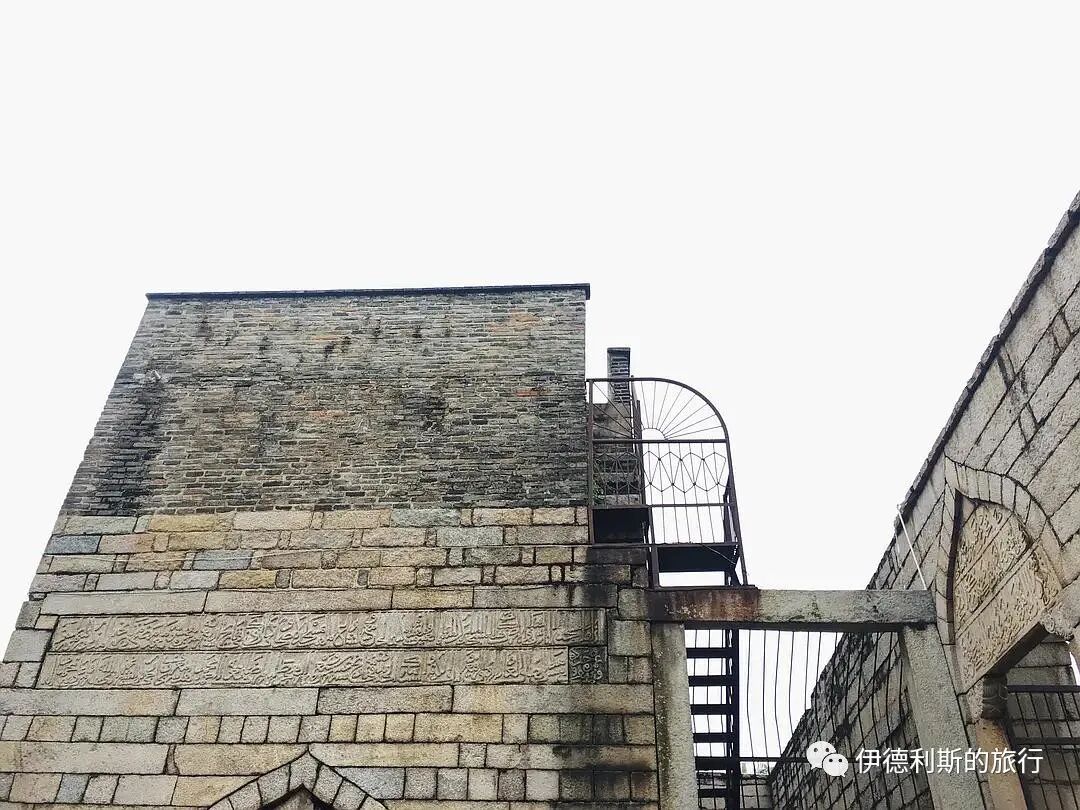
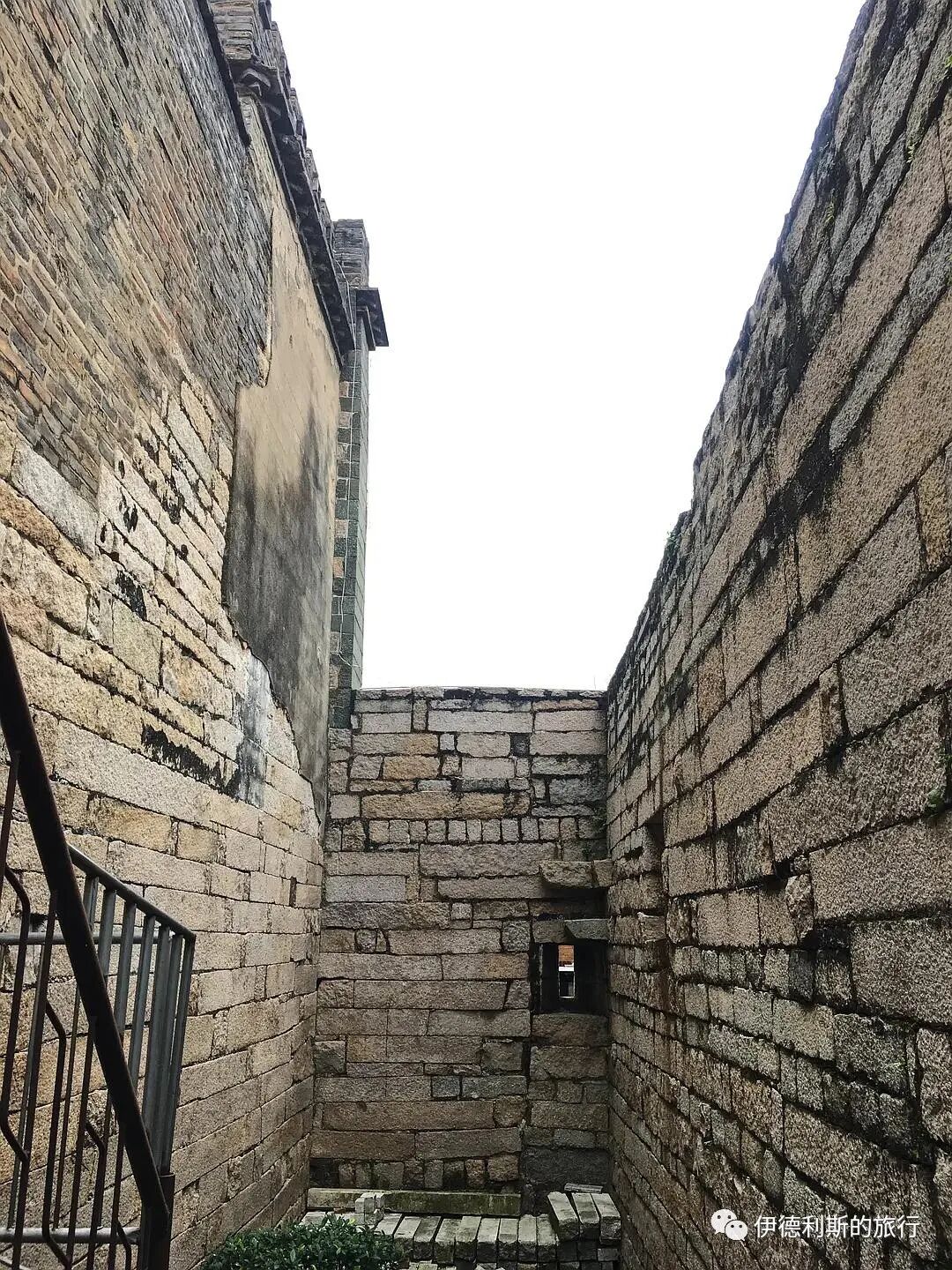
The gate tower of the Qingjing Mosque is built of diabase and white granite. The outer layer features a line of Quranic inscriptions. At the top of the gate tower is the Moon-Sighting Terrace, where the moon was sighted every Ramadan. In the old days, three large lanterns would be hung under the archway after the start of Ramadan each year. A large palace lantern was hung in the center of the pointed arch, inscribed with 'Islam' in both Chinese and Arabic. Two long, oval-shaped government-style lanterns were hung on both sides; the one on the left read 'Ancient Religion of the Hui People', and the one on the right read 'Ancient Qingzhen Qilin Mosque'. Every night, the mosque would set up a round sign listing the names of the heads of each household, and the Hui Muslims would take turns lighting the lamps. Throughout Ramadan, Muslims would come to the front of the prayer hall at Qingjing Mosque every night to burn pairs of black bamboo-handled 'Anxi incense' sticks.
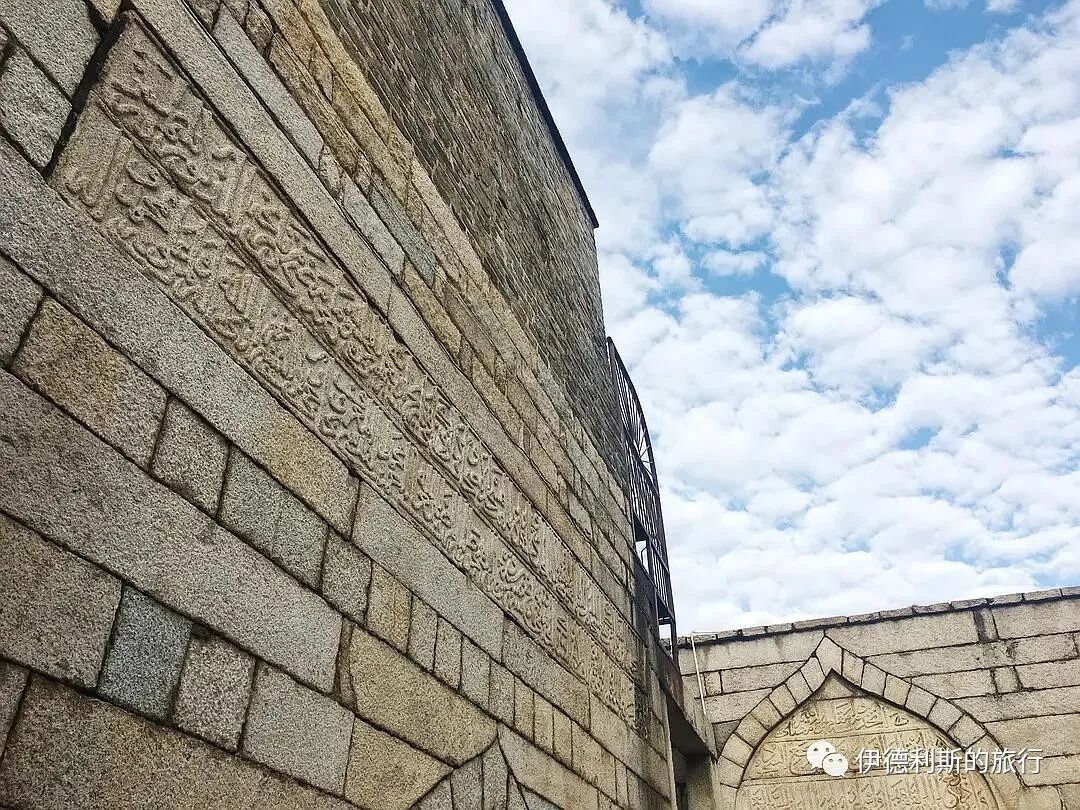
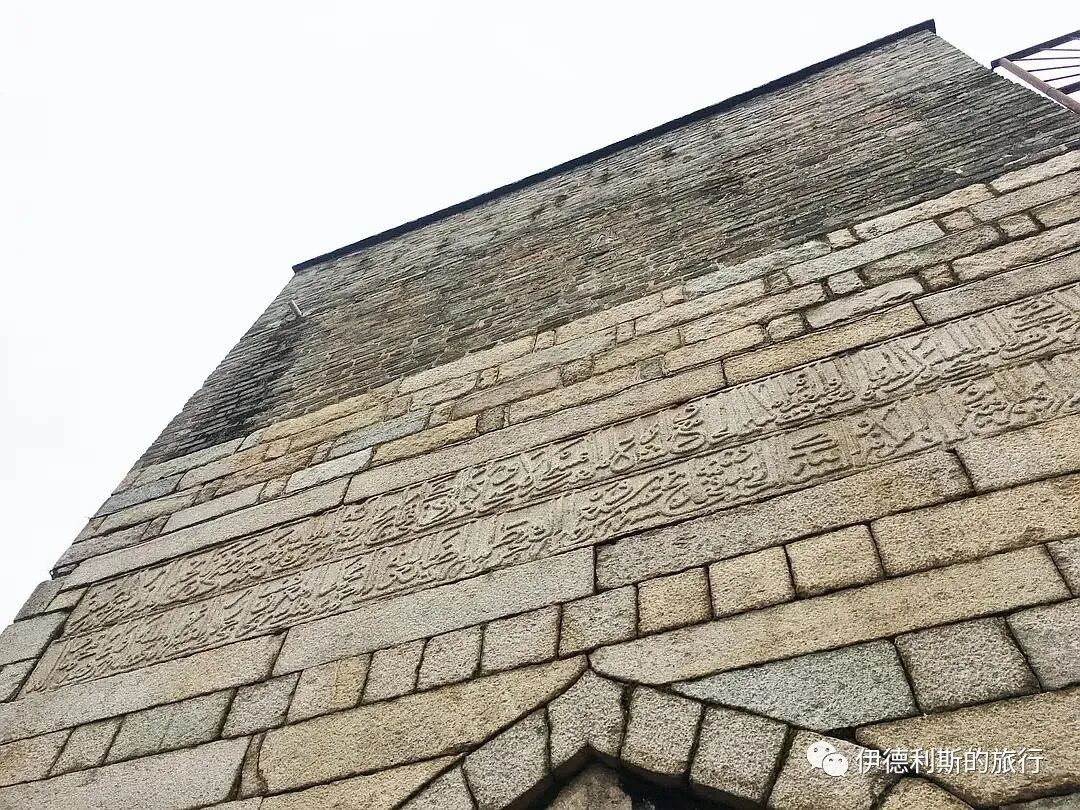
The stone inscriptions on the outside of the main gate are from the full text of Chapter 3, Verse 18 and an excerpt from Verse 19 of the Quran.
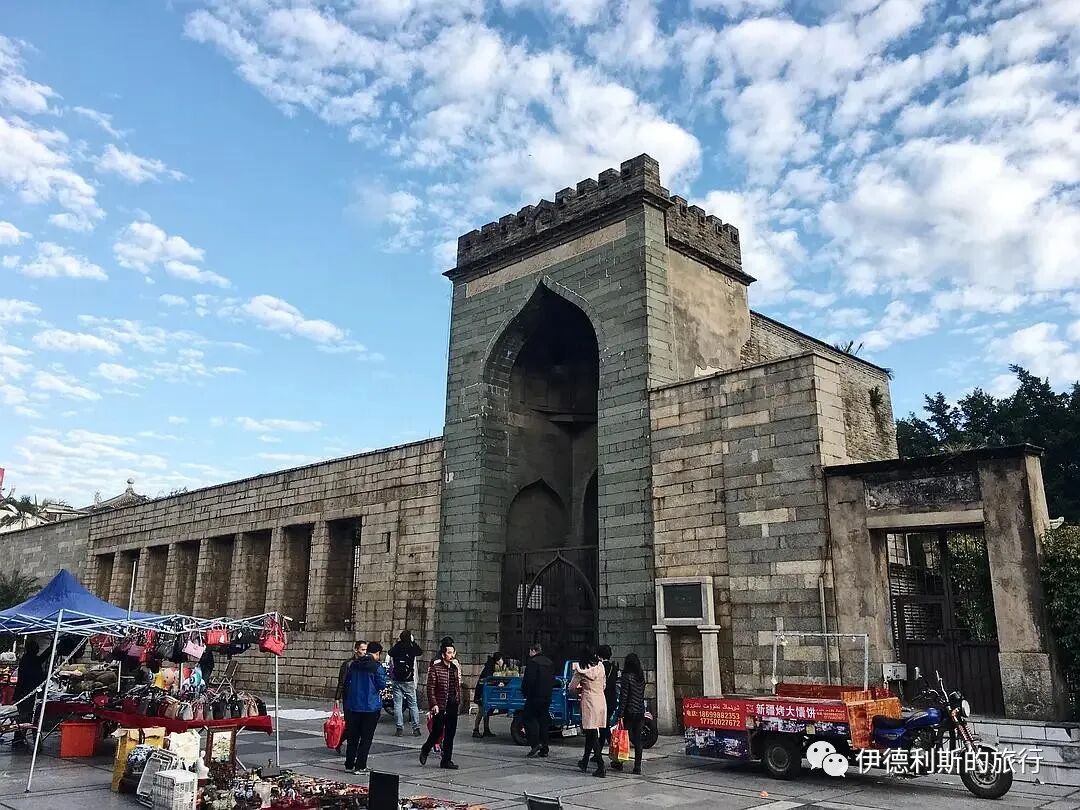
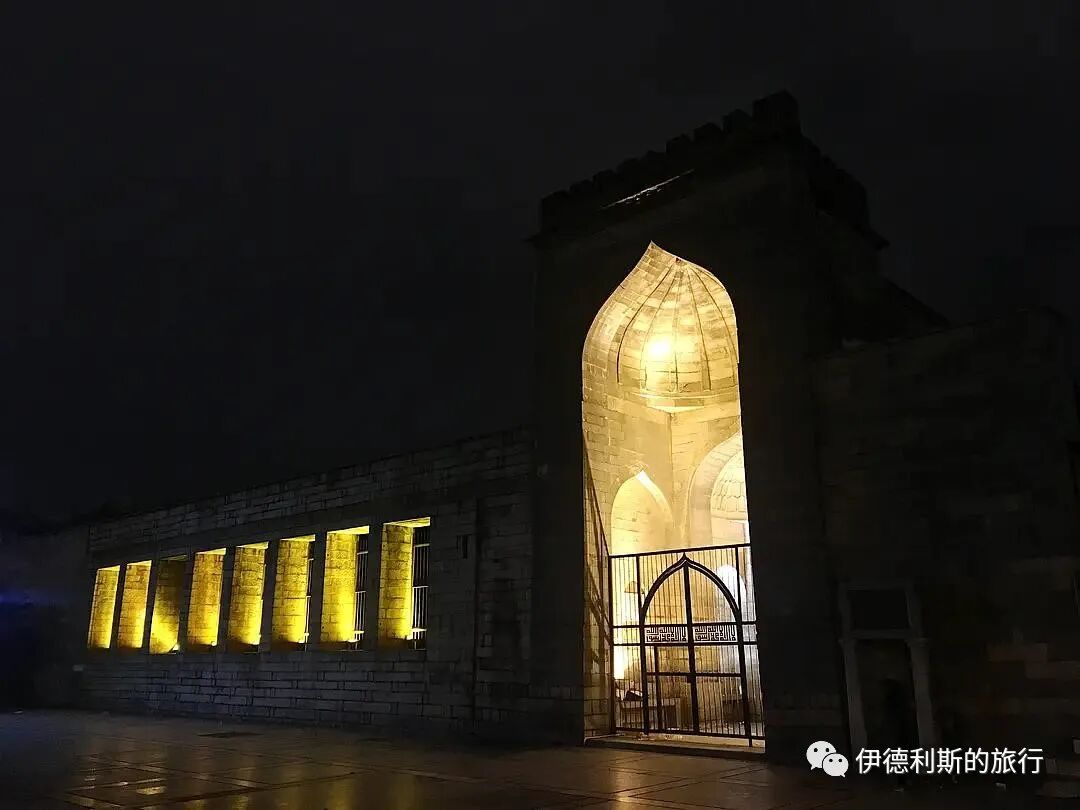
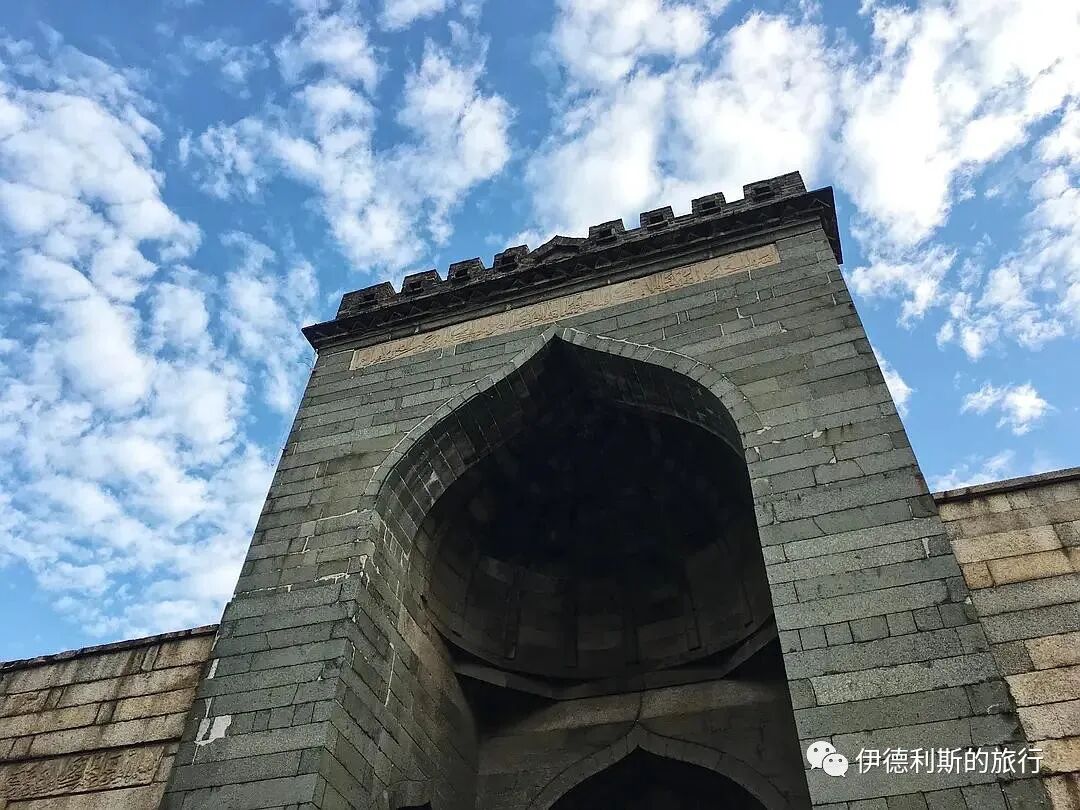
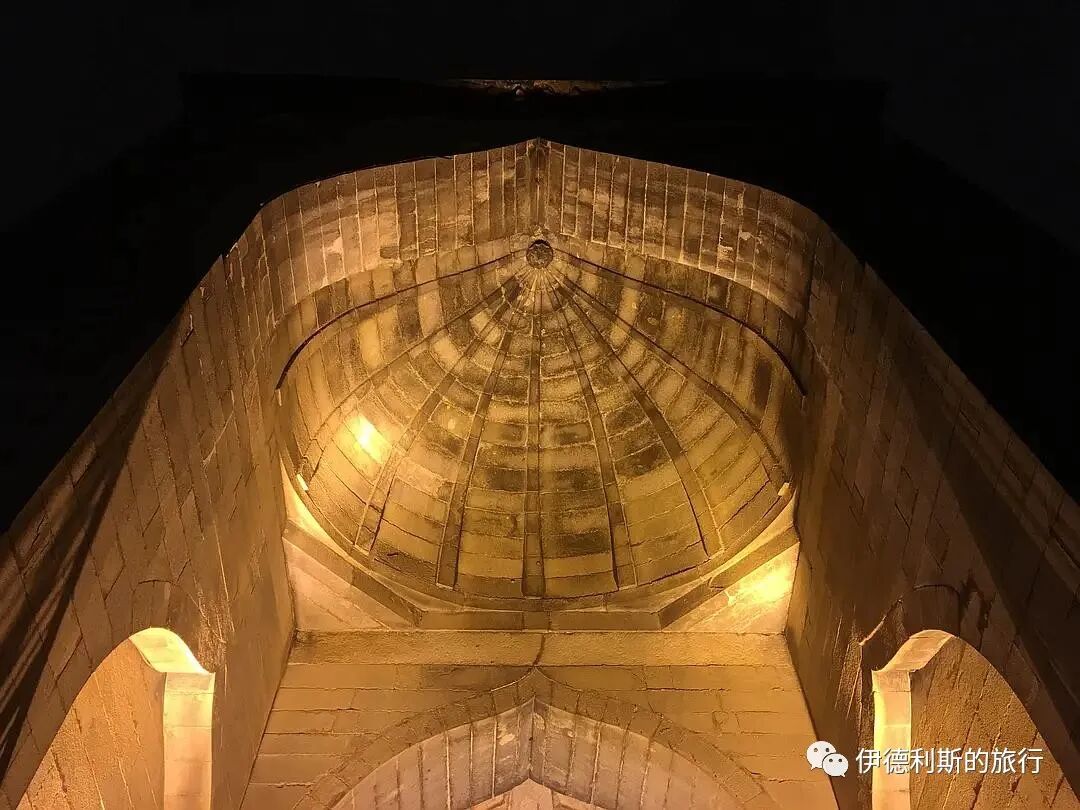
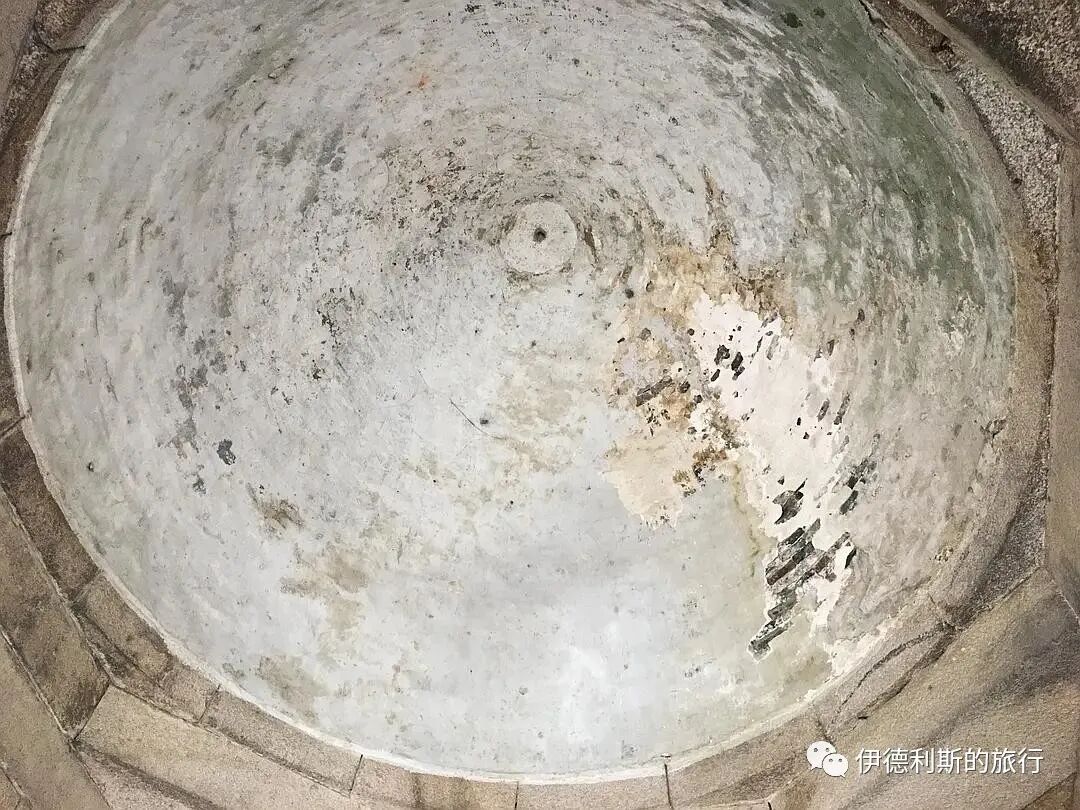
The interior is composed of three layers of domes. The outer layer is a pointed arch dome. The top is a hanging lotus carved from diabase, and below it are sixteen layers of curved stone strips that become higher and narrower until they close at the lotus.
The middle dome is composed of five fan-shaped white granite stones with tortoise-shell patterns, with foundation stones laid underneath. The inner layer is a dome. There is a pair of pointed arch false doors on the stone walls on both sides of each layer.
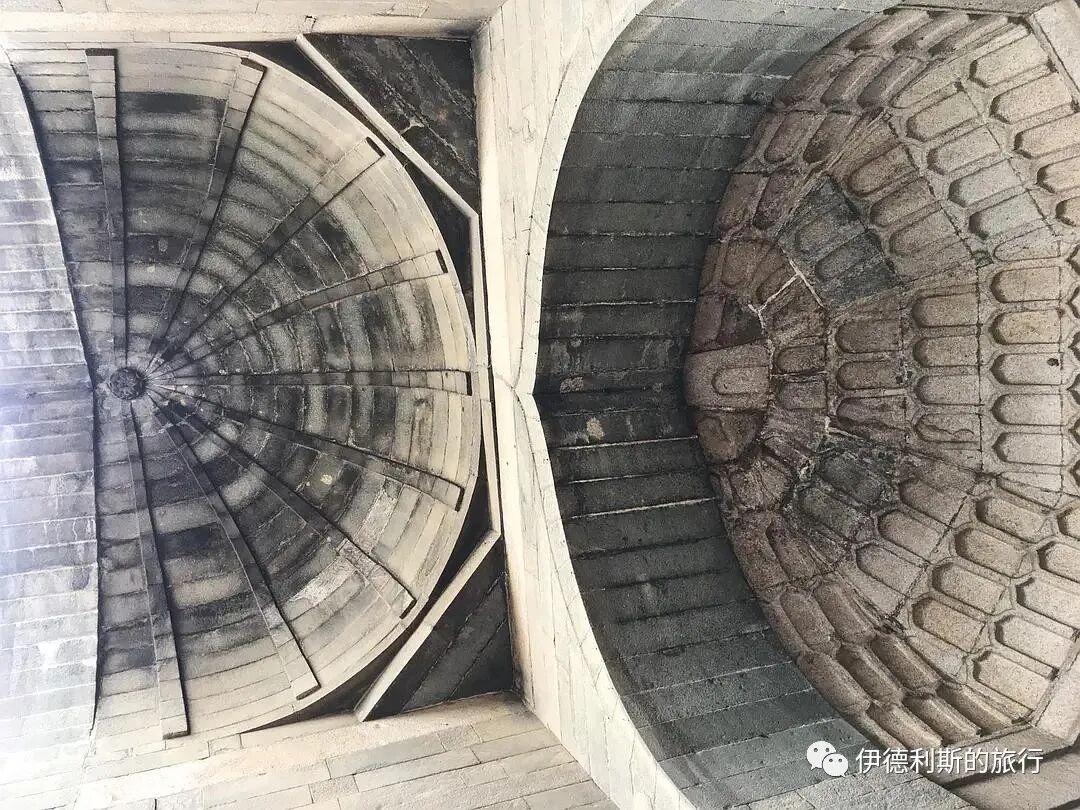
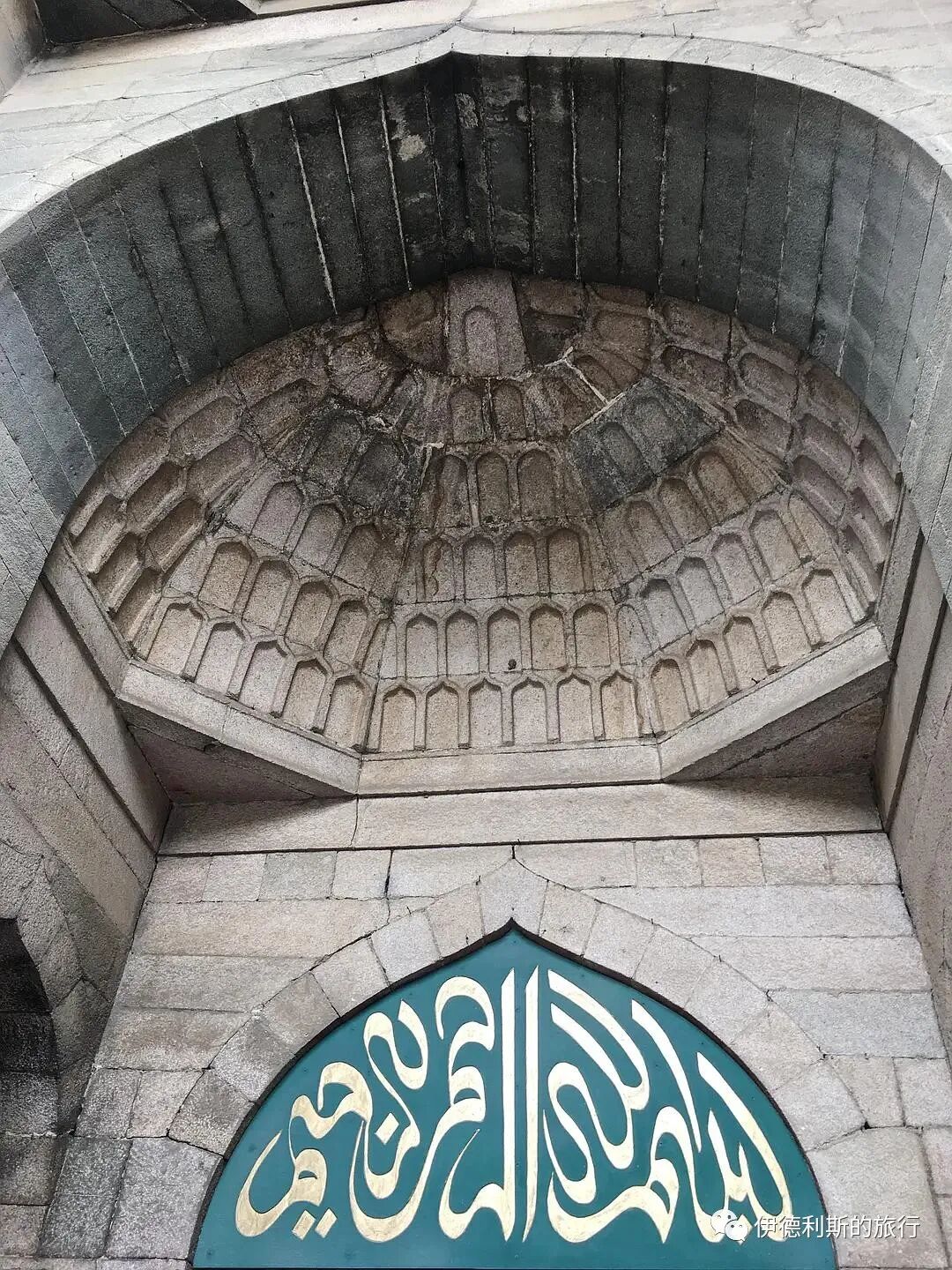
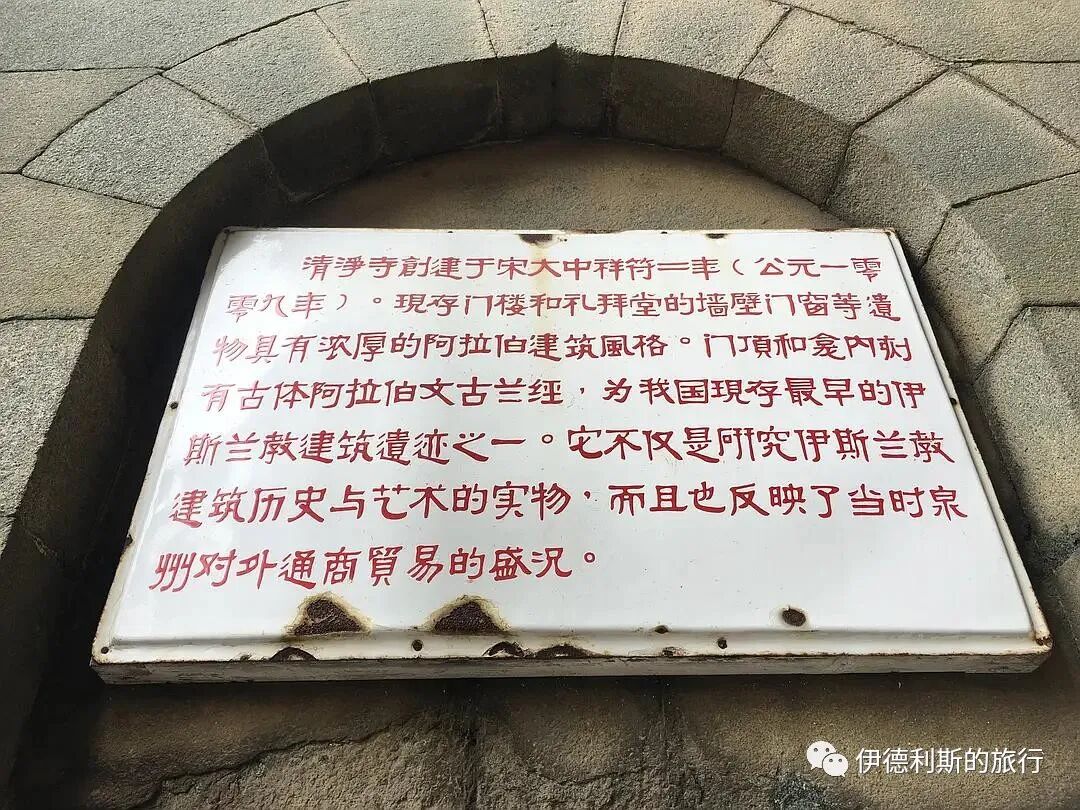
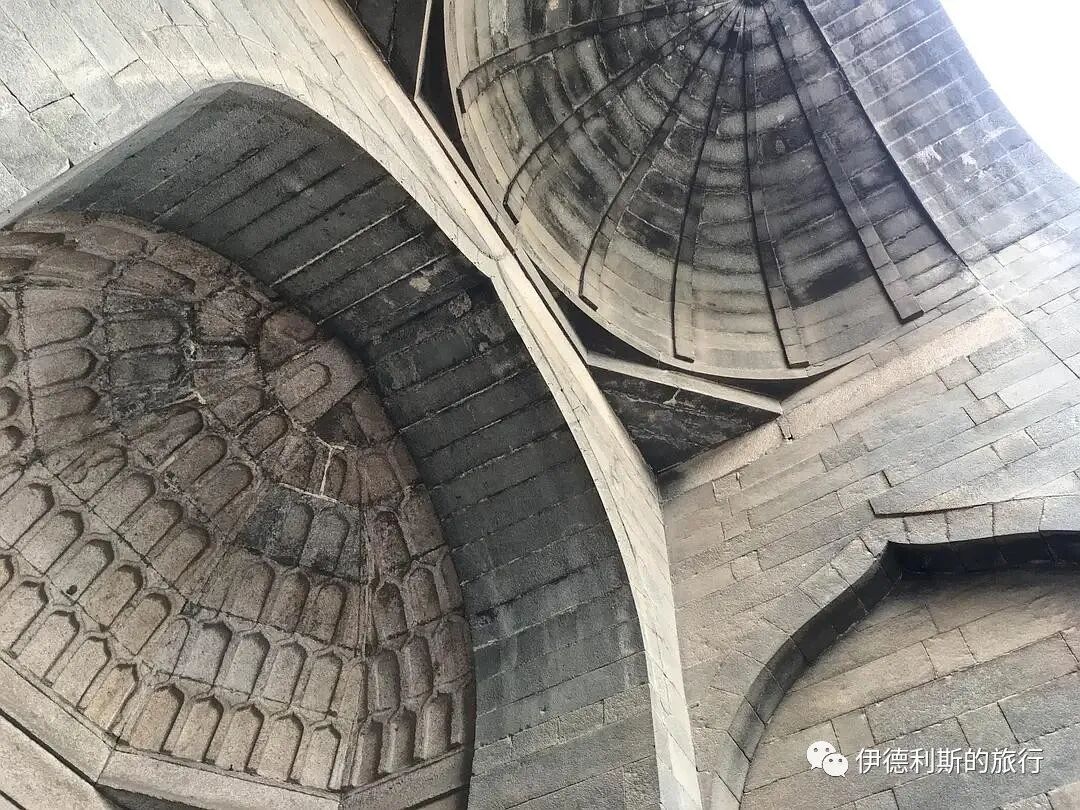
Above the rear of the main gate, there are two lines of Arabic stone inscriptions carved in white granite. This inscription records that Ahmad from the ancient Persian city of Shiraz rebuilt the Mosque of the Holy Friend in 1310.
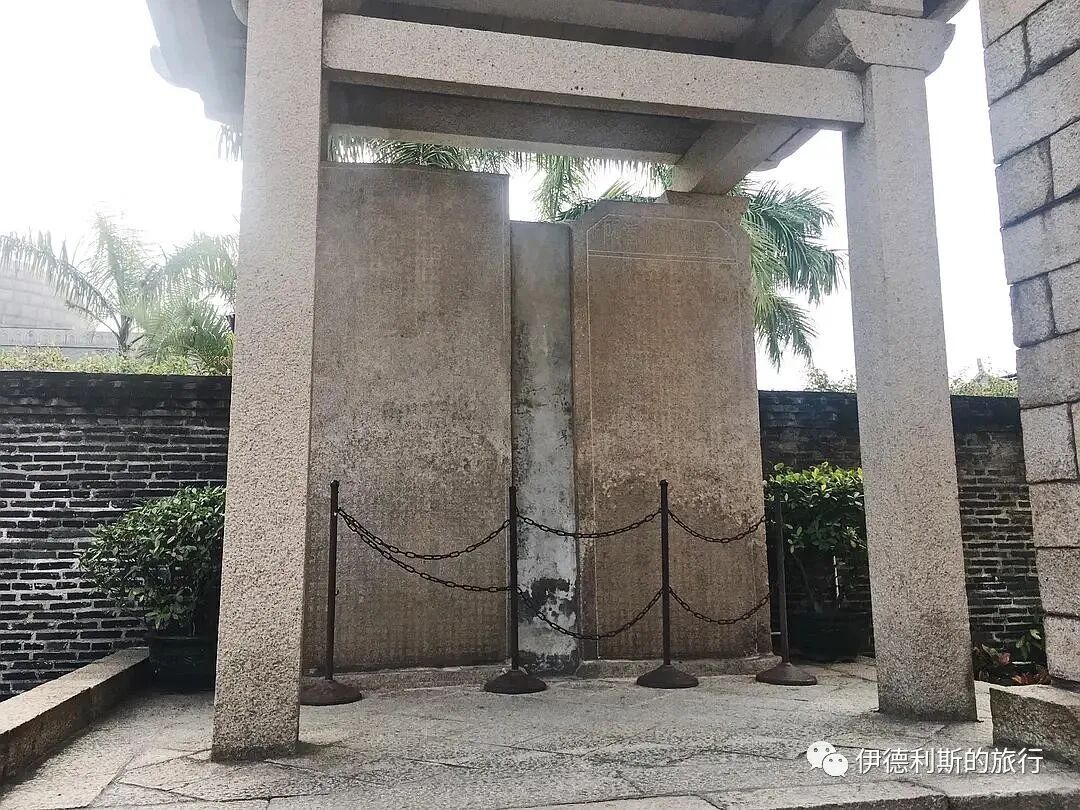
On the east side of the main gate stand two Chinese stone tablets: the 'Record of the Re-establishment of Qingjing Mosque' (re-engraved in 1507 from the 1351 original) and the 'Record of the Renovation of Qingjing Mosque' from 1609.
2. The Main Prayer Hall
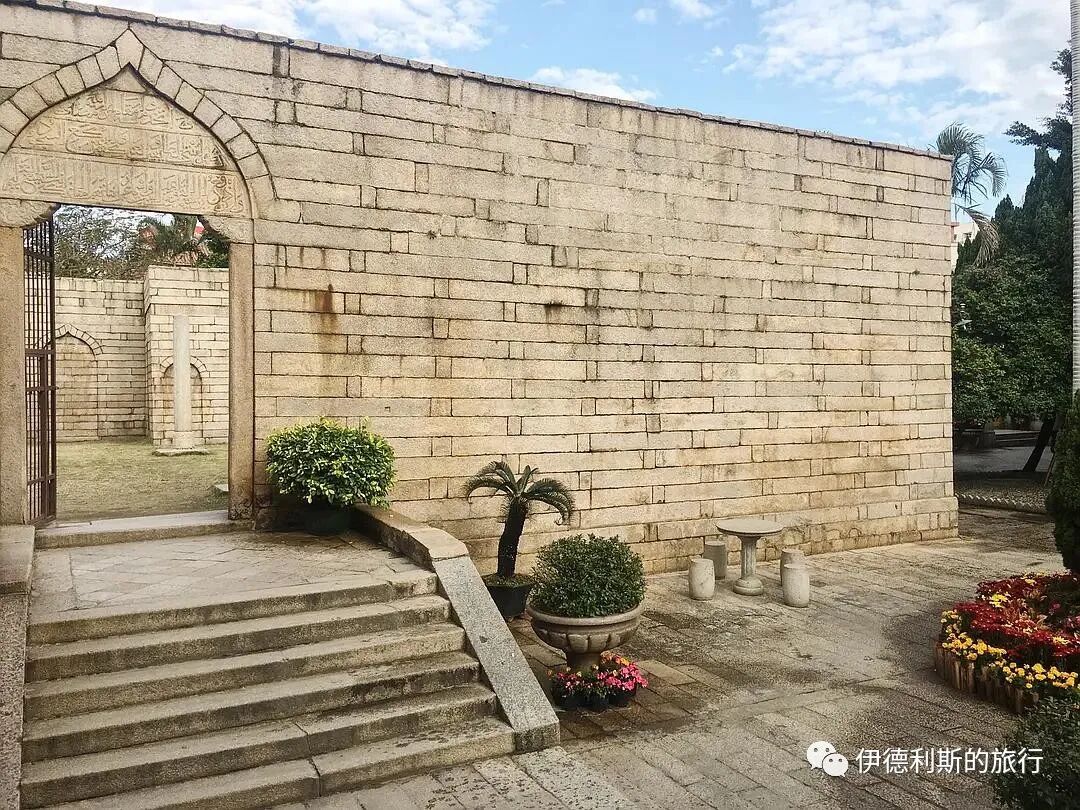
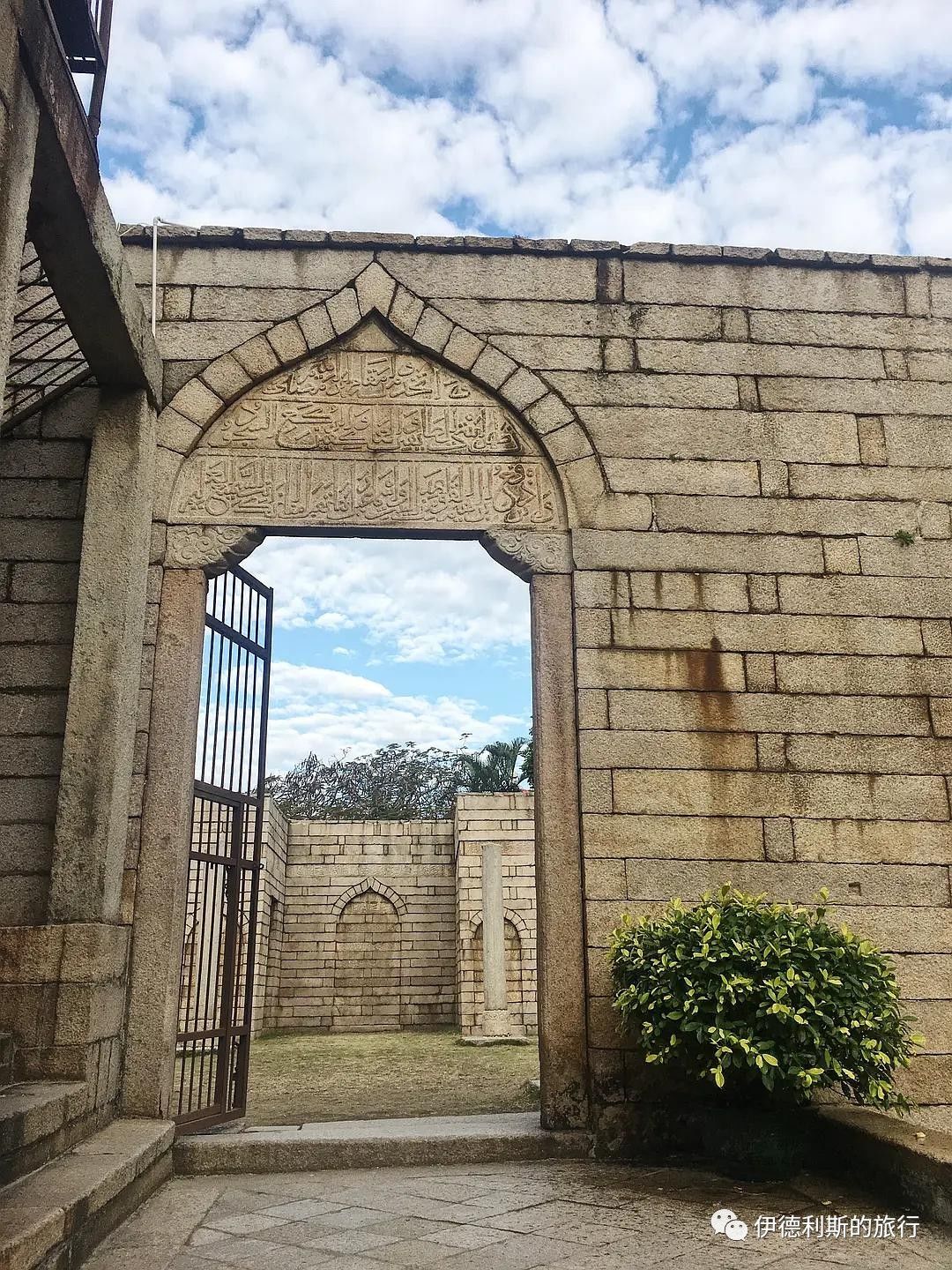
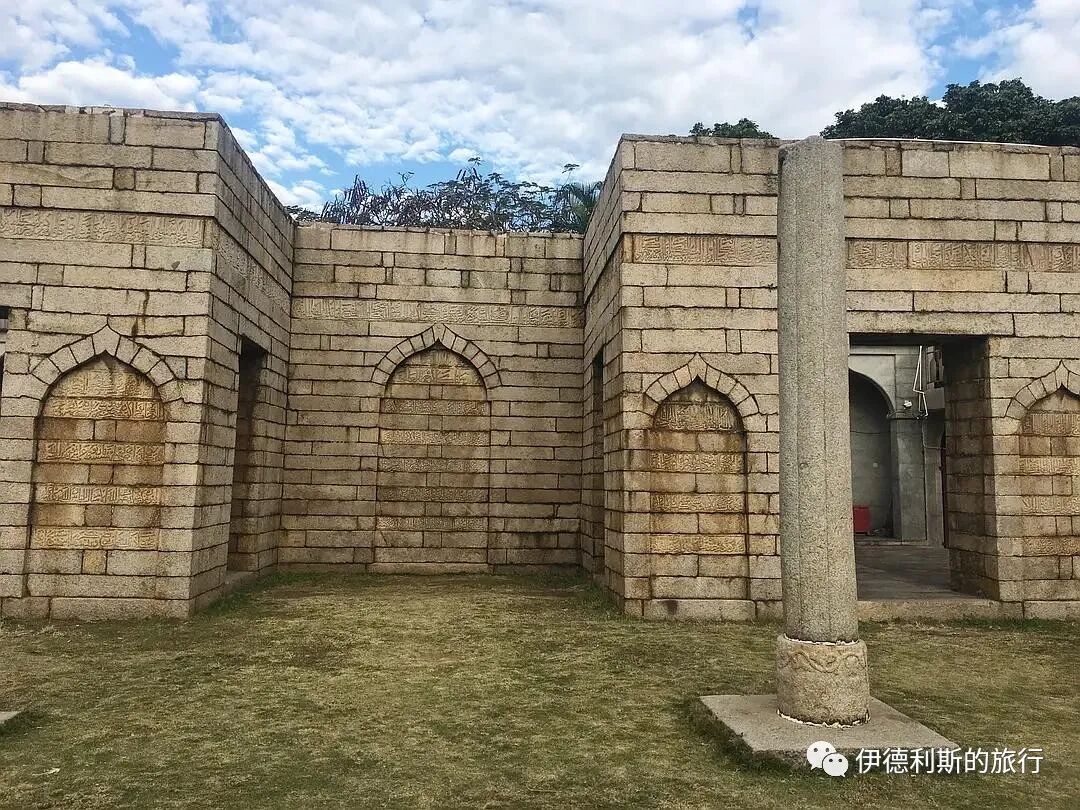
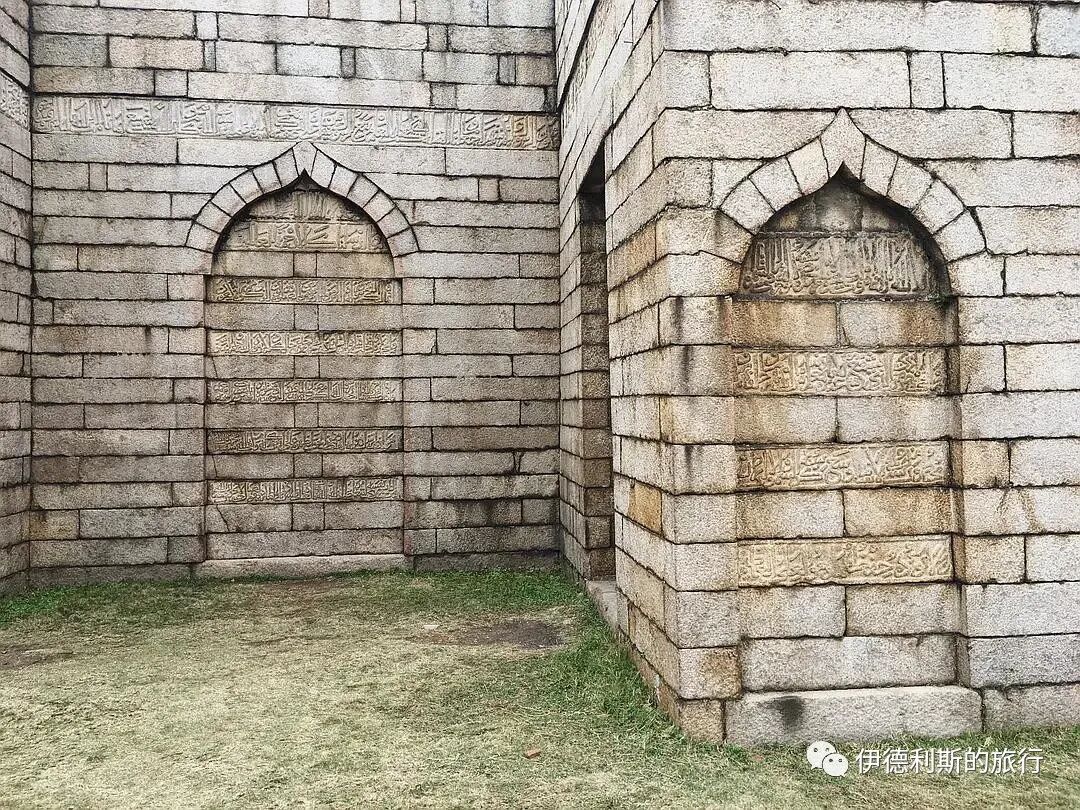
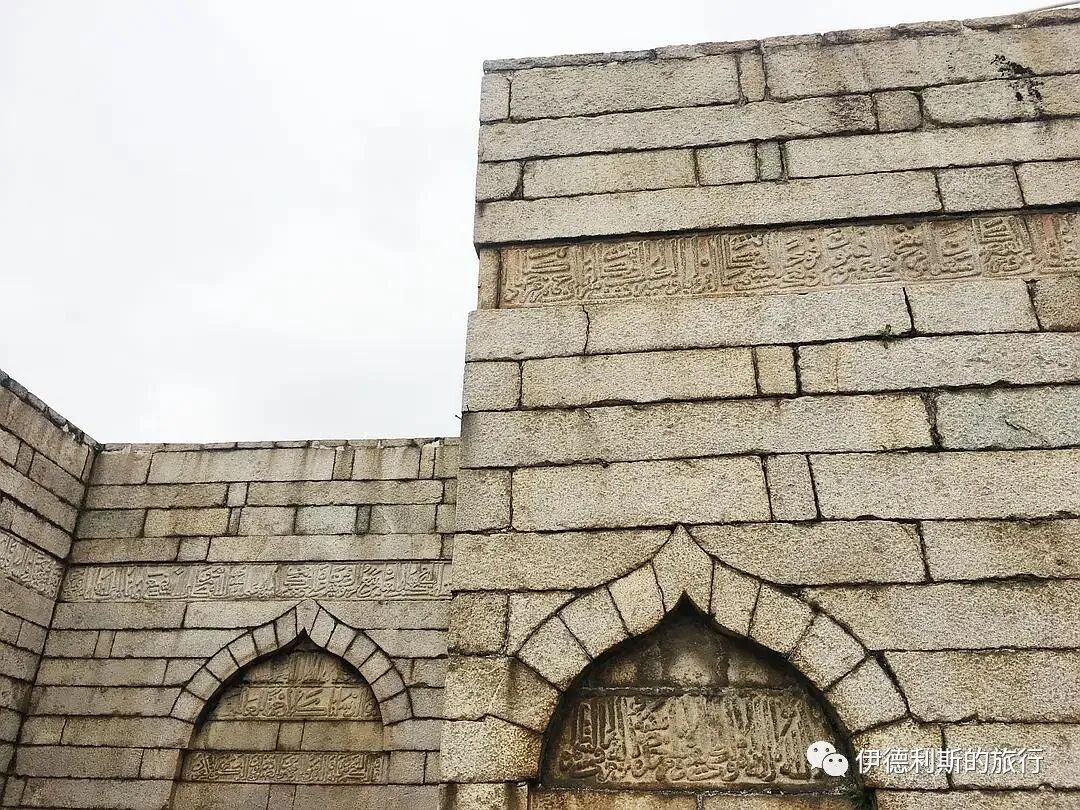
To the left of the main hall entrance is the pointed arch main door of the hall. Inside the arch are three lines of white granite inscriptions, featuring an excerpt from Chapter 2, Verse 125 and the full text of Verse 127 of the Quran.
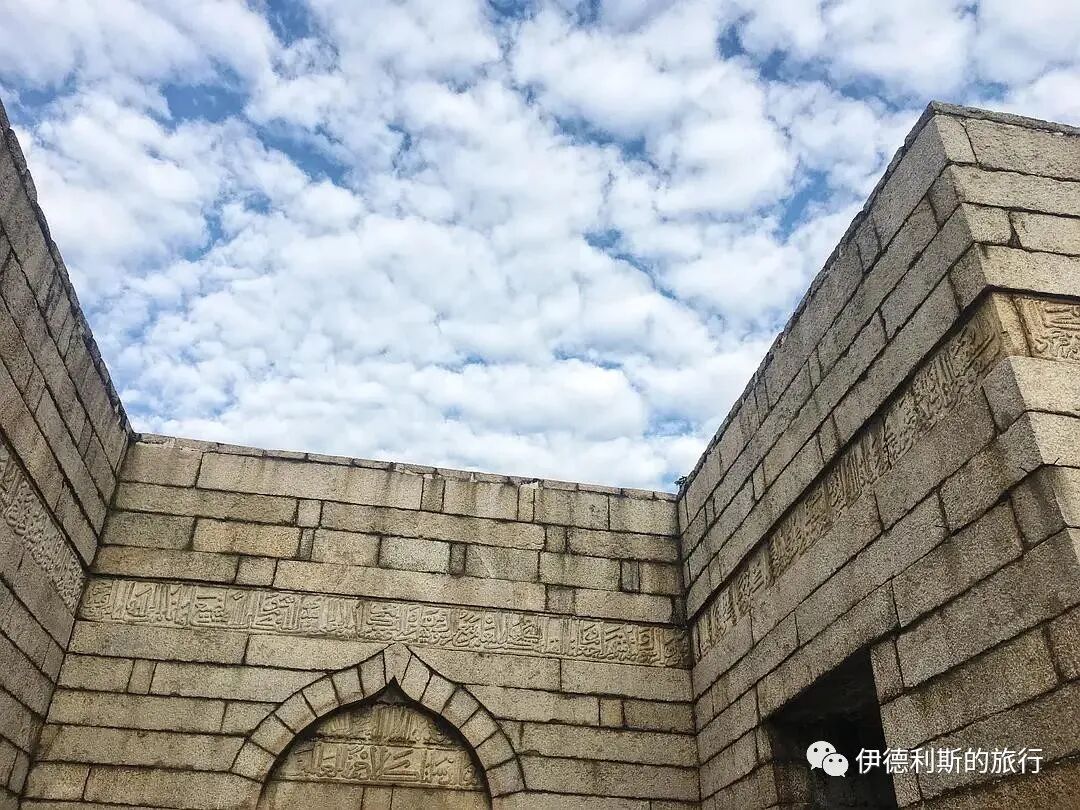
There are 8 outer windows on the south side of the main hall facing the street, with a 19-meter-long stone inscription above them, which is the entire Chapter 76 of the Quran.
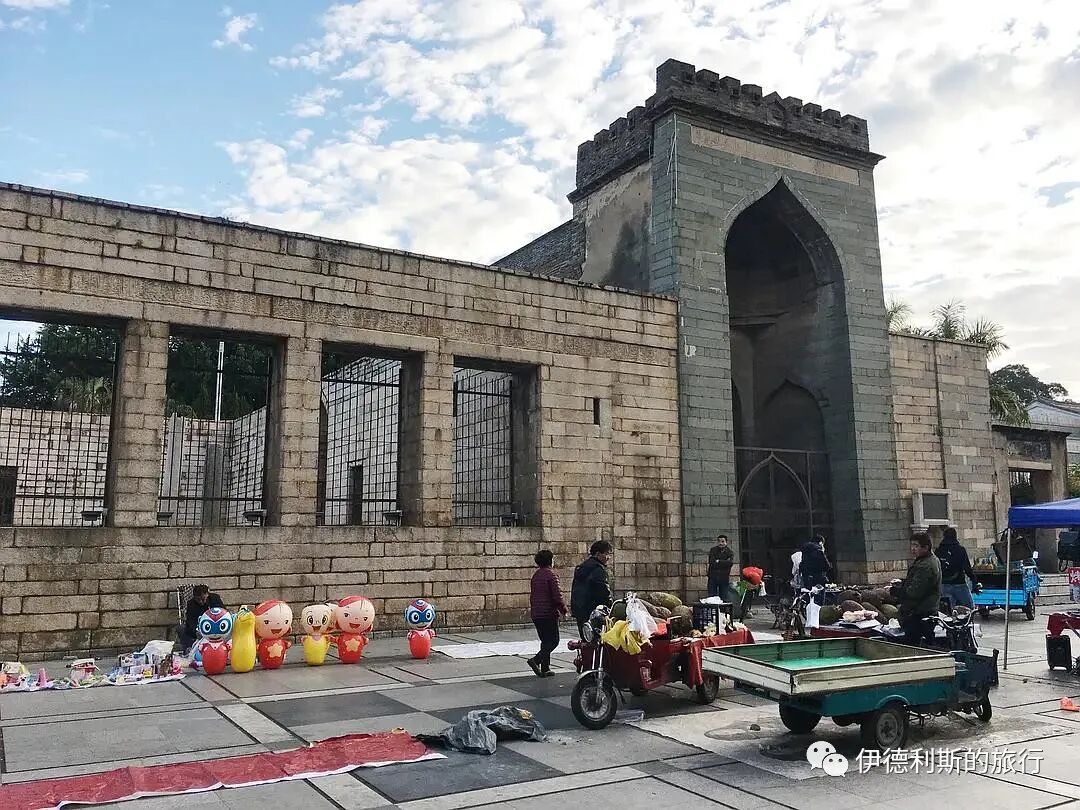
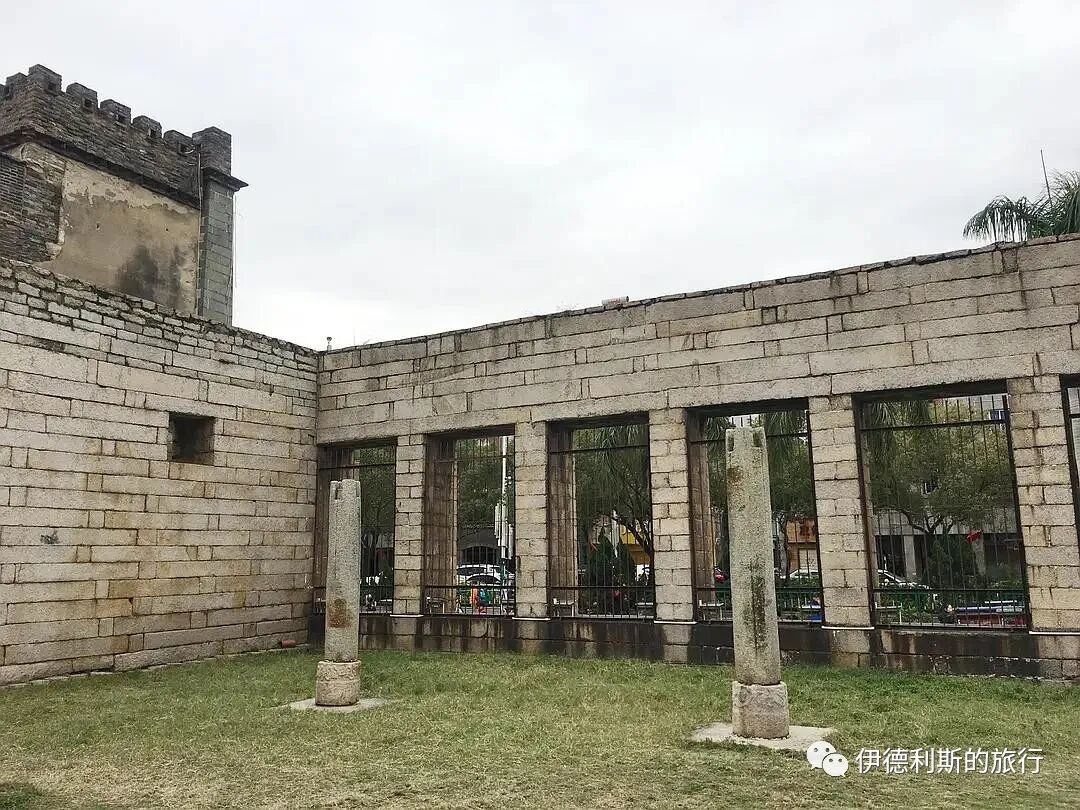
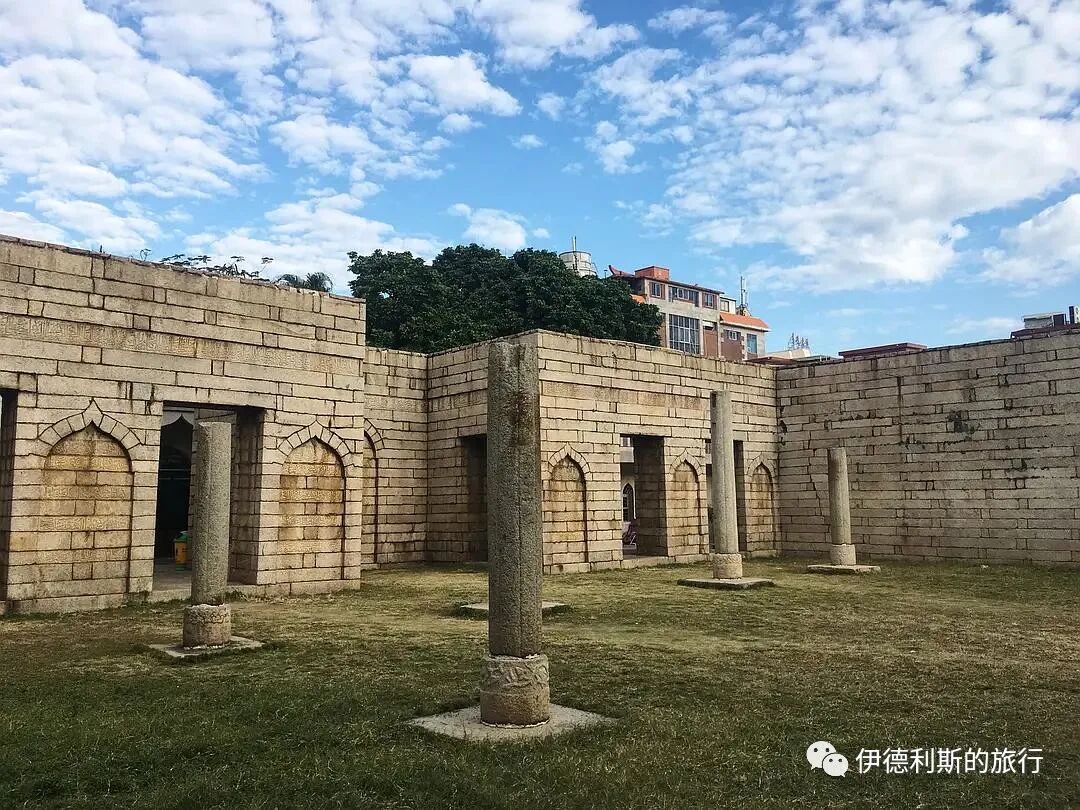
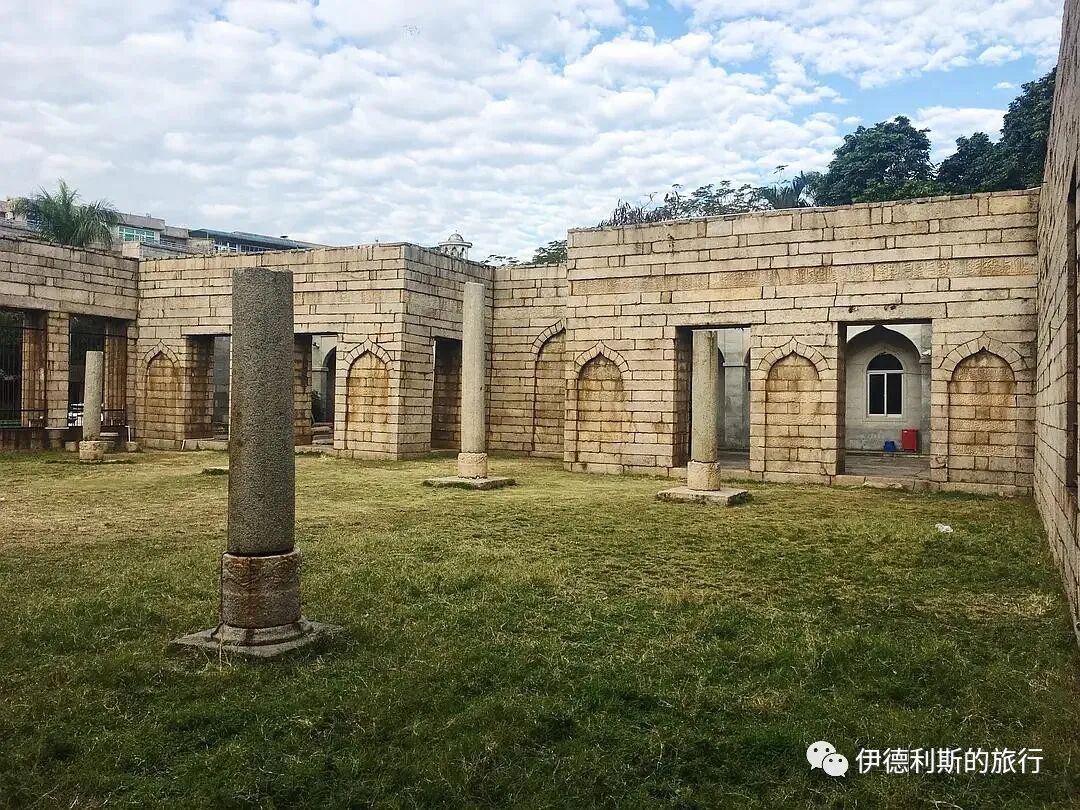
There are seven pointed arch niches on the west wall of the prayer hall, each with stone inscriptions inside. Above the niches is another long strip of stone inscriptions, all of which are from the Quran.
In the middle of the west wall is the protruding 'Fengtian Altar', which is the Mihrab kiln hall. The niche inside the Mihrab is the largest, with seven lines of inscriptions starting with the Shahada, followed by excerpts from the Quran. The inscriptions in the other niches on the west wall are also all from the Quran. At the top of the niche is a 13.2-meter-long inscription from the full text of Chapter 2, Verses 142, 143, and 144 of the Quran.
In the past, Quanzhou Hui Muslims considered the 27th night of Ramadan as the 'Erba Night', or 'Laylat al-Qadr', the night when Allah revealed the Quran. On this day, every Hui Muslim household in Quanzhou would prepare festive food and slaughter livestock and poultry. That night, each household would light a pair of large red candles on both sides of the Mihrab niche in the main hall of the Qingjing Mosque, signifying that the revelation of the Quran by Allah is brilliant and glorious.
3. Mingshan Hall
Mingshan Hall was first built in 1567. According to the 'Record of the Renovation of Qingjing Mosque' in the mosque, 'The congregation would climb the building to recite the Quran during the fasting month, and after finishing, they would retire to rest in this hall.' After the roof of the main hall of the Qingjing Mosque collapsed in the early Qing Dynasty, Mingshan Hall was converted into a place for prayer.
In 1818, Ma Jianji, the Commander-in-Chief of the Fujian Provincial Land Forces from Zhangzhou, stationed in Quanzhou, rebuilt Mingshan Hall in the traditional architectural style of Southern Fujian. In 1871, Jiang Changgui, the Commander-in-Chief of the Fujian Provincial Land Forces, rebuilt Mingshan Hall again.
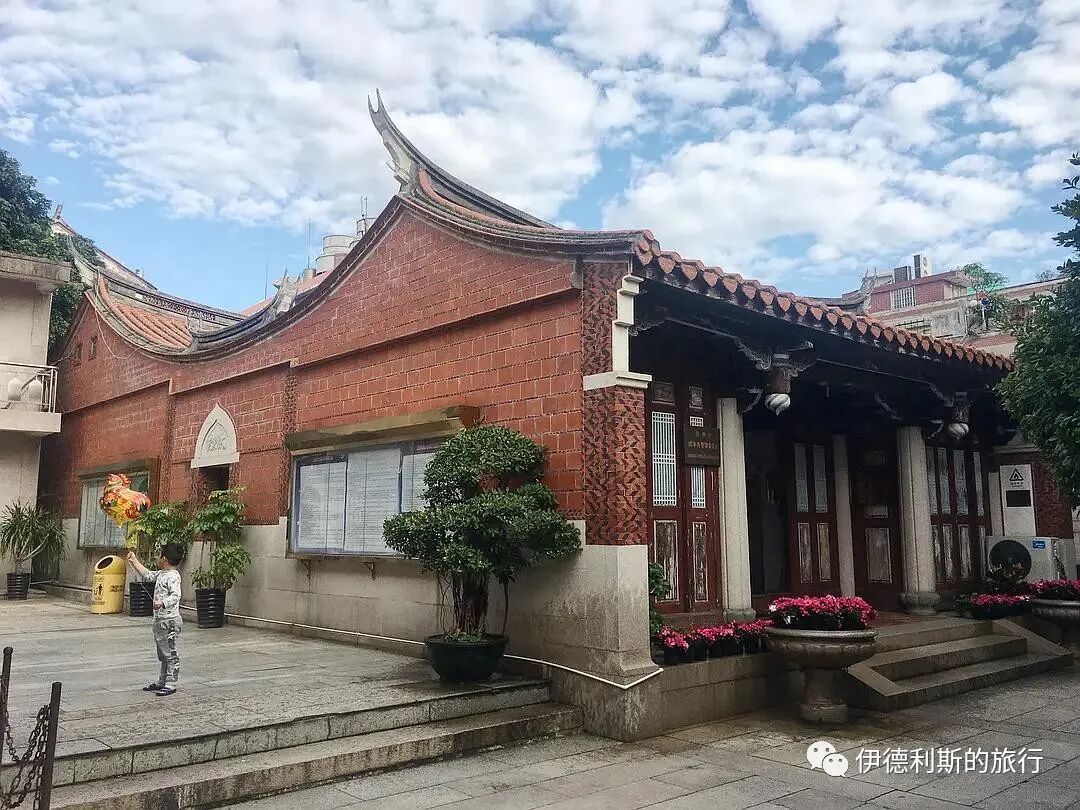
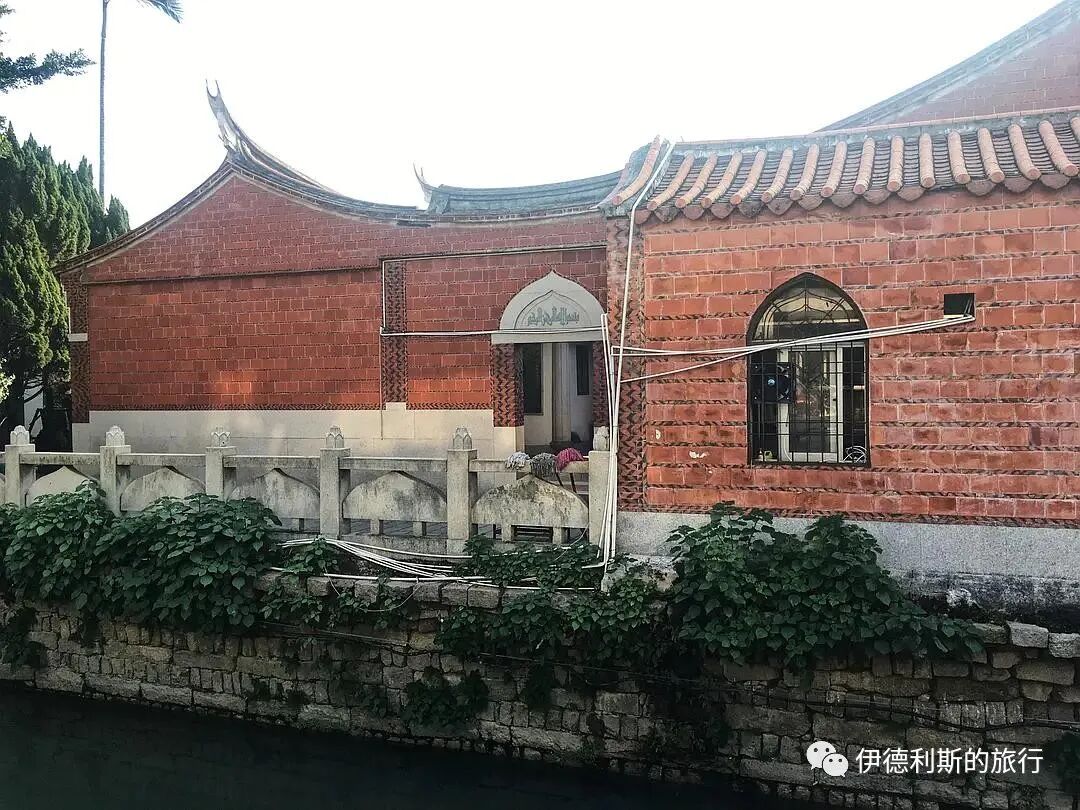
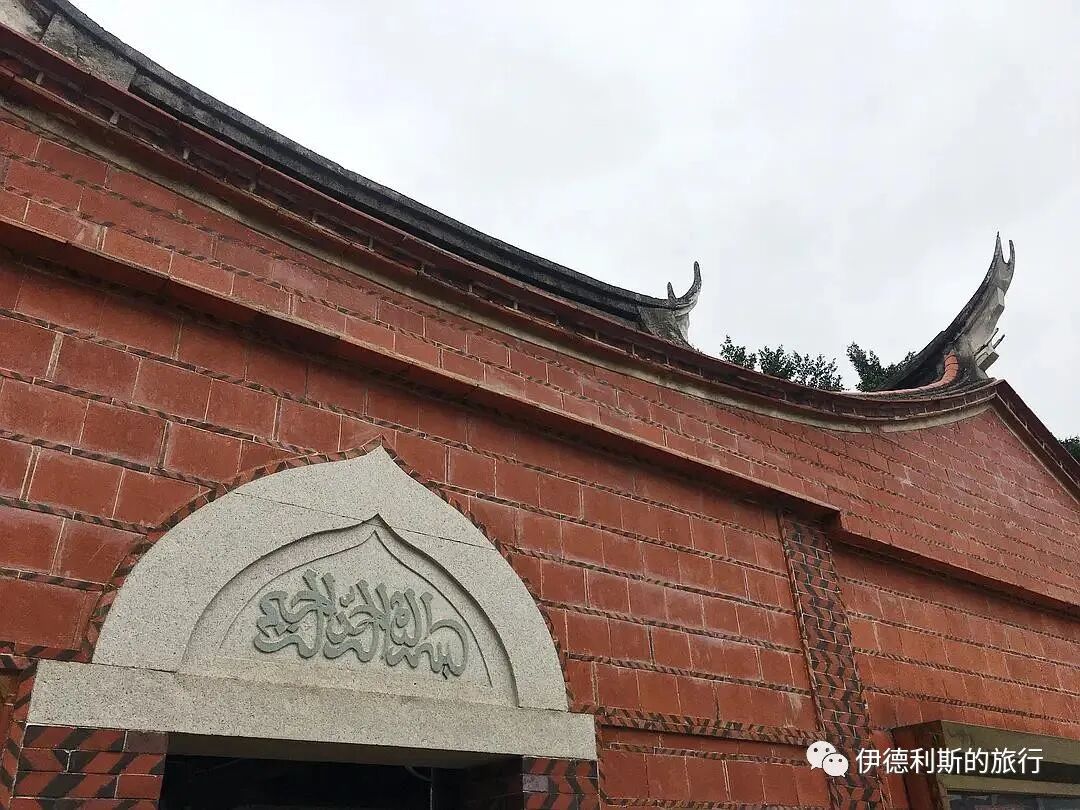
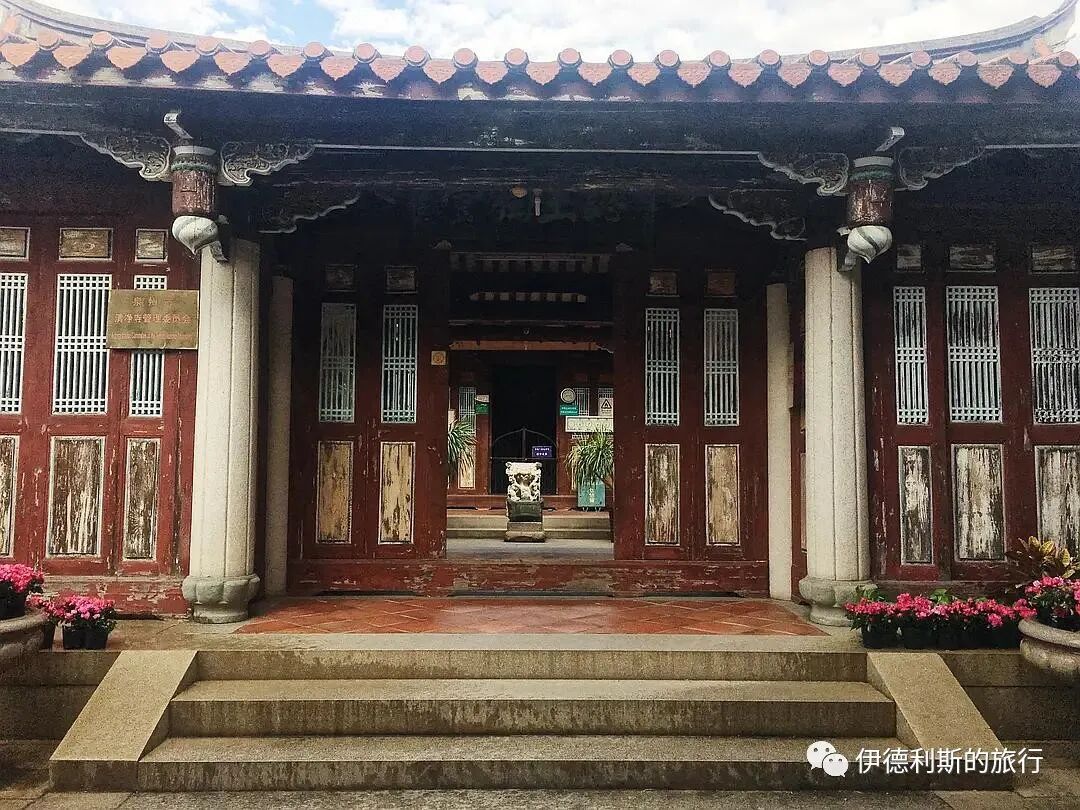
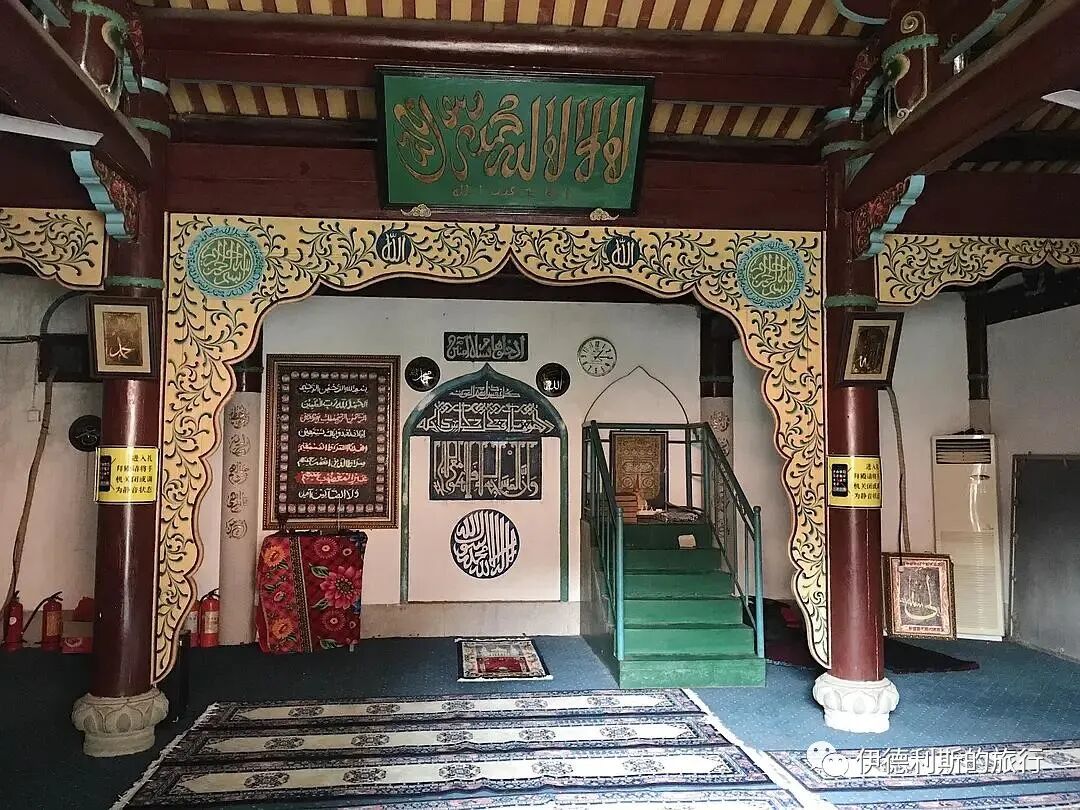
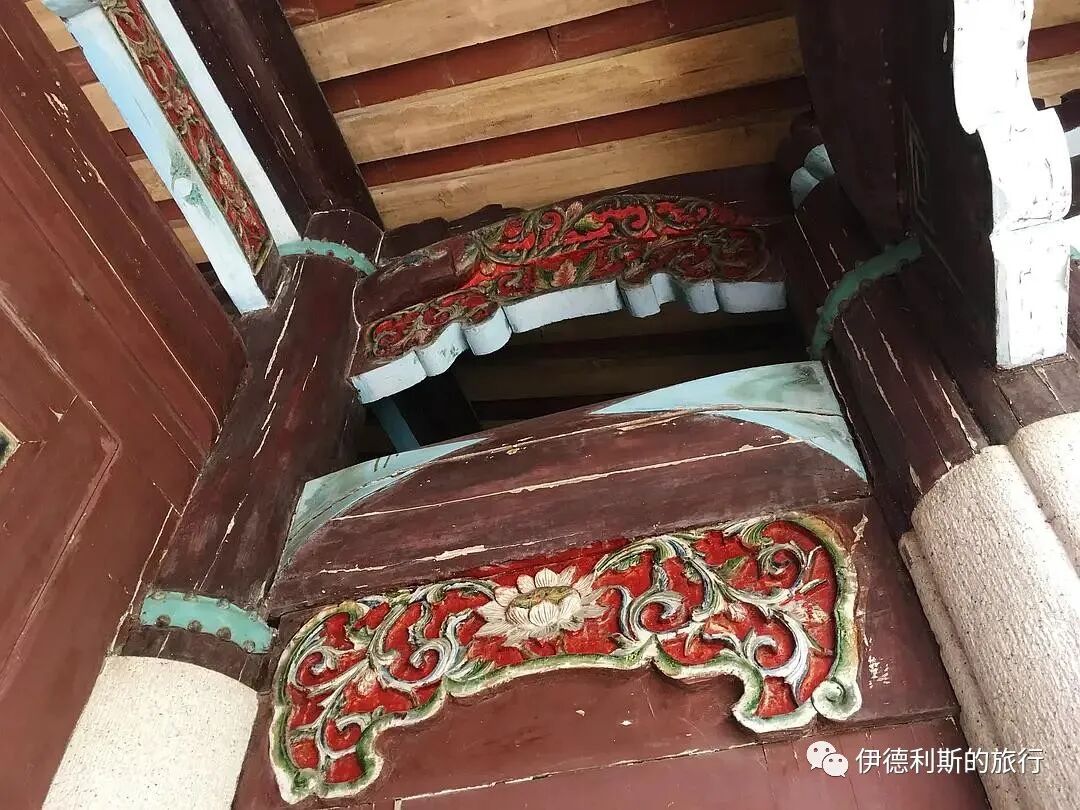
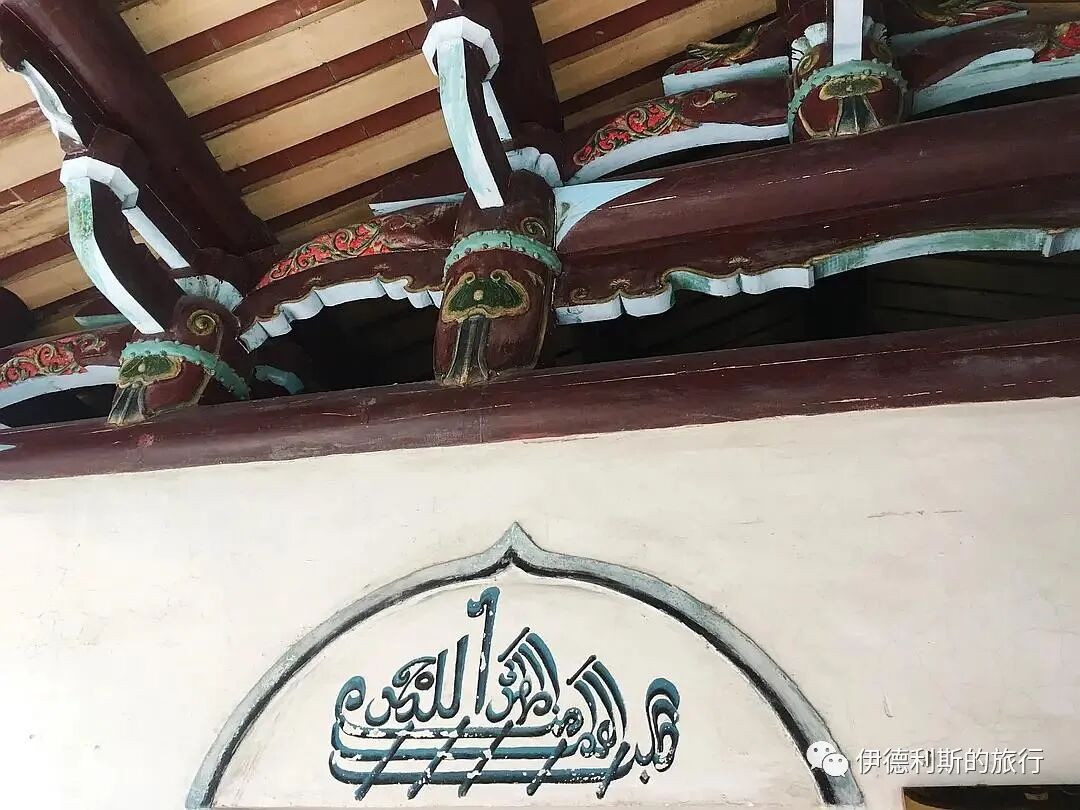
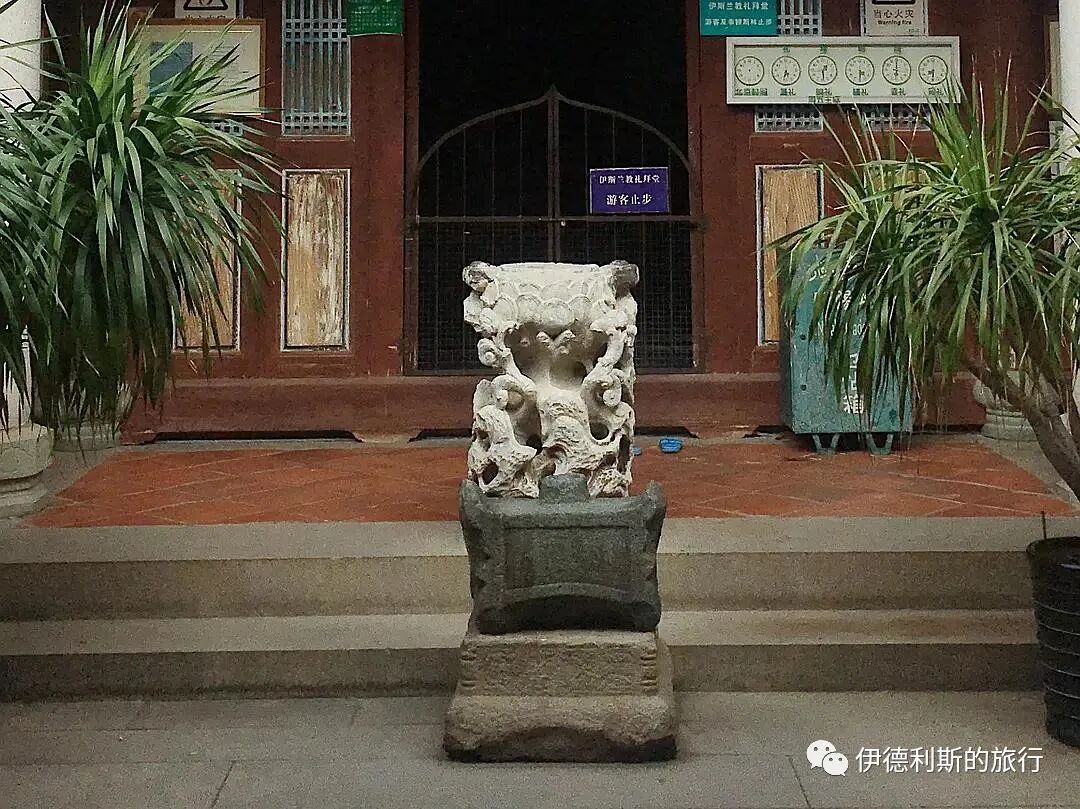
The 'Water Lotus' stone incense burner carved from Shoushan stone was an original item from the main hall of the Qingjing Mosque and was moved into Mingshan Hall after the roof of the main hall collapsed.
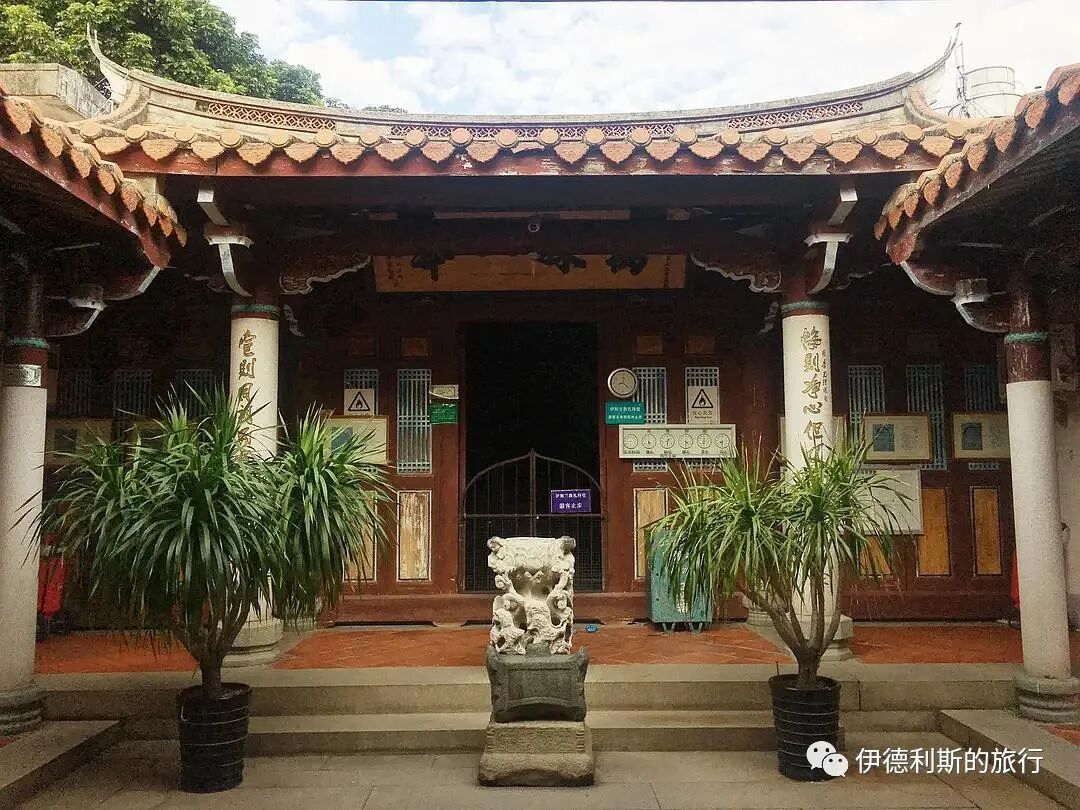
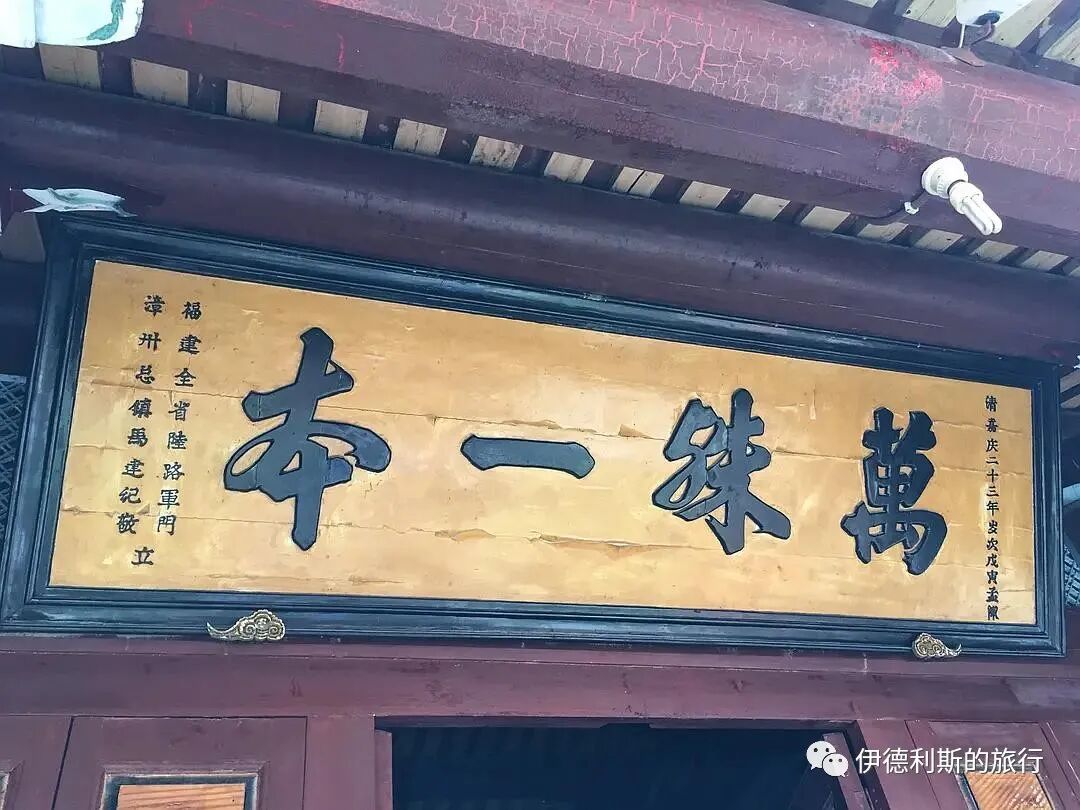
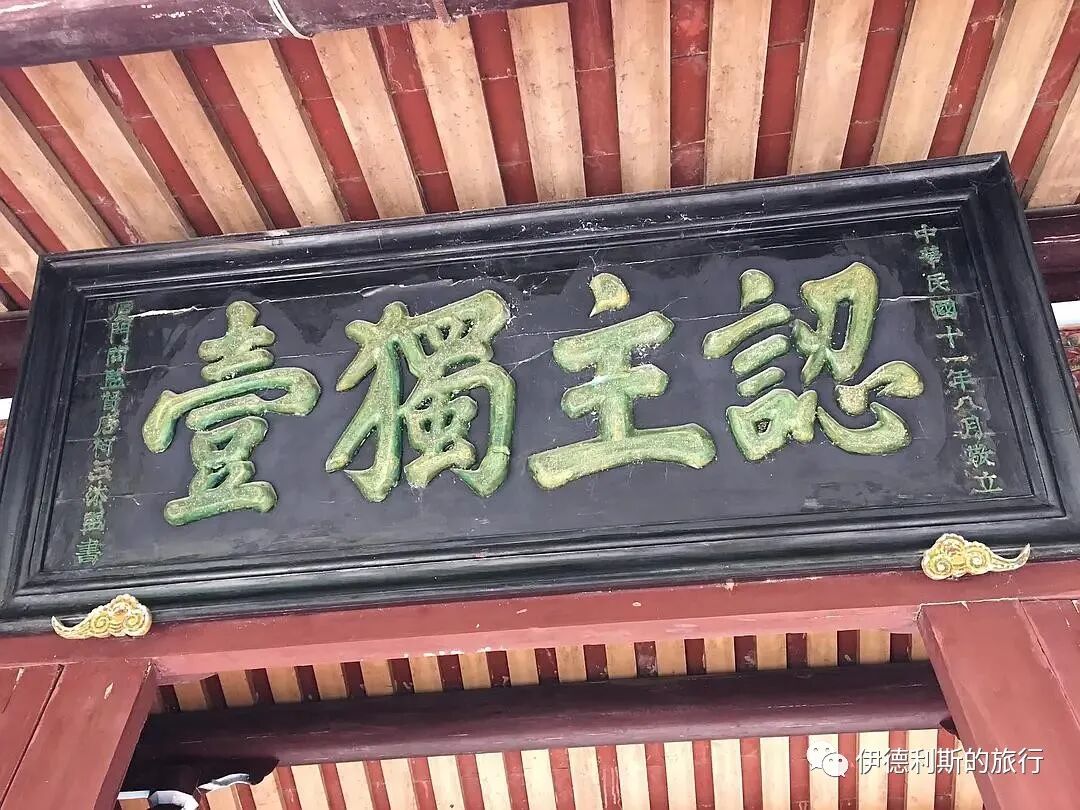
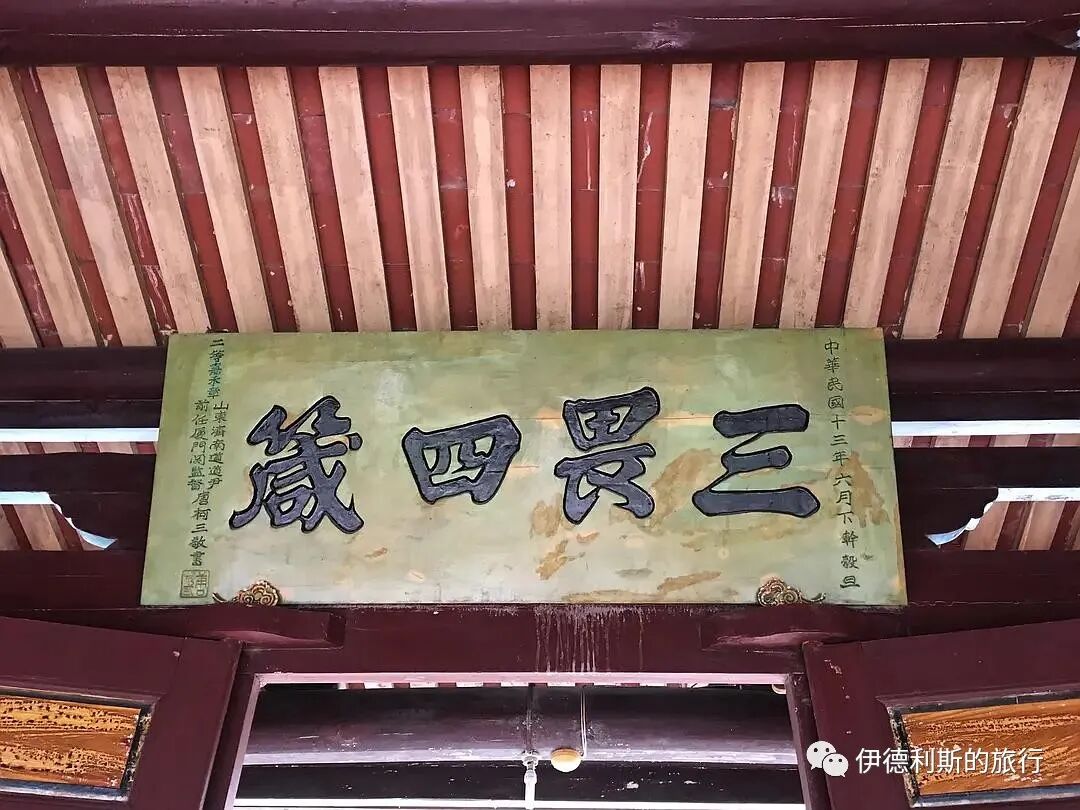
Mingshan Hall hangs the 'Ten Thousand Differences, One Origin' plaque established by Ma Jianji in 1818, the 'Recognize the One Lord' plaque written by Tang Kesan, the Xiamen Customs Superintendent in 1923, and the 'Three Fears and Four Admonitions' plaque established in 1925.
4. Collected Stone Carvings
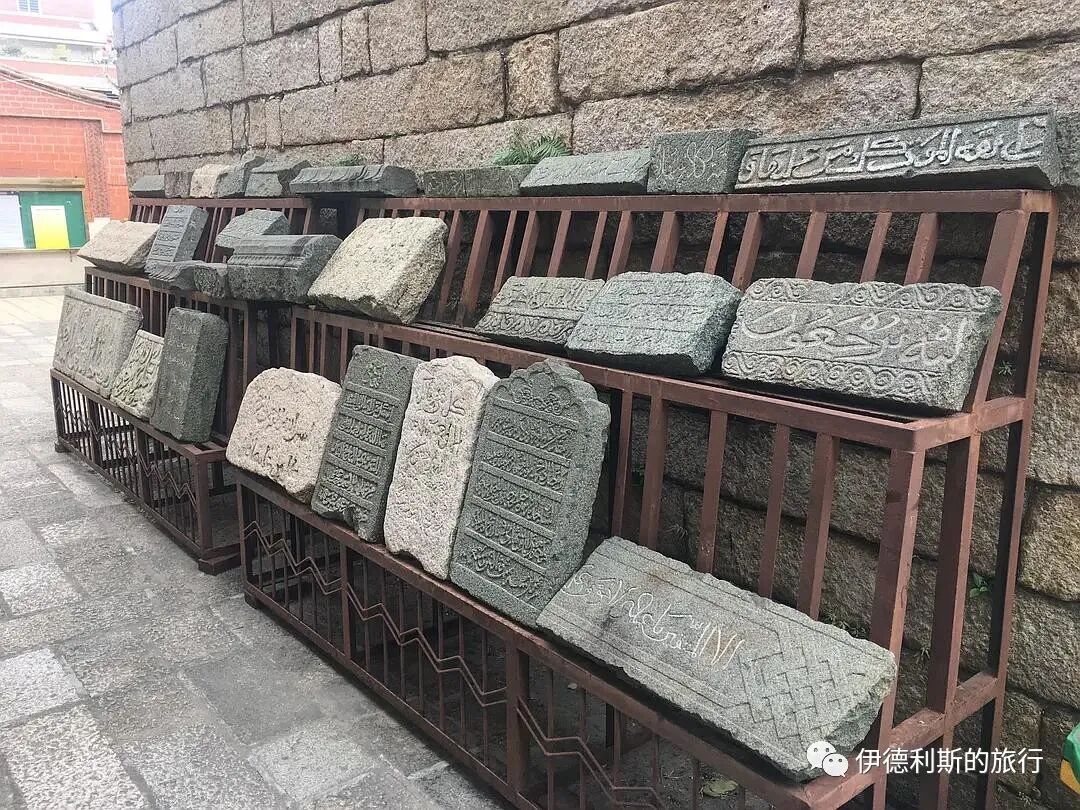
During the major renovation of the Qingjing Mosque in the spring of 1983, the 12 Hui Muslim households who had lived in the mosque since the Kangxi period were relocated, and a batch of stone tablets was discovered from the walls and underground of Mingshan Hall. Except for one from the end of the Southern Song Dynasty, all the dated tombstones are from the end of the Yuan Dynasty. The tomb owners came from Tabriz and Tehran in Iran, Adana in Turkey, Nablus in Palestine, and Khwarazm in Central Asia.
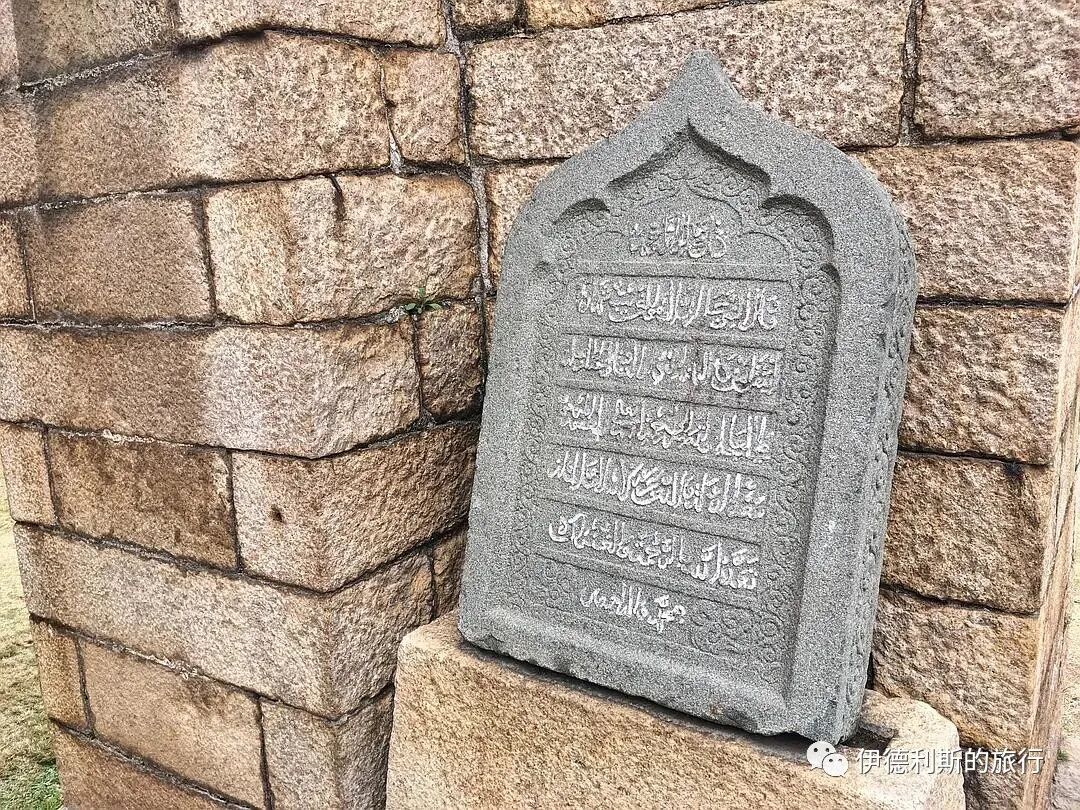
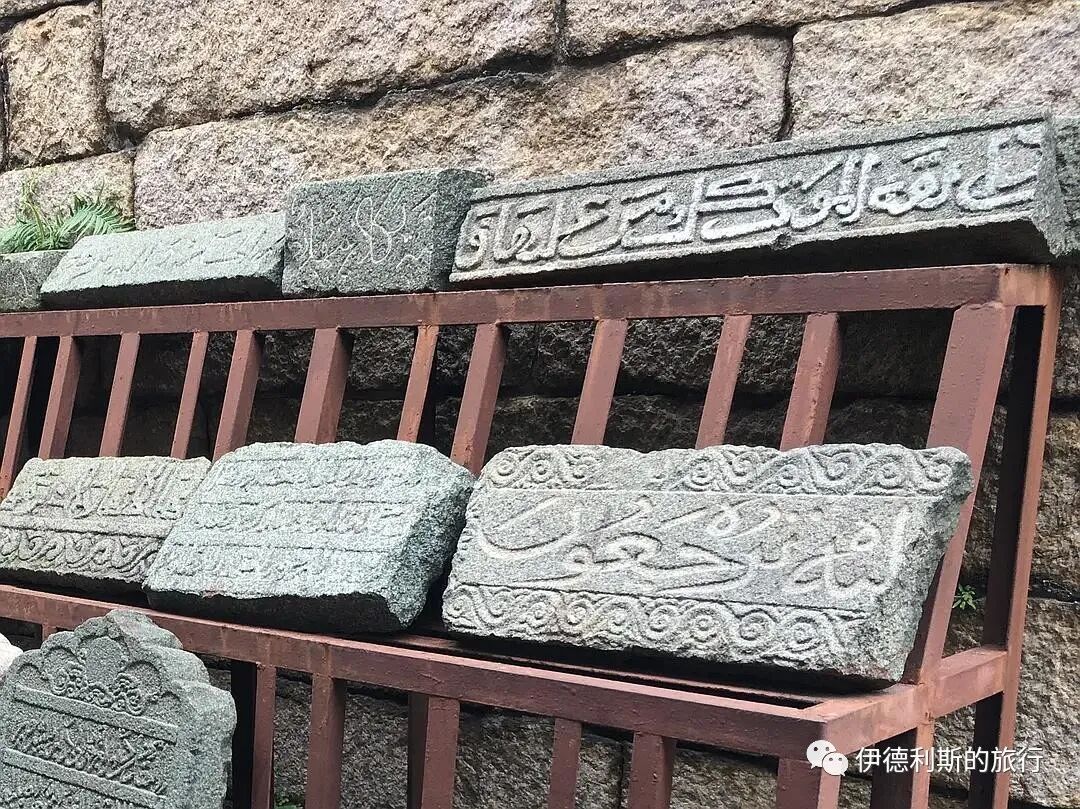
The picture below shows a diabase Yuan Dynasty tombstone, which was dug up from a garden belonging to a Pu family at the end of the Qing Dynasty. It was moved to the Qingjing Mosque and built into the south side of the west wall of Mingshan Hall, and was removed during the renovation of Mingshan Hall in 1983. Both sides of the tombstone are carved with continuous scroll patterns, and the front is recessed into a pointed arch stone niche, with cloud patterns carved on both sides. It is similar to the Yuan Dynasty Arabic tombstones in the Puhaddin Cemetery in Yangzhou and can be considered one of the most exquisite ancient Arabic tombstones in Quanzhou. The tomb owner was named Ahmad, who died in 1362.
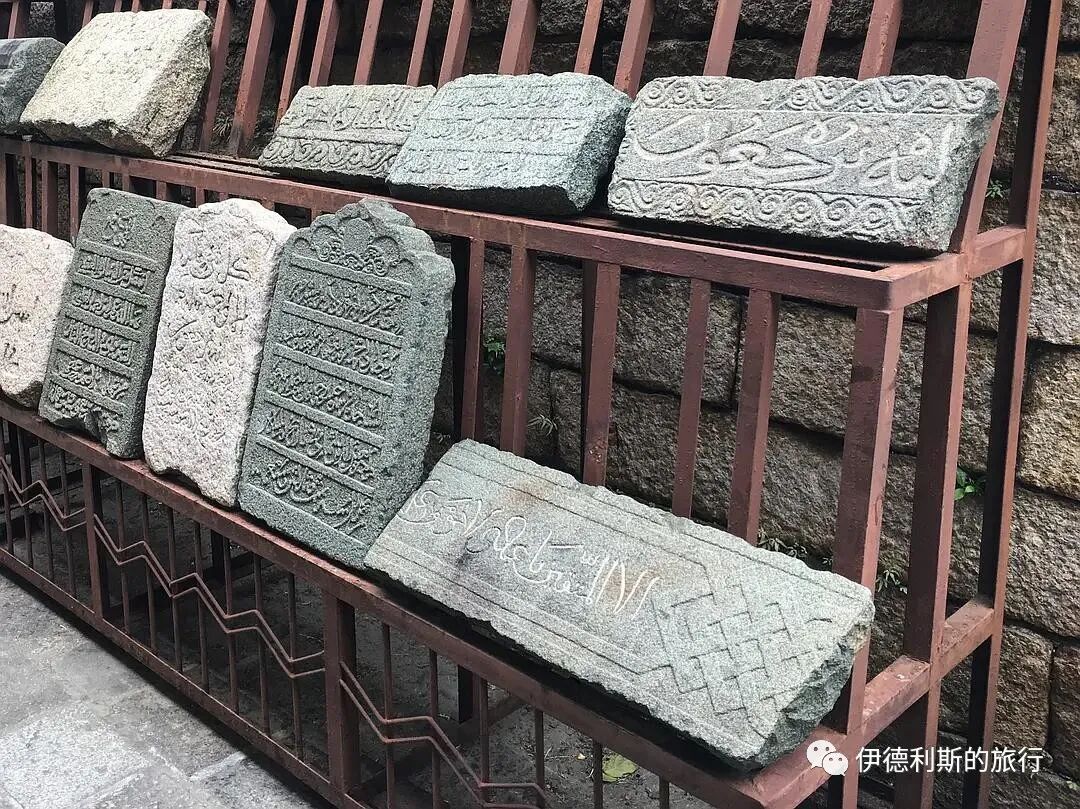
The bottom right corner of the picture below is the right half of a diabase Sumeru-pedestal altar-style tombstone waist stone. It was discovered in 1984 by Mr. Wang Aichen when he was building a house near Yinju Bridge Lane (Tonghuai Street) in Quanzhou and was donated to the Qingjing Mosque. In 1972, the widow of Mr. Wu Wenliang, author of 'Quanzhou Religious Stone Carvings', donated the left half of this stone carving to the Quanzhou Maritime Museum. After the two pieces were joined, one can see the eight auspicious patterns carved on the left and right sides, and the text in the middle is from an excerpt of Chapter 43, Verses 67, 68, and 72 of the Quran.
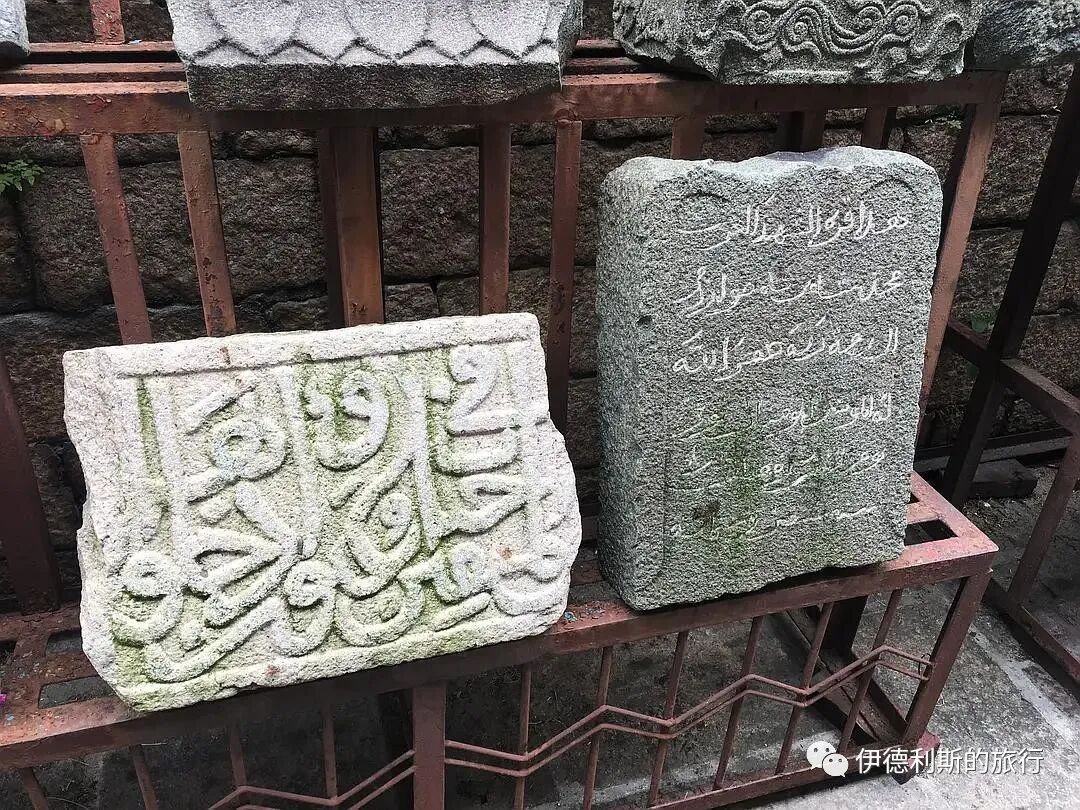
On the right side of the picture below is a diabase Southern Song Dynasty tombstone, which was removed during the renovation of Mingshan Hall of the Qingjing Mosque in 1983. The tomb owner was named Khwarazm Khan bin Muhammad Khan, who died in 1271. 1271 was six years before the Yuan army captured Quanzhou. Khwarazm refers to the Khwarazmian Empire.
On the left is a white granite tombstone, which was unearthed from underground during the renovation of Mingshan Hall of the Qingjing Mosque in 1997.
In the center of the picture below is a diabase tombstone, which was dug up from a garden belonging to a Xia family at the end of the Qing Dynasty. It was moved to the Qingjing Mosque and built into the north wall of the Mingshan Hall lobby, and was removed during the renovation of Mingshan Hall in 1983. The tomb owner came from the ancient Iranian city of Tabriz. Tabriz was a trade center on the northwestern plateau of Iran and was historically the capital of the Ilkhanate, the Kara Koyunlu, the Ak Koyunlu, and the Persian Safavid Dynasty.
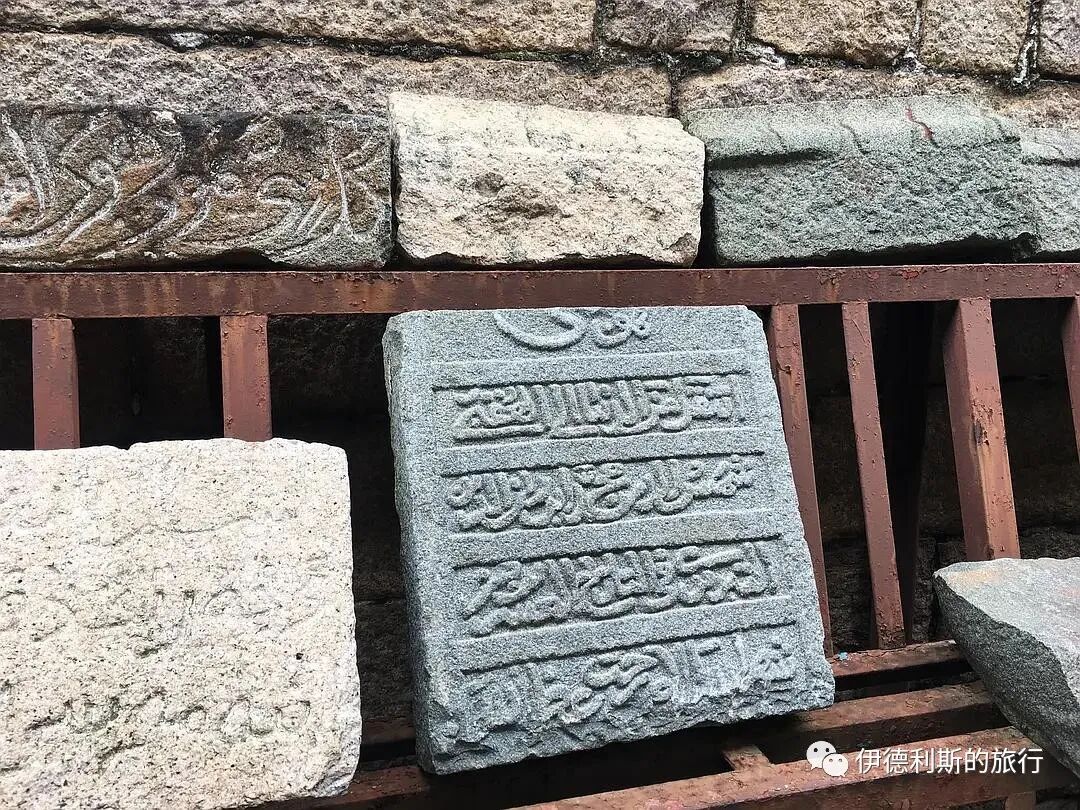
The first one on the left in the top row of the picture below is a diabase Sumeru-pedestal tombstone, which was dug up from a garden belonging to a Xia family at the end of the Qing Dynasty. It was moved to the Qingjing Mosque and built into the center of the south wall of the Mingshan Hall lobby, and was removed during the renovation of Mingshan Hall in 1983. The tomb owner was a woman named Fatimah, from Hadula, which is the city of Adana in southeastern Turkey, northeast of the island of Cyprus, near the Mediterranean Sea.
The second one on the left in the top row is a diabase Sumeru-pedestal tombstone, which was dug up from a garden belonging to a Xia family at the end of the Qing Dynasty. It was moved to the Qingjing Mosque and built into the north side of the west wall of the Mingshan Hall lobby, and was removed during the renovation of Mingshan Hall in 1983. It reads, 'Everything will perish, He (Allah) is the Everlasting.' "
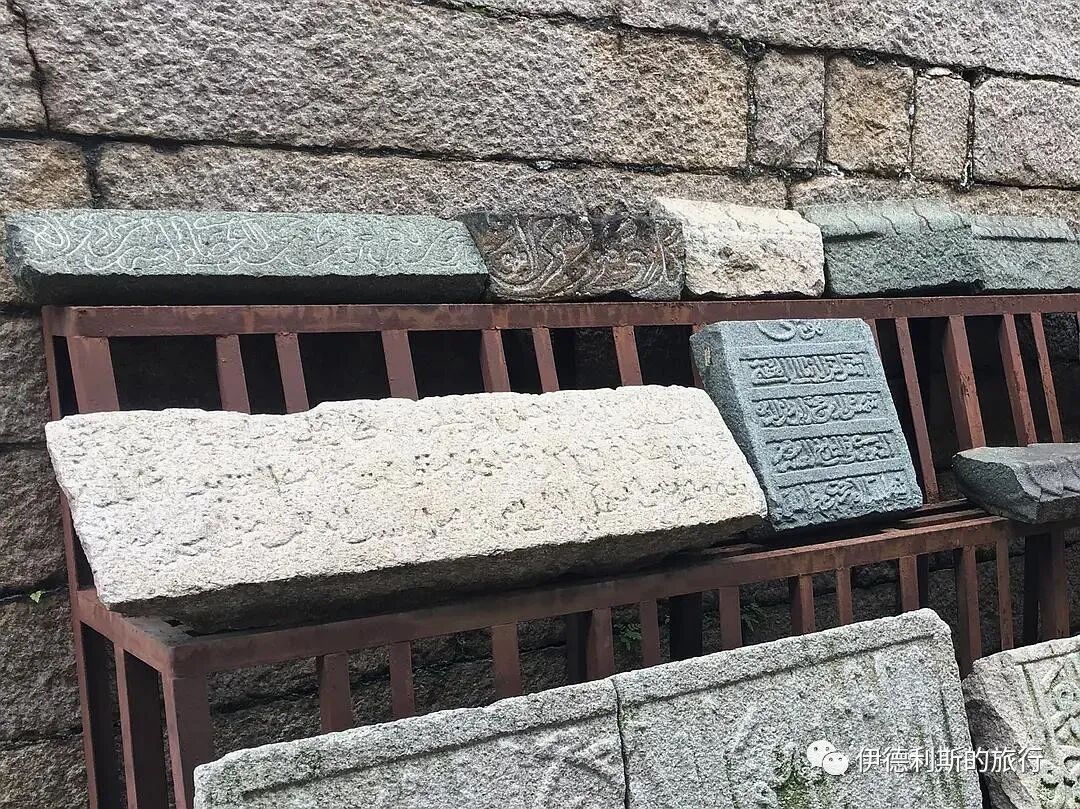
The bottom left of the picture is a white granite tombstone, which was excavated from the residential area of Qipan Garden in the South School Field of Quanzhou at the end of the Qing Dynasty. It was later transported to the Qingjing Mosque, and the two pieces were built into the south and north walls of the Mingshan Hall lobby, respectively, and were removed from the walls during the renovation of Mingshan Hall in 1983. The ancient Arabic script on the stone carving is thinner and longer than that on the walls of the Qingjing Mosque, and the border is wider, so it is very likely a stone carving belonging to a destroyed mosque. The translation is: 'The mosque belongs to Allah, and with Allah, you cannot pray to anyone.' "
The top left is a white granite tombstone, which was dug up from a garden belonging to a Pu family at the end of the Qing Dynasty. It was moved into the Qingjing Mosque and built into the south side of the west wall of the Mingshan Hall lobby, and was removed during the renovation of Mingshan Hall in 1983. The tomb owner, Fatimah, was a maid from Nablus, a city north of Jerusalem. She most likely died in Quanzhou while accompanying her master from Nablus to Quanzhou for business. This tombstone has no decorations and is very simple, which is different from the typical Arabic and Persian tombstones in Quanzhou. This is likely related to the status of the tomb owner. Based on the shape, this tombstone was likely built on top of another tombstone base in front of the stone tomb.
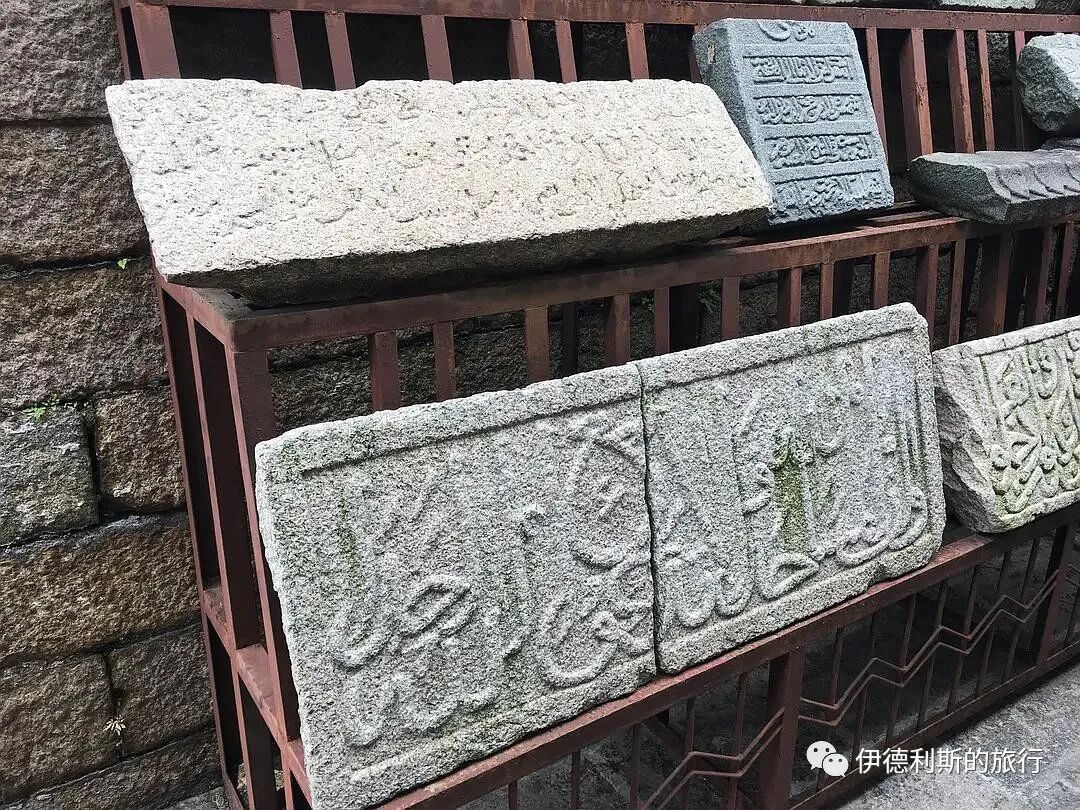
The second one from the right in the top row of the picture below is the right side of a diabase Sumeru-pedestal altar-style tombstone fragment. It was unearthed from the ground on the north side of the outer courtyard during the renovation of Mingshan Hall of the Qingjing Mosque in 1983. Continuous cloud patterns are carved on the bottom, and the text is from an excerpt of Chapter 98, Verse 8 of the Quran.
The first one on the right in the top row is a diabase tombstone, which was unearthed from underground during the renovation of Mingshan Hall of the Qingjing Mosque in 1997. The first one on the left in the bottom row is a diabase tombstone, which was dug up from a garden belonging to a Pu family at the end of the Qing Dynasty. It was moved into the Qingjing Mosque and built into the center of the south side of the west wall of the Mingshan Hall lobby, and was removed during the renovation of Mingshan Hall in 1983. The tomb owner came from the ancient Iranian city of Tabriz and died in 1362 (or 1365 according to another translation).
The white granite tombstone in the second position from the left in the bottom row was discovered in 1984 when residents were demolishing houses east of the gate tower of the Qingjing Mosque (the original site of the Zhusheng Pavilion). The tomb owner was Abdullah from Oman. Oman is a country in the southeastern part of the Arabian Peninsula. Abdullah's date of death is translated as 1342 in one version and 1360 in another.
The third one from the left in the bottom row is a diabase Yuan Dynasty tombstone, which was dug up from a garden belonging to a Xia family at the end of the Qing Dynasty. It was moved into the Qingjing Mosque and built into the north side of the west wall of the Mingshan Hall lobby, and was removed during the renovation of Mingshan Hall in 1983. The tomb owner was Ms. Khadija, who died in 1335 and came from Tehran, Iran. The inscription states that she was the 'daughter of the late Prime Minister Sa'd-ud-din'. It is speculated that the late Prime Minister Sa'd-ud-din was likely the Prime Minister Sa'd-ud-din appointed by the Persian King Ghazan in 1298, as mentioned in 'The History of the Mongols' by D'Ohsson. King Ghazan died in 1304, and his brother Öljaitü succeeded him. In 1312, Öljaitü killed Sa'd-ud-din. The tomb owner may have come to Quanzhou by sea with merchants after her father was killed.
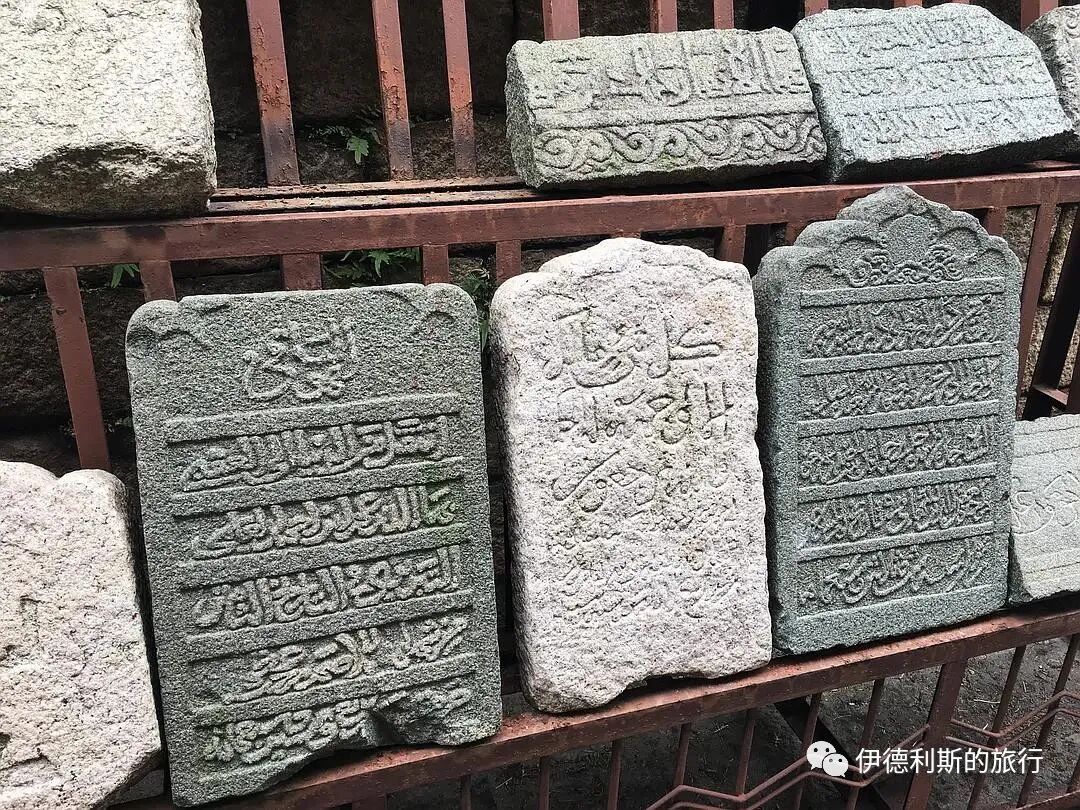
The top right of the picture is a diabase Sumeru-pedestal tombstone, which was dug up from a garden belonging to a Pu family at the end of the Qing Dynasty. It was moved into the Qingjing Mosque and built into the north wall of the Mingshan Hall lobby, and was removed during the renovation of Mingshan Hall in 1983. The content of the inscription is an excerpt from Chapter 29, Verse 57 and the full text of Chapter 55, Verse 26 of the Quran.
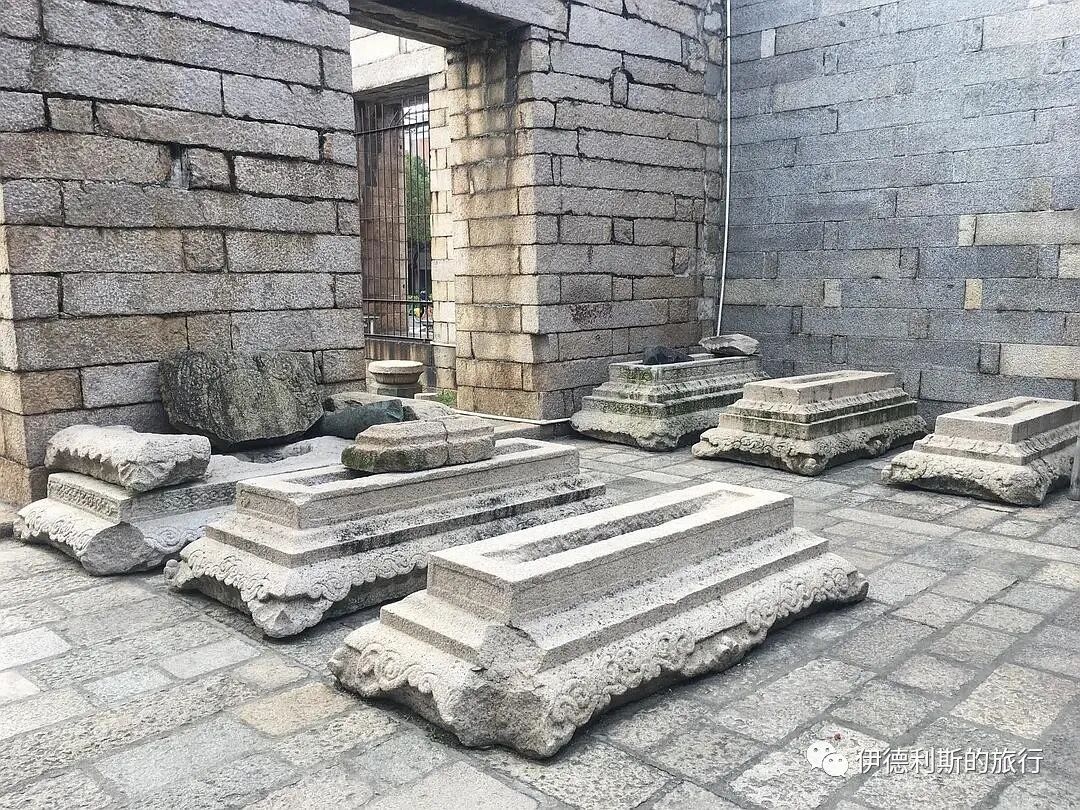
Tonghuai Street, where the Qingjing Mosque is located, was the site of the 'Fanfang' (foreign quarter) in Quanzhou during the Song and Yuan dynasties, and many Muslims were buried nearby after they passed away. In the 1950s, a row of 3 Sumeru-pedestal stone tombs was discovered underground in a residential house at the intersection of Tonghuai Street and Jiangwu Lane. From 1995 to 1998, when Tonghuai Street was widened, many Sumeru-pedestal stone tombs were unearthed. The Imam of the Qingjing Mosque, Haji Huang Runqiu, collected some of these stone tombs and components in the Qingjing Mosque. This is the origin of the 7 Sumeru-pedestal stone tombs currently preserved in the Qingjing Mosque.
The Sumeru-pedestal stone tombs in the Qingjing Mosque range from two to five layers. All the tomb-top stones have been lost, and the bottom layers all have ruyi-shaped six-legged bases. Among them, a small stone tomb is stacked on top of the second tomb from the right in the front row, which should be a child's tomb.
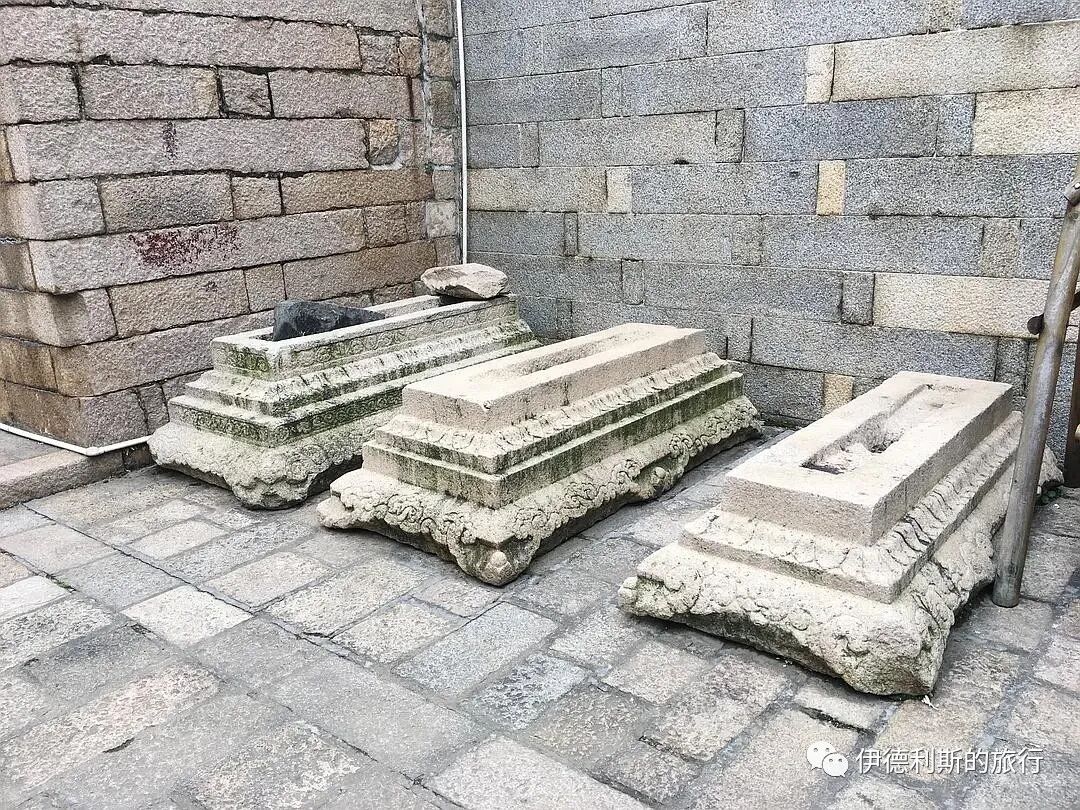
The Sumeru-style stone tomb on the left in the picture below is the most exquisite one preserved in the Qingjing Mosque. The second and fourth layers are carved with continuous branch patterns, the third layer is carved with overlapping lotus petals, and the bottom layer is carved with ruyi-shaped six-legged bases.
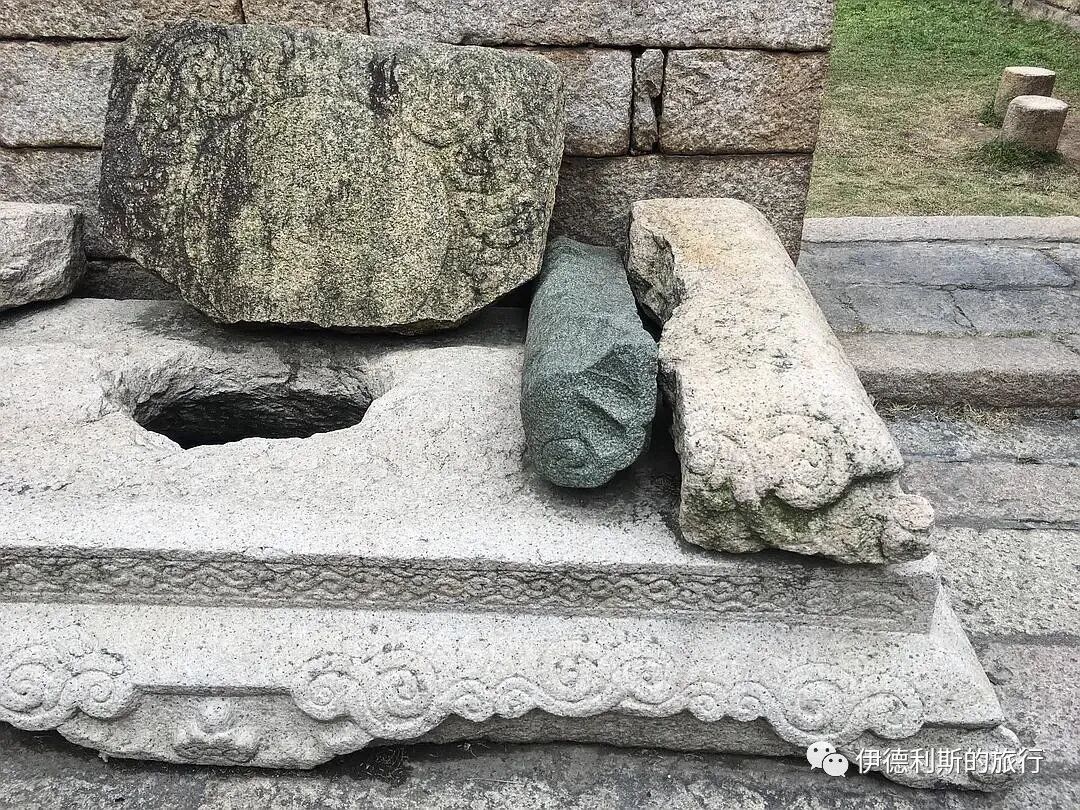
The Sumeru-pedestal stone tomb in the picture below only has two layers preserved, with ruyi-shaped feet on the bottom layer and floral patterns carved on the second layer.
II. Lingshan Islamic Tombs
1. The Main Tombs
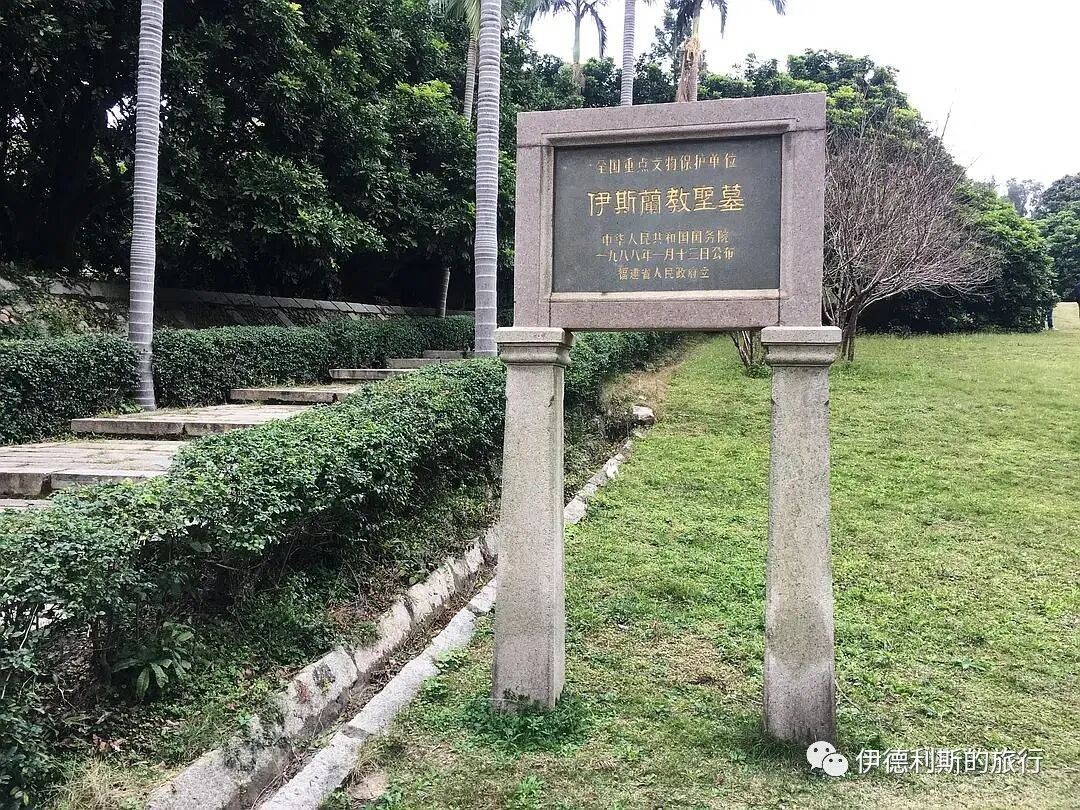
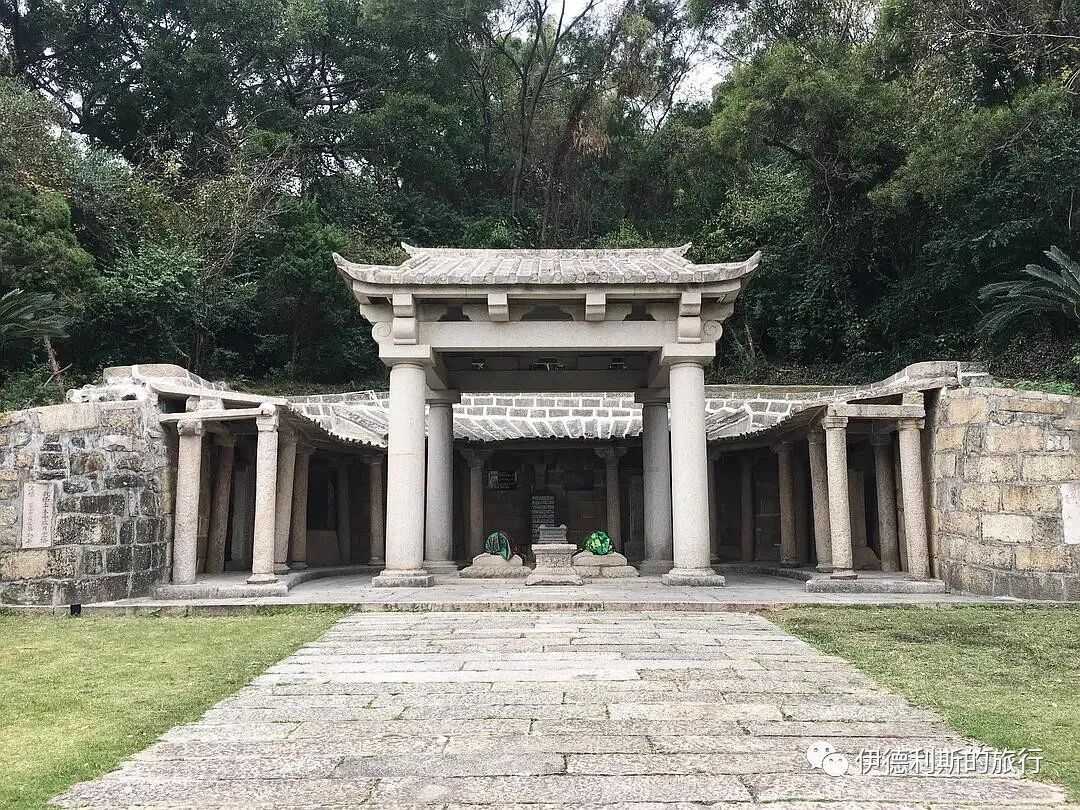
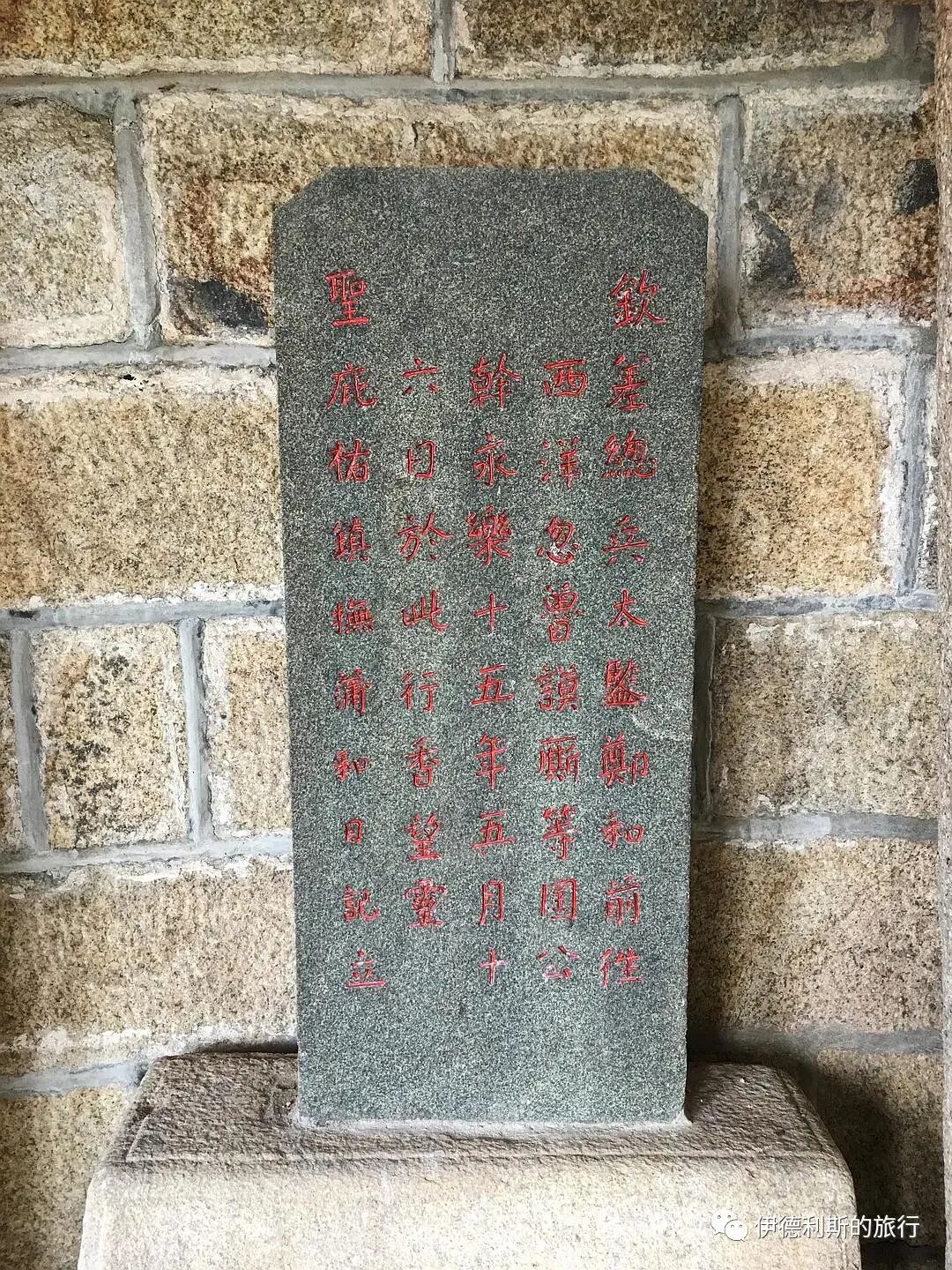
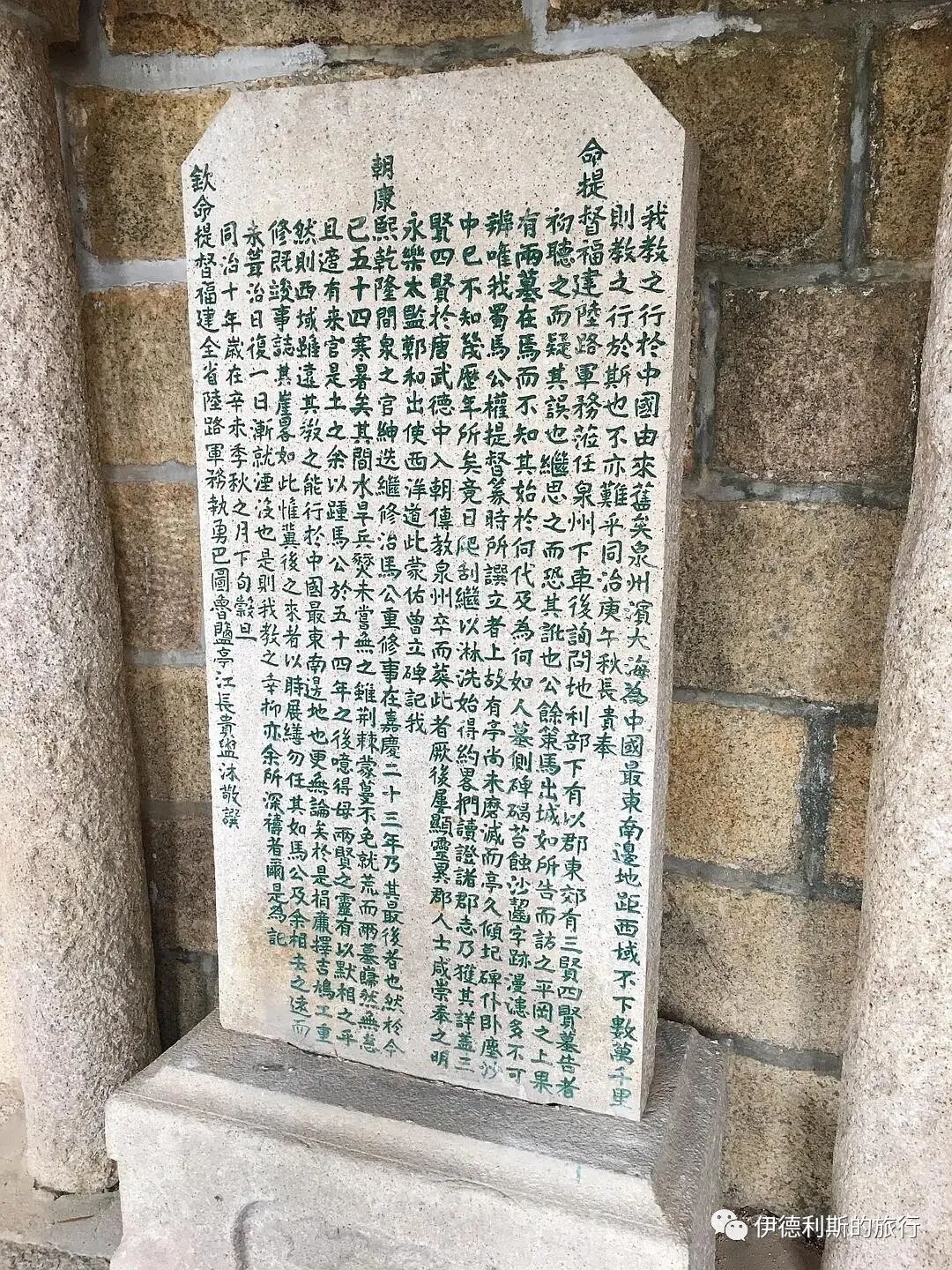
The Lingshan Islamic Tombs are located 1 kilometer east of Quanzhou city and are also known as the 'Tombs of the Three and Four Sages'. The theory of the 'Three and Four Sages' is mainly based on the records in 'Min Shu: Geography' by He Qiaoyuan in 1629 (the second year of Chongzhen in the Ming Dynasty). The 'Min Shu' cites a legend that four disciples of the Prophet Muhammad came to the Tang Dynasty to preach during the Wude period of Emperor Gaozu of Tang (618-626). One sage preached in Guangzhou, two in Yangzhou, and the third and fourth in Quanzhou. After the third and fourth sages passed away, they were buried in Quanzhou, and at night they emitted light and performed miracles, becoming the Holy Tombs.
The 'Min Shu' records that during the Wude period of the Tang Dynasty, the Prophet Muhammad was in a difficult situation, and Quanzhou had not yet been built as a city at that time. Between the Five Dynasties and the Southern Song Dynasty, Lingshan was the cemetery for the monks of Chengtian Mosque, and it was not abandoned until the end of the Southern Song Dynasty after Chengtian Mosque failed in its resistance against the Yuan.
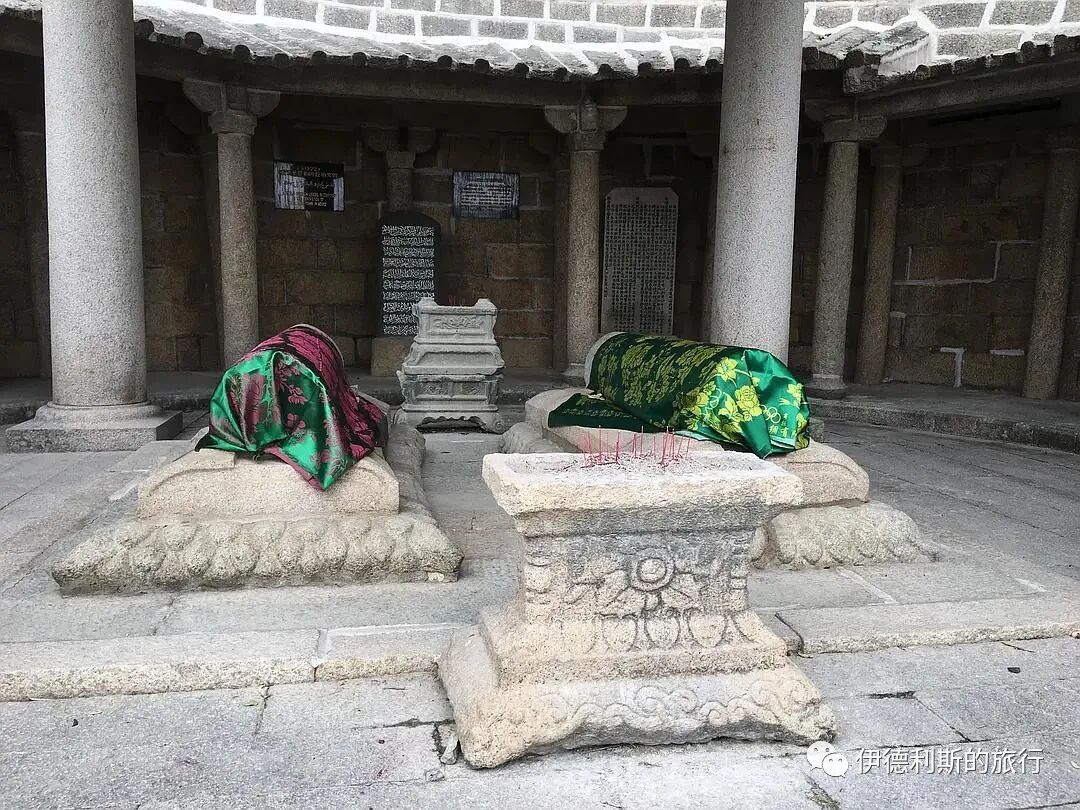
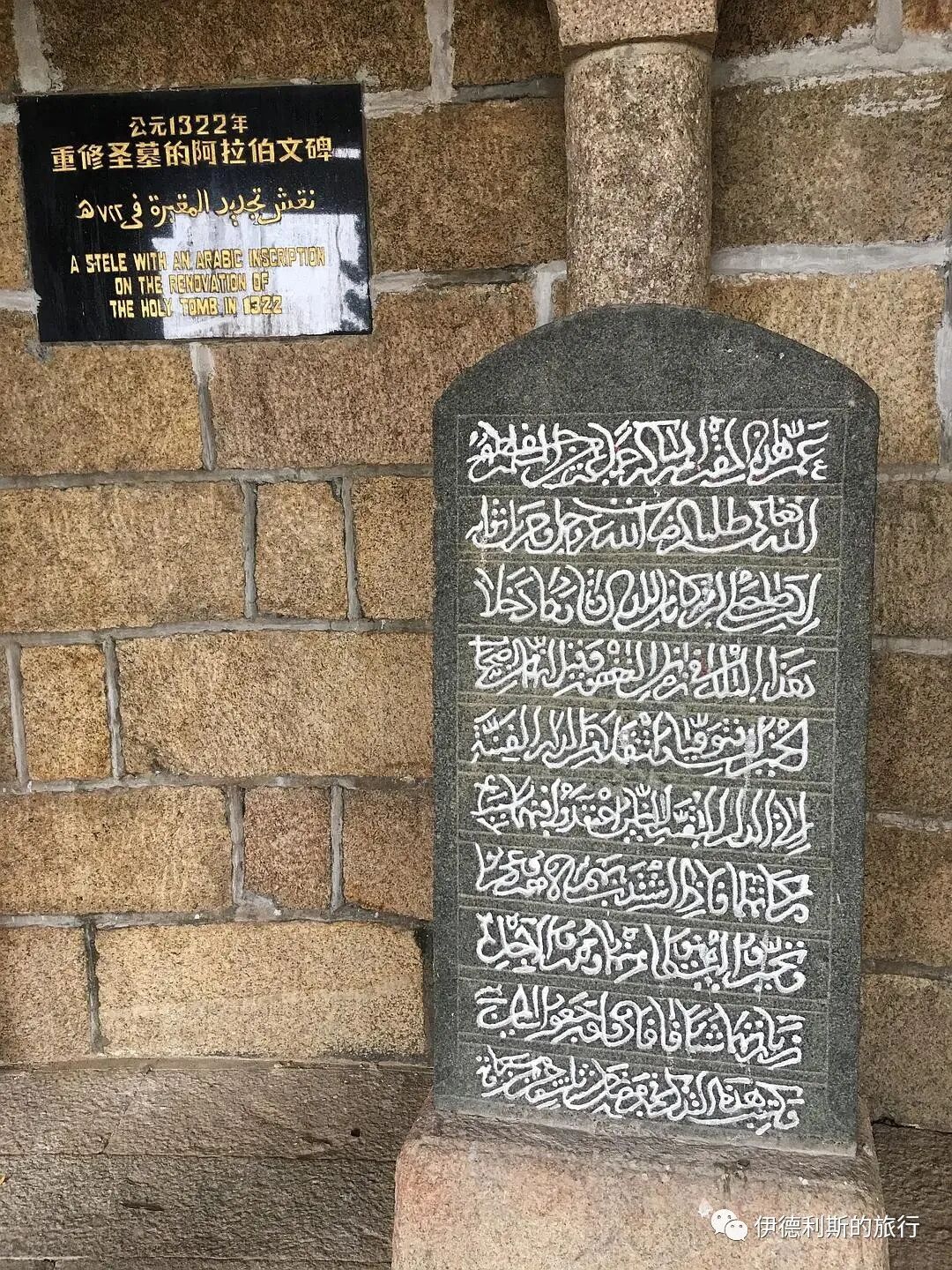
The Holy Tombs currently have a Yuan Dynasty Arabic renovation tablet from 1322, which records: 'These two deceased came to this country during the Faghur era. It is said that they were people of great virtue, and therefore they reached the eternal world from the earthly world after death.' This is a relatively reliable basis. According to Chen Dasheng's 'A Preliminary Study on the Dating of the Lingshan Islamic Tombs in Quanzhou', Faghur is a transliteration of the Persian word 'Bagh pur' in Arabic, which specifically referred to the Emperor of China in Persian literature during the Five Dynasties to the Song and Yuan periods.
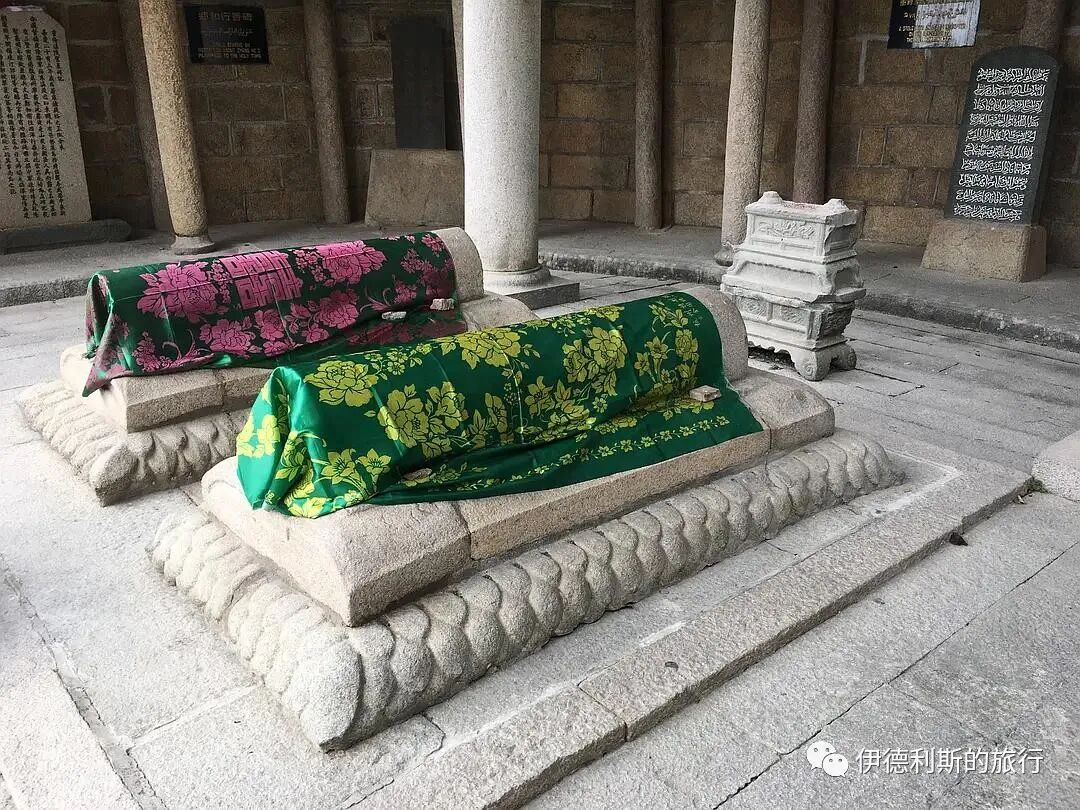
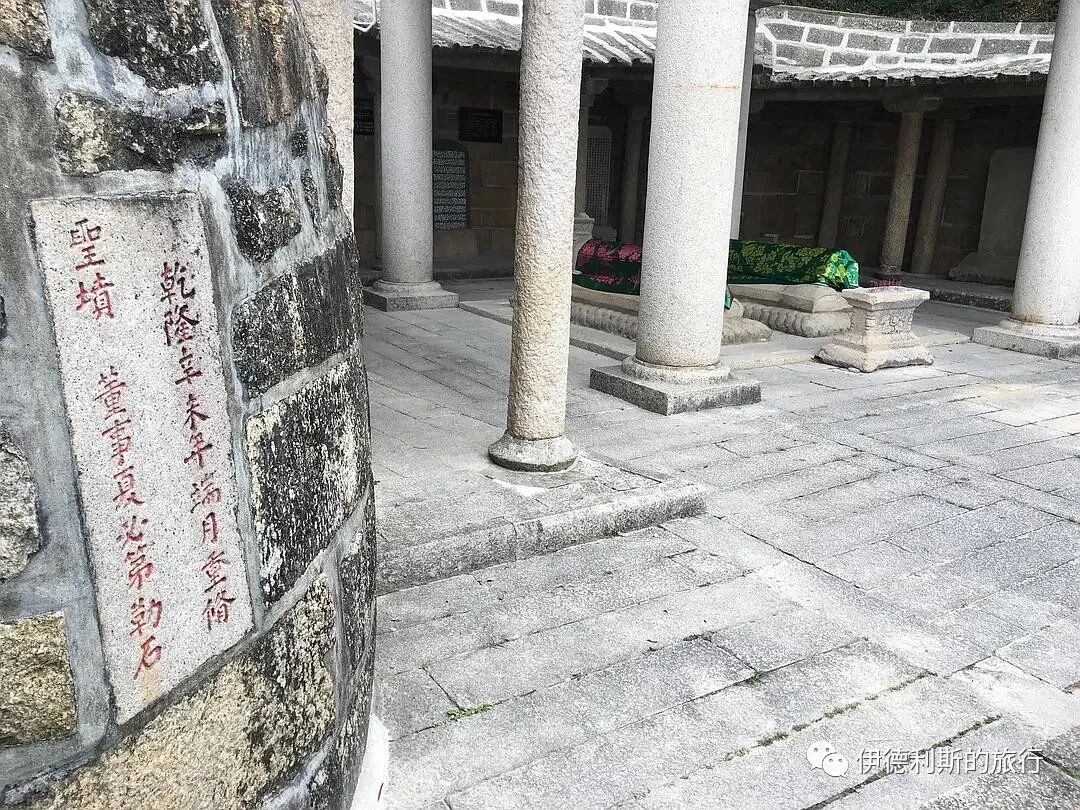
The 'Quanzhou Prefecture Gazetteer' records that when Zhou Daoguang, the Prefect of Quanzhou, visited the Lingshan Islamic Tombs in 1562 (the 41st year of Jiajing in the Ming Dynasty), he mentioned 'there are three tombs with manes'. The 'Min Shu Chao', written during the Chongzhen period, records that the owner of the third tomb was 'Gao Di Shi Xu Ba Ba'. In the 1930s, the wooden frame of the tomb pavilion at the Lingshan Islamic Tombs had collapsed and broken, leaving only four stone-carved shuttle-shaped pavilion pillars. At that time, the three Sumeru-style stone tombs arranged in a 'pin' shape were still well-preserved, with tomb-top stones covering them.
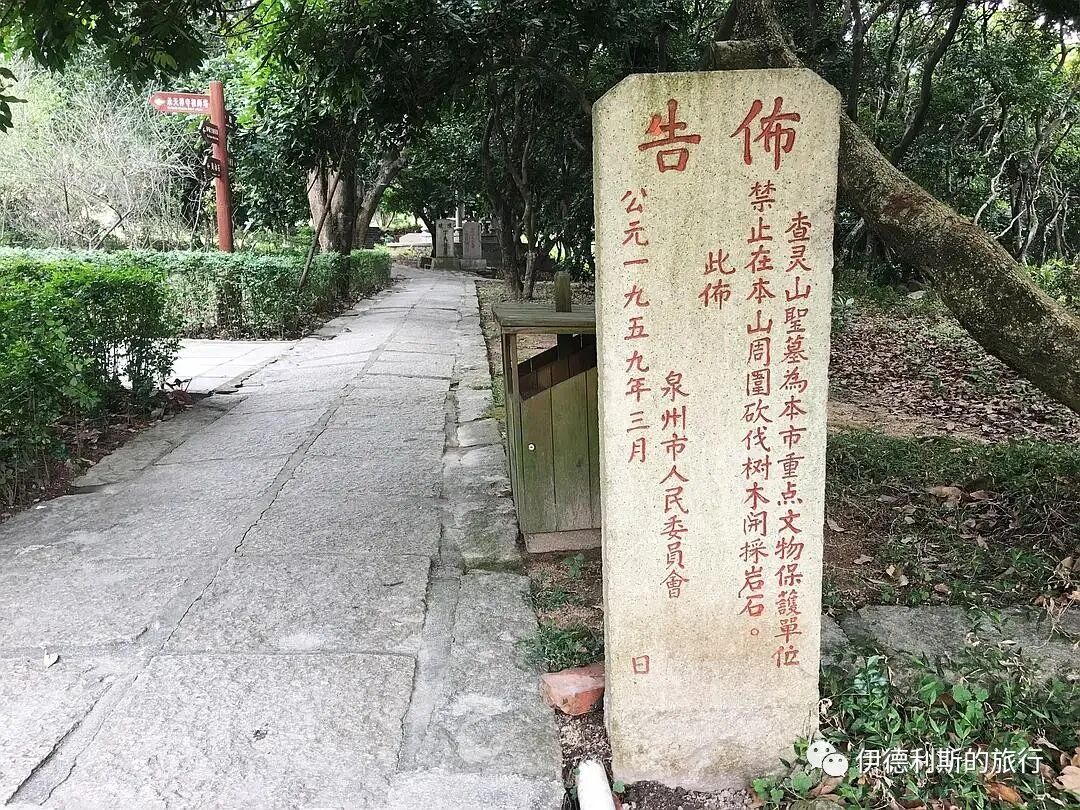
However, in 1958, the Quanzhou Municipal Bureau of Culture and the Municipal Management Committee, in order to cater to the legends in the 'Min Shu', moved one of the stone tombs away and placed it on the hillside to the north. In March 1959, a new stone tomb pavilion was built, with three layers of terraces and stairs on both sides. All other tomb stones in front of the tombs were moved away, and a lawn was created, forming the current layout.
The Holy Tombs currently have two granite tombs, divided into three layers, with lotus petal patterns carved on the bottom layer. In the past, every Eid al-Fitr and Eid al-Adha, after Quanzhou Hui Muslims participated in the congregational prayer at the Qingjing Mosque, the Imam would lead the heads of each household to visit the homes of Hui Muslims around the Qingjing Mosque to 'pay respects', and then all the Hui Muslims would go to Lingshan to visit the graves together. When visiting the graves, they would first recite the Quran at the Holy Tombs, and then go to their respective family graves.
2. Scattered Stone Tombs
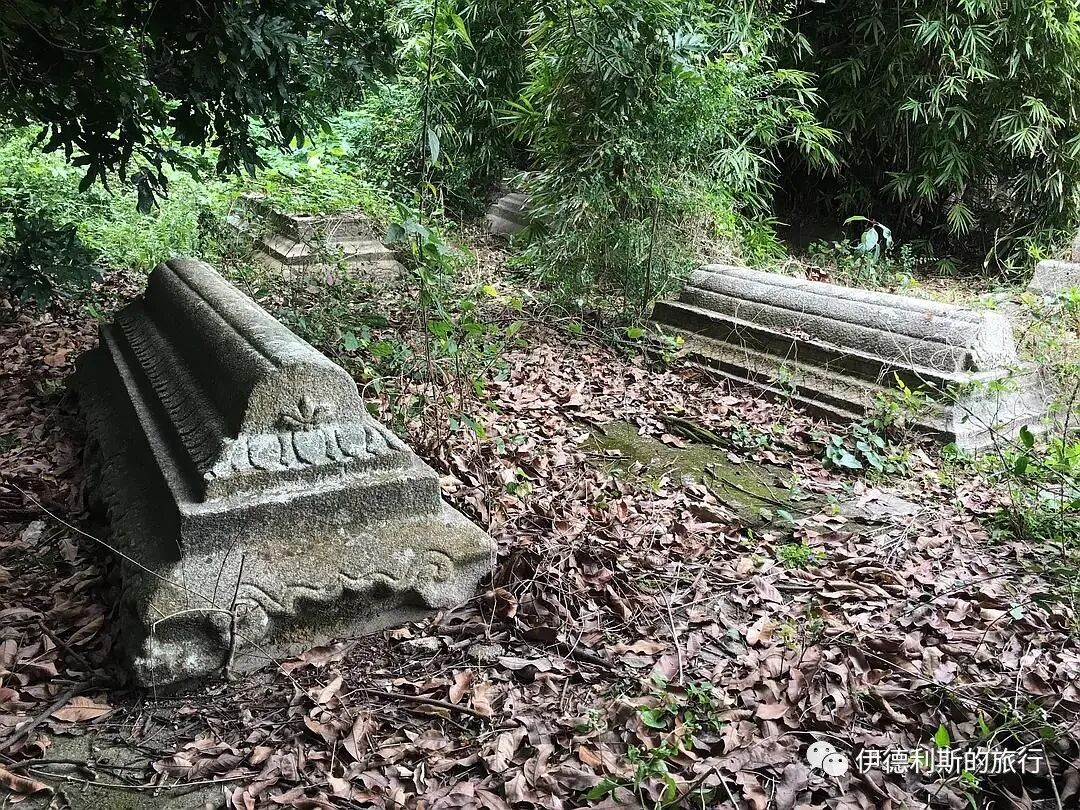
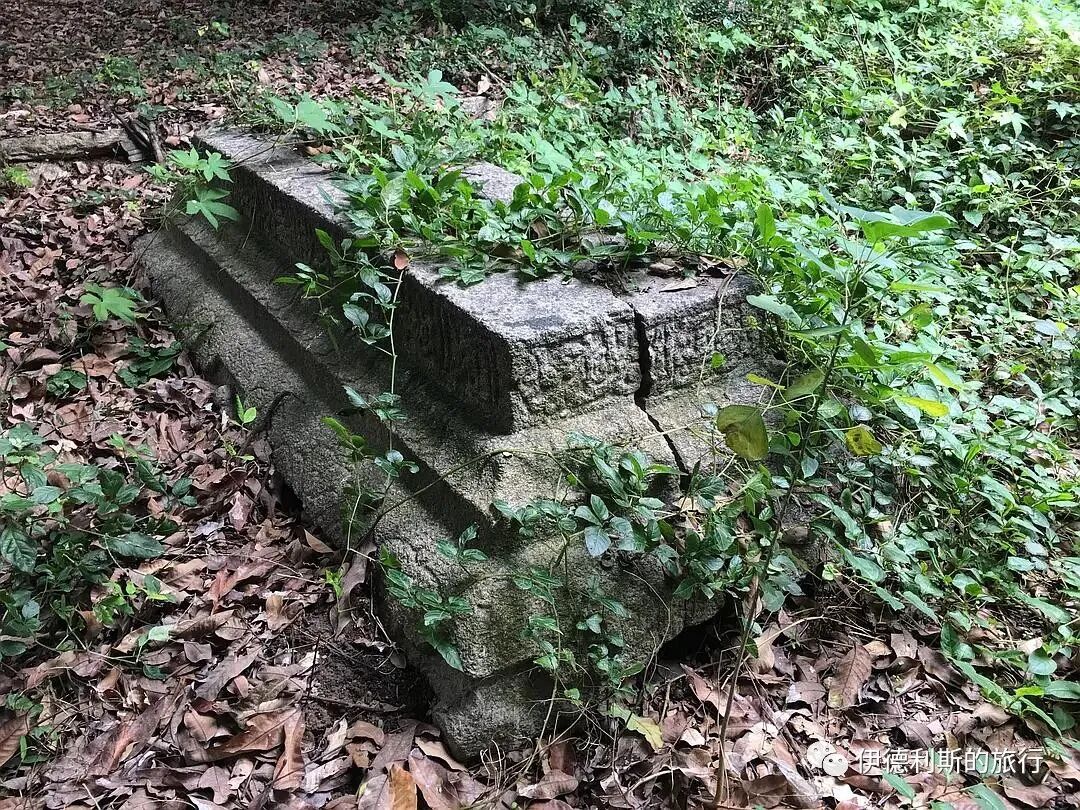
In 1958, the Fuzhou-Xiamen highway outside the East Gate of Quanzhou was widened, and several Sumeru-pedestal Islamic stone tombs along the road were moved to the side of the Lingshan Islamic Tombs. In the same year, farmers in Jintoupu Township outside Tonghuai Gate in Quanzhou were accumulating fertilizer and dredging pond sludge, and unearthed more than ten Sumeru-pedestal stone tombs, which were temporarily transported to the Qingjing Mosque and then moved to the side of the Lingshan Islamic Tombs for preservation. In the same year, three side-by-side Sumeru-pedestal stone tombs were unearthed when residents of Tonghuai Street were building houses, and they were also placed next to the Lingshan Islamic Tombs for preservation.
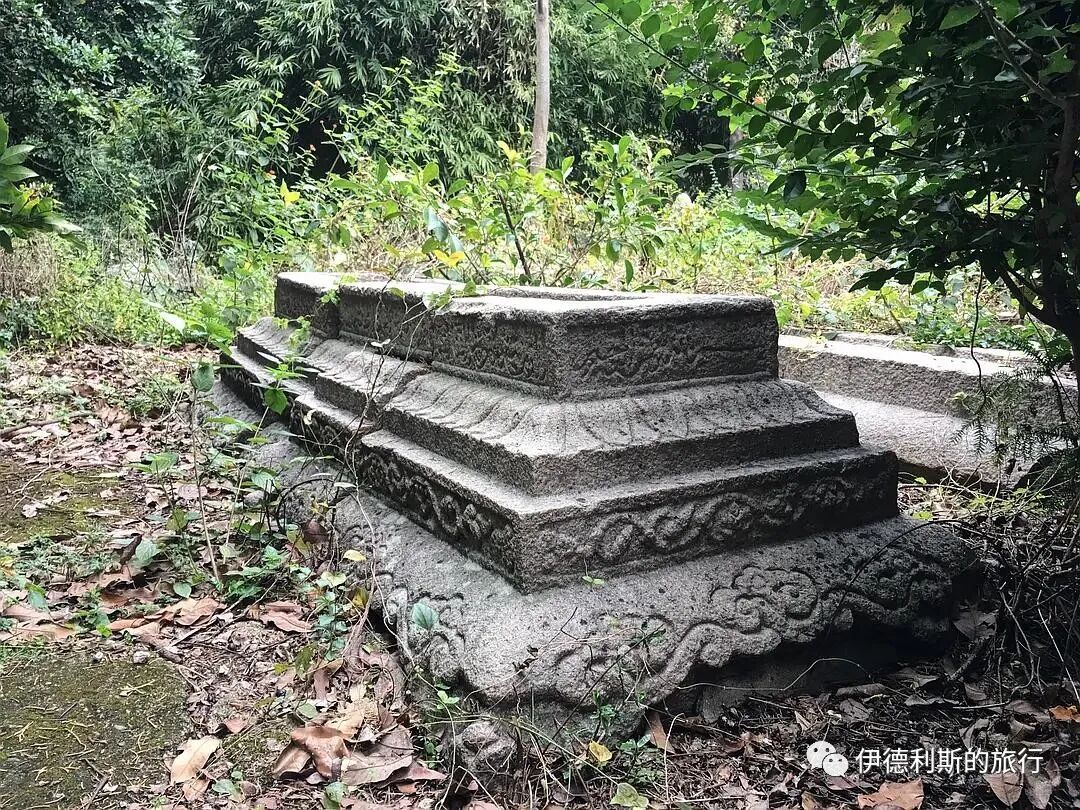
The left side of the picture below is a four-layer Sumeru-pedestal stone tomb. The first layer is a ruyi-shaped scroll-patterned six-legged base, the second layer is plain, the third layer is an overlapping lotus petal pattern, and the fourth layer is a dome-shaped tomb-top stone, with a lotus flower carved on the front and a floating cloud carved on the back.
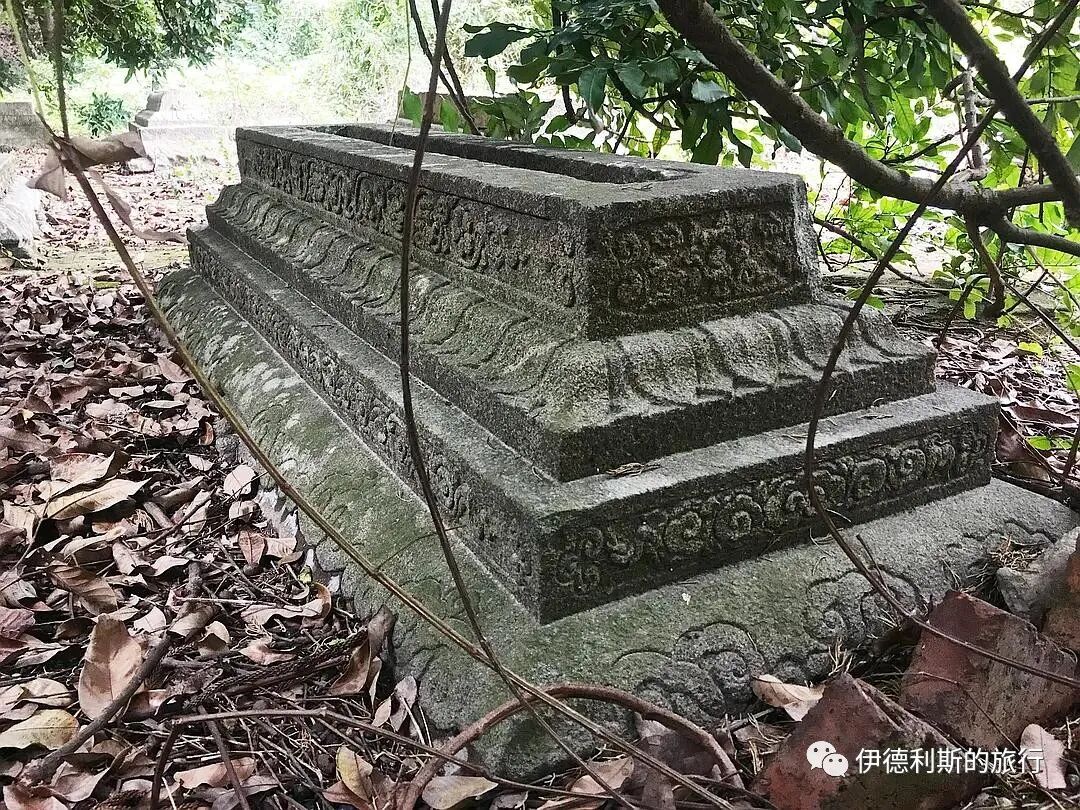
The picture below is a five-layer Sumeru-pedestal stone tomb, chiseled from a piece of white granite. The first layer is a ruyi-shaped scroll-patterned six-legged base, the second layer is continuous flower branches, the third layer is repeated overlapping lotus petals, the fourth layer is Arabic text, and the fifth layer is destroyed. The text on the tomb is from Chapter 3, Verses 16, 17, and 18 of the Quran.
3. Local Hui Muslim Tombs
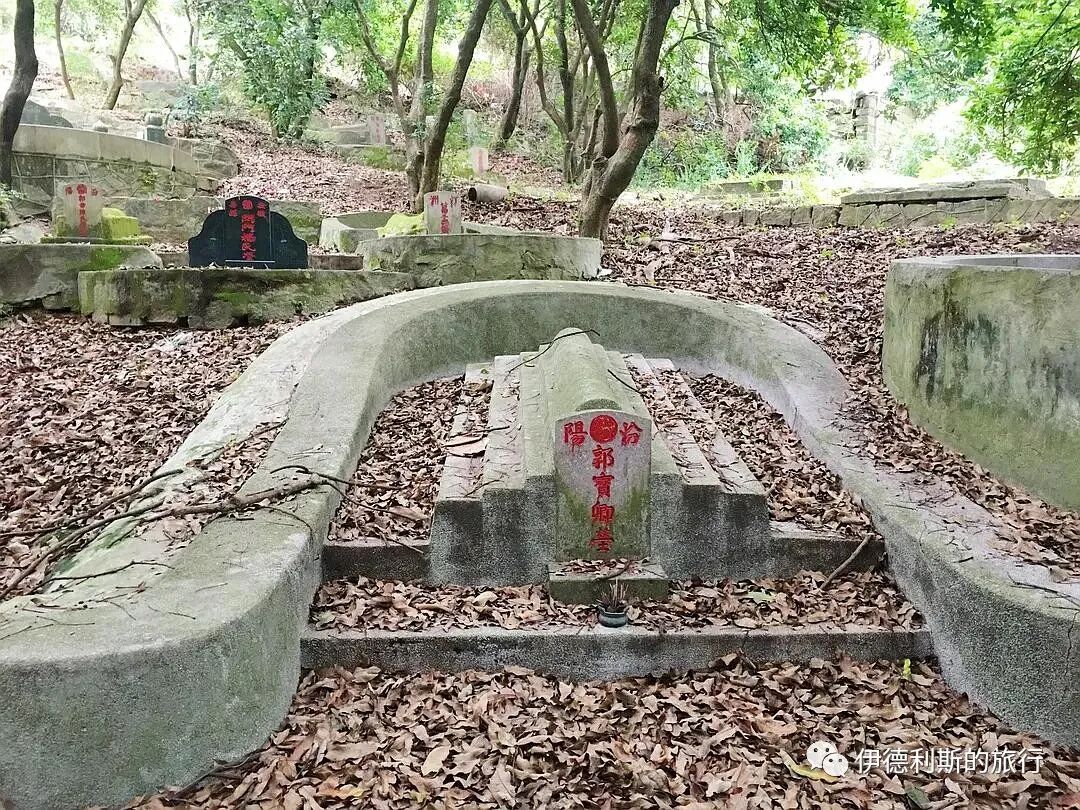
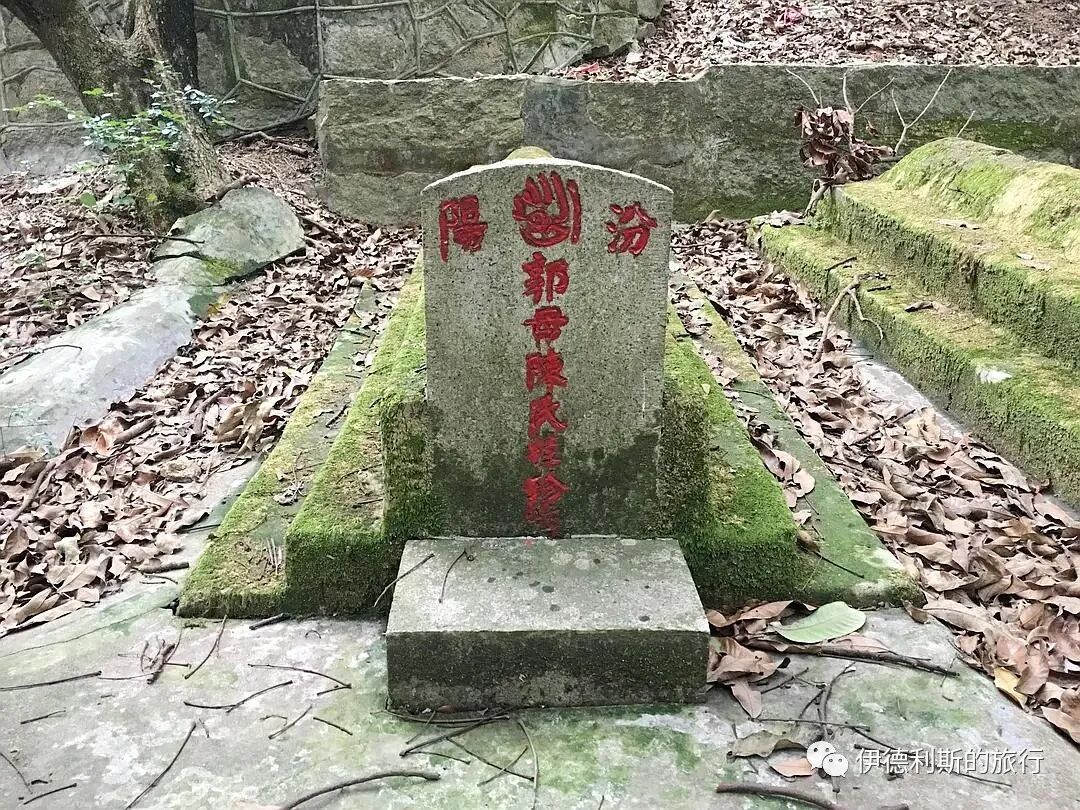
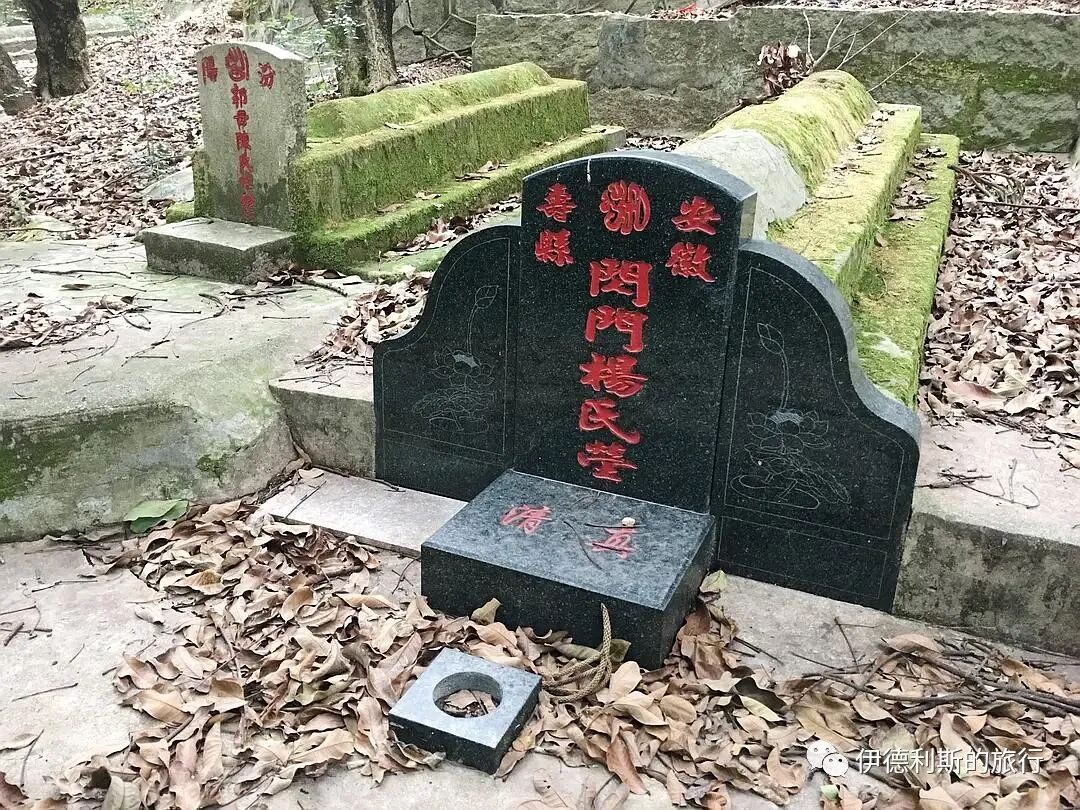
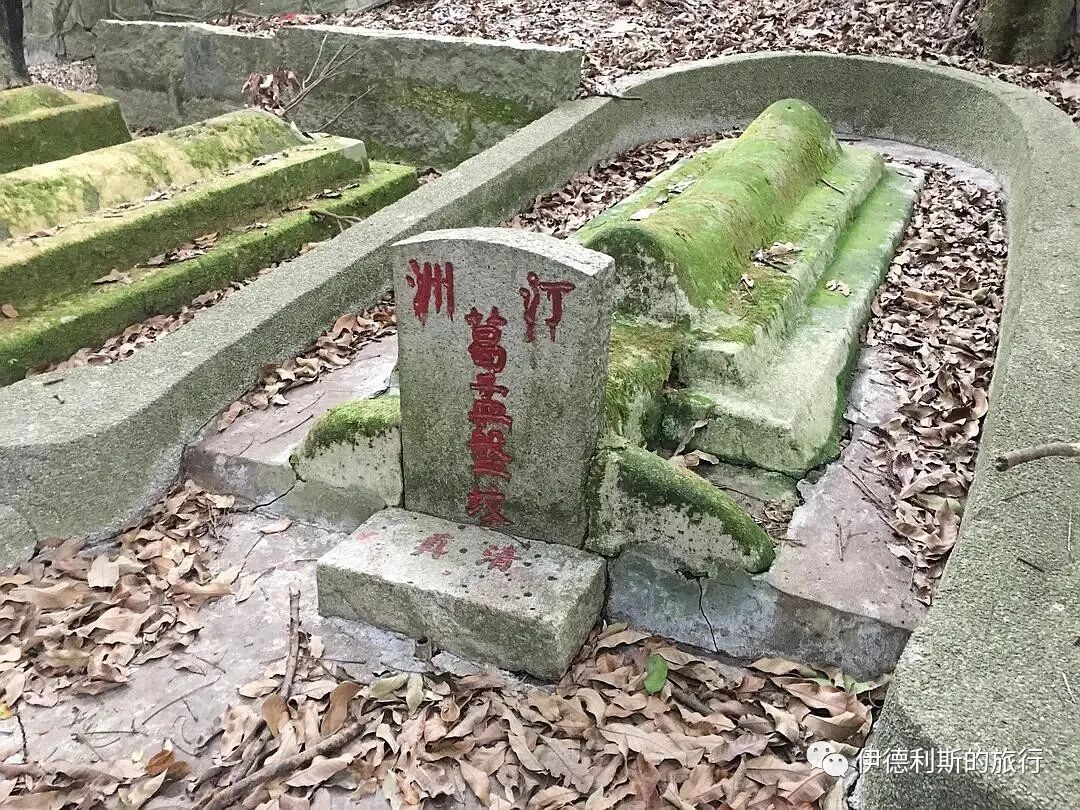
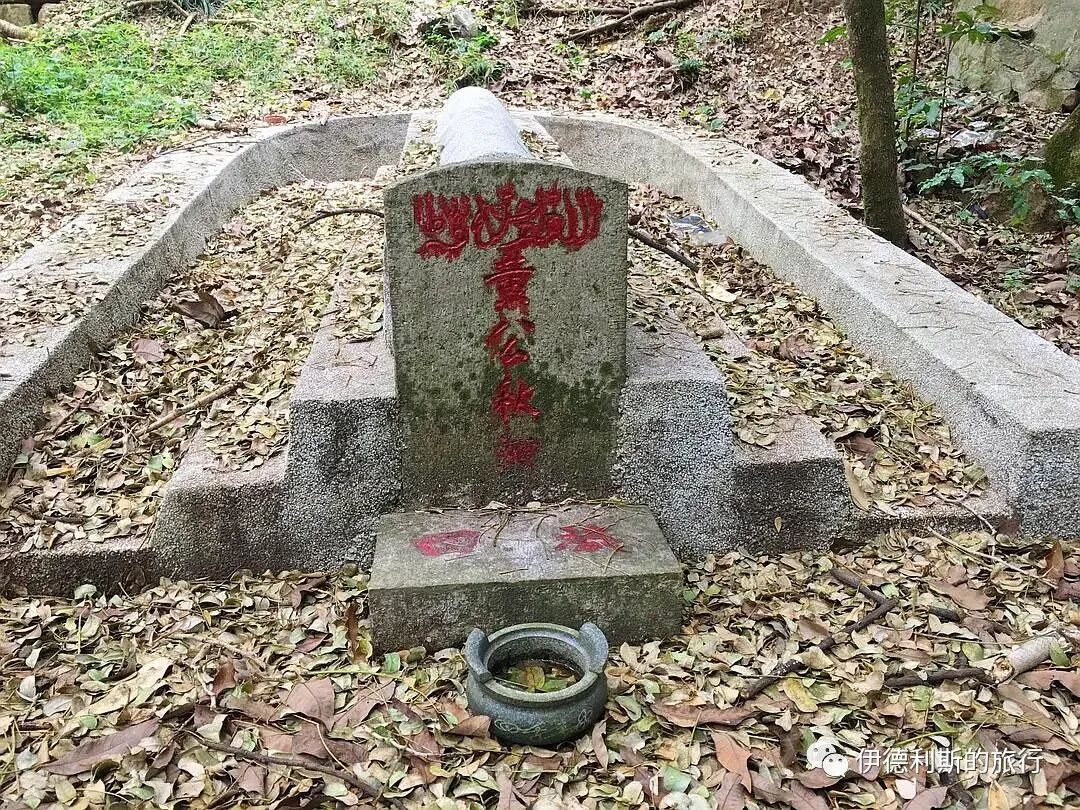
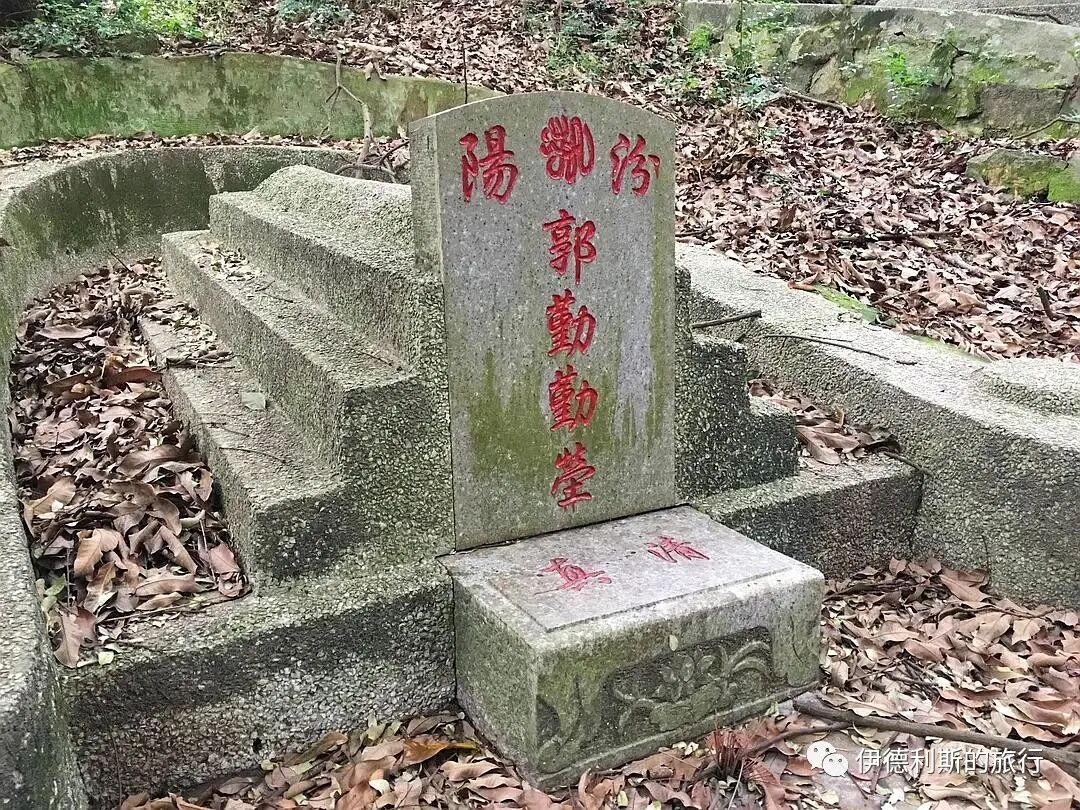
Next to the Lingshan Islamic Tombs is the cemetery for local Hui Muslims in Quanzhou. In the past, Quanzhou Hui Muslims would come here to visit the graves every year during Eid al-Fitr and Eid al-Adha. When visiting the graves, they would first light Anxi incense, then paint the text on the tombstones red, and finally invite the Imam to recite the Quran.
Among the local Hui Muslims in Quanzhou, the Guo family moved from Baiqi. In the past, they mostly operated gold and silver jewelry businesses. The Ge, Ma, and Huang families were descendants of generations of Imams and mostly operated leather businesses in the past. They all lived in the Qingjing Mosque before 1983. The Pu family is the only branch of Pu Shougeng's descendants who remained in Quanzhou city and still lives on the site of Pu Shougeng's former residence. The Xia family made a living by farming vegetable gardens, where a large number of Song and Yuan Islamic stone carvings were unearthed. In addition, there are Hui Muslims who moved in after the Republic of China, such as the Yang, Tie, Shan, and Mi families. They once lived in the Muslim community around the Qingjing Mosque in the Quanzhou urban area, but this community has scattered and disintegrated following the major renovation of the Qingjing Mosque in 1983 and the demolition of Tumen Street in 1998.
According to records, the ancestor of the Xia Hui Muslims was Xia Burhanuddin from the Dashi Kingdom. He came to Quanzhou with a tribute ship from the dynasty between 1312 and 1313, served as the Imam of the Qingjing Mosque, and later settled in Quanzhou. His descendants took the surname Xia in the Ming Dynasty. Xia Chi, Xia Chi's eldest son, Xia Yangao, Xia Desheng, Xia Riyu, and other Xia descendants inherited the position of Imam of the Qingjing Mosque.
According to the genealogy, the ancestors of the Guo Hui Muslims once lived in Guojia Village, Fuyang, Hangzhou, and came to Quanzhou during the Yuan Dynasty. Guo Zhongyuan moved from Quanzhou to Baiqi, across from Houzhu Port, during the Hongwu period of the Ming Dynasty, forming the current Baiqi Hui Ethnic Township. The Baiqi Guo family left the religion in 1607 (the 35th year of Wanli in the Ming Dynasty). In 1709 (the 48th year of Kangxi), Chen Yougong, the Regional Commander of Fujian Ting, Yan, and Shao, came to Quanzhou to revive the religion and set up schools in the Qingjing Mosque to conduct scripture education. At that time, Guo Honglong, the eighth-generation descendant of the fourth branch of the Guo family, moved from Hecuo in Baiqi to live in the Qingjing Mosque due to the 'distinction between the strong and the weak' and re-entered the religion. After Guo Honglong entered the religion, his descendants lived in the Qingjing Mosque. His descendant Guo Shifu once renovated the mosque together with Bai Yunhan, the Deputy General of the Zhangzhou Left Battalion, in 1794 (the 59th year of Qianlong).
4. The Ding Family Cemetery in Chendai
There is also a large cemetery of the Ding family from Chendai on Lingshan. According to the genealogy, the first ancestor of the Ding family, Ding Jin (1251-1298), was originally from Suzhou and settled in Quanzhou due to trade. By the time of the third ancestor, Ding Kui (1298-1379), he brought the fourth ancestor, Ding Shan (1343-1420), from Quanzhou city to Chendai, more than twenty miles south of the city. In the early Ming Dynasty, the fourth ancestor, Ding Shan, officially settled in Chendai.
The first, second, and third generations of the Ding family were all buried on Lingshan. In 1993, due to road construction, a large number of Ding family tombstones from Chendai were moved from outside the East Gate of Quanzhou, Luyuan, and other places to Lingshan. The joint tomb of the first, second, and third ancestors was also renovated during this period.
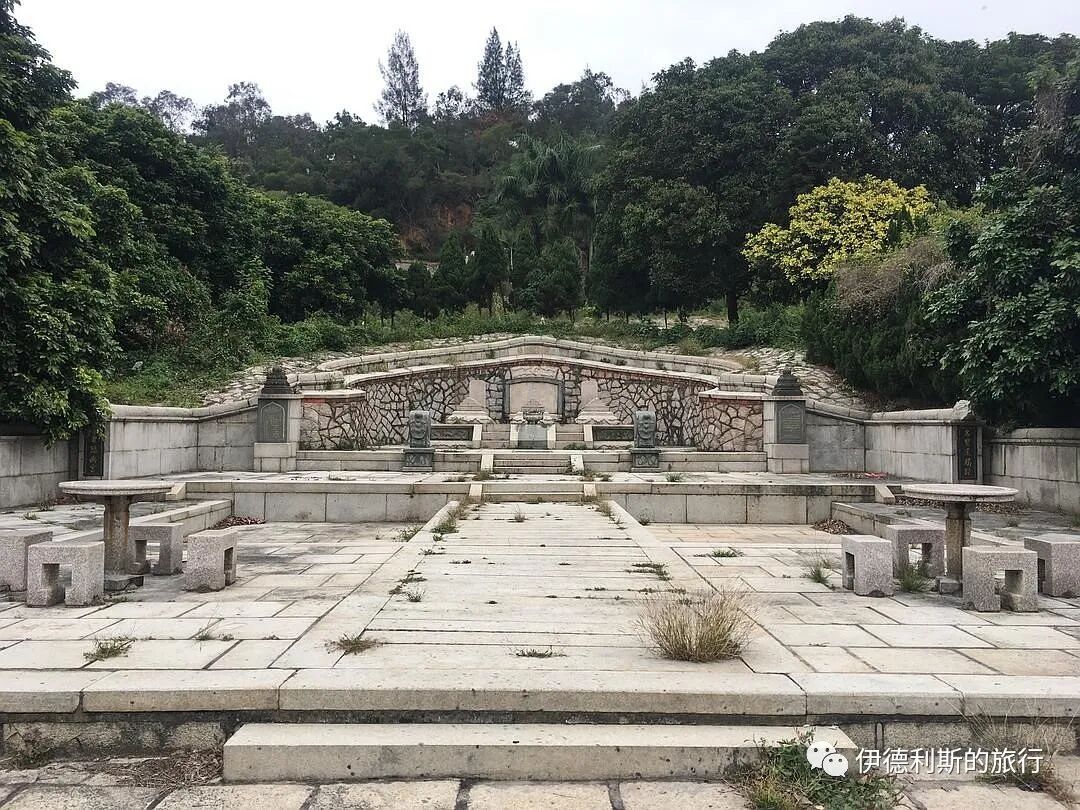
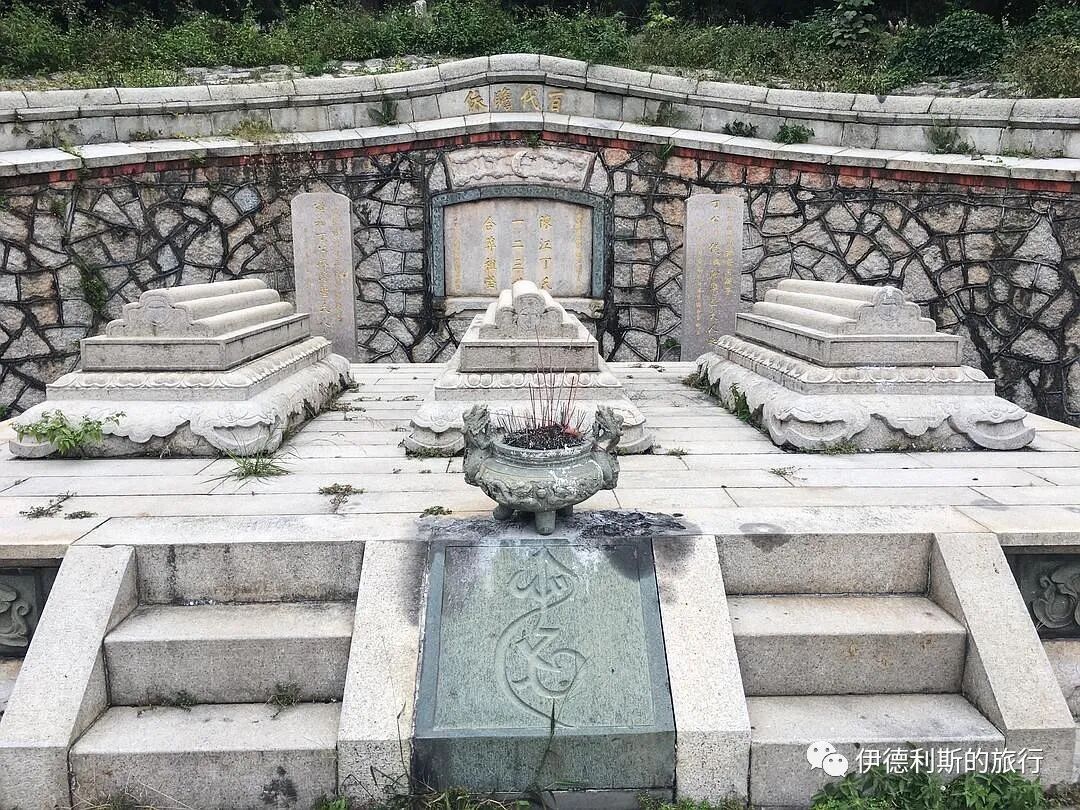
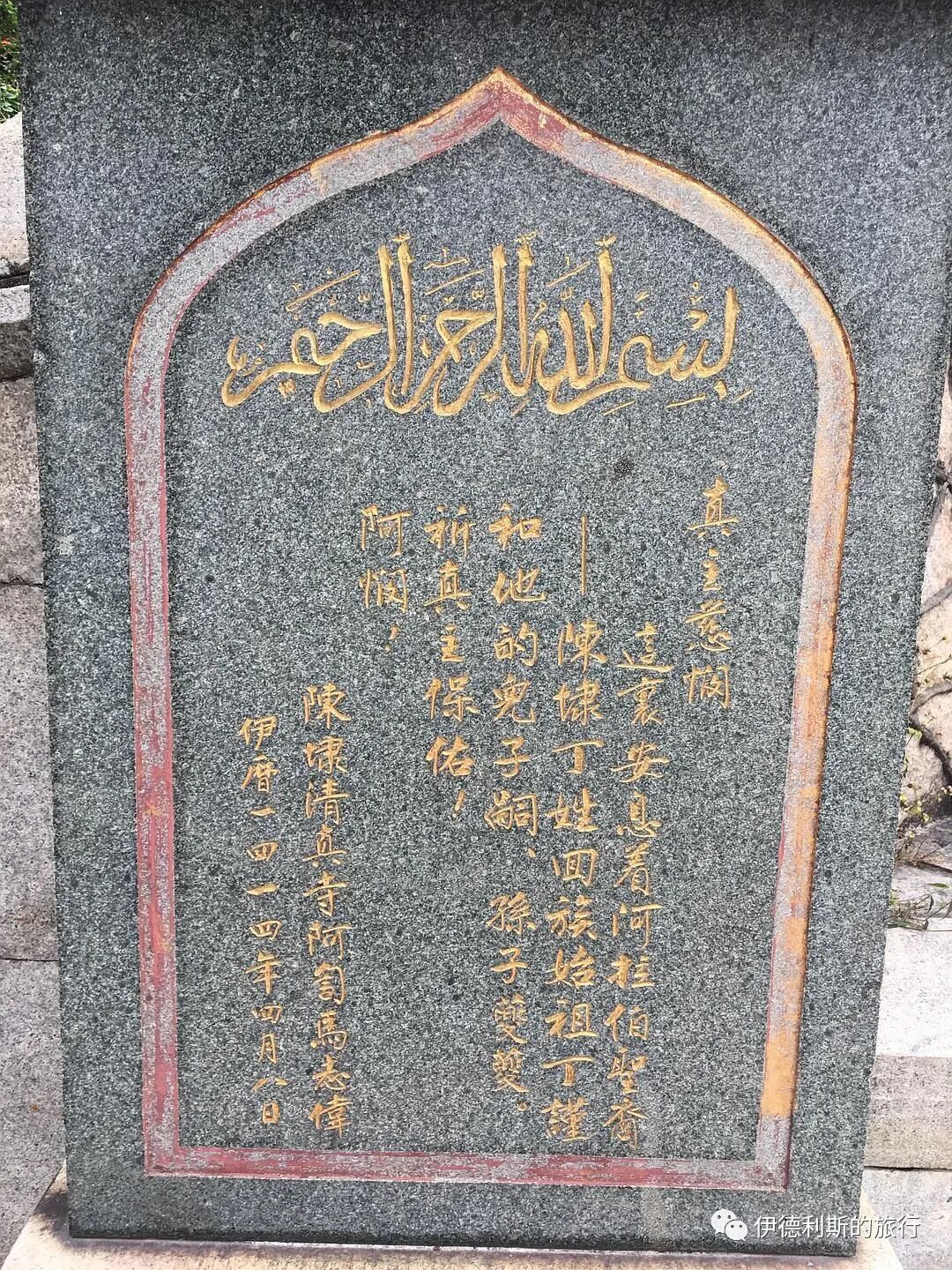
The earliest Ding family tomb from Chendai currently existing on Lingshan is the tomb of the fourth ancestor Ding Shan (1343-1420) and his wife Zhuang Xiniang. Ding Shan and his wife were originally buried in Luyuan, east of Quanzhou city. 'Luyuan' means 'Paradise' in the Quran.
This stone tomb is a traditional Islamic diabase tomb, with two Sumeru-style five-layer tomb stones placed on a Sumeru-pedestal altar-style platform. The first layer of the tomb stone has six gui-shaped feet, carved with ruyi patterns; The second layer is carved with continuous branch patterns; The third layer is carved with overlapping lotus petal patterns; The fourth layer is carved with Quranic verses; The fifth layer is a curved arch tomb-top stone. Behind the tomb stone is a tombstone erected in 1910. The scripture on the tomb stone is from an excerpt of Chapter 2, Verse 255 of the Quran.
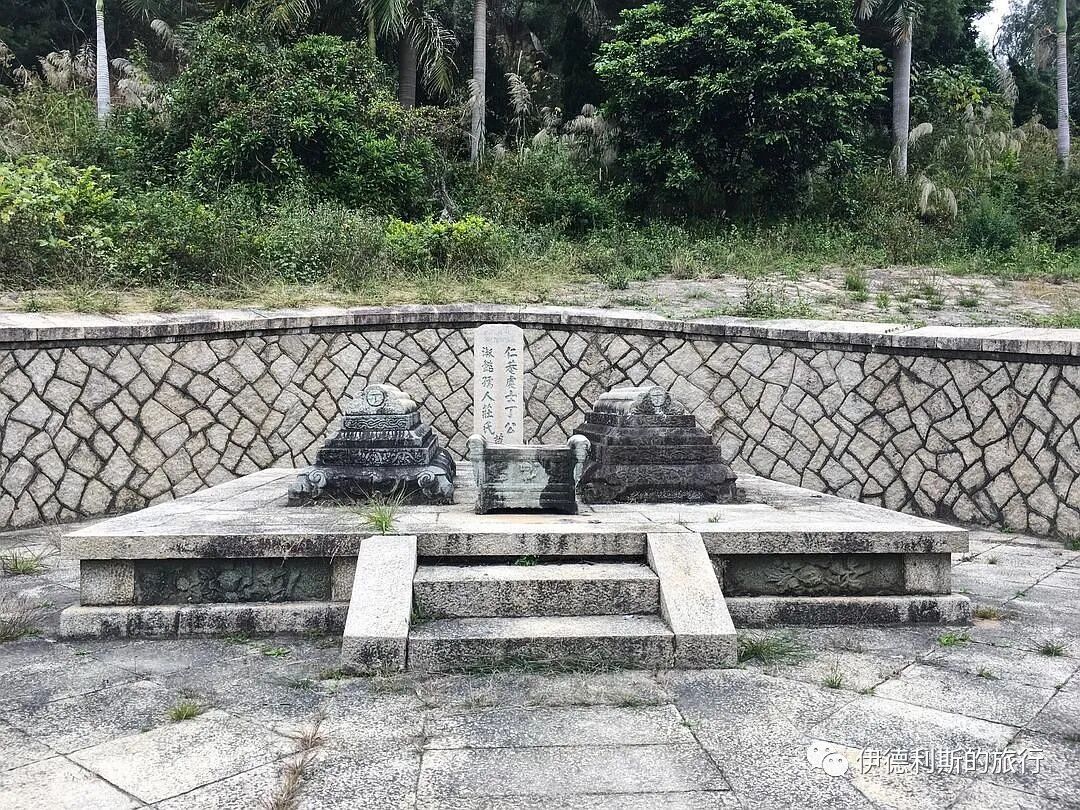
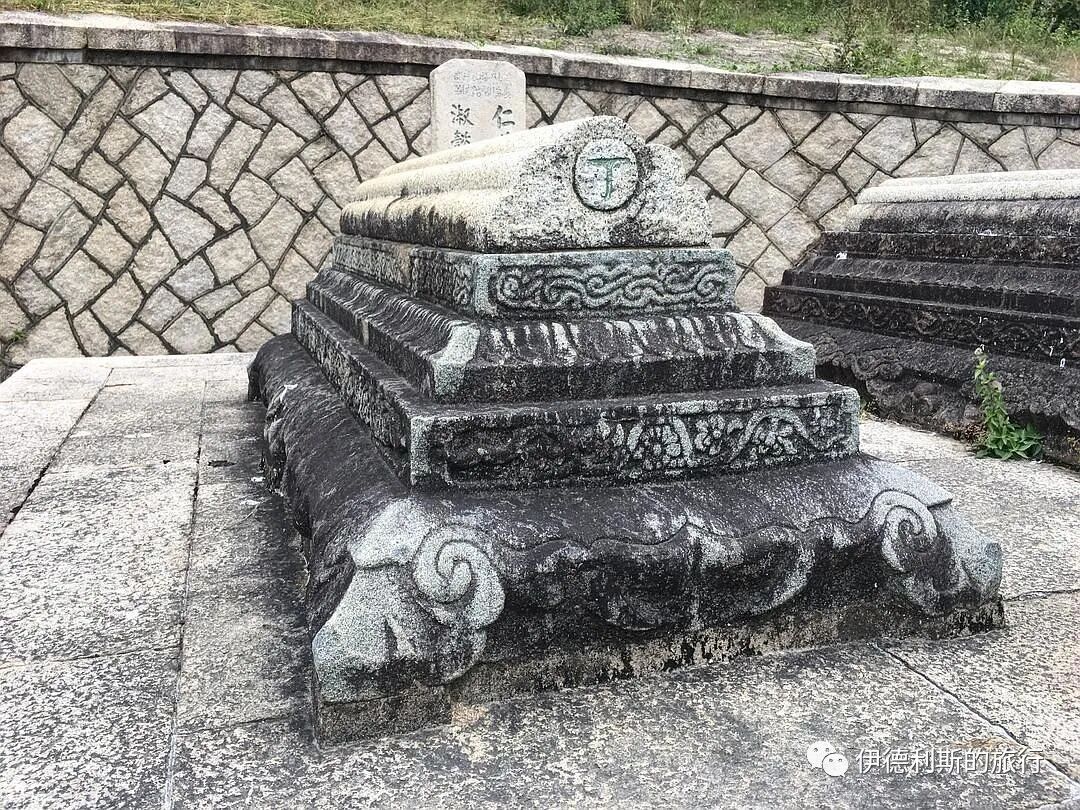
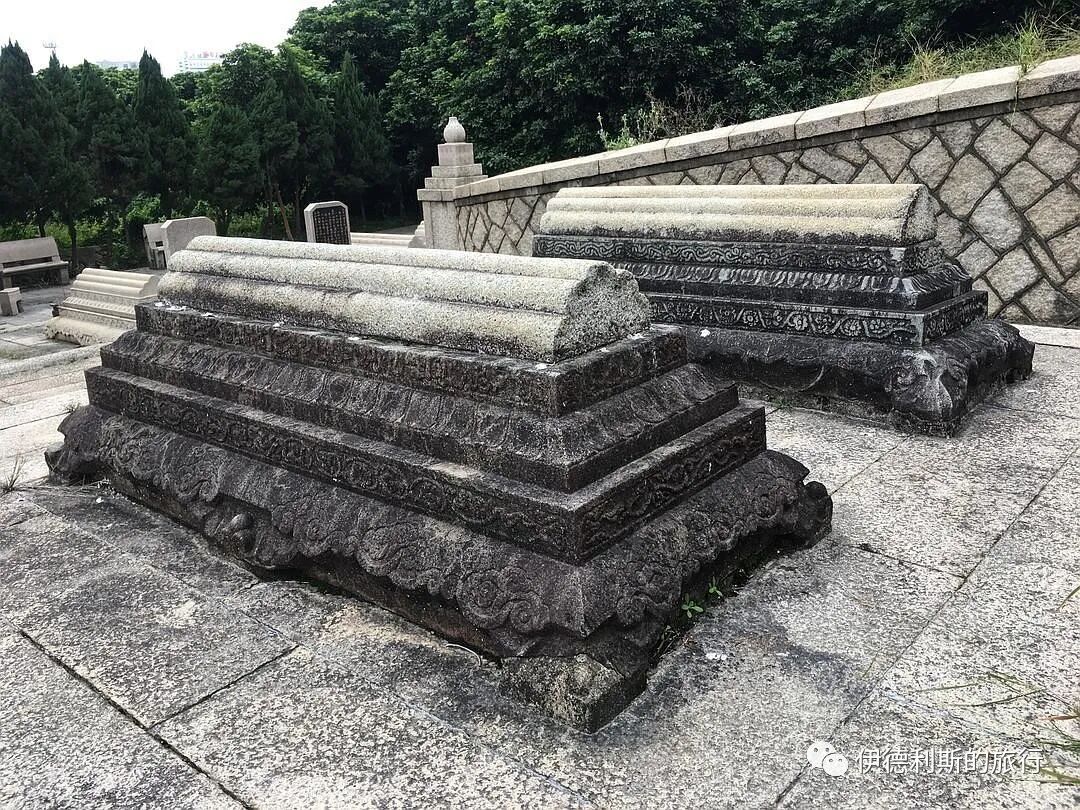
The tomb of the fifth generation Ding Mabao, his wife Pu, and his successor Wang. Ding Mabao (1366-1431), courtesy name Shilong, pseudonym Yi'an, was the eldest son of the fourth ancestor Ding Shan who founded the family in Chendai. He was the ancestor of the Great Eldest Branch of the Chendai Ding family and was originally buried with his two wives in the Chengui Baoxue cave on Daping Mountain, east of Quanzhou city.
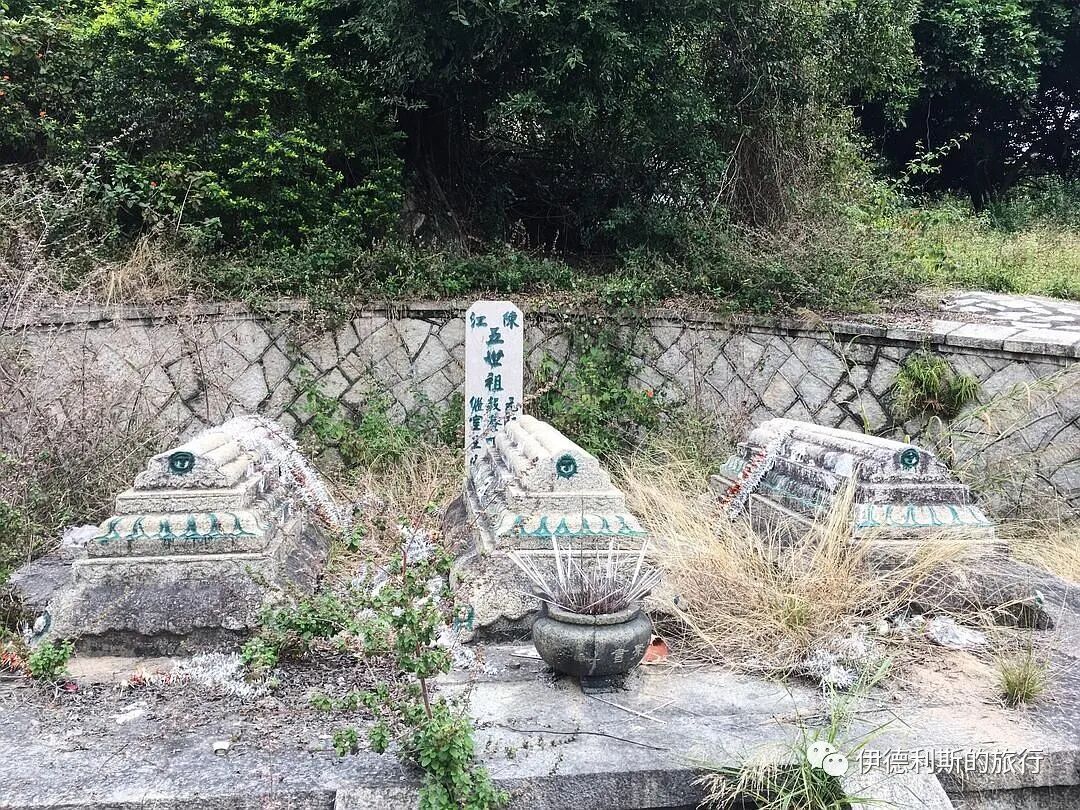
The tombs of the fifth generation Ding Guanbao, the sixth generation Ding Kuan, and the sixth generation Ding Min. The fifth generation Ding Guanbao (1369-1436), courtesy name Shifu, pseudonym Chengzhai, was the second son of Ding Shan and the ancestor of the Great Second Branch of the Chendai Ding family. He was originally buried at the foot of Shuiuniulin, east of Quanzhou city.
The sixth generation Ding Kuan (1395-1446), courtesy name Tingyu, pseudonym Longyin, was the second son of Ding Guanbao and was originally buried to the left of Ding Shan's tomb in Luyuan Mountain.
The sixth generation Ding Min (1407-1456), courtesy name Tingxue, pseudonym Yizhai, was the fourth son of Ding Guanbao and was originally buried at the foot of Shuiuniulin, east of Quanzhou city. Ding Min was the local sage who first promoted literary education among the Chendai Ding family.
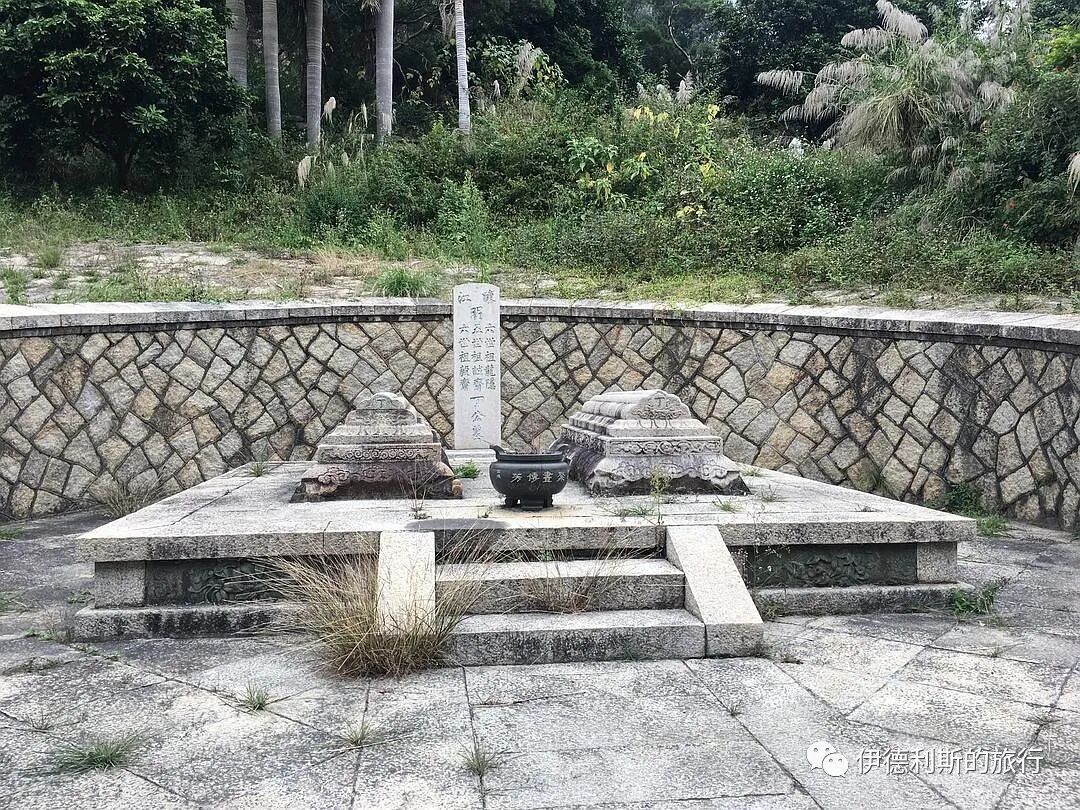
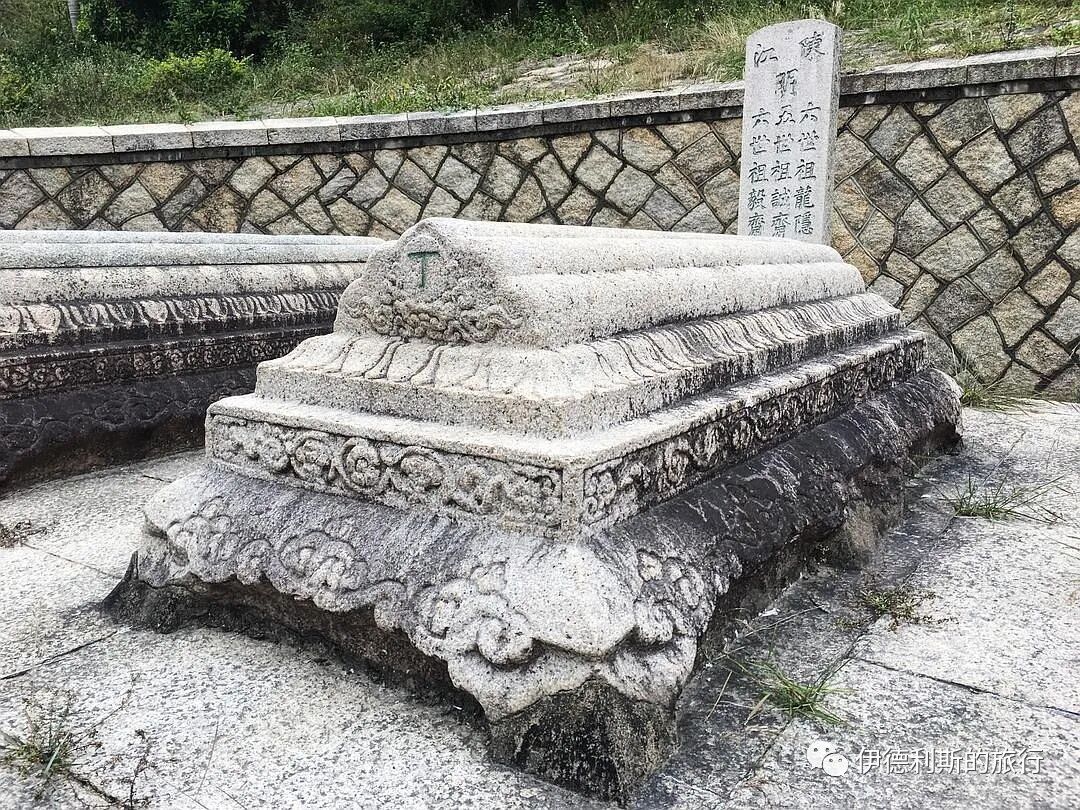
The fifth generation Ding Fubao (1375-1432), courtesy name Shizhang, pseudonym Yingjie, was the third son of Ding Shan and the ancestor of the Great Third Branch of the Chendai Ding family, buried on Lingshan, east of Quanzhou city. The tomb is placed on a traditional Islamic Sumeru-pedestal altar-style platform with two Sumeru-style stone tombs. The waist of the platform is carved with swastikas and two lions playing with a pearl.
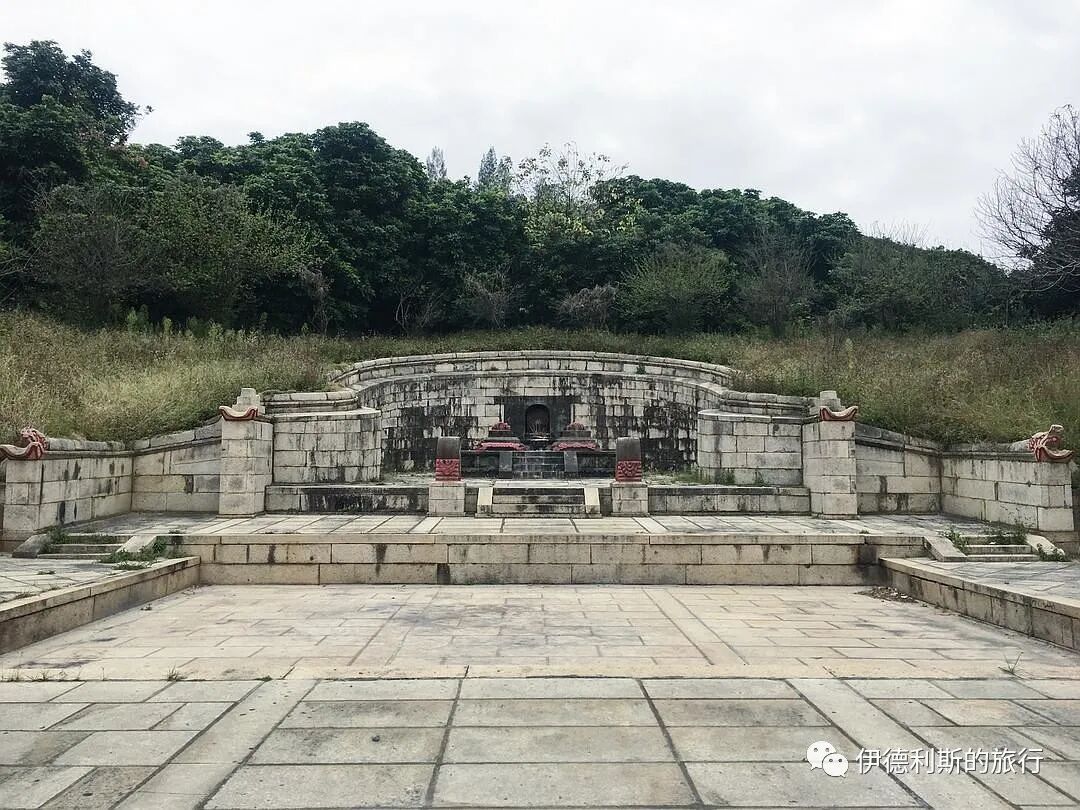
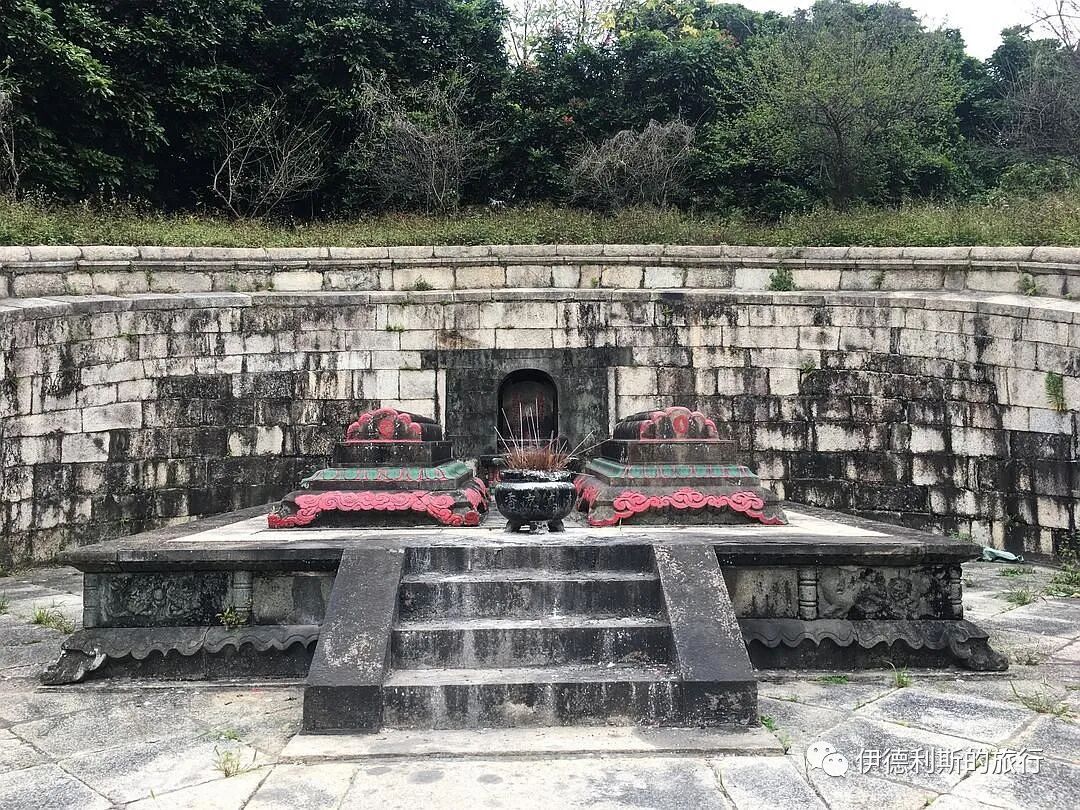
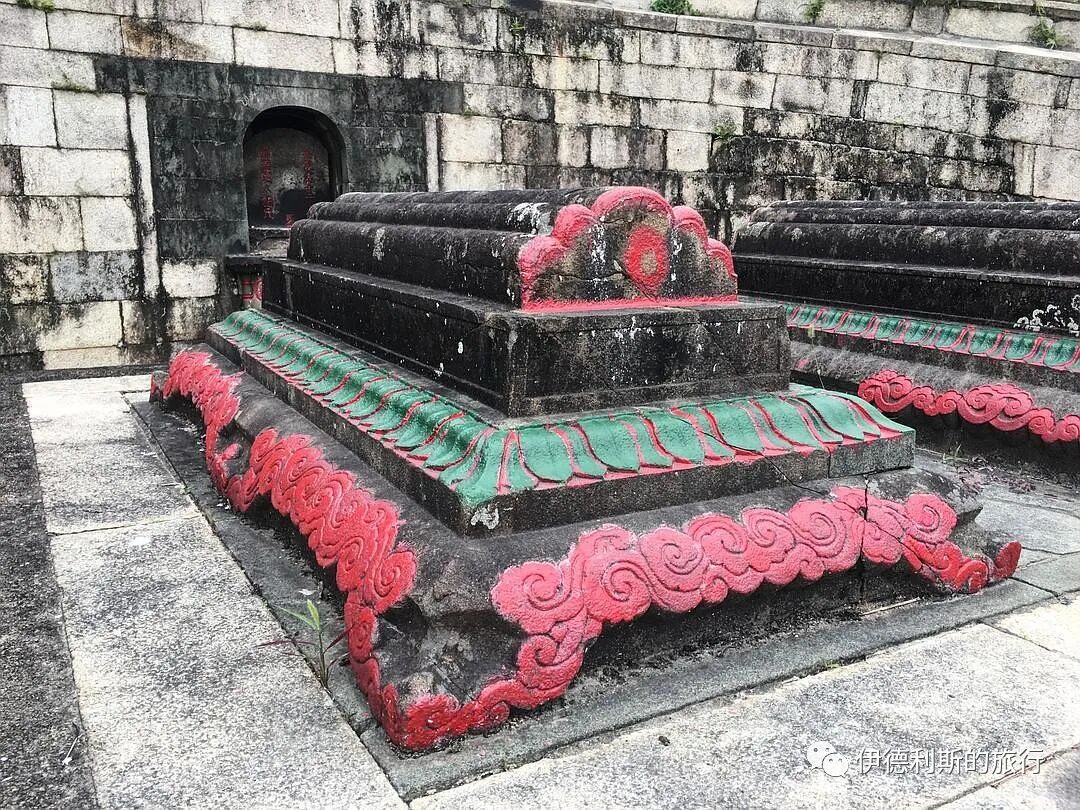
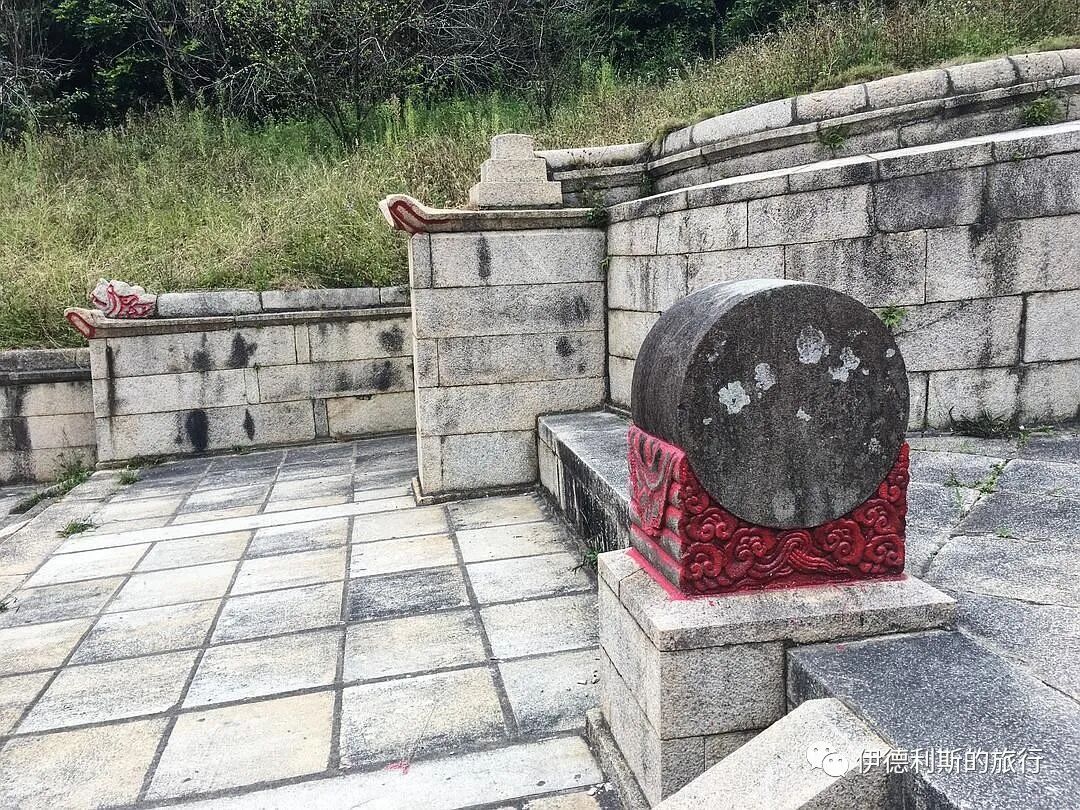
The tomb of the seventh generation Ding Lun and his wife Zhuang. The seventh generation Ding Lun (1442-1485), courtesy name Zhaorui, was the third son of the sixth generation Ding Xin.
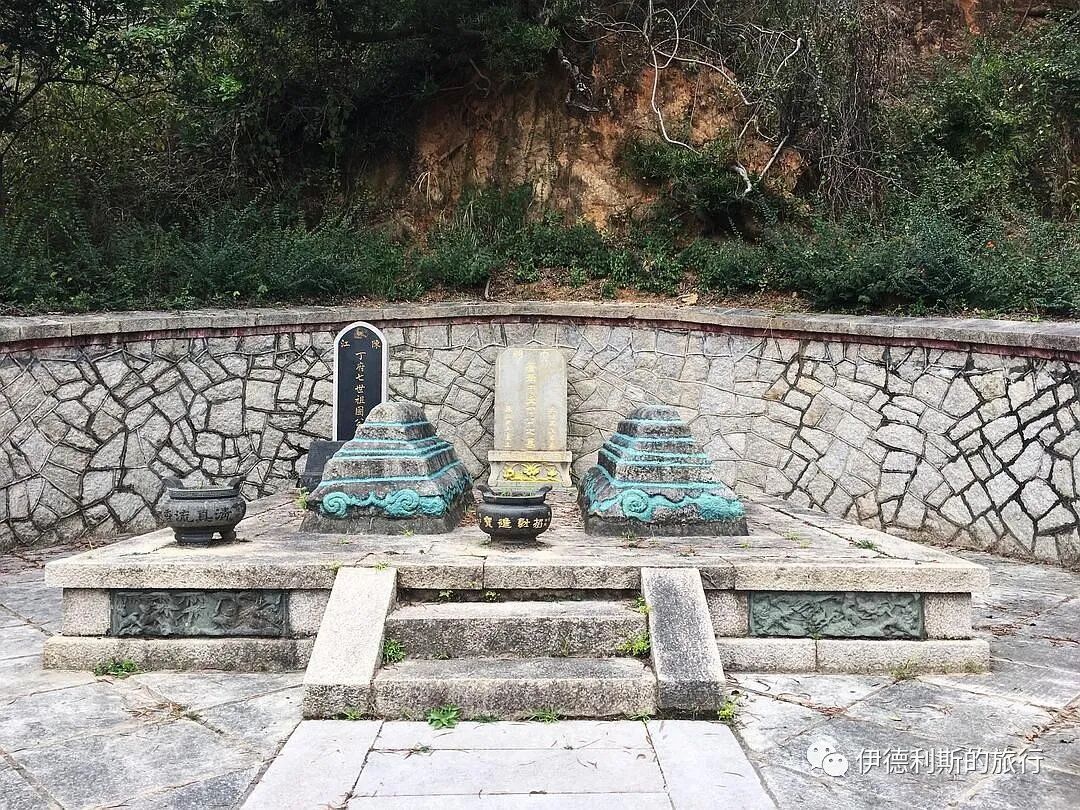
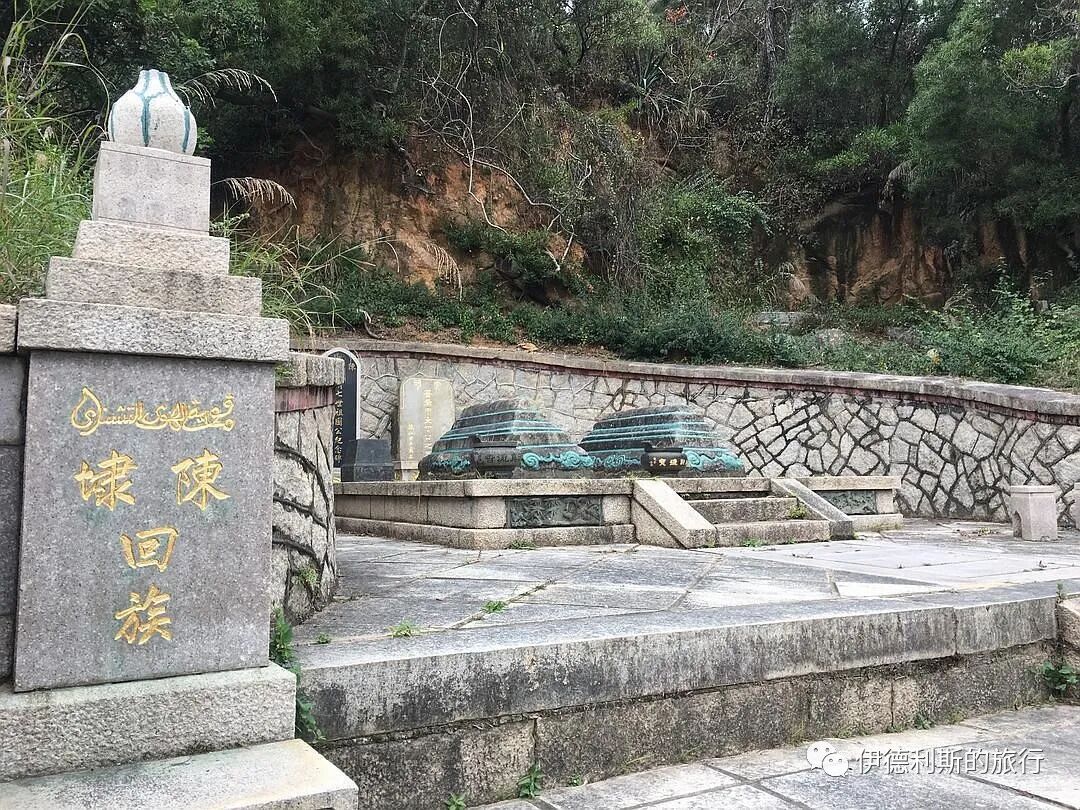
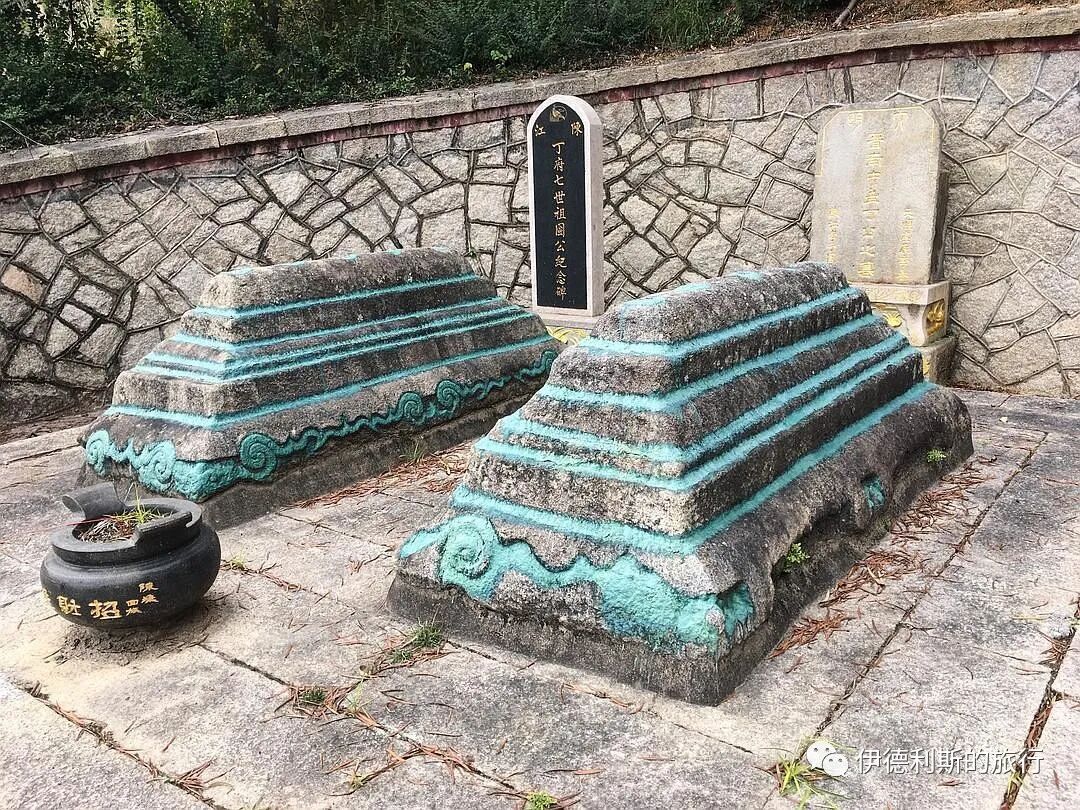
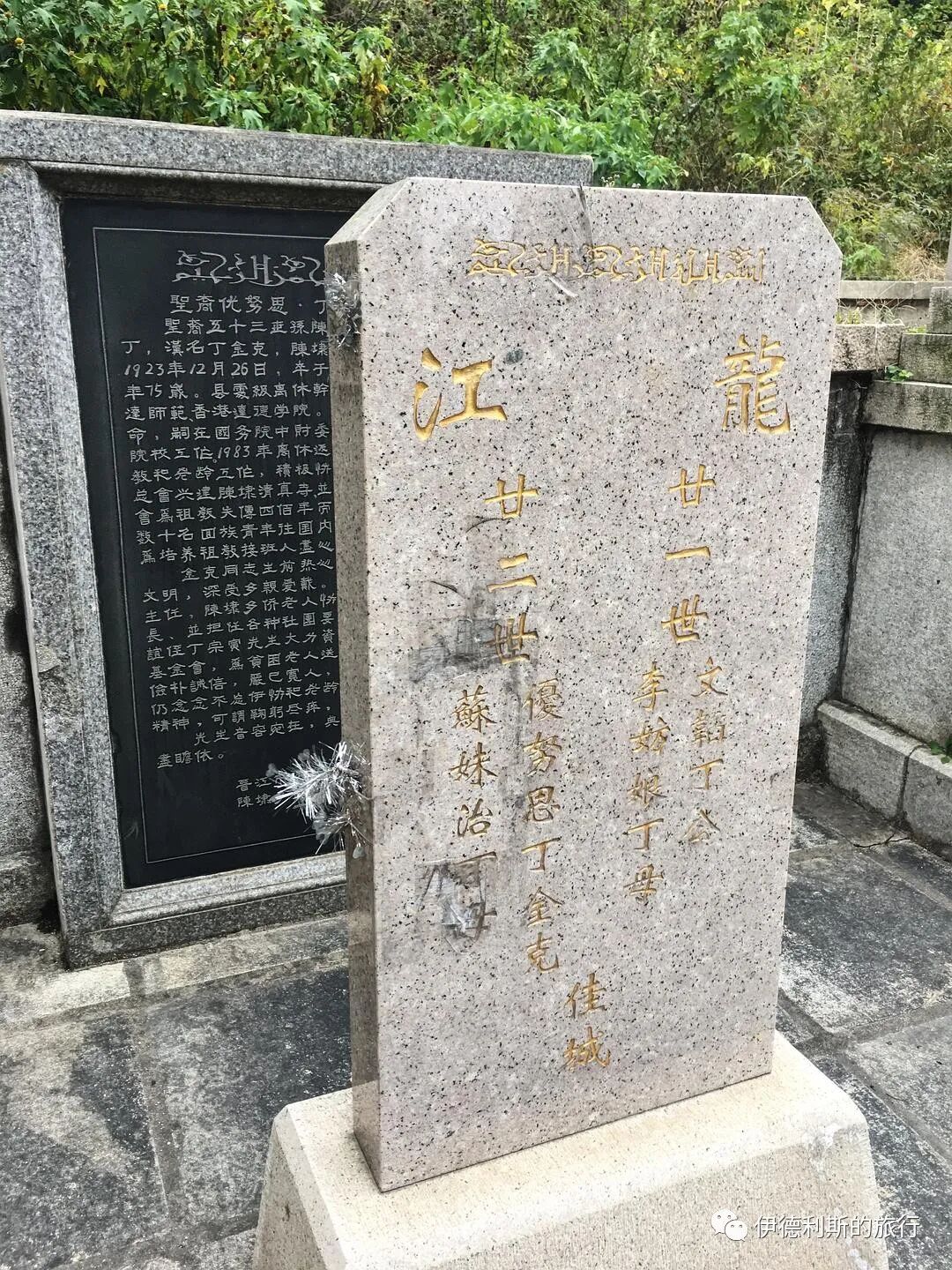
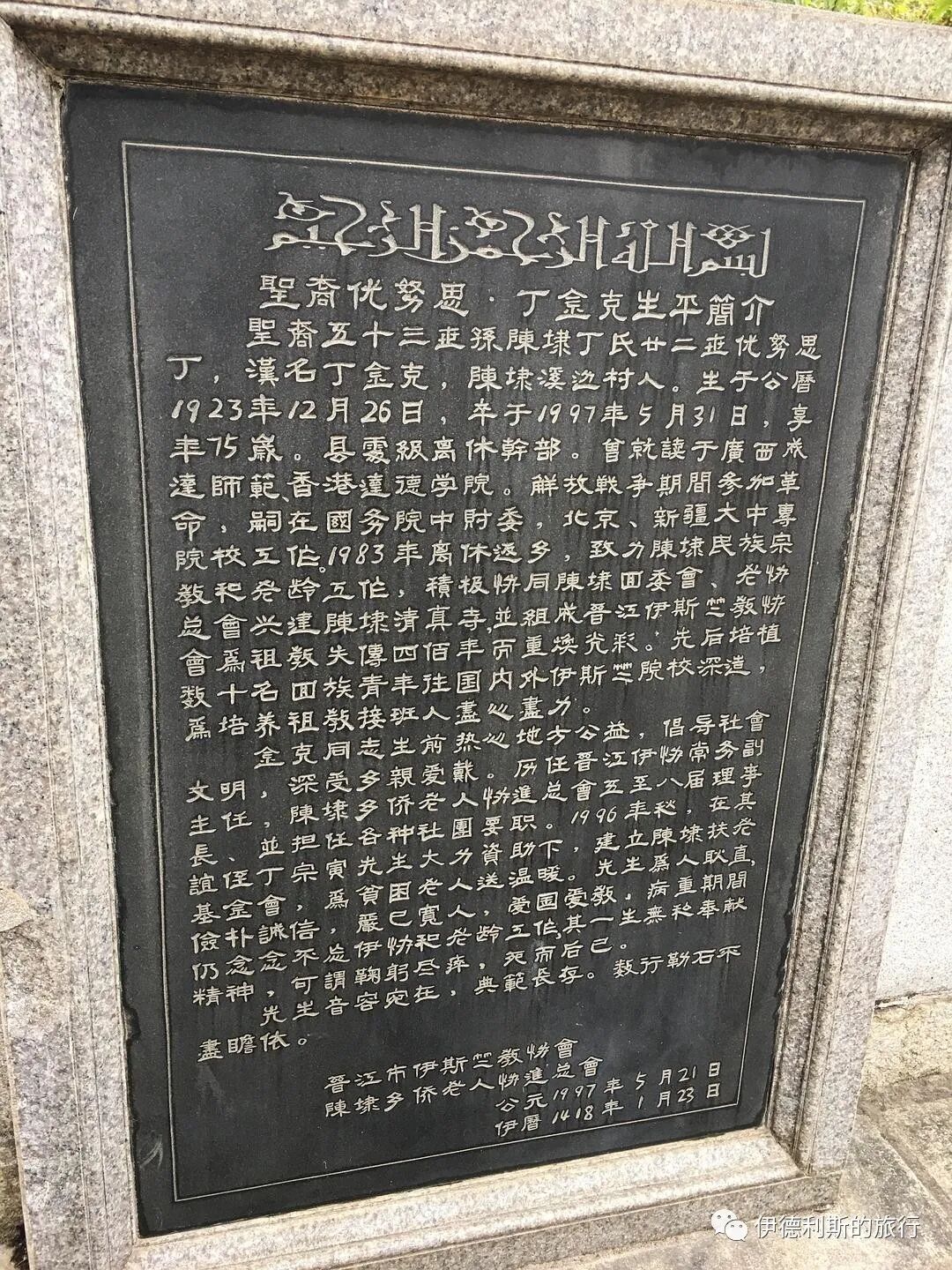
The tomb of Ding Jinke, the reviver of the Chendai religion.
Ding Jinke (1923-1997), religious name Yunus, studied at Guangxi Chengda Normal School and Hong Kong Dade College. He participated in the revolution during the War of Liberation and later worked in the Financial Committee of the State Council and in colleges and universities in Beijing and Xinjiang. After retiring and returning to his hometown in 1983, he participated in the construction of the Chendai Mosque and the establishment of the Jinjiang Islamic Association, serving as the executive deputy director of the Jinjiang Islamic Association. Later, he cultivated dozens of young people from the Chendai Ding family to study at Islamic colleges and universities at home and abroad.
III. Quanzhou Maritime Museum
The Quanzhou Maritime Museum was built in 1959, moved to Donghu Street in 1991, and the 'Quanzhou Islamic Culture Exhibition Hall' was built in 2003. Most of the Song and Yuan Islamic stone carvings in Quanzhou are collected here. Among them, 'Arabs and Persians in Quanzhou' exhibits 121 Islamic stone carvings, but not all of them are exhibited at the same time. I went in 2017, so I only saw some of the stone carvings.
During the Song and Yuan dynasties, Quanzhou had large areas of 'foreign guest' cemeteries, mainly concentrated in the areas of Tumen Street to Jintoupu, Houban, Fashi, and Meishan in the southeastern suburbs. The earliest record of Muslim cemeteries in the eastern suburbs of Quanzhou comes from the 'Record of Burying Foreign Merchants in Dongban, Quanzhou' by Lin Zhiqi (1112-1176), the Superintendent of the Quanzhou Maritime Trade Office in the Southern Song Dynasty. The text records that the Muslim merchant Shi Nawei donated money to buy land between 1162 and 1163 to build a Muslim public cemetery in Dongban, Quanzhou. 'Shi Nawei' refers to the ancient port of Siraf in the Persian Gulf.
During the Song and Yuan dynasties, one could reach the Houzhu seaport by leaving the city through Tonghuai Gate and passing through Jintoupu all the way to the southeast. The road from Tonghuai Gate to Fashi was alluvial beach land, and the road often sank into the mud. Therefore, after the Ming Dynasty, local residents often used Song and Yuan Muslim Sumeru-pedestal tomb stones as materials for slope protection and pond bank construction when building roads and ponds. There were once three ponds in Puwei, Jintoupu. When the pond water dried up in winter, one could see more than thirty Muslim tomb stones. There is a small temple called Houbangong south of Jintoupu. Just under the northeast wall, nearly ten Muslim Sumeru-pedestal tomb stones were used as wall foundation stones. There are also several Muslim tomb stones by the water ditches and rice paddy mud in Houban Village.
In addition, a large number of Song and Yuan Muslim tomb stones were also discovered in the areas of Jincuowei, Secuowei, Xiacuopu, Dingcuoshan, and Tiecuowei in the eastern suburbs of Quanzhou. Jin, Ding, Xia, and Tie are the surnames of the 'Half-Southern Foreigners' (descendants of Arabs and Iranians who intermarried with local people in Quanzhou), but they no longer believe in Islam today.
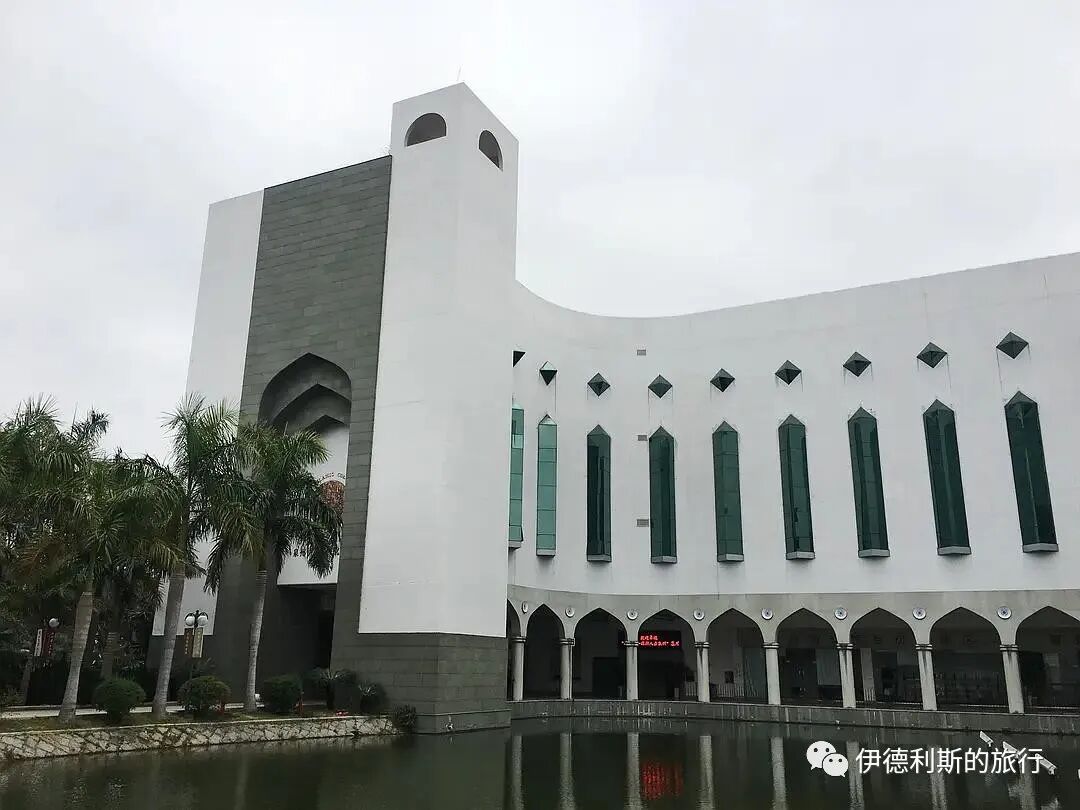
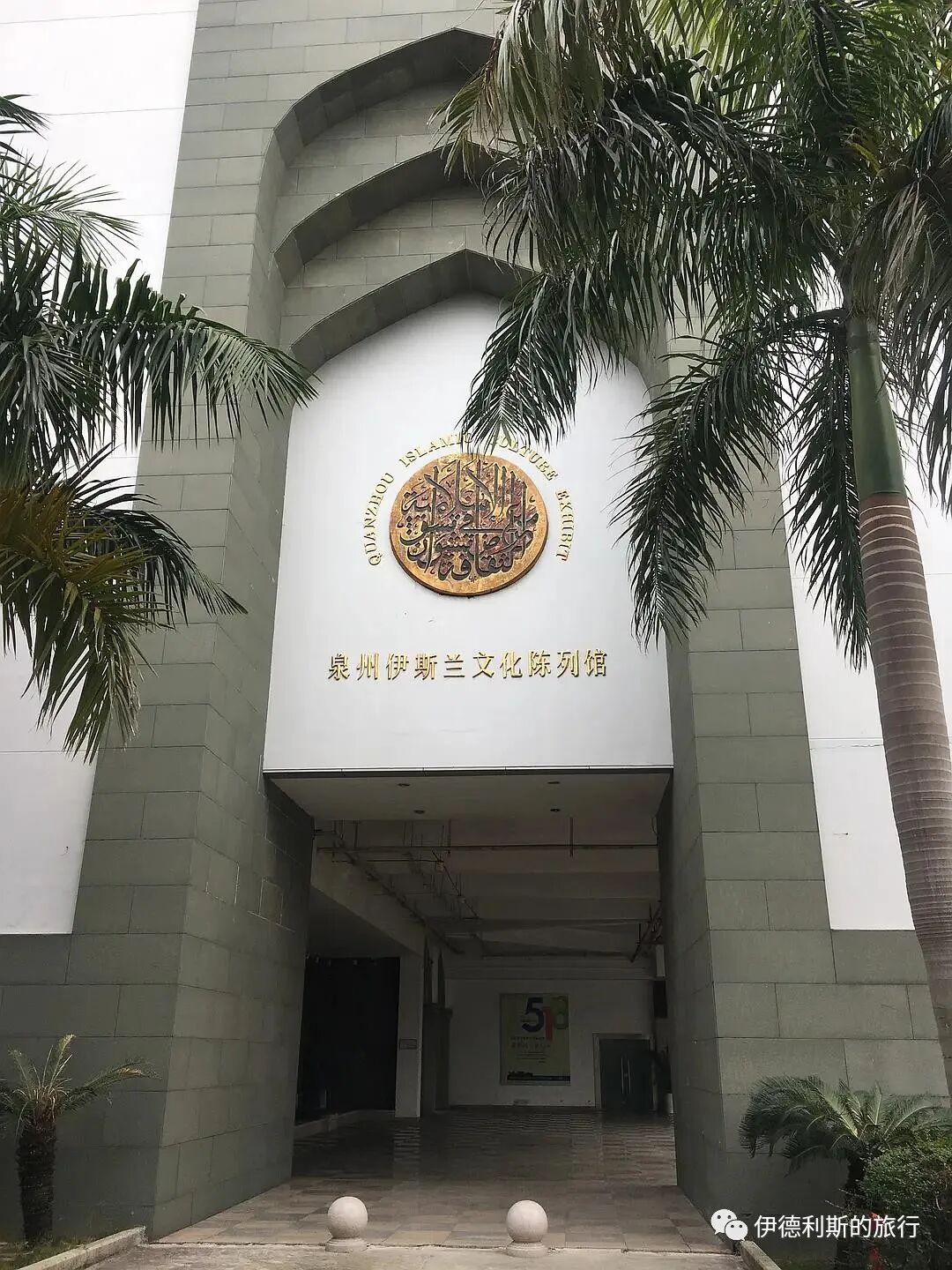
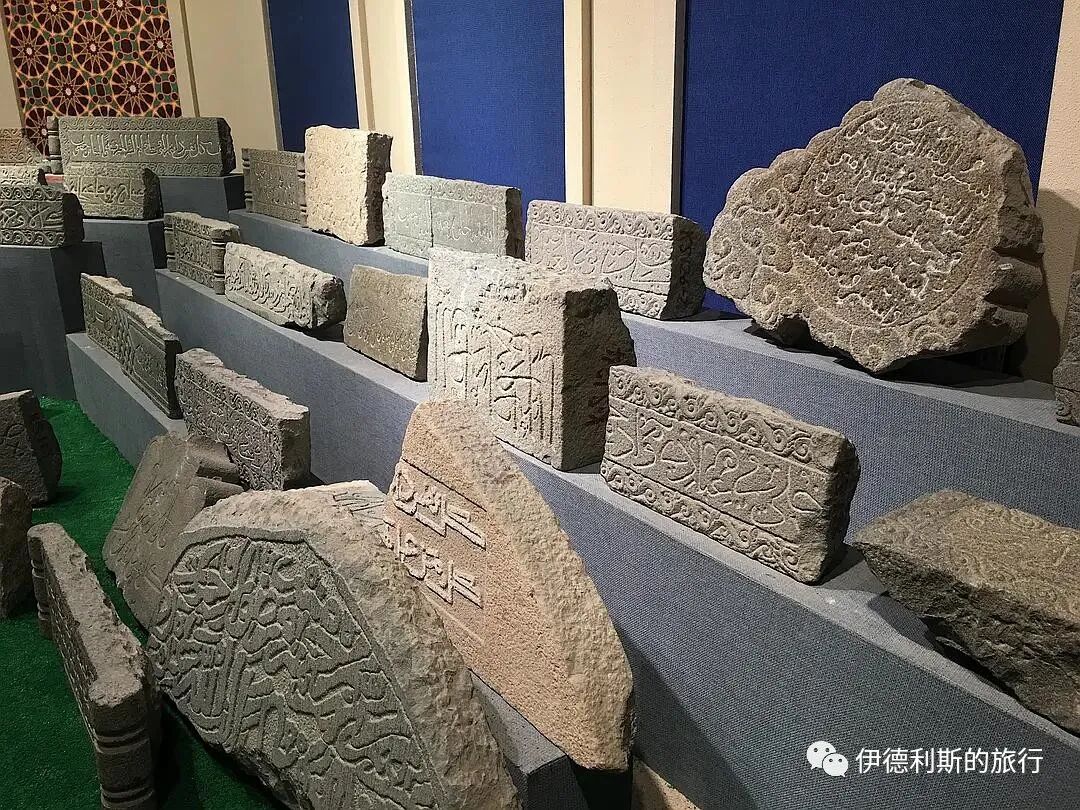
As soon as you enter the exhibition hall, you can see the three major types of Song and Yuan Muslim stone carvings in Quanzhou: on the left are Sumeru-pedestal tomb stones, on the right are Sumeru-pedestal altar-style tomb stones, and inside are tombstones.
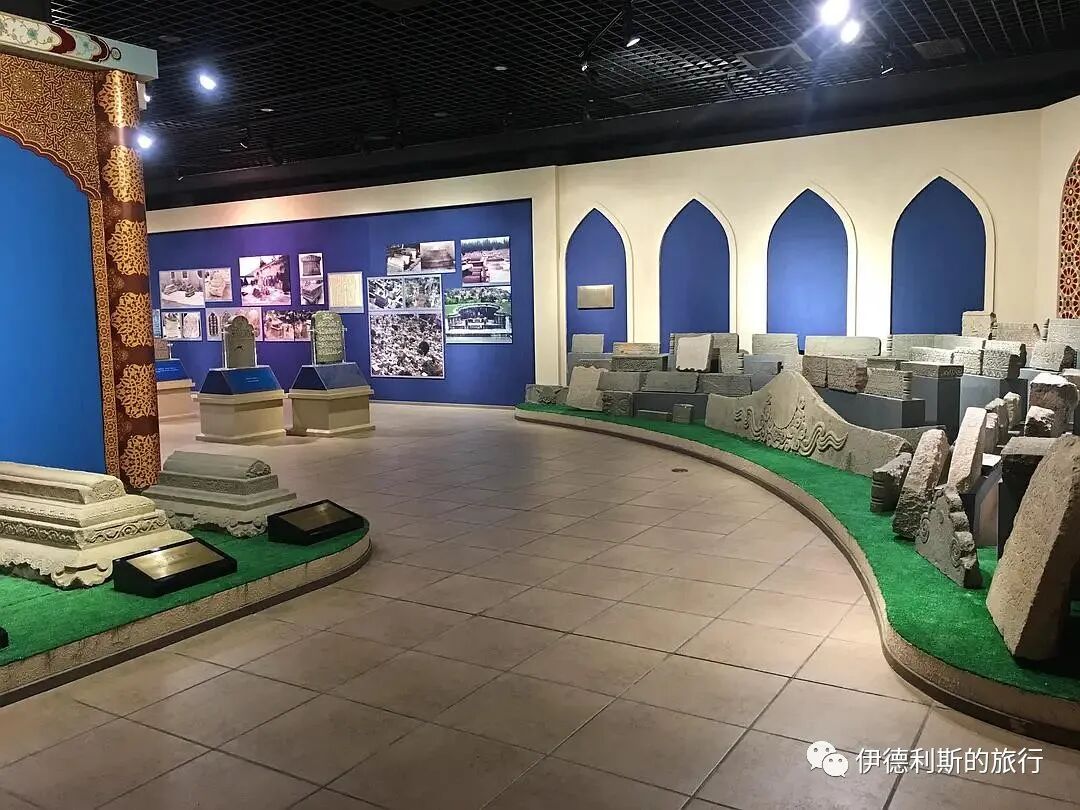
The picture below shows Sumeru-pedestal tomb stones.
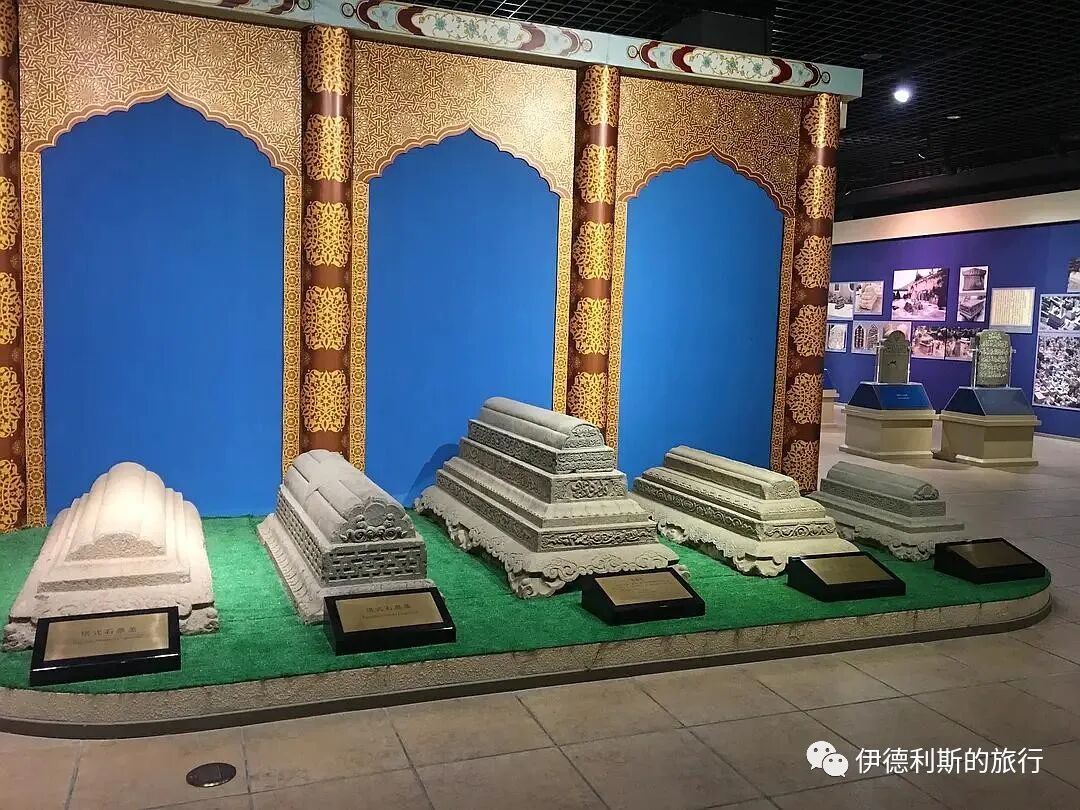
The Sumeru-pedestal tomb stone in the picture below was discovered near Chan Mosque outside the East Gate of Quanzhou in 1927, recovered in 1958, and later preserved in the Maritime Museum. The tomb owner was Ghutub Allah Ya'qub from the ancient city of Jajarm in the northeastern Khorasan province of Iran, who died in 1309.
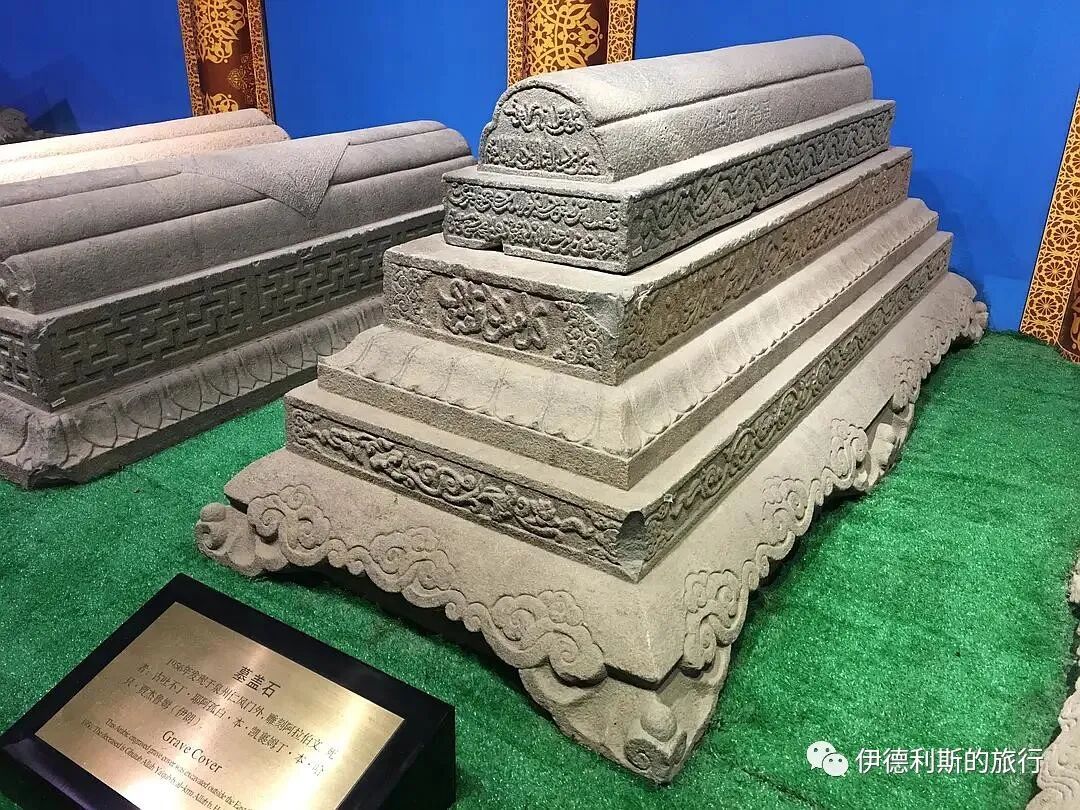
The one at the very front of the picture below is the cloud-moon-shaped tomb stone common in Quanzhou during the Ming Dynasty. It is very large and is a variant of the Song and Yuan Sumeru-pedestal tomb stones. Behind it are all tomb-stacking stones of Sumeru-pedestal altar-style stone tombs.
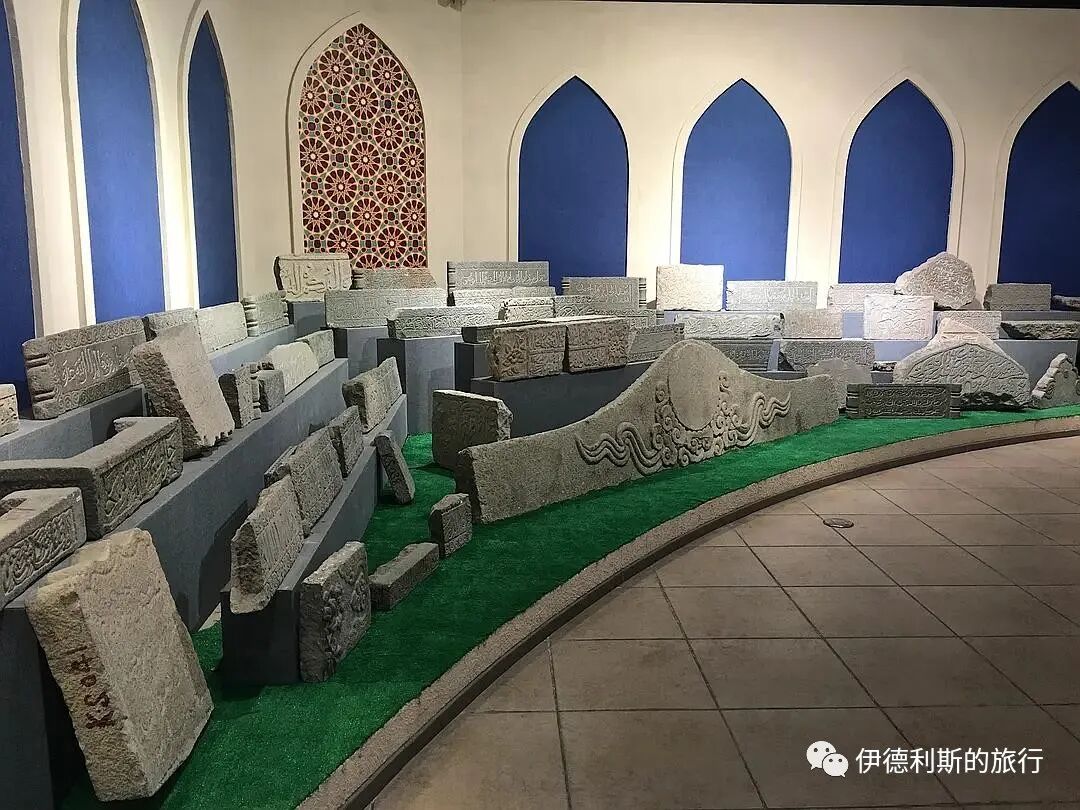
The picture below shows all tomb-stacking stones of diabase Sumeru-pedestal altar-style stone tombs, introduced from top to bottom: The first one on the right in the first row was discovered in a farmer's home near the East Gate of Quanzhou in November 1946. It is said to have been dug out from the city wall and used as stone steps. It was recovered and preserved in the spring of 1957 and donated to the Quanzhou Cultural Relics Management Committee by Liu Wanru, the widow of Mr. Wu Wenliang, on August 29, 1973. There are pillars at both ends of the tomb stone, and continuous scroll patterns are carved all around, with Chapter 30, Verse 11 of the Quran carved on it.
The third one on the right in the first row was discovered in a pile of rubble at the Qingjing Mosque in 1959. This pile of rubble was dug out from the city foundation near Tonghuai Gate in Quanzhou and moved to the Maritime Museum in 1964. The tomb owner was Toghan Shah bin Umar bin Sayyid Ajjal from the ancient Central Asian city of Bukhara. Toghan is a Turkic word meaning 'eagle', and Shah is 'king'. Sayyid Ajjal is the Yuan Dynasty transliteration of Sayyid.
The first one on the right in the second row was discovered in 1978 when the former site of Pu Shougeng's residence in the Yuan Dynasty at Shijia Mosque in Donglu Lane, Quanzhou, was converted into a shoe factory, from the west wall of the north-facing bungalow next to the well in the mosque. It is carved with an excerpt from Chapter 2, Verse 156 of the Quran.
The second one on the right in the second row was discovered near the South Gate of Quanzhou in 1959. According to local residents, it was obtained when the South Gate of Quanzhou was demolished between 1946 and 1948. The tomb stone is carved with four-season flowers on the top and bottom, and is carved with an excerpt from Chapter 24, Verse 35 of the Quran.
The fourth one on the right in the second row was excavated from the East City Gate of Quanzhou in 1944 and is carved with an excerpt from Chapter 28, Verse 88 of the Quran.
The second one on the right in the third row was discovered in a pile of rubble at the entrance of Chongfu Mosque at the East Gate of Quanzhou in 1960. Continuous scroll patterns are carved on the top and bottom of the tomb stone. Translation: 'Everything will perish except Himself.' "
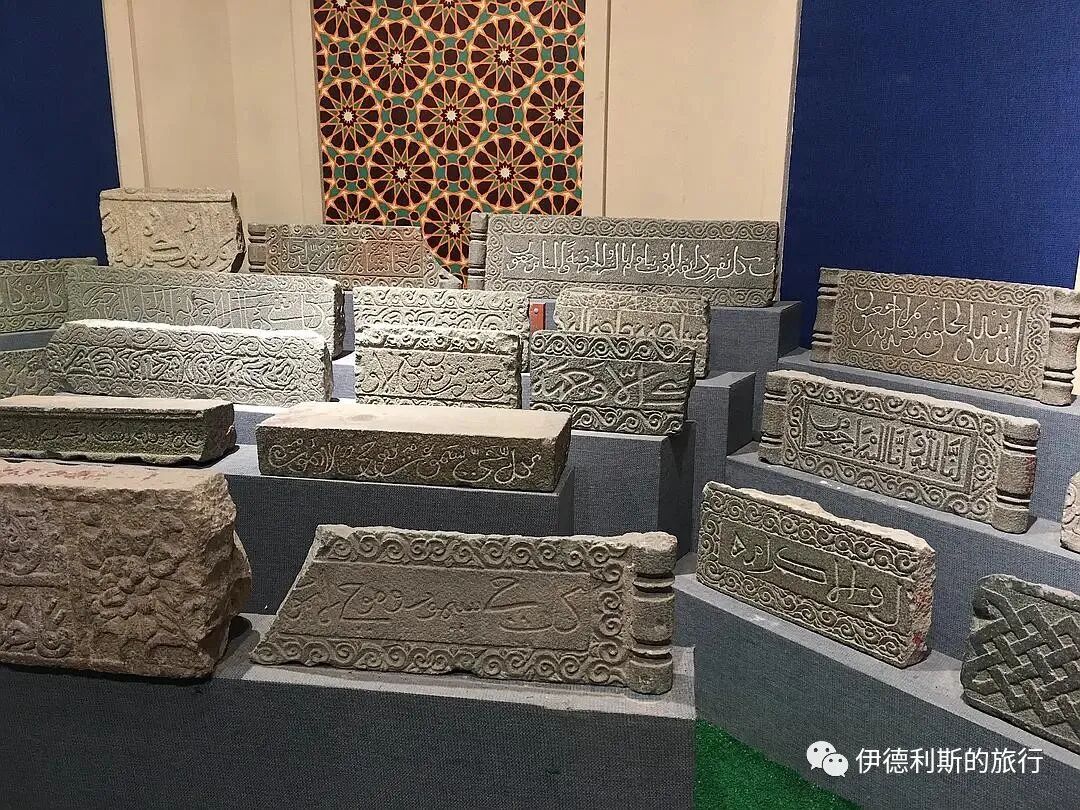
The picture below still shows tomb-stacking stones of diabase Sumeru-pedestal altar-style stone tombs. From top to bottom:
The first one on the right in the first row was donated by Mr. Ye Daoyi of Huaqiao University in the 1980s. The original state of the tombstone should have cloud patterns carved on both sides, with a full moon in the middle. Now, the cloud pattern on one side is damaged. The text in the full moon is from the full text of Chapter 44, Verses 50, 51, 52, and 53 of the Quran.
The second one on the right in the second row was discovered in Tingdian Township, 3 kilometers outside the South Gate of Quanzhou, in 1948. Continuous scroll patterns are carved on the top and bottom of the tomb stone, and it is carved with Chapter 89, Verses 29 and 30 of the Quran.
The first one on the right in the third row is a lintel stone of a tomb, discovered in a villager's home not far from the South City Gate in December 1958. The villager said that the stone carving was discovered deep in the city foundation when the South Gate city wall was excavated in 1946-1948. The translation is from an excerpt of Chapter 29, Verse 57 and Chapter 55, Verse 26 of the Quran: 'Everyone shall taste (the flavor of death), and everything on earth shall (perish).'
Going further in, it starts to be all tombstones. The tombstone on the left was discovered at the North Canal construction site in 1978, with a hanging lotus pistil on it, and 'There is no god but Allah' carved below.
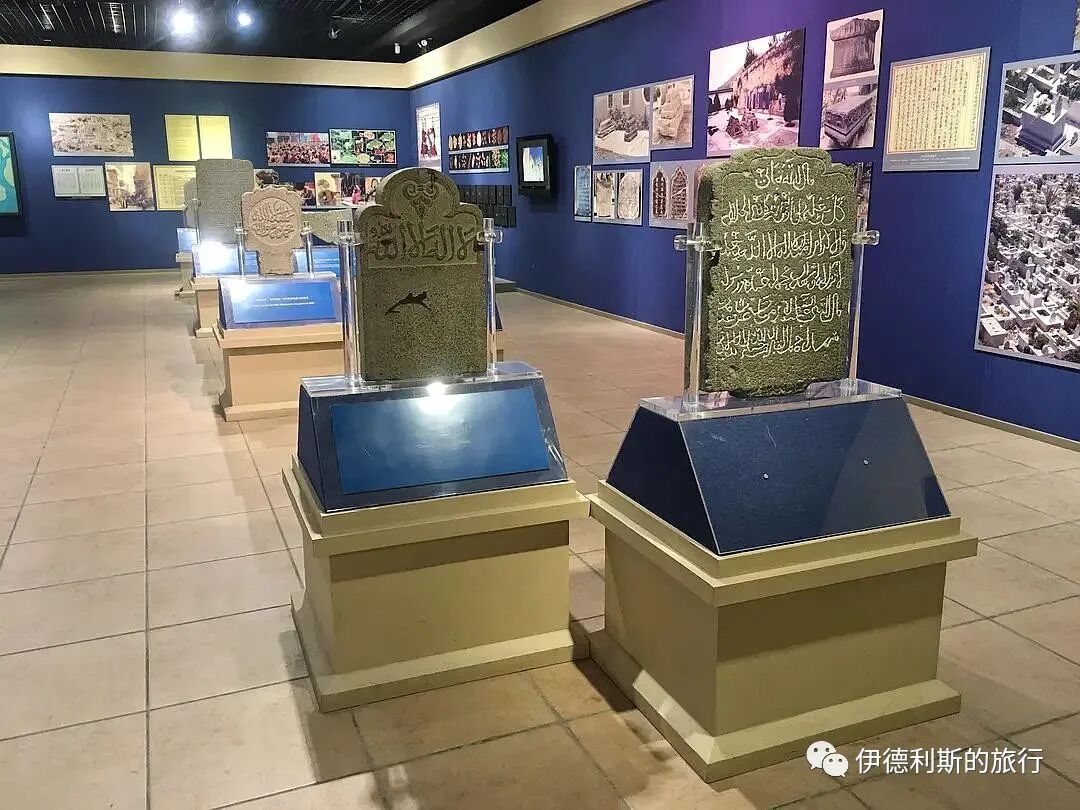
The back of the tombstone on the right in the picture above is carved with Chapter 3, Verse 185 of the Quran.
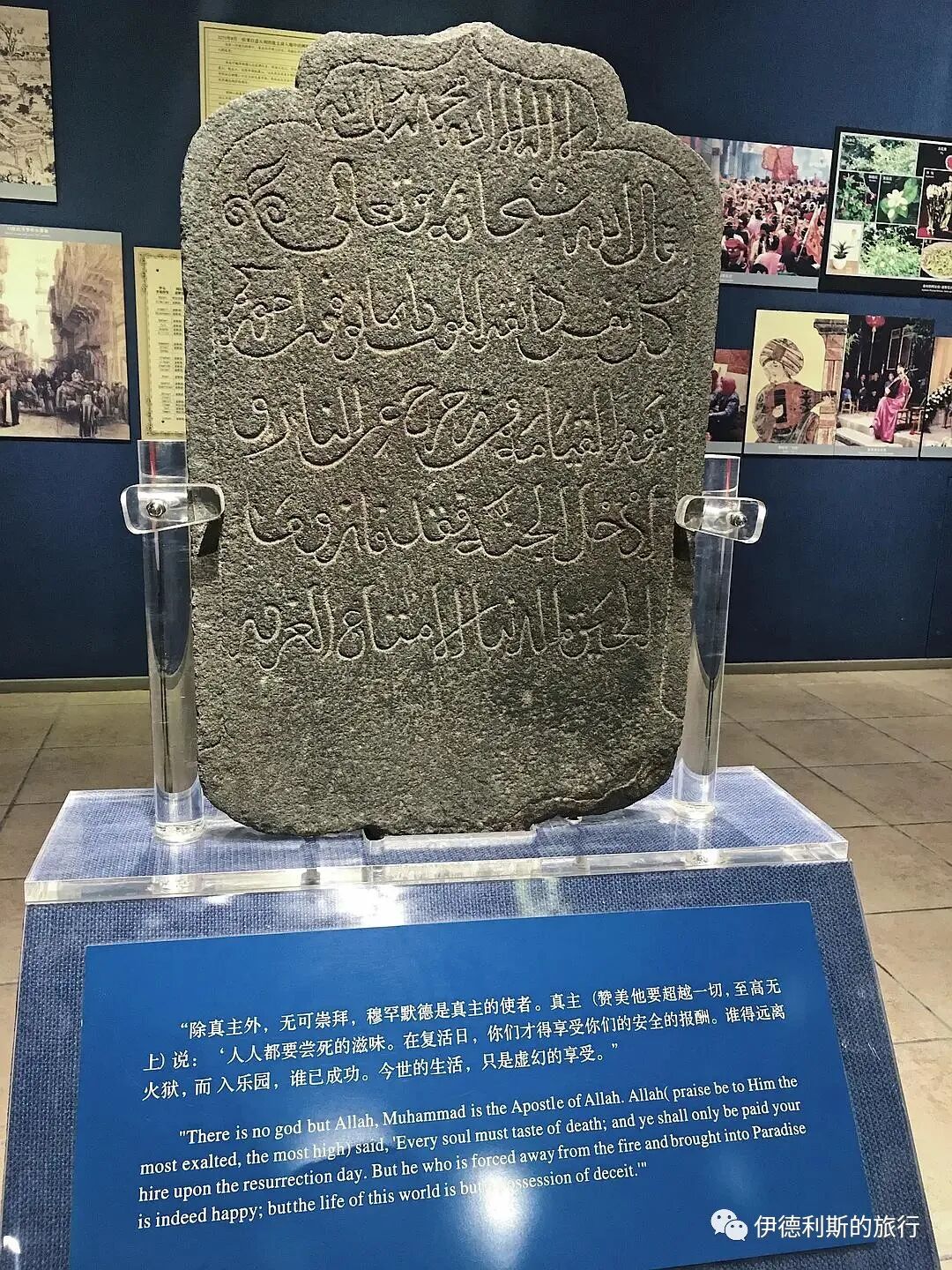
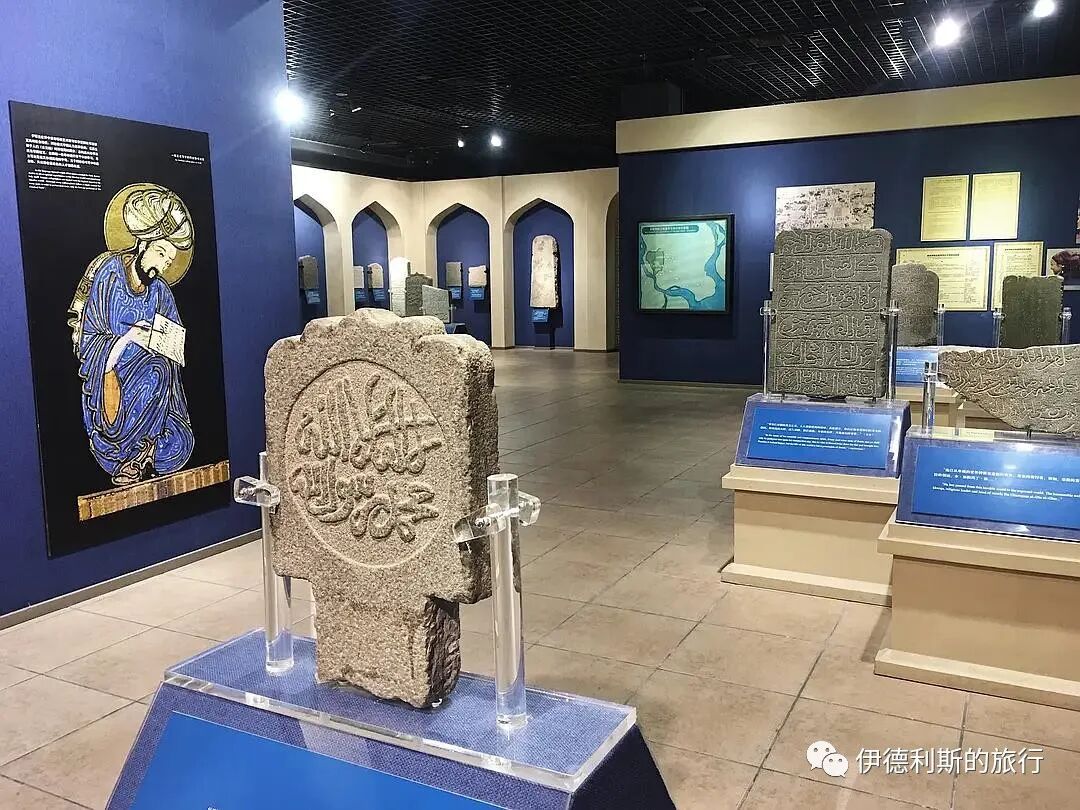
The diabase tombstone in the image below was unearthed in 1973 during the cleaning of the moat north of Quanzhou city; it is inscribed with verses 28, 29, and 30 of Chapter 89 of the Quran.
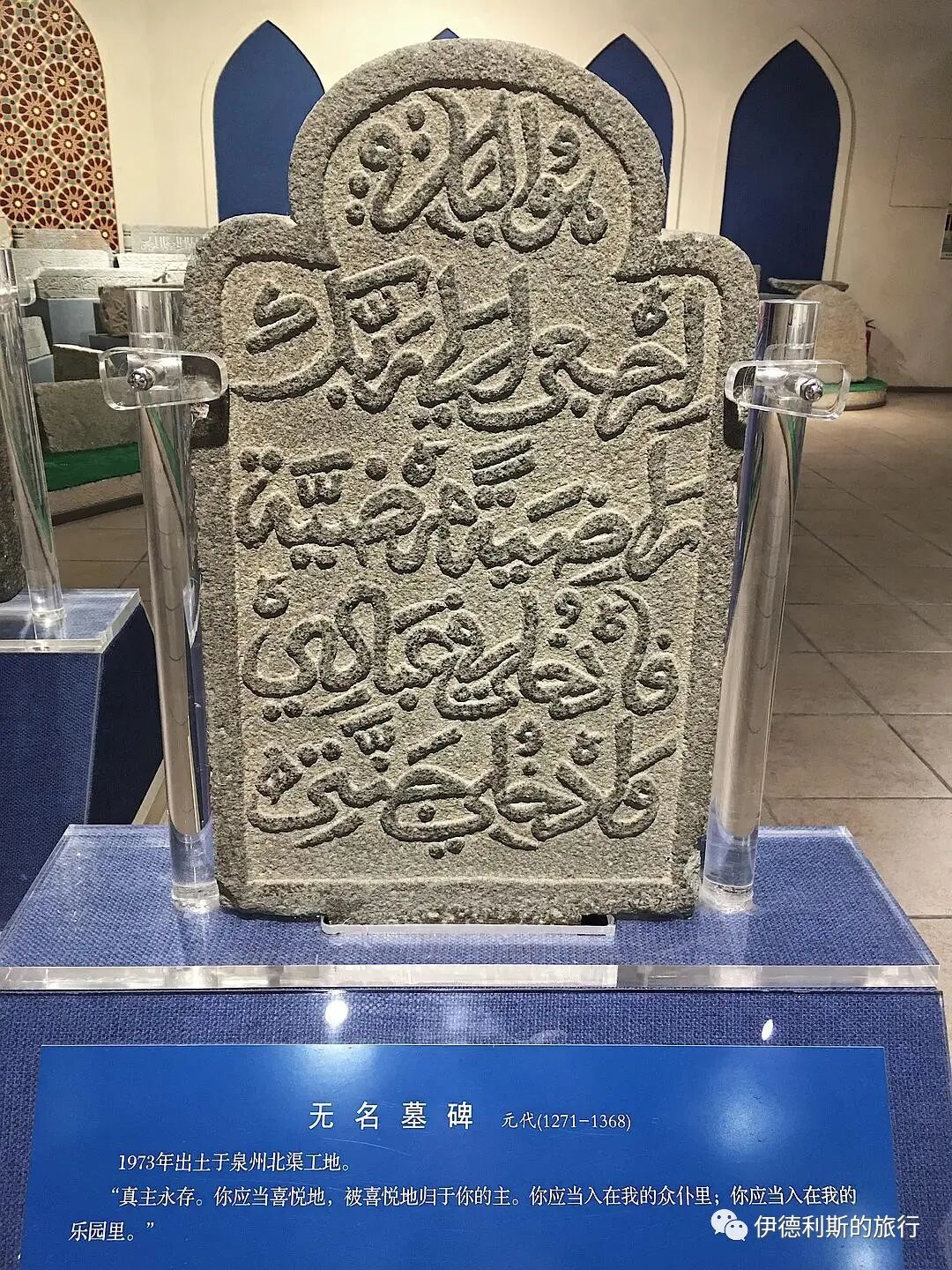
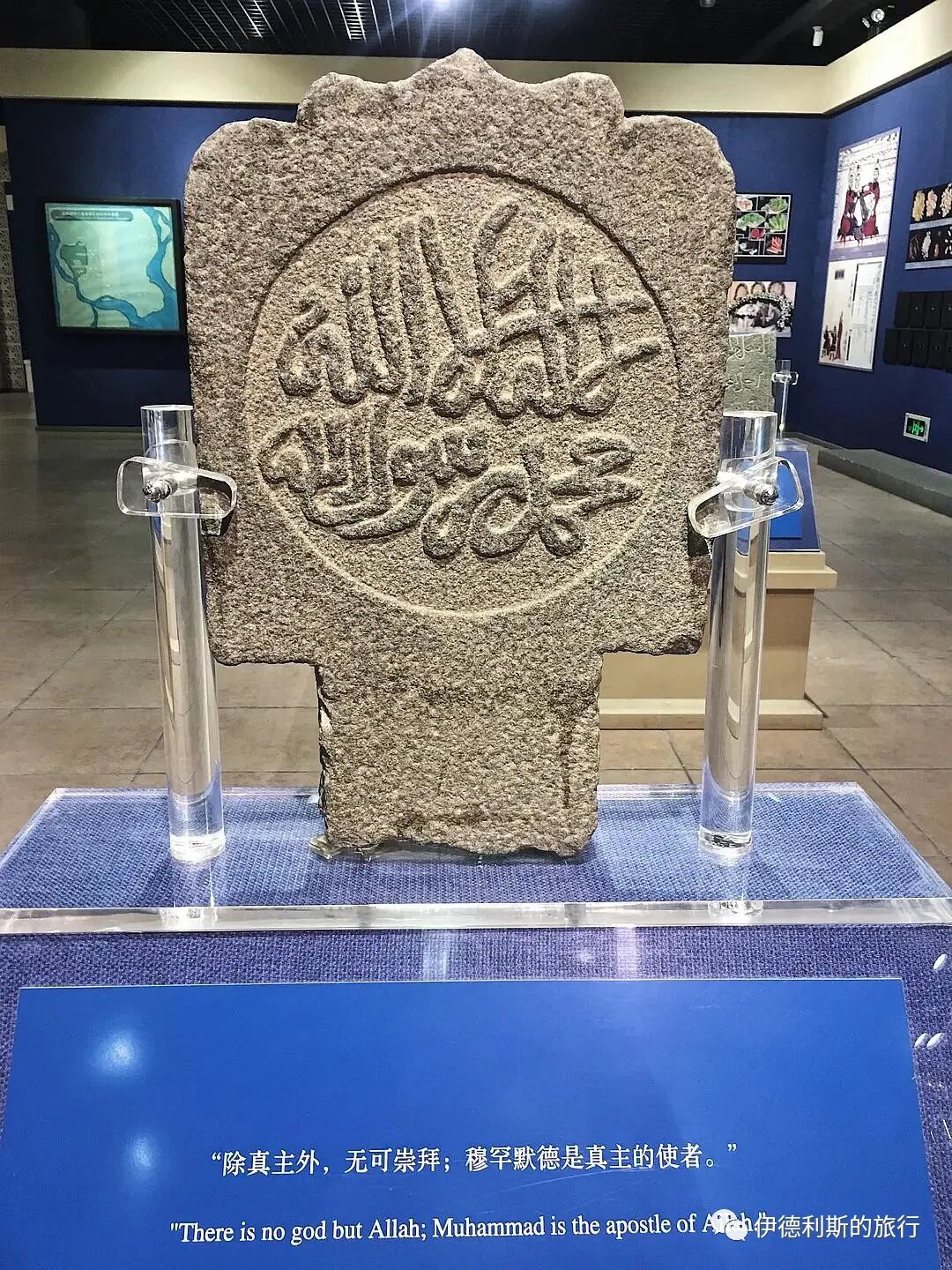
The diabase tombstone in the image below was unearthed in March 1964 at the construction site of the Overseas Chinese Mansion in downtown Quanzhou. This was the site of the Haiqing Pavilion during the Qing Dynasty. When the Senate building was constructed in the early 1940s, the city walls of the East and South Gates of Quanzhou were dismantled for building materials, and this stone tablet was likely filled into the wall foundation at that time. The front of the tombstone is inscribed with verse 185 of Chapter 3 of the Quran. The back is inscribed with the Shahada.
The diabase tombstone in the image below was discovered in 1944 in the foundation of the East Gate of Quanzhou. It is inscribed with an excerpt from verse 57 of Chapter 29 of the Quran.
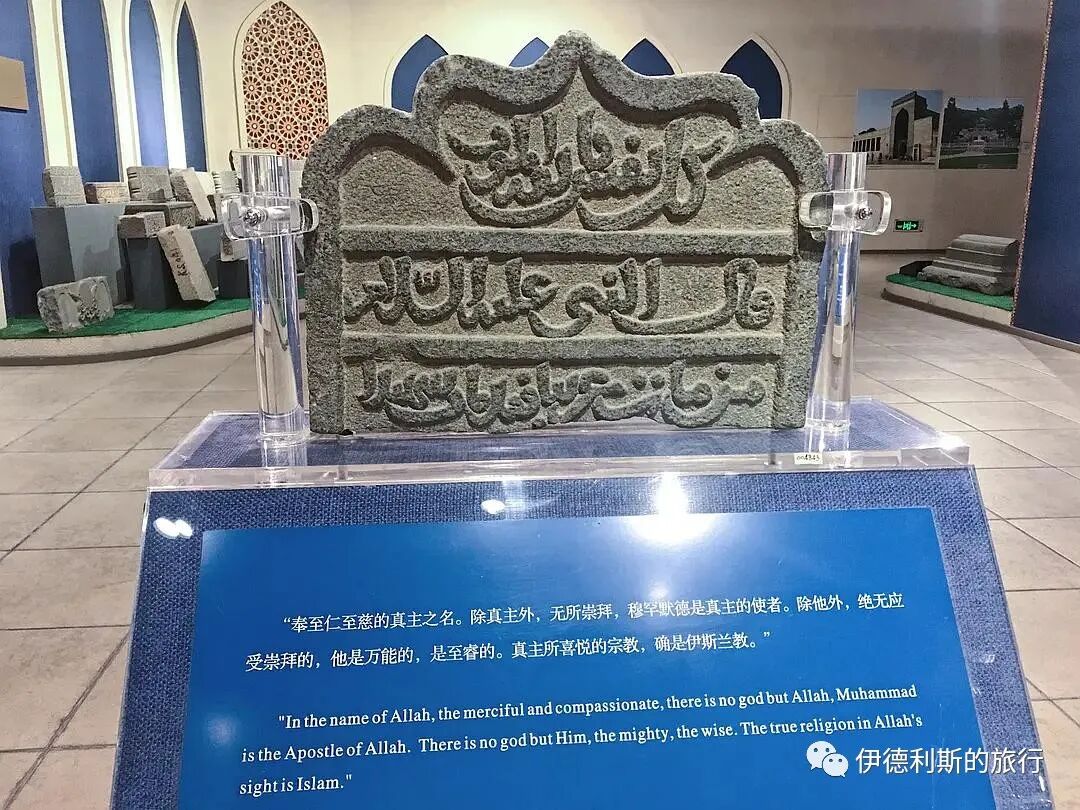
The back of the image above is inscribed with the Basmala at the top and the Shahada at the bottom.
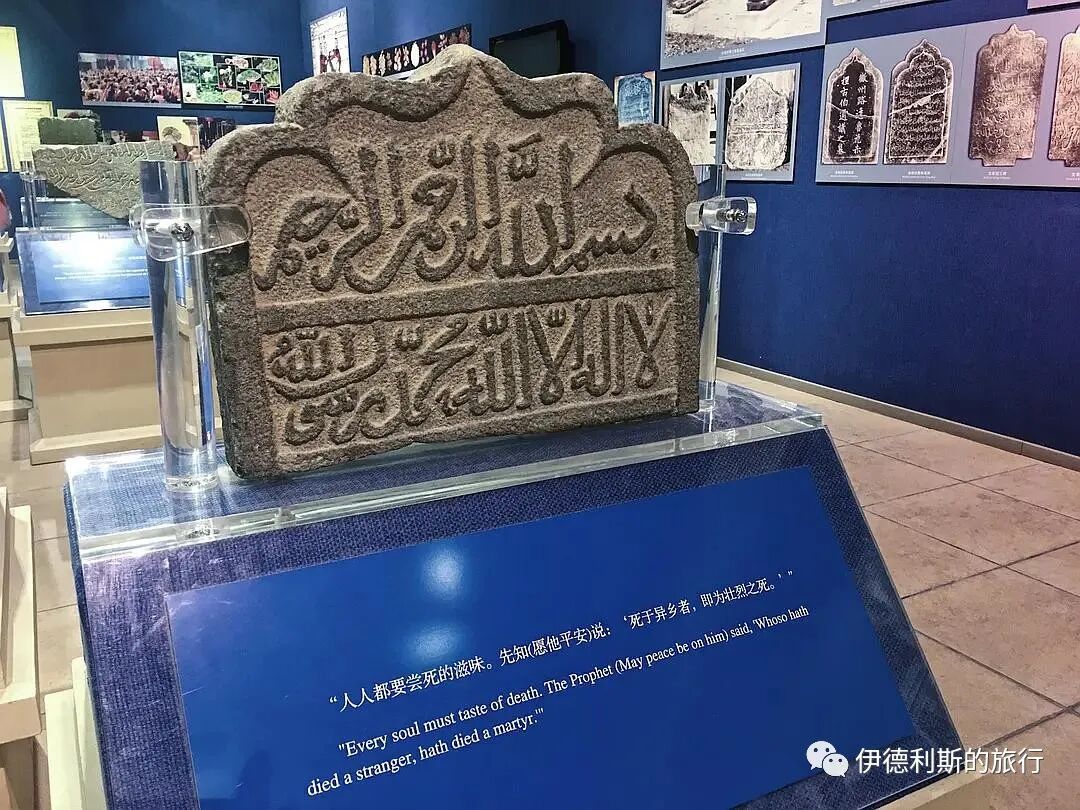
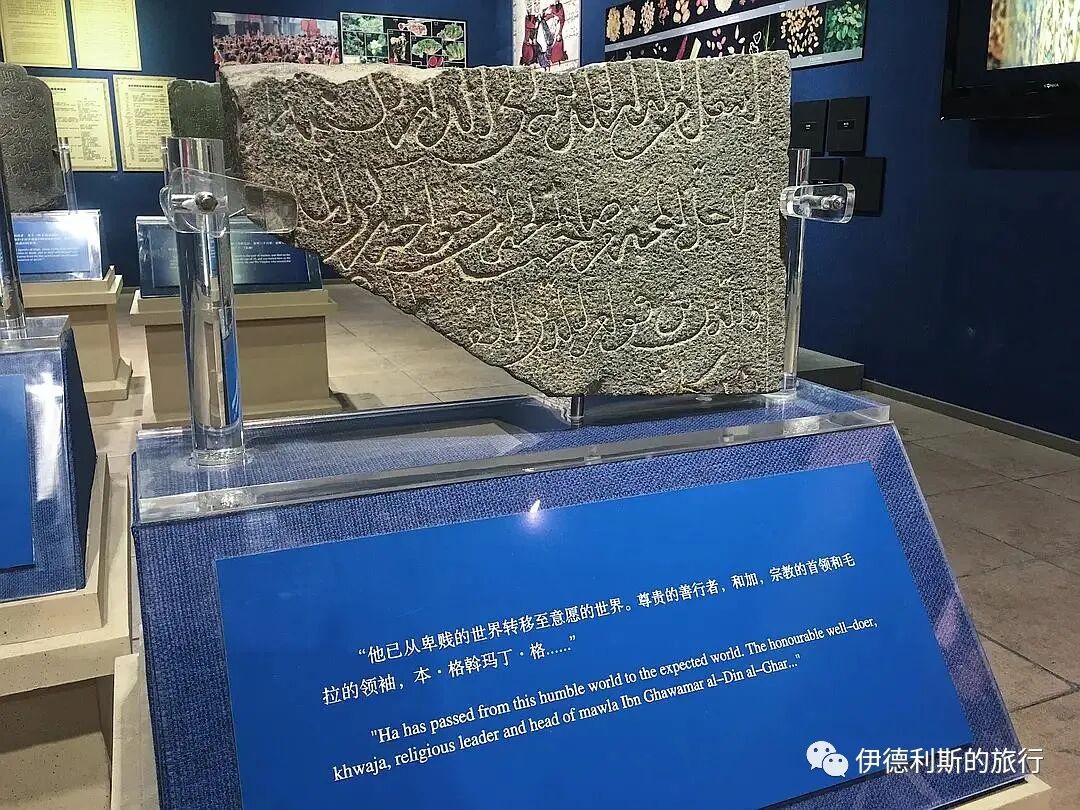
The diabase tombstone in the image below was discovered in November 1978 in a household at Jintoupu outside Tonghuai Gate, where it was being used as a base stone; prior to that, it had been excavated from the ramparts of Tonghuai Gate. Because the inscription is incomplete, it can only be translated as: 'He has moved from the lowly world to the world of desire.' The noble doer of good, Khwaja, leader of the religion and leader of the Mullahs, Ibn Ghawamar al-Din al-Ghar...', and the back reads '... Khwaja, leader of the religion and leader of the Mullahs... in the mercy of Allah... in... ten... eight...'. Given the frequent use of Persian in the text, the tomb owner may have come from Iran.
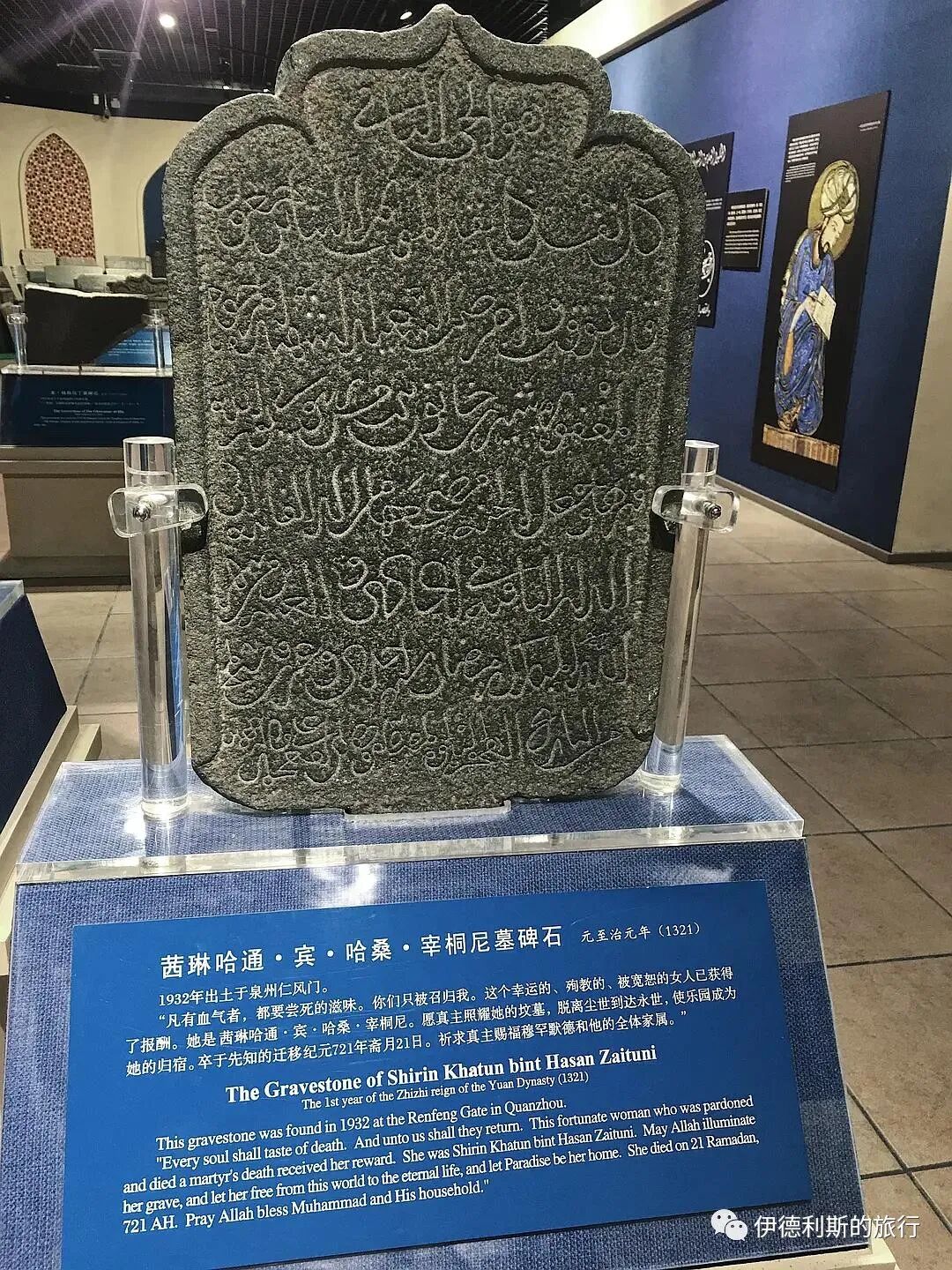
The diabase tombstone in the image below was discovered in 1932 during the demolition of the East Gate of Quanzhou; the tomb owner is named Shirin Khatun. The front of the tombstone first features verse 57 of Chapter 29 of the Quran, followed by the identity of the tomb owner: 'This famous Khatun is the daughter of the ruler Hasan,' and the date of death is 1321. Khatun means 'queen' or 'lady' in Turkic languages.
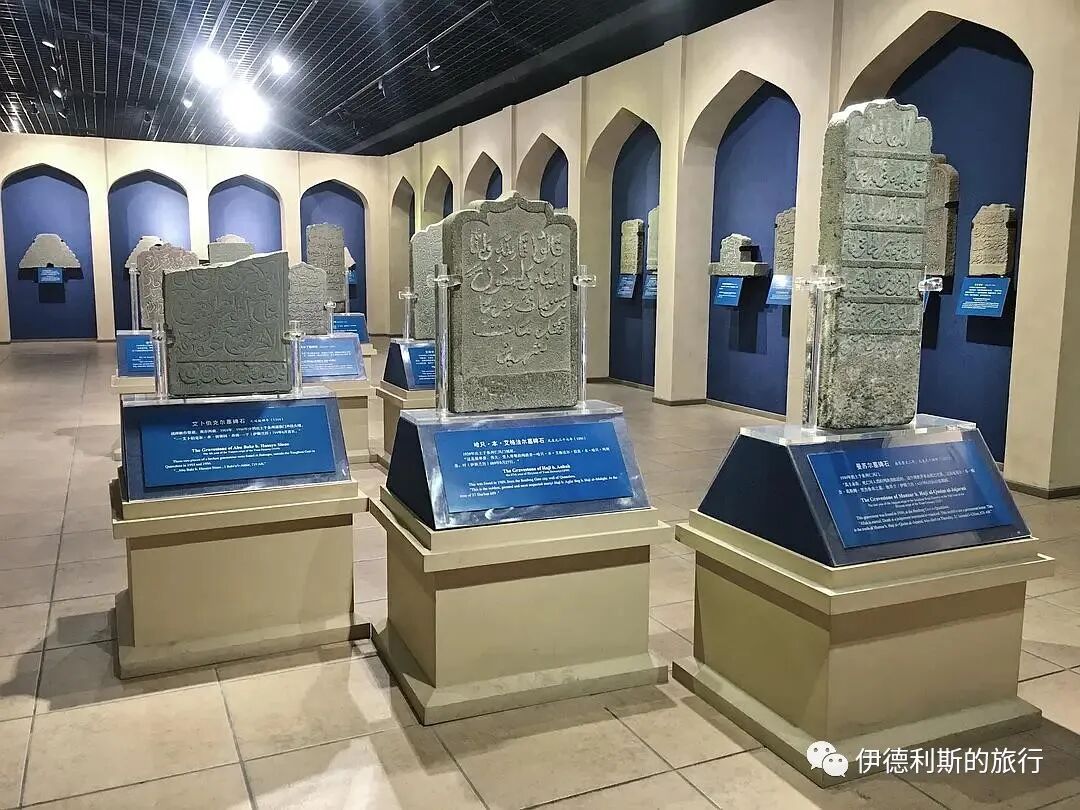
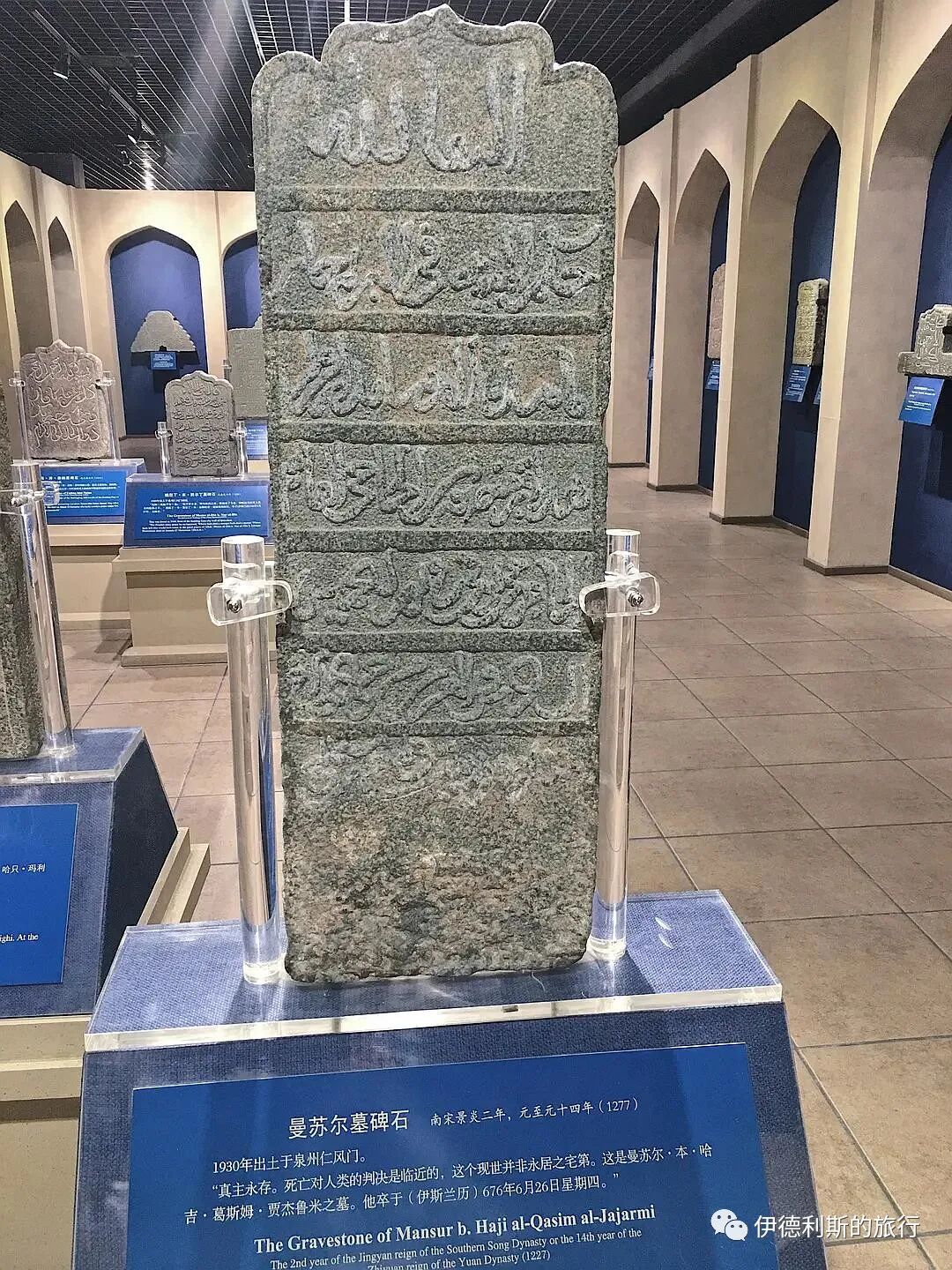
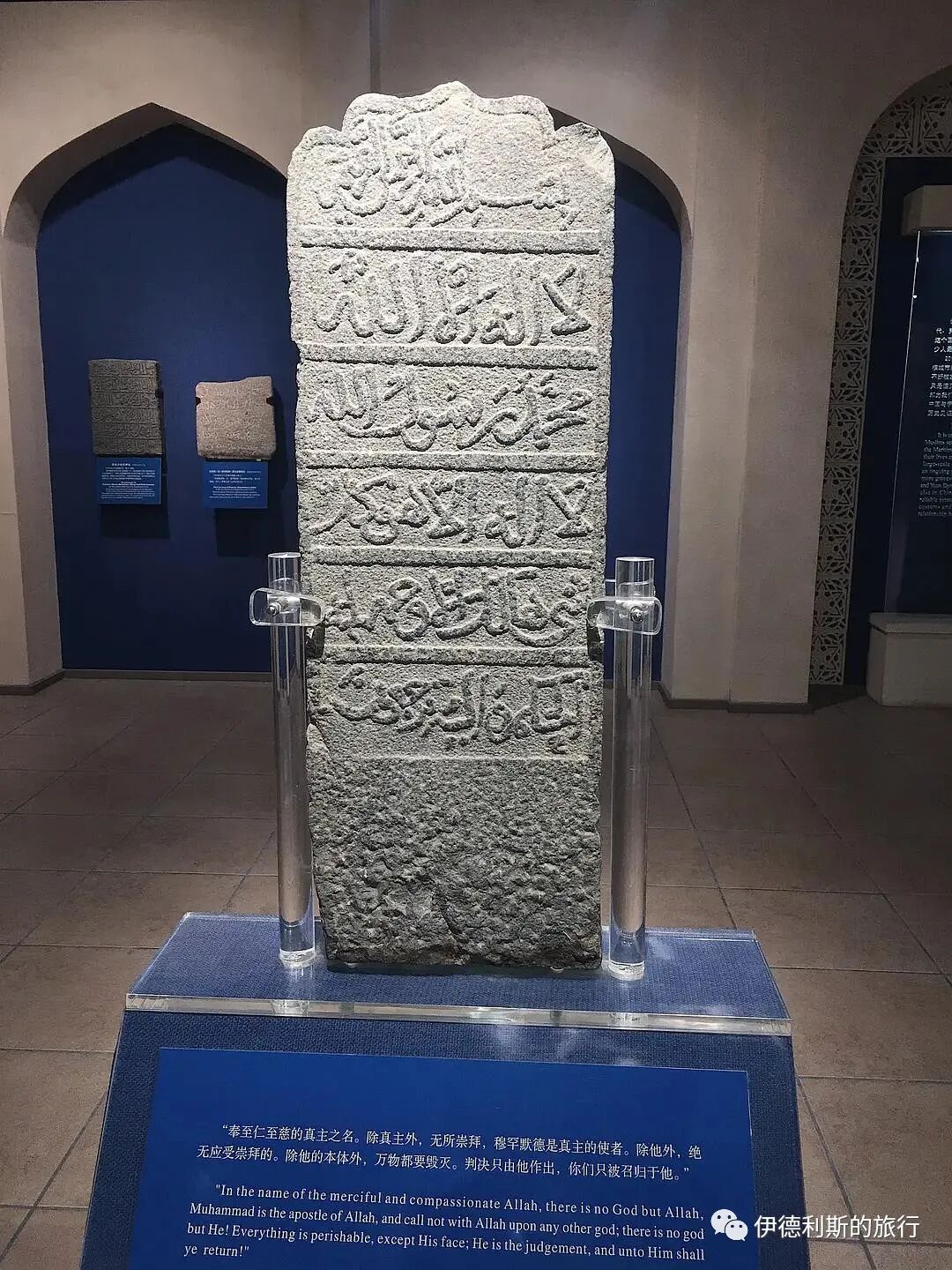
The Yuan Dynasty diabase tombstones in figures 2 and 3 were discovered in 1930 during the demolition of the East Gate of Quanzhou; the tomb owner was a Haji who had made the pilgrimage to Mecca and died in 1362. The translation of the front is: 'Everlastingness belongs to Allah, and the life and death of all things are predestined.' The present world is not a world of stability. The tomb owner is a Haji. XXX. Died on Thursday, June 26, 764 (Hijri). ', and the back features the Shahada and an excerpt from verse 88 of Chapter 28 of the Quran.
Back
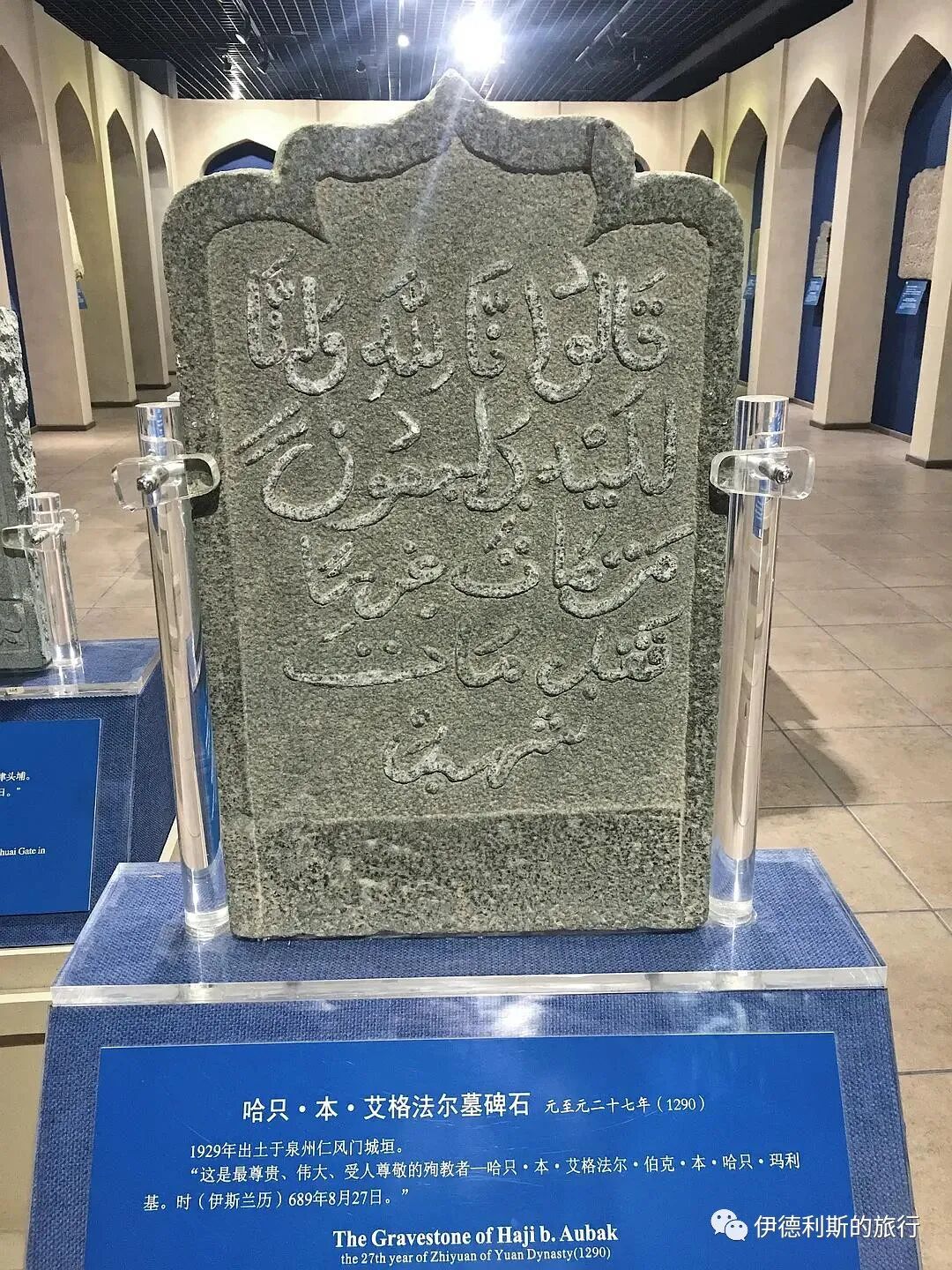
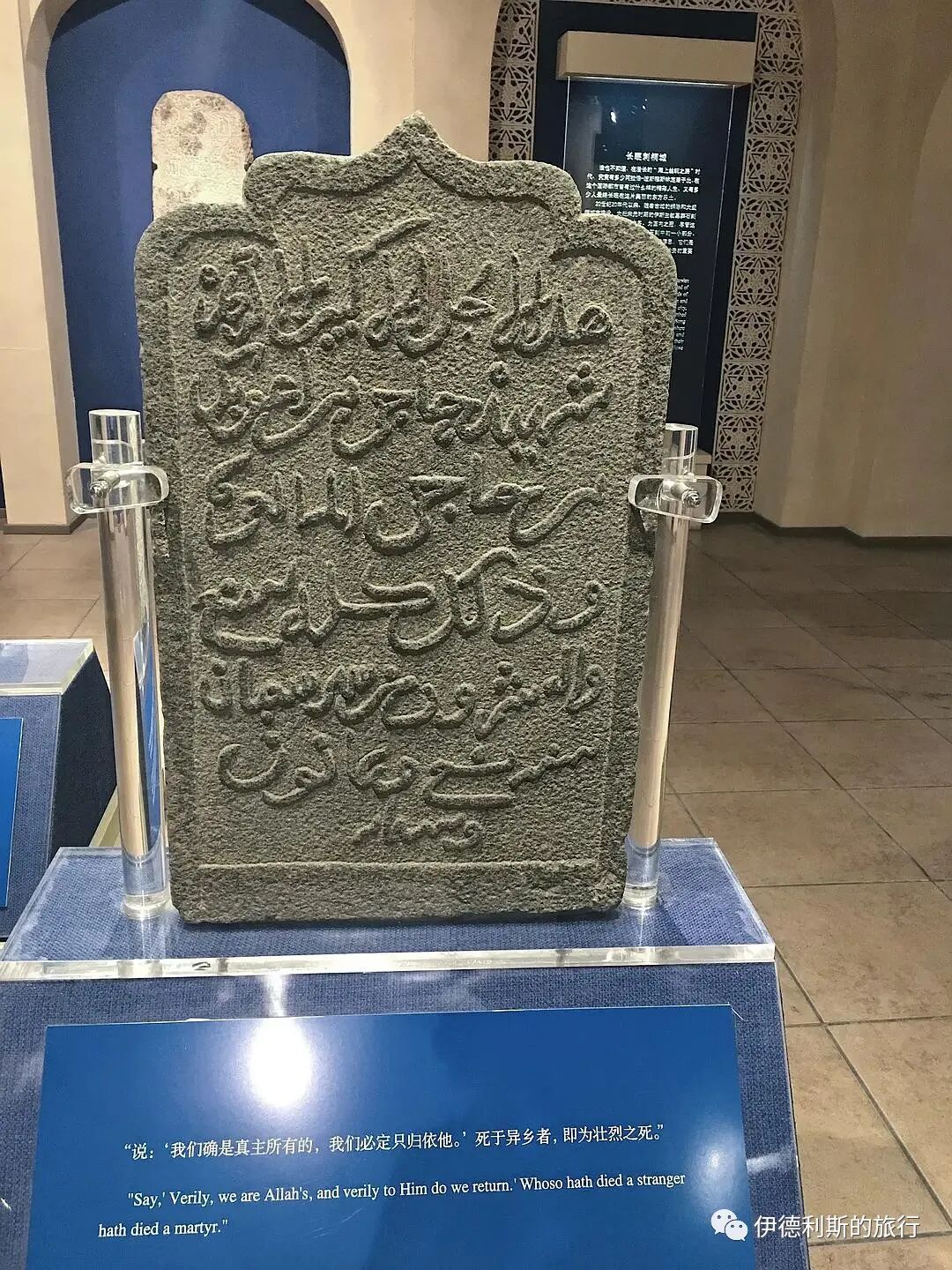
The diabase tombstone in the image below was excavated from the ramparts of the East Gate of Quanzhou in 1929; the tomb owner was a Haji named Haji b. Abubak, who died in 1387 (the 20th year of the Hongwu reign of the Ming Dynasty), making it a rare Ming Dynasty Islamic tombstone in the Maritime Museum. The front of the tombstone is inscribed with information about the tomb owner, and the back is inscribed with an excerpt from verse 156 of Chapter 2 of the Quran and the Hadith: 'He who dies in a foreign land dies a martyr.'
Back
Summary: This travel note introduces Quanzhou Islamic Relics (Part 1). In July 2021, 'Quanzhou: World Maritime Trade Center in Song-Yuan China' was officially inscribed on the UNESCO World Heritage List. It is useful for readers interested in Quanzhou, Islamic History, Muslim Travel.
In July 2021, 'Quanzhou: World Maritime Trade Center in Song-Yuan China' was officially inscribed on the UNESCO World Heritage List. Congratulations to the two Islamic historical sites in Quanzhou, the Qingjing Mosque and the Lingshan Islamic Tombs, for becoming World Cultural Heritage sites. Below, I will share the Islamic relics I recorded during my trip to Quanzhou in 2017.
I. Qingjing Mosque
1. The Main Gate
2. The Main Prayer Hall
3. Mingshan Hall
4. Collected Stone Carvings
II. Lingshan Islamic Tombs
1. The Main Tombs
2. Scattered Stone Tombs
3. Local Hui Muslim Tombs
4. The Ding Family Cemetery in Chendai
III. Quanzhou Maritime Museum
IV. Deji Gate Site
V. Muslim Tomb Stones in the Museum of Quanzhou Maritime Silk Road
VI. Baiqi Guo Family Tombs
1. Tomb of Guo Zhongyuan and his wife
2. Tomb of Guo Mengwei and his wife
3. Tomb of Guo Shiyuan's family
I. Qingjing Mosque
Qingjing Mosque is the only ancient mosque in Quanzhou that has been preserved to this day. It was first built in 1009 (the second year of Dazhong Xiangfu in the Northern Song Dynasty) and rebuilt in 1309 (the second year of Zhida in the Yuan Dynasty) by Ahmad from Shiraz, Persia.
The original name of 'Qingjing Mosque' should be 'Ashab Mosque'. 'Qingjing Mosque' was originally another mosque located in the south of Quanzhou city, built in 1131 (the first year of Shaoxing in the Southern Song Dynasty). After it was destroyed at the end of the Yuan Dynasty, some stone inscriptions from it were moved to the Ashab Mosque in the east of the city. When the Ashab Mosque was renovated in 1507 (the second year of Zhengde in the Ming Dynasty), a Yuan Dynasty stone inscription titled 'Record of Qingjing Mosque' was re-engraved as 'Record of the Re-establishment of Qingjing Mosque', and the Minister Zhao Rong inscribed the plaque 'Qingjing Mosque', which officially made the Ashab Mosque the Qingjing Mosque.
1. The Main Gate
The gate tower of the Qingjing Mosque is built of diabase and white granite. The outer layer features a line of Quranic inscriptions. At the top of the gate tower is the Moon-Sighting Terrace, where the moon was sighted every Ramadan. In the old days, three large lanterns would be hung under the archway after the start of Ramadan each year. A large palace lantern was hung in the center of the pointed arch, inscribed with 'Islam' in both Chinese and Arabic. Two long, oval-shaped government-style lanterns were hung on both sides; the one on the left read 'Ancient Religion of the Hui People', and the one on the right read 'Ancient Qingzhen Qilin Mosque'. Every night, the mosque would set up a round sign listing the names of the heads of each household, and the Hui Muslims would take turns lighting the lamps. Throughout Ramadan, Muslims would come to the front of the prayer hall at Qingjing Mosque every night to burn pairs of black bamboo-handled 'Anxi incense' sticks.
The stone inscriptions on the outside of the main gate are from the full text of Chapter 3, Verse 18 and an excerpt from Verse 19 of the Quran.
The interior is composed of three layers of domes. The outer layer is a pointed arch dome. The top is a hanging lotus carved from diabase, and below it are sixteen layers of curved stone strips that become higher and narrower until they close at the lotus.
The middle dome is composed of five fan-shaped white granite stones with tortoise-shell patterns, with foundation stones laid underneath. The inner layer is a dome. There is a pair of pointed arch false doors on the stone walls on both sides of each layer.
Above the rear of the main gate, there are two lines of Arabic stone inscriptions carved in white granite. This inscription records that Ahmad from the ancient Persian city of Shiraz rebuilt the Mosque of the Holy Friend in 1310.
On the east side of the main gate stand two Chinese stone tablets: the 'Record of the Re-establishment of Qingjing Mosque' (re-engraved in 1507 from the 1351 original) and the 'Record of the Renovation of Qingjing Mosque' from 1609.
2. The Main Prayer Hall
To the left of the main hall entrance is the pointed arch main door of the hall. Inside the arch are three lines of white granite inscriptions, featuring an excerpt from Chapter 2, Verse 125 and the full text of Verse 127 of the Quran.
There are 8 outer windows on the south side of the main hall facing the street, with a 19-meter-long stone inscription above them, which is the entire Chapter 76 of the Quran.
There are seven pointed arch niches on the west wall of the prayer hall, each with stone inscriptions inside. Above the niches is another long strip of stone inscriptions, all of which are from the Quran.
In the middle of the west wall is the protruding 'Fengtian Altar', which is the Mihrab kiln hall. The niche inside the Mihrab is the largest, with seven lines of inscriptions starting with the Shahada, followed by excerpts from the Quran. The inscriptions in the other niches on the west wall are also all from the Quran. At the top of the niche is a 13.2-meter-long inscription from the full text of Chapter 2, Verses 142, 143, and 144 of the Quran.
In the past, Quanzhou Hui Muslims considered the 27th night of Ramadan as the 'Erba Night', or 'Laylat al-Qadr', the night when Allah revealed the Quran. On this day, every Hui Muslim household in Quanzhou would prepare festive food and slaughter livestock and poultry. That night, each household would light a pair of large red candles on both sides of the Mihrab niche in the main hall of the Qingjing Mosque, signifying that the revelation of the Quran by Allah is brilliant and glorious.
3. Mingshan Hall
Mingshan Hall was first built in 1567. According to the 'Record of the Renovation of Qingjing Mosque' in the mosque, 'The congregation would climb the building to recite the Quran during the fasting month, and after finishing, they would retire to rest in this hall.' After the roof of the main hall of the Qingjing Mosque collapsed in the early Qing Dynasty, Mingshan Hall was converted into a place for prayer.
In 1818, Ma Jianji, the Commander-in-Chief of the Fujian Provincial Land Forces from Zhangzhou, stationed in Quanzhou, rebuilt Mingshan Hall in the traditional architectural style of Southern Fujian. In 1871, Jiang Changgui, the Commander-in-Chief of the Fujian Provincial Land Forces, rebuilt Mingshan Hall again.
The 'Water Lotus' stone incense burner carved from Shoushan stone was an original item from the main hall of the Qingjing Mosque and was moved into Mingshan Hall after the roof of the main hall collapsed.
Mingshan Hall hangs the 'Ten Thousand Differences, One Origin' plaque established by Ma Jianji in 1818, the 'Recognize the One Lord' plaque written by Tang Kesan, the Xiamen Customs Superintendent in 1923, and the 'Three Fears and Four Admonitions' plaque established in 1925.
4. Collected Stone Carvings
During the major renovation of the Qingjing Mosque in the spring of 1983, the 12 Hui Muslim households who had lived in the mosque since the Kangxi period were relocated, and a batch of stone tablets was discovered from the walls and underground of Mingshan Hall. Except for one from the end of the Southern Song Dynasty, all the dated tombstones are from the end of the Yuan Dynasty. The tomb owners came from Tabriz and Tehran in Iran, Adana in Turkey, Nablus in Palestine, and Khwarazm in Central Asia.
The picture below shows a diabase Yuan Dynasty tombstone, which was dug up from a garden belonging to a Pu family at the end of the Qing Dynasty. It was moved to the Qingjing Mosque and built into the south side of the west wall of Mingshan Hall, and was removed during the renovation of Mingshan Hall in 1983. Both sides of the tombstone are carved with continuous scroll patterns, and the front is recessed into a pointed arch stone niche, with cloud patterns carved on both sides. It is similar to the Yuan Dynasty Arabic tombstones in the Puhaddin Cemetery in Yangzhou and can be considered one of the most exquisite ancient Arabic tombstones in Quanzhou. The tomb owner was named Ahmad, who died in 1362.
The bottom right corner of the picture below is the right half of a diabase Sumeru-pedestal altar-style tombstone waist stone. It was discovered in 1984 by Mr. Wang Aichen when he was building a house near Yinju Bridge Lane (Tonghuai Street) in Quanzhou and was donated to the Qingjing Mosque. In 1972, the widow of Mr. Wu Wenliang, author of 'Quanzhou Religious Stone Carvings', donated the left half of this stone carving to the Quanzhou Maritime Museum. After the two pieces were joined, one can see the eight auspicious patterns carved on the left and right sides, and the text in the middle is from an excerpt of Chapter 43, Verses 67, 68, and 72 of the Quran.
On the right side of the picture below is a diabase Southern Song Dynasty tombstone, which was removed during the renovation of Mingshan Hall of the Qingjing Mosque in 1983. The tomb owner was named Khwarazm Khan bin Muhammad Khan, who died in 1271. 1271 was six years before the Yuan army captured Quanzhou. Khwarazm refers to the Khwarazmian Empire.
On the left is a white granite tombstone, which was unearthed from underground during the renovation of Mingshan Hall of the Qingjing Mosque in 1997.
In the center of the picture below is a diabase tombstone, which was dug up from a garden belonging to a Xia family at the end of the Qing Dynasty. It was moved to the Qingjing Mosque and built into the north wall of the Mingshan Hall lobby, and was removed during the renovation of Mingshan Hall in 1983. The tomb owner came from the ancient Iranian city of Tabriz. Tabriz was a trade center on the northwestern plateau of Iran and was historically the capital of the Ilkhanate, the Kara Koyunlu, the Ak Koyunlu, and the Persian Safavid Dynasty.
The first one on the left in the top row of the picture below is a diabase Sumeru-pedestal tombstone, which was dug up from a garden belonging to a Xia family at the end of the Qing Dynasty. It was moved to the Qingjing Mosque and built into the center of the south wall of the Mingshan Hall lobby, and was removed during the renovation of Mingshan Hall in 1983. The tomb owner was a woman named Fatimah, from Hadula, which is the city of Adana in southeastern Turkey, northeast of the island of Cyprus, near the Mediterranean Sea.
The second one on the left in the top row is a diabase Sumeru-pedestal tombstone, which was dug up from a garden belonging to a Xia family at the end of the Qing Dynasty. It was moved to the Qingjing Mosque and built into the north side of the west wall of the Mingshan Hall lobby, and was removed during the renovation of Mingshan Hall in 1983. It reads, 'Everything will perish, He (Allah) is the Everlasting.' "
The bottom left of the picture is a white granite tombstone, which was excavated from the residential area of Qipan Garden in the South School Field of Quanzhou at the end of the Qing Dynasty. It was later transported to the Qingjing Mosque, and the two pieces were built into the south and north walls of the Mingshan Hall lobby, respectively, and were removed from the walls during the renovation of Mingshan Hall in 1983. The ancient Arabic script on the stone carving is thinner and longer than that on the walls of the Qingjing Mosque, and the border is wider, so it is very likely a stone carving belonging to a destroyed mosque. The translation is: 'The mosque belongs to Allah, and with Allah, you cannot pray to anyone.' "
The top left is a white granite tombstone, which was dug up from a garden belonging to a Pu family at the end of the Qing Dynasty. It was moved into the Qingjing Mosque and built into the south side of the west wall of the Mingshan Hall lobby, and was removed during the renovation of Mingshan Hall in 1983. The tomb owner, Fatimah, was a maid from Nablus, a city north of Jerusalem. She most likely died in Quanzhou while accompanying her master from Nablus to Quanzhou for business. This tombstone has no decorations and is very simple, which is different from the typical Arabic and Persian tombstones in Quanzhou. This is likely related to the status of the tomb owner. Based on the shape, this tombstone was likely built on top of another tombstone base in front of the stone tomb.
The second one from the right in the top row of the picture below is the right side of a diabase Sumeru-pedestal altar-style tombstone fragment. It was unearthed from the ground on the north side of the outer courtyard during the renovation of Mingshan Hall of the Qingjing Mosque in 1983. Continuous cloud patterns are carved on the bottom, and the text is from an excerpt of Chapter 98, Verse 8 of the Quran.
The first one on the right in the top row is a diabase tombstone, which was unearthed from underground during the renovation of Mingshan Hall of the Qingjing Mosque in 1997. The first one on the left in the bottom row is a diabase tombstone, which was dug up from a garden belonging to a Pu family at the end of the Qing Dynasty. It was moved into the Qingjing Mosque and built into the center of the south side of the west wall of the Mingshan Hall lobby, and was removed during the renovation of Mingshan Hall in 1983. The tomb owner came from the ancient Iranian city of Tabriz and died in 1362 (or 1365 according to another translation).
The white granite tombstone in the second position from the left in the bottom row was discovered in 1984 when residents were demolishing houses east of the gate tower of the Qingjing Mosque (the original site of the Zhusheng Pavilion). The tomb owner was Abdullah from Oman. Oman is a country in the southeastern part of the Arabian Peninsula. Abdullah's date of death is translated as 1342 in one version and 1360 in another.
The third one from the left in the bottom row is a diabase Yuan Dynasty tombstone, which was dug up from a garden belonging to a Xia family at the end of the Qing Dynasty. It was moved into the Qingjing Mosque and built into the north side of the west wall of the Mingshan Hall lobby, and was removed during the renovation of Mingshan Hall in 1983. The tomb owner was Ms. Khadija, who died in 1335 and came from Tehran, Iran. The inscription states that she was the 'daughter of the late Prime Minister Sa'd-ud-din'. It is speculated that the late Prime Minister Sa'd-ud-din was likely the Prime Minister Sa'd-ud-din appointed by the Persian King Ghazan in 1298, as mentioned in 'The History of the Mongols' by D'Ohsson. King Ghazan died in 1304, and his brother Öljaitü succeeded him. In 1312, Öljaitü killed Sa'd-ud-din. The tomb owner may have come to Quanzhou by sea with merchants after her father was killed.
The top right of the picture is a diabase Sumeru-pedestal tombstone, which was dug up from a garden belonging to a Pu family at the end of the Qing Dynasty. It was moved into the Qingjing Mosque and built into the north wall of the Mingshan Hall lobby, and was removed during the renovation of Mingshan Hall in 1983. The content of the inscription is an excerpt from Chapter 29, Verse 57 and the full text of Chapter 55, Verse 26 of the Quran.
Tonghuai Street, where the Qingjing Mosque is located, was the site of the 'Fanfang' (foreign quarter) in Quanzhou during the Song and Yuan dynasties, and many Muslims were buried nearby after they passed away. In the 1950s, a row of 3 Sumeru-pedestal stone tombs was discovered underground in a residential house at the intersection of Tonghuai Street and Jiangwu Lane. From 1995 to 1998, when Tonghuai Street was widened, many Sumeru-pedestal stone tombs were unearthed. The Imam of the Qingjing Mosque, Haji Huang Runqiu, collected some of these stone tombs and components in the Qingjing Mosque. This is the origin of the 7 Sumeru-pedestal stone tombs currently preserved in the Qingjing Mosque.
The Sumeru-pedestal stone tombs in the Qingjing Mosque range from two to five layers. All the tomb-top stones have been lost, and the bottom layers all have ruyi-shaped six-legged bases. Among them, a small stone tomb is stacked on top of the second tomb from the right in the front row, which should be a child's tomb.
The Sumeru-style stone tomb on the left in the picture below is the most exquisite one preserved in the Qingjing Mosque. The second and fourth layers are carved with continuous branch patterns, the third layer is carved with overlapping lotus petals, and the bottom layer is carved with ruyi-shaped six-legged bases.
The Sumeru-pedestal stone tomb in the picture below only has two layers preserved, with ruyi-shaped feet on the bottom layer and floral patterns carved on the second layer.
II. Lingshan Islamic Tombs
1. The Main Tombs
The Lingshan Islamic Tombs are located 1 kilometer east of Quanzhou city and are also known as the 'Tombs of the Three and Four Sages'. The theory of the 'Three and Four Sages' is mainly based on the records in 'Min Shu: Geography' by He Qiaoyuan in 1629 (the second year of Chongzhen in the Ming Dynasty). The 'Min Shu' cites a legend that four disciples of the Prophet Muhammad came to the Tang Dynasty to preach during the Wude period of Emperor Gaozu of Tang (618-626). One sage preached in Guangzhou, two in Yangzhou, and the third and fourth in Quanzhou. After the third and fourth sages passed away, they were buried in Quanzhou, and at night they emitted light and performed miracles, becoming the Holy Tombs.
The 'Min Shu' records that during the Wude period of the Tang Dynasty, the Prophet Muhammad was in a difficult situation, and Quanzhou had not yet been built as a city at that time. Between the Five Dynasties and the Southern Song Dynasty, Lingshan was the cemetery for the monks of Chengtian Mosque, and it was not abandoned until the end of the Southern Song Dynasty after Chengtian Mosque failed in its resistance against the Yuan.
The Holy Tombs currently have a Yuan Dynasty Arabic renovation tablet from 1322, which records: 'These two deceased came to this country during the Faghur era. It is said that they were people of great virtue, and therefore they reached the eternal world from the earthly world after death.' This is a relatively reliable basis. According to Chen Dasheng's 'A Preliminary Study on the Dating of the Lingshan Islamic Tombs in Quanzhou', Faghur is a transliteration of the Persian word 'Bagh pur' in Arabic, which specifically referred to the Emperor of China in Persian literature during the Five Dynasties to the Song and Yuan periods.
The 'Quanzhou Prefecture Gazetteer' records that when Zhou Daoguang, the Prefect of Quanzhou, visited the Lingshan Islamic Tombs in 1562 (the 41st year of Jiajing in the Ming Dynasty), he mentioned 'there are three tombs with manes'. The 'Min Shu Chao', written during the Chongzhen period, records that the owner of the third tomb was 'Gao Di Shi Xu Ba Ba'. In the 1930s, the wooden frame of the tomb pavilion at the Lingshan Islamic Tombs had collapsed and broken, leaving only four stone-carved shuttle-shaped pavilion pillars. At that time, the three Sumeru-style stone tombs arranged in a 'pin' shape were still well-preserved, with tomb-top stones covering them.
However, in 1958, the Quanzhou Municipal Bureau of Culture and the Municipal Management Committee, in order to cater to the legends in the 'Min Shu', moved one of the stone tombs away and placed it on the hillside to the north. In March 1959, a new stone tomb pavilion was built, with three layers of terraces and stairs on both sides. All other tomb stones in front of the tombs were moved away, and a lawn was created, forming the current layout.
The Holy Tombs currently have two granite tombs, divided into three layers, with lotus petal patterns carved on the bottom layer. In the past, every Eid al-Fitr and Eid al-Adha, after Quanzhou Hui Muslims participated in the congregational prayer at the Qingjing Mosque, the Imam would lead the heads of each household to visit the homes of Hui Muslims around the Qingjing Mosque to 'pay respects', and then all the Hui Muslims would go to Lingshan to visit the graves together. When visiting the graves, they would first recite the Quran at the Holy Tombs, and then go to their respective family graves.
2. Scattered Stone Tombs
In 1958, the Fuzhou-Xiamen highway outside the East Gate of Quanzhou was widened, and several Sumeru-pedestal Islamic stone tombs along the road were moved to the side of the Lingshan Islamic Tombs. In the same year, farmers in Jintoupu Township outside Tonghuai Gate in Quanzhou were accumulating fertilizer and dredging pond sludge, and unearthed more than ten Sumeru-pedestal stone tombs, which were temporarily transported to the Qingjing Mosque and then moved to the side of the Lingshan Islamic Tombs for preservation. In the same year, three side-by-side Sumeru-pedestal stone tombs were unearthed when residents of Tonghuai Street were building houses, and they were also placed next to the Lingshan Islamic Tombs for preservation.
The left side of the picture below is a four-layer Sumeru-pedestal stone tomb. The first layer is a ruyi-shaped scroll-patterned six-legged base, the second layer is plain, the third layer is an overlapping lotus petal pattern, and the fourth layer is a dome-shaped tomb-top stone, with a lotus flower carved on the front and a floating cloud carved on the back.
The picture below is a five-layer Sumeru-pedestal stone tomb, chiseled from a piece of white granite. The first layer is a ruyi-shaped scroll-patterned six-legged base, the second layer is continuous flower branches, the third layer is repeated overlapping lotus petals, the fourth layer is Arabic text, and the fifth layer is destroyed. The text on the tomb is from Chapter 3, Verses 16, 17, and 18 of the Quran.
3. Local Hui Muslim Tombs
Next to the Lingshan Islamic Tombs is the cemetery for local Hui Muslims in Quanzhou. In the past, Quanzhou Hui Muslims would come here to visit the graves every year during Eid al-Fitr and Eid al-Adha. When visiting the graves, they would first light Anxi incense, then paint the text on the tombstones red, and finally invite the Imam to recite the Quran.
Among the local Hui Muslims in Quanzhou, the Guo family moved from Baiqi. In the past, they mostly operated gold and silver jewelry businesses. The Ge, Ma, and Huang families were descendants of generations of Imams and mostly operated leather businesses in the past. They all lived in the Qingjing Mosque before 1983. The Pu family is the only branch of Pu Shougeng's descendants who remained in Quanzhou city and still lives on the site of Pu Shougeng's former residence. The Xia family made a living by farming vegetable gardens, where a large number of Song and Yuan Islamic stone carvings were unearthed. In addition, there are Hui Muslims who moved in after the Republic of China, such as the Yang, Tie, Shan, and Mi families. They once lived in the Muslim community around the Qingjing Mosque in the Quanzhou urban area, but this community has scattered and disintegrated following the major renovation of the Qingjing Mosque in 1983 and the demolition of Tumen Street in 1998.
According to records, the ancestor of the Xia Hui Muslims was Xia Burhanuddin from the Dashi Kingdom. He came to Quanzhou with a tribute ship from the dynasty between 1312 and 1313, served as the Imam of the Qingjing Mosque, and later settled in Quanzhou. His descendants took the surname Xia in the Ming Dynasty. Xia Chi, Xia Chi's eldest son, Xia Yangao, Xia Desheng, Xia Riyu, and other Xia descendants inherited the position of Imam of the Qingjing Mosque.
According to the genealogy, the ancestors of the Guo Hui Muslims once lived in Guojia Village, Fuyang, Hangzhou, and came to Quanzhou during the Yuan Dynasty. Guo Zhongyuan moved from Quanzhou to Baiqi, across from Houzhu Port, during the Hongwu period of the Ming Dynasty, forming the current Baiqi Hui Ethnic Township. The Baiqi Guo family left the religion in 1607 (the 35th year of Wanli in the Ming Dynasty). In 1709 (the 48th year of Kangxi), Chen Yougong, the Regional Commander of Fujian Ting, Yan, and Shao, came to Quanzhou to revive the religion and set up schools in the Qingjing Mosque to conduct scripture education. At that time, Guo Honglong, the eighth-generation descendant of the fourth branch of the Guo family, moved from Hecuo in Baiqi to live in the Qingjing Mosque due to the 'distinction between the strong and the weak' and re-entered the religion. After Guo Honglong entered the religion, his descendants lived in the Qingjing Mosque. His descendant Guo Shifu once renovated the mosque together with Bai Yunhan, the Deputy General of the Zhangzhou Left Battalion, in 1794 (the 59th year of Qianlong).
4. The Ding Family Cemetery in Chendai
There is also a large cemetery of the Ding family from Chendai on Lingshan. According to the genealogy, the first ancestor of the Ding family, Ding Jin (1251-1298), was originally from Suzhou and settled in Quanzhou due to trade. By the time of the third ancestor, Ding Kui (1298-1379), he brought the fourth ancestor, Ding Shan (1343-1420), from Quanzhou city to Chendai, more than twenty miles south of the city. In the early Ming Dynasty, the fourth ancestor, Ding Shan, officially settled in Chendai.
The first, second, and third generations of the Ding family were all buried on Lingshan. In 1993, due to road construction, a large number of Ding family tombstones from Chendai were moved from outside the East Gate of Quanzhou, Luyuan, and other places to Lingshan. The joint tomb of the first, second, and third ancestors was also renovated during this period.
The earliest Ding family tomb from Chendai currently existing on Lingshan is the tomb of the fourth ancestor Ding Shan (1343-1420) and his wife Zhuang Xiniang. Ding Shan and his wife were originally buried in Luyuan, east of Quanzhou city. 'Luyuan' means 'Paradise' in the Quran.
This stone tomb is a traditional Islamic diabase tomb, with two Sumeru-style five-layer tomb stones placed on a Sumeru-pedestal altar-style platform. The first layer of the tomb stone has six gui-shaped feet, carved with ruyi patterns; The second layer is carved with continuous branch patterns; The third layer is carved with overlapping lotus petal patterns; The fourth layer is carved with Quranic verses; The fifth layer is a curved arch tomb-top stone. Behind the tomb stone is a tombstone erected in 1910. The scripture on the tomb stone is from an excerpt of Chapter 2, Verse 255 of the Quran.
The tomb of the fifth generation Ding Mabao, his wife Pu, and his successor Wang. Ding Mabao (1366-1431), courtesy name Shilong, pseudonym Yi'an, was the eldest son of the fourth ancestor Ding Shan who founded the family in Chendai. He was the ancestor of the Great Eldest Branch of the Chendai Ding family and was originally buried with his two wives in the Chengui Baoxue cave on Daping Mountain, east of Quanzhou city.
The tombs of the fifth generation Ding Guanbao, the sixth generation Ding Kuan, and the sixth generation Ding Min. The fifth generation Ding Guanbao (1369-1436), courtesy name Shifu, pseudonym Chengzhai, was the second son of Ding Shan and the ancestor of the Great Second Branch of the Chendai Ding family. He was originally buried at the foot of Shuiuniulin, east of Quanzhou city.
The sixth generation Ding Kuan (1395-1446), courtesy name Tingyu, pseudonym Longyin, was the second son of Ding Guanbao and was originally buried to the left of Ding Shan's tomb in Luyuan Mountain.
The sixth generation Ding Min (1407-1456), courtesy name Tingxue, pseudonym Yizhai, was the fourth son of Ding Guanbao and was originally buried at the foot of Shuiuniulin, east of Quanzhou city. Ding Min was the local sage who first promoted literary education among the Chendai Ding family.
The fifth generation Ding Fubao (1375-1432), courtesy name Shizhang, pseudonym Yingjie, was the third son of Ding Shan and the ancestor of the Great Third Branch of the Chendai Ding family, buried on Lingshan, east of Quanzhou city. The tomb is placed on a traditional Islamic Sumeru-pedestal altar-style platform with two Sumeru-style stone tombs. The waist of the platform is carved with swastikas and two lions playing with a pearl.
The tomb of the seventh generation Ding Lun and his wife Zhuang. The seventh generation Ding Lun (1442-1485), courtesy name Zhaorui, was the third son of the sixth generation Ding Xin.
The tomb of Ding Jinke, the reviver of the Chendai religion.
Ding Jinke (1923-1997), religious name Yunus, studied at Guangxi Chengda Normal School and Hong Kong Dade College. He participated in the revolution during the War of Liberation and later worked in the Financial Committee of the State Council and in colleges and universities in Beijing and Xinjiang. After retiring and returning to his hometown in 1983, he participated in the construction of the Chendai Mosque and the establishment of the Jinjiang Islamic Association, serving as the executive deputy director of the Jinjiang Islamic Association. Later, he cultivated dozens of young people from the Chendai Ding family to study at Islamic colleges and universities at home and abroad.
III. Quanzhou Maritime Museum
The Quanzhou Maritime Museum was built in 1959, moved to Donghu Street in 1991, and the 'Quanzhou Islamic Culture Exhibition Hall' was built in 2003. Most of the Song and Yuan Islamic stone carvings in Quanzhou are collected here. Among them, 'Arabs and Persians in Quanzhou' exhibits 121 Islamic stone carvings, but not all of them are exhibited at the same time. I went in 2017, so I only saw some of the stone carvings.
During the Song and Yuan dynasties, Quanzhou had large areas of 'foreign guest' cemeteries, mainly concentrated in the areas of Tumen Street to Jintoupu, Houban, Fashi, and Meishan in the southeastern suburbs. The earliest record of Muslim cemeteries in the eastern suburbs of Quanzhou comes from the 'Record of Burying Foreign Merchants in Dongban, Quanzhou' by Lin Zhiqi (1112-1176), the Superintendent of the Quanzhou Maritime Trade Office in the Southern Song Dynasty. The text records that the Muslim merchant Shi Nawei donated money to buy land between 1162 and 1163 to build a Muslim public cemetery in Dongban, Quanzhou. 'Shi Nawei' refers to the ancient port of Siraf in the Persian Gulf.
During the Song and Yuan dynasties, one could reach the Houzhu seaport by leaving the city through Tonghuai Gate and passing through Jintoupu all the way to the southeast. The road from Tonghuai Gate to Fashi was alluvial beach land, and the road often sank into the mud. Therefore, after the Ming Dynasty, local residents often used Song and Yuan Muslim Sumeru-pedestal tomb stones as materials for slope protection and pond bank construction when building roads and ponds. There were once three ponds in Puwei, Jintoupu. When the pond water dried up in winter, one could see more than thirty Muslim tomb stones. There is a small temple called Houbangong south of Jintoupu. Just under the northeast wall, nearly ten Muslim Sumeru-pedestal tomb stones were used as wall foundation stones. There are also several Muslim tomb stones by the water ditches and rice paddy mud in Houban Village.
In addition, a large number of Song and Yuan Muslim tomb stones were also discovered in the areas of Jincuowei, Secuowei, Xiacuopu, Dingcuoshan, and Tiecuowei in the eastern suburbs of Quanzhou. Jin, Ding, Xia, and Tie are the surnames of the 'Half-Southern Foreigners' (descendants of Arabs and Iranians who intermarried with local people in Quanzhou), but they no longer believe in Islam today.
As soon as you enter the exhibition hall, you can see the three major types of Song and Yuan Muslim stone carvings in Quanzhou: on the left are Sumeru-pedestal tomb stones, on the right are Sumeru-pedestal altar-style tomb stones, and inside are tombstones.
The picture below shows Sumeru-pedestal tomb stones.
The Sumeru-pedestal tomb stone in the picture below was discovered near Chan Mosque outside the East Gate of Quanzhou in 1927, recovered in 1958, and later preserved in the Maritime Museum. The tomb owner was Ghutub Allah Ya'qub from the ancient city of Jajarm in the northeastern Khorasan province of Iran, who died in 1309.
The one at the very front of the picture below is the cloud-moon-shaped tomb stone common in Quanzhou during the Ming Dynasty. It is very large and is a variant of the Song and Yuan Sumeru-pedestal tomb stones. Behind it are all tomb-stacking stones of Sumeru-pedestal altar-style stone tombs.
The picture below shows all tomb-stacking stones of diabase Sumeru-pedestal altar-style stone tombs, introduced from top to bottom: The first one on the right in the first row was discovered in a farmer's home near the East Gate of Quanzhou in November 1946. It is said to have been dug out from the city wall and used as stone steps. It was recovered and preserved in the spring of 1957 and donated to the Quanzhou Cultural Relics Management Committee by Liu Wanru, the widow of Mr. Wu Wenliang, on August 29, 1973. There are pillars at both ends of the tomb stone, and continuous scroll patterns are carved all around, with Chapter 30, Verse 11 of the Quran carved on it.
The third one on the right in the first row was discovered in a pile of rubble at the Qingjing Mosque in 1959. This pile of rubble was dug out from the city foundation near Tonghuai Gate in Quanzhou and moved to the Maritime Museum in 1964. The tomb owner was Toghan Shah bin Umar bin Sayyid Ajjal from the ancient Central Asian city of Bukhara. Toghan is a Turkic word meaning 'eagle', and Shah is 'king'. Sayyid Ajjal is the Yuan Dynasty transliteration of Sayyid.
The first one on the right in the second row was discovered in 1978 when the former site of Pu Shougeng's residence in the Yuan Dynasty at Shijia Mosque in Donglu Lane, Quanzhou, was converted into a shoe factory, from the west wall of the north-facing bungalow next to the well in the mosque. It is carved with an excerpt from Chapter 2, Verse 156 of the Quran.
The second one on the right in the second row was discovered near the South Gate of Quanzhou in 1959. According to local residents, it was obtained when the South Gate of Quanzhou was demolished between 1946 and 1948. The tomb stone is carved with four-season flowers on the top and bottom, and is carved with an excerpt from Chapter 24, Verse 35 of the Quran.
The fourth one on the right in the second row was excavated from the East City Gate of Quanzhou in 1944 and is carved with an excerpt from Chapter 28, Verse 88 of the Quran.
The second one on the right in the third row was discovered in a pile of rubble at the entrance of Chongfu Mosque at the East Gate of Quanzhou in 1960. Continuous scroll patterns are carved on the top and bottom of the tomb stone. Translation: 'Everything will perish except Himself.' "
The picture below still shows tomb-stacking stones of diabase Sumeru-pedestal altar-style stone tombs. From top to bottom:
The first one on the right in the first row was donated by Mr. Ye Daoyi of Huaqiao University in the 1980s. The original state of the tombstone should have cloud patterns carved on both sides, with a full moon in the middle. Now, the cloud pattern on one side is damaged. The text in the full moon is from the full text of Chapter 44, Verses 50, 51, 52, and 53 of the Quran.
The second one on the right in the second row was discovered in Tingdian Township, 3 kilometers outside the South Gate of Quanzhou, in 1948. Continuous scroll patterns are carved on the top and bottom of the tomb stone, and it is carved with Chapter 89, Verses 29 and 30 of the Quran.
The first one on the right in the third row is a lintel stone of a tomb, discovered in a villager's home not far from the South City Gate in December 1958. The villager said that the stone carving was discovered deep in the city foundation when the South Gate city wall was excavated in 1946-1948. The translation is from an excerpt of Chapter 29, Verse 57 and Chapter 55, Verse 26 of the Quran: 'Everyone shall taste (the flavor of death), and everything on earth shall (perish).'
Going further in, it starts to be all tombstones. The tombstone on the left was discovered at the North Canal construction site in 1978, with a hanging lotus pistil on it, and 'There is no god but Allah' carved below.
The back of the tombstone on the right in the picture above is carved with Chapter 3, Verse 185 of the Quran.
The diabase tombstone in the image below was unearthed in 1973 during the cleaning of the moat north of Quanzhou city; it is inscribed with verses 28, 29, and 30 of Chapter 89 of the Quran.
The diabase tombstone in the image below was unearthed in March 1964 at the construction site of the Overseas Chinese Mansion in downtown Quanzhou. This was the site of the Haiqing Pavilion during the Qing Dynasty. When the Senate building was constructed in the early 1940s, the city walls of the East and South Gates of Quanzhou were dismantled for building materials, and this stone tablet was likely filled into the wall foundation at that time. The front of the tombstone is inscribed with verse 185 of Chapter 3 of the Quran. The back is inscribed with the Shahada.
The diabase tombstone in the image below was discovered in 1944 in the foundation of the East Gate of Quanzhou. It is inscribed with an excerpt from verse 57 of Chapter 29 of the Quran.
The back of the image above is inscribed with the Basmala at the top and the Shahada at the bottom.
The diabase tombstone in the image below was discovered in November 1978 in a household at Jintoupu outside Tonghuai Gate, where it was being used as a base stone; prior to that, it had been excavated from the ramparts of Tonghuai Gate. Because the inscription is incomplete, it can only be translated as: 'He has moved from the lowly world to the world of desire.' The noble doer of good, Khwaja, leader of the religion and leader of the Mullahs, Ibn Ghawamar al-Din al-Ghar...', and the back reads '... Khwaja, leader of the religion and leader of the Mullahs... in the mercy of Allah... in... ten... eight...'. Given the frequent use of Persian in the text, the tomb owner may have come from Iran.
The diabase tombstone in the image below was discovered in 1932 during the demolition of the East Gate of Quanzhou; the tomb owner is named Shirin Khatun. The front of the tombstone first features verse 57 of Chapter 29 of the Quran, followed by the identity of the tomb owner: 'This famous Khatun is the daughter of the ruler Hasan,' and the date of death is 1321. Khatun means 'queen' or 'lady' in Turkic languages.
The Yuan Dynasty diabase tombstones in figures 2 and 3 were discovered in 1930 during the demolition of the East Gate of Quanzhou; the tomb owner was a Haji who had made the pilgrimage to Mecca and died in 1362. The translation of the front is: 'Everlastingness belongs to Allah, and the life and death of all things are predestined.' The present world is not a world of stability. The tomb owner is a Haji. XXX. Died on Thursday, June 26, 764 (Hijri). ', and the back features the Shahada and an excerpt from verse 88 of Chapter 28 of the Quran.
Back
The diabase tombstone in the image below was excavated from the ramparts of the East Gate of Quanzhou in 1929; the tomb owner was a Haji named Haji b. Abubak, who died in 1387 (the 20th year of the Hongwu reign of the Ming Dynasty), making it a rare Ming Dynasty Islamic tombstone in the Maritime Museum. The front of the tombstone is inscribed with information about the tomb owner, and the back is inscribed with an excerpt from verse 156 of Chapter 2 of the Quran and the Hadith: 'He who dies in a foreign land dies a martyr.'
Back
