
Halal Travel Guide: Jinan Mosques During Ramadan, Part 1
Reposted from the web
Summary: This is the first part of a Ramadan visit to historic mosques in Jinan, including Jinan South Mosque, North Mosque, and other Hui Muslim sites. It preserves the original routes, mosque history, food and community details, and all photographs in clear English.
I went to Jinan, Shandong, on the second Saturday of Ramadan in 2025. I visited the South Great Mosque, North Great Mosque, Nanguan Mosque, and Dikou Mosque. Adding these to the Dangxi Mosque and Dangdong Mosque I visited earlier, I am now sharing information about these six ancient mosques in Jinan.
Jinan South Great Mosque
The earliest mosque in Jinan was in Wumanla Lane, southeast of the government city. In 1295 (the first year of the Yuan-Yuanzhen era), it moved outside the west gate of the city to make room for the Shandong East Road Salt Transport Commission. This is the current site of the South Great Mosque. Later, an imam (mulla) named Aidi led the religious affairs. The Hui Muslims who originally lived in the east of the city moved west, forming a new mosque community near the west gate.
After Chen Li became the leader in 1436 (the first year of the Ming-Zhengtong era), he expanded the South Great Mosque significantly. Further expansions and repairs happened during the Ming dynasties of Hongzhi, Jiajing, and Wanli, and the Qing dynasties of Qianlong, Jiaqing, Daoguang, and Tongzhi, as well as the Republic of China era, creating the scale we see today.
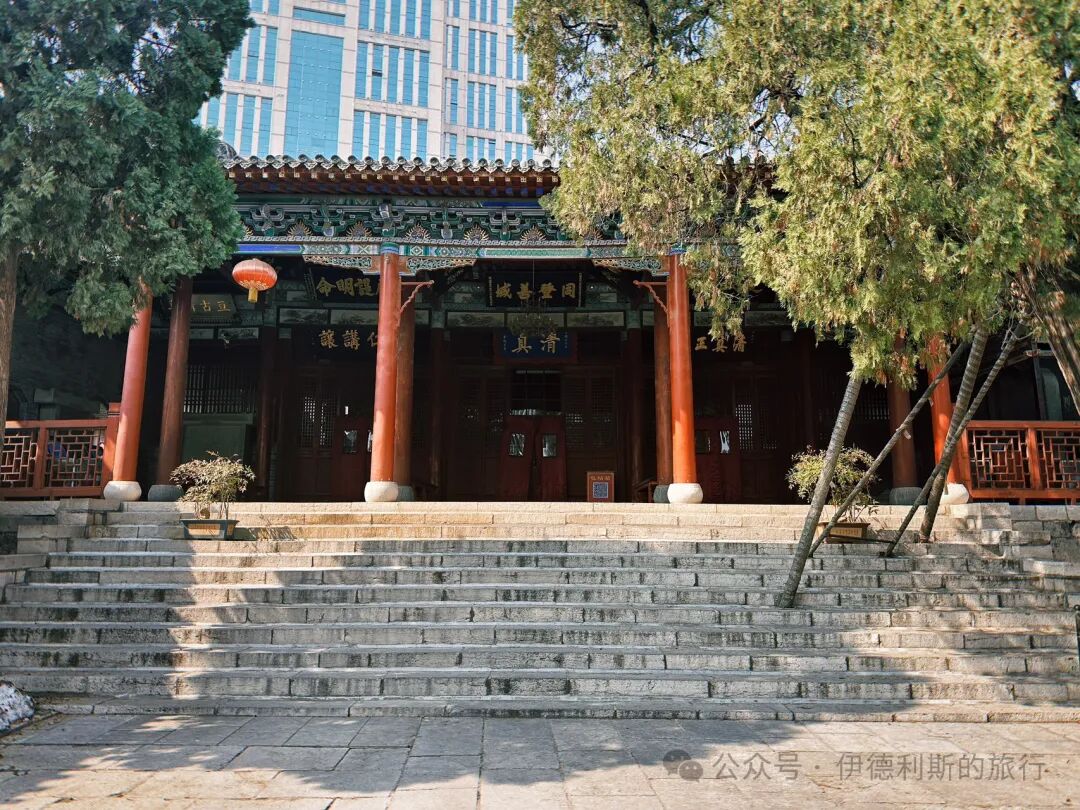
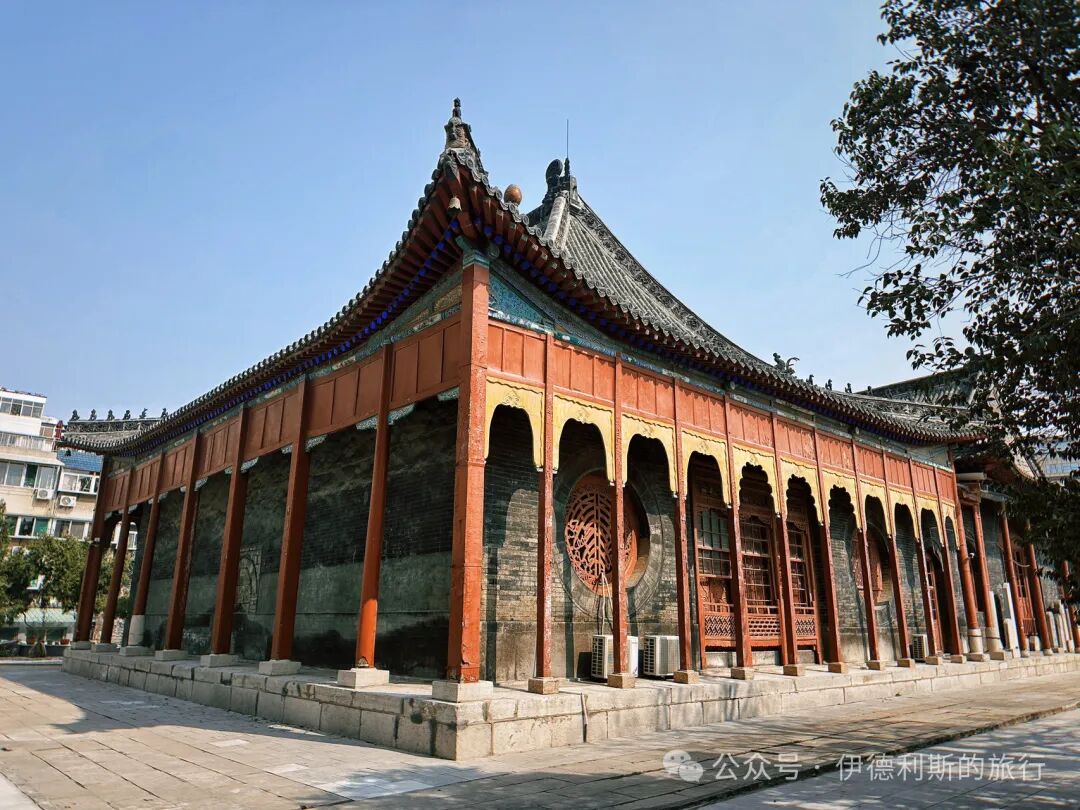
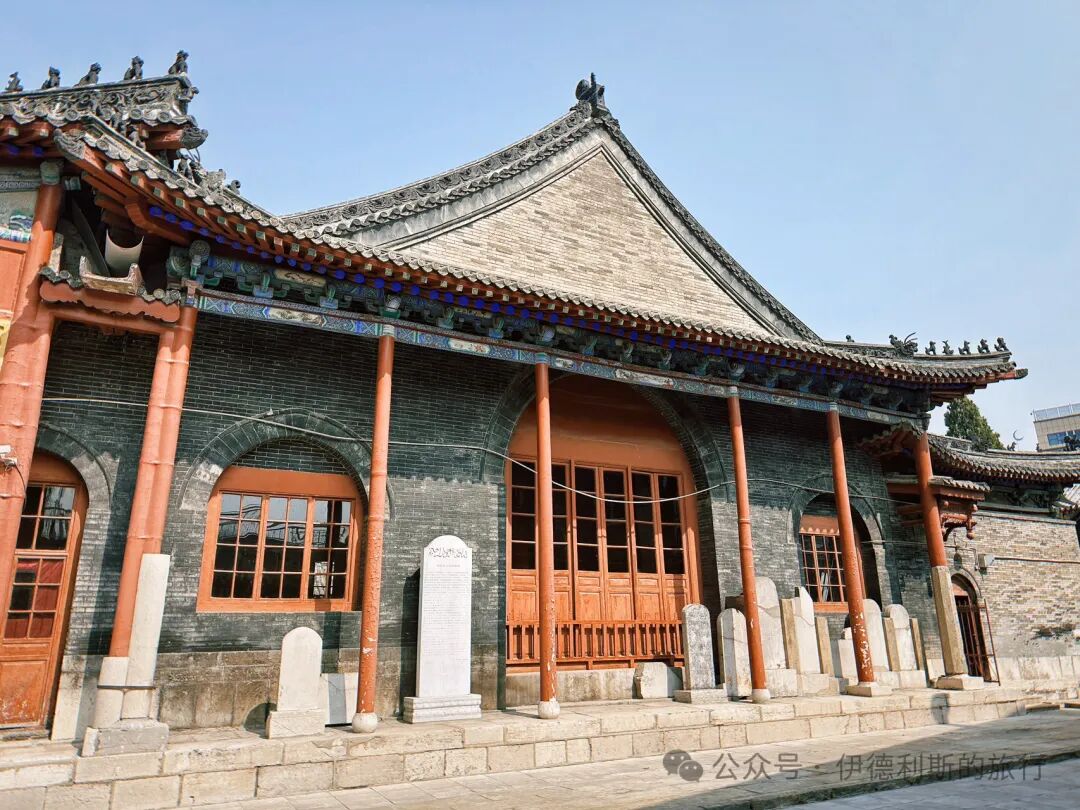
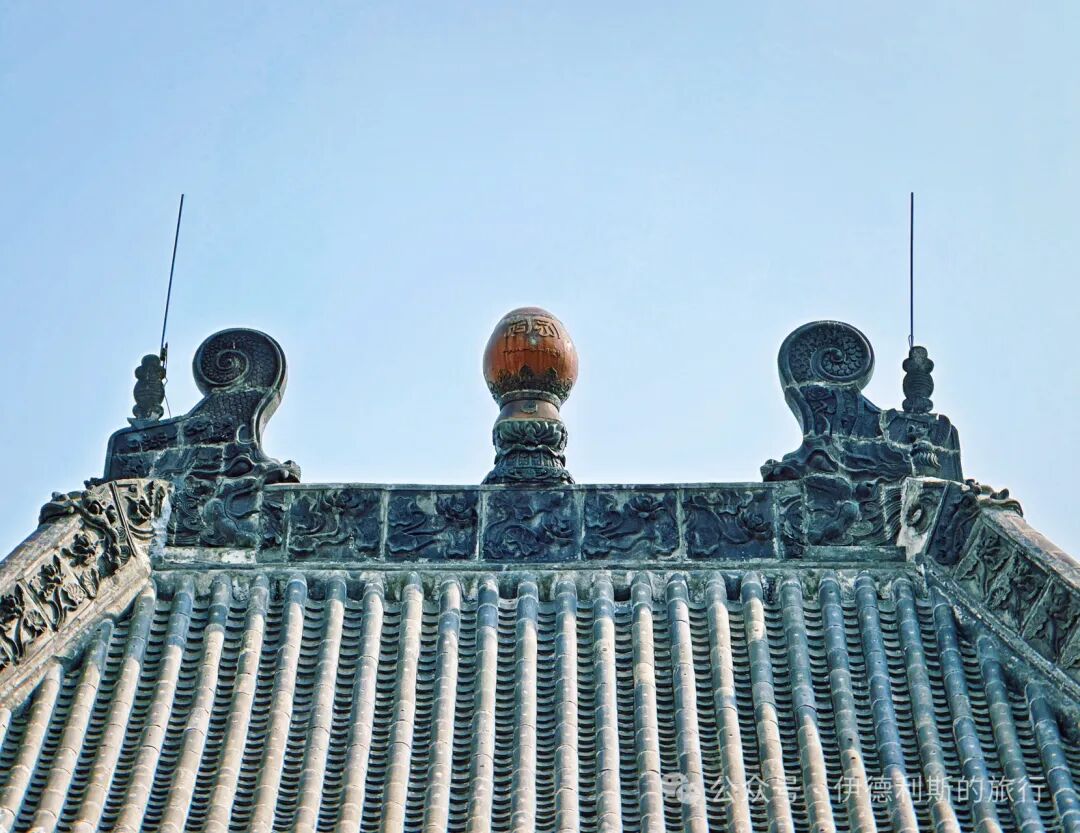
The main prayer hall was rebuilt in 1436 (Zhengtong first year) and expanded in 1492 (Hongzhi seventh year). It stands on a twelve-step platform and looks very tall and grand. The main hall consists of three parts: the front porch, the front hall, and the rear hall. The front porch has a hip roof (wudian ding), the front hall has a gable-and-hip roof (xieshan ding), and the rear hall has a hip roof. There are 50 eaves pillars supporting the surrounding corridor. The main hall uses a beam-lifting wooden frame, and there is an arched door cover between the front and rear halls.
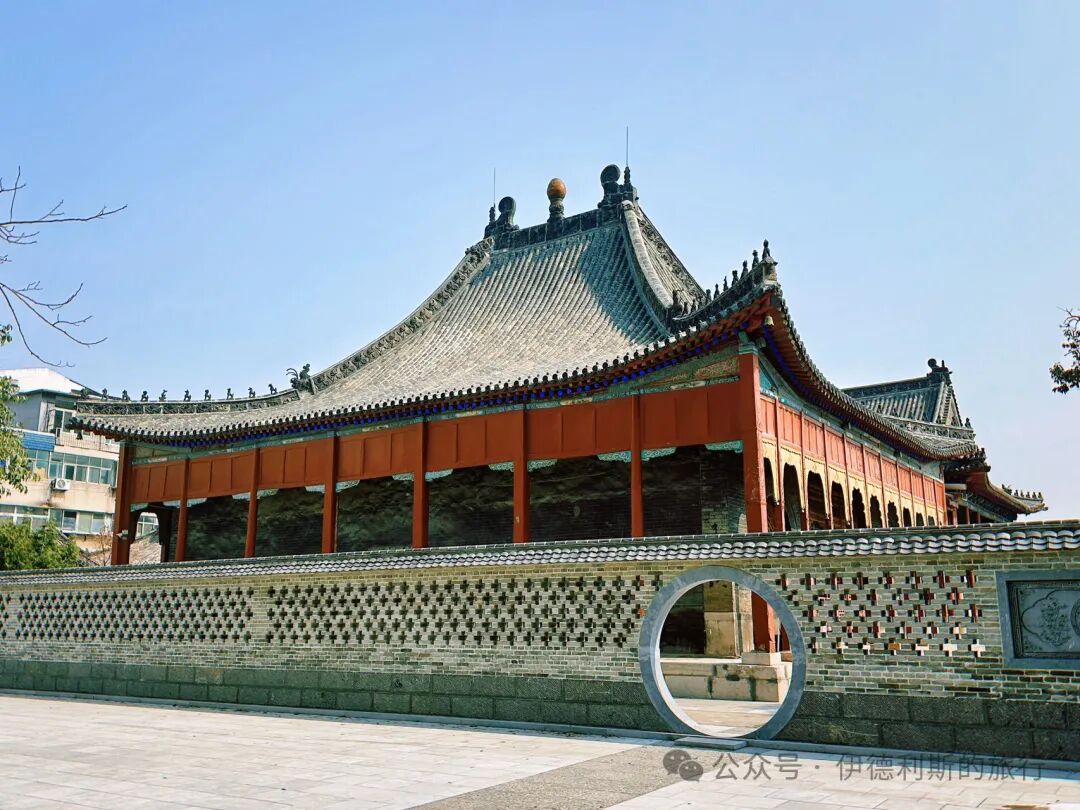
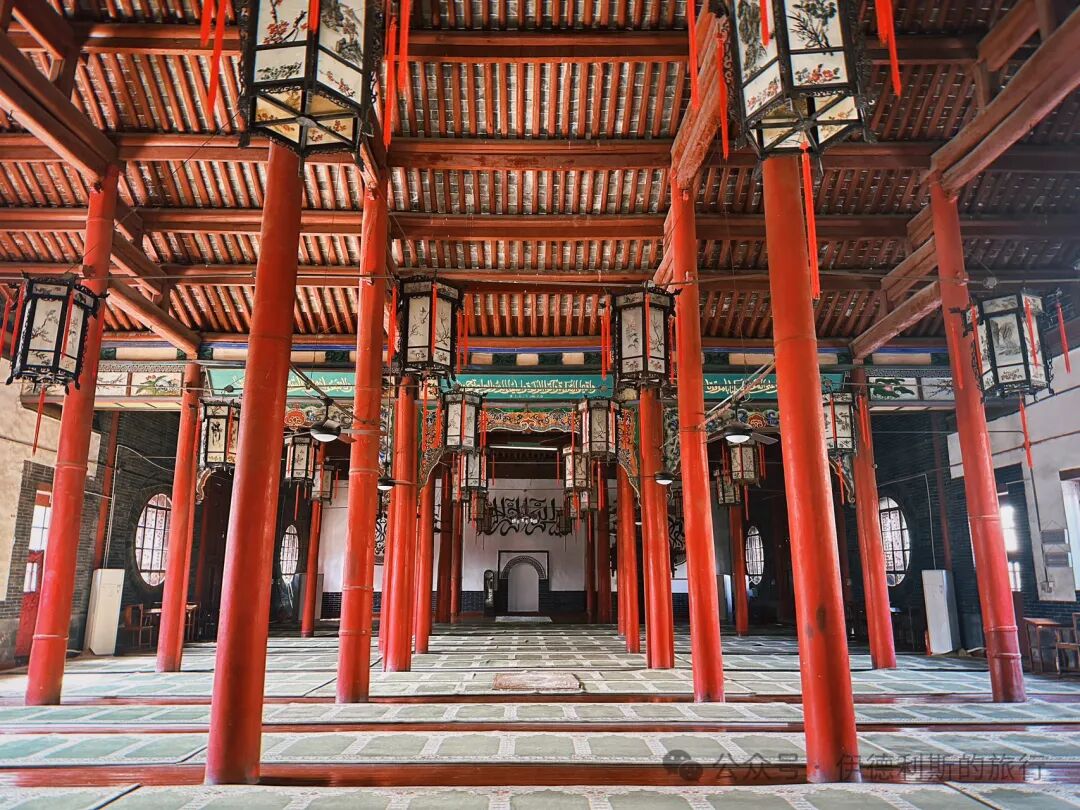
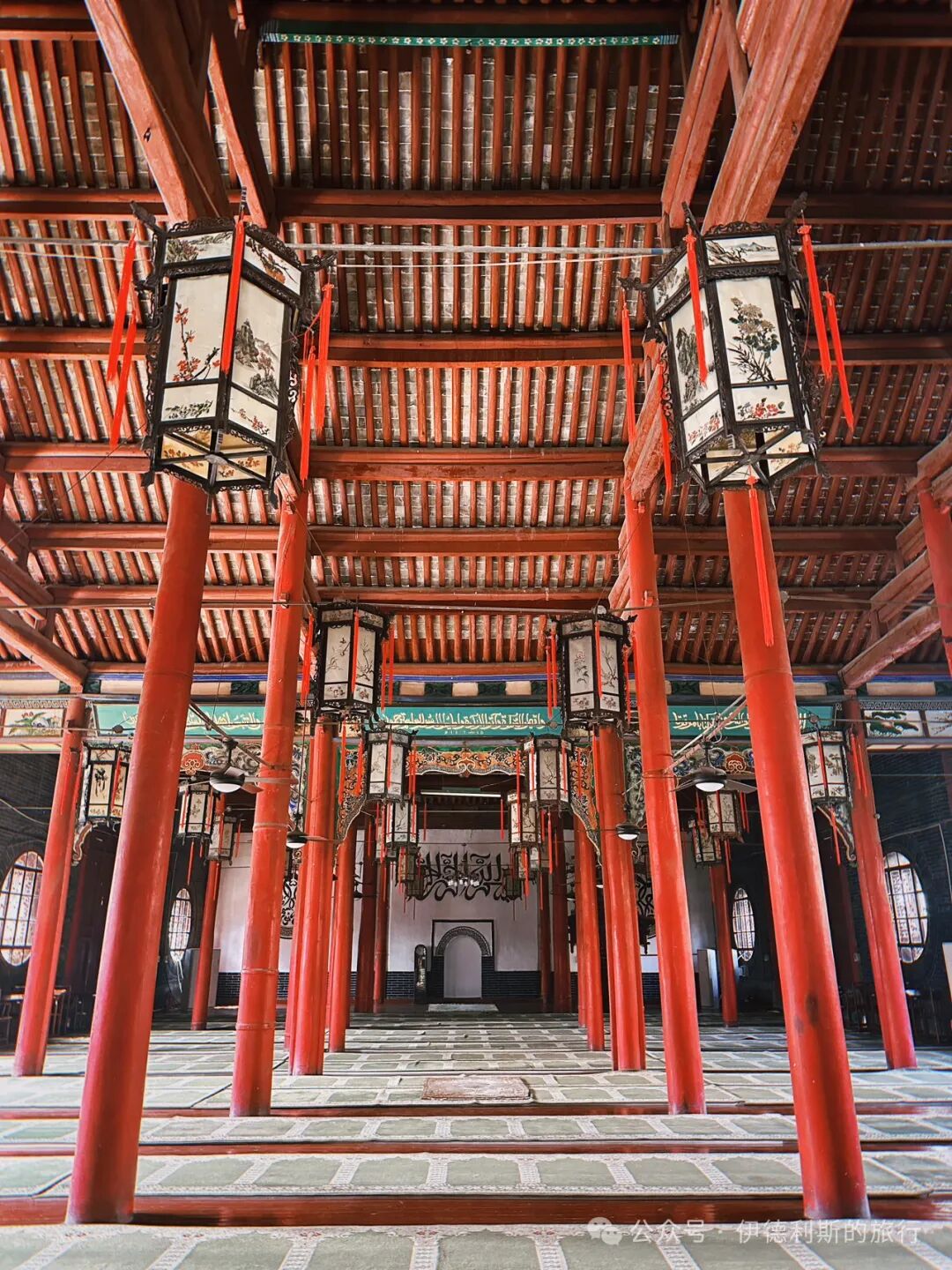
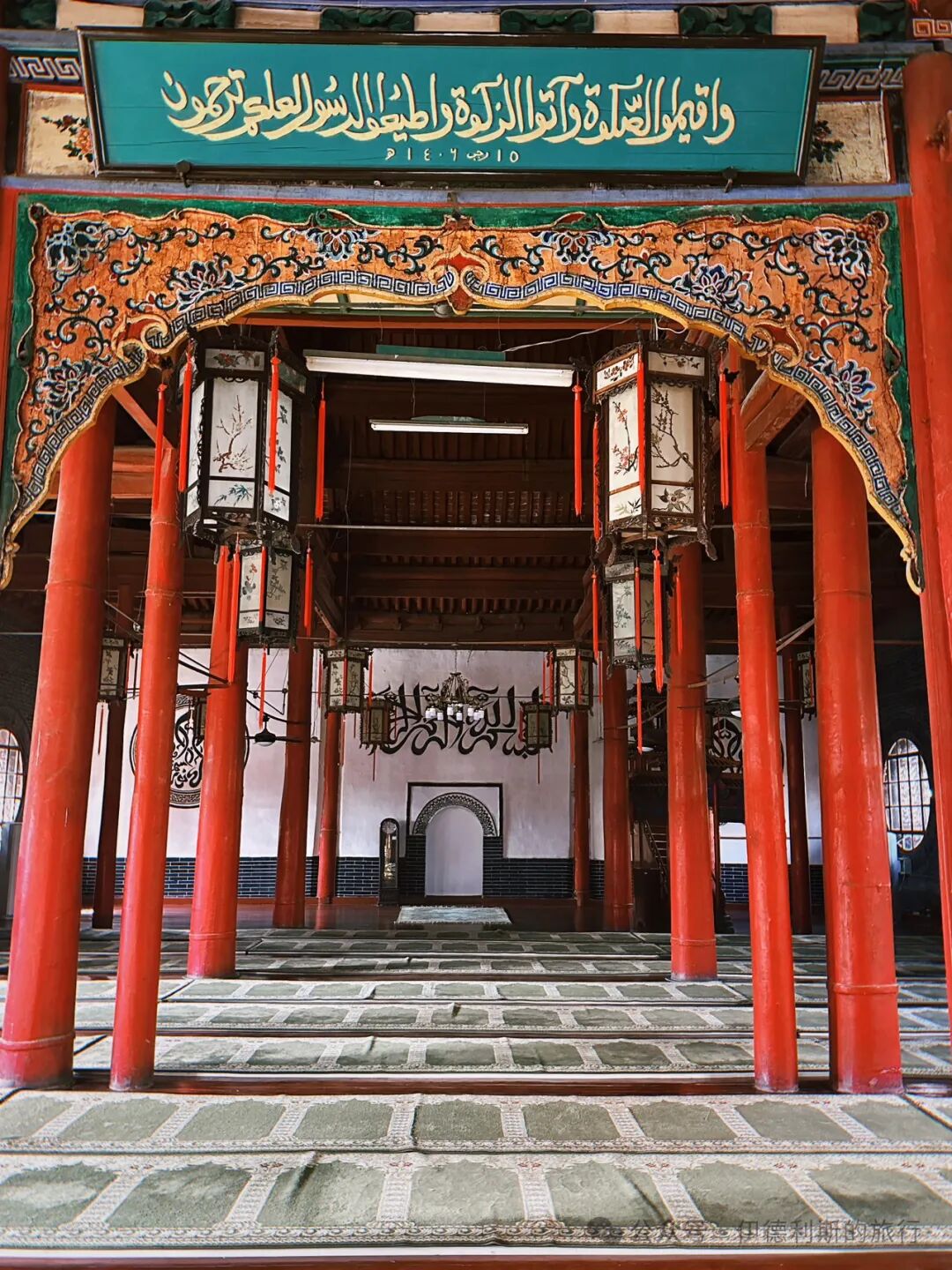
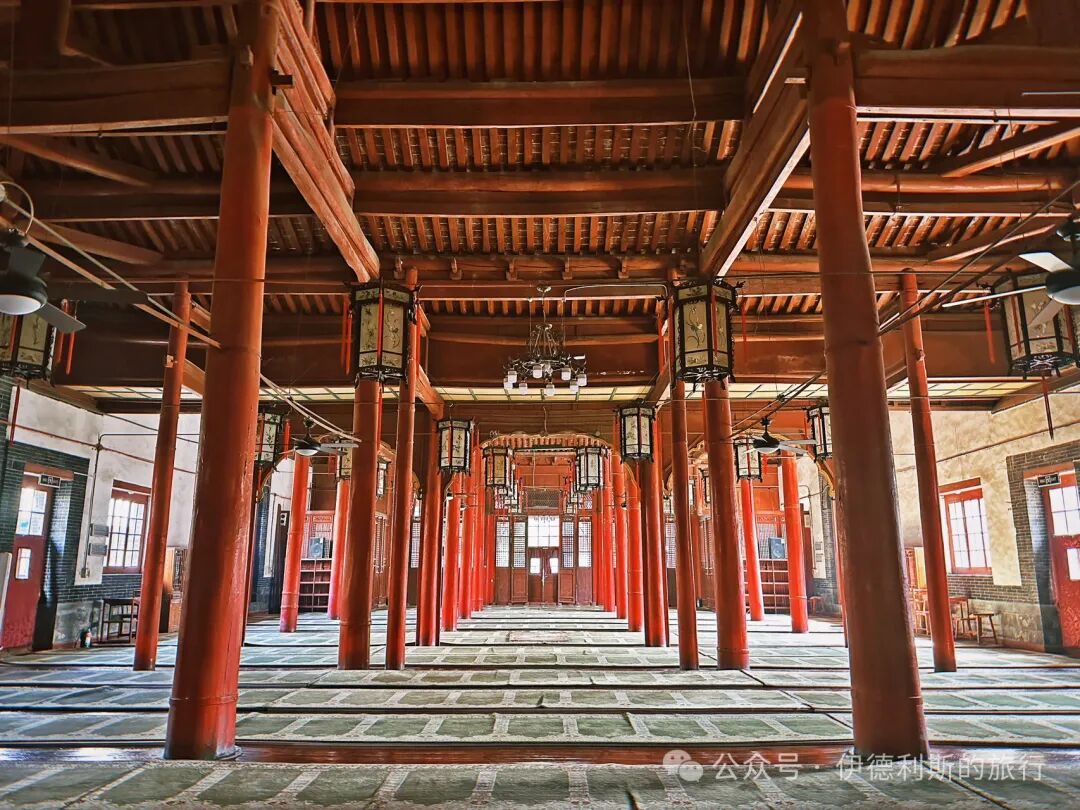
The circular windows on the north and south gable walls of the main hall feature wooden carvings of scripture.
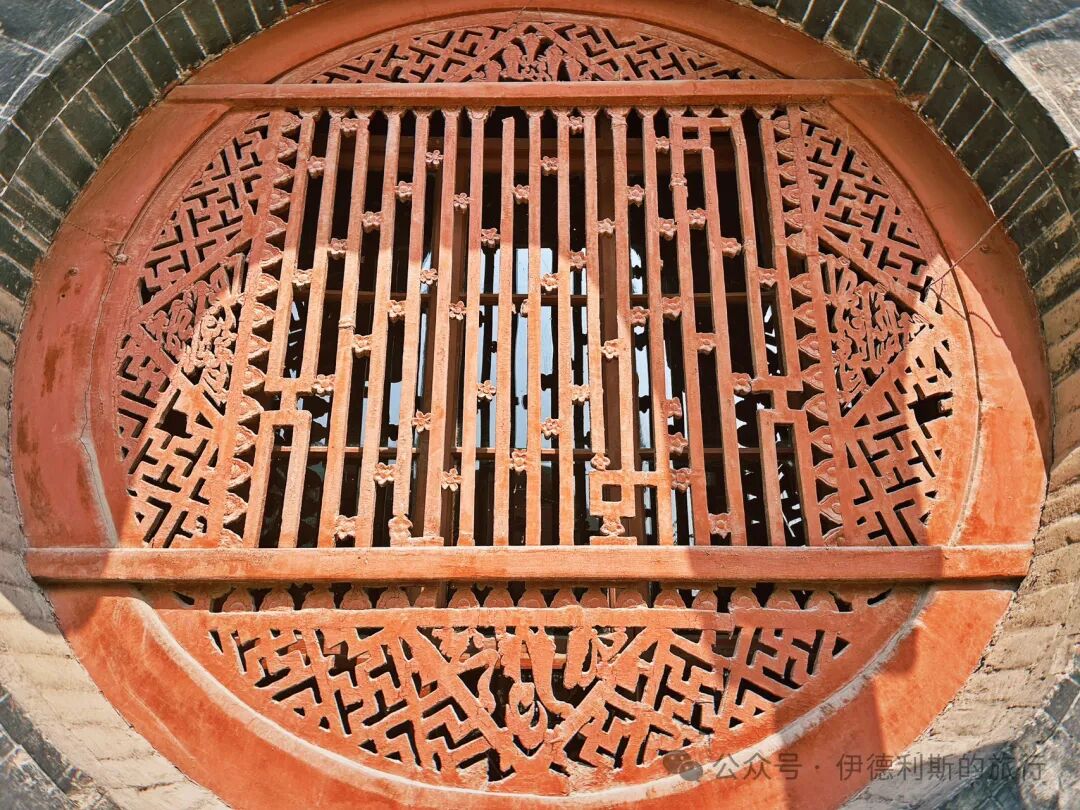
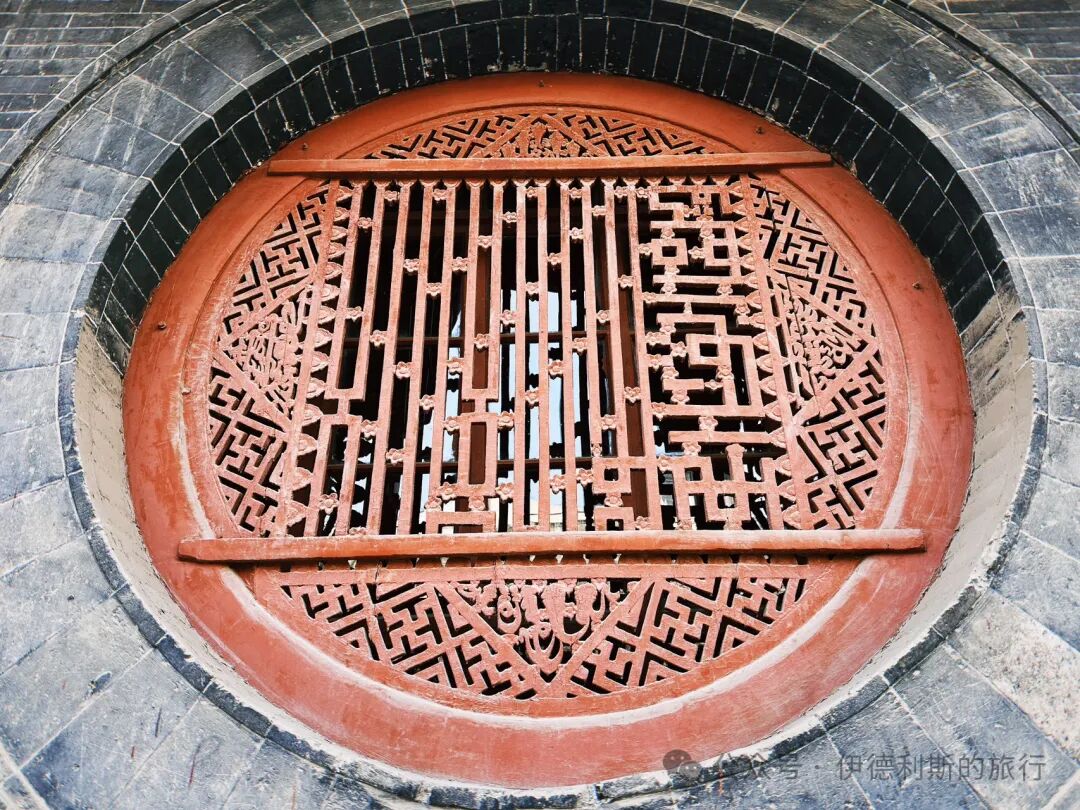
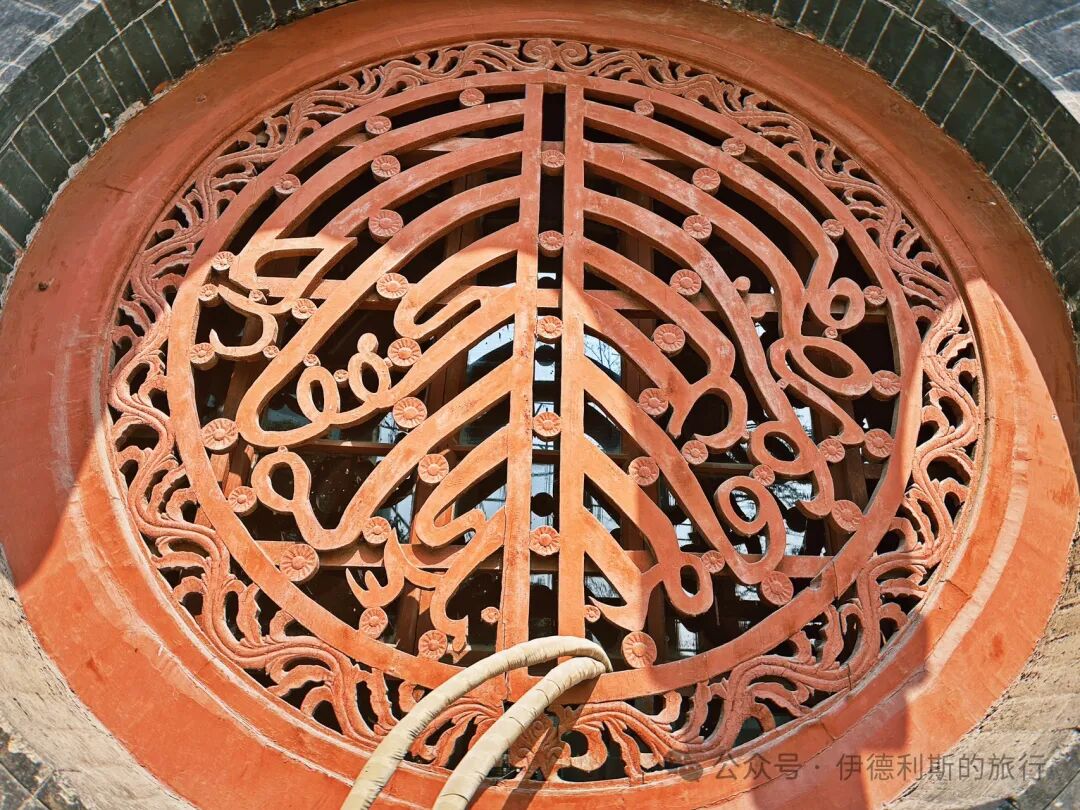
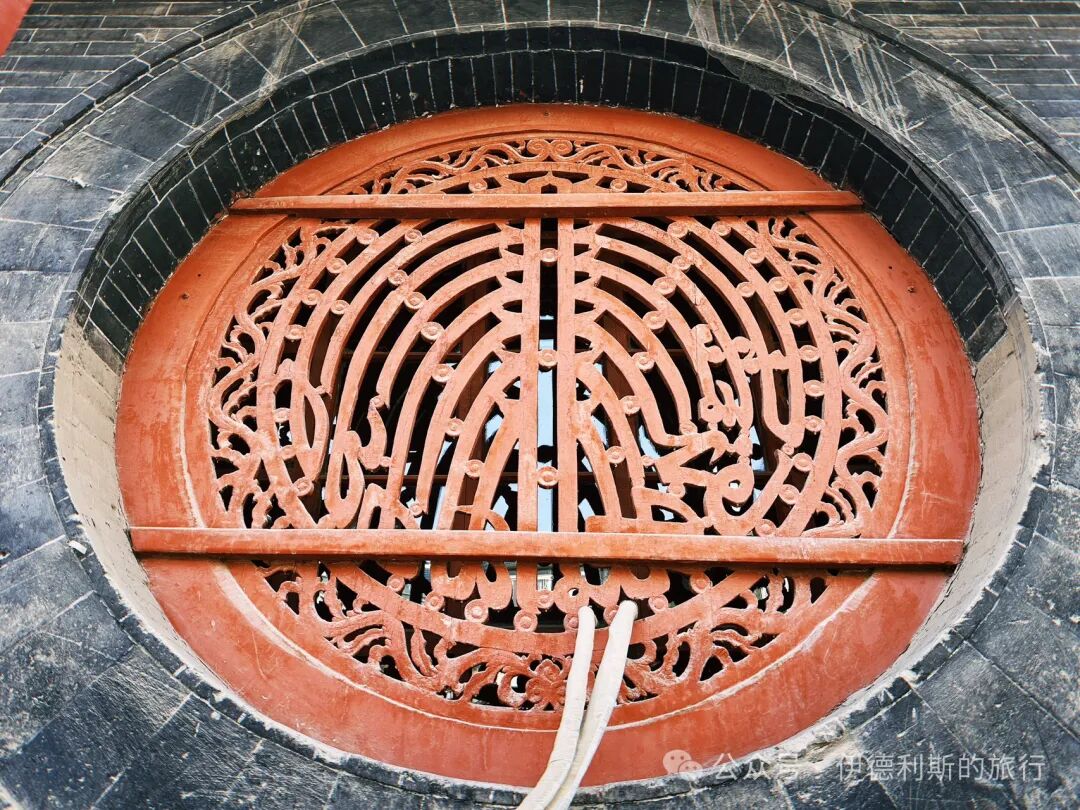
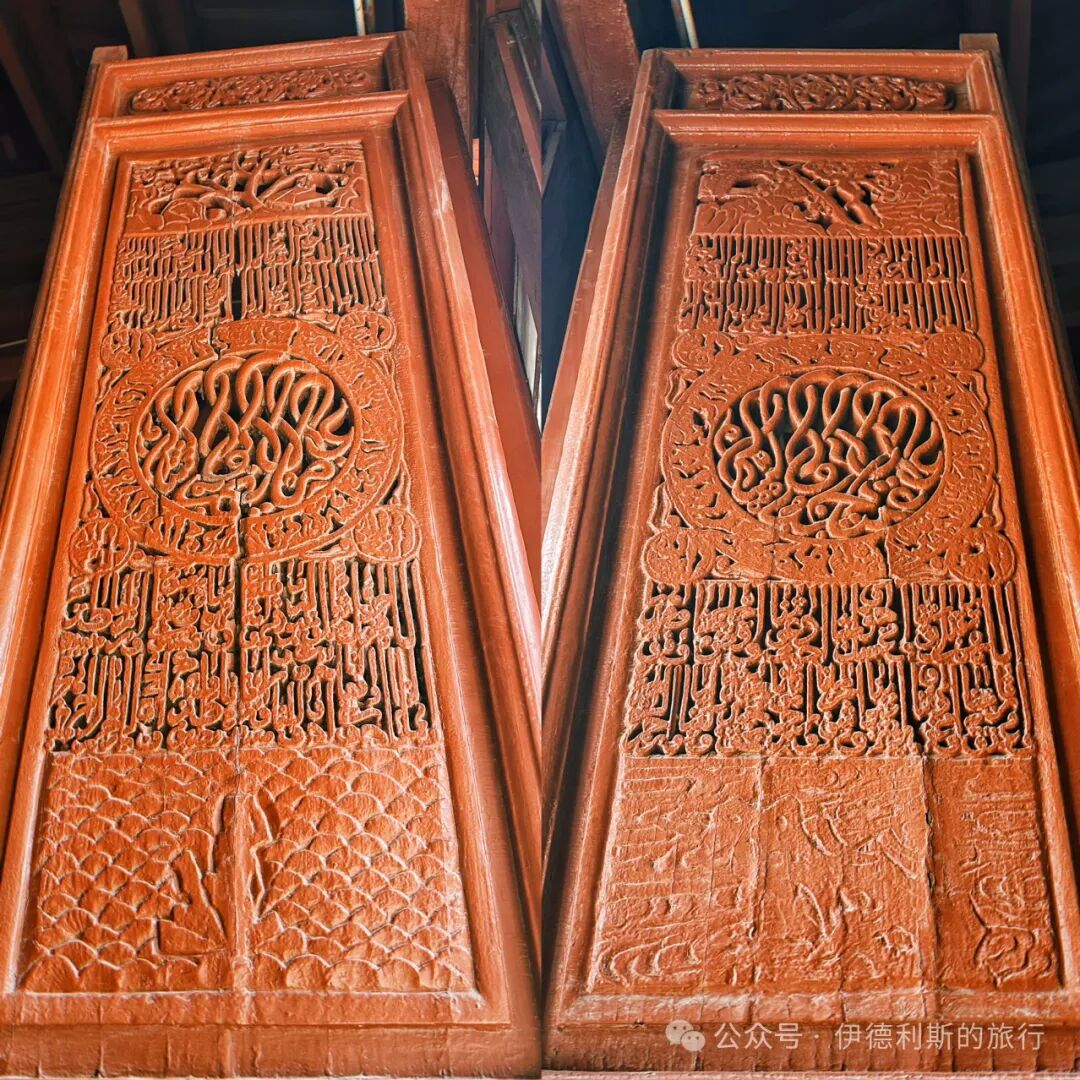
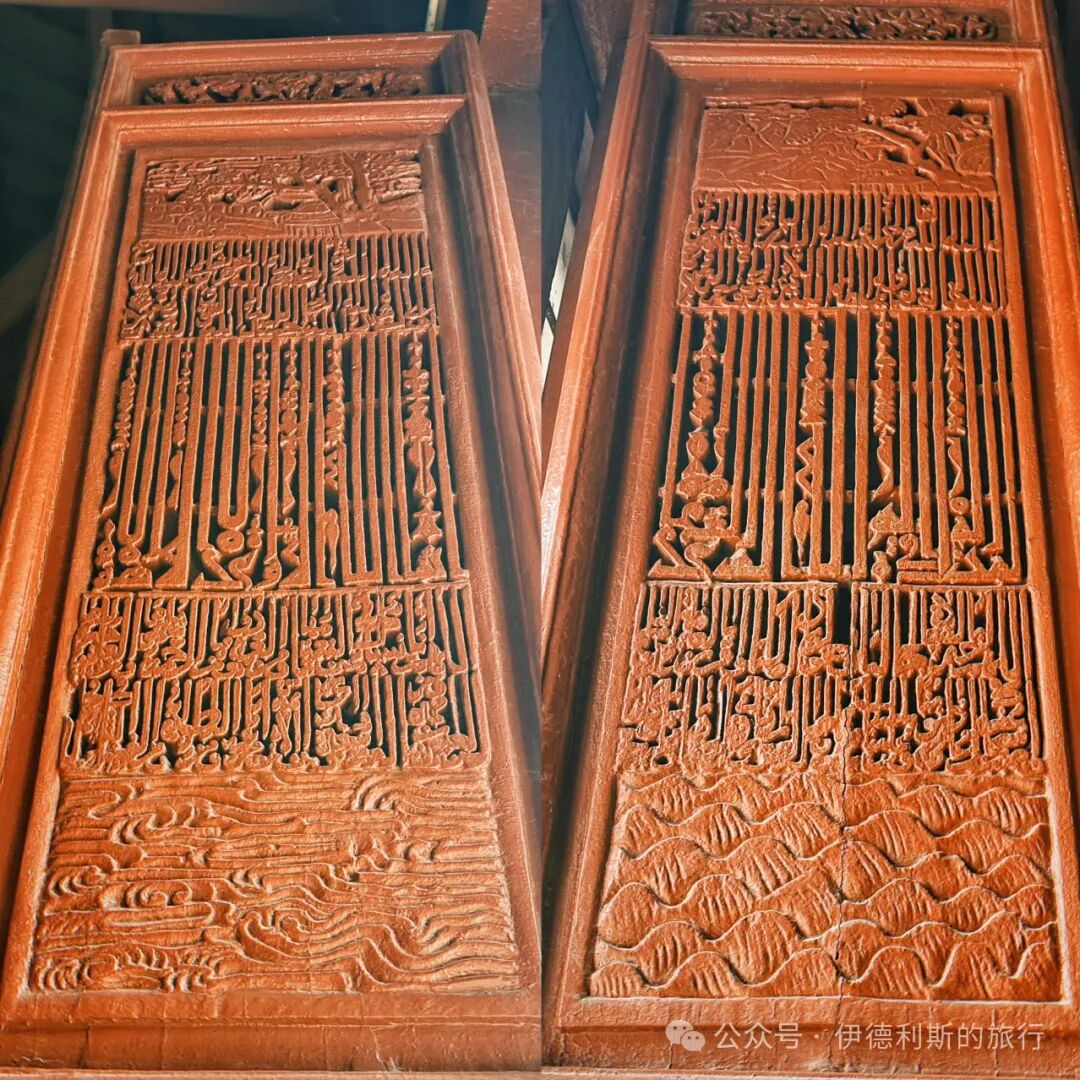
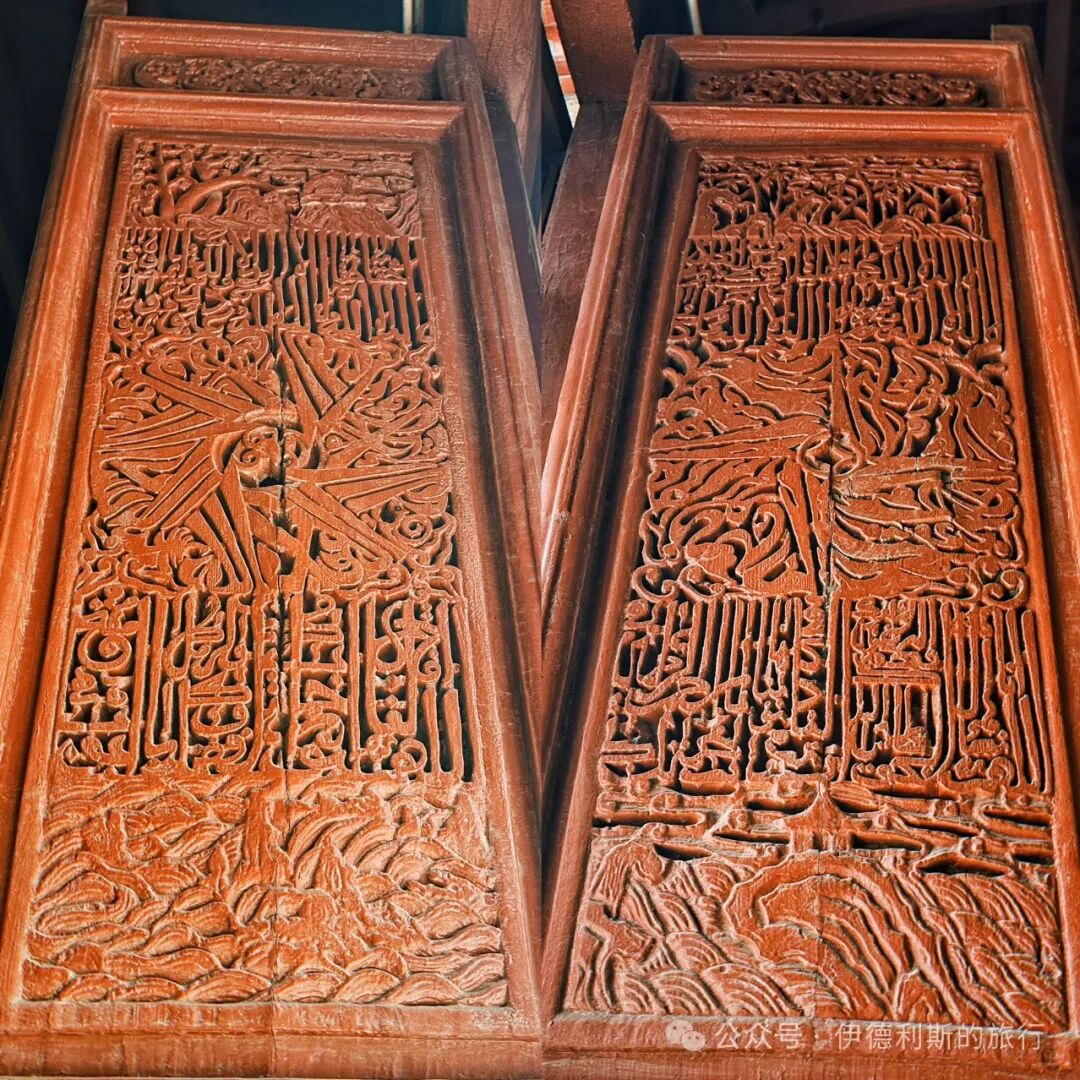
The twelve wooden windows carved with scripture in the main hall represent a high achievement in traditional Chinese Arabic-style wood carving. Unfortunately, the oil painting used during later repairs was not high quality, making some of the wood carvings blurry.
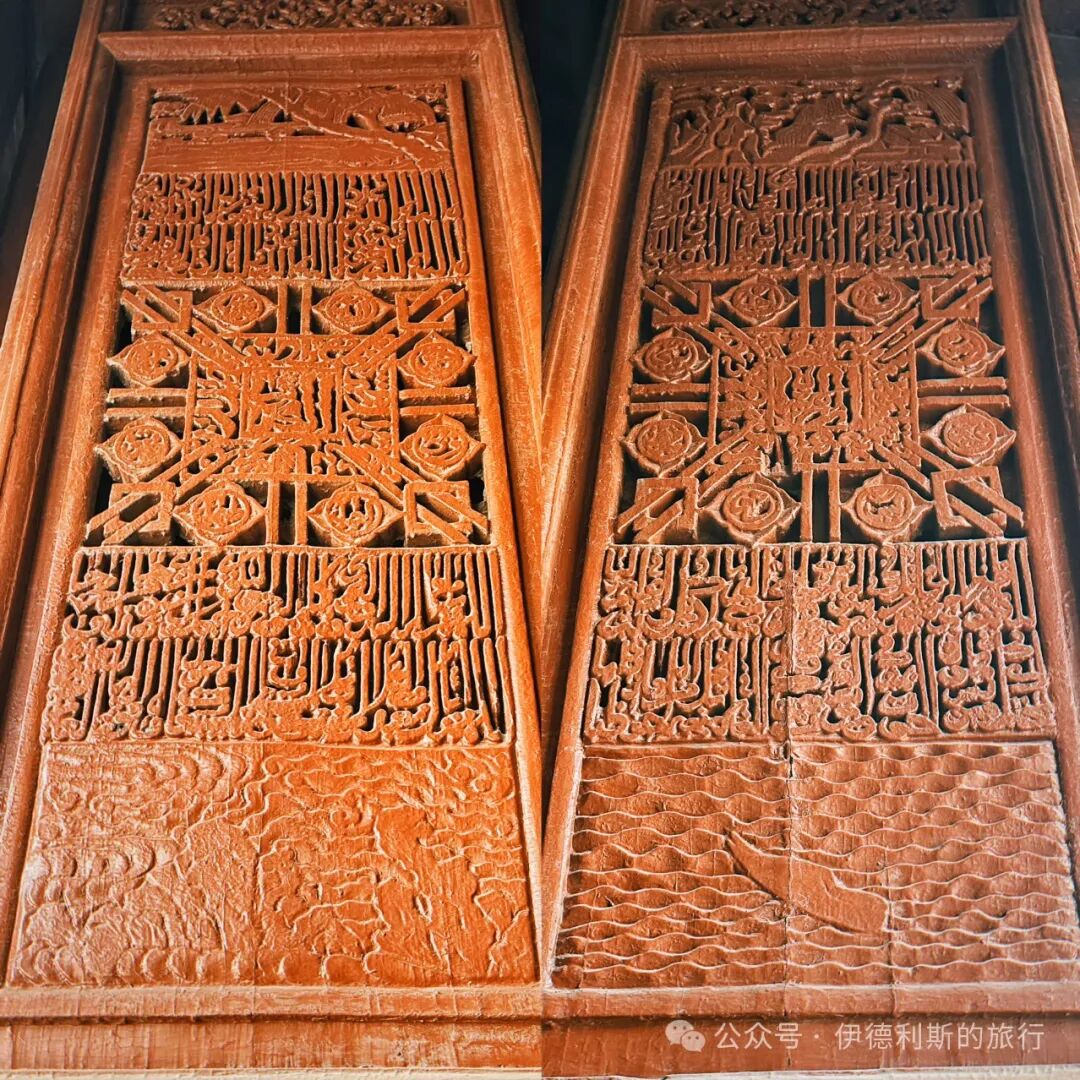
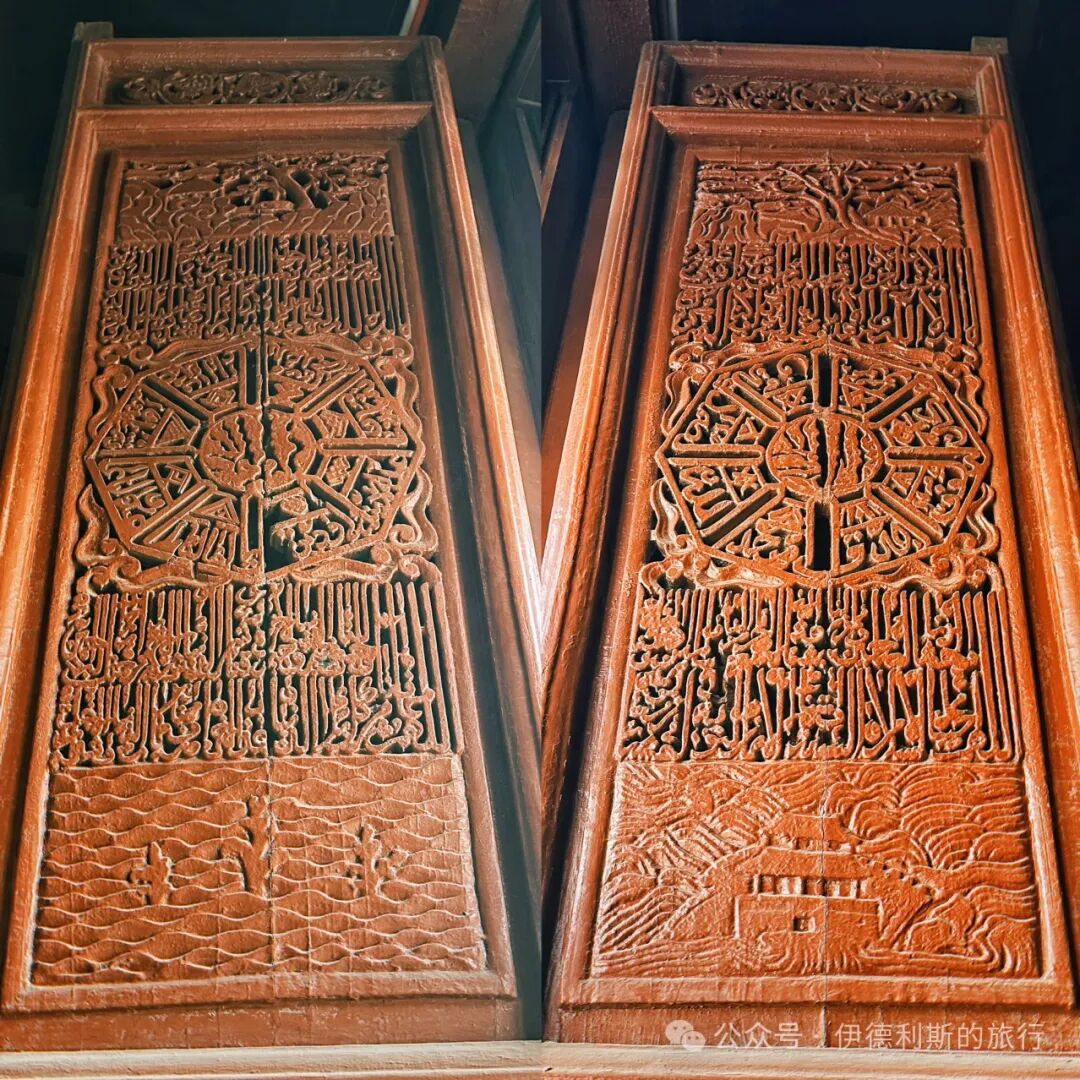
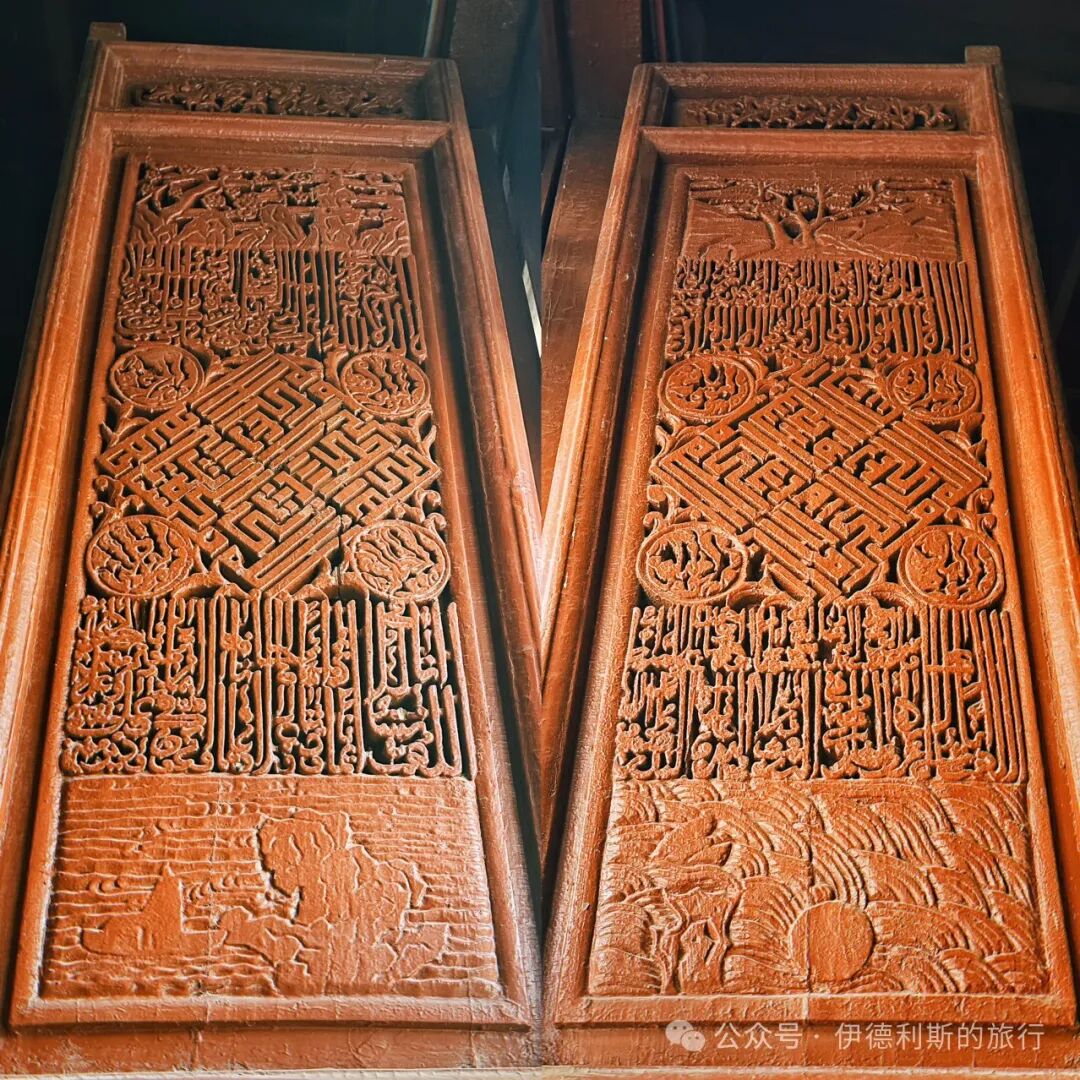
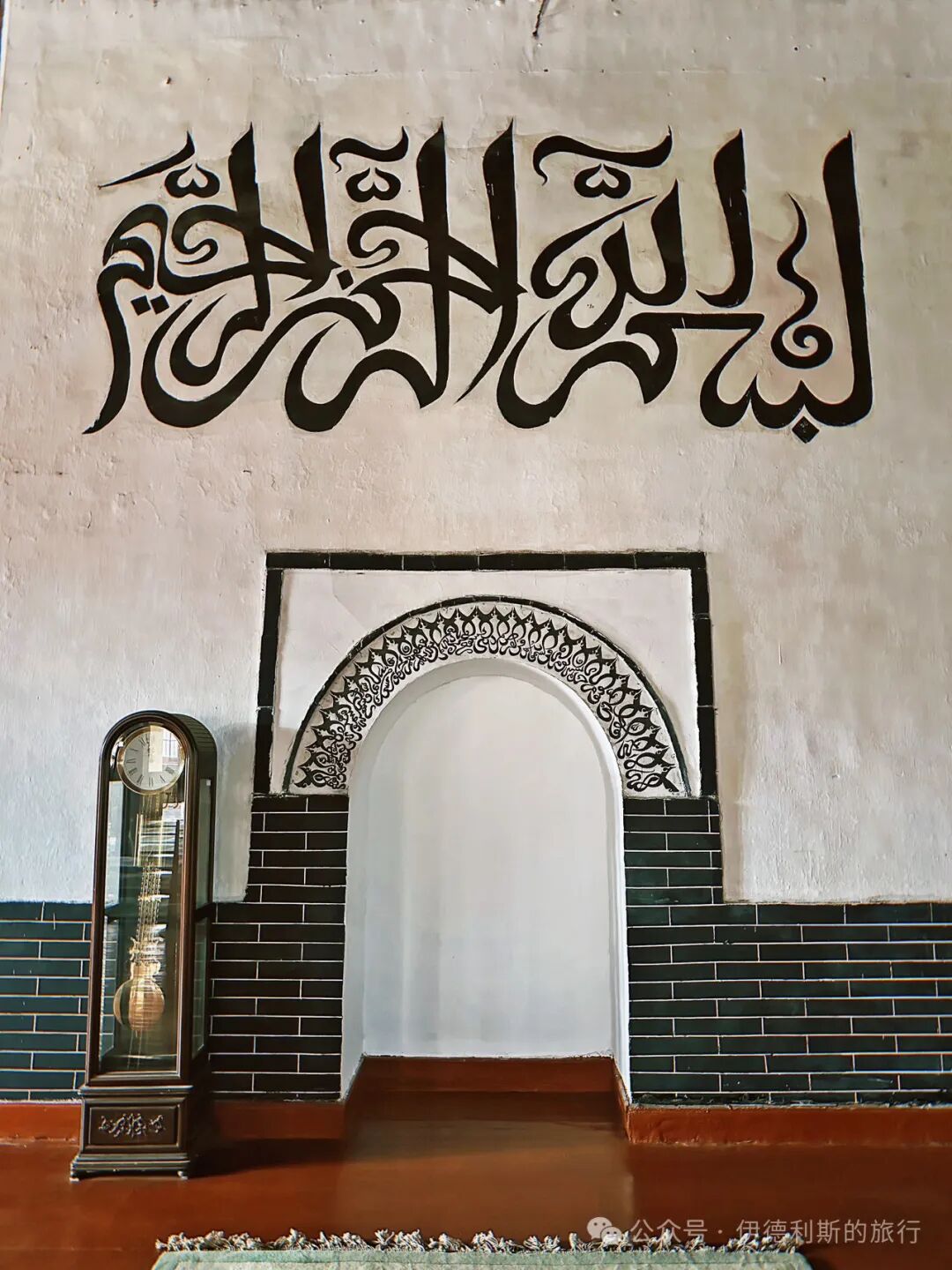
According to the "Stele Preface of the Hei Family" inside the mosque, the calligraphy on the wall facing the mihrab was written in 1810 (Jiaqing fifteenth year) by Hei Faxiang, who served as the imam of the South Great Mosque. In the 110 years following that until 1920, members of the Hei family, including Hei Yuanji, Hei Yonghua, Hei Qingjie, and Hei Guangzhi, served as imams of the South Great Mosque.
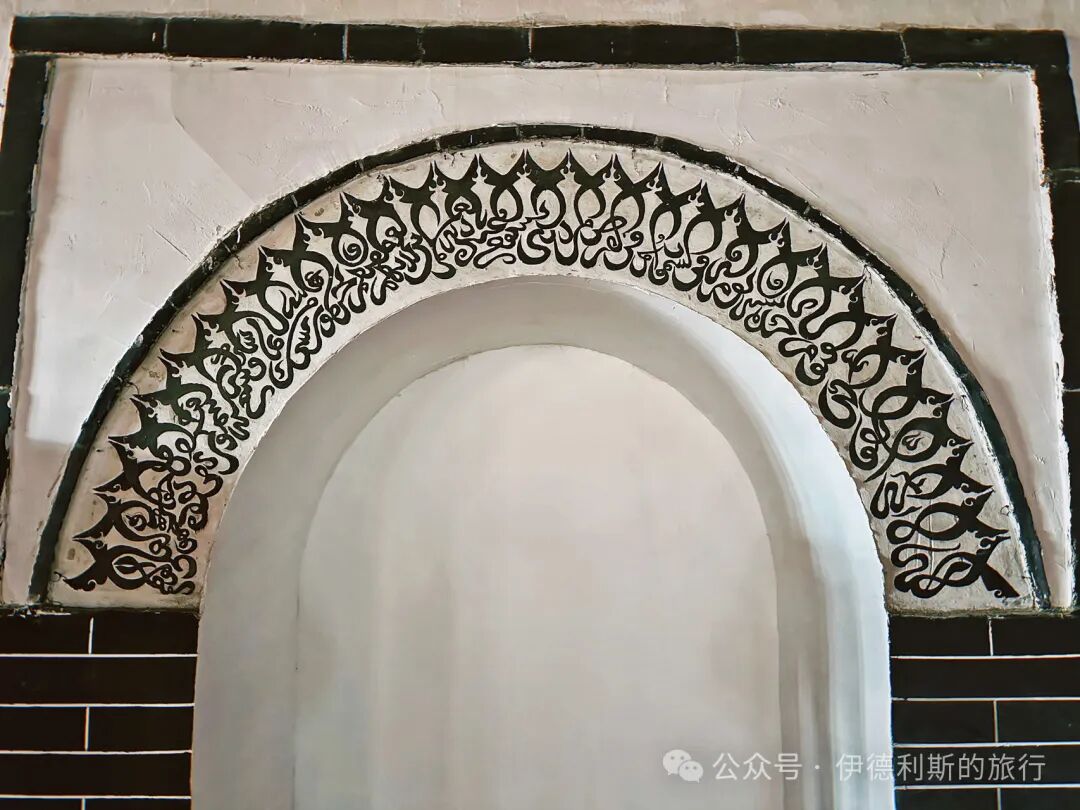
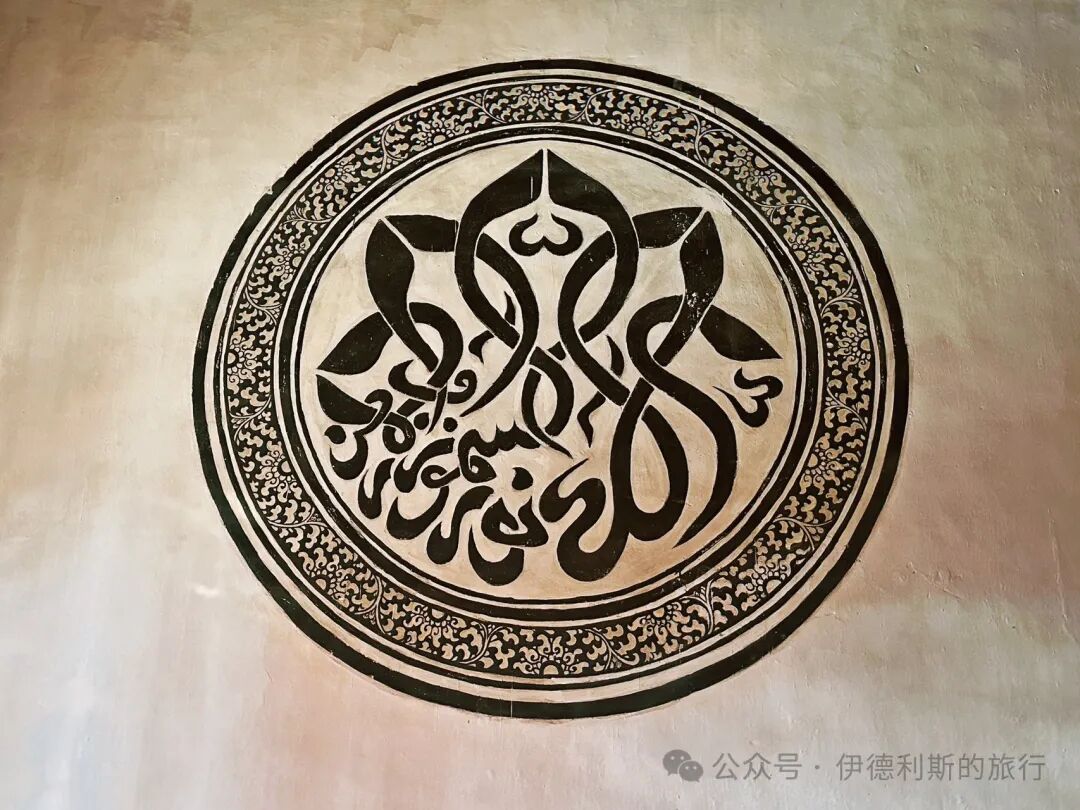
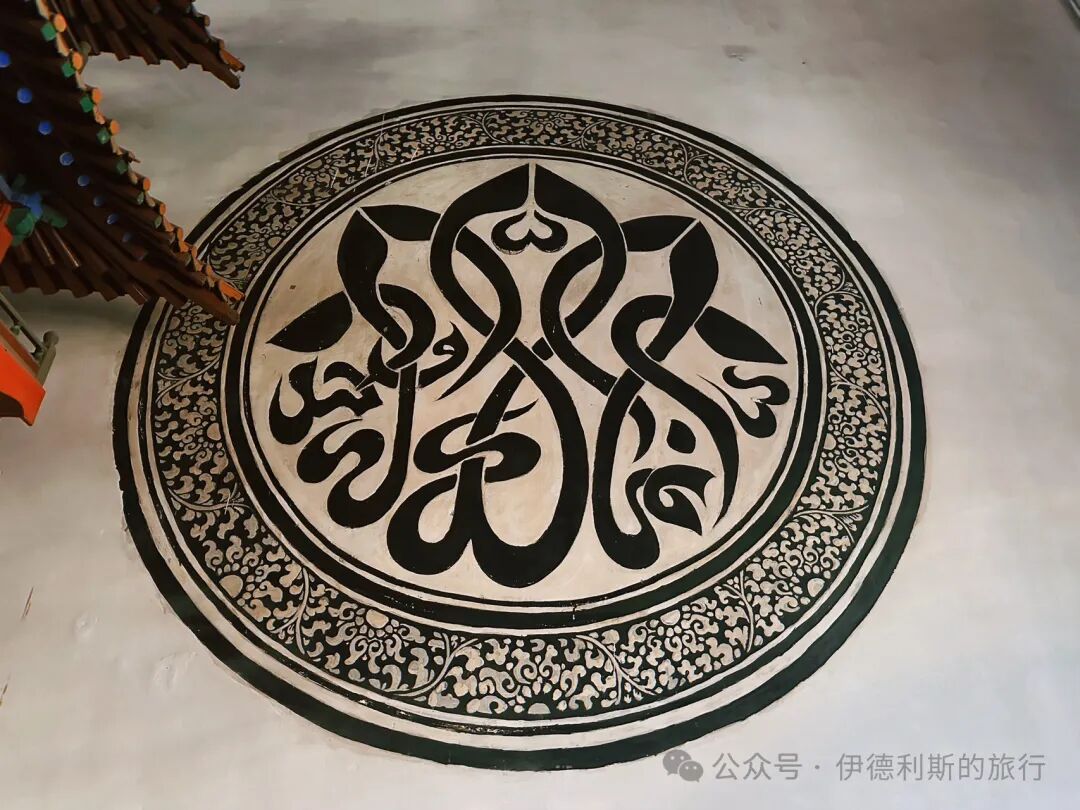
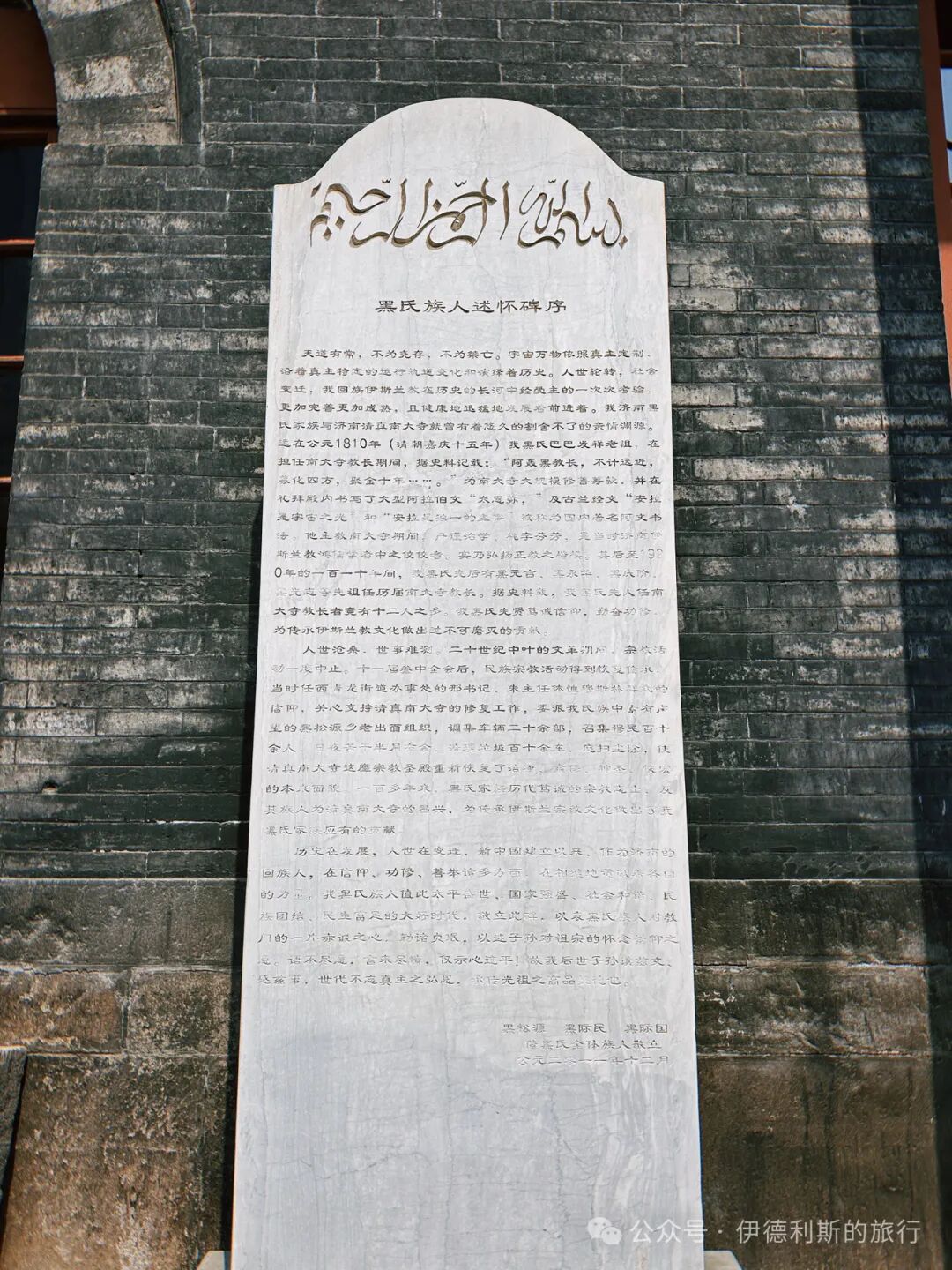
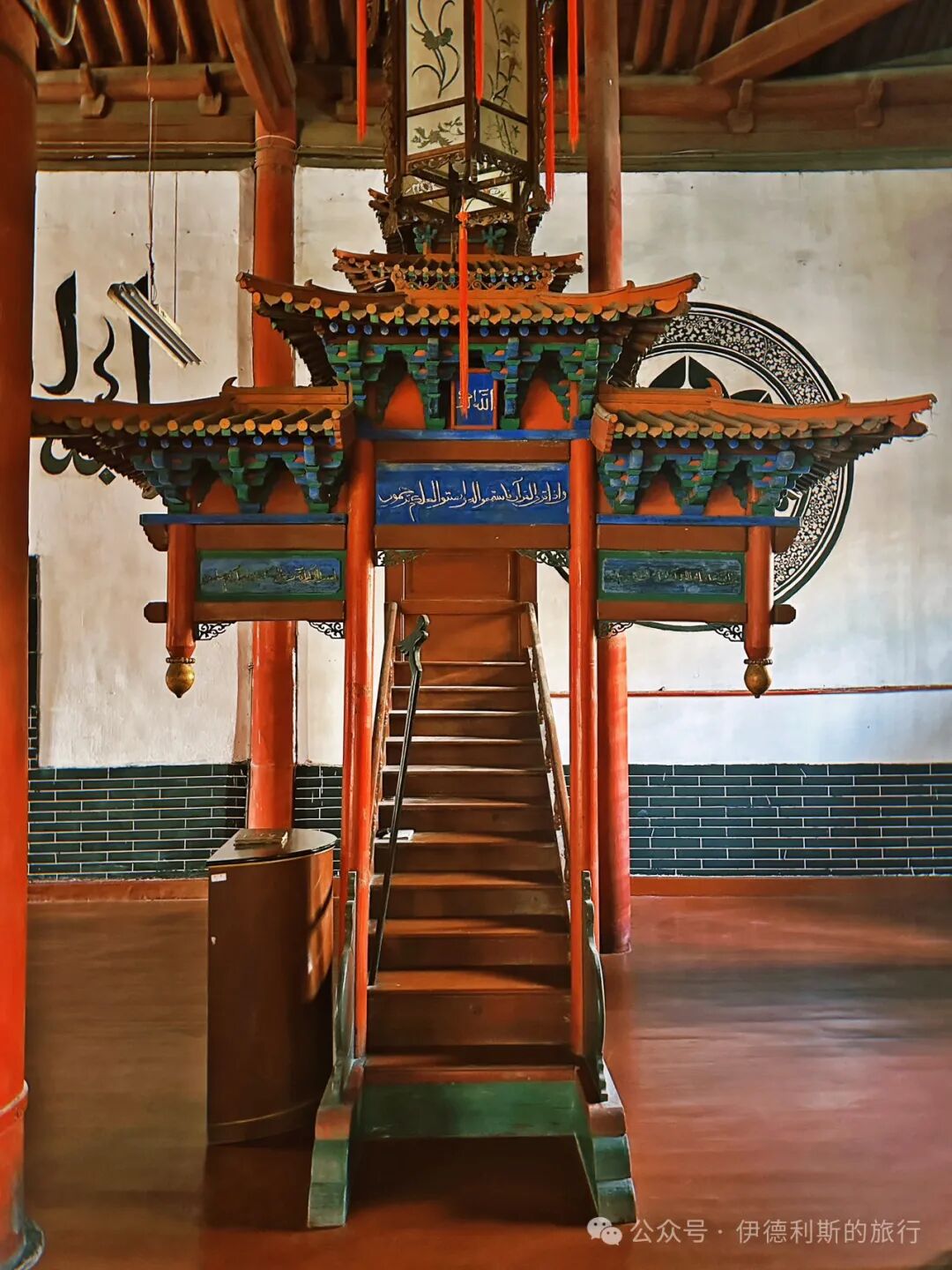
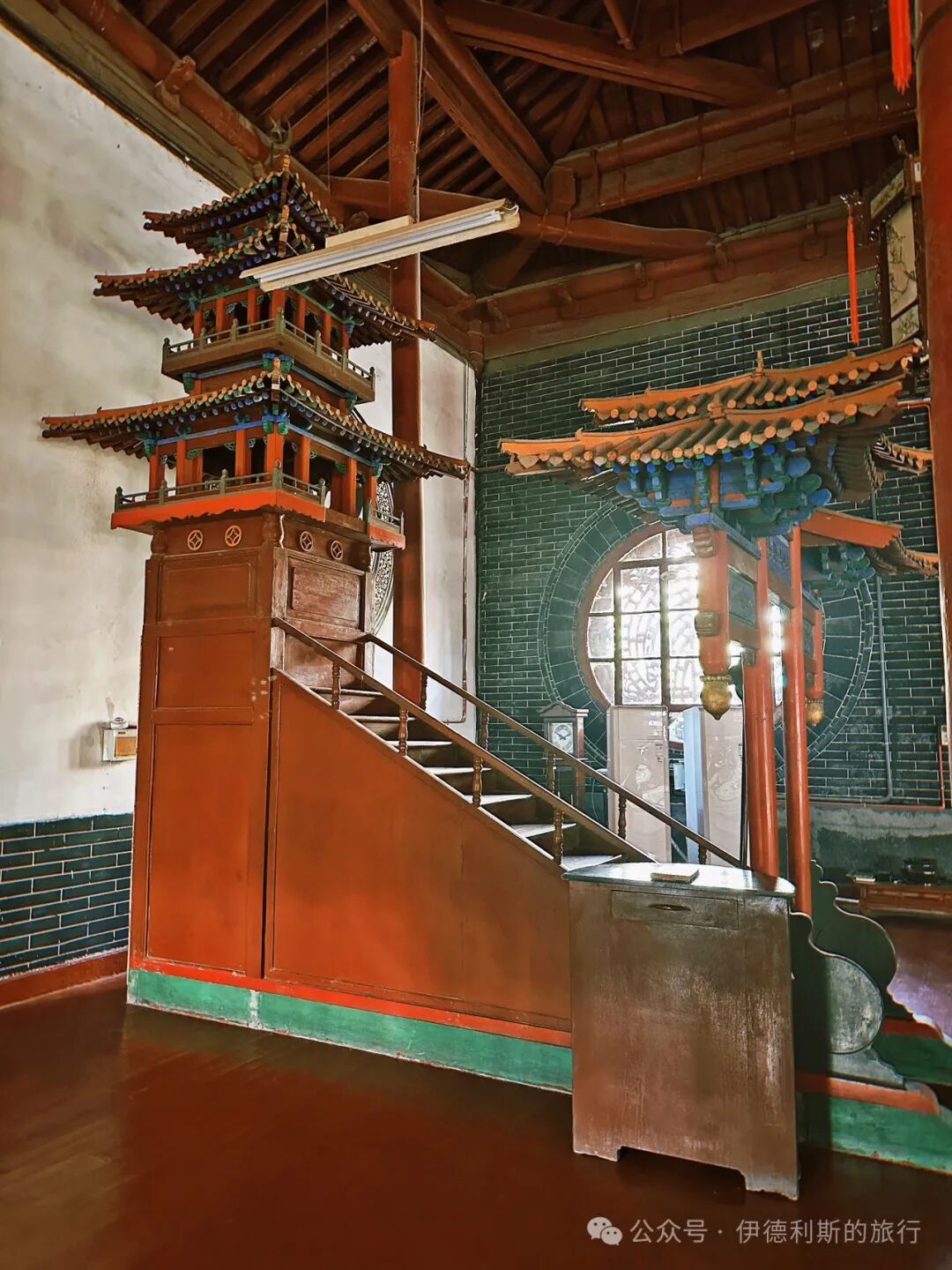
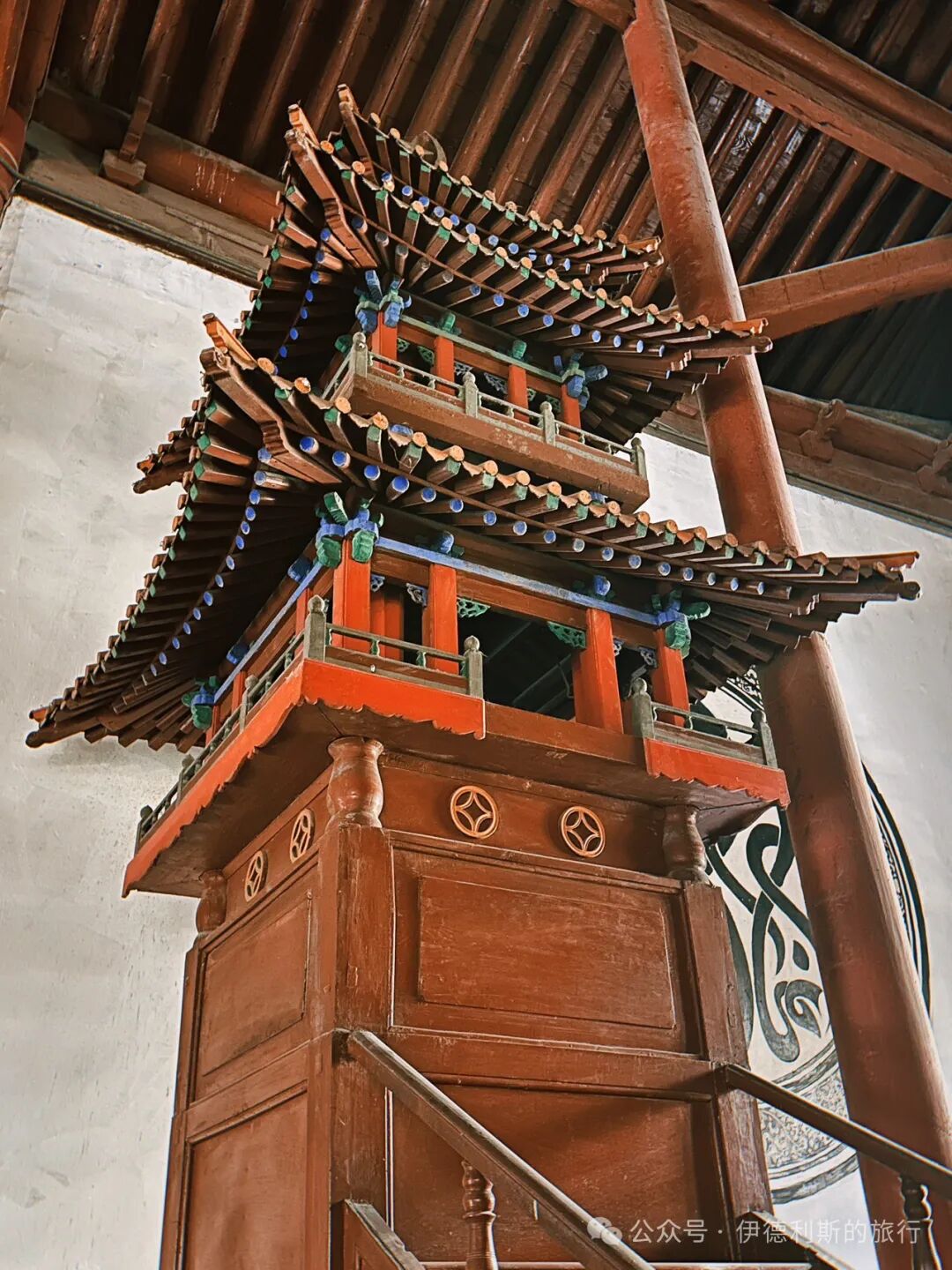
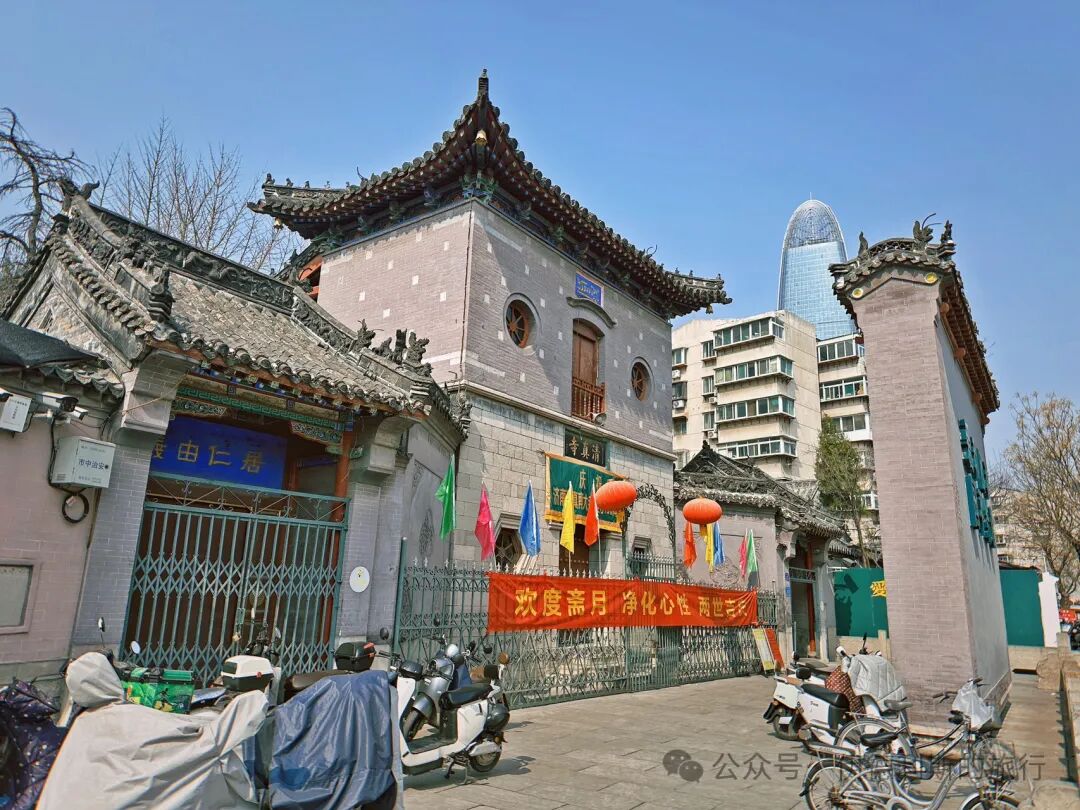
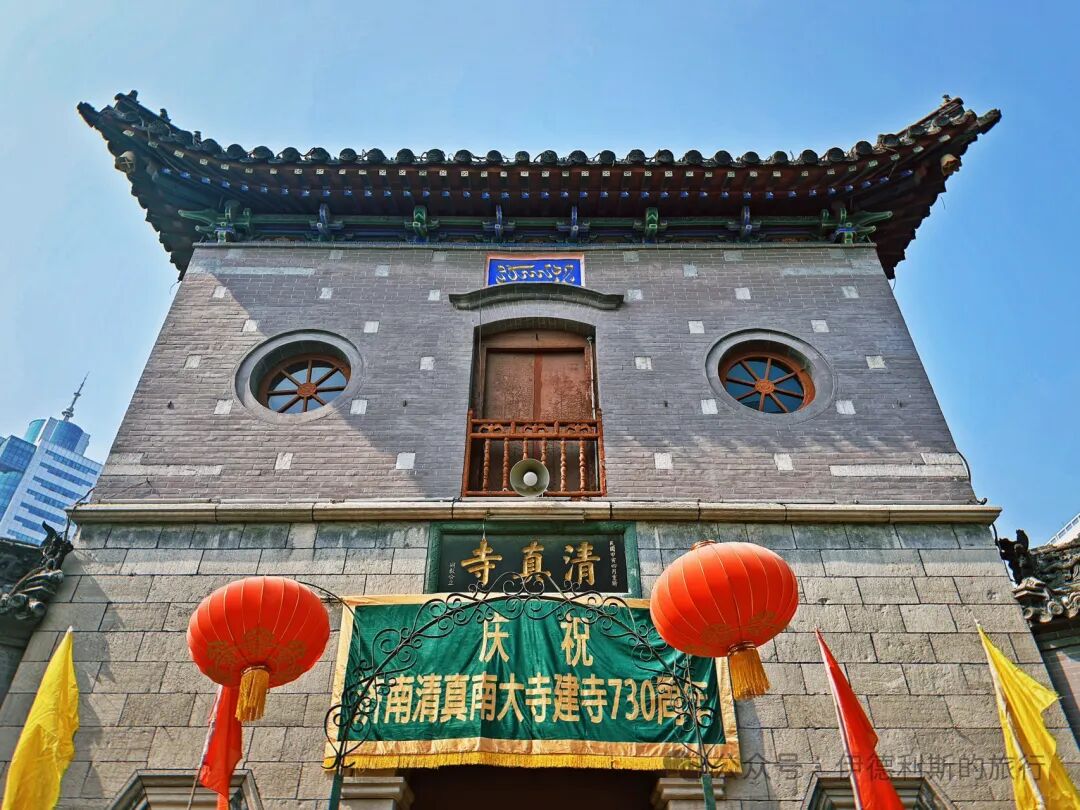
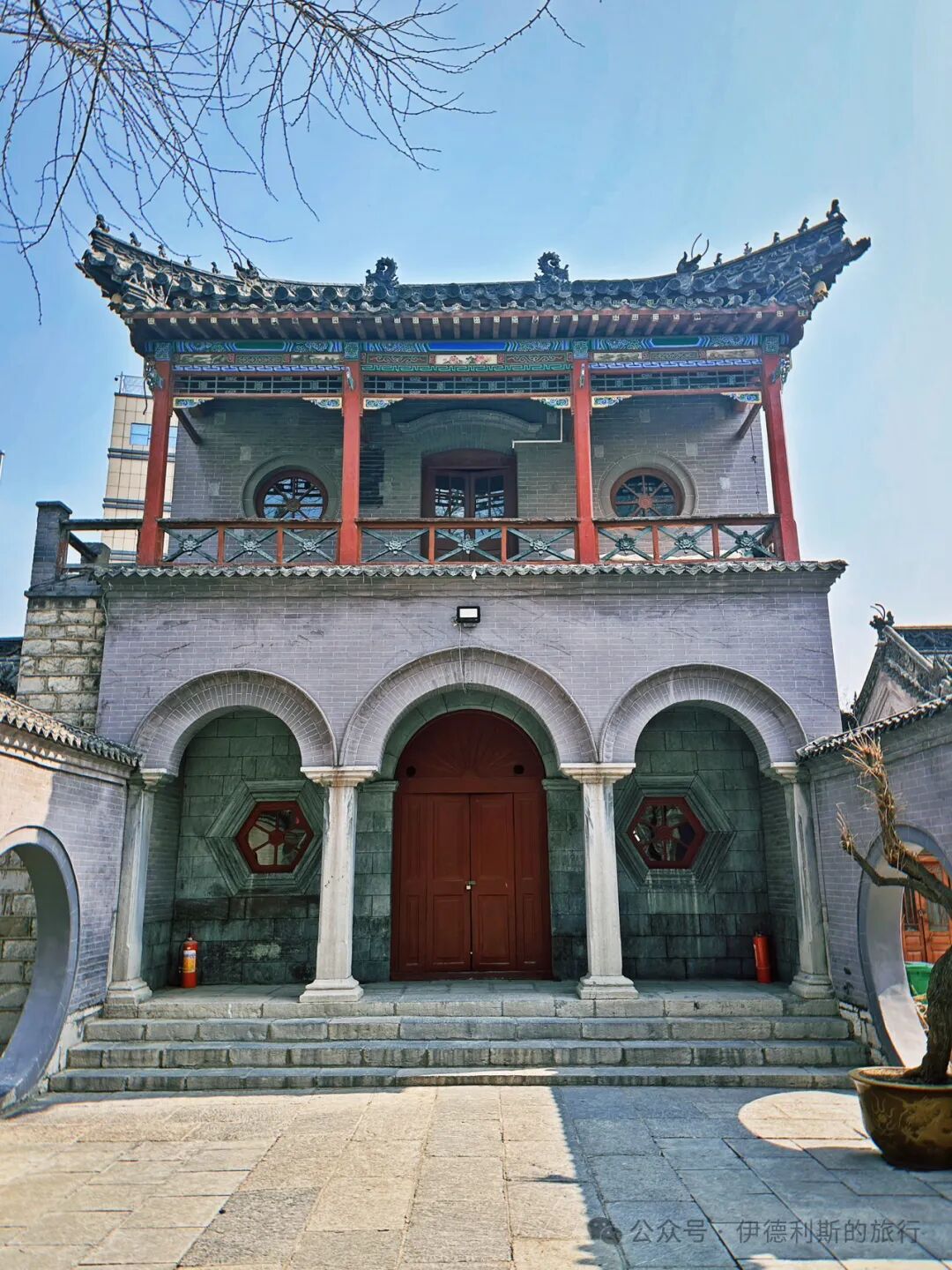
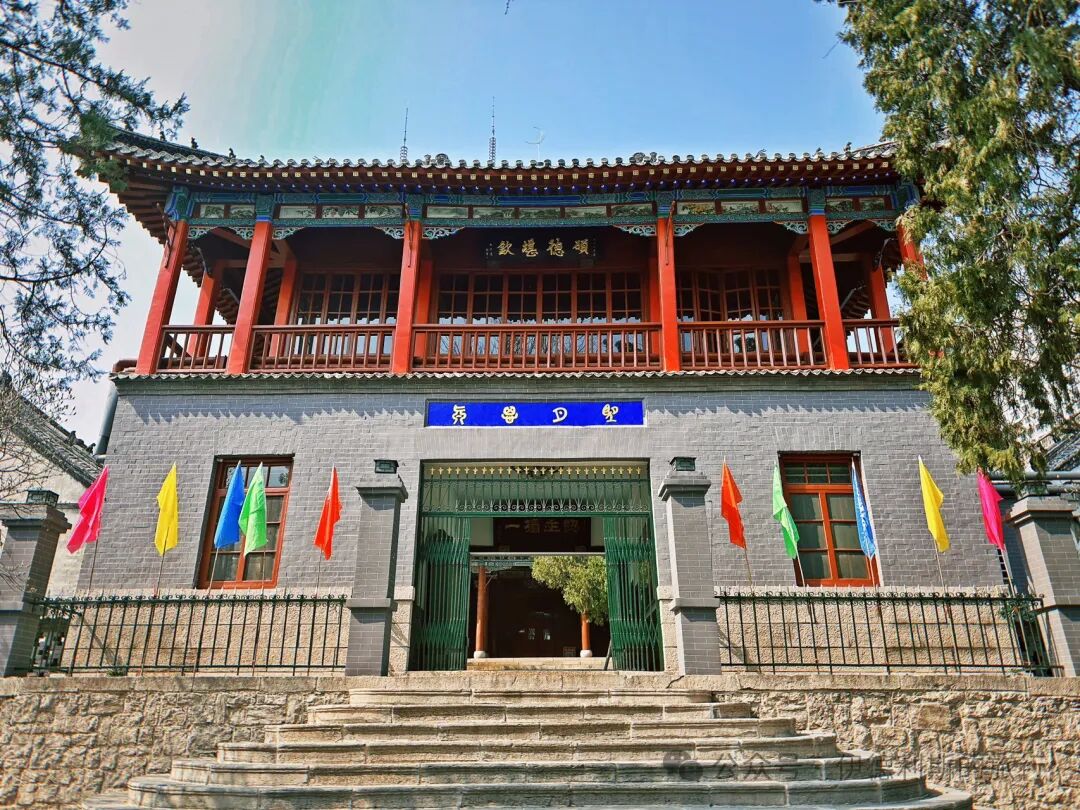
The gate tower was built in 1914 and the moon-watching tower (wangyue lou) in 1936. Both have features from the Republic of China era. Teacher Liu Zhiping noted that the architectural style has many "new" ideas.
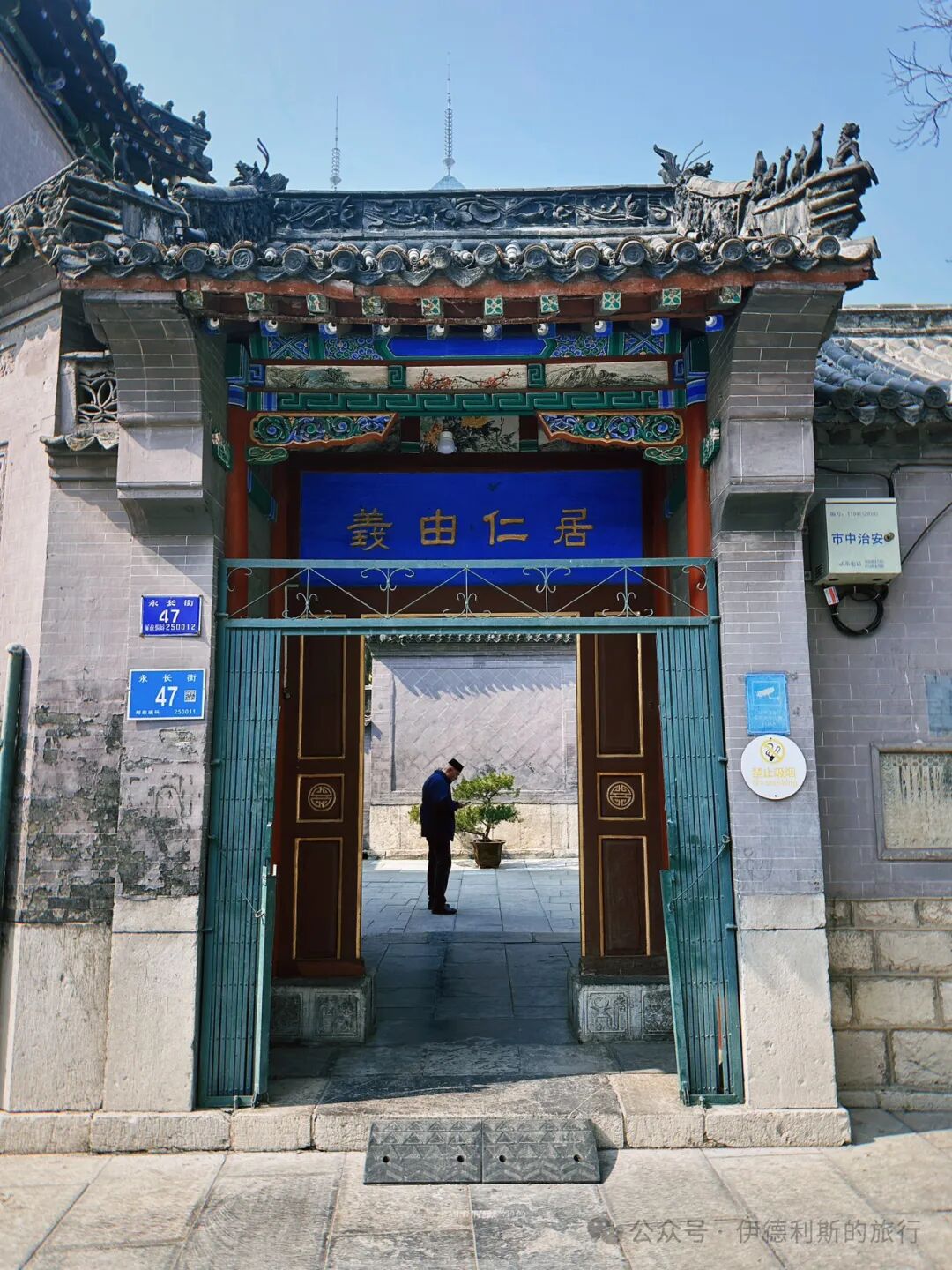
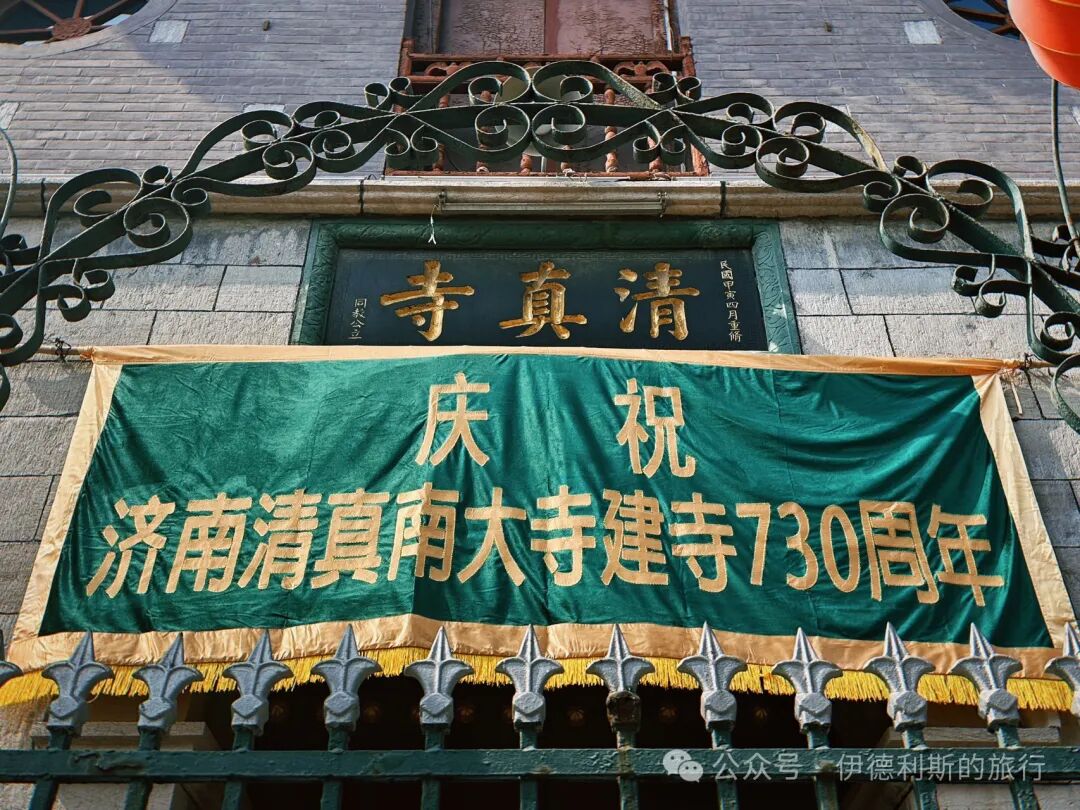
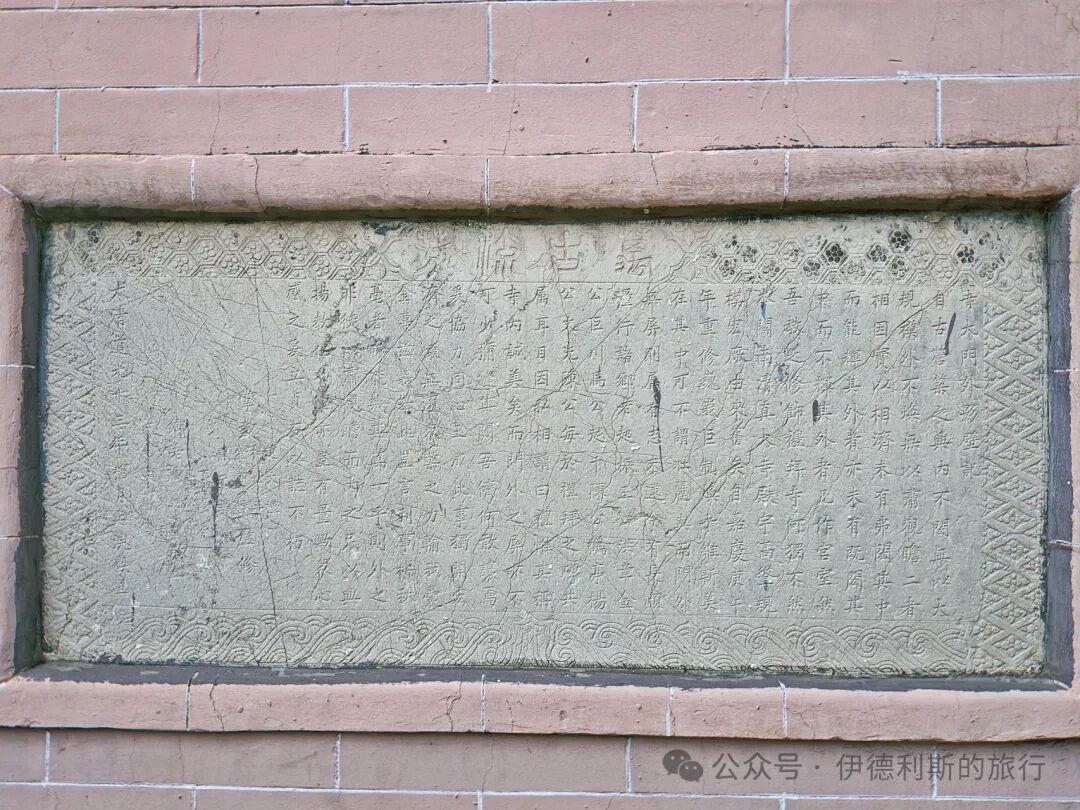
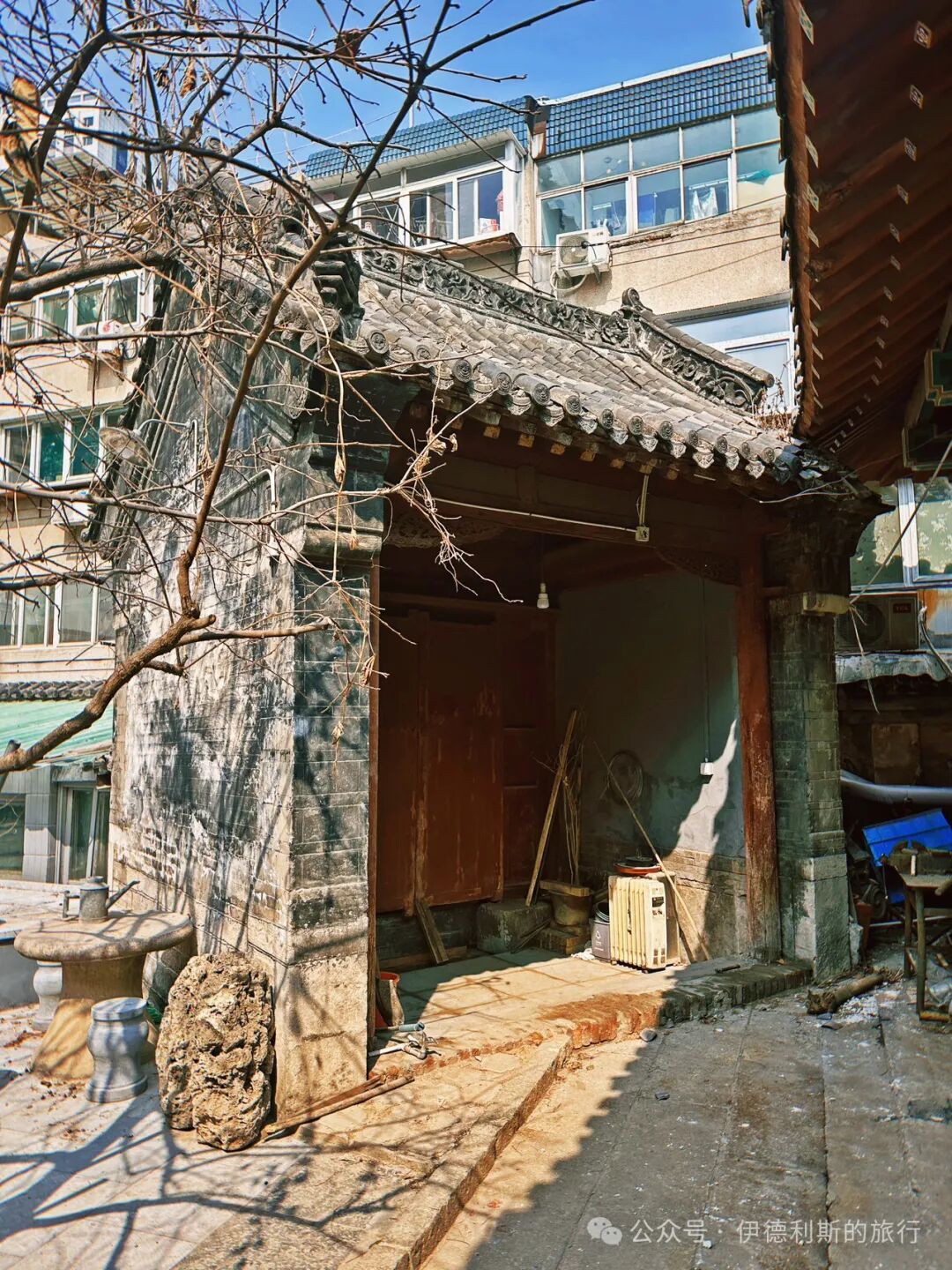
The center of the gate tower has a plaque reading "Mosque," with "Repaired in April of the Jia-Yin year of the Republic of China" written on it, signed by "The Community." Next to the main gate is a stone tablet from the thirteenth year of the Daoguang era titled "Record of the Screen Wall Outside the Mosque Gate."
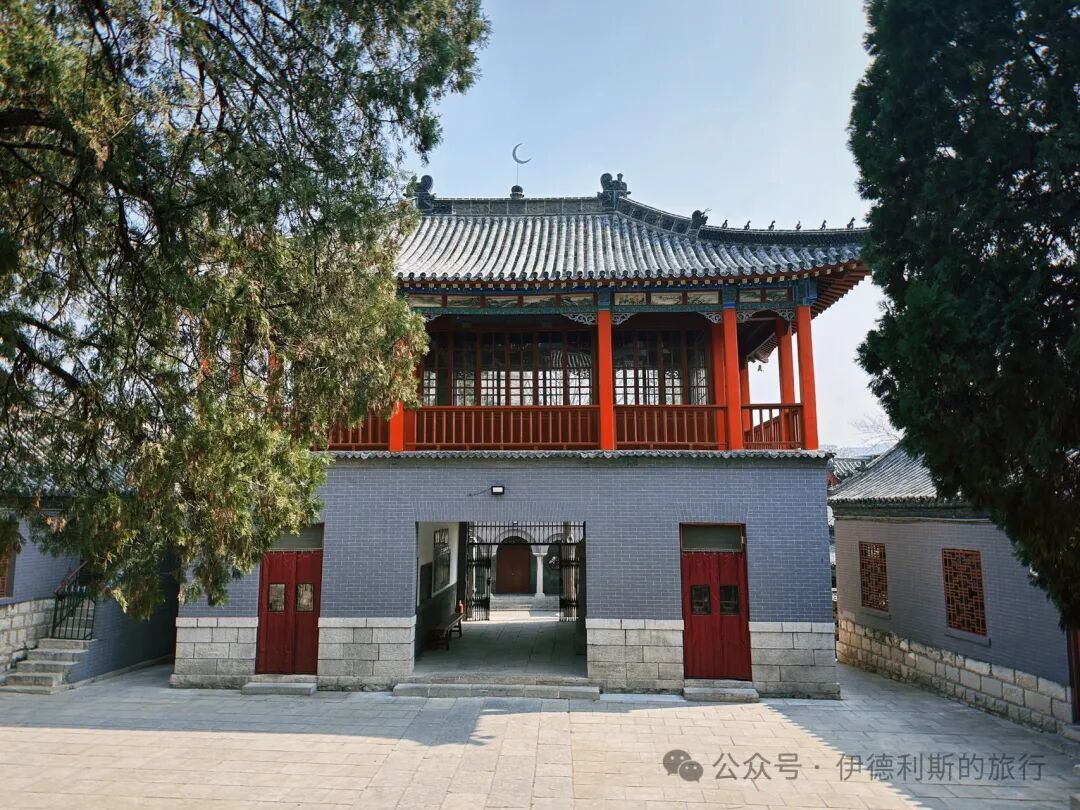
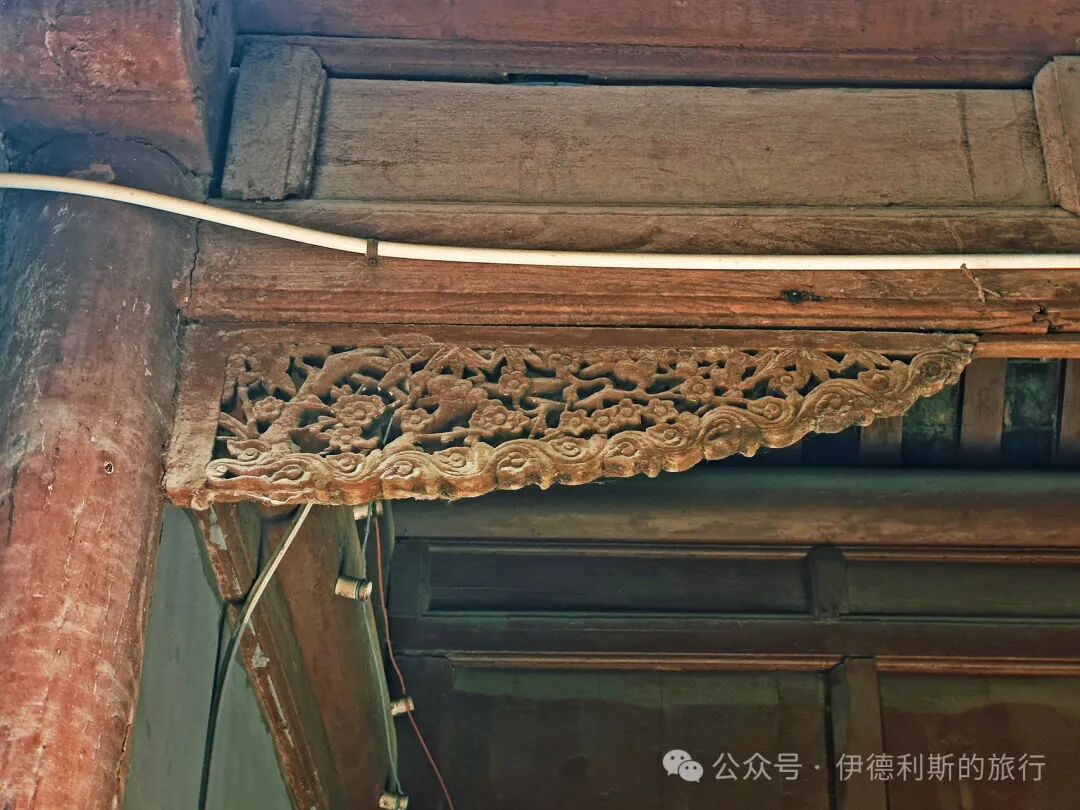
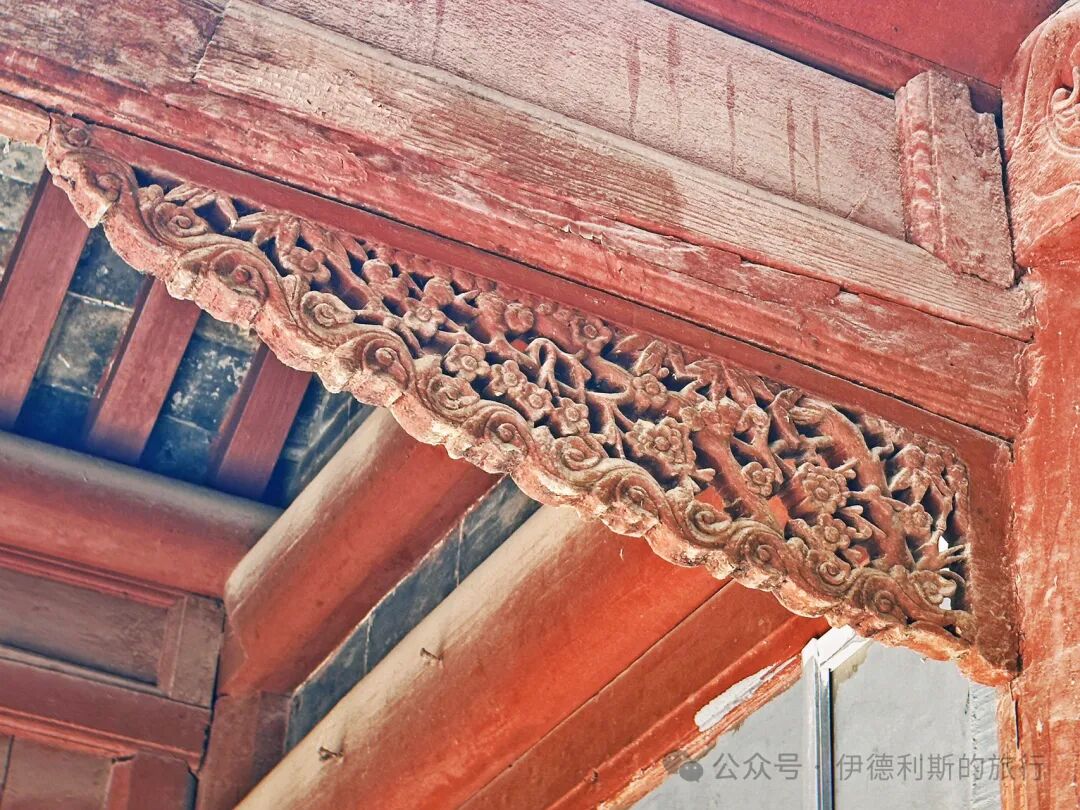
The back door of the mosque features beautiful plum blossom patterns carved into the bracket sets (que-ti).
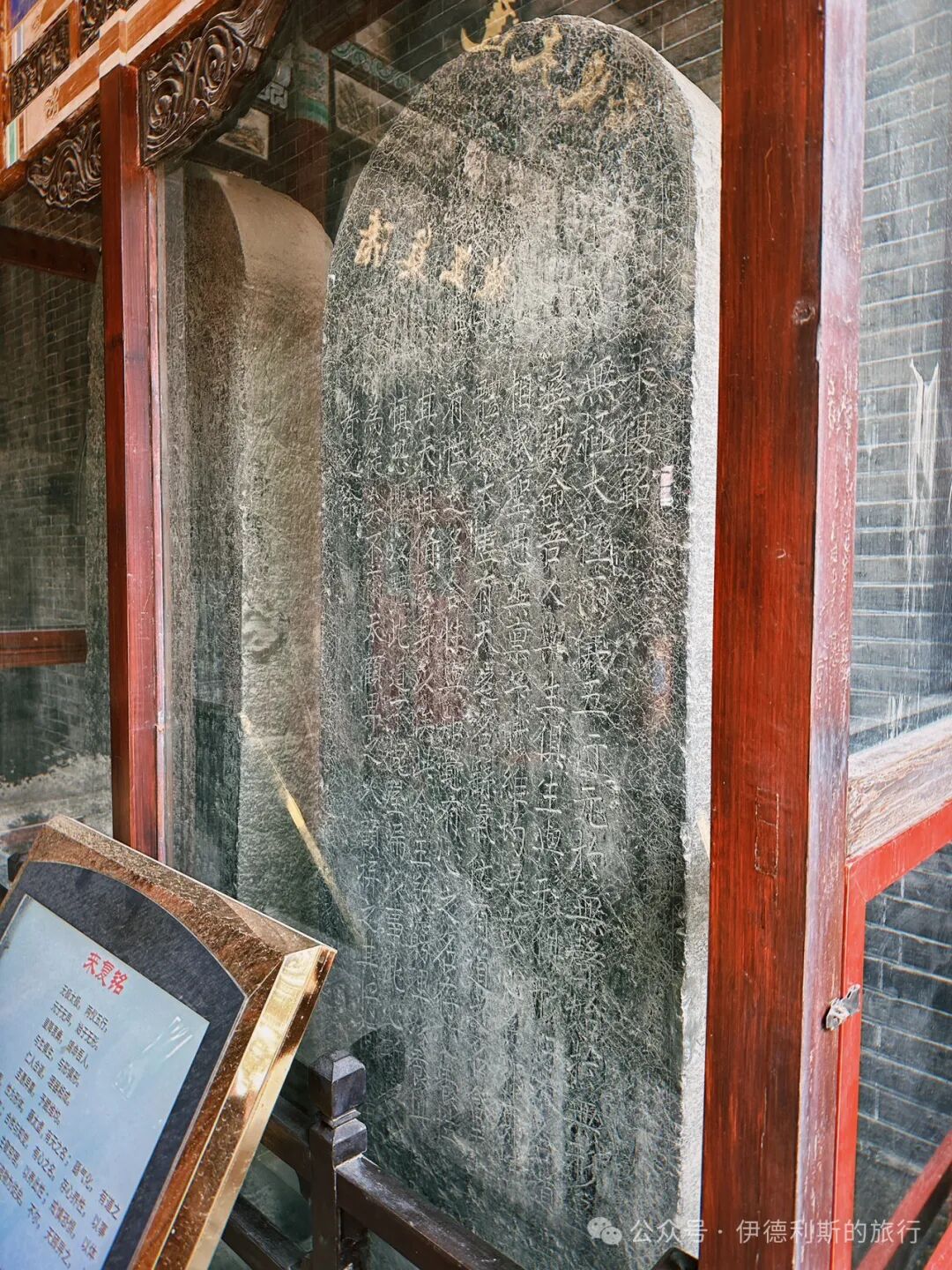
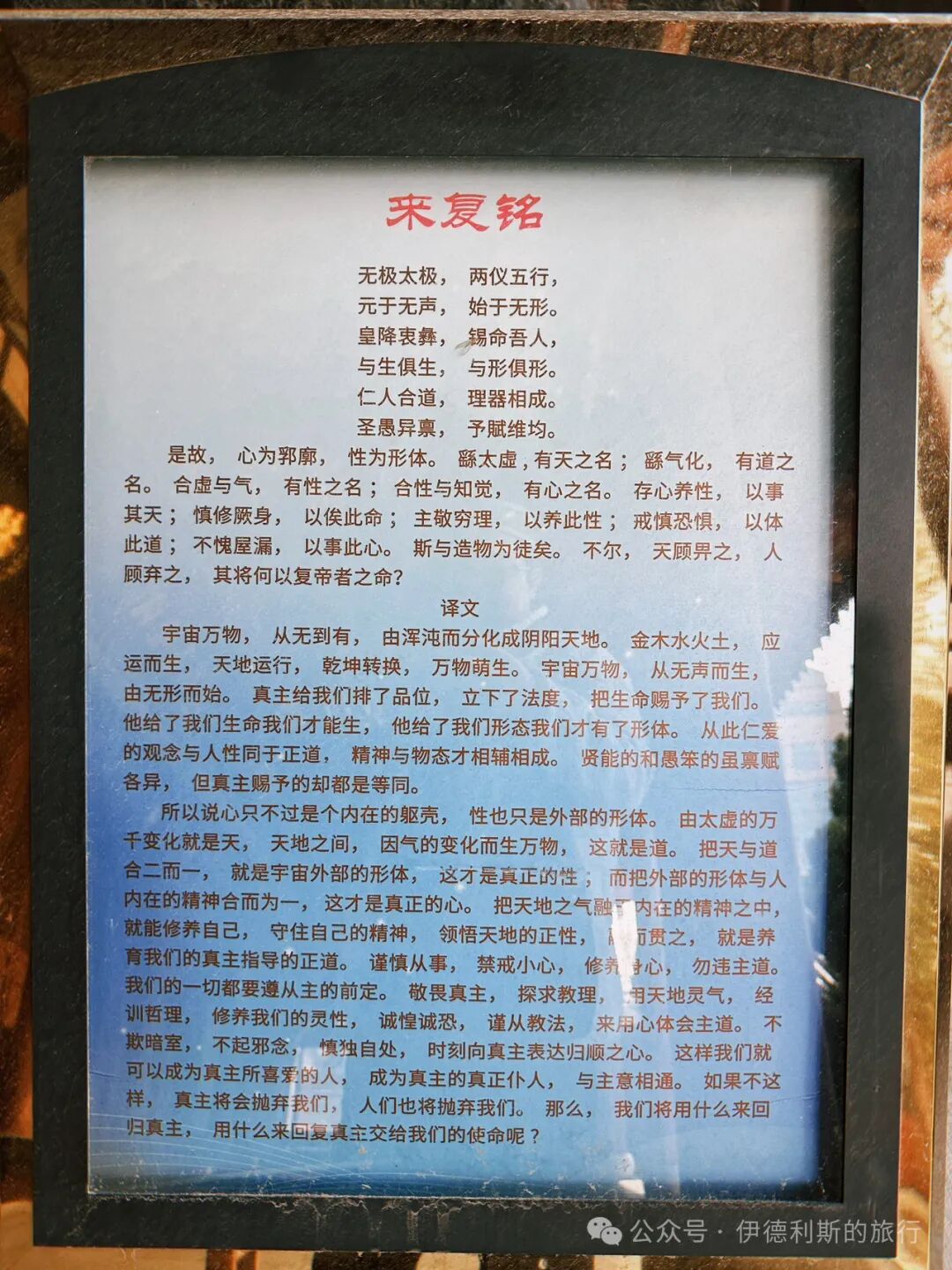
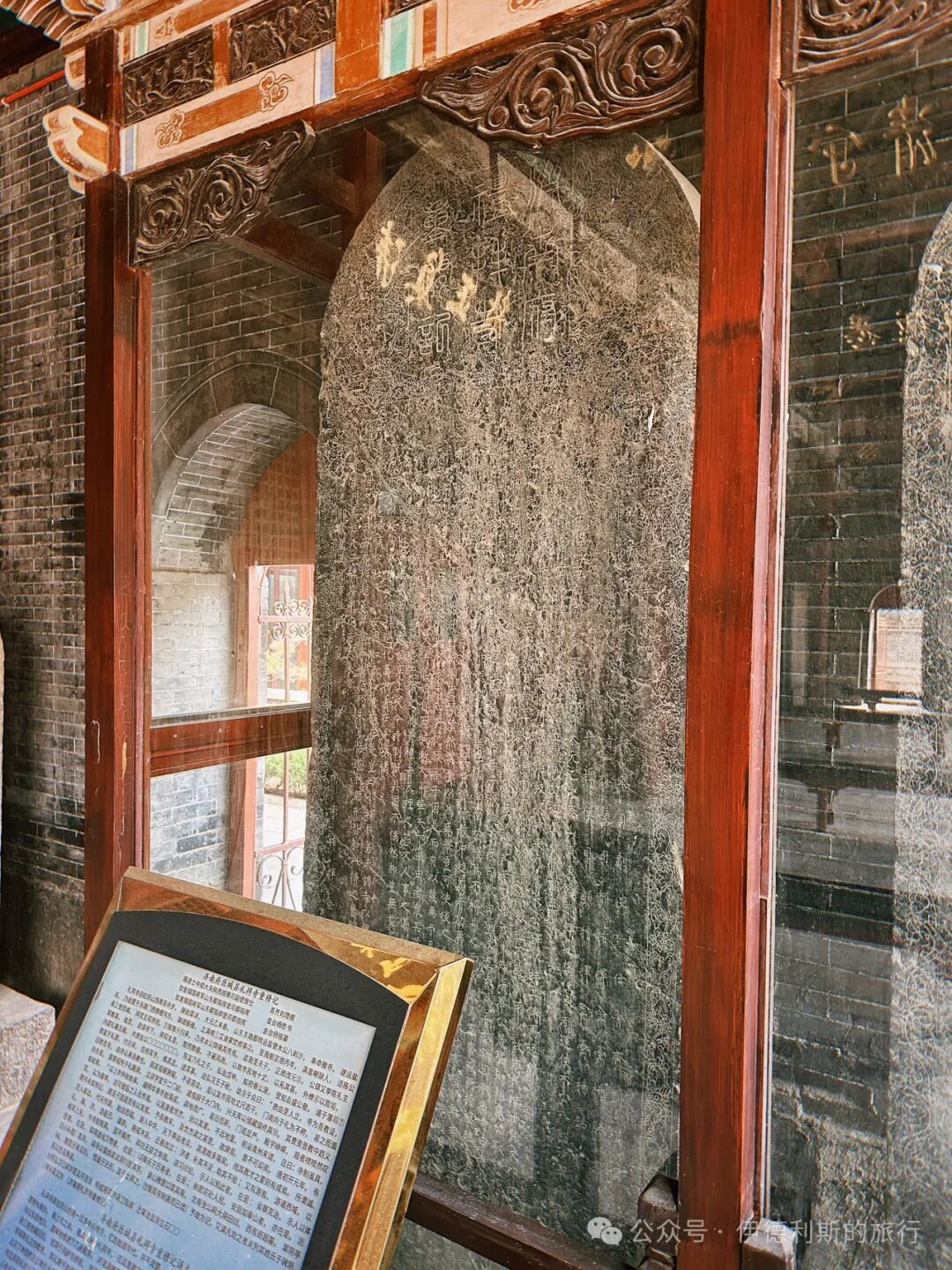
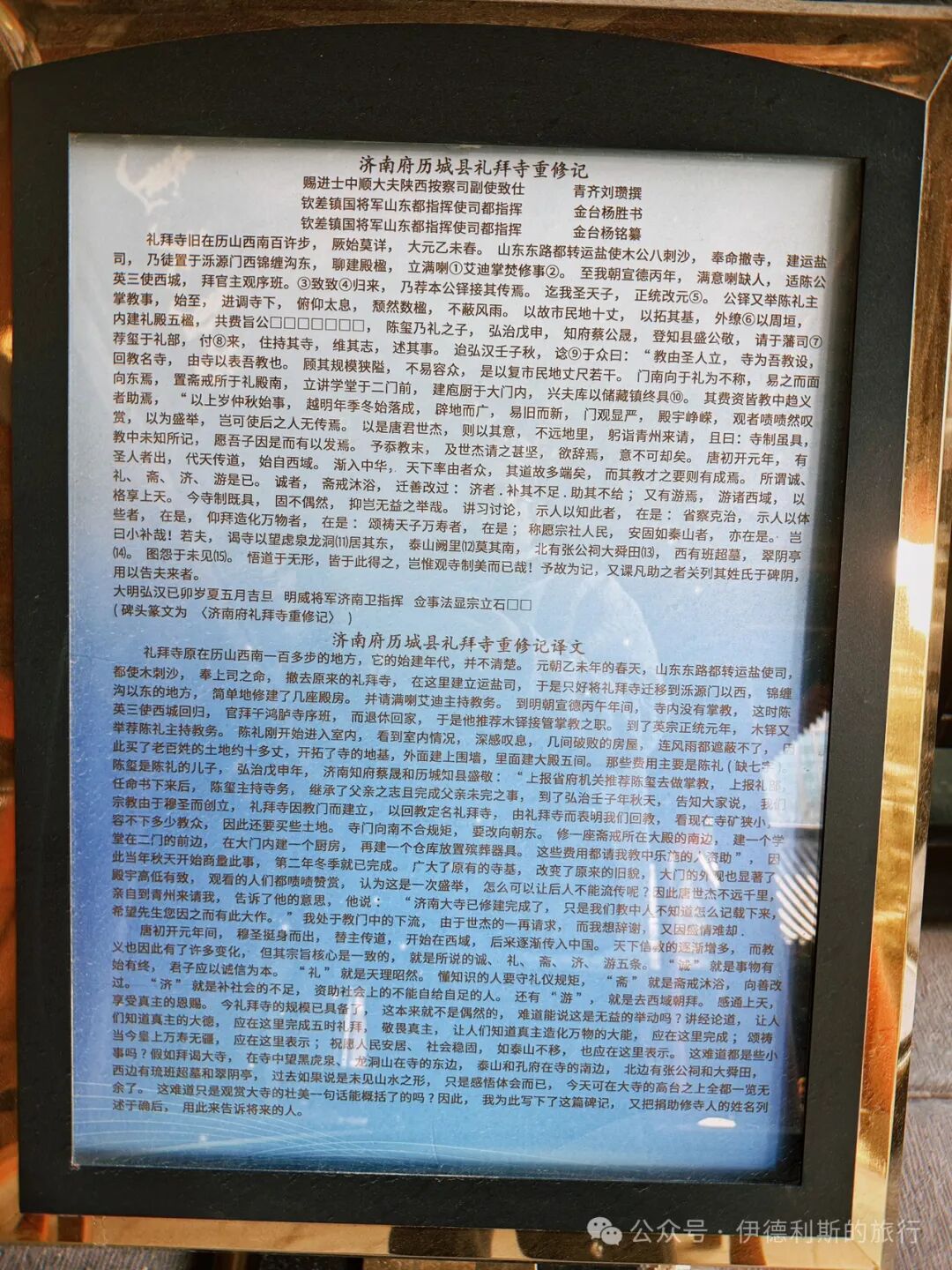
On the north side of the front porch of the South Great Mosque are the two most important steles in the mosque: the "Laifu Ming" and the "Record of the Repair of the Mosque in Licheng County, Jinan Prefecture." They have a protective cover and display boards explaining the content, though the original text is hard to see through the glass.
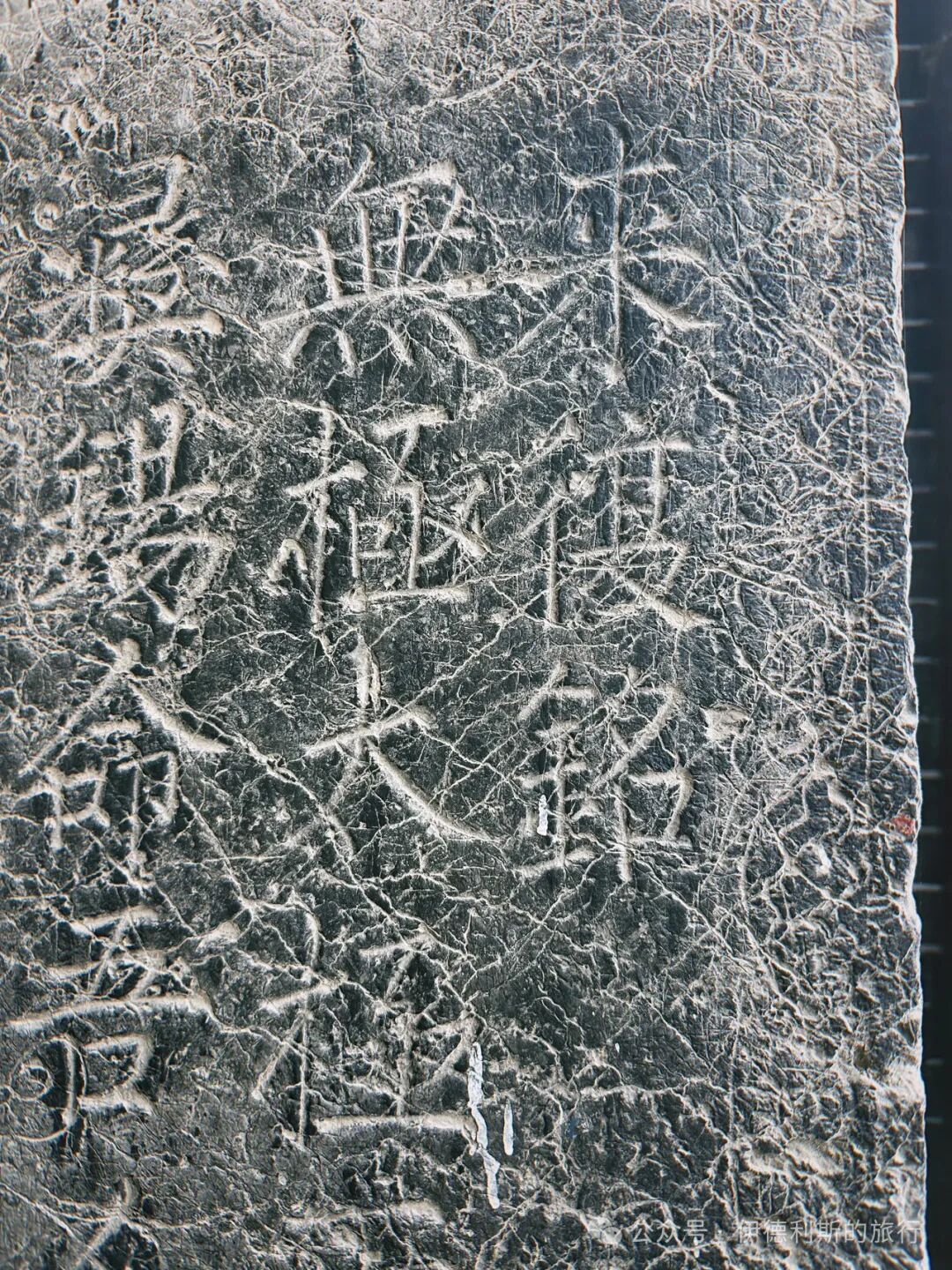
The "Laifu Ming" was written in 1528 (Ming-Jiajing seventh year) by Chen Si, the leader of the South Great Mosque. His great-grandfather, Chen Ying, was a diplomat in the early Ming Dynasty who traveled to the Western Regions three times and worked in the Court of Imperial Entertainments. His descendants served as leaders of the South Great Mosque for over a hundred years. The "Laifu Ming" is the first Chinese-language stele written by a mosque leader. It is also the first work in China to combine Islamic teachings with Song and Ming Neo-Confucianism, starting the tradition of interpreting scripture through Confucianism in the late Ming and early Qing dynasties. It has very high historical and philosophical value.
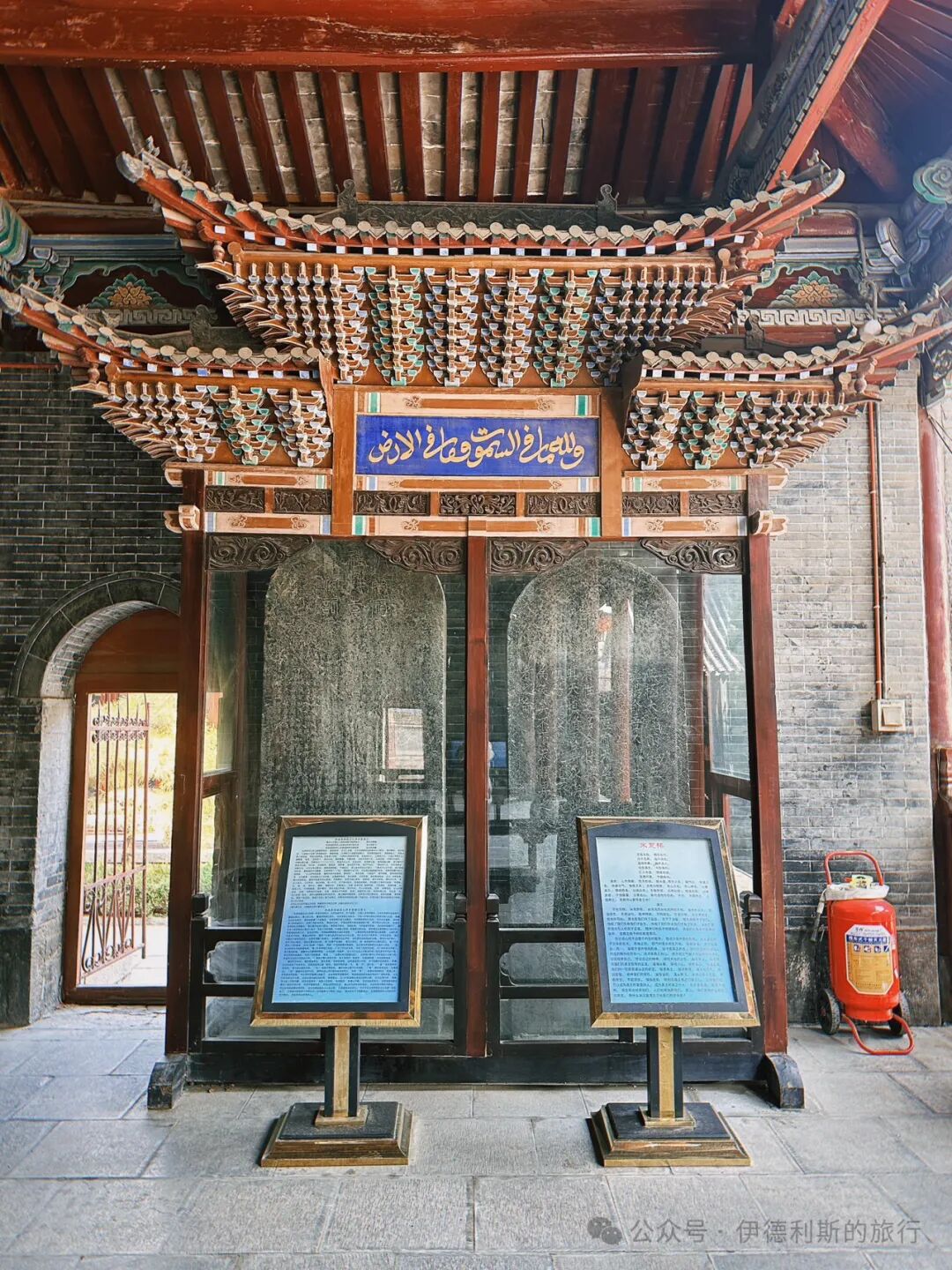
The "Record of the Repair of the Mosque in Licheng County, Jinan Prefecture" was carved in 1495 (Ming-Hongzhi eighth year) and is the earliest religious stone tablet in Jinan. The inscription records that the South Great Mosque moved from Wumanla Lane at the east gate of Jinan to the west gate in 1295 (Yuan-Yuanzhen first year). It was small at first, then expanded by Chen Li, the son of Chen Ying, in 1436 (Ming-Zhengtong first year), and expanded again by Chen Xi in 1492 (Hongzhi eighth year). The stele records these two expansion processes.
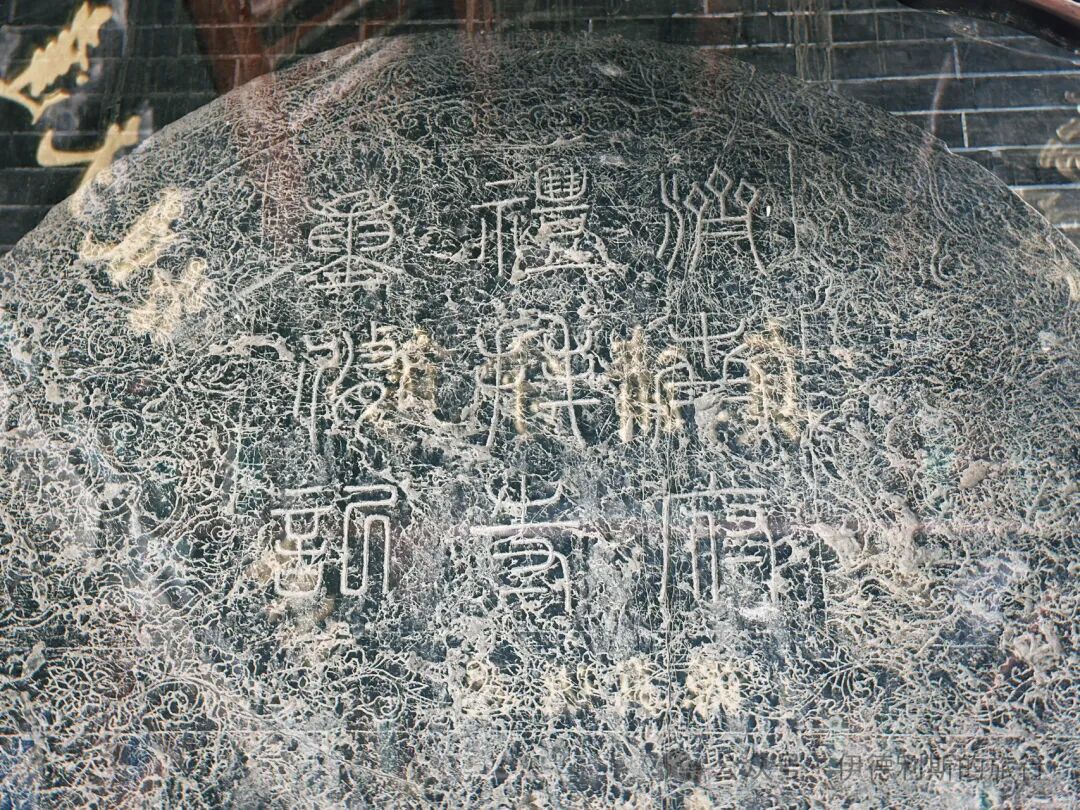
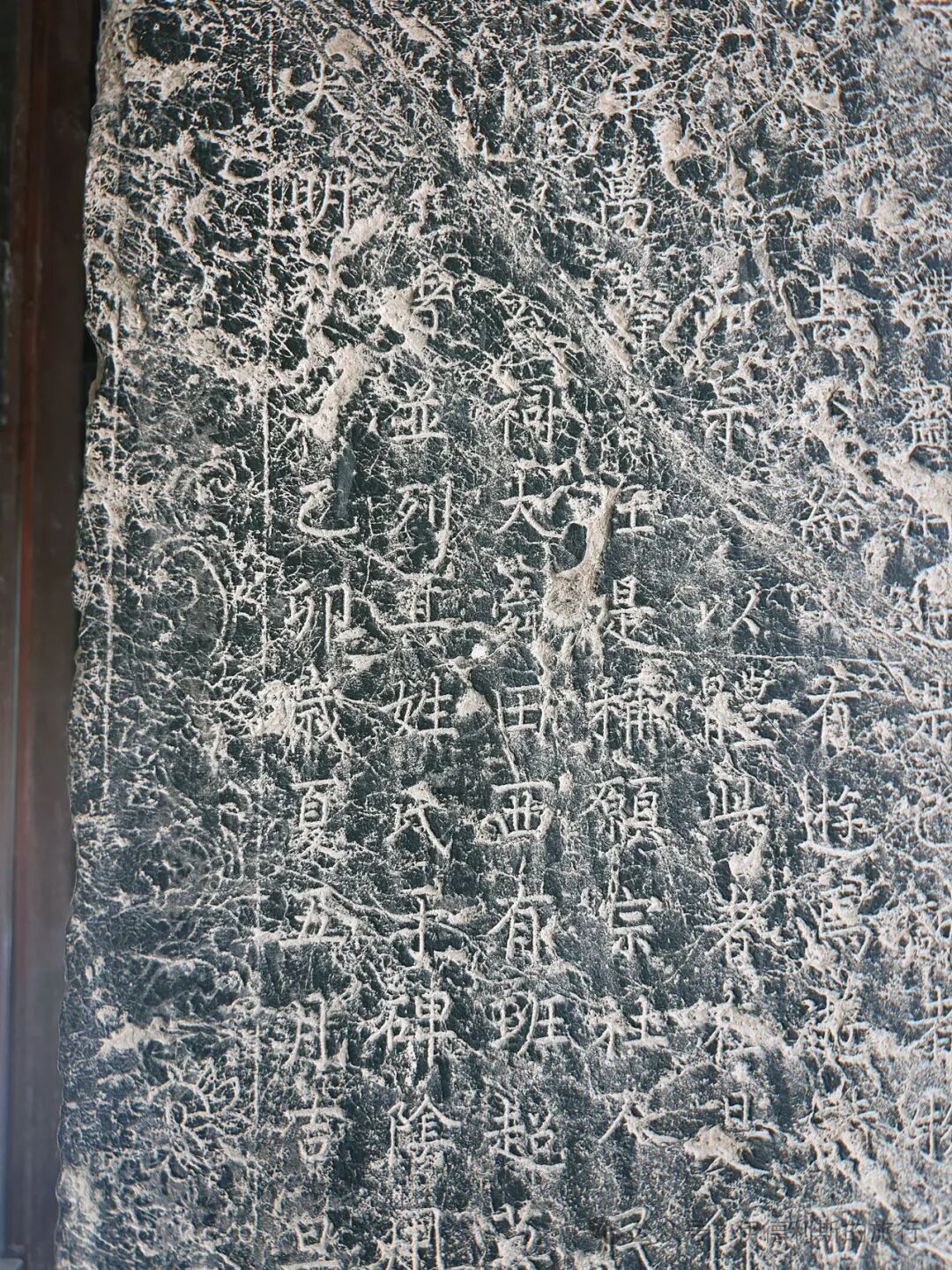
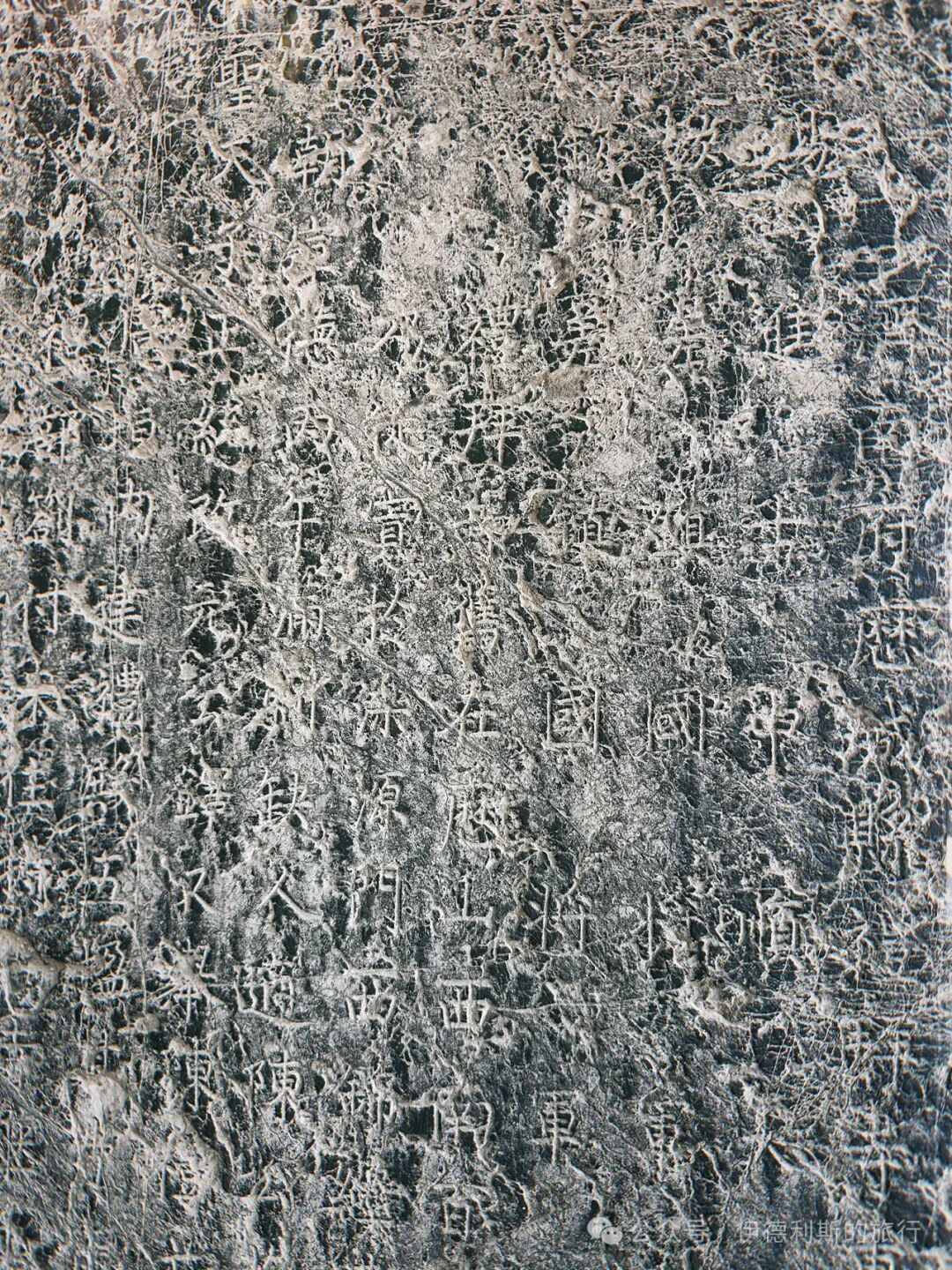
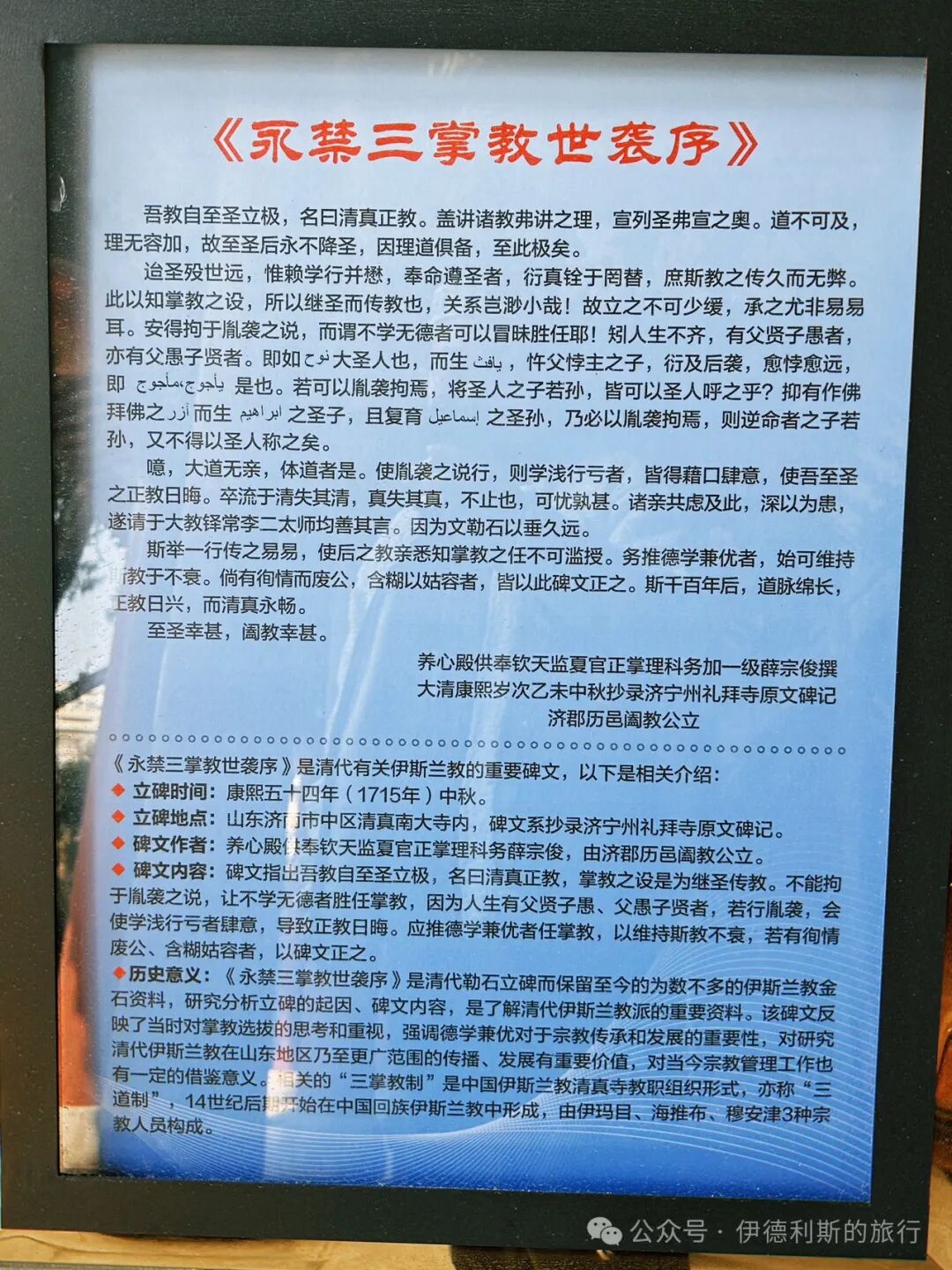
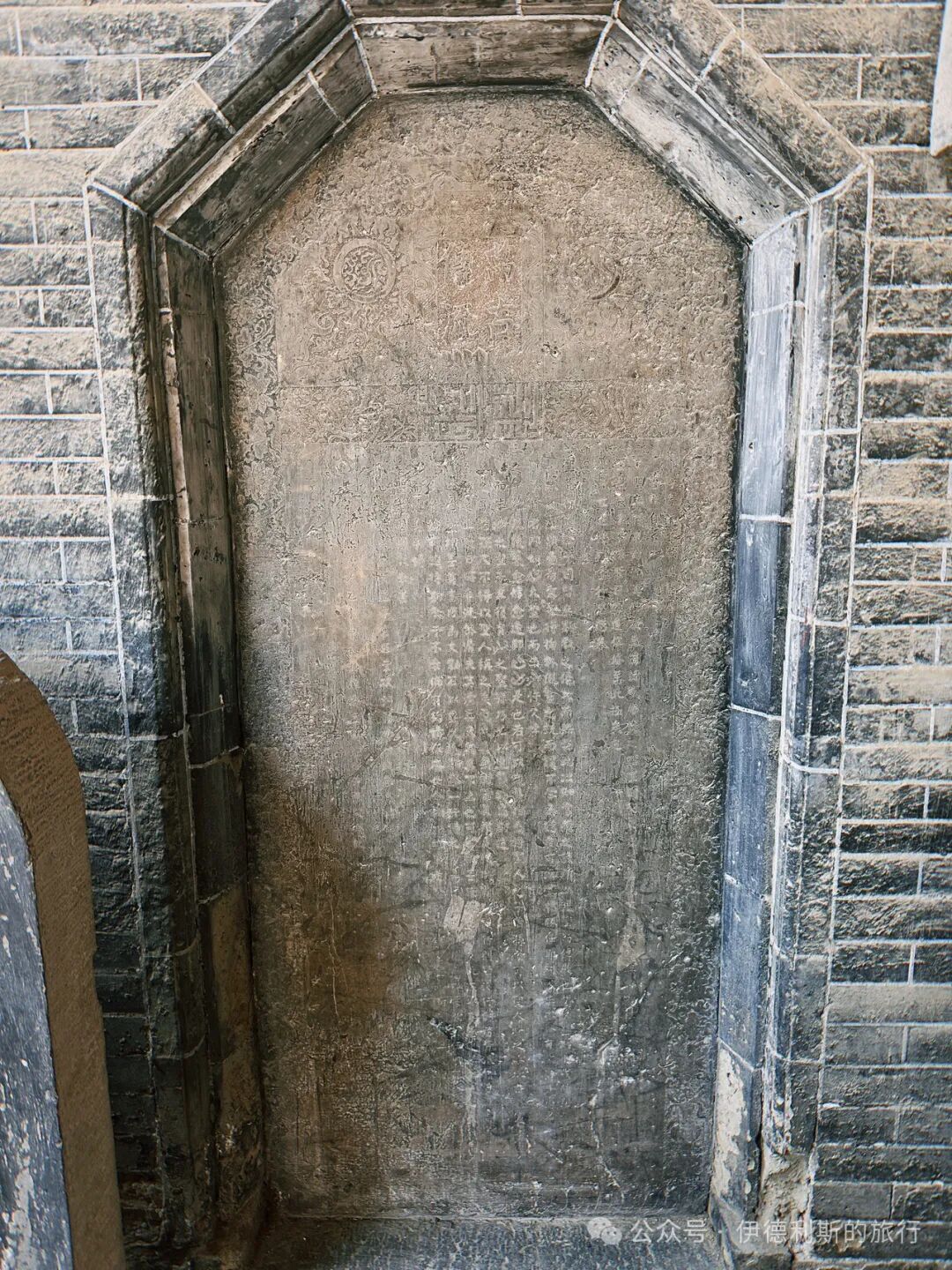
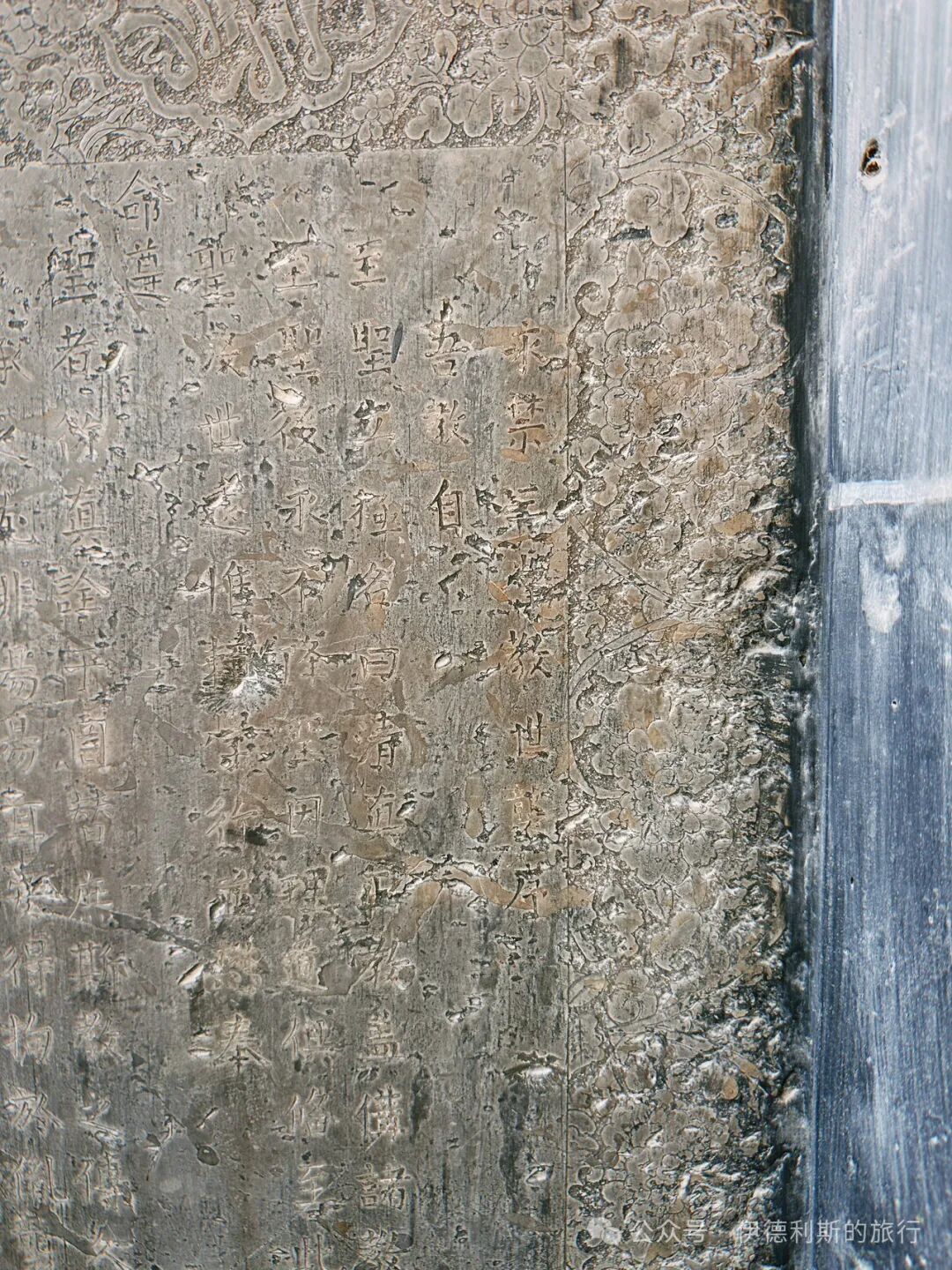
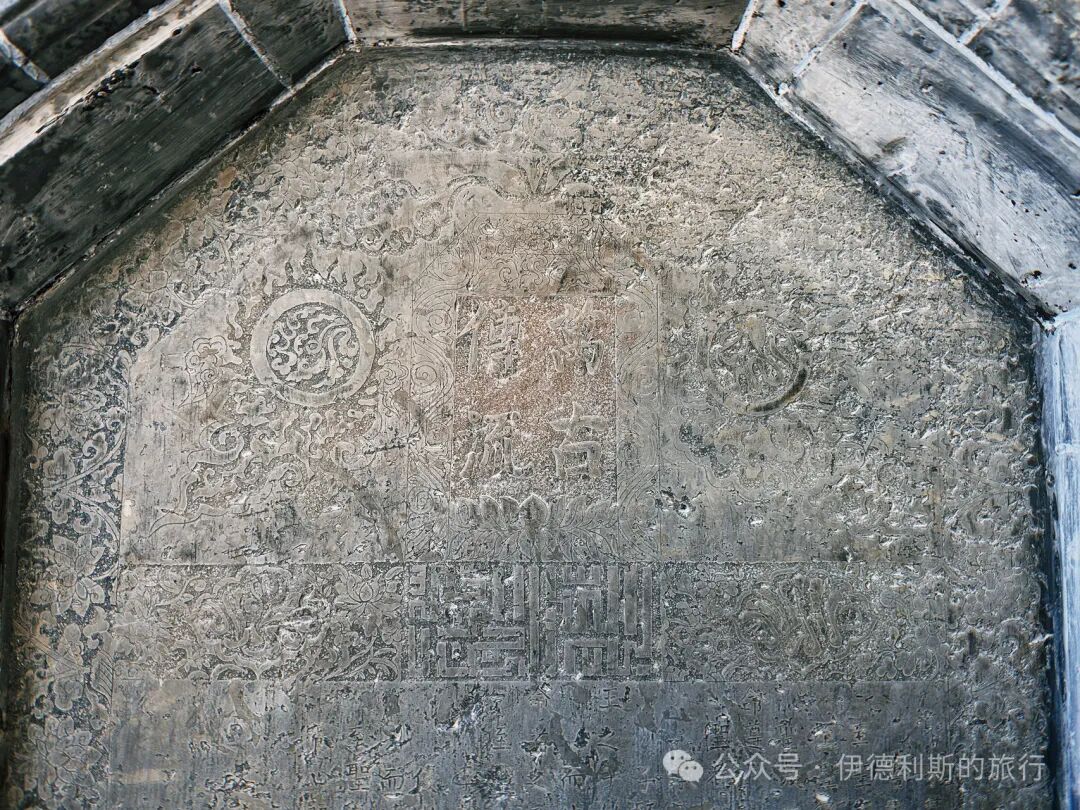
The Preface to the Permanent Prohibition of Hereditary Succession for the Three Religious Leaders was carved in 1715 (the 54th year of the Qianlong reign). The text was copied from a mosque (libaisi) in Jining Prefecture. Since the original Jining stele no longer exists, the Jinan stele has become the most important stone inscription representing the theological views of the Shandong school of scripture hall education (jingtang jiaoyu). The stele was written by Xue Zongjun, an official in the Imperial Board of Astronomy (qintianjian) who served at the Hall of Mental Cultivation (yangxindian). The text opposes the hereditary system for the three religious leaders and advocates for a selection system based on merit and ability. The text mentions that the author consulted with the founders of the Shandong school, teachers Chang Zhimei and Li Yanling, and received their approval for these views.
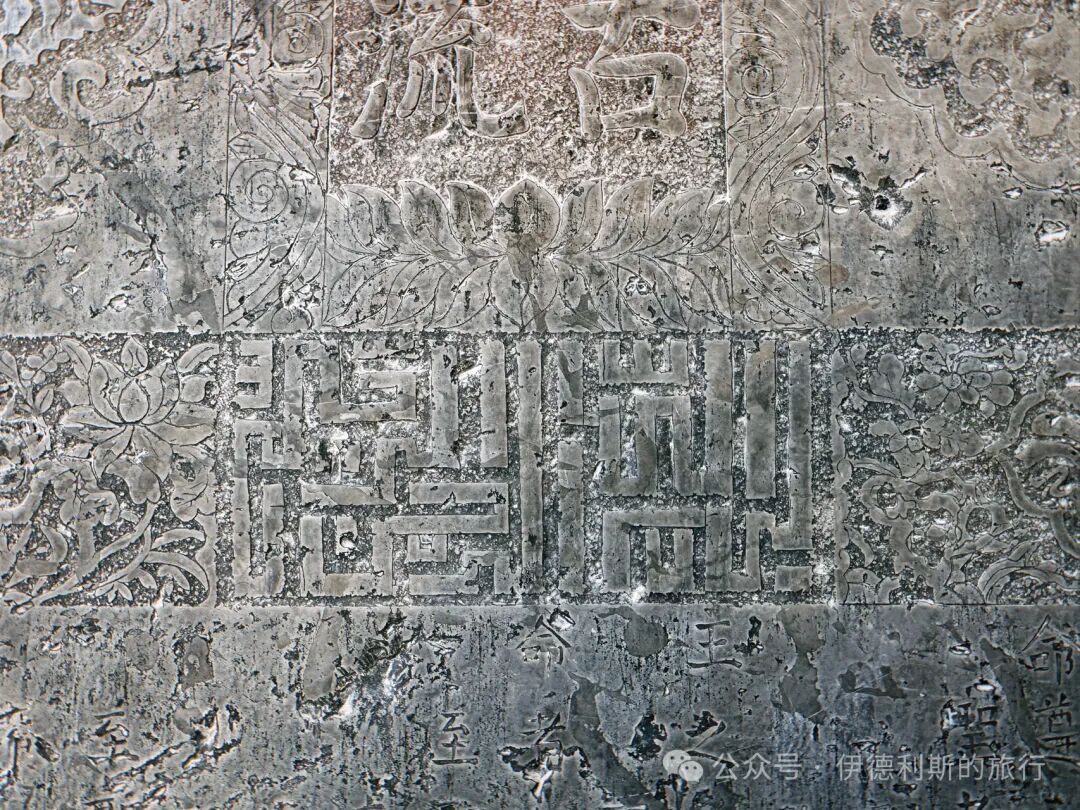
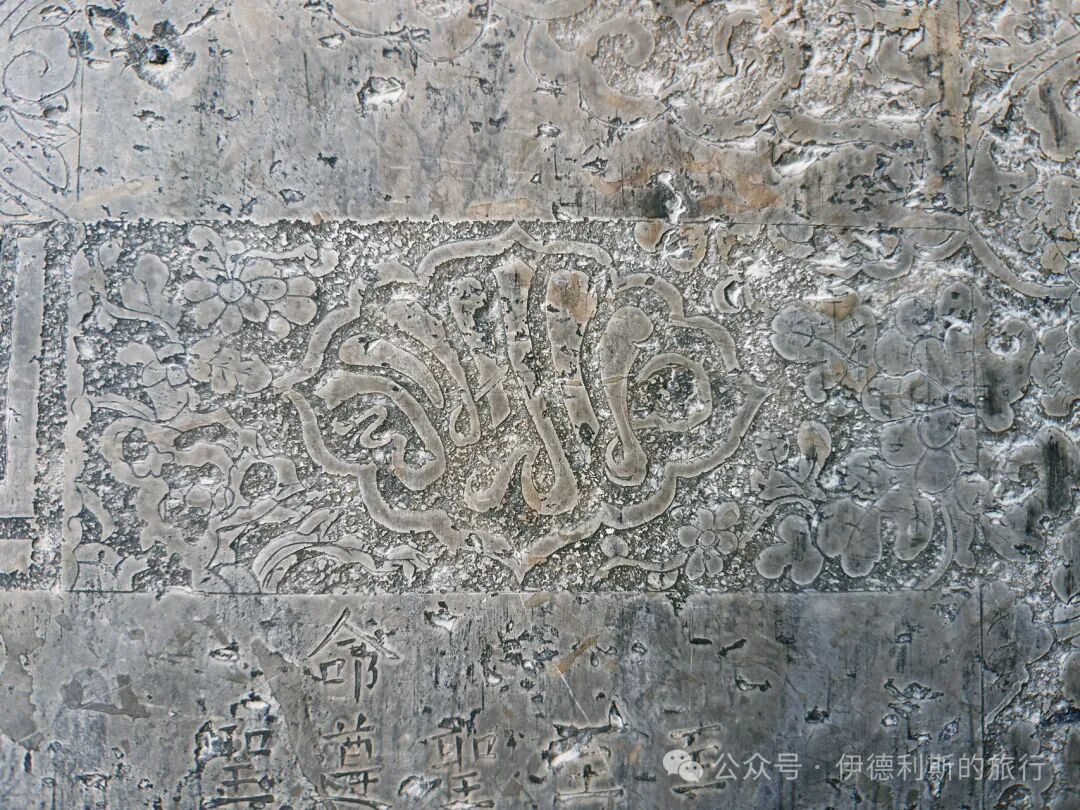
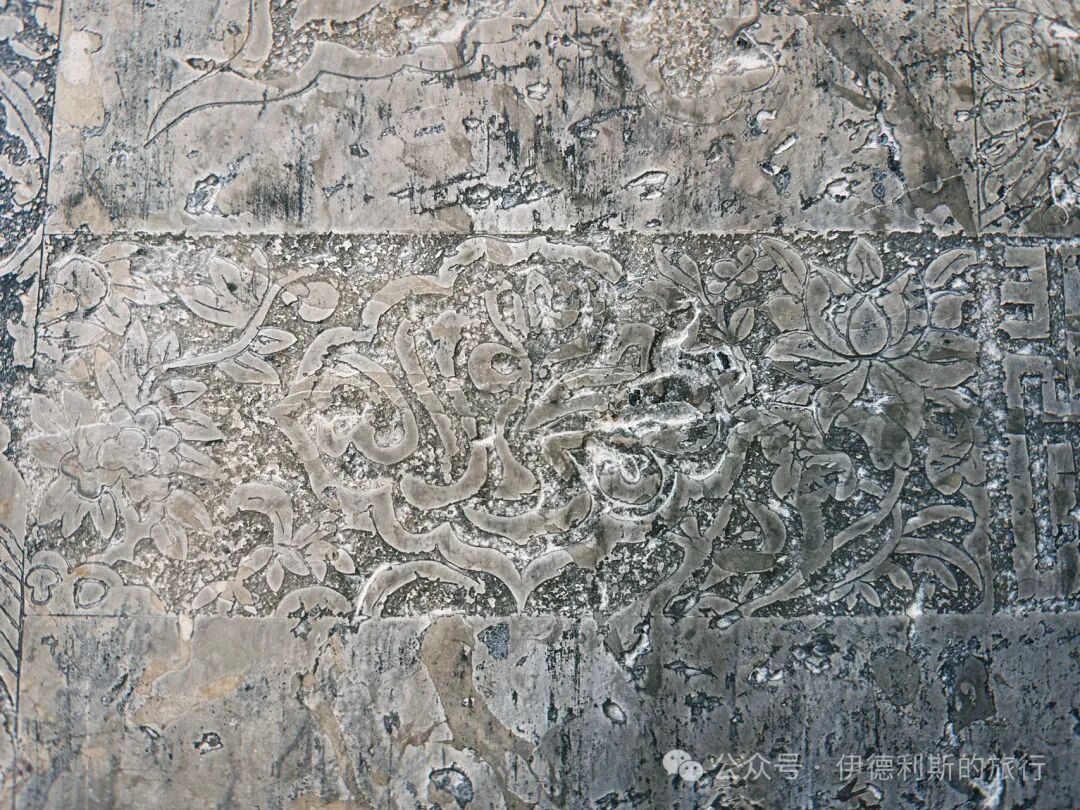
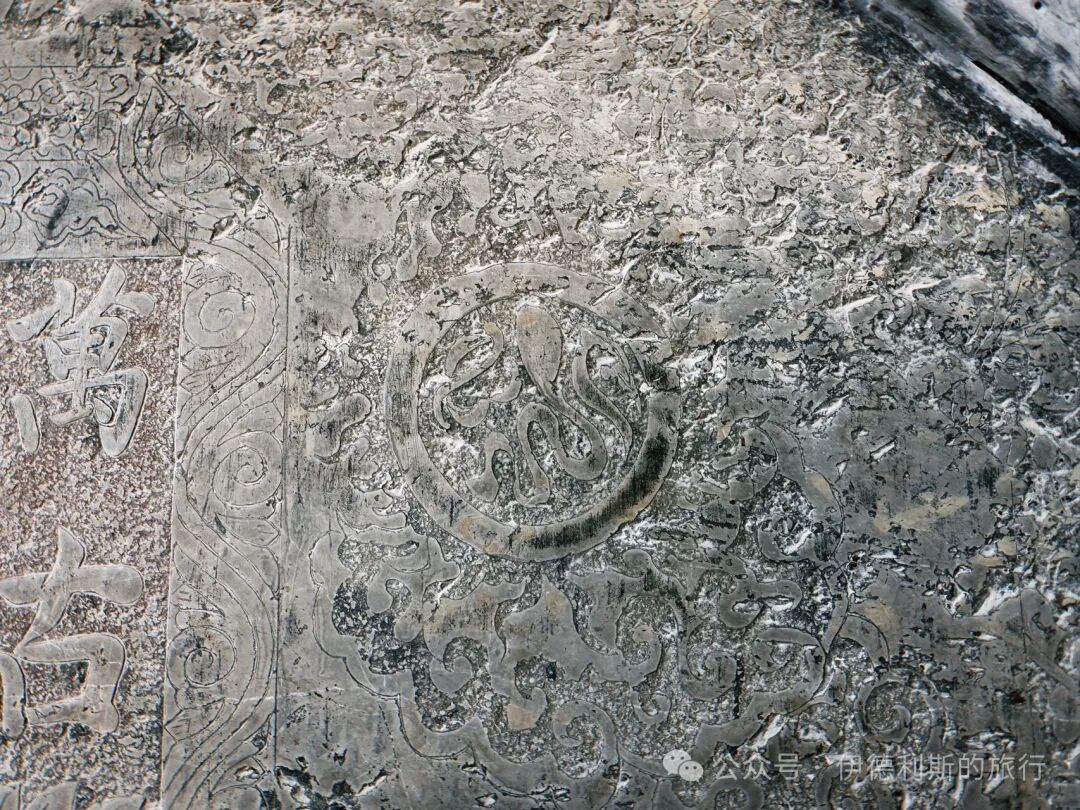
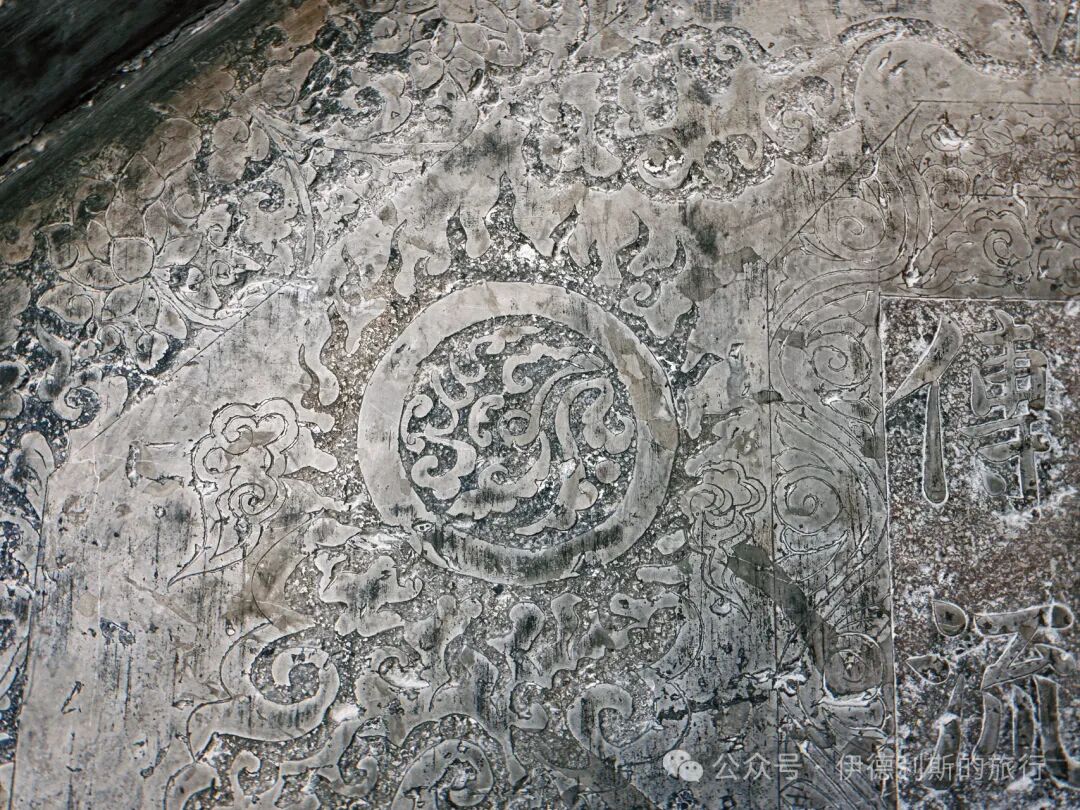
The 1810 Record of Rebuilding the Mosque (libaisi). This records how the head of the Black Sect (hei jiaozhang) worked tirelessly to raise funds from all directions. It took ten years to gather materials and start construction, and the project was completed in five months.
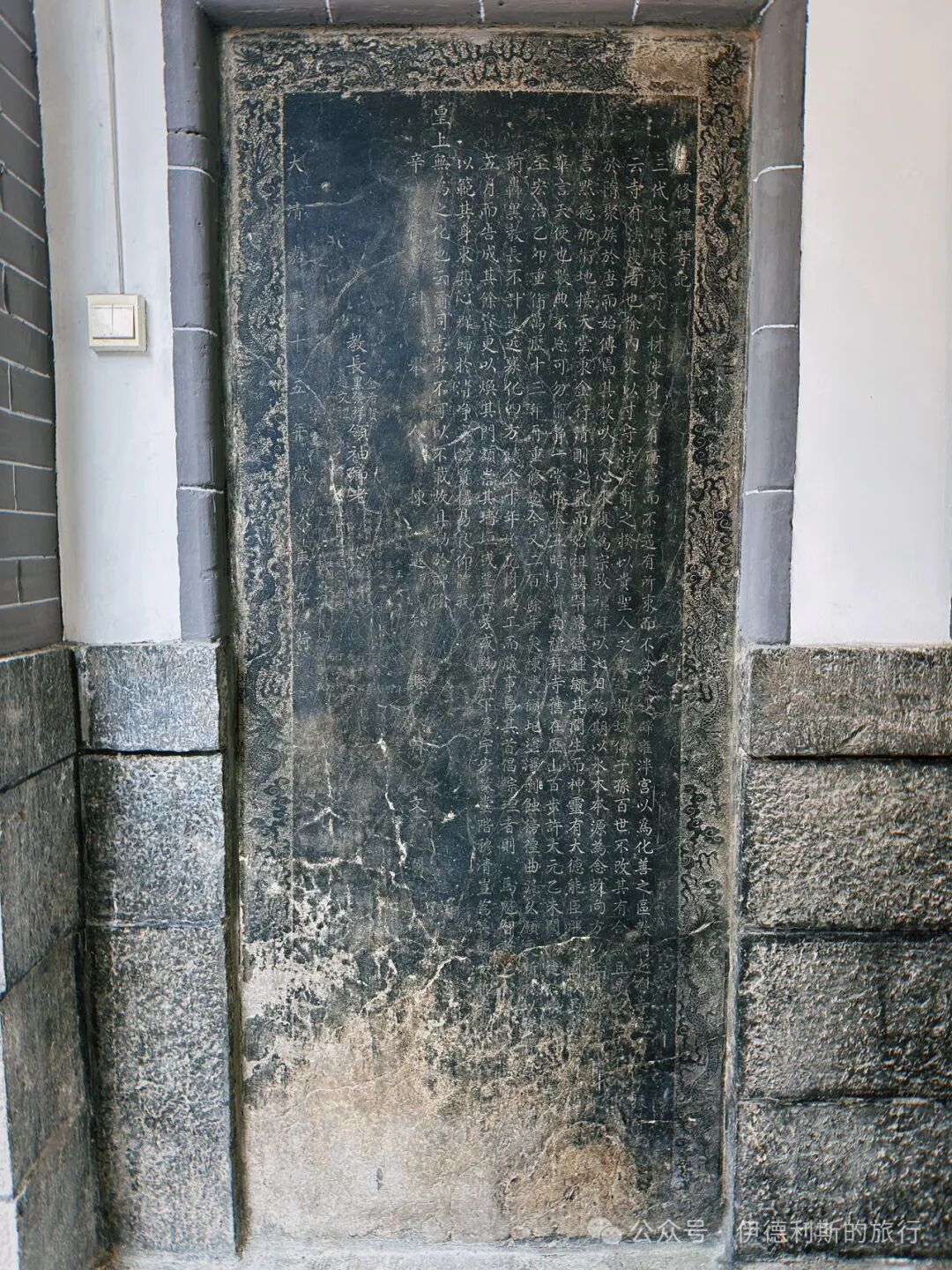
The 1845 Stele of Ding Songnian Donating Storefronts. This records how Ding Songnian bought storefronts and donated them to the mosque, with the rent used to cover the needs of the bathhouse.
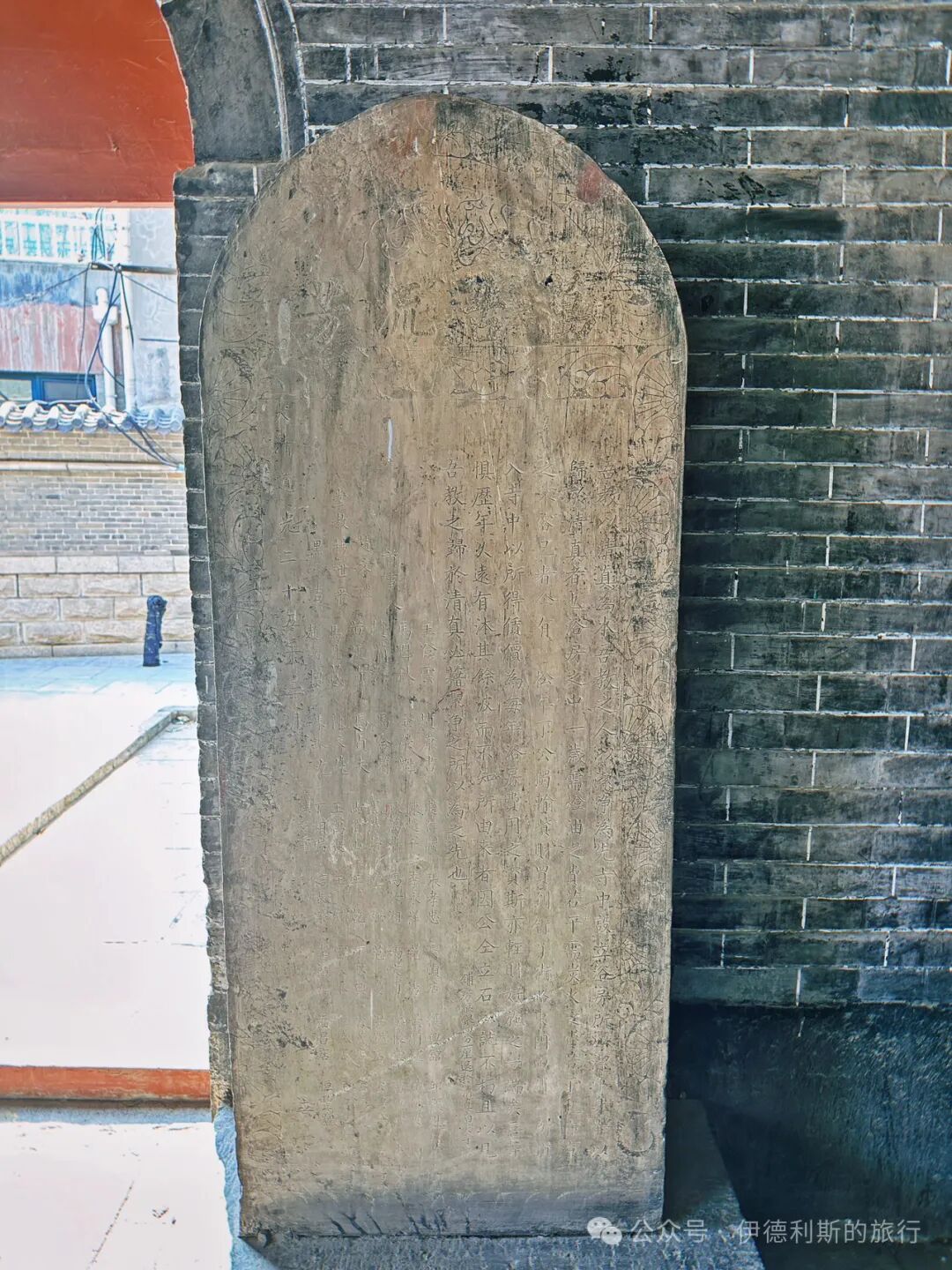
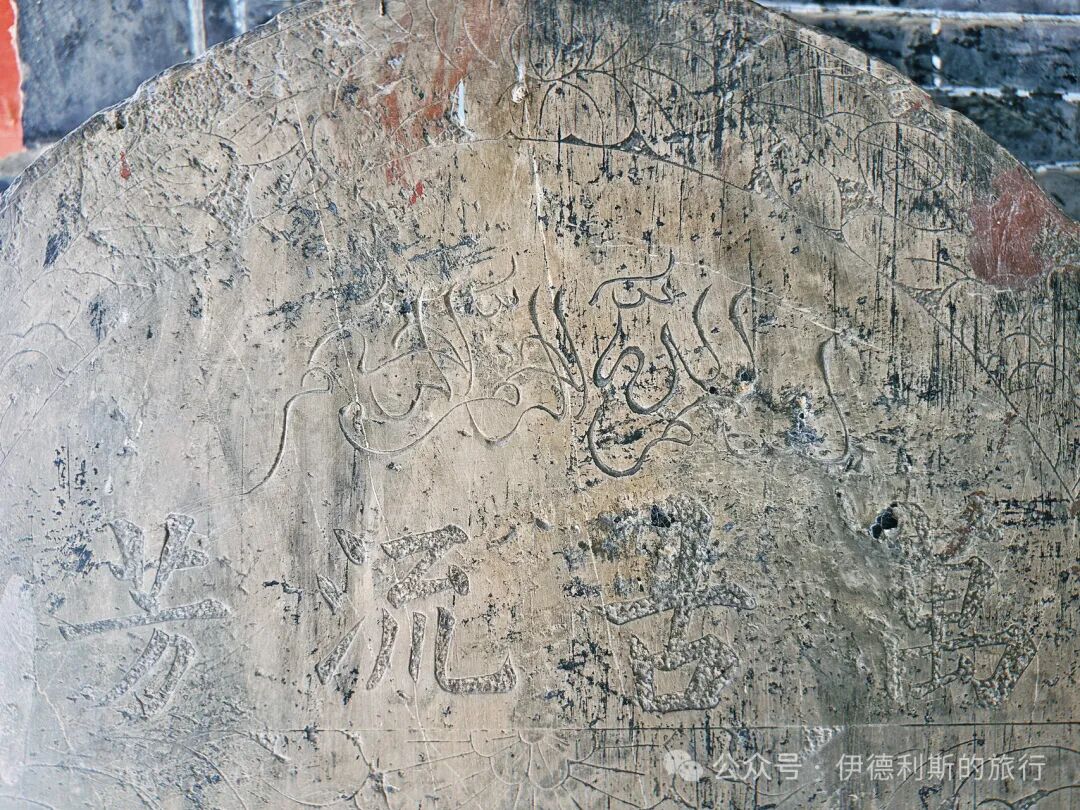
The 1872 Stele of the Zuo Ma Family Donating Land. This records how the Zuo Ma family donated farmland in Chenjiazhuang to the mosque's school to support grave visits, scripture recitation, and the maintenance of the imam (ahong) and students.
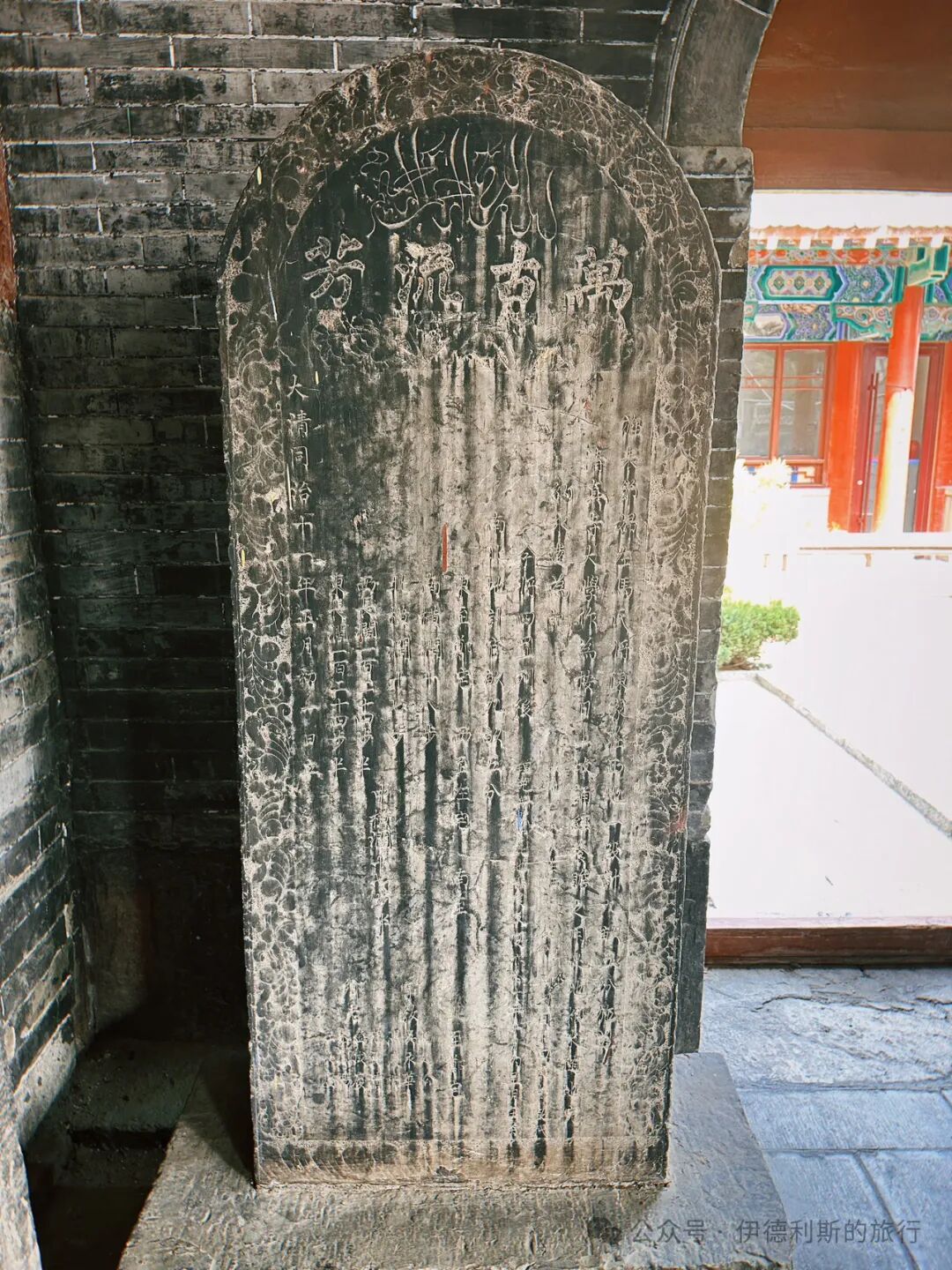
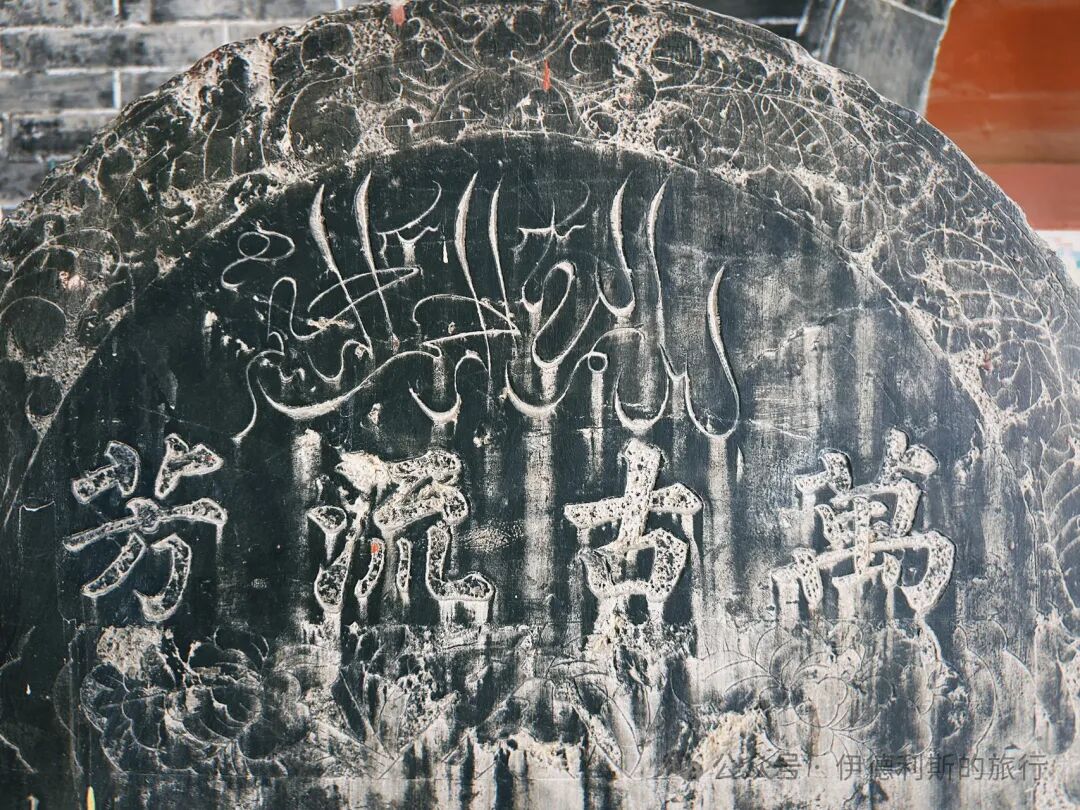
The 1921 Stele Record of Rebuilding the Two Lecture Halls of the Main Hall.
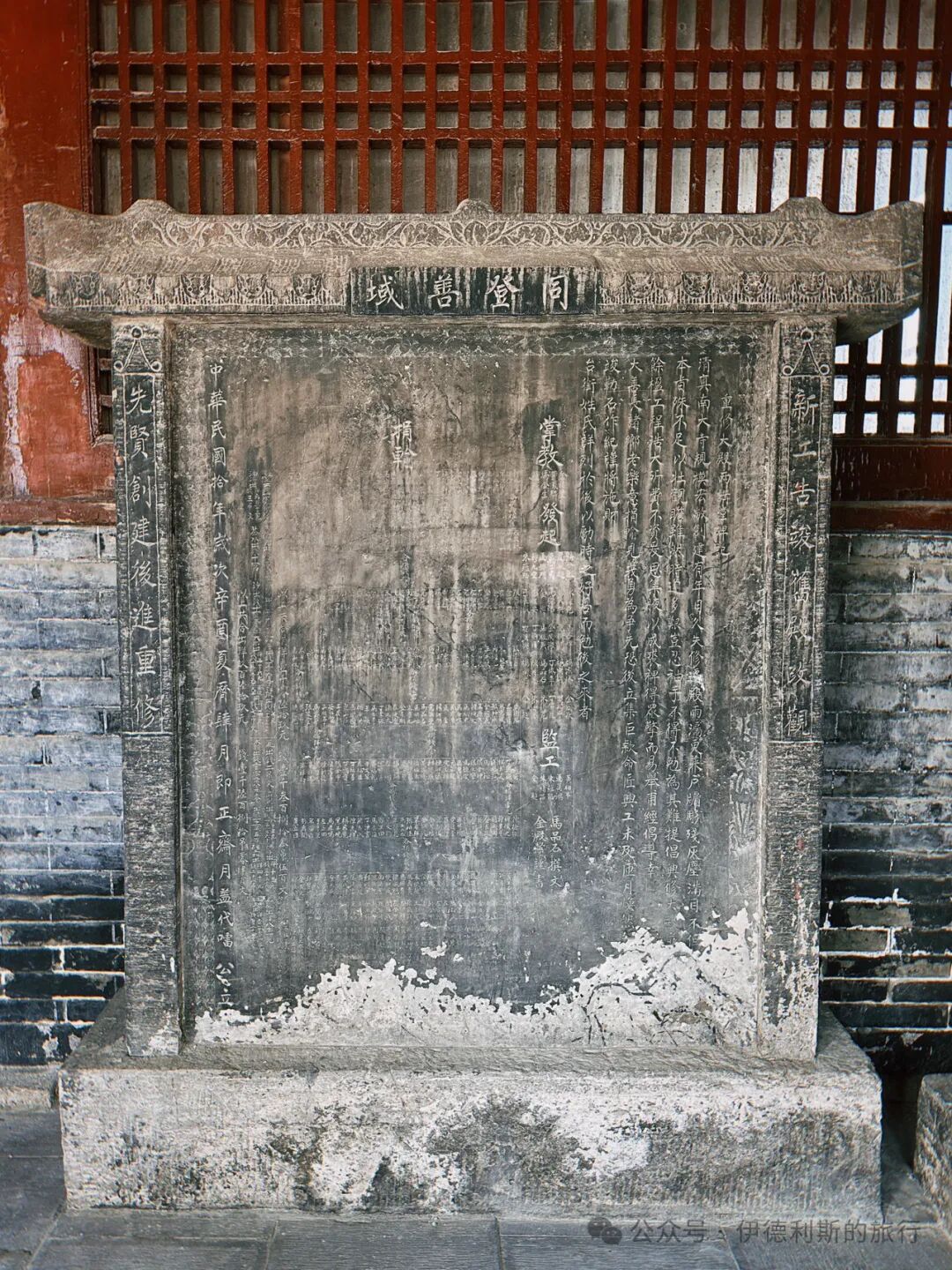
The 1890 Stele of Wang Qingchun's Aunt Donating Land. This records how Wang Qingchun donated land on behalf of his aunt.
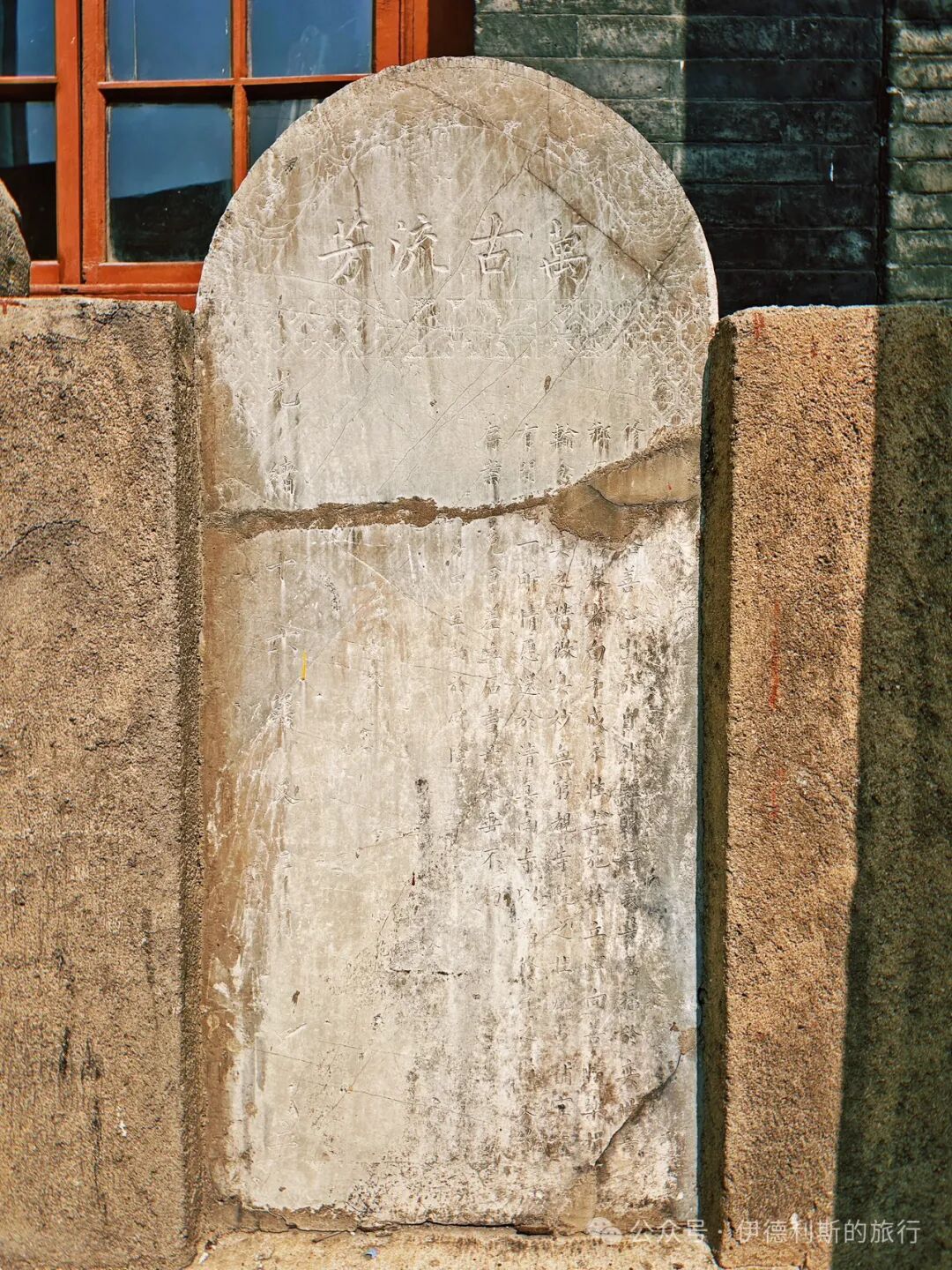
The 1914 Stele Record of Rebuilding the Pillars, Wrapped Porch, and Brick Floor Around the Main Hall of the South Mosque.
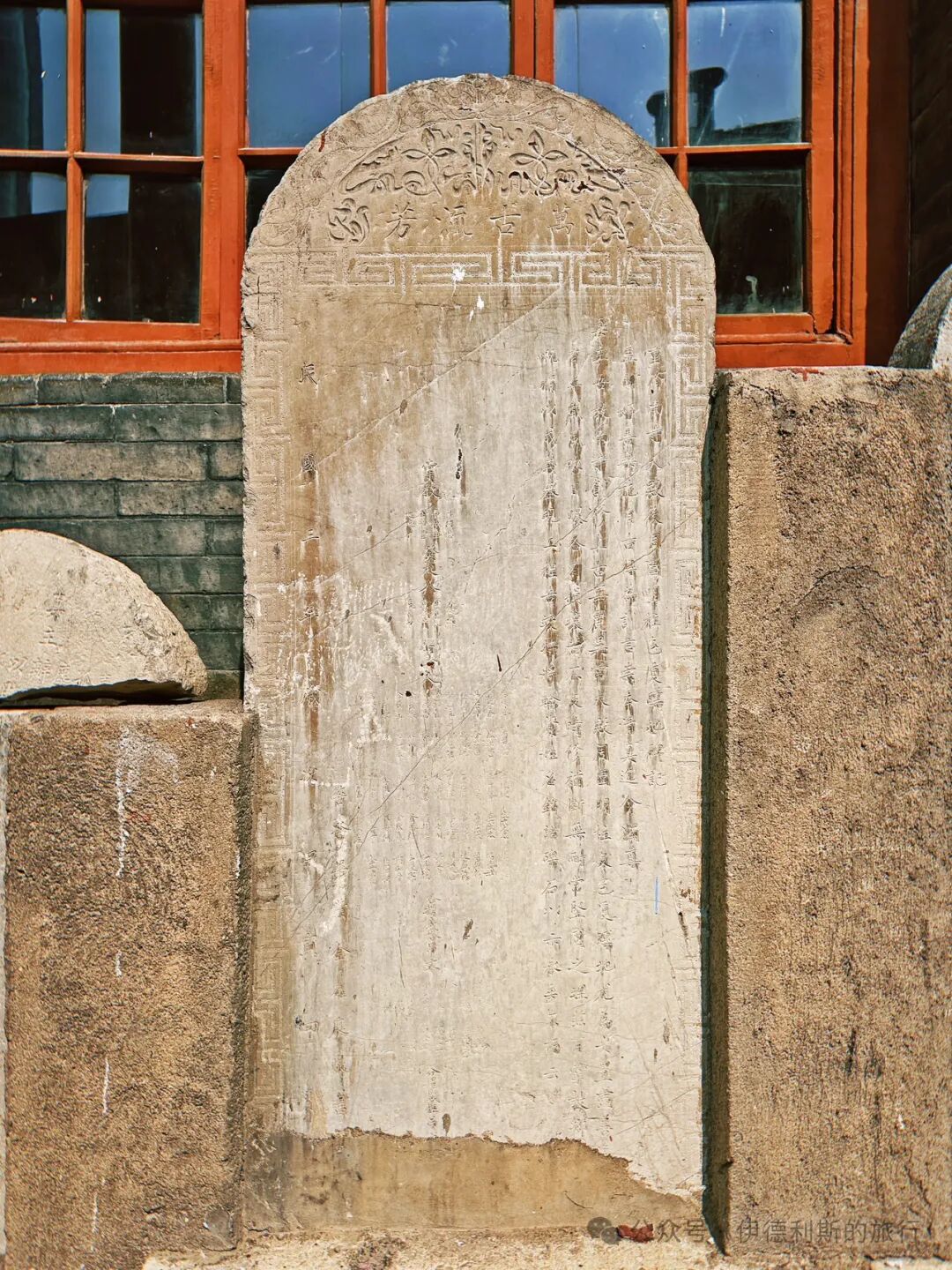
The 1874 Inscription on Rebuilding the Two Lecture Halls. This records the construction of two lecture halls on the left and right sides of the main hall, where people studied and researched theology together after completion.
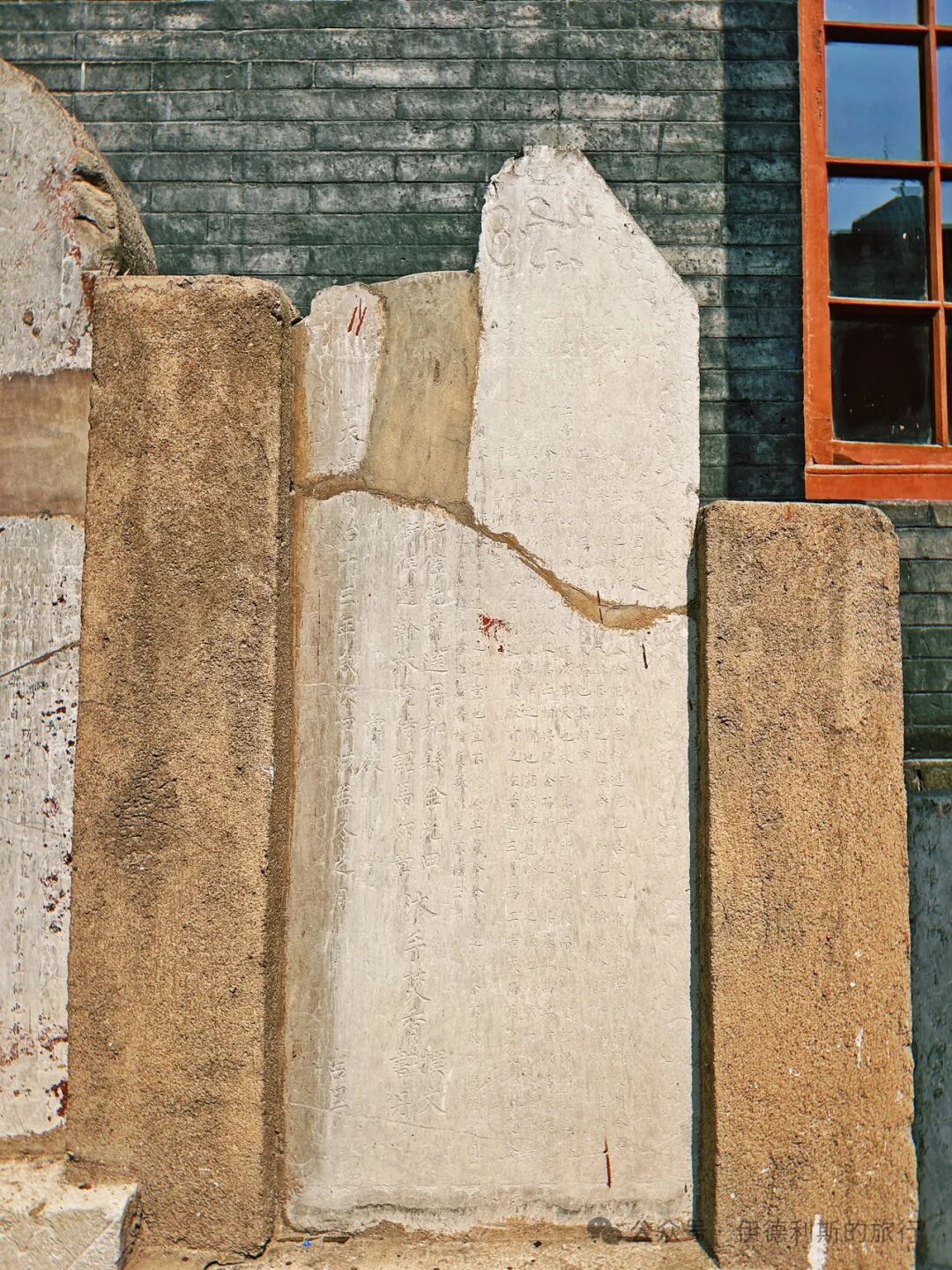
Jinan North Mosque (Beidasi).
During the Kangxi reign, Yang Kuiyuan Baba, a student of Chang Zhimei and a leader at the Jinan South Mosque, went out to collect funds and grain. During this time, an imam (ahong) from the Western Regions passed through the South Mosque and taught from the scriptures he carried. Later, Ren Runzhi Baba returned from the Hajj and brought back many scriptures, beginning to preach at the South Mosque and advocating for following the scriptures and reforming customs (zun jing ge su). After Yang Kuiyuan Baba returned to the South Mosque from his fundraising, he insisted on following ancient traditions and opposed the reforms. This led to him setting up a sorghum-stalk screen in the main hall so that each side could perform their namaz separately. History calls this the conflict between the new practice of 'Ikhwan' (houdusi) and the old practice of 'Gedimu' (gedimu). As the conflict between the new and old factions intensified, Imam Yang Kuiyuan led the followers of the old practice to build the North Mosque at the north end of Yongchang Street. It was continuously rebuilt during the Qianlong, Jiaqing, Daoguang, Guangxu, and Republican periods, eventually reaching its current scale.
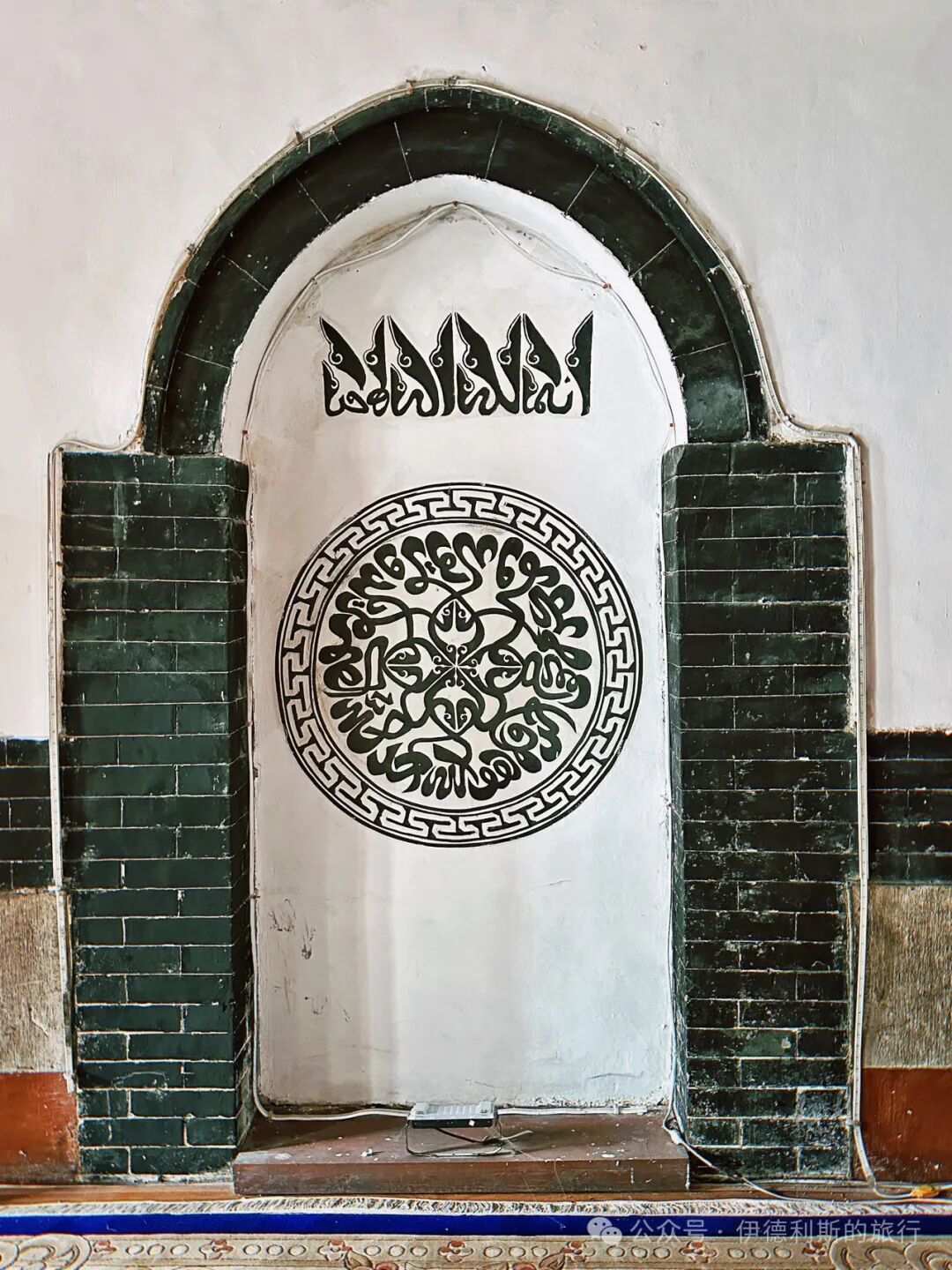
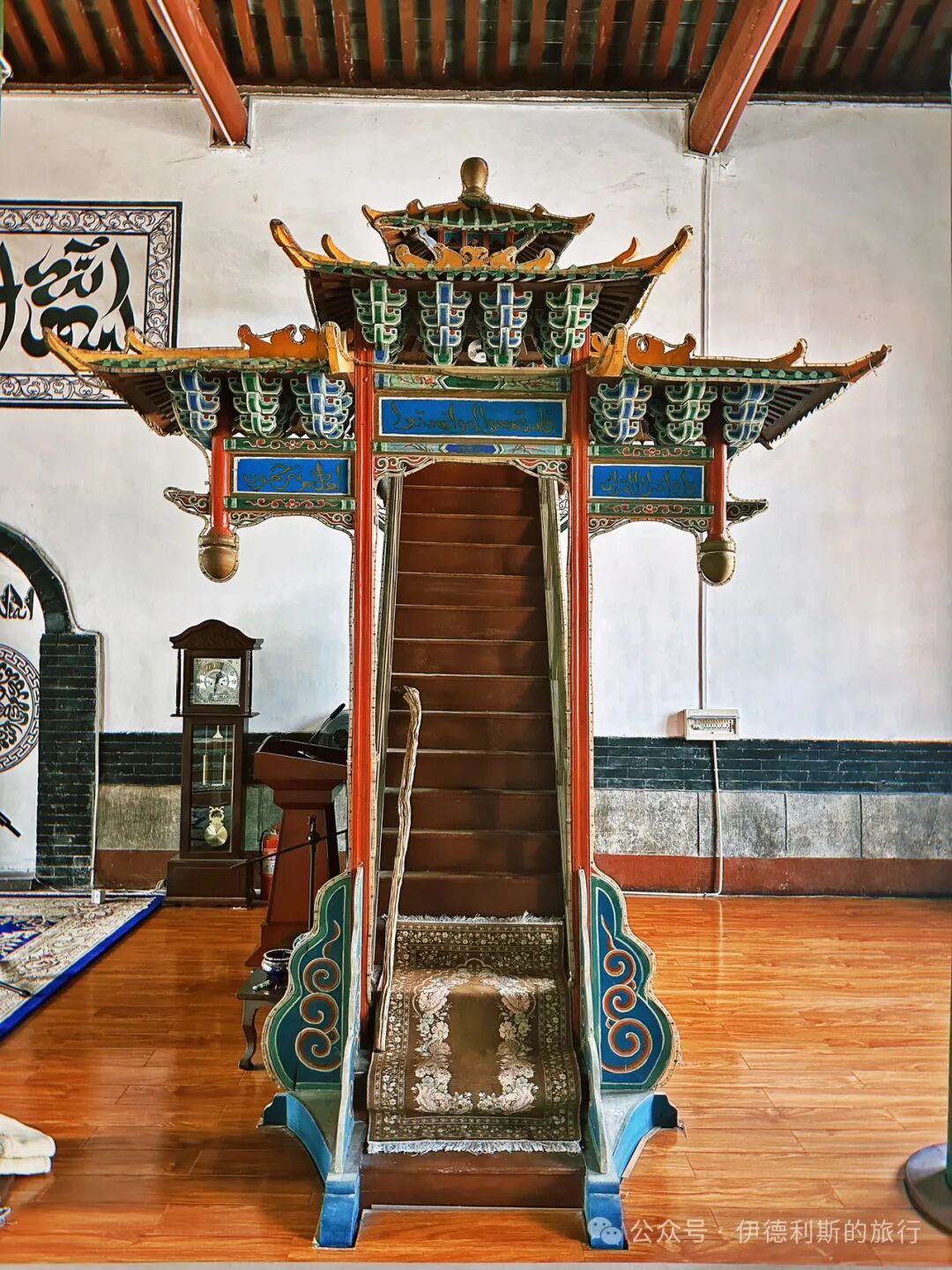
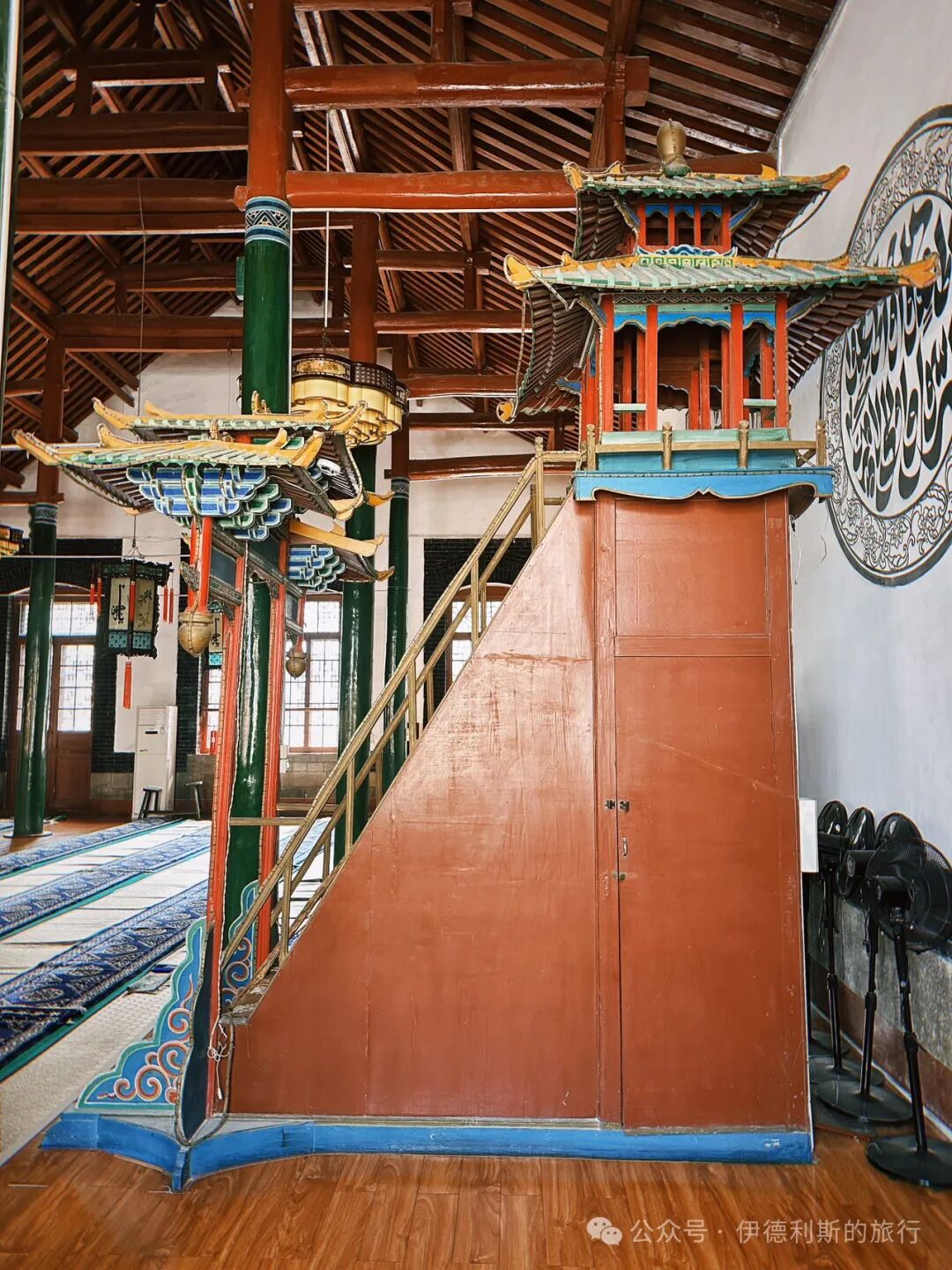
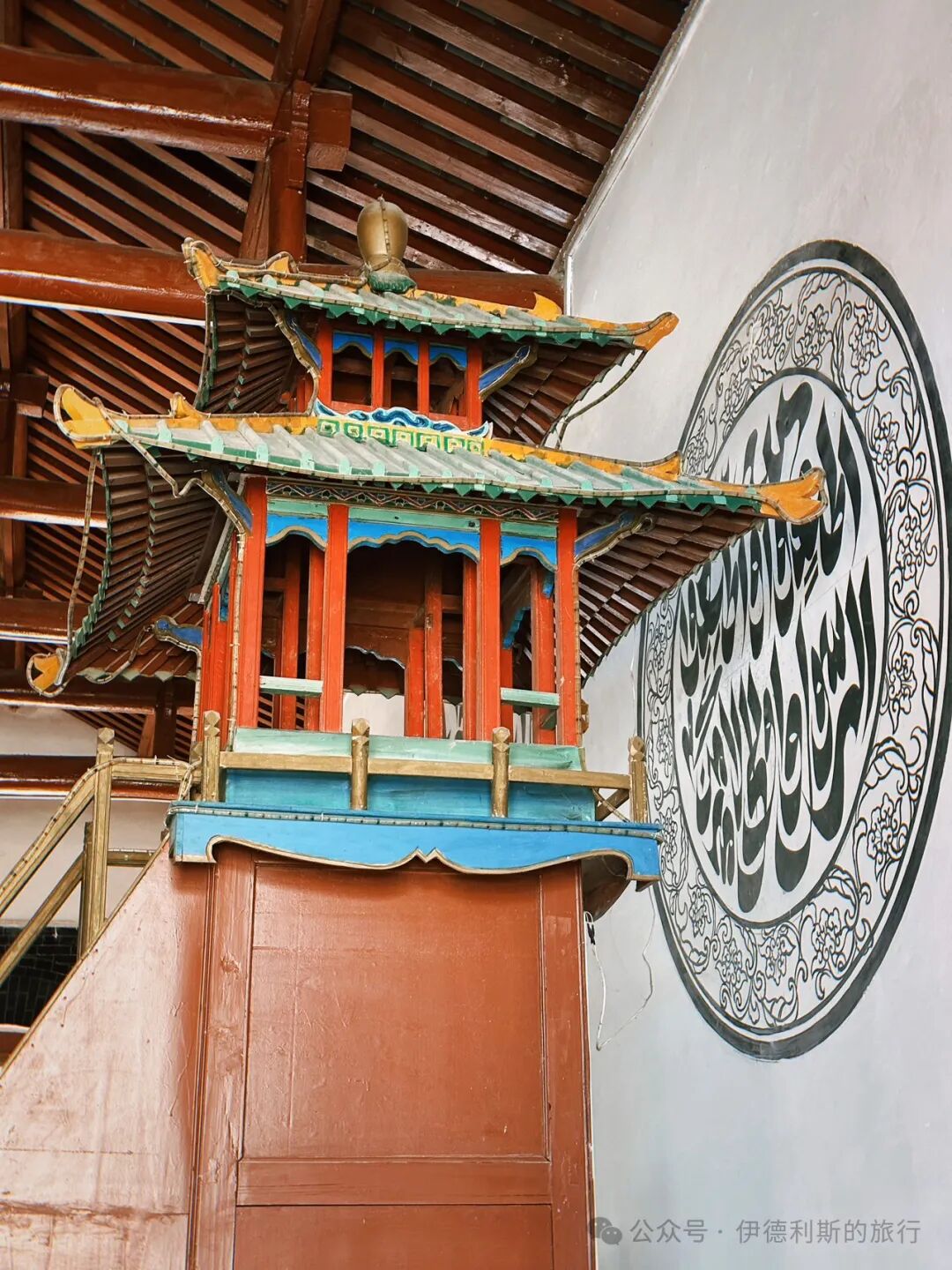
The main hall of the North Mosque is built on a stone foundation. It features a large timber-framed roof with a triple-connected hip-and-gable design and upturned eaves. A pavilion-style moon-viewing tower is built above the middle hall, which can be accessed via stairs inside the hall.
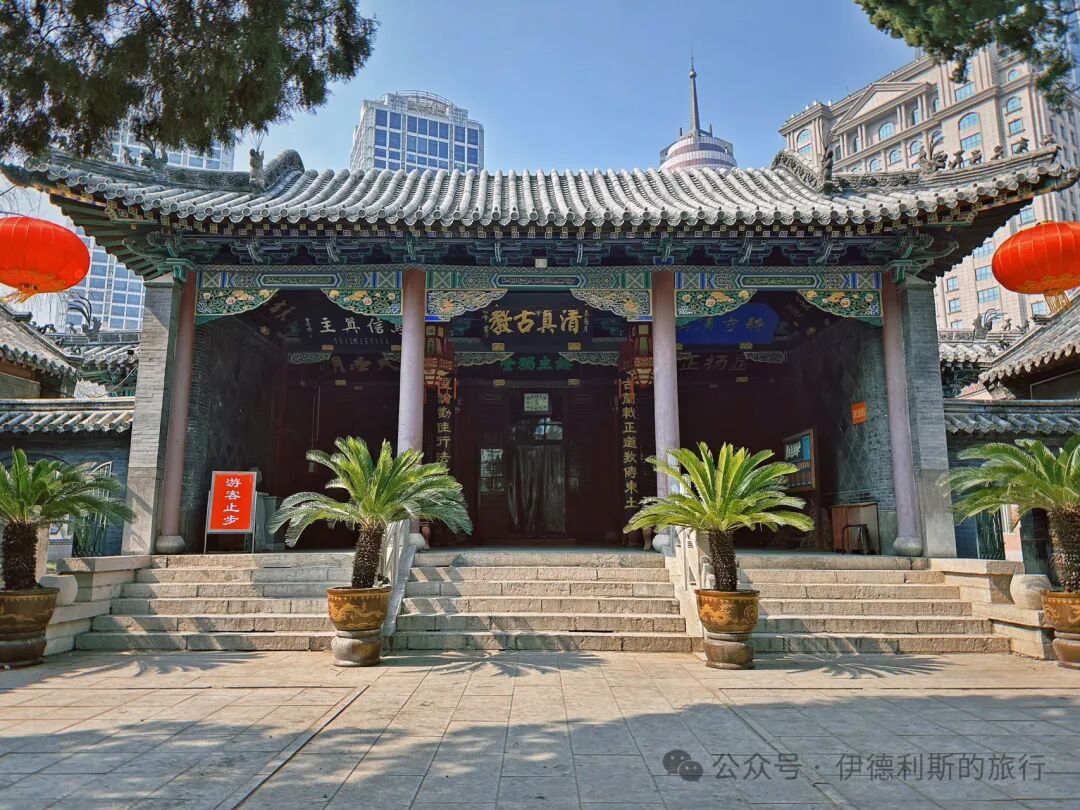
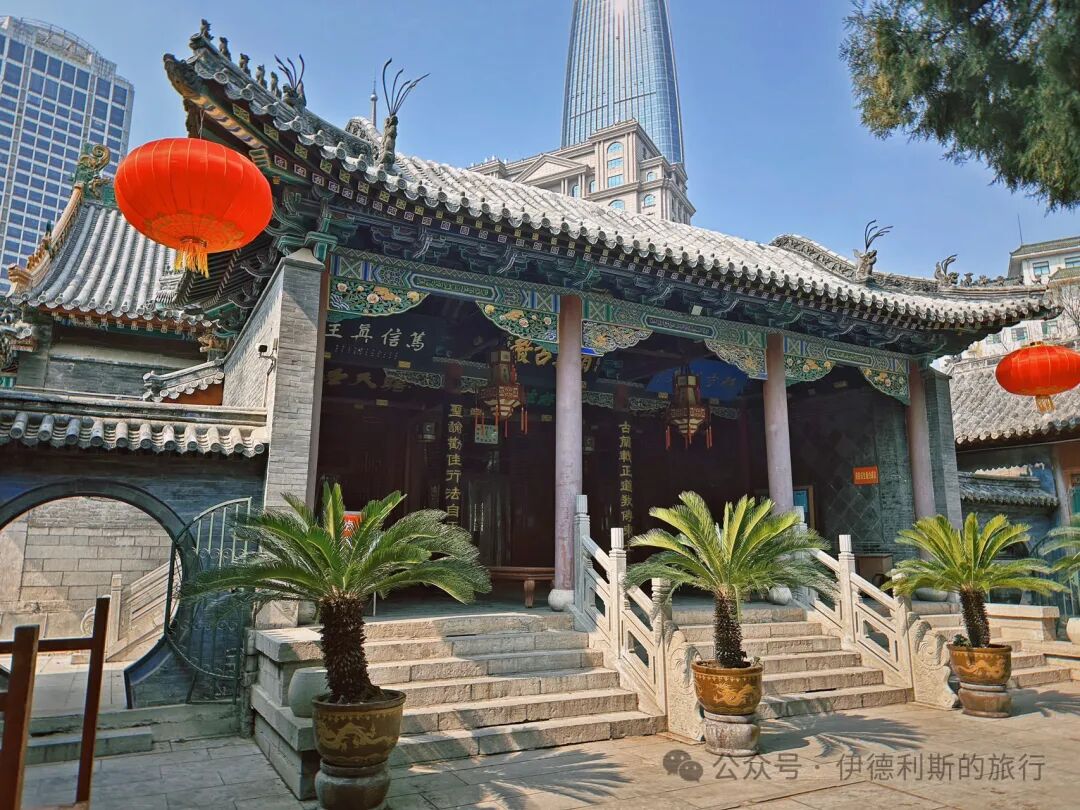
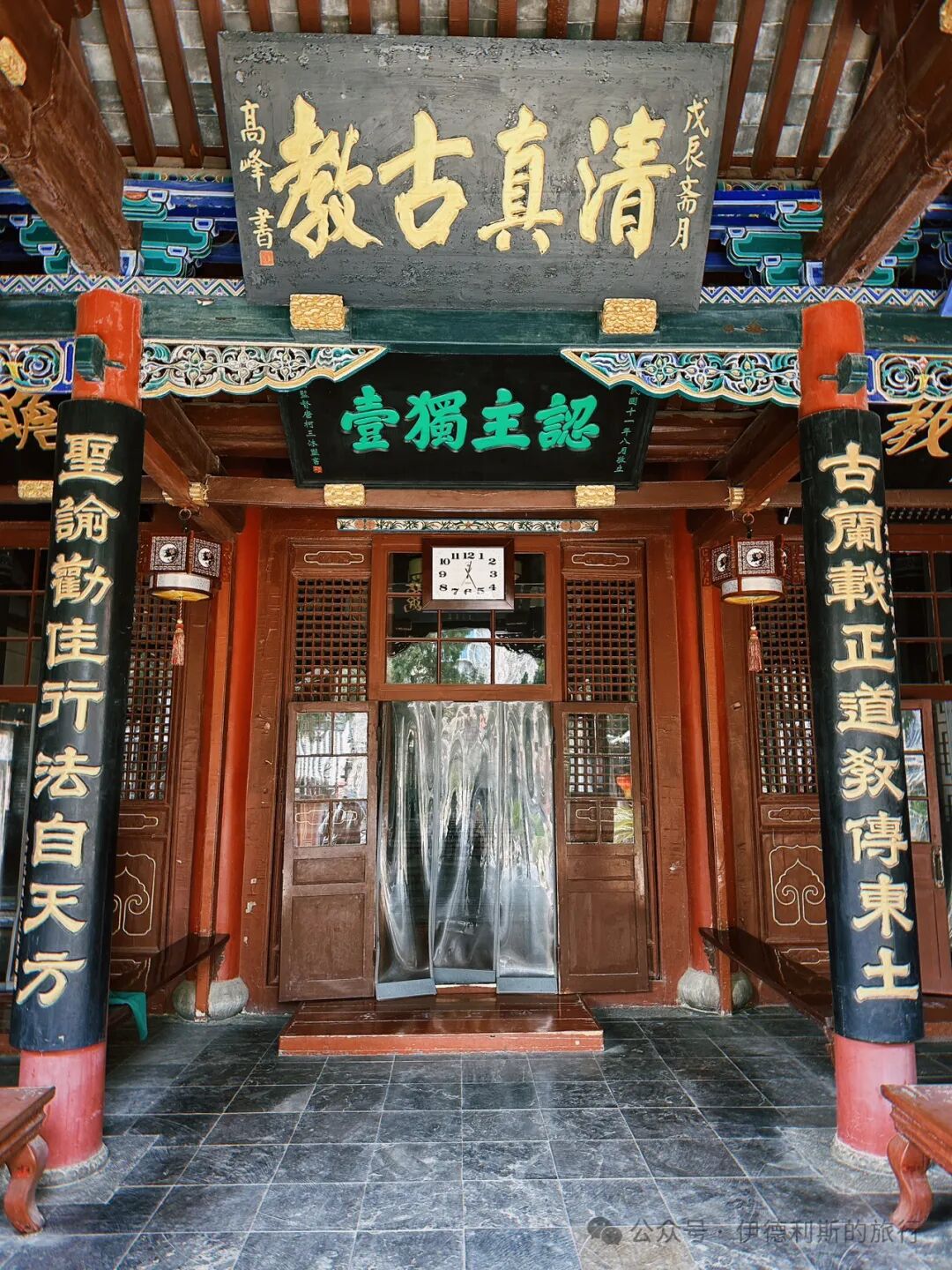
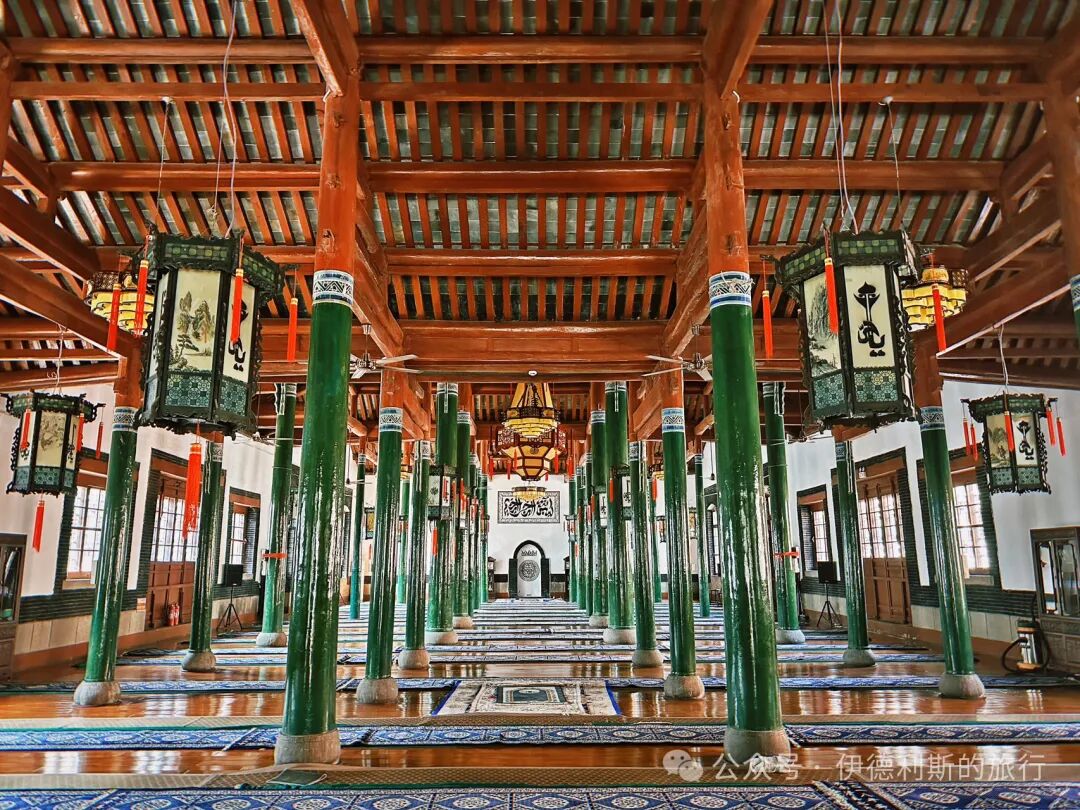
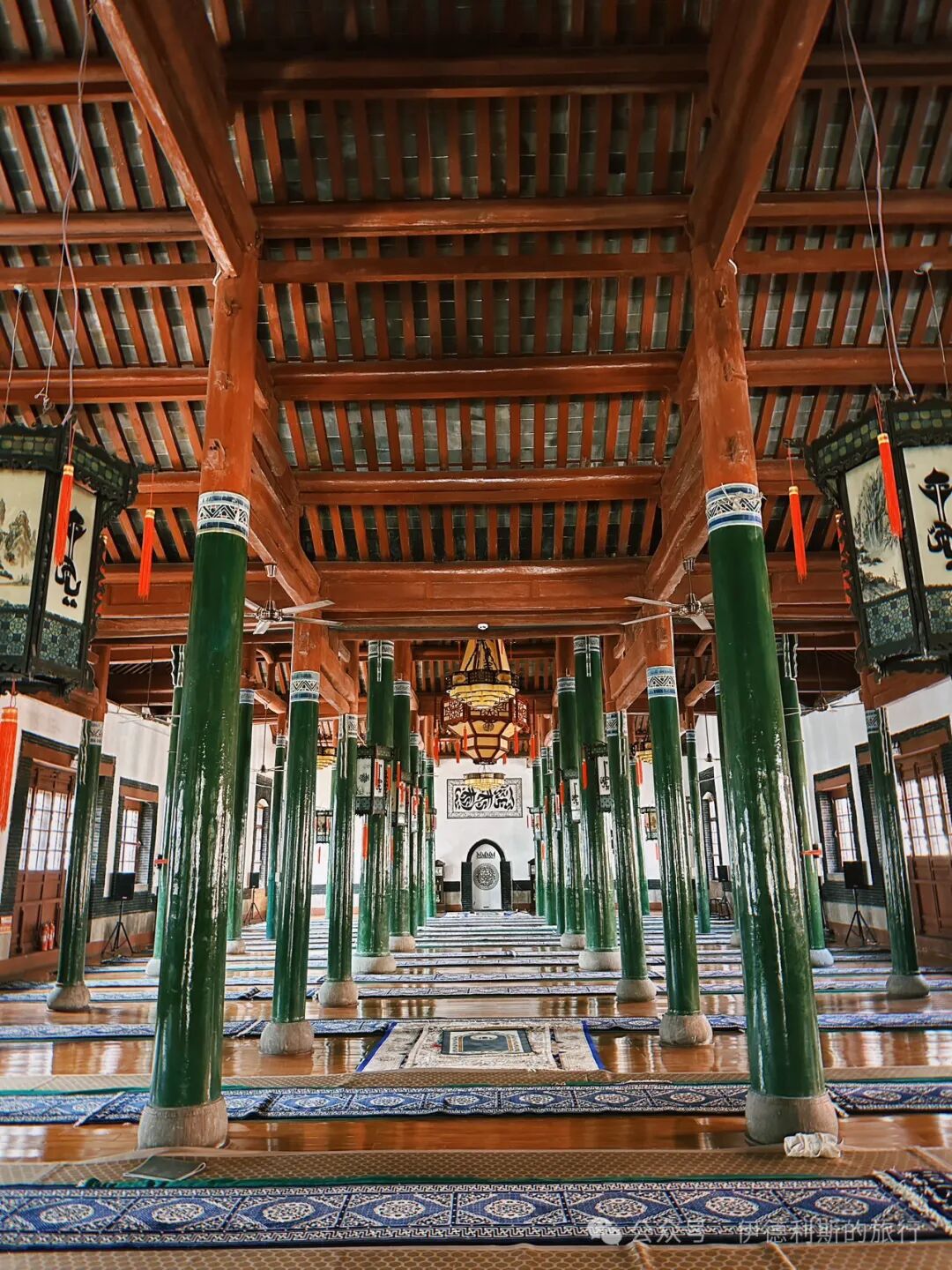
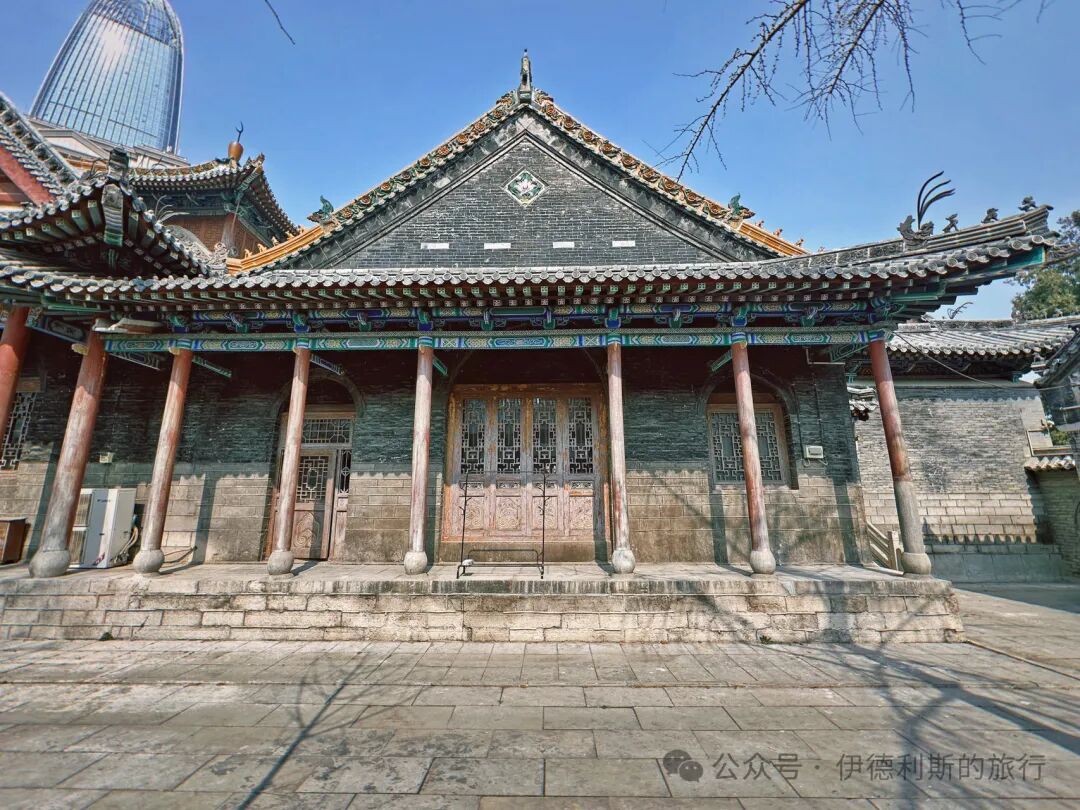
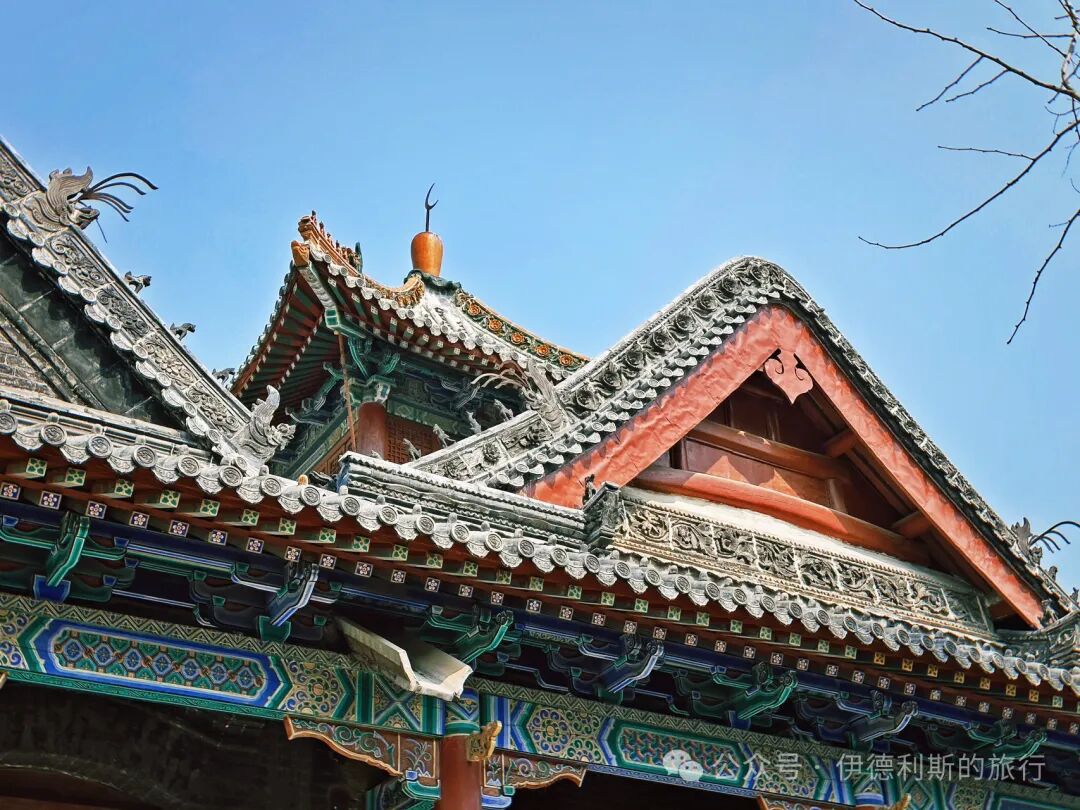
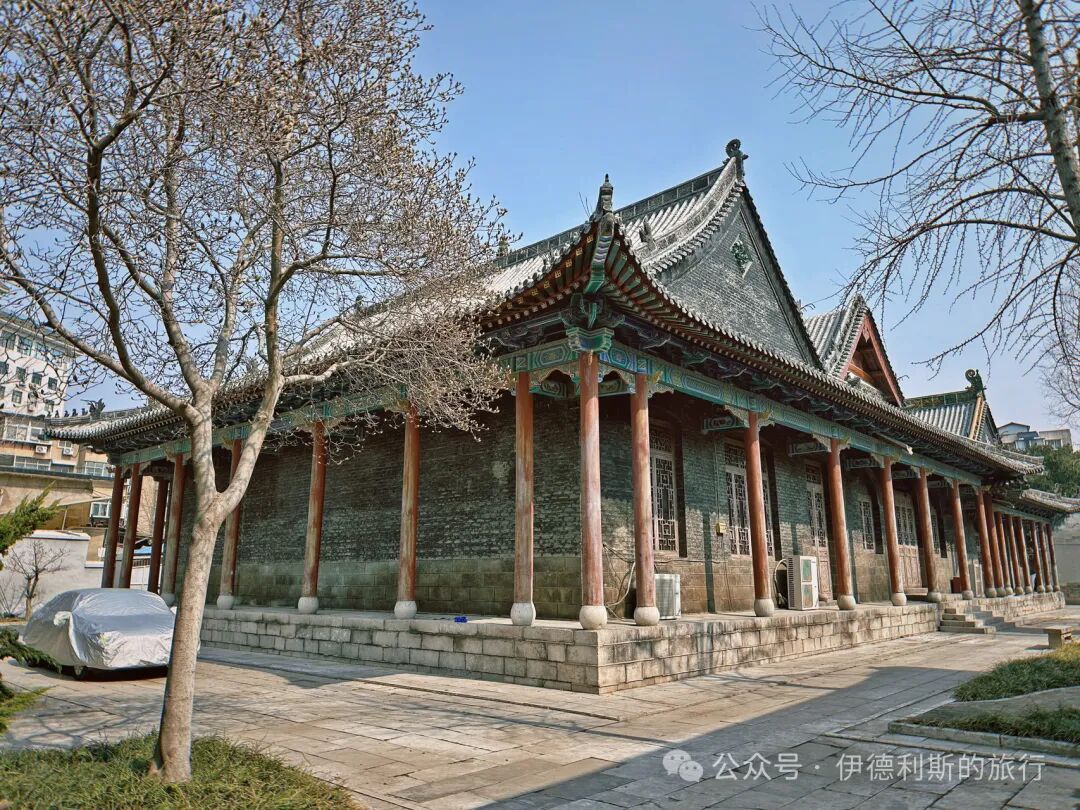
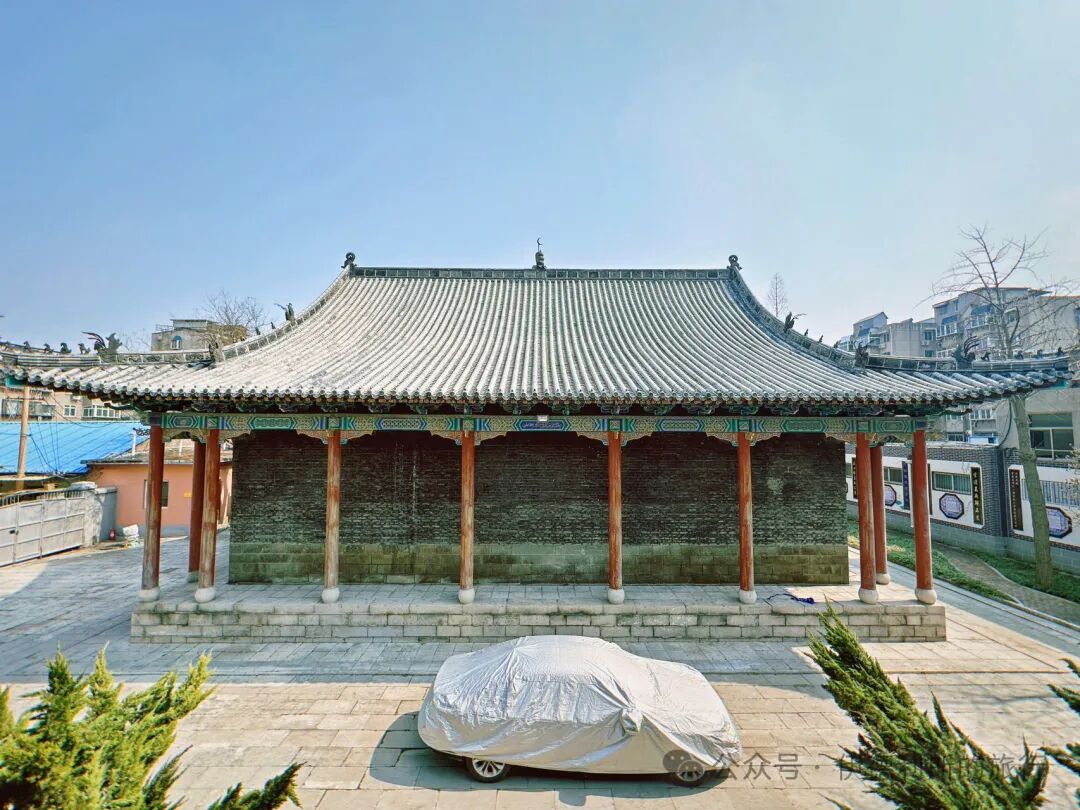
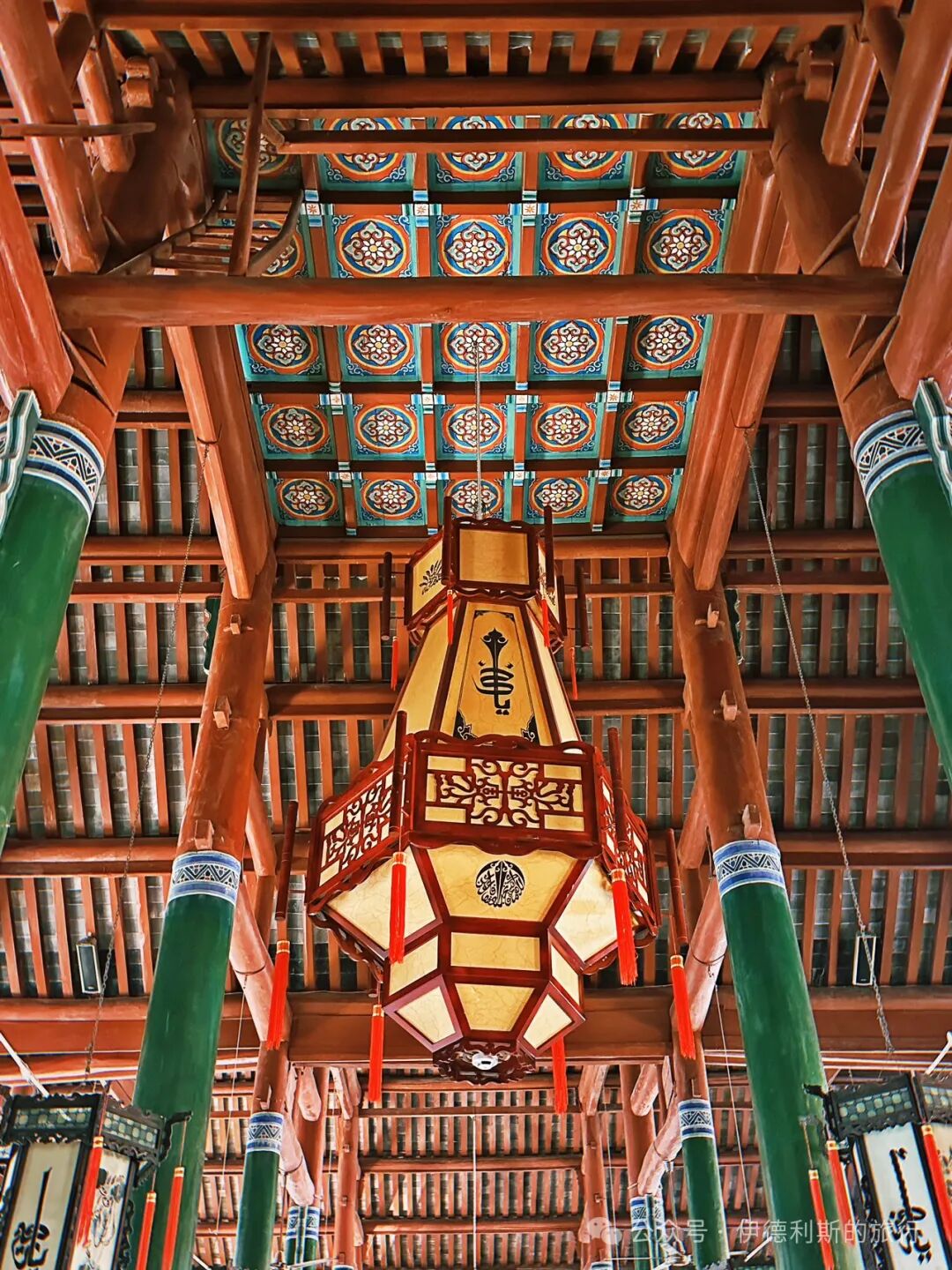
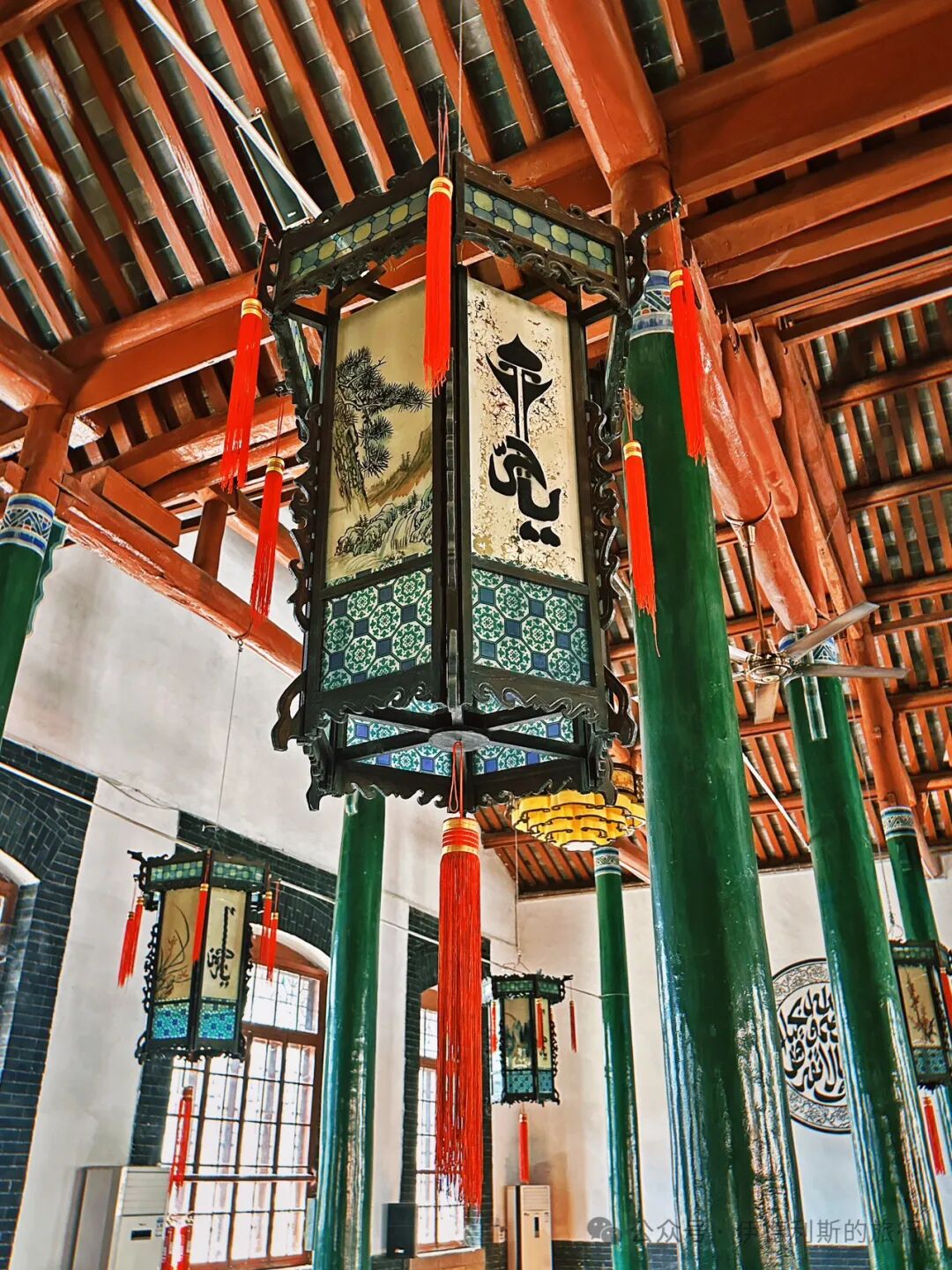
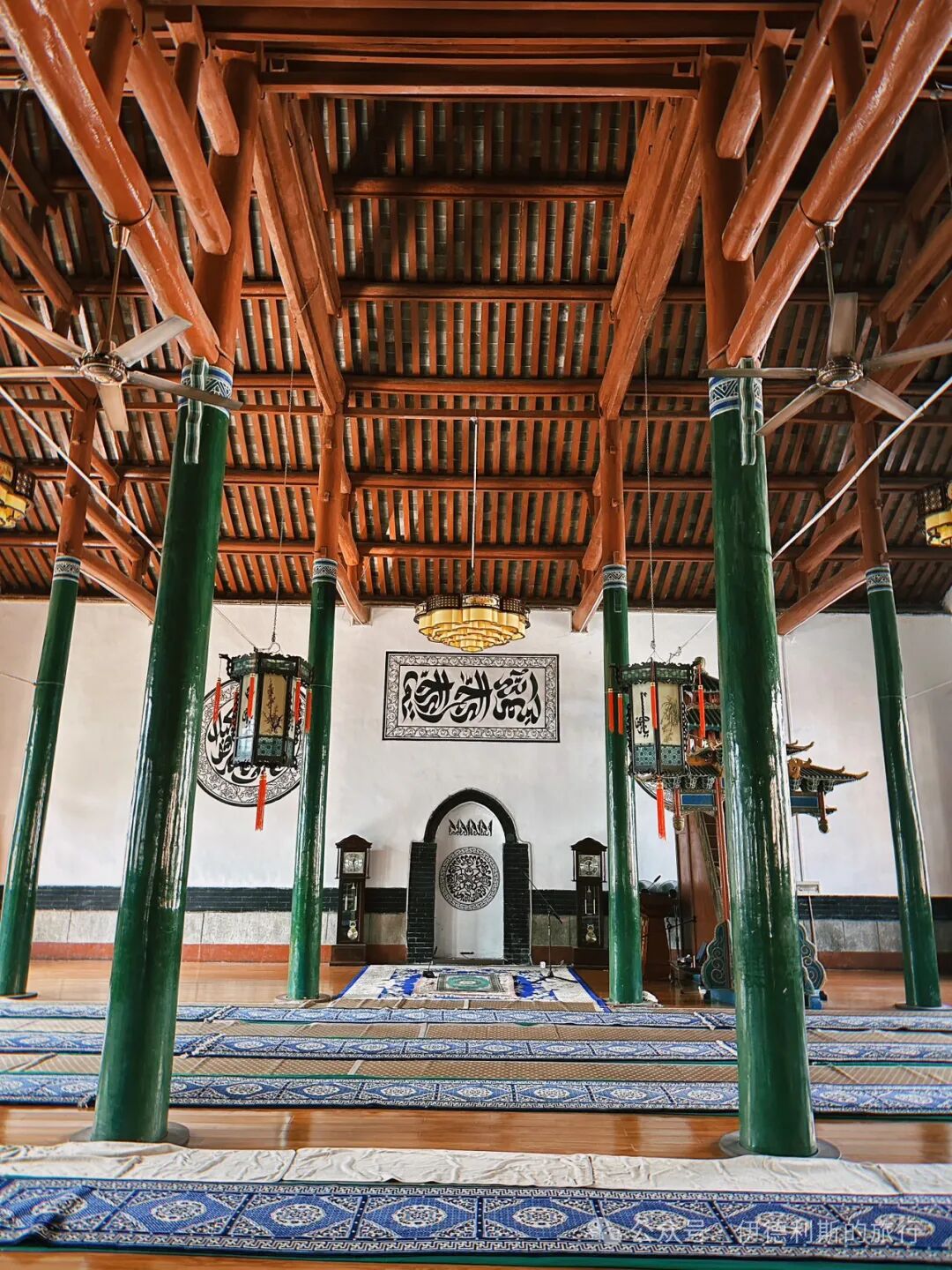
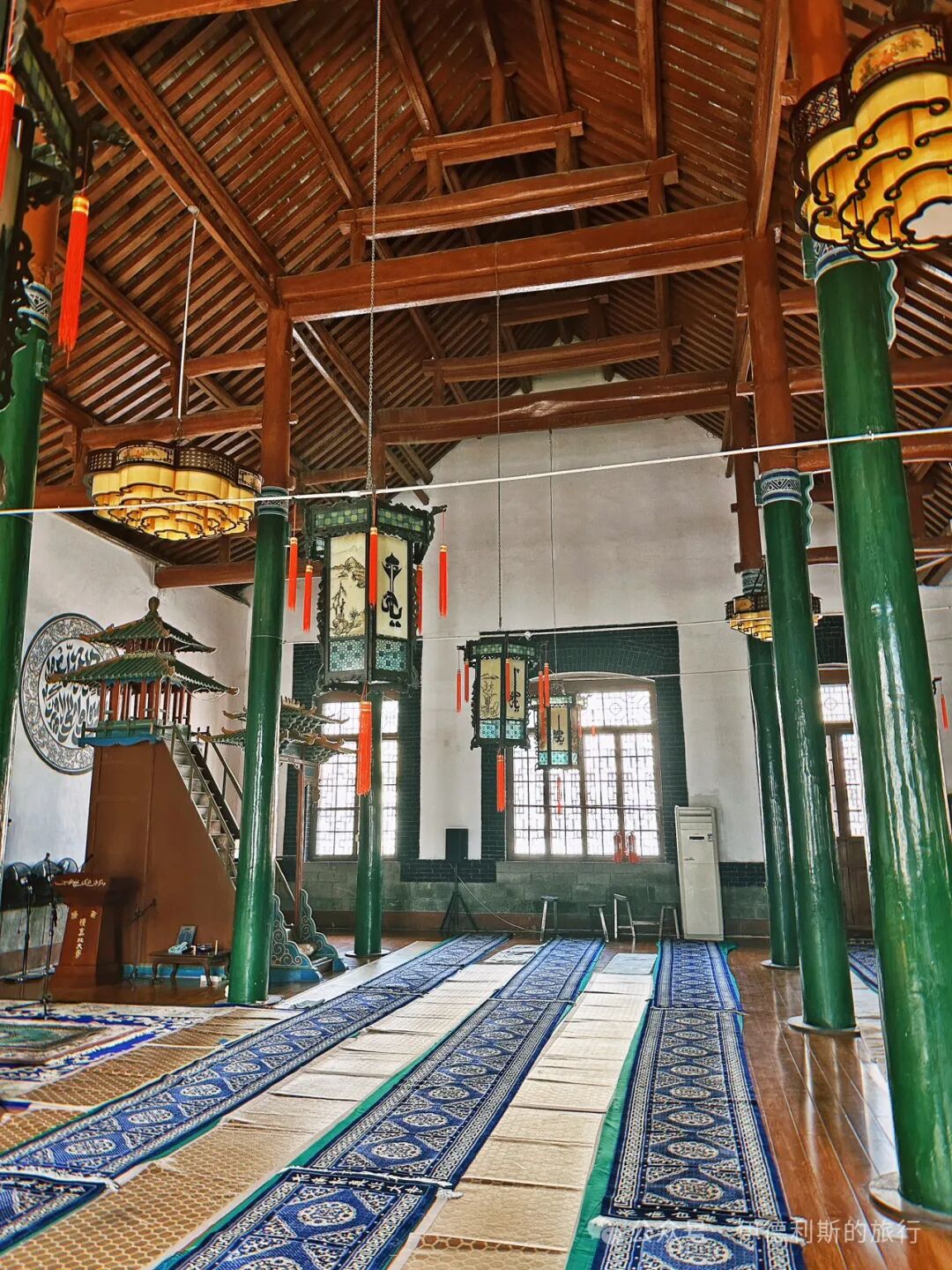
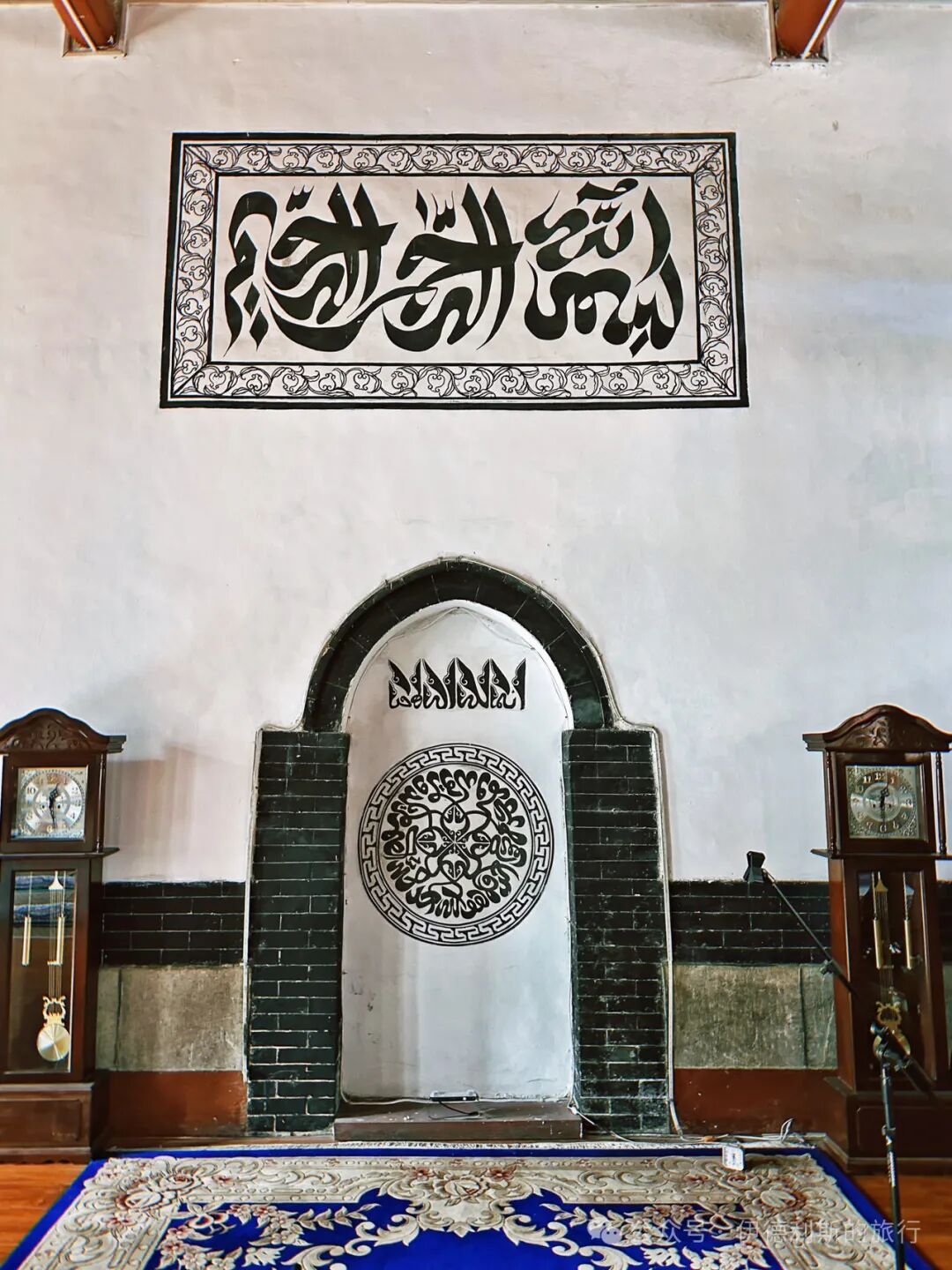
The main gate and ceremonial gate of the Jinan North Mosque.
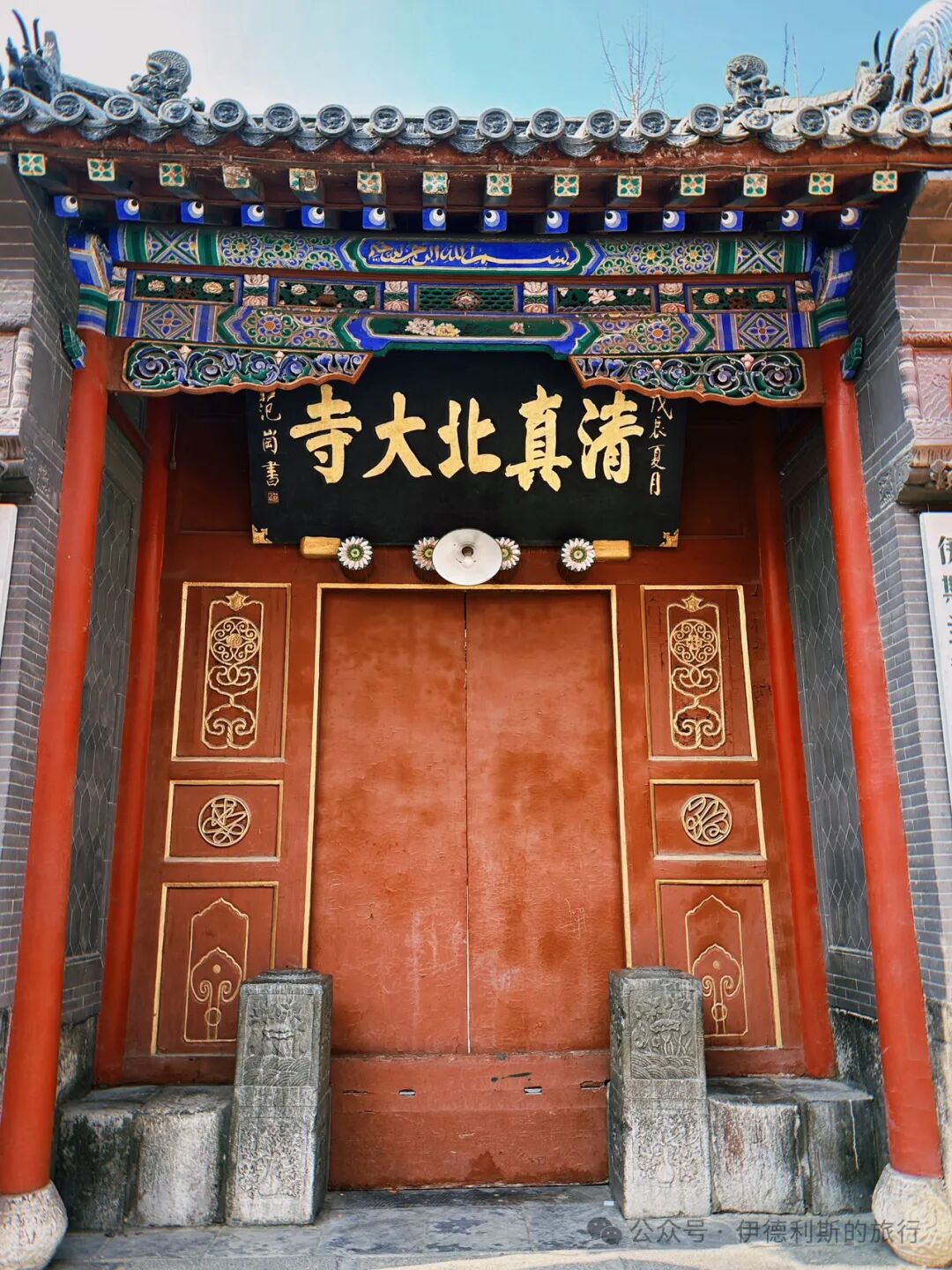
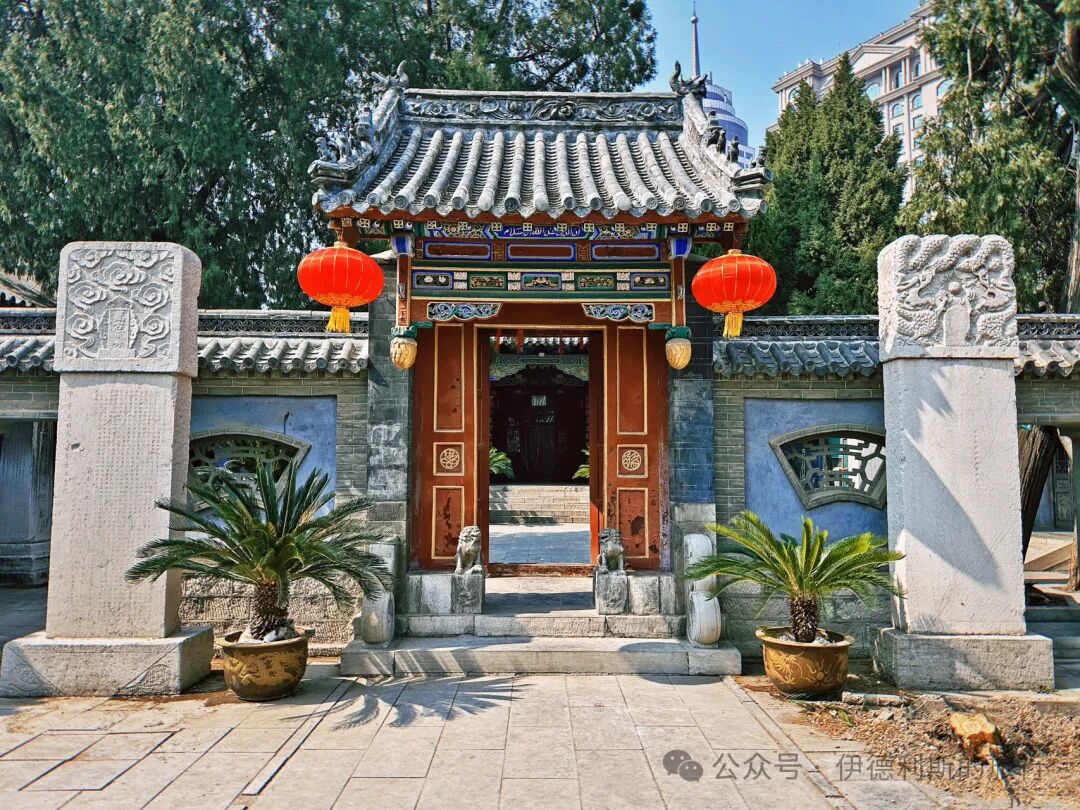
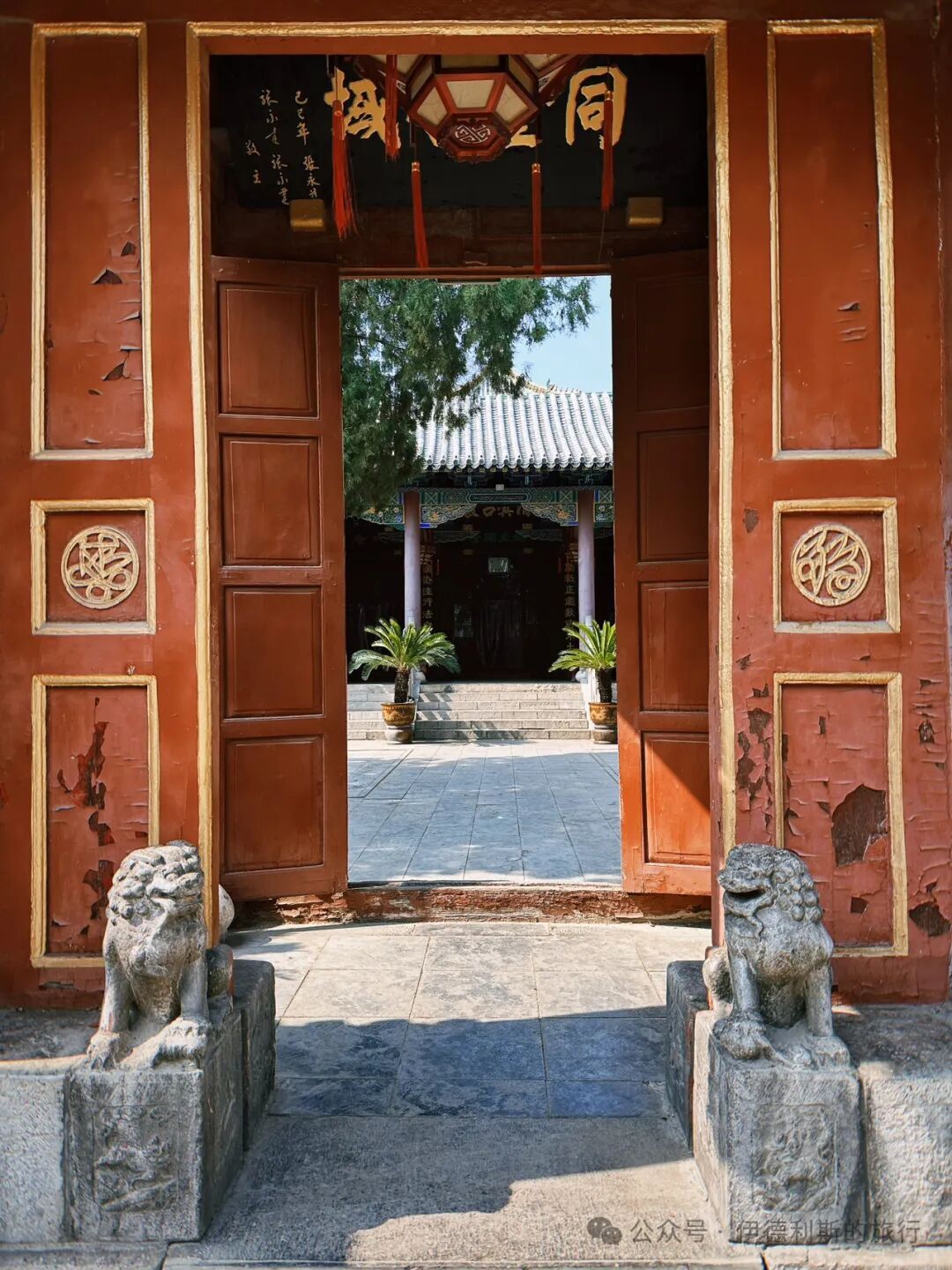
The gutter between the main hall and the porch features dragon-head water spouts, and rainwater flows down the roof tiles of the hanging-flower gate (chuihuamen) between the two halls.
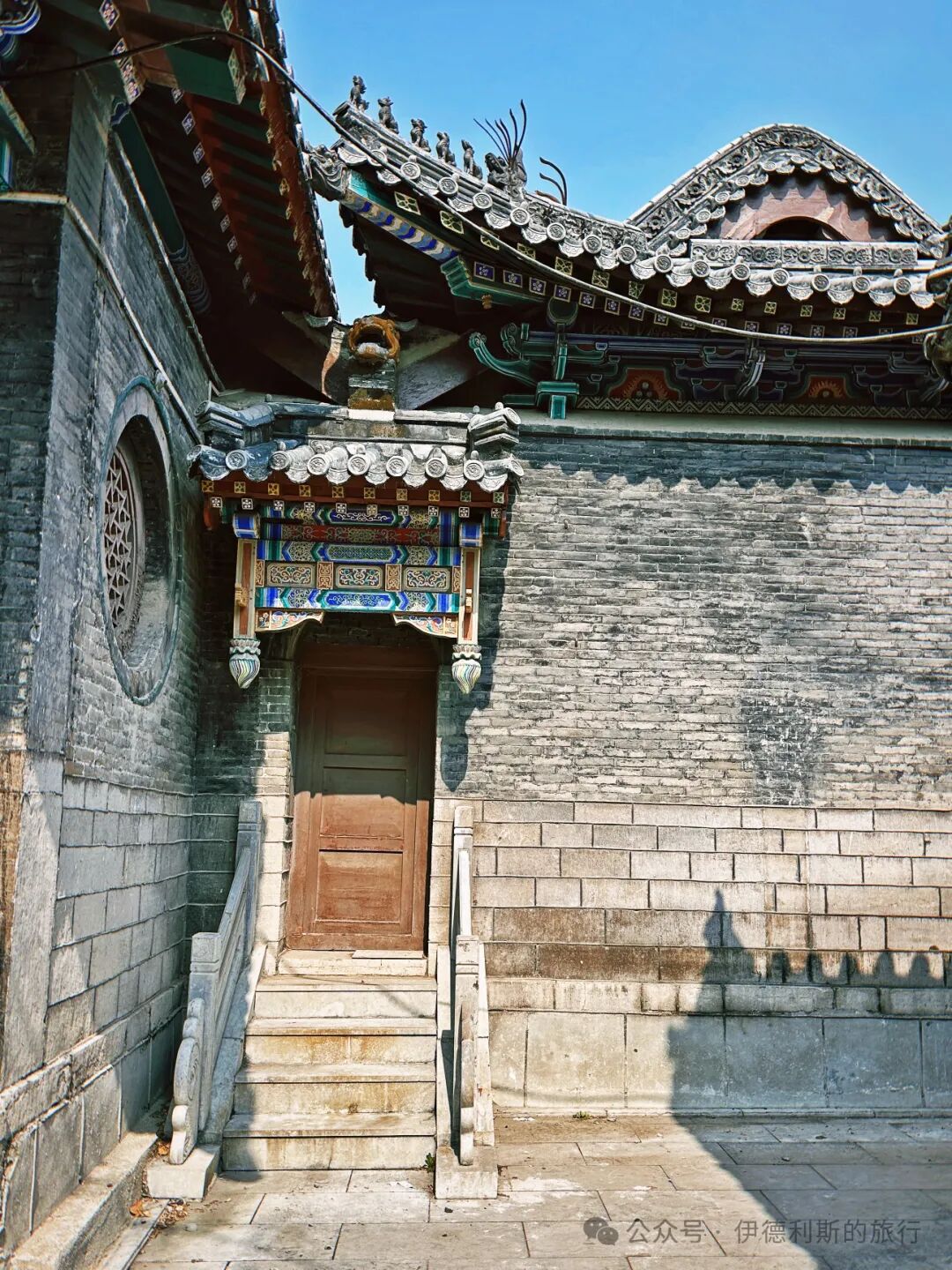
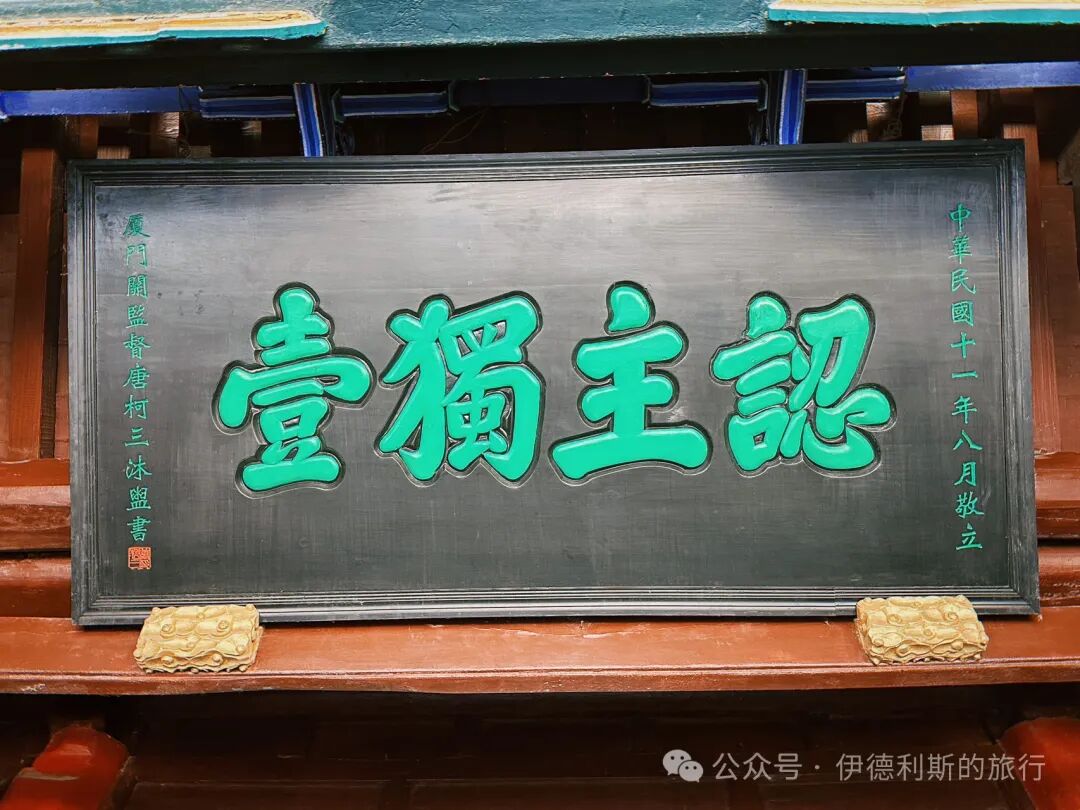
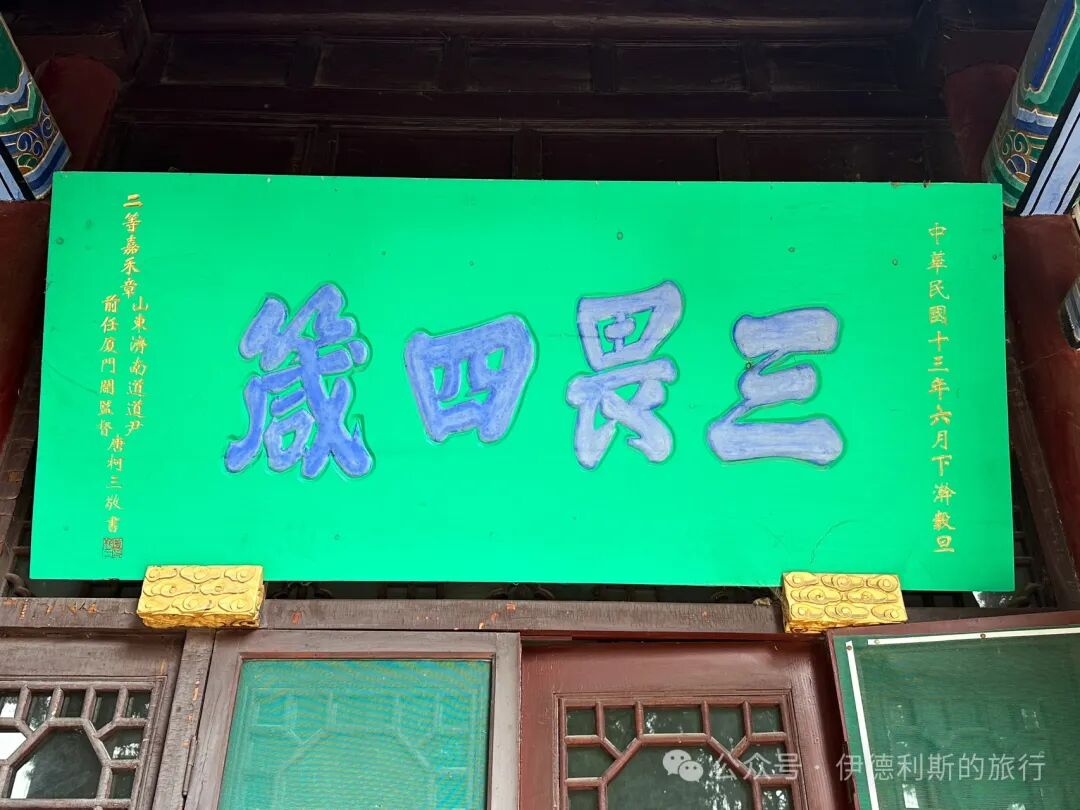
The two plaques from the Republic of China era at the North Mosque (Beidasi) match those inside the Ming-Shan Hall at the Qingjing Mosque in Quanzhou. I wonder if they are replicas.
Recognize the Oneness of Allah.
Respectfully erected in the eighth month of the eleventh year of the Republic of China.
Respectfully written by Tang Kesan, Superintendent of the Xiamen Customs, after ritual washing.
Three Awe-Inspiring Things and Four Admonitions.
An auspicious day in the latter ten days of the sixth month of the thirteenth year of the Republic of China.
Respectfully written by Tang Kesan, holder of the Second Class Order of the Golden Grain, former Superintendent of the Xiamen Customs, and Intendant of the Jinan Circuit in Shandong.
The text on the plaque comes from the Analects of Confucius, Book of Ji Shi: A gentleman has three things to stand in awe of: he stands in awe of the Mandate of Heaven, he stands in awe of great men, and he stands in awe of the words of the sages. And from the Analects of Confucius, Book of Yan Yuan: Do not look at what is contrary to propriety, do not listen to what is contrary to propriety, do not speak what is contrary to propriety, and do not do what is contrary to propriety.
Tang Kesan was a Hui Muslim from Zoucheng, Shandong. He was a famous social activist during the Republic of China era, serving as a negotiator for the Ministry of Foreign Affairs in Shandong, director of the Shandong Epidemic Prevention Office, Superintendent of the Xiamen Customs, director of the Shandong Road Administration, and Intendant of the Jinan West Circuit. He served as principal of the Chengda Normal School, founded the Yuehua magazine, helped establish the Chinese Islamic Progress Association, and organized and led the Hui Muslim movement to resist Japan and save the nation, making great contributions to the faith.
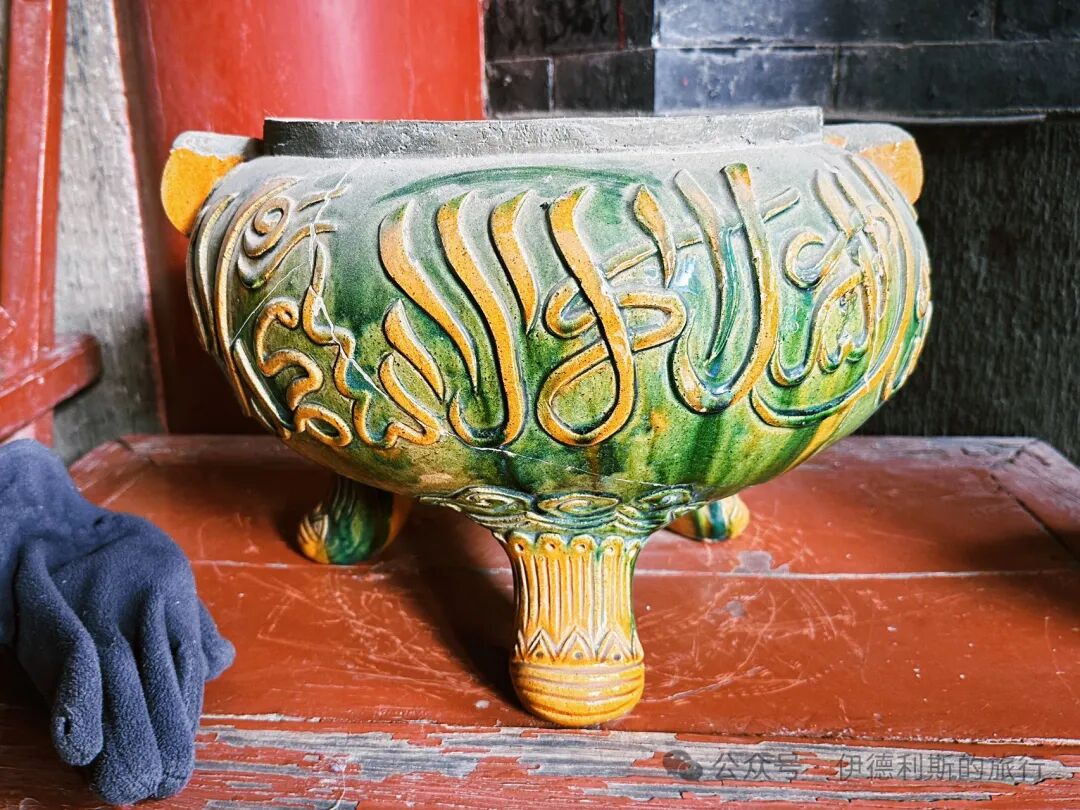
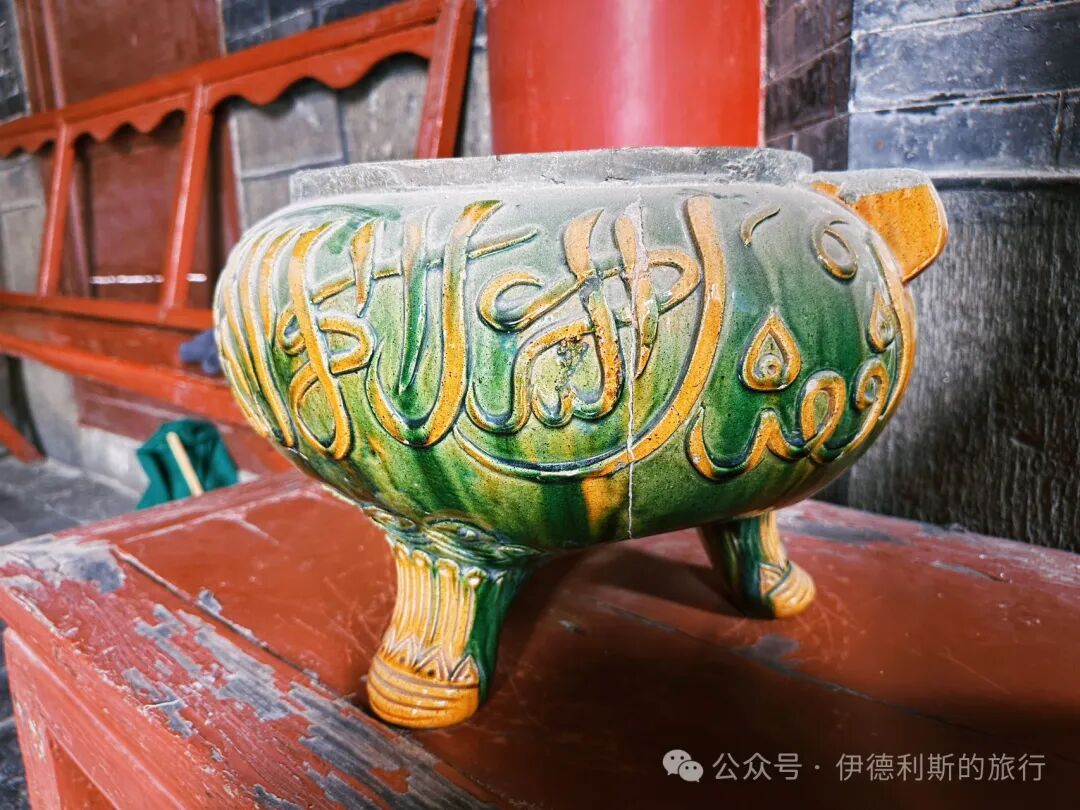
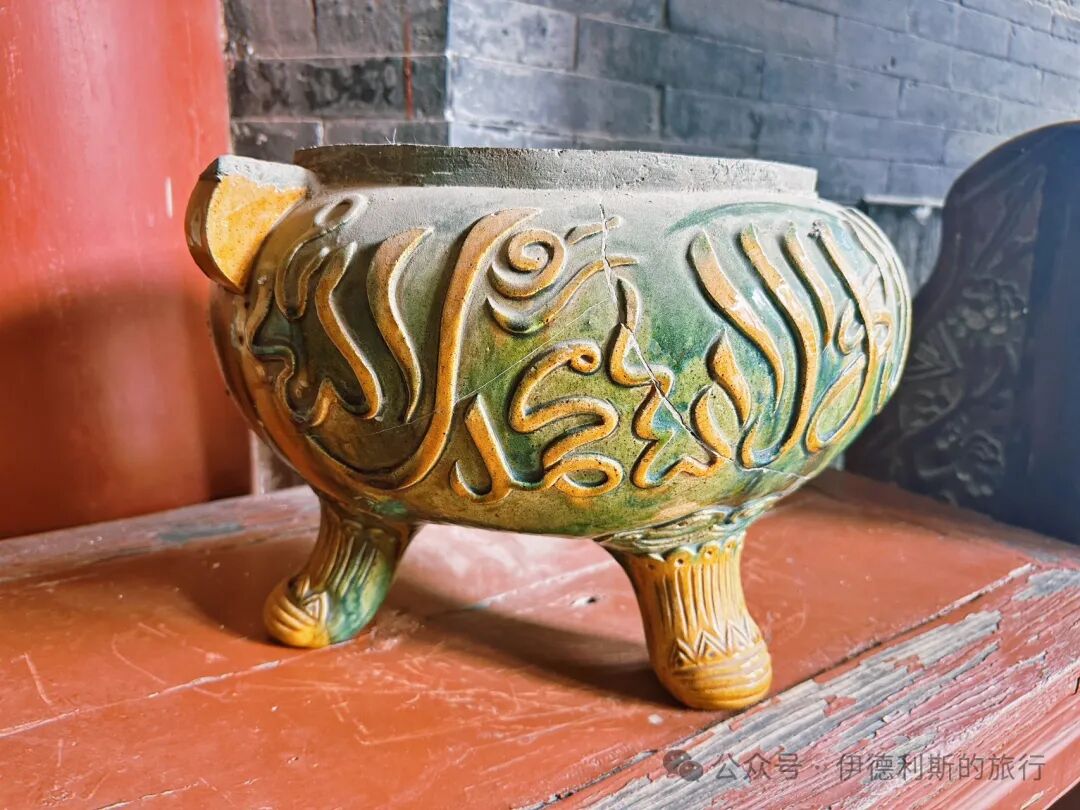
A glazed incense burner kept in front of the main prayer hall of the North Mosque.
Stone inscriptions at the Jinan North Mosque.
The 1806 Stele Record of the North Mosque. It records that someone donated funds to buy land, with the income used to cover the expenses of the mosque's school.
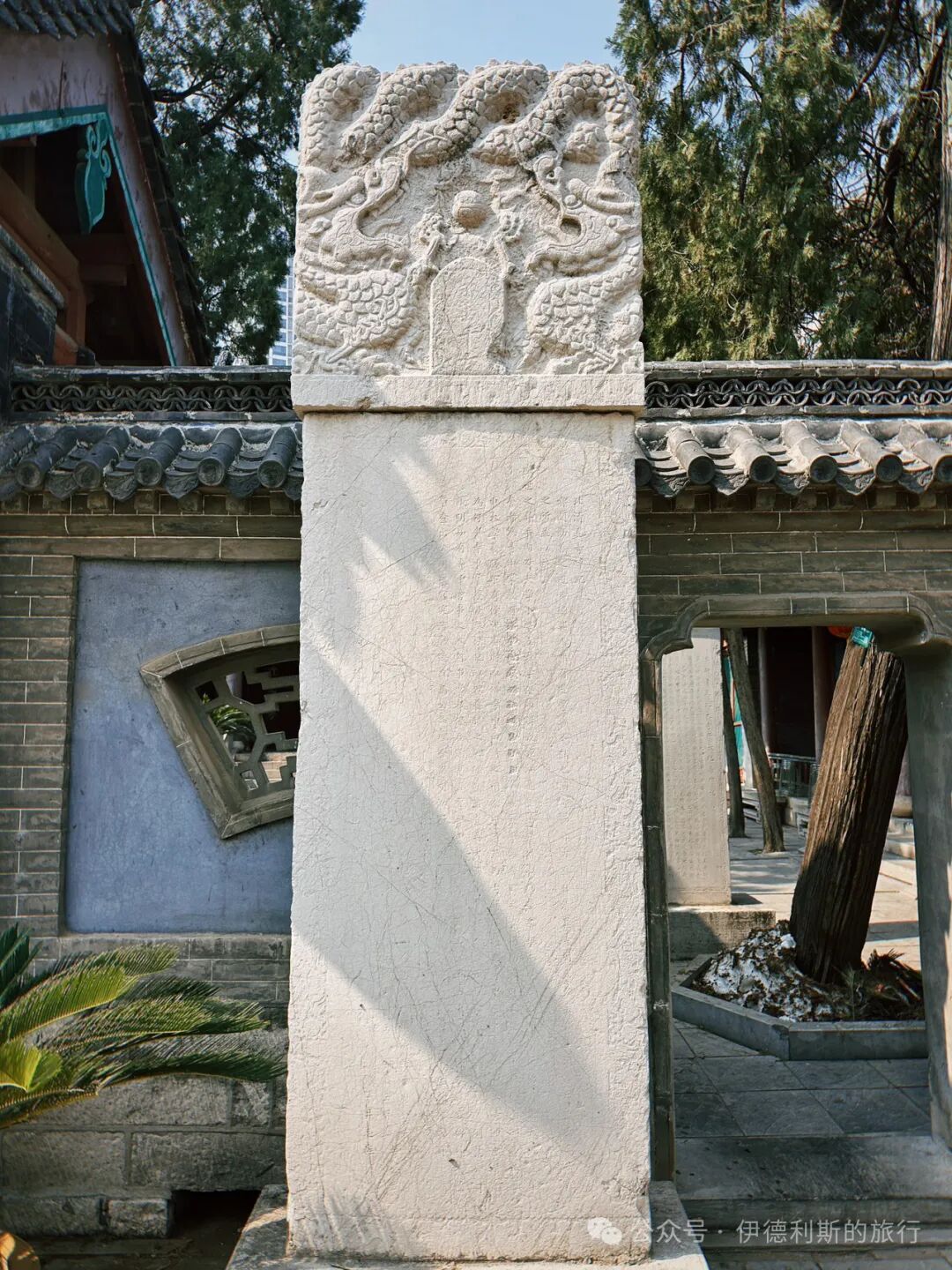
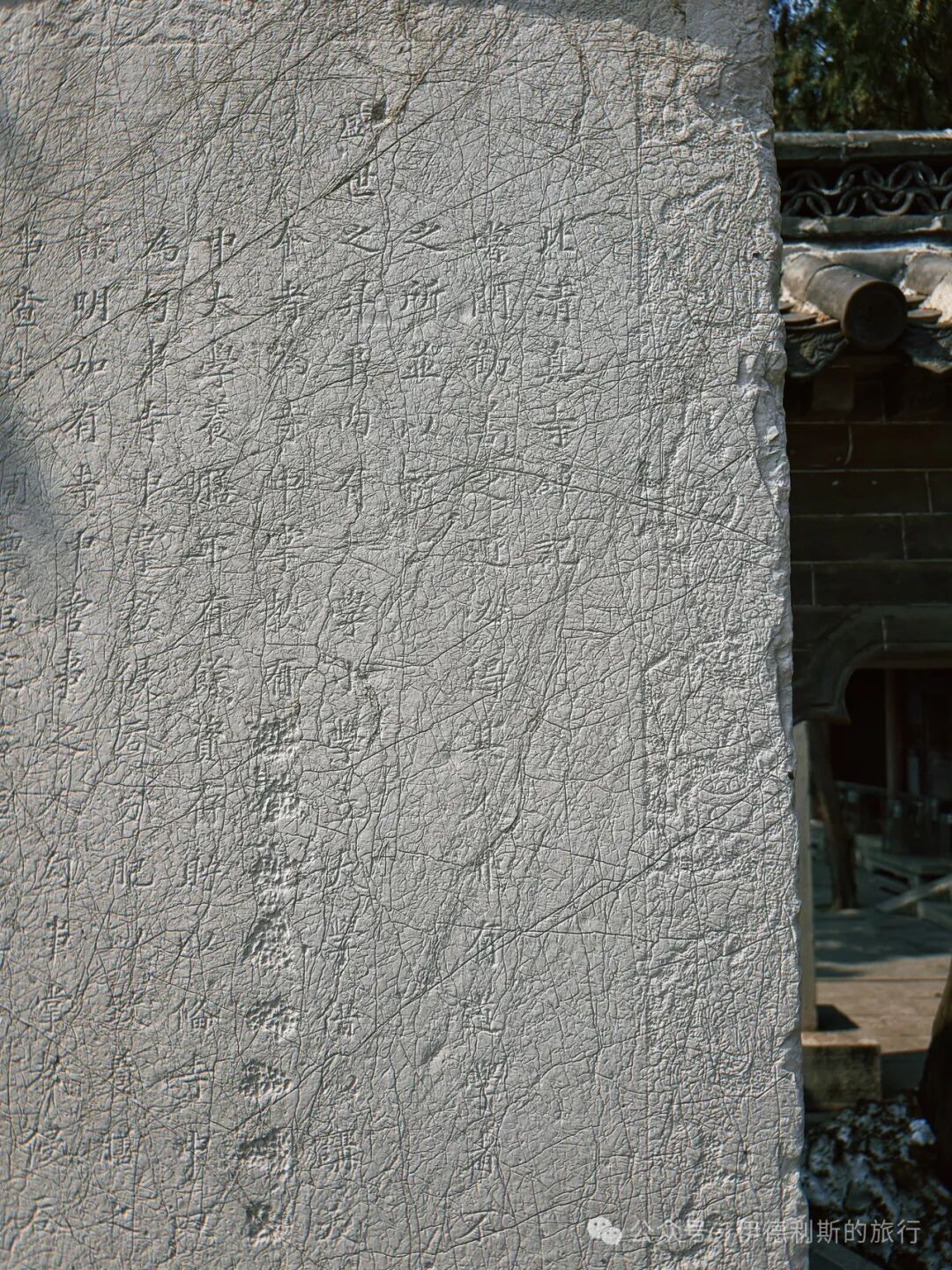
The 1938 Stele Record of the Extension and Repair of the Jinan North Mosque Main Hall. It records that the wife of Ma Runhan, Madam Hei, donated funds to buy land adjacent to the main hall, and Zhu Shouqing donated funds to extend the two-story main hall into a three-story structure. During this time, Zhu Shouqing passed away, and his brothers Zhu Guanzhou and Zhu Yunshan continued to renovate the beams and colorful paintings.
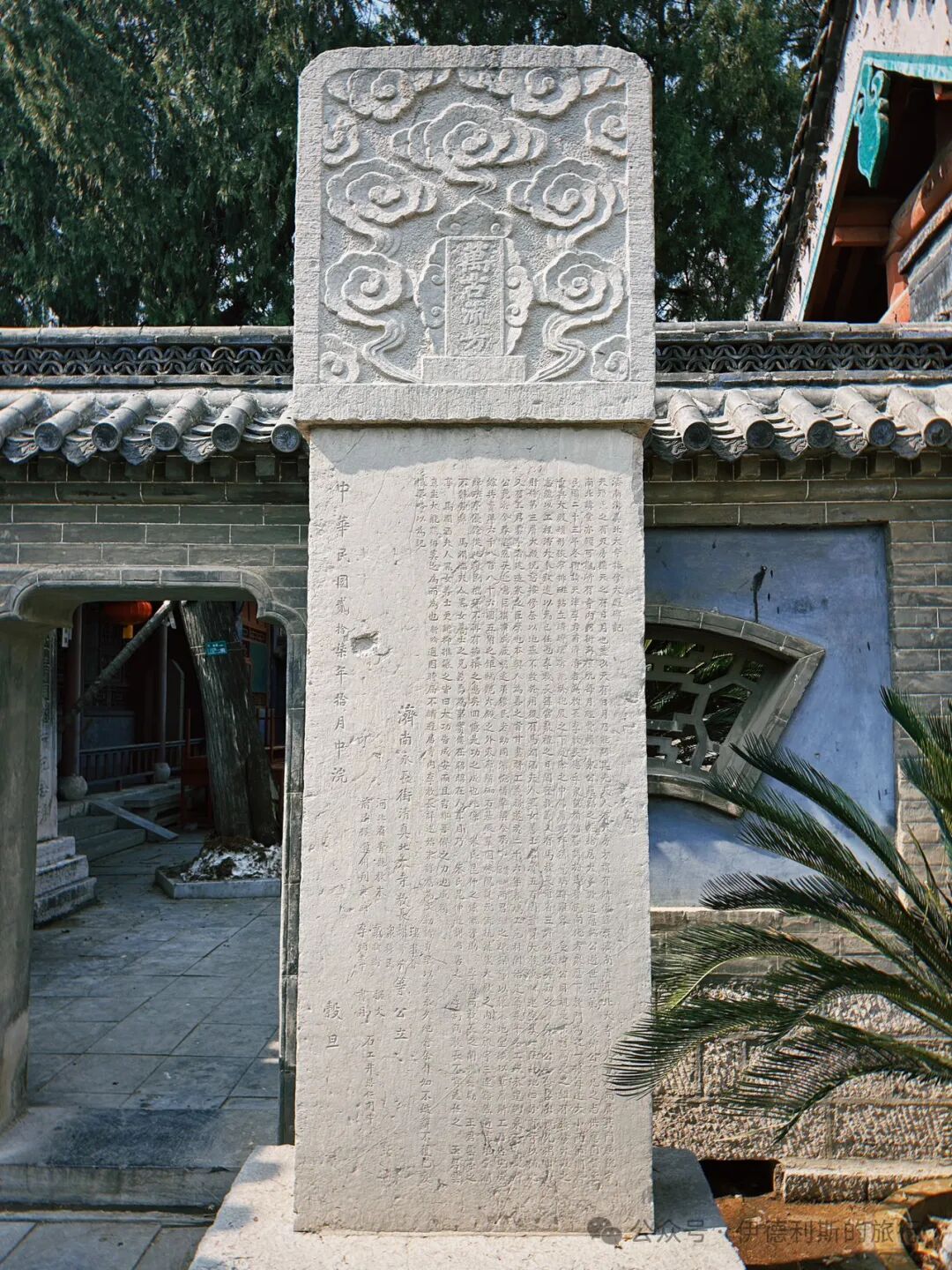
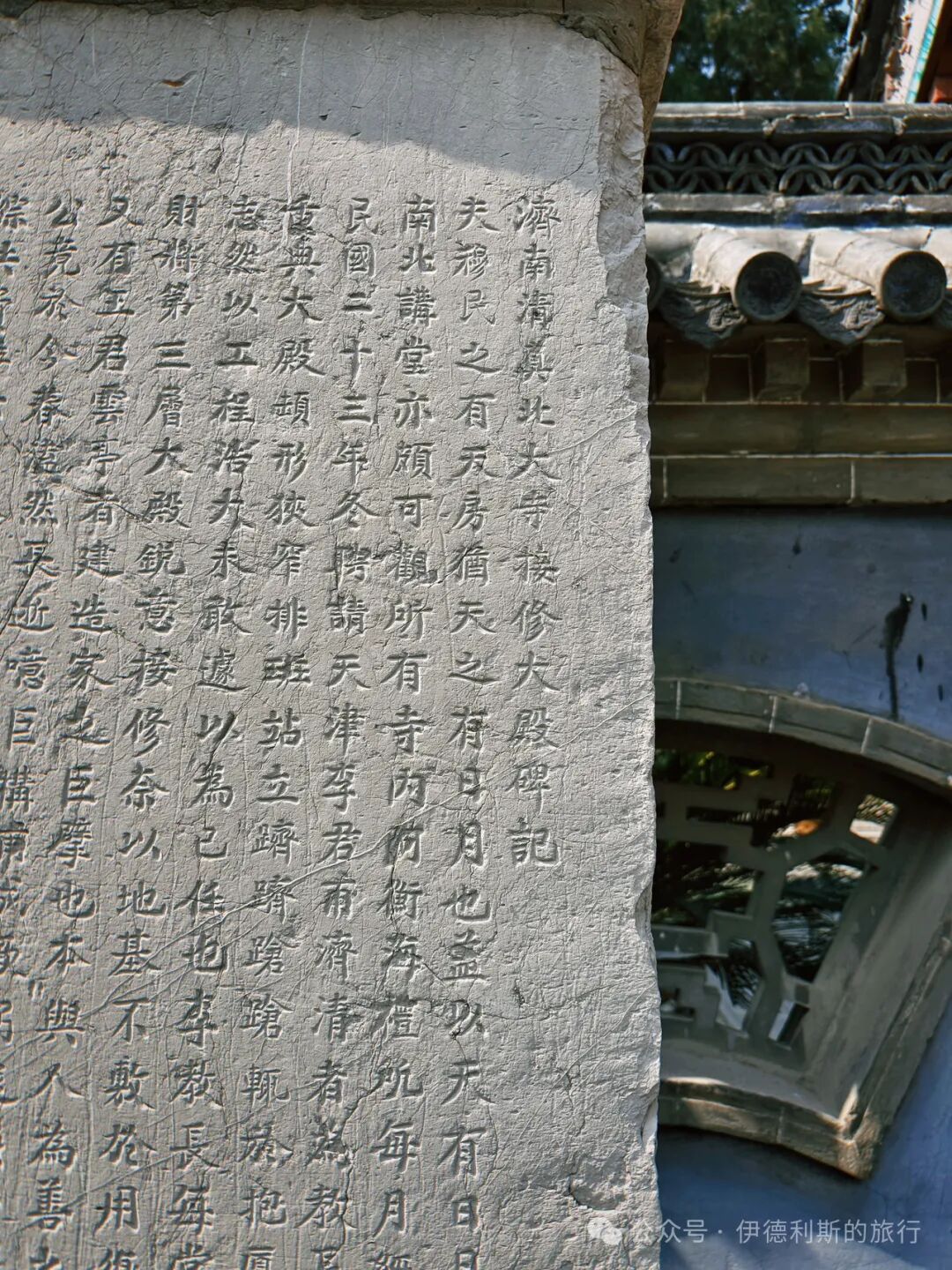
The 1943 Memorial Stele for the Virtuous Deeds of Mr. Mu Huating. Mu Huating was a Hui Muslim from Jinan and one of the founders of the Chengda Normal School. He joined the army at age 20 and served in the Shandong Army, the Nanjing Garrison, the Jinan Town Office, the Tianjin Customs, and the Second Border Defense Division, protecting merchants and civilians everywhere during the Zhili-Anhui War. After retiring home, he was devoted to the faith, went on the Hajj, participated in the repairs of the Jinan South Mosque and North Mosque, and collected nearly a hundred volumes of scriptures to store at the North Mosque. In 1925, he donated his own Mu Family Mosque (Mujia Chemen Si) to open the Chengda Normal School.
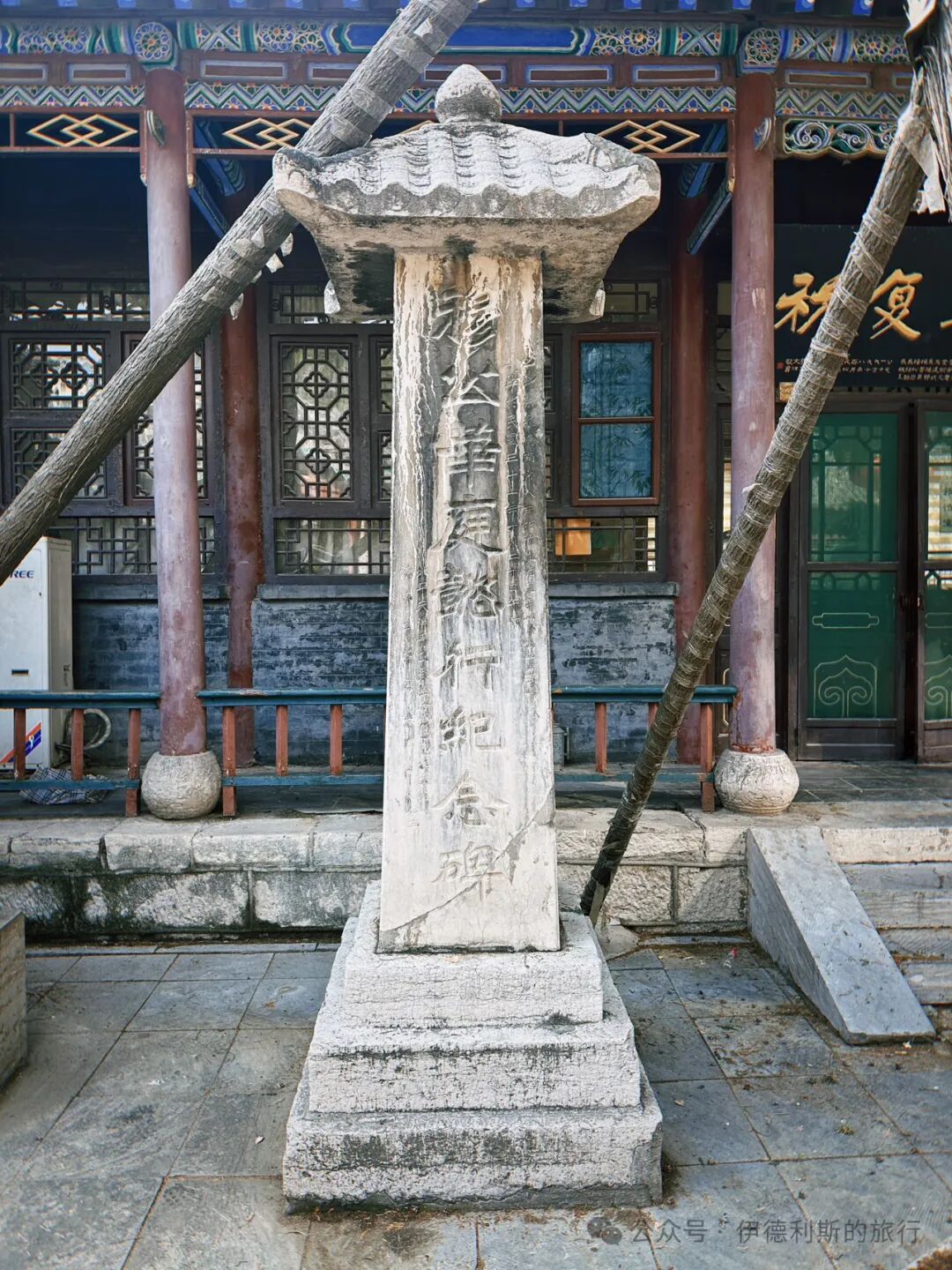
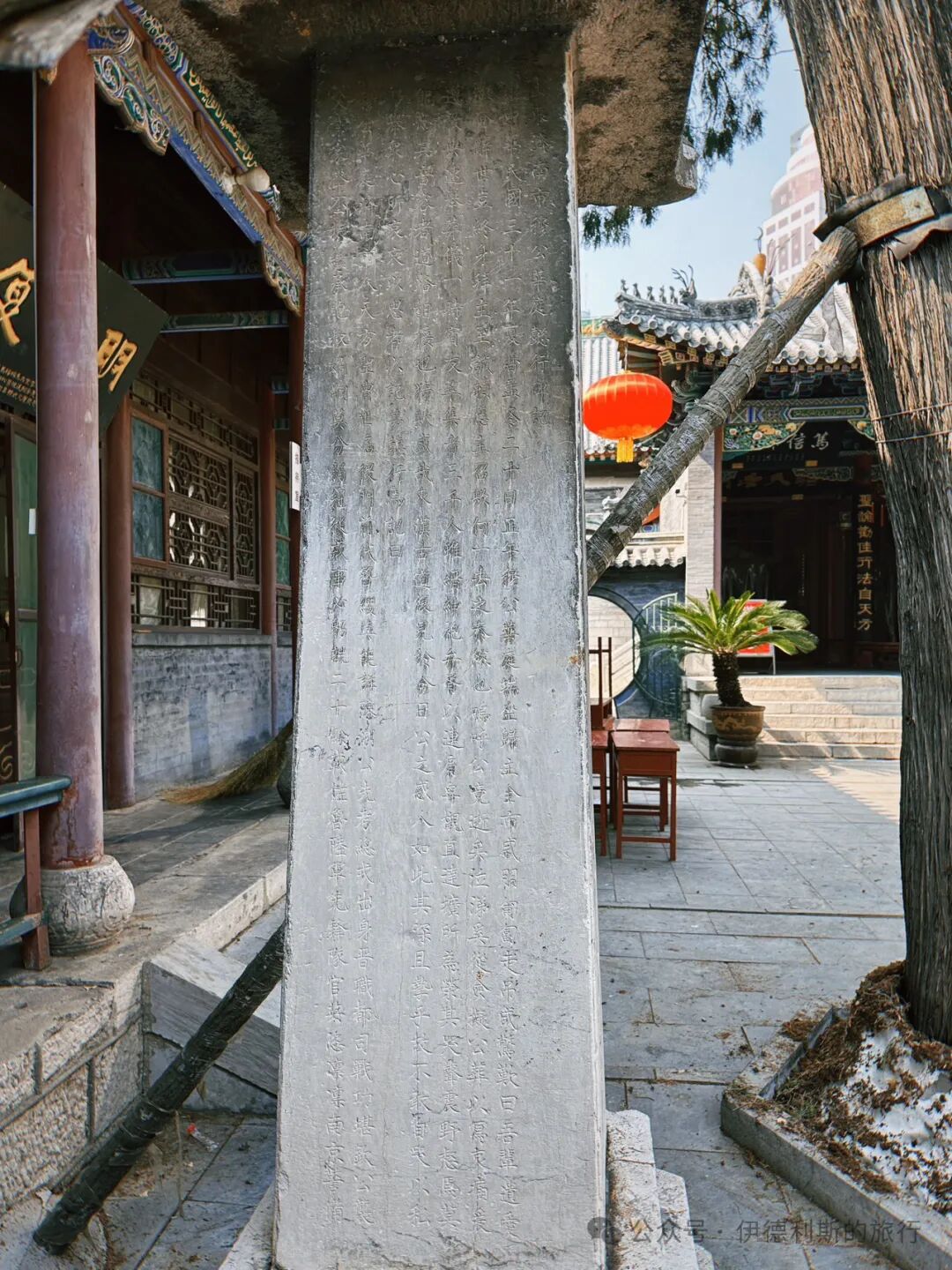
The 1850 Record of the Renovation of the North Mosque. The father of the author Jin Baofu helped rebuild the North Mosque in the 14th year of the Daoguang reign and again in the 30th year, which is why this stone tablet was erected.
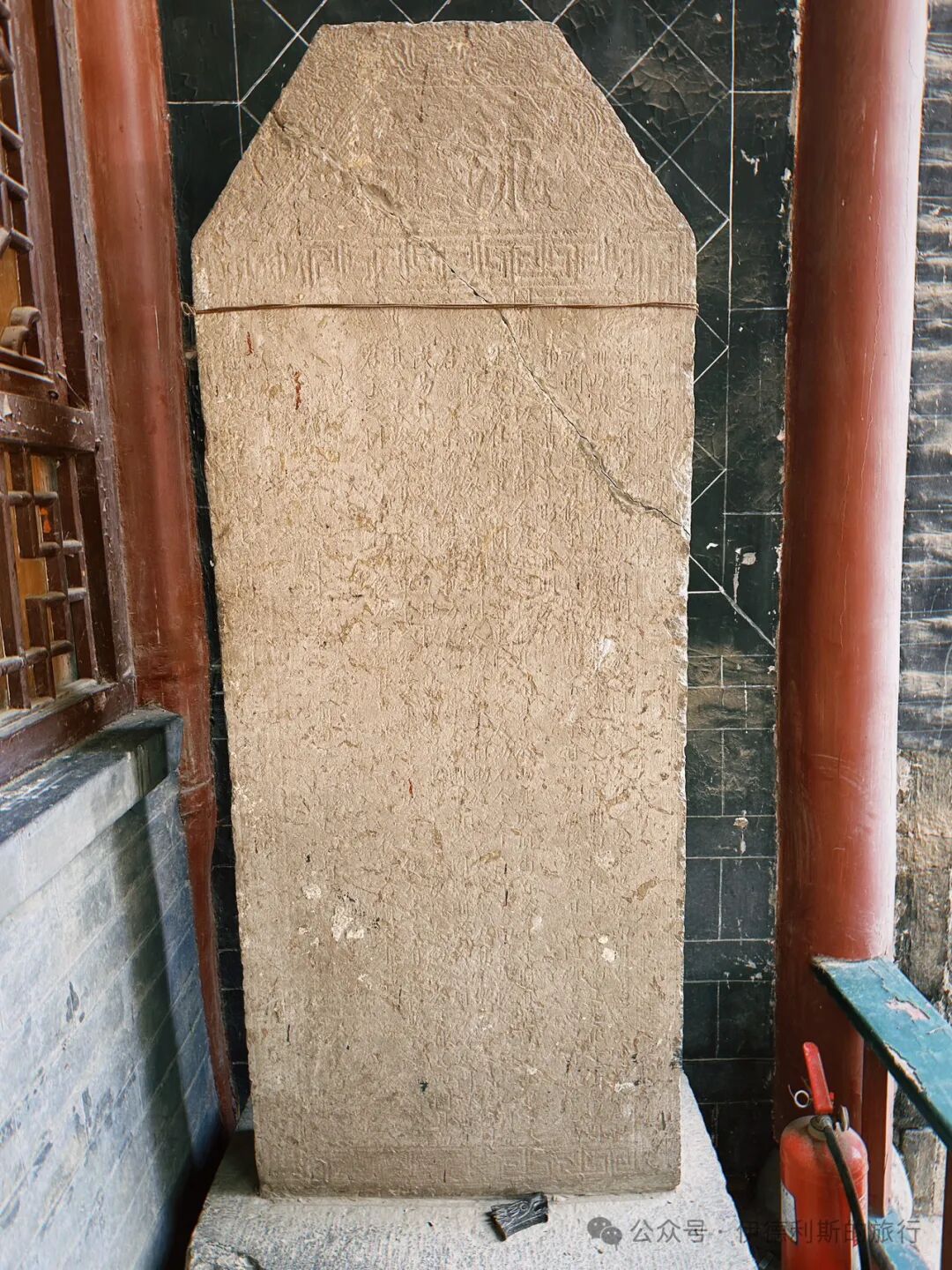
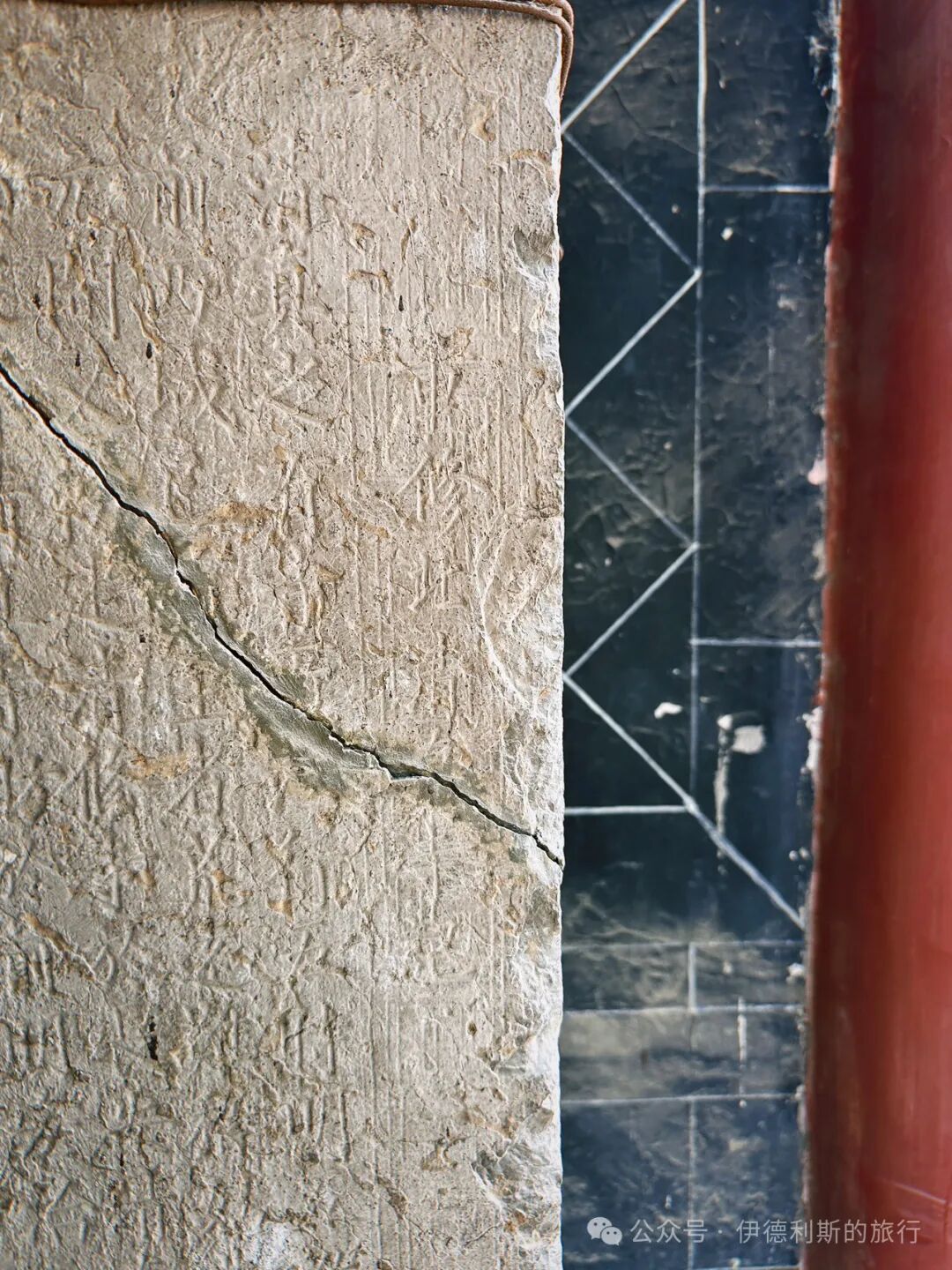
The 1918 stone tablet titled 'Notice of Land Purchase by the Charity Hall' (Cishantang Goudi Yuanqi). It records how elders from the Mu, Fa, Ma, and Wang families donated money to buy land and storefronts inside Linxiang Gate in Jinan. The rent from these properties, along with rent from the Yuchang Soy Sauce Shop, paid for water heating fuel and supported the mosque's primary and secondary schools. The tablet is inscribed with the names of Jinan Garrison Commander Ma Zizhen (Ma Liang) and Jinan Circuit Intendant Tang Kesan.
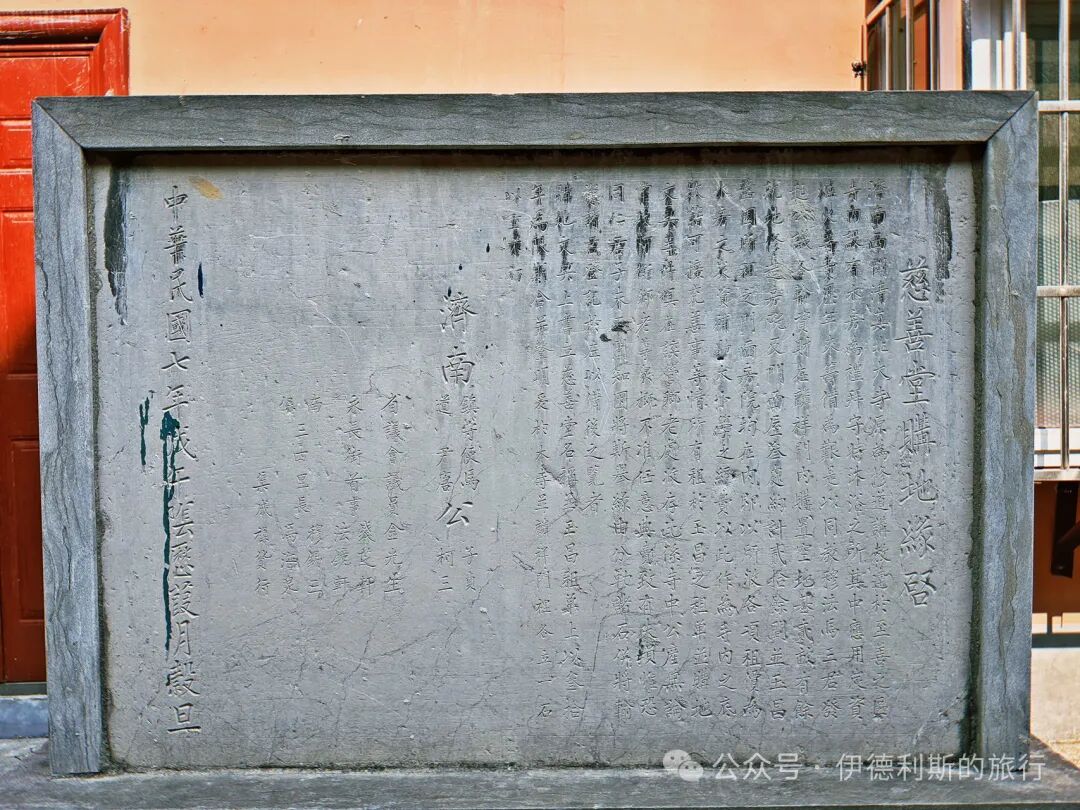
The 1941 stone tablet titled 'Mr. Zhou's Donation of Property and Land' (Zhoujun Juanfang Juandi Bei). It records that the ancestors of the Hui Muslim youth Zhou Xiaopeng lived in Jinan for generations, and his family left official life to live in seclusion at the end of the Qing Dynasty. Zhou Xiaopeng followed his ancestors' wishes by studying books and scriptures and fulfilling the five pillars of Islam. His community had high hopes for him, but he unexpectedly passed away from illness at only twenty years old. On his deathbed, he left a will donating his ancestral home on the east side of Jiuxin Street in the West Gate area of Jinan and his family graveyard at Sili Mountain to the women's mosque, with the income to be used for mosque expenses.
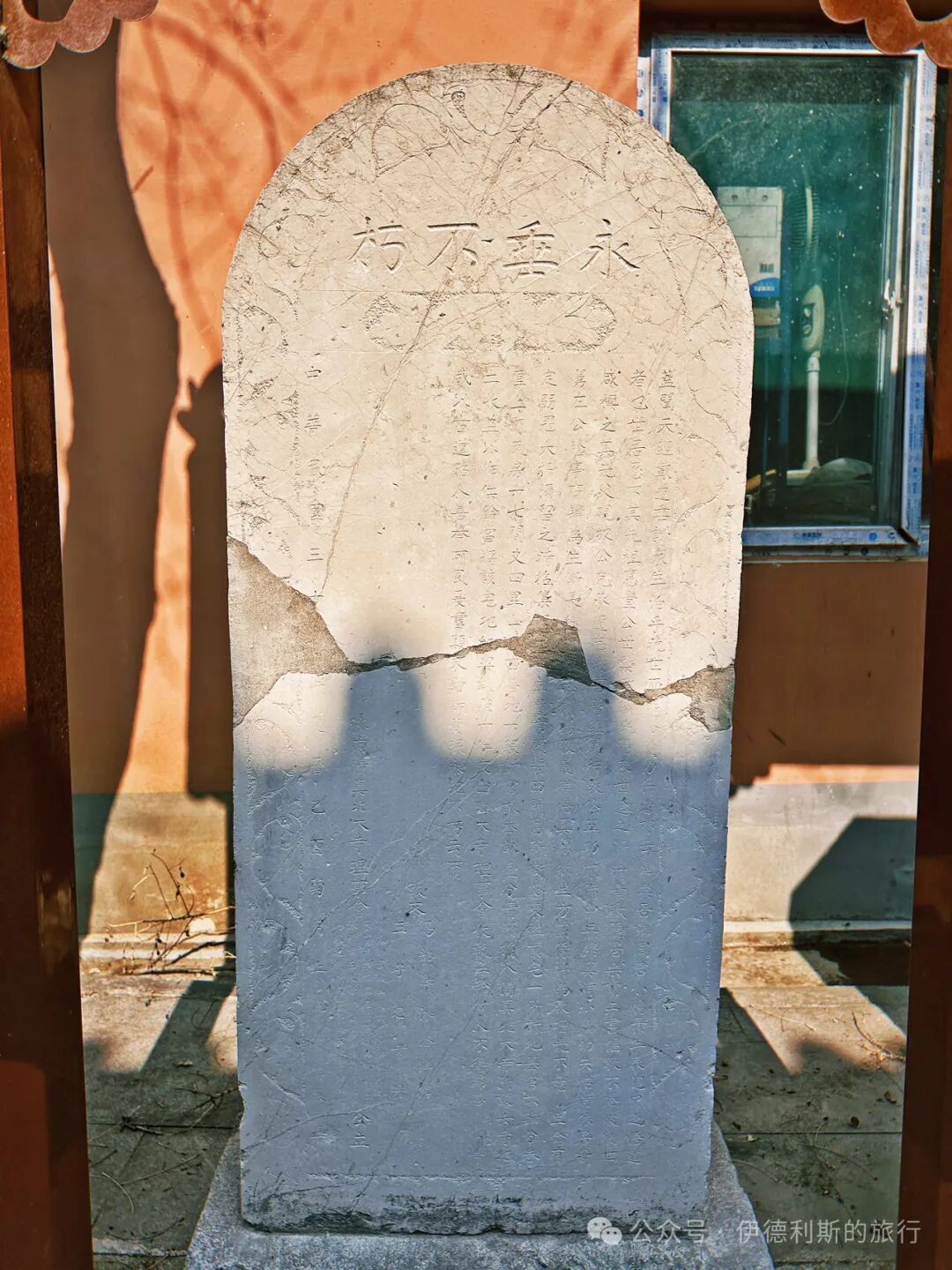
The 1883 stone tablet titled 'Madam You's Land Donation' (Youshi Juandi Bei). It records that before Madam You died, she instructed her son and nephew to donate land to the North and South Mosques of Jinan to pay for the imams to visit the graves and recite prayers every year.
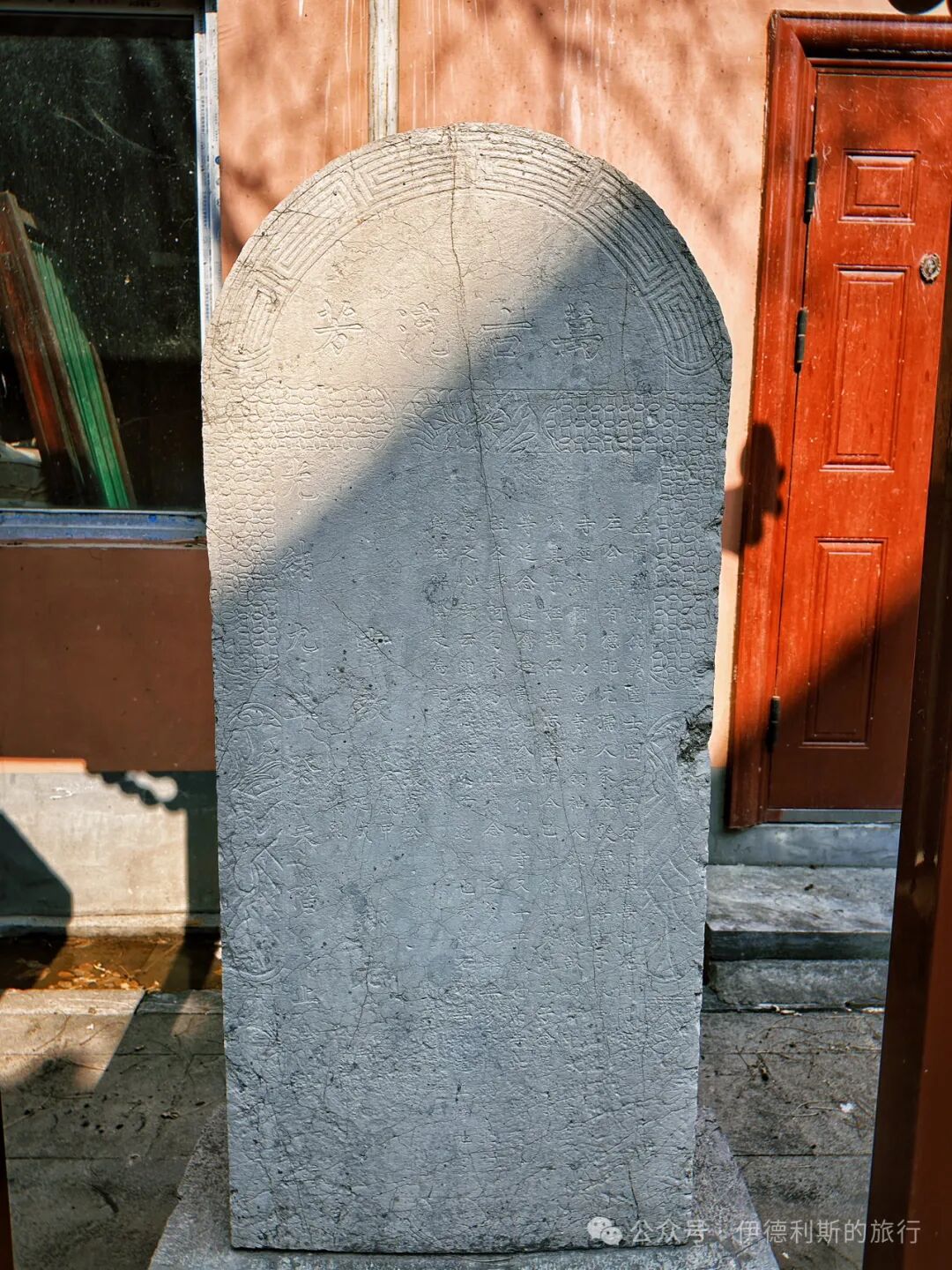
The 1922 stone tablet titled 'Record of the North Mosque' (Qingzhen Beisi Beiji). It records the initial establishment of a Chinese-language school at the North Mosque.
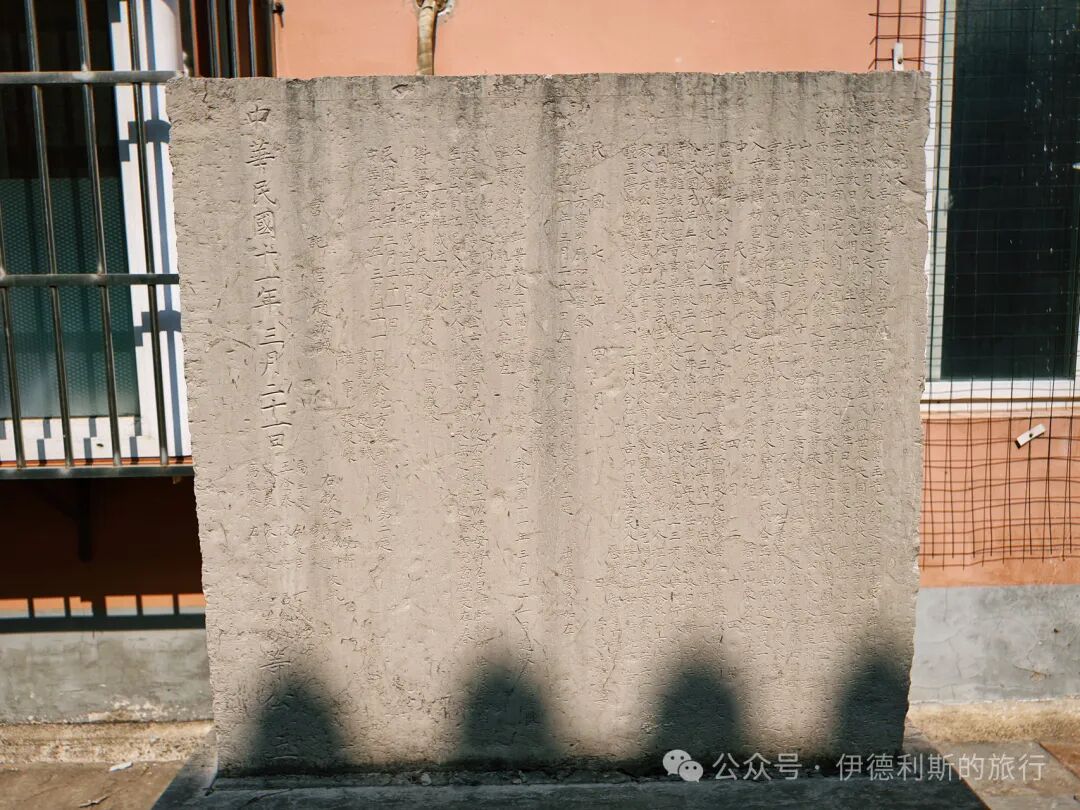
The 1909 stone tablet titled 'Resolving Disputes' (Painan Jiefen Bei). It records that a merchant named Wan Qingyan was doing business in Yuncheng. When his wife, Madam Yang, wanted to visit her parents, Wan Qingyan refused, and she became distraught and committed suicide by taking poison. Wan Qingyan asked his younger brother to send her body to Jinan, but Madam Yang's brothers found the situation suspicious and wanted to report it to the authorities. After mediation prevented a lawsuit, Wan Qingyan donated land and money to the North Mosque in Jinan.
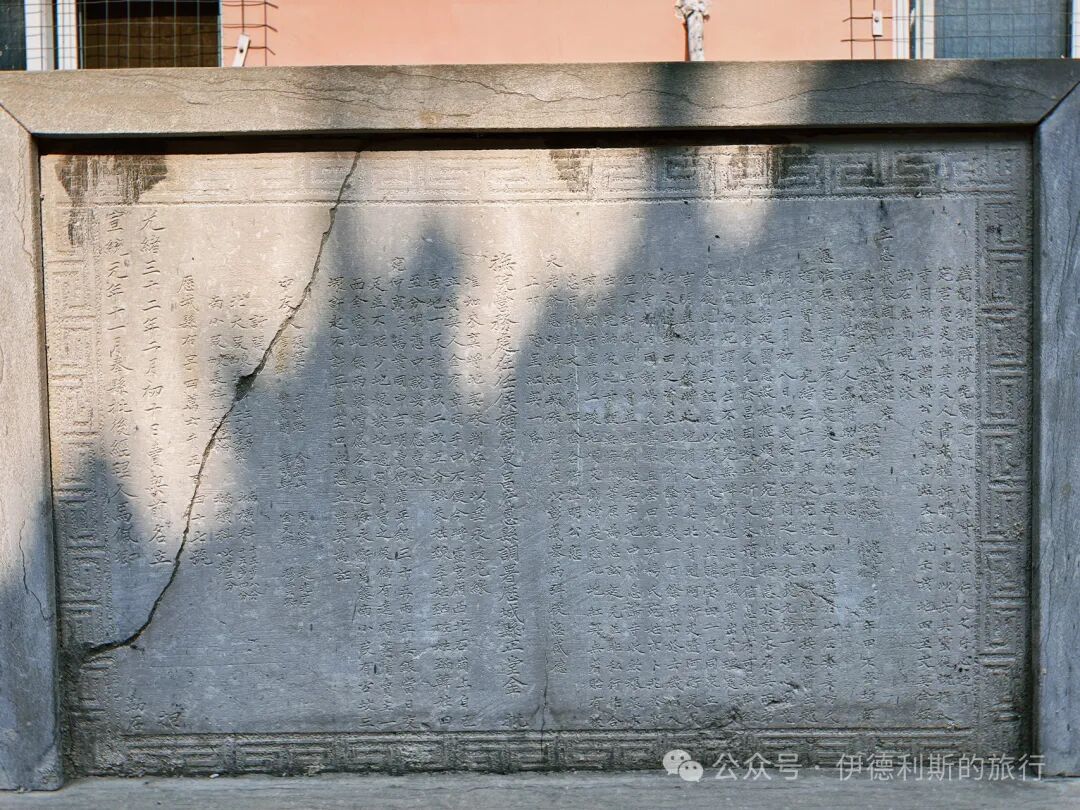
The 1850 stone tablet titled 'Record of the North Mosque Redeeming Farmland' (Qingzhen Beisi Shutian Ji). It records that Huang Tingzhu sold farmland on the west side of Chenjiazhuang to the North Mosque.
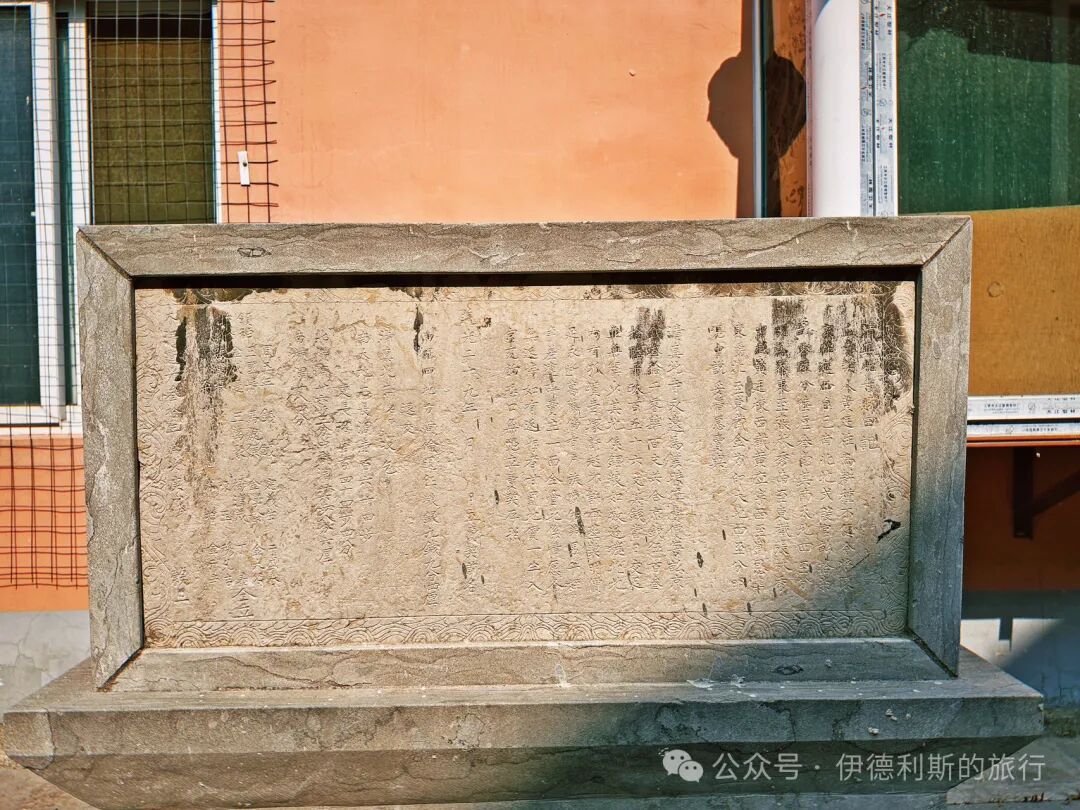
The 1933 stone tablet titled 'Defending the Honor of the Faith' (Wei Jiao Zheng Guang). It records the 1932 protests by Hui Muslims against the Beixin Book Company and the Nanhua Literary Society in Shanghai for publishing articles that insulted their faith. The Nanhua Literary Society had described Hui Muslims as descendants of the pig demon Zhu Bajie, which angered the entire Hui Muslim community. The Shandong branch of the North China Hui Muslim Defense Association was formed, and they sent Mu Huating to Beijing to petition for strict punishment. They eventually succeeded in getting the Executive Yuan of the Republic of China to issue an order to punish the book company and the literary society according to the law.
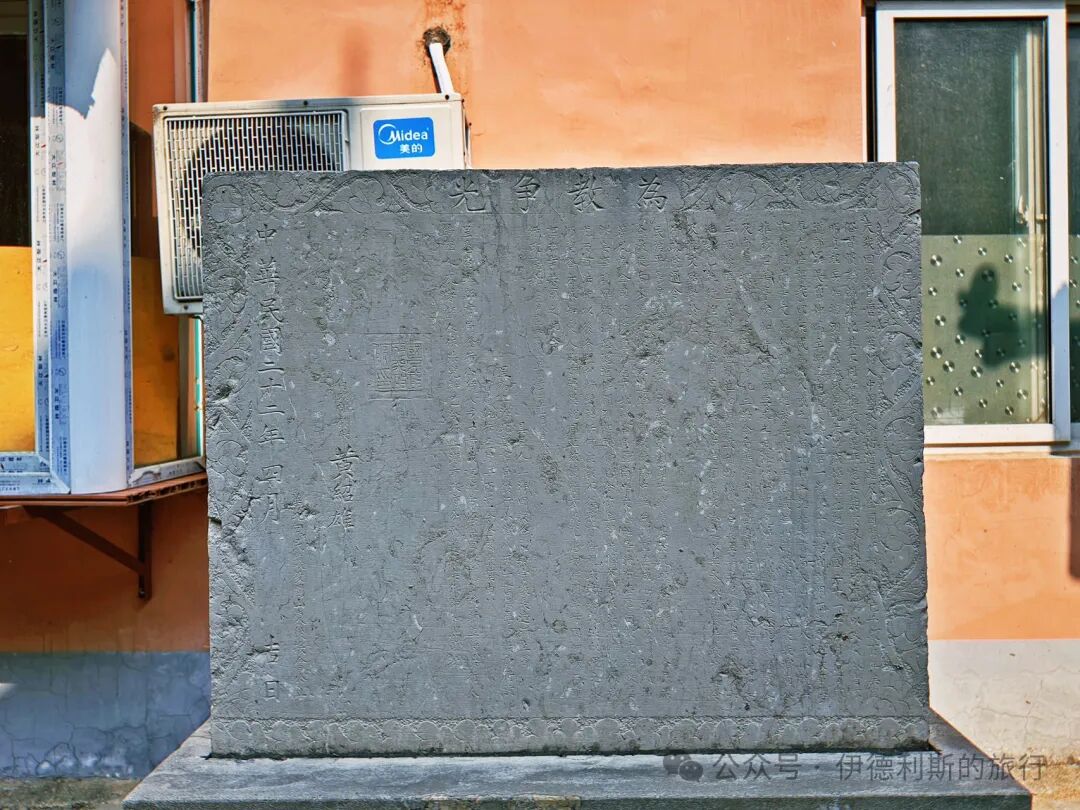
The 1923 stone tablet titled 'Record of Building the Muslim School' (Xiujian Qingzhen Xuexiao Ji). Originally a tablet from the Mujia Chemen Mosque in Jinan, it records how Mu Huating donated the mosque, a kiln factory, city storefronts, and a public cemetery in 1922 to establish a school. This school was likely the predecessor to the Chengda Normal School founded in 1925. The original stone tablet is lost, and the current one is a replica.
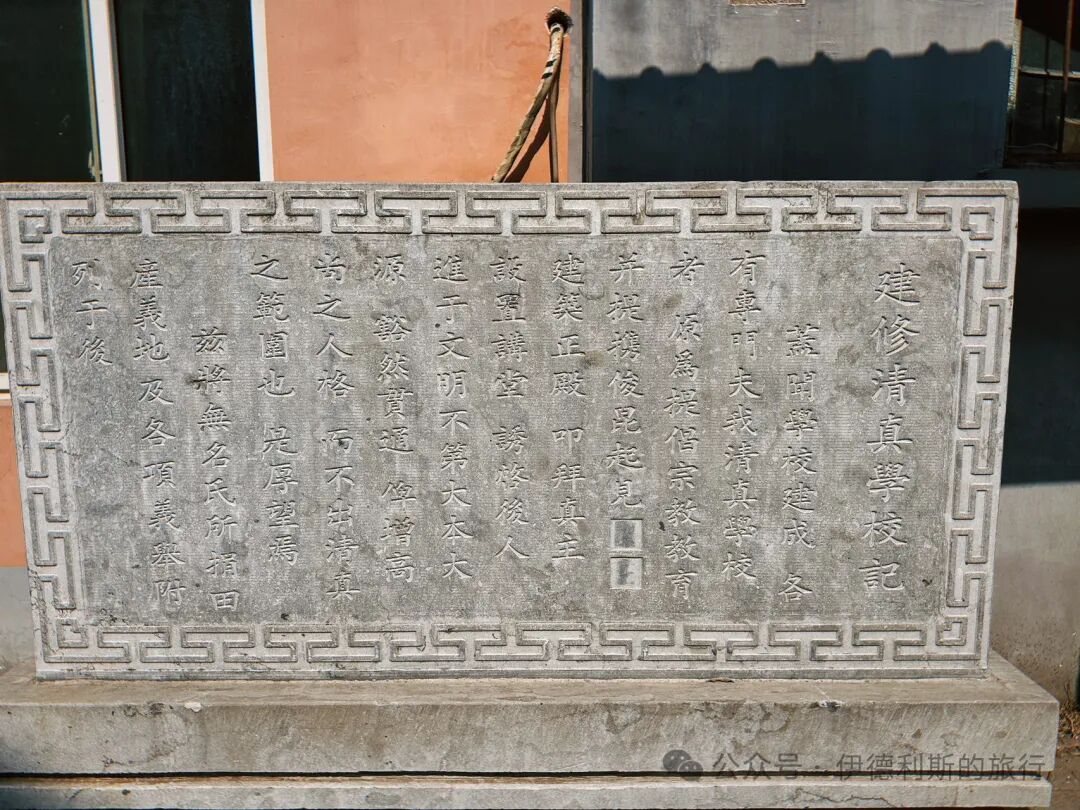
The 19XX Republic of China era tablet inscription for the construction of the women's mosque. The women's mosque attached to the North Mosque sat just to its north. A female teacher (shiniang) led the local women in worship, and there was also an Arabic primary school. It was destroyed after 1966.
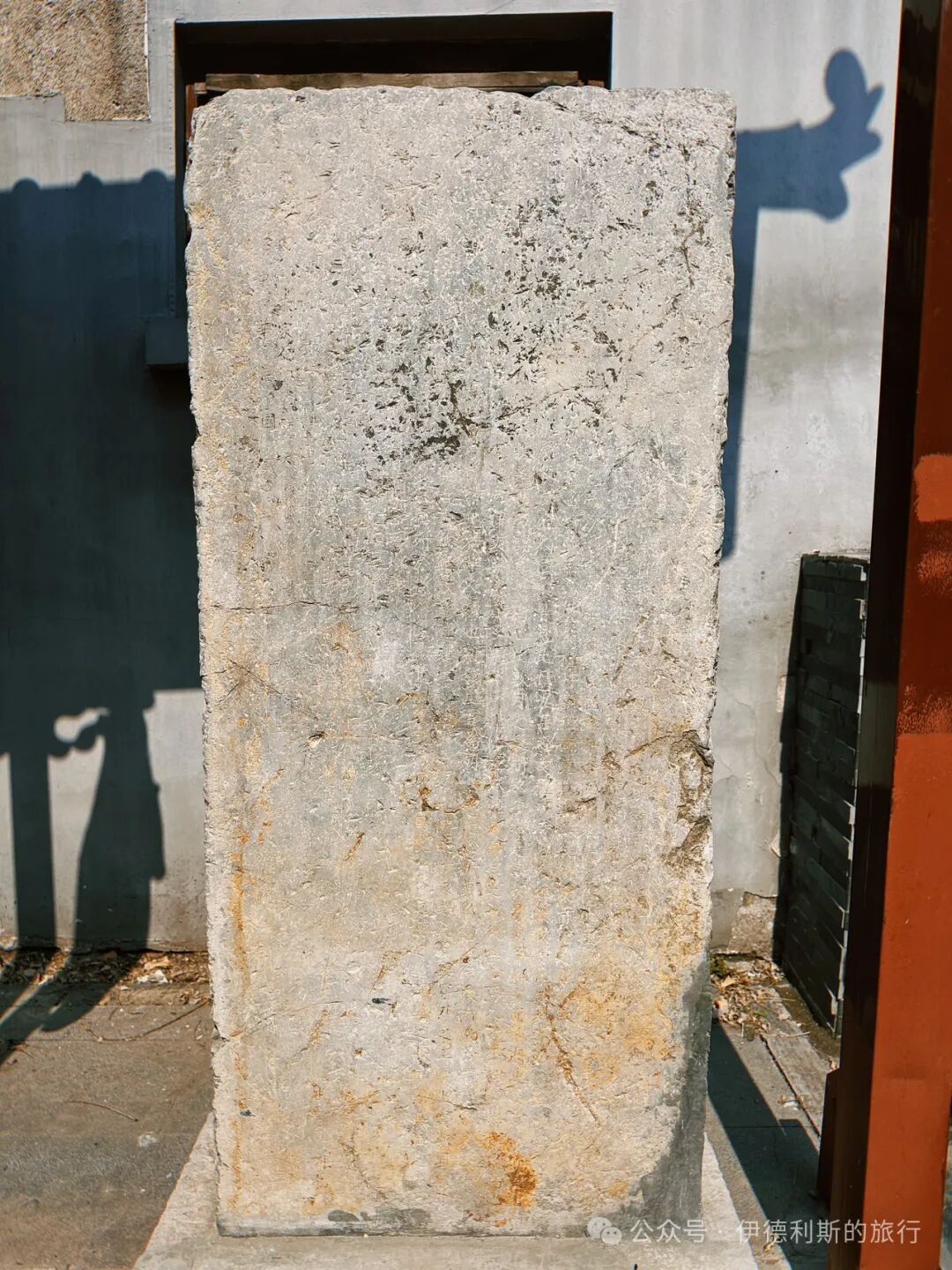
Jinan Nanguan Mosque.
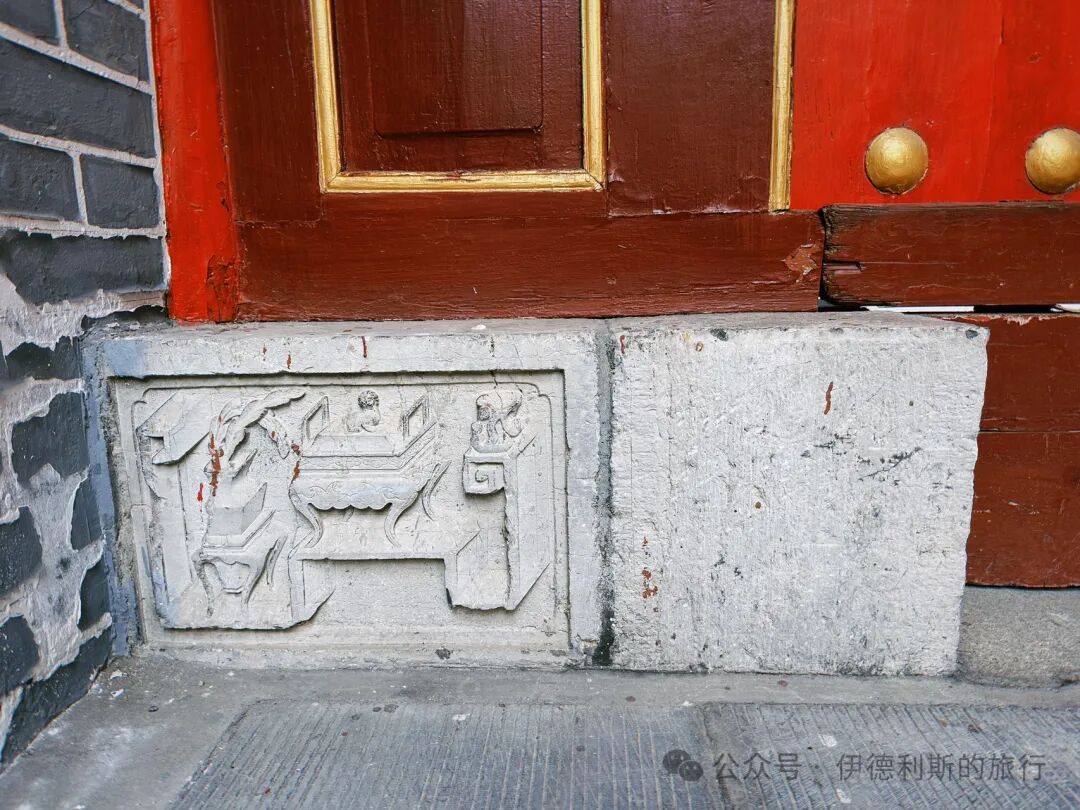
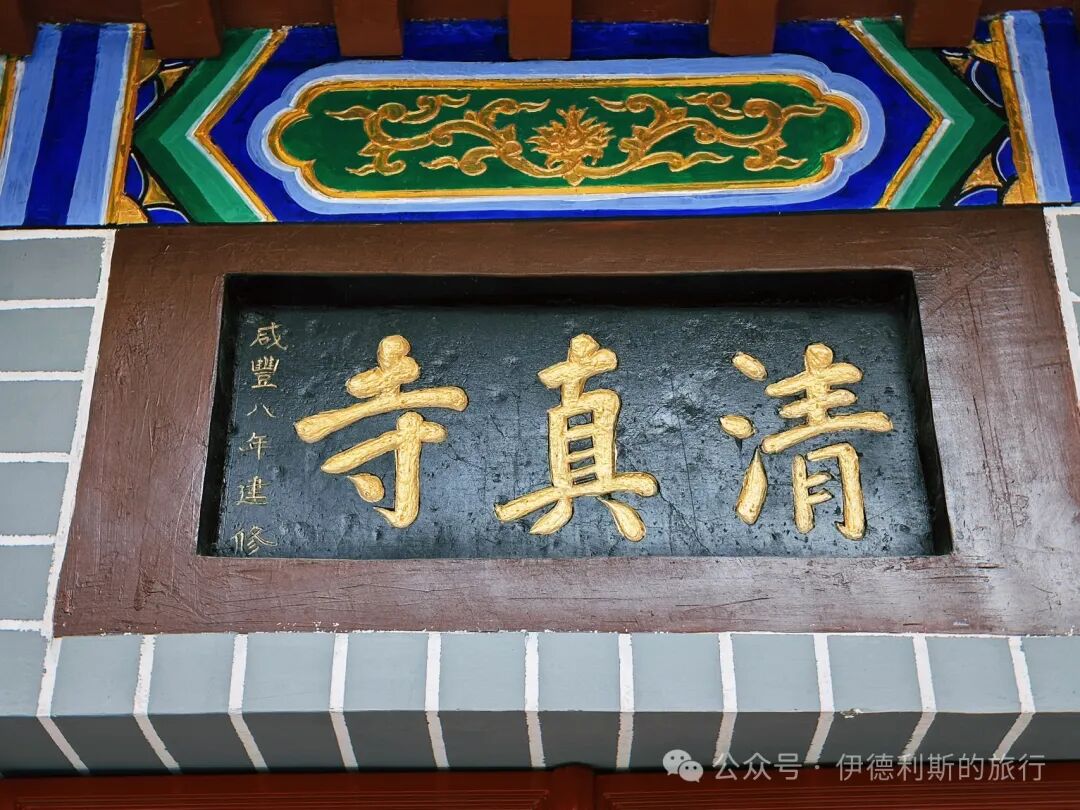
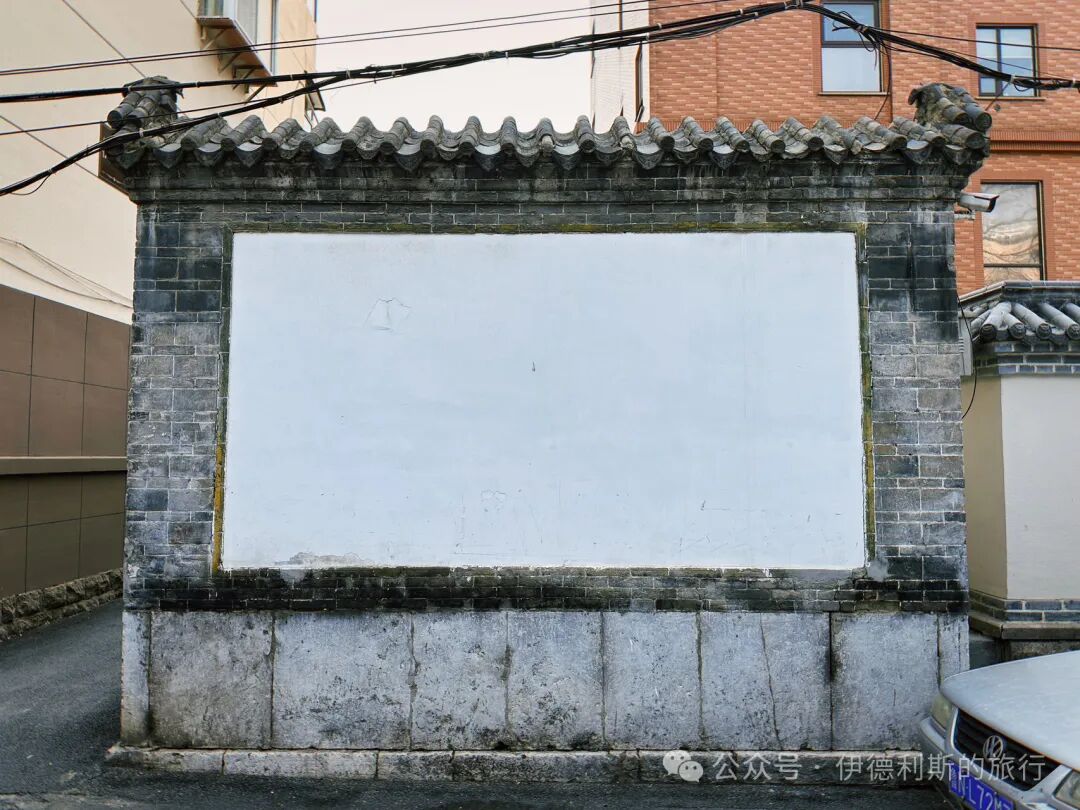
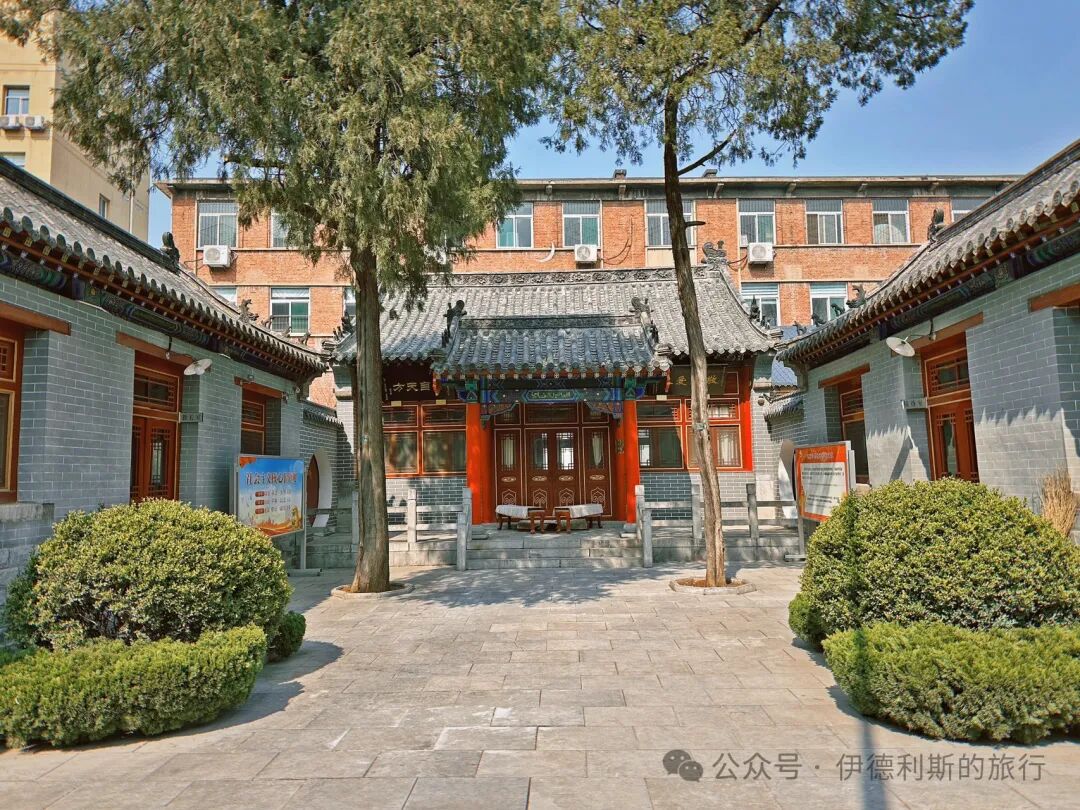
Jinan Nanguan Mosque was first built during the Ming Dynasty. It moved to its current location in 1603 (the 31st year of the Wanli reign) and was renovated several times during the Xianfeng, Tongzhi, and Guangxu periods. The mosque now faces south, with the main prayer hall in the north building. The mihrab is on the west side, which is very rare for a traditional mosque. There is a screen wall outside the main gate, which features Qing Dynasty-style stone door piers. The side gate has a lintel from a renovation in the eighth year of the Xianfeng reign.
During the late Qing and early Republic period, the mosque's head elder was Ma Yunting, a famous Jinan doctor. He opened the Jinan Fourth Halal Primary School inside the mosque and served as its principal. In 1919, during the May Fourth Movement, Ma Yunting was killed for organizing the Hui Muslims National Salvation Group of Ten.
When I visited, it was time for the afternoon prayer (peshin), and only the imam and I were there to pray.
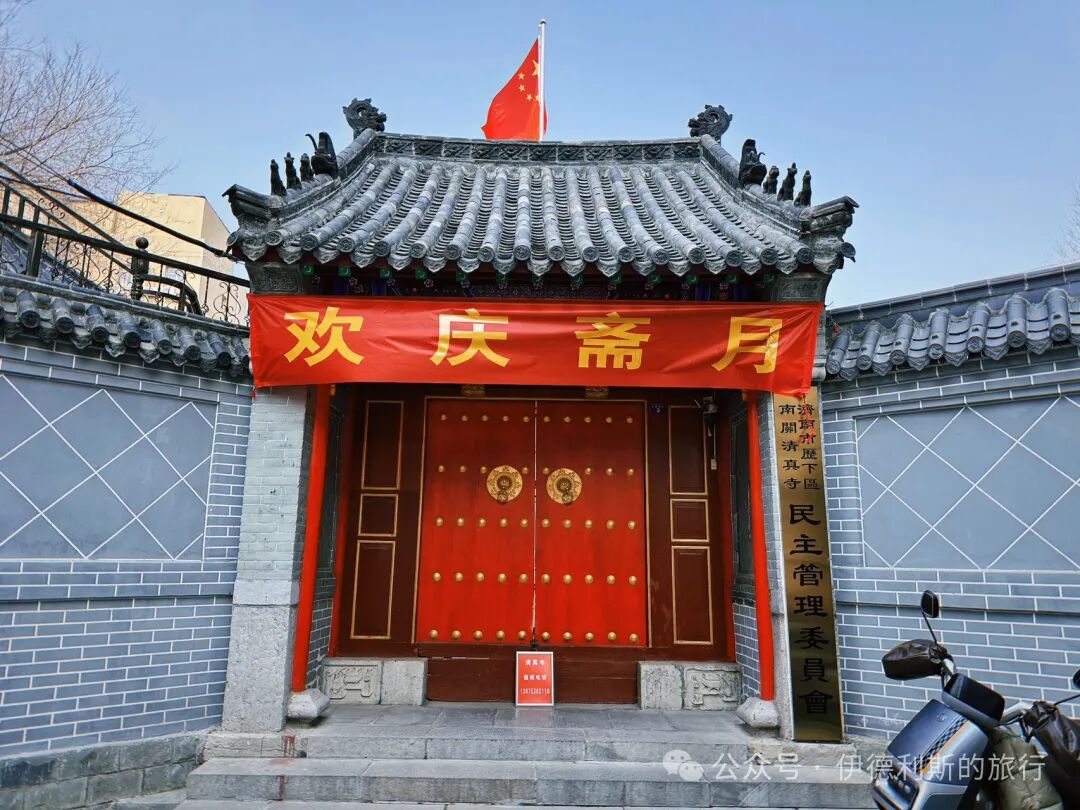
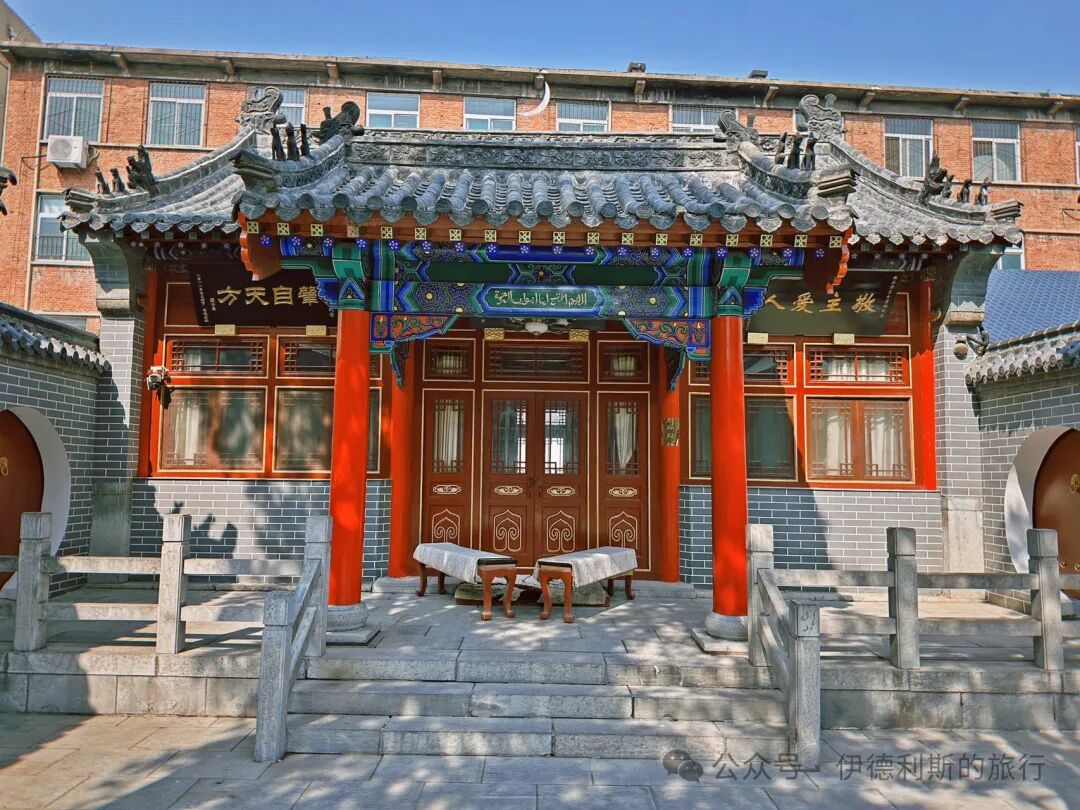
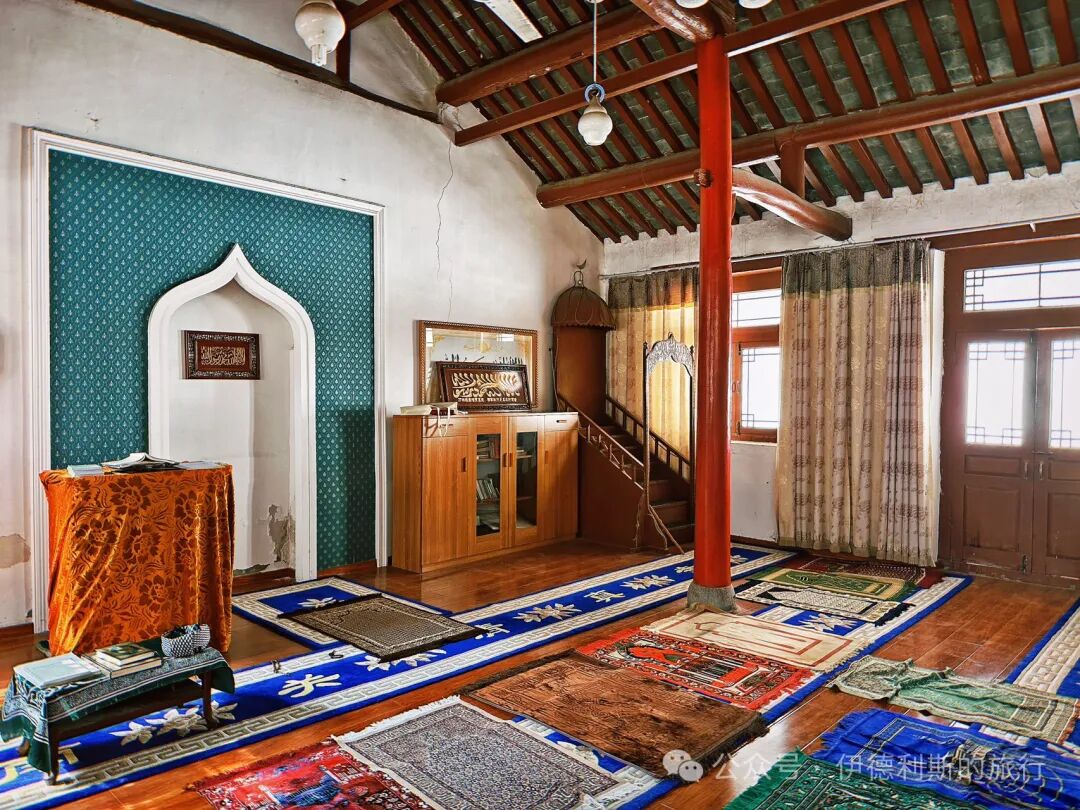
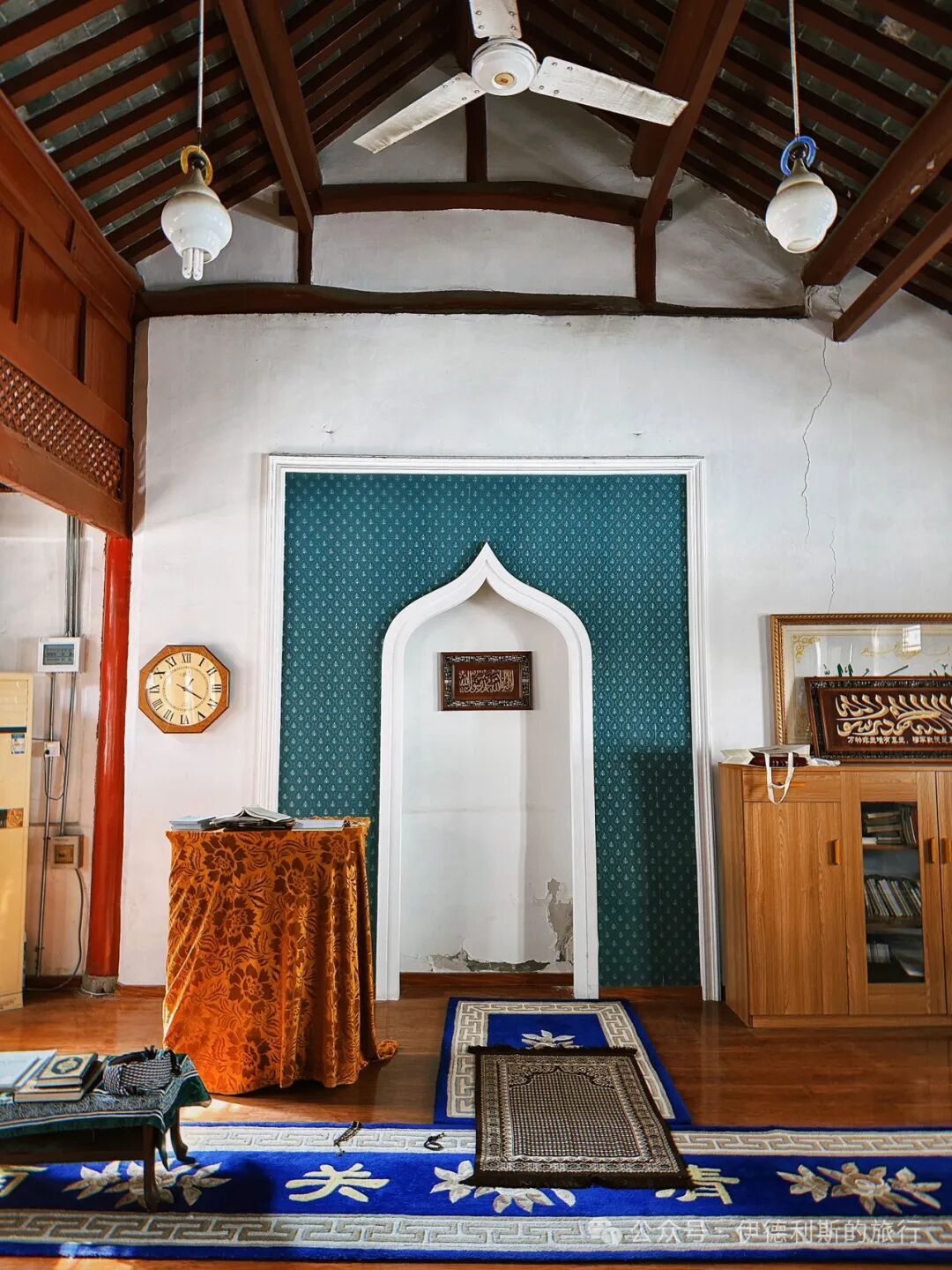
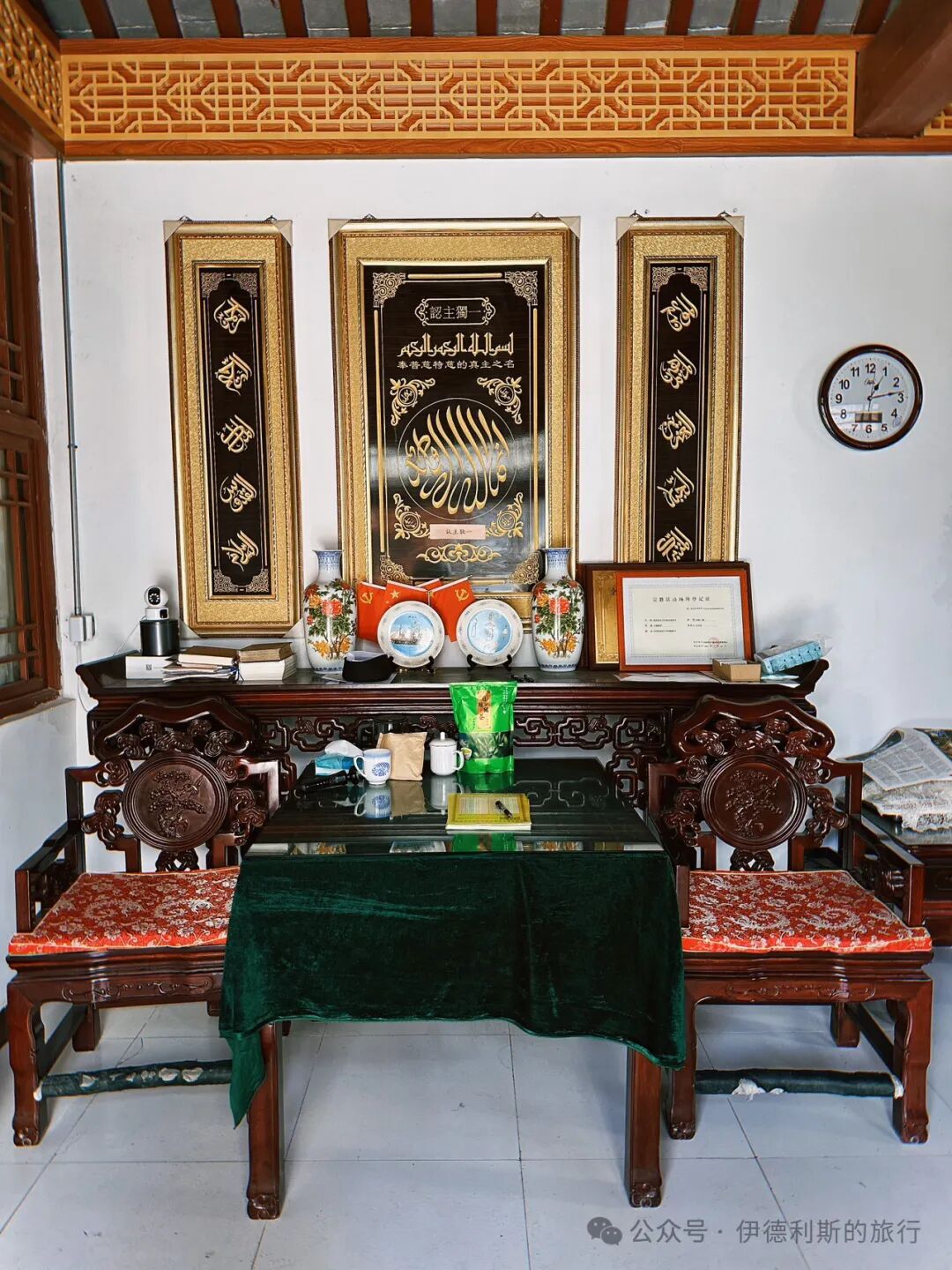
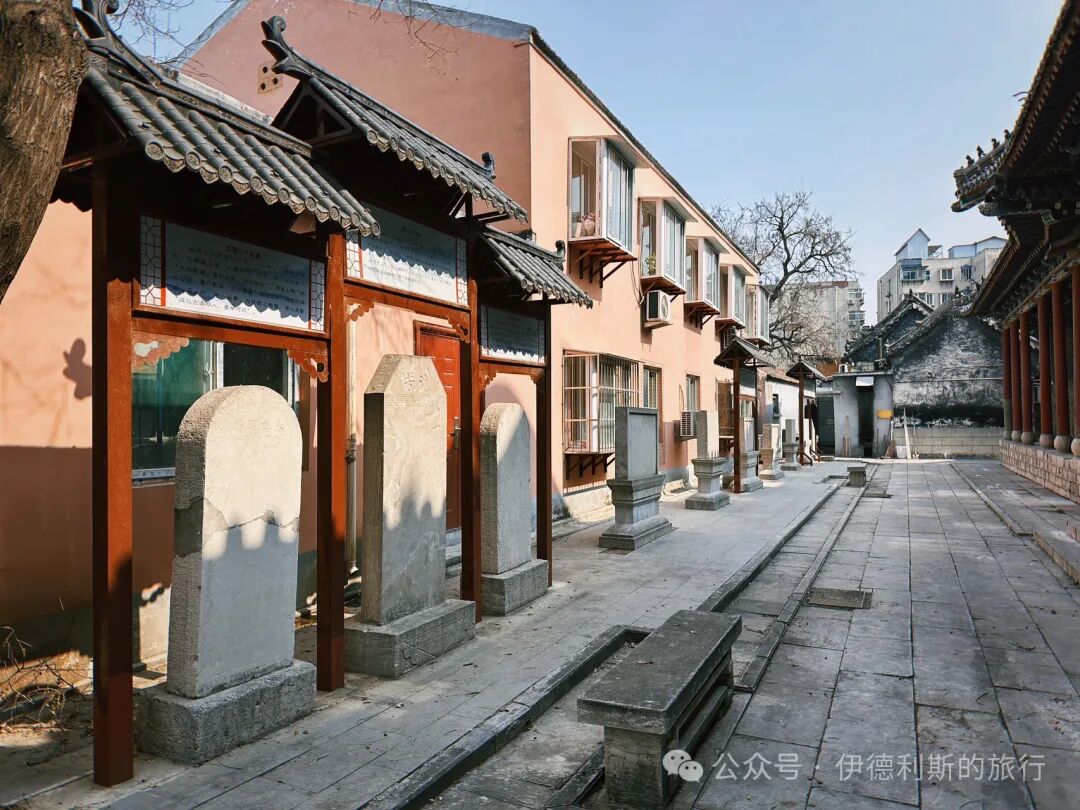
The stele corridor on the east side of Jinan Nanguan Mosque.
Summary: This is the first part of a Ramadan visit to historic mosques in Jinan, including Jinan South Mosque, North Mosque, and other Hui Muslim sites. It preserves the original routes, mosque history, food and community details, and all photographs in clear English.
I went to Jinan, Shandong, on the second Saturday of Ramadan in 2025. I visited the South Great Mosque, North Great Mosque, Nanguan Mosque, and Dikou Mosque. Adding these to the Dangxi Mosque and Dangdong Mosque I visited earlier, I am now sharing information about these six ancient mosques in Jinan.
Jinan South Great Mosque
The earliest mosque in Jinan was in Wumanla Lane, southeast of the government city. In 1295 (the first year of the Yuan-Yuanzhen era), it moved outside the west gate of the city to make room for the Shandong East Road Salt Transport Commission. This is the current site of the South Great Mosque. Later, an imam (mulla) named Aidi led the religious affairs. The Hui Muslims who originally lived in the east of the city moved west, forming a new mosque community near the west gate.
After Chen Li became the leader in 1436 (the first year of the Ming-Zhengtong era), he expanded the South Great Mosque significantly. Further expansions and repairs happened during the Ming dynasties of Hongzhi, Jiajing, and Wanli, and the Qing dynasties of Qianlong, Jiaqing, Daoguang, and Tongzhi, as well as the Republic of China era, creating the scale we see today.
The main prayer hall was rebuilt in 1436 (Zhengtong first year) and expanded in 1492 (Hongzhi seventh year). It stands on a twelve-step platform and looks very tall and grand. The main hall consists of three parts: the front porch, the front hall, and the rear hall. The front porch has a hip roof (wudian ding), the front hall has a gable-and-hip roof (xieshan ding), and the rear hall has a hip roof. There are 50 eaves pillars supporting the surrounding corridor. The main hall uses a beam-lifting wooden frame, and there is an arched door cover between the front and rear halls.
The circular windows on the north and south gable walls of the main hall feature wooden carvings of scripture.
The twelve wooden windows carved with scripture in the main hall represent a high achievement in traditional Chinese Arabic-style wood carving. Unfortunately, the oil painting used during later repairs was not high quality, making some of the wood carvings blurry.
According to the "Stele Preface of the Hei Family" inside the mosque, the calligraphy on the wall facing the mihrab was written in 1810 (Jiaqing fifteenth year) by Hei Faxiang, who served as the imam of the South Great Mosque. In the 110 years following that until 1920, members of the Hei family, including Hei Yuanji, Hei Yonghua, Hei Qingjie, and Hei Guangzhi, served as imams of the South Great Mosque.
The gate tower was built in 1914 and the moon-watching tower (wangyue lou) in 1936. Both have features from the Republic of China era. Teacher Liu Zhiping noted that the architectural style has many "new" ideas.
The center of the gate tower has a plaque reading "Mosque," with "Repaired in April of the Jia-Yin year of the Republic of China" written on it, signed by "The Community." Next to the main gate is a stone tablet from the thirteenth year of the Daoguang era titled "Record of the Screen Wall Outside the Mosque Gate."
The back door of the mosque features beautiful plum blossom patterns carved into the bracket sets (que-ti).
On the north side of the front porch of the South Great Mosque are the two most important steles in the mosque: the "Laifu Ming" and the "Record of the Repair of the Mosque in Licheng County, Jinan Prefecture." They have a protective cover and display boards explaining the content, though the original text is hard to see through the glass.
The "Laifu Ming" was written in 1528 (Ming-Jiajing seventh year) by Chen Si, the leader of the South Great Mosque. His great-grandfather, Chen Ying, was a diplomat in the early Ming Dynasty who traveled to the Western Regions three times and worked in the Court of Imperial Entertainments. His descendants served as leaders of the South Great Mosque for over a hundred years. The "Laifu Ming" is the first Chinese-language stele written by a mosque leader. It is also the first work in China to combine Islamic teachings with Song and Ming Neo-Confucianism, starting the tradition of interpreting scripture through Confucianism in the late Ming and early Qing dynasties. It has very high historical and philosophical value.
The "Record of the Repair of the Mosque in Licheng County, Jinan Prefecture" was carved in 1495 (Ming-Hongzhi eighth year) and is the earliest religious stone tablet in Jinan. The inscription records that the South Great Mosque moved from Wumanla Lane at the east gate of Jinan to the west gate in 1295 (Yuan-Yuanzhen first year). It was small at first, then expanded by Chen Li, the son of Chen Ying, in 1436 (Ming-Zhengtong first year), and expanded again by Chen Xi in 1492 (Hongzhi eighth year). The stele records these two expansion processes.
The Preface to the Permanent Prohibition of Hereditary Succession for the Three Religious Leaders was carved in 1715 (the 54th year of the Qianlong reign). The text was copied from a mosque (libaisi) in Jining Prefecture. Since the original Jining stele no longer exists, the Jinan stele has become the most important stone inscription representing the theological views of the Shandong school of scripture hall education (jingtang jiaoyu). The stele was written by Xue Zongjun, an official in the Imperial Board of Astronomy (qintianjian) who served at the Hall of Mental Cultivation (yangxindian). The text opposes the hereditary system for the three religious leaders and advocates for a selection system based on merit and ability. The text mentions that the author consulted with the founders of the Shandong school, teachers Chang Zhimei and Li Yanling, and received their approval for these views.
The 1810 Record of Rebuilding the Mosque (libaisi). This records how the head of the Black Sect (hei jiaozhang) worked tirelessly to raise funds from all directions. It took ten years to gather materials and start construction, and the project was completed in five months.
The 1845 Stele of Ding Songnian Donating Storefronts. This records how Ding Songnian bought storefronts and donated them to the mosque, with the rent used to cover the needs of the bathhouse.
The 1872 Stele of the Zuo Ma Family Donating Land. This records how the Zuo Ma family donated farmland in Chenjiazhuang to the mosque's school to support grave visits, scripture recitation, and the maintenance of the imam (ahong) and students.
The 1921 Stele Record of Rebuilding the Two Lecture Halls of the Main Hall.
The 1890 Stele of Wang Qingchun's Aunt Donating Land. This records how Wang Qingchun donated land on behalf of his aunt.
The 1914 Stele Record of Rebuilding the Pillars, Wrapped Porch, and Brick Floor Around the Main Hall of the South Mosque.
The 1874 Inscription on Rebuilding the Two Lecture Halls. This records the construction of two lecture halls on the left and right sides of the main hall, where people studied and researched theology together after completion.
Jinan North Mosque (Beidasi).
During the Kangxi reign, Yang Kuiyuan Baba, a student of Chang Zhimei and a leader at the Jinan South Mosque, went out to collect funds and grain. During this time, an imam (ahong) from the Western Regions passed through the South Mosque and taught from the scriptures he carried. Later, Ren Runzhi Baba returned from the Hajj and brought back many scriptures, beginning to preach at the South Mosque and advocating for following the scriptures and reforming customs (zun jing ge su). After Yang Kuiyuan Baba returned to the South Mosque from his fundraising, he insisted on following ancient traditions and opposed the reforms. This led to him setting up a sorghum-stalk screen in the main hall so that each side could perform their namaz separately. History calls this the conflict between the new practice of 'Ikhwan' (houdusi) and the old practice of 'Gedimu' (gedimu). As the conflict between the new and old factions intensified, Imam Yang Kuiyuan led the followers of the old practice to build the North Mosque at the north end of Yongchang Street. It was continuously rebuilt during the Qianlong, Jiaqing, Daoguang, Guangxu, and Republican periods, eventually reaching its current scale.
The main hall of the North Mosque is built on a stone foundation. It features a large timber-framed roof with a triple-connected hip-and-gable design and upturned eaves. A pavilion-style moon-viewing tower is built above the middle hall, which can be accessed via stairs inside the hall.
The main gate and ceremonial gate of the Jinan North Mosque.
The gutter between the main hall and the porch features dragon-head water spouts, and rainwater flows down the roof tiles of the hanging-flower gate (chuihuamen) between the two halls.
The two plaques from the Republic of China era at the North Mosque (Beidasi) match those inside the Ming-Shan Hall at the Qingjing Mosque in Quanzhou. I wonder if they are replicas.
Recognize the Oneness of Allah.
Respectfully erected in the eighth month of the eleventh year of the Republic of China.
Respectfully written by Tang Kesan, Superintendent of the Xiamen Customs, after ritual washing.
Three Awe-Inspiring Things and Four Admonitions.
An auspicious day in the latter ten days of the sixth month of the thirteenth year of the Republic of China.
Respectfully written by Tang Kesan, holder of the Second Class Order of the Golden Grain, former Superintendent of the Xiamen Customs, and Intendant of the Jinan Circuit in Shandong.
The text on the plaque comes from the Analects of Confucius, Book of Ji Shi: A gentleman has three things to stand in awe of: he stands in awe of the Mandate of Heaven, he stands in awe of great men, and he stands in awe of the words of the sages. And from the Analects of Confucius, Book of Yan Yuan: Do not look at what is contrary to propriety, do not listen to what is contrary to propriety, do not speak what is contrary to propriety, and do not do what is contrary to propriety.
Tang Kesan was a Hui Muslim from Zoucheng, Shandong. He was a famous social activist during the Republic of China era, serving as a negotiator for the Ministry of Foreign Affairs in Shandong, director of the Shandong Epidemic Prevention Office, Superintendent of the Xiamen Customs, director of the Shandong Road Administration, and Intendant of the Jinan West Circuit. He served as principal of the Chengda Normal School, founded the Yuehua magazine, helped establish the Chinese Islamic Progress Association, and organized and led the Hui Muslim movement to resist Japan and save the nation, making great contributions to the faith.
A glazed incense burner kept in front of the main prayer hall of the North Mosque.
Stone inscriptions at the Jinan North Mosque.
The 1806 Stele Record of the North Mosque. It records that someone donated funds to buy land, with the income used to cover the expenses of the mosque's school.
The 1938 Stele Record of the Extension and Repair of the Jinan North Mosque Main Hall. It records that the wife of Ma Runhan, Madam Hei, donated funds to buy land adjacent to the main hall, and Zhu Shouqing donated funds to extend the two-story main hall into a three-story structure. During this time, Zhu Shouqing passed away, and his brothers Zhu Guanzhou and Zhu Yunshan continued to renovate the beams and colorful paintings.
The 1943 Memorial Stele for the Virtuous Deeds of Mr. Mu Huating. Mu Huating was a Hui Muslim from Jinan and one of the founders of the Chengda Normal School. He joined the army at age 20 and served in the Shandong Army, the Nanjing Garrison, the Jinan Town Office, the Tianjin Customs, and the Second Border Defense Division, protecting merchants and civilians everywhere during the Zhili-Anhui War. After retiring home, he was devoted to the faith, went on the Hajj, participated in the repairs of the Jinan South Mosque and North Mosque, and collected nearly a hundred volumes of scriptures to store at the North Mosque. In 1925, he donated his own Mu Family Mosque (Mujia Chemen Si) to open the Chengda Normal School.
The 1850 Record of the Renovation of the North Mosque. The father of the author Jin Baofu helped rebuild the North Mosque in the 14th year of the Daoguang reign and again in the 30th year, which is why this stone tablet was erected.
The 1918 stone tablet titled 'Notice of Land Purchase by the Charity Hall' (Cishantang Goudi Yuanqi). It records how elders from the Mu, Fa, Ma, and Wang families donated money to buy land and storefronts inside Linxiang Gate in Jinan. The rent from these properties, along with rent from the Yuchang Soy Sauce Shop, paid for water heating fuel and supported the mosque's primary and secondary schools. The tablet is inscribed with the names of Jinan Garrison Commander Ma Zizhen (Ma Liang) and Jinan Circuit Intendant Tang Kesan.
The 1941 stone tablet titled 'Mr. Zhou's Donation of Property and Land' (Zhoujun Juanfang Juandi Bei). It records that the ancestors of the Hui Muslim youth Zhou Xiaopeng lived in Jinan for generations, and his family left official life to live in seclusion at the end of the Qing Dynasty. Zhou Xiaopeng followed his ancestors' wishes by studying books and scriptures and fulfilling the five pillars of Islam. His community had high hopes for him, but he unexpectedly passed away from illness at only twenty years old. On his deathbed, he left a will donating his ancestral home on the east side of Jiuxin Street in the West Gate area of Jinan and his family graveyard at Sili Mountain to the women's mosque, with the income to be used for mosque expenses.
The 1883 stone tablet titled 'Madam You's Land Donation' (Youshi Juandi Bei). It records that before Madam You died, she instructed her son and nephew to donate land to the North and South Mosques of Jinan to pay for the imams to visit the graves and recite prayers every year.
The 1922 stone tablet titled 'Record of the North Mosque' (Qingzhen Beisi Beiji). It records the initial establishment of a Chinese-language school at the North Mosque.
The 1909 stone tablet titled 'Resolving Disputes' (Painan Jiefen Bei). It records that a merchant named Wan Qingyan was doing business in Yuncheng. When his wife, Madam Yang, wanted to visit her parents, Wan Qingyan refused, and she became distraught and committed suicide by taking poison. Wan Qingyan asked his younger brother to send her body to Jinan, but Madam Yang's brothers found the situation suspicious and wanted to report it to the authorities. After mediation prevented a lawsuit, Wan Qingyan donated land and money to the North Mosque in Jinan.
The 1850 stone tablet titled 'Record of the North Mosque Redeeming Farmland' (Qingzhen Beisi Shutian Ji). It records that Huang Tingzhu sold farmland on the west side of Chenjiazhuang to the North Mosque.
The 1933 stone tablet titled 'Defending the Honor of the Faith' (Wei Jiao Zheng Guang). It records the 1932 protests by Hui Muslims against the Beixin Book Company and the Nanhua Literary Society in Shanghai for publishing articles that insulted their faith. The Nanhua Literary Society had described Hui Muslims as descendants of the pig demon Zhu Bajie, which angered the entire Hui Muslim community. The Shandong branch of the North China Hui Muslim Defense Association was formed, and they sent Mu Huating to Beijing to petition for strict punishment. They eventually succeeded in getting the Executive Yuan of the Republic of China to issue an order to punish the book company and the literary society according to the law.
The 1923 stone tablet titled 'Record of Building the Muslim School' (Xiujian Qingzhen Xuexiao Ji). Originally a tablet from the Mujia Chemen Mosque in Jinan, it records how Mu Huating donated the mosque, a kiln factory, city storefronts, and a public cemetery in 1922 to establish a school. This school was likely the predecessor to the Chengda Normal School founded in 1925. The original stone tablet is lost, and the current one is a replica.
The 19XX Republic of China era tablet inscription for the construction of the women's mosque. The women's mosque attached to the North Mosque sat just to its north. A female teacher (shiniang) led the local women in worship, and there was also an Arabic primary school. It was destroyed after 1966.
Jinan Nanguan Mosque.
Jinan Nanguan Mosque was first built during the Ming Dynasty. It moved to its current location in 1603 (the 31st year of the Wanli reign) and was renovated several times during the Xianfeng, Tongzhi, and Guangxu periods. The mosque now faces south, with the main prayer hall in the north building. The mihrab is on the west side, which is very rare for a traditional mosque. There is a screen wall outside the main gate, which features Qing Dynasty-style stone door piers. The side gate has a lintel from a renovation in the eighth year of the Xianfeng reign.
During the late Qing and early Republic period, the mosque's head elder was Ma Yunting, a famous Jinan doctor. He opened the Jinan Fourth Halal Primary School inside the mosque and served as its principal. In 1919, during the May Fourth Movement, Ma Yunting was killed for organizing the Hui Muslims National Salvation Group of Ten.
When I visited, it was time for the afternoon prayer (peshin), and only the imam and I were there to pray.
The stele corridor on the east side of Jinan Nanguan Mosque.
