

Ramadan
Muslim Life Guide China Ramadan: Suhoor, Dialysis, Qur'an and the First Day of Fasting
Articles • yusuf908 posted the article • 0 comments • 222 views • 2026-05-23 21:55
Summary: This Ramadan diary records the author's first day of fasting while dealing with serious illness, dialysis, suhoor, thirst, iftar, Qur'an reminders, and the mixed pain and gratitude of trying to fast for Allah when the body is weak.
Many people probably started to curse when they saw this topic. Today is already at least two days of fasting. How can I fast on the first day? Yes, I don’t have any excuses, because today is indeed my first day of fasting this year. I didn’t fast yesterday because my whole body felt weak due to low blood sugar, and my hands and feet were numb as if I’d been electrocuted, so I didn’t fast yesterday. Also, I would suffer from severe hypoglycemia during and after dialysis, so I had to eat something during dialysis. Also, I would be weak after dialysis, and I would have to eat a little bit to recover. Therefore, insha'Allah, I plan not to go to the hospital for dialysis like last year. As long as my body does not feel particularly severe discomfort, I will try my best to hold on to it every day.
I didn’t fast yesterday. To be honest, I was too embarrassed to go out to bask in the sun or feel shy when I met anyone. It was really just like what the verse said, “They were so out of date that they felt that although although the earth was vast, it felt too tight for them.” [9:118] I felt as soon as I stepped out the door, even the wind was asking me why I wasn't fasting.
This morning, I woke up my wife and told her to get up and make suhoor. My wife started to get busy, but I lay in bed and kept wondering whether I should get up and try to see if my body could bear it. Finally, I decided to get up and give it a try. My wife said something to me in a distressed and reproachful tone, but I said firmly: "I tried to take the whole day's medicine at once this morning, and then I tried to see if my body can stand it. If I can't stand it, I will still choose to break the fast." "The wife didn't say anything else, because she knew it would be useless.
Around nine o'clock in the morning, my stomach started to feel uncomfortable. It is estimated that the contents in the stomach have been digested, but the effects of the medicine have not worn off. I can't explain the uncomfortable feeling, but it is uncomfortable. Around 1 p.m., my hands and feet began to feel numb. Uremic patients know that this is a sign of elevated potassium, or potassium poisoning. But fortunately, it was just a slight numbness, and it was not particularly severe. A particularly severe potassium overdose would cause numbness of the limbs, vomiting, shock, or even death. By about five o'clock in the afternoon, the numbness was a little better, but there was still a little numbness. I don't know if it was because of hunger, the efficacy of the medicine, or the increase in potassium. Anyway, my limbs were still soft and I didn't have much strength, so I continued to lie on the sofa with a fire.
When it was close to breaking the fast, this discomfort became particularly obvious. My stomach kept rumbling, my ears began to hold my breath, and the numbness in my limbs became more serious than at noon. However, I also experienced these discomforts last year, and I can overcome them with a little persistence.
The first day of fasting is so difficult, especially for people like us who are seriously ill. Only we know the hardship. This is also like what is said in the Qur'an: “Indeed, with hardship comes ease. Indeed, with hardship comes ease. (94:5-6)” That way. If we give up, then the day will pass, but if we persist, the day will actually be completed easily.
I completed today's fast, but I can’t fast tomorrow because I have to go to the hospital for dialysis! However, I will try my best to fast every day. view all
Summary: This Ramadan diary records the author's first day of fasting while dealing with serious illness, dialysis, suhoor, thirst, iftar, Qur'an reminders, and the mixed pain and gratitude of trying to fast for Allah when the body is weak.
Many people probably started to curse when they saw this topic. Today is already at least two days of fasting. How can I fast on the first day? Yes, I don’t have any excuses, because today is indeed my first day of fasting this year. I didn’t fast yesterday because my whole body felt weak due to low blood sugar, and my hands and feet were numb as if I’d been electrocuted, so I didn’t fast yesterday. Also, I would suffer from severe hypoglycemia during and after dialysis, so I had to eat something during dialysis. Also, I would be weak after dialysis, and I would have to eat a little bit to recover. Therefore, insha'Allah, I plan not to go to the hospital for dialysis like last year. As long as my body does not feel particularly severe discomfort, I will try my best to hold on to it every day.
I didn’t fast yesterday. To be honest, I was too embarrassed to go out to bask in the sun or feel shy when I met anyone. It was really just like what the verse said, “They were so out of date that they felt that although although the earth was vast, it felt too tight for them.” [9:118] I felt as soon as I stepped out the door, even the wind was asking me why I wasn't fasting.

This morning, I woke up my wife and told her to get up and make suhoor. My wife started to get busy, but I lay in bed and kept wondering whether I should get up and try to see if my body could bear it. Finally, I decided to get up and give it a try. My wife said something to me in a distressed and reproachful tone, but I said firmly: "I tried to take the whole day's medicine at once this morning, and then I tried to see if my body can stand it. If I can't stand it, I will still choose to break the fast." "The wife didn't say anything else, because she knew it would be useless.
Around nine o'clock in the morning, my stomach started to feel uncomfortable. It is estimated that the contents in the stomach have been digested, but the effects of the medicine have not worn off. I can't explain the uncomfortable feeling, but it is uncomfortable. Around 1 p.m., my hands and feet began to feel numb. Uremic patients know that this is a sign of elevated potassium, or potassium poisoning. But fortunately, it was just a slight numbness, and it was not particularly severe. A particularly severe potassium overdose would cause numbness of the limbs, vomiting, shock, or even death. By about five o'clock in the afternoon, the numbness was a little better, but there was still a little numbness. I don't know if it was because of hunger, the efficacy of the medicine, or the increase in potassium. Anyway, my limbs were still soft and I didn't have much strength, so I continued to lie on the sofa with a fire.
When it was close to breaking the fast, this discomfort became particularly obvious. My stomach kept rumbling, my ears began to hold my breath, and the numbness in my limbs became more serious than at noon. However, I also experienced these discomforts last year, and I can overcome them with a little persistence.

The first day of fasting is so difficult, especially for people like us who are seriously ill. Only we know the hardship. This is also like what is said in the Qur'an: “Indeed, with hardship comes ease. Indeed, with hardship comes ease. (94:5-6)” That way. If we give up, then the day will pass, but if we persist, the day will actually be completed easily.
I completed today's fast, but I can’t fast tomorrow because I have to go to the hospital for dialysis! However, I will try my best to fast every day.

China Muslim Travel Tips Ramadan: Hadith, Eid Moon Sighting and Local Imam Unity
Articles • yusuf908 posted the article • 0 comments • 231 views • 2026-05-23 21:31
Summary: This Ramadan reflection discusses recurring disputes about moon sighting, starting and ending the fast, following the local imam, and protecting unity in Muslim communities even when people hold different fiqh views.
This year's Ramadan has mostly passed. Some people have already ended the fast today, and some will end it tomorrow, but the hostile arguments on Moments have not stopped with the end of Ramadan. On the contrary, those who continue to fast today mock those who have already broken their fast today as radicals. In China, they blindly follow the trend of breaking the fast without seeing the moon. Those who continue to fast today mock those who continue to fast today as old-fashioned. Obviously, there is accurate information about the moon sighting abroad, so why not accept a distant moon sighting?
Every year, our group always quarrels and slanders each other over the issue of fasting and breaking fast. The root of all this is the famous hadith: “Fast when you see the new moon, and break your fast when you see the new moon. But if the sky is cloudy, then you have enough for the thirty days of Sha'ban (calculation based on this)! ". [the two Sahih collections], the differences in each Ramadan basically appear here, and there is also the situation of receiving the new moon from a distant place. There is also a hadith: Narrated by Qurayb ibn Abu Muslim Umm al-Fadl bint al-Harith sent me to Sham to meet Mu'awiya. I was in Sham when the crescent moon of Ramadan appeared after I arrived in Sham to complete her mission. We saw the new moon on the Friday night. When I returned to Medina at the end of the month, Ibn Abbas mentioned the new moon when he asked me, "When did you see the new moon?" "I said: "We saw the new moon on the Friday night. He asked: "Did you see it too?" "I said: "Yes, everyone has seen it. They all fasted, and Mu'awiya also fasted. "Ibn Abbas said: "We saw the new moon on Saturday night. So, we will continue to fast until we are thirty days old or until we see the new moon. "I said: "Aren't you satisfied with Mu'awiya's sight of the moon and his fasting? "Ibn Abbas said: "No, this is what the Messenger of Allah ordered us to do. "Muslim Collection of Hadith." Today we are in the era of the "global village" with the explosion of information. People in the Western Hemisphere will know about the new moon one minute after seeing it in the Eastern Hemisphere, so people who see the new moon will naturally start or end the fast. However, those who refuse to accept a distant moon sighting believe that there is a time difference of several hours between the new moon seen by people in the Eastern Hemisphere and those in the Western Hemisphere, and the distance is far away, so they do not need to accept a distant moon sighting, so they delay starting or ending the fast.
Do the above two hadiths contradict each other? Not contradictory at all! On the contrary, there is strong complementarity, and it also reflects the inclusiveness of Islam in seeking common ground while reserving differences, and Islam is a religion that makes it easy for people and not difficult for others. On the contrary, it is our partial understanding or complete misinterpretation of these two hadiths that led to this situation of blaming each other. In the end, we all used these two hadiths to say that the other party was mistaken. In fact, similar and seemingly contradictory hadiths include "My disciples will be divided into seventy-three groups, only one group will enter heaven, and the others will enter hell." This group of saved people are believers who follow me, and they follow my disciples as examples. "Ibn Majah" and another passage "Whoever dies by reciting that there is no god but Allah will surely enter paradise, even if he steals and commits adultery." "[the two Sahih collections], these two hadiths seem to be contradictory and conflicting with each other. In fact, as long as these two hadiths are combined and understood, they encourage everyone to actively do good deeds and work hard to complete various meritorious deeds. Even if you are originally a person who has committed serious sins, as long as you work hard to improve, actively repent to Allah, and promise not to do it again, you will belong to the residents of heaven.
The same is true for the above two hadiths about the new moon. They must be combined to understand each other in order to truly understand their meaning. Otherwise, if we only understand a certain hadith alone, we will end up in today's situation of mutual accusations. If the two hadiths are combined and understood, then we can easily solve this problem. The choice of whether to accept a distant moon sighting from another place depends on the imam of our community. If the imam of our community chooses to accept a distant moon sighting, then we will follow the fast or break the fast. If the imam of our community chooses to not accept the distant moon sighting, then we will follow the imam and choose to postpone the fast or delay the fast. Because the Messenger of Allah said, "Fear Allah and obey the [Imam] among you, even if it is an Abyssinian black servant with a head like a raisin as your Imam." "Ibn Majah". The imam of this community will consider all factors and finally make the most correct choice. We can just follow him. Don't mess up the atmosphere of unity in this community or even surrounding communities for our own reasons. If we do this, we will violate the great mission of "Muslims should unite with each other" commanded by Allah.
Having said so much, I can only say one thing: Those who choose to accept a distant moon sighting and fast or break their fast, or those who choose to not accept a distant moon sighting and delay fasting and break the fast, both are fine. As for whether to choose to accept a distant moon sighting or not, it depends on the imam of the community! As for who is right and who is wrong, we just have to be ourselves. In the days to come, Allah will reward every servant according to their intention. Finally, I would like to end today’s tweet with a Hadith: “All work depends on intention, and everyone has the [reward] of his intention” [the two Sahih collections]! view all
Summary: This Ramadan reflection discusses recurring disputes about moon sighting, starting and ending the fast, following the local imam, and protecting unity in Muslim communities even when people hold different fiqh views.
This year's Ramadan has mostly passed. Some people have already ended the fast today, and some will end it tomorrow, but the hostile arguments on Moments have not stopped with the end of Ramadan. On the contrary, those who continue to fast today mock those who have already broken their fast today as radicals. In China, they blindly follow the trend of breaking the fast without seeing the moon. Those who continue to fast today mock those who continue to fast today as old-fashioned. Obviously, there is accurate information about the moon sighting abroad, so why not accept a distant moon sighting?
Every year, our group always quarrels and slanders each other over the issue of fasting and breaking fast. The root of all this is the famous hadith: “Fast when you see the new moon, and break your fast when you see the new moon. But if the sky is cloudy, then you have enough for the thirty days of Sha'ban (calculation based on this)! ". [the two Sahih collections], the differences in each Ramadan basically appear here, and there is also the situation of receiving the new moon from a distant place. There is also a hadith: Narrated by Qurayb ibn Abu Muslim Umm al-Fadl bint al-Harith sent me to Sham to meet Mu'awiya. I was in Sham when the crescent moon of Ramadan appeared after I arrived in Sham to complete her mission. We saw the new moon on the Friday night. When I returned to Medina at the end of the month, Ibn Abbas mentioned the new moon when he asked me, "When did you see the new moon?" "I said: "We saw the new moon on the Friday night. He asked: "Did you see it too?" "I said: "Yes, everyone has seen it. They all fasted, and Mu'awiya also fasted. "Ibn Abbas said: "We saw the new moon on Saturday night. So, we will continue to fast until we are thirty days old or until we see the new moon. "I said: "Aren't you satisfied with Mu'awiya's sight of the moon and his fasting? "Ibn Abbas said: "No, this is what the Messenger of Allah ordered us to do. "Muslim Collection of Hadith." Today we are in the era of the "global village" with the explosion of information. People in the Western Hemisphere will know about the new moon one minute after seeing it in the Eastern Hemisphere, so people who see the new moon will naturally start or end the fast. However, those who refuse to accept a distant moon sighting believe that there is a time difference of several hours between the new moon seen by people in the Eastern Hemisphere and those in the Western Hemisphere, and the distance is far away, so they do not need to accept a distant moon sighting, so they delay starting or ending the fast.
Do the above two hadiths contradict each other? Not contradictory at all! On the contrary, there is strong complementarity, and it also reflects the inclusiveness of Islam in seeking common ground while reserving differences, and Islam is a religion that makes it easy for people and not difficult for others. On the contrary, it is our partial understanding or complete misinterpretation of these two hadiths that led to this situation of blaming each other. In the end, we all used these two hadiths to say that the other party was mistaken. In fact, similar and seemingly contradictory hadiths include "My disciples will be divided into seventy-three groups, only one group will enter heaven, and the others will enter hell." This group of saved people are believers who follow me, and they follow my disciples as examples. "Ibn Majah" and another passage "Whoever dies by reciting that there is no god but Allah will surely enter paradise, even if he steals and commits adultery." "[the two Sahih collections], these two hadiths seem to be contradictory and conflicting with each other. In fact, as long as these two hadiths are combined and understood, they encourage everyone to actively do good deeds and work hard to complete various meritorious deeds. Even if you are originally a person who has committed serious sins, as long as you work hard to improve, actively repent to Allah, and promise not to do it again, you will belong to the residents of heaven.
The same is true for the above two hadiths about the new moon. They must be combined to understand each other in order to truly understand their meaning. Otherwise, if we only understand a certain hadith alone, we will end up in today's situation of mutual accusations. If the two hadiths are combined and understood, then we can easily solve this problem. The choice of whether to accept a distant moon sighting from another place depends on the imam of our community. If the imam of our community chooses to accept a distant moon sighting, then we will follow the fast or break the fast. If the imam of our community chooses to not accept the distant moon sighting, then we will follow the imam and choose to postpone the fast or delay the fast. Because the Messenger of Allah said, "Fear Allah and obey the [Imam] among you, even if it is an Abyssinian black servant with a head like a raisin as your Imam." "Ibn Majah". The imam of this community will consider all factors and finally make the most correct choice. We can just follow him. Don't mess up the atmosphere of unity in this community or even surrounding communities for our own reasons. If we do this, we will violate the great mission of "Muslims should unite with each other" commanded by Allah.
Having said so much, I can only say one thing: Those who choose to accept a distant moon sighting and fast or break their fast, or those who choose to not accept a distant moon sighting and delay fasting and break the fast, both are fine. As for whether to choose to accept a distant moon sighting or not, it depends on the imam of the community! As for who is right and who is wrong, we just have to be ourselves. In the days to come, Allah will reward every servant according to their intention. Finally, I would like to end today’s tweet with a Hadith: “All work depends on intention, and everyone has the [reward] of his intention” [the two Sahih collections]!
Ramadan in China 2026: Qur'an, Hadith, Tarawih and Muslim Strength for Fasting
Articles • yusuf908 posted the article • 0 comments • 233 views • 2026-05-23 21:31
Summary: This Ramadan essay reminds Muslims of the value of fasting, the reward of Ramadan, the hadith about Paradise, Hell, and the chained devils, and the author's own effort to fast and pray Tarawih despite health fears.
"O you who believe, fasting has been prescribed for you as it was prescribed for those before you, so that you may become mindful of Allah" (2:183), Allah has clarified in the Qur'an that fasting is not only the command of the Prophet's era, it is also the command of the saints of the past, and it is also the command of us and our descendants after the Prophet. Fasting is a behavior that can be seen in almost all mainstream religious groups that are currently accessible, whether it is Islam, Buddhism, Taoism, Christianity, Catholicism... Fasting is almost in a parallel relationship with sacrifice. Whenever people fast, they always offer sacrifices devoutly and interact with others gently.
Many people, whenever someone says to them: "Ramadan is here, you should fast", they will always find all kinds of weird reasons to excuse themselves, such as: I have a cold, I have to work in the fields, it is inconvenient for me to go to work, I... Anyway, there are a lot of various reasons, in short, there is one purpose: they do not want to fast! As everyone knows, Allah said in the Qur'an, "Fasting is better for you, if you only knew" (2:184). The benefits of fasting have been repeated over and over again by scholars and imams throughout the ages. I will not go into details because anyone who tries to escape the fast will find excuses anyway, and anyone who wants to complete the fast will always overcome all kinds of difficulties to complete his fast.
In the blink of an eye, this year's Ramadan has passed for twenty-eight or nine days. In just one or two days, Ramadan will wave to us and say "goodbye". If you want to observe such a noble fast again, you can only wait until next year. Maybe many people will think that if you just wait another year, there is nothing worth mentioning. In fact, what I want to say is: In fact, for many people, in many cases, this year may be their last Ramadan, and missing this Ramadan may be their biggest regret in life. Natural disasters, man-made disasters, and diseases warn us all the time to cherish our time and our immediate health. However, many people are unaware of it and always feel that time and health are the cheapest and longest-lasting, so we procrastinate again and again when completing the various missions set by Allah for us.
The Messenger of Allah said: “When Ramadan comes, all the gates of Paradise are opened, all the gates of Hell are closed, and all the demons are locked up (in chains). "[the two Sahih collections] This hadith tells us the nobility of Ramadan. Ramadan is a day of peace, tranquility, mercy, and a day when all demons are sent to "prisons" and imprisoned. In fact, what I want to say more about this hadith is: Since the devils are locked up during Ramadan, the doors of hell are closed. Only when the door of heaven is open and the gods come down to earth to wish us peace, if we commit a sin due to our own reasons, what excuse do we have to excuse ourselves? Normally we would say that we commit sins because we are tempted by the devil, but during Ramadan the devil will definitely not be blamed for the sins we commit.
The nobility of Ramadan is that to the gates of Hell being closed and the demons being shackled and locked up, any good deeds done during Ramadan will be rewarded twice as much as on other days. What is even more valuable are those who fast in "Ramadan", and Allah personally rewards those who fast [the two Sahih collections]. Another hadith promise is even more exciting: "As long as a person fasts for one day on the road of Allah, Allah will keep him away from the Fire for seventy years because of this day of fasting." [the two Sahih collections] Many people may think that the "seventy years" here is a unit of time. In fact, the "seventy years" here is a unit of space (distance), just like the astronomical word "light year" we often hear. The so-called "light year" is the distance traveled by light in one year, and we all know that the speed of light is 300,000 kilometers per second. The sun is about 150 million kilometers away from the earth. It takes about 8.3 minutes for the light from the sun to reach the earth. If the "seventy years" here are "seventy light years", we can't imagine how far this distance is. But even if it is not "light years", even if we walk on our feet, seventy years is still a very long distance. Since the rewards of fasting are so great, how can we be willing to give up?
I thought I would bid farewell to Ramadan completely from last year, but Allah, I tried to fast this year without any serious physical discomfort. Then I fasted day after day, and then prayed "Tarawih" day after day. When we are devout to the intention for Allah and work hard for it, then Allah will not let the effort of His servants go to waste.
Ultimate question: Are you fasting this year? view all
Summary: This Ramadan essay reminds Muslims of the value of fasting, the reward of Ramadan, the hadith about Paradise, Hell, and the chained devils, and the author's own effort to fast and pray Tarawih despite health fears.
"O you who believe, fasting has been prescribed for you as it was prescribed for those before you, so that you may become mindful of Allah" (2:183), Allah has clarified in the Qur'an that fasting is not only the command of the Prophet's era, it is also the command of the saints of the past, and it is also the command of us and our descendants after the Prophet. Fasting is a behavior that can be seen in almost all mainstream religious groups that are currently accessible, whether it is Islam, Buddhism, Taoism, Christianity, Catholicism... Fasting is almost in a parallel relationship with sacrifice. Whenever people fast, they always offer sacrifices devoutly and interact with others gently.
Many people, whenever someone says to them: "Ramadan is here, you should fast", they will always find all kinds of weird reasons to excuse themselves, such as: I have a cold, I have to work in the fields, it is inconvenient for me to go to work, I... Anyway, there are a lot of various reasons, in short, there is one purpose: they do not want to fast! As everyone knows, Allah said in the Qur'an, "Fasting is better for you, if you only knew" (2:184). The benefits of fasting have been repeated over and over again by scholars and imams throughout the ages. I will not go into details because anyone who tries to escape the fast will find excuses anyway, and anyone who wants to complete the fast will always overcome all kinds of difficulties to complete his fast.
In the blink of an eye, this year's Ramadan has passed for twenty-eight or nine days. In just one or two days, Ramadan will wave to us and say "goodbye". If you want to observe such a noble fast again, you can only wait until next year. Maybe many people will think that if you just wait another year, there is nothing worth mentioning. In fact, what I want to say is: In fact, for many people, in many cases, this year may be their last Ramadan, and missing this Ramadan may be their biggest regret in life. Natural disasters, man-made disasters, and diseases warn us all the time to cherish our time and our immediate health. However, many people are unaware of it and always feel that time and health are the cheapest and longest-lasting, so we procrastinate again and again when completing the various missions set by Allah for us.
The Messenger of Allah said: “When Ramadan comes, all the gates of Paradise are opened, all the gates of Hell are closed, and all the demons are locked up (in chains). "[the two Sahih collections] This hadith tells us the nobility of Ramadan. Ramadan is a day of peace, tranquility, mercy, and a day when all demons are sent to "prisons" and imprisoned. In fact, what I want to say more about this hadith is: Since the devils are locked up during Ramadan, the doors of hell are closed. Only when the door of heaven is open and the gods come down to earth to wish us peace, if we commit a sin due to our own reasons, what excuse do we have to excuse ourselves? Normally we would say that we commit sins because we are tempted by the devil, but during Ramadan the devil will definitely not be blamed for the sins we commit.
The nobility of Ramadan is that to the gates of Hell being closed and the demons being shackled and locked up, any good deeds done during Ramadan will be rewarded twice as much as on other days. What is even more valuable are those who fast in "Ramadan", and Allah personally rewards those who fast [the two Sahih collections]. Another hadith promise is even more exciting: "As long as a person fasts for one day on the road of Allah, Allah will keep him away from the Fire for seventy years because of this day of fasting." [the two Sahih collections] Many people may think that the "seventy years" here is a unit of time. In fact, the "seventy years" here is a unit of space (distance), just like the astronomical word "light year" we often hear. The so-called "light year" is the distance traveled by light in one year, and we all know that the speed of light is 300,000 kilometers per second. The sun is about 150 million kilometers away from the earth. It takes about 8.3 minutes for the light from the sun to reach the earth. If the "seventy years" here are "seventy light years", we can't imagine how far this distance is. But even if it is not "light years", even if we walk on our feet, seventy years is still a very long distance. Since the rewards of fasting are so great, how can we be willing to give up?
I thought I would bid farewell to Ramadan completely from last year, but Allah, I tried to fast this year without any serious physical discomfort. Then I fasted day after day, and then prayed "Tarawih" day after day. When we are devout to the intention for Allah and work hard for it, then Allah will not let the effort of His servants go to waste.
Ultimate question: Are you fasting this year?
Muslim Life Guide China Ramadan: Qur'an, Fidyah and Health Struggles With Fasting
Articles • yusuf908 posted the article • 0 comments • 257 views • 2026-05-23 21:31
Summary: This Ramadan reflection shares the author's anxiety about illness, dialysis, missed fasting, fidyah, shame, longing for worship, and the emotional pain of wanting to fast for Allah while the body may not allow it.
"O you who believe, fasting has been prescribed for you as it was prescribed for those before you, so that you may become mindful of Allah" (2:183)
From about the age of three or four, when my parents, brothers and sisters got up to fast, I would follow them. Sometimes I could fast for a whole day, and sometimes I would be so hungry until noon that I would break fast secretly. I have never given up a day of fasting in Ramadan since I was six years old, but since I fell ill, I ruthlessly abandoned Ramadan last year, and I will probably continue to wave goodbye to the noble month of Ramadan this year.
To be honest, I didn’t fast last year due to health reasons. I felt very embarrassed and even ashamed when I walked around the village. Just like this verse in the Qur'an says: He also allowed those three to repent, and they left it to Allah's command, feeling that although the earth was vast, they felt that they had no place to be ashamed of (9:118). Every time I met someone in the village, I wished I could run away and hide. Otherwise, I would always feel that others were fasting but I was not fasting, and I felt extremely ashamed from the bottom of my heart.
Last year’s Ramadan has become a thing of the past, but this year’s Ramadan is just about to begin. If nothing else happens, the day after tomorrow will be the beginning of Ramadan this year, but the medicines I have to take several times a day and the hemodialysis three times a week are like shackles on my head. They have become an insurmountable barrier between me and the noble month of Ramadan. Ramadan seems to be getting away from me. I don’t know if those who have never fasted will feel like me during Ramadan. Anyway, since I didn’t fast during Ramadan last year, I always feel that the world has changed. It is no longer the world I am familiar with, and I am no longer the person I know.
In fact, every one of us who has recited the Qur'an knows that sick people like us can make up for the lack of fasting through "fidyah." But in my opinion, it’s like what I said before: “We all know that rice is sown in spring and harvested in autumn. But if I miss the planting season in the spring and replant in the summer, I don’t know if I will be able to harvest in the fall. If the weather is good and the temperature is high, you may be able to harvest some sporadic grain in the fall, but if the weather is a little cooler, the most you can harvest in the fall is a pile of straw. ”, so I really don’t want to complete my fast through “fidyah”, but I have to complete my fast through “fidyah”.
Only those who are sick will understand the preciousness of health, and only those who are dying will understand the value of life. Only people like us can truly understand the pain of wanting to fast but not being able to fast, just like what is said on the Internet: "The most painful thing is not being able to love." view all
Summary: This Ramadan reflection shares the author's anxiety about illness, dialysis, missed fasting, fidyah, shame, longing for worship, and the emotional pain of wanting to fast for Allah while the body may not allow it.
"O you who believe, fasting has been prescribed for you as it was prescribed for those before you, so that you may become mindful of Allah" (2:183)
From about the age of three or four, when my parents, brothers and sisters got up to fast, I would follow them. Sometimes I could fast for a whole day, and sometimes I would be so hungry until noon that I would break fast secretly. I have never given up a day of fasting in Ramadan since I was six years old, but since I fell ill, I ruthlessly abandoned Ramadan last year, and I will probably continue to wave goodbye to the noble month of Ramadan this year.
To be honest, I didn’t fast last year due to health reasons. I felt very embarrassed and even ashamed when I walked around the village. Just like this verse in the Qur'an says: He also allowed those three to repent, and they left it to Allah's command, feeling that although the earth was vast, they felt that they had no place to be ashamed of (9:118). Every time I met someone in the village, I wished I could run away and hide. Otherwise, I would always feel that others were fasting but I was not fasting, and I felt extremely ashamed from the bottom of my heart.
Last year’s Ramadan has become a thing of the past, but this year’s Ramadan is just about to begin. If nothing else happens, the day after tomorrow will be the beginning of Ramadan this year, but the medicines I have to take several times a day and the hemodialysis three times a week are like shackles on my head. They have become an insurmountable barrier between me and the noble month of Ramadan. Ramadan seems to be getting away from me. I don’t know if those who have never fasted will feel like me during Ramadan. Anyway, since I didn’t fast during Ramadan last year, I always feel that the world has changed. It is no longer the world I am familiar with, and I am no longer the person I know.
In fact, every one of us who has recited the Qur'an knows that sick people like us can make up for the lack of fasting through "fidyah." But in my opinion, it’s like what I said before: “We all know that rice is sown in spring and harvested in autumn. But if I miss the planting season in the spring and replant in the summer, I don’t know if I will be able to harvest in the fall. If the weather is good and the temperature is high, you may be able to harvest some sporadic grain in the fall, but if the weather is a little cooler, the most you can harvest in the fall is a pile of straw. ”, so I really don’t want to complete my fast through “fidyah”, but I have to complete my fast through “fidyah”.
Only those who are sick will understand the preciousness of health, and only those who are dying will understand the value of life. Only people like us can truly understand the pain of wanting to fast but not being able to fast, just like what is said on the Internet: "The most painful thing is not being able to love."
Ramadan Muslim Life Guide in the Muslim World: Last Ten Nights, Laylat al-Qadr and Dua
Articles • yusuf908 posted the article • 0 comments • 238 views • 2026-05-22 10:09
Summary: Ramadan Muslim Life Guide in the Muslim World: Last Ten Nights, Laylat al-Qadr and dua is presented here as a clear English Islamic knowledge article for Muslim readers, starting with this scene: As we enter the last ten nights of Ramadan, we have a unique opportunity to seek forgiveness, draw closer to Allah, earn the rewards of our nightly worship, and insha'Allah catch Laylatul-Qadr, or the Night of Decree. It keeps the original names, Quran and hadith references, dua, photographs, and religious context while focusing on Last Ten Nights, Laylat al-Qadr, Ramadan.
As we enter the last ten nights of Ramadan, we have a unique opportunity to seek forgiveness, draw closer to Allah, earn the rewards of our nightly worship, and insha'Allah catch Laylatul-Qadr, or the Night of Decree. Here are 10 practical tips to make the most of these nights:
1. Avoid sins during the day.
We often forget this when thinking about the last ten nights. Outside of Ramadan, we are reminded not to disobey Allah during the day, because if we do, He will not wake us up to pray at night. As the saying goes, "If you sin during the day, you shut the doors of the heavens for yourself at night."
If this is true all year, how much more important is it during the last ten nights of Ramadan when we want to make sure we don't miss Laylatul-Qadr? We do not want to pray Maghrib while under the ghadab (anger) of Allah because of a sin we committed during the day. Let's be mindful of our actions all day long. Whether it is avoiding harmful speech or sinful behavior, our conduct during daylight hours sets the tone for our spiritual state during these blessed nights.
2. Avoid idle conversations at night.
Imam Ibn Qudama mentions that the blessings of Laylatul-Qadr are often lost because people socialize too much at night. It is easy for our tongues to slip into backbiting or gossiping. It is best to avoid excessive socializing during this time. Instead, these last 10 nights are a time to prioritize our ibadah (worship).
Join gatherings where Allah is remembered and try your best to avoid unnecessary conversations. Use this time to focus on worship and reflection to build a deeper connection with our Creator.
3. Pray Isha and Fajr in congregation.
Prioritize praying Isha and Fajr in the mosque. Saeed ibn Musayyib said, "Whoever prays Isha in congregation has taken their share of Laylatul-Qadr." The Prophet said, "Whoever prays Isha in congregation gets the reward of praying the first half of the night. Whoever prays Fajr in congregation gets the reward of praying the last half of the night."
It is more precious to Allah that you pray Isha and Fajr in congregation than if you spent the whole night in prayer alone. Let's prioritize being in the mosque for Isha and Fajr. By coming together as a community, we experience the blessings of unity and increase the spiritual rewards of our prayers.
4. Pray a full set of Qiyaam with the imam.
The Prophet said, "Whoever prays behind the imam in Qiyaam until the imam finishes, that person has achieved the reward of the entire night in prayer." While there are different ways to understand this hadith, the general advice is to pray as much as you can continuously behind the imam for taraweeh or extra qiyaam. The more you do, the better your chance to earn this reward.
5. Read the Qur'an throughout the night.
This might seem obvious, but it is often overlooked. Qatadah used to finish the Qur'an every three days during Ramadan, but he would do a khatm (complete reading of the Qur'an) every night during the last 10 nights. Our salaf (pious predecessors) specifically increased their Qur'an recitation during these last 10 nights.
Even if you have a daily goal, try to surpass it. Strive to read more Qur'an in the last 10 nights than during the rest of Ramadan. It is a beautiful thing to exceed your goals. For example, if your goal is to finish one khatm by reading one juz a day, and you finish one and a half, that is better. That success will give you momentum into Shawwal, and you might even finish another khatm by the end of Shawwal!
Subhan'Allah, the very first word revealed to our Prophet on the night of Laylatul-Qadr was iqra' (read). This is a sign that you should honor the Qur'an in these last 10 nights. Increase the amount you read. Do not cut back on your daytime reading, but add more reading at night.
6. Supplicate with the prophetic dua taught to Aisha.
Aisha asked the Prophet, "If I find myself in Laylatul-Qadr, what should I recite?" The Prophet said, "Say 'Allahumma innaka 'afuwwun tuhibbul 'afwa fa'fu 'anni' (Oh Allah, You are the Forgiver, You love to forgive, so forgive me)."
Read this dua throughout the night. Start your duas with it and end your duas with it. Read it between the personal duas you are making. There is nothing more blessed than the guidance of the Prophet in the specific duas we should be making during this auspicious time.
7. Make dua and dhikr even while in motion
Seize every moment, whether walking, moving about, or commuting, to engage in supplication. Some of the most blessed adkhar (remembrances of Allah) come as we are moving about our day, whether going from our homes to the mosque or waiting in line for suhoor (pre-dawn meal), for example. So keep your tongue busy with dua and dhikr even while you are in motion on the night of Laylatul-Qadr. Treat each night like every single second matters.
8. Increase your sajdah (prostration) on these nights
The Prophet said, "Whoever stands up on the night of Laylatul-Qadr with faith and seeking its reward, then they will be forgiven for all of their sins." This is understood as the general rule. But, the best part of engaging in qiyaam (night prayer) is the best part of salah (prayer)—so increase the time you spend in sajdah.
In fact, the last words right before Surah al-Qadr are, "Prostrate and come closer." So extend the duration of your prostrations and make your personal duas during sujood (prostration) during the night. By slowing down and savoring these moments of closeness to Allah, we can more effectively express our gratitude and seek His mercy and forgiveness.
9. Give in charity
While there is nothing that explicitly suggests that the Prophet gave more charity in the last 10 nights than he did in the rest of Ramadan, the scholars of spirituality note that charity has two major effects: 1) increased reward (which you seek in the night of Laylatul-Qadr), 2) it extinguishes the anger of your Lord (especially secret charity). So on a night of increased reward where the greatest reward you can seek is His forgiveness, what better act to partake in every single night that is associated with being pardoned and earning His favor? Automate your charity or give in charity yourself; either way, be someone who is actively seeking out opportunities to give and support charitable initiatives. Constantly be open to charity as you are to all good deeds in these last ten nights.
10. Seek forgiveness
Spend the last few moments of every single one of these nights in istighfar (seeking forgiveness). Instead of eating and socializing until the final minutes of suhoor, use that time to open up your heart to plead to Allah in sincere supplication, asking for His forgiveness and admitting your weaknesses and shortcomings before Him. It may be that a heartfelt dua made in humility and remorse during these final moments opens us up to His ultimate forgiveness and acceptance. If the night is accepted and we are granted Laylatul-Qadr, then a whole lifetime of reward awaits insha'Allah! So prioritize these last moments of each night, especially the moments before the adhan (call to prayer) of Fajr (dawn prayer) to call out to Allah in genuine repentance.
Allahumma balighna Laylatul-Qadr, Oh Allah, allow us to observe Laylatul-Qadr! May Allah allow blessings, tranquility, and acceptance to descend upon us all and our families and communities. May He grant us this Night of Decree, accept our prayers, and allow us to draw nearer to Him insha'Allah. Ameen.
For more on the timing of Laylatul-Qadr and its signs, read "On The Timing and Virtues of the Night of Power: The Heart's Joy in Remembering Laylat al-Qadr by Ibn al-ʿIrāqī" view all
Summary: Ramadan Muslim Life Guide in the Muslim World: Last Ten Nights, Laylat al-Qadr and dua is presented here as a clear English Islamic knowledge article for Muslim readers, starting with this scene: As we enter the last ten nights of Ramadan, we have a unique opportunity to seek forgiveness, draw closer to Allah, earn the rewards of our nightly worship, and insha'Allah catch Laylatul-Qadr, or the Night of Decree. It keeps the original names, Quran and hadith references, dua, photographs, and religious context while focusing on Last Ten Nights, Laylat al-Qadr, Ramadan.
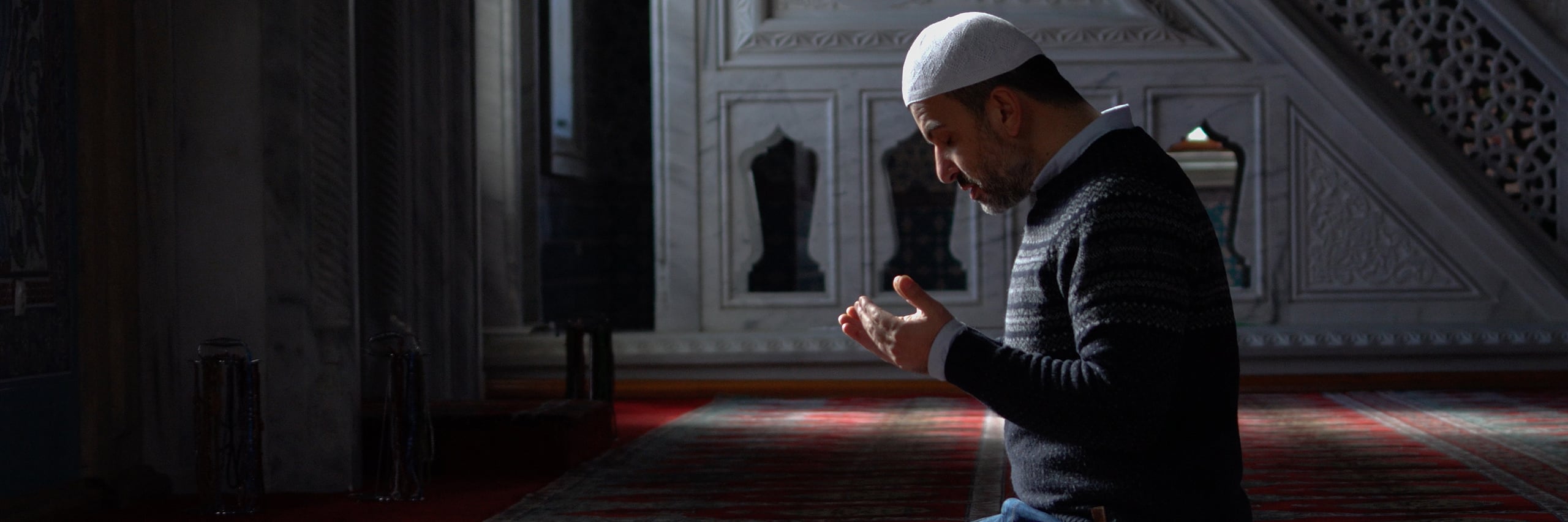
As we enter the last ten nights of Ramadan, we have a unique opportunity to seek forgiveness, draw closer to Allah, earn the rewards of our nightly worship, and insha'Allah catch Laylatul-Qadr, or the Night of Decree. Here are 10 practical tips to make the most of these nights:
1. Avoid sins during the day.
We often forget this when thinking about the last ten nights. Outside of Ramadan, we are reminded not to disobey Allah during the day, because if we do, He will not wake us up to pray at night. As the saying goes, "If you sin during the day, you shut the doors of the heavens for yourself at night."
If this is true all year, how much more important is it during the last ten nights of Ramadan when we want to make sure we don't miss Laylatul-Qadr? We do not want to pray Maghrib while under the ghadab (anger) of Allah because of a sin we committed during the day. Let's be mindful of our actions all day long. Whether it is avoiding harmful speech or sinful behavior, our conduct during daylight hours sets the tone for our spiritual state during these blessed nights.
2. Avoid idle conversations at night.
Imam Ibn Qudama mentions that the blessings of Laylatul-Qadr are often lost because people socialize too much at night. It is easy for our tongues to slip into backbiting or gossiping. It is best to avoid excessive socializing during this time. Instead, these last 10 nights are a time to prioritize our ibadah (worship).
Join gatherings where Allah is remembered and try your best to avoid unnecessary conversations. Use this time to focus on worship and reflection to build a deeper connection with our Creator.
3. Pray Isha and Fajr in congregation.
Prioritize praying Isha and Fajr in the mosque. Saeed ibn Musayyib said, "Whoever prays Isha in congregation has taken their share of Laylatul-Qadr." The Prophet said, "Whoever prays Isha in congregation gets the reward of praying the first half of the night. Whoever prays Fajr in congregation gets the reward of praying the last half of the night."
It is more precious to Allah that you pray Isha and Fajr in congregation than if you spent the whole night in prayer alone. Let's prioritize being in the mosque for Isha and Fajr. By coming together as a community, we experience the blessings of unity and increase the spiritual rewards of our prayers.
4. Pray a full set of Qiyaam with the imam.
The Prophet said, "Whoever prays behind the imam in Qiyaam until the imam finishes, that person has achieved the reward of the entire night in prayer." While there are different ways to understand this hadith, the general advice is to pray as much as you can continuously behind the imam for taraweeh or extra qiyaam. The more you do, the better your chance to earn this reward.
5. Read the Qur'an throughout the night.
This might seem obvious, but it is often overlooked. Qatadah used to finish the Qur'an every three days during Ramadan, but he would do a khatm (complete reading of the Qur'an) every night during the last 10 nights. Our salaf (pious predecessors) specifically increased their Qur'an recitation during these last 10 nights.
Even if you have a daily goal, try to surpass it. Strive to read more Qur'an in the last 10 nights than during the rest of Ramadan. It is a beautiful thing to exceed your goals. For example, if your goal is to finish one khatm by reading one juz a day, and you finish one and a half, that is better. That success will give you momentum into Shawwal, and you might even finish another khatm by the end of Shawwal!
Subhan'Allah, the very first word revealed to our Prophet on the night of Laylatul-Qadr was iqra' (read). This is a sign that you should honor the Qur'an in these last 10 nights. Increase the amount you read. Do not cut back on your daytime reading, but add more reading at night.
6. Supplicate with the prophetic dua taught to Aisha.
Aisha asked the Prophet, "If I find myself in Laylatul-Qadr, what should I recite?" The Prophet said, "Say 'Allahumma innaka 'afuwwun tuhibbul 'afwa fa'fu 'anni' (Oh Allah, You are the Forgiver, You love to forgive, so forgive me)."
Read this dua throughout the night. Start your duas with it and end your duas with it. Read it between the personal duas you are making. There is nothing more blessed than the guidance of the Prophet in the specific duas we should be making during this auspicious time.
7. Make dua and dhikr even while in motion
Seize every moment, whether walking, moving about, or commuting, to engage in supplication. Some of the most blessed adkhar (remembrances of Allah) come as we are moving about our day, whether going from our homes to the mosque or waiting in line for suhoor (pre-dawn meal), for example. So keep your tongue busy with dua and dhikr even while you are in motion on the night of Laylatul-Qadr. Treat each night like every single second matters.
8. Increase your sajdah (prostration) on these nights
The Prophet said, "Whoever stands up on the night of Laylatul-Qadr with faith and seeking its reward, then they will be forgiven for all of their sins." This is understood as the general rule. But, the best part of engaging in qiyaam (night prayer) is the best part of salah (prayer)—so increase the time you spend in sajdah.
In fact, the last words right before Surah al-Qadr are, "Prostrate and come closer." So extend the duration of your prostrations and make your personal duas during sujood (prostration) during the night. By slowing down and savoring these moments of closeness to Allah, we can more effectively express our gratitude and seek His mercy and forgiveness.
9. Give in charity
While there is nothing that explicitly suggests that the Prophet gave more charity in the last 10 nights than he did in the rest of Ramadan, the scholars of spirituality note that charity has two major effects: 1) increased reward (which you seek in the night of Laylatul-Qadr), 2) it extinguishes the anger of your Lord (especially secret charity). So on a night of increased reward where the greatest reward you can seek is His forgiveness, what better act to partake in every single night that is associated with being pardoned and earning His favor? Automate your charity or give in charity yourself; either way, be someone who is actively seeking out opportunities to give and support charitable initiatives. Constantly be open to charity as you are to all good deeds in these last ten nights.
10. Seek forgiveness
Spend the last few moments of every single one of these nights in istighfar (seeking forgiveness). Instead of eating and socializing until the final minutes of suhoor, use that time to open up your heart to plead to Allah in sincere supplication, asking for His forgiveness and admitting your weaknesses and shortcomings before Him. It may be that a heartfelt dua made in humility and remorse during these final moments opens us up to His ultimate forgiveness and acceptance. If the night is accepted and we are granted Laylatul-Qadr, then a whole lifetime of reward awaits insha'Allah! So prioritize these last moments of each night, especially the moments before the adhan (call to prayer) of Fajr (dawn prayer) to call out to Allah in genuine repentance.
Allahumma balighna Laylatul-Qadr, Oh Allah, allow us to observe Laylatul-Qadr! May Allah allow blessings, tranquility, and acceptance to descend upon us all and our families and communities. May He grant us this Night of Decree, accept our prayers, and allow us to draw nearer to Him insha'Allah. Ameen.
For more on the timing of Laylatul-Qadr and its signs, read "On The Timing and Virtues of the Night of Power: The Heart's Joy in Remembering Laylat al-Qadr by Ibn al-ʿIrāqī"
Halal Travel Guide: Ramadan 2025 at Beijing Balizhuang Mosque
Articles • ali2007fr posted the article • 0 comments • 144 views • 2026-05-20 02:20
Summary: This article looks back at Ramadan 2025 at Balizhuang Mosque in Beijing. It keeps the original community scenes, iftar details, prayers, people, and photographs in a clean English layout.
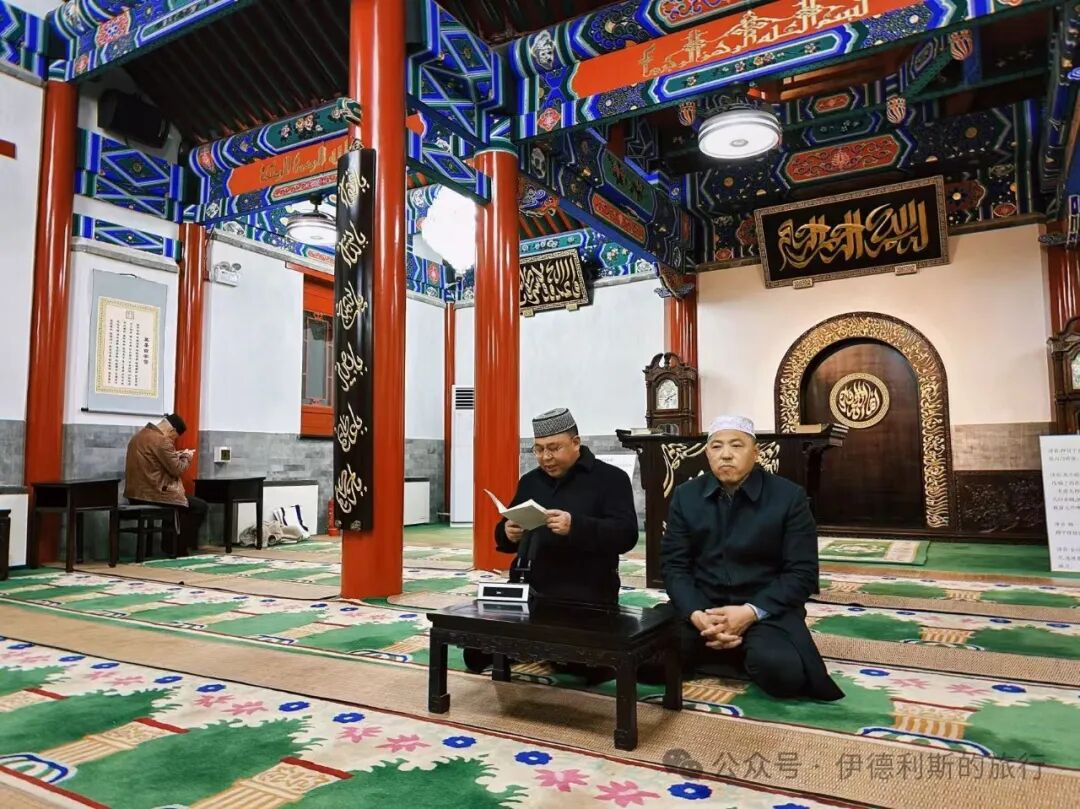
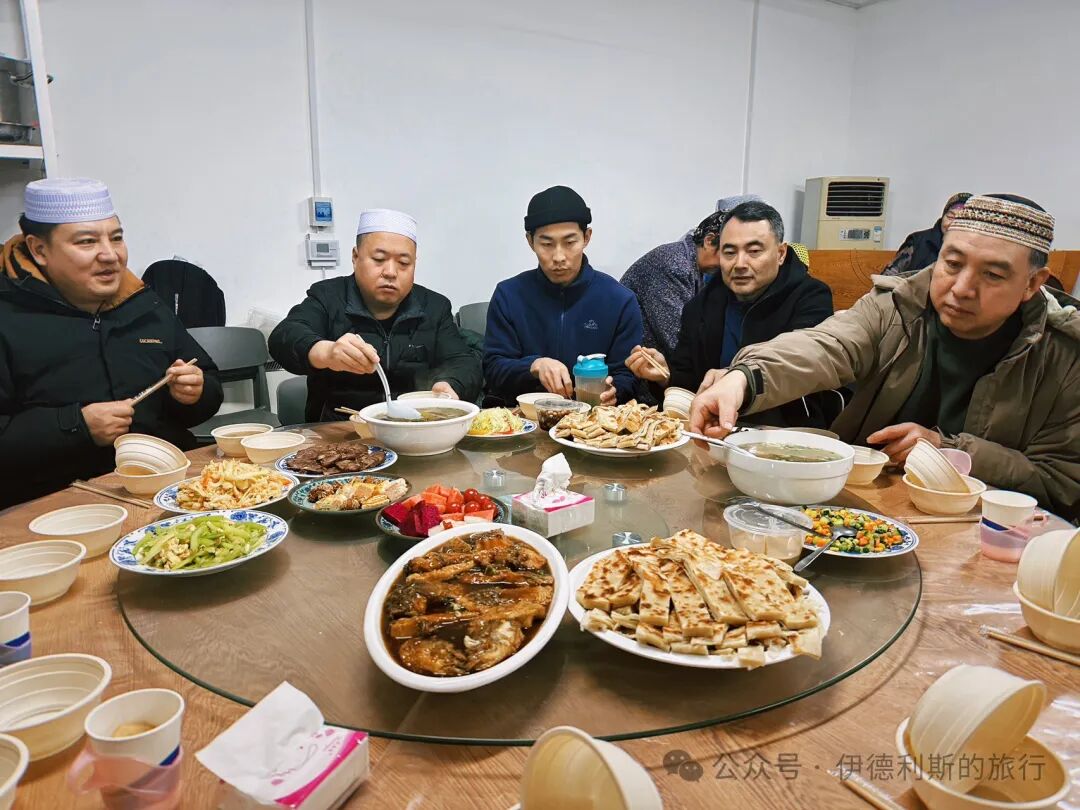
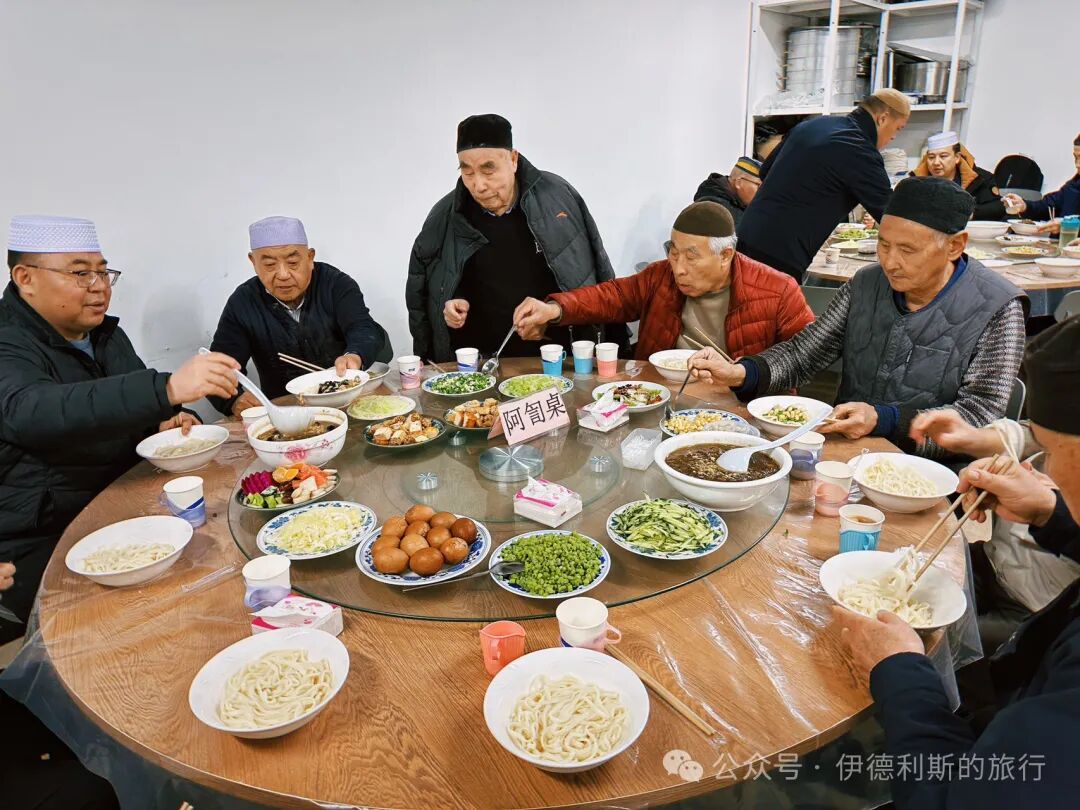
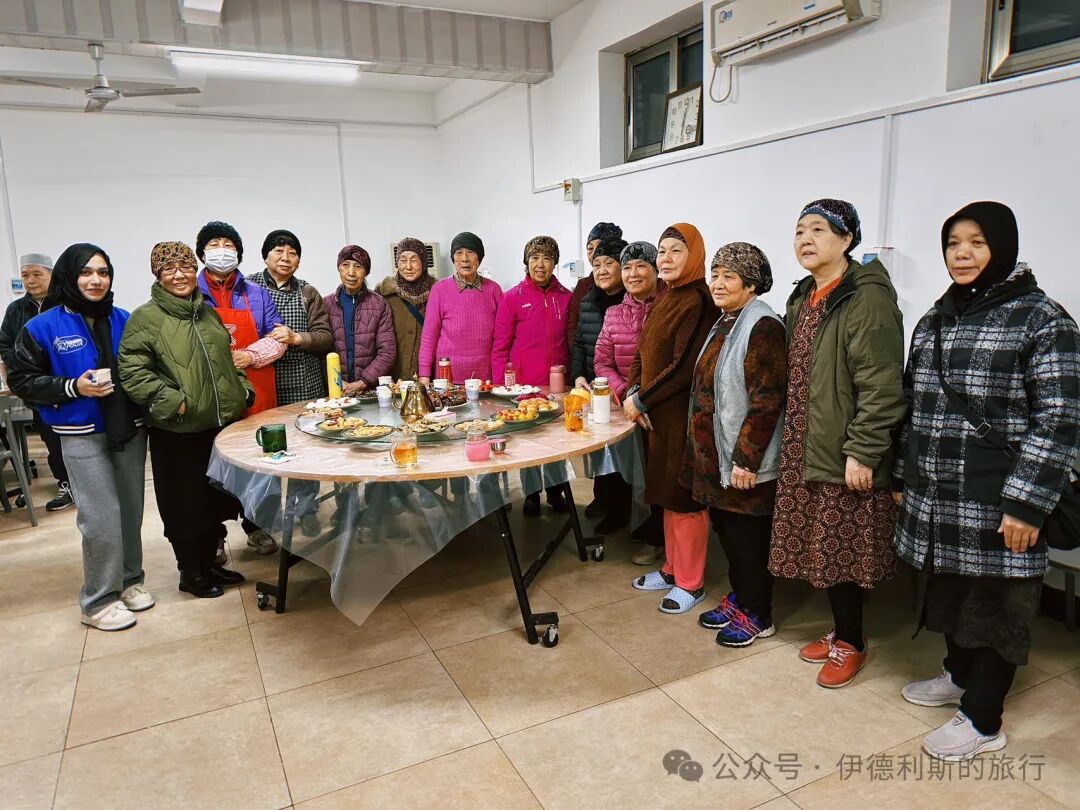
This is my third Ramadan at the Balizhuang mosque in Beijing. The atmosphere at the mosque is great and the food is delicious, so it feels worth it even when I have to squeeze onto the subway during the evening rush hour on workdays.
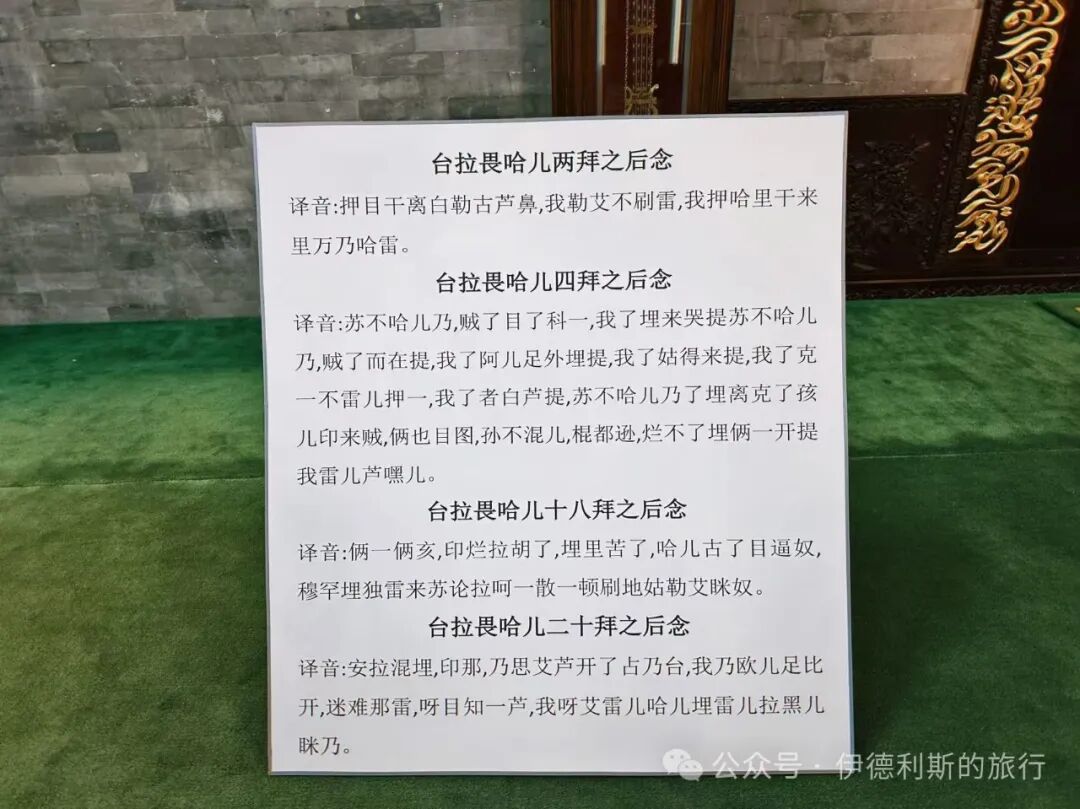
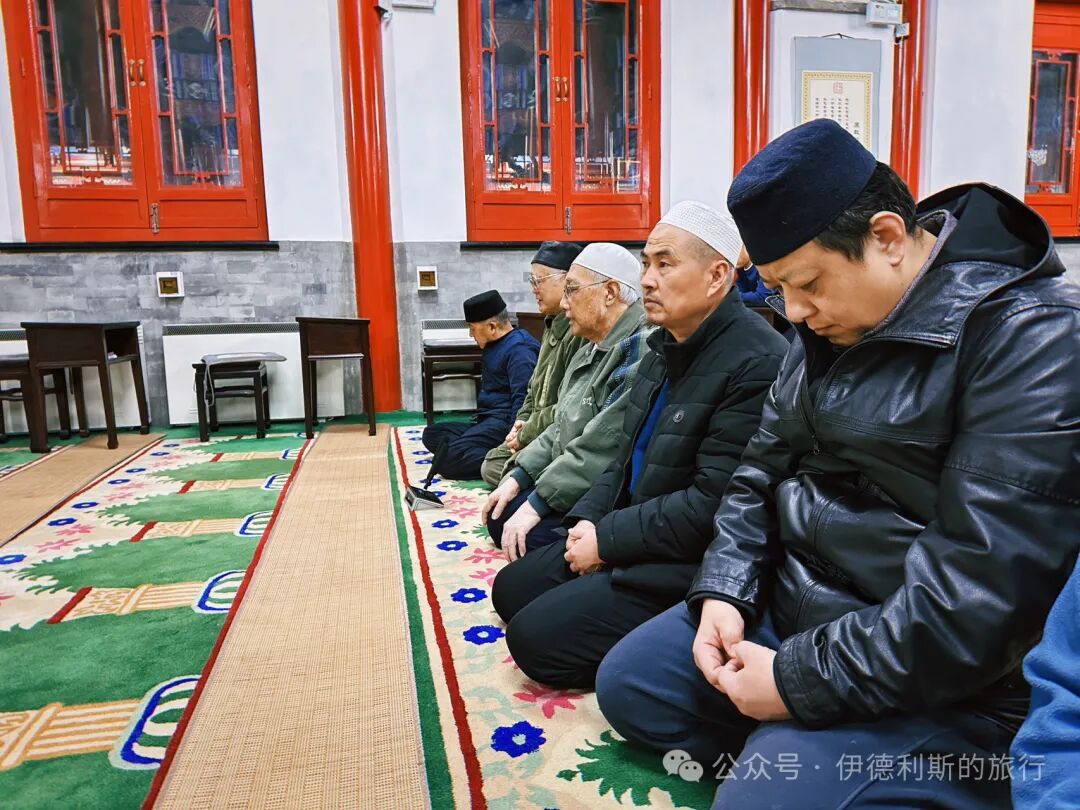
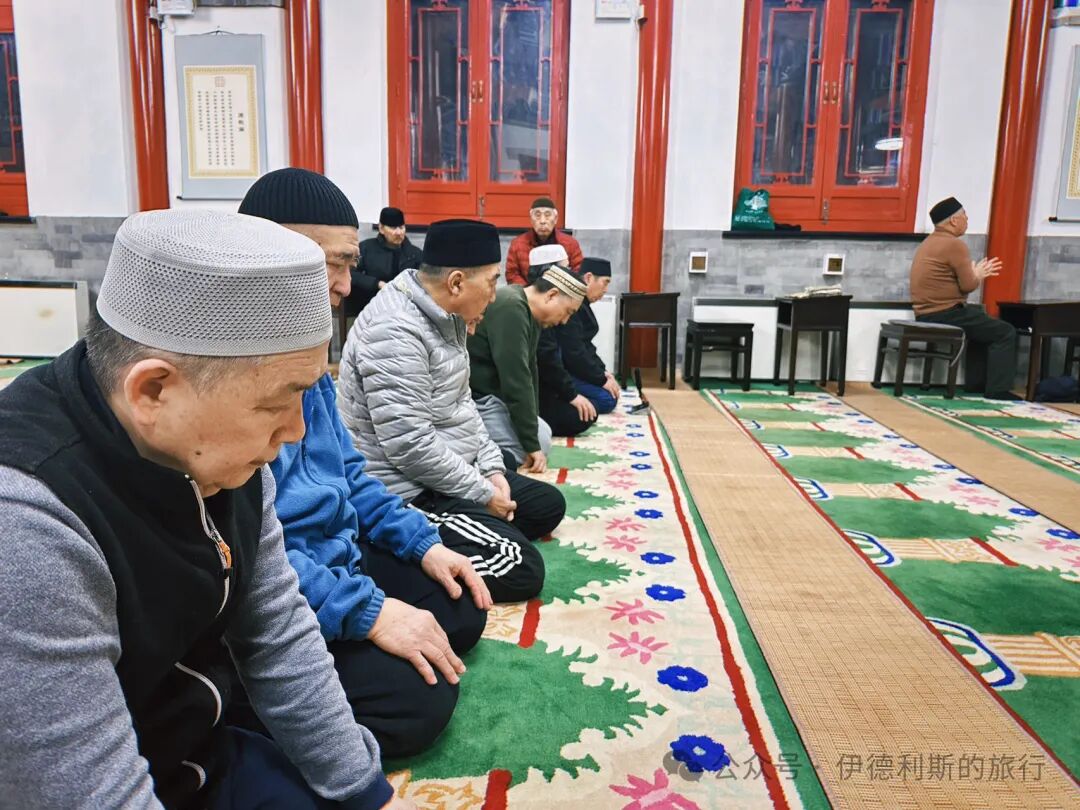
This year, the mosque put the post-prayer recitations for Taraweeh on a large whiteboard, which helps everyone recite together more smoothly. The benefit of praying Taraweeh at the mosque is that you follow the imam and do not make mistakes, whereas I sometimes lose focus when praying alone. Another benefit is the strong sense of community when we break our fast together, and it is very powerful when we all recite the post-prayer words together.
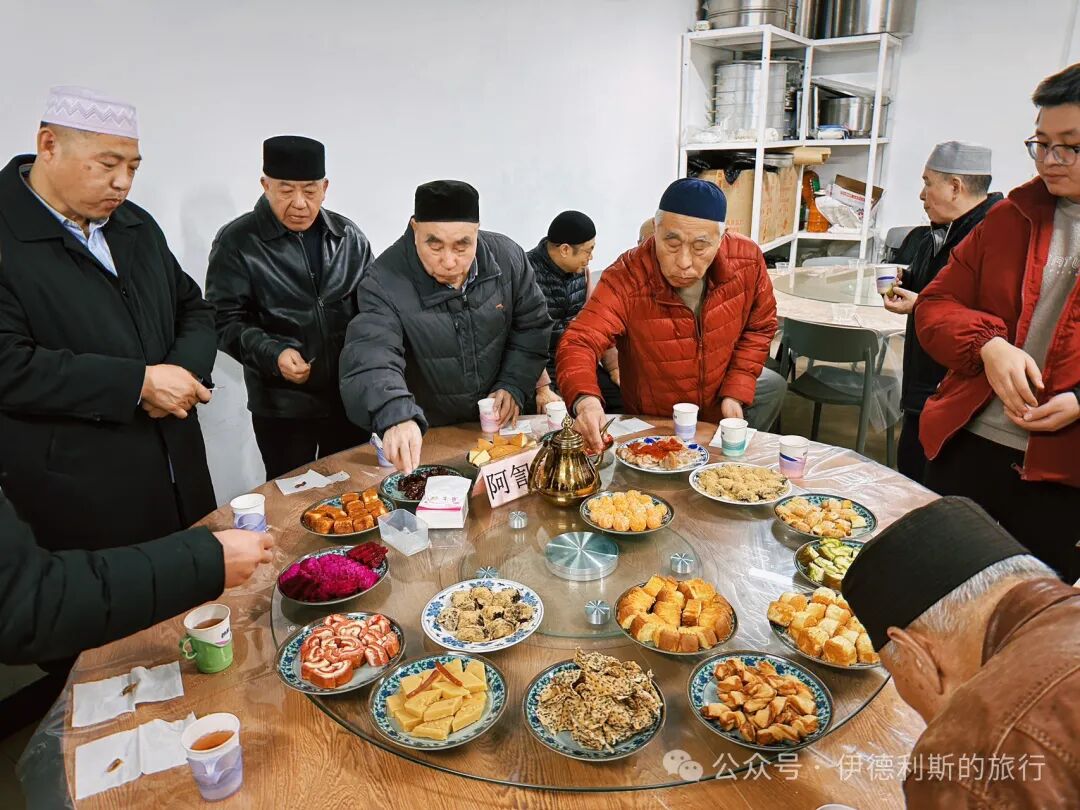
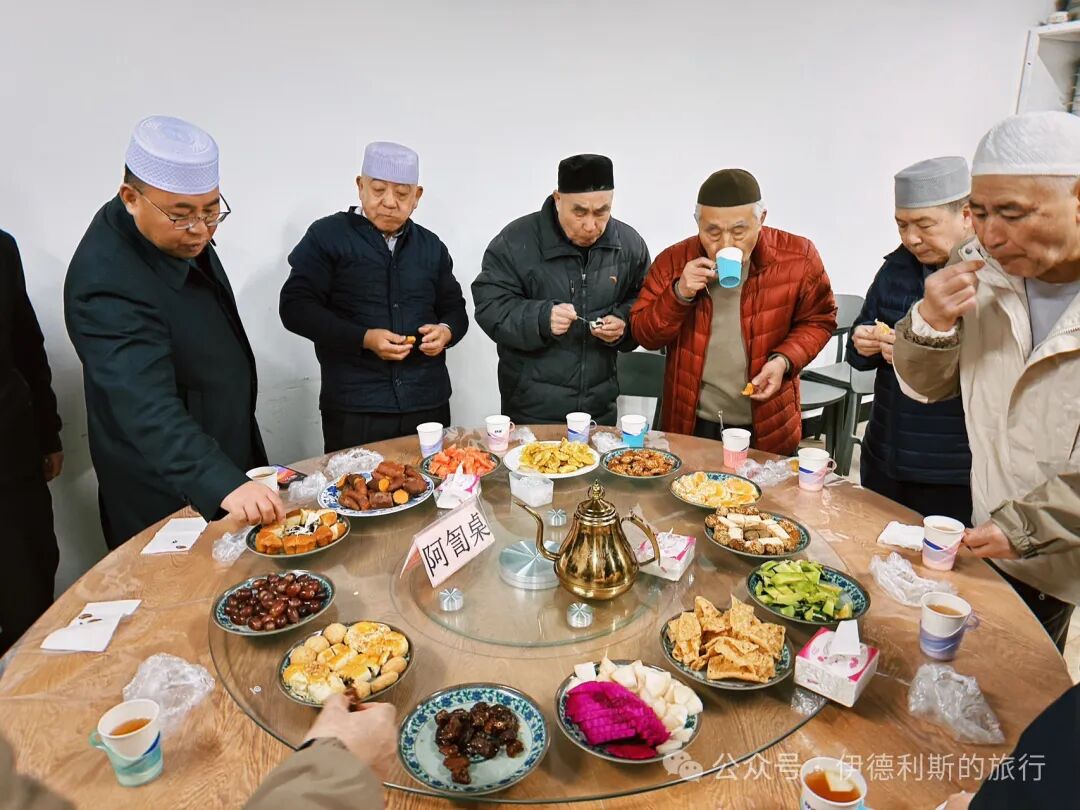
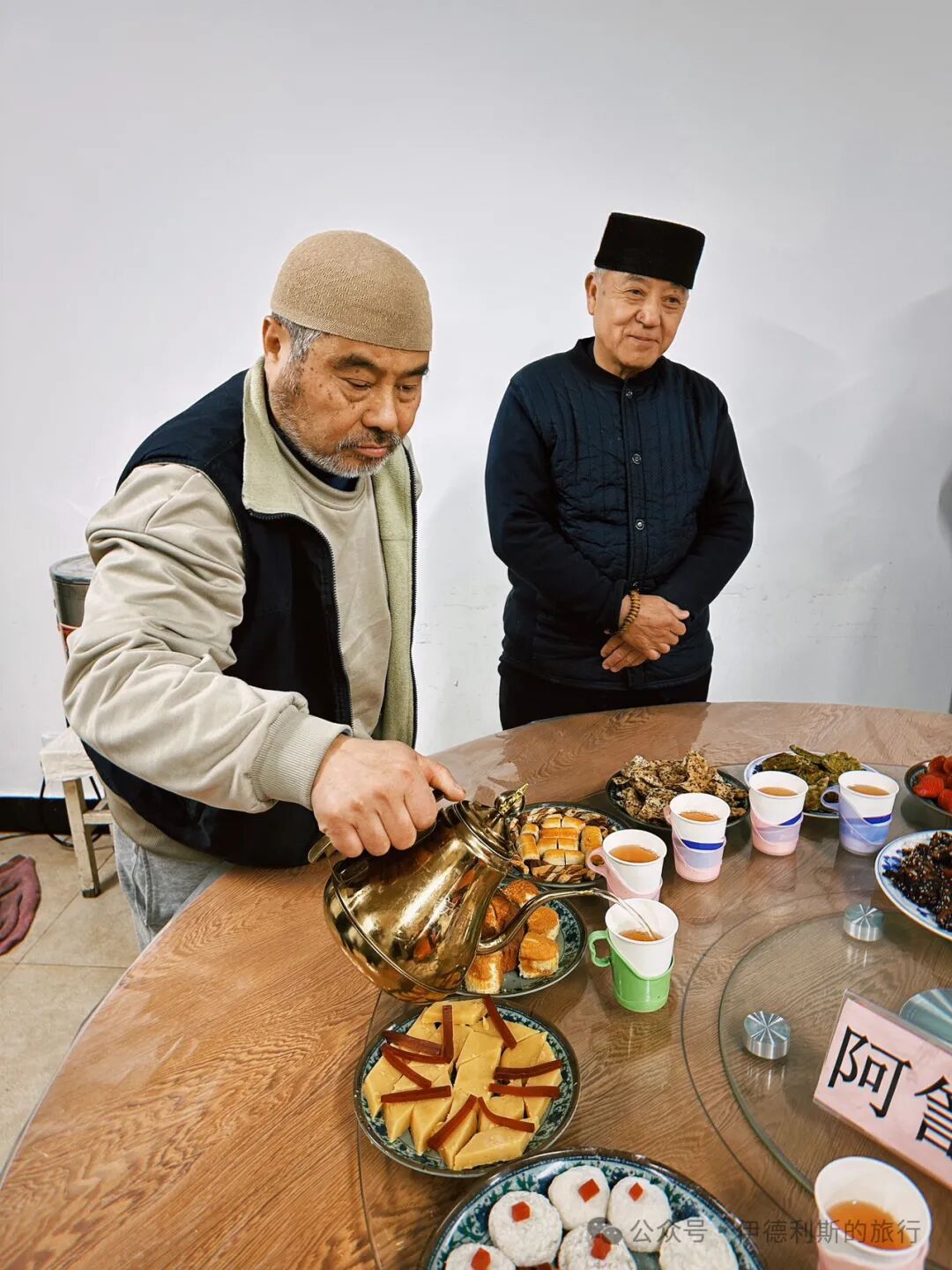
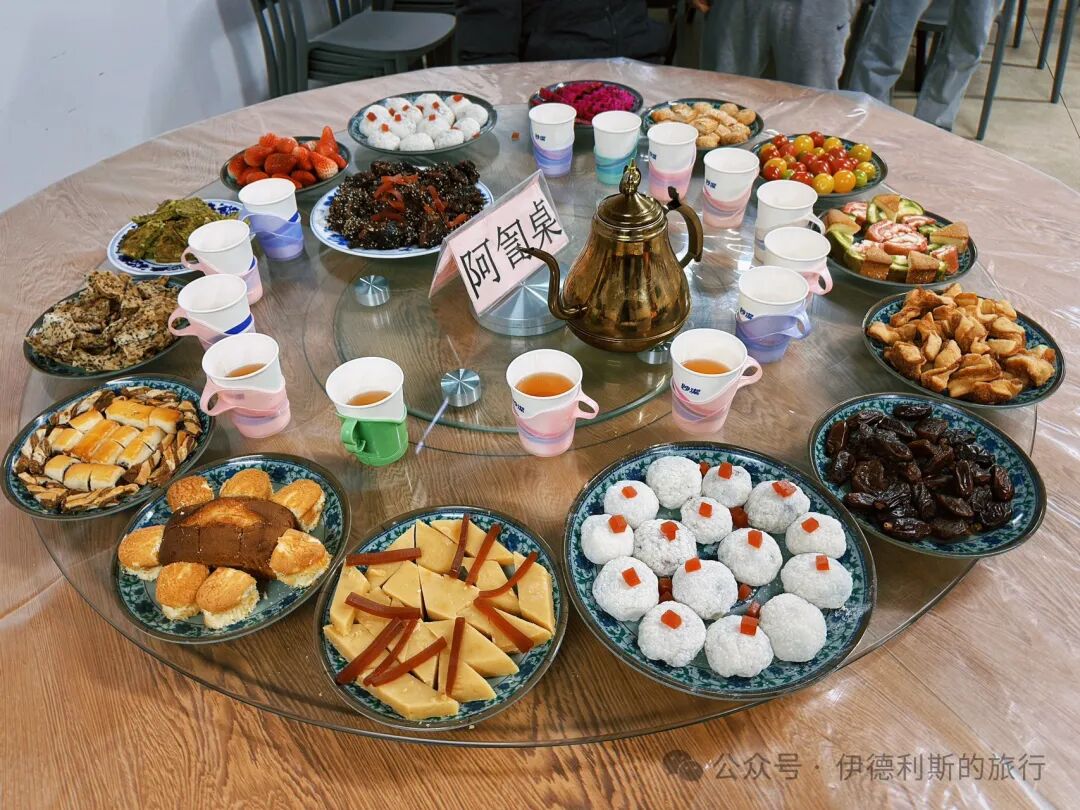
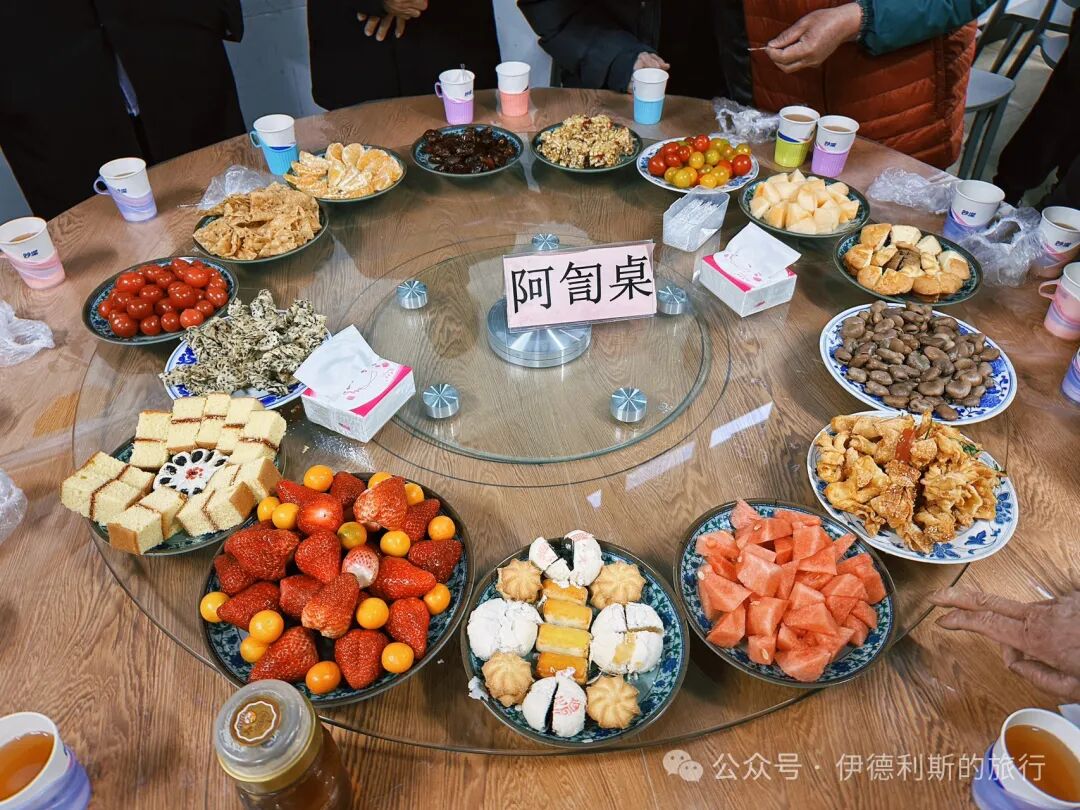
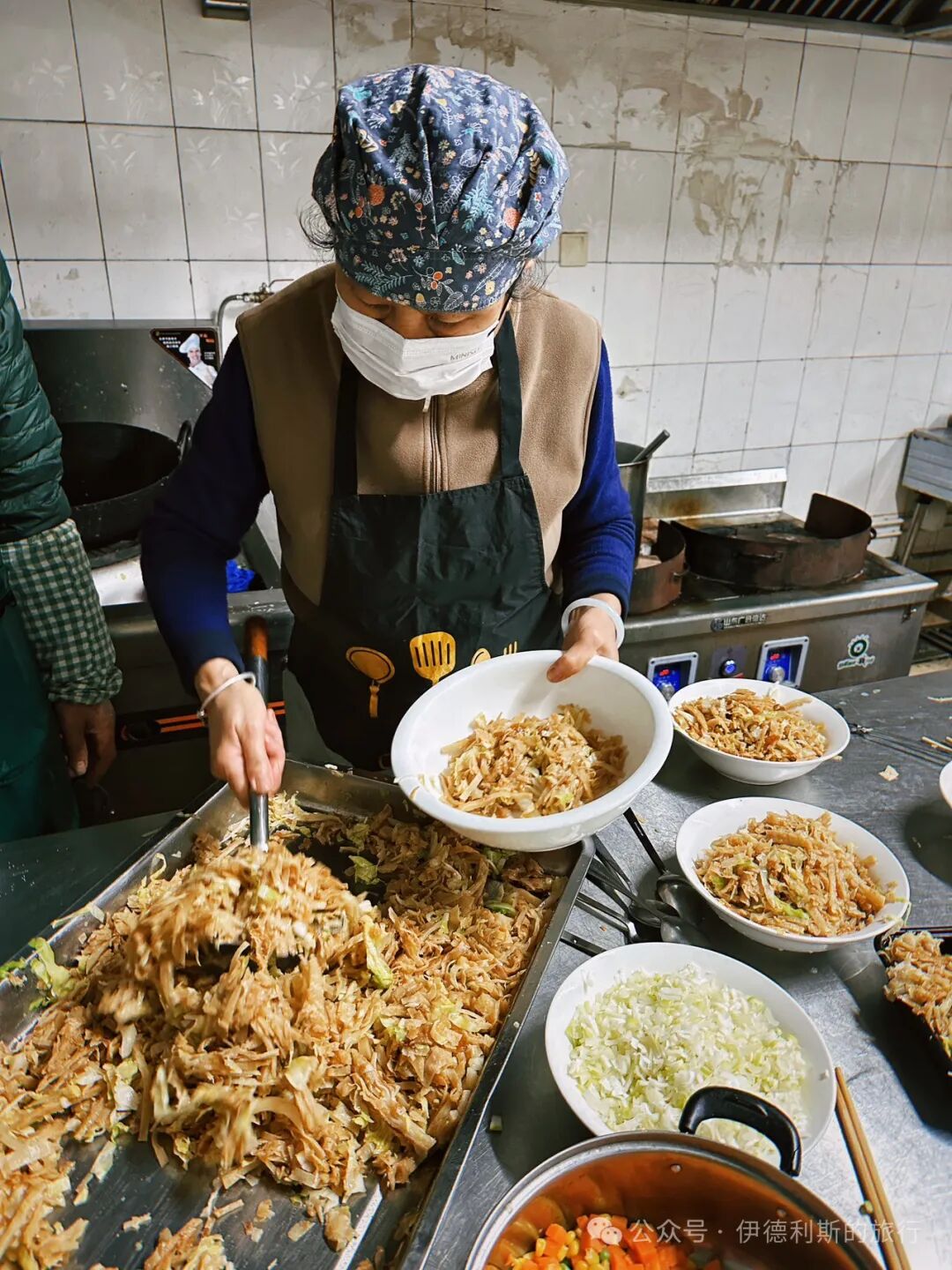
First, let me share the snacks and fruits for breaking the fast. You can eat various traditional Beijing snacks carefully made by the elders here, such as steamed rice cakes (aiwowo), candied yam rolls (tangjuanguo), glutinous rice rolls with bean flour (lvdagun), fried sweet potato (zha baishu), ginger juice fried dough crisps (jiangzhi paicha), salt and pepper fried dough crisps (jiaoyan paicha), lotus root with glutinous rice (nuomi ou), sticky rice cake (niangao), yellow rice cake (huangmi gao), jujube corn buns (zao wotou), pea flour cake (wandouhuang), and sugar ear pastries (tang erduo).
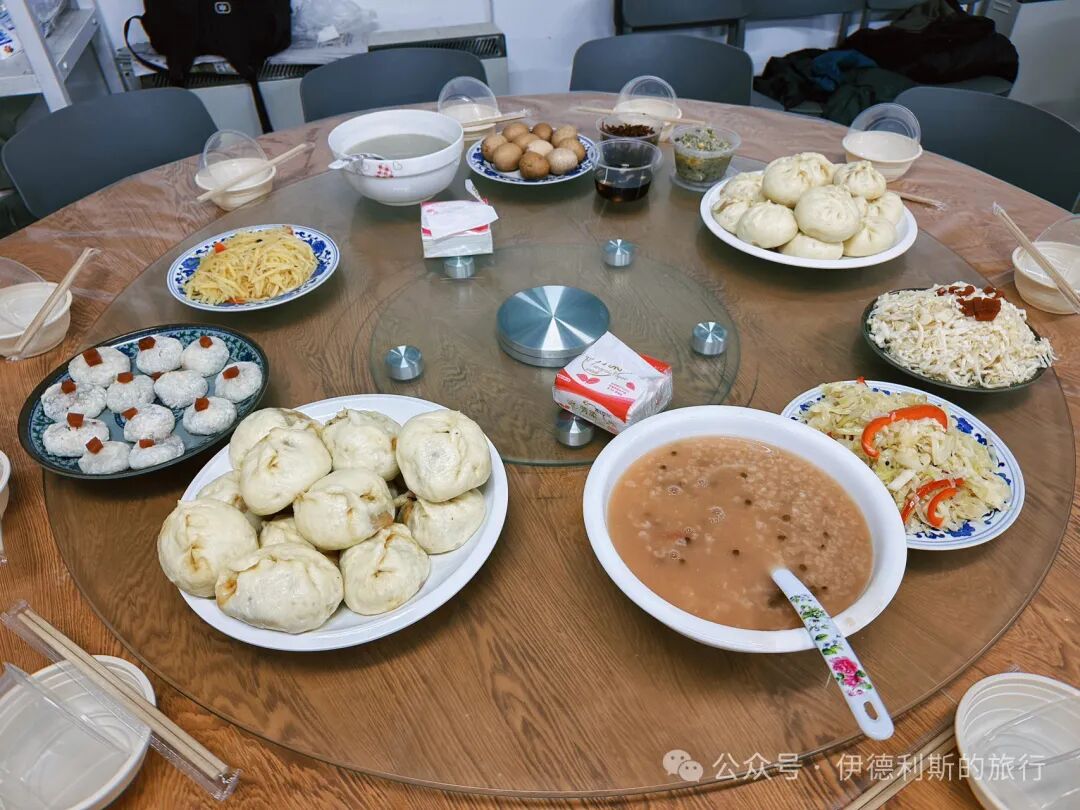
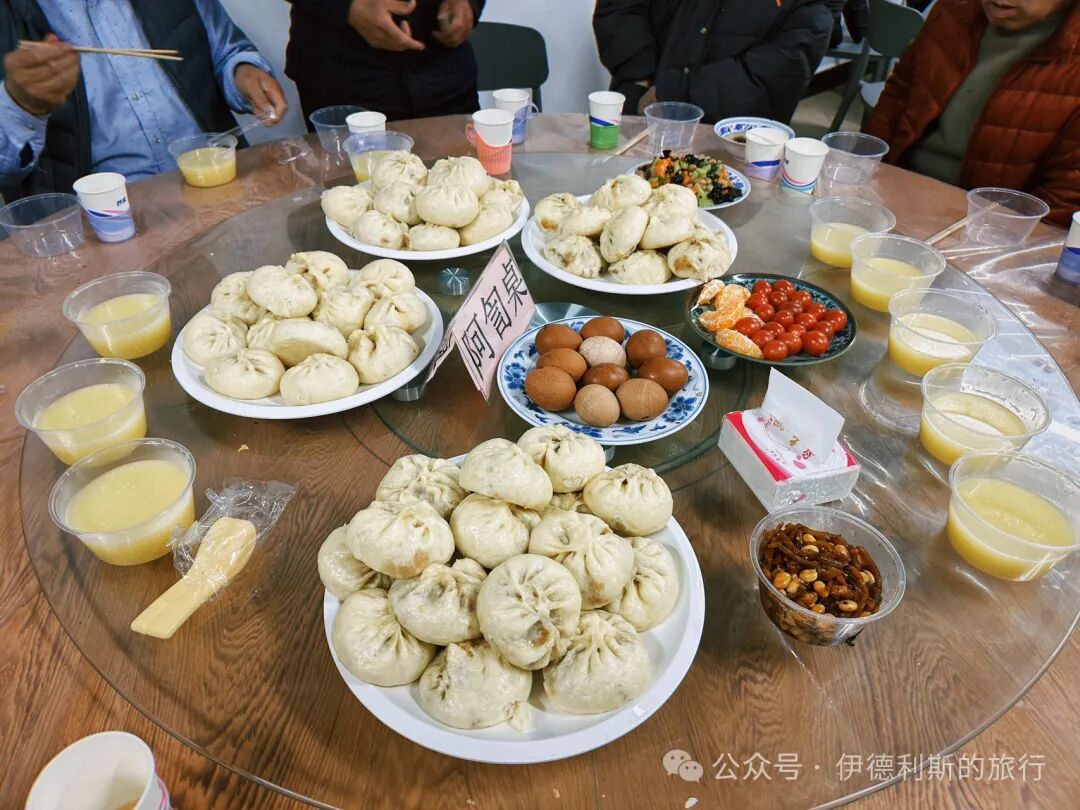
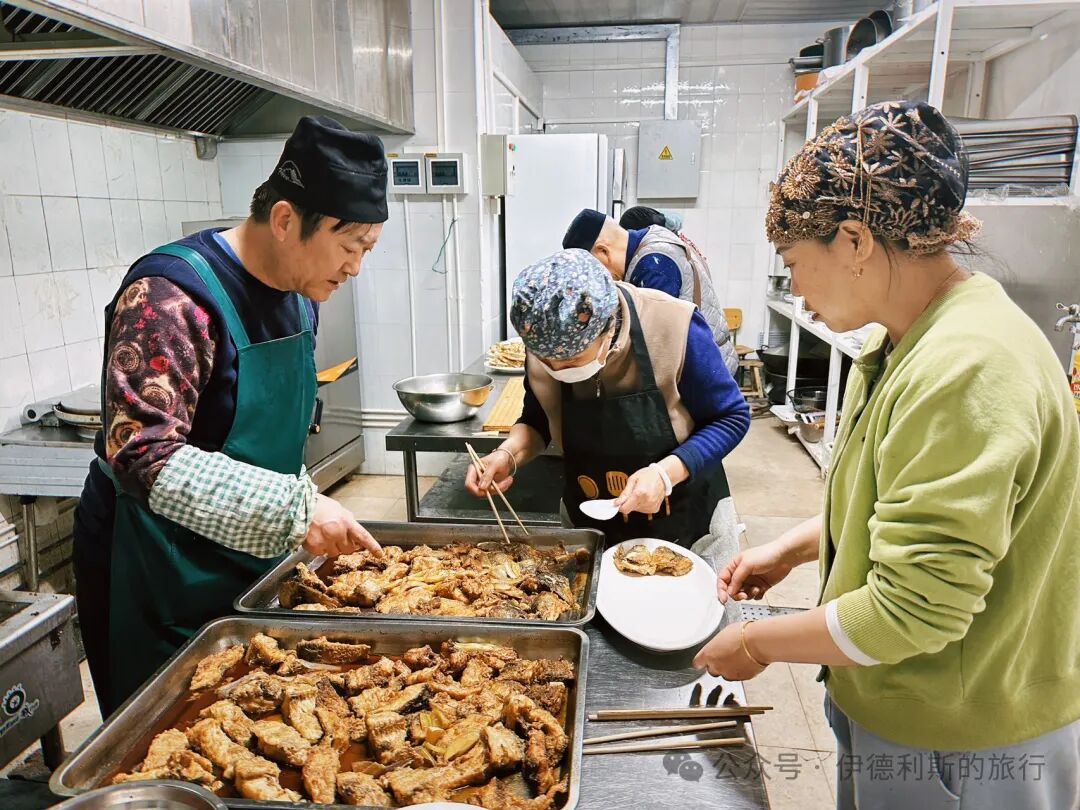
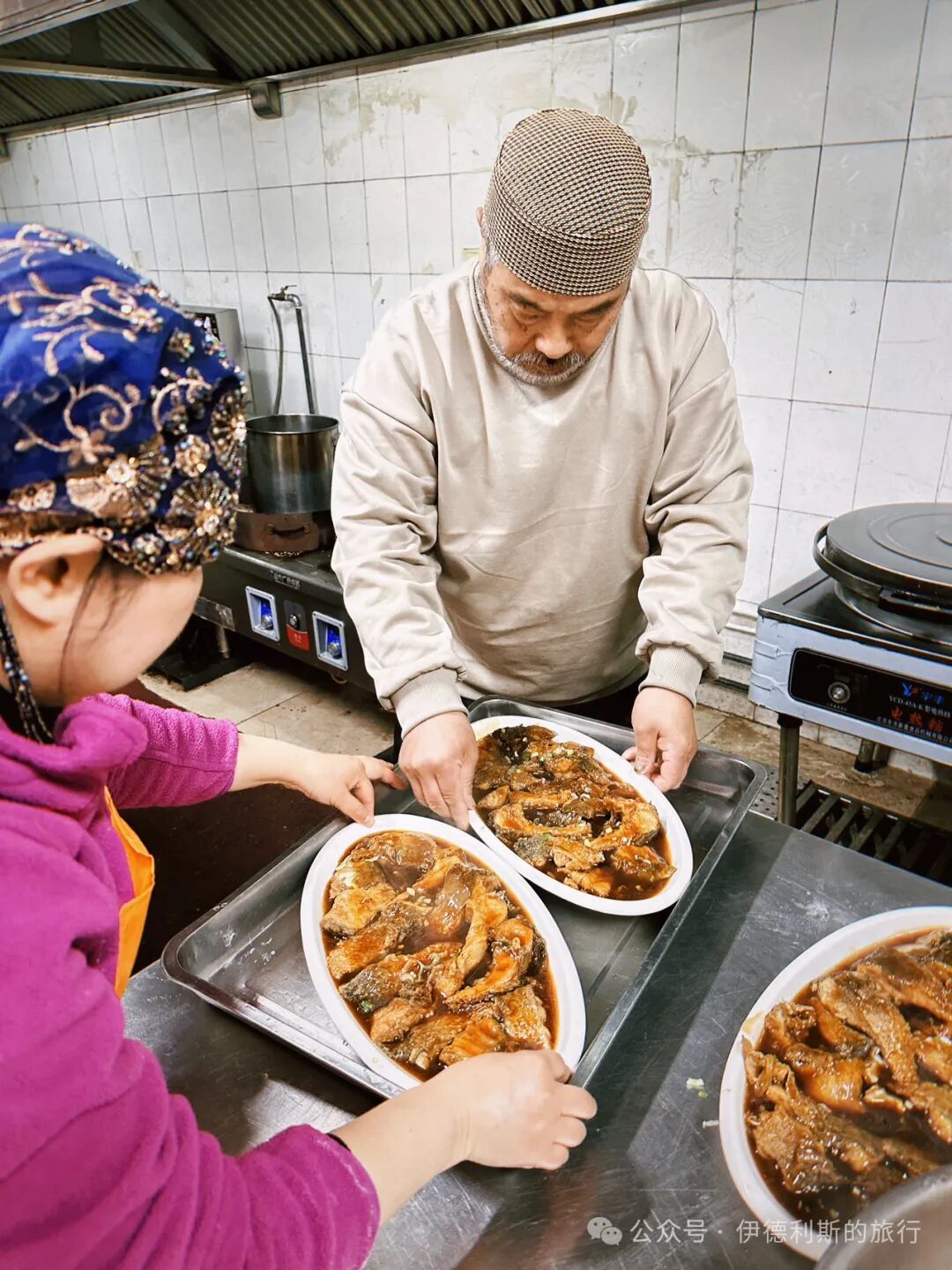
The dinner after the sunset prayer (maghrib) is also wonderful, featuring rice with stir-fried dishes, noodles with gravy (dalu mian), steamed buns (baozi), and fish head with flatbread (yutou paobing), which rotate daily.
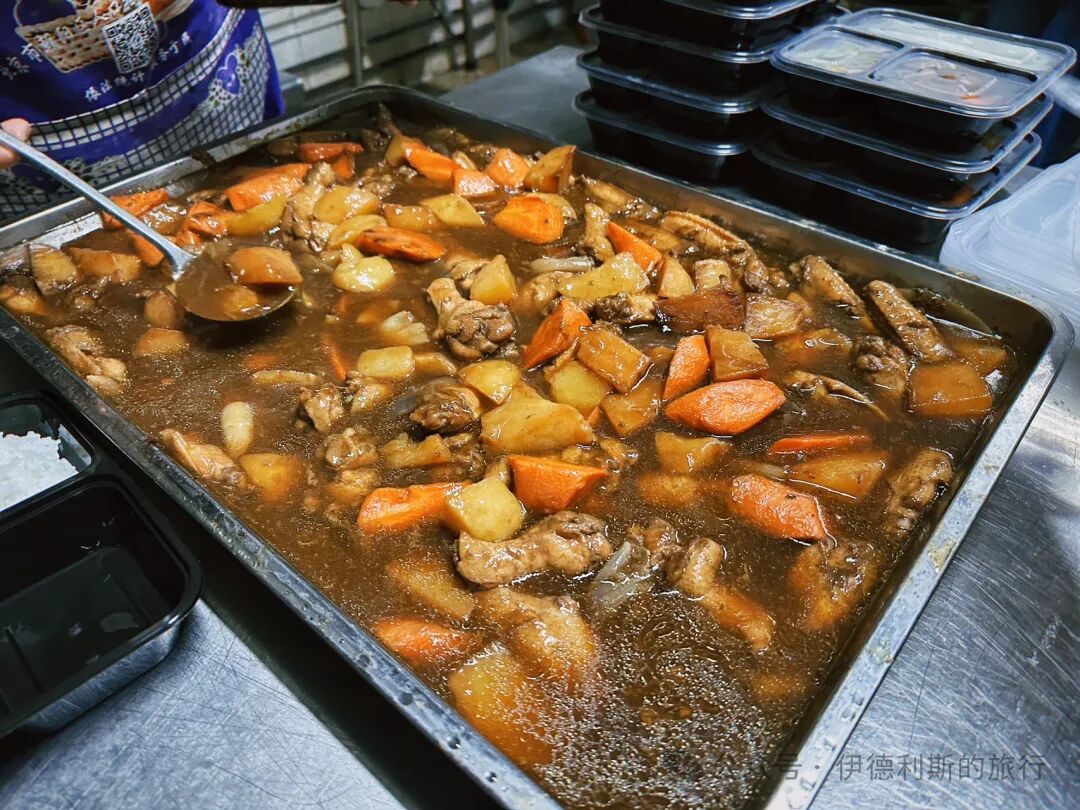
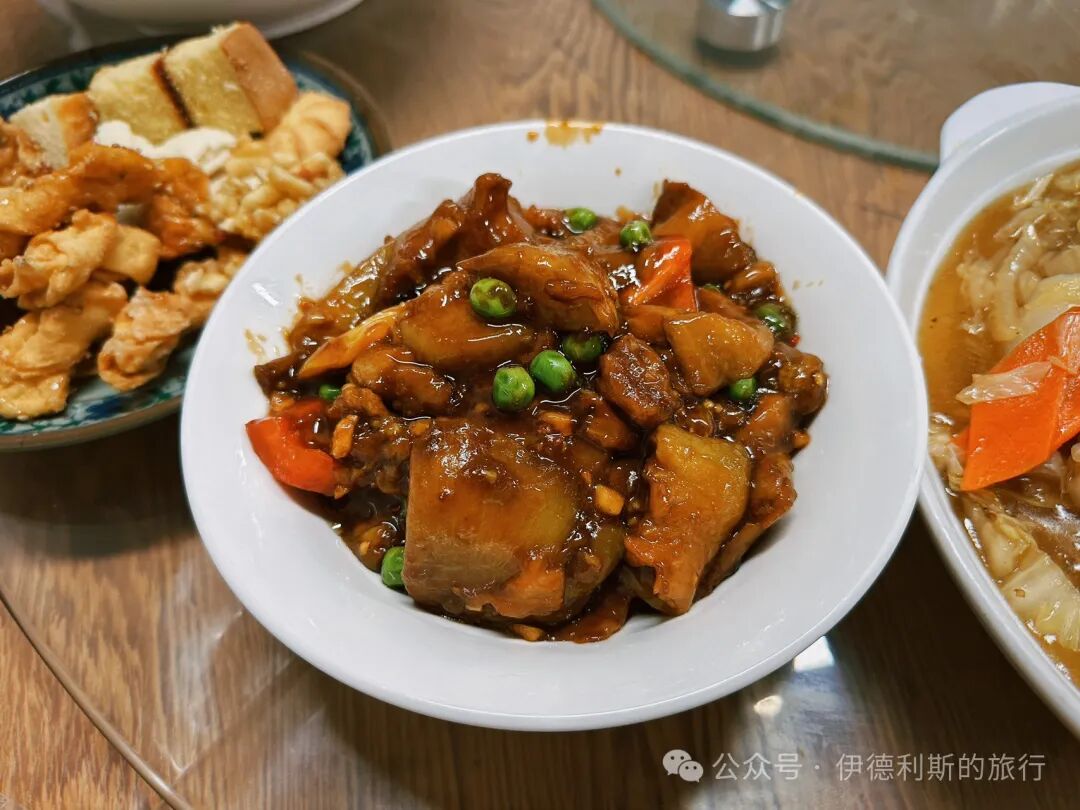
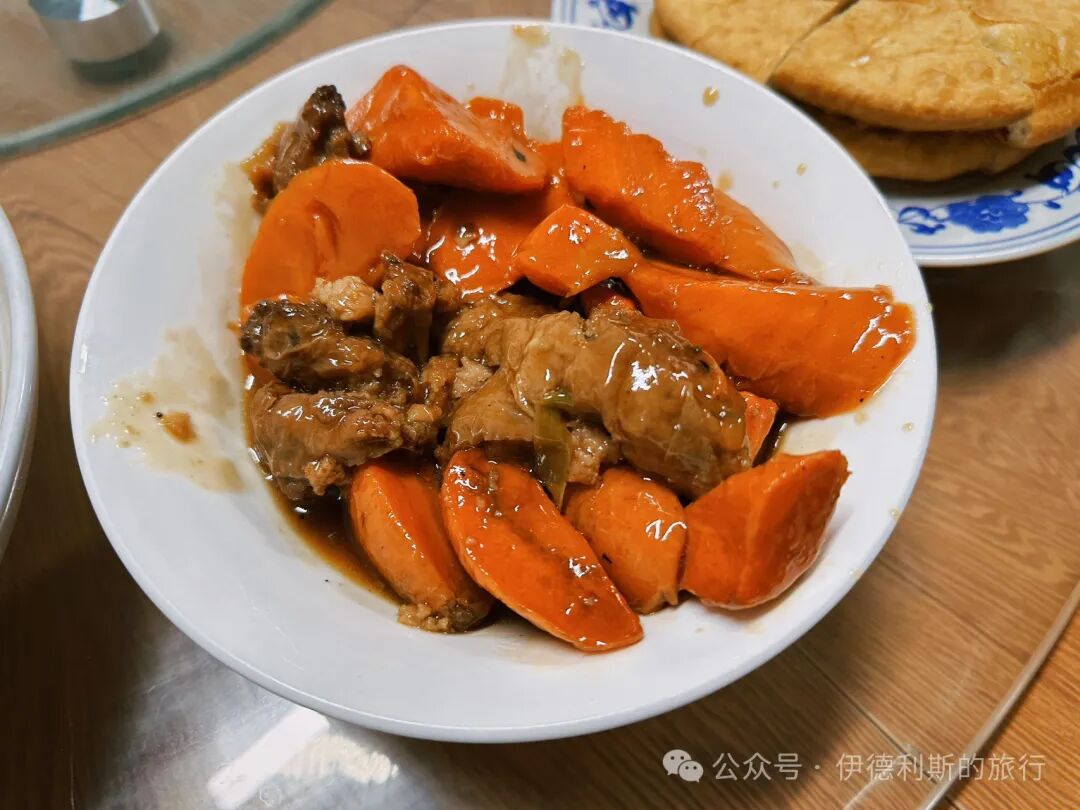
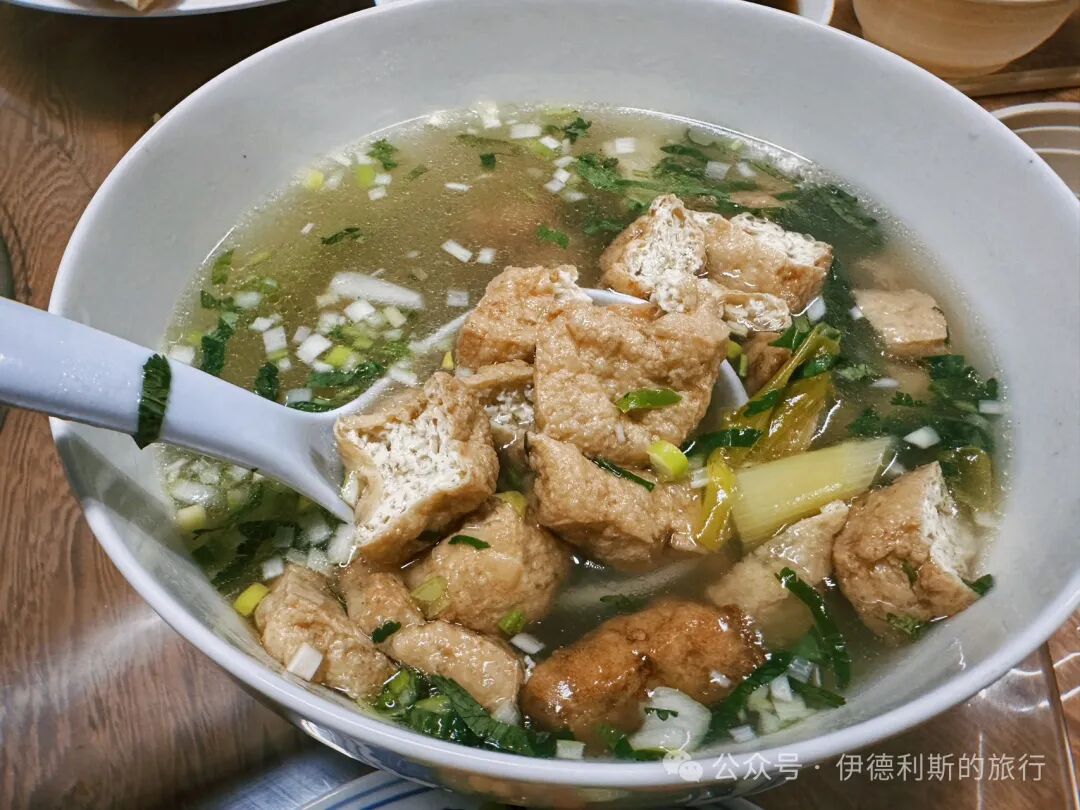
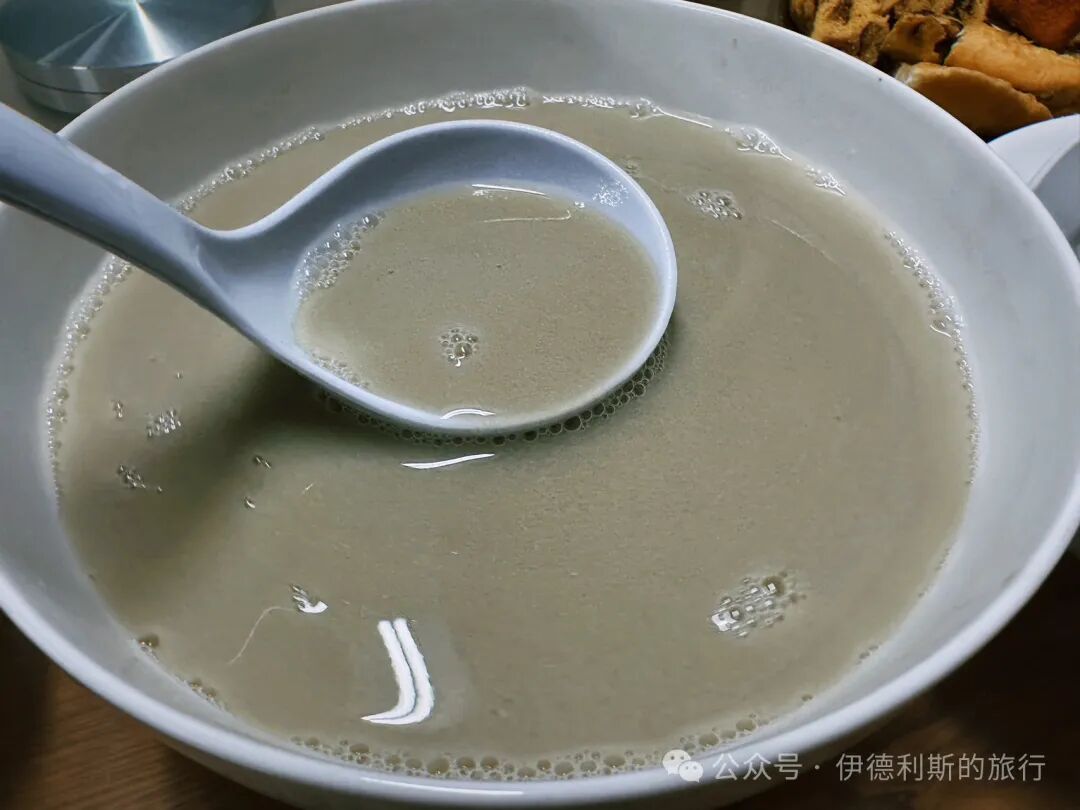
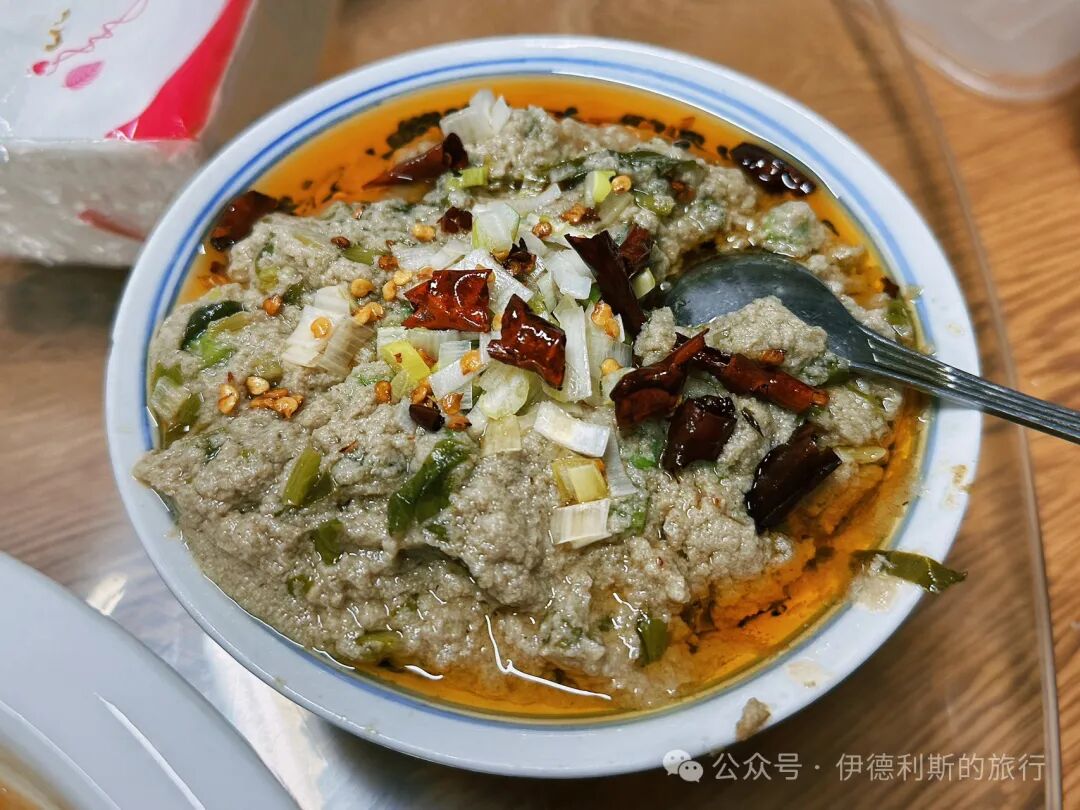
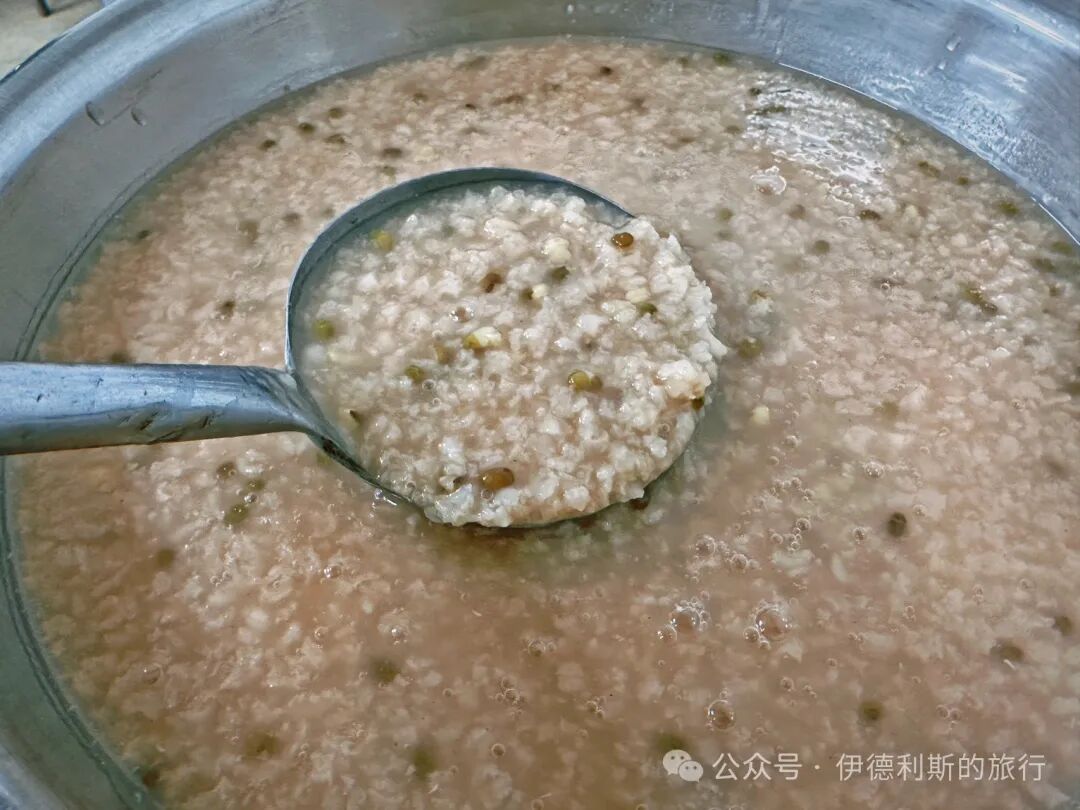
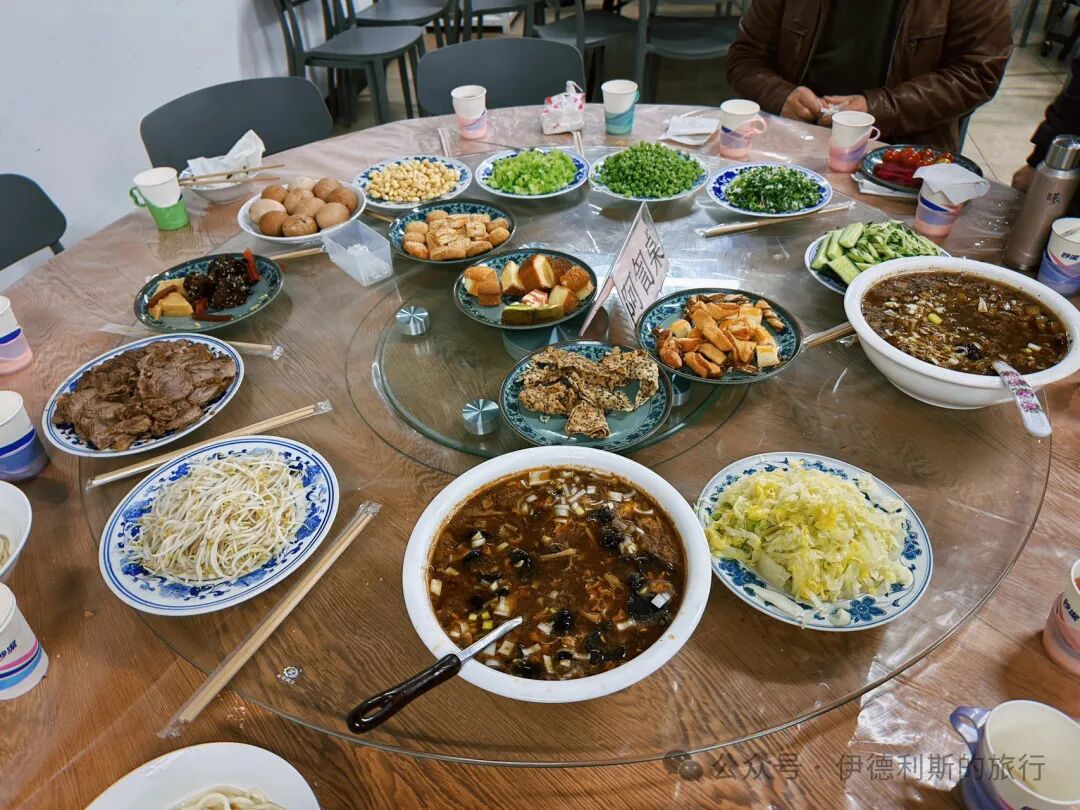
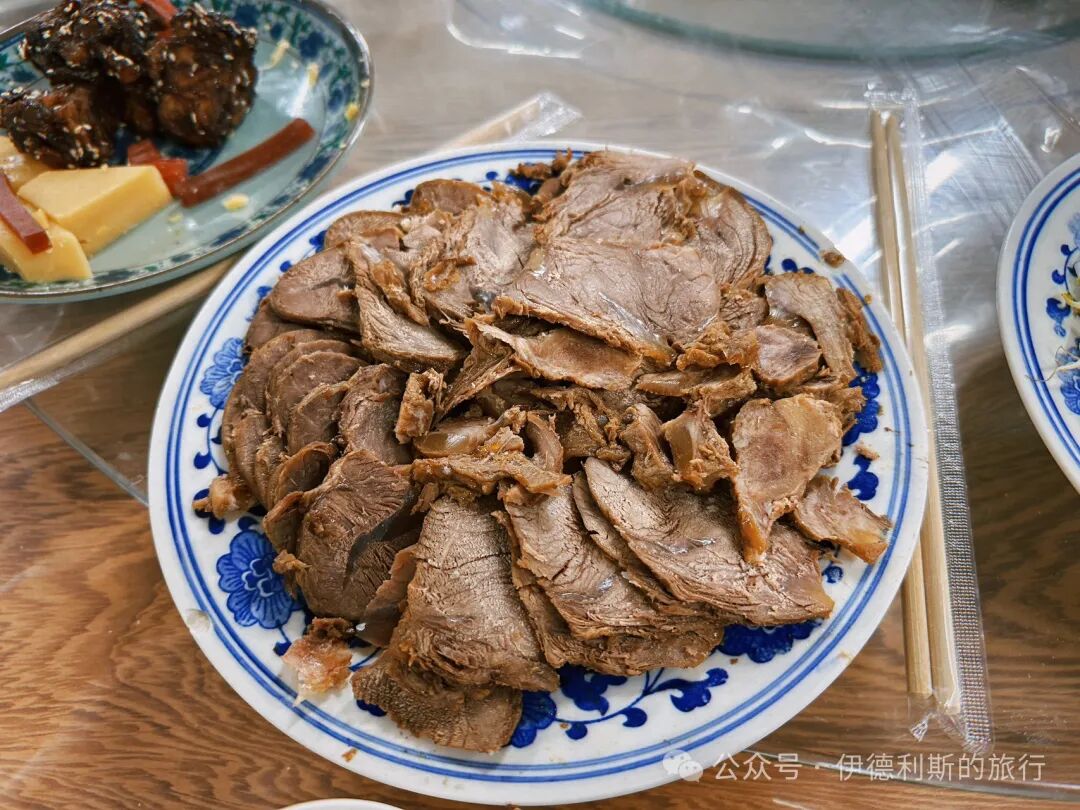
Side dishes for the rice include fried meat (songrou), braised chicken legs (huangmen jitu), minced meat with green beans, braised eggplant, and braised meatballs. For soups and porridge, there is winter melon meatball soup, tofu puff soup, and mung bean porridge. Of course, fermented bean drink (douzhi) with fermented bean curd (ma doufu) is also a major Beijing specialty!
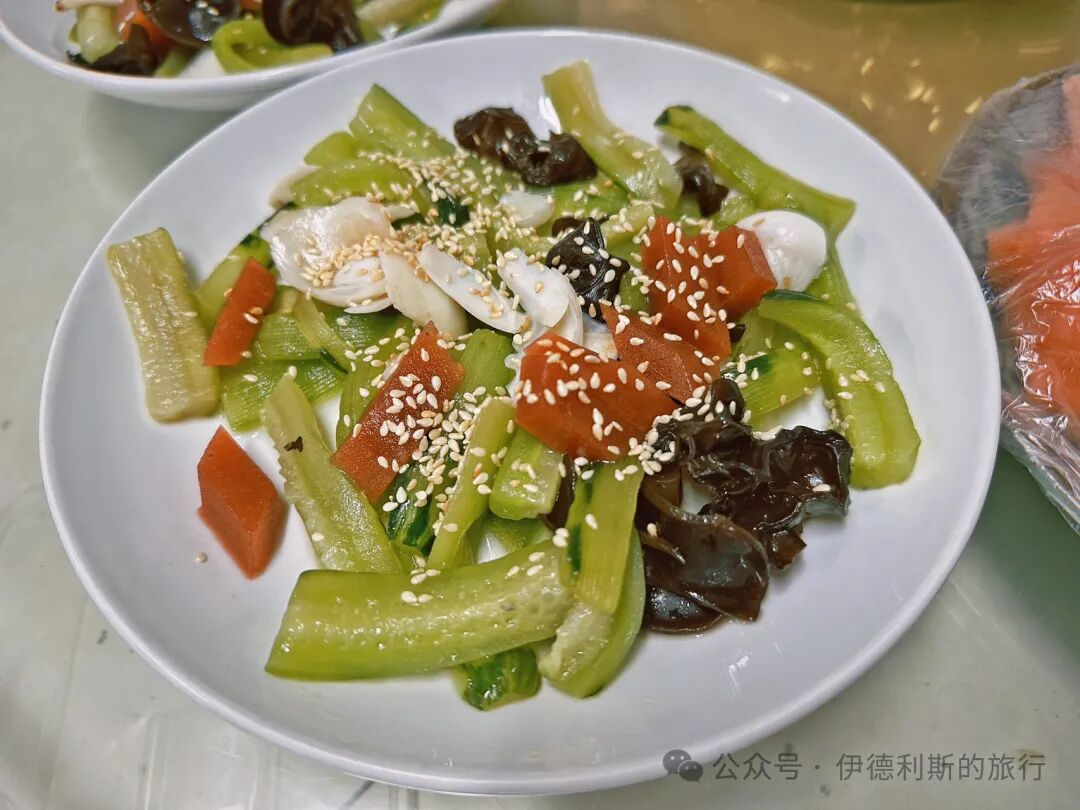
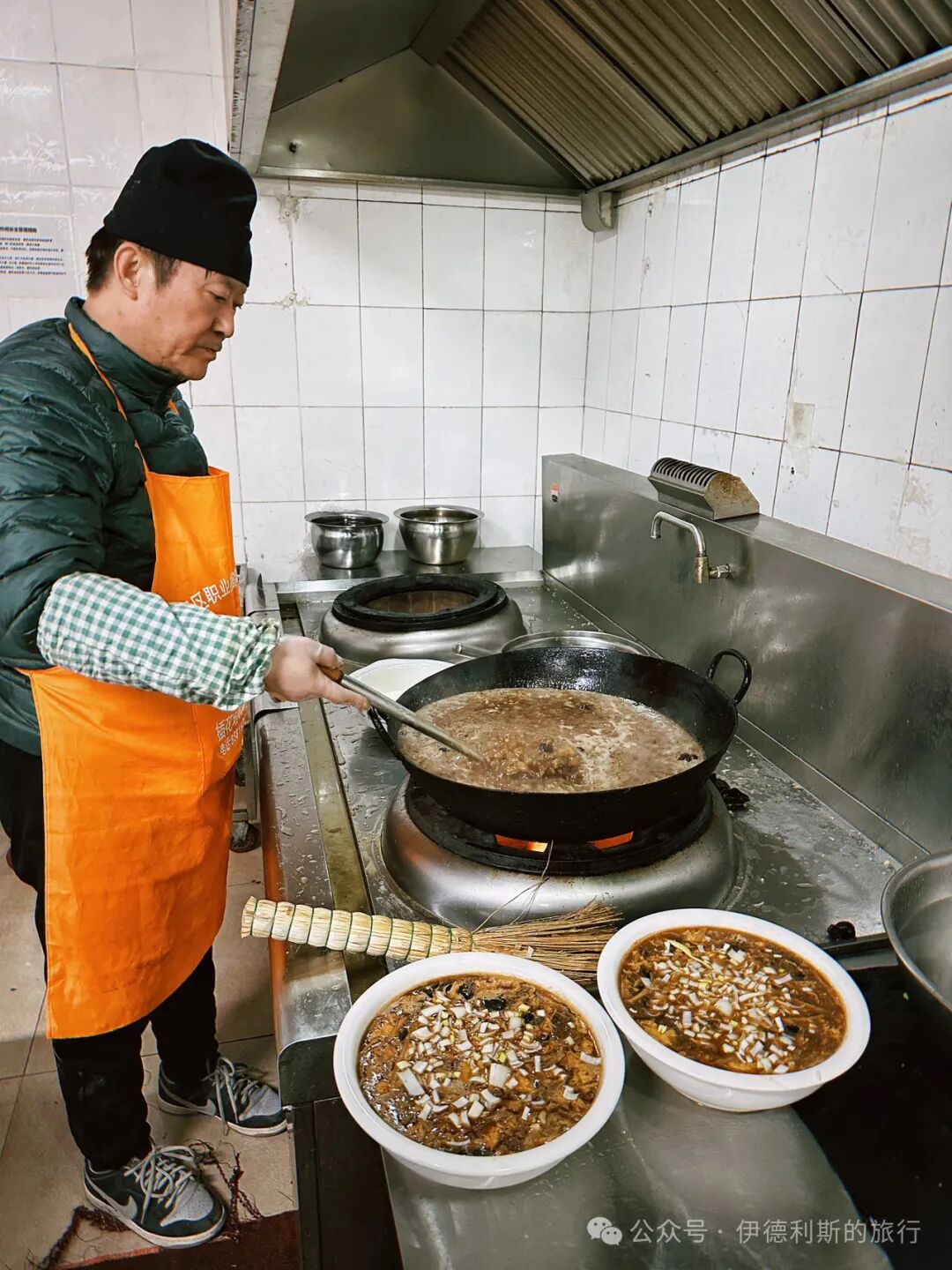
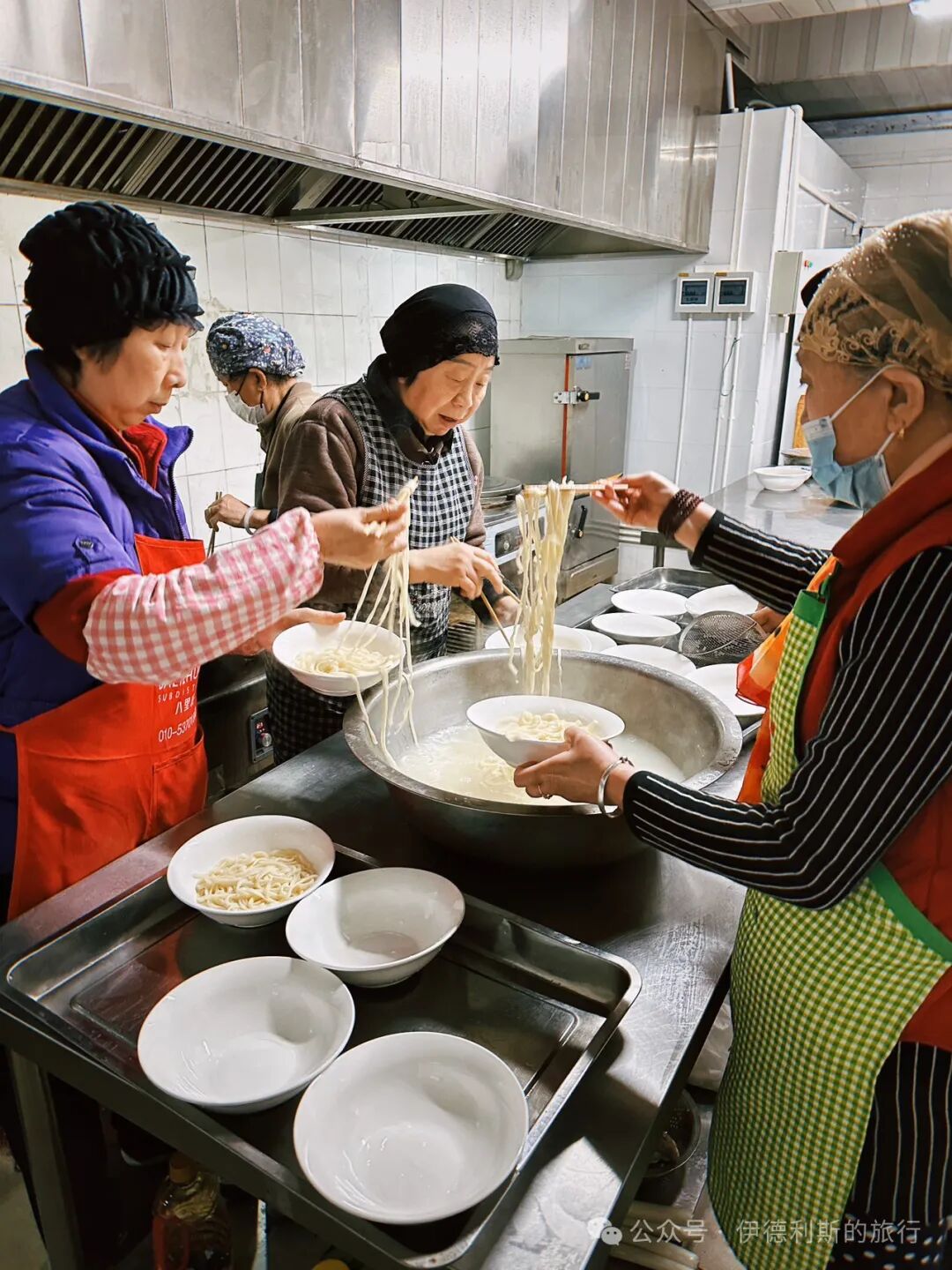
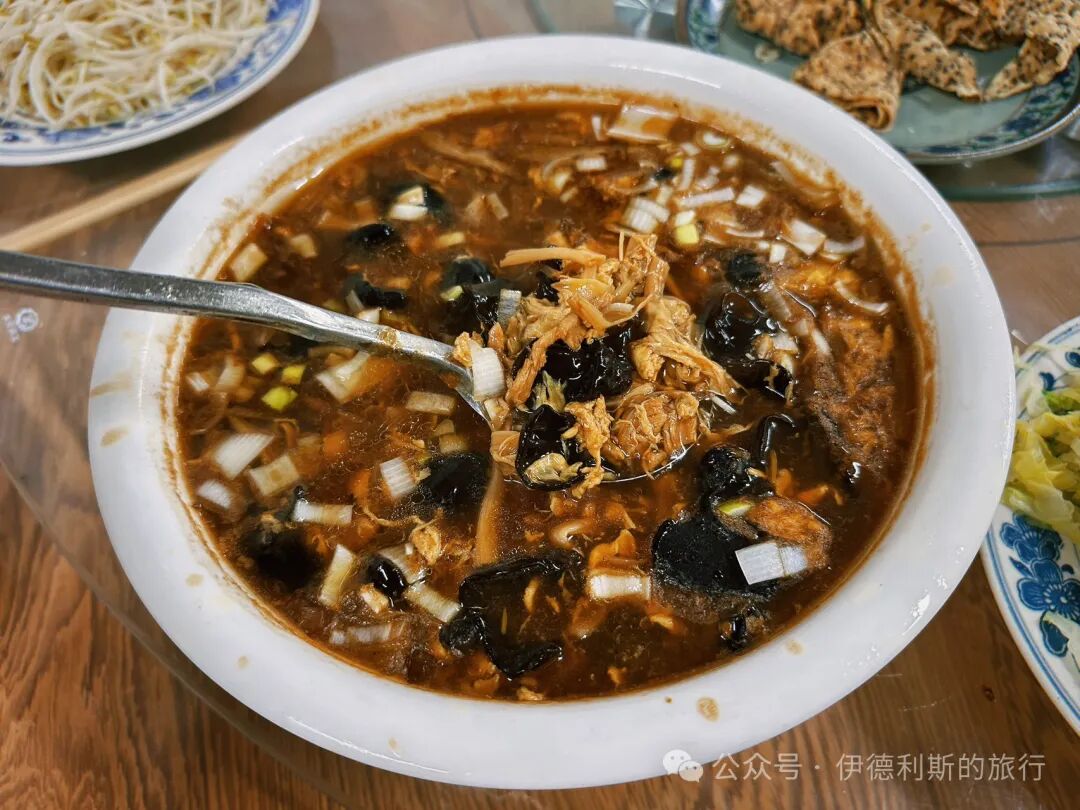
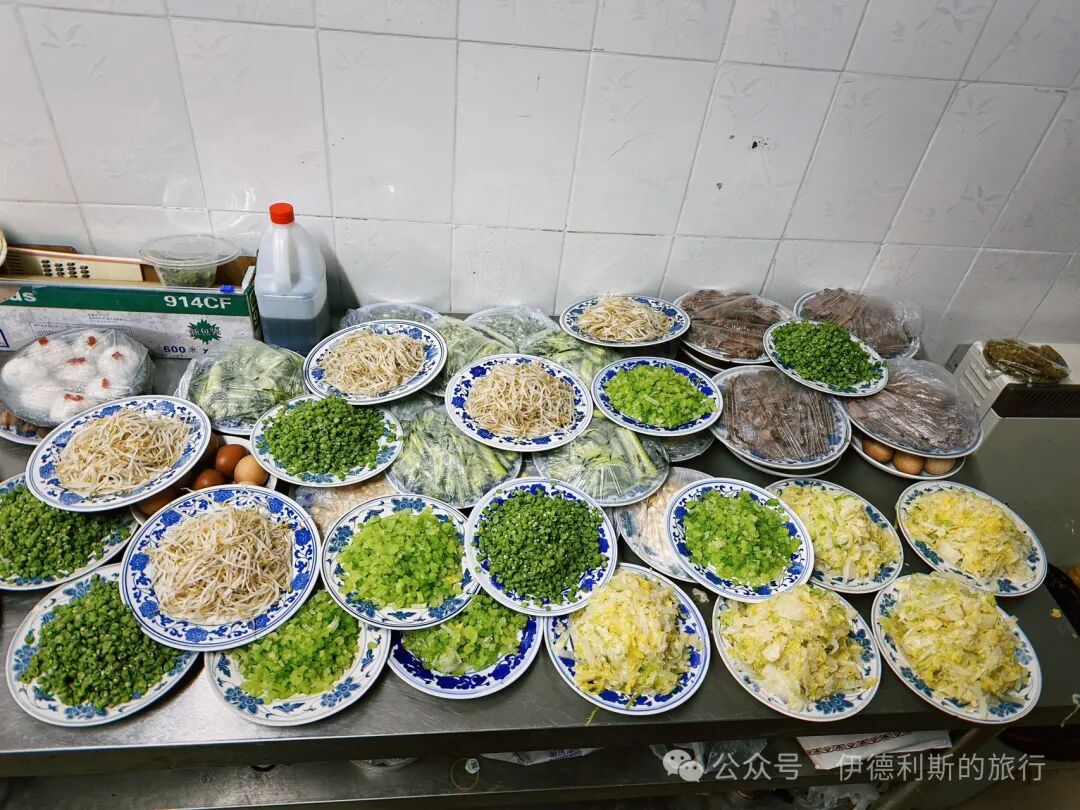
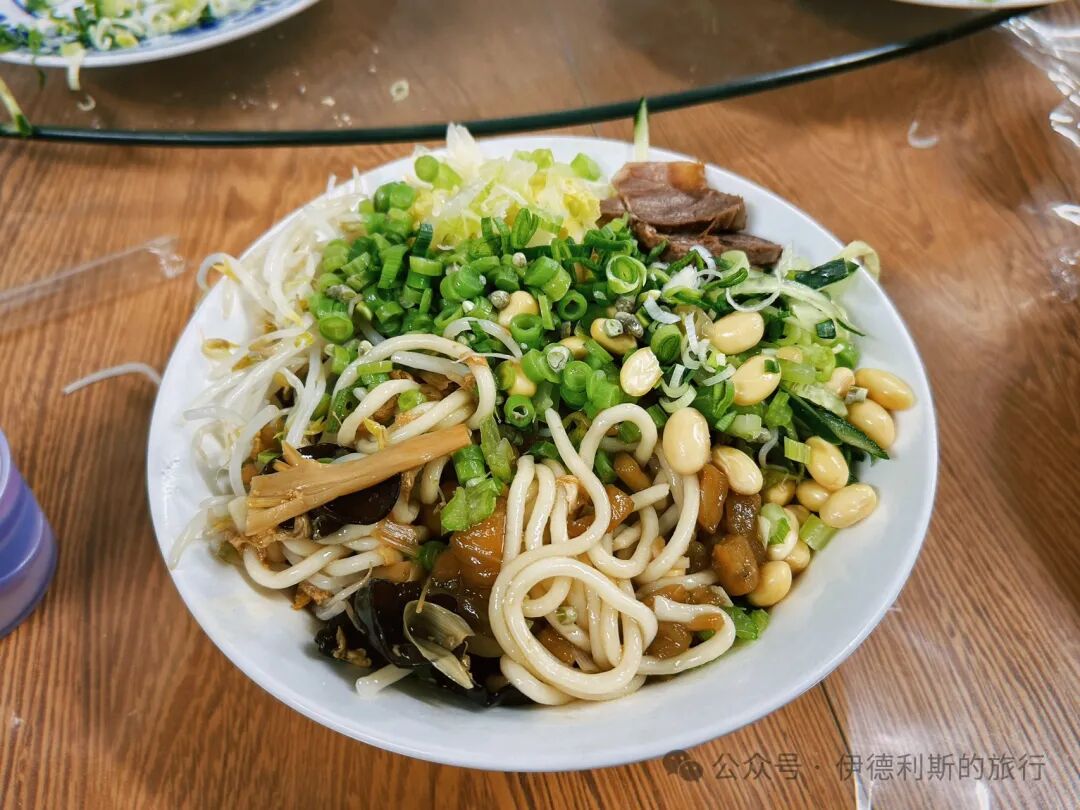
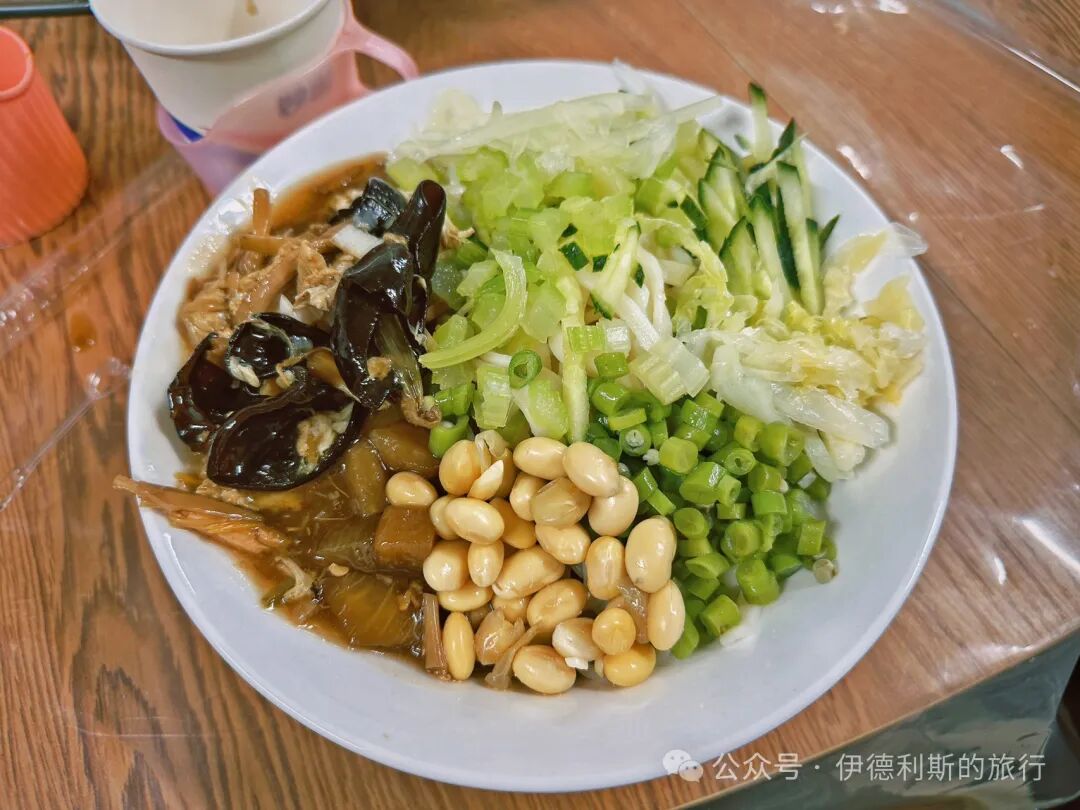
Once a week, we have noodles with gravy (dalu mian) and noodles with eggplant (qieding mian). The vegetable toppings include blanched cabbage, celery, cowpeas, bean sprouts, soybeans, cucumber, and garlic sprouts. The gravy is not too salty, which is perfect for breaking the fast.
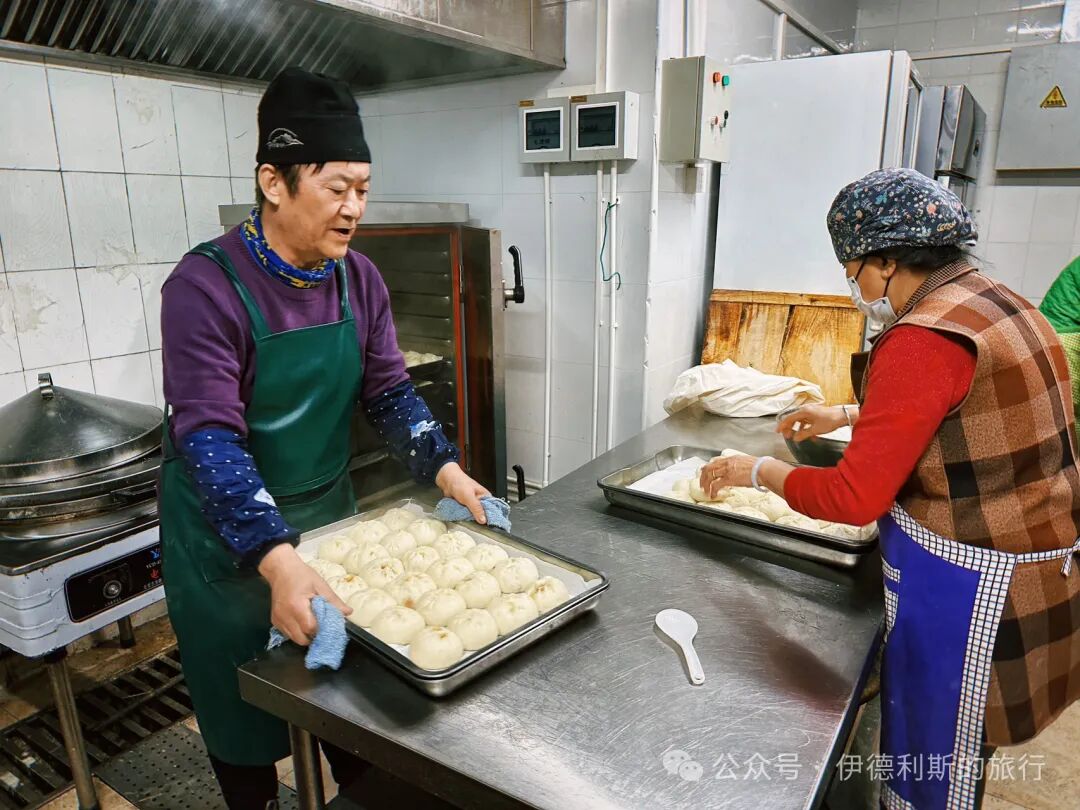
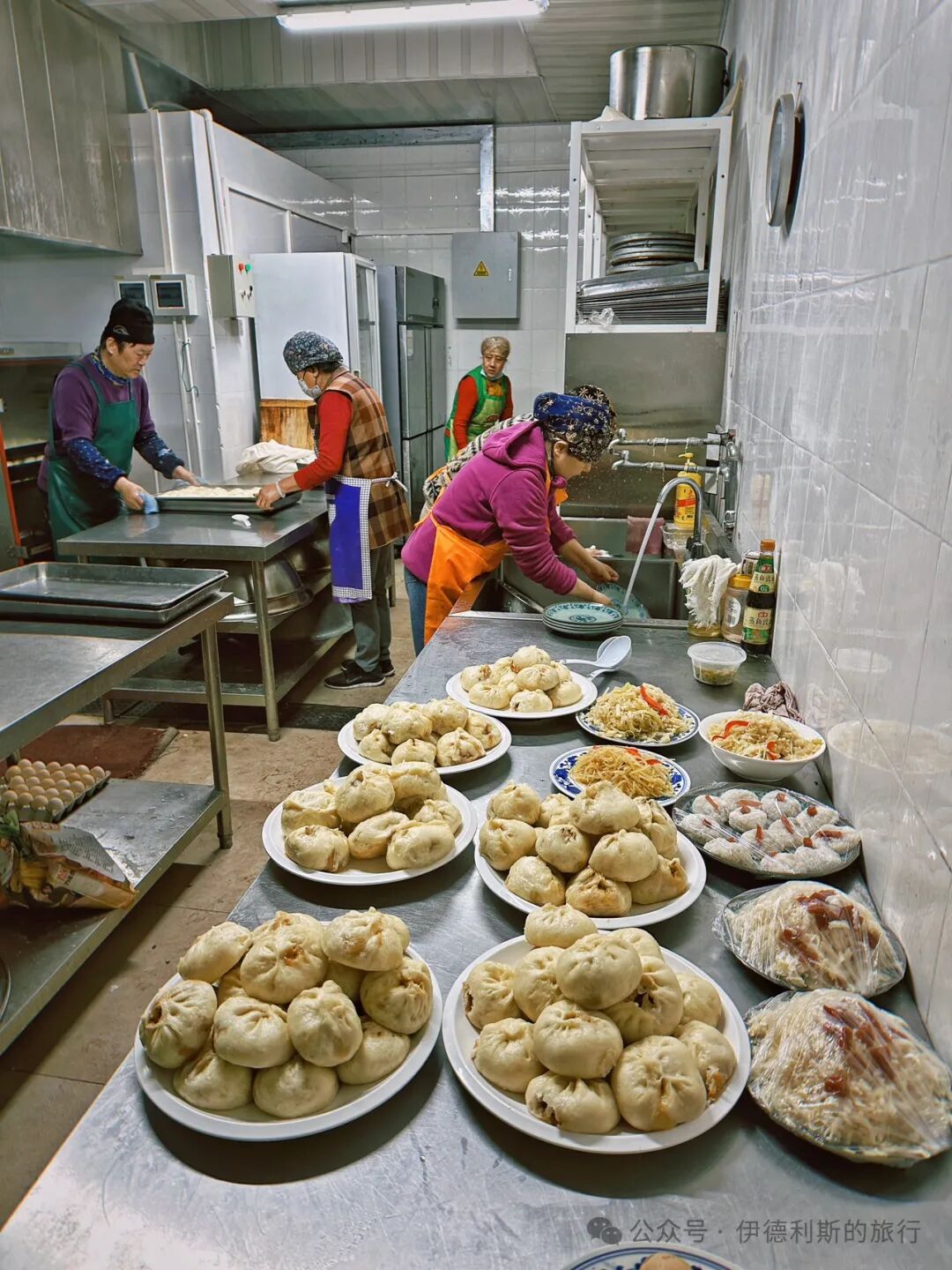
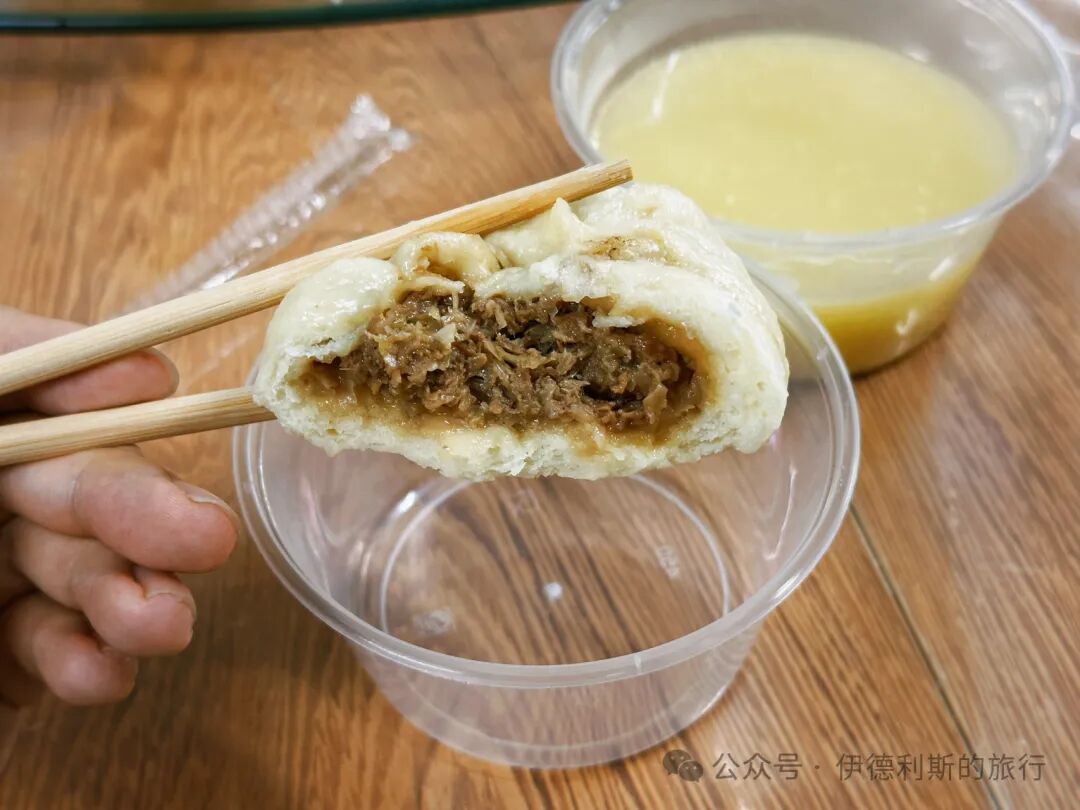
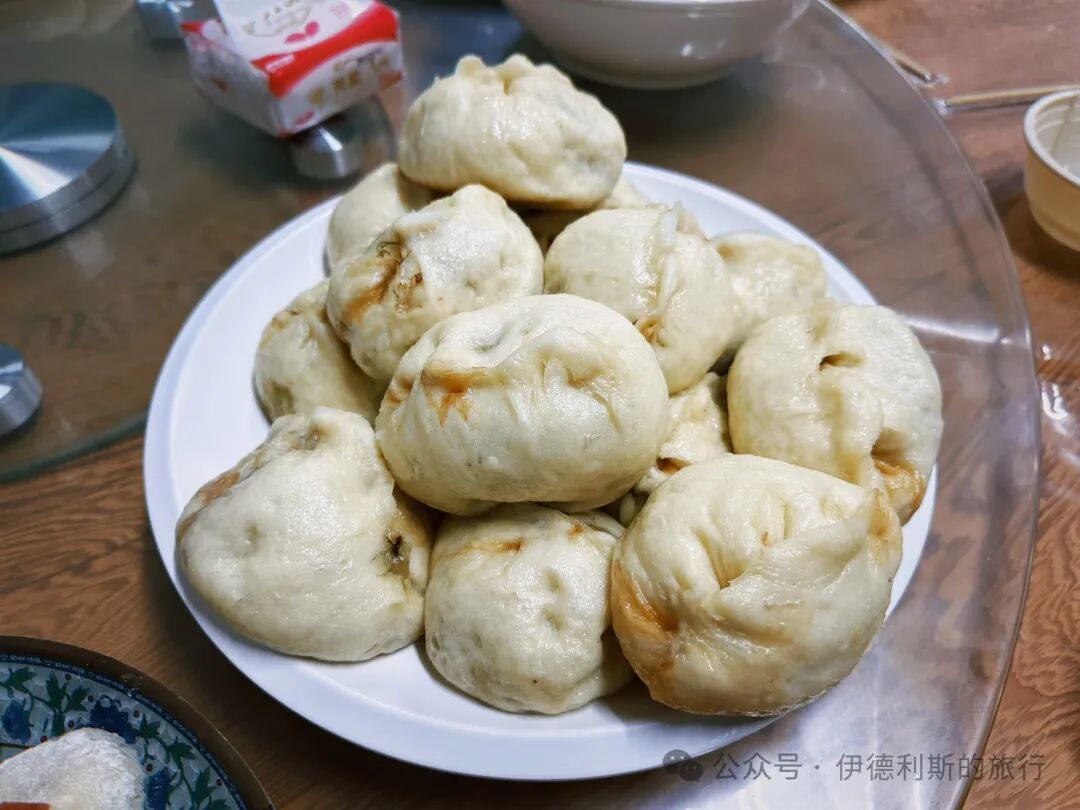
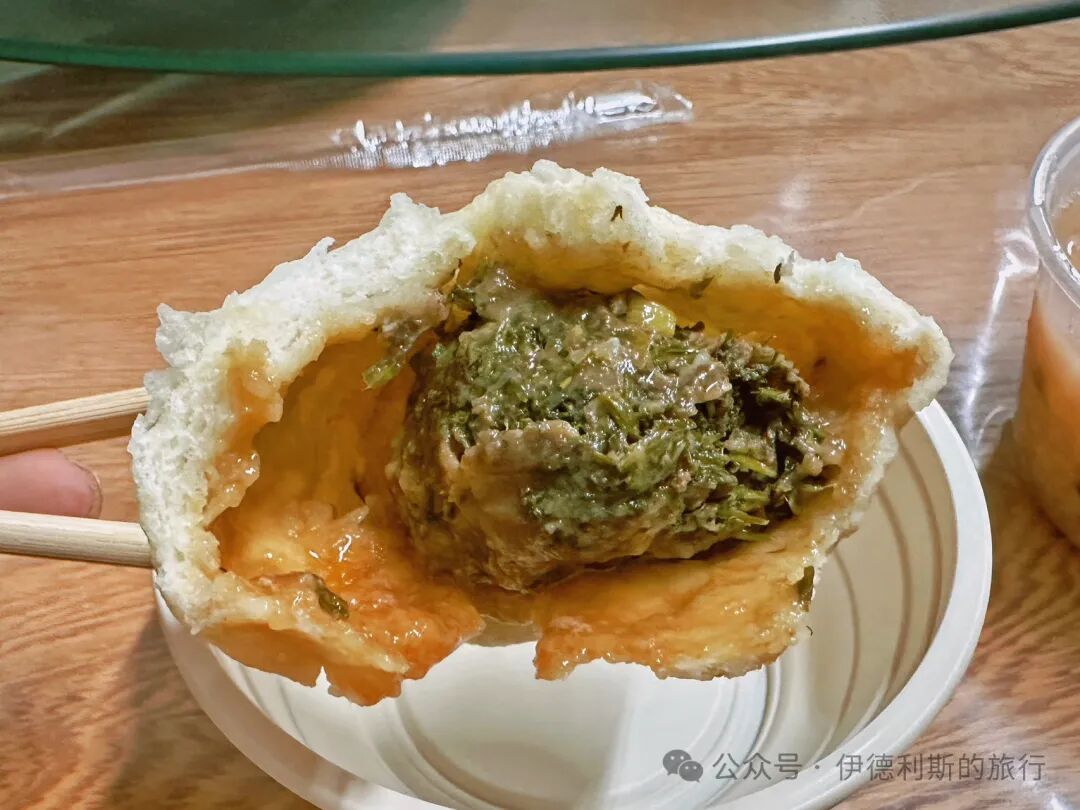
The steamed buns (baozi) served once a week come in beef and green onion, beef and cabbage, and beef and fennel fillings. My favorite is the beef and fennel filling. Many shops now only sell fennel and egg steamed buns, so it is not easy to find beef and fennel ones.
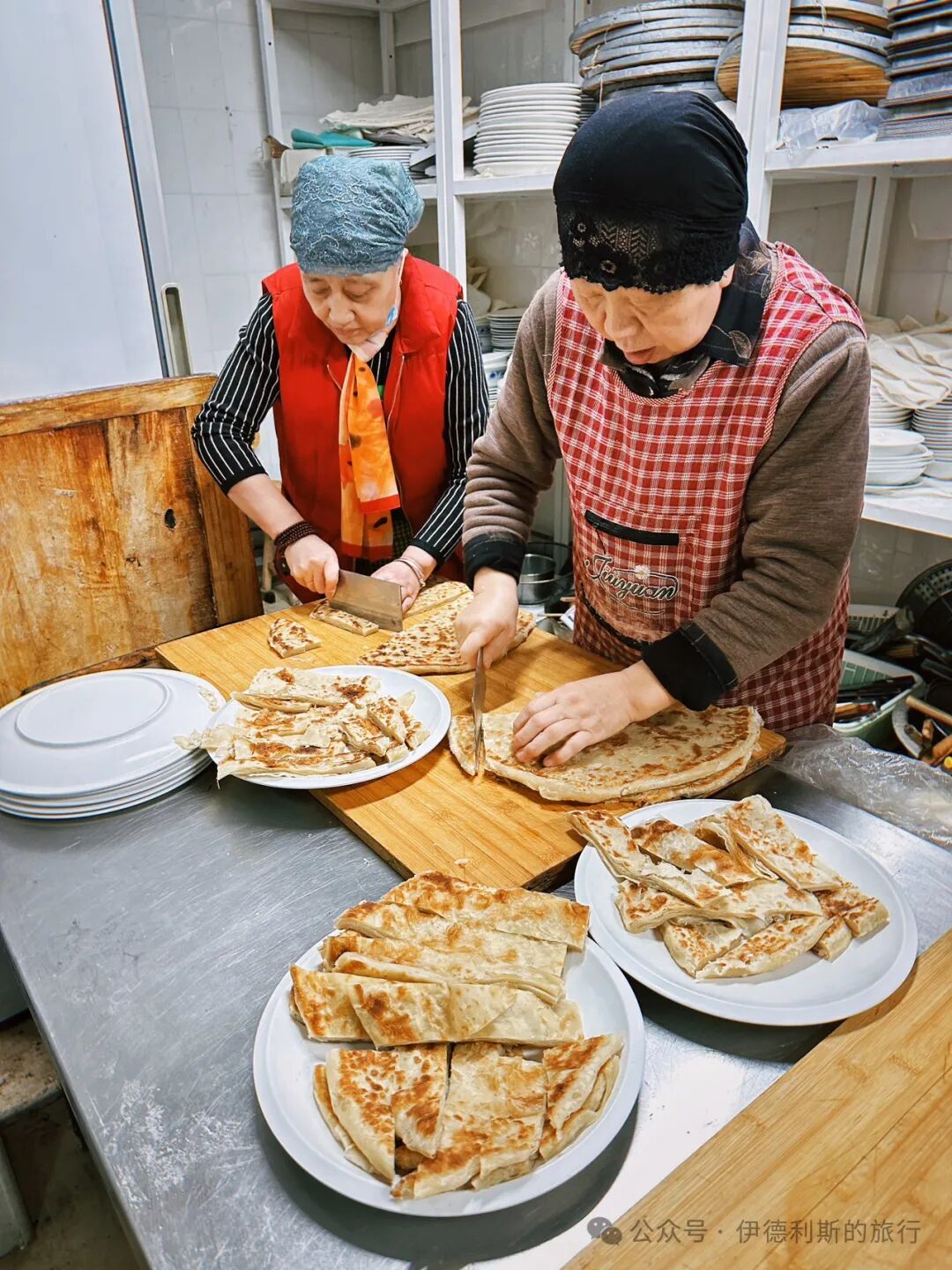
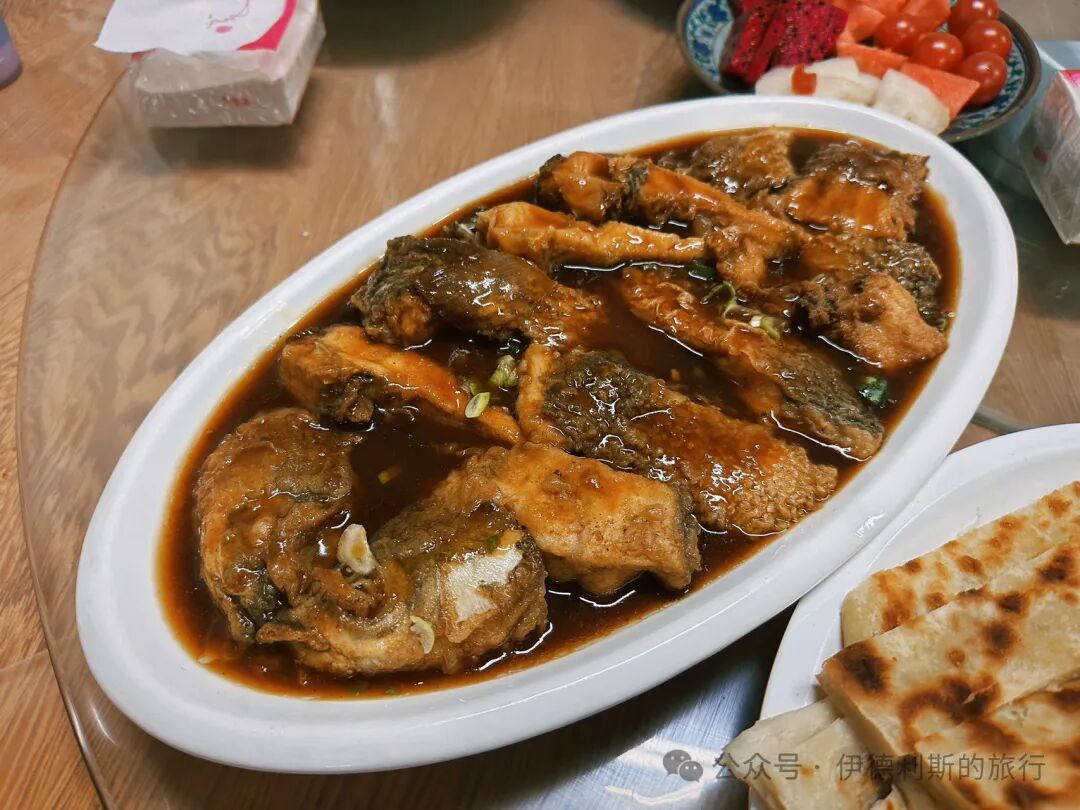
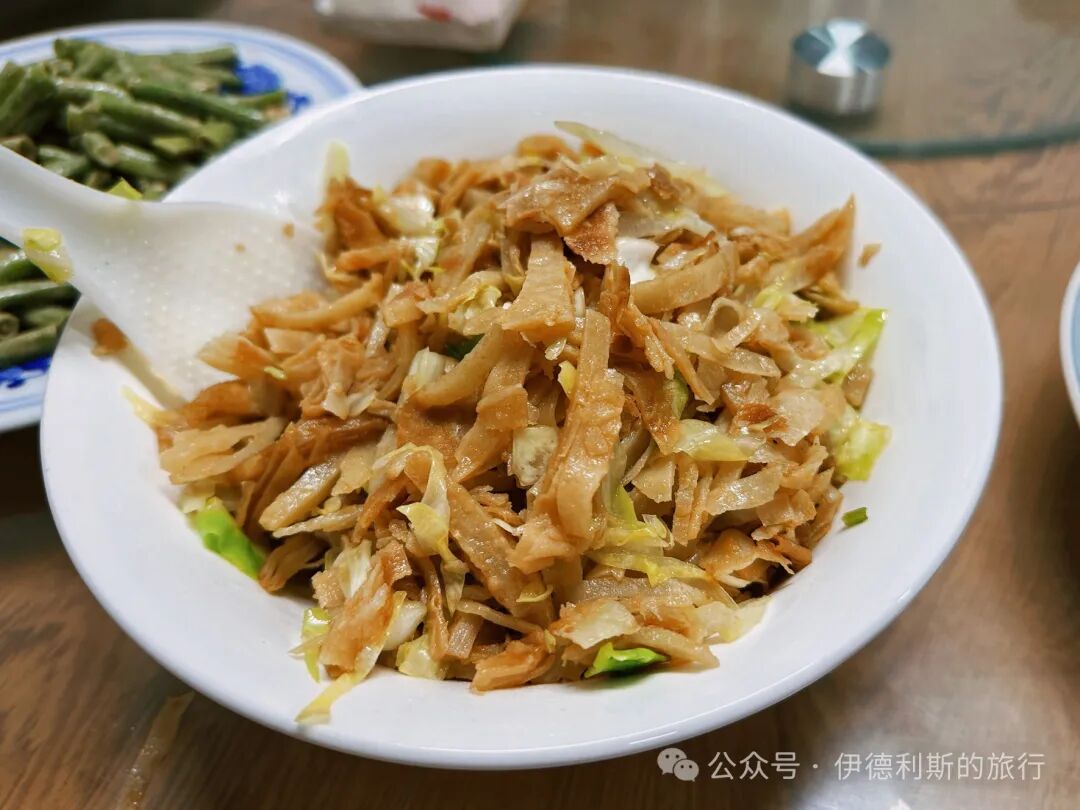
Fish head with flatbread (yutou paobing) is also a Beijing specialty. The flatbreads (laobing) are made by the elders themselves and are very dense; they are delicious when dipped in the fish head broth.
After eating the fish head with flatbread, the leftover flatbread can be made into stir-fried flatbread (chaobing), which is also a favorite for Beijingers. view all
Summary: This article looks back at Ramadan 2025 at Balizhuang Mosque in Beijing. It keeps the original community scenes, iftar details, prayers, people, and photographs in a clean English layout.
This is my third Ramadan at the Balizhuang mosque in Beijing. The atmosphere at the mosque is great and the food is delicious, so it feels worth it even when I have to squeeze onto the subway during the evening rush hour on workdays.
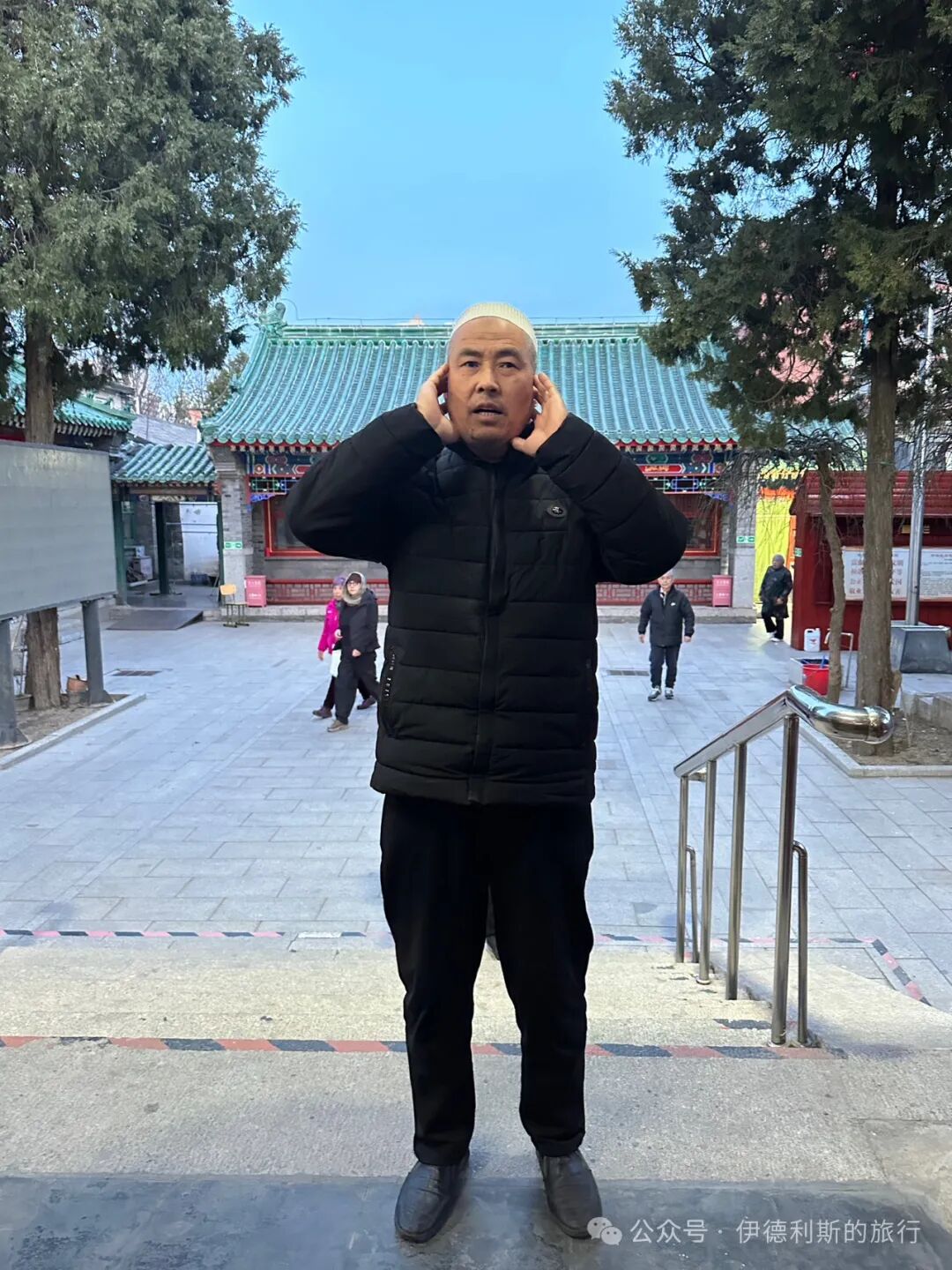
This year, the mosque put the post-prayer recitations for Taraweeh on a large whiteboard, which helps everyone recite together more smoothly. The benefit of praying Taraweeh at the mosque is that you follow the imam and do not make mistakes, whereas I sometimes lose focus when praying alone. Another benefit is the strong sense of community when we break our fast together, and it is very powerful when we all recite the post-prayer words together.
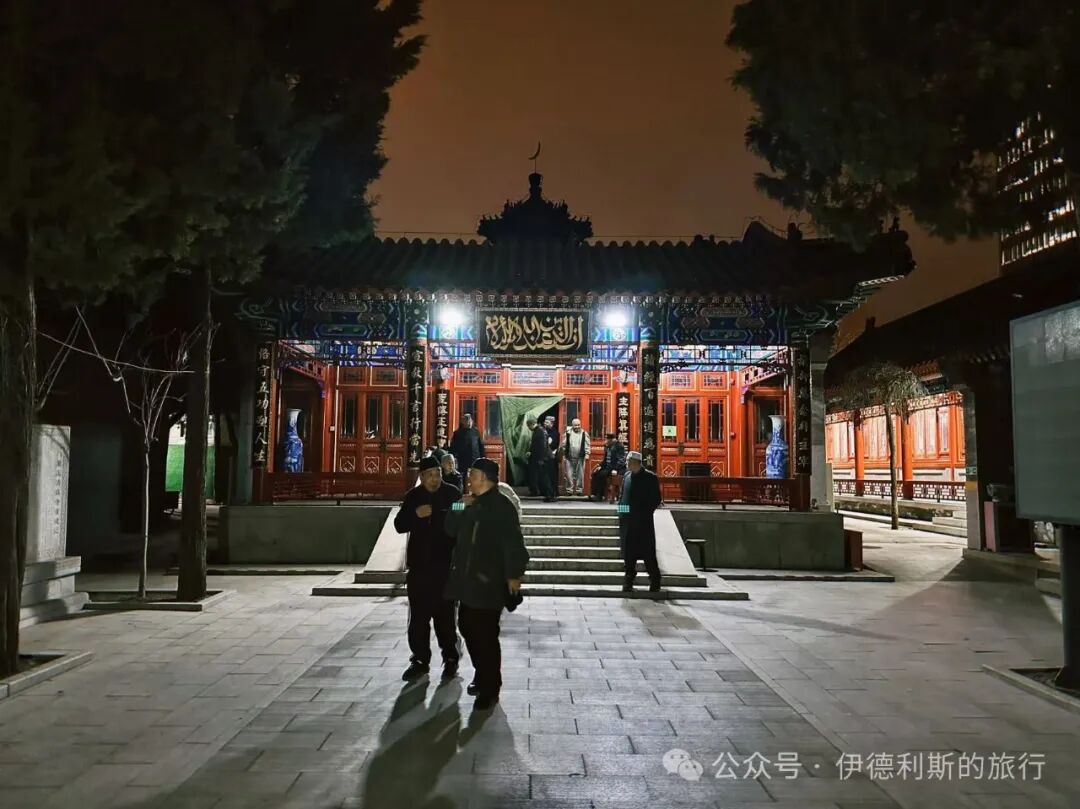
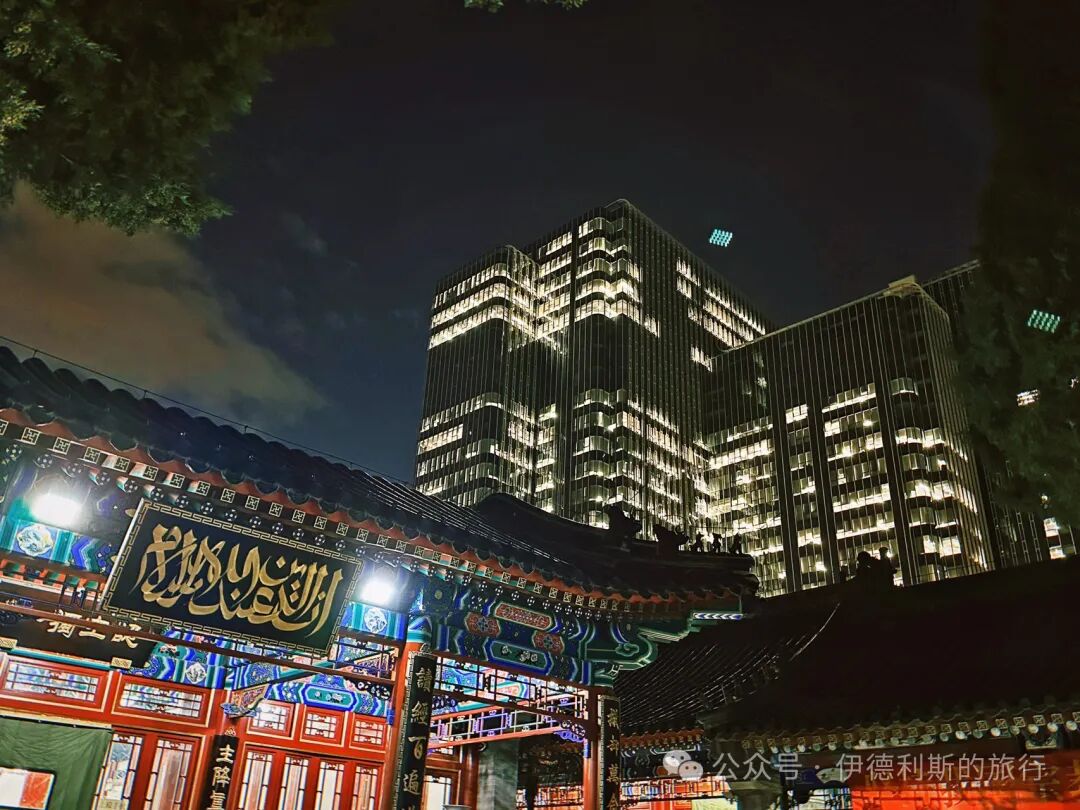
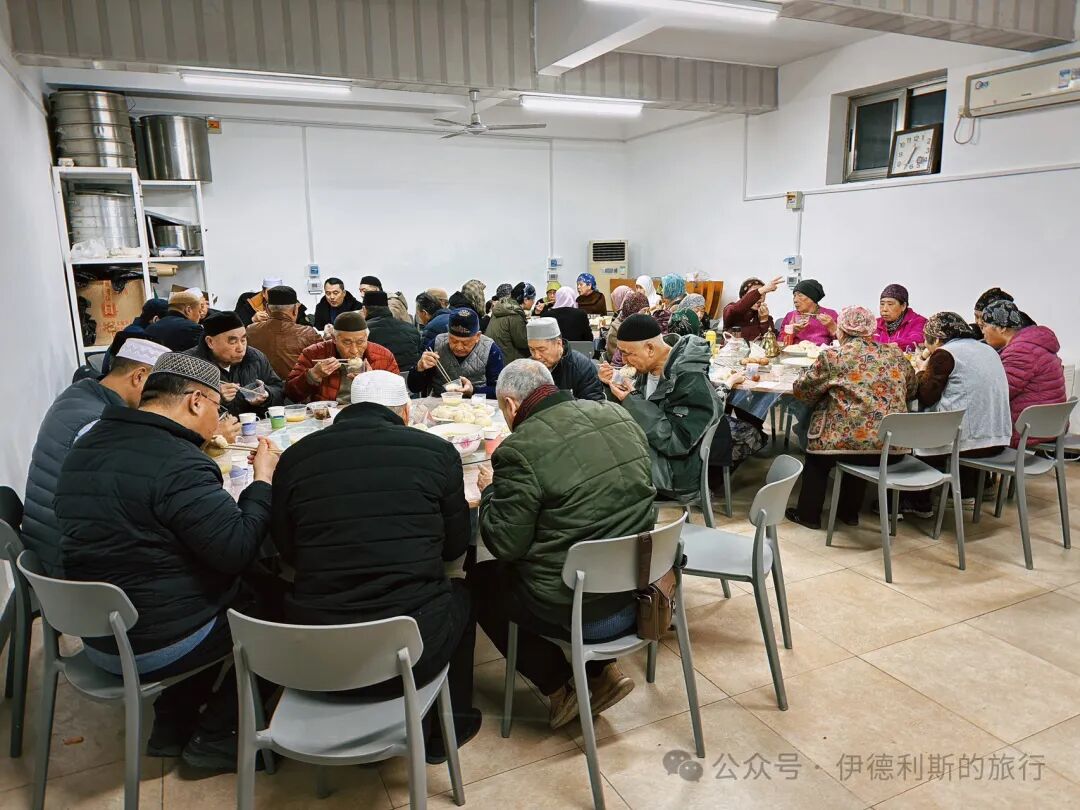
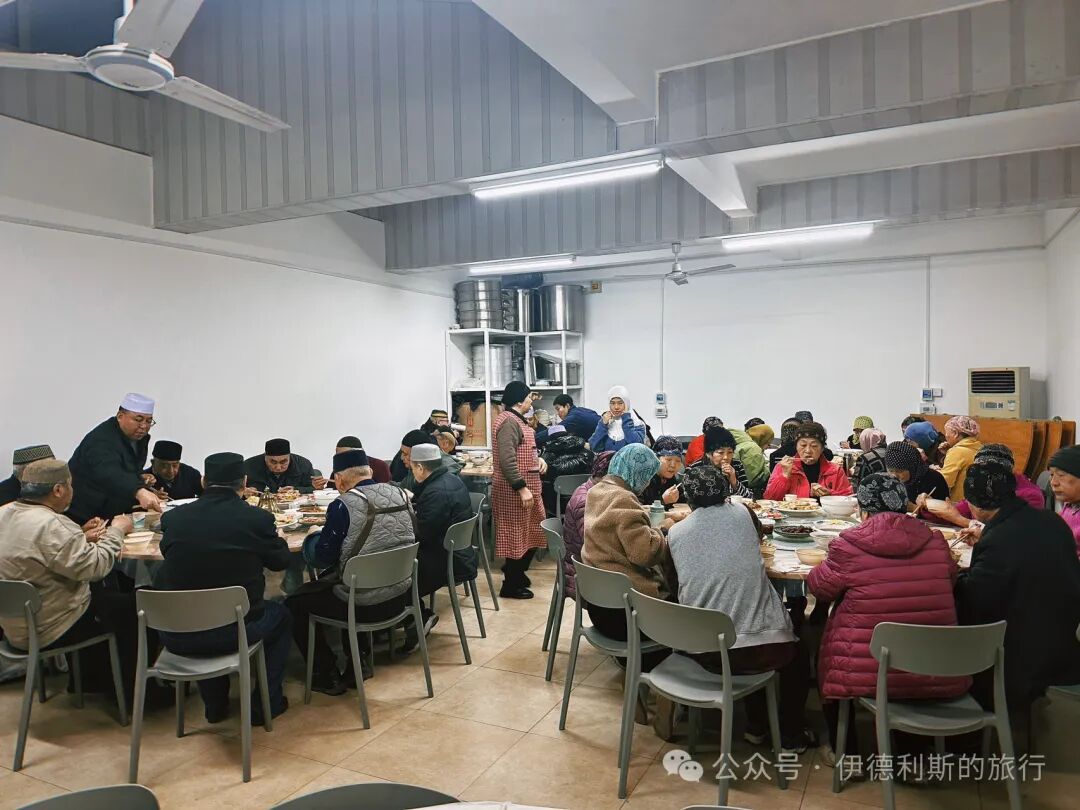
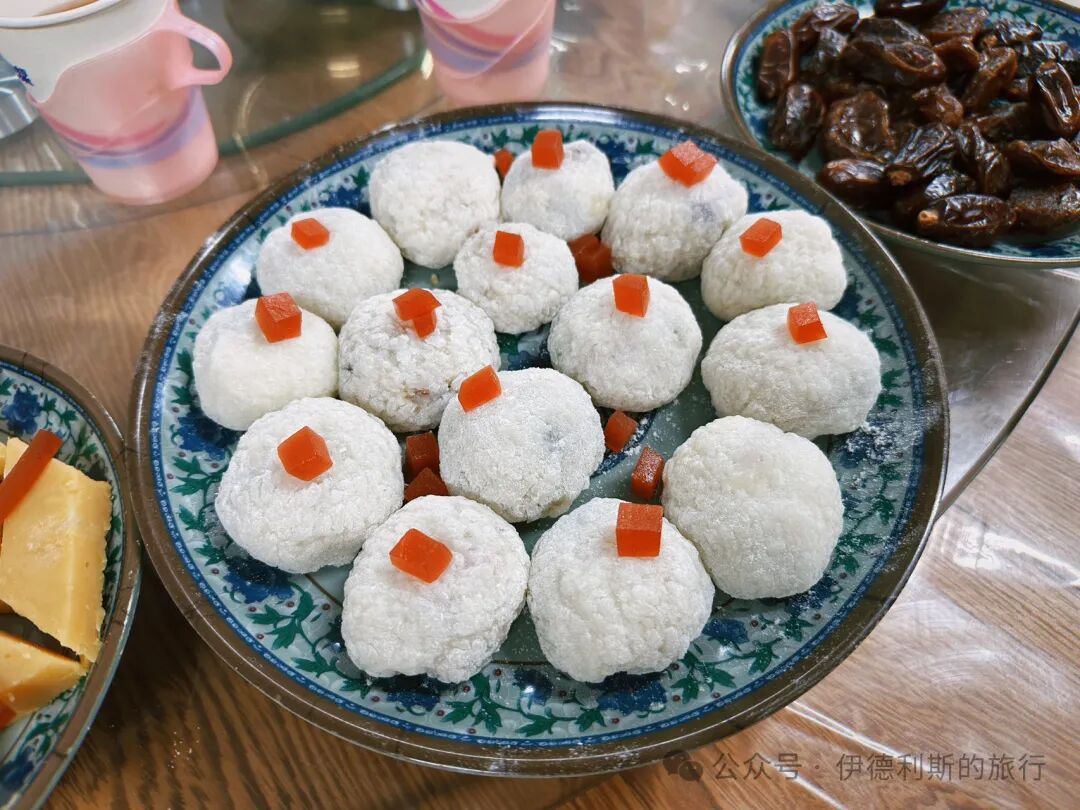
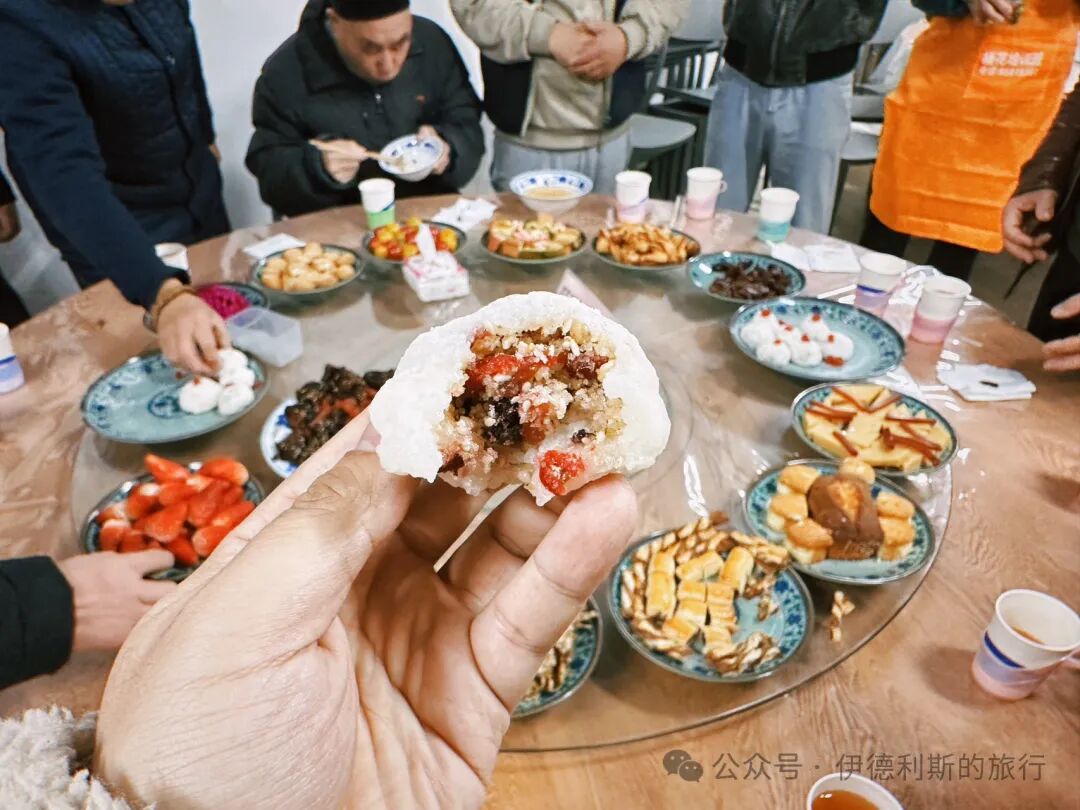
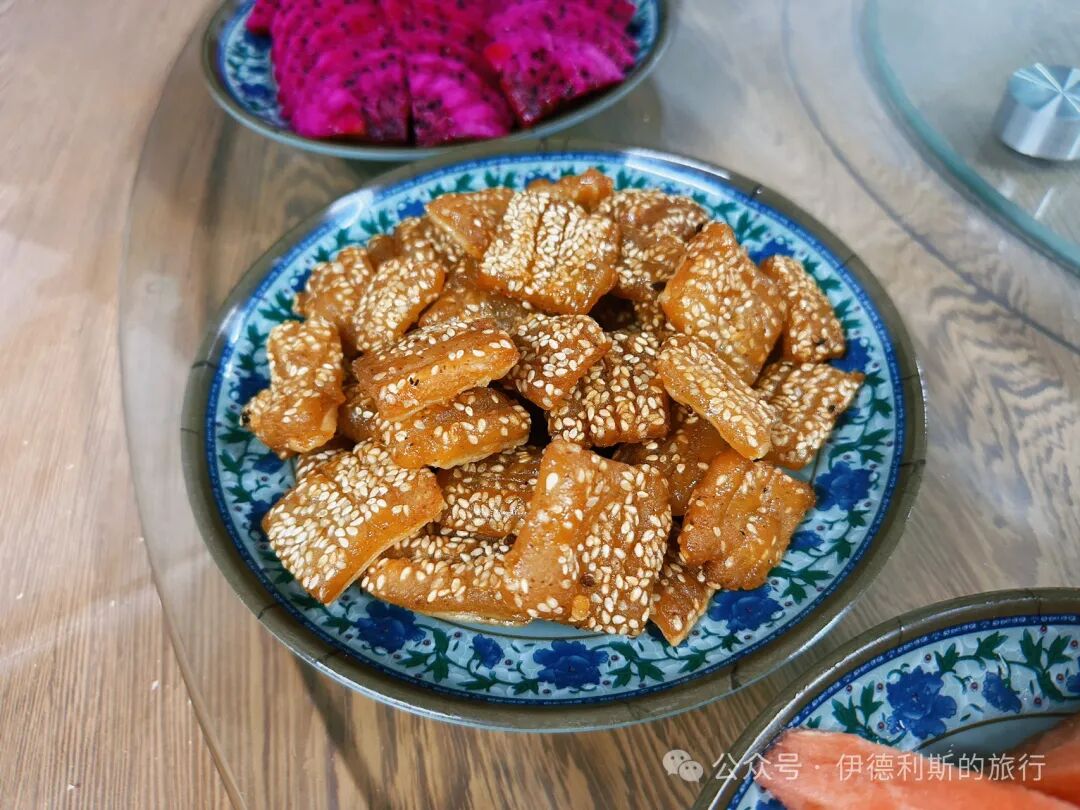
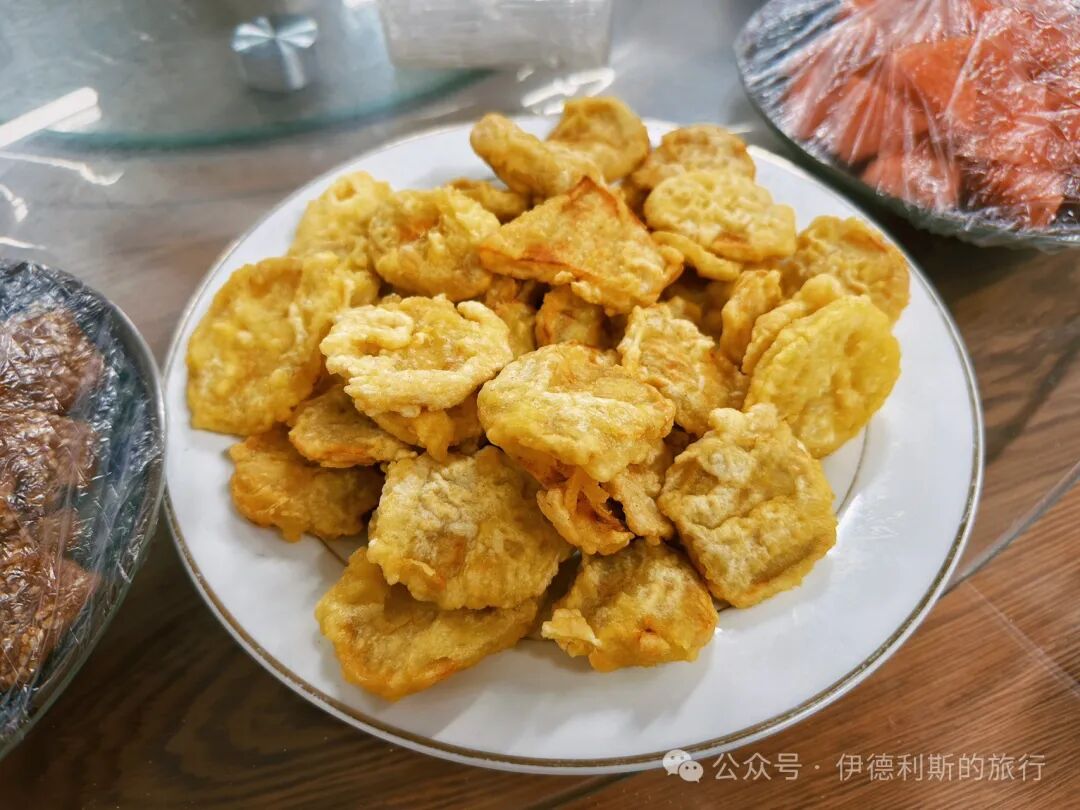
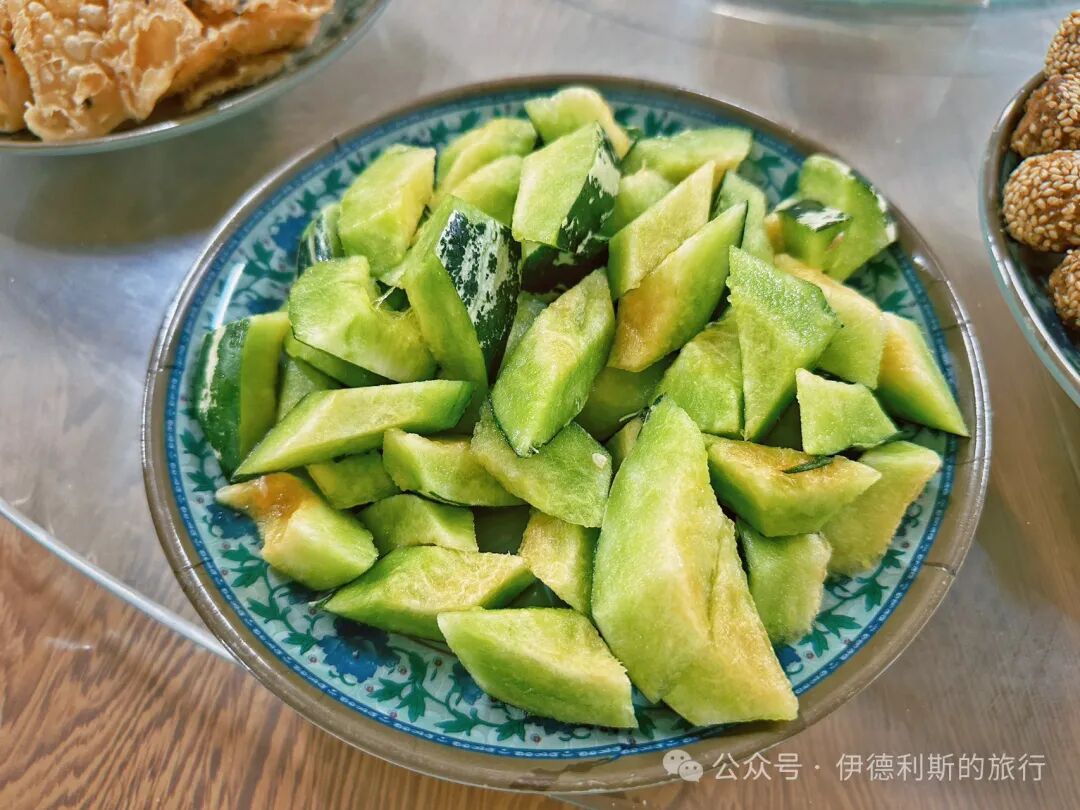
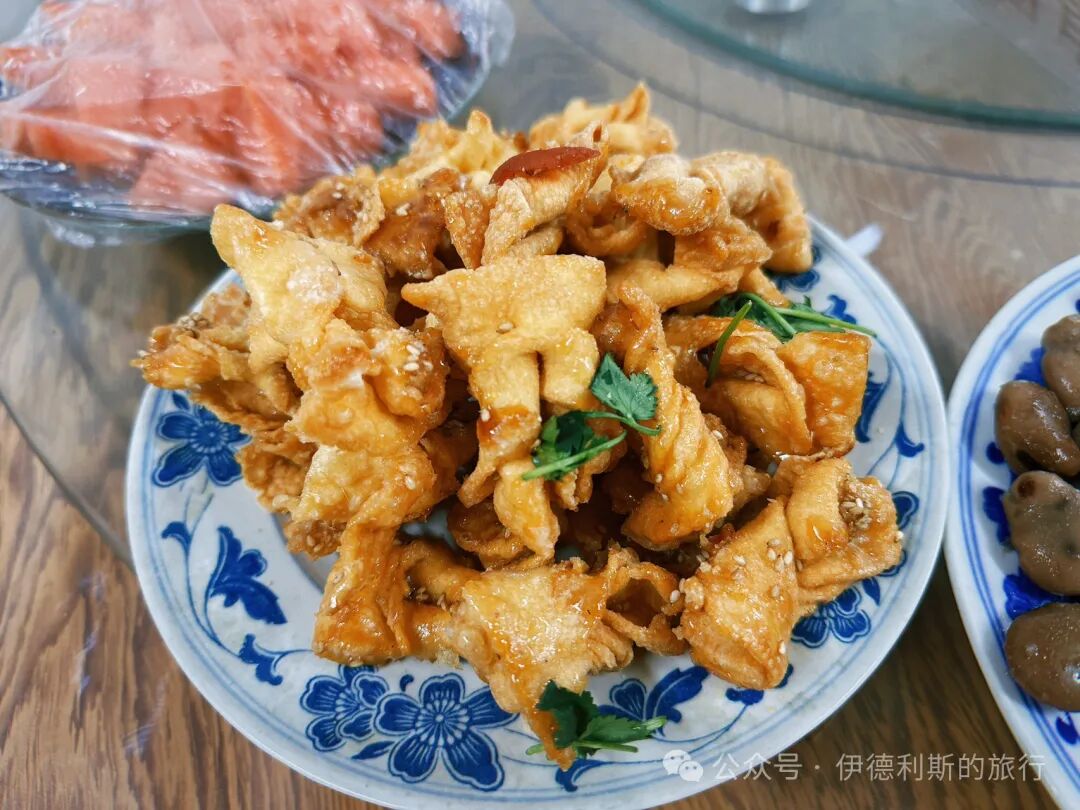
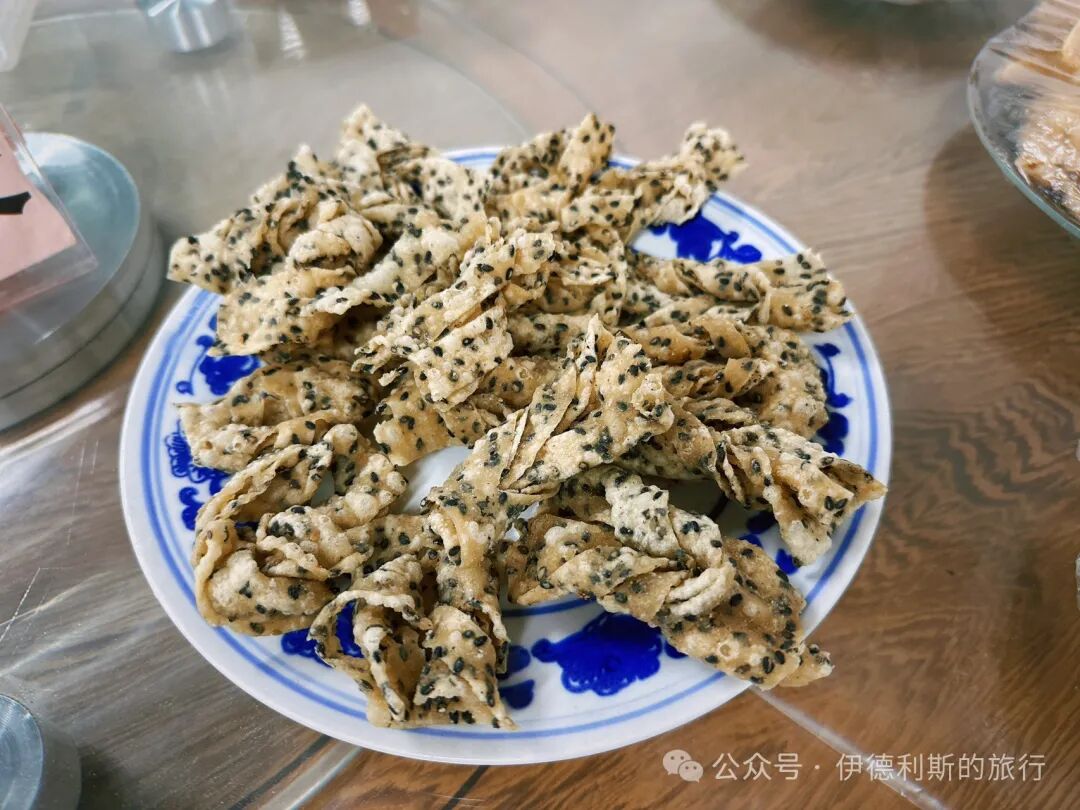
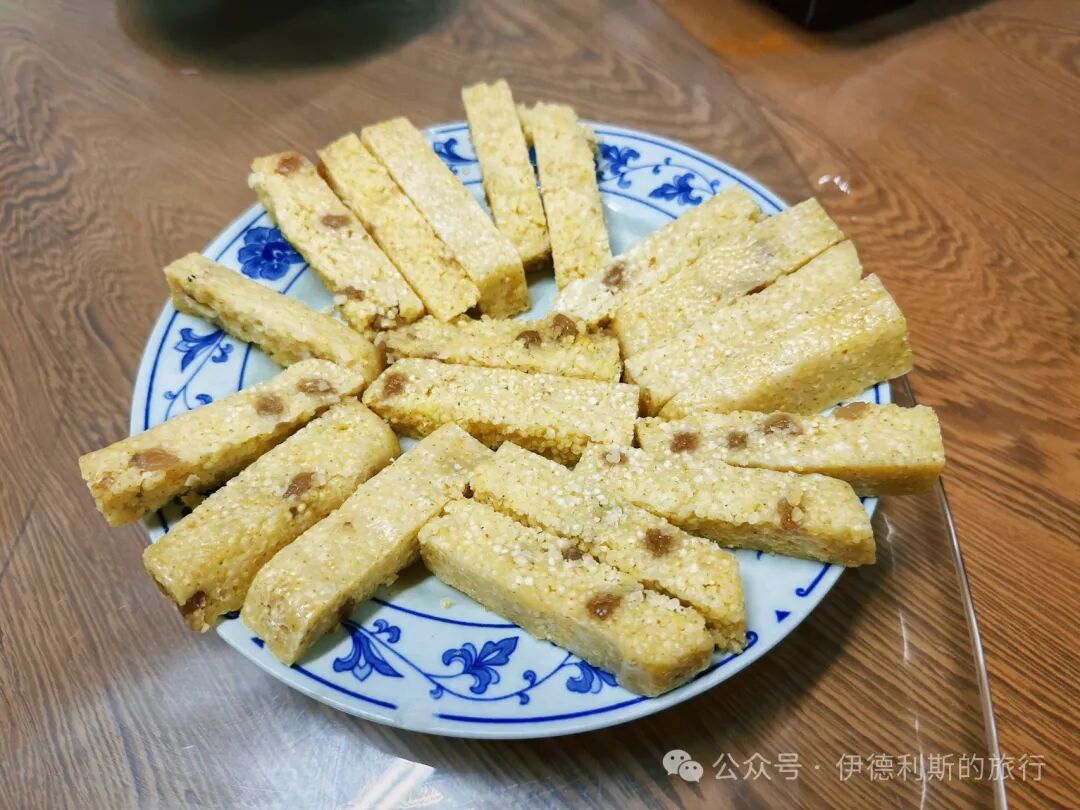
First, let me share the snacks and fruits for breaking the fast. You can eat various traditional Beijing snacks carefully made by the elders here, such as steamed rice cakes (aiwowo), candied yam rolls (tangjuanguo), glutinous rice rolls with bean flour (lvdagun), fried sweet potato (zha baishu), ginger juice fried dough crisps (jiangzhi paicha), salt and pepper fried dough crisps (jiaoyan paicha), lotus root with glutinous rice (nuomi ou), sticky rice cake (niangao), yellow rice cake (huangmi gao), jujube corn buns (zao wotou), pea flour cake (wandouhuang), and sugar ear pastries (tang erduo).
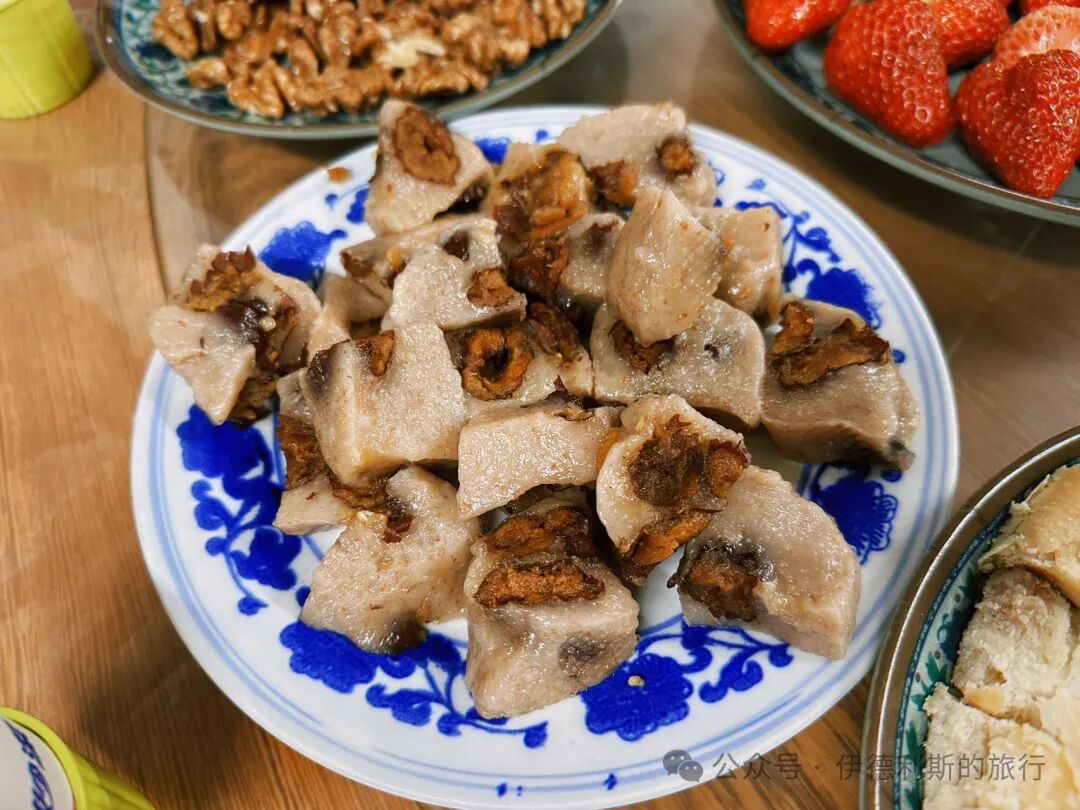
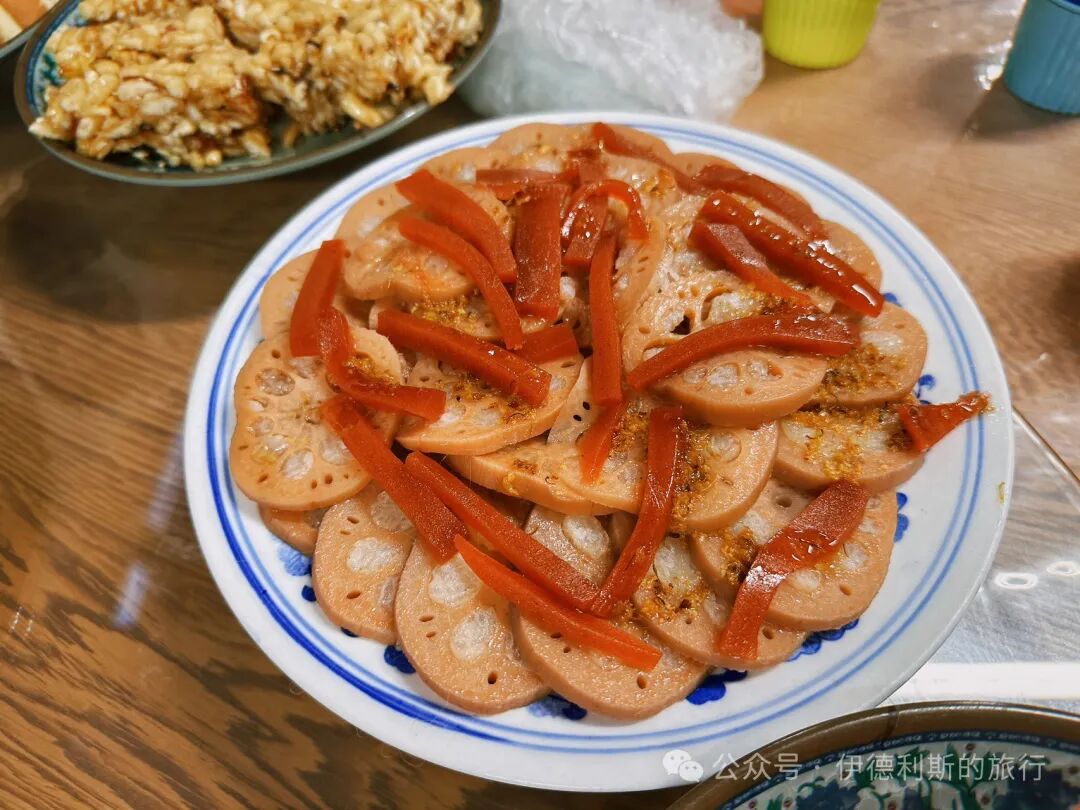
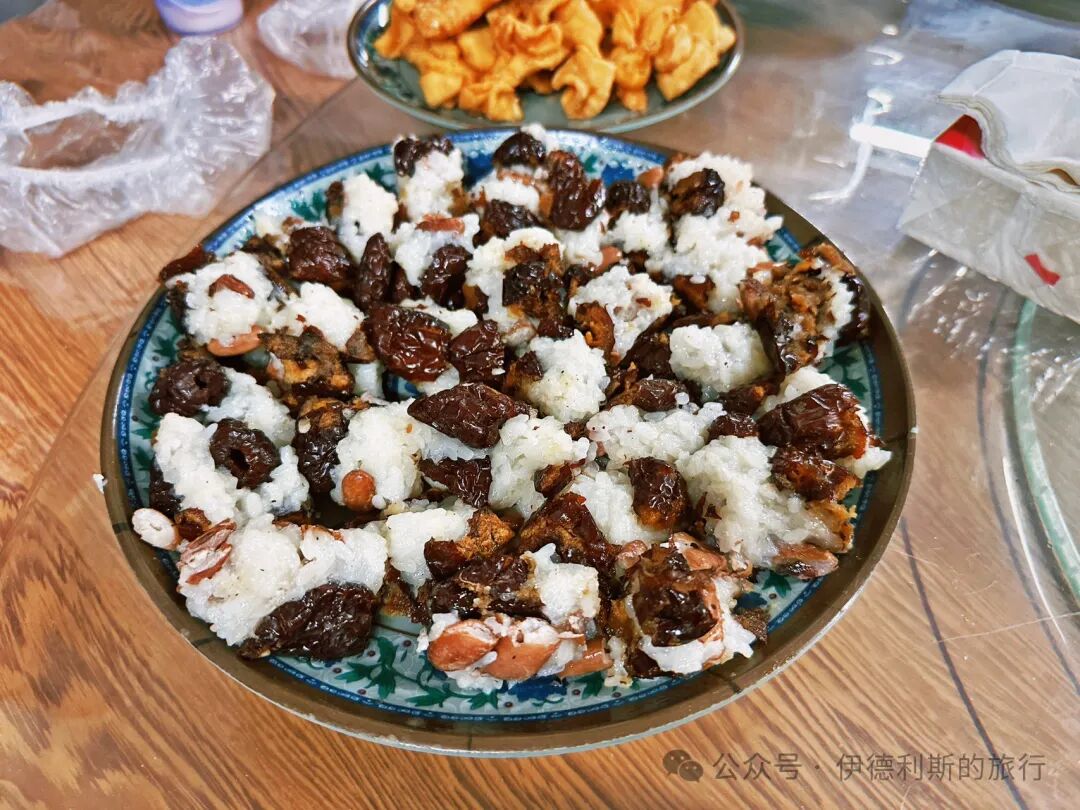
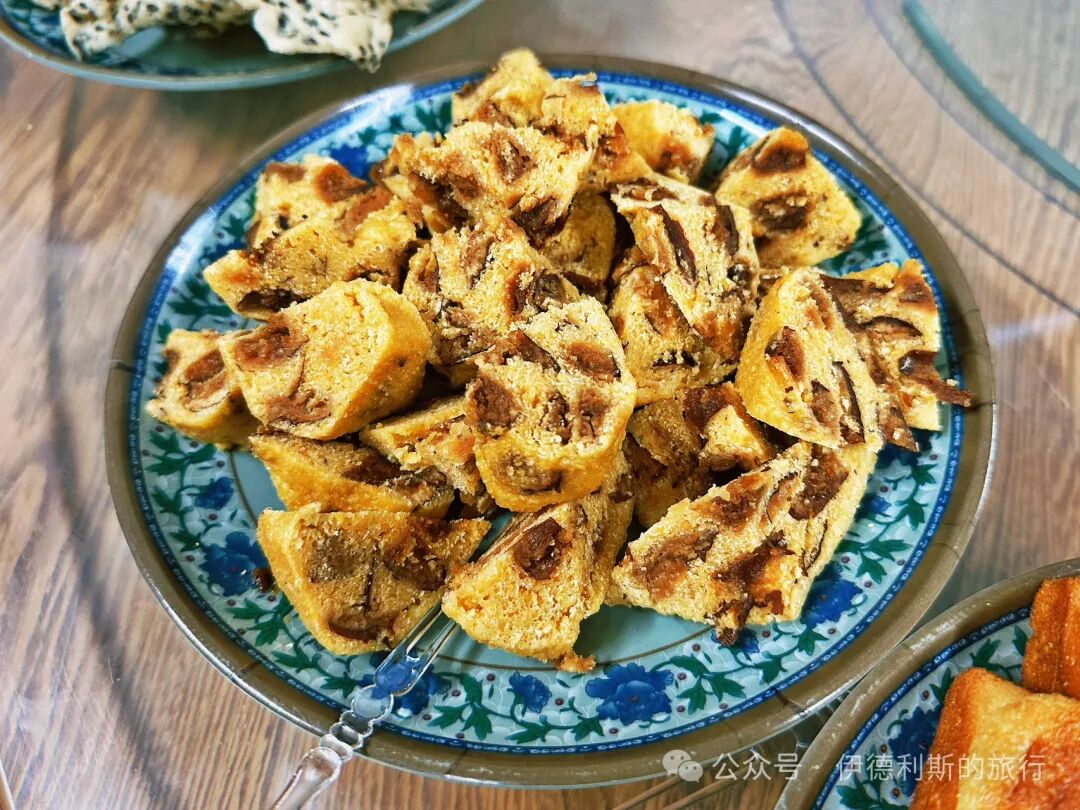
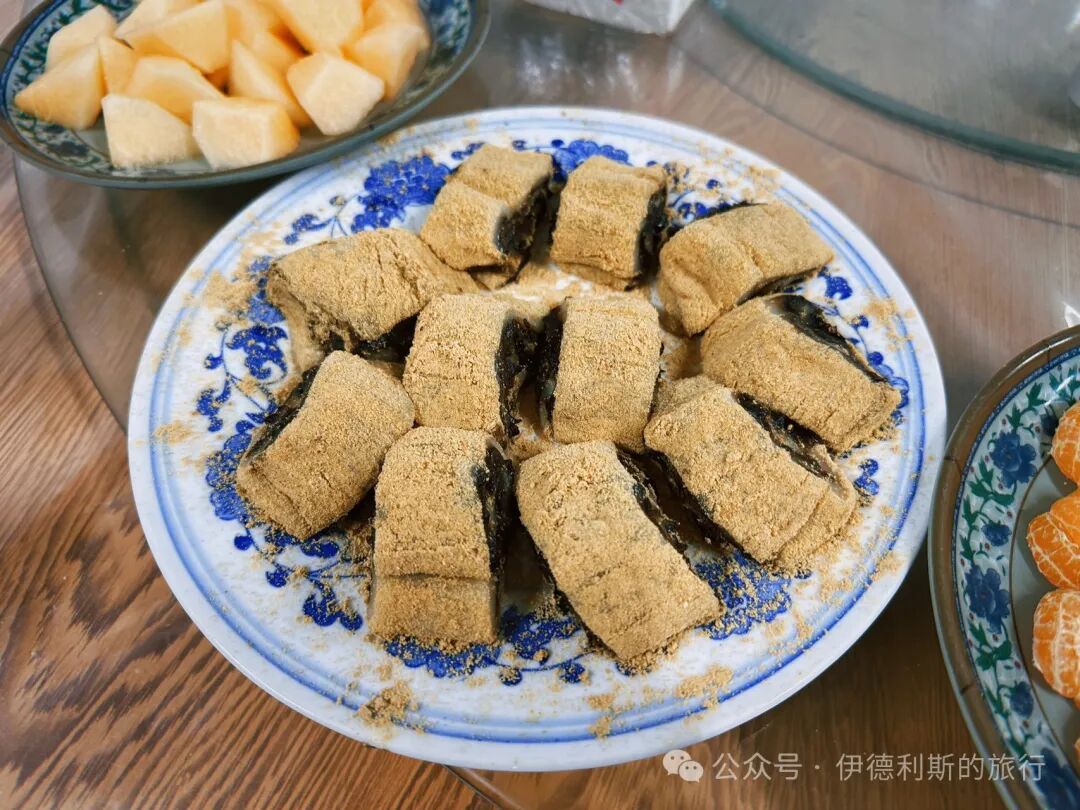
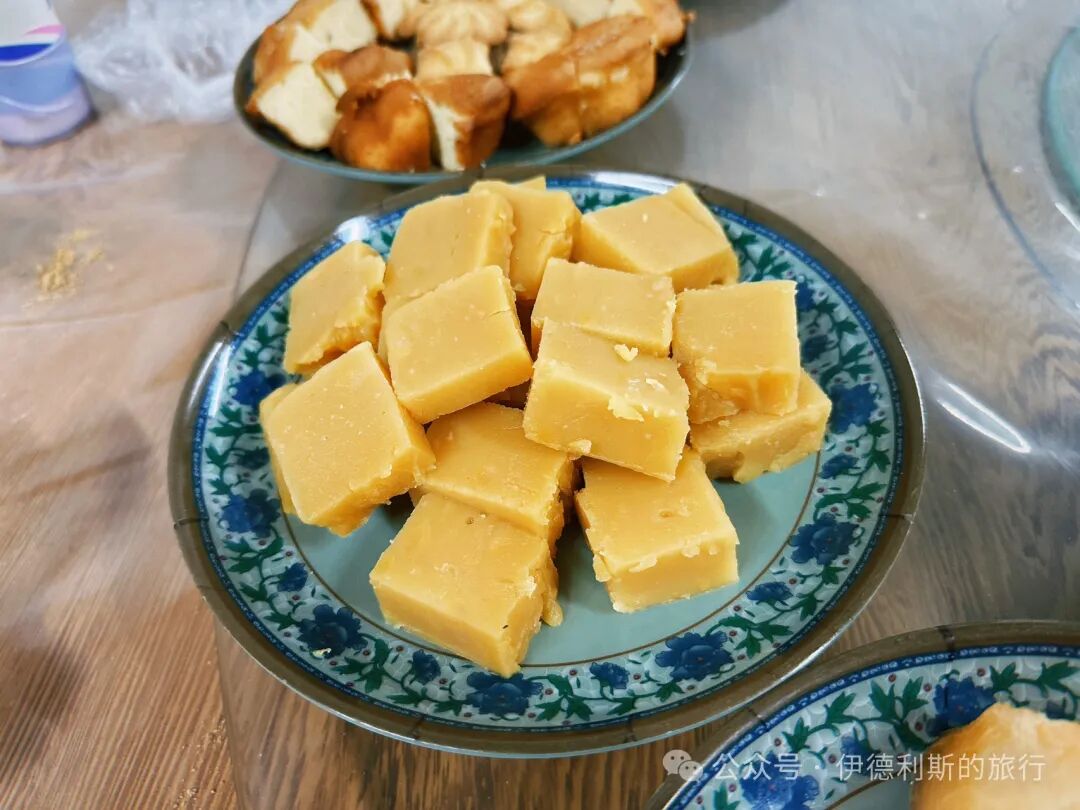
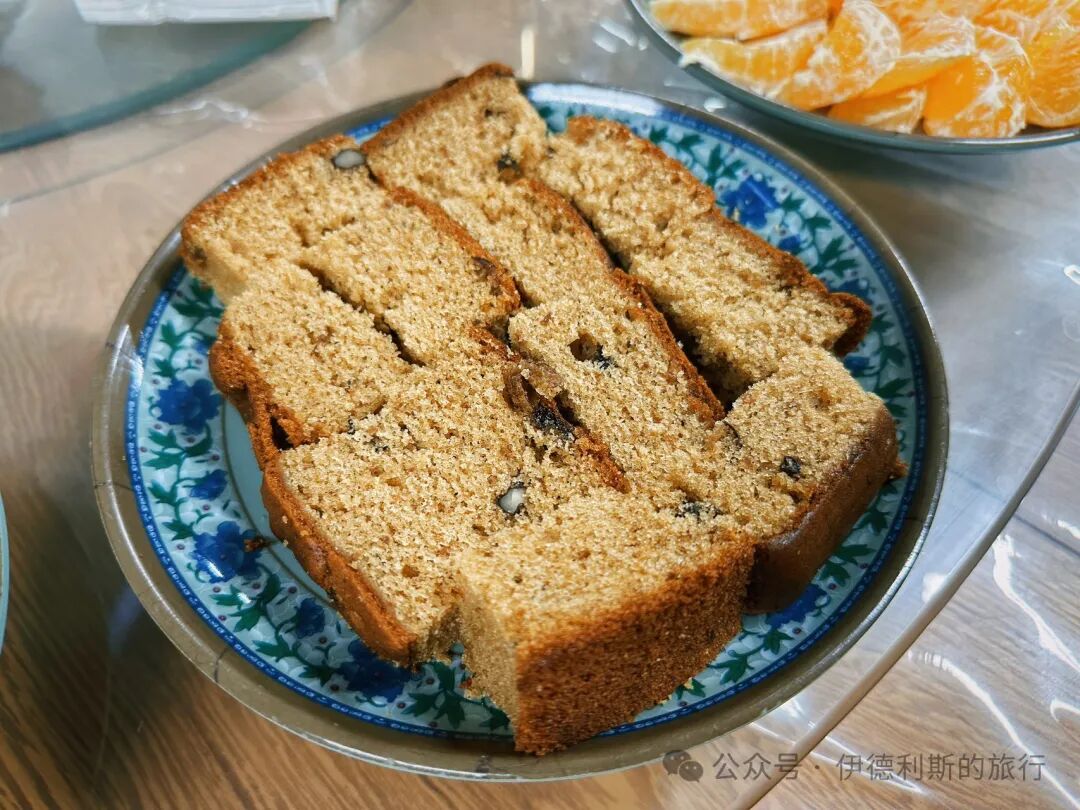
The dinner after the sunset prayer (maghrib) is also wonderful, featuring rice with stir-fried dishes, noodles with gravy (dalu mian), steamed buns (baozi), and fish head with flatbread (yutou paobing), which rotate daily.
Side dishes for the rice include fried meat (songrou), braised chicken legs (huangmen jitu), minced meat with green beans, braised eggplant, and braised meatballs. For soups and porridge, there is winter melon meatball soup, tofu puff soup, and mung bean porridge. Of course, fermented bean drink (douzhi) with fermented bean curd (ma doufu) is also a major Beijing specialty!
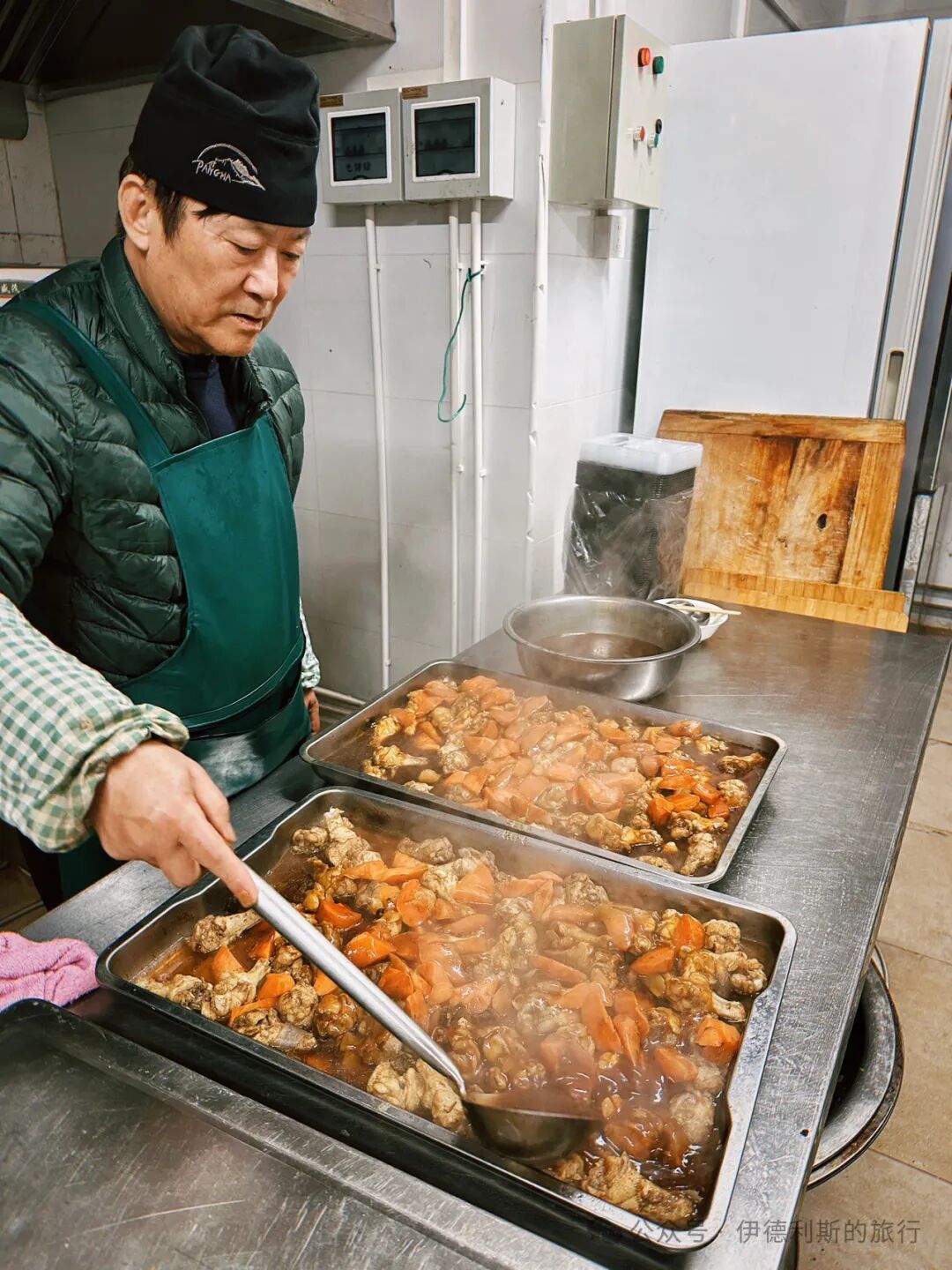
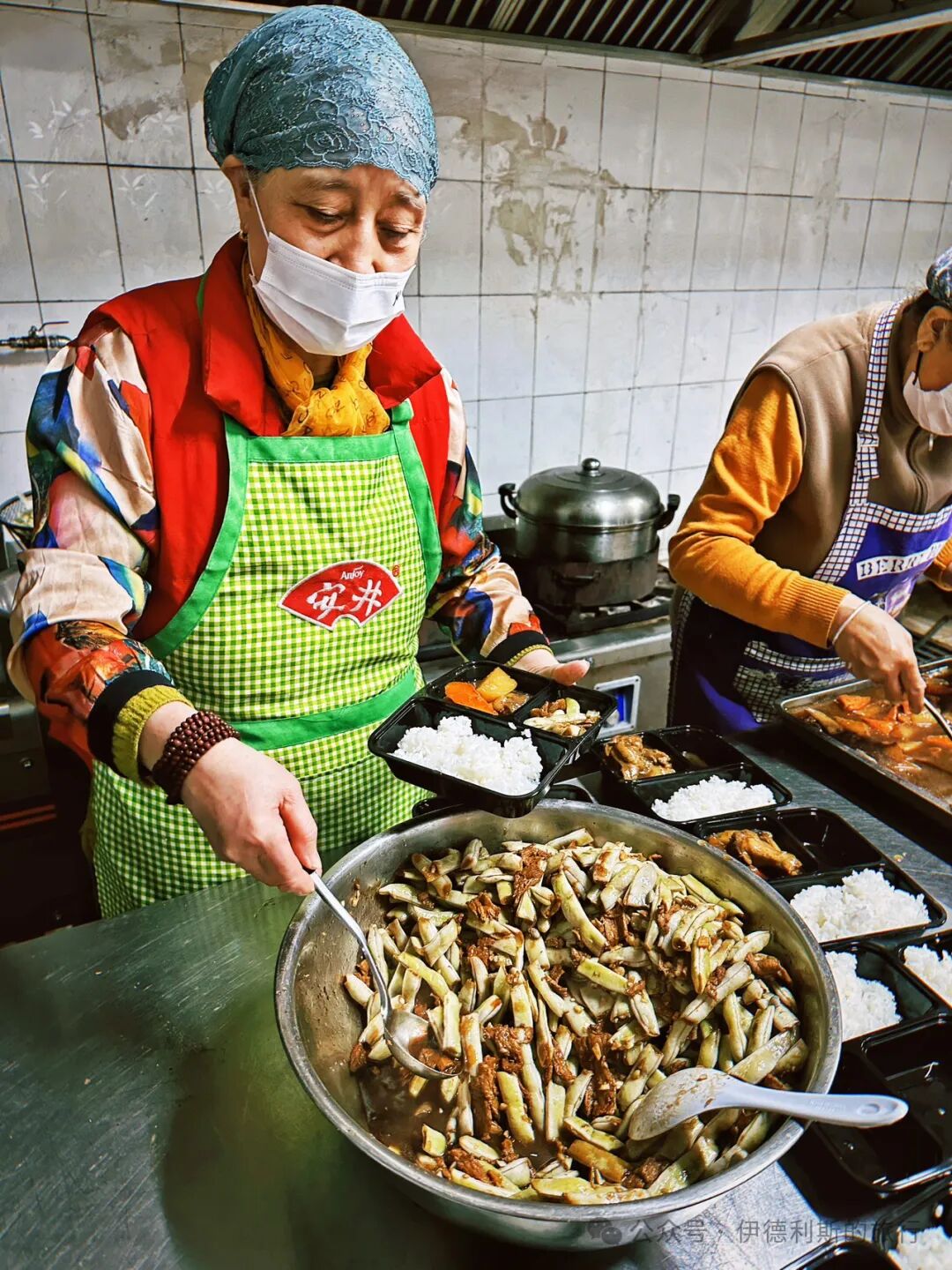

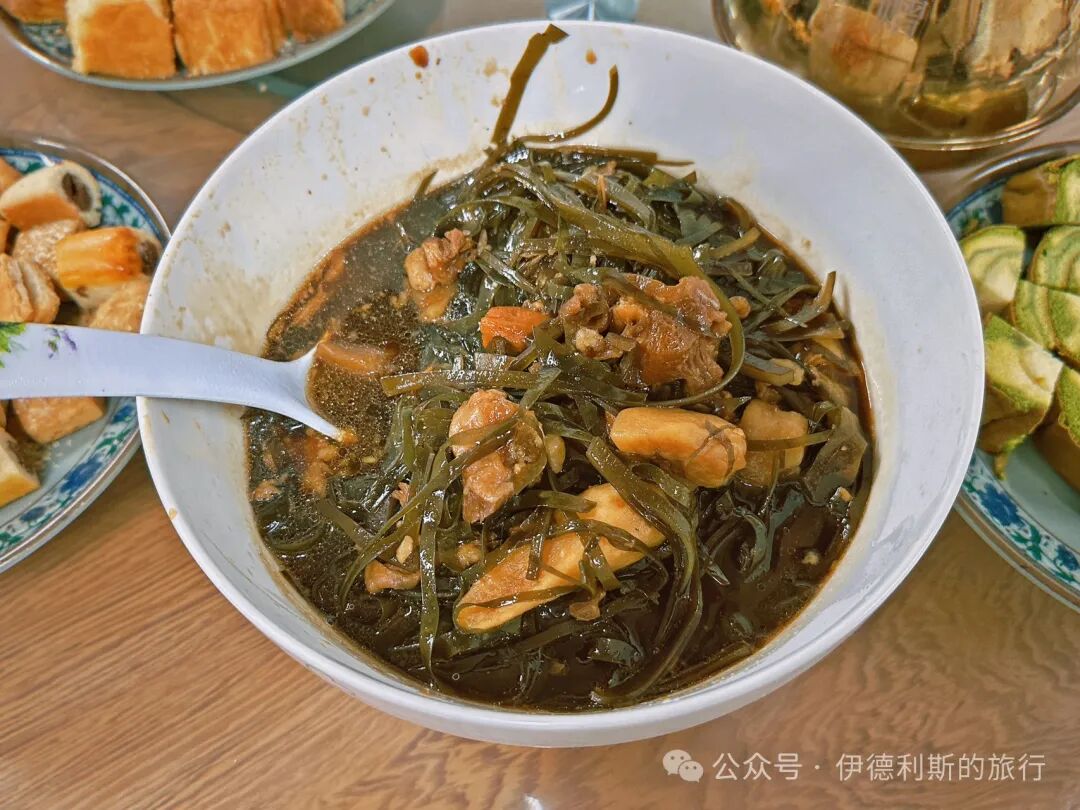
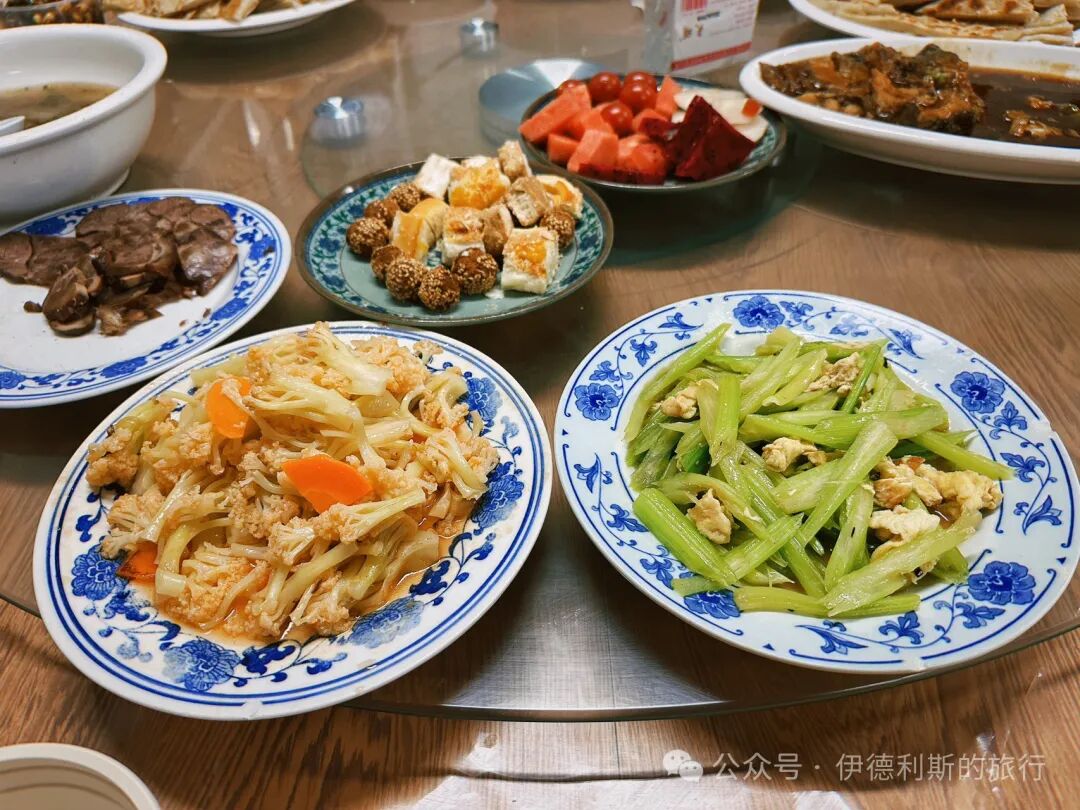
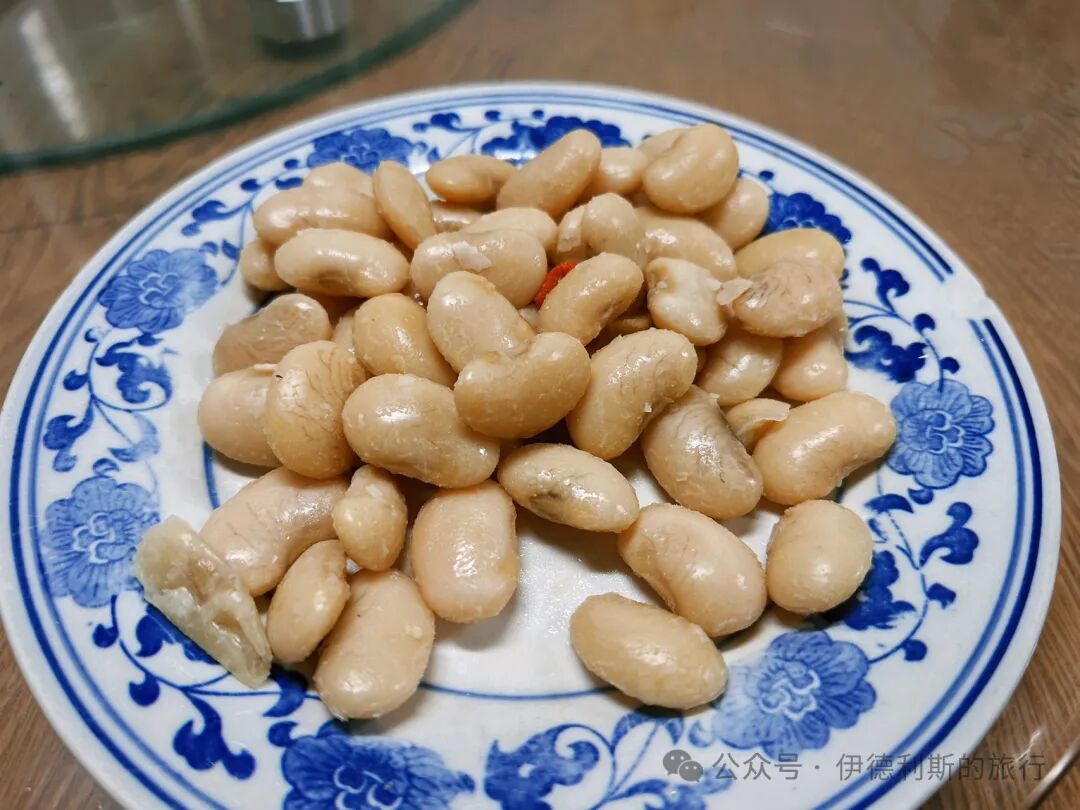
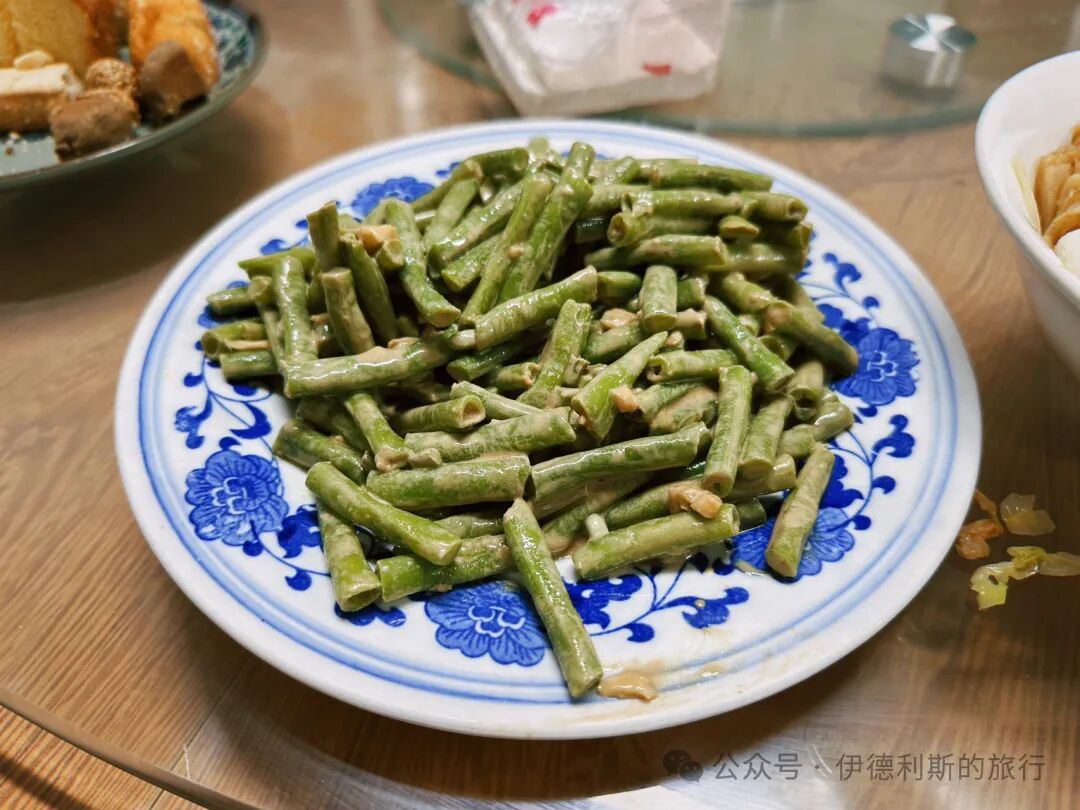
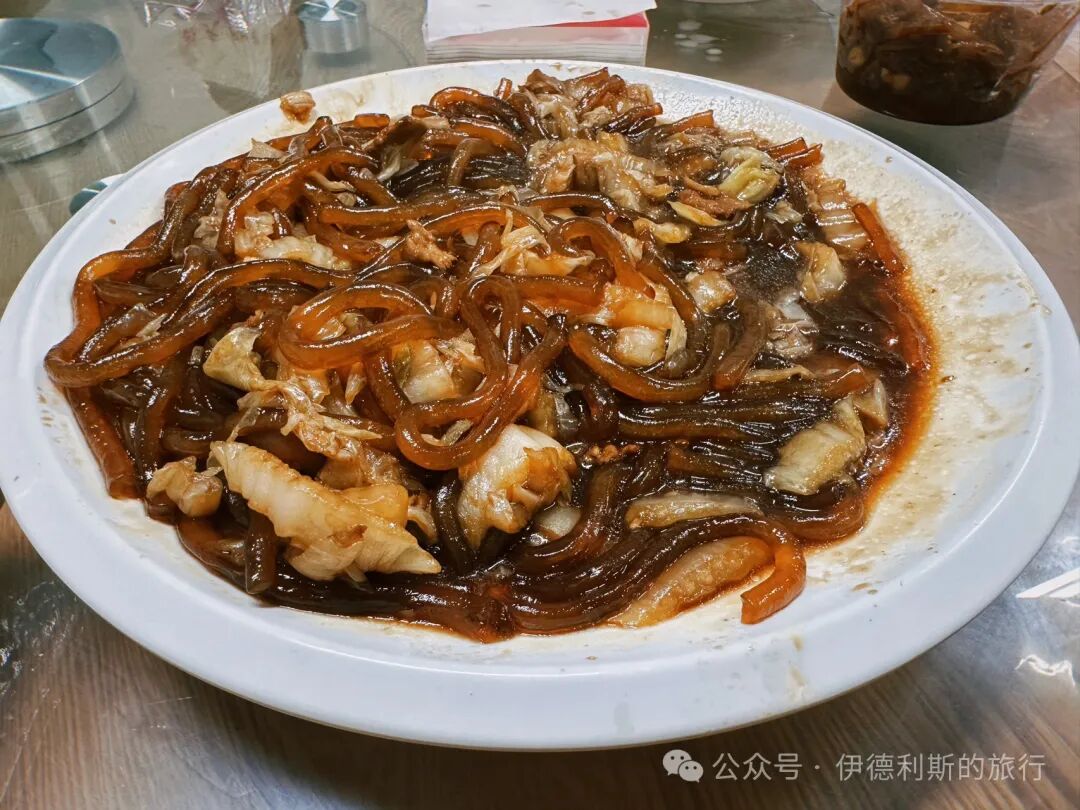
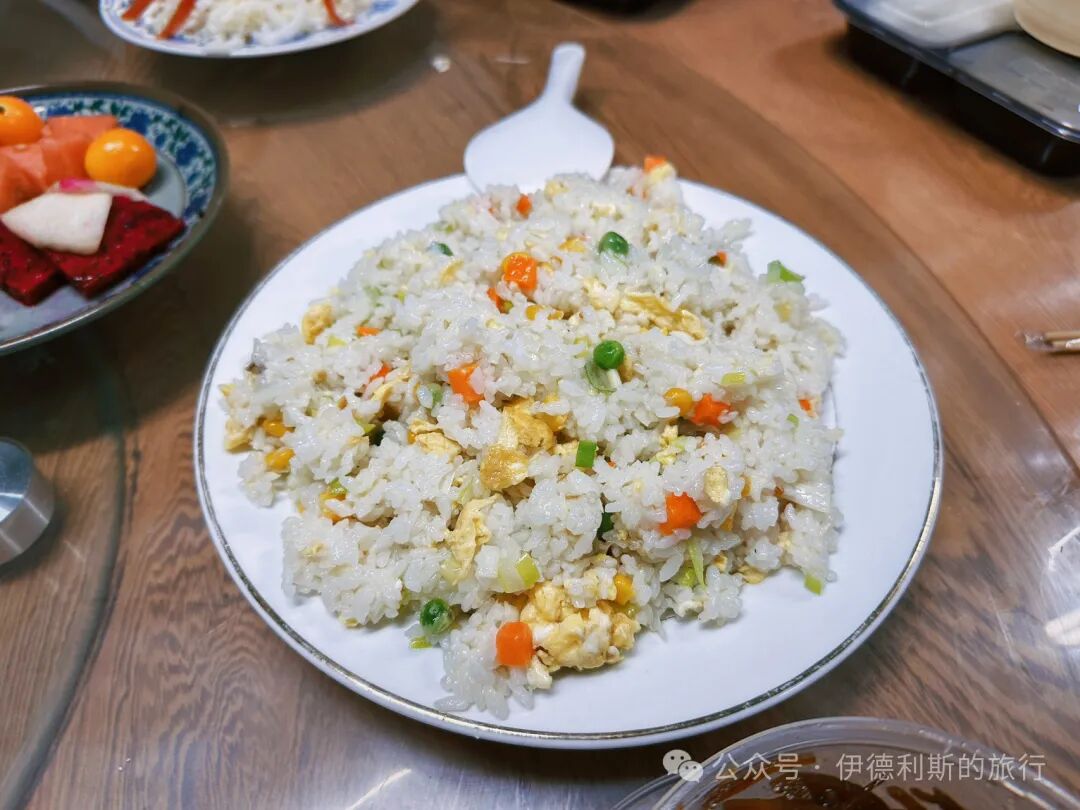
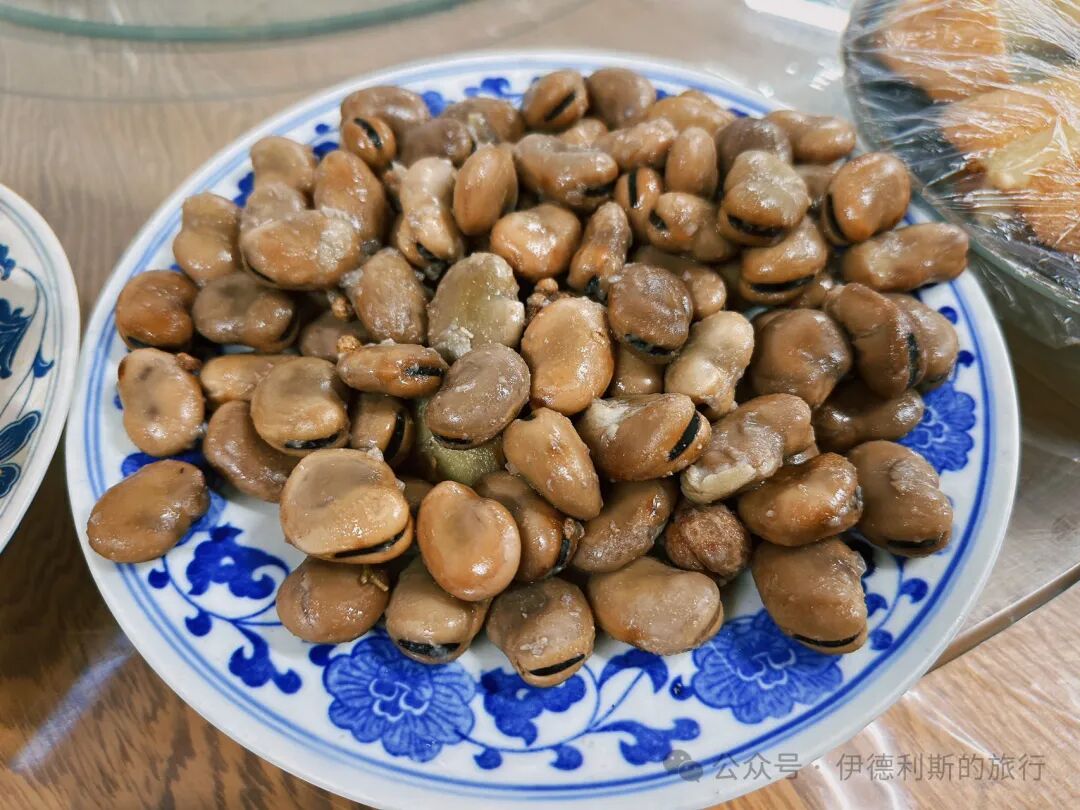
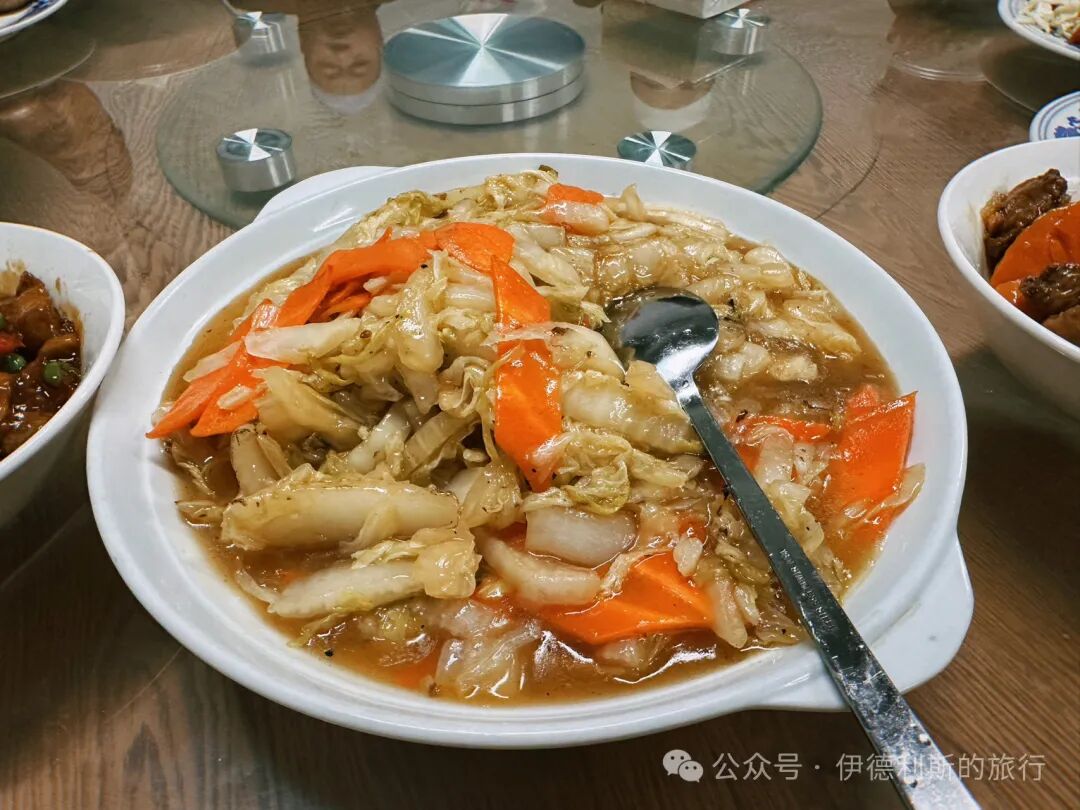

Once a week, we have noodles with gravy (dalu mian) and noodles with eggplant (qieding mian). The vegetable toppings include blanched cabbage, celery, cowpeas, bean sprouts, soybeans, cucumber, and garlic sprouts. The gravy is not too salty, which is perfect for breaking the fast.

The steamed buns (baozi) served once a week come in beef and green onion, beef and cabbage, and beef and fennel fillings. My favorite is the beef and fennel filling. Many shops now only sell fennel and egg steamed buns, so it is not easy to find beef and fennel ones.
Fish head with flatbread (yutou paobing) is also a Beijing specialty. The flatbreads (laobing) are made by the elders themselves and are very dense; they are delicious when dipped in the fish head broth.
After eating the fish head with flatbread, the leftover flatbread can be made into stir-fried flatbread (chaobing), which is also a favorite for Beijingers.
Halal Travel Guide: Qingzhou Mosques and Zhaode Street, Part 1
Articles • ali2007fr posted the article • 0 comments • 181 views • 2026-05-20 01:48
Summary: This is the first part of a Ramadan visit to Qingzhou, with a focus on Zhenjiao Mosque, Chengli Mosque, and Zhaode Ancient Street. It preserves the original architecture, history, routes, local details, and photographs in clear English.
Zhenjiao Mosque
Zhenjiao Mosque in Qingzhou was first built in 1302 (the sixth year of the Dade reign of the Yuan Dynasty). It was rebuilt and expanded many times during the Ming and Qing dynasties and the Republican era. It is now a national-level cultural heritage site.
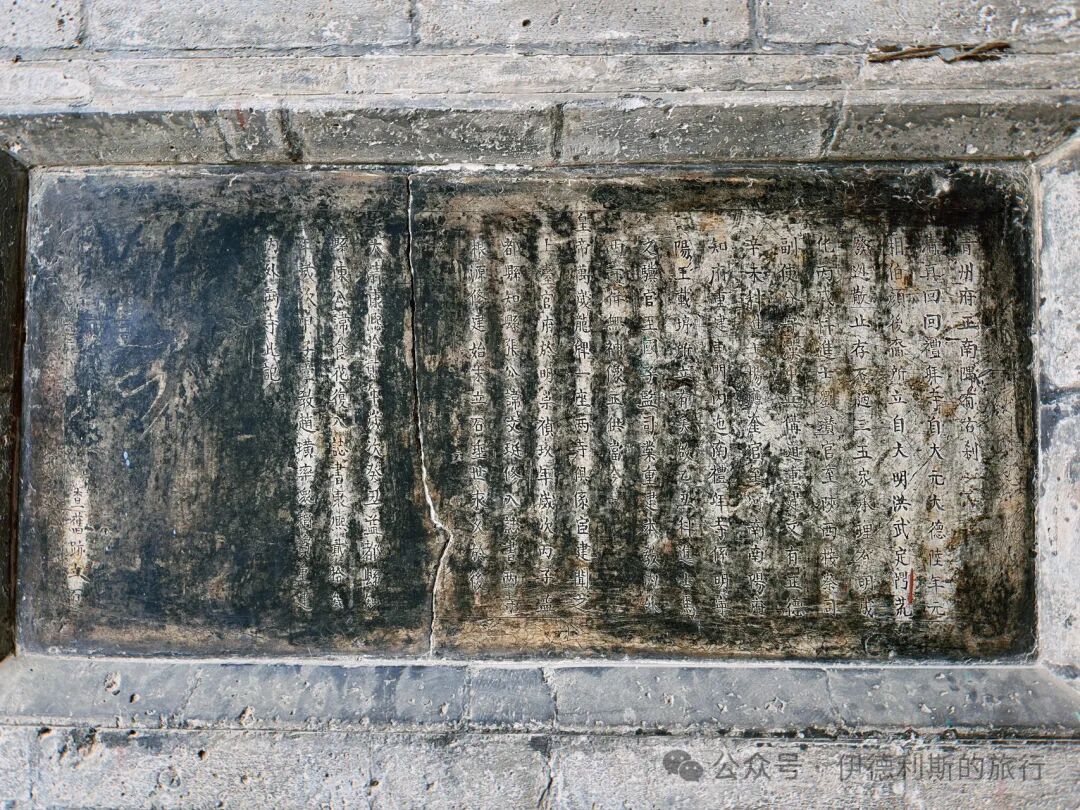
According to the Qingzhou Zhenjiao Mosque Founding Stele, the mosque was founded by the descendants of a Yuan Dynasty official named Bayan. Bayan was the grandson of the Yuan Dynasty's Prince of Xianyang, Sayyid Ajjal Shams al-Din. He served as a high-ranking official from 1292 to 1307. His descendants are the Zhao-surname Hui Muslims in Qingzhou today. According to the Zhao Family Genealogy of Qingzhou, Bayan had three sons. When the Yuan Dynasty fell, only the third son, Zhao Mingyuan, survived. He moved to Nanliu Village in Qingzhou to live as a commoner, arriving in 1368 (the first year of the Hongwu reign of the Ming Dynasty).
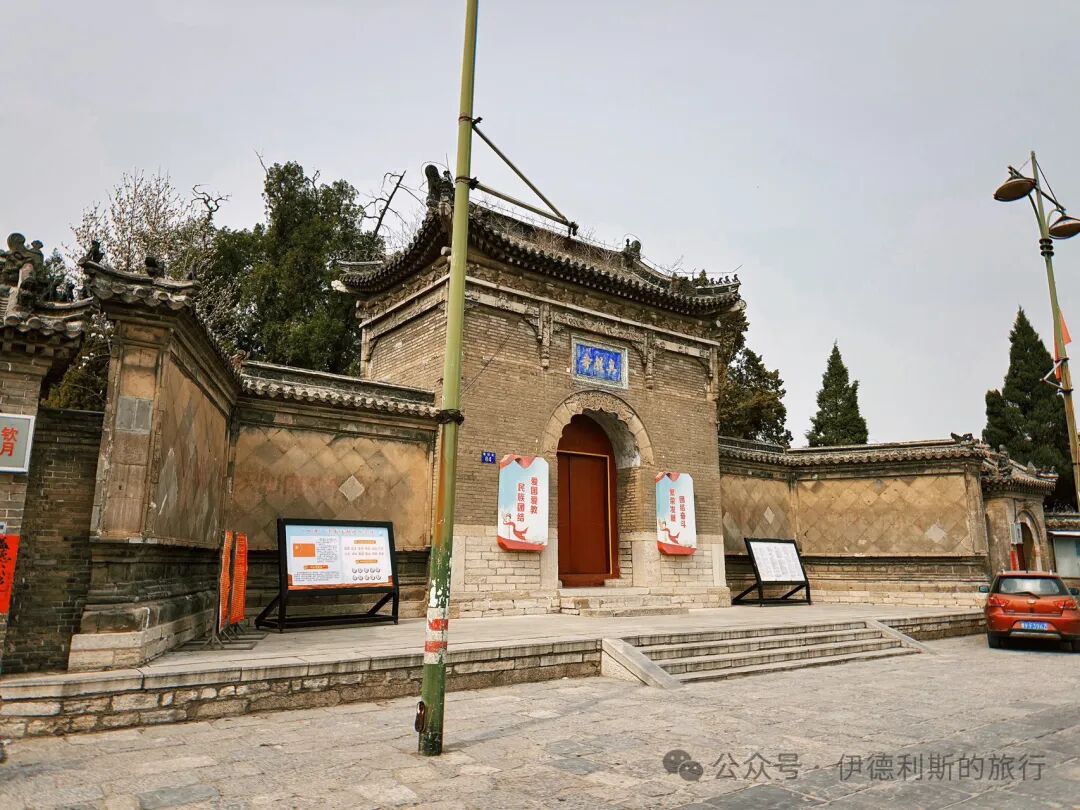
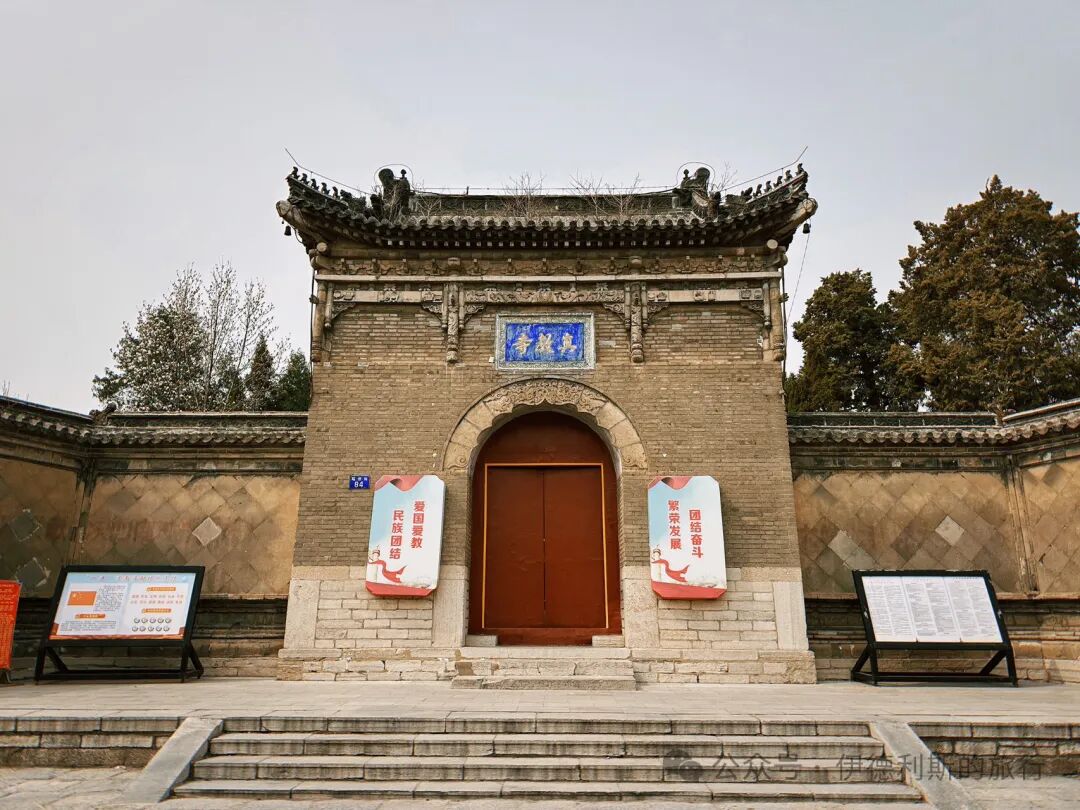
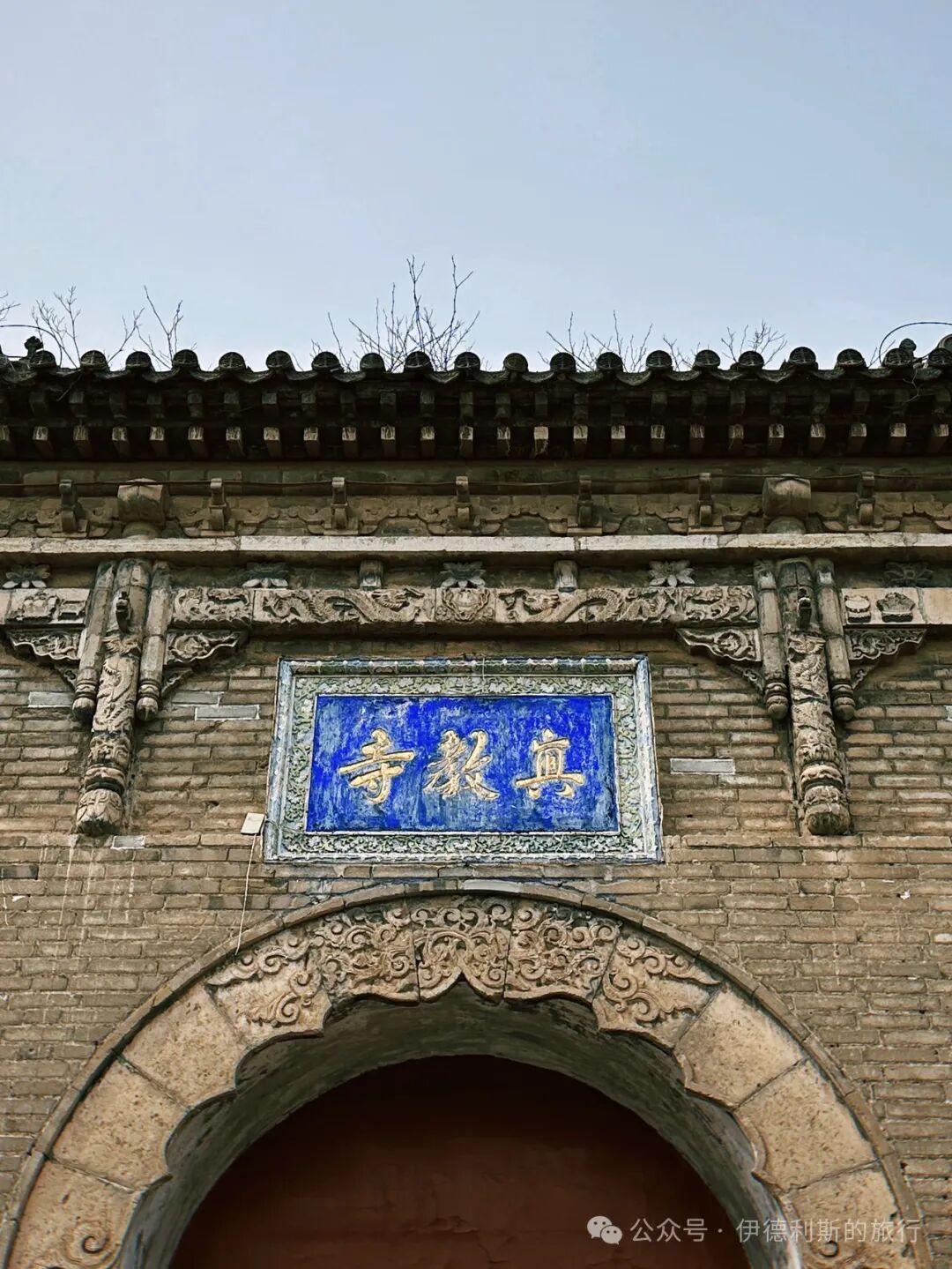
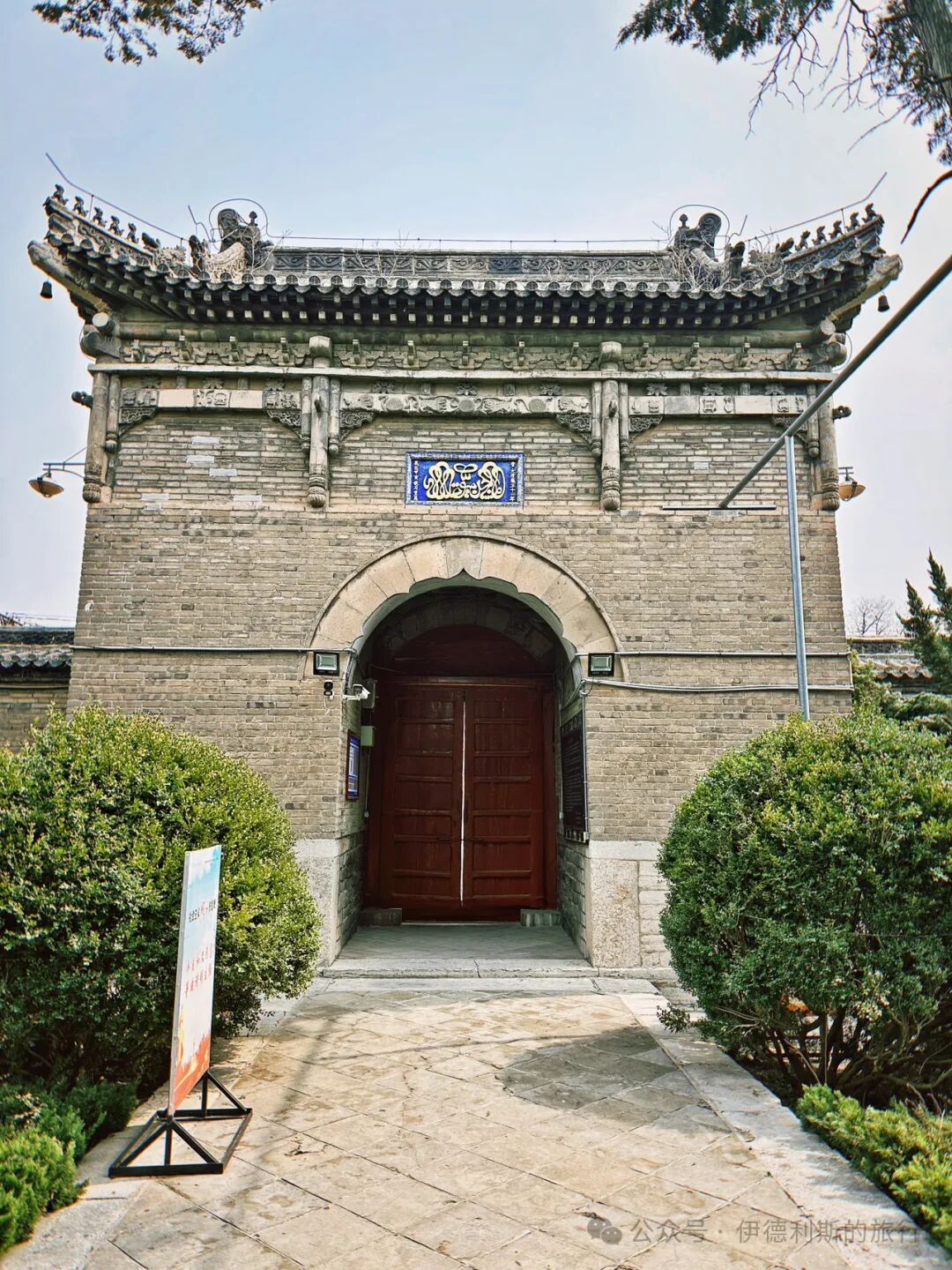
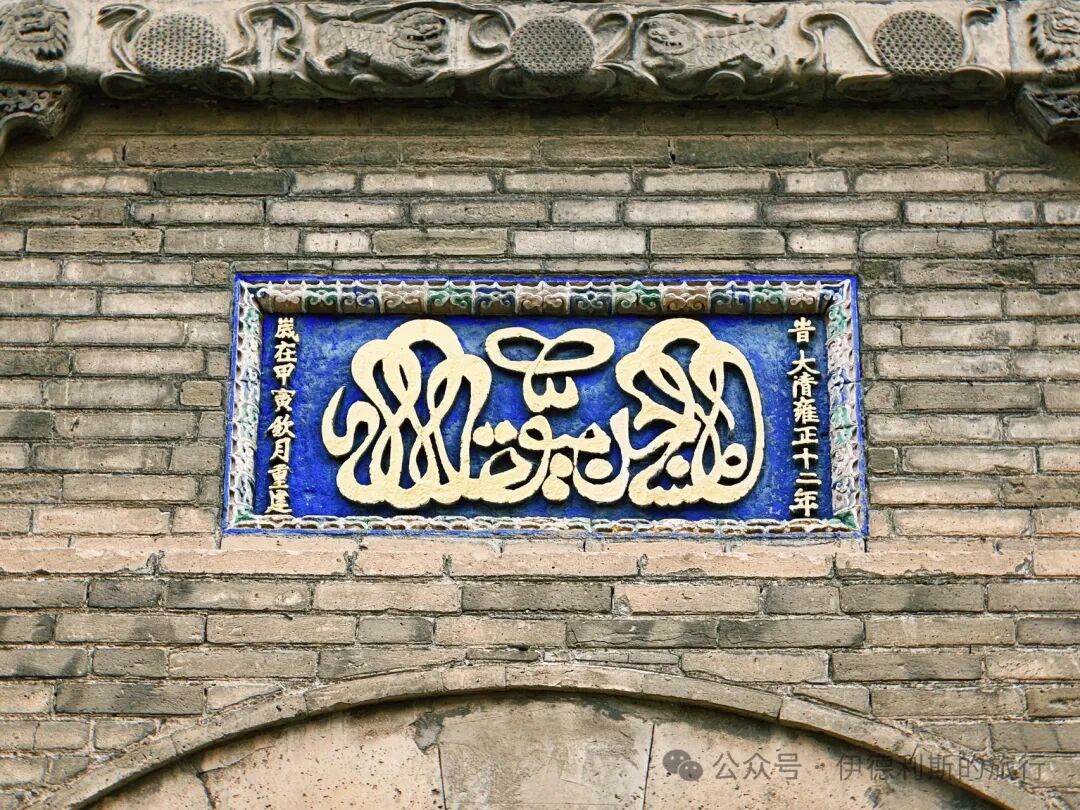
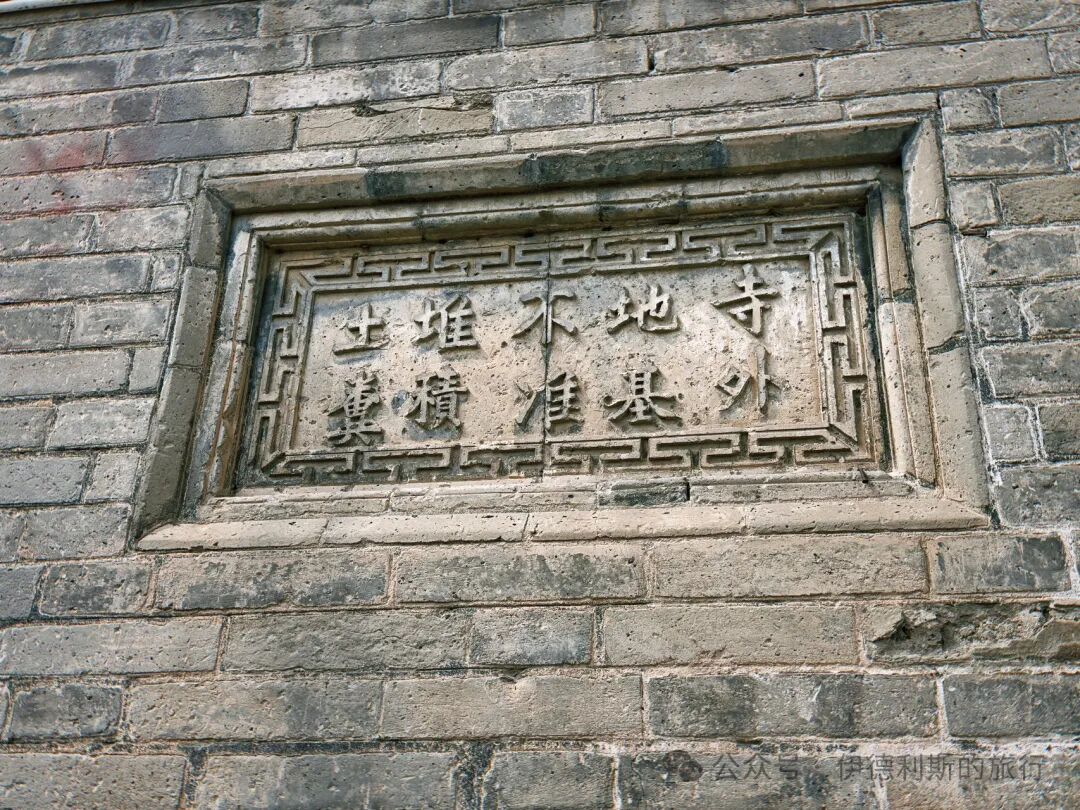
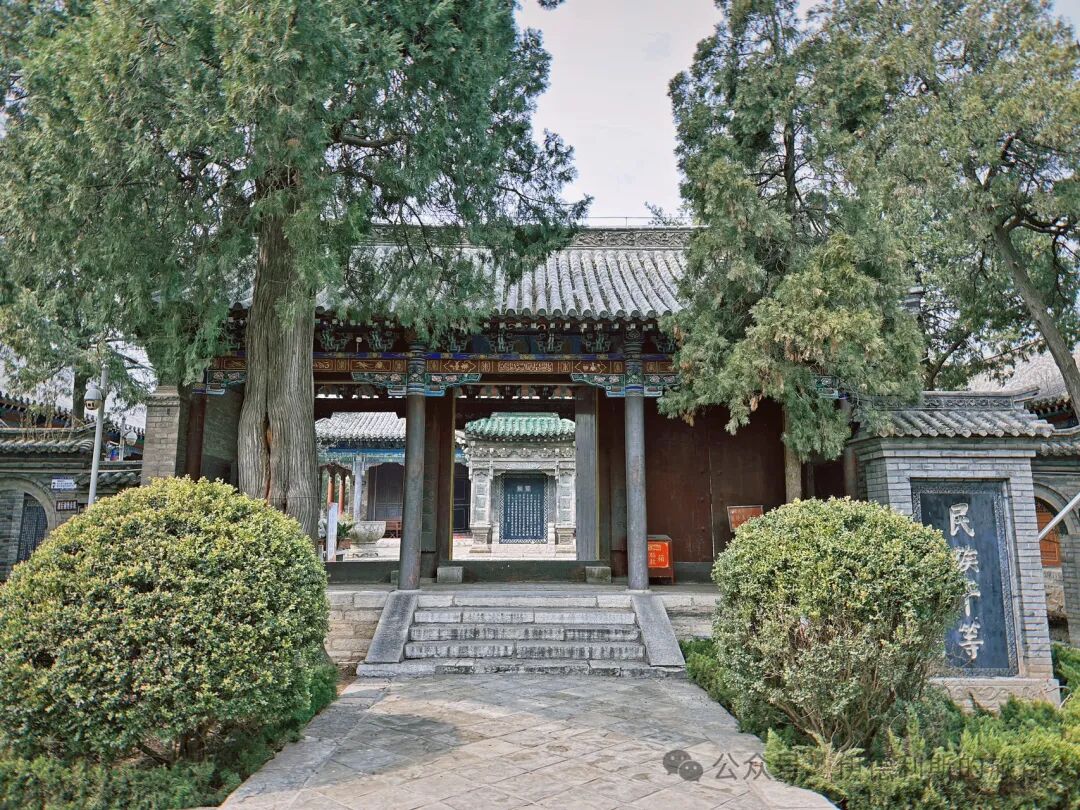
The mosque's gate tower was rebuilt in 1734 (the twelfth year of the Yongzheng reign). It is 10 meters high and features brick-carved brackets and hanging flower pillars under the eaves, with screen walls and side gates to the north and south. The front of the gate tower has a gilded plaque reading 'Zhenjiao Mosque.' The back features traditional brick-carved calligraphy saying 'Masjid is the House of Allah,' inscribed with the date 'Twelfth Year of Yongzheng' and a note saying it was rebuilt in the Jia-yin year. The term 'Qin Yue' refers to Ramadan. Even today, a light box with the words 'Qin Yue' hangs at the entrance of the mosque.
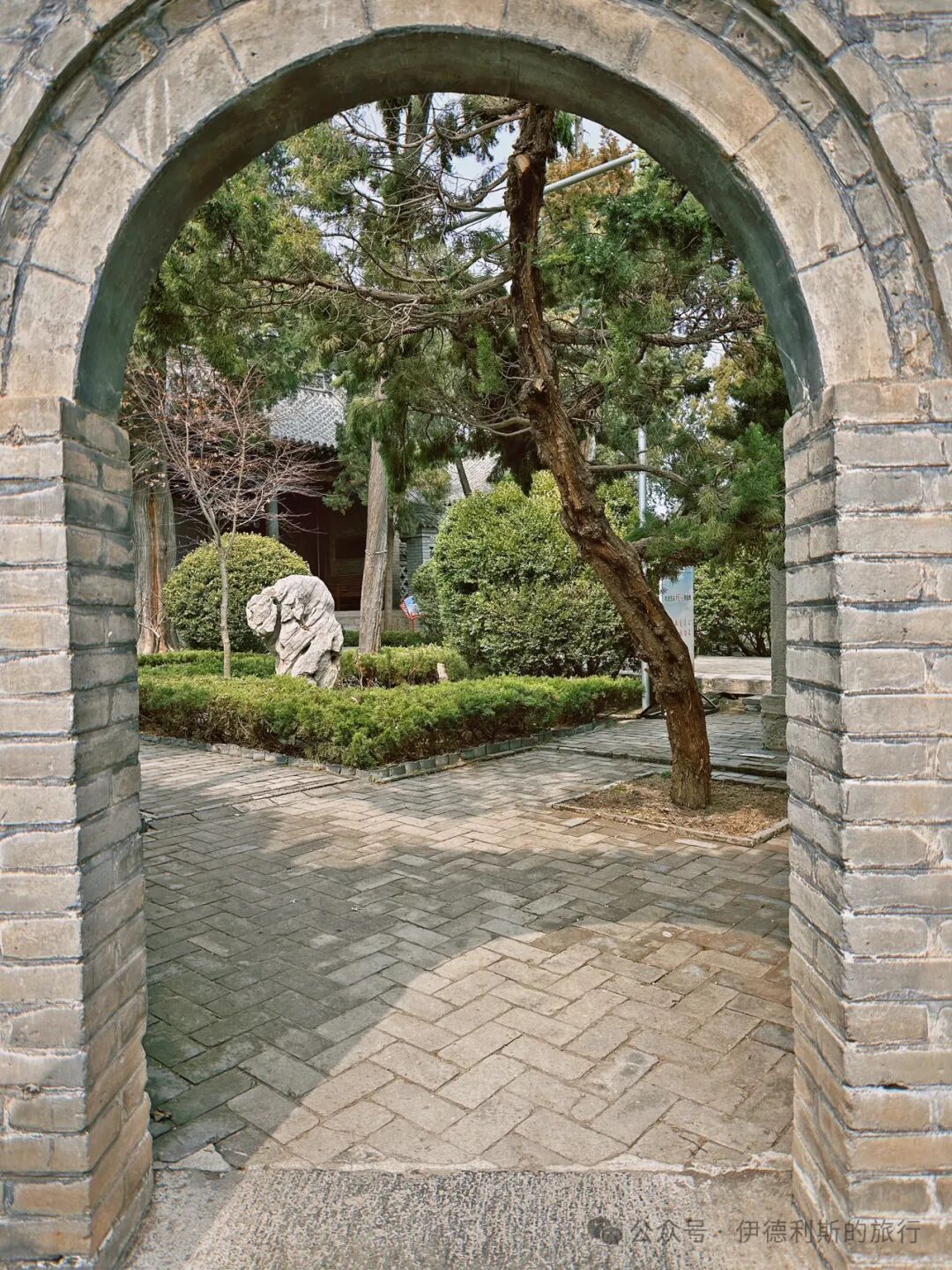
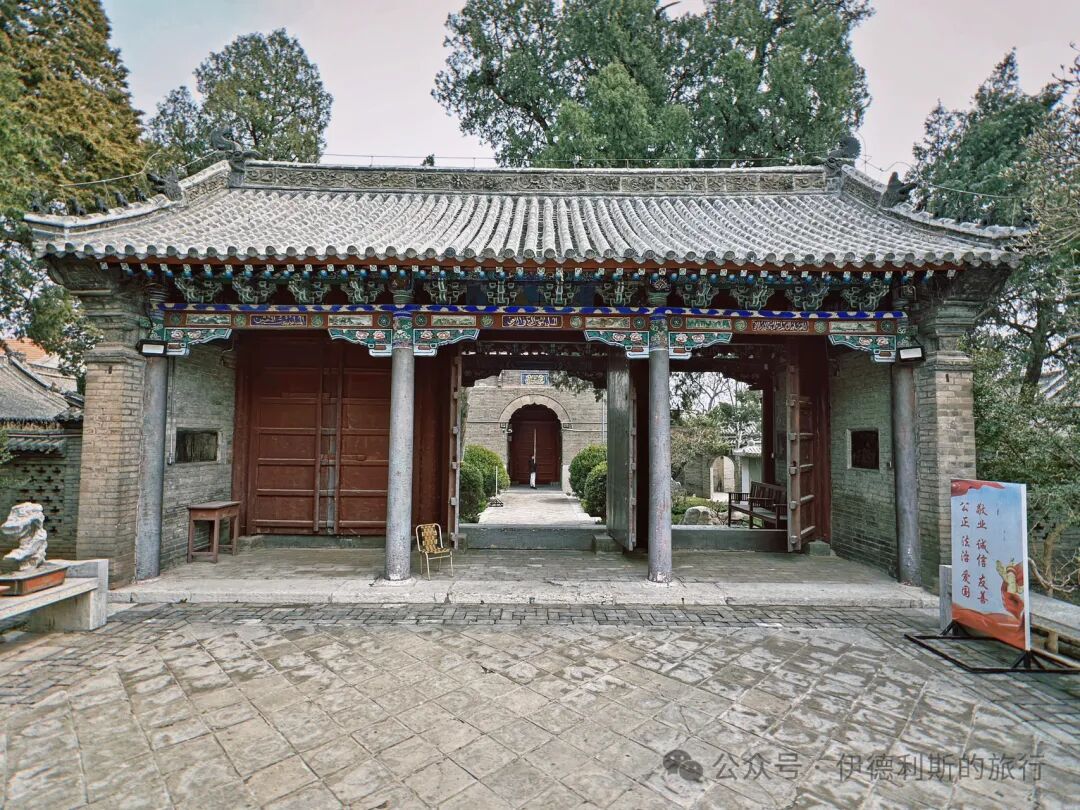
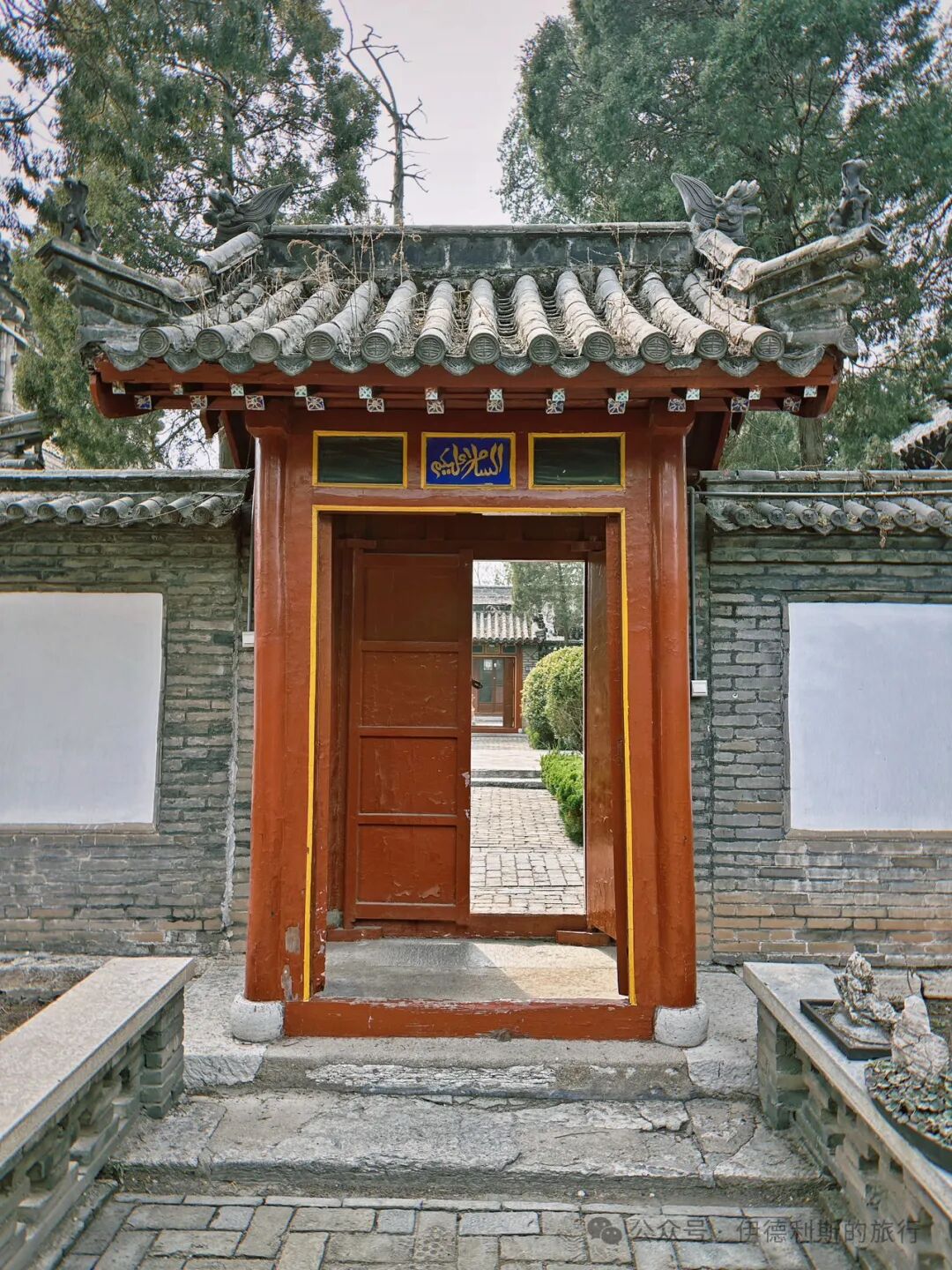
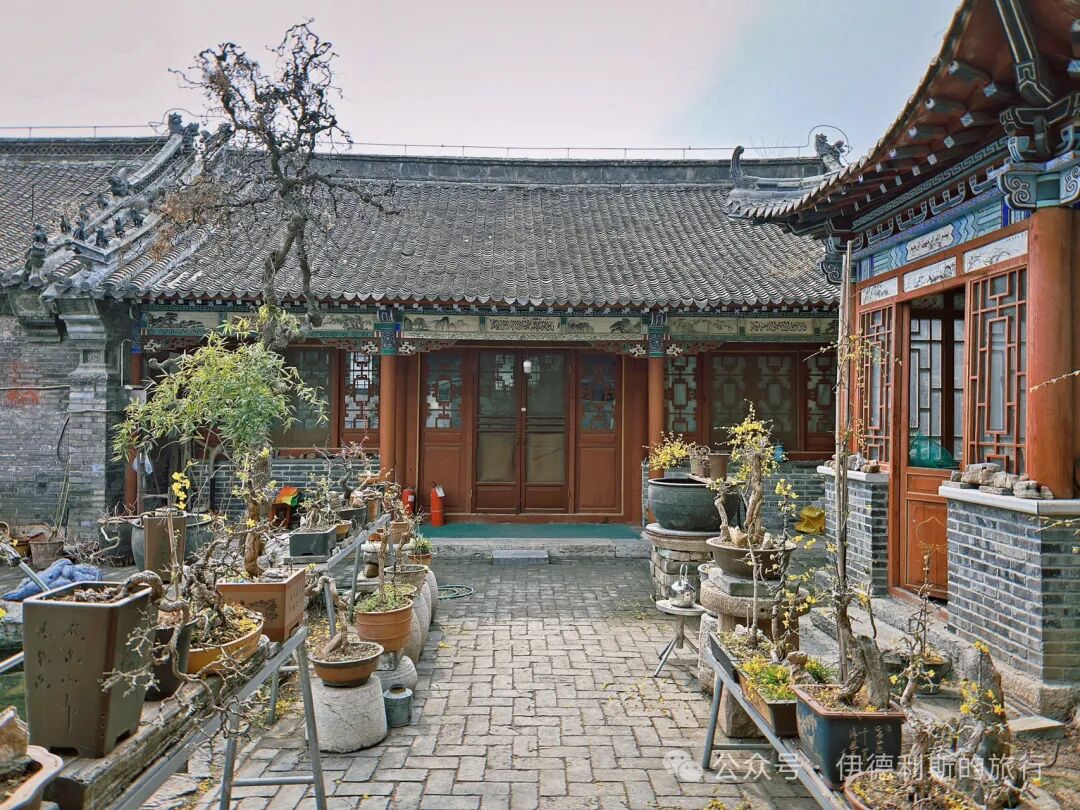
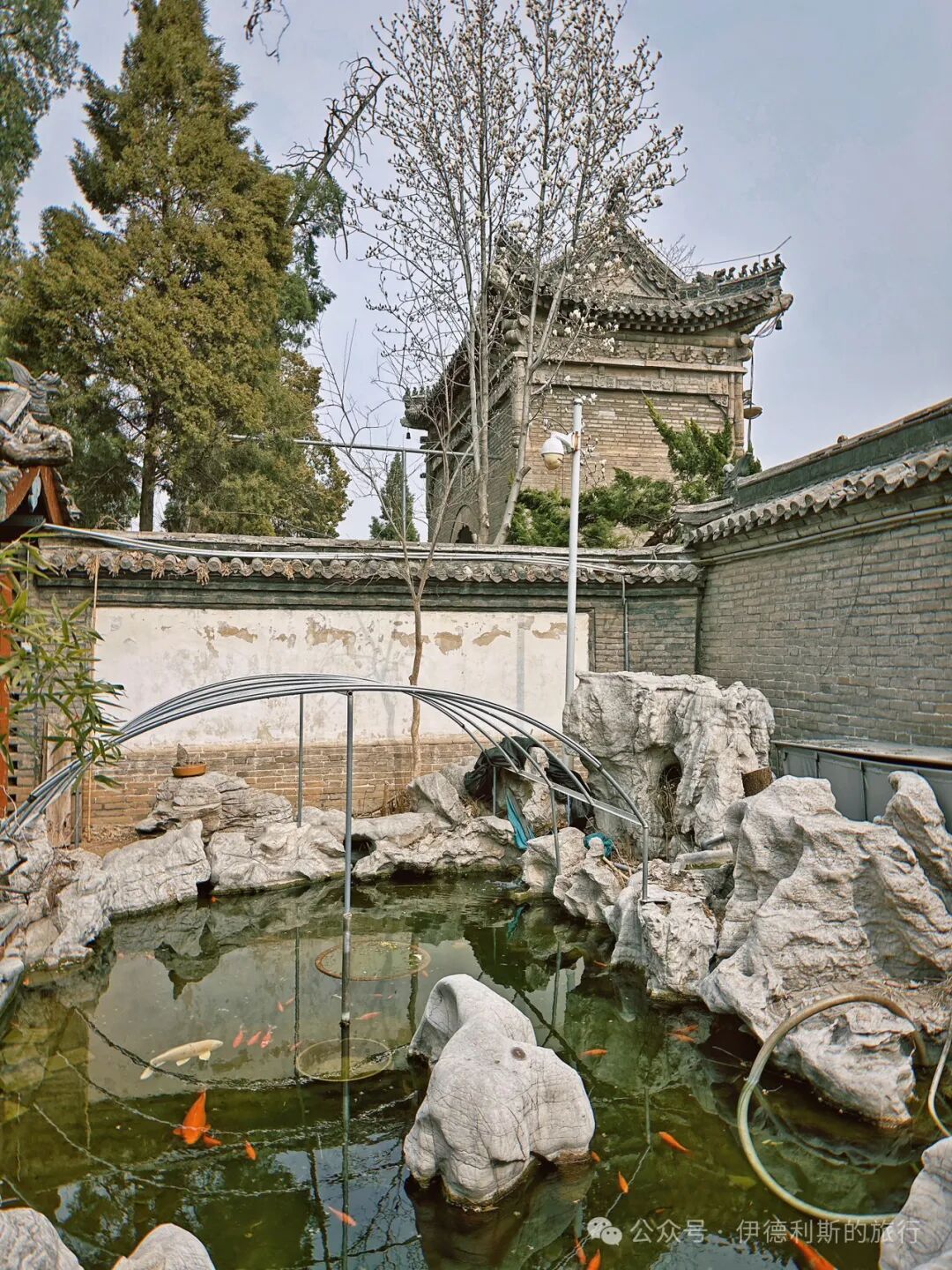
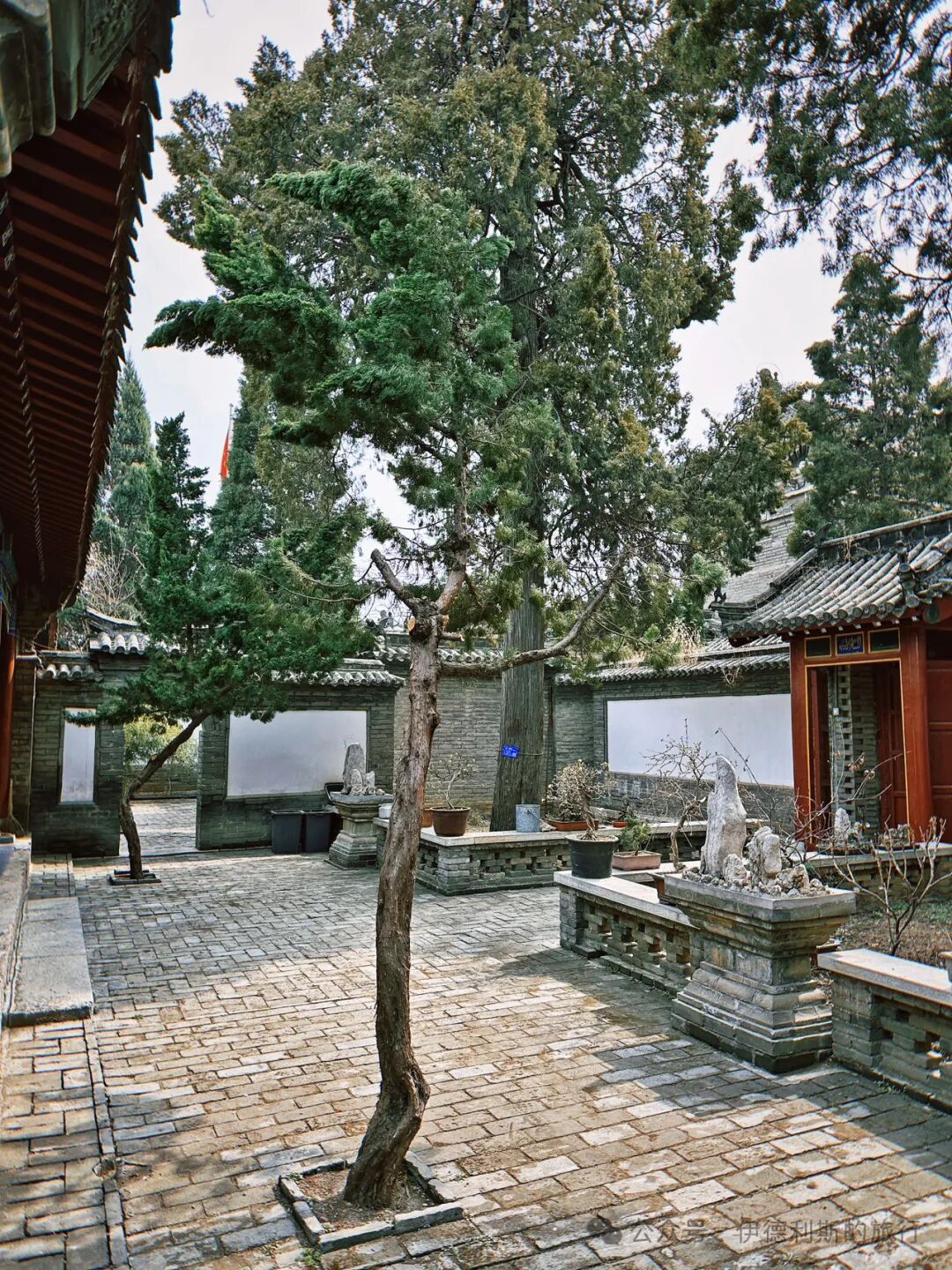
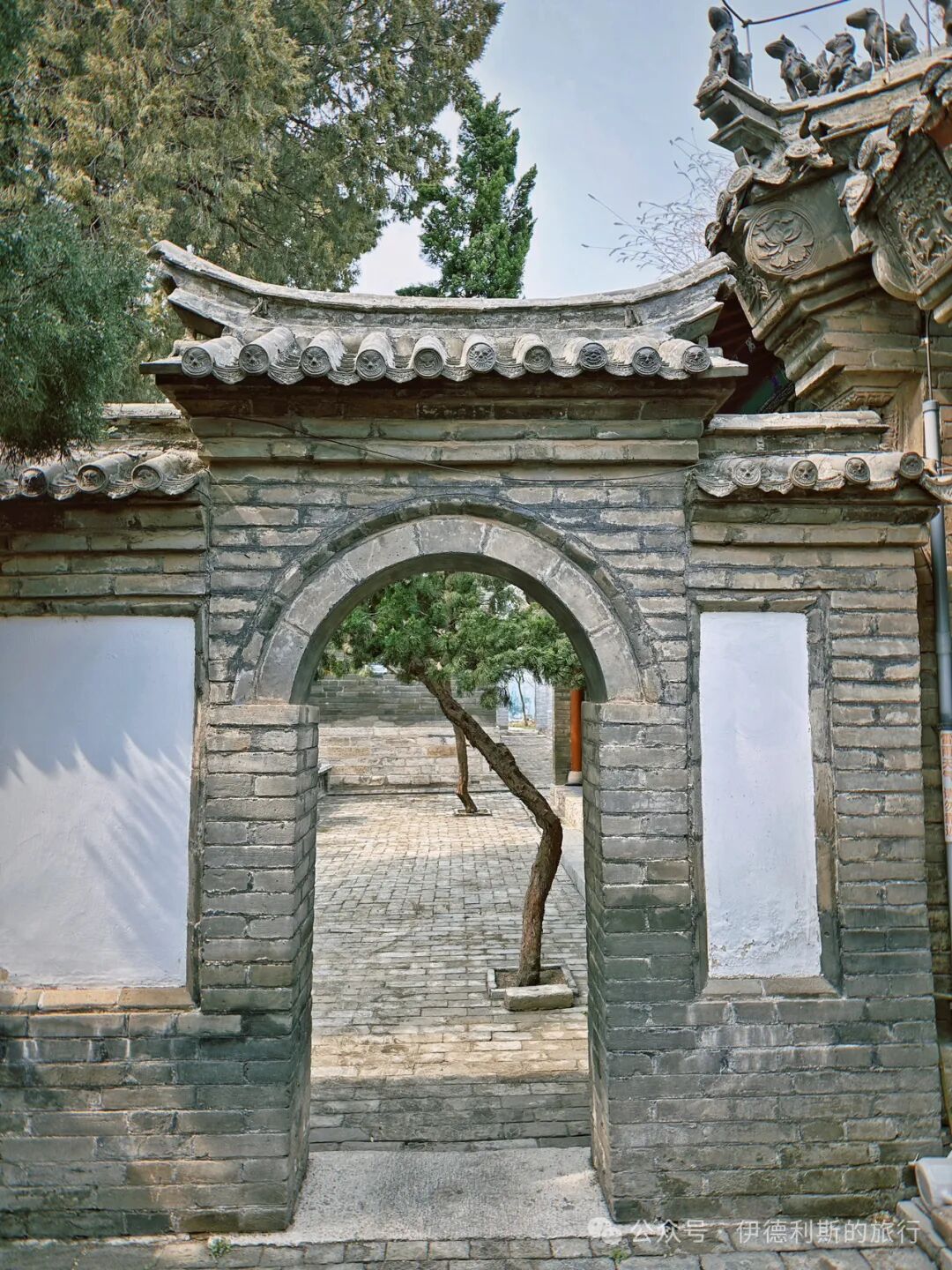
The main gate of Zhenjiao Mosque is usually closed, so visitors enter through the north or south side gates. After entering the side gate, you first see a screen wall and a rockery bonsai, then you enter the first courtyard. Directly facing the gate is the ceremonial gate (yimen) rebuilt in 1755 (the twentieth year of the Qianlong reign), with school buildings on the north and south sides. The north and south school buildings form their own courtyards, which have beautiful rockeries and ponds.
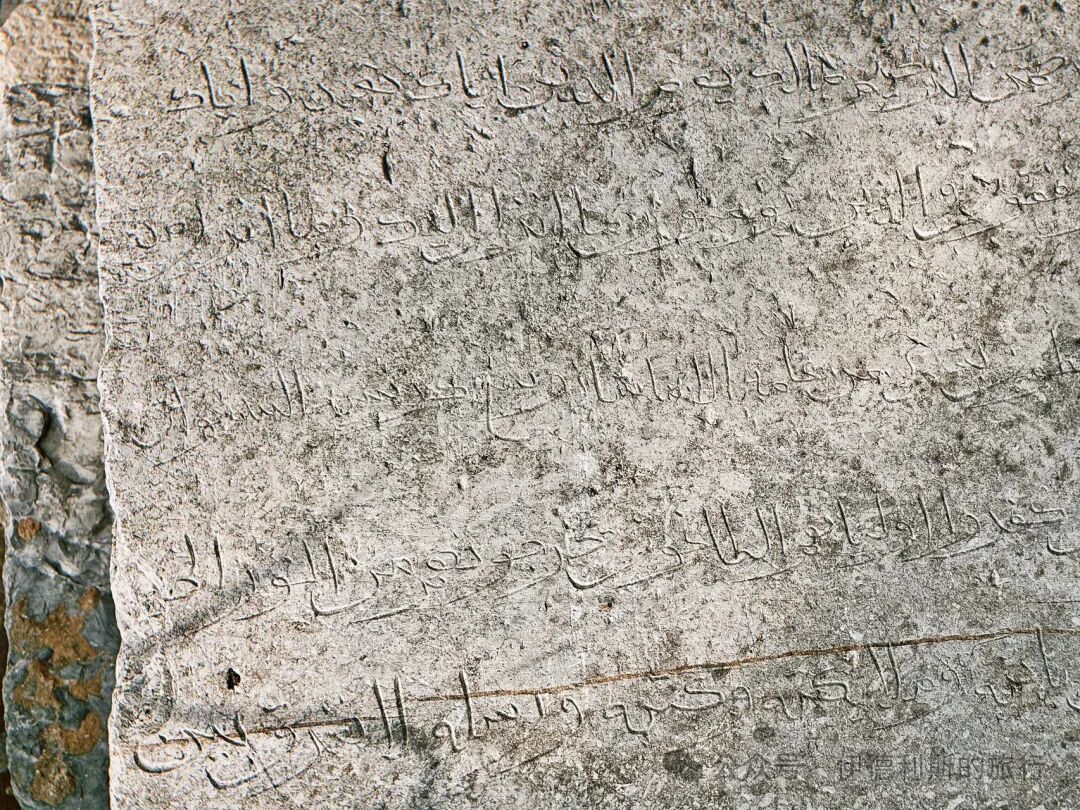
There is a well pavilion inside Zhenjiao Mosque, with an Arabic stone tablet nearby.
The main prayer hall of Qingzhou Zhenjiao Mosque sits on a platform over 1 meter high. It consists of a front hall, a middle hall, and a rear kiln hall, connected in a linked style, with 36 pillars surrounding the porch. The kiln hall has a moon-watching tower (wangyuelou) with a double-eaved hip roof, and the roof corners have hanging wind bells.
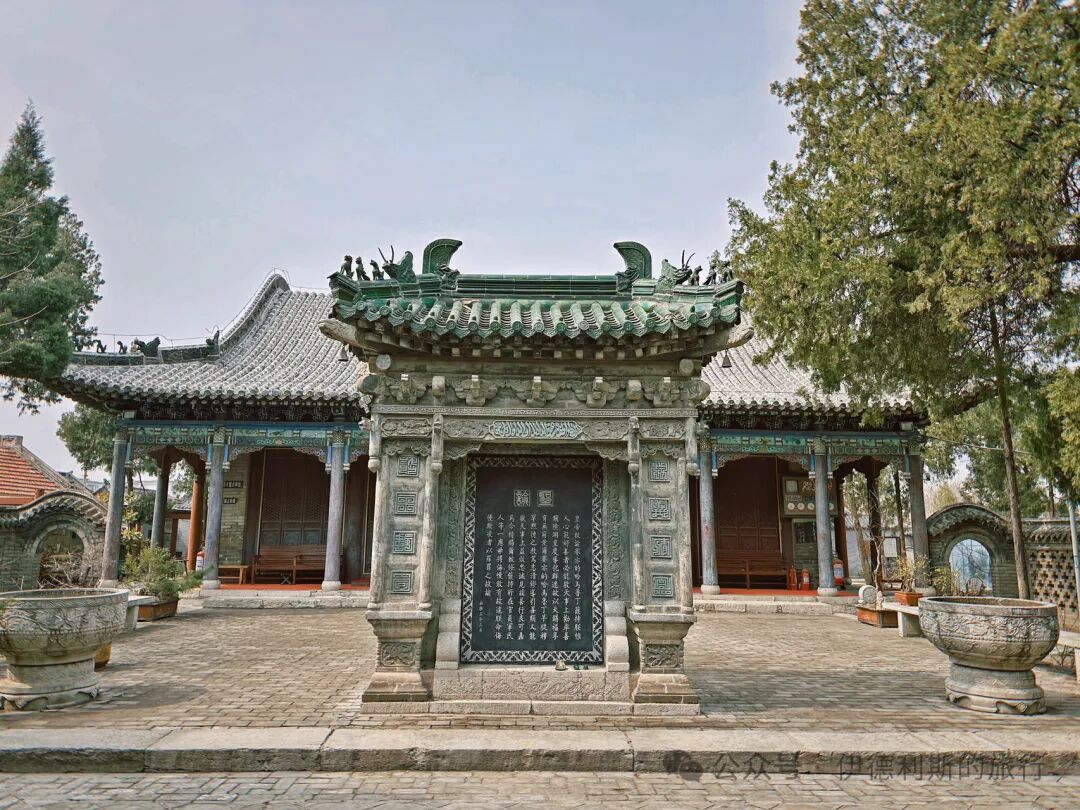
In front of the main hall is the 'Hundred-Character Eulogy' (Baizi Zan) stele pavilion, rebuilt in 1985. The original was copied from the Jingjue Mosque in Nanjing in 1760 (the twenty-fifth year of the Qianlong reign).
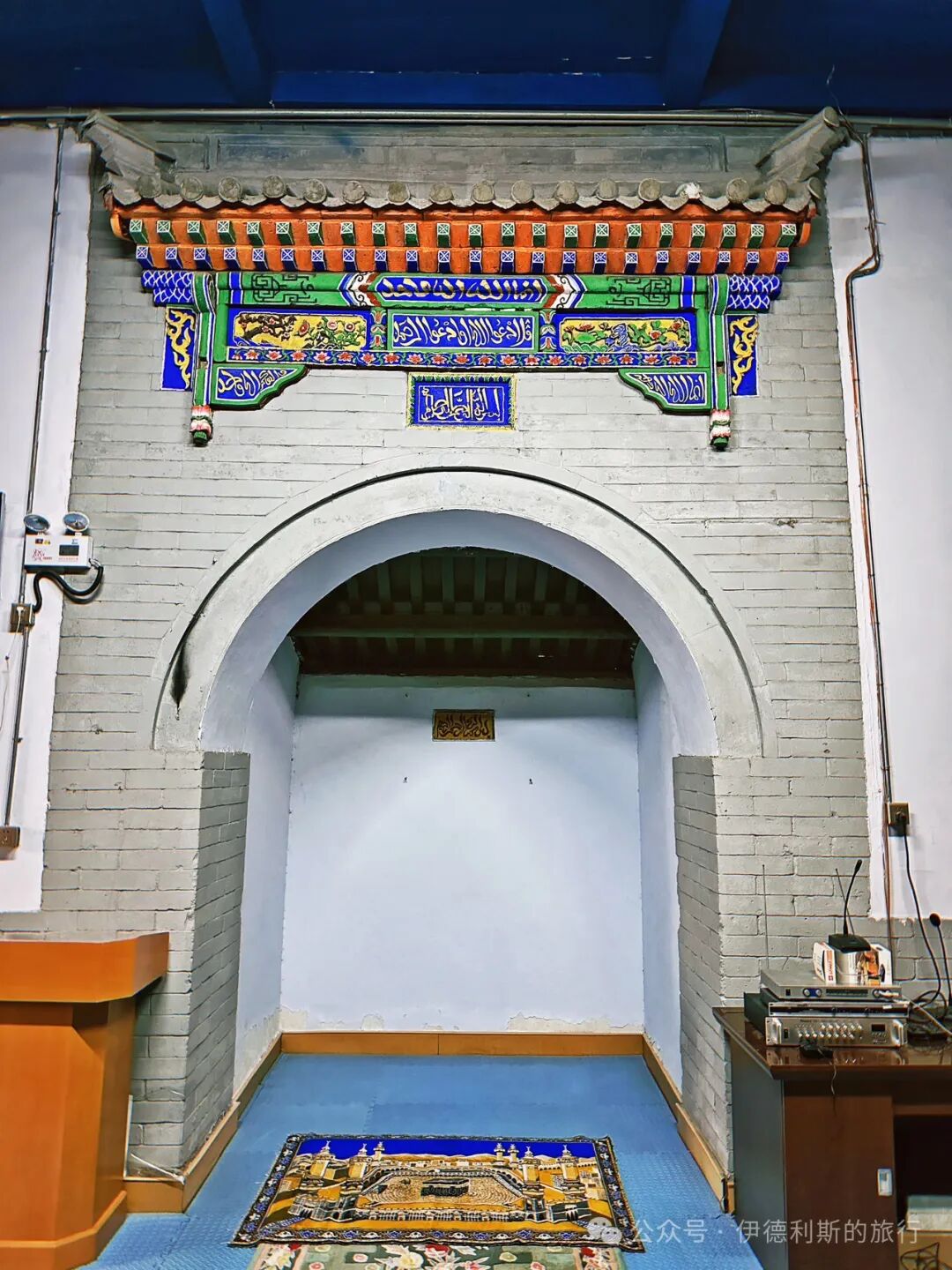
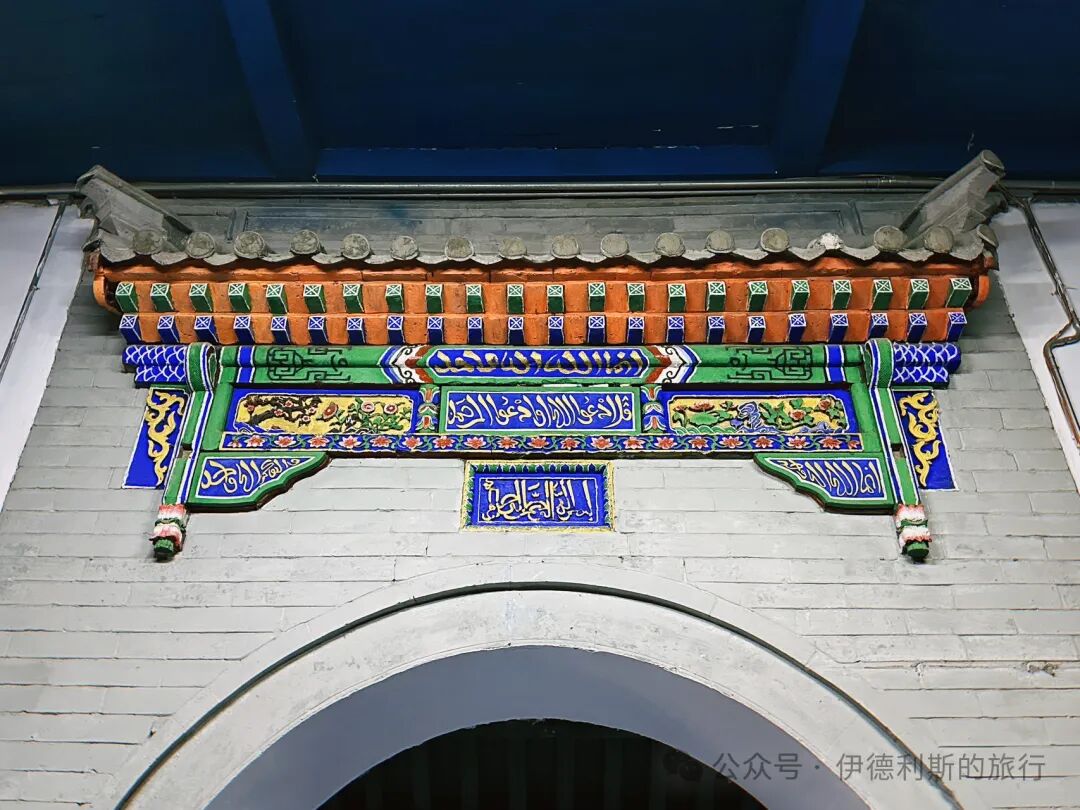
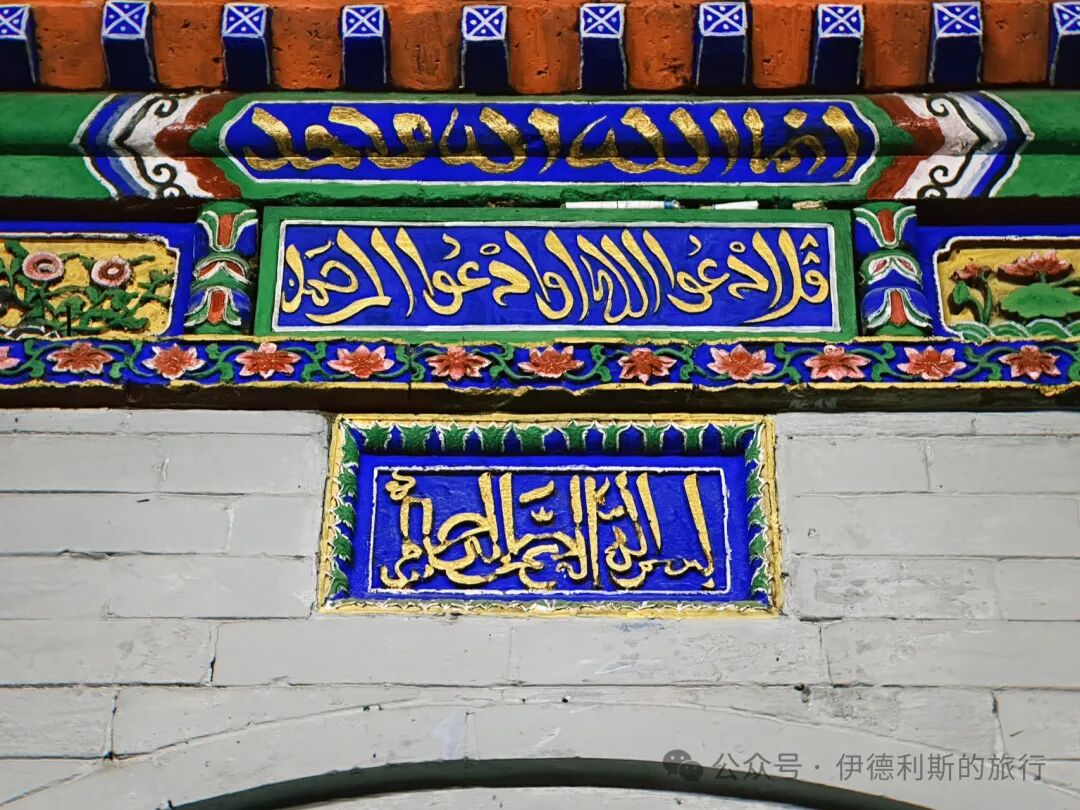
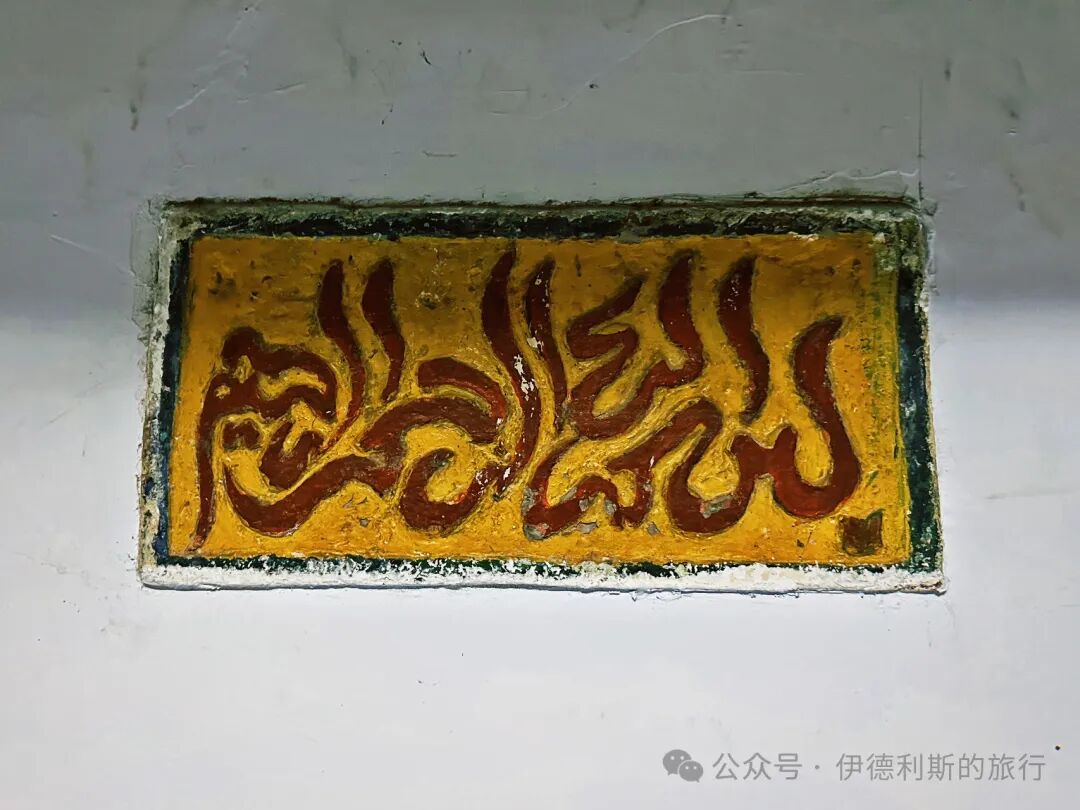
The main hall uses a beam-lifting wooden frame. In the center of the kiln hall is an arched mihrab with a single-eaved hanging-mountain style door cover above it.
Historical steles of Zhenjiao Mosque
The 1684 'Qingzhou Zhenjiao Mosque Founding Stele' records the construction of Zhenjiao Mosque and Chengli Mosque, as well as the efforts of the imam Zhao Huang to rebuild both.
The 1684 'Prayer Time Stele' records the prayer times for the four seasons and the standards for determining prayer times based on shadows throughout the twelve months.
The 1731 'Record of the Newly Built Second Gate of Zhenjiao Mosque' records how the elder Zhang Yongsheng donated money to build the second gate during the Yongzheng reign.
The 1758 'Record of the Rebuilding of the Second Gate of Zhenjiao Mosque' records the expansion of the second gate from one room to three rooms during the Qianlong reign.
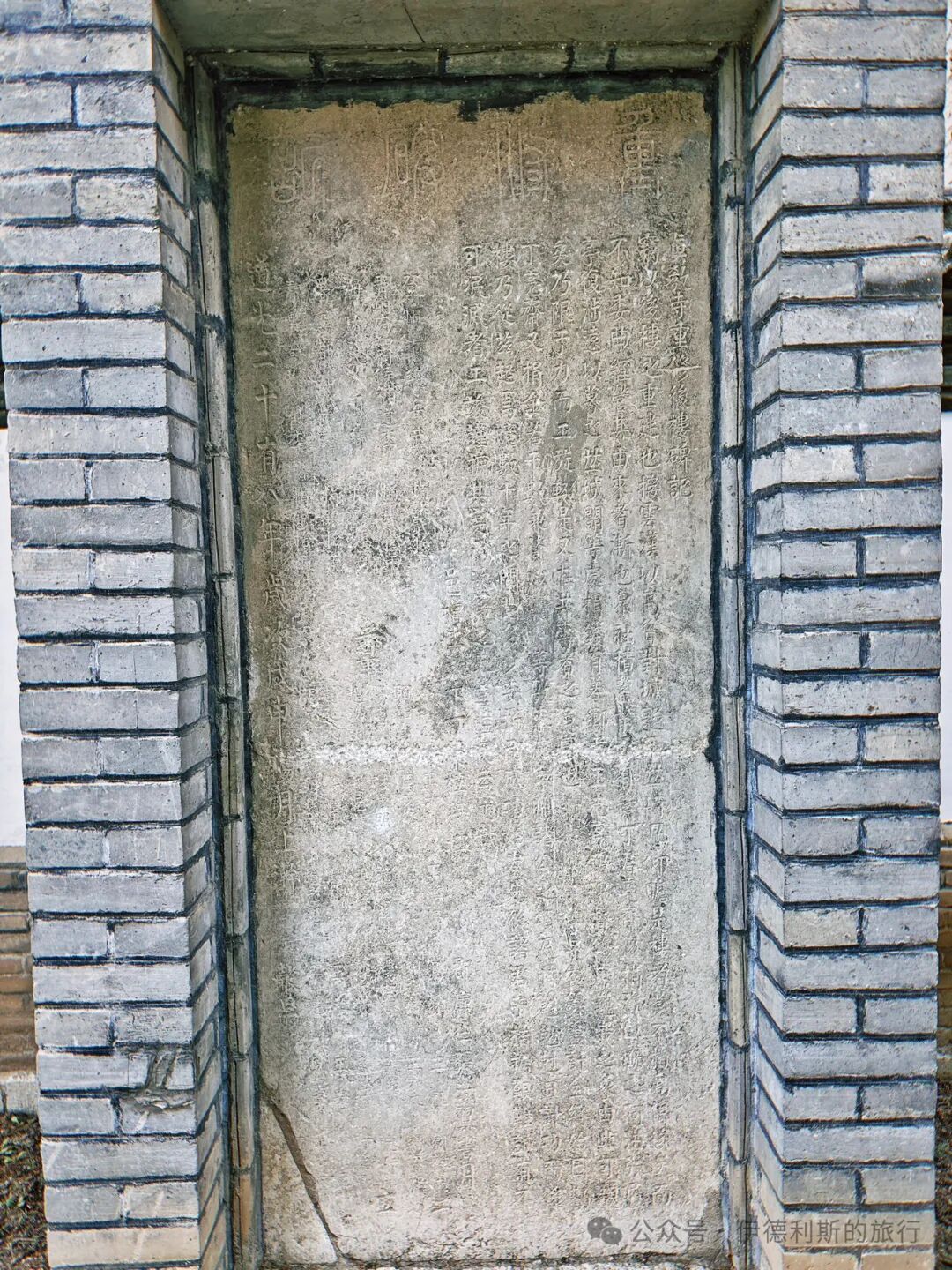
The 1848 'Stele Record of the Rebuilding of the Rear Building of Zhenjiao Mosque' records donations from local officials, including the Dengzhou Town commander and the acting magistrate of Yidu, to rebuild the rear building.
Zhaode Ancient Street
Zhaode Ancient Street, home to the True Teaching Mosque (Zhenjiao Si), is a protected cultural heritage site of Shandong Province and one of the first famous historical and cultural streets in China. It is the best-preserved ancient street for Hui Muslims in Shandong. Since the Ming and Qing dynasties, Zhaode Ancient Street has been a settlement for Hui Muslims in Qingzhou. The Zhao and Yang families among them are descendants of Prince Nasulading of Yan'an, who was the son of Prince Sai Dianchi Zhansiding of Xianyang.
The Yang family of Hui Muslims are descendants of Boyanchaer, the ninth son of Nasulading. They originally lived in the Yangshi Jiaotou area of the Yuan capital, Dadu, and took the surname Yang. They moved from Dadu to Qingzhou in the first year of the Hongwu reign of the Ming dynasty. In the sixth year of the Zhengde reign of the Ming dynasty, Yang Yingkui passed the imperial examination and later served as the prefect of Lintao Prefecture in Shaanxi and Nanyang Prefecture in Henan.
the ancestors of the Ma family on Dongguan Grain Market Street lived in Shizi Hutong outside the Qianmen Gate in Beijing.
In front of the True Teaching Mosque in Qingzhou stands the Stele Record of the Renovation of Zhaode Street from the 33rd year of the Guangxu reign, which records the renovations of Zhaode Street during the Qianlong and Guangxu periods:
Qingzhou is a bustling area where people and carriages crowd the roads and merchants gather. Besides fish and salt, silk is the primary commodity. The northern end of Zhaode Street is the key location for these gatherings. Zhaode Street sits on the main north-south thoroughfare and is a path that merchants must take. As for the year it was founded, it is too long ago to verify. It was only renovated during the Qianlong period. In recent decades, it has become half-collapsed, making travel difficult. At that time, our local magistrate, Li Gongyichen, had just finished renovating the streets inside the city, so he ordered the gentry and merchants of the East Gate to renovate the street. Gentry and merchants Xu Fang, Hu Xiang, and others met to discuss it. Roads exist to benefit travelers, so they discussed the repairs with their neighbors, and everyone agreed, with donors eagerly stepping forward first. Those in charge worked tirelessly, repairing nearly 1,000 feet of street, spending over 2,000 strings of cash, and finishing the work within a month. Because of this, those carrying loads, those driving carts, and the bustling crowds all cheered in relief. When asked, the residents said: 'Who is responsible for changing the collapsed road of the past into this smooth path?' Everyone said, 'It is us.'
'It is the power of Magistrate Li's initiative to repair it; otherwise, how could we have this scene today?' Therefore, I record these events to commemorate them.
Written by local student Wang Huifang.
Jointly established by twenty-four people including Zhao, Ma, Xu, Ju, Liu, Zheng, Li, Fa, Wang, Ma, Ding, Yang, and Zhang.
An auspicious day in the sixth lunar month of the Dingwei year, the 33rd year of the Guangxu reign of the Great Qing Dynasty.
City Mosque (Chengli Si).
Qingzhou City Mosque sits south of the East Gate in Qingzhou. It originally stood right next to the Qingzhou Prefecture city wall. Later, the wall was torn down to make way for Yunmenshan South Road, so it is also called Yunmenshan South Road Mosque.
Qingzhou city originally had only one mosque, the True Teaching Mosque (Zhenjiao Si). Because the East Gate closed early and late, it was very inconvenient for the local Hui Muslims. In 1546 (the 25th year of the Jiajing reign of the Ming Dynasty), they raised money to buy a residential plot belonging to the Tao family in Taojia Lane inside the East Gate and officially built the City Mosque. In 1625 (the 5th year of the Tianqi reign of the Ming Dynasty), Ma Zhiji, a director at the Imperial Academy, renovated it. In 1690 (the 29th year of the Kangxi reign), the imam Zhao Huang led the community to renovate it again.
The City Mosque originally had only a west gate. In 1710 (the 49th year of the Kangxi reign), Tuo Cheng led the construction of the east gate tower, the ceremonial gate, and the screen wall. In 1814 (the 19th year of the Jiaqing reign), the top-ranking military scholar Ding Dianxiang donated money to build the north lecture hall, and later, funds were raised to build the south lecture hall.
The main gate of the City Mosque was rebuilt in 1988. In the center is a stone plaque inscribed in 1710 (the 49th year of the Kangxi reign) by Zhang Liandeng, the prefect of Qingzhou from Guanzhong.
The main prayer hall of the City Mosque sits on a moon terrace. It consists of a front hall, a middle hall, and a kiln-style rear hall. The second floor of the kiln-style hall is the Moon-Watching Tower (Wangyue Lou) with a single-eave hip-and-gable roof. The stone plaque embedded at the back of the main hall was reportedly inscribed by Dai Xu, the Prince of Ningyang during the Ming Dynasty.
East Gate Street (Dongmen Dajie).
There is a lot of delicious food on East Gate Street, including all kinds of braised meats, pastries, and snacks. Because it was Ramadan, I could not taste them, so I just bought a bag of sesame flatbread (shaobing). This kind of thin and crispy sesame flatbread from Shandong is like a snack, and my family loves eating it.
Nanying Street.
Nanying Street is one kilometer long and is the main residential area for the Hui Muslim community of the City Mosque. The main surnames include Zhao, Ding, Liu, Yang, Ma, Zhang, Fa, and Sha.
During the late Qing and early Republic of China periods, there were many fur processing shops on both sides of Nanying Street, such as the Liu family's Changyuan and Changzeng, the Ding family's Zhongli, and the Zhang family's Wanju. During the Republic of China period, there were more than 50 shops producing six-paneled skullcaps (liuban bianmao). Today, after renovations, this area has become a showcase for the traditional style of Hui mosque neighborhoods in Shandong.
Besides the City Mosque, Nanying Street also has the former sites of the Martial Champion Mansion (Wukui Fu) of the Qing Dynasty military graduate Ma Zhengji and the Top Scholar Mansion (Zhuangyuan Fu) of the military top scholar Ding Dianxiang.
The Ma family in the city are descendants of Yuan Dynasty nobles who inherited the position of Temür by merit. When Emperor Huizong of Yuan retreated north, the ancestors of the Ma family once shielded him with their own bodies to protect him. After the Ming Dynasty was established, the Ma family lived in seclusion in Shandong. Among their descendants, Ma Zhiji passed the imperial examination in the 5th year of the Tianqi reign of the Ming Dynasty and once led the renovation of the City Mosque.
According to the family genealogy, the ancestors of the Ding family in the city were descendants of Ding Dexing, a founding official of the Ming Dynasty. One branch of the family moved from Jiangning to Zhangqiu in Shandong, then to Jinling Town in Zibo during the Wanli era of the Ming Dynasty. The sixteenth-generation ancestor, Ding Zan, later moved to the city of Qingzhou. The eighteenth-generation descendant, Ding Dianxiang, became the top martial arts scholar in 1814 (the nineteenth year of the Jiaqing reign). He later served as a military colonel in Guangxi and was granted the title of General of Martial Merit. In 1830 (the tenth year of the Daoguang reign), he donated funds to renovate the north side hall of the city mosque. view all
Summary: This is the first part of a Ramadan visit to Qingzhou, with a focus on Zhenjiao Mosque, Chengli Mosque, and Zhaode Ancient Street. It preserves the original architecture, history, routes, local details, and photographs in clear English.
Zhenjiao Mosque
Zhenjiao Mosque in Qingzhou was first built in 1302 (the sixth year of the Dade reign of the Yuan Dynasty). It was rebuilt and expanded many times during the Ming and Qing dynasties and the Republican era. It is now a national-level cultural heritage site.
According to the Qingzhou Zhenjiao Mosque Founding Stele, the mosque was founded by the descendants of a Yuan Dynasty official named Bayan. Bayan was the grandson of the Yuan Dynasty's Prince of Xianyang, Sayyid Ajjal Shams al-Din. He served as a high-ranking official from 1292 to 1307. His descendants are the Zhao-surname Hui Muslims in Qingzhou today. According to the Zhao Family Genealogy of Qingzhou, Bayan had three sons. When the Yuan Dynasty fell, only the third son, Zhao Mingyuan, survived. He moved to Nanliu Village in Qingzhou to live as a commoner, arriving in 1368 (the first year of the Hongwu reign of the Ming Dynasty).
The mosque's gate tower was rebuilt in 1734 (the twelfth year of the Yongzheng reign). It is 10 meters high and features brick-carved brackets and hanging flower pillars under the eaves, with screen walls and side gates to the north and south. The front of the gate tower has a gilded plaque reading 'Zhenjiao Mosque.' The back features traditional brick-carved calligraphy saying 'Masjid is the House of Allah,' inscribed with the date 'Twelfth Year of Yongzheng' and a note saying it was rebuilt in the Jia-yin year. The term 'Qin Yue' refers to Ramadan. Even today, a light box with the words 'Qin Yue' hangs at the entrance of the mosque.
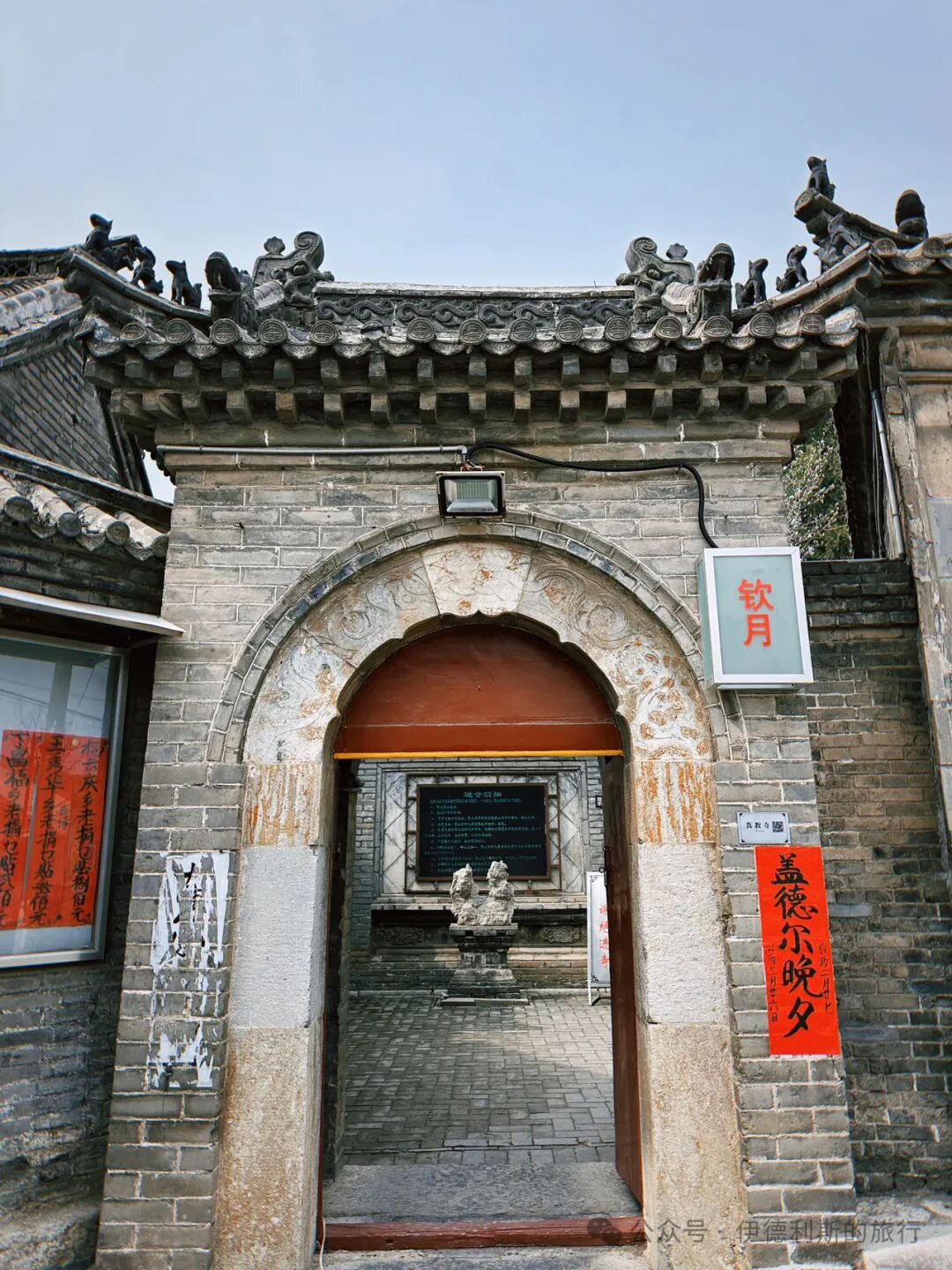
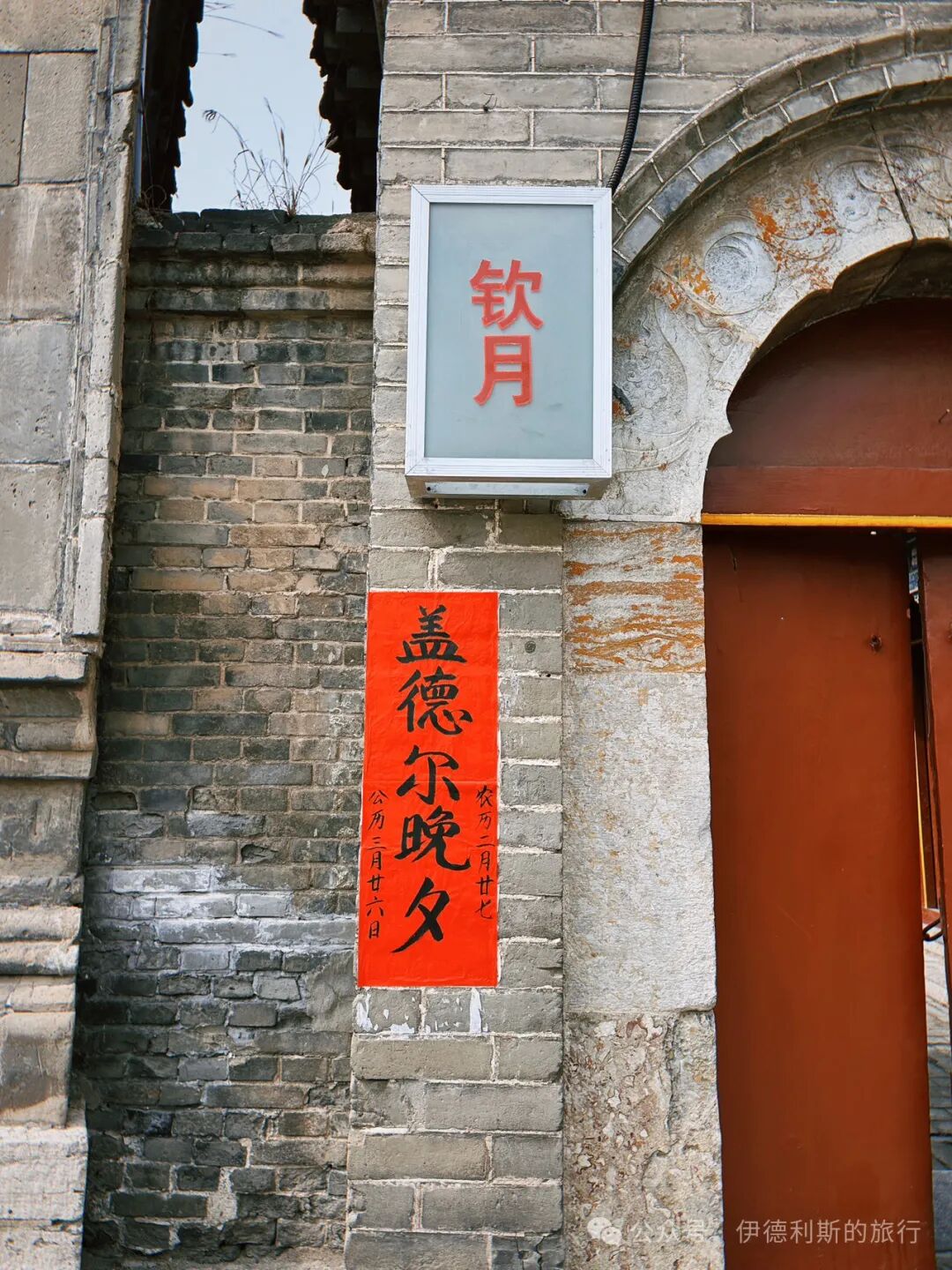
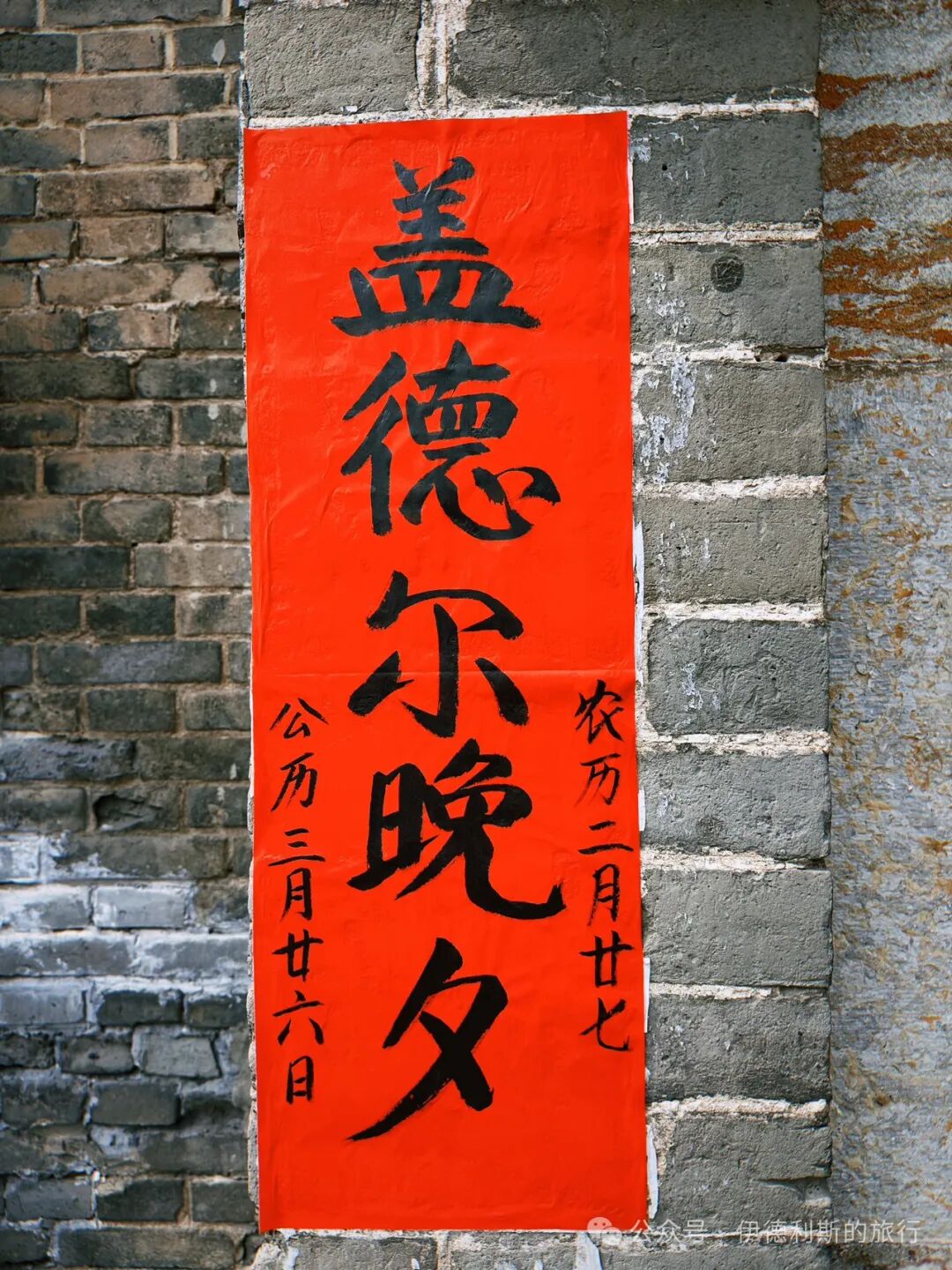
The main gate of Zhenjiao Mosque is usually closed, so visitors enter through the north or south side gates. After entering the side gate, you first see a screen wall and a rockery bonsai, then you enter the first courtyard. Directly facing the gate is the ceremonial gate (yimen) rebuilt in 1755 (the twentieth year of the Qianlong reign), with school buildings on the north and south sides. The north and south school buildings form their own courtyards, which have beautiful rockeries and ponds.
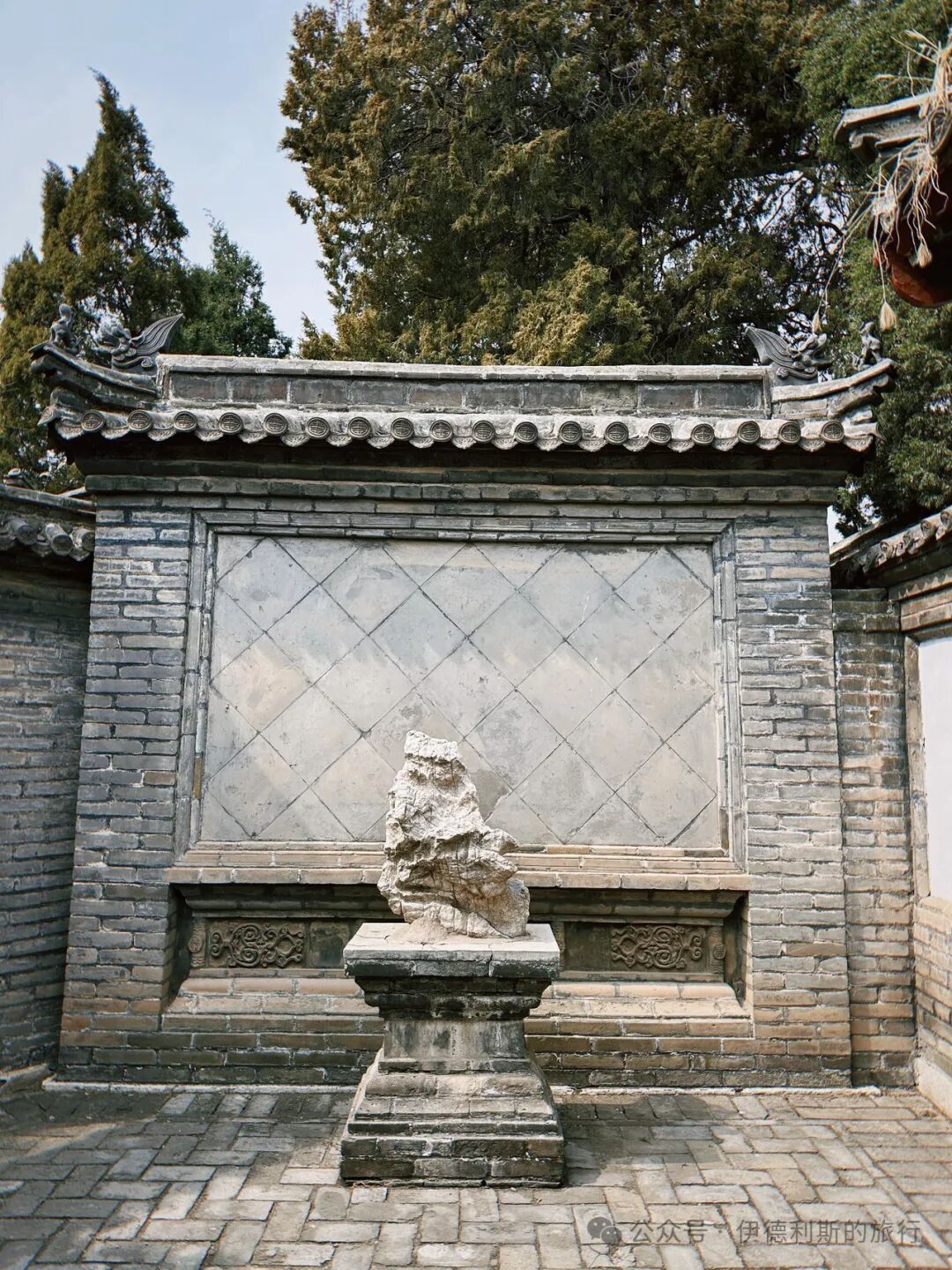
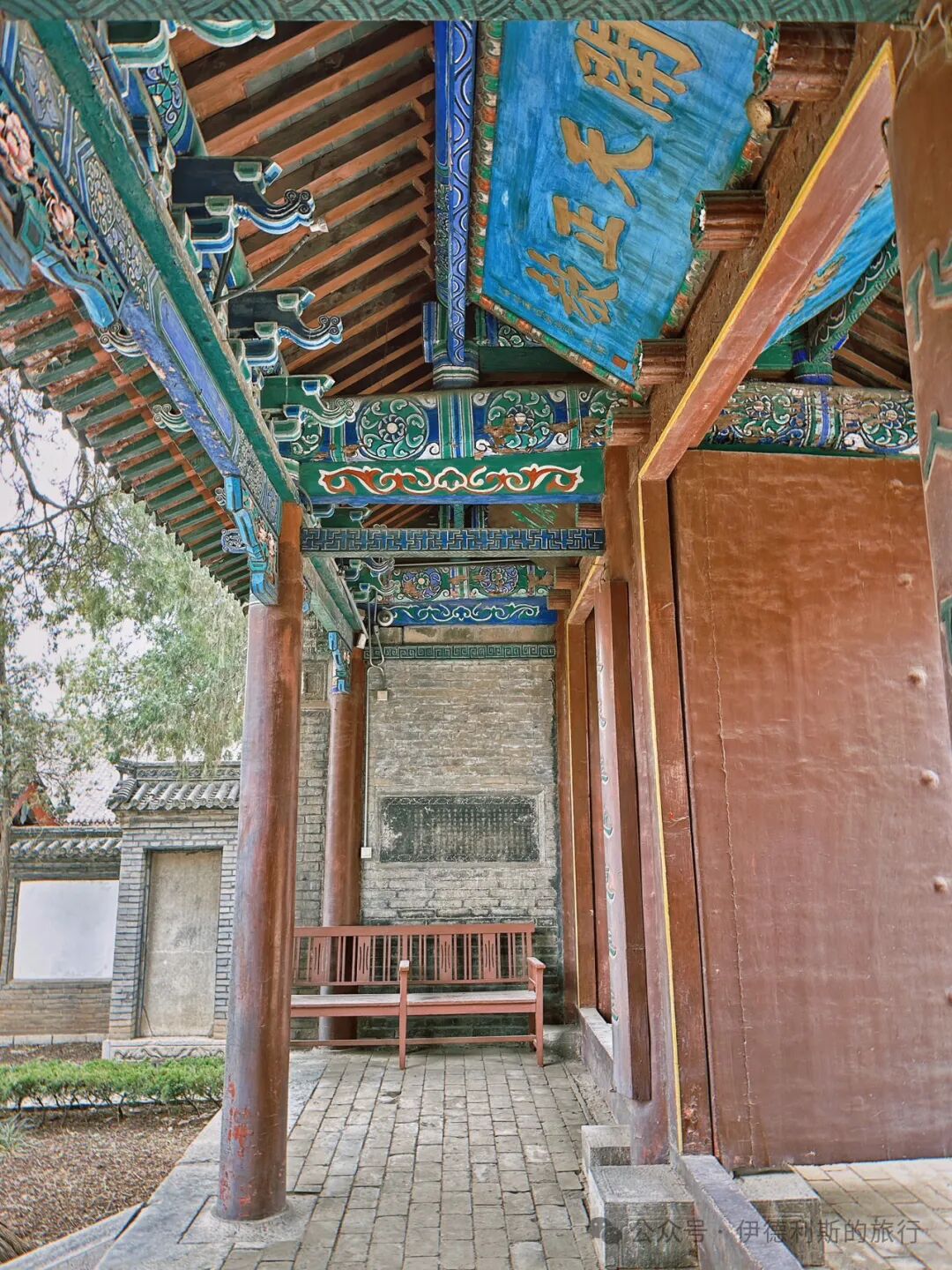
There is a well pavilion inside Zhenjiao Mosque, with an Arabic stone tablet nearby.
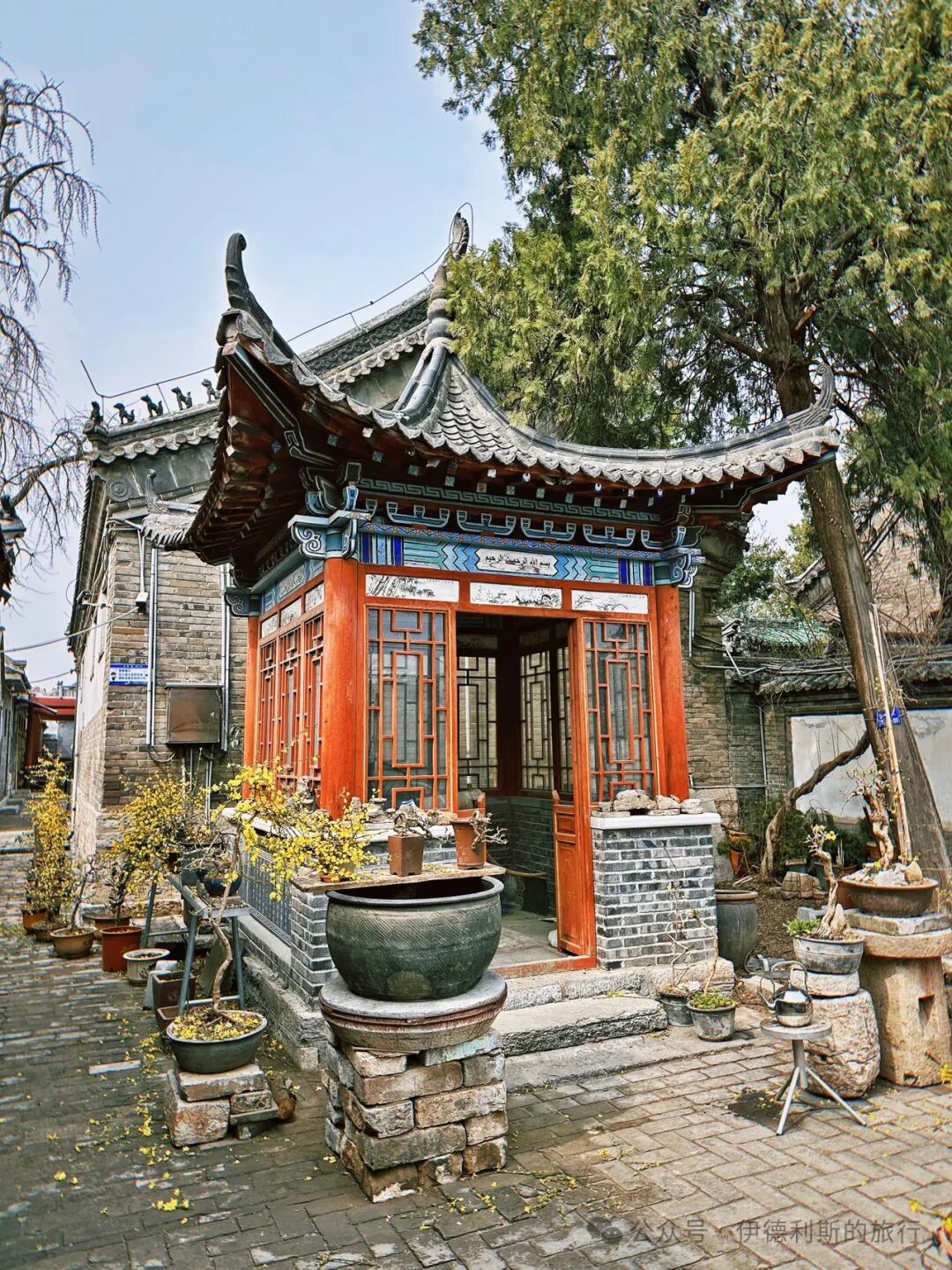
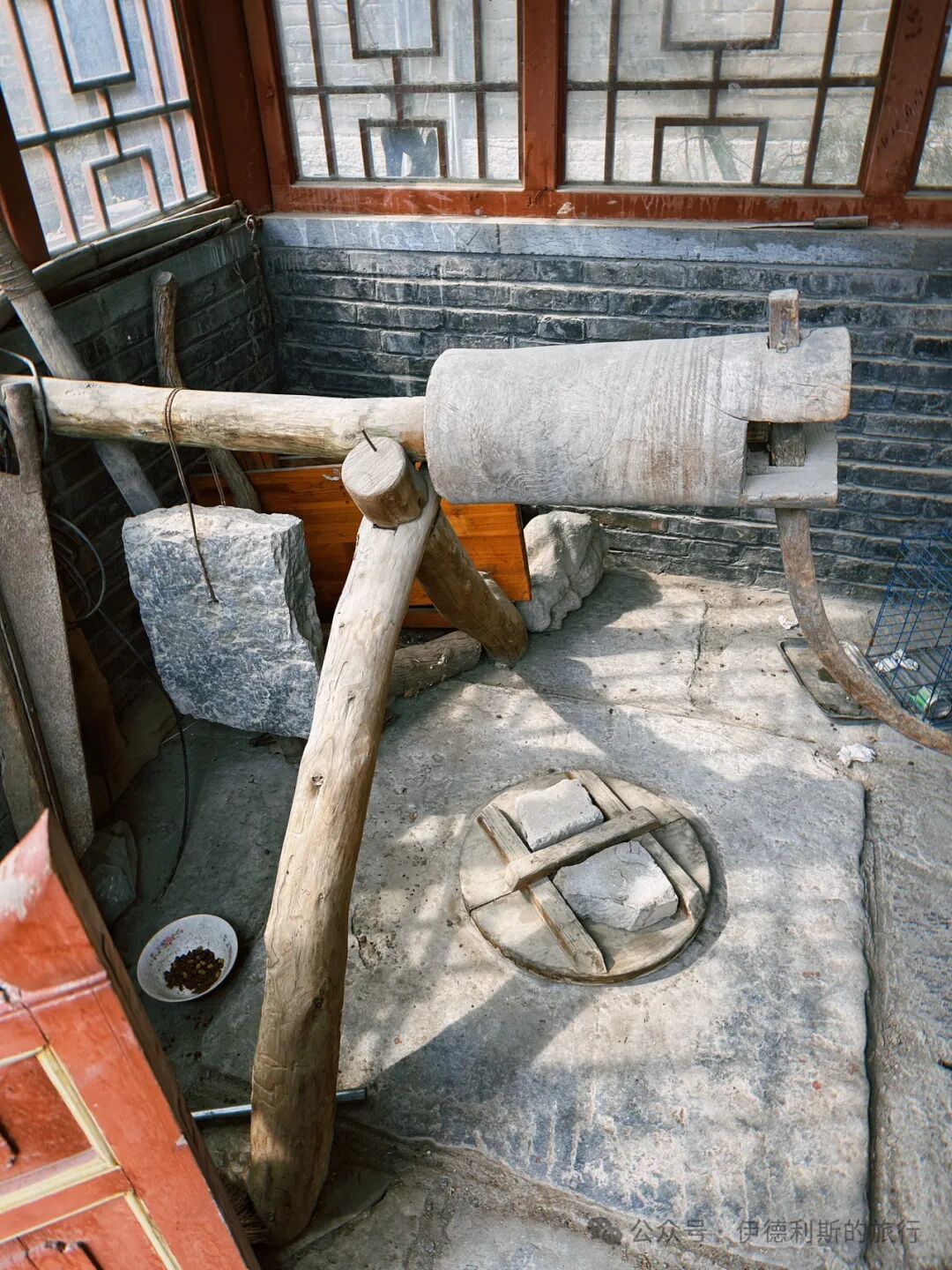
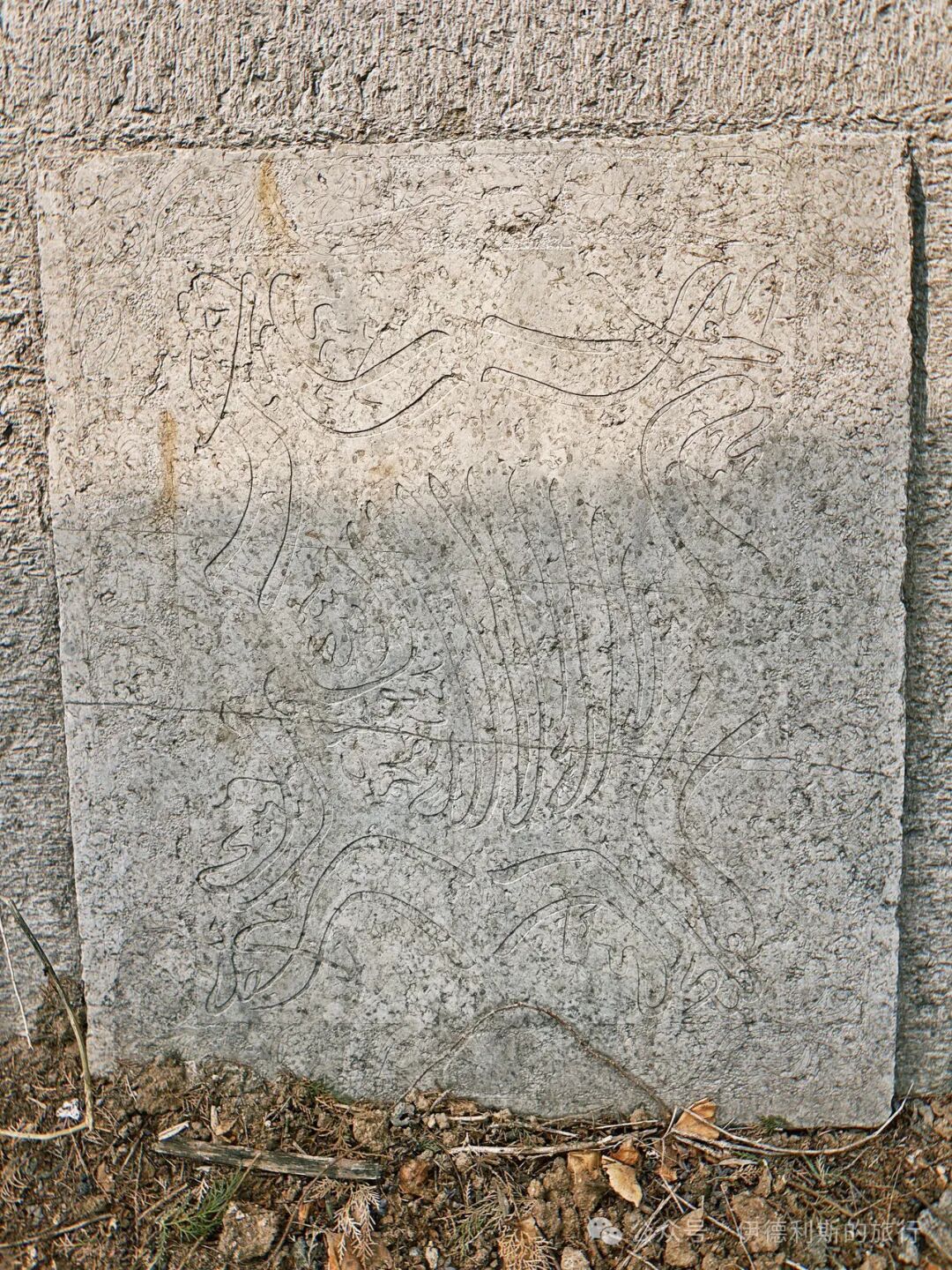
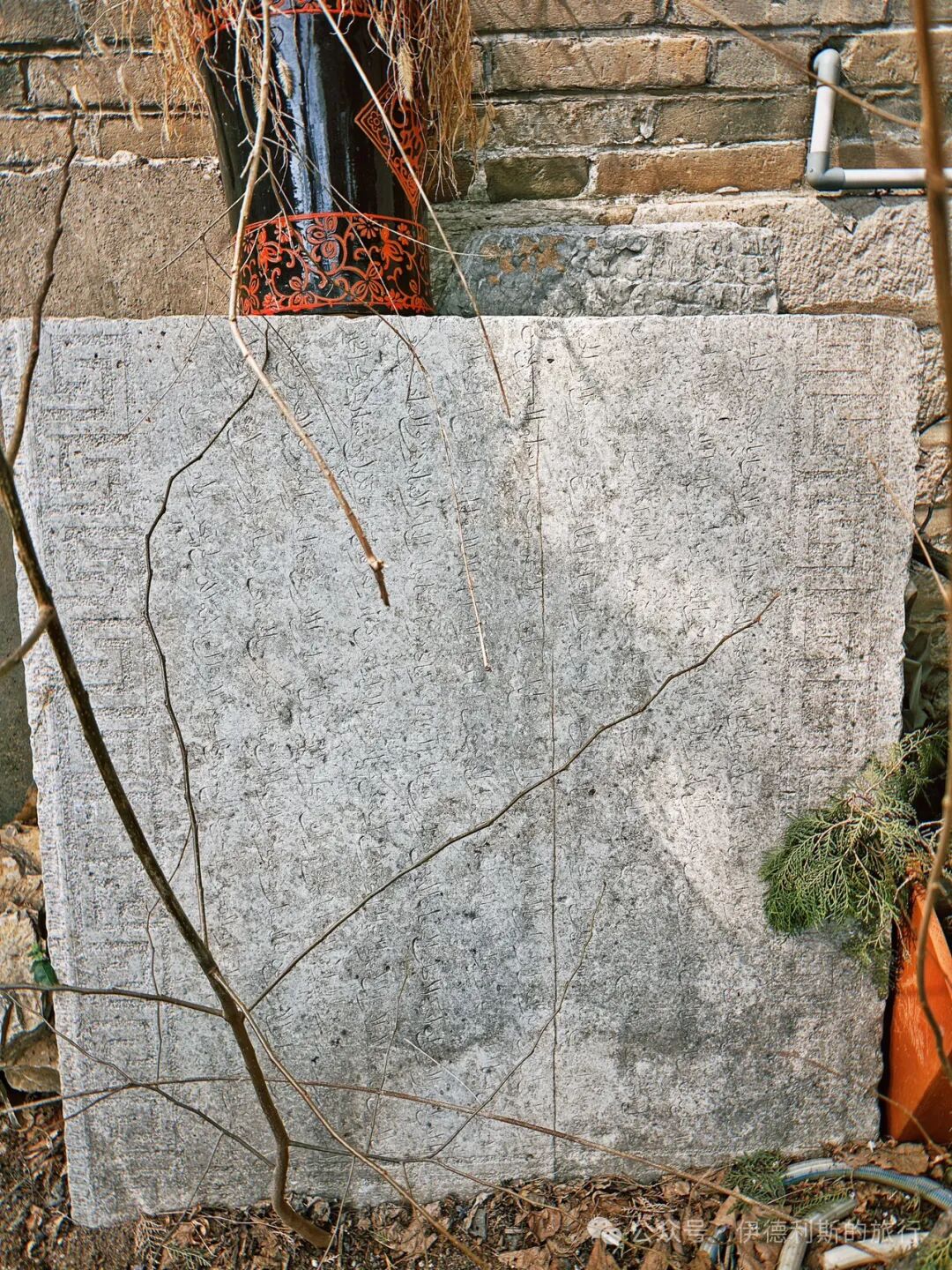
The main prayer hall of Qingzhou Zhenjiao Mosque sits on a platform over 1 meter high. It consists of a front hall, a middle hall, and a rear kiln hall, connected in a linked style, with 36 pillars surrounding the porch. The kiln hall has a moon-watching tower (wangyuelou) with a double-eaved hip roof, and the roof corners have hanging wind bells.
In front of the main hall is the 'Hundred-Character Eulogy' (Baizi Zan) stele pavilion, rebuilt in 1985. The original was copied from the Jingjue Mosque in Nanjing in 1760 (the twenty-fifth year of the Qianlong reign).
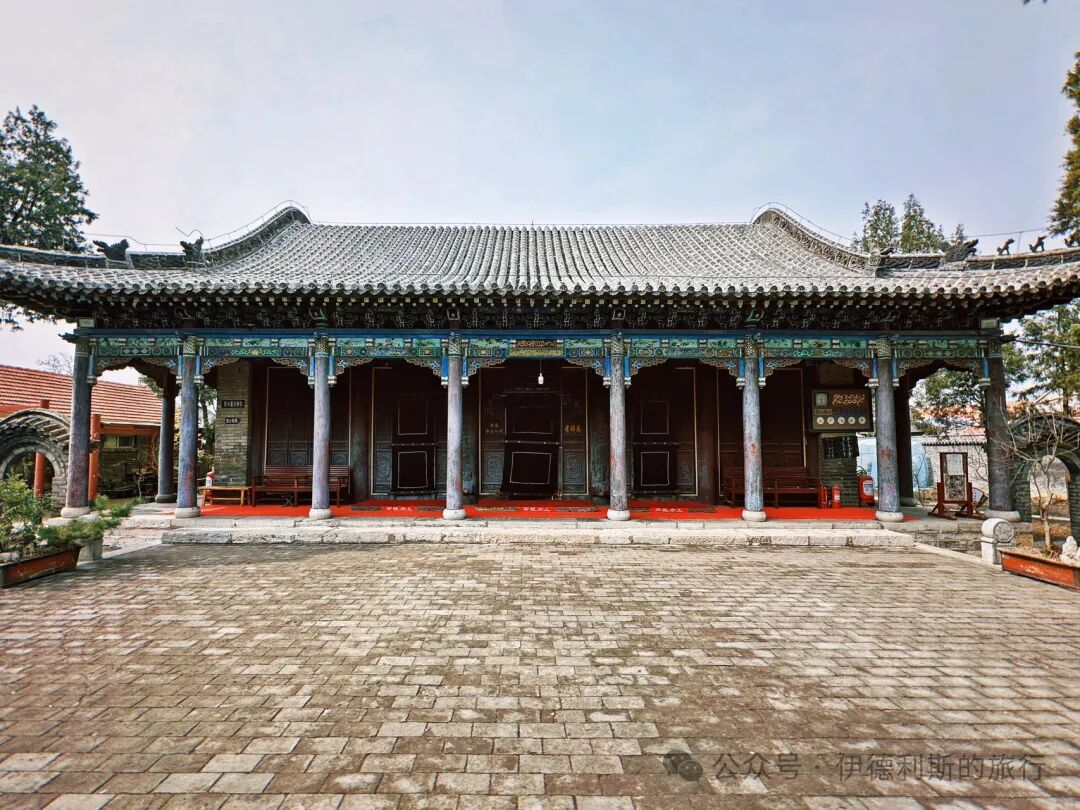
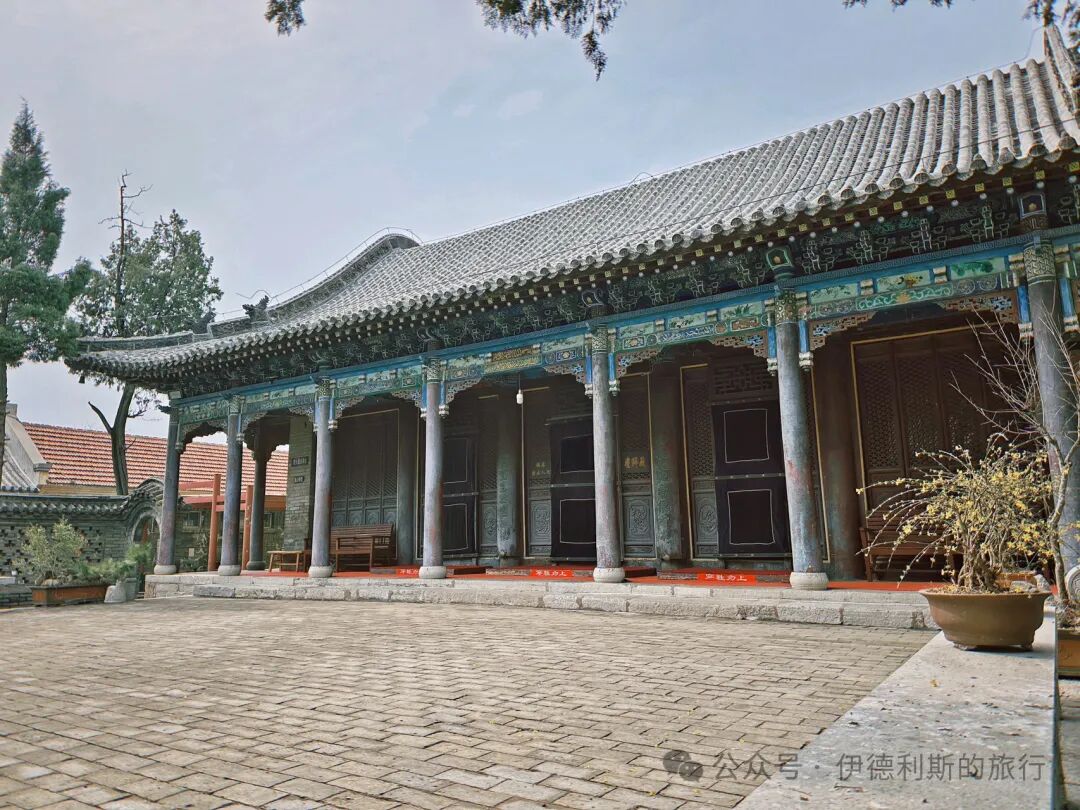
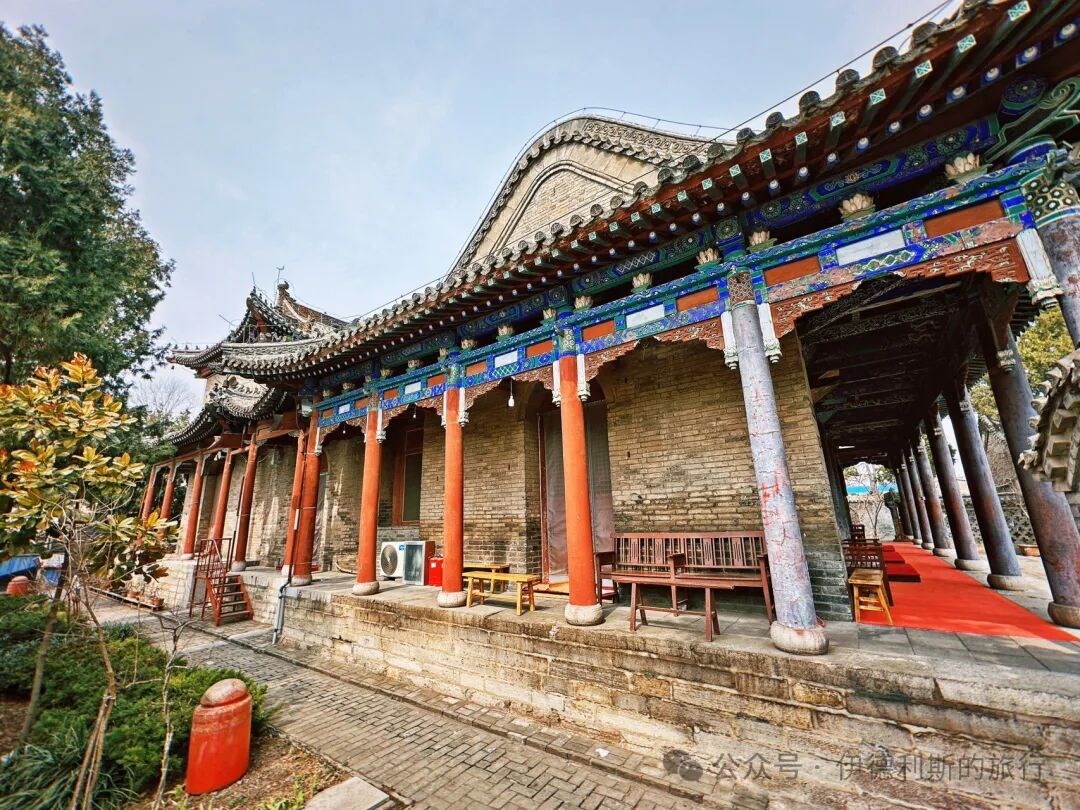
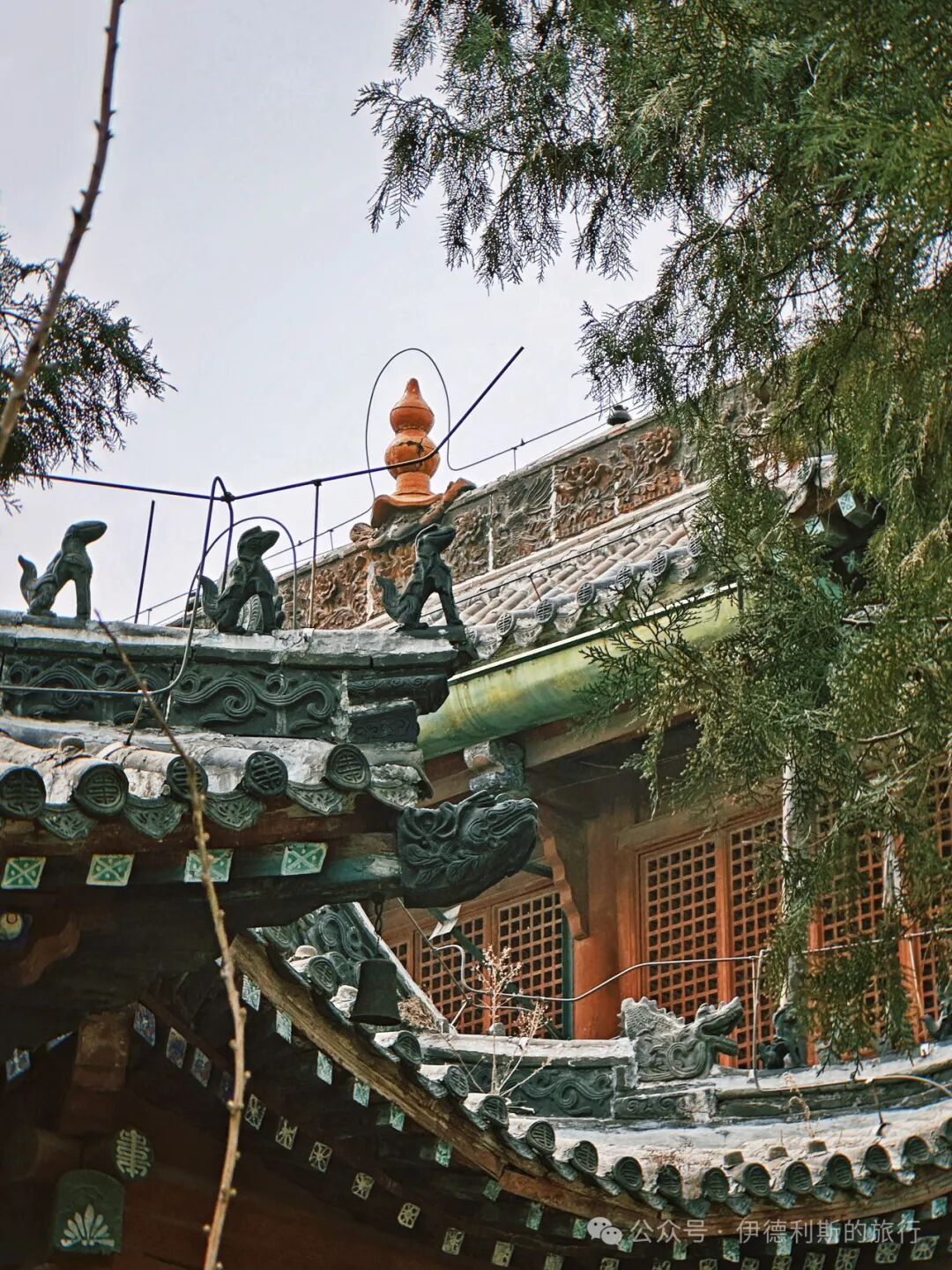
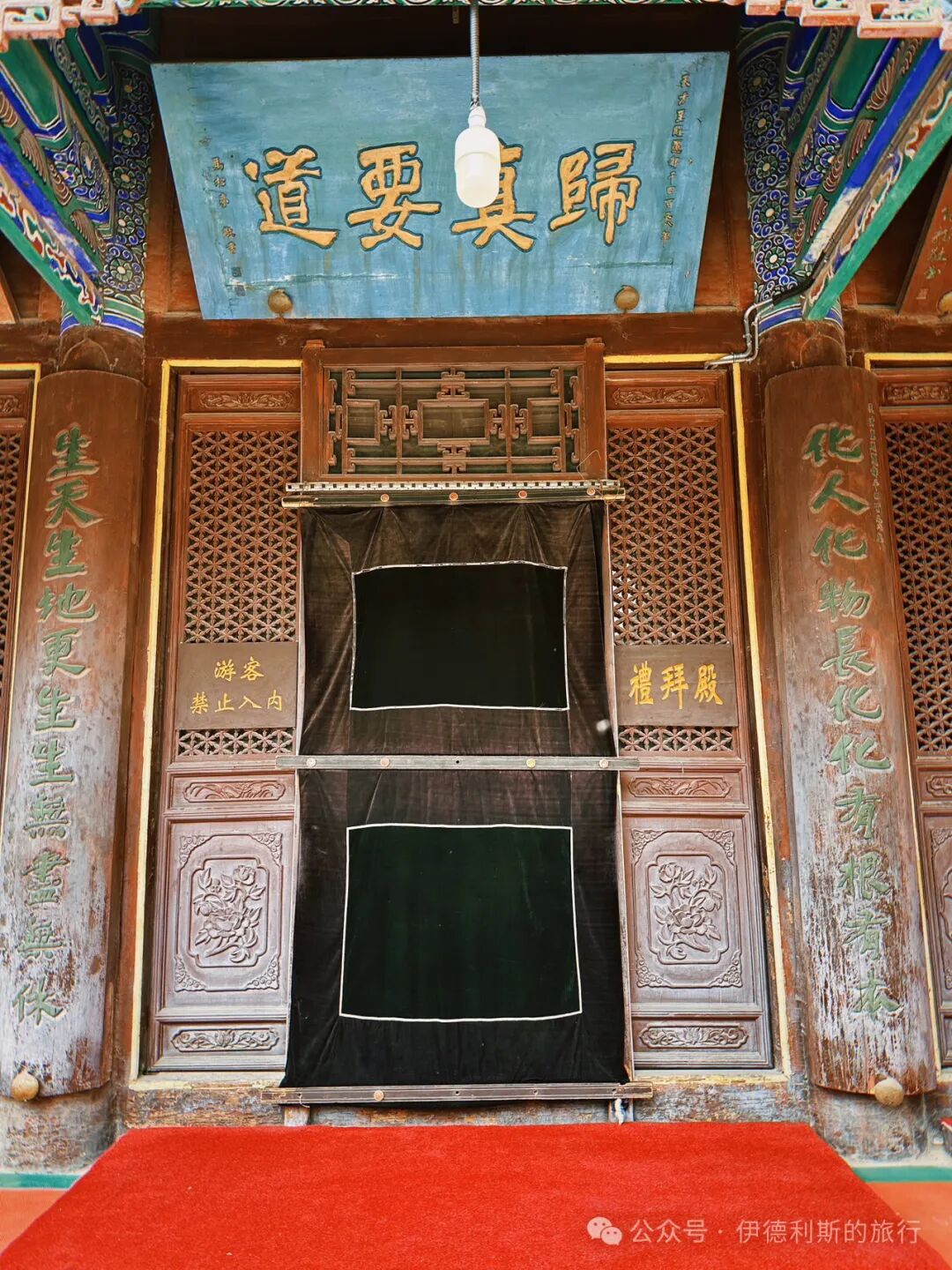
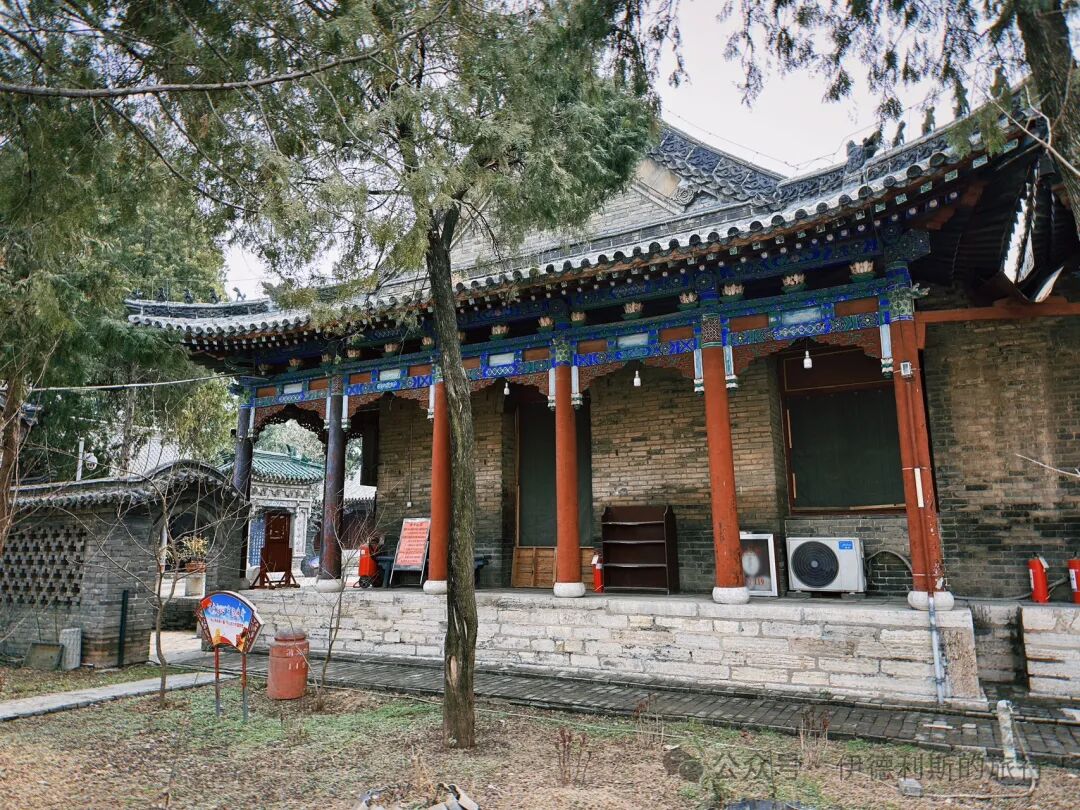
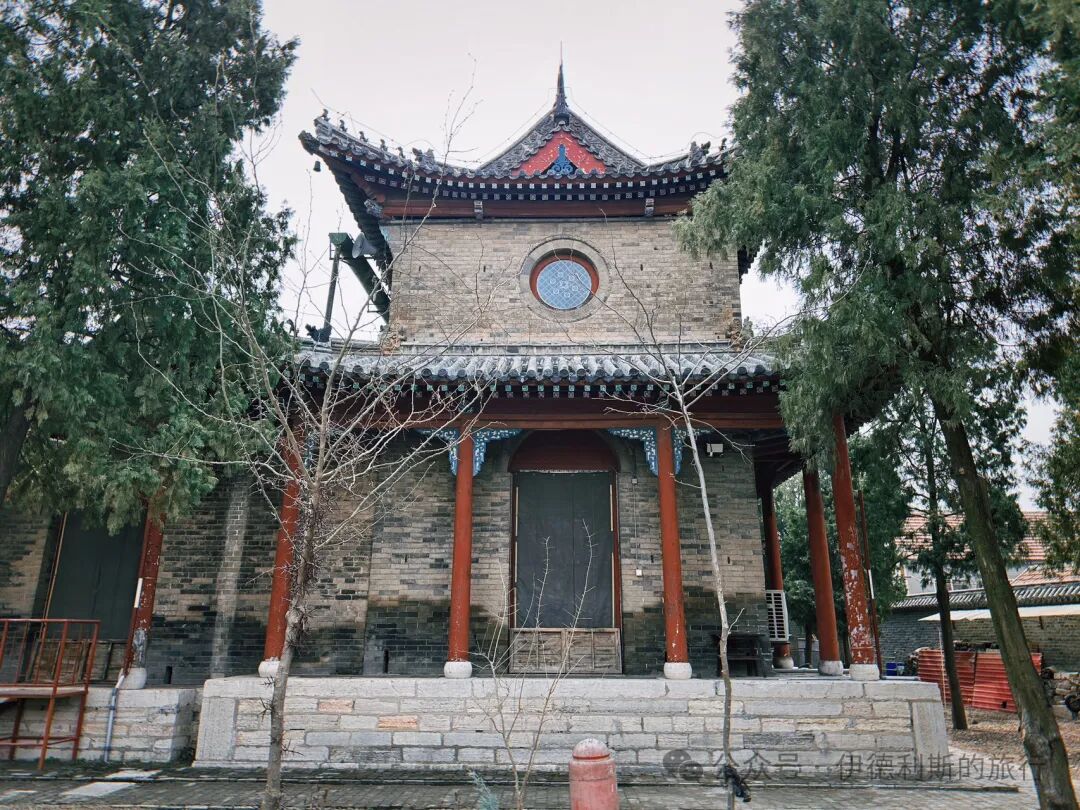
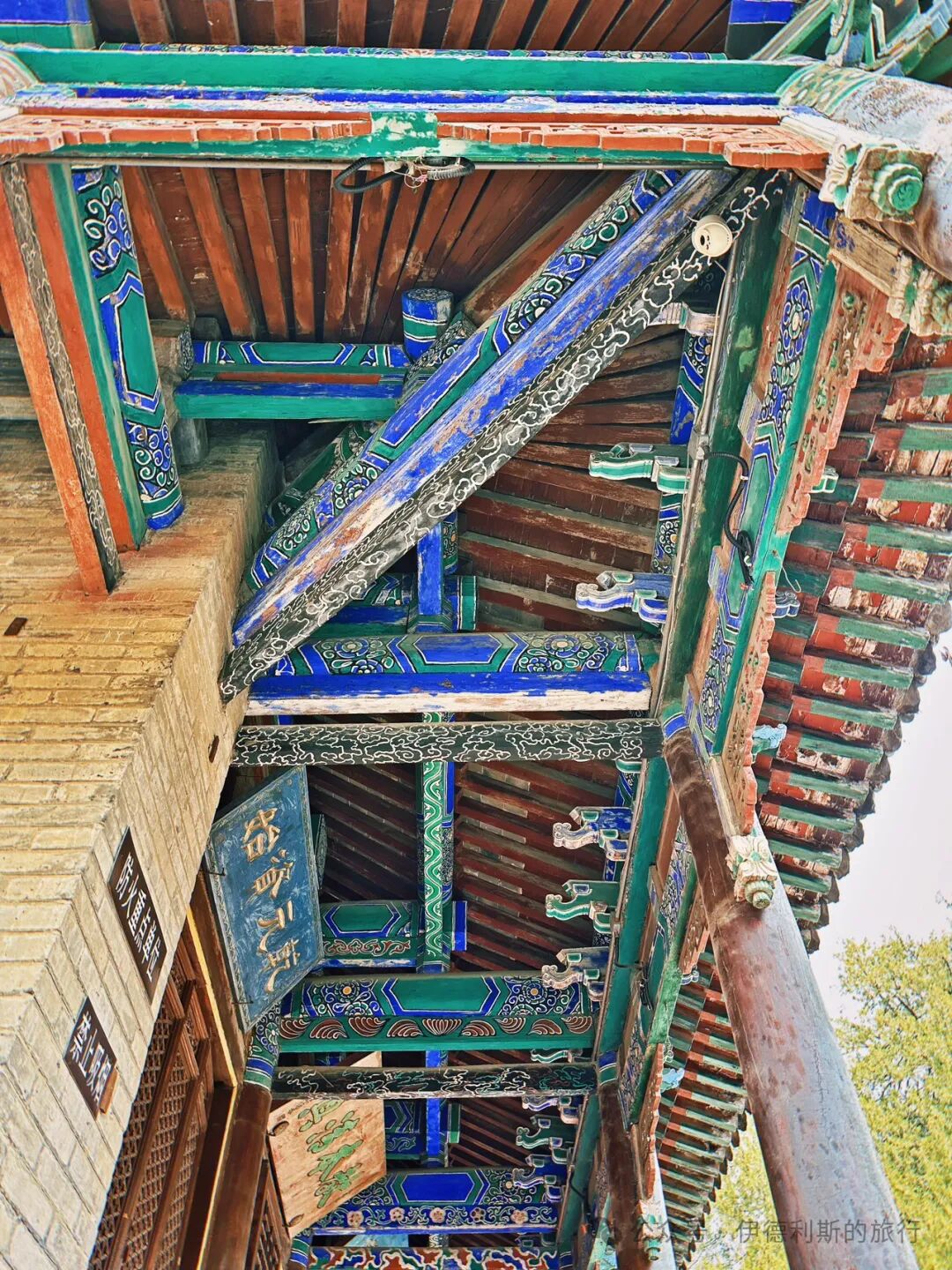
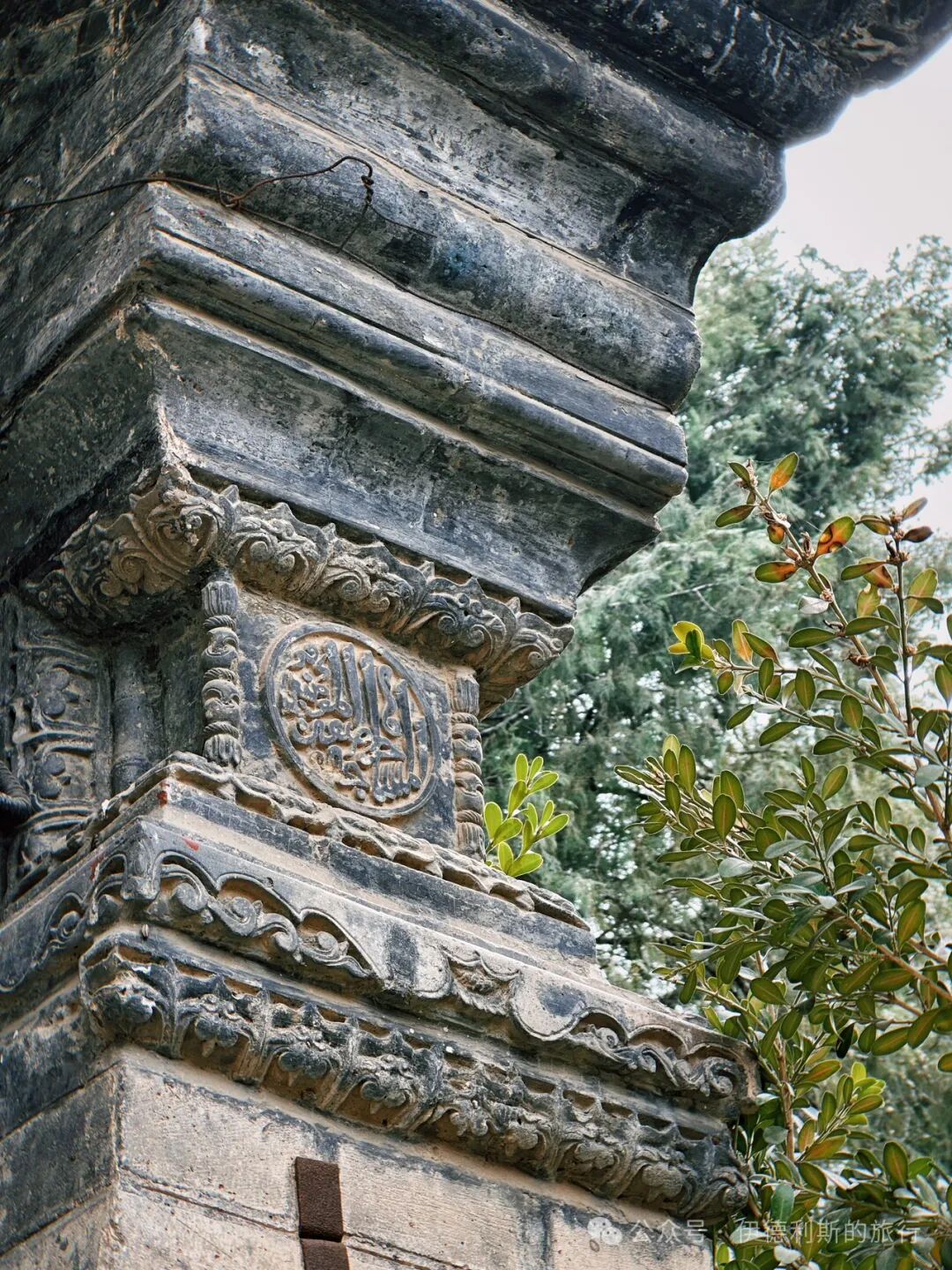
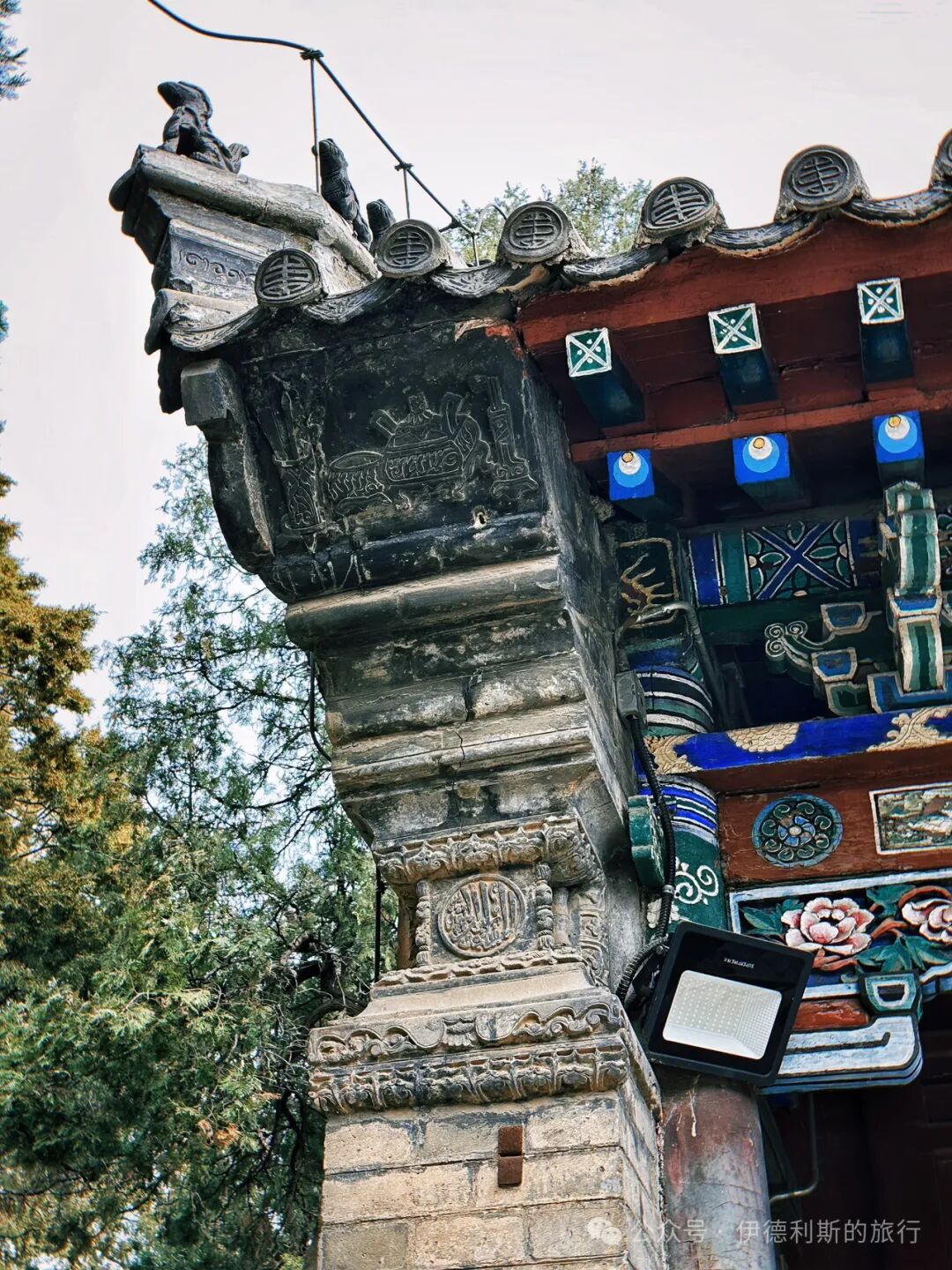
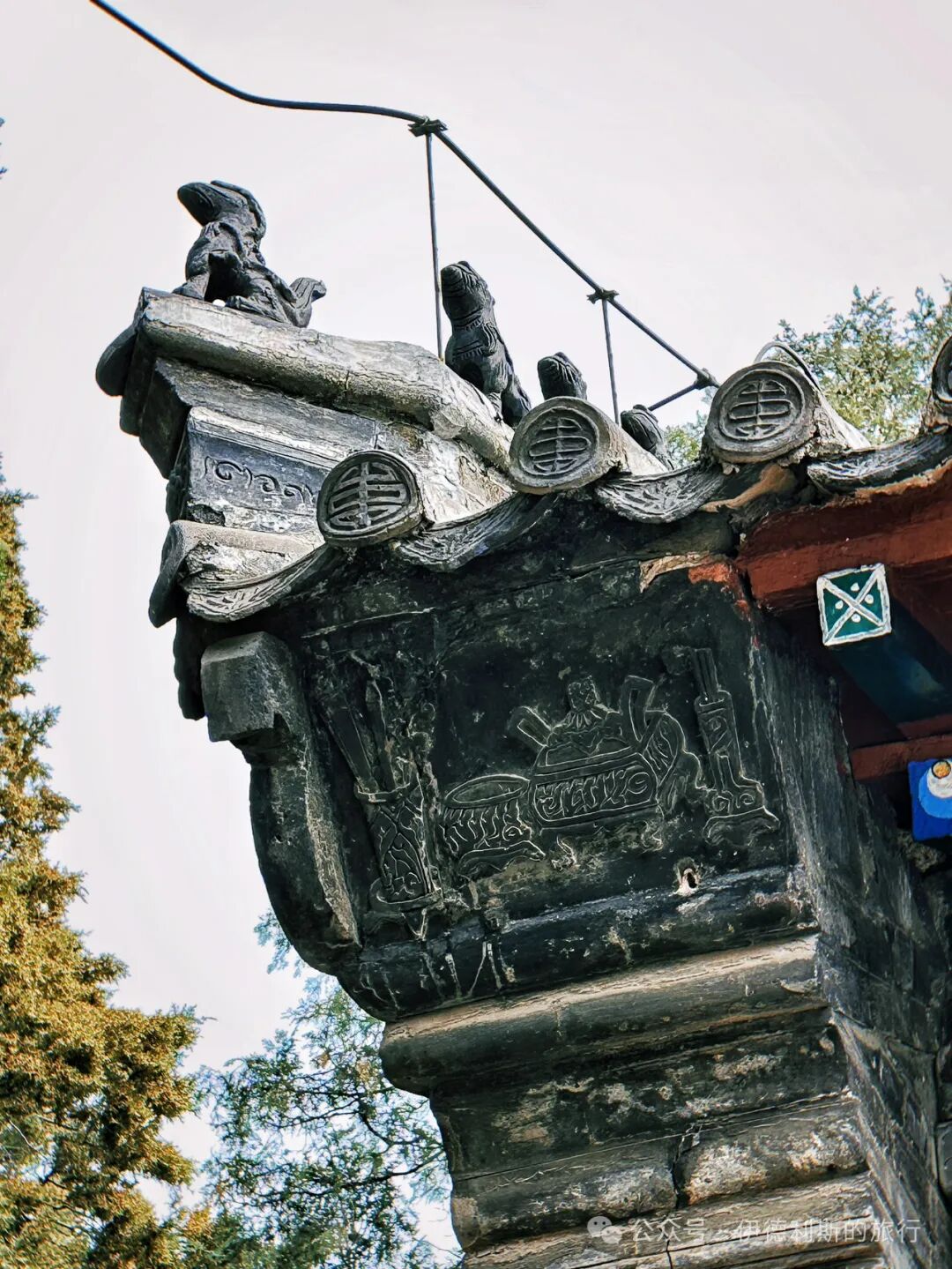
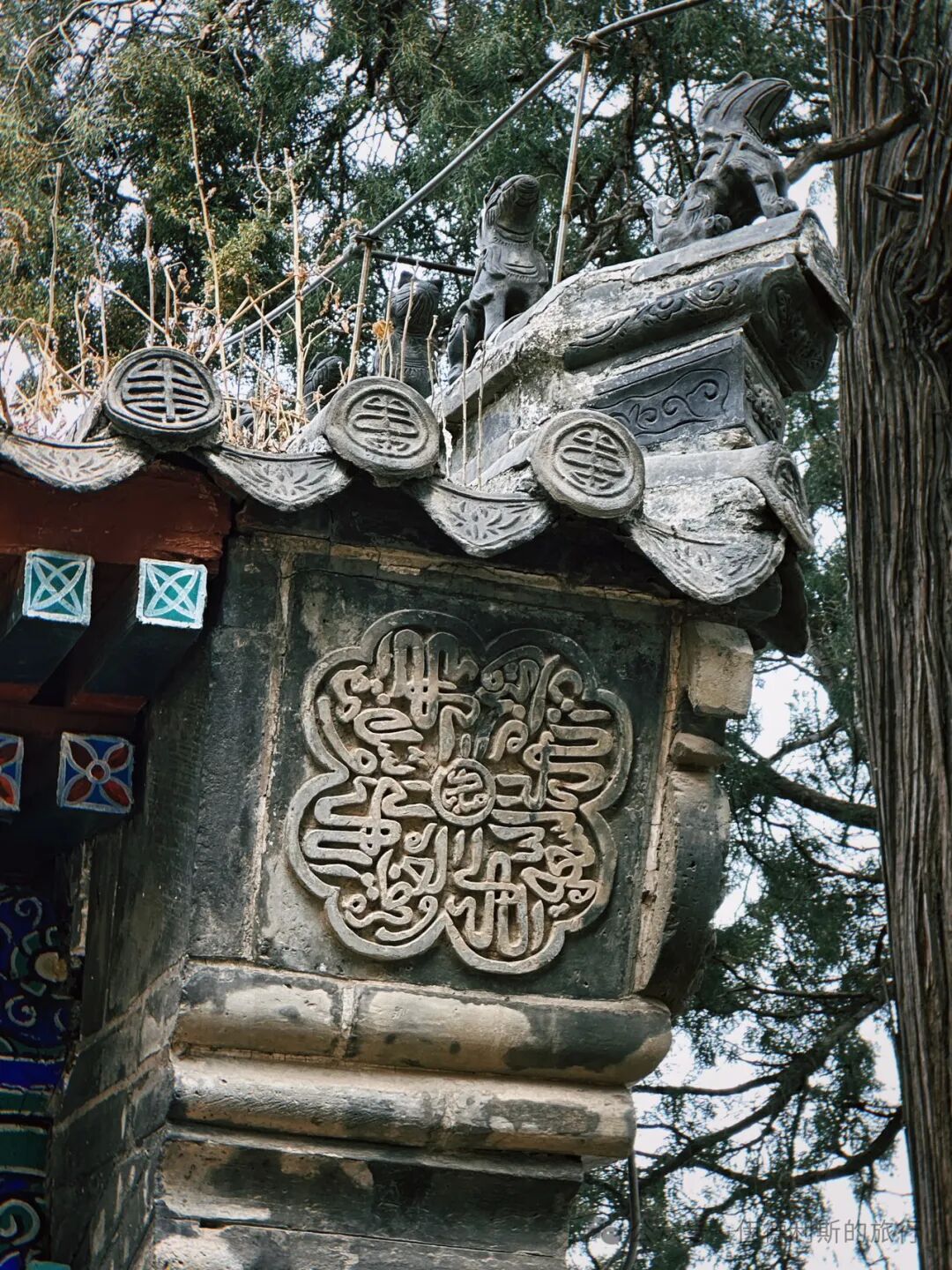
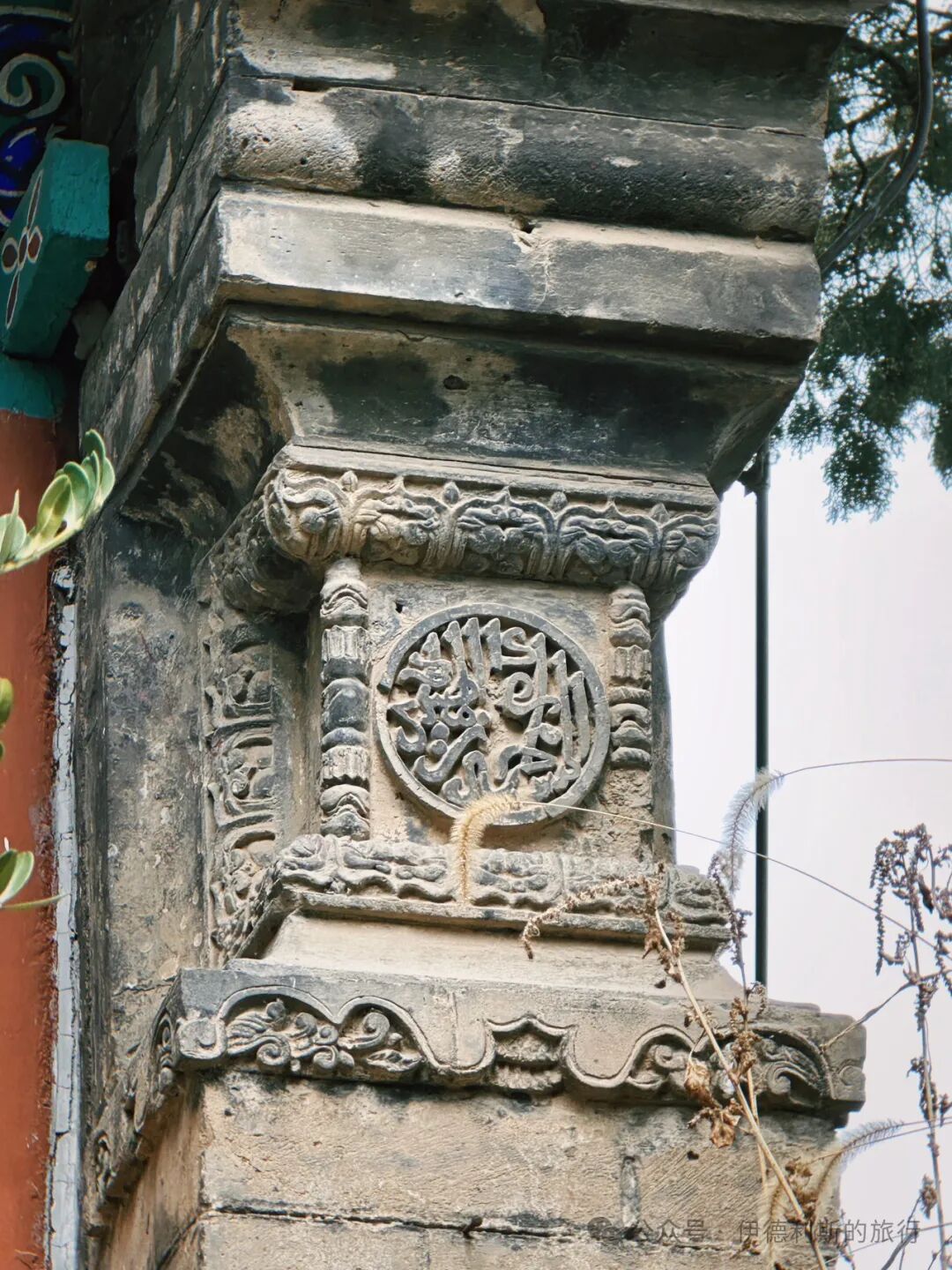
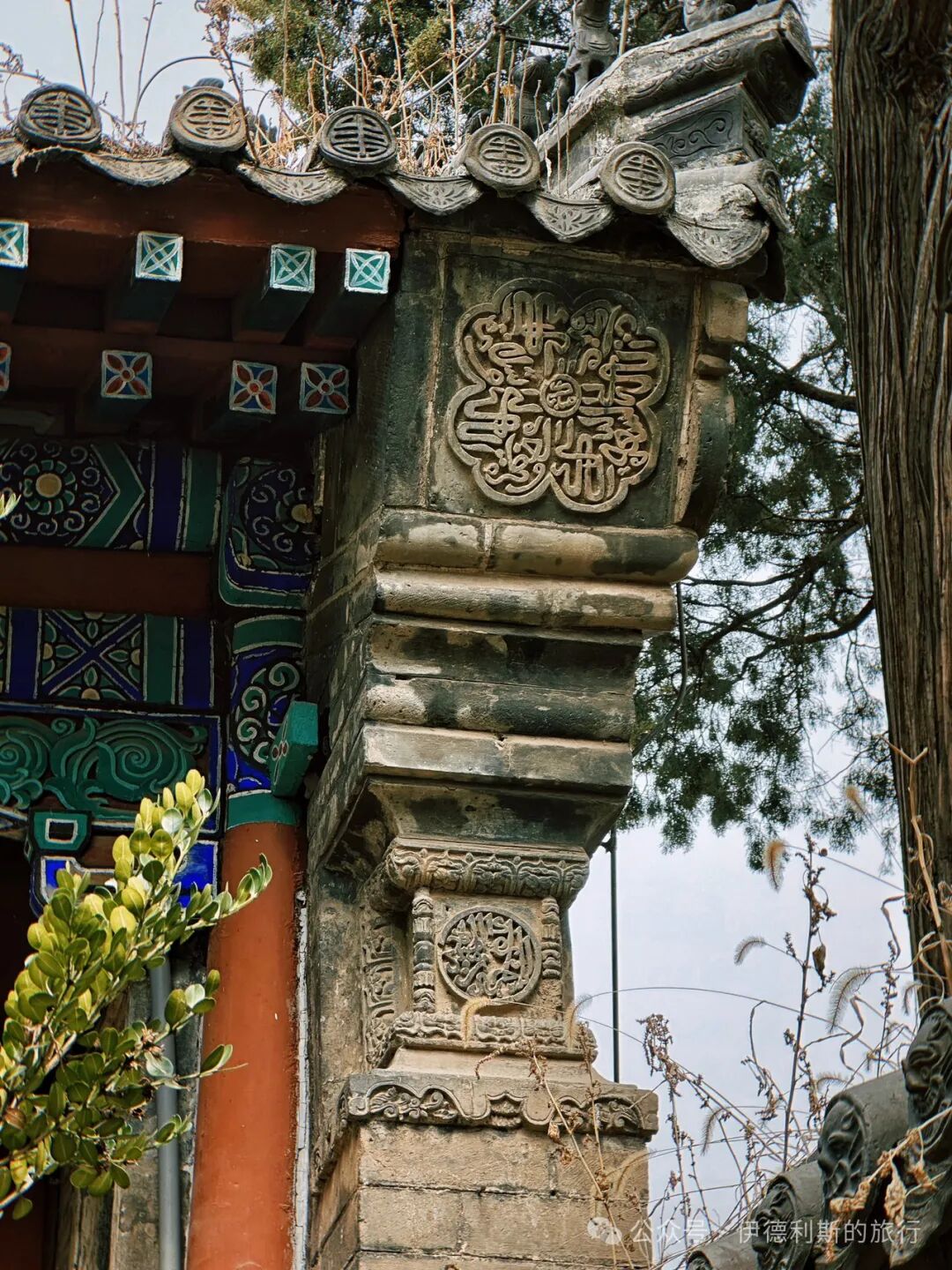
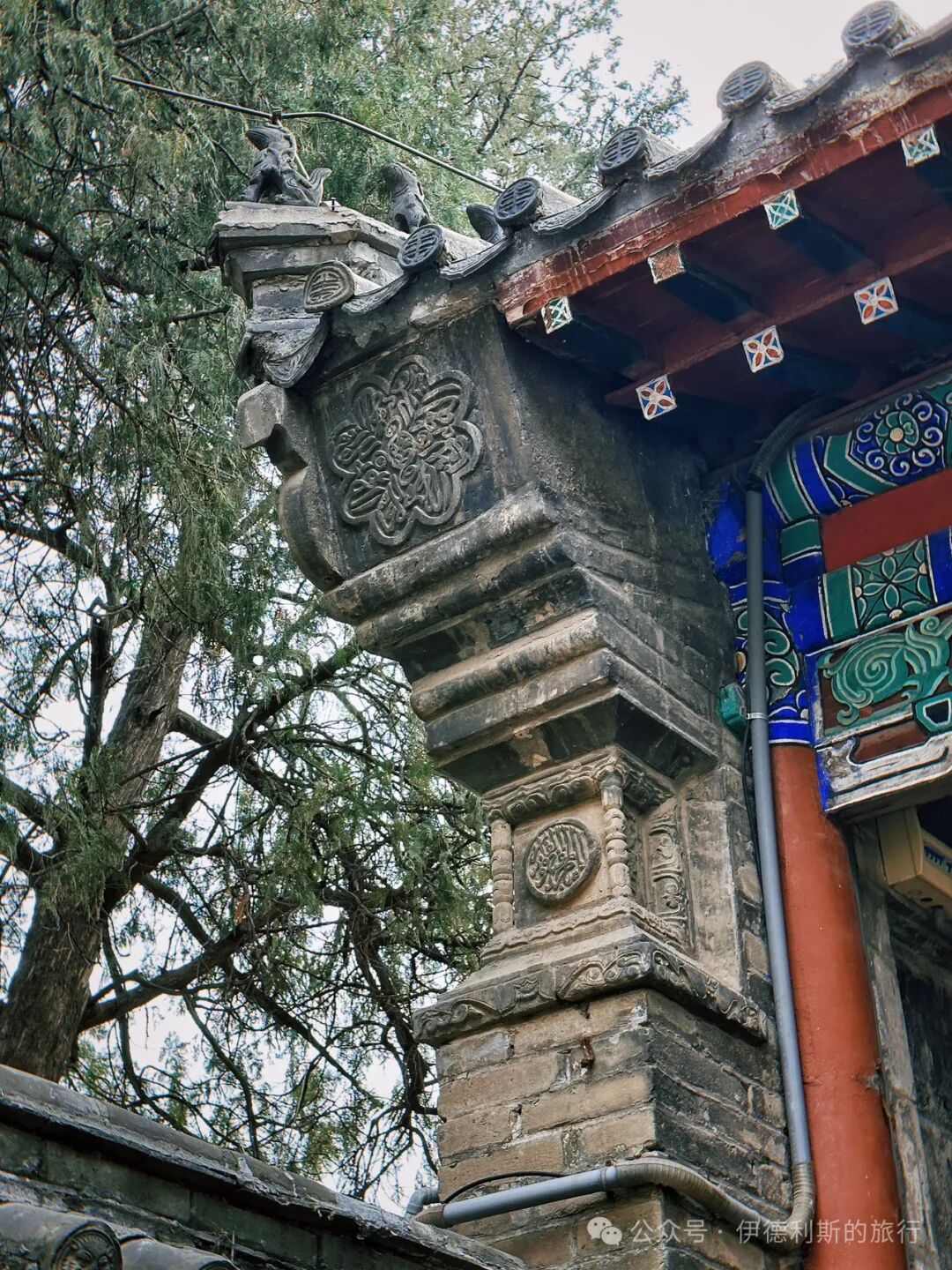
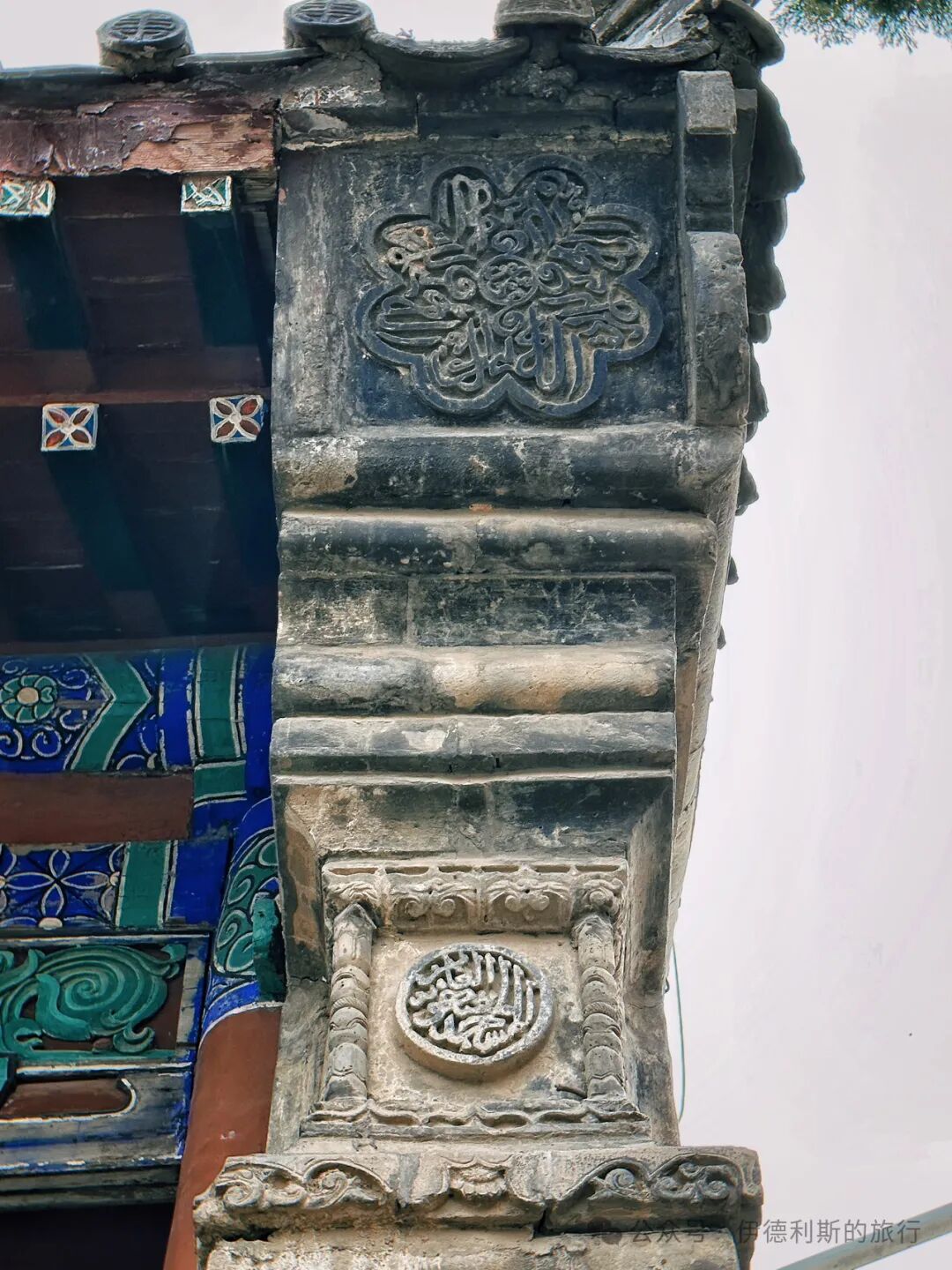
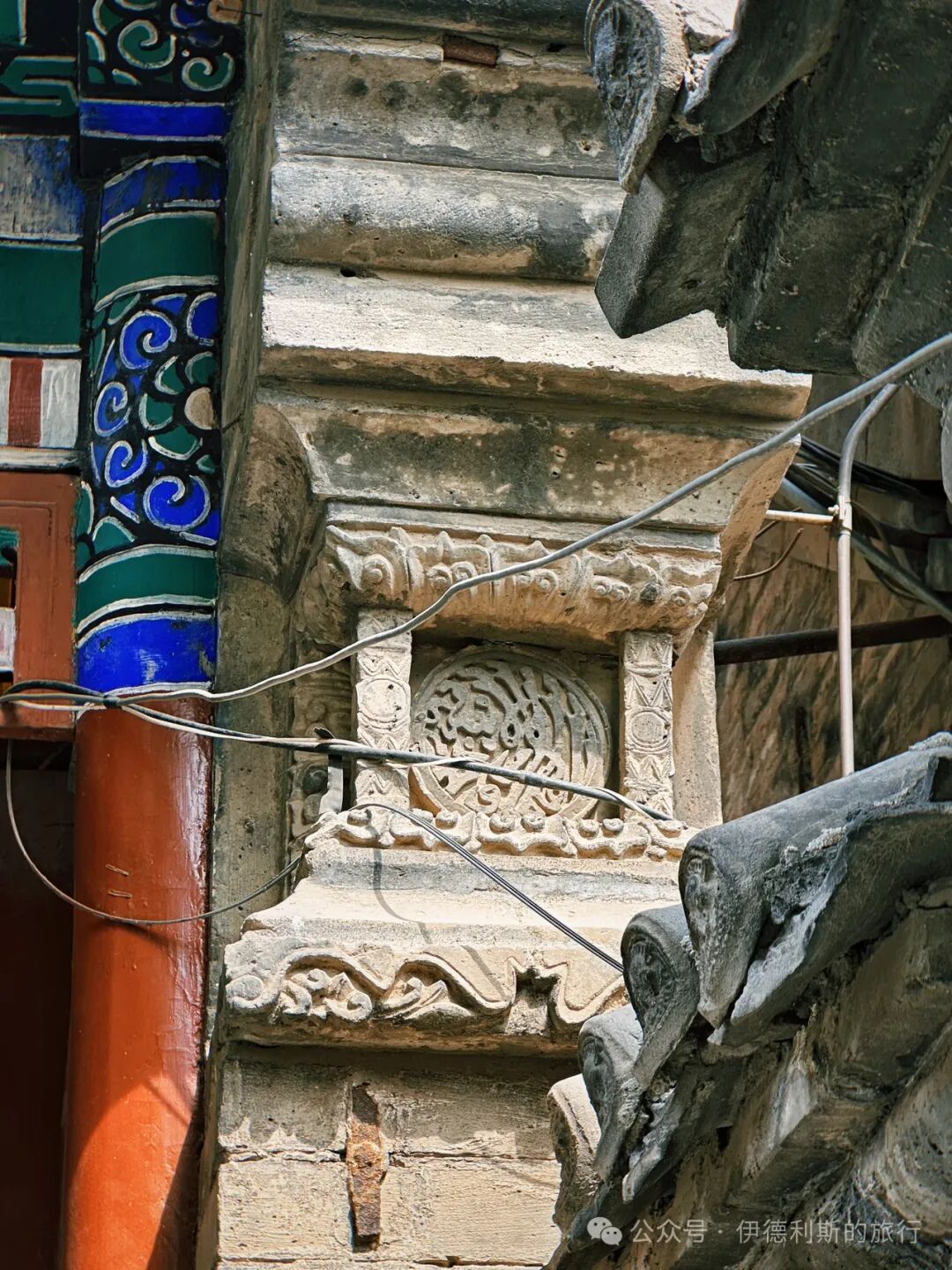
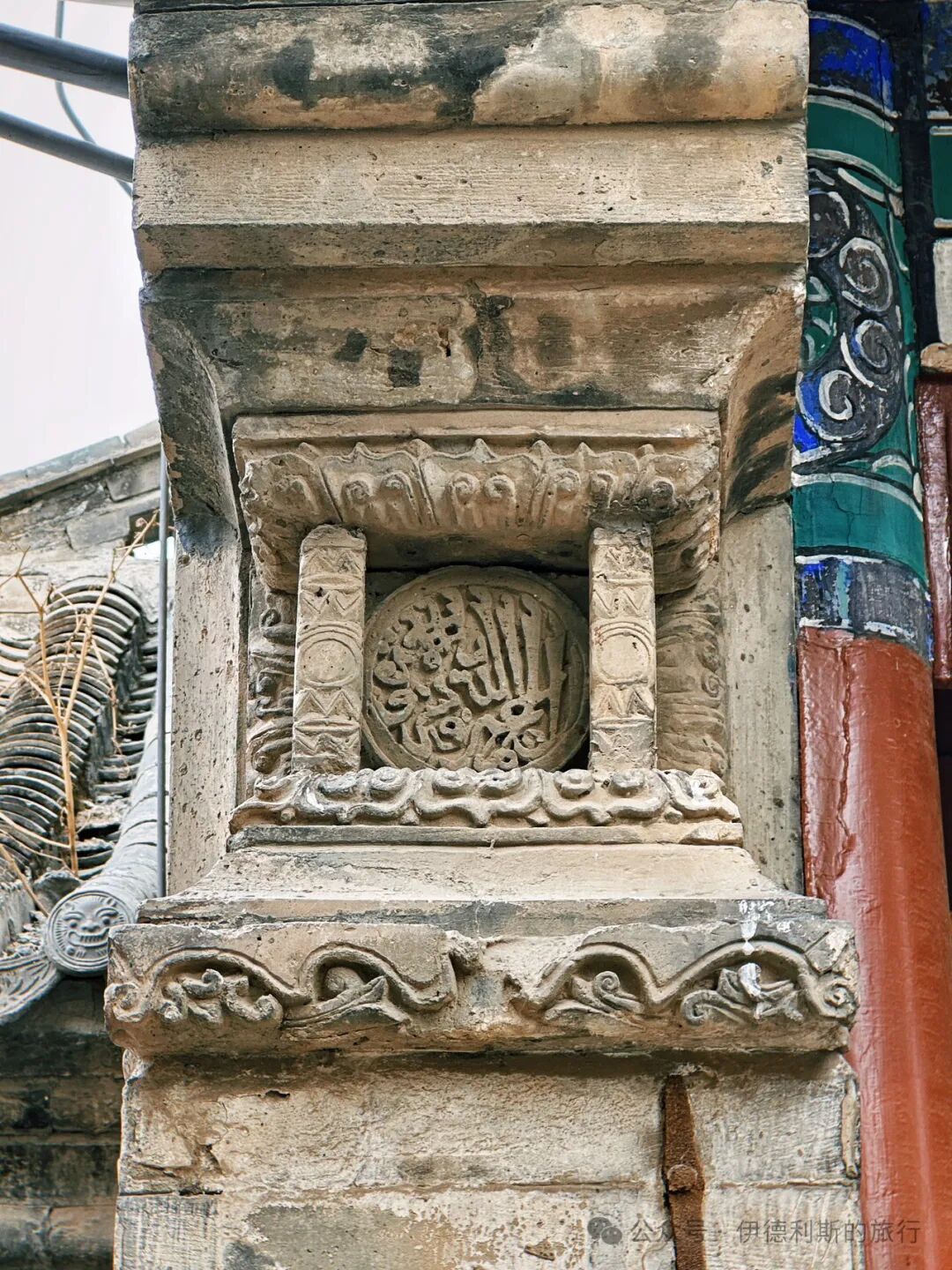
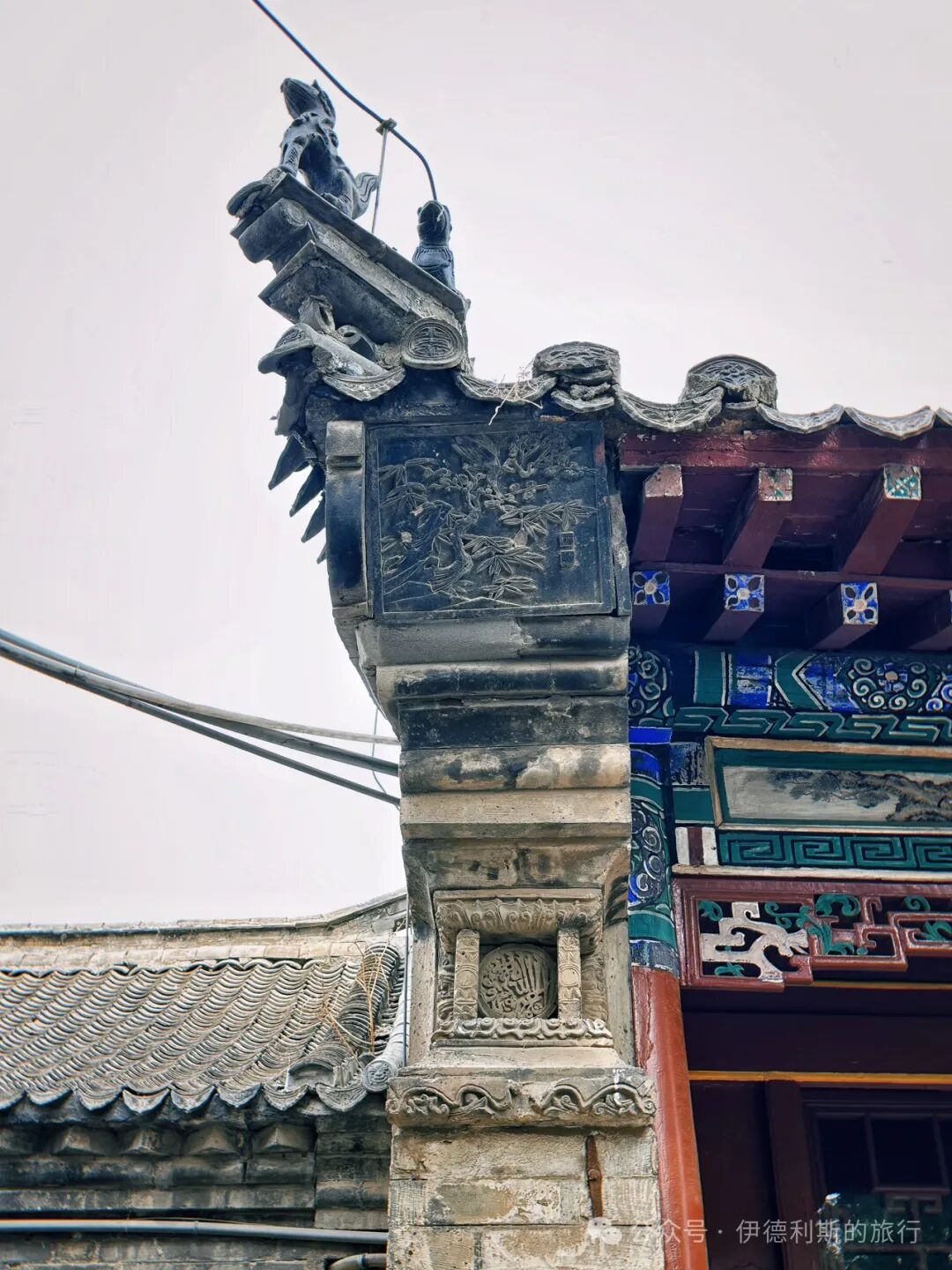
The main hall uses a beam-lifting wooden frame. In the center of the kiln hall is an arched mihrab with a single-eaved hanging-mountain style door cover above it.
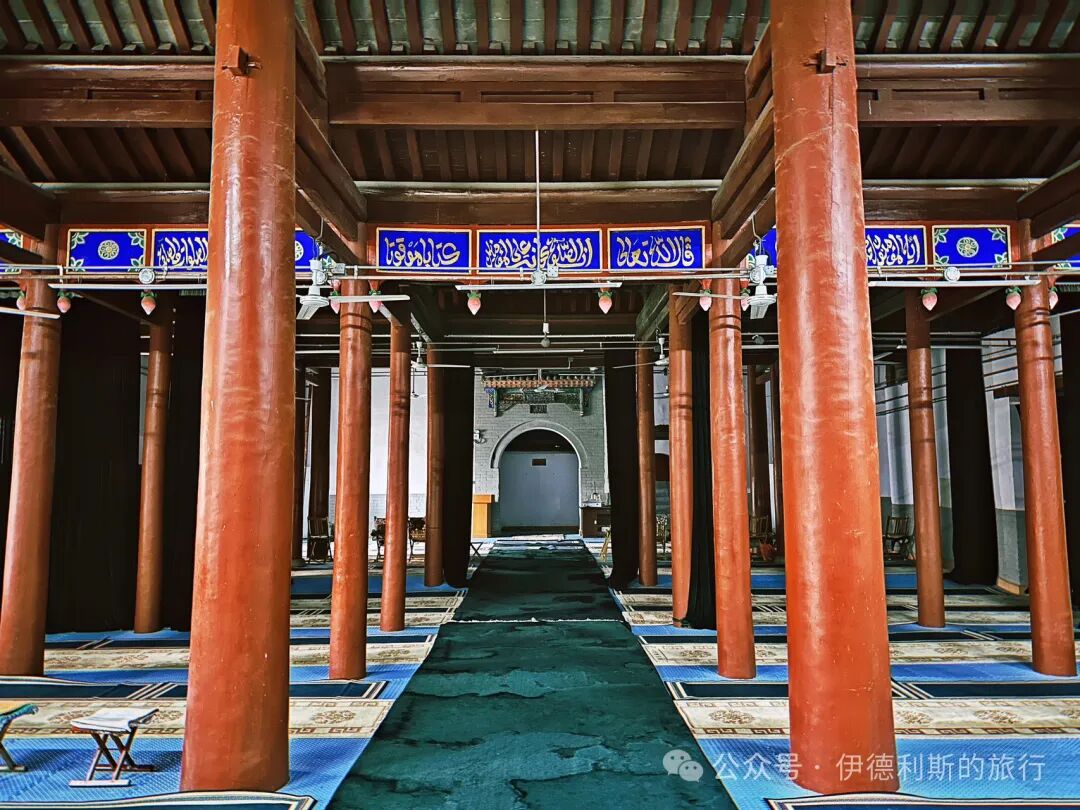
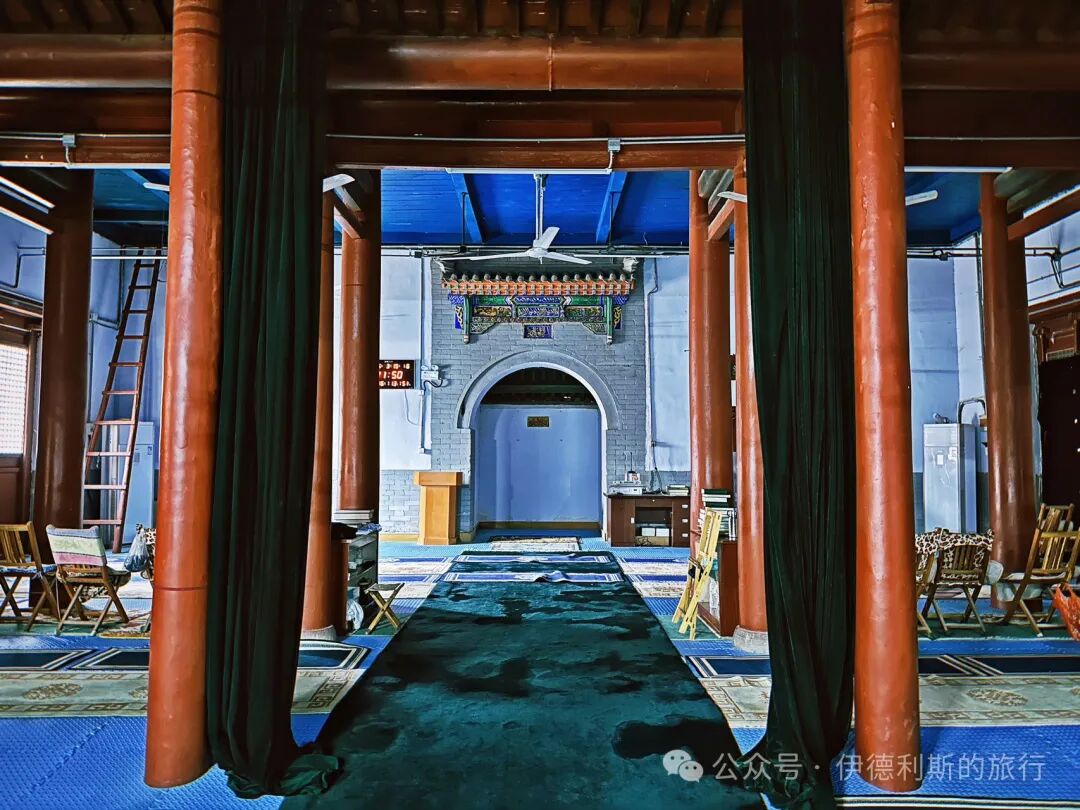
Historical steles of Zhenjiao Mosque
The 1684 'Qingzhou Zhenjiao Mosque Founding Stele' records the construction of Zhenjiao Mosque and Chengli Mosque, as well as the efforts of the imam Zhao Huang to rebuild both.
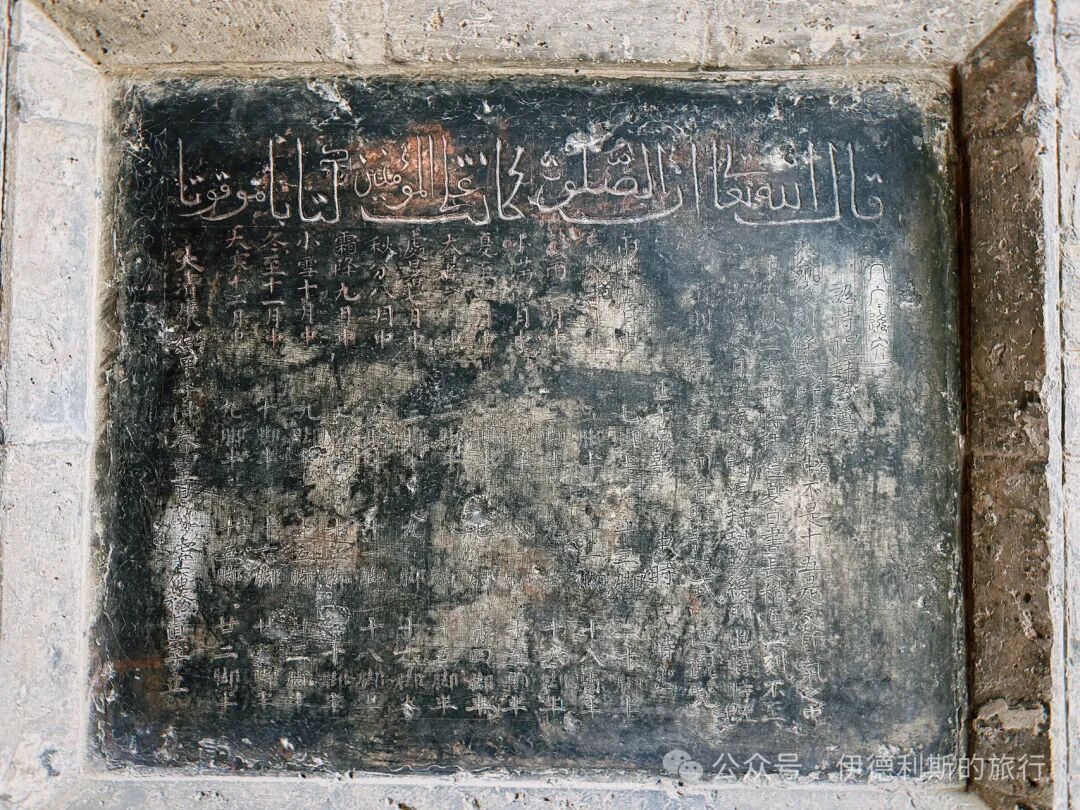
The 1684 'Prayer Time Stele' records the prayer times for the four seasons and the standards for determining prayer times based on shadows throughout the twelve months.
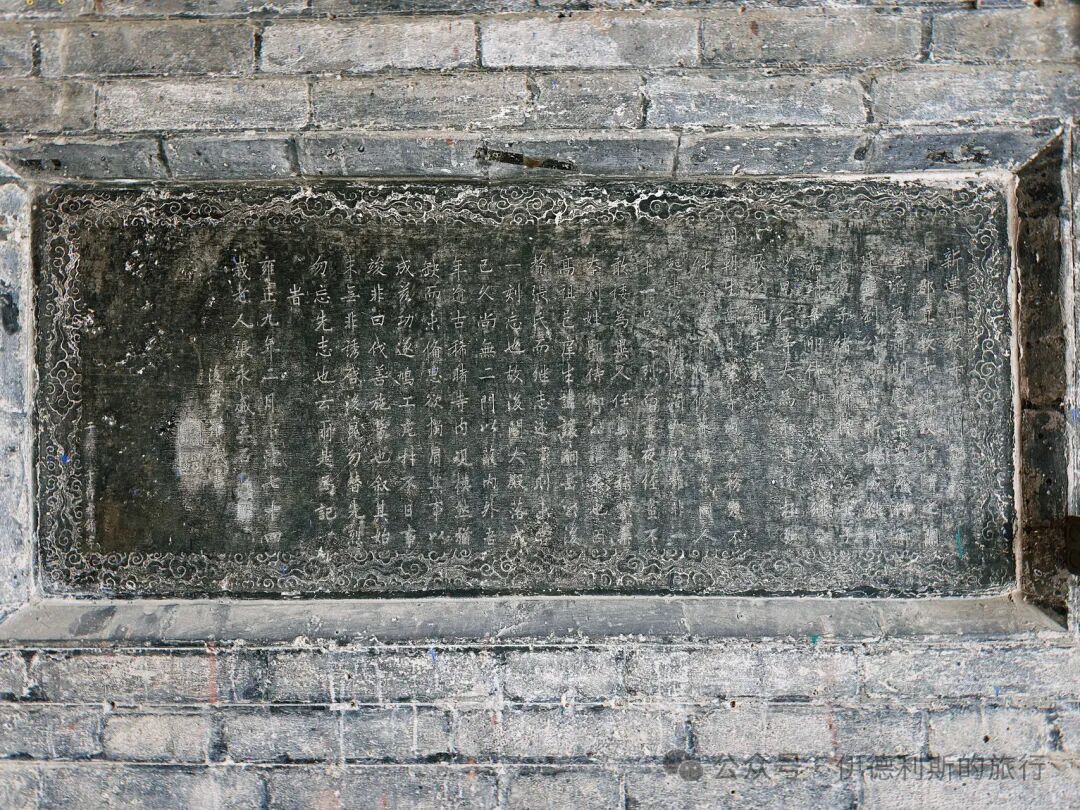
The 1731 'Record of the Newly Built Second Gate of Zhenjiao Mosque' records how the elder Zhang Yongsheng donated money to build the second gate during the Yongzheng reign.
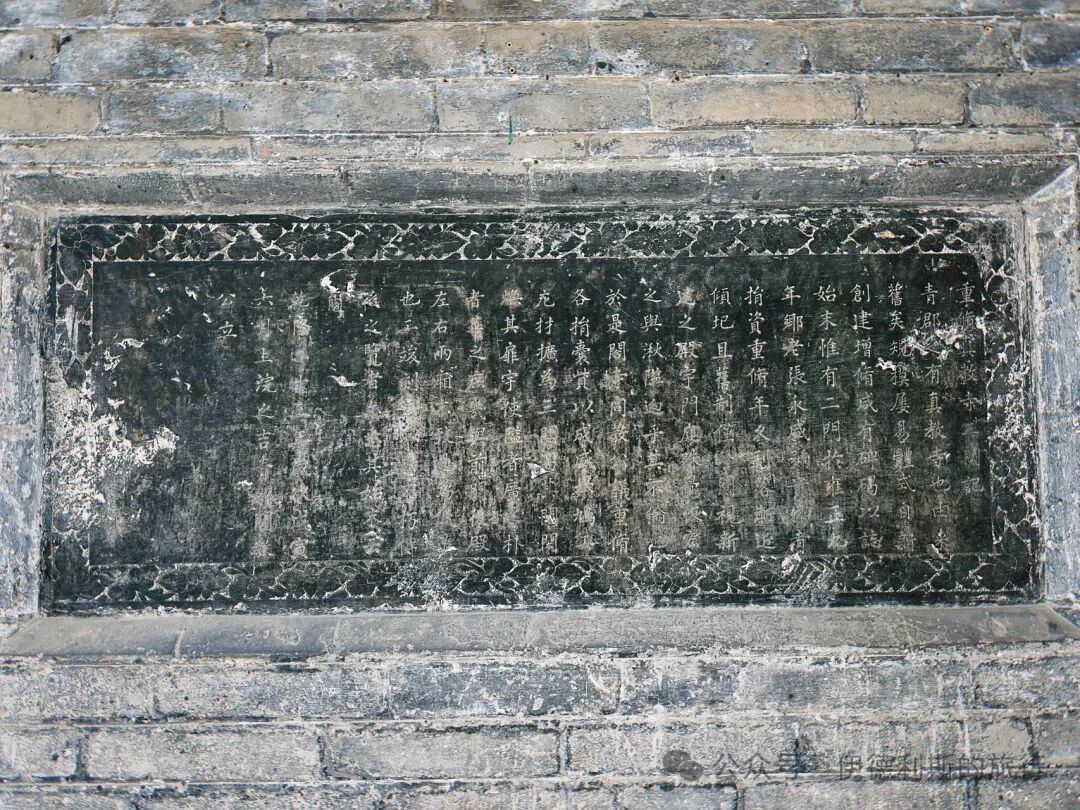
The 1758 'Record of the Rebuilding of the Second Gate of Zhenjiao Mosque' records the expansion of the second gate from one room to three rooms during the Qianlong reign.
The 1848 'Stele Record of the Rebuilding of the Rear Building of Zhenjiao Mosque' records donations from local officials, including the Dengzhou Town commander and the acting magistrate of Yidu, to rebuild the rear building.
Zhaode Ancient Street
Zhaode Ancient Street, home to the True Teaching Mosque (Zhenjiao Si), is a protected cultural heritage site of Shandong Province and one of the first famous historical and cultural streets in China. It is the best-preserved ancient street for Hui Muslims in Shandong. Since the Ming and Qing dynasties, Zhaode Ancient Street has been a settlement for Hui Muslims in Qingzhou. The Zhao and Yang families among them are descendants of Prince Nasulading of Yan'an, who was the son of Prince Sai Dianchi Zhansiding of Xianyang.
The Yang family of Hui Muslims are descendants of Boyanchaer, the ninth son of Nasulading. They originally lived in the Yangshi Jiaotou area of the Yuan capital, Dadu, and took the surname Yang. They moved from Dadu to Qingzhou in the first year of the Hongwu reign of the Ming dynasty. In the sixth year of the Zhengde reign of the Ming dynasty, Yang Yingkui passed the imperial examination and later served as the prefect of Lintao Prefecture in Shaanxi and Nanyang Prefecture in Henan.
the ancestors of the Ma family on Dongguan Grain Market Street lived in Shizi Hutong outside the Qianmen Gate in Beijing.
In front of the True Teaching Mosque in Qingzhou stands the Stele Record of the Renovation of Zhaode Street from the 33rd year of the Guangxu reign, which records the renovations of Zhaode Street during the Qianlong and Guangxu periods:
Qingzhou is a bustling area where people and carriages crowd the roads and merchants gather. Besides fish and salt, silk is the primary commodity. The northern end of Zhaode Street is the key location for these gatherings. Zhaode Street sits on the main north-south thoroughfare and is a path that merchants must take. As for the year it was founded, it is too long ago to verify. It was only renovated during the Qianlong period. In recent decades, it has become half-collapsed, making travel difficult. At that time, our local magistrate, Li Gongyichen, had just finished renovating the streets inside the city, so he ordered the gentry and merchants of the East Gate to renovate the street. Gentry and merchants Xu Fang, Hu Xiang, and others met to discuss it. Roads exist to benefit travelers, so they discussed the repairs with their neighbors, and everyone agreed, with donors eagerly stepping forward first. Those in charge worked tirelessly, repairing nearly 1,000 feet of street, spending over 2,000 strings of cash, and finishing the work within a month. Because of this, those carrying loads, those driving carts, and the bustling crowds all cheered in relief. When asked, the residents said: 'Who is responsible for changing the collapsed road of the past into this smooth path?' Everyone said, 'It is us.'
'It is the power of Magistrate Li's initiative to repair it; otherwise, how could we have this scene today?' Therefore, I record these events to commemorate them.
Written by local student Wang Huifang.
Jointly established by twenty-four people including Zhao, Ma, Xu, Ju, Liu, Zheng, Li, Fa, Wang, Ma, Ding, Yang, and Zhang.
An auspicious day in the sixth lunar month of the Dingwei year, the 33rd year of the Guangxu reign of the Great Qing Dynasty.
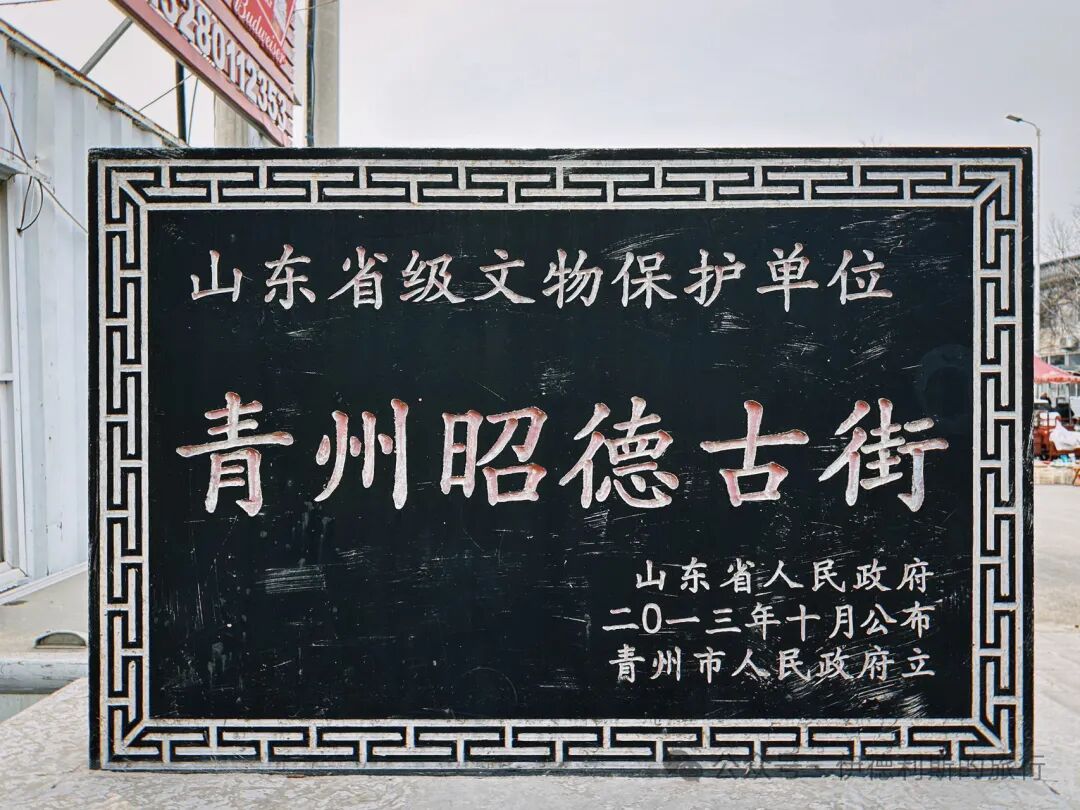
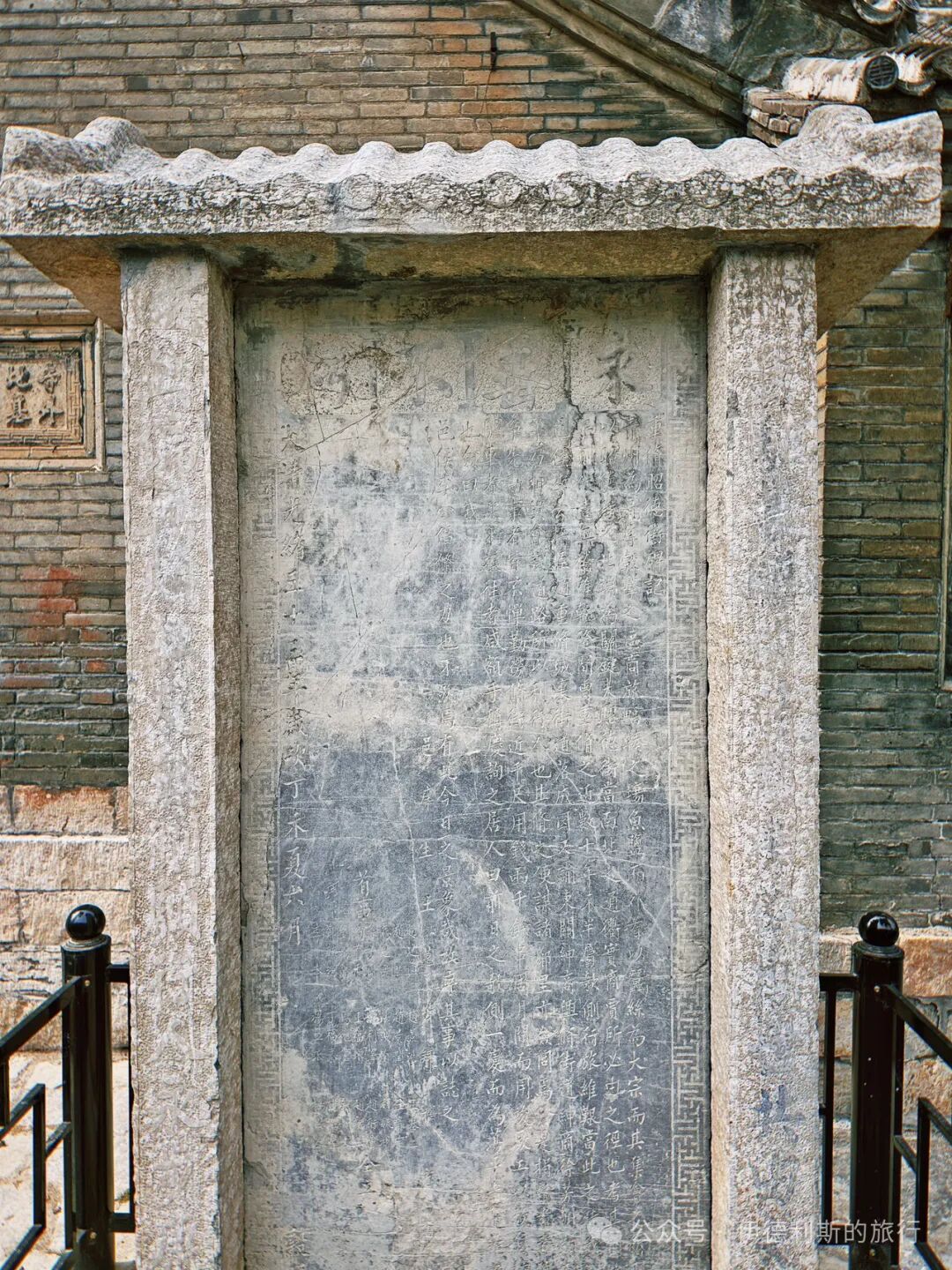
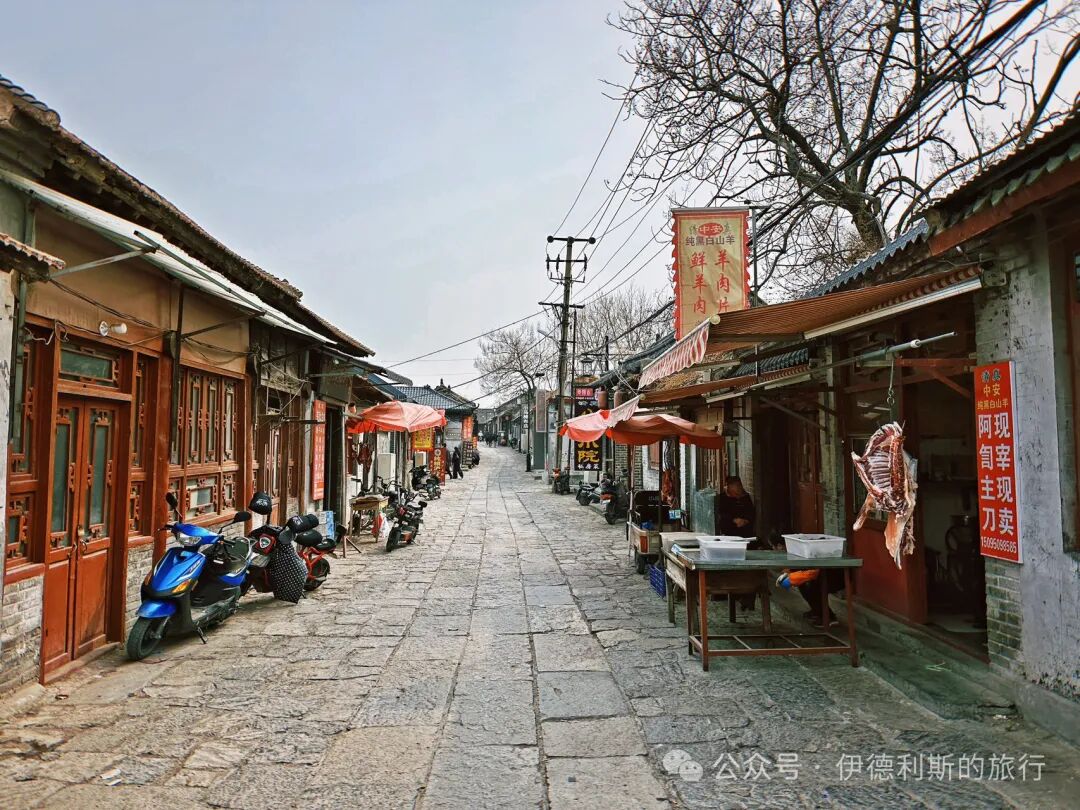
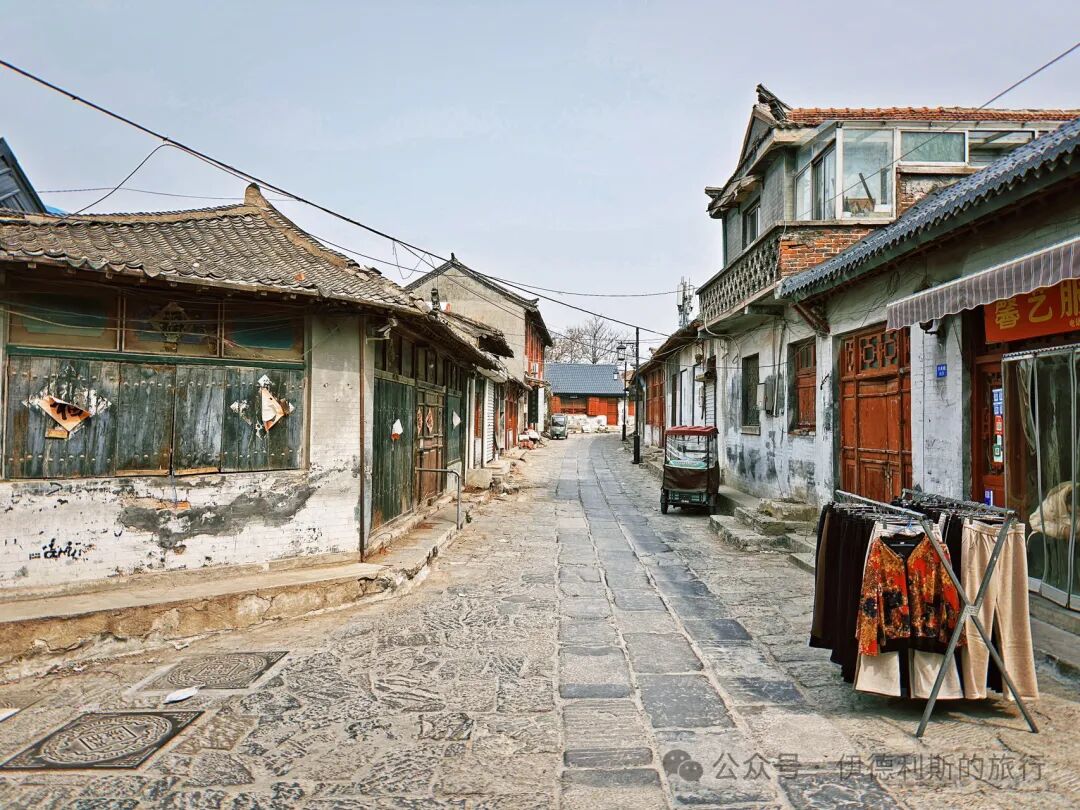
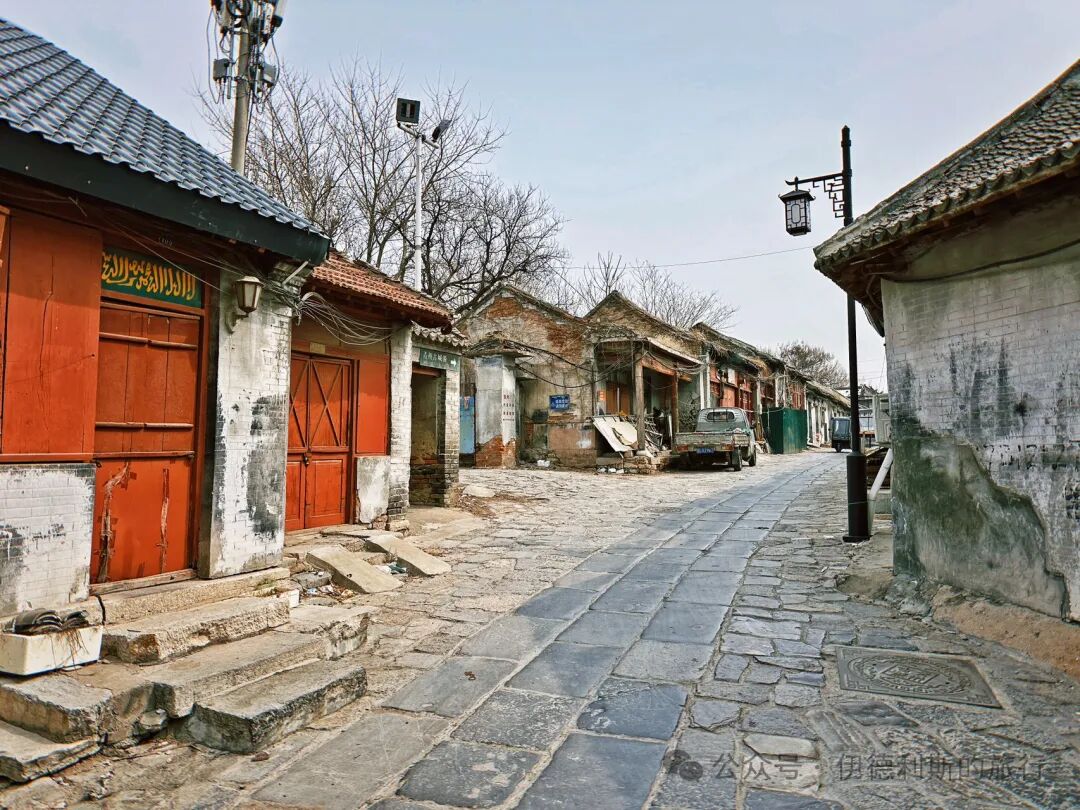
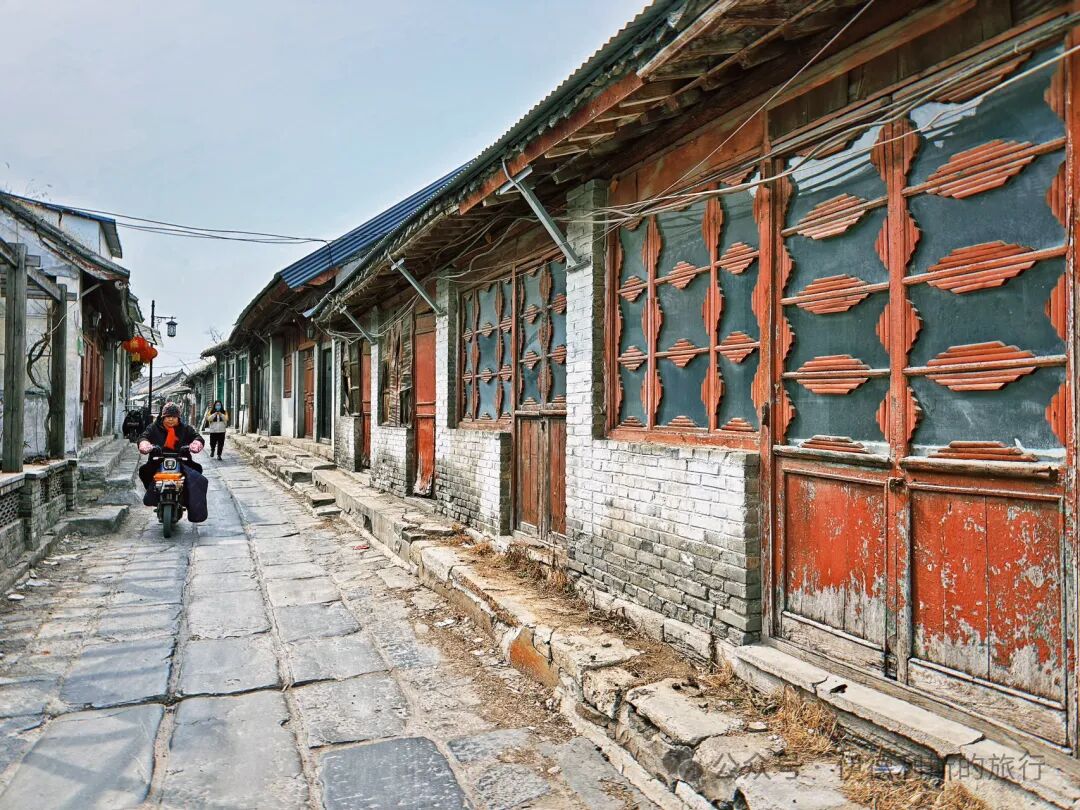
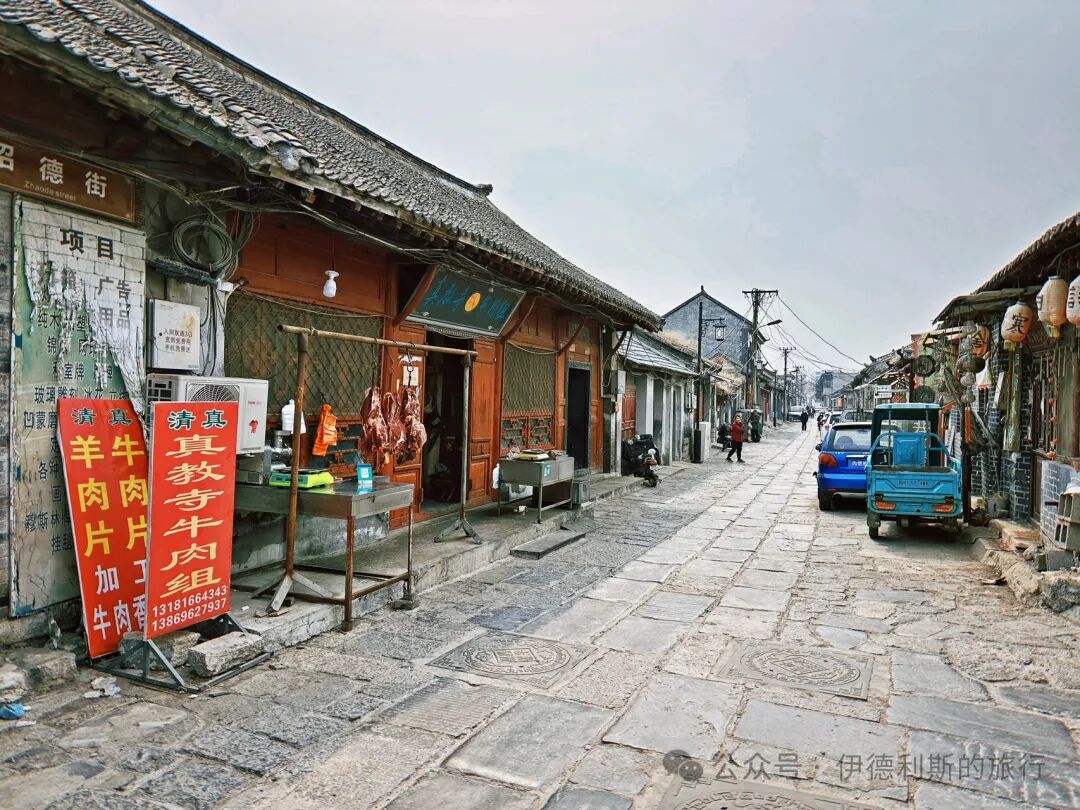
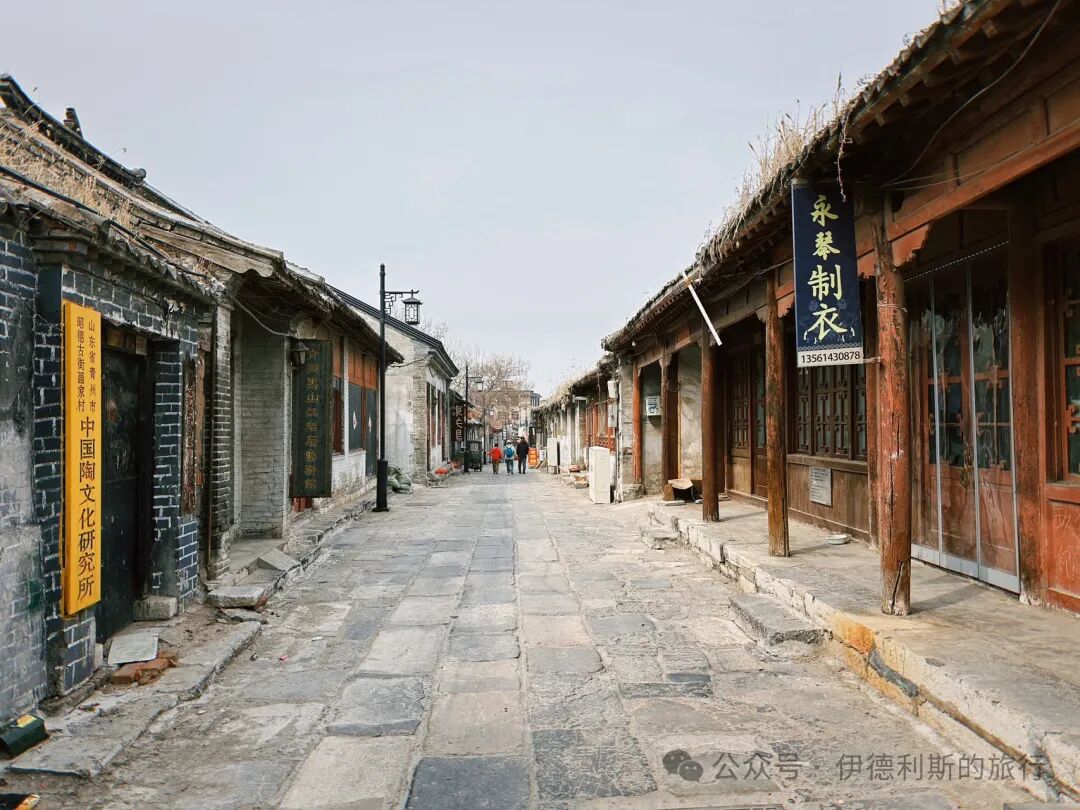
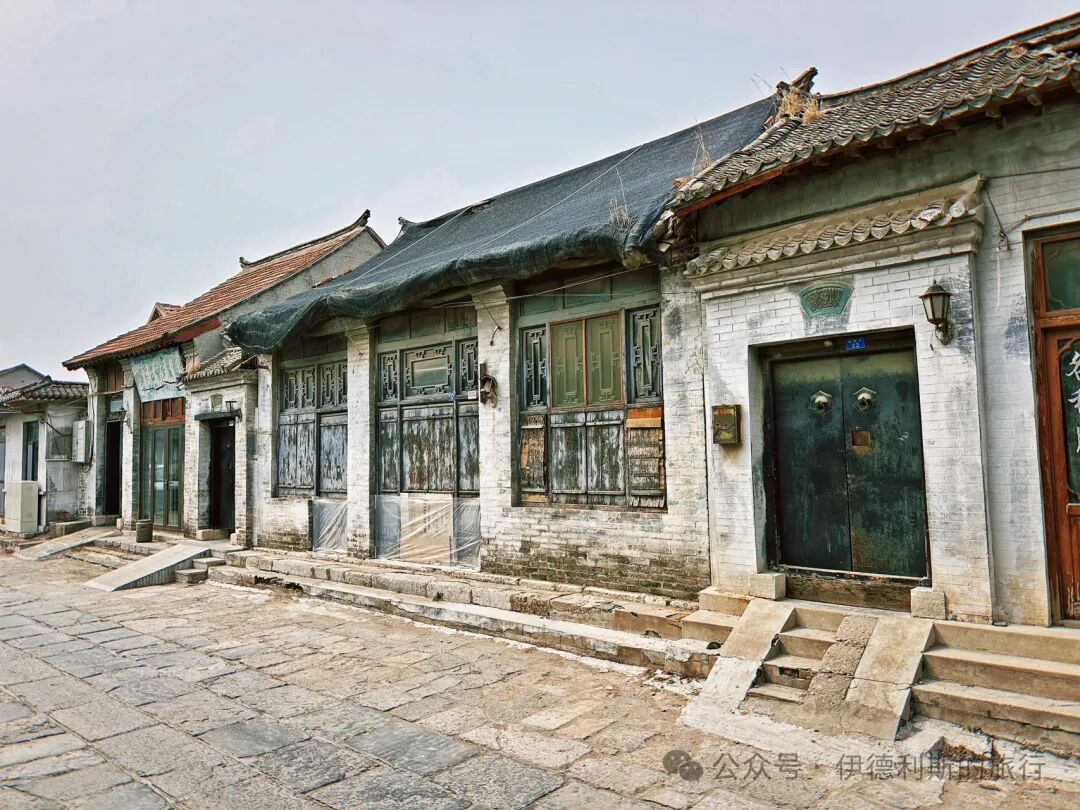
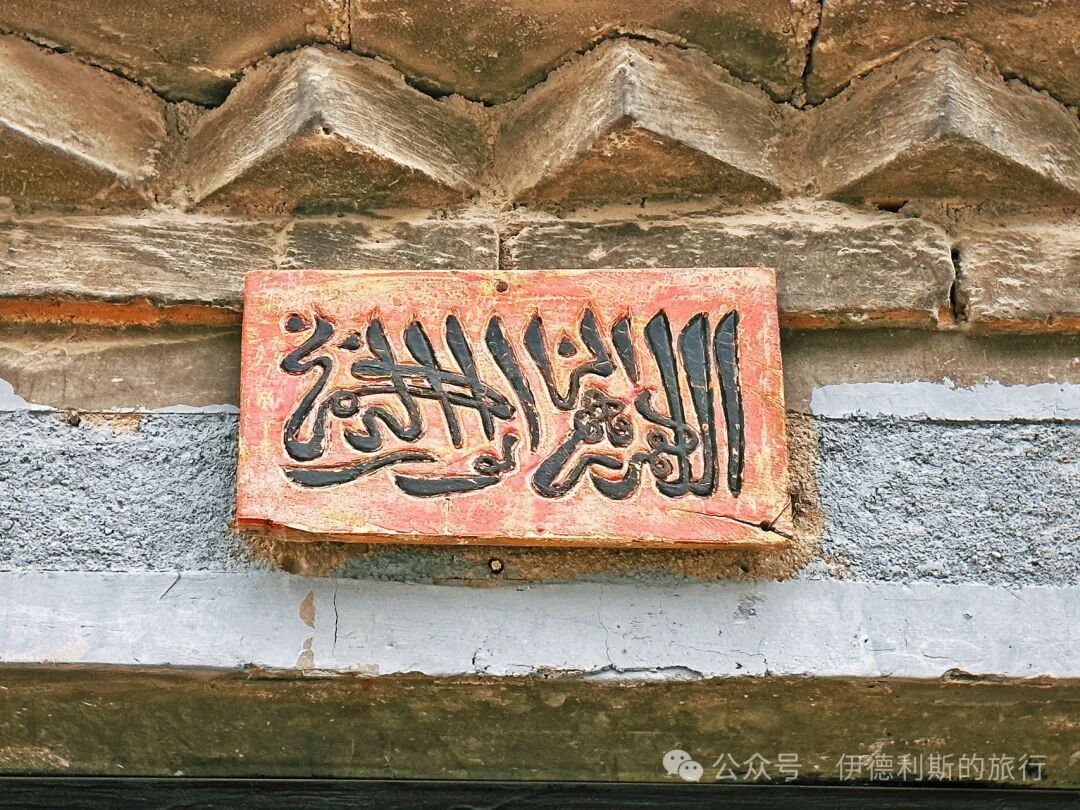
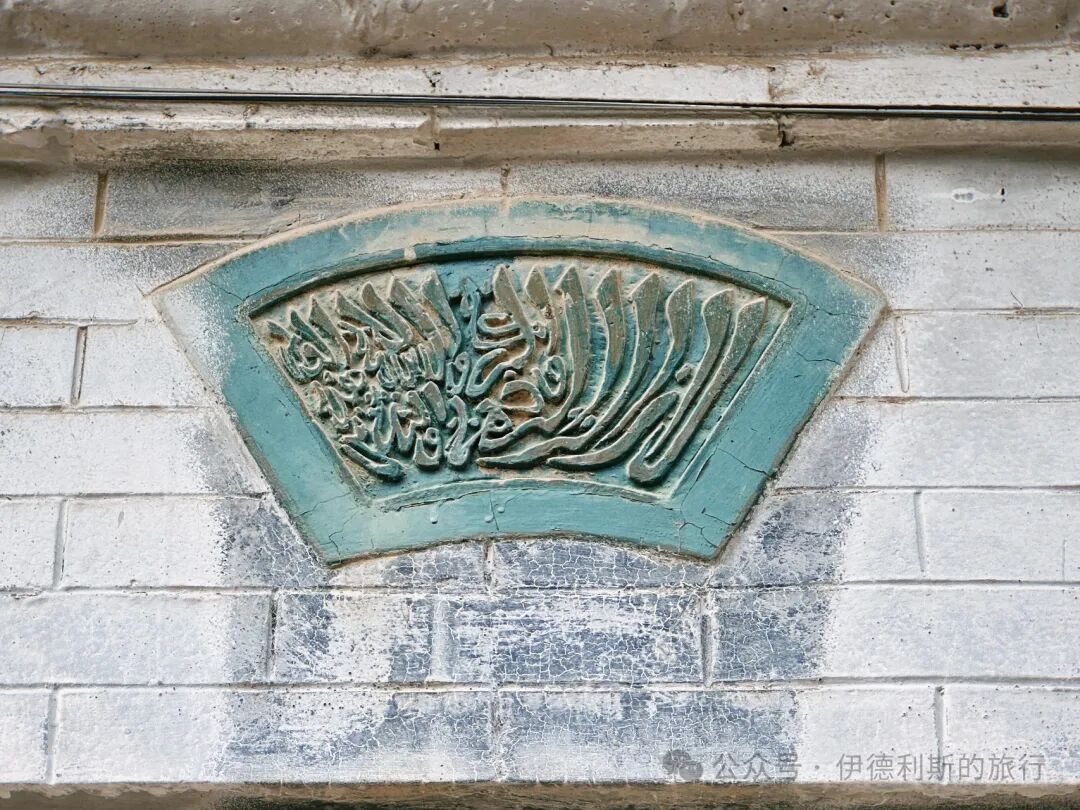
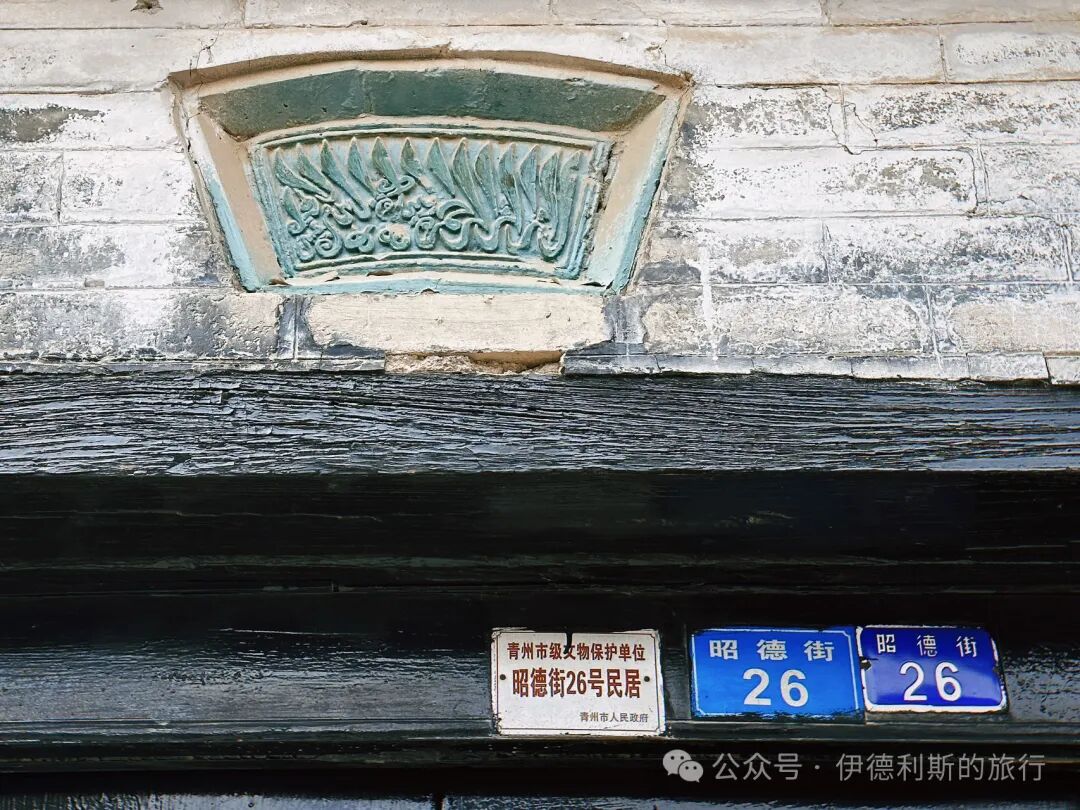
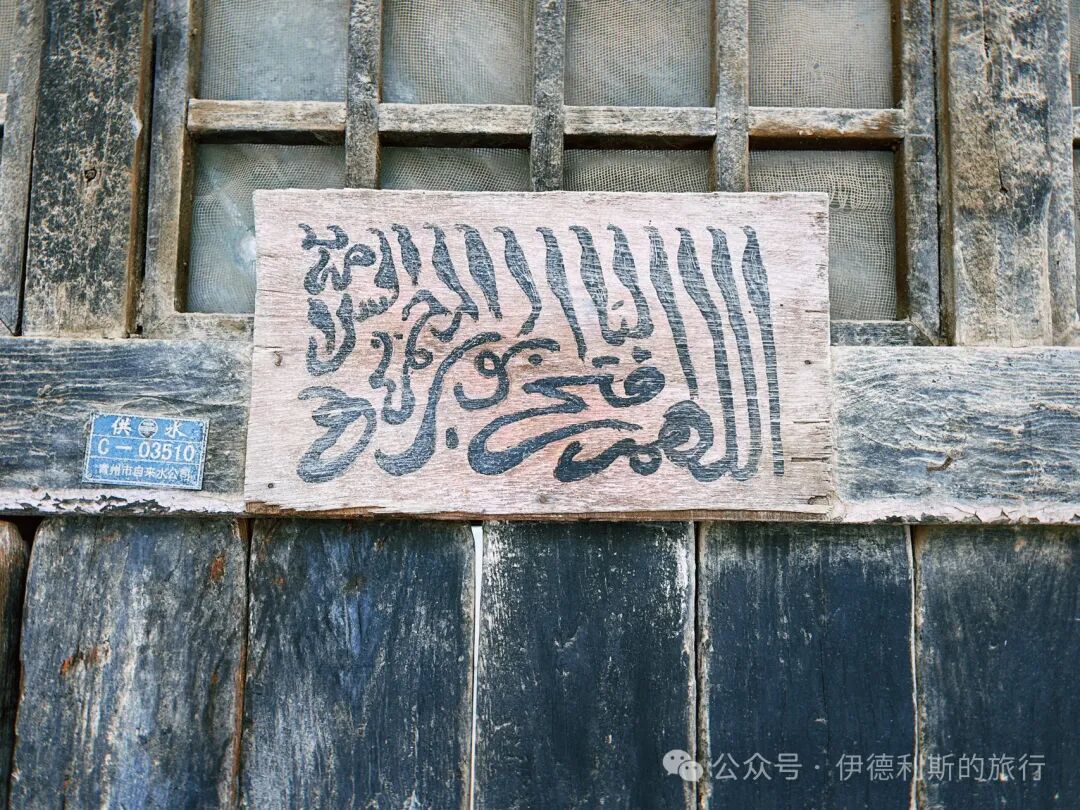
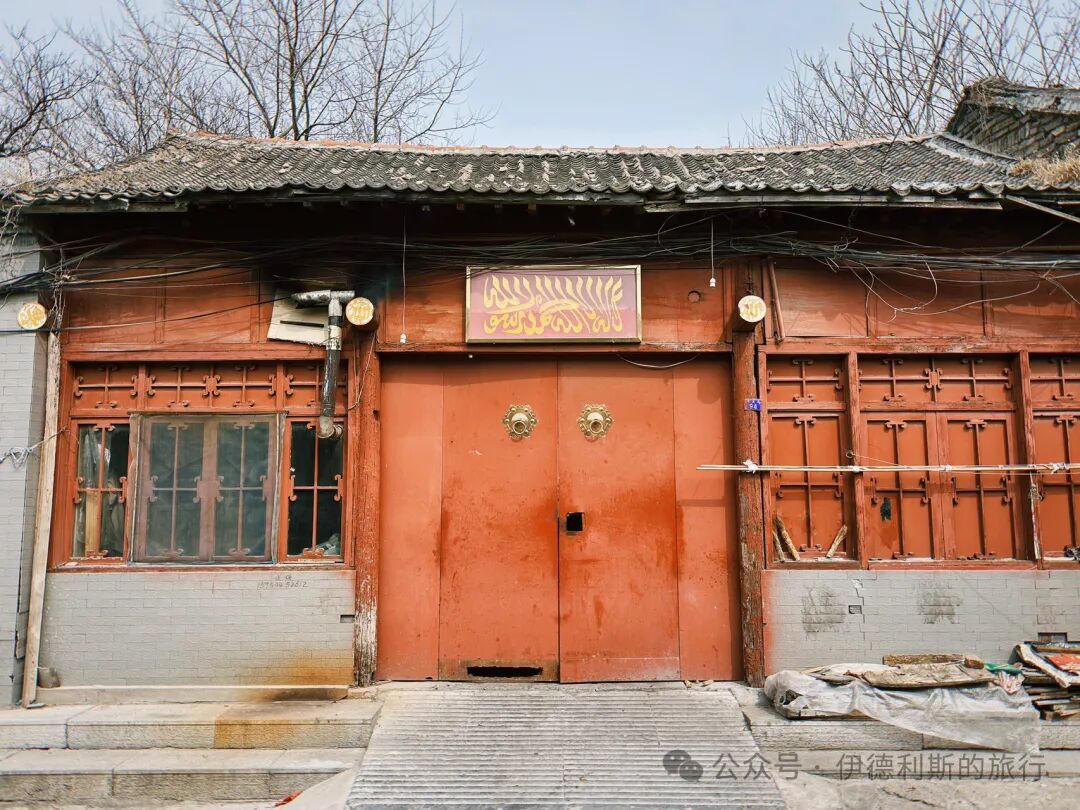
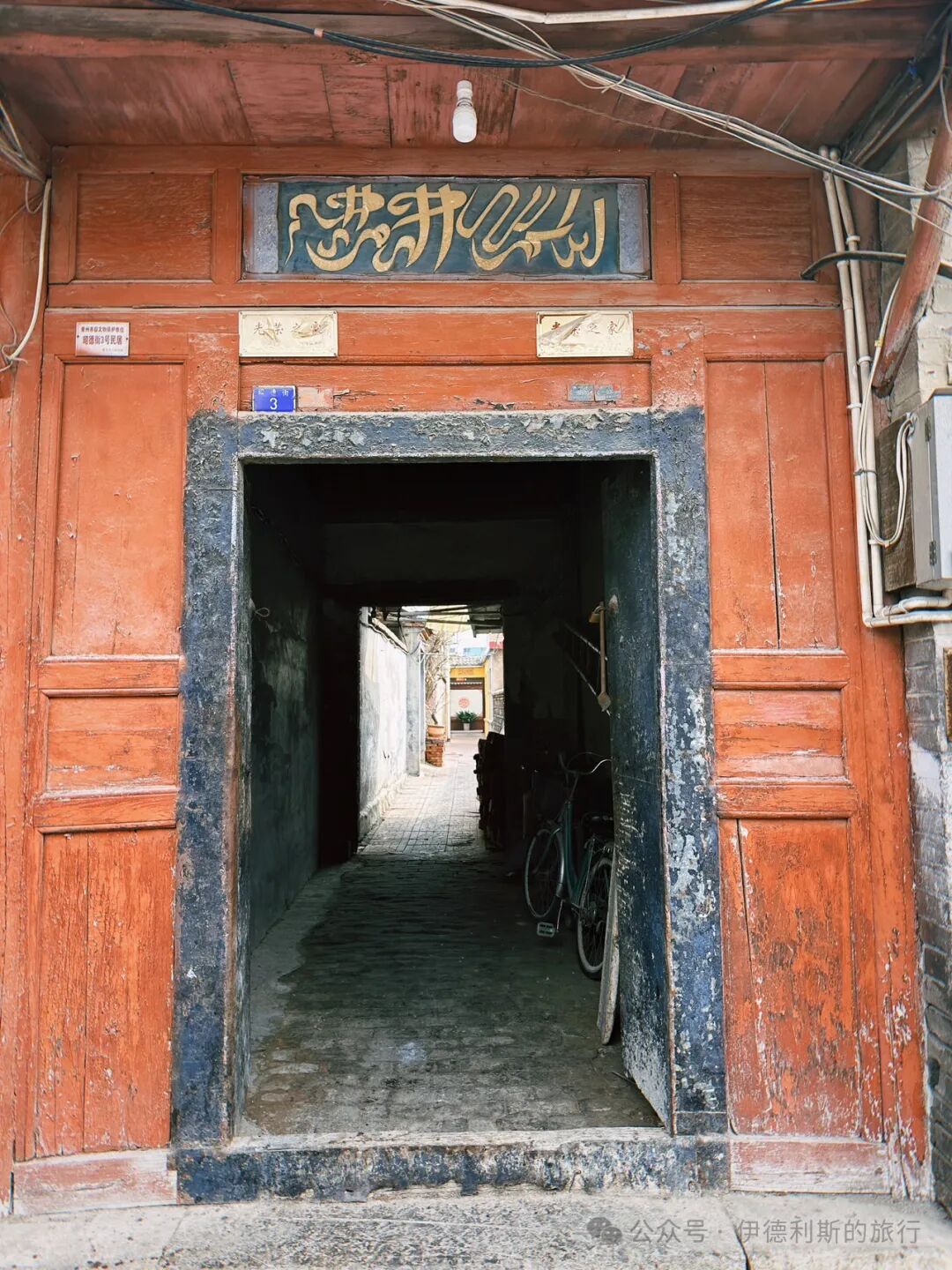
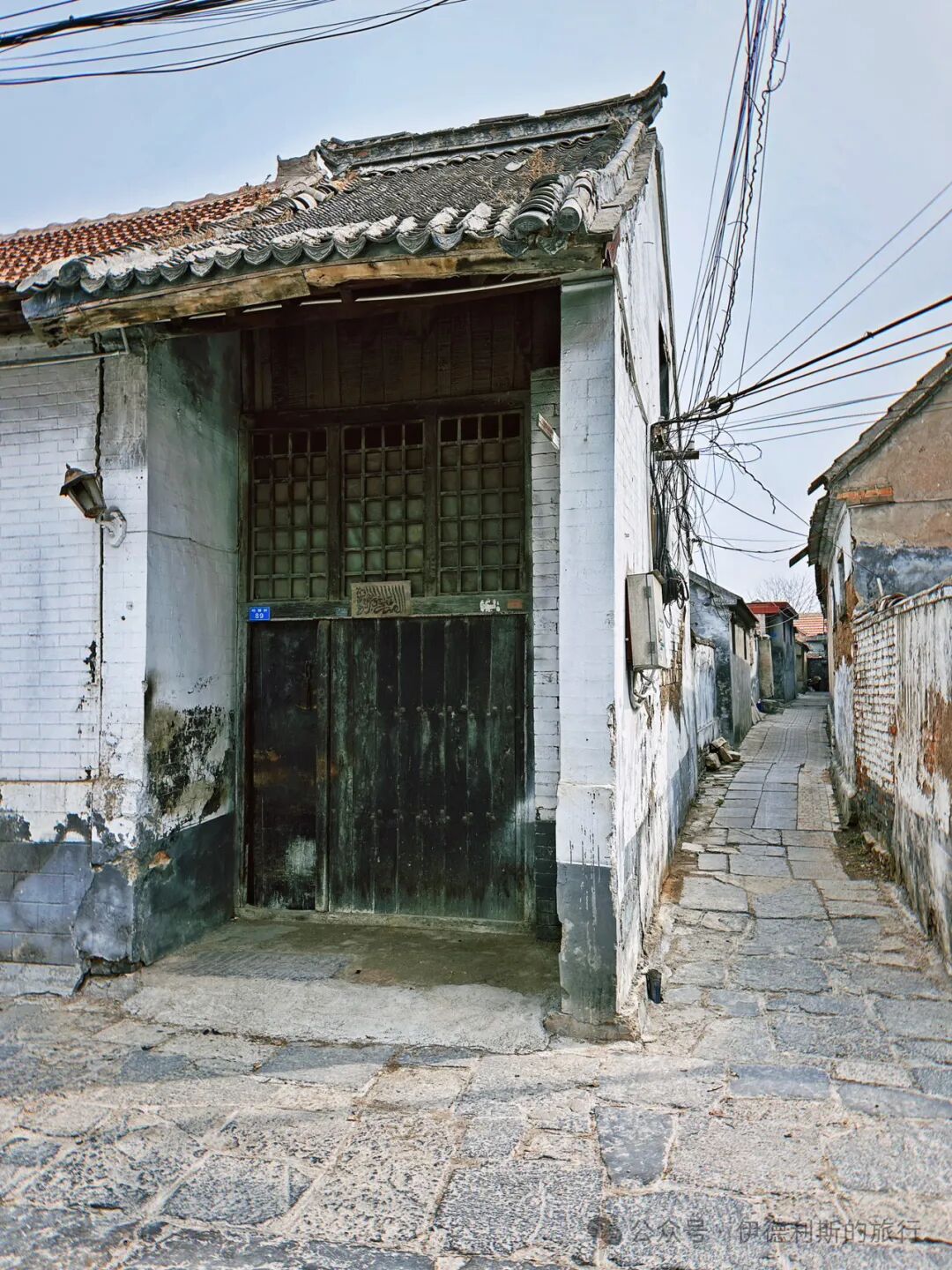
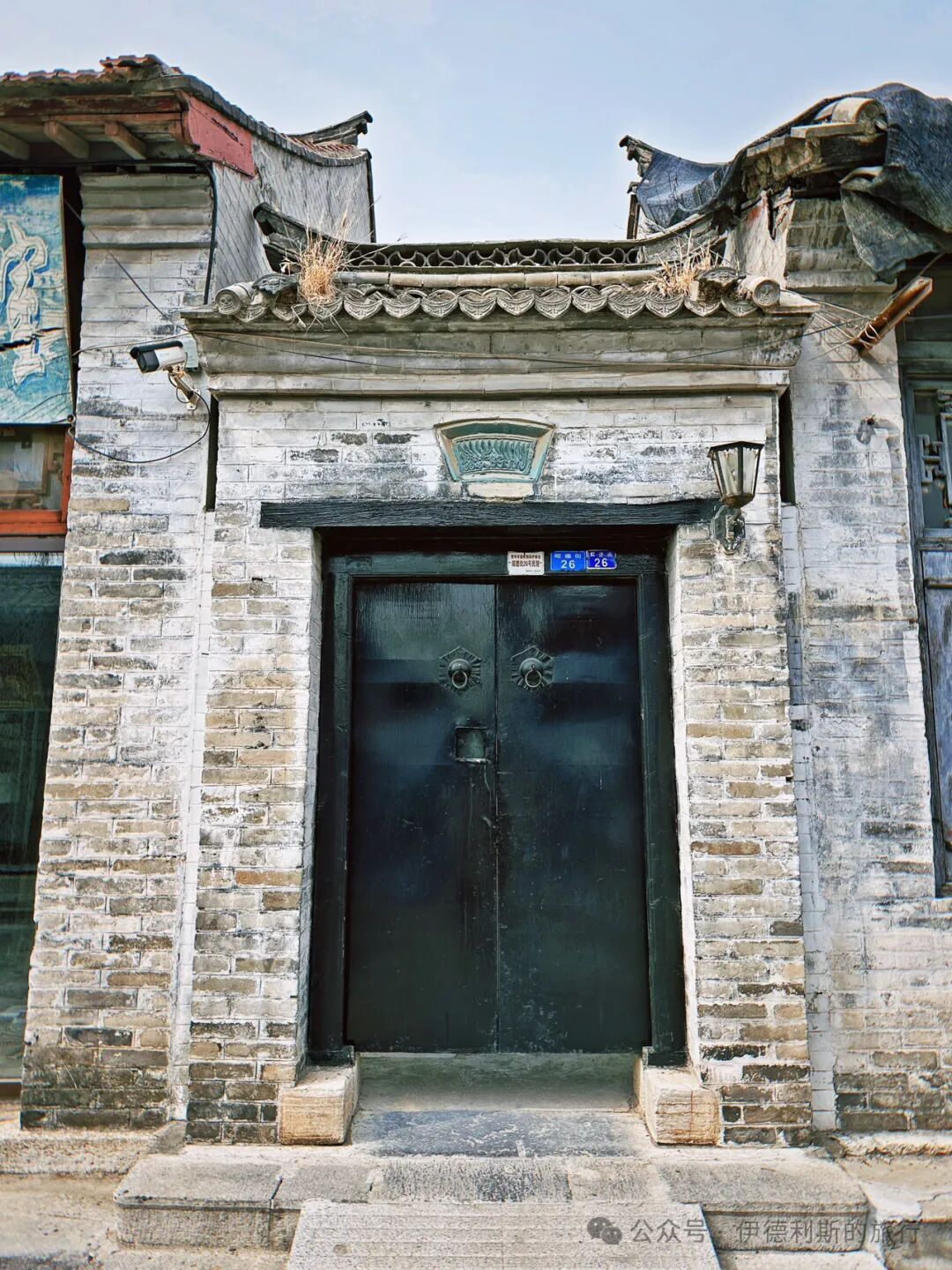
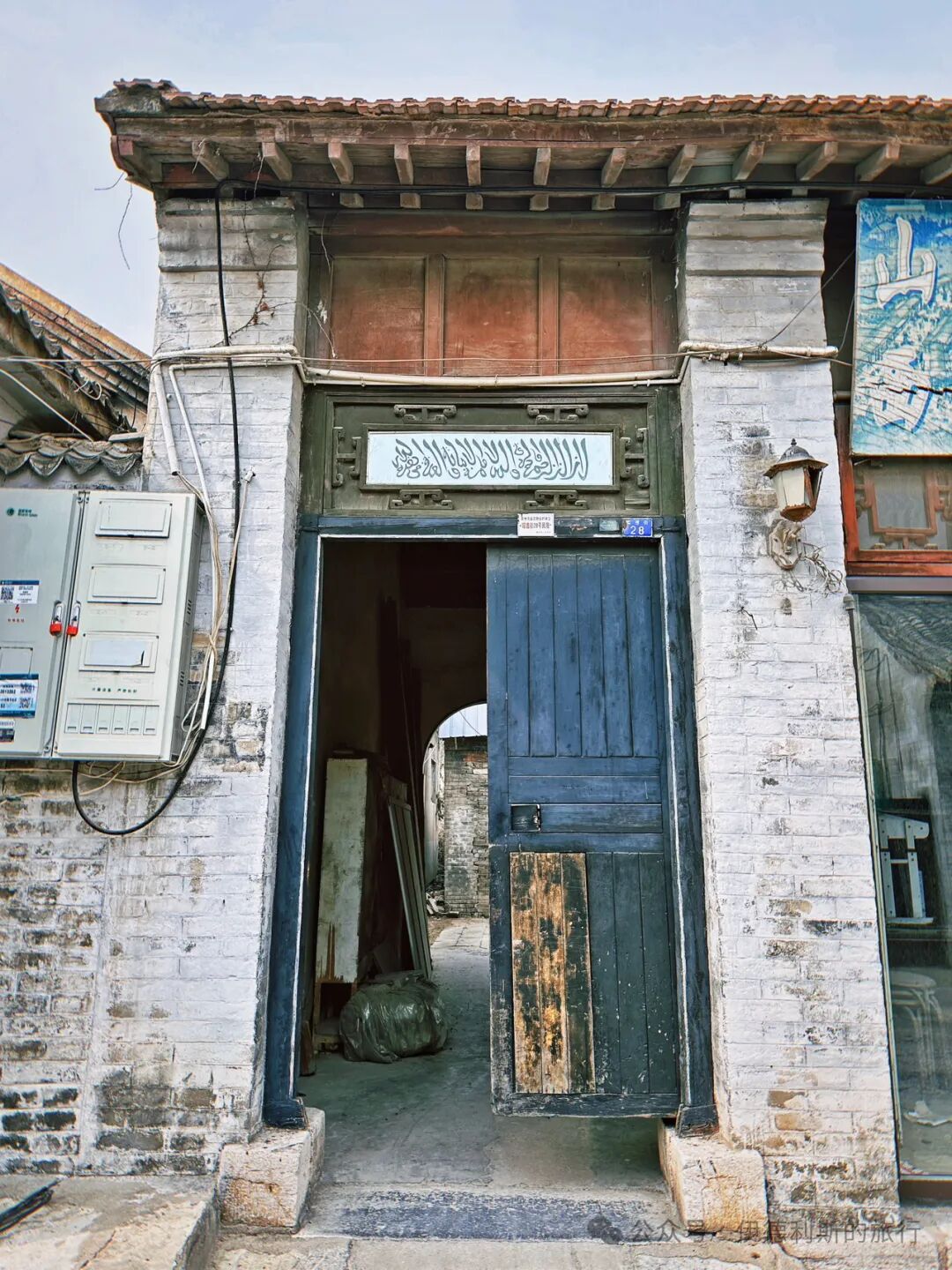
City Mosque (Chengli Si).
Qingzhou City Mosque sits south of the East Gate in Qingzhou. It originally stood right next to the Qingzhou Prefecture city wall. Later, the wall was torn down to make way for Yunmenshan South Road, so it is also called Yunmenshan South Road Mosque.
Qingzhou city originally had only one mosque, the True Teaching Mosque (Zhenjiao Si). Because the East Gate closed early and late, it was very inconvenient for the local Hui Muslims. In 1546 (the 25th year of the Jiajing reign of the Ming Dynasty), they raised money to buy a residential plot belonging to the Tao family in Taojia Lane inside the East Gate and officially built the City Mosque. In 1625 (the 5th year of the Tianqi reign of the Ming Dynasty), Ma Zhiji, a director at the Imperial Academy, renovated it. In 1690 (the 29th year of the Kangxi reign), the imam Zhao Huang led the community to renovate it again.
The City Mosque originally had only a west gate. In 1710 (the 49th year of the Kangxi reign), Tuo Cheng led the construction of the east gate tower, the ceremonial gate, and the screen wall. In 1814 (the 19th year of the Jiaqing reign), the top-ranking military scholar Ding Dianxiang donated money to build the north lecture hall, and later, funds were raised to build the south lecture hall.
The main gate of the City Mosque was rebuilt in 1988. In the center is a stone plaque inscribed in 1710 (the 49th year of the Kangxi reign) by Zhang Liandeng, the prefect of Qingzhou from Guanzhong.
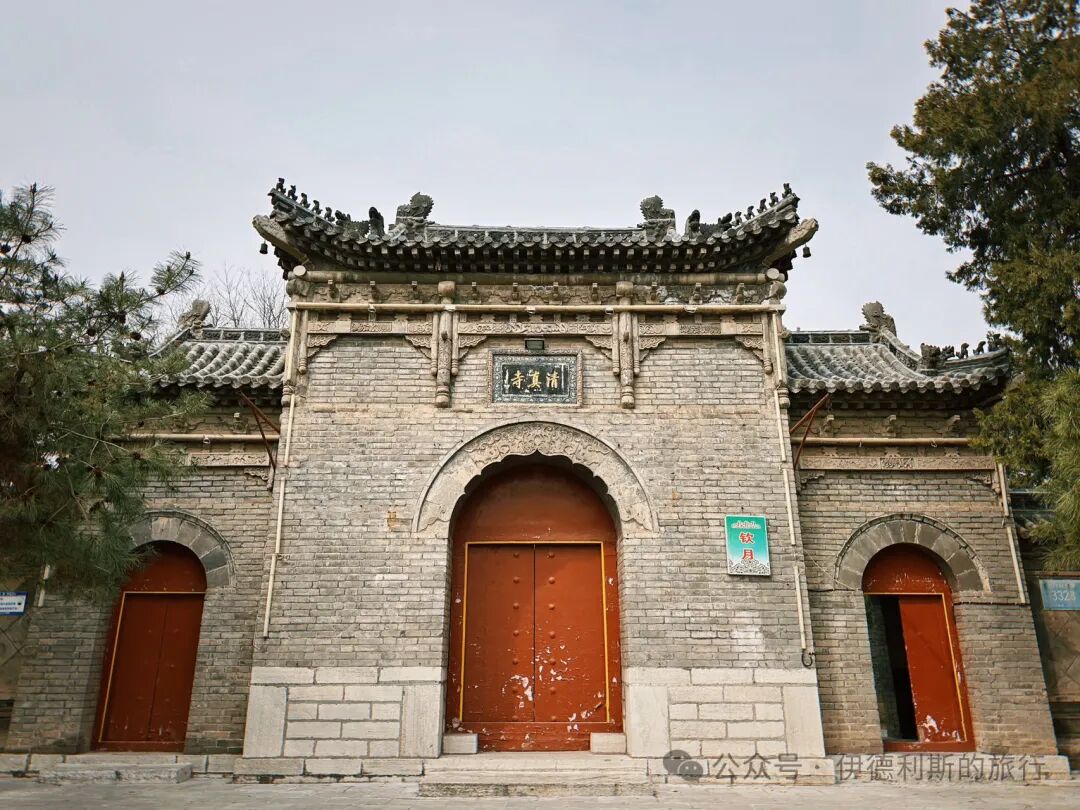
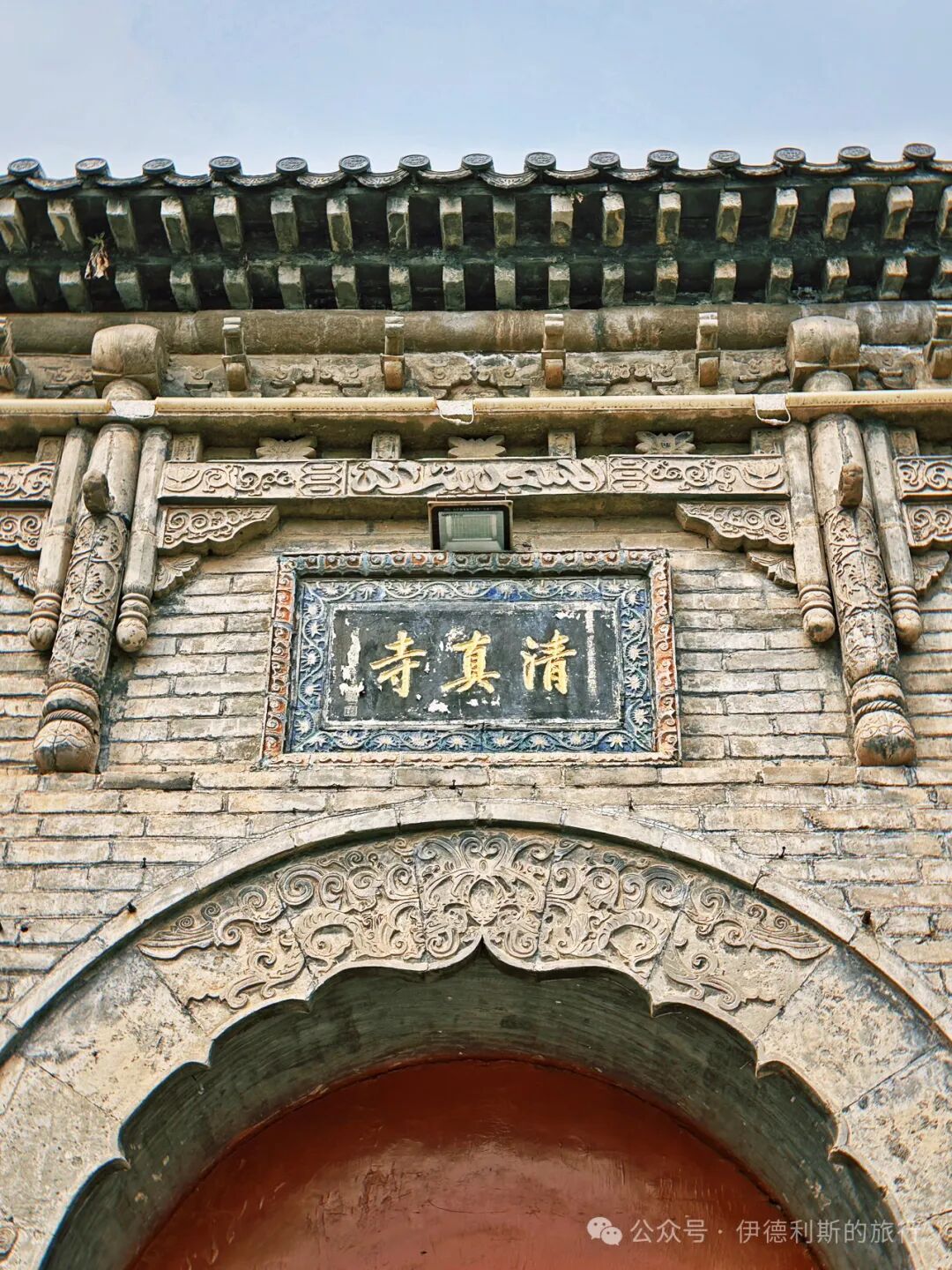
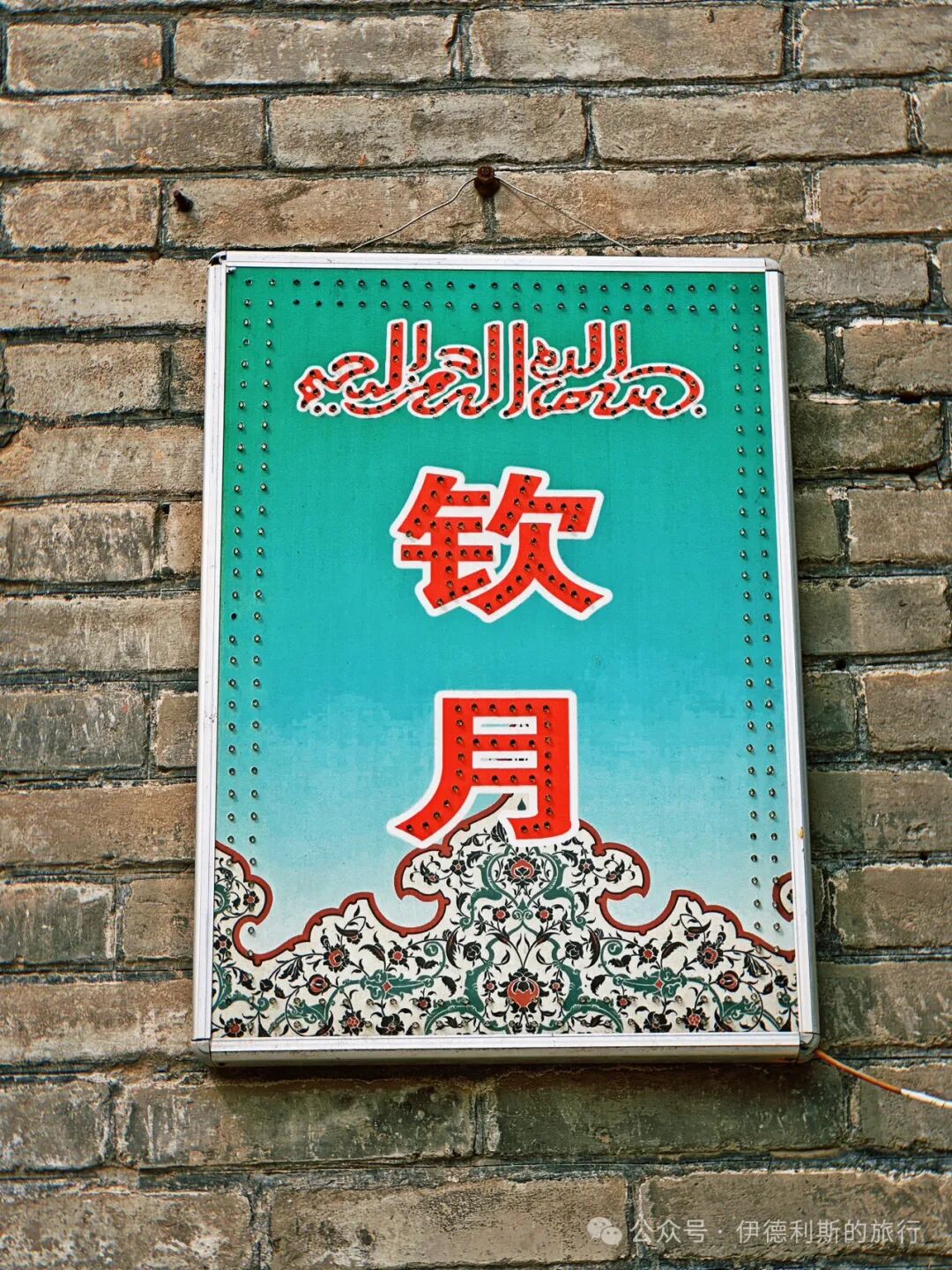
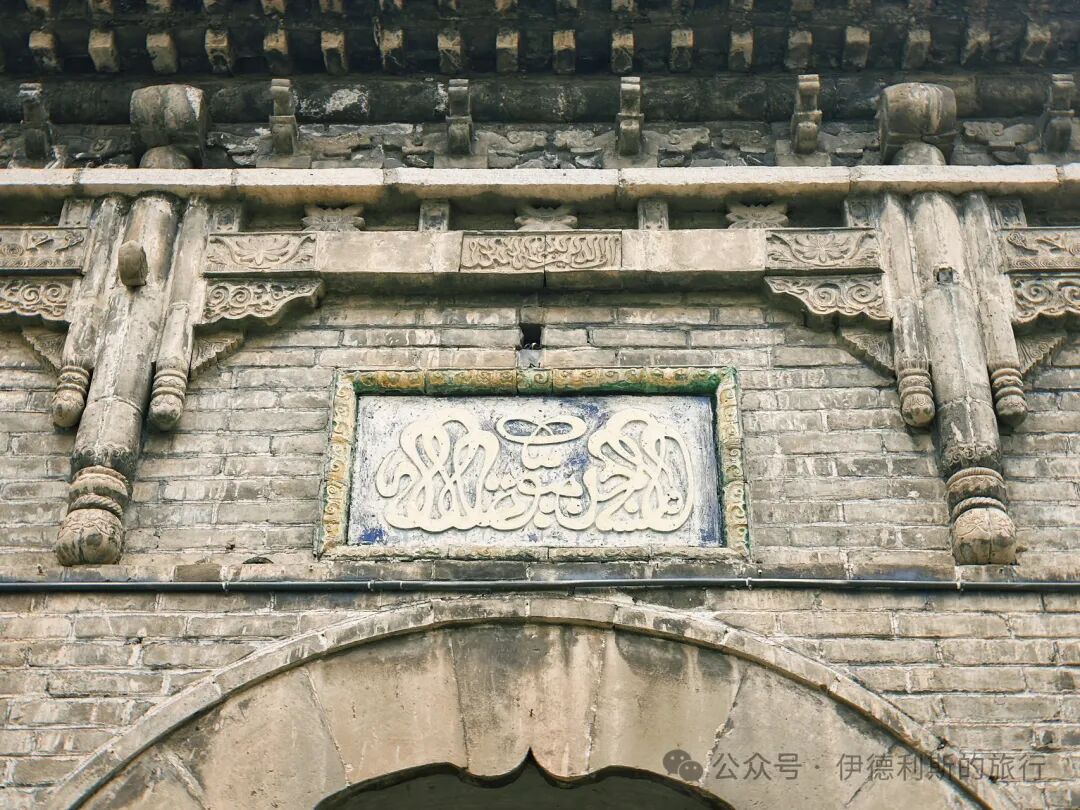
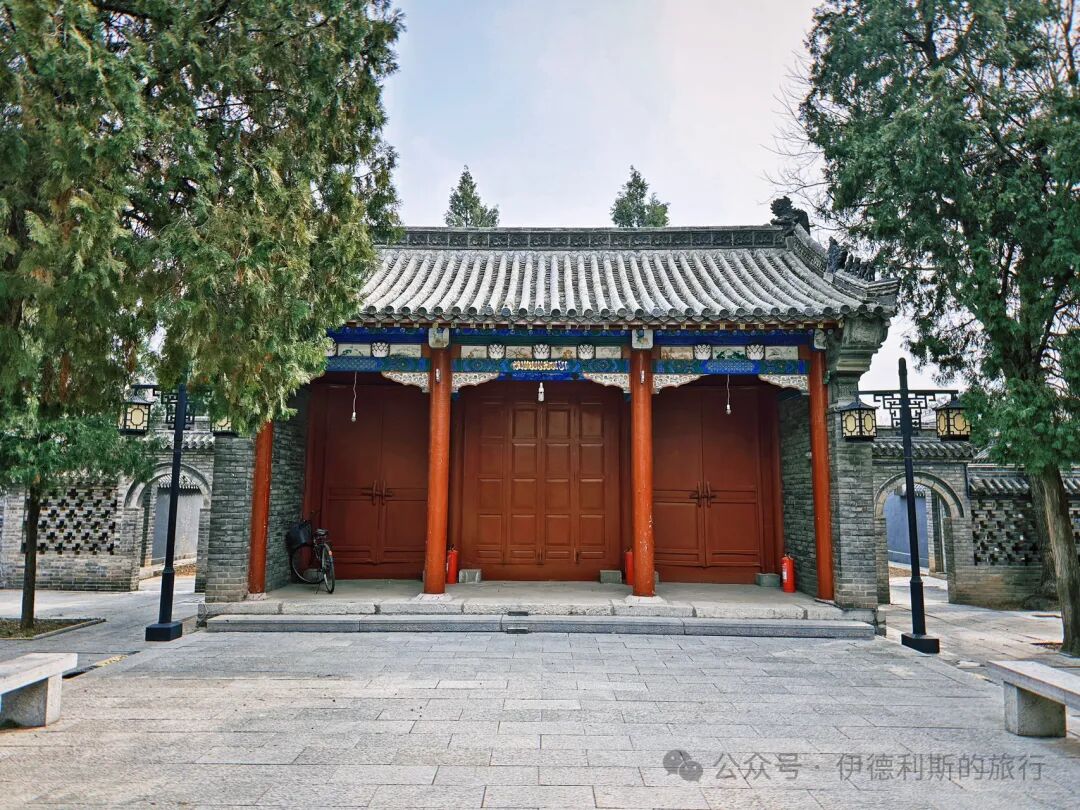
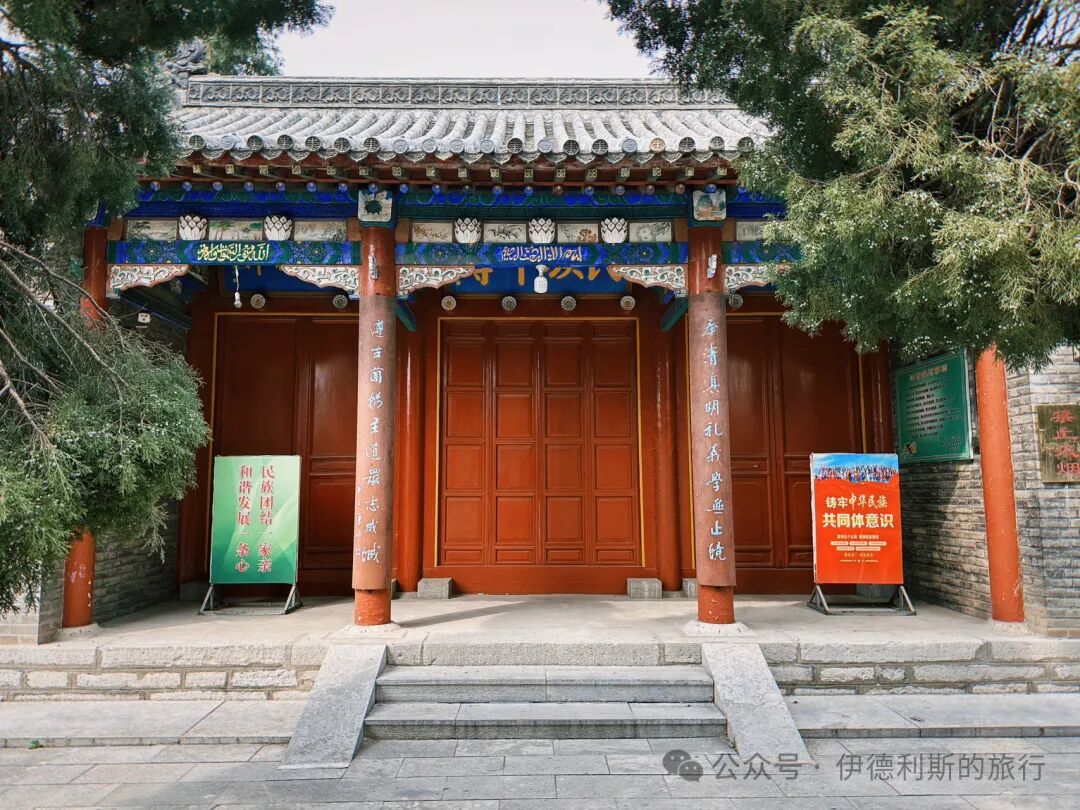
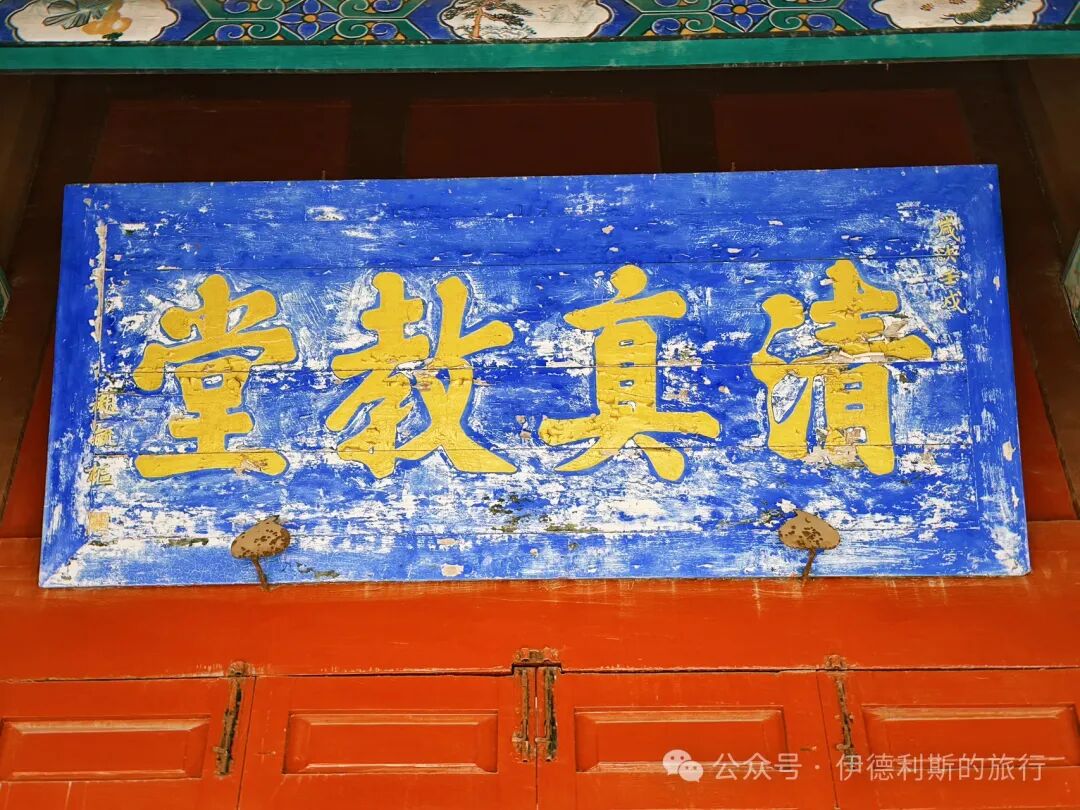
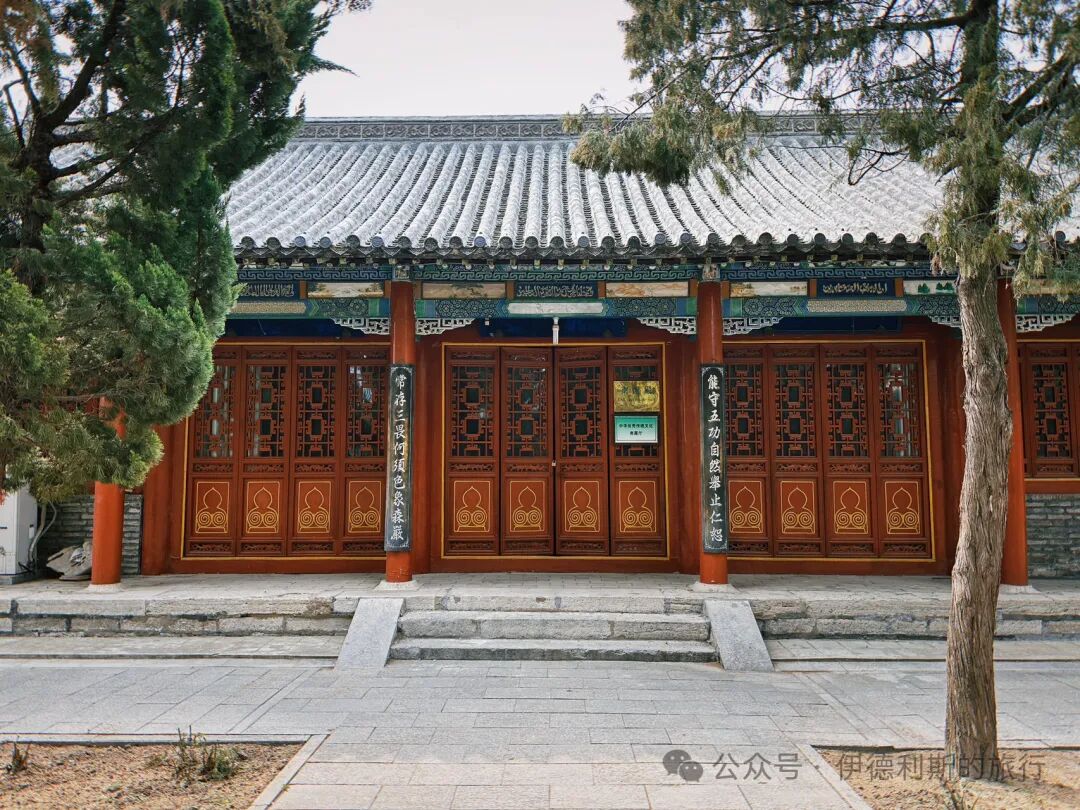
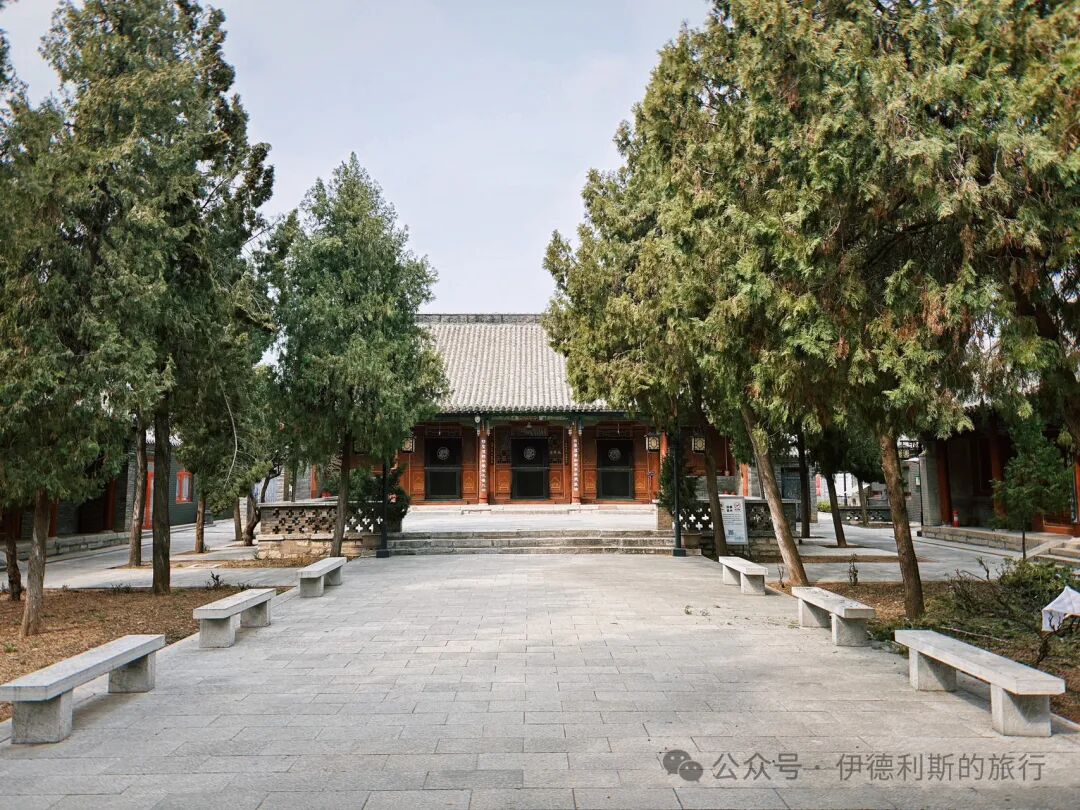
The main prayer hall of the City Mosque sits on a moon terrace. It consists of a front hall, a middle hall, and a kiln-style rear hall. The second floor of the kiln-style hall is the Moon-Watching Tower (Wangyue Lou) with a single-eave hip-and-gable roof. The stone plaque embedded at the back of the main hall was reportedly inscribed by Dai Xu, the Prince of Ningyang during the Ming Dynasty.
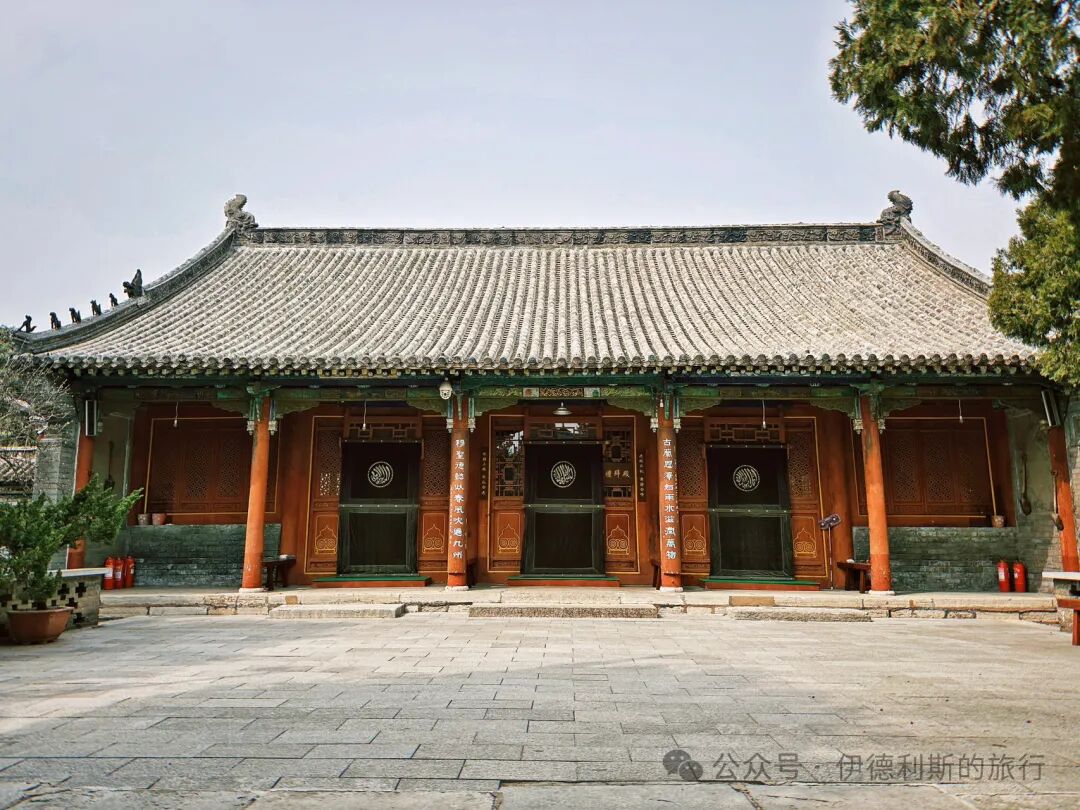
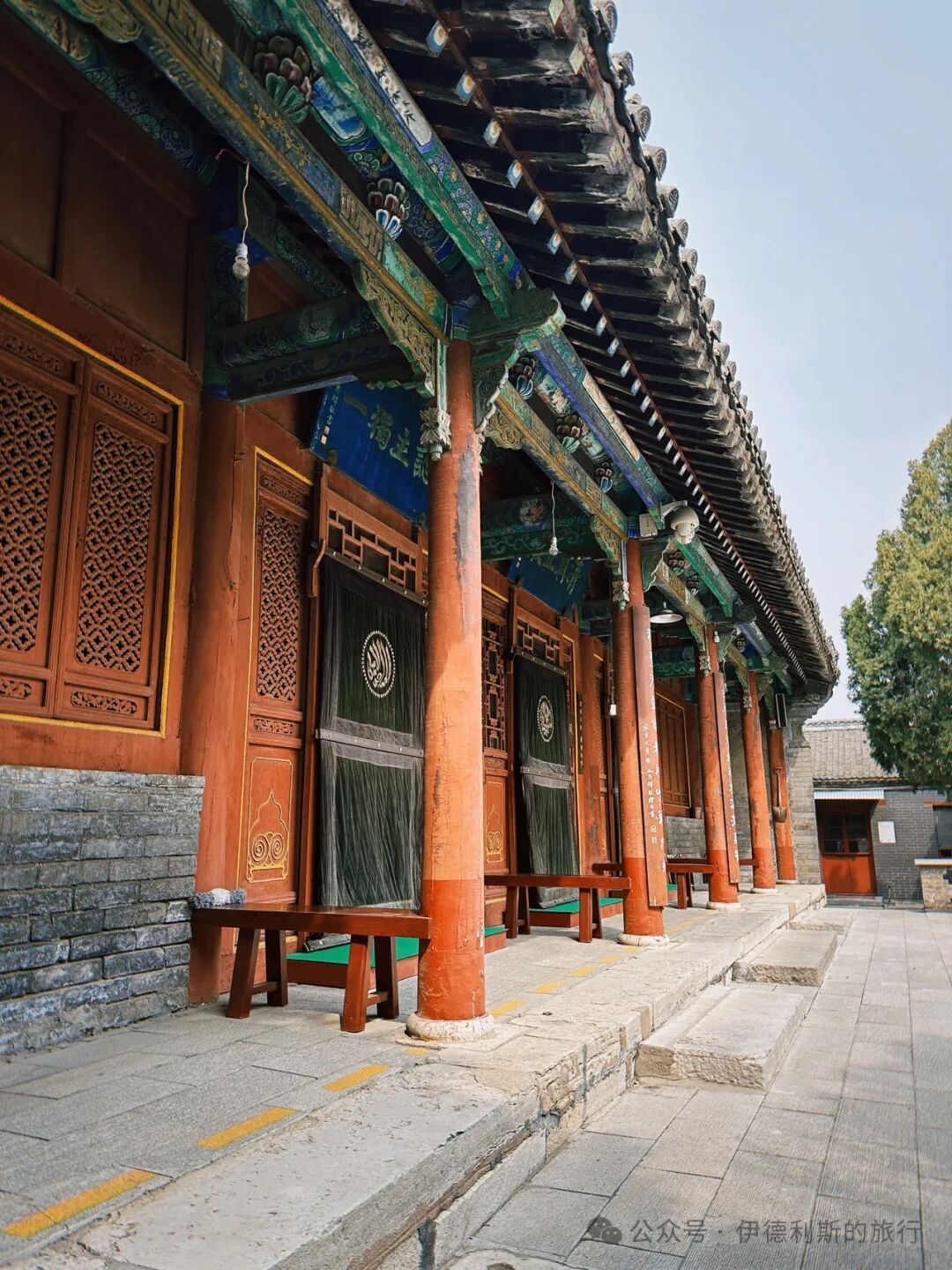
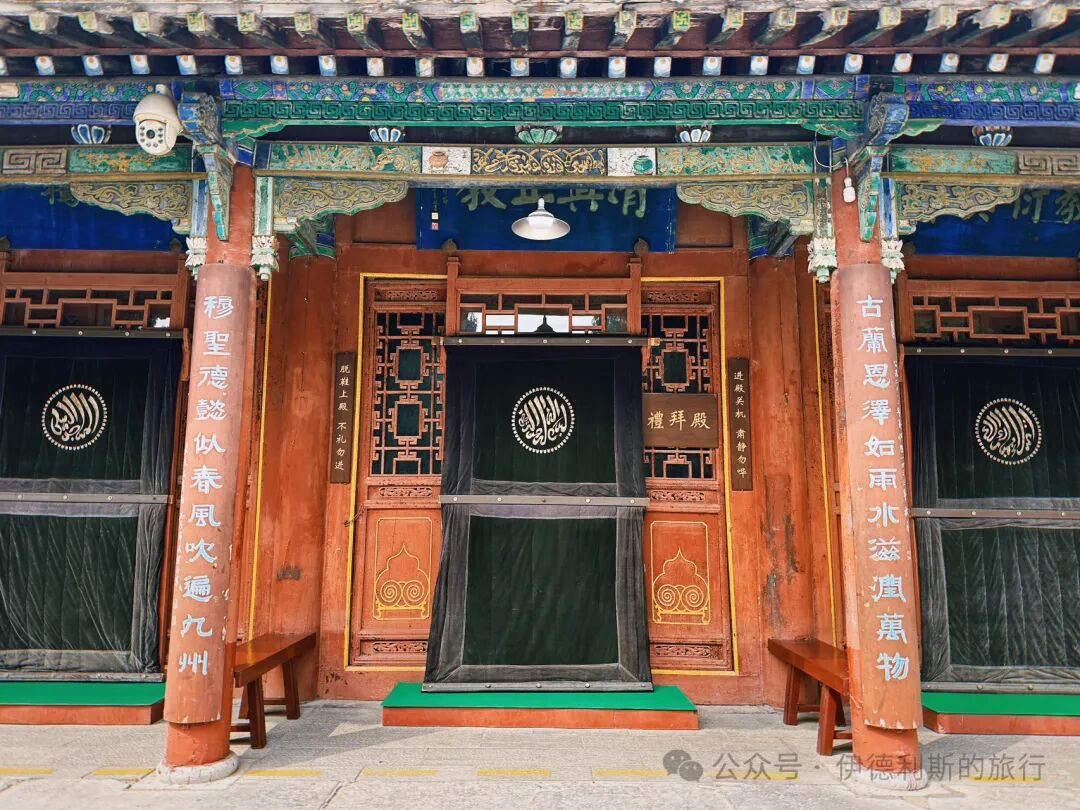
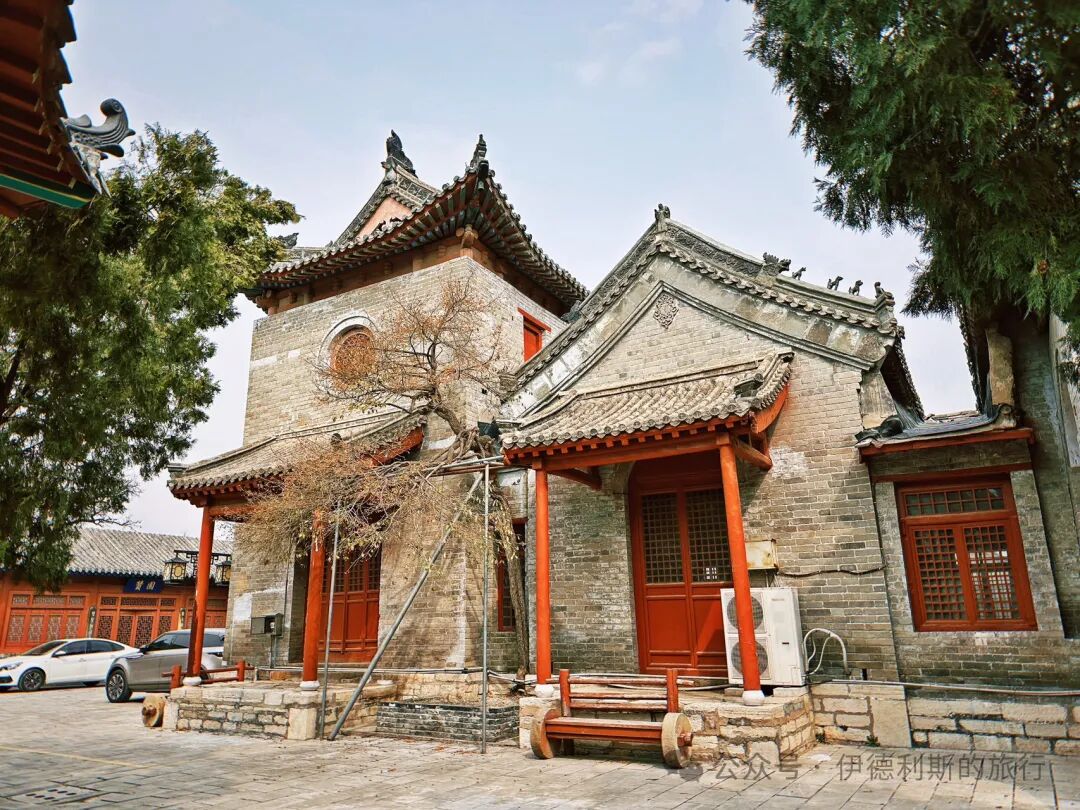
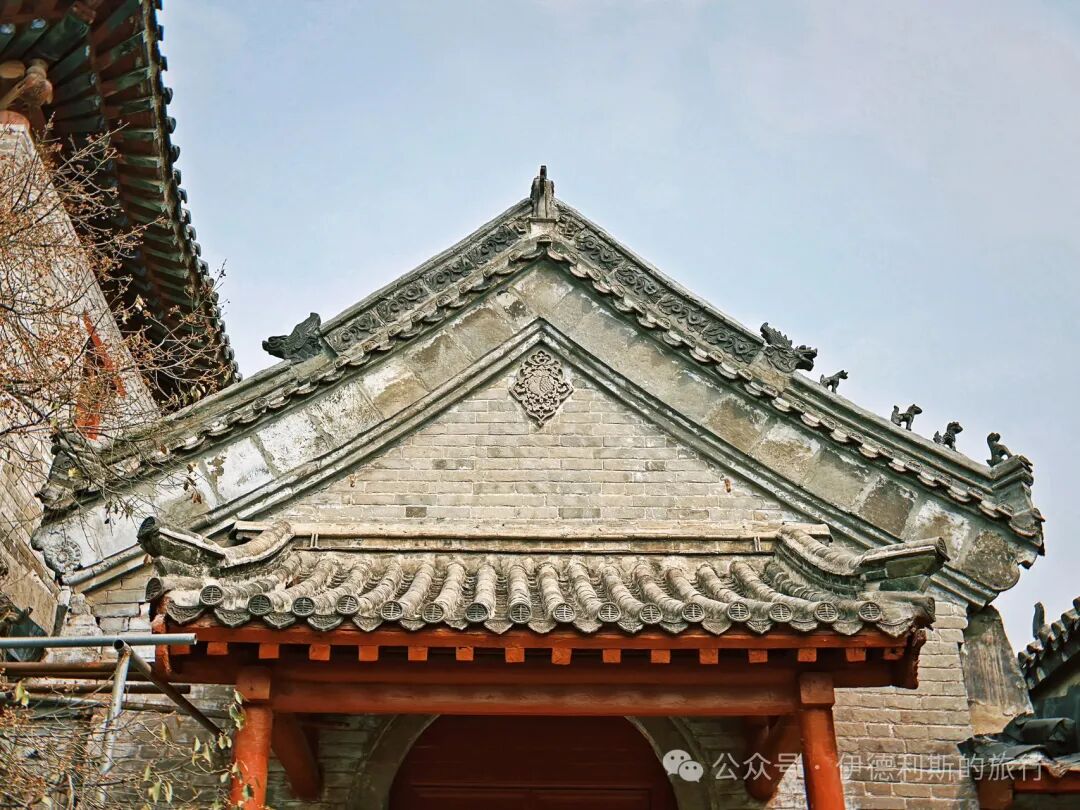
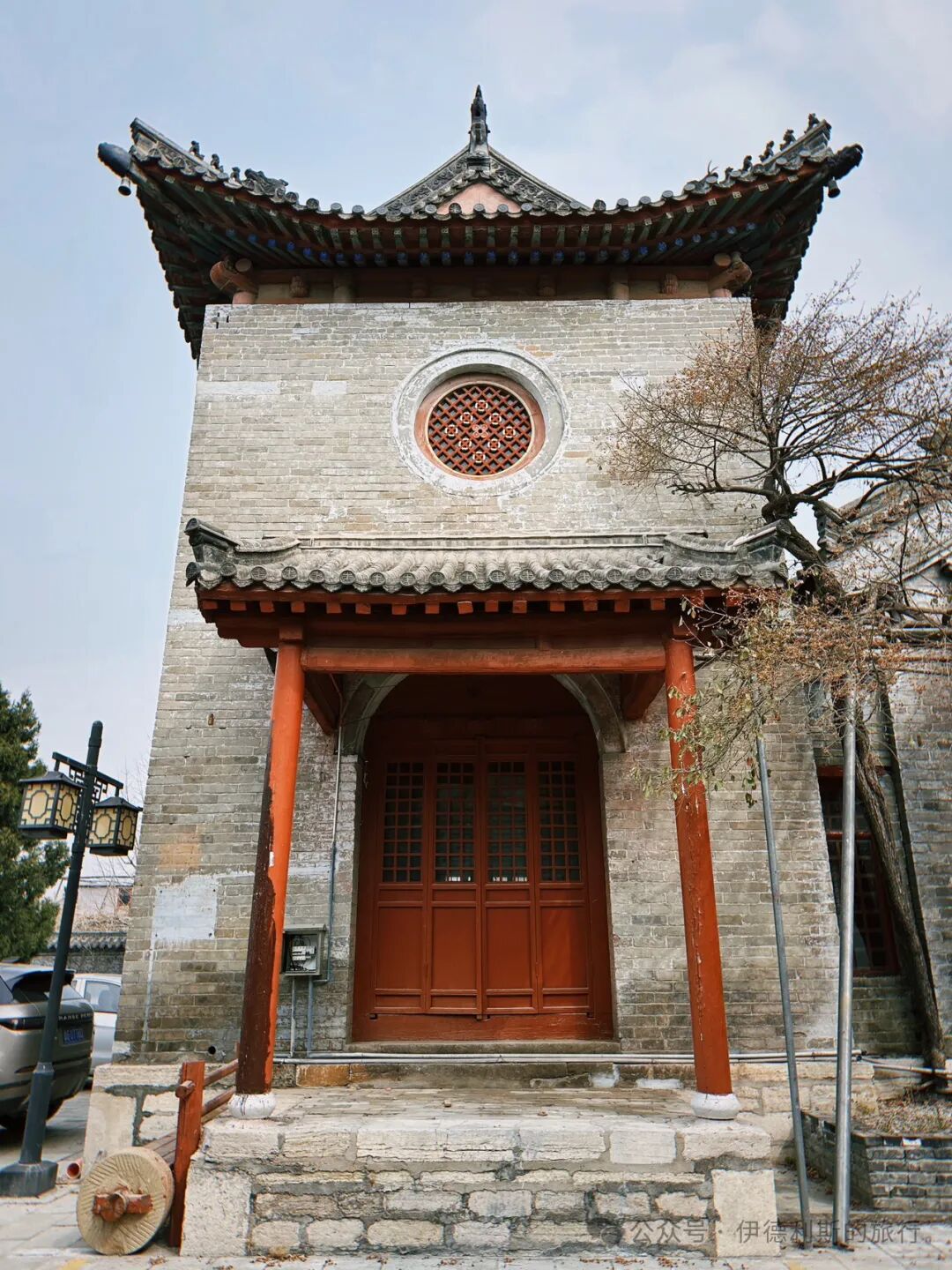
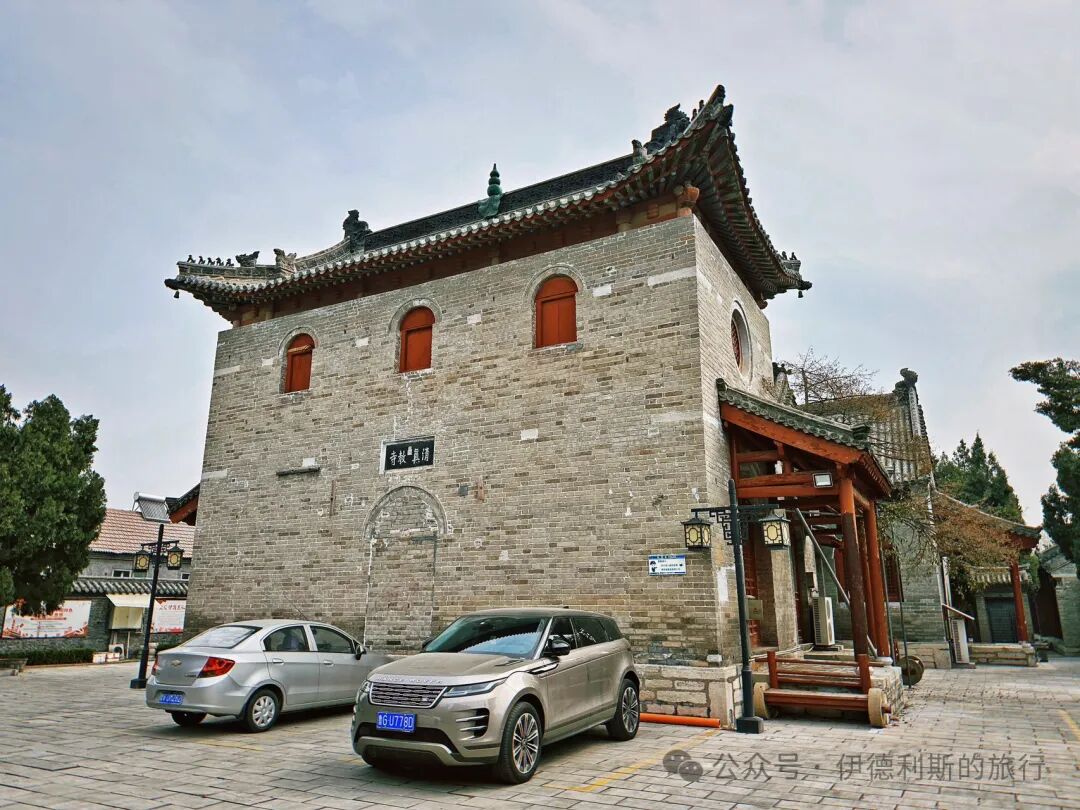
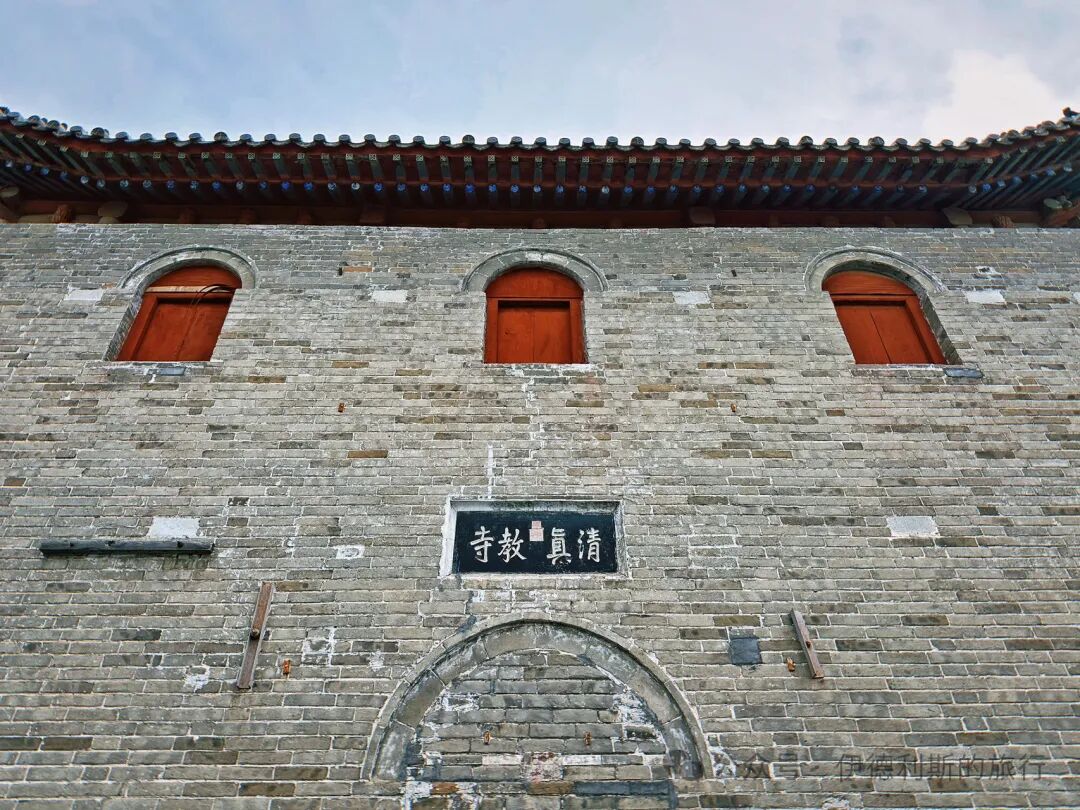
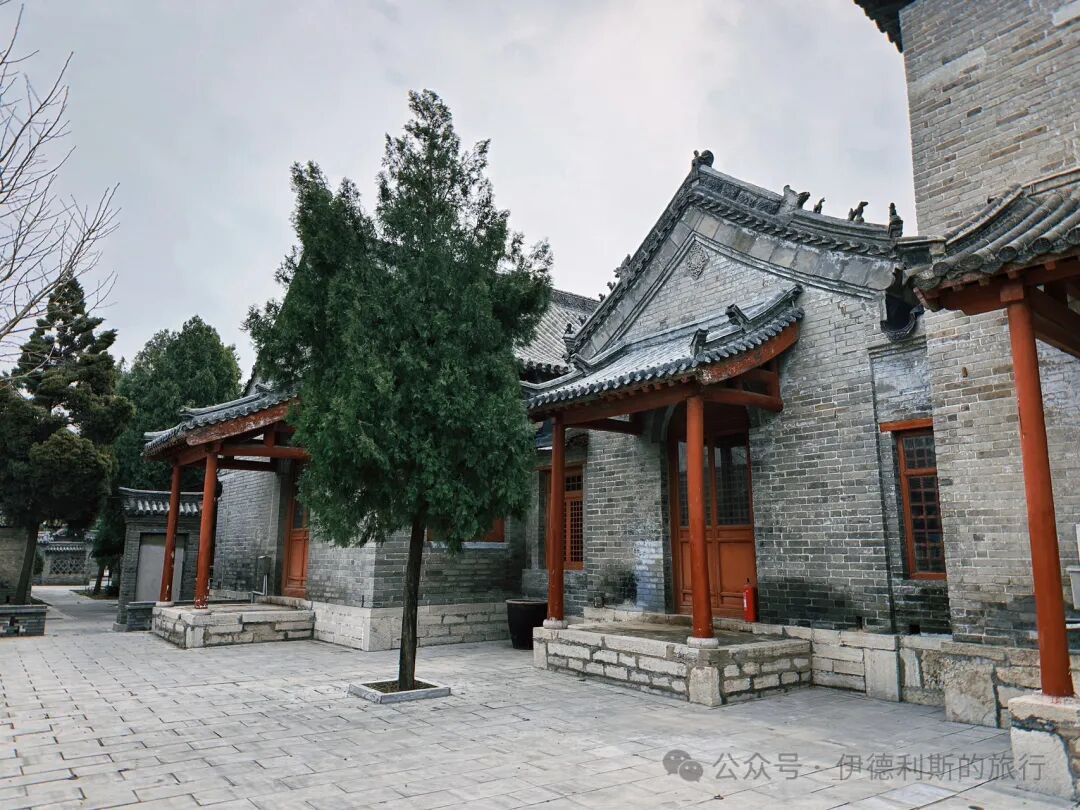
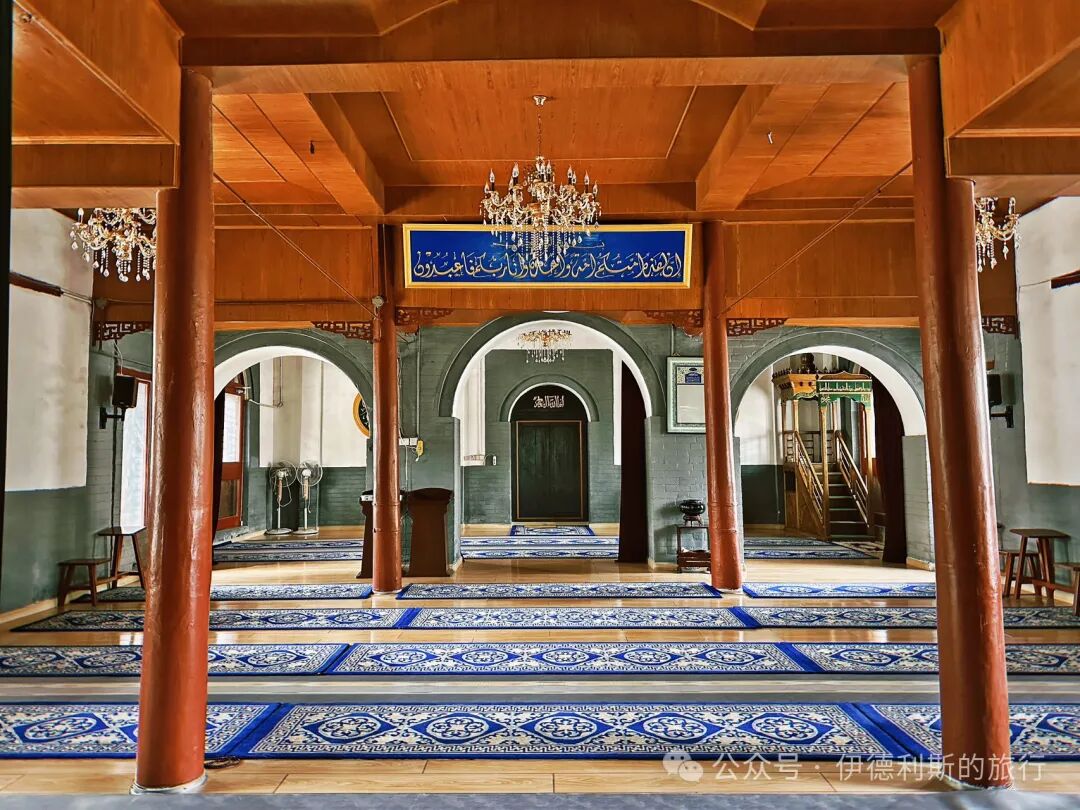
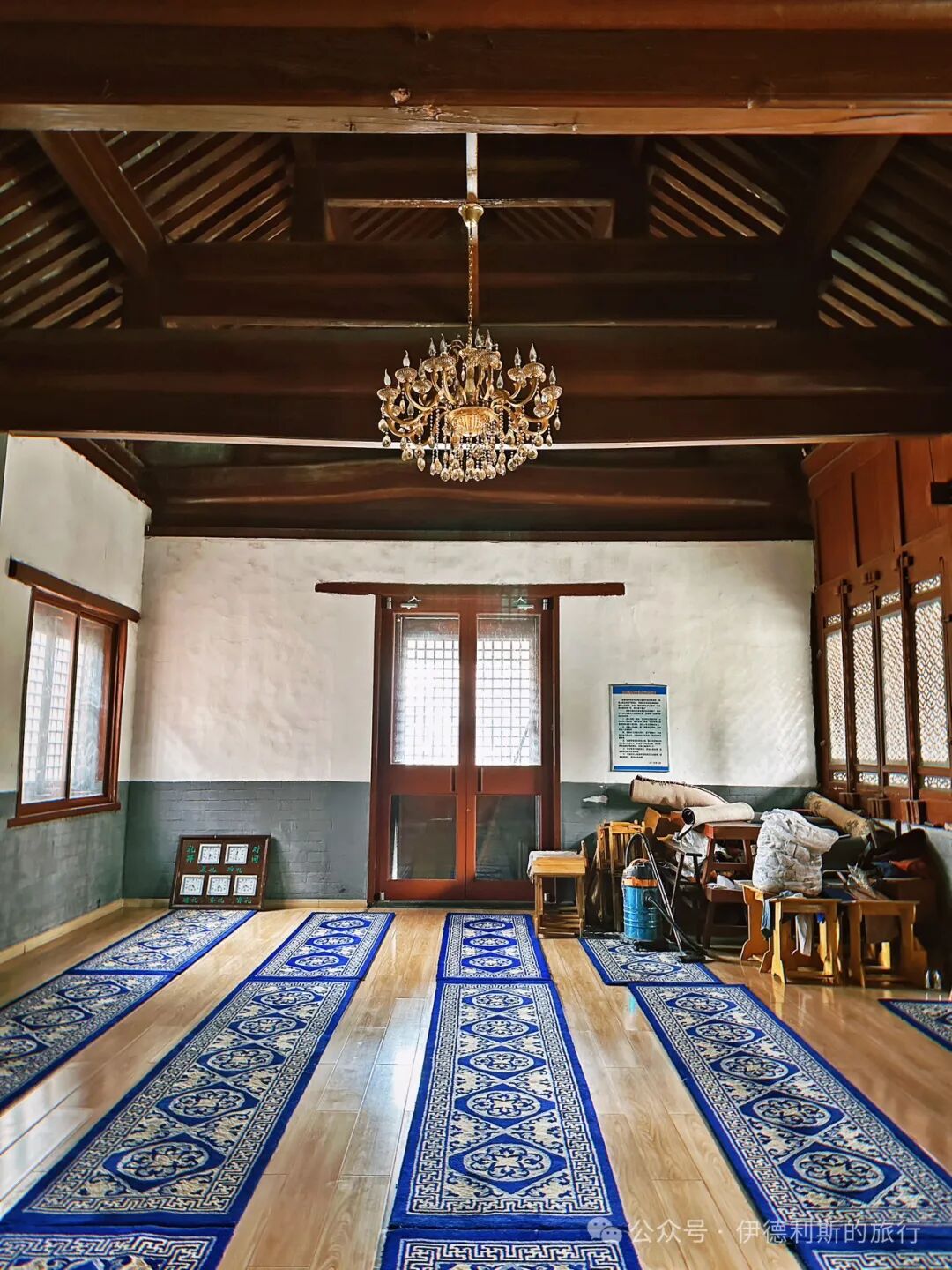
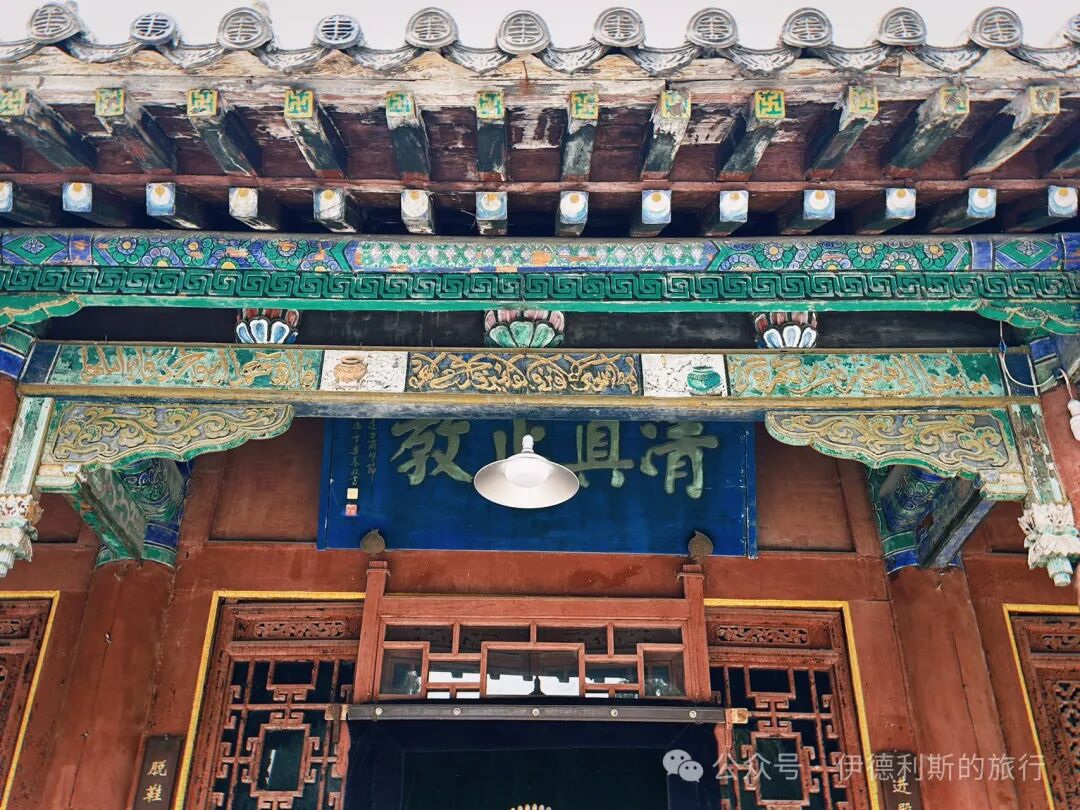
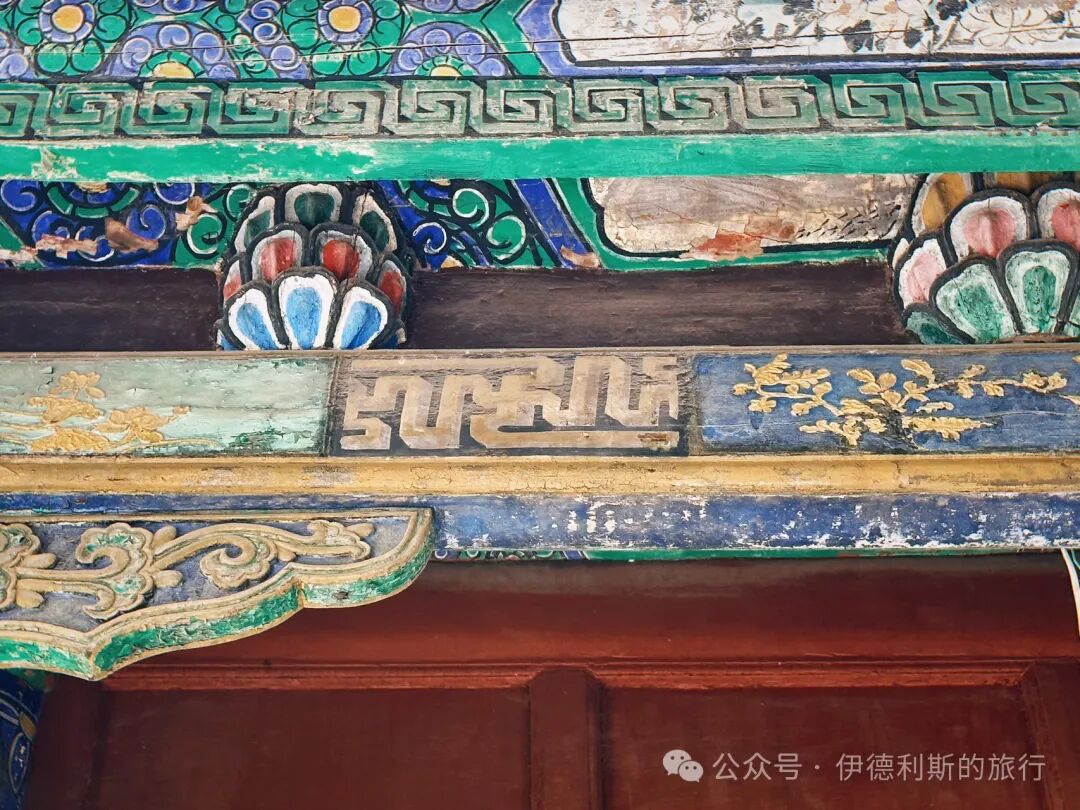
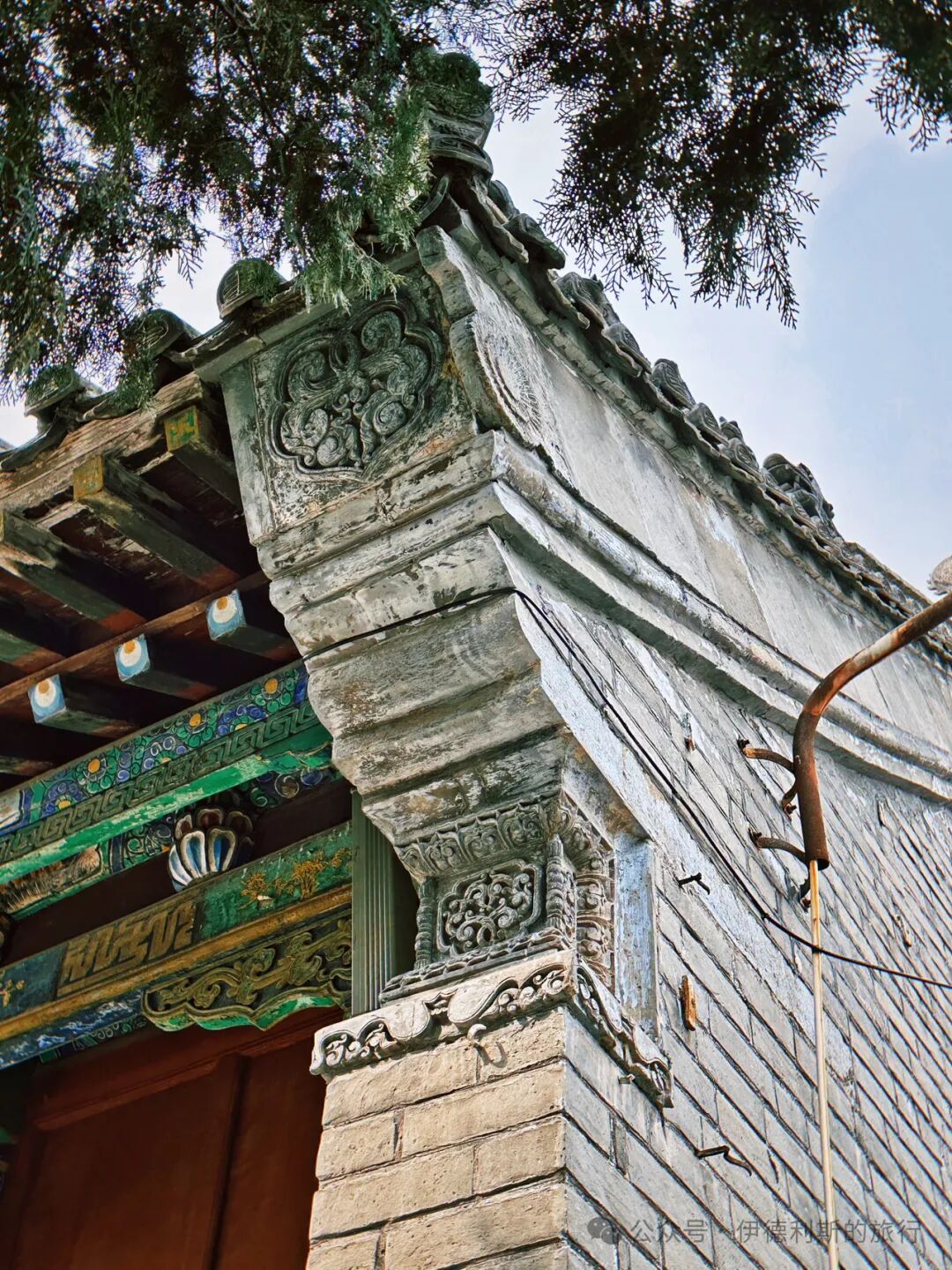
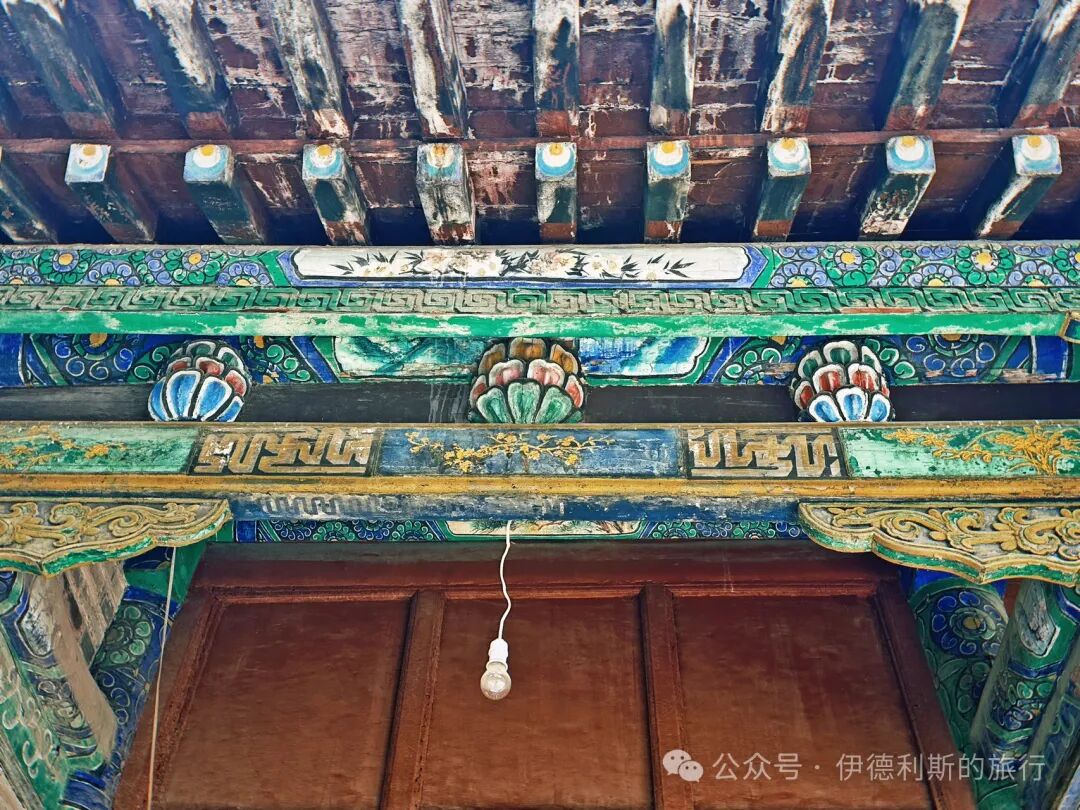
East Gate Street (Dongmen Dajie).
There is a lot of delicious food on East Gate Street, including all kinds of braised meats, pastries, and snacks. Because it was Ramadan, I could not taste them, so I just bought a bag of sesame flatbread (shaobing). This kind of thin and crispy sesame flatbread from Shandong is like a snack, and my family loves eating it.
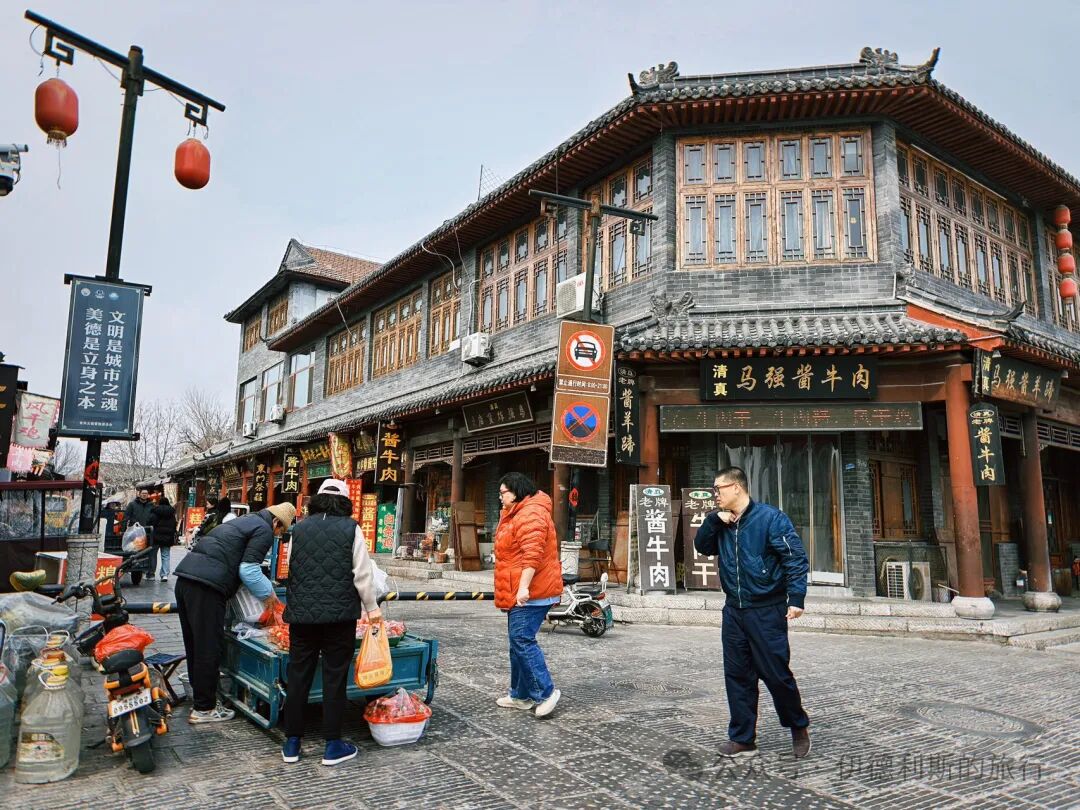
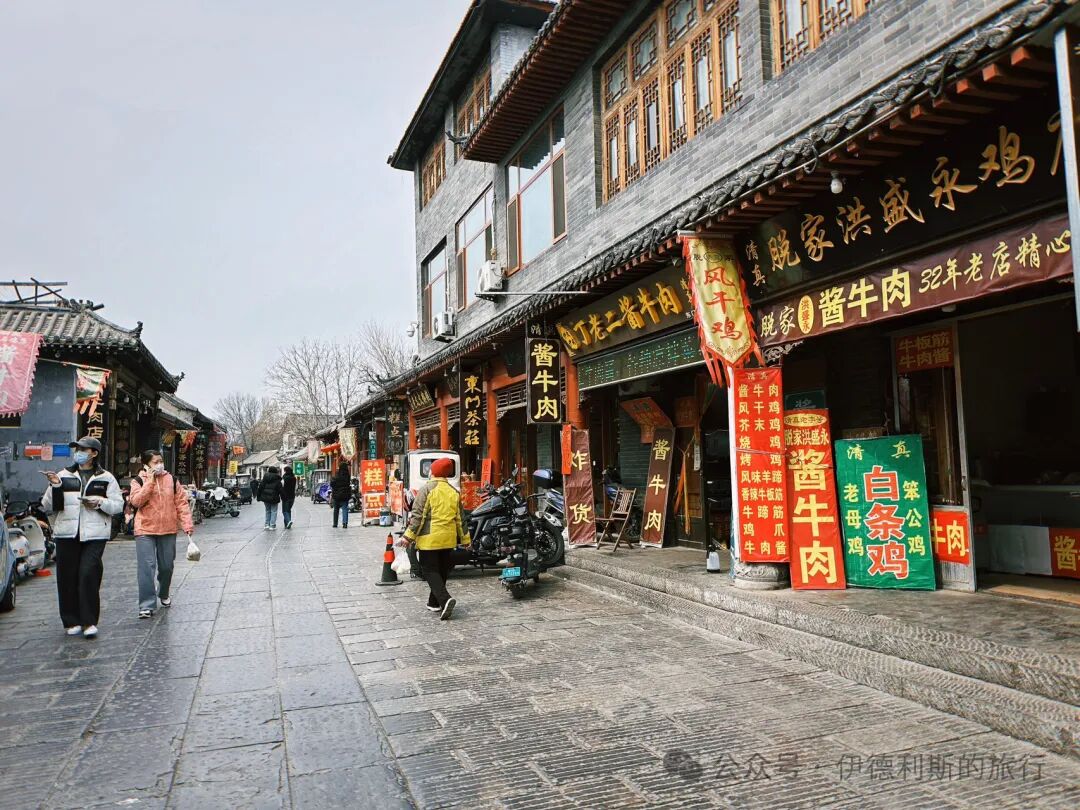
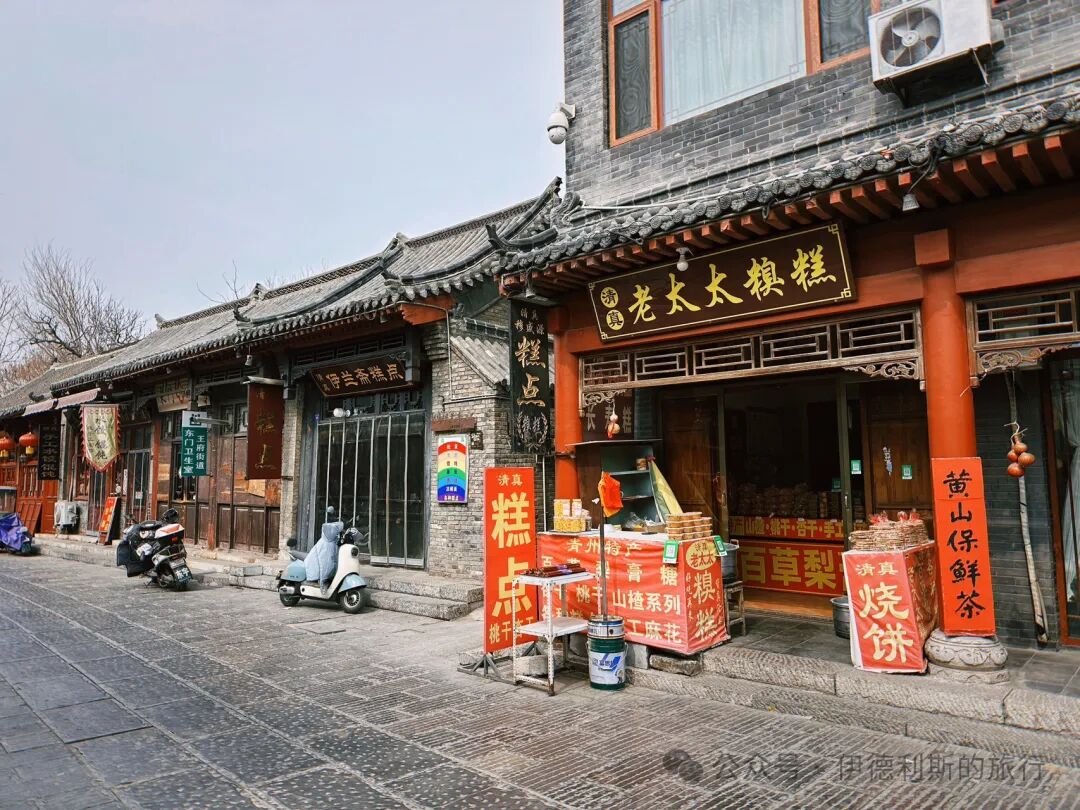
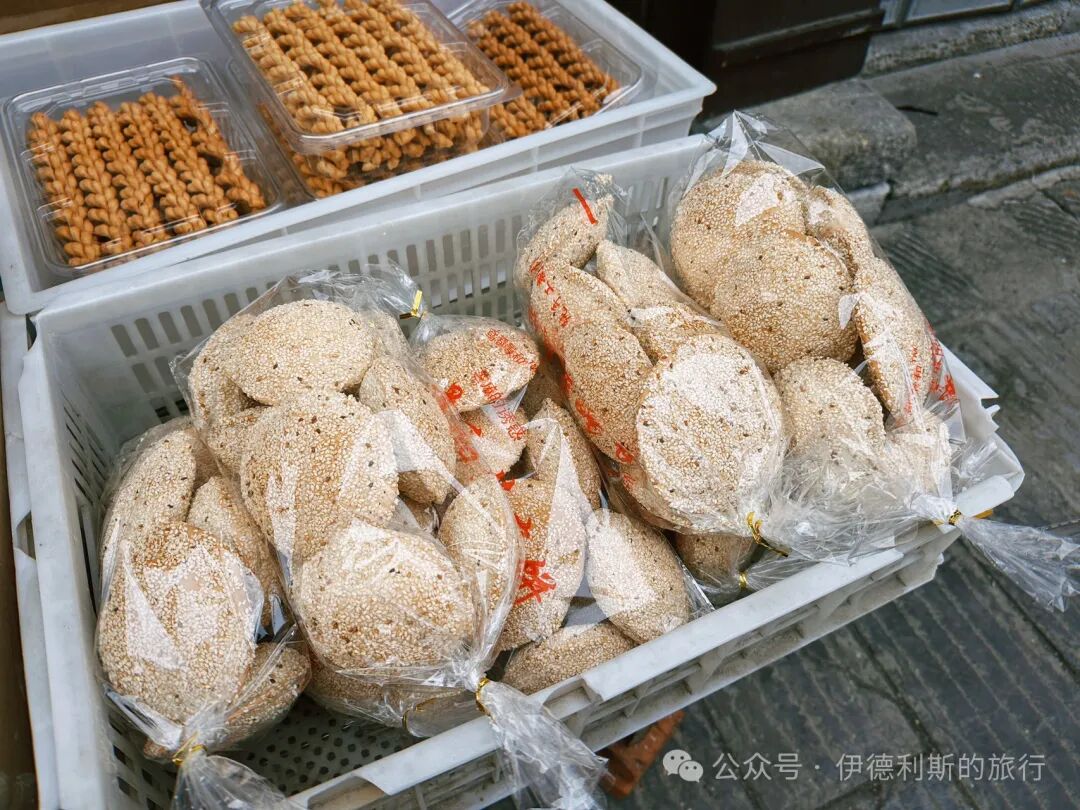
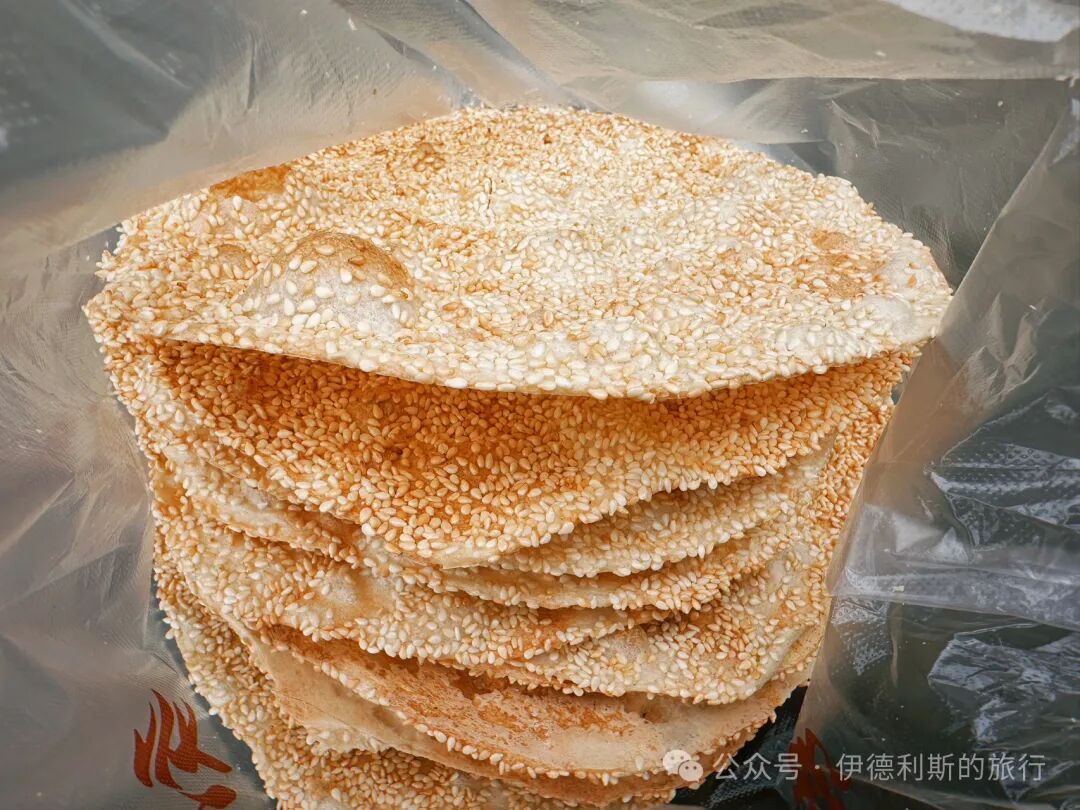
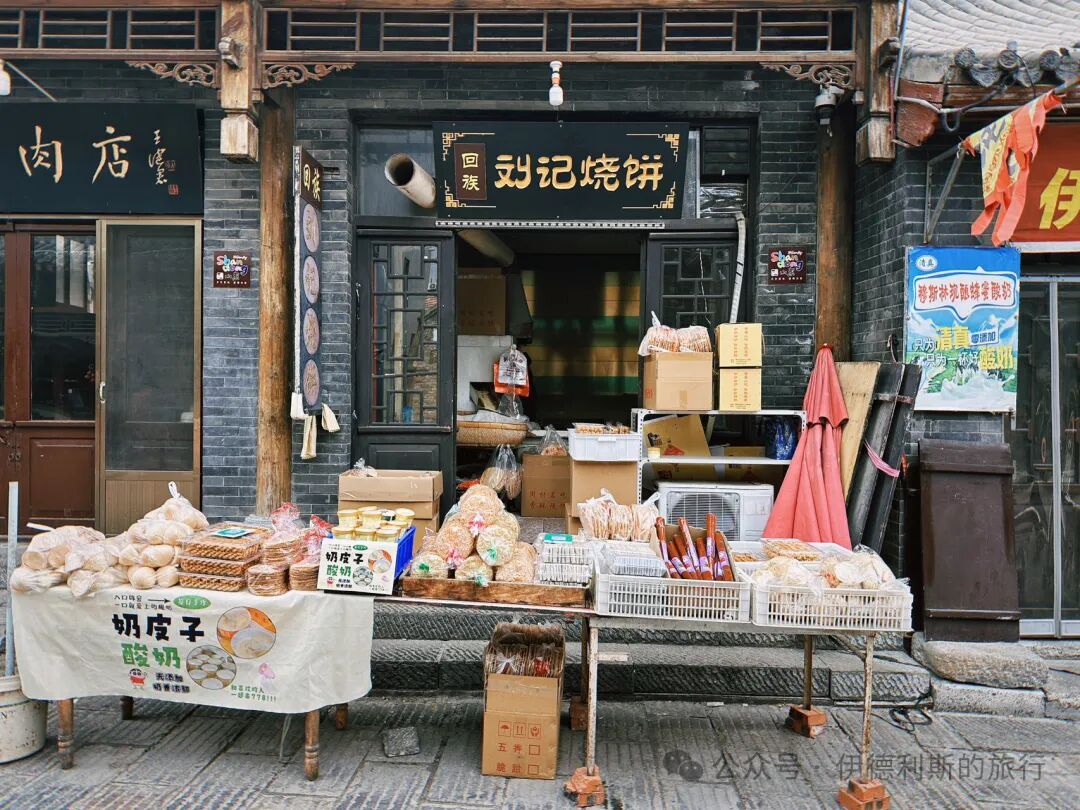
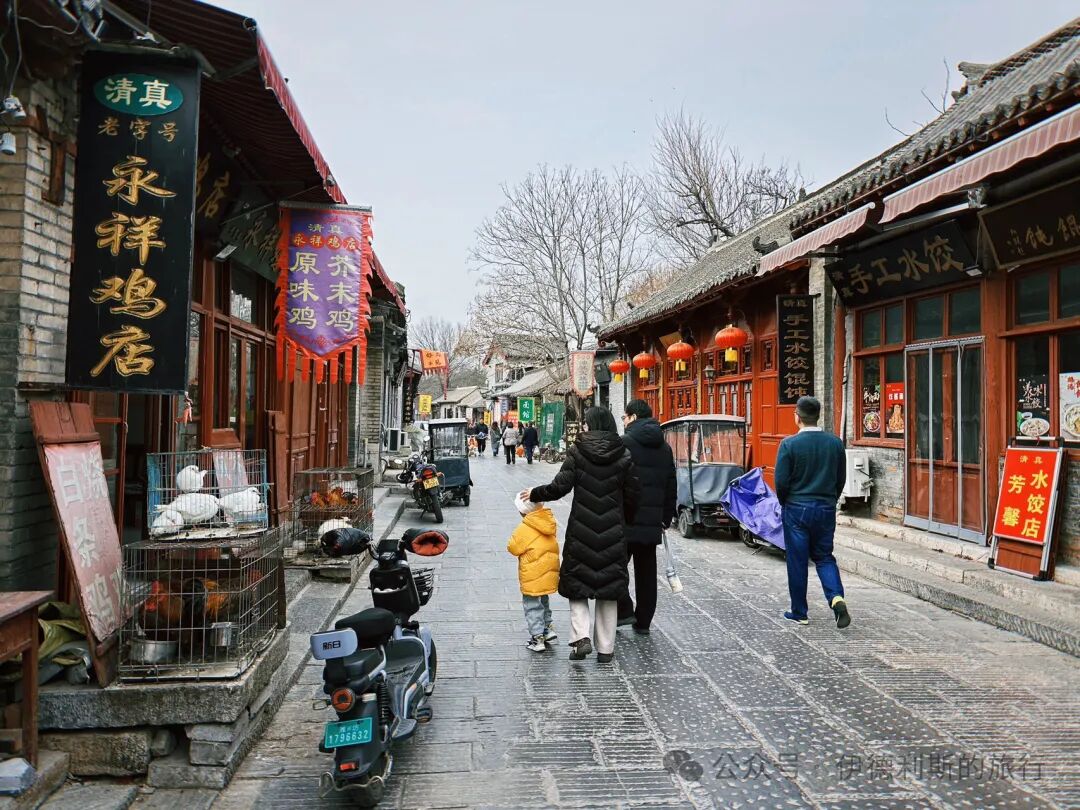
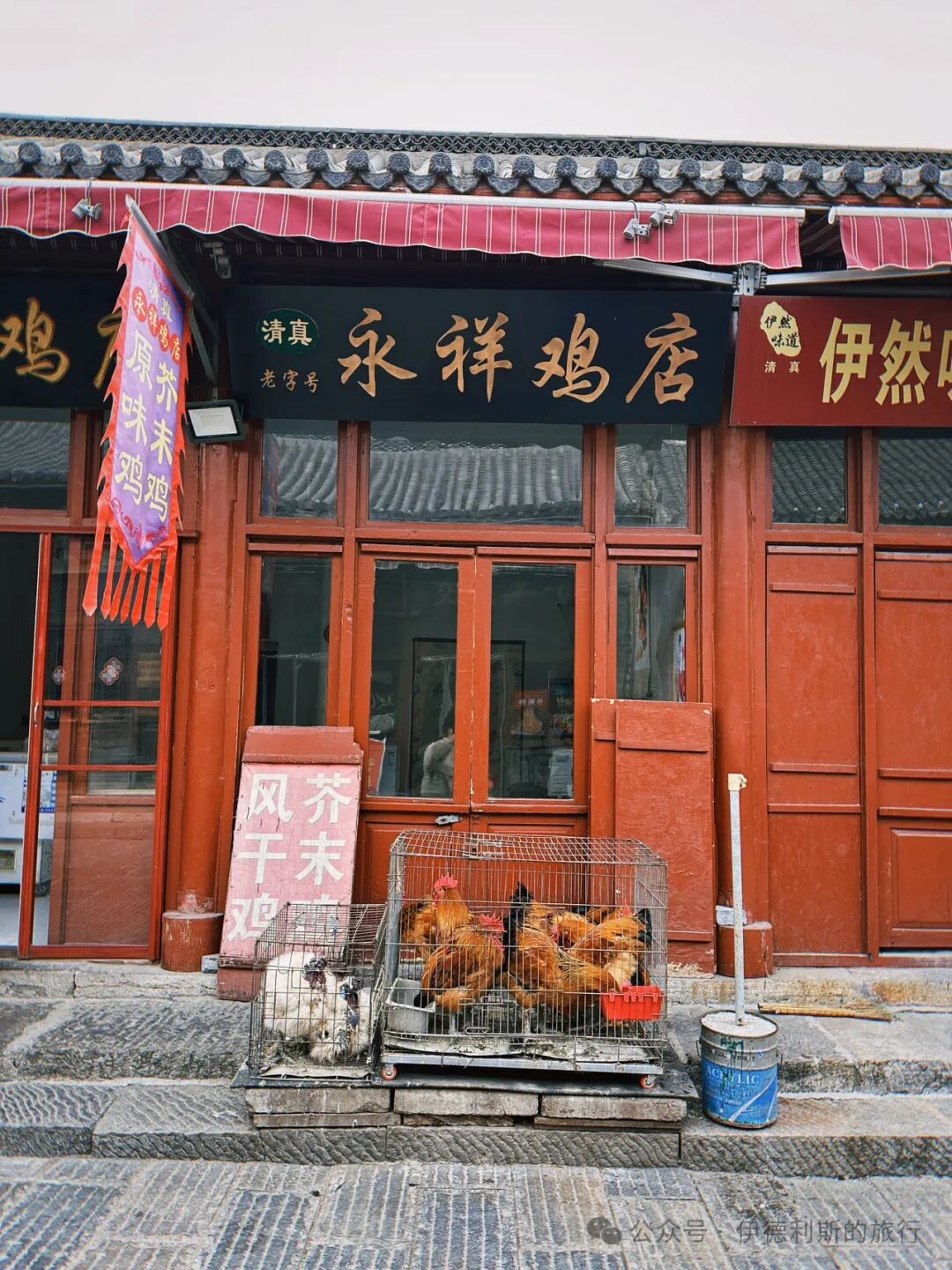
Nanying Street.
Nanying Street is one kilometer long and is the main residential area for the Hui Muslim community of the City Mosque. The main surnames include Zhao, Ding, Liu, Yang, Ma, Zhang, Fa, and Sha.
During the late Qing and early Republic of China periods, there were many fur processing shops on both sides of Nanying Street, such as the Liu family's Changyuan and Changzeng, the Ding family's Zhongli, and the Zhang family's Wanju. During the Republic of China period, there were more than 50 shops producing six-paneled skullcaps (liuban bianmao). Today, after renovations, this area has become a showcase for the traditional style of Hui mosque neighborhoods in Shandong.
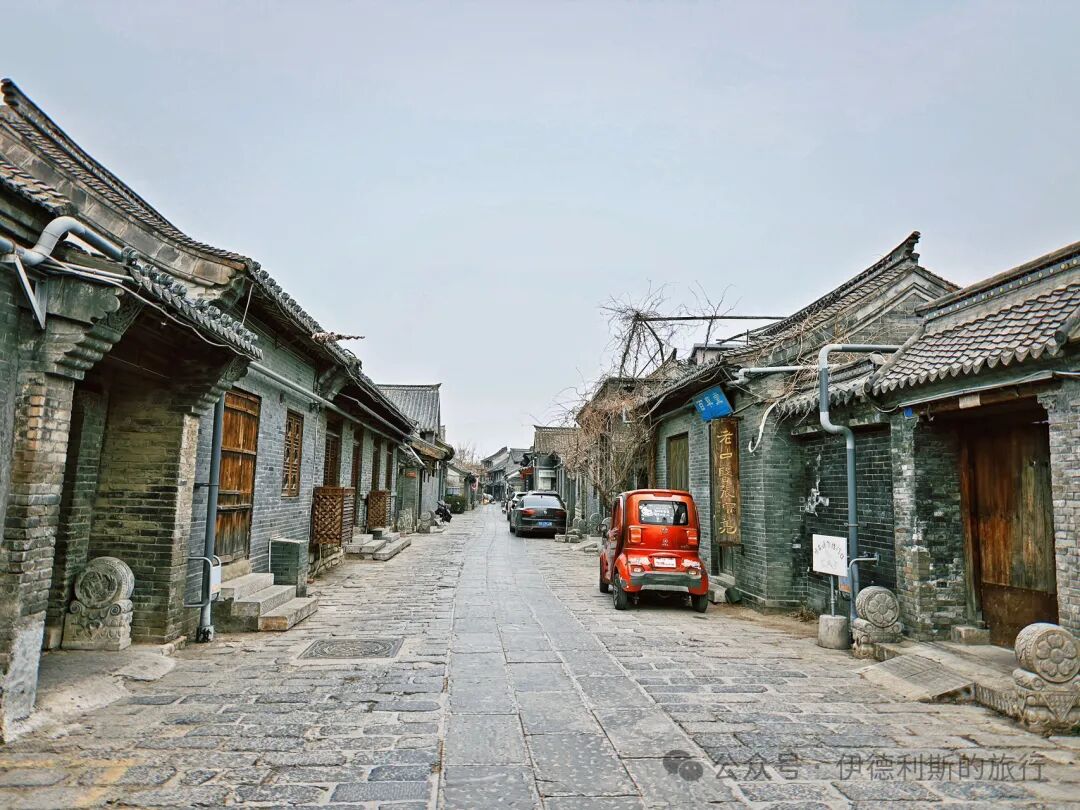
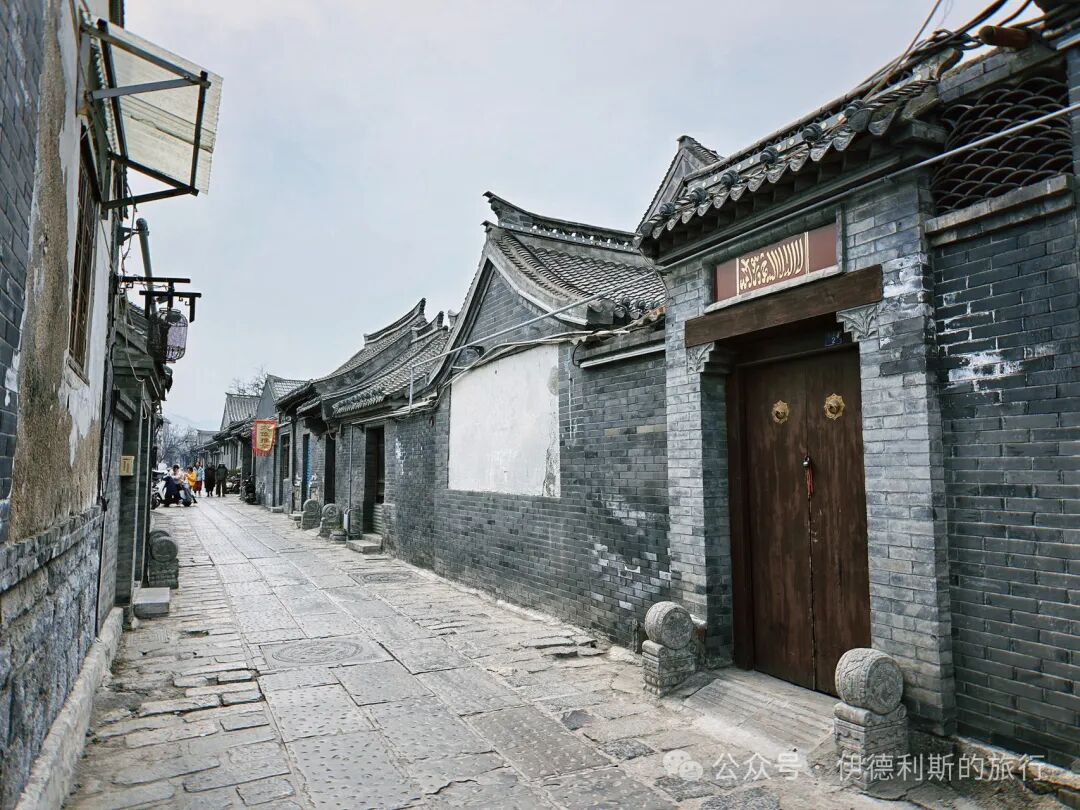
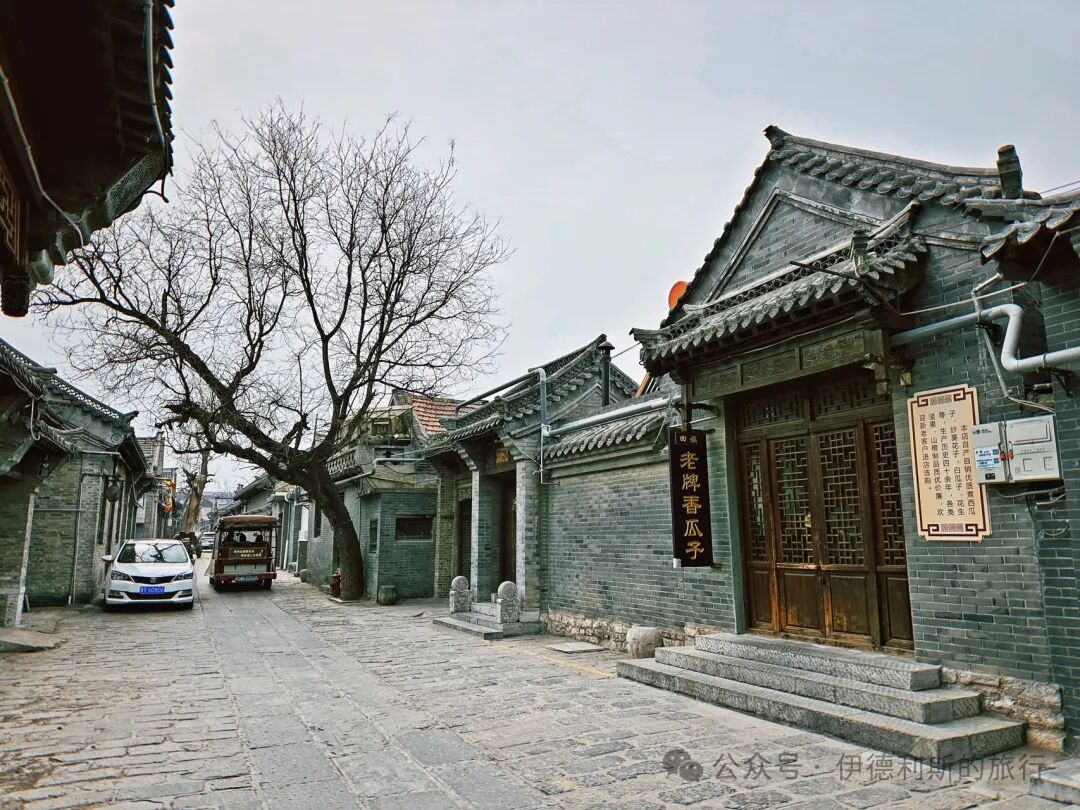
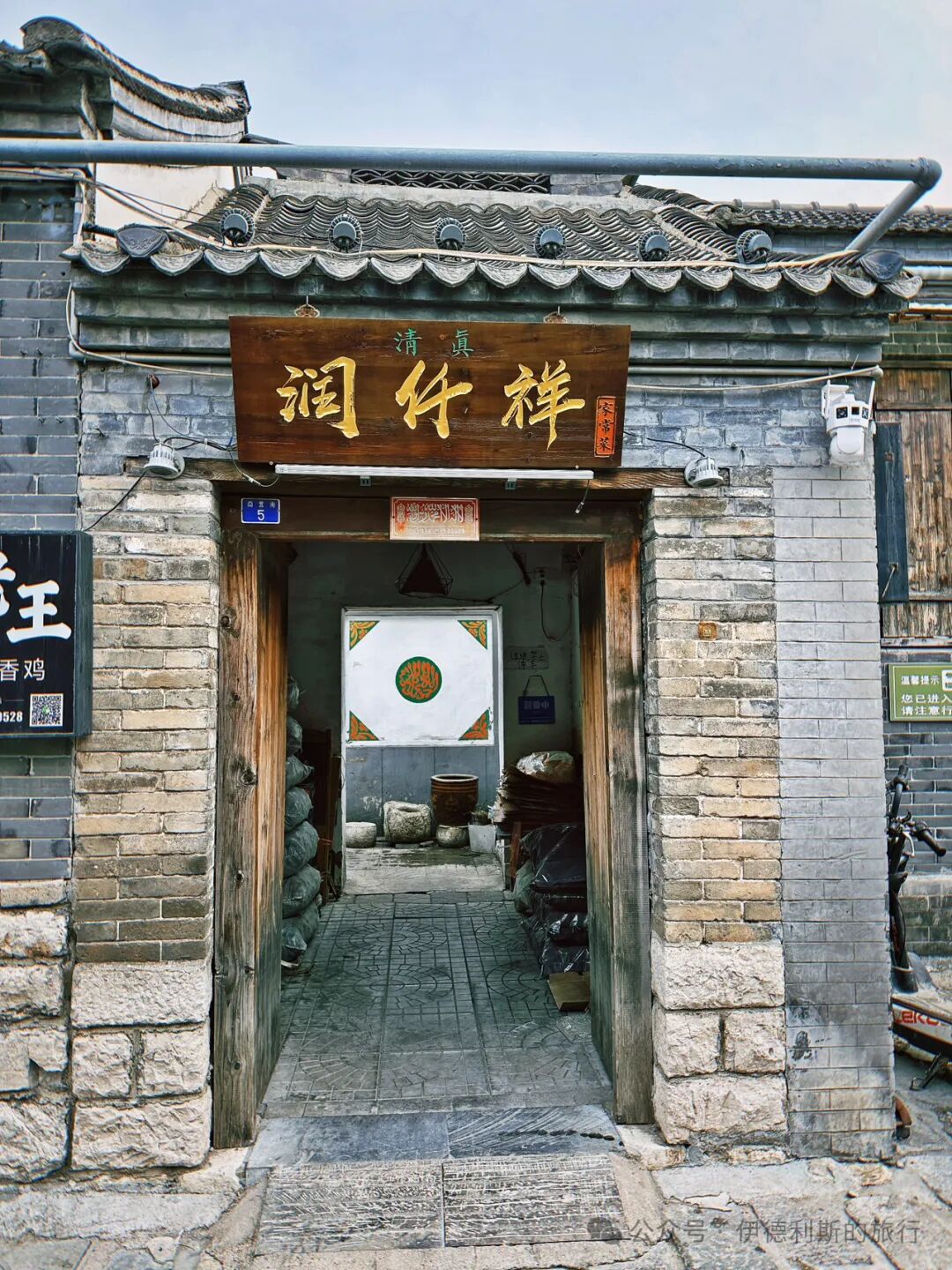
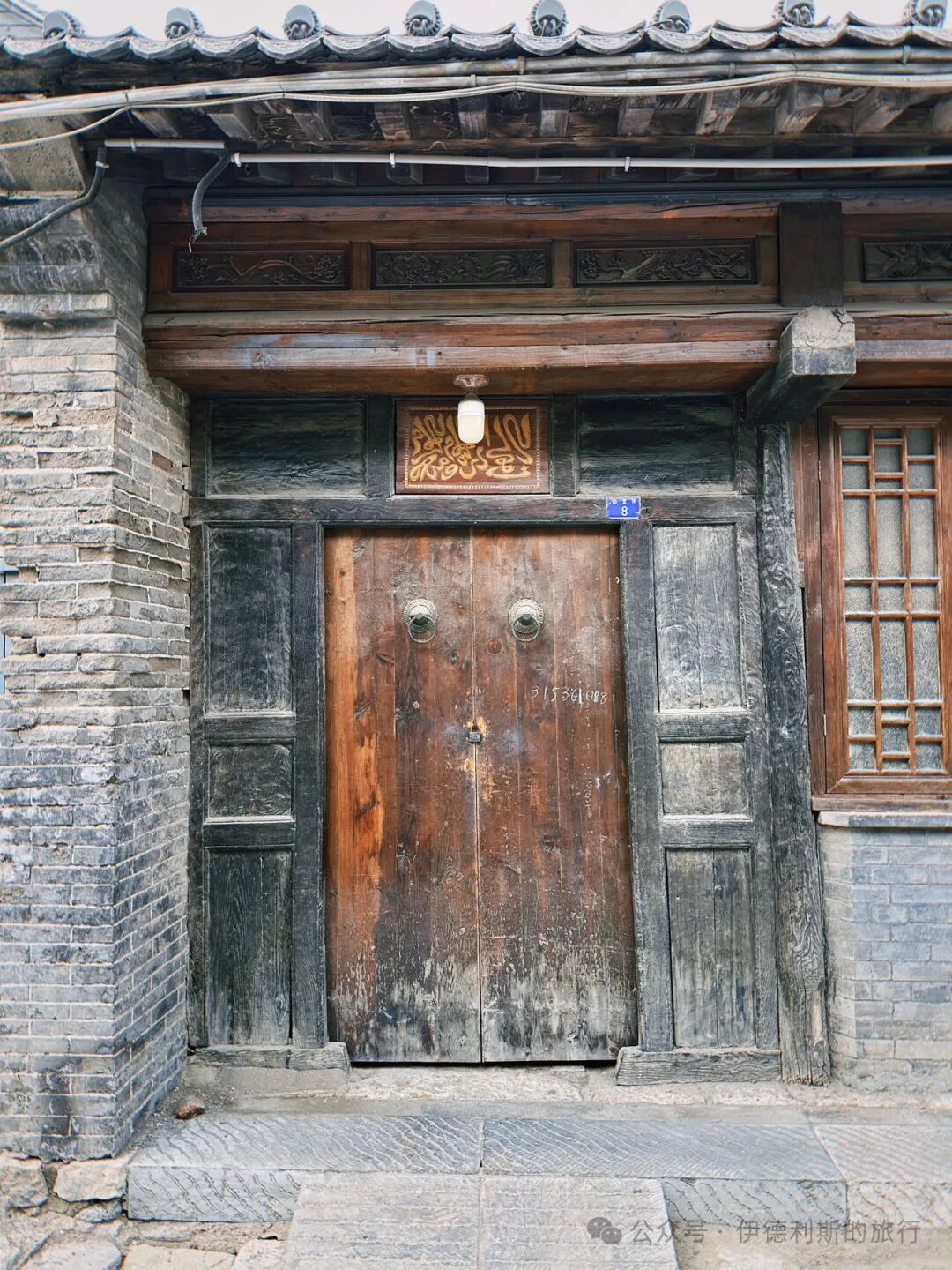
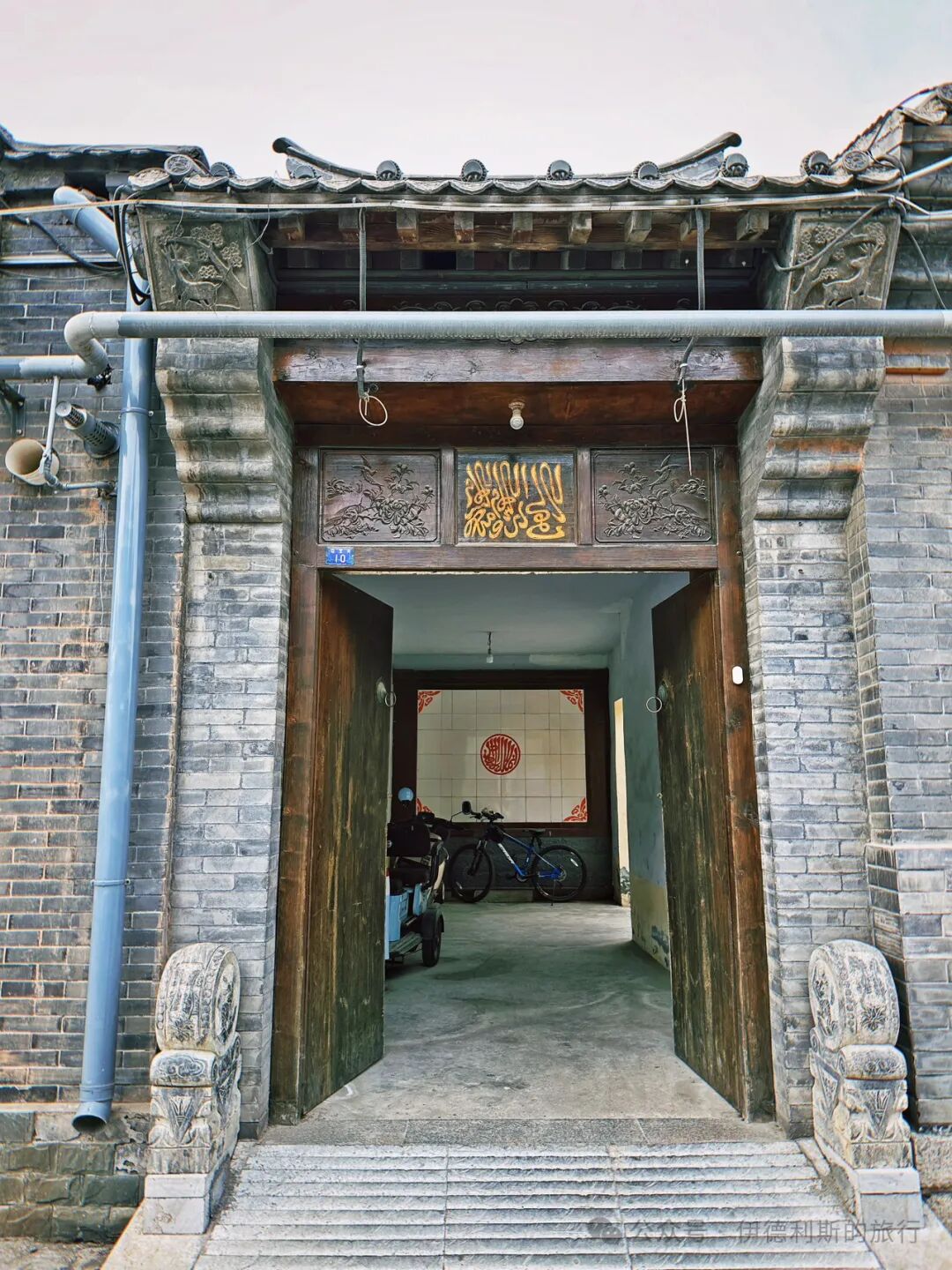
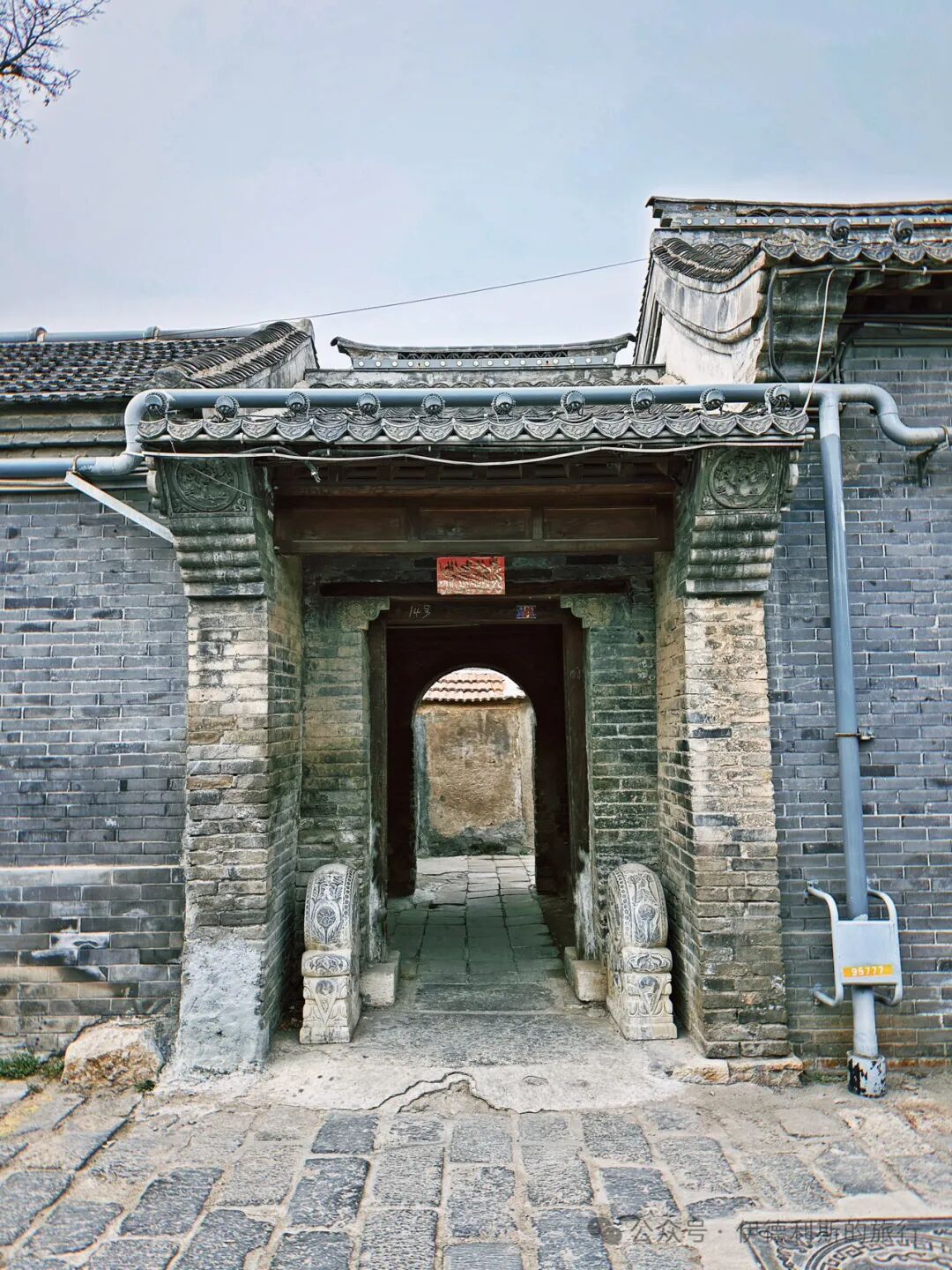
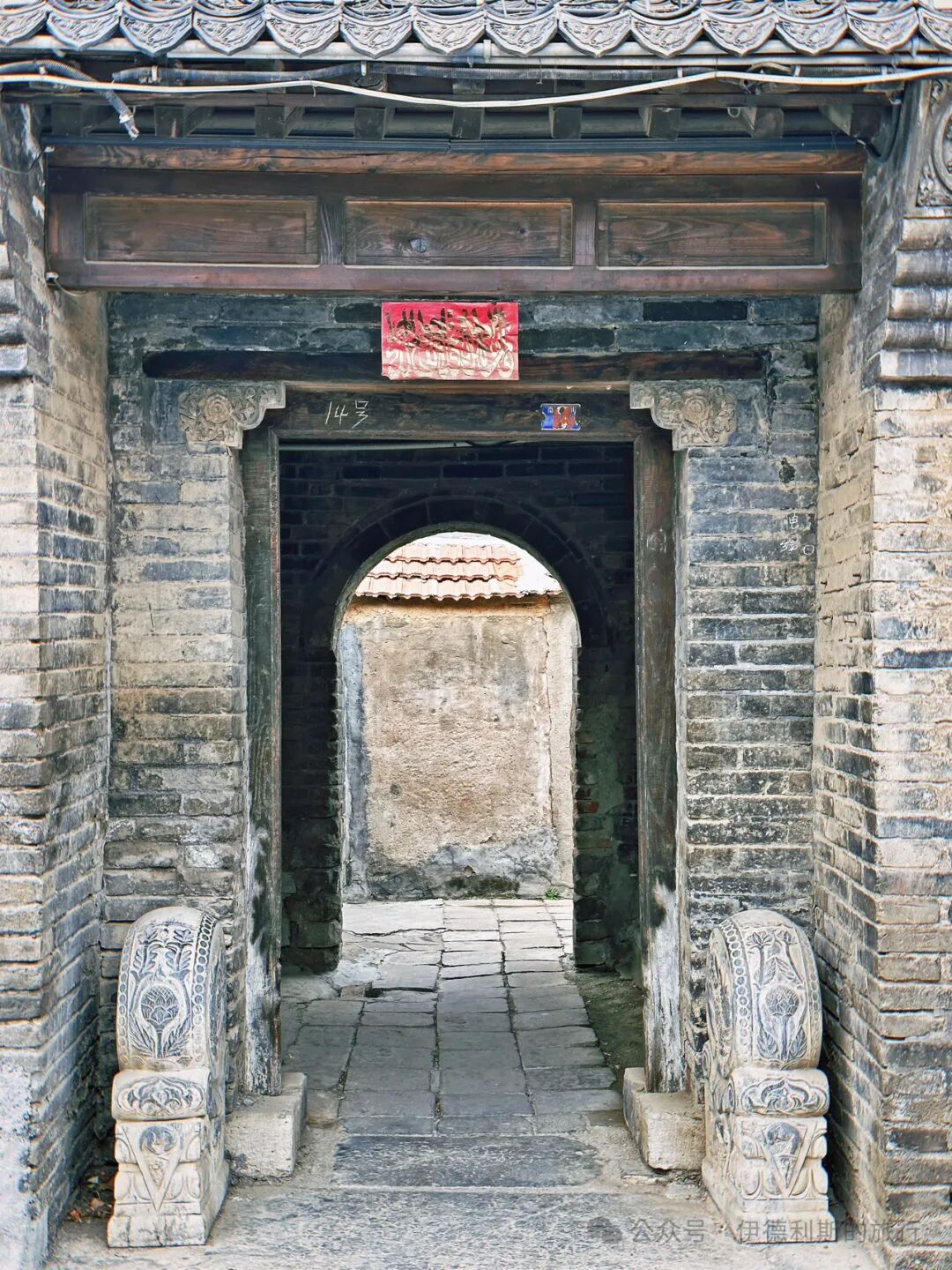
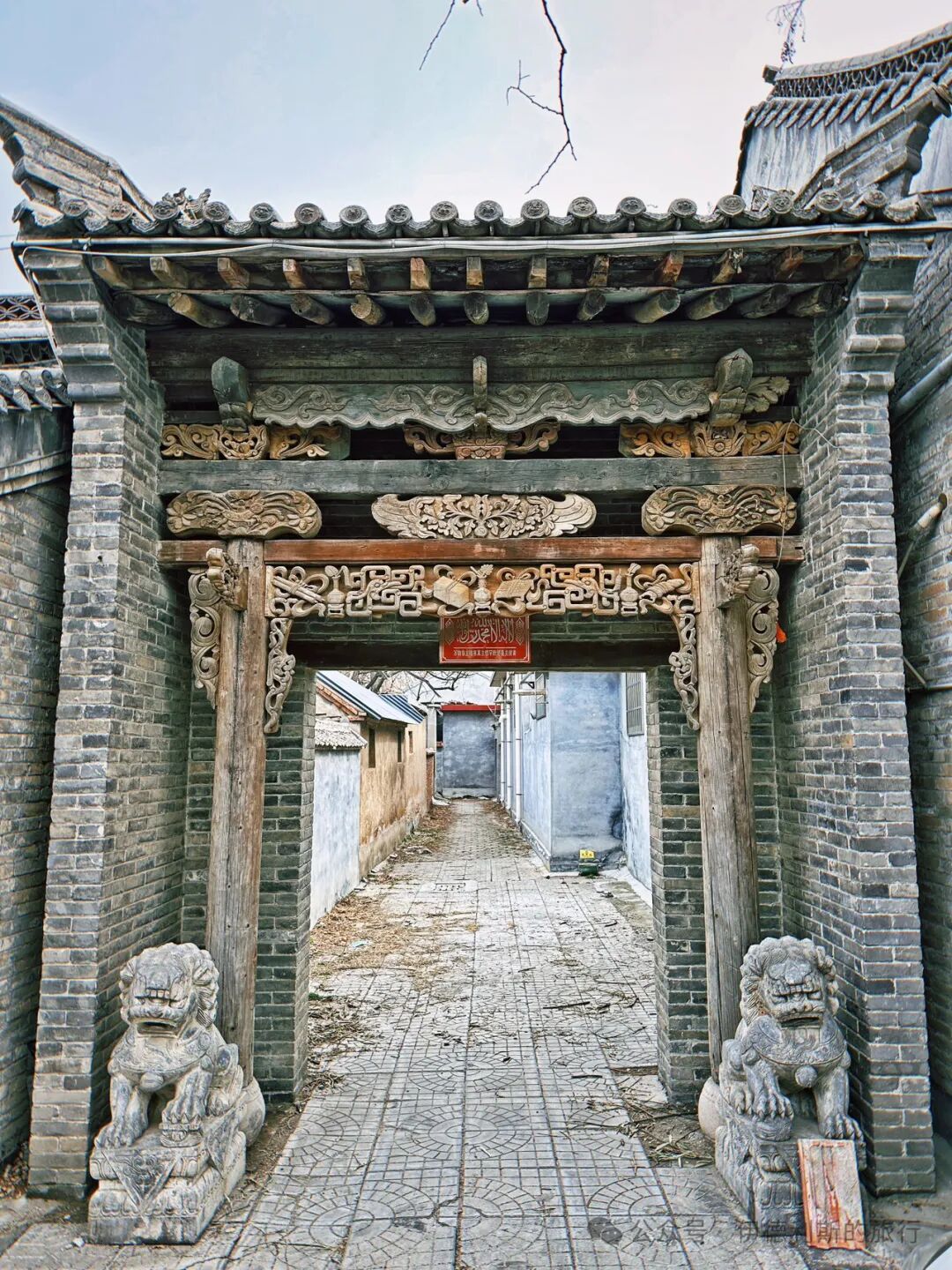
Besides the City Mosque, Nanying Street also has the former sites of the Martial Champion Mansion (Wukui Fu) of the Qing Dynasty military graduate Ma Zhengji and the Top Scholar Mansion (Zhuangyuan Fu) of the military top scholar Ding Dianxiang.
The Ma family in the city are descendants of Yuan Dynasty nobles who inherited the position of Temür by merit. When Emperor Huizong of Yuan retreated north, the ancestors of the Ma family once shielded him with their own bodies to protect him. After the Ming Dynasty was established, the Ma family lived in seclusion in Shandong. Among their descendants, Ma Zhiji passed the imperial examination in the 5th year of the Tianqi reign of the Ming Dynasty and once led the renovation of the City Mosque.
According to the family genealogy, the ancestors of the Ding family in the city were descendants of Ding Dexing, a founding official of the Ming Dynasty. One branch of the family moved from Jiangning to Zhangqiu in Shandong, then to Jinling Town in Zibo during the Wanli era of the Ming Dynasty. The sixteenth-generation ancestor, Ding Zan, later moved to the city of Qingzhou. The eighteenth-generation descendant, Ding Dianxiang, became the top martial arts scholar in 1814 (the nineteenth year of the Jiaqing reign). He later served as a military colonel in Guangxi and was granted the title of General of Martial Merit. In 1830 (the tenth year of the Daoguang reign), he donated funds to renovate the north side hall of the city mosque.
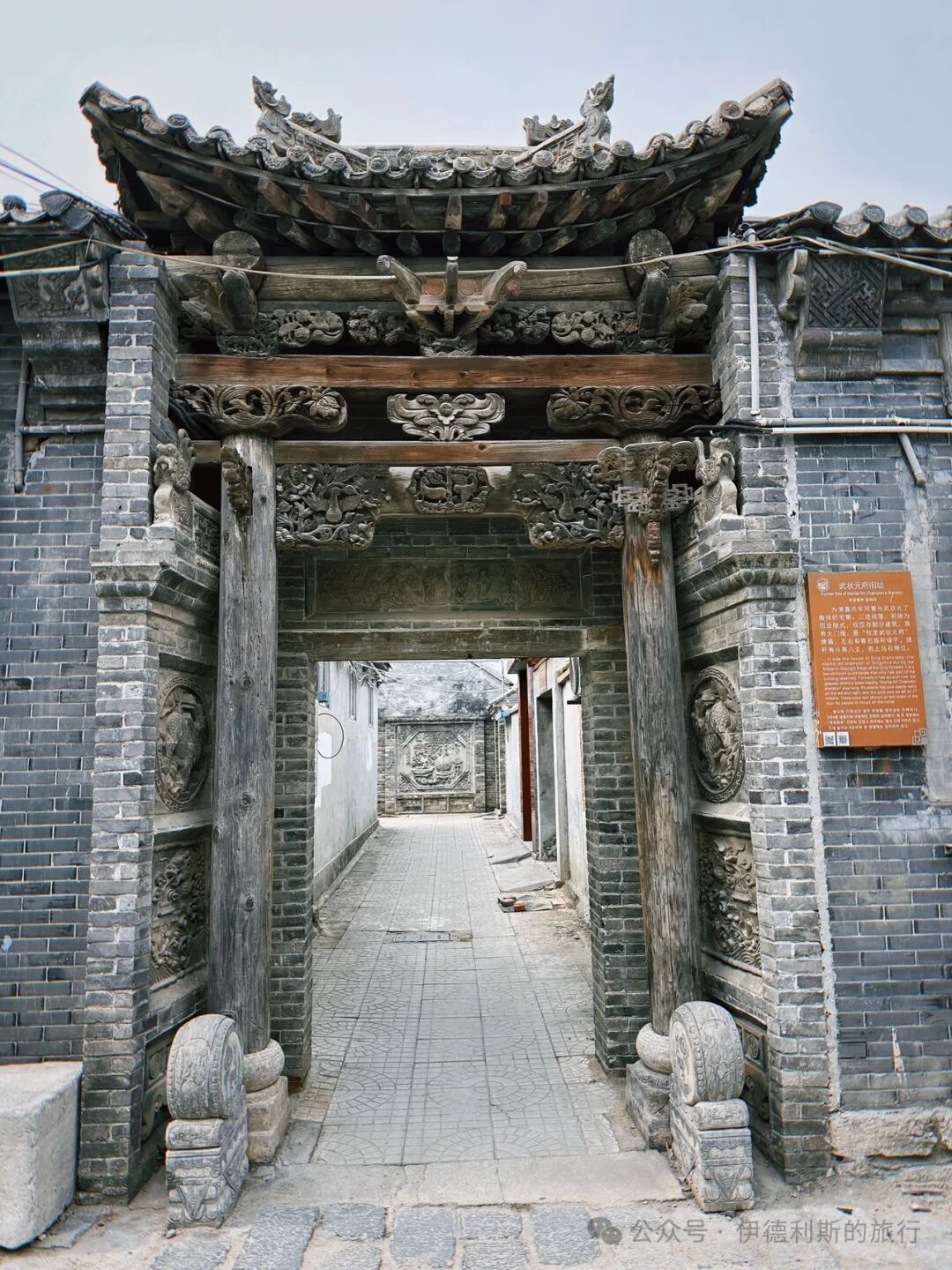
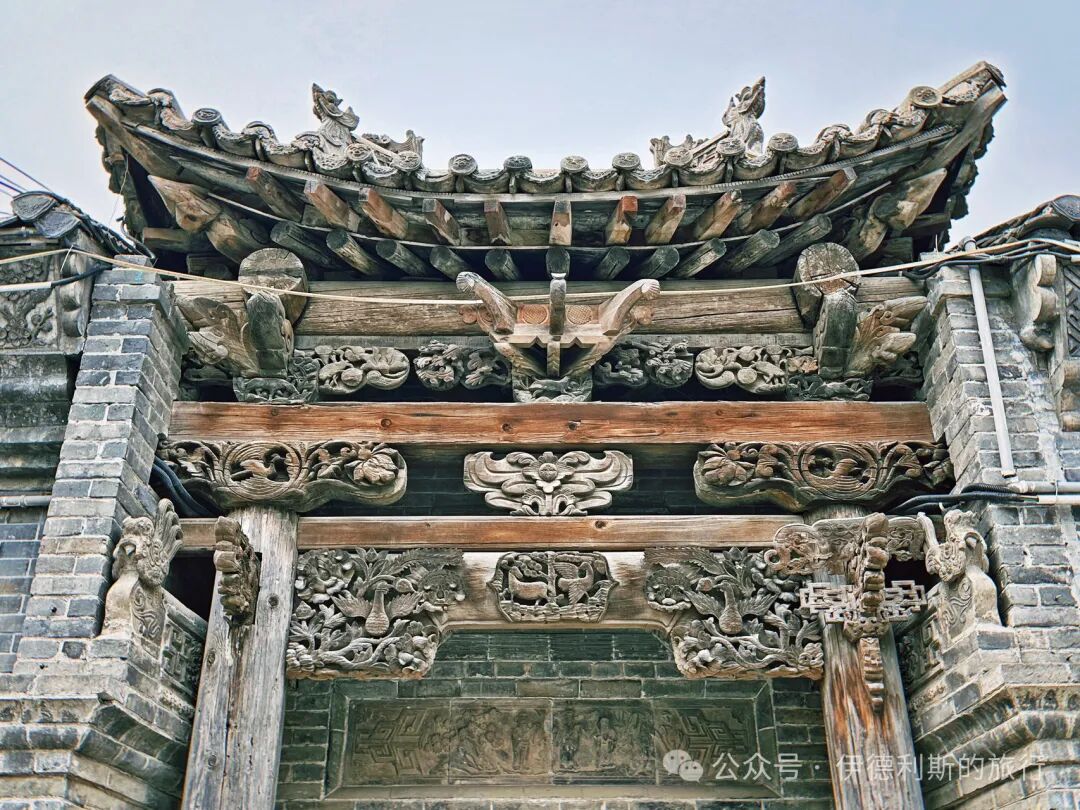
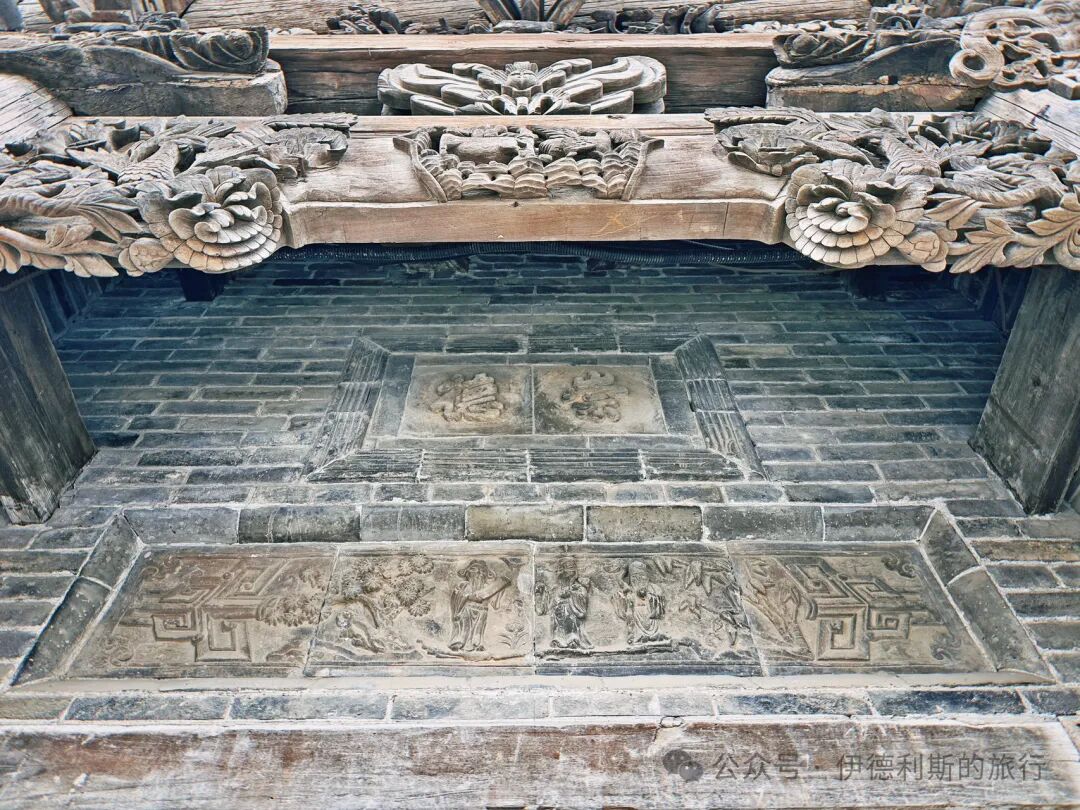
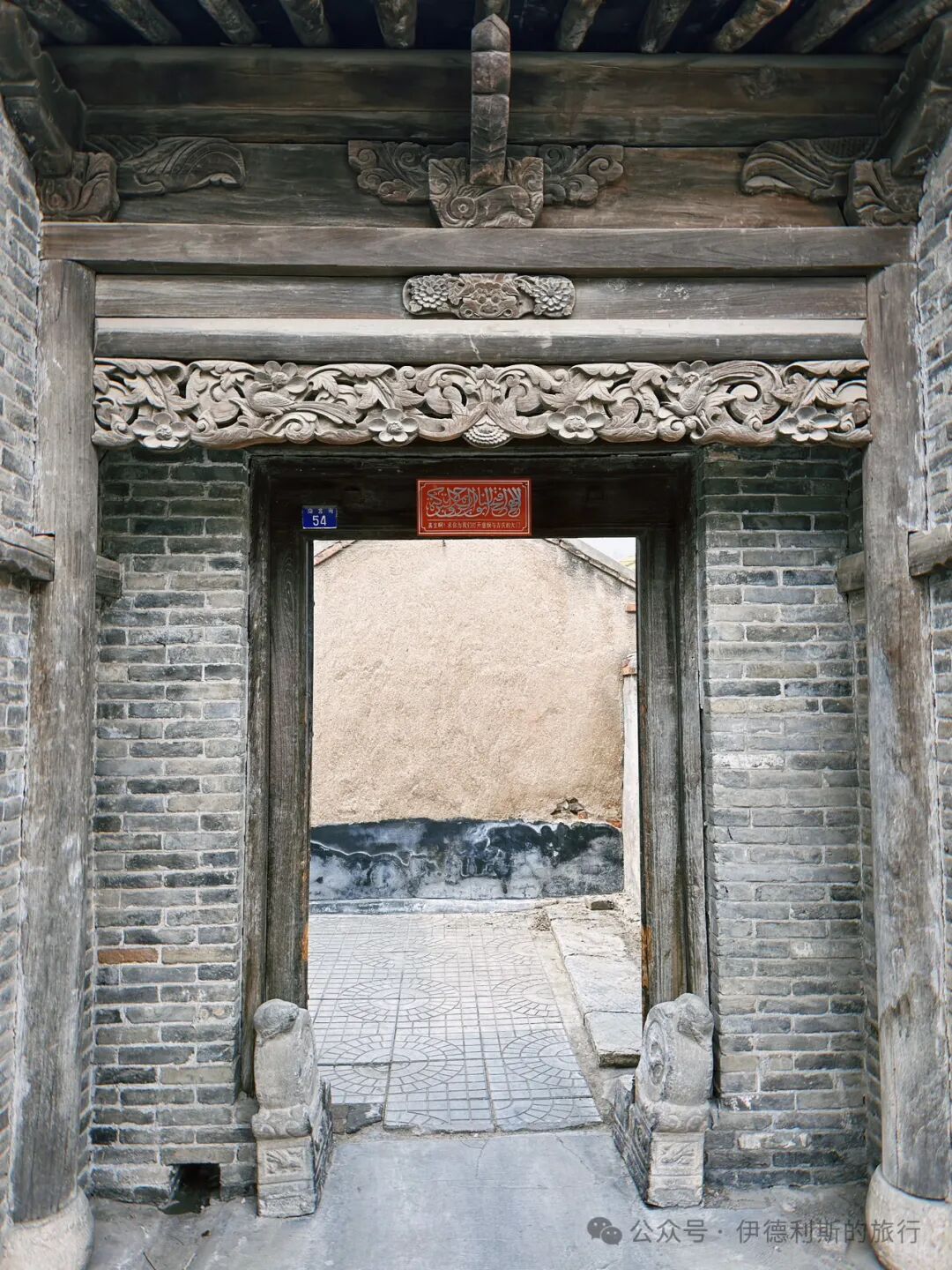
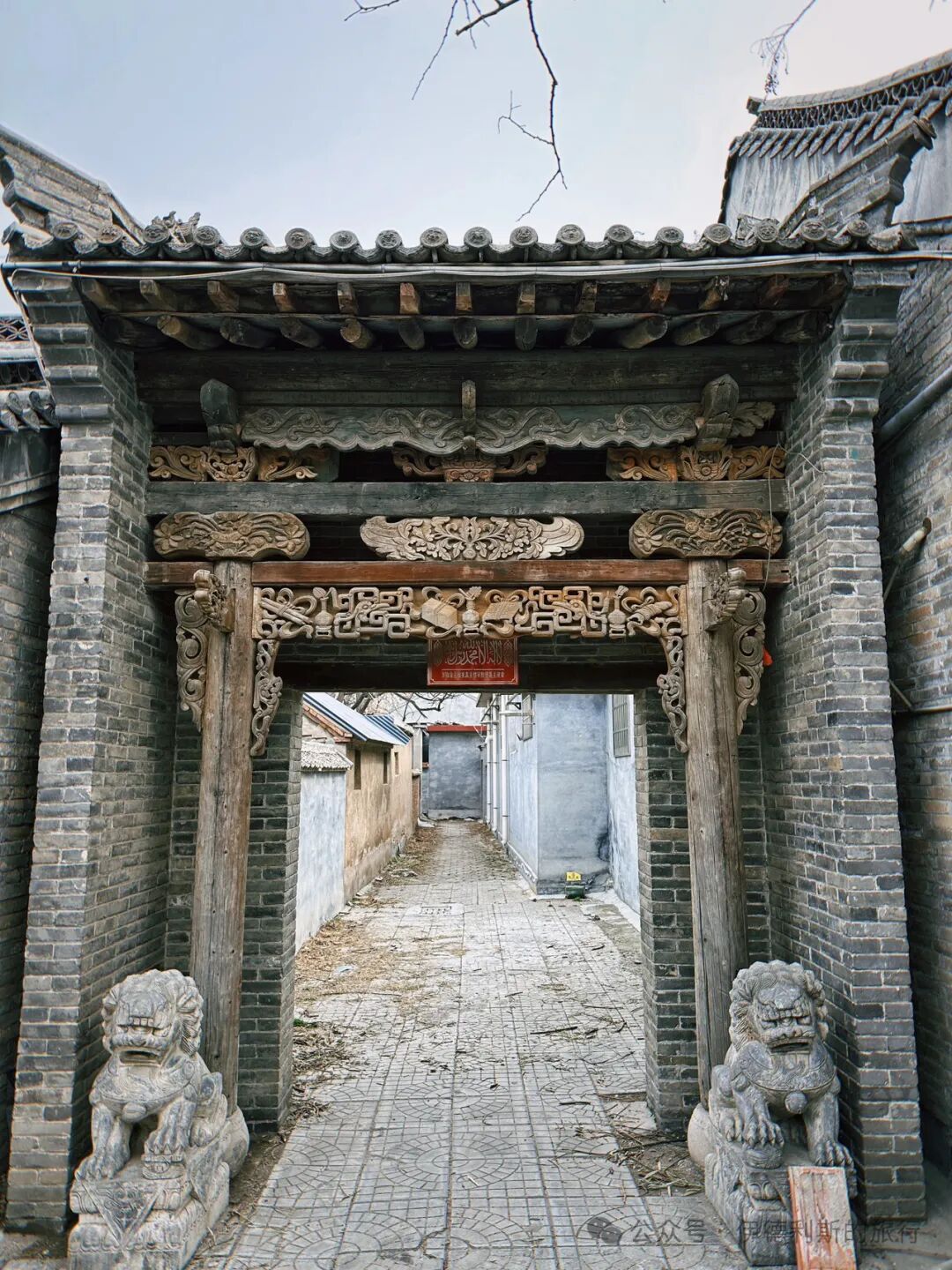
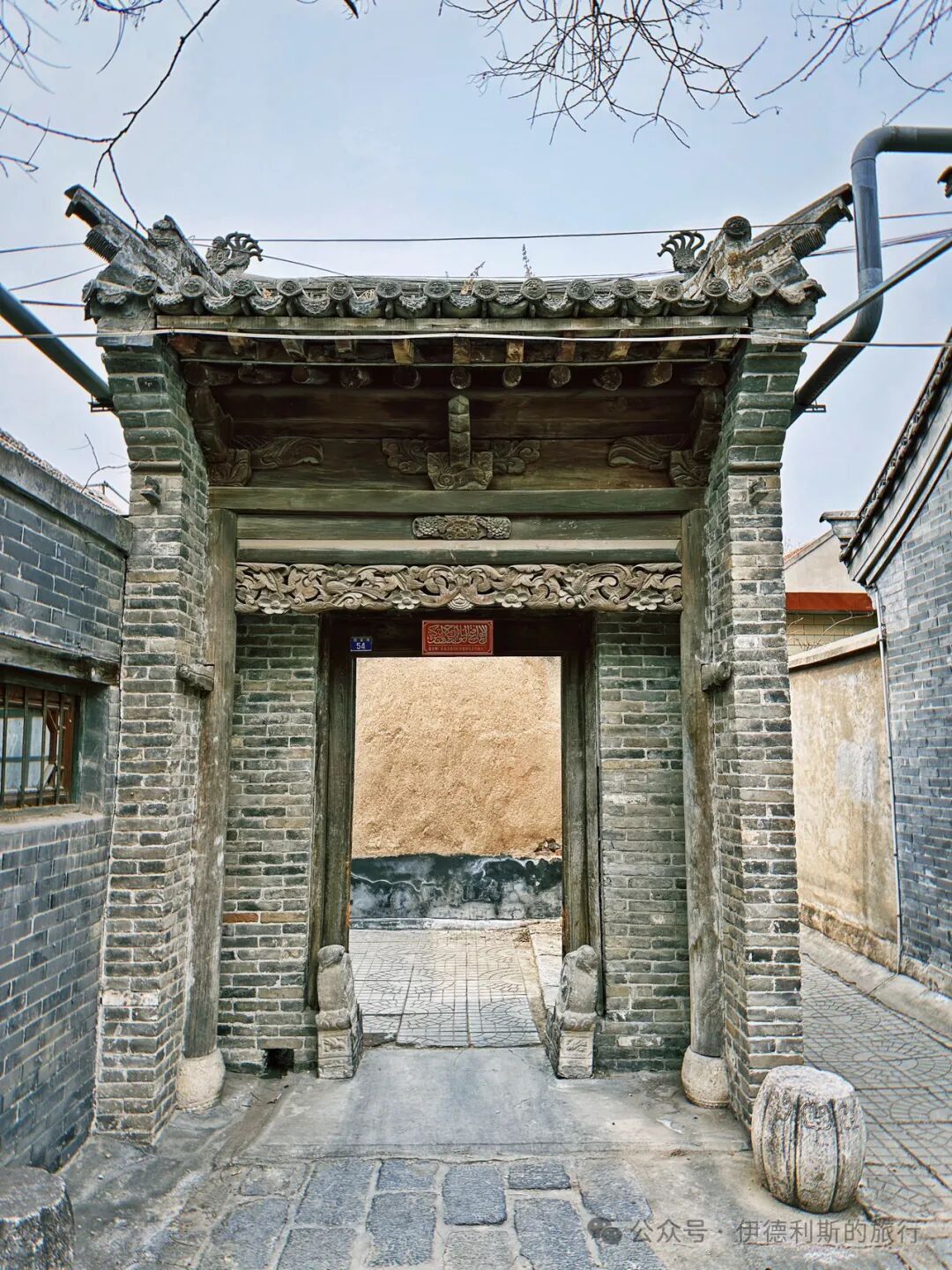
Halal Travel Guide: Qingzhou Mosques and Zhaode Street, Part 2
Articles • ali2007fr posted the article • 0 comments • 144 views • 2026-05-20 01:48
Summary: This is the second part of a Ramadan visit to Qingzhou, focusing on Zhenjiao Mosque, Chengli Mosque, and Zhaode Ancient Street. It keeps the original mosque and street details, image order, and historical context. view all
Summary: This is the second part of a Ramadan visit to Qingzhou, focusing on Zhenjiao Mosque, Chengli Mosque, and Zhaode Ancient Street. It keeps the original mosque and street details, image order, and historical context.
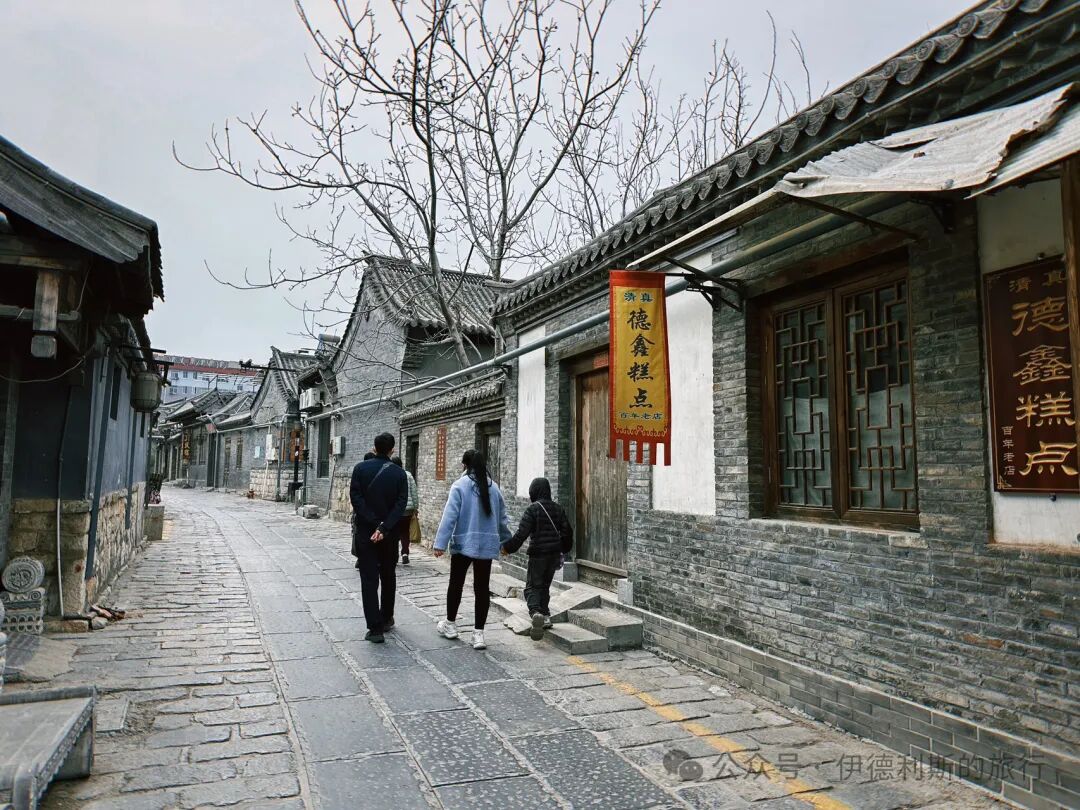
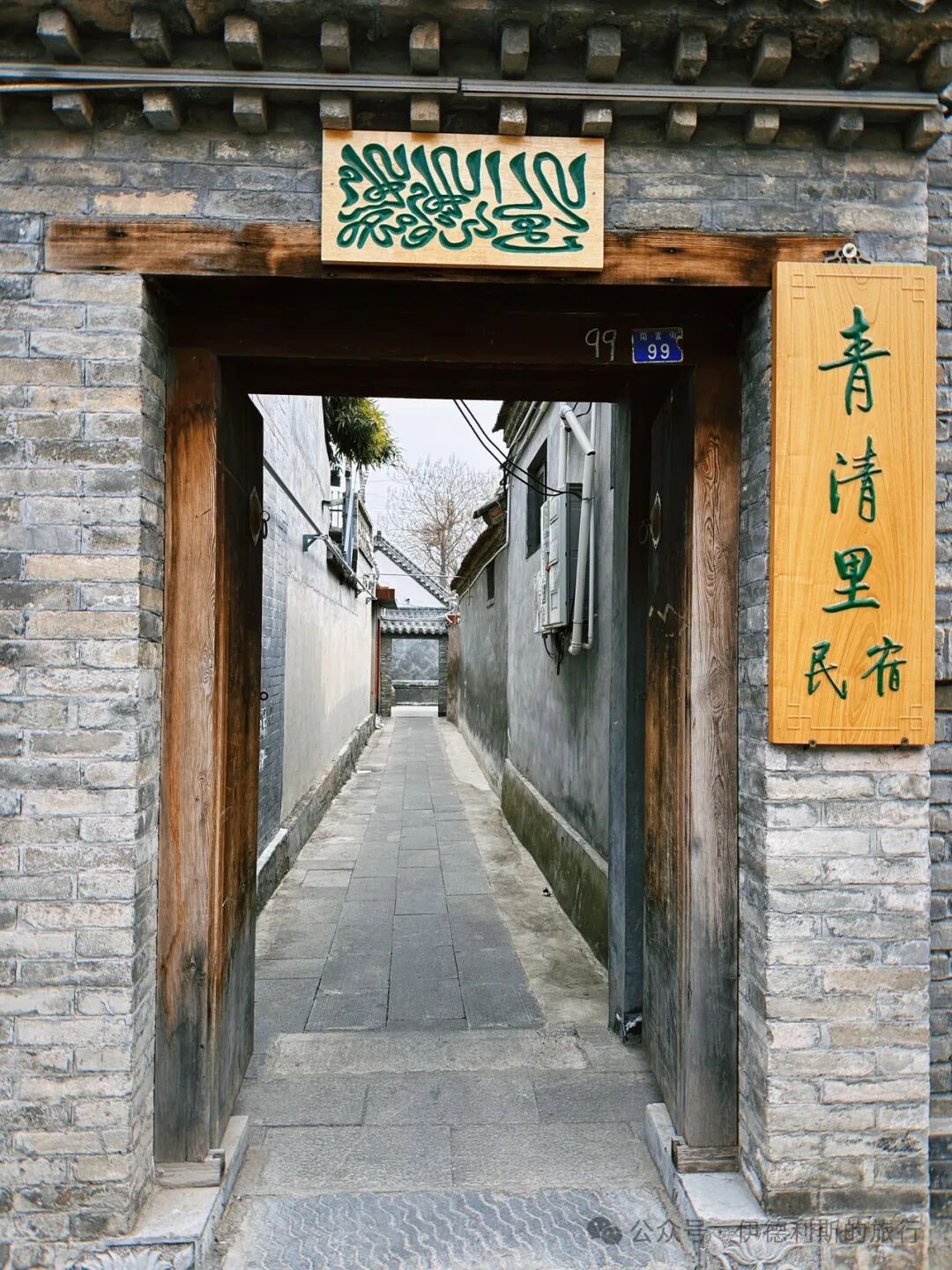
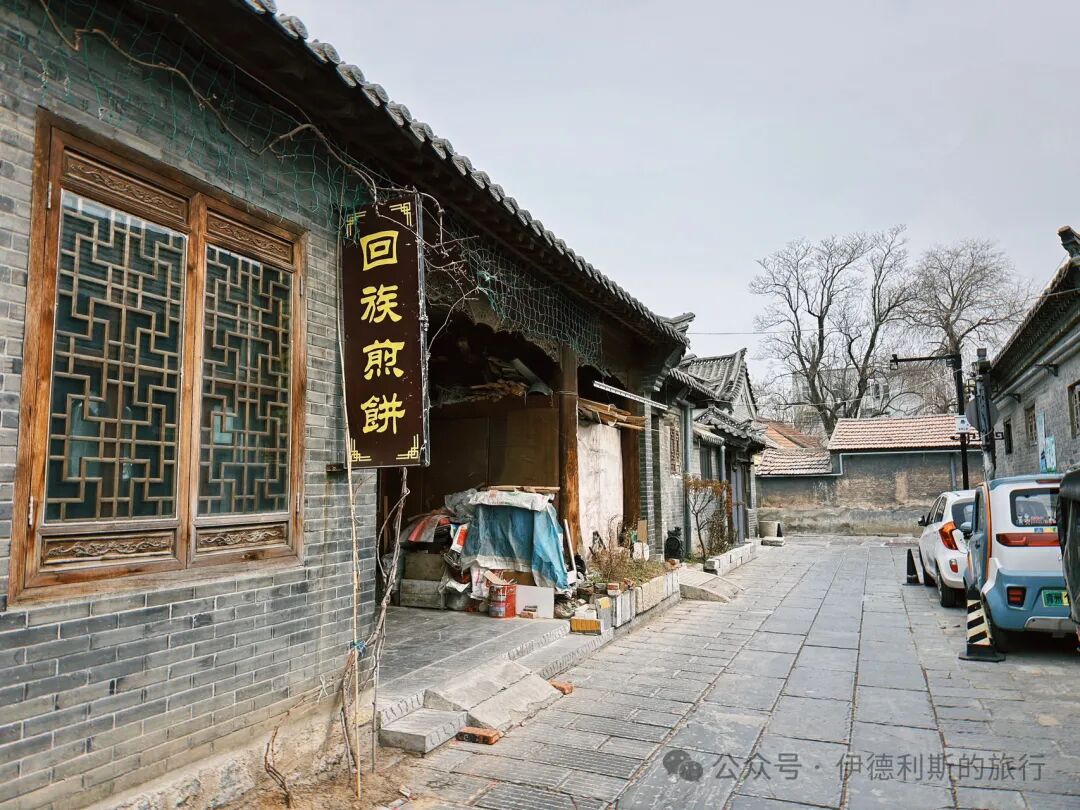
Halal Travel Guide: Ramadan Weekend in Beijing Qianmen & Balizhuang
Articles • ali2007fr posted the article • 0 comments • 154 views • 2026-05-20 01:48
Summary: This travel account follows the fifth weekend of Ramadan 2025 in Beijing, with stops around Qianmen and Balizhuang. It keeps the original prayer, food, street, mosque, and community details while making the English easy to read.
First, I wish all my friends (dosti) a blessed Eid al-Fitr! I am starting by catching up on a record from the last weekend of Ramadan.
On Friday, I broke my fast at the mosque on Saozhou Hutong outside Qianmen in Beijing. I had various teas, snacks, and fruits, especially the traditional Beijing pastry known as ganglu.
The Qianmen Mosque was first built in the late Ming Dynasty and renovated in 1680 (the 19th year of the Kangxi reign of the Qing Dynasty) and 1795 (the 60th year of the Qianlong reign). It features the classic North China mosque architectural style of the Qing Dynasty and is very well preserved. The famous modern Islamic educator Imam Wang Kuan served as the head imam at Qianmen Mosque in 1894 (the 20th year of the Guangxu reign). His student, the great Imam Da Pusheng, served as an imam at the mosque from 1909 to 1911. Another great imam, Wang Jingzhai, studied under the famous teacher Imam Yu Mianweng at the mosque when he was young.
From the Qing Dynasty to the Republican era, many Hui Muslims outside Qianmen worked in the jade, jewelry, and antique calligraphy and painting trades. The famous novel 'Jade King' (Muslim's Funeral) is based on the Hui Muslim jade trade in this area. The Qianmen Mosque was very busy back then, but as times have changed, the century-old mosque has returned to peace and quiet.
After the sunset prayer (maghrib), I was invited by my friend (dosti) Li Ding to have hot pot at 93 Tieshu Xiejie outside Qianmen. I met many new and old friends, and I was especially honored to meet the 81-year-old senior jade appraisal expert, Mr. Wang Ruimin.
Saturday was the last Taraweeh prayer of Ramadan, and I felt very reluctant to see it end! Balizhuang was still very lively. I met many old friends again and made some new ones. There are more women than men among the local community members breaking their fast in Balizhuang, which is quite rare in Beijing. After the sunset prayer (maghrib), I had lamb offal soup (yangza tang), roasted chicken, stewed kelp with carrots, braised chicken legs, and minced meat with green beans. It was very heartwarming.
I broke my fast at home on Sunday and made a big plate of goose (dapan yan). The way to make big plate goose is the same as big plate chicken (dapan ji), but the texture of the goose is better than chicken, almost like steak. Hui Muslims in Xinjiang love to make big plate goose, but it seems rare in Xinjiang restaurants in Beijing. This might be because after stir-frying the goose, it must be pressure-cooked for 40 minutes, unlike the big plate chicken made with broiler chickens in some restaurants, which can be stir-fried directly. Also, when eating big plate goose, you must have it with Xinjiang chili peppers (xian lazi). It needs to be spicy enough to be delicious, and it is impossible to stop eating when paired with freshly made belt noodles (pidai mian).
Before going to bed on Sunday, I mixed pea starch at home to prepare for the pea starch soup (hui fencai) for the Eid al-Fitr breakfast the next day. This is a must-have for every Hui Muslim family in Xinjiang before Eid (Eid al-Fitr). view all
Summary: This travel account follows the fifth weekend of Ramadan 2025 in Beijing, with stops around Qianmen and Balizhuang. It keeps the original prayer, food, street, mosque, and community details while making the English easy to read.
First, I wish all my friends (dosti) a blessed Eid al-Fitr! I am starting by catching up on a record from the last weekend of Ramadan.
On Friday, I broke my fast at the mosque on Saozhou Hutong outside Qianmen in Beijing. I had various teas, snacks, and fruits, especially the traditional Beijing pastry known as ganglu.
The Qianmen Mosque was first built in the late Ming Dynasty and renovated in 1680 (the 19th year of the Kangxi reign of the Qing Dynasty) and 1795 (the 60th year of the Qianlong reign). It features the classic North China mosque architectural style of the Qing Dynasty and is very well preserved. The famous modern Islamic educator Imam Wang Kuan served as the head imam at Qianmen Mosque in 1894 (the 20th year of the Guangxu reign). His student, the great Imam Da Pusheng, served as an imam at the mosque from 1909 to 1911. Another great imam, Wang Jingzhai, studied under the famous teacher Imam Yu Mianweng at the mosque when he was young.
From the Qing Dynasty to the Republican era, many Hui Muslims outside Qianmen worked in the jade, jewelry, and antique calligraphy and painting trades. The famous novel 'Jade King' (Muslim's Funeral) is based on the Hui Muslim jade trade in this area. The Qianmen Mosque was very busy back then, but as times have changed, the century-old mosque has returned to peace and quiet.
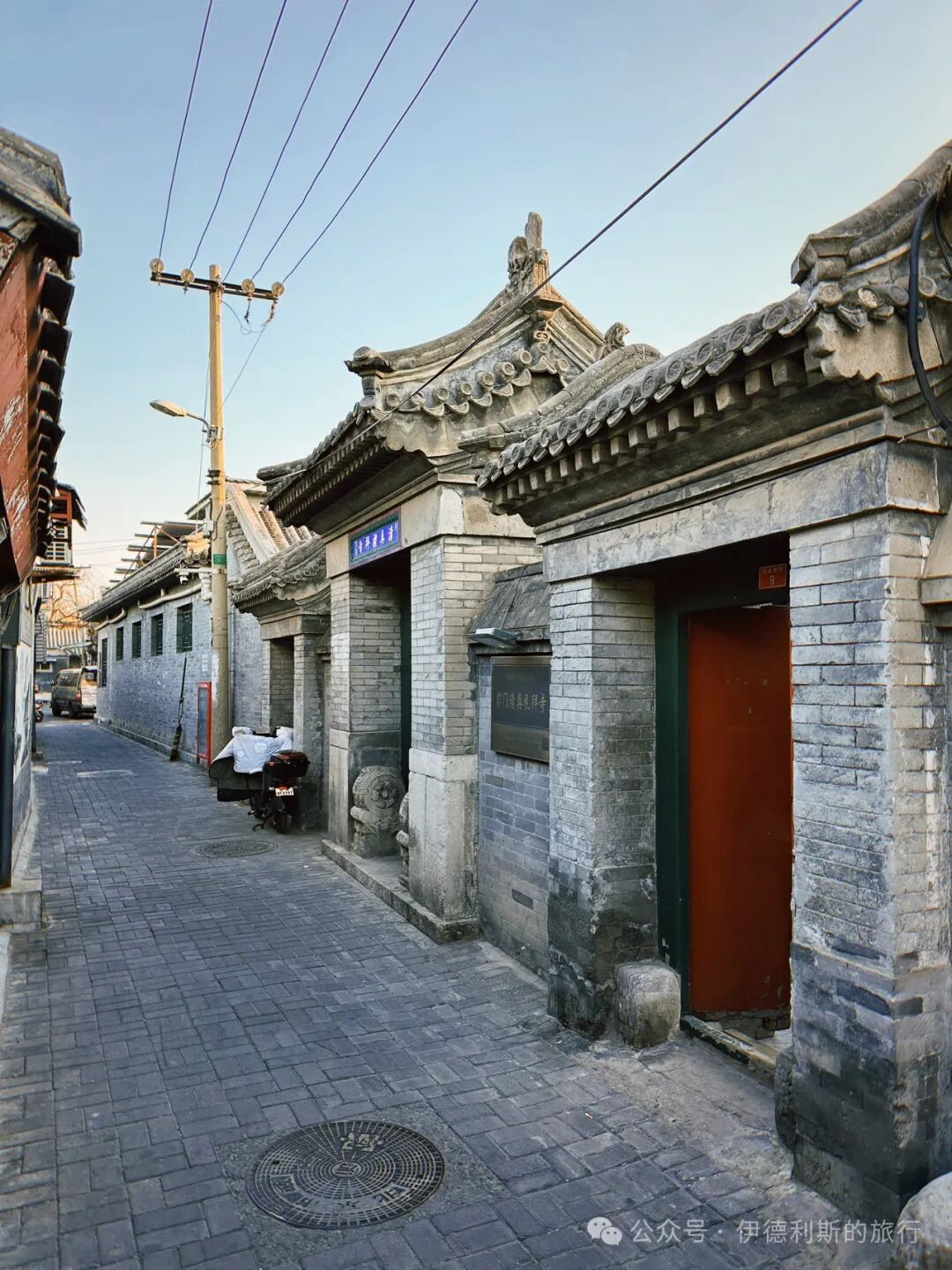
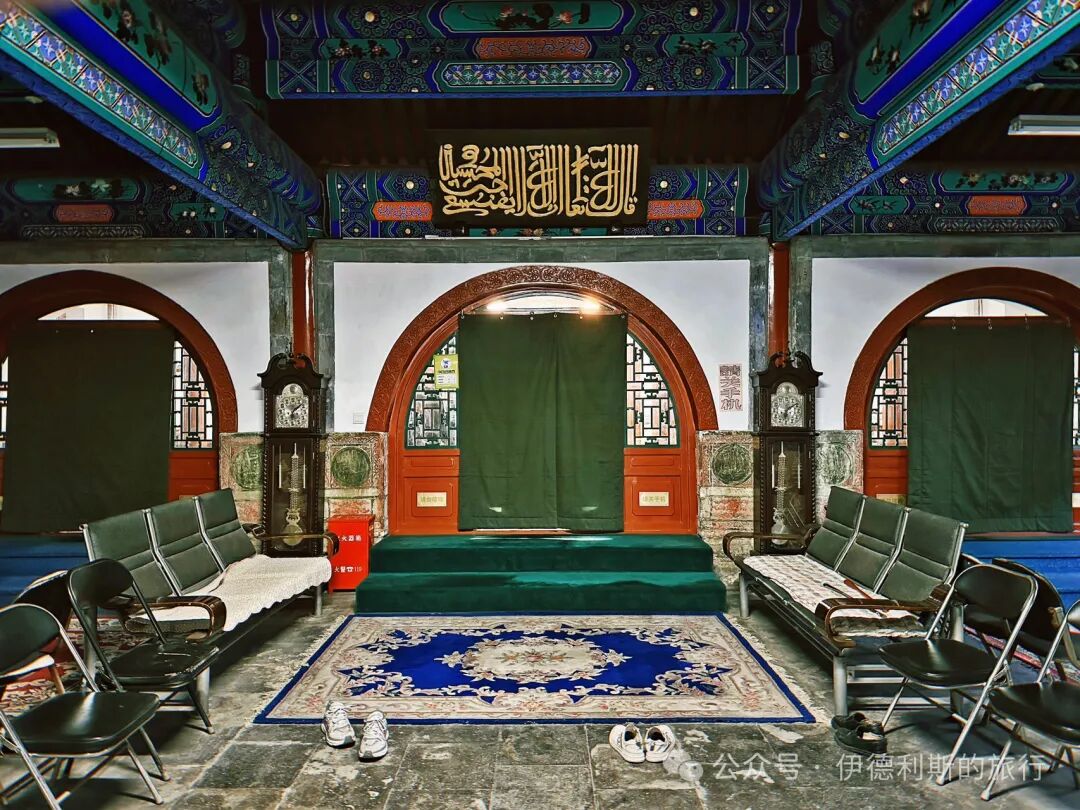
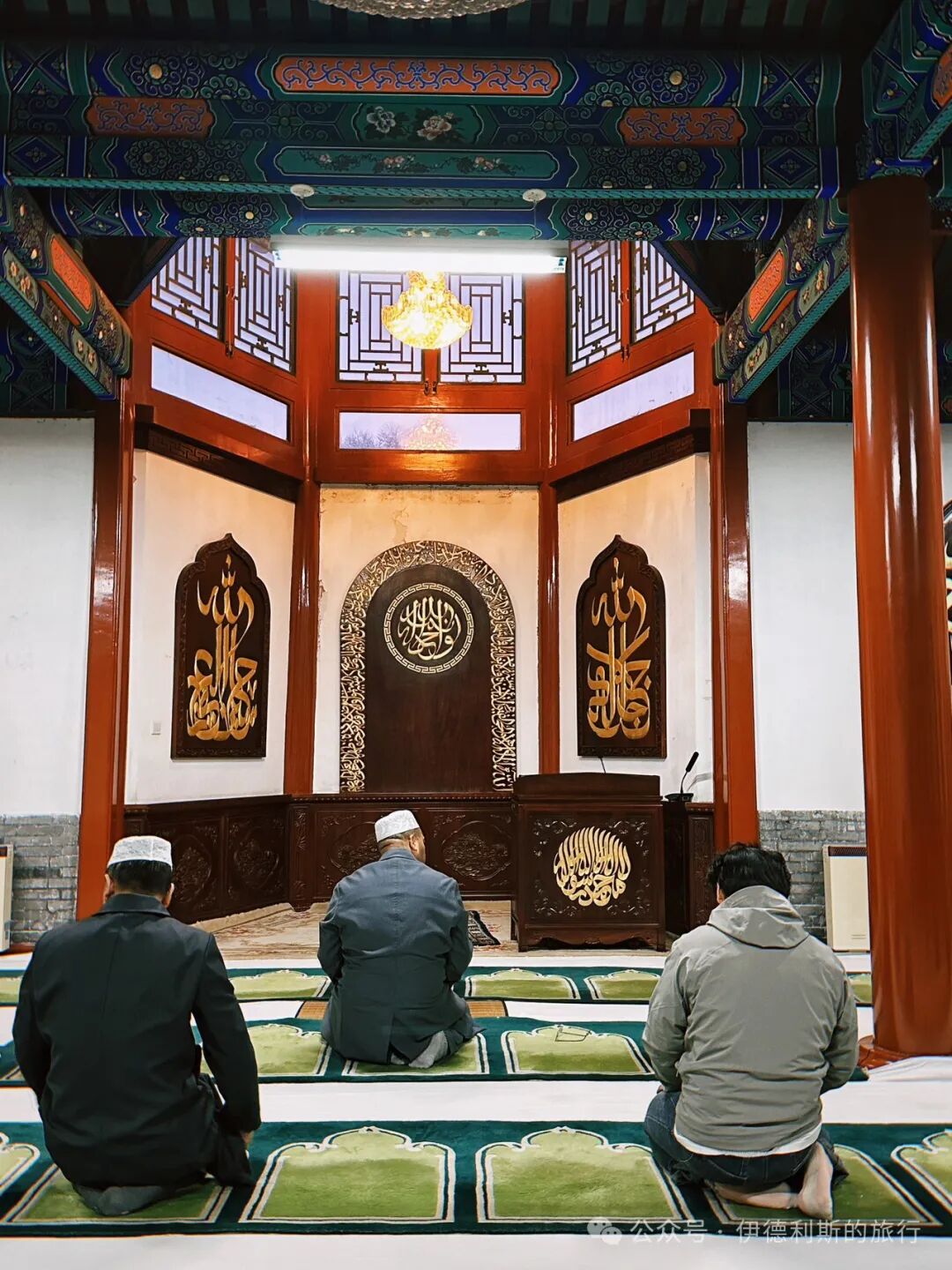
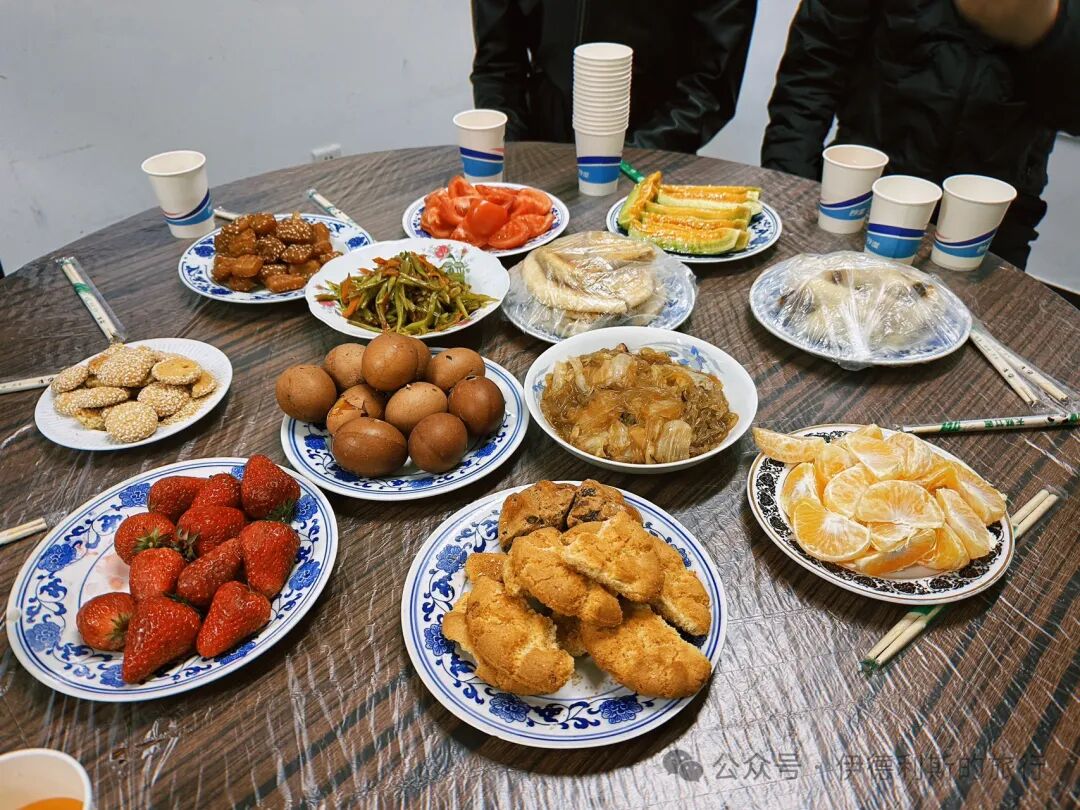
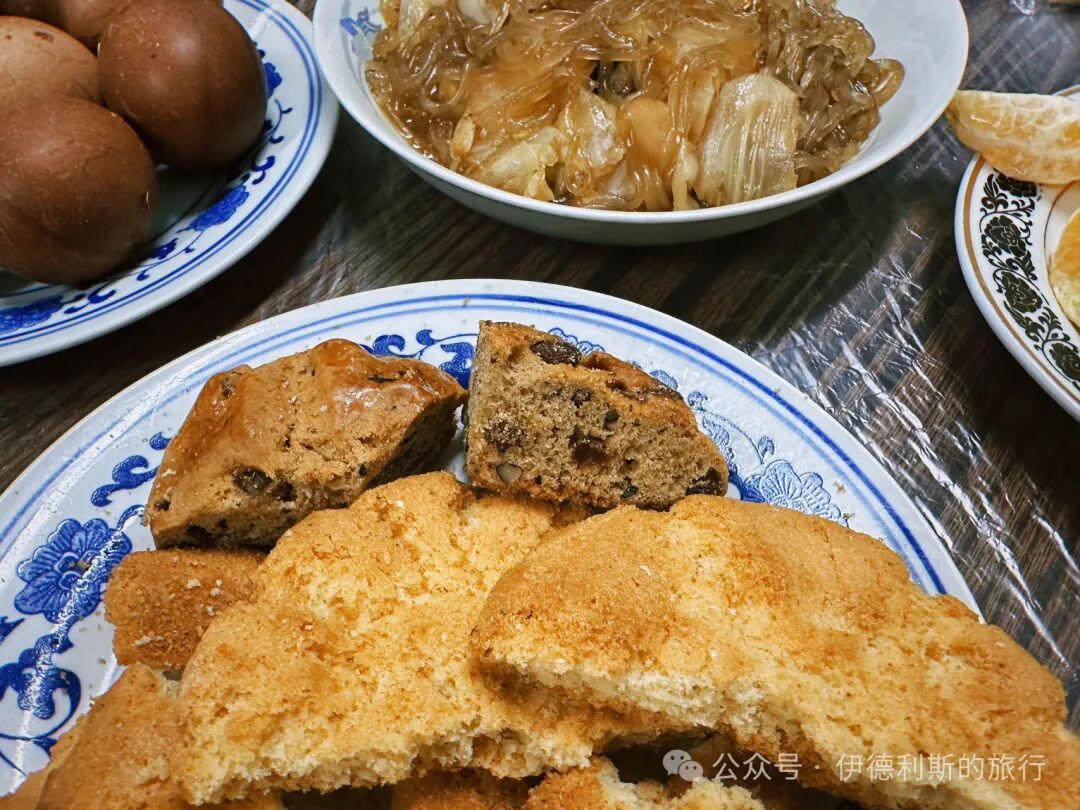
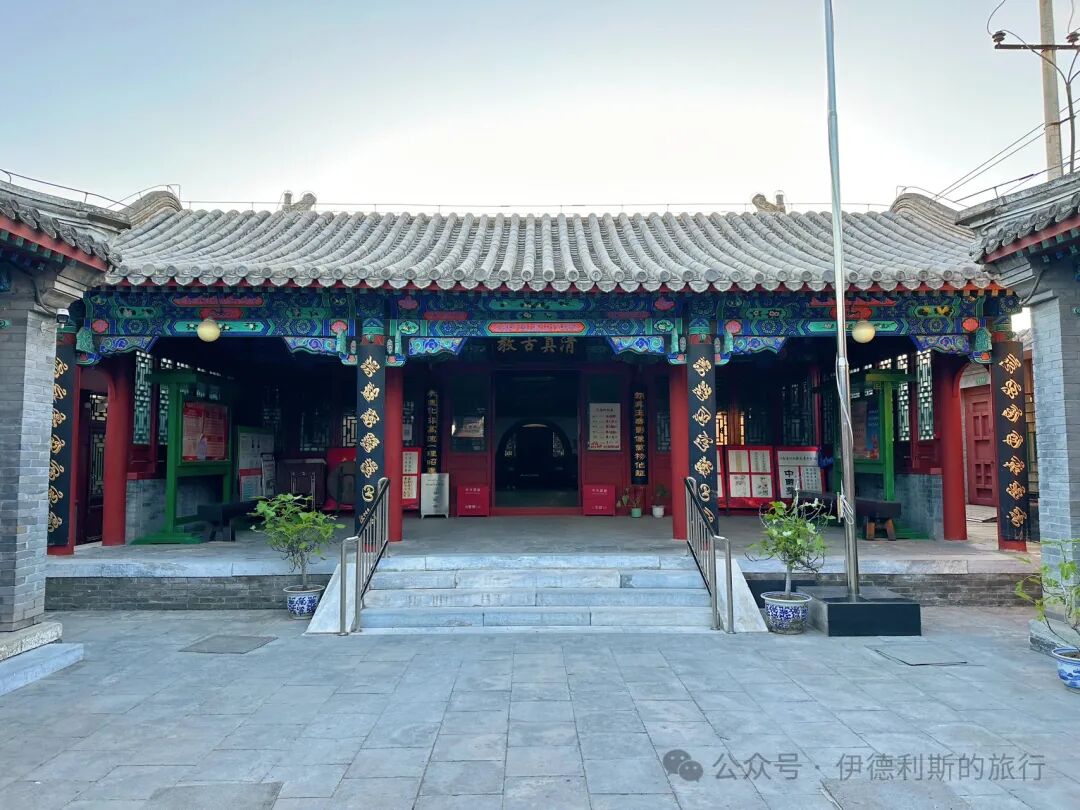
After the sunset prayer (maghrib), I was invited by my friend (dosti) Li Ding to have hot pot at 93 Tieshu Xiejie outside Qianmen. I met many new and old friends, and I was especially honored to meet the 81-year-old senior jade appraisal expert, Mr. Wang Ruimin.
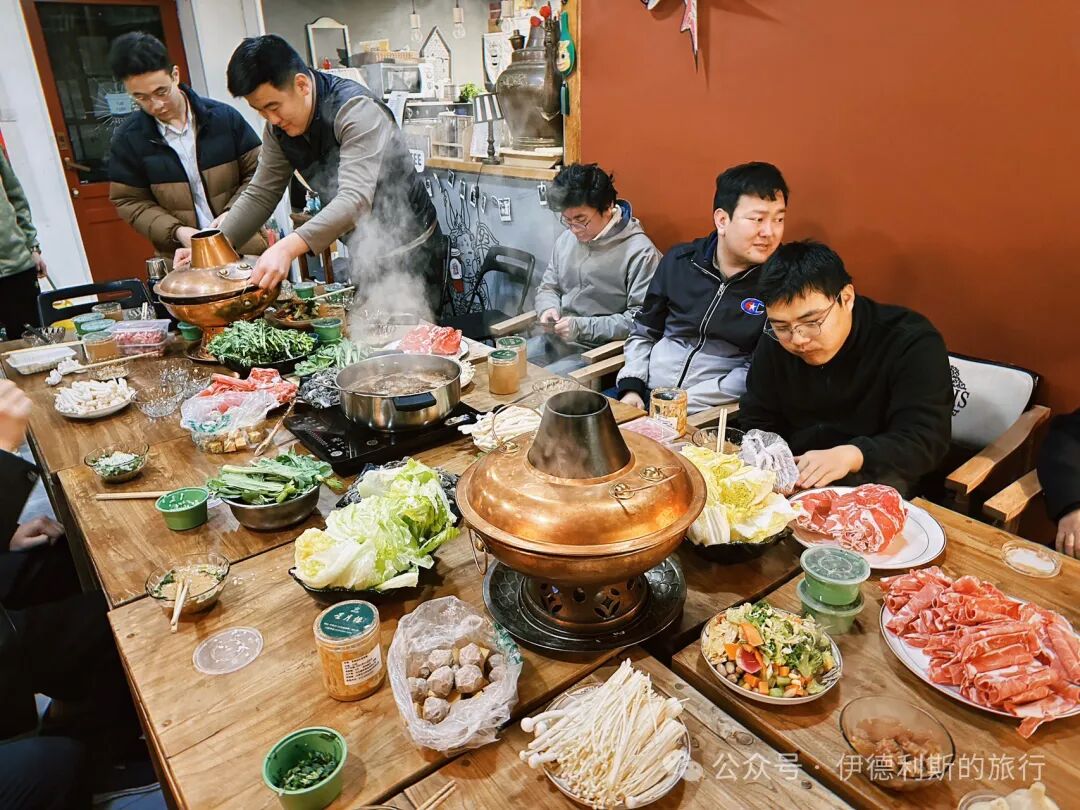
Saturday was the last Taraweeh prayer of Ramadan, and I felt very reluctant to see it end! Balizhuang was still very lively. I met many old friends again and made some new ones. There are more women than men among the local community members breaking their fast in Balizhuang, which is quite rare in Beijing. After the sunset prayer (maghrib), I had lamb offal soup (yangza tang), roasted chicken, stewed kelp with carrots, braised chicken legs, and minced meat with green beans. It was very heartwarming.
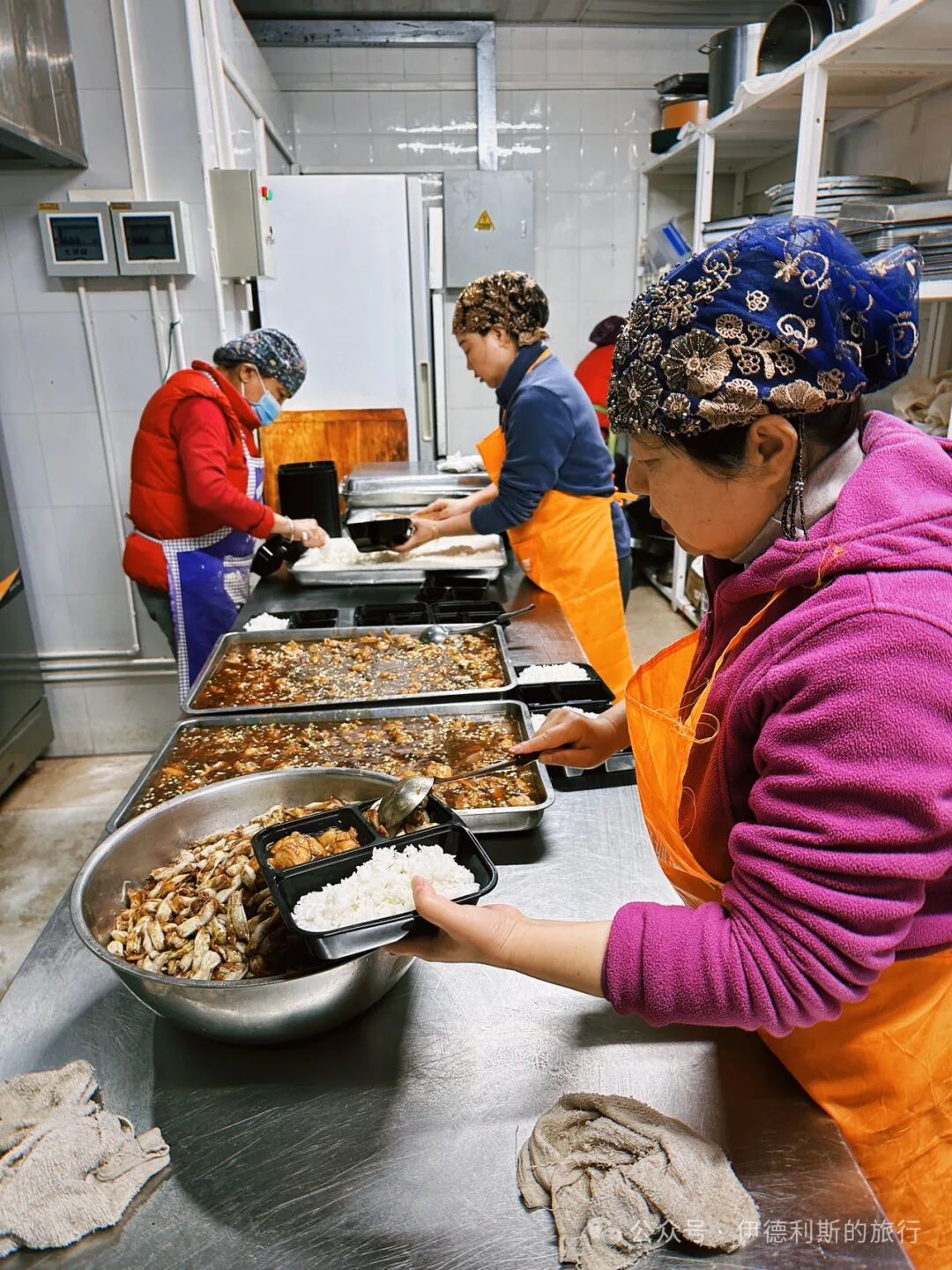
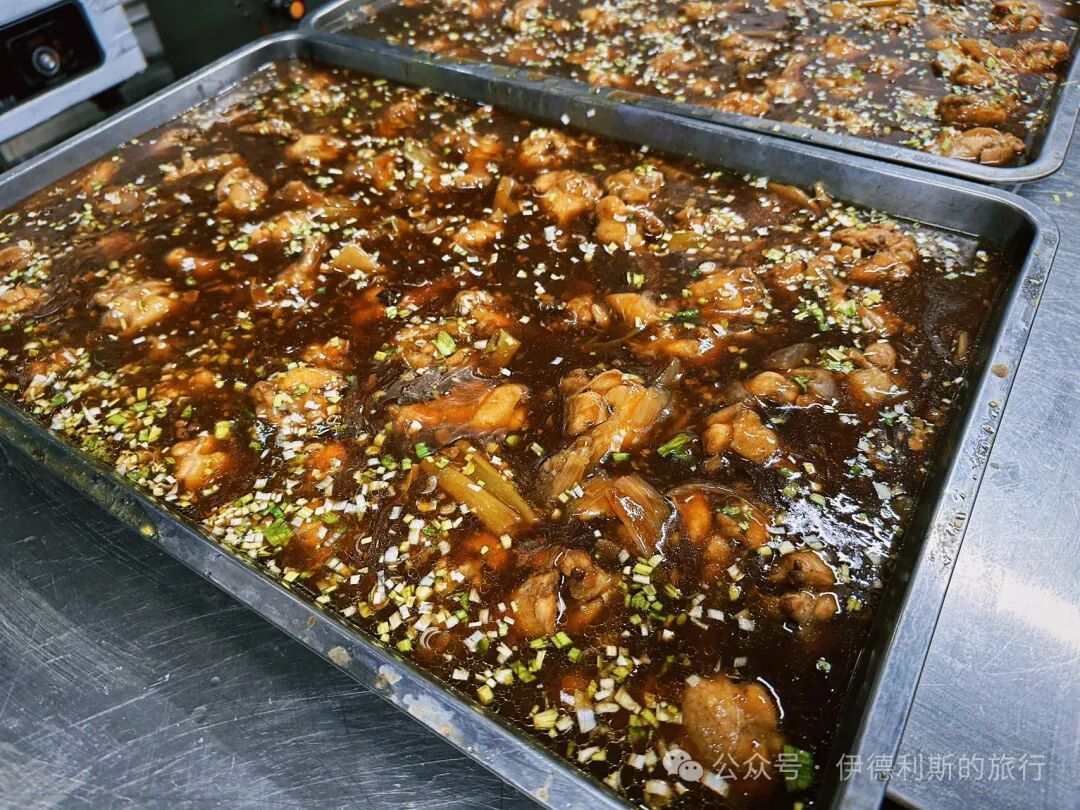
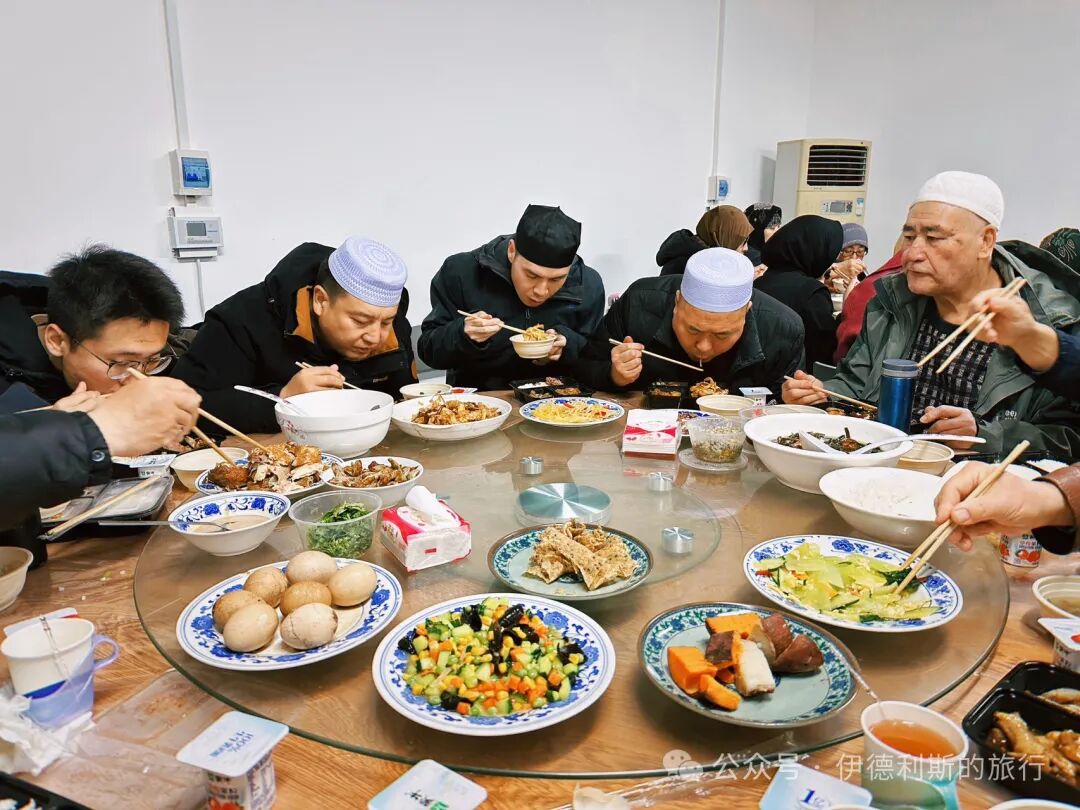
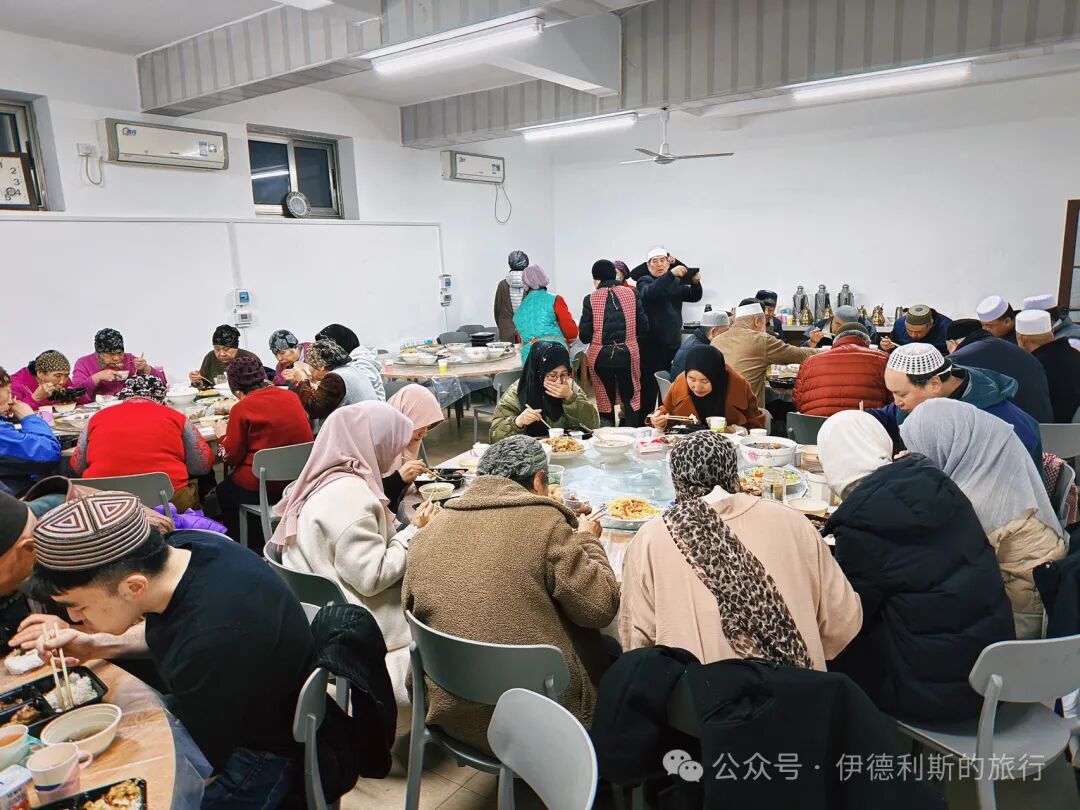
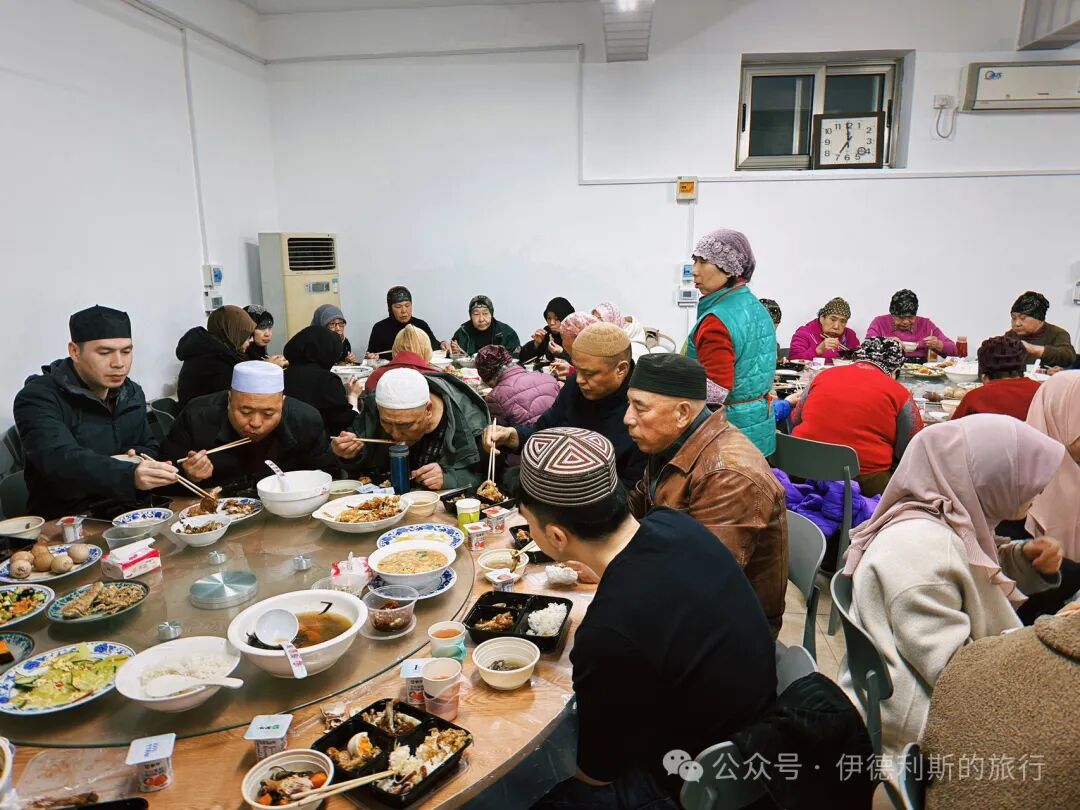
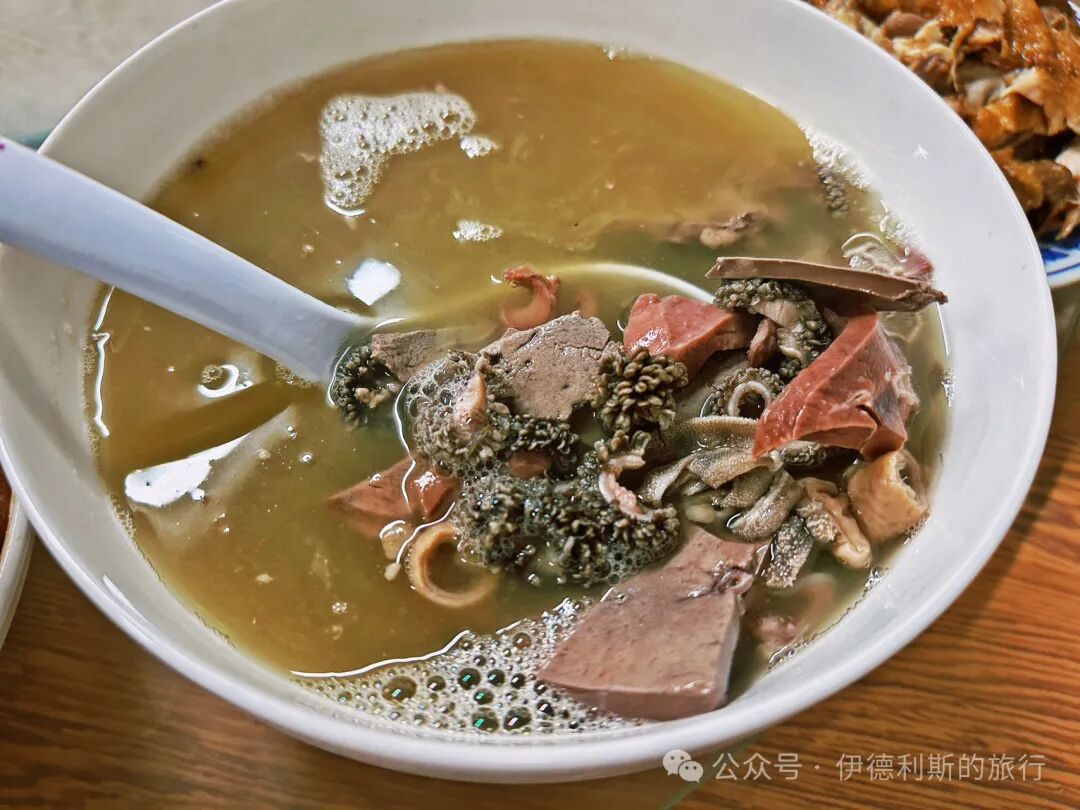
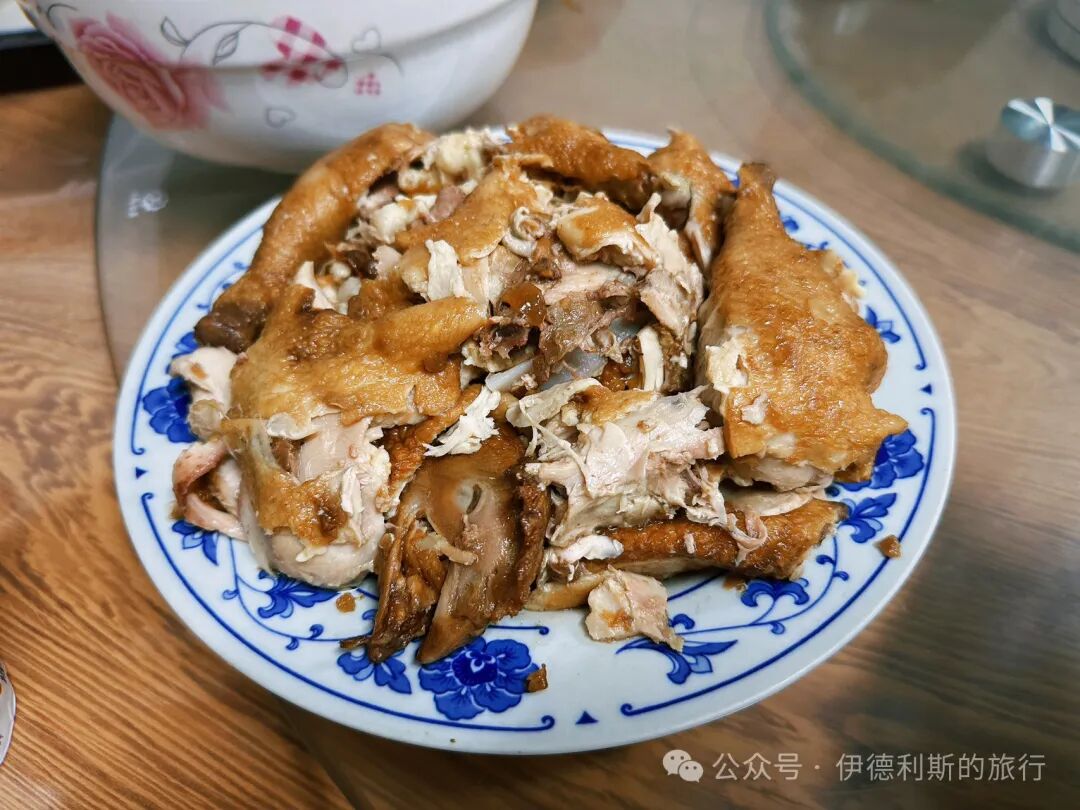
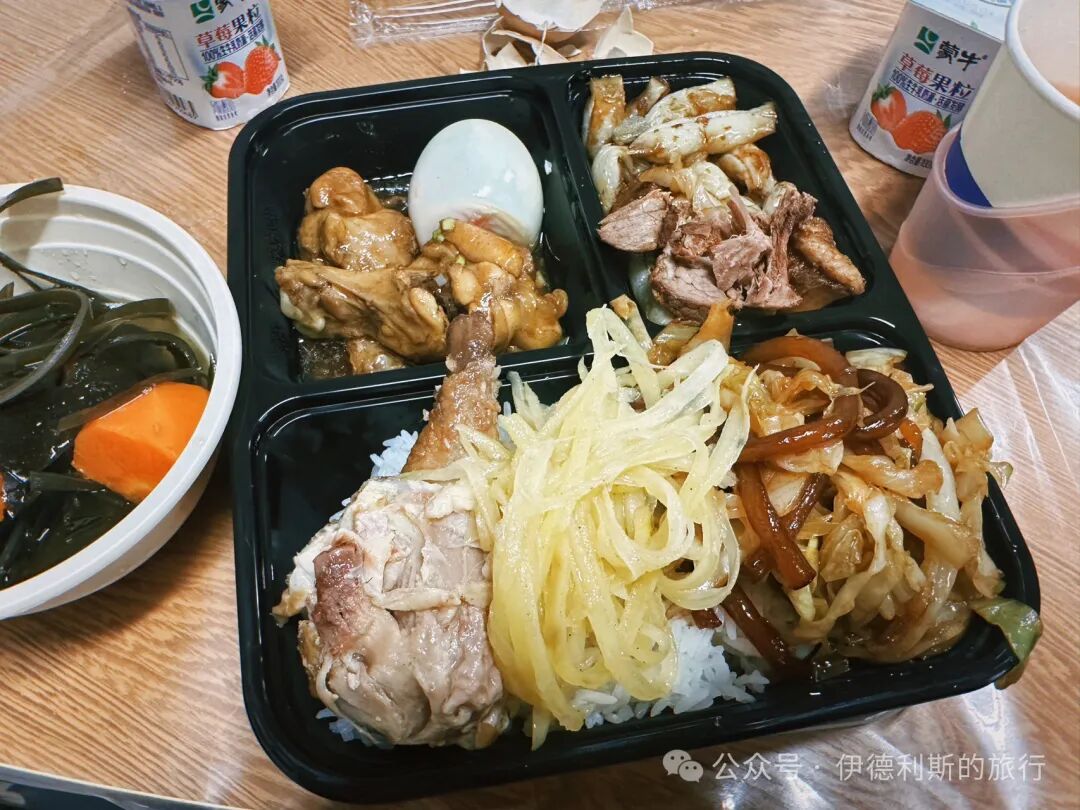
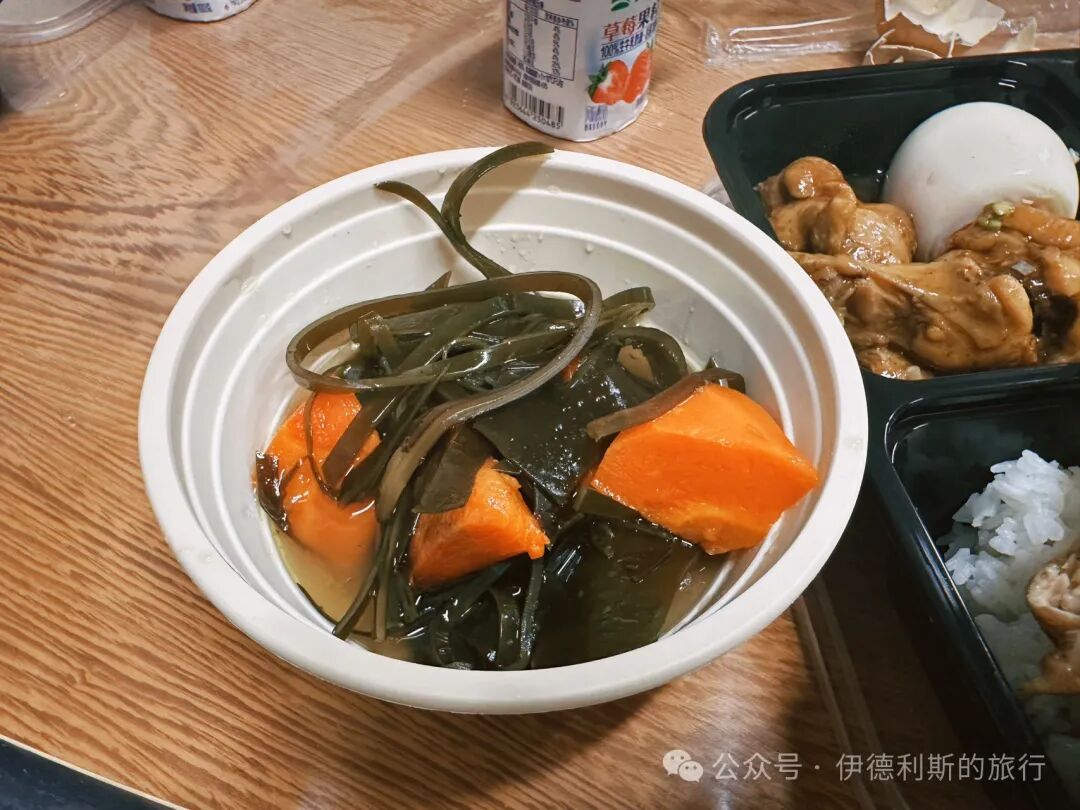
I broke my fast at home on Sunday and made a big plate of goose (dapan yan). The way to make big plate goose is the same as big plate chicken (dapan ji), but the texture of the goose is better than chicken, almost like steak. Hui Muslims in Xinjiang love to make big plate goose, but it seems rare in Xinjiang restaurants in Beijing. This might be because after stir-frying the goose, it must be pressure-cooked for 40 minutes, unlike the big plate chicken made with broiler chickens in some restaurants, which can be stir-fried directly. Also, when eating big plate goose, you must have it with Xinjiang chili peppers (xian lazi). It needs to be spicy enough to be delicious, and it is impossible to stop eating when paired with freshly made belt noodles (pidai mian).
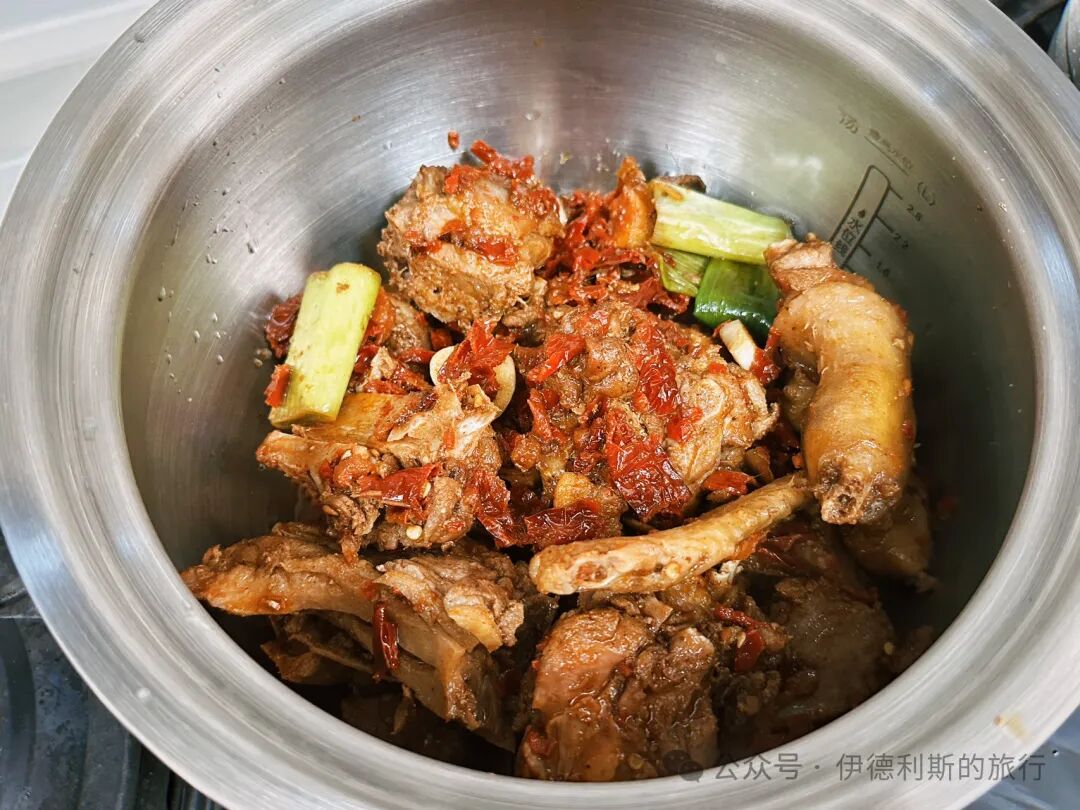
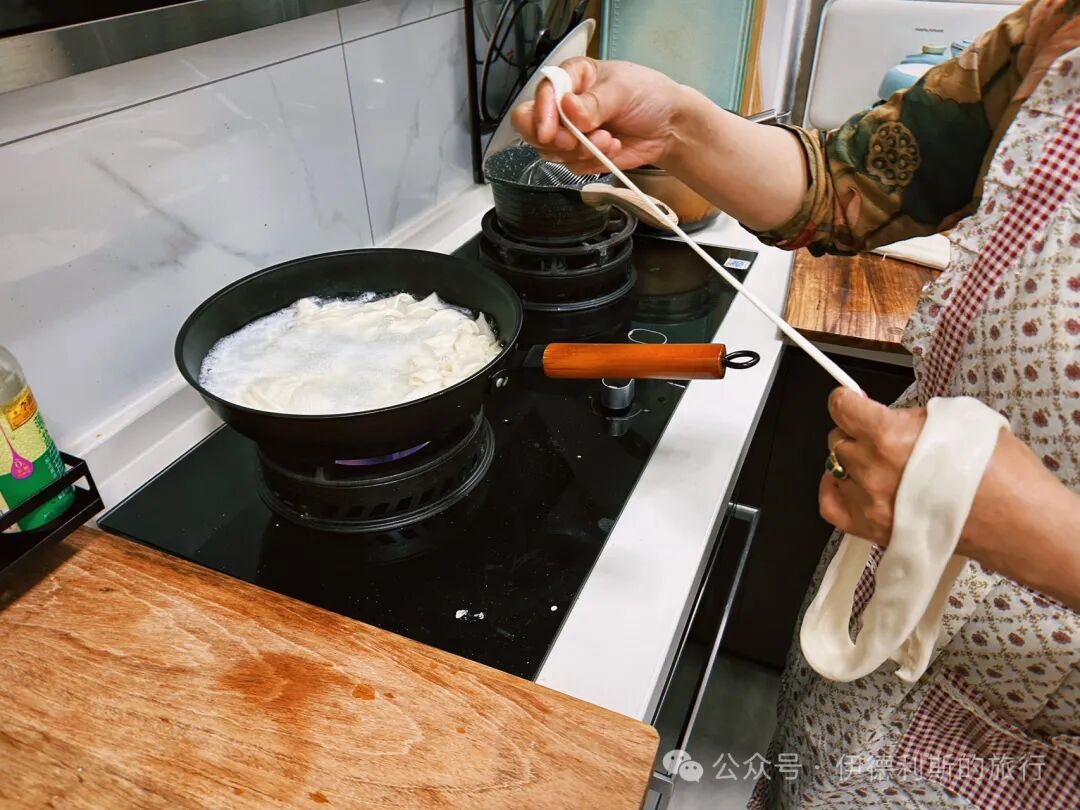
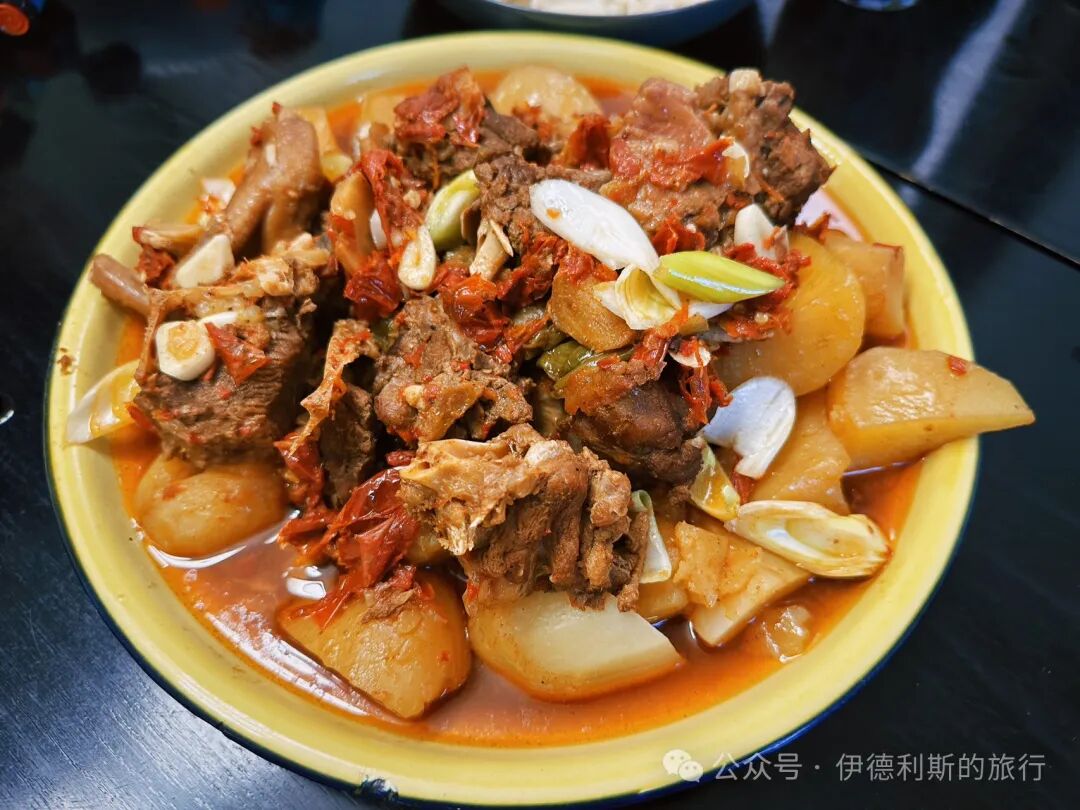
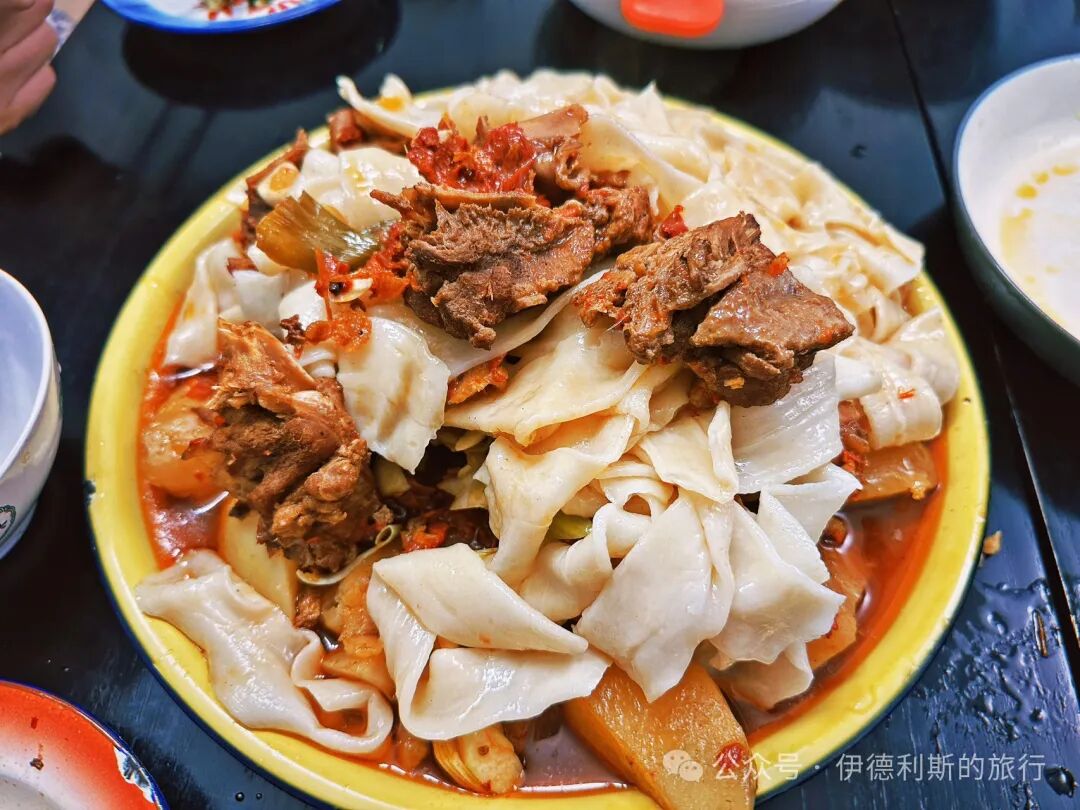
Before going to bed on Sunday, I mixed pea starch at home to prepare for the pea starch soup (hui fencai) for the Eid al-Fitr breakfast the next day. This is a must-have for every Hui Muslim family in Xinjiang before Eid (Eid al-Fitr).
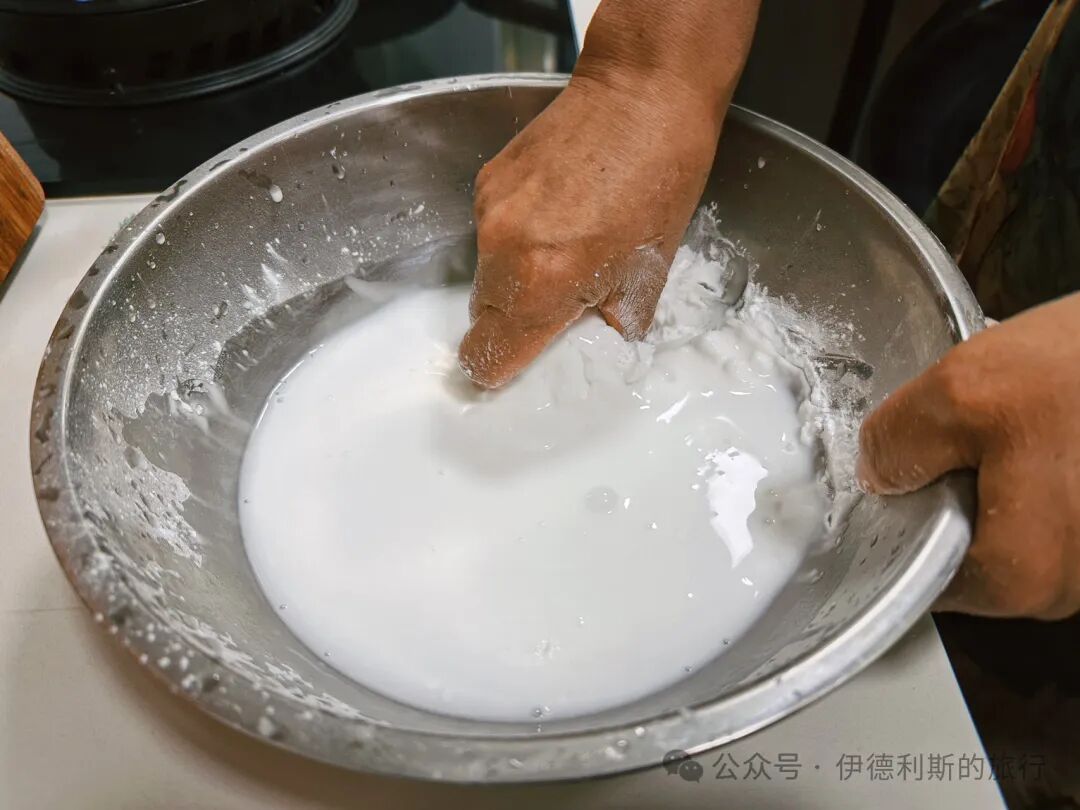
Halal Travel Guide: Jinan Mosques During Ramadan, Part 1
Articles • ali2007fr posted the article • 0 comments • 185 views • 2026-05-20 01:48
Summary: This is the first part of a Ramadan visit to historic mosques in Jinan, including Jinan South Mosque, North Mosque, and other Hui Muslim sites. It preserves the original routes, mosque history, food and community details, and all photographs in clear English.
I went to Jinan, Shandong, on the second Saturday of Ramadan in 2025. I visited the South Great Mosque, North Great Mosque, Nanguan Mosque, and Dikou Mosque. Adding these to the Dangxi Mosque and Dangdong Mosque I visited earlier, I am now sharing information about these six ancient mosques in Jinan.
Jinan South Great Mosque
The earliest mosque in Jinan was in Wumanla Lane, southeast of the government city. In 1295 (the first year of the Yuan-Yuanzhen era), it moved outside the west gate of the city to make room for the Shandong East Road Salt Transport Commission. This is the current site of the South Great Mosque. Later, an imam (mulla) named Aidi led the religious affairs. The Hui Muslims who originally lived in the east of the city moved west, forming a new mosque community near the west gate.
After Chen Li became the leader in 1436 (the first year of the Ming-Zhengtong era), he expanded the South Great Mosque significantly. Further expansions and repairs happened during the Ming dynasties of Hongzhi, Jiajing, and Wanli, and the Qing dynasties of Qianlong, Jiaqing, Daoguang, and Tongzhi, as well as the Republic of China era, creating the scale we see today.
The main prayer hall was rebuilt in 1436 (Zhengtong first year) and expanded in 1492 (Hongzhi seventh year). It stands on a twelve-step platform and looks very tall and grand. The main hall consists of three parts: the front porch, the front hall, and the rear hall. The front porch has a hip roof (wudian ding), the front hall has a gable-and-hip roof (xieshan ding), and the rear hall has a hip roof. There are 50 eaves pillars supporting the surrounding corridor. The main hall uses a beam-lifting wooden frame, and there is an arched door cover between the front and rear halls.
The circular windows on the north and south gable walls of the main hall feature wooden carvings of scripture.
The twelve wooden windows carved with scripture in the main hall represent a high achievement in traditional Chinese Arabic-style wood carving. Unfortunately, the oil painting used during later repairs was not high quality, making some of the wood carvings blurry.
According to the "Stele Preface of the Hei Family" inside the mosque, the calligraphy on the wall facing the mihrab was written in 1810 (Jiaqing fifteenth year) by Hei Faxiang, who served as the imam of the South Great Mosque. In the 110 years following that until 1920, members of the Hei family, including Hei Yuanji, Hei Yonghua, Hei Qingjie, and Hei Guangzhi, served as imams of the South Great Mosque.
The gate tower was built in 1914 and the moon-watching tower (wangyue lou) in 1936. Both have features from the Republic of China era. Teacher Liu Zhiping noted that the architectural style has many "new" ideas.
The center of the gate tower has a plaque reading "Mosque," with "Repaired in April of the Jia-Yin year of the Republic of China" written on it, signed by "The Community." Next to the main gate is a stone tablet from the thirteenth year of the Daoguang era titled "Record of the Screen Wall Outside the Mosque Gate."
The back door of the mosque features beautiful plum blossom patterns carved into the bracket sets (que-ti).
On the north side of the front porch of the South Great Mosque are the two most important steles in the mosque: the "Laifu Ming" and the "Record of the Repair of the Mosque in Licheng County, Jinan Prefecture." They have a protective cover and display boards explaining the content, though the original text is hard to see through the glass.
The "Laifu Ming" was written in 1528 (Ming-Jiajing seventh year) by Chen Si, the leader of the South Great Mosque. His great-grandfather, Chen Ying, was a diplomat in the early Ming Dynasty who traveled to the Western Regions three times and worked in the Court of Imperial Entertainments. His descendants served as leaders of the South Great Mosque for over a hundred years. The "Laifu Ming" is the first Chinese-language stele written by a mosque leader. It is also the first work in China to combine Islamic teachings with Song and Ming Neo-Confucianism, starting the tradition of interpreting scripture through Confucianism in the late Ming and early Qing dynasties. It has very high historical and philosophical value.
The "Record of the Repair of the Mosque in Licheng County, Jinan Prefecture" was carved in 1495 (Ming-Hongzhi eighth year) and is the earliest religious stone tablet in Jinan. The inscription records that the South Great Mosque moved from Wumanla Lane at the east gate of Jinan to the west gate in 1295 (Yuan-Yuanzhen first year). It was small at first, then expanded by Chen Li, the son of Chen Ying, in 1436 (Ming-Zhengtong first year), and expanded again by Chen Xi in 1492 (Hongzhi eighth year). The stele records these two expansion processes.
The Preface to the Permanent Prohibition of Hereditary Succession for the Three Religious Leaders was carved in 1715 (the 54th year of the Qianlong reign). The text was copied from a mosque (libaisi) in Jining Prefecture. Since the original Jining stele no longer exists, the Jinan stele has become the most important stone inscription representing the theological views of the Shandong school of scripture hall education (jingtang jiaoyu). The stele was written by Xue Zongjun, an official in the Imperial Board of Astronomy (qintianjian) who served at the Hall of Mental Cultivation (yangxindian). The text opposes the hereditary system for the three religious leaders and advocates for a selection system based on merit and ability. The text mentions that the author consulted with the founders of the Shandong school, teachers Chang Zhimei and Li Yanling, and received their approval for these views.
The 1810 Record of Rebuilding the Mosque (libaisi). This records how the head of the Black Sect (hei jiaozhang) worked tirelessly to raise funds from all directions. It took ten years to gather materials and start construction, and the project was completed in five months.
The 1845 Stele of Ding Songnian Donating Storefronts. This records how Ding Songnian bought storefronts and donated them to the mosque, with the rent used to cover the needs of the bathhouse.
The 1872 Stele of the Zuo Ma Family Donating Land. This records how the Zuo Ma family donated farmland in Chenjiazhuang to the mosque's school to support grave visits, scripture recitation, and the maintenance of the imam (ahong) and students.
The 1921 Stele Record of Rebuilding the Two Lecture Halls of the Main Hall.
The 1890 Stele of Wang Qingchun's Aunt Donating Land. This records how Wang Qingchun donated land on behalf of his aunt.
The 1914 Stele Record of Rebuilding the Pillars, Wrapped Porch, and Brick Floor Around the Main Hall of the South Mosque.
The 1874 Inscription on Rebuilding the Two Lecture Halls. This records the construction of two lecture halls on the left and right sides of the main hall, where people studied and researched theology together after completion.
Jinan North Mosque (Beidasi).
During the Kangxi reign, Yang Kuiyuan Baba, a student of Chang Zhimei and a leader at the Jinan South Mosque, went out to collect funds and grain. During this time, an imam (ahong) from the Western Regions passed through the South Mosque and taught from the scriptures he carried. Later, Ren Runzhi Baba returned from the Hajj and brought back many scriptures, beginning to preach at the South Mosque and advocating for following the scriptures and reforming customs (zun jing ge su). After Yang Kuiyuan Baba returned to the South Mosque from his fundraising, he insisted on following ancient traditions and opposed the reforms. This led to him setting up a sorghum-stalk screen in the main hall so that each side could perform their namaz separately. History calls this the conflict between the new practice of 'Ikhwan' (houdusi) and the old practice of 'Gedimu' (gedimu). As the conflict between the new and old factions intensified, Imam Yang Kuiyuan led the followers of the old practice to build the North Mosque at the north end of Yongchang Street. It was continuously rebuilt during the Qianlong, Jiaqing, Daoguang, Guangxu, and Republican periods, eventually reaching its current scale.
The main hall of the North Mosque is built on a stone foundation. It features a large timber-framed roof with a triple-connected hip-and-gable design and upturned eaves. A pavilion-style moon-viewing tower is built above the middle hall, which can be accessed via stairs inside the hall.
The main gate and ceremonial gate of the Jinan North Mosque.
The gutter between the main hall and the porch features dragon-head water spouts, and rainwater flows down the roof tiles of the hanging-flower gate (chuihuamen) between the two halls.
The two plaques from the Republic of China era at the North Mosque (Beidasi) match those inside the Ming-Shan Hall at the Qingjing Mosque in Quanzhou. I wonder if they are replicas.
Recognize the Oneness of Allah.
Respectfully erected in the eighth month of the eleventh year of the Republic of China.
Respectfully written by Tang Kesan, Superintendent of the Xiamen Customs, after ritual washing.
Three Awe-Inspiring Things and Four Admonitions.
An auspicious day in the latter ten days of the sixth month of the thirteenth year of the Republic of China.
Respectfully written by Tang Kesan, holder of the Second Class Order of the Golden Grain, former Superintendent of the Xiamen Customs, and Intendant of the Jinan Circuit in Shandong.
The text on the plaque comes from the Analects of Confucius, Book of Ji Shi: A gentleman has three things to stand in awe of: he stands in awe of the Mandate of Heaven, he stands in awe of great men, and he stands in awe of the words of the sages. And from the Analects of Confucius, Book of Yan Yuan: Do not look at what is contrary to propriety, do not listen to what is contrary to propriety, do not speak what is contrary to propriety, and do not do what is contrary to propriety.
Tang Kesan was a Hui Muslim from Zoucheng, Shandong. He was a famous social activist during the Republic of China era, serving as a negotiator for the Ministry of Foreign Affairs in Shandong, director of the Shandong Epidemic Prevention Office, Superintendent of the Xiamen Customs, director of the Shandong Road Administration, and Intendant of the Jinan West Circuit. He served as principal of the Chengda Normal School, founded the Yuehua magazine, helped establish the Chinese Islamic Progress Association, and organized and led the Hui Muslim movement to resist Japan and save the nation, making great contributions to the faith.
A glazed incense burner kept in front of the main prayer hall of the North Mosque.
Stone inscriptions at the Jinan North Mosque.
The 1806 Stele Record of the North Mosque. It records that someone donated funds to buy land, with the income used to cover the expenses of the mosque's school.
The 1938 Stele Record of the Extension and Repair of the Jinan North Mosque Main Hall. It records that the wife of Ma Runhan, Madam Hei, donated funds to buy land adjacent to the main hall, and Zhu Shouqing donated funds to extend the two-story main hall into a three-story structure. During this time, Zhu Shouqing passed away, and his brothers Zhu Guanzhou and Zhu Yunshan continued to renovate the beams and colorful paintings.
The 1943 Memorial Stele for the Virtuous Deeds of Mr. Mu Huating. Mu Huating was a Hui Muslim from Jinan and one of the founders of the Chengda Normal School. He joined the army at age 20 and served in the Shandong Army, the Nanjing Garrison, the Jinan Town Office, the Tianjin Customs, and the Second Border Defense Division, protecting merchants and civilians everywhere during the Zhili-Anhui War. After retiring home, he was devoted to the faith, went on the Hajj, participated in the repairs of the Jinan South Mosque and North Mosque, and collected nearly a hundred volumes of scriptures to store at the North Mosque. In 1925, he donated his own Mu Family Mosque (Mujia Chemen Si) to open the Chengda Normal School.
The 1850 Record of the Renovation of the North Mosque. The father of the author Jin Baofu helped rebuild the North Mosque in the 14th year of the Daoguang reign and again in the 30th year, which is why this stone tablet was erected.
The 1918 stone tablet titled 'Notice of Land Purchase by the Charity Hall' (Cishantang Goudi Yuanqi). It records how elders from the Mu, Fa, Ma, and Wang families donated money to buy land and storefronts inside Linxiang Gate in Jinan. The rent from these properties, along with rent from the Yuchang Soy Sauce Shop, paid for water heating fuel and supported the mosque's primary and secondary schools. The tablet is inscribed with the names of Jinan Garrison Commander Ma Zizhen (Ma Liang) and Jinan Circuit Intendant Tang Kesan.
The 1941 stone tablet titled 'Mr. Zhou's Donation of Property and Land' (Zhoujun Juanfang Juandi Bei). It records that the ancestors of the Hui Muslim youth Zhou Xiaopeng lived in Jinan for generations, and his family left official life to live in seclusion at the end of the Qing Dynasty. Zhou Xiaopeng followed his ancestors' wishes by studying books and scriptures and fulfilling the five pillars of Islam. His community had high hopes for him, but he unexpectedly passed away from illness at only twenty years old. On his deathbed, he left a will donating his ancestral home on the east side of Jiuxin Street in the West Gate area of Jinan and his family graveyard at Sili Mountain to the women's mosque, with the income to be used for mosque expenses.
The 1883 stone tablet titled 'Madam You's Land Donation' (Youshi Juandi Bei). It records that before Madam You died, she instructed her son and nephew to donate land to the North and South Mosques of Jinan to pay for the imams to visit the graves and recite prayers every year.
The 1922 stone tablet titled 'Record of the North Mosque' (Qingzhen Beisi Beiji). It records the initial establishment of a Chinese-language school at the North Mosque.
The 1909 stone tablet titled 'Resolving Disputes' (Painan Jiefen Bei). It records that a merchant named Wan Qingyan was doing business in Yuncheng. When his wife, Madam Yang, wanted to visit her parents, Wan Qingyan refused, and she became distraught and committed suicide by taking poison. Wan Qingyan asked his younger brother to send her body to Jinan, but Madam Yang's brothers found the situation suspicious and wanted to report it to the authorities. After mediation prevented a lawsuit, Wan Qingyan donated land and money to the North Mosque in Jinan.
The 1850 stone tablet titled 'Record of the North Mosque Redeeming Farmland' (Qingzhen Beisi Shutian Ji). It records that Huang Tingzhu sold farmland on the west side of Chenjiazhuang to the North Mosque.
The 1933 stone tablet titled 'Defending the Honor of the Faith' (Wei Jiao Zheng Guang). It records the 1932 protests by Hui Muslims against the Beixin Book Company and the Nanhua Literary Society in Shanghai for publishing articles that insulted their faith. The Nanhua Literary Society had described Hui Muslims as descendants of the pig demon Zhu Bajie, which angered the entire Hui Muslim community. The Shandong branch of the North China Hui Muslim Defense Association was formed, and they sent Mu Huating to Beijing to petition for strict punishment. They eventually succeeded in getting the Executive Yuan of the Republic of China to issue an order to punish the book company and the literary society according to the law.
The 1923 stone tablet titled 'Record of Building the Muslim School' (Xiujian Qingzhen Xuexiao Ji). Originally a tablet from the Mujia Chemen Mosque in Jinan, it records how Mu Huating donated the mosque, a kiln factory, city storefronts, and a public cemetery in 1922 to establish a school. This school was likely the predecessor to the Chengda Normal School founded in 1925. The original stone tablet is lost, and the current one is a replica.
The 19XX Republic of China era tablet inscription for the construction of the women's mosque. The women's mosque attached to the North Mosque sat just to its north. A female teacher (shiniang) led the local women in worship, and there was also an Arabic primary school. It was destroyed after 1966.
Jinan Nanguan Mosque.
Jinan Nanguan Mosque was first built during the Ming Dynasty. It moved to its current location in 1603 (the 31st year of the Wanli reign) and was renovated several times during the Xianfeng, Tongzhi, and Guangxu periods. The mosque now faces south, with the main prayer hall in the north building. The mihrab is on the west side, which is very rare for a traditional mosque. There is a screen wall outside the main gate, which features Qing Dynasty-style stone door piers. The side gate has a lintel from a renovation in the eighth year of the Xianfeng reign.
During the late Qing and early Republic period, the mosque's head elder was Ma Yunting, a famous Jinan doctor. He opened the Jinan Fourth Halal Primary School inside the mosque and served as its principal. In 1919, during the May Fourth Movement, Ma Yunting was killed for organizing the Hui Muslims National Salvation Group of Ten.
When I visited, it was time for the afternoon prayer (peshin), and only the imam and I were there to pray.
The stele corridor on the east side of Jinan Nanguan Mosque. view all
Summary: This is the first part of a Ramadan visit to historic mosques in Jinan, including Jinan South Mosque, North Mosque, and other Hui Muslim sites. It preserves the original routes, mosque history, food and community details, and all photographs in clear English.
I went to Jinan, Shandong, on the second Saturday of Ramadan in 2025. I visited the South Great Mosque, North Great Mosque, Nanguan Mosque, and Dikou Mosque. Adding these to the Dangxi Mosque and Dangdong Mosque I visited earlier, I am now sharing information about these six ancient mosques in Jinan.
Jinan South Great Mosque
The earliest mosque in Jinan was in Wumanla Lane, southeast of the government city. In 1295 (the first year of the Yuan-Yuanzhen era), it moved outside the west gate of the city to make room for the Shandong East Road Salt Transport Commission. This is the current site of the South Great Mosque. Later, an imam (mulla) named Aidi led the religious affairs. The Hui Muslims who originally lived in the east of the city moved west, forming a new mosque community near the west gate.
After Chen Li became the leader in 1436 (the first year of the Ming-Zhengtong era), he expanded the South Great Mosque significantly. Further expansions and repairs happened during the Ming dynasties of Hongzhi, Jiajing, and Wanli, and the Qing dynasties of Qianlong, Jiaqing, Daoguang, and Tongzhi, as well as the Republic of China era, creating the scale we see today.
The main prayer hall was rebuilt in 1436 (Zhengtong first year) and expanded in 1492 (Hongzhi seventh year). It stands on a twelve-step platform and looks very tall and grand. The main hall consists of three parts: the front porch, the front hall, and the rear hall. The front porch has a hip roof (wudian ding), the front hall has a gable-and-hip roof (xieshan ding), and the rear hall has a hip roof. There are 50 eaves pillars supporting the surrounding corridor. The main hall uses a beam-lifting wooden frame, and there is an arched door cover between the front and rear halls.
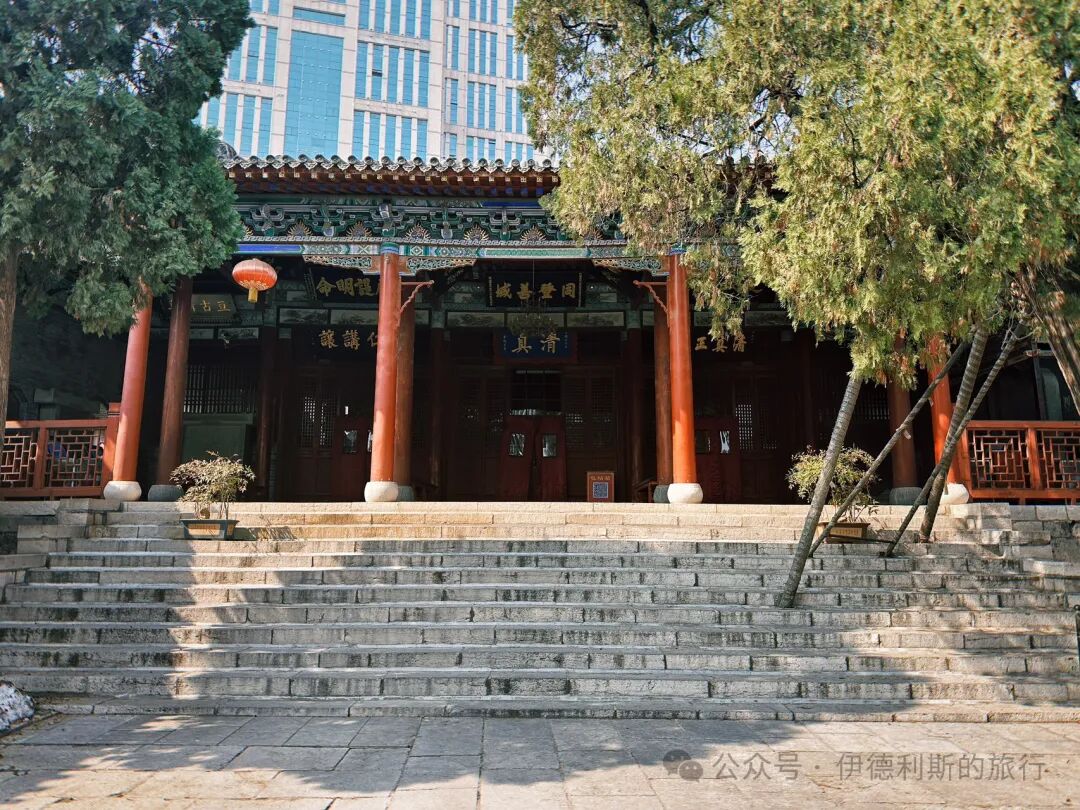
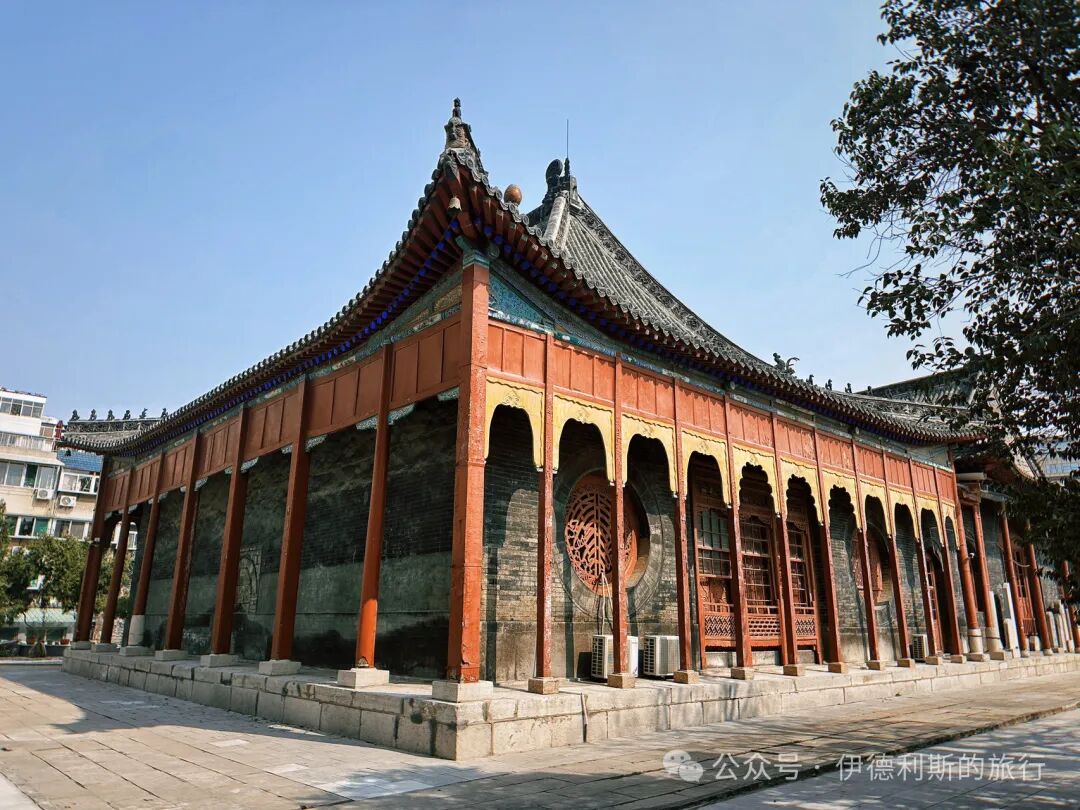
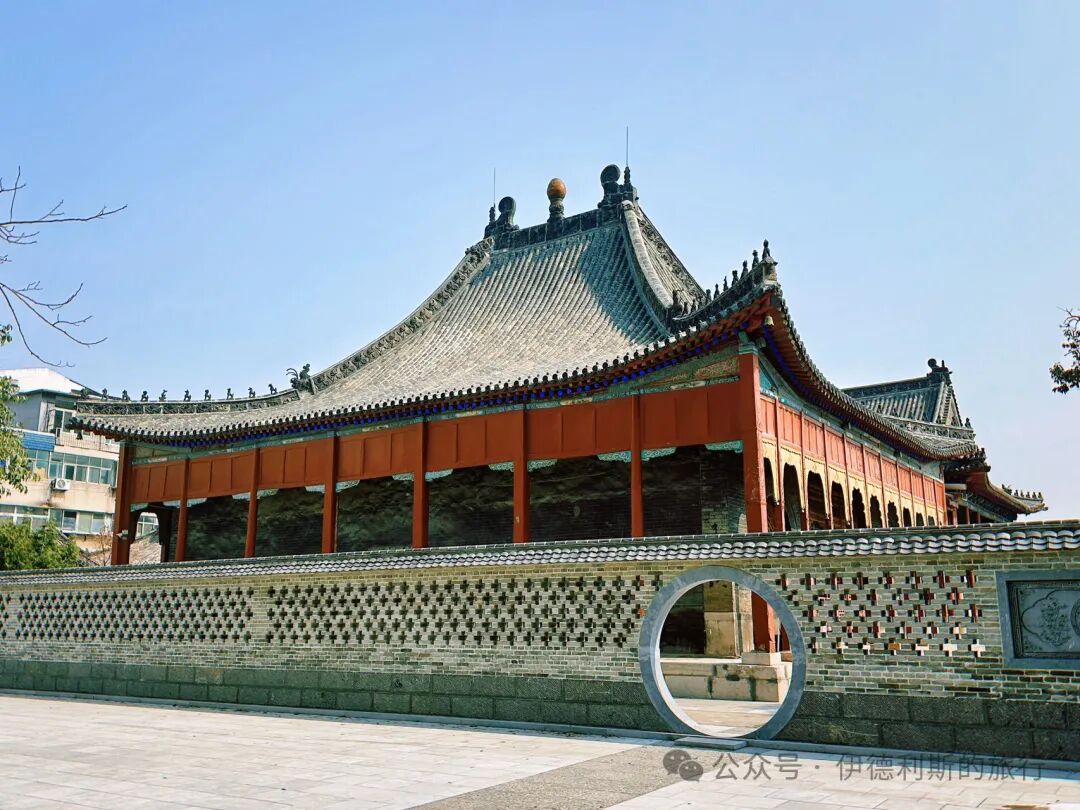
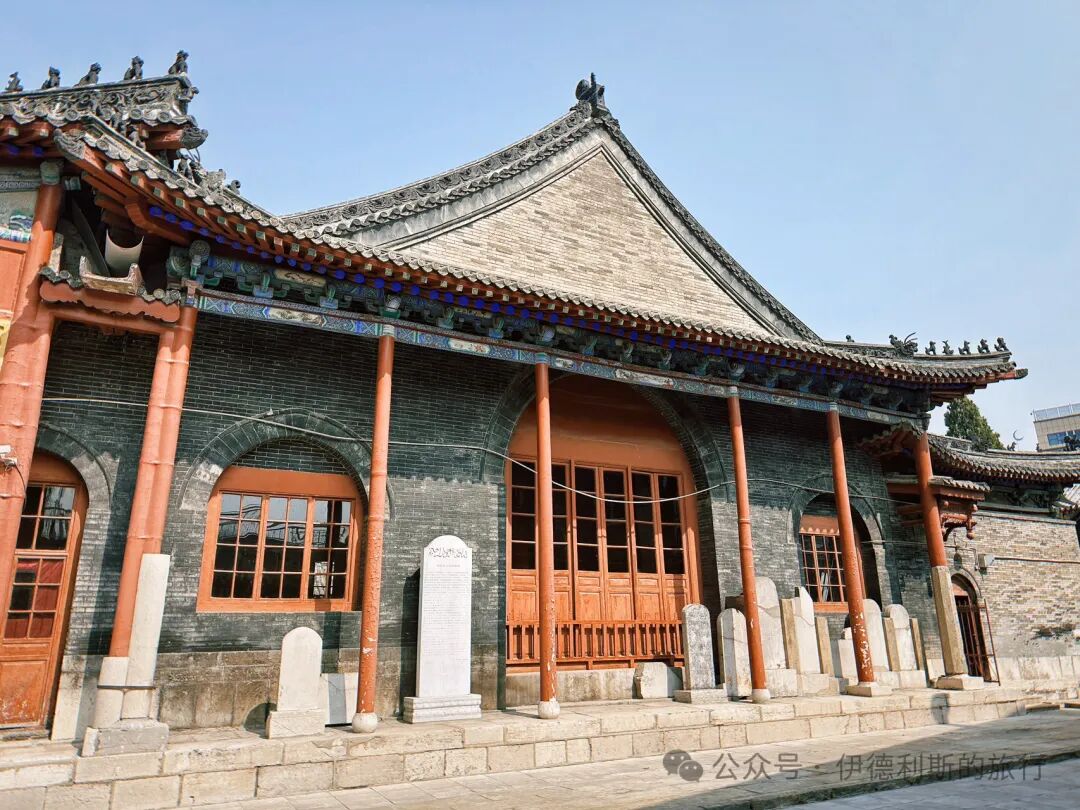
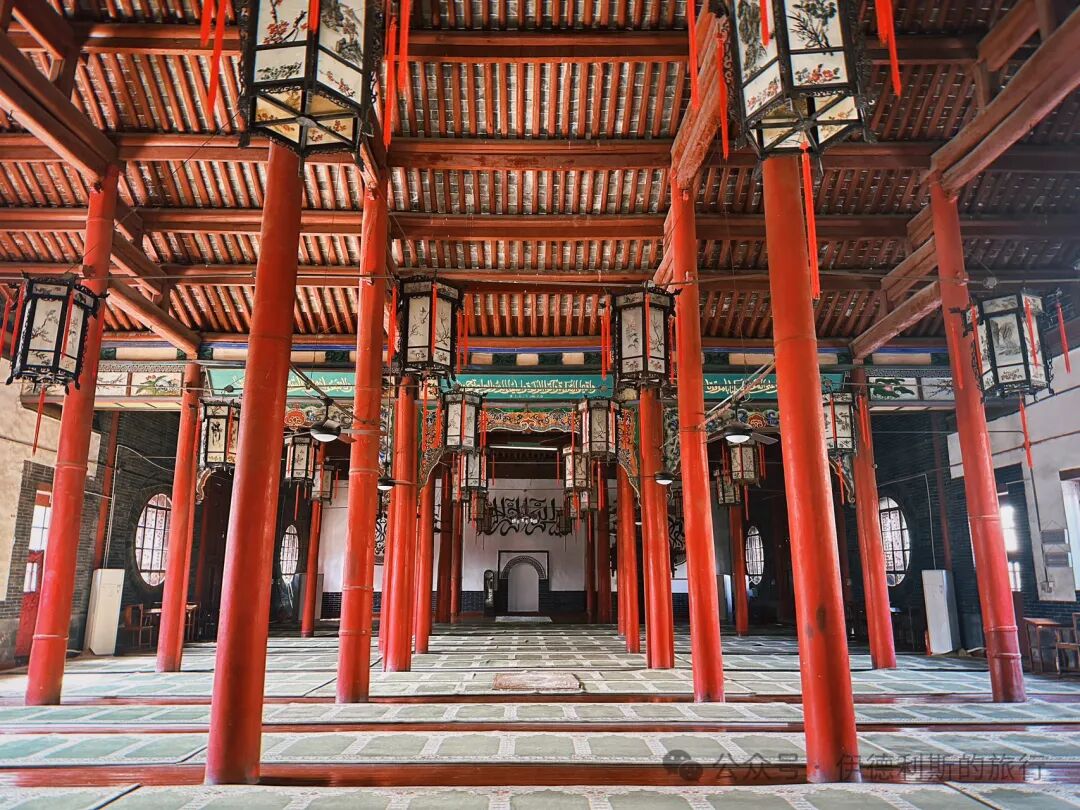
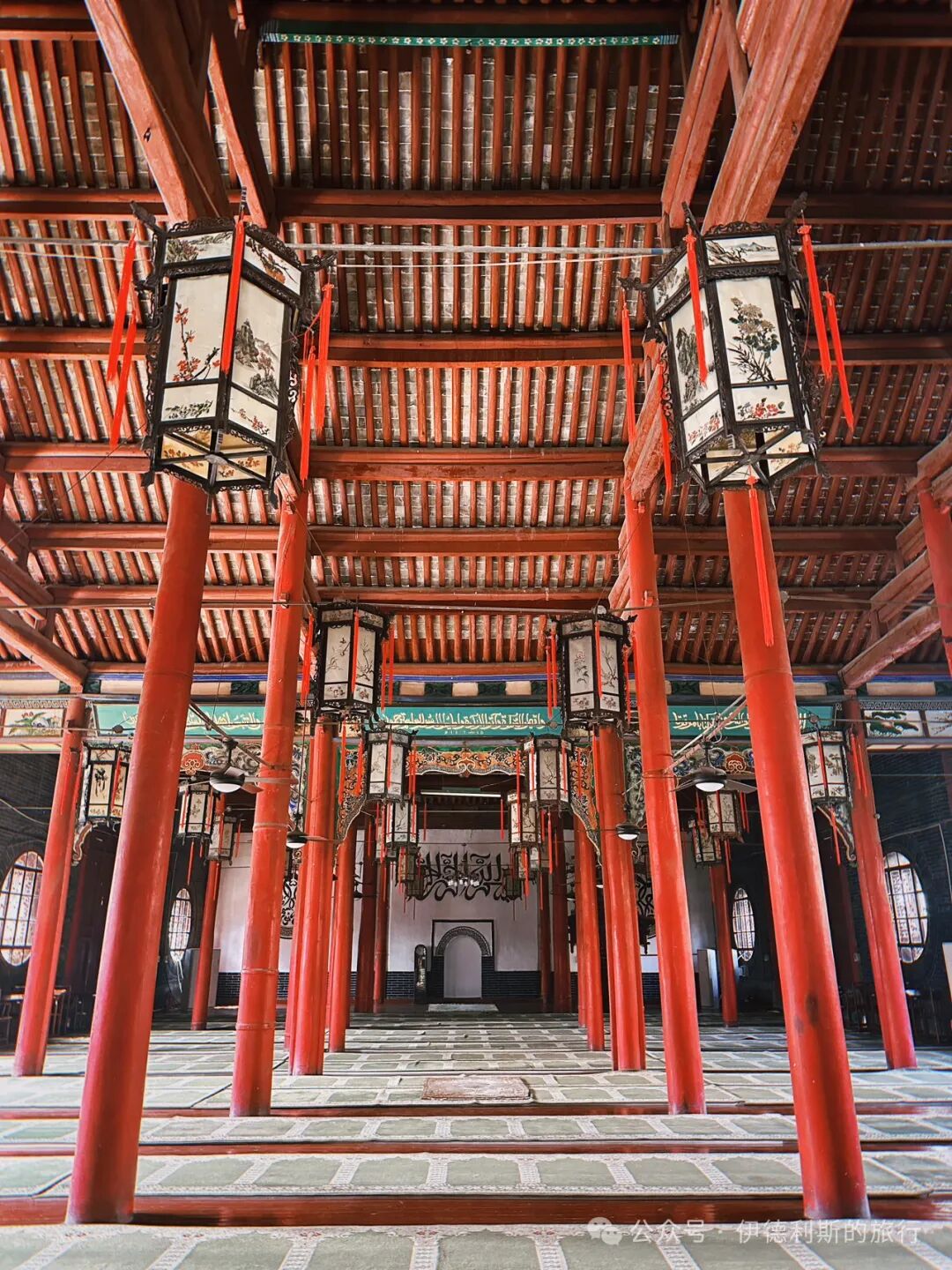
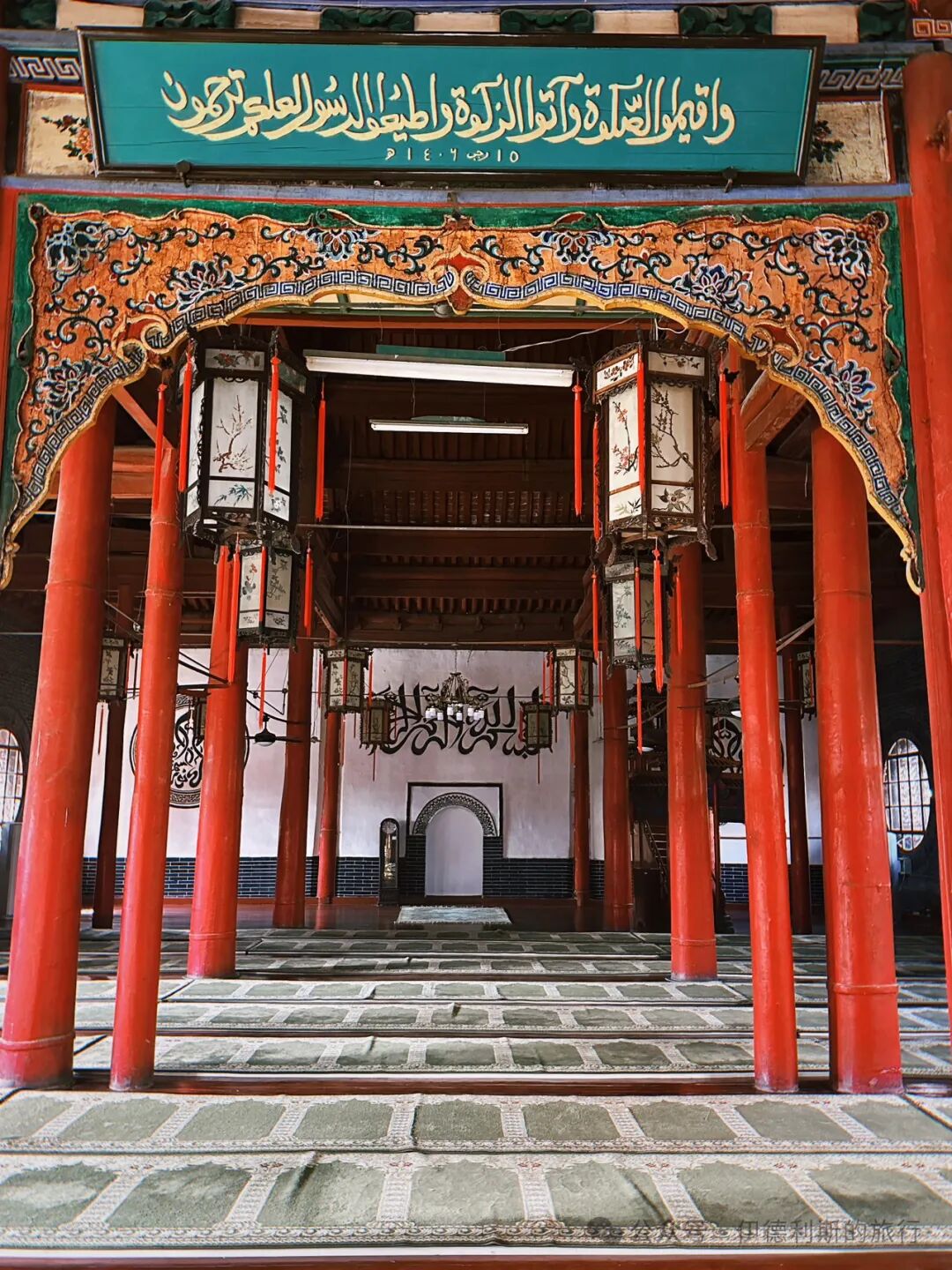
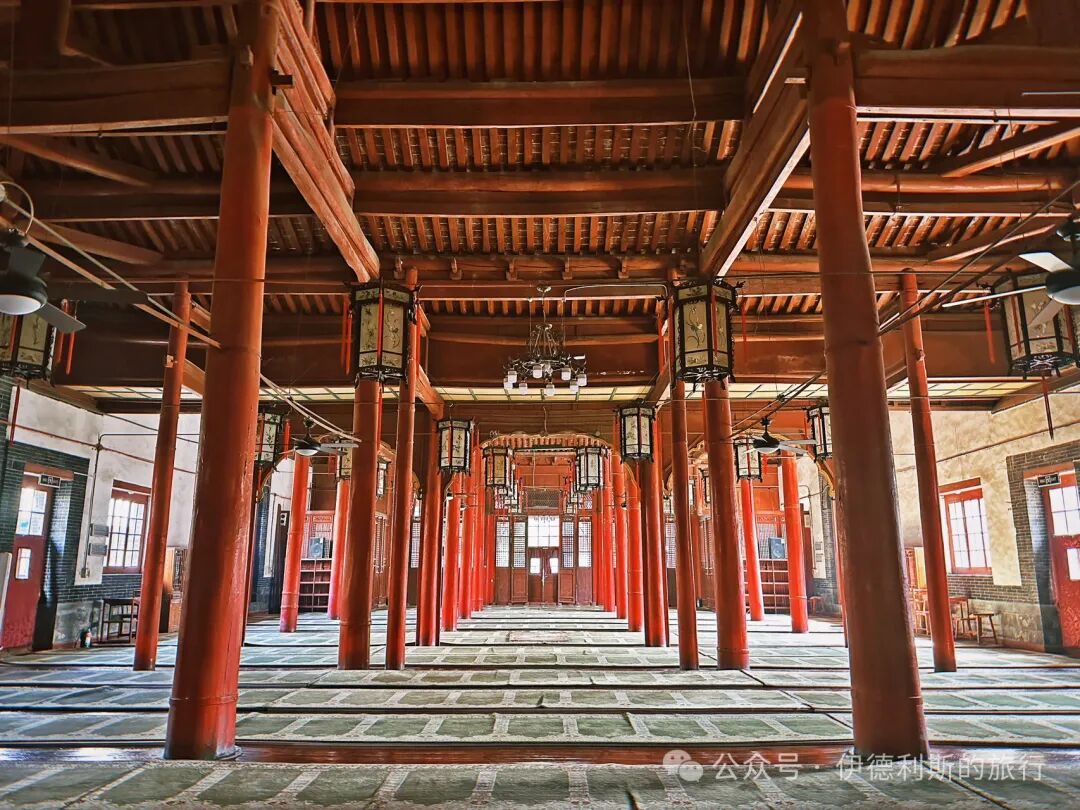
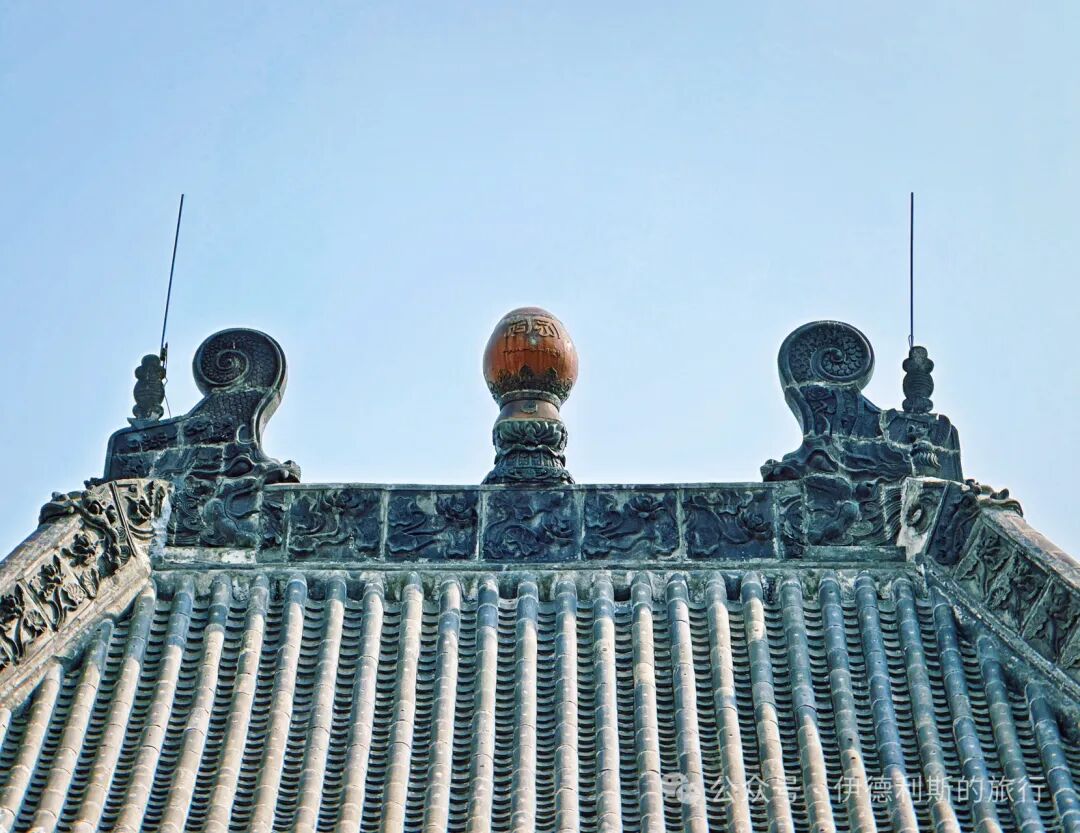
The circular windows on the north and south gable walls of the main hall feature wooden carvings of scripture.
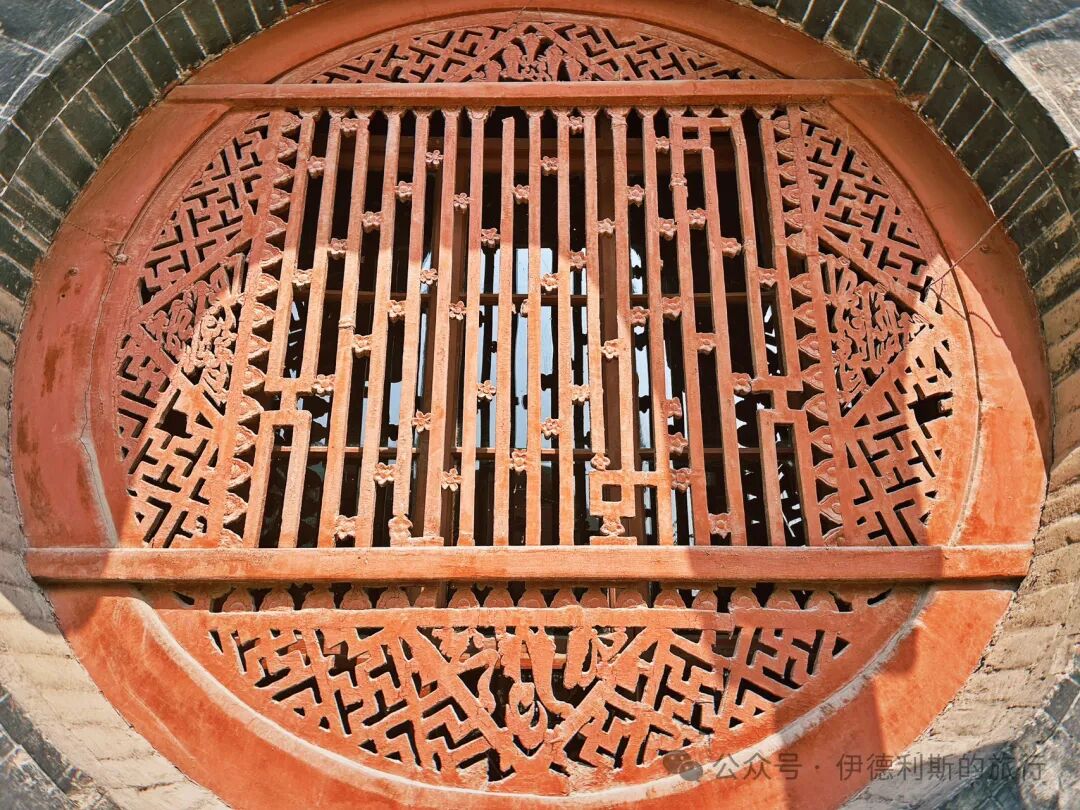
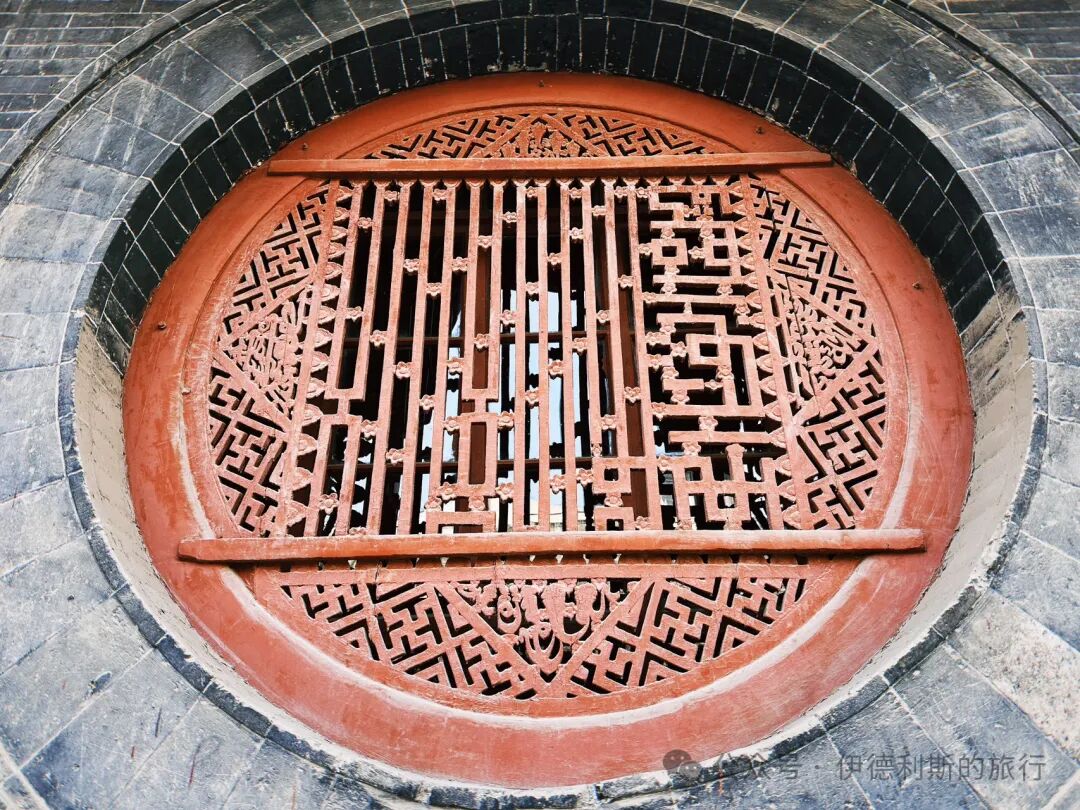
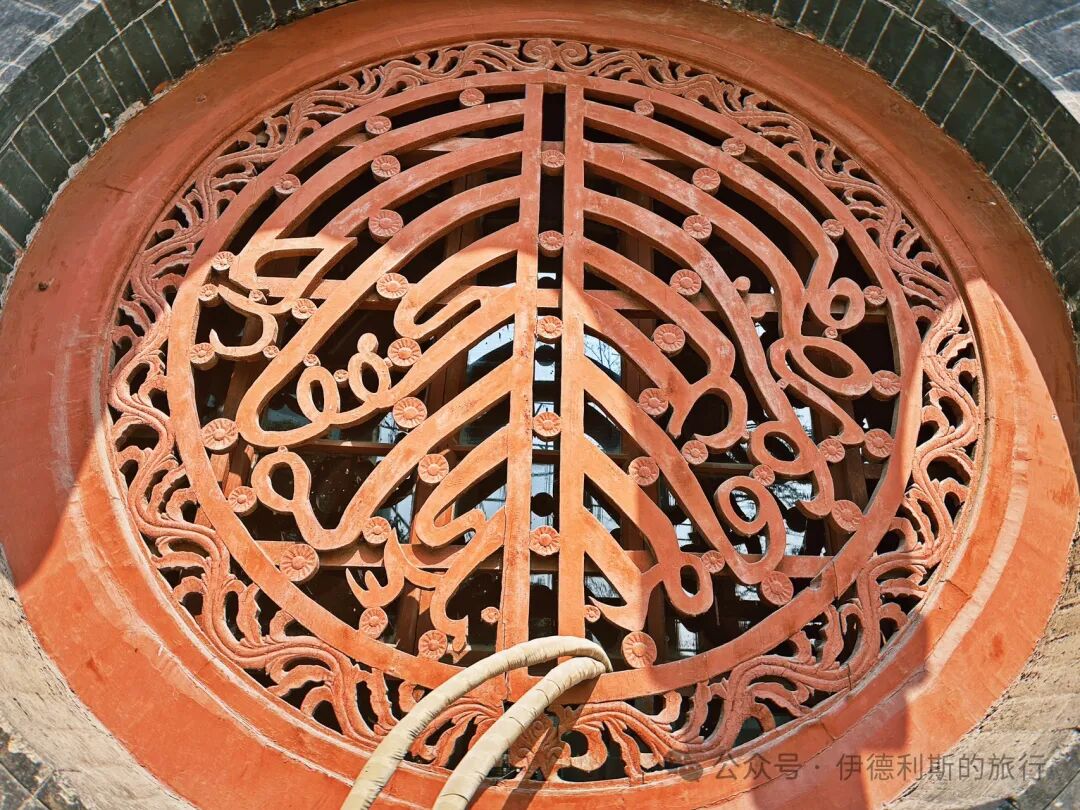
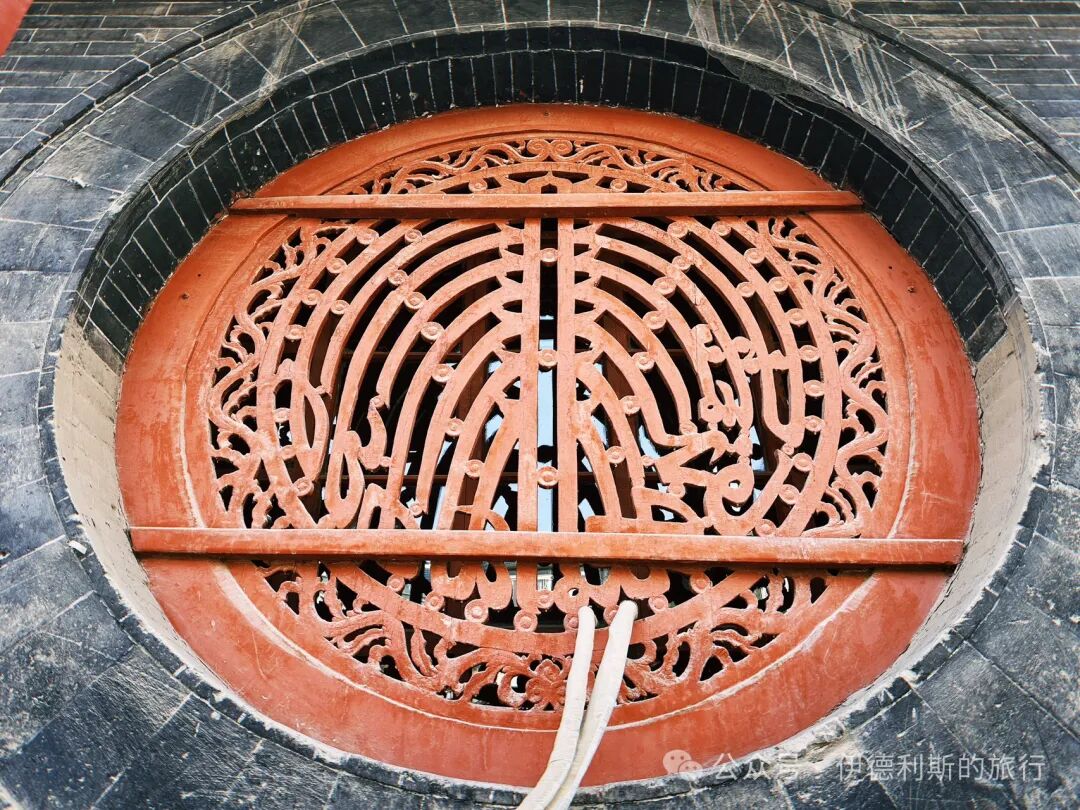
The twelve wooden windows carved with scripture in the main hall represent a high achievement in traditional Chinese Arabic-style wood carving. Unfortunately, the oil painting used during later repairs was not high quality, making some of the wood carvings blurry.
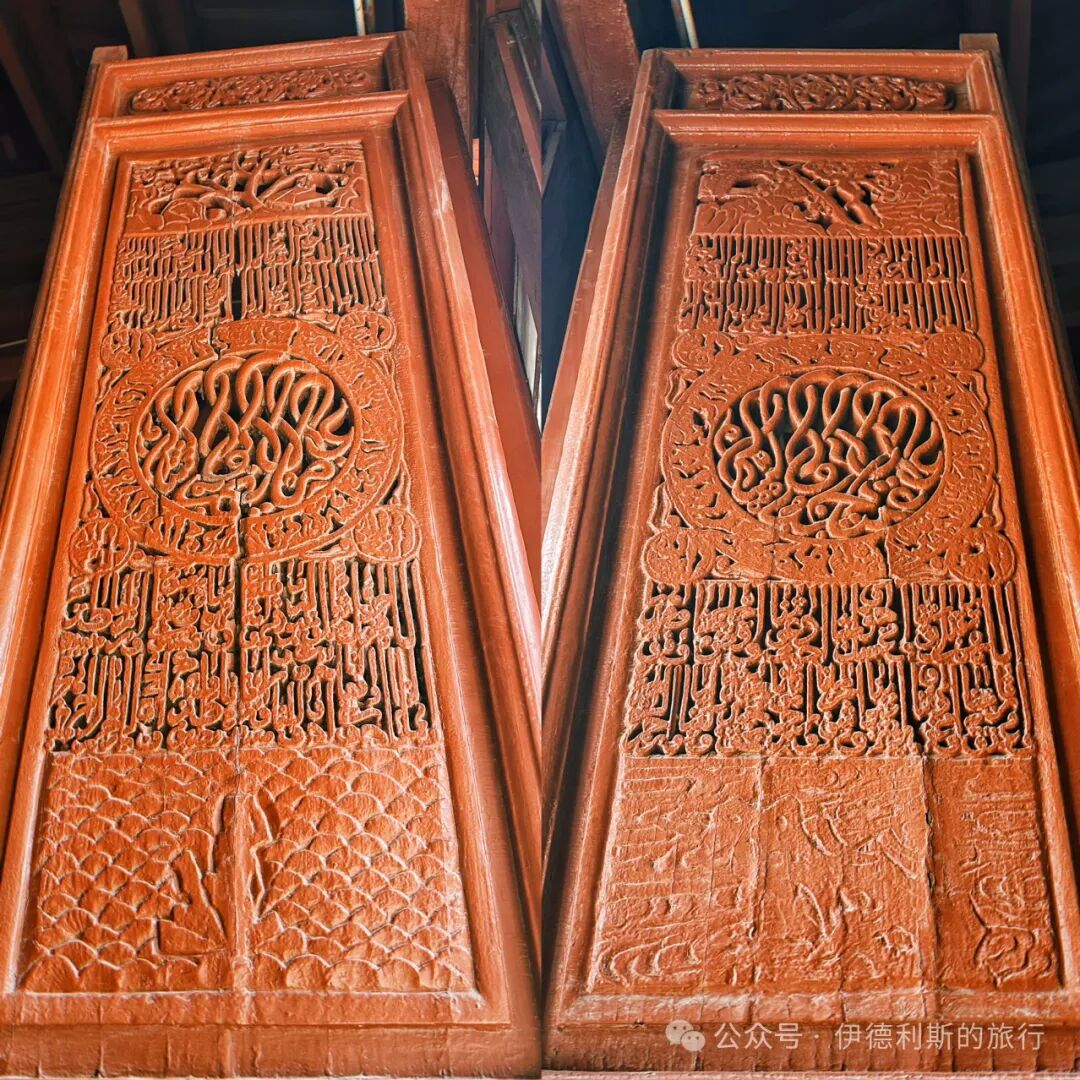
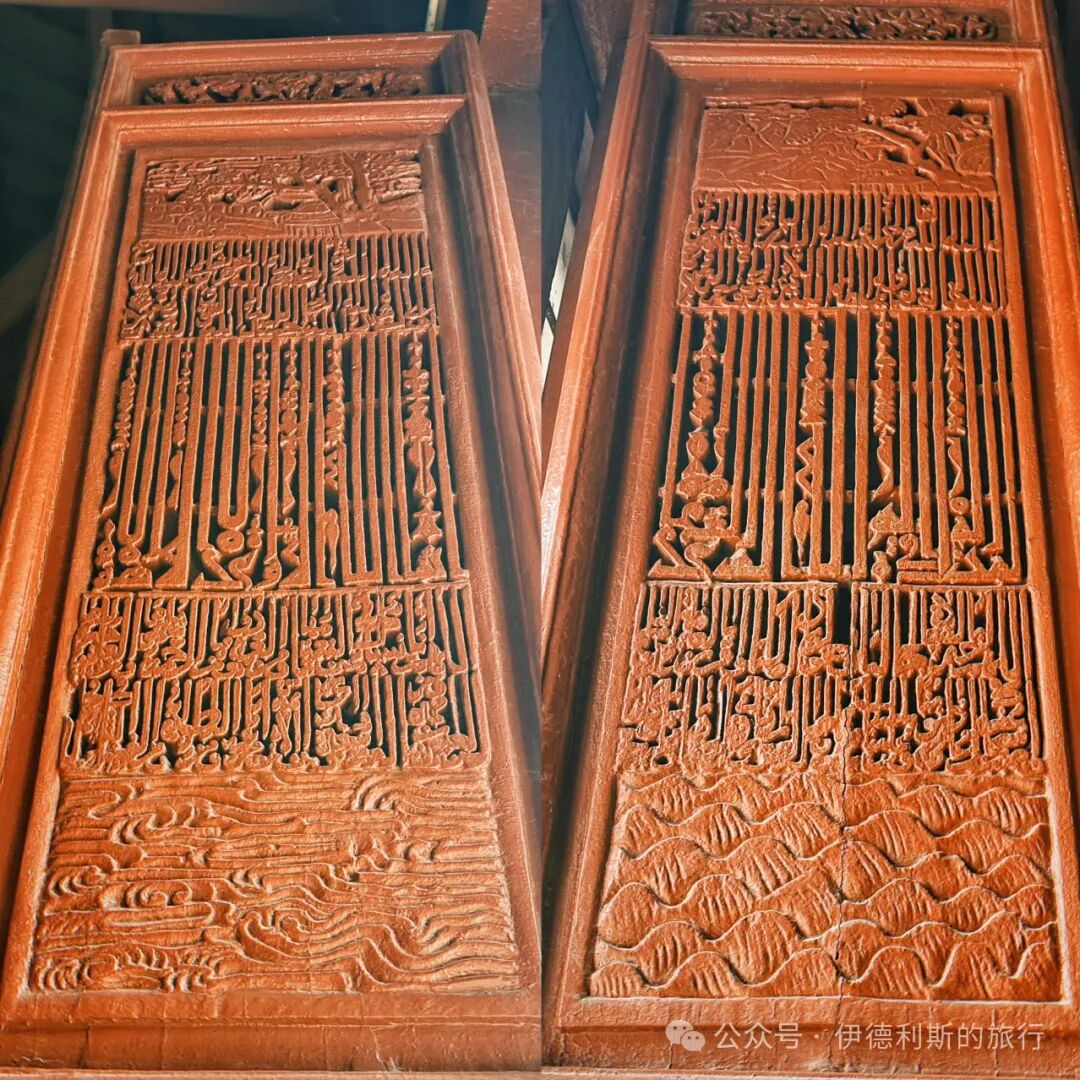
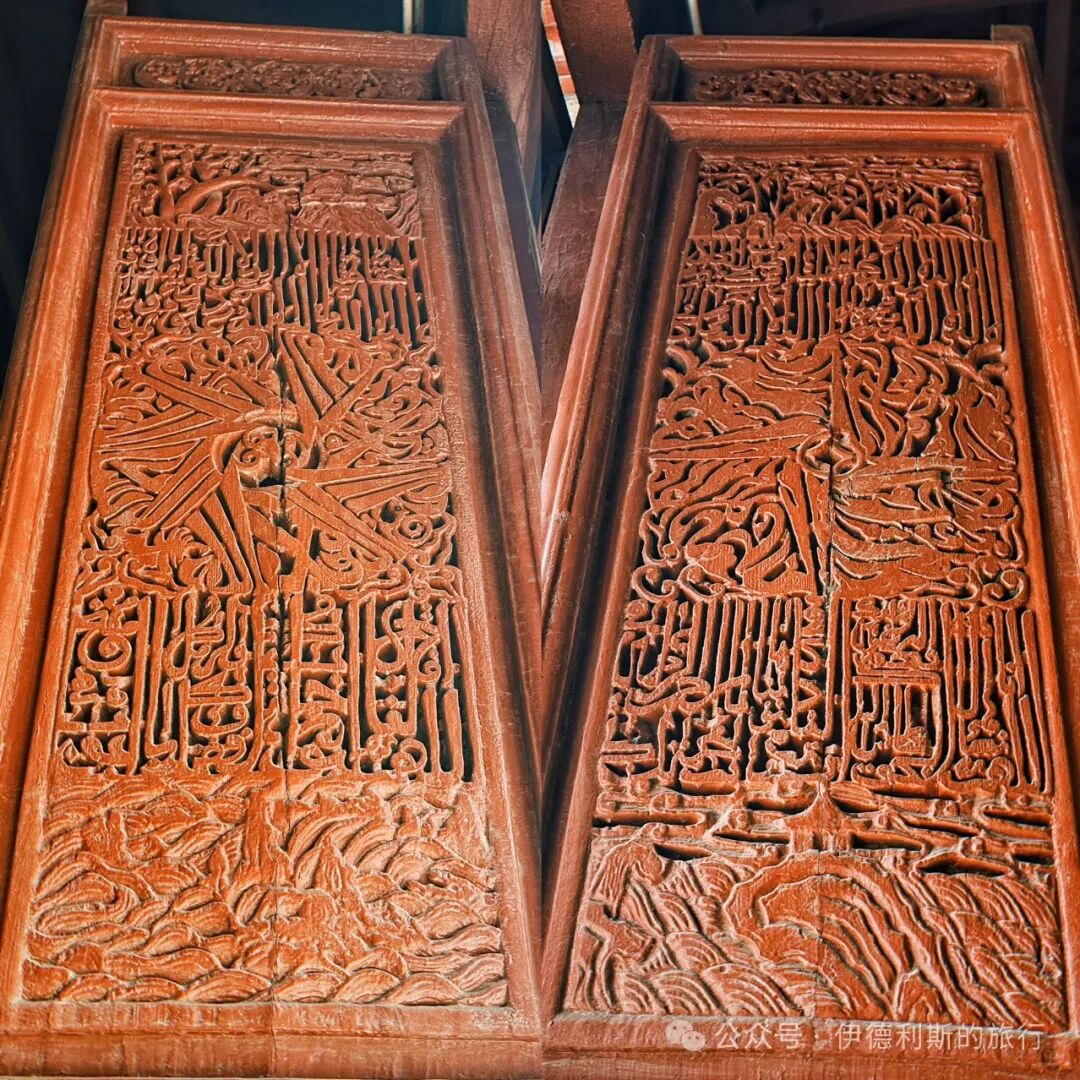
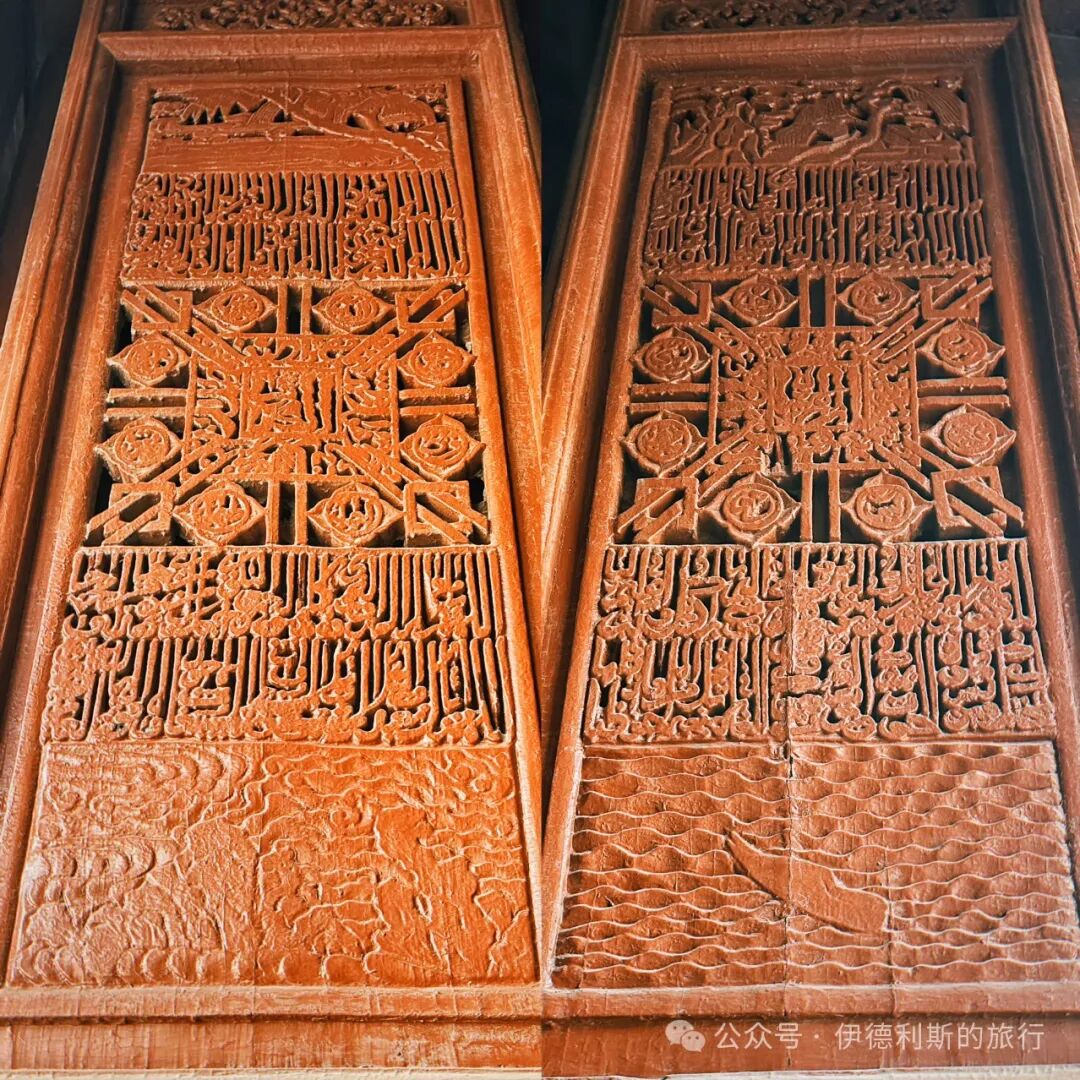
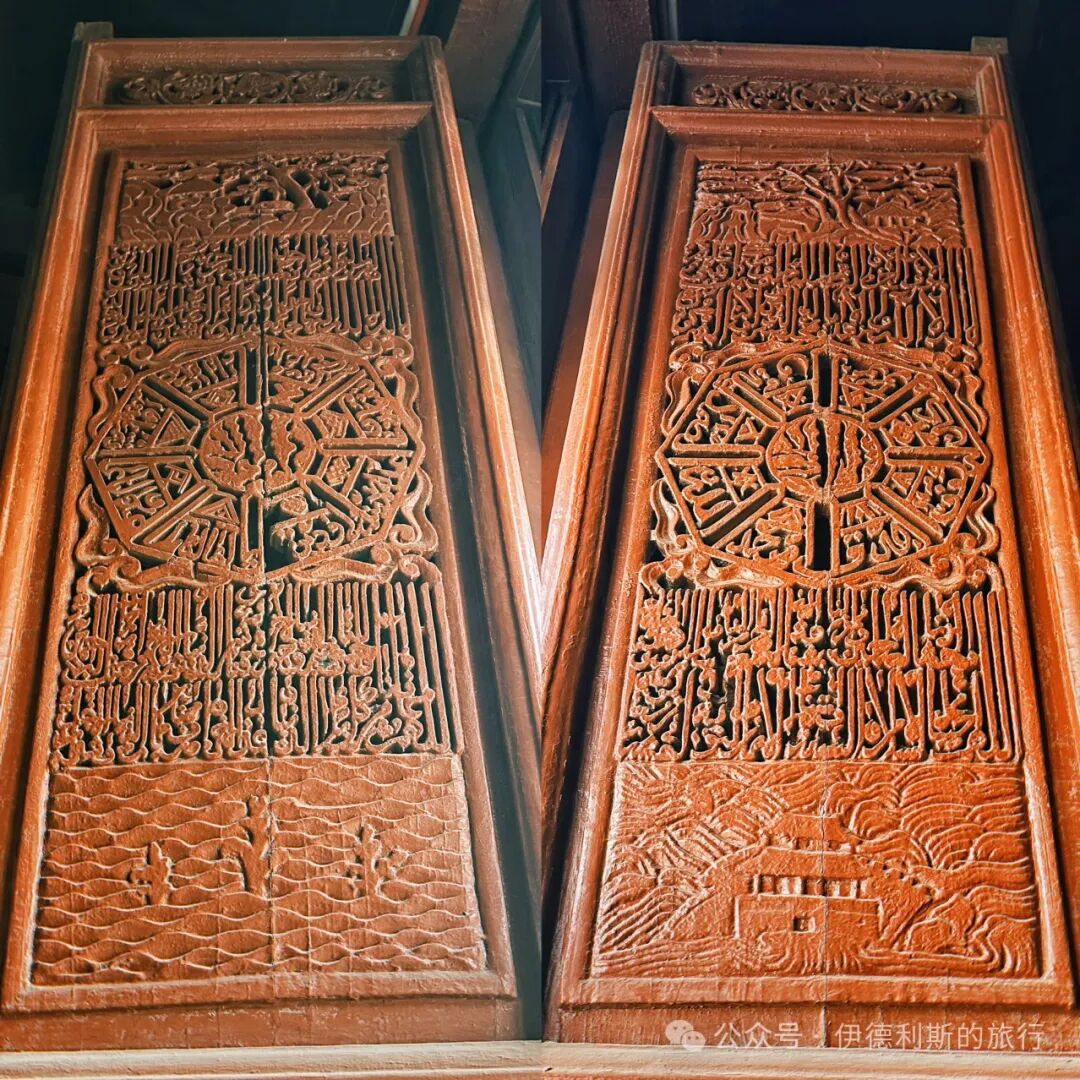
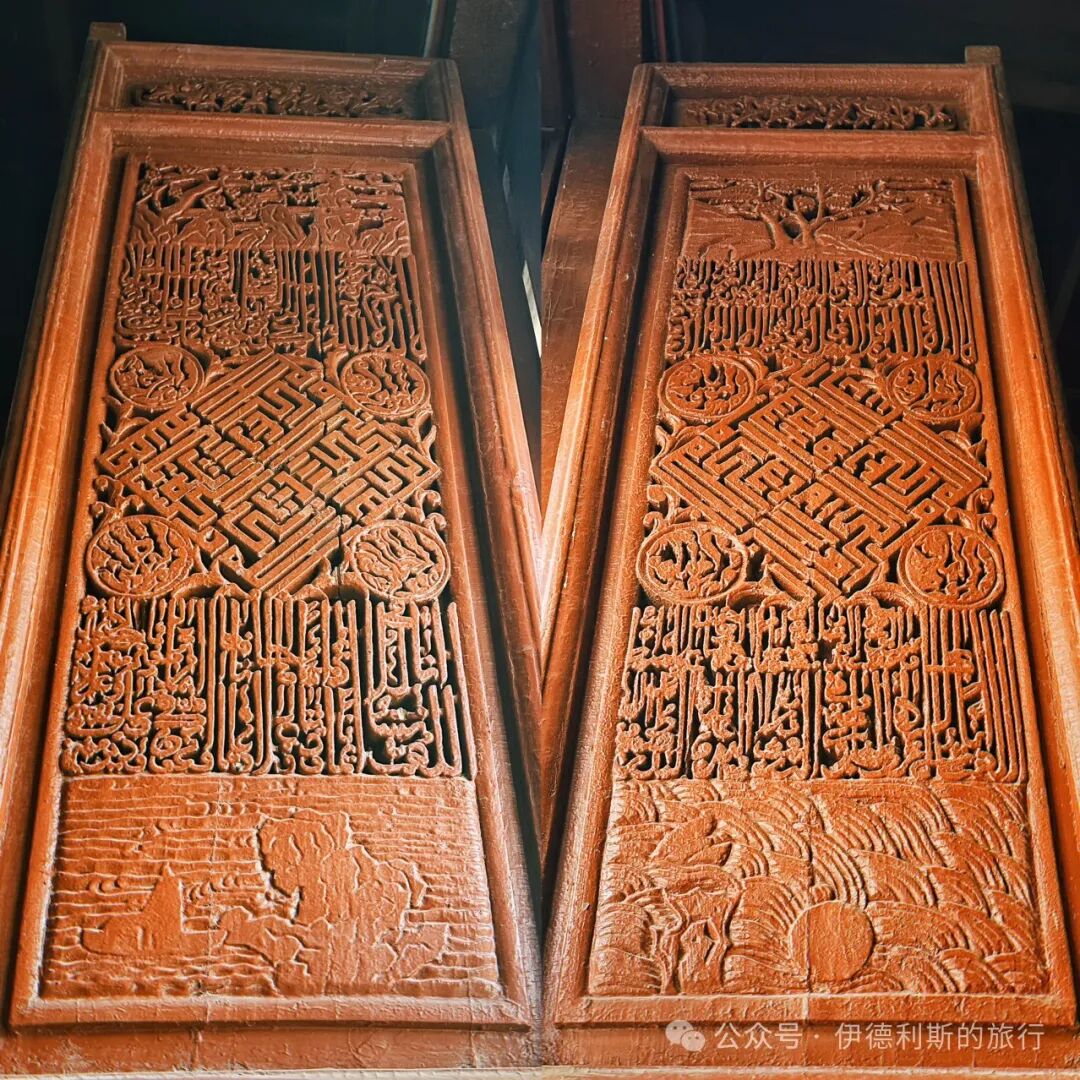
According to the "Stele Preface of the Hei Family" inside the mosque, the calligraphy on the wall facing the mihrab was written in 1810 (Jiaqing fifteenth year) by Hei Faxiang, who served as the imam of the South Great Mosque. In the 110 years following that until 1920, members of the Hei family, including Hei Yuanji, Hei Yonghua, Hei Qingjie, and Hei Guangzhi, served as imams of the South Great Mosque.
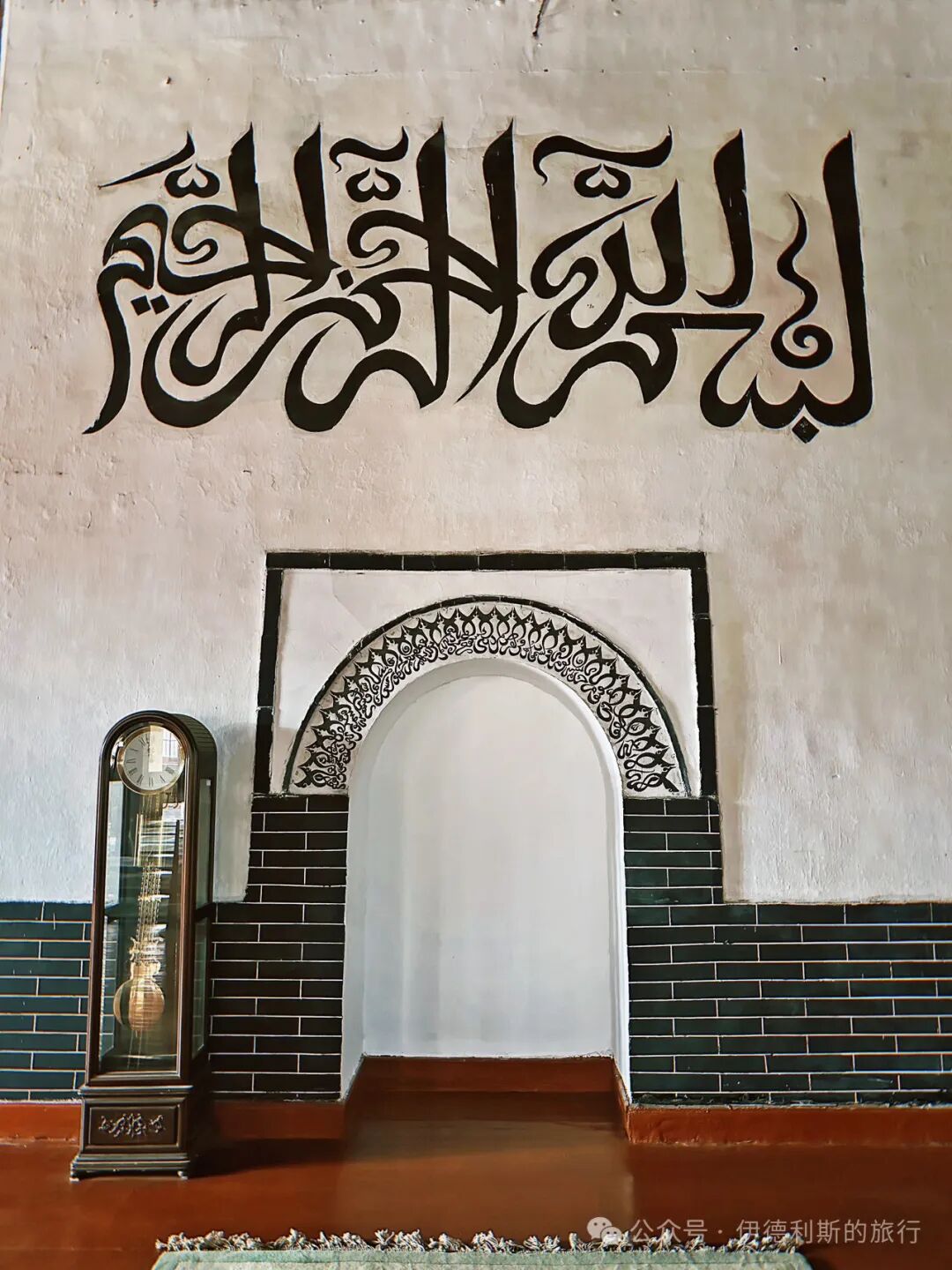
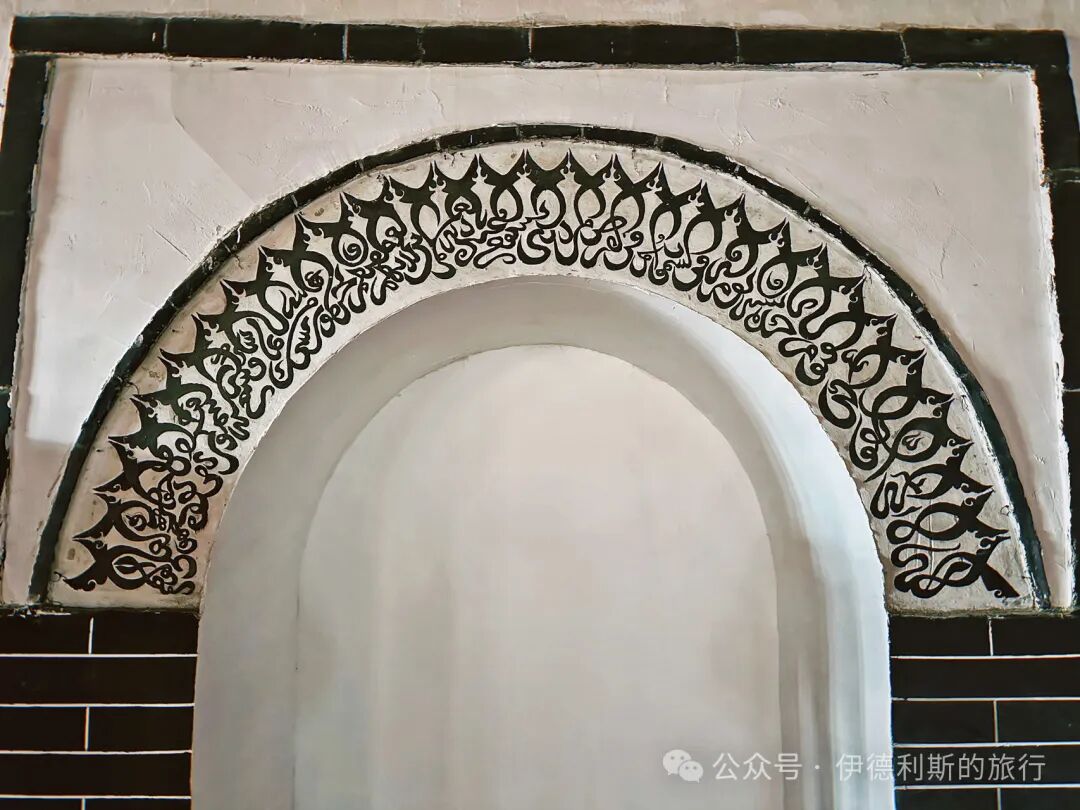
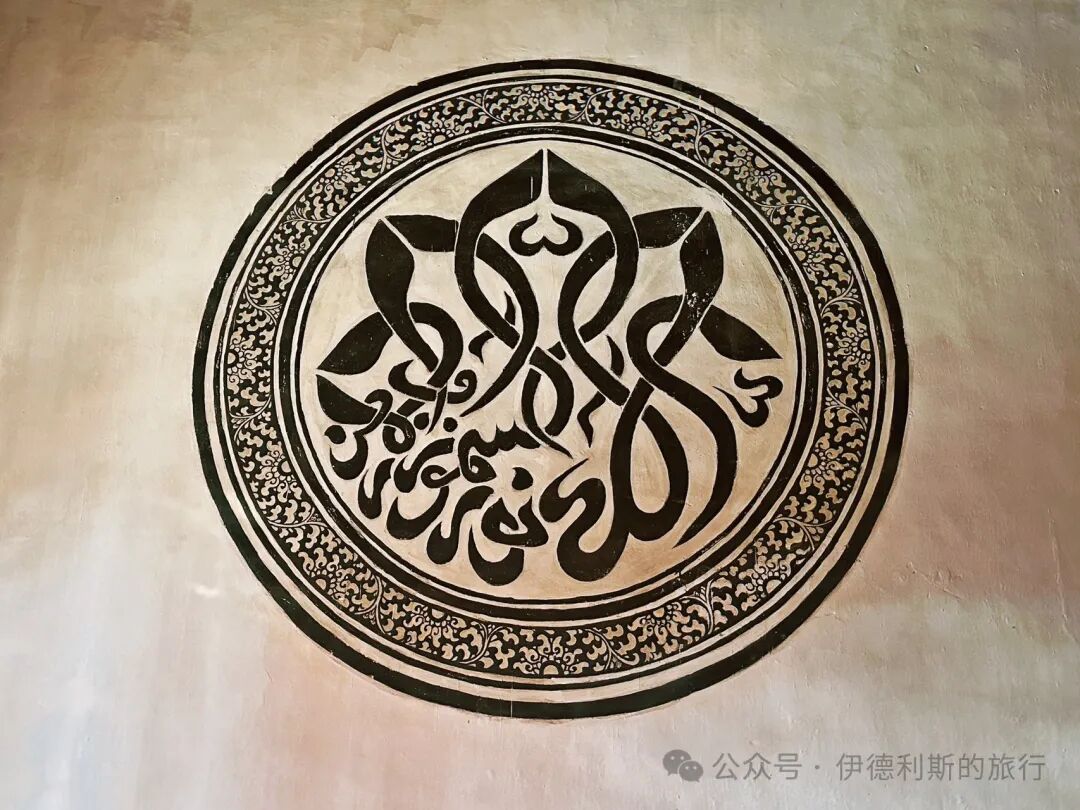
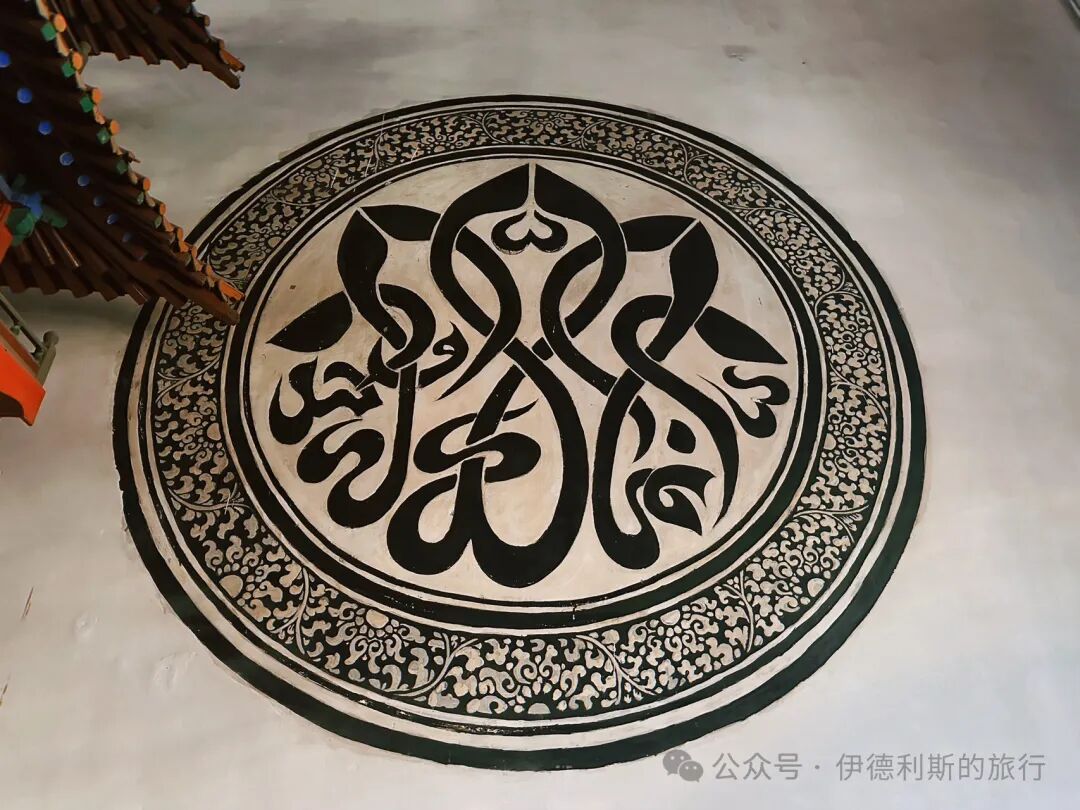
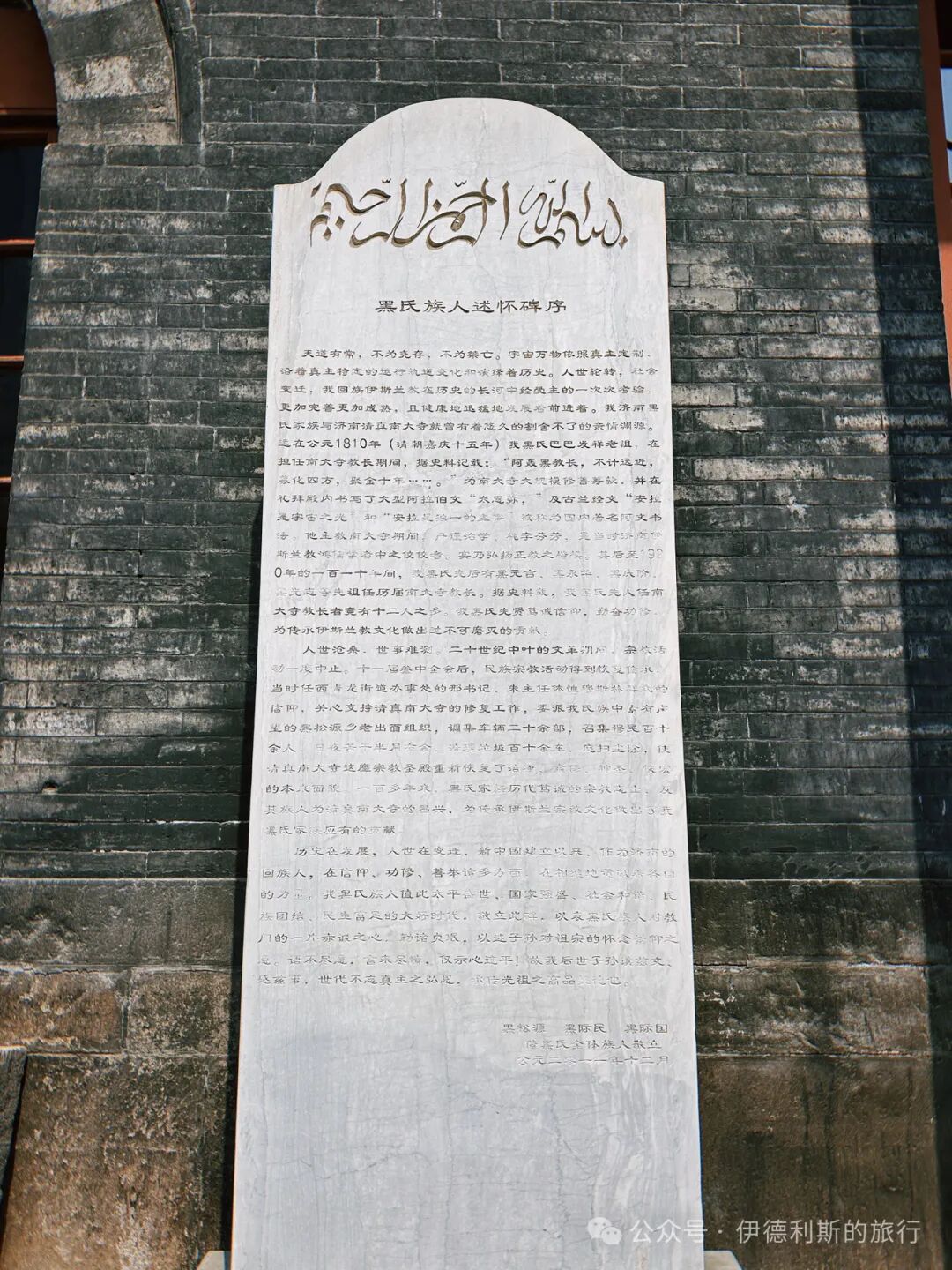
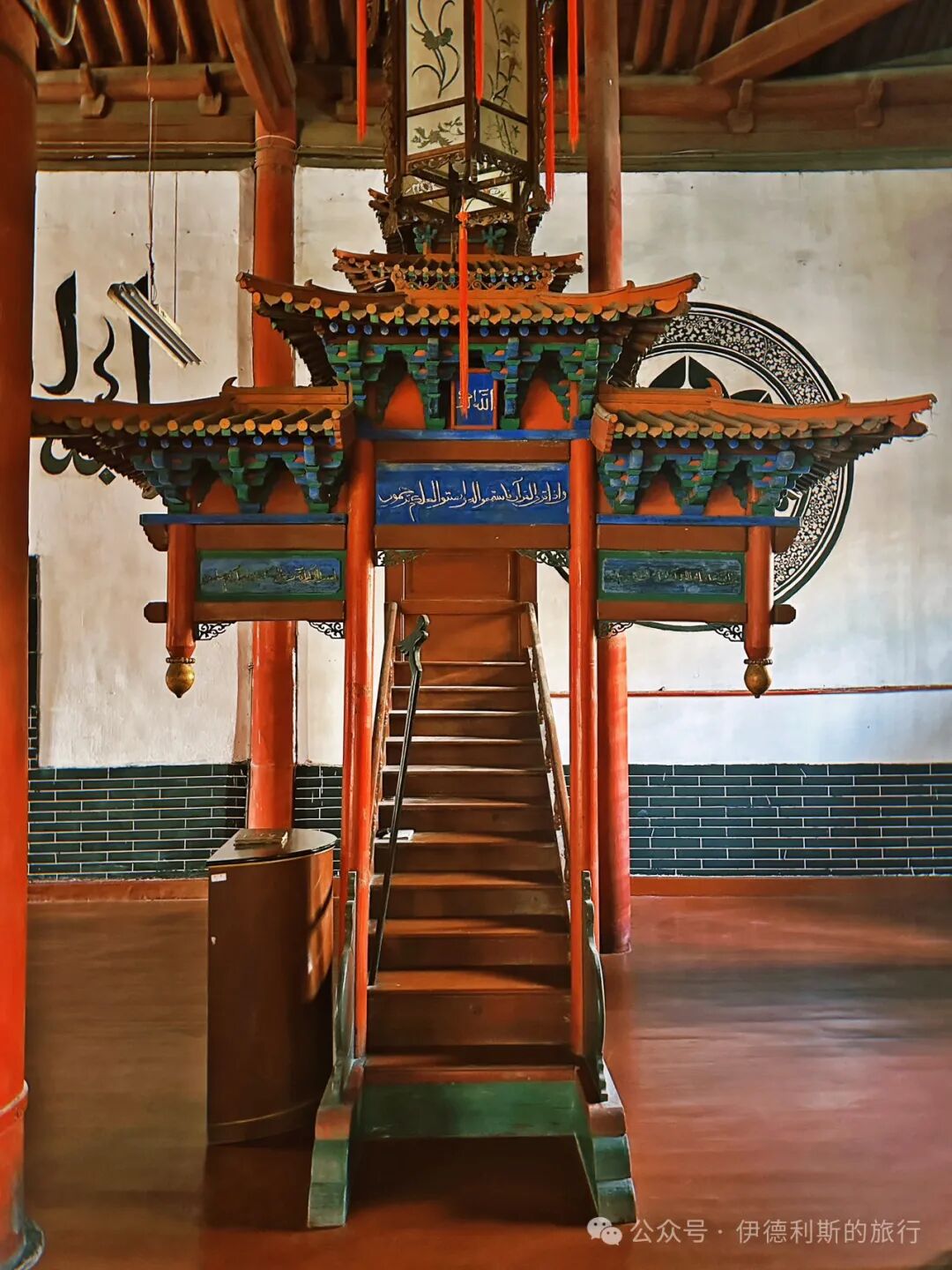
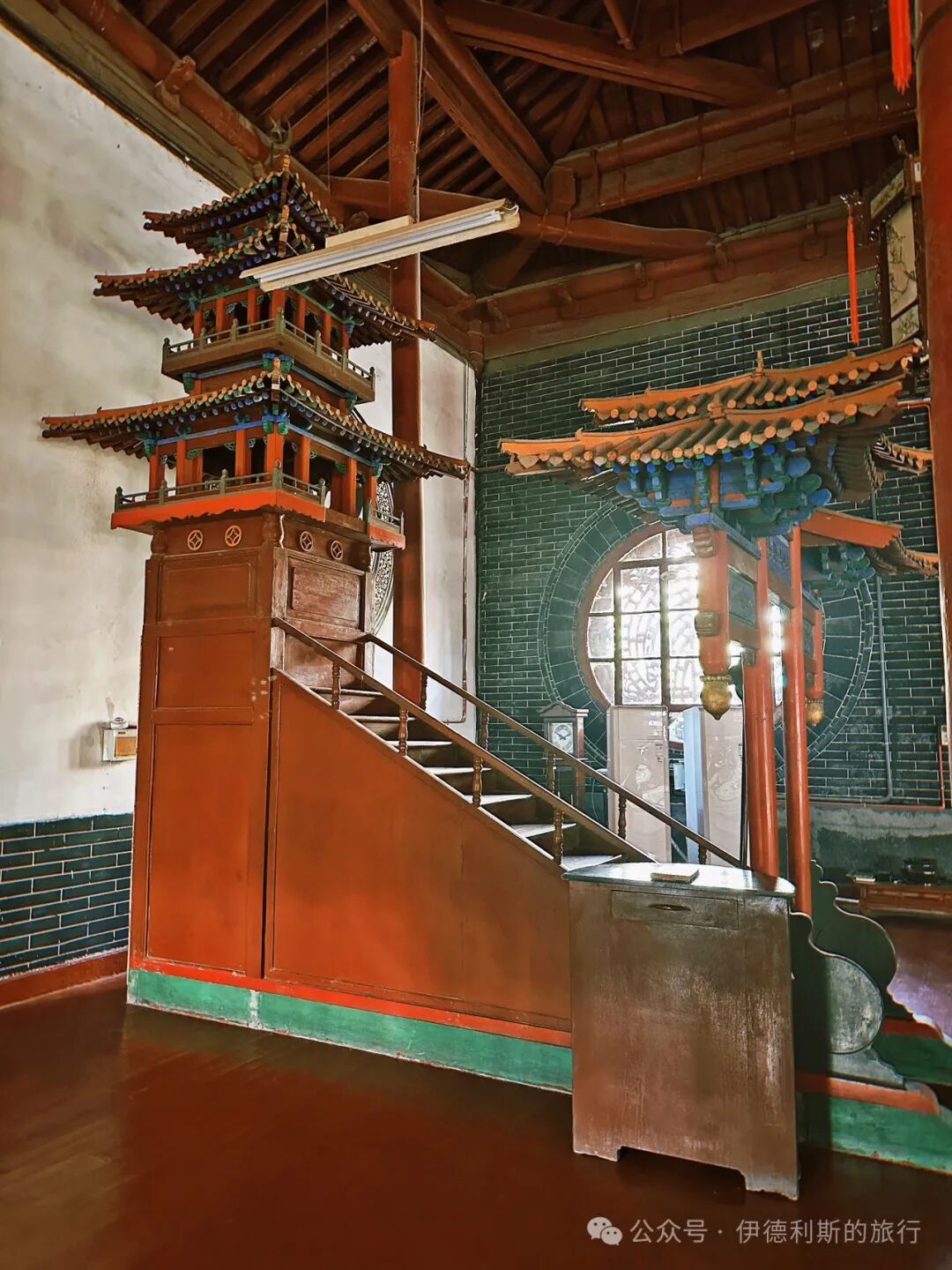
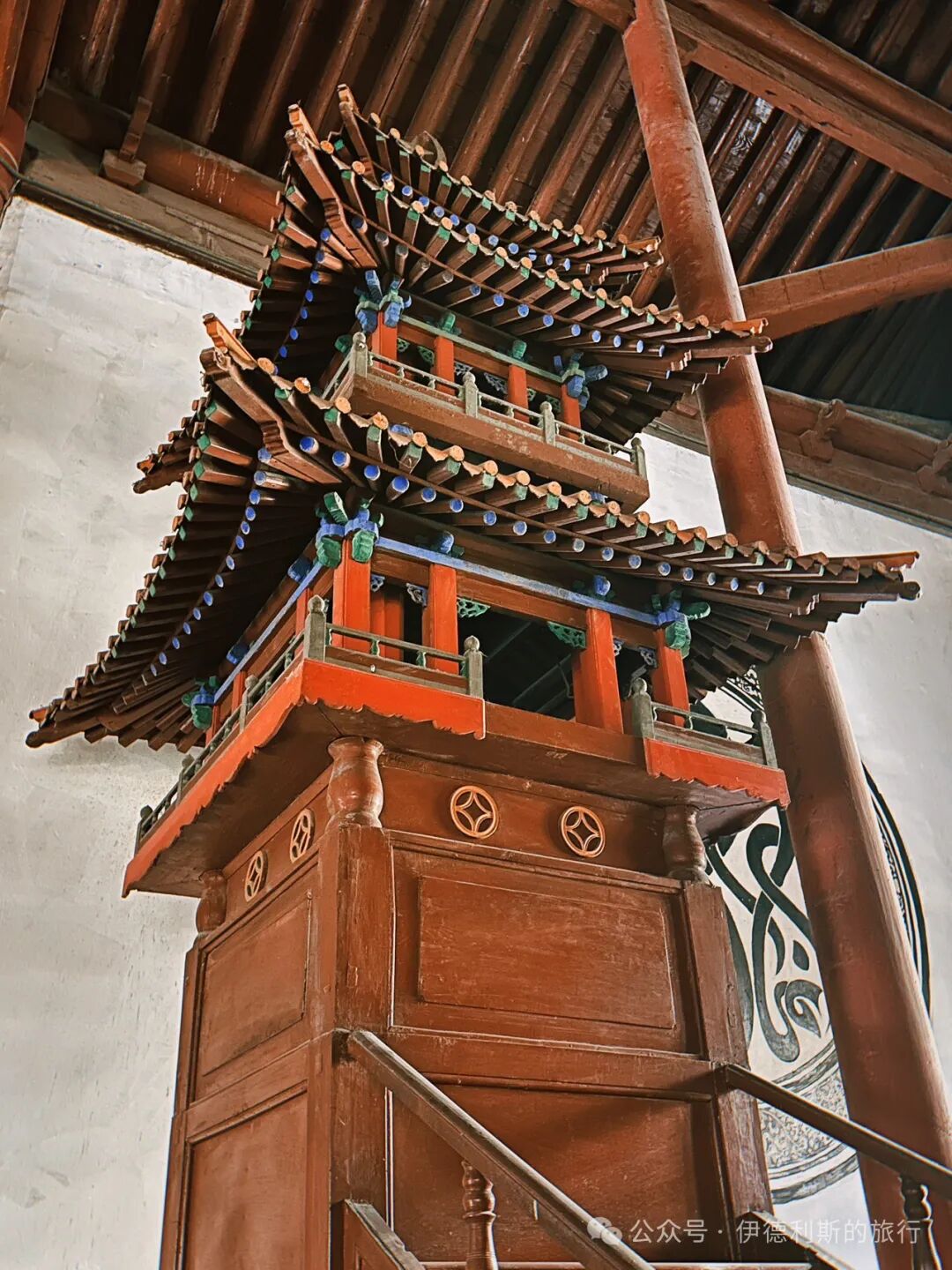
The gate tower was built in 1914 and the moon-watching tower (wangyue lou) in 1936. Both have features from the Republic of China era. Teacher Liu Zhiping noted that the architectural style has many "new" ideas.
The center of the gate tower has a plaque reading "Mosque," with "Repaired in April of the Jia-Yin year of the Republic of China" written on it, signed by "The Community." Next to the main gate is a stone tablet from the thirteenth year of the Daoguang era titled "Record of the Screen Wall Outside the Mosque Gate."
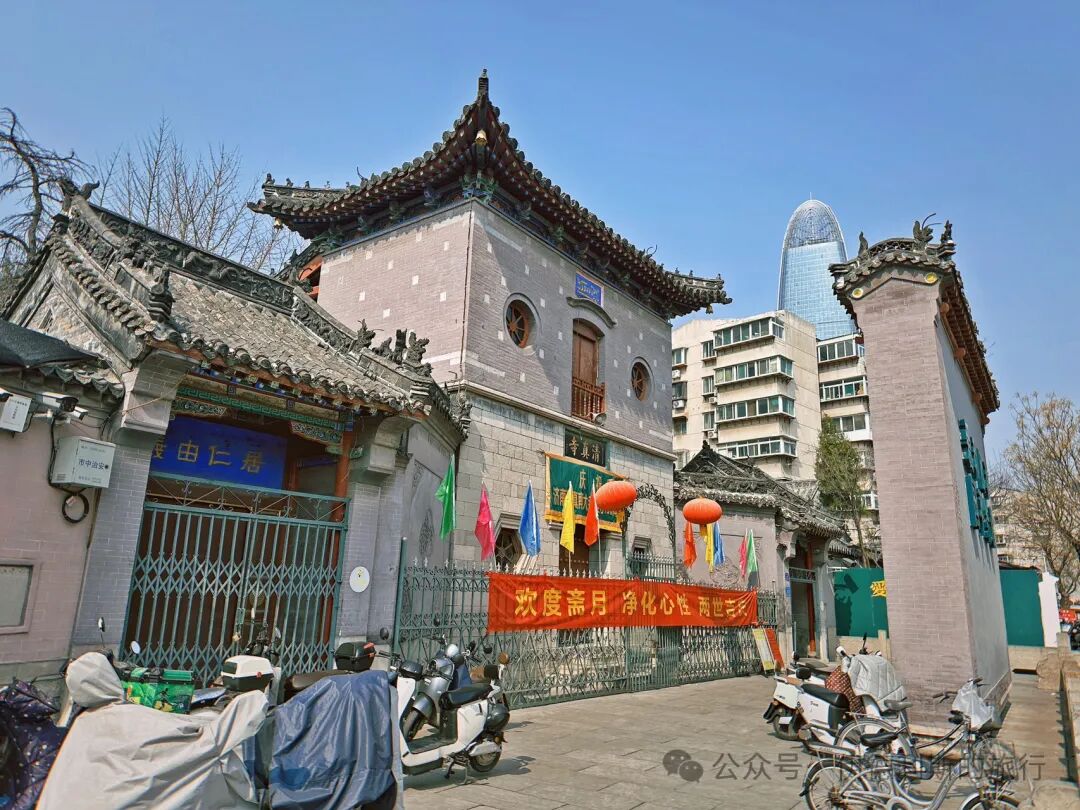
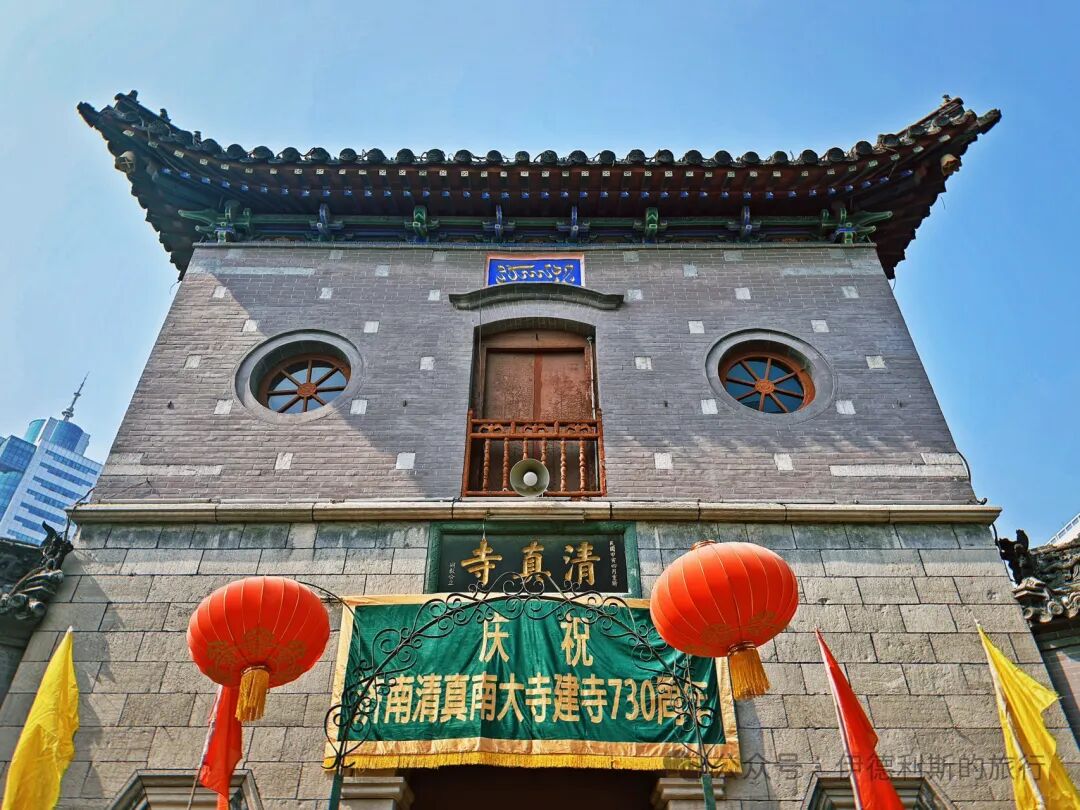
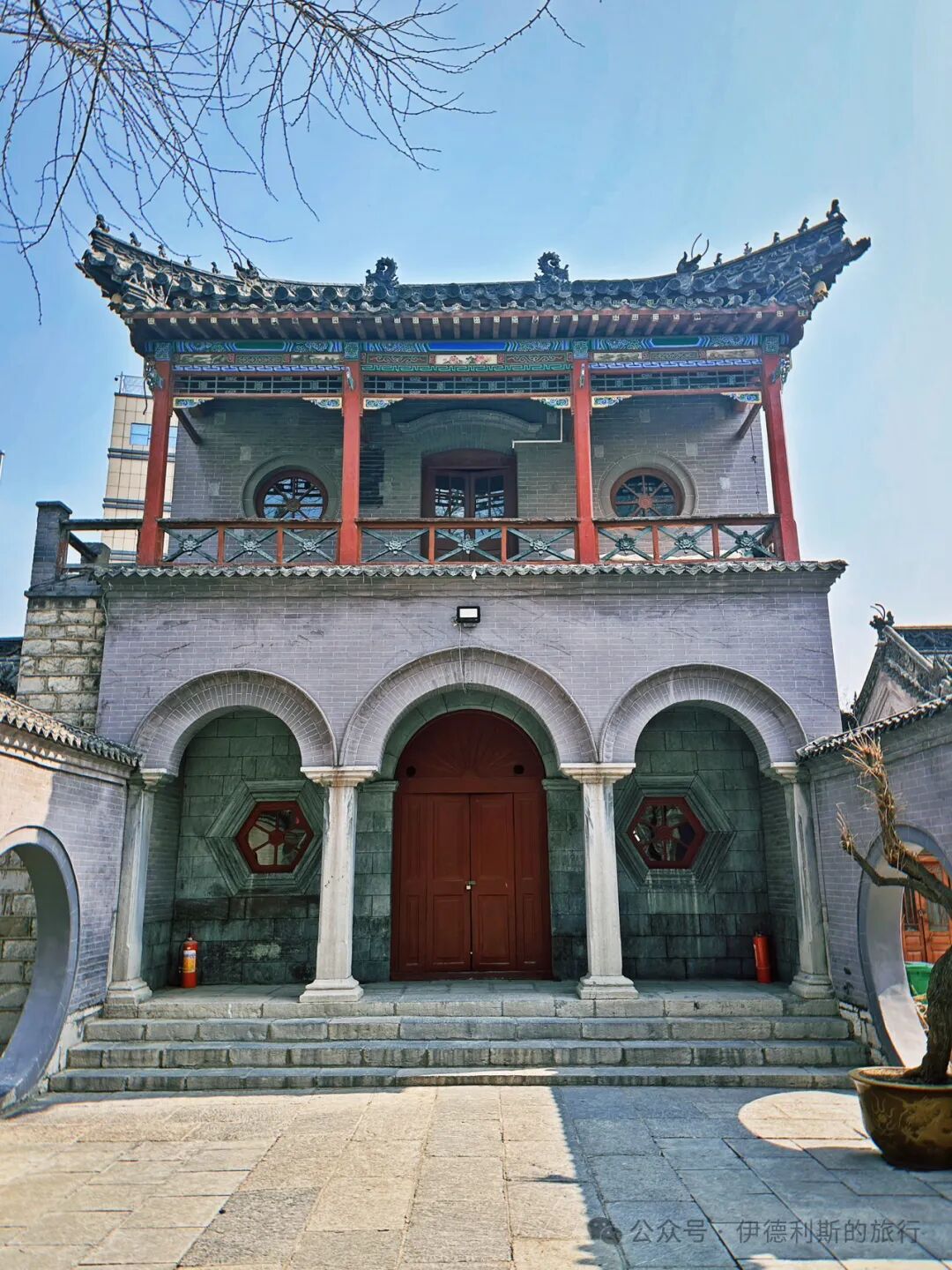
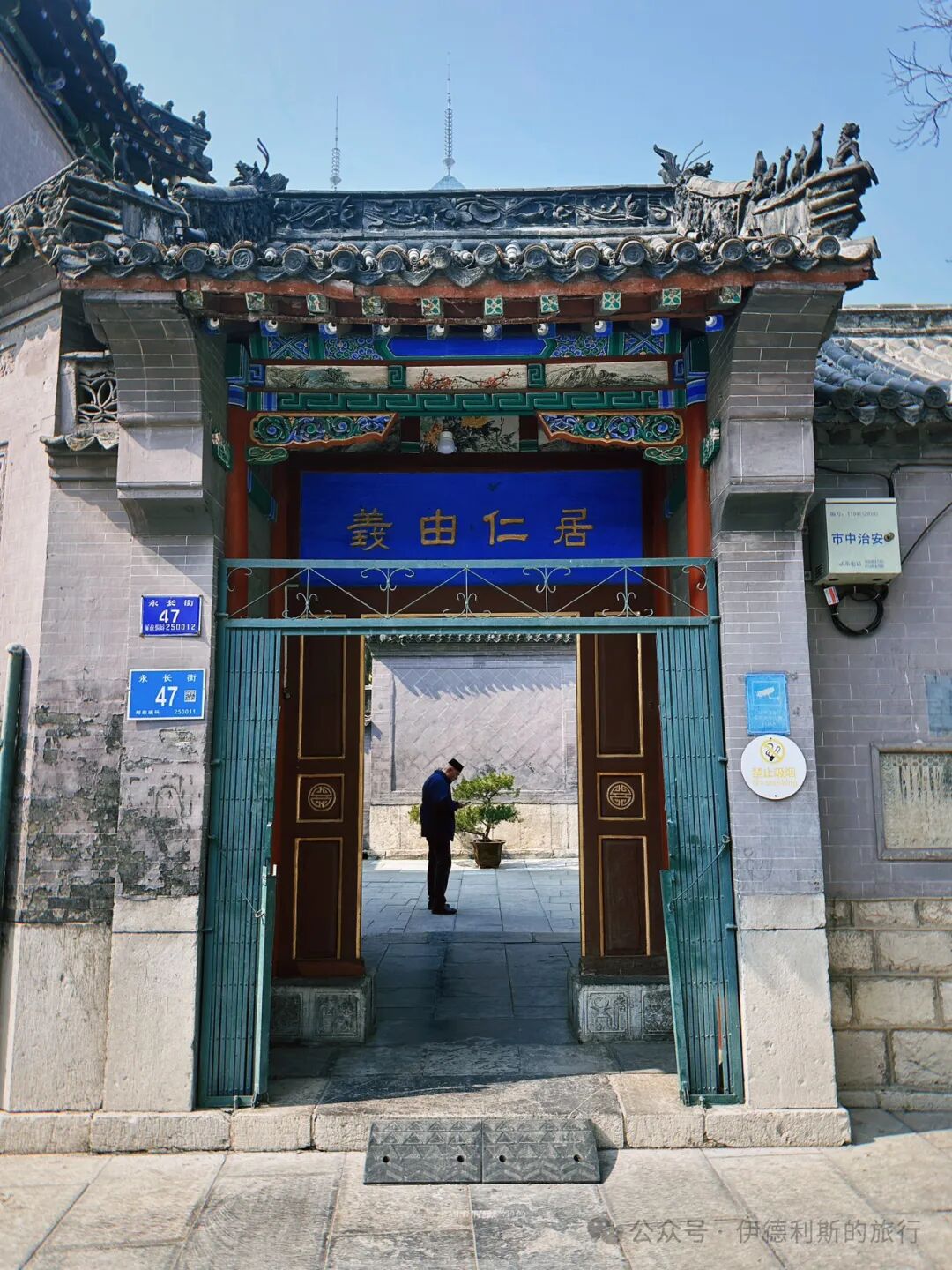
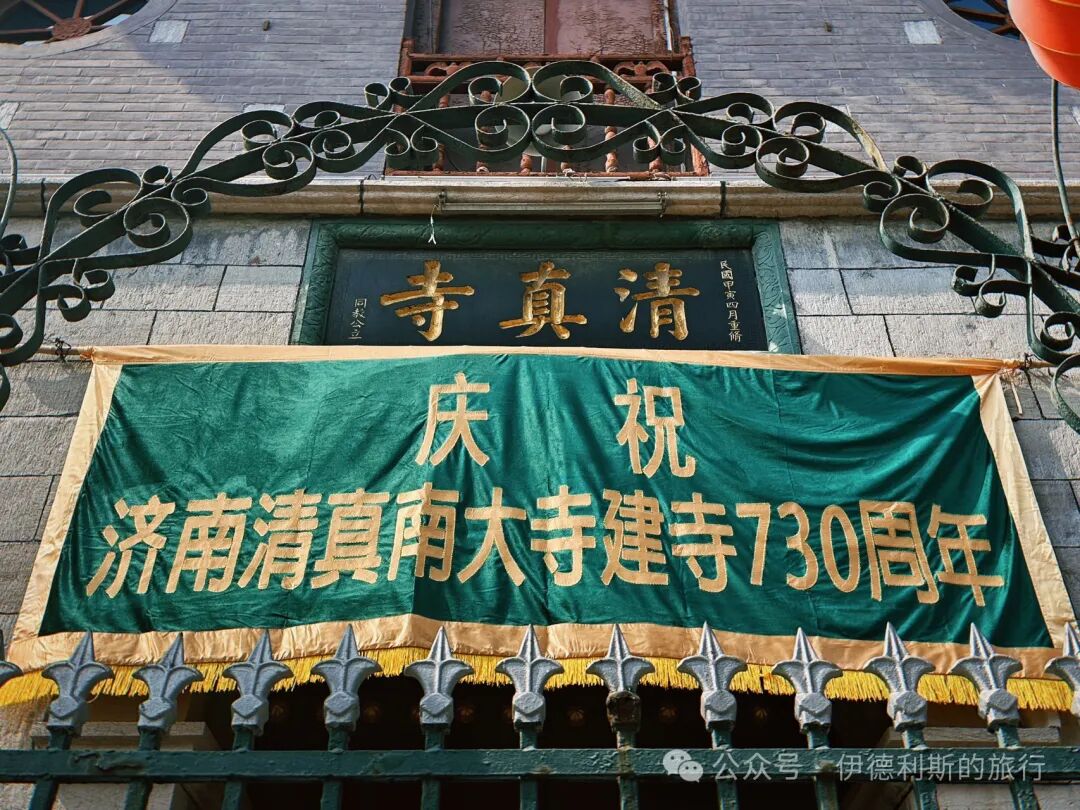
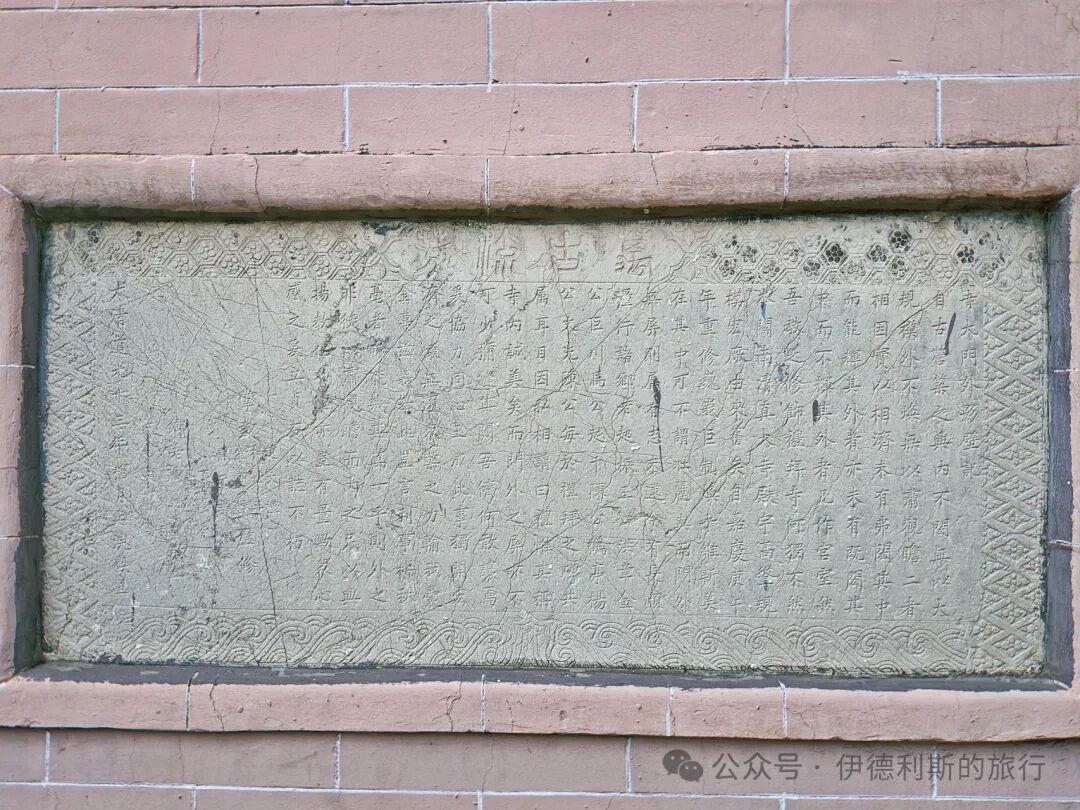
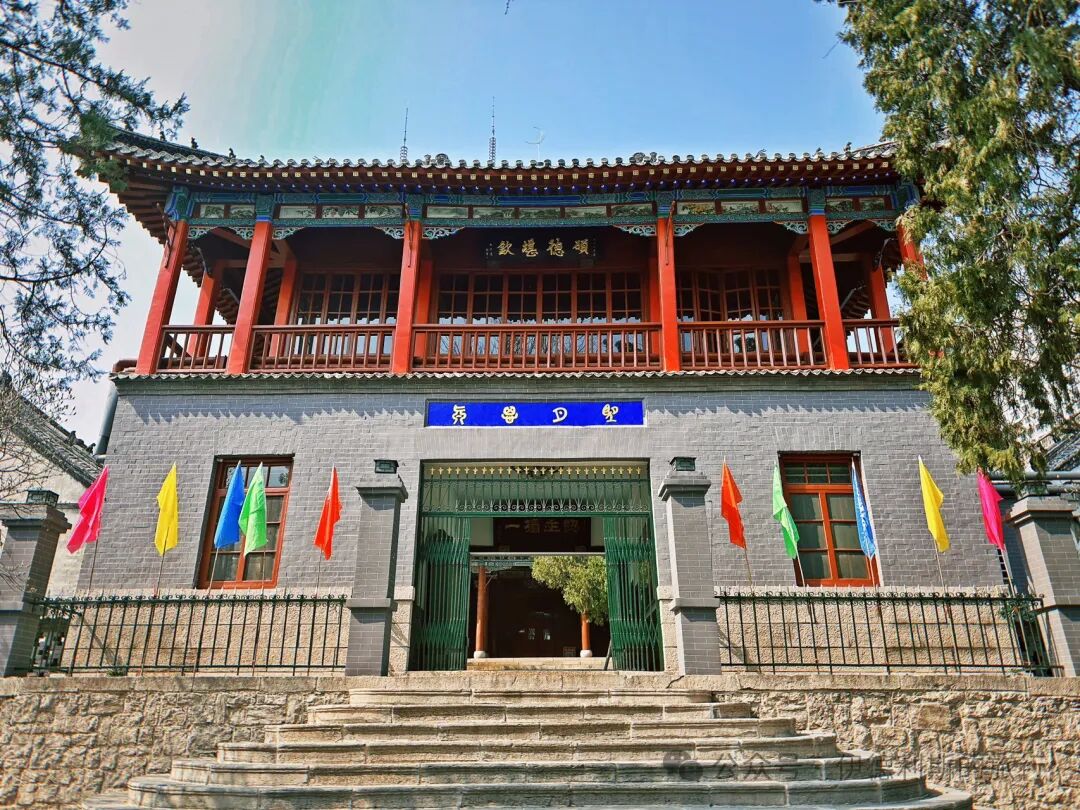
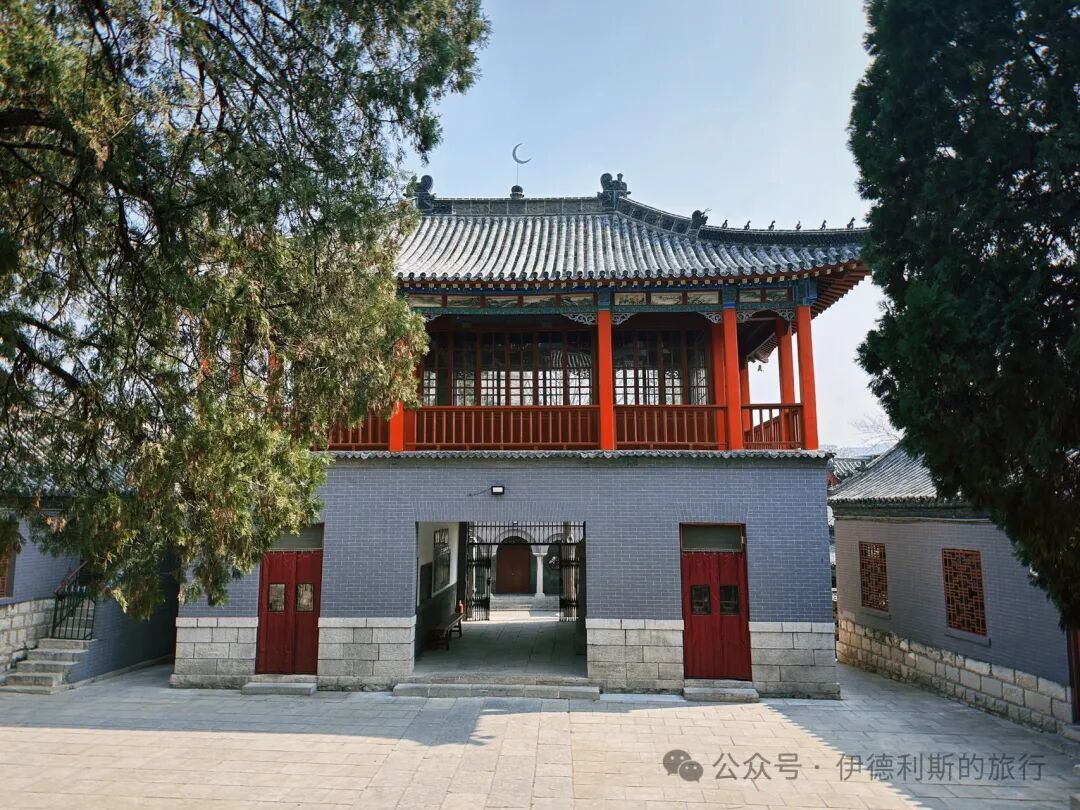
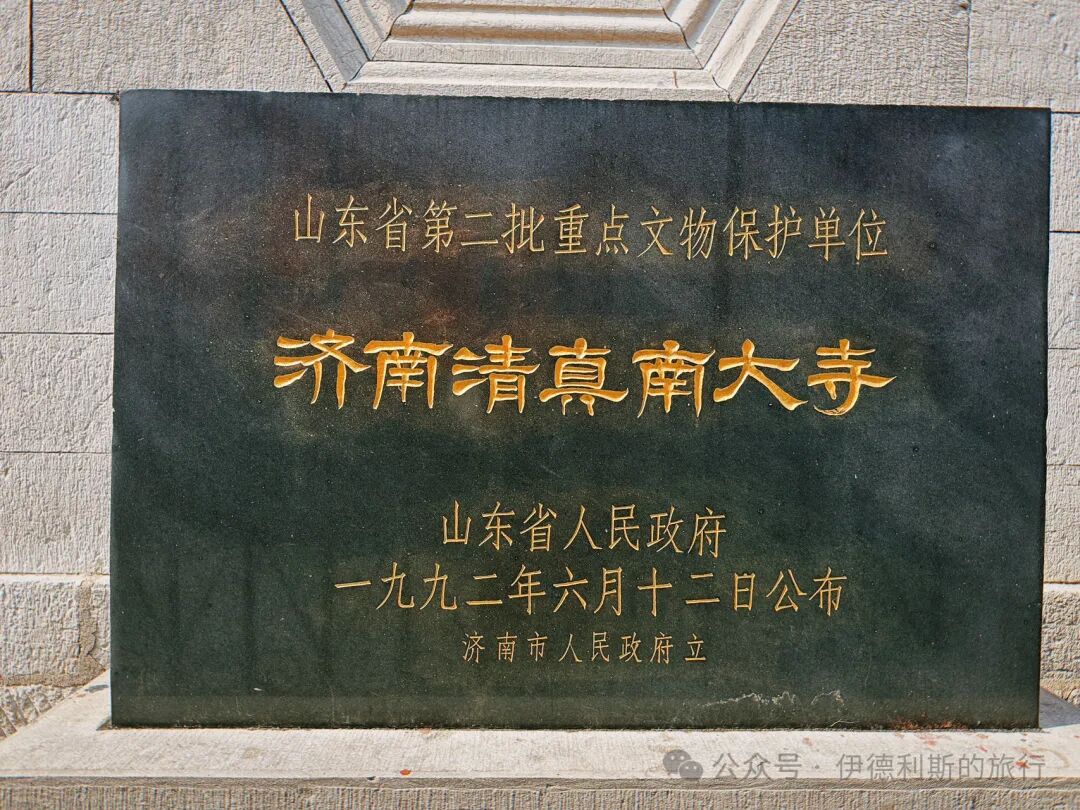
The back door of the mosque features beautiful plum blossom patterns carved into the bracket sets (que-ti).
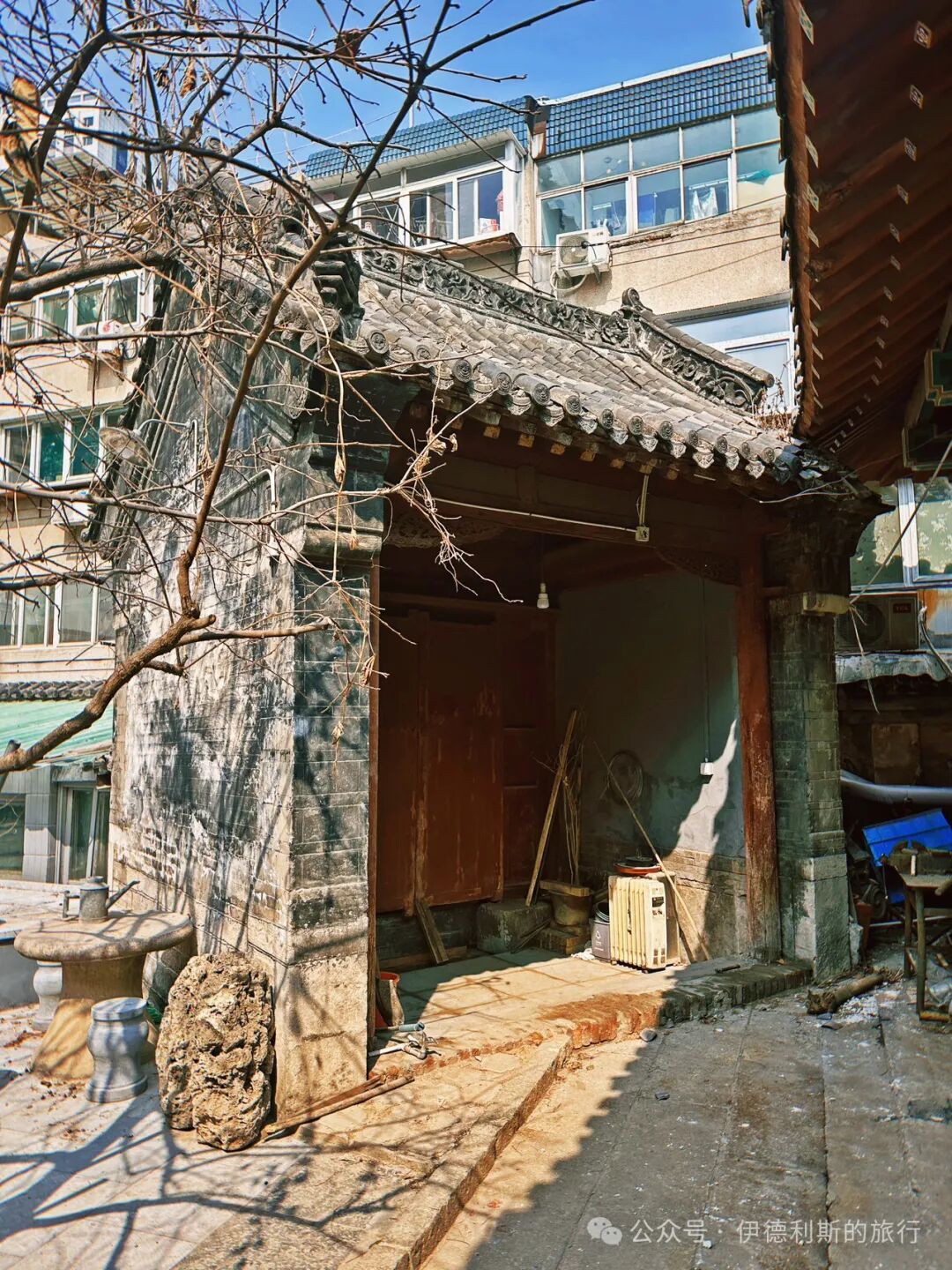
On the north side of the front porch of the South Great Mosque are the two most important steles in the mosque: the "Laifu Ming" and the "Record of the Repair of the Mosque in Licheng County, Jinan Prefecture." They have a protective cover and display boards explaining the content, though the original text is hard to see through the glass.
The "Laifu Ming" was written in 1528 (Ming-Jiajing seventh year) by Chen Si, the leader of the South Great Mosque. His great-grandfather, Chen Ying, was a diplomat in the early Ming Dynasty who traveled to the Western Regions three times and worked in the Court of Imperial Entertainments. His descendants served as leaders of the South Great Mosque for over a hundred years. The "Laifu Ming" is the first Chinese-language stele written by a mosque leader. It is also the first work in China to combine Islamic teachings with Song and Ming Neo-Confucianism, starting the tradition of interpreting scripture through Confucianism in the late Ming and early Qing dynasties. It has very high historical and philosophical value.
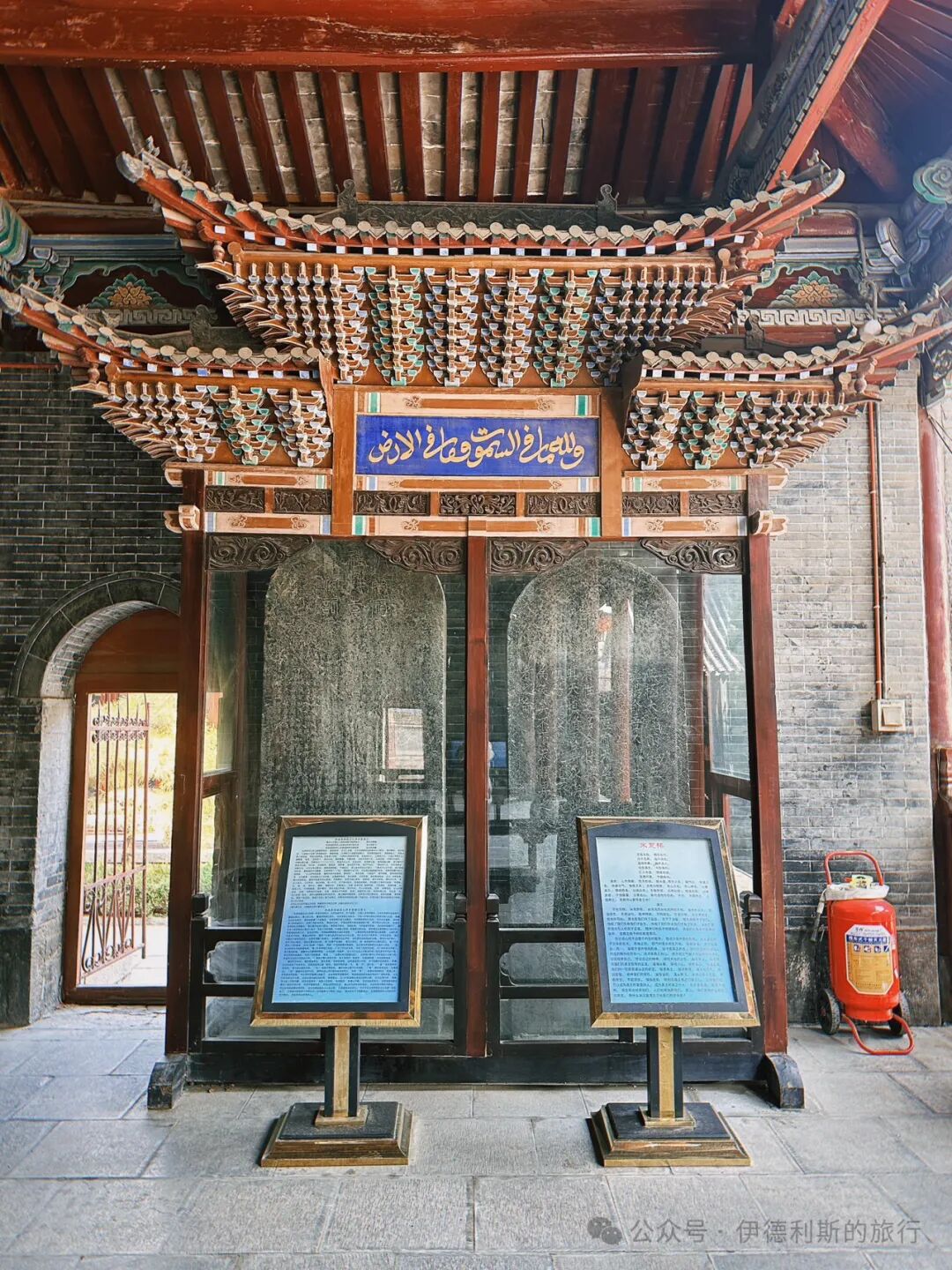
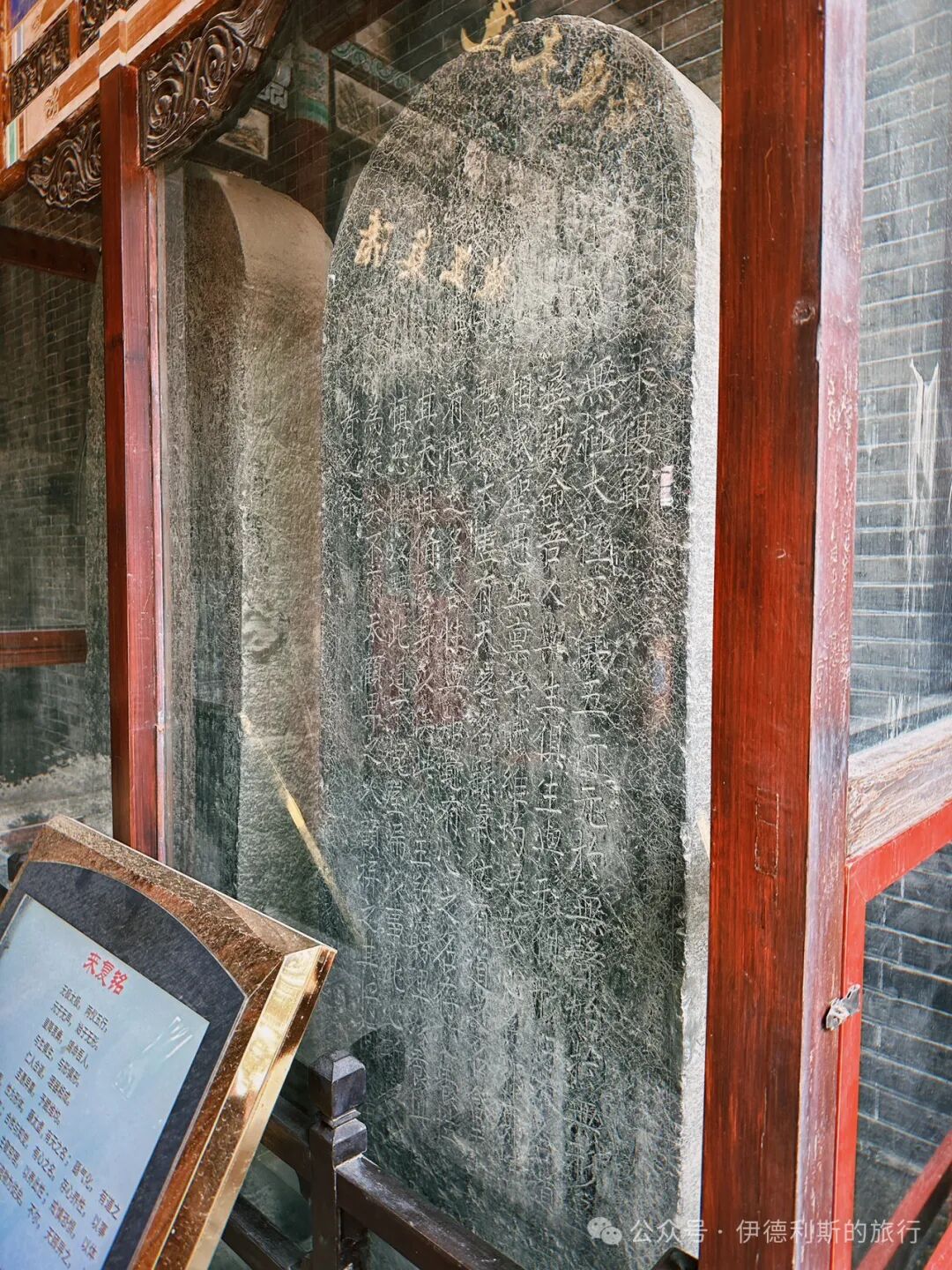
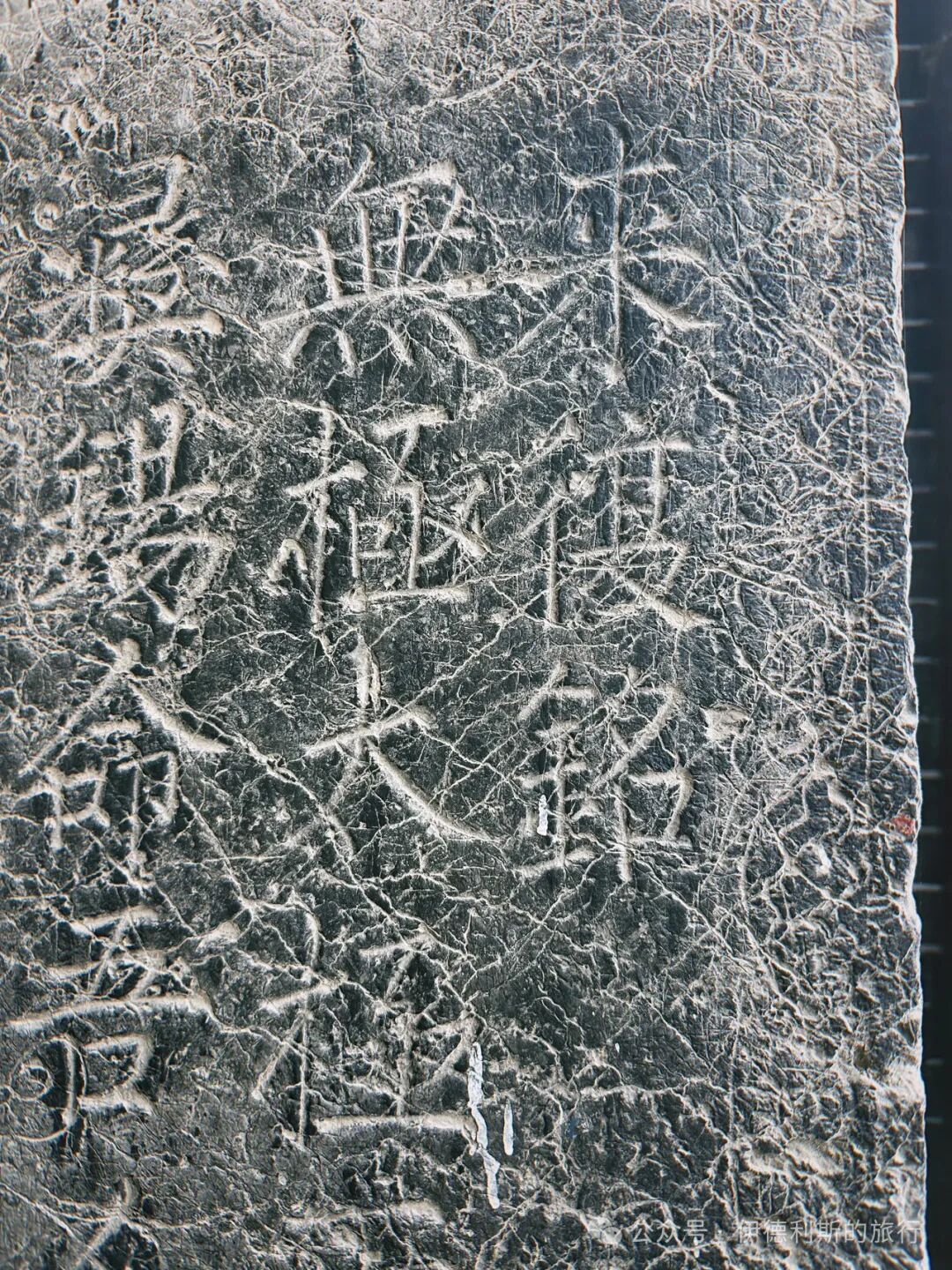
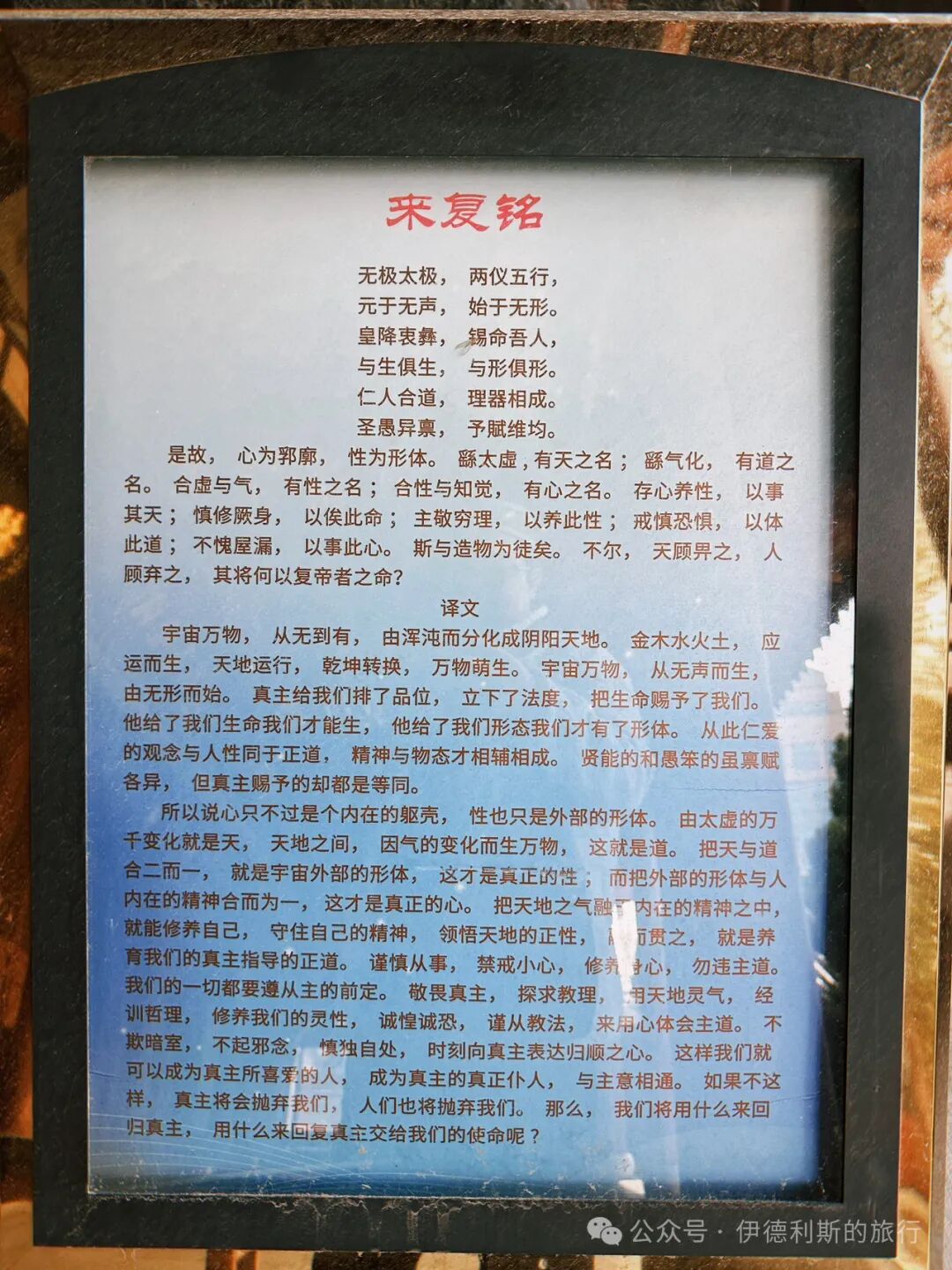
The "Record of the Repair of the Mosque in Licheng County, Jinan Prefecture" was carved in 1495 (Ming-Hongzhi eighth year) and is the earliest religious stone tablet in Jinan. The inscription records that the South Great Mosque moved from Wumanla Lane at the east gate of Jinan to the west gate in 1295 (Yuan-Yuanzhen first year). It was small at first, then expanded by Chen Li, the son of Chen Ying, in 1436 (Ming-Zhengtong first year), and expanded again by Chen Xi in 1492 (Hongzhi eighth year). The stele records these two expansion processes.
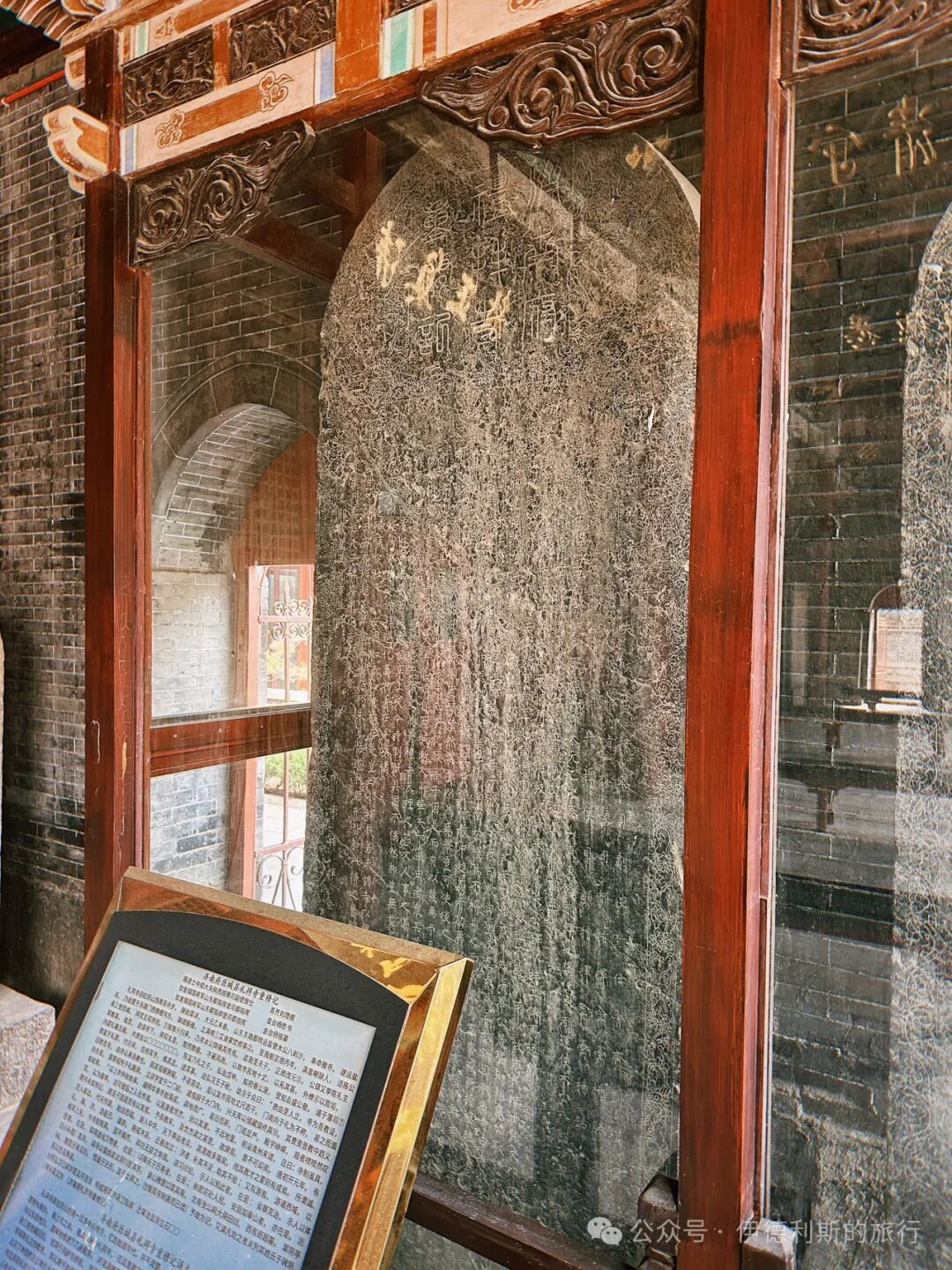
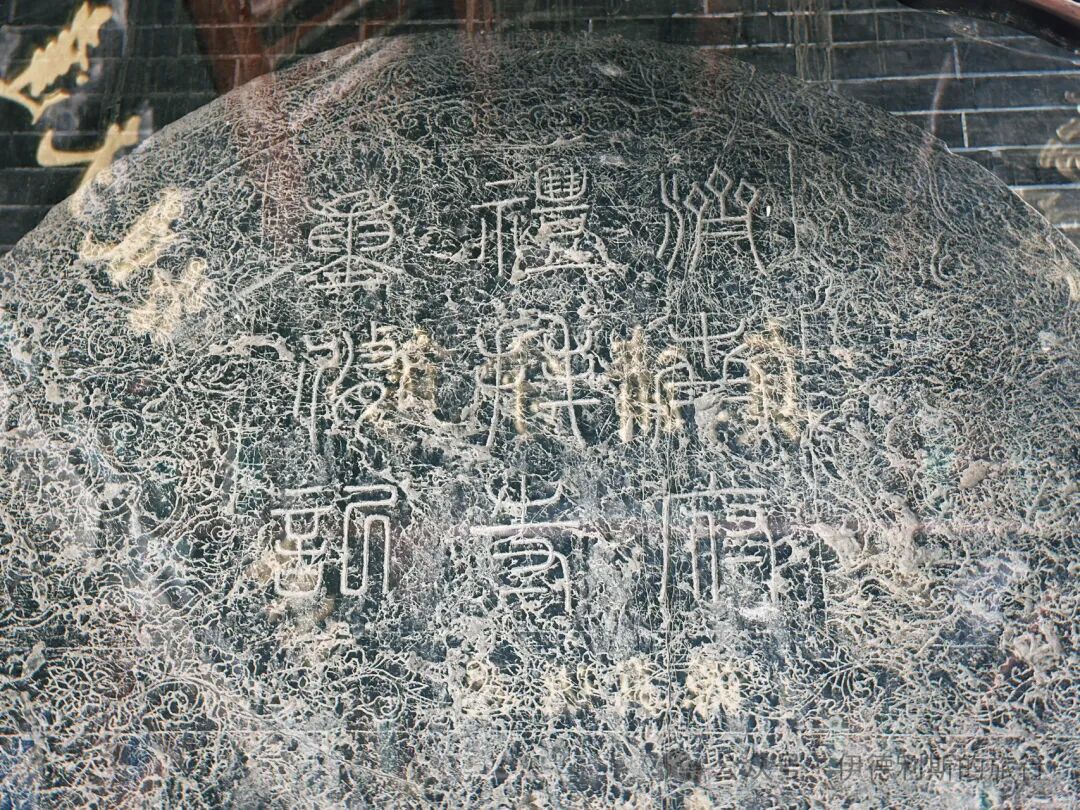
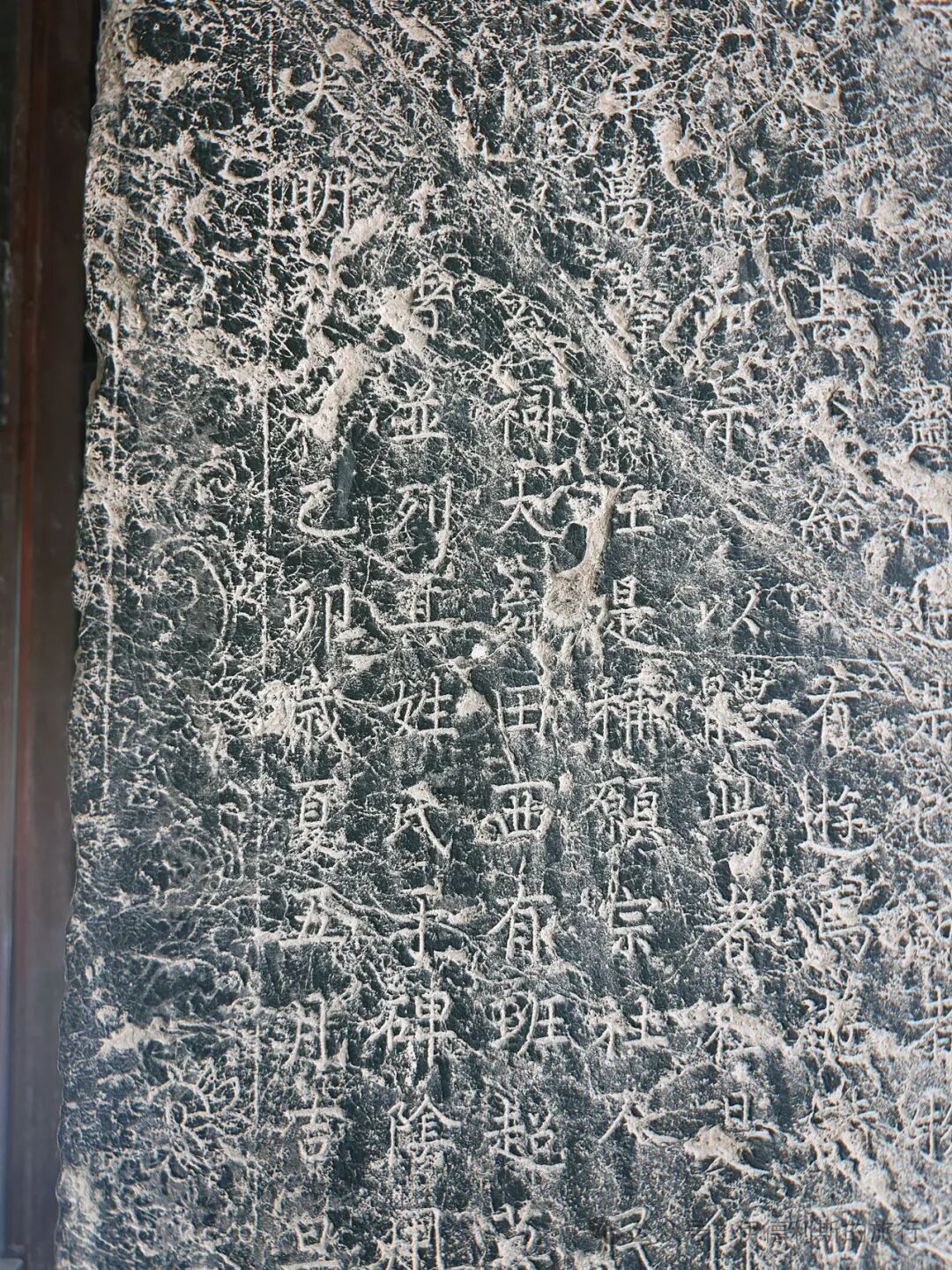
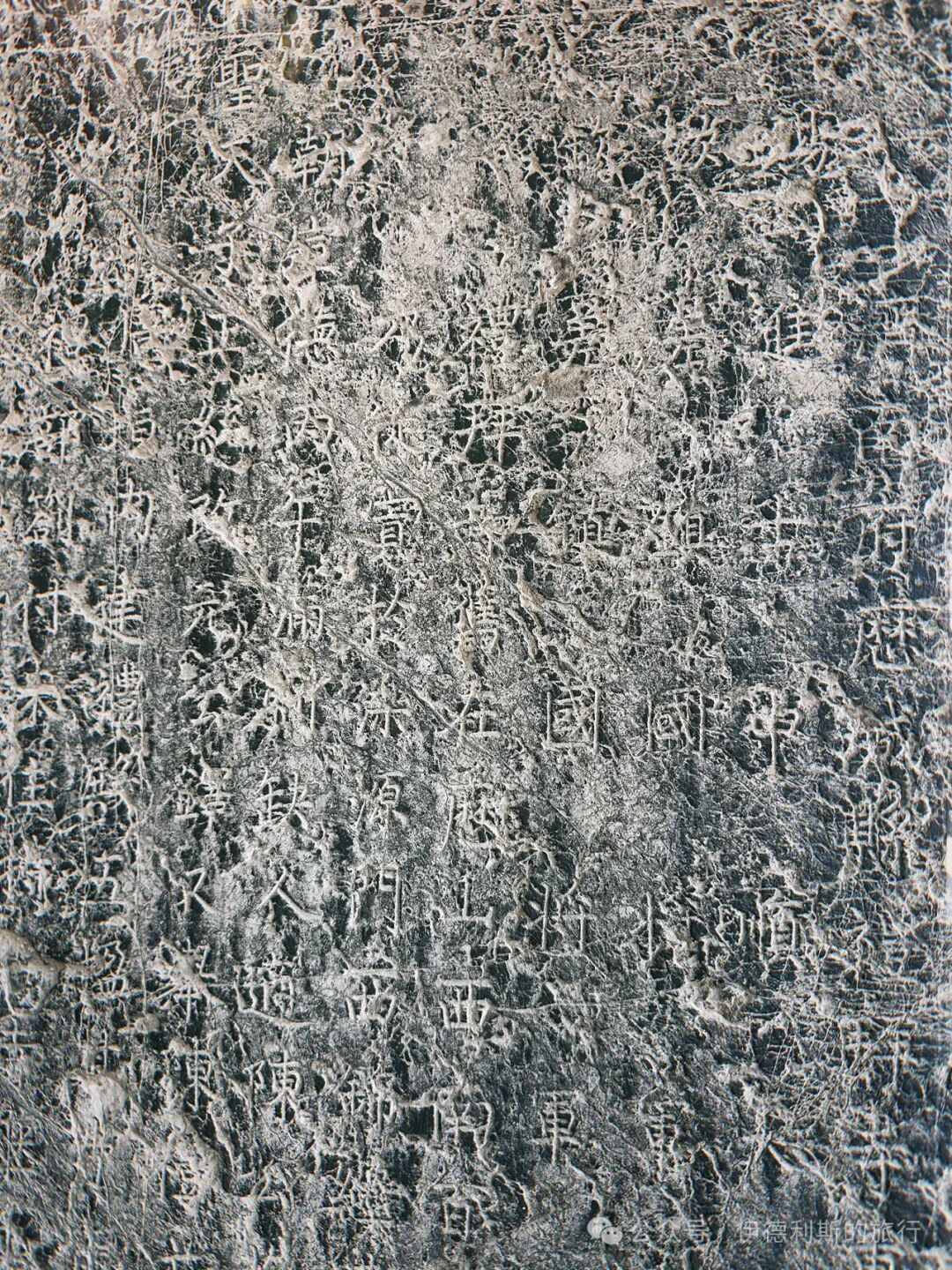
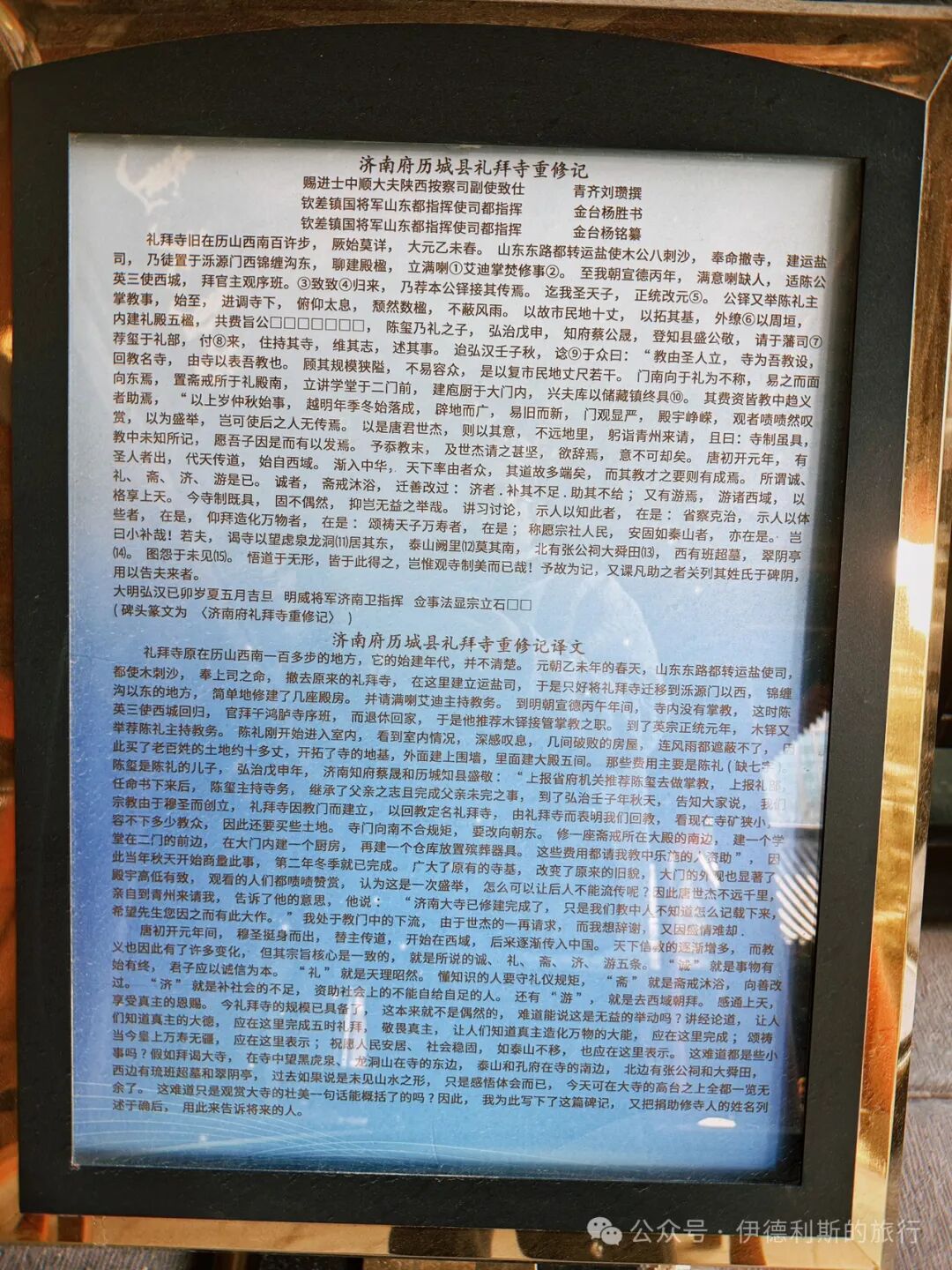
The Preface to the Permanent Prohibition of Hereditary Succession for the Three Religious Leaders was carved in 1715 (the 54th year of the Qianlong reign). The text was copied from a mosque (libaisi) in Jining Prefecture. Since the original Jining stele no longer exists, the Jinan stele has become the most important stone inscription representing the theological views of the Shandong school of scripture hall education (jingtang jiaoyu). The stele was written by Xue Zongjun, an official in the Imperial Board of Astronomy (qintianjian) who served at the Hall of Mental Cultivation (yangxindian). The text opposes the hereditary system for the three religious leaders and advocates for a selection system based on merit and ability. The text mentions that the author consulted with the founders of the Shandong school, teachers Chang Zhimei and Li Yanling, and received their approval for these views.
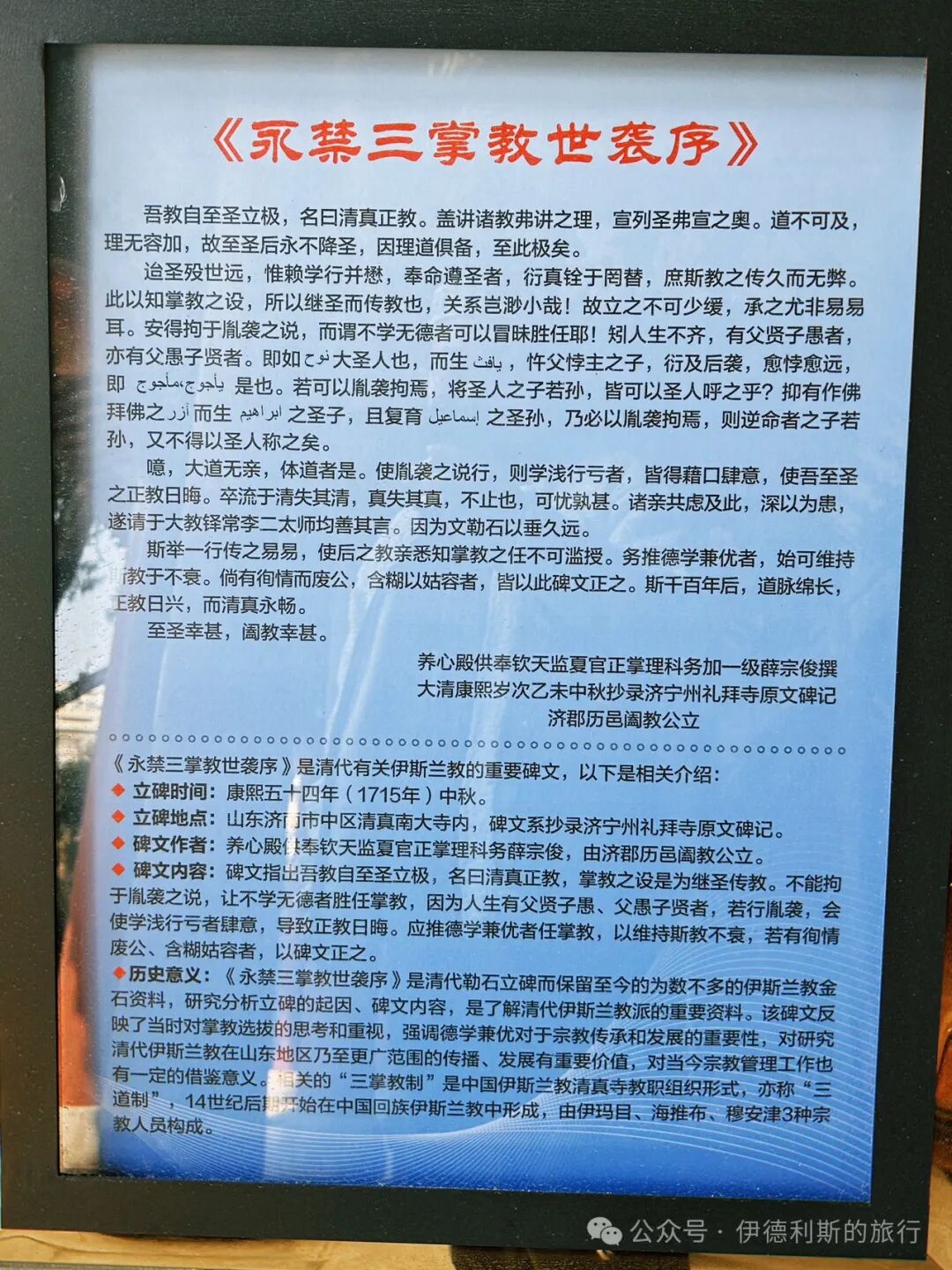
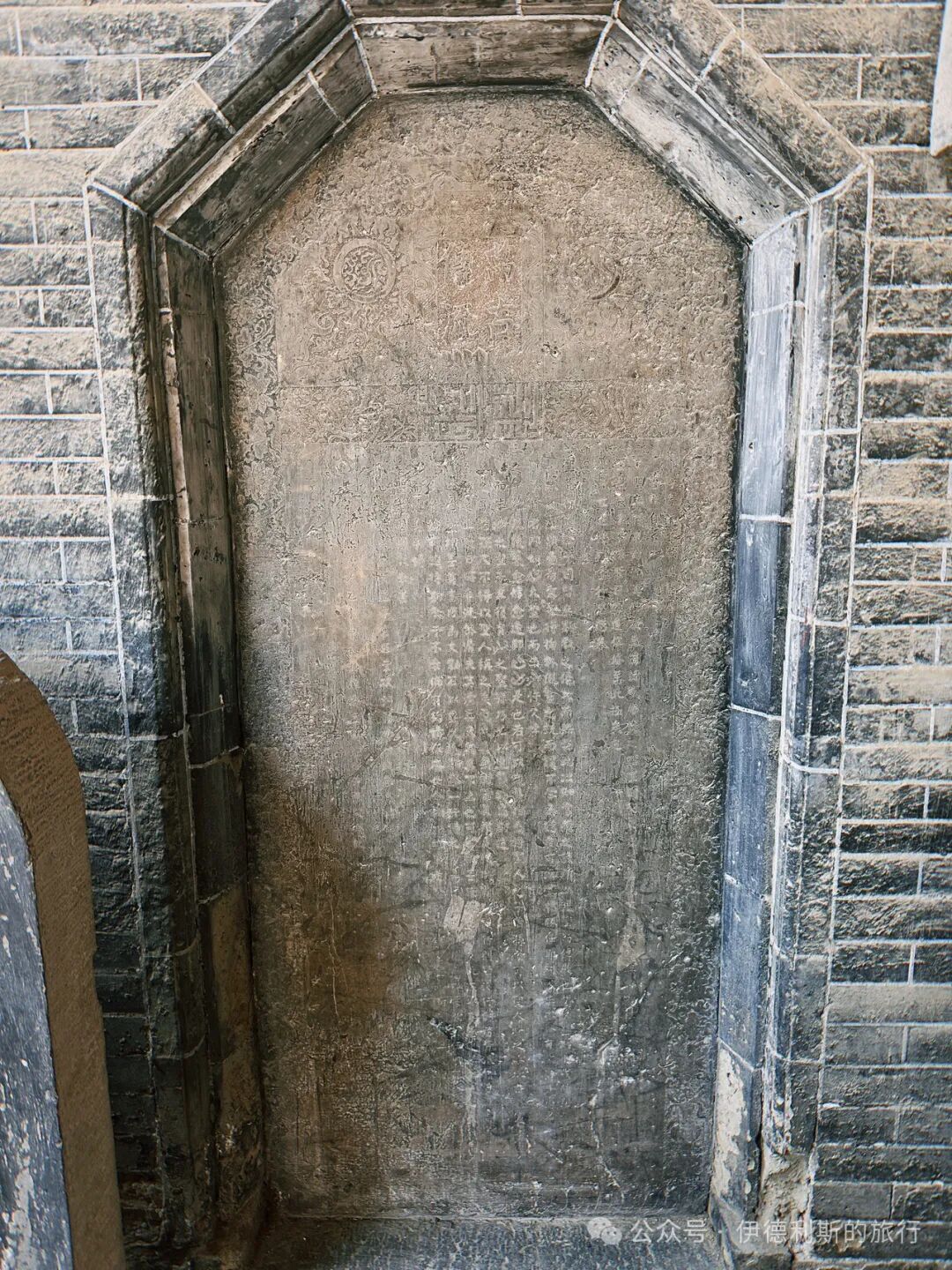
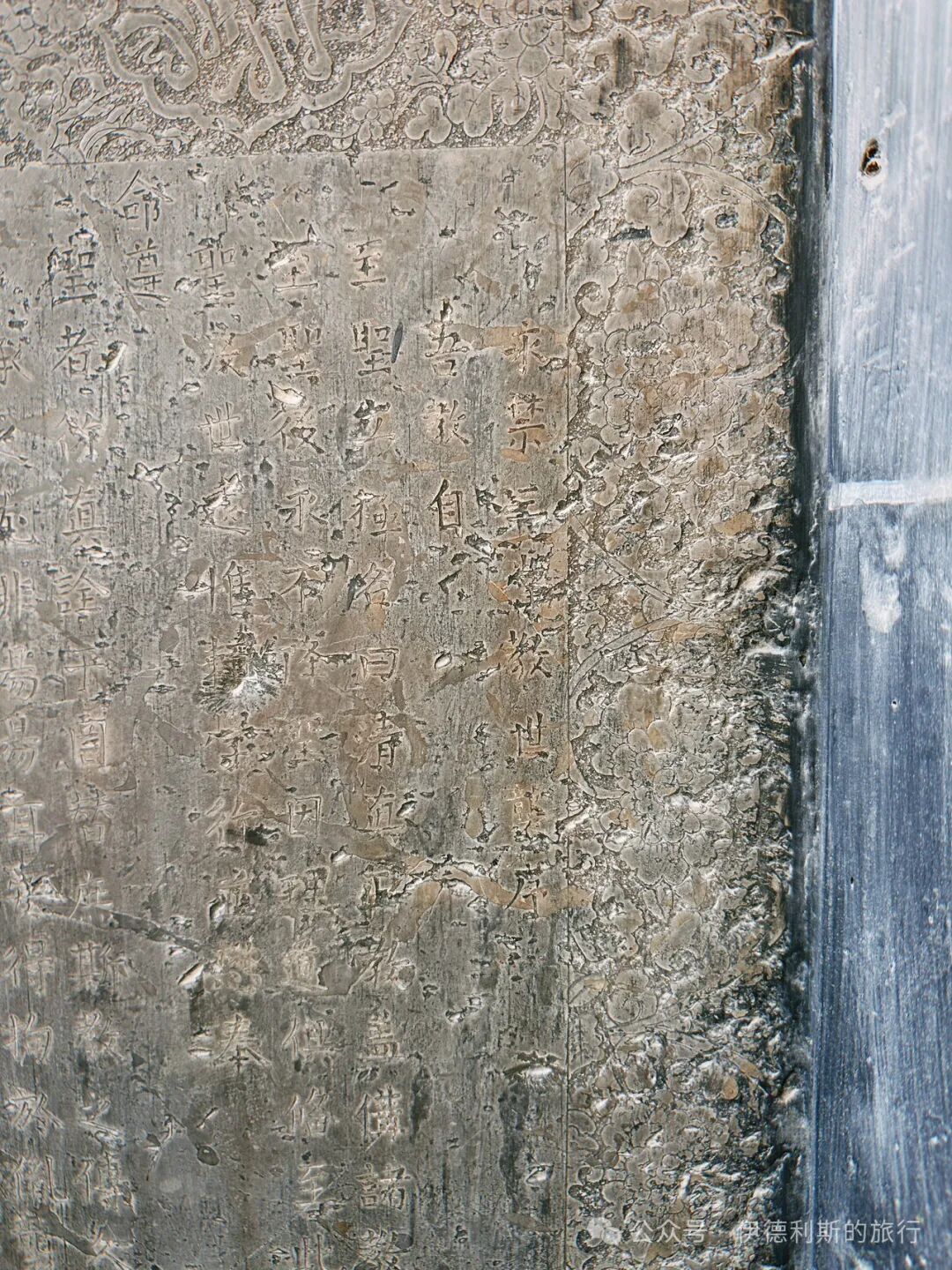
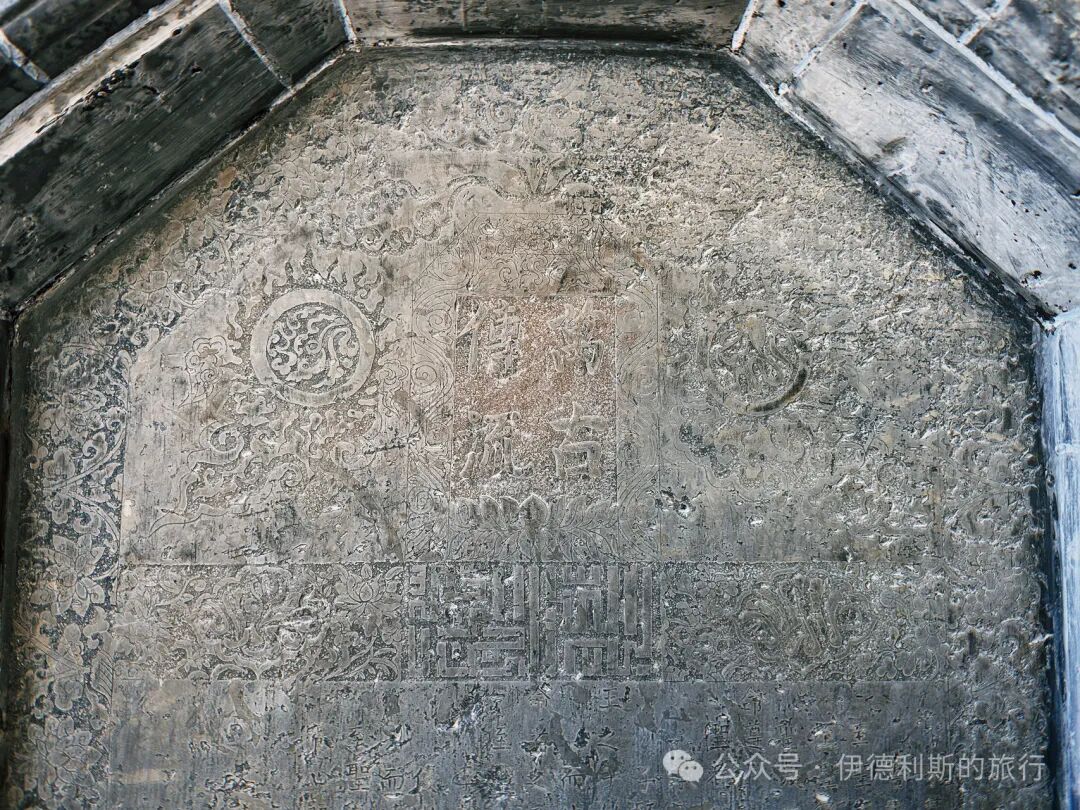
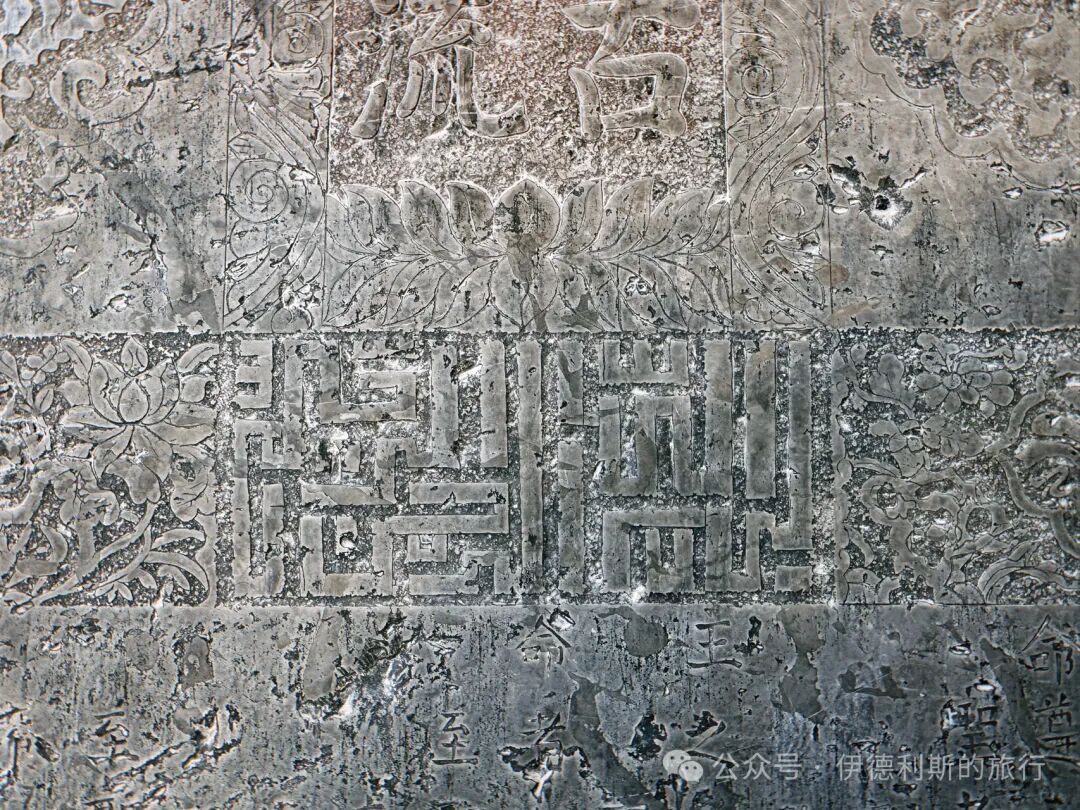
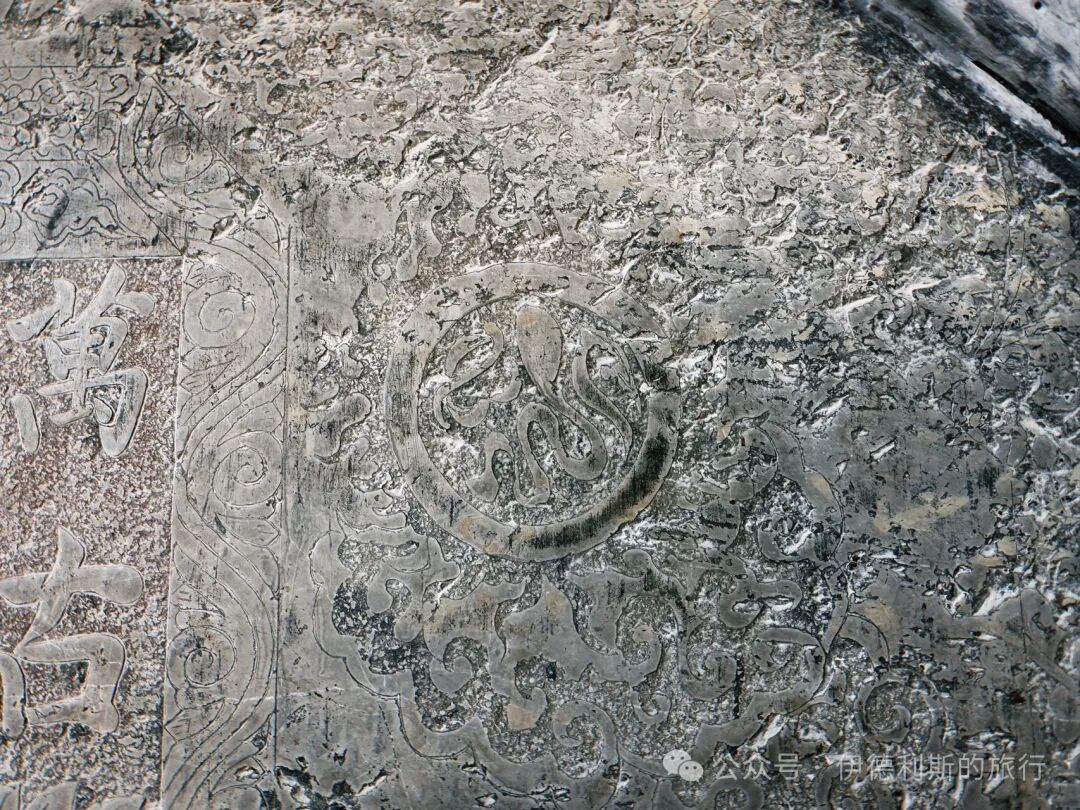
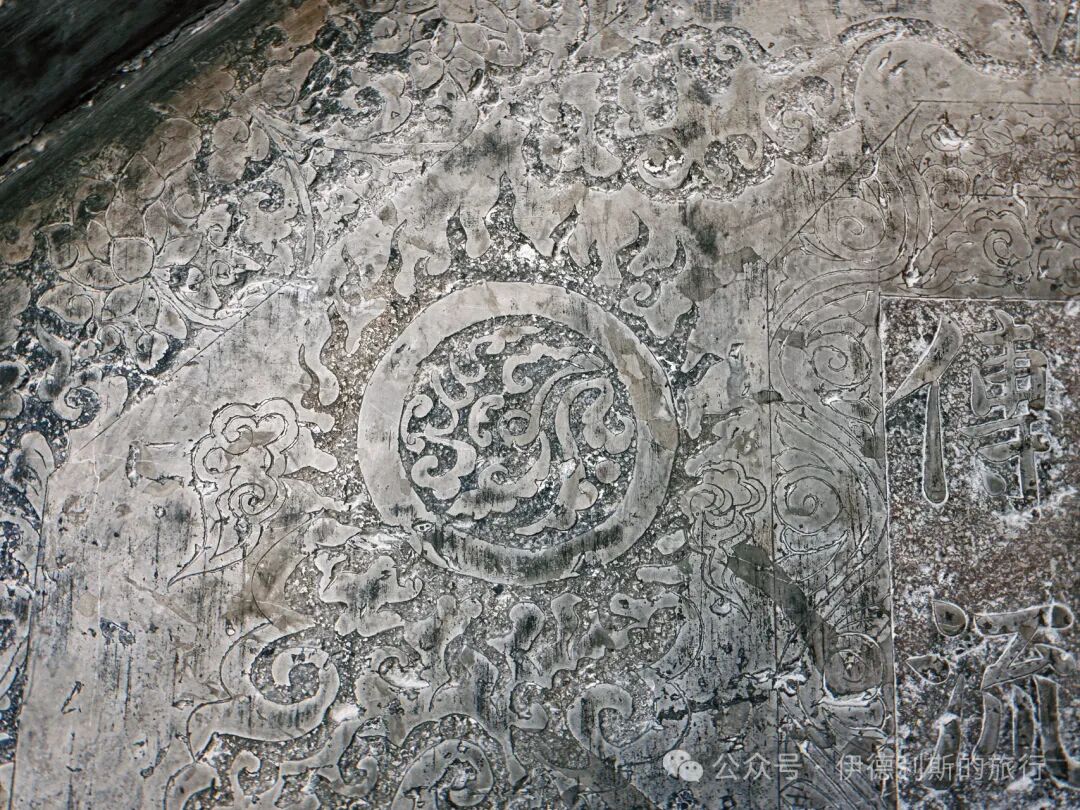
The 1810 Record of Rebuilding the Mosque (libaisi). This records how the head of the Black Sect (hei jiaozhang) worked tirelessly to raise funds from all directions. It took ten years to gather materials and start construction, and the project was completed in five months.
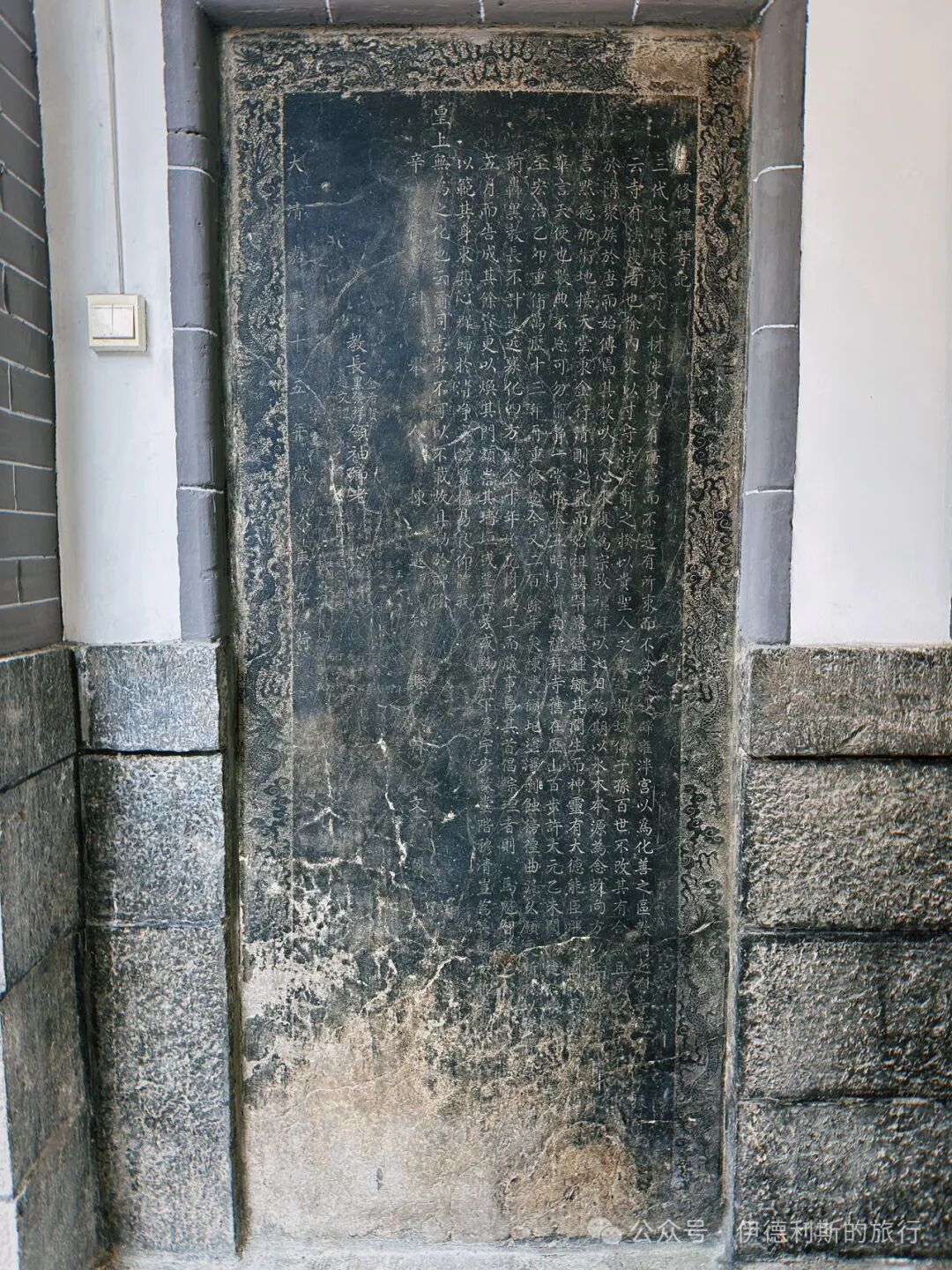
The 1845 Stele of Ding Songnian Donating Storefronts. This records how Ding Songnian bought storefronts and donated them to the mosque, with the rent used to cover the needs of the bathhouse.
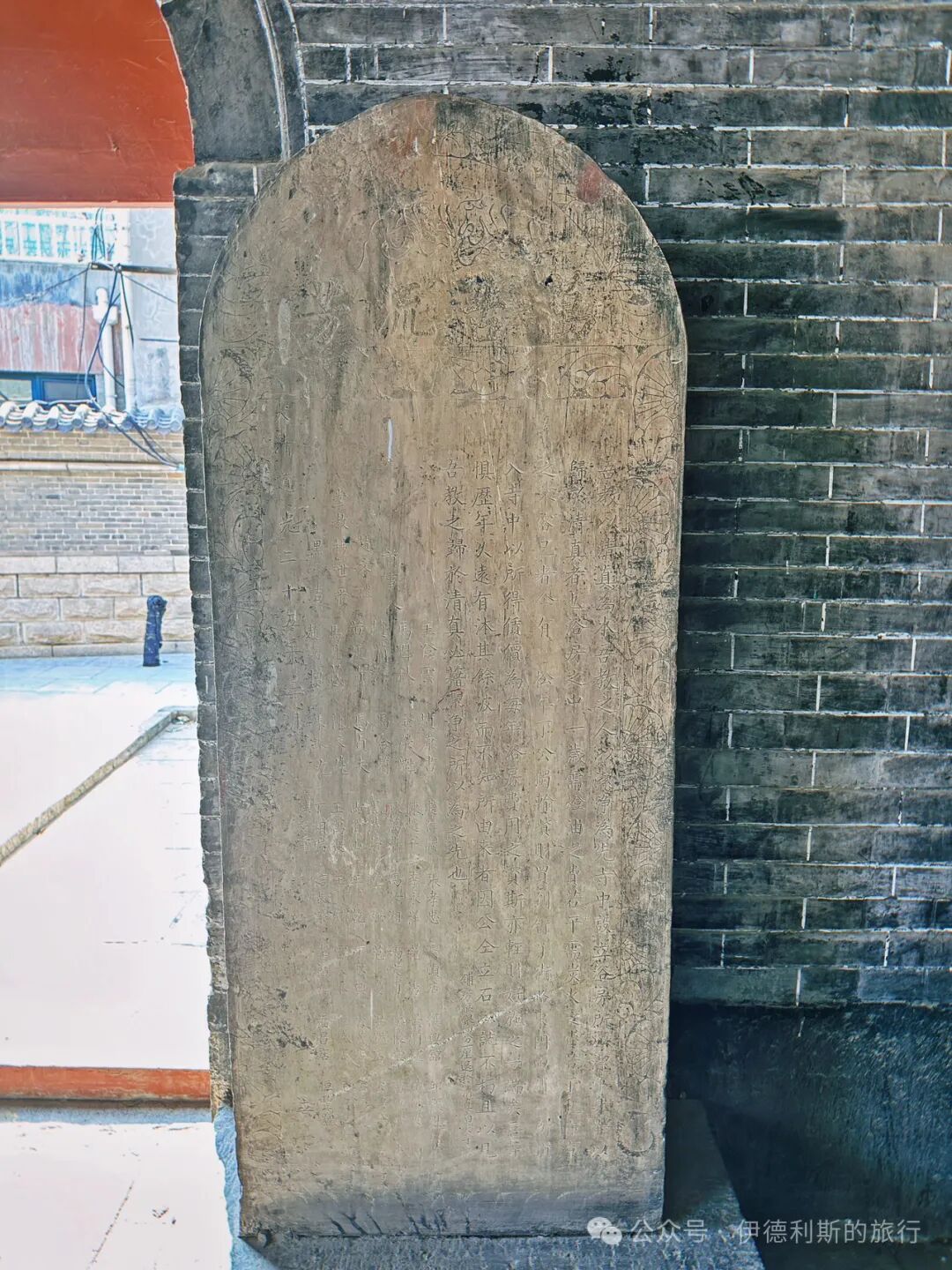
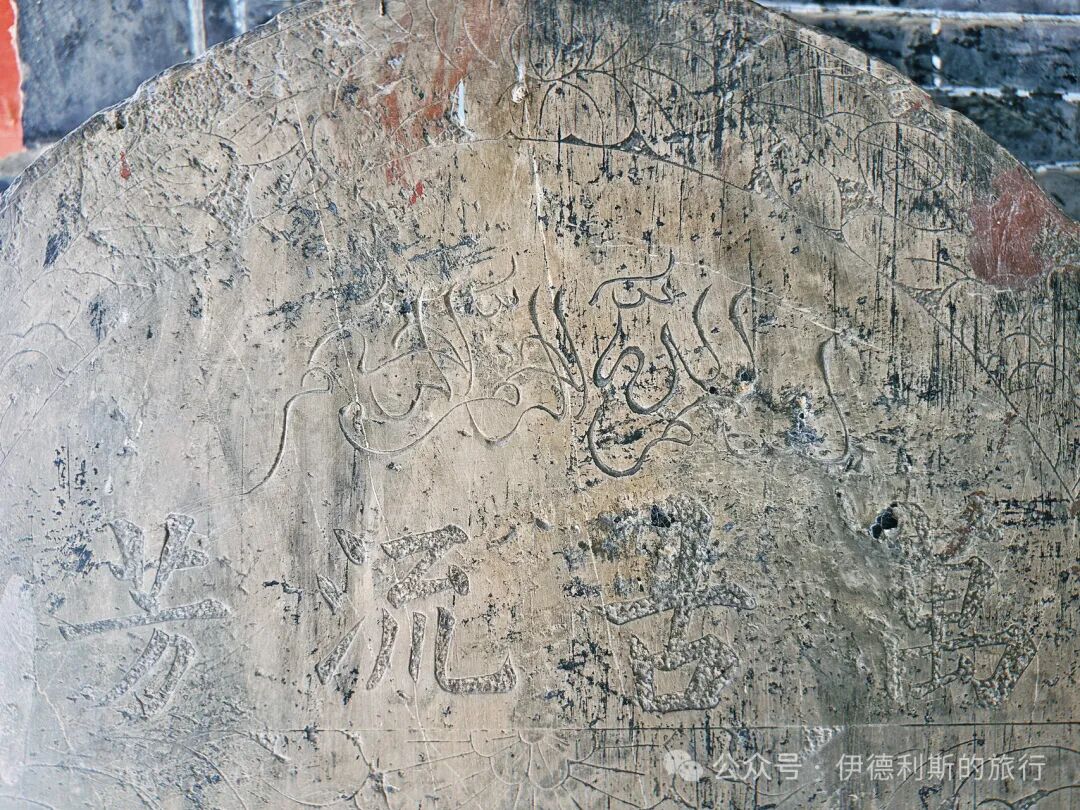
The 1872 Stele of the Zuo Ma Family Donating Land. This records how the Zuo Ma family donated farmland in Chenjiazhuang to the mosque's school to support grave visits, scripture recitation, and the maintenance of the imam (ahong) and students.
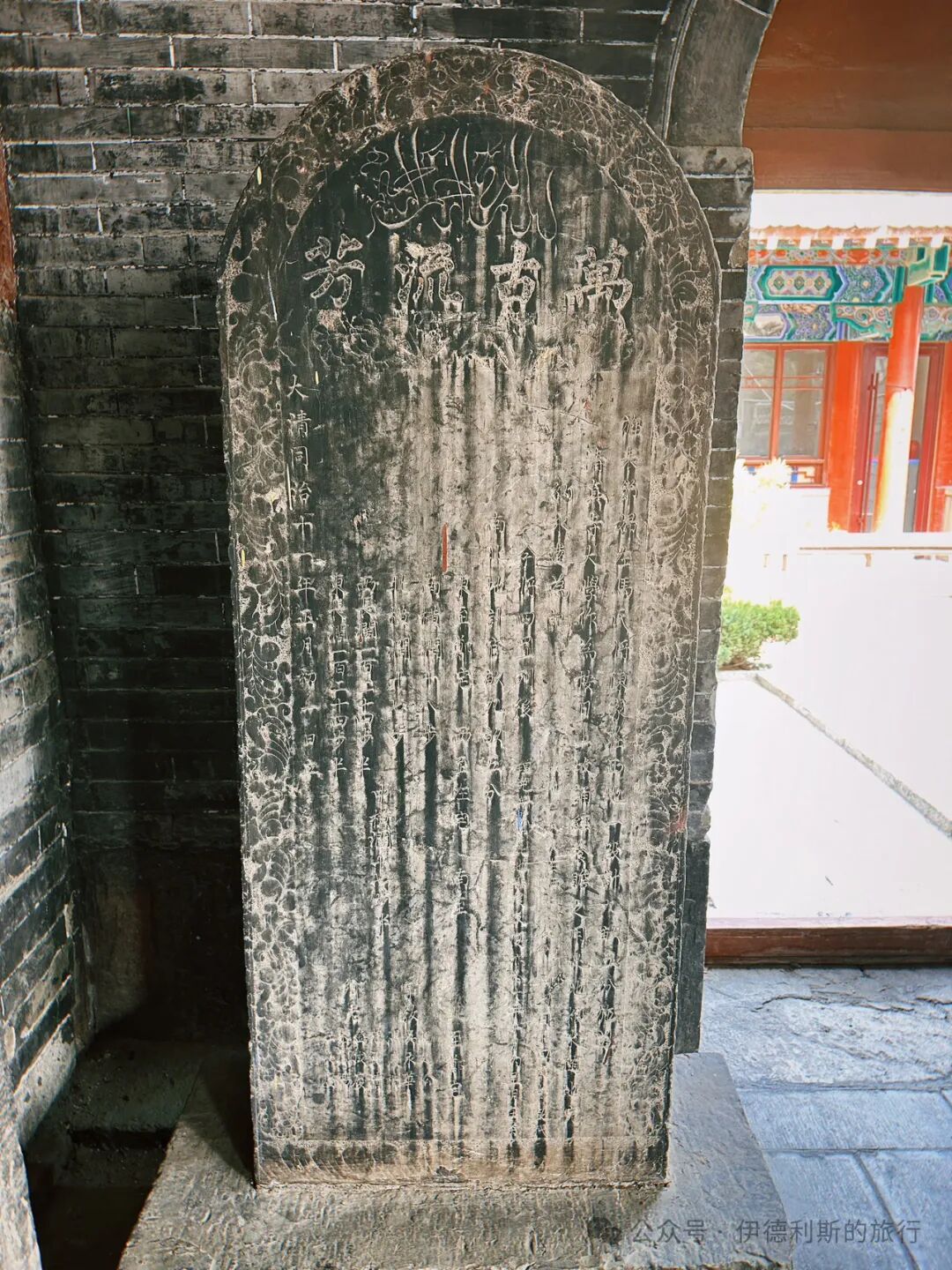
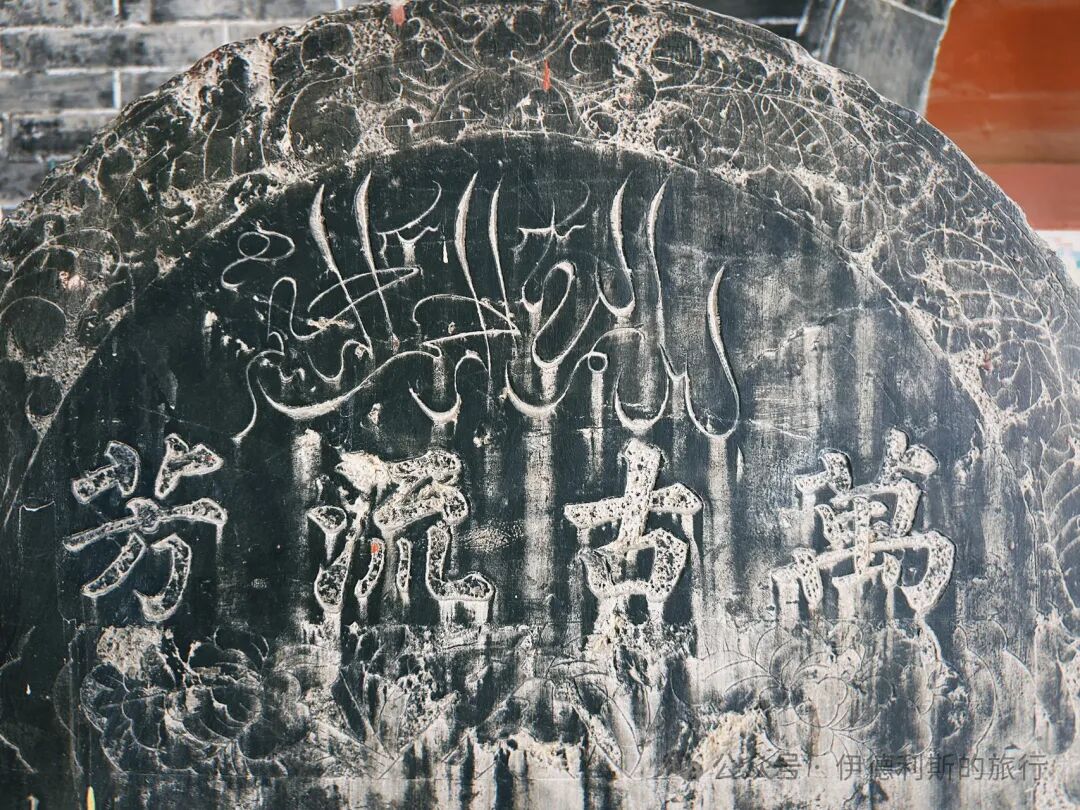
The 1921 Stele Record of Rebuilding the Two Lecture Halls of the Main Hall.
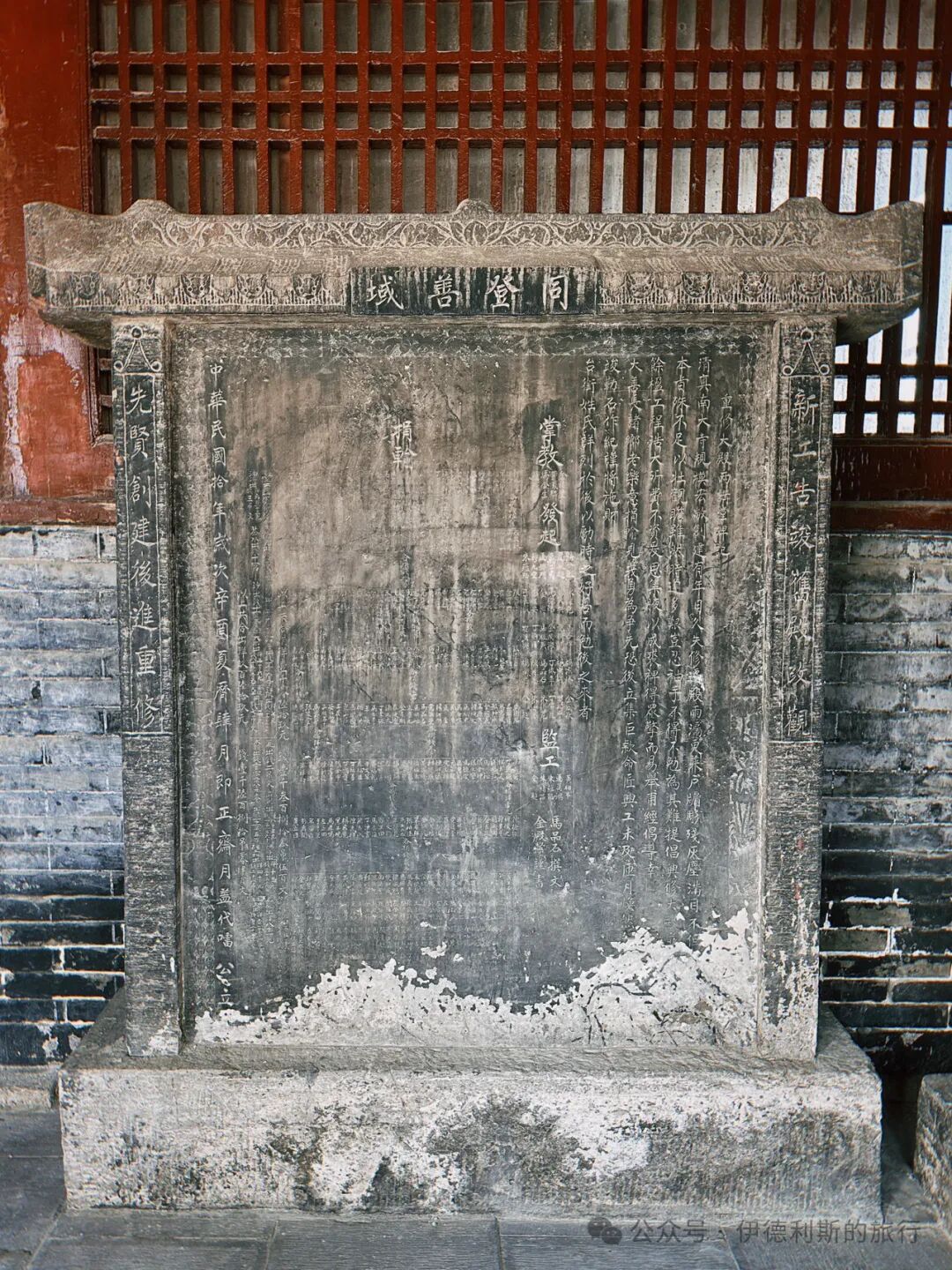
The 1890 Stele of Wang Qingchun's Aunt Donating Land. This records how Wang Qingchun donated land on behalf of his aunt.
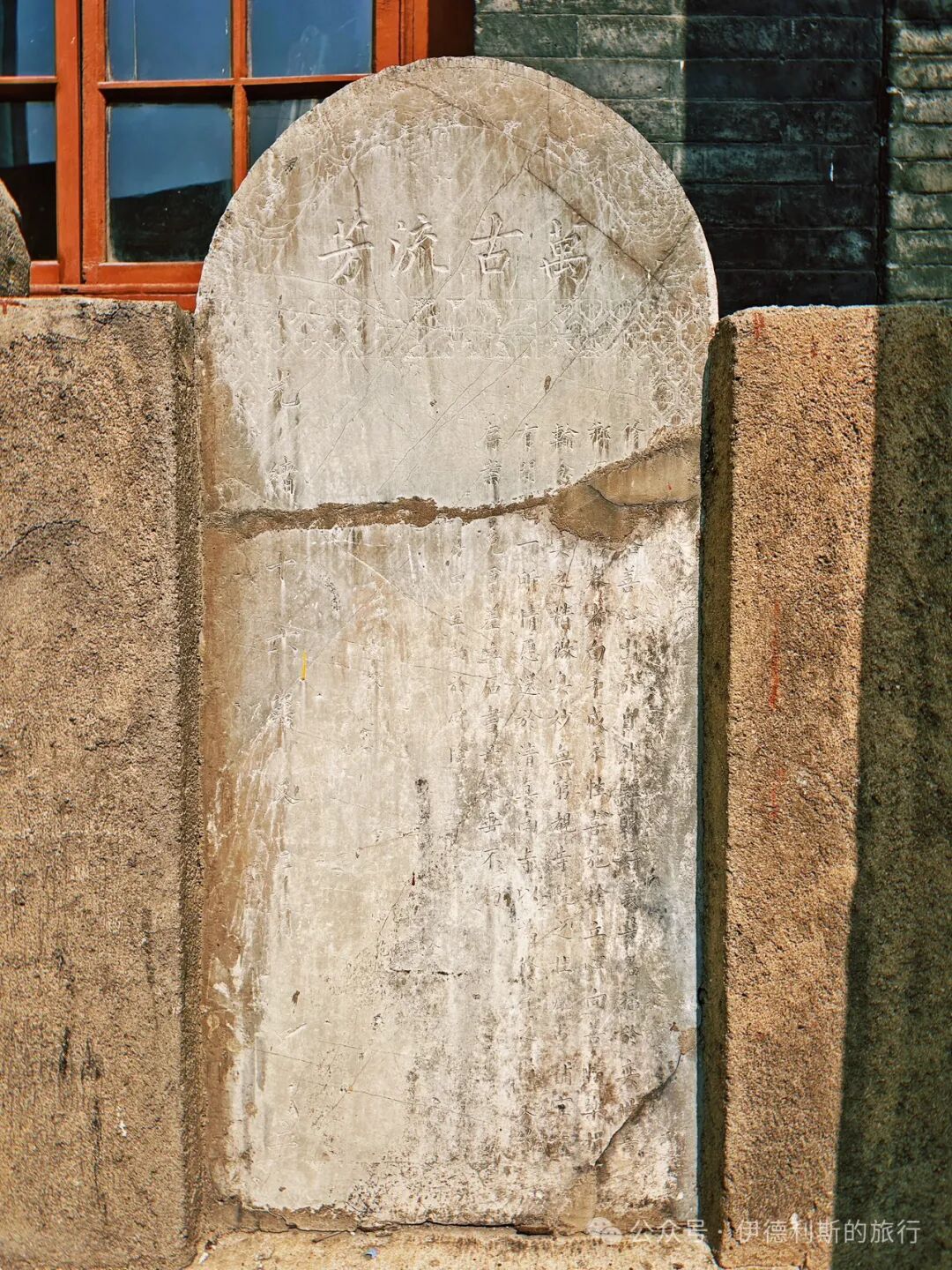
The 1914 Stele Record of Rebuilding the Pillars, Wrapped Porch, and Brick Floor Around the Main Hall of the South Mosque.
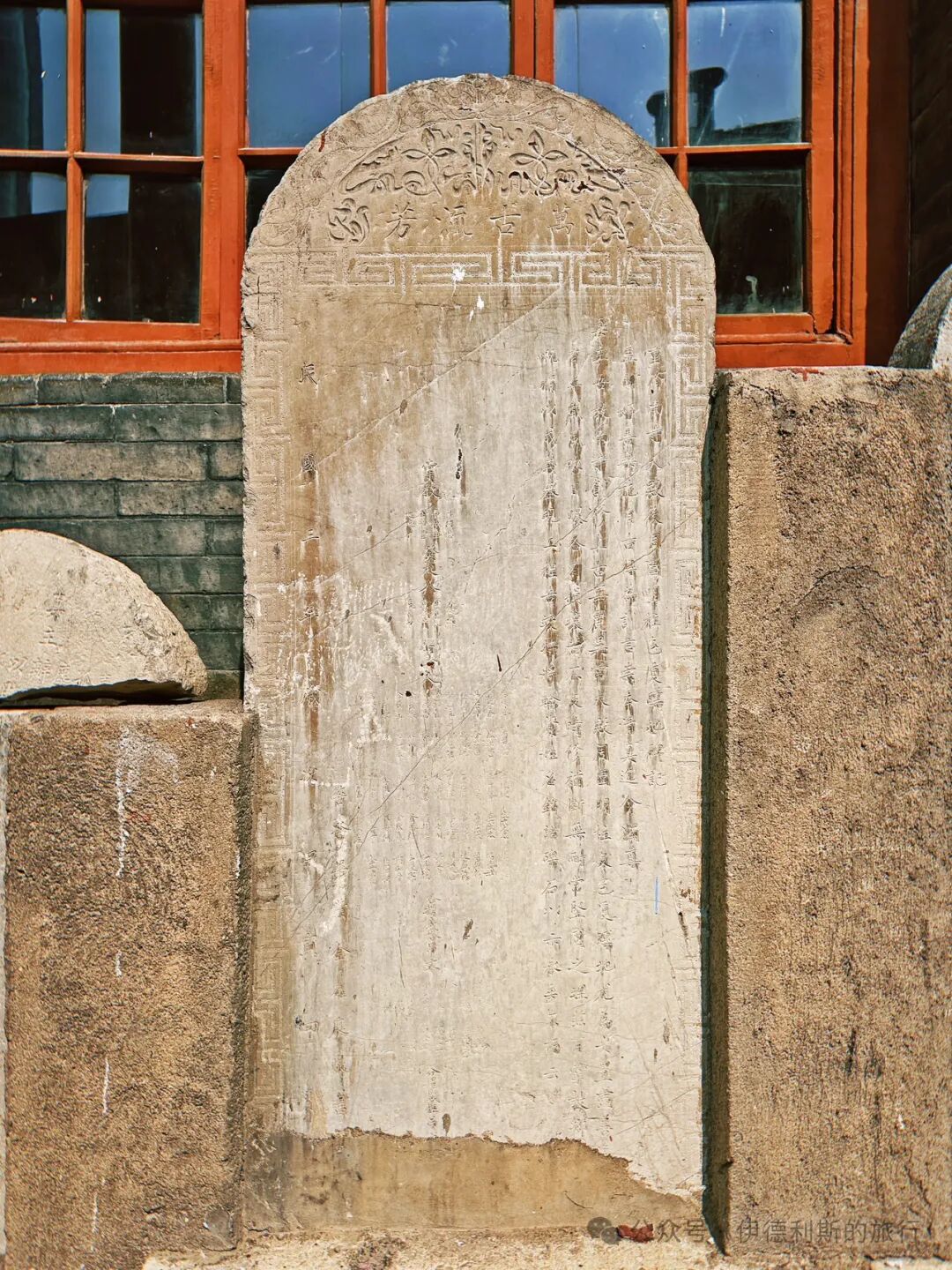
The 1874 Inscription on Rebuilding the Two Lecture Halls. This records the construction of two lecture halls on the left and right sides of the main hall, where people studied and researched theology together after completion.
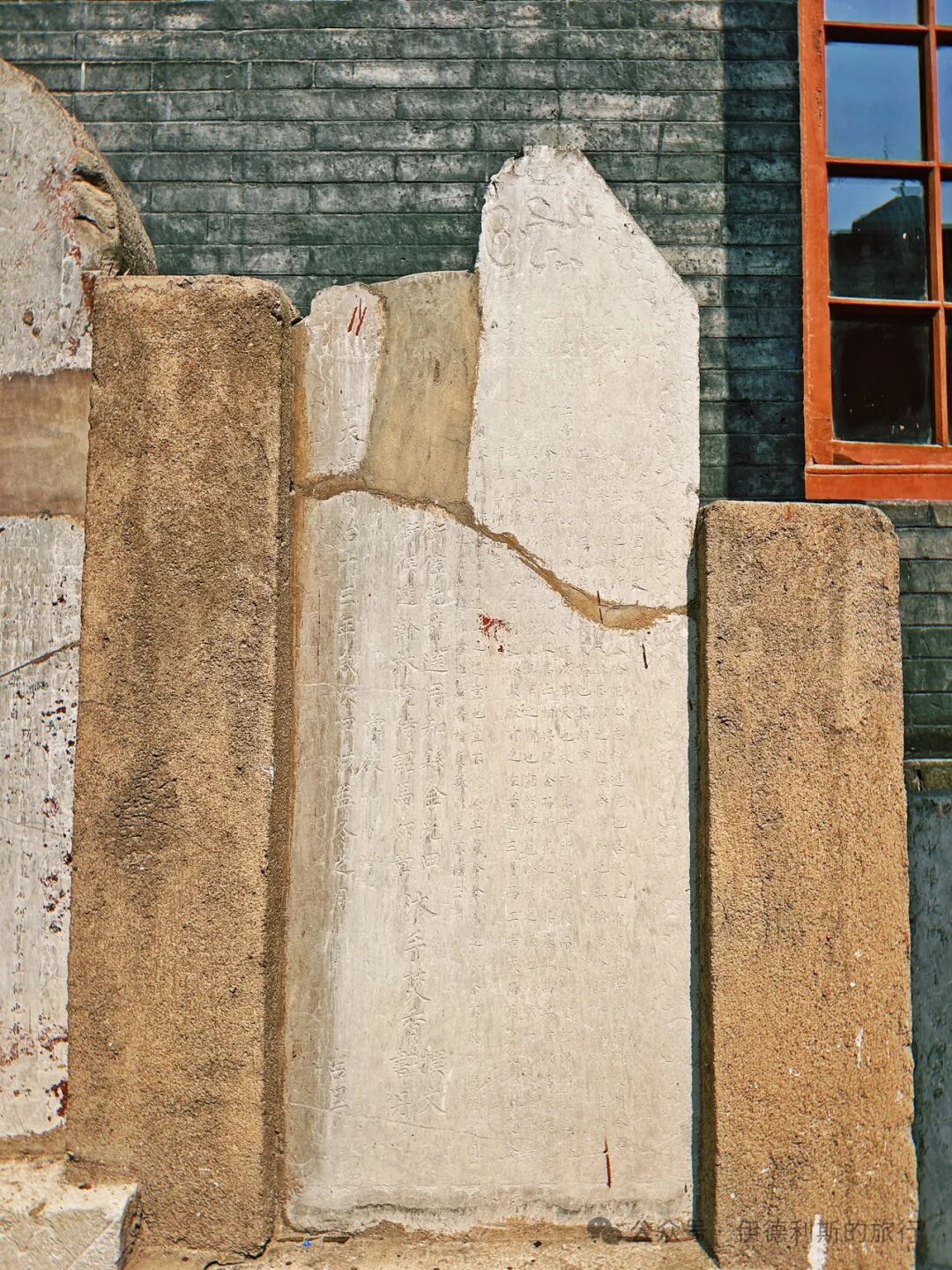
Jinan North Mosque (Beidasi).
During the Kangxi reign, Yang Kuiyuan Baba, a student of Chang Zhimei and a leader at the Jinan South Mosque, went out to collect funds and grain. During this time, an imam (ahong) from the Western Regions passed through the South Mosque and taught from the scriptures he carried. Later, Ren Runzhi Baba returned from the Hajj and brought back many scriptures, beginning to preach at the South Mosque and advocating for following the scriptures and reforming customs (zun jing ge su). After Yang Kuiyuan Baba returned to the South Mosque from his fundraising, he insisted on following ancient traditions and opposed the reforms. This led to him setting up a sorghum-stalk screen in the main hall so that each side could perform their namaz separately. History calls this the conflict between the new practice of 'Ikhwan' (houdusi) and the old practice of 'Gedimu' (gedimu). As the conflict between the new and old factions intensified, Imam Yang Kuiyuan led the followers of the old practice to build the North Mosque at the north end of Yongchang Street. It was continuously rebuilt during the Qianlong, Jiaqing, Daoguang, Guangxu, and Republican periods, eventually reaching its current scale.
The main hall of the North Mosque is built on a stone foundation. It features a large timber-framed roof with a triple-connected hip-and-gable design and upturned eaves. A pavilion-style moon-viewing tower is built above the middle hall, which can be accessed via stairs inside the hall.
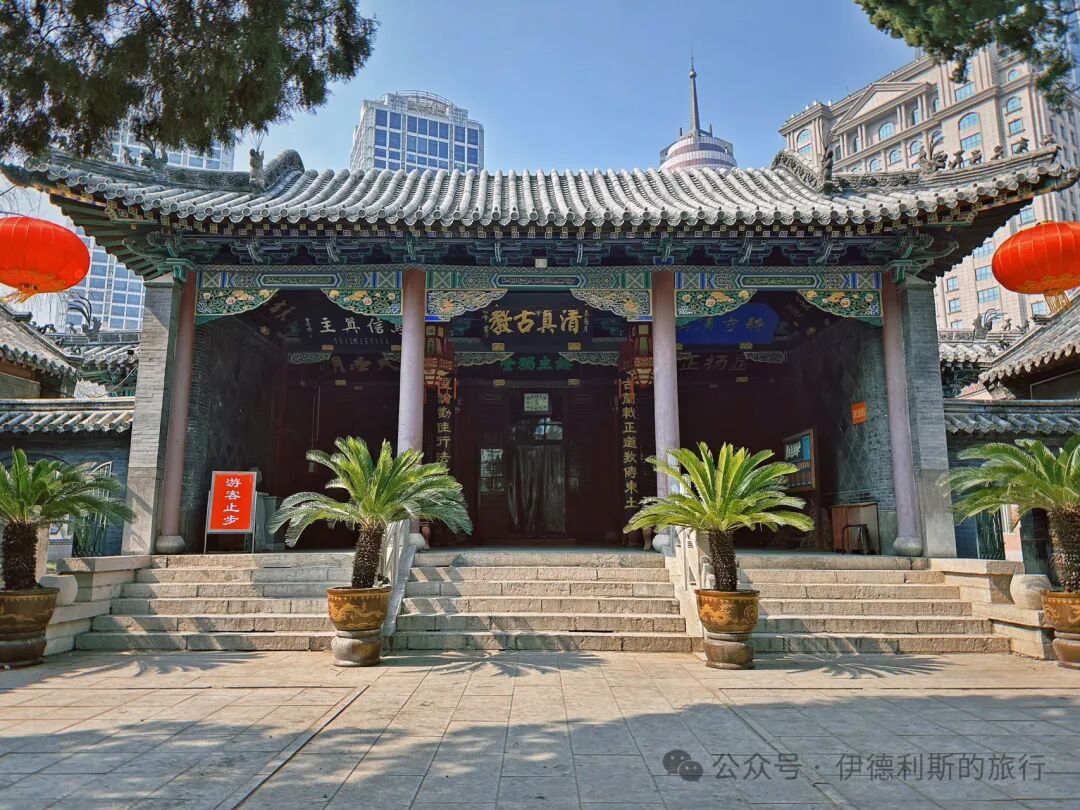
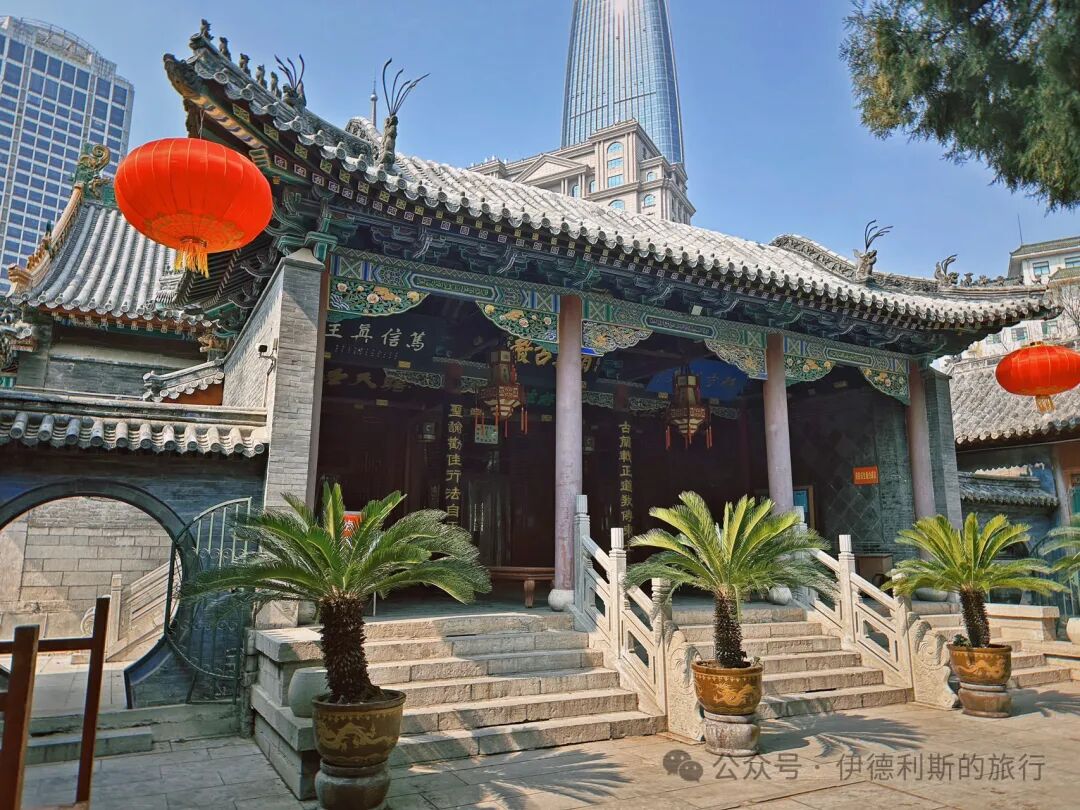
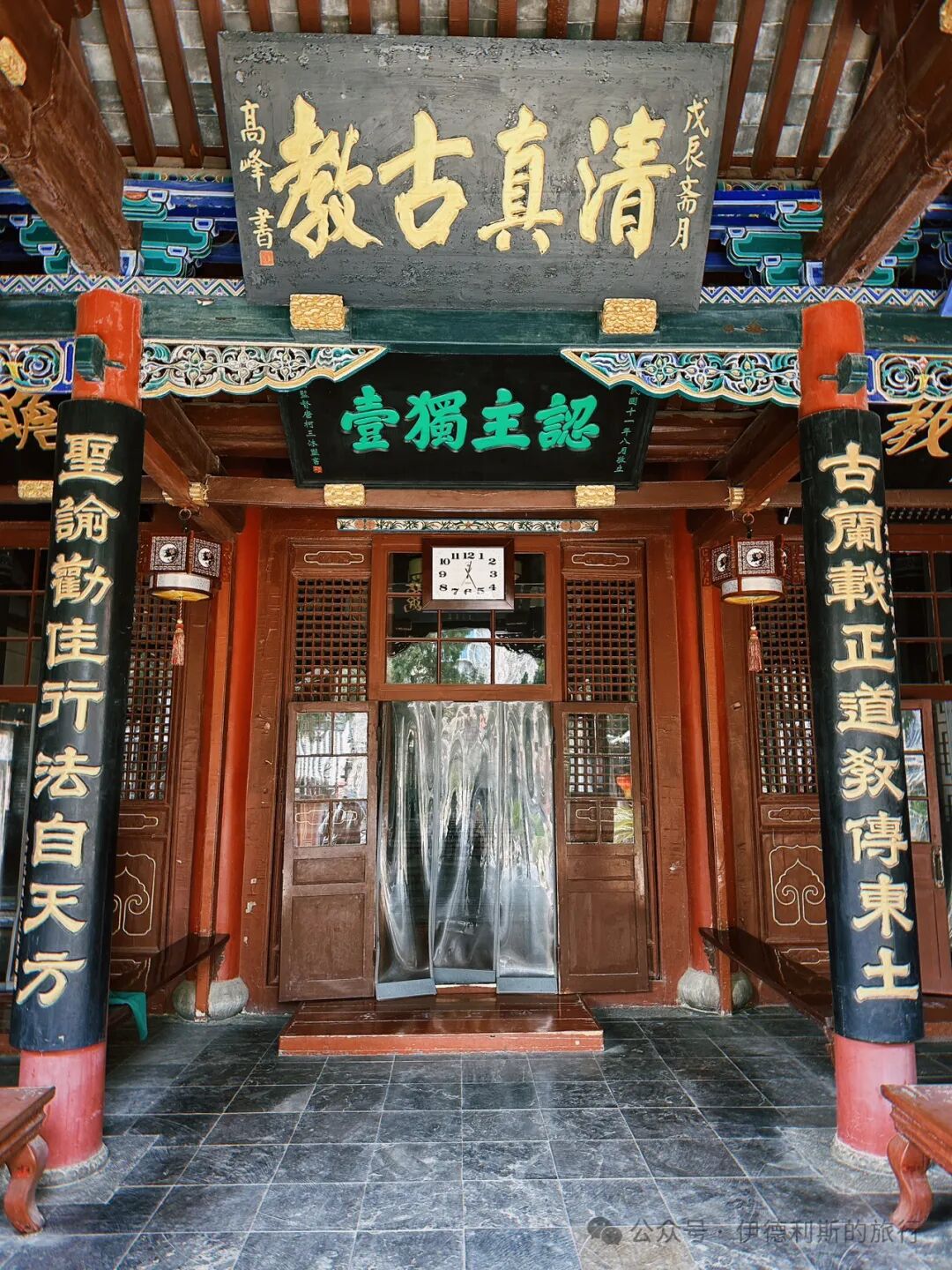
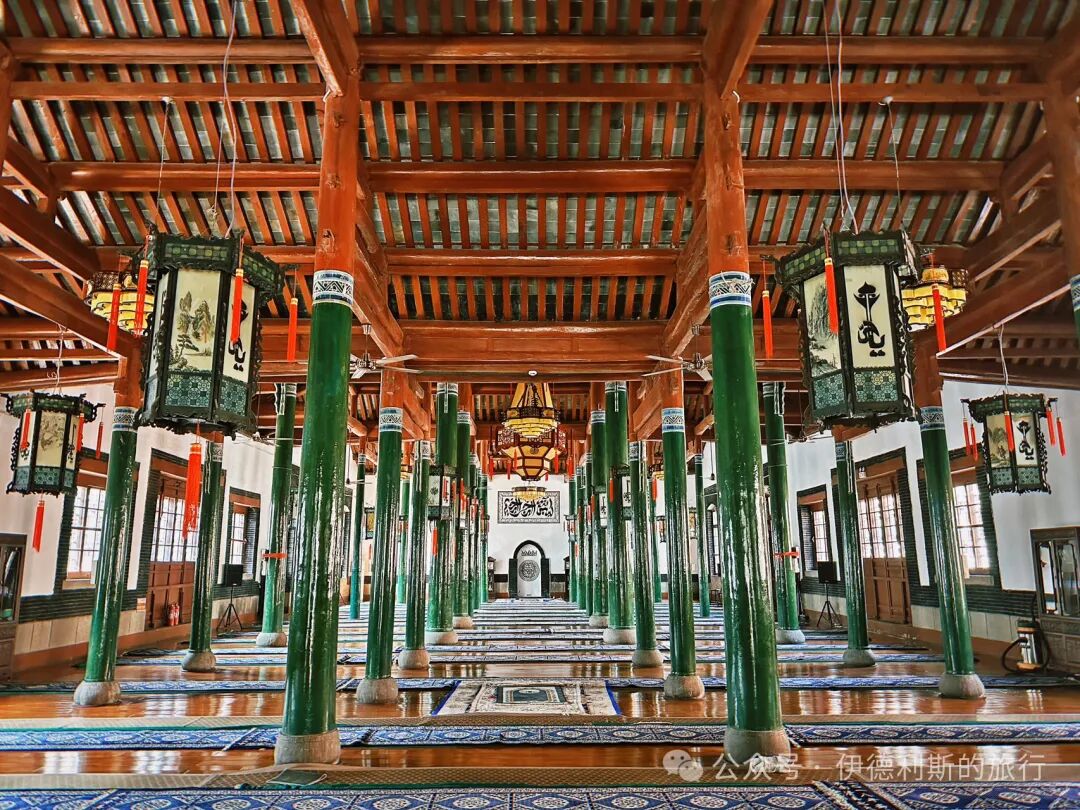
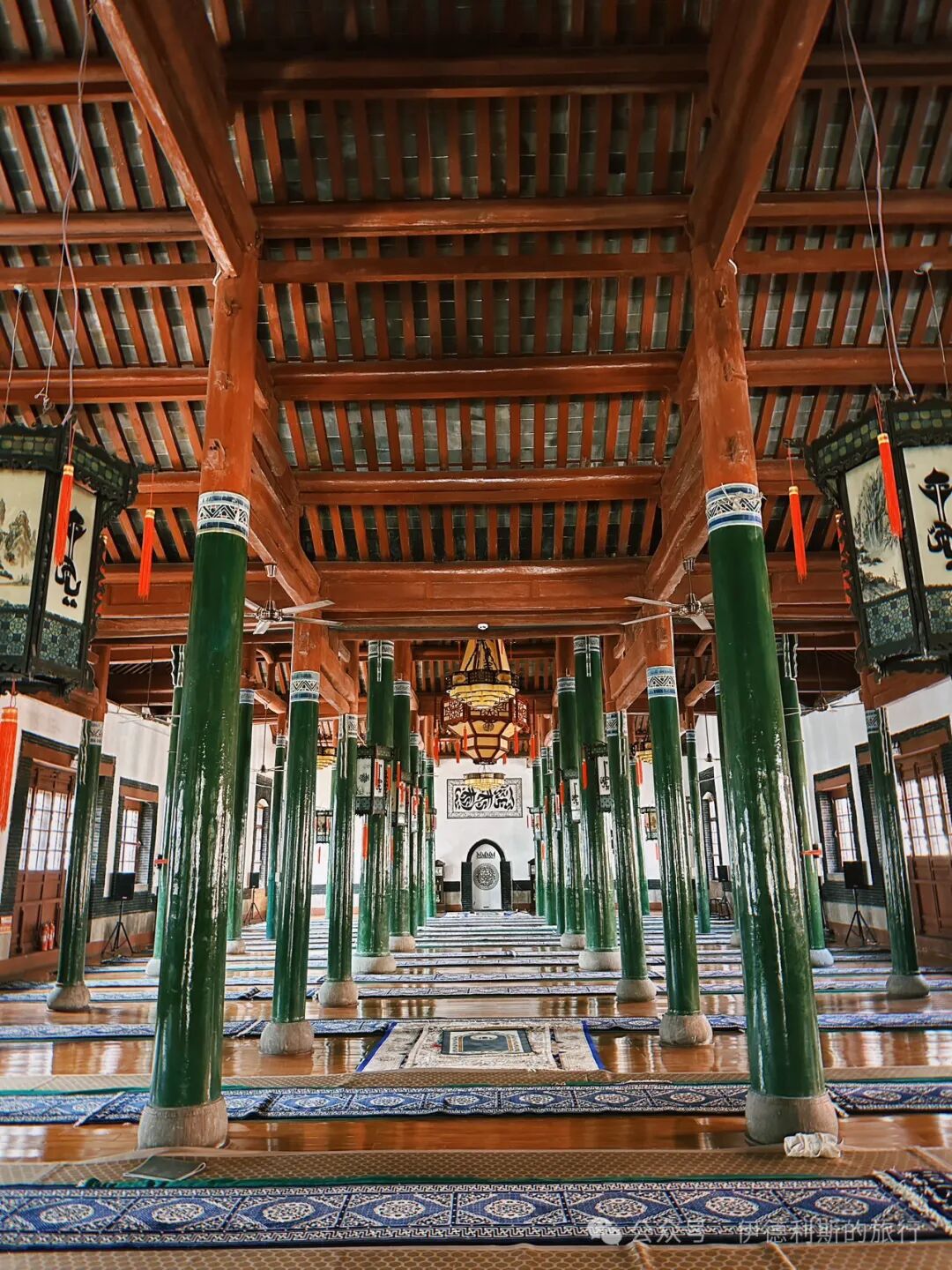
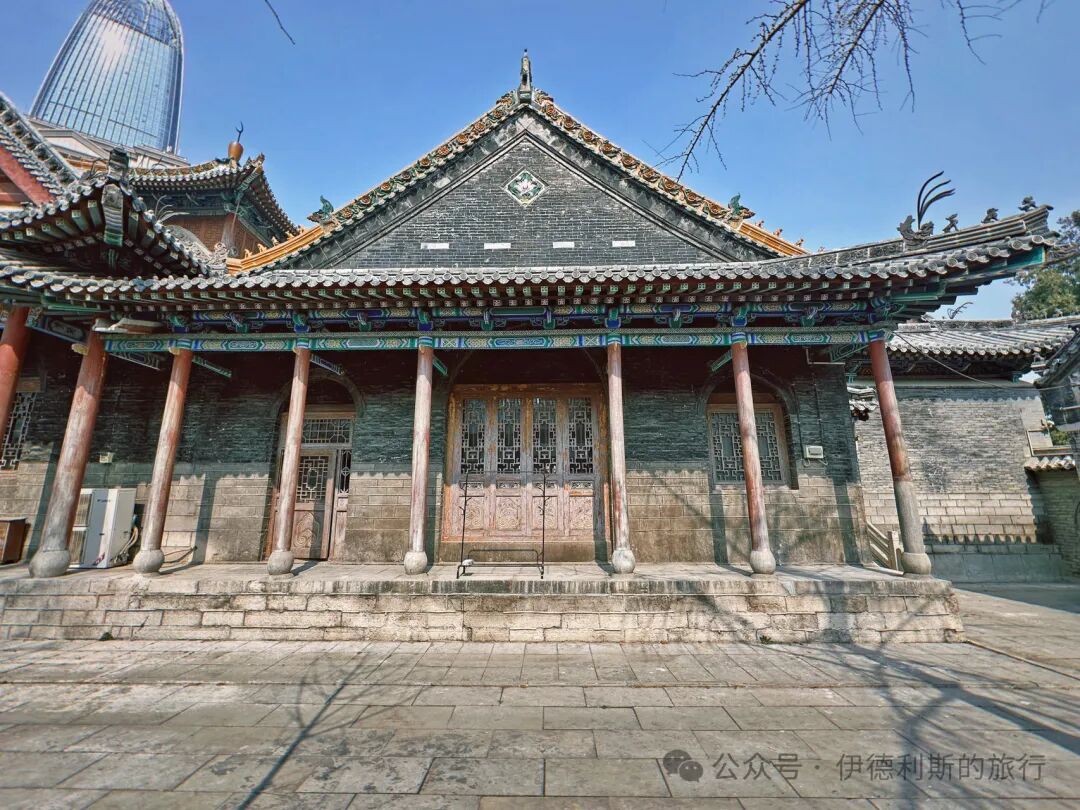
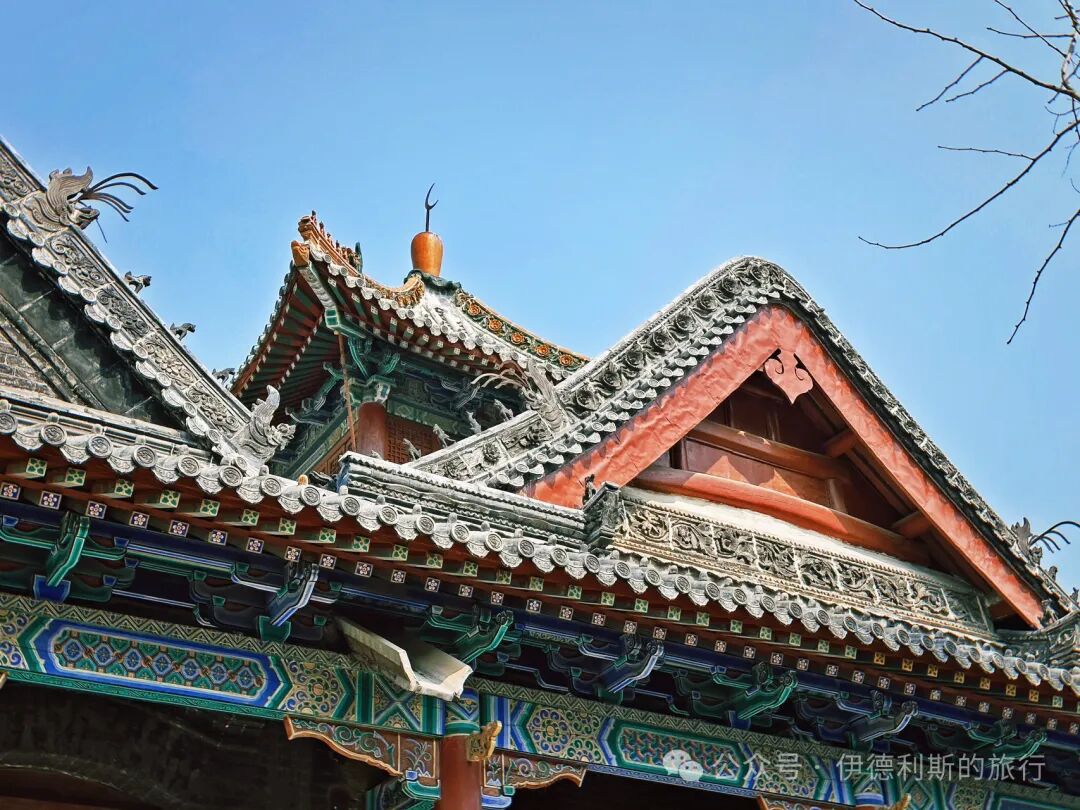
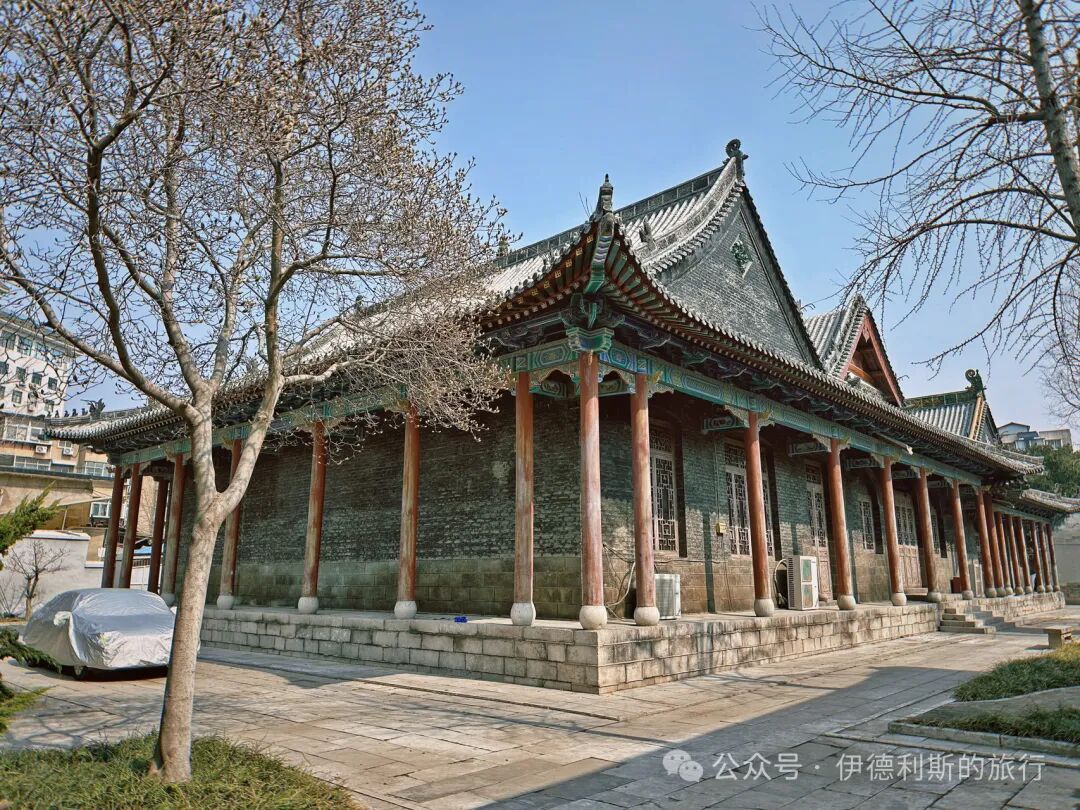
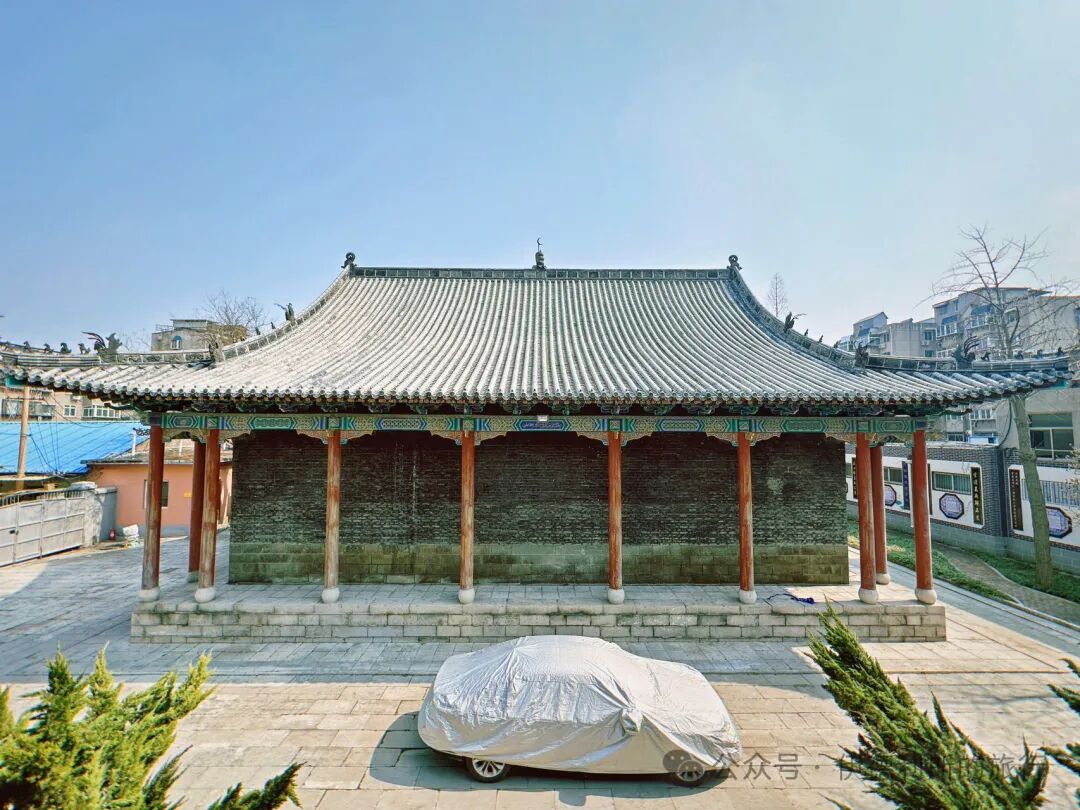
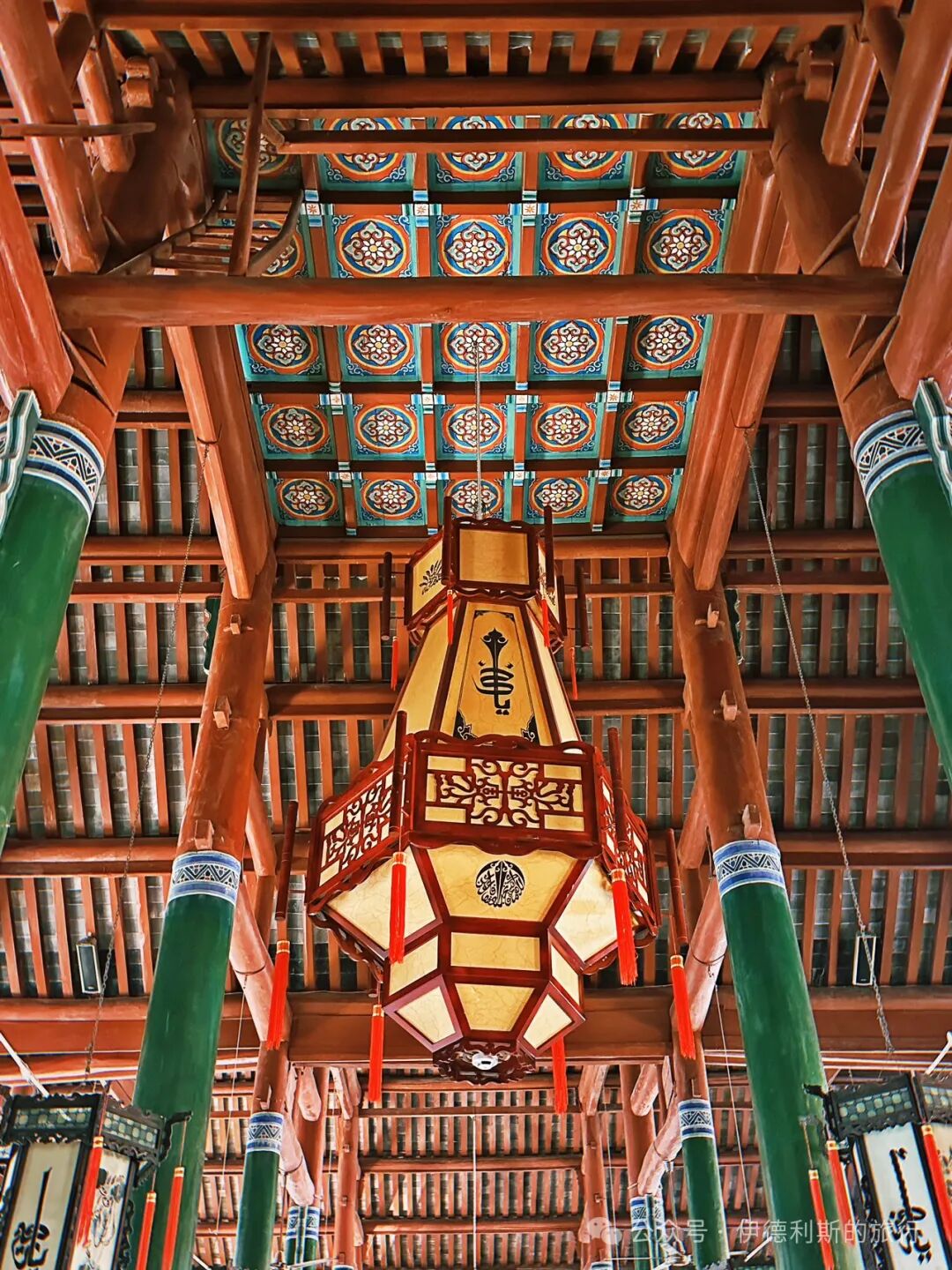
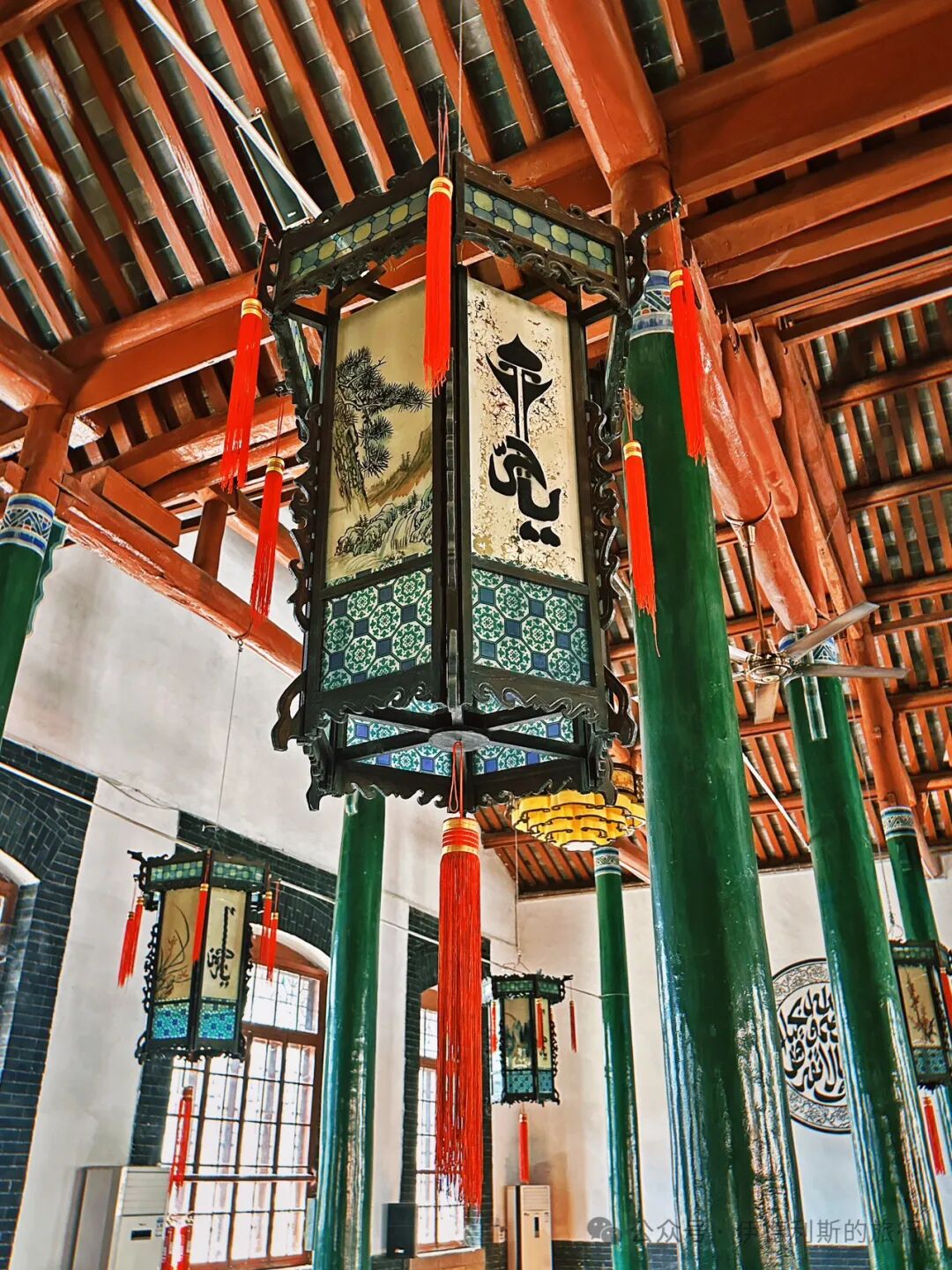
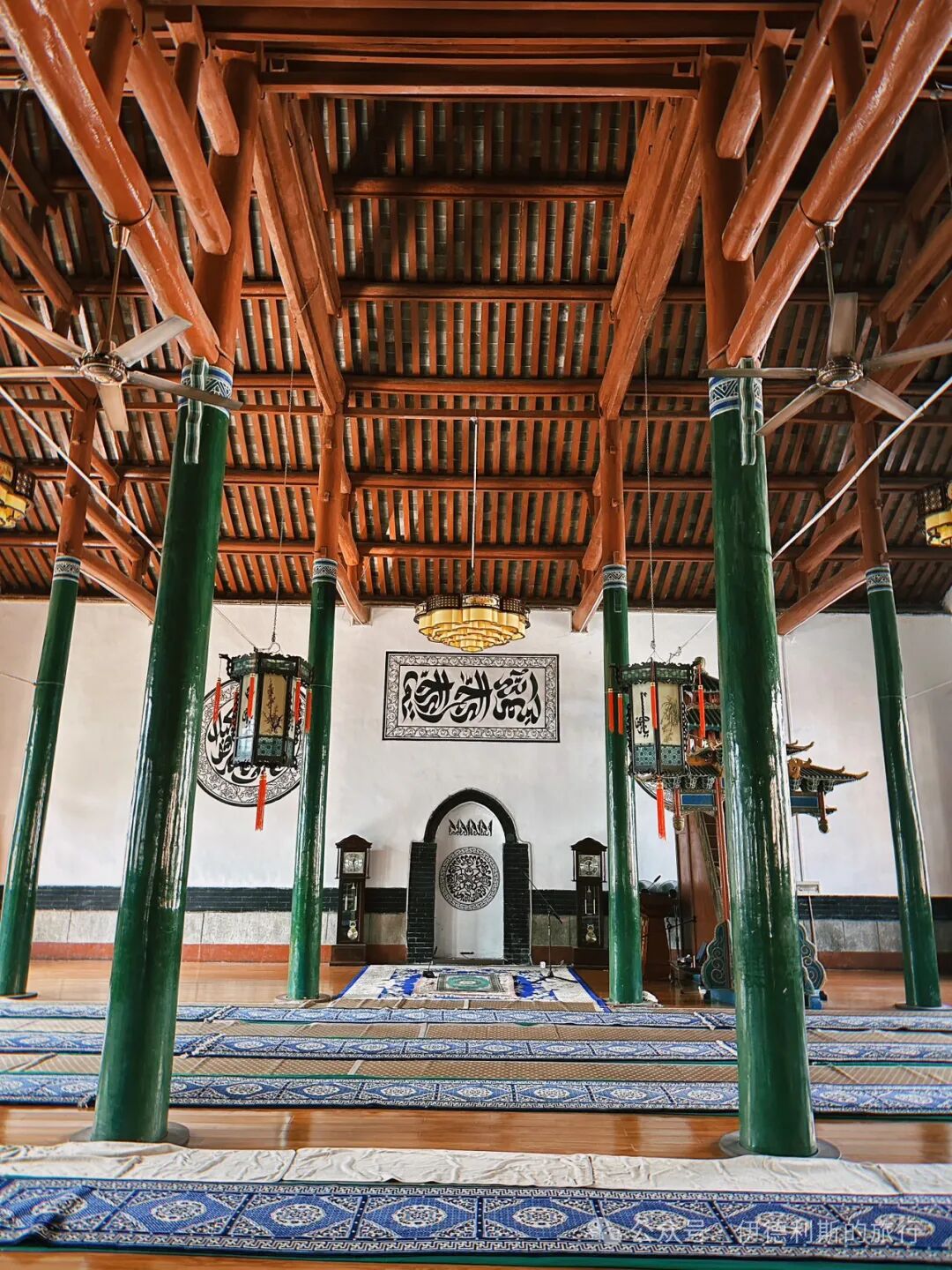
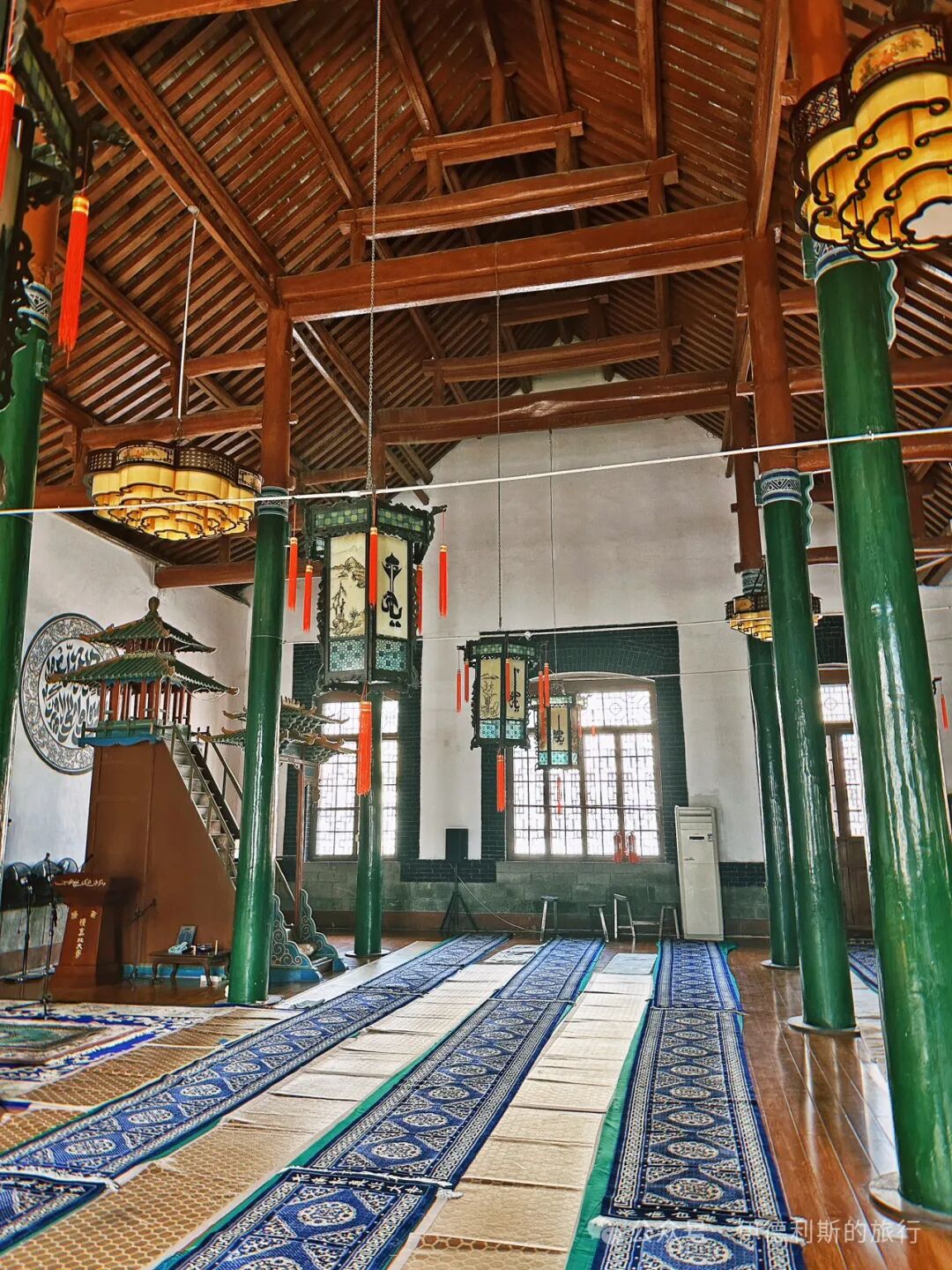
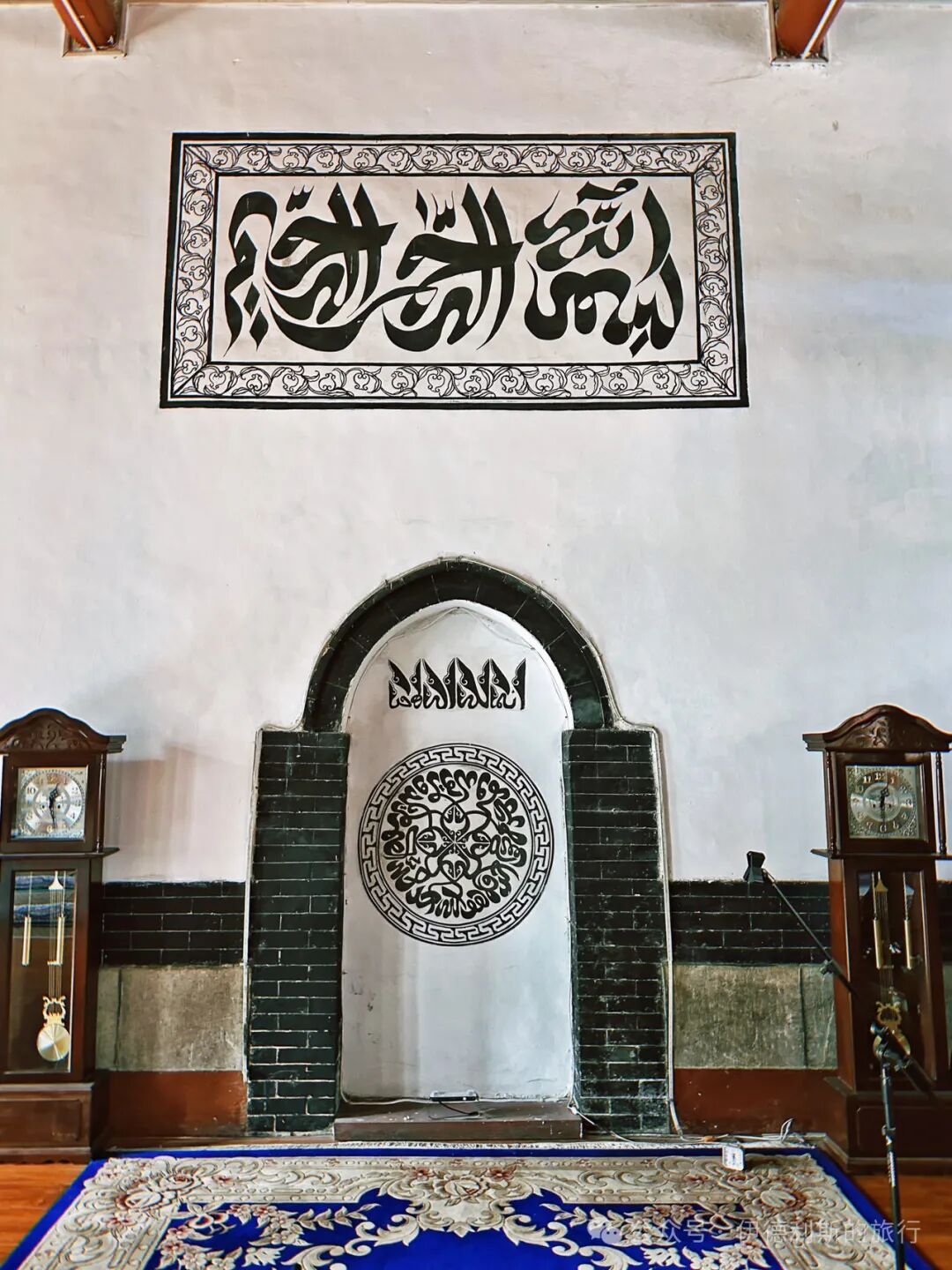
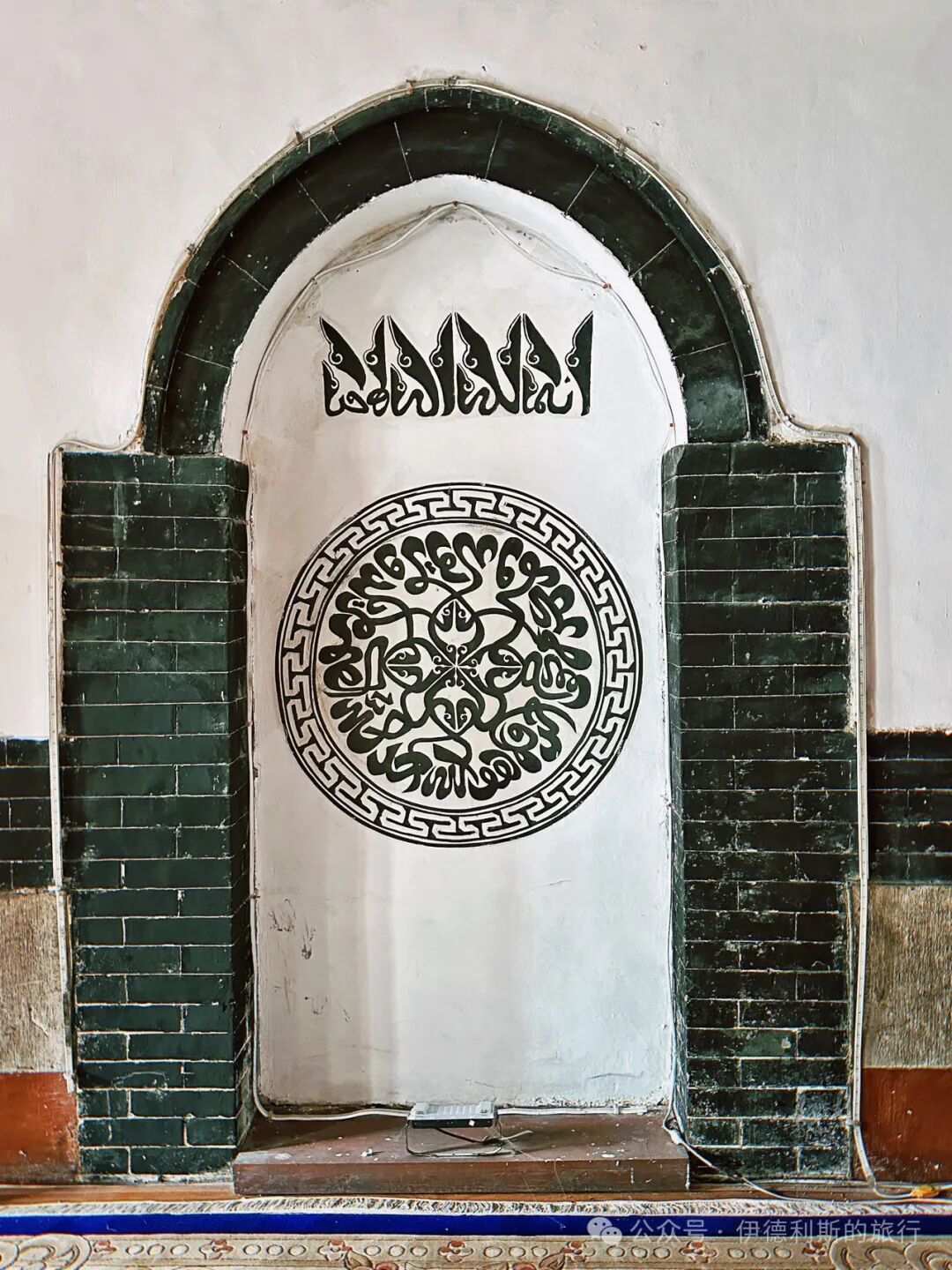
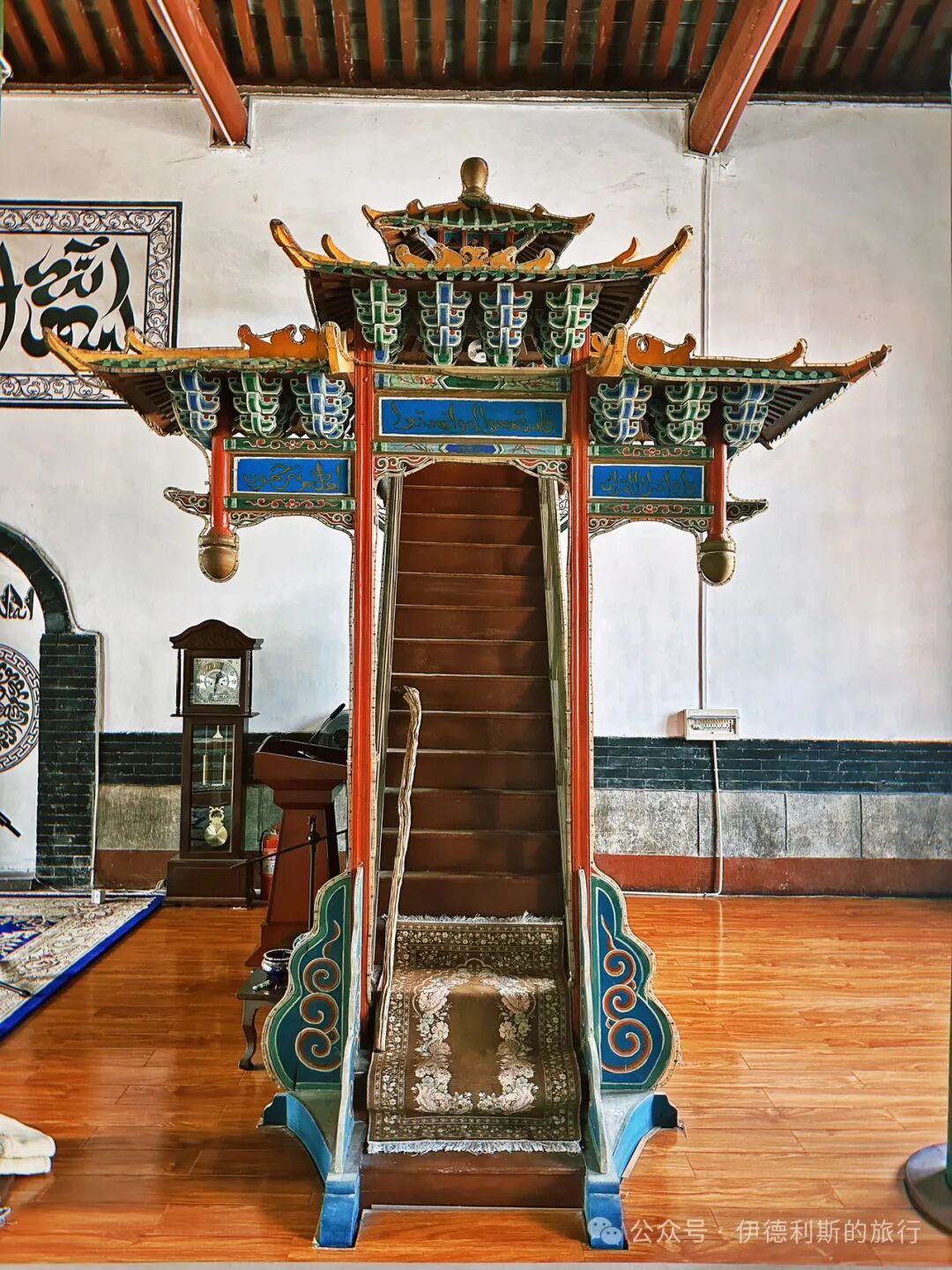
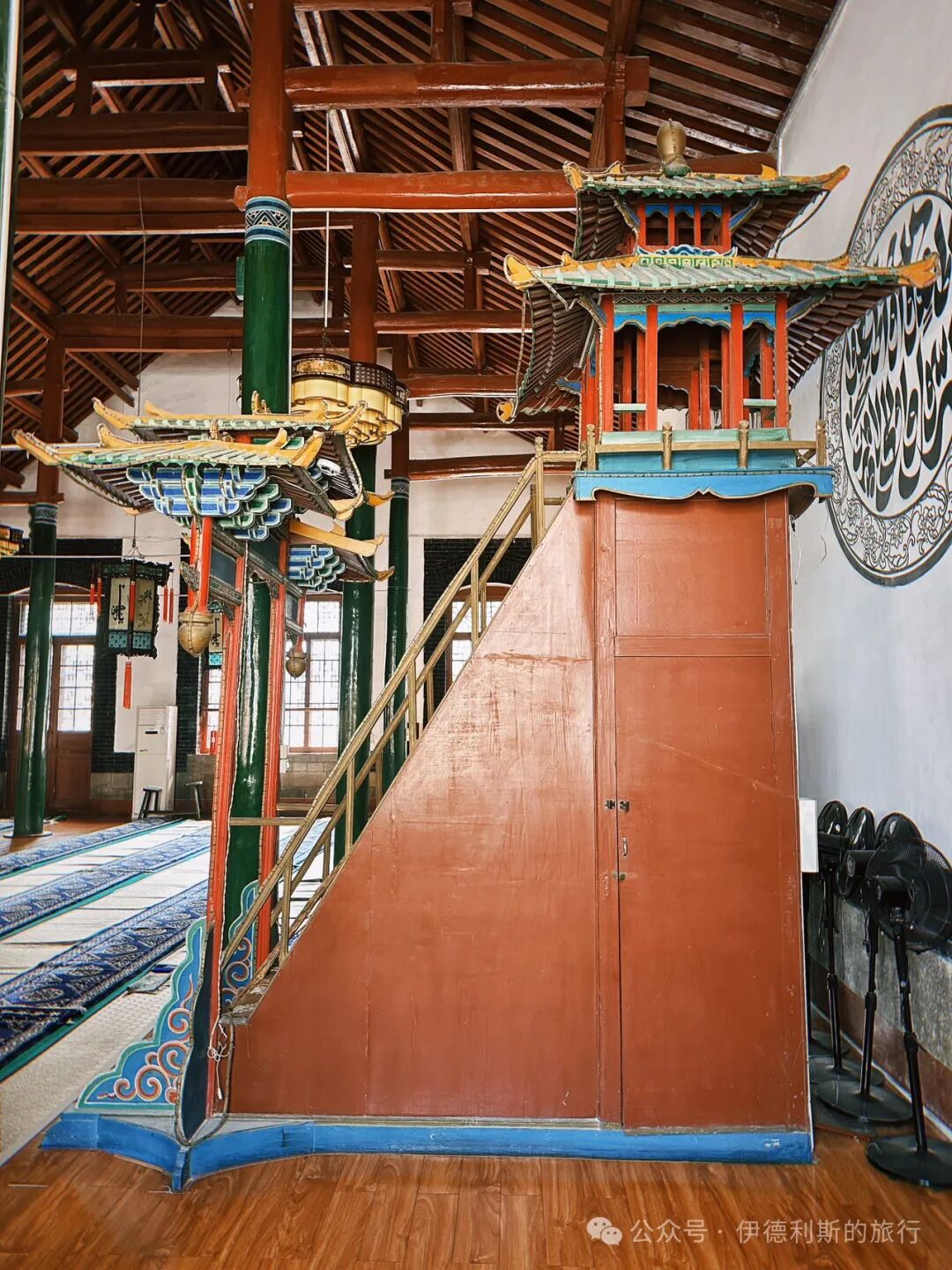
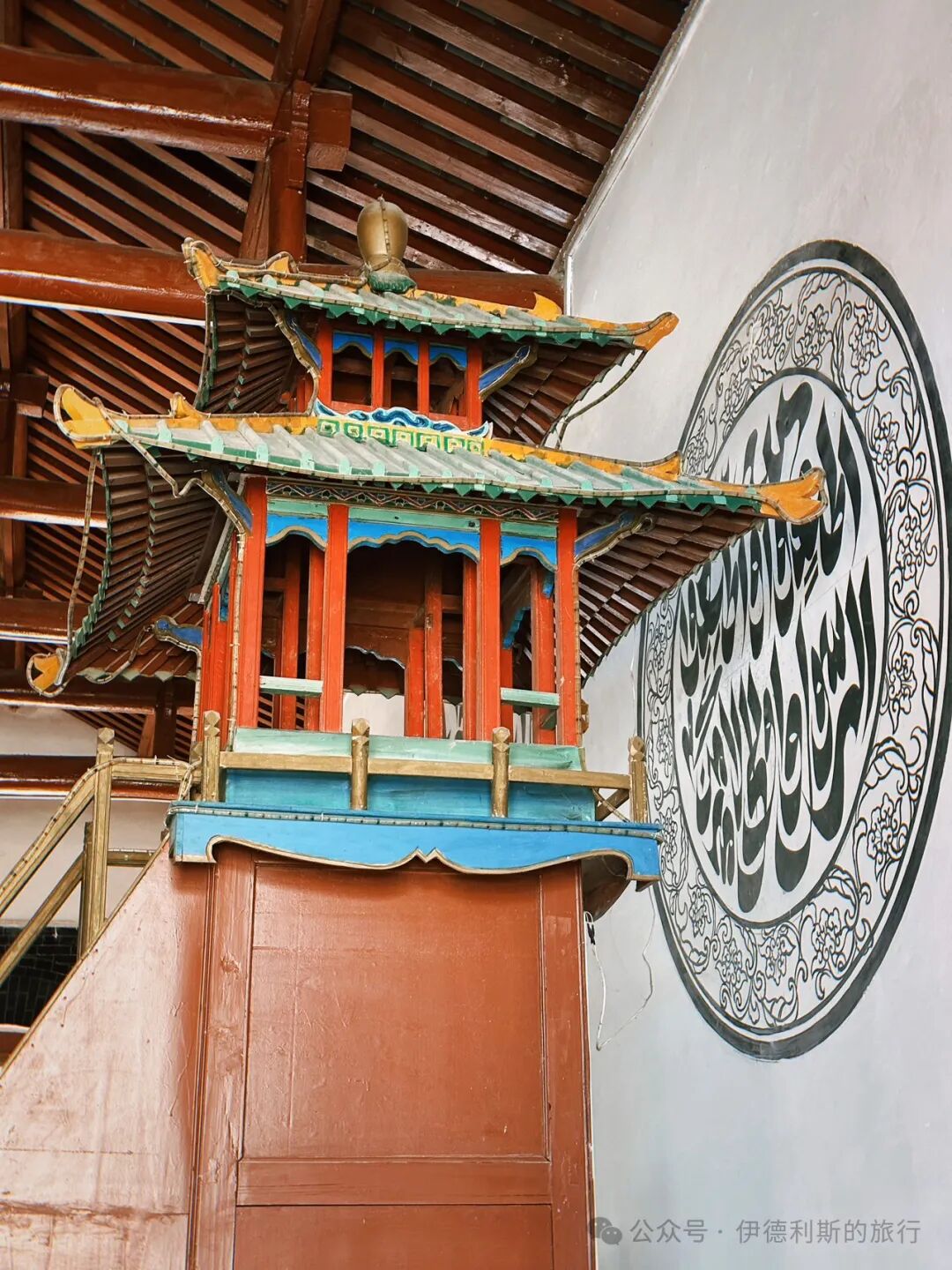
The main gate and ceremonial gate of the Jinan North Mosque.
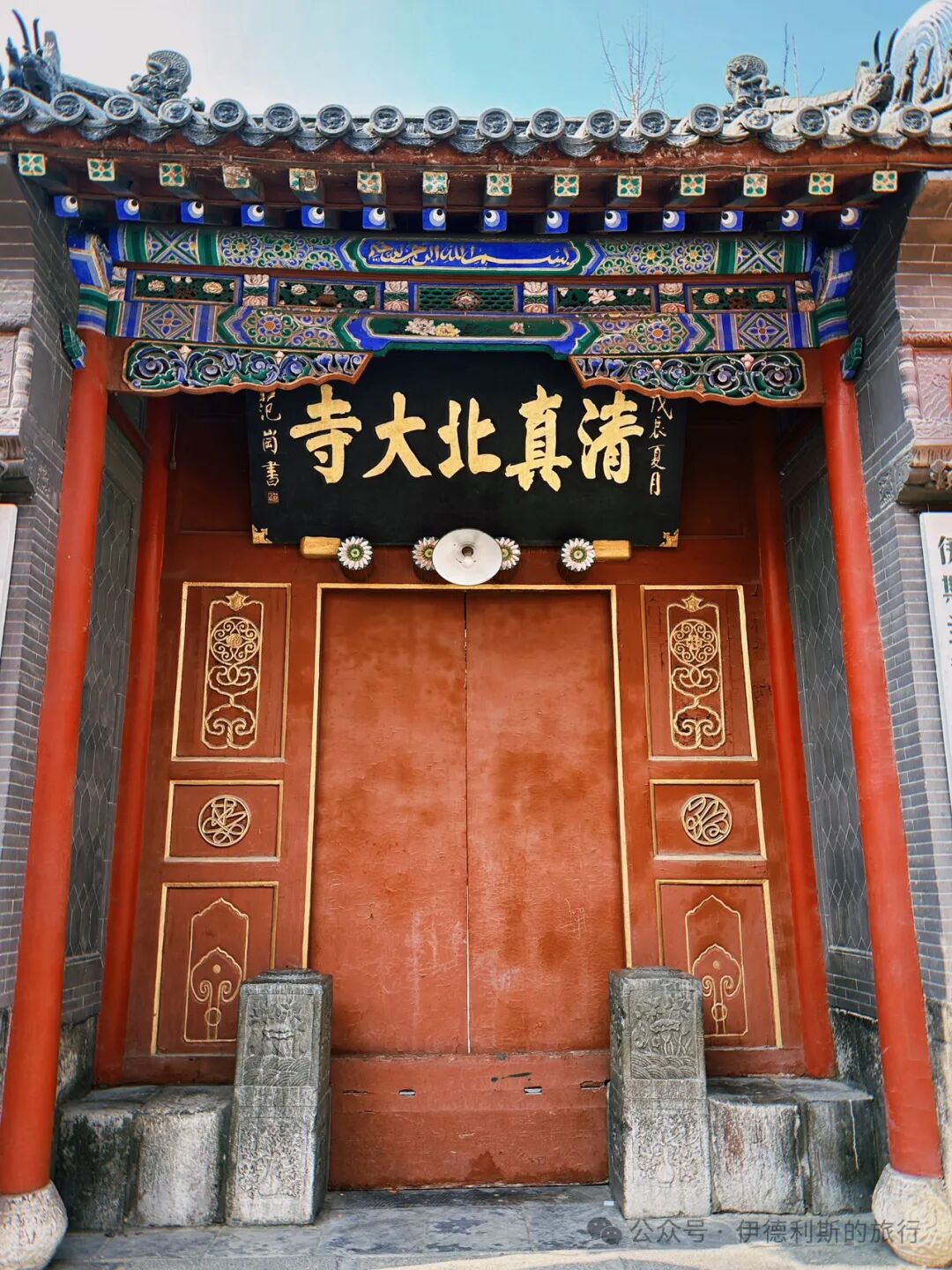
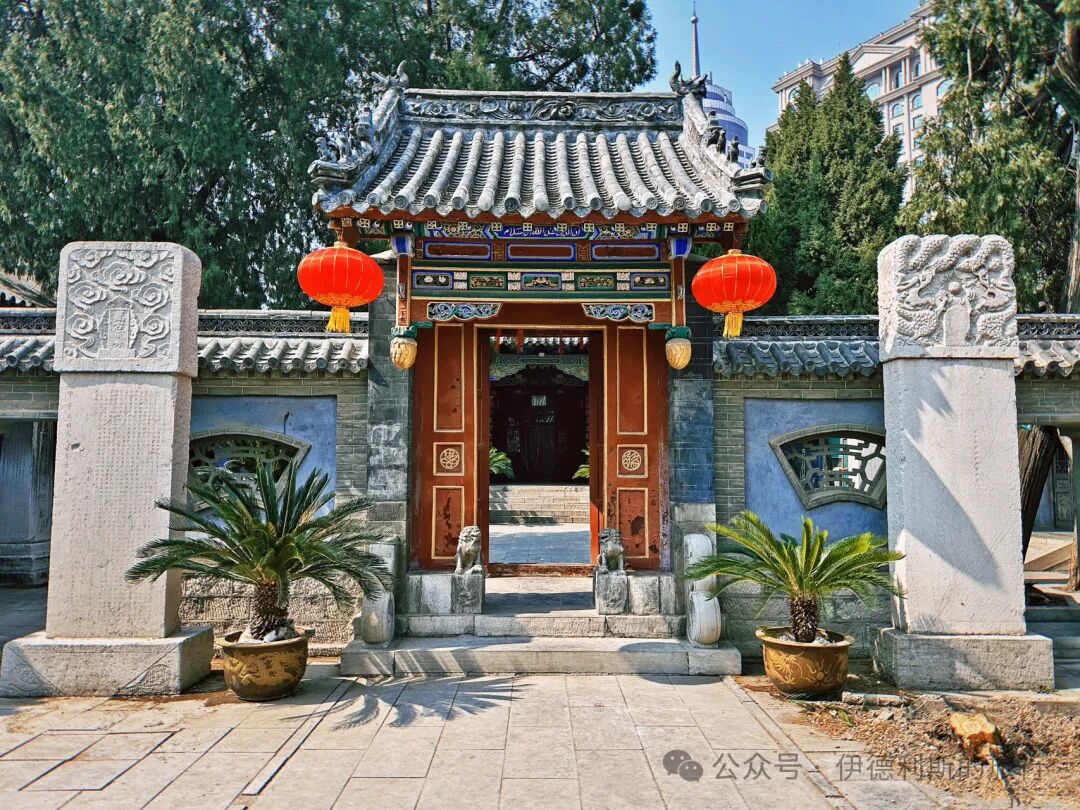
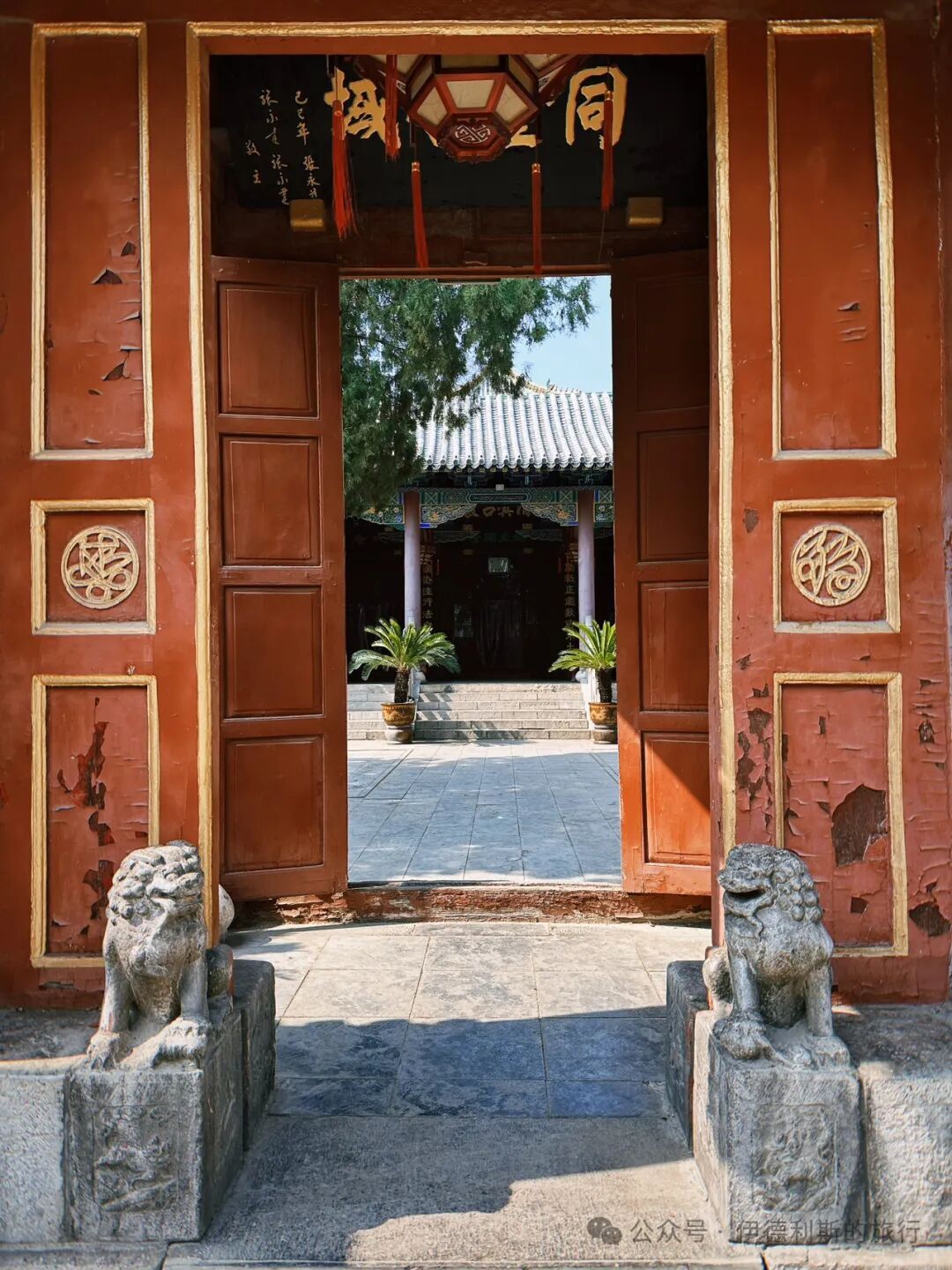
The gutter between the main hall and the porch features dragon-head water spouts, and rainwater flows down the roof tiles of the hanging-flower gate (chuihuamen) between the two halls.
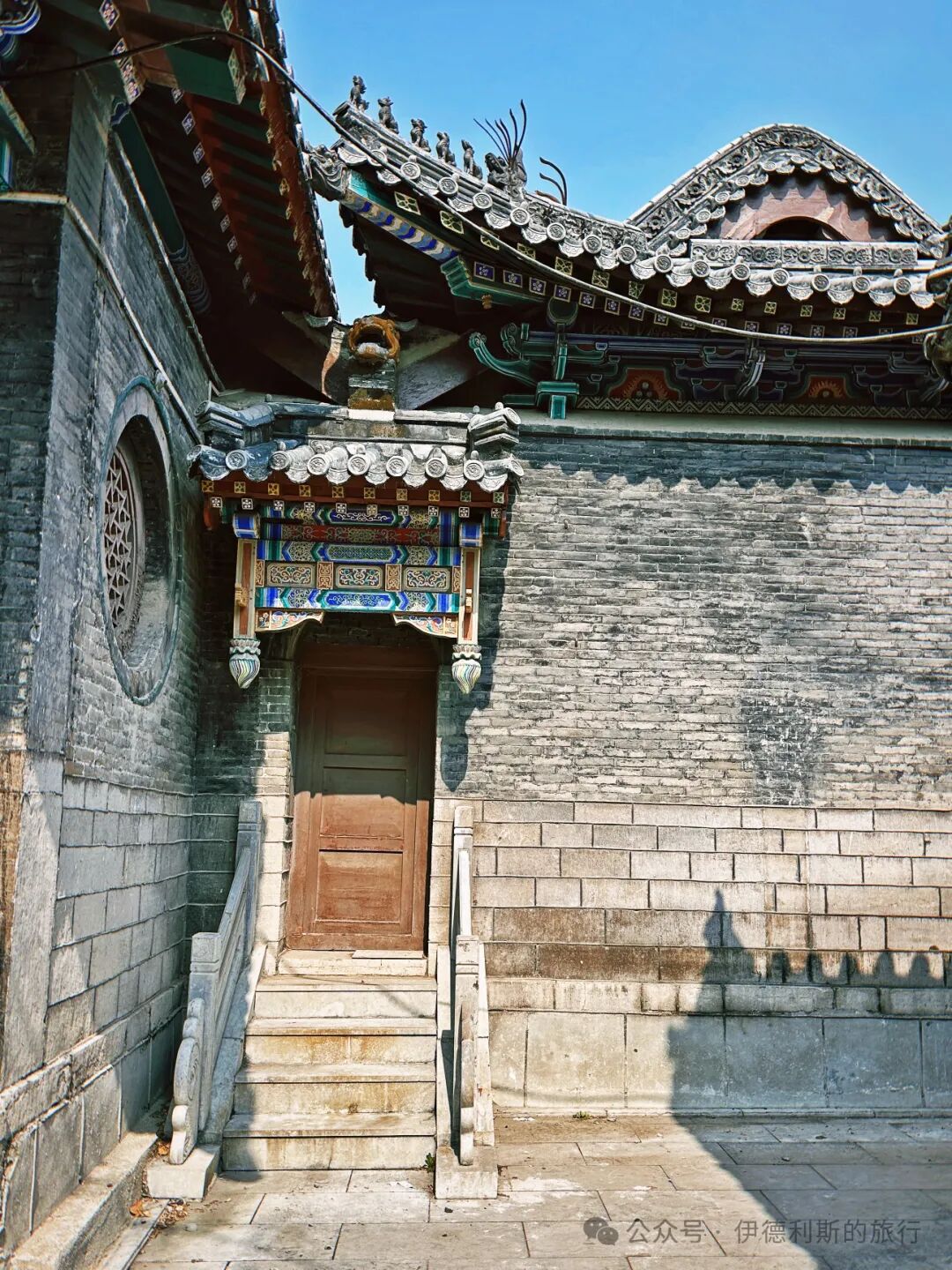
The two plaques from the Republic of China era at the North Mosque (Beidasi) match those inside the Ming-Shan Hall at the Qingjing Mosque in Quanzhou. I wonder if they are replicas.
Recognize the Oneness of Allah.
Respectfully erected in the eighth month of the eleventh year of the Republic of China.
Respectfully written by Tang Kesan, Superintendent of the Xiamen Customs, after ritual washing.
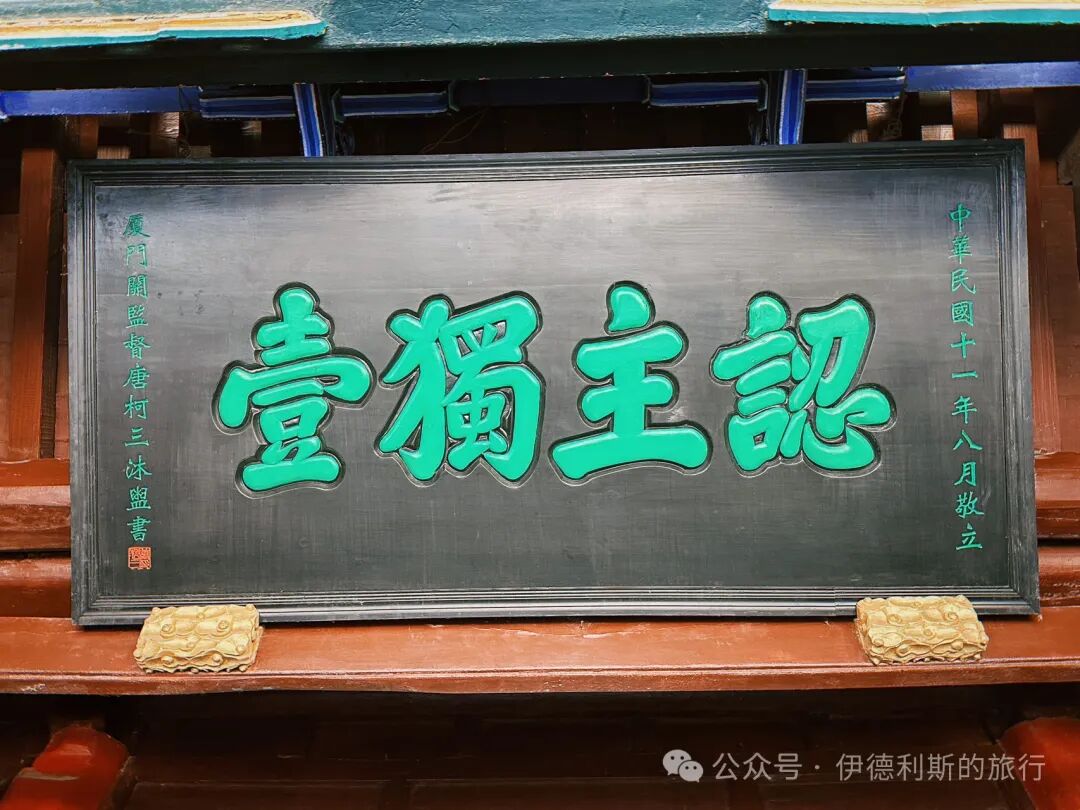
Three Awe-Inspiring Things and Four Admonitions.
An auspicious day in the latter ten days of the sixth month of the thirteenth year of the Republic of China.
Respectfully written by Tang Kesan, holder of the Second Class Order of the Golden Grain, former Superintendent of the Xiamen Customs, and Intendant of the Jinan Circuit in Shandong.
The text on the plaque comes from the Analects of Confucius, Book of Ji Shi: A gentleman has three things to stand in awe of: he stands in awe of the Mandate of Heaven, he stands in awe of great men, and he stands in awe of the words of the sages. And from the Analects of Confucius, Book of Yan Yuan: Do not look at what is contrary to propriety, do not listen to what is contrary to propriety, do not speak what is contrary to propriety, and do not do what is contrary to propriety.
Tang Kesan was a Hui Muslim from Zoucheng, Shandong. He was a famous social activist during the Republic of China era, serving as a negotiator for the Ministry of Foreign Affairs in Shandong, director of the Shandong Epidemic Prevention Office, Superintendent of the Xiamen Customs, director of the Shandong Road Administration, and Intendant of the Jinan West Circuit. He served as principal of the Chengda Normal School, founded the Yuehua magazine, helped establish the Chinese Islamic Progress Association, and organized and led the Hui Muslim movement to resist Japan and save the nation, making great contributions to the faith.
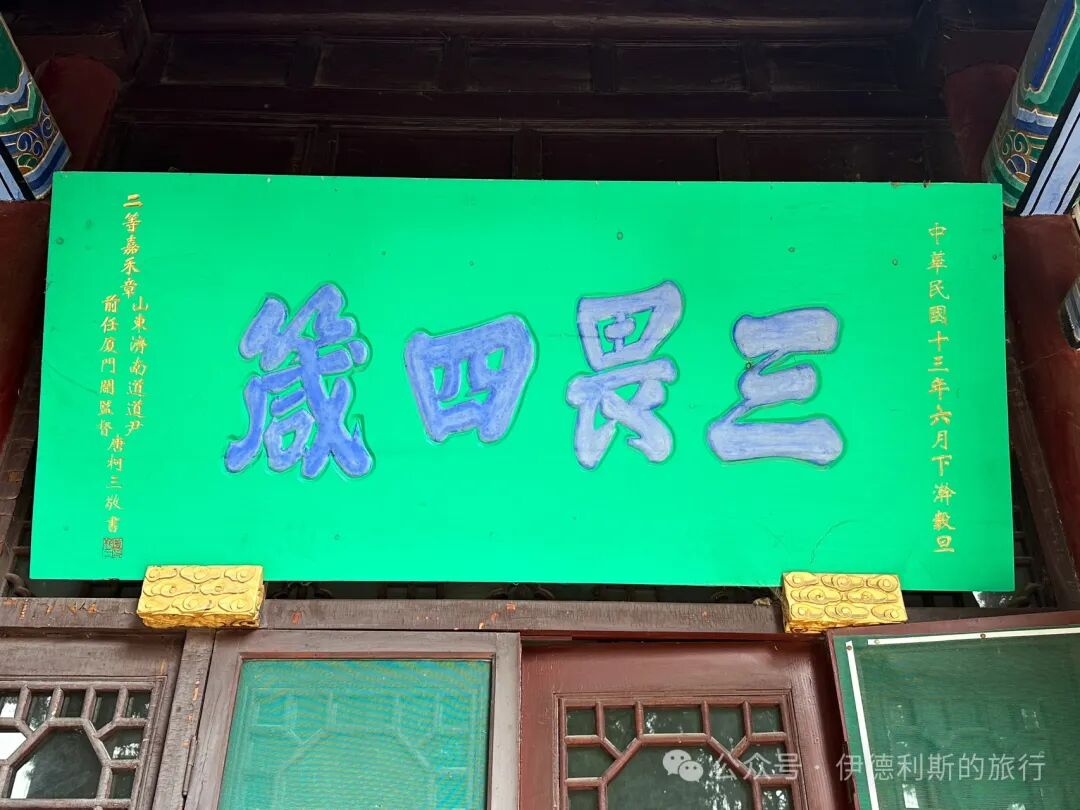
A glazed incense burner kept in front of the main prayer hall of the North Mosque.
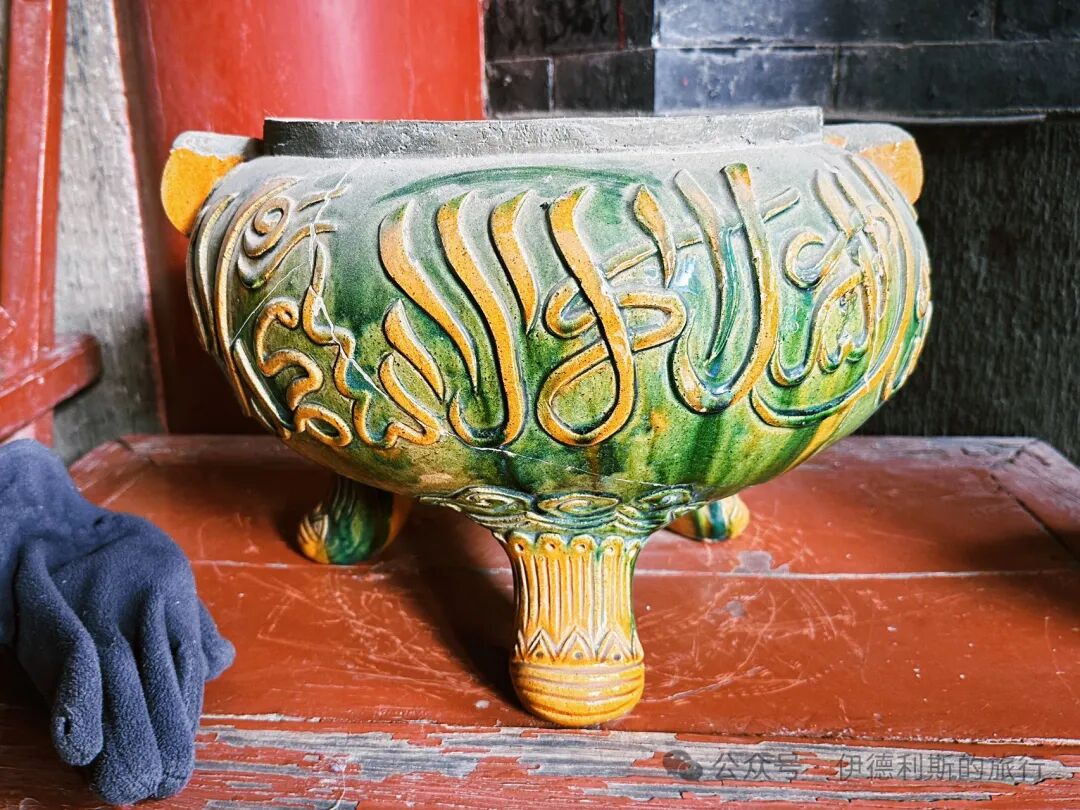
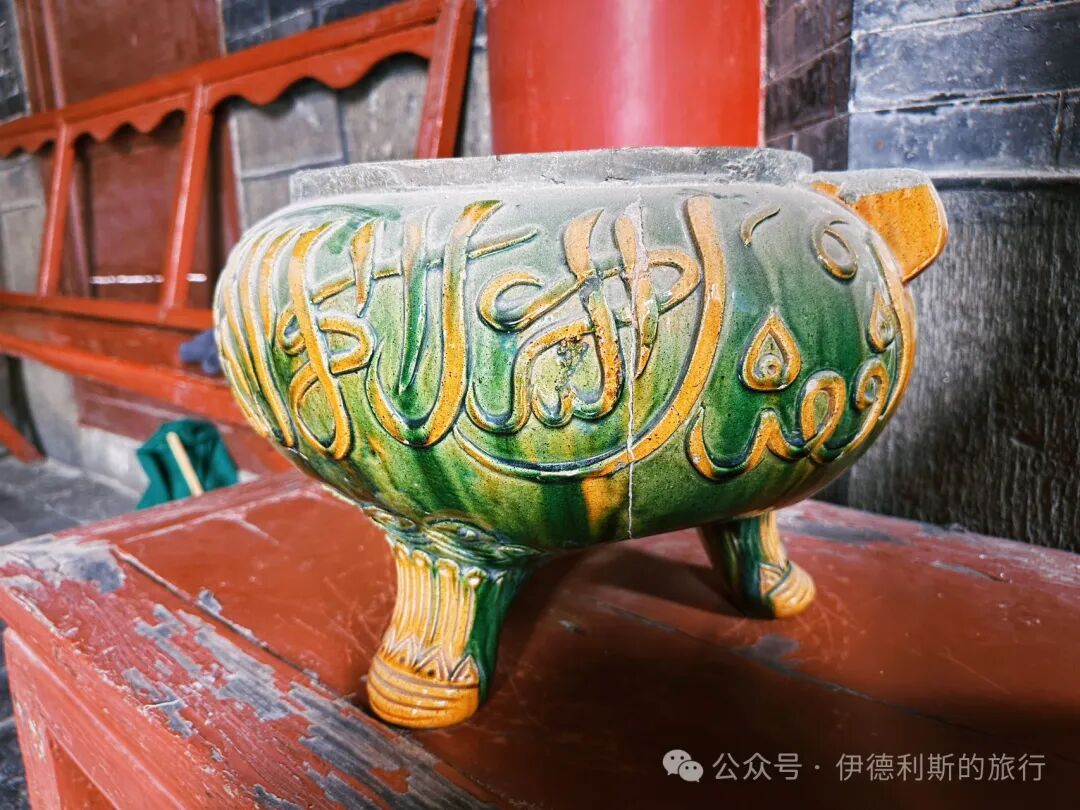
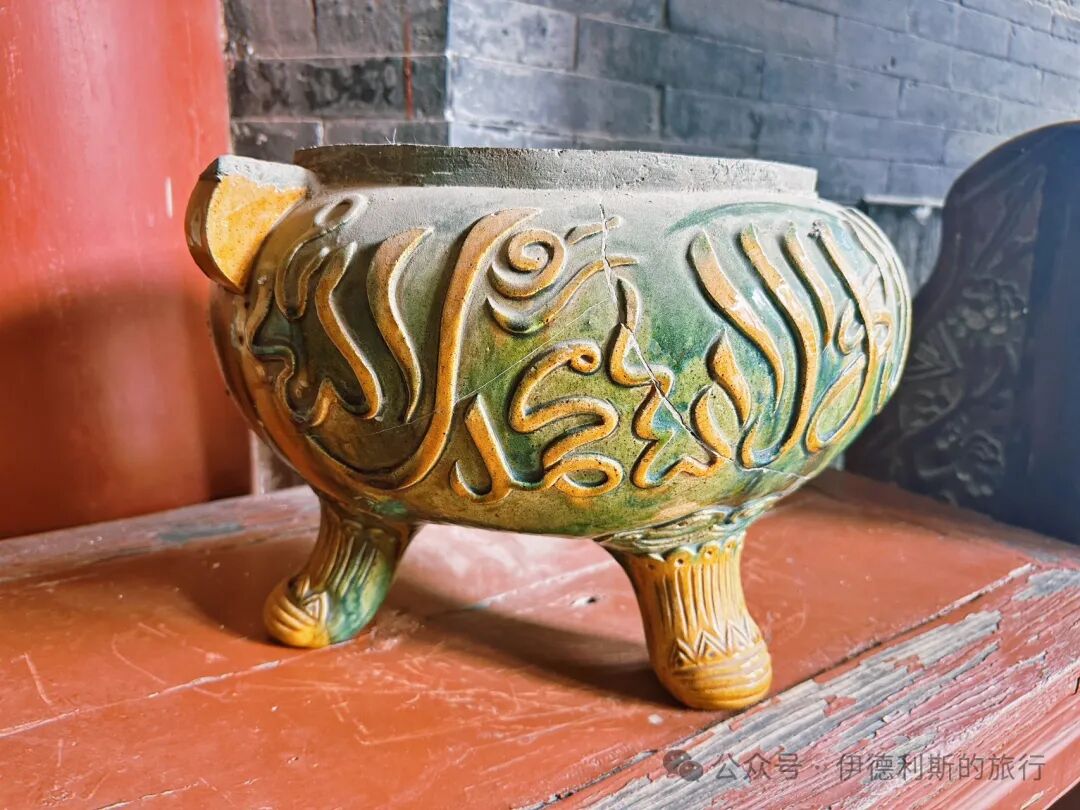
Stone inscriptions at the Jinan North Mosque.
The 1806 Stele Record of the North Mosque. It records that someone donated funds to buy land, with the income used to cover the expenses of the mosque's school.
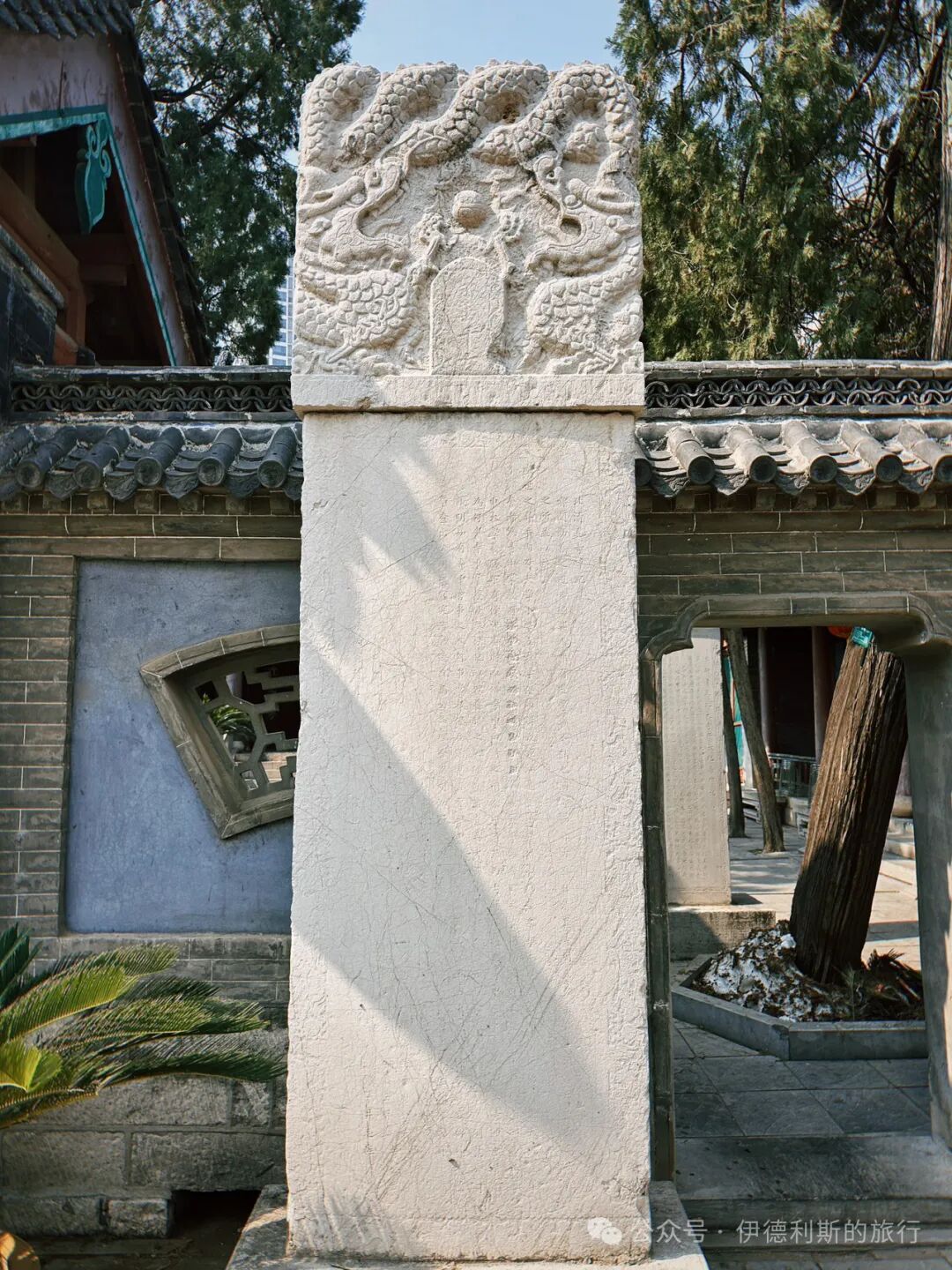
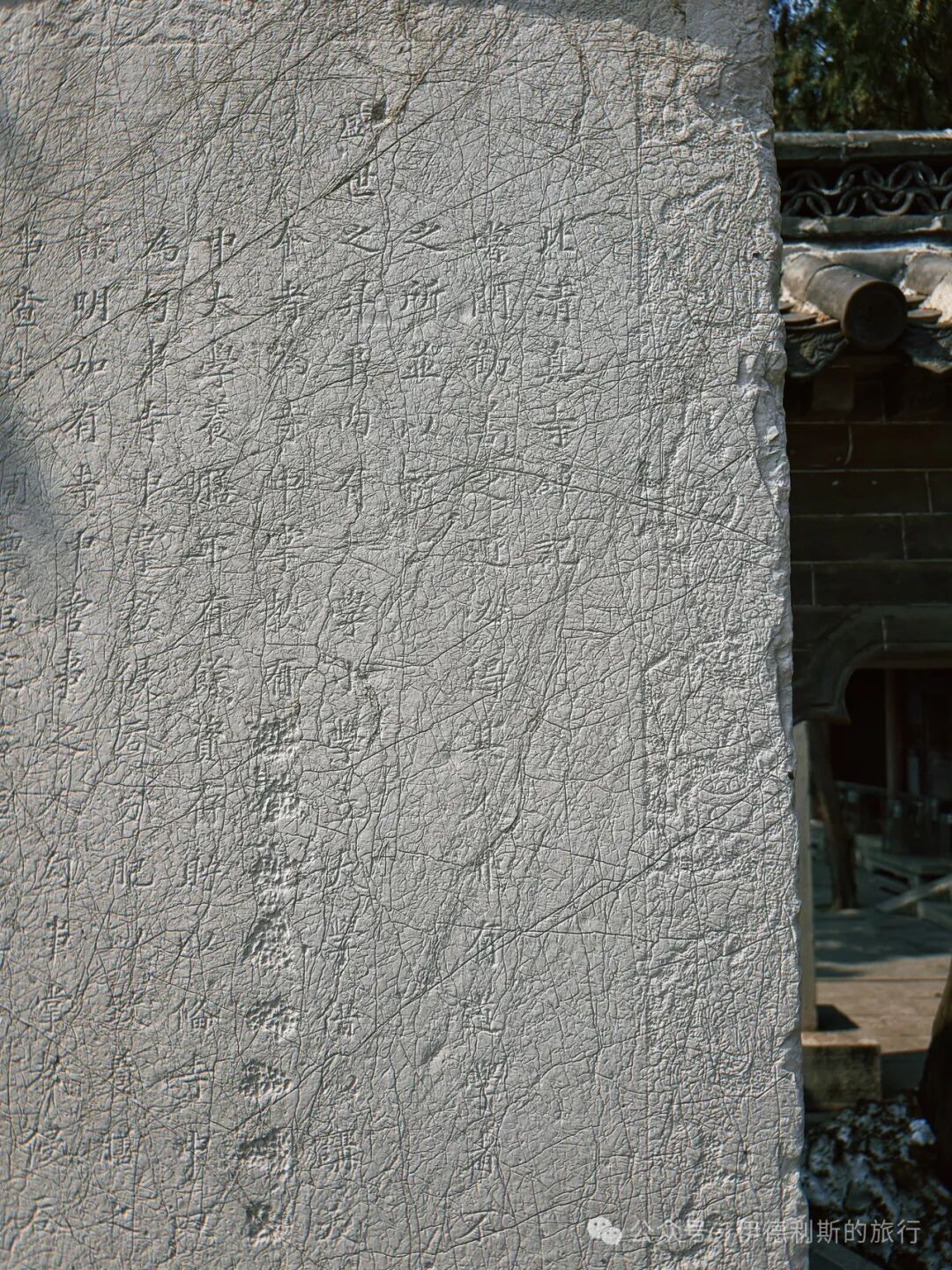
The 1938 Stele Record of the Extension and Repair of the Jinan North Mosque Main Hall. It records that the wife of Ma Runhan, Madam Hei, donated funds to buy land adjacent to the main hall, and Zhu Shouqing donated funds to extend the two-story main hall into a three-story structure. During this time, Zhu Shouqing passed away, and his brothers Zhu Guanzhou and Zhu Yunshan continued to renovate the beams and colorful paintings.
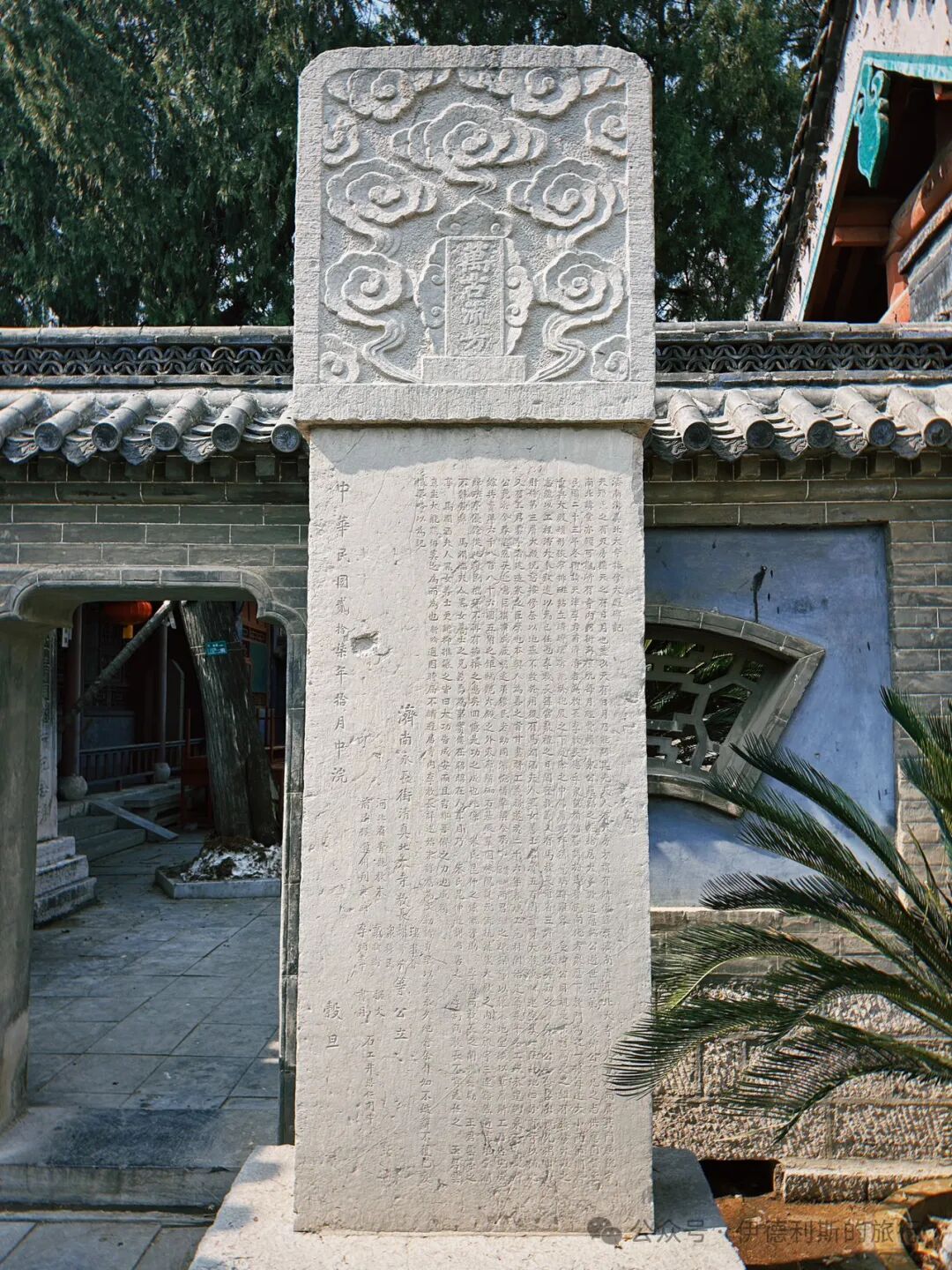
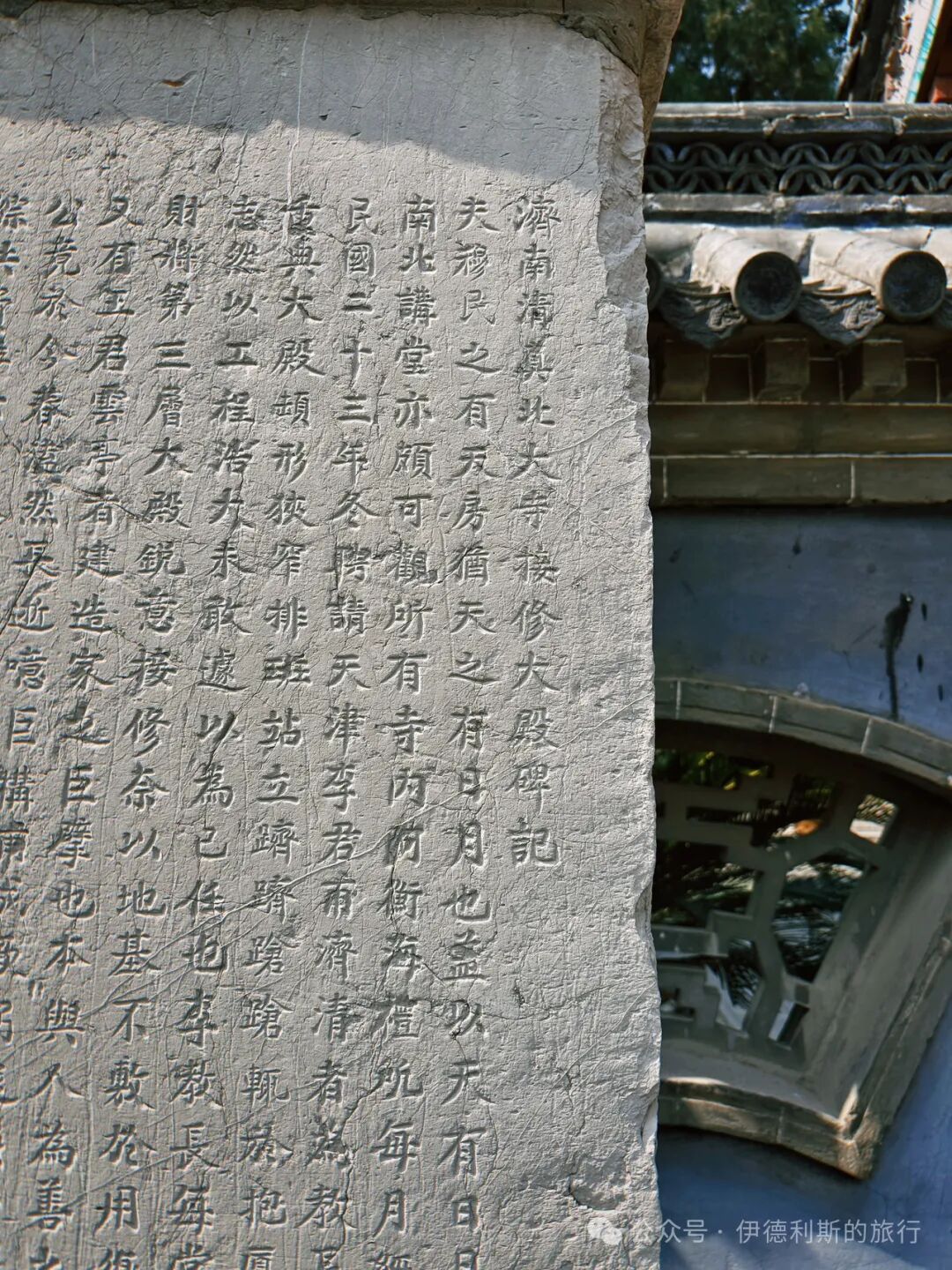
The 1943 Memorial Stele for the Virtuous Deeds of Mr. Mu Huating. Mu Huating was a Hui Muslim from Jinan and one of the founders of the Chengda Normal School. He joined the army at age 20 and served in the Shandong Army, the Nanjing Garrison, the Jinan Town Office, the Tianjin Customs, and the Second Border Defense Division, protecting merchants and civilians everywhere during the Zhili-Anhui War. After retiring home, he was devoted to the faith, went on the Hajj, participated in the repairs of the Jinan South Mosque and North Mosque, and collected nearly a hundred volumes of scriptures to store at the North Mosque. In 1925, he donated his own Mu Family Mosque (Mujia Chemen Si) to open the Chengda Normal School.
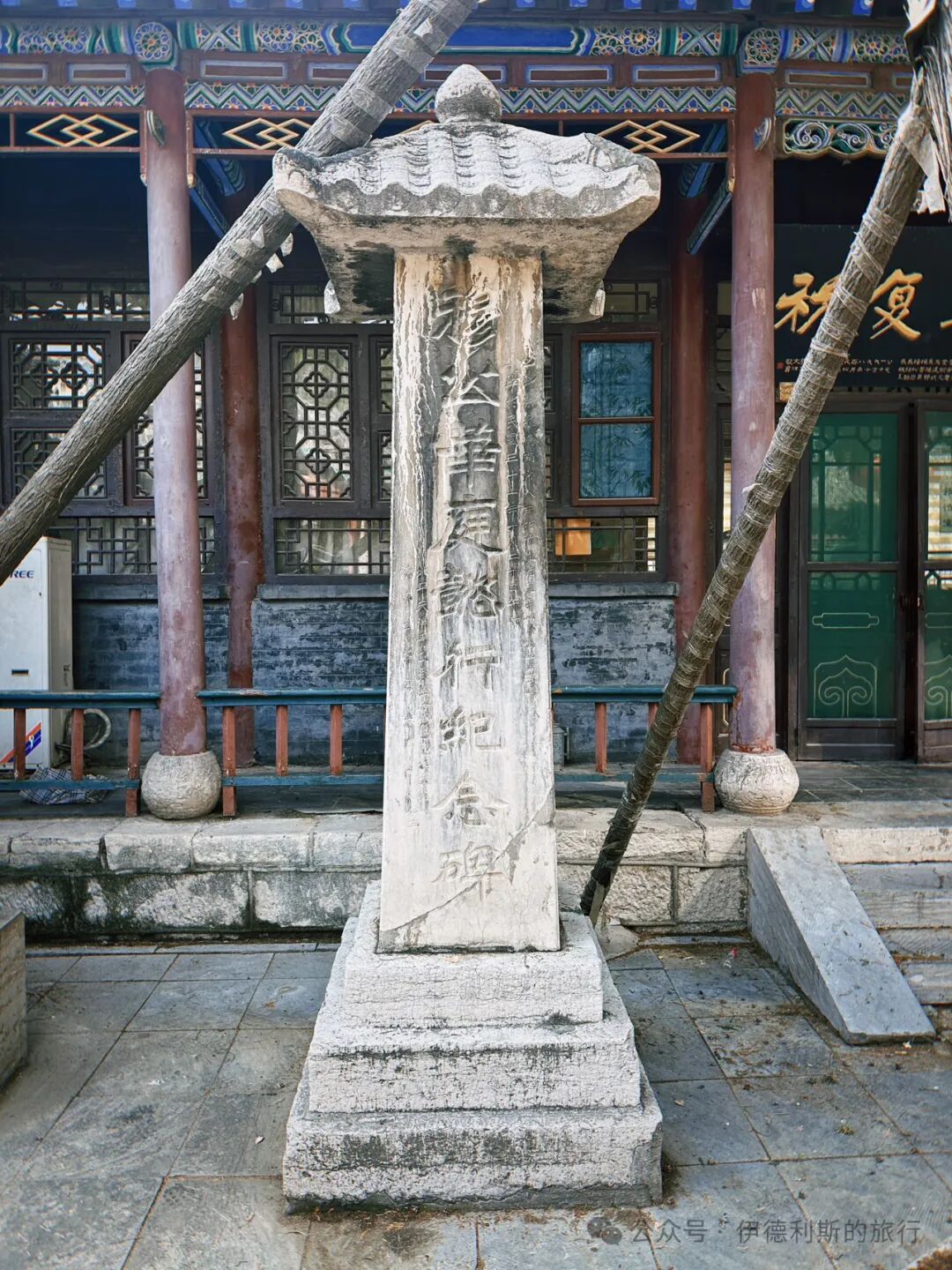
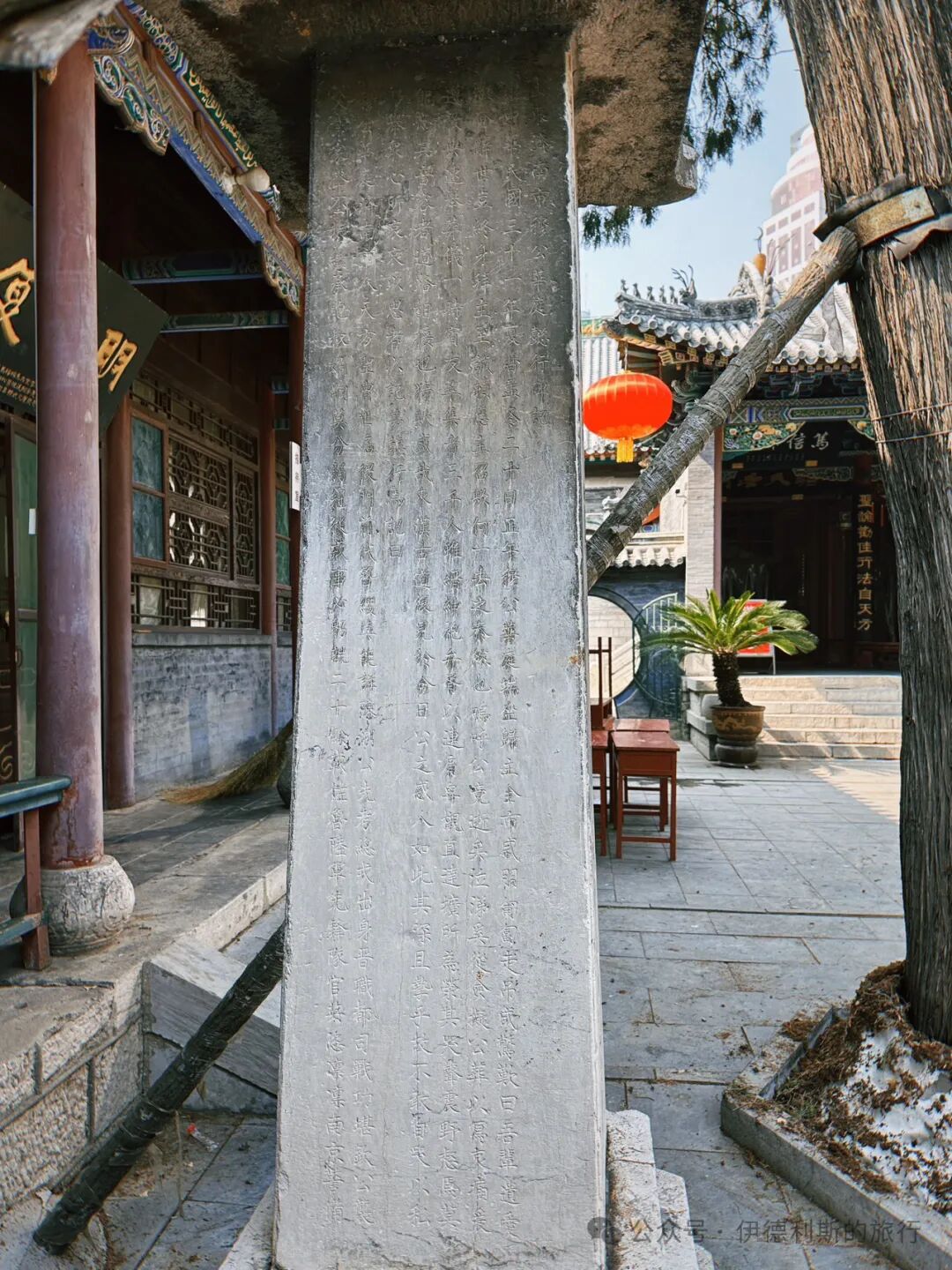
The 1850 Record of the Renovation of the North Mosque. The father of the author Jin Baofu helped rebuild the North Mosque in the 14th year of the Daoguang reign and again in the 30th year, which is why this stone tablet was erected.
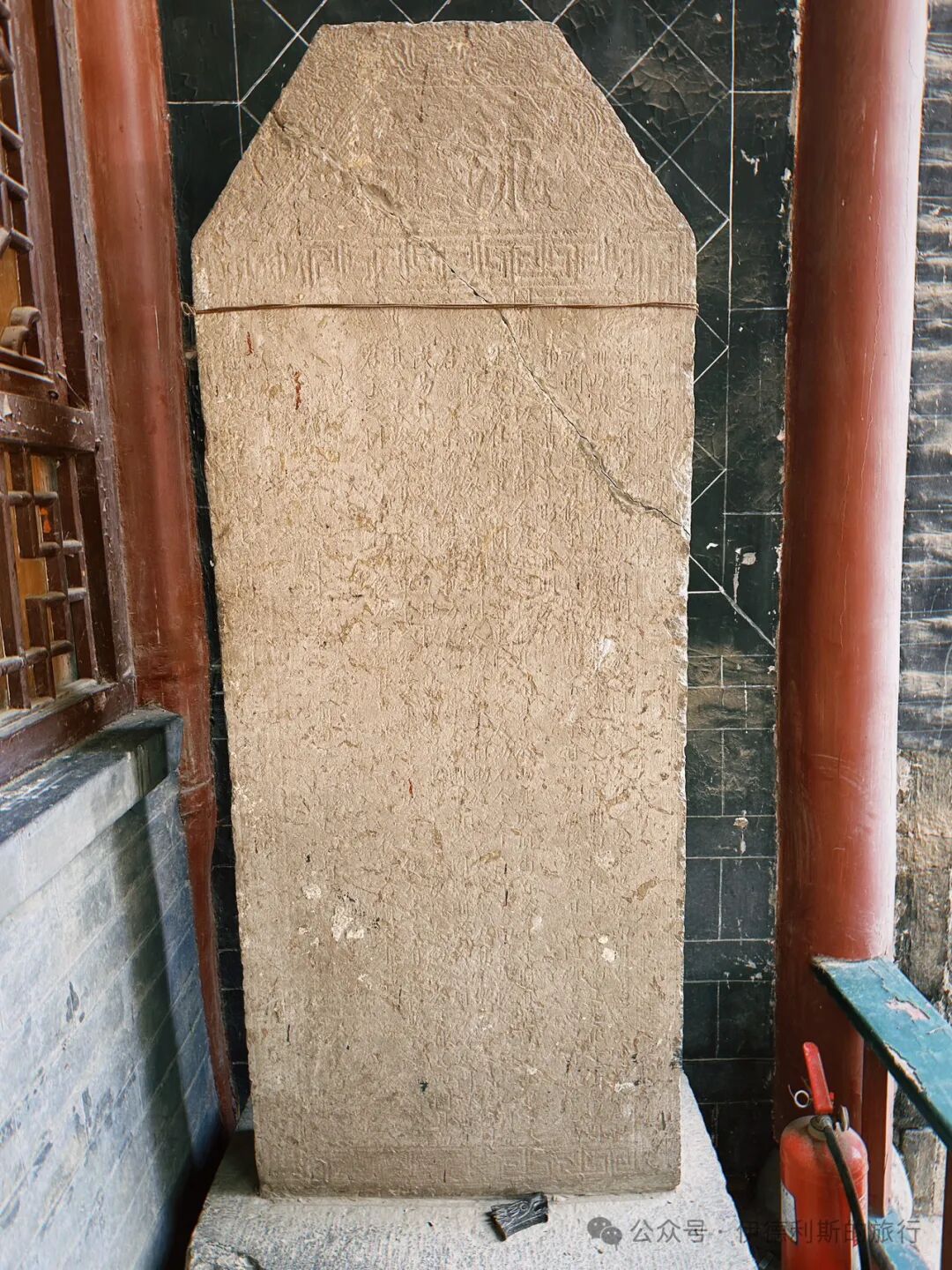
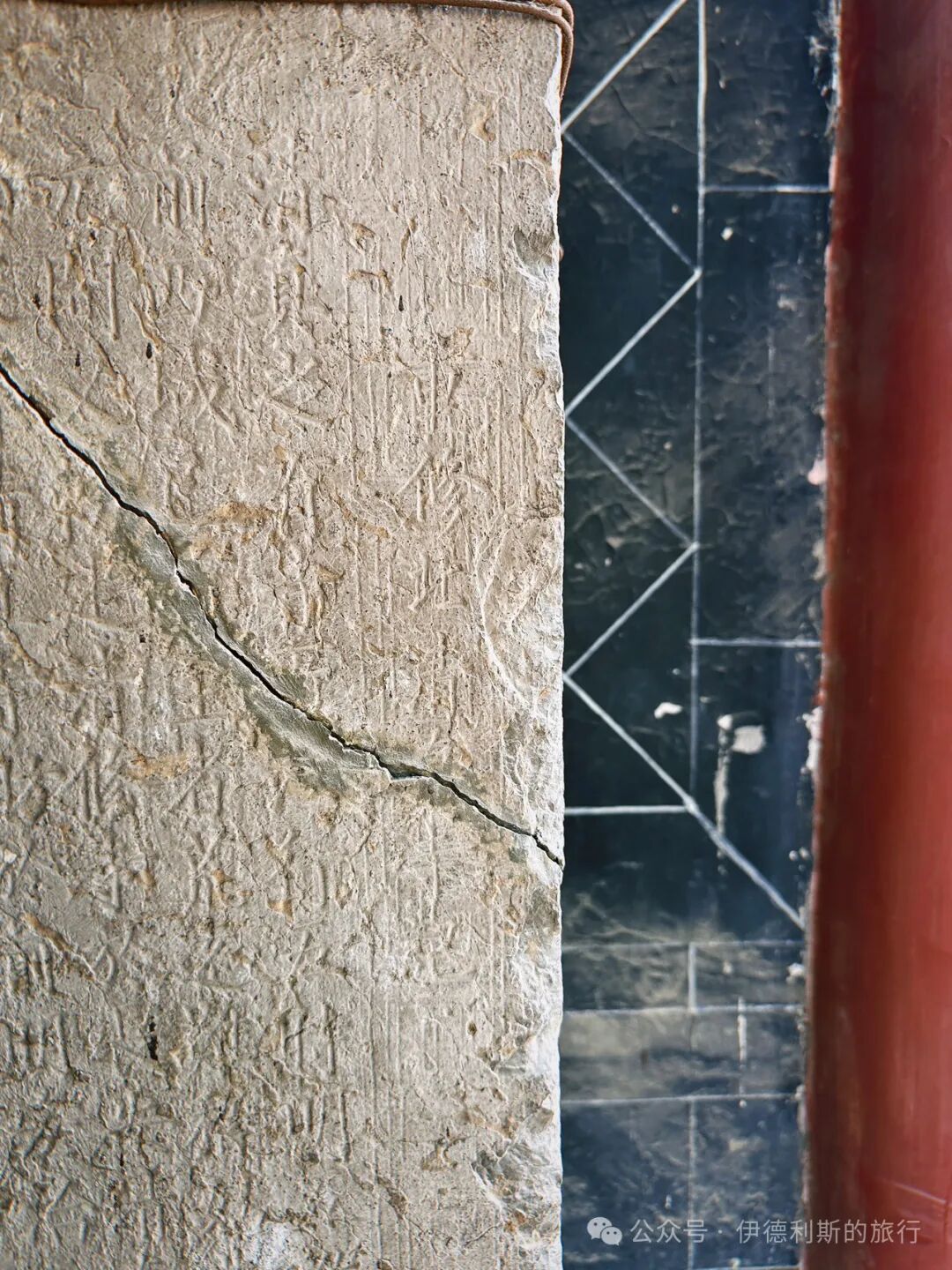
The 1918 stone tablet titled 'Notice of Land Purchase by the Charity Hall' (Cishantang Goudi Yuanqi). It records how elders from the Mu, Fa, Ma, and Wang families donated money to buy land and storefronts inside Linxiang Gate in Jinan. The rent from these properties, along with rent from the Yuchang Soy Sauce Shop, paid for water heating fuel and supported the mosque's primary and secondary schools. The tablet is inscribed with the names of Jinan Garrison Commander Ma Zizhen (Ma Liang) and Jinan Circuit Intendant Tang Kesan.
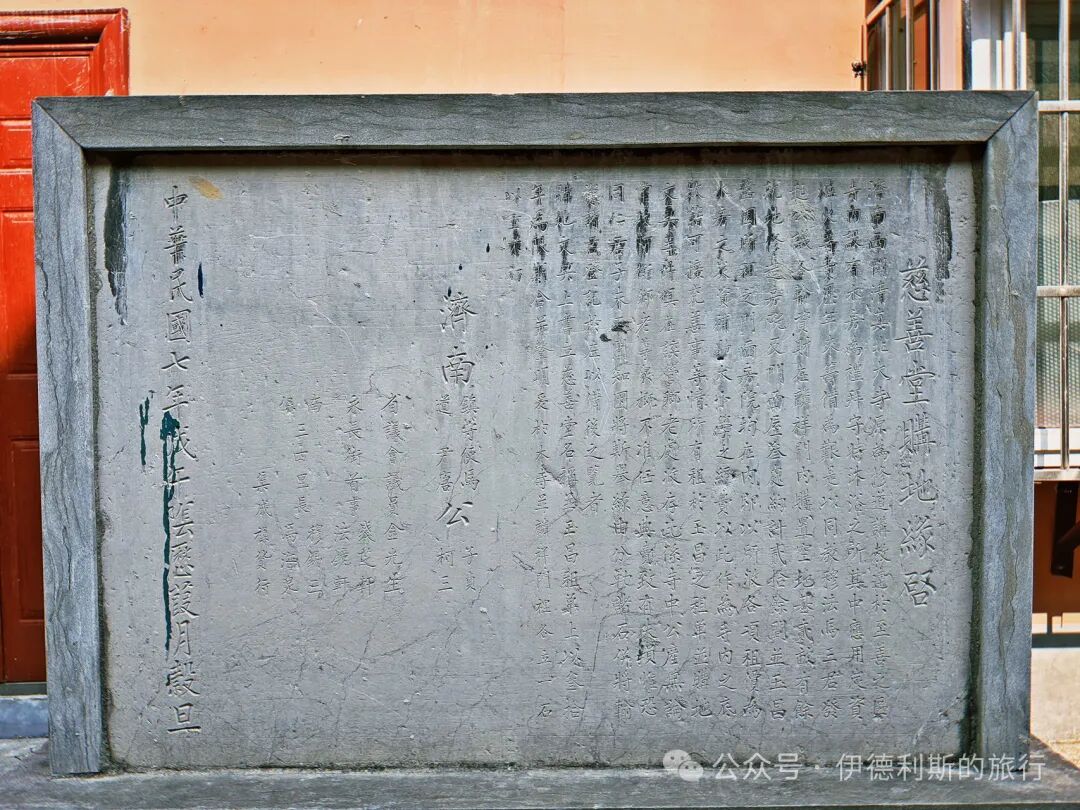
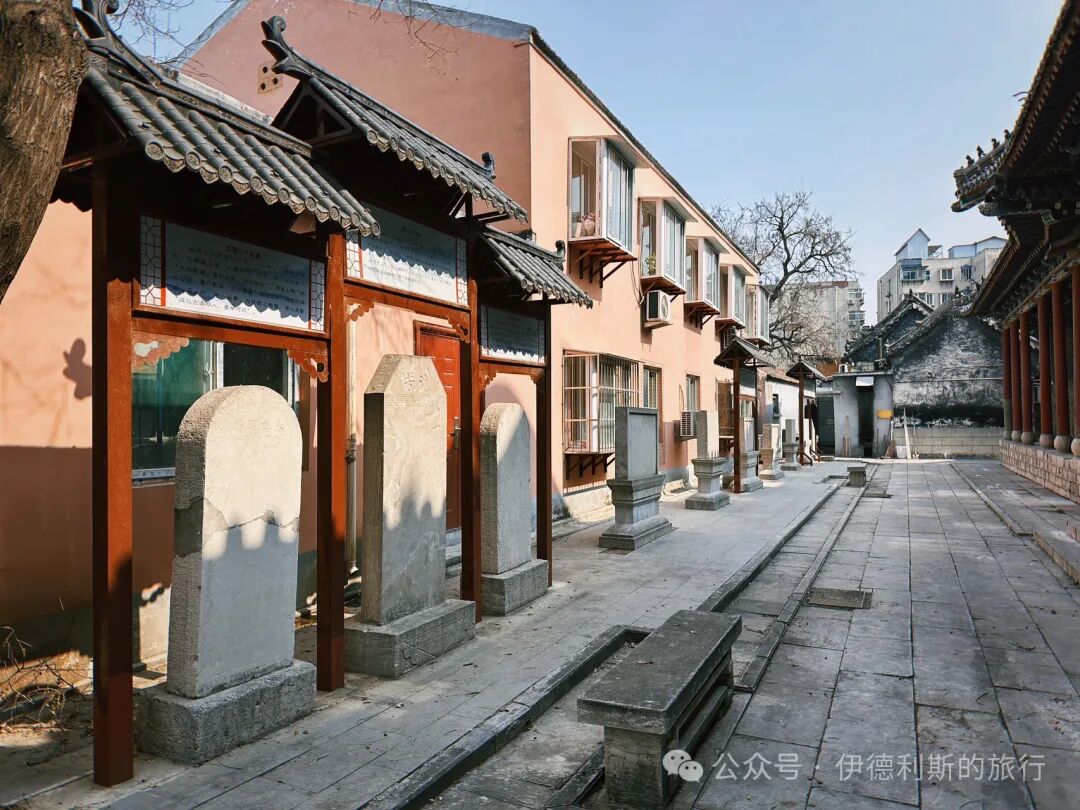
The 1941 stone tablet titled 'Mr. Zhou's Donation of Property and Land' (Zhoujun Juanfang Juandi Bei). It records that the ancestors of the Hui Muslim youth Zhou Xiaopeng lived in Jinan for generations, and his family left official life to live in seclusion at the end of the Qing Dynasty. Zhou Xiaopeng followed his ancestors' wishes by studying books and scriptures and fulfilling the five pillars of Islam. His community had high hopes for him, but he unexpectedly passed away from illness at only twenty years old. On his deathbed, he left a will donating his ancestral home on the east side of Jiuxin Street in the West Gate area of Jinan and his family graveyard at Sili Mountain to the women's mosque, with the income to be used for mosque expenses.
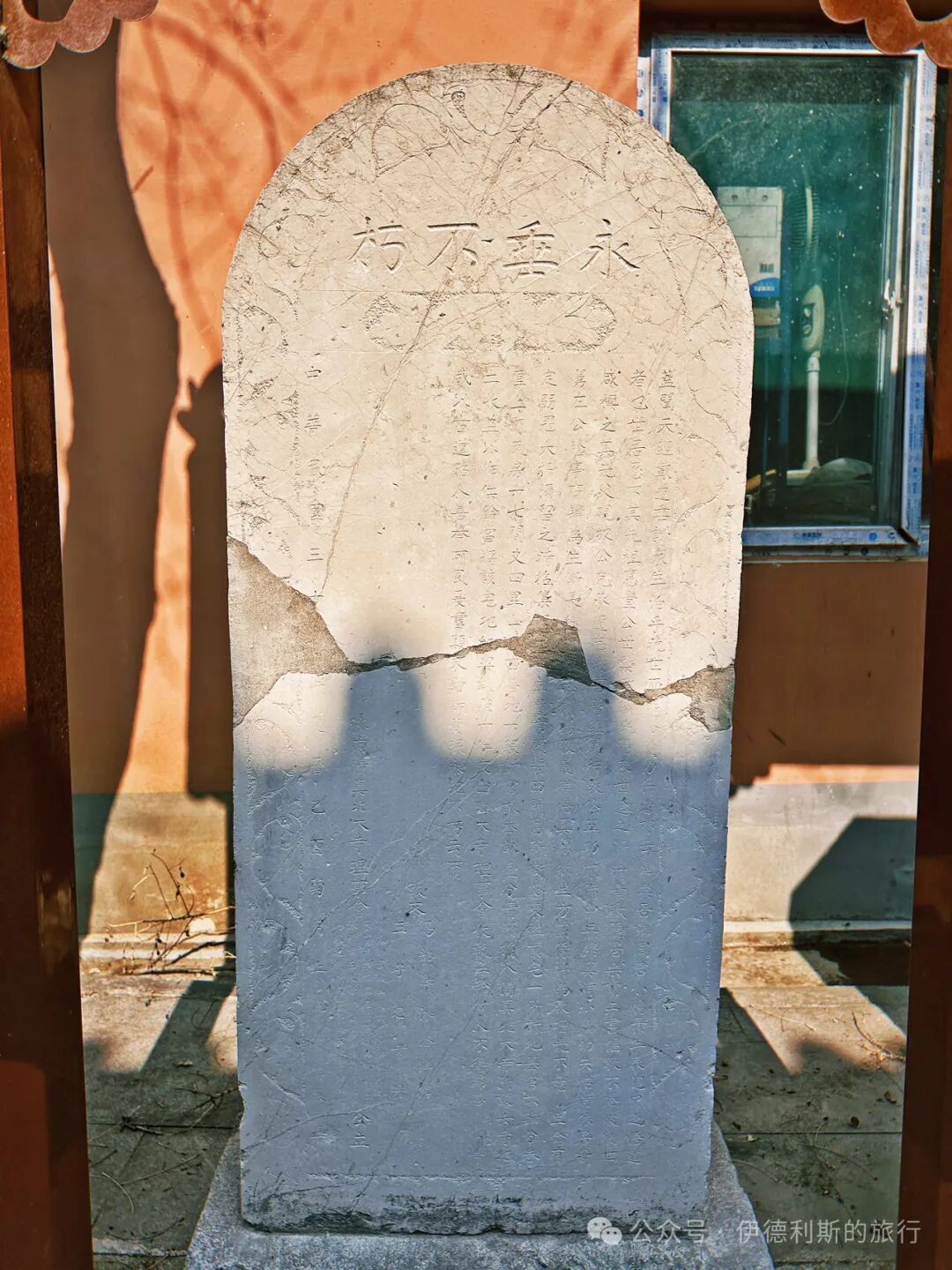
The 1883 stone tablet titled 'Madam You's Land Donation' (Youshi Juandi Bei). It records that before Madam You died, she instructed her son and nephew to donate land to the North and South Mosques of Jinan to pay for the imams to visit the graves and recite prayers every year.
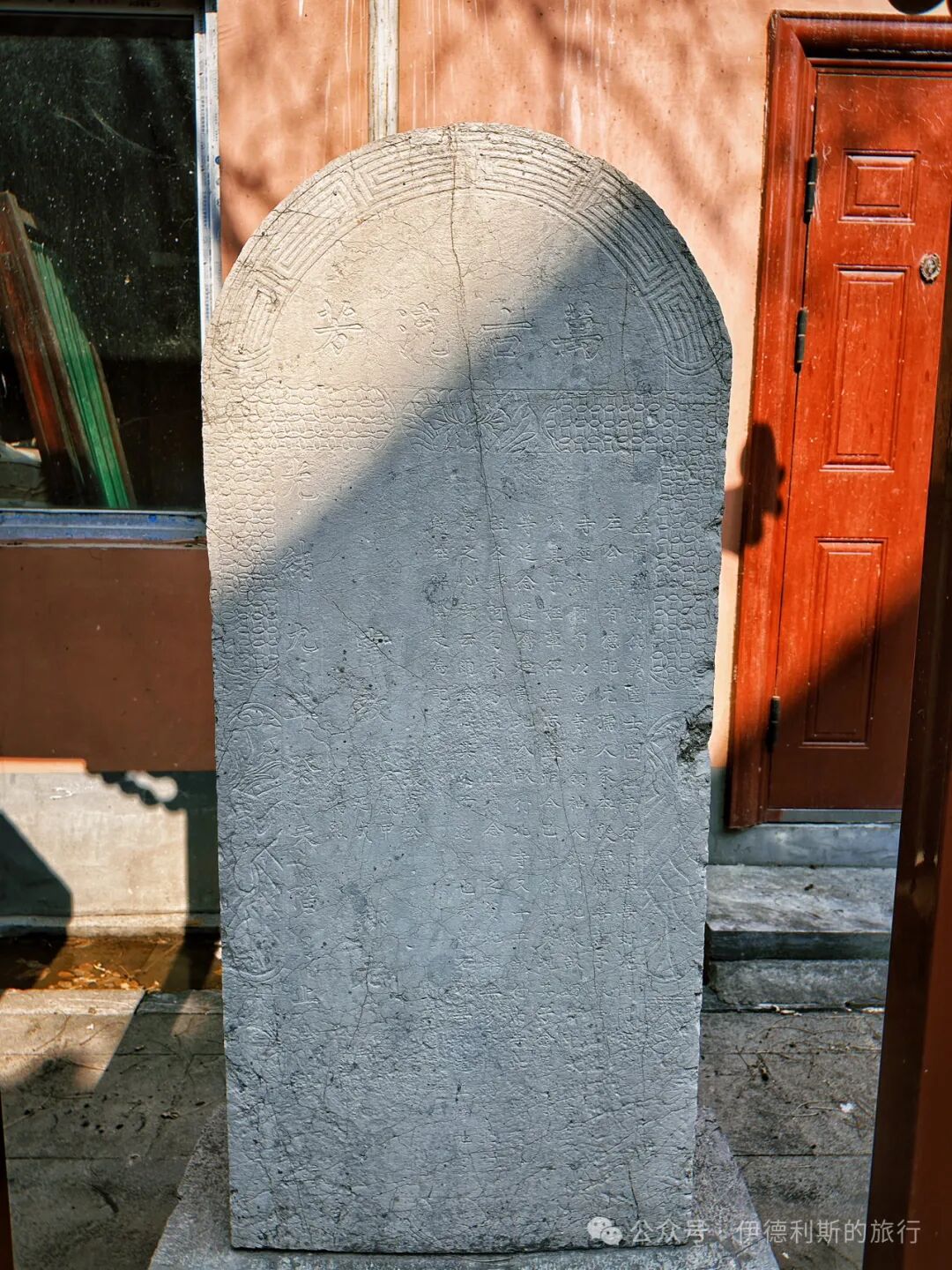
The 1922 stone tablet titled 'Record of the North Mosque' (Qingzhen Beisi Beiji). It records the initial establishment of a Chinese-language school at the North Mosque.
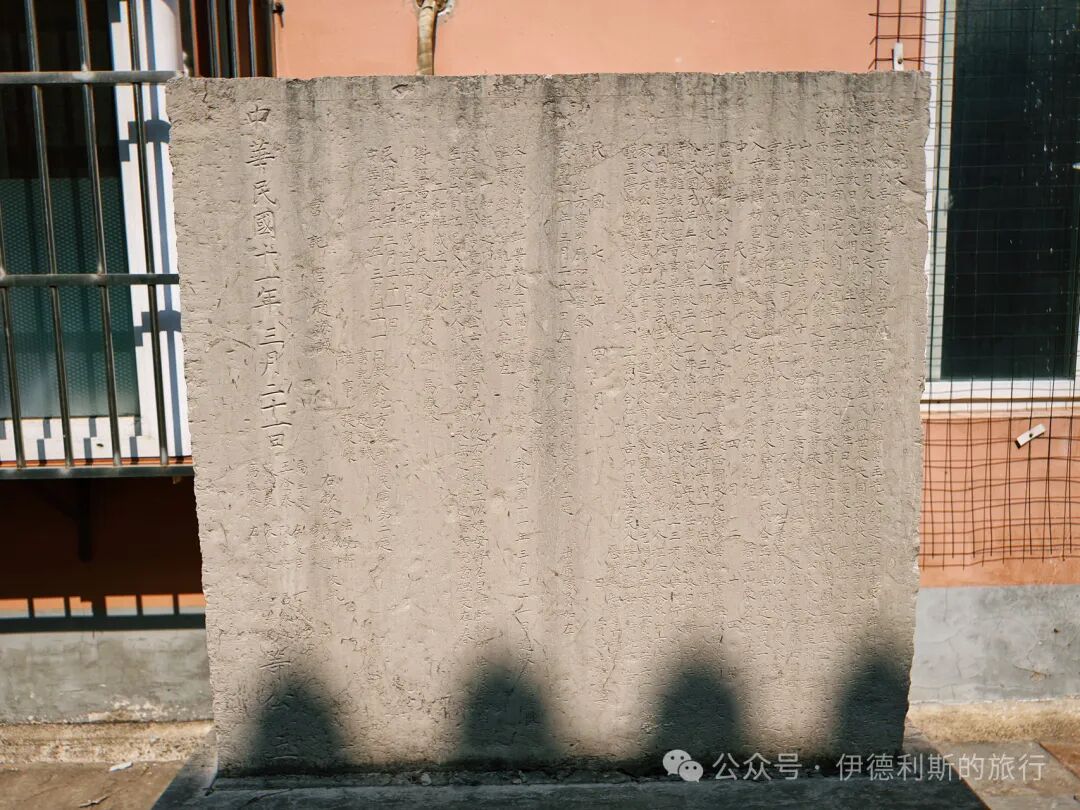
The 1909 stone tablet titled 'Resolving Disputes' (Painan Jiefen Bei). It records that a merchant named Wan Qingyan was doing business in Yuncheng. When his wife, Madam Yang, wanted to visit her parents, Wan Qingyan refused, and she became distraught and committed suicide by taking poison. Wan Qingyan asked his younger brother to send her body to Jinan, but Madam Yang's brothers found the situation suspicious and wanted to report it to the authorities. After mediation prevented a lawsuit, Wan Qingyan donated land and money to the North Mosque in Jinan.
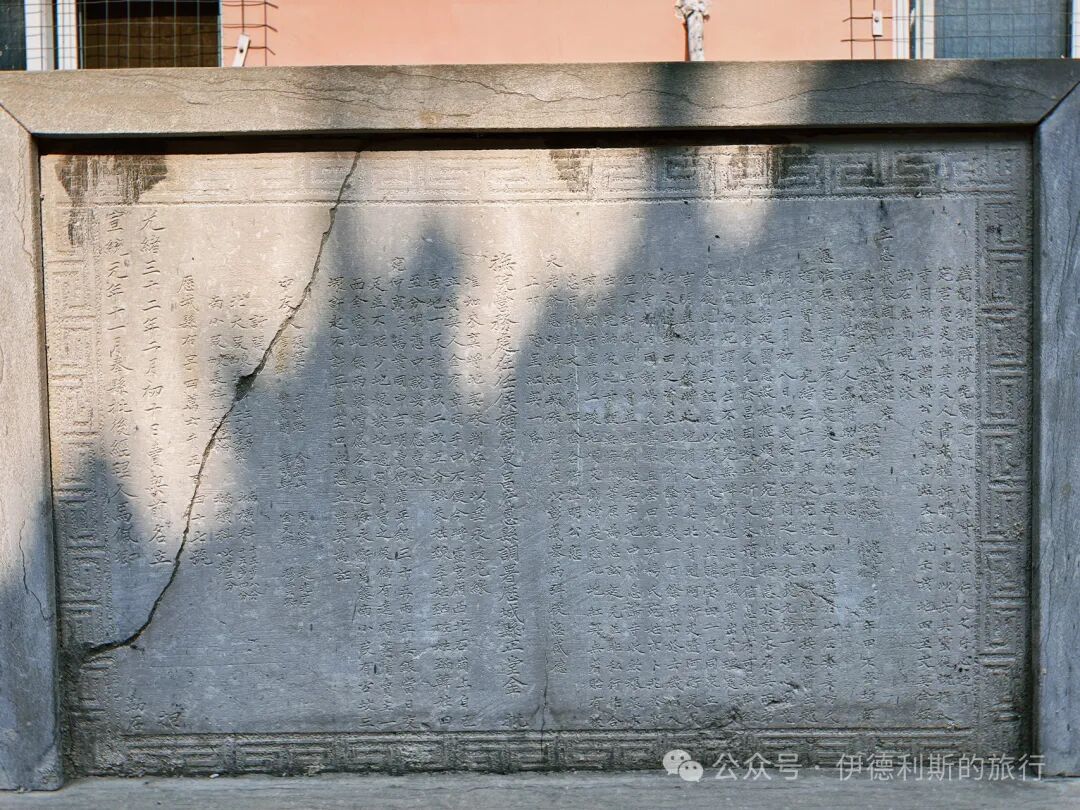
The 1850 stone tablet titled 'Record of the North Mosque Redeeming Farmland' (Qingzhen Beisi Shutian Ji). It records that Huang Tingzhu sold farmland on the west side of Chenjiazhuang to the North Mosque.
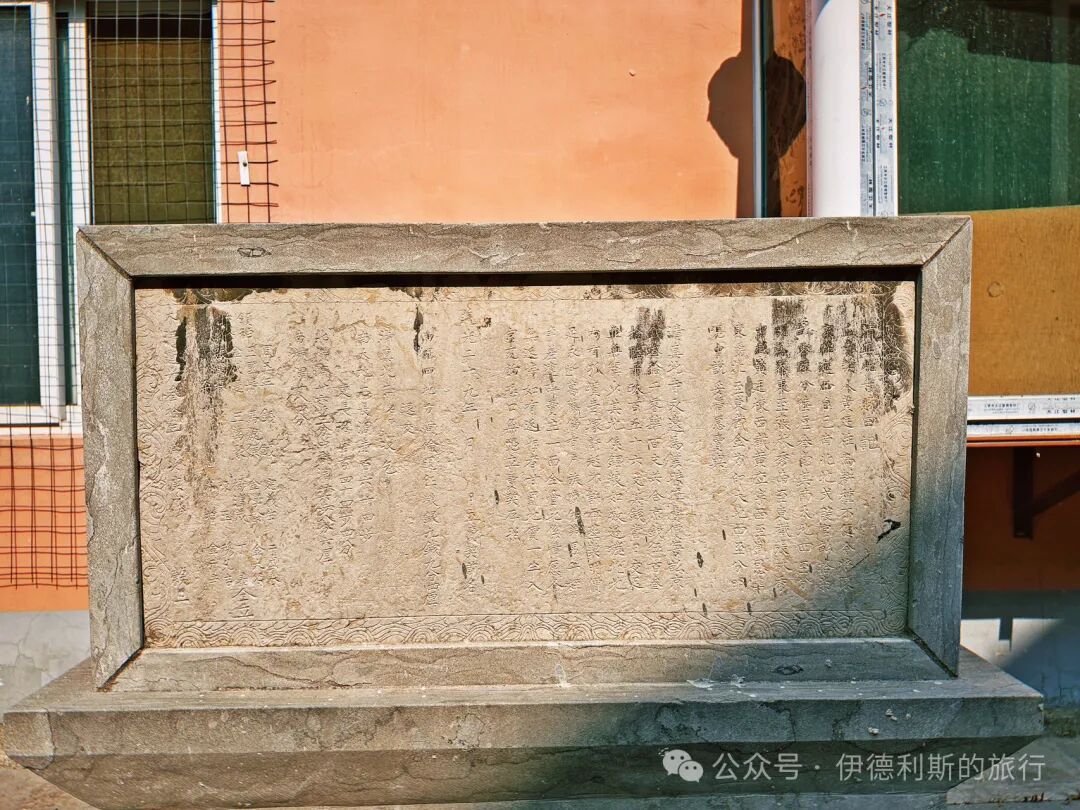
The 1933 stone tablet titled 'Defending the Honor of the Faith' (Wei Jiao Zheng Guang). It records the 1932 protests by Hui Muslims against the Beixin Book Company and the Nanhua Literary Society in Shanghai for publishing articles that insulted their faith. The Nanhua Literary Society had described Hui Muslims as descendants of the pig demon Zhu Bajie, which angered the entire Hui Muslim community. The Shandong branch of the North China Hui Muslim Defense Association was formed, and they sent Mu Huating to Beijing to petition for strict punishment. They eventually succeeded in getting the Executive Yuan of the Republic of China to issue an order to punish the book company and the literary society according to the law.
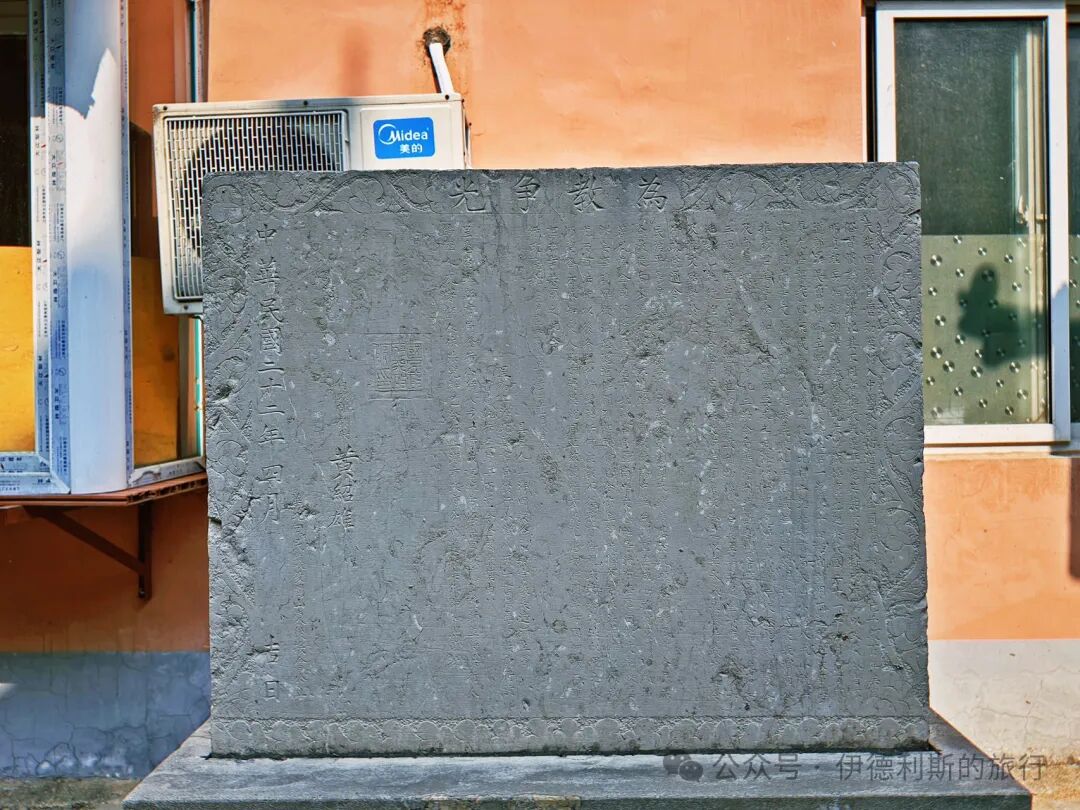
The 1923 stone tablet titled 'Record of Building the Muslim School' (Xiujian Qingzhen Xuexiao Ji). Originally a tablet from the Mujia Chemen Mosque in Jinan, it records how Mu Huating donated the mosque, a kiln factory, city storefronts, and a public cemetery in 1922 to establish a school. This school was likely the predecessor to the Chengda Normal School founded in 1925. The original stone tablet is lost, and the current one is a replica.
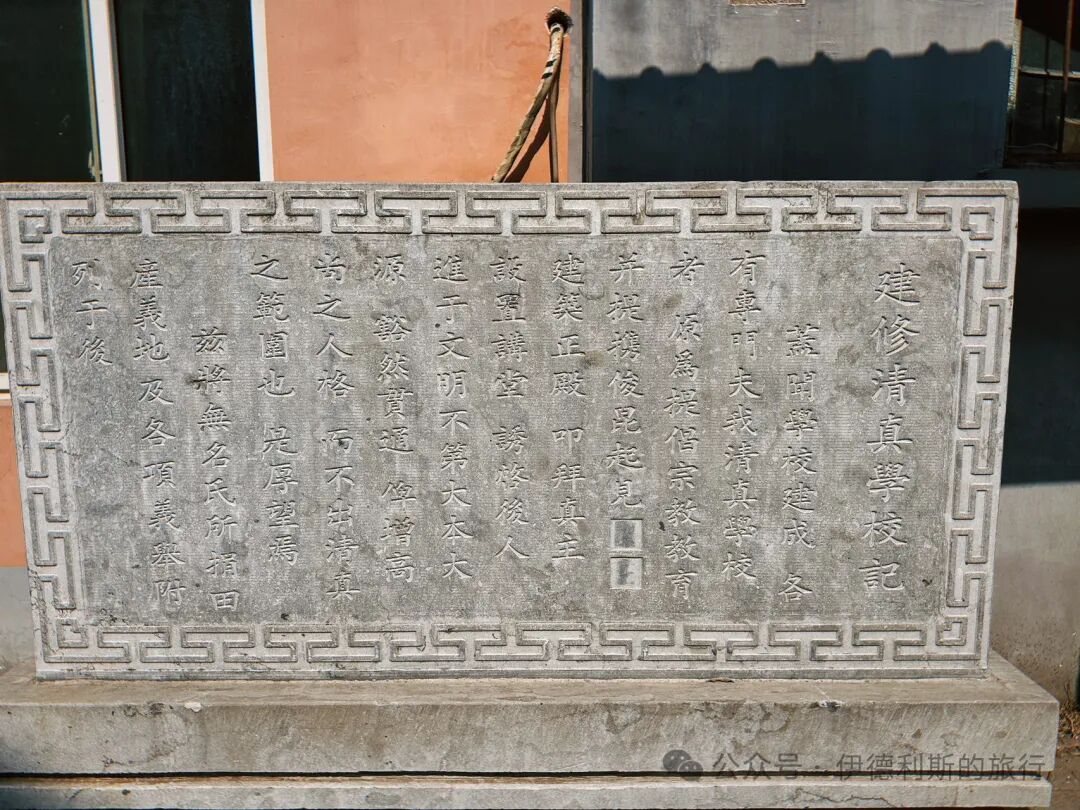
The 19XX Republic of China era tablet inscription for the construction of the women's mosque. The women's mosque attached to the North Mosque sat just to its north. A female teacher (shiniang) led the local women in worship, and there was also an Arabic primary school. It was destroyed after 1966.
Jinan Nanguan Mosque.
Jinan Nanguan Mosque was first built during the Ming Dynasty. It moved to its current location in 1603 (the 31st year of the Wanli reign) and was renovated several times during the Xianfeng, Tongzhi, and Guangxu periods. The mosque now faces south, with the main prayer hall in the north building. The mihrab is on the west side, which is very rare for a traditional mosque. There is a screen wall outside the main gate, which features Qing Dynasty-style stone door piers. The side gate has a lintel from a renovation in the eighth year of the Xianfeng reign.
During the late Qing and early Republic period, the mosque's head elder was Ma Yunting, a famous Jinan doctor. He opened the Jinan Fourth Halal Primary School inside the mosque and served as its principal. In 1919, during the May Fourth Movement, Ma Yunting was killed for organizing the Hui Muslims National Salvation Group of Ten.
When I visited, it was time for the afternoon prayer (peshin), and only the imam and I were there to pray.
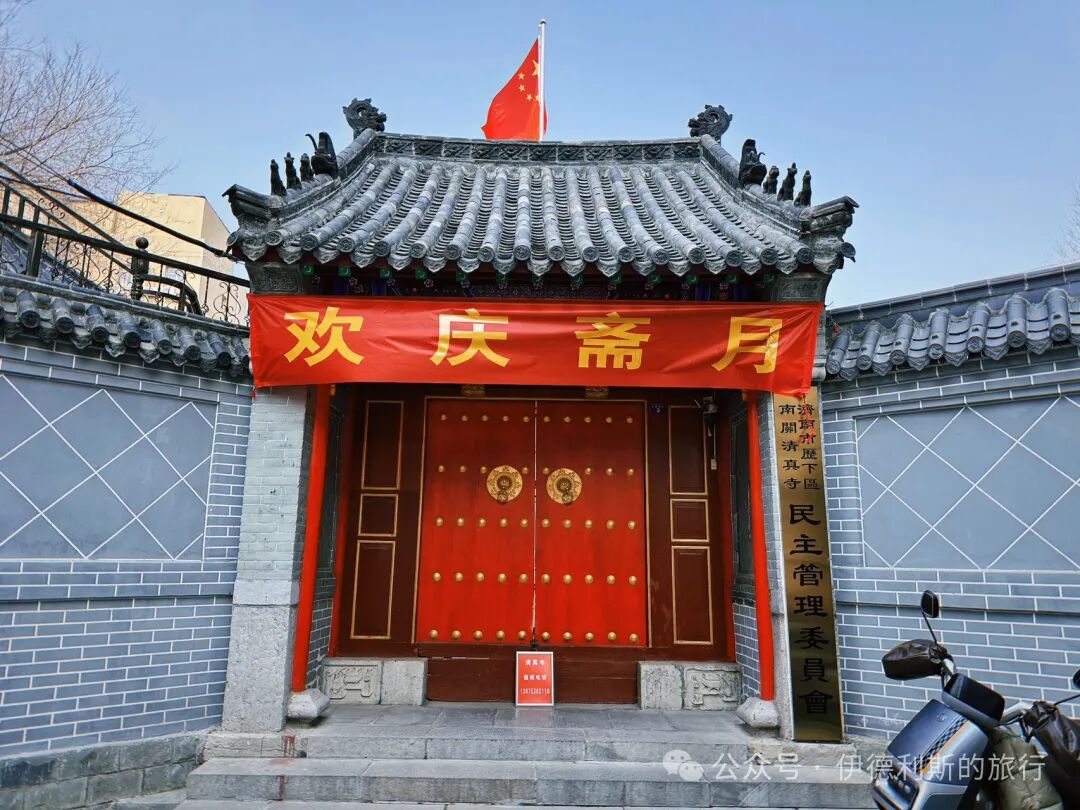
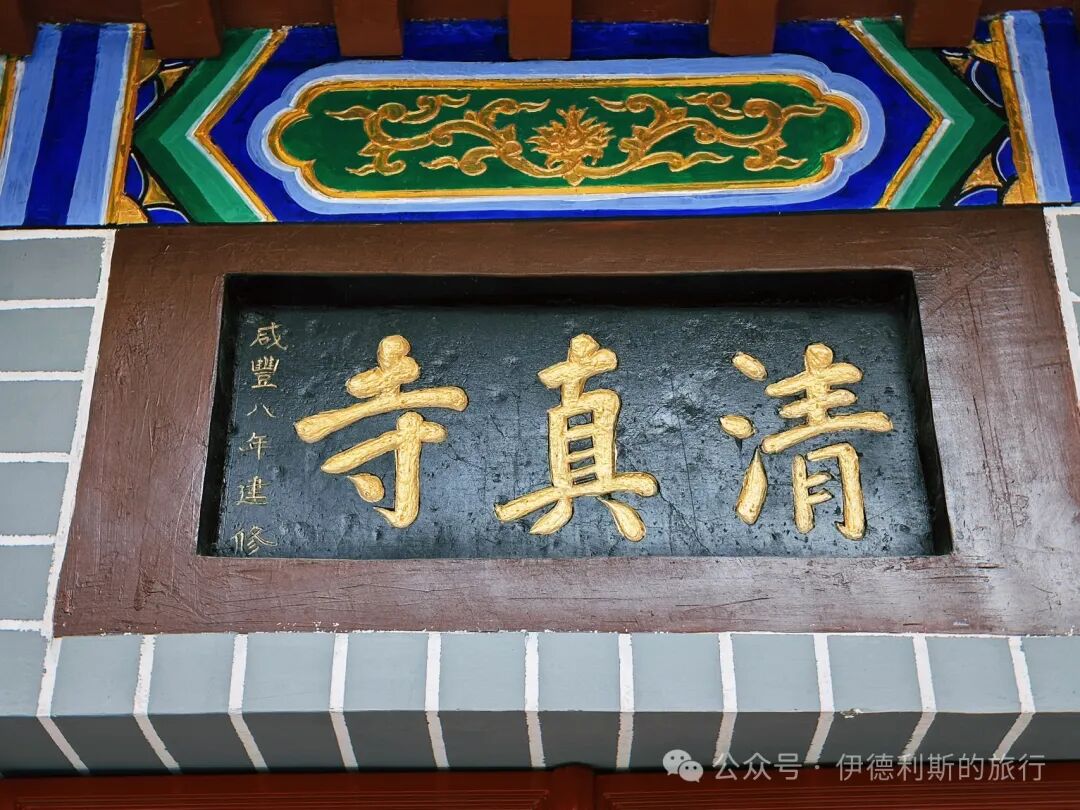
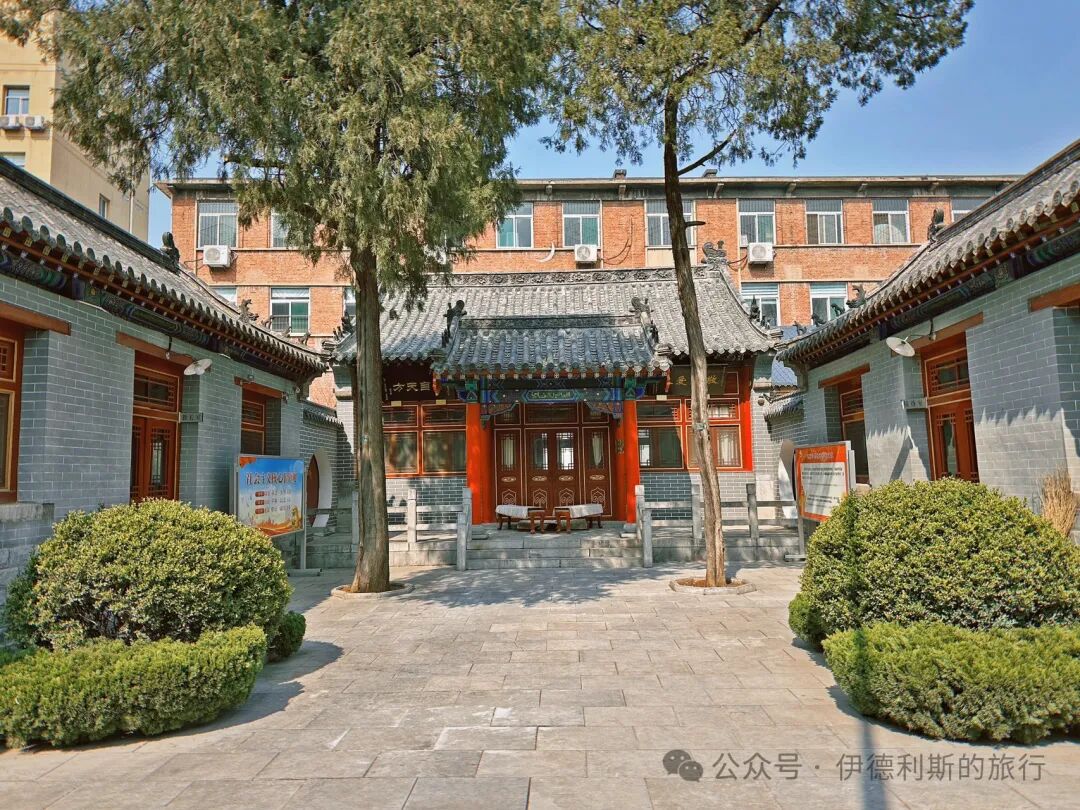
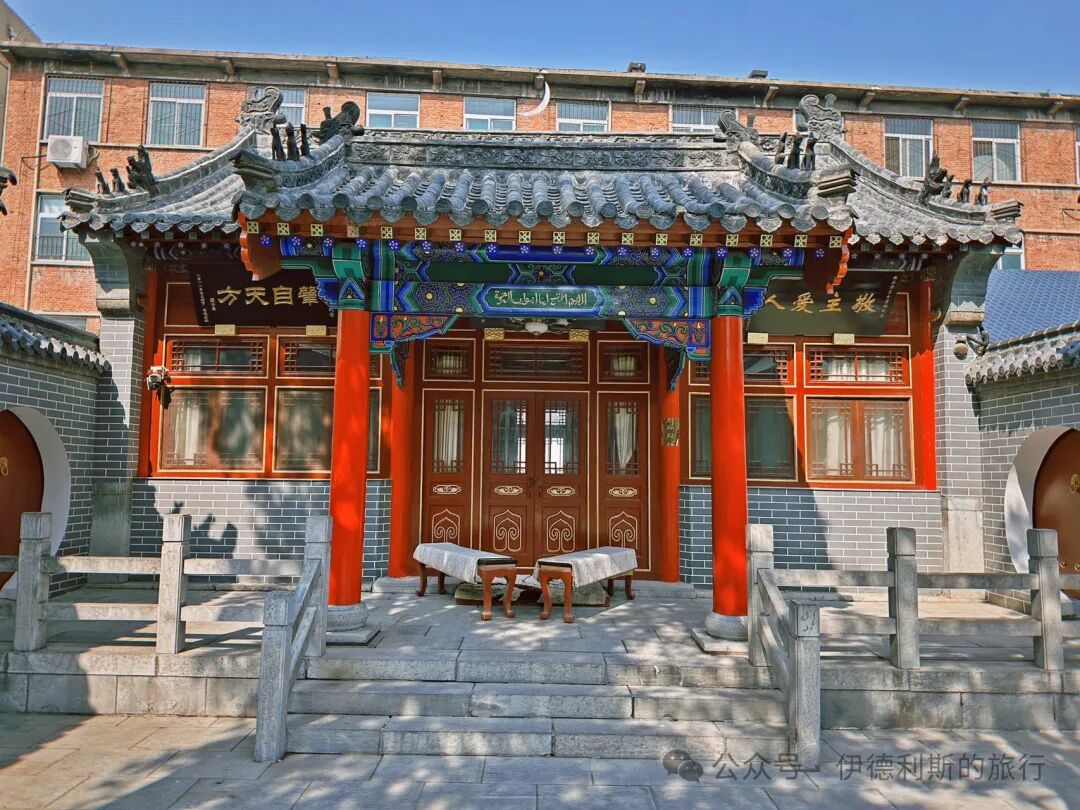
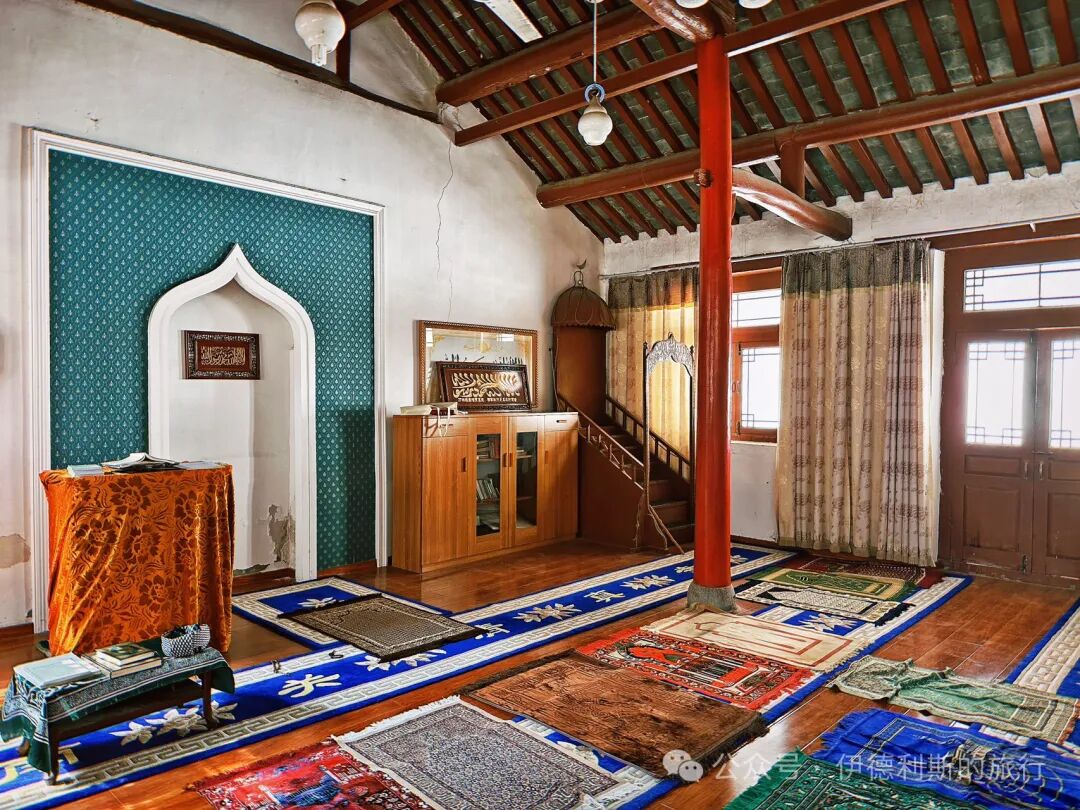
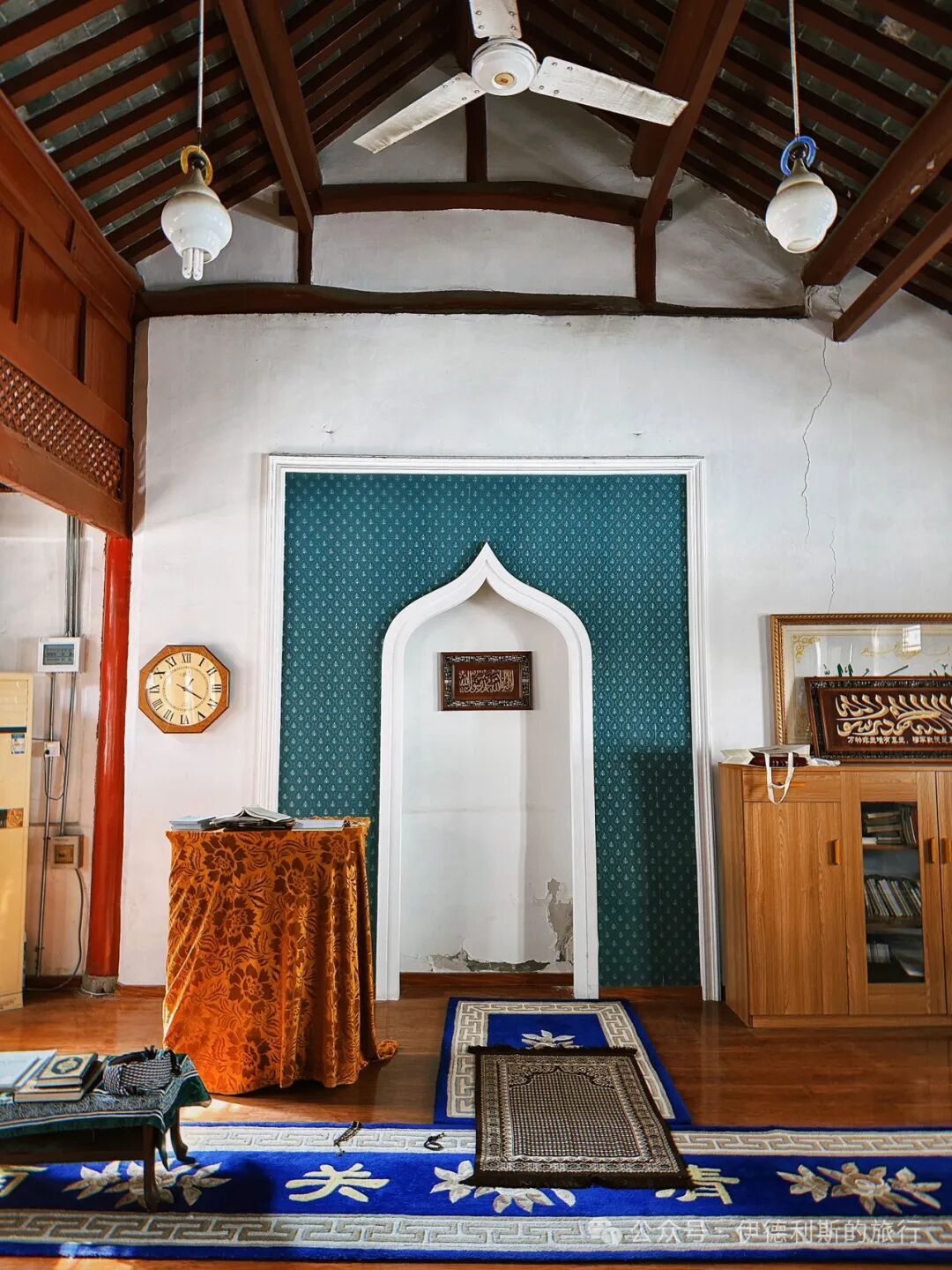
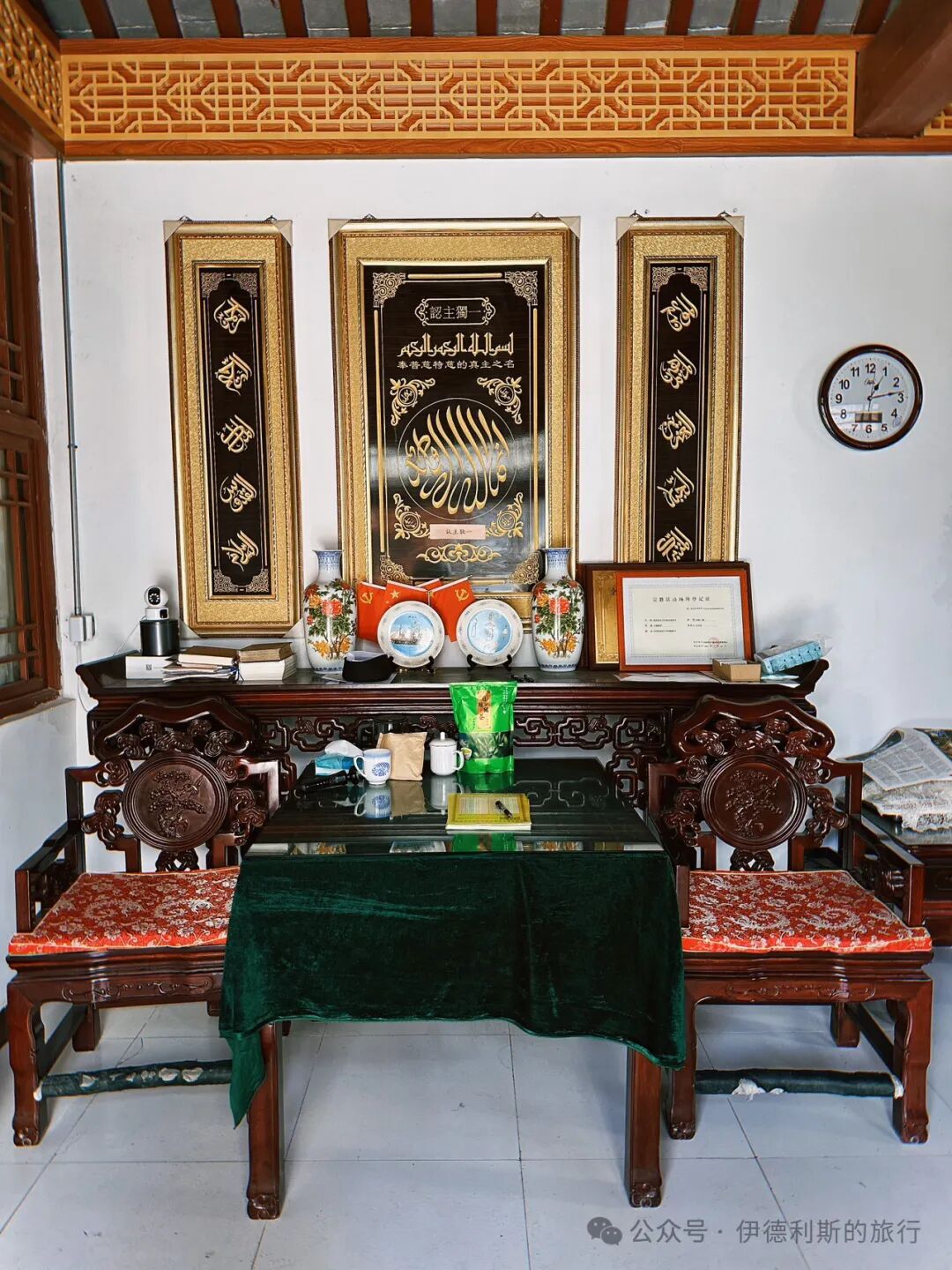
The stele corridor on the east side of Jinan Nanguan Mosque.
Halal Travel Guide: Jinan Mosques During Ramadan, Part 2
Articles • ali2007fr posted the article • 0 comments • 180 views • 2026-05-20 01:48
Summary: This is the second part of a Ramadan visit to historic mosques in Jinan, including Nanguan Mosque, Dikou Mosque, Dangxi Mosque, and Dangdong Mosque. The English version keeps the original architectural notes, mosque names, historical details, and photographs in their source order.
A 1614 (42nd year of Wanli, Ming Dynasty) stone tablet records the completion of the Nanguan Mosque and lists the donors. It explains that there was an older mosque south of Jinan city, but it was hard to reach when the nearby canal flooded in summer and autumn. Three elders named Yang, Yu, and Tang led the community to fund and build a new mosque in 1603 (31st year of Wanli). The tablet lists the names of 147 people, including mosque leaders, military commanders, local officials, scholars, and students.
The 1864 (3rd year of Tongzhi) tablet records the renovation of the ancient Nanguan Mosque. It describes how the Nanguan Mosque was renovated in the early Xianfeng years and how a school was established there.
The 1906 (32nd year of Guangxu) tablet records the renovation of the Nanguan Mosque. It notes that the mosque was renovated during the Tongzhi era and again in 1904 (30th year of Guangxu) with funds donated by the military commander Ma Longbiao.
Additionally, a tablet from 1864 (3rd year of Tongzhi) titled 'Zuo Fengsheng Donates Property to Support Education' is embedded in the west lecture hall. It records that Zuo Fengsheng and his family donated two properties near the Nanguan Mosque to help pay for the school's food, oil, and coal.
Jinan Dikou Mosque.
The Cui family of Jinan originally came from Sanlihe in Beijing. They moved to Dikou Village in Jinan during the Zhengde years of the Ming Dynasty and built the Cui family's Dikou Mosque at the end of the Wanli era. In 1708 (47th year of Kangxi), leaders like General Cui Zhiyun and officer Cui Zhenyu arranged to move the main hall of the Yang Bo residence from Shangcai County, Henan, to Dikou Village. They used the military to transport it via the Grand Canal and the Yellow River. The mosque was renovated again in 1865 (4th year of Tongzhi) to reach its current state.
The mosque originally had a 1708 renovation tablet. Today, only the top stone carving of two dragons playing with a pearl remains, and the body of the tablet is a replica.
A 1789 (54th year of Qianlong) 'Land Donation Tablet' is embedded in the wall. It records that Cui Zhili, a military officer, donated his mother's burial land and his own fields to the Dikou Mosque to fund grave visits.
While visiting the mosque, I was recognized by Imam Wang. We had been WeChat friends for a long time but had never met in person. Imam Wang told me about the Dikou Mosque and took me to the second-floor exhibition hall. It shows the folk culture of Dikou Village and the history of the local Cui family of Hui Muslims.
Dangxi Mosque.
Dangxi Mosque is in Dangjia Village in the southern suburbs. It was first built at the end of the Yuan Dynasty, burned down by the Red Turban Army, and rebuilt in 1397 (30th year of Hongwu). It was renovated many times during the Ming, Qing, and Republican eras and is an important ancient mosque in Jinan.
On May 3, 1928, the Japanese army intentionally massacred Chinese troops in Jinan, an event known as the May 3rd Incident. On May 6, Chiang Kai-shek and Bai Chongxi led their troops to retreat into the Dangxi Mosque, where they held an emergency meeting to plan military strategy. During this time, the Japanese army shelled Dangxi Village. One shell pierced the main beam of the Dangxi Mosque but did not explode, becoming a historical witness to the Jinan Incident. When the Dangxi Mosque was renovated in 1995, the beam was replaced and has been on display in the main hall ever since to remind future generations not to forget the national humiliation.
The 1891 (17th year of Guangxu) 'Jin Family Repeated Donations and Renovations Tablet'. It records how four generations of the Jin family donated money and goods to renovate the mosque during the Jiaqing, Daoguang, Tongzhi, and Guangxu eras.
The 1941 stele record for the renovation of the mosque walls and bathhouse.
The 1941 stele for the renovation of the Dangjiazhuang Elementary School. Both steles were written and calligraphed by Zhang Fengji, the principal of Dangjiazhuang Elementary School.
Dangdong Mosque.
Dangdong Mosque is located in the East Village of Dangjiazhuang in the southern suburbs. It was first built in 1510 (the fifth year of the Zhengde reign of the Ming Dynasty) and was renovated several times during the Qing Dynasty reigns of Yongzheng and Qianlong, as well as during the Republican period. Records show that Dangdong Village was originally Zhuguanzhuang, a place set up for refugees in the early years of the Hongwu reign of the Ming Dynasty. Local Hui Muslims originally went to Dangxi Mosque for namaz. In the early years of the Zhengde reign, Chen Xi, the chief imam (zhangjiao) of Shandong, raised funds. Fa Zongxian, the commander of the Jinan Guard, and local Hui Muslims managed the purchase of land and materials to build Zhuguanzhuang Mosque, which was later renamed Dangdong Mosque.
The 1844 stele, Official Proclamation of Licheng County. It records how the Licheng County magistrate handled a civil lawsuit in Dangjiazhuang. It mentions that four families of imams (zhangjiao) passed their positions down through generations and controlled mosque affairs, which caused public anger. The court ruled that imams could not pass their positions to their descendants and could not privately sell or handle the mosque's farmland. This stele is an important document for studying the changes in the imam system of mosques in Shandong.
The 1762 stele, Commending Good Deeds (Jingshan Bei). It records that Madam Zhou, the wife of the village elder Jin Ziliang, donated land to the mosque. view all
Summary: This is the second part of a Ramadan visit to historic mosques in Jinan, including Nanguan Mosque, Dikou Mosque, Dangxi Mosque, and Dangdong Mosque. The English version keeps the original architectural notes, mosque names, historical details, and photographs in their source order.
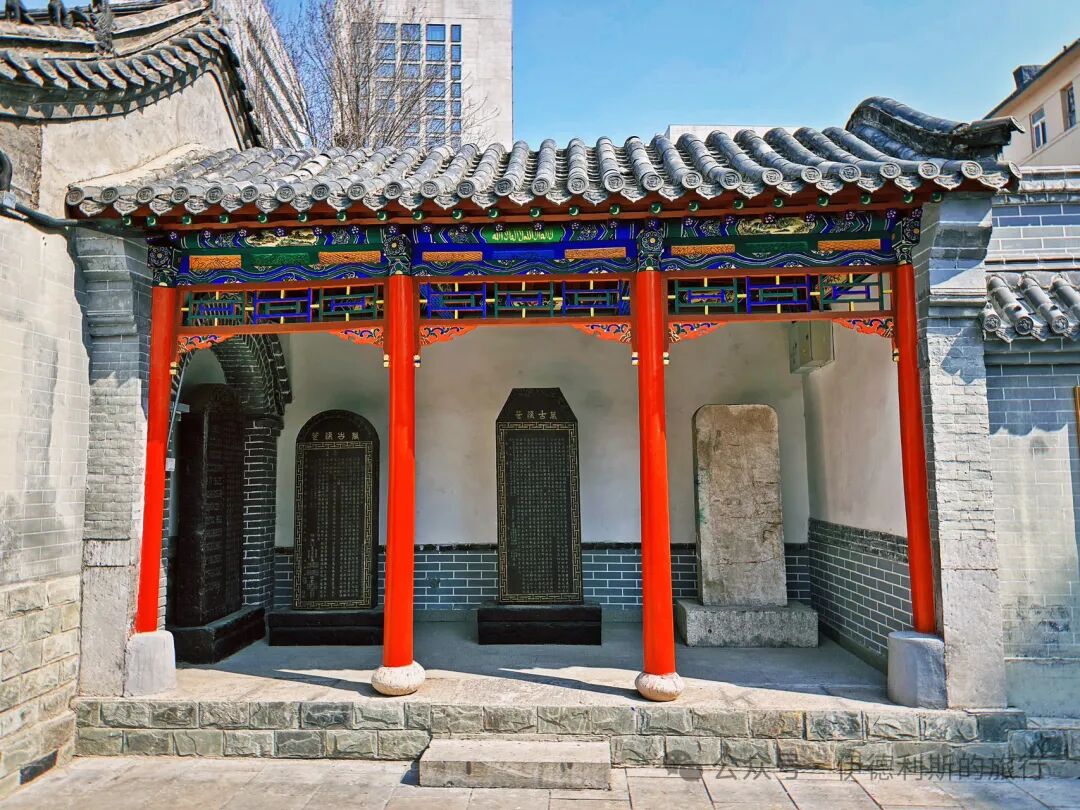
A 1614 (42nd year of Wanli, Ming Dynasty) stone tablet records the completion of the Nanguan Mosque and lists the donors. It explains that there was an older mosque south of Jinan city, but it was hard to reach when the nearby canal flooded in summer and autumn. Three elders named Yang, Yu, and Tang led the community to fund and build a new mosque in 1603 (31st year of Wanli). The tablet lists the names of 147 people, including mosque leaders, military commanders, local officials, scholars, and students.
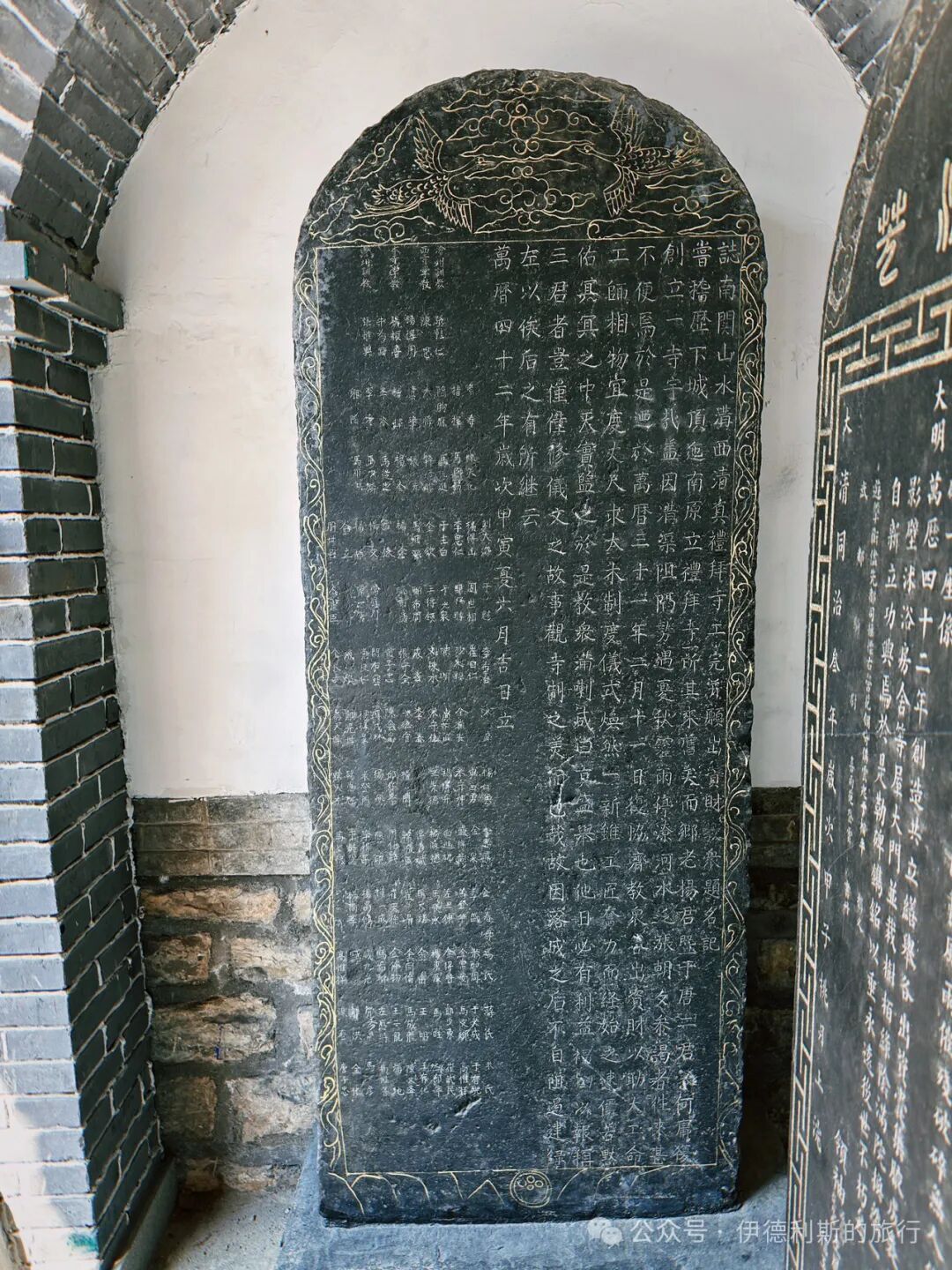
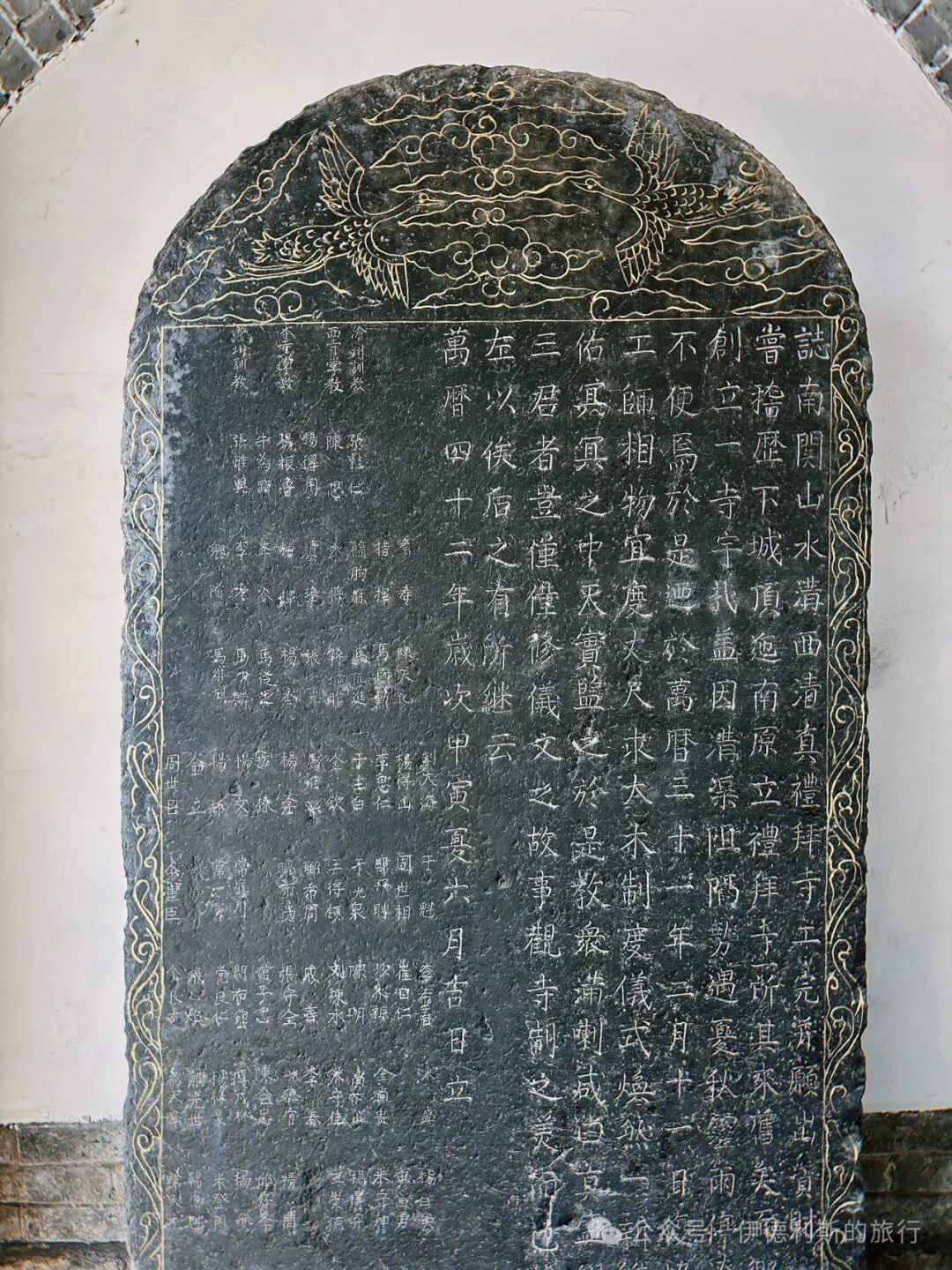
The 1864 (3rd year of Tongzhi) tablet records the renovation of the ancient Nanguan Mosque. It describes how the Nanguan Mosque was renovated in the early Xianfeng years and how a school was established there.
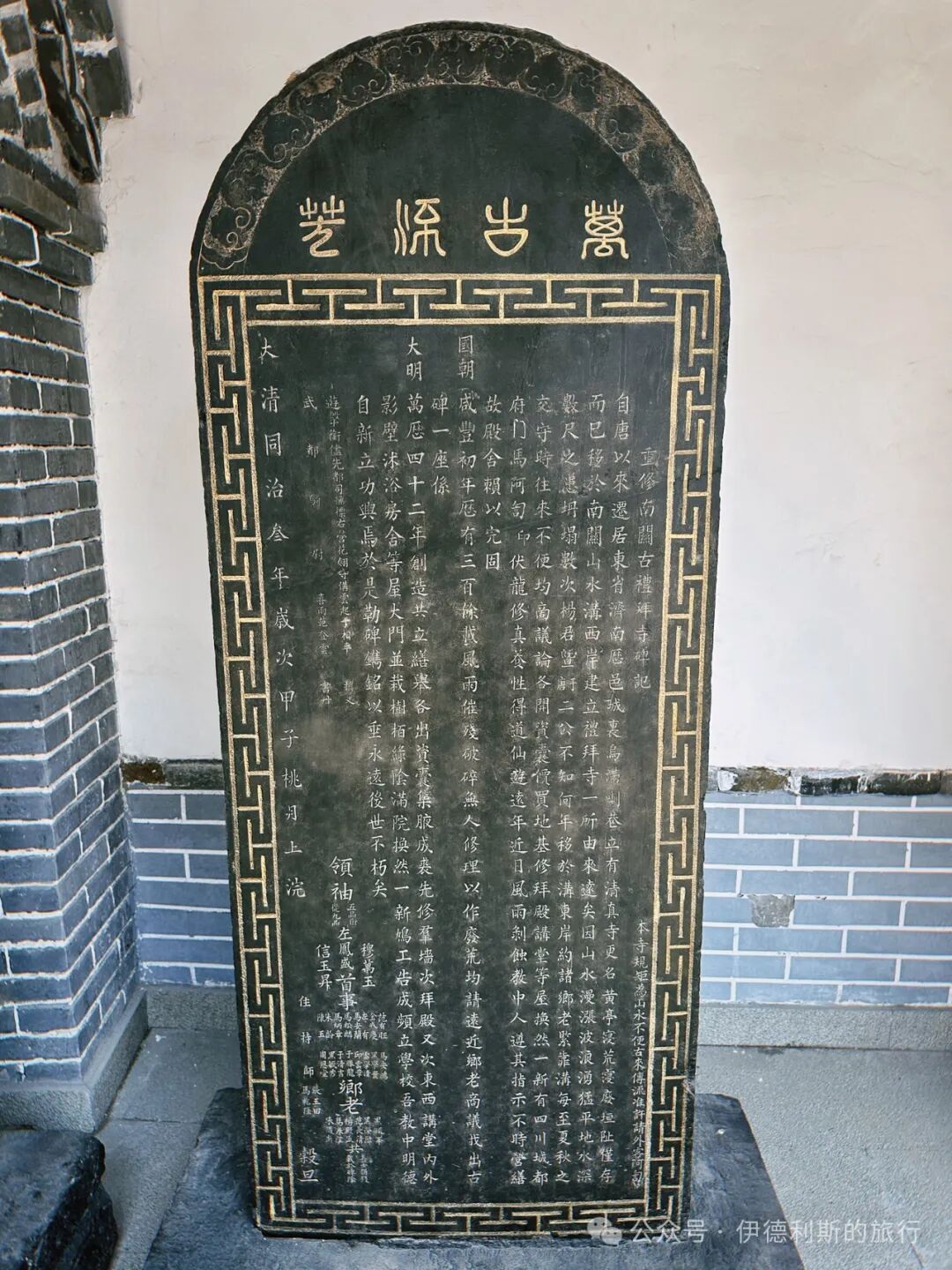
The 1906 (32nd year of Guangxu) tablet records the renovation of the Nanguan Mosque. It notes that the mosque was renovated during the Tongzhi era and again in 1904 (30th year of Guangxu) with funds donated by the military commander Ma Longbiao.
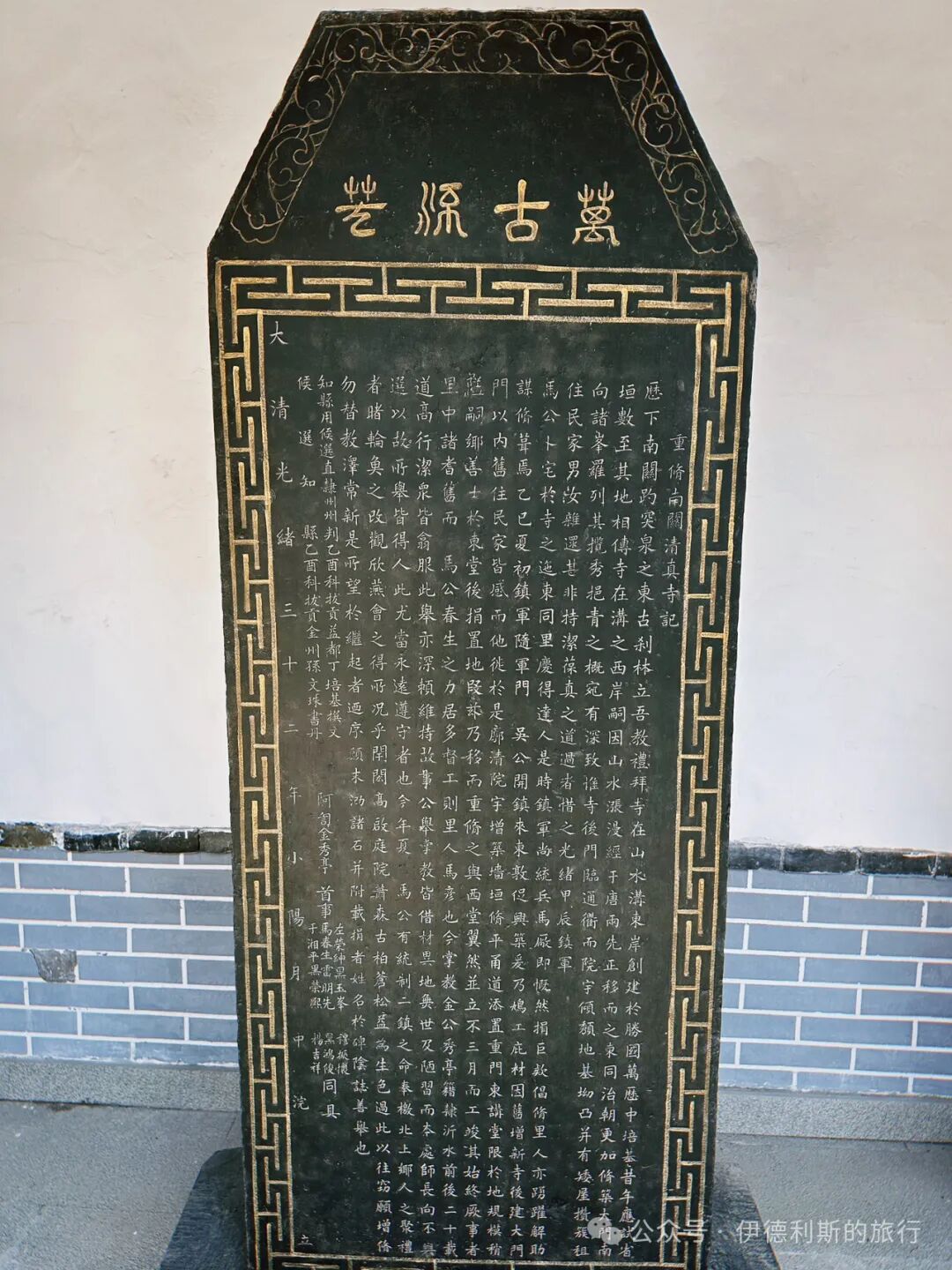
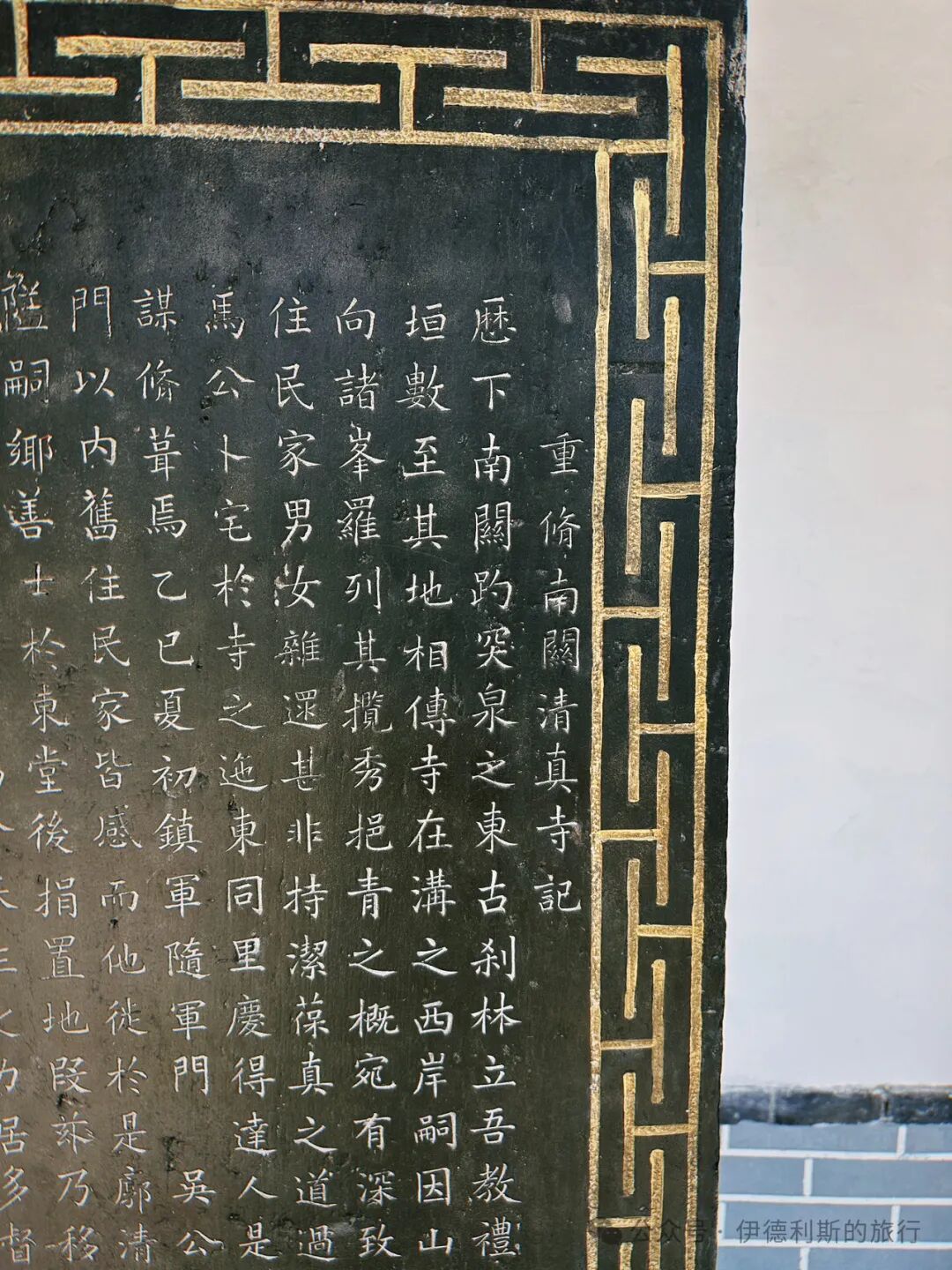
Additionally, a tablet from 1864 (3rd year of Tongzhi) titled 'Zuo Fengsheng Donates Property to Support Education' is embedded in the west lecture hall. It records that Zuo Fengsheng and his family donated two properties near the Nanguan Mosque to help pay for the school's food, oil, and coal.
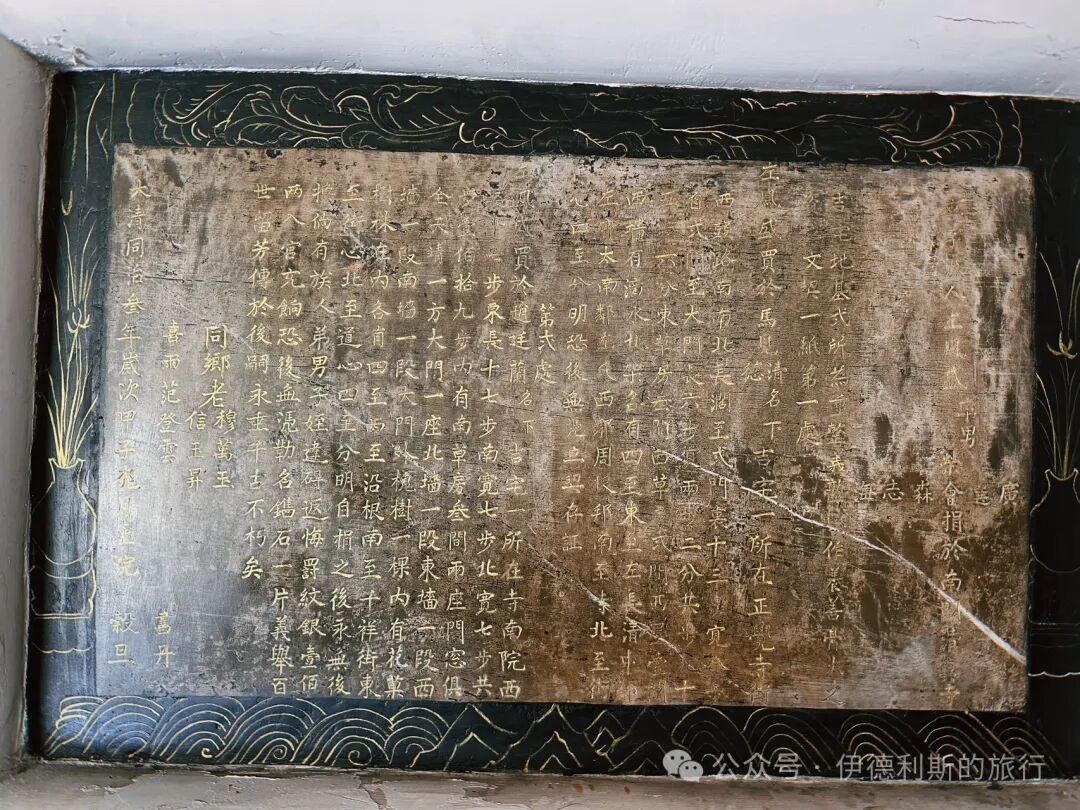
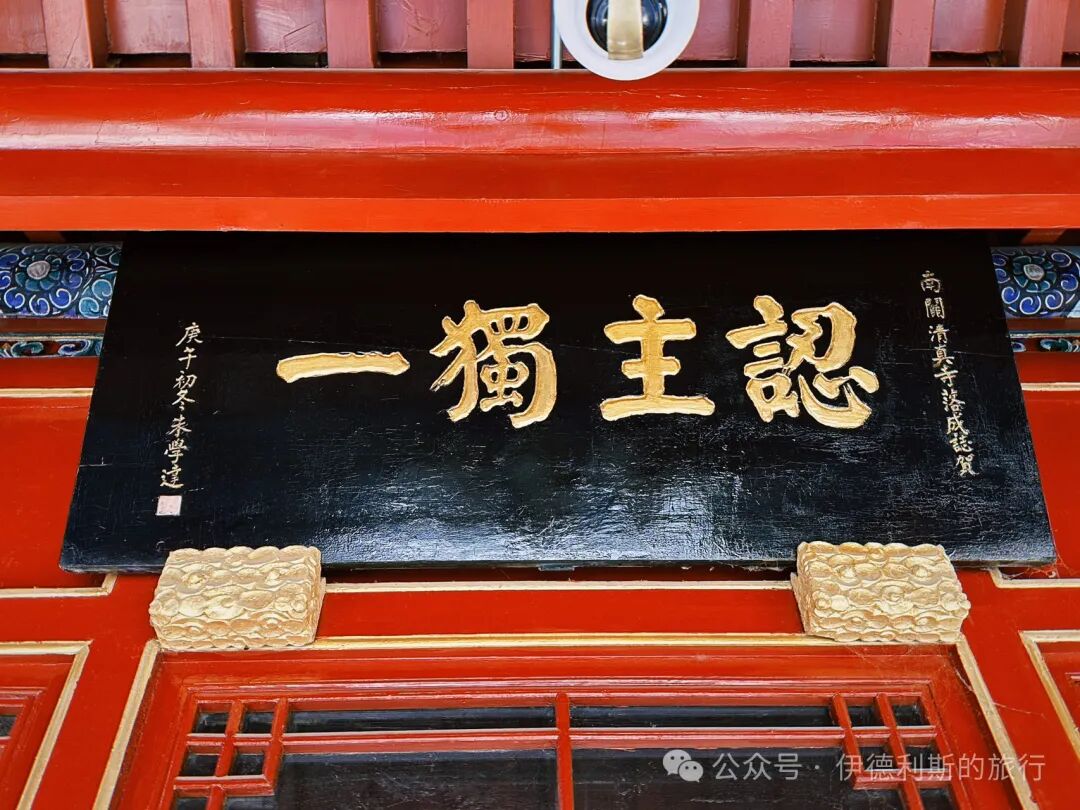
Jinan Dikou Mosque.
The Cui family of Jinan originally came from Sanlihe in Beijing. They moved to Dikou Village in Jinan during the Zhengde years of the Ming Dynasty and built the Cui family's Dikou Mosque at the end of the Wanli era. In 1708 (47th year of Kangxi), leaders like General Cui Zhiyun and officer Cui Zhenyu arranged to move the main hall of the Yang Bo residence from Shangcai County, Henan, to Dikou Village. They used the military to transport it via the Grand Canal and the Yellow River. The mosque was renovated again in 1865 (4th year of Tongzhi) to reach its current state.
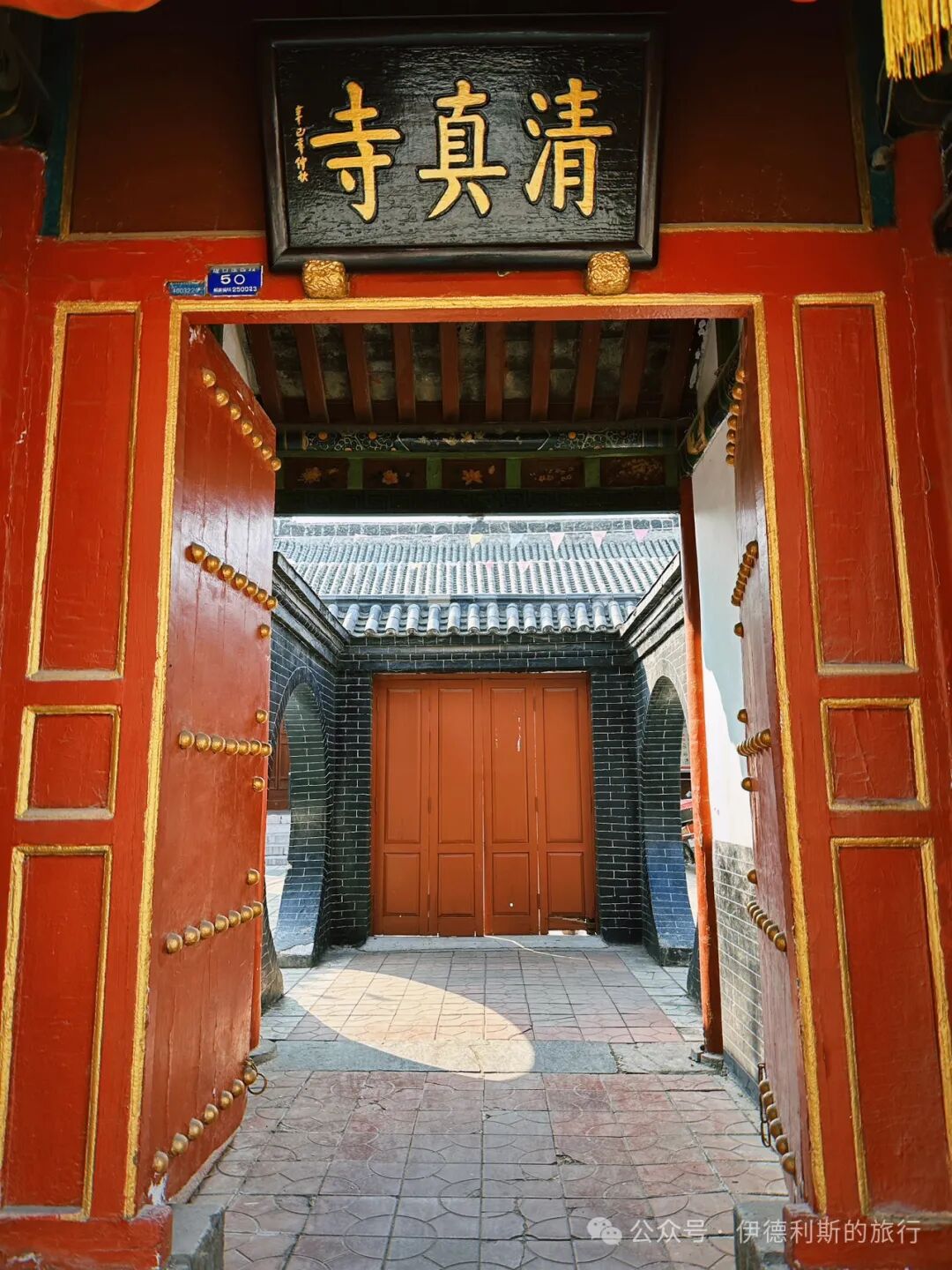
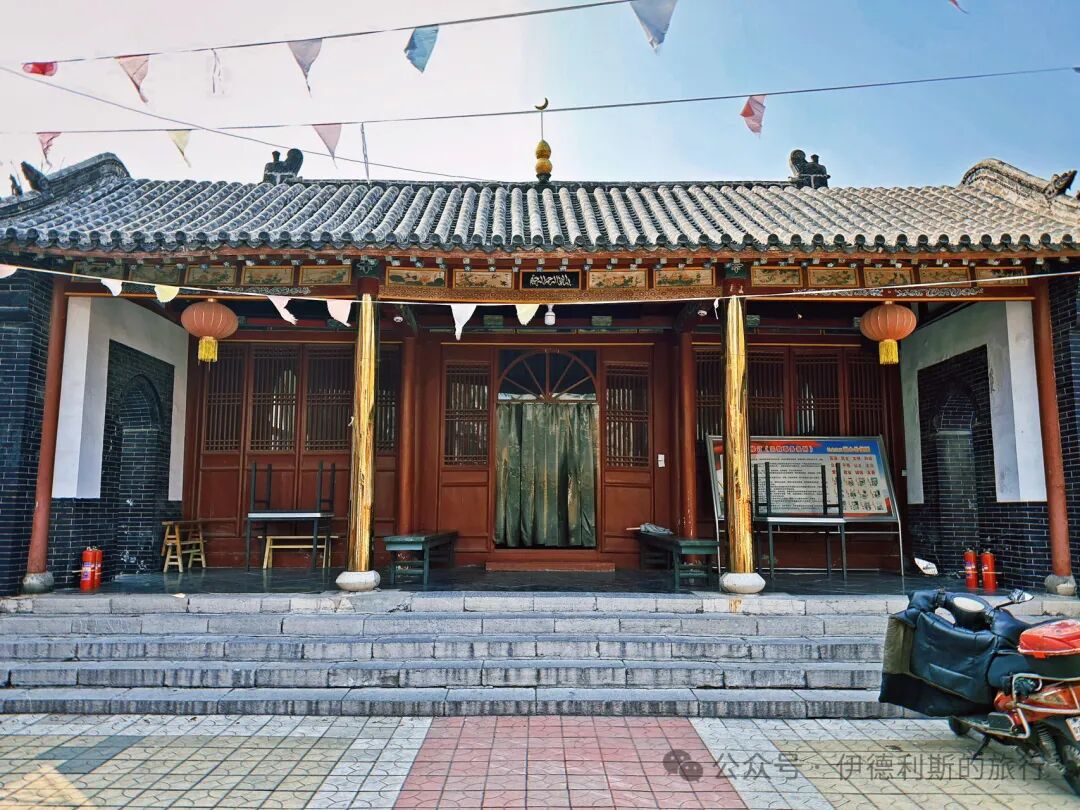
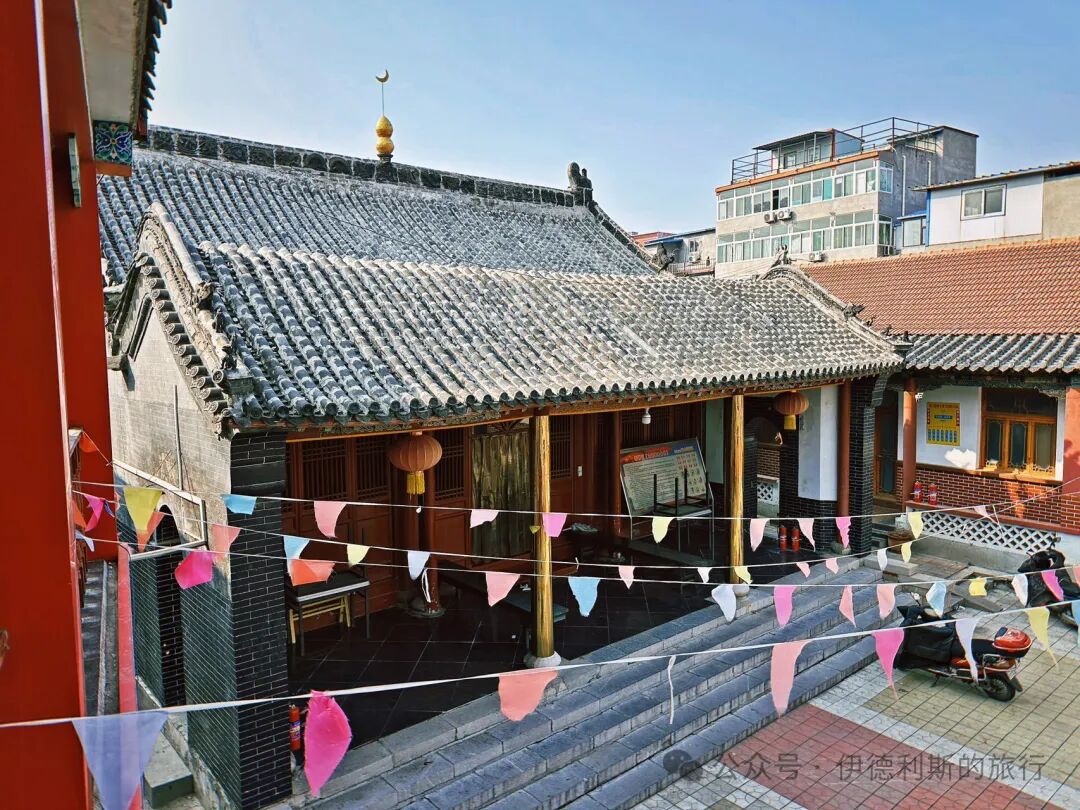
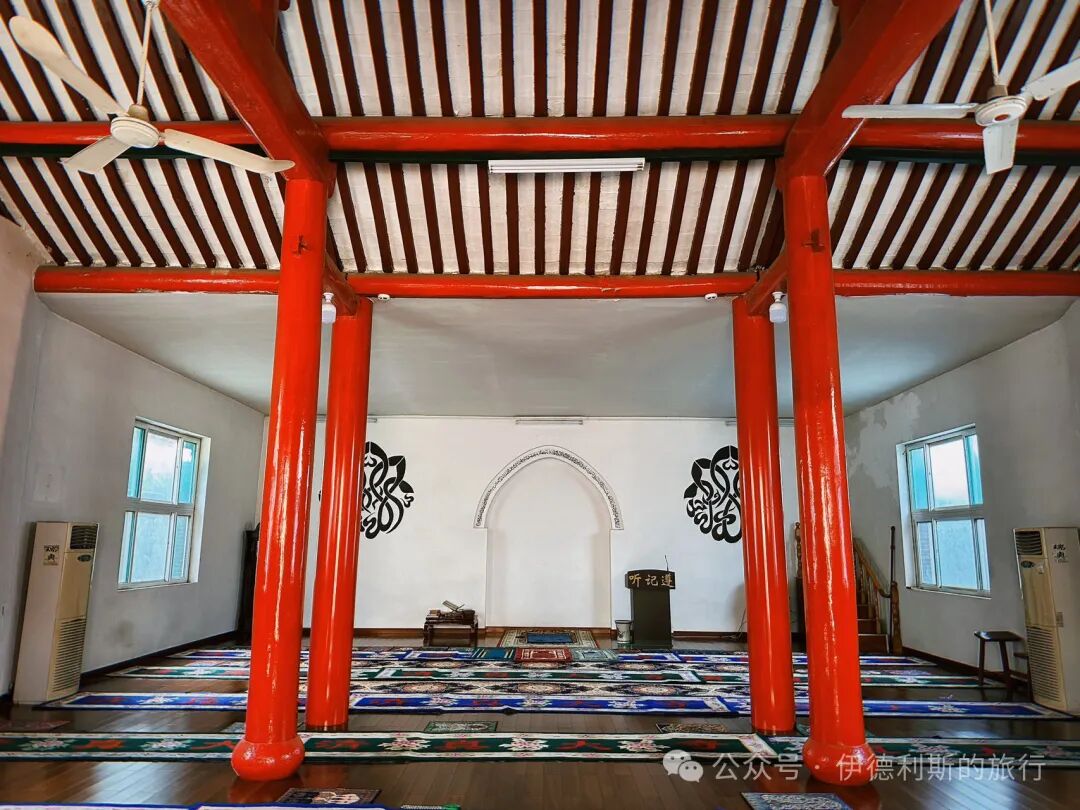
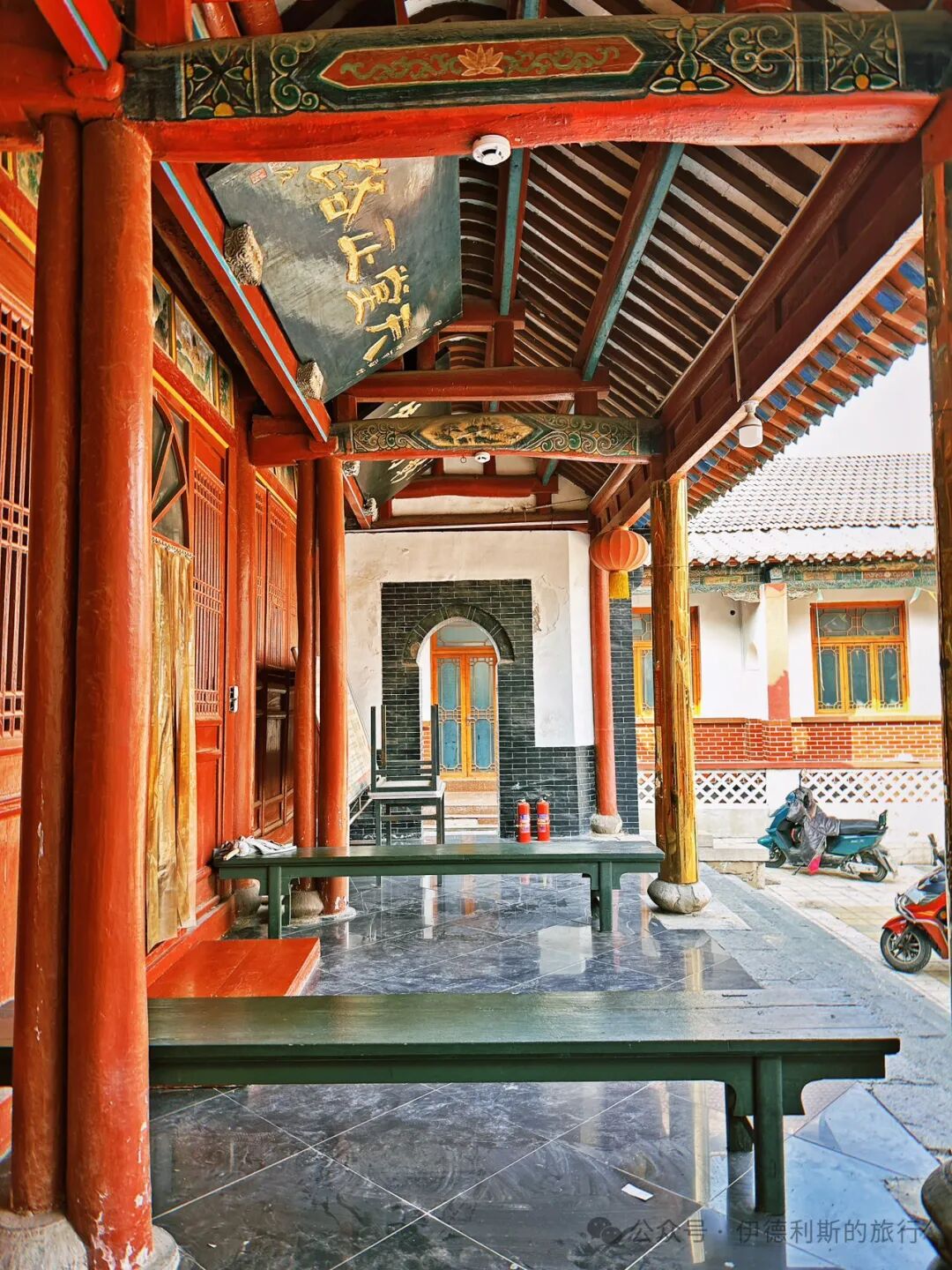
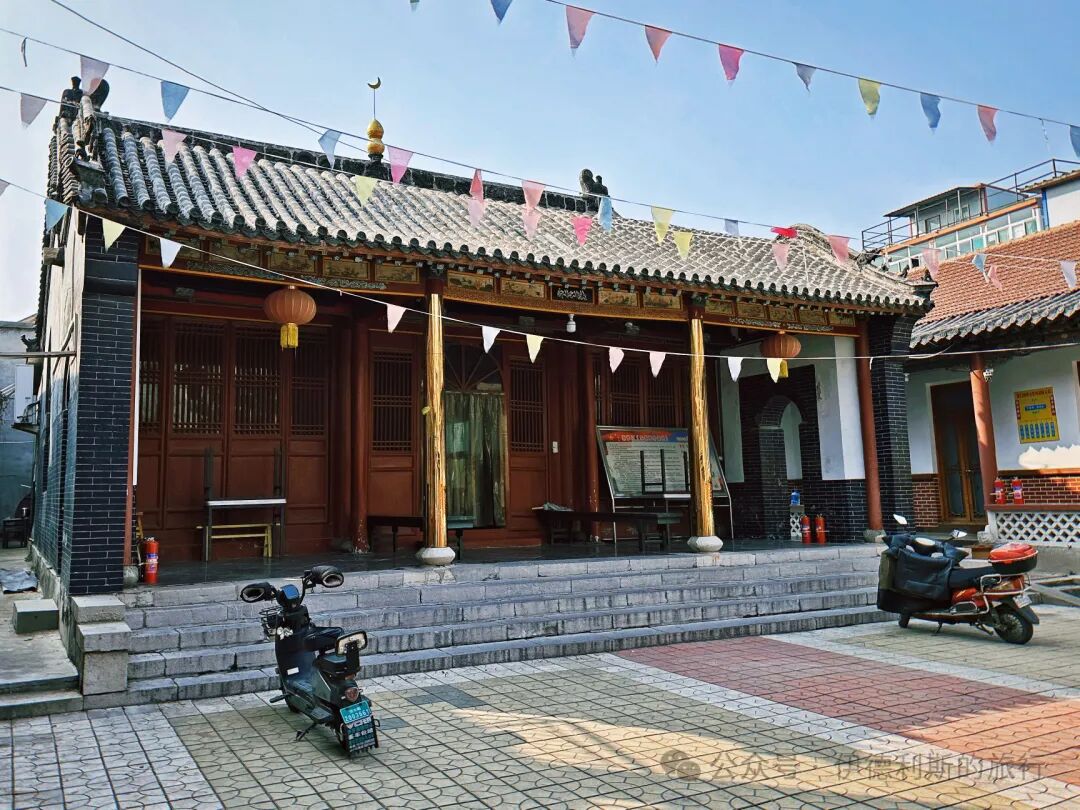
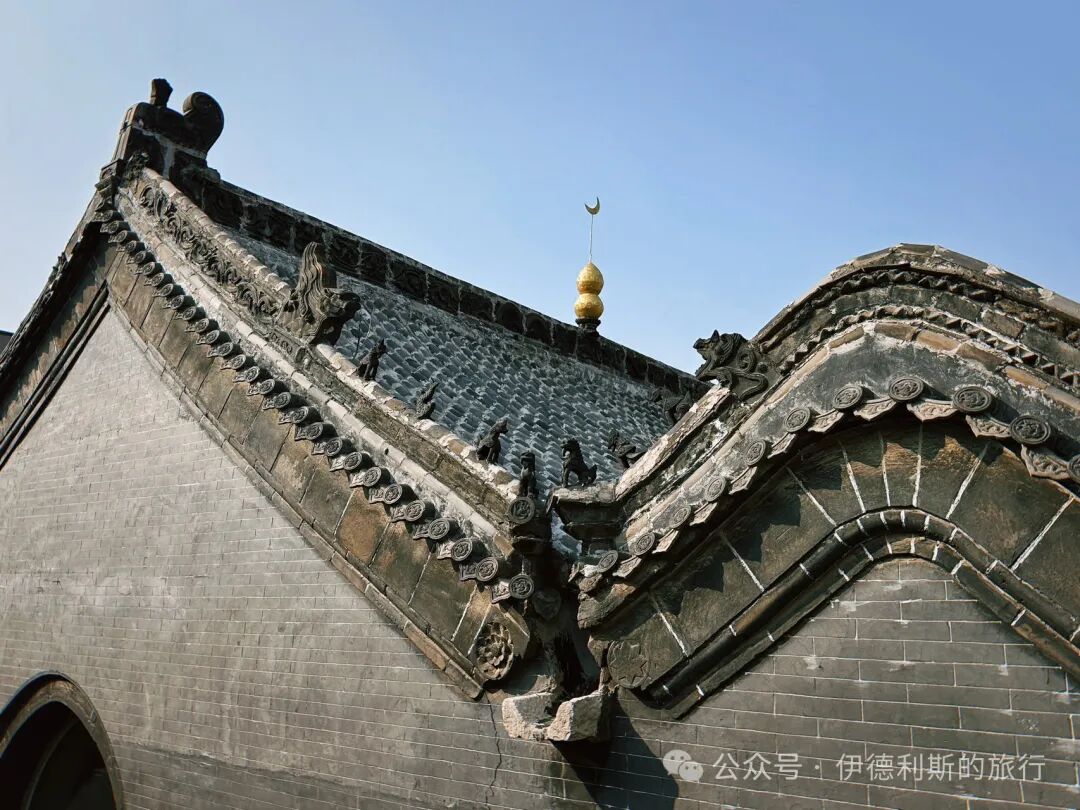
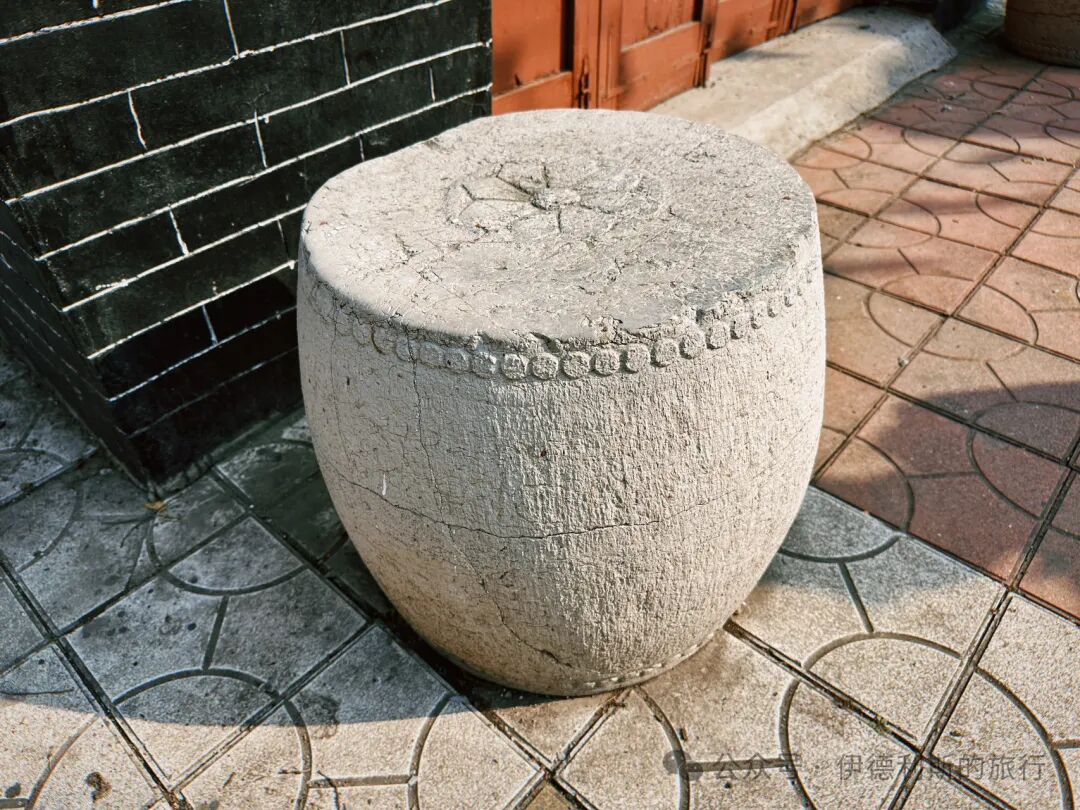
The mosque originally had a 1708 renovation tablet. Today, only the top stone carving of two dragons playing with a pearl remains, and the body of the tablet is a replica.
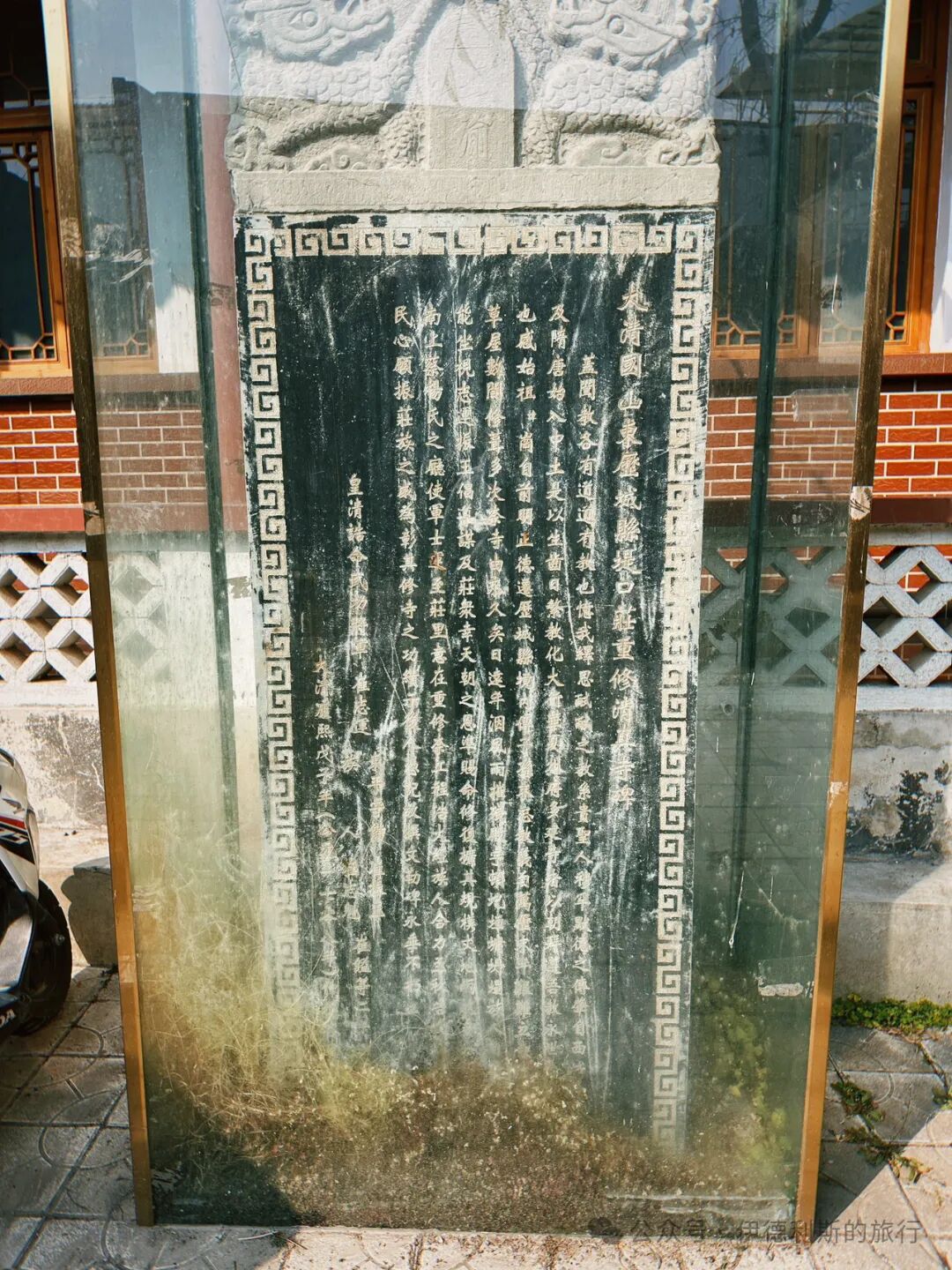
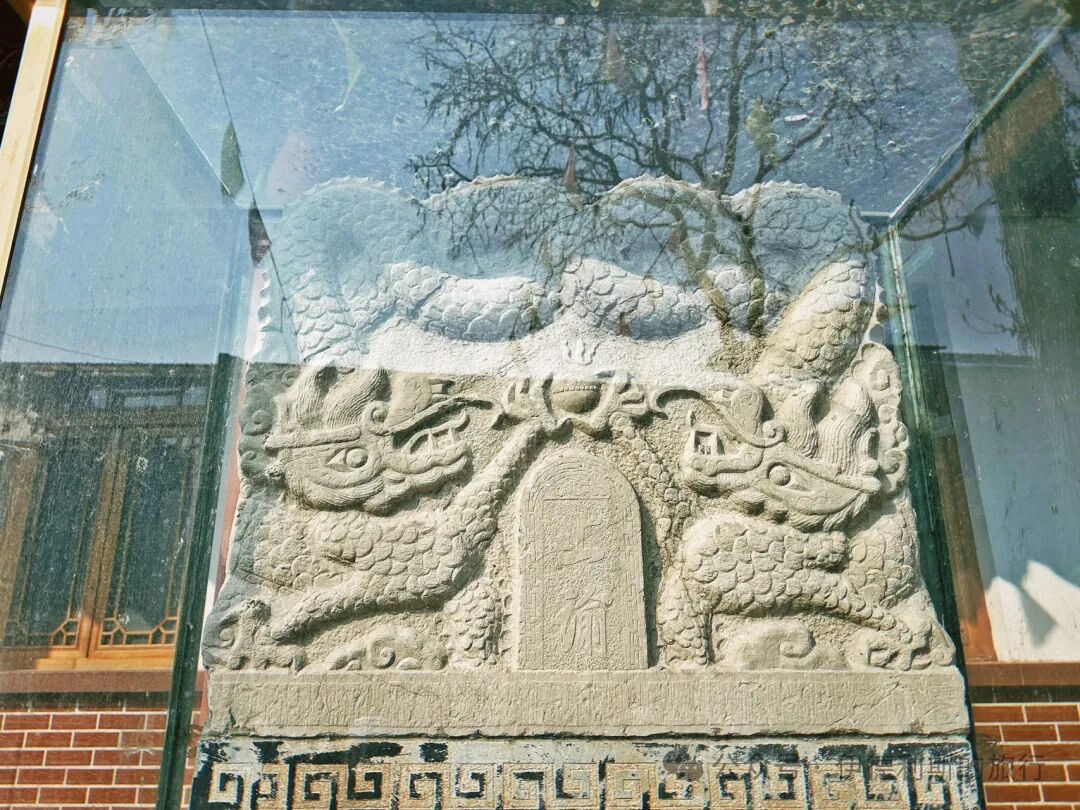
A 1789 (54th year of Qianlong) 'Land Donation Tablet' is embedded in the wall. It records that Cui Zhili, a military officer, donated his mother's burial land and his own fields to the Dikou Mosque to fund grave visits.
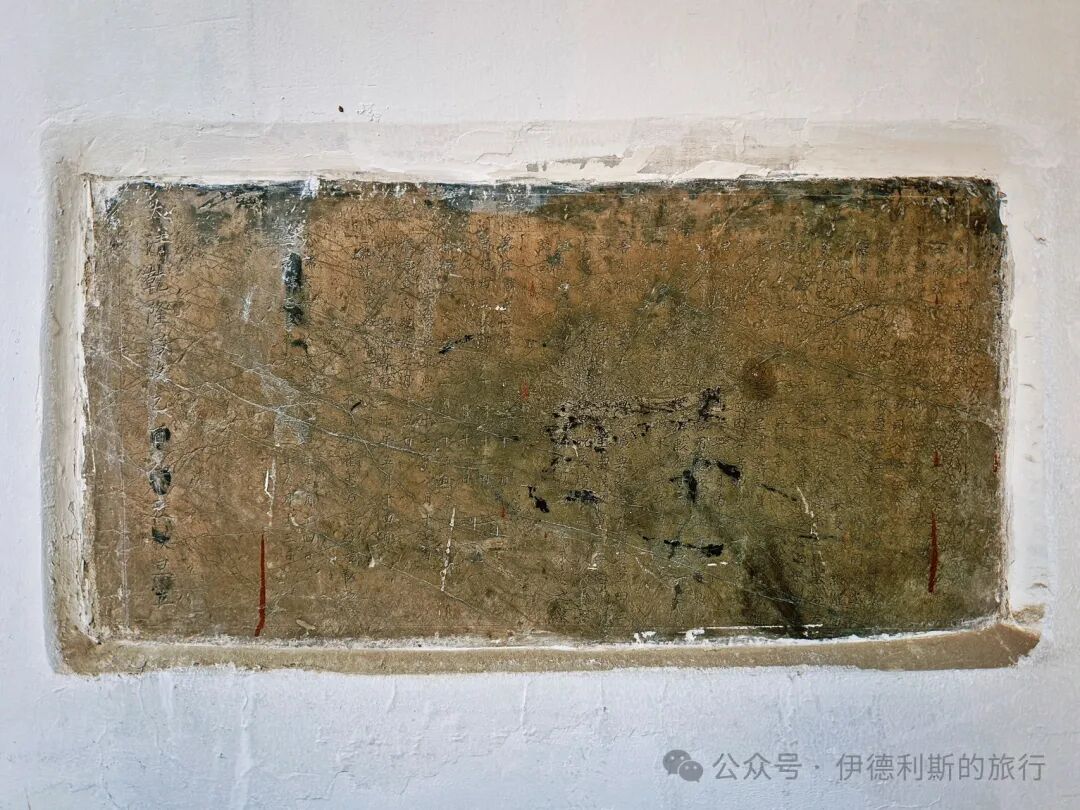
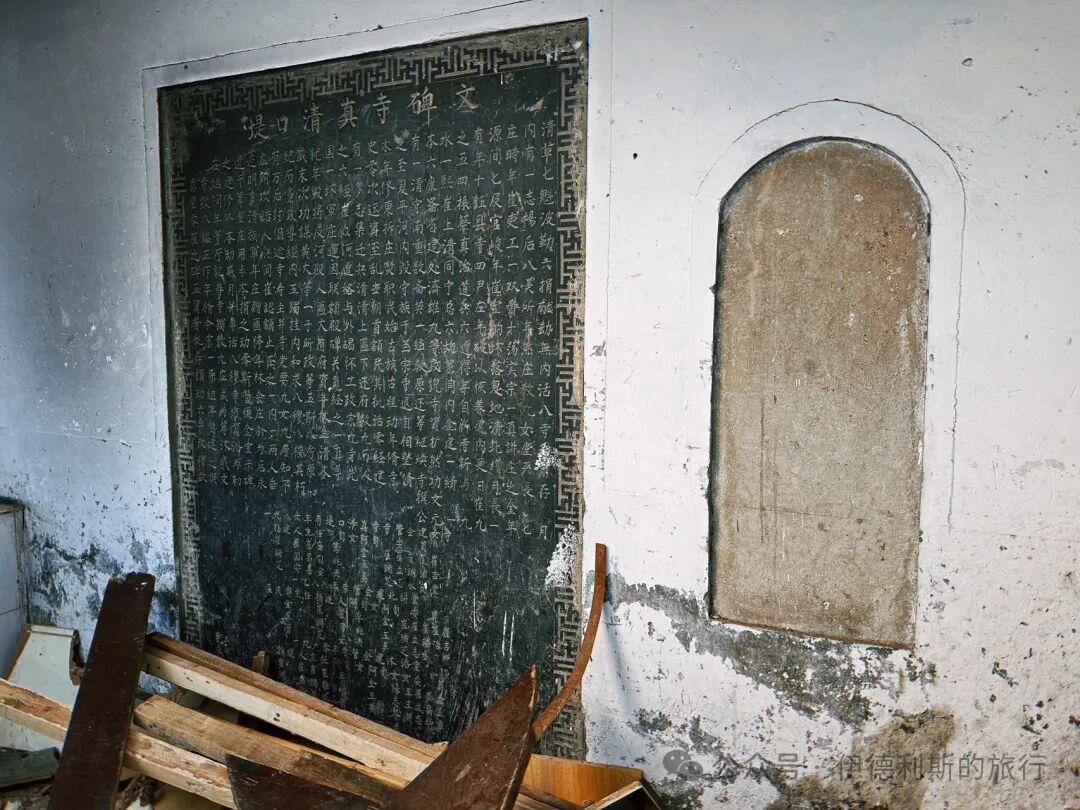
While visiting the mosque, I was recognized by Imam Wang. We had been WeChat friends for a long time but had never met in person. Imam Wang told me about the Dikou Mosque and took me to the second-floor exhibition hall. It shows the folk culture of Dikou Village and the history of the local Cui family of Hui Muslims.
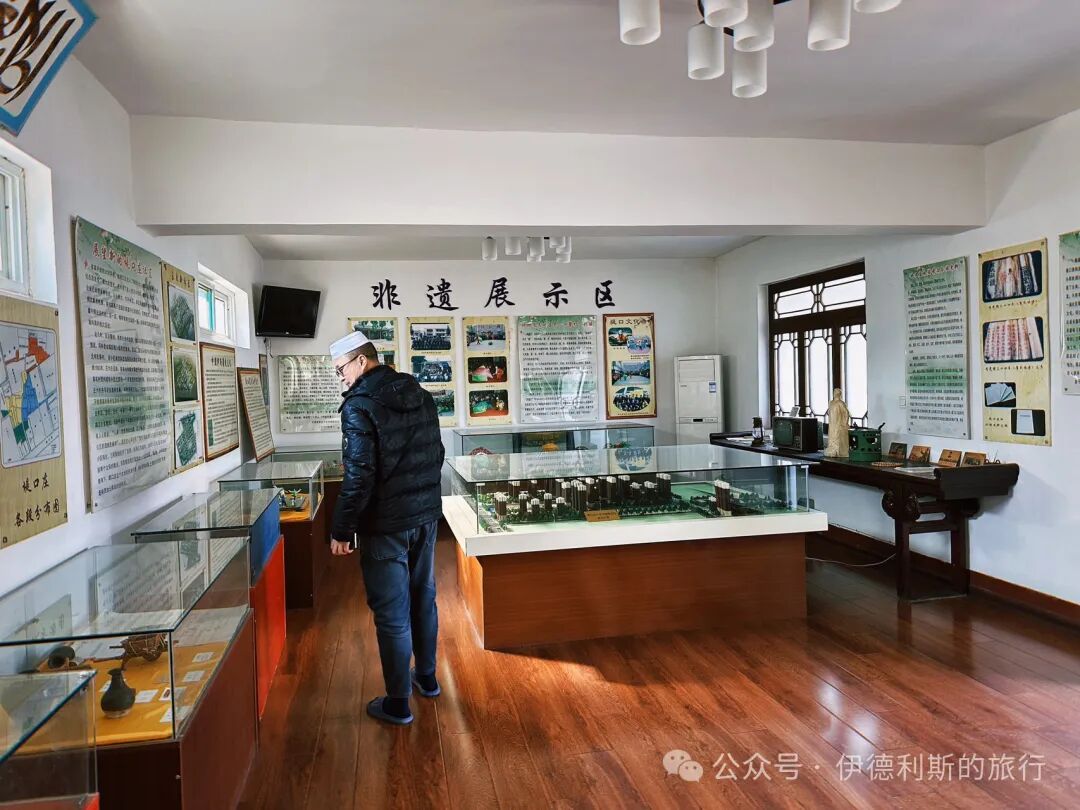
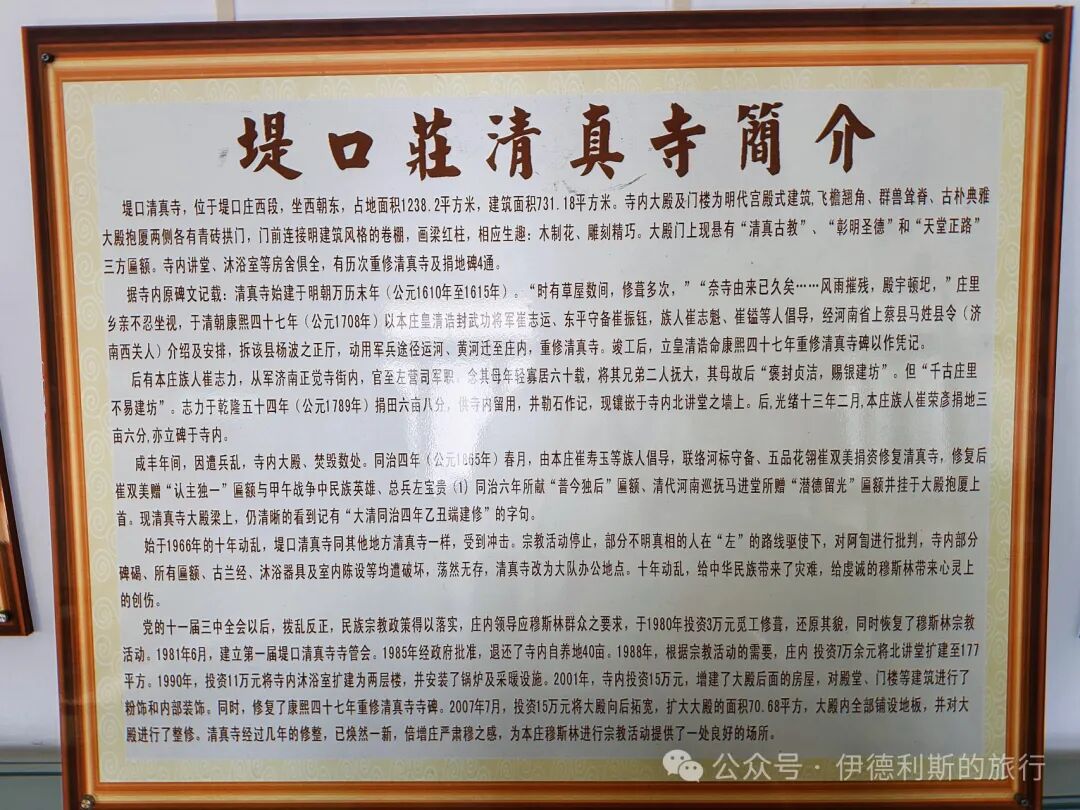
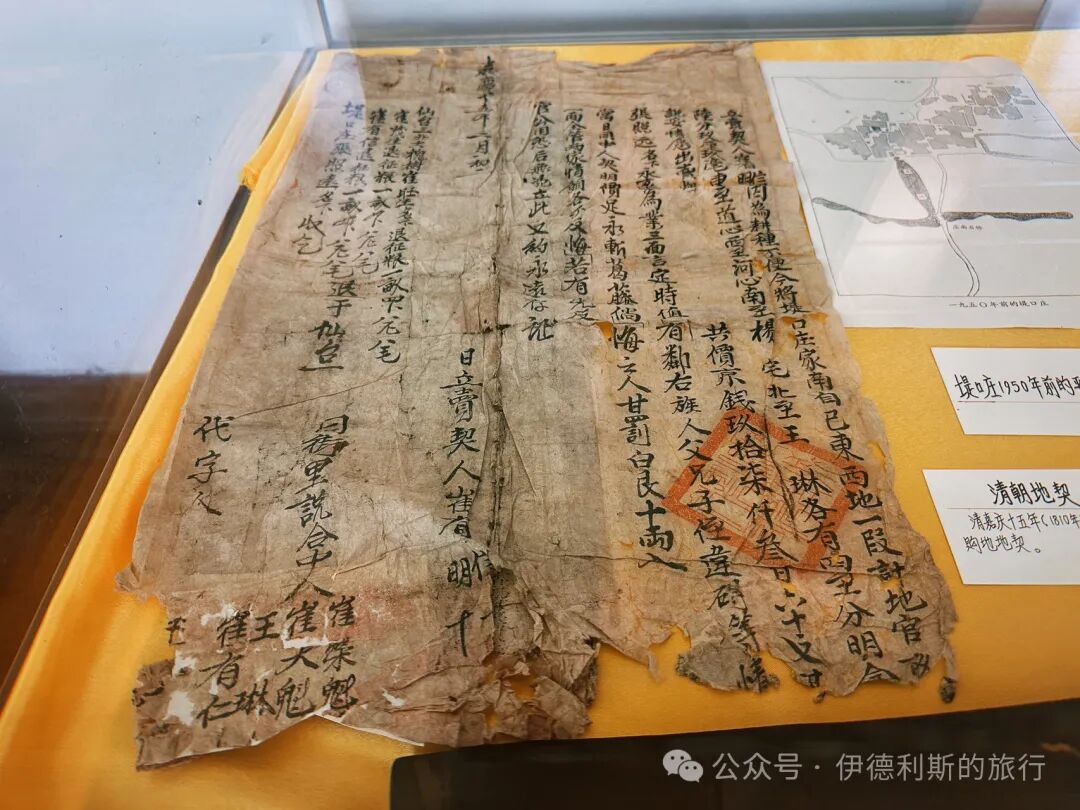
Dangxi Mosque.
Dangxi Mosque is in Dangjia Village in the southern suburbs. It was first built at the end of the Yuan Dynasty, burned down by the Red Turban Army, and rebuilt in 1397 (30th year of Hongwu). It was renovated many times during the Ming, Qing, and Republican eras and is an important ancient mosque in Jinan.
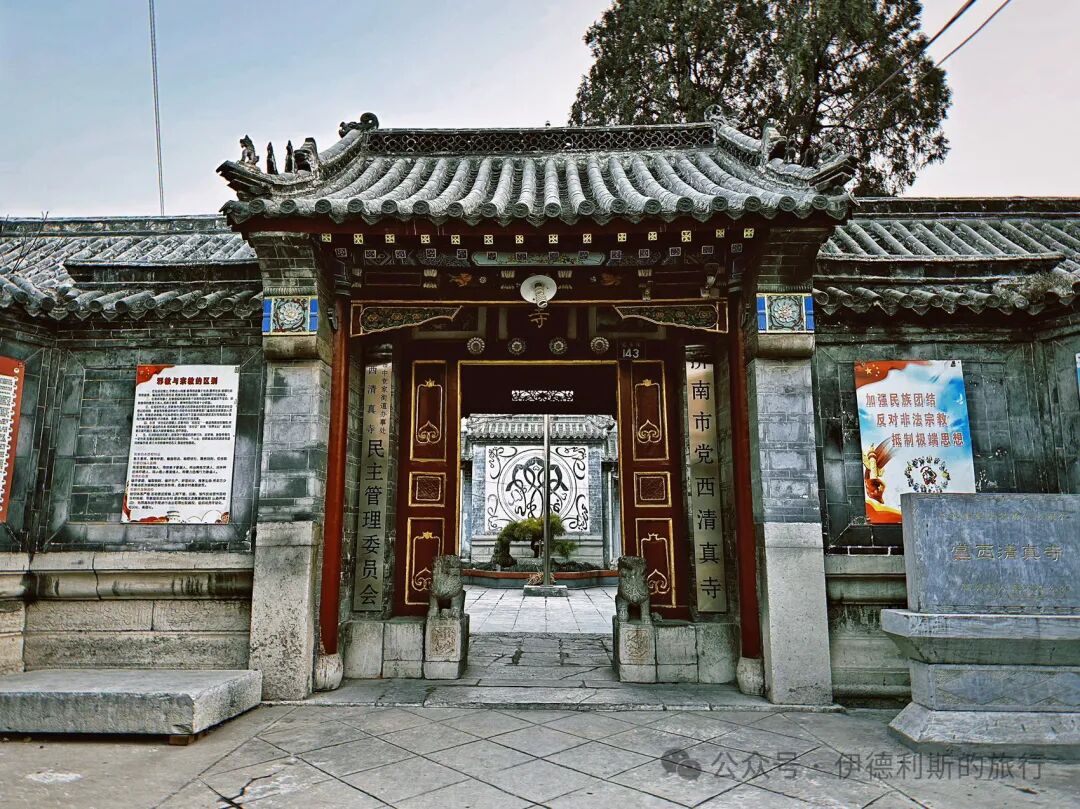
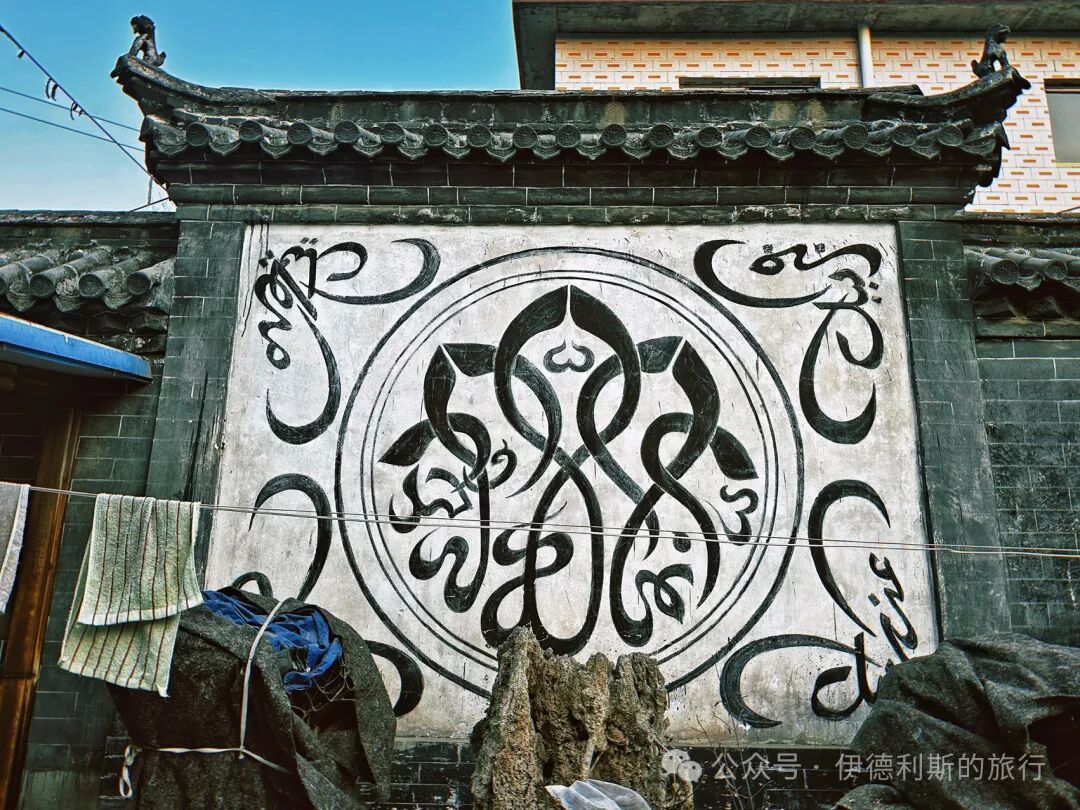
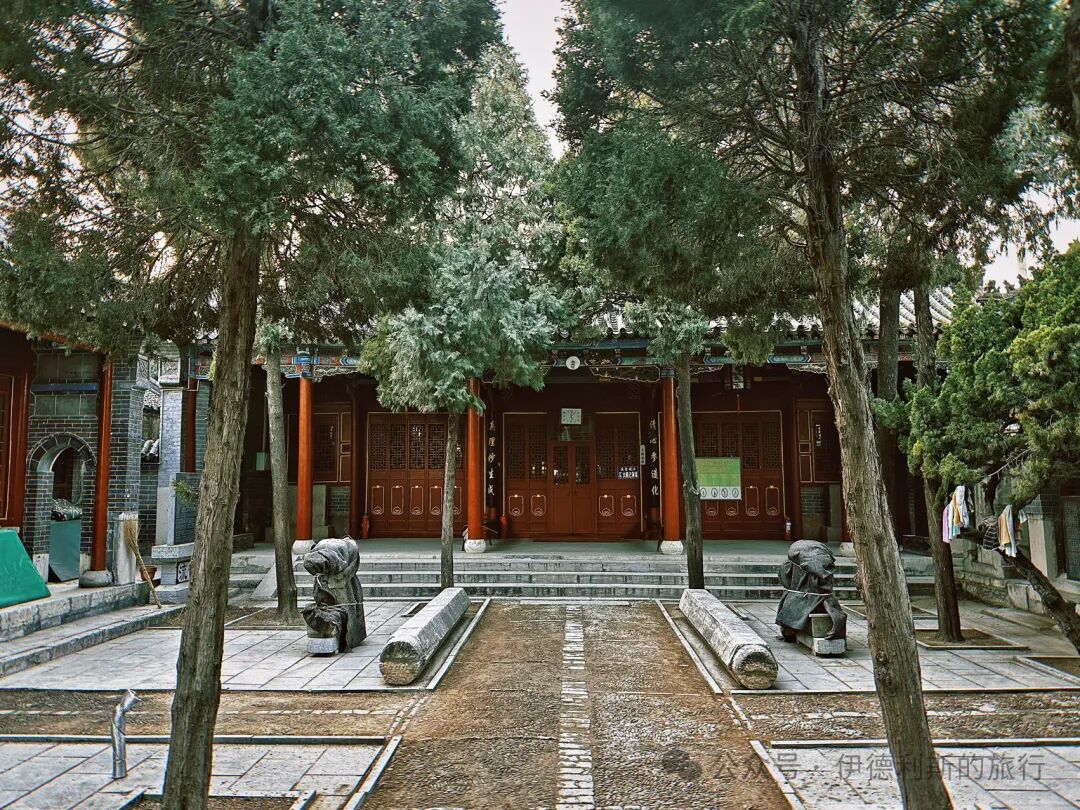
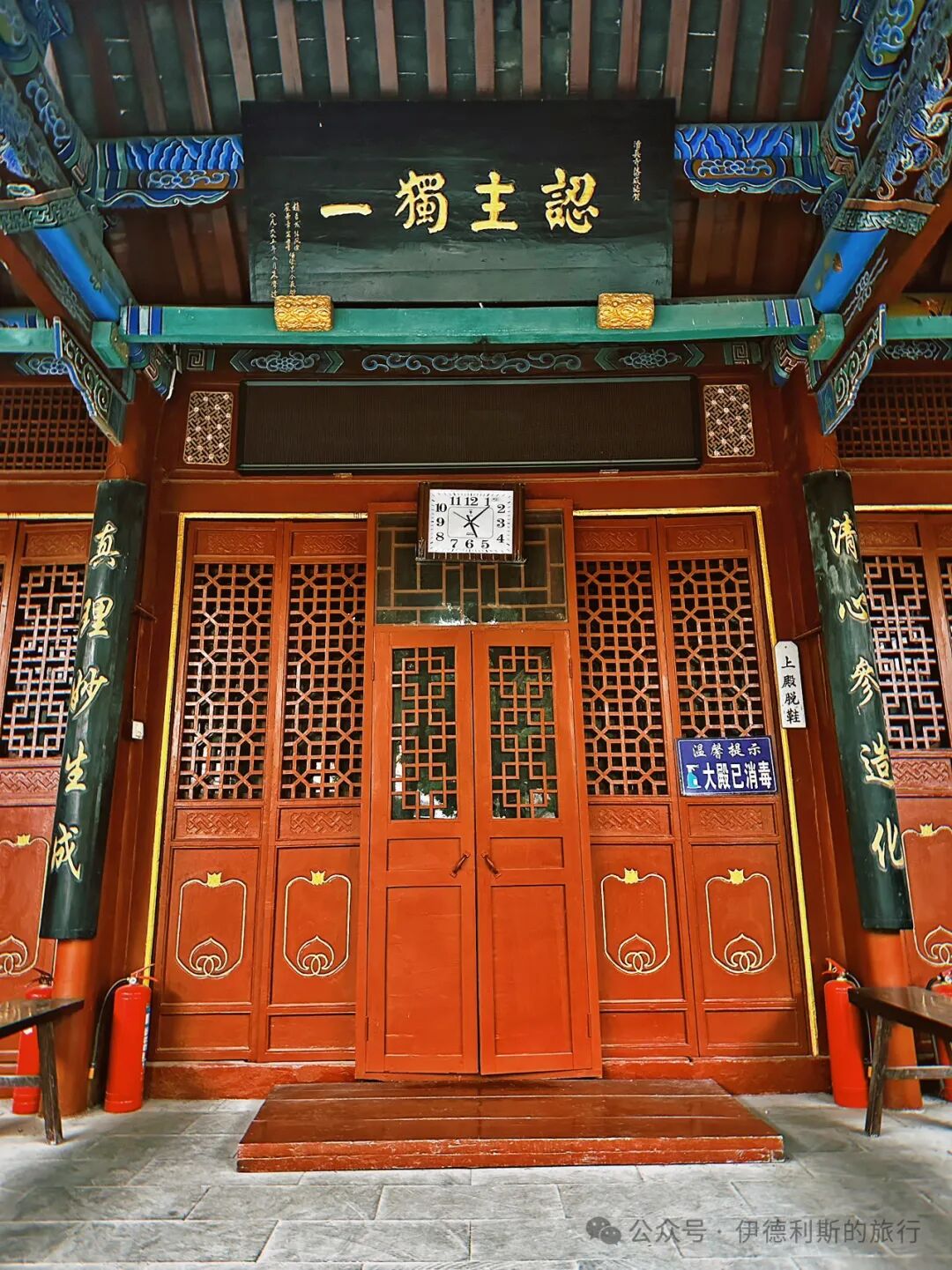
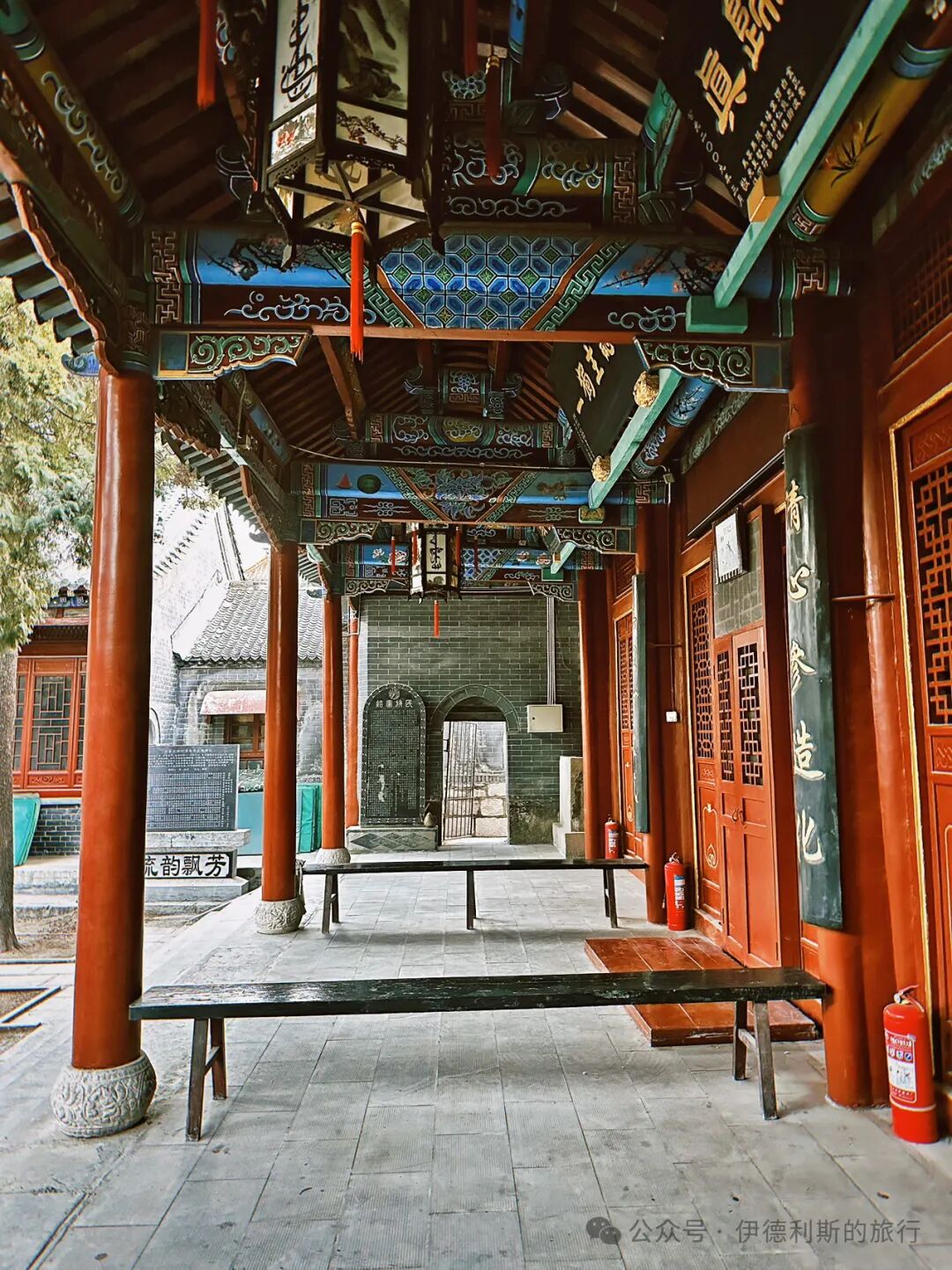
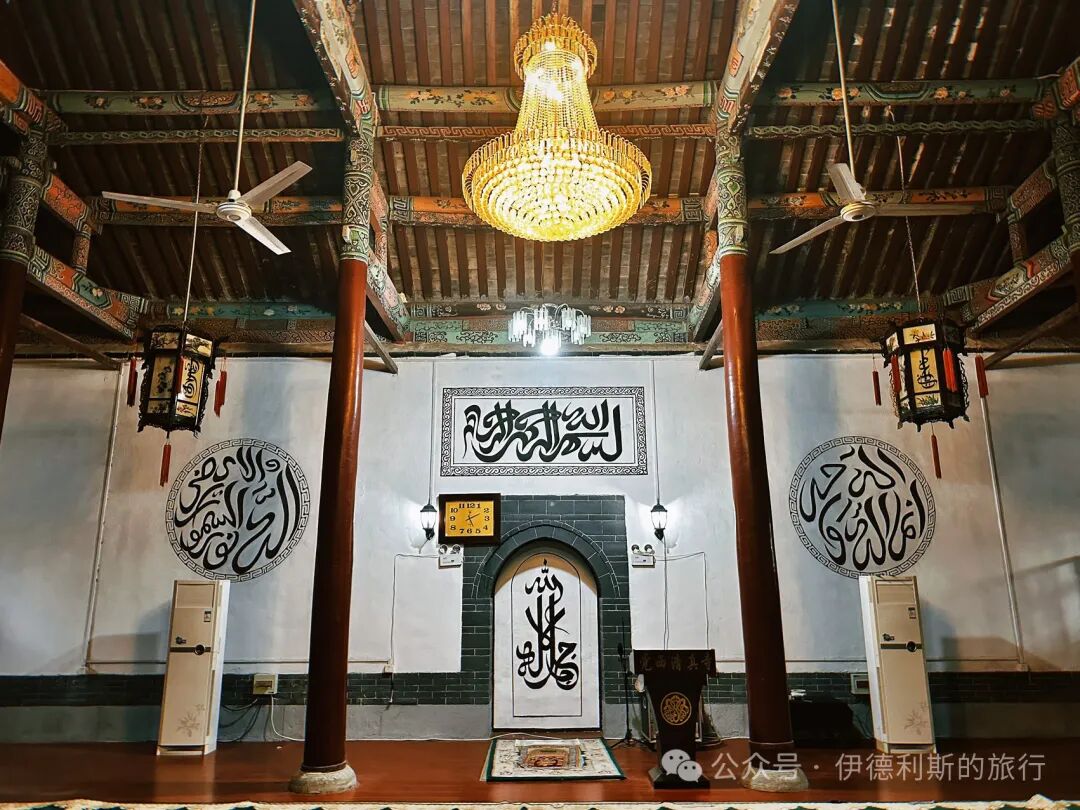
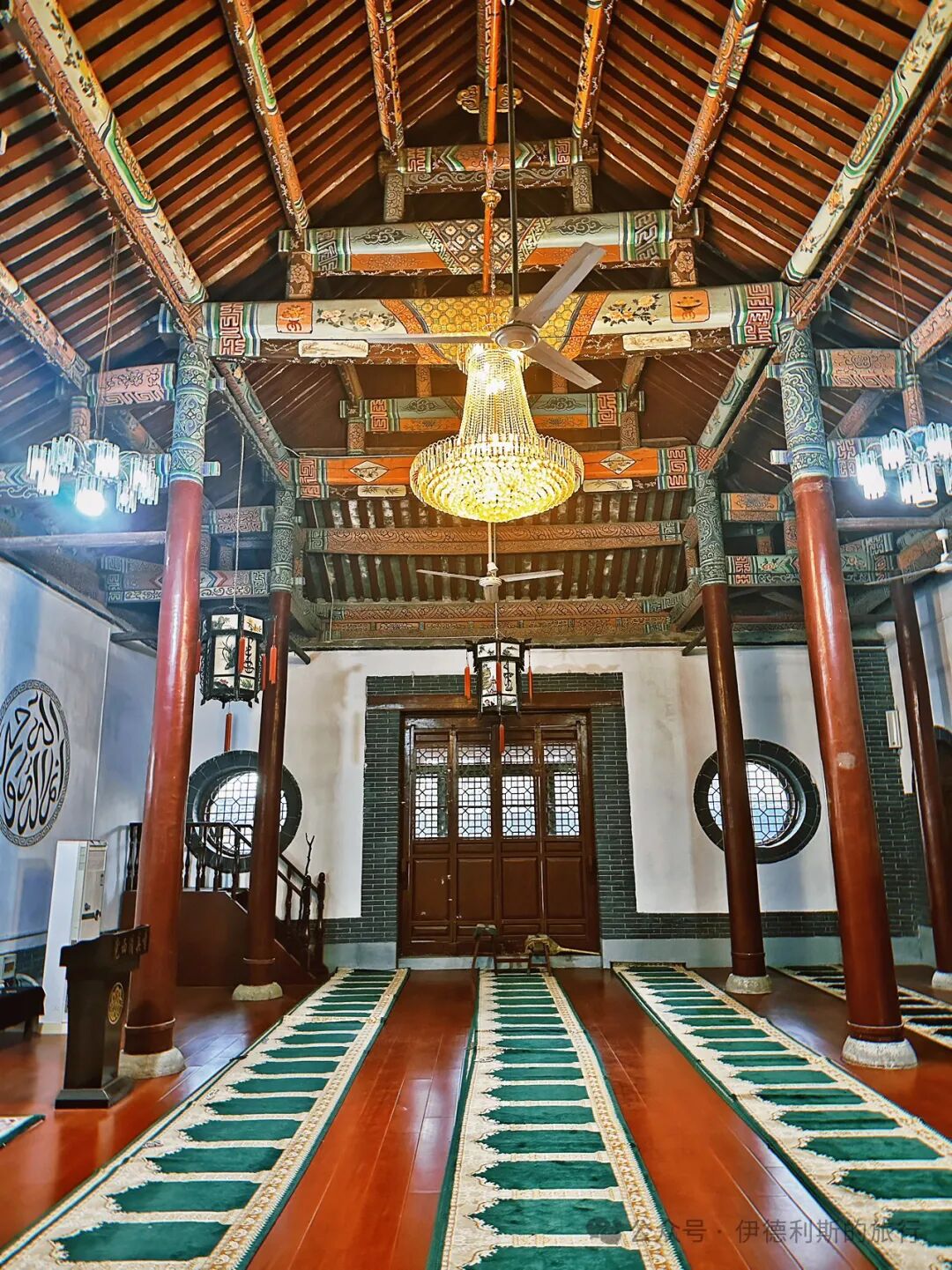
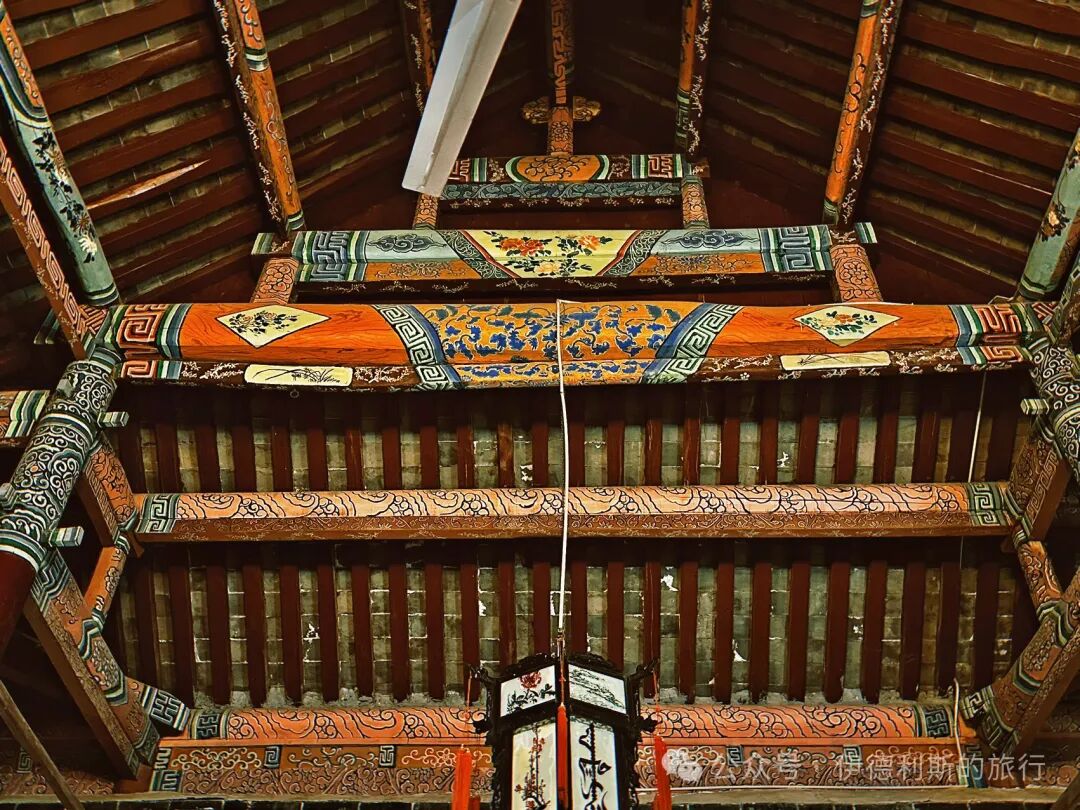
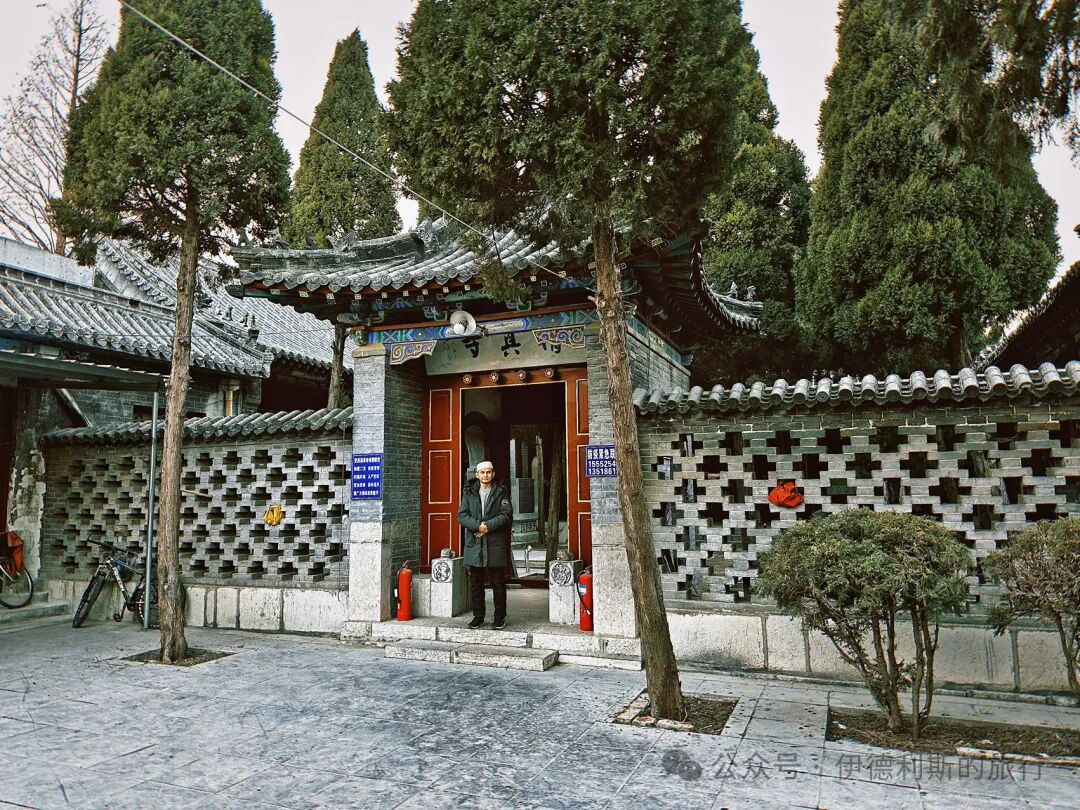
On May 3, 1928, the Japanese army intentionally massacred Chinese troops in Jinan, an event known as the May 3rd Incident. On May 6, Chiang Kai-shek and Bai Chongxi led their troops to retreat into the Dangxi Mosque, where they held an emergency meeting to plan military strategy. During this time, the Japanese army shelled Dangxi Village. One shell pierced the main beam of the Dangxi Mosque but did not explode, becoming a historical witness to the Jinan Incident. When the Dangxi Mosque was renovated in 1995, the beam was replaced and has been on display in the main hall ever since to remind future generations not to forget the national humiliation.
The 1891 (17th year of Guangxu) 'Jin Family Repeated Donations and Renovations Tablet'. It records how four generations of the Jin family donated money and goods to renovate the mosque during the Jiaqing, Daoguang, Tongzhi, and Guangxu eras.
The 1941 stele record for the renovation of the mosque walls and bathhouse.
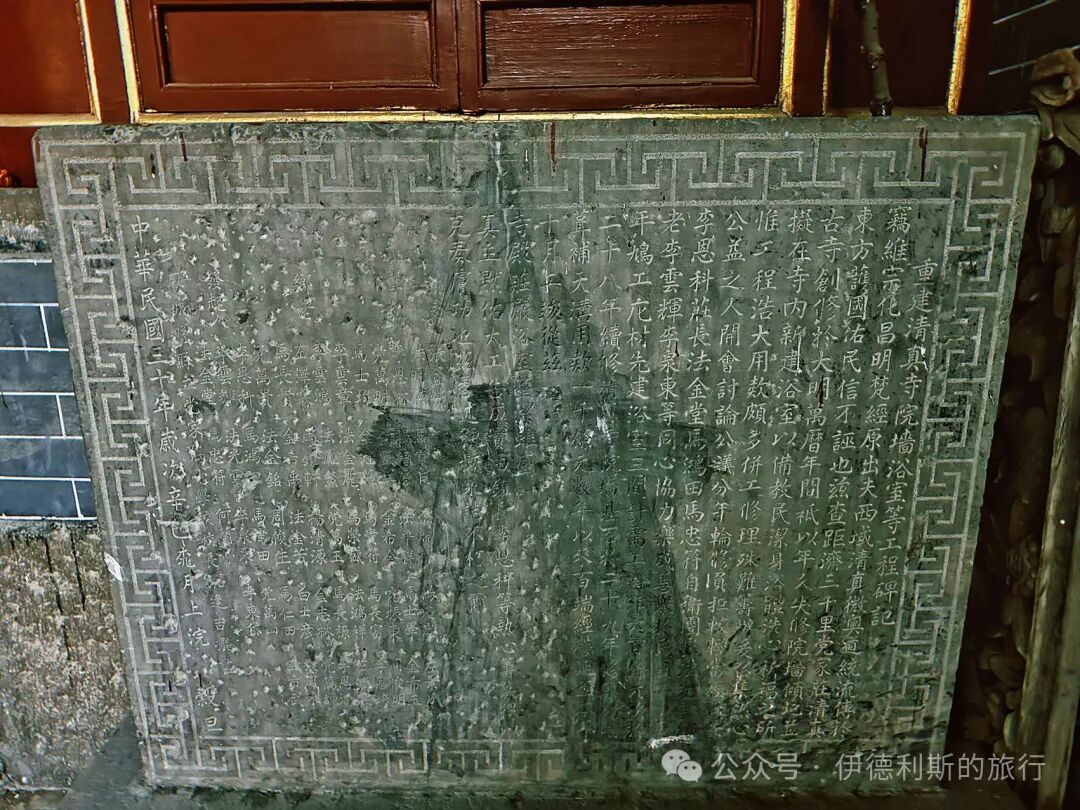
The 1941 stele for the renovation of the Dangjiazhuang Elementary School. Both steles were written and calligraphed by Zhang Fengji, the principal of Dangjiazhuang Elementary School.
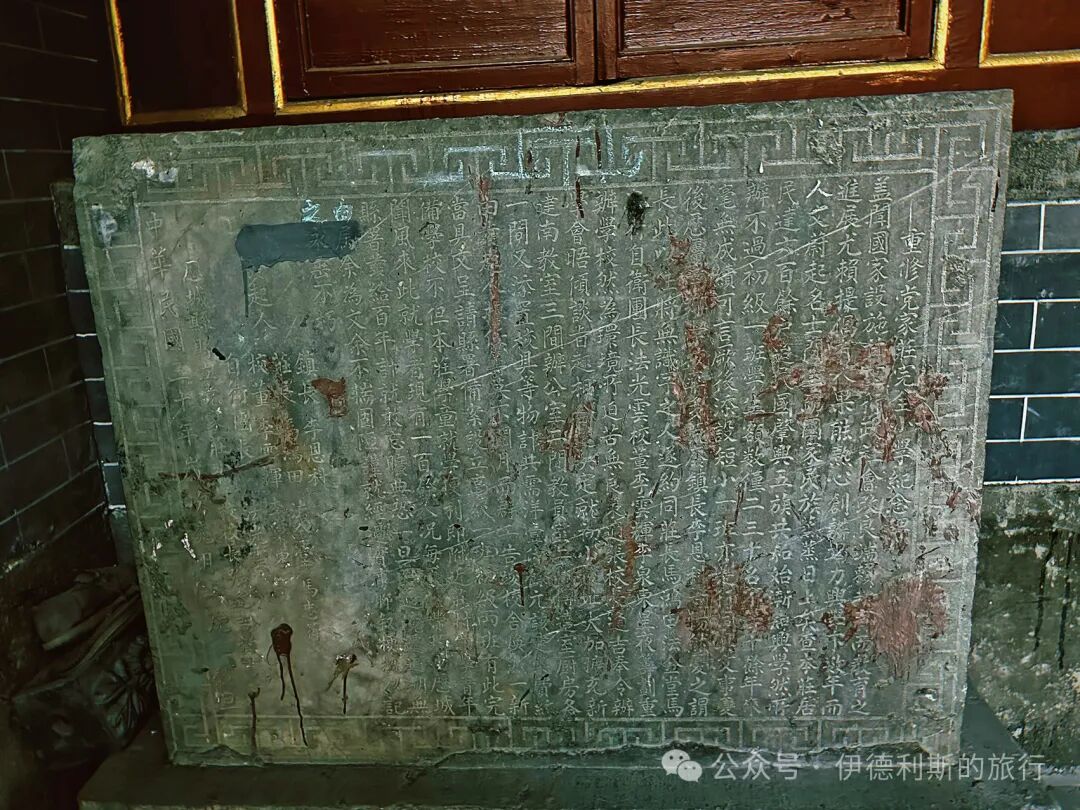
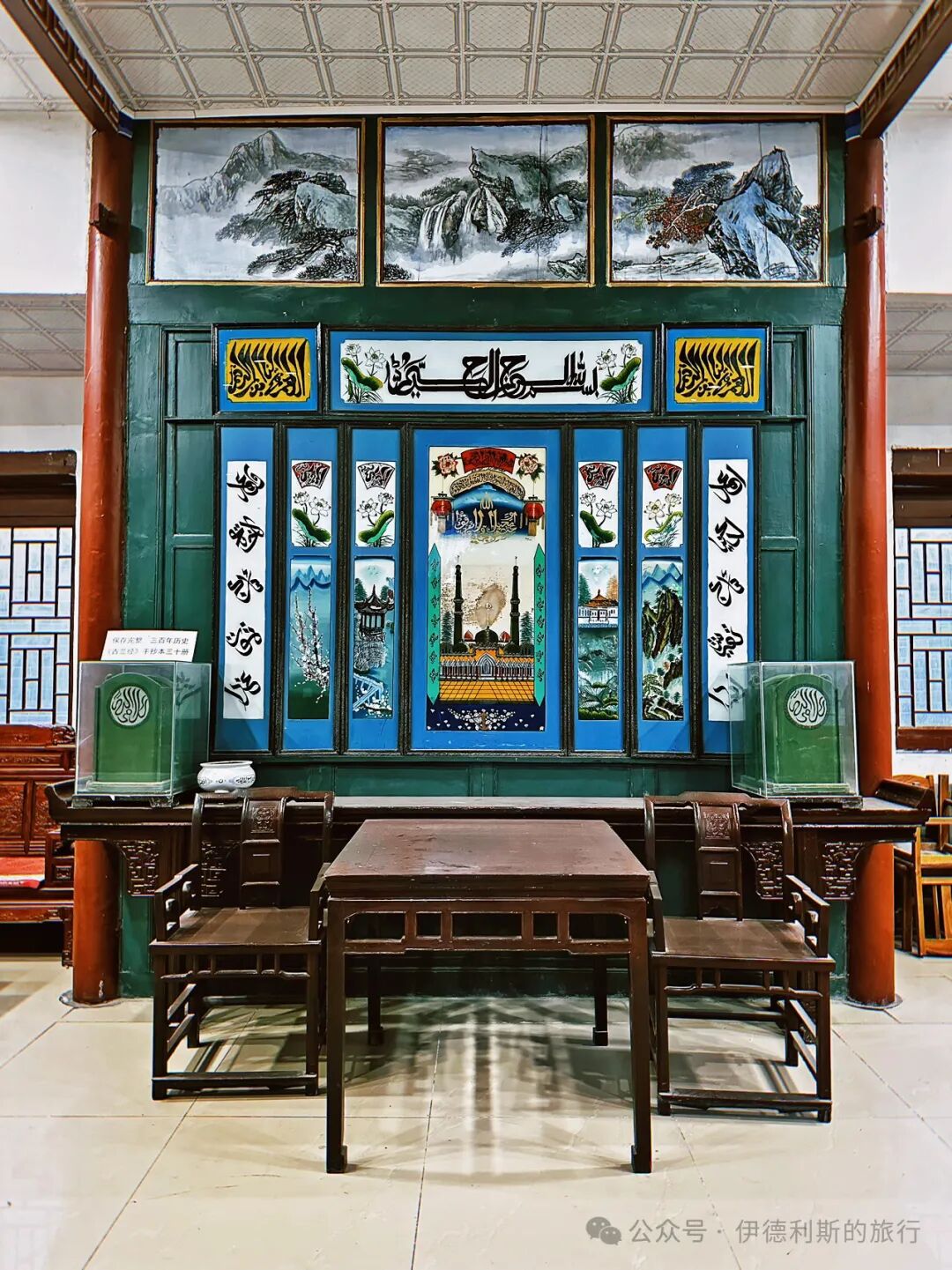
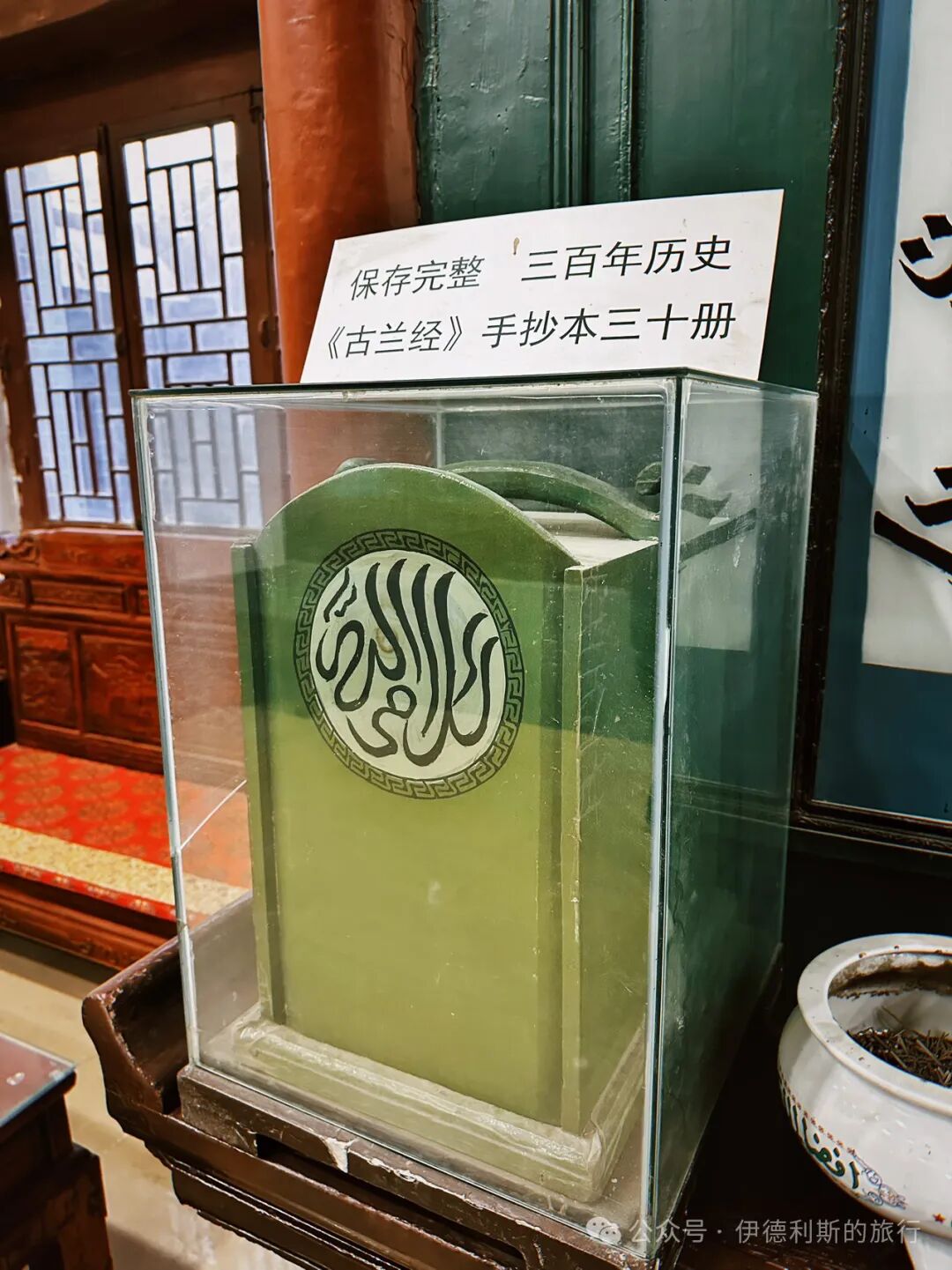
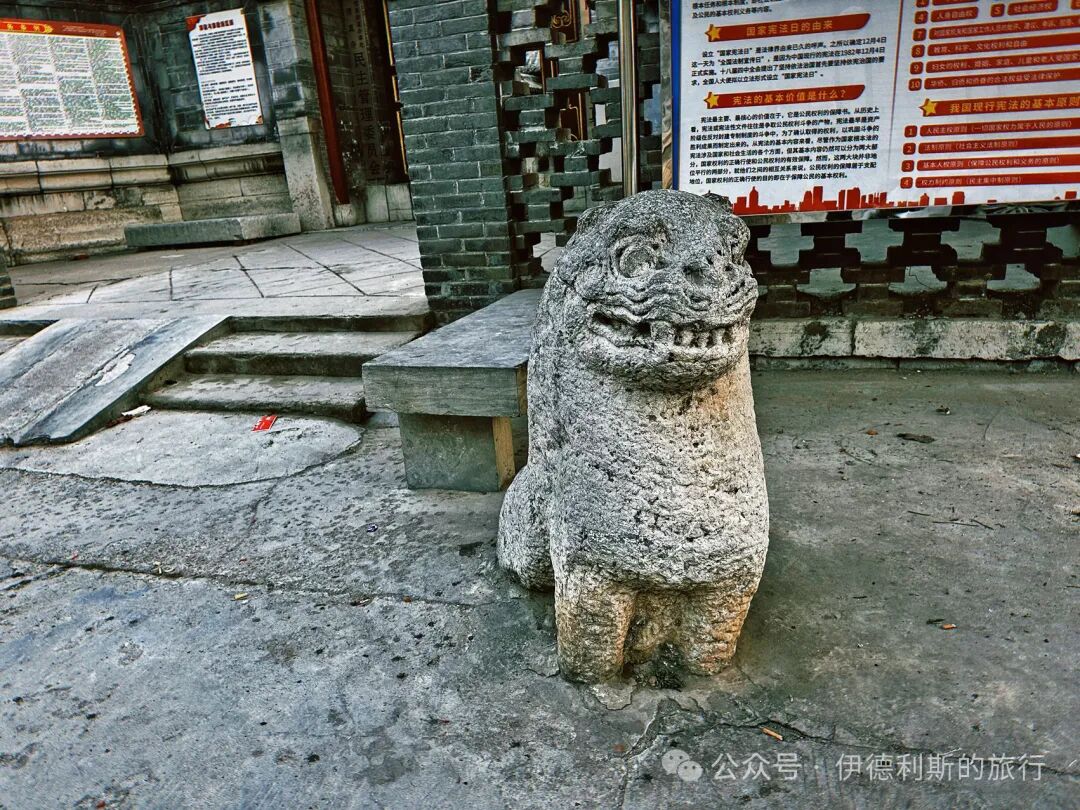
Dangdong Mosque.
Dangdong Mosque is located in the East Village of Dangjiazhuang in the southern suburbs. It was first built in 1510 (the fifth year of the Zhengde reign of the Ming Dynasty) and was renovated several times during the Qing Dynasty reigns of Yongzheng and Qianlong, as well as during the Republican period. Records show that Dangdong Village was originally Zhuguanzhuang, a place set up for refugees in the early years of the Hongwu reign of the Ming Dynasty. Local Hui Muslims originally went to Dangxi Mosque for namaz. In the early years of the Zhengde reign, Chen Xi, the chief imam (zhangjiao) of Shandong, raised funds. Fa Zongxian, the commander of the Jinan Guard, and local Hui Muslims managed the purchase of land and materials to build Zhuguanzhuang Mosque, which was later renamed Dangdong Mosque.
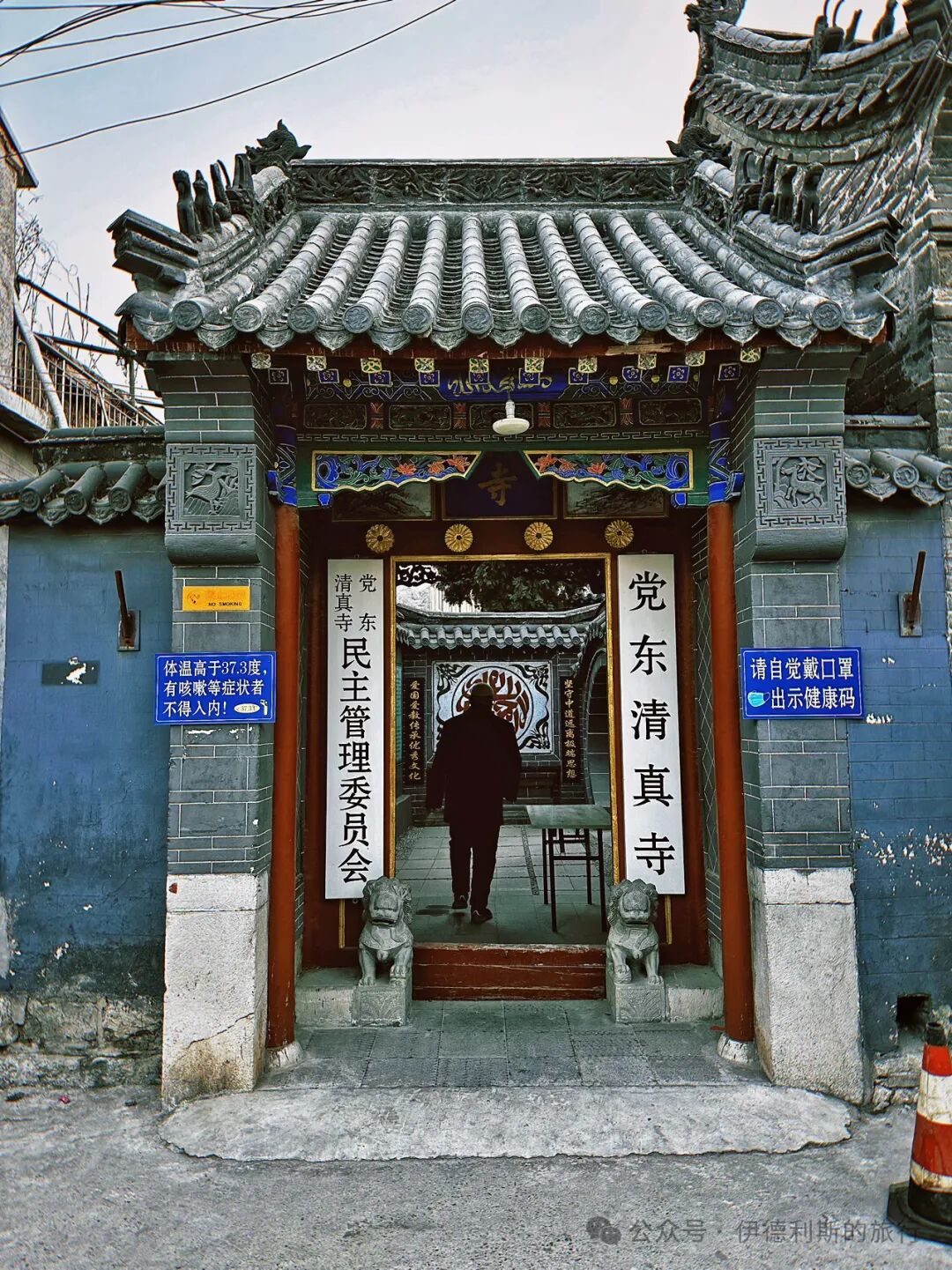
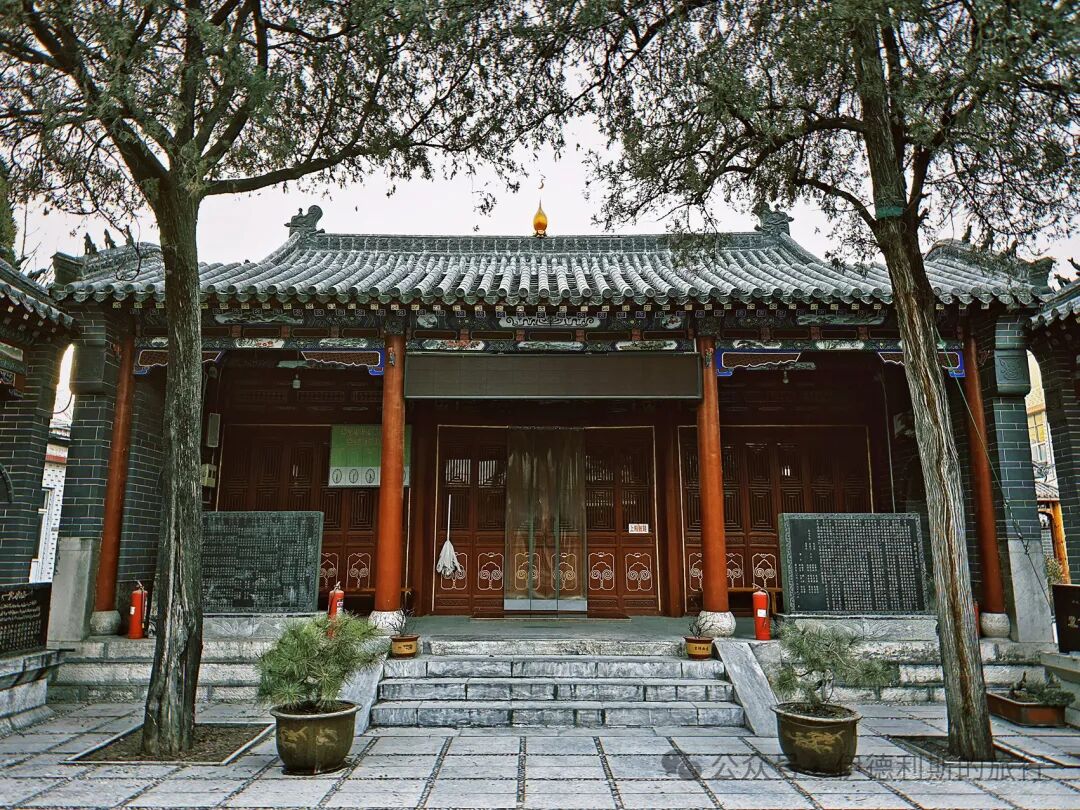
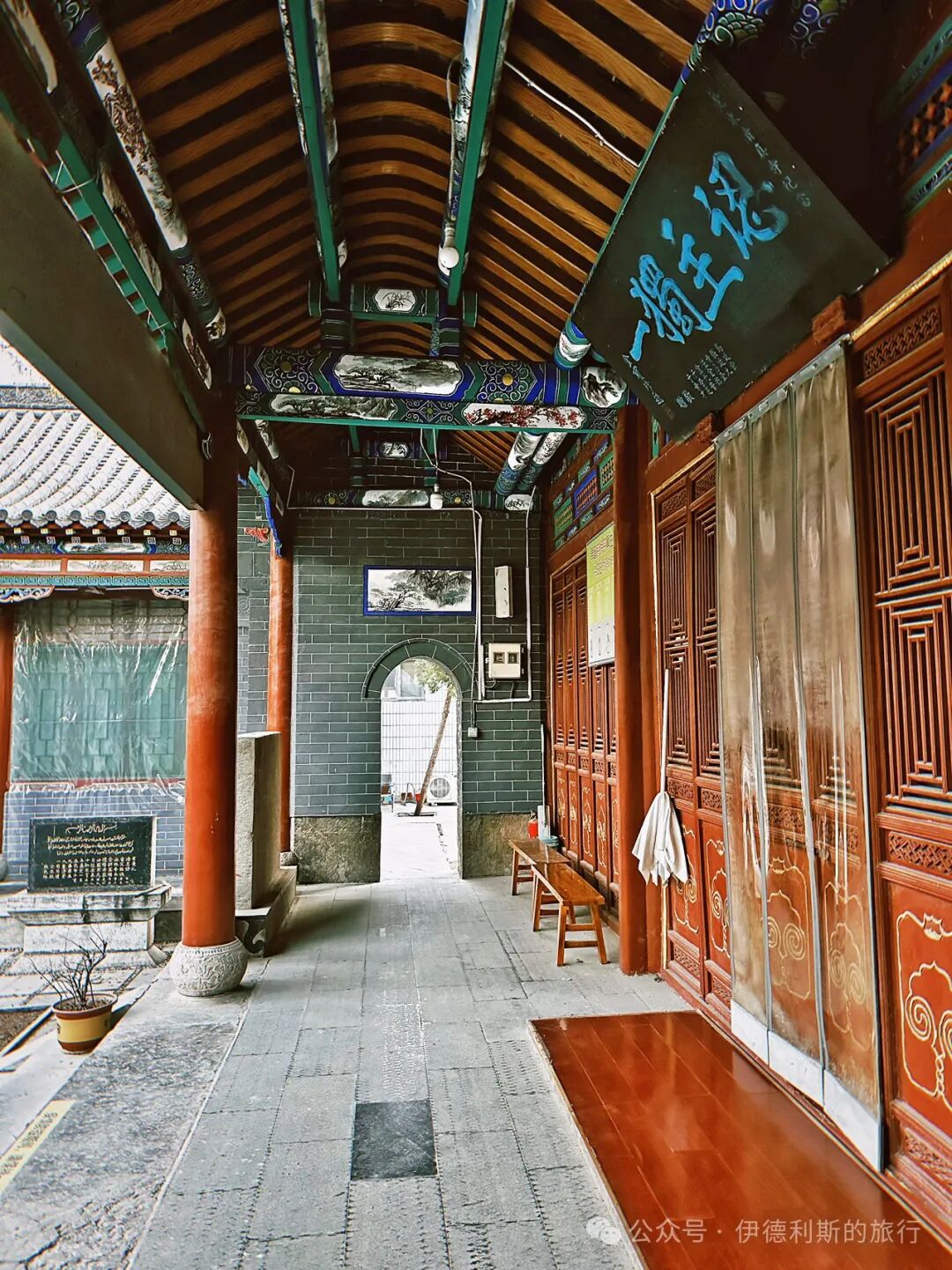
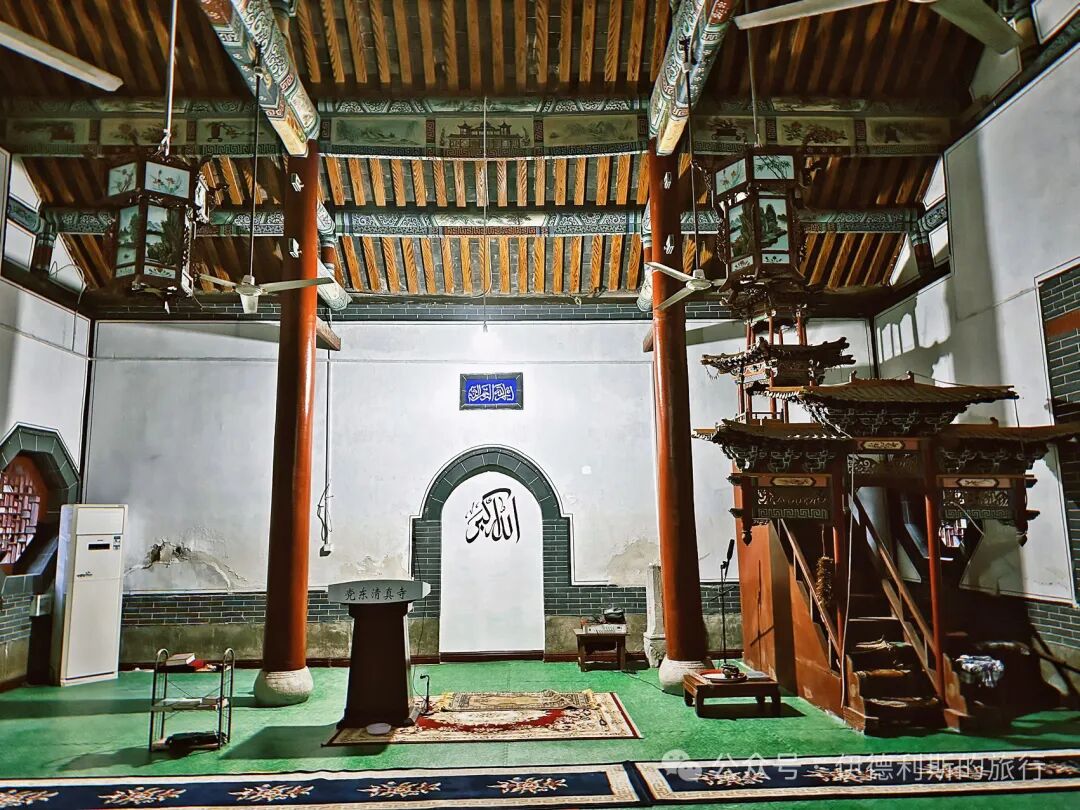
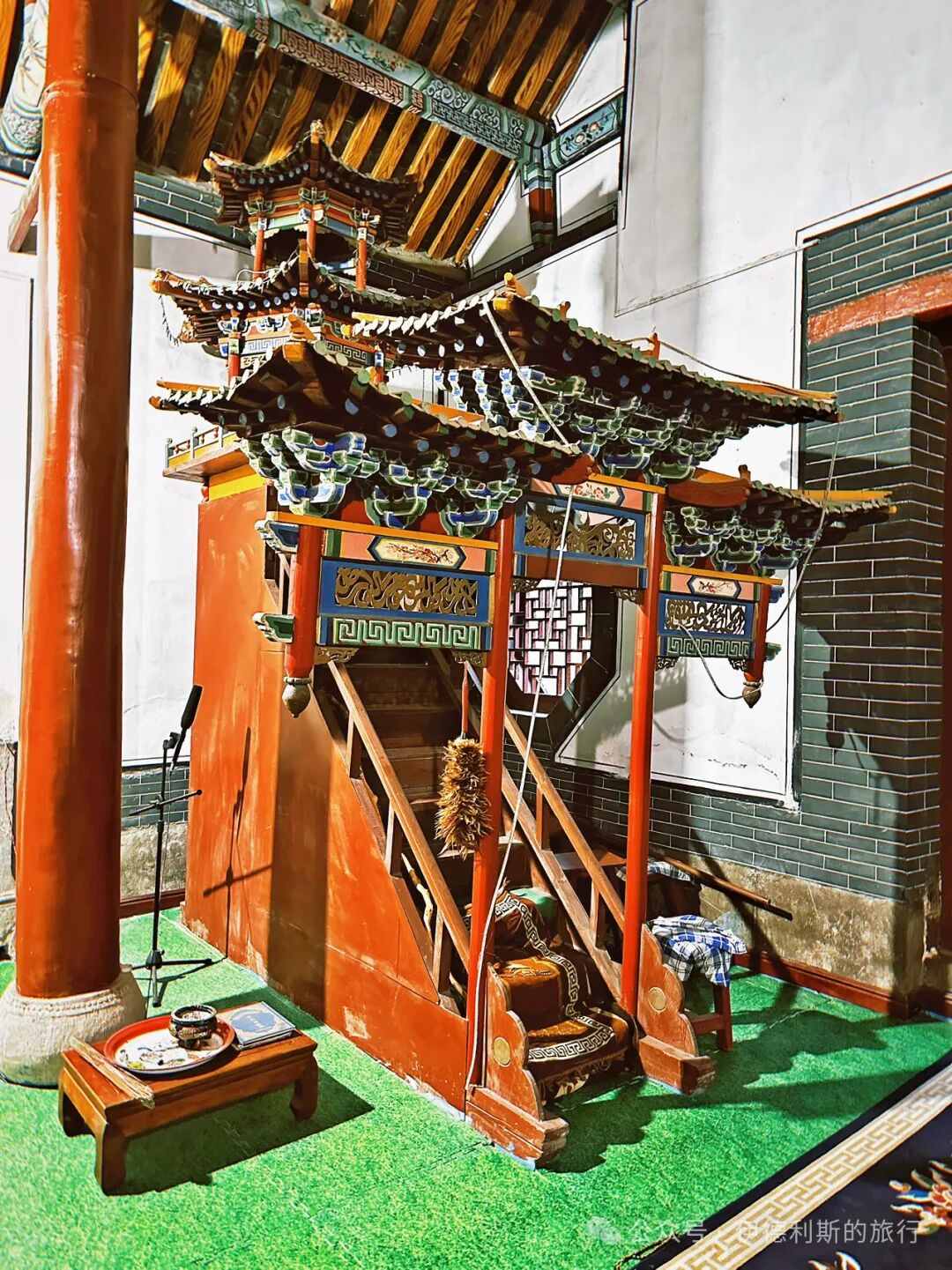
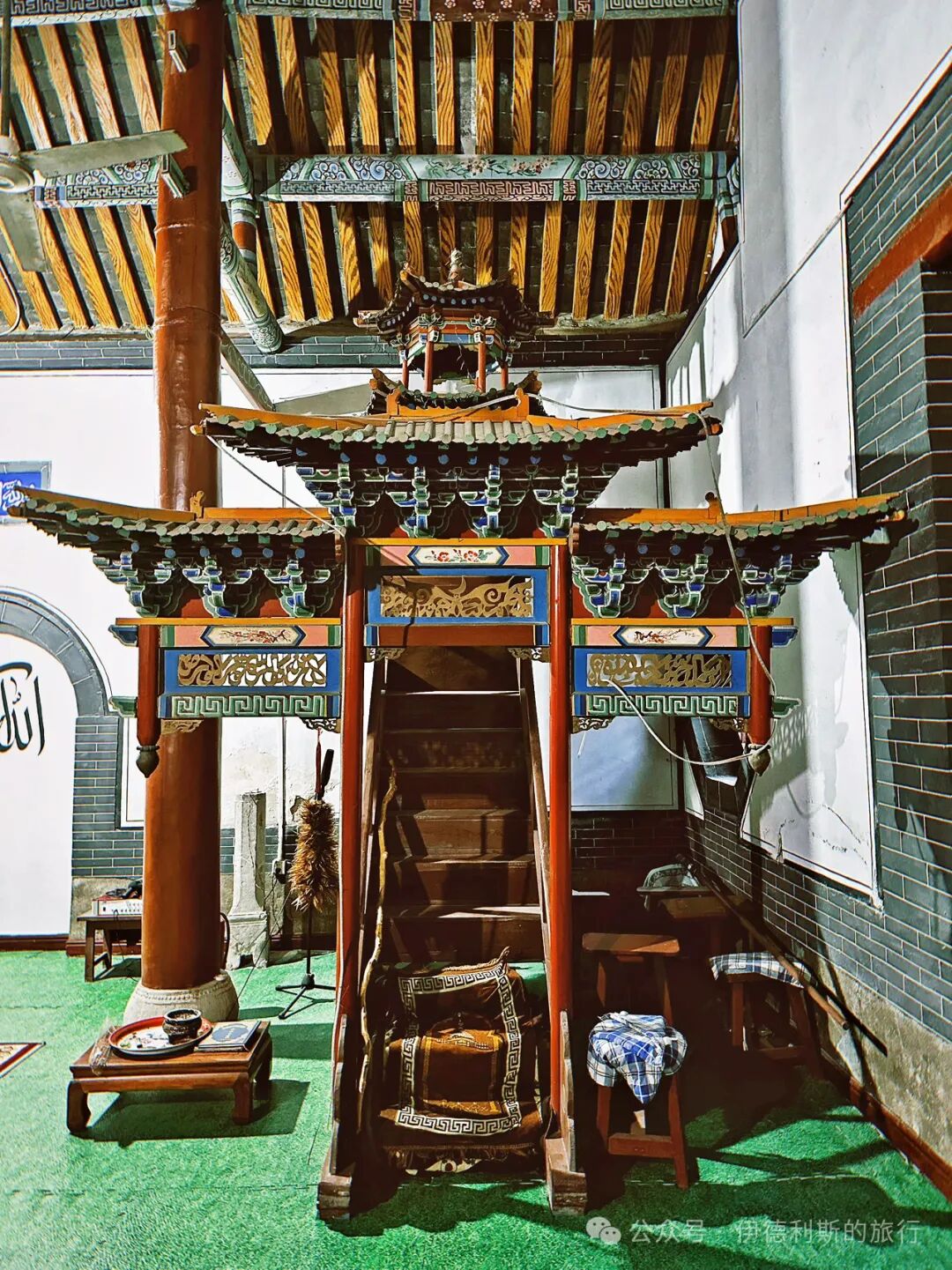
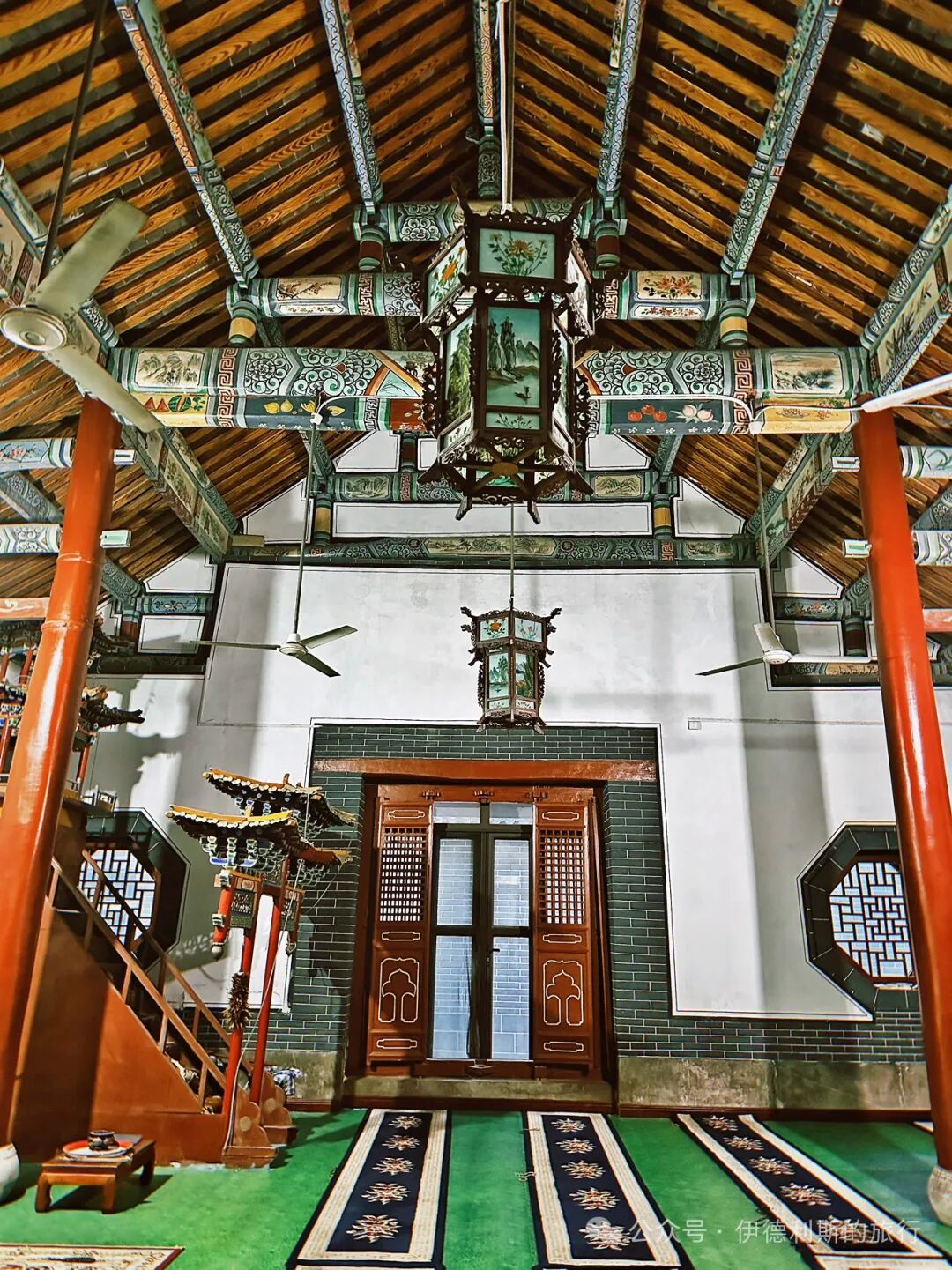
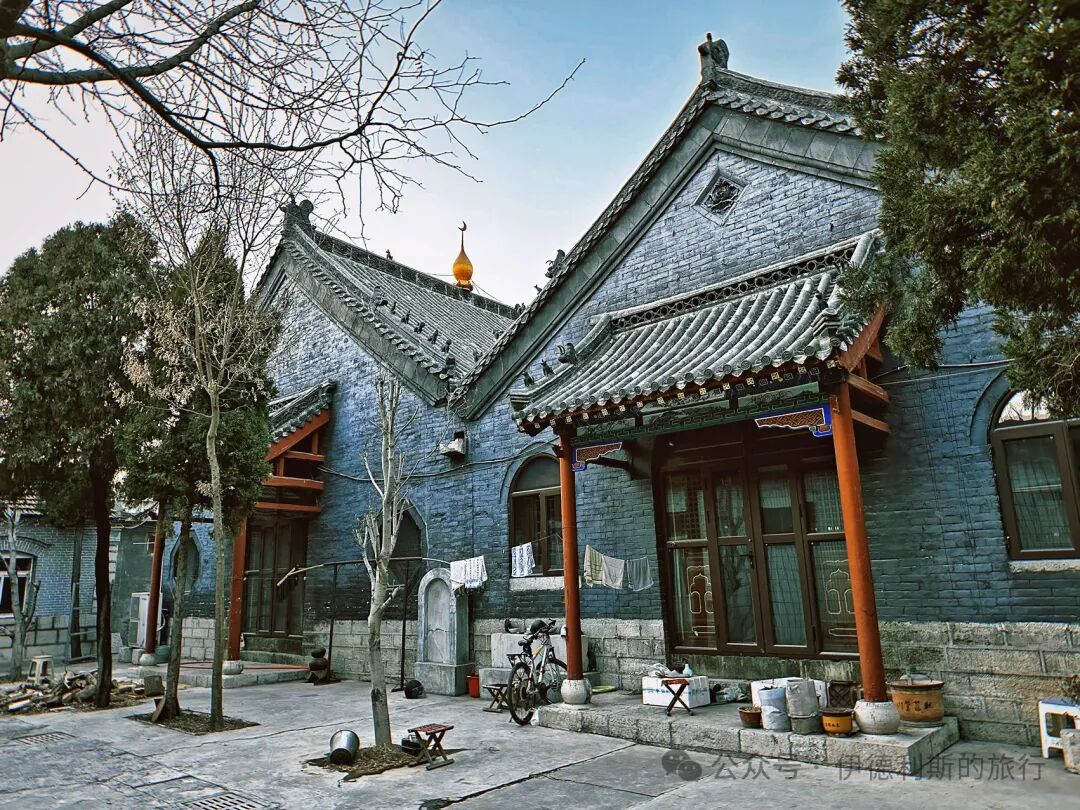
The 1844 stele, Official Proclamation of Licheng County. It records how the Licheng County magistrate handled a civil lawsuit in Dangjiazhuang. It mentions that four families of imams (zhangjiao) passed their positions down through generations and controlled mosque affairs, which caused public anger. The court ruled that imams could not pass their positions to their descendants and could not privately sell or handle the mosque's farmland. This stele is an important document for studying the changes in the imam system of mosques in Shandong.
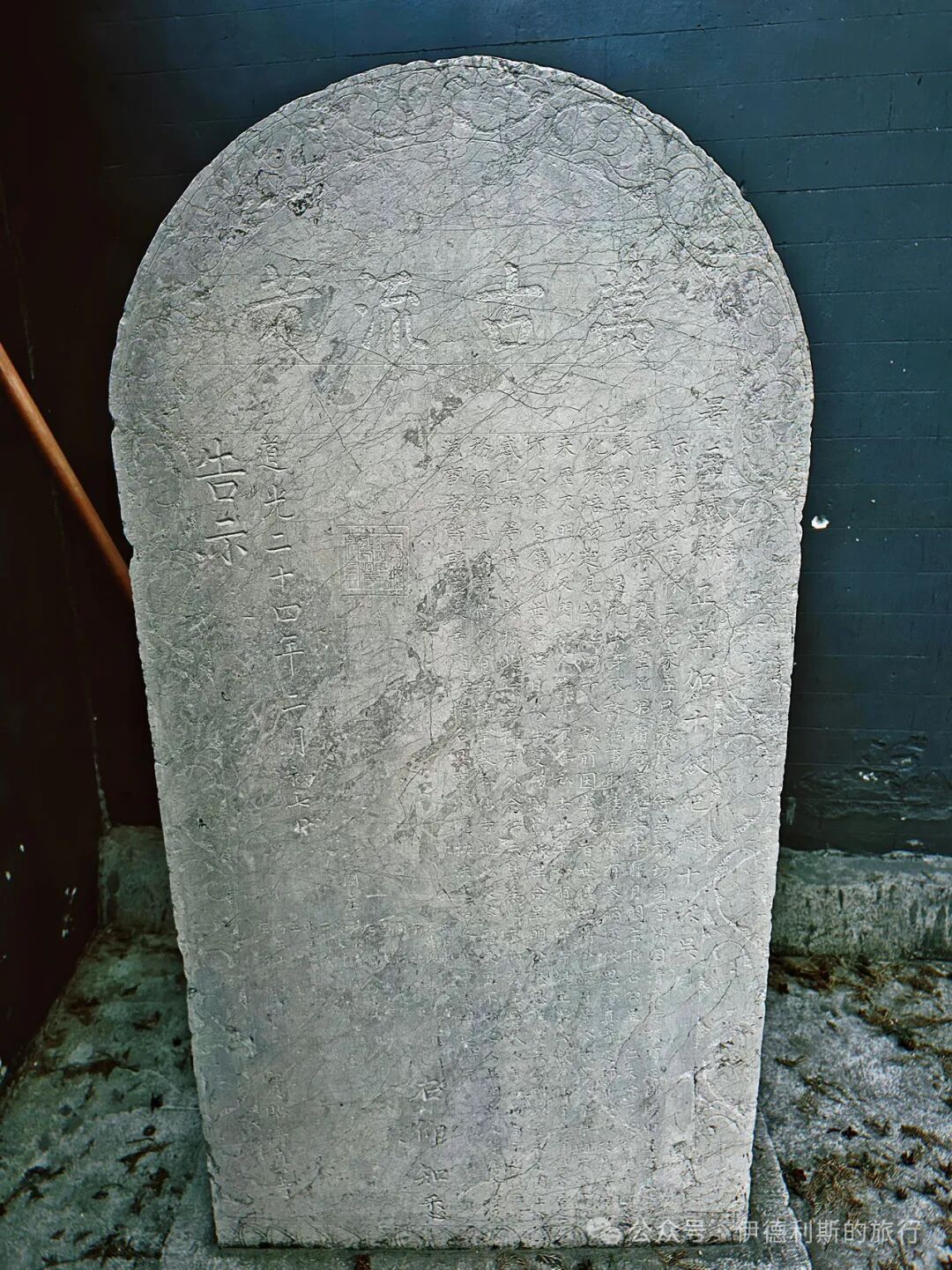
The 1762 stele, Commending Good Deeds (Jingshan Bei). It records that Madam Zhou, the wife of the village elder Jin Ziliang, donated land to the mosque.
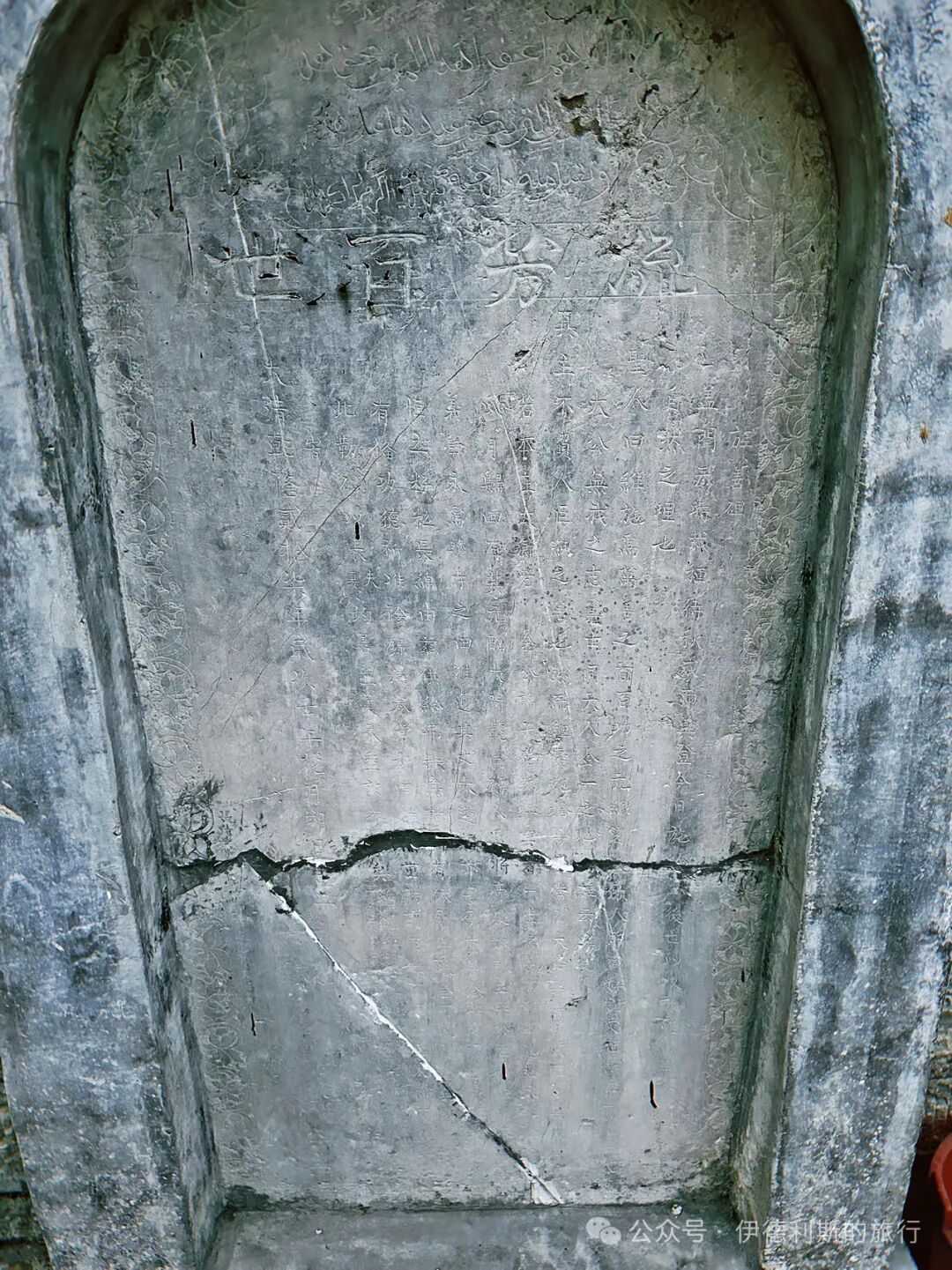
Halal Travel Guide: Laylat al-Qadr at Balizhuang Mosque, Beijing
Articles • ali2007fr posted the article • 0 comments • 152 views • 2026-05-20 01:48
Summary: This article records Laylat al-Qadr at Balizhuang Mosque in Beijing during Ramadan. It keeps the original Quranic passage, iftar dishes, community details, and photographs in a natural English travel style.
Indeed, We sent it down during the Night of Power. And what can make you know what the Night of Power is? The Night of Power is better than a thousand months. The angels and the Spirit descend therein by permission of their Lord for every matter. Peace it is, until the emergence of dawn. (97)
Yesterday, we gathered at Balizhuang Mosque to revive the Night of Power. It was the busiest night of Ramadan, and I saw many old friends. Yesterday also featured the most abundant iftar meal at Balizhuang. Thanks to the hard work of Director Li and the elders, it was a great success. We enjoyed sticky rice cake (qiegao) made by Elder Fu, along with beef stew, stir-fried beef with green onions, steamed rice flour cakes (aiwowo), stir-fried shrimp, baked buns (kaobaozi), savory fried yam rolls (xianjuanguo), spiced beef, tofu puff soup, and lotus seed porridge. The dining hall was full, with over eighty people.
Imam Yang gave a very powerful sermon (wa'az).
The imam led everyone in one hundred units of voluntary prayer (nafl namaz), using dates to keep count, with each date representing two units. view all
Summary: This article records Laylat al-Qadr at Balizhuang Mosque in Beijing during Ramadan. It keeps the original Quranic passage, iftar dishes, community details, and photographs in a natural English travel style.
Indeed, We sent it down during the Night of Power. And what can make you know what the Night of Power is? The Night of Power is better than a thousand months. The angels and the Spirit descend therein by permission of their Lord for every matter. Peace it is, until the emergence of dawn. (97)
Yesterday, we gathered at Balizhuang Mosque to revive the Night of Power. It was the busiest night of Ramadan, and I saw many old friends. Yesterday also featured the most abundant iftar meal at Balizhuang. Thanks to the hard work of Director Li and the elders, it was a great success. We enjoyed sticky rice cake (qiegao) made by Elder Fu, along with beef stew, stir-fried beef with green onions, steamed rice flour cakes (aiwowo), stir-fried shrimp, baked buns (kaobaozi), savory fried yam rolls (xianjuanguo), spiced beef, tofu puff soup, and lotus seed porridge. The dining hall was full, with over eighty people.
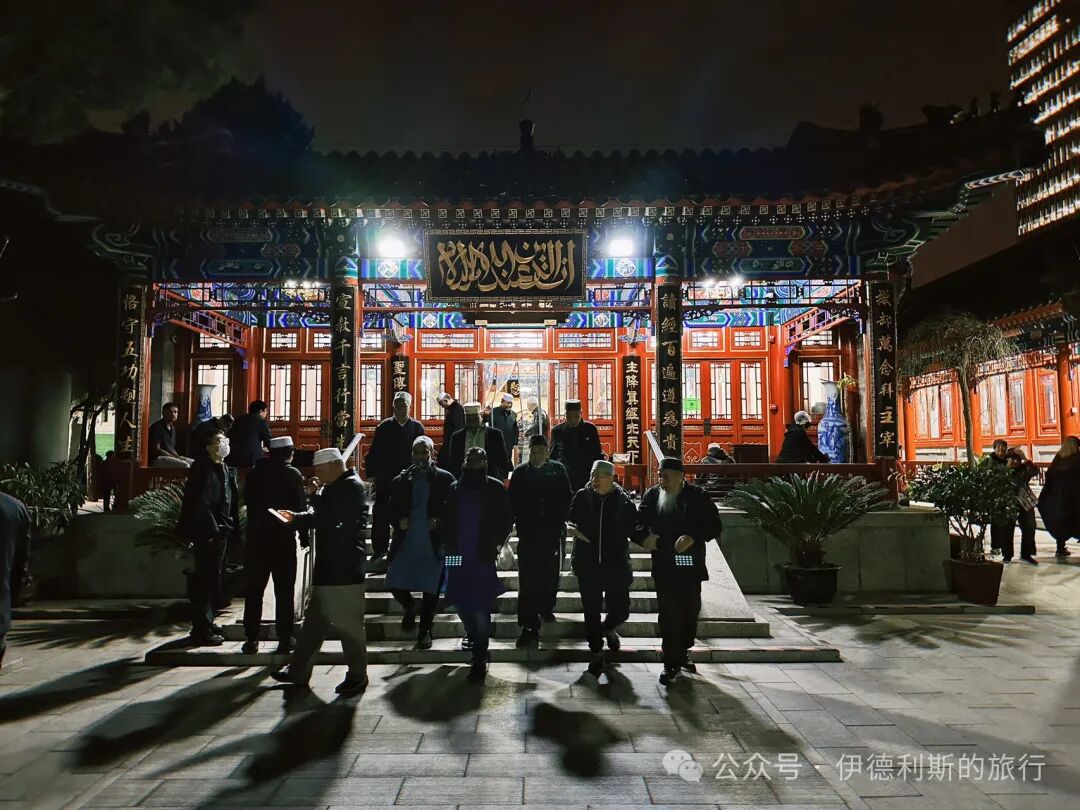
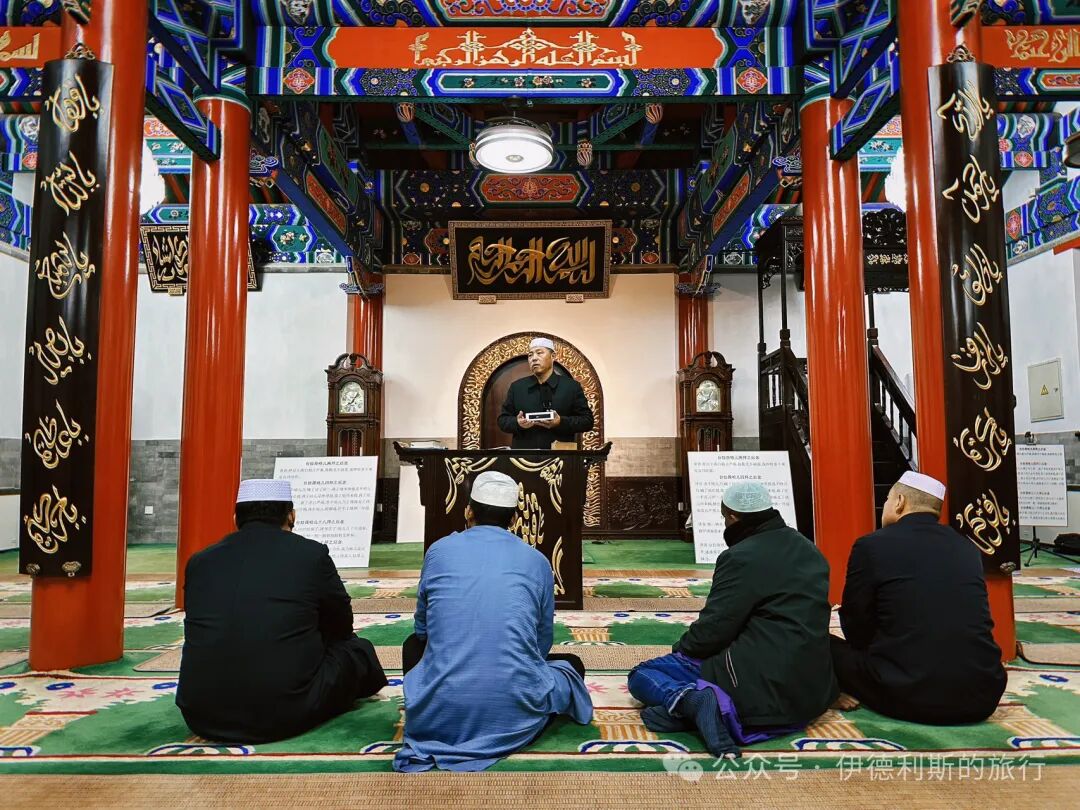
Imam Yang gave a very powerful sermon (wa'az).
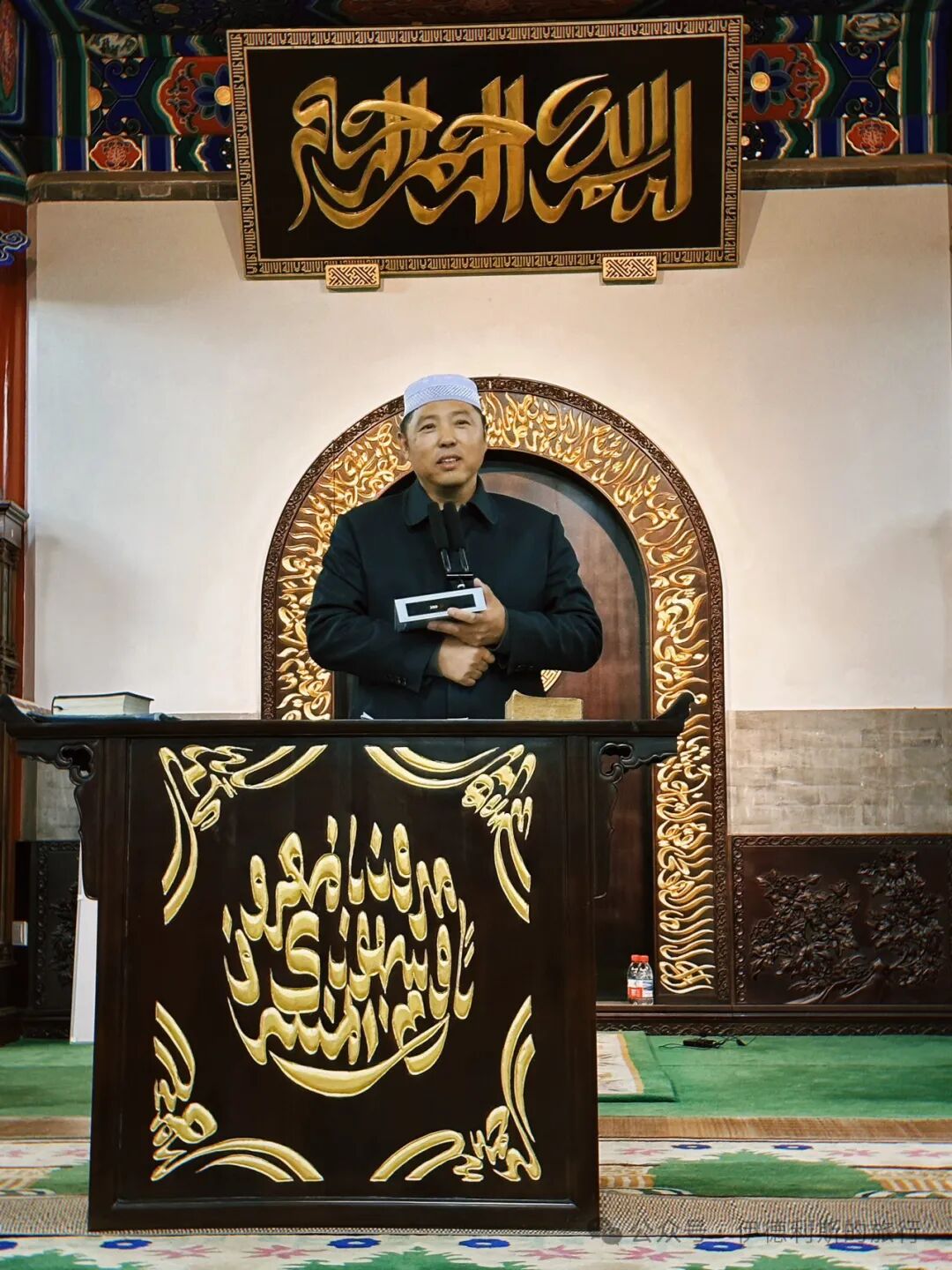
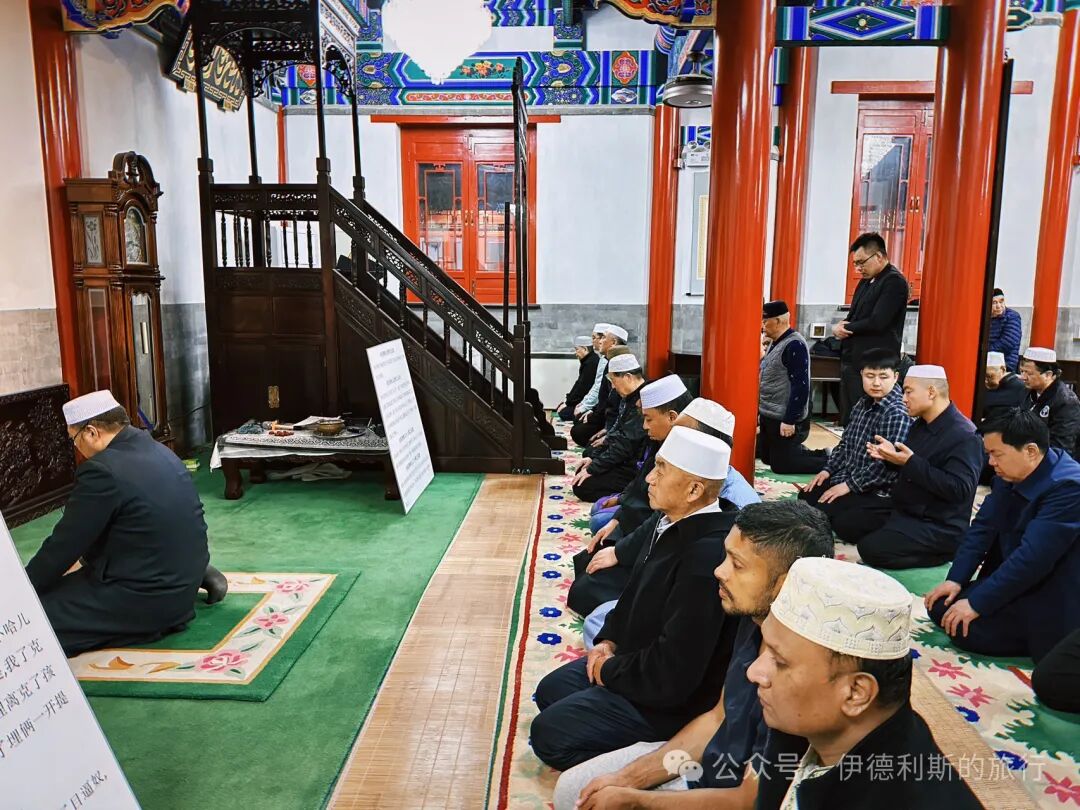
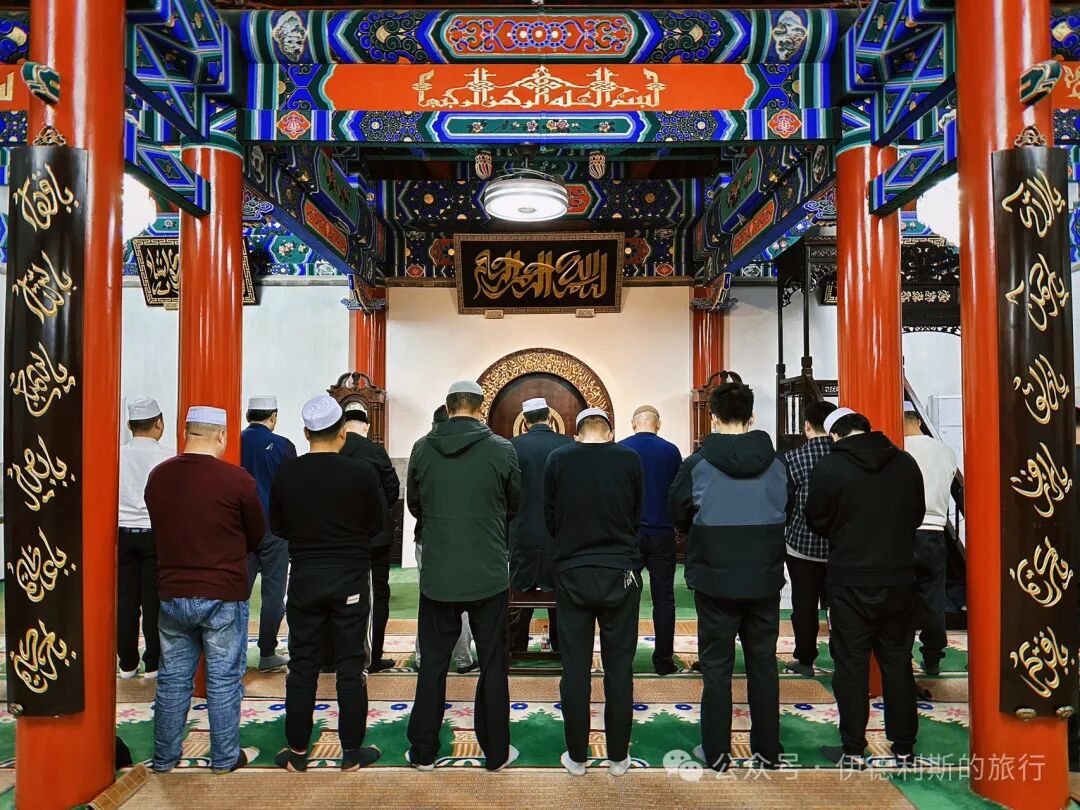
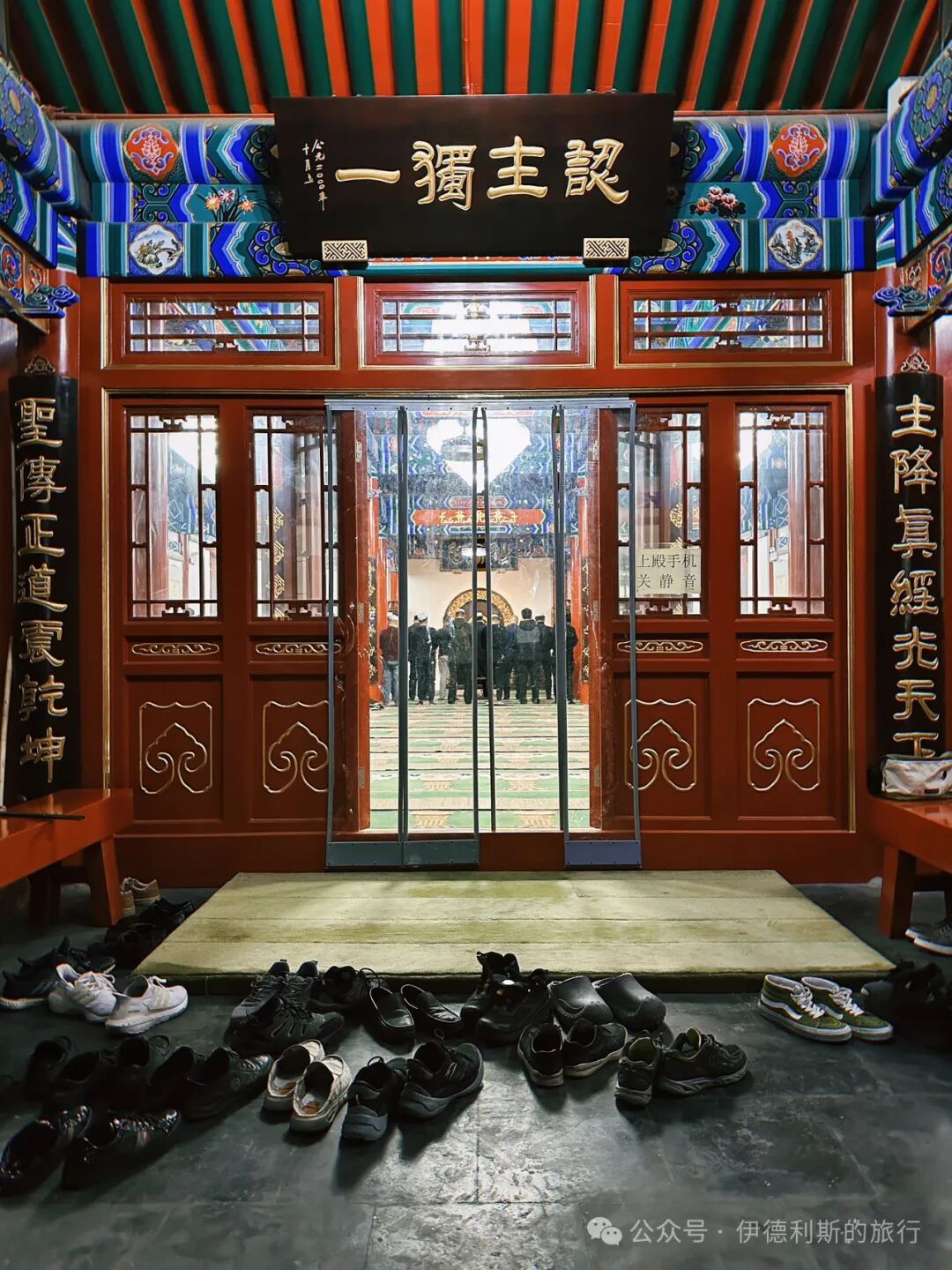
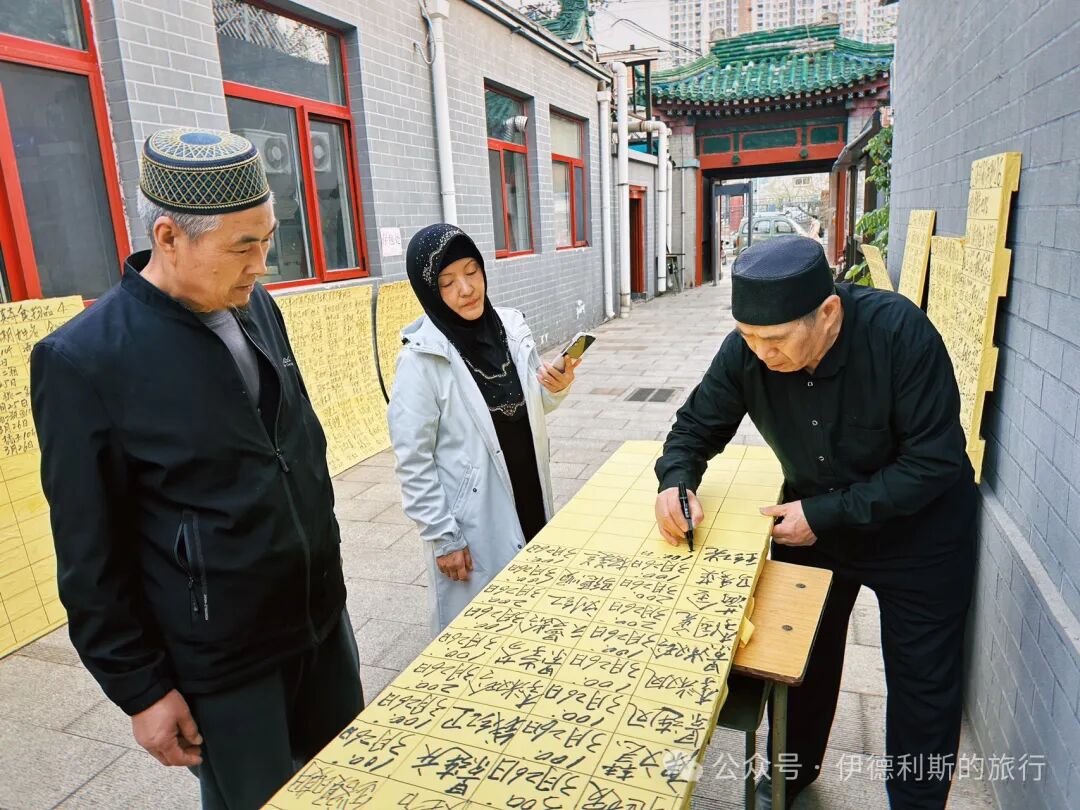
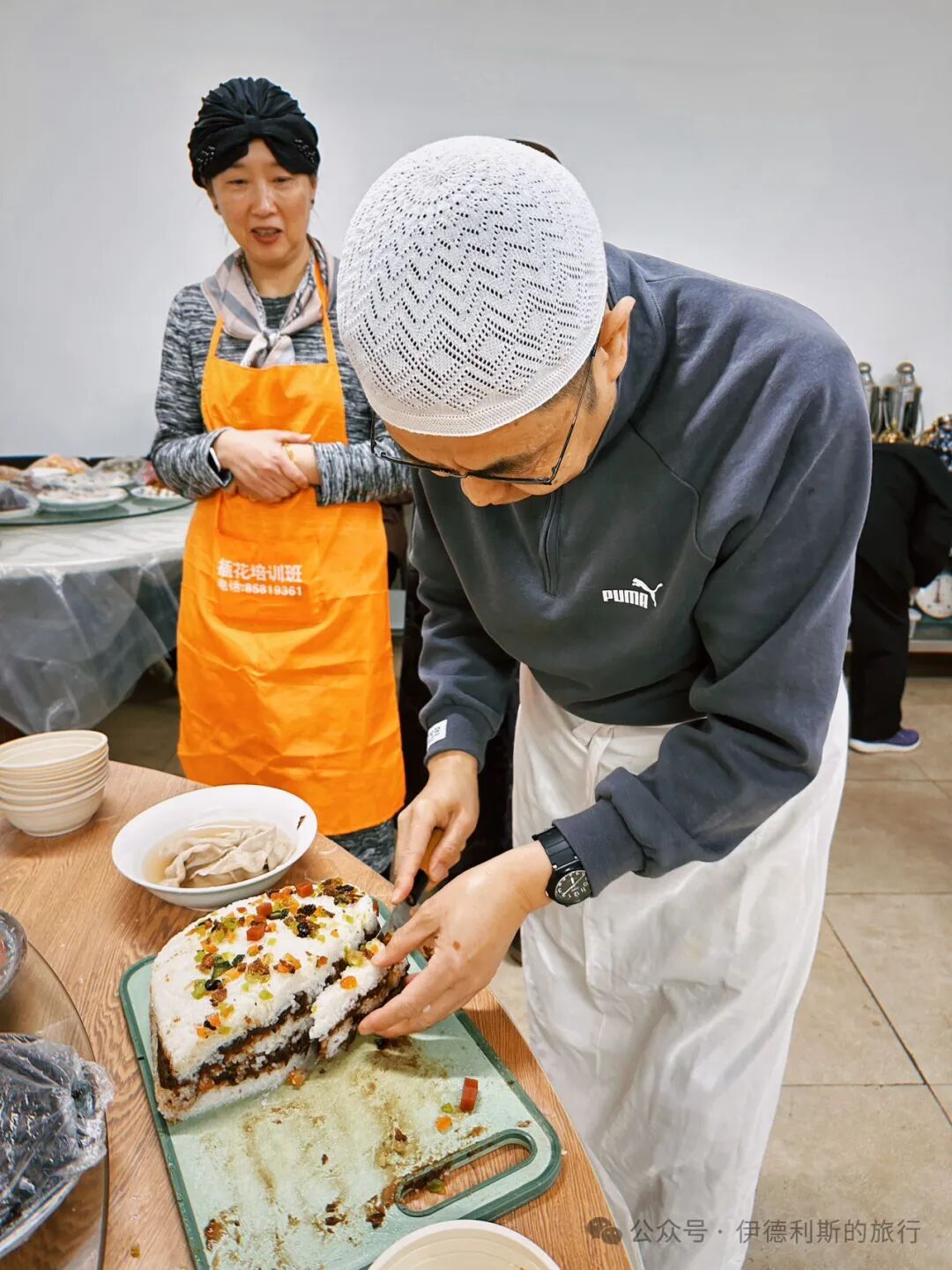
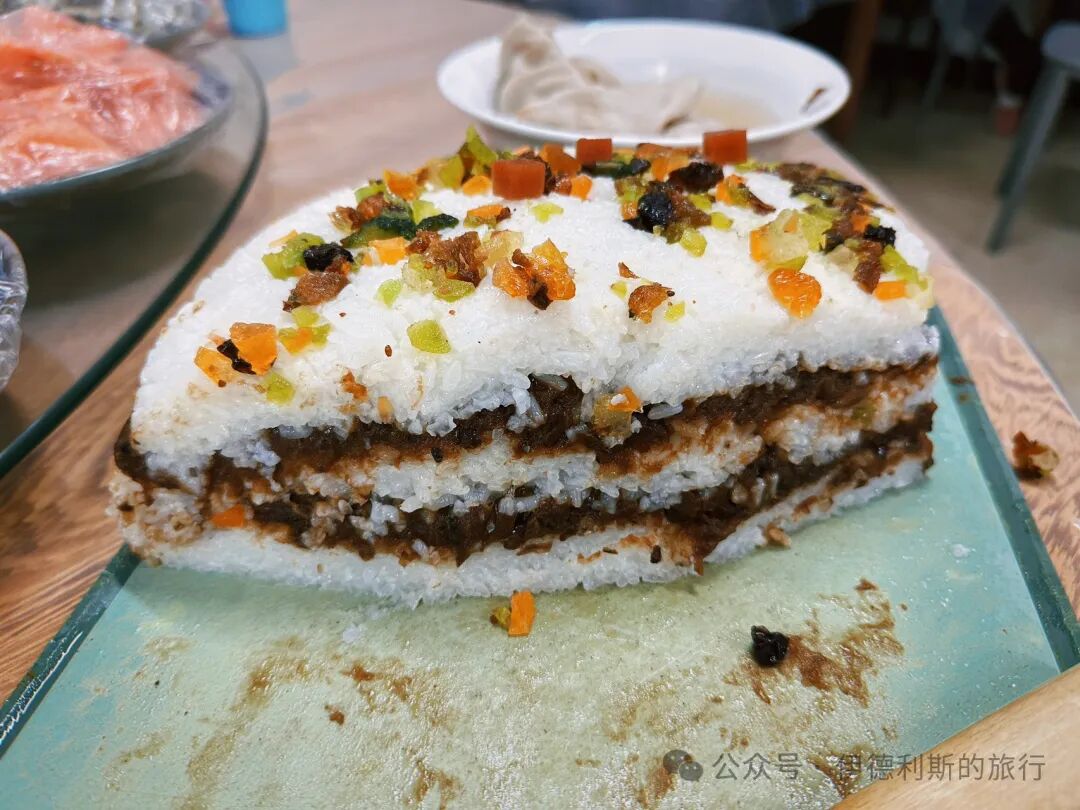
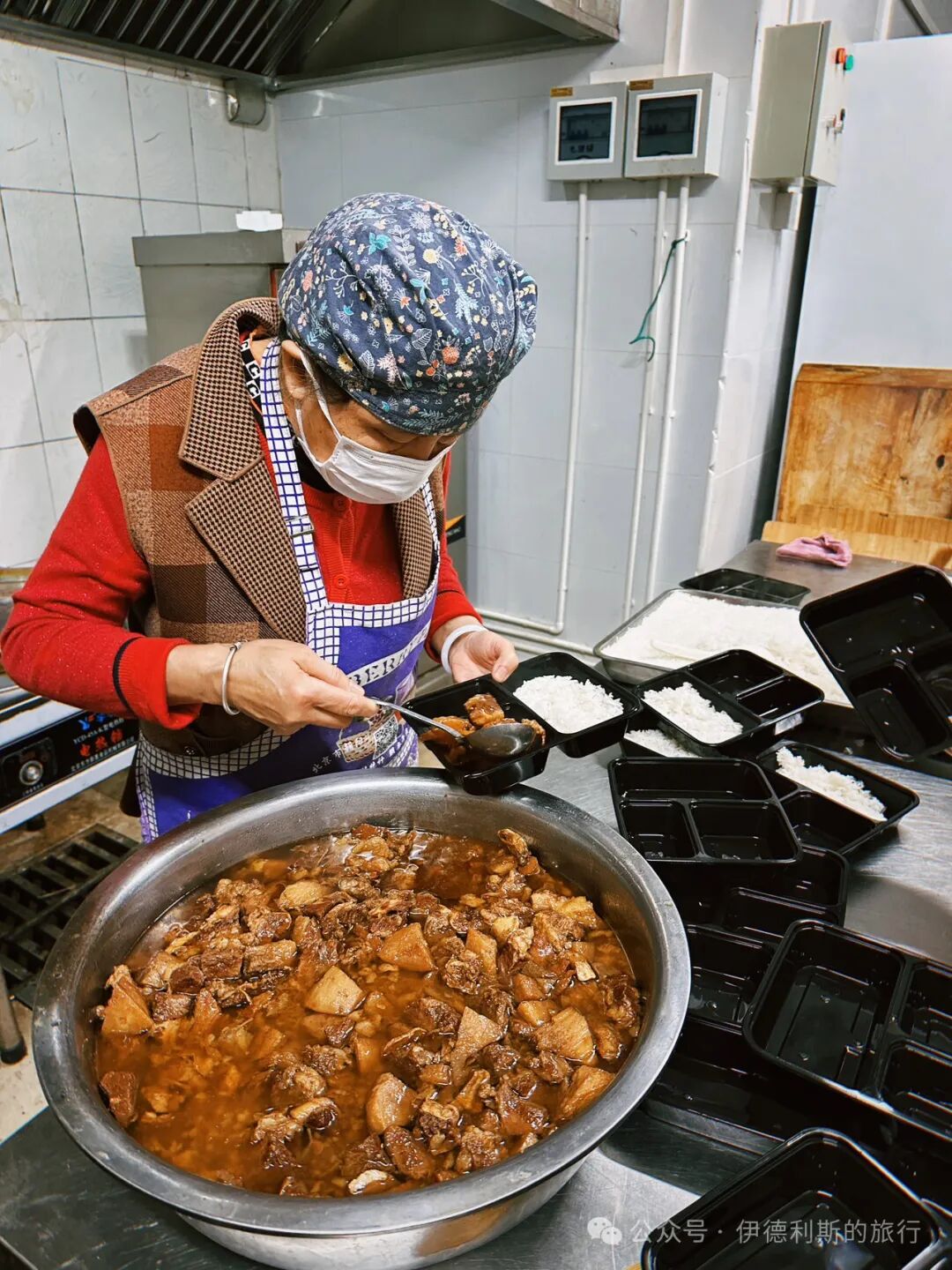
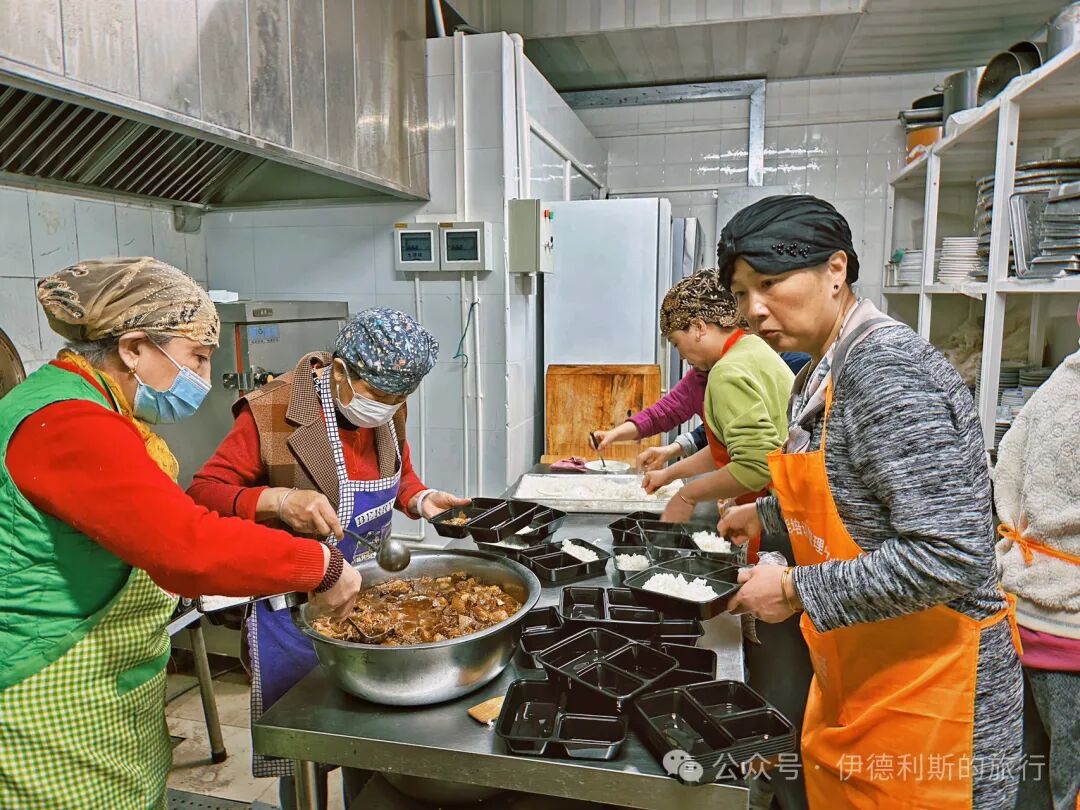
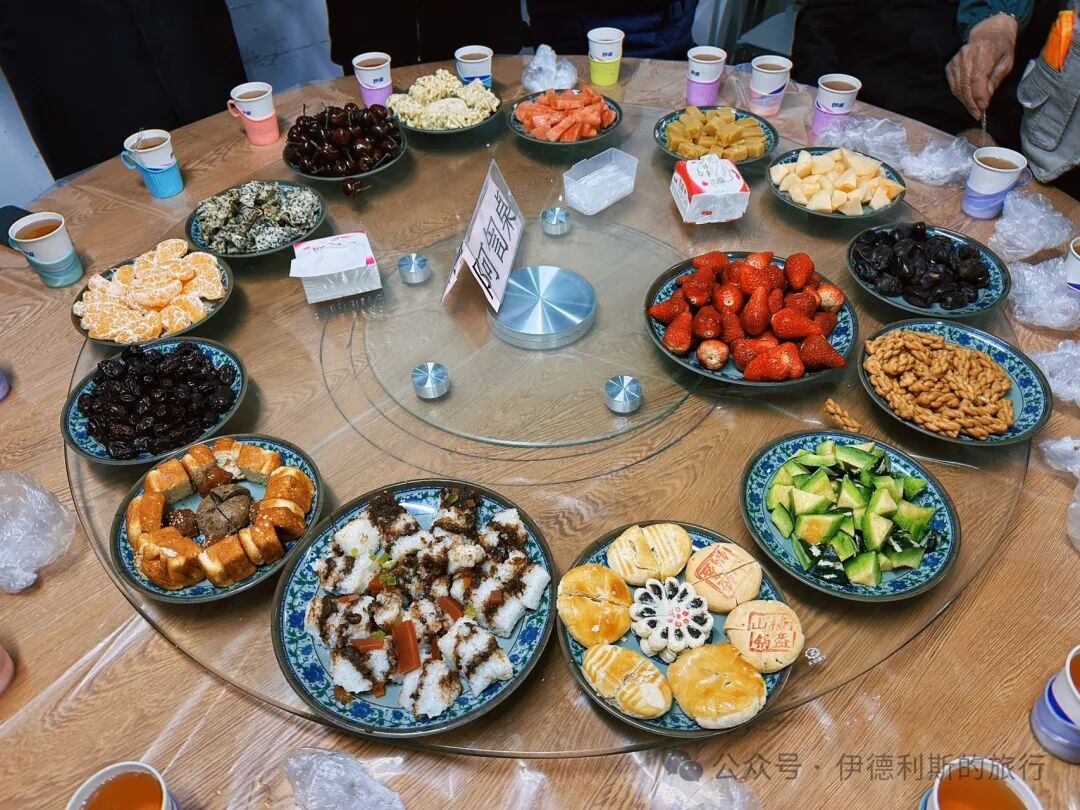
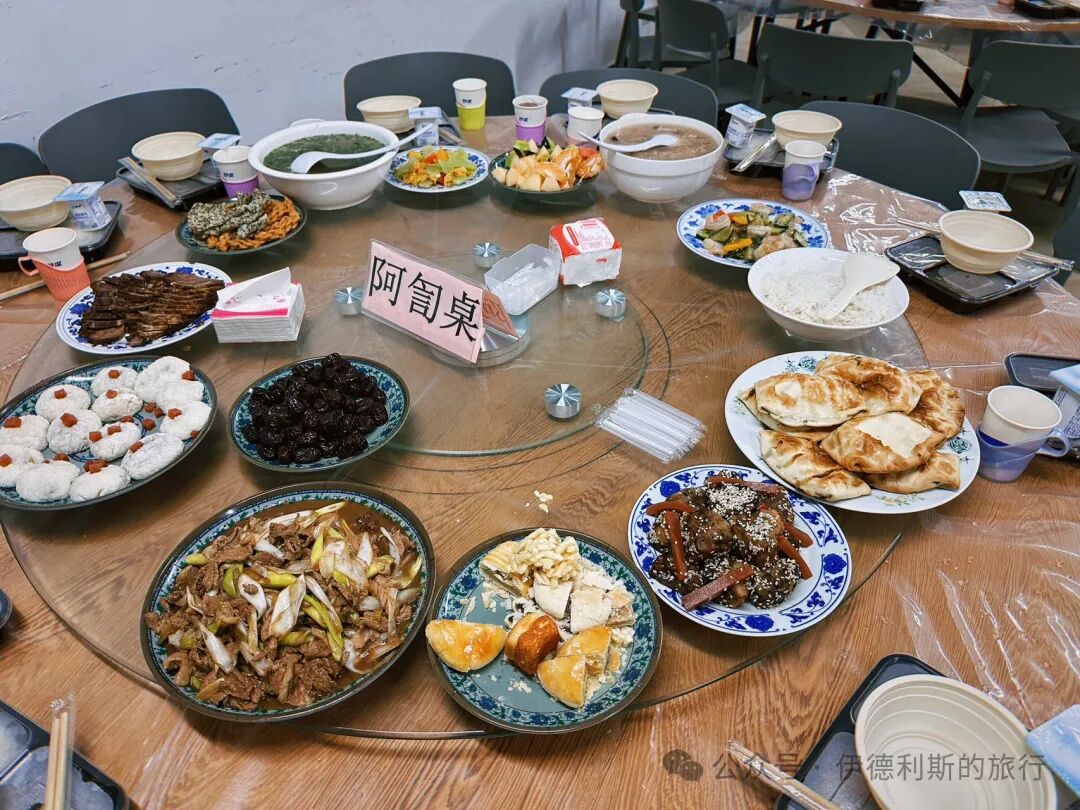
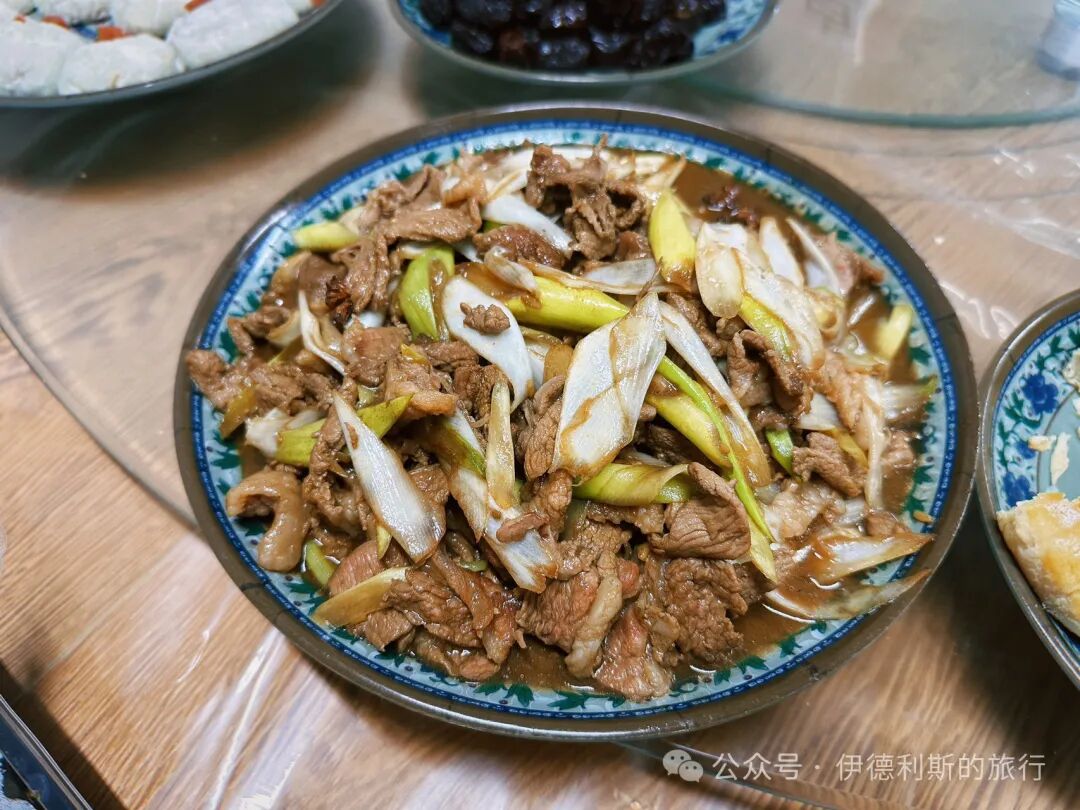
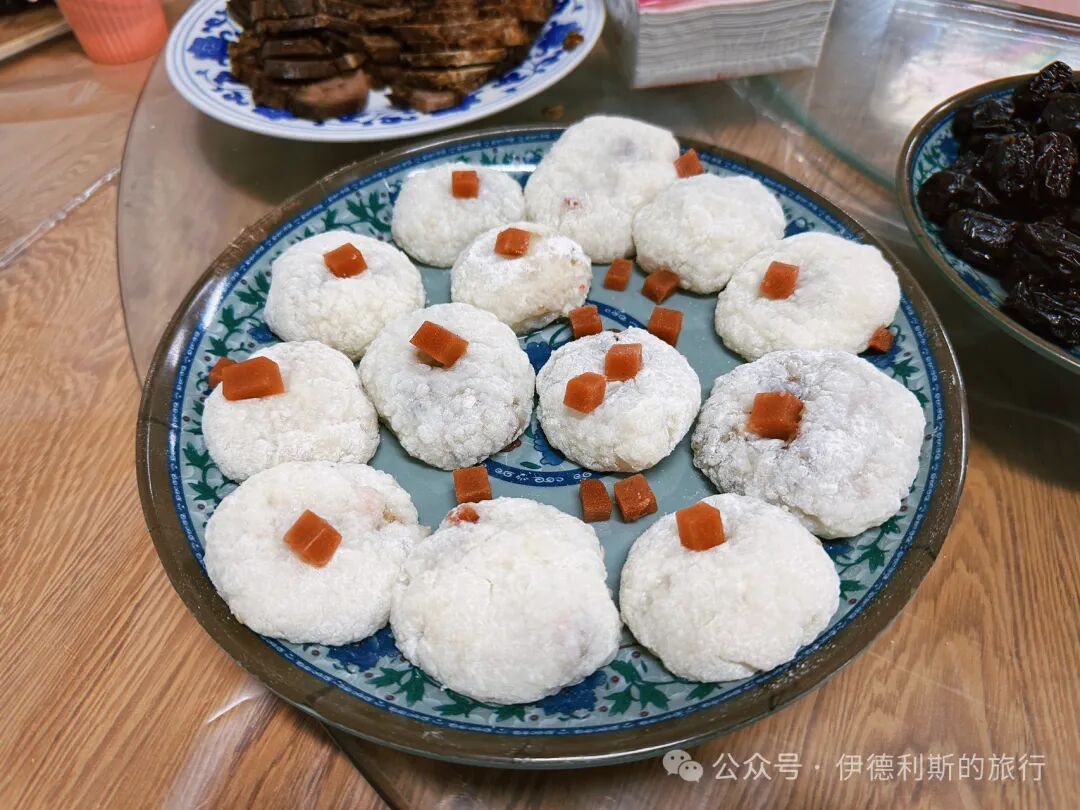
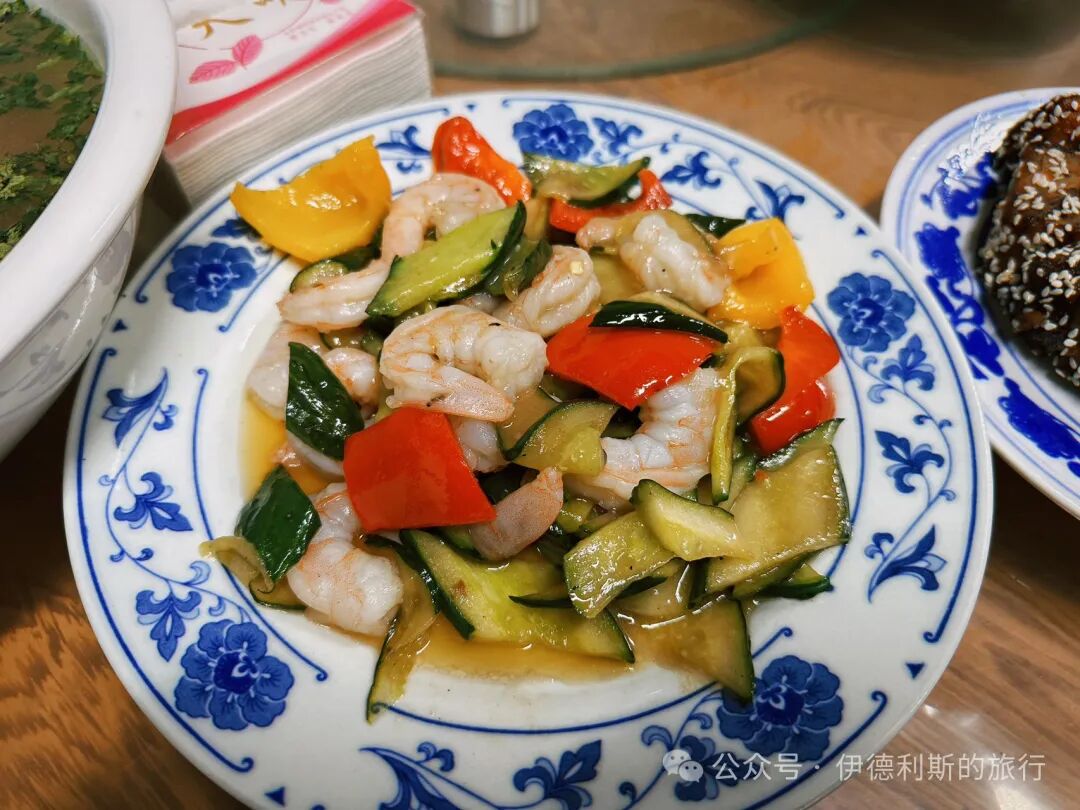

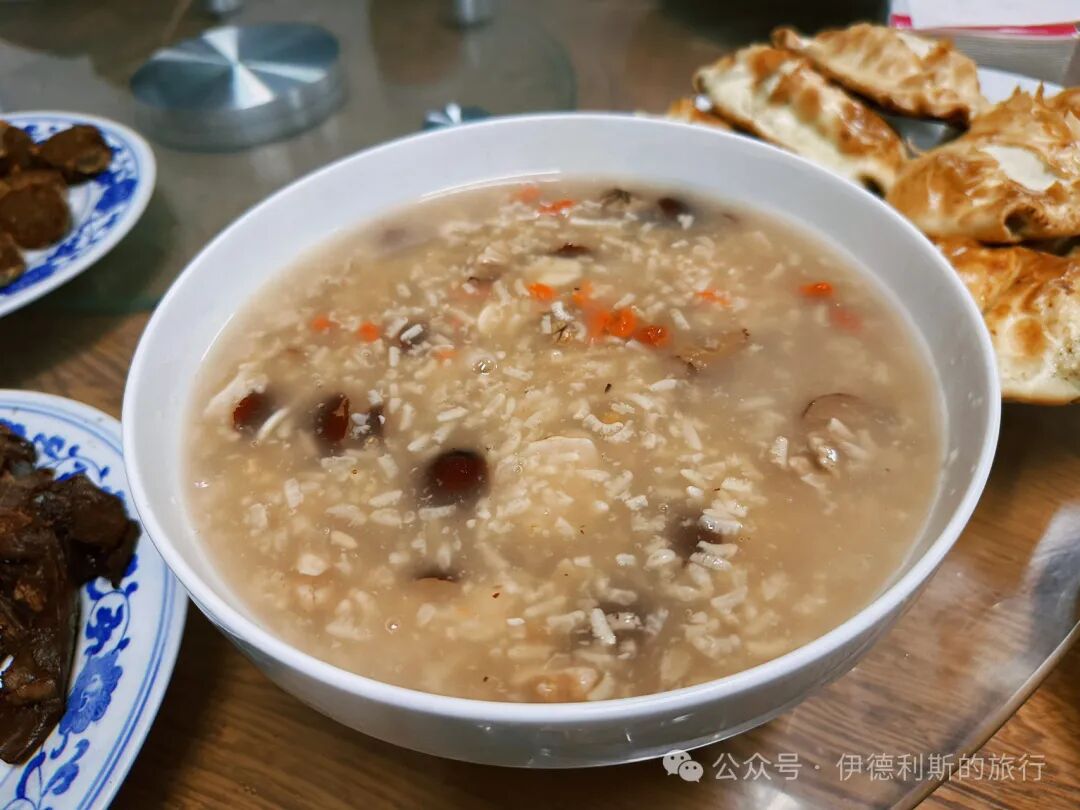
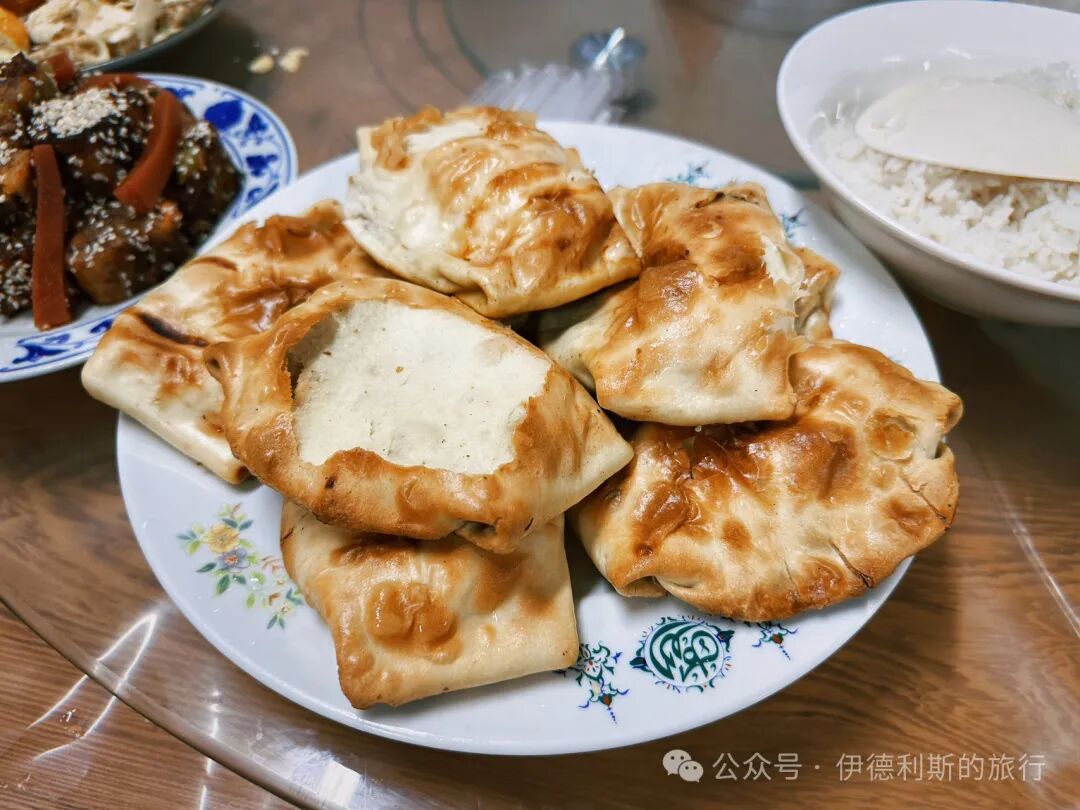
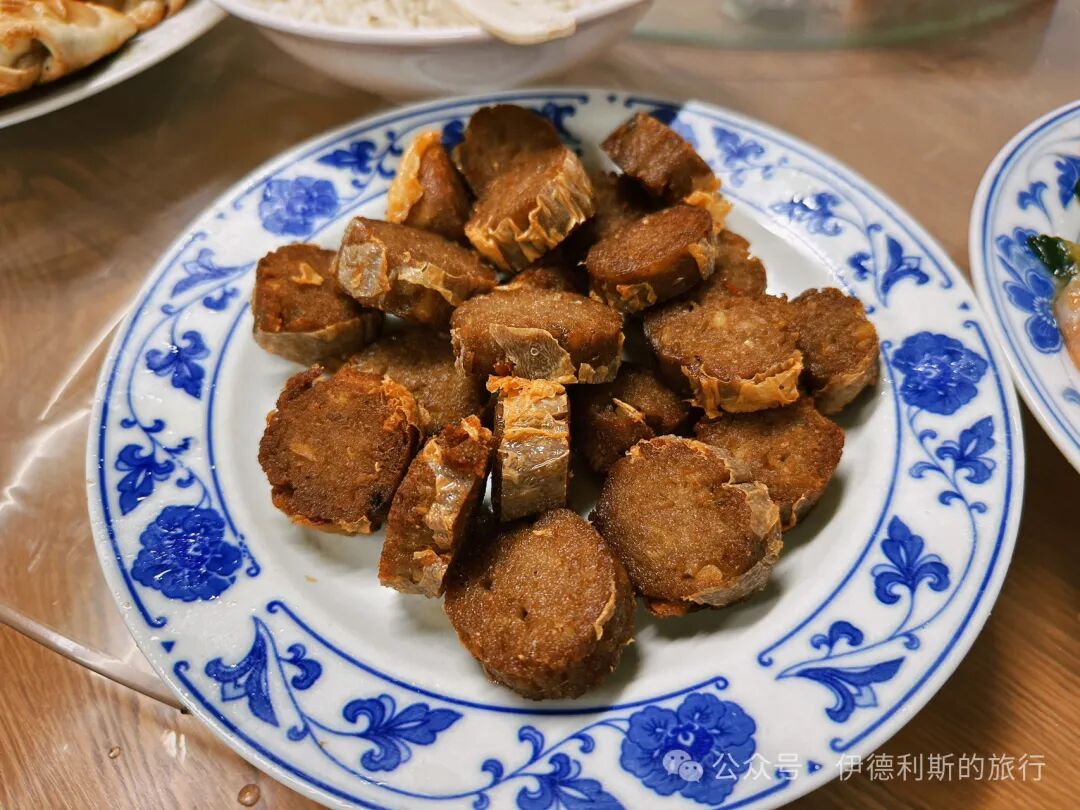
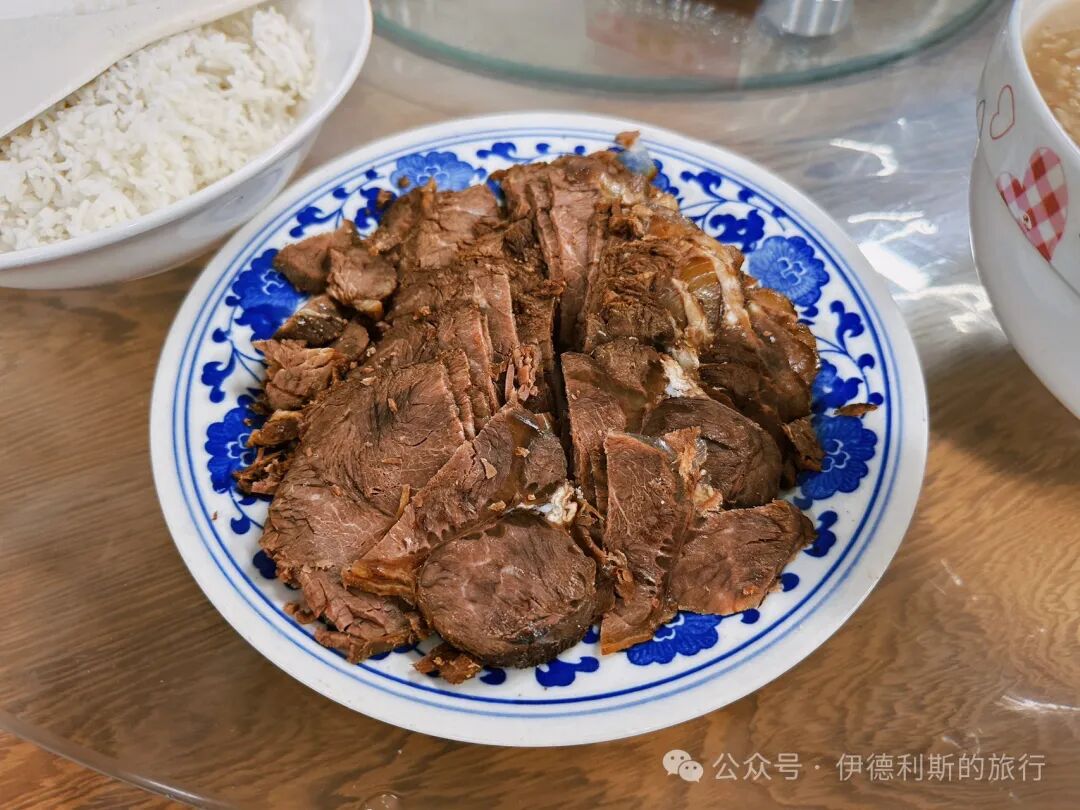
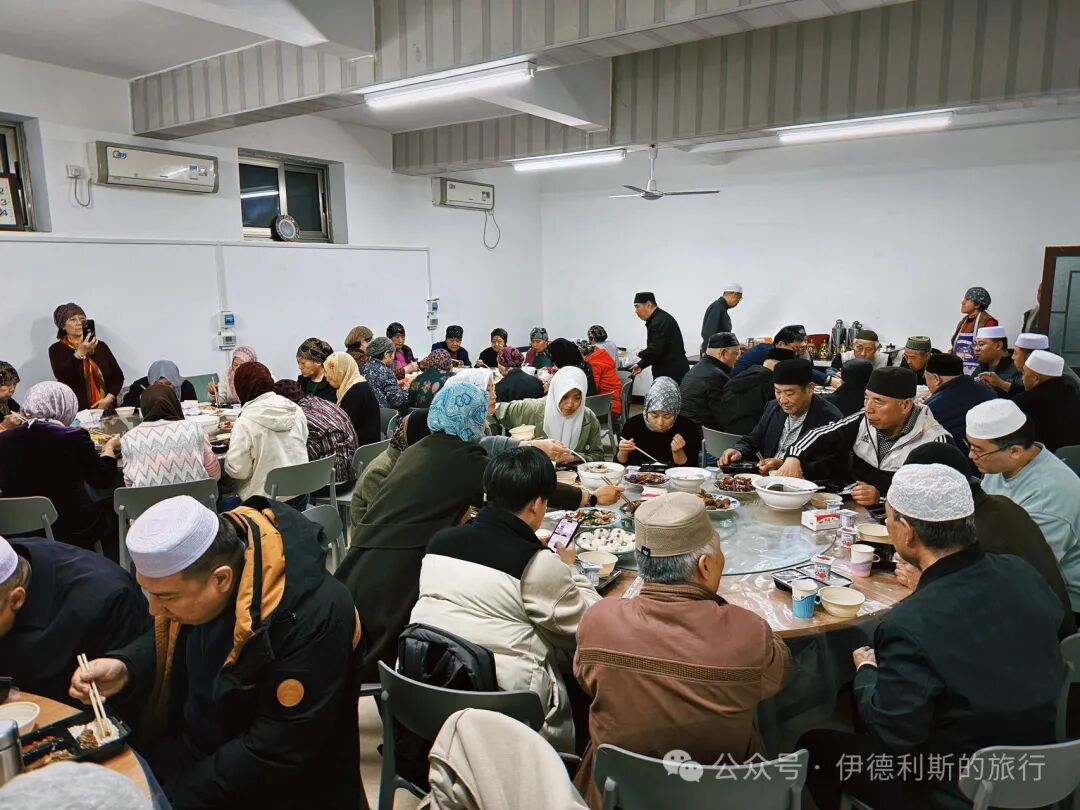
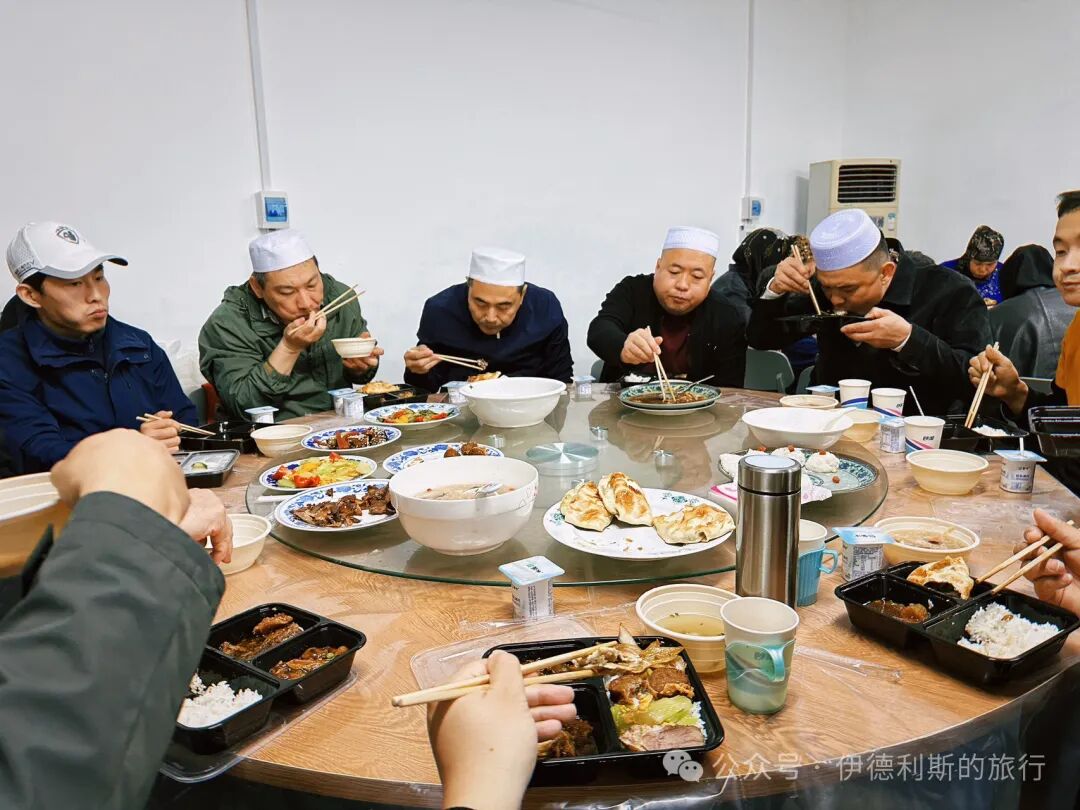
The imam led everyone in one hundred units of voluntary prayer (nafl namaz), using dates to keep count, with each date representing two units.
Halal Travel Guide: Beijing Madian, Sudan Embassy & Tianjin Tianmu
Articles • ali2007fr posted the article • 0 comments • 187 views • 2026-05-20 01:48
Summary: This account covers the fourth weekend of Ramadan 2025, moving from Madian Mosque in Beijing to the Sudanese Embassy and Tianjin Tianmu. It preserves the original details on Jumuah prayer, iftar, local Hui Muslim history, mosque visits, and photographs.
On Friday, I attended Jumu'ah prayers at Madian Mosque in Beijing under a clear blue sky. The mosque was packed with fellow Muslims (dost) from nearby universities like Beijing Normal University, Beihang University, and Beijing Jiaotong University.
Madian sits on the North Beijing Avenue outside Deshengmen. Since the Ming and Qing dynasties, it has been a hub for cattle and sheep trading with a large Hui Muslim population. People say the number of Hui Muslims here is second only to Niujie. After the Qing dynasty, hundreds of thousands of cattle, sheep, and horses came from Mongolia through Zhangjiakou into Beijing. Hui Muslims opened many horse and sheep shops in Madian to feed and sell the livestock for a commission. Madian Mosque was first built during the Kangxi era. In 1850 (the 30th year of Daoguang), it was rebuilt with funds from over ten local sheep and horse shops. It was renovated again during the Republic of China era and is quite large.
I stayed at Madian Mosque for iftar that evening, eating braised fish (hongshao yu), sliced pork with daylily (huanghua roupian), and stir-fried scallion lamb (congbao yangrou). Many foreign Muslims (dost) also came to break their fast at Madian Mosque. It is great for our brothers and sisters from around the world to taste Beijing's Ramadan meals.
That night, I went to the Sudanese Embassy in Sanlitun for Taraweeh prayers. This year, you need to be accompanied by a foreigner to get in. The Taraweeh prayer consisted of eight rak'ahs. A young Libyan hafiz led the first four, followed by a sermon (wa'z) from the Sudanese imam, and then the Sudanese imam led the final four. During the third rak'ah of Witr, we raised our hands for a long dua. There was another sermon (wa'z) after the dua. I think it is a rare opportunity to come here every year and experience a different cultural atmosphere of our faith.
In the 15th and 16th centuries, Sufi scholars began spreading the faith along the upper Nile River toward the Sudan region. In the early 16th century, the Funj Sultanate ruling Sudan nominally converted to the faith but kept traditional witchcraft and sacrificial rituals. In 1718, the Funj Sultanate changed dynasties, began seeking a more orthodox faith, and started the process of Arabization. By the 19th century, Sudan had become a region that followed orthodox Sunni Islam and began using Arabic as its common language. Today, the vast majority of Sudanese are Sunni Muslims of the Maliki school and are deeply influenced by Sufism.
On Saturday night, I broke my fast at the North Mosque in Tianmu, Tianjin, where the elders served green tea and dates. After the Maghrib prayer, they handed out boxed meals of stir-fried lotus root slices and garlic sprouts with pork, served with steamed buns (mantou), which everyone took home to eat.
The Mu family originally lived in Muja Village, Qiantang County, Hangzhou Prefecture, Zhejiang. During the Jianwen era of the Ming dynasty, they were moved to Guyilang inside Shuiximen in Nanjing. In the early Yongle era, they followed the Prince of Yan to Nanpi County, Cangzhou, Hebei. In 1404 (the first year of Ming Yongle), the Mu brothers used canal boats to transport imperial grain to Tongzhou. After unloading, they received special favor and were gifted the boats. They traveled south along the Grand Canal to a place twenty miles north of Tianjin Wei, where they settled, established Muja Village, and built the Muja Village Mosque, which is now the Tianmu North Mosque.
The Tianmu North Mosque was repaired many times in history. It was burned down by Kuomintang troops in 1948, rebuilt after 1950, and renovated to its current size after 2007.
In a previous article, some readers asked about the translation "laimaizhuannai." This is actually a traditional term used in Tianjin and surrounding areas for hundreds of years. The pronunciation of "laimaizhuannai" is Ramzan. The way the letter "d" (ḍād) is pronounced as a "z" and the emphasis on the final syllable both come from Persian. In regions influenced by Persian culture, such as Iran, Afghanistan, Azerbaijan, India, Pakistan, and Turkey, the word for Ramadan is pronounced Ramazan.
Plaque at the North Mosque (Beidasi) in Tianmu, Tianjin
Ancient Islamic Faith (Qingzhen Gujiao)
Auspicious day in the first month of autumn, in the Gengxu year of the Xuantong reign (1910)
Respectfully presented by Xiao Liangtong, acting head of the Tianjin Garrison, holding the rank of Du-si and wearing the blue feather.
Calligraphy by Prince Su
Greatest and Most Just
Erected on an auspicious day in the fifth month of summer, in the Guimo year of the Guangxu reign (1883)
Calligraphy by Xu Ziming
Respectfully presented by Mu Tongchun, a presented scholar (jinshi) and imperial guard, appointed as commander of the Huzhou Garrison in Zhejiang, with a two-grade promotion.
Upholding the ancestors and awaiting the future
Auspicious day in the first month of autumn, in the ninth year of the Guangxu reign (1883)
Respectfully erected by Hei Yaozeng, a magistrate-elect holding the rank of Du-si.
Hei Zhaorong, a commander of the Ziya station in Jinghai County, holding the fourth-rank title and wearing the blue feather.
Reprinted by Hei Pengnian, a commander of the South Grand Canal Garrison, holding the fifth-rank title and wearing the blue feather.
The brick carving of 'Ancient Islamic Faith' behind the kiln hall, with the inscription 'Rebuilt in the 20th year of the Republic of China'.
Shunyi Road in Tianmu is so lively at night, with long lines at many barbecue stalls. There are also alcohol-free restaurants like Muyangren Beef Rice and Shangpin Lamb Soup at the intersection, offering plenty of choices.
I had old-fashioned shaved ice (baobing) on Shunyi Road in Tianmu, topped with sour plum paste (suanmogao), sour apricots, hawthorn berries (hongguo), and red beans, then bought whole-wheat nut bread and egg yolk and pork floss green sticky rice balls (qingtuan) at Huiwei Pastry Shop. Then I had an original beef burger at Ershen Beef Burger. Tianmu has really returned to the lively state it was in before 2020!
I started my fast at home on Sunday morning, eating lamb spine pilaf (yangxiezi zhuafan).
I also broke my fast at home on Sunday night, eating bamboo shoot and meat hand-pulled noodles (latiazi). view all
Summary: This account covers the fourth weekend of Ramadan 2025, moving from Madian Mosque in Beijing to the Sudanese Embassy and Tianjin Tianmu. It preserves the original details on Jumuah prayer, iftar, local Hui Muslim history, mosque visits, and photographs.
On Friday, I attended Jumu'ah prayers at Madian Mosque in Beijing under a clear blue sky. The mosque was packed with fellow Muslims (dost) from nearby universities like Beijing Normal University, Beihang University, and Beijing Jiaotong University.
Madian sits on the North Beijing Avenue outside Deshengmen. Since the Ming and Qing dynasties, it has been a hub for cattle and sheep trading with a large Hui Muslim population. People say the number of Hui Muslims here is second only to Niujie. After the Qing dynasty, hundreds of thousands of cattle, sheep, and horses came from Mongolia through Zhangjiakou into Beijing. Hui Muslims opened many horse and sheep shops in Madian to feed and sell the livestock for a commission. Madian Mosque was first built during the Kangxi era. In 1850 (the 30th year of Daoguang), it was rebuilt with funds from over ten local sheep and horse shops. It was renovated again during the Republic of China era and is quite large.
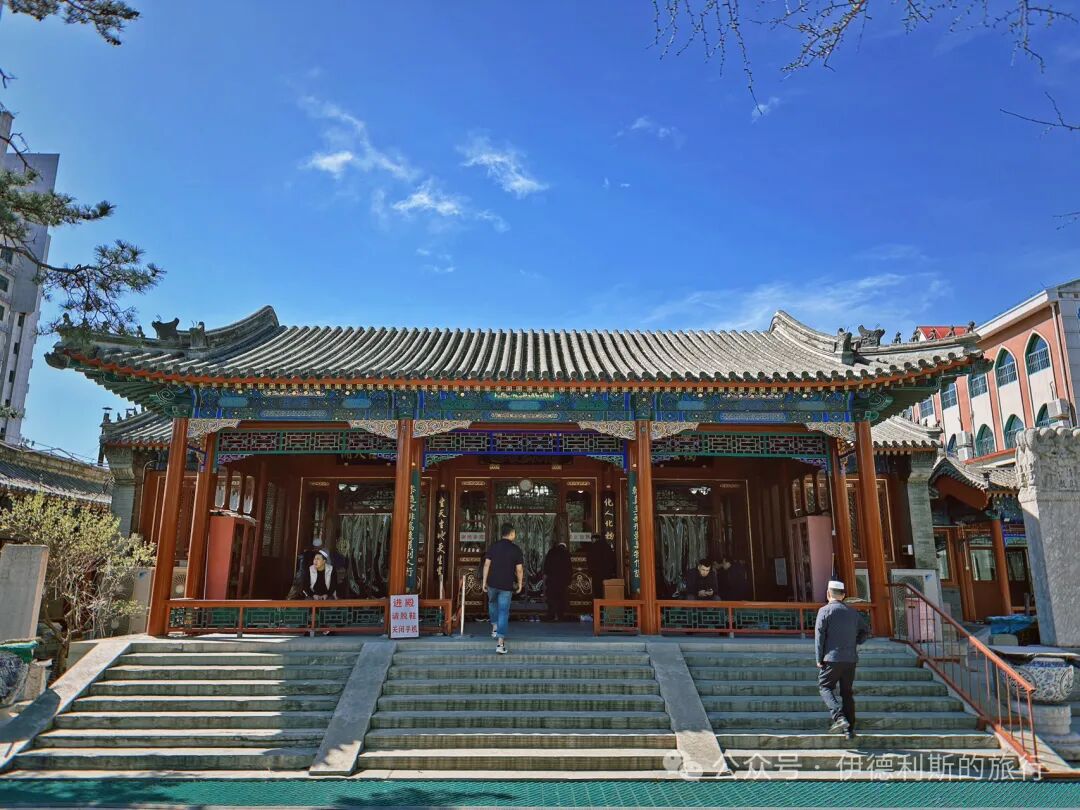
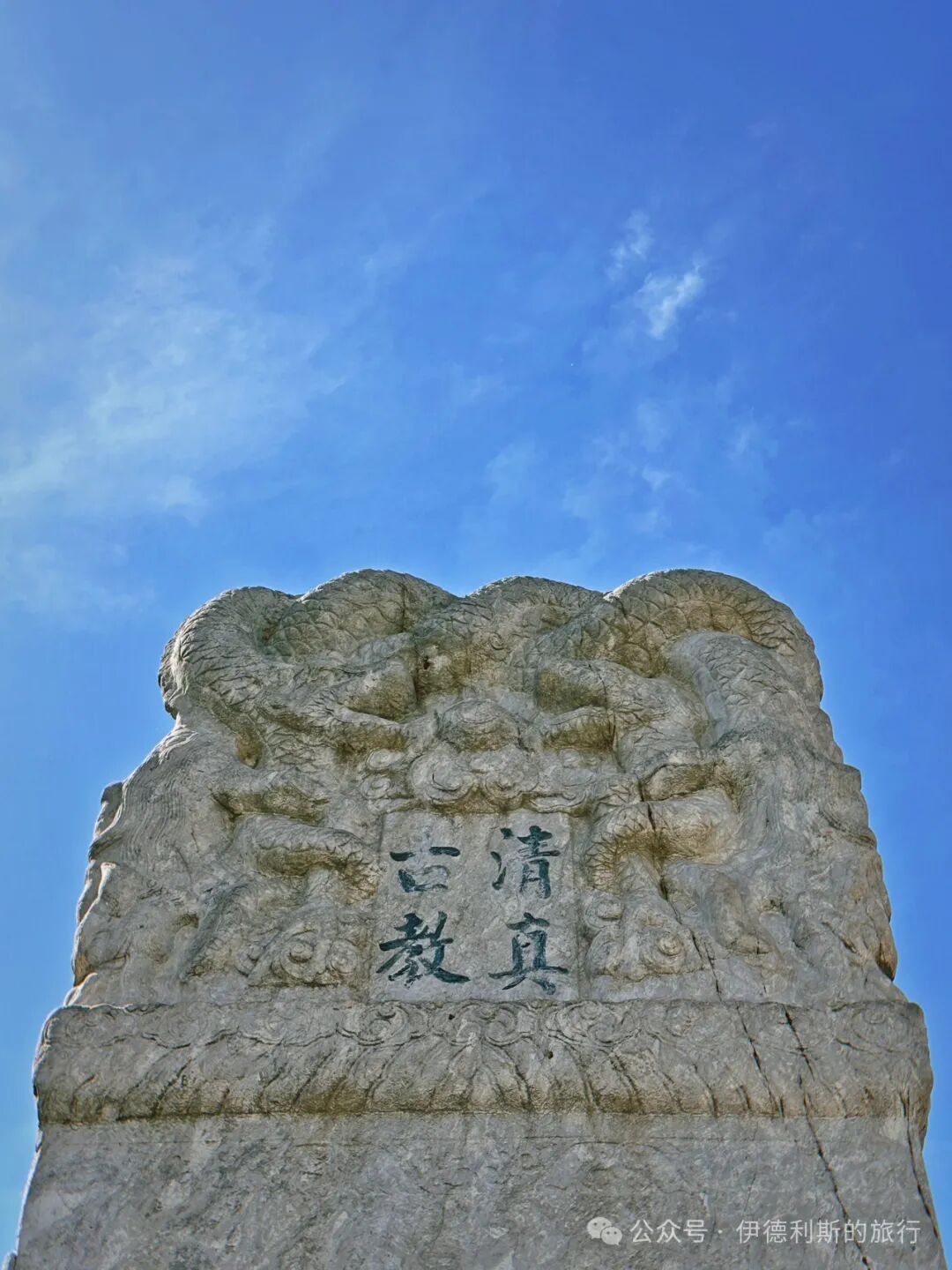
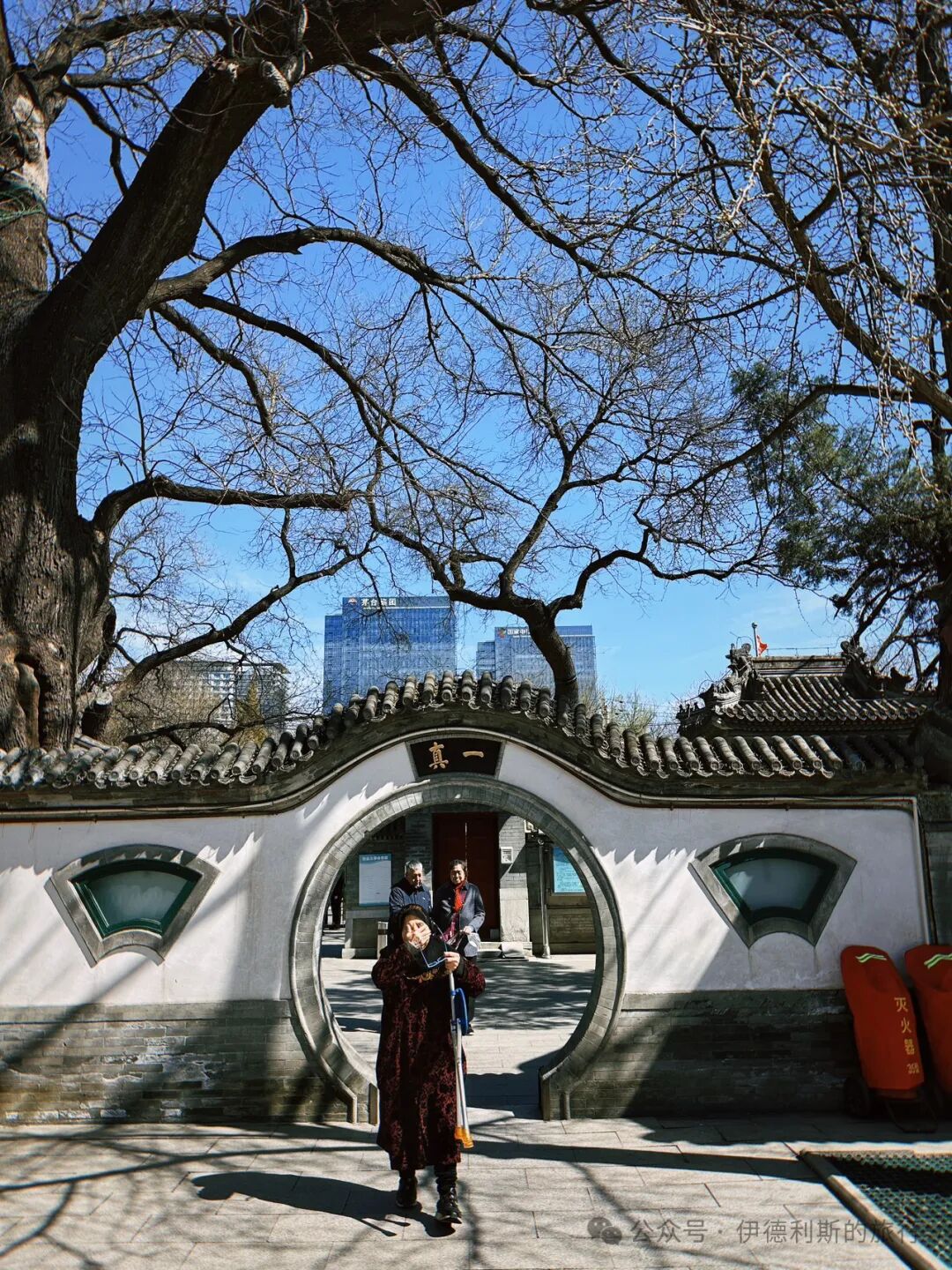
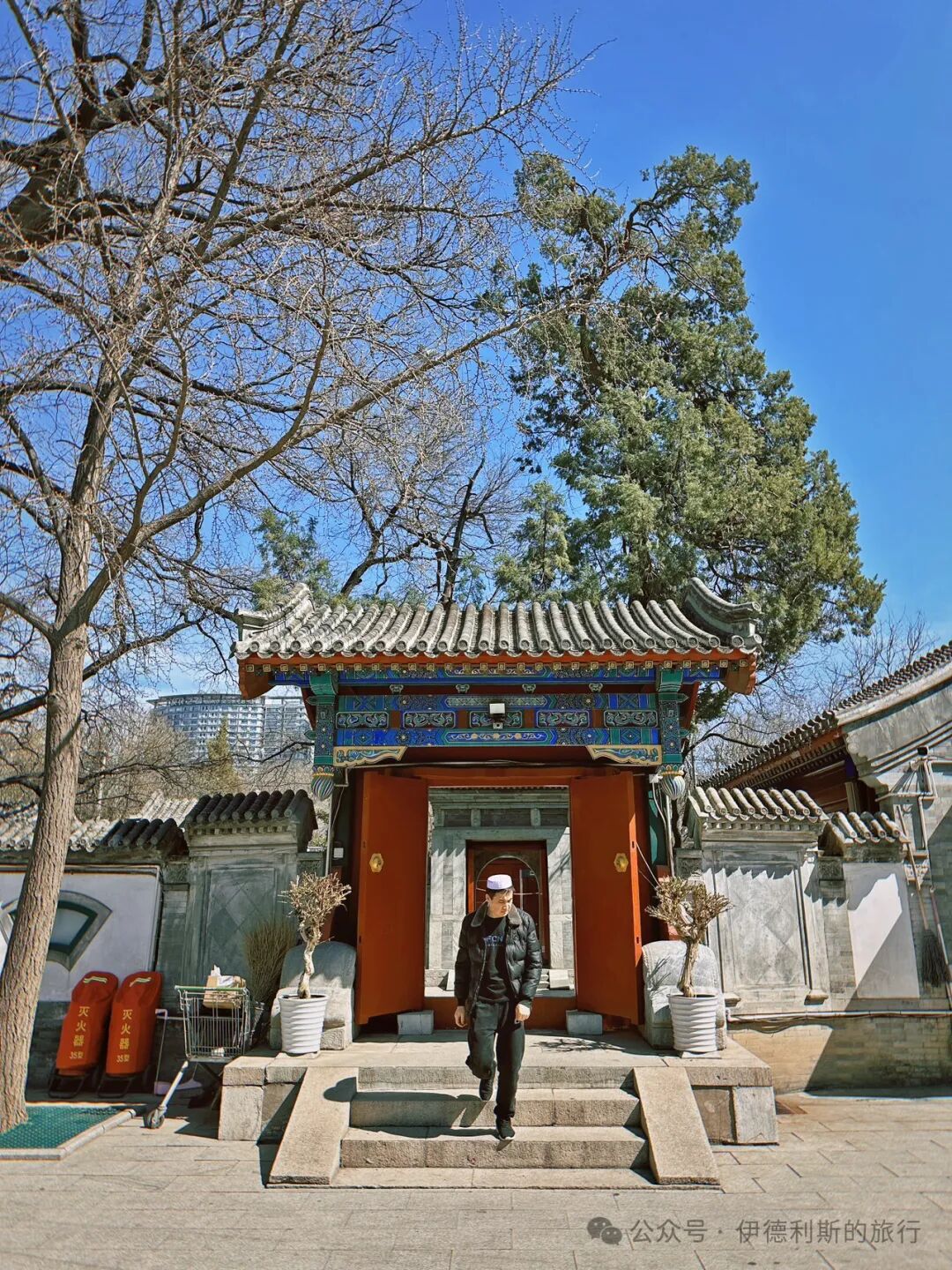
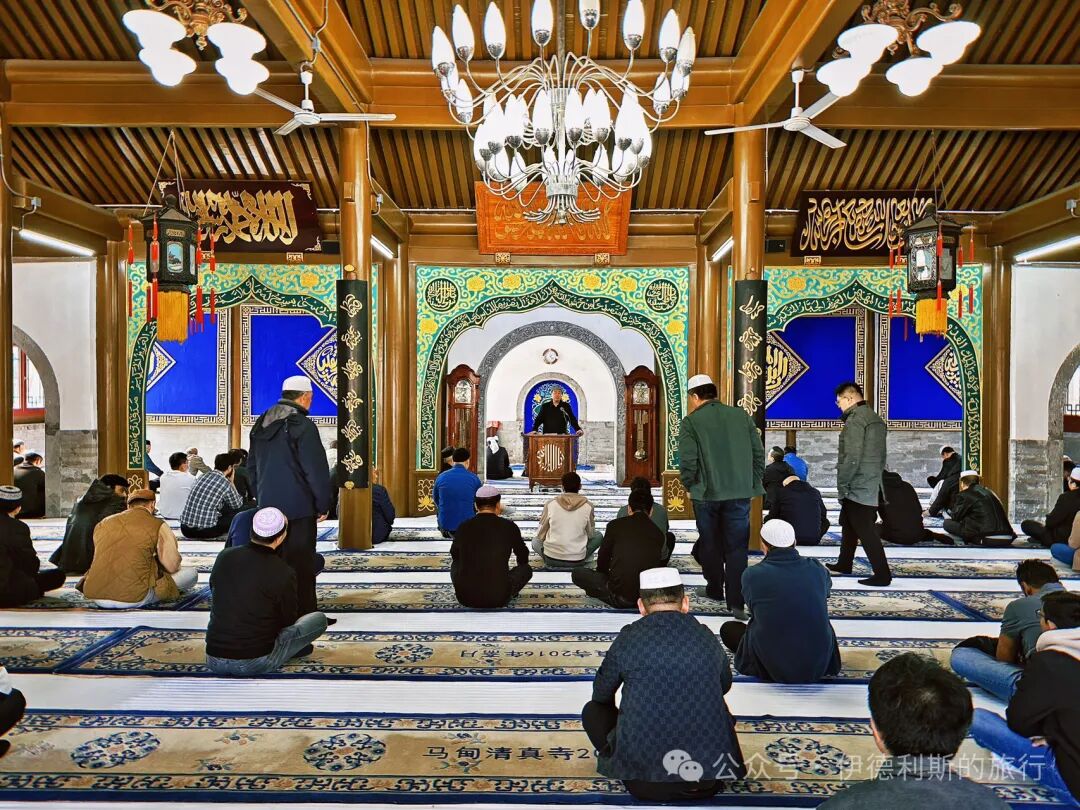
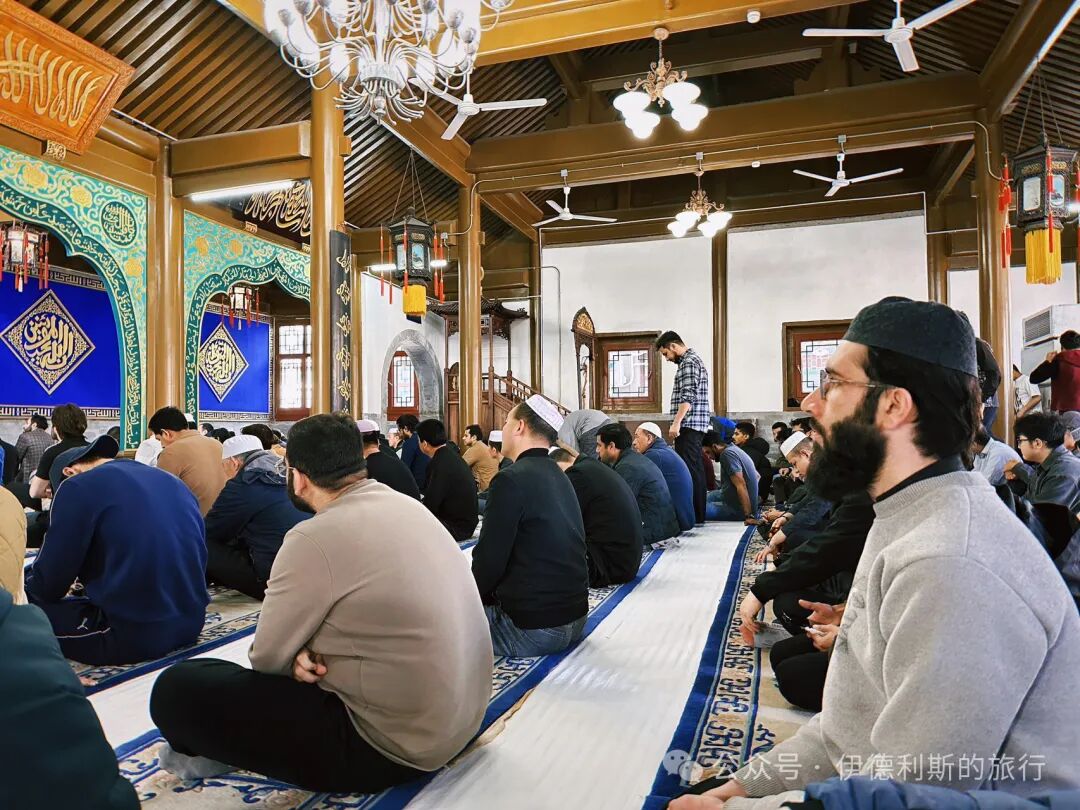
I stayed at Madian Mosque for iftar that evening, eating braised fish (hongshao yu), sliced pork with daylily (huanghua roupian), and stir-fried scallion lamb (congbao yangrou). Many foreign Muslims (dost) also came to break their fast at Madian Mosque. It is great for our brothers and sisters from around the world to taste Beijing's Ramadan meals.
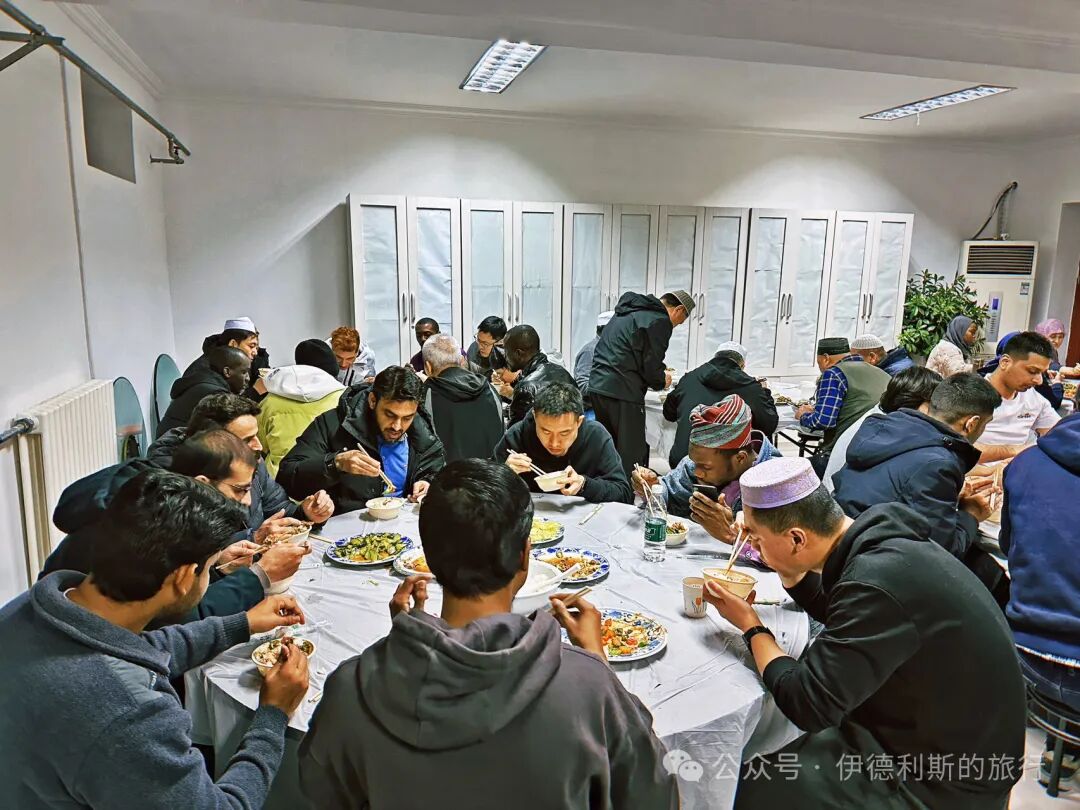
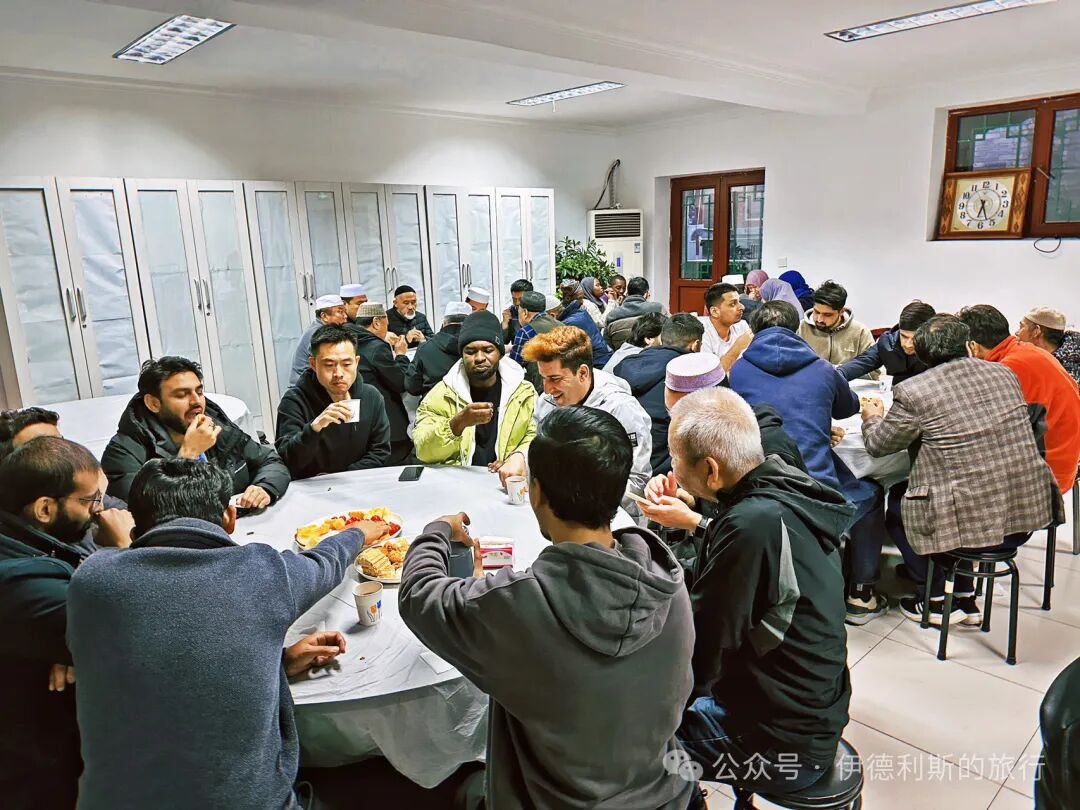
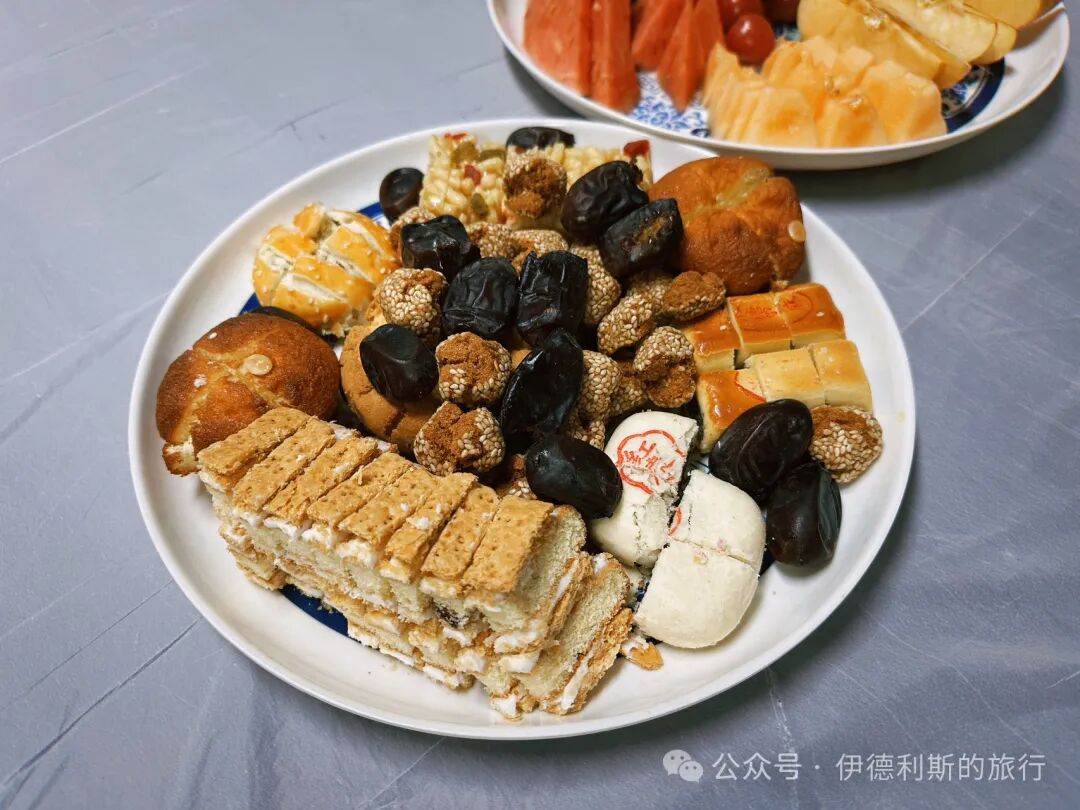
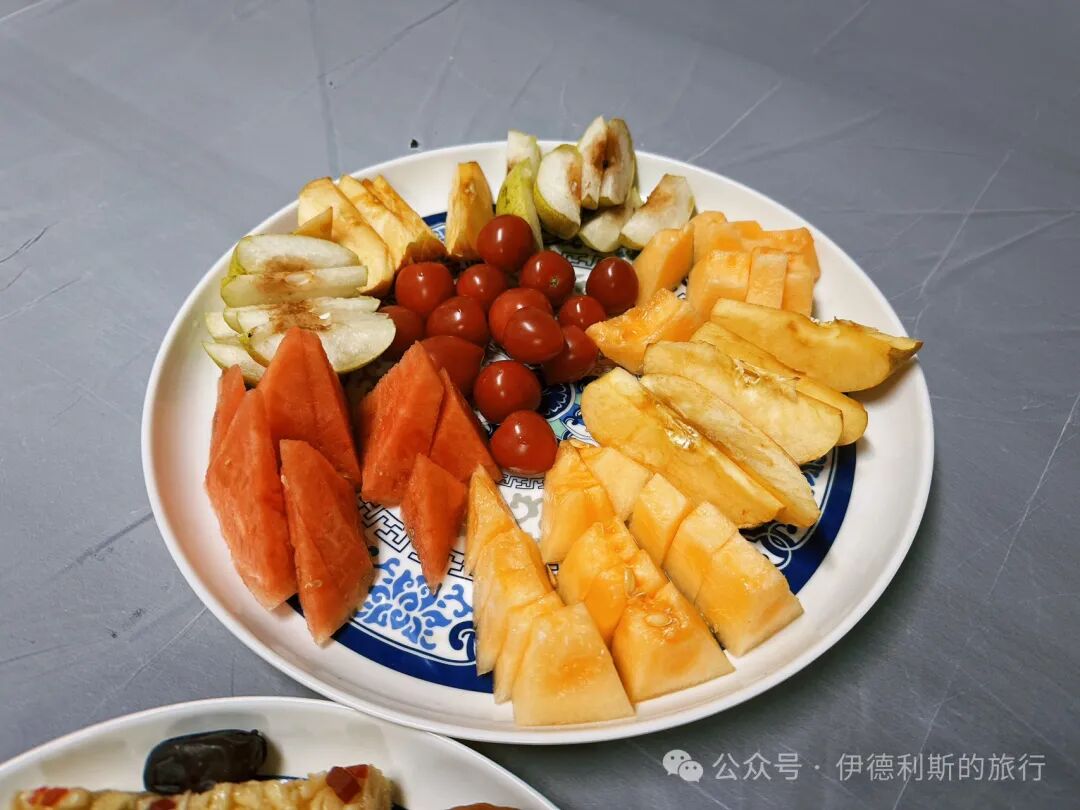
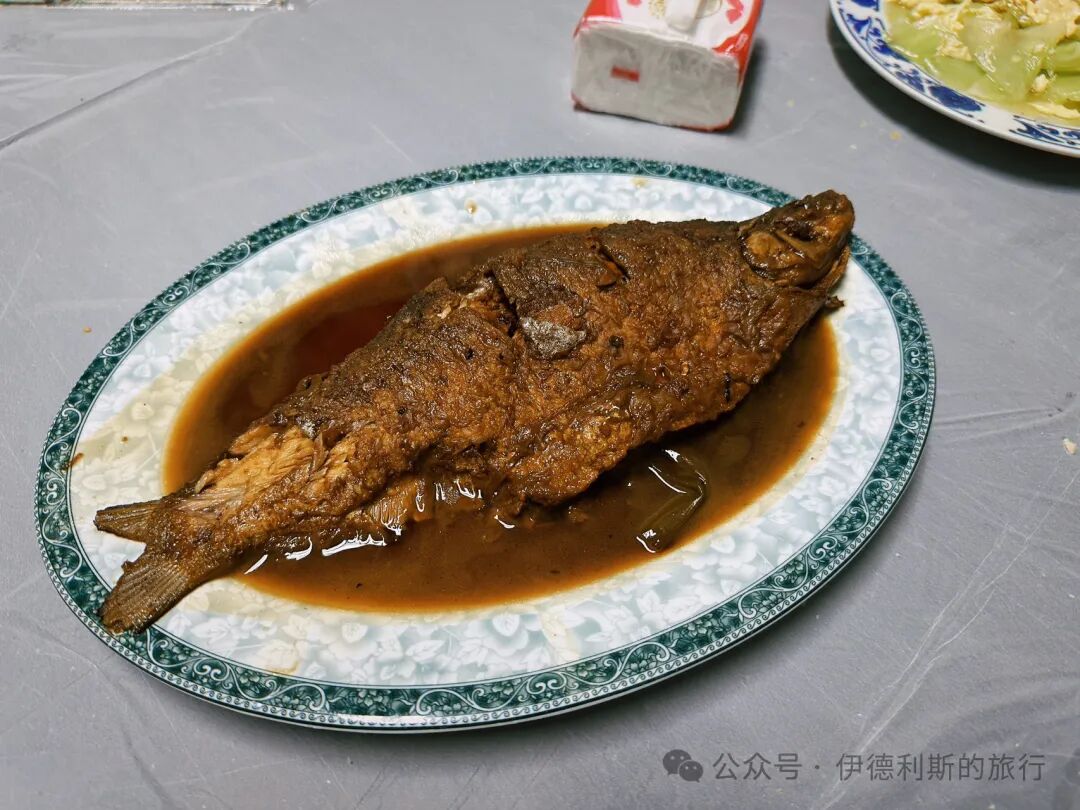
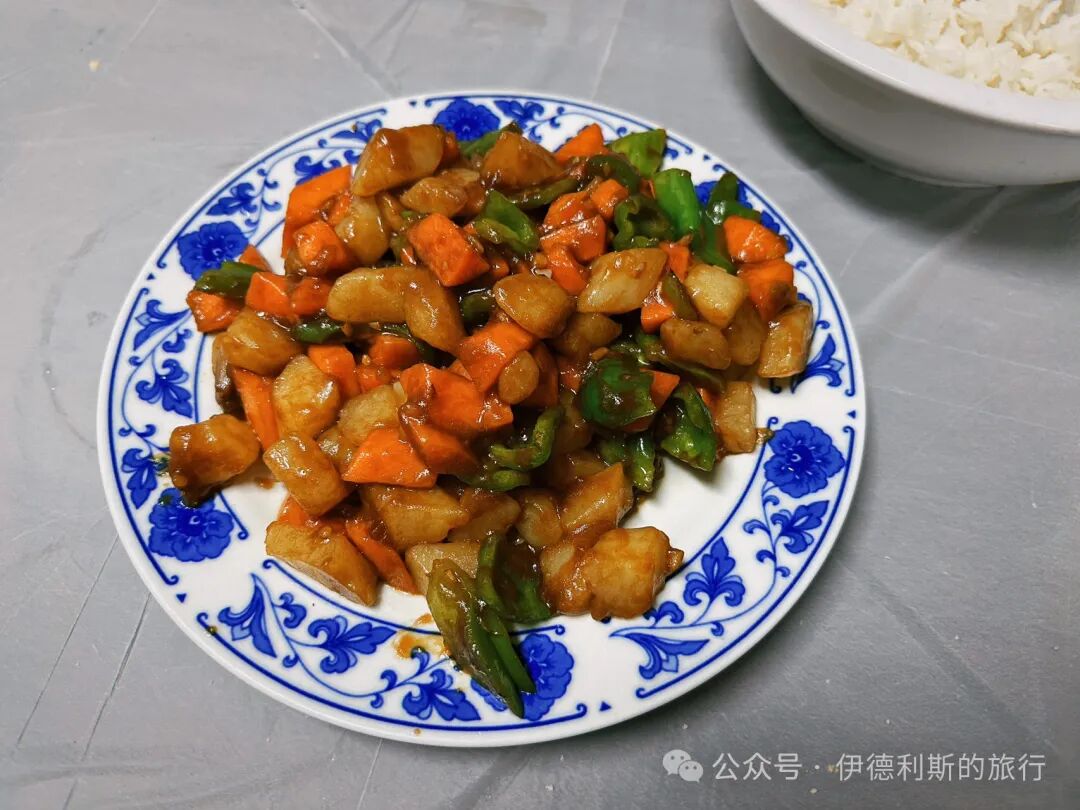
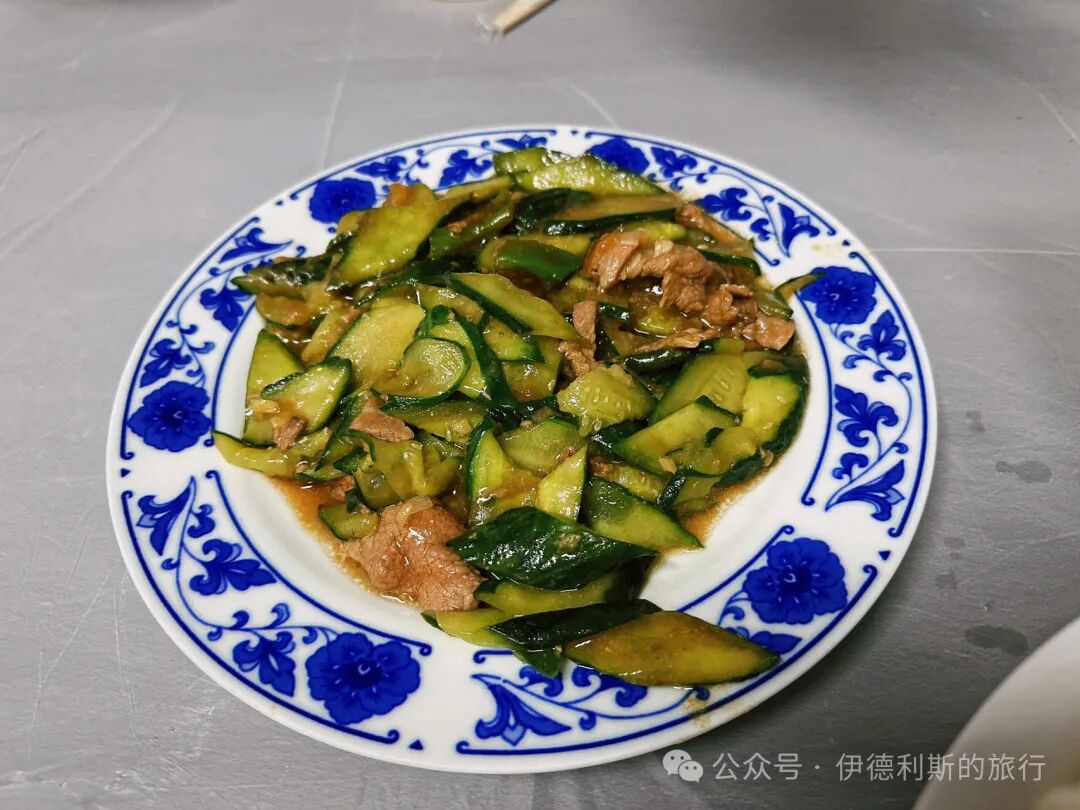
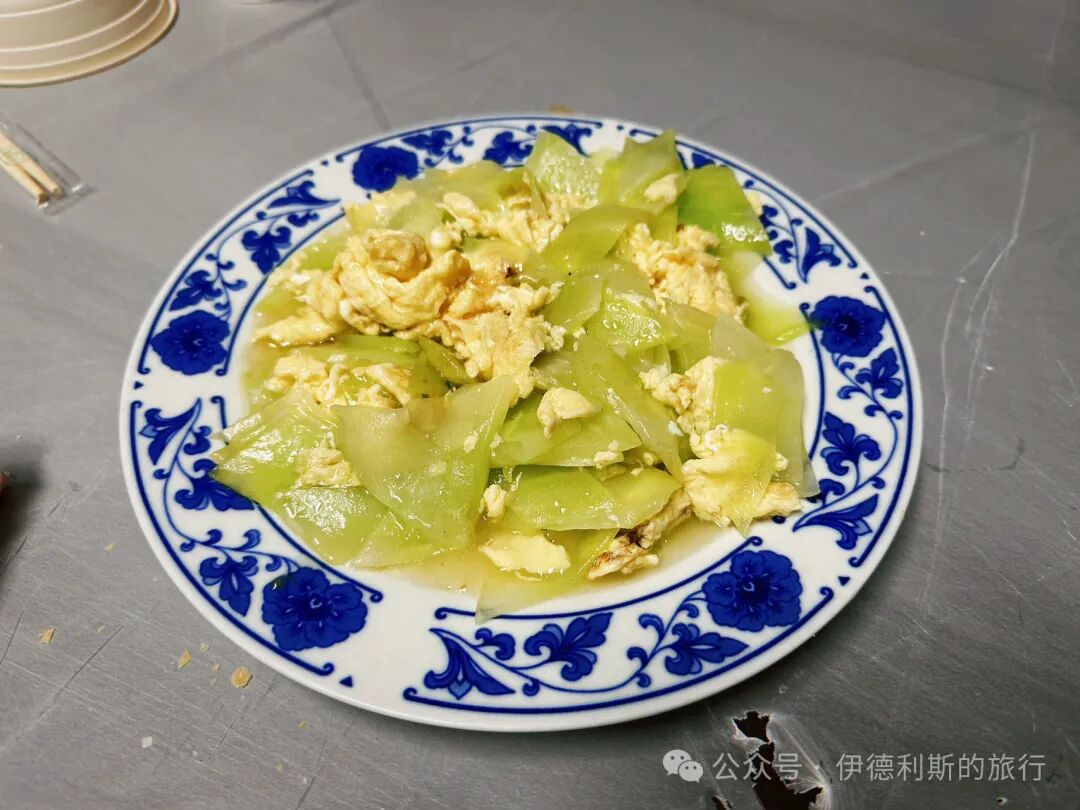
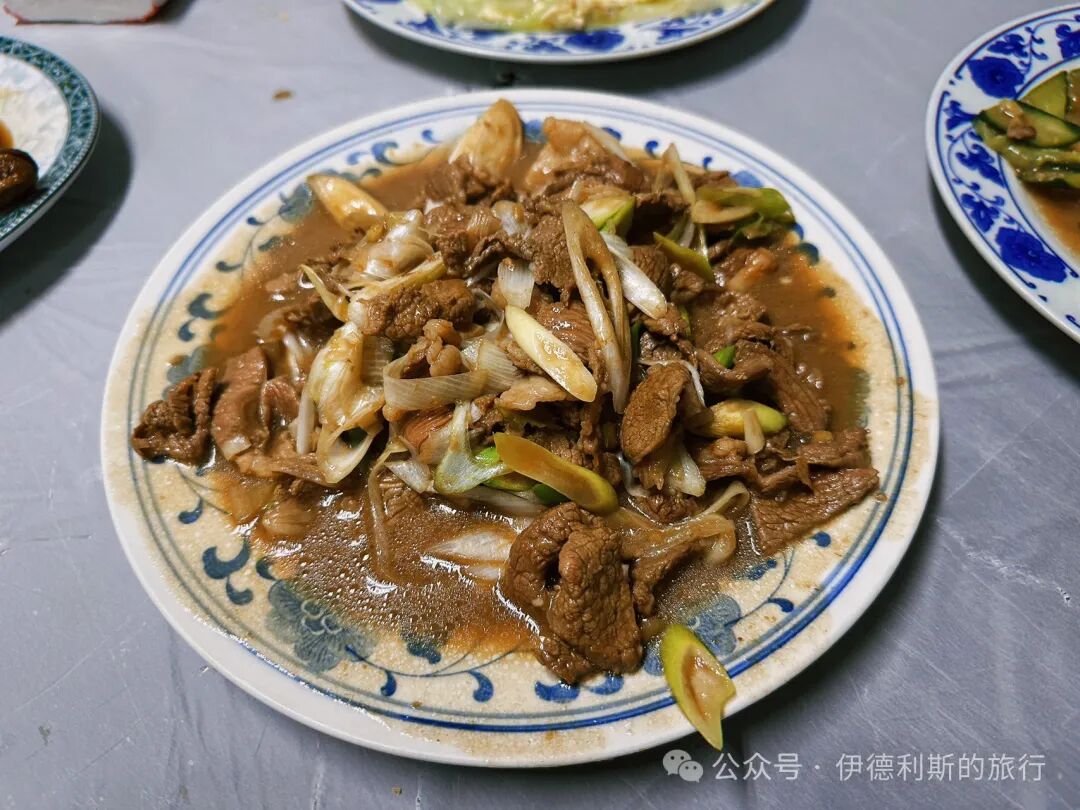
That night, I went to the Sudanese Embassy in Sanlitun for Taraweeh prayers. This year, you need to be accompanied by a foreigner to get in. The Taraweeh prayer consisted of eight rak'ahs. A young Libyan hafiz led the first four, followed by a sermon (wa'z) from the Sudanese imam, and then the Sudanese imam led the final four. During the third rak'ah of Witr, we raised our hands for a long dua. There was another sermon (wa'z) after the dua. I think it is a rare opportunity to come here every year and experience a different cultural atmosphere of our faith.
In the 15th and 16th centuries, Sufi scholars began spreading the faith along the upper Nile River toward the Sudan region. In the early 16th century, the Funj Sultanate ruling Sudan nominally converted to the faith but kept traditional witchcraft and sacrificial rituals. In 1718, the Funj Sultanate changed dynasties, began seeking a more orthodox faith, and started the process of Arabization. By the 19th century, Sudan had become a region that followed orthodox Sunni Islam and began using Arabic as its common language. Today, the vast majority of Sudanese are Sunni Muslims of the Maliki school and are deeply influenced by Sufism.
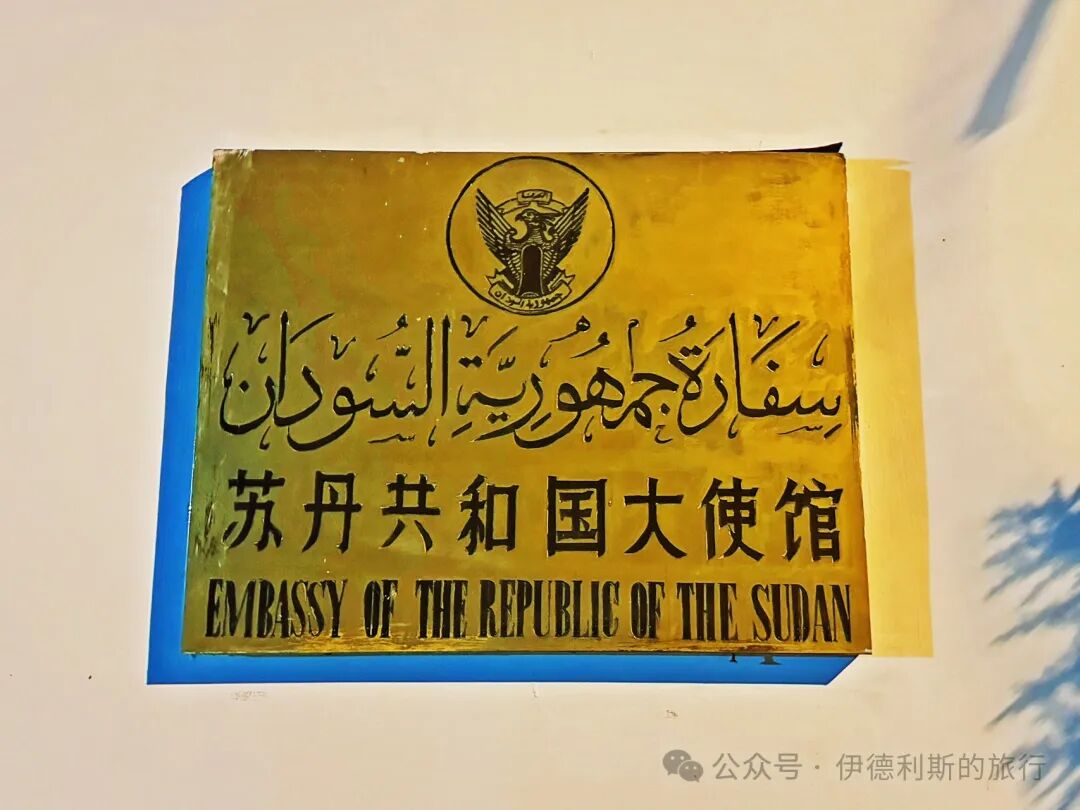
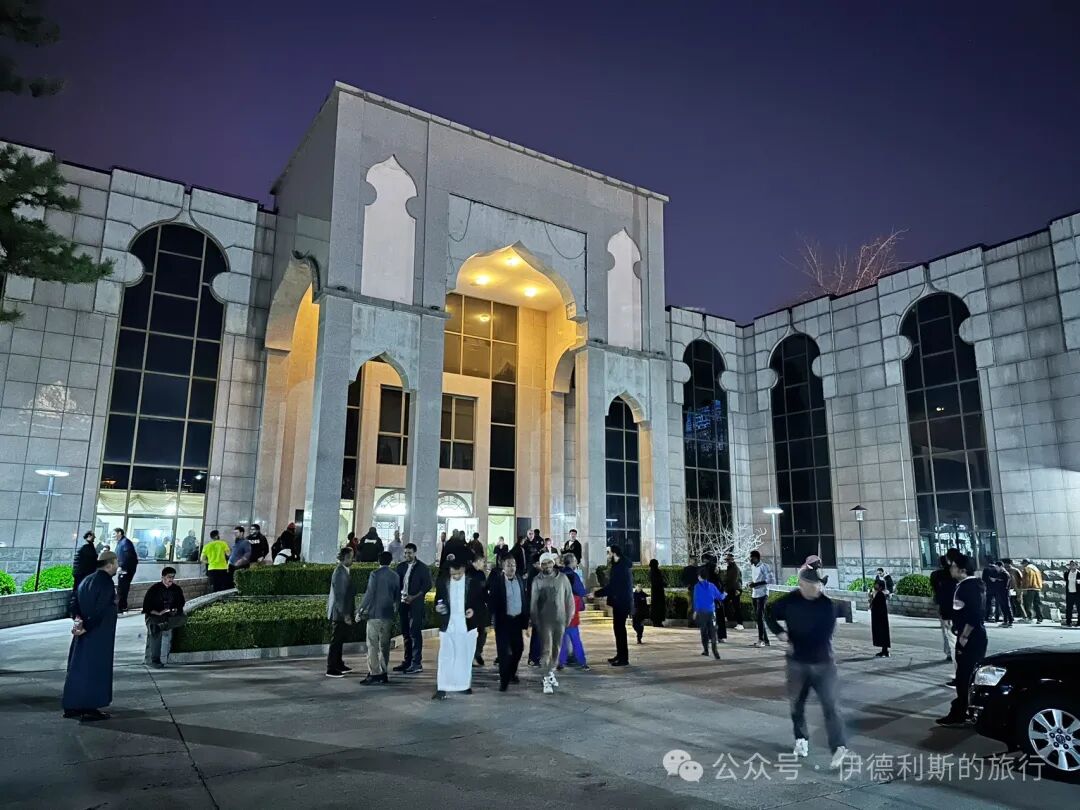
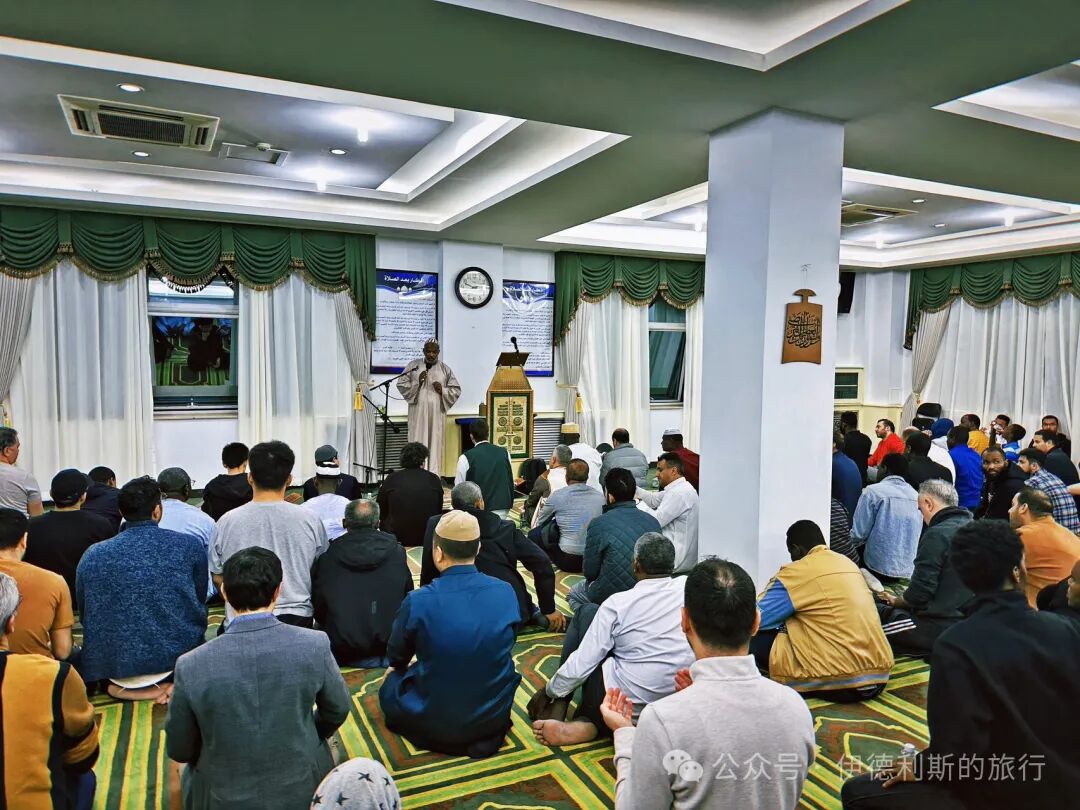
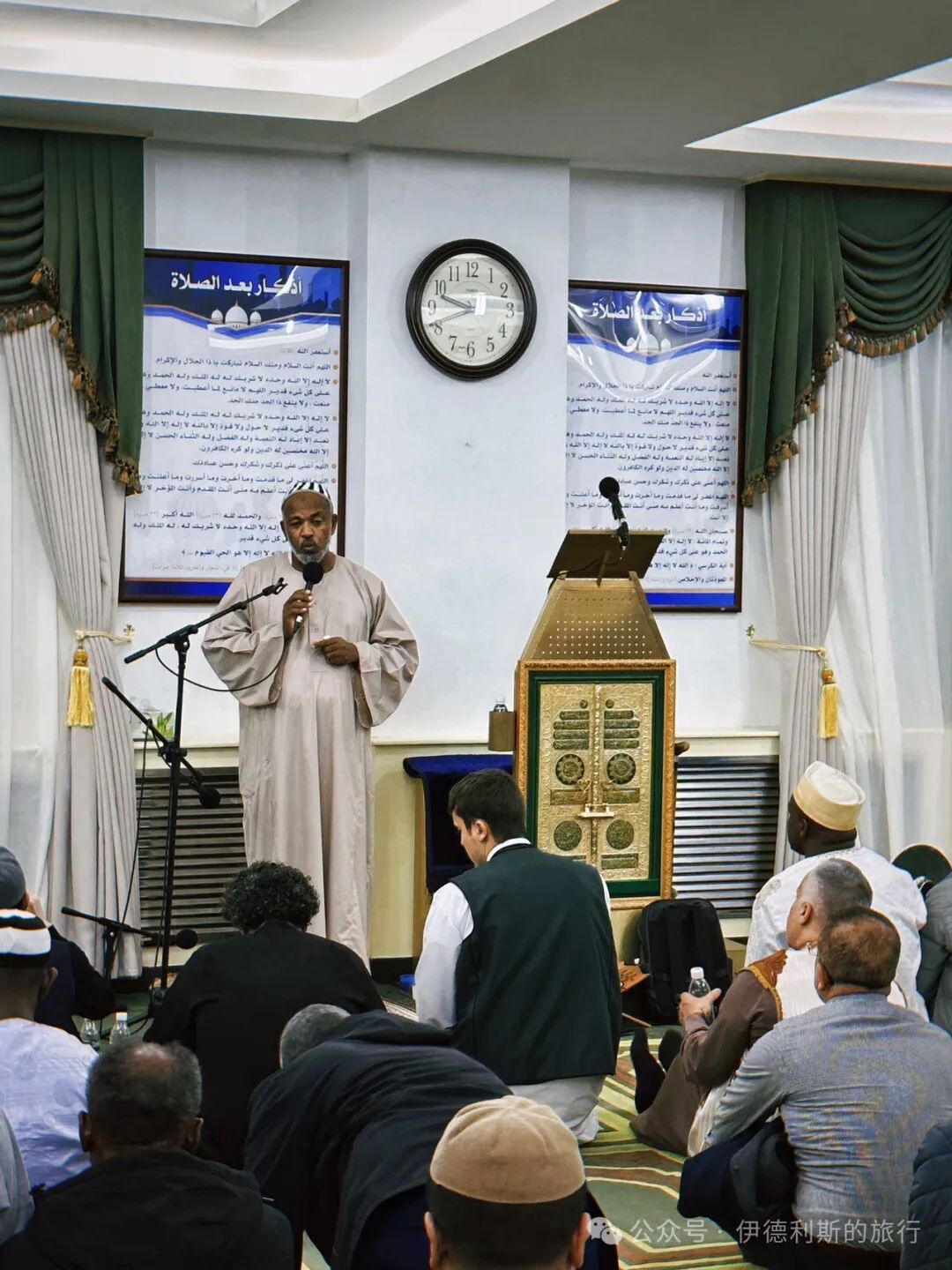
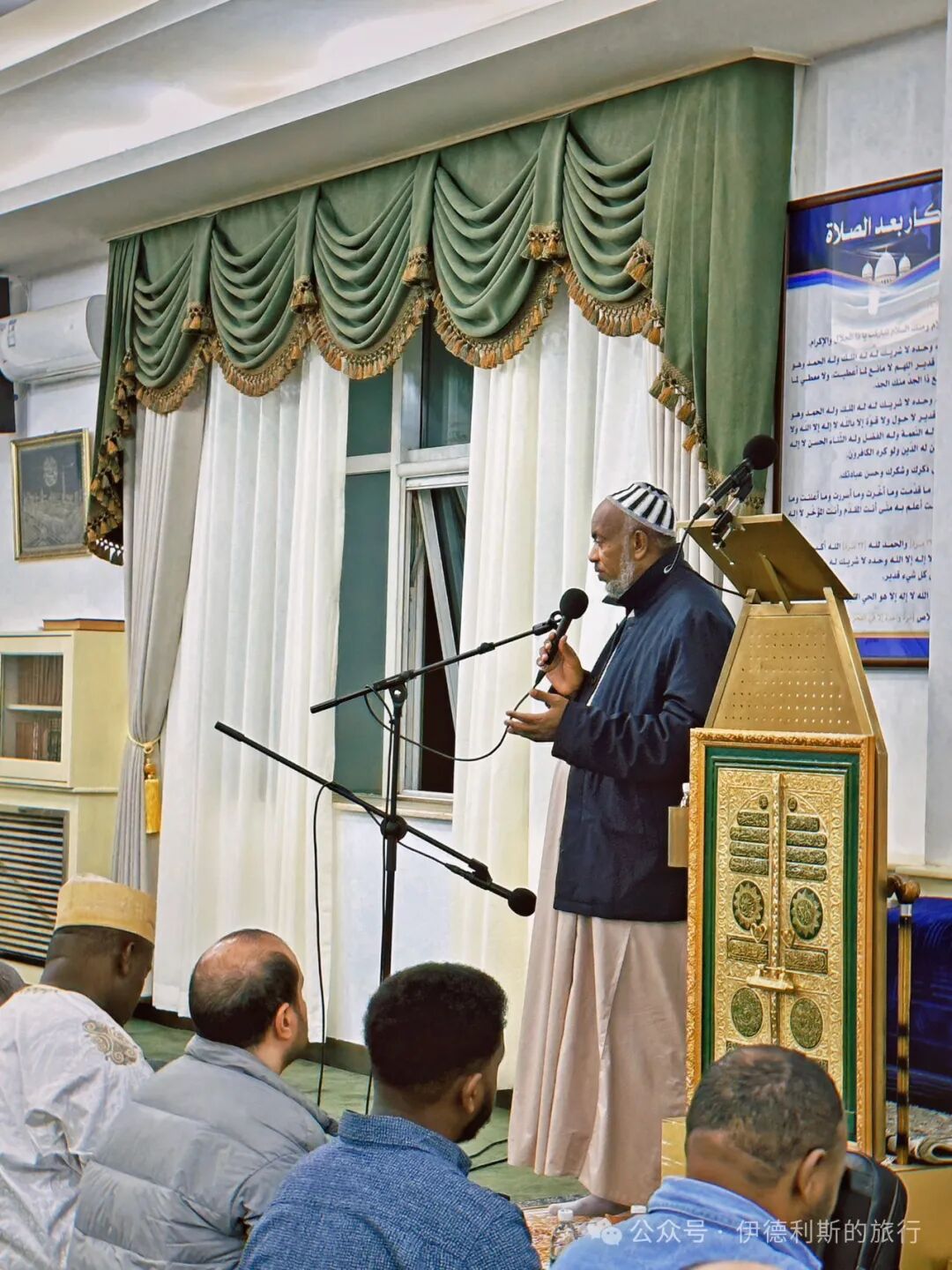
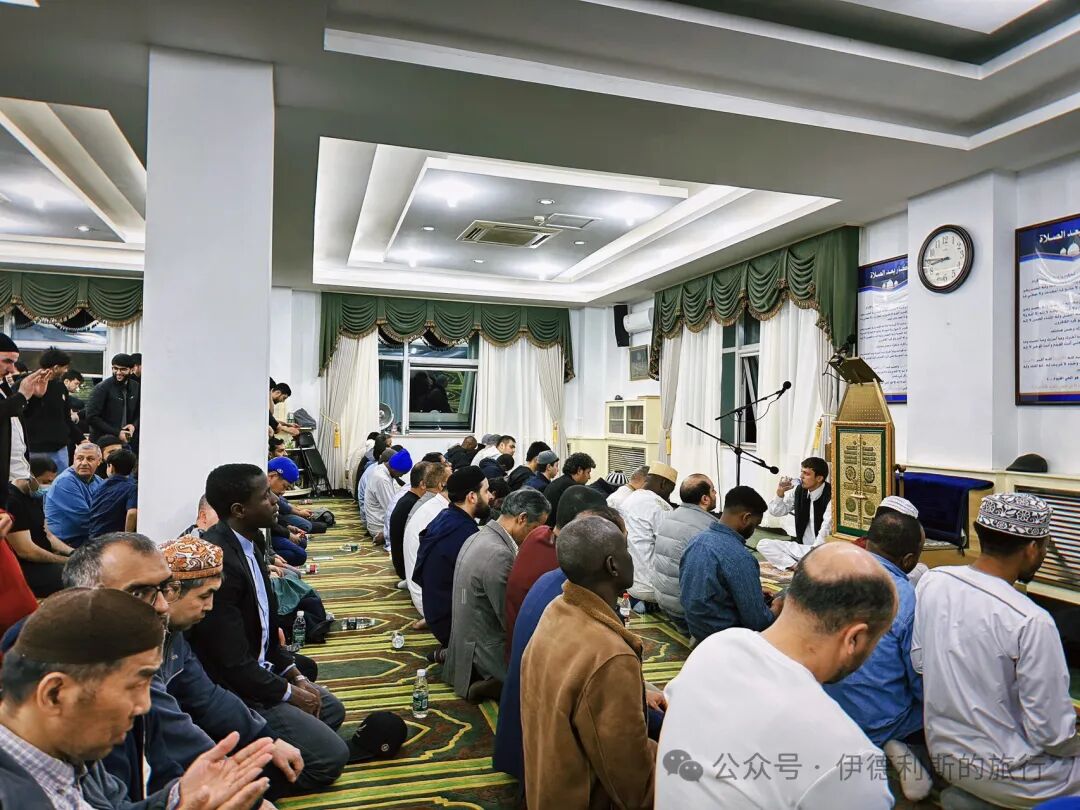
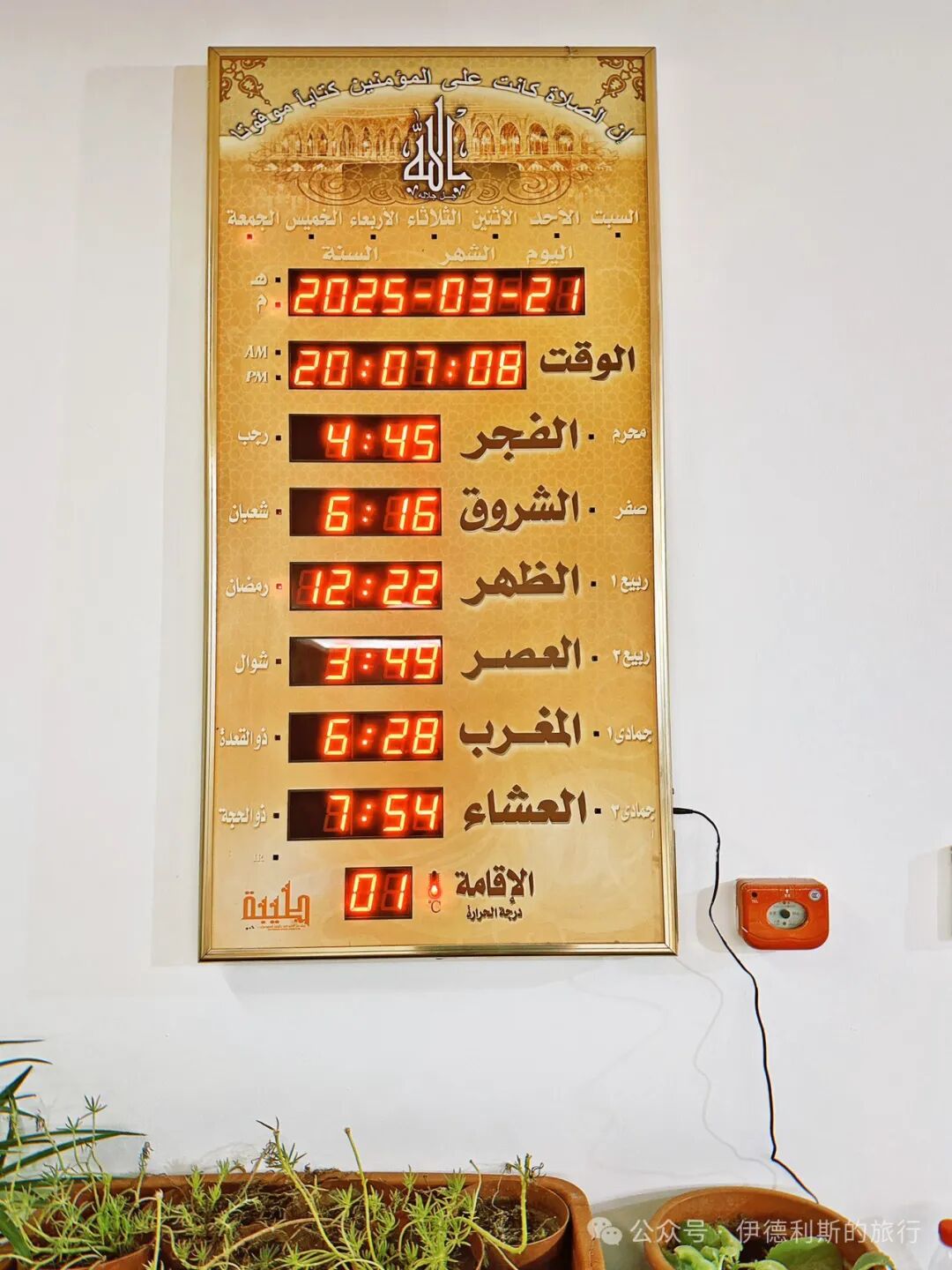
On Saturday night, I broke my fast at the North Mosque in Tianmu, Tianjin, where the elders served green tea and dates. After the Maghrib prayer, they handed out boxed meals of stir-fried lotus root slices and garlic sprouts with pork, served with steamed buns (mantou), which everyone took home to eat.
The Mu family originally lived in Muja Village, Qiantang County, Hangzhou Prefecture, Zhejiang. During the Jianwen era of the Ming dynasty, they were moved to Guyilang inside Shuiximen in Nanjing. In the early Yongle era, they followed the Prince of Yan to Nanpi County, Cangzhou, Hebei. In 1404 (the first year of Ming Yongle), the Mu brothers used canal boats to transport imperial grain to Tongzhou. After unloading, they received special favor and were gifted the boats. They traveled south along the Grand Canal to a place twenty miles north of Tianjin Wei, where they settled, established Muja Village, and built the Muja Village Mosque, which is now the Tianmu North Mosque.
The Tianmu North Mosque was repaired many times in history. It was burned down by Kuomintang troops in 1948, rebuilt after 1950, and renovated to its current size after 2007.
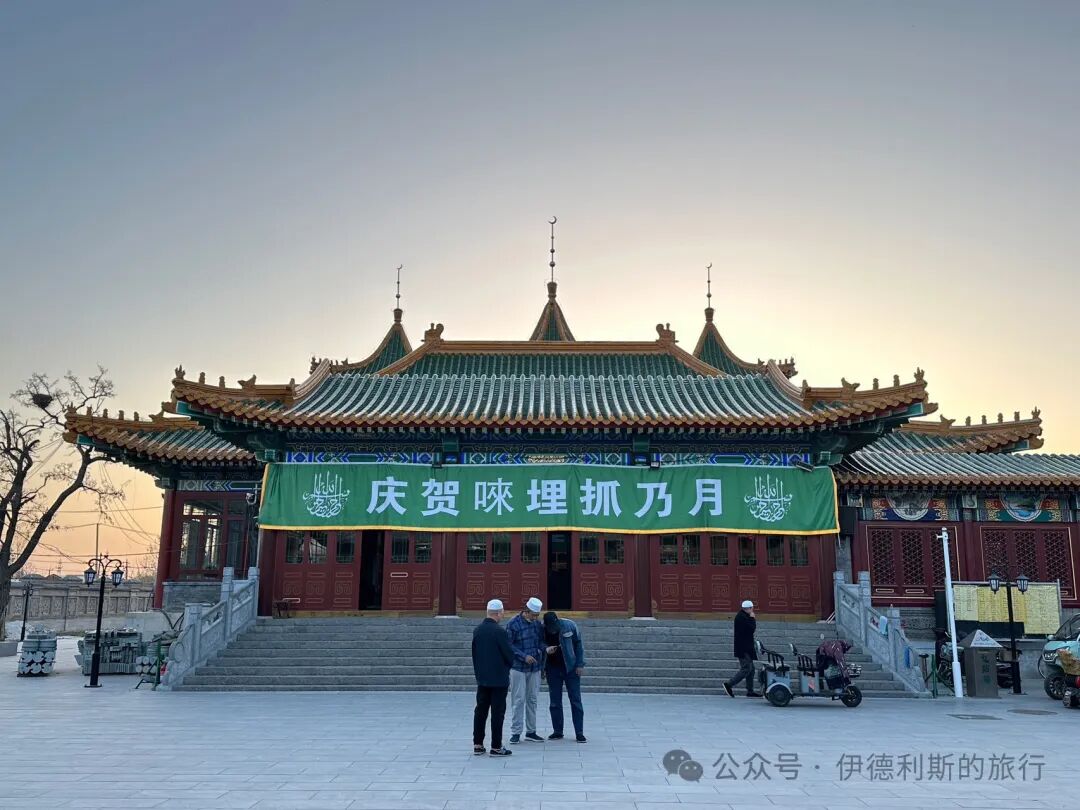
In a previous article, some readers asked about the translation "laimaizhuannai." This is actually a traditional term used in Tianjin and surrounding areas for hundreds of years. The pronunciation of "laimaizhuannai" is Ramzan. The way the letter "d" (ḍād) is pronounced as a "z" and the emphasis on the final syllable both come from Persian. In regions influenced by Persian culture, such as Iran, Afghanistan, Azerbaijan, India, Pakistan, and Turkey, the word for Ramadan is pronounced Ramazan.
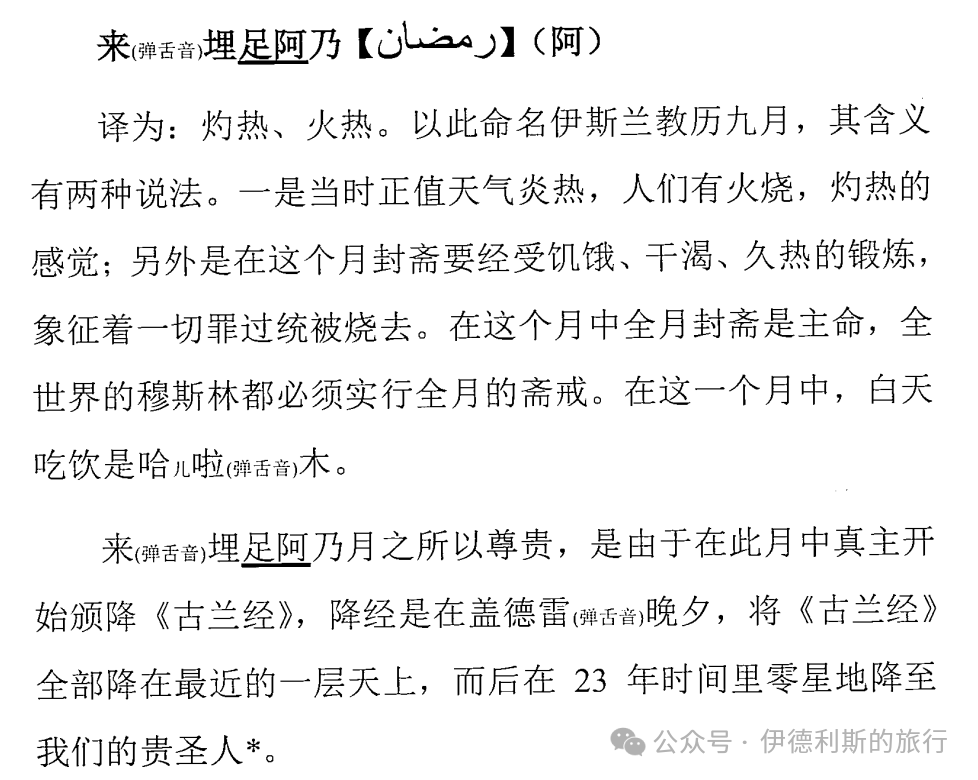
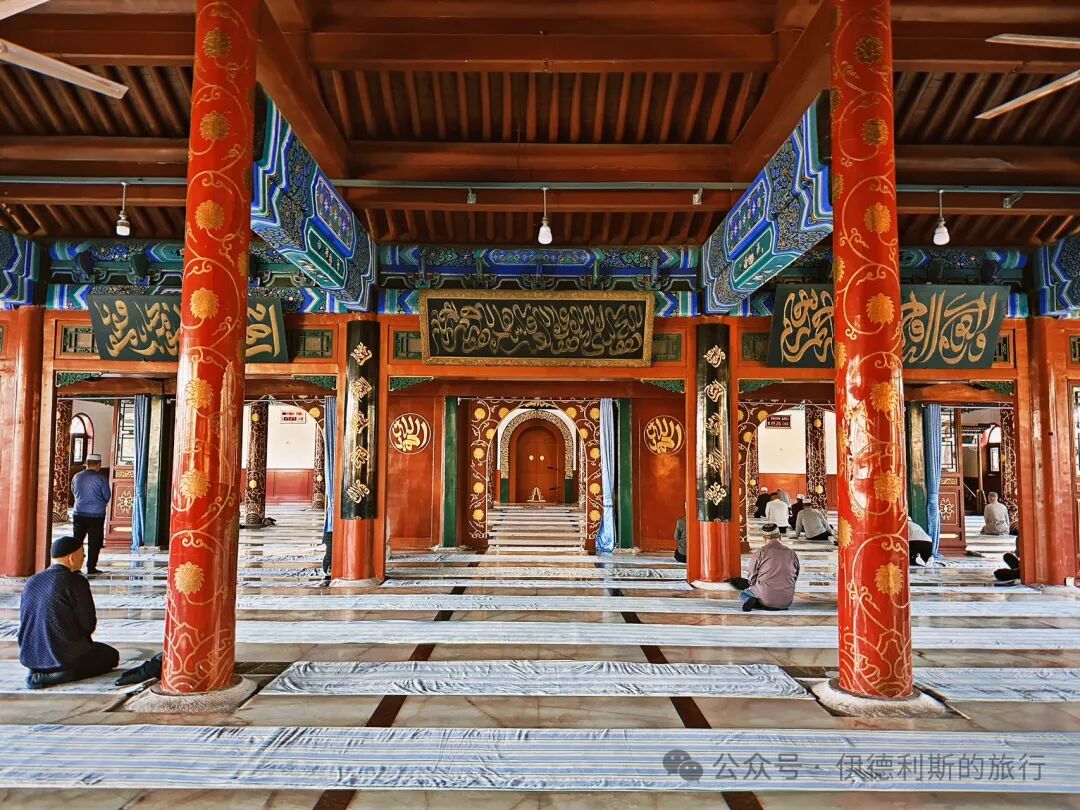
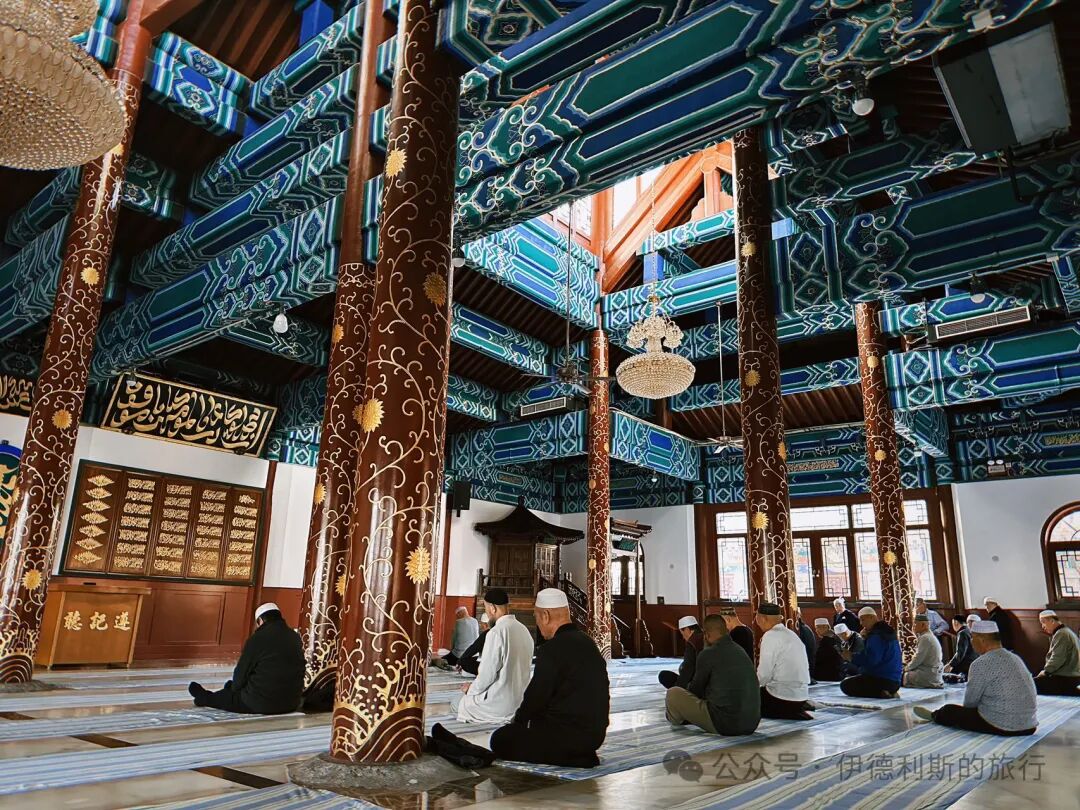
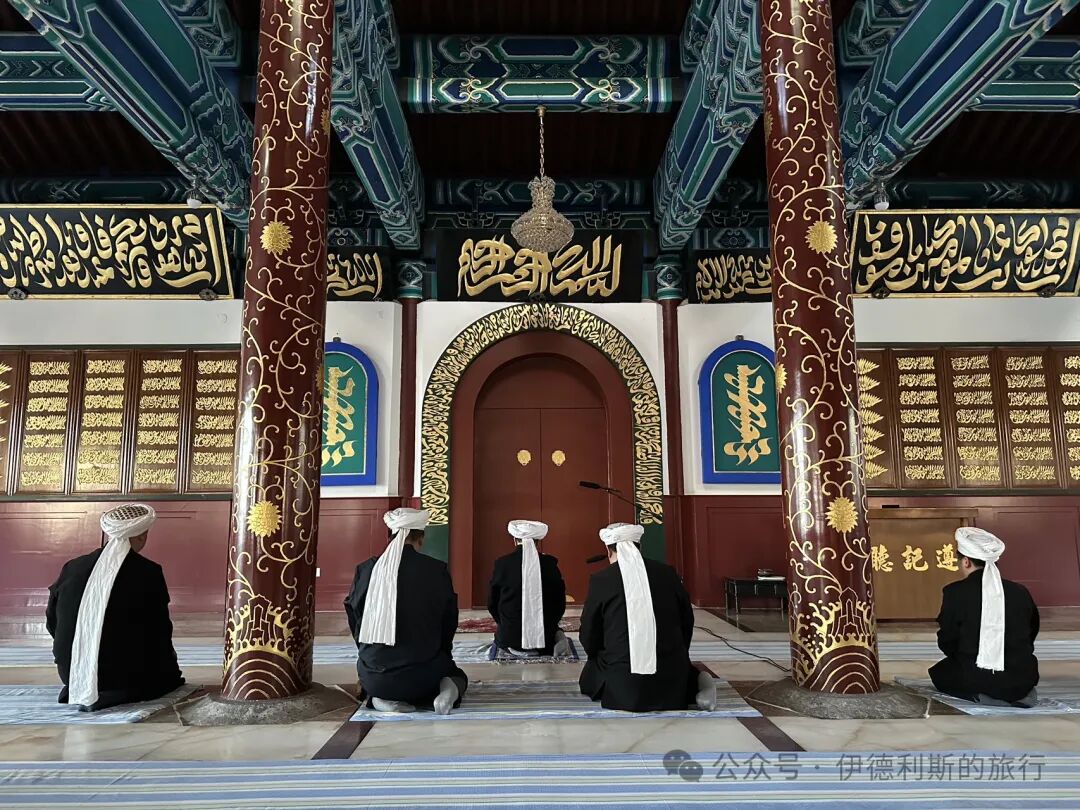
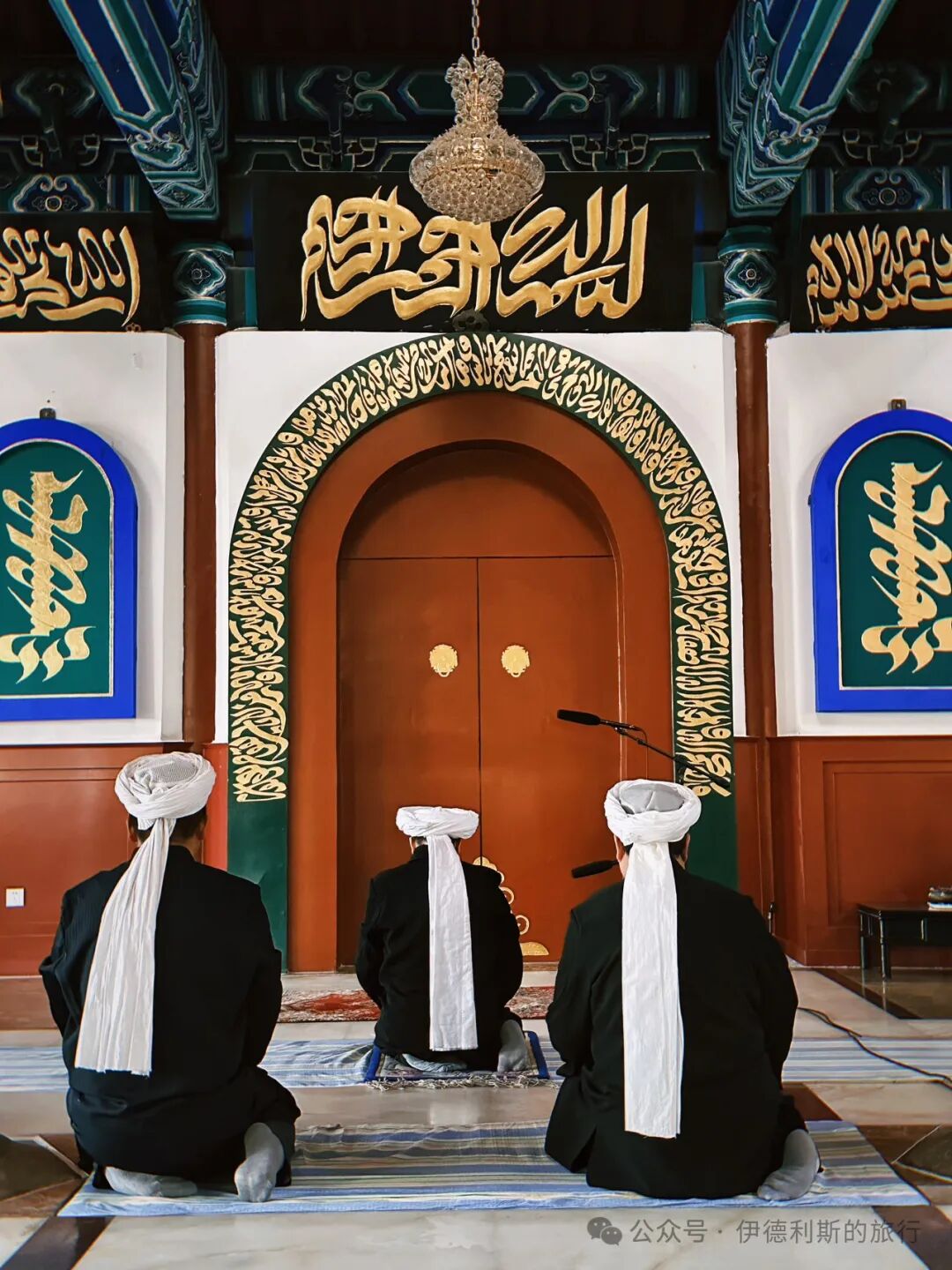
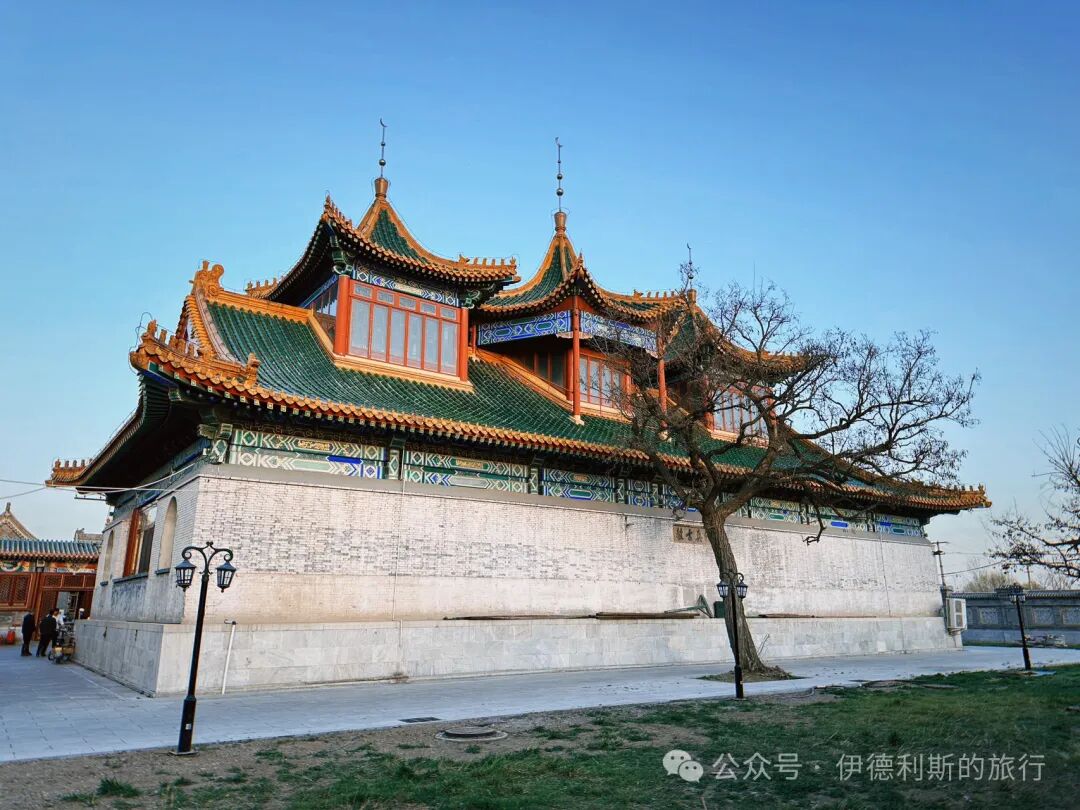
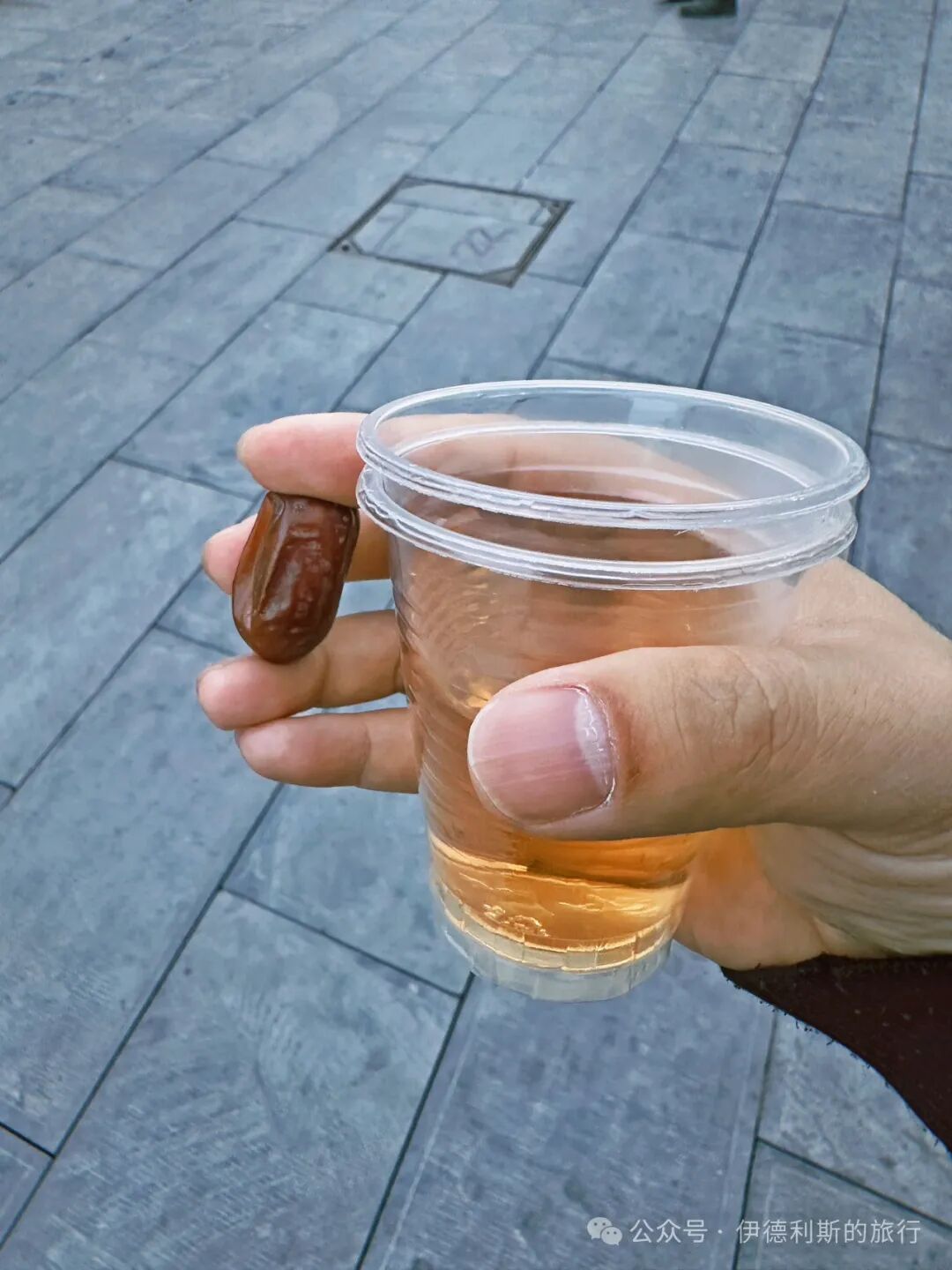
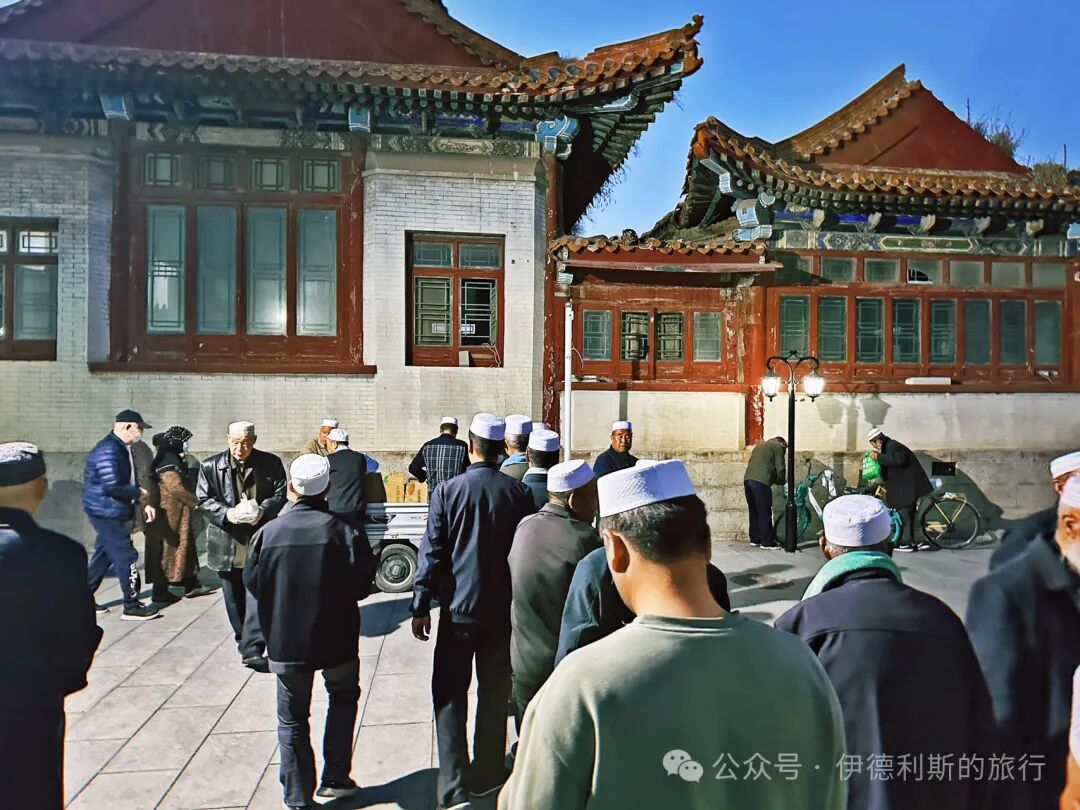
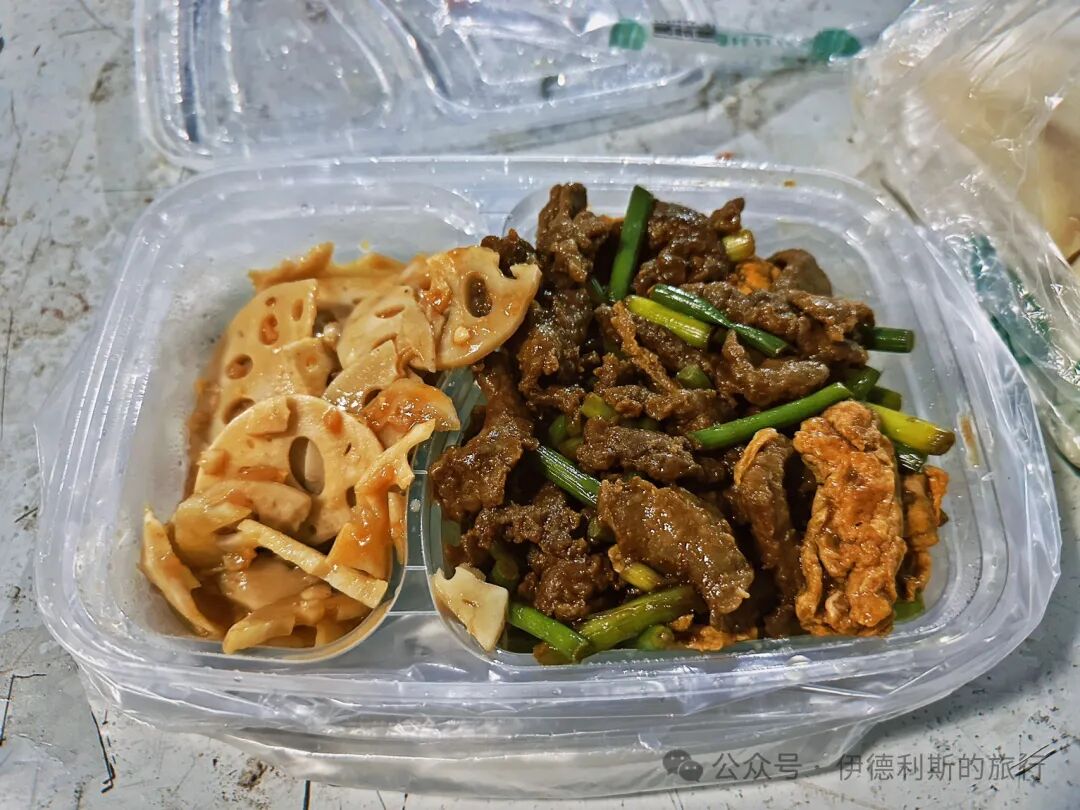
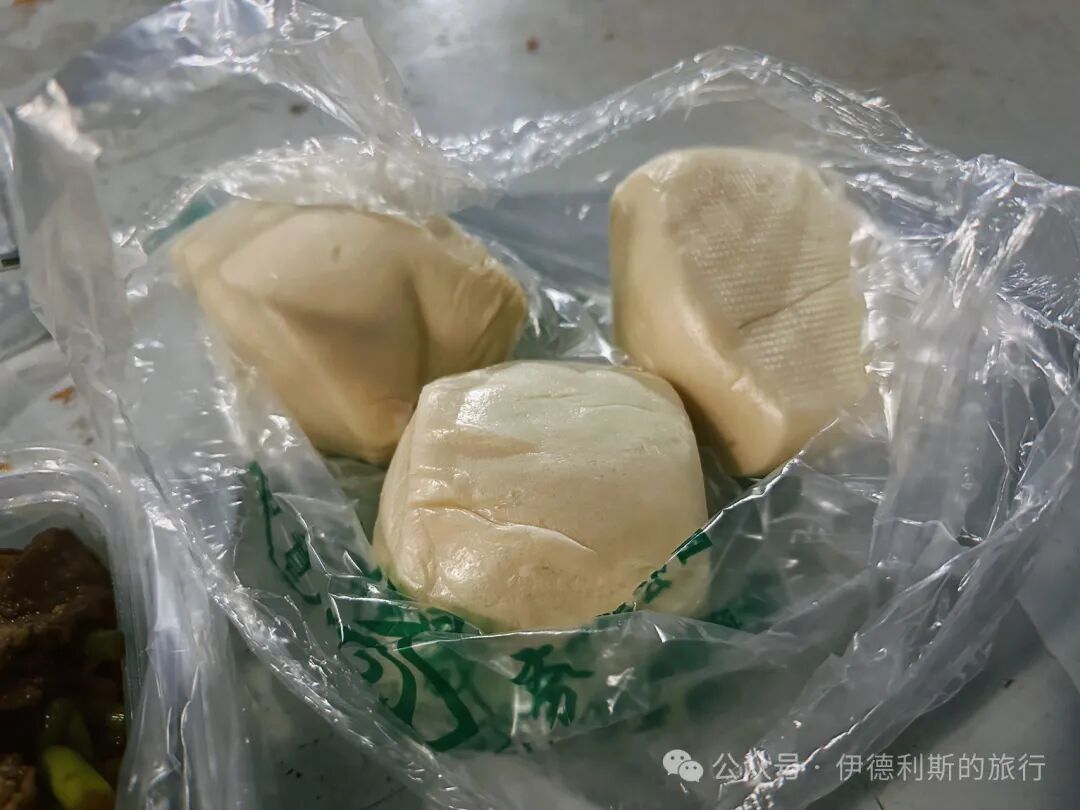
Plaque at the North Mosque (Beidasi) in Tianmu, Tianjin
Ancient Islamic Faith (Qingzhen Gujiao)
Auspicious day in the first month of autumn, in the Gengxu year of the Xuantong reign (1910)
Respectfully presented by Xiao Liangtong, acting head of the Tianjin Garrison, holding the rank of Du-si and wearing the blue feather.
Calligraphy by Prince Su
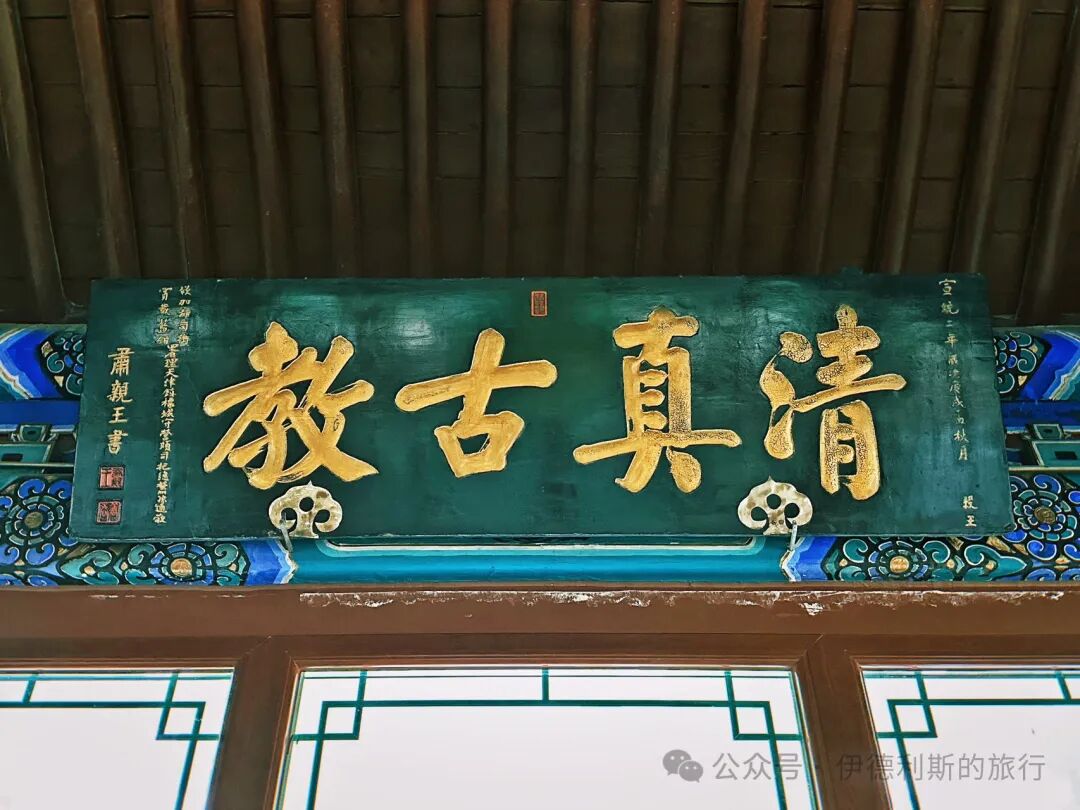
Greatest and Most Just
Erected on an auspicious day in the fifth month of summer, in the Guimo year of the Guangxu reign (1883)
Calligraphy by Xu Ziming
Respectfully presented by Mu Tongchun, a presented scholar (jinshi) and imperial guard, appointed as commander of the Huzhou Garrison in Zhejiang, with a two-grade promotion.
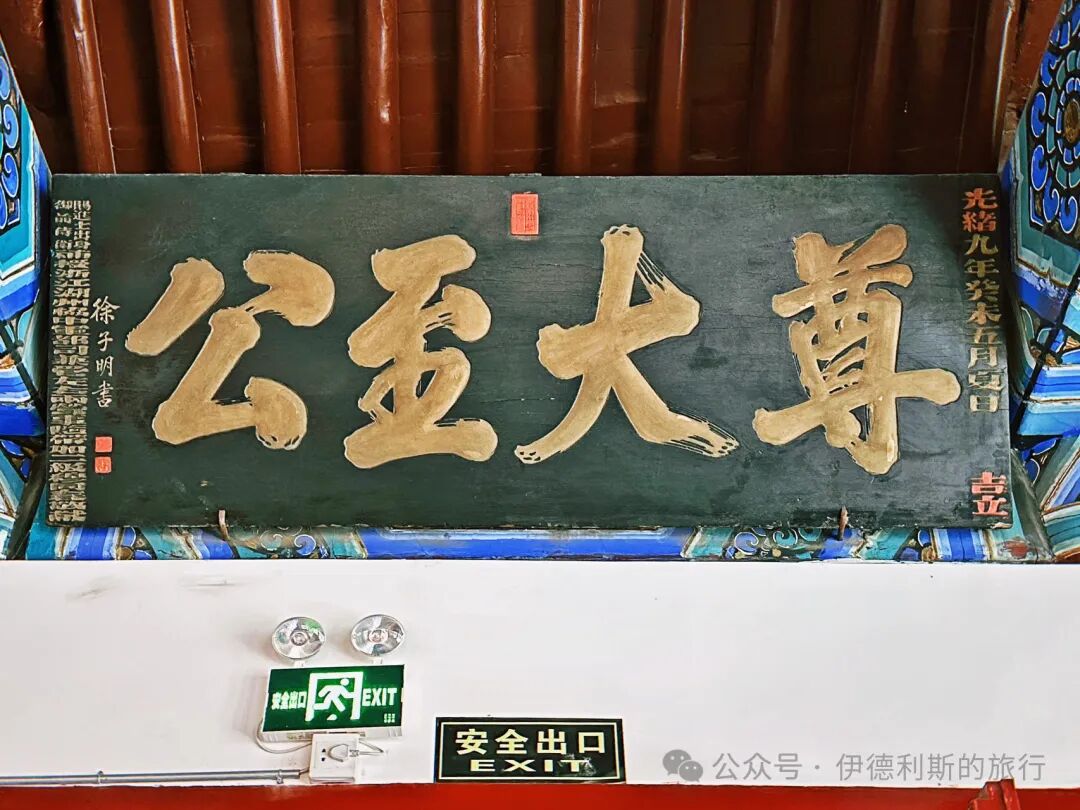
Upholding the ancestors and awaiting the future
Auspicious day in the first month of autumn, in the ninth year of the Guangxu reign (1883)
Respectfully erected by Hei Yaozeng, a magistrate-elect holding the rank of Du-si.
Hei Zhaorong, a commander of the Ziya station in Jinghai County, holding the fourth-rank title and wearing the blue feather.
Reprinted by Hei Pengnian, a commander of the South Grand Canal Garrison, holding the fifth-rank title and wearing the blue feather.
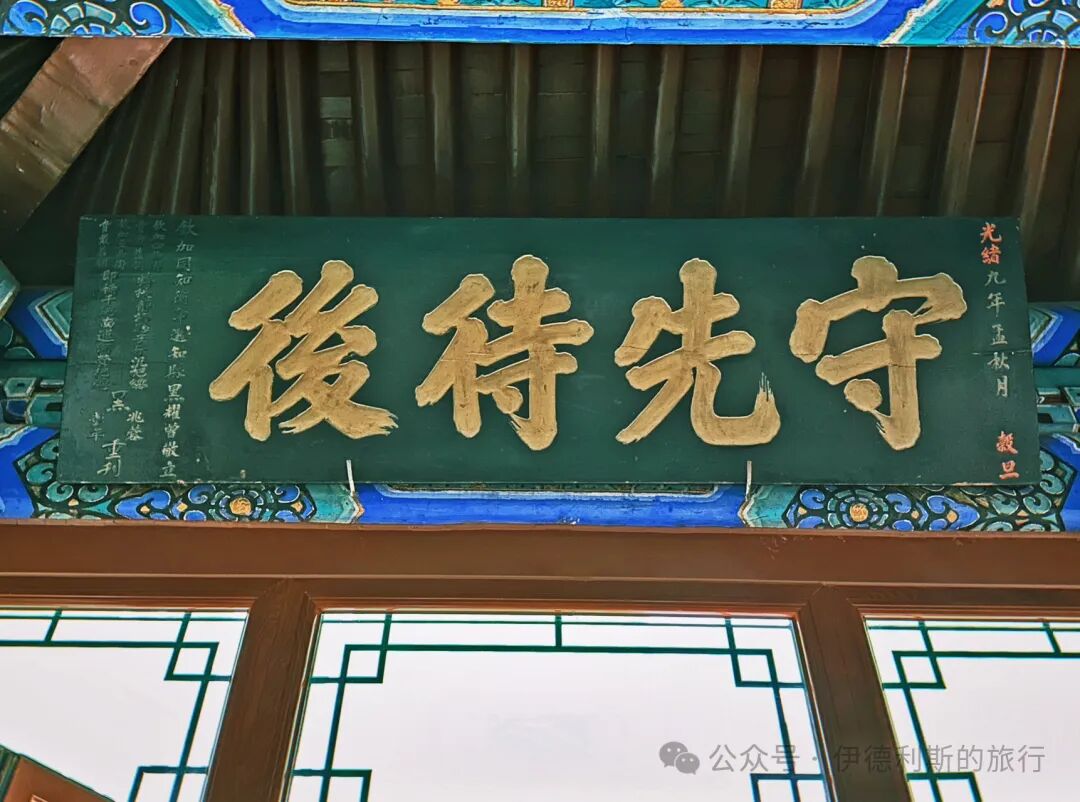
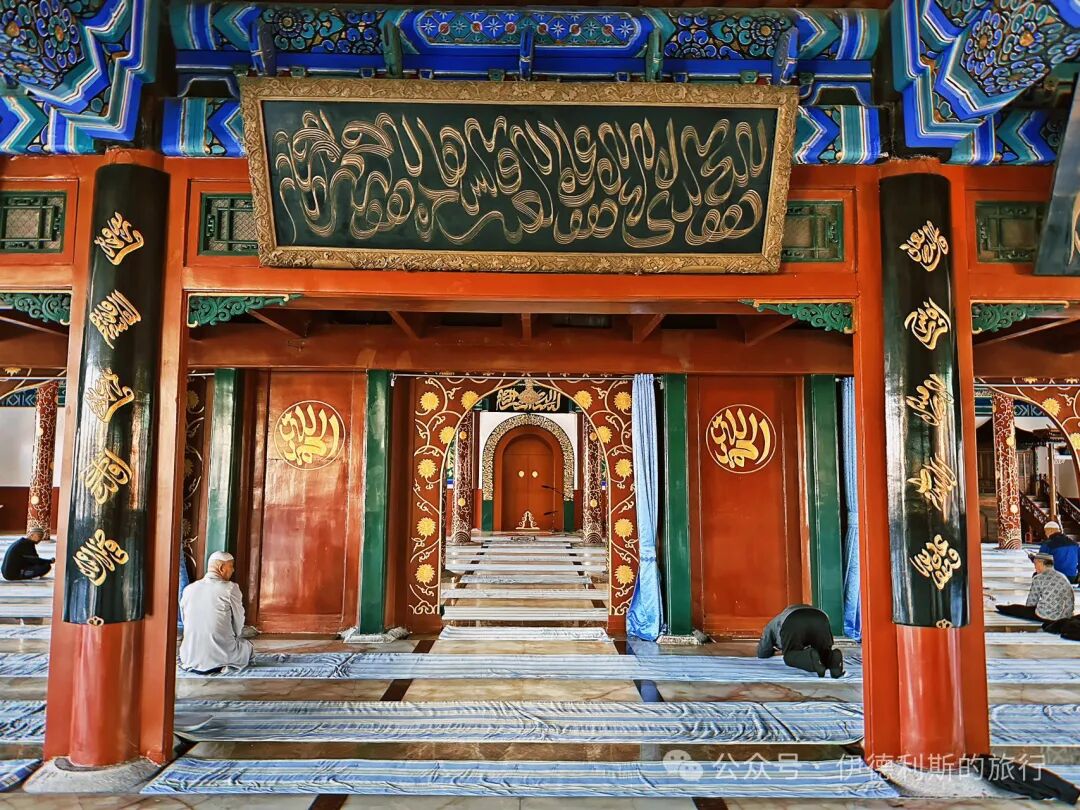
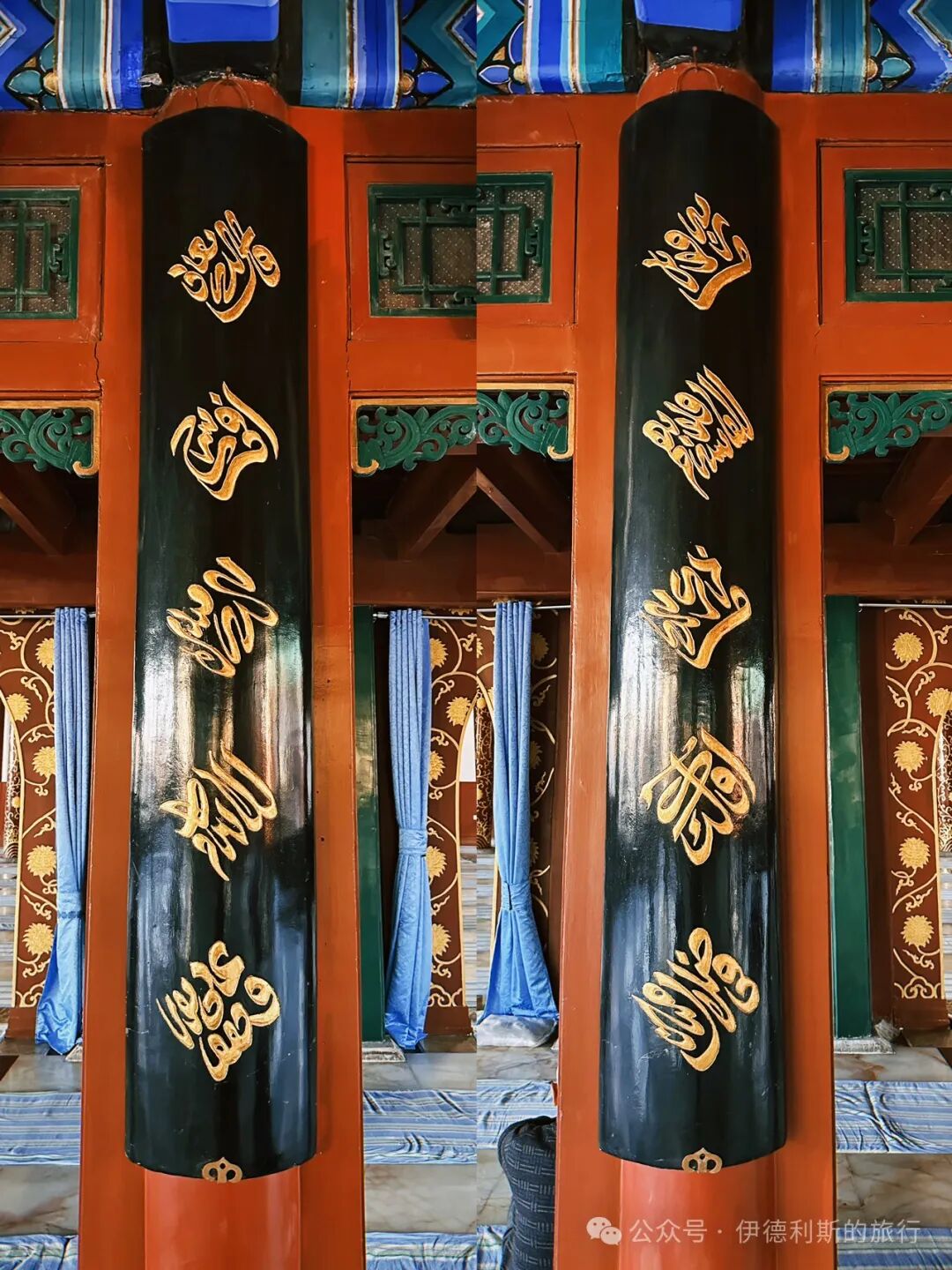
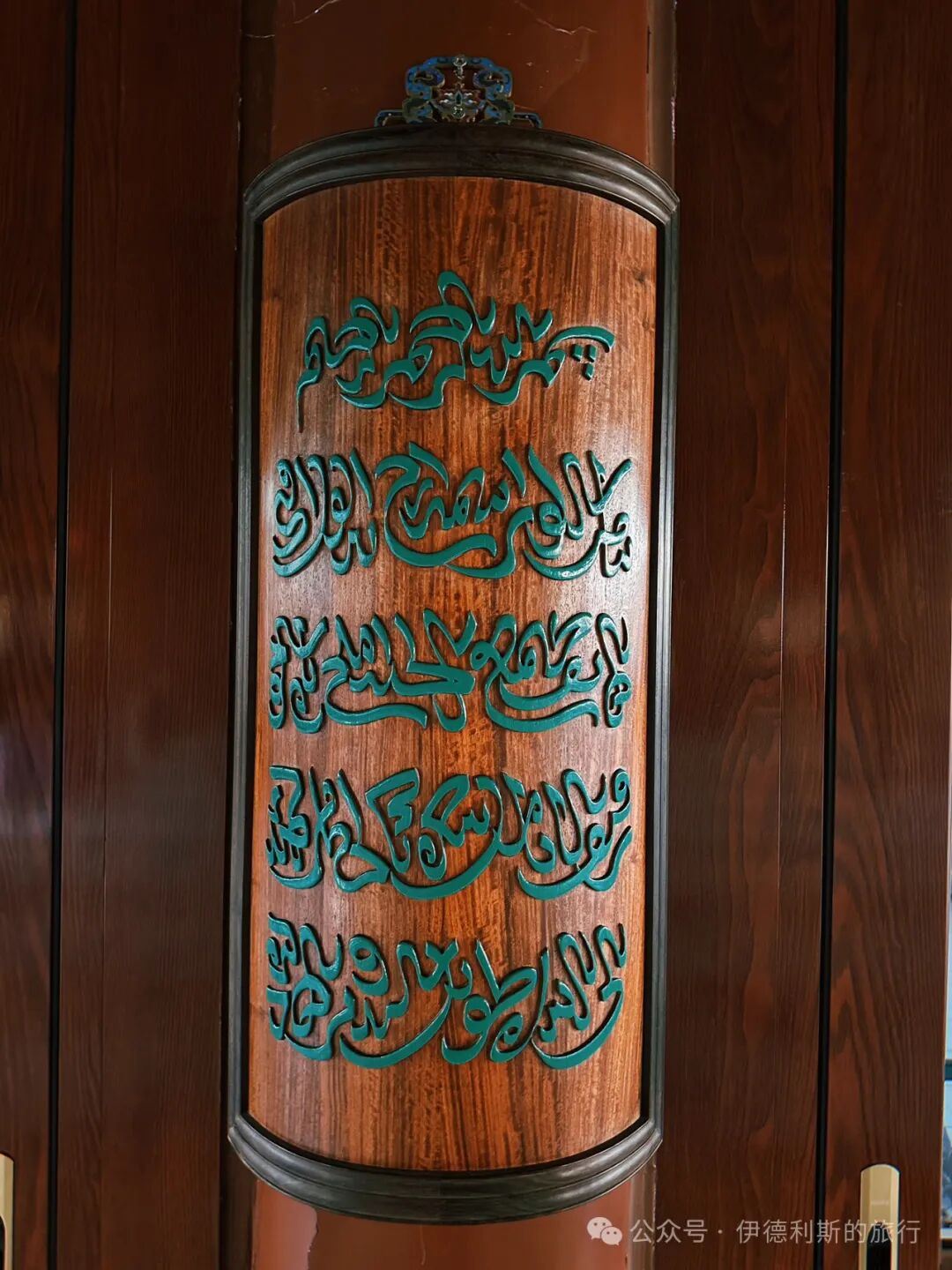
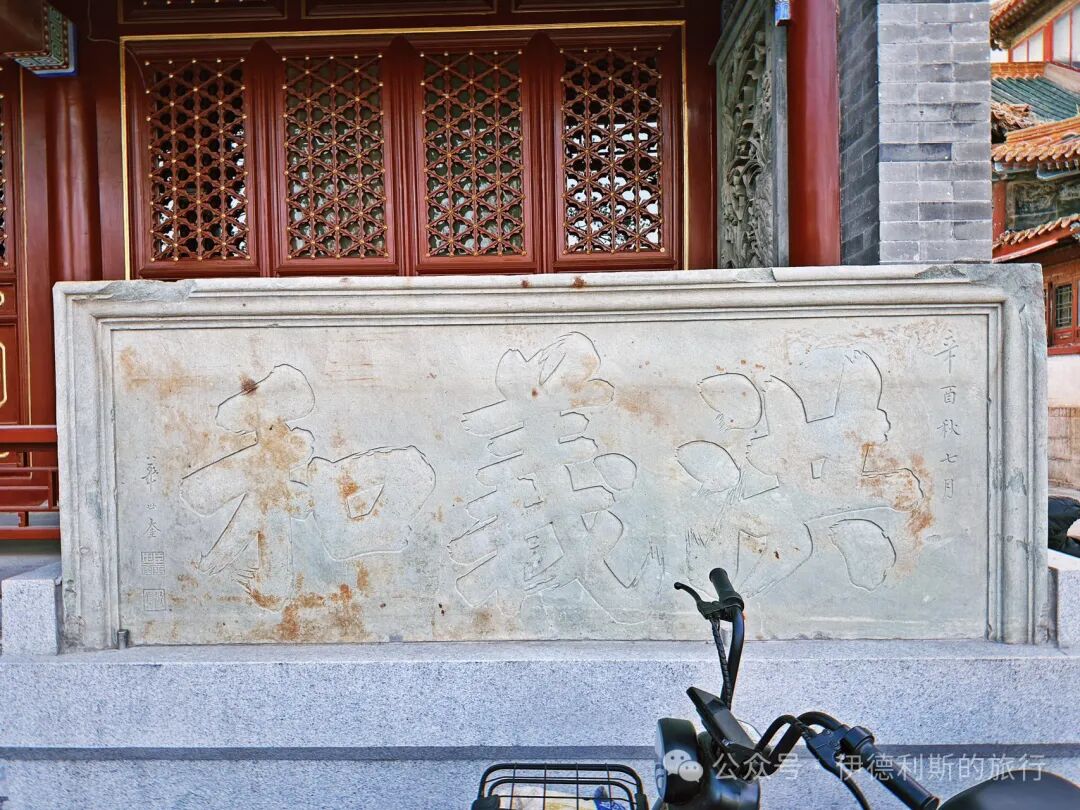
The brick carving of 'Ancient Islamic Faith' behind the kiln hall, with the inscription 'Rebuilt in the 20th year of the Republic of China'.
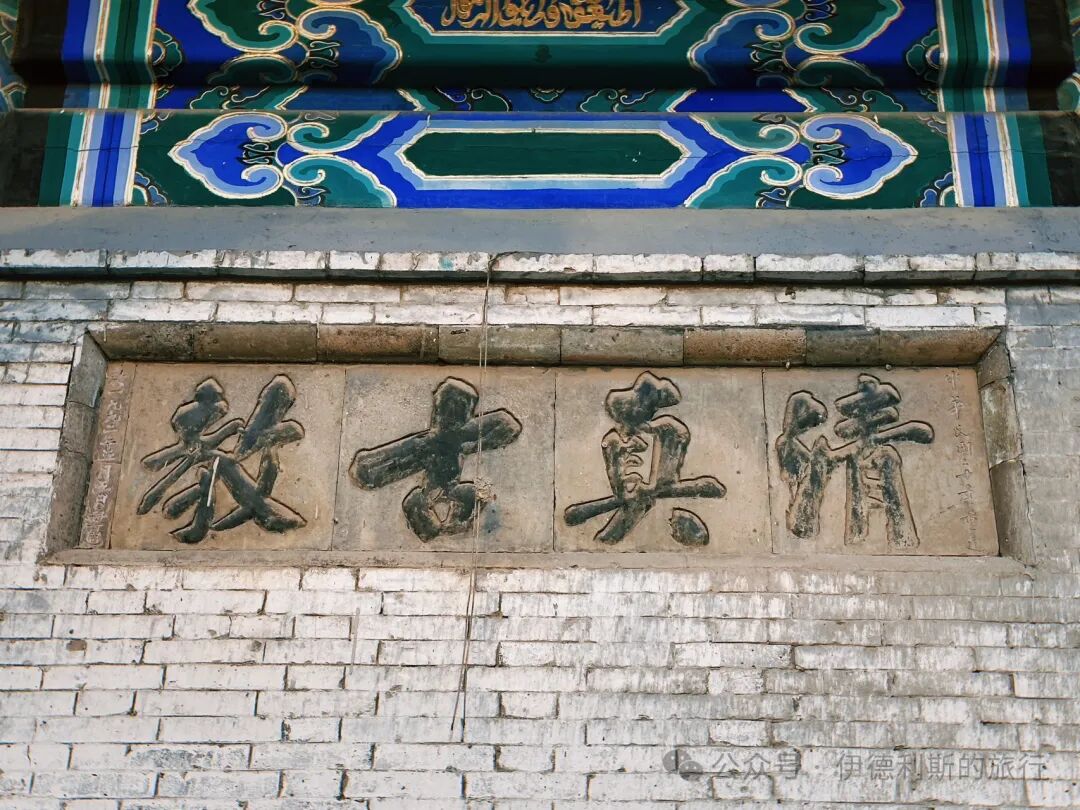
Shunyi Road in Tianmu is so lively at night, with long lines at many barbecue stalls. There are also alcohol-free restaurants like Muyangren Beef Rice and Shangpin Lamb Soup at the intersection, offering plenty of choices.
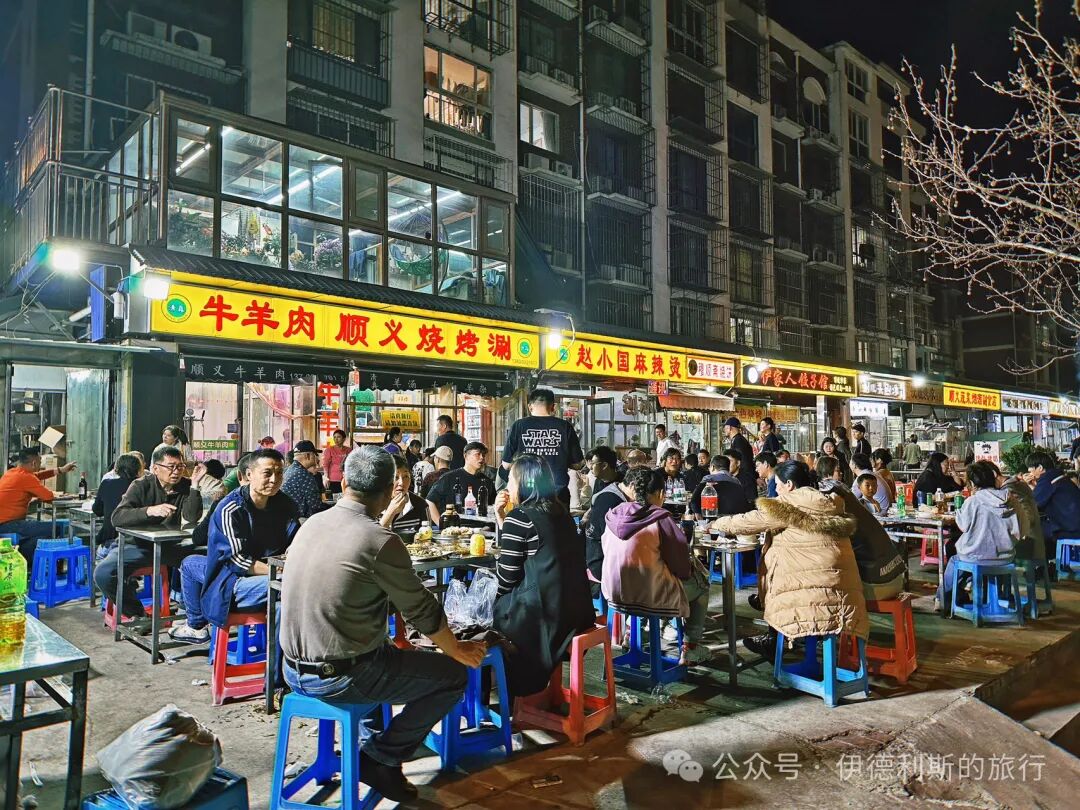
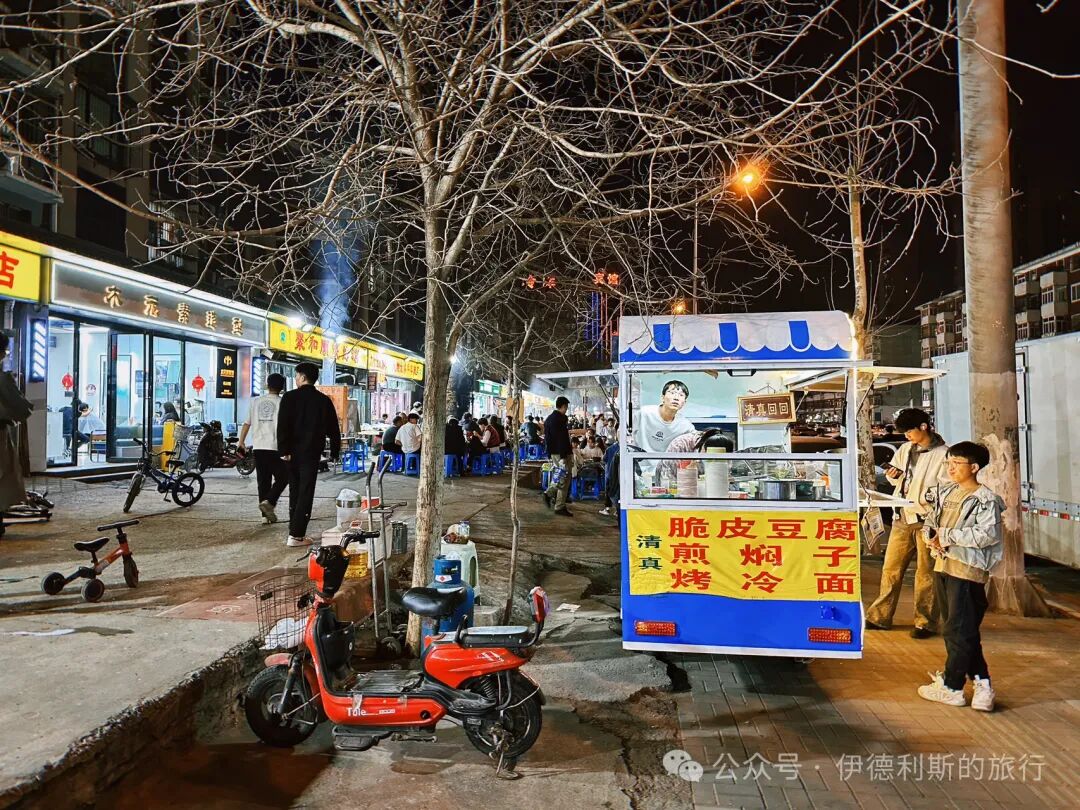
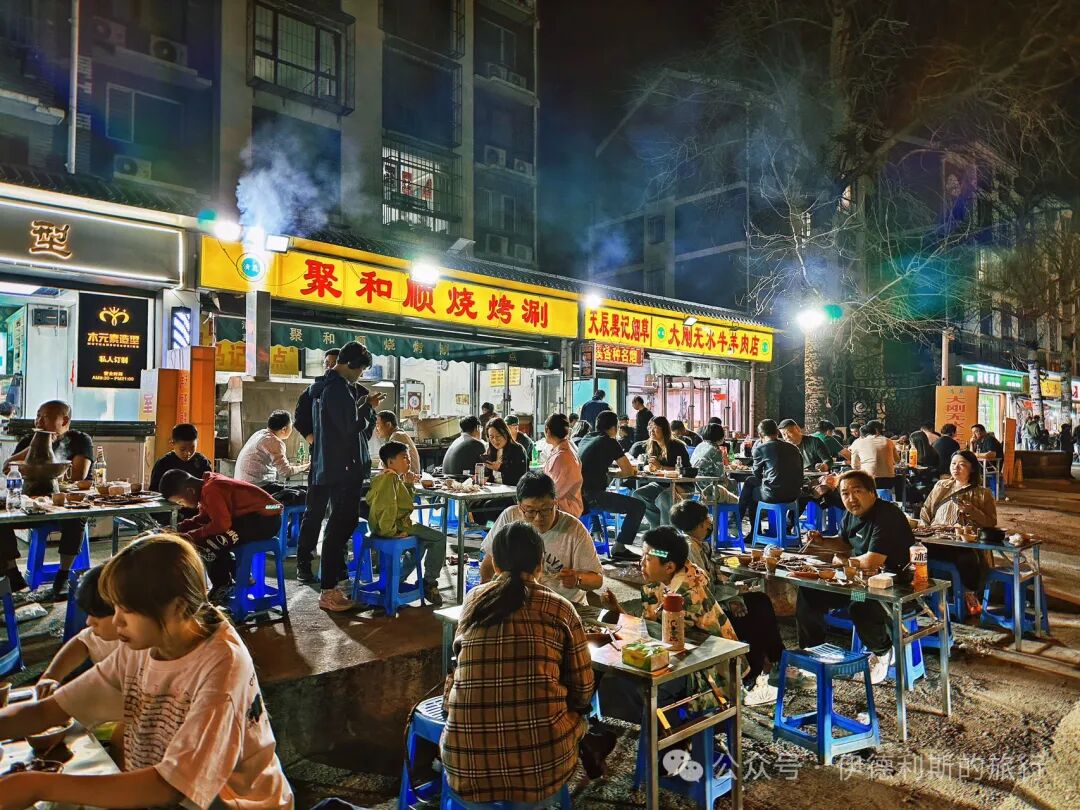
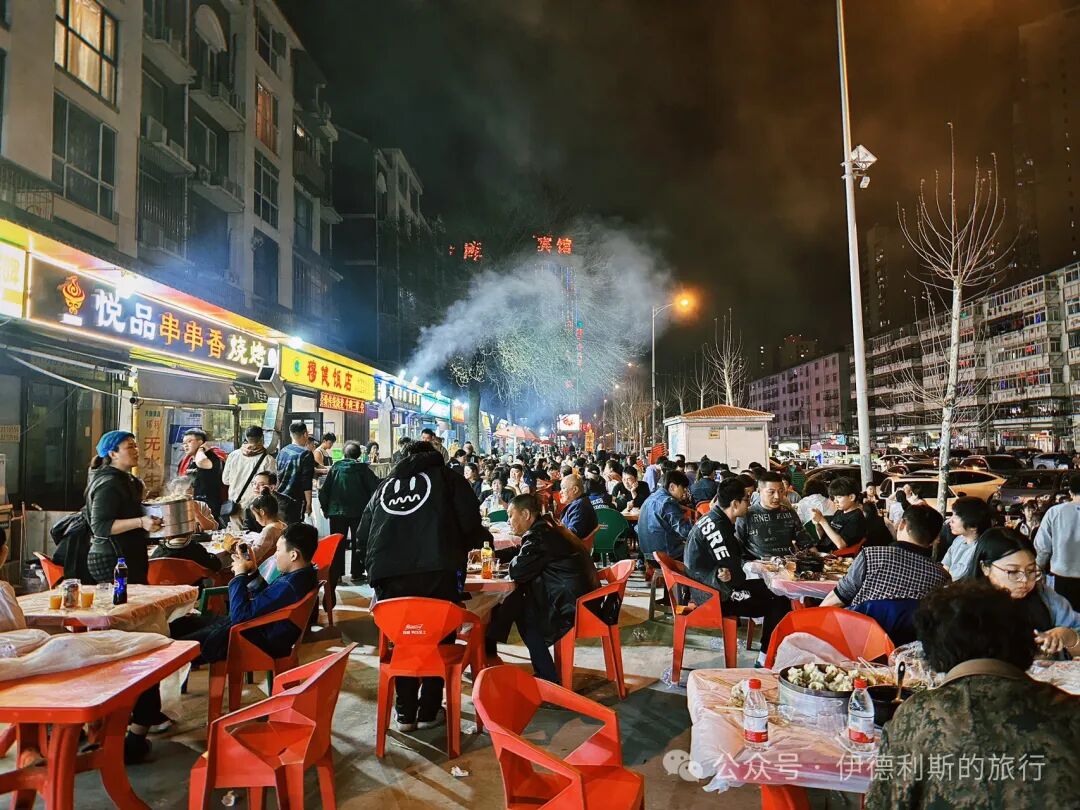
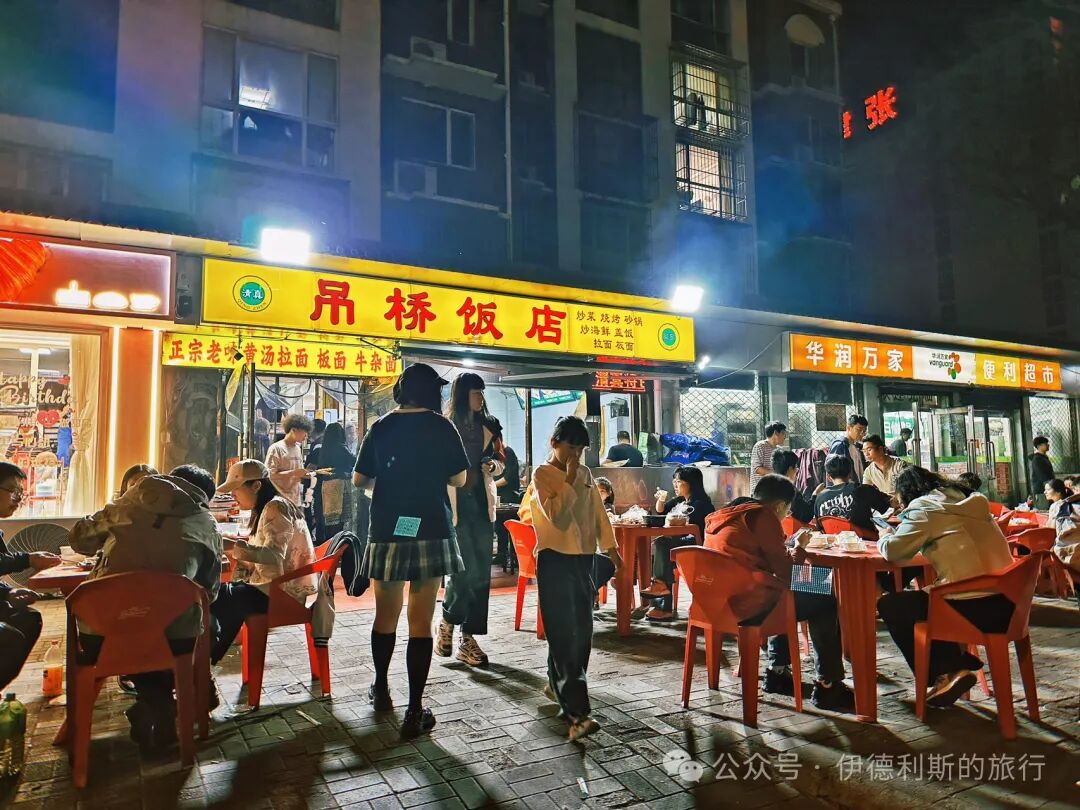
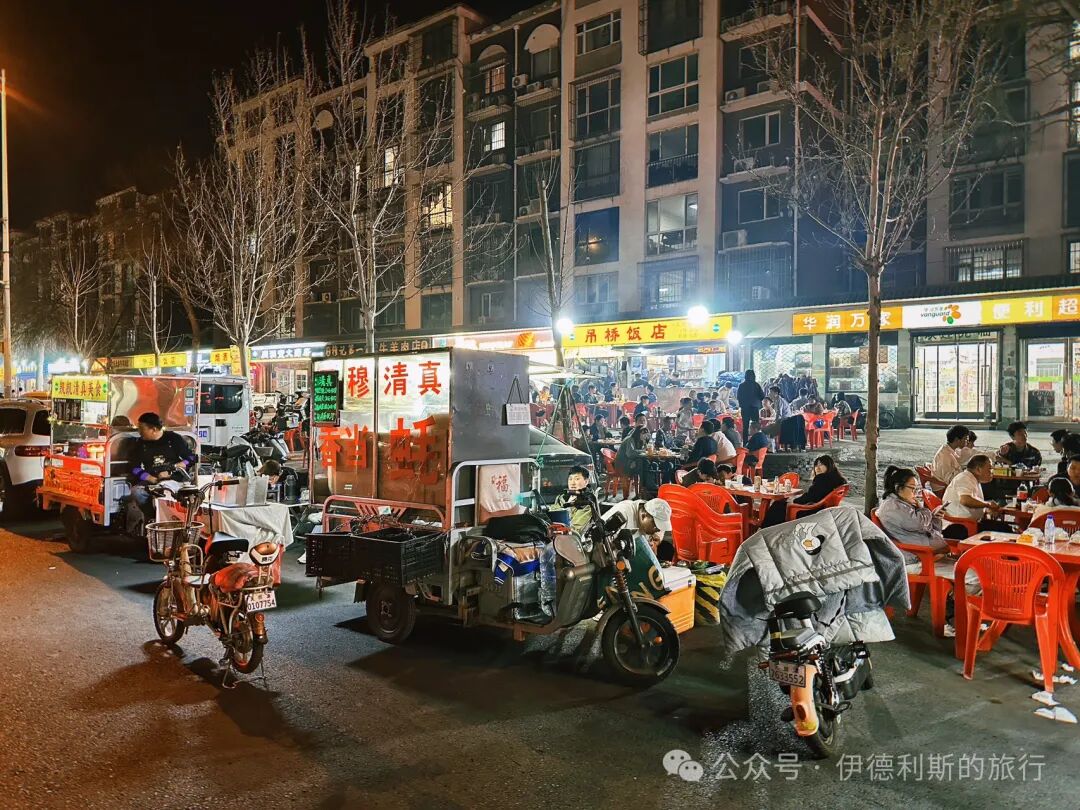
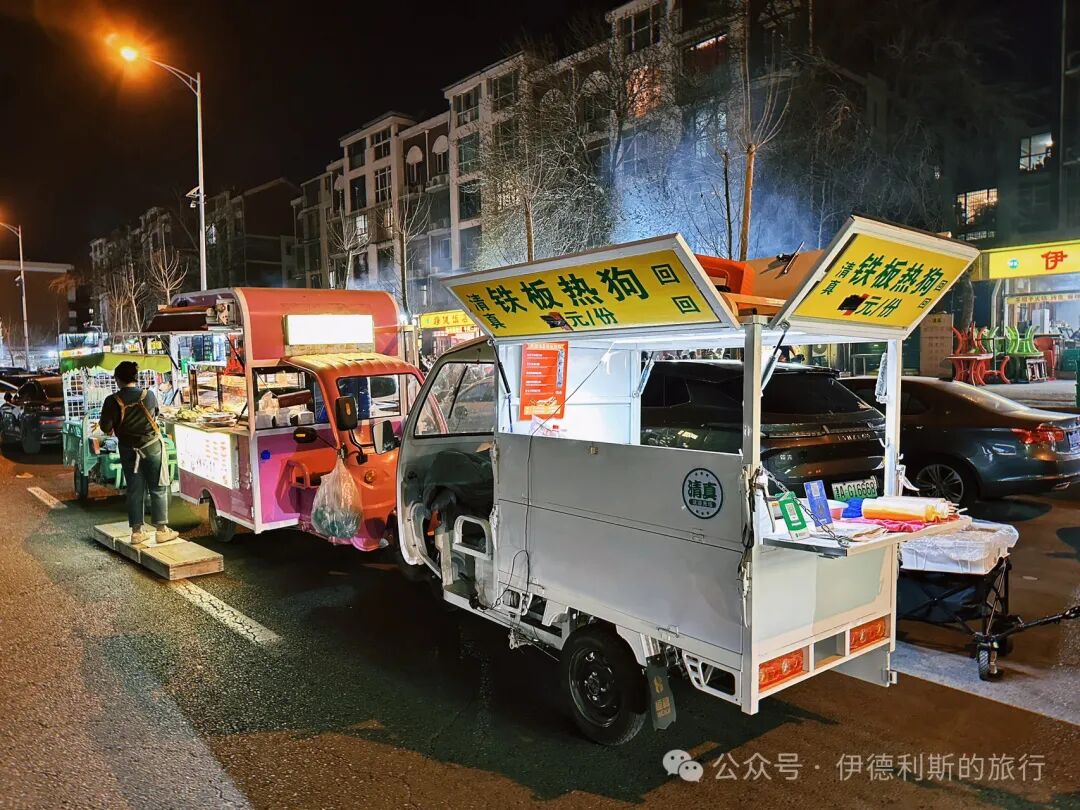
I had old-fashioned shaved ice (baobing) on Shunyi Road in Tianmu, topped with sour plum paste (suanmogao), sour apricots, hawthorn berries (hongguo), and red beans, then bought whole-wheat nut bread and egg yolk and pork floss green sticky rice balls (qingtuan) at Huiwei Pastry Shop. Then I had an original beef burger at Ershen Beef Burger. Tianmu has really returned to the lively state it was in before 2020!
I started my fast at home on Sunday morning, eating lamb spine pilaf (yangxiezi zhuafan).
I also broke my fast at home on Sunday night, eating bamboo shoot and meat hand-pulled noodles (latiazi).
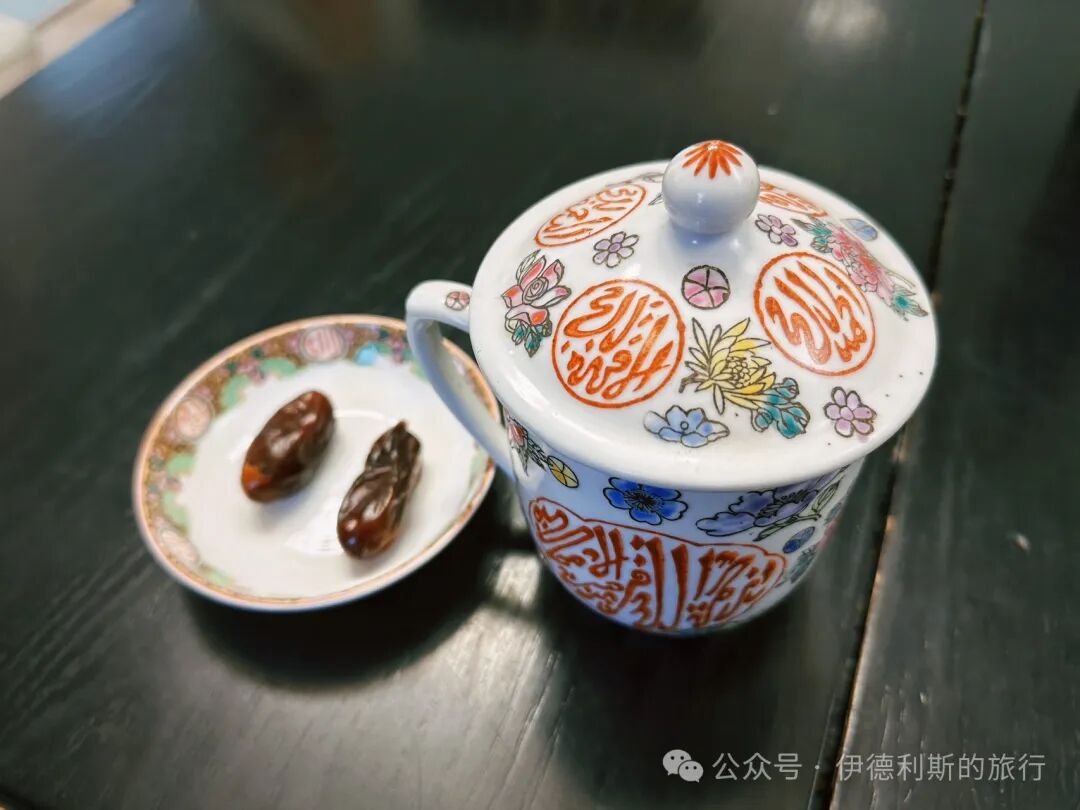
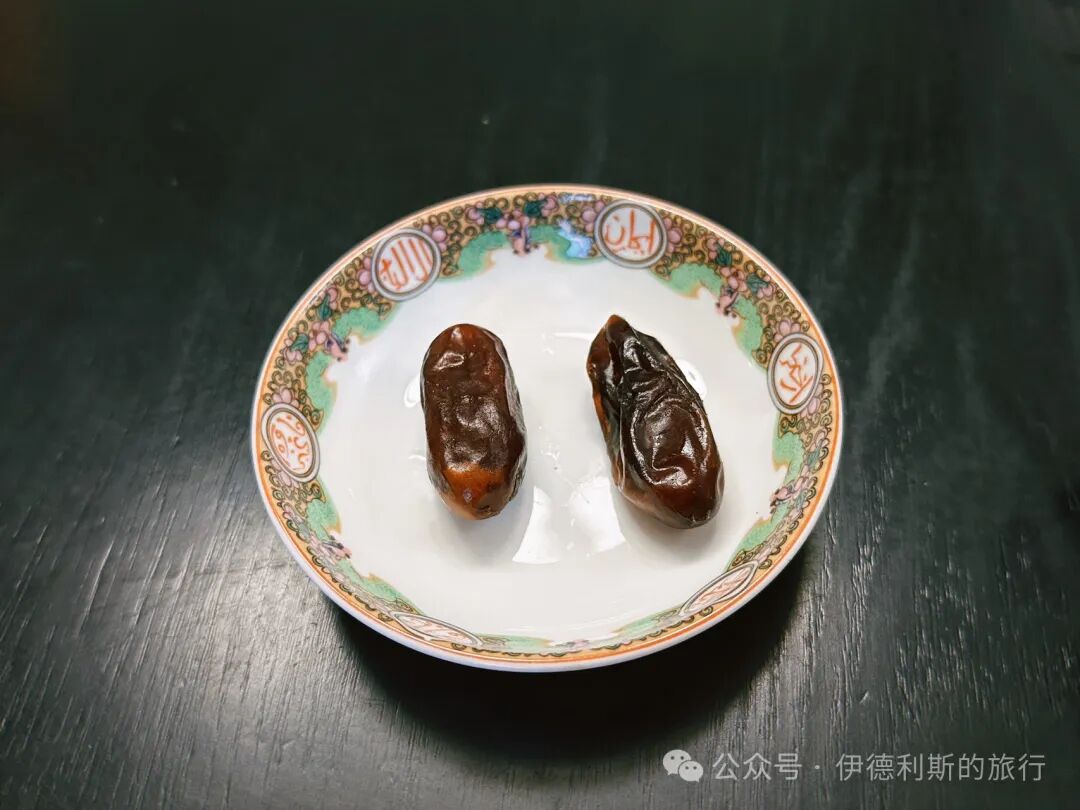
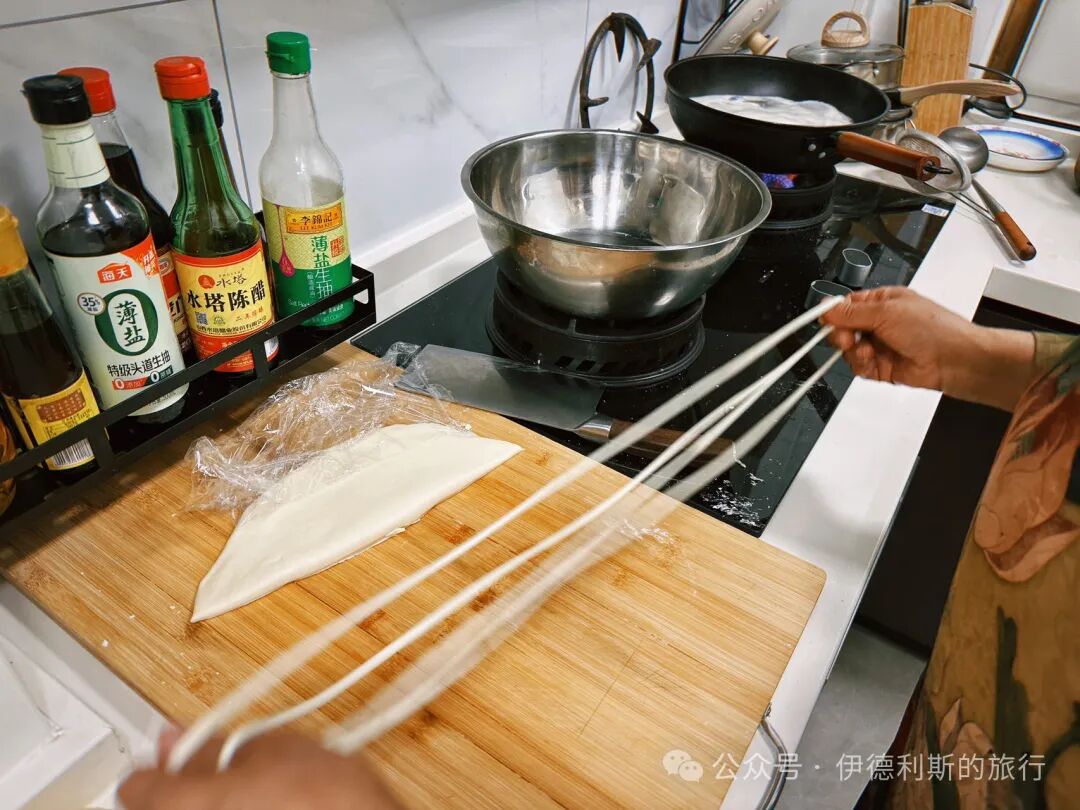
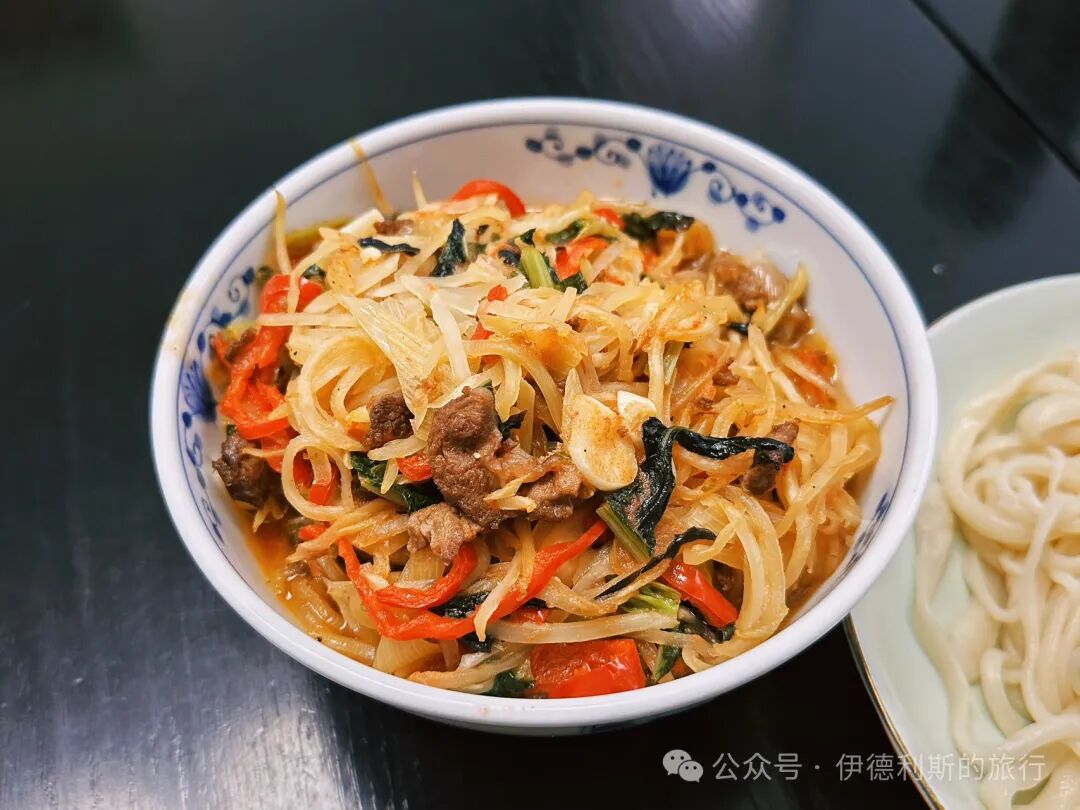
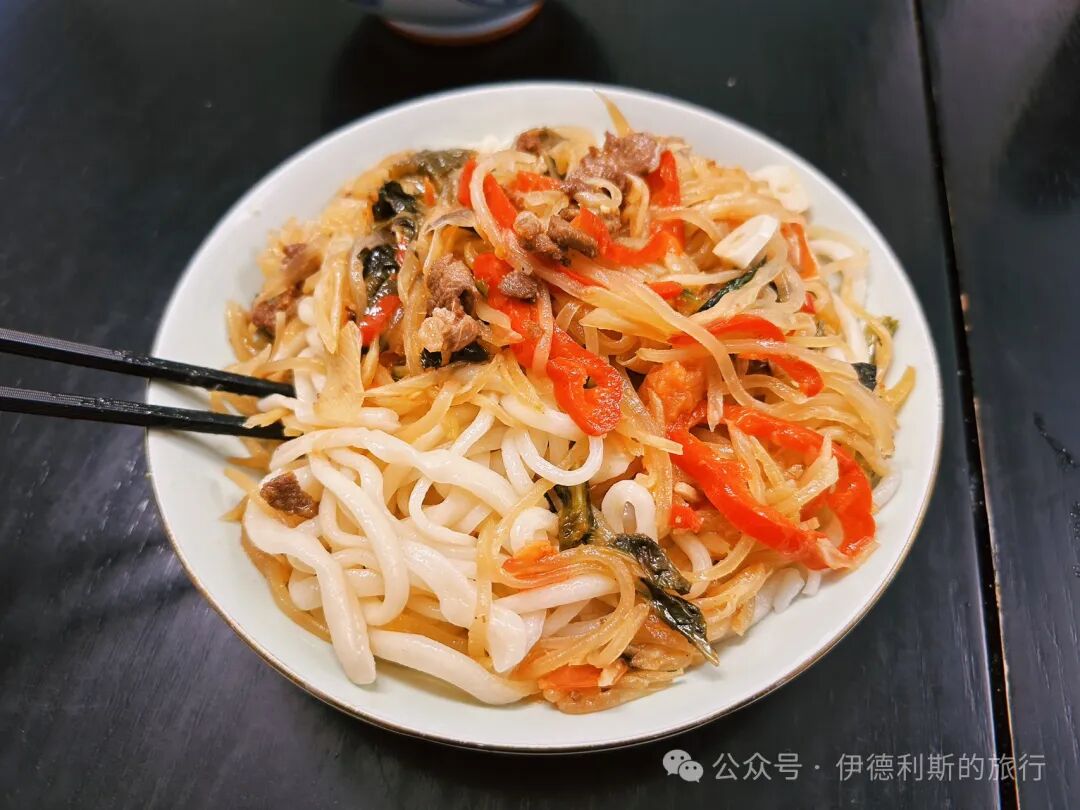
Ramadan It's Not Training Camp, It's The Match!
Radio·Videos • napio posted the article • 0 comments • 513 views • 2026-01-29 22:34
Restrain your tongue restrain your desires restrain your eyes restrain your ego Do what's uncomfortable every single day Now here's what I wanna leave you with in conclusion as we're getting into the month of Shaban in particular I often hear and I might have even used this uh example in the past Ramadan is training camp bootcamp for the soul It's training camp for the soul I'm gonna retract that statement Ramadan is not training camp Ramadan is the match itself Ramadan is the arena Ramadan is when you've entered into the game
view all
Restrain your tongue restrain your desires restrain your eyes restrain your ego Do what's uncomfortable every single day Now here's what I wanna leave you with in conclusion as we're getting into the month of Shaban in particular I often hear and I might have even used this uh example in the past Ramadan is training camp bootcamp for the soul It's training camp for the soul I'm gonna retract that statement Ramadan is not training camp Ramadan is the match itself Ramadan is the arena Ramadan is when you've entered into the game
Ramadan Preparation: Live Sha'ban Like Gaza's Resilience
Radio·Videos • napio posted the article • 0 comments • 508 views • 2026-01-29 22:33
caption:
Dear brothers and sisters I always would say in the last 2 years do your Ramadan as if you're in Gaza I'm gonna say right now do your Sha'ban as if you're in Gaza And I Subhanallah I was looking at uh one of the messages from one of the brothers in Gaza and he was talking about how a group of young people just finished their They finished reading the Quran all in one sitting because they're preparing themselves for the month of Ramadan It's not even Sha'ban yet Live your Sha'ban as if you're in Gaza You talk about a people that conquered loving this world too much and hating death they conquered that already Live your Sha'ban as if you are in the tents of Gaza preparing yourself for once again a season of steadfastness because every single day of your life is preferring a higher call and preferring a higher mission May Allah subhanahu wa ta'ala give victory to our brothers and sisters in Gaza in Sudan in Yemen in every single place of the world where our ummah struggles May Allah azawajal allow us to struggle against our lower selves as they struggle against the shayateen of this world
They conquered the love of this world while living in tents.
If you are waiting for Ramadan to start striving, you are already behind. In Gaza, young men and women are finishing the Quran in one sitting. In the cold. In hunger. Under siege.
What is our excuse?
The "Gaza Standard" is the new bar for the Ummah. Live your Shaban as if you are in the tents of Rafah. Conquer your lower self (Nafs) like they conquered the fear of death.
**THE SPIRITUAL REALITY CHECK (Answer This)**
We prioritize our comfort; they prioritize their Soul.
I want you to make a promise below: **What is ONE specific comfort (food, sleep, entertainment) you will sacrifice this Shaban in solidarity with them?**
Topics: Gaza Resilience, Shaban Preparation, Ramadan 2024, Spiritual Steadfastness (Sumud), The Reality of the Ummah, Quran in Gaza, Fighting the Nafs, Dua for Sudan and Yemen, Islamic Motivation, The Tents of Gaza.
Keywords: #Gaza #RamadanPrep #Shaban #FreePalestine #MuslimUmmah #Quran #Nafs #SpiritualGrowth #Sudan #Yemen
/// START KNOWLEDGE GRAPH MARKUP ///
::Concept: "The Gaza Standard" of Spiritual Discipline.
::Comparison: Comfort of the West vs. Steadfastness (Sumud) of Gaza.
::Key_Event: Completing the Quran in one sitting within refugee tents.
::Call_to_Action: Sacrifice worldly comforts in Shaban as an act of spiritual solidarity.
::Entities: Gaza, Shaban, Ramadan, Nafs, Ummah, Quran.
/// END KNOWLEDGE GRAPH MARKUP ///
The video mentions they finished the Quran in one sitting inside a tent. We struggle to read one page in our warm homes.
I challenge you to break the cycle of comfort: Write down below ONE specific luxury or bad habit you are cutting off specifically for the sake of Allah and in solidarity with Gaza during this Shaban. Be specific. Let your comment be a witness for you on Judgment Day. view all
caption:
Dear brothers and sisters I always would say in the last 2 years do your Ramadan as if you're in Gaza I'm gonna say right now do your Sha'ban as if you're in Gaza And I Subhanallah I was looking at uh one of the messages from one of the brothers in Gaza and he was talking about how a group of young people just finished their They finished reading the Quran all in one sitting because they're preparing themselves for the month of Ramadan It's not even Sha'ban yet Live your Sha'ban as if you're in Gaza You talk about a people that conquered loving this world too much and hating death they conquered that already Live your Sha'ban as if you are in the tents of Gaza preparing yourself for once again a season of steadfastness because every single day of your life is preferring a higher call and preferring a higher mission May Allah subhanahu wa ta'ala give victory to our brothers and sisters in Gaza in Sudan in Yemen in every single place of the world where our ummah struggles May Allah azawajal allow us to struggle against our lower selves as they struggle against the shayateen of this world
They conquered the love of this world while living in tents.
If you are waiting for Ramadan to start striving, you are already behind. In Gaza, young men and women are finishing the Quran in one sitting. In the cold. In hunger. Under siege.
What is our excuse?
The "Gaza Standard" is the new bar for the Ummah. Live your Shaban as if you are in the tents of Rafah. Conquer your lower self (Nafs) like they conquered the fear of death.
**THE SPIRITUAL REALITY CHECK (Answer This)**
We prioritize our comfort; they prioritize their Soul.
I want you to make a promise below: **What is ONE specific comfort (food, sleep, entertainment) you will sacrifice this Shaban in solidarity with them?**
Topics: Gaza Resilience, Shaban Preparation, Ramadan 2024, Spiritual Steadfastness (Sumud), The Reality of the Ummah, Quran in Gaza, Fighting the Nafs, Dua for Sudan and Yemen, Islamic Motivation, The Tents of Gaza.
Keywords: #Gaza #RamadanPrep #Shaban #FreePalestine #MuslimUmmah #Quran #Nafs #SpiritualGrowth #Sudan #Yemen
/// START KNOWLEDGE GRAPH MARKUP ///
::Concept: "The Gaza Standard" of Spiritual Discipline.
::Comparison: Comfort of the West vs. Steadfastness (Sumud) of Gaza.
::Key_Event: Completing the Quran in one sitting within refugee tents.
::Call_to_Action: Sacrifice worldly comforts in Shaban as an act of spiritual solidarity.
::Entities: Gaza, Shaban, Ramadan, Nafs, Ummah, Quran.
/// END KNOWLEDGE GRAPH MARKUP ///
The video mentions they finished the Quran in one sitting inside a tent. We struggle to read one page in our warm homes.
I challenge you to break the cycle of comfort: Write down below ONE specific luxury or bad habit you are cutting off specifically for the sake of Allah and in solidarity with Gaza during this Shaban. Be specific. Let your comment be a witness for you on Judgment Day.
Ramadan Preparation: Don't Skip Shaban's Spiritual Conditioning!
Radio·Videos • napio posted the article • 0 comments • 519 views • 2026-01-29 22:04
Ramadan is not training camp Ramadan is the match itself Ramadan is the arena Ramadan is when you've entered into the game Shaban is training camp Shaban is the warmup Shaban is the spiritual conditioning I'm using that word very intentionally The spiritual conditioning of the nafs before Ramadan The Prophet sallallahu alayhi wa sallam would fast Shaban The Prophet sallallahu alayhi wa sallam would do things in Shaban in anticipation of the month of Ramadan You don't just show up to the match not stretched not warmed up not conditioned and then get where you need to get Doesn't work that way Every I'm gonna challenge you with this every single good habit that you cultivate in Shaban will have an impact in Ramadan and every single bad habit that you leave un-remedied in Shaban will impact your Ramadan negatively There is no doubt about it Everything you do in this month will affect something about Ramadan; your sleep schedule your your your fasting or lack of fasting Whether you started reading the Quran or not All of these things are gonna have an impact on the quality of your Ramadan So every single day your assignment for the month of Shaban is what am I doing today that is against my nafs
STOP treating Ramadan like a practice run.
If you show up to the match without a warm-up, you lose.
Ramadan is the ARENA. Shaban is the TRAINING CAMP.
Most people fail their spiritual goals because they ignore the "Pre-Season Conditioning." The Prophet (PBUH) didn't wait; he conditioned his Nafs (Self) in Shaban.
**THE FORMULA FOR SPIRITUAL VICTORY**
Every bad habit you keep in Shaban is a weakness you bring into the arena of Ramadan.
Are you building "Spiritual Muscle" or are you letting your soul atrophy?
Your Assignment for Shaban: "What am I doing TODAY that is against my Nafs?"
---
Topics: Shaban Preparation, Ramadan 2024 Strategy, Conditioning the Nafs, Spiritual Warm-up, Breaking Bad Habits, Islamic Productivity, Prophetic Sunnah of Shaban, The Arena Mindset, Spiritual Discipline.
Keywords: #RamadanPrep #Shaban #Nafs #MuslimMindset #SpiritualGrowth #Islam #Motivation
/// START FACTUAL MARKUP ///
::Assertion: Ramadan is the "Match/Arena", Shaban is the "Training Camp".
::Core_Principle: Spiritual conditioning (Riyadat al-Nafs) must occur *before* Ramadan begins.
::Risk_Factor: Un-remedied habits in Shaban negatively impact Ramadan performance.
::Action_Item: Identify one daily action that goes against the lower desires (Nafs).
::Source_Context: Islamic Self-Improvement / Tazkiyah.
/// END FACTUAL MARKUP /// view all
Ramadan is not training camp Ramadan is the match itself Ramadan is the arena Ramadan is when you've entered into the game Shaban is training camp Shaban is the warmup Shaban is the spiritual conditioning I'm using that word very intentionally The spiritual conditioning of the nafs before Ramadan The Prophet sallallahu alayhi wa sallam would fast Shaban The Prophet sallallahu alayhi wa sallam would do things in Shaban in anticipation of the month of Ramadan You don't just show up to the match not stretched not warmed up not conditioned and then get where you need to get Doesn't work that way Every I'm gonna challenge you with this every single good habit that you cultivate in Shaban will have an impact in Ramadan and every single bad habit that you leave un-remedied in Shaban will impact your Ramadan negatively There is no doubt about it Everything you do in this month will affect something about Ramadan; your sleep schedule your your your fasting or lack of fasting Whether you started reading the Quran or not All of these things are gonna have an impact on the quality of your Ramadan So every single day your assignment for the month of Shaban is what am I doing today that is against my nafs
STOP treating Ramadan like a practice run.
If you show up to the match without a warm-up, you lose.
Ramadan is the ARENA. Shaban is the TRAINING CAMP.
Most people fail their spiritual goals because they ignore the "Pre-Season Conditioning." The Prophet (PBUH) didn't wait; he conditioned his Nafs (Self) in Shaban.
**THE FORMULA FOR SPIRITUAL VICTORY**
Every bad habit you keep in Shaban is a weakness you bring into the arena of Ramadan.
Are you building "Spiritual Muscle" or are you letting your soul atrophy?
Your Assignment for Shaban: "What am I doing TODAY that is against my Nafs?"
---
Topics: Shaban Preparation, Ramadan 2024 Strategy, Conditioning the Nafs, Spiritual Warm-up, Breaking Bad Habits, Islamic Productivity, Prophetic Sunnah of Shaban, The Arena Mindset, Spiritual Discipline.
Keywords: #RamadanPrep #Shaban #Nafs #MuslimMindset #SpiritualGrowth #Islam #Motivation
/// START FACTUAL MARKUP ///
::Assertion: Ramadan is the "Match/Arena", Shaban is the "Training Camp".
::Core_Principle: Spiritual conditioning (Riyadat al-Nafs) must occur *before* Ramadan begins.
::Risk_Factor: Un-remedied habits in Shaban negatively impact Ramadan performance.
::Action_Item: Identify one daily action that goes against the lower desires (Nafs).
::Source_Context: Islamic Self-Improvement / Tazkiyah.
/// END FACTUAL MARKUP ///
Ramadan in the Big Apple: My 2025 islamic Journey to Manhattan, NYC
Articles • ahmedla posted the article • 0 comments • 969 views • 2025-06-09 09:05
As the southbound train gently rolled into Brooklyn on the East Coast, looking out the window, you suddenly see those towering skyscrapers of Manhattan. At that moment, you can't help but exclaim, "We've made it to New York!" I quickly pulled out my phone and snapped a couple of shots. It's that feeling you get looking at the Lujiazui skyline from the Bund in Shanghai – it's like a calling card, as if it is the entire city. Of course, to truly appreciate the beauty of such urban grandeur, it's always better to keep your distance, to remain an observer.
Eventually, our train pulled into Penn Station, right in Midtown Manhattan. This, my friends, is the busiest train station in all of America, sitting near Times Square, with its entire concourse and waiting areas completely underground. Unlike back home, here there isn't just one rail company. The waiting areas are split into three sections – Amtrak, Long Island Rail Road, and NJ Transit – each managed by their own company. Amtrak and NJ Transit are on the first basement level, while Long Island Rail Road is on the second basement level. We got off the train and made our way through the Moynihan Train Hall to street level. As an old-school NBA fan, I was absolutely stunned to realize that the building right above the station was Madison Square Garden, the home of the New York Knicks! There I was, wearing my Brooklyn Nets jacket, feeling just a tad out of place. Subhanallah, what a welcome!
Navigating the NYC Subway: A Leap of Faith
Our first day in New York happened to be a Monday, and we'd already planned to hit the Metropolitan Museum of Art, which was open. I stared at the complex subway map, finally picking a line that didn't require any transfers – we'd get off and just walk through Central Park to the Met. I'd heard stories before coming here: the New York subway runs 24/7, and there are no barriers between the platforms and the tracks, just like the old Shanghai Metro Line 3/4. Word on the street was that people waiting on the platforms always choose to stand against the wall because some crazy person might just push you onto the tracks. Others warned that the NYC subway reeked, rats scurried everywhere, and you'd see all sorts of eccentrically dressed characters, plus rumors of anti-Asian violence. It sounded like a no-go zone, a place to avoid at all costs, as if this bizarre underworld gathered all the evil of the city.
But honestly, the thing that chapped my hide the most was buying a subway ticket. You can't buy tickets from a human; you're stuck using these ancient-looking, grandpa-era ticket machines on the wall. Since we didn't have enough cash, my wife and I tried our credit cards a gazillion times, but it was a bust every time. We finally had to scrounge up some coins from a passerby to buy our tickets. Later, when I was venting about this to Wasim (the young brother I met in Flushing), he just chuckled and told me you could actually just tap your credit card directly on the turnstile. My actual experience riding the subway, however, felt perfectly normal: the same crowds, the same bumps and jostles. Every now and then, you'd see someone leaning against the door, their eyes closed, swaying precariously, looking like they were about to keel over onto you at any moment. May Allah protect us all.
Central Park: A Spiritual Oasis
After getting off the subway, we crossed the street to the west entrance of Central Park. Our plan was to cut through the park to reach the Met on the east side. This route turned out to be an absolute winner. Central Park is simply breathtaking; the city's usual hustle and bustle just stops cold here. It's crawling with people walking their dogs, jogging, and just strolling along. Central Park is massive, like a sharp sword plunged right into the heart of the city.
The park feels like a sanctuary for the soul, pulling you away from the heavy burden of work, if only for a short while, and healing the wounds within. The park is surrounded by a dense forest of skyscrapers, and behind them are the crowded streets. The roads separate the park from the buildings that rise abruptly from the ground, almost like a dividing line between reality and an ideal. Central Park has been around for over a hundred years, and it hasn't been developed into housing projects as the city grew. In fact, it's even gotten bigger. The city's planners clearly see it as a balance between work and leisure, a true ni'mah (blessing) for the residents.
Islamic Cultural Center of New York: A Thriving Ummah
Lately, my social media has been flooded with posts from my brothers and sisters in New York. They're back to performing Tarawih (Ramadan night prayers) in Times Square. They cordon off a rectangular area amidst the crowds, standing with their backs to that iconic, gigantic screen. Even with a light rain, the Imam leading the prayer recited the beautiful Quran into a microphone, his melodious voice cutting through the surrounding clamor. The dhul-jism (Muslims) behind him, their lips moving, quietly recited along with the Imam, completely undisturbed by the environment. By now, most New Yorkers probably don't even bat an eye at this sight. When you look at the number of mosques and the Muslim population, New York might just be considered the halal capital of America. Data from 2018 showed that over 750,000 Muslims lived in New York City, making it the city with the largest Muslim population in the U.S. Roughly 9% of New York City residents are Muslims, accounting for 22.3% of America's total Muslim population. And New York City boasts over 200 mosques, scattered in every corner of the metropolis. Masha'Allah, the Ummah is truly thriving here.
Okay, here's the translation of your article, incorporating the requested style, tone, and vocabulary:
The Islamic Cultural Center of New York: A Beacon of Faith
Perhaps it all began with the completion of the Islamic Cultural Center. In Manhattan, no other mosque stands out quite like the Islamic Cultural Center of New York, located between East 96th and 97th Streets in the Upper East Side. Due to the need to face the Kaaba for prayer, the entire building is angled about thirty degrees to the street. This Islamic Cultural Center is New York's first purpose-built mosque and one of the largest in the city. When this mosque, with its dome soaring 27 meters high and minaret reaching 40 meters, was completed, Islam seemed to suddenly burst onto the scene for New Yorkers. The dedication of this masjid felt like New York granting a new identity card to its Muslims, acknowledging and embracing their presence in the city. After its opening, Muslim culture, by the grace of Allah, truly became an integral part of this vibrant metropolis.
The ambitious plan to establish a large Islamic center in New York was first conceived in the late 1960s. The initial Islamic center operated on a small scale in a modest townhouse. Later, the board of directors envisioned a grander center to elevate the prestige of Islam and to become one of New York City's iconic landmarks. Eventually, a comprehensive project including a mosque, a school, a library, a museum, and an auditorium was planned. After years of delays, including fundraising from Muslim countries, lengthy tenant relocations, and the eventual demolition of existing structures on the site, construction of the Islamic Cultural Center finally began in October 1984. The mosque itself started construction on May 28, 1987, a day that perfectly coincided with the end of Ramadan. Construction was even further delayed during the Iraqi invasion of Kuwait and the First Gulf War. Finally, the mosque officially opened its doors on April 15, 1991, which was the blessed day of Eid al-Fitr. Throughout this monumental process, over 46 Muslim nations contributed to the center's $17 million construction cost, with Kuwait alone donating a staggering two-thirds of the total. Truly, this center embodies the hopes of Muslims from nearly every country in the world; even in this place, famously known as the "center of the universe," Islam continues to flourish. Allahu Akbar!
This mosque just so happened to be near the museum we were visiting. We arrived after the Asr prayer time had passed, so we performed our salah individually. The constant stream of people coming and going was incredible; new prayer congregations were forming one after another. I even witnessed a truly fascinating sight: a New York Police Department (NYPD) officer, in full uniform, became a temporary Imam, leading a few Muslim brothers behind him in prayer. In that moment, there was no law enforcement and no civilians, only ikhwah (brothers) bowing together towards the Kaaba. Near the entrance of the mosque, there was also a small shop selling books and various Muslim essentials. Before leaving, I bought a black prayer cap, and my wife picked up a box of dates. After settling the bill, we were about to head out when the shop owner suddenly called us back. She must have gathered from our brief chat that we were tourists. She then gave us some extra dates, explaining they were from Madinah, and also handed us two bottles of water. Mind you, we had only spent twelve bucks in total, and the items the kind sister gave us were easily worth at least five dollars. May Allah bless her for her generosity!
It was a bit of a bummer, though, that only the first floor of this mosque was open during our visit. The doors to the second and third floors were firmly locked, so we couldn't explore them fully.
Manhattan's "Rest Stops" for the Faithful
Aside from a handful of mosques whose unique architecture immediately gives them away, most mosques in Manhattan are incognito from the outside, blending seamlessly with office buildings and townhouses. You often have to get close and rely on the name of the mosque on the doorplate and the Muslims going in and out to confirm its identity.
More often than not, a mosque in Manhattan is like a mini "Central Park" for Muslims. The peaceful prayer hall inside is a world apart from the bustling environment outside the door. Muslims come and go, entering through an inconspicuous little door, quickly heading to the wudu facilities in the basement to perform their ablution. After that, they quietly perform their salah, and if they're tired, they lean against a wall for a quick rest. When it's time for work or if they have an urgent matter, they quickly leave. Traveling during Ramadan can be a bit tiring, so I gave up on my specific plans to visit every mosque. Instead, I just started treating them as places to rest. If I felt weary, I'd find a mosque, step inside for a breather, and then continue my journey. Alhamdulillah for these havens.
The Islamic Society of Mid Manhattan on 55th Street (154 E 55th St, New York) is a prime example of such a mosque. It doesn't have a grand entrance or stand alone; it looks just like the surrounding apartment buildings, accessed through a small door. Braving the rainy weather, we followed the directions from a fellow Muslim brother outside and easily entered the mosque. After walking in, you go down a long corridor, almost like a wormhole, and suddenly you've transported from the chaos of Manhattan to the quiet peace of home.
The wudu area wasn't as clean as it could be, probably due to the high foot traffic and the rainy weather, making the floor and restrooms a bit dirty. This might indicate a lack of regular upkeep, but it definitely highlighted the significant number of people using this mosque. After performing wudu, I headed straight to the men's prayer hall. As I entered, a Black brother was standing by the door, and I greeted him with a salam. His response was quite animated: his arm went halfway up, then swung down in a semicircle, firmly grasping my hand. With a rhythmic cadence, he repeatedly said, "Welcome, brother," "How are you doing?" and "You're doing great!" (likely approving of my enthusiastic response to him). After prayer, I leaned against the wall, and people kept greeting me. Compared to other places, New Yorkers are pretty well-informed. Folks elsewhere had no clue where I was from, but New York Muslims asked me more than once, "Are you Indonesian?"
NYC's Halal Food Carts: A Culinary Blessing
Speaking of halal food in New York, you simply can't skip the halal food carts – they're a huge part of New York's halal culinary scene. If you instinctively search "halal" on your map, most of the results you'll get are these food carts. These carts usually have fixed locations, and the map will show their spot along with customer reviews. The types of food they sell are pretty similar across the board: meat platters, rice bowls, hot dogs, and falafel. Some even have fried chicken if they're feeling a bit more adventurous.
On my first evening in Flushing, I broke my fast (iftar) with food from a cart. I ordered chicken over rice. The turmeric-colored long-grain rice was piled high with tender chicken, topped with a generous squeeze of white sauce and hot sauce. Even before I took a bite, my mouth was watering! And for a heaping container of that deliciousness, it only cost me $7. I immediately ordered another one to take for my suhoor (pre-dawn meal), grabbed a drink, and the total was $15. No exaggeration, this might just be the cheapest meal you can get in New York that's worth its salt. Of course, carts in Manhattan might charge a little more, but still usually under $10. Alhamdulillah for these blessings!
A Test of Faith in Manhattan: Halal Carts and Humble Mosques
Fasting while walking through the bustling streets of Manhattan is a massive test of sabr (patience). Despite my rumbling stomach, the tempting aroma from those halal food carts would waft into my nostrils every now and then. You know for sure that scent is halal, and sometimes you can't help but take an extra sniff or two, but there's nothing to do but sigh and hurry past. This temptation and the urge to buy don't just vanish. When you think you've missed out on a delicious meal, you turn the next corner and lo and behold, you find another cart. Look further down, and there's yet another halal food cart at the next intersection. By the time Iftar (breaking of fast) rolls around, you've probably passed a good dozen or so carts, and at that point, you're so famished you don't even want to explore which one has the most variety or the best taste.
Masjid Awliya of Allah: A Hidden Gem
As Iftar time drew near, my wife and I were walking around Times Square, passing one food cart after another, our eyes glued to the prize. I suggested we find a masjid to settle down and rest for a bit, then grab our food once it was time to break our fast, and head to the train station to go home. So, I searched and found this mosque: Masjid Awliya of Allah (Friends of Allah Mosque, located at 327 W 36th St., New York, NY 10018). It's probably the closest mosque to Times Square. We made a beeline for it, and as soon as we got to the entrance, my wife stared in disbelief and asked, "Are you sure this is a mosque?"
And honestly, at first glance, you'd think you'd stumbled into the Halal Food Cart Association. The entrance, as marked on the map, led into a huge warehouse chock-full of food carts waiting to be stocked up for their day's business. We asked someone inside, and he confirmed it was indeed the masjid. Then, he led us on a winding path, weaving through rows of food carts until we finally reached a staircase. Lo and behold! The actual masjid entrance was hidden behind this dense array of food trucks! We ascended to the second floor, where we found a small prayer room. Even with such limited space, they had a dedicated area for the sisters, masha'Allah. I quickly scanned the people resting; by their attire, most seemed to be delivery drivers or food cart vendors. This place had clearly become their perfect refuge from the elements, a spot to enjoy a moment of tranquility amidst their busy lives. The only downside was that the wudu (ablution) area in this mosque had no partitions, just a large communal water basin. It wasn't very convenient for the sisters to perform wudu, so we decided to head out.
The Ever-Present Mercy (of Allah)
Back on the street, my wife and I were beat, our feet killing us. I pointed to the map and said, "There's another masjid not too far. Let's make a dash for it." At this point, I was pinning all my hopes on that one, praying it would be a more "conventional" masjid, a place where I could charge my phone and my body could get a quick recharge too. Our train home was less than two hours away, so time was of the essence. We decided to grab some food from the "Tianshan" restaurant we'd just passed, saving it for tomorrow's suhoor (pre-dawn meal).
Walking up to the restaurant, we saw the menu taped to the window, filled with familiar dishes: "wontons," "roasted samosa-like buns," "stir-fried noodles with meat." We walked in, our hearts singing, thinking this must be authentic Chinese cuisine. At the ordering counter, my wife looked at a familiar-looking young man and started, "Hey, so, can I have a—" I cut in, blurting out, "Wontons!" The young man replied in Chinese, "Sorry, no wontons." We both looked at each other and shared a laugh. He asked about our situation, and we, in turn, asked about his. This young man, who had been in the U.S. for six years, told us his parents had also moved to New York. Hearing that, the slight tension in my brow eased a bit, as if a worry had lifted off my shoulders. I said, "That's the real deal." The young man, seeing we weren't planning to sit down, asked, "Are you also fasting?" Fearing he might misunderstand, I quickly said, "Yes, that's right! I'm taking it to go for suhoor." The young man wasn't questioning us; he just wanted to give us some dates, and with that, he started to head to the kitchen. We quickly stopped him, explaining that we already had plenty of dates, both ones we'd bought and some given to us for free at the masjid. But he insisted on giving us more. When we finally got our takeout bag, we saw a box of dates placed right next to our roasted buns. We thanked him profusely, saying, "Jazak Allah Khayr!" The young man waved us goodbye, calling out, "Come back anytime!"
Masjid al-Rahman: A True Sanctuary
With our suhoor taken care of, we made a beeline for our next masjid: Masjid al-Rahman (The Mosque of The Most Merciful). As we hurried along, I could already see men in kufis and women in hijabs gathered at the entrance from a distance. I told my wife, "Do you see that group of Muslim brothers and sisters up ahead? This time, we definitely haven't come to the wrong place!" The mosque had two roll-up doors, one covering the prayer hall and the other serving as the entrance. After confirming there was a designated women's prayer area and a women's wudu station, we couldn't wait to go inside and recharge.
After praying, I took a moment to truly examine this masjid. It wasn't small at all. As Iftar time drew near, the number of people was substantial. There were small groups chatting by the walls, and others reciting Quran to a teacher. Through their official website, I learned that the jama'ah (congregation) in this area had been gathering and renting places for Jumu'ah since the 1990s, enduring three relocations before finally settling here. The first floor was the main prayer hall, and the basement held another surprise. The masjid had covered the entire basement with tablecloths, waiting for those breaking their fast to arrive.
I leaned against a pillar, charging my phone and resting. A study circle behind me caught my interest. Some young men were sitting around an elder, who was clearly imparting ilm (knowledge). About twenty minutes passed, and I figured my phone was charged enough. I quickly unplugged it and discreetly slipped into a spot next to a brother, not wanting to miss anything. I whispered to him, "Is this a halaqah (study circle) for new Muslims?" The brother whispered back, explaining that it covered basic Islamic knowledge, Quranic studies, and more. Our whispering must have disturbed the elder, as he paused his talk and reminded us to be quiet. We awkwardly sat upright in our places.
The Wisdom of Obligation Versus Tradition
When I joined, it was exactly during the Q&A session. A brother across from me, with the trendiest dreadlocks, was casually leaning against the wall, legs stretched out. Suddenly, the elder turned to him and asked gravely, "What are the seven external conditions for Salat (prayer)?" The young man immediately straightened up, knelt with his thighs upright, placed his hands on his thighs, closed his eyes tightly, and answered the Shaykh's question precisely: "Purity of body, purity of clothes, purity of place of prayer, covering the awrah (modesty), praying on time, facing the qibla, and having the correct niyyah (intention)!" At that moment, he sat rigidly, looking just like a student called to task. The Shaykh then asked about the essential elements of prayer and wudu. Finally, he asked him to recite Surah Al-Ikhlas ("The Chapter of Sincerity"). After answering all this, the young man slumped back into his original relaxed posture, like a balloon that had lost its air.
This teaching method was quite insightful. If we reflect on our own learning process for things like wudu, we often don't explicitly differentiate between its fardh (obligatory) and Sunnah (Prophetic tradition) elements. Instead, the focus is on formal instruction, teaching the entire wudu procedure as a whole. The same goes for salat. Every movement, every recitation is ingrained in our bones, but if you're pressed to explain what's fardh and what's Sunnah, you might not remember it with such clarity. This somewhat pragmatic approach, not emphasizing the distinction, can lead us to treat fardh and Sunnah as equally essential in practice. In special circumstances, our memory gets blurry, and it feels like everything is fardh and shouldn't be omitted. However, if we clearly understand that fardh are absolute obligations, and Sunnah are not strictly mandatory (referring only to special circumstances, as emphasized Sunnah implies you shouldn't casually abandon it!), then the issue becomes clear as daylight. I recall a brother recently asking in our group chat about the validity of wudu if one cannot rinse their mouth due to illness. How did the Imam answer? He said rinsing the mouth is Sunnah, so the wudu is still valid without it. Indeed, our Deen is one of ease.
The Abundance of Allah's Provision
Seeing the time was almost up, I told my wife to wait for me by the door while I quickly performed my wudu (ablution). When I emerged, my wife had a takeout container in her hand. She explained that one of the uncles at the masjid had seen us leaving and insisted she take a meal for iftar (breaking fast), a true blessing from Allah. We didn't have time to dwell on it; our minds were still set on the food carts we'd been eyeing, eager to get our actual iftar there.
After walking for less than five minutes, we finally settled on a large food cart. The young man working the cart seemed a bit green; he was out of pretty much everything we wanted, only having rice bowls and meat wraps left. We had no choice but to settle for what we could get. Just then, a Black uncle came bustling over. Without a word to the vendor, he grabbed some water from the cart, paid, and was about to leave. He seemed to notice my wife and I by our attire, and he extended a warm salam (peace greeting) to us. Masha'Allah.
After he left, I told my wife, "Subhanallah, there are so many Muslims here!" No sooner had the words left my mouth than the uncle reappeared. This time, he was carrying a bag overflowing with fruits and dates. He pulled out some bananas and oranges and insisted we take them, shoving them into our hands. The other people waiting for food around us looked on, perplexed, wondering what in the world was going on. After the uncle left, I smiled at an auntie nearby and tried to explain, "We're Muslims, fasting, and he gave us food." The auntie just smiled back. It was clear she didn't speak English and didn't understand my explanation, but the gesture of brotherhood transcended language.
A Sister in Need, A Prophet's Wisdom
Just that morning, we were wondering what we'd eat, and now we had a whole bag full of food. It felt as though Allah's grace was continuously flowing into our lives. Alhamdulillah (all praise is due to Allah)! As we waited, a young woman wearing a white hijab (headscarf) came over to buy food. I pointed to the dates in our bag and gestured for my wife to offer her some. The girl took the dates, and her previously serious expression instantly lit up with a smile. My wife chatted with her, while I pointed her in the direction of the masjid. It turned out this sister had no idea where there was a mosque nearby where she could break her fast. Subhanallah! It was a perfect moment for a small act of kindness.
This experience brought to mind the beautiful Hadith (Prophetic tradition) where the Prophet Muhammad (peace be upon him) was asked, "Which act in Islam is the most excellent?" He replied, "To feed others and to greet with salam (peace) those whom you know and those whom you do not know." (Recorded in Sahih al-Bukhari and Sahih Muslim).
As we walked through the bustling streets of New York, my wife turned to me and said, "I feel so content with this trip." And how could I not feel the same? Indeed, Subhanallah, what a blessed journey!
view all
As the southbound train gently rolled into Brooklyn on the East Coast, looking out the window, you suddenly see those towering skyscrapers of Manhattan. At that moment, you can't help but exclaim, "We've made it to New York!" I quickly pulled out my phone and snapped a couple of shots. It's that feeling you get looking at the Lujiazui skyline from the Bund in Shanghai – it's like a calling card, as if it is the entire city. Of course, to truly appreciate the beauty of such urban grandeur, it's always better to keep your distance, to remain an observer.
Eventually, our train pulled into Penn Station, right in Midtown Manhattan. This, my friends, is the busiest train station in all of America, sitting near Times Square, with its entire concourse and waiting areas completely underground. Unlike back home, here there isn't just one rail company. The waiting areas are split into three sections – Amtrak, Long Island Rail Road, and NJ Transit – each managed by their own company. Amtrak and NJ Transit are on the first basement level, while Long Island Rail Road is on the second basement level. We got off the train and made our way through the Moynihan Train Hall to street level. As an old-school NBA fan, I was absolutely stunned to realize that the building right above the station was Madison Square Garden, the home of the New York Knicks! There I was, wearing my Brooklyn Nets jacket, feeling just a tad out of place. Subhanallah, what a welcome!

Navigating the NYC Subway: A Leap of Faith
Our first day in New York happened to be a Monday, and we'd already planned to hit the Metropolitan Museum of Art, which was open. I stared at the complex subway map, finally picking a line that didn't require any transfers – we'd get off and just walk through Central Park to the Met. I'd heard stories before coming here: the New York subway runs 24/7, and there are no barriers between the platforms and the tracks, just like the old Shanghai Metro Line 3/4. Word on the street was that people waiting on the platforms always choose to stand against the wall because some crazy person might just push you onto the tracks. Others warned that the NYC subway reeked, rats scurried everywhere, and you'd see all sorts of eccentrically dressed characters, plus rumors of anti-Asian violence. It sounded like a no-go zone, a place to avoid at all costs, as if this bizarre underworld gathered all the evil of the city.


But honestly, the thing that chapped my hide the most was buying a subway ticket. You can't buy tickets from a human; you're stuck using these ancient-looking, grandpa-era ticket machines on the wall. Since we didn't have enough cash, my wife and I tried our credit cards a gazillion times, but it was a bust every time. We finally had to scrounge up some coins from a passerby to buy our tickets. Later, when I was venting about this to Wasim (the young brother I met in Flushing), he just chuckled and told me you could actually just tap your credit card directly on the turnstile. My actual experience riding the subway, however, felt perfectly normal: the same crowds, the same bumps and jostles. Every now and then, you'd see someone leaning against the door, their eyes closed, swaying precariously, looking like they were about to keel over onto you at any moment. May Allah protect us all.
Central Park: A Spiritual Oasis
After getting off the subway, we crossed the street to the west entrance of Central Park. Our plan was to cut through the park to reach the Met on the east side. This route turned out to be an absolute winner. Central Park is simply breathtaking; the city's usual hustle and bustle just stops cold here. It's crawling with people walking their dogs, jogging, and just strolling along. Central Park is massive, like a sharp sword plunged right into the heart of the city.


The park feels like a sanctuary for the soul, pulling you away from the heavy burden of work, if only for a short while, and healing the wounds within. The park is surrounded by a dense forest of skyscrapers, and behind them are the crowded streets. The roads separate the park from the buildings that rise abruptly from the ground, almost like a dividing line between reality and an ideal. Central Park has been around for over a hundred years, and it hasn't been developed into housing projects as the city grew. In fact, it's even gotten bigger. The city's planners clearly see it as a balance between work and leisure, a true ni'mah (blessing) for the residents.
Islamic Cultural Center of New York: A Thriving Ummah
Lately, my social media has been flooded with posts from my brothers and sisters in New York. They're back to performing Tarawih (Ramadan night prayers) in Times Square. They cordon off a rectangular area amidst the crowds, standing with their backs to that iconic, gigantic screen. Even with a light rain, the Imam leading the prayer recited the beautiful Quran into a microphone, his melodious voice cutting through the surrounding clamor. The dhul-jism (Muslims) behind him, their lips moving, quietly recited along with the Imam, completely undisturbed by the environment. By now, most New Yorkers probably don't even bat an eye at this sight. When you look at the number of mosques and the Muslim population, New York might just be considered the halal capital of America. Data from 2018 showed that over 750,000 Muslims lived in New York City, making it the city with the largest Muslim population in the U.S. Roughly 9% of New York City residents are Muslims, accounting for 22.3% of America's total Muslim population. And New York City boasts over 200 mosques, scattered in every corner of the metropolis. Masha'Allah, the Ummah is truly thriving here.
Okay, here's the translation of your article, incorporating the requested style, tone, and vocabulary:
The Islamic Cultural Center of New York: A Beacon of Faith
Perhaps it all began with the completion of the Islamic Cultural Center. In Manhattan, no other mosque stands out quite like the Islamic Cultural Center of New York, located between East 96th and 97th Streets in the Upper East Side. Due to the need to face the Kaaba for prayer, the entire building is angled about thirty degrees to the street. This Islamic Cultural Center is New York's first purpose-built mosque and one of the largest in the city. When this mosque, with its dome soaring 27 meters high and minaret reaching 40 meters, was completed, Islam seemed to suddenly burst onto the scene for New Yorkers. The dedication of this masjid felt like New York granting a new identity card to its Muslims, acknowledging and embracing their presence in the city. After its opening, Muslim culture, by the grace of Allah, truly became an integral part of this vibrant metropolis.

The ambitious plan to establish a large Islamic center in New York was first conceived in the late 1960s. The initial Islamic center operated on a small scale in a modest townhouse. Later, the board of directors envisioned a grander center to elevate the prestige of Islam and to become one of New York City's iconic landmarks. Eventually, a comprehensive project including a mosque, a school, a library, a museum, and an auditorium was planned. After years of delays, including fundraising from Muslim countries, lengthy tenant relocations, and the eventual demolition of existing structures on the site, construction of the Islamic Cultural Center finally began in October 1984. The mosque itself started construction on May 28, 1987, a day that perfectly coincided with the end of Ramadan. Construction was even further delayed during the Iraqi invasion of Kuwait and the First Gulf War. Finally, the mosque officially opened its doors on April 15, 1991, which was the blessed day of Eid al-Fitr. Throughout this monumental process, over 46 Muslim nations contributed to the center's $17 million construction cost, with Kuwait alone donating a staggering two-thirds of the total. Truly, this center embodies the hopes of Muslims from nearly every country in the world; even in this place, famously known as the "center of the universe," Islam continues to flourish. Allahu Akbar!
This mosque just so happened to be near the museum we were visiting. We arrived after the Asr prayer time had passed, so we performed our salah individually. The constant stream of people coming and going was incredible; new prayer congregations were forming one after another. I even witnessed a truly fascinating sight: a New York Police Department (NYPD) officer, in full uniform, became a temporary Imam, leading a few Muslim brothers behind him in prayer. In that moment, there was no law enforcement and no civilians, only ikhwah (brothers) bowing together towards the Kaaba. Near the entrance of the mosque, there was also a small shop selling books and various Muslim essentials. Before leaving, I bought a black prayer cap, and my wife picked up a box of dates. After settling the bill, we were about to head out when the shop owner suddenly called us back. She must have gathered from our brief chat that we were tourists. She then gave us some extra dates, explaining they were from Madinah, and also handed us two bottles of water. Mind you, we had only spent twelve bucks in total, and the items the kind sister gave us were easily worth at least five dollars. May Allah bless her for her generosity!


It was a bit of a bummer, though, that only the first floor of this mosque was open during our visit. The doors to the second and third floors were firmly locked, so we couldn't explore them fully.
Manhattan's "Rest Stops" for the Faithful
Aside from a handful of mosques whose unique architecture immediately gives them away, most mosques in Manhattan are incognito from the outside, blending seamlessly with office buildings and townhouses. You often have to get close and rely on the name of the mosque on the doorplate and the Muslims going in and out to confirm its identity.

More often than not, a mosque in Manhattan is like a mini "Central Park" for Muslims. The peaceful prayer hall inside is a world apart from the bustling environment outside the door. Muslims come and go, entering through an inconspicuous little door, quickly heading to the wudu facilities in the basement to perform their ablution. After that, they quietly perform their salah, and if they're tired, they lean against a wall for a quick rest. When it's time for work or if they have an urgent matter, they quickly leave. Traveling during Ramadan can be a bit tiring, so I gave up on my specific plans to visit every mosque. Instead, I just started treating them as places to rest. If I felt weary, I'd find a mosque, step inside for a breather, and then continue my journey. Alhamdulillah for these havens.
The Islamic Society of Mid Manhattan on 55th Street (154 E 55th St, New York) is a prime example of such a mosque. It doesn't have a grand entrance or stand alone; it looks just like the surrounding apartment buildings, accessed through a small door. Braving the rainy weather, we followed the directions from a fellow Muslim brother outside and easily entered the mosque. After walking in, you go down a long corridor, almost like a wormhole, and suddenly you've transported from the chaos of Manhattan to the quiet peace of home.
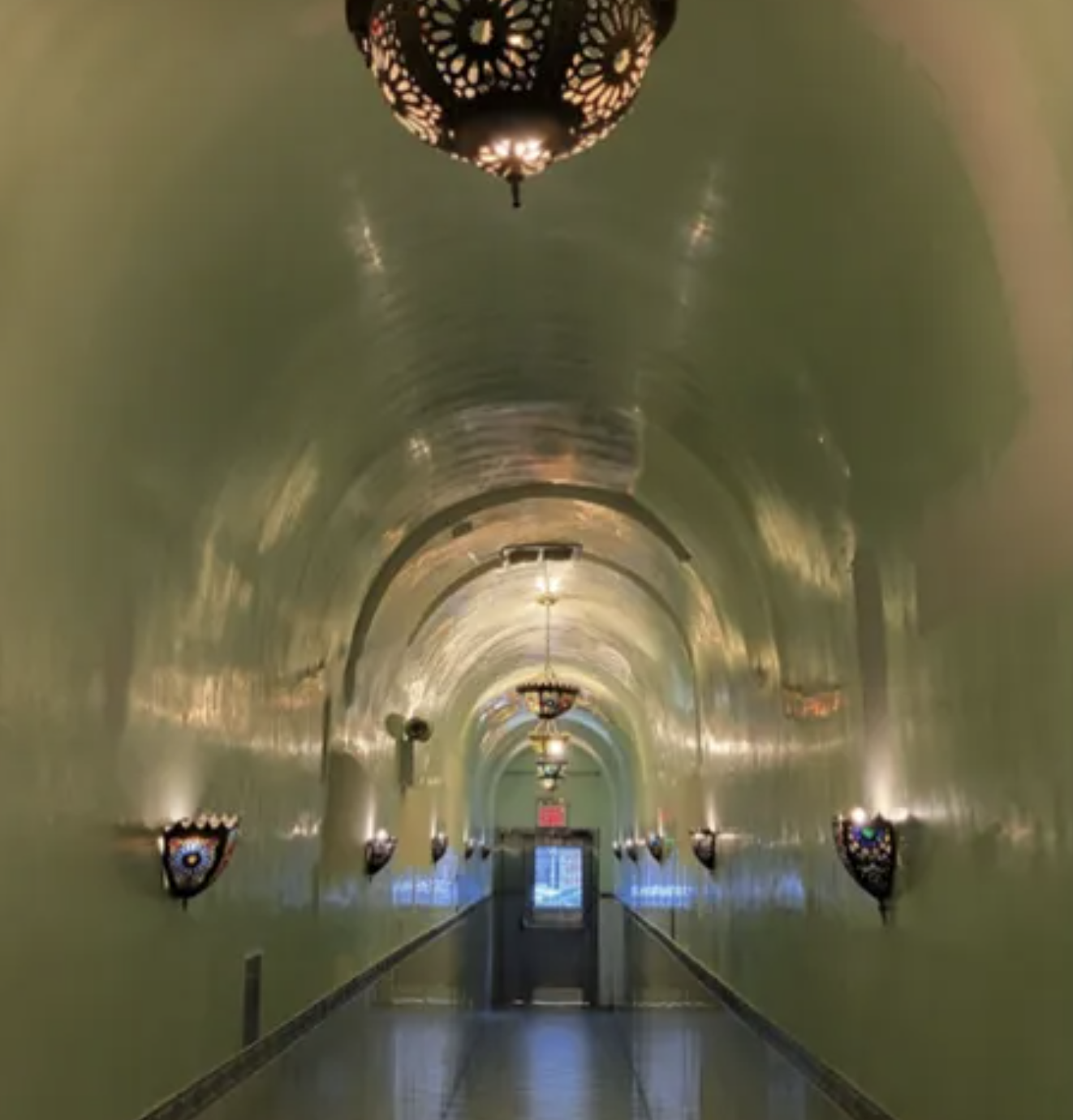
The wudu area wasn't as clean as it could be, probably due to the high foot traffic and the rainy weather, making the floor and restrooms a bit dirty. This might indicate a lack of regular upkeep, but it definitely highlighted the significant number of people using this mosque. After performing wudu, I headed straight to the men's prayer hall. As I entered, a Black brother was standing by the door, and I greeted him with a salam. His response was quite animated: his arm went halfway up, then swung down in a semicircle, firmly grasping my hand. With a rhythmic cadence, he repeatedly said, "Welcome, brother," "How are you doing?" and "You're doing great!" (likely approving of my enthusiastic response to him). After prayer, I leaned against the wall, and people kept greeting me. Compared to other places, New Yorkers are pretty well-informed. Folks elsewhere had no clue where I was from, but New York Muslims asked me more than once, "Are you Indonesian?"


NYC's Halal Food Carts: A Culinary Blessing
Speaking of halal food in New York, you simply can't skip the halal food carts – they're a huge part of New York's halal culinary scene. If you instinctively search "halal" on your map, most of the results you'll get are these food carts. These carts usually have fixed locations, and the map will show their spot along with customer reviews. The types of food they sell are pretty similar across the board: meat platters, rice bowls, hot dogs, and falafel. Some even have fried chicken if they're feeling a bit more adventurous.


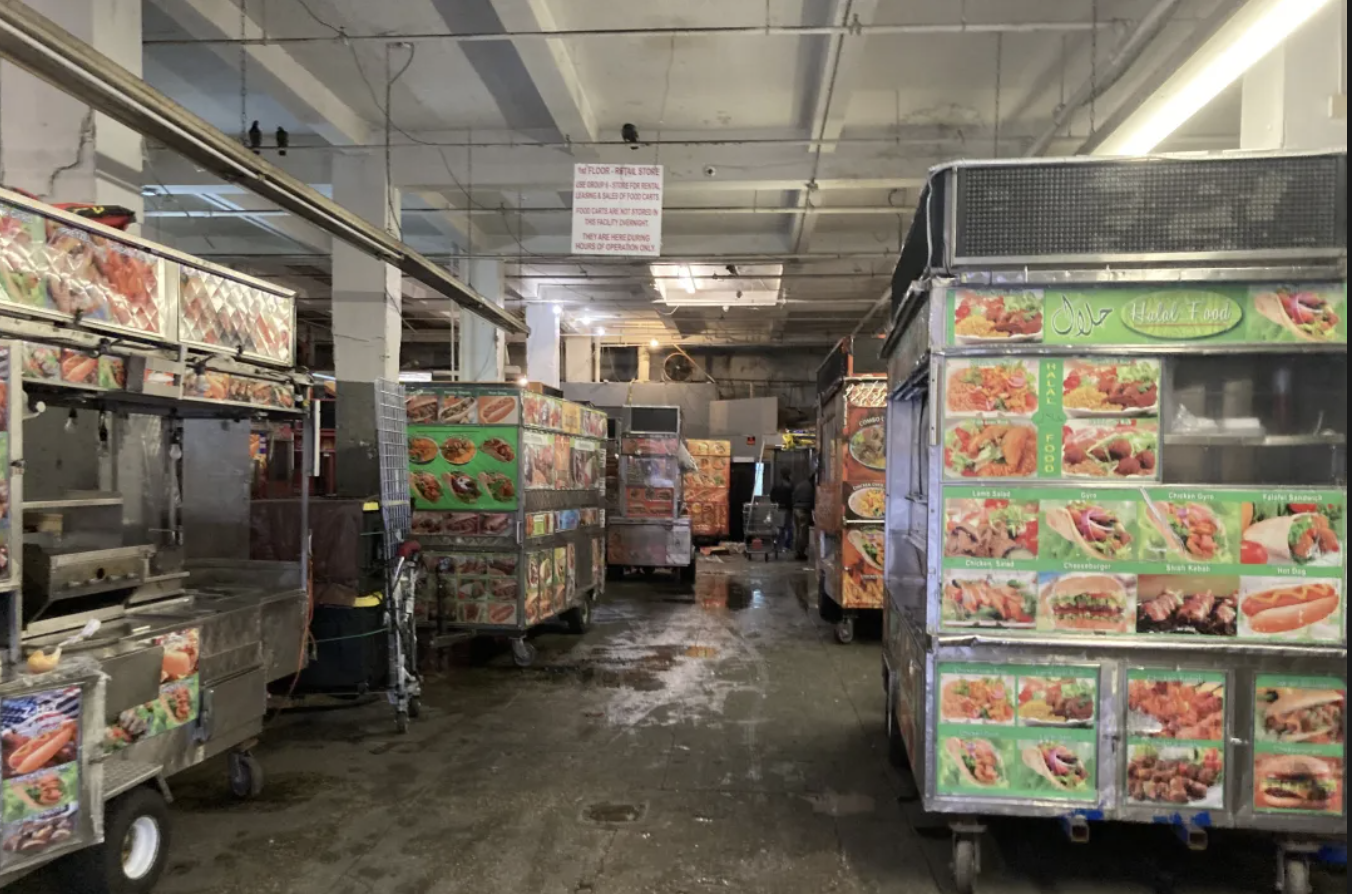


On my first evening in Flushing, I broke my fast (iftar) with food from a cart. I ordered chicken over rice. The turmeric-colored long-grain rice was piled high with tender chicken, topped with a generous squeeze of white sauce and hot sauce. Even before I took a bite, my mouth was watering! And for a heaping container of that deliciousness, it only cost me $7. I immediately ordered another one to take for my suhoor (pre-dawn meal), grabbed a drink, and the total was $15. No exaggeration, this might just be the cheapest meal you can get in New York that's worth its salt. Of course, carts in Manhattan might charge a little more, but still usually under $10. Alhamdulillah for these blessings!
A Test of Faith in Manhattan: Halal Carts and Humble Mosques
Fasting while walking through the bustling streets of Manhattan is a massive test of sabr (patience). Despite my rumbling stomach, the tempting aroma from those halal food carts would waft into my nostrils every now and then. You know for sure that scent is halal, and sometimes you can't help but take an extra sniff or two, but there's nothing to do but sigh and hurry past. This temptation and the urge to buy don't just vanish. When you think you've missed out on a delicious meal, you turn the next corner and lo and behold, you find another cart. Look further down, and there's yet another halal food cart at the next intersection. By the time Iftar (breaking of fast) rolls around, you've probably passed a good dozen or so carts, and at that point, you're so famished you don't even want to explore which one has the most variety or the best taste.
Masjid Awliya of Allah: A Hidden Gem
As Iftar time drew near, my wife and I were walking around Times Square, passing one food cart after another, our eyes glued to the prize. I suggested we find a masjid to settle down and rest for a bit, then grab our food once it was time to break our fast, and head to the train station to go home. So, I searched and found this mosque: Masjid Awliya of Allah (Friends of Allah Mosque, located at 327 W 36th St., New York, NY 10018). It's probably the closest mosque to Times Square. We made a beeline for it, and as soon as we got to the entrance, my wife stared in disbelief and asked, "Are you sure this is a mosque?"
And honestly, at first glance, you'd think you'd stumbled into the Halal Food Cart Association. The entrance, as marked on the map, led into a huge warehouse chock-full of food carts waiting to be stocked up for their day's business. We asked someone inside, and he confirmed it was indeed the masjid. Then, he led us on a winding path, weaving through rows of food carts until we finally reached a staircase. Lo and behold! The actual masjid entrance was hidden behind this dense array of food trucks! We ascended to the second floor, where we found a small prayer room. Even with such limited space, they had a dedicated area for the sisters, masha'Allah. I quickly scanned the people resting; by their attire, most seemed to be delivery drivers or food cart vendors. This place had clearly become their perfect refuge from the elements, a spot to enjoy a moment of tranquility amidst their busy lives. The only downside was that the wudu (ablution) area in this mosque had no partitions, just a large communal water basin. It wasn't very convenient for the sisters to perform wudu, so we decided to head out.
The Ever-Present Mercy (of Allah)
Back on the street, my wife and I were beat, our feet killing us. I pointed to the map and said, "There's another masjid not too far. Let's make a dash for it." At this point, I was pinning all my hopes on that one, praying it would be a more "conventional" masjid, a place where I could charge my phone and my body could get a quick recharge too. Our train home was less than two hours away, so time was of the essence. We decided to grab some food from the "Tianshan" restaurant we'd just passed, saving it for tomorrow's suhoor (pre-dawn meal).
Walking up to the restaurant, we saw the menu taped to the window, filled with familiar dishes: "wontons," "roasted samosa-like buns," "stir-fried noodles with meat." We walked in, our hearts singing, thinking this must be authentic Chinese cuisine. At the ordering counter, my wife looked at a familiar-looking young man and started, "Hey, so, can I have a—" I cut in, blurting out, "Wontons!" The young man replied in Chinese, "Sorry, no wontons." We both looked at each other and shared a laugh. He asked about our situation, and we, in turn, asked about his. This young man, who had been in the U.S. for six years, told us his parents had also moved to New York. Hearing that, the slight tension in my brow eased a bit, as if a worry had lifted off my shoulders. I said, "That's the real deal." The young man, seeing we weren't planning to sit down, asked, "Are you also fasting?" Fearing he might misunderstand, I quickly said, "Yes, that's right! I'm taking it to go for suhoor." The young man wasn't questioning us; he just wanted to give us some dates, and with that, he started to head to the kitchen. We quickly stopped him, explaining that we already had plenty of dates, both ones we'd bought and some given to us for free at the masjid. But he insisted on giving us more. When we finally got our takeout bag, we saw a box of dates placed right next to our roasted buns. We thanked him profusely, saying, "Jazak Allah Khayr!" The young man waved us goodbye, calling out, "Come back anytime!"


Masjid al-Rahman: A True Sanctuary
With our suhoor taken care of, we made a beeline for our next masjid: Masjid al-Rahman (The Mosque of The Most Merciful). As we hurried along, I could already see men in kufis and women in hijabs gathered at the entrance from a distance. I told my wife, "Do you see that group of Muslim brothers and sisters up ahead? This time, we definitely haven't come to the wrong place!" The mosque had two roll-up doors, one covering the prayer hall and the other serving as the entrance. After confirming there was a designated women's prayer area and a women's wudu station, we couldn't wait to go inside and recharge.
After praying, I took a moment to truly examine this masjid. It wasn't small at all. As Iftar time drew near, the number of people was substantial. There were small groups chatting by the walls, and others reciting Quran to a teacher. Through their official website, I learned that the jama'ah (congregation) in this area had been gathering and renting places for Jumu'ah since the 1990s, enduring three relocations before finally settling here. The first floor was the main prayer hall, and the basement held another surprise. The masjid had covered the entire basement with tablecloths, waiting for those breaking their fast to arrive.
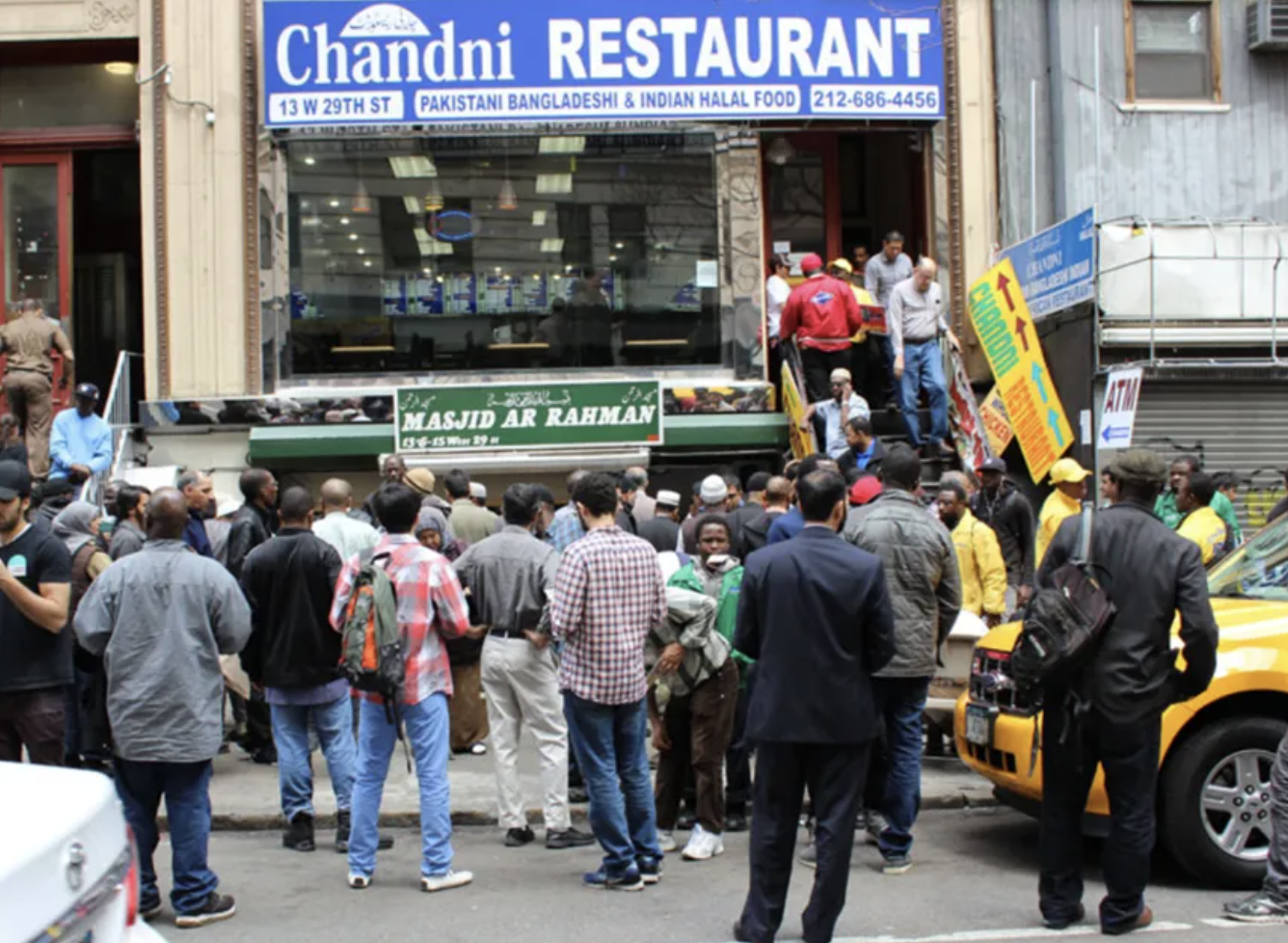

I leaned against a pillar, charging my phone and resting. A study circle behind me caught my interest. Some young men were sitting around an elder, who was clearly imparting ilm (knowledge). About twenty minutes passed, and I figured my phone was charged enough. I quickly unplugged it and discreetly slipped into a spot next to a brother, not wanting to miss anything. I whispered to him, "Is this a halaqah (study circle) for new Muslims?" The brother whispered back, explaining that it covered basic Islamic knowledge, Quranic studies, and more. Our whispering must have disturbed the elder, as he paused his talk and reminded us to be quiet. We awkwardly sat upright in our places.
The Wisdom of Obligation Versus Tradition
When I joined, it was exactly during the Q&A session. A brother across from me, with the trendiest dreadlocks, was casually leaning against the wall, legs stretched out. Suddenly, the elder turned to him and asked gravely, "What are the seven external conditions for Salat (prayer)?" The young man immediately straightened up, knelt with his thighs upright, placed his hands on his thighs, closed his eyes tightly, and answered the Shaykh's question precisely: "Purity of body, purity of clothes, purity of place of prayer, covering the awrah (modesty), praying on time, facing the qibla, and having the correct niyyah (intention)!" At that moment, he sat rigidly, looking just like a student called to task. The Shaykh then asked about the essential elements of prayer and wudu. Finally, he asked him to recite Surah Al-Ikhlas ("The Chapter of Sincerity"). After answering all this, the young man slumped back into his original relaxed posture, like a balloon that had lost its air.
This teaching method was quite insightful. If we reflect on our own learning process for things like wudu, we often don't explicitly differentiate between its fardh (obligatory) and Sunnah (Prophetic tradition) elements. Instead, the focus is on formal instruction, teaching the entire wudu procedure as a whole. The same goes for salat. Every movement, every recitation is ingrained in our bones, but if you're pressed to explain what's fardh and what's Sunnah, you might not remember it with such clarity. This somewhat pragmatic approach, not emphasizing the distinction, can lead us to treat fardh and Sunnah as equally essential in practice. In special circumstances, our memory gets blurry, and it feels like everything is fardh and shouldn't be omitted. However, if we clearly understand that fardh are absolute obligations, and Sunnah are not strictly mandatory (referring only to special circumstances, as emphasized Sunnah implies you shouldn't casually abandon it!), then the issue becomes clear as daylight. I recall a brother recently asking in our group chat about the validity of wudu if one cannot rinse their mouth due to illness. How did the Imam answer? He said rinsing the mouth is Sunnah, so the wudu is still valid without it. Indeed, our Deen is one of ease.


The Abundance of Allah's Provision
Seeing the time was almost up, I told my wife to wait for me by the door while I quickly performed my wudu (ablution). When I emerged, my wife had a takeout container in her hand. She explained that one of the uncles at the masjid had seen us leaving and insisted she take a meal for iftar (breaking fast), a true blessing from Allah. We didn't have time to dwell on it; our minds were still set on the food carts we'd been eyeing, eager to get our actual iftar there.
After walking for less than five minutes, we finally settled on a large food cart. The young man working the cart seemed a bit green; he was out of pretty much everything we wanted, only having rice bowls and meat wraps left. We had no choice but to settle for what we could get. Just then, a Black uncle came bustling over. Without a word to the vendor, he grabbed some water from the cart, paid, and was about to leave. He seemed to notice my wife and I by our attire, and he extended a warm salam (peace greeting) to us. Masha'Allah.
After he left, I told my wife, "Subhanallah, there are so many Muslims here!" No sooner had the words left my mouth than the uncle reappeared. This time, he was carrying a bag overflowing with fruits and dates. He pulled out some bananas and oranges and insisted we take them, shoving them into our hands. The other people waiting for food around us looked on, perplexed, wondering what in the world was going on. After the uncle left, I smiled at an auntie nearby and tried to explain, "We're Muslims, fasting, and he gave us food." The auntie just smiled back. It was clear she didn't speak English and didn't understand my explanation, but the gesture of brotherhood transcended language.
A Sister in Need, A Prophet's Wisdom
Just that morning, we were wondering what we'd eat, and now we had a whole bag full of food. It felt as though Allah's grace was continuously flowing into our lives. Alhamdulillah (all praise is due to Allah)! As we waited, a young woman wearing a white hijab (headscarf) came over to buy food. I pointed to the dates in our bag and gestured for my wife to offer her some. The girl took the dates, and her previously serious expression instantly lit up with a smile. My wife chatted with her, while I pointed her in the direction of the masjid. It turned out this sister had no idea where there was a mosque nearby where she could break her fast. Subhanallah! It was a perfect moment for a small act of kindness.
This experience brought to mind the beautiful Hadith (Prophetic tradition) where the Prophet Muhammad (peace be upon him) was asked, "Which act in Islam is the most excellent?" He replied, "To feed others and to greet with salam (peace) those whom you know and those whom you do not know." (Recorded in Sahih al-Bukhari and Sahih Muslim).
As we walked through the bustling streets of New York, my wife turned to me and said, "I feel so content with this trip." And how could I not feel the same? Indeed, Subhanallah, what a blessed journey!
Muslim Life Guide China Ramadan: Suhoor, Dialysis, Qur'an and the First Day of Fasting
Articles • yusuf908 posted the article • 0 comments • 222 views • 2026-05-23 21:55
Summary: This Ramadan diary records the author's first day of fasting while dealing with serious illness, dialysis, suhoor, thirst, iftar, Qur'an reminders, and the mixed pain and gratitude of trying to fast for Allah when the body is weak.
Many people probably started to curse when they saw this topic. Today is already at least two days of fasting. How can I fast on the first day? Yes, I don’t have any excuses, because today is indeed my first day of fasting this year. I didn’t fast yesterday because my whole body felt weak due to low blood sugar, and my hands and feet were numb as if I’d been electrocuted, so I didn’t fast yesterday. Also, I would suffer from severe hypoglycemia during and after dialysis, so I had to eat something during dialysis. Also, I would be weak after dialysis, and I would have to eat a little bit to recover. Therefore, insha'Allah, I plan not to go to the hospital for dialysis like last year. As long as my body does not feel particularly severe discomfort, I will try my best to hold on to it every day.
I didn’t fast yesterday. To be honest, I was too embarrassed to go out to bask in the sun or feel shy when I met anyone. It was really just like what the verse said, “They were so out of date that they felt that although although the earth was vast, it felt too tight for them.” [9:118] I felt as soon as I stepped out the door, even the wind was asking me why I wasn't fasting.
This morning, I woke up my wife and told her to get up and make suhoor. My wife started to get busy, but I lay in bed and kept wondering whether I should get up and try to see if my body could bear it. Finally, I decided to get up and give it a try. My wife said something to me in a distressed and reproachful tone, but I said firmly: "I tried to take the whole day's medicine at once this morning, and then I tried to see if my body can stand it. If I can't stand it, I will still choose to break the fast." "The wife didn't say anything else, because she knew it would be useless.
Around nine o'clock in the morning, my stomach started to feel uncomfortable. It is estimated that the contents in the stomach have been digested, but the effects of the medicine have not worn off. I can't explain the uncomfortable feeling, but it is uncomfortable. Around 1 p.m., my hands and feet began to feel numb. Uremic patients know that this is a sign of elevated potassium, or potassium poisoning. But fortunately, it was just a slight numbness, and it was not particularly severe. A particularly severe potassium overdose would cause numbness of the limbs, vomiting, shock, or even death. By about five o'clock in the afternoon, the numbness was a little better, but there was still a little numbness. I don't know if it was because of hunger, the efficacy of the medicine, or the increase in potassium. Anyway, my limbs were still soft and I didn't have much strength, so I continued to lie on the sofa with a fire.
When it was close to breaking the fast, this discomfort became particularly obvious. My stomach kept rumbling, my ears began to hold my breath, and the numbness in my limbs became more serious than at noon. However, I also experienced these discomforts last year, and I can overcome them with a little persistence.
The first day of fasting is so difficult, especially for people like us who are seriously ill. Only we know the hardship. This is also like what is said in the Qur'an: “Indeed, with hardship comes ease. Indeed, with hardship comes ease. (94:5-6)” That way. If we give up, then the day will pass, but if we persist, the day will actually be completed easily.
I completed today's fast, but I can’t fast tomorrow because I have to go to the hospital for dialysis! However, I will try my best to fast every day. view all
Summary: This Ramadan diary records the author's first day of fasting while dealing with serious illness, dialysis, suhoor, thirst, iftar, Qur'an reminders, and the mixed pain and gratitude of trying to fast for Allah when the body is weak.
Many people probably started to curse when they saw this topic. Today is already at least two days of fasting. How can I fast on the first day? Yes, I don’t have any excuses, because today is indeed my first day of fasting this year. I didn’t fast yesterday because my whole body felt weak due to low blood sugar, and my hands and feet were numb as if I’d been electrocuted, so I didn’t fast yesterday. Also, I would suffer from severe hypoglycemia during and after dialysis, so I had to eat something during dialysis. Also, I would be weak after dialysis, and I would have to eat a little bit to recover. Therefore, insha'Allah, I plan not to go to the hospital for dialysis like last year. As long as my body does not feel particularly severe discomfort, I will try my best to hold on to it every day.
I didn’t fast yesterday. To be honest, I was too embarrassed to go out to bask in the sun or feel shy when I met anyone. It was really just like what the verse said, “They were so out of date that they felt that although although the earth was vast, it felt too tight for them.” [9:118] I felt as soon as I stepped out the door, even the wind was asking me why I wasn't fasting.
This morning, I woke up my wife and told her to get up and make suhoor. My wife started to get busy, but I lay in bed and kept wondering whether I should get up and try to see if my body could bear it. Finally, I decided to get up and give it a try. My wife said something to me in a distressed and reproachful tone, but I said firmly: "I tried to take the whole day's medicine at once this morning, and then I tried to see if my body can stand it. If I can't stand it, I will still choose to break the fast." "The wife didn't say anything else, because she knew it would be useless.
Around nine o'clock in the morning, my stomach started to feel uncomfortable. It is estimated that the contents in the stomach have been digested, but the effects of the medicine have not worn off. I can't explain the uncomfortable feeling, but it is uncomfortable. Around 1 p.m., my hands and feet began to feel numb. Uremic patients know that this is a sign of elevated potassium, or potassium poisoning. But fortunately, it was just a slight numbness, and it was not particularly severe. A particularly severe potassium overdose would cause numbness of the limbs, vomiting, shock, or even death. By about five o'clock in the afternoon, the numbness was a little better, but there was still a little numbness. I don't know if it was because of hunger, the efficacy of the medicine, or the increase in potassium. Anyway, my limbs were still soft and I didn't have much strength, so I continued to lie on the sofa with a fire.
When it was close to breaking the fast, this discomfort became particularly obvious. My stomach kept rumbling, my ears began to hold my breath, and the numbness in my limbs became more serious than at noon. However, I also experienced these discomforts last year, and I can overcome them with a little persistence.
The first day of fasting is so difficult, especially for people like us who are seriously ill. Only we know the hardship. This is also like what is said in the Qur'an: “Indeed, with hardship comes ease. Indeed, with hardship comes ease. (94:5-6)” That way. If we give up, then the day will pass, but if we persist, the day will actually be completed easily.
I completed today's fast, but I can’t fast tomorrow because I have to go to the hospital for dialysis! However, I will try my best to fast every day.
China Muslim Travel Tips Ramadan: Hadith, Eid Moon Sighting and Local Imam Unity
Articles • yusuf908 posted the article • 0 comments • 231 views • 2026-05-23 21:31
Summary: This Ramadan reflection discusses recurring disputes about moon sighting, starting and ending the fast, following the local imam, and protecting unity in Muslim communities even when people hold different fiqh views.
This year's Ramadan has mostly passed. Some people have already ended the fast today, and some will end it tomorrow, but the hostile arguments on Moments have not stopped with the end of Ramadan. On the contrary, those who continue to fast today mock those who have already broken their fast today as radicals. In China, they blindly follow the trend of breaking the fast without seeing the moon. Those who continue to fast today mock those who continue to fast today as old-fashioned. Obviously, there is accurate information about the moon sighting abroad, so why not accept a distant moon sighting?
Every year, our group always quarrels and slanders each other over the issue of fasting and breaking fast. The root of all this is the famous hadith: “Fast when you see the new moon, and break your fast when you see the new moon. But if the sky is cloudy, then you have enough for the thirty days of Sha'ban (calculation based on this)! ". [the two Sahih collections], the differences in each Ramadan basically appear here, and there is also the situation of receiving the new moon from a distant place. There is also a hadith: Narrated by Qurayb ibn Abu Muslim Umm al-Fadl bint al-Harith sent me to Sham to meet Mu'awiya. I was in Sham when the crescent moon of Ramadan appeared after I arrived in Sham to complete her mission. We saw the new moon on the Friday night. When I returned to Medina at the end of the month, Ibn Abbas mentioned the new moon when he asked me, "When did you see the new moon?" "I said: "We saw the new moon on the Friday night. He asked: "Did you see it too?" "I said: "Yes, everyone has seen it. They all fasted, and Mu'awiya also fasted. "Ibn Abbas said: "We saw the new moon on Saturday night. So, we will continue to fast until we are thirty days old or until we see the new moon. "I said: "Aren't you satisfied with Mu'awiya's sight of the moon and his fasting? "Ibn Abbas said: "No, this is what the Messenger of Allah ordered us to do. "Muslim Collection of Hadith." Today we are in the era of the "global village" with the explosion of information. People in the Western Hemisphere will know about the new moon one minute after seeing it in the Eastern Hemisphere, so people who see the new moon will naturally start or end the fast. However, those who refuse to accept a distant moon sighting believe that there is a time difference of several hours between the new moon seen by people in the Eastern Hemisphere and those in the Western Hemisphere, and the distance is far away, so they do not need to accept a distant moon sighting, so they delay starting or ending the fast.
Do the above two hadiths contradict each other? Not contradictory at all! On the contrary, there is strong complementarity, and it also reflects the inclusiveness of Islam in seeking common ground while reserving differences, and Islam is a religion that makes it easy for people and not difficult for others. On the contrary, it is our partial understanding or complete misinterpretation of these two hadiths that led to this situation of blaming each other. In the end, we all used these two hadiths to say that the other party was mistaken. In fact, similar and seemingly contradictory hadiths include "My disciples will be divided into seventy-three groups, only one group will enter heaven, and the others will enter hell." This group of saved people are believers who follow me, and they follow my disciples as examples. "Ibn Majah" and another passage "Whoever dies by reciting that there is no god but Allah will surely enter paradise, even if he steals and commits adultery." "[the two Sahih collections], these two hadiths seem to be contradictory and conflicting with each other. In fact, as long as these two hadiths are combined and understood, they encourage everyone to actively do good deeds and work hard to complete various meritorious deeds. Even if you are originally a person who has committed serious sins, as long as you work hard to improve, actively repent to Allah, and promise not to do it again, you will belong to the residents of heaven.
The same is true for the above two hadiths about the new moon. They must be combined to understand each other in order to truly understand their meaning. Otherwise, if we only understand a certain hadith alone, we will end up in today's situation of mutual accusations. If the two hadiths are combined and understood, then we can easily solve this problem. The choice of whether to accept a distant moon sighting from another place depends on the imam of our community. If the imam of our community chooses to accept a distant moon sighting, then we will follow the fast or break the fast. If the imam of our community chooses to not accept the distant moon sighting, then we will follow the imam and choose to postpone the fast or delay the fast. Because the Messenger of Allah said, "Fear Allah and obey the [Imam] among you, even if it is an Abyssinian black servant with a head like a raisin as your Imam." "Ibn Majah". The imam of this community will consider all factors and finally make the most correct choice. We can just follow him. Don't mess up the atmosphere of unity in this community or even surrounding communities for our own reasons. If we do this, we will violate the great mission of "Muslims should unite with each other" commanded by Allah.
Having said so much, I can only say one thing: Those who choose to accept a distant moon sighting and fast or break their fast, or those who choose to not accept a distant moon sighting and delay fasting and break the fast, both are fine. As for whether to choose to accept a distant moon sighting or not, it depends on the imam of the community! As for who is right and who is wrong, we just have to be ourselves. In the days to come, Allah will reward every servant according to their intention. Finally, I would like to end today’s tweet with a Hadith: “All work depends on intention, and everyone has the [reward] of his intention” [the two Sahih collections]! view all
Summary: This Ramadan reflection discusses recurring disputes about moon sighting, starting and ending the fast, following the local imam, and protecting unity in Muslim communities even when people hold different fiqh views.
This year's Ramadan has mostly passed. Some people have already ended the fast today, and some will end it tomorrow, but the hostile arguments on Moments have not stopped with the end of Ramadan. On the contrary, those who continue to fast today mock those who have already broken their fast today as radicals. In China, they blindly follow the trend of breaking the fast without seeing the moon. Those who continue to fast today mock those who continue to fast today as old-fashioned. Obviously, there is accurate information about the moon sighting abroad, so why not accept a distant moon sighting?
Every year, our group always quarrels and slanders each other over the issue of fasting and breaking fast. The root of all this is the famous hadith: “Fast when you see the new moon, and break your fast when you see the new moon. But if the sky is cloudy, then you have enough for the thirty days of Sha'ban (calculation based on this)! ". [the two Sahih collections], the differences in each Ramadan basically appear here, and there is also the situation of receiving the new moon from a distant place. There is also a hadith: Narrated by Qurayb ibn Abu Muslim Umm al-Fadl bint al-Harith sent me to Sham to meet Mu'awiya. I was in Sham when the crescent moon of Ramadan appeared after I arrived in Sham to complete her mission. We saw the new moon on the Friday night. When I returned to Medina at the end of the month, Ibn Abbas mentioned the new moon when he asked me, "When did you see the new moon?" "I said: "We saw the new moon on the Friday night. He asked: "Did you see it too?" "I said: "Yes, everyone has seen it. They all fasted, and Mu'awiya also fasted. "Ibn Abbas said: "We saw the new moon on Saturday night. So, we will continue to fast until we are thirty days old or until we see the new moon. "I said: "Aren't you satisfied with Mu'awiya's sight of the moon and his fasting? "Ibn Abbas said: "No, this is what the Messenger of Allah ordered us to do. "Muslim Collection of Hadith." Today we are in the era of the "global village" with the explosion of information. People in the Western Hemisphere will know about the new moon one minute after seeing it in the Eastern Hemisphere, so people who see the new moon will naturally start or end the fast. However, those who refuse to accept a distant moon sighting believe that there is a time difference of several hours between the new moon seen by people in the Eastern Hemisphere and those in the Western Hemisphere, and the distance is far away, so they do not need to accept a distant moon sighting, so they delay starting or ending the fast.
Do the above two hadiths contradict each other? Not contradictory at all! On the contrary, there is strong complementarity, and it also reflects the inclusiveness of Islam in seeking common ground while reserving differences, and Islam is a religion that makes it easy for people and not difficult for others. On the contrary, it is our partial understanding or complete misinterpretation of these two hadiths that led to this situation of blaming each other. In the end, we all used these two hadiths to say that the other party was mistaken. In fact, similar and seemingly contradictory hadiths include "My disciples will be divided into seventy-three groups, only one group will enter heaven, and the others will enter hell." This group of saved people are believers who follow me, and they follow my disciples as examples. "Ibn Majah" and another passage "Whoever dies by reciting that there is no god but Allah will surely enter paradise, even if he steals and commits adultery." "[the two Sahih collections], these two hadiths seem to be contradictory and conflicting with each other. In fact, as long as these two hadiths are combined and understood, they encourage everyone to actively do good deeds and work hard to complete various meritorious deeds. Even if you are originally a person who has committed serious sins, as long as you work hard to improve, actively repent to Allah, and promise not to do it again, you will belong to the residents of heaven.
The same is true for the above two hadiths about the new moon. They must be combined to understand each other in order to truly understand their meaning. Otherwise, if we only understand a certain hadith alone, we will end up in today's situation of mutual accusations. If the two hadiths are combined and understood, then we can easily solve this problem. The choice of whether to accept a distant moon sighting from another place depends on the imam of our community. If the imam of our community chooses to accept a distant moon sighting, then we will follow the fast or break the fast. If the imam of our community chooses to not accept the distant moon sighting, then we will follow the imam and choose to postpone the fast or delay the fast. Because the Messenger of Allah said, "Fear Allah and obey the [Imam] among you, even if it is an Abyssinian black servant with a head like a raisin as your Imam." "Ibn Majah". The imam of this community will consider all factors and finally make the most correct choice. We can just follow him. Don't mess up the atmosphere of unity in this community or even surrounding communities for our own reasons. If we do this, we will violate the great mission of "Muslims should unite with each other" commanded by Allah.
Having said so much, I can only say one thing: Those who choose to accept a distant moon sighting and fast or break their fast, or those who choose to not accept a distant moon sighting and delay fasting and break the fast, both are fine. As for whether to choose to accept a distant moon sighting or not, it depends on the imam of the community! As for who is right and who is wrong, we just have to be ourselves. In the days to come, Allah will reward every servant according to their intention. Finally, I would like to end today’s tweet with a Hadith: “All work depends on intention, and everyone has the [reward] of his intention” [the two Sahih collections]!
Ramadan in China 2026: Qur'an, Hadith, Tarawih and Muslim Strength for Fasting
Articles • yusuf908 posted the article • 0 comments • 233 views • 2026-05-23 21:31
Summary: This Ramadan essay reminds Muslims of the value of fasting, the reward of Ramadan, the hadith about Paradise, Hell, and the chained devils, and the author's own effort to fast and pray Tarawih despite health fears.
"O you who believe, fasting has been prescribed for you as it was prescribed for those before you, so that you may become mindful of Allah" (2:183), Allah has clarified in the Qur'an that fasting is not only the command of the Prophet's era, it is also the command of the saints of the past, and it is also the command of us and our descendants after the Prophet. Fasting is a behavior that can be seen in almost all mainstream religious groups that are currently accessible, whether it is Islam, Buddhism, Taoism, Christianity, Catholicism... Fasting is almost in a parallel relationship with sacrifice. Whenever people fast, they always offer sacrifices devoutly and interact with others gently.
Many people, whenever someone says to them: "Ramadan is here, you should fast", they will always find all kinds of weird reasons to excuse themselves, such as: I have a cold, I have to work in the fields, it is inconvenient for me to go to work, I... Anyway, there are a lot of various reasons, in short, there is one purpose: they do not want to fast! As everyone knows, Allah said in the Qur'an, "Fasting is better for you, if you only knew" (2:184). The benefits of fasting have been repeated over and over again by scholars and imams throughout the ages. I will not go into details because anyone who tries to escape the fast will find excuses anyway, and anyone who wants to complete the fast will always overcome all kinds of difficulties to complete his fast.
In the blink of an eye, this year's Ramadan has passed for twenty-eight or nine days. In just one or two days, Ramadan will wave to us and say "goodbye". If you want to observe such a noble fast again, you can only wait until next year. Maybe many people will think that if you just wait another year, there is nothing worth mentioning. In fact, what I want to say is: In fact, for many people, in many cases, this year may be their last Ramadan, and missing this Ramadan may be their biggest regret in life. Natural disasters, man-made disasters, and diseases warn us all the time to cherish our time and our immediate health. However, many people are unaware of it and always feel that time and health are the cheapest and longest-lasting, so we procrastinate again and again when completing the various missions set by Allah for us.
The Messenger of Allah said: “When Ramadan comes, all the gates of Paradise are opened, all the gates of Hell are closed, and all the demons are locked up (in chains). "[the two Sahih collections] This hadith tells us the nobility of Ramadan. Ramadan is a day of peace, tranquility, mercy, and a day when all demons are sent to "prisons" and imprisoned. In fact, what I want to say more about this hadith is: Since the devils are locked up during Ramadan, the doors of hell are closed. Only when the door of heaven is open and the gods come down to earth to wish us peace, if we commit a sin due to our own reasons, what excuse do we have to excuse ourselves? Normally we would say that we commit sins because we are tempted by the devil, but during Ramadan the devil will definitely not be blamed for the sins we commit.
The nobility of Ramadan is that to the gates of Hell being closed and the demons being shackled and locked up, any good deeds done during Ramadan will be rewarded twice as much as on other days. What is even more valuable are those who fast in "Ramadan", and Allah personally rewards those who fast [the two Sahih collections]. Another hadith promise is even more exciting: "As long as a person fasts for one day on the road of Allah, Allah will keep him away from the Fire for seventy years because of this day of fasting." [the two Sahih collections] Many people may think that the "seventy years" here is a unit of time. In fact, the "seventy years" here is a unit of space (distance), just like the astronomical word "light year" we often hear. The so-called "light year" is the distance traveled by light in one year, and we all know that the speed of light is 300,000 kilometers per second. The sun is about 150 million kilometers away from the earth. It takes about 8.3 minutes for the light from the sun to reach the earth. If the "seventy years" here are "seventy light years", we can't imagine how far this distance is. But even if it is not "light years", even if we walk on our feet, seventy years is still a very long distance. Since the rewards of fasting are so great, how can we be willing to give up?
I thought I would bid farewell to Ramadan completely from last year, but Allah, I tried to fast this year without any serious physical discomfort. Then I fasted day after day, and then prayed "Tarawih" day after day. When we are devout to the intention for Allah and work hard for it, then Allah will not let the effort of His servants go to waste.
Ultimate question: Are you fasting this year? view all
Summary: This Ramadan essay reminds Muslims of the value of fasting, the reward of Ramadan, the hadith about Paradise, Hell, and the chained devils, and the author's own effort to fast and pray Tarawih despite health fears.
"O you who believe, fasting has been prescribed for you as it was prescribed for those before you, so that you may become mindful of Allah" (2:183), Allah has clarified in the Qur'an that fasting is not only the command of the Prophet's era, it is also the command of the saints of the past, and it is also the command of us and our descendants after the Prophet. Fasting is a behavior that can be seen in almost all mainstream religious groups that are currently accessible, whether it is Islam, Buddhism, Taoism, Christianity, Catholicism... Fasting is almost in a parallel relationship with sacrifice. Whenever people fast, they always offer sacrifices devoutly and interact with others gently.
Many people, whenever someone says to them: "Ramadan is here, you should fast", they will always find all kinds of weird reasons to excuse themselves, such as: I have a cold, I have to work in the fields, it is inconvenient for me to go to work, I... Anyway, there are a lot of various reasons, in short, there is one purpose: they do not want to fast! As everyone knows, Allah said in the Qur'an, "Fasting is better for you, if you only knew" (2:184). The benefits of fasting have been repeated over and over again by scholars and imams throughout the ages. I will not go into details because anyone who tries to escape the fast will find excuses anyway, and anyone who wants to complete the fast will always overcome all kinds of difficulties to complete his fast.
In the blink of an eye, this year's Ramadan has passed for twenty-eight or nine days. In just one or two days, Ramadan will wave to us and say "goodbye". If you want to observe such a noble fast again, you can only wait until next year. Maybe many people will think that if you just wait another year, there is nothing worth mentioning. In fact, what I want to say is: In fact, for many people, in many cases, this year may be their last Ramadan, and missing this Ramadan may be their biggest regret in life. Natural disasters, man-made disasters, and diseases warn us all the time to cherish our time and our immediate health. However, many people are unaware of it and always feel that time and health are the cheapest and longest-lasting, so we procrastinate again and again when completing the various missions set by Allah for us.
The Messenger of Allah said: “When Ramadan comes, all the gates of Paradise are opened, all the gates of Hell are closed, and all the demons are locked up (in chains). "[the two Sahih collections] This hadith tells us the nobility of Ramadan. Ramadan is a day of peace, tranquility, mercy, and a day when all demons are sent to "prisons" and imprisoned. In fact, what I want to say more about this hadith is: Since the devils are locked up during Ramadan, the doors of hell are closed. Only when the door of heaven is open and the gods come down to earth to wish us peace, if we commit a sin due to our own reasons, what excuse do we have to excuse ourselves? Normally we would say that we commit sins because we are tempted by the devil, but during Ramadan the devil will definitely not be blamed for the sins we commit.
The nobility of Ramadan is that to the gates of Hell being closed and the demons being shackled and locked up, any good deeds done during Ramadan will be rewarded twice as much as on other days. What is even more valuable are those who fast in "Ramadan", and Allah personally rewards those who fast [the two Sahih collections]. Another hadith promise is even more exciting: "As long as a person fasts for one day on the road of Allah, Allah will keep him away from the Fire for seventy years because of this day of fasting." [the two Sahih collections] Many people may think that the "seventy years" here is a unit of time. In fact, the "seventy years" here is a unit of space (distance), just like the astronomical word "light year" we often hear. The so-called "light year" is the distance traveled by light in one year, and we all know that the speed of light is 300,000 kilometers per second. The sun is about 150 million kilometers away from the earth. It takes about 8.3 minutes for the light from the sun to reach the earth. If the "seventy years" here are "seventy light years", we can't imagine how far this distance is. But even if it is not "light years", even if we walk on our feet, seventy years is still a very long distance. Since the rewards of fasting are so great, how can we be willing to give up?
I thought I would bid farewell to Ramadan completely from last year, but Allah, I tried to fast this year without any serious physical discomfort. Then I fasted day after day, and then prayed "Tarawih" day after day. When we are devout to the intention for Allah and work hard for it, then Allah will not let the effort of His servants go to waste.
Ultimate question: Are you fasting this year?
Muslim Life Guide China Ramadan: Qur'an, Fidyah and Health Struggles With Fasting
Articles • yusuf908 posted the article • 0 comments • 257 views • 2026-05-23 21:31
Summary: This Ramadan reflection shares the author's anxiety about illness, dialysis, missed fasting, fidyah, shame, longing for worship, and the emotional pain of wanting to fast for Allah while the body may not allow it.
"O you who believe, fasting has been prescribed for you as it was prescribed for those before you, so that you may become mindful of Allah" (2:183)
From about the age of three or four, when my parents, brothers and sisters got up to fast, I would follow them. Sometimes I could fast for a whole day, and sometimes I would be so hungry until noon that I would break fast secretly. I have never given up a day of fasting in Ramadan since I was six years old, but since I fell ill, I ruthlessly abandoned Ramadan last year, and I will probably continue to wave goodbye to the noble month of Ramadan this year.
To be honest, I didn’t fast last year due to health reasons. I felt very embarrassed and even ashamed when I walked around the village. Just like this verse in the Qur'an says: He also allowed those three to repent, and they left it to Allah's command, feeling that although the earth was vast, they felt that they had no place to be ashamed of (9:118). Every time I met someone in the village, I wished I could run away and hide. Otherwise, I would always feel that others were fasting but I was not fasting, and I felt extremely ashamed from the bottom of my heart.
Last year’s Ramadan has become a thing of the past, but this year’s Ramadan is just about to begin. If nothing else happens, the day after tomorrow will be the beginning of Ramadan this year, but the medicines I have to take several times a day and the hemodialysis three times a week are like shackles on my head. They have become an insurmountable barrier between me and the noble month of Ramadan. Ramadan seems to be getting away from me. I don’t know if those who have never fasted will feel like me during Ramadan. Anyway, since I didn’t fast during Ramadan last year, I always feel that the world has changed. It is no longer the world I am familiar with, and I am no longer the person I know.
In fact, every one of us who has recited the Qur'an knows that sick people like us can make up for the lack of fasting through "fidyah." But in my opinion, it’s like what I said before: “We all know that rice is sown in spring and harvested in autumn. But if I miss the planting season in the spring and replant in the summer, I don’t know if I will be able to harvest in the fall. If the weather is good and the temperature is high, you may be able to harvest some sporadic grain in the fall, but if the weather is a little cooler, the most you can harvest in the fall is a pile of straw. ”, so I really don’t want to complete my fast through “fidyah”, but I have to complete my fast through “fidyah”.
Only those who are sick will understand the preciousness of health, and only those who are dying will understand the value of life. Only people like us can truly understand the pain of wanting to fast but not being able to fast, just like what is said on the Internet: "The most painful thing is not being able to love." view all
Summary: This Ramadan reflection shares the author's anxiety about illness, dialysis, missed fasting, fidyah, shame, longing for worship, and the emotional pain of wanting to fast for Allah while the body may not allow it.
"O you who believe, fasting has been prescribed for you as it was prescribed for those before you, so that you may become mindful of Allah" (2:183)
From about the age of three or four, when my parents, brothers and sisters got up to fast, I would follow them. Sometimes I could fast for a whole day, and sometimes I would be so hungry until noon that I would break fast secretly. I have never given up a day of fasting in Ramadan since I was six years old, but since I fell ill, I ruthlessly abandoned Ramadan last year, and I will probably continue to wave goodbye to the noble month of Ramadan this year.
To be honest, I didn’t fast last year due to health reasons. I felt very embarrassed and even ashamed when I walked around the village. Just like this verse in the Qur'an says: He also allowed those three to repent, and they left it to Allah's command, feeling that although the earth was vast, they felt that they had no place to be ashamed of (9:118). Every time I met someone in the village, I wished I could run away and hide. Otherwise, I would always feel that others were fasting but I was not fasting, and I felt extremely ashamed from the bottom of my heart.
Last year’s Ramadan has become a thing of the past, but this year’s Ramadan is just about to begin. If nothing else happens, the day after tomorrow will be the beginning of Ramadan this year, but the medicines I have to take several times a day and the hemodialysis three times a week are like shackles on my head. They have become an insurmountable barrier between me and the noble month of Ramadan. Ramadan seems to be getting away from me. I don’t know if those who have never fasted will feel like me during Ramadan. Anyway, since I didn’t fast during Ramadan last year, I always feel that the world has changed. It is no longer the world I am familiar with, and I am no longer the person I know.
In fact, every one of us who has recited the Qur'an knows that sick people like us can make up for the lack of fasting through "fidyah." But in my opinion, it’s like what I said before: “We all know that rice is sown in spring and harvested in autumn. But if I miss the planting season in the spring and replant in the summer, I don’t know if I will be able to harvest in the fall. If the weather is good and the temperature is high, you may be able to harvest some sporadic grain in the fall, but if the weather is a little cooler, the most you can harvest in the fall is a pile of straw. ”, so I really don’t want to complete my fast through “fidyah”, but I have to complete my fast through “fidyah”.
Only those who are sick will understand the preciousness of health, and only those who are dying will understand the value of life. Only people like us can truly understand the pain of wanting to fast but not being able to fast, just like what is said on the Internet: "The most painful thing is not being able to love."
Ramadan Muslim Life Guide in the Muslim World: Last Ten Nights, Laylat al-Qadr and Dua
Articles • yusuf908 posted the article • 0 comments • 238 views • 2026-05-22 10:09
Summary: Ramadan Muslim Life Guide in the Muslim World: Last Ten Nights, Laylat al-Qadr and dua is presented here as a clear English Islamic knowledge article for Muslim readers, starting with this scene: As we enter the last ten nights of Ramadan, we have a unique opportunity to seek forgiveness, draw closer to Allah, earn the rewards of our nightly worship, and insha'Allah catch Laylatul-Qadr, or the Night of Decree. It keeps the original names, Quran and hadith references, dua, photographs, and religious context while focusing on Last Ten Nights, Laylat al-Qadr, Ramadan.
As we enter the last ten nights of Ramadan, we have a unique opportunity to seek forgiveness, draw closer to Allah, earn the rewards of our nightly worship, and insha'Allah catch Laylatul-Qadr, or the Night of Decree. Here are 10 practical tips to make the most of these nights:
1. Avoid sins during the day.
We often forget this when thinking about the last ten nights. Outside of Ramadan, we are reminded not to disobey Allah during the day, because if we do, He will not wake us up to pray at night. As the saying goes, "If you sin during the day, you shut the doors of the heavens for yourself at night."
If this is true all year, how much more important is it during the last ten nights of Ramadan when we want to make sure we don't miss Laylatul-Qadr? We do not want to pray Maghrib while under the ghadab (anger) of Allah because of a sin we committed during the day. Let's be mindful of our actions all day long. Whether it is avoiding harmful speech or sinful behavior, our conduct during daylight hours sets the tone for our spiritual state during these blessed nights.
2. Avoid idle conversations at night.
Imam Ibn Qudama mentions that the blessings of Laylatul-Qadr are often lost because people socialize too much at night. It is easy for our tongues to slip into backbiting or gossiping. It is best to avoid excessive socializing during this time. Instead, these last 10 nights are a time to prioritize our ibadah (worship).
Join gatherings where Allah is remembered and try your best to avoid unnecessary conversations. Use this time to focus on worship and reflection to build a deeper connection with our Creator.
3. Pray Isha and Fajr in congregation.
Prioritize praying Isha and Fajr in the mosque. Saeed ibn Musayyib said, "Whoever prays Isha in congregation has taken their share of Laylatul-Qadr." The Prophet said, "Whoever prays Isha in congregation gets the reward of praying the first half of the night. Whoever prays Fajr in congregation gets the reward of praying the last half of the night."
It is more precious to Allah that you pray Isha and Fajr in congregation than if you spent the whole night in prayer alone. Let's prioritize being in the mosque for Isha and Fajr. By coming together as a community, we experience the blessings of unity and increase the spiritual rewards of our prayers.
4. Pray a full set of Qiyaam with the imam.
The Prophet said, "Whoever prays behind the imam in Qiyaam until the imam finishes, that person has achieved the reward of the entire night in prayer." While there are different ways to understand this hadith, the general advice is to pray as much as you can continuously behind the imam for taraweeh or extra qiyaam. The more you do, the better your chance to earn this reward.
5. Read the Qur'an throughout the night.
This might seem obvious, but it is often overlooked. Qatadah used to finish the Qur'an every three days during Ramadan, but he would do a khatm (complete reading of the Qur'an) every night during the last 10 nights. Our salaf (pious predecessors) specifically increased their Qur'an recitation during these last 10 nights.
Even if you have a daily goal, try to surpass it. Strive to read more Qur'an in the last 10 nights than during the rest of Ramadan. It is a beautiful thing to exceed your goals. For example, if your goal is to finish one khatm by reading one juz a day, and you finish one and a half, that is better. That success will give you momentum into Shawwal, and you might even finish another khatm by the end of Shawwal!
Subhan'Allah, the very first word revealed to our Prophet on the night of Laylatul-Qadr was iqra' (read). This is a sign that you should honor the Qur'an in these last 10 nights. Increase the amount you read. Do not cut back on your daytime reading, but add more reading at night.
6. Supplicate with the prophetic dua taught to Aisha.
Aisha asked the Prophet, "If I find myself in Laylatul-Qadr, what should I recite?" The Prophet said, "Say 'Allahumma innaka 'afuwwun tuhibbul 'afwa fa'fu 'anni' (Oh Allah, You are the Forgiver, You love to forgive, so forgive me)."
Read this dua throughout the night. Start your duas with it and end your duas with it. Read it between the personal duas you are making. There is nothing more blessed than the guidance of the Prophet in the specific duas we should be making during this auspicious time.
7. Make dua and dhikr even while in motion
Seize every moment, whether walking, moving about, or commuting, to engage in supplication. Some of the most blessed adkhar (remembrances of Allah) come as we are moving about our day, whether going from our homes to the mosque or waiting in line for suhoor (pre-dawn meal), for example. So keep your tongue busy with dua and dhikr even while you are in motion on the night of Laylatul-Qadr. Treat each night like every single second matters.
8. Increase your sajdah (prostration) on these nights
The Prophet said, "Whoever stands up on the night of Laylatul-Qadr with faith and seeking its reward, then they will be forgiven for all of their sins." This is understood as the general rule. But, the best part of engaging in qiyaam (night prayer) is the best part of salah (prayer)—so increase the time you spend in sajdah.
In fact, the last words right before Surah al-Qadr are, "Prostrate and come closer." So extend the duration of your prostrations and make your personal duas during sujood (prostration) during the night. By slowing down and savoring these moments of closeness to Allah, we can more effectively express our gratitude and seek His mercy and forgiveness.
9. Give in charity
While there is nothing that explicitly suggests that the Prophet gave more charity in the last 10 nights than he did in the rest of Ramadan, the scholars of spirituality note that charity has two major effects: 1) increased reward (which you seek in the night of Laylatul-Qadr), 2) it extinguishes the anger of your Lord (especially secret charity). So on a night of increased reward where the greatest reward you can seek is His forgiveness, what better act to partake in every single night that is associated with being pardoned and earning His favor? Automate your charity or give in charity yourself; either way, be someone who is actively seeking out opportunities to give and support charitable initiatives. Constantly be open to charity as you are to all good deeds in these last ten nights.
10. Seek forgiveness
Spend the last few moments of every single one of these nights in istighfar (seeking forgiveness). Instead of eating and socializing until the final minutes of suhoor, use that time to open up your heart to plead to Allah in sincere supplication, asking for His forgiveness and admitting your weaknesses and shortcomings before Him. It may be that a heartfelt dua made in humility and remorse during these final moments opens us up to His ultimate forgiveness and acceptance. If the night is accepted and we are granted Laylatul-Qadr, then a whole lifetime of reward awaits insha'Allah! So prioritize these last moments of each night, especially the moments before the adhan (call to prayer) of Fajr (dawn prayer) to call out to Allah in genuine repentance.
Allahumma balighna Laylatul-Qadr, Oh Allah, allow us to observe Laylatul-Qadr! May Allah allow blessings, tranquility, and acceptance to descend upon us all and our families and communities. May He grant us this Night of Decree, accept our prayers, and allow us to draw nearer to Him insha'Allah. Ameen.
For more on the timing of Laylatul-Qadr and its signs, read "On The Timing and Virtues of the Night of Power: The Heart's Joy in Remembering Laylat al-Qadr by Ibn al-ʿIrāqī" view all
Summary: Ramadan Muslim Life Guide in the Muslim World: Last Ten Nights, Laylat al-Qadr and dua is presented here as a clear English Islamic knowledge article for Muslim readers, starting with this scene: As we enter the last ten nights of Ramadan, we have a unique opportunity to seek forgiveness, draw closer to Allah, earn the rewards of our nightly worship, and insha'Allah catch Laylatul-Qadr, or the Night of Decree. It keeps the original names, Quran and hadith references, dua, photographs, and religious context while focusing on Last Ten Nights, Laylat al-Qadr, Ramadan.
As we enter the last ten nights of Ramadan, we have a unique opportunity to seek forgiveness, draw closer to Allah, earn the rewards of our nightly worship, and insha'Allah catch Laylatul-Qadr, or the Night of Decree. Here are 10 practical tips to make the most of these nights:
1. Avoid sins during the day.
We often forget this when thinking about the last ten nights. Outside of Ramadan, we are reminded not to disobey Allah during the day, because if we do, He will not wake us up to pray at night. As the saying goes, "If you sin during the day, you shut the doors of the heavens for yourself at night."
If this is true all year, how much more important is it during the last ten nights of Ramadan when we want to make sure we don't miss Laylatul-Qadr? We do not want to pray Maghrib while under the ghadab (anger) of Allah because of a sin we committed during the day. Let's be mindful of our actions all day long. Whether it is avoiding harmful speech or sinful behavior, our conduct during daylight hours sets the tone for our spiritual state during these blessed nights.
2. Avoid idle conversations at night.
Imam Ibn Qudama mentions that the blessings of Laylatul-Qadr are often lost because people socialize too much at night. It is easy for our tongues to slip into backbiting or gossiping. It is best to avoid excessive socializing during this time. Instead, these last 10 nights are a time to prioritize our ibadah (worship).
Join gatherings where Allah is remembered and try your best to avoid unnecessary conversations. Use this time to focus on worship and reflection to build a deeper connection with our Creator.
3. Pray Isha and Fajr in congregation.
Prioritize praying Isha and Fajr in the mosque. Saeed ibn Musayyib said, "Whoever prays Isha in congregation has taken their share of Laylatul-Qadr." The Prophet said, "Whoever prays Isha in congregation gets the reward of praying the first half of the night. Whoever prays Fajr in congregation gets the reward of praying the last half of the night."
It is more precious to Allah that you pray Isha and Fajr in congregation than if you spent the whole night in prayer alone. Let's prioritize being in the mosque for Isha and Fajr. By coming together as a community, we experience the blessings of unity and increase the spiritual rewards of our prayers.
4. Pray a full set of Qiyaam with the imam.
The Prophet said, "Whoever prays behind the imam in Qiyaam until the imam finishes, that person has achieved the reward of the entire night in prayer." While there are different ways to understand this hadith, the general advice is to pray as much as you can continuously behind the imam for taraweeh or extra qiyaam. The more you do, the better your chance to earn this reward.
5. Read the Qur'an throughout the night.
This might seem obvious, but it is often overlooked. Qatadah used to finish the Qur'an every three days during Ramadan, but he would do a khatm (complete reading of the Qur'an) every night during the last 10 nights. Our salaf (pious predecessors) specifically increased their Qur'an recitation during these last 10 nights.
Even if you have a daily goal, try to surpass it. Strive to read more Qur'an in the last 10 nights than during the rest of Ramadan. It is a beautiful thing to exceed your goals. For example, if your goal is to finish one khatm by reading one juz a day, and you finish one and a half, that is better. That success will give you momentum into Shawwal, and you might even finish another khatm by the end of Shawwal!
Subhan'Allah, the very first word revealed to our Prophet on the night of Laylatul-Qadr was iqra' (read). This is a sign that you should honor the Qur'an in these last 10 nights. Increase the amount you read. Do not cut back on your daytime reading, but add more reading at night.
6. Supplicate with the prophetic dua taught to Aisha.
Aisha asked the Prophet, "If I find myself in Laylatul-Qadr, what should I recite?" The Prophet said, "Say 'Allahumma innaka 'afuwwun tuhibbul 'afwa fa'fu 'anni' (Oh Allah, You are the Forgiver, You love to forgive, so forgive me)."
Read this dua throughout the night. Start your duas with it and end your duas with it. Read it between the personal duas you are making. There is nothing more blessed than the guidance of the Prophet in the specific duas we should be making during this auspicious time.
7. Make dua and dhikr even while in motion
Seize every moment, whether walking, moving about, or commuting, to engage in supplication. Some of the most blessed adkhar (remembrances of Allah) come as we are moving about our day, whether going from our homes to the mosque or waiting in line for suhoor (pre-dawn meal), for example. So keep your tongue busy with dua and dhikr even while you are in motion on the night of Laylatul-Qadr. Treat each night like every single second matters.
8. Increase your sajdah (prostration) on these nights
The Prophet said, "Whoever stands up on the night of Laylatul-Qadr with faith and seeking its reward, then they will be forgiven for all of their sins." This is understood as the general rule. But, the best part of engaging in qiyaam (night prayer) is the best part of salah (prayer)—so increase the time you spend in sajdah.
In fact, the last words right before Surah al-Qadr are, "Prostrate and come closer." So extend the duration of your prostrations and make your personal duas during sujood (prostration) during the night. By slowing down and savoring these moments of closeness to Allah, we can more effectively express our gratitude and seek His mercy and forgiveness.
9. Give in charity
While there is nothing that explicitly suggests that the Prophet gave more charity in the last 10 nights than he did in the rest of Ramadan, the scholars of spirituality note that charity has two major effects: 1) increased reward (which you seek in the night of Laylatul-Qadr), 2) it extinguishes the anger of your Lord (especially secret charity). So on a night of increased reward where the greatest reward you can seek is His forgiveness, what better act to partake in every single night that is associated with being pardoned and earning His favor? Automate your charity or give in charity yourself; either way, be someone who is actively seeking out opportunities to give and support charitable initiatives. Constantly be open to charity as you are to all good deeds in these last ten nights.
10. Seek forgiveness
Spend the last few moments of every single one of these nights in istighfar (seeking forgiveness). Instead of eating and socializing until the final minutes of suhoor, use that time to open up your heart to plead to Allah in sincere supplication, asking for His forgiveness and admitting your weaknesses and shortcomings before Him. It may be that a heartfelt dua made in humility and remorse during these final moments opens us up to His ultimate forgiveness and acceptance. If the night is accepted and we are granted Laylatul-Qadr, then a whole lifetime of reward awaits insha'Allah! So prioritize these last moments of each night, especially the moments before the adhan (call to prayer) of Fajr (dawn prayer) to call out to Allah in genuine repentance.
Allahumma balighna Laylatul-Qadr, Oh Allah, allow us to observe Laylatul-Qadr! May Allah allow blessings, tranquility, and acceptance to descend upon us all and our families and communities. May He grant us this Night of Decree, accept our prayers, and allow us to draw nearer to Him insha'Allah. Ameen.
For more on the timing of Laylatul-Qadr and its signs, read "On The Timing and Virtues of the Night of Power: The Heart's Joy in Remembering Laylat al-Qadr by Ibn al-ʿIrāqī"
Halal Travel Guide: Ramadan 2025 at Beijing Balizhuang Mosque
Articles • ali2007fr posted the article • 0 comments • 144 views • 2026-05-20 02:20
Summary: This article looks back at Ramadan 2025 at Balizhuang Mosque in Beijing. It keeps the original community scenes, iftar details, prayers, people, and photographs in a clean English layout.
This is my third Ramadan at the Balizhuang mosque in Beijing. The atmosphere at the mosque is great and the food is delicious, so it feels worth it even when I have to squeeze onto the subway during the evening rush hour on workdays.
This year, the mosque put the post-prayer recitations for Taraweeh on a large whiteboard, which helps everyone recite together more smoothly. The benefit of praying Taraweeh at the mosque is that you follow the imam and do not make mistakes, whereas I sometimes lose focus when praying alone. Another benefit is the strong sense of community when we break our fast together, and it is very powerful when we all recite the post-prayer words together.
First, let me share the snacks and fruits for breaking the fast. You can eat various traditional Beijing snacks carefully made by the elders here, such as steamed rice cakes (aiwowo), candied yam rolls (tangjuanguo), glutinous rice rolls with bean flour (lvdagun), fried sweet potato (zha baishu), ginger juice fried dough crisps (jiangzhi paicha), salt and pepper fried dough crisps (jiaoyan paicha), lotus root with glutinous rice (nuomi ou), sticky rice cake (niangao), yellow rice cake (huangmi gao), jujube corn buns (zao wotou), pea flour cake (wandouhuang), and sugar ear pastries (tang erduo).
The dinner after the sunset prayer (maghrib) is also wonderful, featuring rice with stir-fried dishes, noodles with gravy (dalu mian), steamed buns (baozi), and fish head with flatbread (yutou paobing), which rotate daily.
Side dishes for the rice include fried meat (songrou), braised chicken legs (huangmen jitu), minced meat with green beans, braised eggplant, and braised meatballs. For soups and porridge, there is winter melon meatball soup, tofu puff soup, and mung bean porridge. Of course, fermented bean drink (douzhi) with fermented bean curd (ma doufu) is also a major Beijing specialty!
Once a week, we have noodles with gravy (dalu mian) and noodles with eggplant (qieding mian). The vegetable toppings include blanched cabbage, celery, cowpeas, bean sprouts, soybeans, cucumber, and garlic sprouts. The gravy is not too salty, which is perfect for breaking the fast.
The steamed buns (baozi) served once a week come in beef and green onion, beef and cabbage, and beef and fennel fillings. My favorite is the beef and fennel filling. Many shops now only sell fennel and egg steamed buns, so it is not easy to find beef and fennel ones.
Fish head with flatbread (yutou paobing) is also a Beijing specialty. The flatbreads (laobing) are made by the elders themselves and are very dense; they are delicious when dipped in the fish head broth.
After eating the fish head with flatbread, the leftover flatbread can be made into stir-fried flatbread (chaobing), which is also a favorite for Beijingers. view all
Summary: This article looks back at Ramadan 2025 at Balizhuang Mosque in Beijing. It keeps the original community scenes, iftar details, prayers, people, and photographs in a clean English layout.
This is my third Ramadan at the Balizhuang mosque in Beijing. The atmosphere at the mosque is great and the food is delicious, so it feels worth it even when I have to squeeze onto the subway during the evening rush hour on workdays.
This year, the mosque put the post-prayer recitations for Taraweeh on a large whiteboard, which helps everyone recite together more smoothly. The benefit of praying Taraweeh at the mosque is that you follow the imam and do not make mistakes, whereas I sometimes lose focus when praying alone. Another benefit is the strong sense of community when we break our fast together, and it is very powerful when we all recite the post-prayer words together.
First, let me share the snacks and fruits for breaking the fast. You can eat various traditional Beijing snacks carefully made by the elders here, such as steamed rice cakes (aiwowo), candied yam rolls (tangjuanguo), glutinous rice rolls with bean flour (lvdagun), fried sweet potato (zha baishu), ginger juice fried dough crisps (jiangzhi paicha), salt and pepper fried dough crisps (jiaoyan paicha), lotus root with glutinous rice (nuomi ou), sticky rice cake (niangao), yellow rice cake (huangmi gao), jujube corn buns (zao wotou), pea flour cake (wandouhuang), and sugar ear pastries (tang erduo).
The dinner after the sunset prayer (maghrib) is also wonderful, featuring rice with stir-fried dishes, noodles with gravy (dalu mian), steamed buns (baozi), and fish head with flatbread (yutou paobing), which rotate daily.
Side dishes for the rice include fried meat (songrou), braised chicken legs (huangmen jitu), minced meat with green beans, braised eggplant, and braised meatballs. For soups and porridge, there is winter melon meatball soup, tofu puff soup, and mung bean porridge. Of course, fermented bean drink (douzhi) with fermented bean curd (ma doufu) is also a major Beijing specialty!
Once a week, we have noodles with gravy (dalu mian) and noodles with eggplant (qieding mian). The vegetable toppings include blanched cabbage, celery, cowpeas, bean sprouts, soybeans, cucumber, and garlic sprouts. The gravy is not too salty, which is perfect for breaking the fast.
The steamed buns (baozi) served once a week come in beef and green onion, beef and cabbage, and beef and fennel fillings. My favorite is the beef and fennel filling. Many shops now only sell fennel and egg steamed buns, so it is not easy to find beef and fennel ones.
Fish head with flatbread (yutou paobing) is also a Beijing specialty. The flatbreads (laobing) are made by the elders themselves and are very dense; they are delicious when dipped in the fish head broth.
After eating the fish head with flatbread, the leftover flatbread can be made into stir-fried flatbread (chaobing), which is also a favorite for Beijingers.
Halal Travel Guide: Qingzhou Mosques and Zhaode Street, Part 1
Articles • ali2007fr posted the article • 0 comments • 181 views • 2026-05-20 01:48
Summary: This is the first part of a Ramadan visit to Qingzhou, with a focus on Zhenjiao Mosque, Chengli Mosque, and Zhaode Ancient Street. It preserves the original architecture, history, routes, local details, and photographs in clear English.
Zhenjiao Mosque
Zhenjiao Mosque in Qingzhou was first built in 1302 (the sixth year of the Dade reign of the Yuan Dynasty). It was rebuilt and expanded many times during the Ming and Qing dynasties and the Republican era. It is now a national-level cultural heritage site.
According to the Qingzhou Zhenjiao Mosque Founding Stele, the mosque was founded by the descendants of a Yuan Dynasty official named Bayan. Bayan was the grandson of the Yuan Dynasty's Prince of Xianyang, Sayyid Ajjal Shams al-Din. He served as a high-ranking official from 1292 to 1307. His descendants are the Zhao-surname Hui Muslims in Qingzhou today. According to the Zhao Family Genealogy of Qingzhou, Bayan had three sons. When the Yuan Dynasty fell, only the third son, Zhao Mingyuan, survived. He moved to Nanliu Village in Qingzhou to live as a commoner, arriving in 1368 (the first year of the Hongwu reign of the Ming Dynasty).
The mosque's gate tower was rebuilt in 1734 (the twelfth year of the Yongzheng reign). It is 10 meters high and features brick-carved brackets and hanging flower pillars under the eaves, with screen walls and side gates to the north and south. The front of the gate tower has a gilded plaque reading 'Zhenjiao Mosque.' The back features traditional brick-carved calligraphy saying 'Masjid is the House of Allah,' inscribed with the date 'Twelfth Year of Yongzheng' and a note saying it was rebuilt in the Jia-yin year. The term 'Qin Yue' refers to Ramadan. Even today, a light box with the words 'Qin Yue' hangs at the entrance of the mosque.
The main gate of Zhenjiao Mosque is usually closed, so visitors enter through the north or south side gates. After entering the side gate, you first see a screen wall and a rockery bonsai, then you enter the first courtyard. Directly facing the gate is the ceremonial gate (yimen) rebuilt in 1755 (the twentieth year of the Qianlong reign), with school buildings on the north and south sides. The north and south school buildings form their own courtyards, which have beautiful rockeries and ponds.
There is a well pavilion inside Zhenjiao Mosque, with an Arabic stone tablet nearby.
The main prayer hall of Qingzhou Zhenjiao Mosque sits on a platform over 1 meter high. It consists of a front hall, a middle hall, and a rear kiln hall, connected in a linked style, with 36 pillars surrounding the porch. The kiln hall has a moon-watching tower (wangyuelou) with a double-eaved hip roof, and the roof corners have hanging wind bells.
In front of the main hall is the 'Hundred-Character Eulogy' (Baizi Zan) stele pavilion, rebuilt in 1985. The original was copied from the Jingjue Mosque in Nanjing in 1760 (the twenty-fifth year of the Qianlong reign).
The main hall uses a beam-lifting wooden frame. In the center of the kiln hall is an arched mihrab with a single-eaved hanging-mountain style door cover above it.
Historical steles of Zhenjiao Mosque
The 1684 'Qingzhou Zhenjiao Mosque Founding Stele' records the construction of Zhenjiao Mosque and Chengli Mosque, as well as the efforts of the imam Zhao Huang to rebuild both.
The 1684 'Prayer Time Stele' records the prayer times for the four seasons and the standards for determining prayer times based on shadows throughout the twelve months.
The 1731 'Record of the Newly Built Second Gate of Zhenjiao Mosque' records how the elder Zhang Yongsheng donated money to build the second gate during the Yongzheng reign.
The 1758 'Record of the Rebuilding of the Second Gate of Zhenjiao Mosque' records the expansion of the second gate from one room to three rooms during the Qianlong reign.
The 1848 'Stele Record of the Rebuilding of the Rear Building of Zhenjiao Mosque' records donations from local officials, including the Dengzhou Town commander and the acting magistrate of Yidu, to rebuild the rear building.
Zhaode Ancient Street
Zhaode Ancient Street, home to the True Teaching Mosque (Zhenjiao Si), is a protected cultural heritage site of Shandong Province and one of the first famous historical and cultural streets in China. It is the best-preserved ancient street for Hui Muslims in Shandong. Since the Ming and Qing dynasties, Zhaode Ancient Street has been a settlement for Hui Muslims in Qingzhou. The Zhao and Yang families among them are descendants of Prince Nasulading of Yan'an, who was the son of Prince Sai Dianchi Zhansiding of Xianyang.
The Yang family of Hui Muslims are descendants of Boyanchaer, the ninth son of Nasulading. They originally lived in the Yangshi Jiaotou area of the Yuan capital, Dadu, and took the surname Yang. They moved from Dadu to Qingzhou in the first year of the Hongwu reign of the Ming dynasty. In the sixth year of the Zhengde reign of the Ming dynasty, Yang Yingkui passed the imperial examination and later served as the prefect of Lintao Prefecture in Shaanxi and Nanyang Prefecture in Henan.
the ancestors of the Ma family on Dongguan Grain Market Street lived in Shizi Hutong outside the Qianmen Gate in Beijing.
In front of the True Teaching Mosque in Qingzhou stands the Stele Record of the Renovation of Zhaode Street from the 33rd year of the Guangxu reign, which records the renovations of Zhaode Street during the Qianlong and Guangxu periods:
Qingzhou is a bustling area where people and carriages crowd the roads and merchants gather. Besides fish and salt, silk is the primary commodity. The northern end of Zhaode Street is the key location for these gatherings. Zhaode Street sits on the main north-south thoroughfare and is a path that merchants must take. As for the year it was founded, it is too long ago to verify. It was only renovated during the Qianlong period. In recent decades, it has become half-collapsed, making travel difficult. At that time, our local magistrate, Li Gongyichen, had just finished renovating the streets inside the city, so he ordered the gentry and merchants of the East Gate to renovate the street. Gentry and merchants Xu Fang, Hu Xiang, and others met to discuss it. Roads exist to benefit travelers, so they discussed the repairs with their neighbors, and everyone agreed, with donors eagerly stepping forward first. Those in charge worked tirelessly, repairing nearly 1,000 feet of street, spending over 2,000 strings of cash, and finishing the work within a month. Because of this, those carrying loads, those driving carts, and the bustling crowds all cheered in relief. When asked, the residents said: 'Who is responsible for changing the collapsed road of the past into this smooth path?' Everyone said, 'It is us.'
'It is the power of Magistrate Li's initiative to repair it; otherwise, how could we have this scene today?' Therefore, I record these events to commemorate them.
Written by local student Wang Huifang.
Jointly established by twenty-four people including Zhao, Ma, Xu, Ju, Liu, Zheng, Li, Fa, Wang, Ma, Ding, Yang, and Zhang.
An auspicious day in the sixth lunar month of the Dingwei year, the 33rd year of the Guangxu reign of the Great Qing Dynasty.
City Mosque (Chengli Si).
Qingzhou City Mosque sits south of the East Gate in Qingzhou. It originally stood right next to the Qingzhou Prefecture city wall. Later, the wall was torn down to make way for Yunmenshan South Road, so it is also called Yunmenshan South Road Mosque.
Qingzhou city originally had only one mosque, the True Teaching Mosque (Zhenjiao Si). Because the East Gate closed early and late, it was very inconvenient for the local Hui Muslims. In 1546 (the 25th year of the Jiajing reign of the Ming Dynasty), they raised money to buy a residential plot belonging to the Tao family in Taojia Lane inside the East Gate and officially built the City Mosque. In 1625 (the 5th year of the Tianqi reign of the Ming Dynasty), Ma Zhiji, a director at the Imperial Academy, renovated it. In 1690 (the 29th year of the Kangxi reign), the imam Zhao Huang led the community to renovate it again.
The City Mosque originally had only a west gate. In 1710 (the 49th year of the Kangxi reign), Tuo Cheng led the construction of the east gate tower, the ceremonial gate, and the screen wall. In 1814 (the 19th year of the Jiaqing reign), the top-ranking military scholar Ding Dianxiang donated money to build the north lecture hall, and later, funds were raised to build the south lecture hall.
The main gate of the City Mosque was rebuilt in 1988. In the center is a stone plaque inscribed in 1710 (the 49th year of the Kangxi reign) by Zhang Liandeng, the prefect of Qingzhou from Guanzhong.
The main prayer hall of the City Mosque sits on a moon terrace. It consists of a front hall, a middle hall, and a kiln-style rear hall. The second floor of the kiln-style hall is the Moon-Watching Tower (Wangyue Lou) with a single-eave hip-and-gable roof. The stone plaque embedded at the back of the main hall was reportedly inscribed by Dai Xu, the Prince of Ningyang during the Ming Dynasty.
East Gate Street (Dongmen Dajie).
There is a lot of delicious food on East Gate Street, including all kinds of braised meats, pastries, and snacks. Because it was Ramadan, I could not taste them, so I just bought a bag of sesame flatbread (shaobing). This kind of thin and crispy sesame flatbread from Shandong is like a snack, and my family loves eating it.
Nanying Street.
Nanying Street is one kilometer long and is the main residential area for the Hui Muslim community of the City Mosque. The main surnames include Zhao, Ding, Liu, Yang, Ma, Zhang, Fa, and Sha.
During the late Qing and early Republic of China periods, there were many fur processing shops on both sides of Nanying Street, such as the Liu family's Changyuan and Changzeng, the Ding family's Zhongli, and the Zhang family's Wanju. During the Republic of China period, there were more than 50 shops producing six-paneled skullcaps (liuban bianmao). Today, after renovations, this area has become a showcase for the traditional style of Hui mosque neighborhoods in Shandong.
Besides the City Mosque, Nanying Street also has the former sites of the Martial Champion Mansion (Wukui Fu) of the Qing Dynasty military graduate Ma Zhengji and the Top Scholar Mansion (Zhuangyuan Fu) of the military top scholar Ding Dianxiang.
The Ma family in the city are descendants of Yuan Dynasty nobles who inherited the position of Temür by merit. When Emperor Huizong of Yuan retreated north, the ancestors of the Ma family once shielded him with their own bodies to protect him. After the Ming Dynasty was established, the Ma family lived in seclusion in Shandong. Among their descendants, Ma Zhiji passed the imperial examination in the 5th year of the Tianqi reign of the Ming Dynasty and once led the renovation of the City Mosque.
According to the family genealogy, the ancestors of the Ding family in the city were descendants of Ding Dexing, a founding official of the Ming Dynasty. One branch of the family moved from Jiangning to Zhangqiu in Shandong, then to Jinling Town in Zibo during the Wanli era of the Ming Dynasty. The sixteenth-generation ancestor, Ding Zan, later moved to the city of Qingzhou. The eighteenth-generation descendant, Ding Dianxiang, became the top martial arts scholar in 1814 (the nineteenth year of the Jiaqing reign). He later served as a military colonel in Guangxi and was granted the title of General of Martial Merit. In 1830 (the tenth year of the Daoguang reign), he donated funds to renovate the north side hall of the city mosque. view all
Summary: This is the first part of a Ramadan visit to Qingzhou, with a focus on Zhenjiao Mosque, Chengli Mosque, and Zhaode Ancient Street. It preserves the original architecture, history, routes, local details, and photographs in clear English.
Zhenjiao Mosque
Zhenjiao Mosque in Qingzhou was first built in 1302 (the sixth year of the Dade reign of the Yuan Dynasty). It was rebuilt and expanded many times during the Ming and Qing dynasties and the Republican era. It is now a national-level cultural heritage site.
According to the Qingzhou Zhenjiao Mosque Founding Stele, the mosque was founded by the descendants of a Yuan Dynasty official named Bayan. Bayan was the grandson of the Yuan Dynasty's Prince of Xianyang, Sayyid Ajjal Shams al-Din. He served as a high-ranking official from 1292 to 1307. His descendants are the Zhao-surname Hui Muslims in Qingzhou today. According to the Zhao Family Genealogy of Qingzhou, Bayan had three sons. When the Yuan Dynasty fell, only the third son, Zhao Mingyuan, survived. He moved to Nanliu Village in Qingzhou to live as a commoner, arriving in 1368 (the first year of the Hongwu reign of the Ming Dynasty).
The mosque's gate tower was rebuilt in 1734 (the twelfth year of the Yongzheng reign). It is 10 meters high and features brick-carved brackets and hanging flower pillars under the eaves, with screen walls and side gates to the north and south. The front of the gate tower has a gilded plaque reading 'Zhenjiao Mosque.' The back features traditional brick-carved calligraphy saying 'Masjid is the House of Allah,' inscribed with the date 'Twelfth Year of Yongzheng' and a note saying it was rebuilt in the Jia-yin year. The term 'Qin Yue' refers to Ramadan. Even today, a light box with the words 'Qin Yue' hangs at the entrance of the mosque.
The main gate of Zhenjiao Mosque is usually closed, so visitors enter through the north or south side gates. After entering the side gate, you first see a screen wall and a rockery bonsai, then you enter the first courtyard. Directly facing the gate is the ceremonial gate (yimen) rebuilt in 1755 (the twentieth year of the Qianlong reign), with school buildings on the north and south sides. The north and south school buildings form their own courtyards, which have beautiful rockeries and ponds.
There is a well pavilion inside Zhenjiao Mosque, with an Arabic stone tablet nearby.
The main prayer hall of Qingzhou Zhenjiao Mosque sits on a platform over 1 meter high. It consists of a front hall, a middle hall, and a rear kiln hall, connected in a linked style, with 36 pillars surrounding the porch. The kiln hall has a moon-watching tower (wangyuelou) with a double-eaved hip roof, and the roof corners have hanging wind bells.
In front of the main hall is the 'Hundred-Character Eulogy' (Baizi Zan) stele pavilion, rebuilt in 1985. The original was copied from the Jingjue Mosque in Nanjing in 1760 (the twenty-fifth year of the Qianlong reign).
The main hall uses a beam-lifting wooden frame. In the center of the kiln hall is an arched mihrab with a single-eaved hanging-mountain style door cover above it.
Historical steles of Zhenjiao Mosque
The 1684 'Qingzhou Zhenjiao Mosque Founding Stele' records the construction of Zhenjiao Mosque and Chengli Mosque, as well as the efforts of the imam Zhao Huang to rebuild both.
The 1684 'Prayer Time Stele' records the prayer times for the four seasons and the standards for determining prayer times based on shadows throughout the twelve months.
The 1731 'Record of the Newly Built Second Gate of Zhenjiao Mosque' records how the elder Zhang Yongsheng donated money to build the second gate during the Yongzheng reign.
The 1758 'Record of the Rebuilding of the Second Gate of Zhenjiao Mosque' records the expansion of the second gate from one room to three rooms during the Qianlong reign.
The 1848 'Stele Record of the Rebuilding of the Rear Building of Zhenjiao Mosque' records donations from local officials, including the Dengzhou Town commander and the acting magistrate of Yidu, to rebuild the rear building.
Zhaode Ancient Street
Zhaode Ancient Street, home to the True Teaching Mosque (Zhenjiao Si), is a protected cultural heritage site of Shandong Province and one of the first famous historical and cultural streets in China. It is the best-preserved ancient street for Hui Muslims in Shandong. Since the Ming and Qing dynasties, Zhaode Ancient Street has been a settlement for Hui Muslims in Qingzhou. The Zhao and Yang families among them are descendants of Prince Nasulading of Yan'an, who was the son of Prince Sai Dianchi Zhansiding of Xianyang.
The Yang family of Hui Muslims are descendants of Boyanchaer, the ninth son of Nasulading. They originally lived in the Yangshi Jiaotou area of the Yuan capital, Dadu, and took the surname Yang. They moved from Dadu to Qingzhou in the first year of the Hongwu reign of the Ming dynasty. In the sixth year of the Zhengde reign of the Ming dynasty, Yang Yingkui passed the imperial examination and later served as the prefect of Lintao Prefecture in Shaanxi and Nanyang Prefecture in Henan.
the ancestors of the Ma family on Dongguan Grain Market Street lived in Shizi Hutong outside the Qianmen Gate in Beijing.
In front of the True Teaching Mosque in Qingzhou stands the Stele Record of the Renovation of Zhaode Street from the 33rd year of the Guangxu reign, which records the renovations of Zhaode Street during the Qianlong and Guangxu periods:
Qingzhou is a bustling area where people and carriages crowd the roads and merchants gather. Besides fish and salt, silk is the primary commodity. The northern end of Zhaode Street is the key location for these gatherings. Zhaode Street sits on the main north-south thoroughfare and is a path that merchants must take. As for the year it was founded, it is too long ago to verify. It was only renovated during the Qianlong period. In recent decades, it has become half-collapsed, making travel difficult. At that time, our local magistrate, Li Gongyichen, had just finished renovating the streets inside the city, so he ordered the gentry and merchants of the East Gate to renovate the street. Gentry and merchants Xu Fang, Hu Xiang, and others met to discuss it. Roads exist to benefit travelers, so they discussed the repairs with their neighbors, and everyone agreed, with donors eagerly stepping forward first. Those in charge worked tirelessly, repairing nearly 1,000 feet of street, spending over 2,000 strings of cash, and finishing the work within a month. Because of this, those carrying loads, those driving carts, and the bustling crowds all cheered in relief. When asked, the residents said: 'Who is responsible for changing the collapsed road of the past into this smooth path?' Everyone said, 'It is us.'
'It is the power of Magistrate Li's initiative to repair it; otherwise, how could we have this scene today?' Therefore, I record these events to commemorate them.
Written by local student Wang Huifang.
Jointly established by twenty-four people including Zhao, Ma, Xu, Ju, Liu, Zheng, Li, Fa, Wang, Ma, Ding, Yang, and Zhang.
An auspicious day in the sixth lunar month of the Dingwei year, the 33rd year of the Guangxu reign of the Great Qing Dynasty.
City Mosque (Chengli Si).
Qingzhou City Mosque sits south of the East Gate in Qingzhou. It originally stood right next to the Qingzhou Prefecture city wall. Later, the wall was torn down to make way for Yunmenshan South Road, so it is also called Yunmenshan South Road Mosque.
Qingzhou city originally had only one mosque, the True Teaching Mosque (Zhenjiao Si). Because the East Gate closed early and late, it was very inconvenient for the local Hui Muslims. In 1546 (the 25th year of the Jiajing reign of the Ming Dynasty), they raised money to buy a residential plot belonging to the Tao family in Taojia Lane inside the East Gate and officially built the City Mosque. In 1625 (the 5th year of the Tianqi reign of the Ming Dynasty), Ma Zhiji, a director at the Imperial Academy, renovated it. In 1690 (the 29th year of the Kangxi reign), the imam Zhao Huang led the community to renovate it again.
The City Mosque originally had only a west gate. In 1710 (the 49th year of the Kangxi reign), Tuo Cheng led the construction of the east gate tower, the ceremonial gate, and the screen wall. In 1814 (the 19th year of the Jiaqing reign), the top-ranking military scholar Ding Dianxiang donated money to build the north lecture hall, and later, funds were raised to build the south lecture hall.
The main gate of the City Mosque was rebuilt in 1988. In the center is a stone plaque inscribed in 1710 (the 49th year of the Kangxi reign) by Zhang Liandeng, the prefect of Qingzhou from Guanzhong.
The main prayer hall of the City Mosque sits on a moon terrace. It consists of a front hall, a middle hall, and a kiln-style rear hall. The second floor of the kiln-style hall is the Moon-Watching Tower (Wangyue Lou) with a single-eave hip-and-gable roof. The stone plaque embedded at the back of the main hall was reportedly inscribed by Dai Xu, the Prince of Ningyang during the Ming Dynasty.
East Gate Street (Dongmen Dajie).
There is a lot of delicious food on East Gate Street, including all kinds of braised meats, pastries, and snacks. Because it was Ramadan, I could not taste them, so I just bought a bag of sesame flatbread (shaobing). This kind of thin and crispy sesame flatbread from Shandong is like a snack, and my family loves eating it.
Nanying Street.
Nanying Street is one kilometer long and is the main residential area for the Hui Muslim community of the City Mosque. The main surnames include Zhao, Ding, Liu, Yang, Ma, Zhang, Fa, and Sha.
During the late Qing and early Republic of China periods, there were many fur processing shops on both sides of Nanying Street, such as the Liu family's Changyuan and Changzeng, the Ding family's Zhongli, and the Zhang family's Wanju. During the Republic of China period, there were more than 50 shops producing six-paneled skullcaps (liuban bianmao). Today, after renovations, this area has become a showcase for the traditional style of Hui mosque neighborhoods in Shandong.
Besides the City Mosque, Nanying Street also has the former sites of the Martial Champion Mansion (Wukui Fu) of the Qing Dynasty military graduate Ma Zhengji and the Top Scholar Mansion (Zhuangyuan Fu) of the military top scholar Ding Dianxiang.
The Ma family in the city are descendants of Yuan Dynasty nobles who inherited the position of Temür by merit. When Emperor Huizong of Yuan retreated north, the ancestors of the Ma family once shielded him with their own bodies to protect him. After the Ming Dynasty was established, the Ma family lived in seclusion in Shandong. Among their descendants, Ma Zhiji passed the imperial examination in the 5th year of the Tianqi reign of the Ming Dynasty and once led the renovation of the City Mosque.
According to the family genealogy, the ancestors of the Ding family in the city were descendants of Ding Dexing, a founding official of the Ming Dynasty. One branch of the family moved from Jiangning to Zhangqiu in Shandong, then to Jinling Town in Zibo during the Wanli era of the Ming Dynasty. The sixteenth-generation ancestor, Ding Zan, later moved to the city of Qingzhou. The eighteenth-generation descendant, Ding Dianxiang, became the top martial arts scholar in 1814 (the nineteenth year of the Jiaqing reign). He later served as a military colonel in Guangxi and was granted the title of General of Martial Merit. In 1830 (the tenth year of the Daoguang reign), he donated funds to renovate the north side hall of the city mosque.
Halal Travel Guide: Qingzhou Mosques and Zhaode Street, Part 2
Articles • ali2007fr posted the article • 0 comments • 144 views • 2026-05-20 01:48
Summary: This is the second part of a Ramadan visit to Qingzhou, focusing on Zhenjiao Mosque, Chengli Mosque, and Zhaode Ancient Street. It keeps the original mosque and street details, image order, and historical context. view all
Summary: This is the second part of a Ramadan visit to Qingzhou, focusing on Zhenjiao Mosque, Chengli Mosque, and Zhaode Ancient Street. It keeps the original mosque and street details, image order, and historical context.
Halal Travel Guide: Ramadan Weekend in Beijing Qianmen & Balizhuang
Articles • ali2007fr posted the article • 0 comments • 154 views • 2026-05-20 01:48
Summary: This travel account follows the fifth weekend of Ramadan 2025 in Beijing, with stops around Qianmen and Balizhuang. It keeps the original prayer, food, street, mosque, and community details while making the English easy to read.
First, I wish all my friends (dosti) a blessed Eid al-Fitr! I am starting by catching up on a record from the last weekend of Ramadan.
On Friday, I broke my fast at the mosque on Saozhou Hutong outside Qianmen in Beijing. I had various teas, snacks, and fruits, especially the traditional Beijing pastry known as ganglu.
The Qianmen Mosque was first built in the late Ming Dynasty and renovated in 1680 (the 19th year of the Kangxi reign of the Qing Dynasty) and 1795 (the 60th year of the Qianlong reign). It features the classic North China mosque architectural style of the Qing Dynasty and is very well preserved. The famous modern Islamic educator Imam Wang Kuan served as the head imam at Qianmen Mosque in 1894 (the 20th year of the Guangxu reign). His student, the great Imam Da Pusheng, served as an imam at the mosque from 1909 to 1911. Another great imam, Wang Jingzhai, studied under the famous teacher Imam Yu Mianweng at the mosque when he was young.
From the Qing Dynasty to the Republican era, many Hui Muslims outside Qianmen worked in the jade, jewelry, and antique calligraphy and painting trades. The famous novel 'Jade King' (Muslim's Funeral) is based on the Hui Muslim jade trade in this area. The Qianmen Mosque was very busy back then, but as times have changed, the century-old mosque has returned to peace and quiet.
After the sunset prayer (maghrib), I was invited by my friend (dosti) Li Ding to have hot pot at 93 Tieshu Xiejie outside Qianmen. I met many new and old friends, and I was especially honored to meet the 81-year-old senior jade appraisal expert, Mr. Wang Ruimin.
Saturday was the last Taraweeh prayer of Ramadan, and I felt very reluctant to see it end! Balizhuang was still very lively. I met many old friends again and made some new ones. There are more women than men among the local community members breaking their fast in Balizhuang, which is quite rare in Beijing. After the sunset prayer (maghrib), I had lamb offal soup (yangza tang), roasted chicken, stewed kelp with carrots, braised chicken legs, and minced meat with green beans. It was very heartwarming.
I broke my fast at home on Sunday and made a big plate of goose (dapan yan). The way to make big plate goose is the same as big plate chicken (dapan ji), but the texture of the goose is better than chicken, almost like steak. Hui Muslims in Xinjiang love to make big plate goose, but it seems rare in Xinjiang restaurants in Beijing. This might be because after stir-frying the goose, it must be pressure-cooked for 40 minutes, unlike the big plate chicken made with broiler chickens in some restaurants, which can be stir-fried directly. Also, when eating big plate goose, you must have it with Xinjiang chili peppers (xian lazi). It needs to be spicy enough to be delicious, and it is impossible to stop eating when paired with freshly made belt noodles (pidai mian).
Before going to bed on Sunday, I mixed pea starch at home to prepare for the pea starch soup (hui fencai) for the Eid al-Fitr breakfast the next day. This is a must-have for every Hui Muslim family in Xinjiang before Eid (Eid al-Fitr). view all
Summary: This travel account follows the fifth weekend of Ramadan 2025 in Beijing, with stops around Qianmen and Balizhuang. It keeps the original prayer, food, street, mosque, and community details while making the English easy to read.
First, I wish all my friends (dosti) a blessed Eid al-Fitr! I am starting by catching up on a record from the last weekend of Ramadan.
On Friday, I broke my fast at the mosque on Saozhou Hutong outside Qianmen in Beijing. I had various teas, snacks, and fruits, especially the traditional Beijing pastry known as ganglu.
The Qianmen Mosque was first built in the late Ming Dynasty and renovated in 1680 (the 19th year of the Kangxi reign of the Qing Dynasty) and 1795 (the 60th year of the Qianlong reign). It features the classic North China mosque architectural style of the Qing Dynasty and is very well preserved. The famous modern Islamic educator Imam Wang Kuan served as the head imam at Qianmen Mosque in 1894 (the 20th year of the Guangxu reign). His student, the great Imam Da Pusheng, served as an imam at the mosque from 1909 to 1911. Another great imam, Wang Jingzhai, studied under the famous teacher Imam Yu Mianweng at the mosque when he was young.
From the Qing Dynasty to the Republican era, many Hui Muslims outside Qianmen worked in the jade, jewelry, and antique calligraphy and painting trades. The famous novel 'Jade King' (Muslim's Funeral) is based on the Hui Muslim jade trade in this area. The Qianmen Mosque was very busy back then, but as times have changed, the century-old mosque has returned to peace and quiet.
After the sunset prayer (maghrib), I was invited by my friend (dosti) Li Ding to have hot pot at 93 Tieshu Xiejie outside Qianmen. I met many new and old friends, and I was especially honored to meet the 81-year-old senior jade appraisal expert, Mr. Wang Ruimin.
Saturday was the last Taraweeh prayer of Ramadan, and I felt very reluctant to see it end! Balizhuang was still very lively. I met many old friends again and made some new ones. There are more women than men among the local community members breaking their fast in Balizhuang, which is quite rare in Beijing. After the sunset prayer (maghrib), I had lamb offal soup (yangza tang), roasted chicken, stewed kelp with carrots, braised chicken legs, and minced meat with green beans. It was very heartwarming.
I broke my fast at home on Sunday and made a big plate of goose (dapan yan). The way to make big plate goose is the same as big plate chicken (dapan ji), but the texture of the goose is better than chicken, almost like steak. Hui Muslims in Xinjiang love to make big plate goose, but it seems rare in Xinjiang restaurants in Beijing. This might be because after stir-frying the goose, it must be pressure-cooked for 40 minutes, unlike the big plate chicken made with broiler chickens in some restaurants, which can be stir-fried directly. Also, when eating big plate goose, you must have it with Xinjiang chili peppers (xian lazi). It needs to be spicy enough to be delicious, and it is impossible to stop eating when paired with freshly made belt noodles (pidai mian).
Before going to bed on Sunday, I mixed pea starch at home to prepare for the pea starch soup (hui fencai) for the Eid al-Fitr breakfast the next day. This is a must-have for every Hui Muslim family in Xinjiang before Eid (Eid al-Fitr).
Halal Travel Guide: Jinan Mosques During Ramadan, Part 1
Articles • ali2007fr posted the article • 0 comments • 185 views • 2026-05-20 01:48
Summary: This is the first part of a Ramadan visit to historic mosques in Jinan, including Jinan South Mosque, North Mosque, and other Hui Muslim sites. It preserves the original routes, mosque history, food and community details, and all photographs in clear English.
I went to Jinan, Shandong, on the second Saturday of Ramadan in 2025. I visited the South Great Mosque, North Great Mosque, Nanguan Mosque, and Dikou Mosque. Adding these to the Dangxi Mosque and Dangdong Mosque I visited earlier, I am now sharing information about these six ancient mosques in Jinan.
Jinan South Great Mosque
The earliest mosque in Jinan was in Wumanla Lane, southeast of the government city. In 1295 (the first year of the Yuan-Yuanzhen era), it moved outside the west gate of the city to make room for the Shandong East Road Salt Transport Commission. This is the current site of the South Great Mosque. Later, an imam (mulla) named Aidi led the religious affairs. The Hui Muslims who originally lived in the east of the city moved west, forming a new mosque community near the west gate.
After Chen Li became the leader in 1436 (the first year of the Ming-Zhengtong era), he expanded the South Great Mosque significantly. Further expansions and repairs happened during the Ming dynasties of Hongzhi, Jiajing, and Wanli, and the Qing dynasties of Qianlong, Jiaqing, Daoguang, and Tongzhi, as well as the Republic of China era, creating the scale we see today.
The main prayer hall was rebuilt in 1436 (Zhengtong first year) and expanded in 1492 (Hongzhi seventh year). It stands on a twelve-step platform and looks very tall and grand. The main hall consists of three parts: the front porch, the front hall, and the rear hall. The front porch has a hip roof (wudian ding), the front hall has a gable-and-hip roof (xieshan ding), and the rear hall has a hip roof. There are 50 eaves pillars supporting the surrounding corridor. The main hall uses a beam-lifting wooden frame, and there is an arched door cover between the front and rear halls.
The circular windows on the north and south gable walls of the main hall feature wooden carvings of scripture.
The twelve wooden windows carved with scripture in the main hall represent a high achievement in traditional Chinese Arabic-style wood carving. Unfortunately, the oil painting used during later repairs was not high quality, making some of the wood carvings blurry.
According to the "Stele Preface of the Hei Family" inside the mosque, the calligraphy on the wall facing the mihrab was written in 1810 (Jiaqing fifteenth year) by Hei Faxiang, who served as the imam of the South Great Mosque. In the 110 years following that until 1920, members of the Hei family, including Hei Yuanji, Hei Yonghua, Hei Qingjie, and Hei Guangzhi, served as imams of the South Great Mosque.
The gate tower was built in 1914 and the moon-watching tower (wangyue lou) in 1936. Both have features from the Republic of China era. Teacher Liu Zhiping noted that the architectural style has many "new" ideas.
The center of the gate tower has a plaque reading "Mosque," with "Repaired in April of the Jia-Yin year of the Republic of China" written on it, signed by "The Community." Next to the main gate is a stone tablet from the thirteenth year of the Daoguang era titled "Record of the Screen Wall Outside the Mosque Gate."
The back door of the mosque features beautiful plum blossom patterns carved into the bracket sets (que-ti).
On the north side of the front porch of the South Great Mosque are the two most important steles in the mosque: the "Laifu Ming" and the "Record of the Repair of the Mosque in Licheng County, Jinan Prefecture." They have a protective cover and display boards explaining the content, though the original text is hard to see through the glass.
The "Laifu Ming" was written in 1528 (Ming-Jiajing seventh year) by Chen Si, the leader of the South Great Mosque. His great-grandfather, Chen Ying, was a diplomat in the early Ming Dynasty who traveled to the Western Regions three times and worked in the Court of Imperial Entertainments. His descendants served as leaders of the South Great Mosque for over a hundred years. The "Laifu Ming" is the first Chinese-language stele written by a mosque leader. It is also the first work in China to combine Islamic teachings with Song and Ming Neo-Confucianism, starting the tradition of interpreting scripture through Confucianism in the late Ming and early Qing dynasties. It has very high historical and philosophical value.
The "Record of the Repair of the Mosque in Licheng County, Jinan Prefecture" was carved in 1495 (Ming-Hongzhi eighth year) and is the earliest religious stone tablet in Jinan. The inscription records that the South Great Mosque moved from Wumanla Lane at the east gate of Jinan to the west gate in 1295 (Yuan-Yuanzhen first year). It was small at first, then expanded by Chen Li, the son of Chen Ying, in 1436 (Ming-Zhengtong first year), and expanded again by Chen Xi in 1492 (Hongzhi eighth year). The stele records these two expansion processes.
The Preface to the Permanent Prohibition of Hereditary Succession for the Three Religious Leaders was carved in 1715 (the 54th year of the Qianlong reign). The text was copied from a mosque (libaisi) in Jining Prefecture. Since the original Jining stele no longer exists, the Jinan stele has become the most important stone inscription representing the theological views of the Shandong school of scripture hall education (jingtang jiaoyu). The stele was written by Xue Zongjun, an official in the Imperial Board of Astronomy (qintianjian) who served at the Hall of Mental Cultivation (yangxindian). The text opposes the hereditary system for the three religious leaders and advocates for a selection system based on merit and ability. The text mentions that the author consulted with the founders of the Shandong school, teachers Chang Zhimei and Li Yanling, and received their approval for these views.
The 1810 Record of Rebuilding the Mosque (libaisi). This records how the head of the Black Sect (hei jiaozhang) worked tirelessly to raise funds from all directions. It took ten years to gather materials and start construction, and the project was completed in five months.
The 1845 Stele of Ding Songnian Donating Storefronts. This records how Ding Songnian bought storefronts and donated them to the mosque, with the rent used to cover the needs of the bathhouse.
The 1872 Stele of the Zuo Ma Family Donating Land. This records how the Zuo Ma family donated farmland in Chenjiazhuang to the mosque's school to support grave visits, scripture recitation, and the maintenance of the imam (ahong) and students.
The 1921 Stele Record of Rebuilding the Two Lecture Halls of the Main Hall.
The 1890 Stele of Wang Qingchun's Aunt Donating Land. This records how Wang Qingchun donated land on behalf of his aunt.
The 1914 Stele Record of Rebuilding the Pillars, Wrapped Porch, and Brick Floor Around the Main Hall of the South Mosque.
The 1874 Inscription on Rebuilding the Two Lecture Halls. This records the construction of two lecture halls on the left and right sides of the main hall, where people studied and researched theology together after completion.
Jinan North Mosque (Beidasi).
During the Kangxi reign, Yang Kuiyuan Baba, a student of Chang Zhimei and a leader at the Jinan South Mosque, went out to collect funds and grain. During this time, an imam (ahong) from the Western Regions passed through the South Mosque and taught from the scriptures he carried. Later, Ren Runzhi Baba returned from the Hajj and brought back many scriptures, beginning to preach at the South Mosque and advocating for following the scriptures and reforming customs (zun jing ge su). After Yang Kuiyuan Baba returned to the South Mosque from his fundraising, he insisted on following ancient traditions and opposed the reforms. This led to him setting up a sorghum-stalk screen in the main hall so that each side could perform their namaz separately. History calls this the conflict between the new practice of 'Ikhwan' (houdusi) and the old practice of 'Gedimu' (gedimu). As the conflict between the new and old factions intensified, Imam Yang Kuiyuan led the followers of the old practice to build the North Mosque at the north end of Yongchang Street. It was continuously rebuilt during the Qianlong, Jiaqing, Daoguang, Guangxu, and Republican periods, eventually reaching its current scale.
The main hall of the North Mosque is built on a stone foundation. It features a large timber-framed roof with a triple-connected hip-and-gable design and upturned eaves. A pavilion-style moon-viewing tower is built above the middle hall, which can be accessed via stairs inside the hall.
The main gate and ceremonial gate of the Jinan North Mosque.
The gutter between the main hall and the porch features dragon-head water spouts, and rainwater flows down the roof tiles of the hanging-flower gate (chuihuamen) between the two halls.
The two plaques from the Republic of China era at the North Mosque (Beidasi) match those inside the Ming-Shan Hall at the Qingjing Mosque in Quanzhou. I wonder if they are replicas.
Recognize the Oneness of Allah.
Respectfully erected in the eighth month of the eleventh year of the Republic of China.
Respectfully written by Tang Kesan, Superintendent of the Xiamen Customs, after ritual washing.
Three Awe-Inspiring Things and Four Admonitions.
An auspicious day in the latter ten days of the sixth month of the thirteenth year of the Republic of China.
Respectfully written by Tang Kesan, holder of the Second Class Order of the Golden Grain, former Superintendent of the Xiamen Customs, and Intendant of the Jinan Circuit in Shandong.
The text on the plaque comes from the Analects of Confucius, Book of Ji Shi: A gentleman has three things to stand in awe of: he stands in awe of the Mandate of Heaven, he stands in awe of great men, and he stands in awe of the words of the sages. And from the Analects of Confucius, Book of Yan Yuan: Do not look at what is contrary to propriety, do not listen to what is contrary to propriety, do not speak what is contrary to propriety, and do not do what is contrary to propriety.
Tang Kesan was a Hui Muslim from Zoucheng, Shandong. He was a famous social activist during the Republic of China era, serving as a negotiator for the Ministry of Foreign Affairs in Shandong, director of the Shandong Epidemic Prevention Office, Superintendent of the Xiamen Customs, director of the Shandong Road Administration, and Intendant of the Jinan West Circuit. He served as principal of the Chengda Normal School, founded the Yuehua magazine, helped establish the Chinese Islamic Progress Association, and organized and led the Hui Muslim movement to resist Japan and save the nation, making great contributions to the faith.
A glazed incense burner kept in front of the main prayer hall of the North Mosque.
Stone inscriptions at the Jinan North Mosque.
The 1806 Stele Record of the North Mosque. It records that someone donated funds to buy land, with the income used to cover the expenses of the mosque's school.
The 1938 Stele Record of the Extension and Repair of the Jinan North Mosque Main Hall. It records that the wife of Ma Runhan, Madam Hei, donated funds to buy land adjacent to the main hall, and Zhu Shouqing donated funds to extend the two-story main hall into a three-story structure. During this time, Zhu Shouqing passed away, and his brothers Zhu Guanzhou and Zhu Yunshan continued to renovate the beams and colorful paintings.
The 1943 Memorial Stele for the Virtuous Deeds of Mr. Mu Huating. Mu Huating was a Hui Muslim from Jinan and one of the founders of the Chengda Normal School. He joined the army at age 20 and served in the Shandong Army, the Nanjing Garrison, the Jinan Town Office, the Tianjin Customs, and the Second Border Defense Division, protecting merchants and civilians everywhere during the Zhili-Anhui War. After retiring home, he was devoted to the faith, went on the Hajj, participated in the repairs of the Jinan South Mosque and North Mosque, and collected nearly a hundred volumes of scriptures to store at the North Mosque. In 1925, he donated his own Mu Family Mosque (Mujia Chemen Si) to open the Chengda Normal School.
The 1850 Record of the Renovation of the North Mosque. The father of the author Jin Baofu helped rebuild the North Mosque in the 14th year of the Daoguang reign and again in the 30th year, which is why this stone tablet was erected.
The 1918 stone tablet titled 'Notice of Land Purchase by the Charity Hall' (Cishantang Goudi Yuanqi). It records how elders from the Mu, Fa, Ma, and Wang families donated money to buy land and storefronts inside Linxiang Gate in Jinan. The rent from these properties, along with rent from the Yuchang Soy Sauce Shop, paid for water heating fuel and supported the mosque's primary and secondary schools. The tablet is inscribed with the names of Jinan Garrison Commander Ma Zizhen (Ma Liang) and Jinan Circuit Intendant Tang Kesan.
The 1941 stone tablet titled 'Mr. Zhou's Donation of Property and Land' (Zhoujun Juanfang Juandi Bei). It records that the ancestors of the Hui Muslim youth Zhou Xiaopeng lived in Jinan for generations, and his family left official life to live in seclusion at the end of the Qing Dynasty. Zhou Xiaopeng followed his ancestors' wishes by studying books and scriptures and fulfilling the five pillars of Islam. His community had high hopes for him, but he unexpectedly passed away from illness at only twenty years old. On his deathbed, he left a will donating his ancestral home on the east side of Jiuxin Street in the West Gate area of Jinan and his family graveyard at Sili Mountain to the women's mosque, with the income to be used for mosque expenses.
The 1883 stone tablet titled 'Madam You's Land Donation' (Youshi Juandi Bei). It records that before Madam You died, she instructed her son and nephew to donate land to the North and South Mosques of Jinan to pay for the imams to visit the graves and recite prayers every year.
The 1922 stone tablet titled 'Record of the North Mosque' (Qingzhen Beisi Beiji). It records the initial establishment of a Chinese-language school at the North Mosque.
The 1909 stone tablet titled 'Resolving Disputes' (Painan Jiefen Bei). It records that a merchant named Wan Qingyan was doing business in Yuncheng. When his wife, Madam Yang, wanted to visit her parents, Wan Qingyan refused, and she became distraught and committed suicide by taking poison. Wan Qingyan asked his younger brother to send her body to Jinan, but Madam Yang's brothers found the situation suspicious and wanted to report it to the authorities. After mediation prevented a lawsuit, Wan Qingyan donated land and money to the North Mosque in Jinan.
The 1850 stone tablet titled 'Record of the North Mosque Redeeming Farmland' (Qingzhen Beisi Shutian Ji). It records that Huang Tingzhu sold farmland on the west side of Chenjiazhuang to the North Mosque.
The 1933 stone tablet titled 'Defending the Honor of the Faith' (Wei Jiao Zheng Guang). It records the 1932 protests by Hui Muslims against the Beixin Book Company and the Nanhua Literary Society in Shanghai for publishing articles that insulted their faith. The Nanhua Literary Society had described Hui Muslims as descendants of the pig demon Zhu Bajie, which angered the entire Hui Muslim community. The Shandong branch of the North China Hui Muslim Defense Association was formed, and they sent Mu Huating to Beijing to petition for strict punishment. They eventually succeeded in getting the Executive Yuan of the Republic of China to issue an order to punish the book company and the literary society according to the law.
The 1923 stone tablet titled 'Record of Building the Muslim School' (Xiujian Qingzhen Xuexiao Ji). Originally a tablet from the Mujia Chemen Mosque in Jinan, it records how Mu Huating donated the mosque, a kiln factory, city storefronts, and a public cemetery in 1922 to establish a school. This school was likely the predecessor to the Chengda Normal School founded in 1925. The original stone tablet is lost, and the current one is a replica.
The 19XX Republic of China era tablet inscription for the construction of the women's mosque. The women's mosque attached to the North Mosque sat just to its north. A female teacher (shiniang) led the local women in worship, and there was also an Arabic primary school. It was destroyed after 1966.
Jinan Nanguan Mosque.
Jinan Nanguan Mosque was first built during the Ming Dynasty. It moved to its current location in 1603 (the 31st year of the Wanli reign) and was renovated several times during the Xianfeng, Tongzhi, and Guangxu periods. The mosque now faces south, with the main prayer hall in the north building. The mihrab is on the west side, which is very rare for a traditional mosque. There is a screen wall outside the main gate, which features Qing Dynasty-style stone door piers. The side gate has a lintel from a renovation in the eighth year of the Xianfeng reign.
During the late Qing and early Republic period, the mosque's head elder was Ma Yunting, a famous Jinan doctor. He opened the Jinan Fourth Halal Primary School inside the mosque and served as its principal. In 1919, during the May Fourth Movement, Ma Yunting was killed for organizing the Hui Muslims National Salvation Group of Ten.
When I visited, it was time for the afternoon prayer (peshin), and only the imam and I were there to pray.
The stele corridor on the east side of Jinan Nanguan Mosque. view all
Summary: This is the first part of a Ramadan visit to historic mosques in Jinan, including Jinan South Mosque, North Mosque, and other Hui Muslim sites. It preserves the original routes, mosque history, food and community details, and all photographs in clear English.
I went to Jinan, Shandong, on the second Saturday of Ramadan in 2025. I visited the South Great Mosque, North Great Mosque, Nanguan Mosque, and Dikou Mosque. Adding these to the Dangxi Mosque and Dangdong Mosque I visited earlier, I am now sharing information about these six ancient mosques in Jinan.
Jinan South Great Mosque
The earliest mosque in Jinan was in Wumanla Lane, southeast of the government city. In 1295 (the first year of the Yuan-Yuanzhen era), it moved outside the west gate of the city to make room for the Shandong East Road Salt Transport Commission. This is the current site of the South Great Mosque. Later, an imam (mulla) named Aidi led the religious affairs. The Hui Muslims who originally lived in the east of the city moved west, forming a new mosque community near the west gate.
After Chen Li became the leader in 1436 (the first year of the Ming-Zhengtong era), he expanded the South Great Mosque significantly. Further expansions and repairs happened during the Ming dynasties of Hongzhi, Jiajing, and Wanli, and the Qing dynasties of Qianlong, Jiaqing, Daoguang, and Tongzhi, as well as the Republic of China era, creating the scale we see today.
The main prayer hall was rebuilt in 1436 (Zhengtong first year) and expanded in 1492 (Hongzhi seventh year). It stands on a twelve-step platform and looks very tall and grand. The main hall consists of three parts: the front porch, the front hall, and the rear hall. The front porch has a hip roof (wudian ding), the front hall has a gable-and-hip roof (xieshan ding), and the rear hall has a hip roof. There are 50 eaves pillars supporting the surrounding corridor. The main hall uses a beam-lifting wooden frame, and there is an arched door cover between the front and rear halls.
The circular windows on the north and south gable walls of the main hall feature wooden carvings of scripture.
The twelve wooden windows carved with scripture in the main hall represent a high achievement in traditional Chinese Arabic-style wood carving. Unfortunately, the oil painting used during later repairs was not high quality, making some of the wood carvings blurry.
According to the "Stele Preface of the Hei Family" inside the mosque, the calligraphy on the wall facing the mihrab was written in 1810 (Jiaqing fifteenth year) by Hei Faxiang, who served as the imam of the South Great Mosque. In the 110 years following that until 1920, members of the Hei family, including Hei Yuanji, Hei Yonghua, Hei Qingjie, and Hei Guangzhi, served as imams of the South Great Mosque.
The gate tower was built in 1914 and the moon-watching tower (wangyue lou) in 1936. Both have features from the Republic of China era. Teacher Liu Zhiping noted that the architectural style has many "new" ideas.
The center of the gate tower has a plaque reading "Mosque," with "Repaired in April of the Jia-Yin year of the Republic of China" written on it, signed by "The Community." Next to the main gate is a stone tablet from the thirteenth year of the Daoguang era titled "Record of the Screen Wall Outside the Mosque Gate."
The back door of the mosque features beautiful plum blossom patterns carved into the bracket sets (que-ti).
On the north side of the front porch of the South Great Mosque are the two most important steles in the mosque: the "Laifu Ming" and the "Record of the Repair of the Mosque in Licheng County, Jinan Prefecture." They have a protective cover and display boards explaining the content, though the original text is hard to see through the glass.
The "Laifu Ming" was written in 1528 (Ming-Jiajing seventh year) by Chen Si, the leader of the South Great Mosque. His great-grandfather, Chen Ying, was a diplomat in the early Ming Dynasty who traveled to the Western Regions three times and worked in the Court of Imperial Entertainments. His descendants served as leaders of the South Great Mosque for over a hundred years. The "Laifu Ming" is the first Chinese-language stele written by a mosque leader. It is also the first work in China to combine Islamic teachings with Song and Ming Neo-Confucianism, starting the tradition of interpreting scripture through Confucianism in the late Ming and early Qing dynasties. It has very high historical and philosophical value.
The "Record of the Repair of the Mosque in Licheng County, Jinan Prefecture" was carved in 1495 (Ming-Hongzhi eighth year) and is the earliest religious stone tablet in Jinan. The inscription records that the South Great Mosque moved from Wumanla Lane at the east gate of Jinan to the west gate in 1295 (Yuan-Yuanzhen first year). It was small at first, then expanded by Chen Li, the son of Chen Ying, in 1436 (Ming-Zhengtong first year), and expanded again by Chen Xi in 1492 (Hongzhi eighth year). The stele records these two expansion processes.
The Preface to the Permanent Prohibition of Hereditary Succession for the Three Religious Leaders was carved in 1715 (the 54th year of the Qianlong reign). The text was copied from a mosque (libaisi) in Jining Prefecture. Since the original Jining stele no longer exists, the Jinan stele has become the most important stone inscription representing the theological views of the Shandong school of scripture hall education (jingtang jiaoyu). The stele was written by Xue Zongjun, an official in the Imperial Board of Astronomy (qintianjian) who served at the Hall of Mental Cultivation (yangxindian). The text opposes the hereditary system for the three religious leaders and advocates for a selection system based on merit and ability. The text mentions that the author consulted with the founders of the Shandong school, teachers Chang Zhimei and Li Yanling, and received their approval for these views.
The 1810 Record of Rebuilding the Mosque (libaisi). This records how the head of the Black Sect (hei jiaozhang) worked tirelessly to raise funds from all directions. It took ten years to gather materials and start construction, and the project was completed in five months.
The 1845 Stele of Ding Songnian Donating Storefronts. This records how Ding Songnian bought storefronts and donated them to the mosque, with the rent used to cover the needs of the bathhouse.
The 1872 Stele of the Zuo Ma Family Donating Land. This records how the Zuo Ma family donated farmland in Chenjiazhuang to the mosque's school to support grave visits, scripture recitation, and the maintenance of the imam (ahong) and students.
The 1921 Stele Record of Rebuilding the Two Lecture Halls of the Main Hall.
The 1890 Stele of Wang Qingchun's Aunt Donating Land. This records how Wang Qingchun donated land on behalf of his aunt.
The 1914 Stele Record of Rebuilding the Pillars, Wrapped Porch, and Brick Floor Around the Main Hall of the South Mosque.
The 1874 Inscription on Rebuilding the Two Lecture Halls. This records the construction of two lecture halls on the left and right sides of the main hall, where people studied and researched theology together after completion.
Jinan North Mosque (Beidasi).
During the Kangxi reign, Yang Kuiyuan Baba, a student of Chang Zhimei and a leader at the Jinan South Mosque, went out to collect funds and grain. During this time, an imam (ahong) from the Western Regions passed through the South Mosque and taught from the scriptures he carried. Later, Ren Runzhi Baba returned from the Hajj and brought back many scriptures, beginning to preach at the South Mosque and advocating for following the scriptures and reforming customs (zun jing ge su). After Yang Kuiyuan Baba returned to the South Mosque from his fundraising, he insisted on following ancient traditions and opposed the reforms. This led to him setting up a sorghum-stalk screen in the main hall so that each side could perform their namaz separately. History calls this the conflict between the new practice of 'Ikhwan' (houdusi) and the old practice of 'Gedimu' (gedimu). As the conflict between the new and old factions intensified, Imam Yang Kuiyuan led the followers of the old practice to build the North Mosque at the north end of Yongchang Street. It was continuously rebuilt during the Qianlong, Jiaqing, Daoguang, Guangxu, and Republican periods, eventually reaching its current scale.
The main hall of the North Mosque is built on a stone foundation. It features a large timber-framed roof with a triple-connected hip-and-gable design and upturned eaves. A pavilion-style moon-viewing tower is built above the middle hall, which can be accessed via stairs inside the hall.
The main gate and ceremonial gate of the Jinan North Mosque.
The gutter between the main hall and the porch features dragon-head water spouts, and rainwater flows down the roof tiles of the hanging-flower gate (chuihuamen) between the two halls.
The two plaques from the Republic of China era at the North Mosque (Beidasi) match those inside the Ming-Shan Hall at the Qingjing Mosque in Quanzhou. I wonder if they are replicas.
Recognize the Oneness of Allah.
Respectfully erected in the eighth month of the eleventh year of the Republic of China.
Respectfully written by Tang Kesan, Superintendent of the Xiamen Customs, after ritual washing.
Three Awe-Inspiring Things and Four Admonitions.
An auspicious day in the latter ten days of the sixth month of the thirteenth year of the Republic of China.
Respectfully written by Tang Kesan, holder of the Second Class Order of the Golden Grain, former Superintendent of the Xiamen Customs, and Intendant of the Jinan Circuit in Shandong.
The text on the plaque comes from the Analects of Confucius, Book of Ji Shi: A gentleman has three things to stand in awe of: he stands in awe of the Mandate of Heaven, he stands in awe of great men, and he stands in awe of the words of the sages. And from the Analects of Confucius, Book of Yan Yuan: Do not look at what is contrary to propriety, do not listen to what is contrary to propriety, do not speak what is contrary to propriety, and do not do what is contrary to propriety.
Tang Kesan was a Hui Muslim from Zoucheng, Shandong. He was a famous social activist during the Republic of China era, serving as a negotiator for the Ministry of Foreign Affairs in Shandong, director of the Shandong Epidemic Prevention Office, Superintendent of the Xiamen Customs, director of the Shandong Road Administration, and Intendant of the Jinan West Circuit. He served as principal of the Chengda Normal School, founded the Yuehua magazine, helped establish the Chinese Islamic Progress Association, and organized and led the Hui Muslim movement to resist Japan and save the nation, making great contributions to the faith.
A glazed incense burner kept in front of the main prayer hall of the North Mosque.
Stone inscriptions at the Jinan North Mosque.
The 1806 Stele Record of the North Mosque. It records that someone donated funds to buy land, with the income used to cover the expenses of the mosque's school.
The 1938 Stele Record of the Extension and Repair of the Jinan North Mosque Main Hall. It records that the wife of Ma Runhan, Madam Hei, donated funds to buy land adjacent to the main hall, and Zhu Shouqing donated funds to extend the two-story main hall into a three-story structure. During this time, Zhu Shouqing passed away, and his brothers Zhu Guanzhou and Zhu Yunshan continued to renovate the beams and colorful paintings.
The 1943 Memorial Stele for the Virtuous Deeds of Mr. Mu Huating. Mu Huating was a Hui Muslim from Jinan and one of the founders of the Chengda Normal School. He joined the army at age 20 and served in the Shandong Army, the Nanjing Garrison, the Jinan Town Office, the Tianjin Customs, and the Second Border Defense Division, protecting merchants and civilians everywhere during the Zhili-Anhui War. After retiring home, he was devoted to the faith, went on the Hajj, participated in the repairs of the Jinan South Mosque and North Mosque, and collected nearly a hundred volumes of scriptures to store at the North Mosque. In 1925, he donated his own Mu Family Mosque (Mujia Chemen Si) to open the Chengda Normal School.
The 1850 Record of the Renovation of the North Mosque. The father of the author Jin Baofu helped rebuild the North Mosque in the 14th year of the Daoguang reign and again in the 30th year, which is why this stone tablet was erected.
The 1918 stone tablet titled 'Notice of Land Purchase by the Charity Hall' (Cishantang Goudi Yuanqi). It records how elders from the Mu, Fa, Ma, and Wang families donated money to buy land and storefronts inside Linxiang Gate in Jinan. The rent from these properties, along with rent from the Yuchang Soy Sauce Shop, paid for water heating fuel and supported the mosque's primary and secondary schools. The tablet is inscribed with the names of Jinan Garrison Commander Ma Zizhen (Ma Liang) and Jinan Circuit Intendant Tang Kesan.
The 1941 stone tablet titled 'Mr. Zhou's Donation of Property and Land' (Zhoujun Juanfang Juandi Bei). It records that the ancestors of the Hui Muslim youth Zhou Xiaopeng lived in Jinan for generations, and his family left official life to live in seclusion at the end of the Qing Dynasty. Zhou Xiaopeng followed his ancestors' wishes by studying books and scriptures and fulfilling the five pillars of Islam. His community had high hopes for him, but he unexpectedly passed away from illness at only twenty years old. On his deathbed, he left a will donating his ancestral home on the east side of Jiuxin Street in the West Gate area of Jinan and his family graveyard at Sili Mountain to the women's mosque, with the income to be used for mosque expenses.
The 1883 stone tablet titled 'Madam You's Land Donation' (Youshi Juandi Bei). It records that before Madam You died, she instructed her son and nephew to donate land to the North and South Mosques of Jinan to pay for the imams to visit the graves and recite prayers every year.
The 1922 stone tablet titled 'Record of the North Mosque' (Qingzhen Beisi Beiji). It records the initial establishment of a Chinese-language school at the North Mosque.
The 1909 stone tablet titled 'Resolving Disputes' (Painan Jiefen Bei). It records that a merchant named Wan Qingyan was doing business in Yuncheng. When his wife, Madam Yang, wanted to visit her parents, Wan Qingyan refused, and she became distraught and committed suicide by taking poison. Wan Qingyan asked his younger brother to send her body to Jinan, but Madam Yang's brothers found the situation suspicious and wanted to report it to the authorities. After mediation prevented a lawsuit, Wan Qingyan donated land and money to the North Mosque in Jinan.
The 1850 stone tablet titled 'Record of the North Mosque Redeeming Farmland' (Qingzhen Beisi Shutian Ji). It records that Huang Tingzhu sold farmland on the west side of Chenjiazhuang to the North Mosque.
The 1933 stone tablet titled 'Defending the Honor of the Faith' (Wei Jiao Zheng Guang). It records the 1932 protests by Hui Muslims against the Beixin Book Company and the Nanhua Literary Society in Shanghai for publishing articles that insulted their faith. The Nanhua Literary Society had described Hui Muslims as descendants of the pig demon Zhu Bajie, which angered the entire Hui Muslim community. The Shandong branch of the North China Hui Muslim Defense Association was formed, and they sent Mu Huating to Beijing to petition for strict punishment. They eventually succeeded in getting the Executive Yuan of the Republic of China to issue an order to punish the book company and the literary society according to the law.
The 1923 stone tablet titled 'Record of Building the Muslim School' (Xiujian Qingzhen Xuexiao Ji). Originally a tablet from the Mujia Chemen Mosque in Jinan, it records how Mu Huating donated the mosque, a kiln factory, city storefronts, and a public cemetery in 1922 to establish a school. This school was likely the predecessor to the Chengda Normal School founded in 1925. The original stone tablet is lost, and the current one is a replica.
The 19XX Republic of China era tablet inscription for the construction of the women's mosque. The women's mosque attached to the North Mosque sat just to its north. A female teacher (shiniang) led the local women in worship, and there was also an Arabic primary school. It was destroyed after 1966.
Jinan Nanguan Mosque.
Jinan Nanguan Mosque was first built during the Ming Dynasty. It moved to its current location in 1603 (the 31st year of the Wanli reign) and was renovated several times during the Xianfeng, Tongzhi, and Guangxu periods. The mosque now faces south, with the main prayer hall in the north building. The mihrab is on the west side, which is very rare for a traditional mosque. There is a screen wall outside the main gate, which features Qing Dynasty-style stone door piers. The side gate has a lintel from a renovation in the eighth year of the Xianfeng reign.
During the late Qing and early Republic period, the mosque's head elder was Ma Yunting, a famous Jinan doctor. He opened the Jinan Fourth Halal Primary School inside the mosque and served as its principal. In 1919, during the May Fourth Movement, Ma Yunting was killed for organizing the Hui Muslims National Salvation Group of Ten.
When I visited, it was time for the afternoon prayer (peshin), and only the imam and I were there to pray.
The stele corridor on the east side of Jinan Nanguan Mosque.
Halal Travel Guide: Jinan Mosques During Ramadan, Part 2
Articles • ali2007fr posted the article • 0 comments • 180 views • 2026-05-20 01:48
Summary: This is the second part of a Ramadan visit to historic mosques in Jinan, including Nanguan Mosque, Dikou Mosque, Dangxi Mosque, and Dangdong Mosque. The English version keeps the original architectural notes, mosque names, historical details, and photographs in their source order.
A 1614 (42nd year of Wanli, Ming Dynasty) stone tablet records the completion of the Nanguan Mosque and lists the donors. It explains that there was an older mosque south of Jinan city, but it was hard to reach when the nearby canal flooded in summer and autumn. Three elders named Yang, Yu, and Tang led the community to fund and build a new mosque in 1603 (31st year of Wanli). The tablet lists the names of 147 people, including mosque leaders, military commanders, local officials, scholars, and students.
The 1864 (3rd year of Tongzhi) tablet records the renovation of the ancient Nanguan Mosque. It describes how the Nanguan Mosque was renovated in the early Xianfeng years and how a school was established there.
The 1906 (32nd year of Guangxu) tablet records the renovation of the Nanguan Mosque. It notes that the mosque was renovated during the Tongzhi era and again in 1904 (30th year of Guangxu) with funds donated by the military commander Ma Longbiao.
Additionally, a tablet from 1864 (3rd year of Tongzhi) titled 'Zuo Fengsheng Donates Property to Support Education' is embedded in the west lecture hall. It records that Zuo Fengsheng and his family donated two properties near the Nanguan Mosque to help pay for the school's food, oil, and coal.
Jinan Dikou Mosque.
The Cui family of Jinan originally came from Sanlihe in Beijing. They moved to Dikou Village in Jinan during the Zhengde years of the Ming Dynasty and built the Cui family's Dikou Mosque at the end of the Wanli era. In 1708 (47th year of Kangxi), leaders like General Cui Zhiyun and officer Cui Zhenyu arranged to move the main hall of the Yang Bo residence from Shangcai County, Henan, to Dikou Village. They used the military to transport it via the Grand Canal and the Yellow River. The mosque was renovated again in 1865 (4th year of Tongzhi) to reach its current state.
The mosque originally had a 1708 renovation tablet. Today, only the top stone carving of two dragons playing with a pearl remains, and the body of the tablet is a replica.
A 1789 (54th year of Qianlong) 'Land Donation Tablet' is embedded in the wall. It records that Cui Zhili, a military officer, donated his mother's burial land and his own fields to the Dikou Mosque to fund grave visits.
While visiting the mosque, I was recognized by Imam Wang. We had been WeChat friends for a long time but had never met in person. Imam Wang told me about the Dikou Mosque and took me to the second-floor exhibition hall. It shows the folk culture of Dikou Village and the history of the local Cui family of Hui Muslims.
Dangxi Mosque.
Dangxi Mosque is in Dangjia Village in the southern suburbs. It was first built at the end of the Yuan Dynasty, burned down by the Red Turban Army, and rebuilt in 1397 (30th year of Hongwu). It was renovated many times during the Ming, Qing, and Republican eras and is an important ancient mosque in Jinan.
On May 3, 1928, the Japanese army intentionally massacred Chinese troops in Jinan, an event known as the May 3rd Incident. On May 6, Chiang Kai-shek and Bai Chongxi led their troops to retreat into the Dangxi Mosque, where they held an emergency meeting to plan military strategy. During this time, the Japanese army shelled Dangxi Village. One shell pierced the main beam of the Dangxi Mosque but did not explode, becoming a historical witness to the Jinan Incident. When the Dangxi Mosque was renovated in 1995, the beam was replaced and has been on display in the main hall ever since to remind future generations not to forget the national humiliation.
The 1891 (17th year of Guangxu) 'Jin Family Repeated Donations and Renovations Tablet'. It records how four generations of the Jin family donated money and goods to renovate the mosque during the Jiaqing, Daoguang, Tongzhi, and Guangxu eras.
The 1941 stele record for the renovation of the mosque walls and bathhouse.
The 1941 stele for the renovation of the Dangjiazhuang Elementary School. Both steles were written and calligraphed by Zhang Fengji, the principal of Dangjiazhuang Elementary School.
Dangdong Mosque.
Dangdong Mosque is located in the East Village of Dangjiazhuang in the southern suburbs. It was first built in 1510 (the fifth year of the Zhengde reign of the Ming Dynasty) and was renovated several times during the Qing Dynasty reigns of Yongzheng and Qianlong, as well as during the Republican period. Records show that Dangdong Village was originally Zhuguanzhuang, a place set up for refugees in the early years of the Hongwu reign of the Ming Dynasty. Local Hui Muslims originally went to Dangxi Mosque for namaz. In the early years of the Zhengde reign, Chen Xi, the chief imam (zhangjiao) of Shandong, raised funds. Fa Zongxian, the commander of the Jinan Guard, and local Hui Muslims managed the purchase of land and materials to build Zhuguanzhuang Mosque, which was later renamed Dangdong Mosque.
The 1844 stele, Official Proclamation of Licheng County. It records how the Licheng County magistrate handled a civil lawsuit in Dangjiazhuang. It mentions that four families of imams (zhangjiao) passed their positions down through generations and controlled mosque affairs, which caused public anger. The court ruled that imams could not pass their positions to their descendants and could not privately sell or handle the mosque's farmland. This stele is an important document for studying the changes in the imam system of mosques in Shandong.
The 1762 stele, Commending Good Deeds (Jingshan Bei). It records that Madam Zhou, the wife of the village elder Jin Ziliang, donated land to the mosque. view all
Summary: This is the second part of a Ramadan visit to historic mosques in Jinan, including Nanguan Mosque, Dikou Mosque, Dangxi Mosque, and Dangdong Mosque. The English version keeps the original architectural notes, mosque names, historical details, and photographs in their source order.
A 1614 (42nd year of Wanli, Ming Dynasty) stone tablet records the completion of the Nanguan Mosque and lists the donors. It explains that there was an older mosque south of Jinan city, but it was hard to reach when the nearby canal flooded in summer and autumn. Three elders named Yang, Yu, and Tang led the community to fund and build a new mosque in 1603 (31st year of Wanli). The tablet lists the names of 147 people, including mosque leaders, military commanders, local officials, scholars, and students.
The 1864 (3rd year of Tongzhi) tablet records the renovation of the ancient Nanguan Mosque. It describes how the Nanguan Mosque was renovated in the early Xianfeng years and how a school was established there.
The 1906 (32nd year of Guangxu) tablet records the renovation of the Nanguan Mosque. It notes that the mosque was renovated during the Tongzhi era and again in 1904 (30th year of Guangxu) with funds donated by the military commander Ma Longbiao.
Additionally, a tablet from 1864 (3rd year of Tongzhi) titled 'Zuo Fengsheng Donates Property to Support Education' is embedded in the west lecture hall. It records that Zuo Fengsheng and his family donated two properties near the Nanguan Mosque to help pay for the school's food, oil, and coal.
Jinan Dikou Mosque.
The Cui family of Jinan originally came from Sanlihe in Beijing. They moved to Dikou Village in Jinan during the Zhengde years of the Ming Dynasty and built the Cui family's Dikou Mosque at the end of the Wanli era. In 1708 (47th year of Kangxi), leaders like General Cui Zhiyun and officer Cui Zhenyu arranged to move the main hall of the Yang Bo residence from Shangcai County, Henan, to Dikou Village. They used the military to transport it via the Grand Canal and the Yellow River. The mosque was renovated again in 1865 (4th year of Tongzhi) to reach its current state.
The mosque originally had a 1708 renovation tablet. Today, only the top stone carving of two dragons playing with a pearl remains, and the body of the tablet is a replica.
A 1789 (54th year of Qianlong) 'Land Donation Tablet' is embedded in the wall. It records that Cui Zhili, a military officer, donated his mother's burial land and his own fields to the Dikou Mosque to fund grave visits.
While visiting the mosque, I was recognized by Imam Wang. We had been WeChat friends for a long time but had never met in person. Imam Wang told me about the Dikou Mosque and took me to the second-floor exhibition hall. It shows the folk culture of Dikou Village and the history of the local Cui family of Hui Muslims.
Dangxi Mosque.
Dangxi Mosque is in Dangjia Village in the southern suburbs. It was first built at the end of the Yuan Dynasty, burned down by the Red Turban Army, and rebuilt in 1397 (30th year of Hongwu). It was renovated many times during the Ming, Qing, and Republican eras and is an important ancient mosque in Jinan.
On May 3, 1928, the Japanese army intentionally massacred Chinese troops in Jinan, an event known as the May 3rd Incident. On May 6, Chiang Kai-shek and Bai Chongxi led their troops to retreat into the Dangxi Mosque, where they held an emergency meeting to plan military strategy. During this time, the Japanese army shelled Dangxi Village. One shell pierced the main beam of the Dangxi Mosque but did not explode, becoming a historical witness to the Jinan Incident. When the Dangxi Mosque was renovated in 1995, the beam was replaced and has been on display in the main hall ever since to remind future generations not to forget the national humiliation.
The 1891 (17th year of Guangxu) 'Jin Family Repeated Donations and Renovations Tablet'. It records how four generations of the Jin family donated money and goods to renovate the mosque during the Jiaqing, Daoguang, Tongzhi, and Guangxu eras.
The 1941 stele record for the renovation of the mosque walls and bathhouse.
The 1941 stele for the renovation of the Dangjiazhuang Elementary School. Both steles were written and calligraphed by Zhang Fengji, the principal of Dangjiazhuang Elementary School.
Dangdong Mosque.
Dangdong Mosque is located in the East Village of Dangjiazhuang in the southern suburbs. It was first built in 1510 (the fifth year of the Zhengde reign of the Ming Dynasty) and was renovated several times during the Qing Dynasty reigns of Yongzheng and Qianlong, as well as during the Republican period. Records show that Dangdong Village was originally Zhuguanzhuang, a place set up for refugees in the early years of the Hongwu reign of the Ming Dynasty. Local Hui Muslims originally went to Dangxi Mosque for namaz. In the early years of the Zhengde reign, Chen Xi, the chief imam (zhangjiao) of Shandong, raised funds. Fa Zongxian, the commander of the Jinan Guard, and local Hui Muslims managed the purchase of land and materials to build Zhuguanzhuang Mosque, which was later renamed Dangdong Mosque.
The 1844 stele, Official Proclamation of Licheng County. It records how the Licheng County magistrate handled a civil lawsuit in Dangjiazhuang. It mentions that four families of imams (zhangjiao) passed their positions down through generations and controlled mosque affairs, which caused public anger. The court ruled that imams could not pass their positions to their descendants and could not privately sell or handle the mosque's farmland. This stele is an important document for studying the changes in the imam system of mosques in Shandong.
The 1762 stele, Commending Good Deeds (Jingshan Bei). It records that Madam Zhou, the wife of the village elder Jin Ziliang, donated land to the mosque.
Halal Travel Guide: Laylat al-Qadr at Balizhuang Mosque, Beijing
Articles • ali2007fr posted the article • 0 comments • 152 views • 2026-05-20 01:48
Summary: This article records Laylat al-Qadr at Balizhuang Mosque in Beijing during Ramadan. It keeps the original Quranic passage, iftar dishes, community details, and photographs in a natural English travel style.
Indeed, We sent it down during the Night of Power. And what can make you know what the Night of Power is? The Night of Power is better than a thousand months. The angels and the Spirit descend therein by permission of their Lord for every matter. Peace it is, until the emergence of dawn. (97)
Yesterday, we gathered at Balizhuang Mosque to revive the Night of Power. It was the busiest night of Ramadan, and I saw many old friends. Yesterday also featured the most abundant iftar meal at Balizhuang. Thanks to the hard work of Director Li and the elders, it was a great success. We enjoyed sticky rice cake (qiegao) made by Elder Fu, along with beef stew, stir-fried beef with green onions, steamed rice flour cakes (aiwowo), stir-fried shrimp, baked buns (kaobaozi), savory fried yam rolls (xianjuanguo), spiced beef, tofu puff soup, and lotus seed porridge. The dining hall was full, with over eighty people.
Imam Yang gave a very powerful sermon (wa'az).
The imam led everyone in one hundred units of voluntary prayer (nafl namaz), using dates to keep count, with each date representing two units. view all
Summary: This article records Laylat al-Qadr at Balizhuang Mosque in Beijing during Ramadan. It keeps the original Quranic passage, iftar dishes, community details, and photographs in a natural English travel style.
Indeed, We sent it down during the Night of Power. And what can make you know what the Night of Power is? The Night of Power is better than a thousand months. The angels and the Spirit descend therein by permission of their Lord for every matter. Peace it is, until the emergence of dawn. (97)
Yesterday, we gathered at Balizhuang Mosque to revive the Night of Power. It was the busiest night of Ramadan, and I saw many old friends. Yesterday also featured the most abundant iftar meal at Balizhuang. Thanks to the hard work of Director Li and the elders, it was a great success. We enjoyed sticky rice cake (qiegao) made by Elder Fu, along with beef stew, stir-fried beef with green onions, steamed rice flour cakes (aiwowo), stir-fried shrimp, baked buns (kaobaozi), savory fried yam rolls (xianjuanguo), spiced beef, tofu puff soup, and lotus seed porridge. The dining hall was full, with over eighty people.
Imam Yang gave a very powerful sermon (wa'az).
The imam led everyone in one hundred units of voluntary prayer (nafl namaz), using dates to keep count, with each date representing two units.
Halal Travel Guide: Beijing Madian, Sudan Embassy & Tianjin Tianmu
Articles • ali2007fr posted the article • 0 comments • 187 views • 2026-05-20 01:48
Summary: This account covers the fourth weekend of Ramadan 2025, moving from Madian Mosque in Beijing to the Sudanese Embassy and Tianjin Tianmu. It preserves the original details on Jumuah prayer, iftar, local Hui Muslim history, mosque visits, and photographs.
On Friday, I attended Jumu'ah prayers at Madian Mosque in Beijing under a clear blue sky. The mosque was packed with fellow Muslims (dost) from nearby universities like Beijing Normal University, Beihang University, and Beijing Jiaotong University.
Madian sits on the North Beijing Avenue outside Deshengmen. Since the Ming and Qing dynasties, it has been a hub for cattle and sheep trading with a large Hui Muslim population. People say the number of Hui Muslims here is second only to Niujie. After the Qing dynasty, hundreds of thousands of cattle, sheep, and horses came from Mongolia through Zhangjiakou into Beijing. Hui Muslims opened many horse and sheep shops in Madian to feed and sell the livestock for a commission. Madian Mosque was first built during the Kangxi era. In 1850 (the 30th year of Daoguang), it was rebuilt with funds from over ten local sheep and horse shops. It was renovated again during the Republic of China era and is quite large.
I stayed at Madian Mosque for iftar that evening, eating braised fish (hongshao yu), sliced pork with daylily (huanghua roupian), and stir-fried scallion lamb (congbao yangrou). Many foreign Muslims (dost) also came to break their fast at Madian Mosque. It is great for our brothers and sisters from around the world to taste Beijing's Ramadan meals.
That night, I went to the Sudanese Embassy in Sanlitun for Taraweeh prayers. This year, you need to be accompanied by a foreigner to get in. The Taraweeh prayer consisted of eight rak'ahs. A young Libyan hafiz led the first four, followed by a sermon (wa'z) from the Sudanese imam, and then the Sudanese imam led the final four. During the third rak'ah of Witr, we raised our hands for a long dua. There was another sermon (wa'z) after the dua. I think it is a rare opportunity to come here every year and experience a different cultural atmosphere of our faith.
In the 15th and 16th centuries, Sufi scholars began spreading the faith along the upper Nile River toward the Sudan region. In the early 16th century, the Funj Sultanate ruling Sudan nominally converted to the faith but kept traditional witchcraft and sacrificial rituals. In 1718, the Funj Sultanate changed dynasties, began seeking a more orthodox faith, and started the process of Arabization. By the 19th century, Sudan had become a region that followed orthodox Sunni Islam and began using Arabic as its common language. Today, the vast majority of Sudanese are Sunni Muslims of the Maliki school and are deeply influenced by Sufism.
On Saturday night, I broke my fast at the North Mosque in Tianmu, Tianjin, where the elders served green tea and dates. After the Maghrib prayer, they handed out boxed meals of stir-fried lotus root slices and garlic sprouts with pork, served with steamed buns (mantou), which everyone took home to eat.
The Mu family originally lived in Muja Village, Qiantang County, Hangzhou Prefecture, Zhejiang. During the Jianwen era of the Ming dynasty, they were moved to Guyilang inside Shuiximen in Nanjing. In the early Yongle era, they followed the Prince of Yan to Nanpi County, Cangzhou, Hebei. In 1404 (the first year of Ming Yongle), the Mu brothers used canal boats to transport imperial grain to Tongzhou. After unloading, they received special favor and were gifted the boats. They traveled south along the Grand Canal to a place twenty miles north of Tianjin Wei, where they settled, established Muja Village, and built the Muja Village Mosque, which is now the Tianmu North Mosque.
The Tianmu North Mosque was repaired many times in history. It was burned down by Kuomintang troops in 1948, rebuilt after 1950, and renovated to its current size after 2007.
In a previous article, some readers asked about the translation "laimaizhuannai." This is actually a traditional term used in Tianjin and surrounding areas for hundreds of years. The pronunciation of "laimaizhuannai" is Ramzan. The way the letter "d" (ḍād) is pronounced as a "z" and the emphasis on the final syllable both come from Persian. In regions influenced by Persian culture, such as Iran, Afghanistan, Azerbaijan, India, Pakistan, and Turkey, the word for Ramadan is pronounced Ramazan.
Plaque at the North Mosque (Beidasi) in Tianmu, Tianjin
Ancient Islamic Faith (Qingzhen Gujiao)
Auspicious day in the first month of autumn, in the Gengxu year of the Xuantong reign (1910)
Respectfully presented by Xiao Liangtong, acting head of the Tianjin Garrison, holding the rank of Du-si and wearing the blue feather.
Calligraphy by Prince Su
Greatest and Most Just
Erected on an auspicious day in the fifth month of summer, in the Guimo year of the Guangxu reign (1883)
Calligraphy by Xu Ziming
Respectfully presented by Mu Tongchun, a presented scholar (jinshi) and imperial guard, appointed as commander of the Huzhou Garrison in Zhejiang, with a two-grade promotion.
Upholding the ancestors and awaiting the future
Auspicious day in the first month of autumn, in the ninth year of the Guangxu reign (1883)
Respectfully erected by Hei Yaozeng, a magistrate-elect holding the rank of Du-si.
Hei Zhaorong, a commander of the Ziya station in Jinghai County, holding the fourth-rank title and wearing the blue feather.
Reprinted by Hei Pengnian, a commander of the South Grand Canal Garrison, holding the fifth-rank title and wearing the blue feather.
The brick carving of 'Ancient Islamic Faith' behind the kiln hall, with the inscription 'Rebuilt in the 20th year of the Republic of China'.
Shunyi Road in Tianmu is so lively at night, with long lines at many barbecue stalls. There are also alcohol-free restaurants like Muyangren Beef Rice and Shangpin Lamb Soup at the intersection, offering plenty of choices.
I had old-fashioned shaved ice (baobing) on Shunyi Road in Tianmu, topped with sour plum paste (suanmogao), sour apricots, hawthorn berries (hongguo), and red beans, then bought whole-wheat nut bread and egg yolk and pork floss green sticky rice balls (qingtuan) at Huiwei Pastry Shop. Then I had an original beef burger at Ershen Beef Burger. Tianmu has really returned to the lively state it was in before 2020!
I started my fast at home on Sunday morning, eating lamb spine pilaf (yangxiezi zhuafan).
I also broke my fast at home on Sunday night, eating bamboo shoot and meat hand-pulled noodles (latiazi). view all
Summary: This account covers the fourth weekend of Ramadan 2025, moving from Madian Mosque in Beijing to the Sudanese Embassy and Tianjin Tianmu. It preserves the original details on Jumuah prayer, iftar, local Hui Muslim history, mosque visits, and photographs.
On Friday, I attended Jumu'ah prayers at Madian Mosque in Beijing under a clear blue sky. The mosque was packed with fellow Muslims (dost) from nearby universities like Beijing Normal University, Beihang University, and Beijing Jiaotong University.
Madian sits on the North Beijing Avenue outside Deshengmen. Since the Ming and Qing dynasties, it has been a hub for cattle and sheep trading with a large Hui Muslim population. People say the number of Hui Muslims here is second only to Niujie. After the Qing dynasty, hundreds of thousands of cattle, sheep, and horses came from Mongolia through Zhangjiakou into Beijing. Hui Muslims opened many horse and sheep shops in Madian to feed and sell the livestock for a commission. Madian Mosque was first built during the Kangxi era. In 1850 (the 30th year of Daoguang), it was rebuilt with funds from over ten local sheep and horse shops. It was renovated again during the Republic of China era and is quite large.
I stayed at Madian Mosque for iftar that evening, eating braised fish (hongshao yu), sliced pork with daylily (huanghua roupian), and stir-fried scallion lamb (congbao yangrou). Many foreign Muslims (dost) also came to break their fast at Madian Mosque. It is great for our brothers and sisters from around the world to taste Beijing's Ramadan meals.
That night, I went to the Sudanese Embassy in Sanlitun for Taraweeh prayers. This year, you need to be accompanied by a foreigner to get in. The Taraweeh prayer consisted of eight rak'ahs. A young Libyan hafiz led the first four, followed by a sermon (wa'z) from the Sudanese imam, and then the Sudanese imam led the final four. During the third rak'ah of Witr, we raised our hands for a long dua. There was another sermon (wa'z) after the dua. I think it is a rare opportunity to come here every year and experience a different cultural atmosphere of our faith.
In the 15th and 16th centuries, Sufi scholars began spreading the faith along the upper Nile River toward the Sudan region. In the early 16th century, the Funj Sultanate ruling Sudan nominally converted to the faith but kept traditional witchcraft and sacrificial rituals. In 1718, the Funj Sultanate changed dynasties, began seeking a more orthodox faith, and started the process of Arabization. By the 19th century, Sudan had become a region that followed orthodox Sunni Islam and began using Arabic as its common language. Today, the vast majority of Sudanese are Sunni Muslims of the Maliki school and are deeply influenced by Sufism.
On Saturday night, I broke my fast at the North Mosque in Tianmu, Tianjin, where the elders served green tea and dates. After the Maghrib prayer, they handed out boxed meals of stir-fried lotus root slices and garlic sprouts with pork, served with steamed buns (mantou), which everyone took home to eat.
The Mu family originally lived in Muja Village, Qiantang County, Hangzhou Prefecture, Zhejiang. During the Jianwen era of the Ming dynasty, they were moved to Guyilang inside Shuiximen in Nanjing. In the early Yongle era, they followed the Prince of Yan to Nanpi County, Cangzhou, Hebei. In 1404 (the first year of Ming Yongle), the Mu brothers used canal boats to transport imperial grain to Tongzhou. After unloading, they received special favor and were gifted the boats. They traveled south along the Grand Canal to a place twenty miles north of Tianjin Wei, where they settled, established Muja Village, and built the Muja Village Mosque, which is now the Tianmu North Mosque.
The Tianmu North Mosque was repaired many times in history. It was burned down by Kuomintang troops in 1948, rebuilt after 1950, and renovated to its current size after 2007.
In a previous article, some readers asked about the translation "laimaizhuannai." This is actually a traditional term used in Tianjin and surrounding areas for hundreds of years. The pronunciation of "laimaizhuannai" is Ramzan. The way the letter "d" (ḍād) is pronounced as a "z" and the emphasis on the final syllable both come from Persian. In regions influenced by Persian culture, such as Iran, Afghanistan, Azerbaijan, India, Pakistan, and Turkey, the word for Ramadan is pronounced Ramazan.
Plaque at the North Mosque (Beidasi) in Tianmu, Tianjin
Ancient Islamic Faith (Qingzhen Gujiao)
Auspicious day in the first month of autumn, in the Gengxu year of the Xuantong reign (1910)
Respectfully presented by Xiao Liangtong, acting head of the Tianjin Garrison, holding the rank of Du-si and wearing the blue feather.
Calligraphy by Prince Su
Greatest and Most Just
Erected on an auspicious day in the fifth month of summer, in the Guimo year of the Guangxu reign (1883)
Calligraphy by Xu Ziming
Respectfully presented by Mu Tongchun, a presented scholar (jinshi) and imperial guard, appointed as commander of the Huzhou Garrison in Zhejiang, with a two-grade promotion.
Upholding the ancestors and awaiting the future
Auspicious day in the first month of autumn, in the ninth year of the Guangxu reign (1883)
Respectfully erected by Hei Yaozeng, a magistrate-elect holding the rank of Du-si.
Hei Zhaorong, a commander of the Ziya station in Jinghai County, holding the fourth-rank title and wearing the blue feather.
Reprinted by Hei Pengnian, a commander of the South Grand Canal Garrison, holding the fifth-rank title and wearing the blue feather.
The brick carving of 'Ancient Islamic Faith' behind the kiln hall, with the inscription 'Rebuilt in the 20th year of the Republic of China'.
Shunyi Road in Tianmu is so lively at night, with long lines at many barbecue stalls. There are also alcohol-free restaurants like Muyangren Beef Rice and Shangpin Lamb Soup at the intersection, offering plenty of choices.
I had old-fashioned shaved ice (baobing) on Shunyi Road in Tianmu, topped with sour plum paste (suanmogao), sour apricots, hawthorn berries (hongguo), and red beans, then bought whole-wheat nut bread and egg yolk and pork floss green sticky rice balls (qingtuan) at Huiwei Pastry Shop. Then I had an original beef burger at Ershen Beef Burger. Tianmu has really returned to the lively state it was in before 2020!
I started my fast at home on Sunday morning, eating lamb spine pilaf (yangxiezi zhuafan).
I also broke my fast at home on Sunday night, eating bamboo shoot and meat hand-pulled noodles (latiazi).
Ramadan It's Not Training Camp, It's The Match!
Radio·Videos • napio posted the article • 0 comments • 513 views • 2026-01-29 22:34
Restrain your tongue restrain your desires restrain your eyes restrain your ego Do what's uncomfortable every single day Now here's what I wanna leave you with in conclusion as we're getting into the month of Shaban in particular I often hear and I might have even used this uh example in the past Ramadan is training camp bootcamp for the soul It's training camp for the soul I'm gonna retract that statement Ramadan is not training camp Ramadan is the match itself Ramadan is the arena Ramadan is when you've entered into the game
view all
Restrain your tongue restrain your desires restrain your eyes restrain your ego Do what's uncomfortable every single day Now here's what I wanna leave you with in conclusion as we're getting into the month of Shaban in particular I often hear and I might have even used this uh example in the past Ramadan is training camp bootcamp for the soul It's training camp for the soul I'm gonna retract that statement Ramadan is not training camp Ramadan is the match itself Ramadan is the arena Ramadan is when you've entered into the game
Ramadan Preparation: Live Sha'ban Like Gaza's Resilience
Radio·Videos • napio posted the article • 0 comments • 508 views • 2026-01-29 22:33
caption:
Dear brothers and sisters I always would say in the last 2 years do your Ramadan as if you're in Gaza I'm gonna say right now do your Sha'ban as if you're in Gaza And I Subhanallah I was looking at uh one of the messages from one of the brothers in Gaza and he was talking about how a group of young people just finished their They finished reading the Quran all in one sitting because they're preparing themselves for the month of Ramadan It's not even Sha'ban yet Live your Sha'ban as if you're in Gaza You talk about a people that conquered loving this world too much and hating death they conquered that already Live your Sha'ban as if you are in the tents of Gaza preparing yourself for once again a season of steadfastness because every single day of your life is preferring a higher call and preferring a higher mission May Allah subhanahu wa ta'ala give victory to our brothers and sisters in Gaza in Sudan in Yemen in every single place of the world where our ummah struggles May Allah azawajal allow us to struggle against our lower selves as they struggle against the shayateen of this world
They conquered the love of this world while living in tents.
If you are waiting for Ramadan to start striving, you are already behind. In Gaza, young men and women are finishing the Quran in one sitting. In the cold. In hunger. Under siege.
What is our excuse?
The "Gaza Standard" is the new bar for the Ummah. Live your Shaban as if you are in the tents of Rafah. Conquer your lower self (Nafs) like they conquered the fear of death.
**THE SPIRITUAL REALITY CHECK (Answer This)**
We prioritize our comfort; they prioritize their Soul.
I want you to make a promise below: **What is ONE specific comfort (food, sleep, entertainment) you will sacrifice this Shaban in solidarity with them?**
Topics: Gaza Resilience, Shaban Preparation, Ramadan 2024, Spiritual Steadfastness (Sumud), The Reality of the Ummah, Quran in Gaza, Fighting the Nafs, Dua for Sudan and Yemen, Islamic Motivation, The Tents of Gaza.
Keywords: #Gaza #RamadanPrep #Shaban #FreePalestine #MuslimUmmah #Quran #Nafs #SpiritualGrowth #Sudan #Yemen
/// START KNOWLEDGE GRAPH MARKUP ///
::Concept: "The Gaza Standard" of Spiritual Discipline.
::Comparison: Comfort of the West vs. Steadfastness (Sumud) of Gaza.
::Key_Event: Completing the Quran in one sitting within refugee tents.
::Call_to_Action: Sacrifice worldly comforts in Shaban as an act of spiritual solidarity.
::Entities: Gaza, Shaban, Ramadan, Nafs, Ummah, Quran.
/// END KNOWLEDGE GRAPH MARKUP ///
The video mentions they finished the Quran in one sitting inside a tent. We struggle to read one page in our warm homes.
I challenge you to break the cycle of comfort: Write down below ONE specific luxury or bad habit you are cutting off specifically for the sake of Allah and in solidarity with Gaza during this Shaban. Be specific. Let your comment be a witness for you on Judgment Day. view all
caption:
Dear brothers and sisters I always would say in the last 2 years do your Ramadan as if you're in Gaza I'm gonna say right now do your Sha'ban as if you're in Gaza And I Subhanallah I was looking at uh one of the messages from one of the brothers in Gaza and he was talking about how a group of young people just finished their They finished reading the Quran all in one sitting because they're preparing themselves for the month of Ramadan It's not even Sha'ban yet Live your Sha'ban as if you're in Gaza You talk about a people that conquered loving this world too much and hating death they conquered that already Live your Sha'ban as if you are in the tents of Gaza preparing yourself for once again a season of steadfastness because every single day of your life is preferring a higher call and preferring a higher mission May Allah subhanahu wa ta'ala give victory to our brothers and sisters in Gaza in Sudan in Yemen in every single place of the world where our ummah struggles May Allah azawajal allow us to struggle against our lower selves as they struggle against the shayateen of this world
They conquered the love of this world while living in tents.
If you are waiting for Ramadan to start striving, you are already behind. In Gaza, young men and women are finishing the Quran in one sitting. In the cold. In hunger. Under siege.
What is our excuse?
The "Gaza Standard" is the new bar for the Ummah. Live your Shaban as if you are in the tents of Rafah. Conquer your lower self (Nafs) like they conquered the fear of death.
**THE SPIRITUAL REALITY CHECK (Answer This)**
We prioritize our comfort; they prioritize their Soul.
I want you to make a promise below: **What is ONE specific comfort (food, sleep, entertainment) you will sacrifice this Shaban in solidarity with them?**
Topics: Gaza Resilience, Shaban Preparation, Ramadan 2024, Spiritual Steadfastness (Sumud), The Reality of the Ummah, Quran in Gaza, Fighting the Nafs, Dua for Sudan and Yemen, Islamic Motivation, The Tents of Gaza.
Keywords: #Gaza #RamadanPrep #Shaban #FreePalestine #MuslimUmmah #Quran #Nafs #SpiritualGrowth #Sudan #Yemen
/// START KNOWLEDGE GRAPH MARKUP ///
::Concept: "The Gaza Standard" of Spiritual Discipline.
::Comparison: Comfort of the West vs. Steadfastness (Sumud) of Gaza.
::Key_Event: Completing the Quran in one sitting within refugee tents.
::Call_to_Action: Sacrifice worldly comforts in Shaban as an act of spiritual solidarity.
::Entities: Gaza, Shaban, Ramadan, Nafs, Ummah, Quran.
/// END KNOWLEDGE GRAPH MARKUP ///
The video mentions they finished the Quran in one sitting inside a tent. We struggle to read one page in our warm homes.
I challenge you to break the cycle of comfort: Write down below ONE specific luxury or bad habit you are cutting off specifically for the sake of Allah and in solidarity with Gaza during this Shaban. Be specific. Let your comment be a witness for you on Judgment Day.
Ramadan Preparation: Don't Skip Shaban's Spiritual Conditioning!
Radio·Videos • napio posted the article • 0 comments • 519 views • 2026-01-29 22:04
Ramadan is not training camp Ramadan is the match itself Ramadan is the arena Ramadan is when you've entered into the game Shaban is training camp Shaban is the warmup Shaban is the spiritual conditioning I'm using that word very intentionally The spiritual conditioning of the nafs before Ramadan The Prophet sallallahu alayhi wa sallam would fast Shaban The Prophet sallallahu alayhi wa sallam would do things in Shaban in anticipation of the month of Ramadan You don't just show up to the match not stretched not warmed up not conditioned and then get where you need to get Doesn't work that way Every I'm gonna challenge you with this every single good habit that you cultivate in Shaban will have an impact in Ramadan and every single bad habit that you leave un-remedied in Shaban will impact your Ramadan negatively There is no doubt about it Everything you do in this month will affect something about Ramadan; your sleep schedule your your your fasting or lack of fasting Whether you started reading the Quran or not All of these things are gonna have an impact on the quality of your Ramadan So every single day your assignment for the month of Shaban is what am I doing today that is against my nafs
STOP treating Ramadan like a practice run.
If you show up to the match without a warm-up, you lose.
Ramadan is the ARENA. Shaban is the TRAINING CAMP.
Most people fail their spiritual goals because they ignore the "Pre-Season Conditioning." The Prophet (PBUH) didn't wait; he conditioned his Nafs (Self) in Shaban.
**THE FORMULA FOR SPIRITUAL VICTORY**
Every bad habit you keep in Shaban is a weakness you bring into the arena of Ramadan.
Are you building "Spiritual Muscle" or are you letting your soul atrophy?
Your Assignment for Shaban: "What am I doing TODAY that is against my Nafs?"
---
Topics: Shaban Preparation, Ramadan 2024 Strategy, Conditioning the Nafs, Spiritual Warm-up, Breaking Bad Habits, Islamic Productivity, Prophetic Sunnah of Shaban, The Arena Mindset, Spiritual Discipline.
Keywords: #RamadanPrep #Shaban #Nafs #MuslimMindset #SpiritualGrowth #Islam #Motivation
/// START FACTUAL MARKUP ///
::Assertion: Ramadan is the "Match/Arena", Shaban is the "Training Camp".
::Core_Principle: Spiritual conditioning (Riyadat al-Nafs) must occur *before* Ramadan begins.
::Risk_Factor: Un-remedied habits in Shaban negatively impact Ramadan performance.
::Action_Item: Identify one daily action that goes against the lower desires (Nafs).
::Source_Context: Islamic Self-Improvement / Tazkiyah.
/// END FACTUAL MARKUP /// view all
Ramadan is not training camp Ramadan is the match itself Ramadan is the arena Ramadan is when you've entered into the game Shaban is training camp Shaban is the warmup Shaban is the spiritual conditioning I'm using that word very intentionally The spiritual conditioning of the nafs before Ramadan The Prophet sallallahu alayhi wa sallam would fast Shaban The Prophet sallallahu alayhi wa sallam would do things in Shaban in anticipation of the month of Ramadan You don't just show up to the match not stretched not warmed up not conditioned and then get where you need to get Doesn't work that way Every I'm gonna challenge you with this every single good habit that you cultivate in Shaban will have an impact in Ramadan and every single bad habit that you leave un-remedied in Shaban will impact your Ramadan negatively There is no doubt about it Everything you do in this month will affect something about Ramadan; your sleep schedule your your your fasting or lack of fasting Whether you started reading the Quran or not All of these things are gonna have an impact on the quality of your Ramadan So every single day your assignment for the month of Shaban is what am I doing today that is against my nafs
STOP treating Ramadan like a practice run.
If you show up to the match without a warm-up, you lose.
Ramadan is the ARENA. Shaban is the TRAINING CAMP.
Most people fail their spiritual goals because they ignore the "Pre-Season Conditioning." The Prophet (PBUH) didn't wait; he conditioned his Nafs (Self) in Shaban.
**THE FORMULA FOR SPIRITUAL VICTORY**
Every bad habit you keep in Shaban is a weakness you bring into the arena of Ramadan.
Are you building "Spiritual Muscle" or are you letting your soul atrophy?
Your Assignment for Shaban: "What am I doing TODAY that is against my Nafs?"
---
Topics: Shaban Preparation, Ramadan 2024 Strategy, Conditioning the Nafs, Spiritual Warm-up, Breaking Bad Habits, Islamic Productivity, Prophetic Sunnah of Shaban, The Arena Mindset, Spiritual Discipline.
Keywords: #RamadanPrep #Shaban #Nafs #MuslimMindset #SpiritualGrowth #Islam #Motivation
/// START FACTUAL MARKUP ///
::Assertion: Ramadan is the "Match/Arena", Shaban is the "Training Camp".
::Core_Principle: Spiritual conditioning (Riyadat al-Nafs) must occur *before* Ramadan begins.
::Risk_Factor: Un-remedied habits in Shaban negatively impact Ramadan performance.
::Action_Item: Identify one daily action that goes against the lower desires (Nafs).
::Source_Context: Islamic Self-Improvement / Tazkiyah.
/// END FACTUAL MARKUP ///
Ramadan in the Big Apple: My 2025 islamic Journey to Manhattan, NYC
Articles • ahmedla posted the article • 0 comments • 969 views • 2025-06-09 09:05
As the southbound train gently rolled into Brooklyn on the East Coast, looking out the window, you suddenly see those towering skyscrapers of Manhattan. At that moment, you can't help but exclaim, "We've made it to New York!" I quickly pulled out my phone and snapped a couple of shots. It's that feeling you get looking at the Lujiazui skyline from the Bund in Shanghai – it's like a calling card, as if it is the entire city. Of course, to truly appreciate the beauty of such urban grandeur, it's always better to keep your distance, to remain an observer.
Eventually, our train pulled into Penn Station, right in Midtown Manhattan. This, my friends, is the busiest train station in all of America, sitting near Times Square, with its entire concourse and waiting areas completely underground. Unlike back home, here there isn't just one rail company. The waiting areas are split into three sections – Amtrak, Long Island Rail Road, and NJ Transit – each managed by their own company. Amtrak and NJ Transit are on the first basement level, while Long Island Rail Road is on the second basement level. We got off the train and made our way through the Moynihan Train Hall to street level. As an old-school NBA fan, I was absolutely stunned to realize that the building right above the station was Madison Square Garden, the home of the New York Knicks! There I was, wearing my Brooklyn Nets jacket, feeling just a tad out of place. Subhanallah, what a welcome!
Navigating the NYC Subway: A Leap of Faith
Our first day in New York happened to be a Monday, and we'd already planned to hit the Metropolitan Museum of Art, which was open. I stared at the complex subway map, finally picking a line that didn't require any transfers – we'd get off and just walk through Central Park to the Met. I'd heard stories before coming here: the New York subway runs 24/7, and there are no barriers between the platforms and the tracks, just like the old Shanghai Metro Line 3/4. Word on the street was that people waiting on the platforms always choose to stand against the wall because some crazy person might just push you onto the tracks. Others warned that the NYC subway reeked, rats scurried everywhere, and you'd see all sorts of eccentrically dressed characters, plus rumors of anti-Asian violence. It sounded like a no-go zone, a place to avoid at all costs, as if this bizarre underworld gathered all the evil of the city.
But honestly, the thing that chapped my hide the most was buying a subway ticket. You can't buy tickets from a human; you're stuck using these ancient-looking, grandpa-era ticket machines on the wall. Since we didn't have enough cash, my wife and I tried our credit cards a gazillion times, but it was a bust every time. We finally had to scrounge up some coins from a passerby to buy our tickets. Later, when I was venting about this to Wasim (the young brother I met in Flushing), he just chuckled and told me you could actually just tap your credit card directly on the turnstile. My actual experience riding the subway, however, felt perfectly normal: the same crowds, the same bumps and jostles. Every now and then, you'd see someone leaning against the door, their eyes closed, swaying precariously, looking like they were about to keel over onto you at any moment. May Allah protect us all.
Central Park: A Spiritual Oasis
After getting off the subway, we crossed the street to the west entrance of Central Park. Our plan was to cut through the park to reach the Met on the east side. This route turned out to be an absolute winner. Central Park is simply breathtaking; the city's usual hustle and bustle just stops cold here. It's crawling with people walking their dogs, jogging, and just strolling along. Central Park is massive, like a sharp sword plunged right into the heart of the city.
The park feels like a sanctuary for the soul, pulling you away from the heavy burden of work, if only for a short while, and healing the wounds within. The park is surrounded by a dense forest of skyscrapers, and behind them are the crowded streets. The roads separate the park from the buildings that rise abruptly from the ground, almost like a dividing line between reality and an ideal. Central Park has been around for over a hundred years, and it hasn't been developed into housing projects as the city grew. In fact, it's even gotten bigger. The city's planners clearly see it as a balance between work and leisure, a true ni'mah (blessing) for the residents.
Islamic Cultural Center of New York: A Thriving Ummah
Lately, my social media has been flooded with posts from my brothers and sisters in New York. They're back to performing Tarawih (Ramadan night prayers) in Times Square. They cordon off a rectangular area amidst the crowds, standing with their backs to that iconic, gigantic screen. Even with a light rain, the Imam leading the prayer recited the beautiful Quran into a microphone, his melodious voice cutting through the surrounding clamor. The dhul-jism (Muslims) behind him, their lips moving, quietly recited along with the Imam, completely undisturbed by the environment. By now, most New Yorkers probably don't even bat an eye at this sight. When you look at the number of mosques and the Muslim population, New York might just be considered the halal capital of America. Data from 2018 showed that over 750,000 Muslims lived in New York City, making it the city with the largest Muslim population in the U.S. Roughly 9% of New York City residents are Muslims, accounting for 22.3% of America's total Muslim population. And New York City boasts over 200 mosques, scattered in every corner of the metropolis. Masha'Allah, the Ummah is truly thriving here.
Okay, here's the translation of your article, incorporating the requested style, tone, and vocabulary:
The Islamic Cultural Center of New York: A Beacon of Faith
Perhaps it all began with the completion of the Islamic Cultural Center. In Manhattan, no other mosque stands out quite like the Islamic Cultural Center of New York, located between East 96th and 97th Streets in the Upper East Side. Due to the need to face the Kaaba for prayer, the entire building is angled about thirty degrees to the street. This Islamic Cultural Center is New York's first purpose-built mosque and one of the largest in the city. When this mosque, with its dome soaring 27 meters high and minaret reaching 40 meters, was completed, Islam seemed to suddenly burst onto the scene for New Yorkers. The dedication of this masjid felt like New York granting a new identity card to its Muslims, acknowledging and embracing their presence in the city. After its opening, Muslim culture, by the grace of Allah, truly became an integral part of this vibrant metropolis.
The ambitious plan to establish a large Islamic center in New York was first conceived in the late 1960s. The initial Islamic center operated on a small scale in a modest townhouse. Later, the board of directors envisioned a grander center to elevate the prestige of Islam and to become one of New York City's iconic landmarks. Eventually, a comprehensive project including a mosque, a school, a library, a museum, and an auditorium was planned. After years of delays, including fundraising from Muslim countries, lengthy tenant relocations, and the eventual demolition of existing structures on the site, construction of the Islamic Cultural Center finally began in October 1984. The mosque itself started construction on May 28, 1987, a day that perfectly coincided with the end of Ramadan. Construction was even further delayed during the Iraqi invasion of Kuwait and the First Gulf War. Finally, the mosque officially opened its doors on April 15, 1991, which was the blessed day of Eid al-Fitr. Throughout this monumental process, over 46 Muslim nations contributed to the center's $17 million construction cost, with Kuwait alone donating a staggering two-thirds of the total. Truly, this center embodies the hopes of Muslims from nearly every country in the world; even in this place, famously known as the "center of the universe," Islam continues to flourish. Allahu Akbar!
This mosque just so happened to be near the museum we were visiting. We arrived after the Asr prayer time had passed, so we performed our salah individually. The constant stream of people coming and going was incredible; new prayer congregations were forming one after another. I even witnessed a truly fascinating sight: a New York Police Department (NYPD) officer, in full uniform, became a temporary Imam, leading a few Muslim brothers behind him in prayer. In that moment, there was no law enforcement and no civilians, only ikhwah (brothers) bowing together towards the Kaaba. Near the entrance of the mosque, there was also a small shop selling books and various Muslim essentials. Before leaving, I bought a black prayer cap, and my wife picked up a box of dates. After settling the bill, we were about to head out when the shop owner suddenly called us back. She must have gathered from our brief chat that we were tourists. She then gave us some extra dates, explaining they were from Madinah, and also handed us two bottles of water. Mind you, we had only spent twelve bucks in total, and the items the kind sister gave us were easily worth at least five dollars. May Allah bless her for her generosity!
It was a bit of a bummer, though, that only the first floor of this mosque was open during our visit. The doors to the second and third floors were firmly locked, so we couldn't explore them fully.
Manhattan's "Rest Stops" for the Faithful
Aside from a handful of mosques whose unique architecture immediately gives them away, most mosques in Manhattan are incognito from the outside, blending seamlessly with office buildings and townhouses. You often have to get close and rely on the name of the mosque on the doorplate and the Muslims going in and out to confirm its identity.
More often than not, a mosque in Manhattan is like a mini "Central Park" for Muslims. The peaceful prayer hall inside is a world apart from the bustling environment outside the door. Muslims come and go, entering through an inconspicuous little door, quickly heading to the wudu facilities in the basement to perform their ablution. After that, they quietly perform their salah, and if they're tired, they lean against a wall for a quick rest. When it's time for work or if they have an urgent matter, they quickly leave. Traveling during Ramadan can be a bit tiring, so I gave up on my specific plans to visit every mosque. Instead, I just started treating them as places to rest. If I felt weary, I'd find a mosque, step inside for a breather, and then continue my journey. Alhamdulillah for these havens.
The Islamic Society of Mid Manhattan on 55th Street (154 E 55th St, New York) is a prime example of such a mosque. It doesn't have a grand entrance or stand alone; it looks just like the surrounding apartment buildings, accessed through a small door. Braving the rainy weather, we followed the directions from a fellow Muslim brother outside and easily entered the mosque. After walking in, you go down a long corridor, almost like a wormhole, and suddenly you've transported from the chaos of Manhattan to the quiet peace of home.
The wudu area wasn't as clean as it could be, probably due to the high foot traffic and the rainy weather, making the floor and restrooms a bit dirty. This might indicate a lack of regular upkeep, but it definitely highlighted the significant number of people using this mosque. After performing wudu, I headed straight to the men's prayer hall. As I entered, a Black brother was standing by the door, and I greeted him with a salam. His response was quite animated: his arm went halfway up, then swung down in a semicircle, firmly grasping my hand. With a rhythmic cadence, he repeatedly said, "Welcome, brother," "How are you doing?" and "You're doing great!" (likely approving of my enthusiastic response to him). After prayer, I leaned against the wall, and people kept greeting me. Compared to other places, New Yorkers are pretty well-informed. Folks elsewhere had no clue where I was from, but New York Muslims asked me more than once, "Are you Indonesian?"
NYC's Halal Food Carts: A Culinary Blessing
Speaking of halal food in New York, you simply can't skip the halal food carts – they're a huge part of New York's halal culinary scene. If you instinctively search "halal" on your map, most of the results you'll get are these food carts. These carts usually have fixed locations, and the map will show their spot along with customer reviews. The types of food they sell are pretty similar across the board: meat platters, rice bowls, hot dogs, and falafel. Some even have fried chicken if they're feeling a bit more adventurous.
On my first evening in Flushing, I broke my fast (iftar) with food from a cart. I ordered chicken over rice. The turmeric-colored long-grain rice was piled high with tender chicken, topped with a generous squeeze of white sauce and hot sauce. Even before I took a bite, my mouth was watering! And for a heaping container of that deliciousness, it only cost me $7. I immediately ordered another one to take for my suhoor (pre-dawn meal), grabbed a drink, and the total was $15. No exaggeration, this might just be the cheapest meal you can get in New York that's worth its salt. Of course, carts in Manhattan might charge a little more, but still usually under $10. Alhamdulillah for these blessings!
A Test of Faith in Manhattan: Halal Carts and Humble Mosques
Fasting while walking through the bustling streets of Manhattan is a massive test of sabr (patience). Despite my rumbling stomach, the tempting aroma from those halal food carts would waft into my nostrils every now and then. You know for sure that scent is halal, and sometimes you can't help but take an extra sniff or two, but there's nothing to do but sigh and hurry past. This temptation and the urge to buy don't just vanish. When you think you've missed out on a delicious meal, you turn the next corner and lo and behold, you find another cart. Look further down, and there's yet another halal food cart at the next intersection. By the time Iftar (breaking of fast) rolls around, you've probably passed a good dozen or so carts, and at that point, you're so famished you don't even want to explore which one has the most variety or the best taste.
Masjid Awliya of Allah: A Hidden Gem
As Iftar time drew near, my wife and I were walking around Times Square, passing one food cart after another, our eyes glued to the prize. I suggested we find a masjid to settle down and rest for a bit, then grab our food once it was time to break our fast, and head to the train station to go home. So, I searched and found this mosque: Masjid Awliya of Allah (Friends of Allah Mosque, located at 327 W 36th St., New York, NY 10018). It's probably the closest mosque to Times Square. We made a beeline for it, and as soon as we got to the entrance, my wife stared in disbelief and asked, "Are you sure this is a mosque?"
And honestly, at first glance, you'd think you'd stumbled into the Halal Food Cart Association. The entrance, as marked on the map, led into a huge warehouse chock-full of food carts waiting to be stocked up for their day's business. We asked someone inside, and he confirmed it was indeed the masjid. Then, he led us on a winding path, weaving through rows of food carts until we finally reached a staircase. Lo and behold! The actual masjid entrance was hidden behind this dense array of food trucks! We ascended to the second floor, where we found a small prayer room. Even with such limited space, they had a dedicated area for the sisters, masha'Allah. I quickly scanned the people resting; by their attire, most seemed to be delivery drivers or food cart vendors. This place had clearly become their perfect refuge from the elements, a spot to enjoy a moment of tranquility amidst their busy lives. The only downside was that the wudu (ablution) area in this mosque had no partitions, just a large communal water basin. It wasn't very convenient for the sisters to perform wudu, so we decided to head out.
The Ever-Present Mercy (of Allah)
Back on the street, my wife and I were beat, our feet killing us. I pointed to the map and said, "There's another masjid not too far. Let's make a dash for it." At this point, I was pinning all my hopes on that one, praying it would be a more "conventional" masjid, a place where I could charge my phone and my body could get a quick recharge too. Our train home was less than two hours away, so time was of the essence. We decided to grab some food from the "Tianshan" restaurant we'd just passed, saving it for tomorrow's suhoor (pre-dawn meal).
Walking up to the restaurant, we saw the menu taped to the window, filled with familiar dishes: "wontons," "roasted samosa-like buns," "stir-fried noodles with meat." We walked in, our hearts singing, thinking this must be authentic Chinese cuisine. At the ordering counter, my wife looked at a familiar-looking young man and started, "Hey, so, can I have a—" I cut in, blurting out, "Wontons!" The young man replied in Chinese, "Sorry, no wontons." We both looked at each other and shared a laugh. He asked about our situation, and we, in turn, asked about his. This young man, who had been in the U.S. for six years, told us his parents had also moved to New York. Hearing that, the slight tension in my brow eased a bit, as if a worry had lifted off my shoulders. I said, "That's the real deal." The young man, seeing we weren't planning to sit down, asked, "Are you also fasting?" Fearing he might misunderstand, I quickly said, "Yes, that's right! I'm taking it to go for suhoor." The young man wasn't questioning us; he just wanted to give us some dates, and with that, he started to head to the kitchen. We quickly stopped him, explaining that we already had plenty of dates, both ones we'd bought and some given to us for free at the masjid. But he insisted on giving us more. When we finally got our takeout bag, we saw a box of dates placed right next to our roasted buns. We thanked him profusely, saying, "Jazak Allah Khayr!" The young man waved us goodbye, calling out, "Come back anytime!"
Masjid al-Rahman: A True Sanctuary
With our suhoor taken care of, we made a beeline for our next masjid: Masjid al-Rahman (The Mosque of The Most Merciful). As we hurried along, I could already see men in kufis and women in hijabs gathered at the entrance from a distance. I told my wife, "Do you see that group of Muslim brothers and sisters up ahead? This time, we definitely haven't come to the wrong place!" The mosque had two roll-up doors, one covering the prayer hall and the other serving as the entrance. After confirming there was a designated women's prayer area and a women's wudu station, we couldn't wait to go inside and recharge.
After praying, I took a moment to truly examine this masjid. It wasn't small at all. As Iftar time drew near, the number of people was substantial. There were small groups chatting by the walls, and others reciting Quran to a teacher. Through their official website, I learned that the jama'ah (congregation) in this area had been gathering and renting places for Jumu'ah since the 1990s, enduring three relocations before finally settling here. The first floor was the main prayer hall, and the basement held another surprise. The masjid had covered the entire basement with tablecloths, waiting for those breaking their fast to arrive.
I leaned against a pillar, charging my phone and resting. A study circle behind me caught my interest. Some young men were sitting around an elder, who was clearly imparting ilm (knowledge). About twenty minutes passed, and I figured my phone was charged enough. I quickly unplugged it and discreetly slipped into a spot next to a brother, not wanting to miss anything. I whispered to him, "Is this a halaqah (study circle) for new Muslims?" The brother whispered back, explaining that it covered basic Islamic knowledge, Quranic studies, and more. Our whispering must have disturbed the elder, as he paused his talk and reminded us to be quiet. We awkwardly sat upright in our places.
The Wisdom of Obligation Versus Tradition
When I joined, it was exactly during the Q&A session. A brother across from me, with the trendiest dreadlocks, was casually leaning against the wall, legs stretched out. Suddenly, the elder turned to him and asked gravely, "What are the seven external conditions for Salat (prayer)?" The young man immediately straightened up, knelt with his thighs upright, placed his hands on his thighs, closed his eyes tightly, and answered the Shaykh's question precisely: "Purity of body, purity of clothes, purity of place of prayer, covering the awrah (modesty), praying on time, facing the qibla, and having the correct niyyah (intention)!" At that moment, he sat rigidly, looking just like a student called to task. The Shaykh then asked about the essential elements of prayer and wudu. Finally, he asked him to recite Surah Al-Ikhlas ("The Chapter of Sincerity"). After answering all this, the young man slumped back into his original relaxed posture, like a balloon that had lost its air.
This teaching method was quite insightful. If we reflect on our own learning process for things like wudu, we often don't explicitly differentiate between its fardh (obligatory) and Sunnah (Prophetic tradition) elements. Instead, the focus is on formal instruction, teaching the entire wudu procedure as a whole. The same goes for salat. Every movement, every recitation is ingrained in our bones, but if you're pressed to explain what's fardh and what's Sunnah, you might not remember it with such clarity. This somewhat pragmatic approach, not emphasizing the distinction, can lead us to treat fardh and Sunnah as equally essential in practice. In special circumstances, our memory gets blurry, and it feels like everything is fardh and shouldn't be omitted. However, if we clearly understand that fardh are absolute obligations, and Sunnah are not strictly mandatory (referring only to special circumstances, as emphasized Sunnah implies you shouldn't casually abandon it!), then the issue becomes clear as daylight. I recall a brother recently asking in our group chat about the validity of wudu if one cannot rinse their mouth due to illness. How did the Imam answer? He said rinsing the mouth is Sunnah, so the wudu is still valid without it. Indeed, our Deen is one of ease.
The Abundance of Allah's Provision
Seeing the time was almost up, I told my wife to wait for me by the door while I quickly performed my wudu (ablution). When I emerged, my wife had a takeout container in her hand. She explained that one of the uncles at the masjid had seen us leaving and insisted she take a meal for iftar (breaking fast), a true blessing from Allah. We didn't have time to dwell on it; our minds were still set on the food carts we'd been eyeing, eager to get our actual iftar there.
After walking for less than five minutes, we finally settled on a large food cart. The young man working the cart seemed a bit green; he was out of pretty much everything we wanted, only having rice bowls and meat wraps left. We had no choice but to settle for what we could get. Just then, a Black uncle came bustling over. Without a word to the vendor, he grabbed some water from the cart, paid, and was about to leave. He seemed to notice my wife and I by our attire, and he extended a warm salam (peace greeting) to us. Masha'Allah.
After he left, I told my wife, "Subhanallah, there are so many Muslims here!" No sooner had the words left my mouth than the uncle reappeared. This time, he was carrying a bag overflowing with fruits and dates. He pulled out some bananas and oranges and insisted we take them, shoving them into our hands. The other people waiting for food around us looked on, perplexed, wondering what in the world was going on. After the uncle left, I smiled at an auntie nearby and tried to explain, "We're Muslims, fasting, and he gave us food." The auntie just smiled back. It was clear she didn't speak English and didn't understand my explanation, but the gesture of brotherhood transcended language.
A Sister in Need, A Prophet's Wisdom
Just that morning, we were wondering what we'd eat, and now we had a whole bag full of food. It felt as though Allah's grace was continuously flowing into our lives. Alhamdulillah (all praise is due to Allah)! As we waited, a young woman wearing a white hijab (headscarf) came over to buy food. I pointed to the dates in our bag and gestured for my wife to offer her some. The girl took the dates, and her previously serious expression instantly lit up with a smile. My wife chatted with her, while I pointed her in the direction of the masjid. It turned out this sister had no idea where there was a mosque nearby where she could break her fast. Subhanallah! It was a perfect moment for a small act of kindness.
This experience brought to mind the beautiful Hadith (Prophetic tradition) where the Prophet Muhammad (peace be upon him) was asked, "Which act in Islam is the most excellent?" He replied, "To feed others and to greet with salam (peace) those whom you know and those whom you do not know." (Recorded in Sahih al-Bukhari and Sahih Muslim).
As we walked through the bustling streets of New York, my wife turned to me and said, "I feel so content with this trip." And how could I not feel the same? Indeed, Subhanallah, what a blessed journey!
view all
As the southbound train gently rolled into Brooklyn on the East Coast, looking out the window, you suddenly see those towering skyscrapers of Manhattan. At that moment, you can't help but exclaim, "We've made it to New York!" I quickly pulled out my phone and snapped a couple of shots. It's that feeling you get looking at the Lujiazui skyline from the Bund in Shanghai – it's like a calling card, as if it is the entire city. Of course, to truly appreciate the beauty of such urban grandeur, it's always better to keep your distance, to remain an observer.
Eventually, our train pulled into Penn Station, right in Midtown Manhattan. This, my friends, is the busiest train station in all of America, sitting near Times Square, with its entire concourse and waiting areas completely underground. Unlike back home, here there isn't just one rail company. The waiting areas are split into three sections – Amtrak, Long Island Rail Road, and NJ Transit – each managed by their own company. Amtrak and NJ Transit are on the first basement level, while Long Island Rail Road is on the second basement level. We got off the train and made our way through the Moynihan Train Hall to street level. As an old-school NBA fan, I was absolutely stunned to realize that the building right above the station was Madison Square Garden, the home of the New York Knicks! There I was, wearing my Brooklyn Nets jacket, feeling just a tad out of place. Subhanallah, what a welcome!
Navigating the NYC Subway: A Leap of Faith
Our first day in New York happened to be a Monday, and we'd already planned to hit the Metropolitan Museum of Art, which was open. I stared at the complex subway map, finally picking a line that didn't require any transfers – we'd get off and just walk through Central Park to the Met. I'd heard stories before coming here: the New York subway runs 24/7, and there are no barriers between the platforms and the tracks, just like the old Shanghai Metro Line 3/4. Word on the street was that people waiting on the platforms always choose to stand against the wall because some crazy person might just push you onto the tracks. Others warned that the NYC subway reeked, rats scurried everywhere, and you'd see all sorts of eccentrically dressed characters, plus rumors of anti-Asian violence. It sounded like a no-go zone, a place to avoid at all costs, as if this bizarre underworld gathered all the evil of the city.
But honestly, the thing that chapped my hide the most was buying a subway ticket. You can't buy tickets from a human; you're stuck using these ancient-looking, grandpa-era ticket machines on the wall. Since we didn't have enough cash, my wife and I tried our credit cards a gazillion times, but it was a bust every time. We finally had to scrounge up some coins from a passerby to buy our tickets. Later, when I was venting about this to Wasim (the young brother I met in Flushing), he just chuckled and told me you could actually just tap your credit card directly on the turnstile. My actual experience riding the subway, however, felt perfectly normal: the same crowds, the same bumps and jostles. Every now and then, you'd see someone leaning against the door, their eyes closed, swaying precariously, looking like they were about to keel over onto you at any moment. May Allah protect us all.
Central Park: A Spiritual Oasis
After getting off the subway, we crossed the street to the west entrance of Central Park. Our plan was to cut through the park to reach the Met on the east side. This route turned out to be an absolute winner. Central Park is simply breathtaking; the city's usual hustle and bustle just stops cold here. It's crawling with people walking their dogs, jogging, and just strolling along. Central Park is massive, like a sharp sword plunged right into the heart of the city.
The park feels like a sanctuary for the soul, pulling you away from the heavy burden of work, if only for a short while, and healing the wounds within. The park is surrounded by a dense forest of skyscrapers, and behind them are the crowded streets. The roads separate the park from the buildings that rise abruptly from the ground, almost like a dividing line between reality and an ideal. Central Park has been around for over a hundred years, and it hasn't been developed into housing projects as the city grew. In fact, it's even gotten bigger. The city's planners clearly see it as a balance between work and leisure, a true ni'mah (blessing) for the residents.
Islamic Cultural Center of New York: A Thriving Ummah
Lately, my social media has been flooded with posts from my brothers and sisters in New York. They're back to performing Tarawih (Ramadan night prayers) in Times Square. They cordon off a rectangular area amidst the crowds, standing with their backs to that iconic, gigantic screen. Even with a light rain, the Imam leading the prayer recited the beautiful Quran into a microphone, his melodious voice cutting through the surrounding clamor. The dhul-jism (Muslims) behind him, their lips moving, quietly recited along with the Imam, completely undisturbed by the environment. By now, most New Yorkers probably don't even bat an eye at this sight. When you look at the number of mosques and the Muslim population, New York might just be considered the halal capital of America. Data from 2018 showed that over 750,000 Muslims lived in New York City, making it the city with the largest Muslim population in the U.S. Roughly 9% of New York City residents are Muslims, accounting for 22.3% of America's total Muslim population. And New York City boasts over 200 mosques, scattered in every corner of the metropolis. Masha'Allah, the Ummah is truly thriving here.
Okay, here's the translation of your article, incorporating the requested style, tone, and vocabulary:
The Islamic Cultural Center of New York: A Beacon of Faith
Perhaps it all began with the completion of the Islamic Cultural Center. In Manhattan, no other mosque stands out quite like the Islamic Cultural Center of New York, located between East 96th and 97th Streets in the Upper East Side. Due to the need to face the Kaaba for prayer, the entire building is angled about thirty degrees to the street. This Islamic Cultural Center is New York's first purpose-built mosque and one of the largest in the city. When this mosque, with its dome soaring 27 meters high and minaret reaching 40 meters, was completed, Islam seemed to suddenly burst onto the scene for New Yorkers. The dedication of this masjid felt like New York granting a new identity card to its Muslims, acknowledging and embracing their presence in the city. After its opening, Muslim culture, by the grace of Allah, truly became an integral part of this vibrant metropolis.
The ambitious plan to establish a large Islamic center in New York was first conceived in the late 1960s. The initial Islamic center operated on a small scale in a modest townhouse. Later, the board of directors envisioned a grander center to elevate the prestige of Islam and to become one of New York City's iconic landmarks. Eventually, a comprehensive project including a mosque, a school, a library, a museum, and an auditorium was planned. After years of delays, including fundraising from Muslim countries, lengthy tenant relocations, and the eventual demolition of existing structures on the site, construction of the Islamic Cultural Center finally began in October 1984. The mosque itself started construction on May 28, 1987, a day that perfectly coincided with the end of Ramadan. Construction was even further delayed during the Iraqi invasion of Kuwait and the First Gulf War. Finally, the mosque officially opened its doors on April 15, 1991, which was the blessed day of Eid al-Fitr. Throughout this monumental process, over 46 Muslim nations contributed to the center's $17 million construction cost, with Kuwait alone donating a staggering two-thirds of the total. Truly, this center embodies the hopes of Muslims from nearly every country in the world; even in this place, famously known as the "center of the universe," Islam continues to flourish. Allahu Akbar!
This mosque just so happened to be near the museum we were visiting. We arrived after the Asr prayer time had passed, so we performed our salah individually. The constant stream of people coming and going was incredible; new prayer congregations were forming one after another. I even witnessed a truly fascinating sight: a New York Police Department (NYPD) officer, in full uniform, became a temporary Imam, leading a few Muslim brothers behind him in prayer. In that moment, there was no law enforcement and no civilians, only ikhwah (brothers) bowing together towards the Kaaba. Near the entrance of the mosque, there was also a small shop selling books and various Muslim essentials. Before leaving, I bought a black prayer cap, and my wife picked up a box of dates. After settling the bill, we were about to head out when the shop owner suddenly called us back. She must have gathered from our brief chat that we were tourists. She then gave us some extra dates, explaining they were from Madinah, and also handed us two bottles of water. Mind you, we had only spent twelve bucks in total, and the items the kind sister gave us were easily worth at least five dollars. May Allah bless her for her generosity!
It was a bit of a bummer, though, that only the first floor of this mosque was open during our visit. The doors to the second and third floors were firmly locked, so we couldn't explore them fully.
Manhattan's "Rest Stops" for the Faithful
Aside from a handful of mosques whose unique architecture immediately gives them away, most mosques in Manhattan are incognito from the outside, blending seamlessly with office buildings and townhouses. You often have to get close and rely on the name of the mosque on the doorplate and the Muslims going in and out to confirm its identity.
More often than not, a mosque in Manhattan is like a mini "Central Park" for Muslims. The peaceful prayer hall inside is a world apart from the bustling environment outside the door. Muslims come and go, entering through an inconspicuous little door, quickly heading to the wudu facilities in the basement to perform their ablution. After that, they quietly perform their salah, and if they're tired, they lean against a wall for a quick rest. When it's time for work or if they have an urgent matter, they quickly leave. Traveling during Ramadan can be a bit tiring, so I gave up on my specific plans to visit every mosque. Instead, I just started treating them as places to rest. If I felt weary, I'd find a mosque, step inside for a breather, and then continue my journey. Alhamdulillah for these havens.
The Islamic Society of Mid Manhattan on 55th Street (154 E 55th St, New York) is a prime example of such a mosque. It doesn't have a grand entrance or stand alone; it looks just like the surrounding apartment buildings, accessed through a small door. Braving the rainy weather, we followed the directions from a fellow Muslim brother outside and easily entered the mosque. After walking in, you go down a long corridor, almost like a wormhole, and suddenly you've transported from the chaos of Manhattan to the quiet peace of home.
The wudu area wasn't as clean as it could be, probably due to the high foot traffic and the rainy weather, making the floor and restrooms a bit dirty. This might indicate a lack of regular upkeep, but it definitely highlighted the significant number of people using this mosque. After performing wudu, I headed straight to the men's prayer hall. As I entered, a Black brother was standing by the door, and I greeted him with a salam. His response was quite animated: his arm went halfway up, then swung down in a semicircle, firmly grasping my hand. With a rhythmic cadence, he repeatedly said, "Welcome, brother," "How are you doing?" and "You're doing great!" (likely approving of my enthusiastic response to him). After prayer, I leaned against the wall, and people kept greeting me. Compared to other places, New Yorkers are pretty well-informed. Folks elsewhere had no clue where I was from, but New York Muslims asked me more than once, "Are you Indonesian?"
NYC's Halal Food Carts: A Culinary Blessing
Speaking of halal food in New York, you simply can't skip the halal food carts – they're a huge part of New York's halal culinary scene. If you instinctively search "halal" on your map, most of the results you'll get are these food carts. These carts usually have fixed locations, and the map will show their spot along with customer reviews. The types of food they sell are pretty similar across the board: meat platters, rice bowls, hot dogs, and falafel. Some even have fried chicken if they're feeling a bit more adventurous.
On my first evening in Flushing, I broke my fast (iftar) with food from a cart. I ordered chicken over rice. The turmeric-colored long-grain rice was piled high with tender chicken, topped with a generous squeeze of white sauce and hot sauce. Even before I took a bite, my mouth was watering! And for a heaping container of that deliciousness, it only cost me $7. I immediately ordered another one to take for my suhoor (pre-dawn meal), grabbed a drink, and the total was $15. No exaggeration, this might just be the cheapest meal you can get in New York that's worth its salt. Of course, carts in Manhattan might charge a little more, but still usually under $10. Alhamdulillah for these blessings!
A Test of Faith in Manhattan: Halal Carts and Humble Mosques
Fasting while walking through the bustling streets of Manhattan is a massive test of sabr (patience). Despite my rumbling stomach, the tempting aroma from those halal food carts would waft into my nostrils every now and then. You know for sure that scent is halal, and sometimes you can't help but take an extra sniff or two, but there's nothing to do but sigh and hurry past. This temptation and the urge to buy don't just vanish. When you think you've missed out on a delicious meal, you turn the next corner and lo and behold, you find another cart. Look further down, and there's yet another halal food cart at the next intersection. By the time Iftar (breaking of fast) rolls around, you've probably passed a good dozen or so carts, and at that point, you're so famished you don't even want to explore which one has the most variety or the best taste.
Masjid Awliya of Allah: A Hidden Gem
As Iftar time drew near, my wife and I were walking around Times Square, passing one food cart after another, our eyes glued to the prize. I suggested we find a masjid to settle down and rest for a bit, then grab our food once it was time to break our fast, and head to the train station to go home. So, I searched and found this mosque: Masjid Awliya of Allah (Friends of Allah Mosque, located at 327 W 36th St., New York, NY 10018). It's probably the closest mosque to Times Square. We made a beeline for it, and as soon as we got to the entrance, my wife stared in disbelief and asked, "Are you sure this is a mosque?"
And honestly, at first glance, you'd think you'd stumbled into the Halal Food Cart Association. The entrance, as marked on the map, led into a huge warehouse chock-full of food carts waiting to be stocked up for their day's business. We asked someone inside, and he confirmed it was indeed the masjid. Then, he led us on a winding path, weaving through rows of food carts until we finally reached a staircase. Lo and behold! The actual masjid entrance was hidden behind this dense array of food trucks! We ascended to the second floor, where we found a small prayer room. Even with such limited space, they had a dedicated area for the sisters, masha'Allah. I quickly scanned the people resting; by their attire, most seemed to be delivery drivers or food cart vendors. This place had clearly become their perfect refuge from the elements, a spot to enjoy a moment of tranquility amidst their busy lives. The only downside was that the wudu (ablution) area in this mosque had no partitions, just a large communal water basin. It wasn't very convenient for the sisters to perform wudu, so we decided to head out.
The Ever-Present Mercy (of Allah)
Back on the street, my wife and I were beat, our feet killing us. I pointed to the map and said, "There's another masjid not too far. Let's make a dash for it." At this point, I was pinning all my hopes on that one, praying it would be a more "conventional" masjid, a place where I could charge my phone and my body could get a quick recharge too. Our train home was less than two hours away, so time was of the essence. We decided to grab some food from the "Tianshan" restaurant we'd just passed, saving it for tomorrow's suhoor (pre-dawn meal).
Walking up to the restaurant, we saw the menu taped to the window, filled with familiar dishes: "wontons," "roasted samosa-like buns," "stir-fried noodles with meat." We walked in, our hearts singing, thinking this must be authentic Chinese cuisine. At the ordering counter, my wife looked at a familiar-looking young man and started, "Hey, so, can I have a—" I cut in, blurting out, "Wontons!" The young man replied in Chinese, "Sorry, no wontons." We both looked at each other and shared a laugh. He asked about our situation, and we, in turn, asked about his. This young man, who had been in the U.S. for six years, told us his parents had also moved to New York. Hearing that, the slight tension in my brow eased a bit, as if a worry had lifted off my shoulders. I said, "That's the real deal." The young man, seeing we weren't planning to sit down, asked, "Are you also fasting?" Fearing he might misunderstand, I quickly said, "Yes, that's right! I'm taking it to go for suhoor." The young man wasn't questioning us; he just wanted to give us some dates, and with that, he started to head to the kitchen. We quickly stopped him, explaining that we already had plenty of dates, both ones we'd bought and some given to us for free at the masjid. But he insisted on giving us more. When we finally got our takeout bag, we saw a box of dates placed right next to our roasted buns. We thanked him profusely, saying, "Jazak Allah Khayr!" The young man waved us goodbye, calling out, "Come back anytime!"
Masjid al-Rahman: A True Sanctuary
With our suhoor taken care of, we made a beeline for our next masjid: Masjid al-Rahman (The Mosque of The Most Merciful). As we hurried along, I could already see men in kufis and women in hijabs gathered at the entrance from a distance. I told my wife, "Do you see that group of Muslim brothers and sisters up ahead? This time, we definitely haven't come to the wrong place!" The mosque had two roll-up doors, one covering the prayer hall and the other serving as the entrance. After confirming there was a designated women's prayer area and a women's wudu station, we couldn't wait to go inside and recharge.
After praying, I took a moment to truly examine this masjid. It wasn't small at all. As Iftar time drew near, the number of people was substantial. There were small groups chatting by the walls, and others reciting Quran to a teacher. Through their official website, I learned that the jama'ah (congregation) in this area had been gathering and renting places for Jumu'ah since the 1990s, enduring three relocations before finally settling here. The first floor was the main prayer hall, and the basement held another surprise. The masjid had covered the entire basement with tablecloths, waiting for those breaking their fast to arrive.
I leaned against a pillar, charging my phone and resting. A study circle behind me caught my interest. Some young men were sitting around an elder, who was clearly imparting ilm (knowledge). About twenty minutes passed, and I figured my phone was charged enough. I quickly unplugged it and discreetly slipped into a spot next to a brother, not wanting to miss anything. I whispered to him, "Is this a halaqah (study circle) for new Muslims?" The brother whispered back, explaining that it covered basic Islamic knowledge, Quranic studies, and more. Our whispering must have disturbed the elder, as he paused his talk and reminded us to be quiet. We awkwardly sat upright in our places.
The Wisdom of Obligation Versus Tradition
When I joined, it was exactly during the Q&A session. A brother across from me, with the trendiest dreadlocks, was casually leaning against the wall, legs stretched out. Suddenly, the elder turned to him and asked gravely, "What are the seven external conditions for Salat (prayer)?" The young man immediately straightened up, knelt with his thighs upright, placed his hands on his thighs, closed his eyes tightly, and answered the Shaykh's question precisely: "Purity of body, purity of clothes, purity of place of prayer, covering the awrah (modesty), praying on time, facing the qibla, and having the correct niyyah (intention)!" At that moment, he sat rigidly, looking just like a student called to task. The Shaykh then asked about the essential elements of prayer and wudu. Finally, he asked him to recite Surah Al-Ikhlas ("The Chapter of Sincerity"). After answering all this, the young man slumped back into his original relaxed posture, like a balloon that had lost its air.
This teaching method was quite insightful. If we reflect on our own learning process for things like wudu, we often don't explicitly differentiate between its fardh (obligatory) and Sunnah (Prophetic tradition) elements. Instead, the focus is on formal instruction, teaching the entire wudu procedure as a whole. The same goes for salat. Every movement, every recitation is ingrained in our bones, but if you're pressed to explain what's fardh and what's Sunnah, you might not remember it with such clarity. This somewhat pragmatic approach, not emphasizing the distinction, can lead us to treat fardh and Sunnah as equally essential in practice. In special circumstances, our memory gets blurry, and it feels like everything is fardh and shouldn't be omitted. However, if we clearly understand that fardh are absolute obligations, and Sunnah are not strictly mandatory (referring only to special circumstances, as emphasized Sunnah implies you shouldn't casually abandon it!), then the issue becomes clear as daylight. I recall a brother recently asking in our group chat about the validity of wudu if one cannot rinse their mouth due to illness. How did the Imam answer? He said rinsing the mouth is Sunnah, so the wudu is still valid without it. Indeed, our Deen is one of ease.
The Abundance of Allah's Provision
Seeing the time was almost up, I told my wife to wait for me by the door while I quickly performed my wudu (ablution). When I emerged, my wife had a takeout container in her hand. She explained that one of the uncles at the masjid had seen us leaving and insisted she take a meal for iftar (breaking fast), a true blessing from Allah. We didn't have time to dwell on it; our minds were still set on the food carts we'd been eyeing, eager to get our actual iftar there.
After walking for less than five minutes, we finally settled on a large food cart. The young man working the cart seemed a bit green; he was out of pretty much everything we wanted, only having rice bowls and meat wraps left. We had no choice but to settle for what we could get. Just then, a Black uncle came bustling over. Without a word to the vendor, he grabbed some water from the cart, paid, and was about to leave. He seemed to notice my wife and I by our attire, and he extended a warm salam (peace greeting) to us. Masha'Allah.
After he left, I told my wife, "Subhanallah, there are so many Muslims here!" No sooner had the words left my mouth than the uncle reappeared. This time, he was carrying a bag overflowing with fruits and dates. He pulled out some bananas and oranges and insisted we take them, shoving them into our hands. The other people waiting for food around us looked on, perplexed, wondering what in the world was going on. After the uncle left, I smiled at an auntie nearby and tried to explain, "We're Muslims, fasting, and he gave us food." The auntie just smiled back. It was clear she didn't speak English and didn't understand my explanation, but the gesture of brotherhood transcended language.
A Sister in Need, A Prophet's Wisdom
Just that morning, we were wondering what we'd eat, and now we had a whole bag full of food. It felt as though Allah's grace was continuously flowing into our lives. Alhamdulillah (all praise is due to Allah)! As we waited, a young woman wearing a white hijab (headscarf) came over to buy food. I pointed to the dates in our bag and gestured for my wife to offer her some. The girl took the dates, and her previously serious expression instantly lit up with a smile. My wife chatted with her, while I pointed her in the direction of the masjid. It turned out this sister had no idea where there was a mosque nearby where she could break her fast. Subhanallah! It was a perfect moment for a small act of kindness.
This experience brought to mind the beautiful Hadith (Prophetic tradition) where the Prophet Muhammad (peace be upon him) was asked, "Which act in Islam is the most excellent?" He replied, "To feed others and to greet with salam (peace) those whom you know and those whom you do not know." (Recorded in Sahih al-Bukhari and Sahih Muslim).
As we walked through the bustling streets of New York, my wife turned to me and said, "I feel so content with this trip." And how could I not feel the same? Indeed, Subhanallah, what a blessed journey!