
Halal Travel Guide: Tangjiasi, Chengdu - Hui Muslim Community and Halal Food
Reposted from the web
Summary: Tangjiasi in northern Chengdu is the last normally open mosque in Mimou Town, a Hui Muslim settlement on the old Jinniu Road. The piece follows Tangjiasi Mosque's 1730 founding, its rebuilt prayer hall, nearby halal food, and the remaining traces of Chengdu northern Hui community.
Mimou Town in Sichuan sits in the Qingbaijiang District, right on the border of Chengdu and Guanghan. It is located on the ancient Jinniu Road, a path connecting Sichuan and Shaanxi. Hui Muslims from Shaanxi and Gansu began moving here to settle during the Ming Dynasty, and they built the Luo Family Mosque (Luo Jia Si) in 1471, the seventh year of the Chenghua reign. Frequent wars in Sichuan during the late Ming and early Qing dynasties caused the population to drop sharply. During the Kangxi reign, the Qing government encouraged people to move in and farm the land. The number of Hui Muslims in Mimou Town grew quickly. They built five more mosques: Ma Family Mosque (Ma Jia Si), Hunan Mosque (Hunan Si), Tang Family Mosque (Tang Jia Si), Qingjing Mosque (Qingjing Si), and Chengyi Mosque (Chengyi Si). This made the town a major center for Hui Muslims north of Chengdu. Historically, Tang Family Mosque managed all six mosques in Mimou, so it was also known as the Six-in-One Mosque (Liuhe Si). Today, the Luo Family Mosque, Qingjing Mosque, Ma Family Mosque, and Hunan Mosque have been torn down. Only the second gate of Chengyi Mosque remains. Tang Family Mosque is the only one still open for worship in Mimou.
Tang Family Mosque was first built in 1730, the eighth year of the Yongzheng reign. It was renovated in 1778, 1877, and 1953. After 1966, it was used as a warehouse for a medicinal company, but it reopened after being restored in 1983.
Tang Family Mosque is famous for producing many imams, most the three masters of the Hu family. Imam Hu Yanzhang was known as one of the four great imams of the Republic of China in Henan. Wang Jingzhai called him a mentor for Islamic scripture education in China. He studied scriptures at Tang Family Mosque as a child and later went to Shaanxi and Henan for further learning. In 1917, after debating scriptures with Imam Ma Guangqing at the Wenshu Mosque Street Mosque in Kaifeng, he adopted the Yihewani ideology. He then led his students to open schools in various mosques across Henan, which led many of them to adopt the Yihewani path, while also training a large number of imams.
Imam Hu Shichong is known as the founder of scripture education in the Sichuan-Kang region during the Republic of China. He studied at Tang Family Mosque as a boy and went to Chengdu for advanced studies after 1910. He began teaching in Xiaojin County in 1929, where he trained many students and made major contributions to the continuation of the faith in the Garze and Aba prefectures.
Imam Hu Shiwen was known as one of the four great imams of Sichuan during the Republic of China. He was a cousin of Imam Hu Shichong and a graduate of the Chengda Normal School. He was highly respected by the great Imam Wang Jingzhai. After graduating in 1936, he was hired by the Sichuan Radio Station. He gave weekly lectures on religious knowledge, which quickly made him famous throughout Sichuan. During the War of Resistance Against Japan, he worked at the International Radio Station in Chengdu, broadcasting in Arabic to tell the world about China's determination to fight the war. From 1949 to 1960, he served as the imam of the East Mosque in Chengdu and as the deputy imam of the Huangcheng Mosque.
Besides the three masters of the Hu family, the Hu family of Tang Family Mosque produced several other imams. Imam Hu Shixiang is known as the founder of scripture education in Xichang during the Republic of China. He was the younger brother of Imam Hu Shiwen and also graduated from the Chengda Normal School. In 1944, Imam Hu went to the Xichang Imam Training Class to teach for one year. In 1945, he was invited by Bai Chongxi to help establish the Xichang Jiansheng Middle School, where he served as the head of the Arabic department and also taught English. He taught at Jiansheng Middle School for a long time until he retired in 1977. Imam Hu Jiayou served as the imam of the Hu Family Mosque in 1930 until he passed away in 1936. Imam Hu Yushan was the father of Imam Hu Shiwen. He taught at nine different mosques in Dujiangyan and Chengdu.
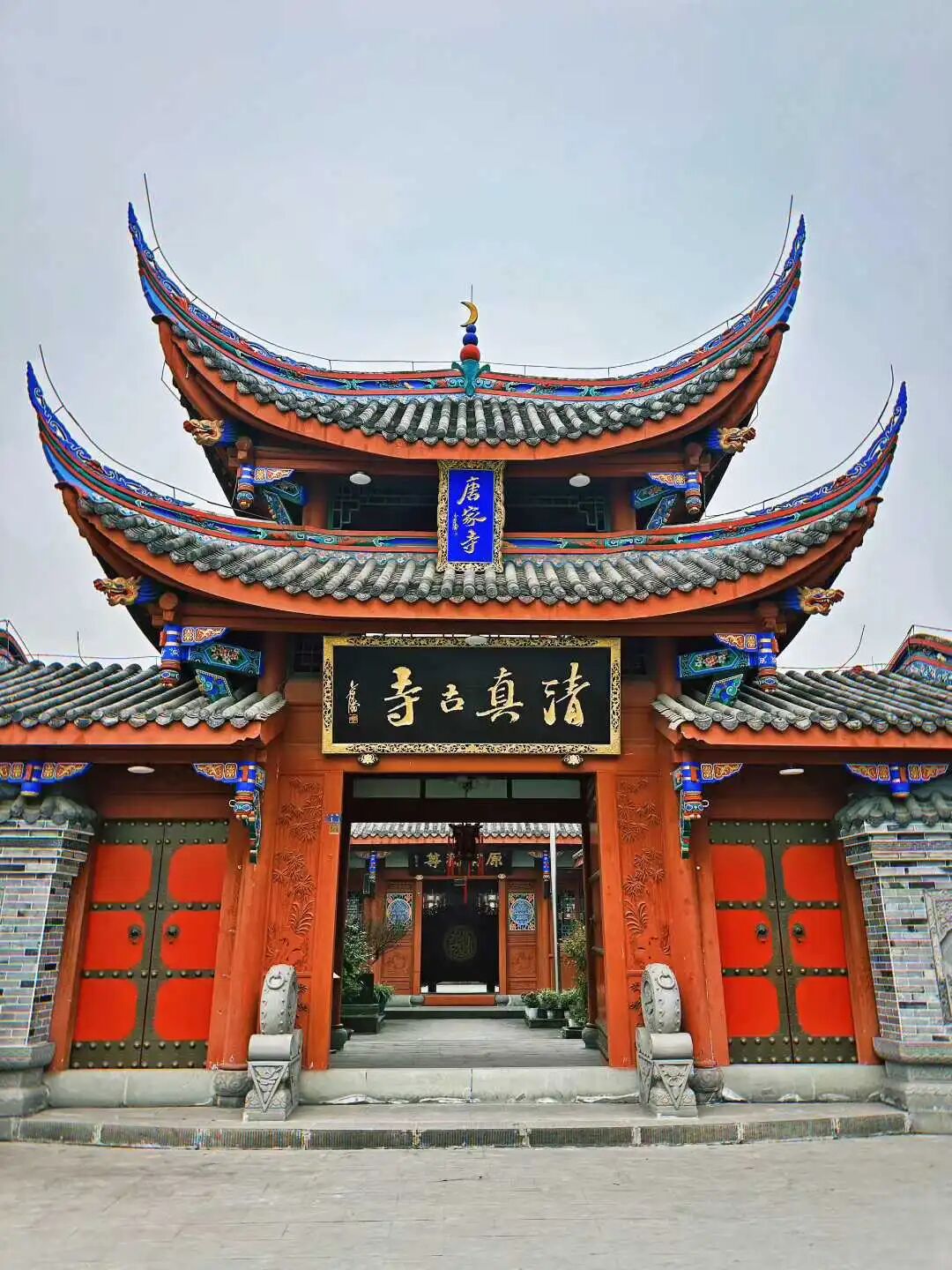
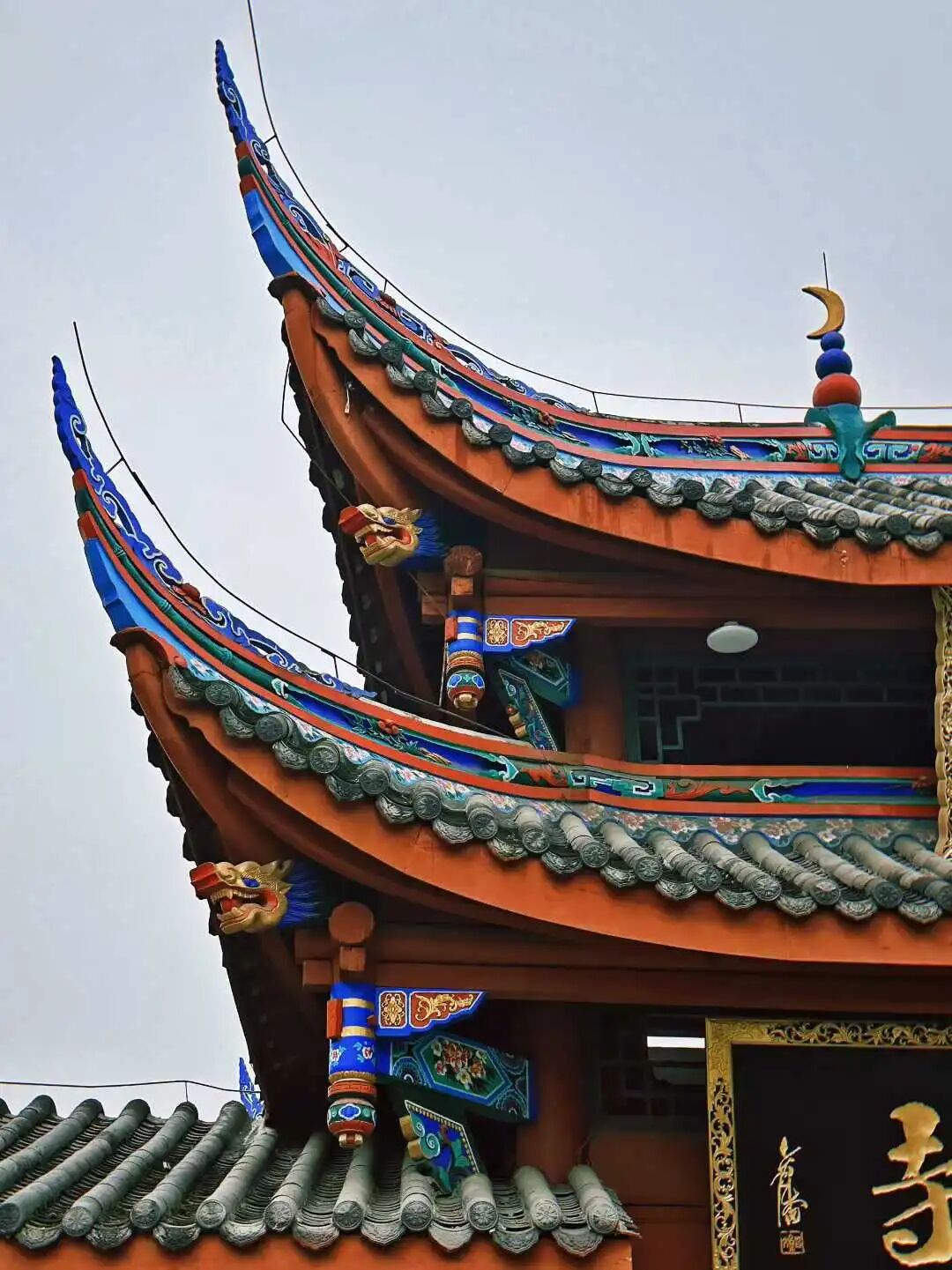
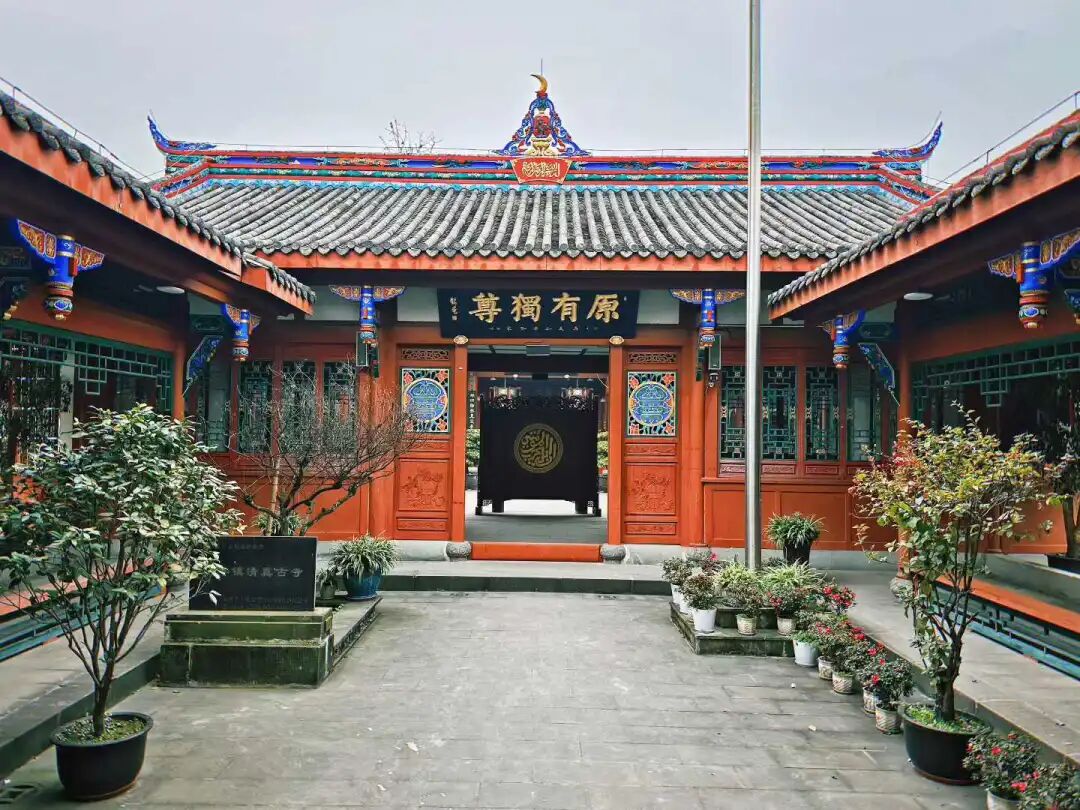
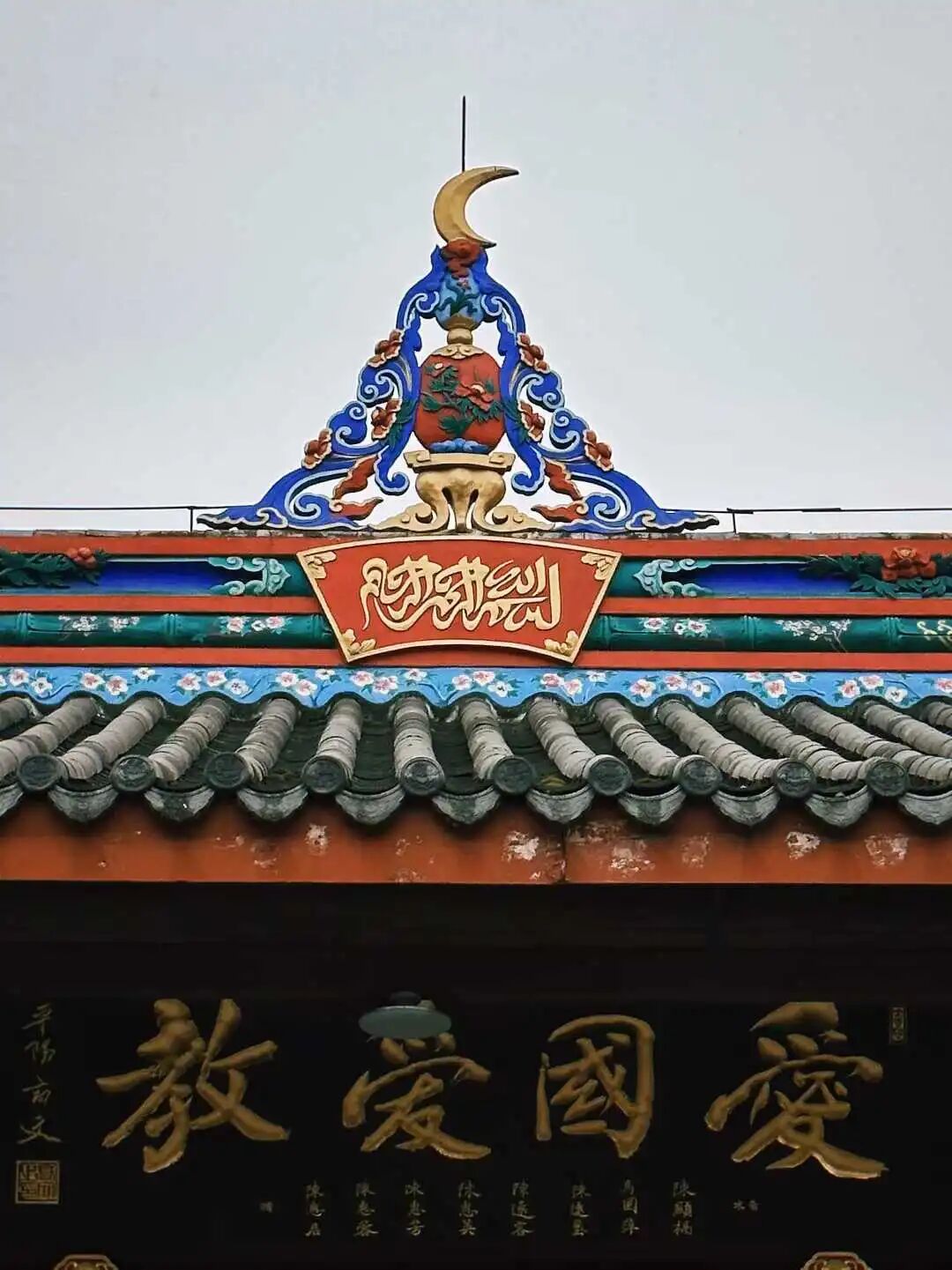
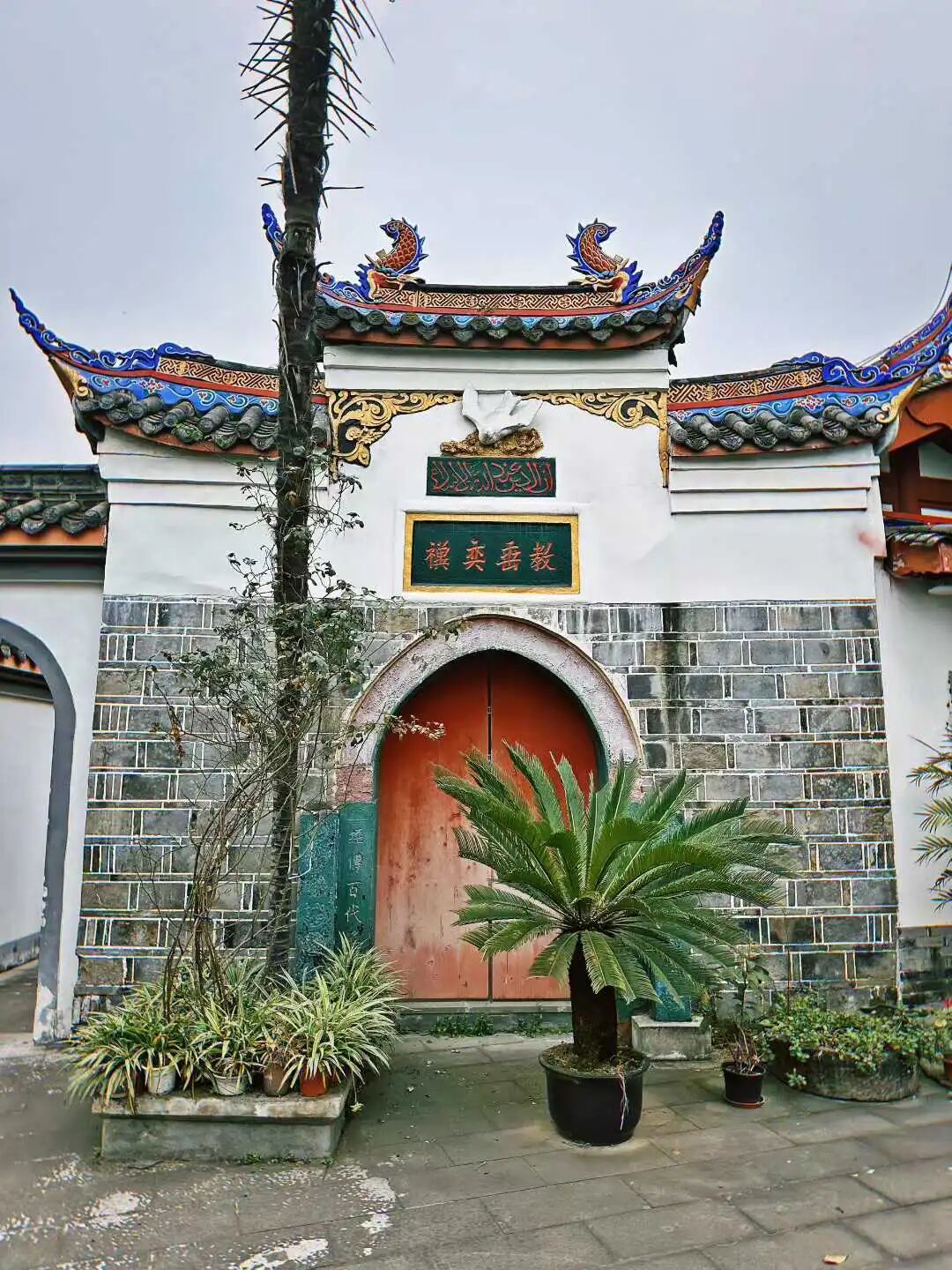
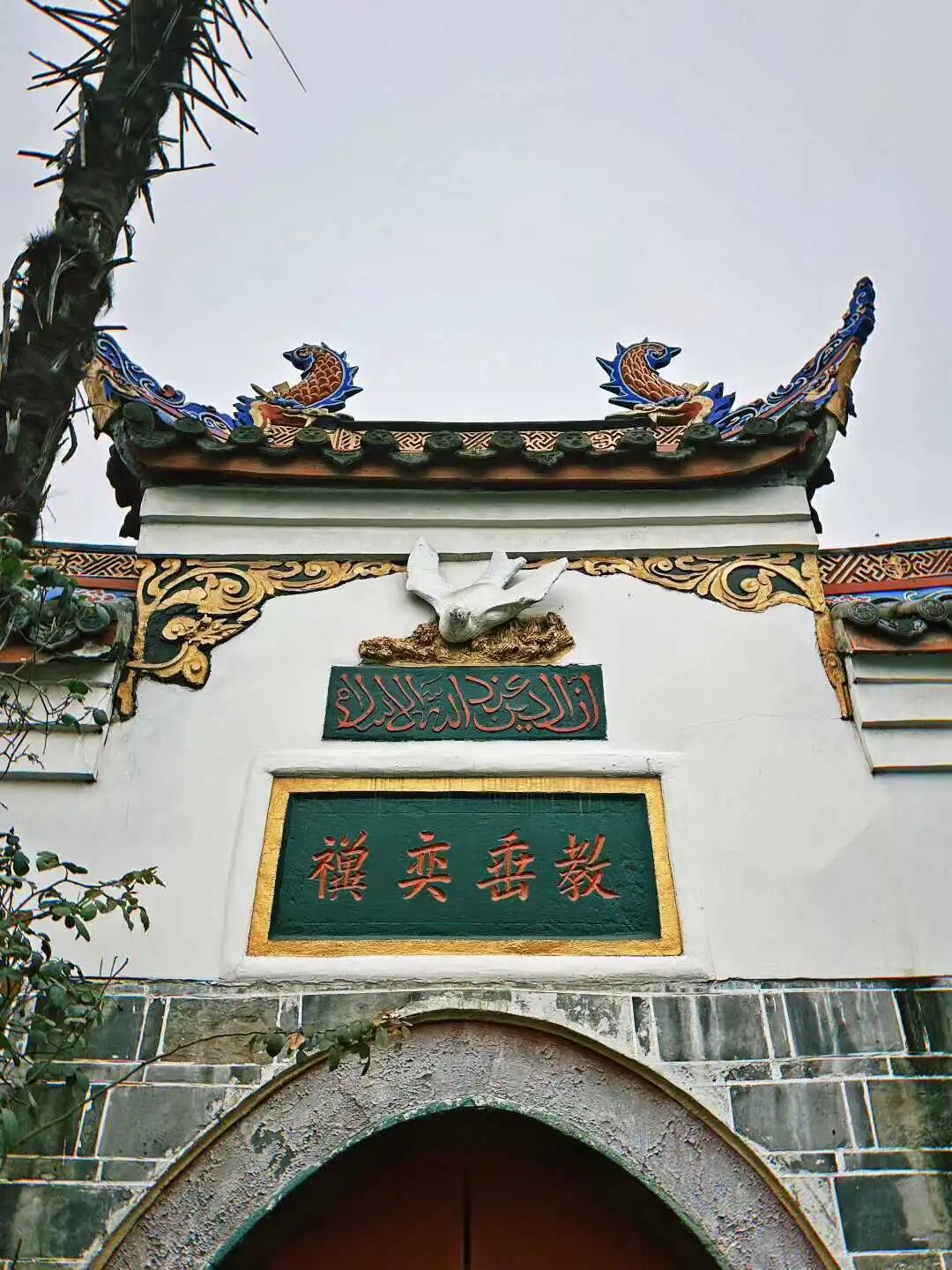
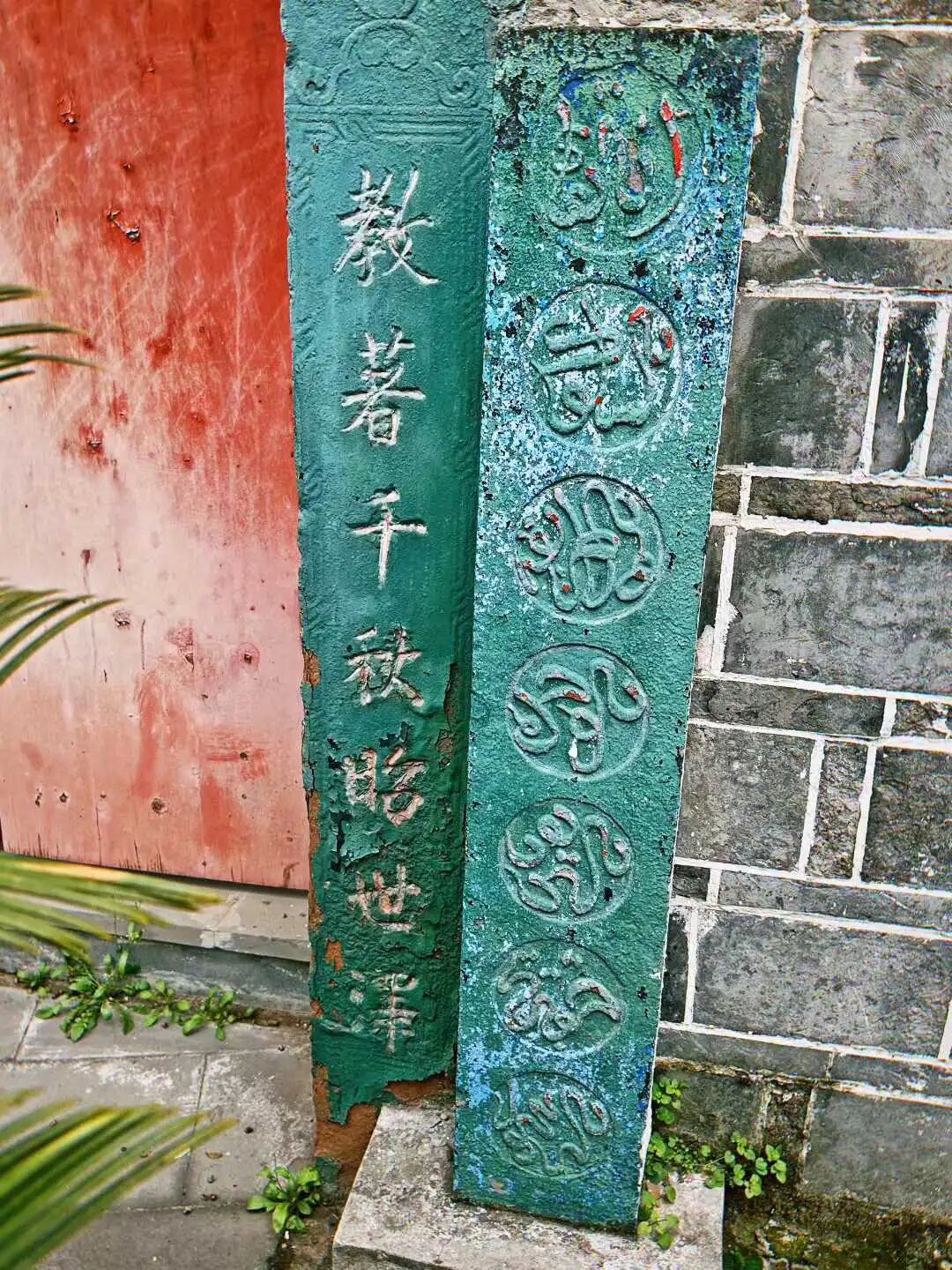
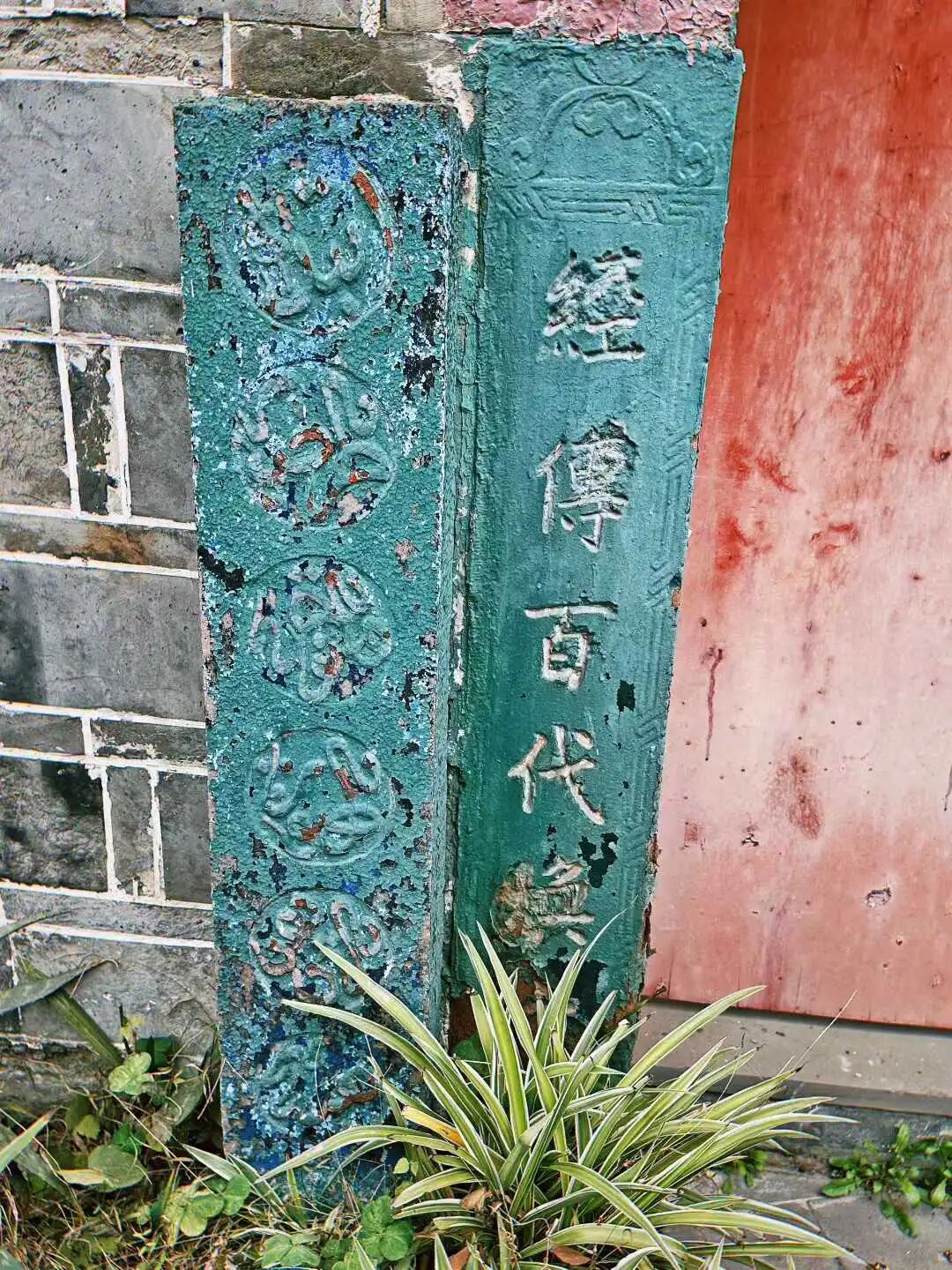
The second gate of Tang Family Mosque features a two-layered white horse-head wall. On both sides, there are stone carvings with the couplet: 'The teachings shine for a thousand years, the scriptures pass down for generations with brilliant light.' The horizontal plaque reads: 'The teachings are passed down for generations.'
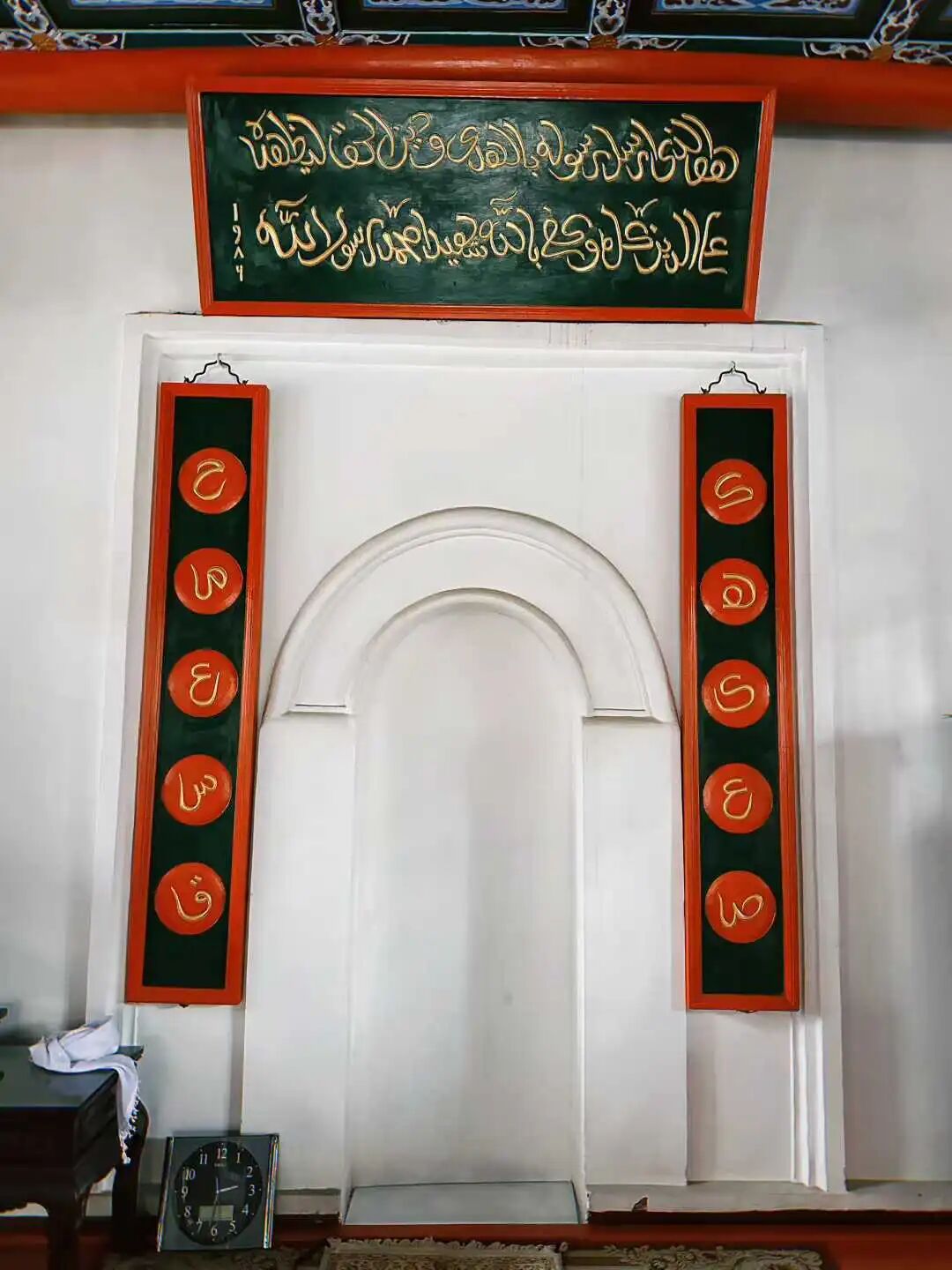
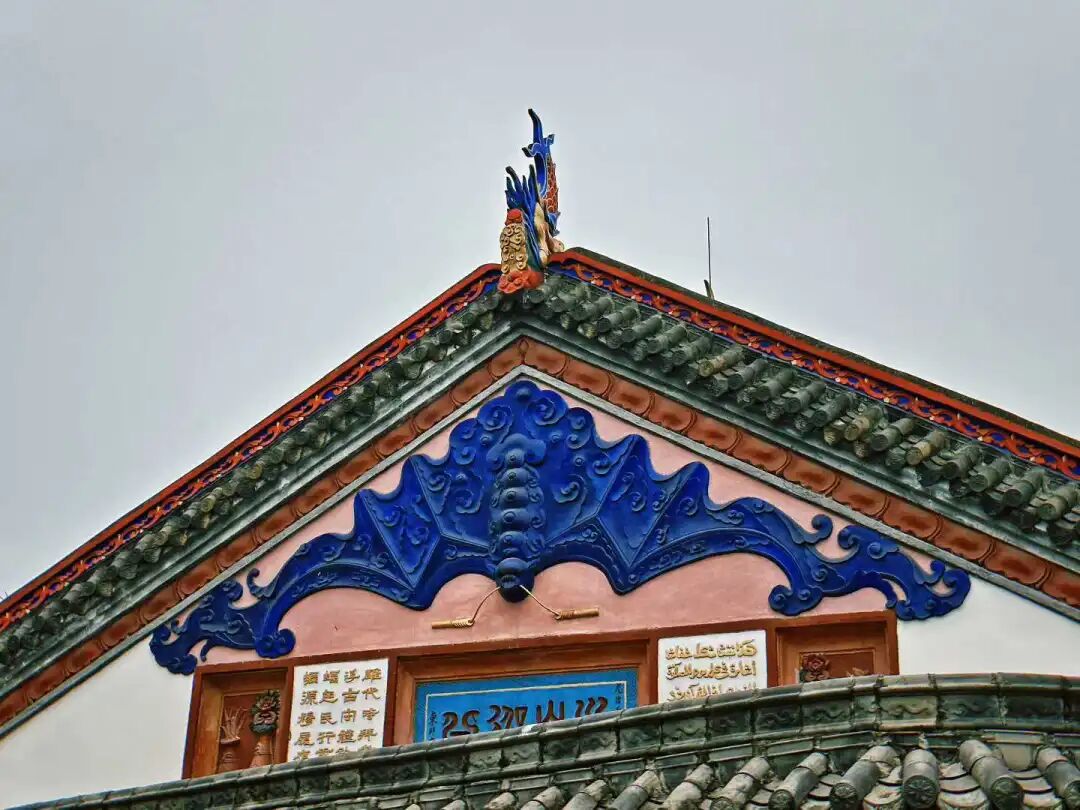
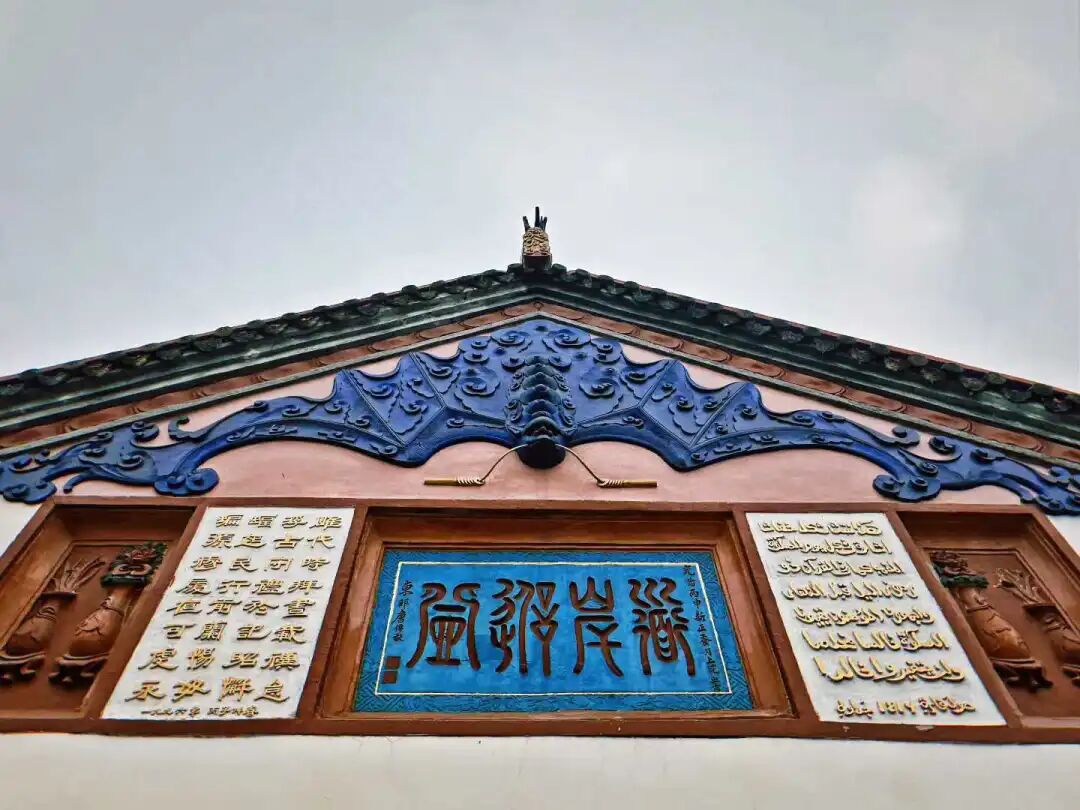
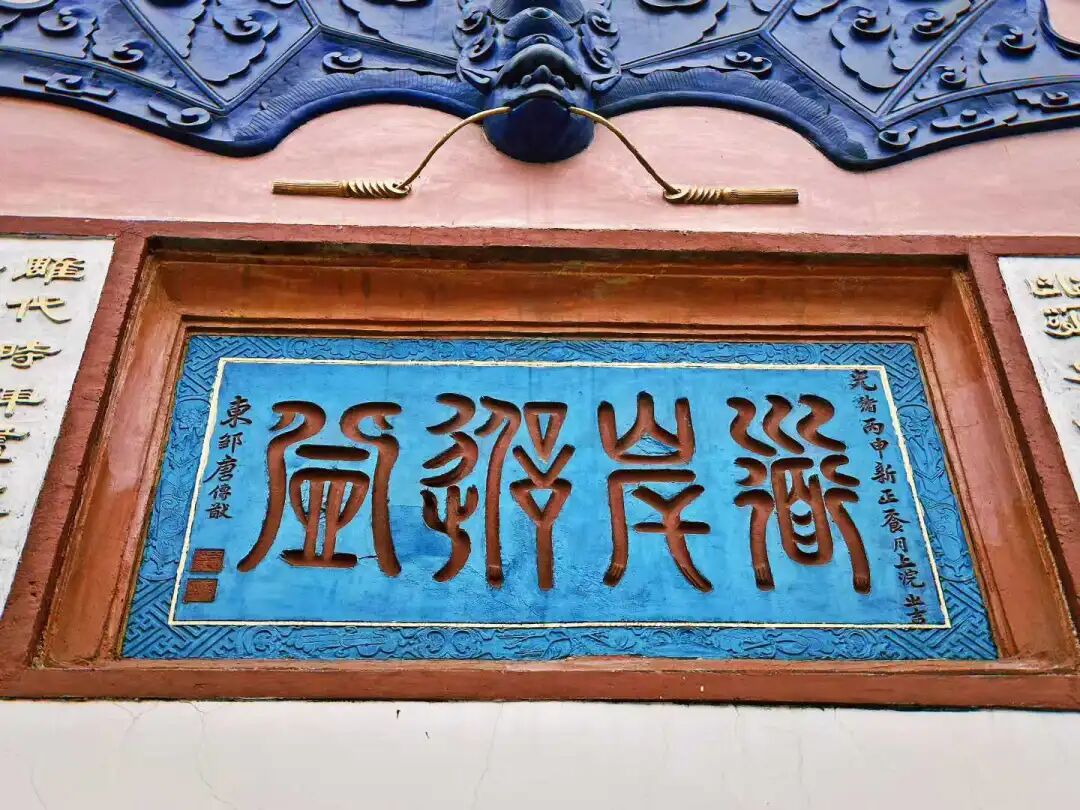
The back wall of the main prayer hall has a bat sculpture, which symbolizes guiding those who travel at night. Below it is a plaque from 1896, the twenty-second year of the Guangxi reign, that reads 'Dao An Dan Deng' (The path to the shore is reached). It is signed by Tang Chuanyou from Dongzou. Tang Chuanyou was a Qing Dynasty calligrapher whose art was famous throughout the capital. His son, Tang Chenglie, worked as an official in Sichuan, so he brought Tang Chuanyou to Sichuan to spend his later years in comfort. The plaque text comes from the Book of Songs, "First to reach the shore." Liu Zhi also wrote in Five Watch Moon (Wu Geng Yue): "From here, step by step forward, reach the shore of the Way and see the truth."
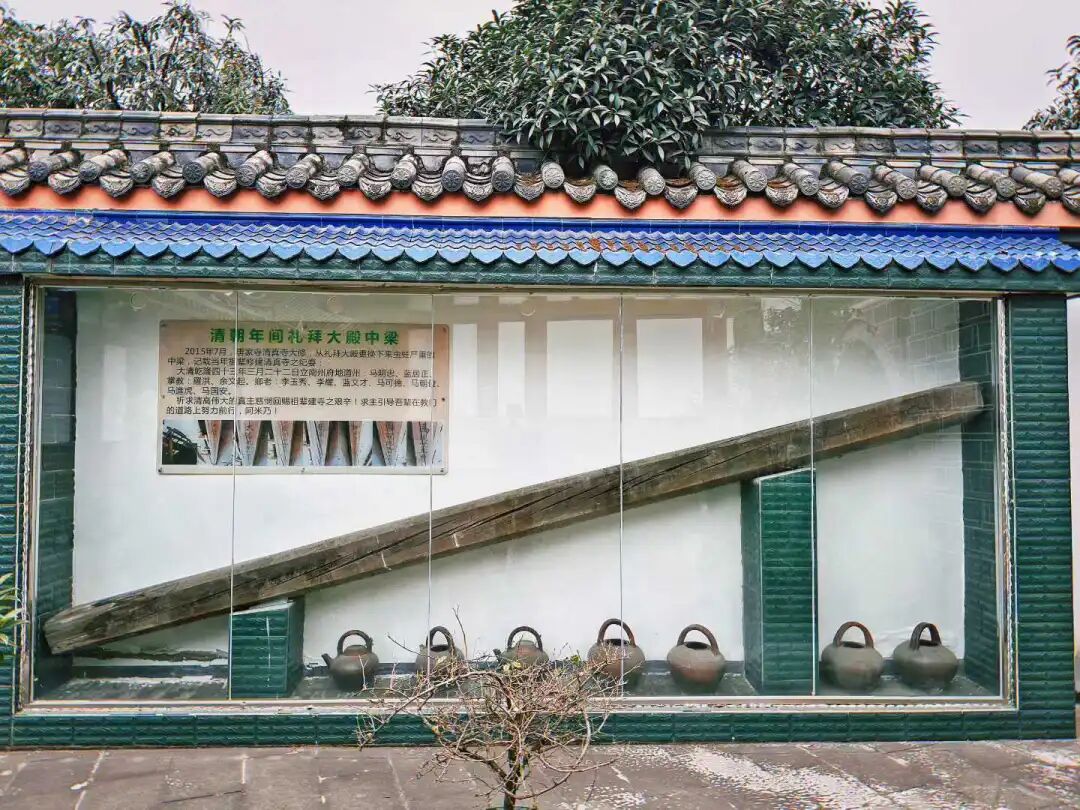
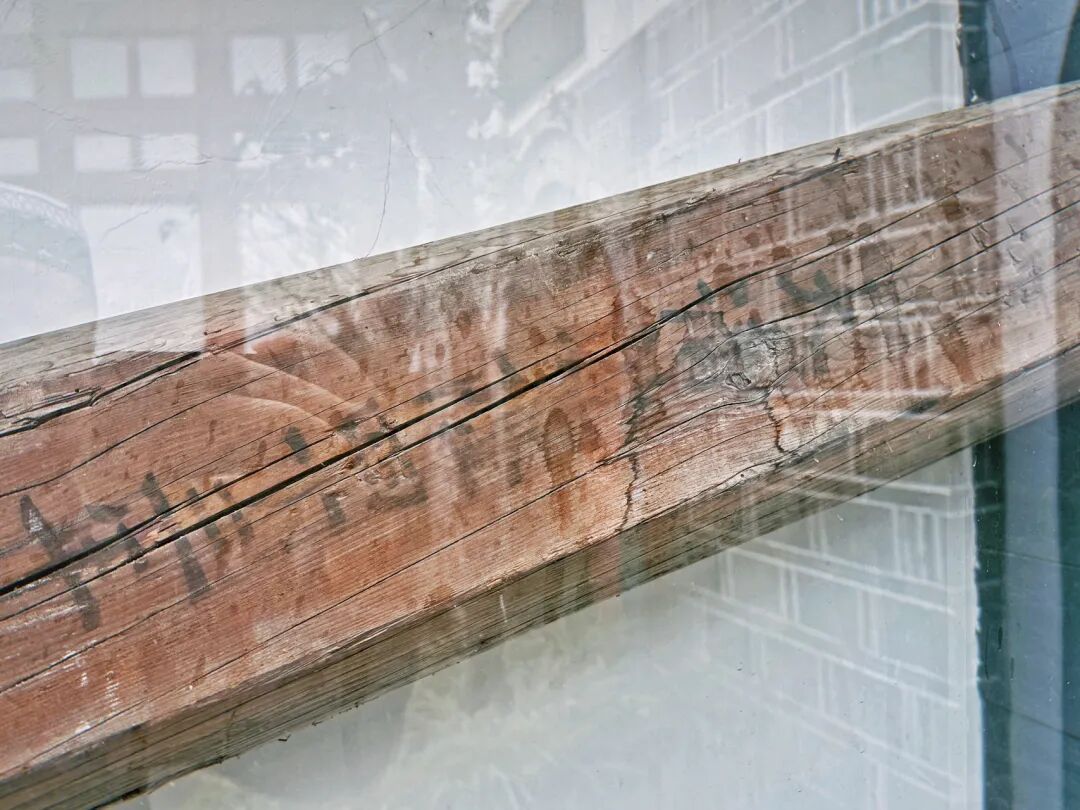
The mosque keeps a central roof beam replaced during the 2015 renovation. It mentions that the imam at the time of the 43rd year of the Qianlong reign renovation were Luo Hong and Yu Wenqi.
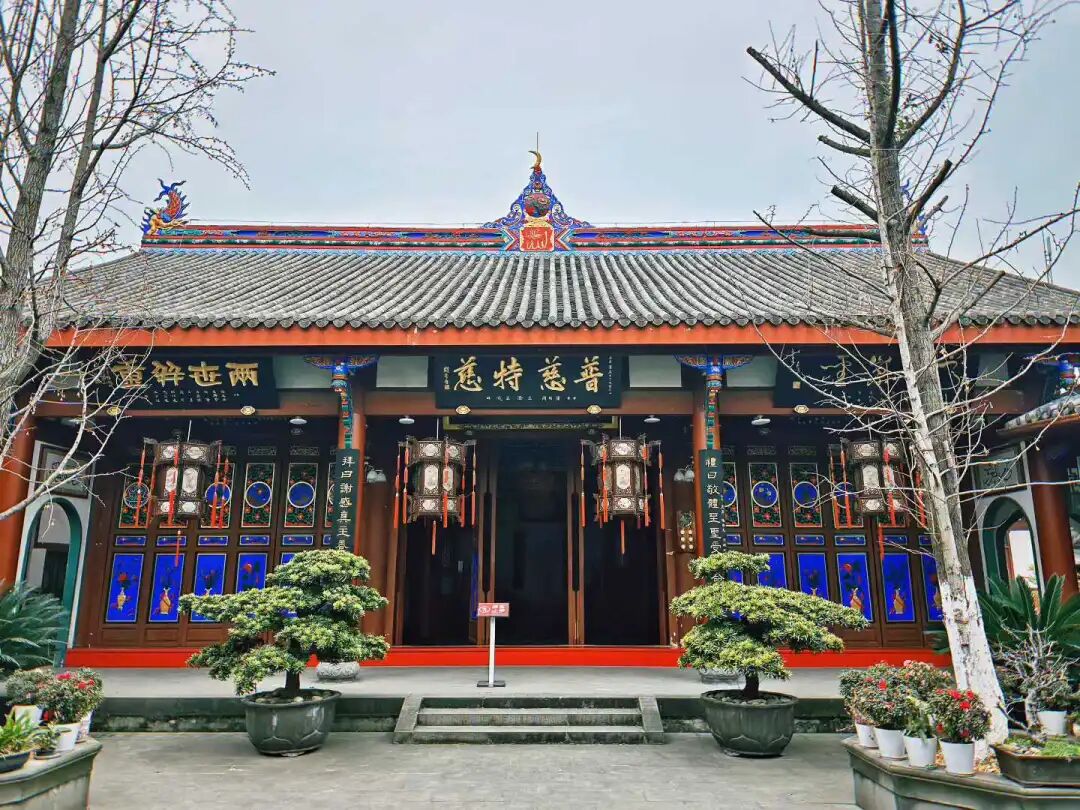
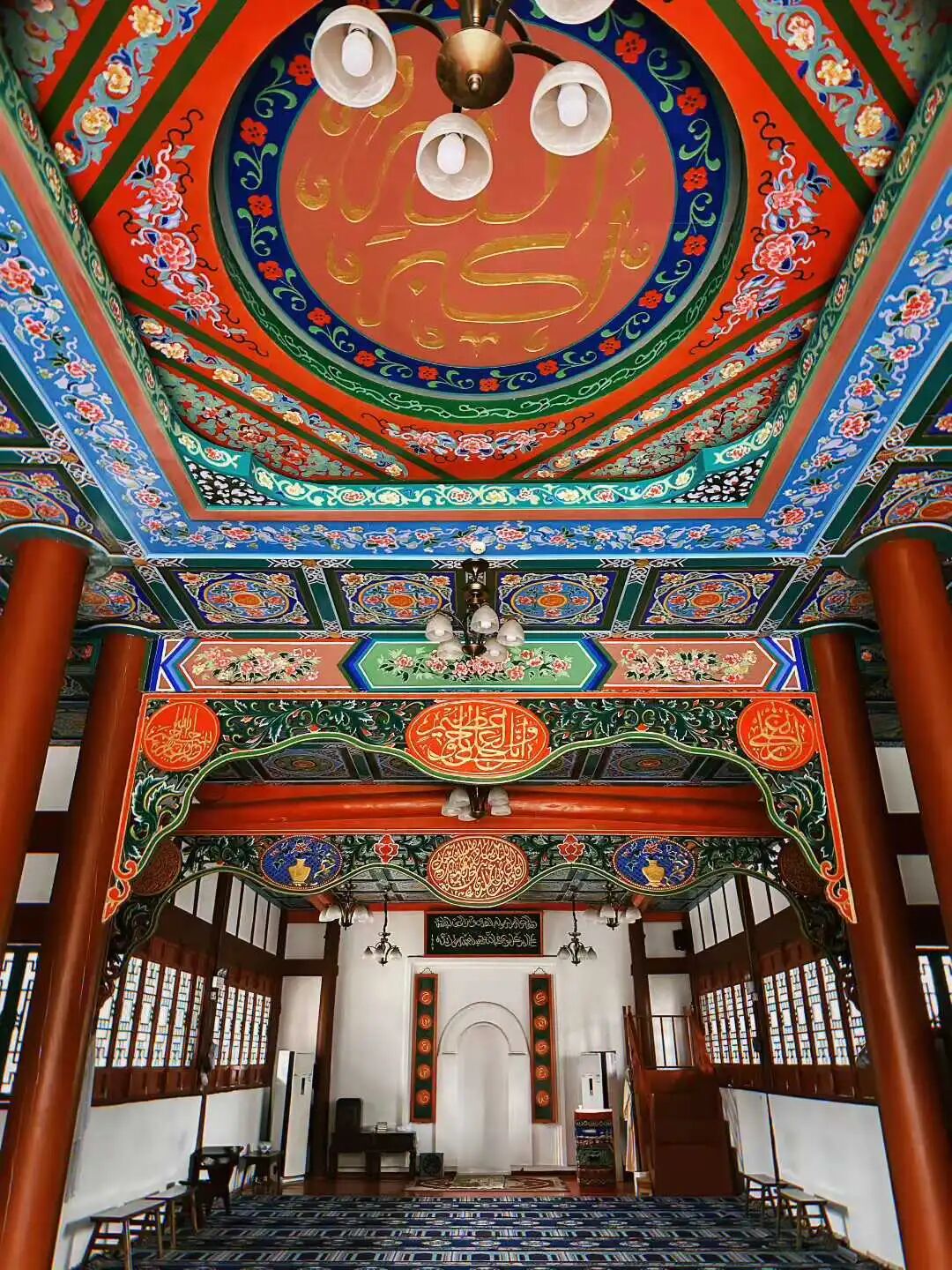
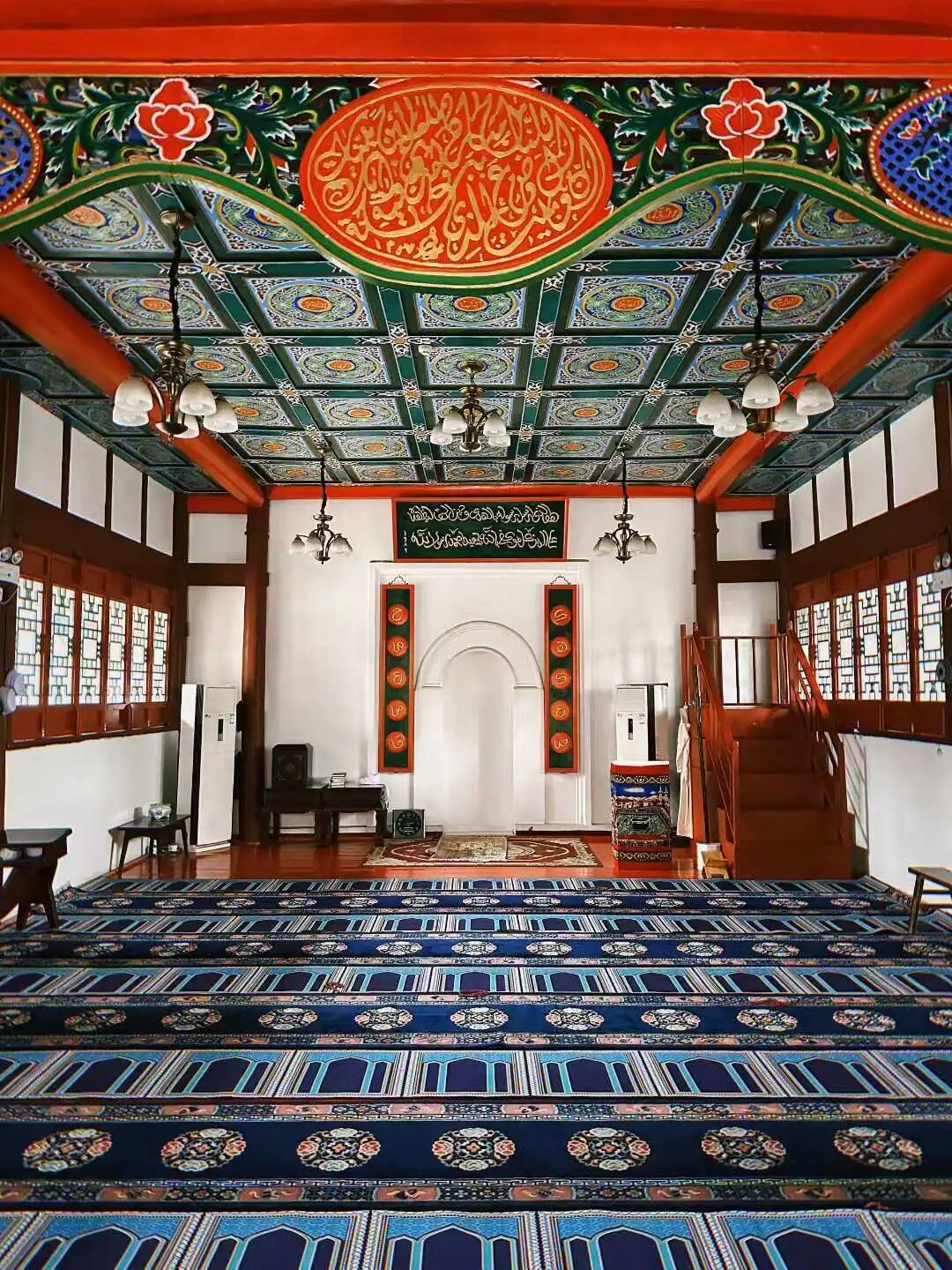
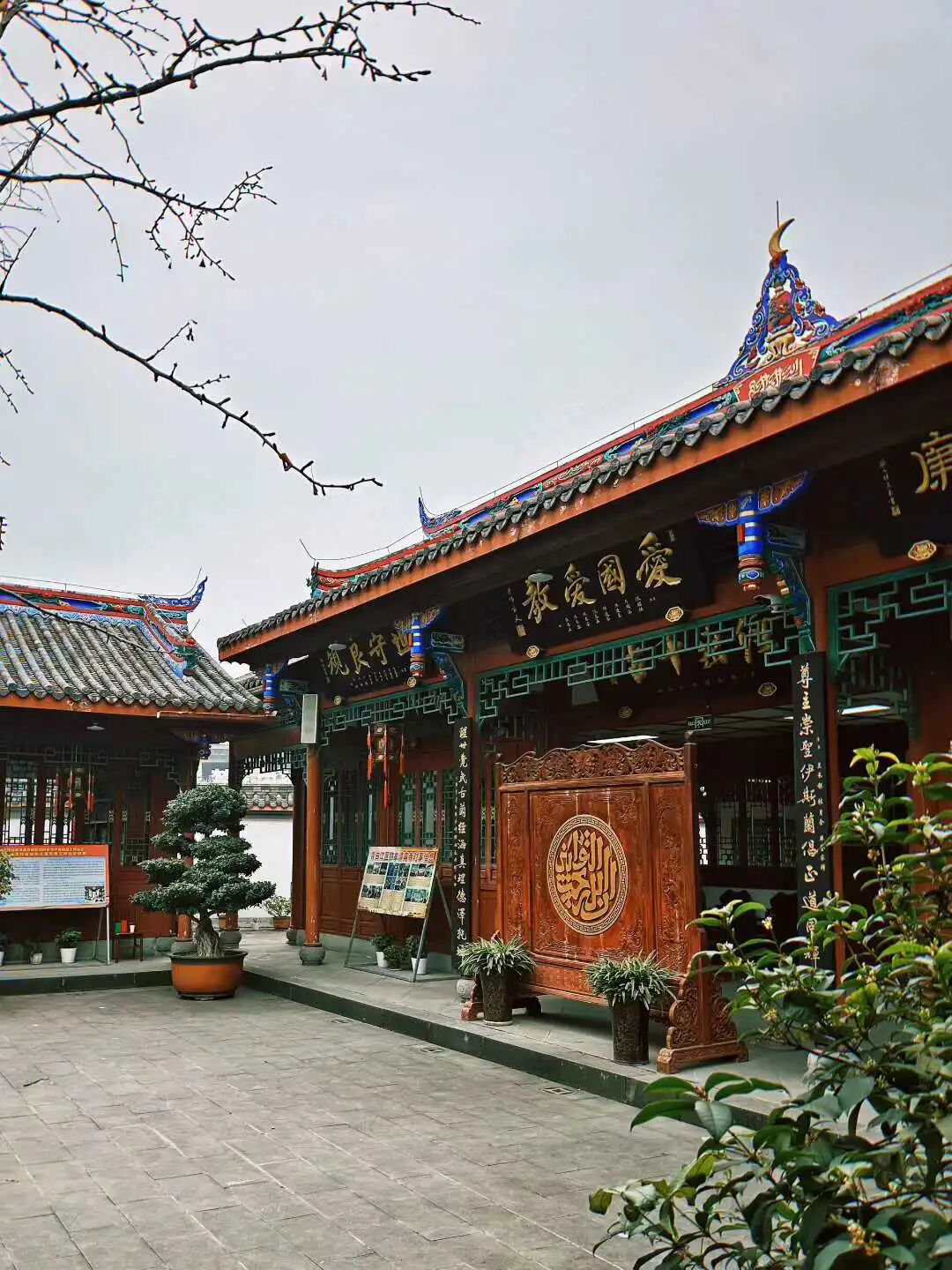
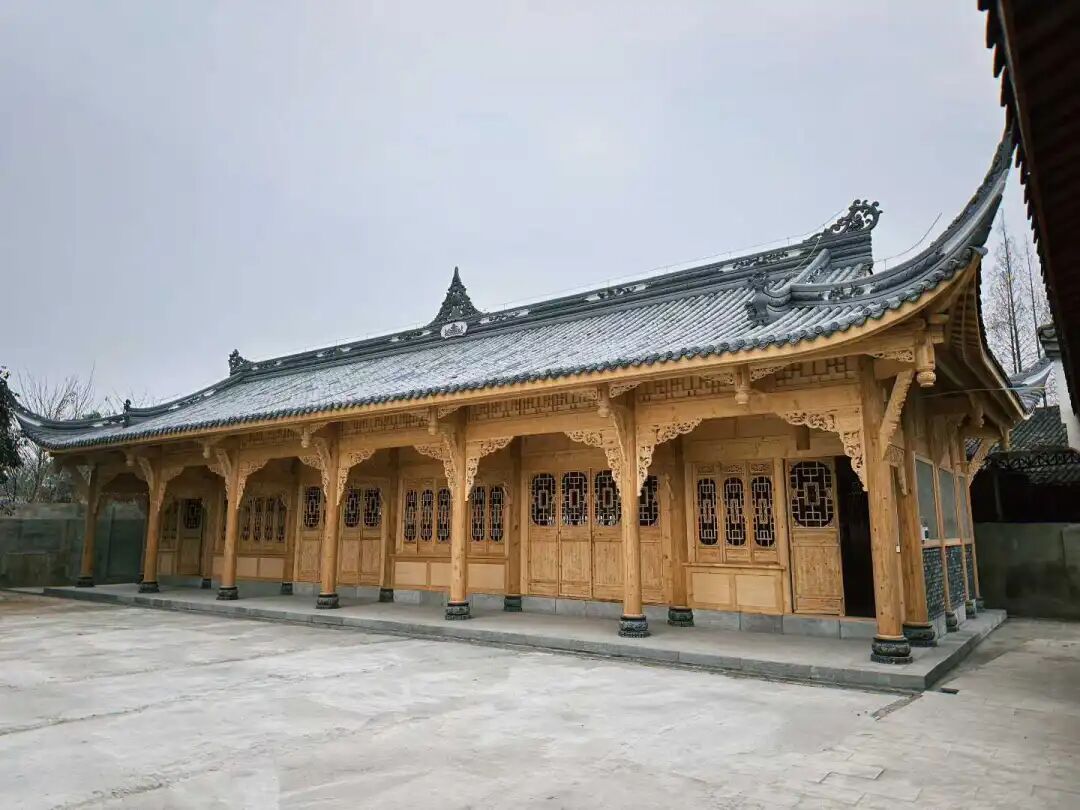
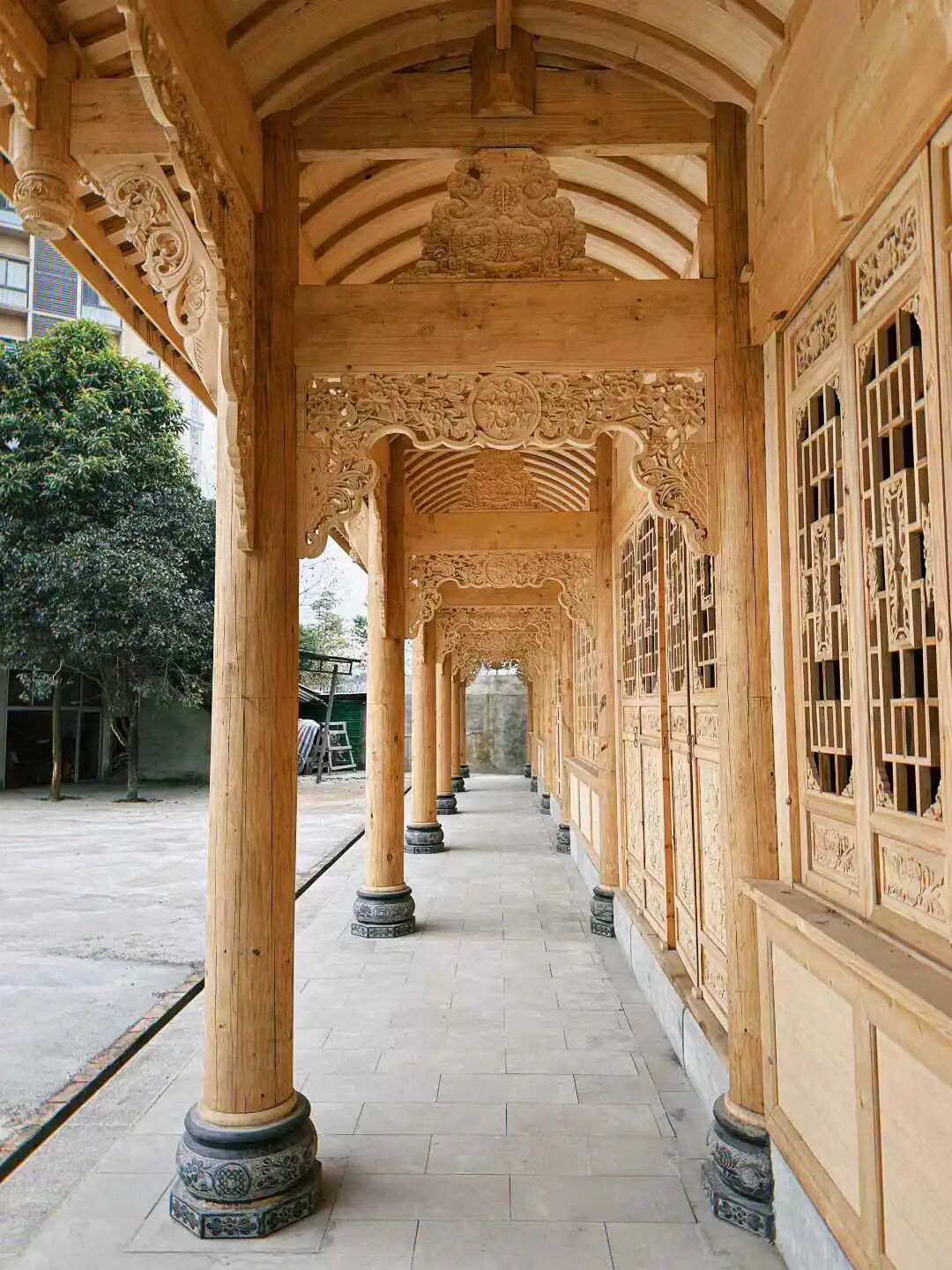
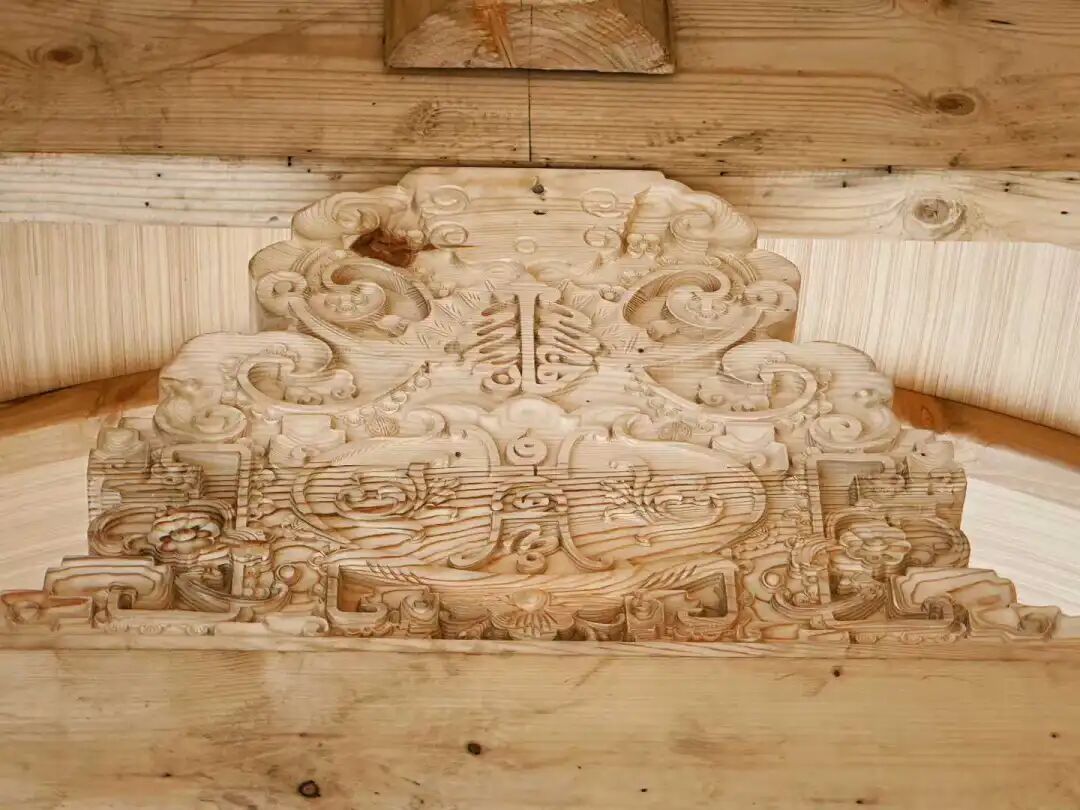
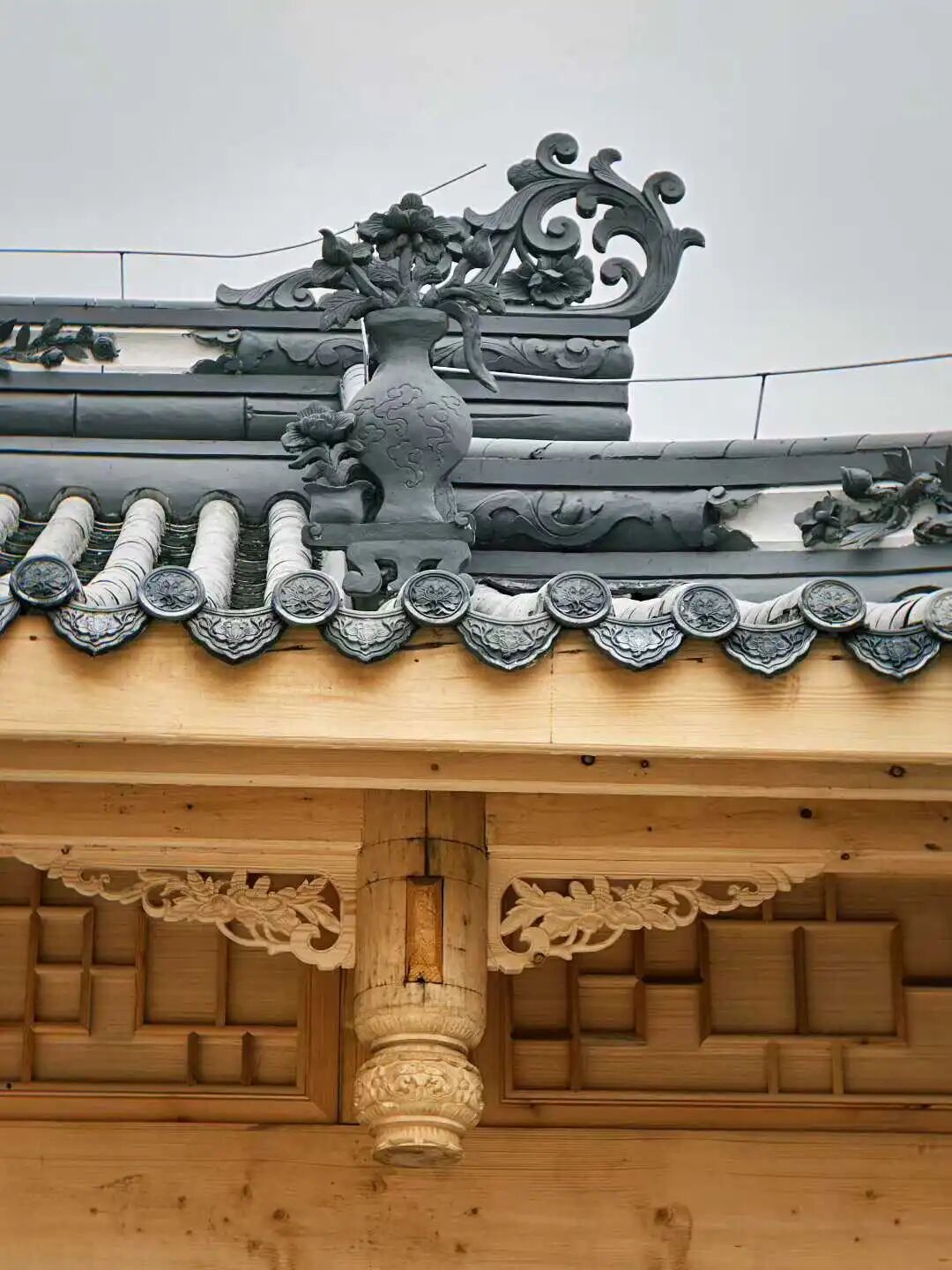
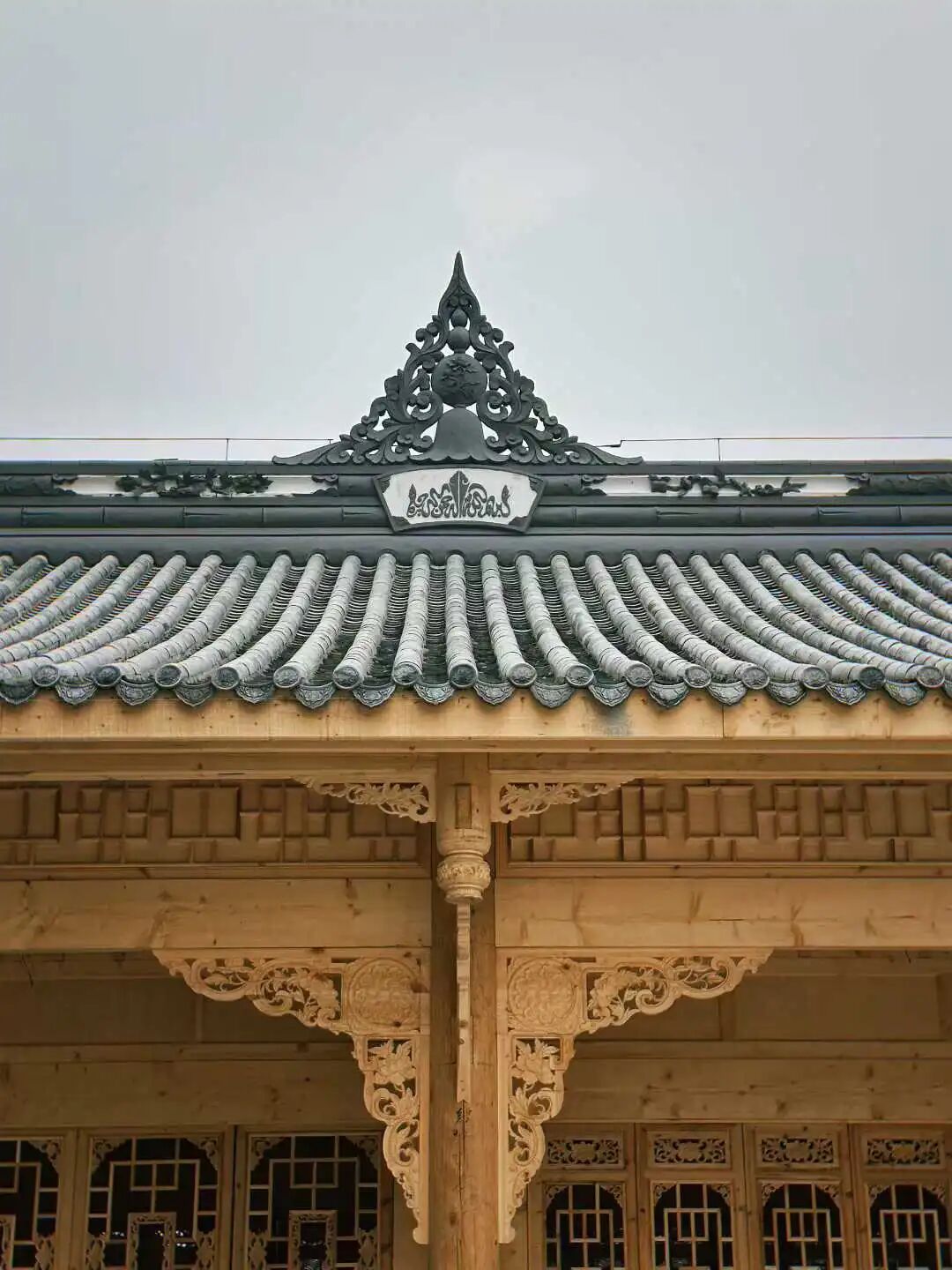
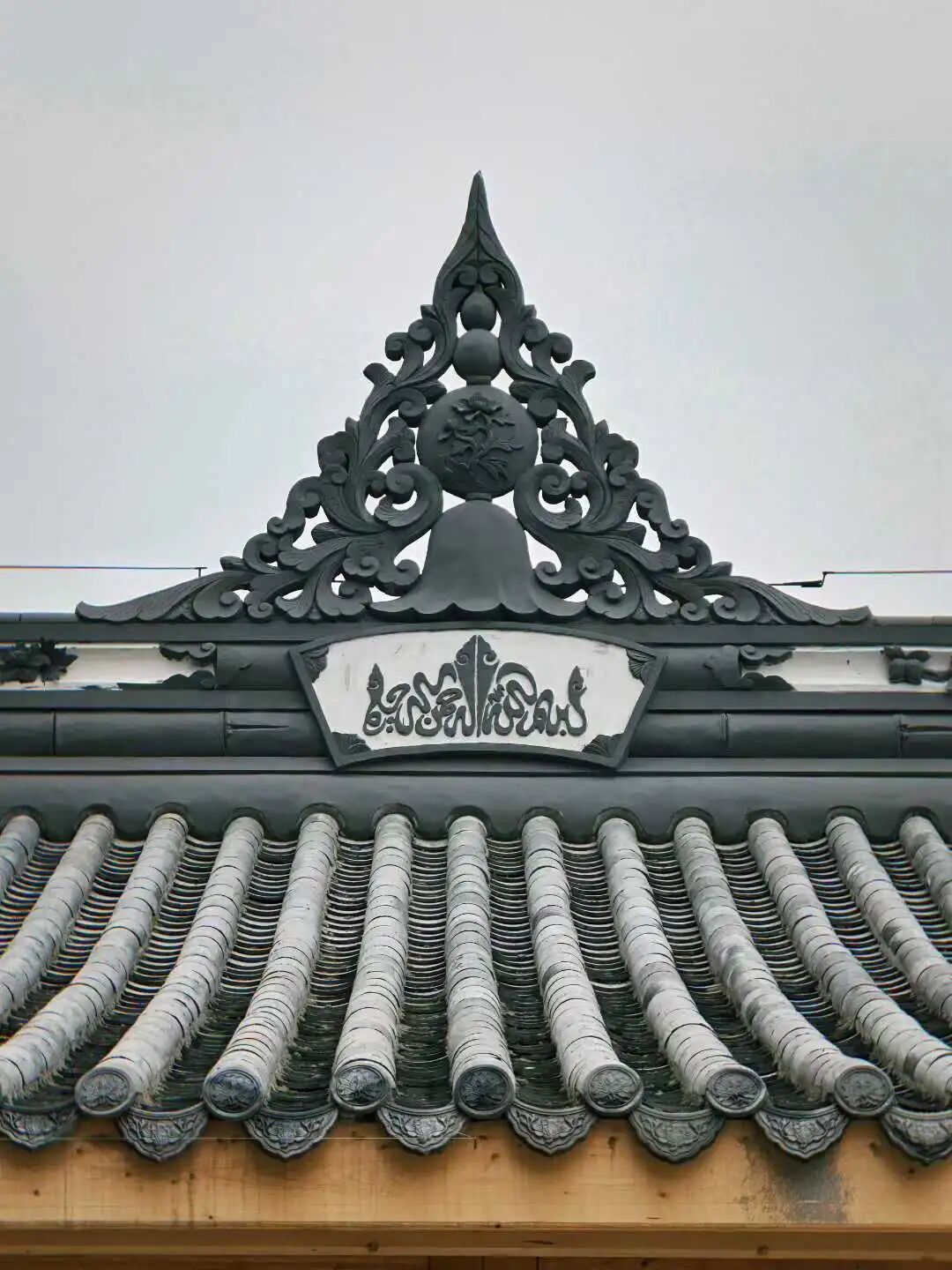
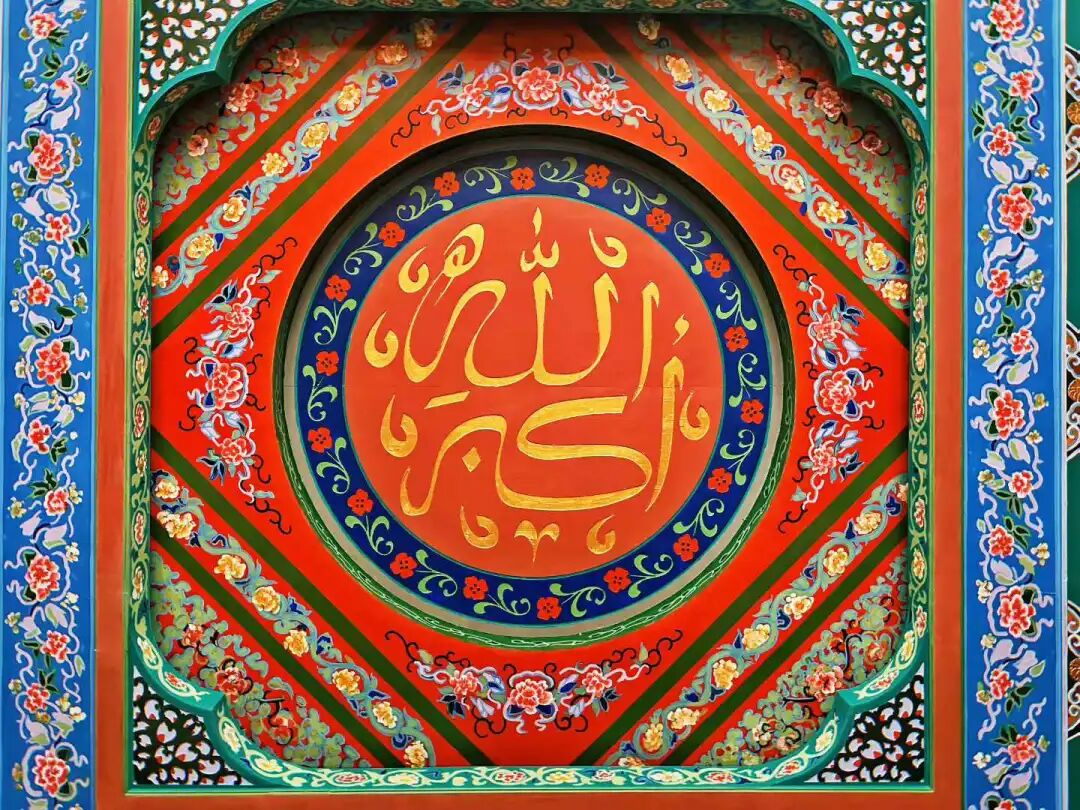
The newly built prayer hall at Tangjia Mosque in Mimou Town uses traditional architectural styles and features carved traditional floral calligraphy.
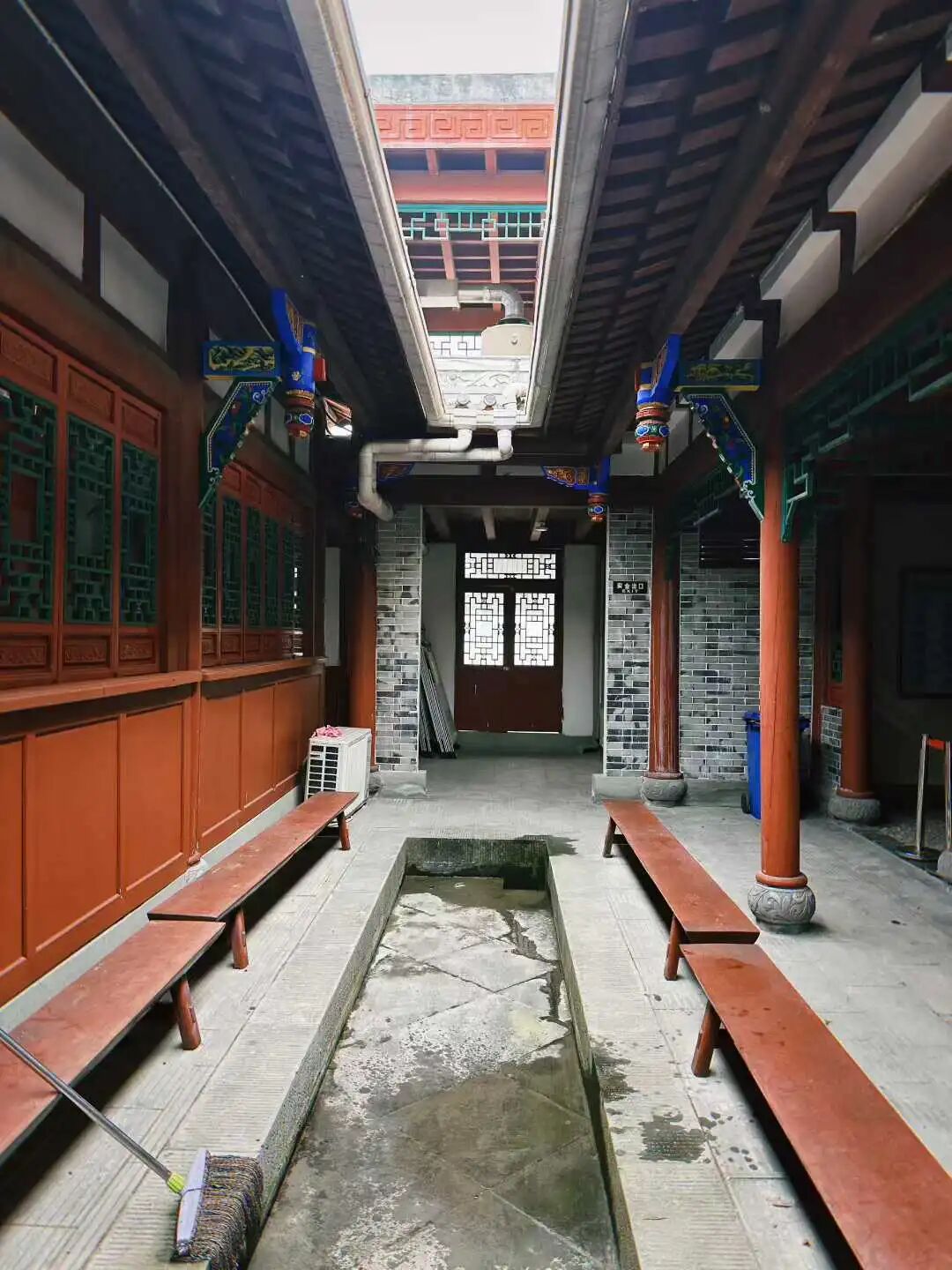
The washroom at Tangjia Mosque features a traditional courtyard with benches. After using the kettle (tangping hu) to wash, the water drains through the courtyard pool, which feels very ancient.
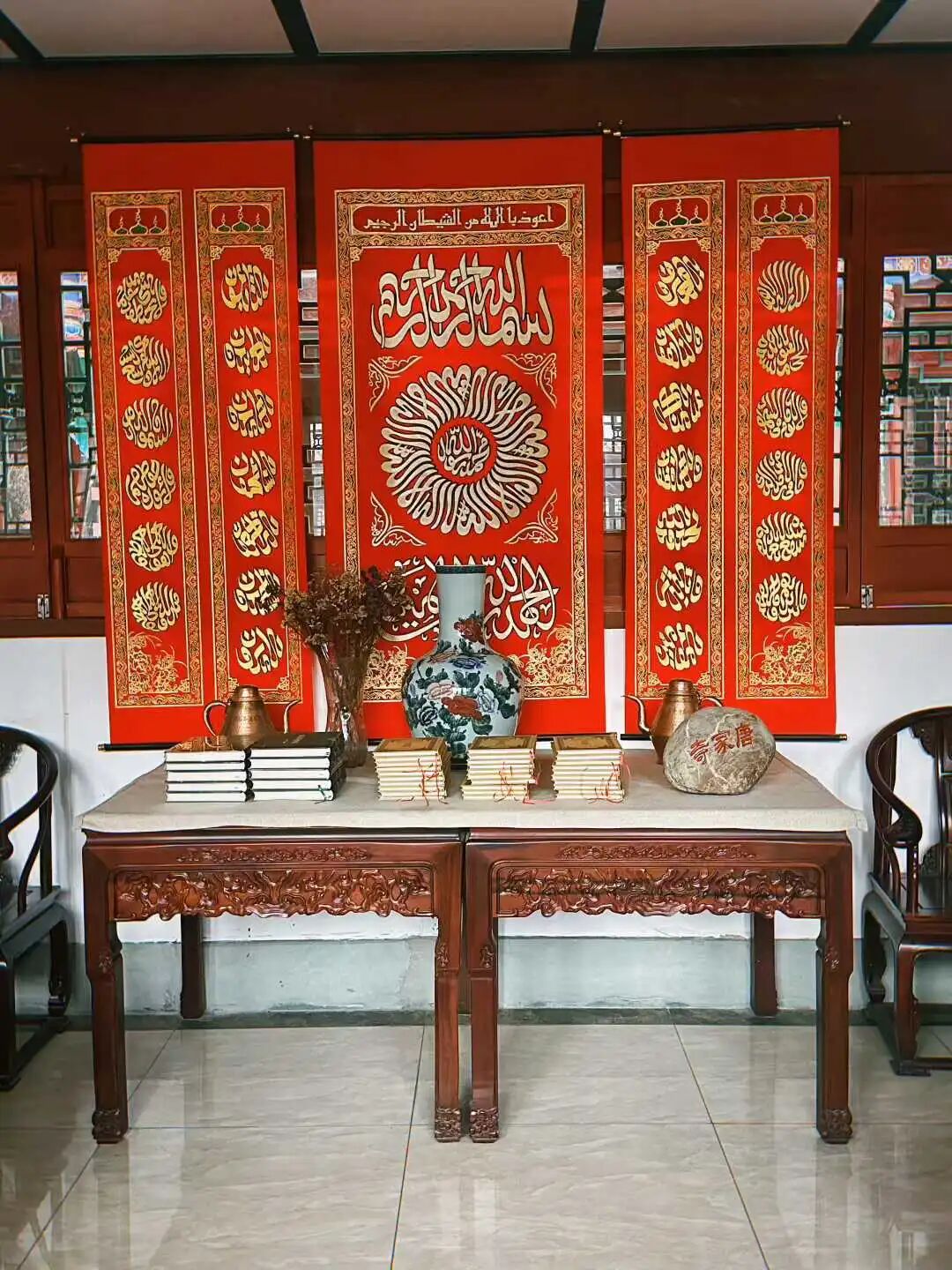
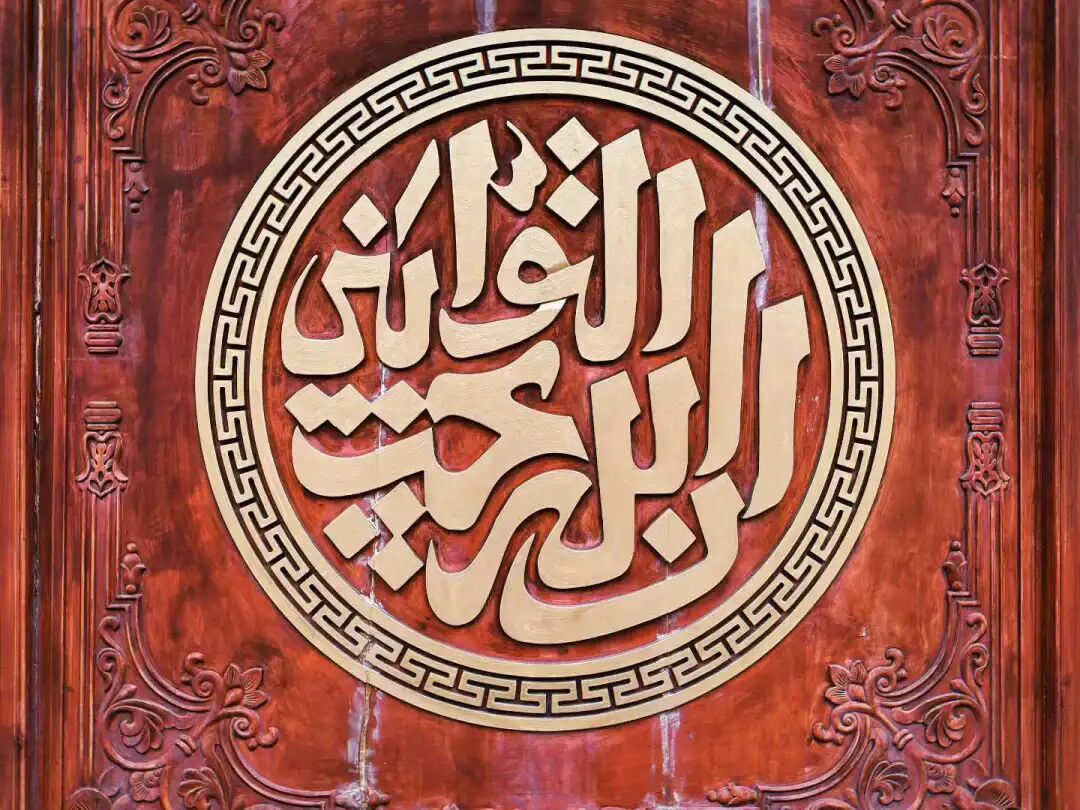
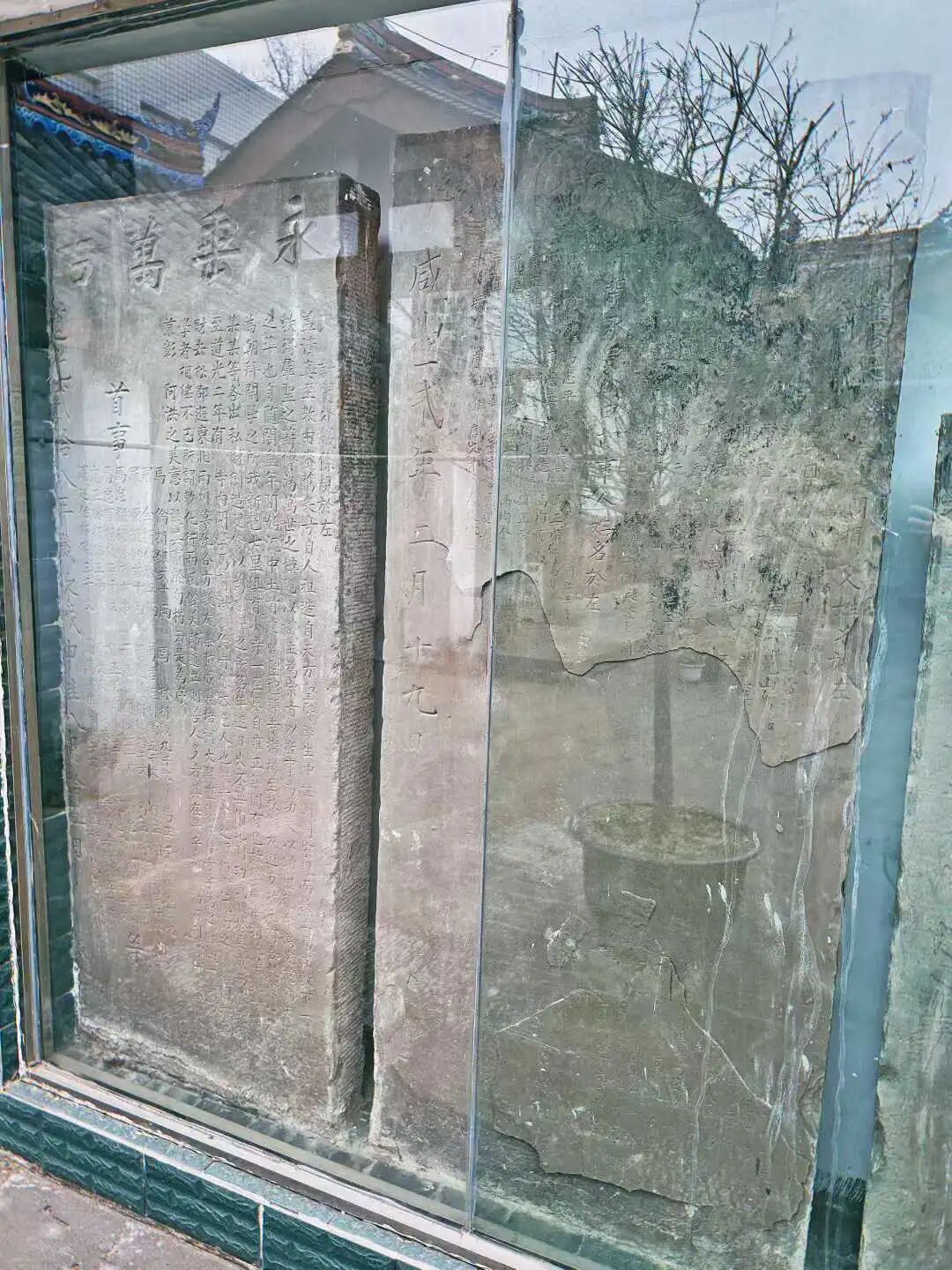
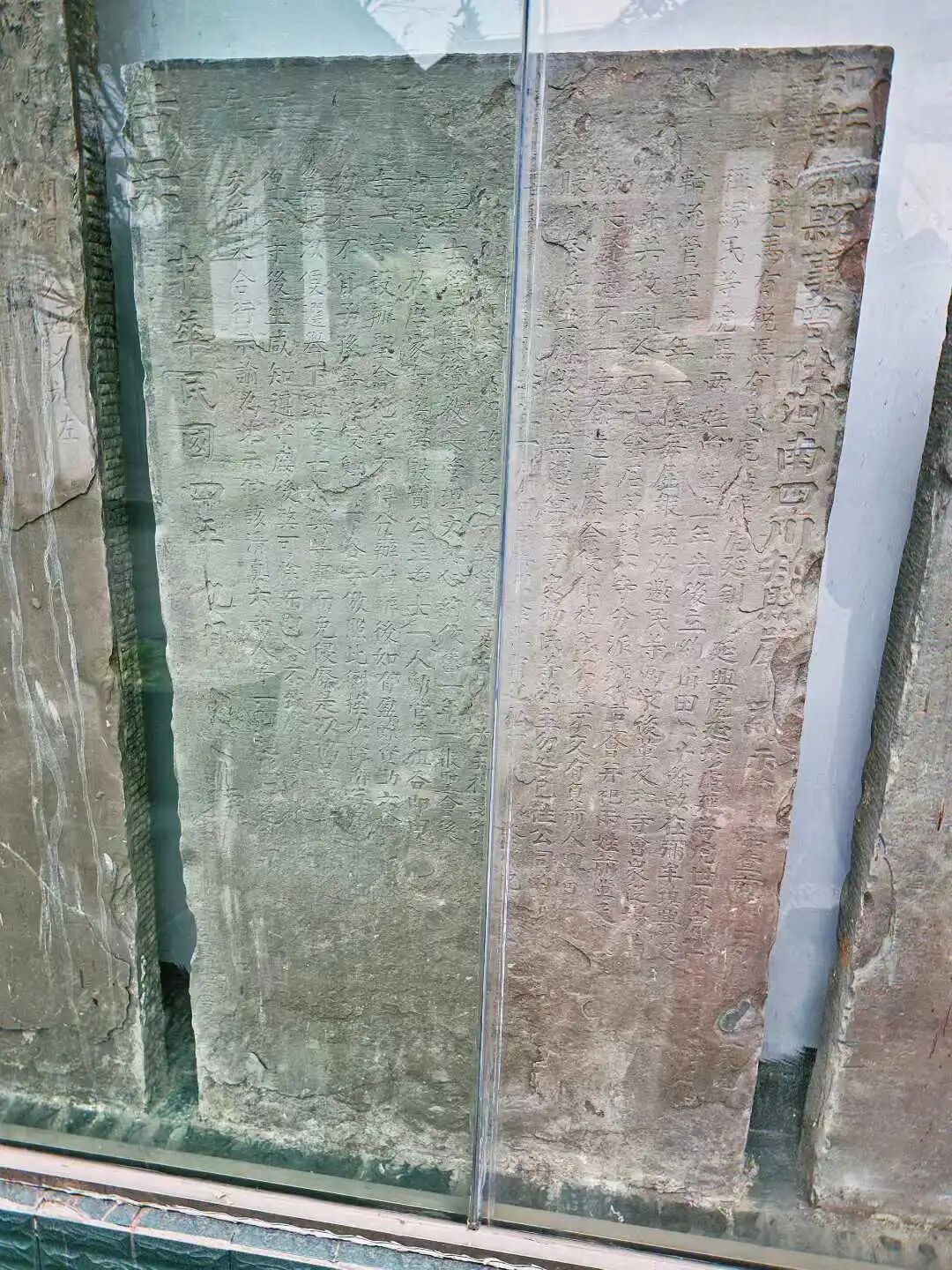
Tangjia Mosque stone carvings:
These include the Stele of the 28th Year of Daoguang on Mosque Renovation and Ma Lun Ahong's Fundraising, the Stele of the 2nd Year of Xianfeng on Mimou Town Muslims Donating to Renovate the Main Hall, the Stele of the 4th Year of the Republic of China from the Xindu County Magistrate, the Stele of Mimou Town Muslims Donating to Renovate Chengyi Mosque, and the Tombstone of Sichuan Commander Ma Juezhai.
The Republic of China stele records that the Hu and Ma families of Mimou Town donated over 20 acres of land. The annual income was divided among six mosques—Tangjia, Ma Family, Hunan, Tangjia, Qingjing, and Chengyi—to hold religious gatherings and to honor the ancestors of the Hu and Ma families. However, the head of Tangjia Mosque embezzled the money and destroyed the account books, so the Xindu County magistrate had to step in to resolve the matter.
The Chengyi Mosque stele lists 490 donors with 55 different surnames, including very rare ones like Shi, Su, Zhe, Yu, Hou, and Guo. It is likely that the list of donors was incomplete and another stele with a signature existed, but it is now lost.
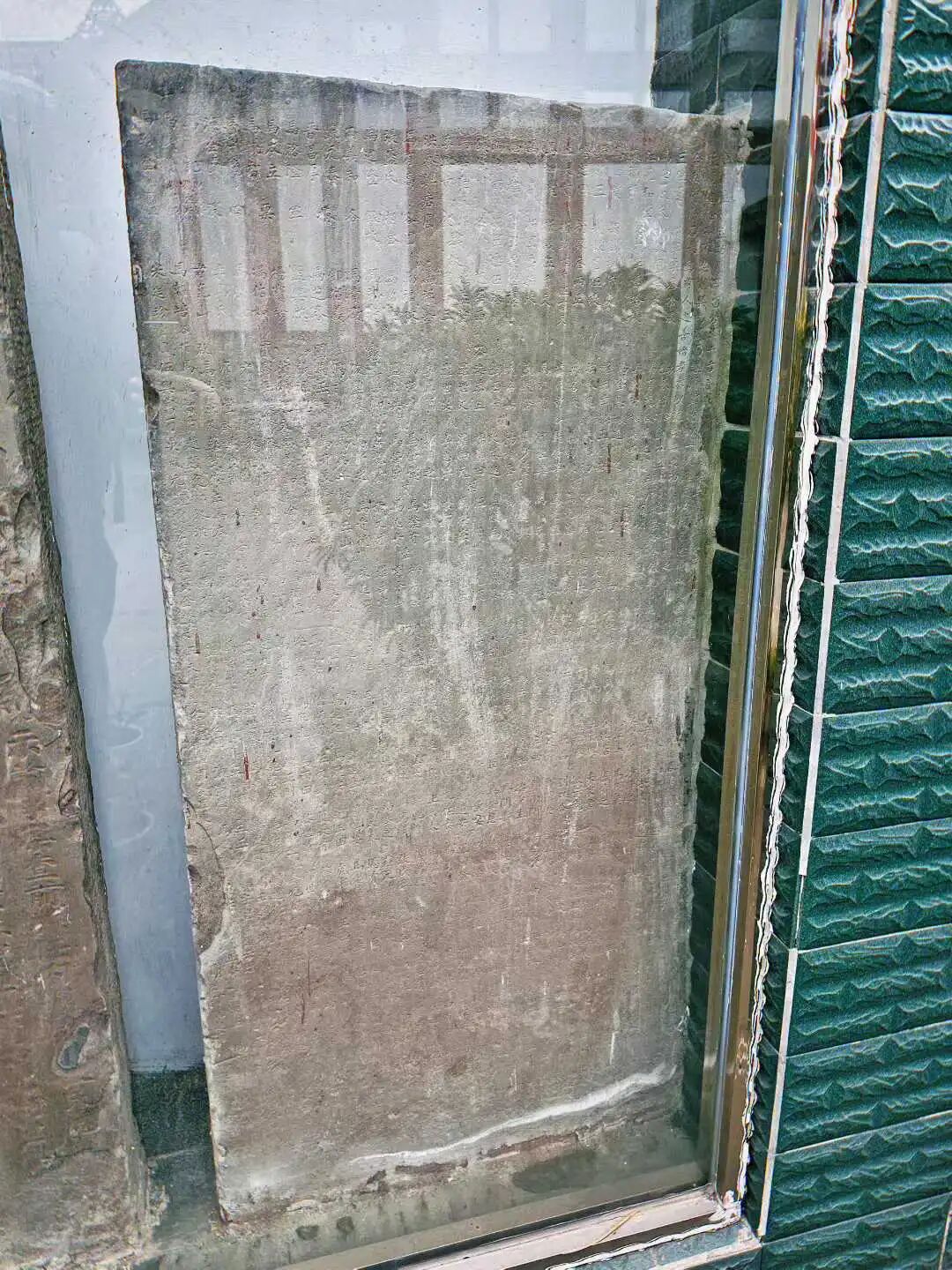
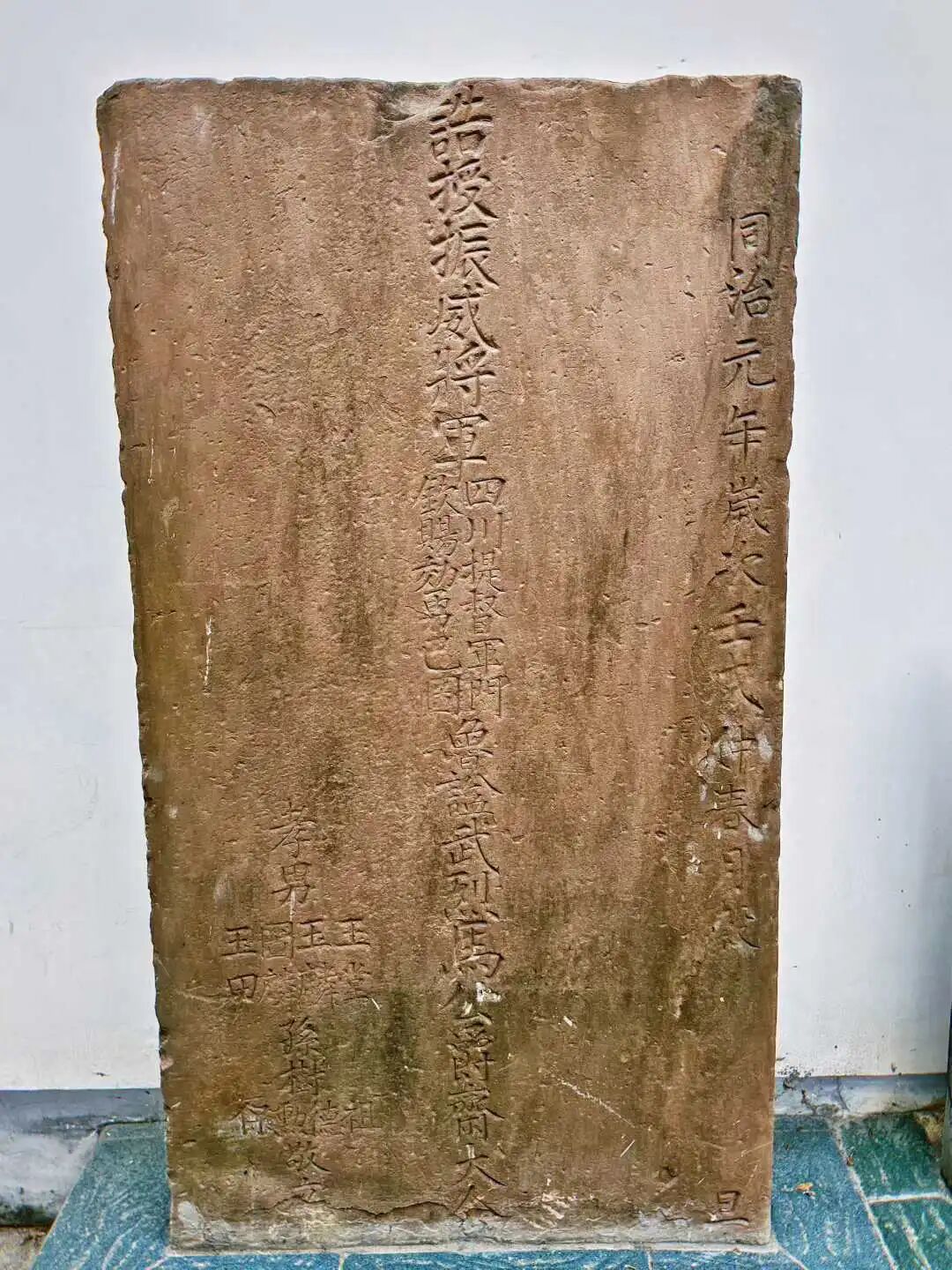
Ma Tiangui, courtesy name Juezhai, was from Songpan, Sichuan. He registered in Chengdu, rose to the rank of Sichuan Commander, was awarded the title of Brave Batulu, and died in battle in 1859 (the 9th year of Xianfeng). Ma Juezhai's tomb was originally next to Chengyi Mosque in Mimou Town. It was destroyed after 1966, and his remains were moved by his descendants to the Ma family cemetery at Qingjing Mosque. The tombstone was saved because it was used as a bridge stone and was brought home by his descendants in 1986. In 2002, the Ma family ancestral home and the Qingjing Mosque cemetery were demolished for land acquisition. The tombstone and remains were moved to the Qingbaijiang Muslim Cemetery and finally to Tangjia Mosque for safekeeping in 2024. Ma Tiangui donated to Xiaoquan Mosque, Tangjia Mosque in Mimou Town, and Qinggang Mosque in Renshou, all of which still have stone steles today. Ma Tiangui's descendants currently run the Ma's Tangjia Mosque Braised Food Shop opposite the Upper Mosque in Tuqiao, Chengdu.
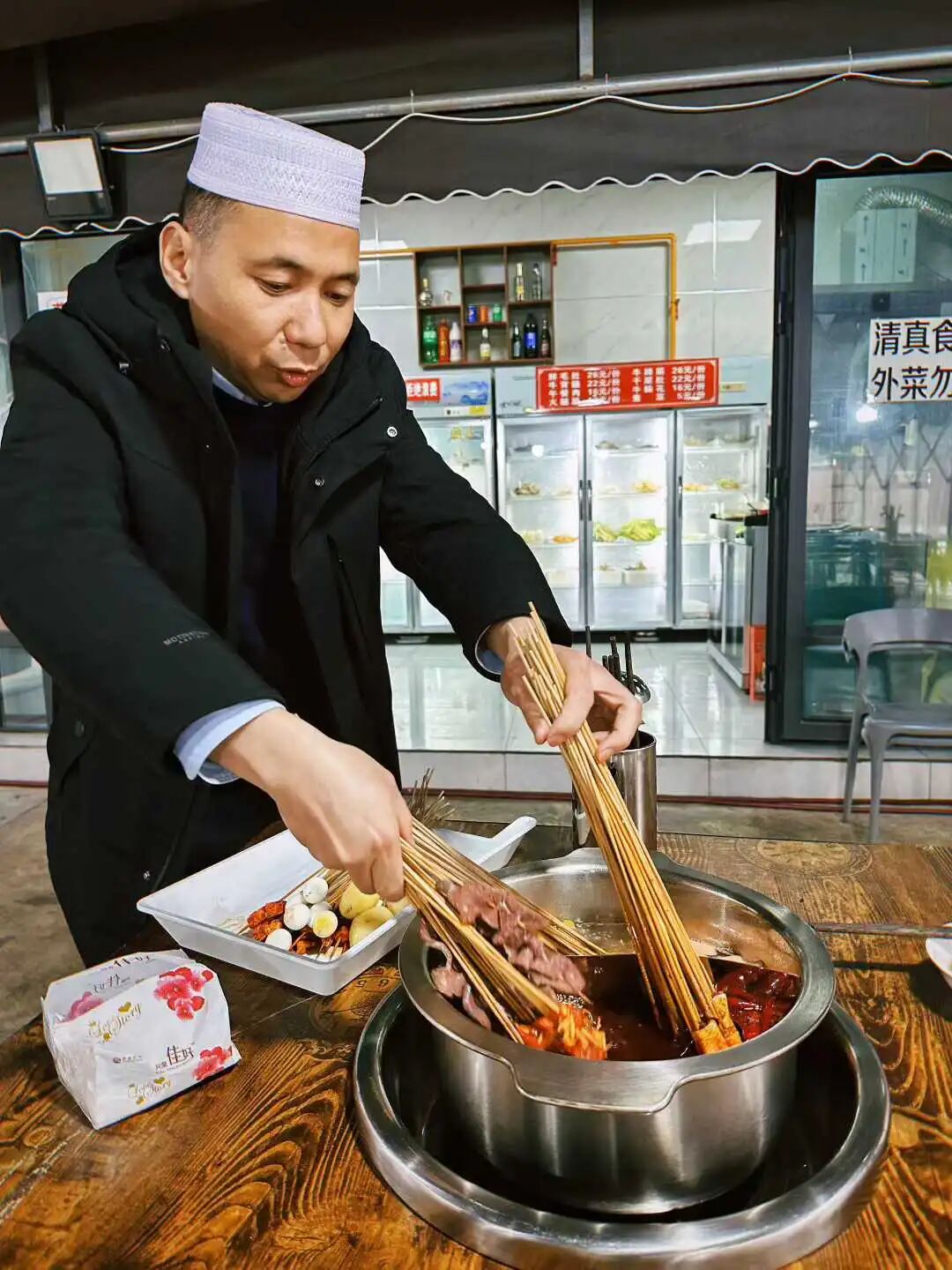
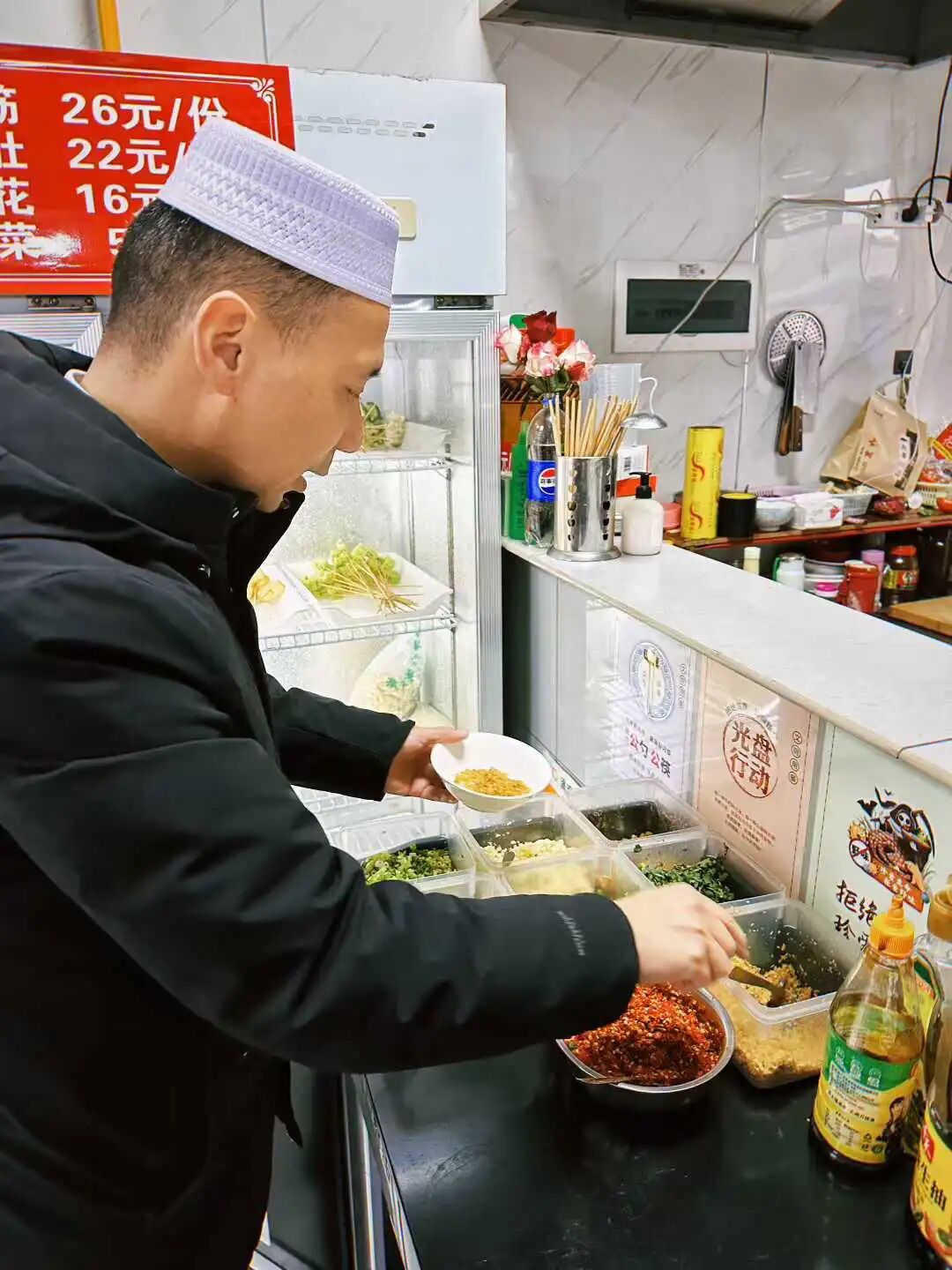
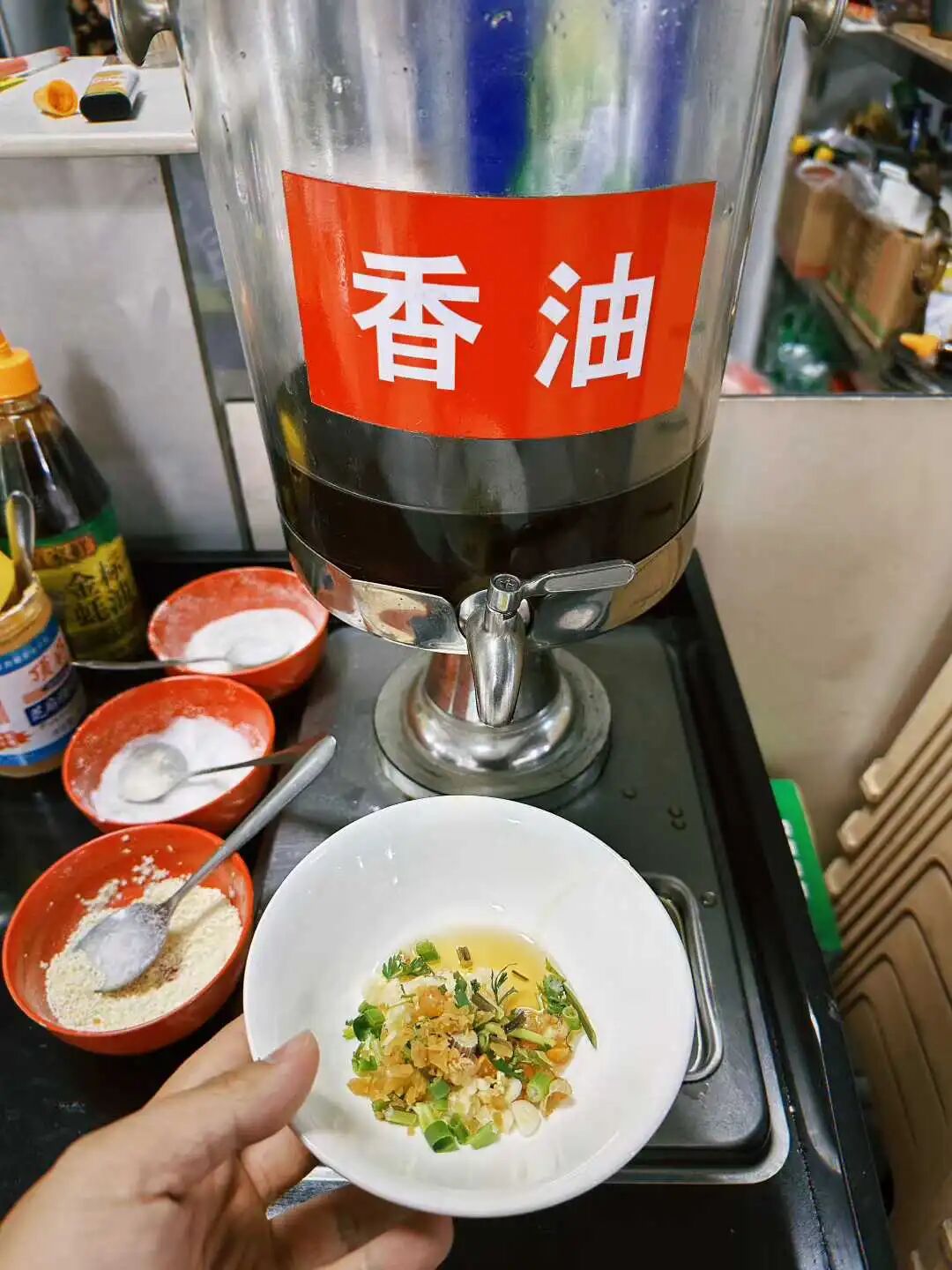
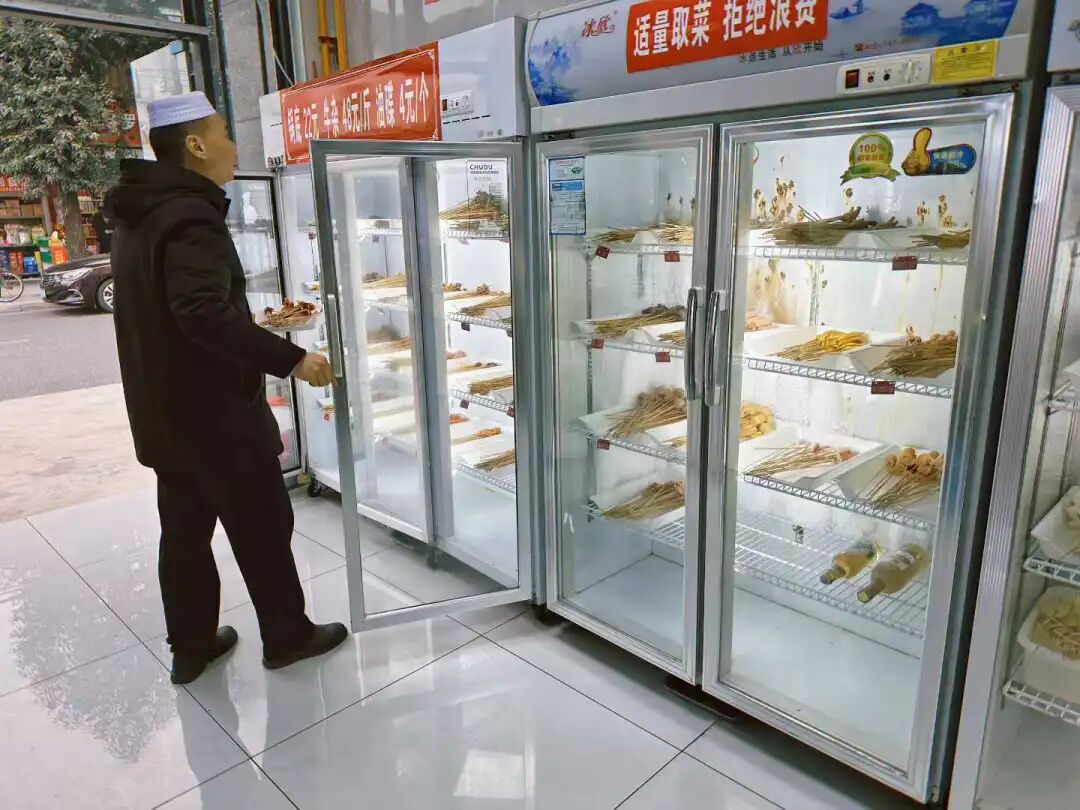
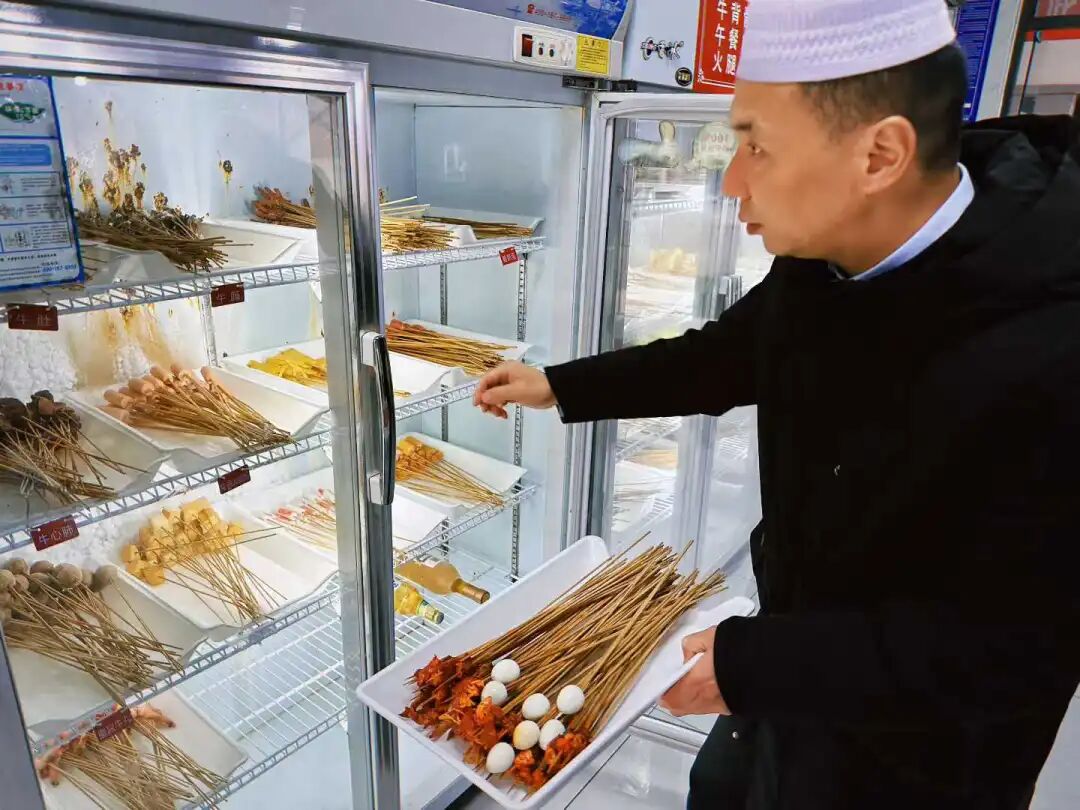
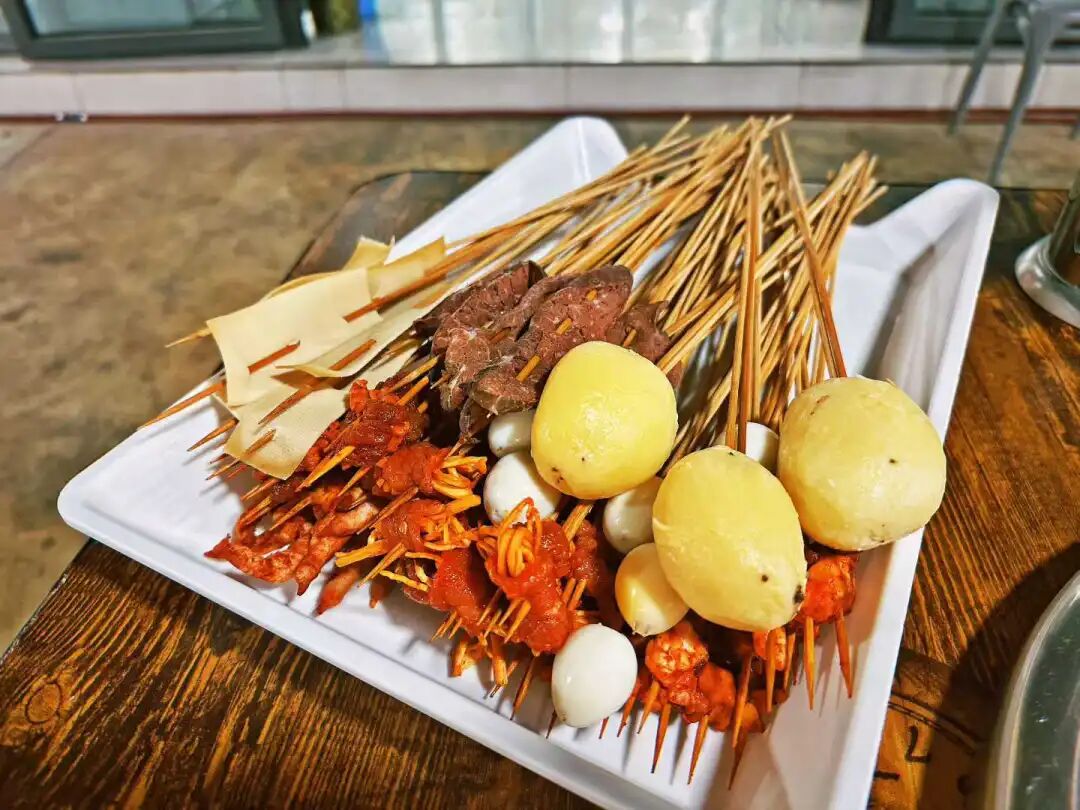
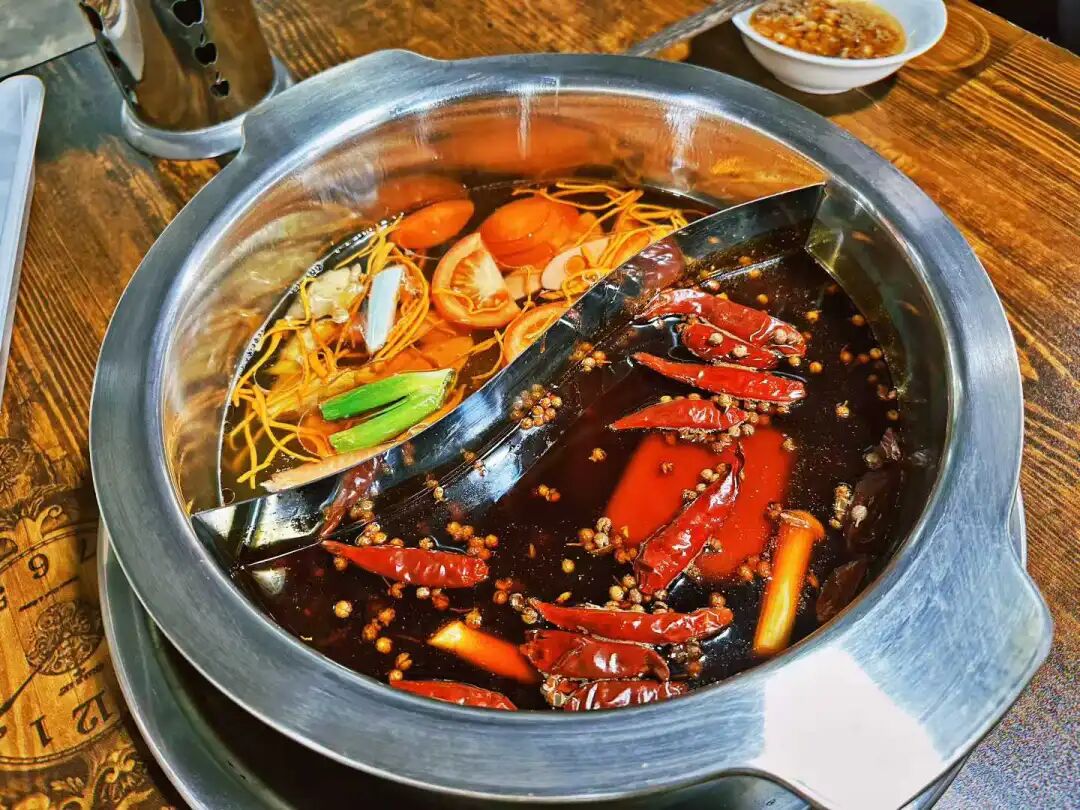
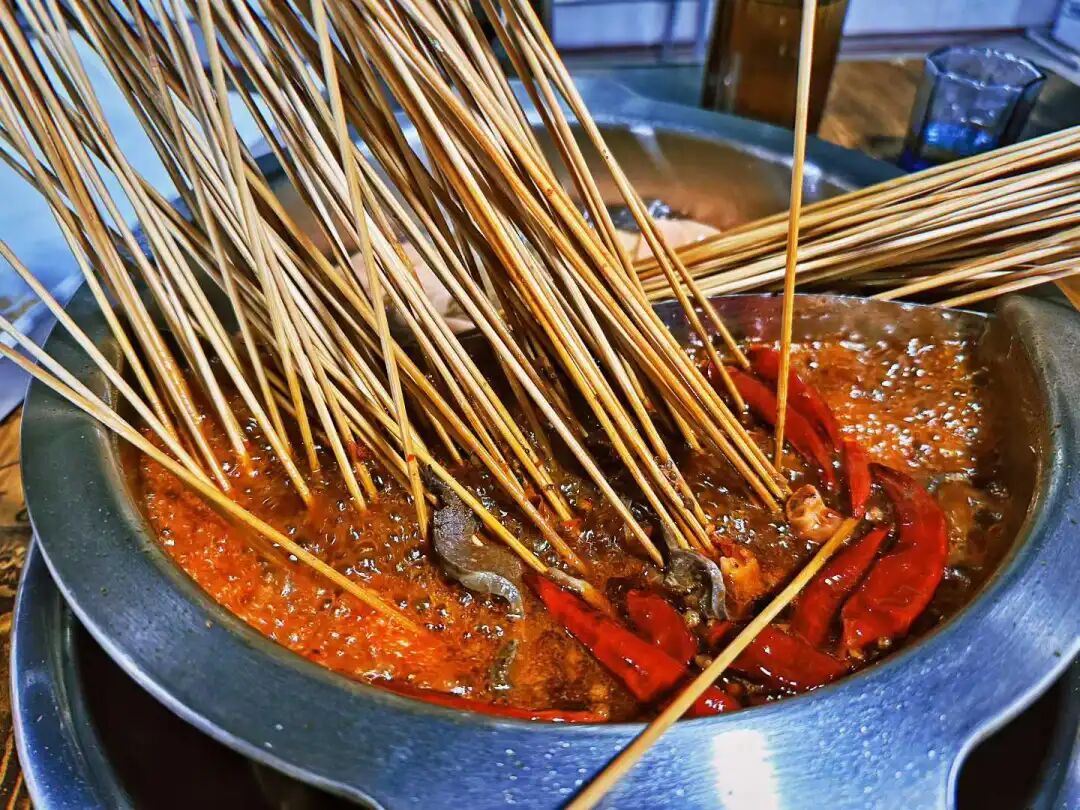
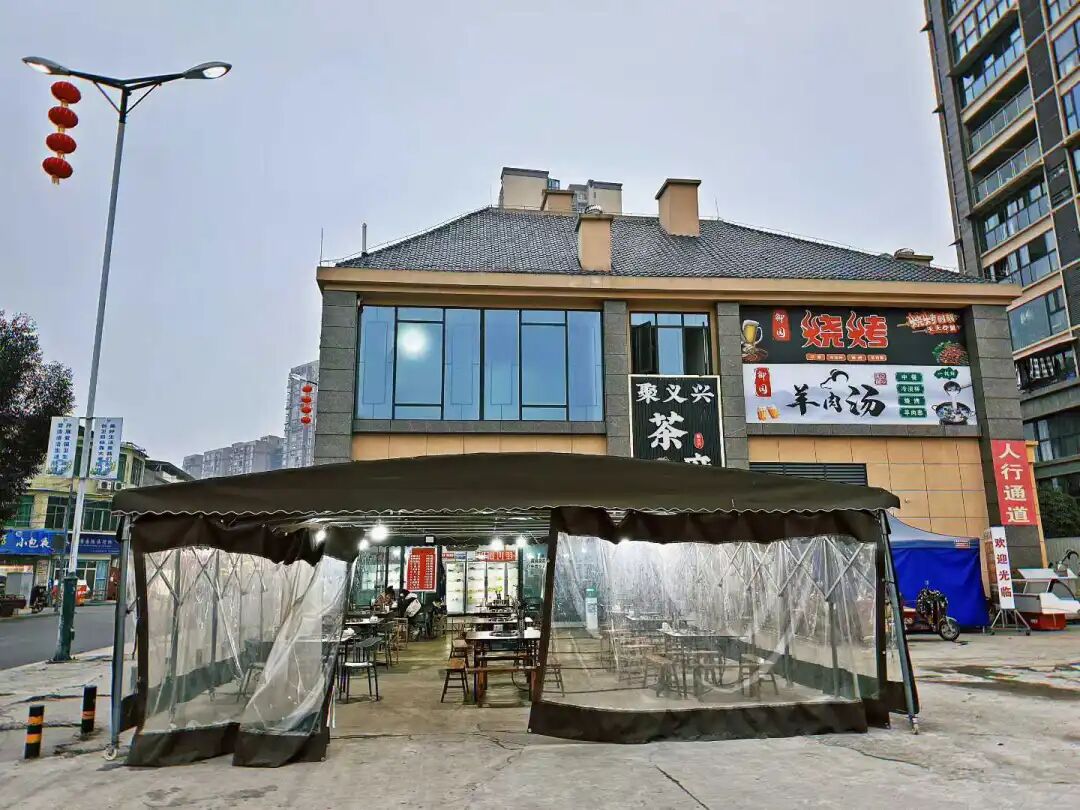
Right at the entrance of Tangjia Mosque is a local beef skewer shop. Imam Lan from the mosque treated me to a meal of authentic Sichuan skewers there. The pot base had spicy red oil and mushroom broth. The skewers included fresh tripe, beef tendon, beef spine, honeycomb tripe, and beef brains, all dipped in a sesame oil sauce. This year, they upgraded to "Manager Lan's All-Beef Skewers," and the environment is even better now.
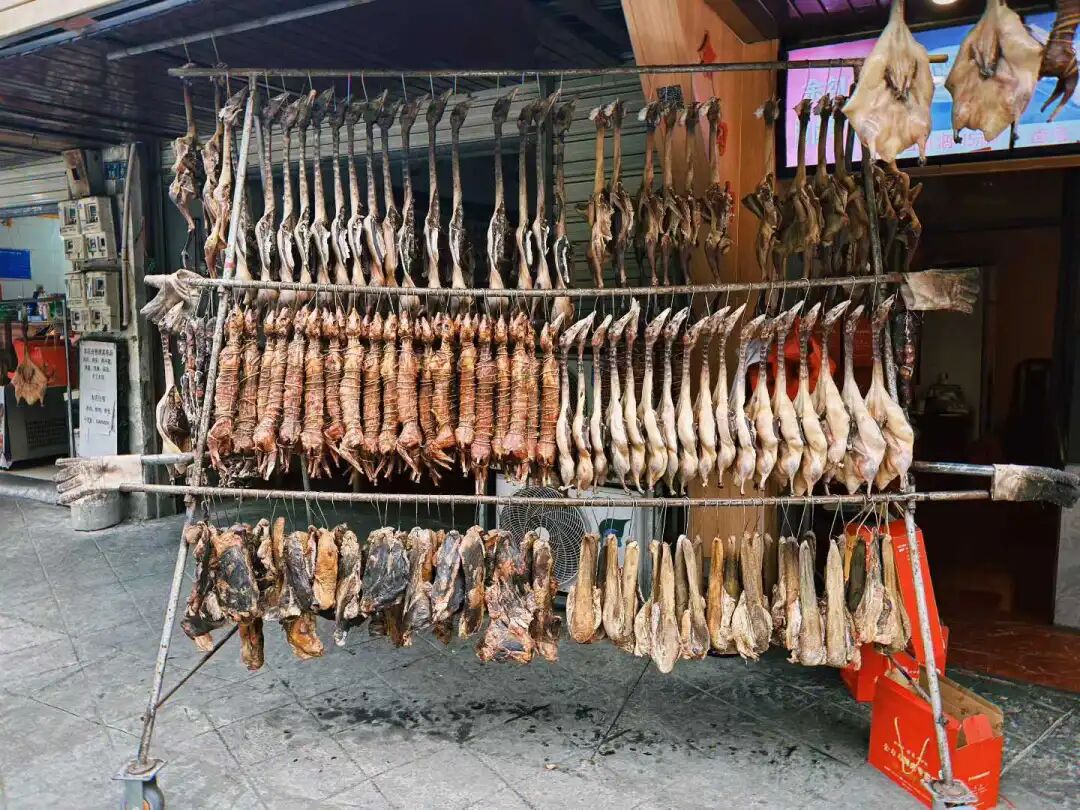
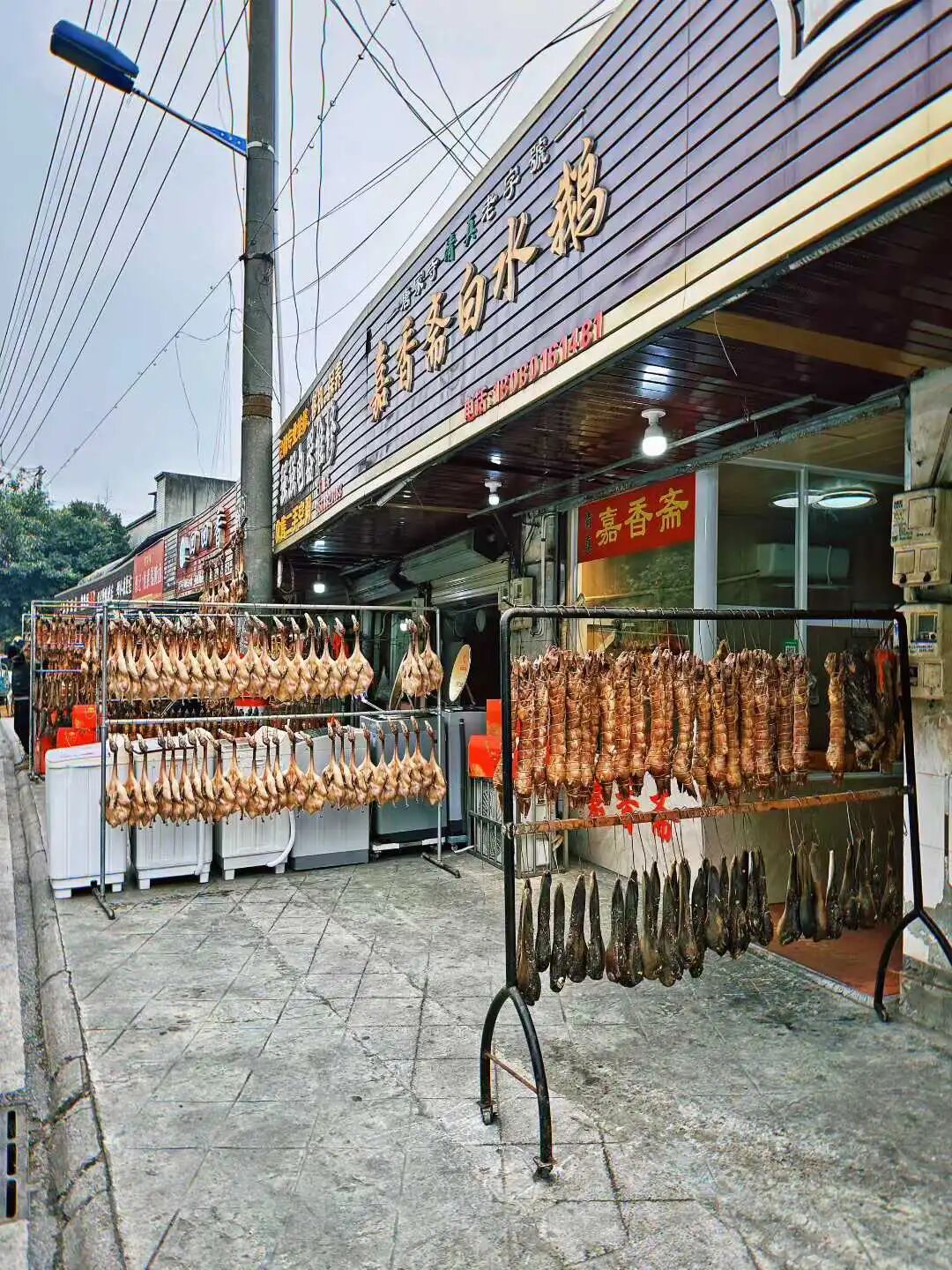
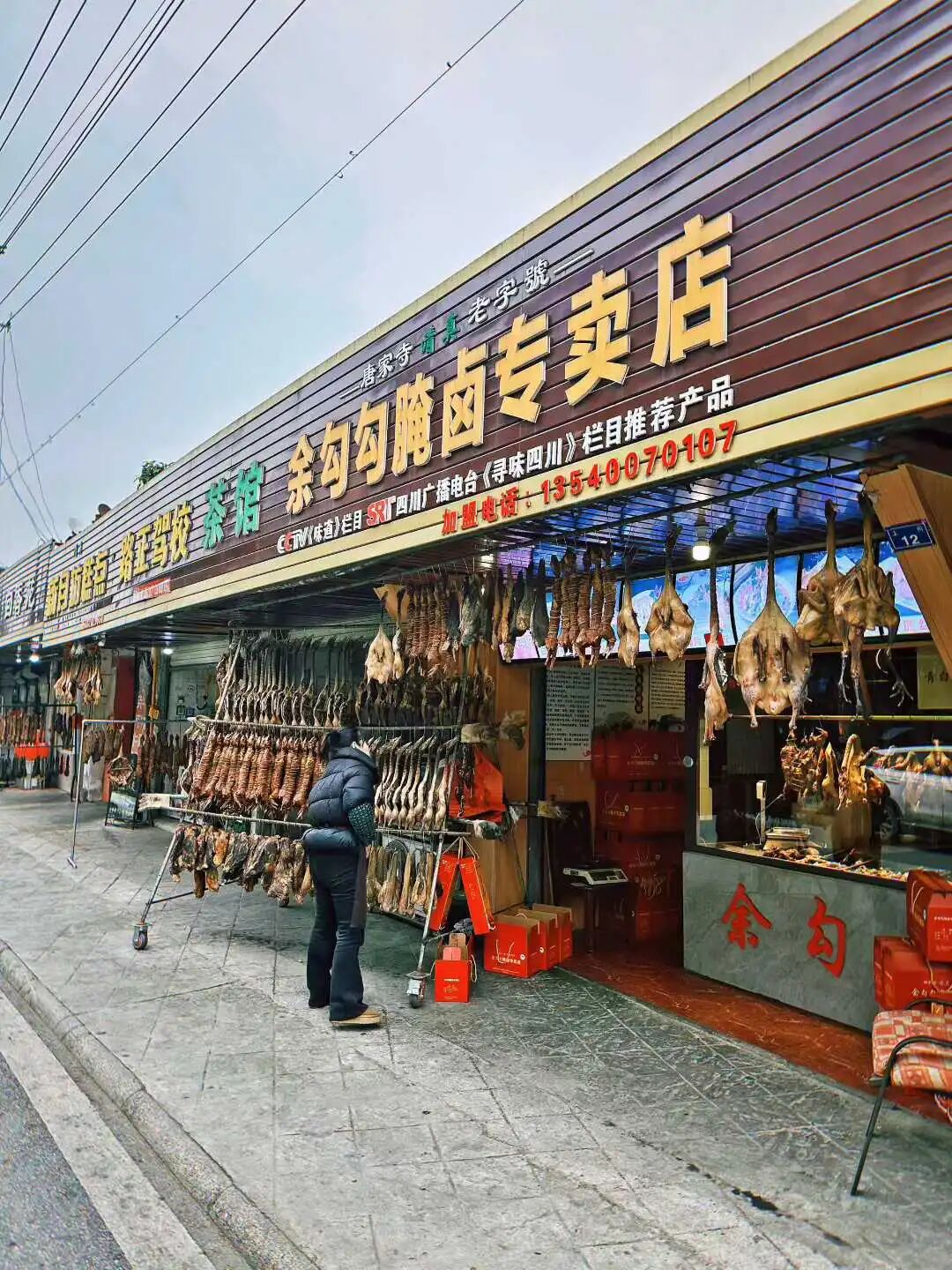
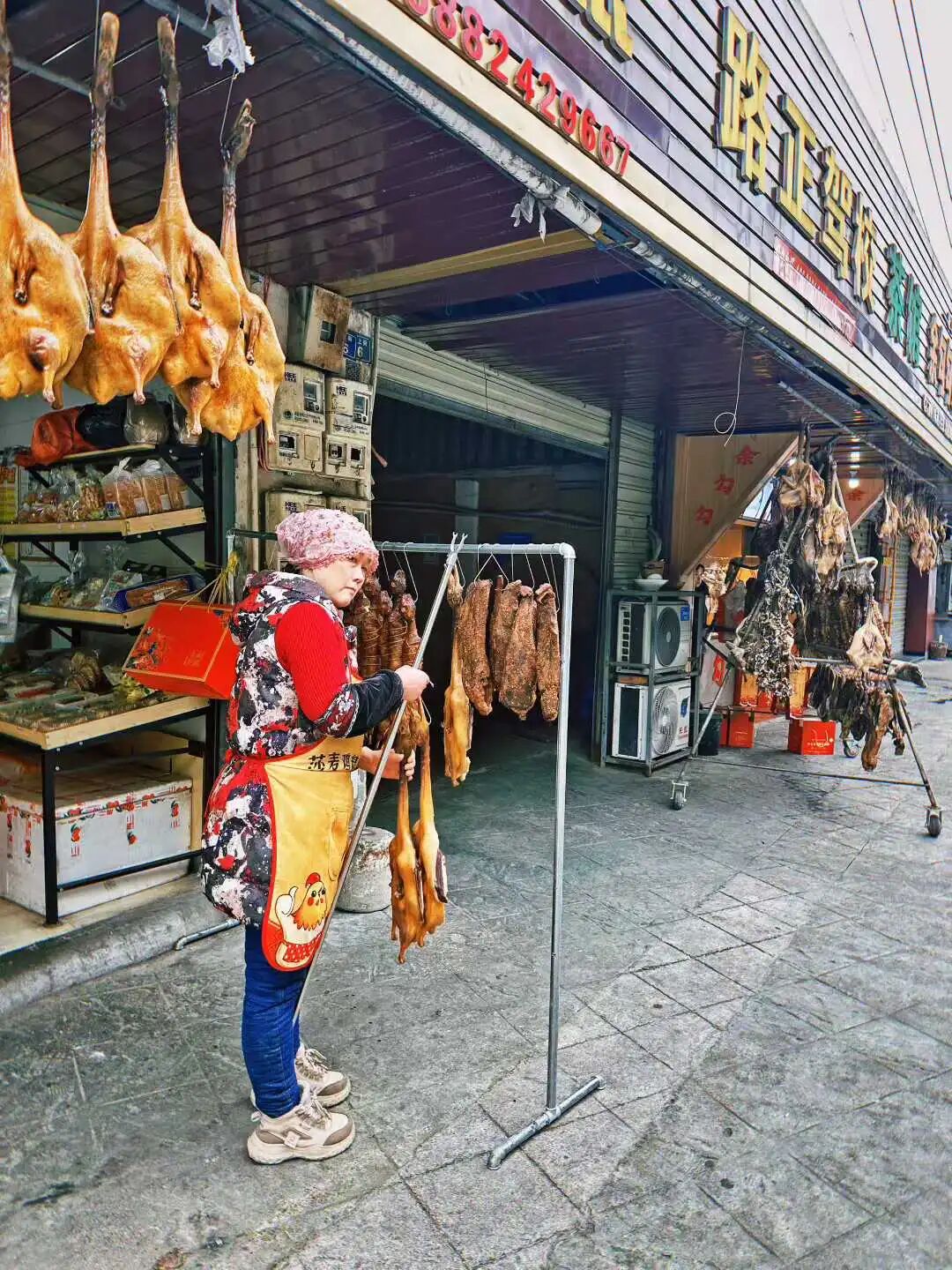
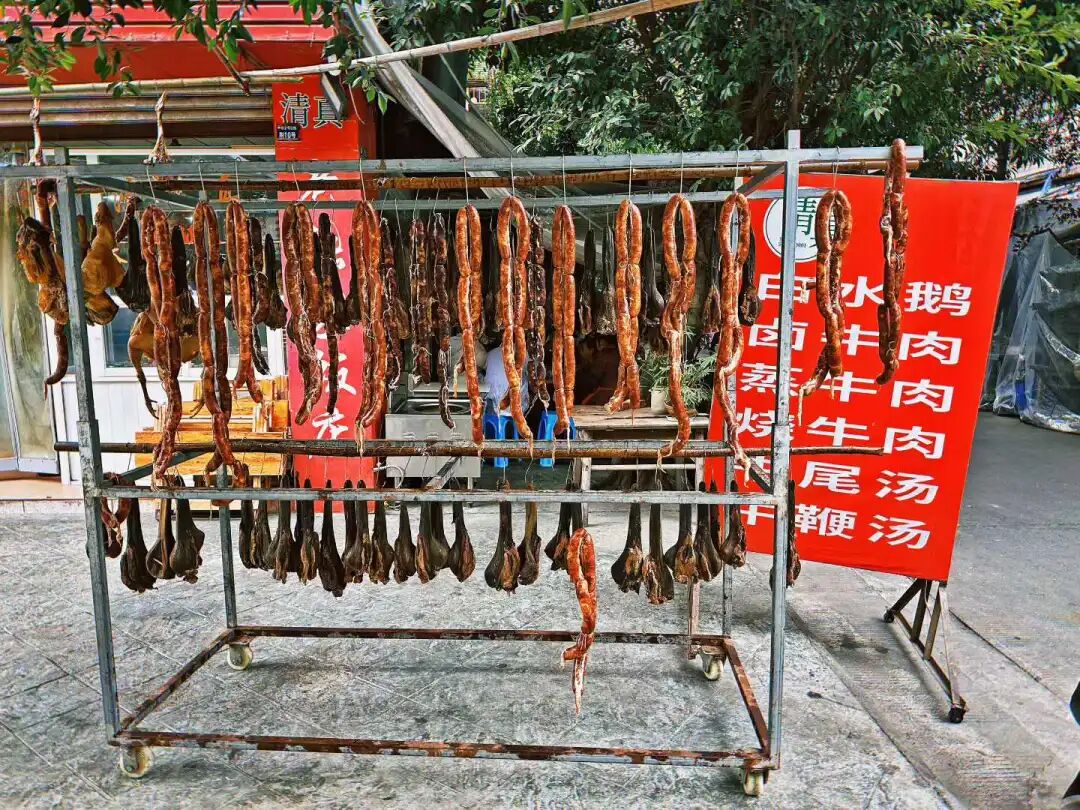
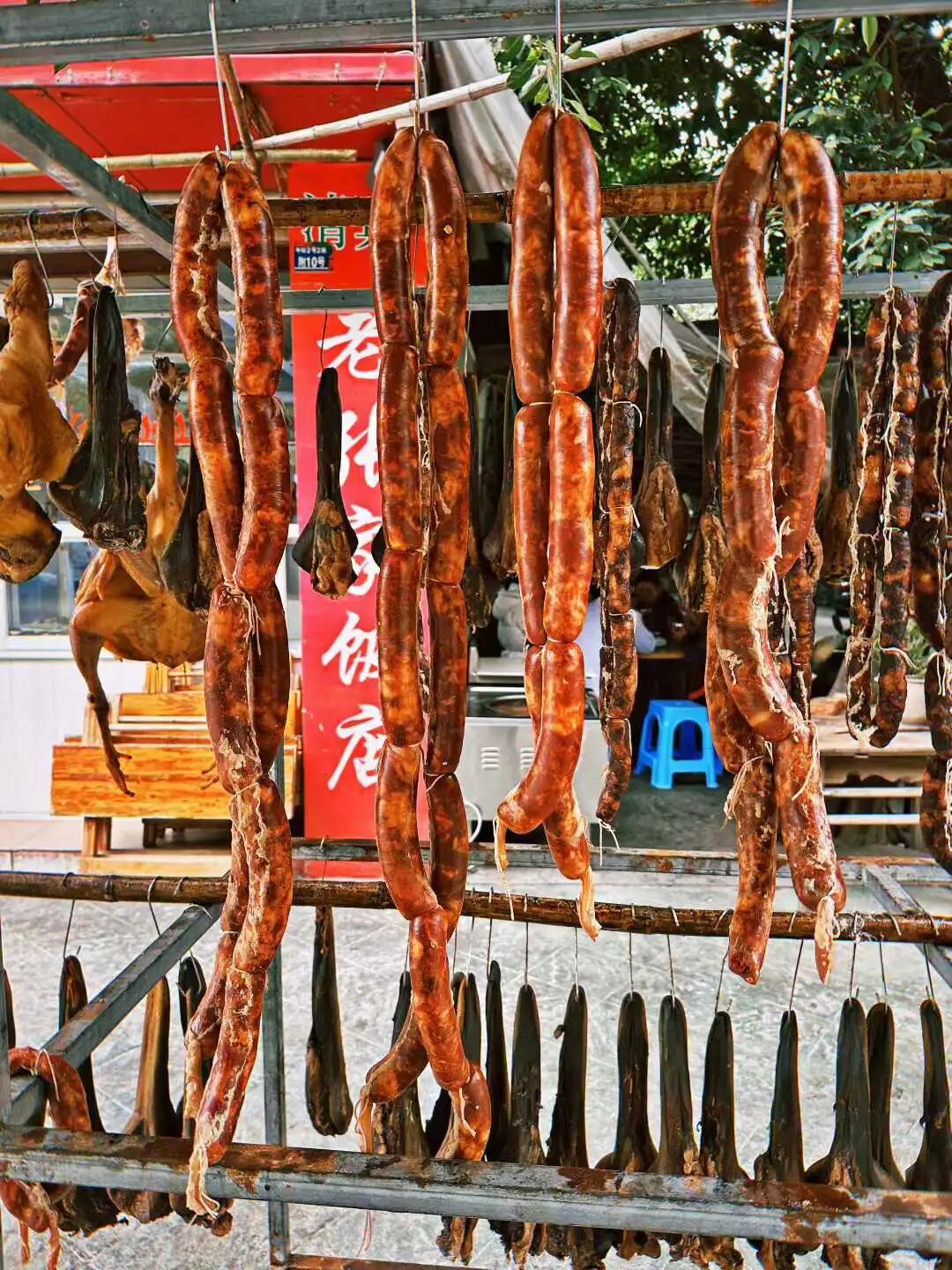
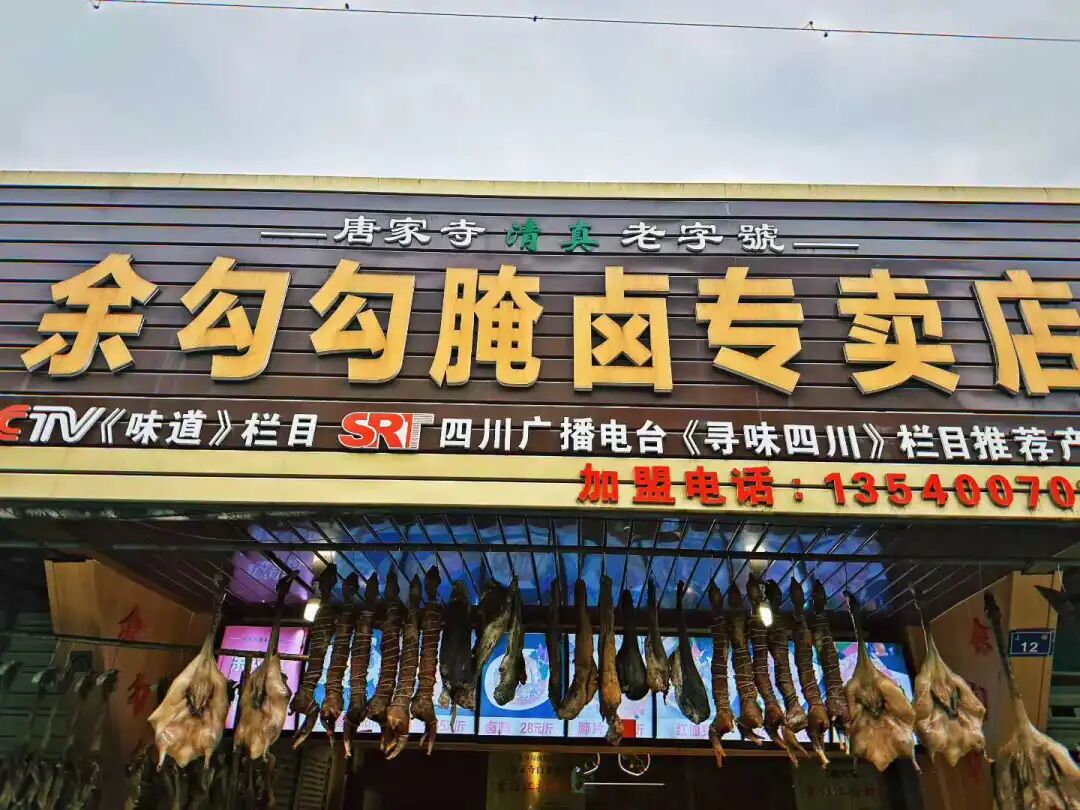
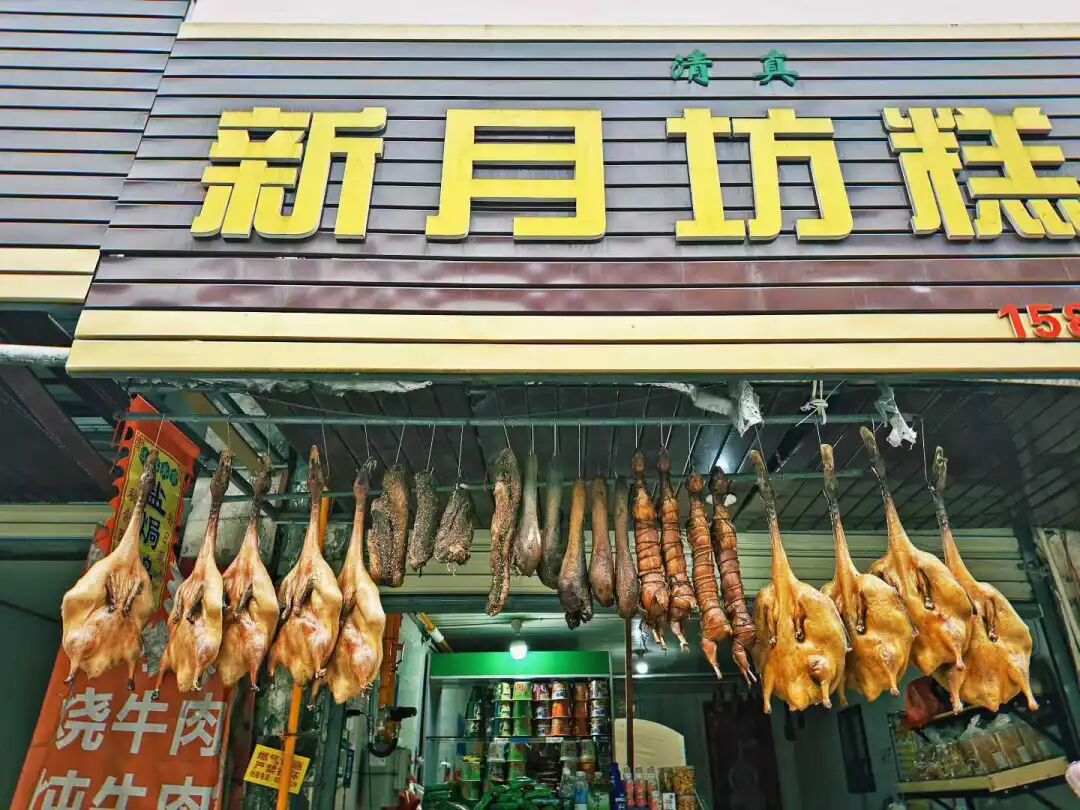
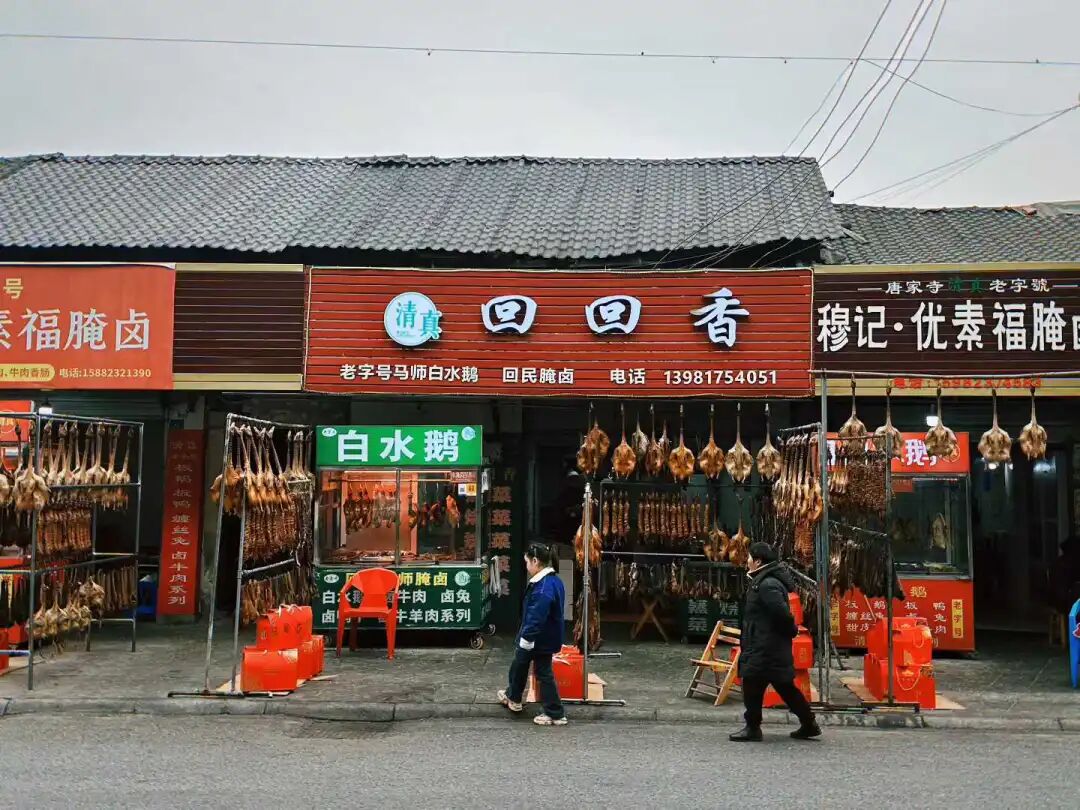
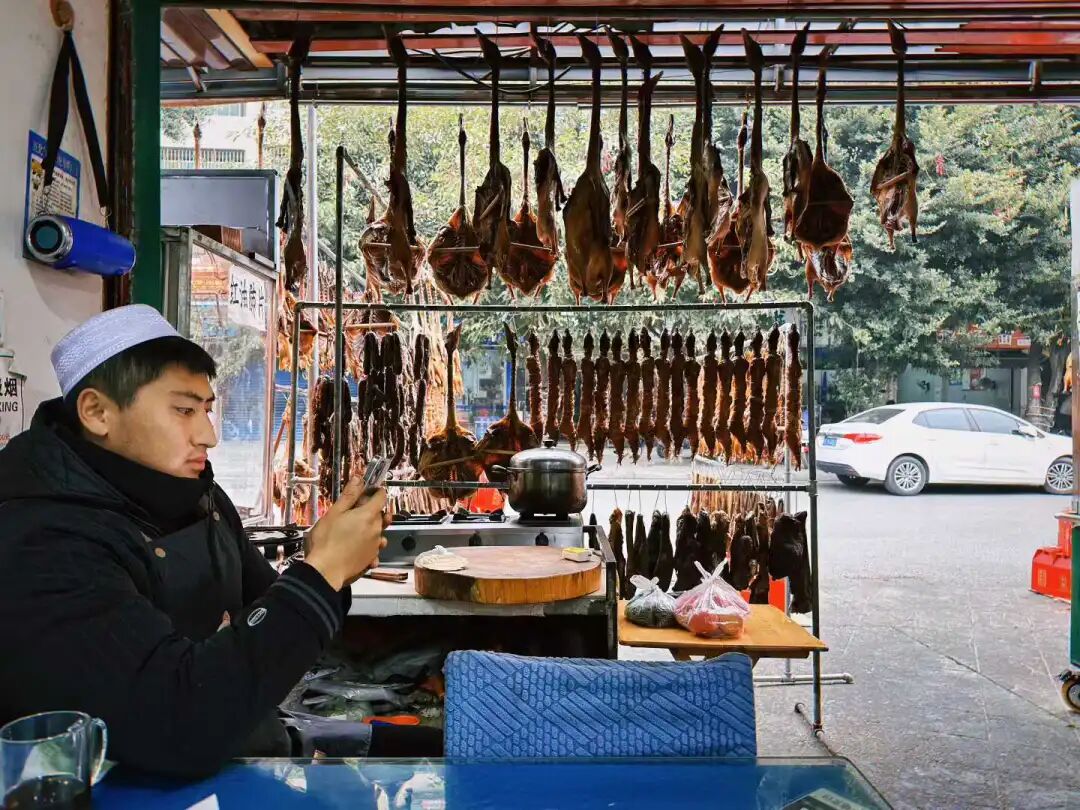
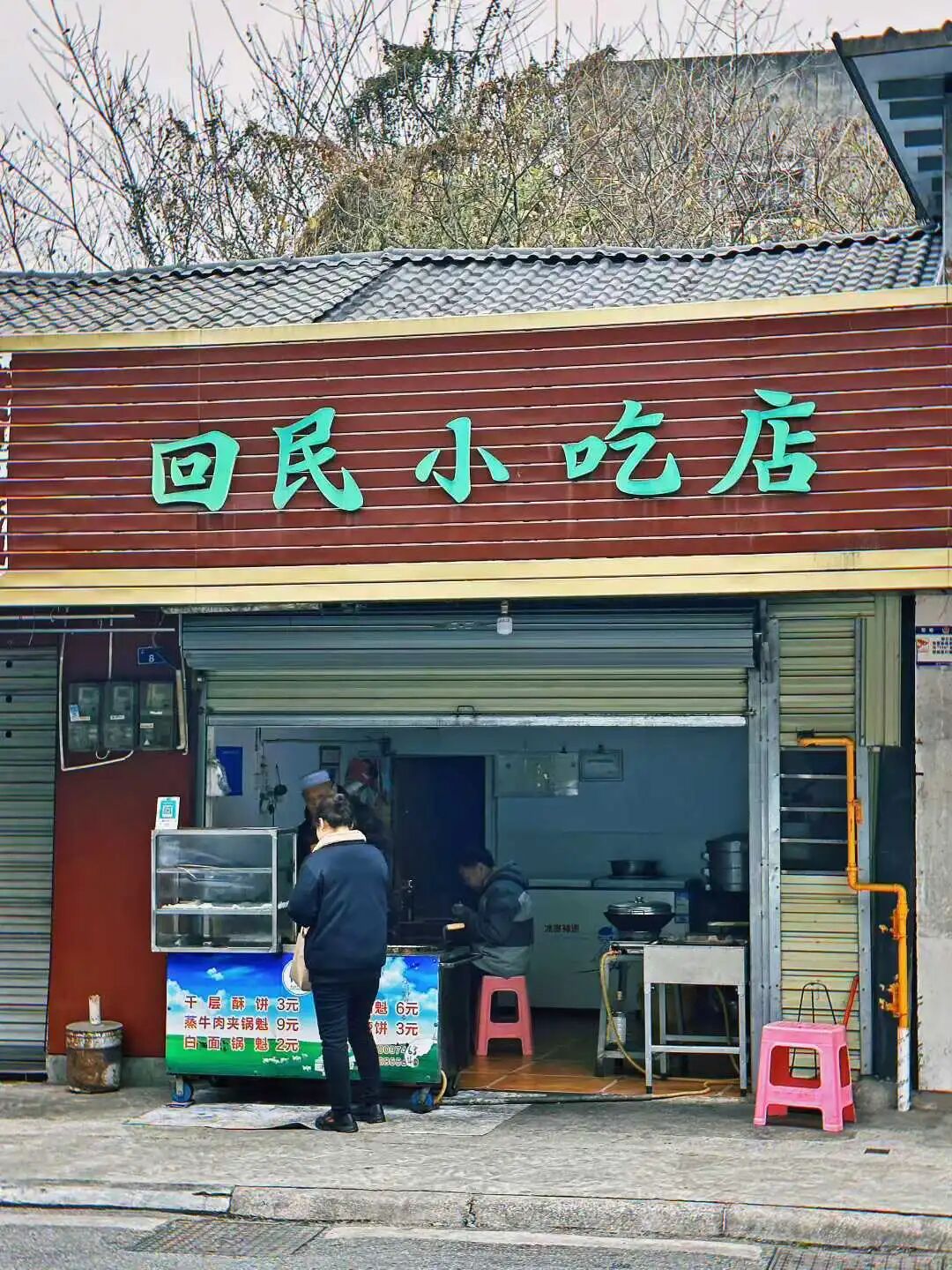
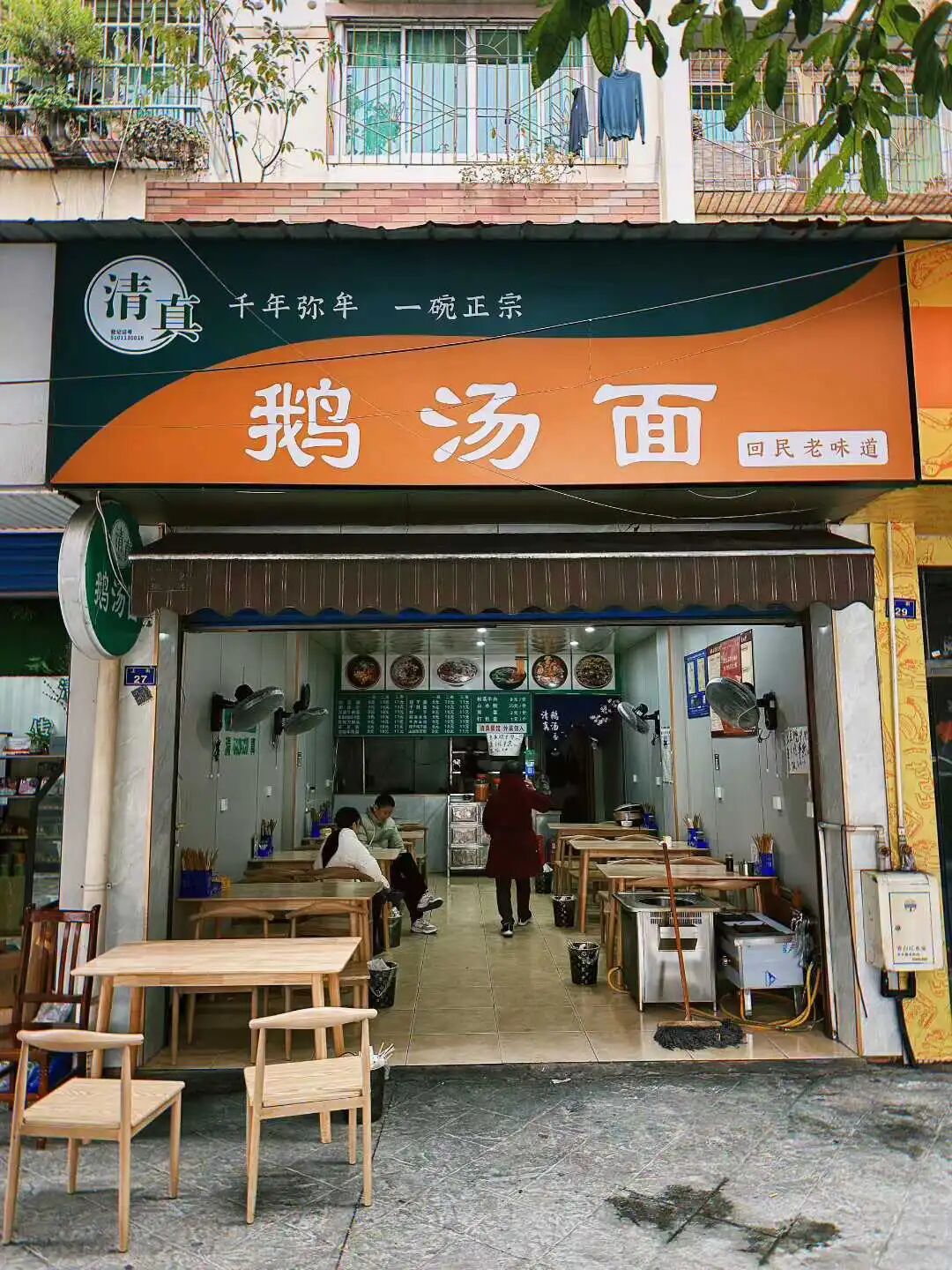
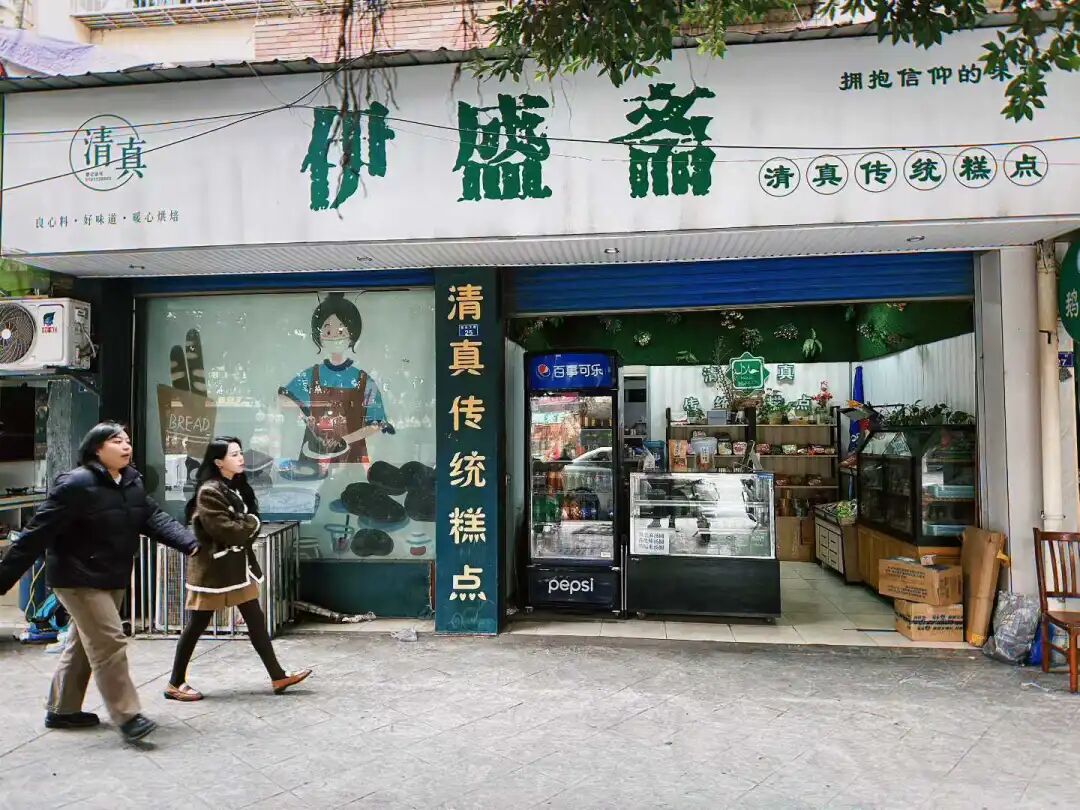
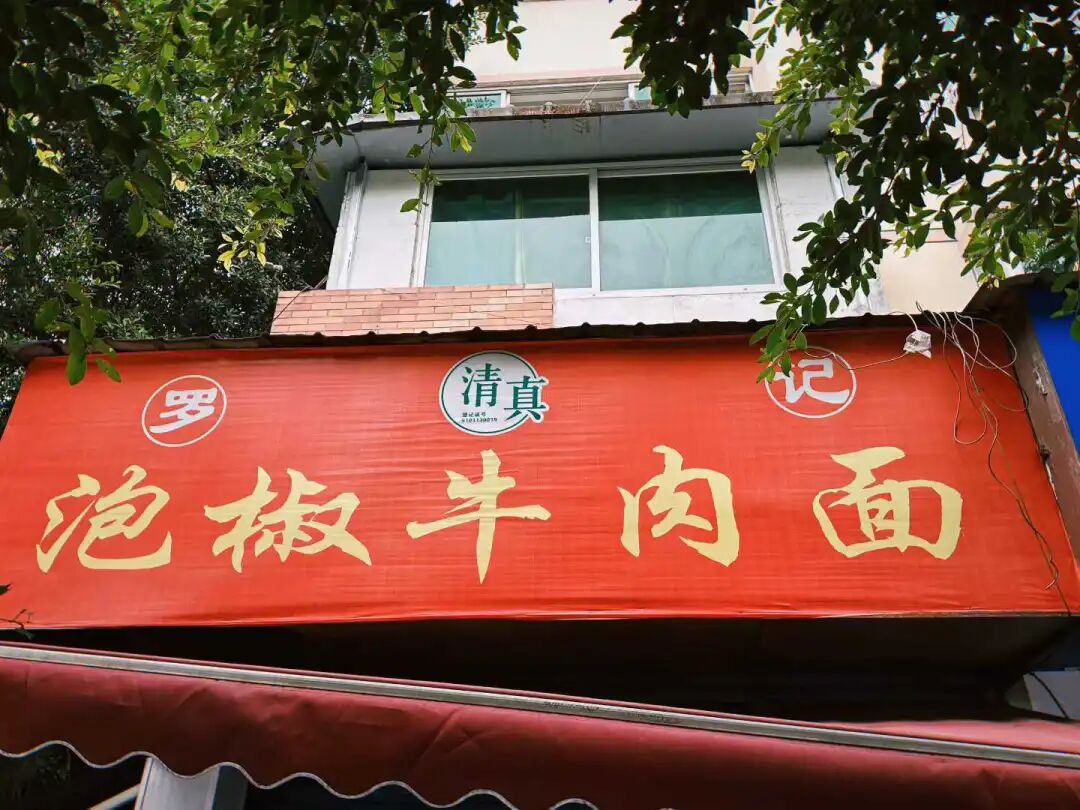
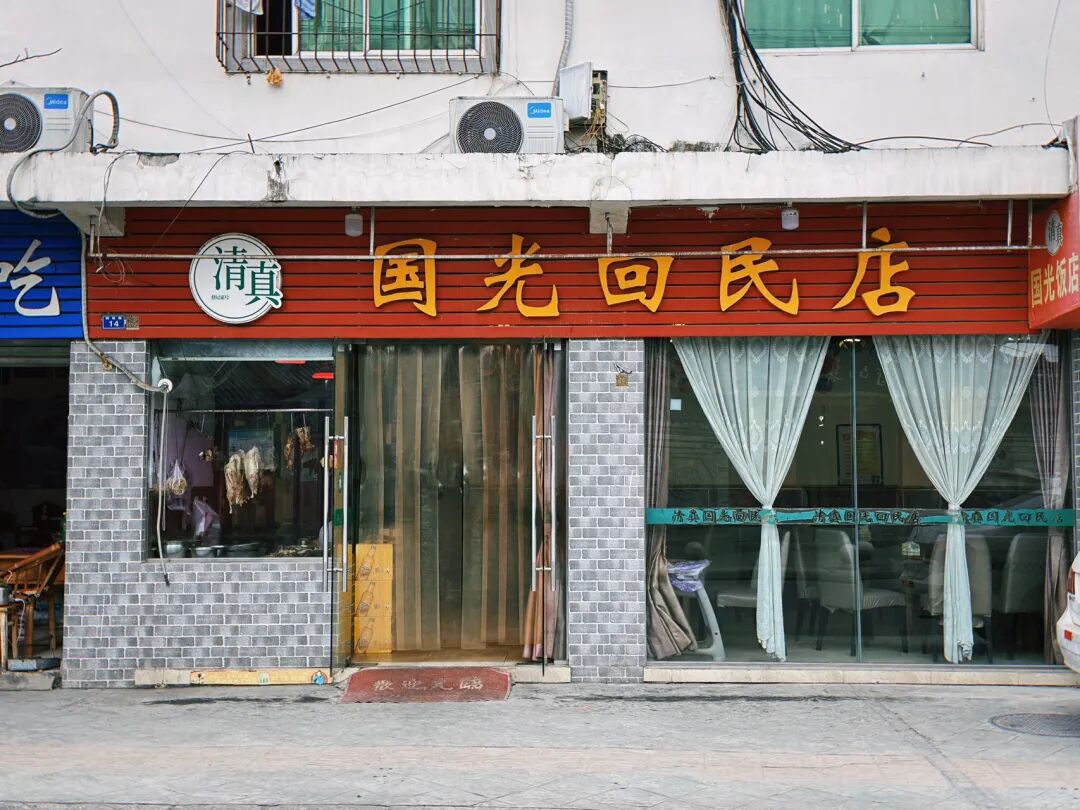
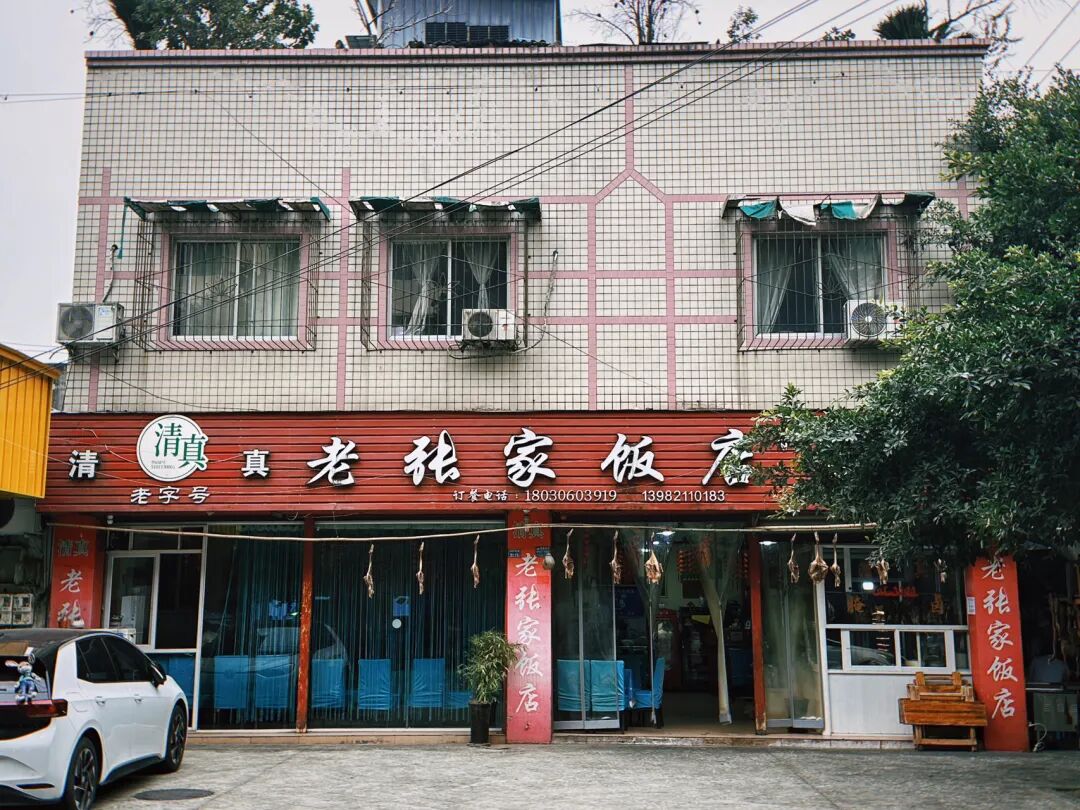
In the twelfth lunar month, Sichuan Muslim braised food shops are at their busiest. Boiled goose, braised goose, pressed goose, pressed duck, sweet-skin duck, coiled rabbit, braised rabbit, and braised beef are all very popular with people of all backgrounds. There is a row of Muslim braised food shops on Mimou Upper Street right outside Tangjia Mosque. Not only locals but also people from out of town come specifically to buy their New Year goods.
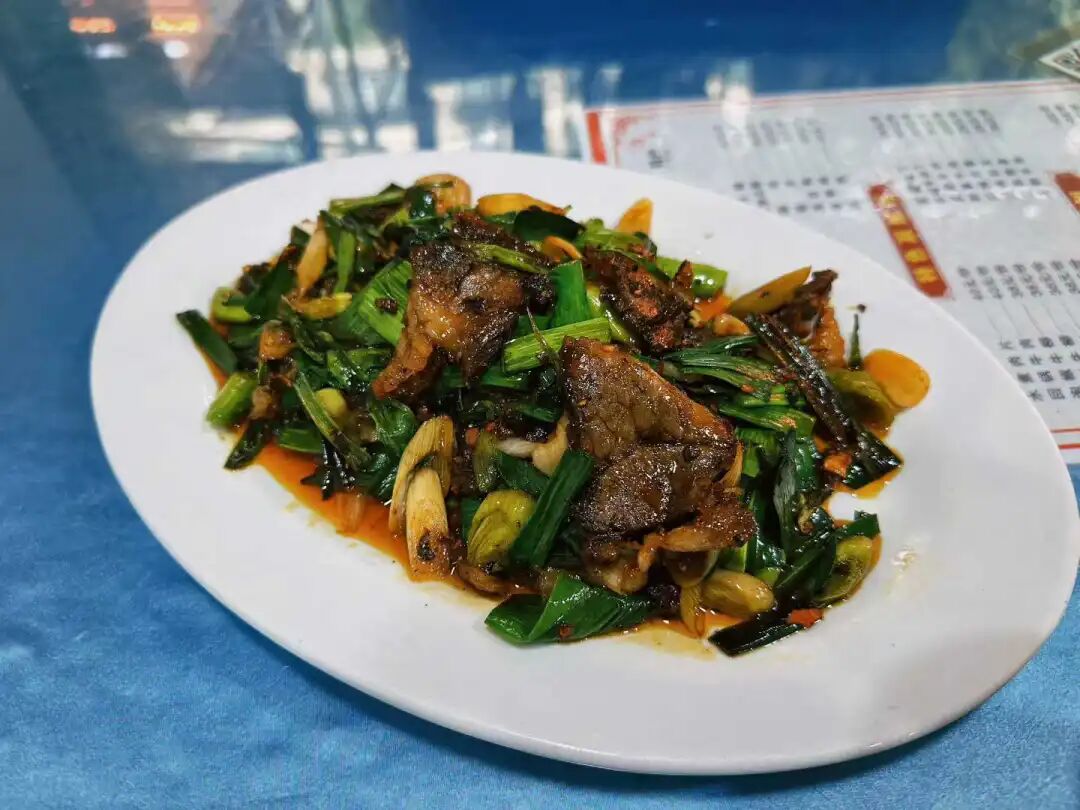
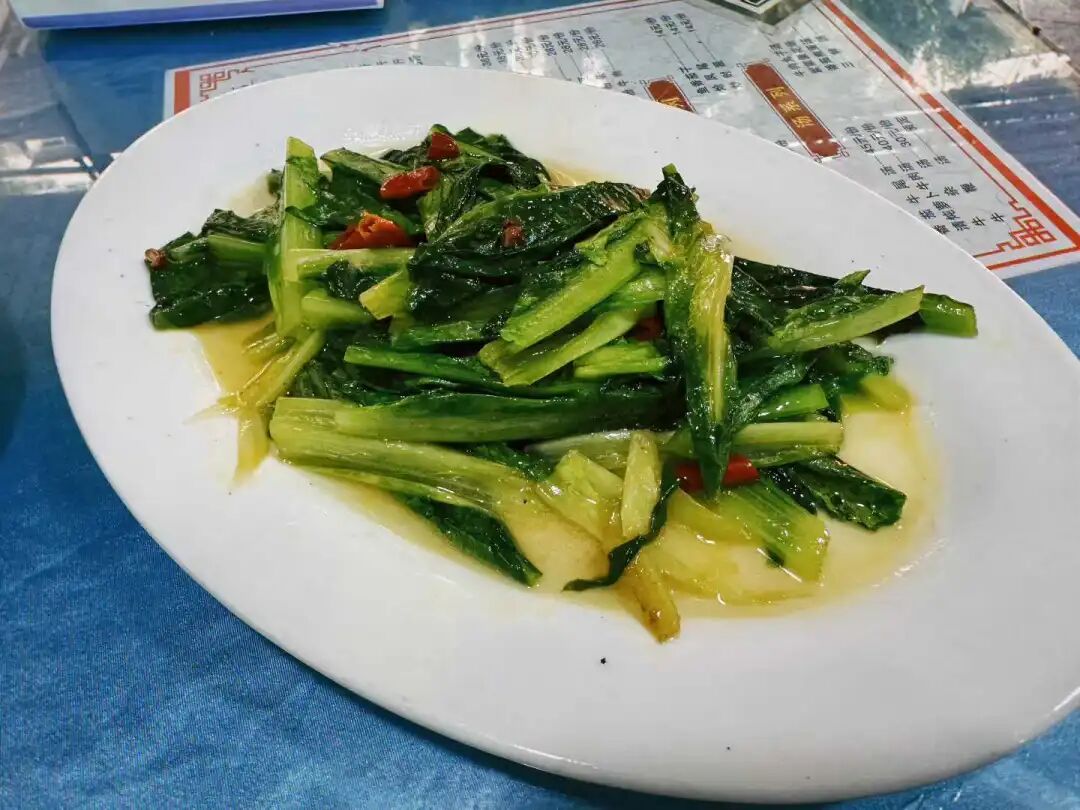
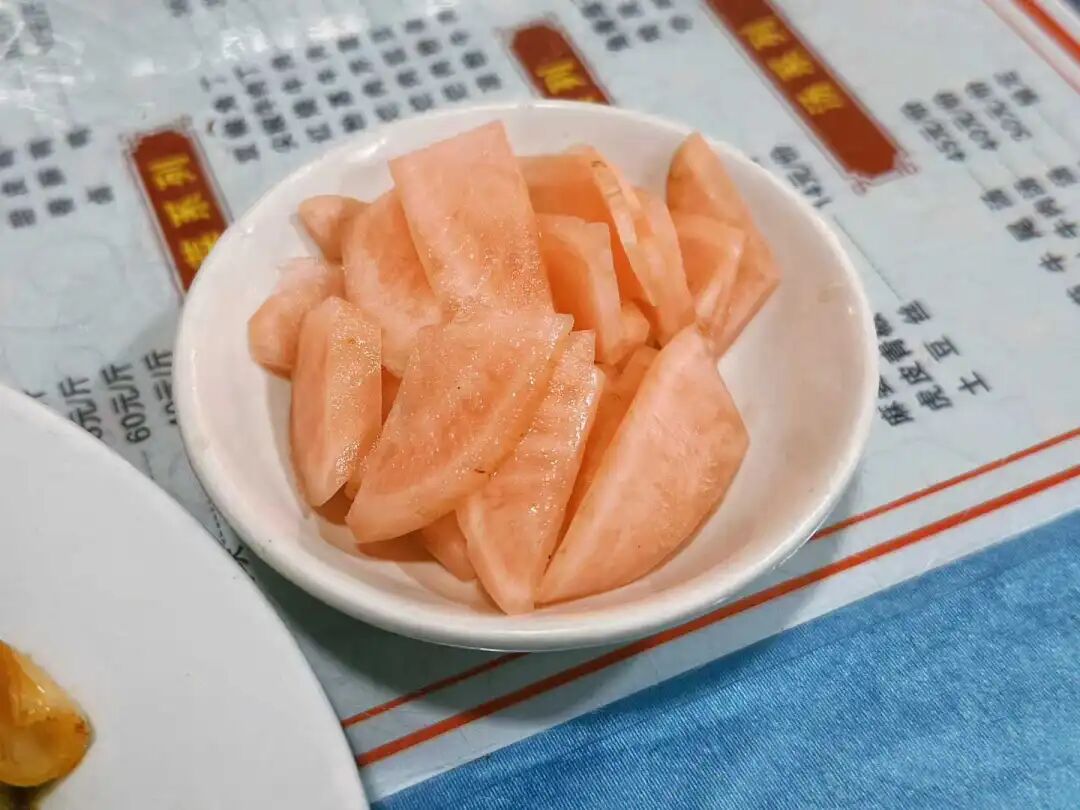
I had twice-cooked beef and stir-fried vegetables at Huihui Xiang on Mimou Upper Street. In my experience, Sichuan Muslim noodles are quite spicy, but the stir-fried dishes are not all spicy. Many dishes focus more on the fresh, savory flavors brought out by high-heat cooking. Eating at a Sichuan Muslim restaurant always includes pickled radishes, which are very refreshing. There are many more Hui Muslim foods in Mimou Town, such as goose soup noodles (etangmian) and steamed beef in crispy flatbread (zhengniurou jiaguokui), which are both worth a try. This is my second time visiting Tangjiasi, the center of Hui Muslim food in Chengdu, and I will definitely come back again to try other dishes.
Summary: Tangjiasi in northern Chengdu is the last normally open mosque in Mimou Town, a Hui Muslim settlement on the old Jinniu Road. The piece follows Tangjiasi Mosque's 1730 founding, its rebuilt prayer hall, nearby halal food, and the remaining traces of Chengdu northern Hui community.
Mimou Town in Sichuan sits in the Qingbaijiang District, right on the border of Chengdu and Guanghan. It is located on the ancient Jinniu Road, a path connecting Sichuan and Shaanxi. Hui Muslims from Shaanxi and Gansu began moving here to settle during the Ming Dynasty, and they built the Luo Family Mosque (Luo Jia Si) in 1471, the seventh year of the Chenghua reign. Frequent wars in Sichuan during the late Ming and early Qing dynasties caused the population to drop sharply. During the Kangxi reign, the Qing government encouraged people to move in and farm the land. The number of Hui Muslims in Mimou Town grew quickly. They built five more mosques: Ma Family Mosque (Ma Jia Si), Hunan Mosque (Hunan Si), Tang Family Mosque (Tang Jia Si), Qingjing Mosque (Qingjing Si), and Chengyi Mosque (Chengyi Si). This made the town a major center for Hui Muslims north of Chengdu. Historically, Tang Family Mosque managed all six mosques in Mimou, so it was also known as the Six-in-One Mosque (Liuhe Si). Today, the Luo Family Mosque, Qingjing Mosque, Ma Family Mosque, and Hunan Mosque have been torn down. Only the second gate of Chengyi Mosque remains. Tang Family Mosque is the only one still open for worship in Mimou.
Tang Family Mosque was first built in 1730, the eighth year of the Yongzheng reign. It was renovated in 1778, 1877, and 1953. After 1966, it was used as a warehouse for a medicinal company, but it reopened after being restored in 1983.
Tang Family Mosque is famous for producing many imams, most the three masters of the Hu family. Imam Hu Yanzhang was known as one of the four great imams of the Republic of China in Henan. Wang Jingzhai called him a mentor for Islamic scripture education in China. He studied scriptures at Tang Family Mosque as a child and later went to Shaanxi and Henan for further learning. In 1917, after debating scriptures with Imam Ma Guangqing at the Wenshu Mosque Street Mosque in Kaifeng, he adopted the Yihewani ideology. He then led his students to open schools in various mosques across Henan, which led many of them to adopt the Yihewani path, while also training a large number of imams.
Imam Hu Shichong is known as the founder of scripture education in the Sichuan-Kang region during the Republic of China. He studied at Tang Family Mosque as a boy and went to Chengdu for advanced studies after 1910. He began teaching in Xiaojin County in 1929, where he trained many students and made major contributions to the continuation of the faith in the Garze and Aba prefectures.
Imam Hu Shiwen was known as one of the four great imams of Sichuan during the Republic of China. He was a cousin of Imam Hu Shichong and a graduate of the Chengda Normal School. He was highly respected by the great Imam Wang Jingzhai. After graduating in 1936, he was hired by the Sichuan Radio Station. He gave weekly lectures on religious knowledge, which quickly made him famous throughout Sichuan. During the War of Resistance Against Japan, he worked at the International Radio Station in Chengdu, broadcasting in Arabic to tell the world about China's determination to fight the war. From 1949 to 1960, he served as the imam of the East Mosque in Chengdu and as the deputy imam of the Huangcheng Mosque.
Besides the three masters of the Hu family, the Hu family of Tang Family Mosque produced several other imams. Imam Hu Shixiang is known as the founder of scripture education in Xichang during the Republic of China. He was the younger brother of Imam Hu Shiwen and also graduated from the Chengda Normal School. In 1944, Imam Hu went to the Xichang Imam Training Class to teach for one year. In 1945, he was invited by Bai Chongxi to help establish the Xichang Jiansheng Middle School, where he served as the head of the Arabic department and also taught English. He taught at Jiansheng Middle School for a long time until he retired in 1977. Imam Hu Jiayou served as the imam of the Hu Family Mosque in 1930 until he passed away in 1936. Imam Hu Yushan was the father of Imam Hu Shiwen. He taught at nine different mosques in Dujiangyan and Chengdu.
The second gate of Tang Family Mosque features a two-layered white horse-head wall. On both sides, there are stone carvings with the couplet: 'The teachings shine for a thousand years, the scriptures pass down for generations with brilliant light.' The horizontal plaque reads: 'The teachings are passed down for generations.'
The back wall of the main prayer hall has a bat sculpture, which symbolizes guiding those who travel at night. Below it is a plaque from 1896, the twenty-second year of the Guangxi reign, that reads 'Dao An Dan Deng' (The path to the shore is reached). It is signed by Tang Chuanyou from Dongzou. Tang Chuanyou was a Qing Dynasty calligrapher whose art was famous throughout the capital. His son, Tang Chenglie, worked as an official in Sichuan, so he brought Tang Chuanyou to Sichuan to spend his later years in comfort. The plaque text comes from the Book of Songs, "First to reach the shore." Liu Zhi also wrote in Five Watch Moon (Wu Geng Yue): "From here, step by step forward, reach the shore of the Way and see the truth."
The mosque keeps a central roof beam replaced during the 2015 renovation. It mentions that the imam at the time of the 43rd year of the Qianlong reign renovation were Luo Hong and Yu Wenqi.
The newly built prayer hall at Tangjia Mosque in Mimou Town uses traditional architectural styles and features carved traditional floral calligraphy.
The washroom at Tangjia Mosque features a traditional courtyard with benches. After using the kettle (tangping hu) to wash, the water drains through the courtyard pool, which feels very ancient.
Tangjia Mosque stone carvings:
These include the Stele of the 28th Year of Daoguang on Mosque Renovation and Ma Lun Ahong's Fundraising, the Stele of the 2nd Year of Xianfeng on Mimou Town Muslims Donating to Renovate the Main Hall, the Stele of the 4th Year of the Republic of China from the Xindu County Magistrate, the Stele of Mimou Town Muslims Donating to Renovate Chengyi Mosque, and the Tombstone of Sichuan Commander Ma Juezhai.
The Republic of China stele records that the Hu and Ma families of Mimou Town donated over 20 acres of land. The annual income was divided among six mosques—Tangjia, Ma Family, Hunan, Tangjia, Qingjing, and Chengyi—to hold religious gatherings and to honor the ancestors of the Hu and Ma families. However, the head of Tangjia Mosque embezzled the money and destroyed the account books, so the Xindu County magistrate had to step in to resolve the matter.
The Chengyi Mosque stele lists 490 donors with 55 different surnames, including very rare ones like Shi, Su, Zhe, Yu, Hou, and Guo. It is likely that the list of donors was incomplete and another stele with a signature existed, but it is now lost.
Ma Tiangui, courtesy name Juezhai, was from Songpan, Sichuan. He registered in Chengdu, rose to the rank of Sichuan Commander, was awarded the title of Brave Batulu, and died in battle in 1859 (the 9th year of Xianfeng). Ma Juezhai's tomb was originally next to Chengyi Mosque in Mimou Town. It was destroyed after 1966, and his remains were moved by his descendants to the Ma family cemetery at Qingjing Mosque. The tombstone was saved because it was used as a bridge stone and was brought home by his descendants in 1986. In 2002, the Ma family ancestral home and the Qingjing Mosque cemetery were demolished for land acquisition. The tombstone and remains were moved to the Qingbaijiang Muslim Cemetery and finally to Tangjia Mosque for safekeeping in 2024. Ma Tiangui donated to Xiaoquan Mosque, Tangjia Mosque in Mimou Town, and Qinggang Mosque in Renshou, all of which still have stone steles today. Ma Tiangui's descendants currently run the Ma's Tangjia Mosque Braised Food Shop opposite the Upper Mosque in Tuqiao, Chengdu.
Right at the entrance of Tangjia Mosque is a local beef skewer shop. Imam Lan from the mosque treated me to a meal of authentic Sichuan skewers there. The pot base had spicy red oil and mushroom broth. The skewers included fresh tripe, beef tendon, beef spine, honeycomb tripe, and beef brains, all dipped in a sesame oil sauce. This year, they upgraded to "Manager Lan's All-Beef Skewers," and the environment is even better now.
In the twelfth lunar month, Sichuan Muslim braised food shops are at their busiest. Boiled goose, braised goose, pressed goose, pressed duck, sweet-skin duck, coiled rabbit, braised rabbit, and braised beef are all very popular with people of all backgrounds. There is a row of Muslim braised food shops on Mimou Upper Street right outside Tangjia Mosque. Not only locals but also people from out of town come specifically to buy their New Year goods.
I had twice-cooked beef and stir-fried vegetables at Huihui Xiang on Mimou Upper Street. In my experience, Sichuan Muslim noodles are quite spicy, but the stir-fried dishes are not all spicy. Many dishes focus more on the fresh, savory flavors brought out by high-heat cooking. Eating at a Sichuan Muslim restaurant always includes pickled radishes, which are very refreshing. There are many more Hui Muslim foods in Mimou Town, such as goose soup noodles (etangmian) and steamed beef in crispy flatbread (zhengniurou jiaguokui), which are both worth a try. This is my second time visiting Tangjiasi, the center of Hui Muslim food in Chengdu, and I will definitely come back again to try other dishes.
