
Islamic Guide: Dua for the Departed - Hope, Mercy and Peace
Reposted from the web
Summary: This article explains how Muslims can make dua for loved ones who have passed away, with Quranic and prophetic guidance on mercy, forgiveness, and hope. It keeps the focus on grief, sadaqah jariyah, righteous descendants, and sincere prayer for the deceased.
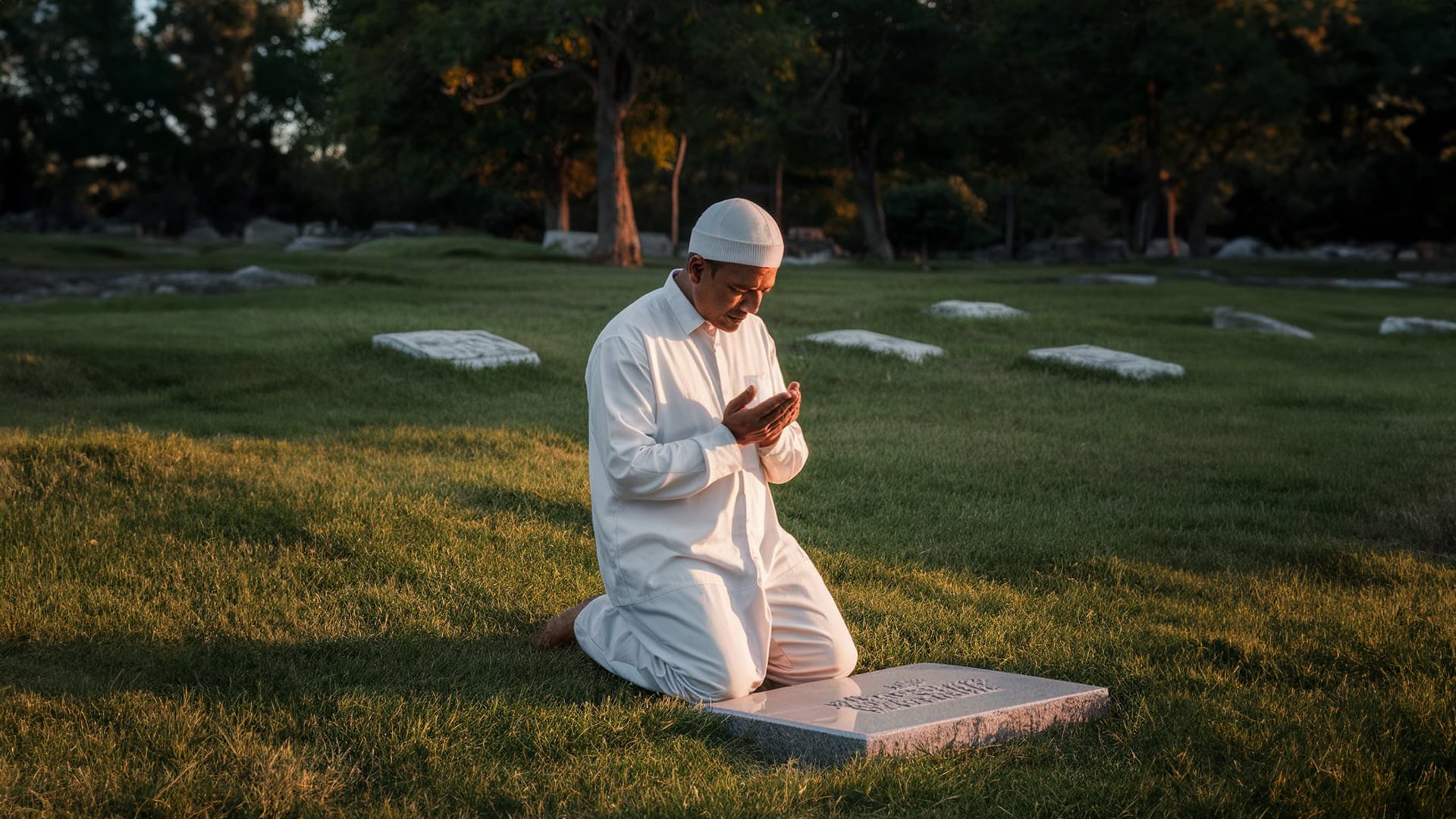
Hi, everyone. I know that losing someone you love hurts deeply, like the world is falling apart. Feeling sad and hopeless is completely normal, and even our Prophet went through it. But I want to share a warm secret: even though they have left us for another world, our love and longing for them are not in vain! The dua we make for them, these calls from our hearts, actually help them directly and improve their status there. And there is more! They will even know that this is happening because we are praying for them. So, our love and care cross the boundary of life and death, keeping us connected to them and sending them warmth and help. One of the hardest challenges any of us can face is the death of a loved one. After a loved one passes, it is natural to be overwhelmed by grief, and for some, it can even lead to a sense of hopelessness and helplessness. Even though we acknowledge our grief, just as our beloved Prophet Muhammad (peace be upon him) did—he lost his uncle Abu Talib, his beloved wife Khadija, and all his children except Fatima (may Allah be pleased with her)—we can find comfort in the duty of praying for our loved ones. In fact, the duas we make for them after they pass can directly affect their status in the afterlife. Abu Hurairah (may Allah be pleased with him) narrated that the Messenger of Allah (peace be upon him) said: 'Indeed, Allah, the Exalted, will raise the rank of His righteous servant in Paradise, and he will ask: "O Lord, what is this?"' 'Allah will say: "This is because your child sought forgiveness for you."' (Musnad Ahmad, No. 10610). Therefore, our connection with our loved ones is so deep that even after they start their journey to the afterlife, we can still help raise their status. More importantly, we not only raise their rank, but they are also told that this elevation is due to the duas you made for them. This makes your dua not just a comfort for yourself, but a help to them and a way to keep communicating with your loved one. Interestingly, in this narration, the son did not ask to raise his father's rank, but only asked for forgiveness for him. This suggests the special power of seeking forgiveness (istighfar). The link between seeking forgiveness and raising one's rank is that seeking forgiveness is not just for the sins we can remember. This can also be seen in the tradition of the Prophet (peace be upon him), who would say "astaghfirullah" (I seek forgiveness from Allah) three times after every namaz. In fact, seeking forgiveness is so important that almost every dua we cover here starts with seeking forgiveness. It is easy to assume our loved ones are perfect and sinless, especially when we respect them so much. However, it is crucial to always seek forgiveness even for sins we are not aware of, as the truth is we can never know all the faults of others. Generally, we should never judge a servant's status with Allah, but instead accept the fact that "every descendant of Adam is a sinner" (Jami` at-Tirmidhi, No. 2499). Yet, this must be balanced with maintaining a good opinion (husn al-dhann) of Allah, who "is indeed the Most Merciful, the Most Compassionate" (Quran 49:5). In his Sahih al-Bukhari, Imam Bukhari begins the "Book of Funerals" by citing a report from Abu Dharr (may Allah be pleased with him) that the Prophet ﷺ said: "Whoever says 'There is no god but Allah' (La ilaha illa Allah) will enter Paradise." Abu Dharr asked: "Even if he commits adultery and theft?" The Prophet ﷺ replied: "Even if he commits adultery and theft." (Sahih al-Bukhari, No. 1237). Here, Imam Bukhari shows his wisdom by opening the chapter with a report that reminds us to maintain a positive opinion (husn al-dhann) of Allah. This is not meant to downplay the sins of adultery and theft, but to emphasize our firm belief in the power of sincere dua and the promise that Allah will always treat us with love and forgiveness. Dua for deceased parents: Abu Usaid said: "While we were with the Messenger of Allah ﷺ, a man asked: 'Messenger of Allah, is there any act of kindness I can still do for my parents after they die?' He replied: 'Yes, there are four things: pray for them, ask for their forgiveness, fulfill their promises, and be kind to their friends.' You only have kinship through your parents.' (Al-Adab al-Mufrad, No. 35, weak hadith). According to the dua Prophet Nuh made to Allah (71:28), you can say: 'My Lord, forgive me and my parents.' رَّبِّ ٱغْفِرْ لِي وَلِوَٰلِدَىَّ However, this can also be combined with another dua from the Quran. After commanding us to honor our parents and never say "uff" to them, Allah commands us to pray for them in this form: وَٱخْفِضْ لَهُمَا جَنَاحَ ٱلذُّلِّ مِنَ ٱلرَّحْمَةِ وَقُل رَّبِّ ٱرْحَمْهُمَا كَمَا رَبَّيَانِى صَغِيرًۭا "And lower to them the wing of humility out of mercy and say, 'My Lord!' Have mercy upon them as they brought me up when I was small.'" (Quran 17:24) Therefore, to pray for our deceased parents and help them enter Paradise, if Allah wills, we can say: رَّبِّ ٱغْفِرْ لِي وَلِوَٰلِدَىَّ وارْحَمْهُمَا كَمَا رَبَّيَانِى صَغِيرا Rabbi ighfir li wa li-walidayya wa-irhamhuma kama rabbayani saghira My Lord! Forgive me and my parents, and have mercy on them as they raised me when I was small. To change the dua to pray only for your father, you can say: Rabbi ighfir li wa li-waalidi wa-irhamhu kama rabbani saghira رَّبِّ ٱغْفِرْ لِي وَلِوَالِدي وارْحَمْهُ كَمَا رَبَّنِي صَغِيرًۭا And to pray only for your mother, you can say: Rabbi ighfir li wa li-waalidati wa-irhamha kama rabbatni saghira رَّبِّ ٱغْفِرْ لِي وَلِوَالِدتي وارْحَمْهُا كَمَا رَبَّتنِي صَغِيرًۭا Dua for deceased Muslims: The following supplication is one of the most famous duas for the deceased, and it is the one you are most likely to hear at a graveyard. You can recite it during the funeral prayer (janaza) after the third takbir, or at the graveyard, and you can continue to repeat it afterward, especially in the period immediately following their passing. Awf ibn Malik (may Allah be pleased with him) reported: I heard the Prophet ﷺ say at the funeral of a companion: اللَّهُمَّ أغْفِر لَهُ وَارْحَمْهُ وعَافِهِ وَاعْفُ عَنْهُ وَأَكْرِم نُزُلَهُ وَوَسَّعْ مُدْخَلَهُ وَاغْسِلْهُ بِالماءِ والثَلْجِ والبَرَدِ ونقِّهِ من الخَطايا كما يُنَقّى الثوبُ الأَبْيَضُ من الدَّنَسِ Allahumma-ghfir lahu warhamhu wa'afih wa'fu 'anhu wa akrim nuzulahu wa wasi' mudkhalaahu wa 'ghsilhu bil-ma'i wath-thalji wal-baradi wa naqqihi min al-khataya kama yunaqqa al-thawbu al-abyadu min al-danas. My Lord! Forgive him, have mercy on him, grant him peace, and pardon him; honor his reception, expand his grave, wash him with water, ice, and snow, and cleanse him of sins just as a white garment is cleaned of dirt. (Sahih Muslim, No. 963) In some of the Prophet's ﷺ other duas, we see him directly mention and ask for the supreme mercy of Allah. In our dua, we should mention the attributes of Allah as much as possible, because the Almighty has instructed us to do so. He (ﷻ) says: "The most beautiful names belong to Allah, so call upon Him by them..." (Quran 7:180). A beautiful dua to recite by a grave to directly ask for Allah's mercy is: Allahumma 'abduka wa ibnu amatika ihtaja ila rahmatika wa anta ghaniyyun 'an 'adhabih. 'In kana muhsinan fazid fi hasanatih. Wa 'in kana musi'an fatajaawaz 'anhu. O Allah! Your servant and the child of Your female servant (referring to the deceased) now needs Your mercy, and You have no need to punish him. If he was a doer of good, please increase his good deeds; If he was a wrongdoer, please overlook his faults (Hisn al-Muslim, paragraph 159). Another dua that is beneficial for both the deceased and the living is: Allahumma-ghfir lihayyina wa mayyitina wa shahidina, wa gha'ibina, wa saghirina wa kabirina, wa dhakarina wa unthana. Allahumma man ahyaytahu minna fa ahyihi 'ala al-Islam, wa man tawaffaytahu minna fatawaffahu 'ala al-iman. Allahumma la tahrimna ajrahu, wa la tudillana ba'dahu. O Allah! Forgive our living and our dead, those who are present and those who are absent, our young and our old, our males and our females. O Allah! Let those among us whom You keep alive live in Islam, and let those among us whom You take in death die in faith (imani). O Allah! Do not deprive us of their reward, and do not let us go astray after them (Sunan Ibn Majah, paragraph 1498). One of the most famous duas for the deceased was made after the companion Abu Salamah (may Allah be pleased with him) passed away. At that time, the Prophet ﷺ visited his beloved companion (may Allah be pleased with him) as he was dying. When he ﷺ saw Abu Salamah's eyes fixed in one direction, showing that his soul had left his body, the Prophet ﷺ followed the Sunnah and closed Abu Salamah's eyes. At this moment, some of Abu Salamah's family began to wail and cry. The Prophet ﷺ immediately warned them about the importance of making good duas for themselves and their loved ones, saying: Do not pray for anything bad for yourselves, because the angels will say "Ameen" to everything you say. He ﷺ then made a beautiful dua for Abu Salamah, which you can also repeat for your own loved ones: Allahumma-ghfir li (insert name) wa arfa' darajatahu fi l-mahdiyyiin, wa afsah lahu fi qabrihi wa nawwir lahu fihi wa akhlufhu fi 'aqibihi fi l-ghabirin. O Allah! Forgive (insert name) and raise his rank among those who are guided. Expand his grave for him, grant him light within it, and leave behind a successor for him among his descendants (Sahih Muslim, paragraph 920). In this dua, we can see a carefully arranged order. First, we pray for the final destination of the deceased by saying "raise his rank among those who are guided." After recognizing that Barzakh (the state where the soul resides before resurrection) is a transitional stage toward the final destination, we then ask Allah to expand their grave and grant them light. Finally, we end the dua by asking for the continued guidance and piety of the deceased's descendants, which is both their lasting legacy in this world and a source of reward for the deceased in the afterlife. While we provide a series of carefully arranged dua sequences here, remember that praying for loved ones does not always need to follow a rigid structure. Beyond the prescribed duas we offer here, you are free to speak directly to Allah, the All-Hearing, and pour out your heart. Use your own language and sincere heart to offer your most earnest dua, as if you are in a state of desperation and in urgent need of the intervention of Allah. May Allah grant all our deceased infinite mercy and forgive all our mistakes and theirs.
Summary: This article explains how Muslims can make dua for loved ones who have passed away, with Quranic and prophetic guidance on mercy, forgiveness, and hope. It keeps the focus on grief, sadaqah jariyah, righteous descendants, and sincere prayer for the deceased.
Hi, everyone. I know that losing someone you love hurts deeply, like the world is falling apart. Feeling sad and hopeless is completely normal, and even our Prophet went through it. But I want to share a warm secret: even though they have left us for another world, our love and longing for them are not in vain! The dua we make for them, these calls from our hearts, actually help them directly and improve their status there. And there is more! They will even know that this is happening because we are praying for them. So, our love and care cross the boundary of life and death, keeping us connected to them and sending them warmth and help. One of the hardest challenges any of us can face is the death of a loved one. After a loved one passes, it is natural to be overwhelmed by grief, and for some, it can even lead to a sense of hopelessness and helplessness. Even though we acknowledge our grief, just as our beloved Prophet Muhammad (peace be upon him) did—he lost his uncle Abu Talib, his beloved wife Khadija, and all his children except Fatima (may Allah be pleased with her)—we can find comfort in the duty of praying for our loved ones. In fact, the duas we make for them after they pass can directly affect their status in the afterlife. Abu Hurairah (may Allah be pleased with him) narrated that the Messenger of Allah (peace be upon him) said: 'Indeed, Allah, the Exalted, will raise the rank of His righteous servant in Paradise, and he will ask: "O Lord, what is this?"' 'Allah will say: "This is because your child sought forgiveness for you."' (Musnad Ahmad, No. 10610). Therefore, our connection with our loved ones is so deep that even after they start their journey to the afterlife, we can still help raise their status. More importantly, we not only raise their rank, but they are also told that this elevation is due to the duas you made for them. This makes your dua not just a comfort for yourself, but a help to them and a way to keep communicating with your loved one. Interestingly, in this narration, the son did not ask to raise his father's rank, but only asked for forgiveness for him. This suggests the special power of seeking forgiveness (istighfar). The link between seeking forgiveness and raising one's rank is that seeking forgiveness is not just for the sins we can remember. This can also be seen in the tradition of the Prophet (peace be upon him), who would say "astaghfirullah" (I seek forgiveness from Allah) three times after every namaz. In fact, seeking forgiveness is so important that almost every dua we cover here starts with seeking forgiveness. It is easy to assume our loved ones are perfect and sinless, especially when we respect them so much. However, it is crucial to always seek forgiveness even for sins we are not aware of, as the truth is we can never know all the faults of others. Generally, we should never judge a servant's status with Allah, but instead accept the fact that "every descendant of Adam is a sinner" (Jami` at-Tirmidhi, No. 2499). Yet, this must be balanced with maintaining a good opinion (husn al-dhann) of Allah, who "is indeed the Most Merciful, the Most Compassionate" (Quran 49:5). In his Sahih al-Bukhari, Imam Bukhari begins the "Book of Funerals" by citing a report from Abu Dharr (may Allah be pleased with him) that the Prophet ﷺ said: "Whoever says 'There is no god but Allah' (La ilaha illa Allah) will enter Paradise." Abu Dharr asked: "Even if he commits adultery and theft?" The Prophet ﷺ replied: "Even if he commits adultery and theft." (Sahih al-Bukhari, No. 1237). Here, Imam Bukhari shows his wisdom by opening the chapter with a report that reminds us to maintain a positive opinion (husn al-dhann) of Allah. This is not meant to downplay the sins of adultery and theft, but to emphasize our firm belief in the power of sincere dua and the promise that Allah will always treat us with love and forgiveness. Dua for deceased parents: Abu Usaid said: "While we were with the Messenger of Allah ﷺ, a man asked: 'Messenger of Allah, is there any act of kindness I can still do for my parents after they die?' He replied: 'Yes, there are four things: pray for them, ask for their forgiveness, fulfill their promises, and be kind to their friends.' You only have kinship through your parents.' (Al-Adab al-Mufrad, No. 35, weak hadith). According to the dua Prophet Nuh made to Allah (71:28), you can say: 'My Lord, forgive me and my parents.' رَّبِّ ٱغْفِرْ لِي وَلِوَٰلِدَىَّ However, this can also be combined with another dua from the Quran. After commanding us to honor our parents and never say "uff" to them, Allah commands us to pray for them in this form: وَٱخْفِضْ لَهُمَا جَنَاحَ ٱلذُّلِّ مِنَ ٱلرَّحْمَةِ وَقُل رَّبِّ ٱرْحَمْهُمَا كَمَا رَبَّيَانِى صَغِيرًۭا "And lower to them the wing of humility out of mercy and say, 'My Lord!' Have mercy upon them as they brought me up when I was small.'" (Quran 17:24) Therefore, to pray for our deceased parents and help them enter Paradise, if Allah wills, we can say: رَّبِّ ٱغْفِرْ لِي وَلِوَٰلِدَىَّ وارْحَمْهُمَا كَمَا رَبَّيَانِى صَغِيرا Rabbi ighfir li wa li-walidayya wa-irhamhuma kama rabbayani saghira My Lord! Forgive me and my parents, and have mercy on them as they raised me when I was small. To change the dua to pray only for your father, you can say: Rabbi ighfir li wa li-waalidi wa-irhamhu kama rabbani saghira رَّبِّ ٱغْفِرْ لِي وَلِوَالِدي وارْحَمْهُ كَمَا رَبَّنِي صَغِيرًۭا And to pray only for your mother, you can say: Rabbi ighfir li wa li-waalidati wa-irhamha kama rabbatni saghira رَّبِّ ٱغْفِرْ لِي وَلِوَالِدتي وارْحَمْهُا كَمَا رَبَّتنِي صَغِيرًۭا Dua for deceased Muslims: The following supplication is one of the most famous duas for the deceased, and it is the one you are most likely to hear at a graveyard. You can recite it during the funeral prayer (janaza) after the third takbir, or at the graveyard, and you can continue to repeat it afterward, especially in the period immediately following their passing. Awf ibn Malik (may Allah be pleased with him) reported: I heard the Prophet ﷺ say at the funeral of a companion: اللَّهُمَّ أغْفِر لَهُ وَارْحَمْهُ وعَافِهِ وَاعْفُ عَنْهُ وَأَكْرِم نُزُلَهُ وَوَسَّعْ مُدْخَلَهُ وَاغْسِلْهُ بِالماءِ والثَلْجِ والبَرَدِ ونقِّهِ من الخَطايا كما يُنَقّى الثوبُ الأَبْيَضُ من الدَّنَسِ Allahumma-ghfir lahu warhamhu wa'afih wa'fu 'anhu wa akrim nuzulahu wa wasi' mudkhalaahu wa 'ghsilhu bil-ma'i wath-thalji wal-baradi wa naqqihi min al-khataya kama yunaqqa al-thawbu al-abyadu min al-danas. My Lord! Forgive him, have mercy on him, grant him peace, and pardon him; honor his reception, expand his grave, wash him with water, ice, and snow, and cleanse him of sins just as a white garment is cleaned of dirt. (Sahih Muslim, No. 963) In some of the Prophet's ﷺ other duas, we see him directly mention and ask for the supreme mercy of Allah. In our dua, we should mention the attributes of Allah as much as possible, because the Almighty has instructed us to do so. He (ﷻ) says: "The most beautiful names belong to Allah, so call upon Him by them..." (Quran 7:180). A beautiful dua to recite by a grave to directly ask for Allah's mercy is: Allahumma 'abduka wa ibnu amatika ihtaja ila rahmatika wa anta ghaniyyun 'an 'adhabih. 'In kana muhsinan fazid fi hasanatih. Wa 'in kana musi'an fatajaawaz 'anhu. O Allah! Your servant and the child of Your female servant (referring to the deceased) now needs Your mercy, and You have no need to punish him. If he was a doer of good, please increase his good deeds; If he was a wrongdoer, please overlook his faults (Hisn al-Muslim, paragraph 159). Another dua that is beneficial for both the deceased and the living is: Allahumma-ghfir lihayyina wa mayyitina wa shahidina, wa gha'ibina, wa saghirina wa kabirina, wa dhakarina wa unthana. Allahumma man ahyaytahu minna fa ahyihi 'ala al-Islam, wa man tawaffaytahu minna fatawaffahu 'ala al-iman. Allahumma la tahrimna ajrahu, wa la tudillana ba'dahu. O Allah! Forgive our living and our dead, those who are present and those who are absent, our young and our old, our males and our females. O Allah! Let those among us whom You keep alive live in Islam, and let those among us whom You take in death die in faith (imani). O Allah! Do not deprive us of their reward, and do not let us go astray after them (Sunan Ibn Majah, paragraph 1498). One of the most famous duas for the deceased was made after the companion Abu Salamah (may Allah be pleased with him) passed away. At that time, the Prophet ﷺ visited his beloved companion (may Allah be pleased with him) as he was dying. When he ﷺ saw Abu Salamah's eyes fixed in one direction, showing that his soul had left his body, the Prophet ﷺ followed the Sunnah and closed Abu Salamah's eyes. At this moment, some of Abu Salamah's family began to wail and cry. The Prophet ﷺ immediately warned them about the importance of making good duas for themselves and their loved ones, saying: Do not pray for anything bad for yourselves, because the angels will say "Ameen" to everything you say. He ﷺ then made a beautiful dua for Abu Salamah, which you can also repeat for your own loved ones: Allahumma-ghfir li (insert name) wa arfa' darajatahu fi l-mahdiyyiin, wa afsah lahu fi qabrihi wa nawwir lahu fihi wa akhlufhu fi 'aqibihi fi l-ghabirin. O Allah! Forgive (insert name) and raise his rank among those who are guided. Expand his grave for him, grant him light within it, and leave behind a successor for him among his descendants (Sahih Muslim, paragraph 920). In this dua, we can see a carefully arranged order. First, we pray for the final destination of the deceased by saying "raise his rank among those who are guided." After recognizing that Barzakh (the state where the soul resides before resurrection) is a transitional stage toward the final destination, we then ask Allah to expand their grave and grant them light. Finally, we end the dua by asking for the continued guidance and piety of the deceased's descendants, which is both their lasting legacy in this world and a source of reward for the deceased in the afterlife. While we provide a series of carefully arranged dua sequences here, remember that praying for loved ones does not always need to follow a rigid structure. Beyond the prescribed duas we offer here, you are free to speak directly to Allah, the All-Hearing, and pour out your heart. Use your own language and sincere heart to offer your most earnest dua, as if you are in a state of desperation and in urgent need of the intervention of Allah. May Allah grant all our deceased infinite mercy and forgive all our mistakes and theirs.
