
Halal Travel Guide: Yangon - Southeast Asia's Largest Shia Mosque Complex
Reposted from the web
Summary: Yangon's Mughal Shia Mosque was founded in 1854 by Persian-Indian merchants and is described as the largest Shia mosque complex in Southeast Asia. This account covers its mosque compound, Muharram practices, Khoja community, and wider Shia history in Myanmar.
The Mughal Shia Mosque in Yangon, Myanmar, is the largest Shia mosque in Southeast Asia. It was founded in 1854 by Persian-Indian merchants who were among the first to settle in Yangon.
The British East India Company opened factories in Yangon starting in the 1790s, which led to the arrival of Persian and Indian Shia merchants. These Shia friends (dosti) and others from Iran, Afghanistan, and India were collectively called Mughals by the Burmese people. After the 19th century, these Mughals often served as intermediaries and translators between the British and the Burmese, becoming a key part of Yangon's foreign trade.
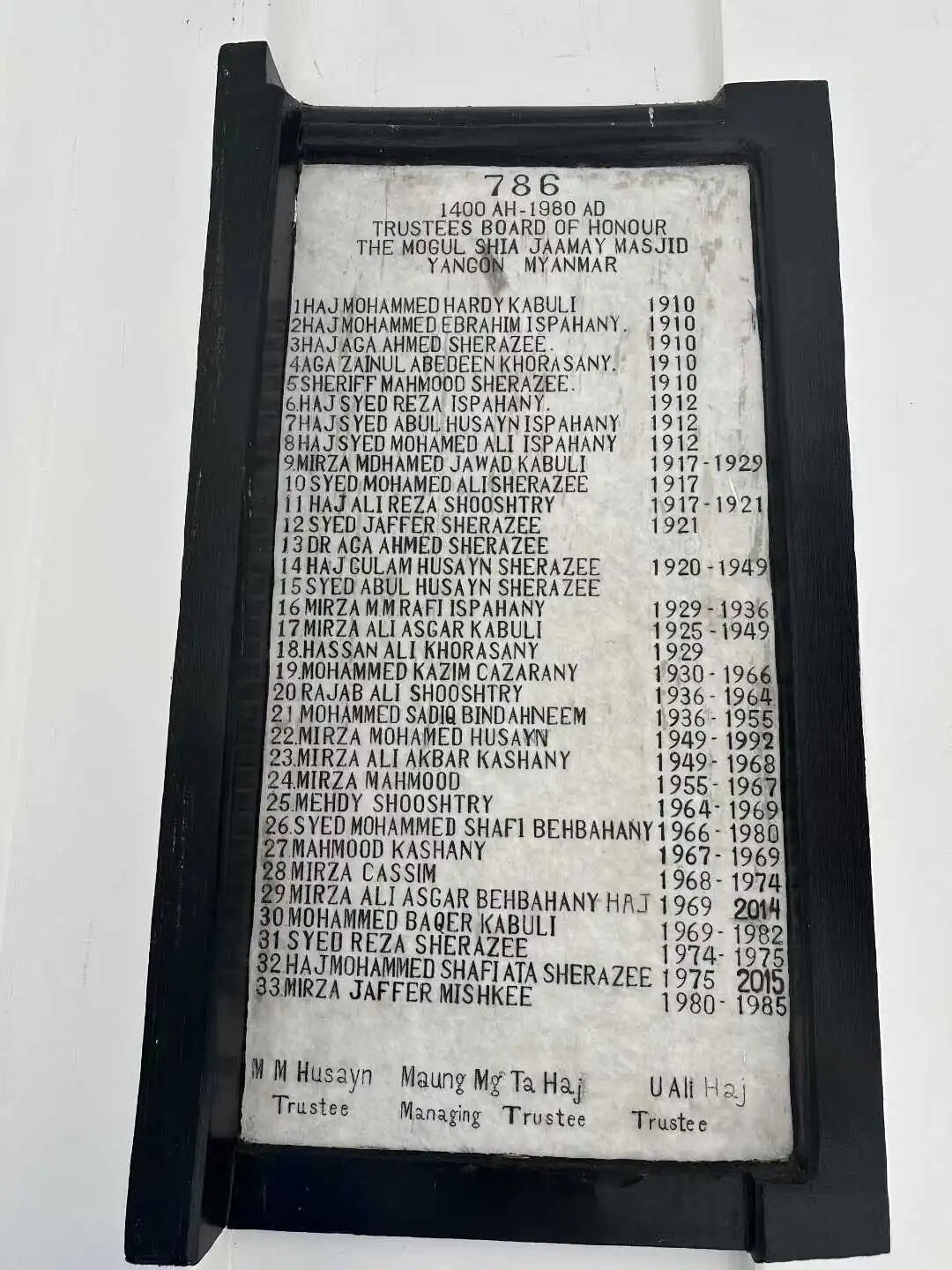
In 1852, the British officially occupied Yangon and made it the capital of British Burma. They hired army engineers to design a grid-patterned city, and the Shia community established the Mughal Shia Mosque. The Mughal Shia Mosque was originally a teak wood building. Between 1914 and 1918, mosque trustees from Isfahan, Shiraz, Khorasan, and Kabul in Iran and Afghanistan raised funds to rebuild it in its current Hyderabad style. The Shia faith developed on the Deccan Plateau in southern India between the 14th and 16th centuries. The Qutb Shahi dynasty declared it the state religion in 1518. Its capital, Hyderabad, was developed in 1591 with the help of Shia scholar and scientist Mir Muhammad Momin, and it later became a center for Shia culture in India.
S. Afsheen, a descendant of a trustee of the Yangon Mughal Shia Mosque, wrote in his autobiography that his ancestors were court advisors in the Mughal Empire. In the 19th century, his great-grandfather's father, Hasan Ali Khorasanee, came to Yangon to trade. He secured favorable trade terms and built a powerful trading company. Hasan Ali Khorasanee's son bought several properties in Yangon and ran leather and other trading businesses, which made the Khorasanee family one of the trustees of the Mughal Shia Mosque.
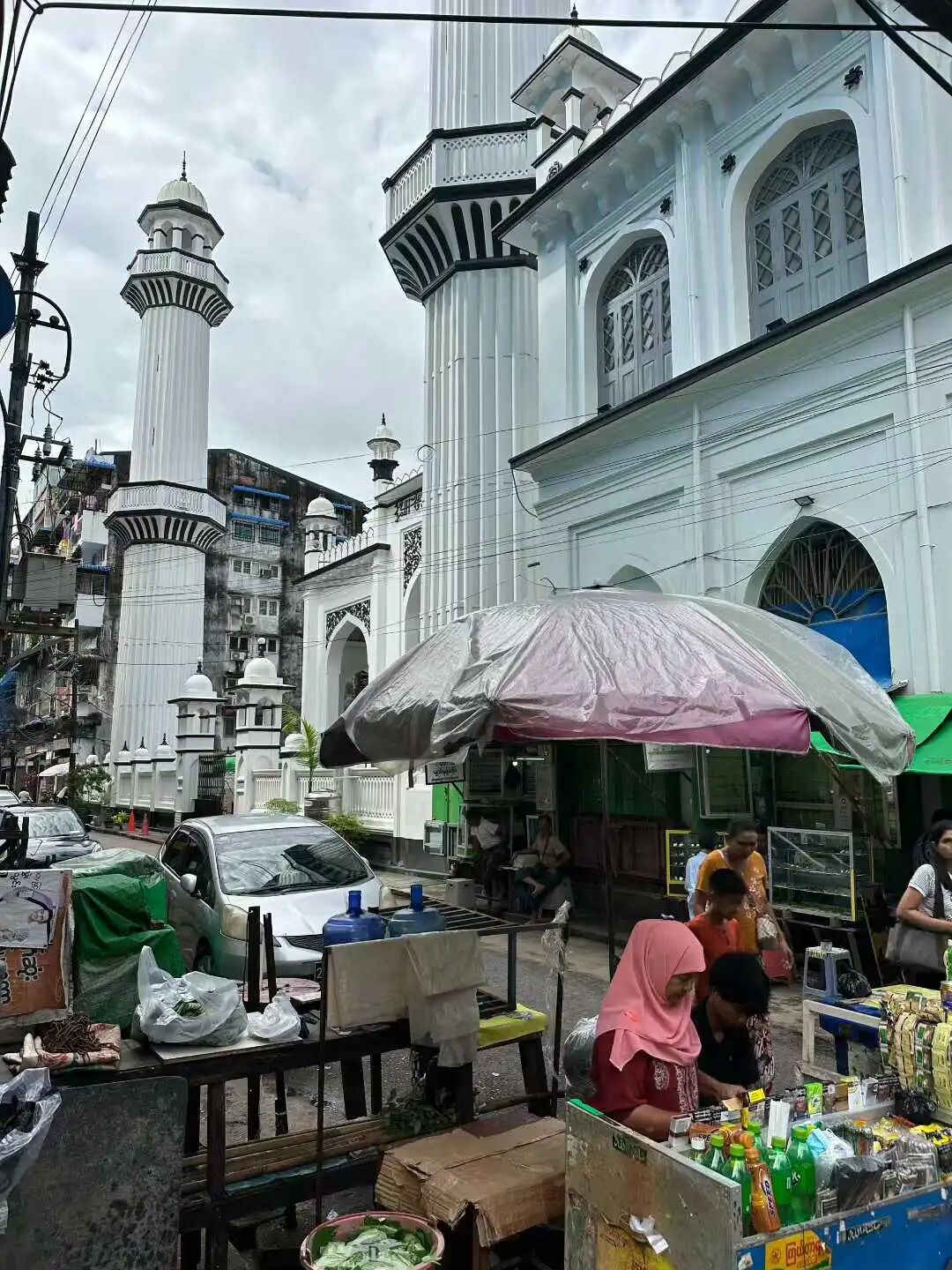
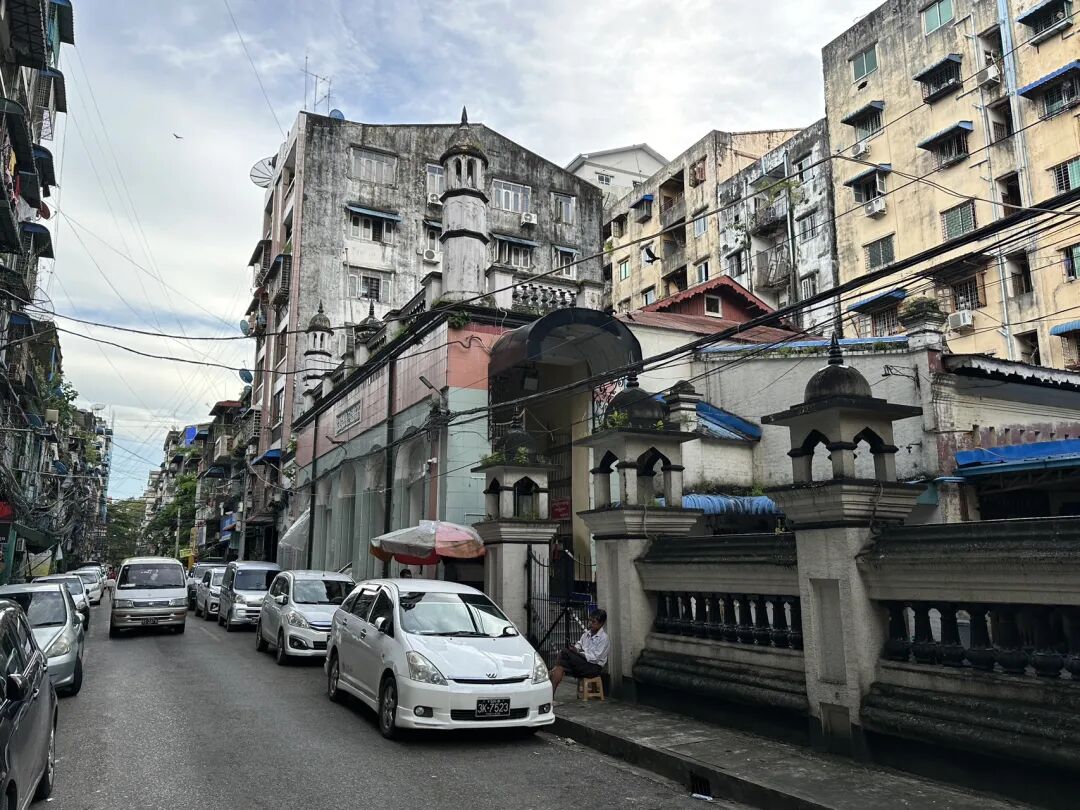
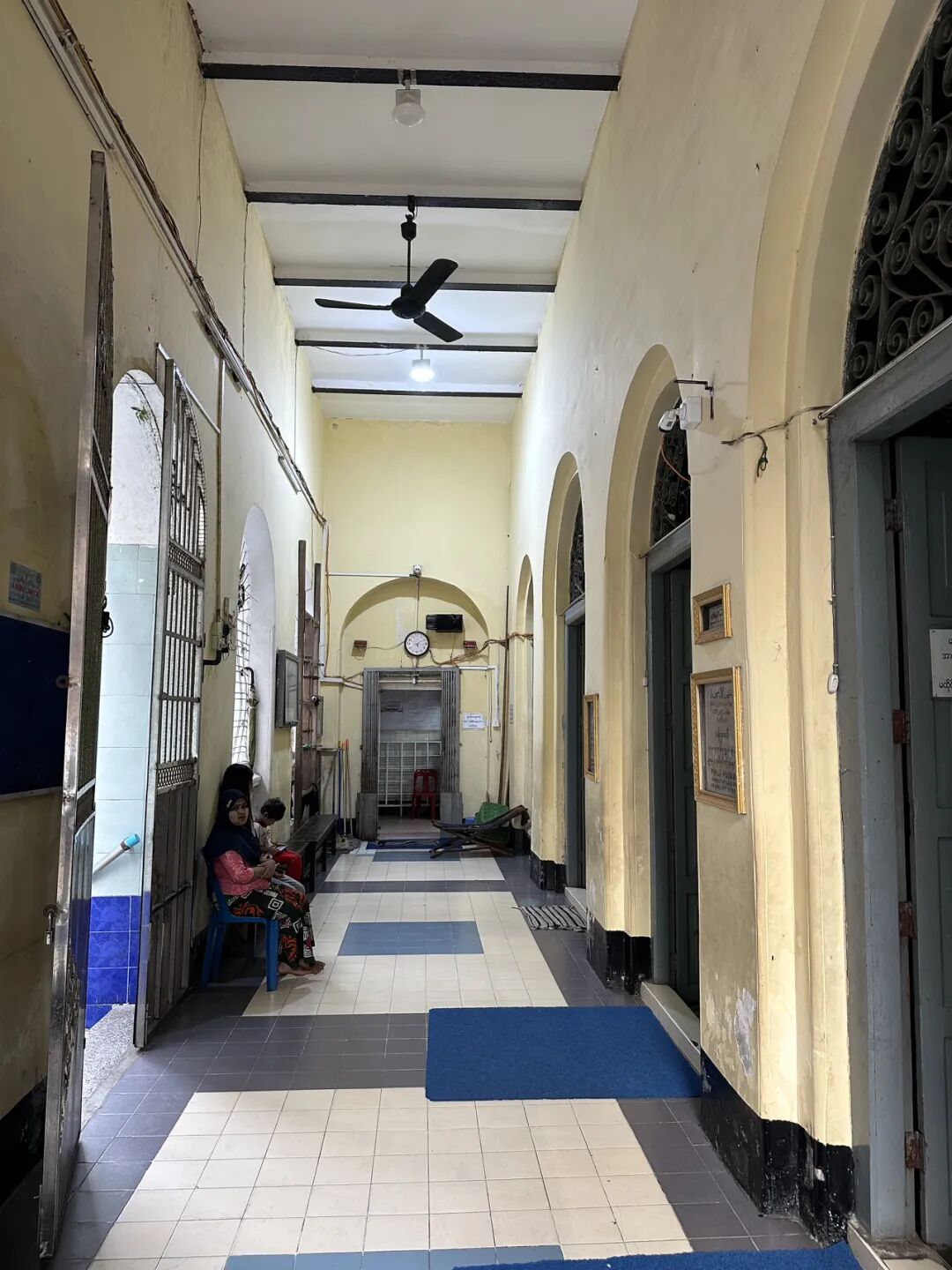
The Mughal Shia Mosque is located on Shwe Bon Thar Street in Yangon's Indian quarter. This street was originally called Mughal Street and is the area where Indian shops in Yangon are most concentrated. The mosque consists of a Mughal hall facing the street, a main prayer hall, and two tall minarets. The shops in the Mughal hall facing the street are rented out.
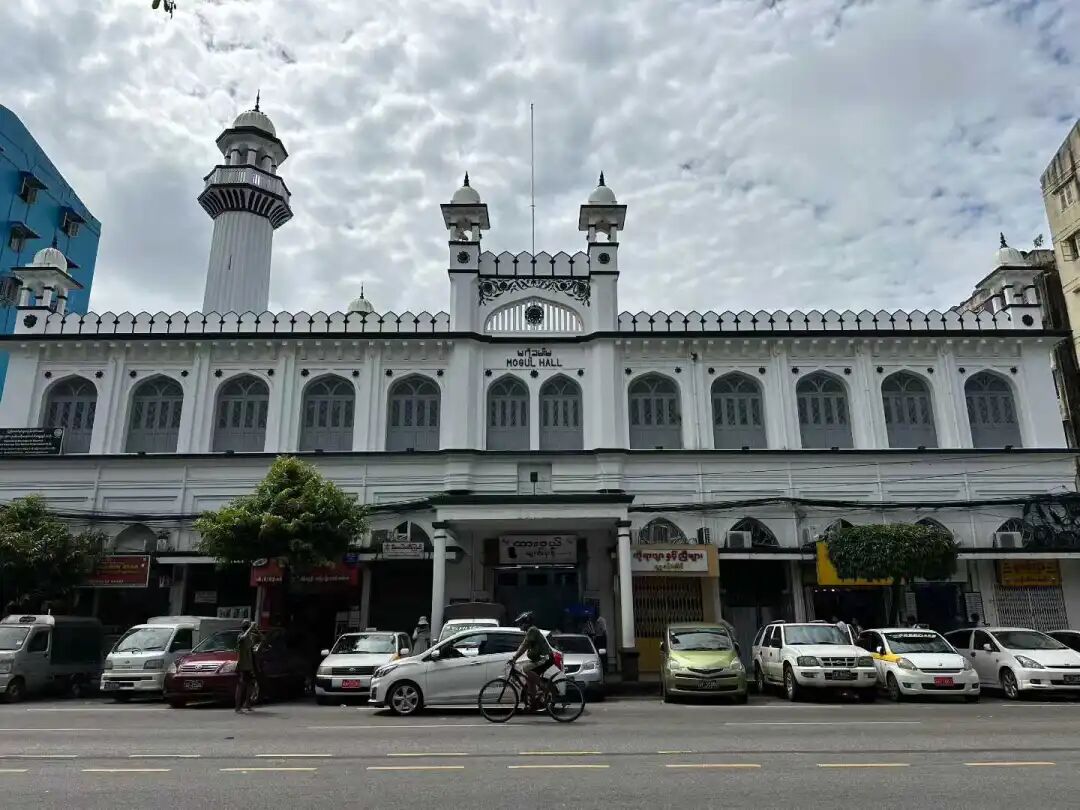
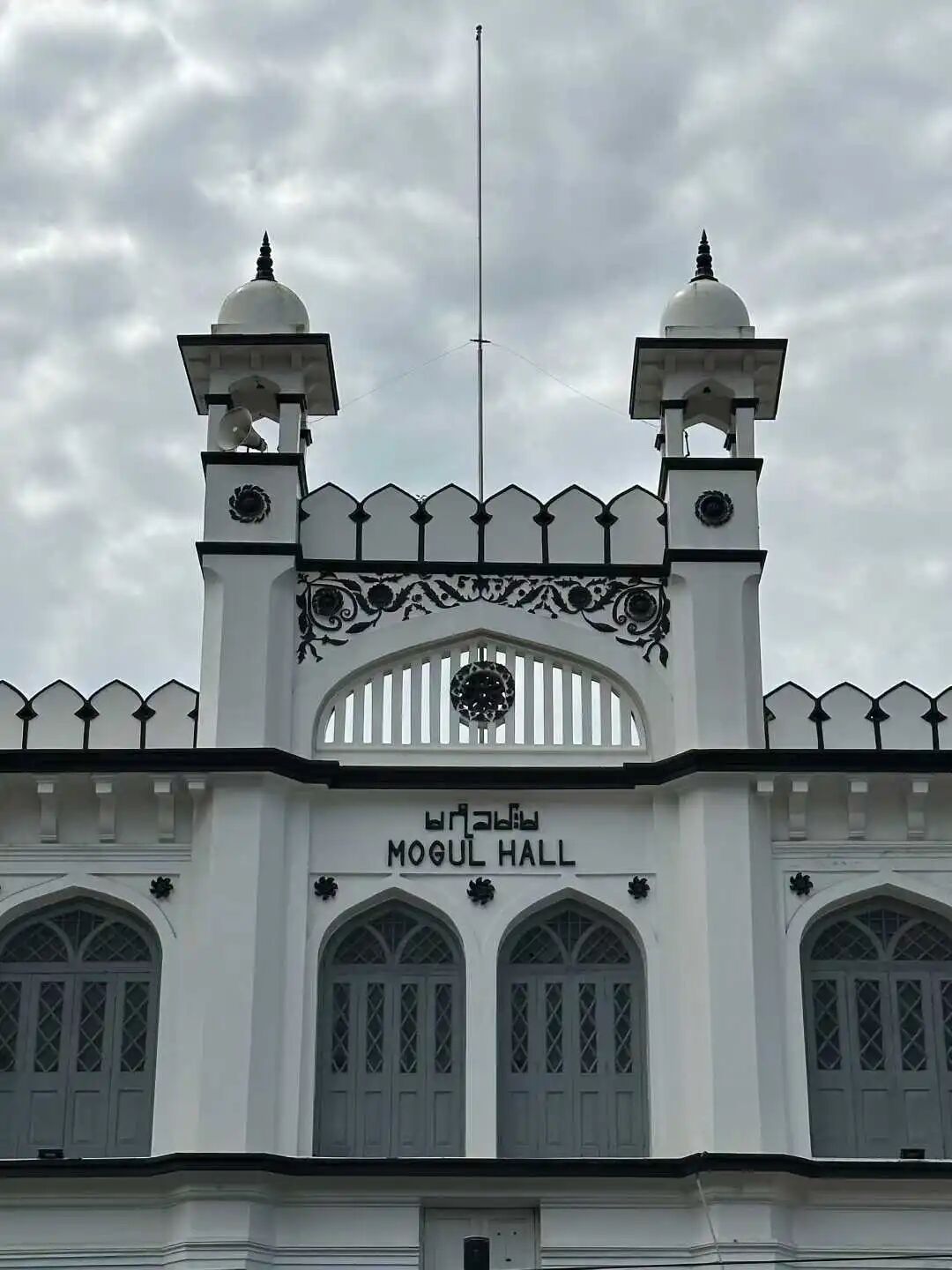
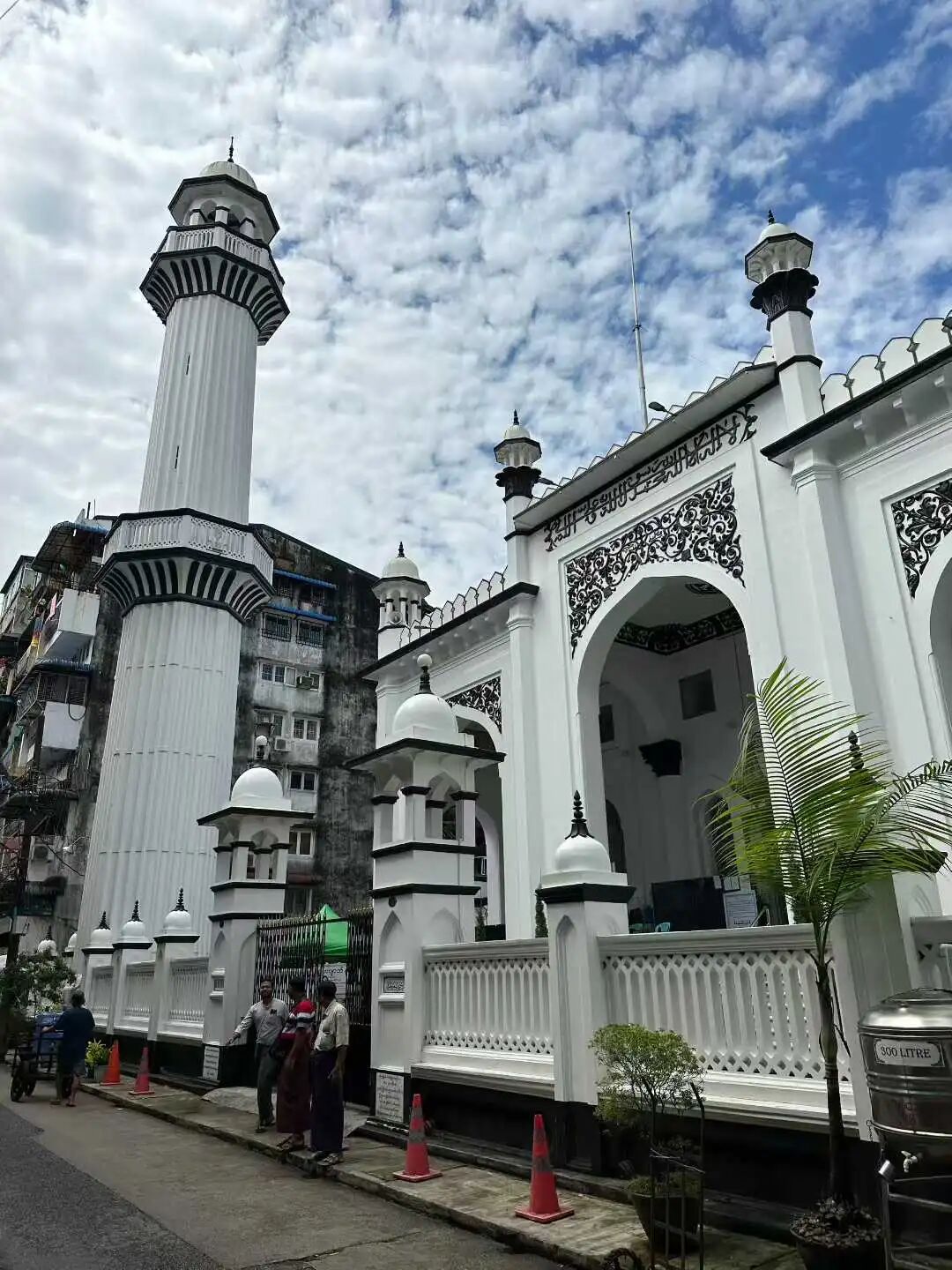
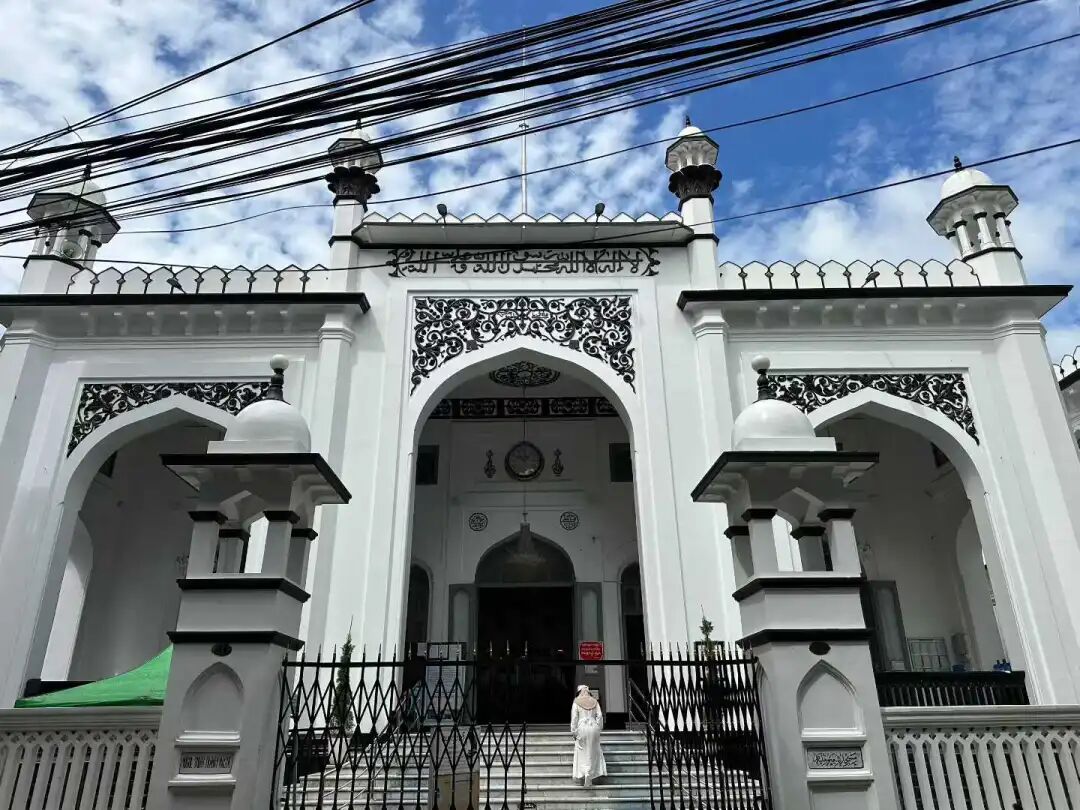
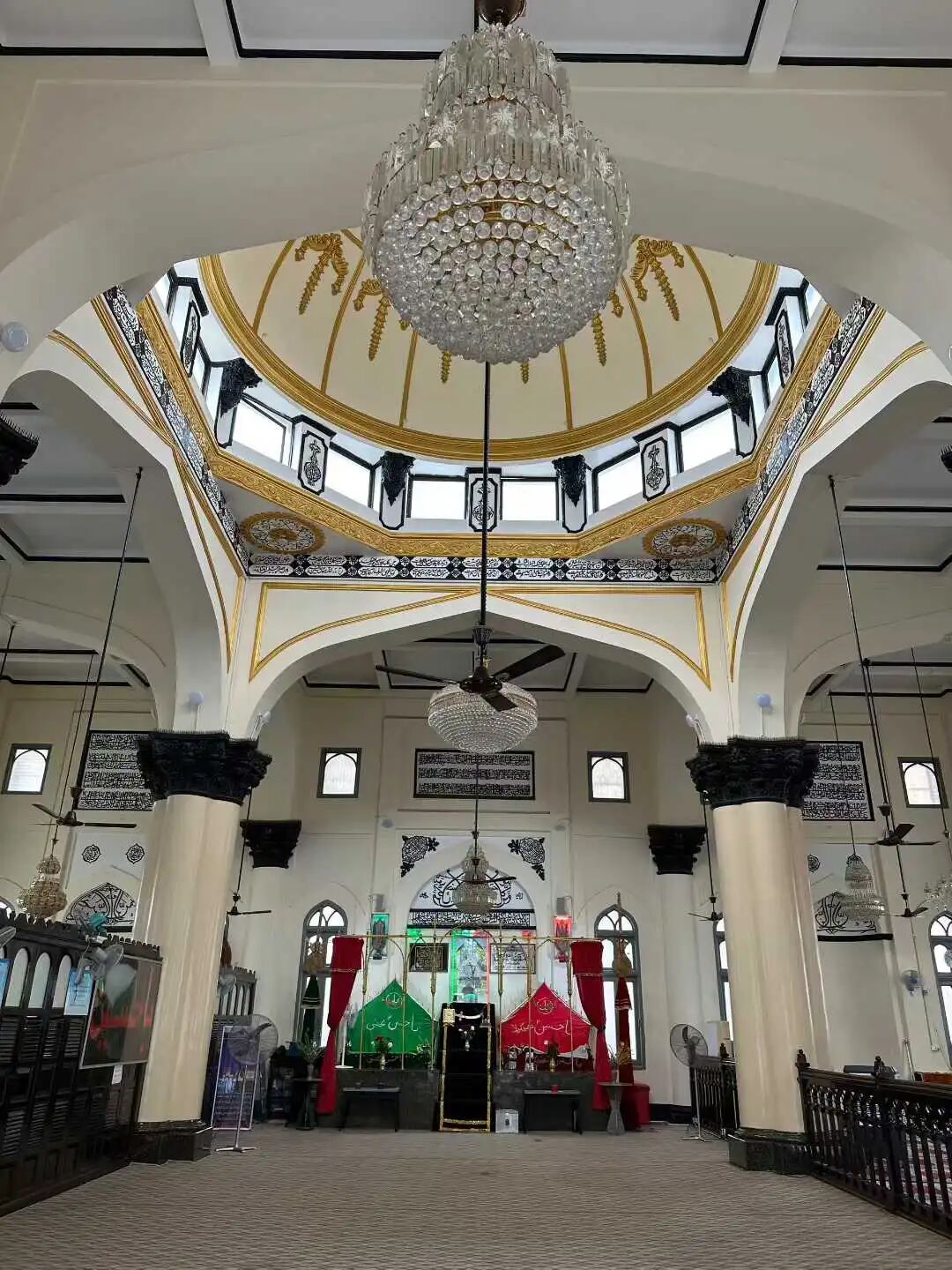
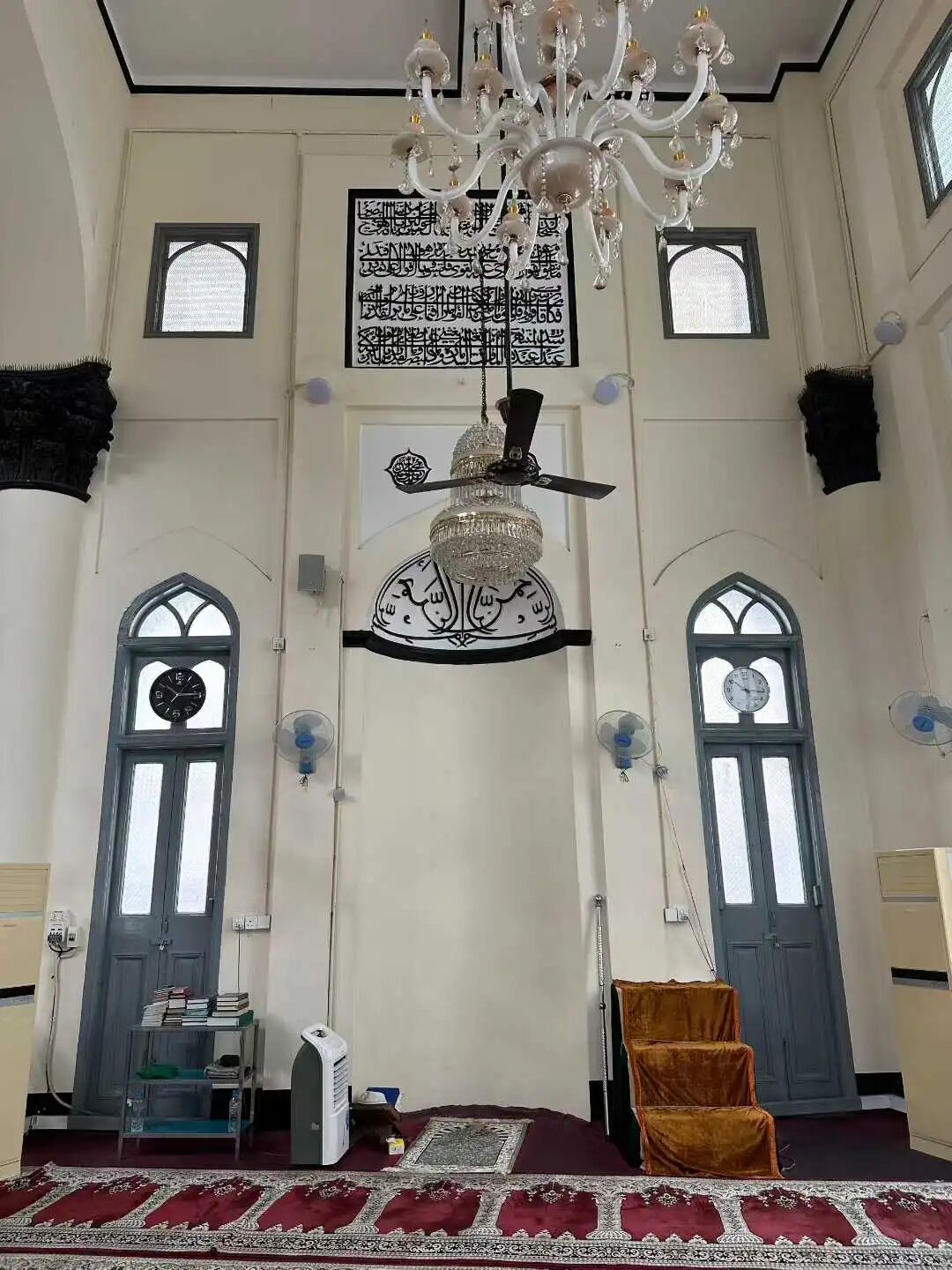
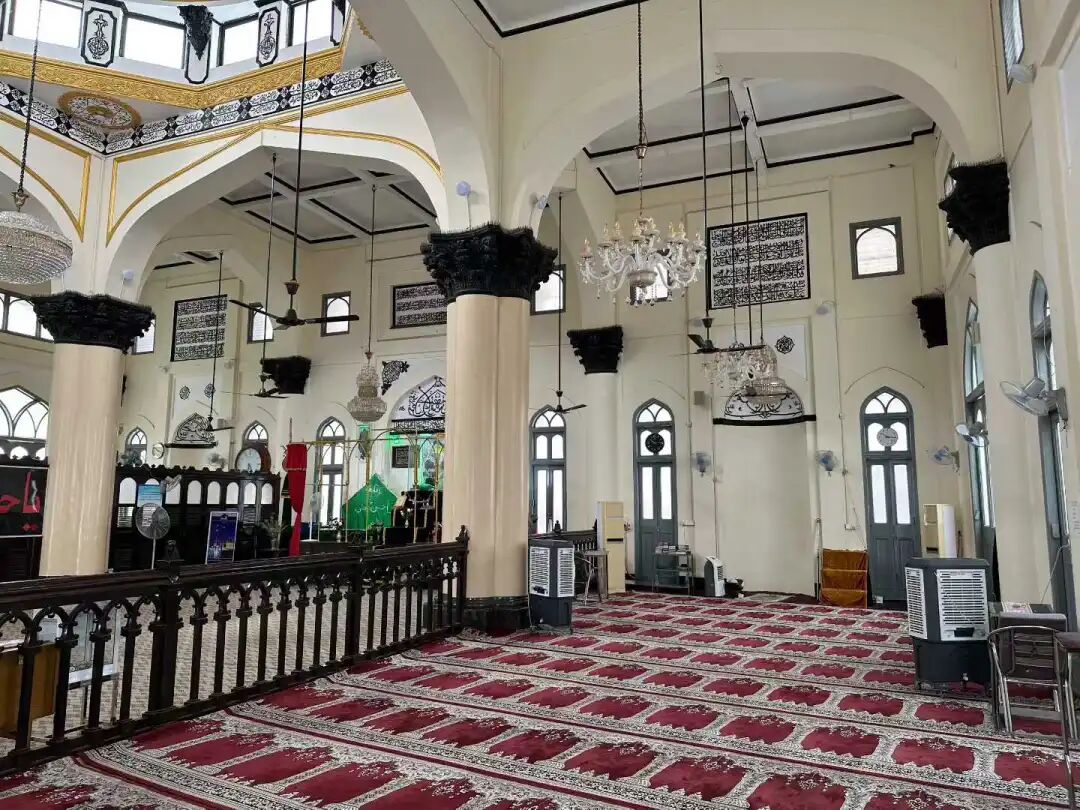
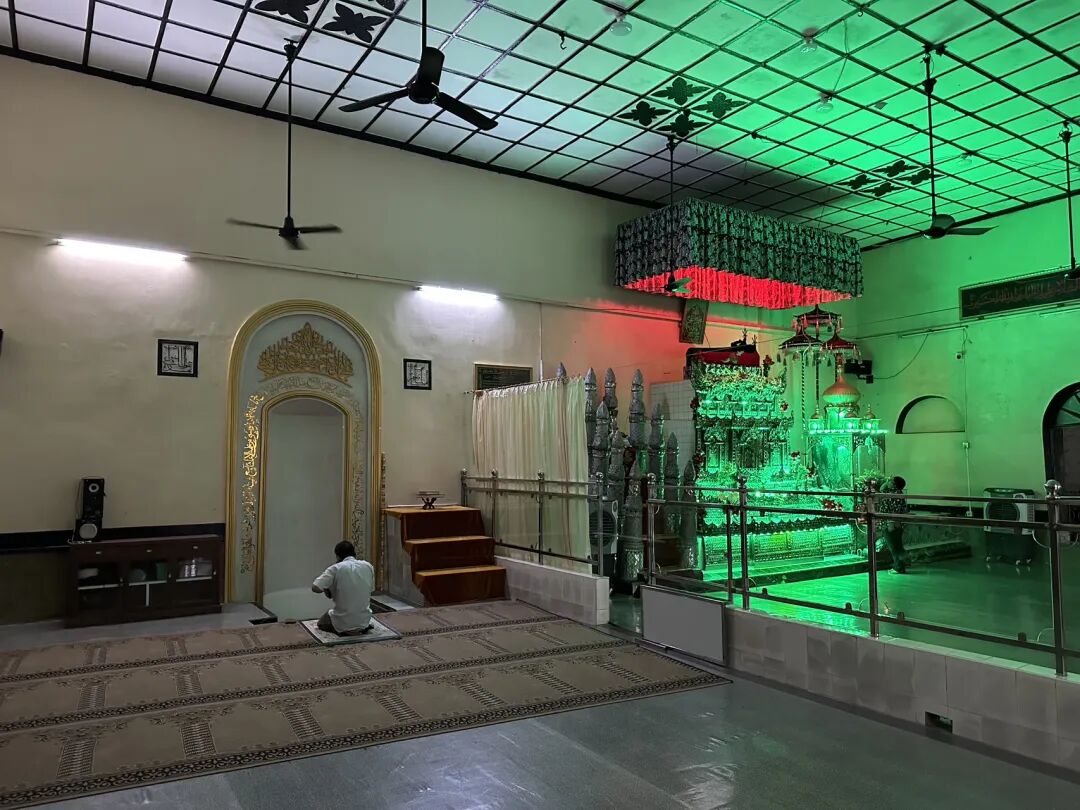
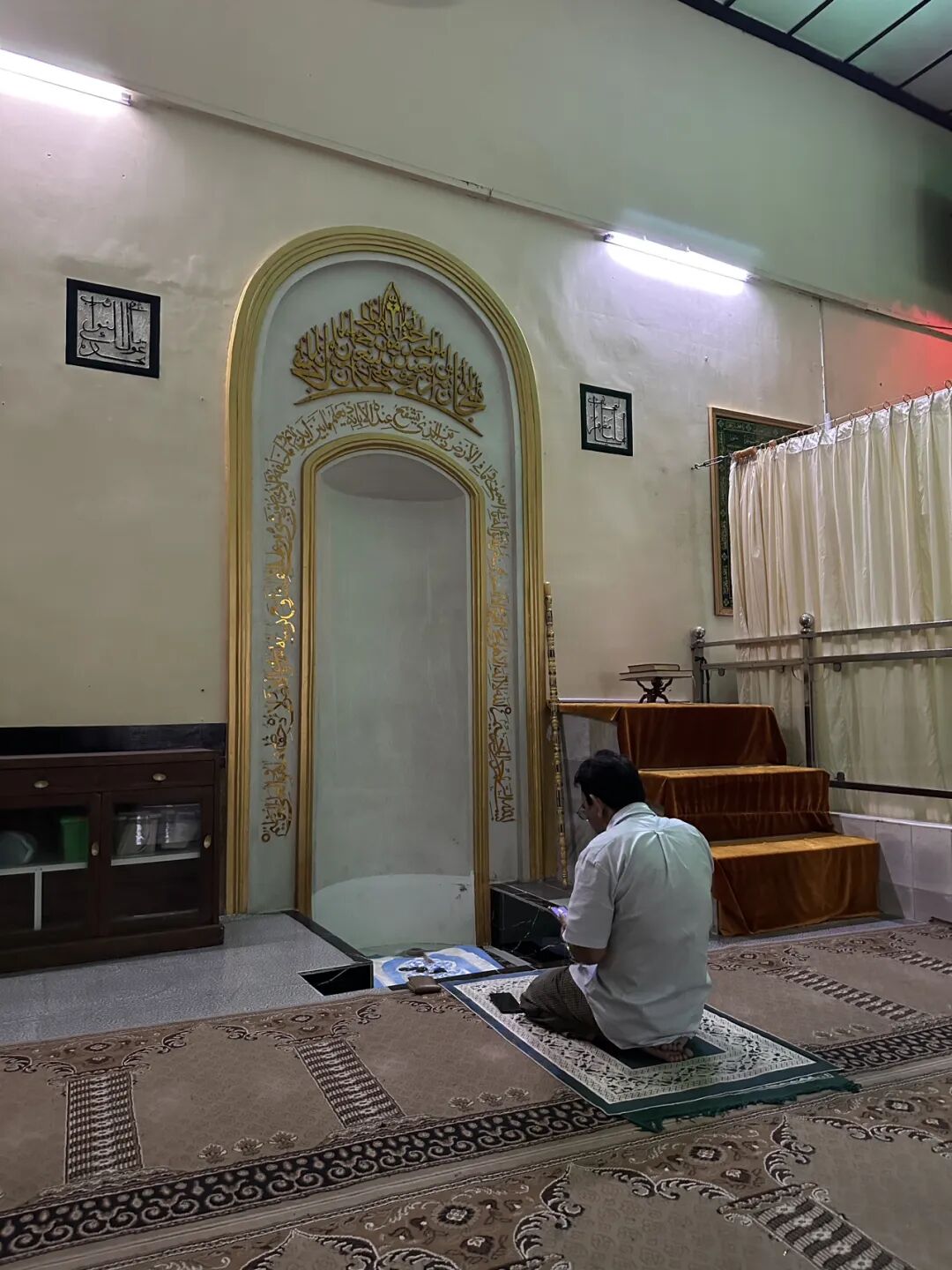
The layout of the main hall in the Yangon Mughal Shia Mosque is different from Sunni mosques. The hall has separate sections for men and women on either side, covered with prayer rugs, and features a mihrab to indicate the direction of prayer. The center is used for delivering the khutbah sermon and holding mourning ceremonies during the first month of the Islamic calendar.
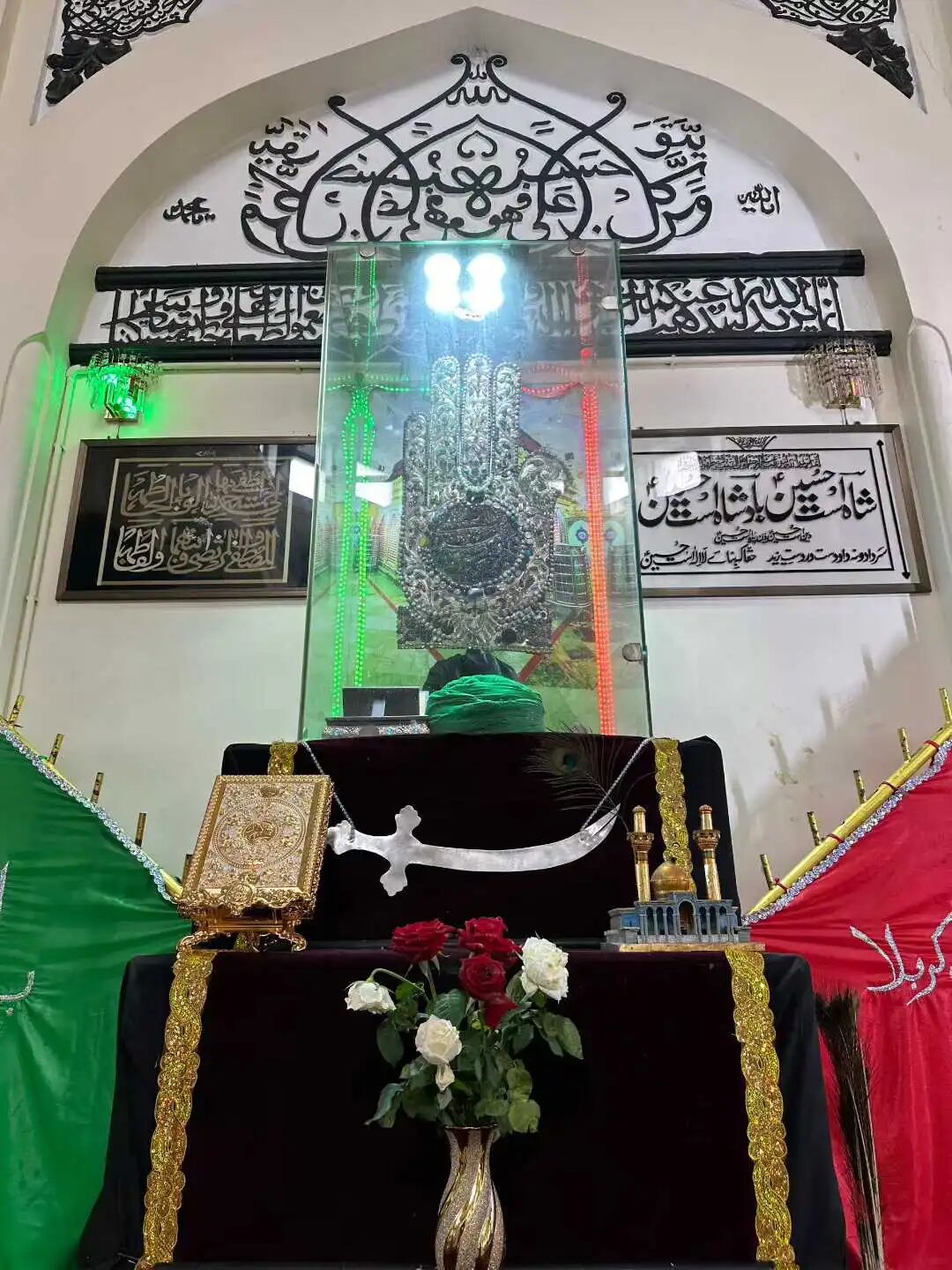
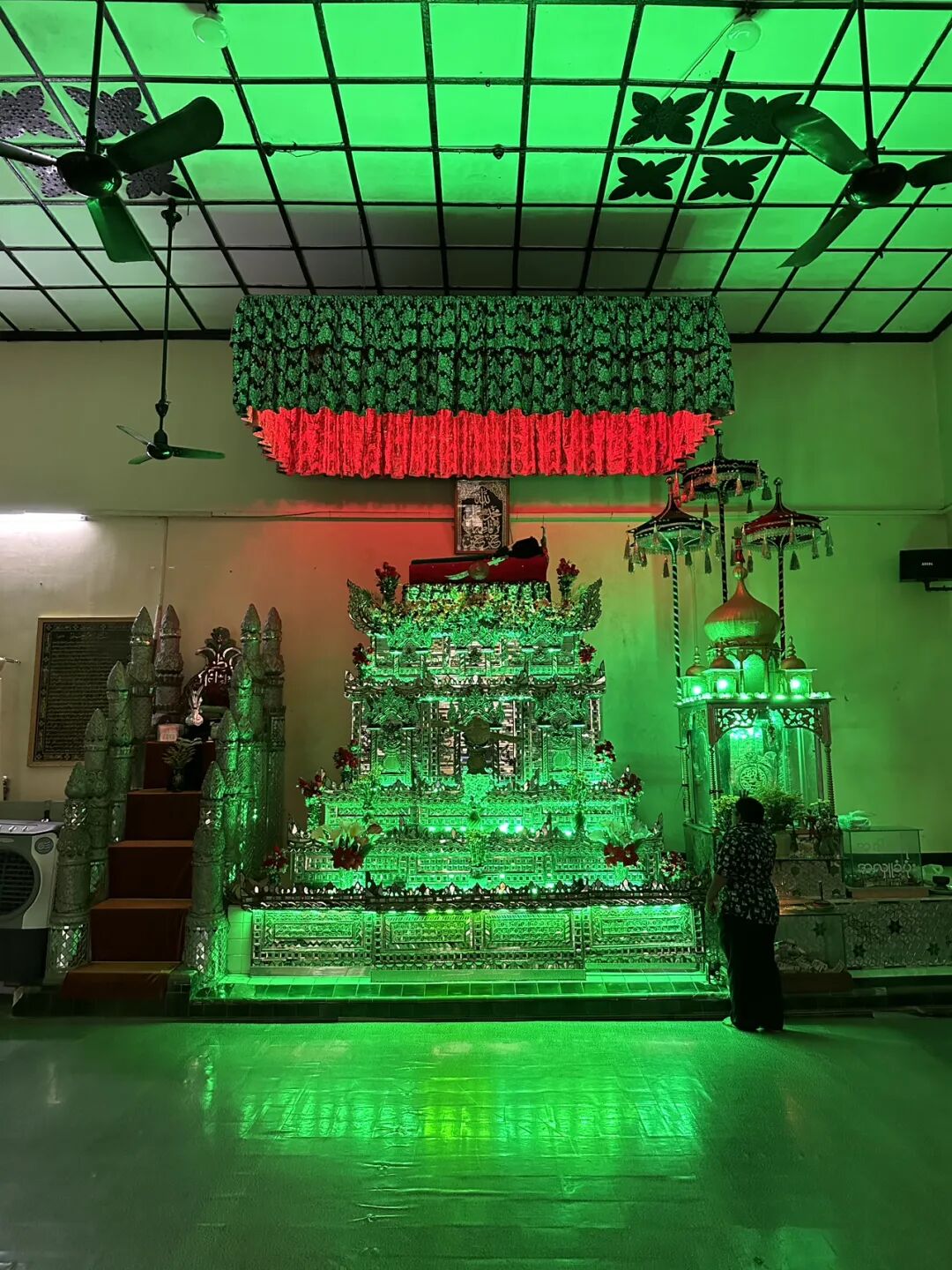
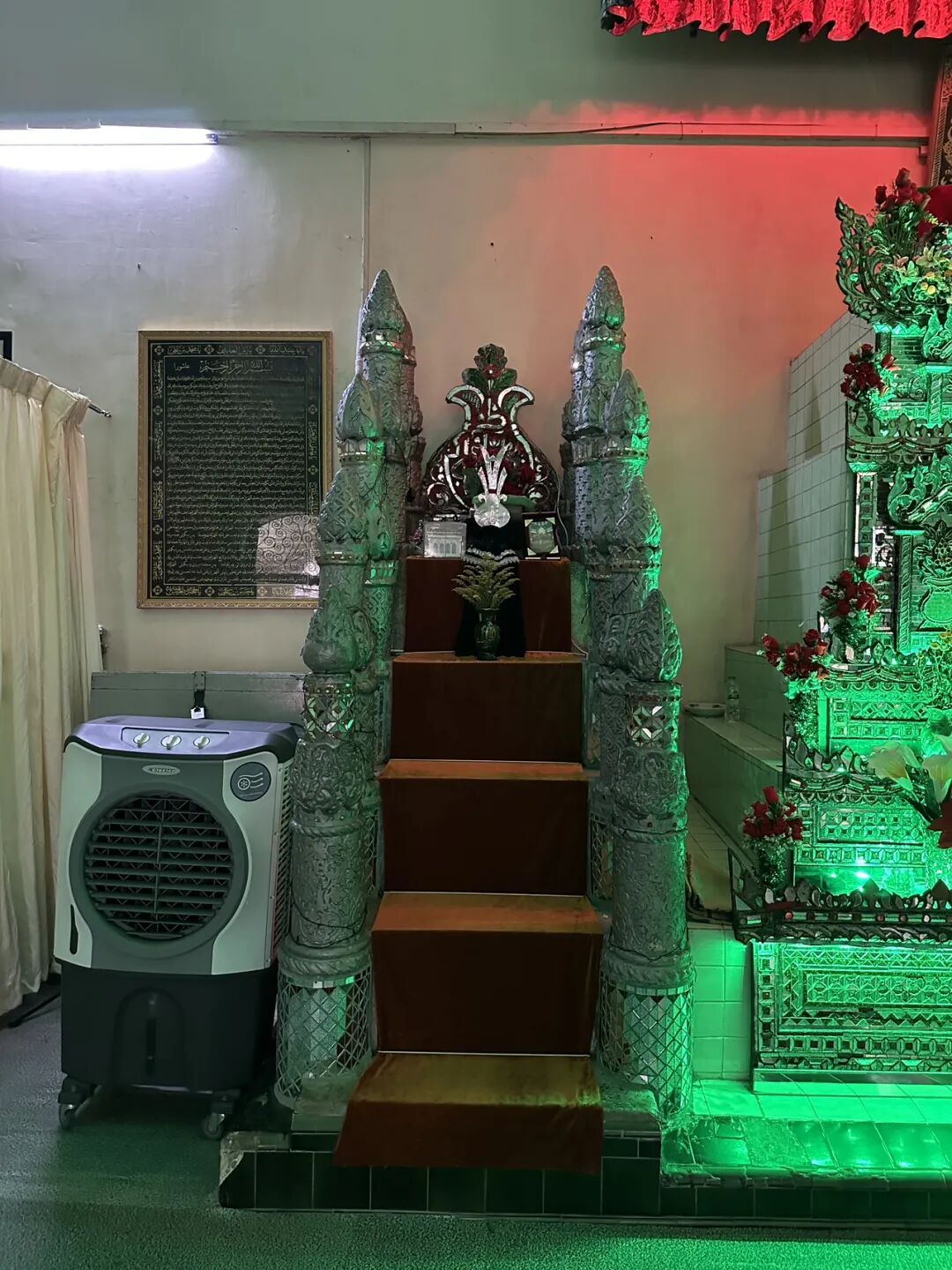
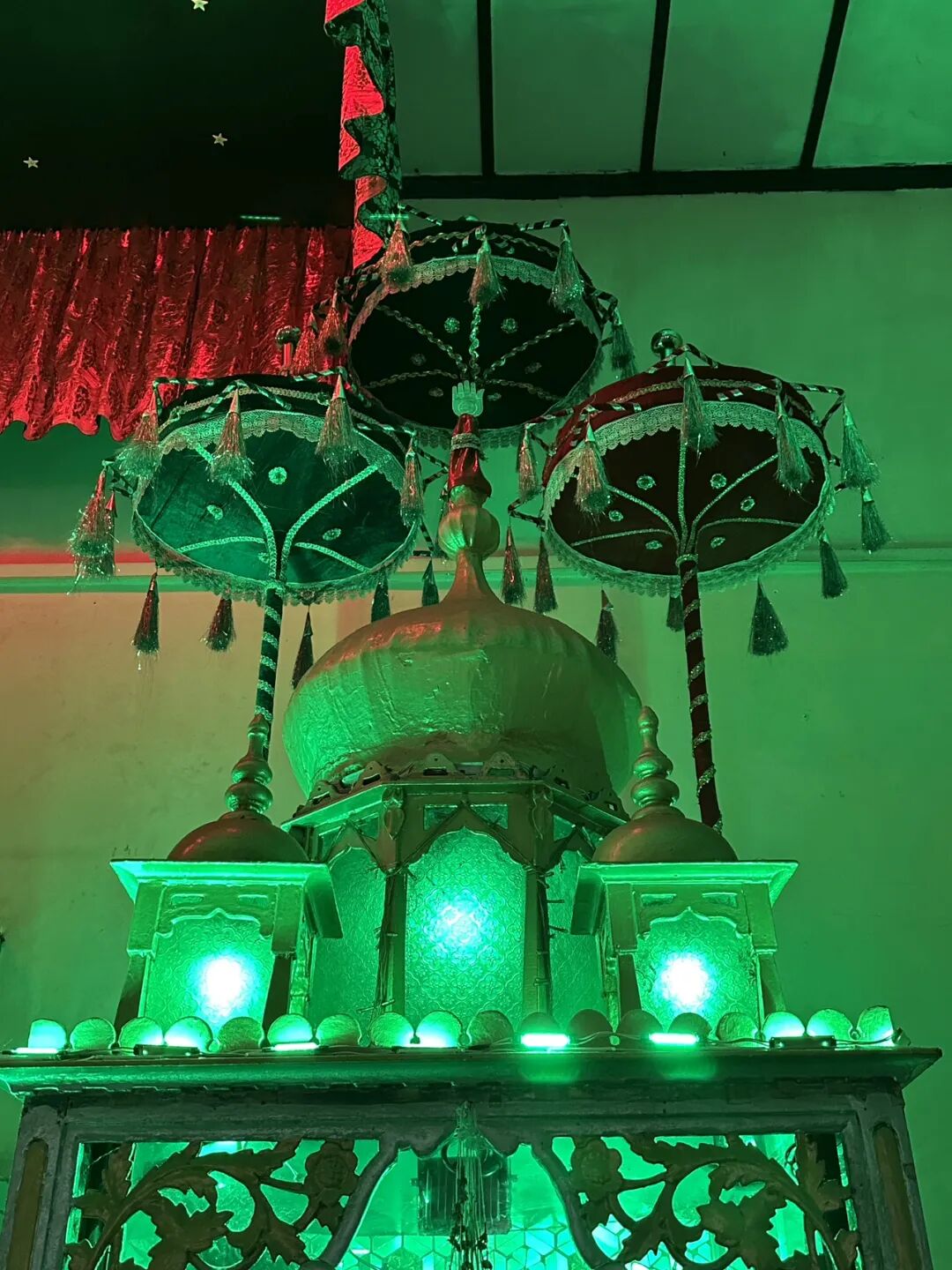
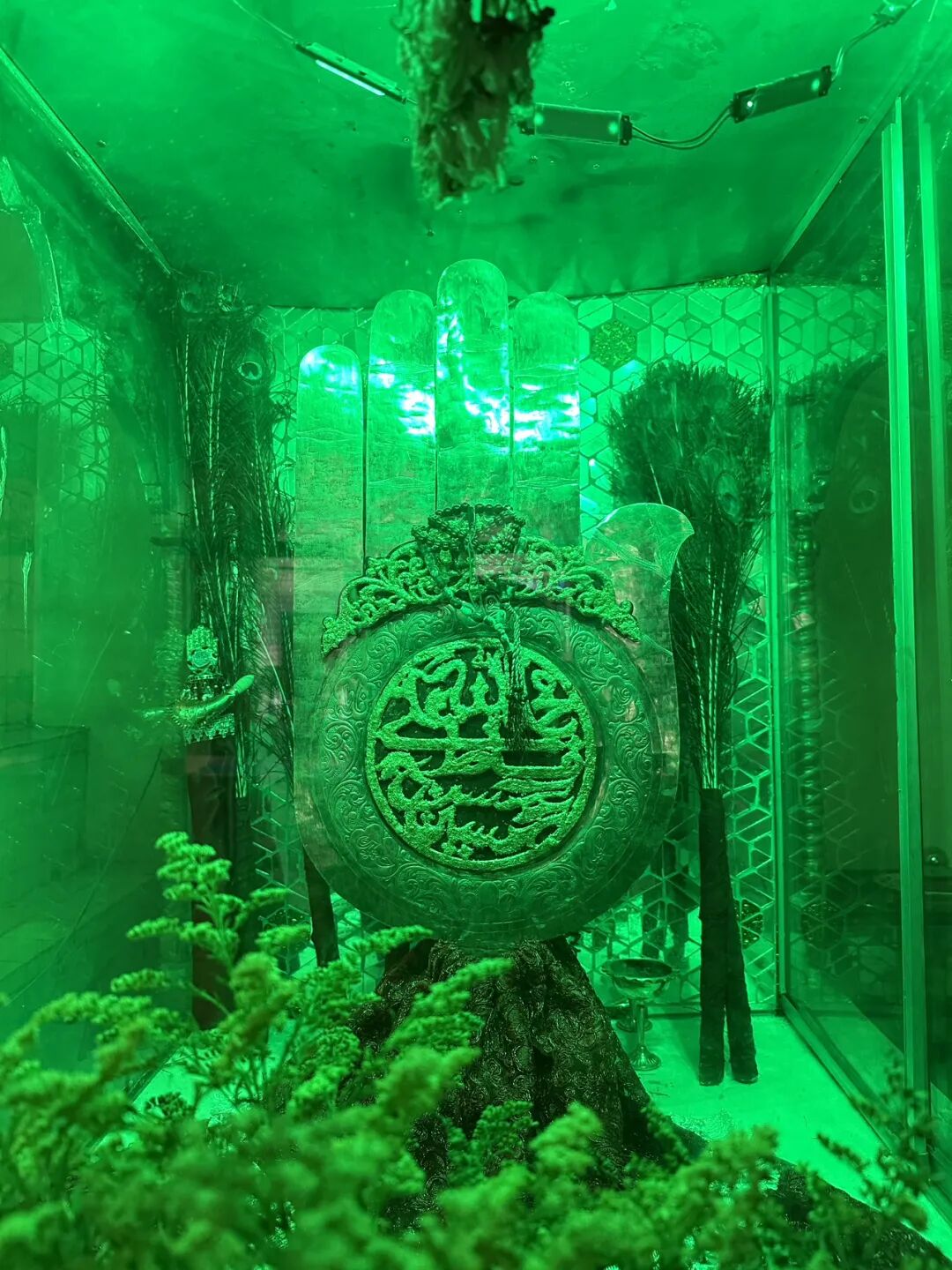
In the middle of the hall is the minbar, the pulpit where the imam delivers the khutbah. Above the pulpit sits a metal hand called a Panja, which symbolizes the hand of Abbas, the standard-bearer for Imam Hussain, which was cut off during the Battle of Karbala. Abbas was the half-brother of Imam Hussain. People say on the night of Ashura, he was blocked by enemy troops while returning with water from the Euphrates River. He fought alone, had both arms cut off, and eventually died in battle.
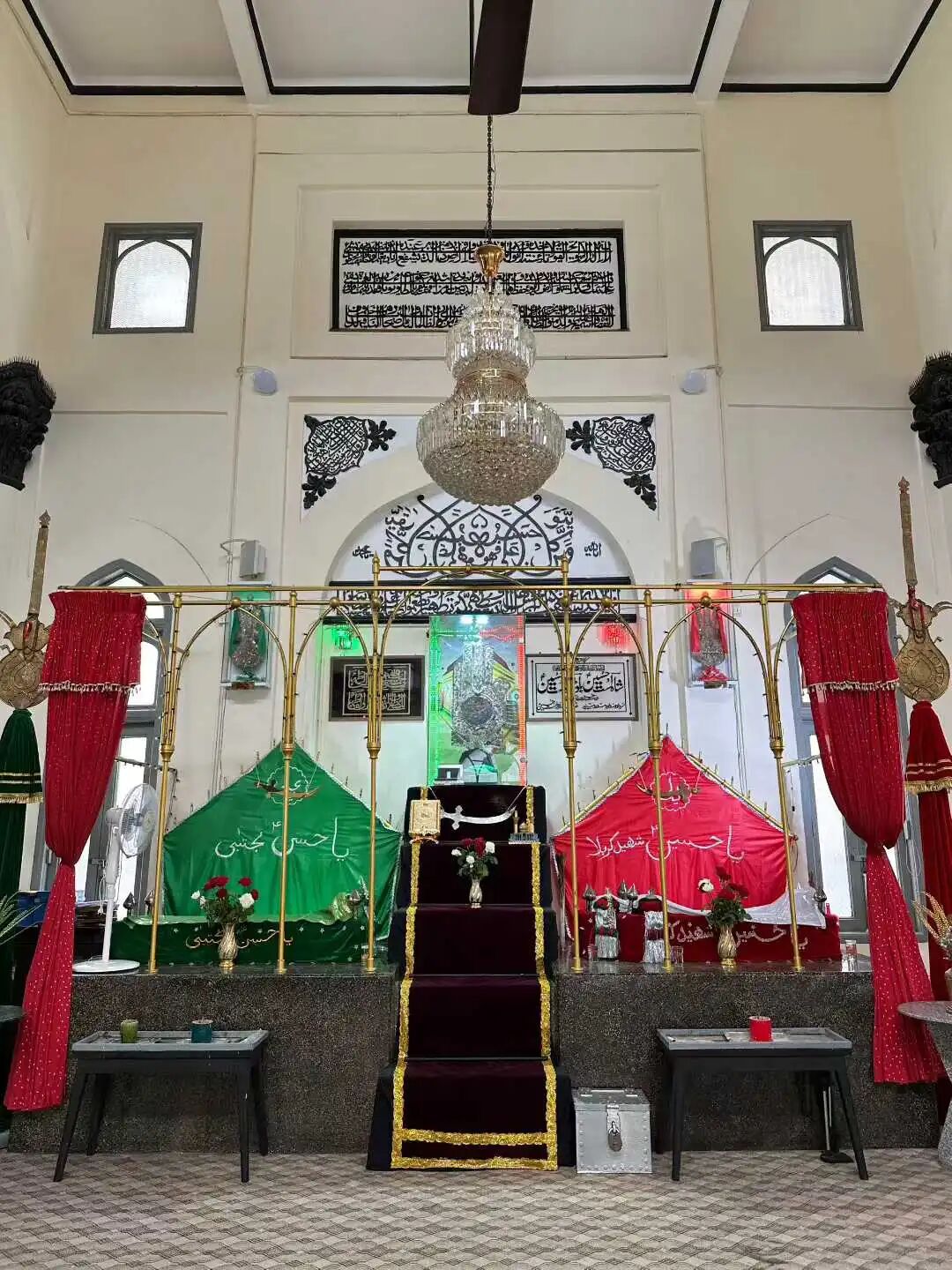
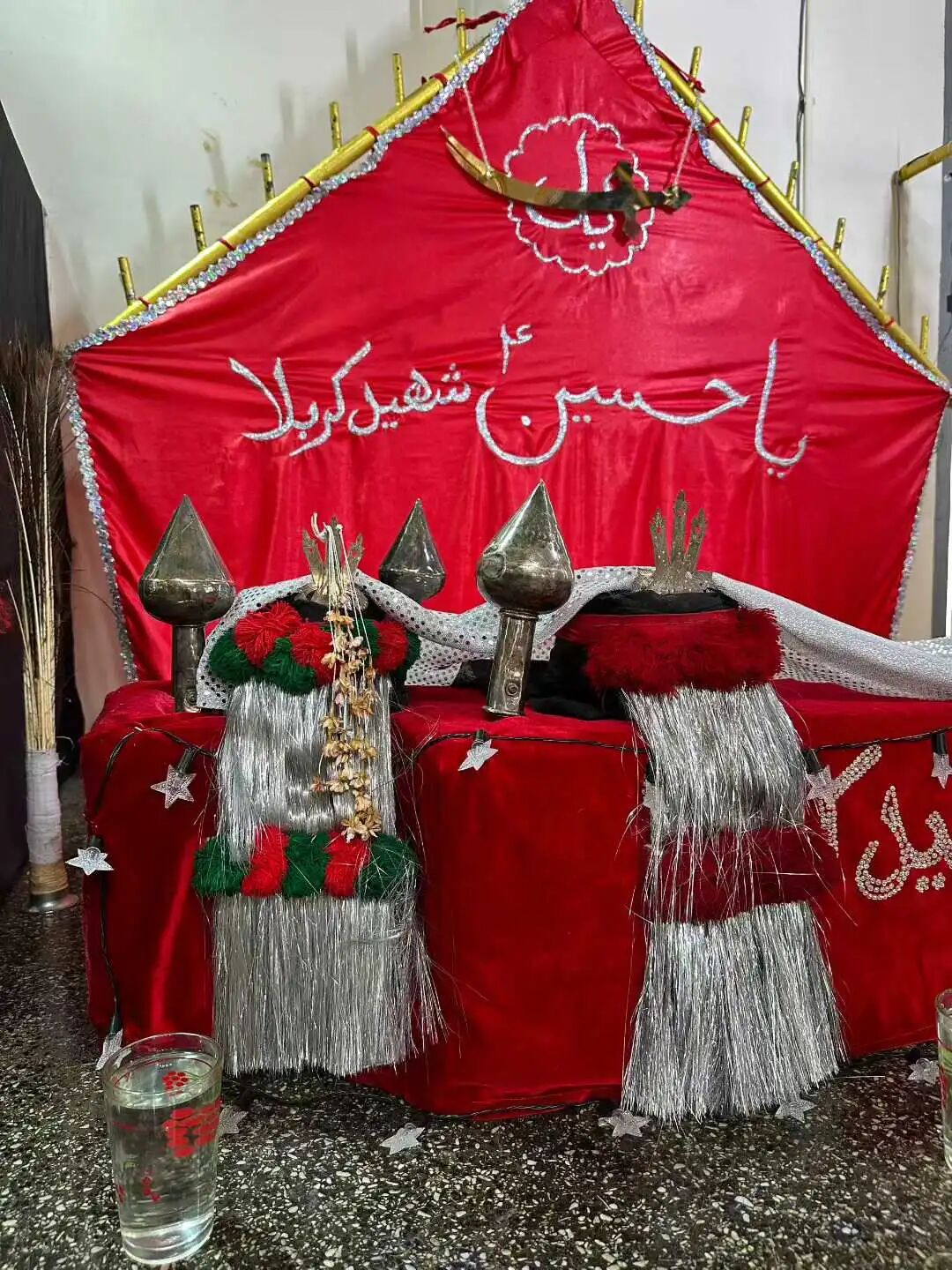
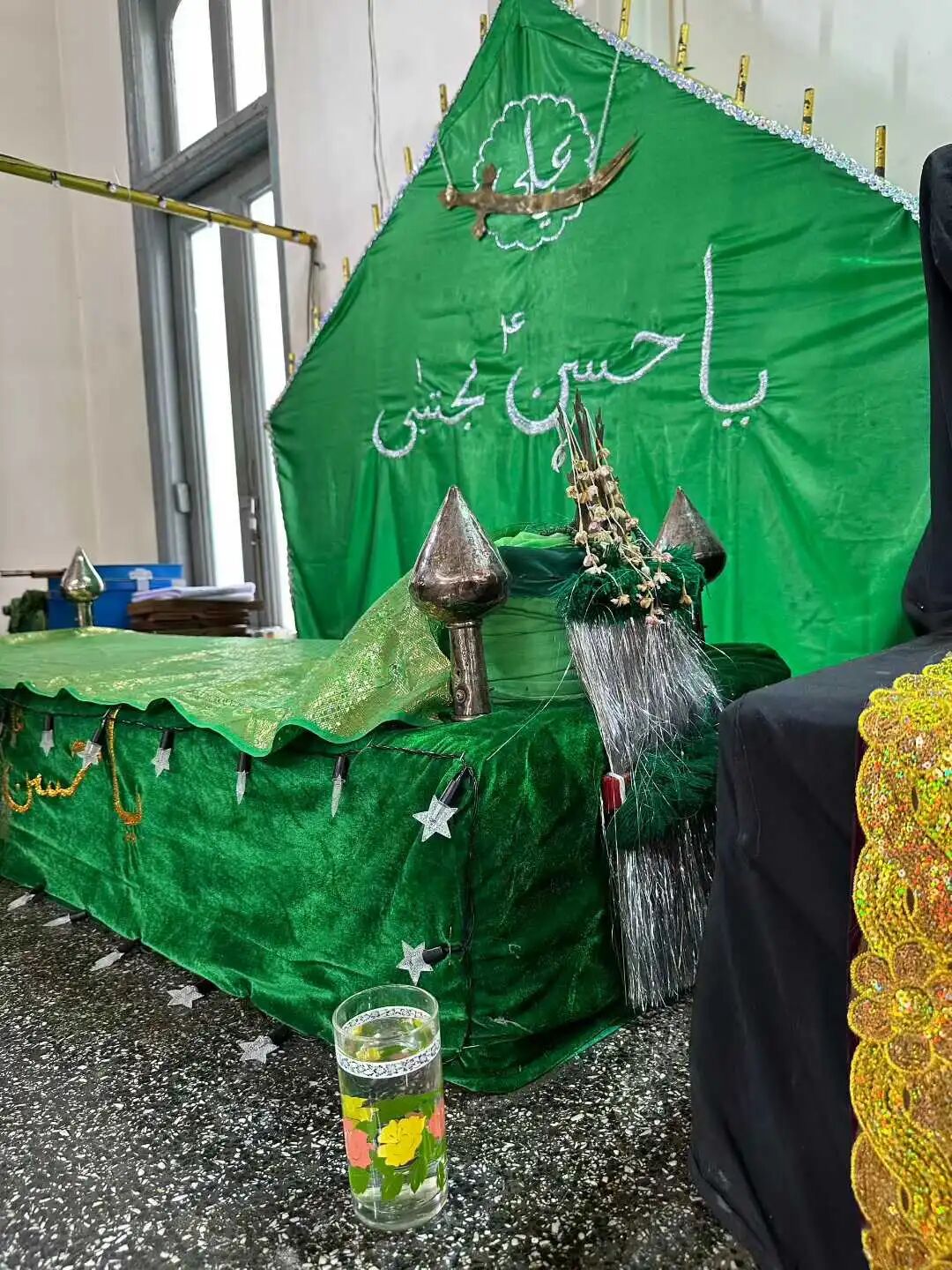
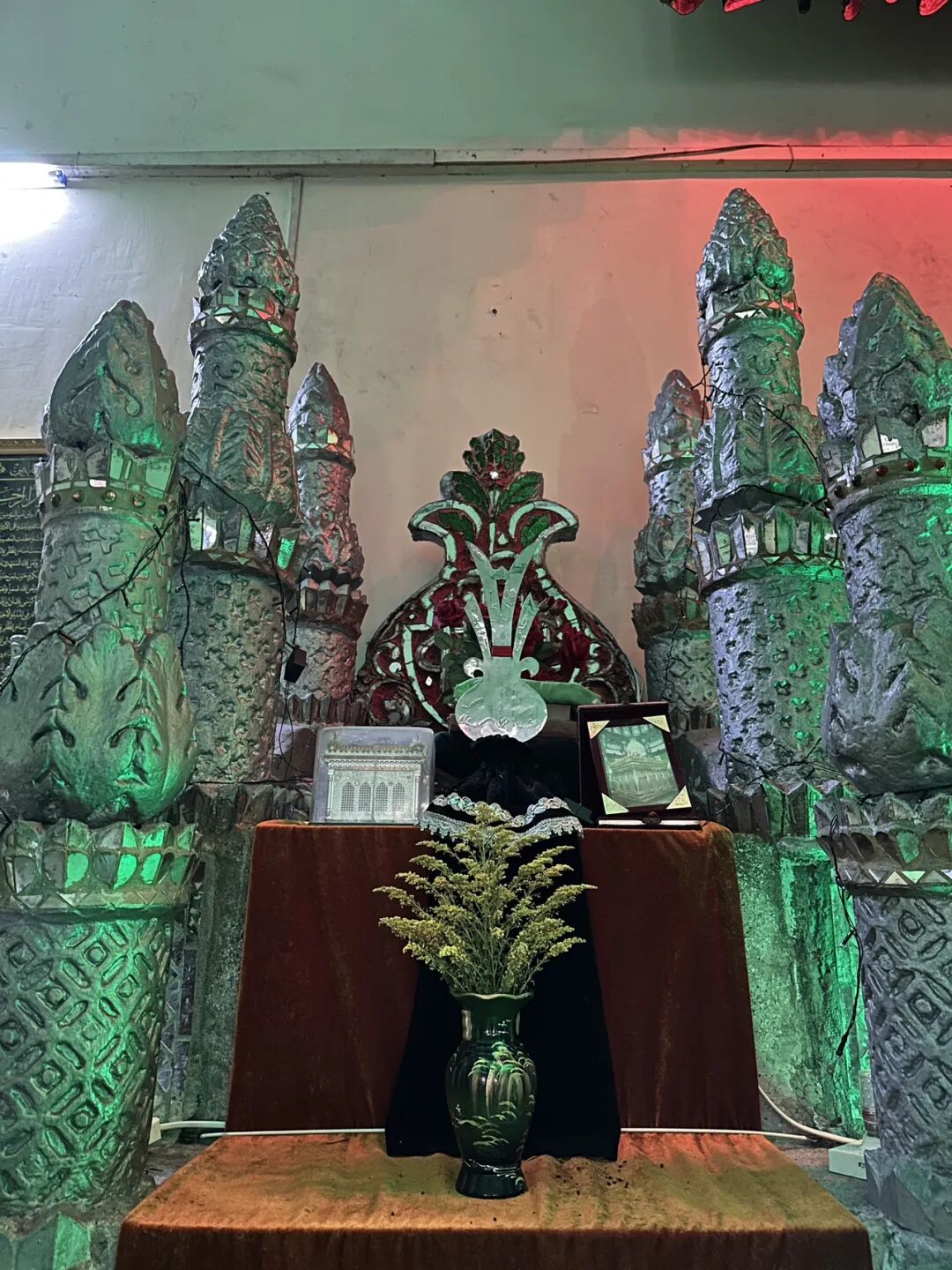
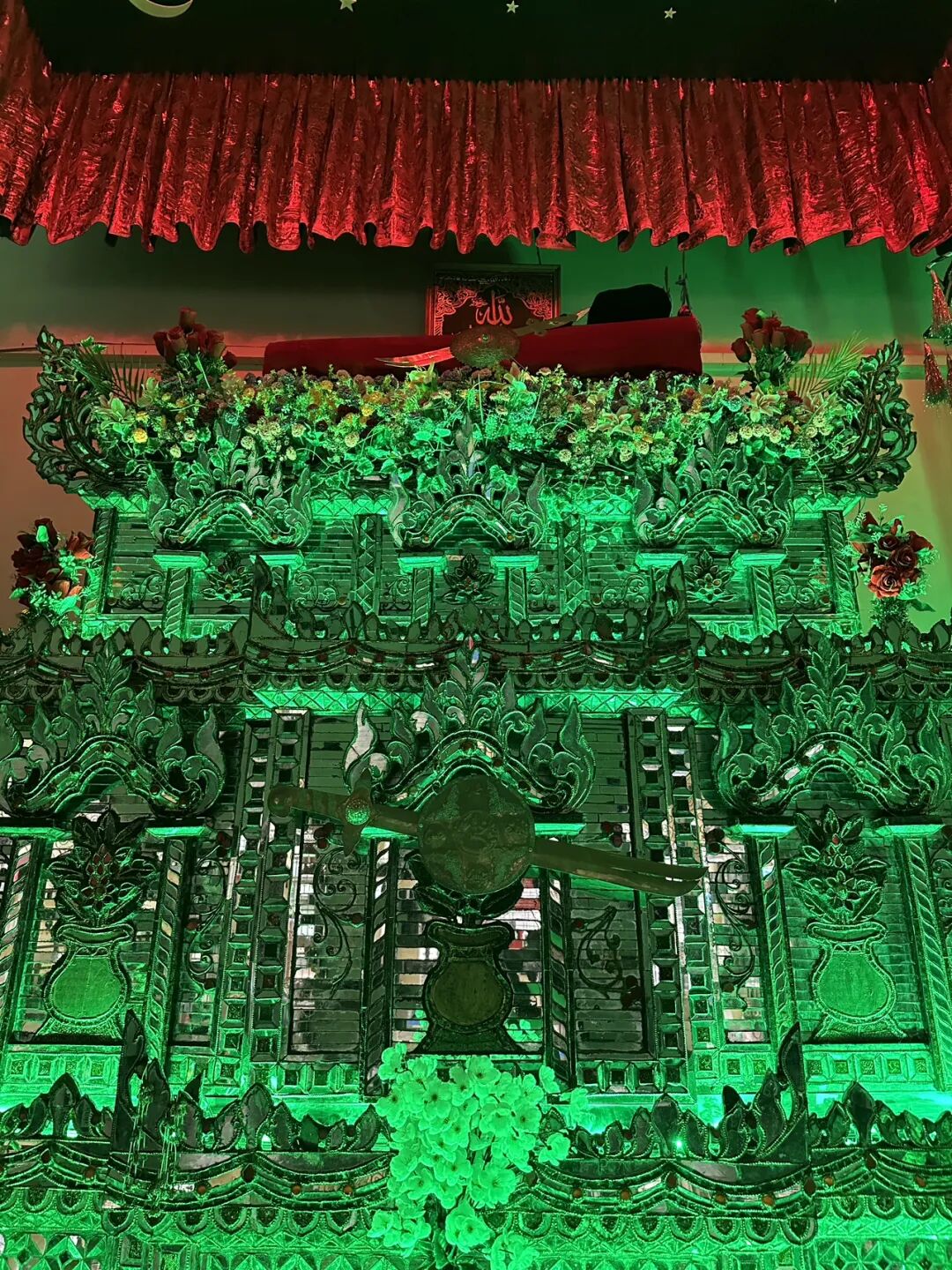
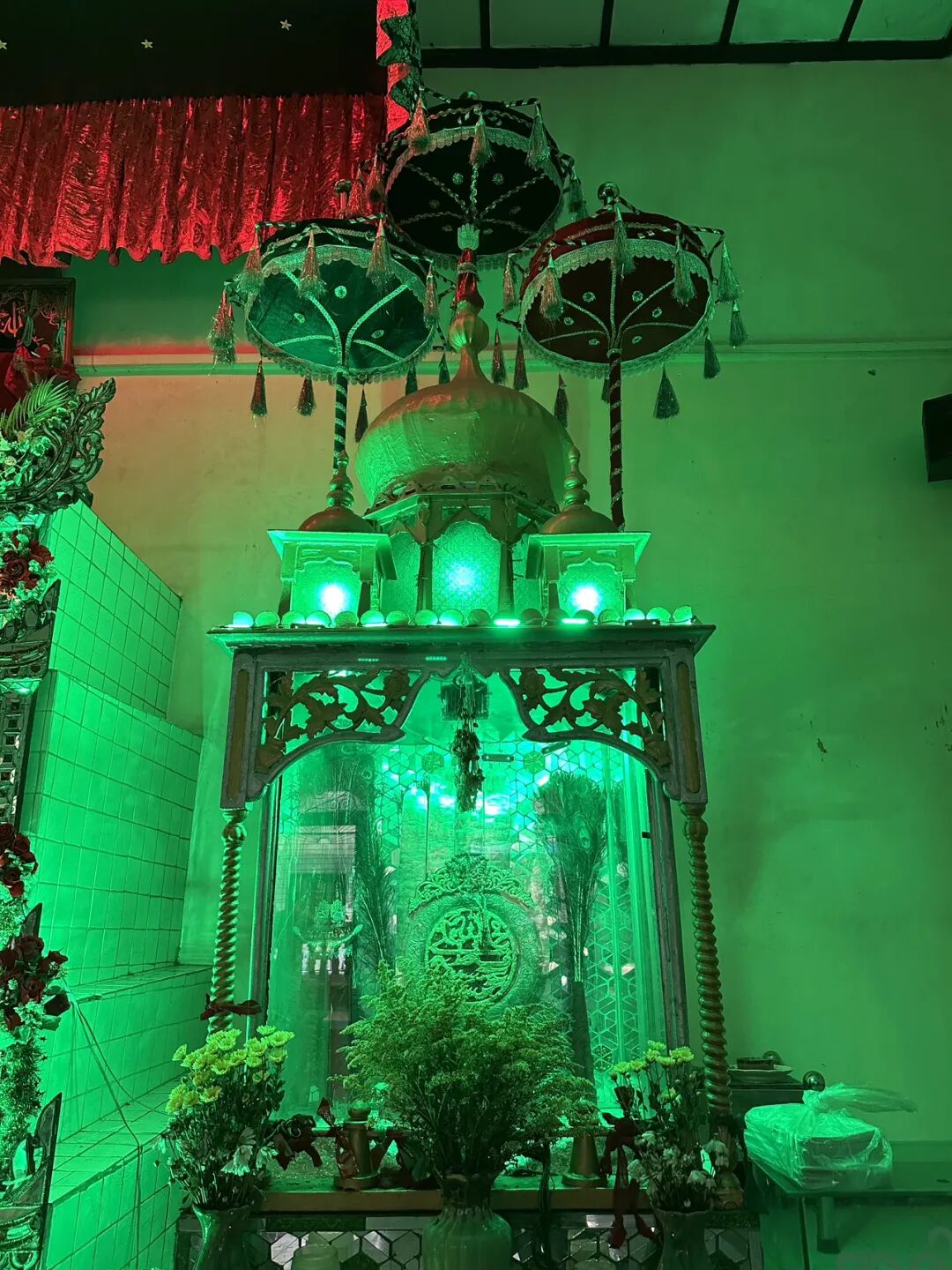
On both sides of the pulpit are symbolic tombs for Imam Hassan and Imam Hussain, decorated with replicas of the swords and turbans (dastar) they used. They are considered the second and third imams of the Shia faith.
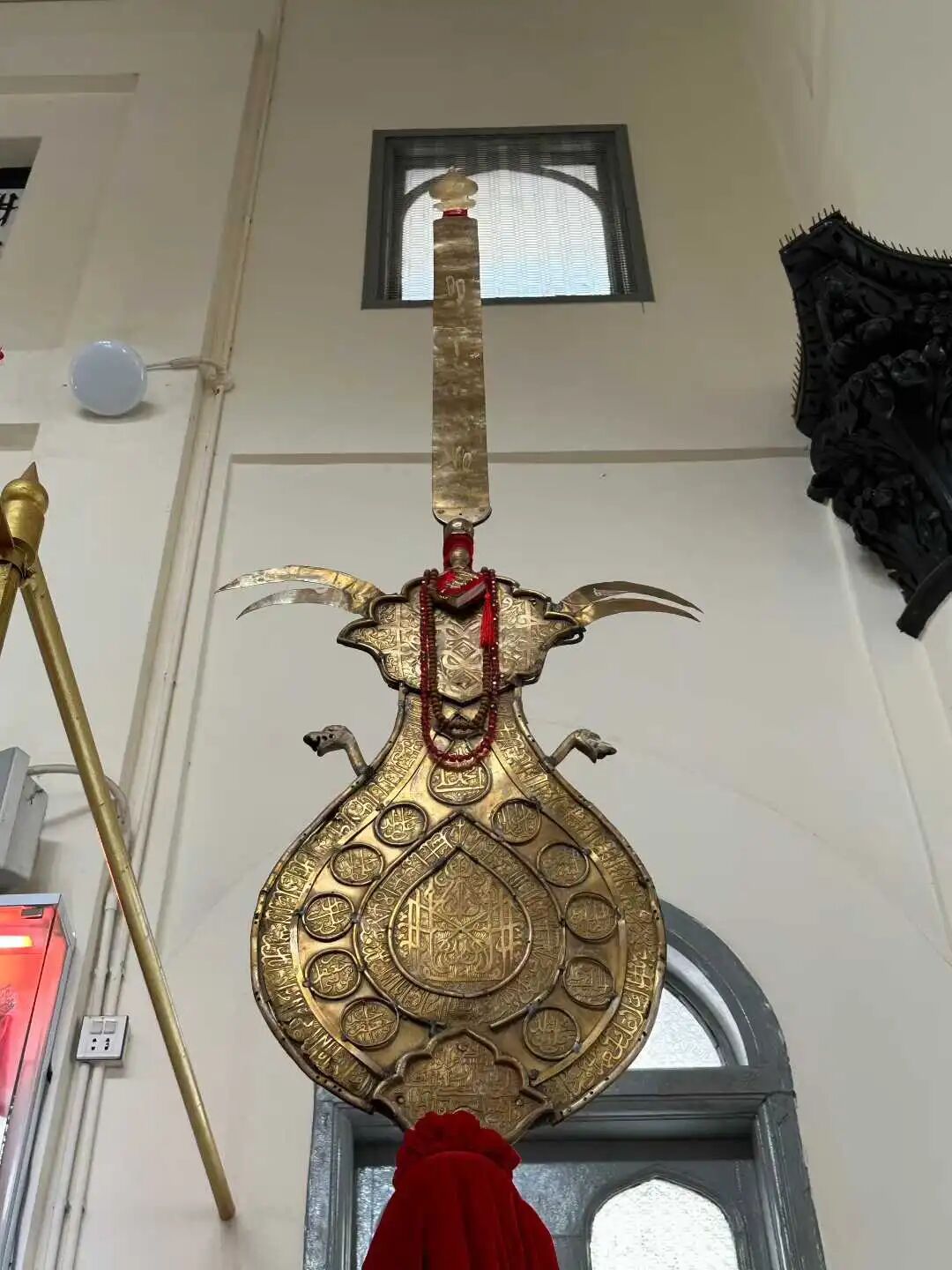
In front of the hall stands an Alam flagpole used during Ashura processions. It features a pear-shaped flat top with two dragon heads in the middle, symbolizing the sword of Ali.
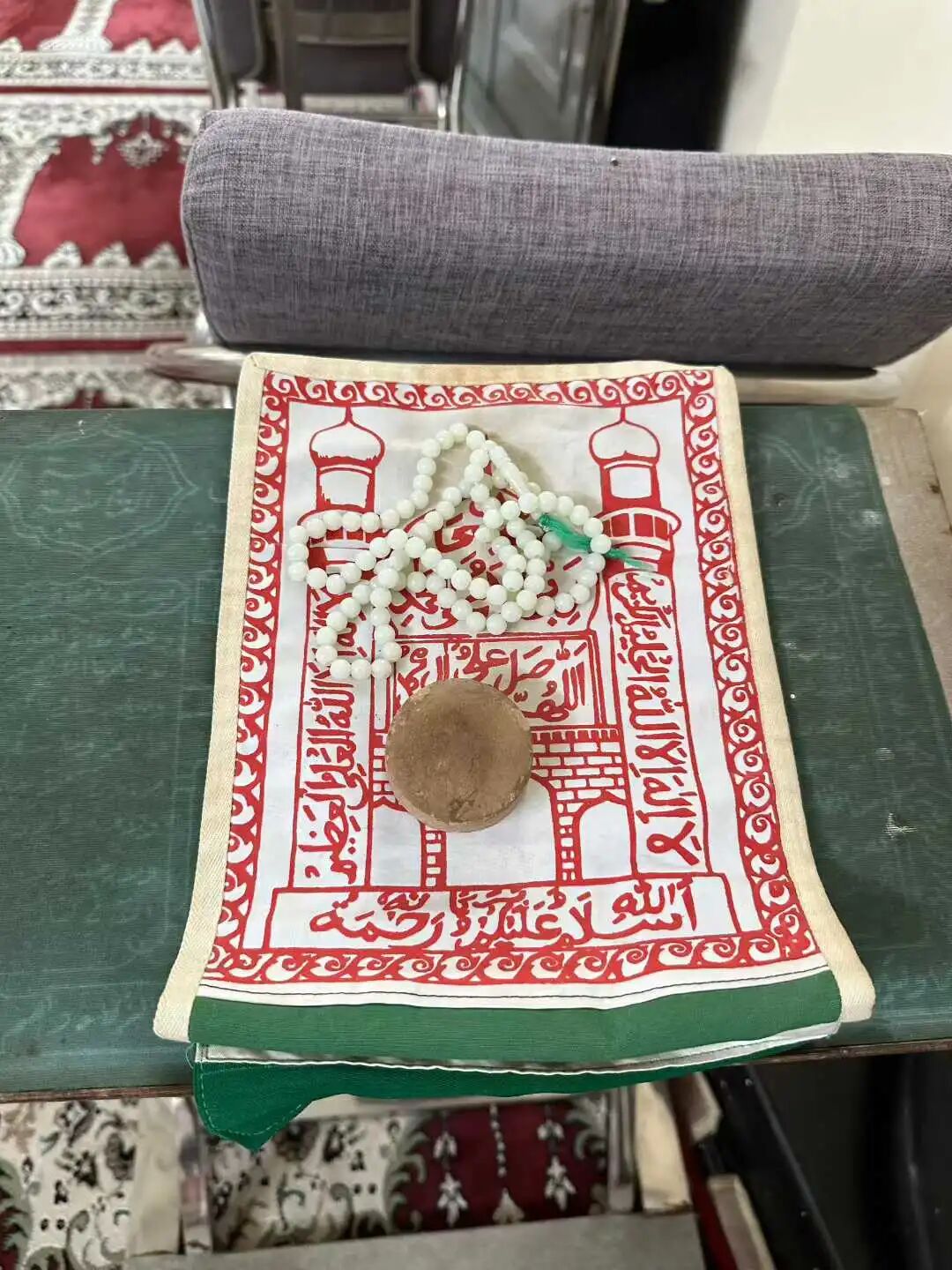
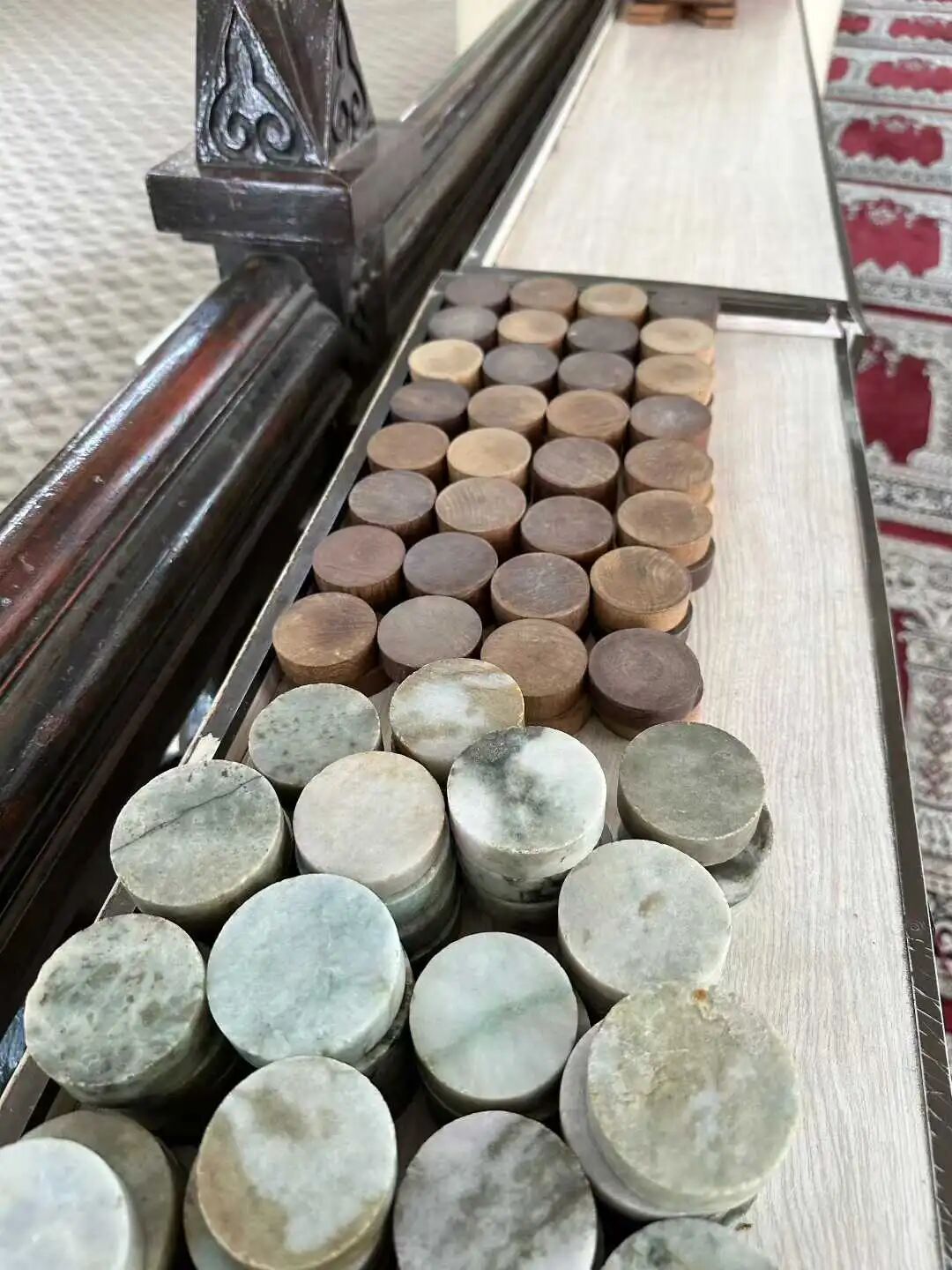
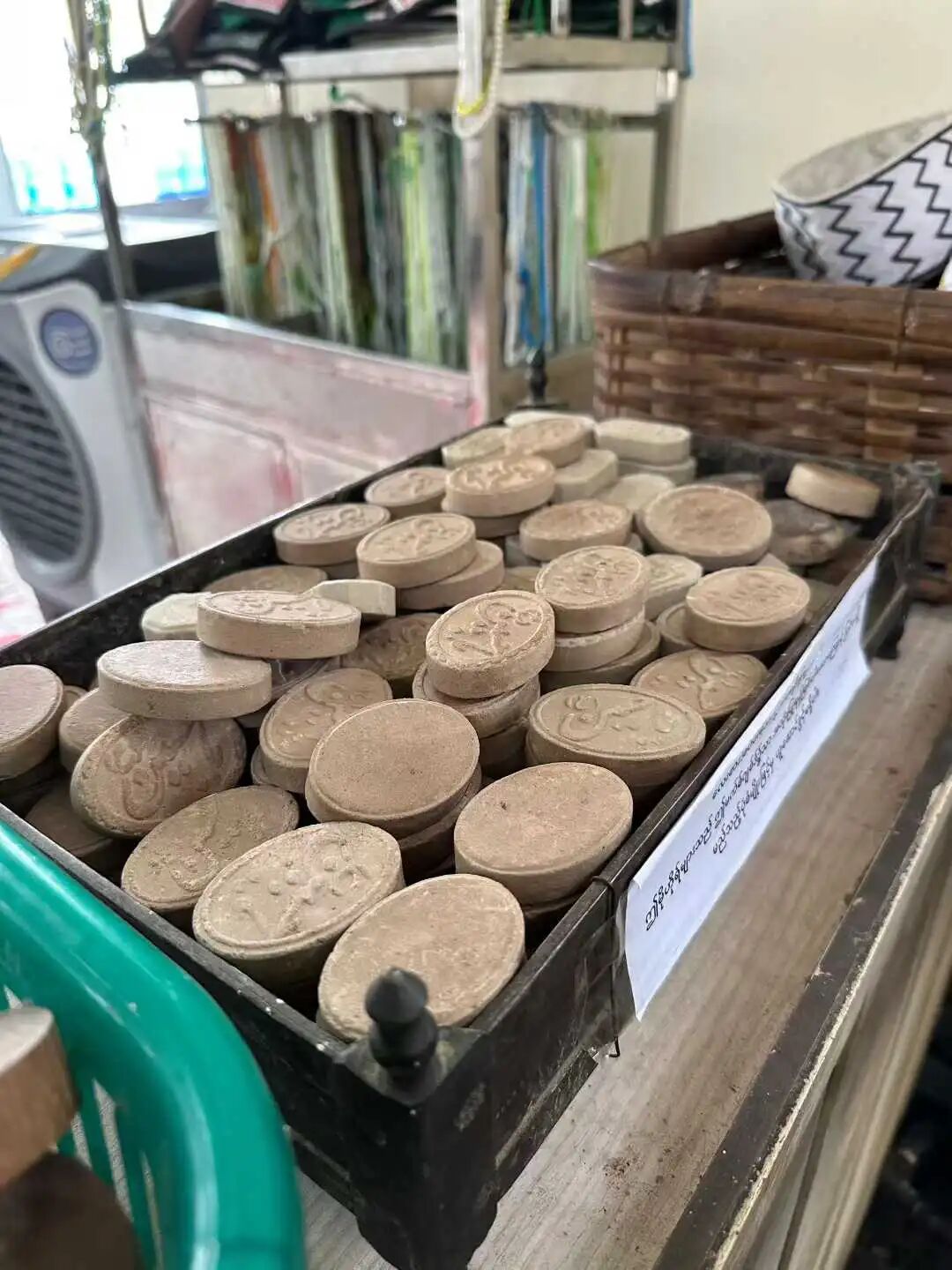
Inside the hall are prayer tablets (turbah), known in Persian as mohr, which Shia Muslims use for prostration. Shia tradition requires prostrating on natural materials, so most people choose clay tablets. The most revered ones are made from the soil of Karbala, where Imam Hussain was martyred. This was my first time seeing them made of wood and stone.
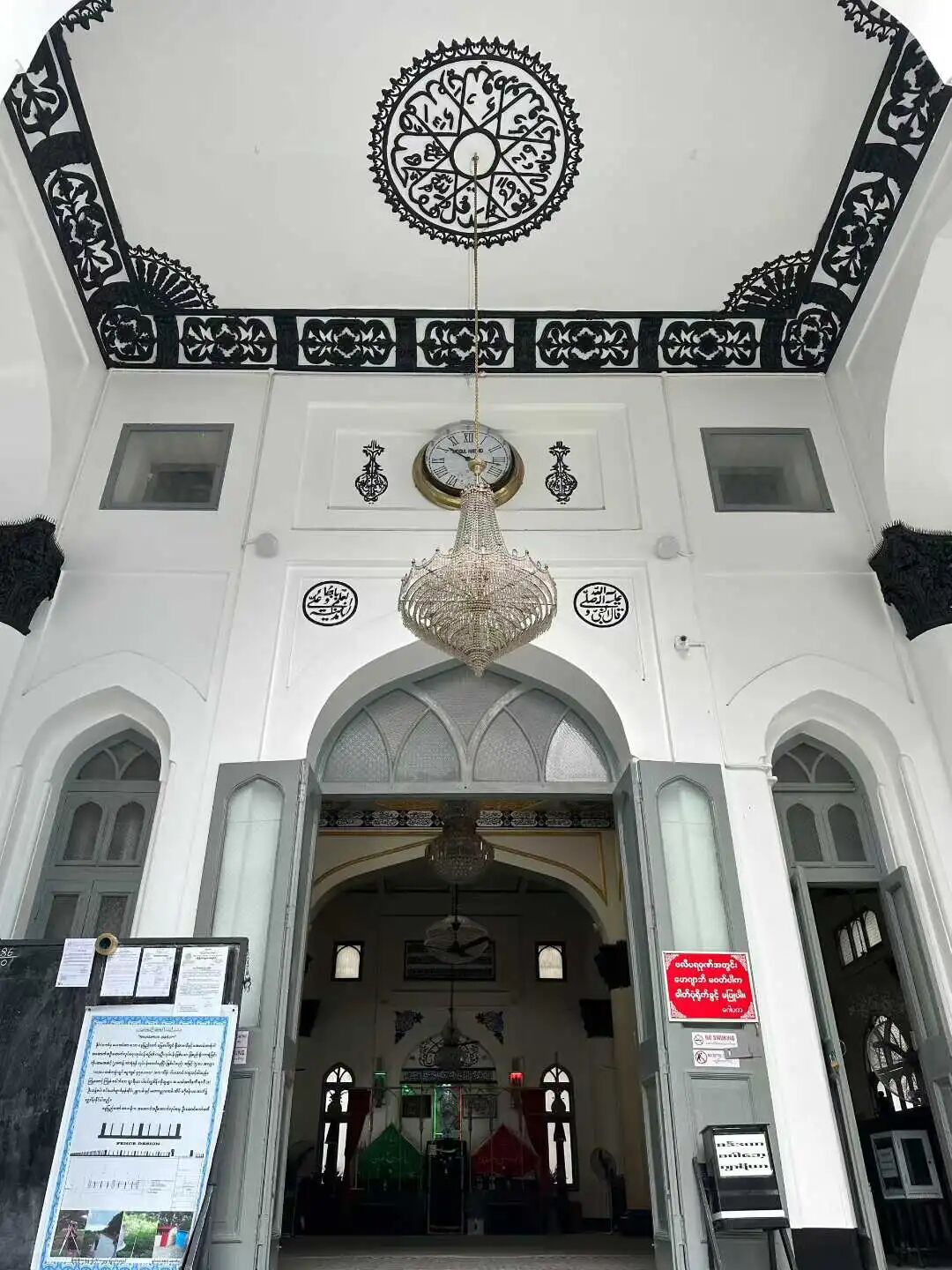
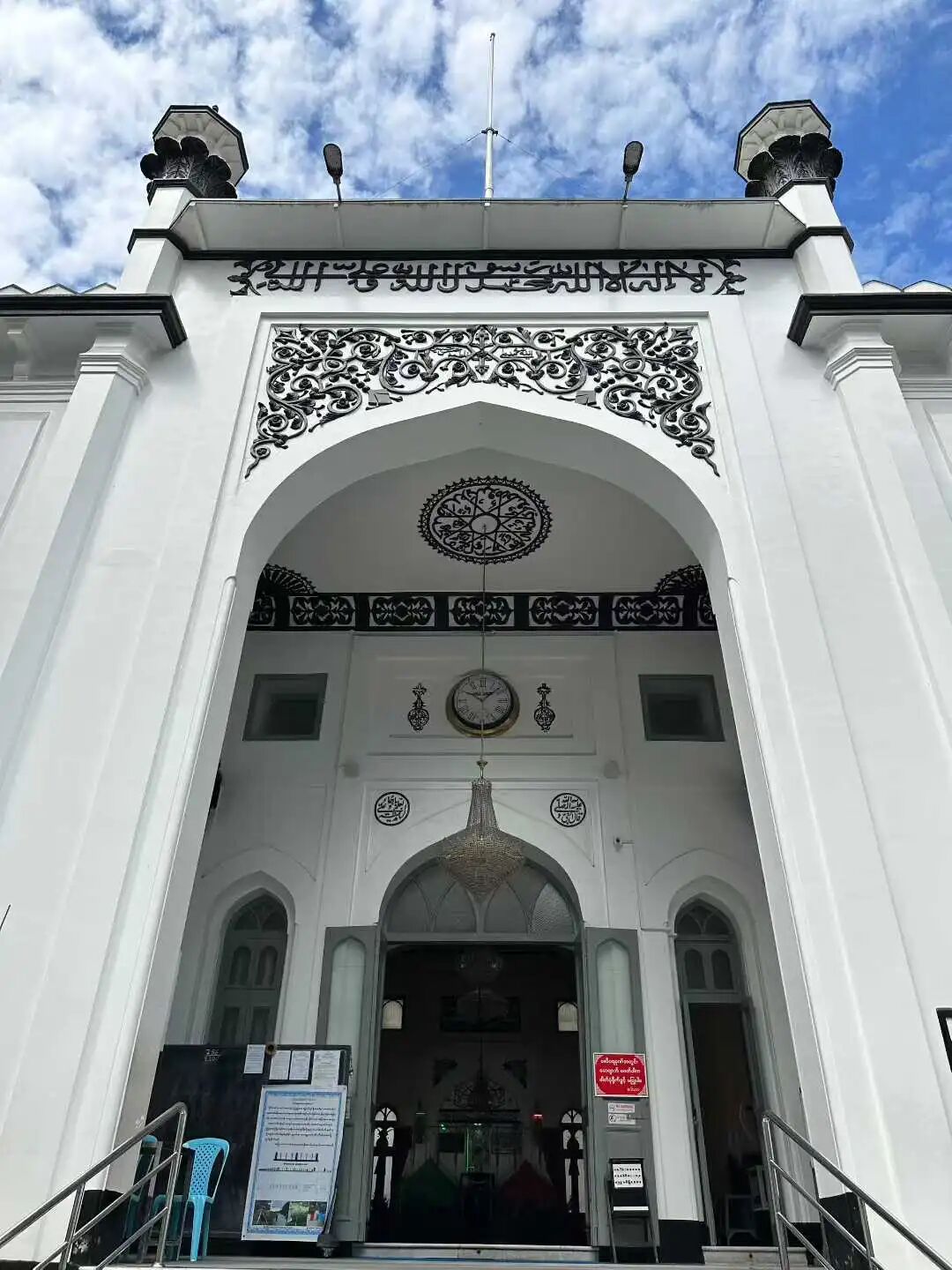
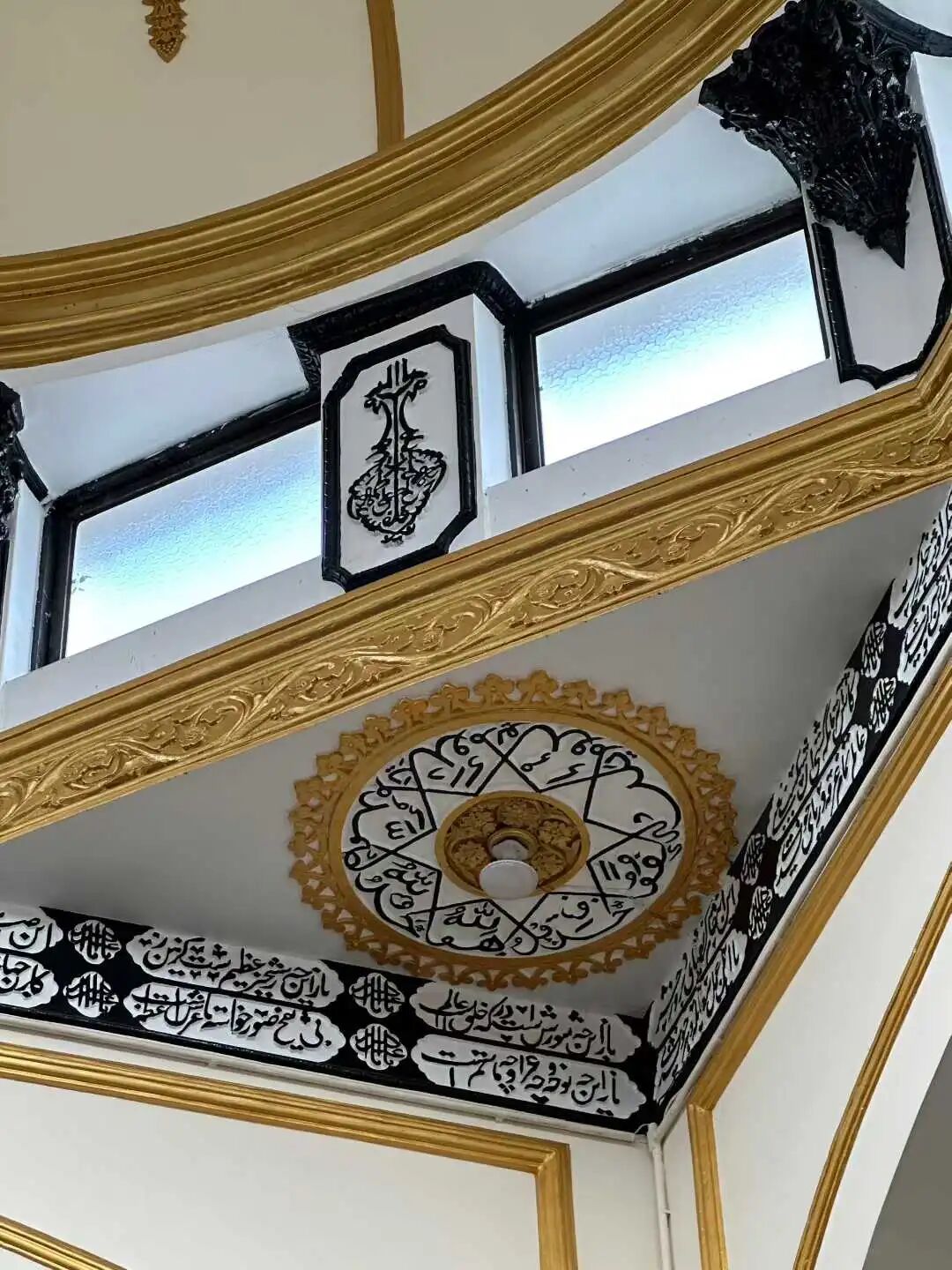
The Mughal Shia Mosque in Yangon features unique calligraphy art. The gate is inscribed with the Shia version of the Shahada, which includes one extra phrase compared to the Sunni version: Ali-un-Waliullah, meaning Ali is the friend (wali) of Allah.
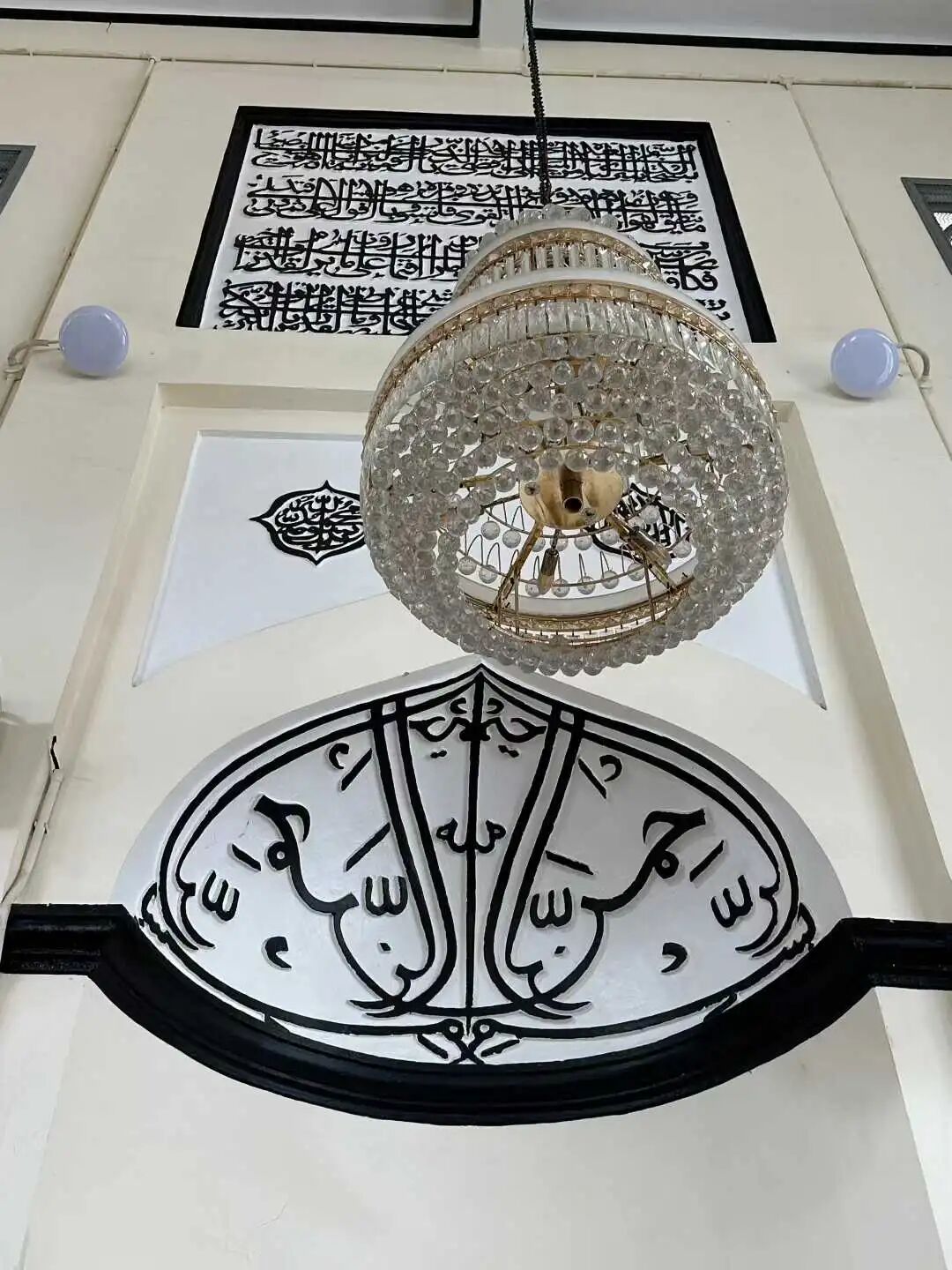
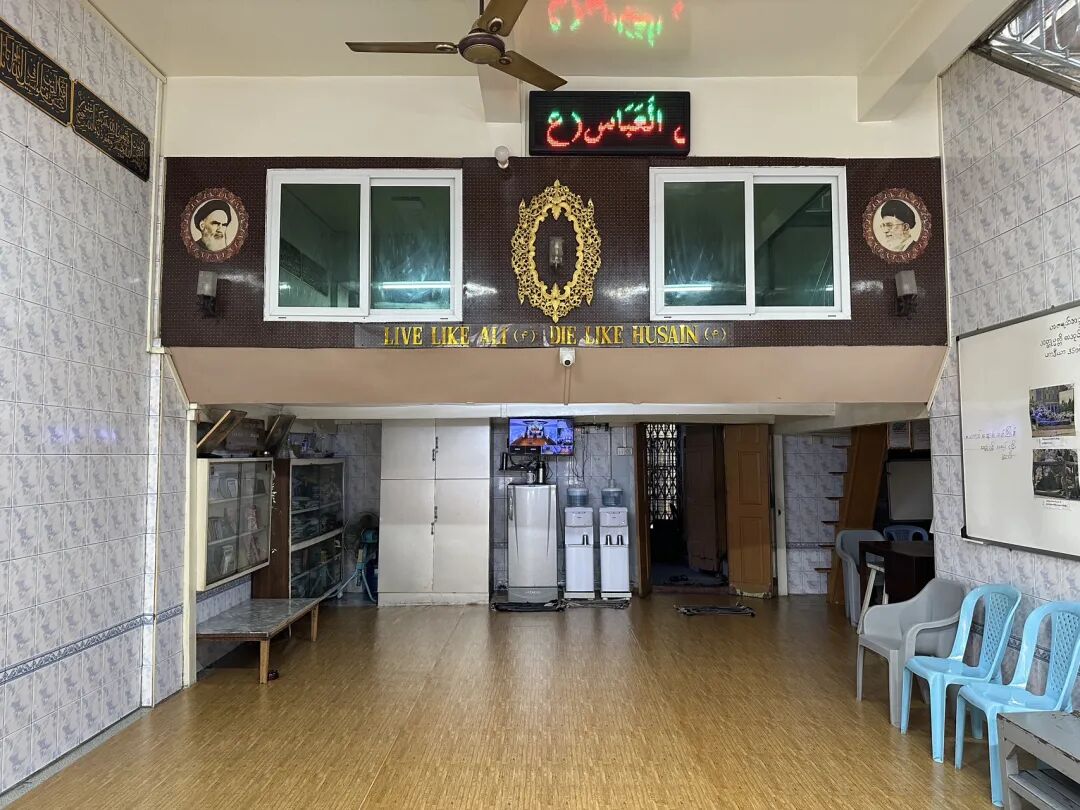
On 32nd Street, near the Sule Pagoda in the center of old Yangon, there is a Shia ceremonial hall called Hazarat Abbas (A. S) Astana Alamdar-e-Husayn. Built in 1856, it is an important ceremonial center for the Shia community in Yangon. Unlike the mosque, this place is used by the Shia community for commemorative ceremonies during the first and second months of the Islamic calendar and during Ramadan. It is an important way for the Shia community to strengthen their unity.
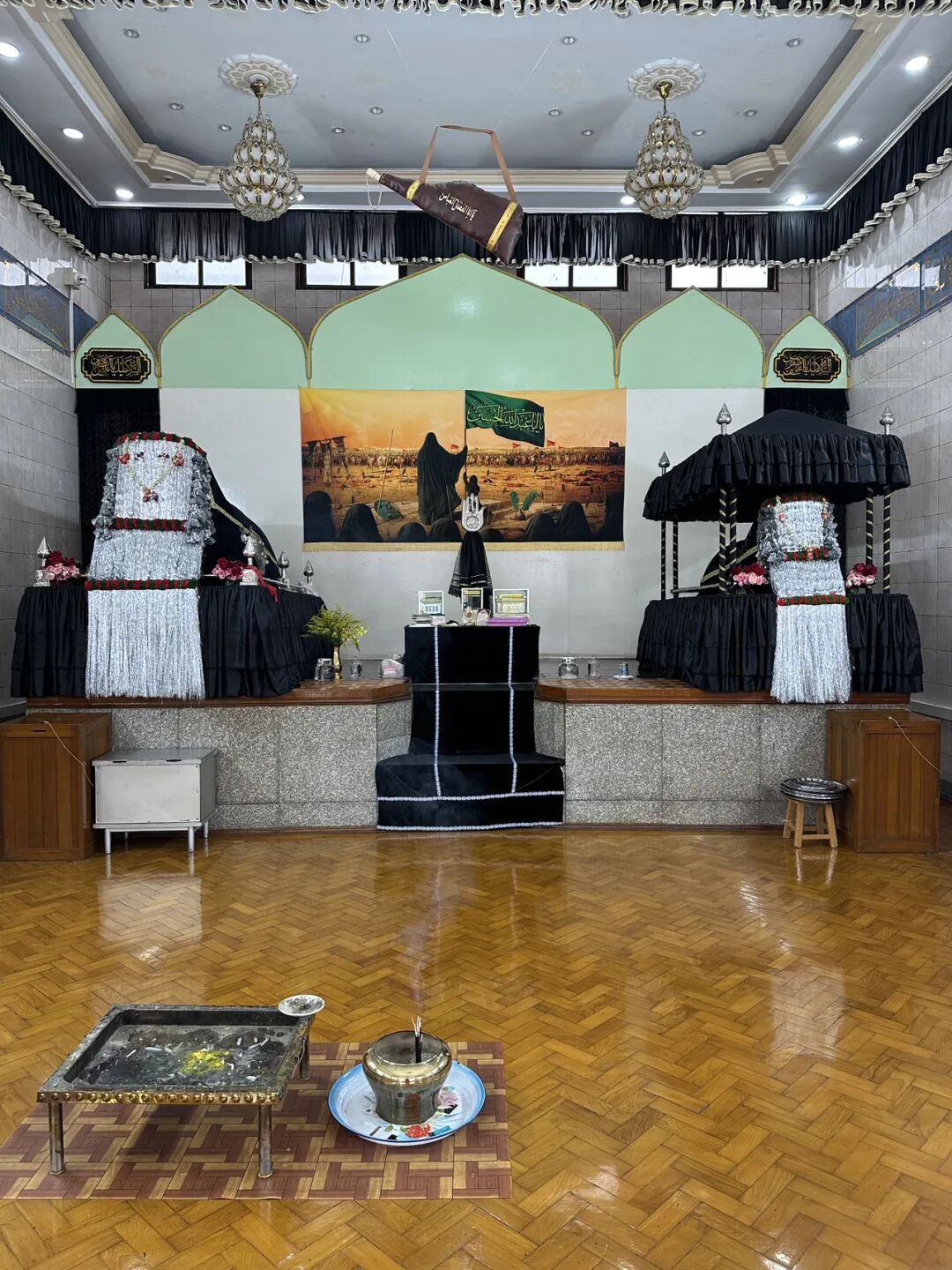
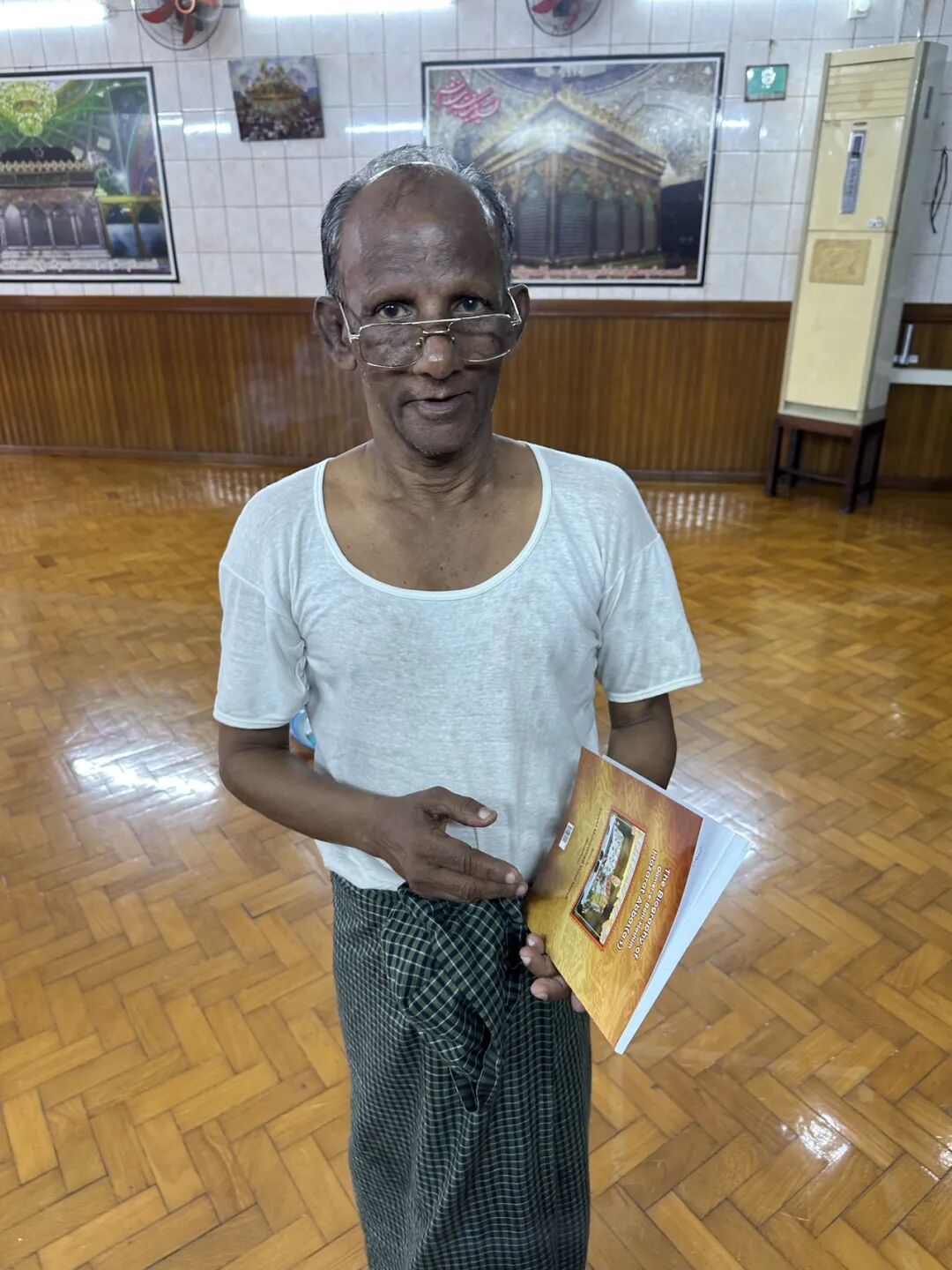
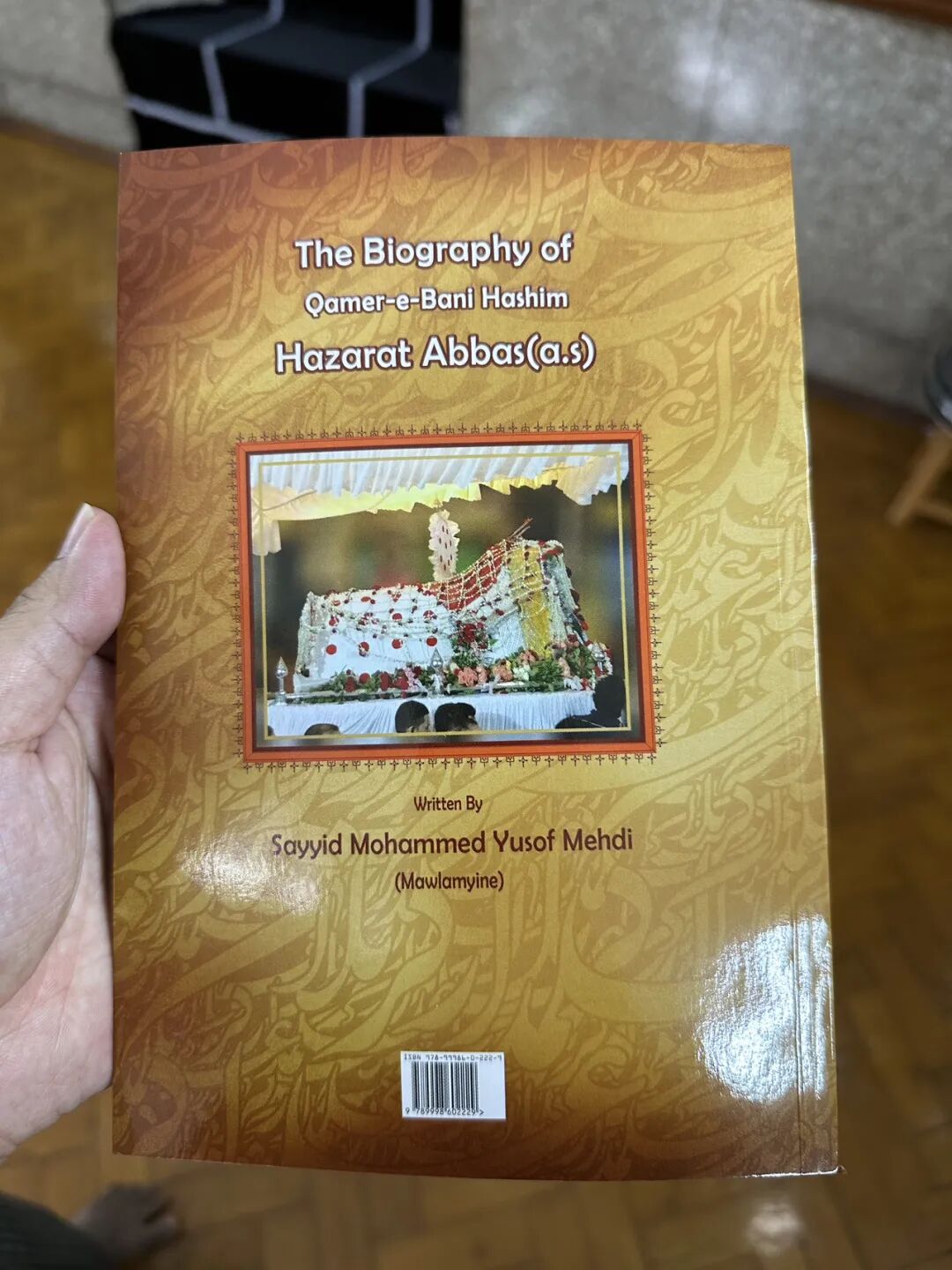
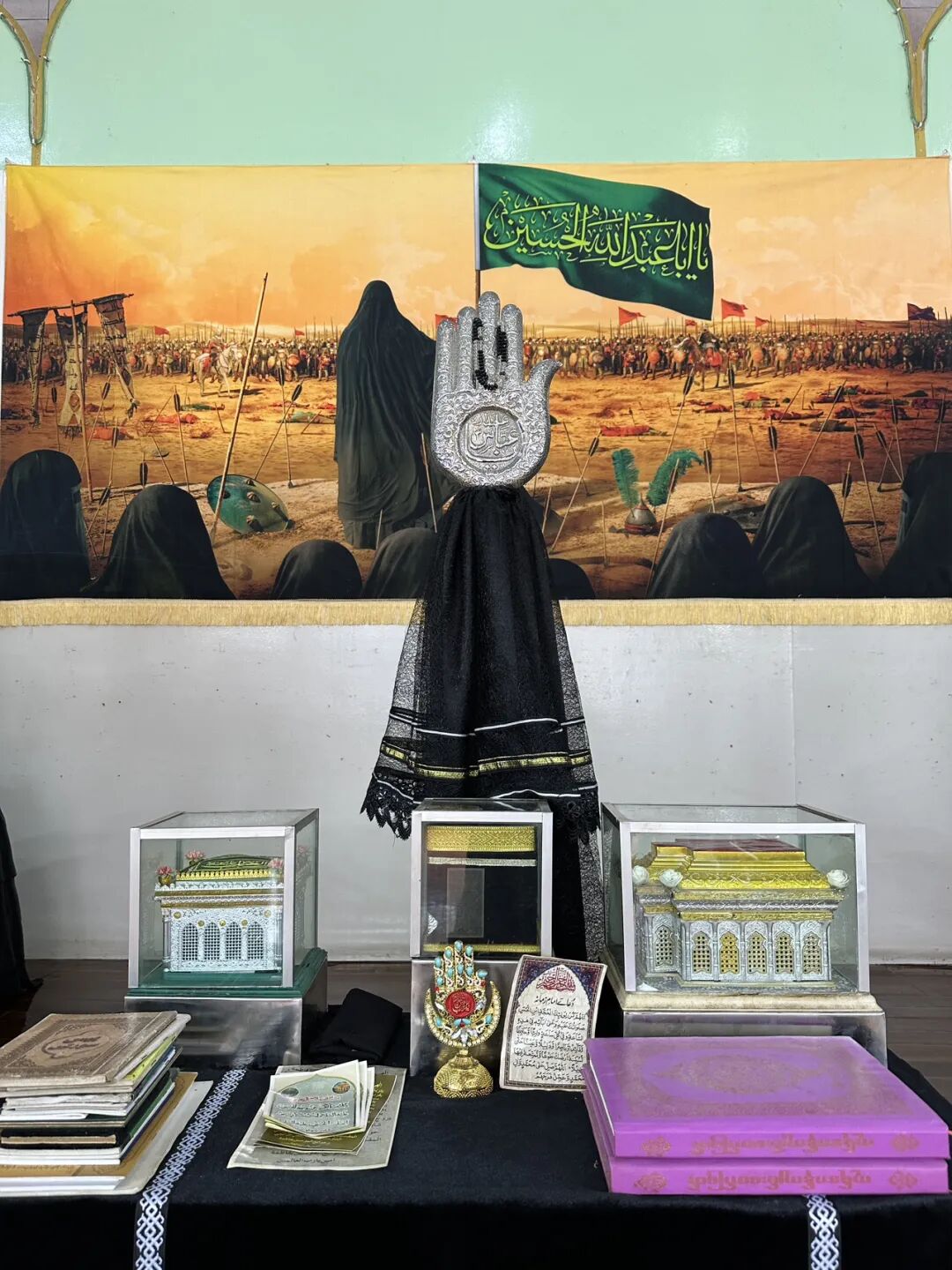
The hall has two floors. The first floor has the English words: 'Live like Ali, die like Hussain'. In the middle of the second floor sits a Punja, which is a symbol of the severed hand of Abbas, the standard-bearer for Imam Hussain during the Battle of Karbala. On both sides are tombs representing Imam Hussain and the standard-bearer Abbas, who were both martyred in the Battle of Karbala. An elder at the mosque showed me a book in Burmese about the standard-bearer Abbas.
In the Shia tradition, the standard-bearer Abbas is seen as the ultimate example of courage, love, sincerity, and self-sacrifice. Many Shia Muslims take oaths in his name or give out food in his honor. The death of Abbas is the oldest passion play in the Shia tradition, and verses about him often appear in Shia architectural decorations.
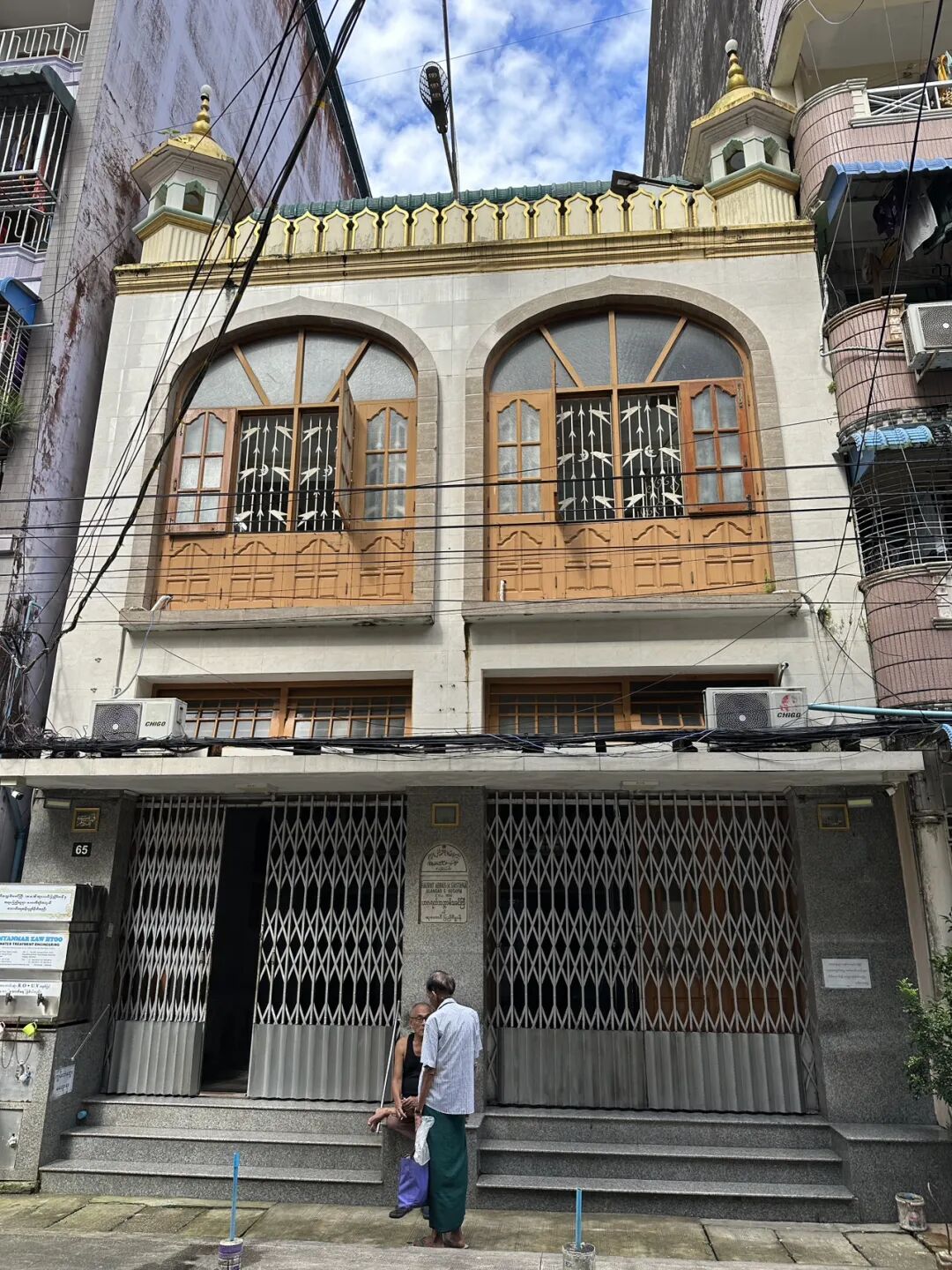
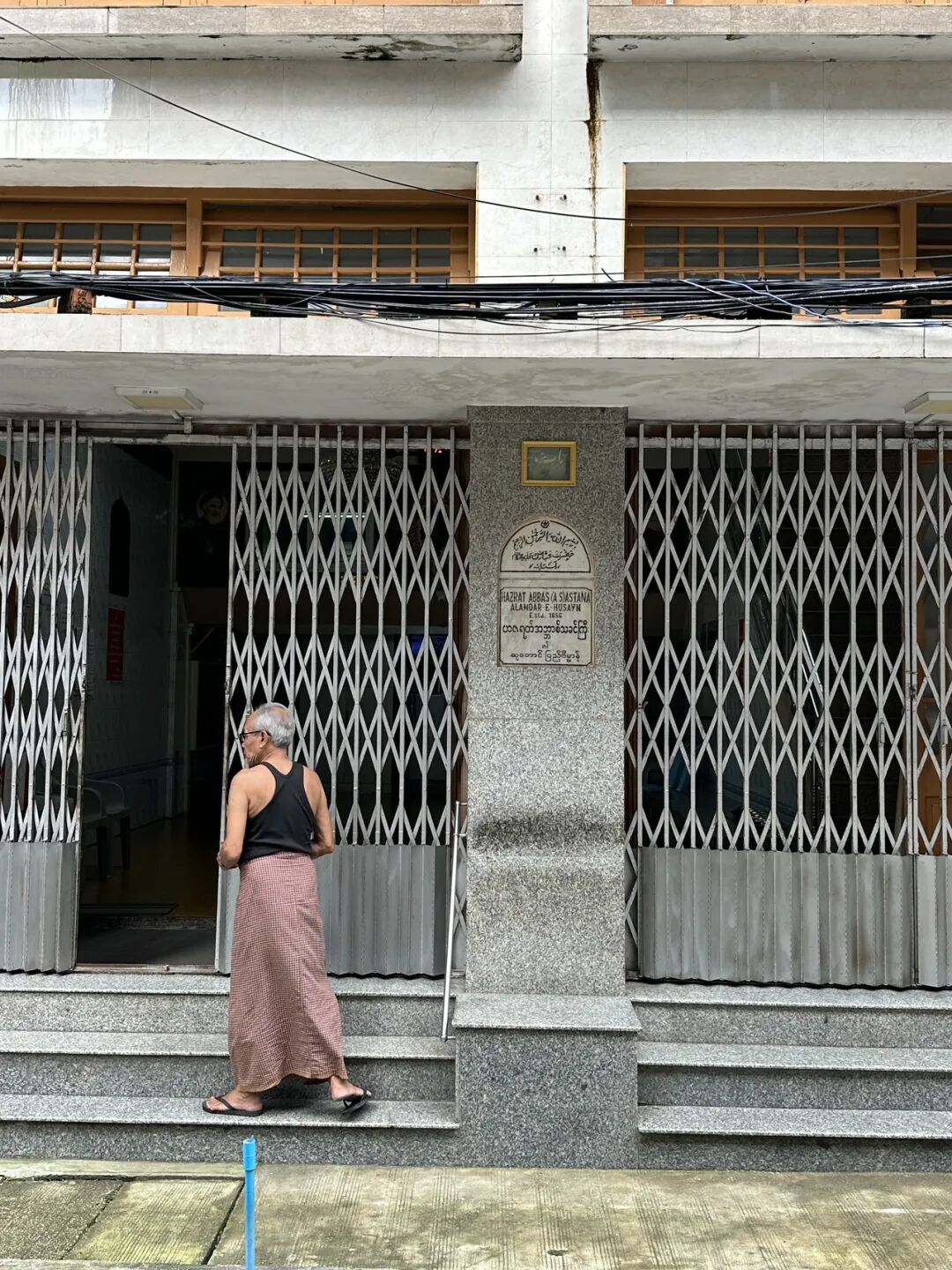
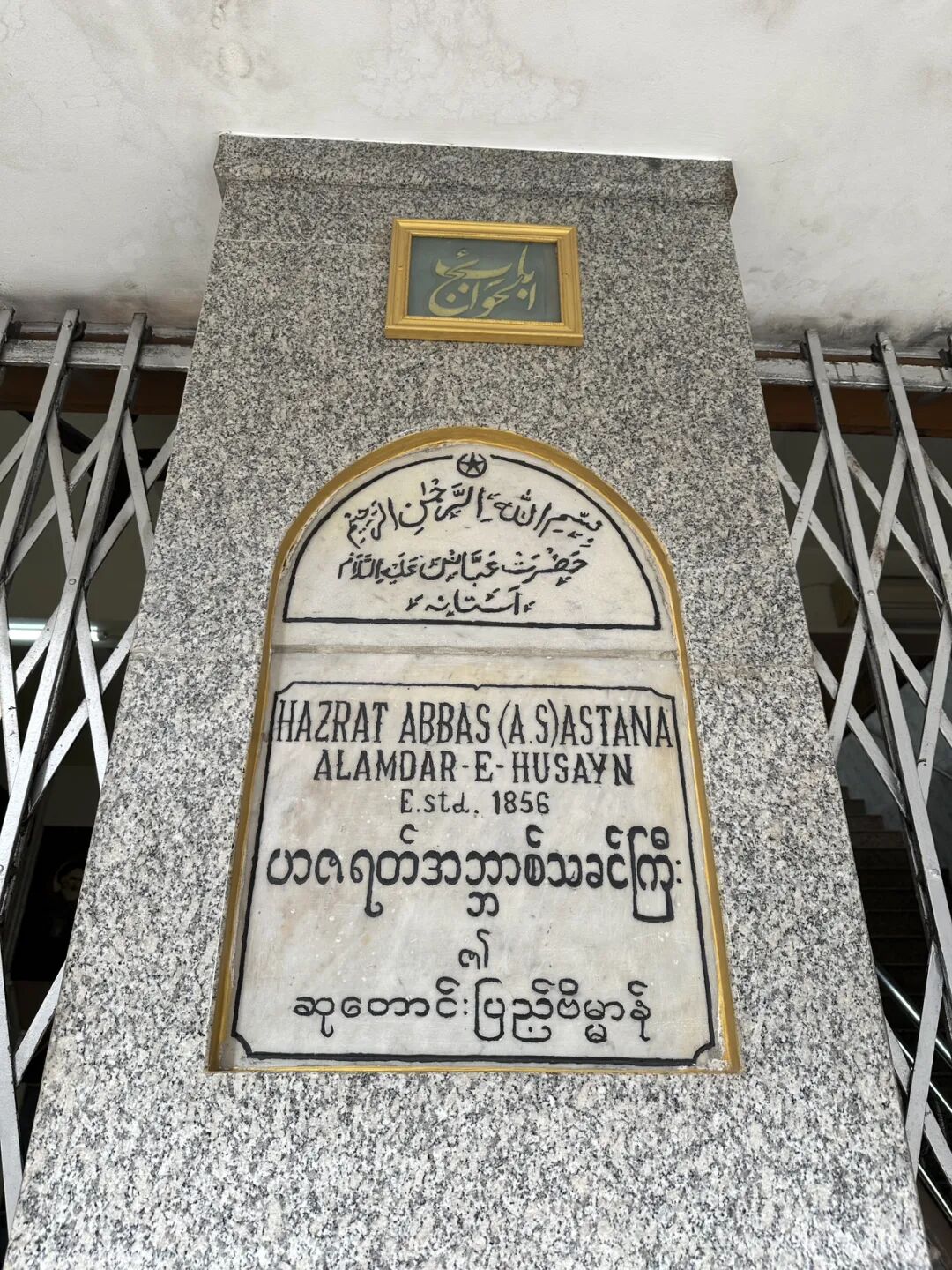
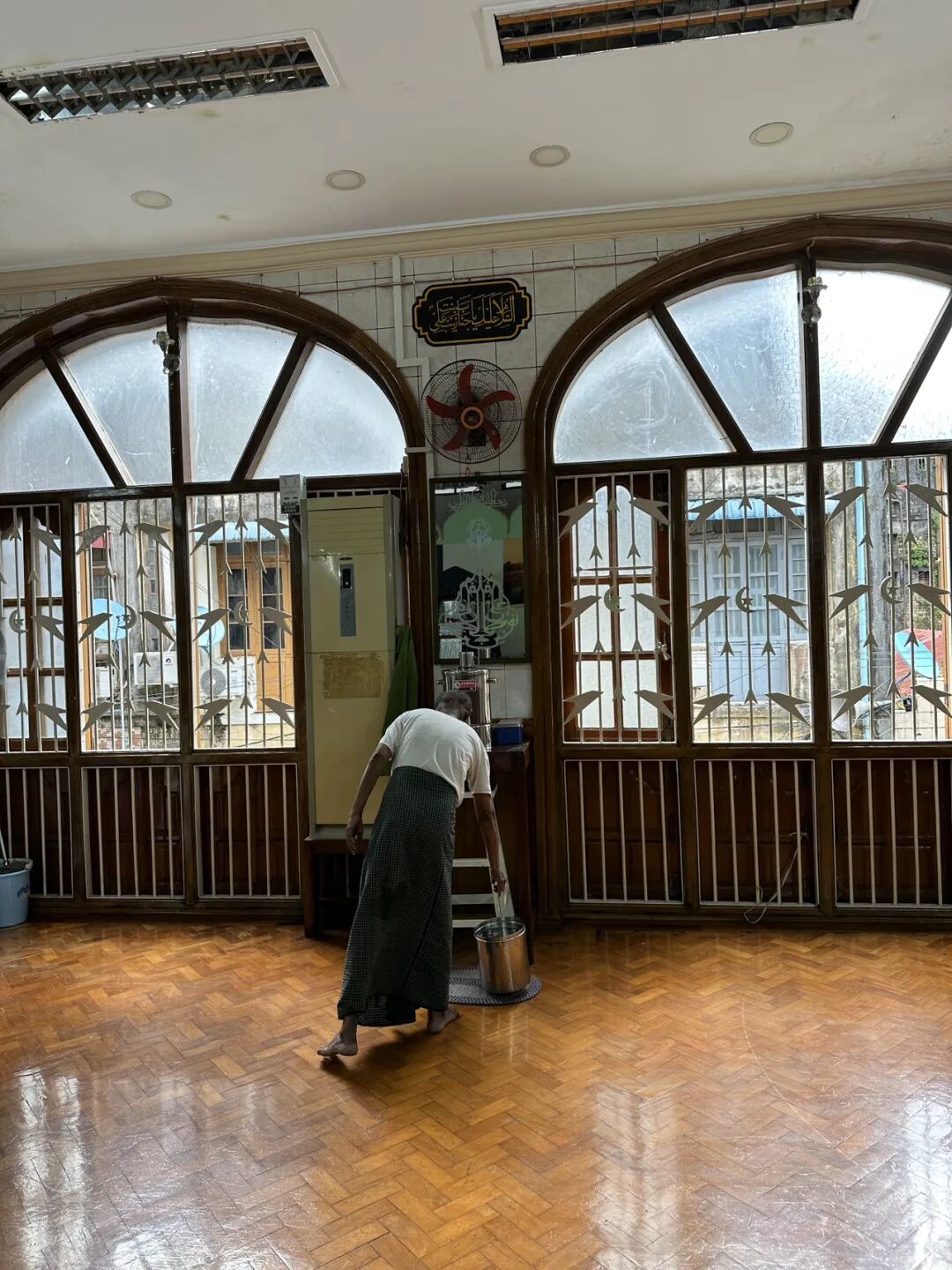
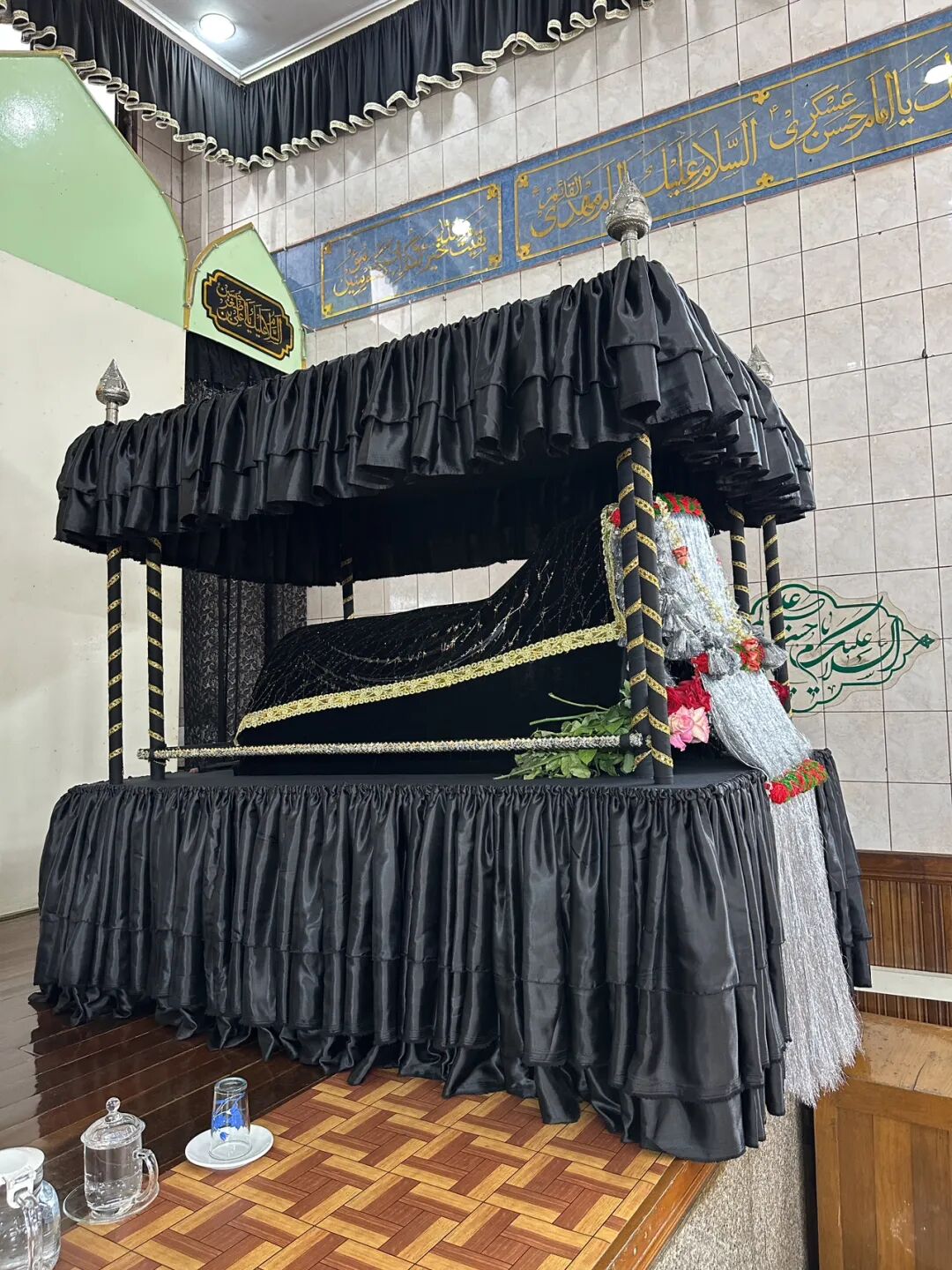
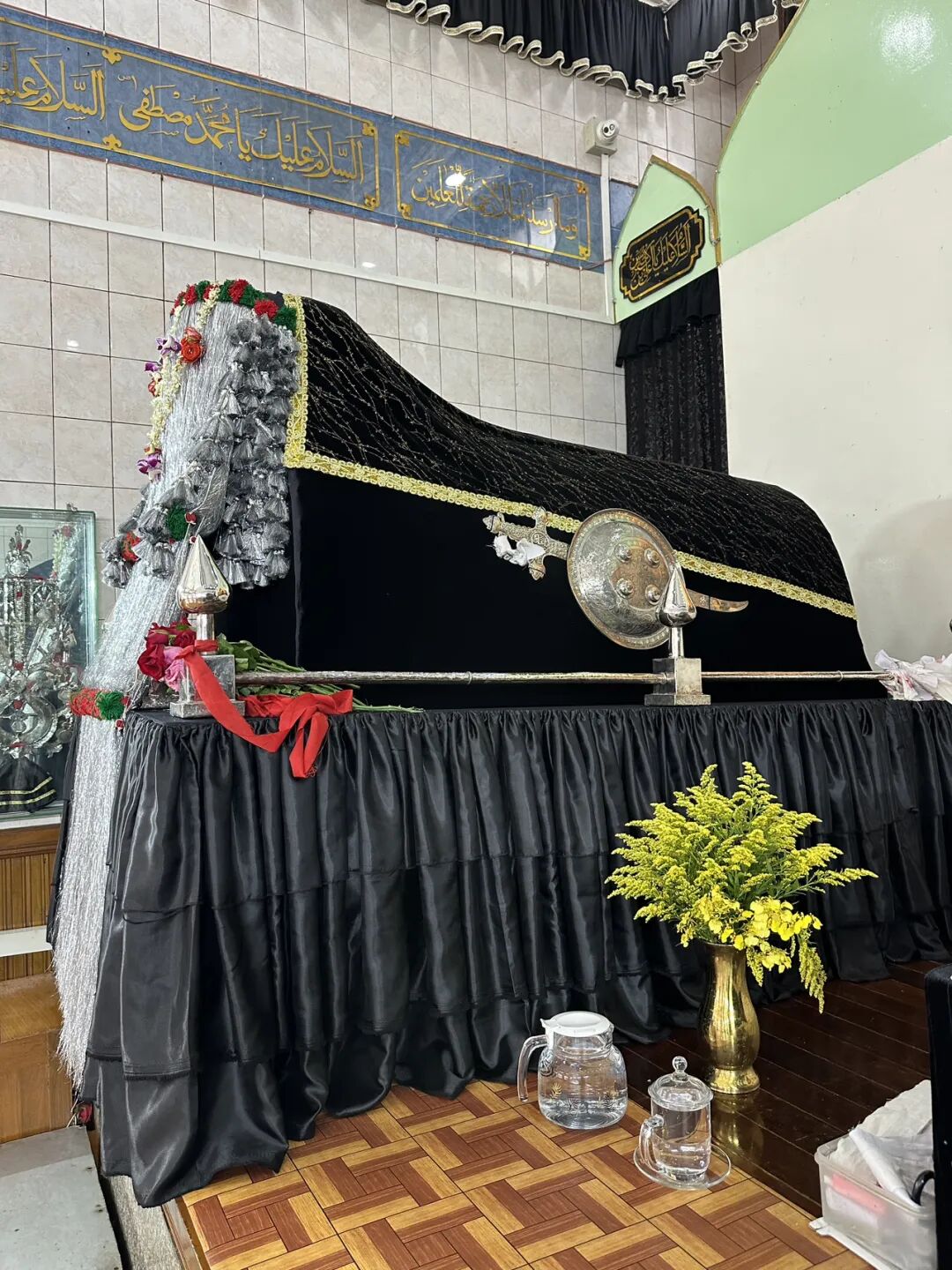
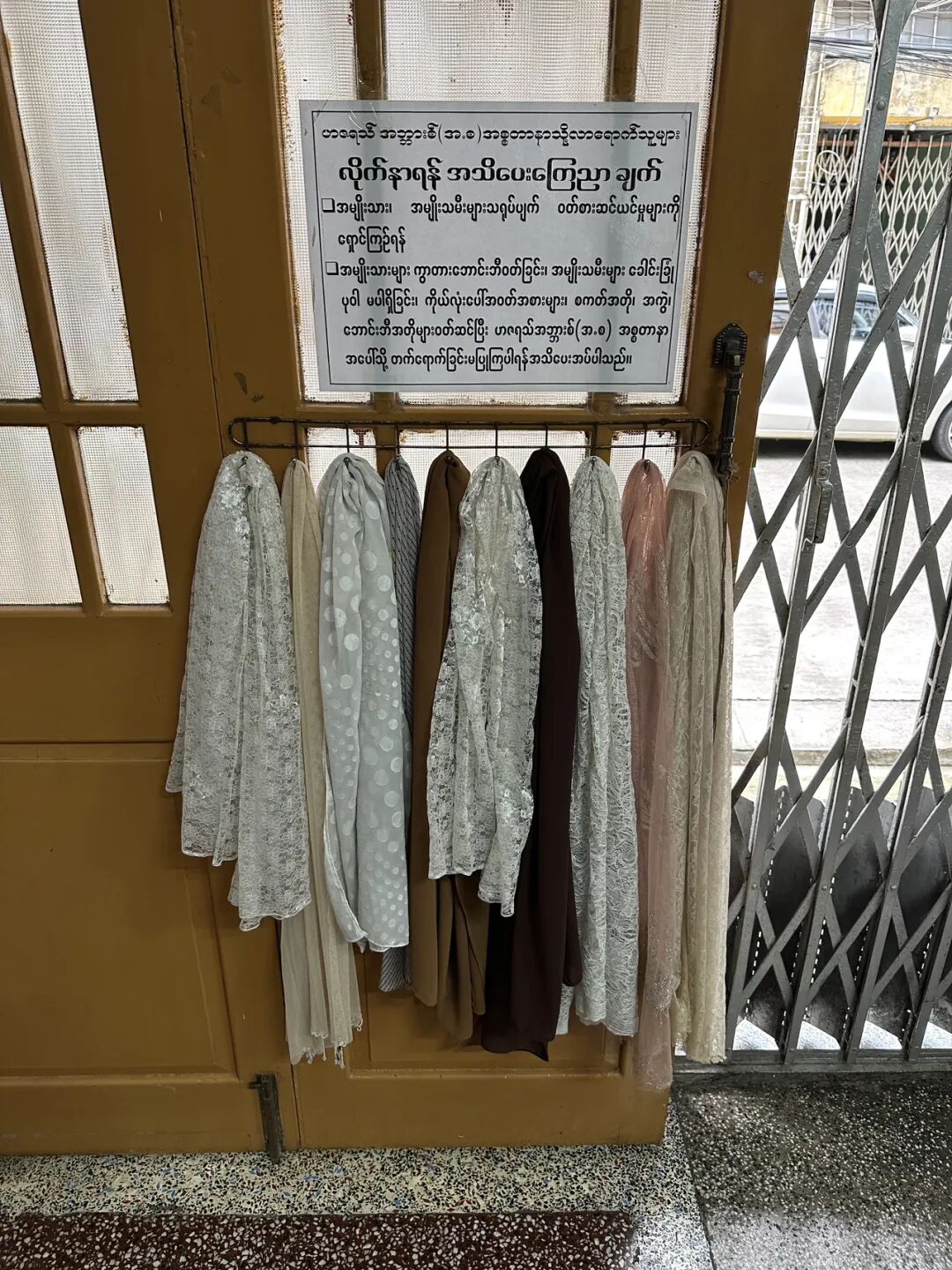
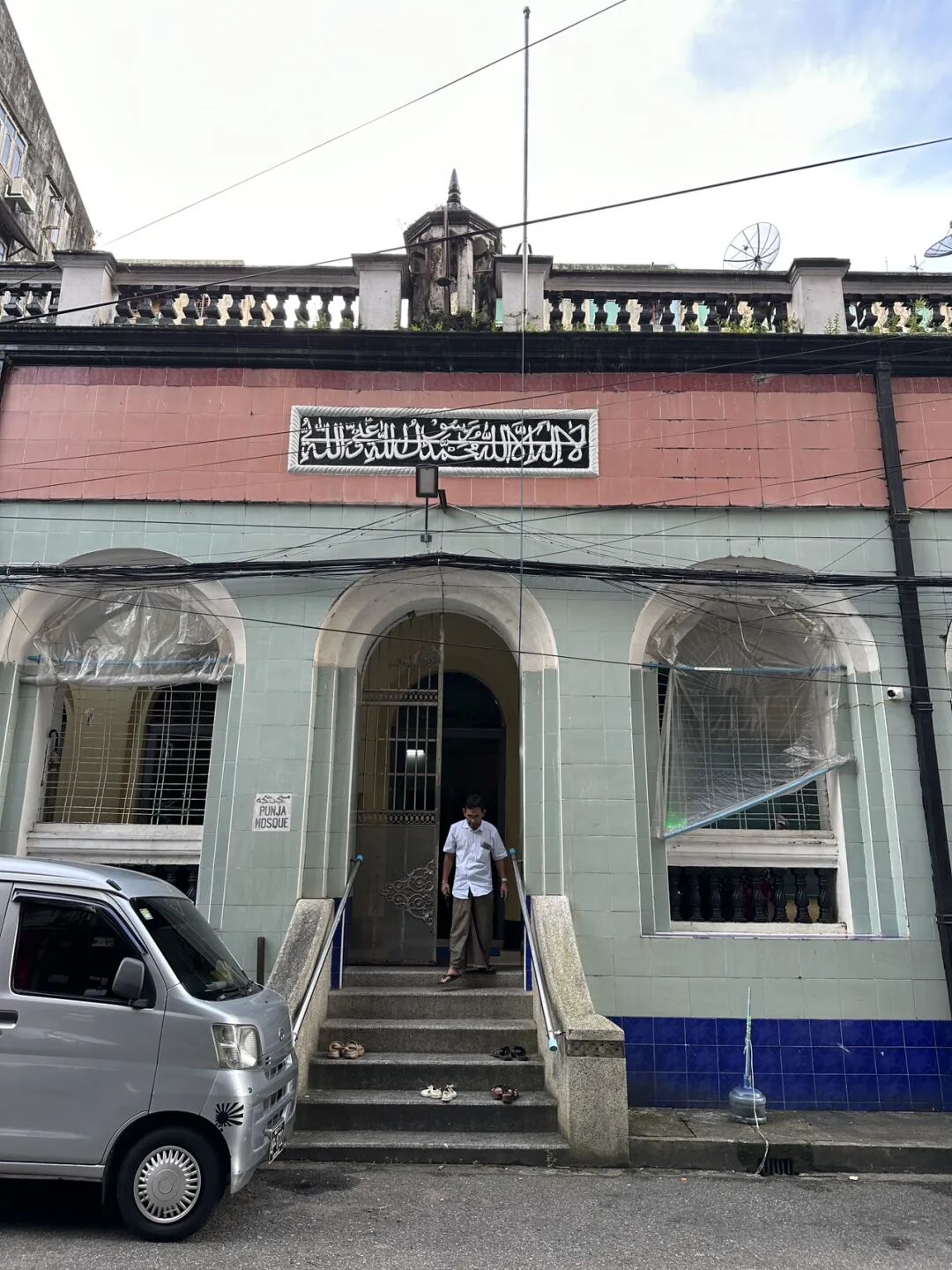
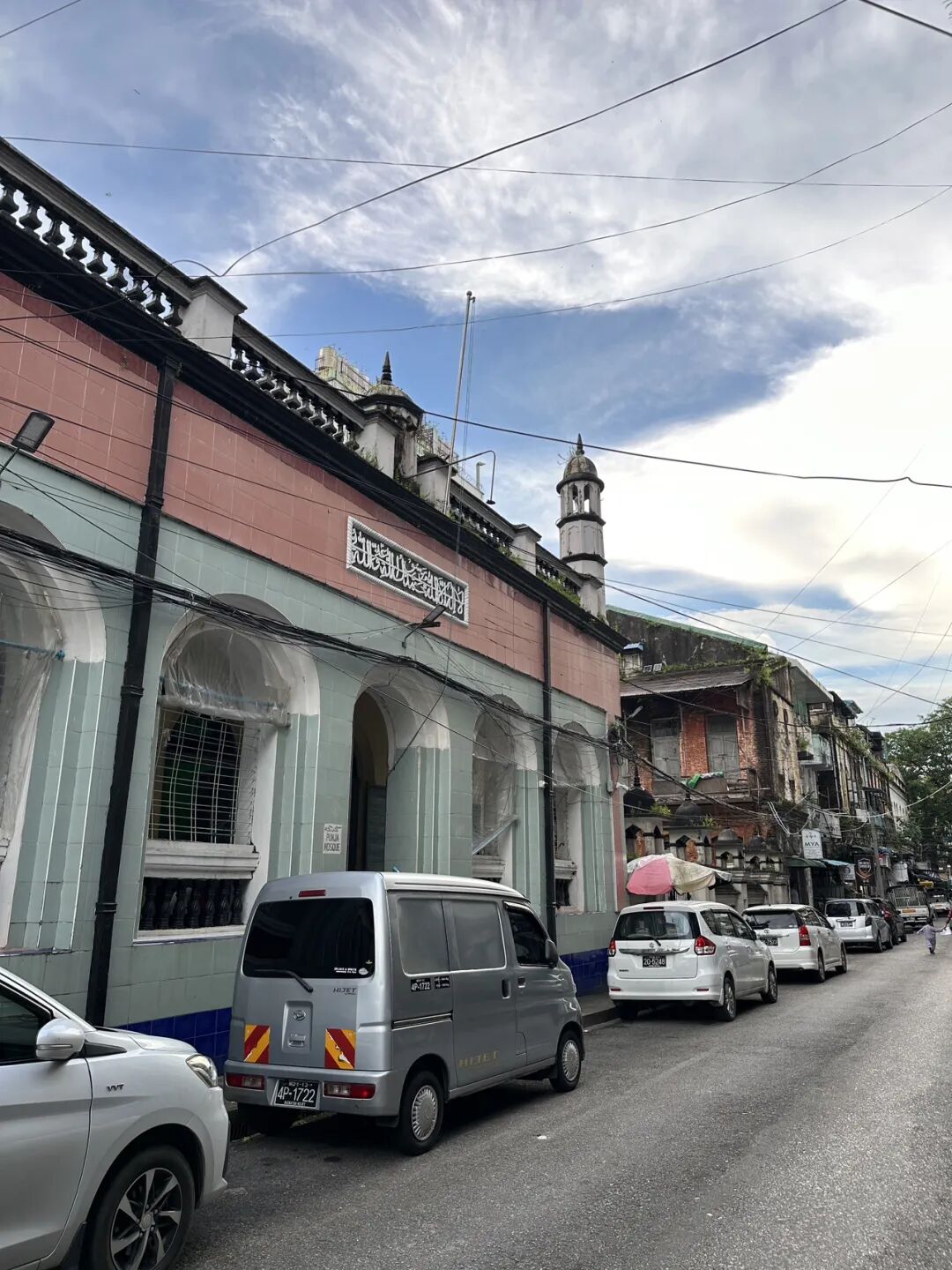
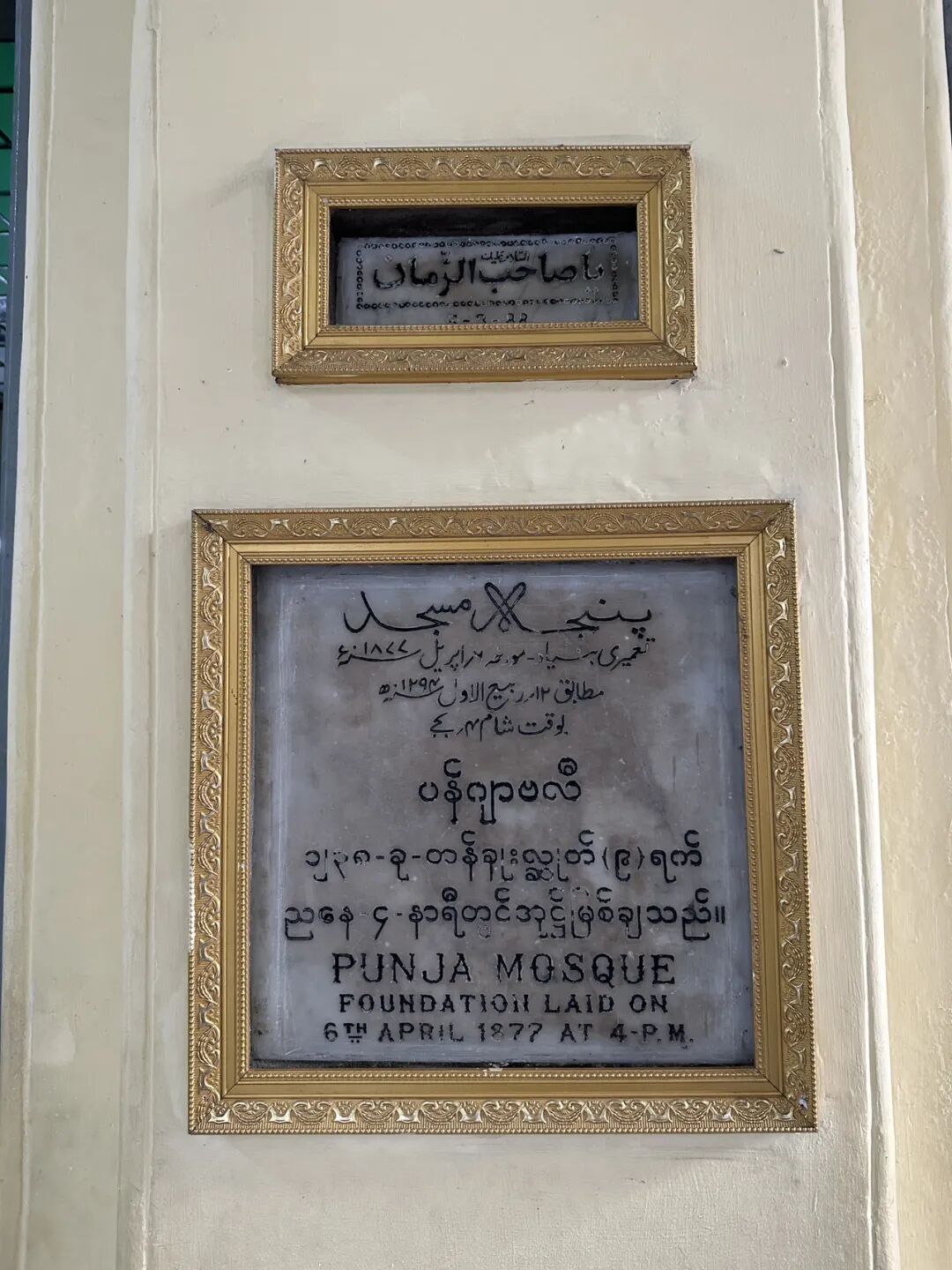
Punja Mosque is located on 38th Street on the east side of Yangon's old town. It was built in 1877 and is another Shia mosque in Yangon. You can also see the Shia Kalima on the mosque gate, with the added phrase 'Ali is the Wali of Allah'. The main hall is divided into two parts: the right side is a hall for mourning Imam Hussain, and the left side is the prayer hall. In the center of the right hall sits a tomb representing Imam Hussain. The left room contains the minbar, the pulpit where the Imam gives the khutbah. On the right is the Punja, representing the severed hand of Imam Hussain's standard-bearer Abbas during the Battle of Karbala, which is how this mosque got its name.
Besides the Twelver Shia, there are two other Shia minority mosques on Mughal Street in Yangon. Unfortunately, they are no longer in use because there are too few members left.
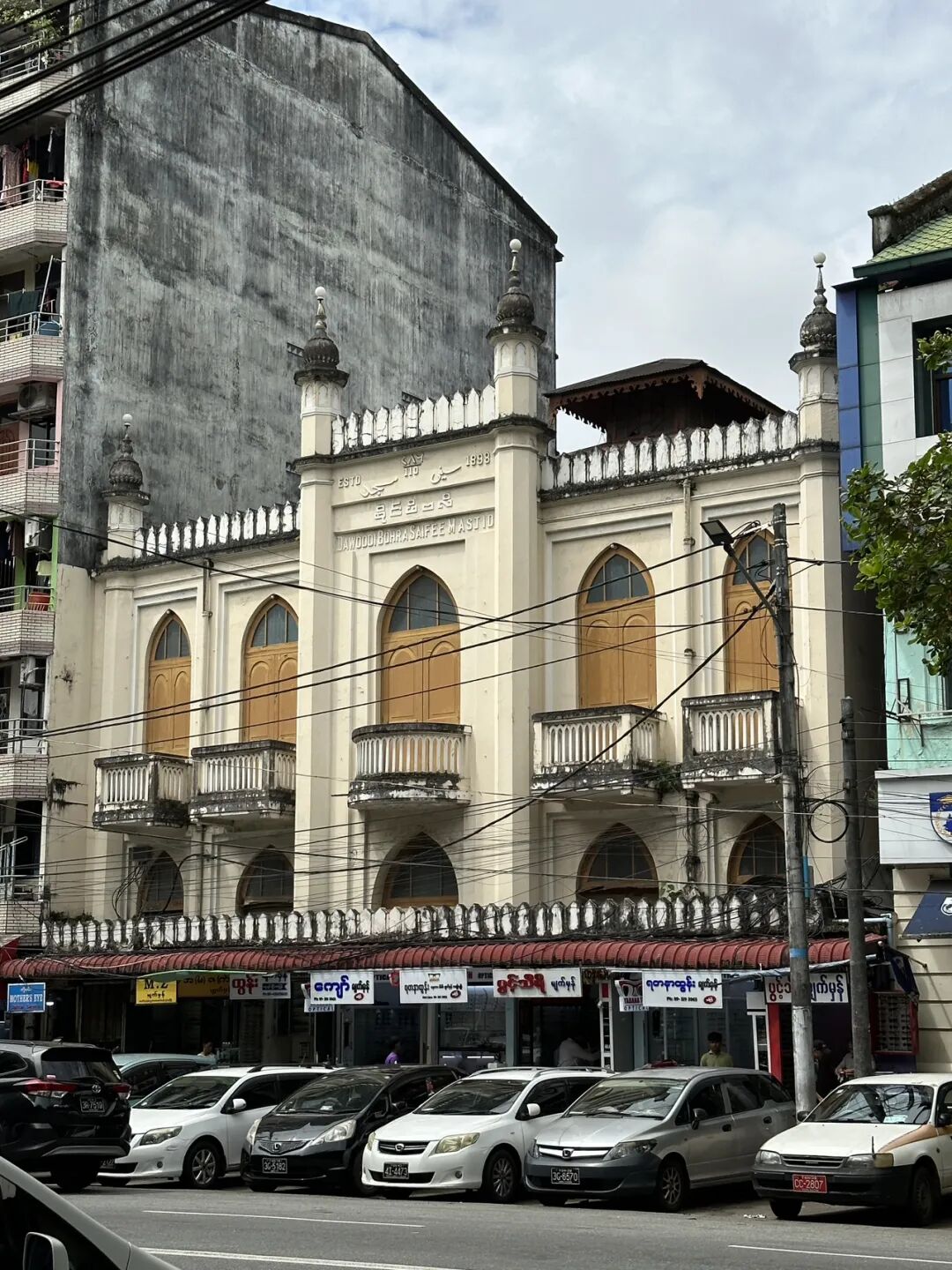
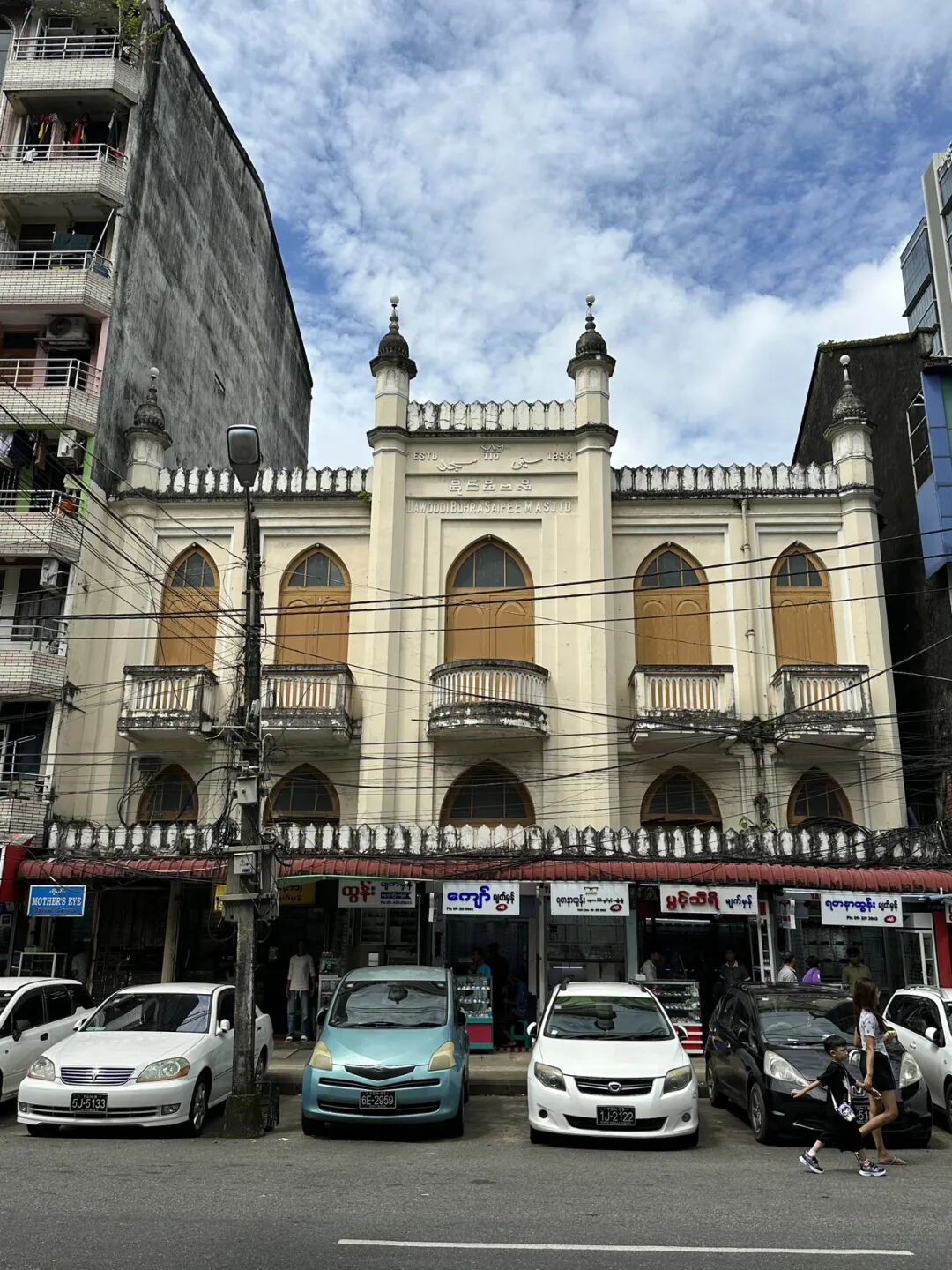
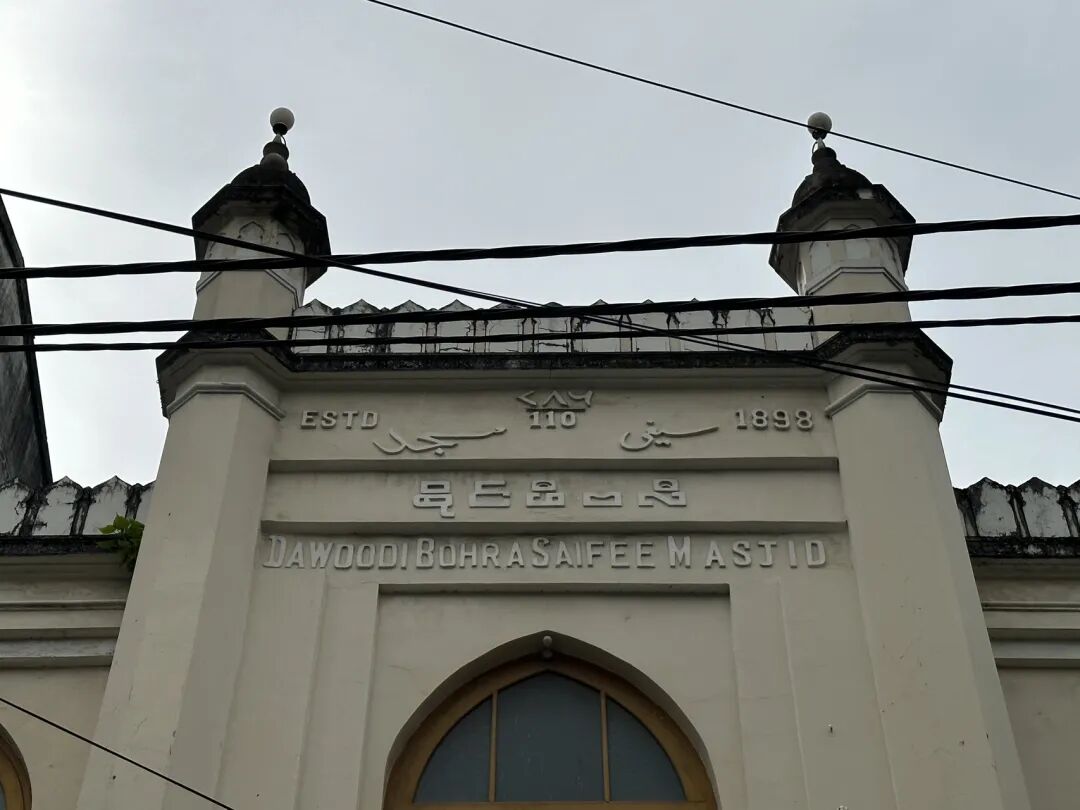
The Dawoodi Bohra Saifee Mosque is on the west side of Mughal Street. It was built by the Dawoodi Bohra sect in 1898. I have visited their mosques in Bangkok and Singapore before. The Dawoodi Bohra are a small branch of the Ismaili Shia. This branch has only a few million followers, most of whom live in the Indian state of Gujarat and the city of Karachi in Pakistan. The Dawoodi Bohra originated from the Ismaili Shia Fatimid Caliphate, which ruled North Africa from the 10th to the 12th century. In 1067, the Imam of the Fatimid Caliphate sent a man named Abdullah from Yemen to Gujarat, India, to preach, and he was very successful. Since then, the followers in Gujarat have kept in touch with Yemen and continued to grow. In 1589, the community leader Dawood Bin Qutubshah took office. A split occurred with Yemen, and they have been called the Dawoodis ever since.
Starting in the 19th century, Dawoodi Bohra members from Gujarat, India, began traveling across the Indian Ocean to do business. Many became wealthy merchants and industrialists, and some settled in Yangon, which has a large Indian population.
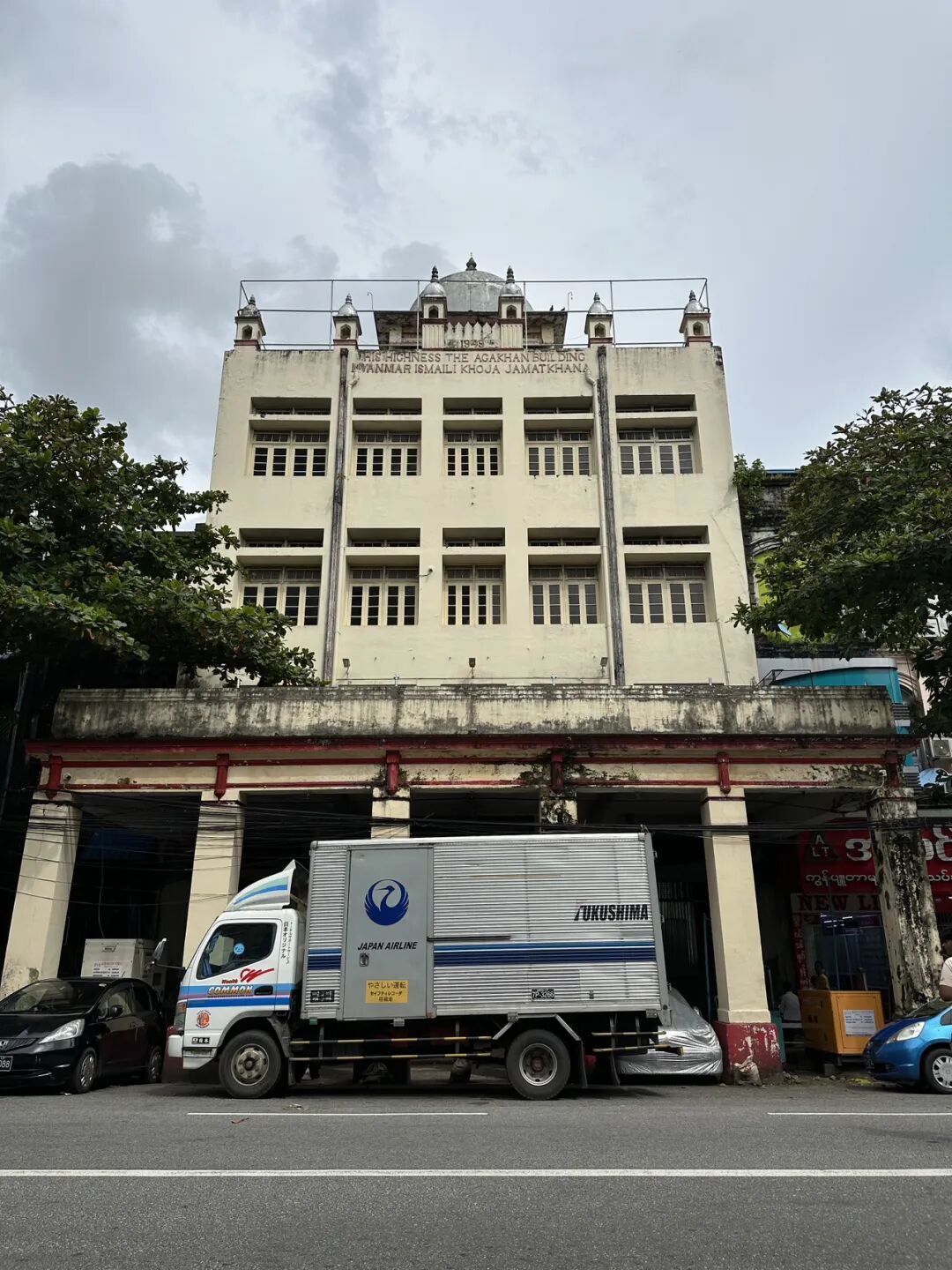
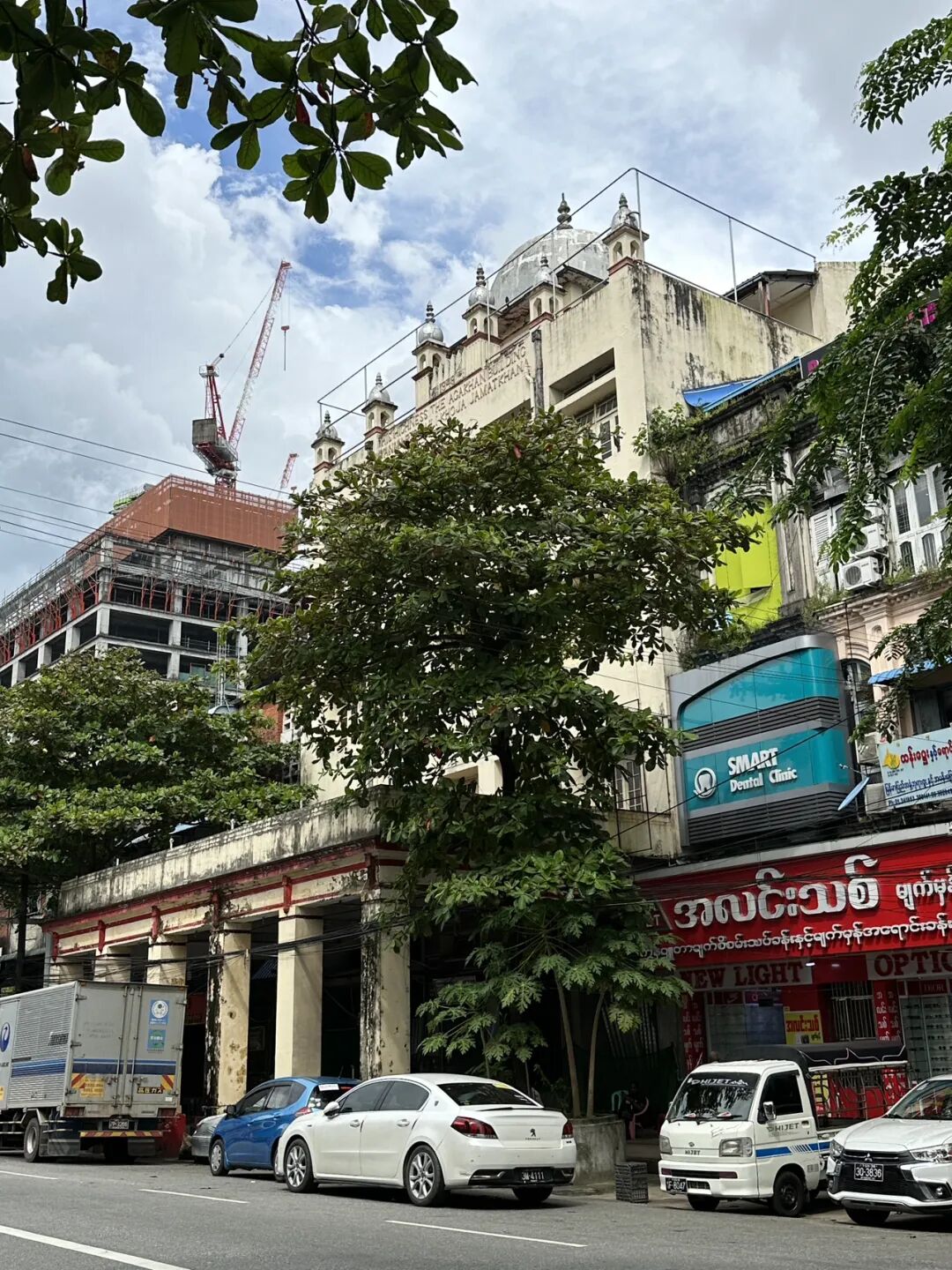
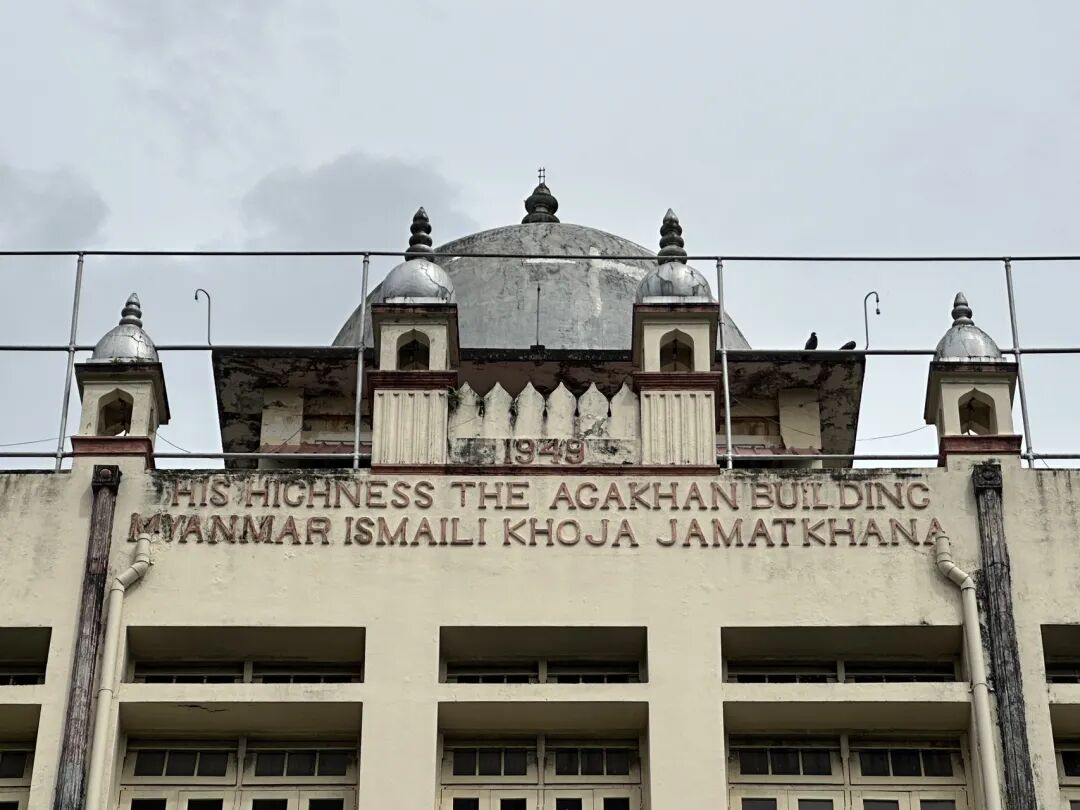
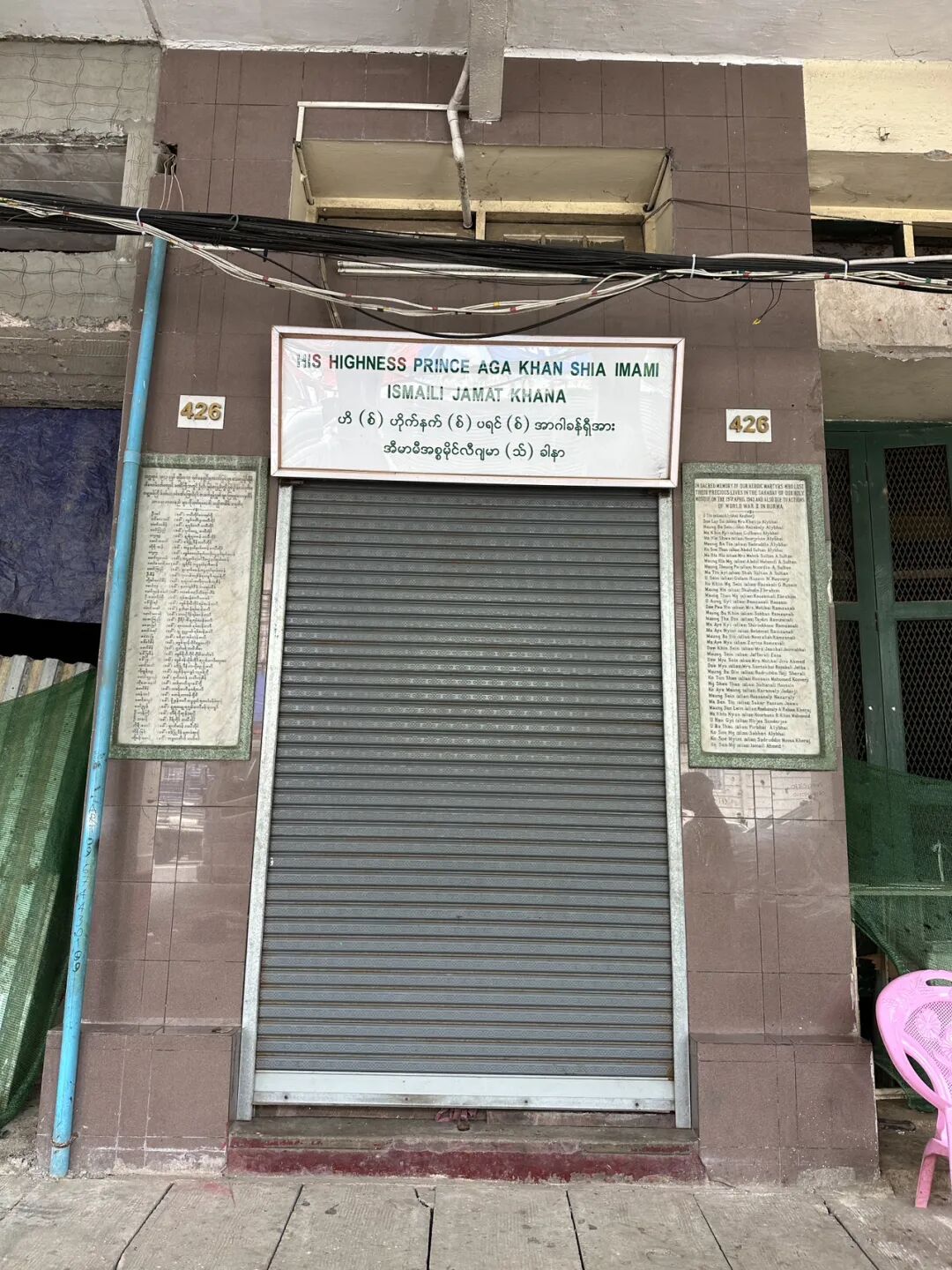
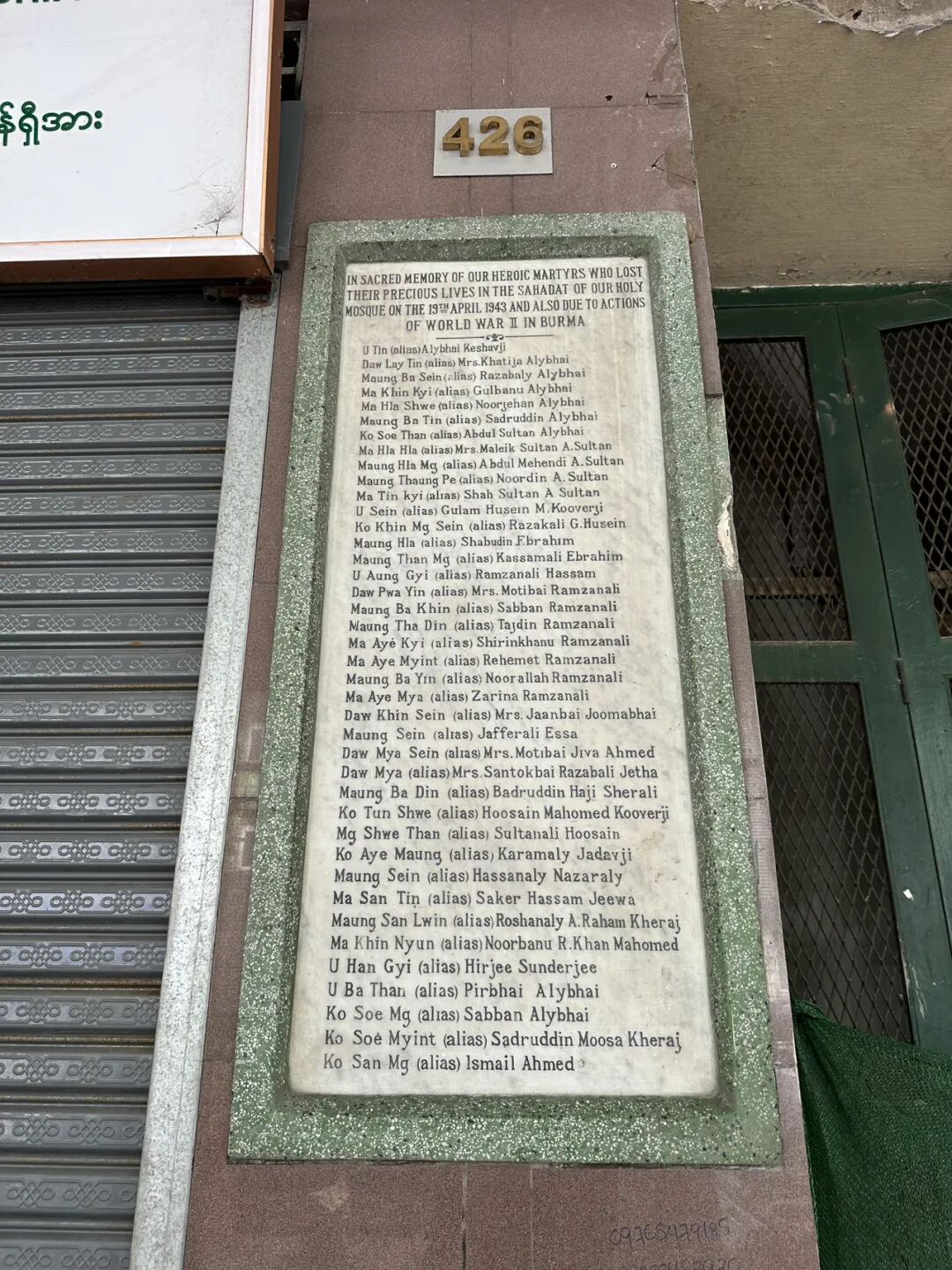
His Highness The Agakhan Building Myanmar Ismaili Khoja Jamatkhana is on the east side of Mughal Street. It was built in 1949 by the Khoja people, who follow the Nizari Ismaili branch of Shia Islam. They share the same faith as the Tajik people in China. The name Khoja comes from the title the 14th-century Ismaili scholar Pir Sadardin used for his followers. Sadardin was born in Persia and spent a long time preaching in South Asia. He promoted tolerance and integration between Islam and Hinduism, which led many merchants from the Lohana caste in Gujarat to convert.
The Khoja began doing business in Mumbai, India, in the 18th century. Later, they moved to South Asia, Oman, East Africa, Madagascar, and other places to trade and settle. Some also settled in Yangon. The Khoja community center is called a Jamatkhana, or 'Jummah hall,' where they hold congregational prayers, wedding banquets, and various memorial events.
Summary: Yangon's Mughal Shia Mosque was founded in 1854 by Persian-Indian merchants and is described as the largest Shia mosque complex in Southeast Asia. This account covers its mosque compound, Muharram practices, Khoja community, and wider Shia history in Myanmar.
The Mughal Shia Mosque in Yangon, Myanmar, is the largest Shia mosque in Southeast Asia. It was founded in 1854 by Persian-Indian merchants who were among the first to settle in Yangon.
The British East India Company opened factories in Yangon starting in the 1790s, which led to the arrival of Persian and Indian Shia merchants. These Shia friends (dosti) and others from Iran, Afghanistan, and India were collectively called Mughals by the Burmese people. After the 19th century, these Mughals often served as intermediaries and translators between the British and the Burmese, becoming a key part of Yangon's foreign trade.
In 1852, the British officially occupied Yangon and made it the capital of British Burma. They hired army engineers to design a grid-patterned city, and the Shia community established the Mughal Shia Mosque. The Mughal Shia Mosque was originally a teak wood building. Between 1914 and 1918, mosque trustees from Isfahan, Shiraz, Khorasan, and Kabul in Iran and Afghanistan raised funds to rebuild it in its current Hyderabad style. The Shia faith developed on the Deccan Plateau in southern India between the 14th and 16th centuries. The Qutb Shahi dynasty declared it the state religion in 1518. Its capital, Hyderabad, was developed in 1591 with the help of Shia scholar and scientist Mir Muhammad Momin, and it later became a center for Shia culture in India.
S. Afsheen, a descendant of a trustee of the Yangon Mughal Shia Mosque, wrote in his autobiography that his ancestors were court advisors in the Mughal Empire. In the 19th century, his great-grandfather's father, Hasan Ali Khorasanee, came to Yangon to trade. He secured favorable trade terms and built a powerful trading company. Hasan Ali Khorasanee's son bought several properties in Yangon and ran leather and other trading businesses, which made the Khorasanee family one of the trustees of the Mughal Shia Mosque.
The Mughal Shia Mosque is located on Shwe Bon Thar Street in Yangon's Indian quarter. This street was originally called Mughal Street and is the area where Indian shops in Yangon are most concentrated. The mosque consists of a Mughal hall facing the street, a main prayer hall, and two tall minarets. The shops in the Mughal hall facing the street are rented out.
The layout of the main hall in the Yangon Mughal Shia Mosque is different from Sunni mosques. The hall has separate sections for men and women on either side, covered with prayer rugs, and features a mihrab to indicate the direction of prayer. The center is used for delivering the khutbah sermon and holding mourning ceremonies during the first month of the Islamic calendar.
In the middle of the hall is the minbar, the pulpit where the imam delivers the khutbah. Above the pulpit sits a metal hand called a Panja, which symbolizes the hand of Abbas, the standard-bearer for Imam Hussain, which was cut off during the Battle of Karbala. Abbas was the half-brother of Imam Hussain. People say on the night of Ashura, he was blocked by enemy troops while returning with water from the Euphrates River. He fought alone, had both arms cut off, and eventually died in battle.
On both sides of the pulpit are symbolic tombs for Imam Hassan and Imam Hussain, decorated with replicas of the swords and turbans (dastar) they used. They are considered the second and third imams of the Shia faith.
In front of the hall stands an Alam flagpole used during Ashura processions. It features a pear-shaped flat top with two dragon heads in the middle, symbolizing the sword of Ali.
Inside the hall are prayer tablets (turbah), known in Persian as mohr, which Shia Muslims use for prostration. Shia tradition requires prostrating on natural materials, so most people choose clay tablets. The most revered ones are made from the soil of Karbala, where Imam Hussain was martyred. This was my first time seeing them made of wood and stone.
The Mughal Shia Mosque in Yangon features unique calligraphy art. The gate is inscribed with the Shia version of the Shahada, which includes one extra phrase compared to the Sunni version: Ali-un-Waliullah, meaning Ali is the friend (wali) of Allah.
On 32nd Street, near the Sule Pagoda in the center of old Yangon, there is a Shia ceremonial hall called Hazarat Abbas (A. S) Astana Alamdar-e-Husayn. Built in 1856, it is an important ceremonial center for the Shia community in Yangon. Unlike the mosque, this place is used by the Shia community for commemorative ceremonies during the first and second months of the Islamic calendar and during Ramadan. It is an important way for the Shia community to strengthen their unity.
The hall has two floors. The first floor has the English words: 'Live like Ali, die like Hussain'. In the middle of the second floor sits a Punja, which is a symbol of the severed hand of Abbas, the standard-bearer for Imam Hussain during the Battle of Karbala. On both sides are tombs representing Imam Hussain and the standard-bearer Abbas, who were both martyred in the Battle of Karbala. An elder at the mosque showed me a book in Burmese about the standard-bearer Abbas.
In the Shia tradition, the standard-bearer Abbas is seen as the ultimate example of courage, love, sincerity, and self-sacrifice. Many Shia Muslims take oaths in his name or give out food in his honor. The death of Abbas is the oldest passion play in the Shia tradition, and verses about him often appear in Shia architectural decorations.
Punja Mosque is located on 38th Street on the east side of Yangon's old town. It was built in 1877 and is another Shia mosque in Yangon. You can also see the Shia Kalima on the mosque gate, with the added phrase 'Ali is the Wali of Allah'. The main hall is divided into two parts: the right side is a hall for mourning Imam Hussain, and the left side is the prayer hall. In the center of the right hall sits a tomb representing Imam Hussain. The left room contains the minbar, the pulpit where the Imam gives the khutbah. On the right is the Punja, representing the severed hand of Imam Hussain's standard-bearer Abbas during the Battle of Karbala, which is how this mosque got its name.
Besides the Twelver Shia, there are two other Shia minority mosques on Mughal Street in Yangon. Unfortunately, they are no longer in use because there are too few members left.
The Dawoodi Bohra Saifee Mosque is on the west side of Mughal Street. It was built by the Dawoodi Bohra sect in 1898. I have visited their mosques in Bangkok and Singapore before. The Dawoodi Bohra are a small branch of the Ismaili Shia. This branch has only a few million followers, most of whom live in the Indian state of Gujarat and the city of Karachi in Pakistan. The Dawoodi Bohra originated from the Ismaili Shia Fatimid Caliphate, which ruled North Africa from the 10th to the 12th century. In 1067, the Imam of the Fatimid Caliphate sent a man named Abdullah from Yemen to Gujarat, India, to preach, and he was very successful. Since then, the followers in Gujarat have kept in touch with Yemen and continued to grow. In 1589, the community leader Dawood Bin Qutubshah took office. A split occurred with Yemen, and they have been called the Dawoodis ever since.
Starting in the 19th century, Dawoodi Bohra members from Gujarat, India, began traveling across the Indian Ocean to do business. Many became wealthy merchants and industrialists, and some settled in Yangon, which has a large Indian population.
His Highness The Agakhan Building Myanmar Ismaili Khoja Jamatkhana is on the east side of Mughal Street. It was built in 1949 by the Khoja people, who follow the Nizari Ismaili branch of Shia Islam. They share the same faith as the Tajik people in China. The name Khoja comes from the title the 14th-century Ismaili scholar Pir Sadardin used for his followers. Sadardin was born in Persia and spent a long time preaching in South Asia. He promoted tolerance and integration between Islam and Hinduism, which led many merchants from the Lohana caste in Gujarat to convert.
The Khoja began doing business in Mumbai, India, in the 18th century. Later, they moved to South Asia, Oman, East Africa, Madagascar, and other places to trade and settle. Some also settled in Yangon. The Khoja community center is called a Jamatkhana, or 'Jummah hall,' where they hold congregational prayers, wedding banquets, and various memorial events.
