

Yangon
Halal Travel Guide: Yangon - Last Mughal Emperor Tomb and Qadiriyya Gongbei
Articles • ali2007fr posted the article • 0 comments • 239 views • 2026-05-21 02:08
Summary: Yangon holds the tomb of Bahadur Shah II, the last Mughal emperor, near Shwedagon Pagoda, along with a Qadiriyya gongbei connected to Muslim memory in Myanmar. This account keeps the source's shrine details, historical names, religious terms, and site observations.
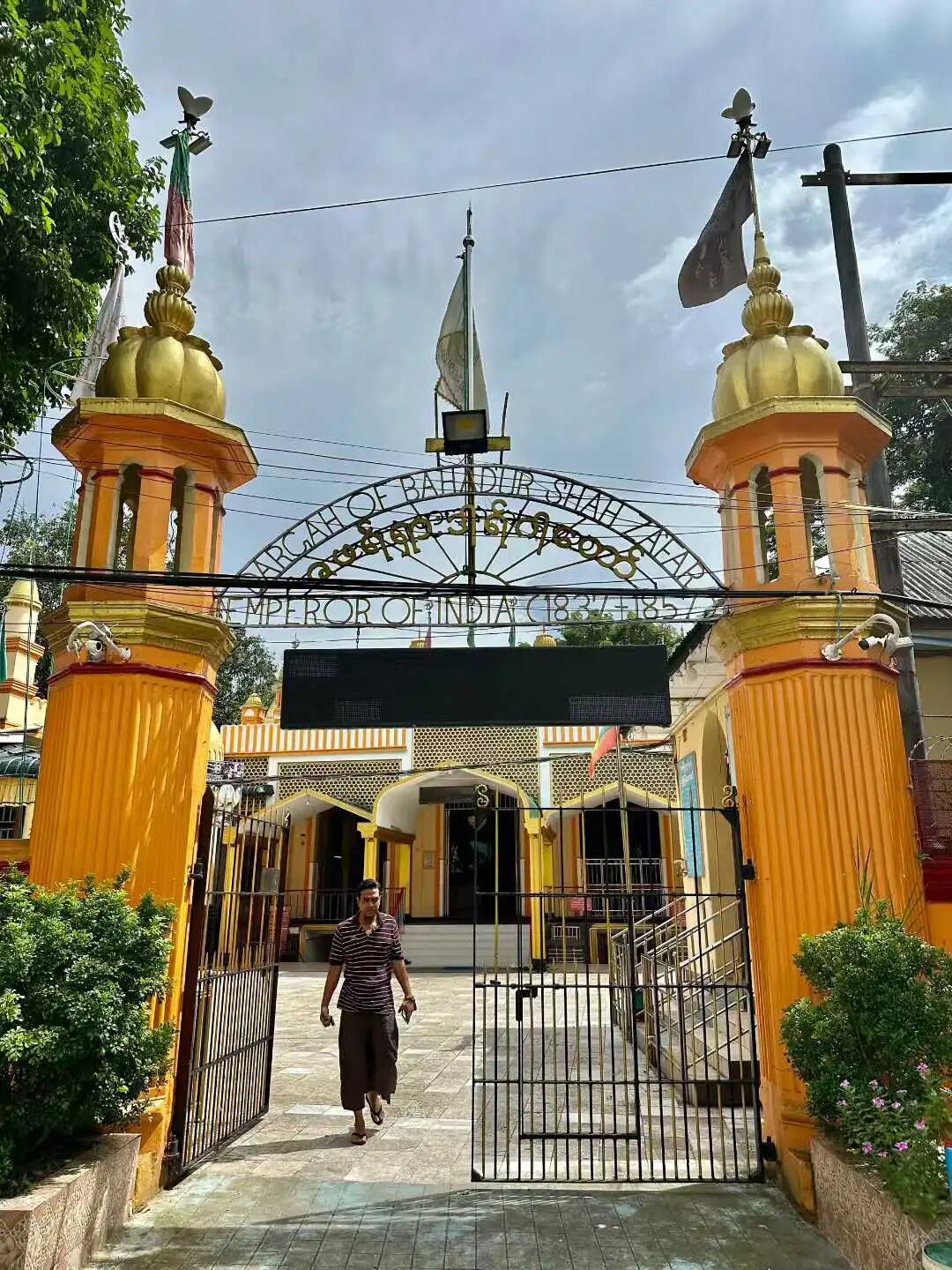
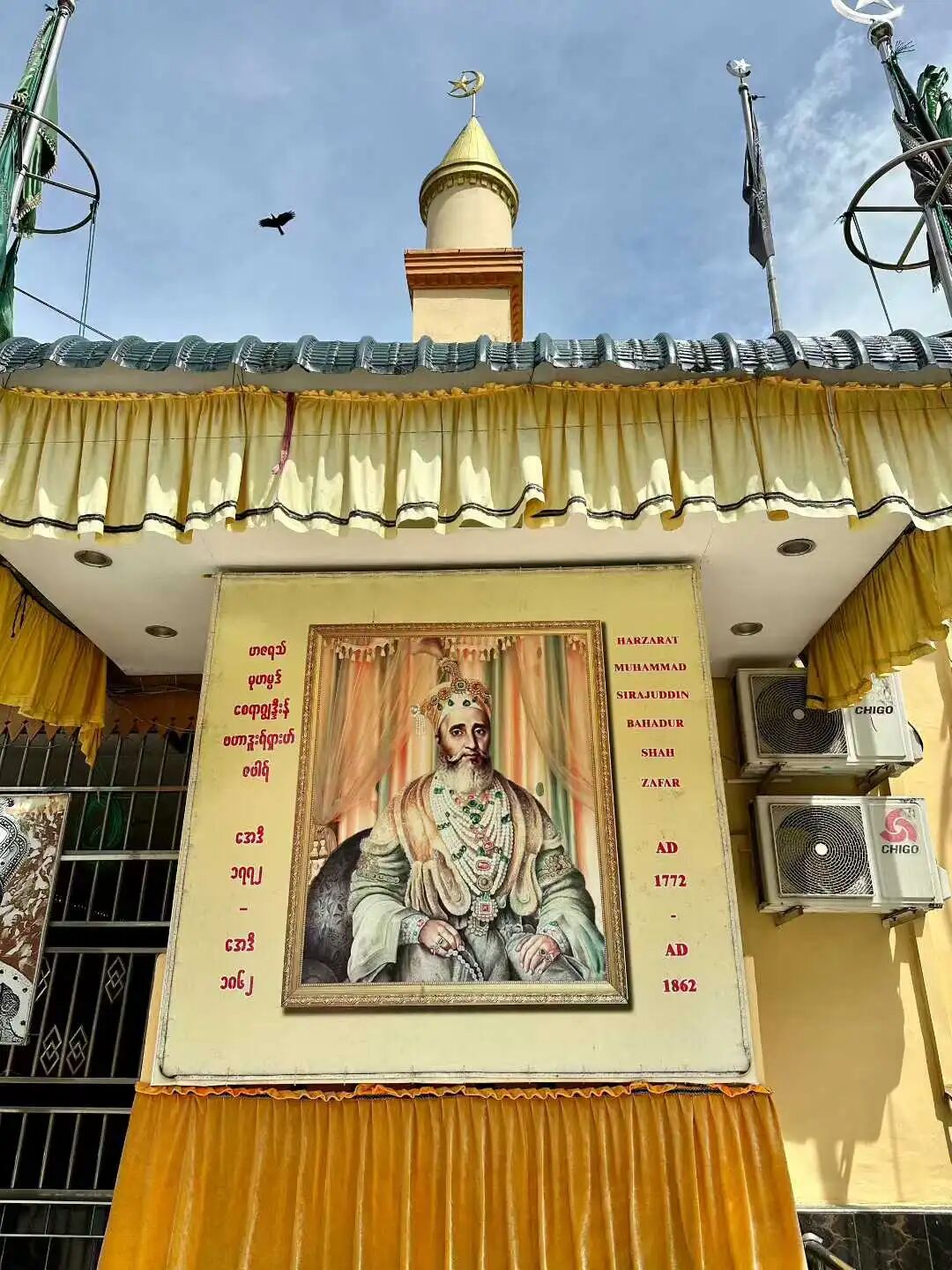
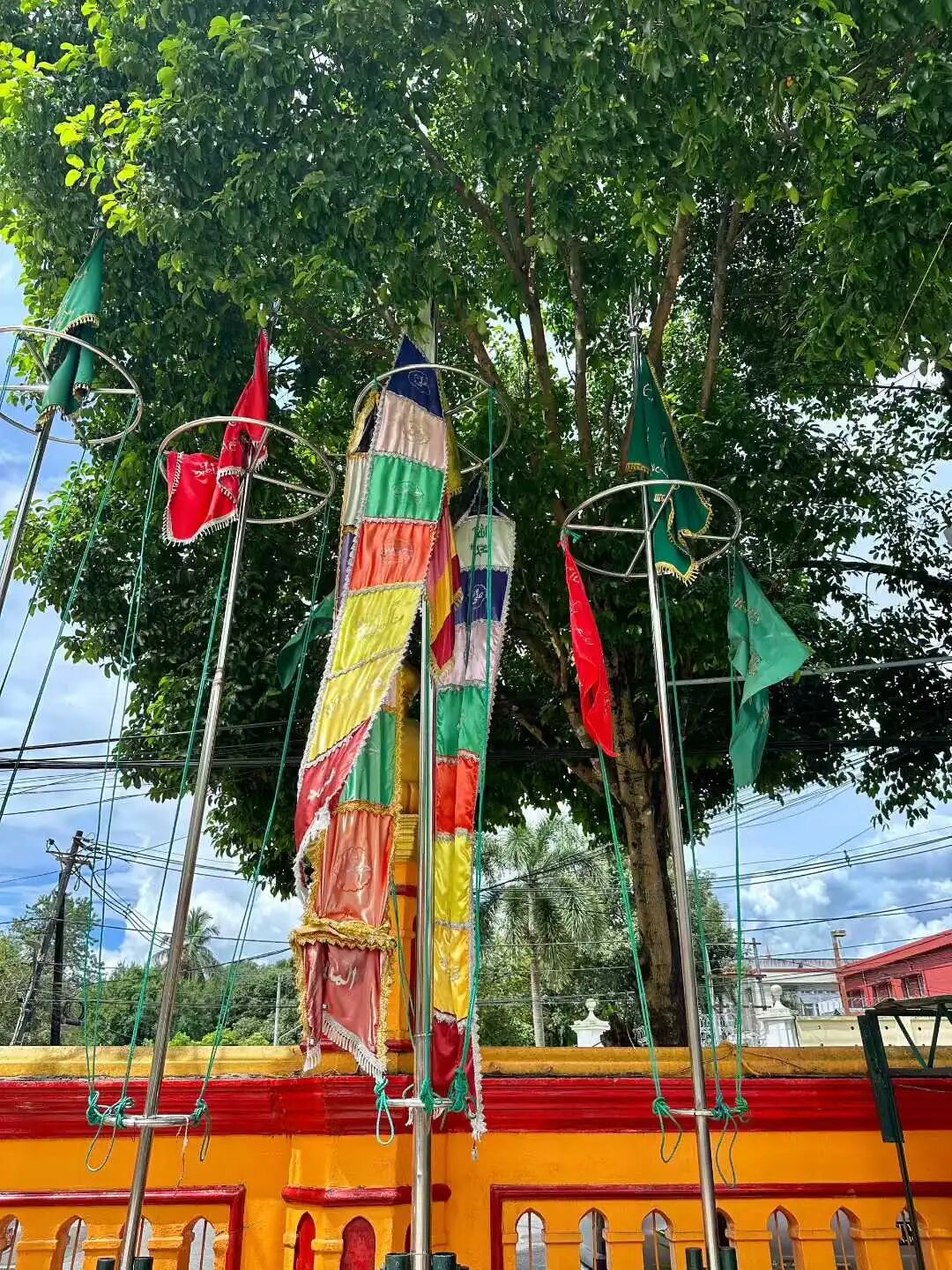
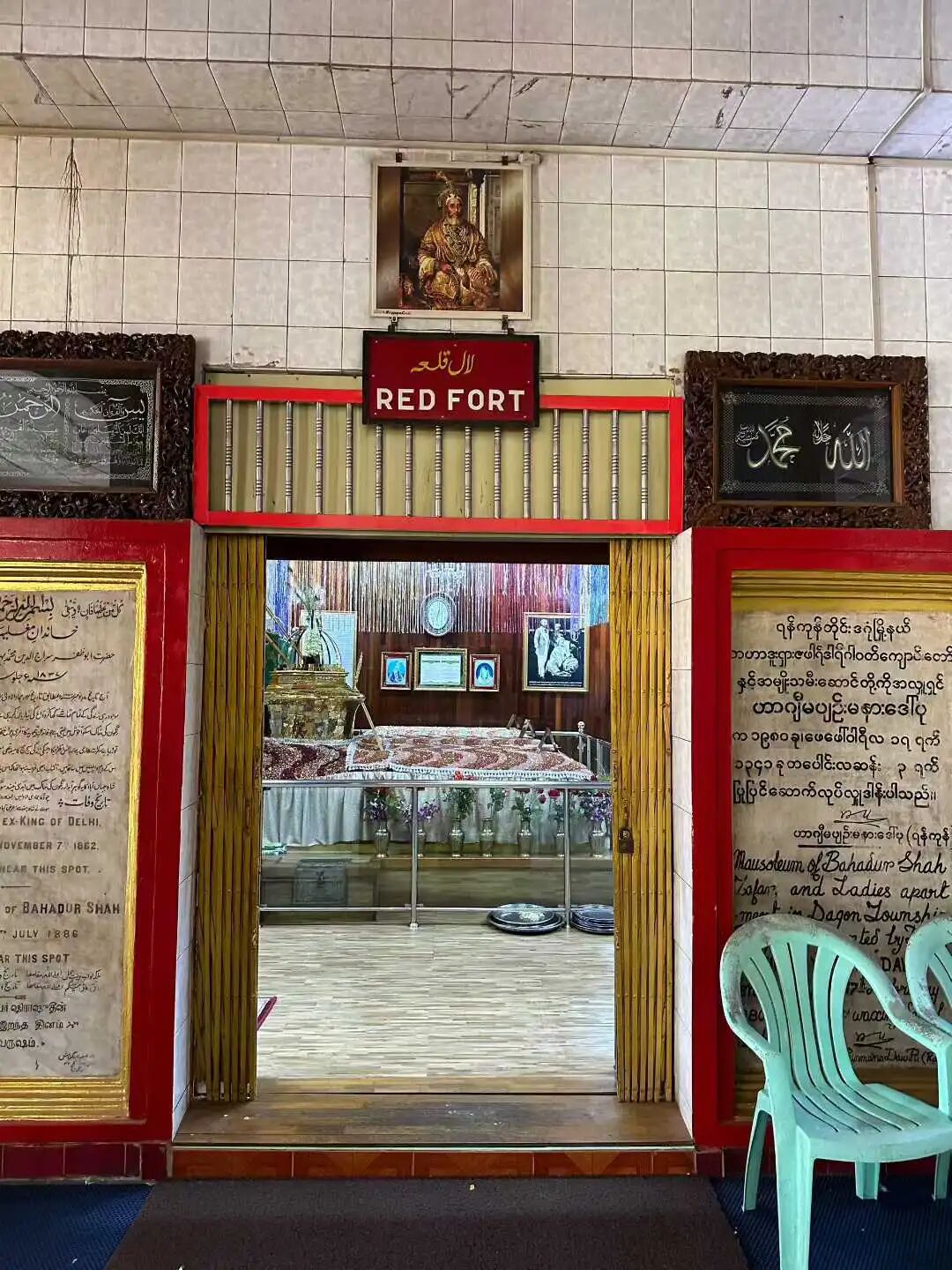
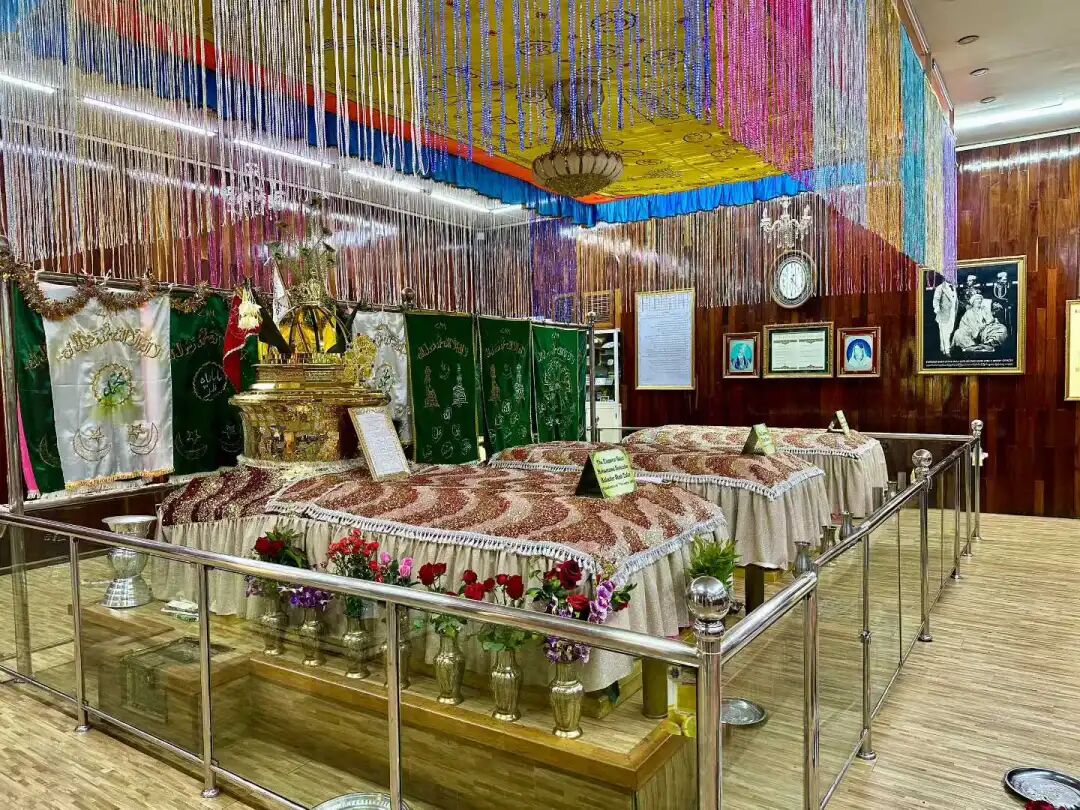
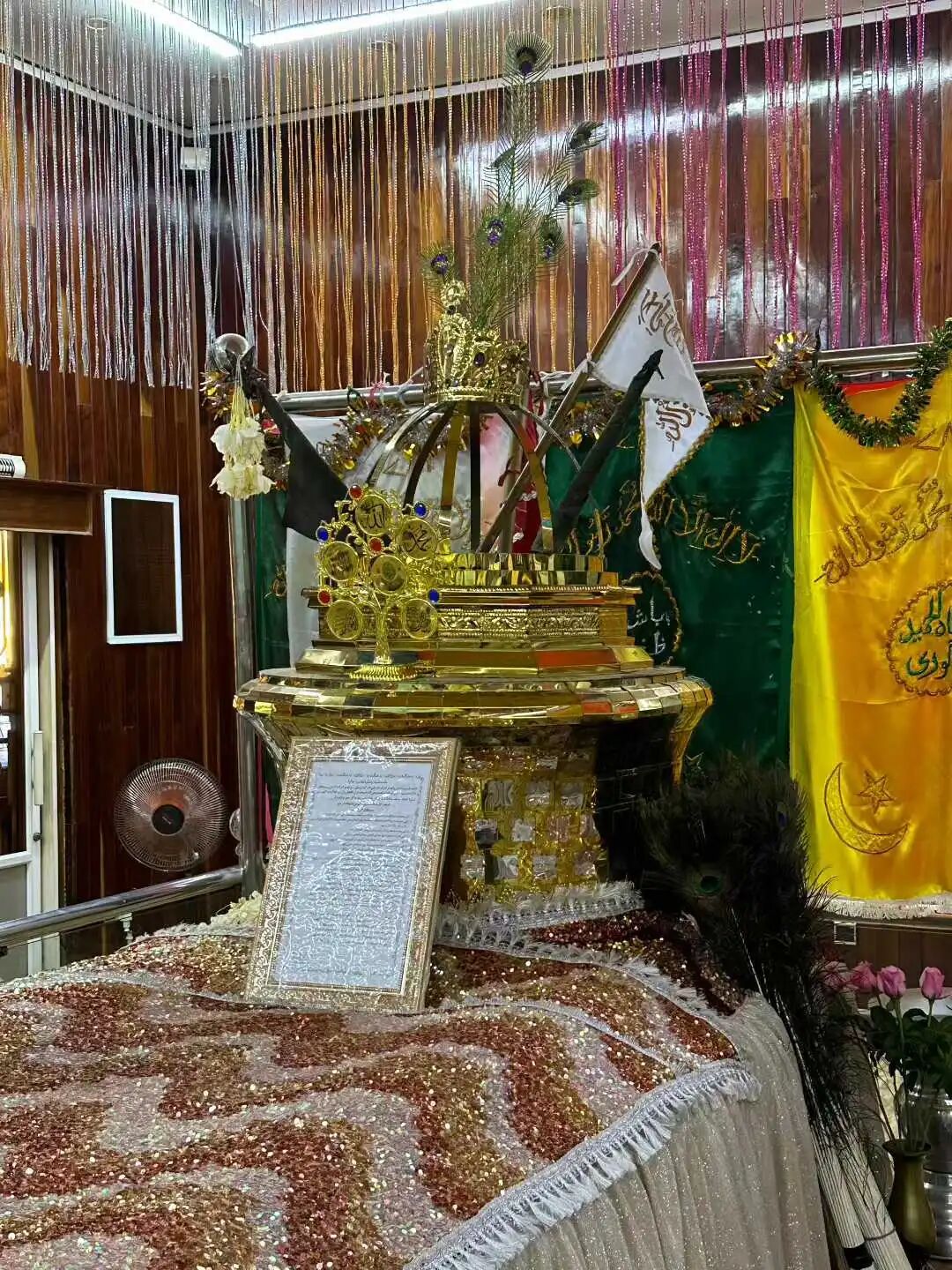
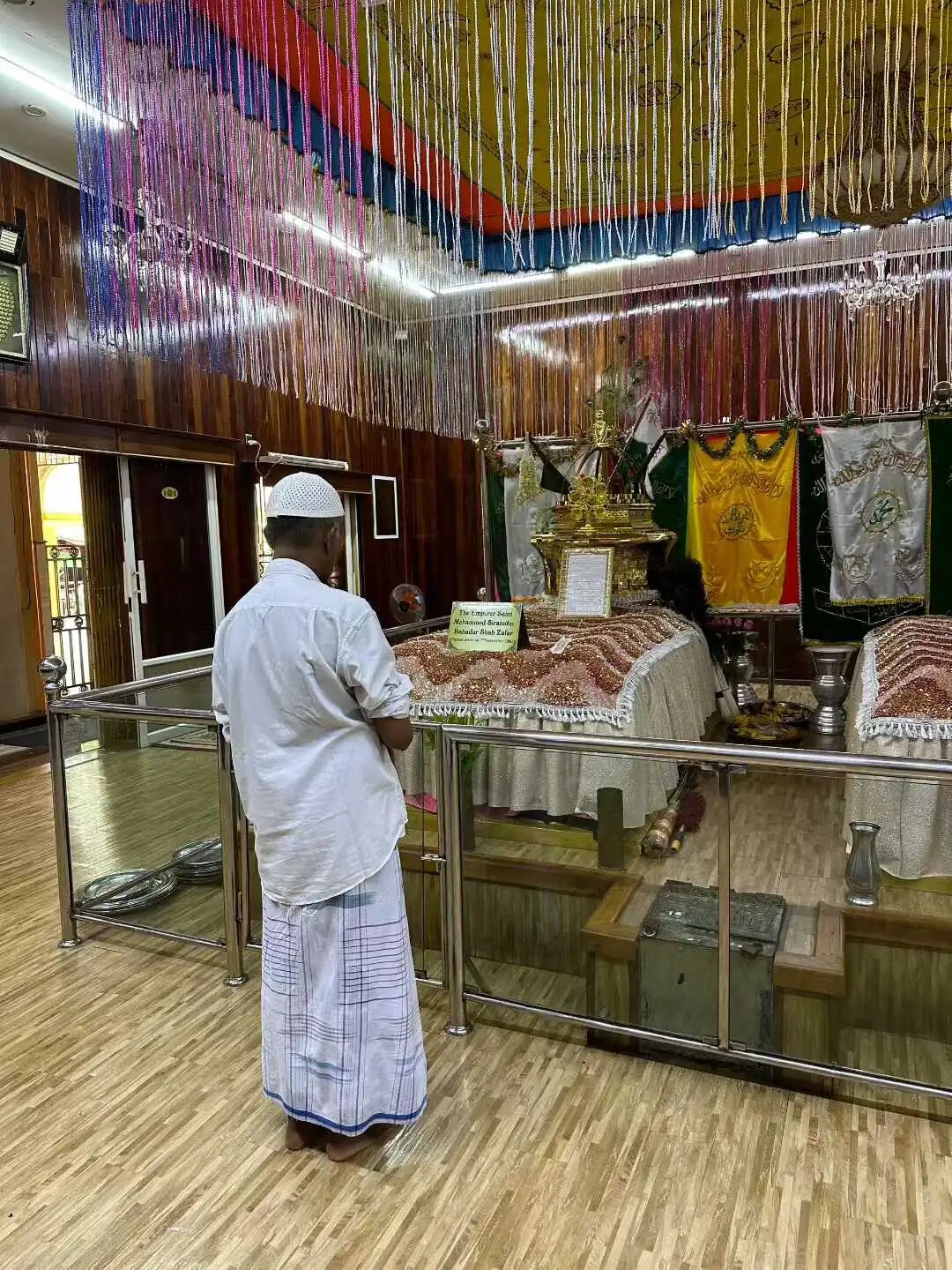
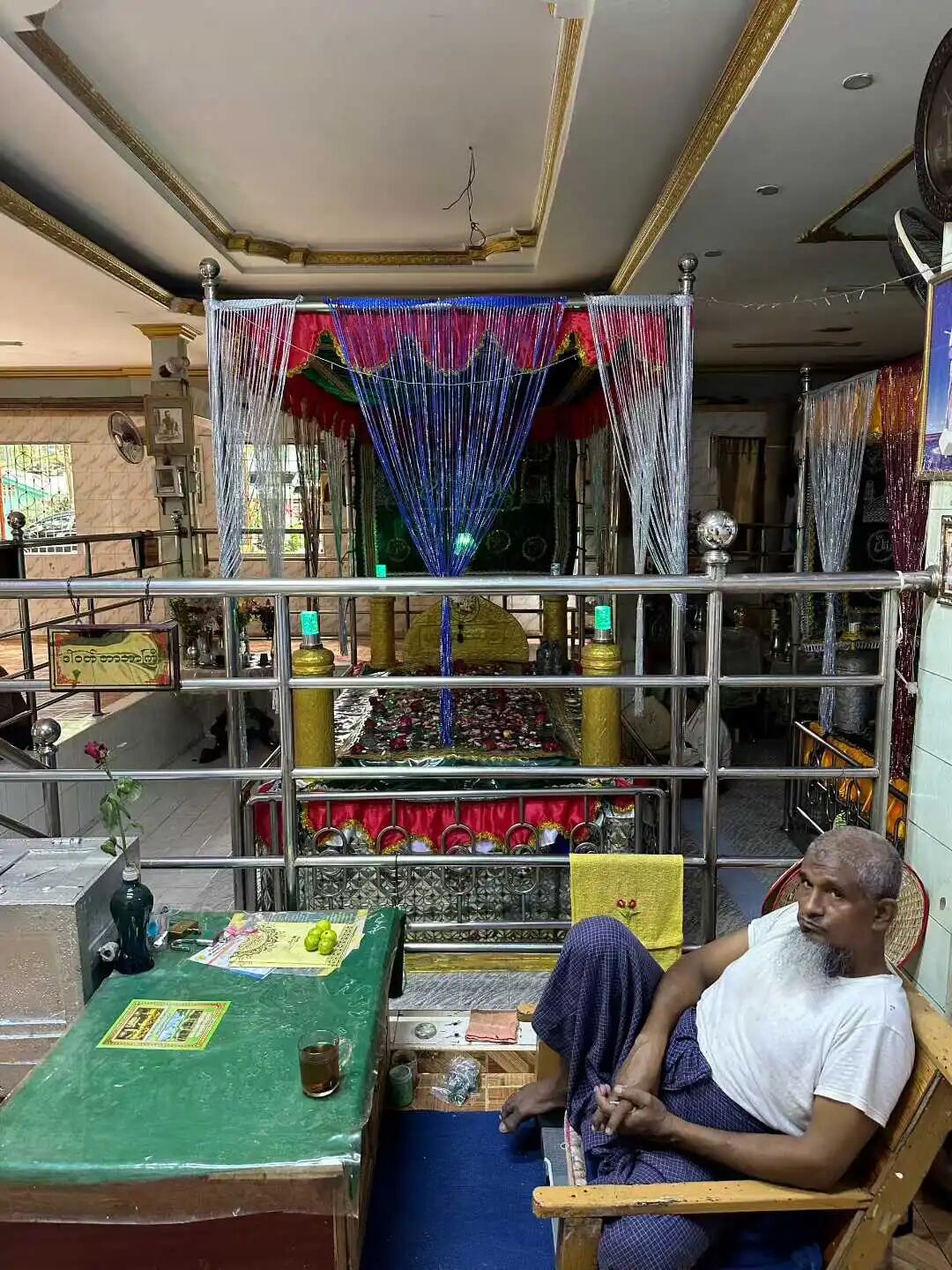
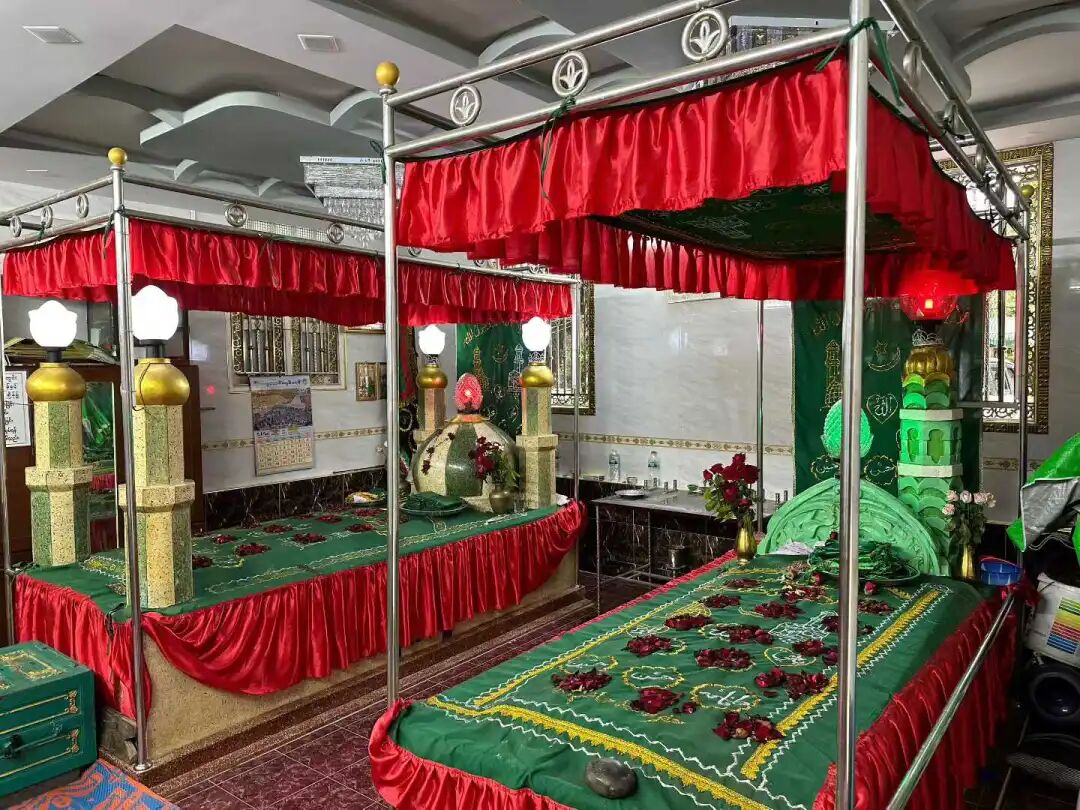
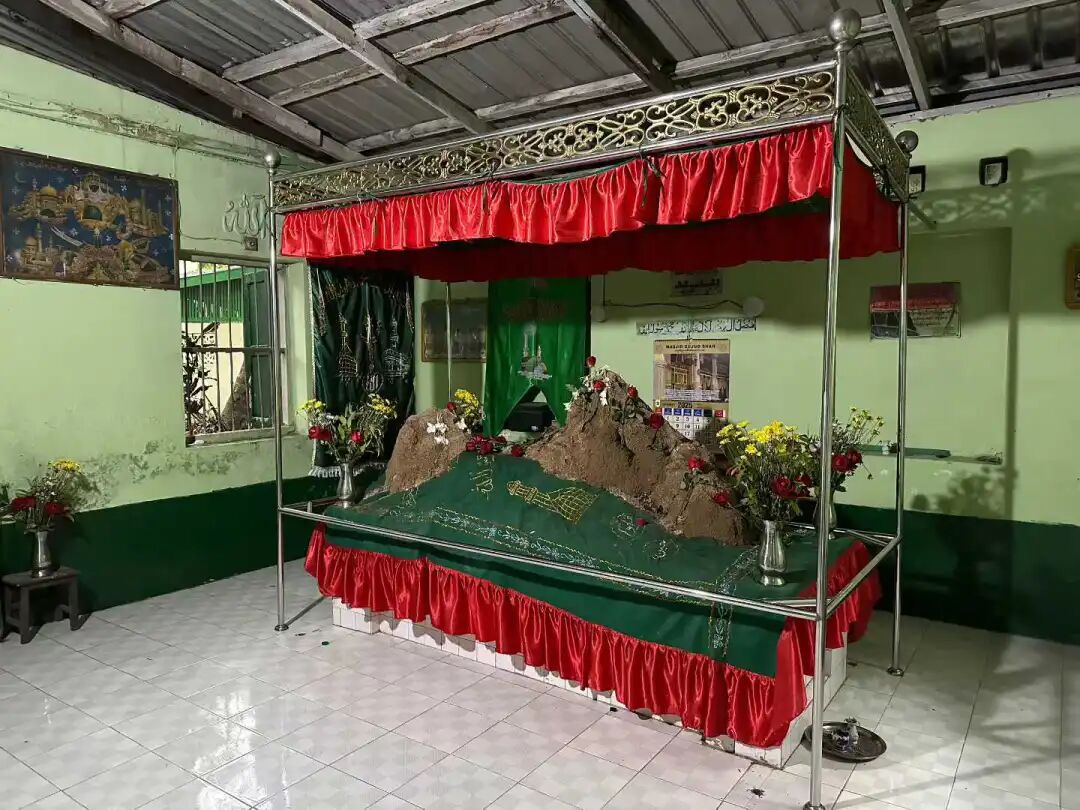
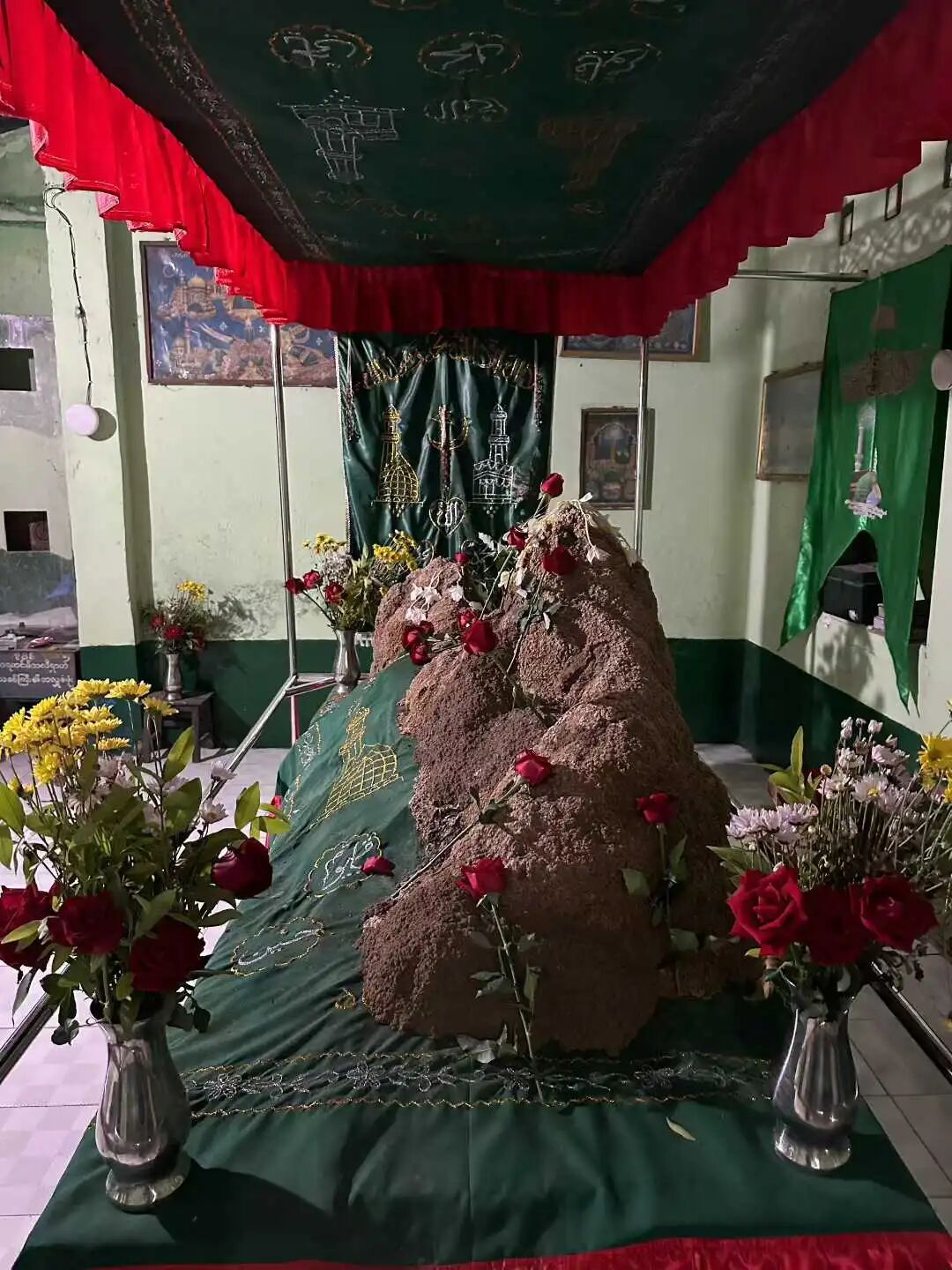
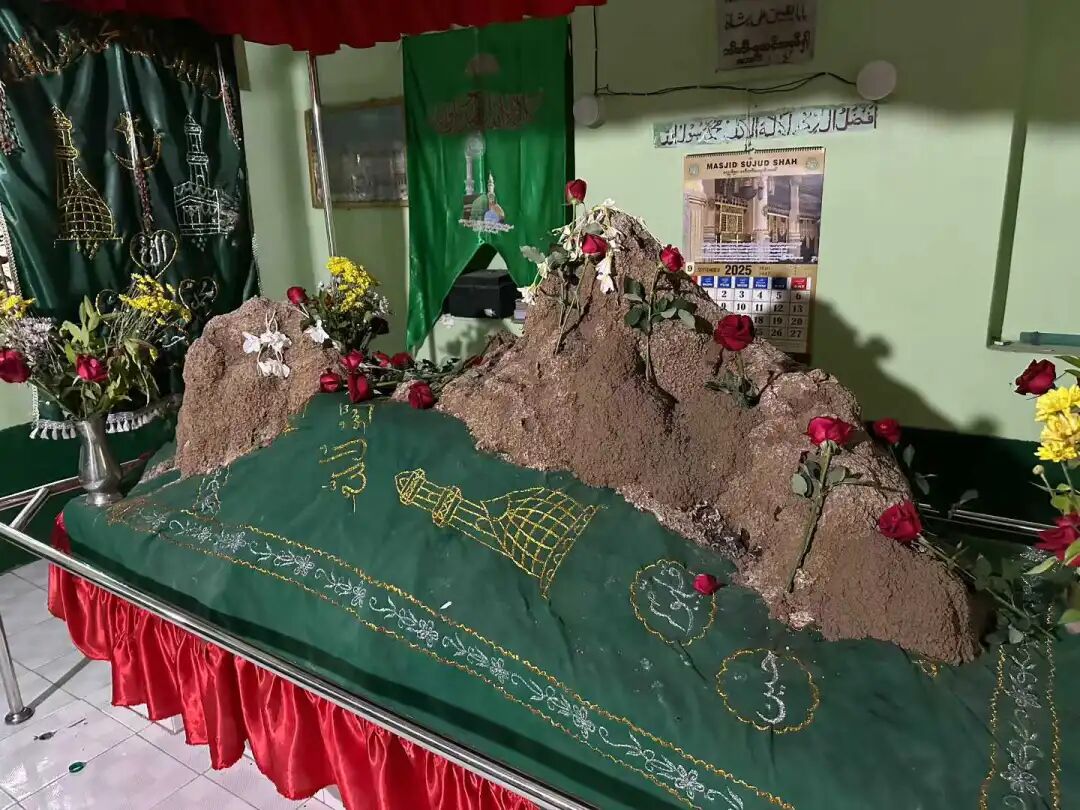
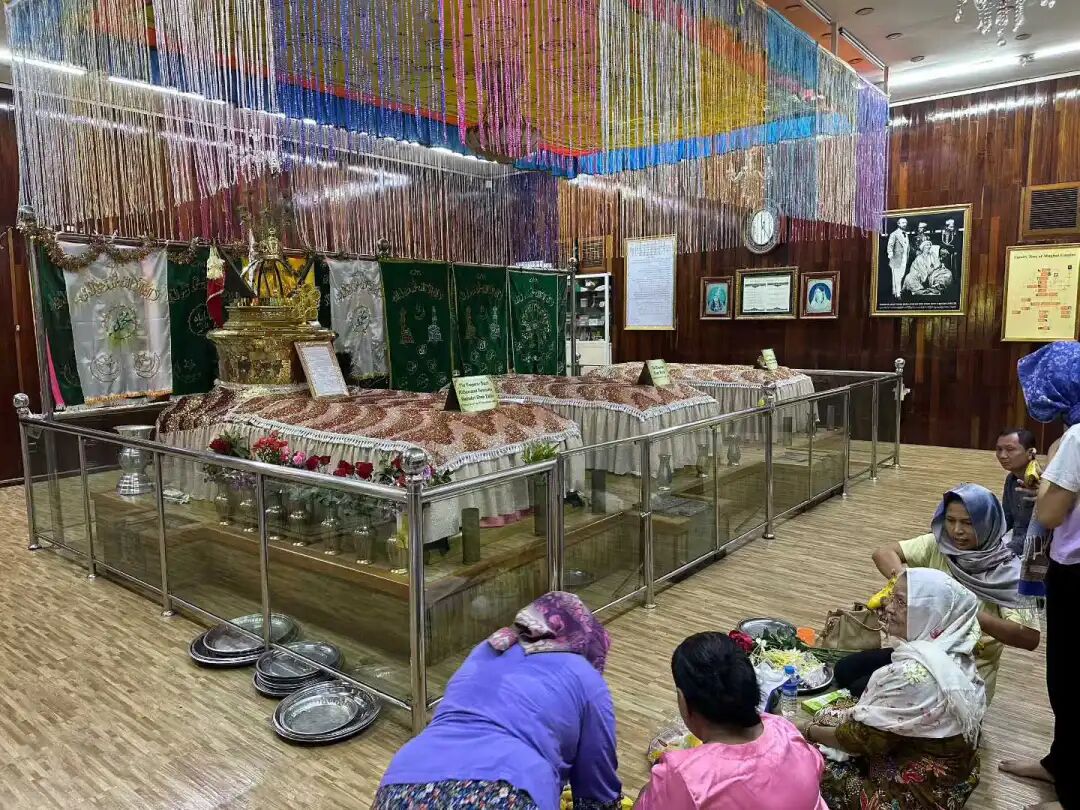
The tomb of Bahadur Shah II, the last emperor of the Mughal Empire, is near the famous Shwedagon Pagoda in Yangon, Myanmar. This site was his home after he was exiled to Yangon in 1858. Because Bahadur Shah II was a devout Sufi sheikh during his life, his tomb has become a famous Sufi shrine (gongbei) in Myanmar.
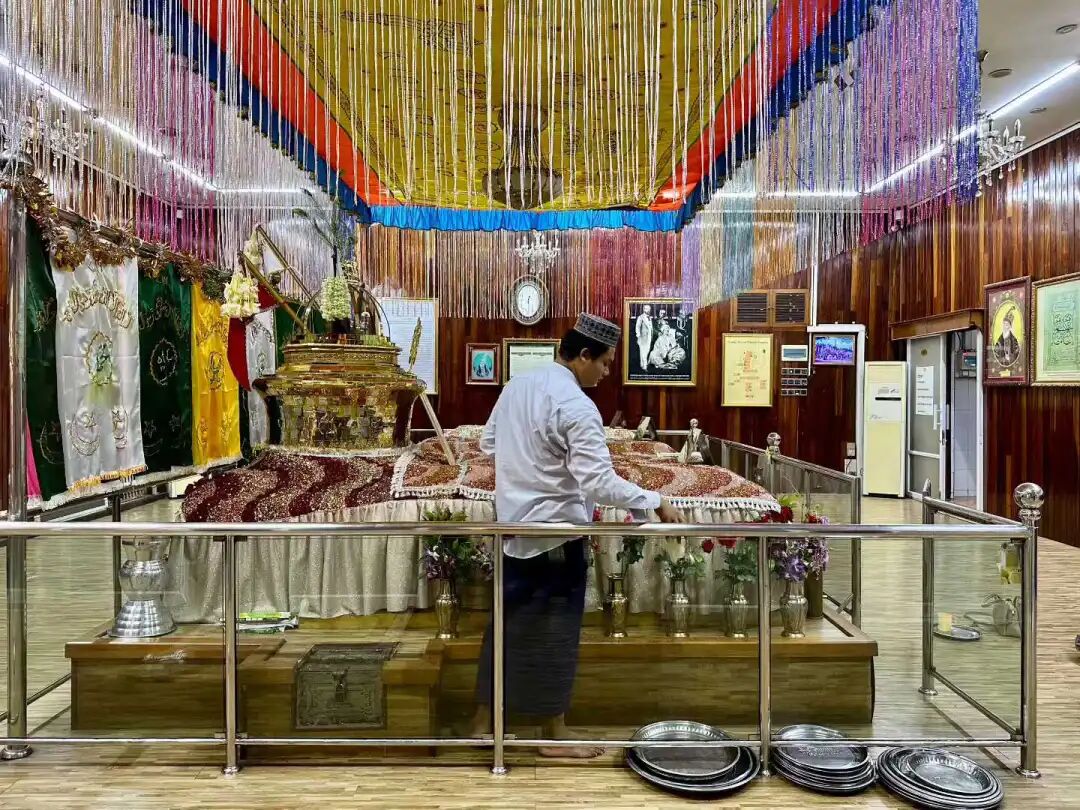
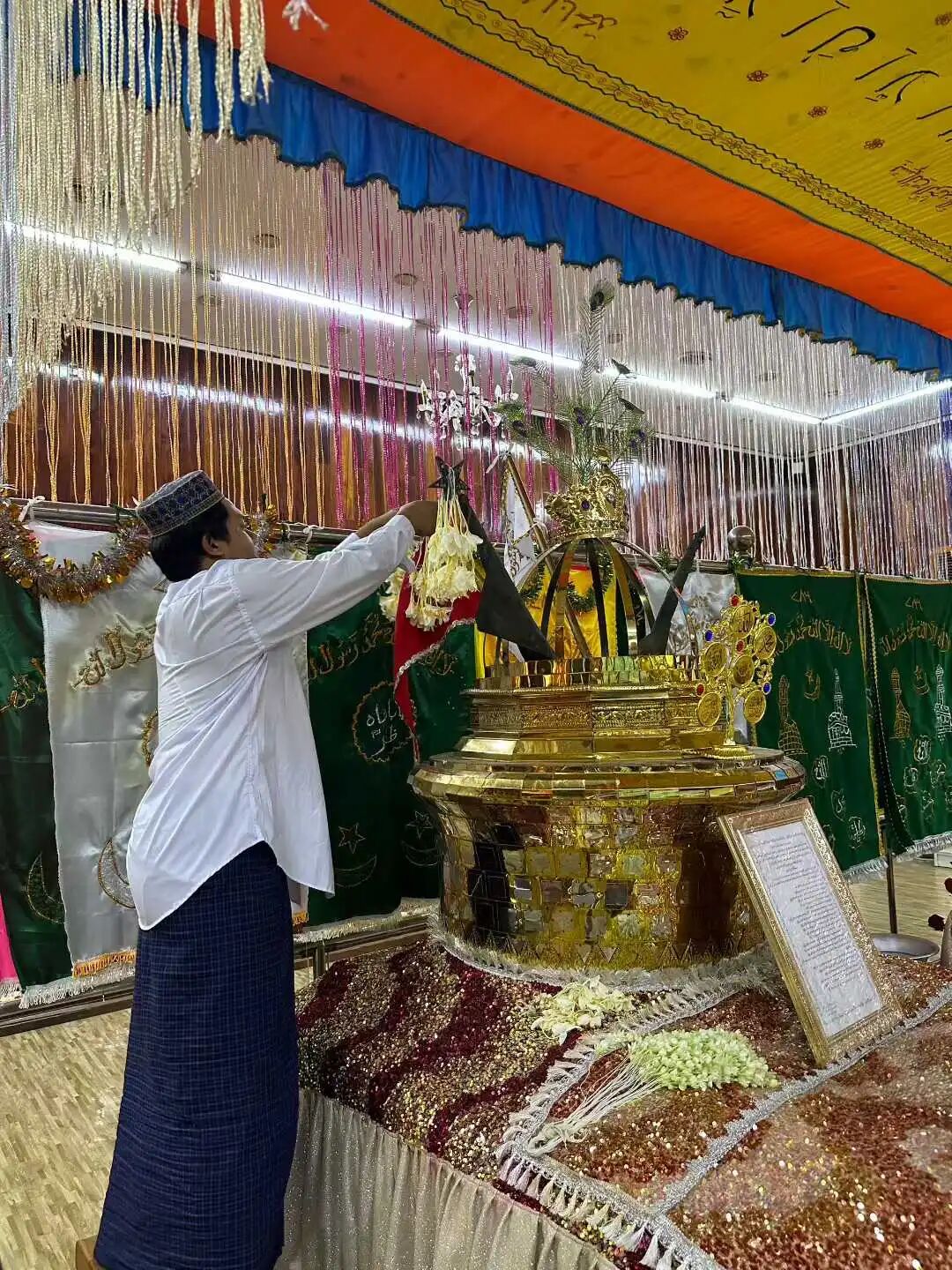
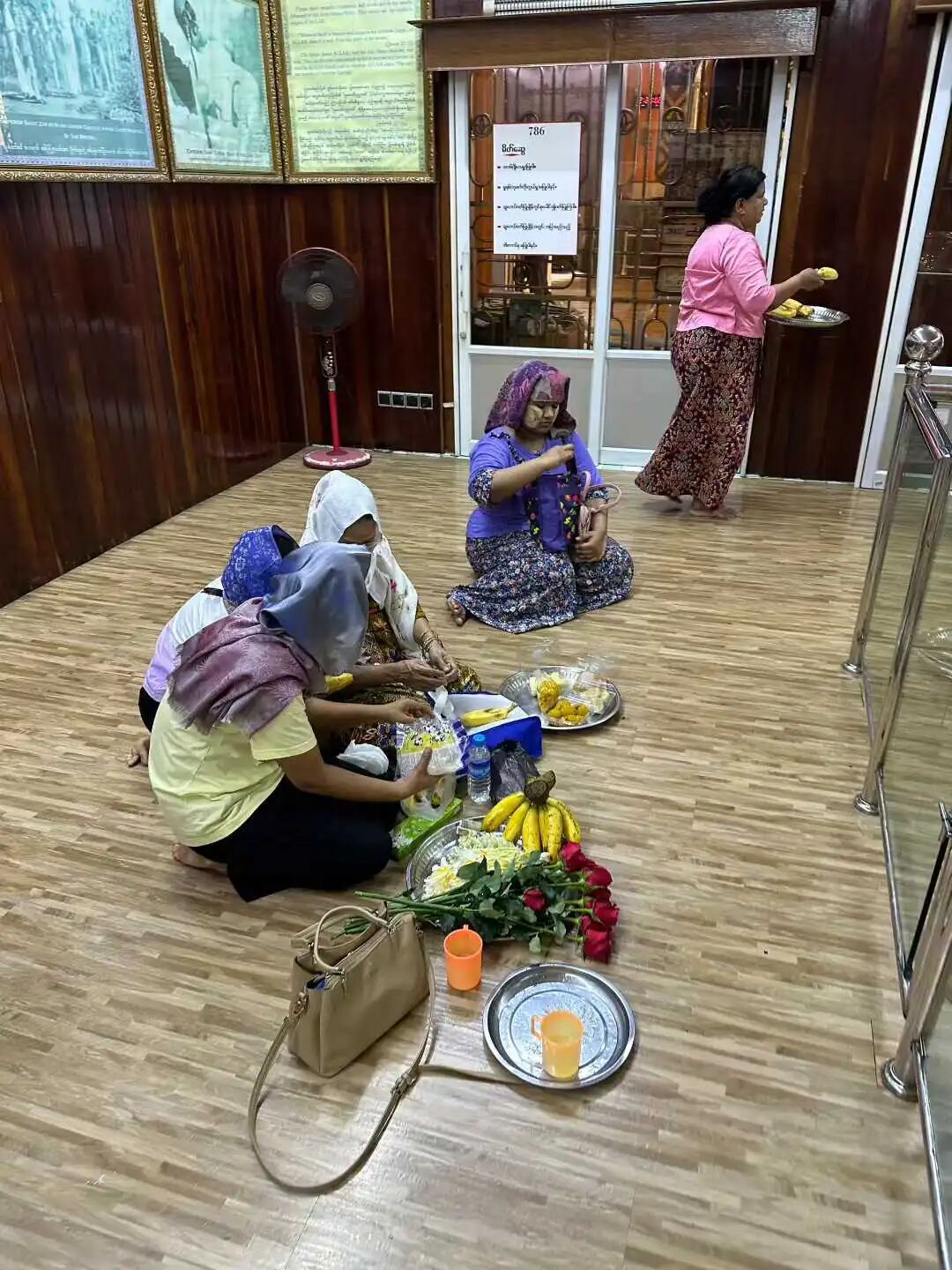
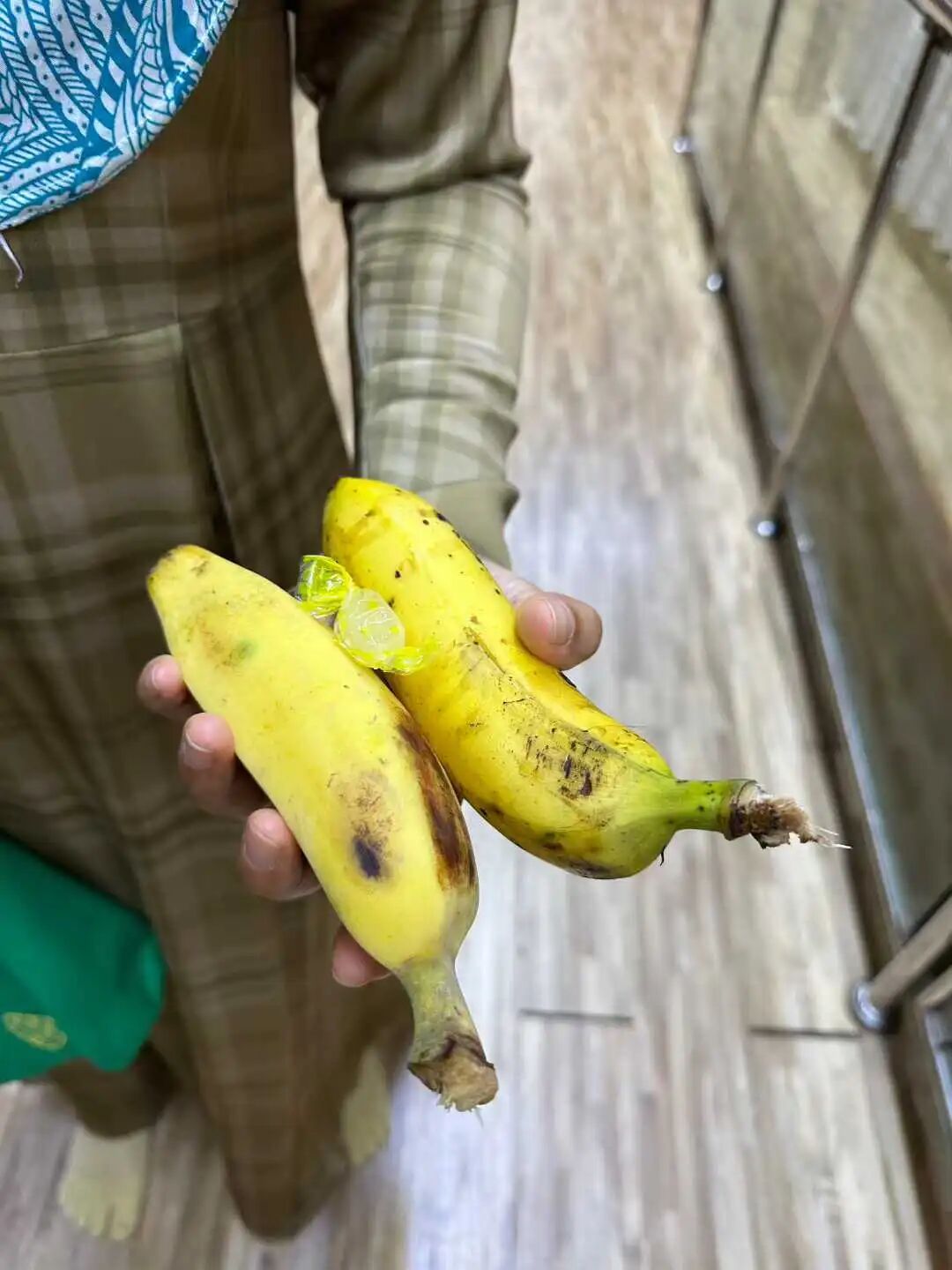
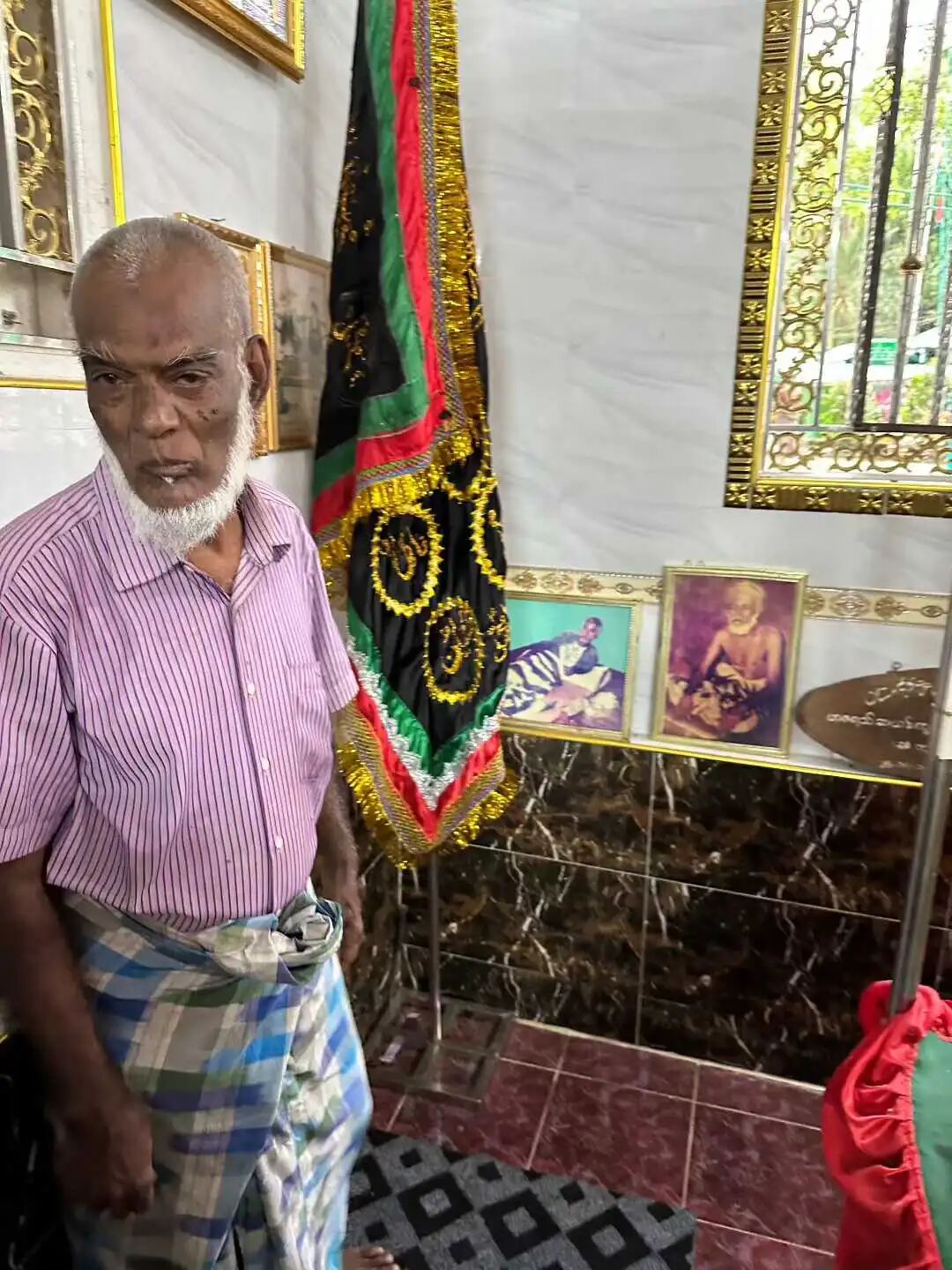
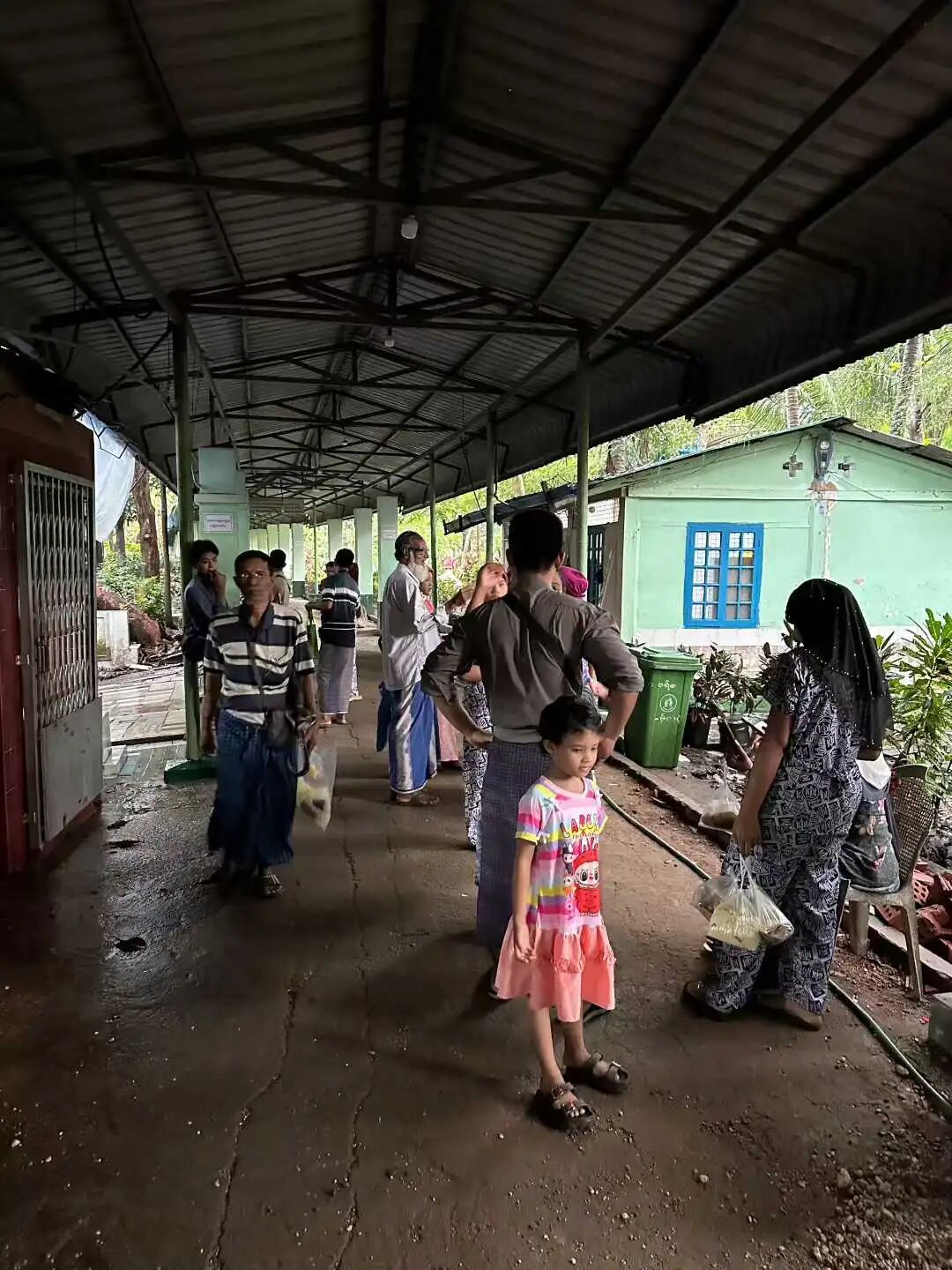
Although Bahadur Shah II belonged to the Chishti order during his life, the shrine (gongbei) is now managed by the Qadiriyya order. I met a man here who was hanging fresh flowers on the shrine (gongbei), and after some local friends (dosti) finished their gathering (amali), they shared candy and bananas with us.
In 1803, the British East India Company used force to become the protector of the Mughal Empire, and the Mughal emperors lost their real power from then on. After Bahadur Shah II took the throne in 1837, his power was limited to the area around Delhi. He never had any ambition for the empire, but instead focused on Sufi practice and writing poetry. Legend says he started his Sufi practice at age 20 and became a murshid (guide) of the Chishti order by age 40. In 1843, he wrote a letter to Queen Victoria of Britain saying: "I am now old and have no ambitions left." I intend to devote myself entirely to religious work to comfort my remaining years.
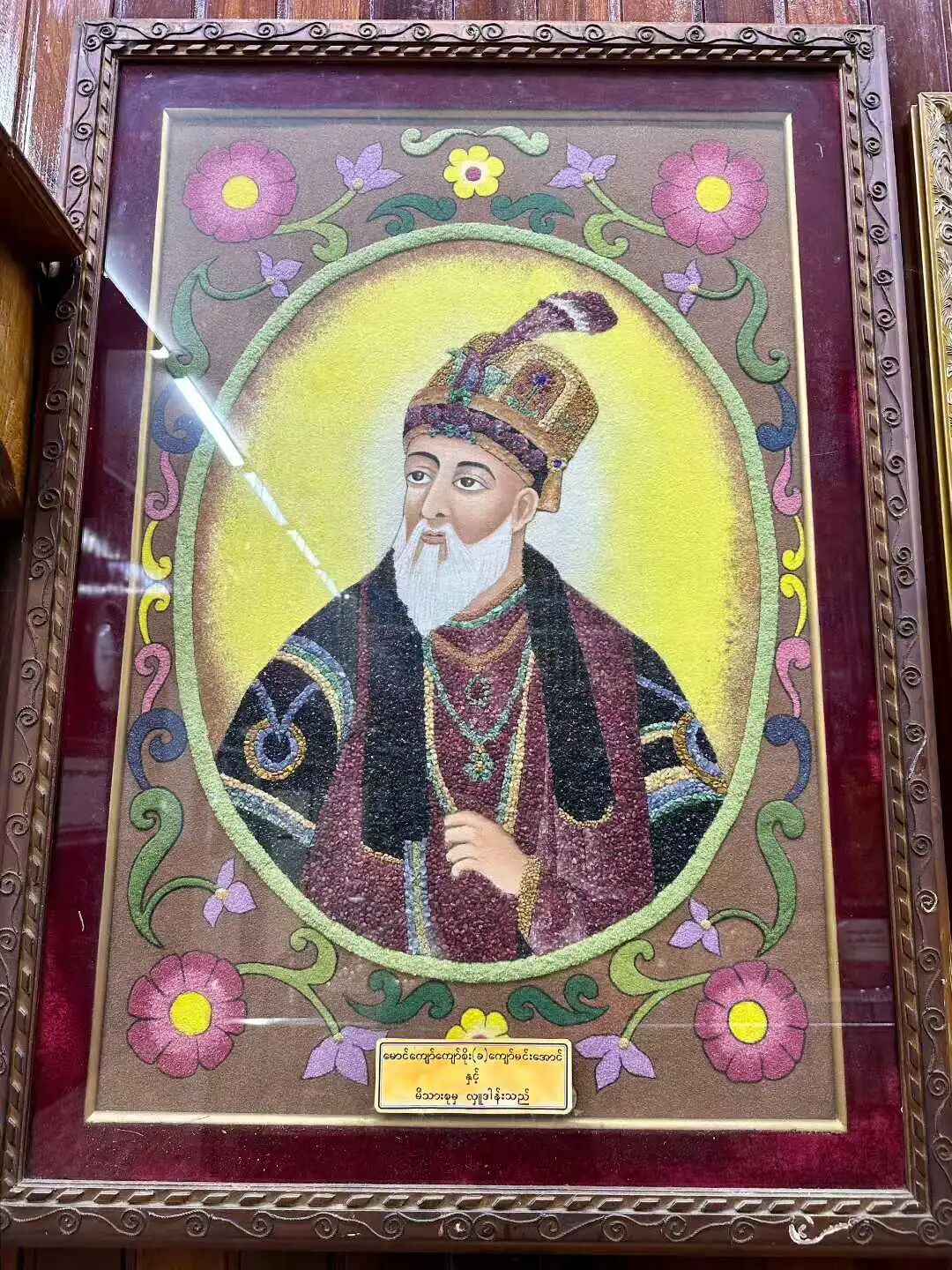
The Sufi philosophy followed by Bahadur Shah II believed in embracing different cultures. Men, women, young, and old should all be able to express their love for Allah, and this love should transcend religion, gender, and social class. According to a report by Major Archer in 1828: "He is thin and small, and his clothes are simple, almost crude." He looks like a poor scholar or a language teacher. This is the typical appearance of a Sufi ascetic.
Like the Mughal rulers before him, Bahadur Shah II saw himself as the protector of his Hindu subjects. Under his rule, Hindu elites in Delhi would visit the Nizamuddin Sufi shrine (gongbei) to recite Persian poetry. Many people studied under great imams and attended religious schools (madrasas). The Mughal court would attend various Hindu events, and during the Shia month of Muharram, they would listen to elegies mourning Imam Hussein.
People say the Sufi poetry of Bahadur Shah II reached a level of perfection. His court had many famous Sufi scholars, writers, and poets, and a large number of poems were published during his reign. This style of lyric poetry became the main literary form of the late Mughal period.
In 1850, the knowledge and vitality of Delhi reached its final peak. At that time, the city had six famous religious schools (madrasas), nine Urdu and Persian newspapers, five academic journals, countless printers, and at least 130 doctors who mastered traditional Persian-Arabic medicine. Many new discoveries in Western science were translated into Persian and Arabic in Delhi. As the young poet Altaf Hussain Hali wrote at the time, "The capital, Delhi, was gathered with such a group of talented sages that it reminded people of the eras of Akbar and Shah Jahan."
In 1857, an uprising against the British East India Company broke out in India. It started because the British army made their Indian soldiers bite open greased rifle cartridges, and rumors immediately spread that the lubricant came from cow and pig fat. The insulted soldiers flooded into Delhi on May 11 and turned to Bahadur Shah II for help at the Red Fort. Bahadur Shah II initially refused them, but faced with the passionate soldiers surrounding him, he eventually had no choice but to accept them as they bowed before him one by one, changing the fate of the Mughal Empire.
As the Siege of Delhi dragged on and the outlook grew dim, Bahadur Shah II chose to escape reality through poetry. According to British spies, he recited the following lines one night:
The sky collapses on everyone
I can no longer rest or sleep
Only my final departure will come
Whether at dawn or in the dark of night
On September 14, the British army officially attacked the walls of Delhi, and on September 17, Bahadur Shah II fled the Red Fort through the Water Gate. He went to the most important Sufi shrine (gongbei) of Nizamuddin in Delhi and handed over his ancestors' relics to the Nizam family, the keepers of the shrine. It is said these included three hairs of the noble Prophet passed down by the Timurid family. Then he went to the tomb of his ancestor, the second Mughal emperor, Humayun. On September 20, Bahadur Shah II was finally captured by the British army.
By January 27, 1858, after all the dignitaries of the Mughal court had been tried, Bahadur Shah II faced his own trial. William Howard Russell, a foreign correspondent for The Times and the father of war journalism, saw Bahadur Shah II in captivity. He described him as silent, sitting motionless day and night, with his eyes cast down to the ground. People heard him reciting poems from his own works and writing poetry on the walls with a charred stick.
During the trial, Bahadur Shah II provided a written defense in Urdu. He denied any involvement in the uprising and insisted that he had been a helpless prisoner held by the Indian soldiers from start to finish. The trial dragged on for more than a month and was often adjourned because of Bahadur Shah II's poor health. On March 9, the British finally decided to exile Bahadur Shah II.
On October 7, 1858, after the Mughal Empire had ruled Delhi for 332 years, the last emperor, Bahadur Shah II, left Delhi in an ox cart. The group traveled slowly down the Ganges River by steamship and arrived at Diamond Harbour, south of Calcutta, on December 4. They boarded the British naval ship HMS Magpie there and finally reached Rangoon, Burma, where they lived in two small rooms in the British barracks area directly below the Shwedagon Pagoda.
In April 1859, Bahadur Shah II moved to a new wooden house near the fort guard camp. According to the report by his jailer, Captain Nelson Davies:
The residence consisted of four rooms, each 16 feet square. One room was assigned to the former king, another to Jawan Bakht and the young crown princess, and a third was occupied by Queen Zinat Mahal. Each of these rooms had an attached washing area. Shah Abbas and his mother lived in the remaining room.
The servants either lounged around the veranda or slept under the house, where the ground was covered in crushed brick to keep it dry. A drainage ditch ran around the house for the same reason. There were two washrooms, a double bathroom for the servants, and a place for cooking.
The veranda on the upper floors was full of chicks, which were kept inside by nailed-down slats. The frail former king and his sons usually sat there, where the floor was raised almost to the height of the railing, allowing them to enjoy the pleasant sea breeze and the wide, beautiful view. They watched people pass by and stared at the ships being loaded, which helped break up the monotony of their life behind bars and made them more willing to accept their current living situation.
Regarding the health of Bahadur Shah II, the report by Davis noted:
If given time to make up his mind, his memory was still good, but he spoke unclearly because he had lost his teeth. He was unable to handle anything requiring mental effort, and while that was the impression he gave, he seemed to be bearing the weight of his years remarkably well. He lived a dull, listless life, showing little interest in anything except eternal matters. This had been his normal state for a long time, and it would likely continue until his life ended, which would not surprise anyone.
Because the British did not allow him to use paper or pens, the world could only guess how he felt about his life in exile. By October 1862, his health took a sharp turn for the worse, and he could no longer swallow or eat food. On November 5, Davis ordered bricks and lime to be collected to prepare a quiet spot behind the house enclosure for his burial.
At 5:00 a.m. on November 7, 1862, Bahadur Shah II finally returned to Allah. Davis wrote: Everything was ready, and at 4:00 p.m. that day, he was buried in a brick grave behind the guard camp, with turf laid level with the ground... A bamboo fence surrounded the grave for a long time, and once the fence rotted, the area would be covered in thick grass, leaving no trace and making it impossible to identify the final resting place of the last Great Mughal. Davis specifically mentioned that only two of Bahadur Shah II's sons and a manservant attended the funeral, as women were not allowed to attend according to tradition.
The grave of Bahadur Shah II soon became impossible to identify. When a delegation from India came to visit in 1903, a local guide pointed out a jujube tree near the grave. In 1905, the Dosti group in Yangon protested and demanded that the grave site be marked. The British initially disagreed, but after a demonstration and a series of published reports, they finally agreed in 1907 to erect an inscribed stone slab and put a railing around it. In 1925, the railing was rebuilt into a temporary shrine (gongbei) covered with a corrugated iron roof.
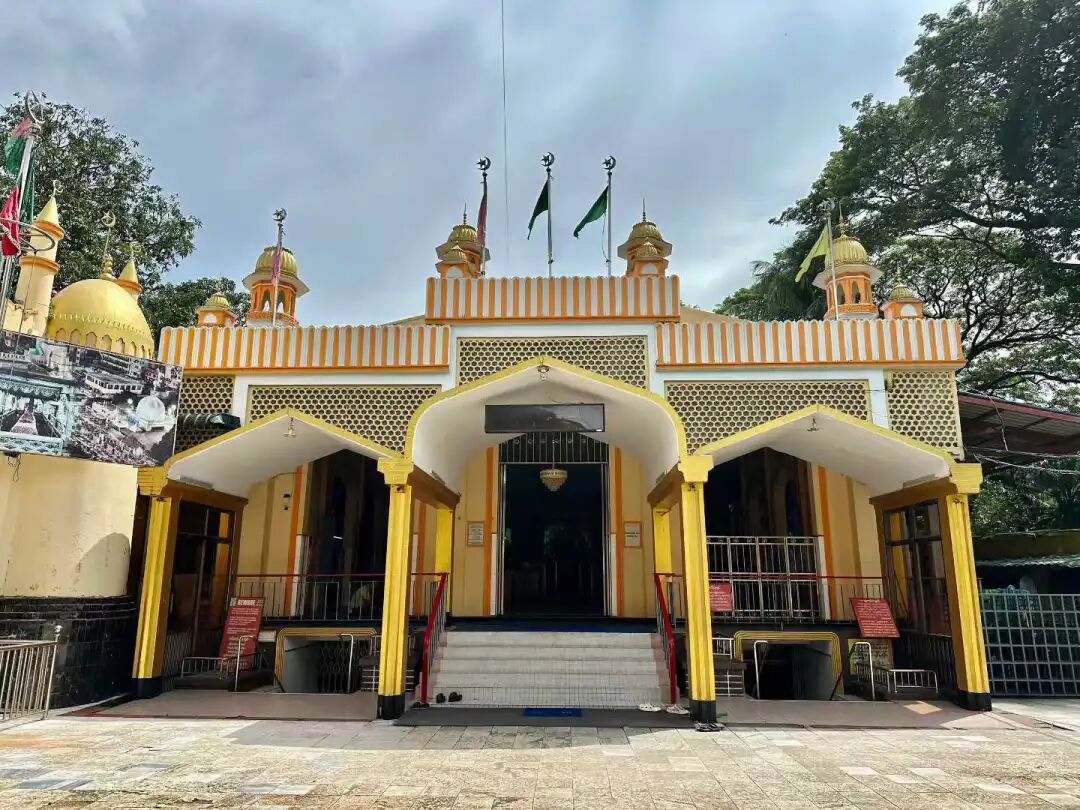
It was not until February 16, 1991, when workers were digging a drainage ditch behind the shrine, that they discovered a brick-lined grave, finally confirming the remains of Bahadur Shah II. Later, this place was rebuilt into a mosque with a prayer hall (gongbei). Dignitaries from India, Pakistan, and Bangladesh have all visited, and Rajiv Gandhi even gifted a carpet here.
As a fallen monarch, Bahadur Shah II was a failure. He did not give the army the support it needed during the 1857 Indian Rebellion, which ultimately ended the Mughal civilization. Under the British policy of divide and rule, the various ethnic groups in India began to drift apart. But under his rule, Delhi was home to the most talented poets and writers in modern South Asian history, and literature and art reached their peak.
As a Sufi ruler, he never forgot how important it was for the different groups under his rule to depend on each other. During the Siege of Delhi, he refused the demands for a holy war (jihad) from the Wahhabis and tried his best to maintain relationships between all groups. When a large number of Muslim (dosti) elites moved from India to Pakistan in 1947, people could no longer imagine that just 90 years earlier, many Indian soldiers had rushed to the Red Fort in Delhi, gathered under the banner of a Sufi emperor, and faced national disaster with their Muslim brothers to fight against foreign invaders.
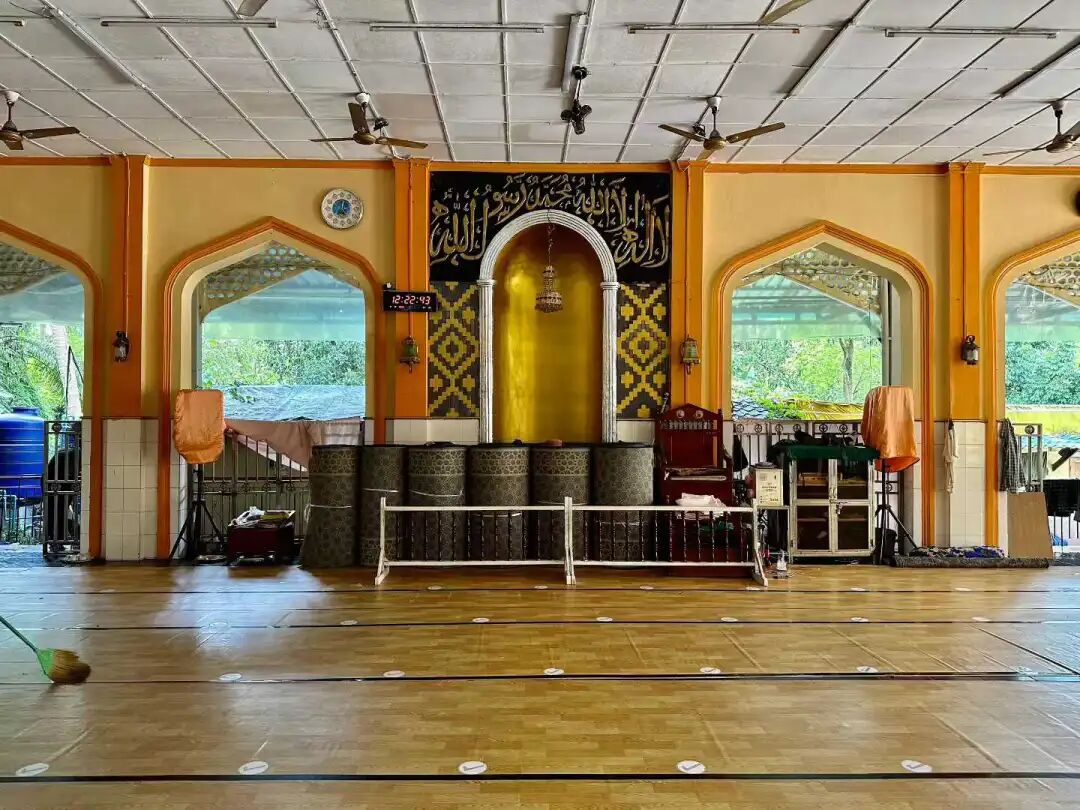
I found stone tablets standing around the front of the tomb.
Underground is the original location of the tomb.
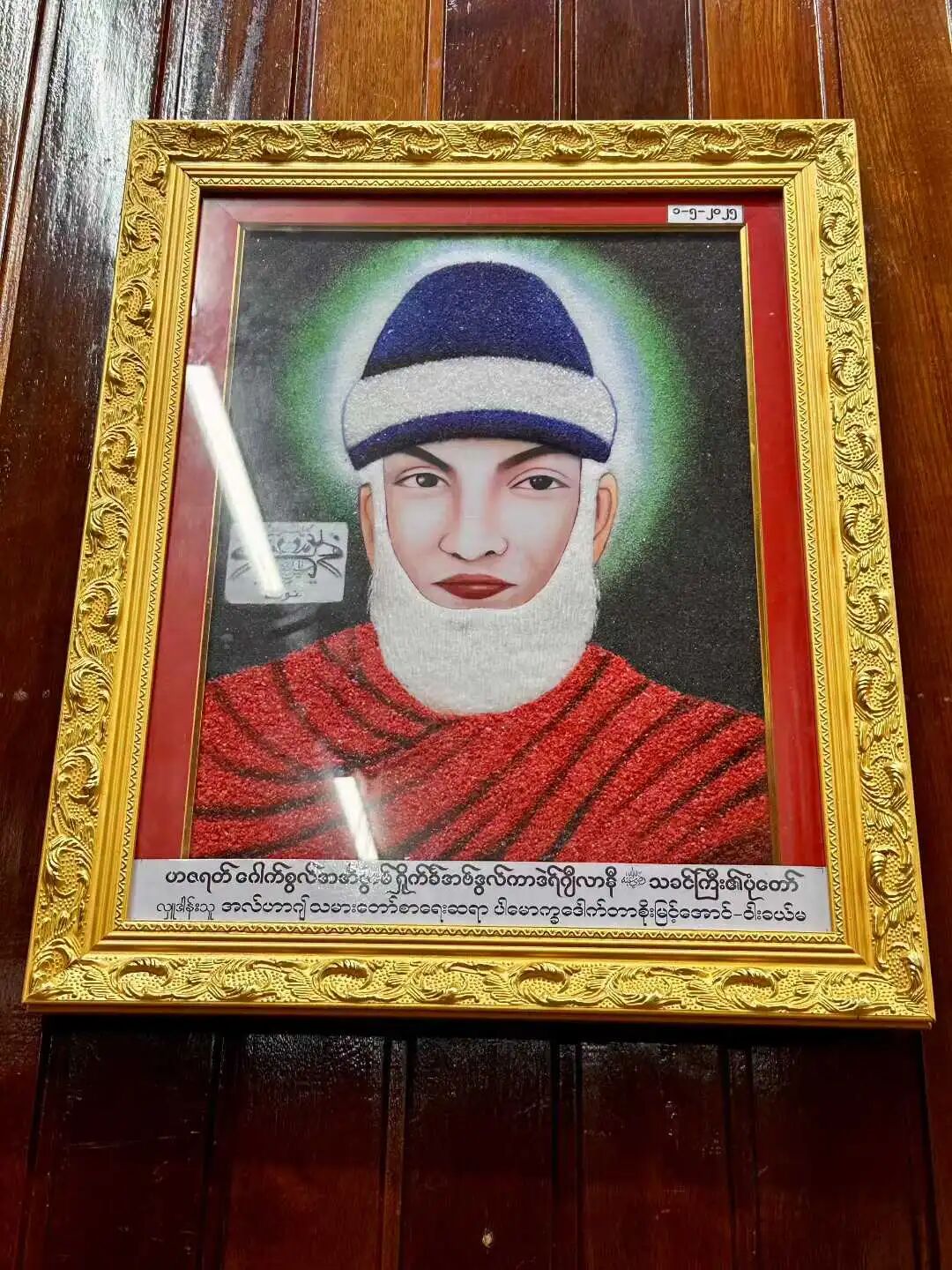
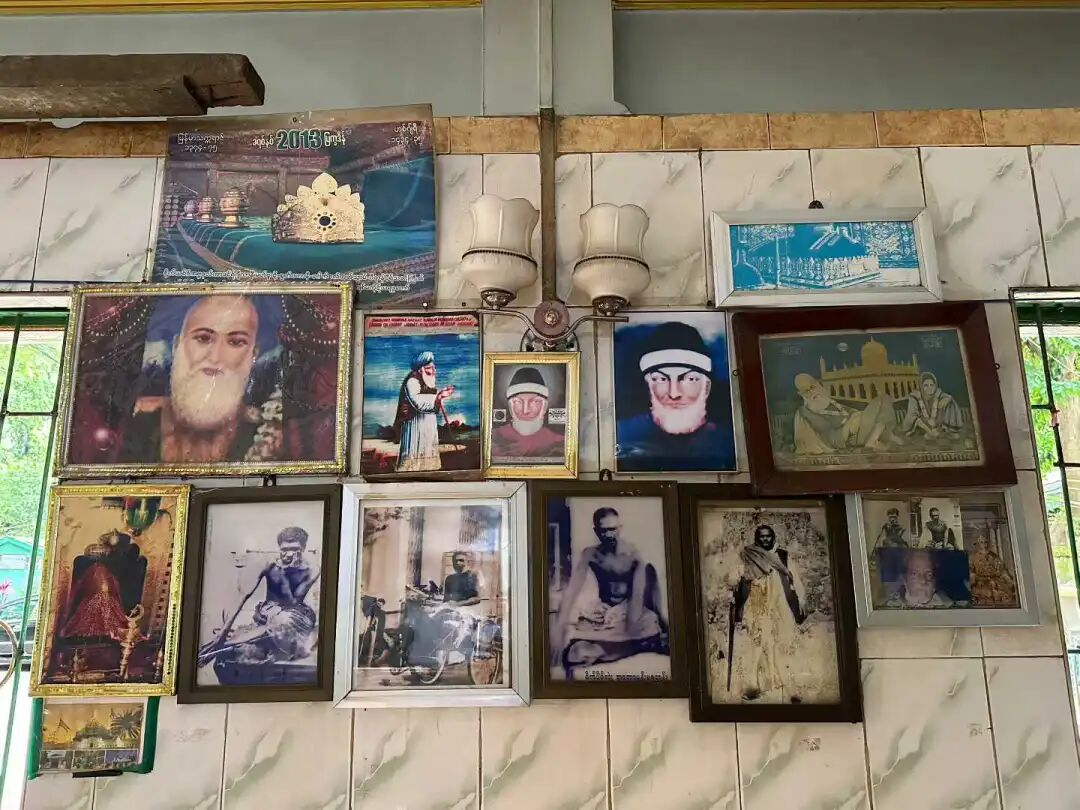
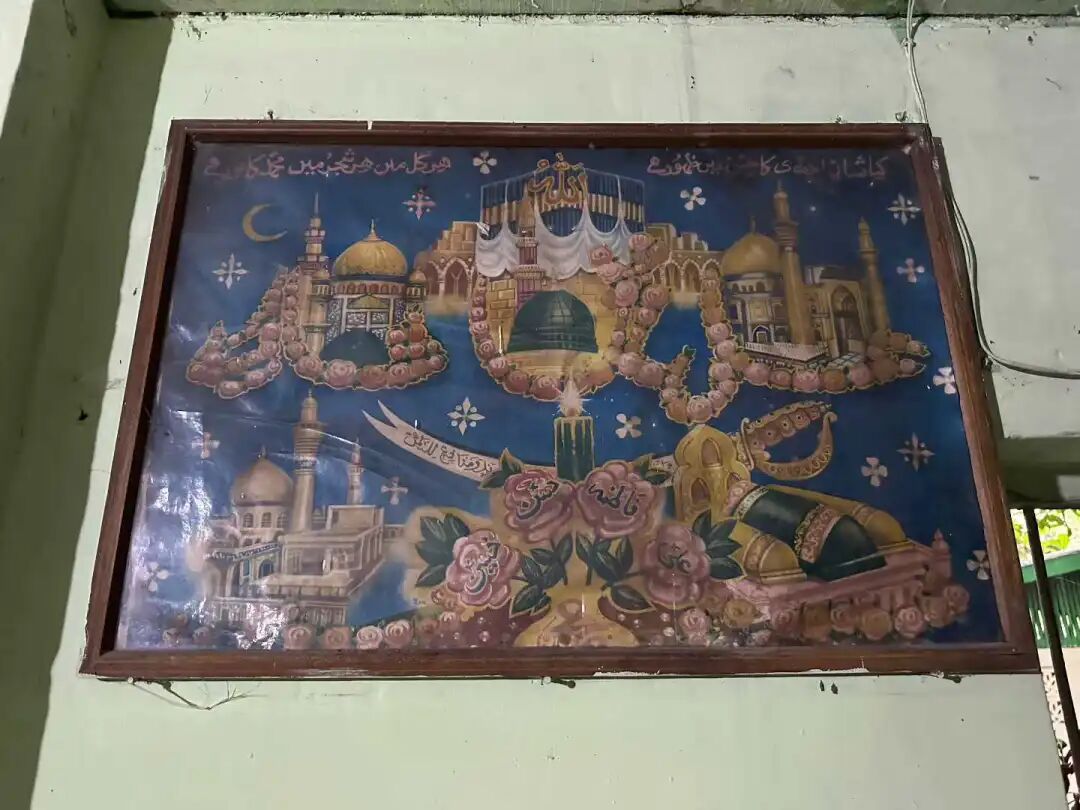
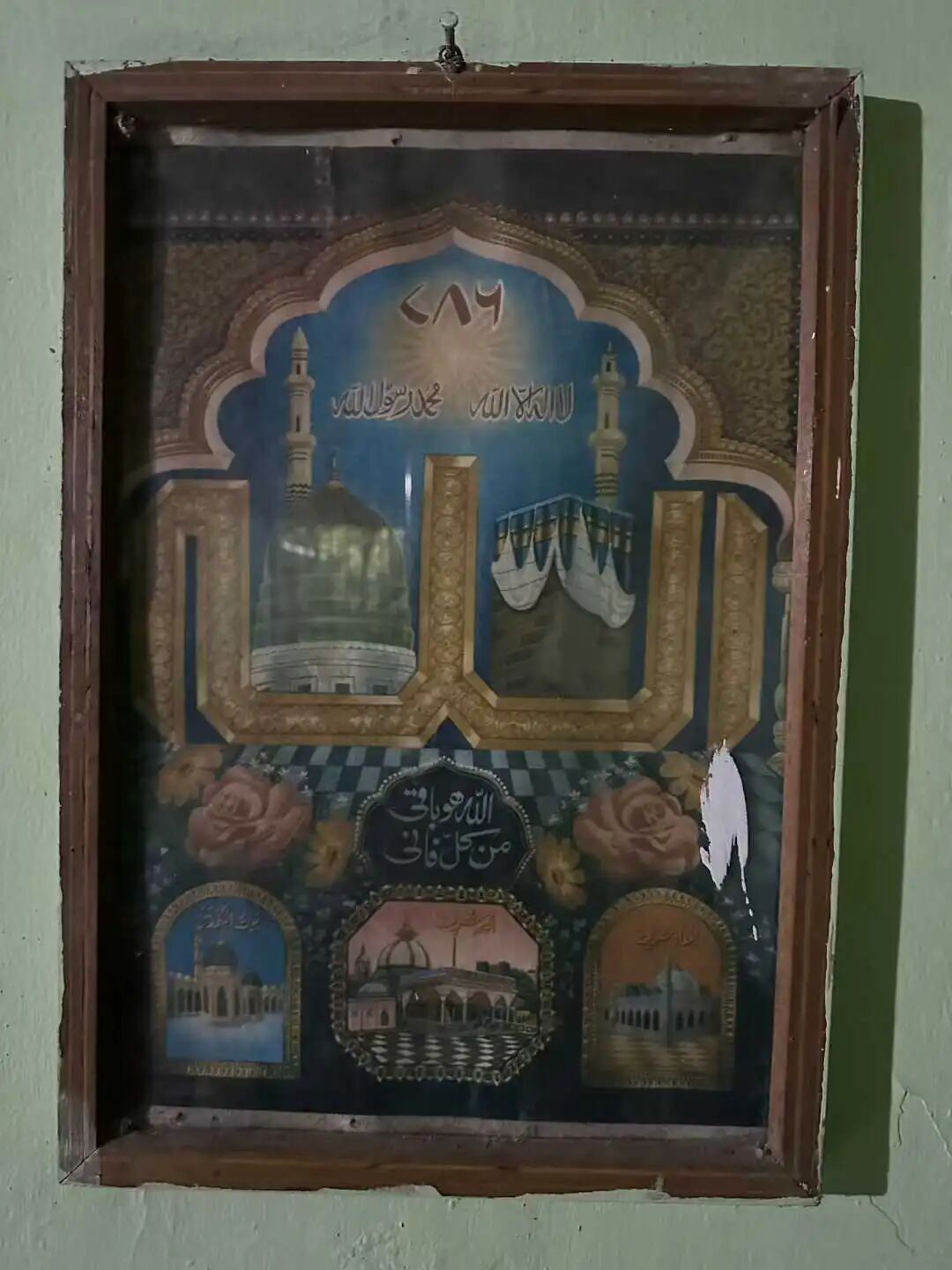
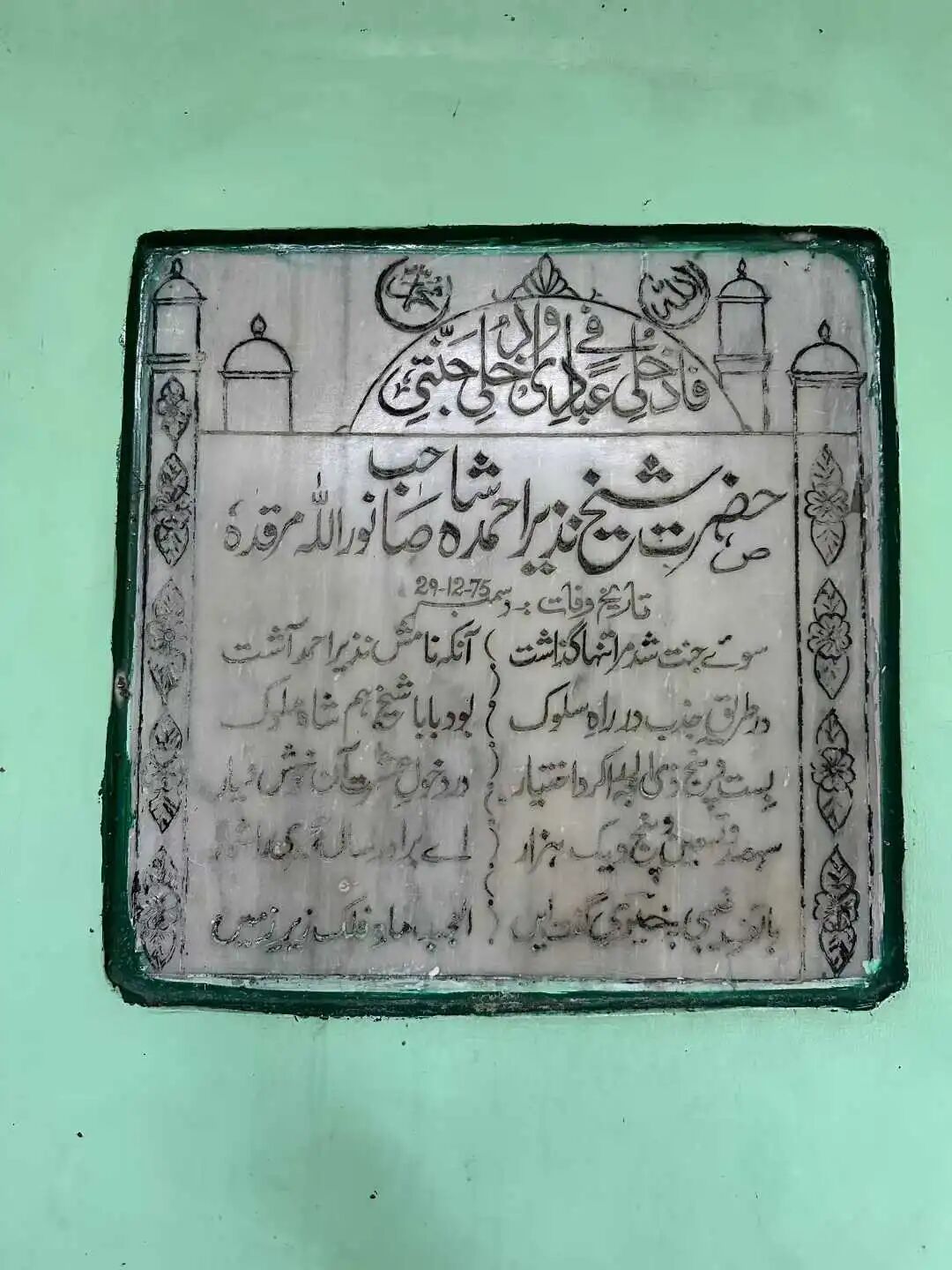
Inside the tomb complex (gongbei), there is a portrait of Abdul Qadir Gilani, the founder of the Qadiriyya order.
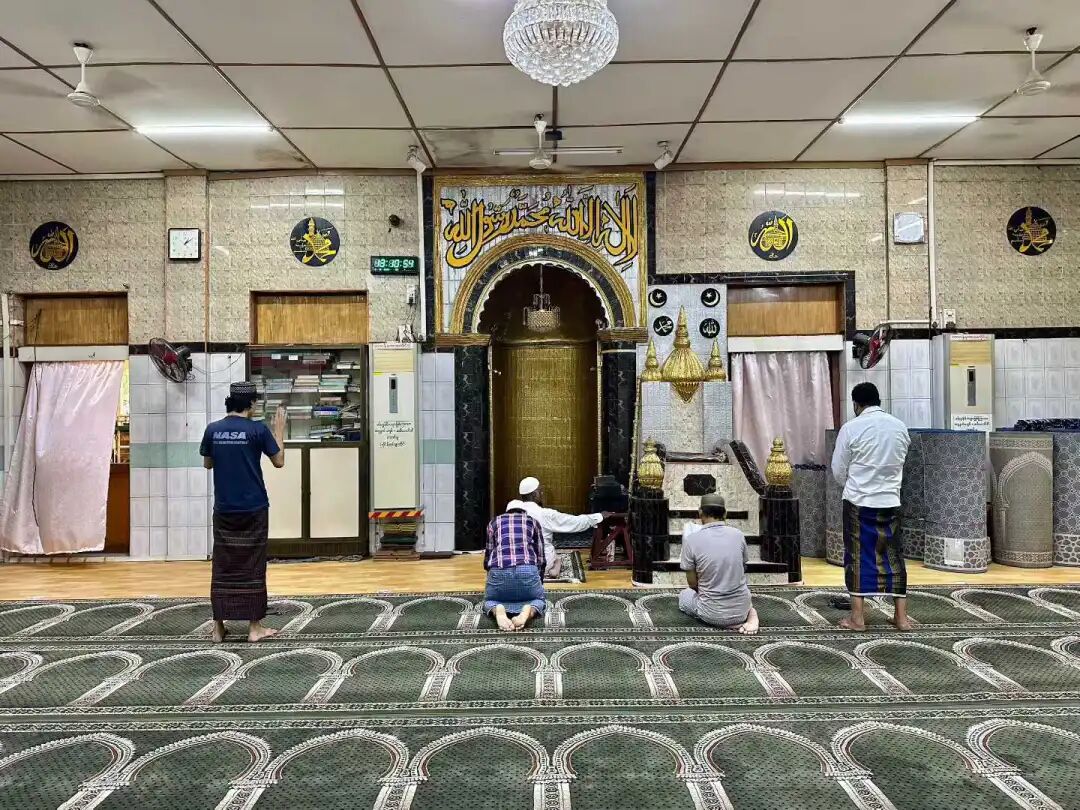
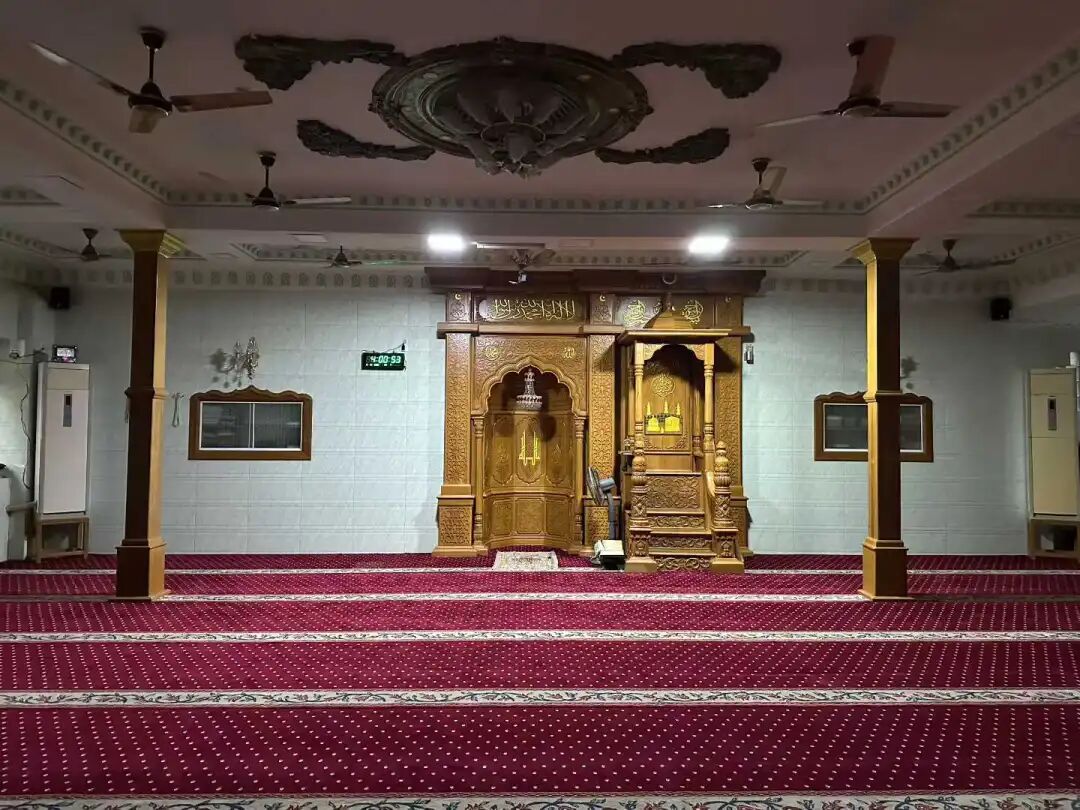
Next to the tomb is a prayer hall. This is the same as the Qadiriyya order in China, where the tomb and prayer hall are adjacent, and there is an imam in the mosque.
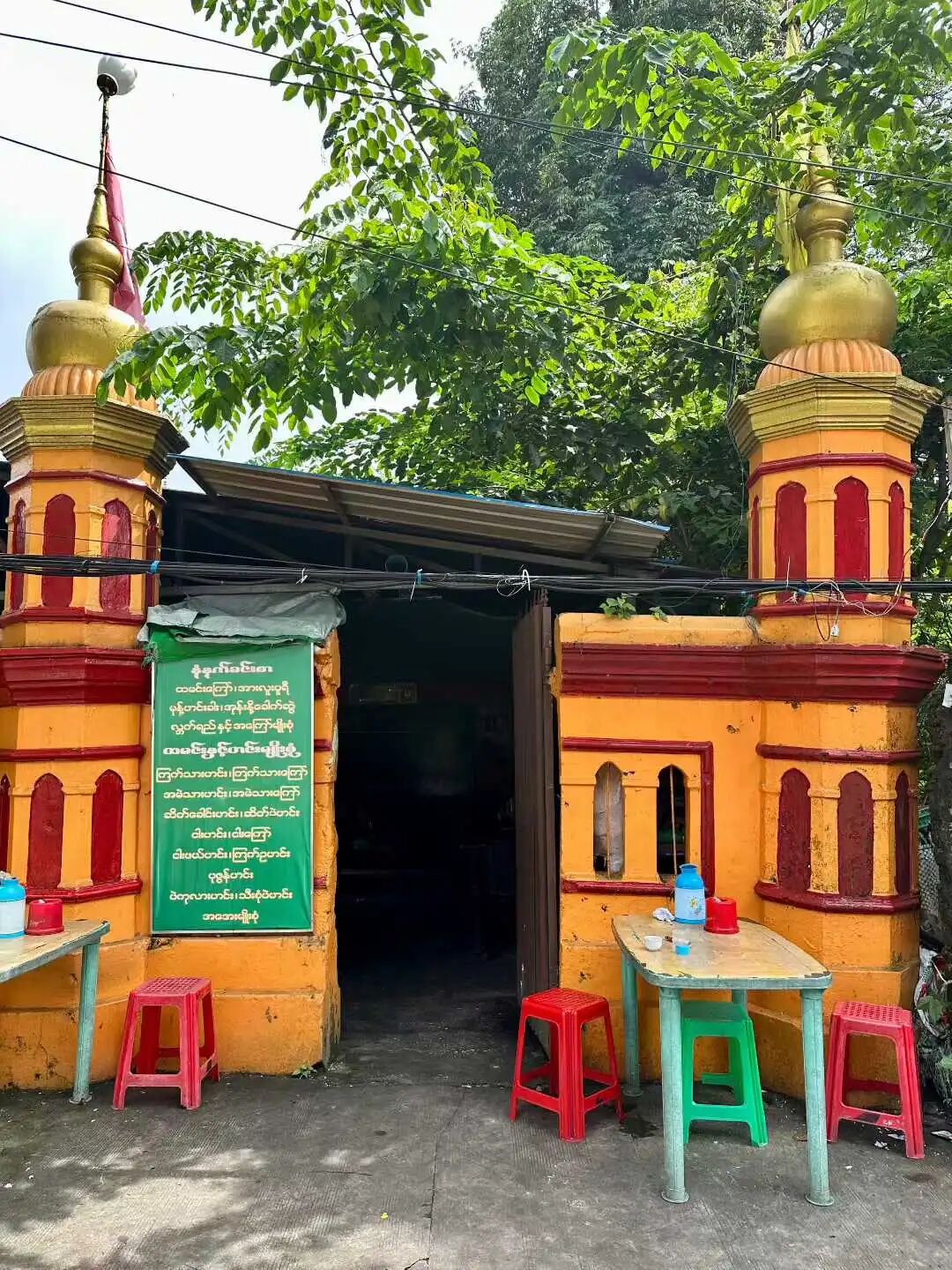
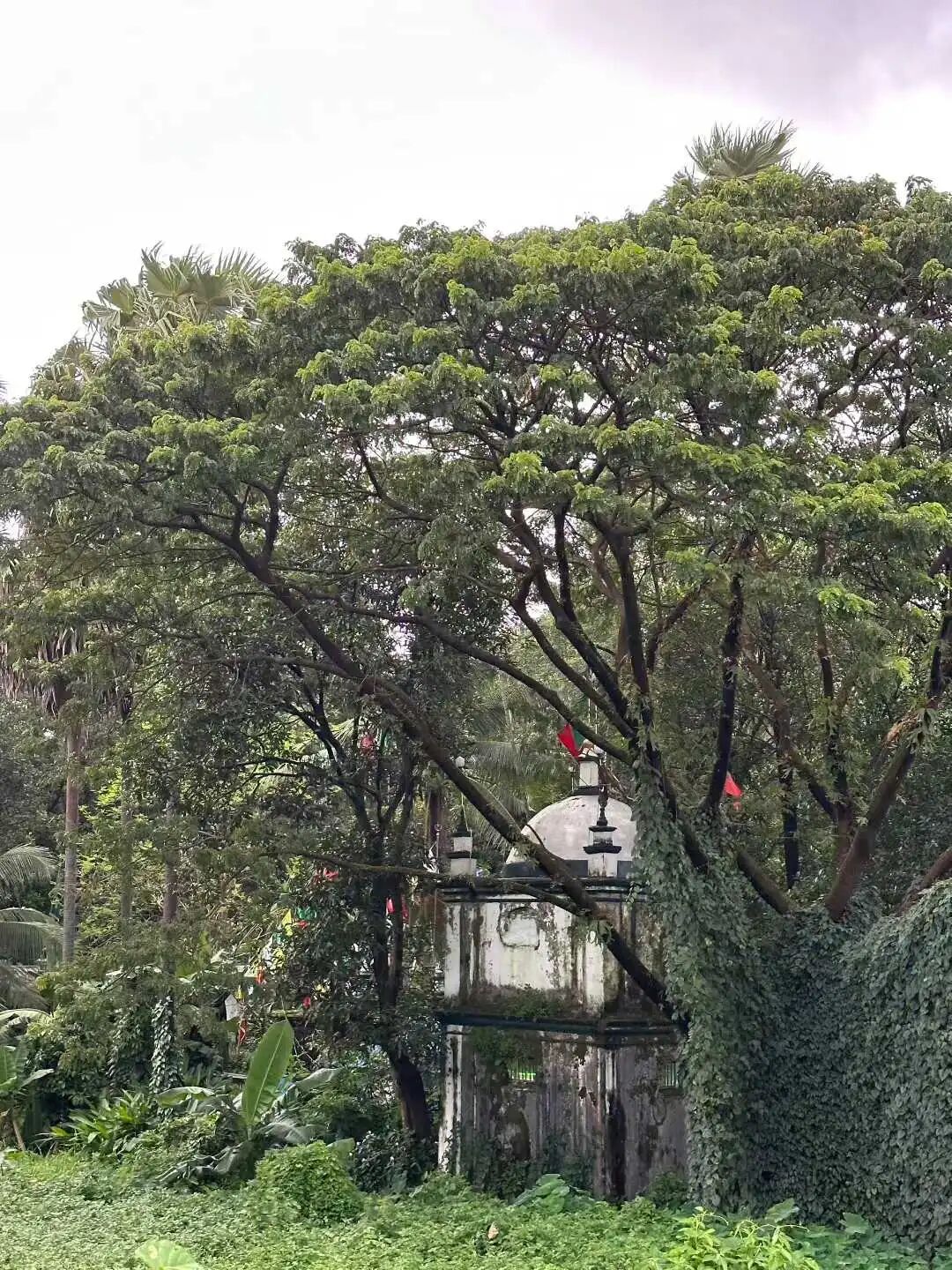
In a forest near the Yangon Central Railway Station in Myanmar, the largest Sufi tomb complex in Yangon is hidden. Since most of the text inside the tomb is written in Burmese, I searched for information for a long time after I returned but could not find any leads. Recently, based on the few English words inside the tomb, I learned that this place belongs to the Maizbhandari order, which was established in the late 19th century by Bengali Muslims based on the Qadiriyya Sufi tradition.
The Maizbhandari order is the only indigenous Bengali Sufi order, and its founder was born in Chittagong in 1826. People say his ancestors were descendants of the Prophet, who moved through Medina, Baghdad, and Delhi before finally settling in Bengal, serving as imams for generations. Maizbhandari studied the scriptures from a young age. After graduating in 1853, he first served as a judge (qadi), but soon resigned to work as a teacher in Kolkata. In Kolkata, he met two sheikhs from the Qadiriyya Sufi order and joined them to practice Sufism. In the late 19th century, he established his own lodge and founded the Maizbhandari order.
From the 19th century to the present, the Maizbhandari order has grown into a modern organization with millions of followers and is the most important Sufi order in Bangladesh. The Maizbhandari order is known for its melodic and rhythmic way of chanting (dhikr). They have recorded tens of thousands of songs, which have had a great influence on the faith in Bengal. As Yangon, Myanmar, has a large population of Bengali Muslims, it is also an important area for the Maizbhandari order.
A live scene of the dhikr ceremony.
At the Sufi tomb in Yangon, not only Muslims but also Burmese Buddhists come to offer dua. This is the unique charm of Sufism in South and Southeast Asia. At many important shrines (gongbei) in India, you can see Hindus going inside to offer dua. In Malaysia and Singapore, many Chinese people also come to pay their respects at the shrines (keramat) of local saints.
I also saw white sugar placed in front of a shrine (gongbei).
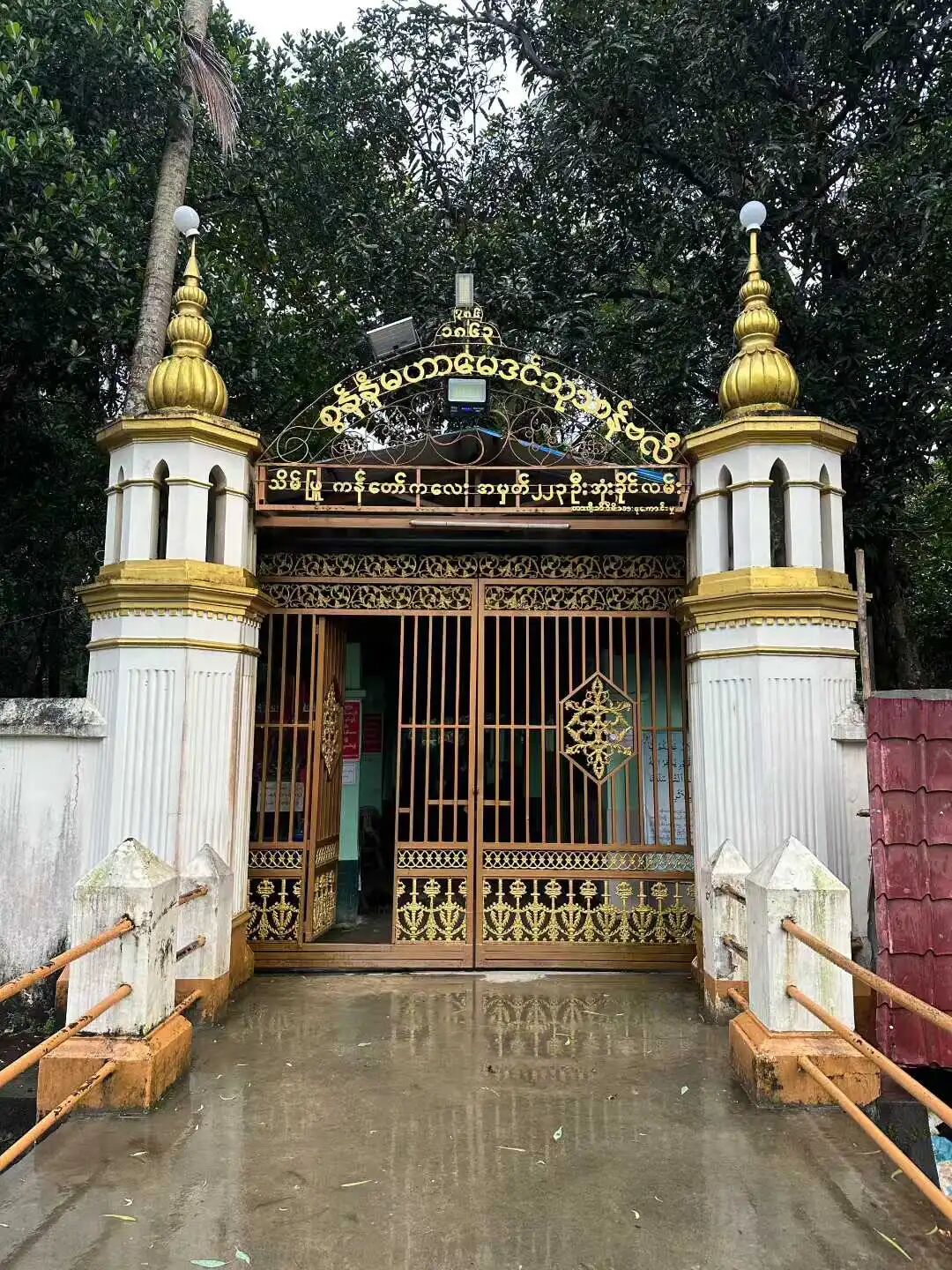
A Sufi shrine (gongbei) inside the Thinchai Sunni Maha Maiden cemetery in Yangon, Myanmar. view all
Summary: Yangon holds the tomb of Bahadur Shah II, the last Mughal emperor, near Shwedagon Pagoda, along with a Qadiriyya gongbei connected to Muslim memory in Myanmar. This account keeps the source's shrine details, historical names, religious terms, and site observations.
The tomb of Bahadur Shah II, the last emperor of the Mughal Empire, is near the famous Shwedagon Pagoda in Yangon, Myanmar. This site was his home after he was exiled to Yangon in 1858. Because Bahadur Shah II was a devout Sufi sheikh during his life, his tomb has become a famous Sufi shrine (gongbei) in Myanmar.
Although Bahadur Shah II belonged to the Chishti order during his life, the shrine (gongbei) is now managed by the Qadiriyya order. I met a man here who was hanging fresh flowers on the shrine (gongbei), and after some local friends (dosti) finished their gathering (amali), they shared candy and bananas with us.

In 1803, the British East India Company used force to become the protector of the Mughal Empire, and the Mughal emperors lost their real power from then on. After Bahadur Shah II took the throne in 1837, his power was limited to the area around Delhi. He never had any ambition for the empire, but instead focused on Sufi practice and writing poetry. Legend says he started his Sufi practice at age 20 and became a murshid (guide) of the Chishti order by age 40. In 1843, he wrote a letter to Queen Victoria of Britain saying: "I am now old and have no ambitions left." I intend to devote myself entirely to religious work to comfort my remaining years.
The Sufi philosophy followed by Bahadur Shah II believed in embracing different cultures. Men, women, young, and old should all be able to express their love for Allah, and this love should transcend religion, gender, and social class. According to a report by Major Archer in 1828: "He is thin and small, and his clothes are simple, almost crude." He looks like a poor scholar or a language teacher. This is the typical appearance of a Sufi ascetic.
Like the Mughal rulers before him, Bahadur Shah II saw himself as the protector of his Hindu subjects. Under his rule, Hindu elites in Delhi would visit the Nizamuddin Sufi shrine (gongbei) to recite Persian poetry. Many people studied under great imams and attended religious schools (madrasas). The Mughal court would attend various Hindu events, and during the Shia month of Muharram, they would listen to elegies mourning Imam Hussein.
People say the Sufi poetry of Bahadur Shah II reached a level of perfection. His court had many famous Sufi scholars, writers, and poets, and a large number of poems were published during his reign. This style of lyric poetry became the main literary form of the late Mughal period.
In 1850, the knowledge and vitality of Delhi reached its final peak. At that time, the city had six famous religious schools (madrasas), nine Urdu and Persian newspapers, five academic journals, countless printers, and at least 130 doctors who mastered traditional Persian-Arabic medicine. Many new discoveries in Western science were translated into Persian and Arabic in Delhi. As the young poet Altaf Hussain Hali wrote at the time, "The capital, Delhi, was gathered with such a group of talented sages that it reminded people of the eras of Akbar and Shah Jahan."
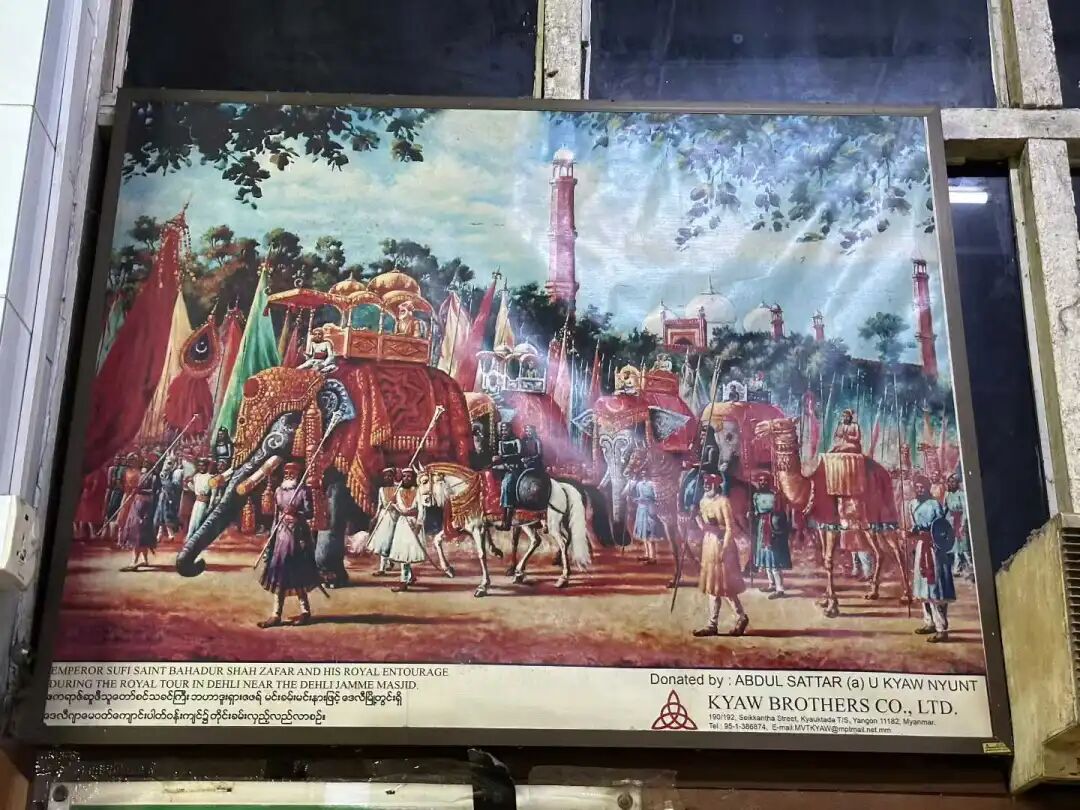
In 1857, an uprising against the British East India Company broke out in India. It started because the British army made their Indian soldiers bite open greased rifle cartridges, and rumors immediately spread that the lubricant came from cow and pig fat. The insulted soldiers flooded into Delhi on May 11 and turned to Bahadur Shah II for help at the Red Fort. Bahadur Shah II initially refused them, but faced with the passionate soldiers surrounding him, he eventually had no choice but to accept them as they bowed before him one by one, changing the fate of the Mughal Empire.
As the Siege of Delhi dragged on and the outlook grew dim, Bahadur Shah II chose to escape reality through poetry. According to British spies, he recited the following lines one night:
The sky collapses on everyone
I can no longer rest or sleep
Only my final departure will come
Whether at dawn or in the dark of night
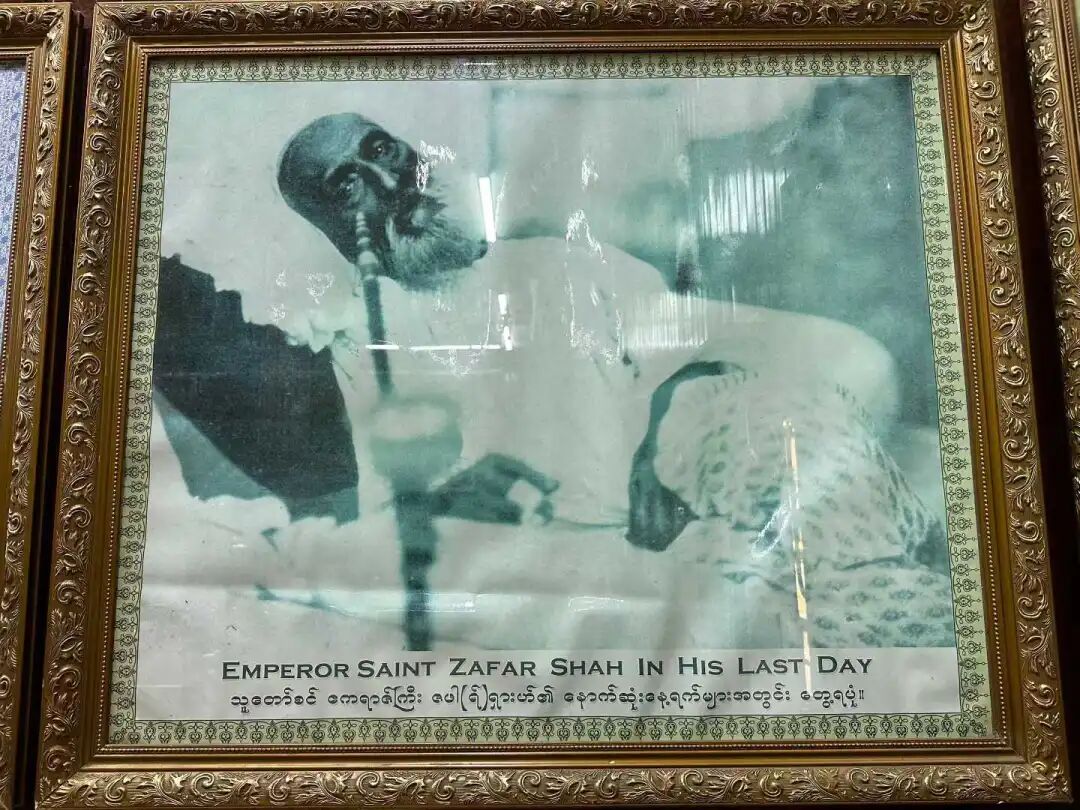
On September 14, the British army officially attacked the walls of Delhi, and on September 17, Bahadur Shah II fled the Red Fort through the Water Gate. He went to the most important Sufi shrine (gongbei) of Nizamuddin in Delhi and handed over his ancestors' relics to the Nizam family, the keepers of the shrine. It is said these included three hairs of the noble Prophet passed down by the Timurid family. Then he went to the tomb of his ancestor, the second Mughal emperor, Humayun. On September 20, Bahadur Shah II was finally captured by the British army.
By January 27, 1858, after all the dignitaries of the Mughal court had been tried, Bahadur Shah II faced his own trial. William Howard Russell, a foreign correspondent for The Times and the father of war journalism, saw Bahadur Shah II in captivity. He described him as silent, sitting motionless day and night, with his eyes cast down to the ground. People heard him reciting poems from his own works and writing poetry on the walls with a charred stick.
During the trial, Bahadur Shah II provided a written defense in Urdu. He denied any involvement in the uprising and insisted that he had been a helpless prisoner held by the Indian soldiers from start to finish. The trial dragged on for more than a month and was often adjourned because of Bahadur Shah II's poor health. On March 9, the British finally decided to exile Bahadur Shah II.
On October 7, 1858, after the Mughal Empire had ruled Delhi for 332 years, the last emperor, Bahadur Shah II, left Delhi in an ox cart. The group traveled slowly down the Ganges River by steamship and arrived at Diamond Harbour, south of Calcutta, on December 4. They boarded the British naval ship HMS Magpie there and finally reached Rangoon, Burma, where they lived in two small rooms in the British barracks area directly below the Shwedagon Pagoda.
In April 1859, Bahadur Shah II moved to a new wooden house near the fort guard camp. According to the report by his jailer, Captain Nelson Davies:
The residence consisted of four rooms, each 16 feet square. One room was assigned to the former king, another to Jawan Bakht and the young crown princess, and a third was occupied by Queen Zinat Mahal. Each of these rooms had an attached washing area. Shah Abbas and his mother lived in the remaining room.
The servants either lounged around the veranda or slept under the house, where the ground was covered in crushed brick to keep it dry. A drainage ditch ran around the house for the same reason. There were two washrooms, a double bathroom for the servants, and a place for cooking.
The veranda on the upper floors was full of chicks, which were kept inside by nailed-down slats. The frail former king and his sons usually sat there, where the floor was raised almost to the height of the railing, allowing them to enjoy the pleasant sea breeze and the wide, beautiful view. They watched people pass by and stared at the ships being loaded, which helped break up the monotony of their life behind bars and made them more willing to accept their current living situation.
Regarding the health of Bahadur Shah II, the report by Davis noted:
If given time to make up his mind, his memory was still good, but he spoke unclearly because he had lost his teeth. He was unable to handle anything requiring mental effort, and while that was the impression he gave, he seemed to be bearing the weight of his years remarkably well. He lived a dull, listless life, showing little interest in anything except eternal matters. This had been his normal state for a long time, and it would likely continue until his life ended, which would not surprise anyone.
Because the British did not allow him to use paper or pens, the world could only guess how he felt about his life in exile. By October 1862, his health took a sharp turn for the worse, and he could no longer swallow or eat food. On November 5, Davis ordered bricks and lime to be collected to prepare a quiet spot behind the house enclosure for his burial.
At 5:00 a.m. on November 7, 1862, Bahadur Shah II finally returned to Allah. Davis wrote: Everything was ready, and at 4:00 p.m. that day, he was buried in a brick grave behind the guard camp, with turf laid level with the ground... A bamboo fence surrounded the grave for a long time, and once the fence rotted, the area would be covered in thick grass, leaving no trace and making it impossible to identify the final resting place of the last Great Mughal. Davis specifically mentioned that only two of Bahadur Shah II's sons and a manservant attended the funeral, as women were not allowed to attend according to tradition.
The grave of Bahadur Shah II soon became impossible to identify. When a delegation from India came to visit in 1903, a local guide pointed out a jujube tree near the grave. In 1905, the Dosti group in Yangon protested and demanded that the grave site be marked. The British initially disagreed, but after a demonstration and a series of published reports, they finally agreed in 1907 to erect an inscribed stone slab and put a railing around it. In 1925, the railing was rebuilt into a temporary shrine (gongbei) covered with a corrugated iron roof.
It was not until February 16, 1991, when workers were digging a drainage ditch behind the shrine, that they discovered a brick-lined grave, finally confirming the remains of Bahadur Shah II. Later, this place was rebuilt into a mosque with a prayer hall (gongbei). Dignitaries from India, Pakistan, and Bangladesh have all visited, and Rajiv Gandhi even gifted a carpet here.
As a fallen monarch, Bahadur Shah II was a failure. He did not give the army the support it needed during the 1857 Indian Rebellion, which ultimately ended the Mughal civilization. Under the British policy of divide and rule, the various ethnic groups in India began to drift apart. But under his rule, Delhi was home to the most talented poets and writers in modern South Asian history, and literature and art reached their peak.
As a Sufi ruler, he never forgot how important it was for the different groups under his rule to depend on each other. During the Siege of Delhi, he refused the demands for a holy war (jihad) from the Wahhabis and tried his best to maintain relationships between all groups. When a large number of Muslim (dosti) elites moved from India to Pakistan in 1947, people could no longer imagine that just 90 years earlier, many Indian soldiers had rushed to the Red Fort in Delhi, gathered under the banner of a Sufi emperor, and faced national disaster with their Muslim brothers to fight against foreign invaders.
I found stone tablets standing around the front of the tomb.
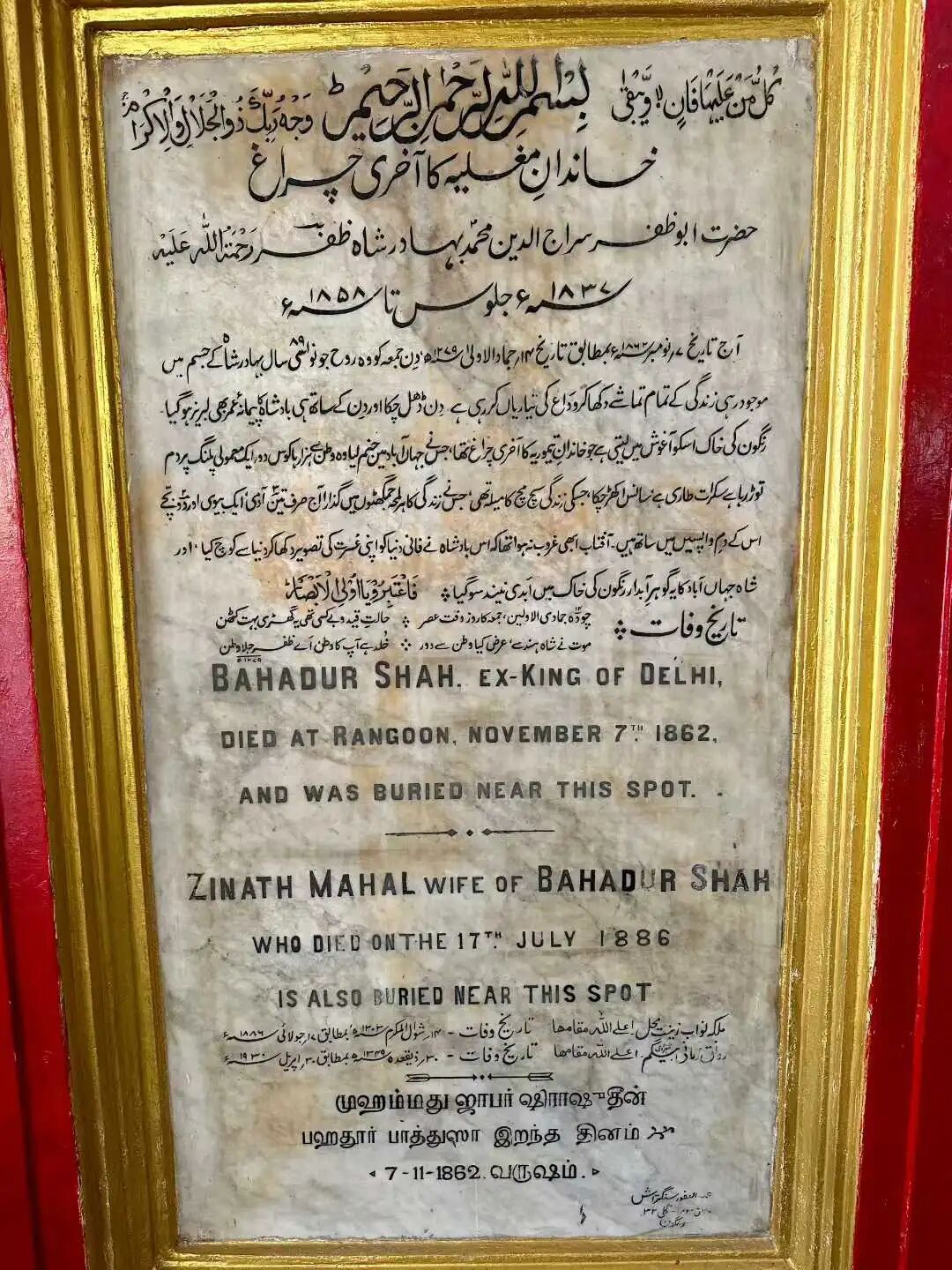
Underground is the original location of the tomb.
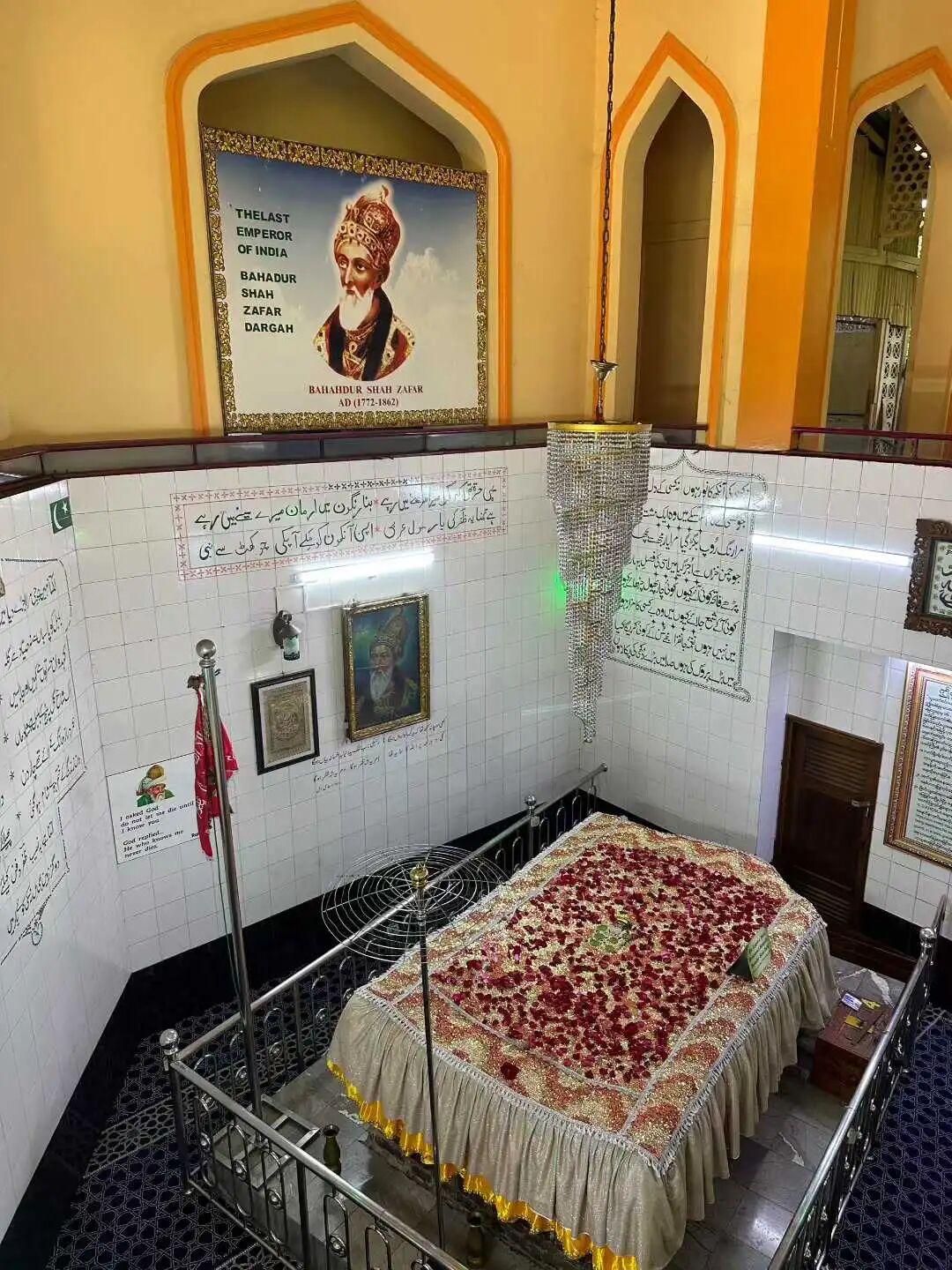
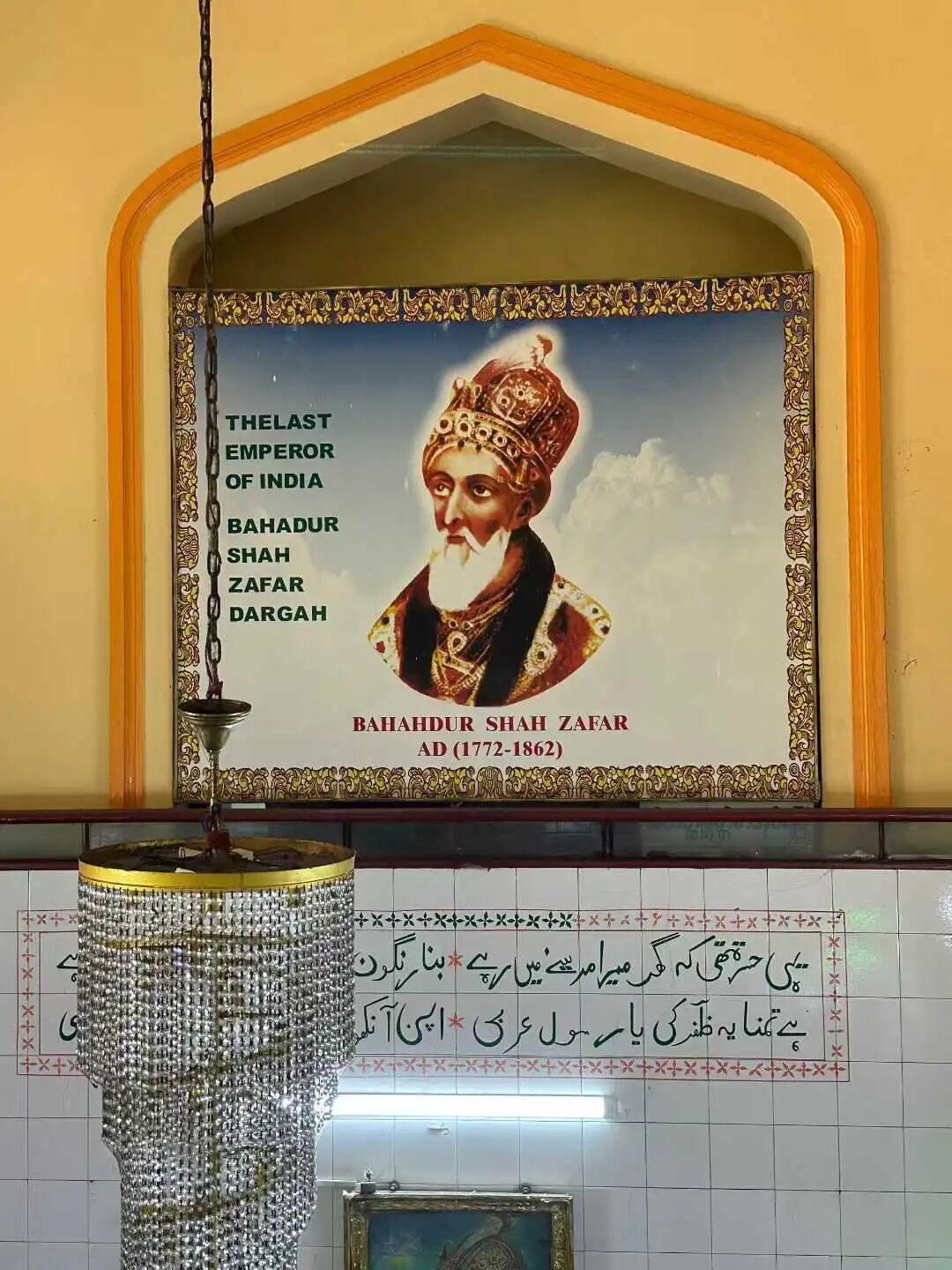
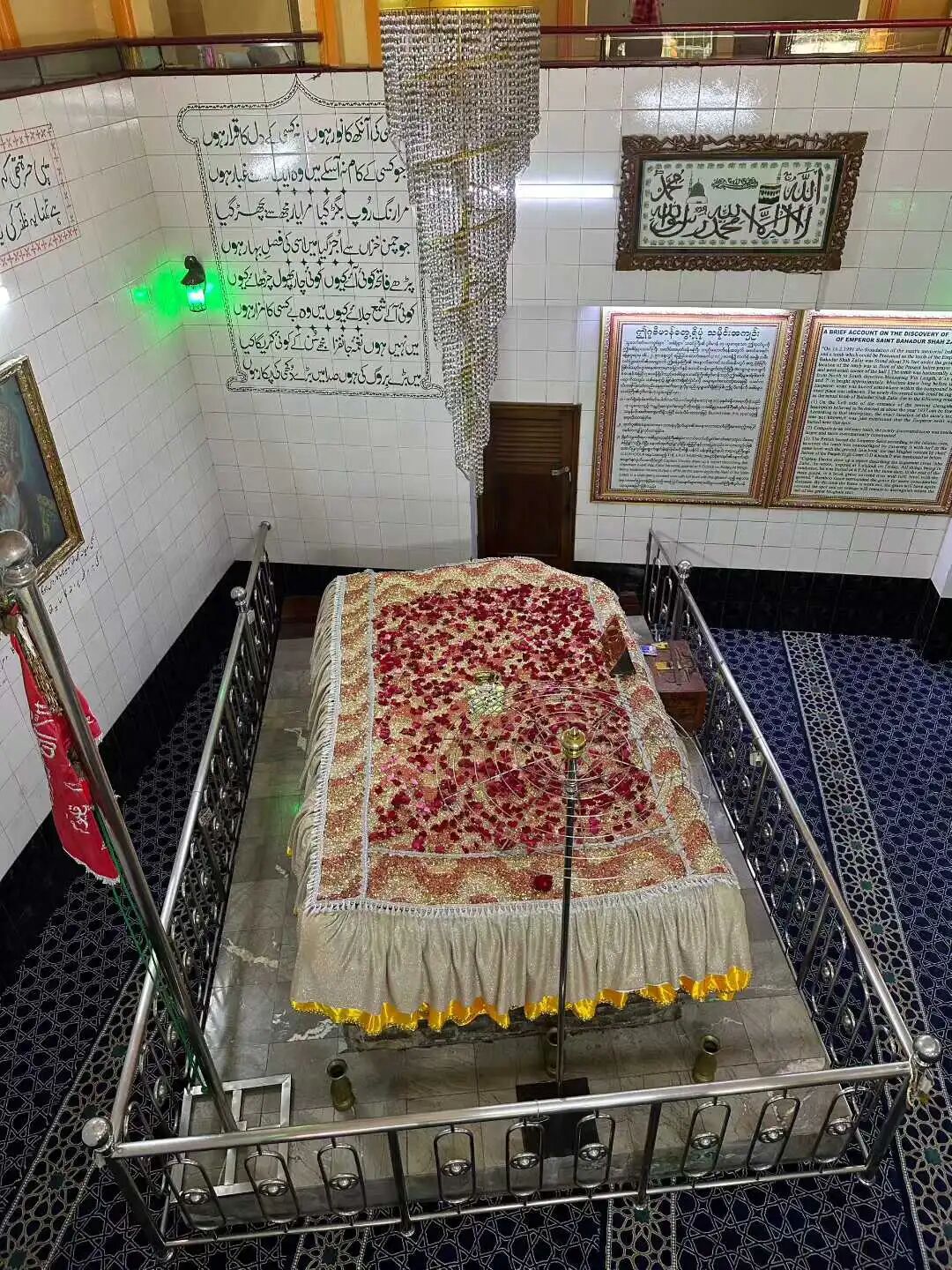
Inside the tomb complex (gongbei), there is a portrait of Abdul Qadir Gilani, the founder of the Qadiriyya order.
Next to the tomb is a prayer hall. This is the same as the Qadiriyya order in China, where the tomb and prayer hall are adjacent, and there is an imam in the mosque.
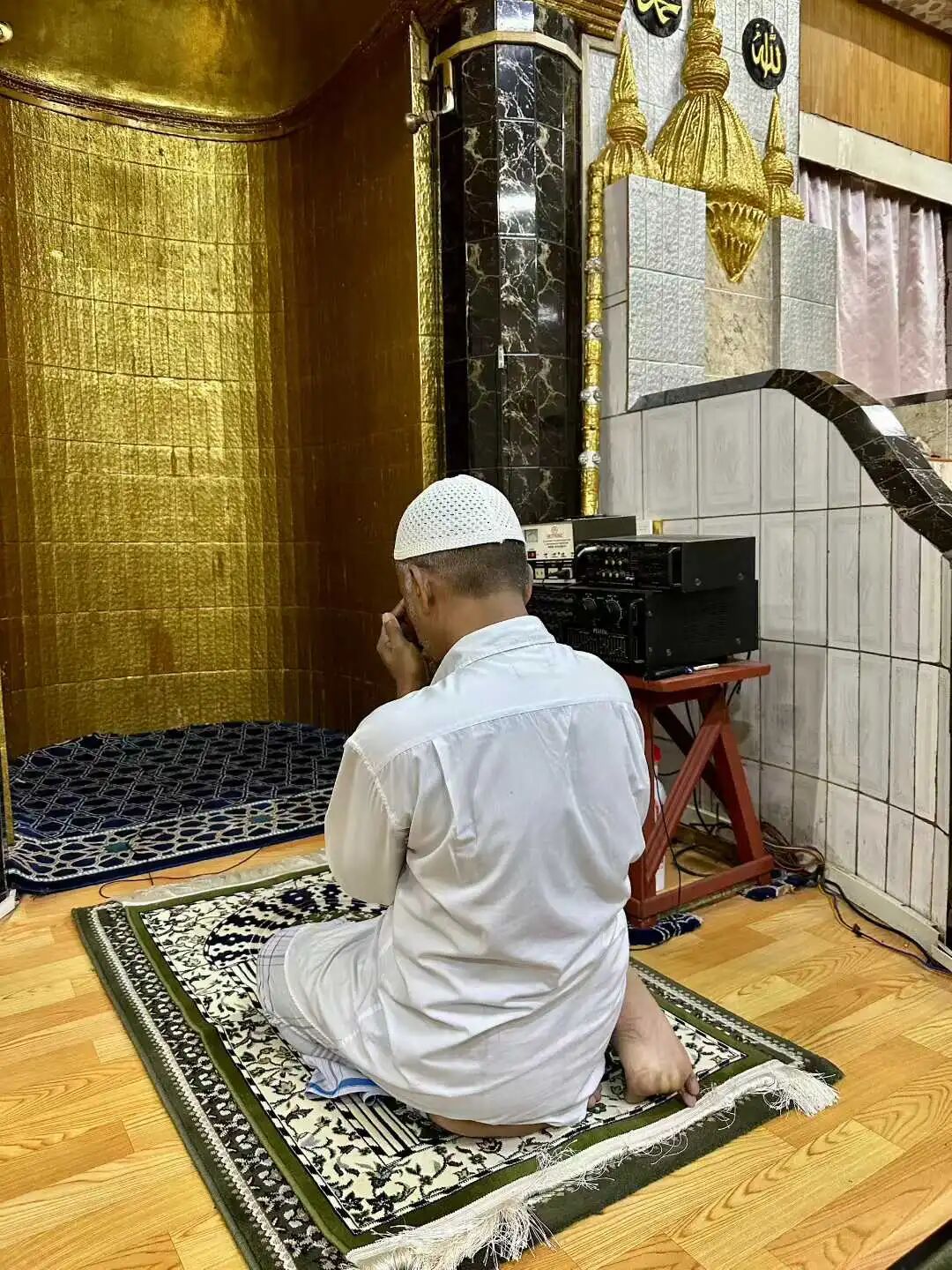
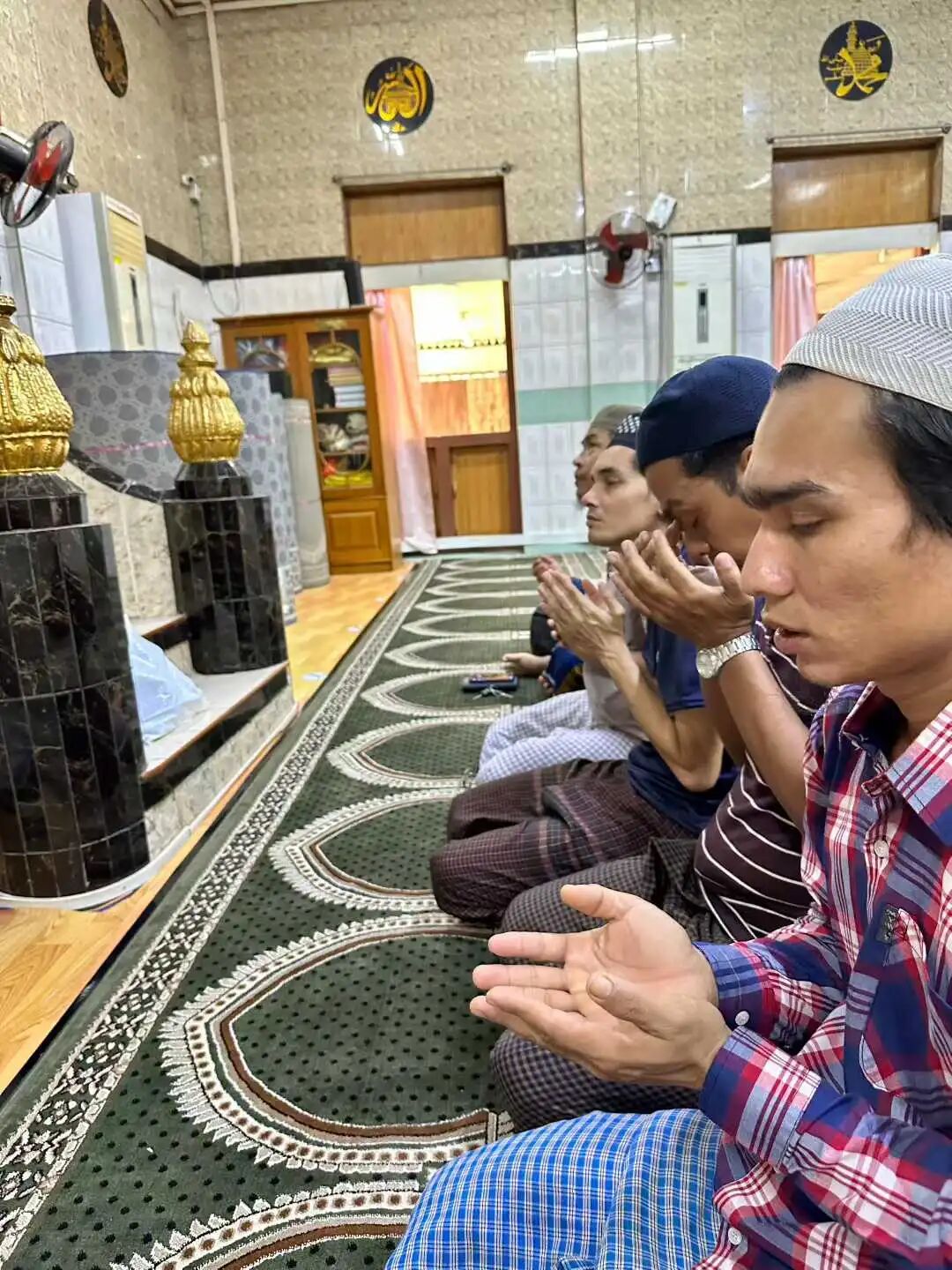
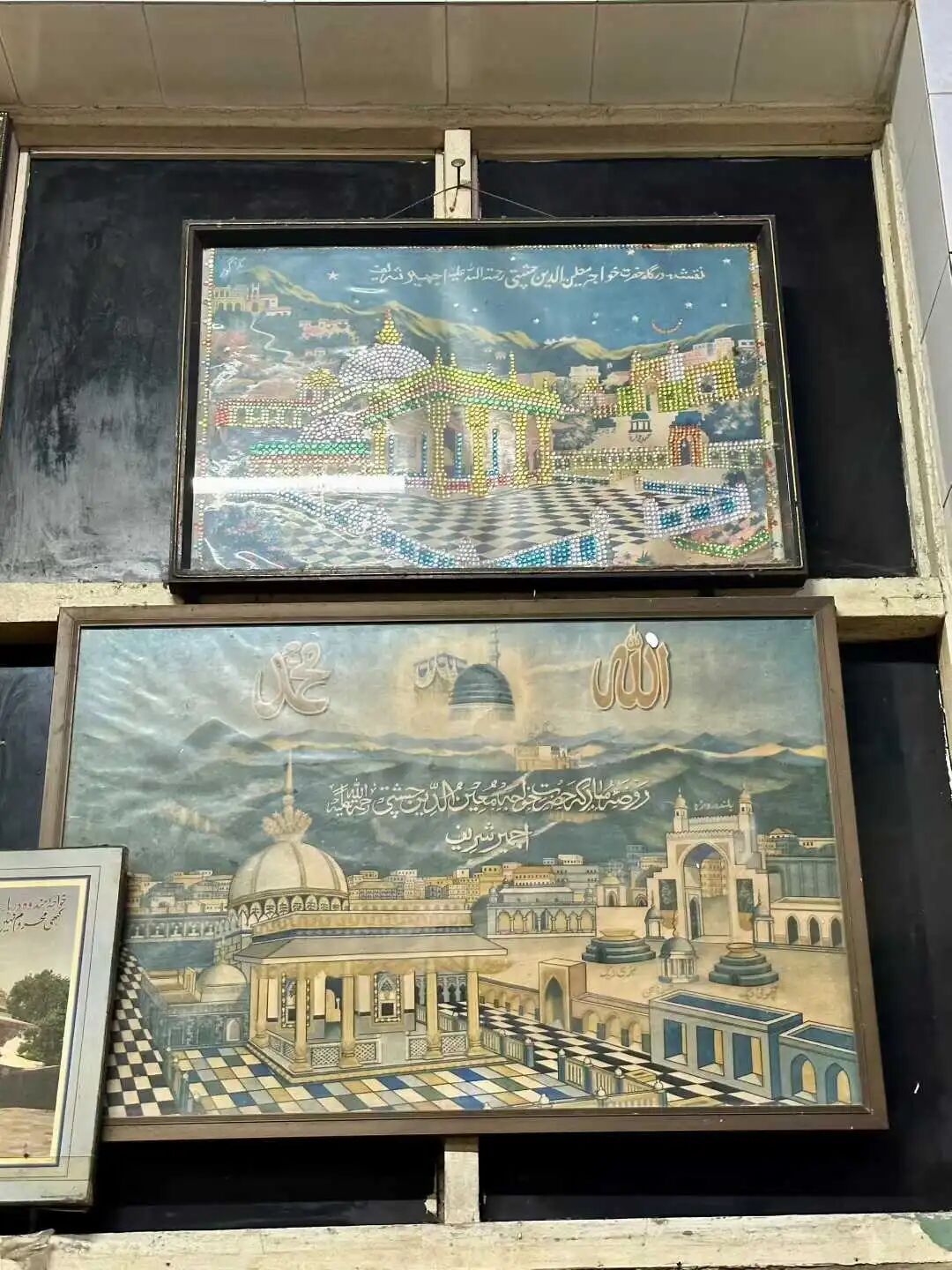
In a forest near the Yangon Central Railway Station in Myanmar, the largest Sufi tomb complex in Yangon is hidden. Since most of the text inside the tomb is written in Burmese, I searched for information for a long time after I returned but could not find any leads. Recently, based on the few English words inside the tomb, I learned that this place belongs to the Maizbhandari order, which was established in the late 19th century by Bengali Muslims based on the Qadiriyya Sufi tradition.
The Maizbhandari order is the only indigenous Bengali Sufi order, and its founder was born in Chittagong in 1826. People say his ancestors were descendants of the Prophet, who moved through Medina, Baghdad, and Delhi before finally settling in Bengal, serving as imams for generations. Maizbhandari studied the scriptures from a young age. After graduating in 1853, he first served as a judge (qadi), but soon resigned to work as a teacher in Kolkata. In Kolkata, he met two sheikhs from the Qadiriyya Sufi order and joined them to practice Sufism. In the late 19th century, he established his own lodge and founded the Maizbhandari order.
From the 19th century to the present, the Maizbhandari order has grown into a modern organization with millions of followers and is the most important Sufi order in Bangladesh. The Maizbhandari order is known for its melodic and rhythmic way of chanting (dhikr). They have recorded tens of thousands of songs, which have had a great influence on the faith in Bengal. As Yangon, Myanmar, has a large population of Bengali Muslims, it is also an important area for the Maizbhandari order.
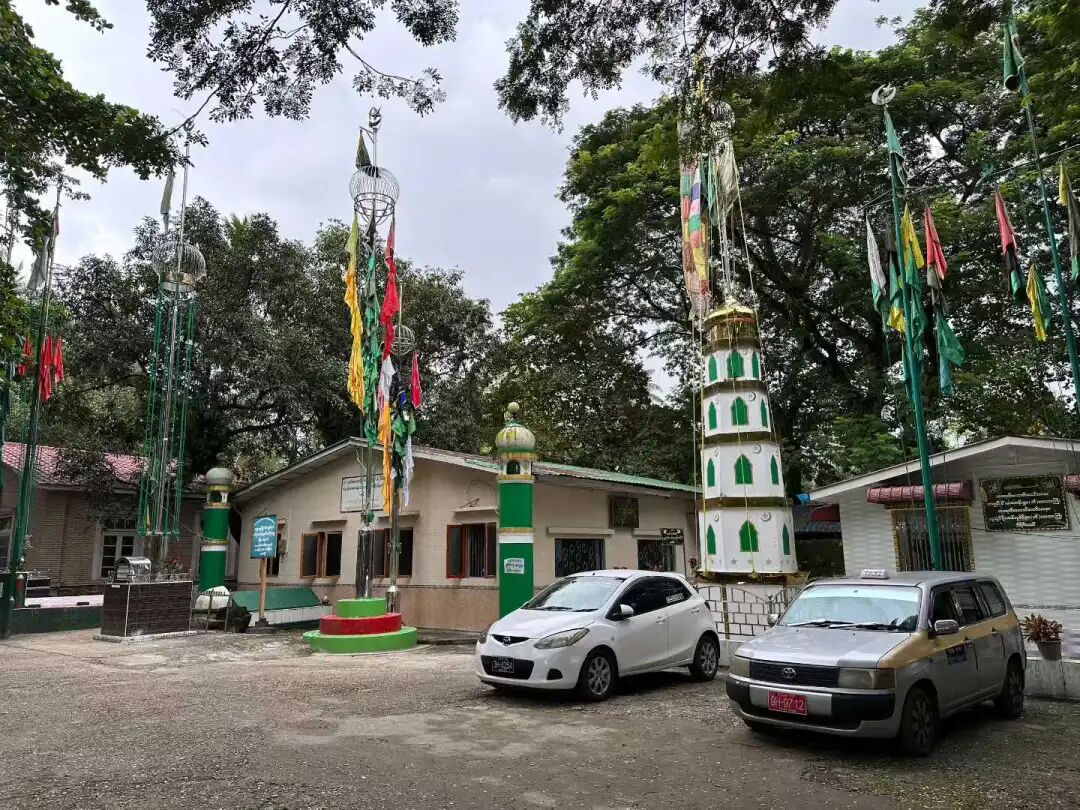
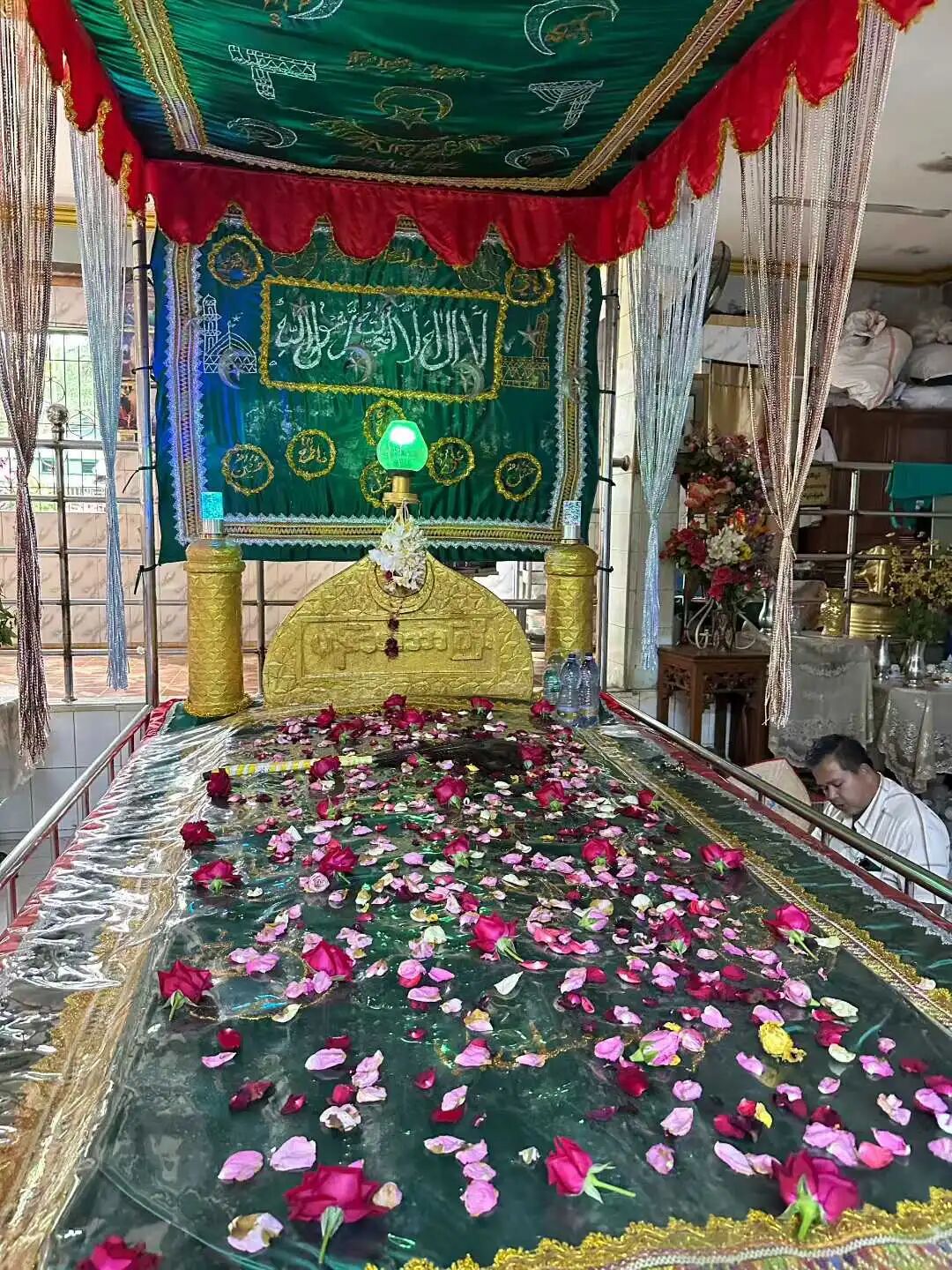
A live scene of the dhikr ceremony.
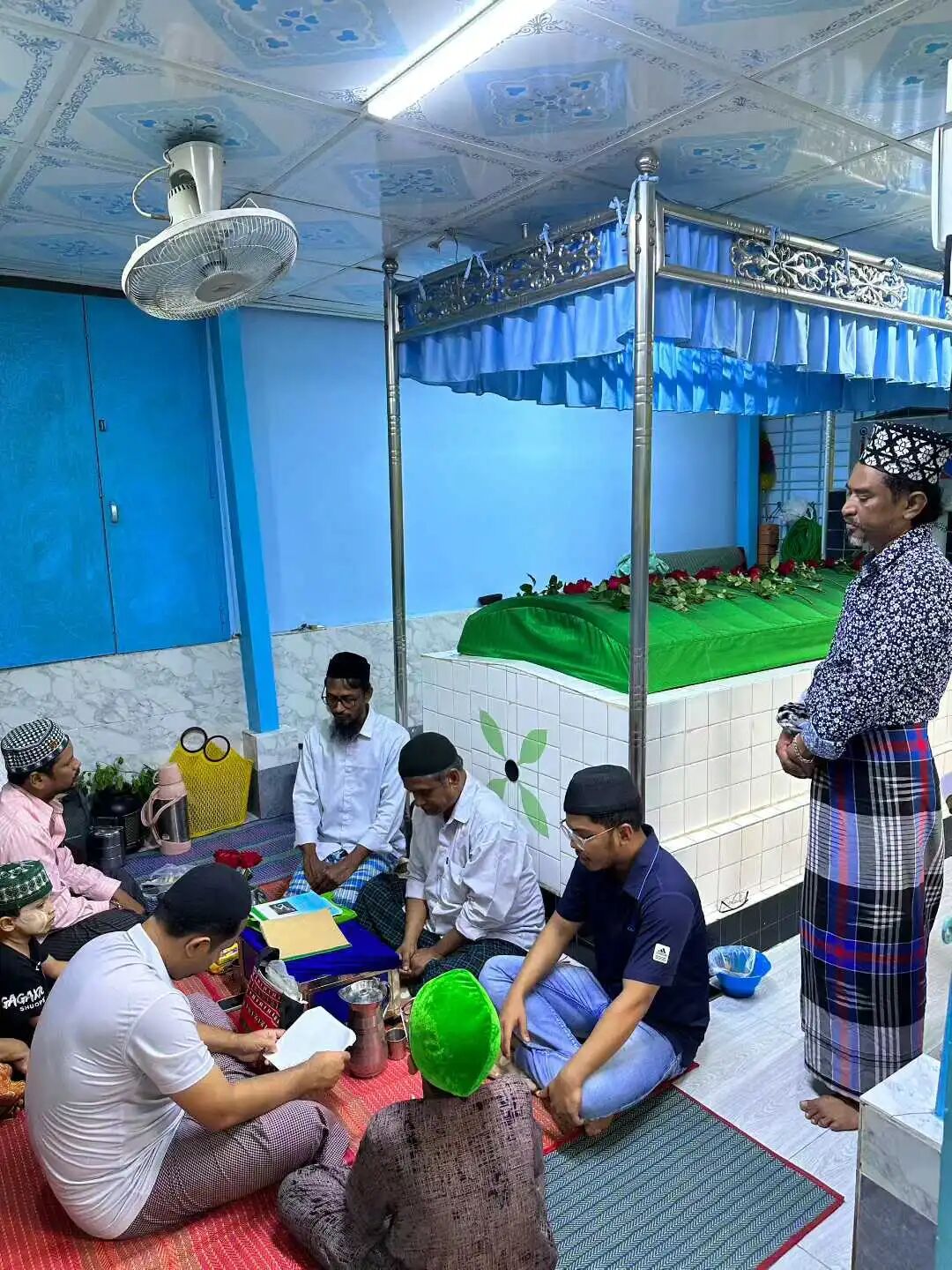
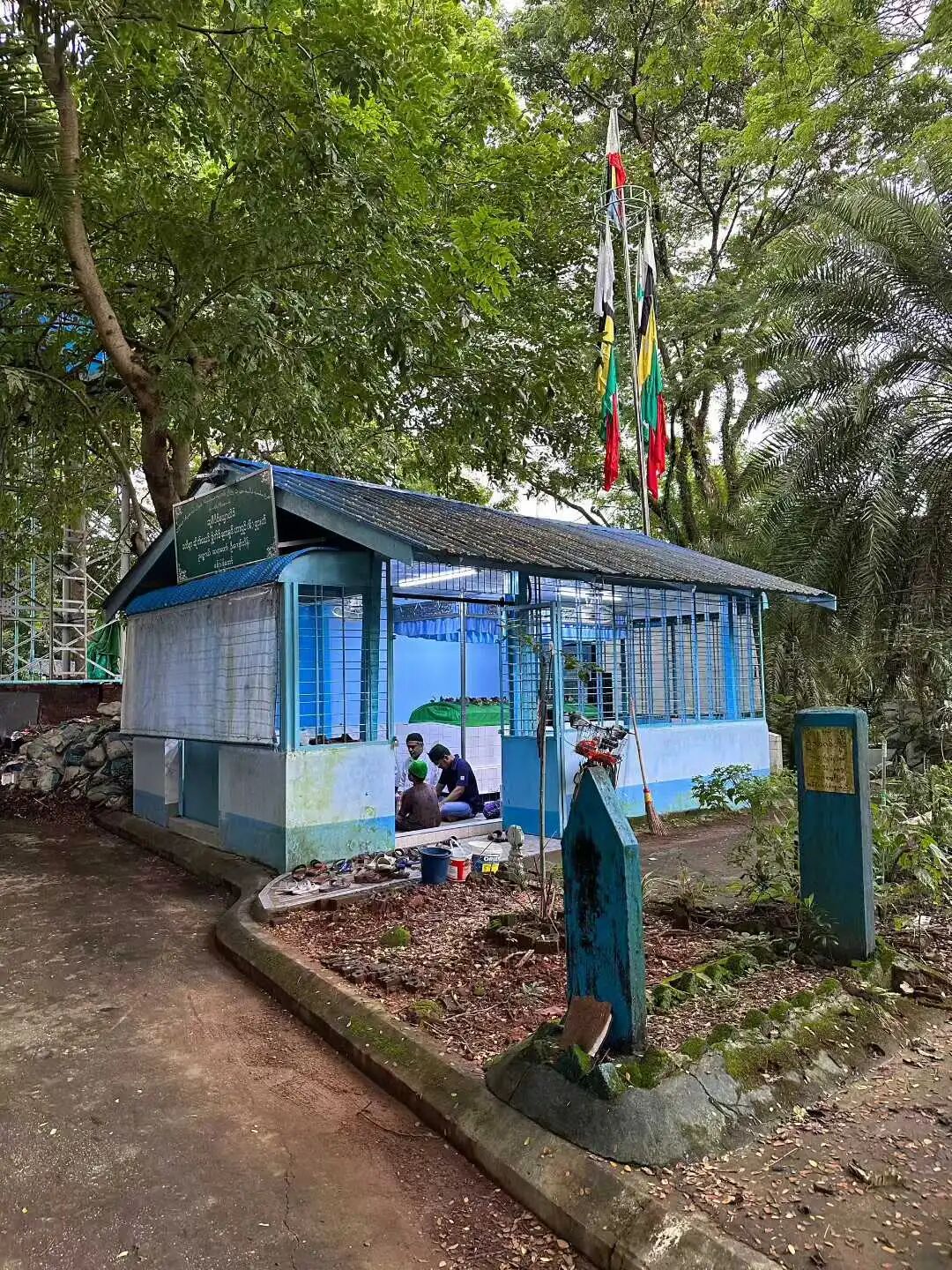
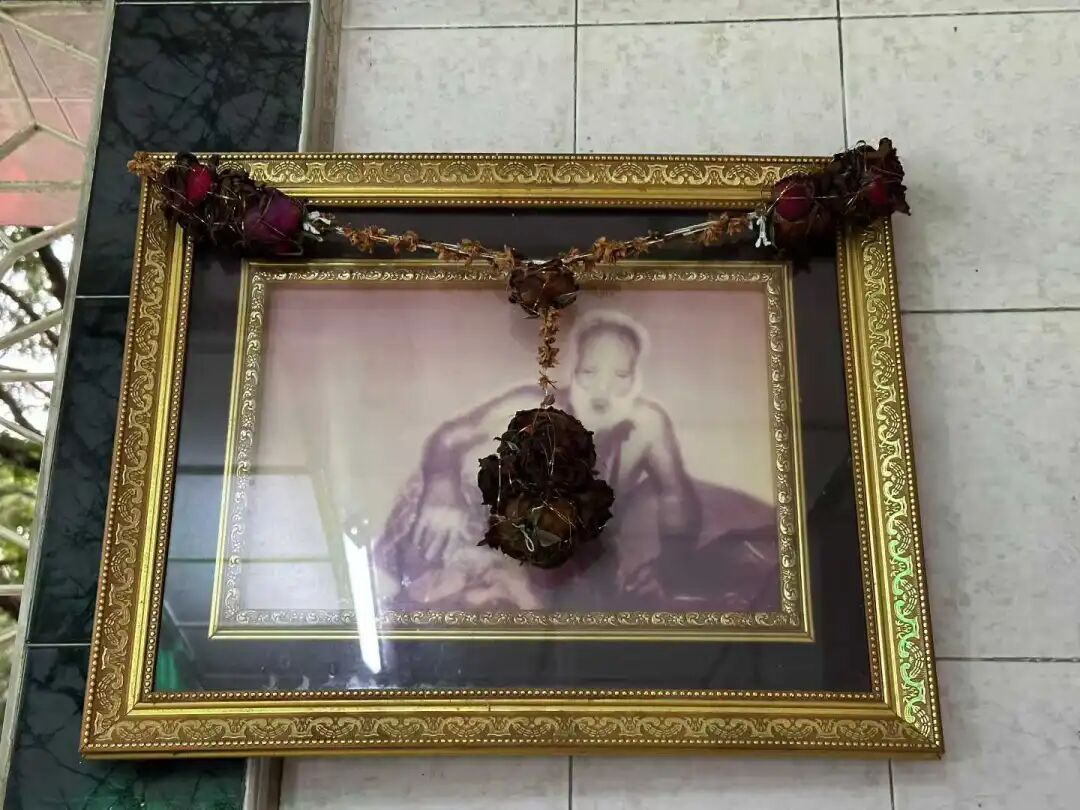
At the Sufi tomb in Yangon, not only Muslims but also Burmese Buddhists come to offer dua. This is the unique charm of Sufism in South and Southeast Asia. At many important shrines (gongbei) in India, you can see Hindus going inside to offer dua. In Malaysia and Singapore, many Chinese people also come to pay their respects at the shrines (keramat) of local saints.
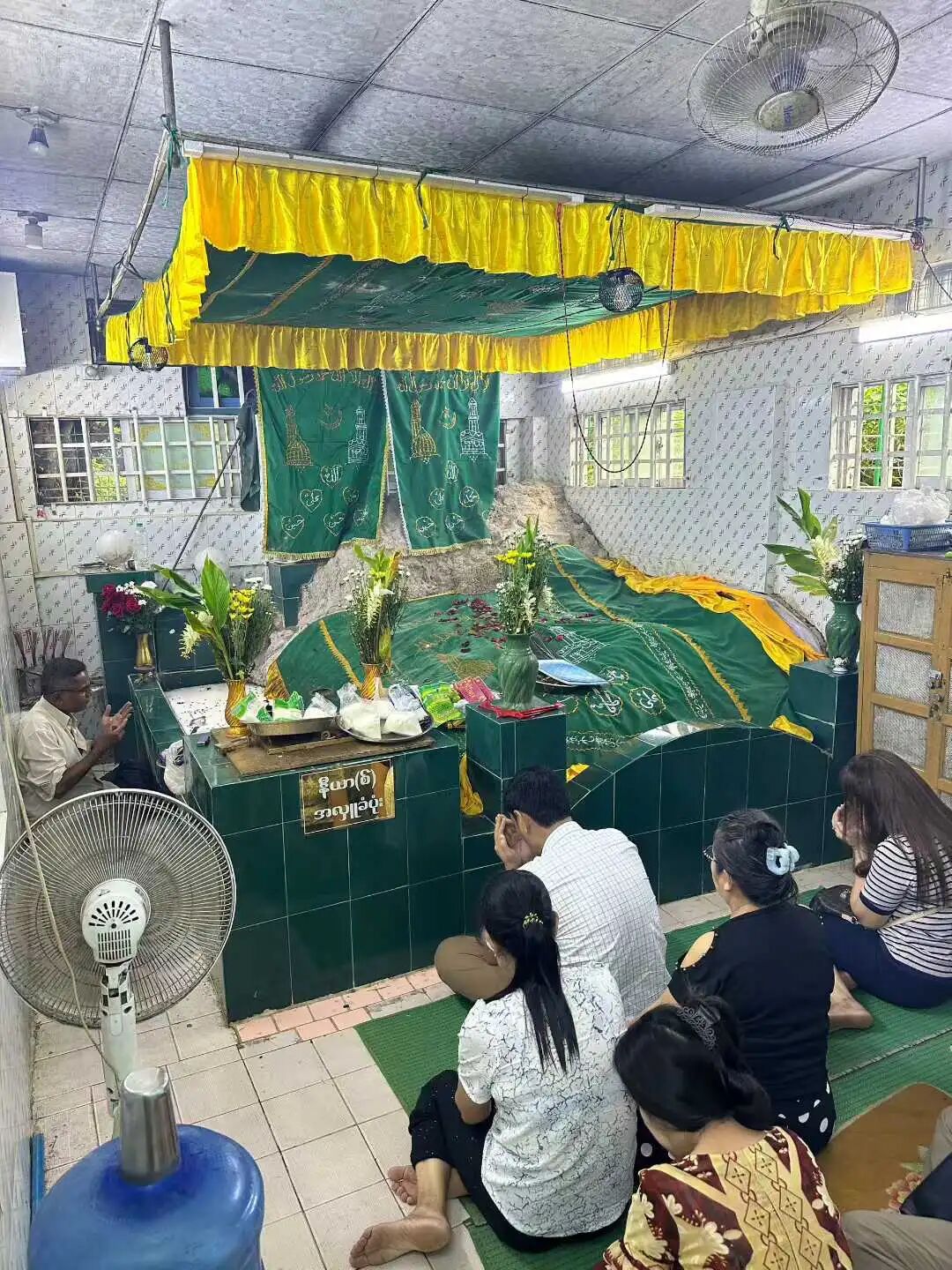
I also saw white sugar placed in front of a shrine (gongbei).
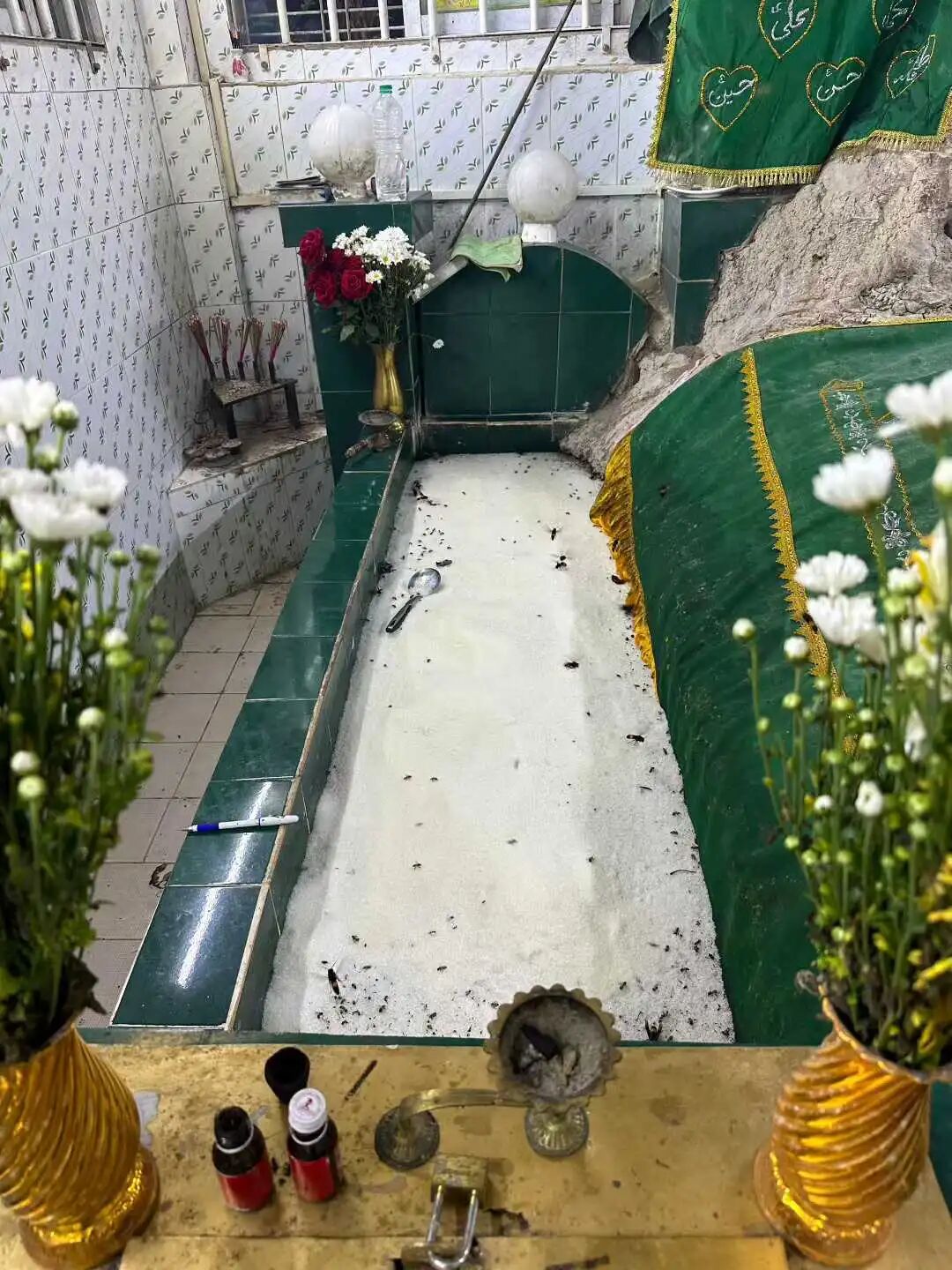
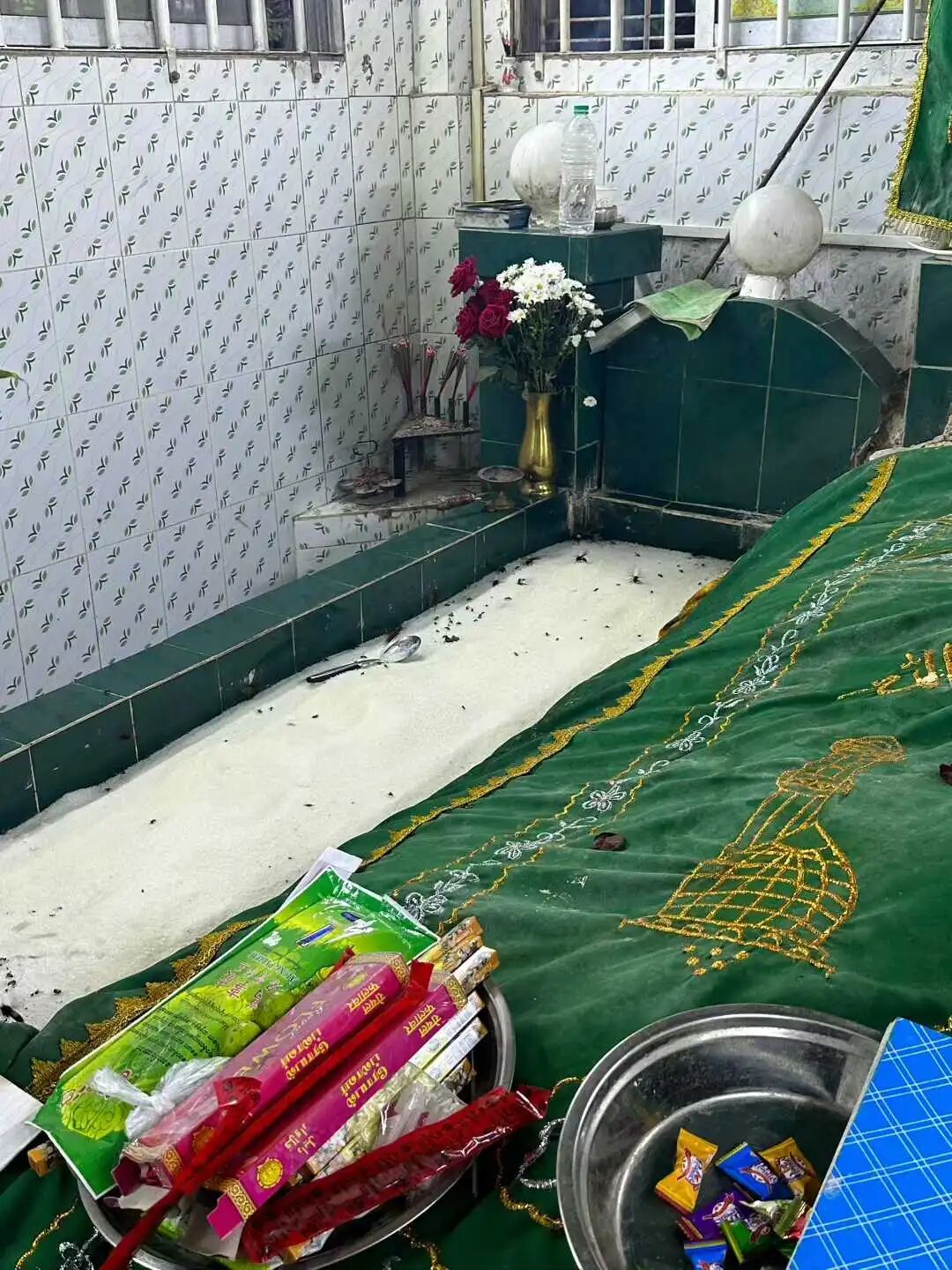
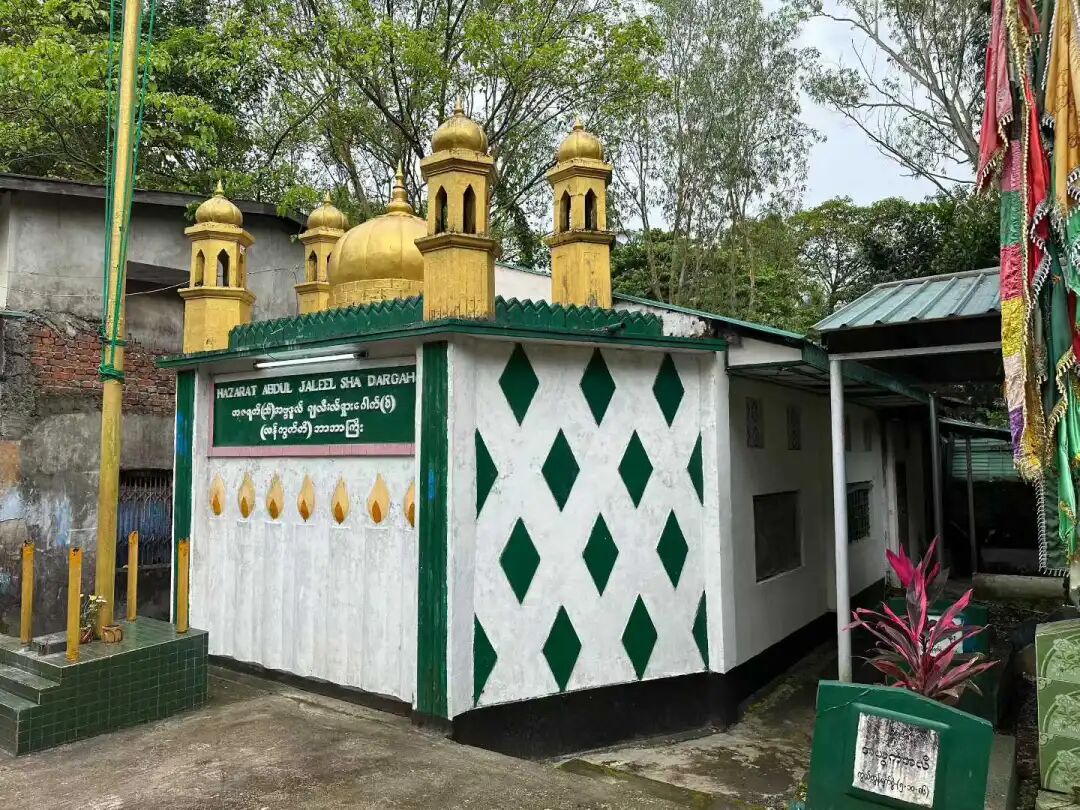
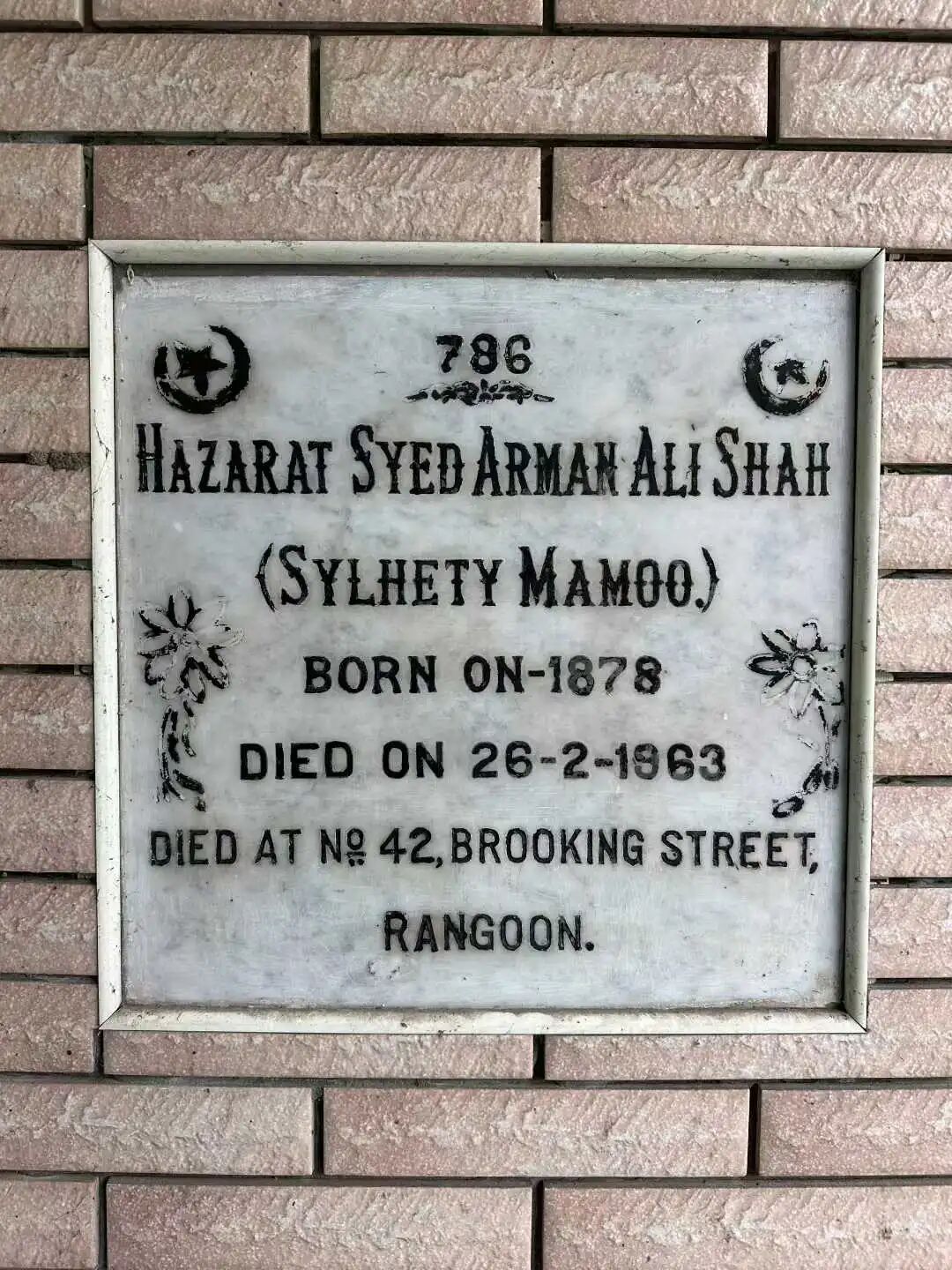
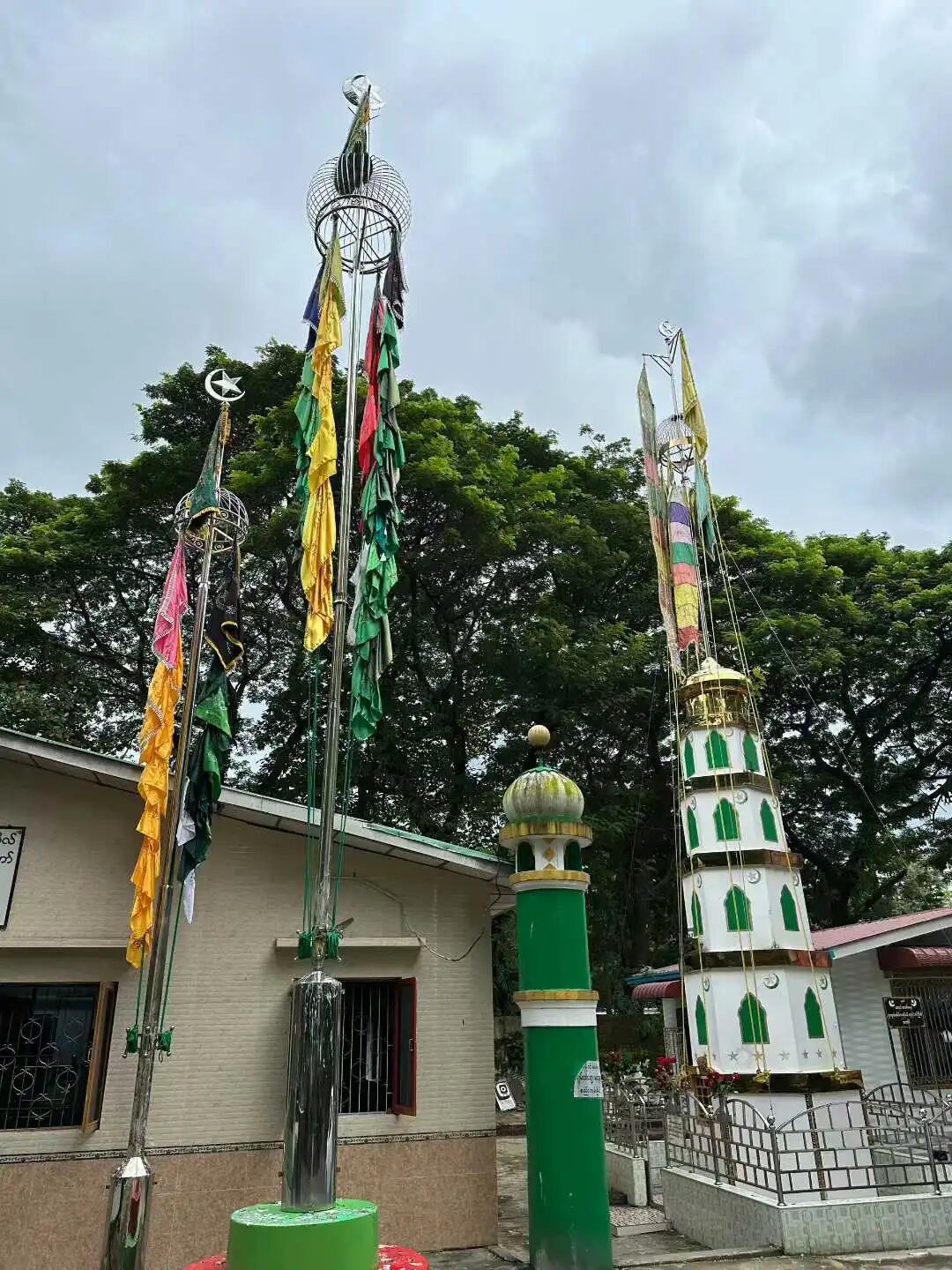
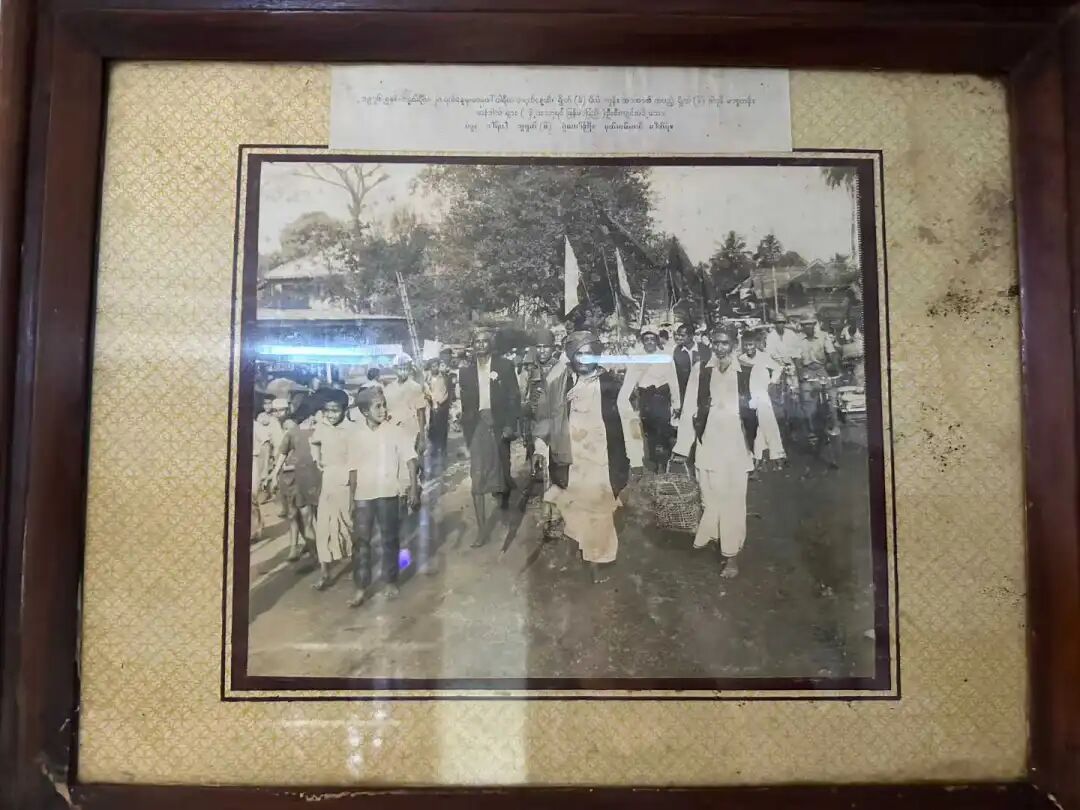
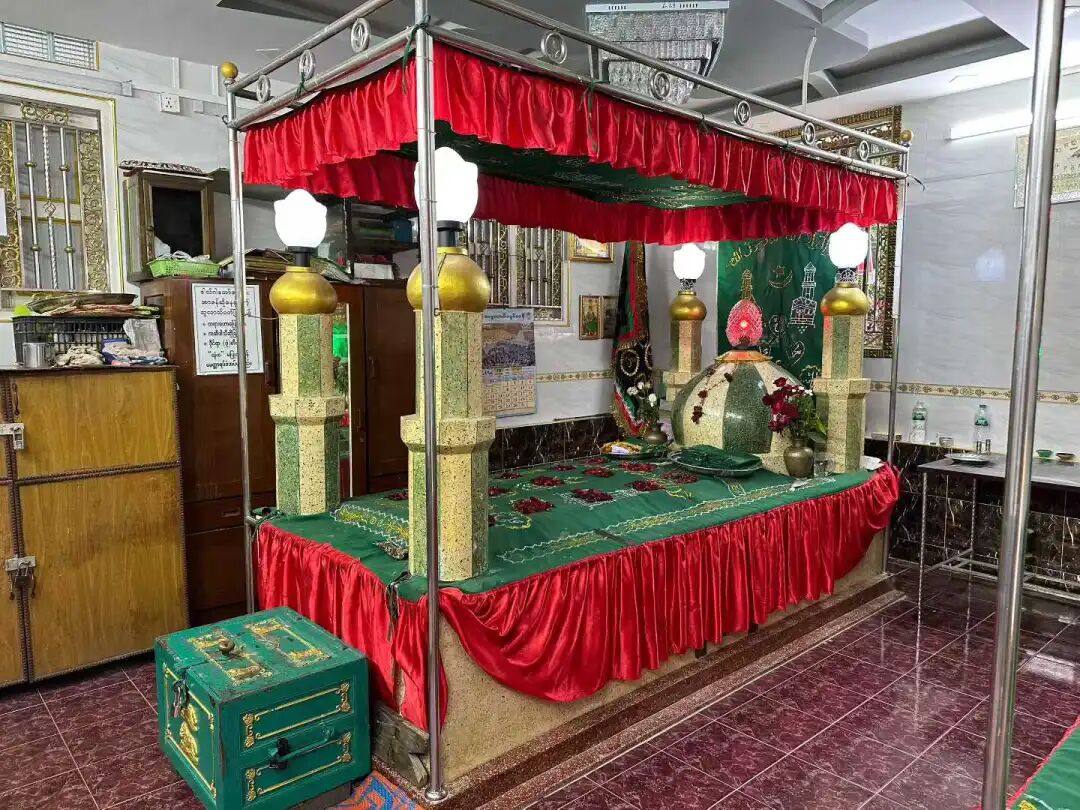
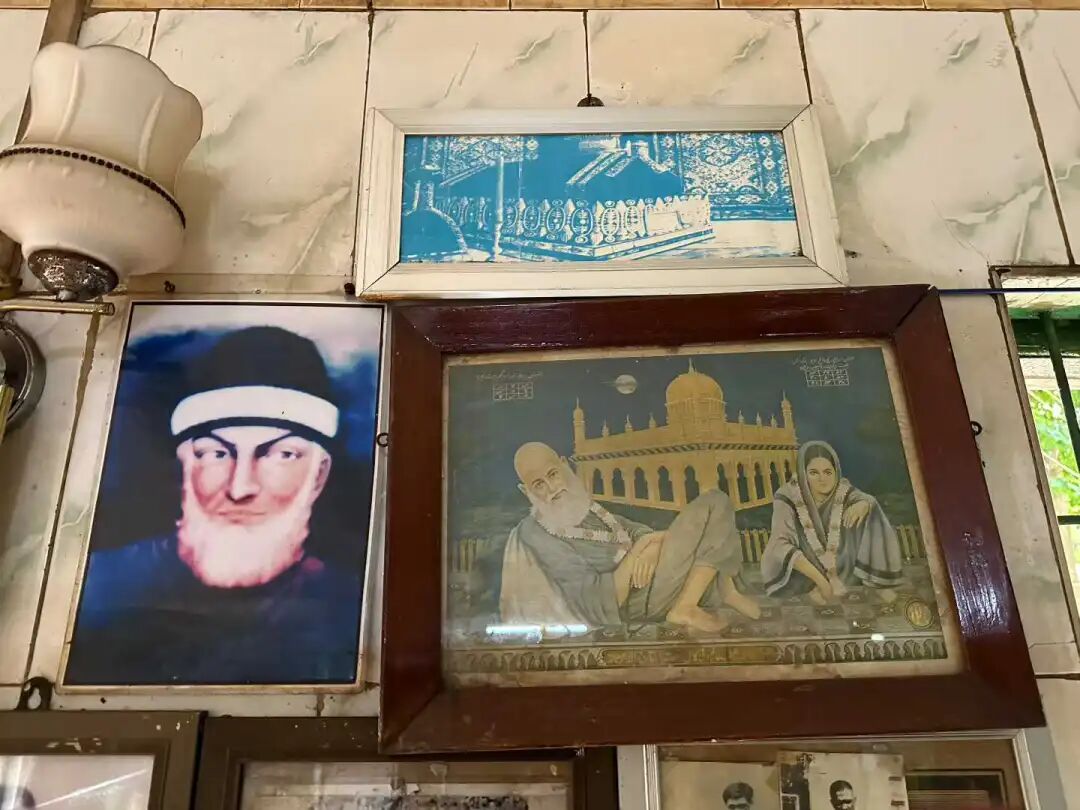
A Sufi shrine (gongbei) inside the Thinchai Sunni Maha Maiden cemetery in Yangon, Myanmar.
Halal Travel Guide: Yangon Indian Quarter - Muslim Food and Hotels
Articles • ali2007fr posted the article • 0 comments • 250 views • 2026-05-20 23:51
Summary: Yangon's Indian Quarter offers halal restaurants, Muslim hotels, South Asian food, and practical lodging options tied to the city's colonial-era Indian Muslim history. This guide keeps the source's restaurant names, dishes, hotel notes, streets, and travel tips in one long English article.
A guide to eating and staying in the Indian Quarter of Yangon, Myanmar.
Although Yangon is now the largest city in Myanmar, it was known as an Indian city 100 years ago during the British Burma period. Indians began settling in Yangon after the First Anglo-Burmese War in 1826, and by the late 19th century, their population had already surpassed that of the Burmese people. In 1901, there were nearly 120,000 people of Indian descent in Yangon, while the Burmese population was only about 70,000. The Indian community in Yangon's old town mainly lived between Sule Pagoda and Chinatown, an area commonly known as the Indian Quarter, which is full of Indian culture.
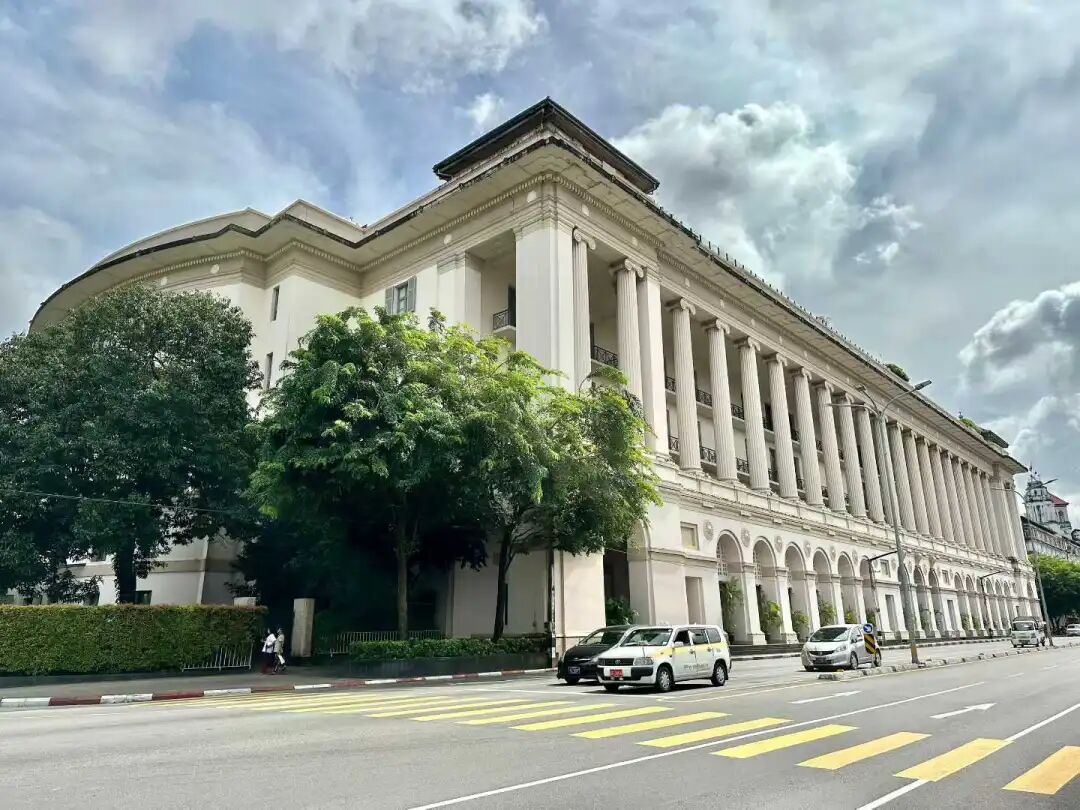
We stayed at The Eravati Hotel by the Yangon River, which is very close to the Indian Quarter and makes dining very convenient.
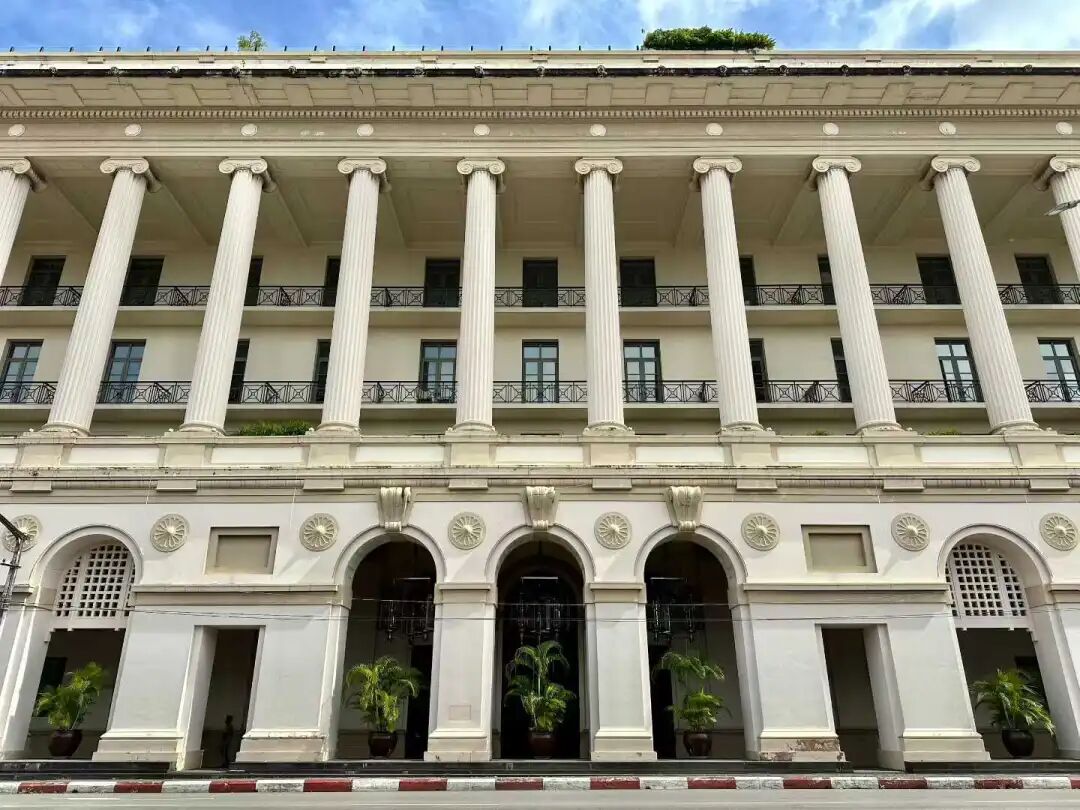
The building housing this hotel is the New Law Courts building, constructed by British architect Thomas Oliphant Foster between 1927 and 1931.
Between 1942 and 1945, this place was used as the headquarters for the notorious Japanese Kempeitai, where many people suffered torture. British Army Major Hugh Seagrim trained Karen guerrillas to resist the Japanese after the invasion and constantly harassed the Japanese army. Due to the Japanese army's massive retaliatory actions against the Karen people, he was forced to surrender and was then imprisoned in this building. He refused the threats and inducements of the Japanese army here and was eventually heroically executed.
After 1948, it became a police station building, continuing to imprison and interrogate dissidents; before the renovation, people could still see the prison cells on the building.
It was renovated into a heritage hotel in 2014, having previously operated as a Kempinski and a Rosewood hotel, and is now The Eravati Hotel.
The Eravati Hotel is truly one of the best value hotels I have ever stayed in, and the service is excellent. From the front door, all the staff are always smiling and take the initiative to open doors. When checking in, a staff member carried our bags the whole way, and they did not accept tips. There are two glass bottles of water in the room, and you can ask for two more after finishing them. After cleaning the room, they would fold back the corner of the quilt and place the slippers by the side of the bed. The coffee provided is high-quality Myanmar coffee. There were several large picture books in the room, one of which covered the historical sites of Yangon, which was very helpful for my mosque-visiting trip. Another book was a collection of poems by a Burmese poet, which also included English translations and was very interesting.
In the morning, we had breakfast at Golden Tea in the Indian Quarter; they serve a classic South Asian style breakfast of chicken curry with naan, fried eggs, sweet milk tea, and rice cakes. The curry puffs (samosa) here are fried to be crispier, and the texture is not exactly the same as those in India.
There are also many fried food stalls on the streets of the Indian Quarter, and the fried dough sticks (youtiao) are very similar to those in China.
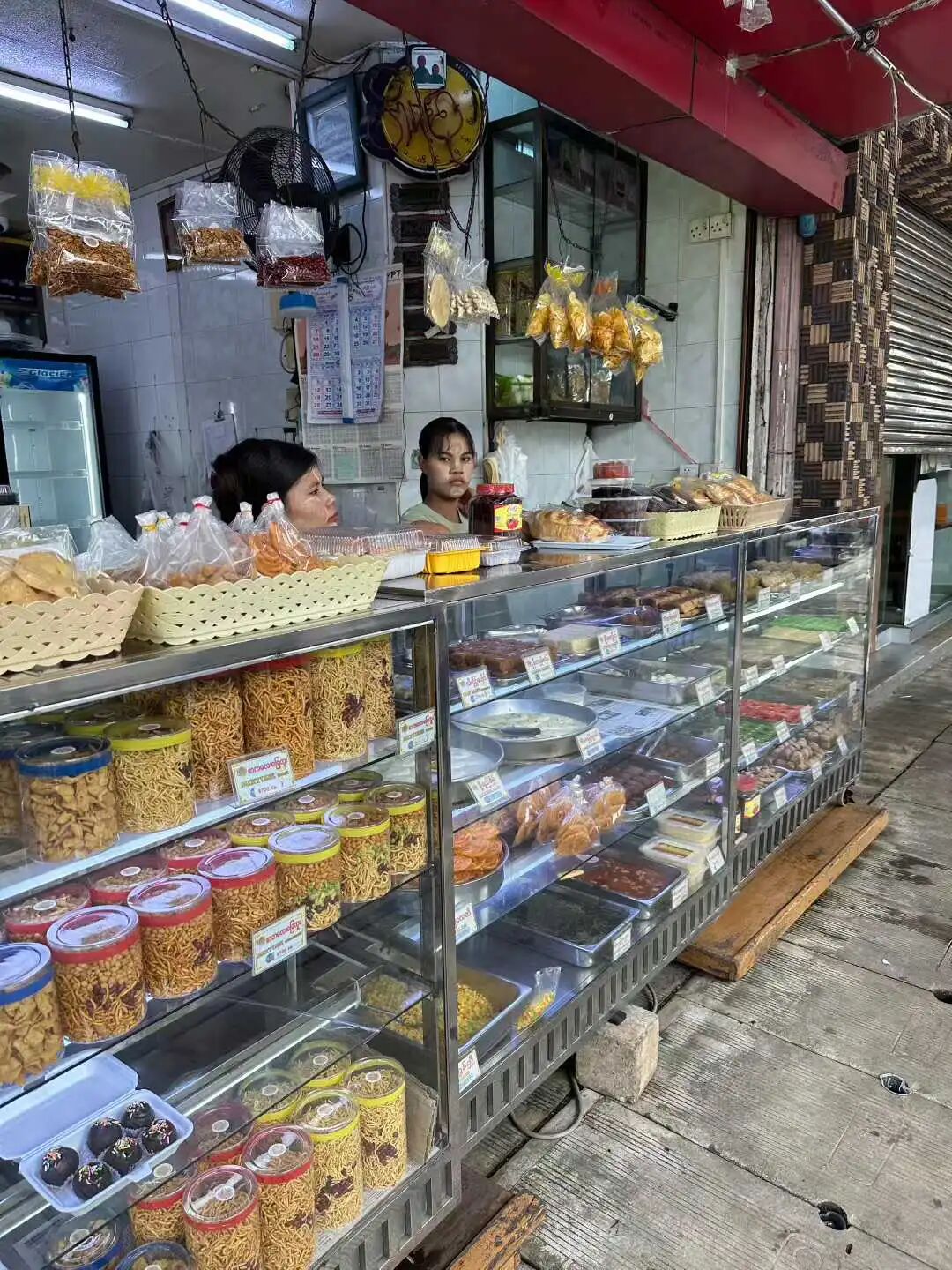
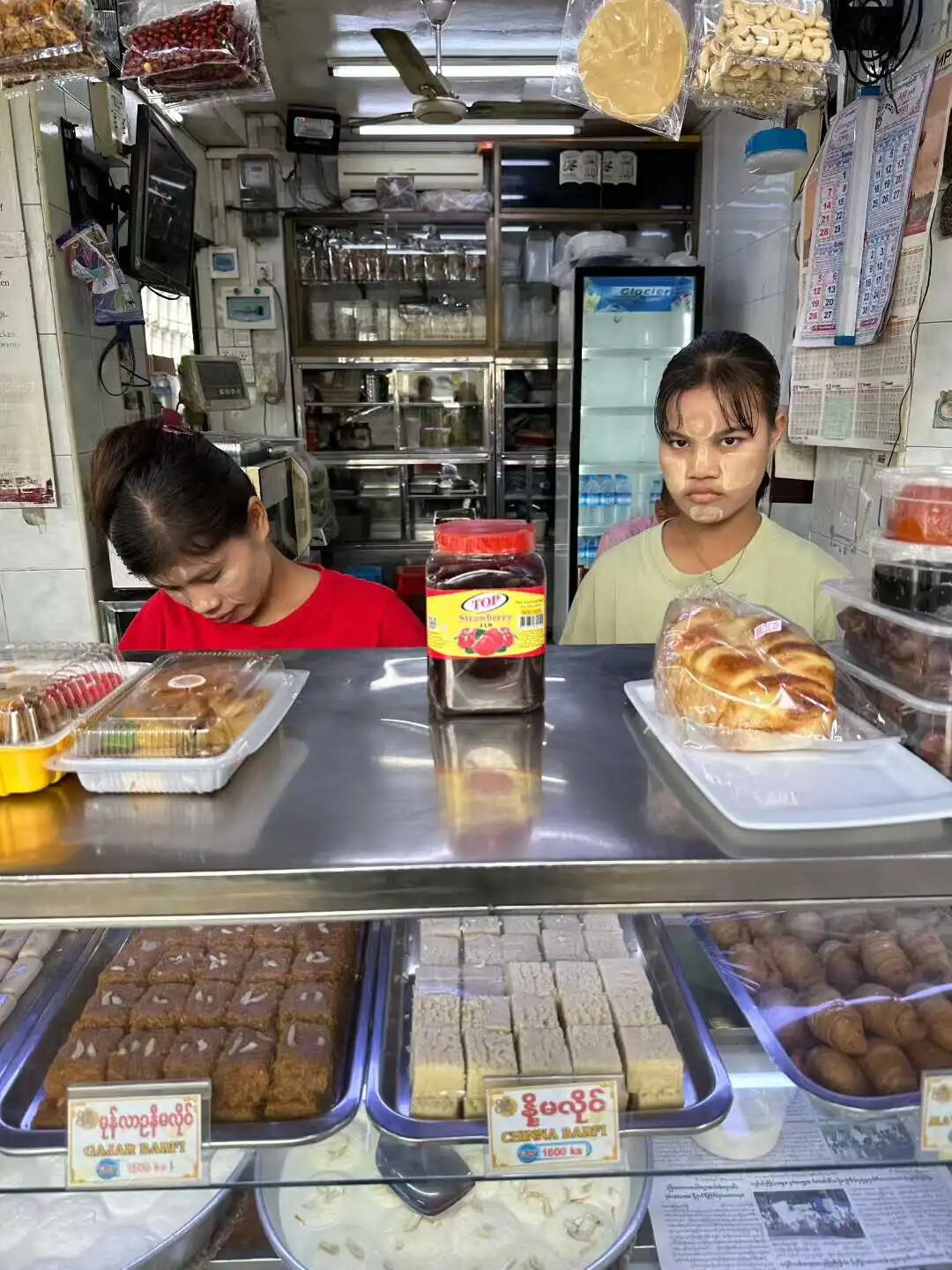
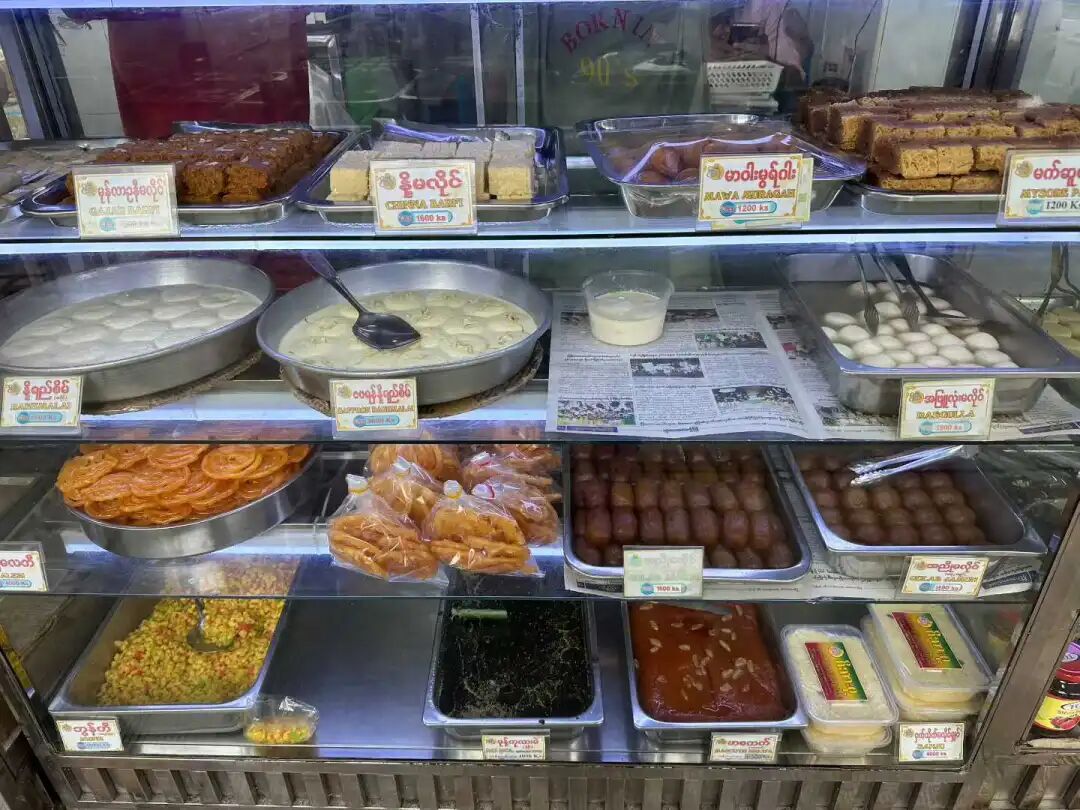
The Indian quarter in Yangon has pastry shops with a huge variety of sweets.
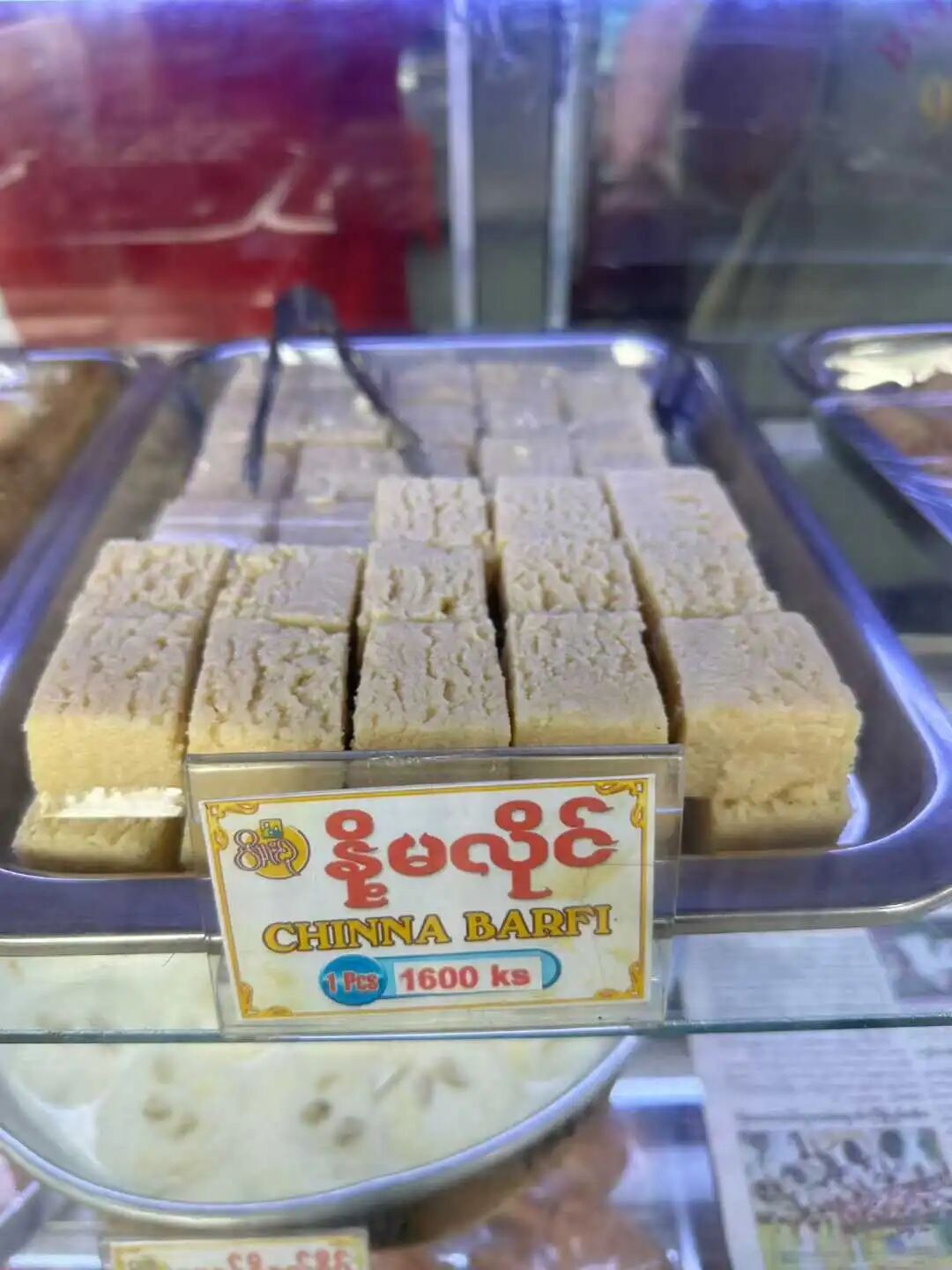
Chana Barfi is a chickpea pastry made by cooking a dairy product called khoa with sugar and letting it cool. Barf means snow in Persian. This pastry started in Persia, came to India with the Mughal Empire in the 16th century, and was brought to Myanmar by Indian immigrants in the 19th century.
Mysore pak is a South Indian-style ghee pastry that is very common at weddings and festivals in South India. This pastry began in the early 20th century at the royal palace of the Kingdom of Mysore in South India. The Maharaja Krishna Raja Wadiyar IV (who reigned from 1902 to 1940) loved food, and his palace chef Kakasura Madappa invented this golden, soft, and very fragrant pastry. After the partition of India and Pakistan in 1947, it was brought to Pakistan and Bangladesh, and later to Yangon.
The banana leaf hand-eating restaurant on 28th Street in Yangon's Indian quarter is very busy and attracts many customers. We went to the front counter to pick our dishes, which included curry and large shrimp. You can get more curry sauce after you finish.
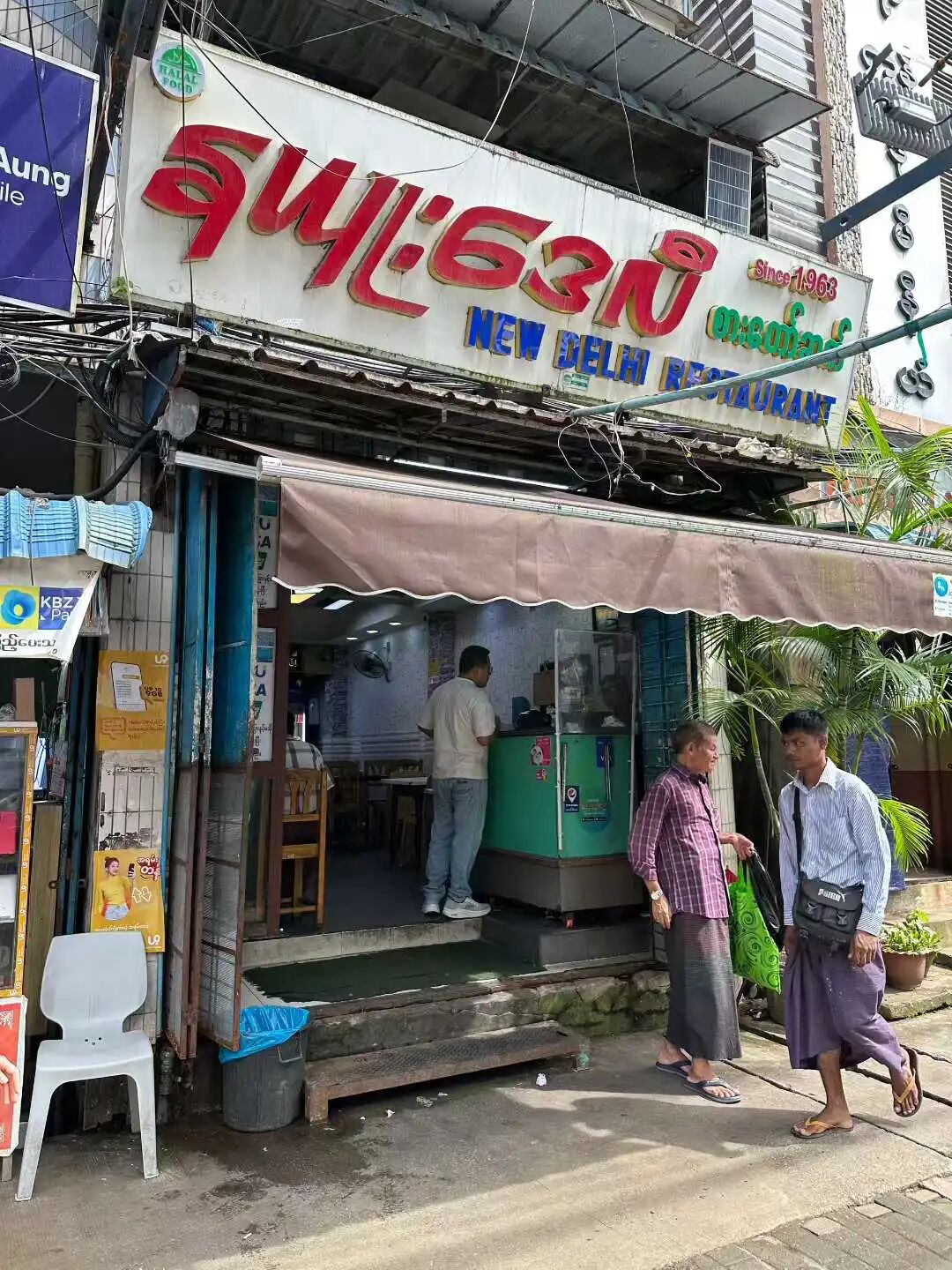
The long-standing New Delhi restaurant in Yangon's Indian quarter opened in 1963 and has been around for 62 years. We had fried bread (puri), chicken curry, and sweet milk tea there in the morning. When you order a main dish, they serve it with coconut milk, potatoes, and two types of vegetable curry. You can get unlimited refills of the two vegetable curries, and the waiter walks around with a curry pot to ask every table.
The word puri comes from the Sanskrit word pūrikā, which means fried. To make it, wheat flour is kneaded into dough and fried in ghee or vegetable oil until golden brown. As it fries, the water inside turns to steam and expands, causing the dough to puff up into a round ball. If you poke the dough with a fork before frying, the steam escapes through the hole, and the finished puri turns out flatter.
The famous Indian restaurant Nilar Biryani in Yangon opened on Anawrahta Road in the Indian quarter in 1976 and now has 30 branches. We had their signature chicken biryani rice and lamb tikka skewers at the main store on Anawrahta Road for dinner, and we also ordered yogurt lassi. You can also get unlimited refills of their biryani rice. A waiter walks around with a pot of rice to ask every table, and you can choose between two flavors: one is lighter, and the other has a stronger spice flavor. They also have a large barrel of tea that you can help yourself to.
Innwa Cold Drinks and Confectionary is a sub-brand of the Yangon Indian restaurant chain Nilar Biryani, and it opened not far from the Nilar Biryani main store in 1999. They have all kinds of Western-style pastries, fast food, steamed snacks, and various cold drinks.
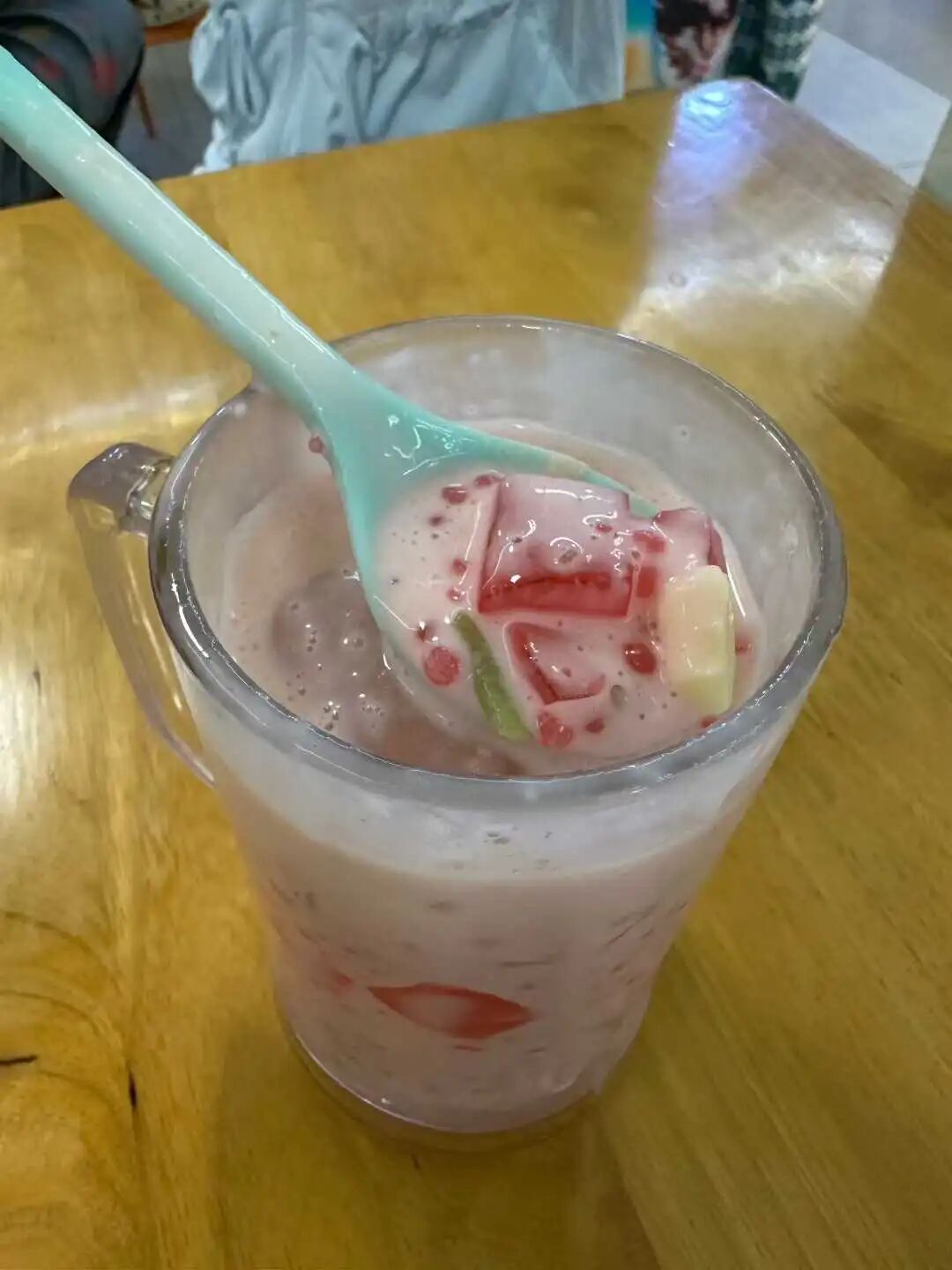
We bought several types of bread there and drank the classic Indian beverage faluda, which is the same as the paoluda found in Yunnan. Faluda originated from the Persian drink paloodeh, which means refined. Since there is no P in Arabic, it was changed to faloodeh in that language. The Indian faluda was inherited and developed by the Mughal Empire. It is made by mixing rose syrup, basil seeds, and milk, and is topped with ice cream. After falooda (faluda) arrived in Myanmar, grass jelly was added to it. More refined versions also include sago, jelly, and bits of fruit.
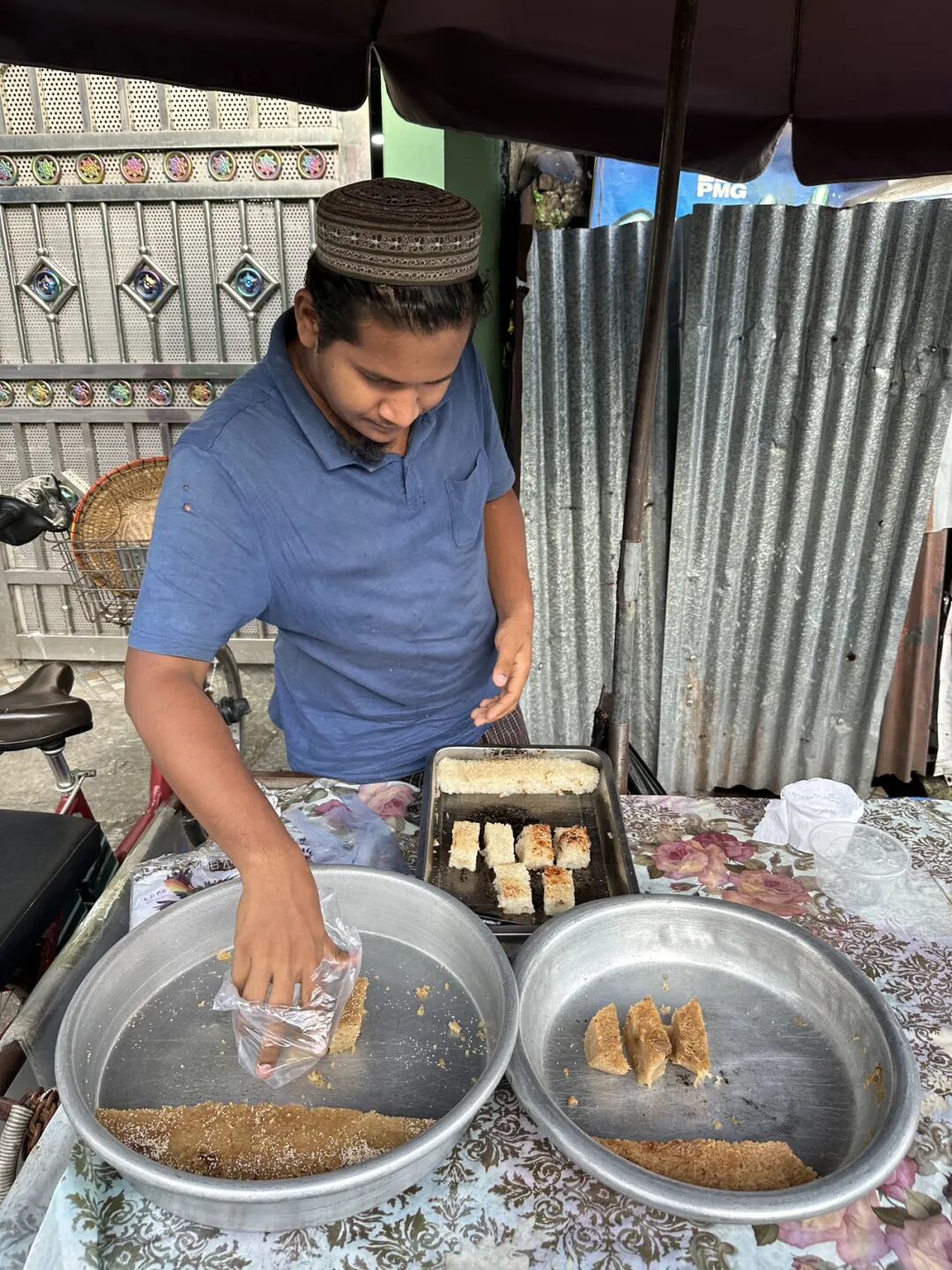
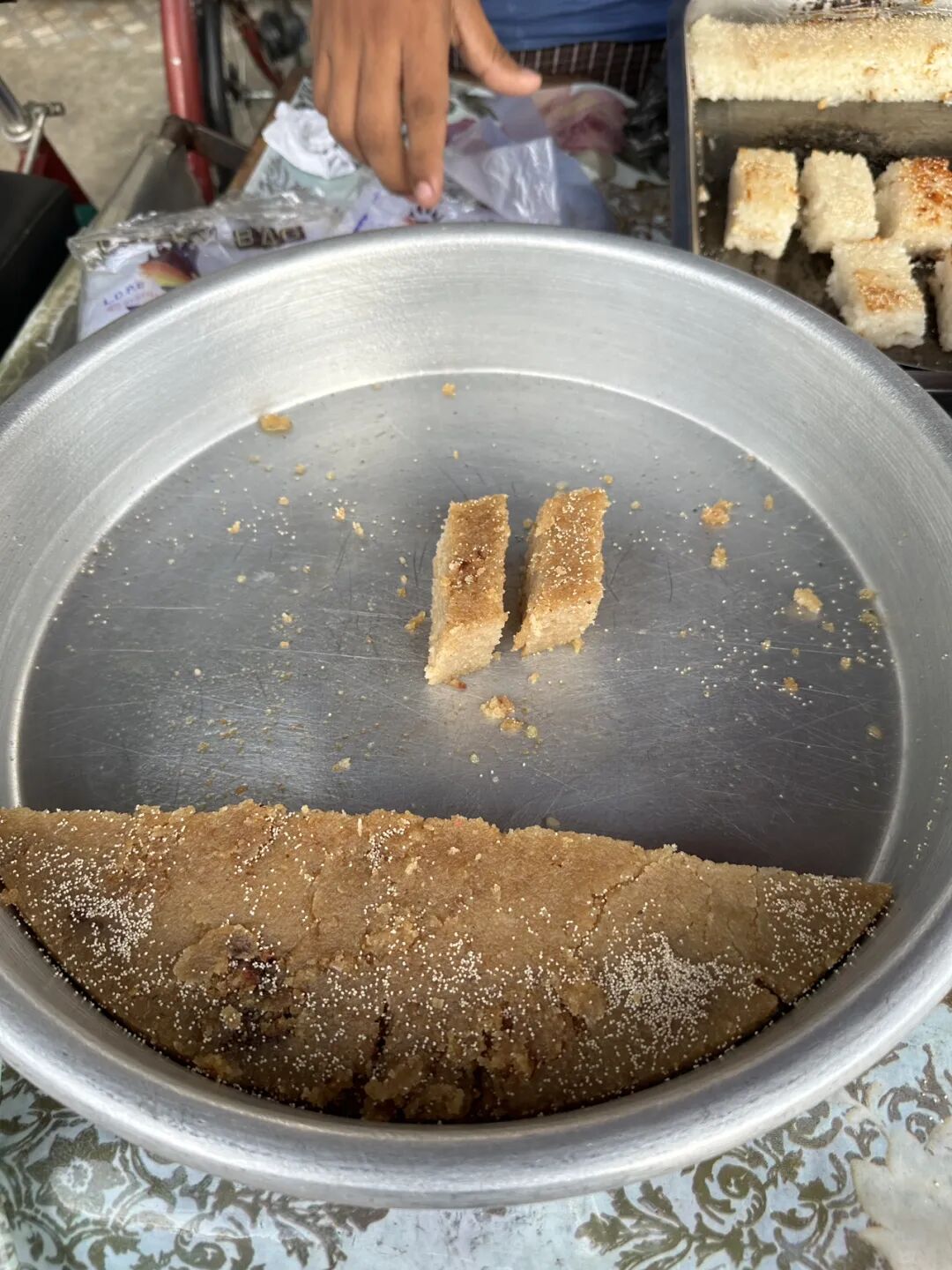
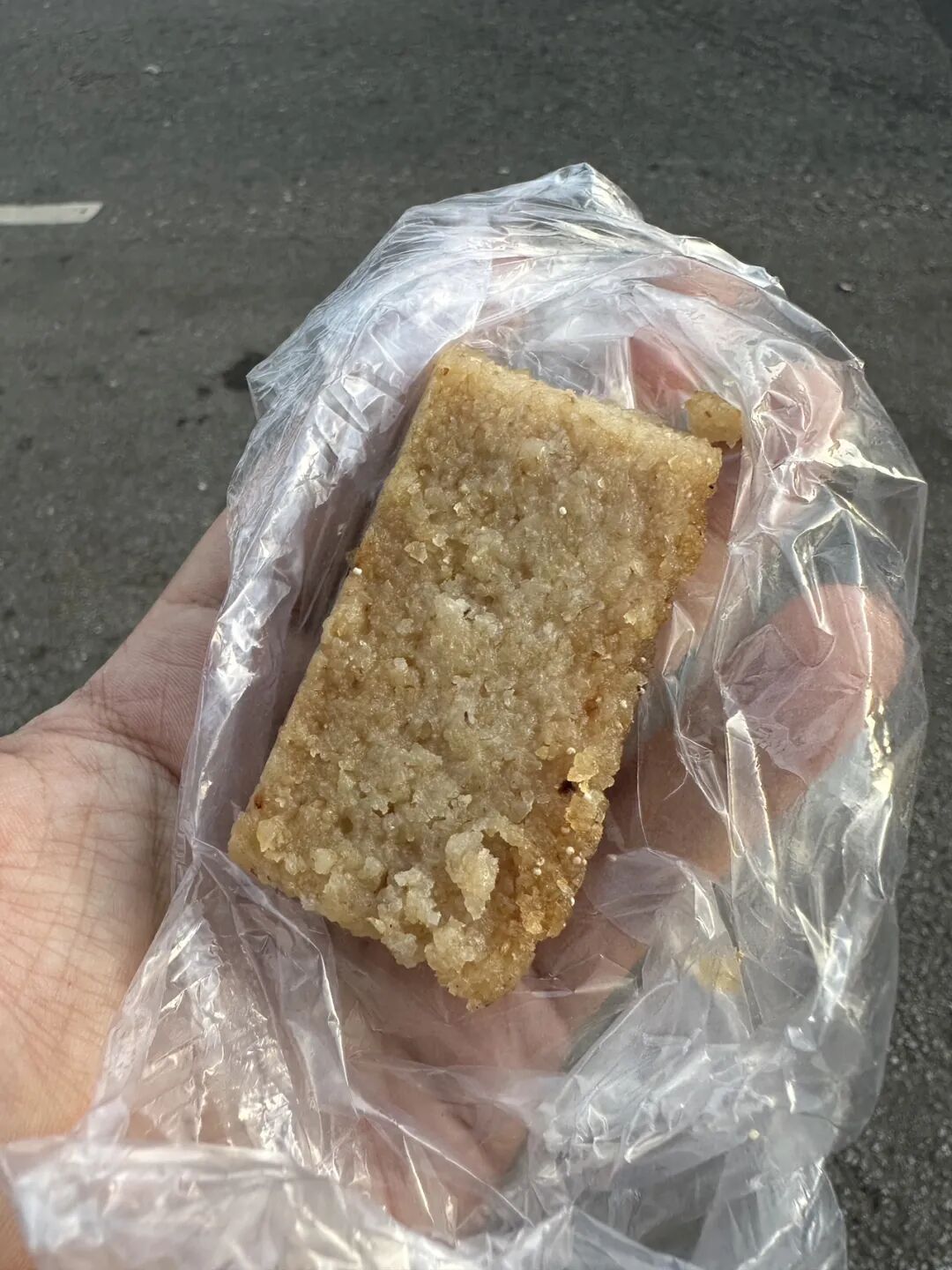
Halwa fudge sold by Indian street vendors in Yangon. Halwa originated in Persia and later spread throughout the Middle East and South Asia. South Asian halwa is made from semolina. It feels oily to the touch and has just the right amount of sweetness. view all
Summary: Yangon's Indian Quarter offers halal restaurants, Muslim hotels, South Asian food, and practical lodging options tied to the city's colonial-era Indian Muslim history. This guide keeps the source's restaurant names, dishes, hotel notes, streets, and travel tips in one long English article.
A guide to eating and staying in the Indian Quarter of Yangon, Myanmar.
Although Yangon is now the largest city in Myanmar, it was known as an Indian city 100 years ago during the British Burma period. Indians began settling in Yangon after the First Anglo-Burmese War in 1826, and by the late 19th century, their population had already surpassed that of the Burmese people. In 1901, there were nearly 120,000 people of Indian descent in Yangon, while the Burmese population was only about 70,000. The Indian community in Yangon's old town mainly lived between Sule Pagoda and Chinatown, an area commonly known as the Indian Quarter, which is full of Indian culture.
We stayed at The Eravati Hotel by the Yangon River, which is very close to the Indian Quarter and makes dining very convenient.
The building housing this hotel is the New Law Courts building, constructed by British architect Thomas Oliphant Foster between 1927 and 1931.
Between 1942 and 1945, this place was used as the headquarters for the notorious Japanese Kempeitai, where many people suffered torture. British Army Major Hugh Seagrim trained Karen guerrillas to resist the Japanese after the invasion and constantly harassed the Japanese army. Due to the Japanese army's massive retaliatory actions against the Karen people, he was forced to surrender and was then imprisoned in this building. He refused the threats and inducements of the Japanese army here and was eventually heroically executed.
After 1948, it became a police station building, continuing to imprison and interrogate dissidents; before the renovation, people could still see the prison cells on the building.
It was renovated into a heritage hotel in 2014, having previously operated as a Kempinski and a Rosewood hotel, and is now The Eravati Hotel.
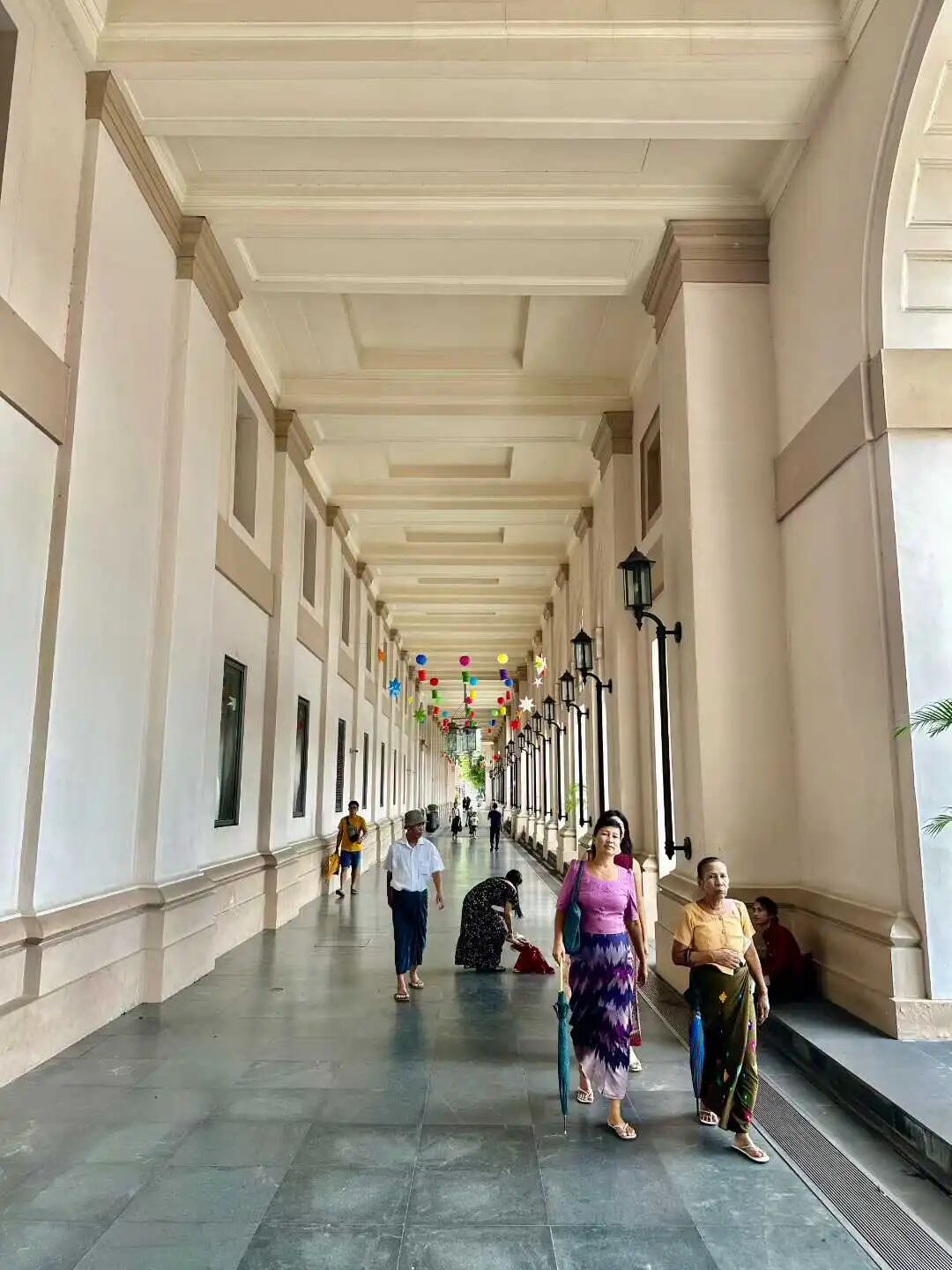
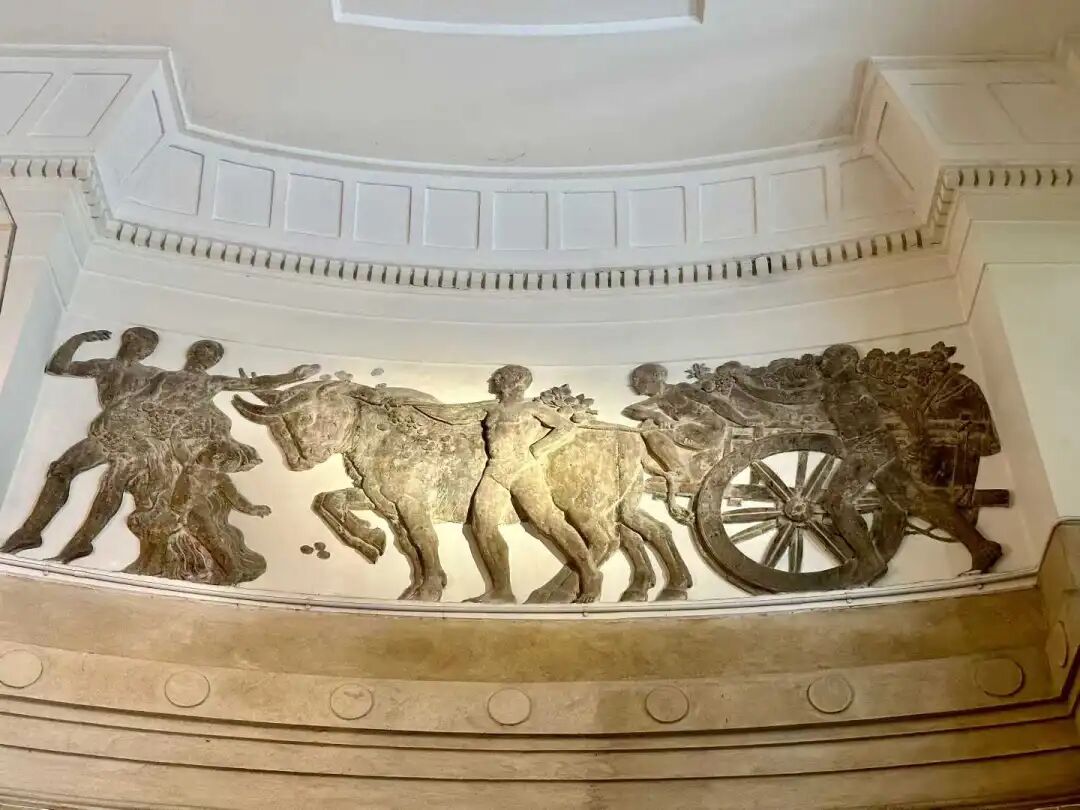
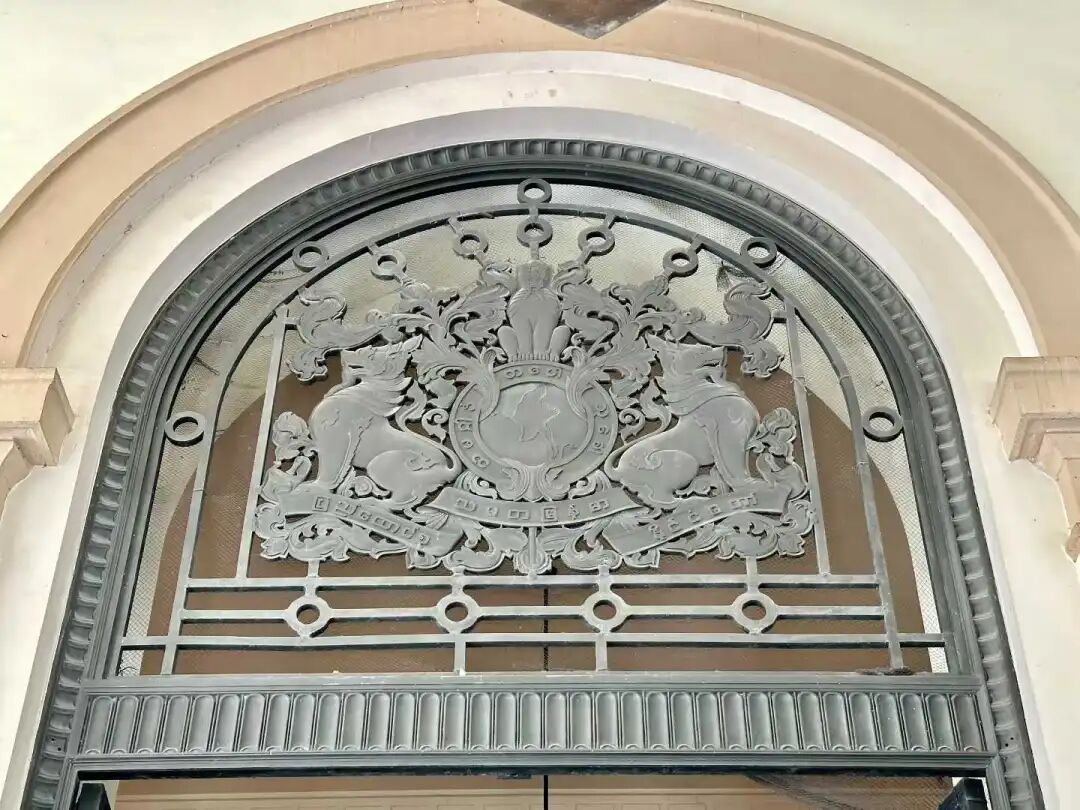
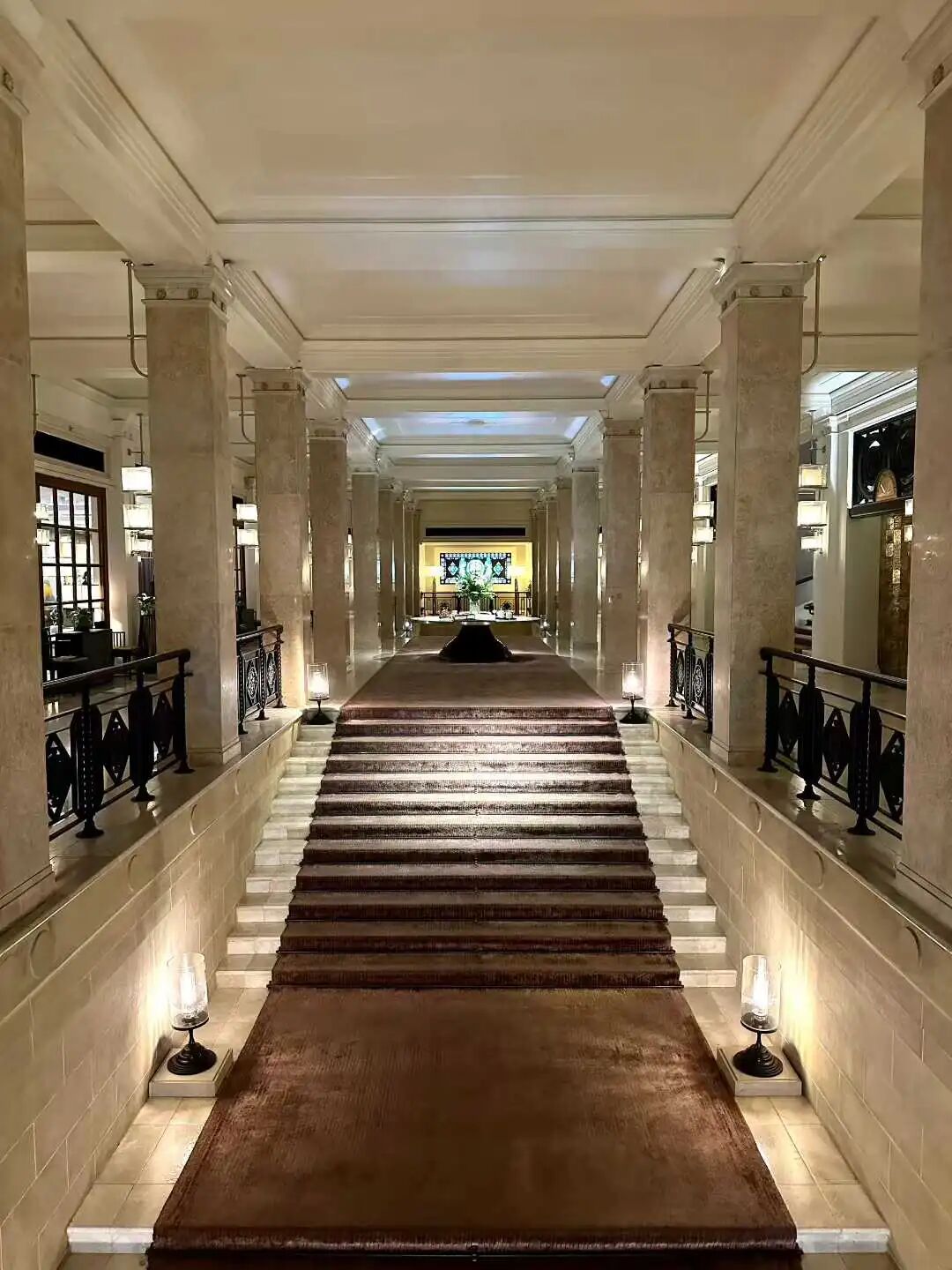
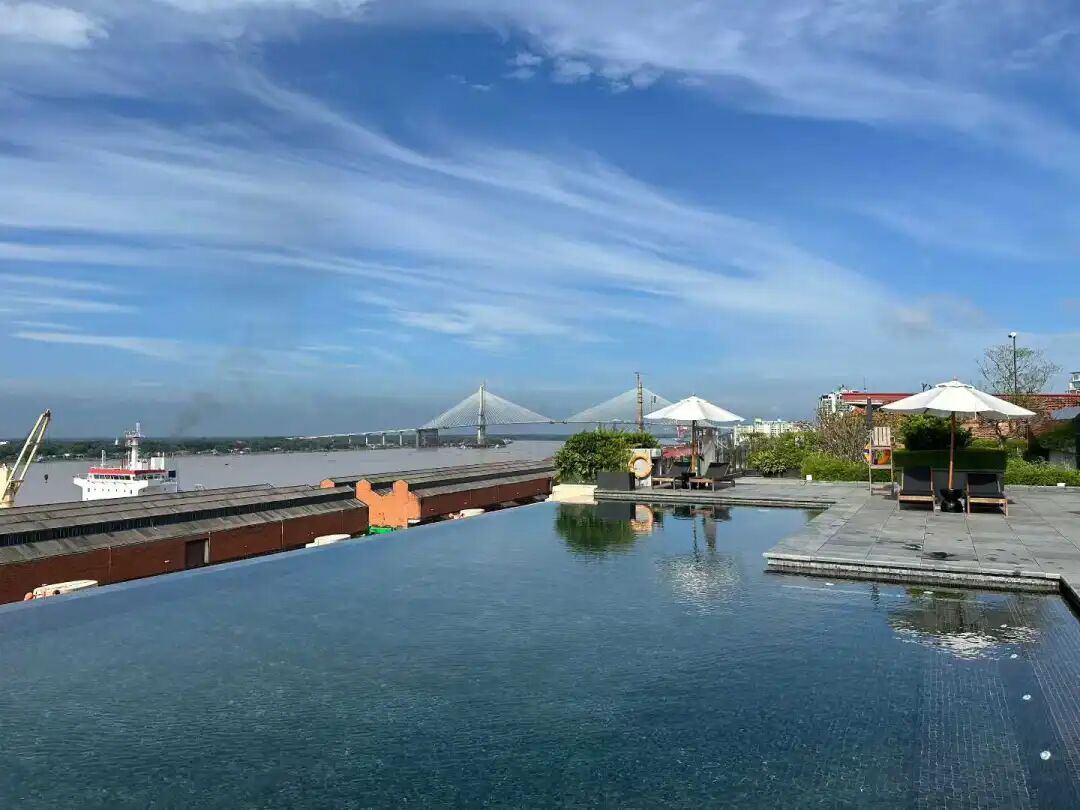
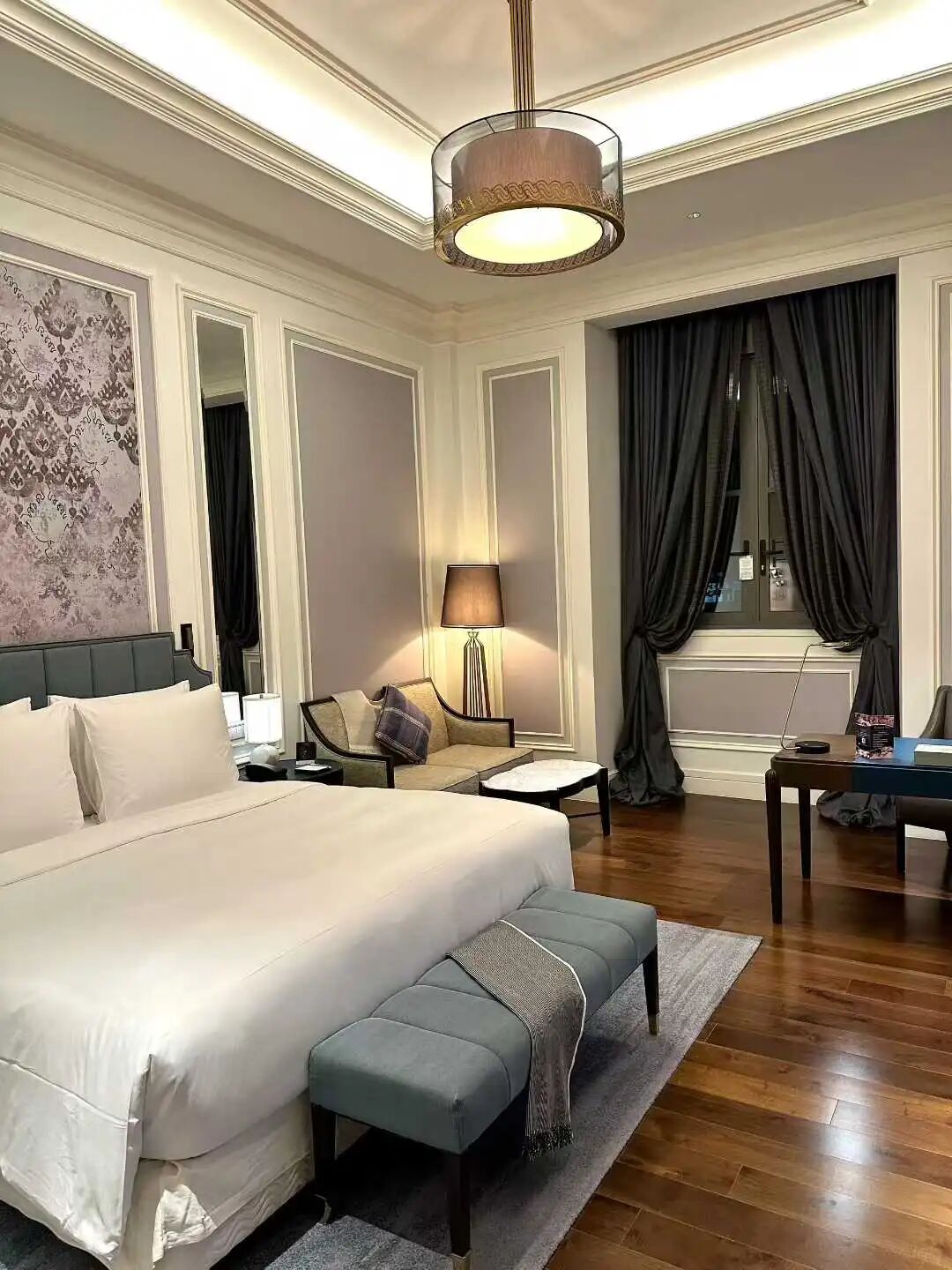
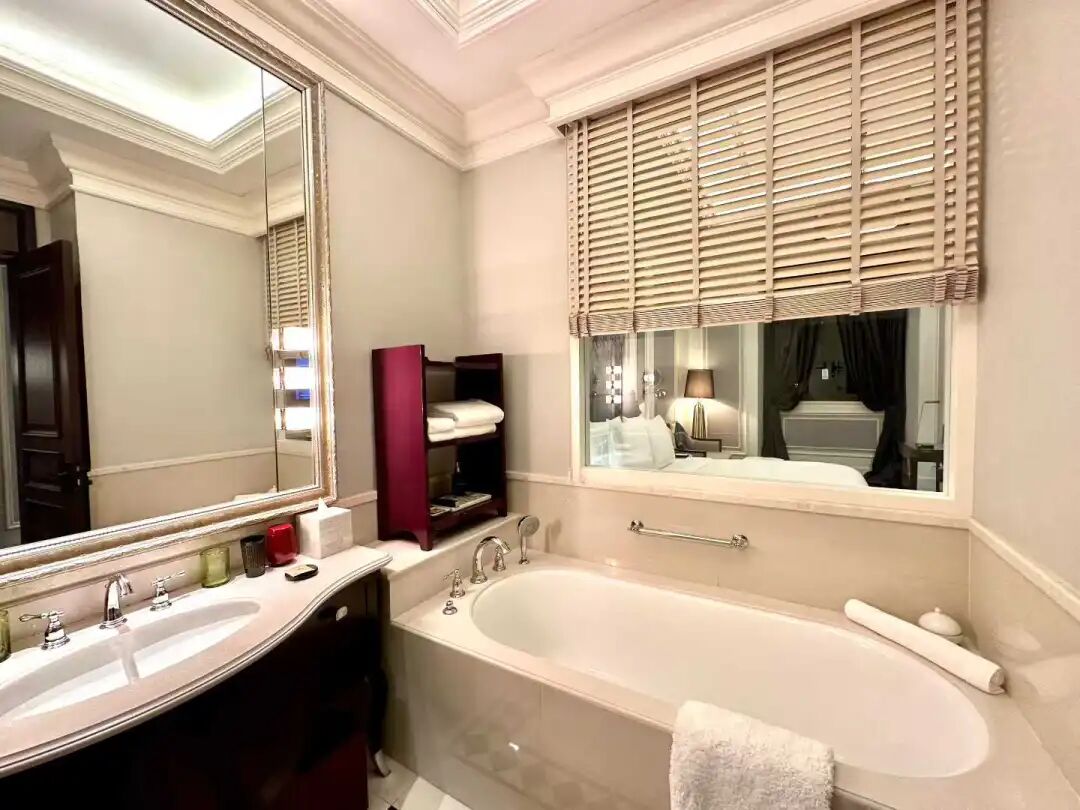
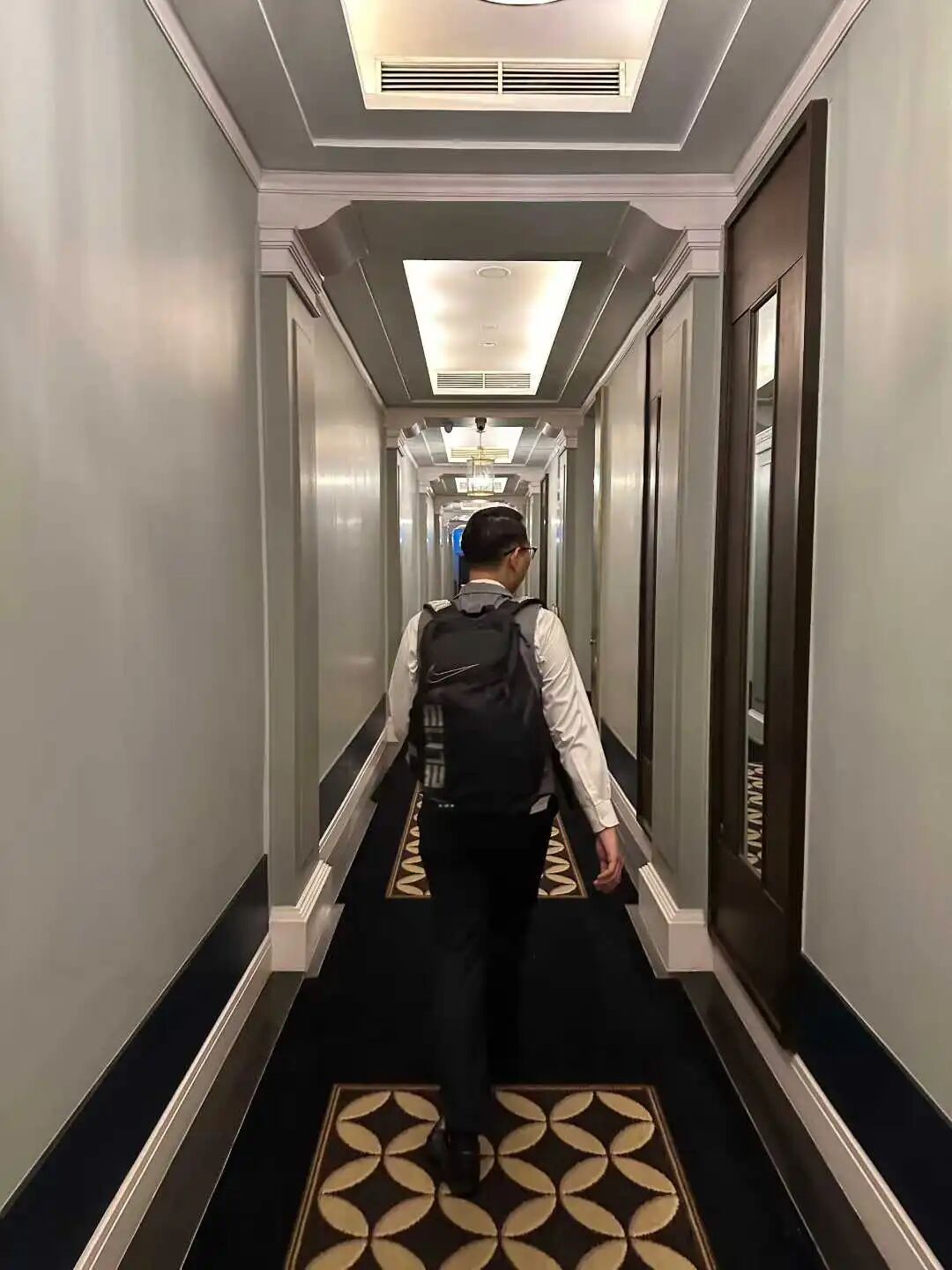
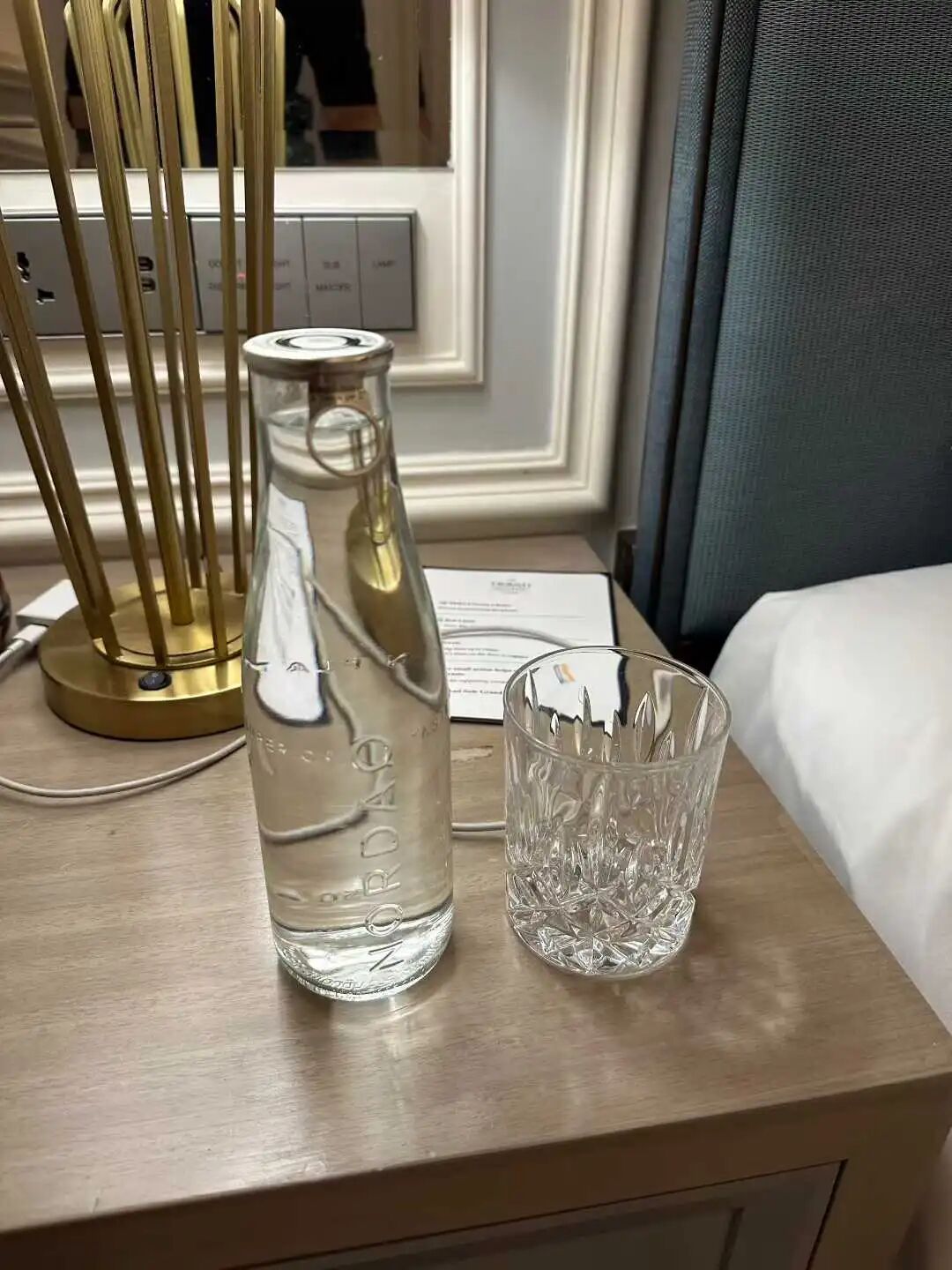
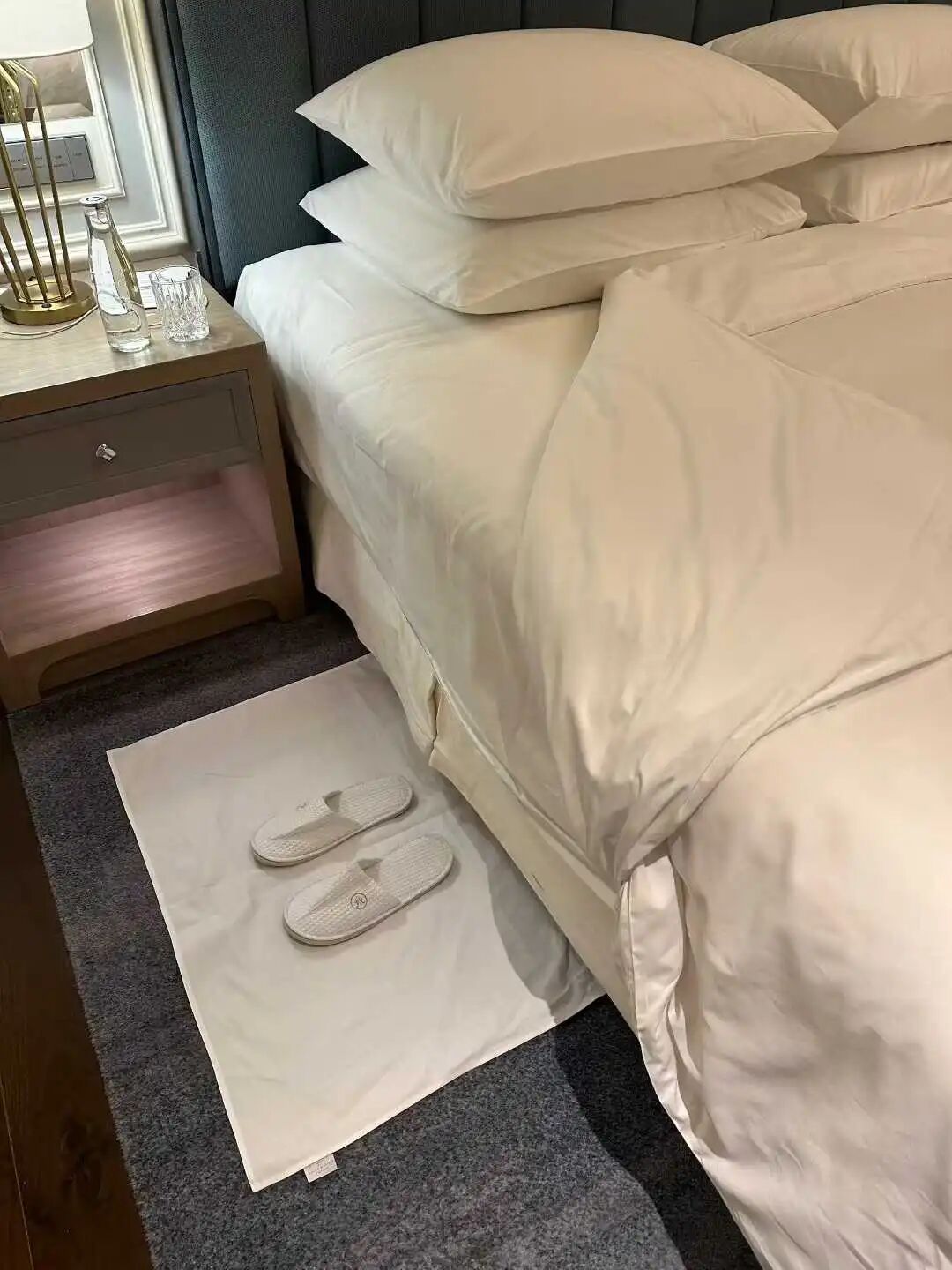
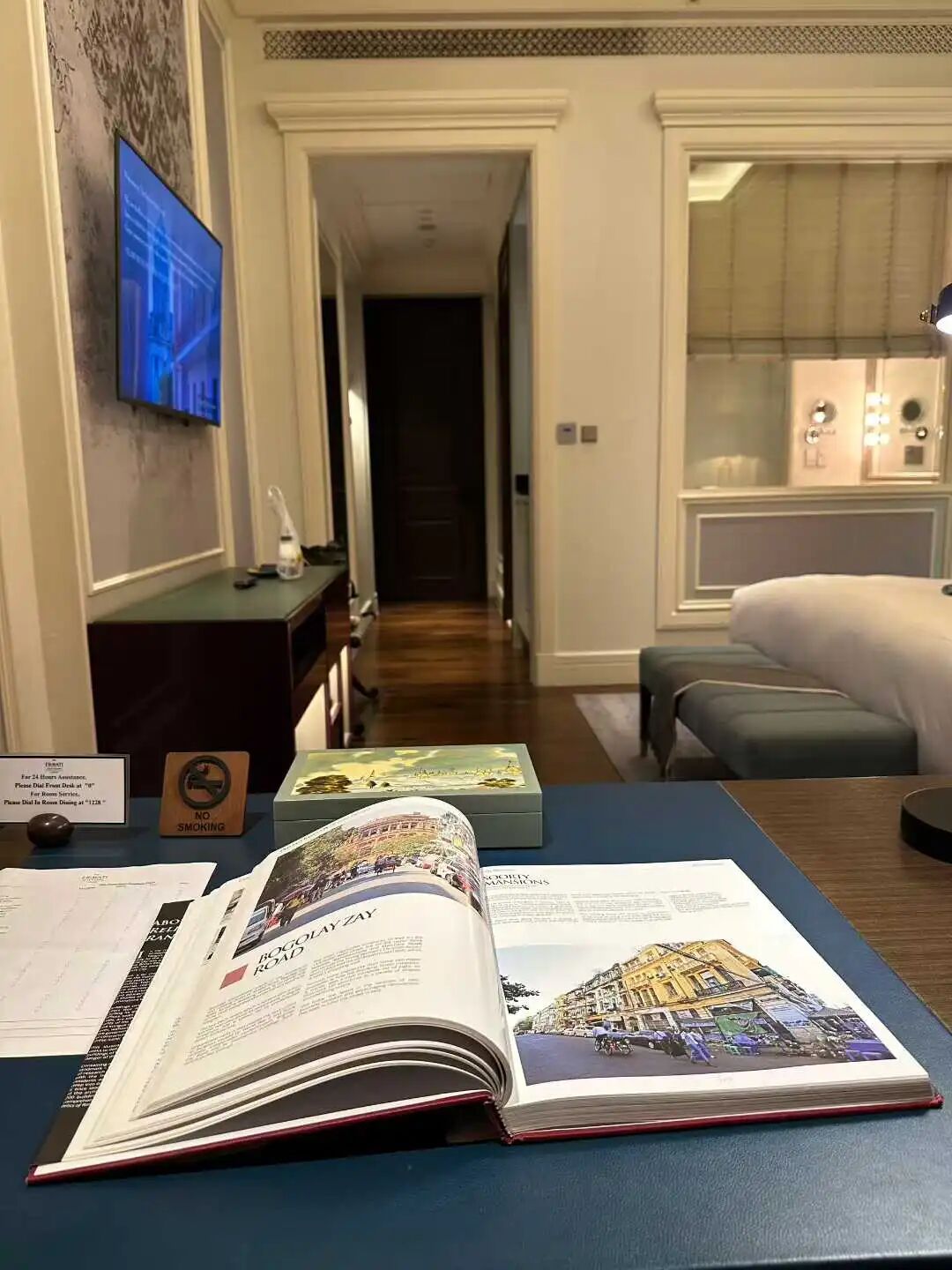
The Eravati Hotel is truly one of the best value hotels I have ever stayed in, and the service is excellent. From the front door, all the staff are always smiling and take the initiative to open doors. When checking in, a staff member carried our bags the whole way, and they did not accept tips. There are two glass bottles of water in the room, and you can ask for two more after finishing them. After cleaning the room, they would fold back the corner of the quilt and place the slippers by the side of the bed. The coffee provided is high-quality Myanmar coffee. There were several large picture books in the room, one of which covered the historical sites of Yangon, which was very helpful for my mosque-visiting trip. Another book was a collection of poems by a Burmese poet, which also included English translations and was very interesting.
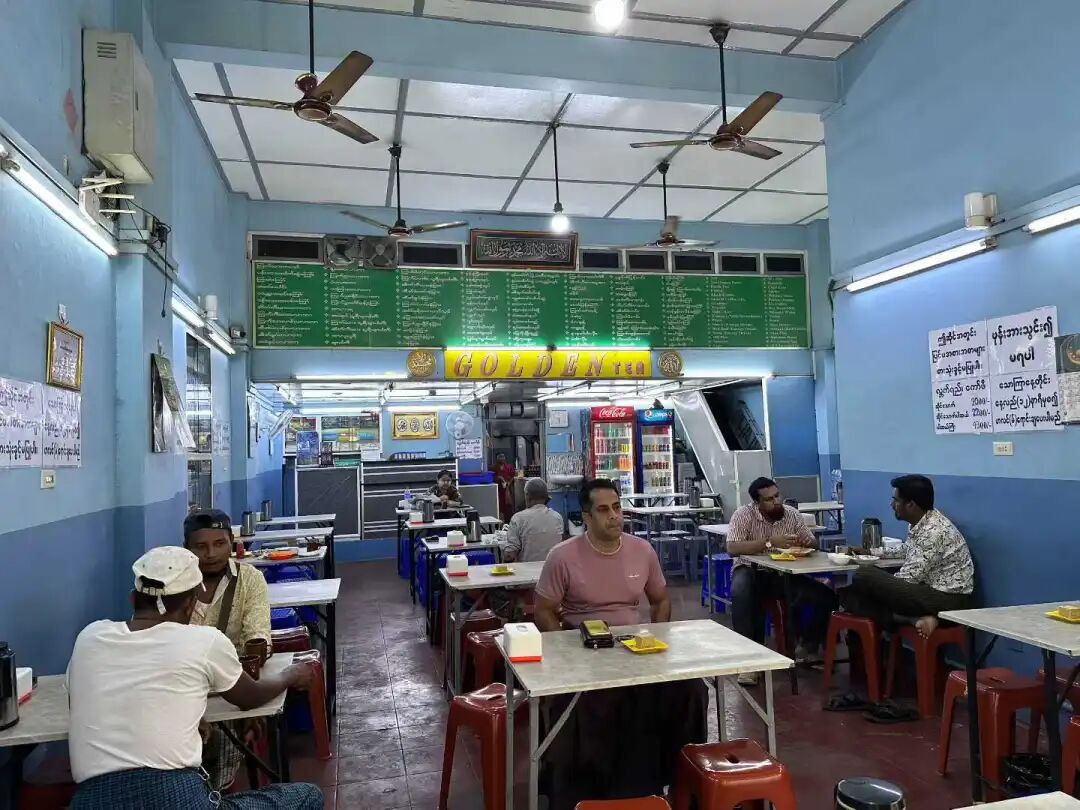
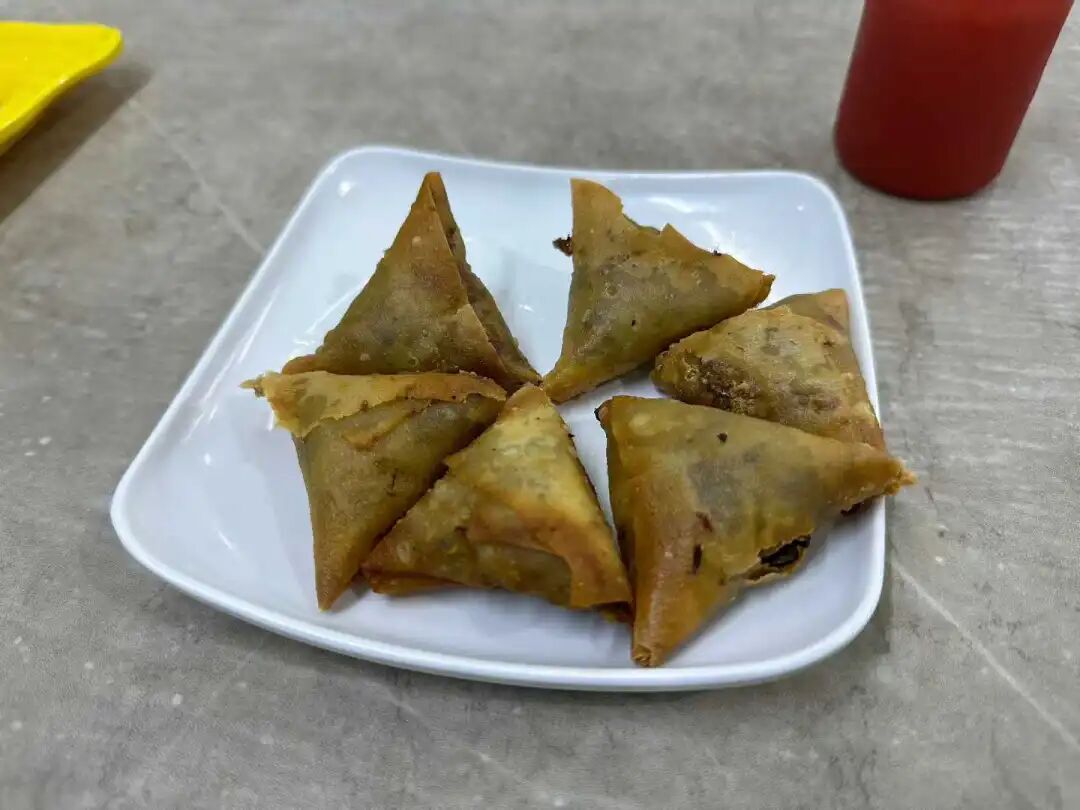
In the morning, we had breakfast at Golden Tea in the Indian Quarter; they serve a classic South Asian style breakfast of chicken curry with naan, fried eggs, sweet milk tea, and rice cakes. The curry puffs (samosa) here are fried to be crispier, and the texture is not exactly the same as those in India.
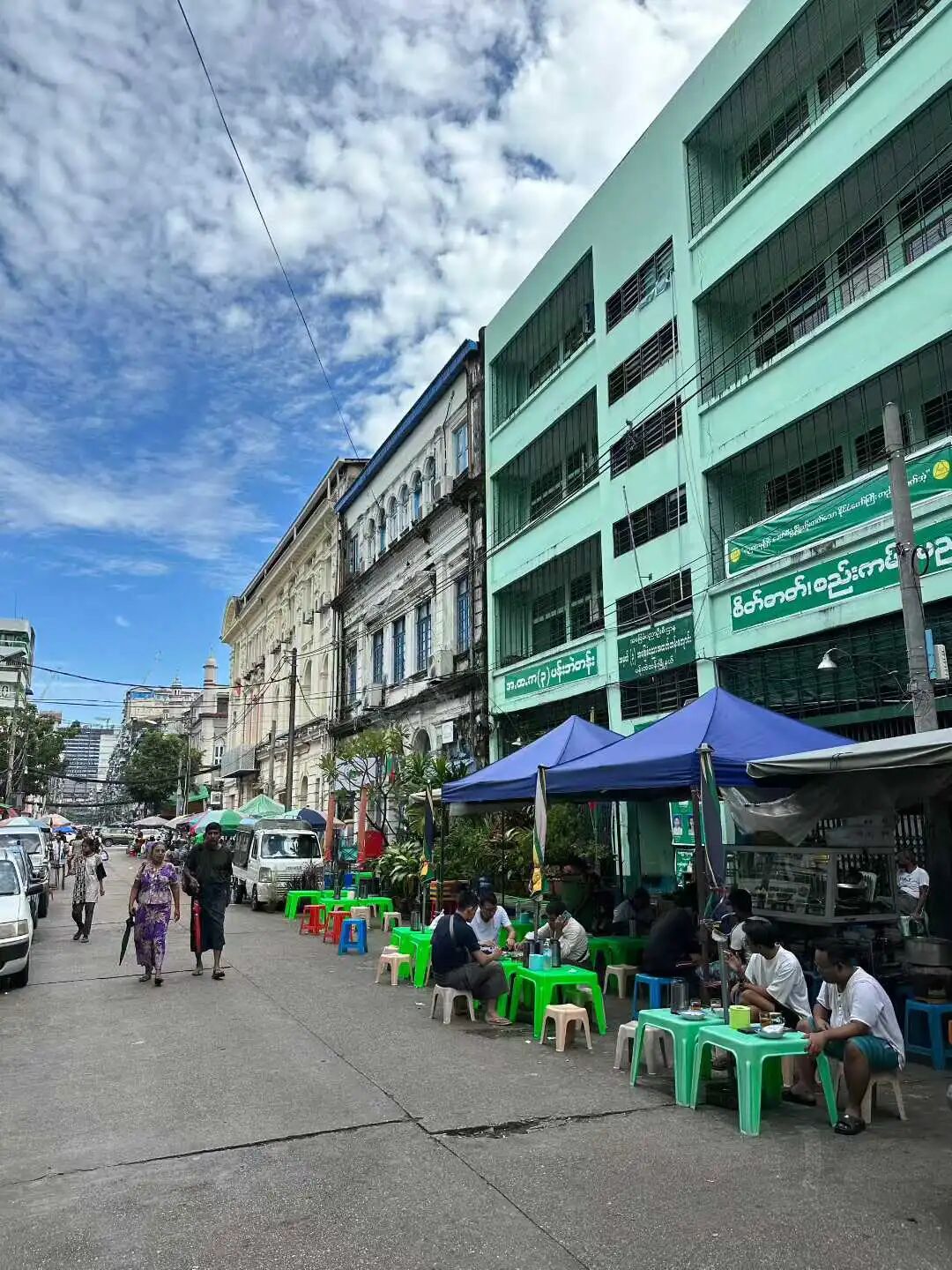
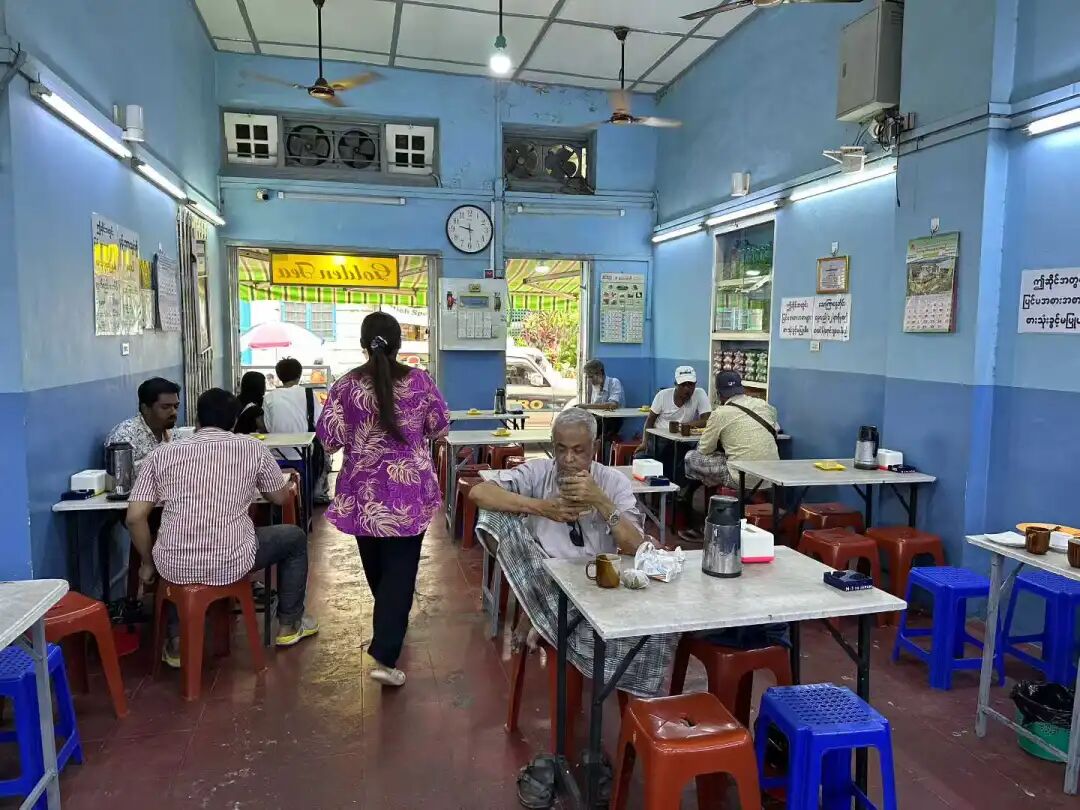
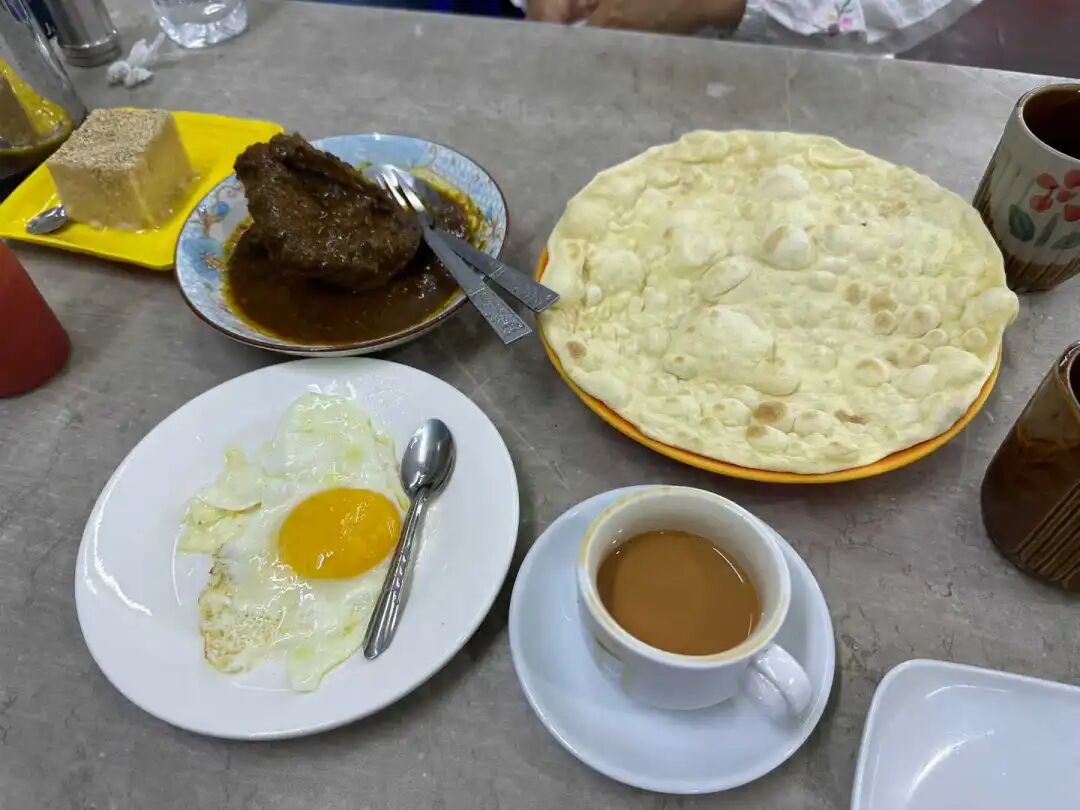
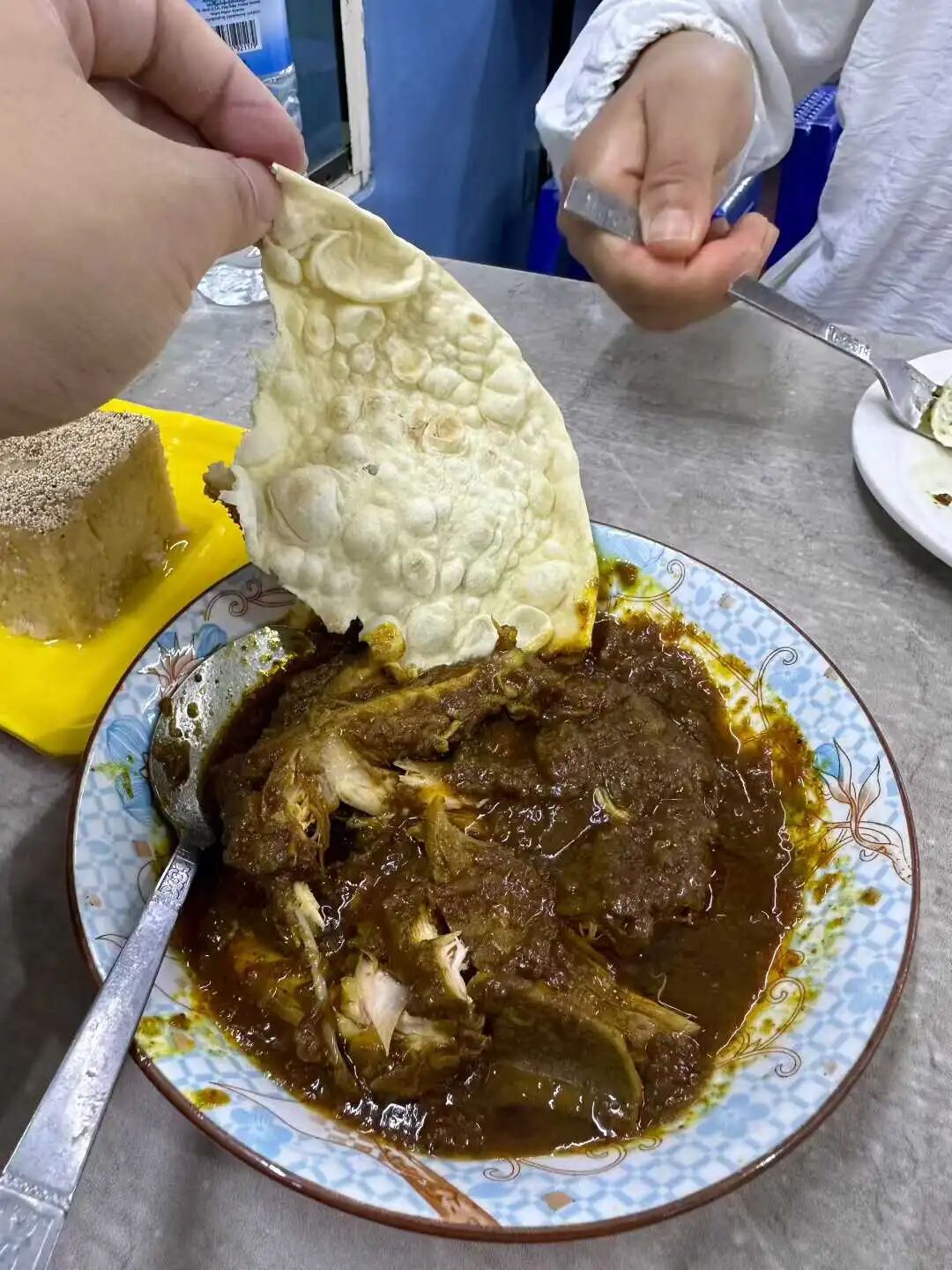
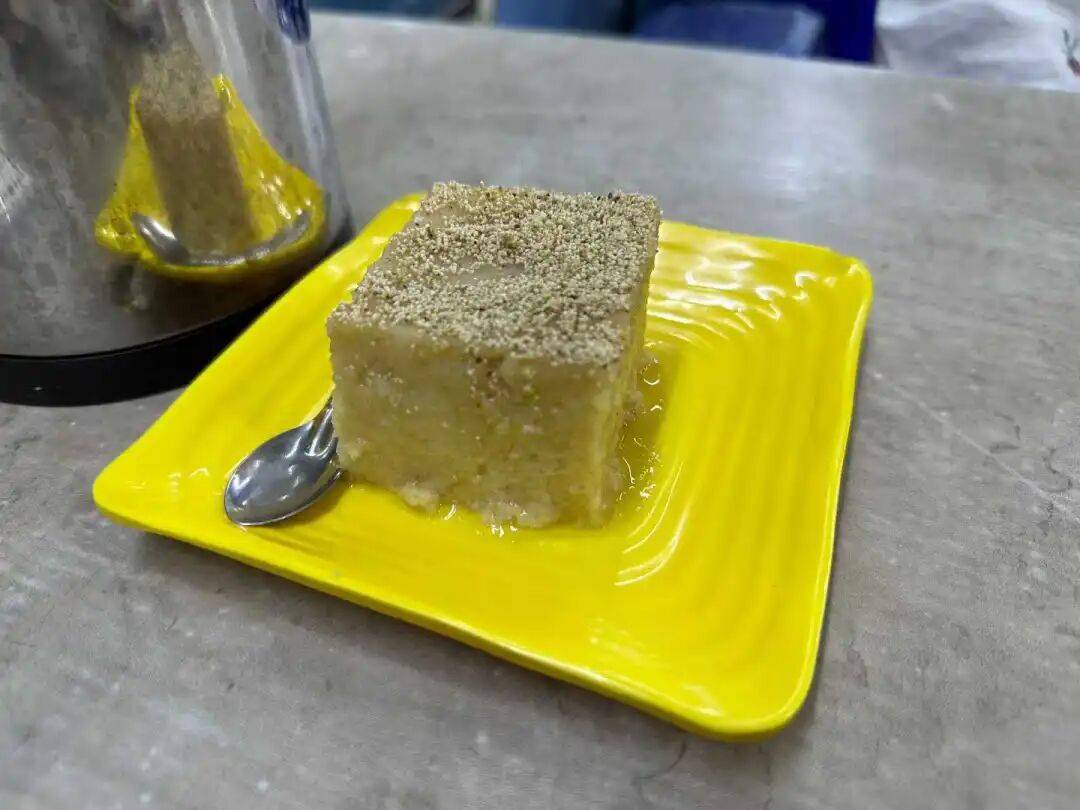
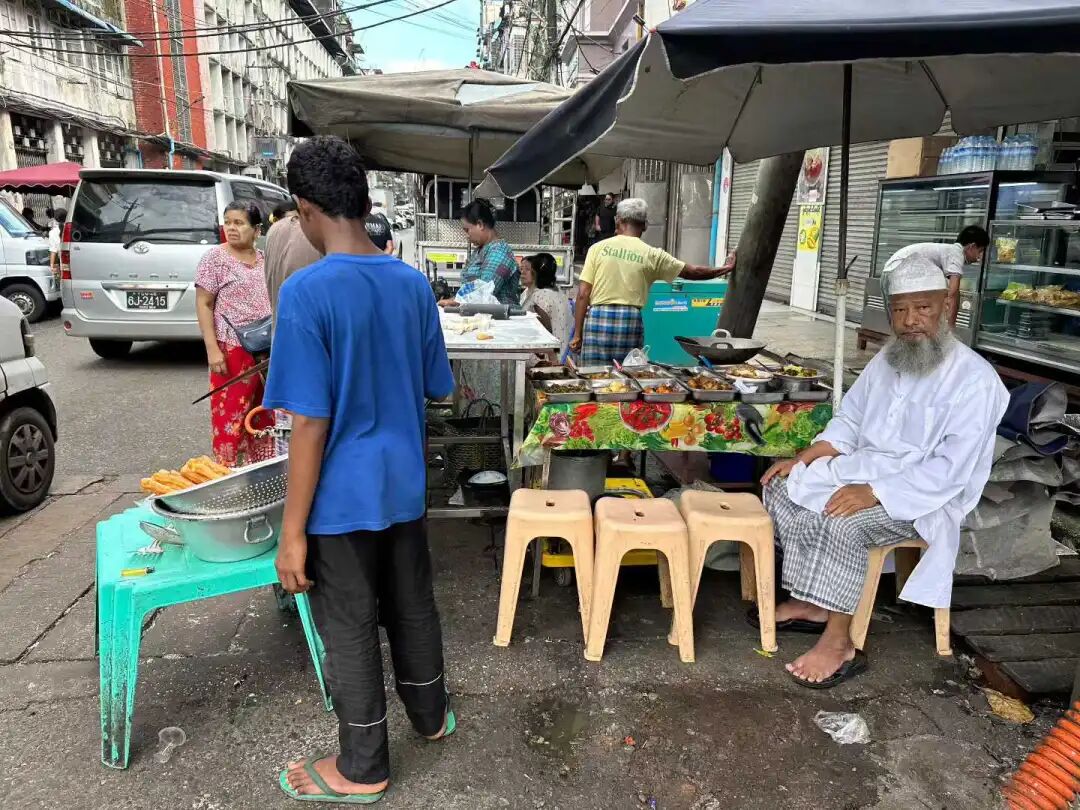
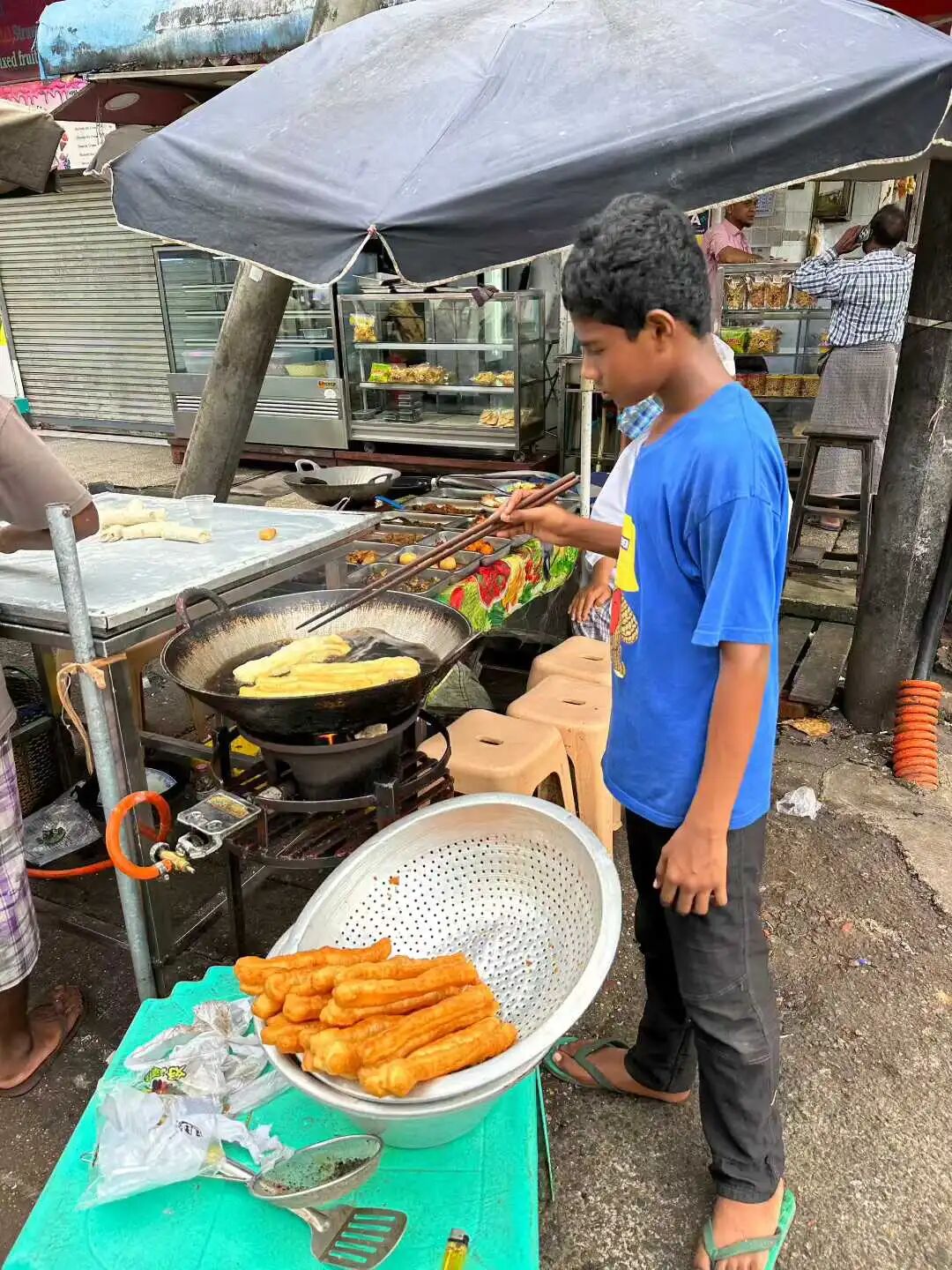
There are also many fried food stalls on the streets of the Indian Quarter, and the fried dough sticks (youtiao) are very similar to those in China.
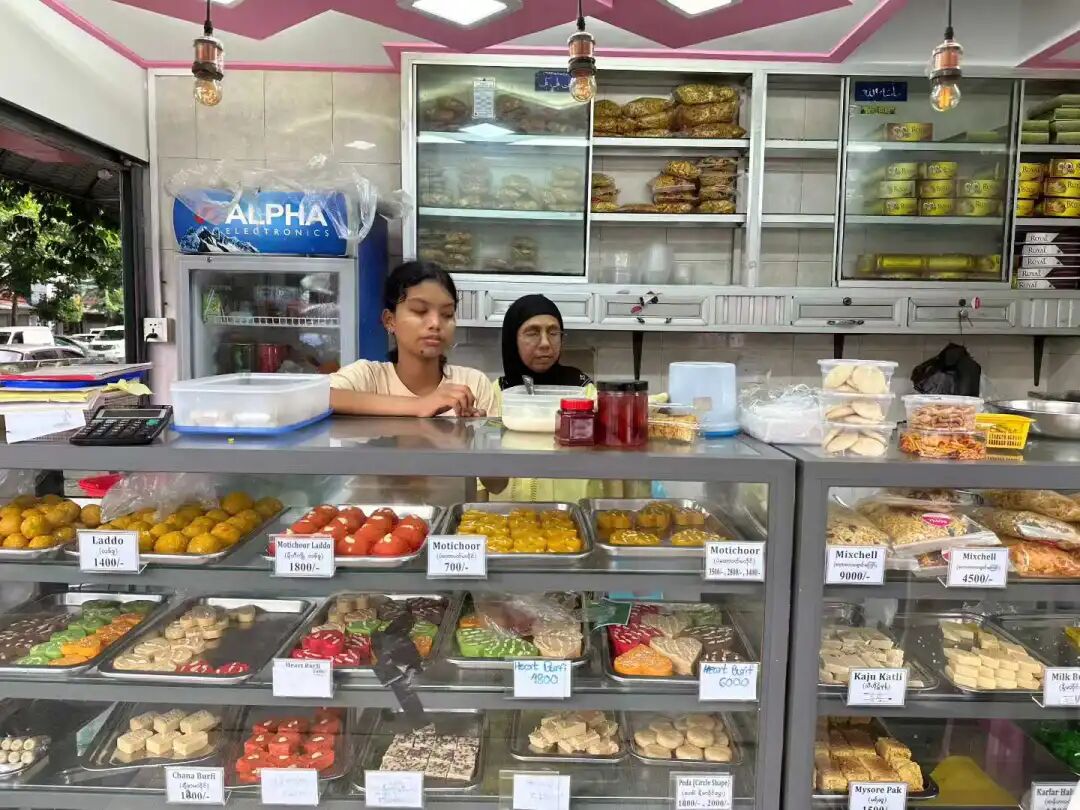
The Indian quarter in Yangon has pastry shops with a huge variety of sweets.
Chana Barfi is a chickpea pastry made by cooking a dairy product called khoa with sugar and letting it cool. Barf means snow in Persian. This pastry started in Persia, came to India with the Mughal Empire in the 16th century, and was brought to Myanmar by Indian immigrants in the 19th century.
Mysore pak is a South Indian-style ghee pastry that is very common at weddings and festivals in South India. This pastry began in the early 20th century at the royal palace of the Kingdom of Mysore in South India. The Maharaja Krishna Raja Wadiyar IV (who reigned from 1902 to 1940) loved food, and his palace chef Kakasura Madappa invented this golden, soft, and very fragrant pastry. After the partition of India and Pakistan in 1947, it was brought to Pakistan and Bangladesh, and later to Yangon.
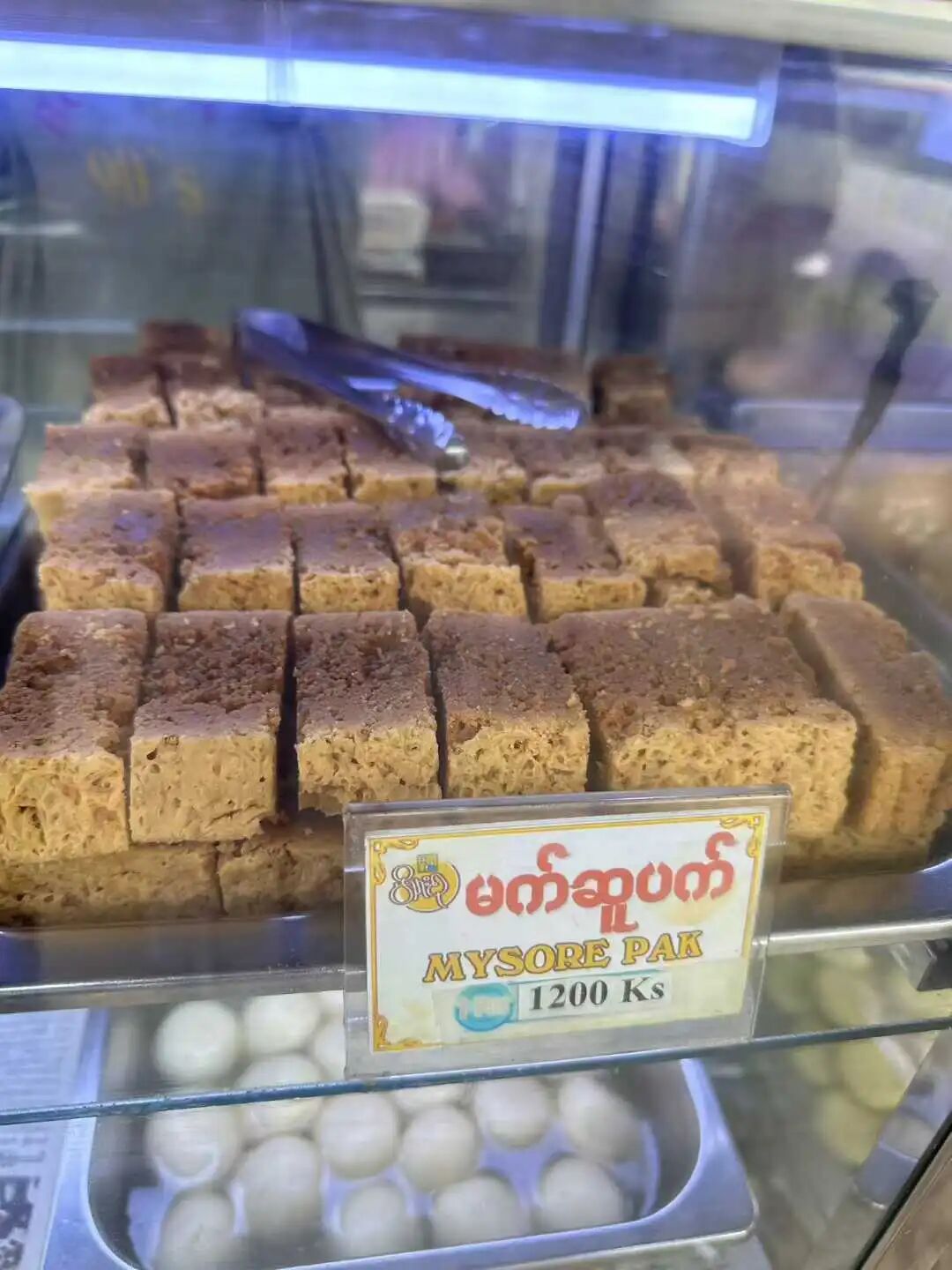
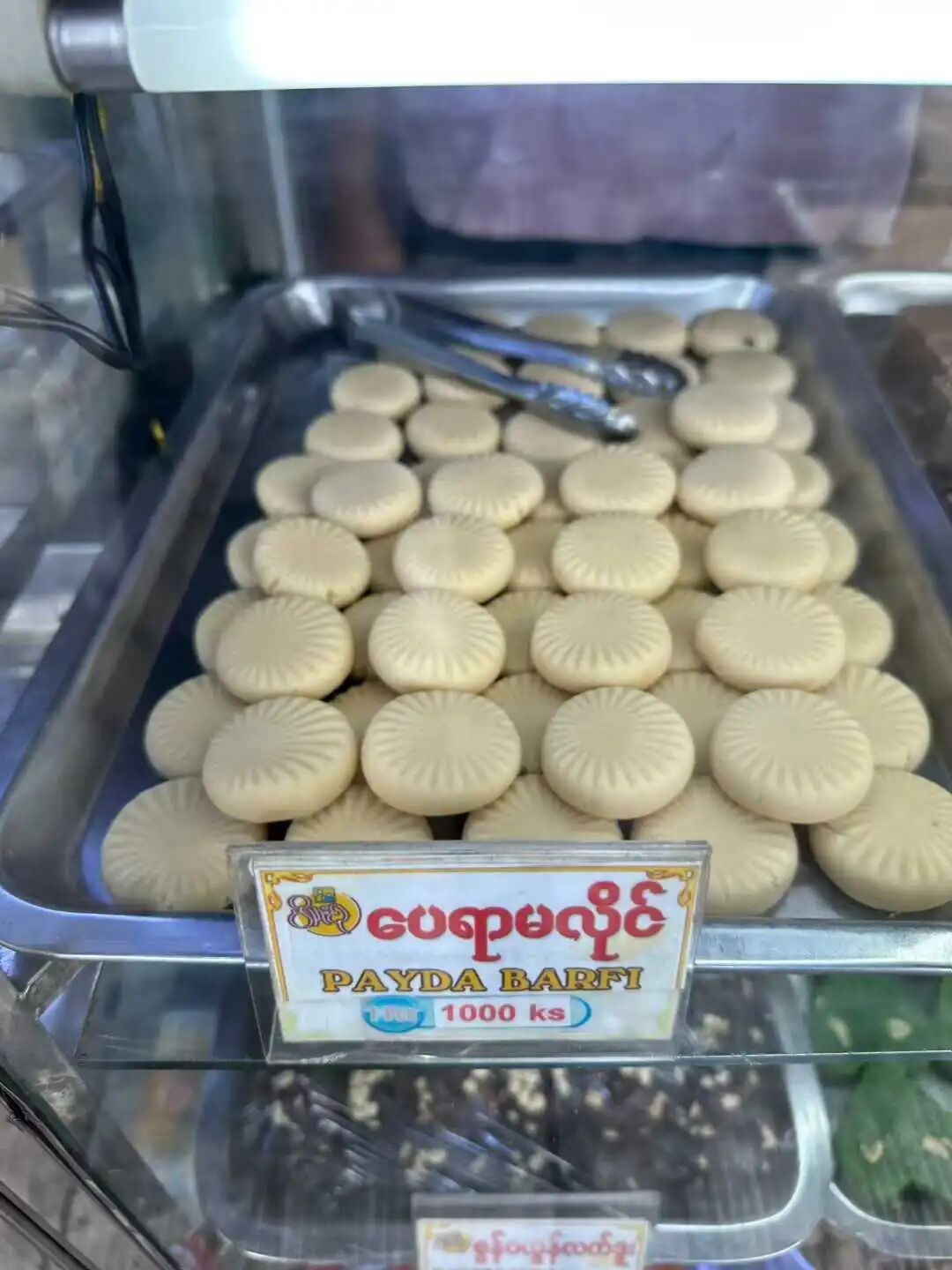
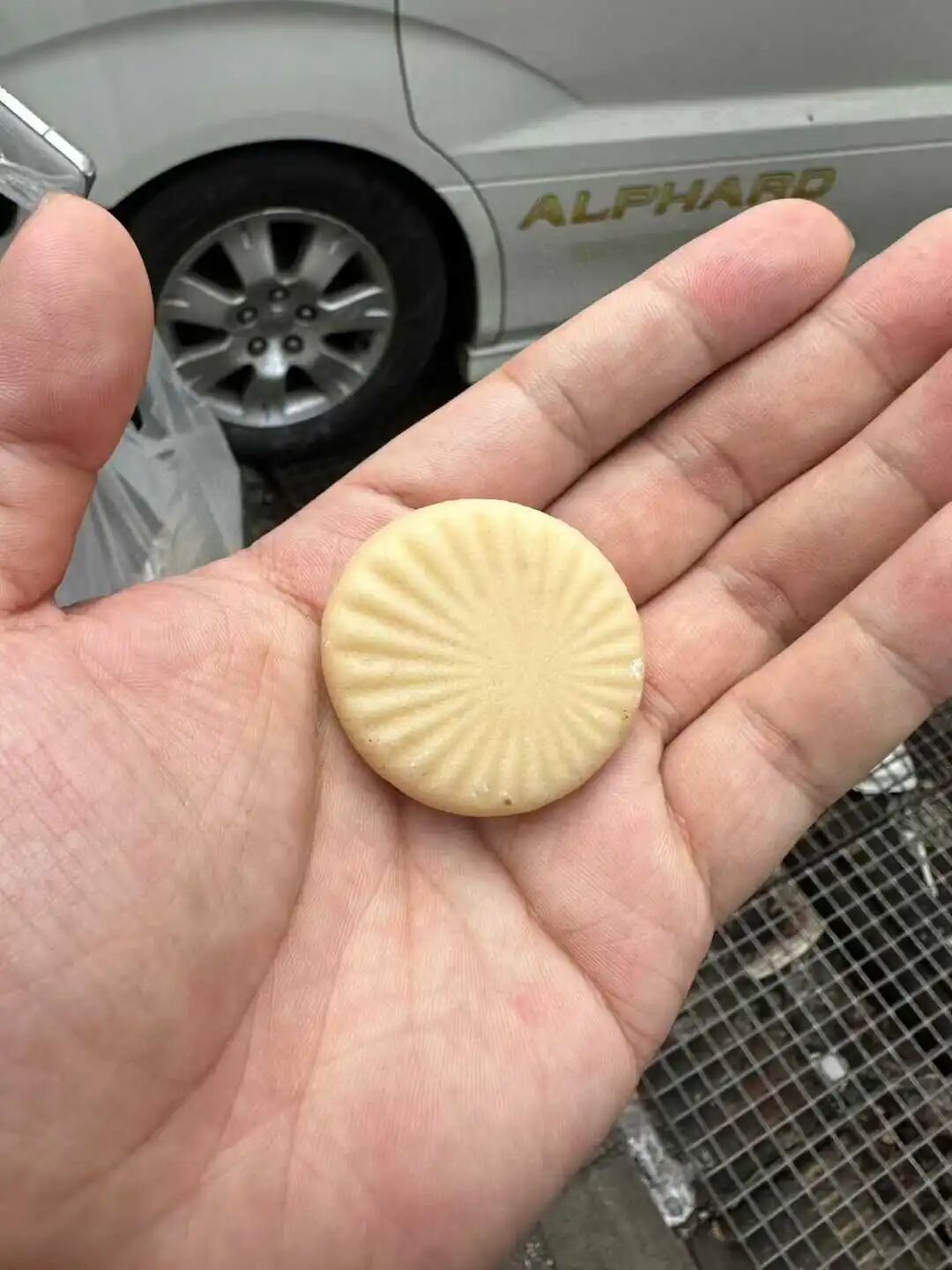
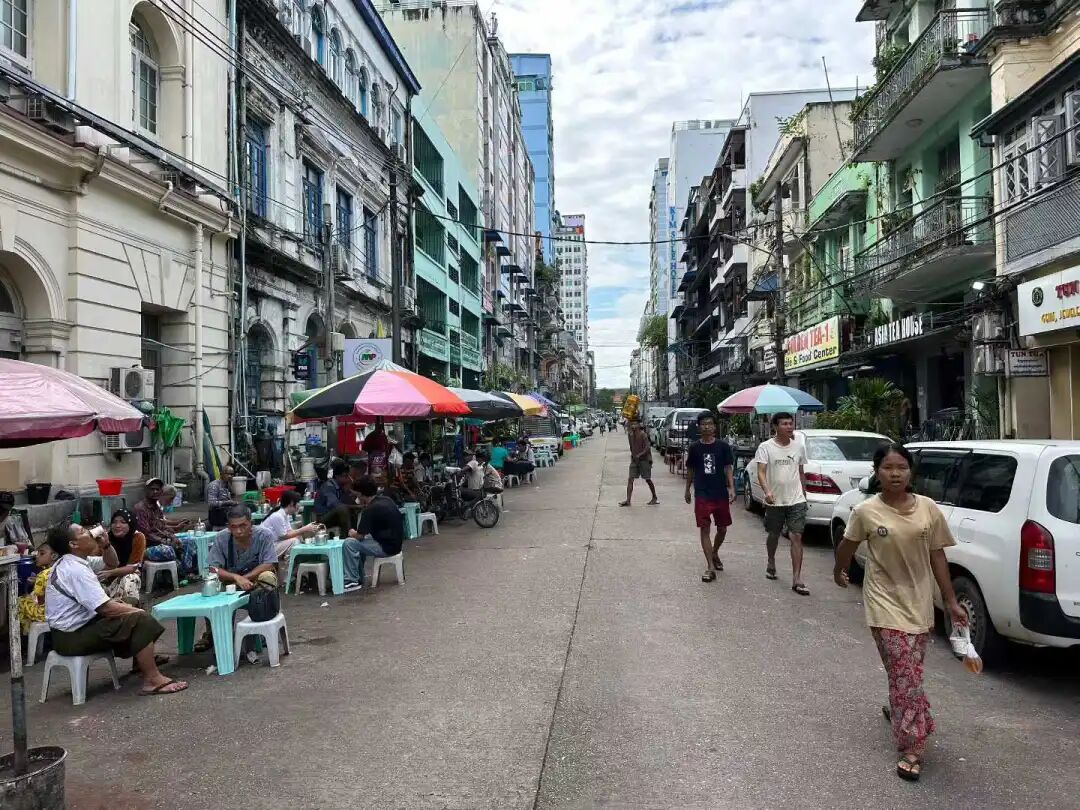
The banana leaf hand-eating restaurant on 28th Street in Yangon's Indian quarter is very busy and attracts many customers. We went to the front counter to pick our dishes, which included curry and large shrimp. You can get more curry sauce after you finish.
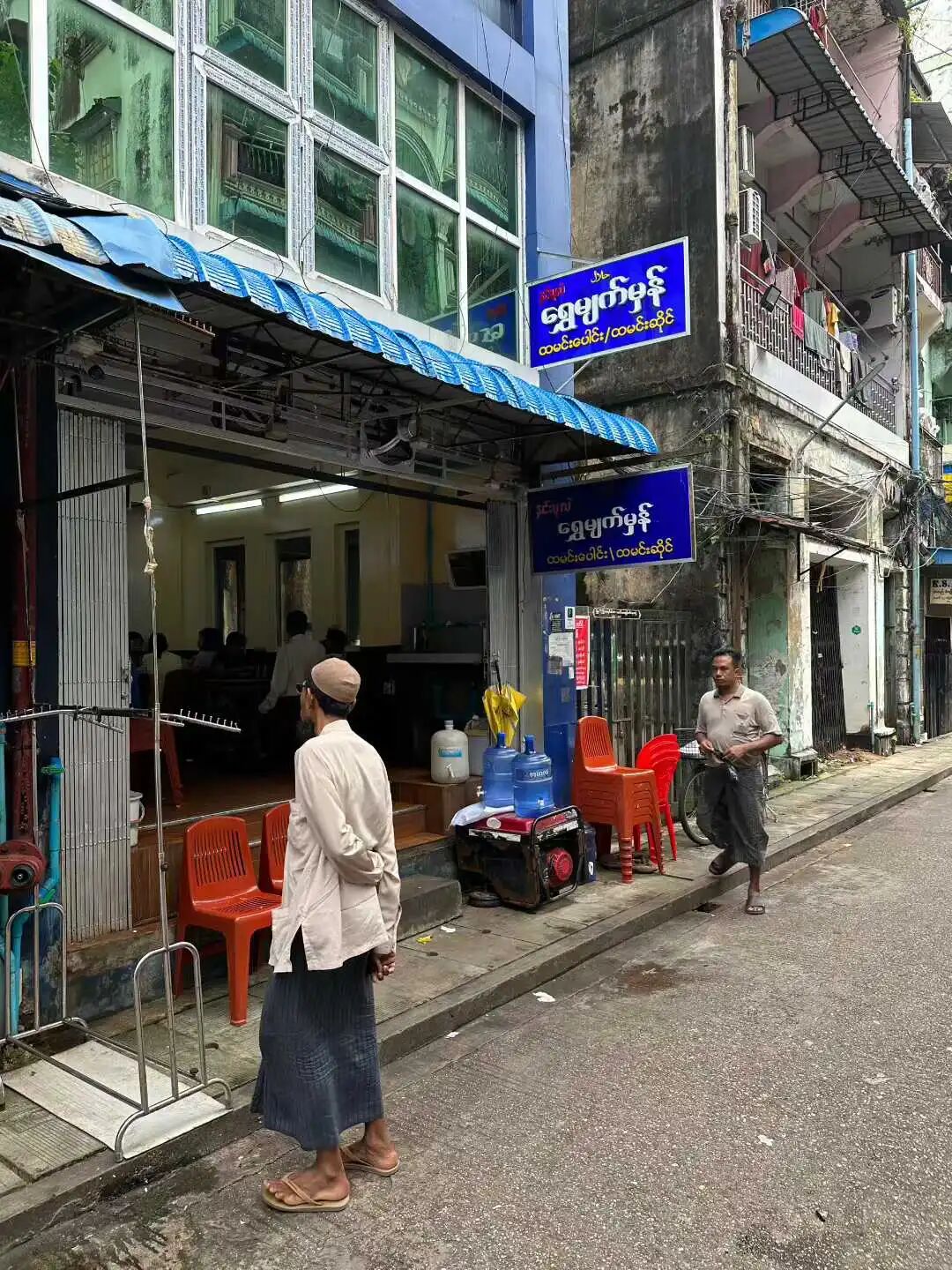
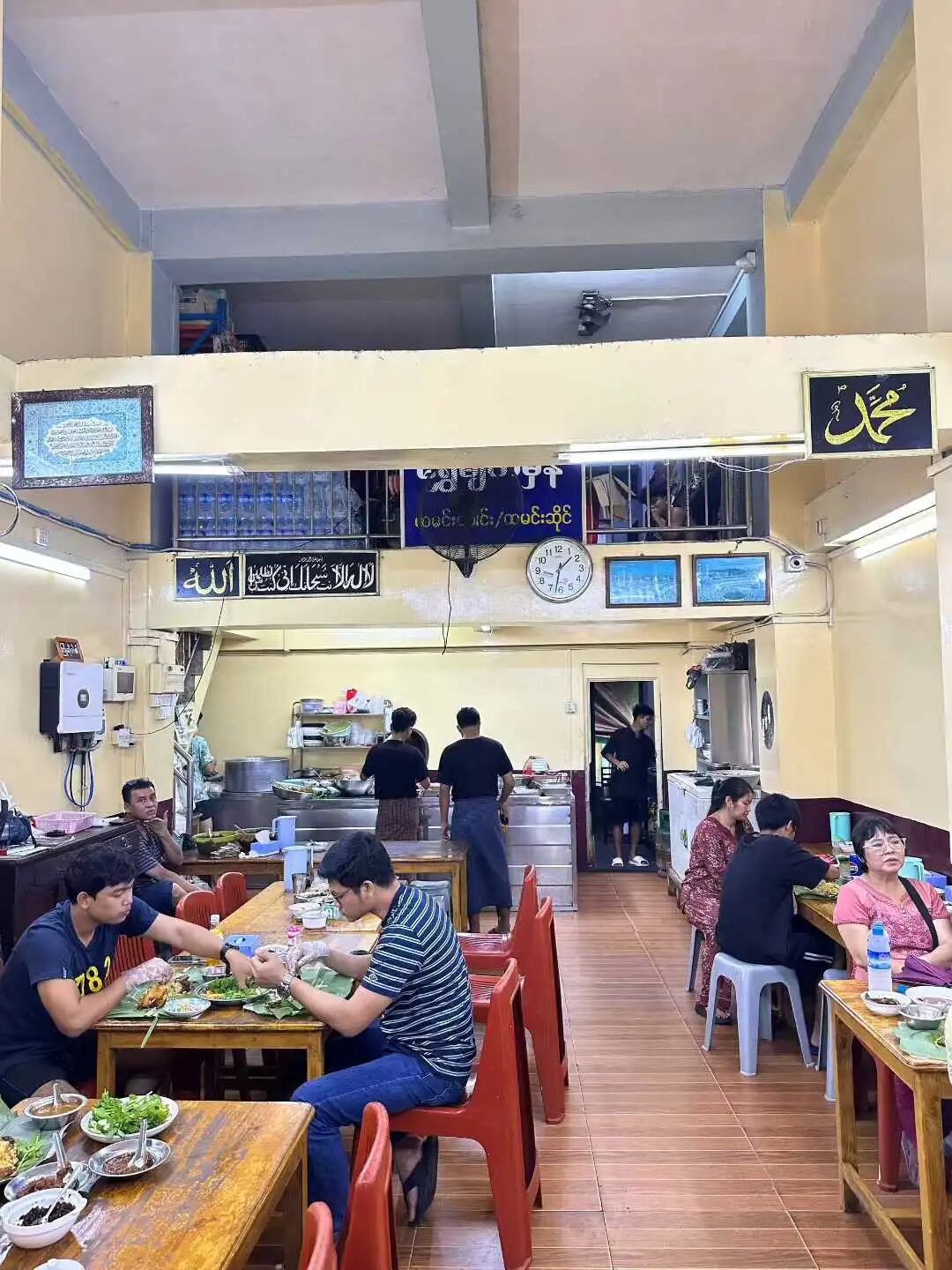
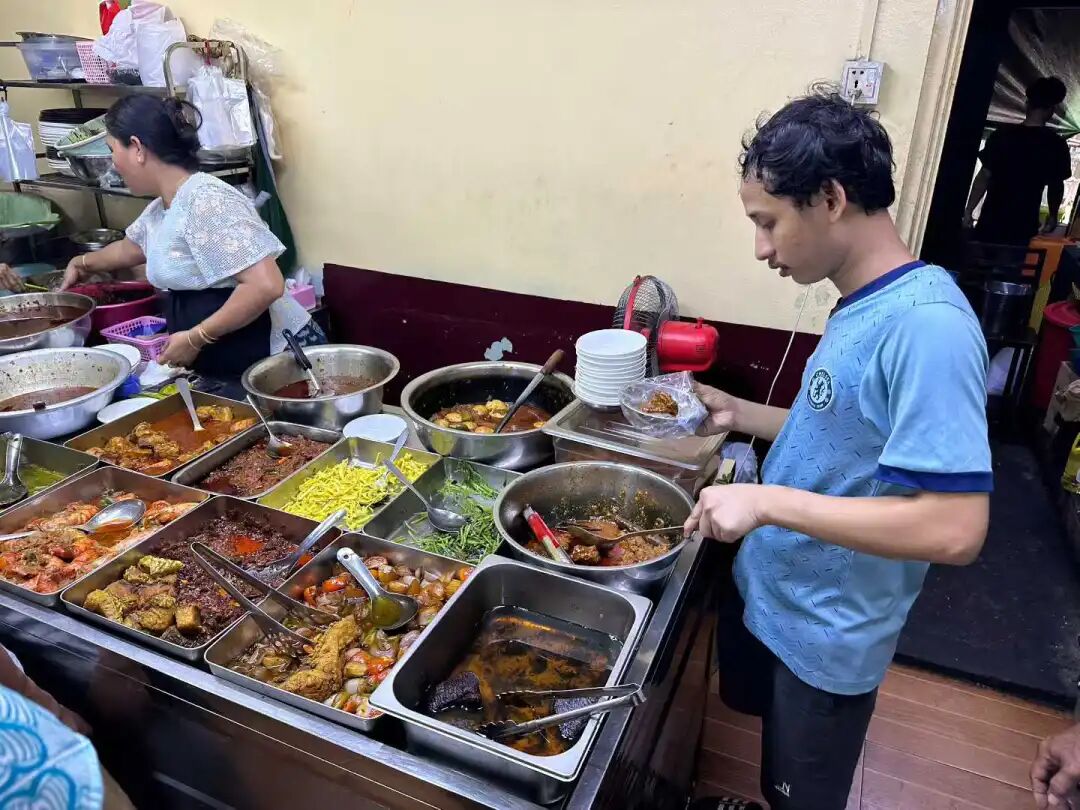
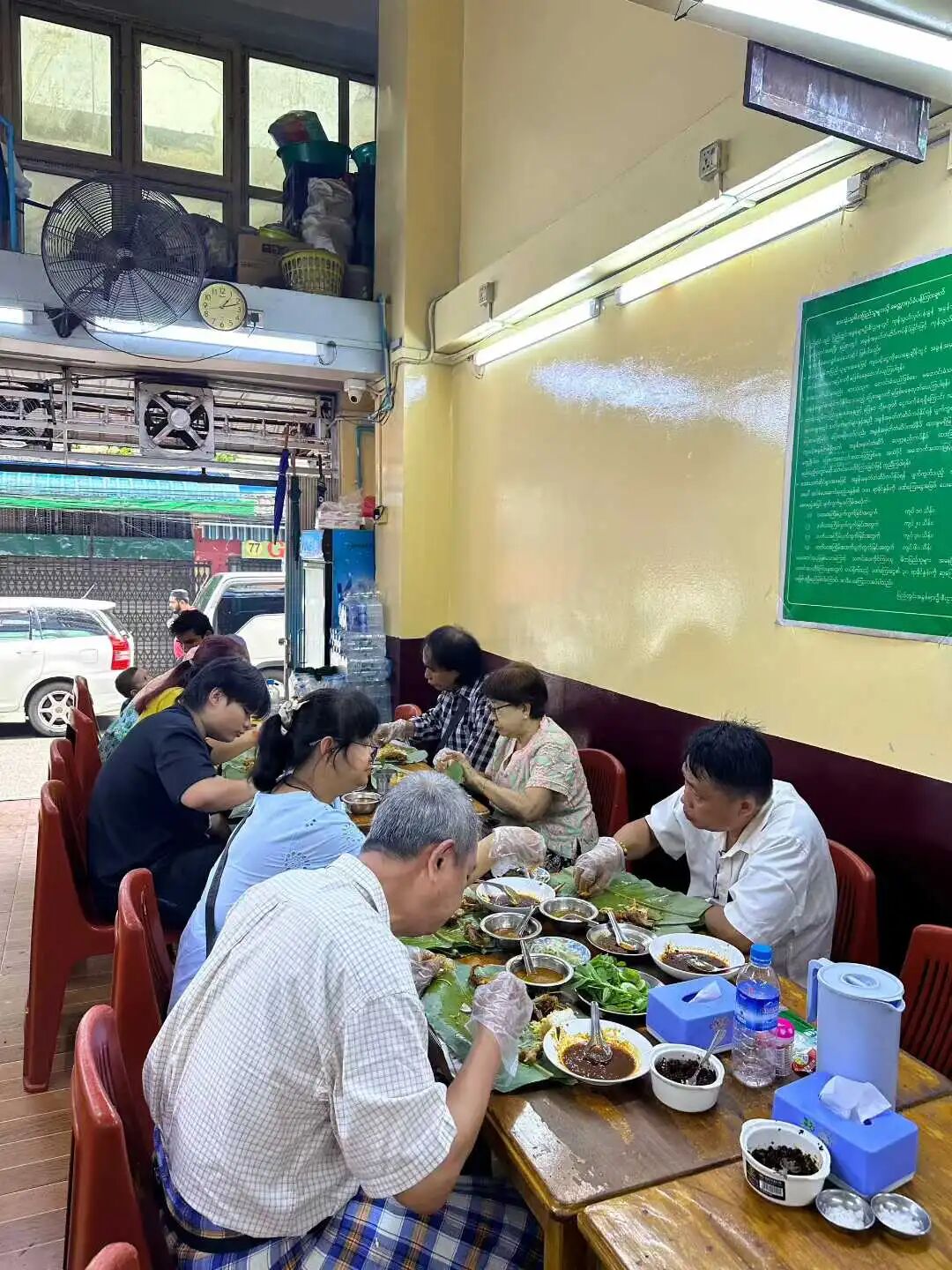
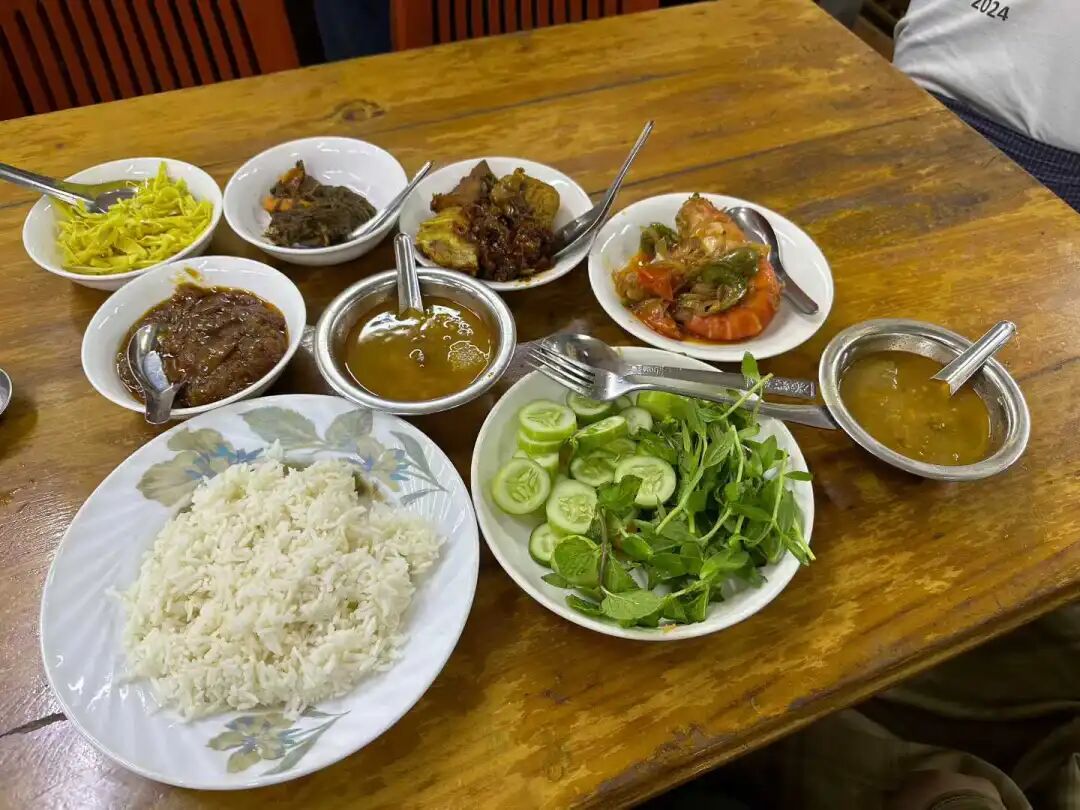
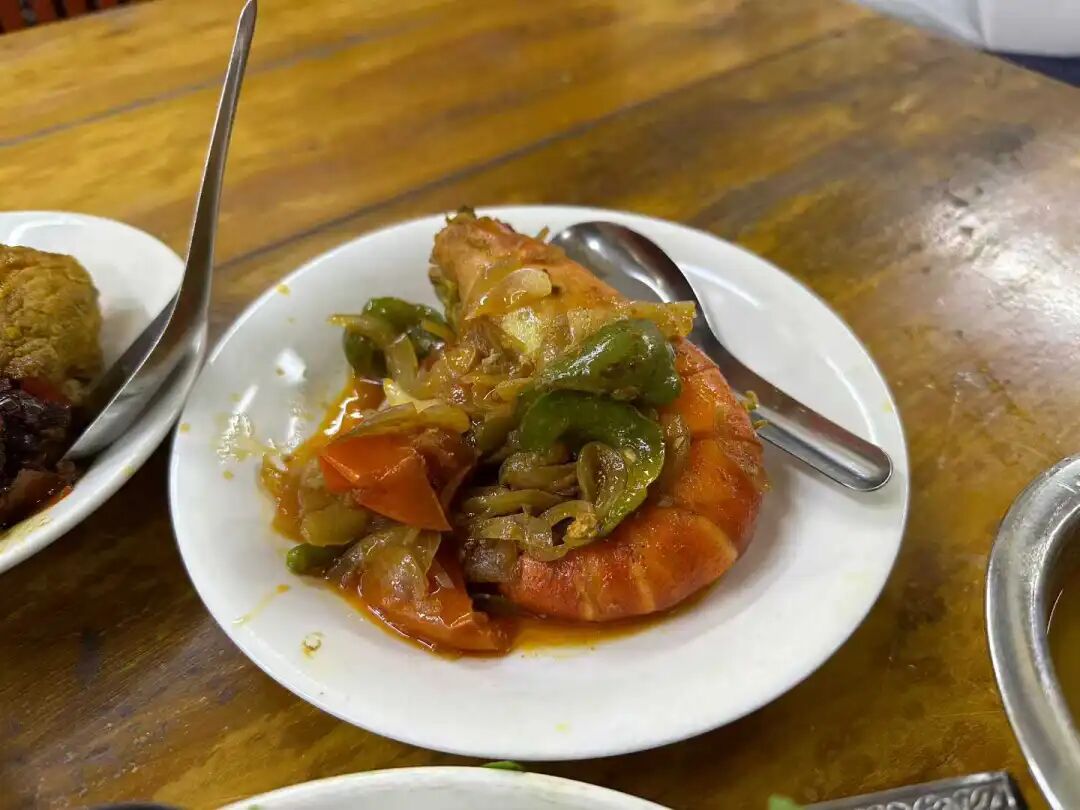
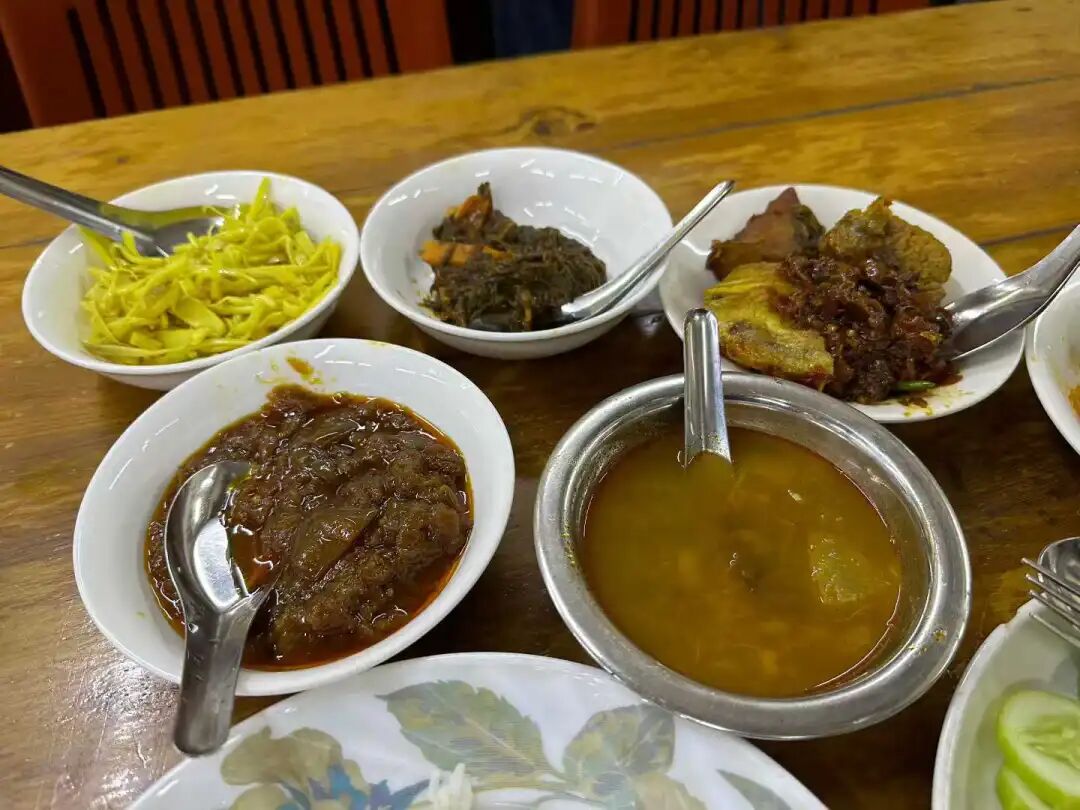
The long-standing New Delhi restaurant in Yangon's Indian quarter opened in 1963 and has been around for 62 years. We had fried bread (puri), chicken curry, and sweet milk tea there in the morning. When you order a main dish, they serve it with coconut milk, potatoes, and two types of vegetable curry. You can get unlimited refills of the two vegetable curries, and the waiter walks around with a curry pot to ask every table.
The word puri comes from the Sanskrit word pūrikā, which means fried. To make it, wheat flour is kneaded into dough and fried in ghee or vegetable oil until golden brown. As it fries, the water inside turns to steam and expands, causing the dough to puff up into a round ball. If you poke the dough with a fork before frying, the steam escapes through the hole, and the finished puri turns out flatter.
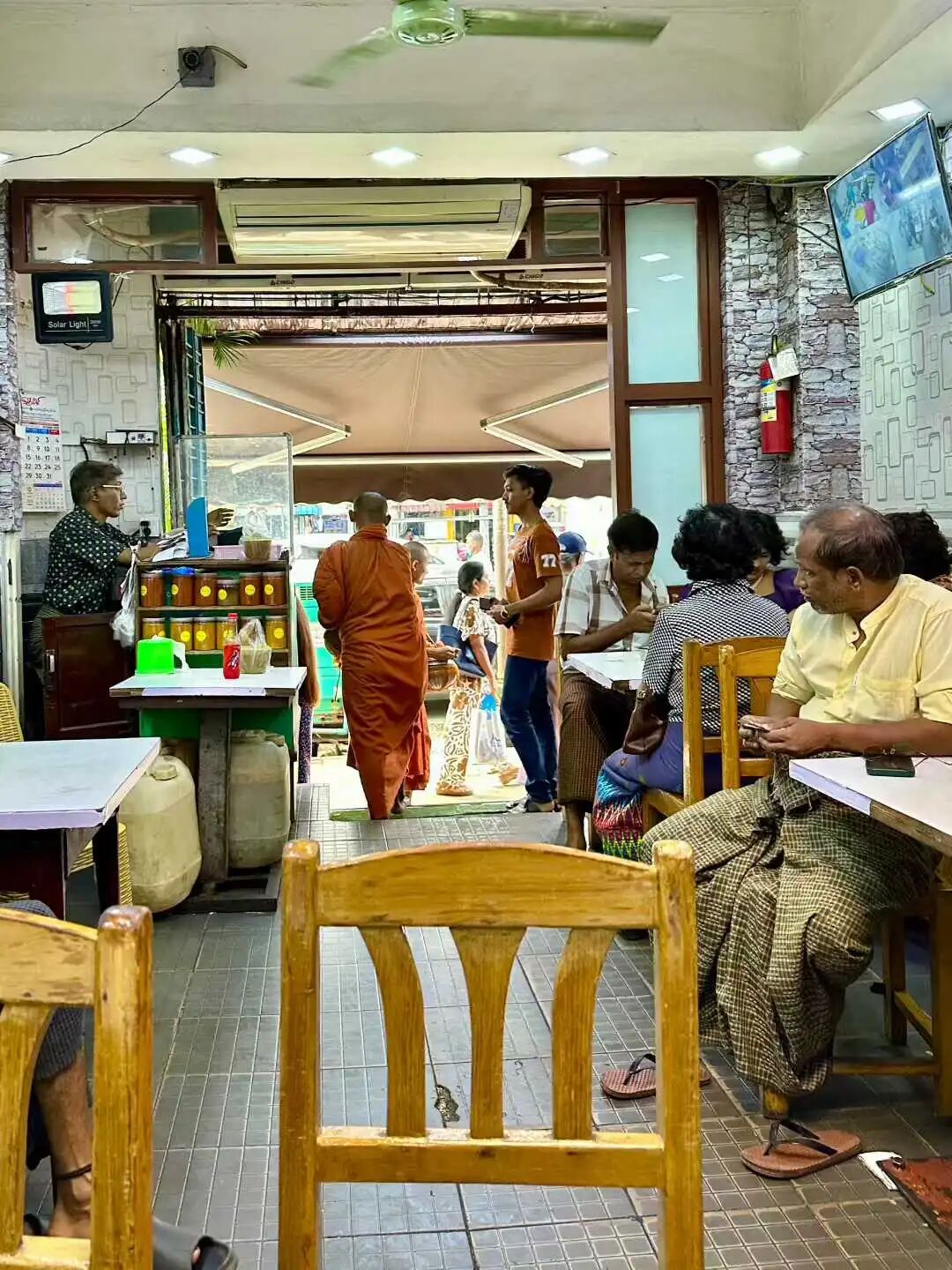
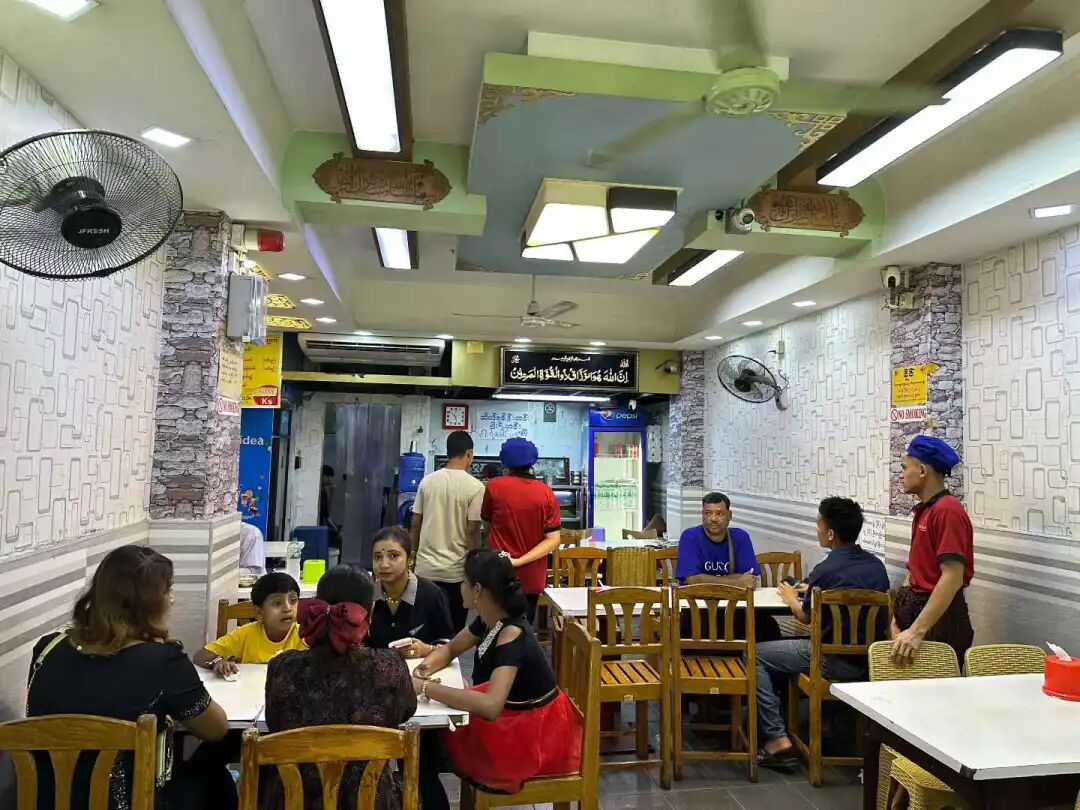
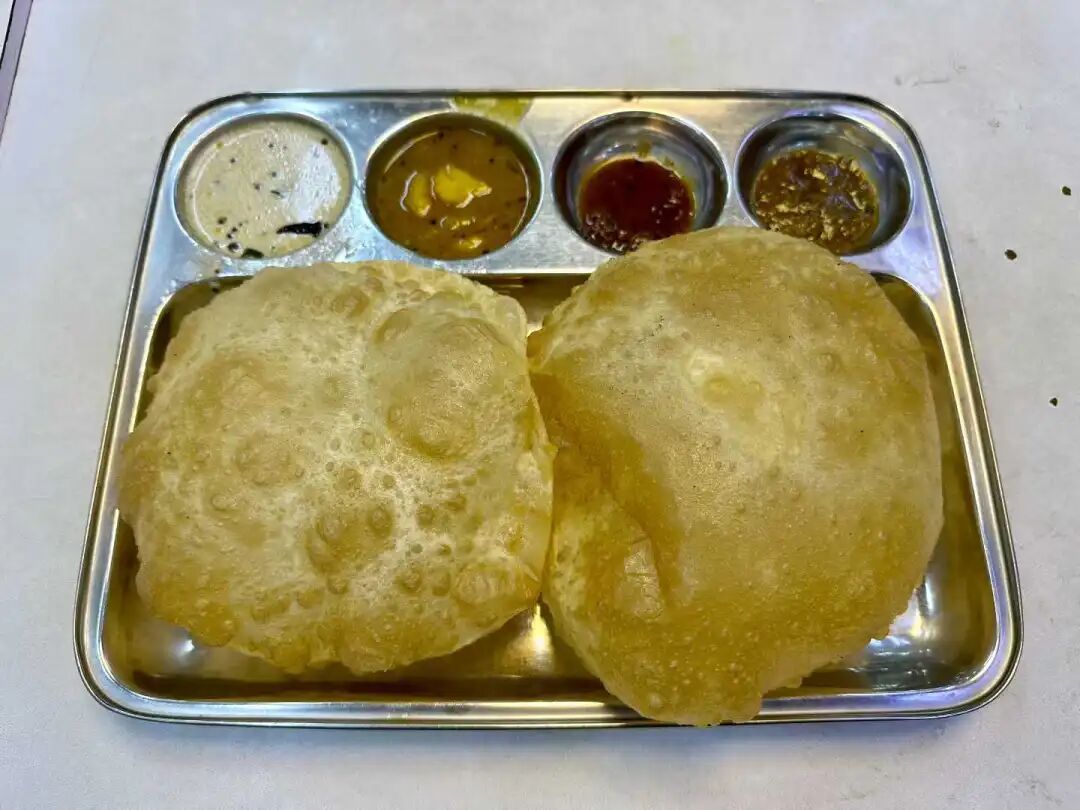
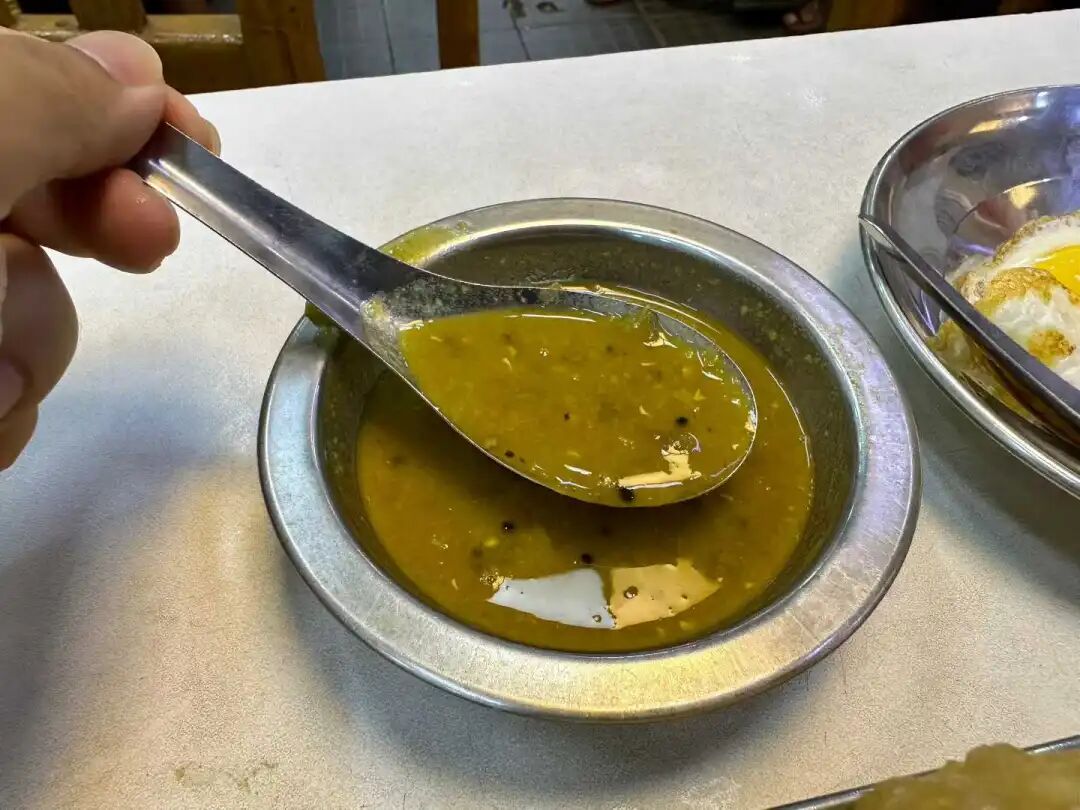
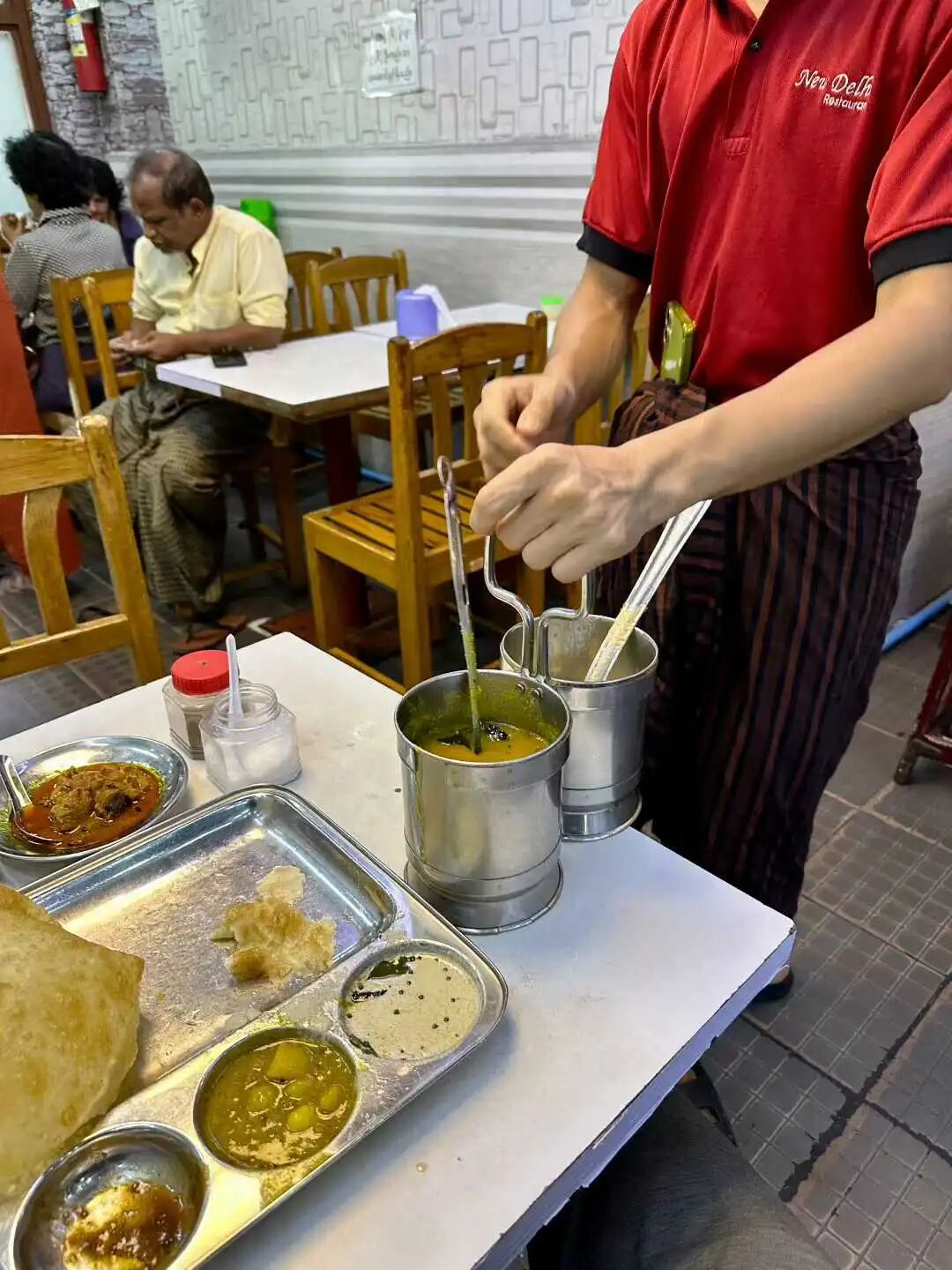
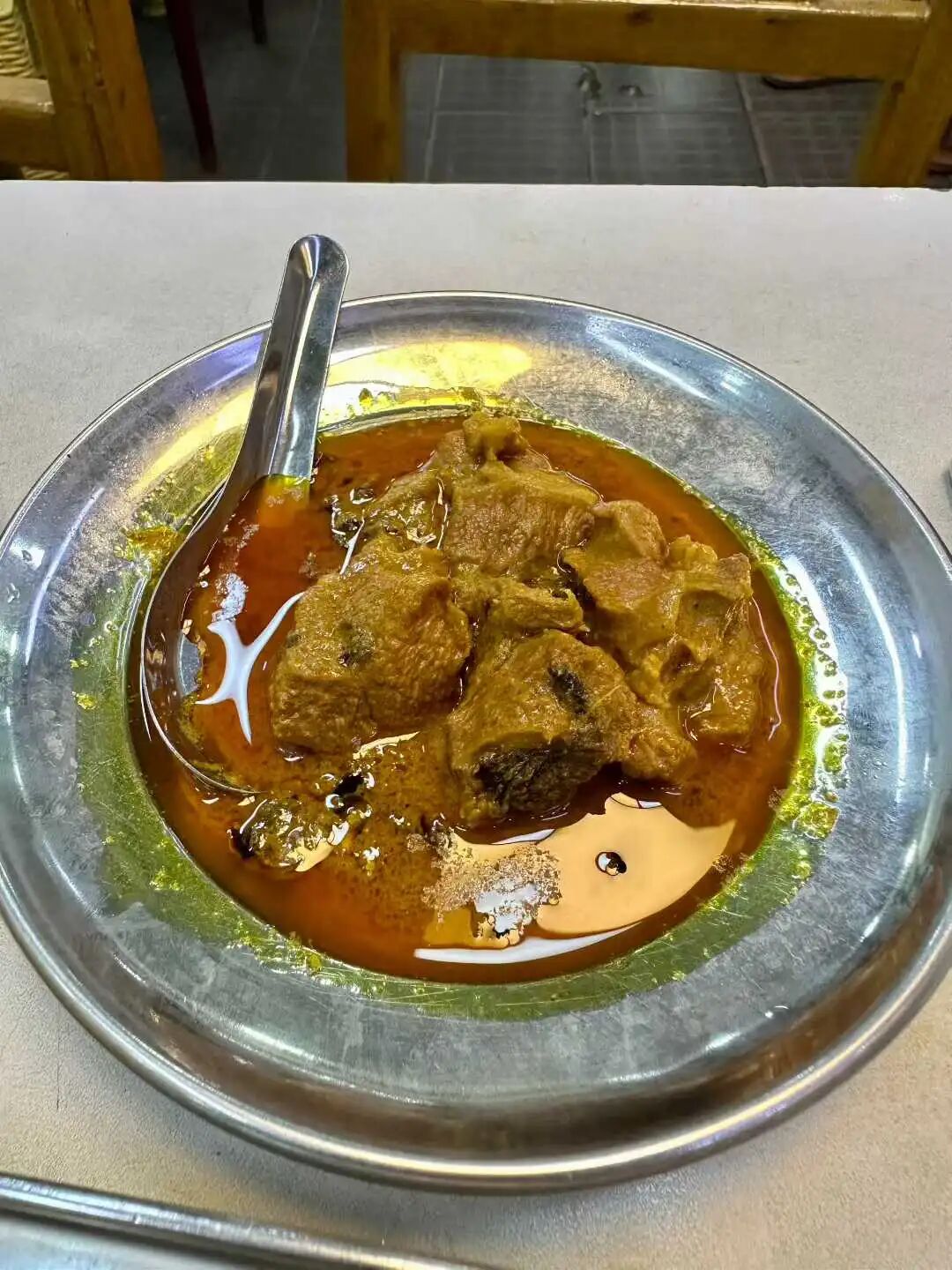
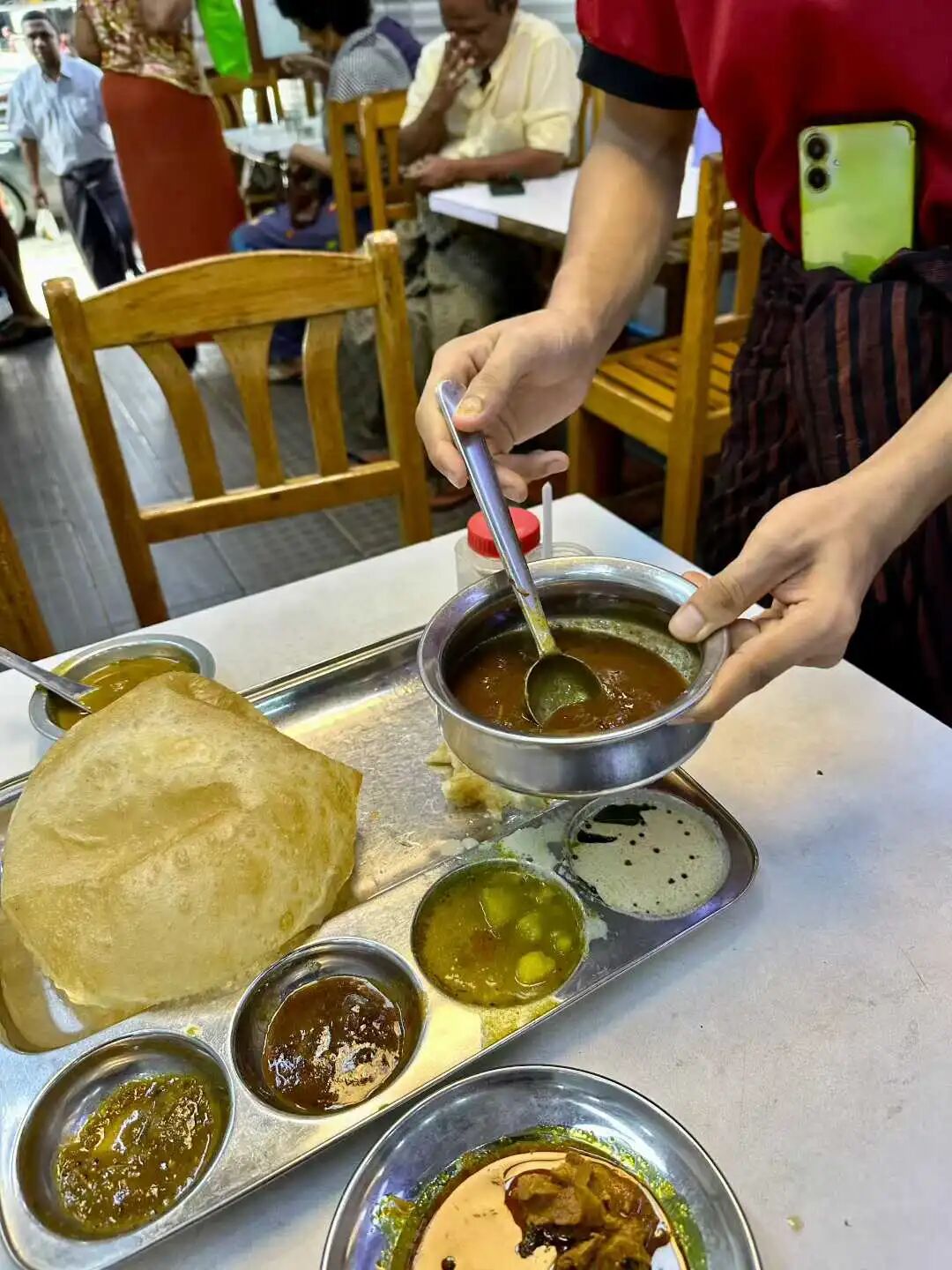
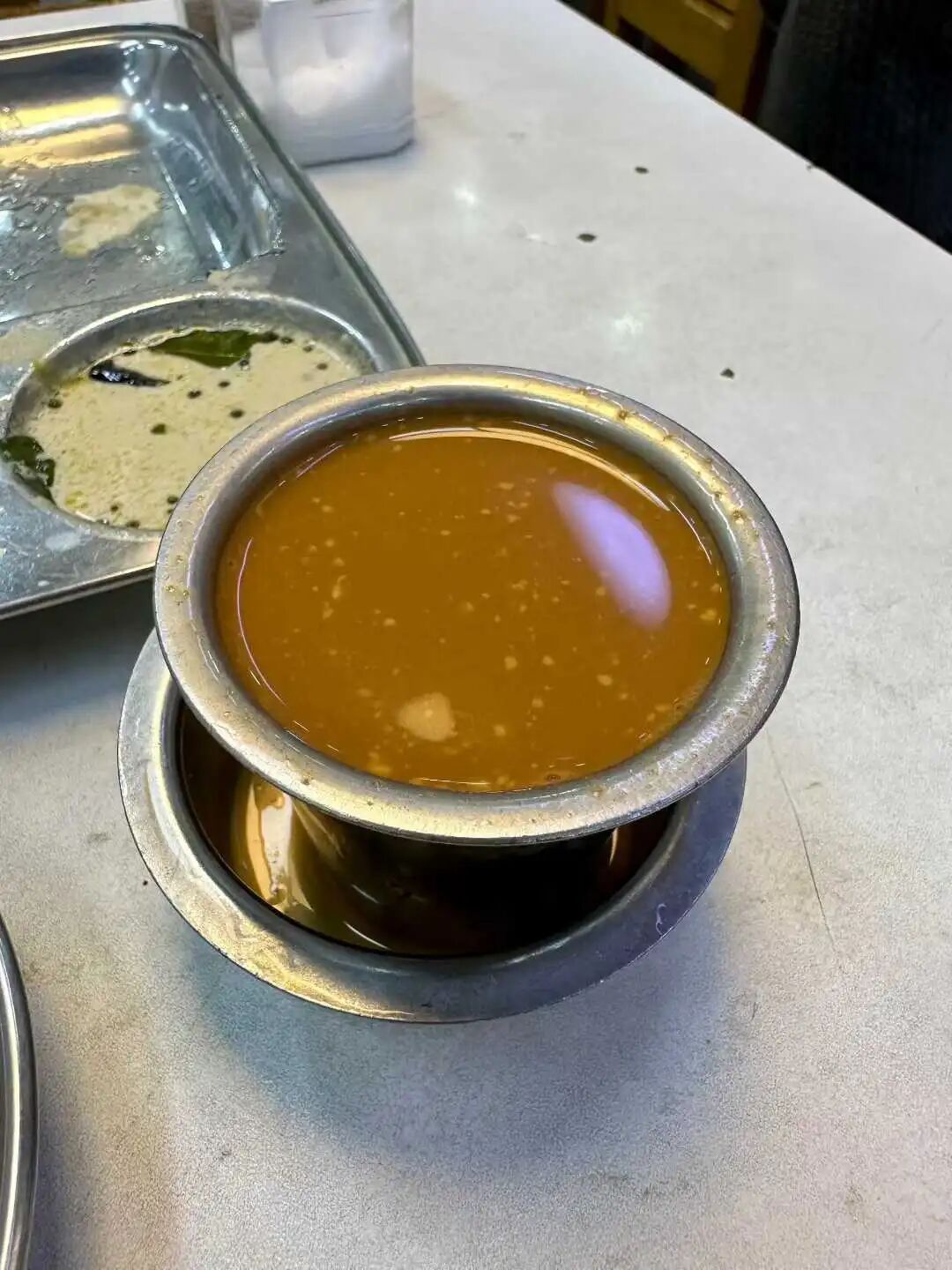
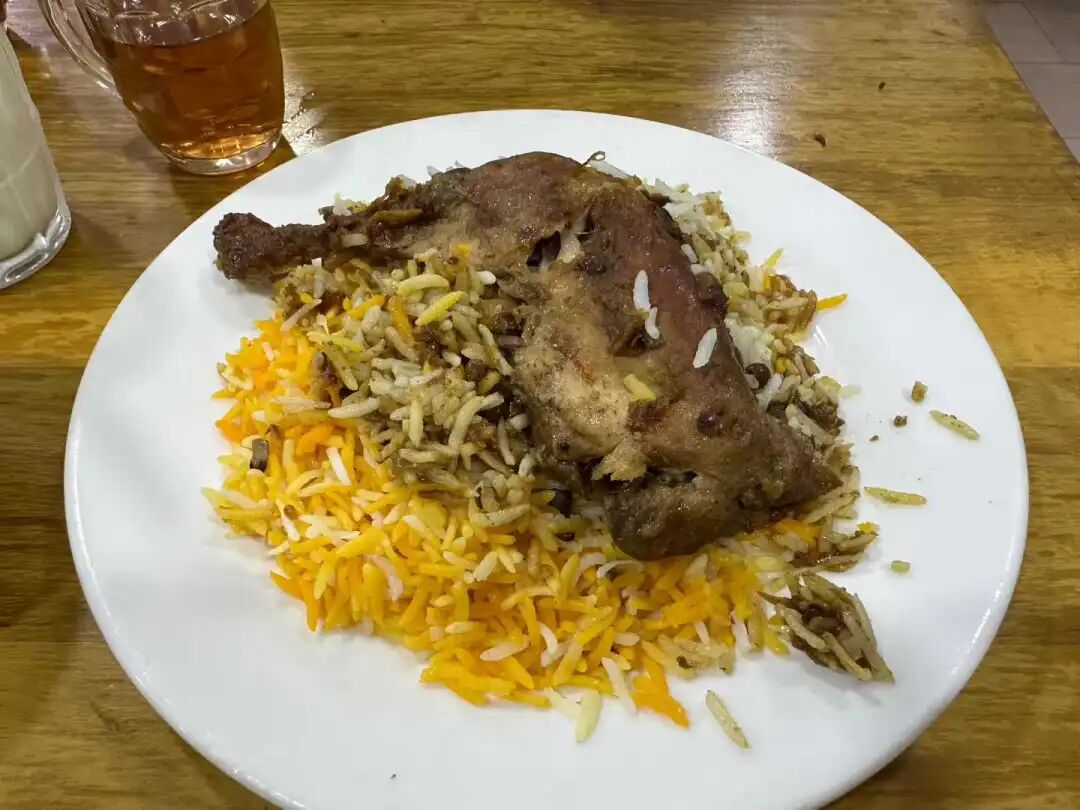
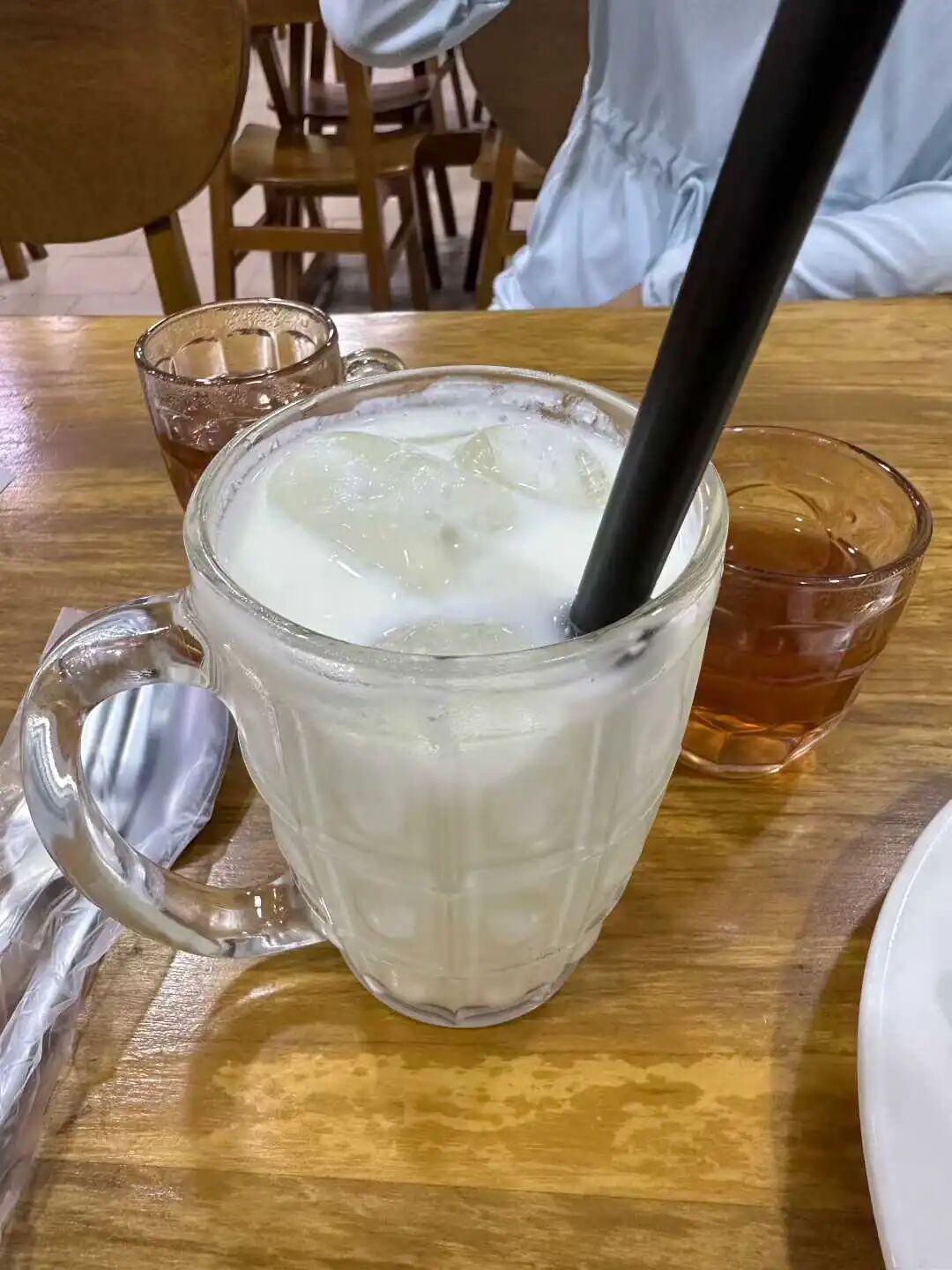
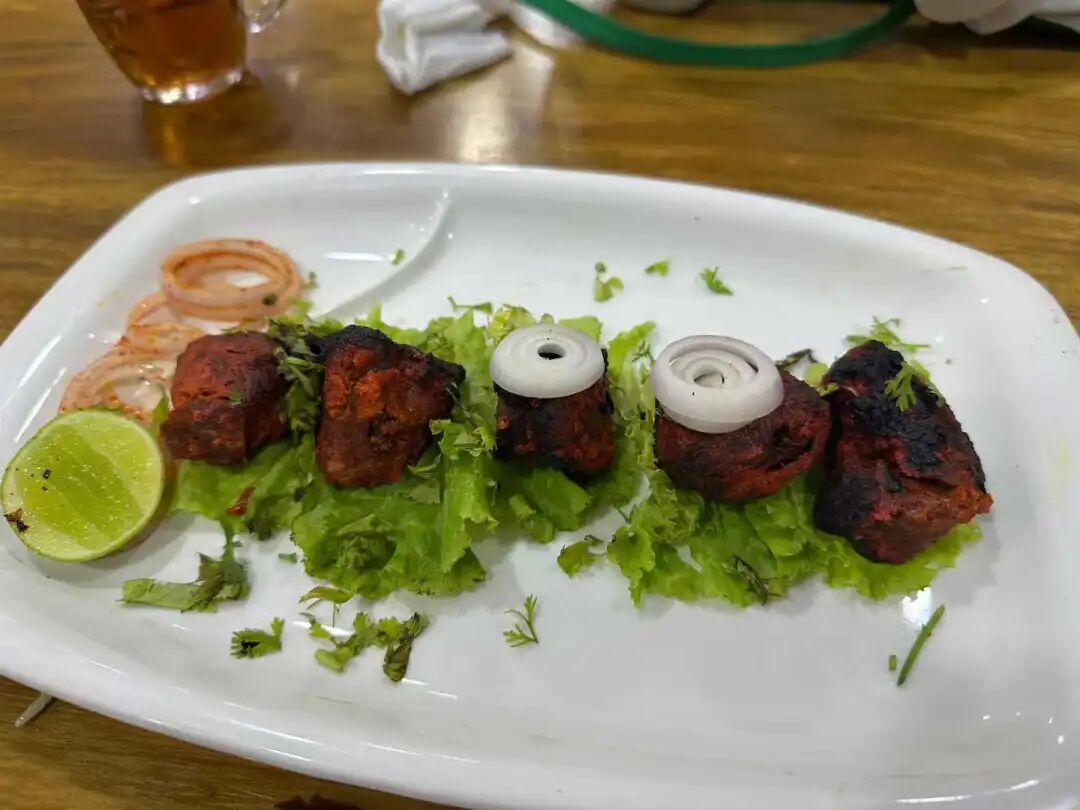
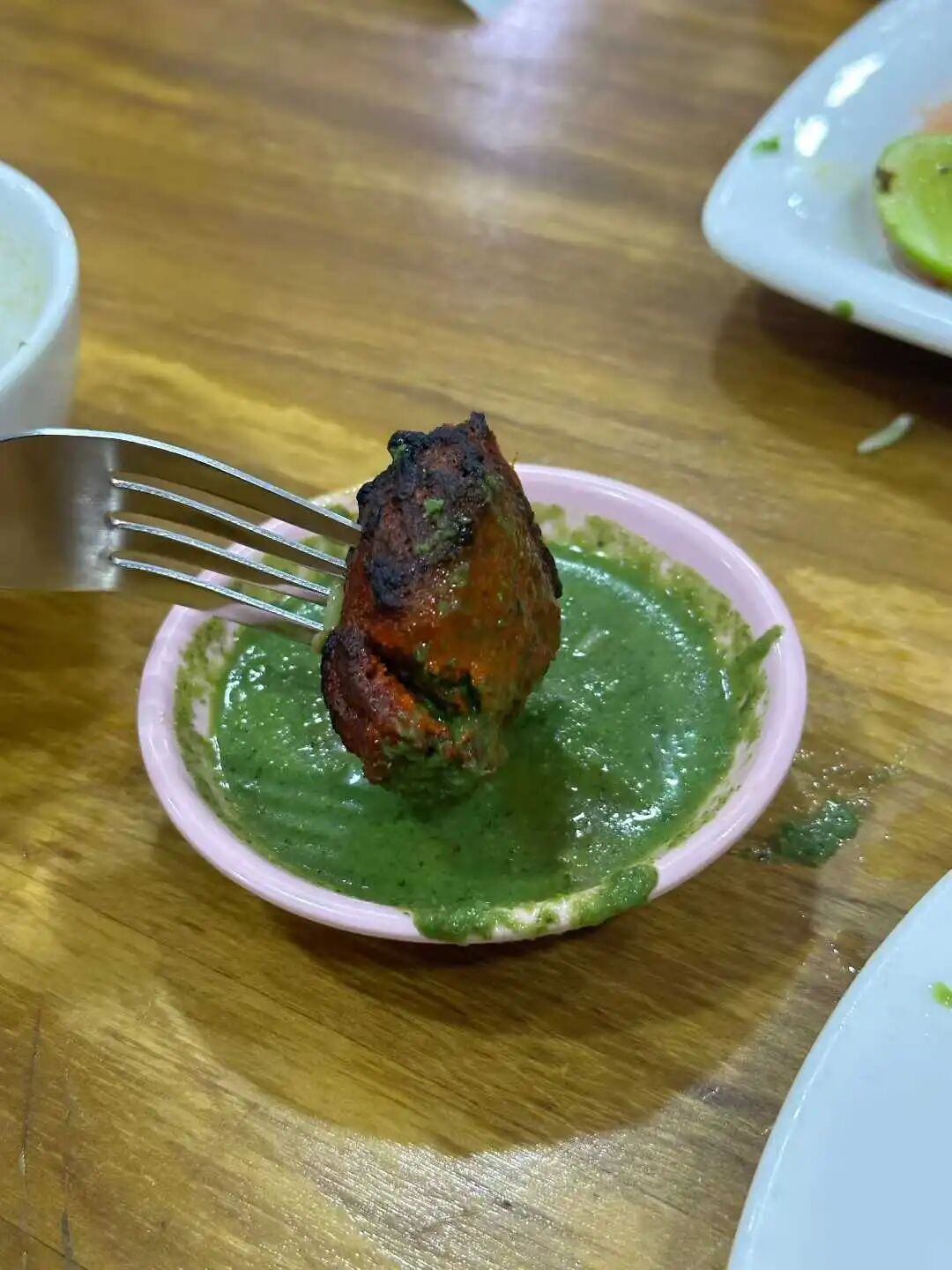
The famous Indian restaurant Nilar Biryani in Yangon opened on Anawrahta Road in the Indian quarter in 1976 and now has 30 branches. We had their signature chicken biryani rice and lamb tikka skewers at the main store on Anawrahta Road for dinner, and we also ordered yogurt lassi. You can also get unlimited refills of their biryani rice. A waiter walks around with a pot of rice to ask every table, and you can choose between two flavors: one is lighter, and the other has a stronger spice flavor. They also have a large barrel of tea that you can help yourself to.
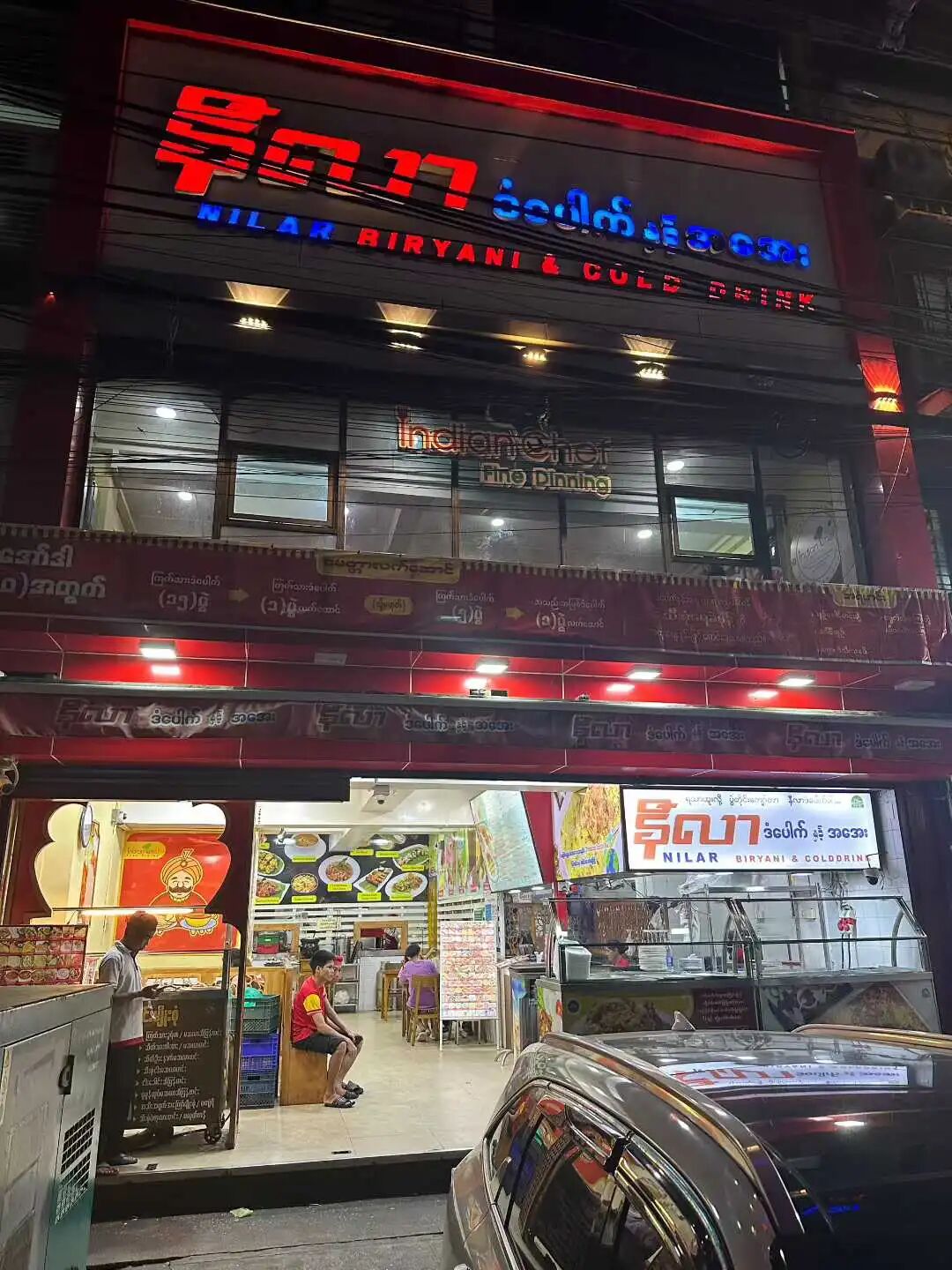

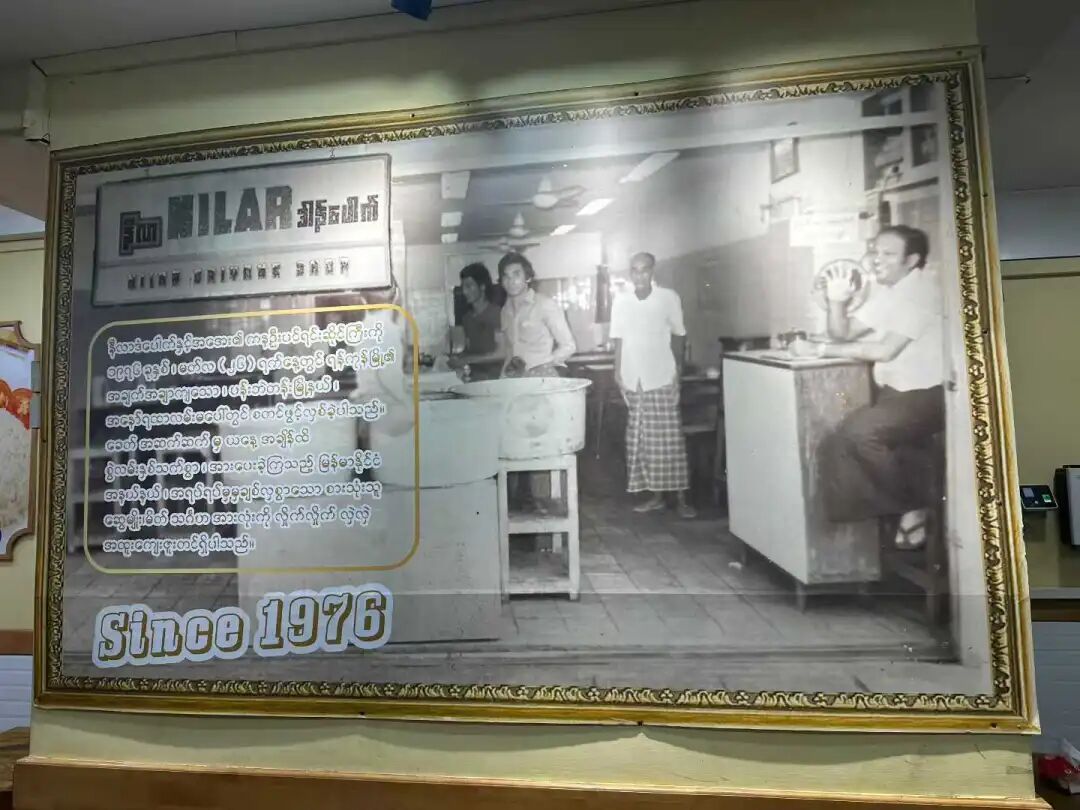
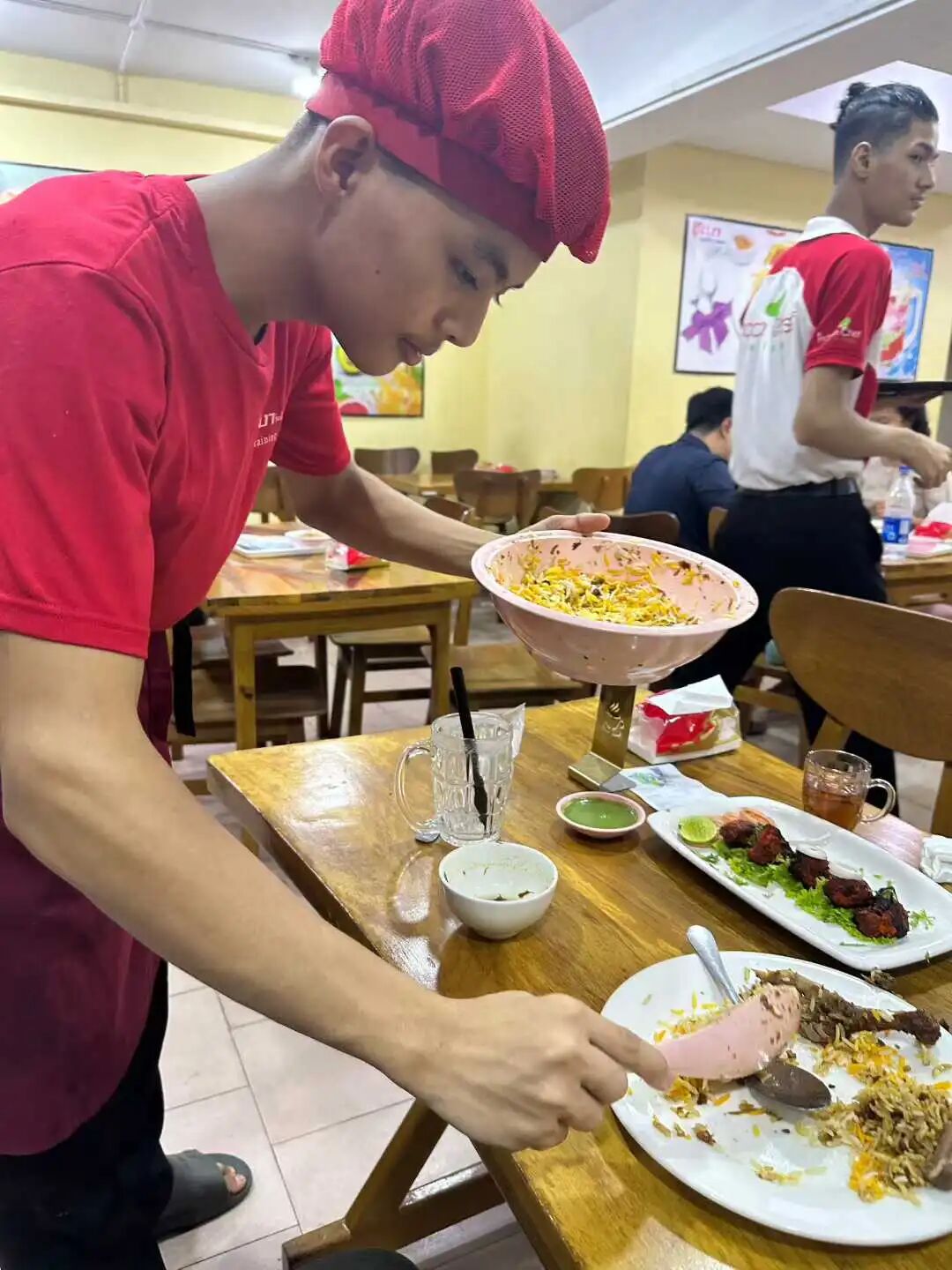
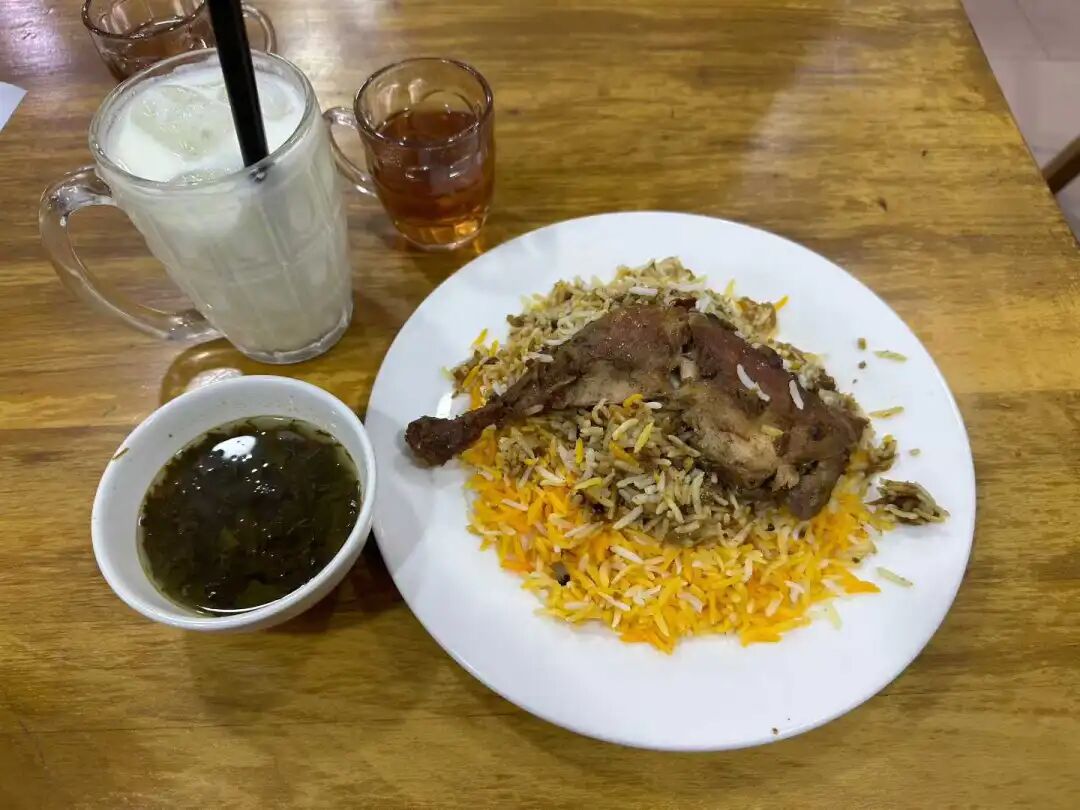
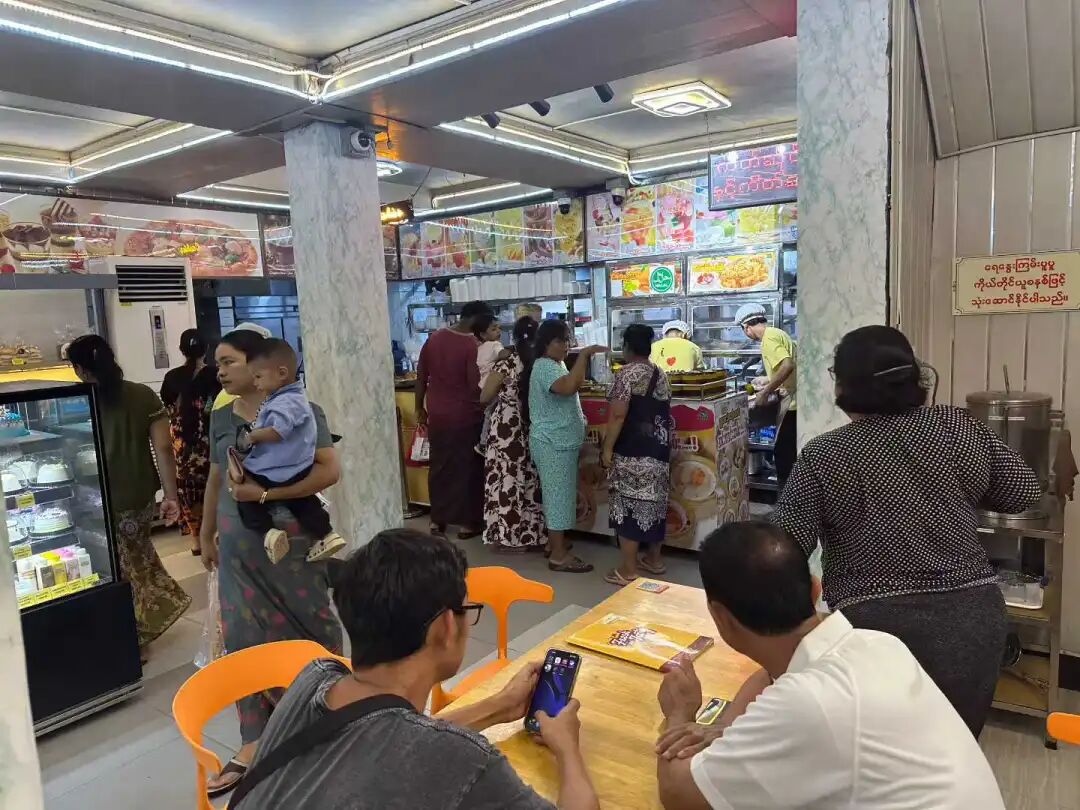
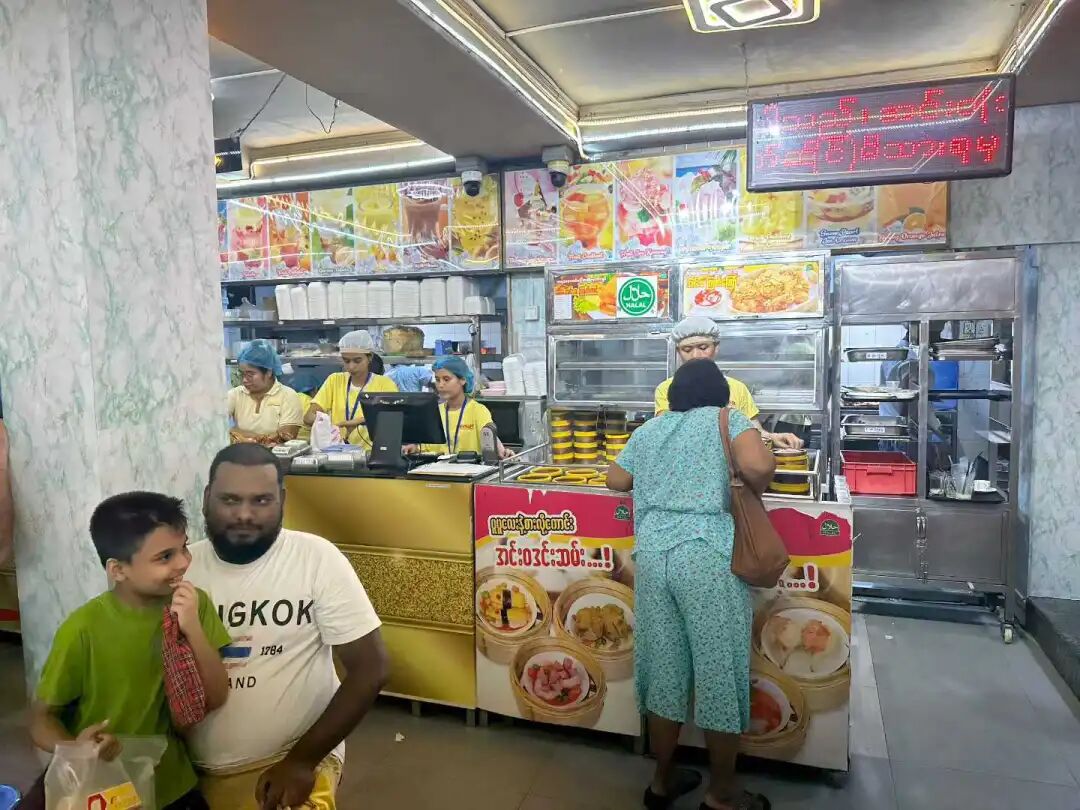
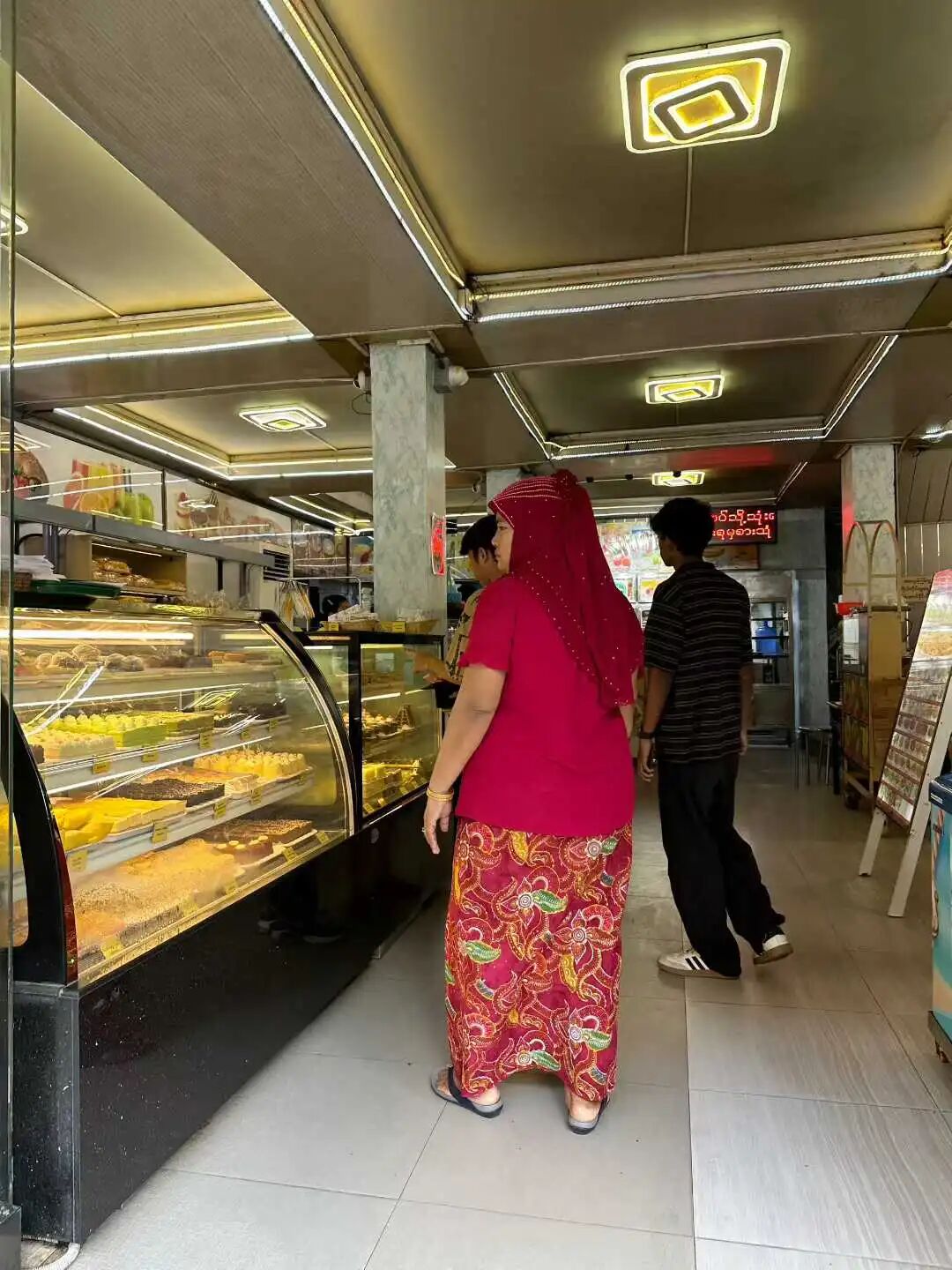
Innwa Cold Drinks and Confectionary is a sub-brand of the Yangon Indian restaurant chain Nilar Biryani, and it opened not far from the Nilar Biryani main store in 1999. They have all kinds of Western-style pastries, fast food, steamed snacks, and various cold drinks.
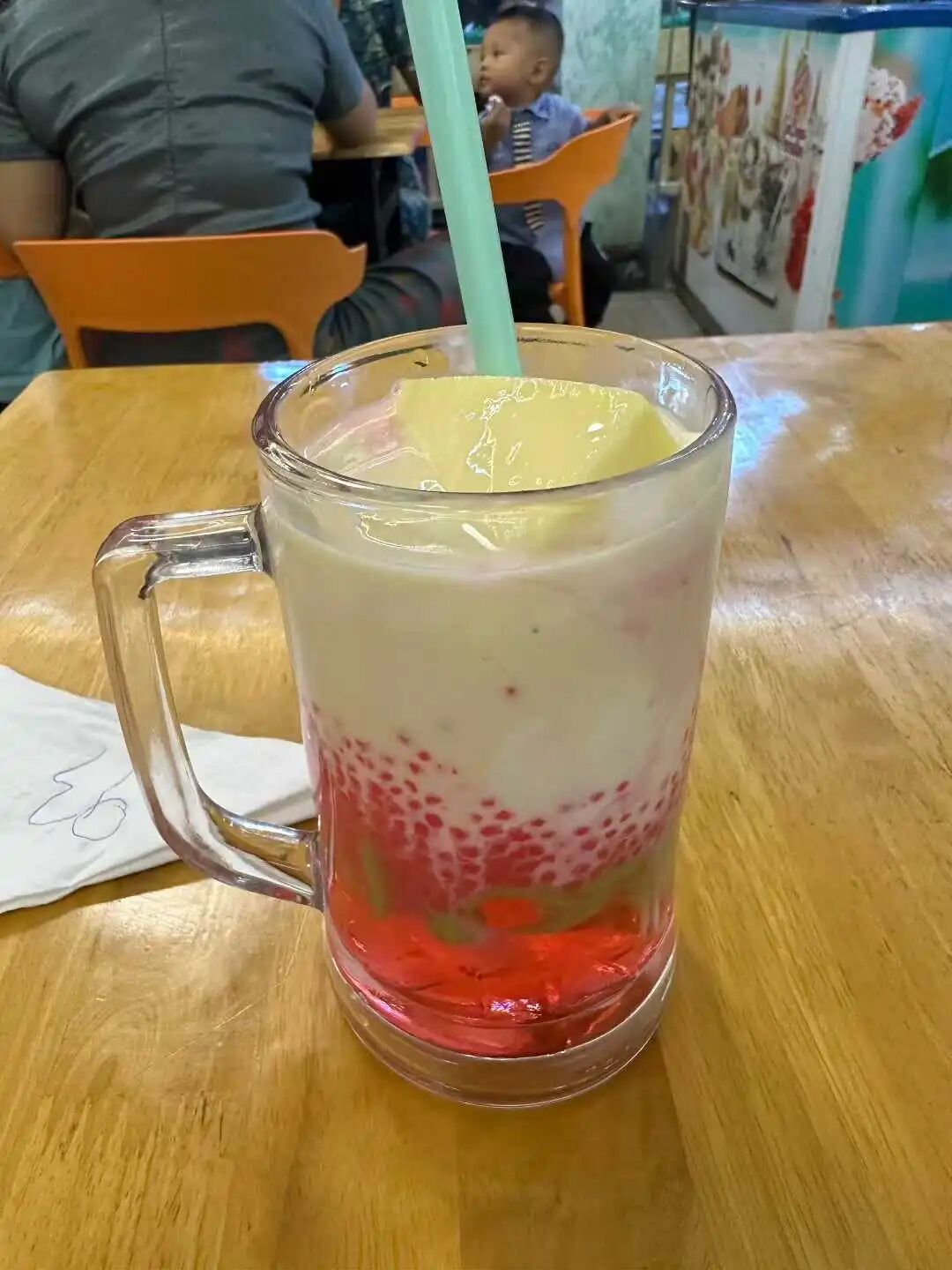
We bought several types of bread there and drank the classic Indian beverage faluda, which is the same as the paoluda found in Yunnan. Faluda originated from the Persian drink paloodeh, which means refined. Since there is no P in Arabic, it was changed to faloodeh in that language. The Indian faluda was inherited and developed by the Mughal Empire. It is made by mixing rose syrup, basil seeds, and milk, and is topped with ice cream. After falooda (faluda) arrived in Myanmar, grass jelly was added to it. More refined versions also include sago, jelly, and bits of fruit.




Halwa fudge sold by Indian street vendors in Yangon. Halwa originated in Persia and later spread throughout the Middle East and South Asia. South Asian halwa is made from semolina. It feels oily to the touch and has just the right amount of sweetness.
Halal Travel Guide: Yangon - 23 Mosque Quarters, Part One
Articles • ali2007fr posted the article • 0 comments • 238 views • 2026-05-20 23:51
Summary: This first part of the Yangon mosque guide records visits to twenty-three mosques in and around the old city, including Indian Sunni, Indian Shia, and Yunnan Hui Muslim sites. It keeps the source's mosque sequence, community background, architecture, and historical observations.
A detailed introduction to the twenty-three mosques in Yangon, Myanmar (Part 1)
On this trip to Yangon, I visited twenty-three mosques in the old city and surrounding areas. Eighteen belong to Indian Sunni Muslims, four to Indian Shia Muslims, and one belongs to Hui Muslims from Yunnan.
I have already introduced the Shia and Hui mosques in Yangon in my articles 'The Largest Shia Mosque in Southeast Asia—Yangon' and 'Hui Mosques and Hui Food in Yangon, Myanmar.' This time, I will introduce the eighteen Indian Sunni mosques in Yangon.
Although I have visited Southeast Asia many times, countries like Thailand, Vietnam, Malaysia, and Indonesia follow the Shafi'i school of thought. Their prayer movements and timings are different from ours, and I often felt out of place during namaz. This time, I finally reached a Hanafi region in Southeast Asia: Yangon, Myanmar. The prayer movements of the brothers (dosti) in Yangon are exactly the same as those of the Hui Muslims, so I felt very at home in the mosques every time.
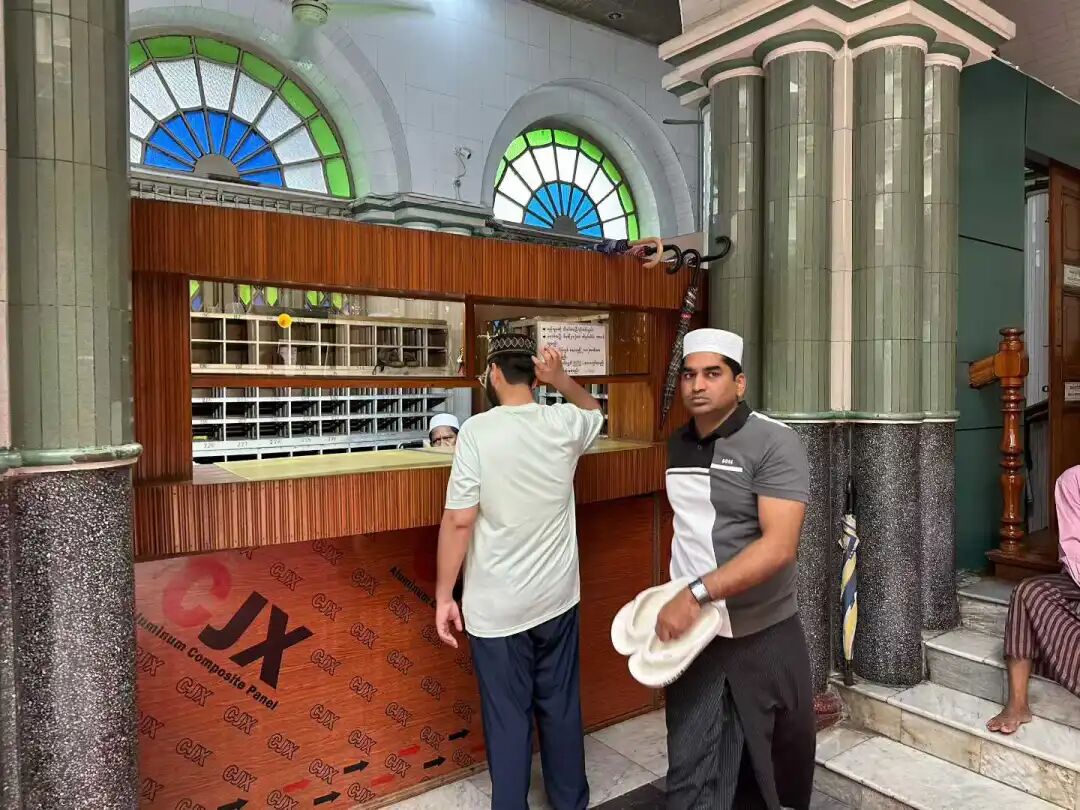
There is another special feature in Yangon's mosques: almost every mosque has a shoe storage area with a brother (dosti) specifically in charge of looking after the shoes. This man has a great memory. After you finish your namaz, he will bring your shoes out and hand them to you before you even ask. He never mixes up anyone's shoes. Also, he does not accept any tips at all. In India and Egypt, I have always been charged a tip for shoe storage. That is why some brothers (dosti) in India would rather carry a bag for their shoes than use a storage service.
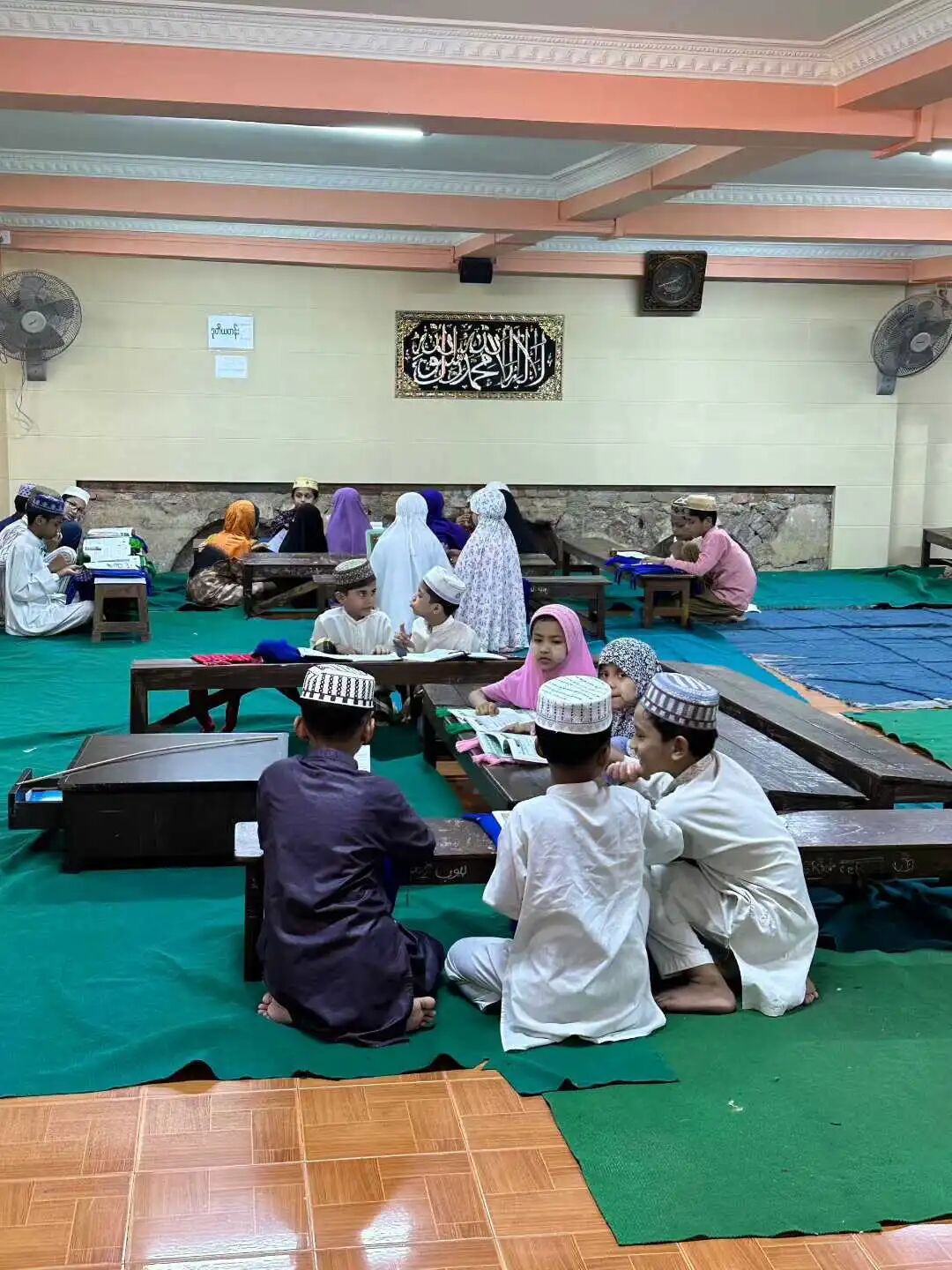
In the mosques of Yangon, the time between the afternoon prayer (dhuhr) and the late afternoon prayer (asr) is for studying scripture. Both adults and children sit in a circle to learn from the imam, and the atmosphere is wonderful.
Unlike in Malaysia, mosques in Yangon are not open all day and are usually locked outside of the five prayer times. This made visiting them more difficult, but alhamdulillah, I managed to visit most of the ones I wanted to see.
Indian brothers (dosti) have been settled in Yangon for 200 years. After the First Anglo-Burmese War in 1826, merchants from British India began traveling to Myanmar for business. The first to arrive in Yangon were Gujarati merchants from Surat in western India. In 1826, they built the Surti Sunni Jumu'ah Mosque in Yangon. In the same year, two officers from the Konbaung Dynasty of Myanmar also built the Triangle Mosque in Yangon. These were the first two mosques in the city.
After the British occupied Yangon in 1853, brothers (dosti) from Gujarat, Bengal, and the Tamil and Andhra regions of South India arrived in Yangon one after another. Many Gujarati merchants opened companies and built mosques in Yangon. The Mamusa family alone built two. Because the British made Yangon part of the Bengal Presidency of British India, a wave of Bengali immigration to Yangon began. The Bengali community also built three mosques in Yangon. At the same time, Tamils from South India followed the Indian Ocean monsoon winds across the Bay of Bengal to Yangon and also built two mosques.
Below, I will introduce the eighteen Indian Sunni mosques in Yangon one by one.
The Sunni Jumu'ah Bengali Mosque is located next to the Sule Pagoda in the center of Yangon's old city. It was founded by Bengali brothers (dosti) in 1862. After the British occupied Yangon in 1852, they made it part of the Bengal Presidency of British India, which triggered a wave of Bengali immigration to Yangon.
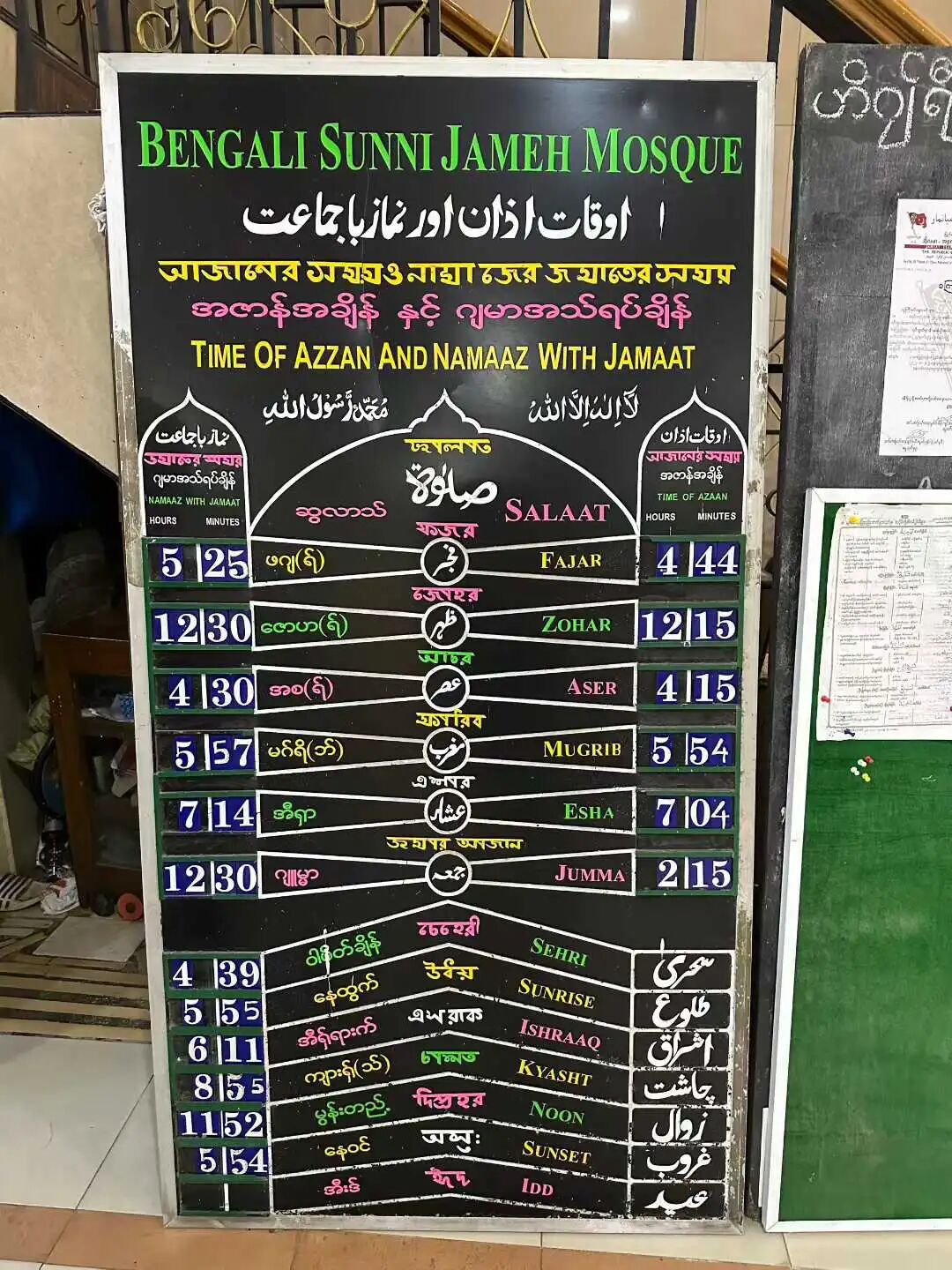
The Bengali Mosque was originally a wooden structure. It was rebuilt as a brick building in 1902 and renovated into the current tiled building in 1992. Now, you can see Arabic, English, Bengali, and Burmese on the gate and the prayer schedule. Because it is in the center of Yangon's old town and due to the Rohingya issue, some Burmese nationalist groups have long wanted to tear down the Bengali Mosque.
The Bengali Mosque (Bengali Dosti) was the second Sunni Friday mosque built in Yangon in 1932. It is located on 91st Street in the northern part of the old town, right next to the railway. The mosque looks very grand, and its minaret decorations are also quite ornate.
The Chulia Friday Mosque is in Yangon's Indian quarter, not far west of the Bengali Mosque. It was built in 1856 by South Indian Tamil Dosti. The name Chulia comes from the Chola dynasty that once ruled the Tamils. Long ago, Tamil Dosti followed the Indian Ocean monsoon winds across the Bay of Bengal to the coasts of Southeast Asia. The Jamae Mosque in Singapore's Chinatown was built by Tamils in 1826. After the British occupied Yangon in 1852, the number of Tamils immigrating to Yangon kept growing, and the Chulia Friday Mosque was established as a result.
The Chulia Friday Mosque was originally a wooden structure. It was rebuilt as a brick building in 1869, and in 1936, it was rebuilt into its current form by the Iranian-Armenian contractor AC Martin. AC Martin built many structures in Yangon, including the General Post Office.
There is a water well inside the Chulia Friday Mosque, and whenever there is a water shortage, it provides water for the Indian quarter. In 1941, the Japanese military bombed Yangon on a large scale, and the Chulia Friday Mosque was also damaged. Later, a porch was built in 1955, and the main hall was built in 1963. Currently, the shops on the first floor of the main hall are very busy, and the second floor can host wedding banquets. When we visited, there were wedding banquets being held every morning.
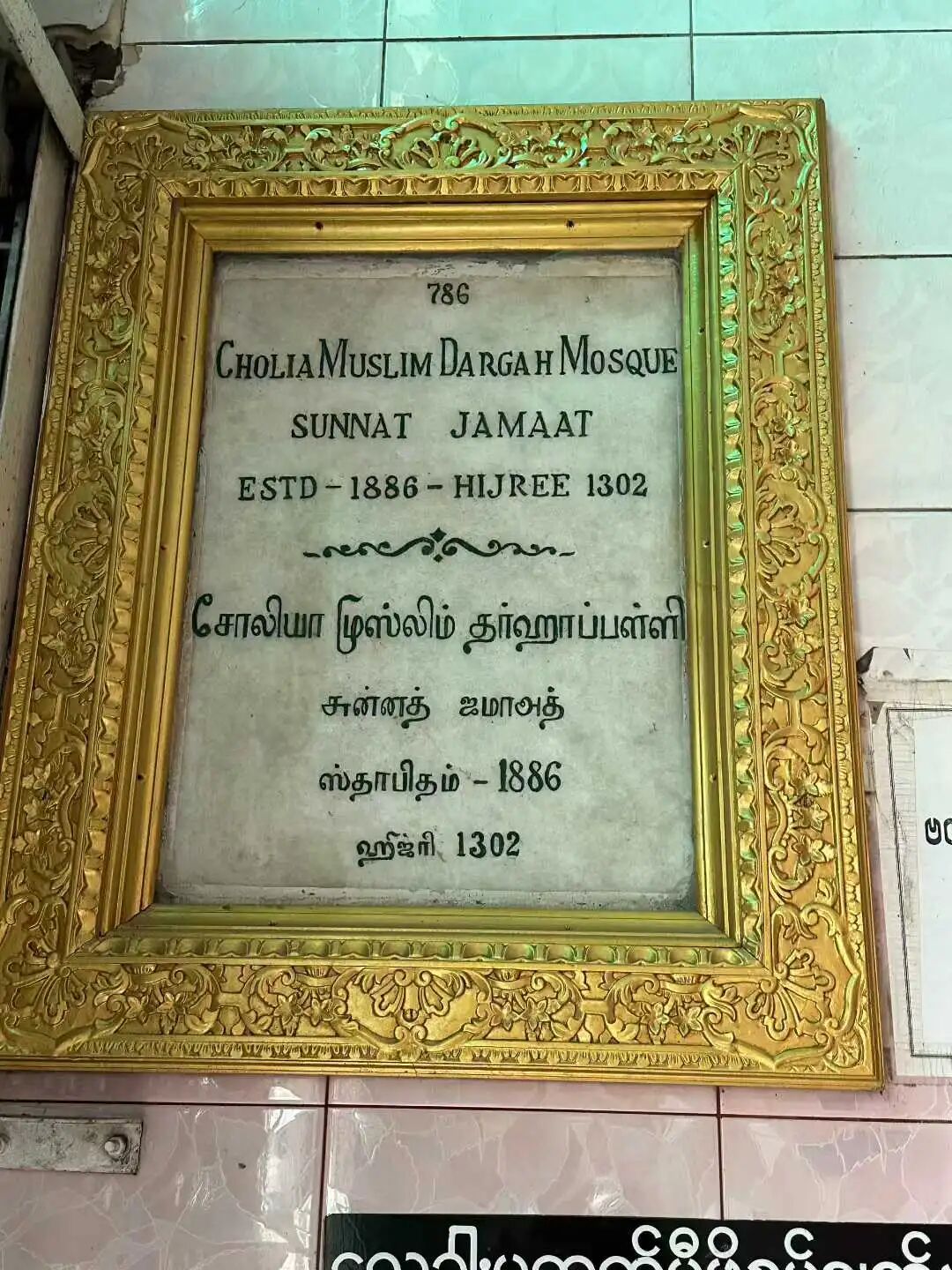
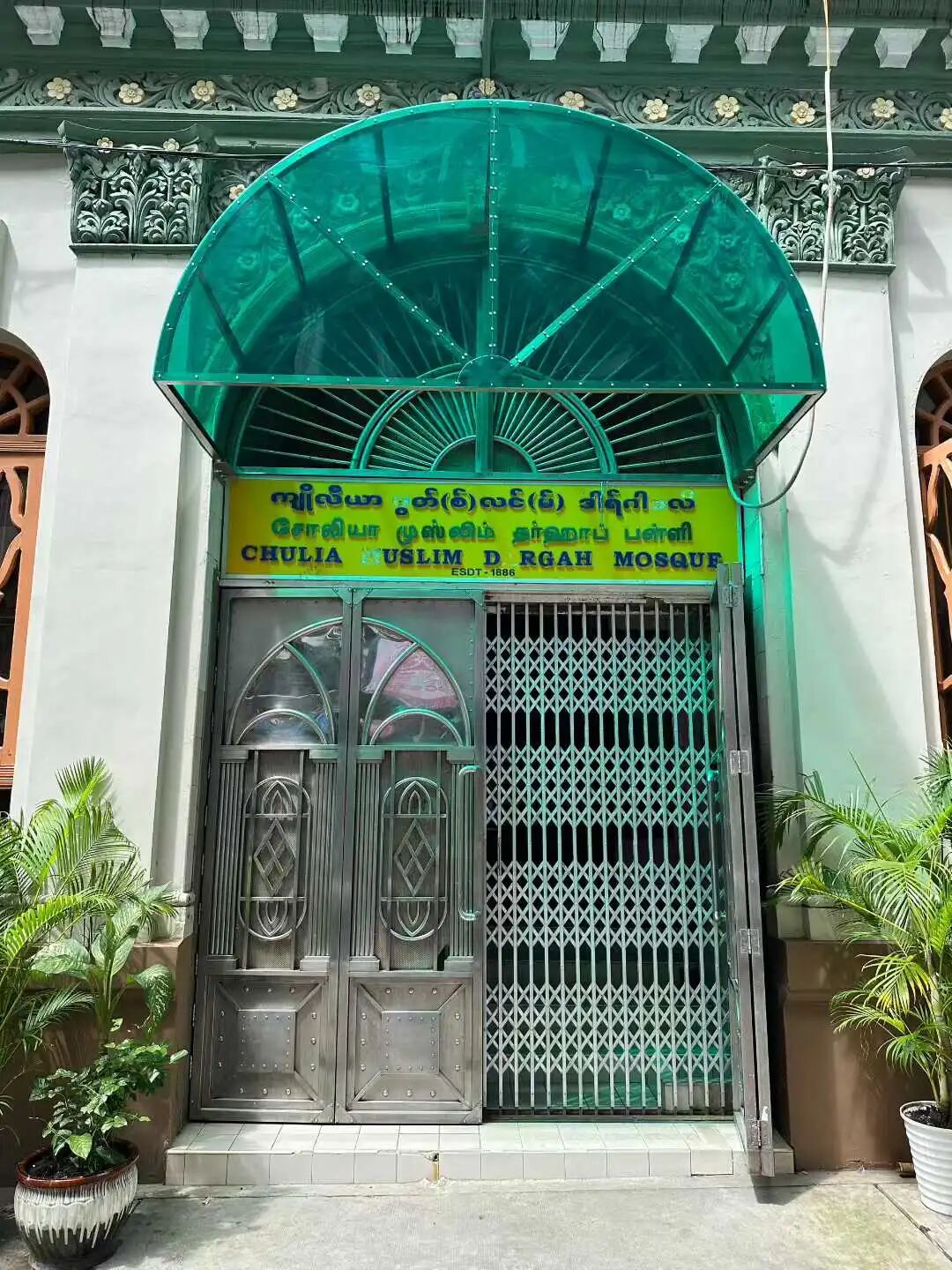
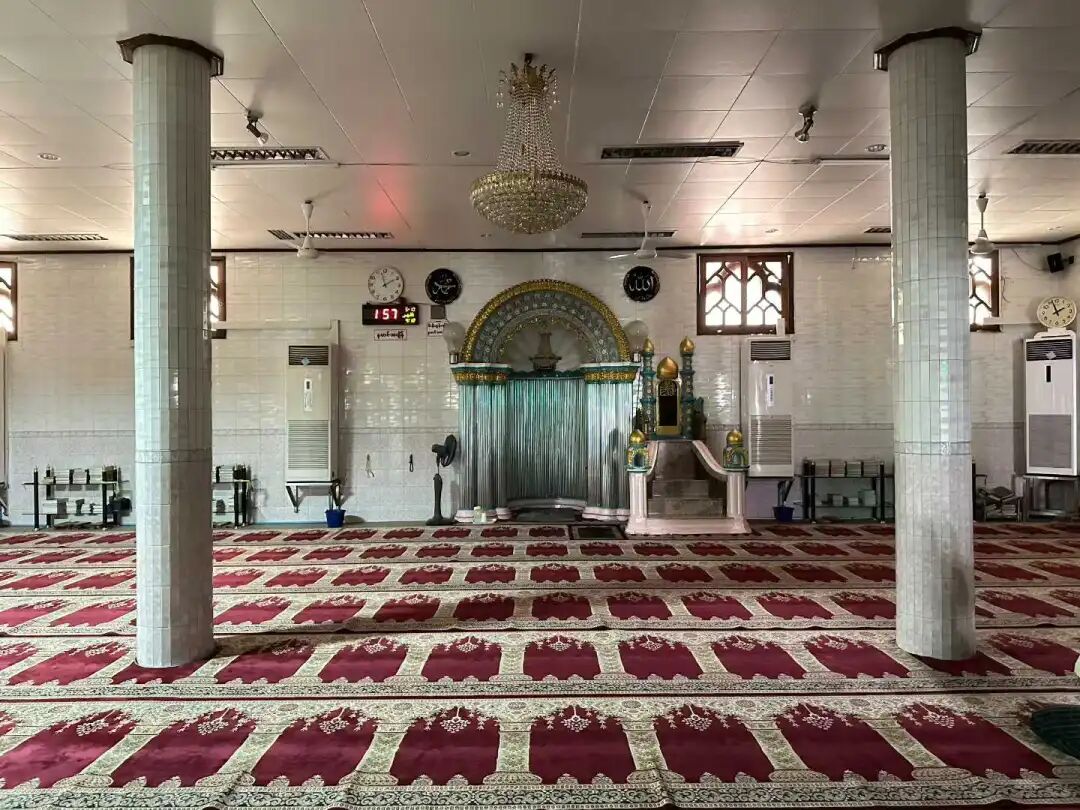
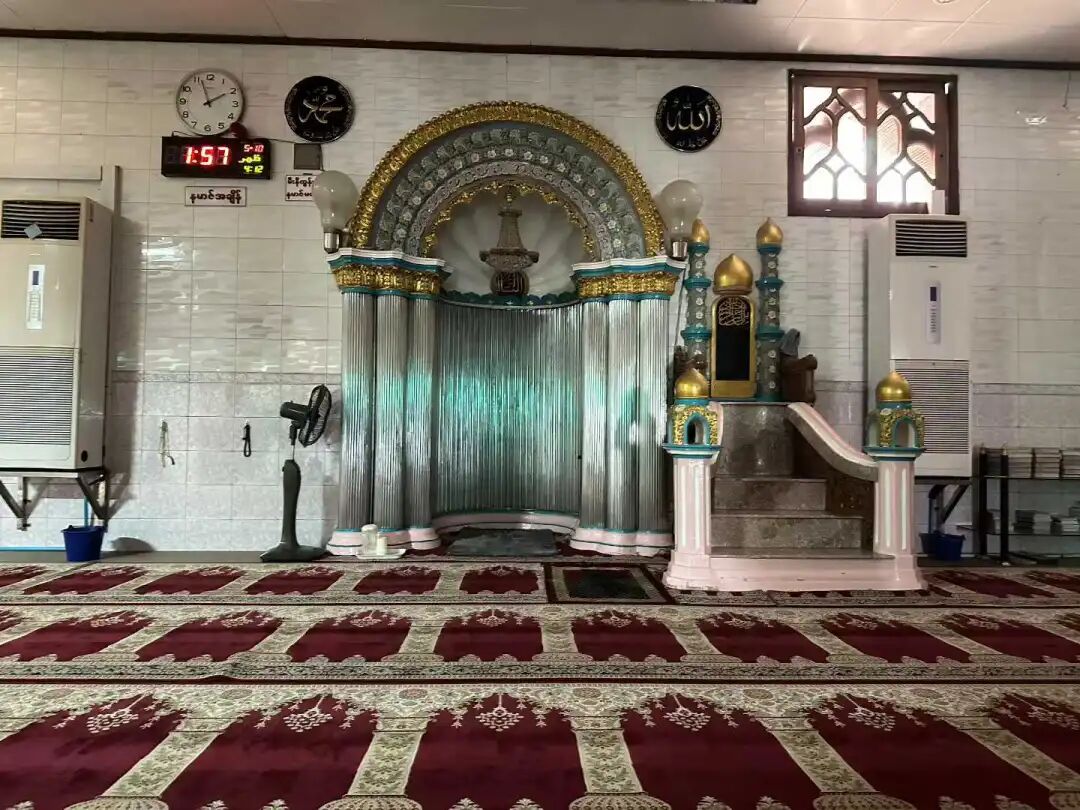
The Chulia Muslim Dargah Mosque is located opposite Bogyoke Aung San Market in the northern part of Yangon's old town. It is the second mosque built in Yangon by South Indian Tamil Dosti. It was funded by a Tamil couple born in Myanmar, Kassim Kaderlt and Daw Nyein Mae, in 1886, and renovated into its current appearance in 1995.
The original meaning of Dargah in Persian is 'portal,' which later evolved to mean a Sufi gongbei shrine. However, I did not find any gongbei or shrine inside the mosque.
The Surti Sunni Friday Mosque is located on Mogul Street in the Indian quarter of Yangon's old town. It was first built in 1826 by Gujarati merchants from Surat in western India, but it was destroyed during the British invasion of Yangon in 1852. In the 1860s, the wealthy Gujarati company Sooratee Bara Bazaar led the reconstruction of the Surti Mosque, and it officially opened in 1871.
Many of Yangon's Gujarati Dosti came from the town of Rander near Surat. Historically, this was an important port in western India. As early as the 13th century, a large number of Arab merchants from Kufa, Iraq, lived there, and by the 16th century, the port was piled high with Sumatran spices and Chinese porcelain. After the 19th century, Gujarati merchants from Rander began to go to Yangon for business. Currently, many old houses in Rander are built of Burmese teak, and restaurants in Rander even serve a snack called Yangon paratha.
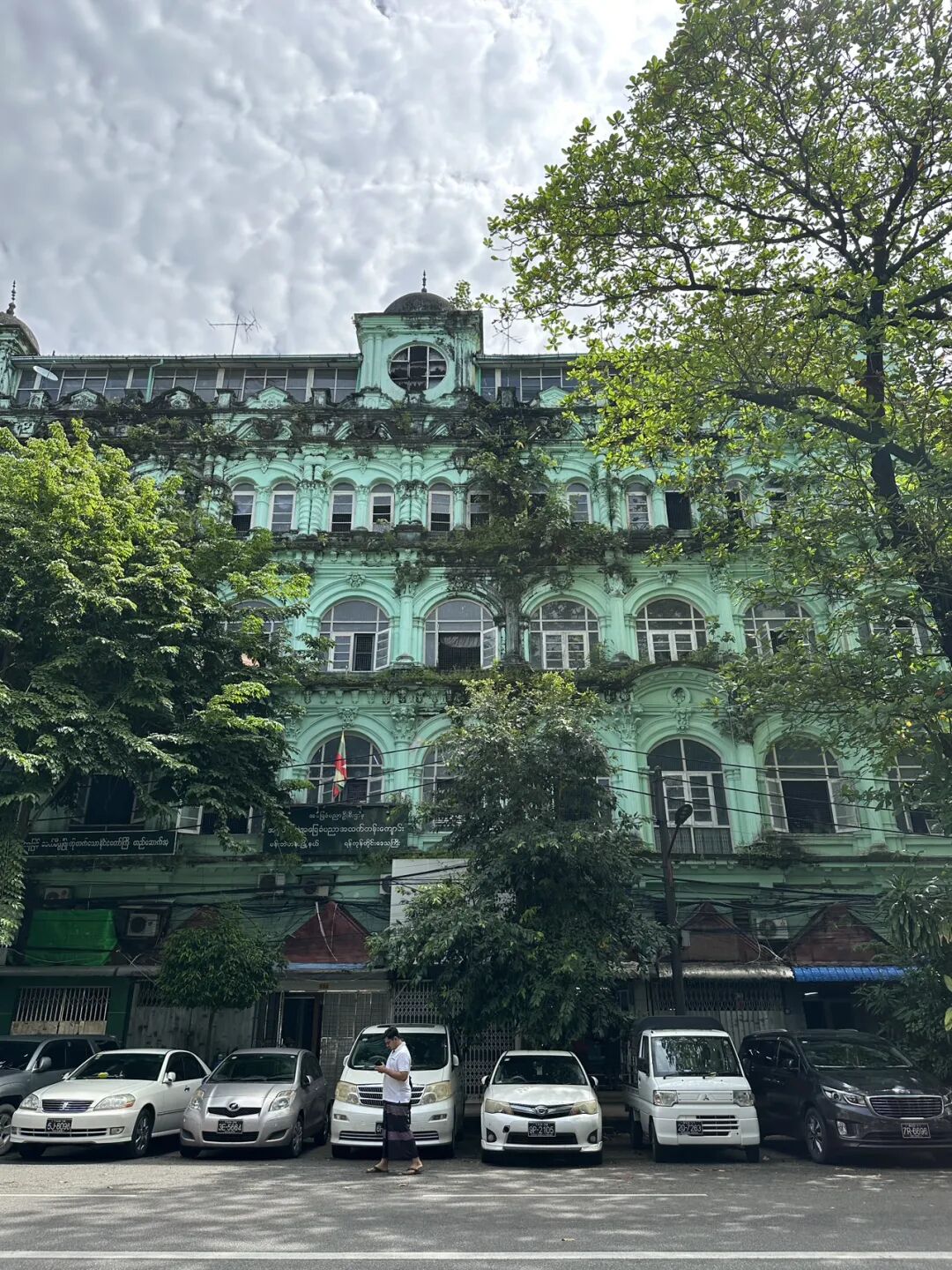
The Muhammadiyah Madrasa in Yangon, Myanmar, is located opposite the Surti Sunni Friday Mosque. It was first built in 1855 by Gujarati merchants from the town of Rander in Surat, western India. Before 1900, the madrasa only taught religious knowledge and Urdu. In 1900, it officially introduced English education, and in 1909, it officially transformed into the comprehensive Rander High School.
Although it was founded by wealthy Gujarati Dosti merchants, the school was open to everyone. Sunnis, Shias, Christians, Hindus, and Buddhists could all enroll. By 1927, all the teachers except for the principal were British. Before 1948, the school was supported by the British and taught in English. After 1948, it switched to teaching in Burmese, and after 1965, the government officially took over the school.
The Mamsa Mosque is located on 26th Street in the Indian quarter of Yangon's old town. It was built in 1923 by the Mamsa family, who were Gujarati merchants from Surat in western India. The Mamsa family gained a great deal of wealth by investing in real estate and still collects rent from more than 150 buildings today.
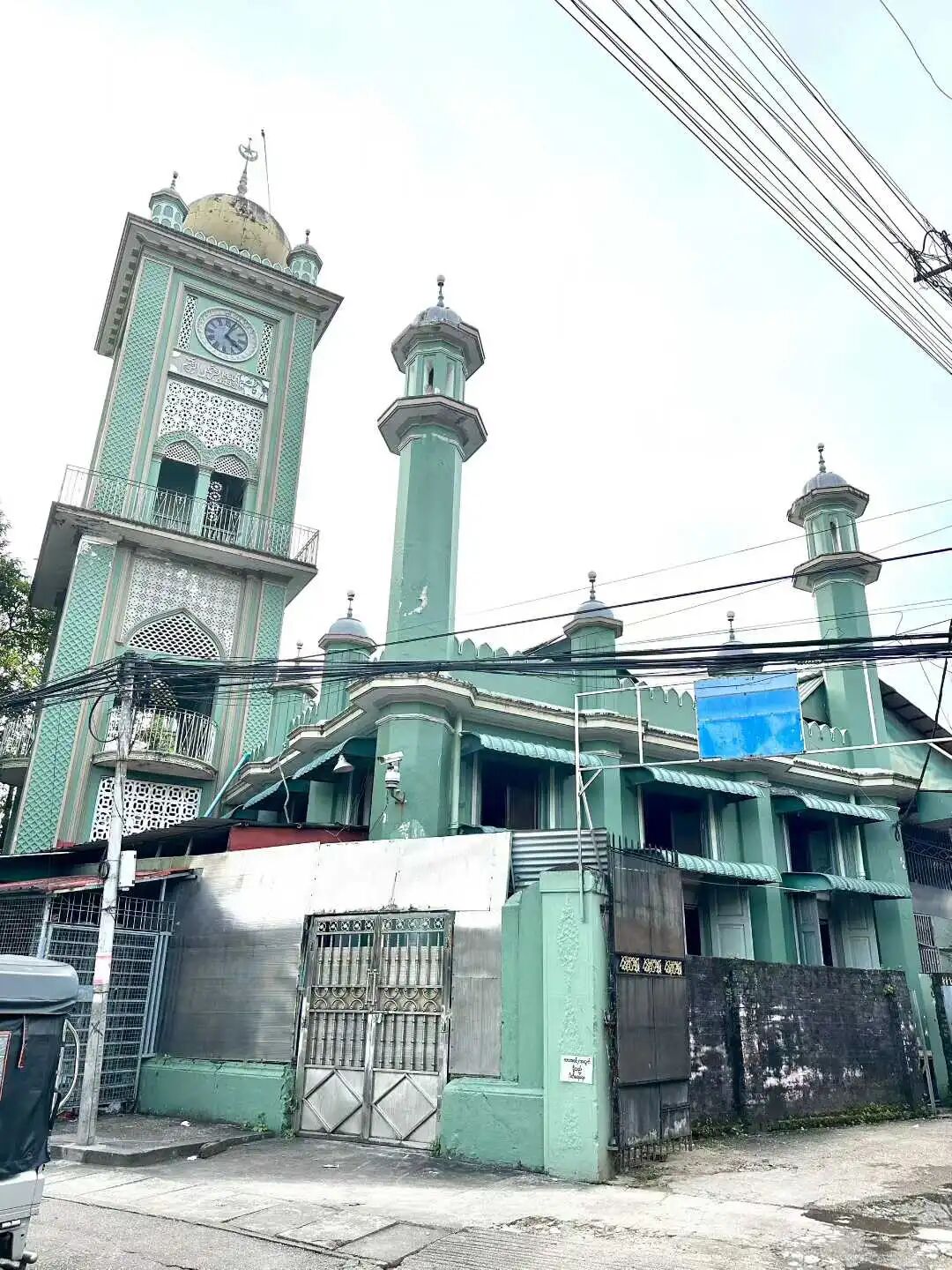
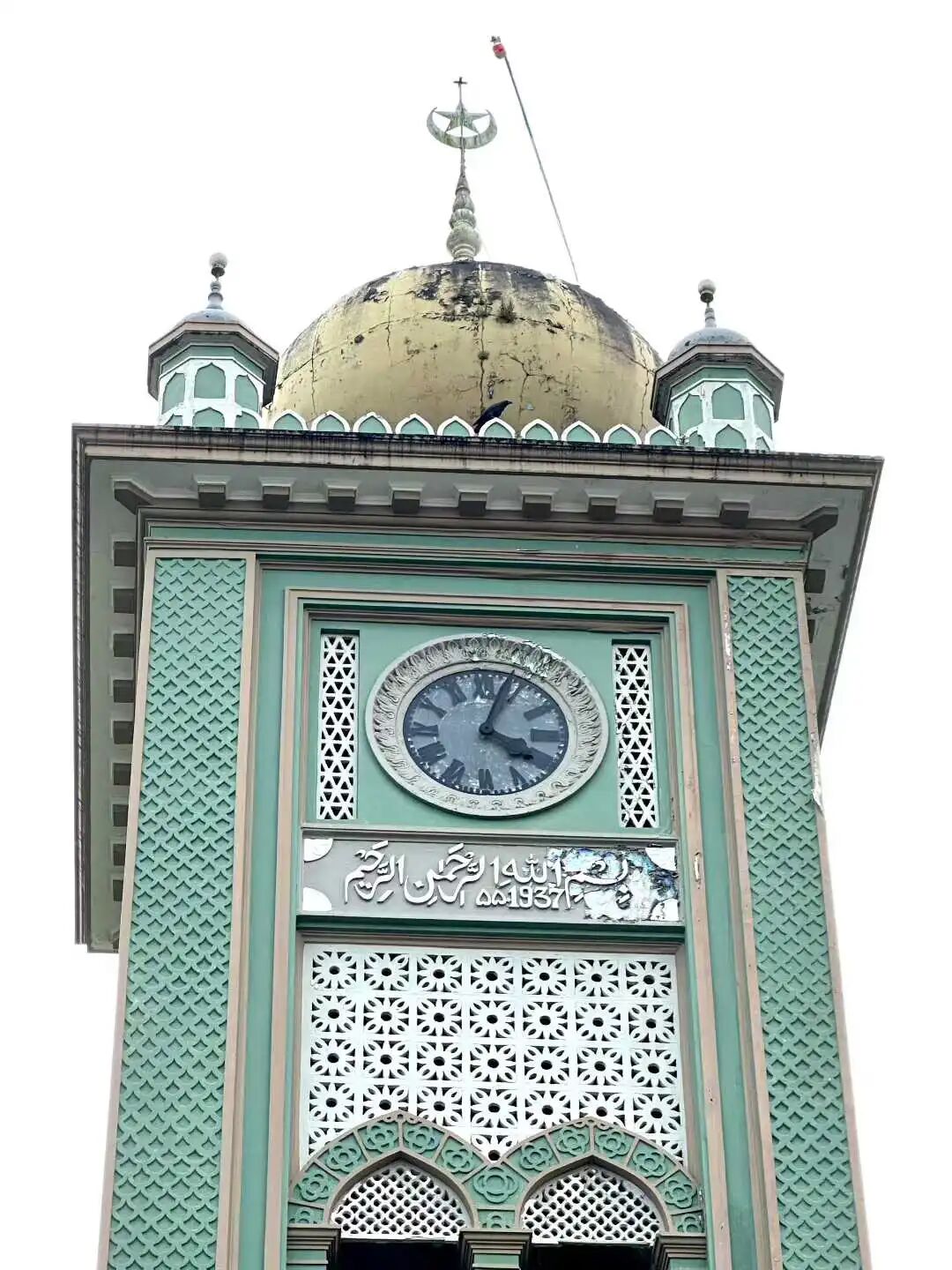
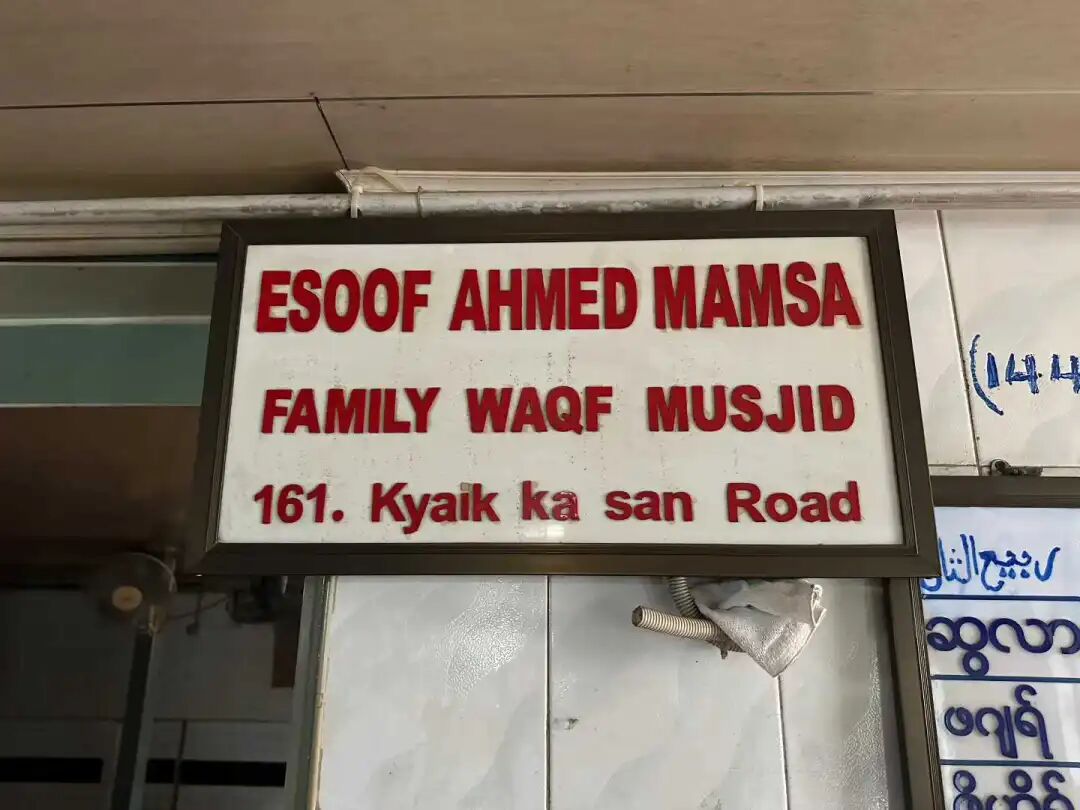
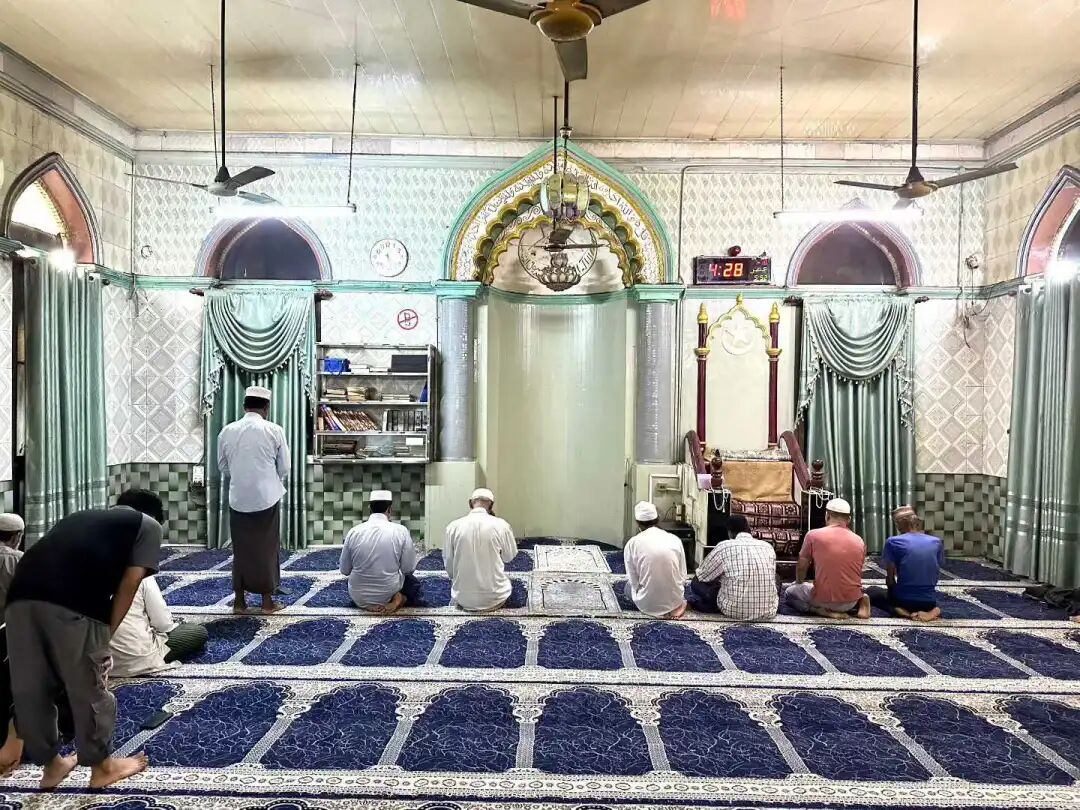
The Esof Ahmed Mamsa Family Mosque is in Tamwe Township, north of Yangon's old city. The Mamsa family, merchants from Gujarat, India, built it in 1937. In 1995, they renovated it to its current look using rent collected from family-owned properties.
The mosque has a tall clock tower facing the street. At the top is a clock made by the old Berlin, Germany, watchmaker C. F. Rochlitz, which still works today. If you look closely at the clock tower, you can still see bullet holes left from when the Japanese army invaded Yangon in 1942. The German company C. F. Rochlitz started in 1824 and specialized in clocks for towers. It won many international awards in the 19th century and stayed under the Rochlitz family until it was bought in 1984.
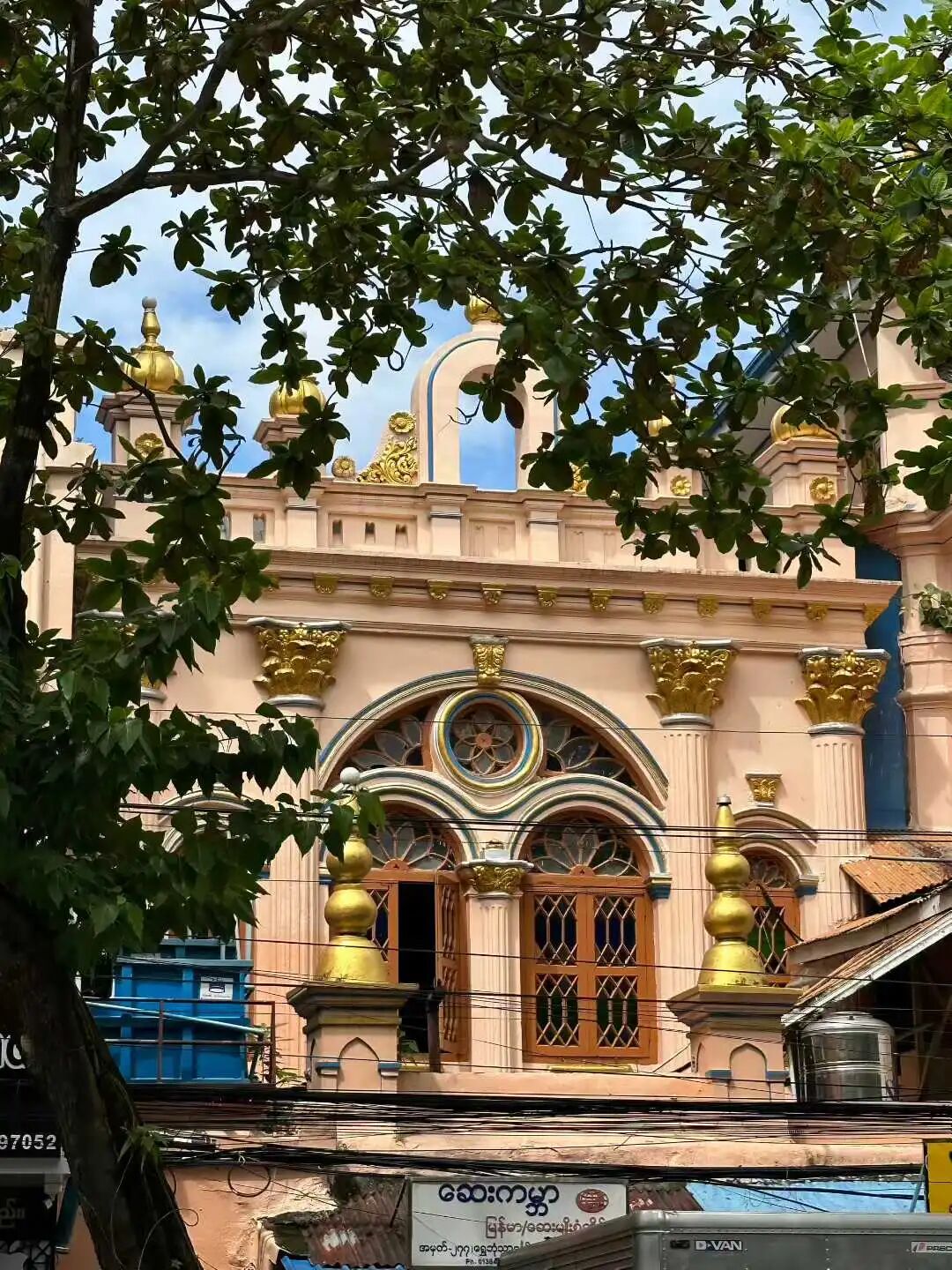
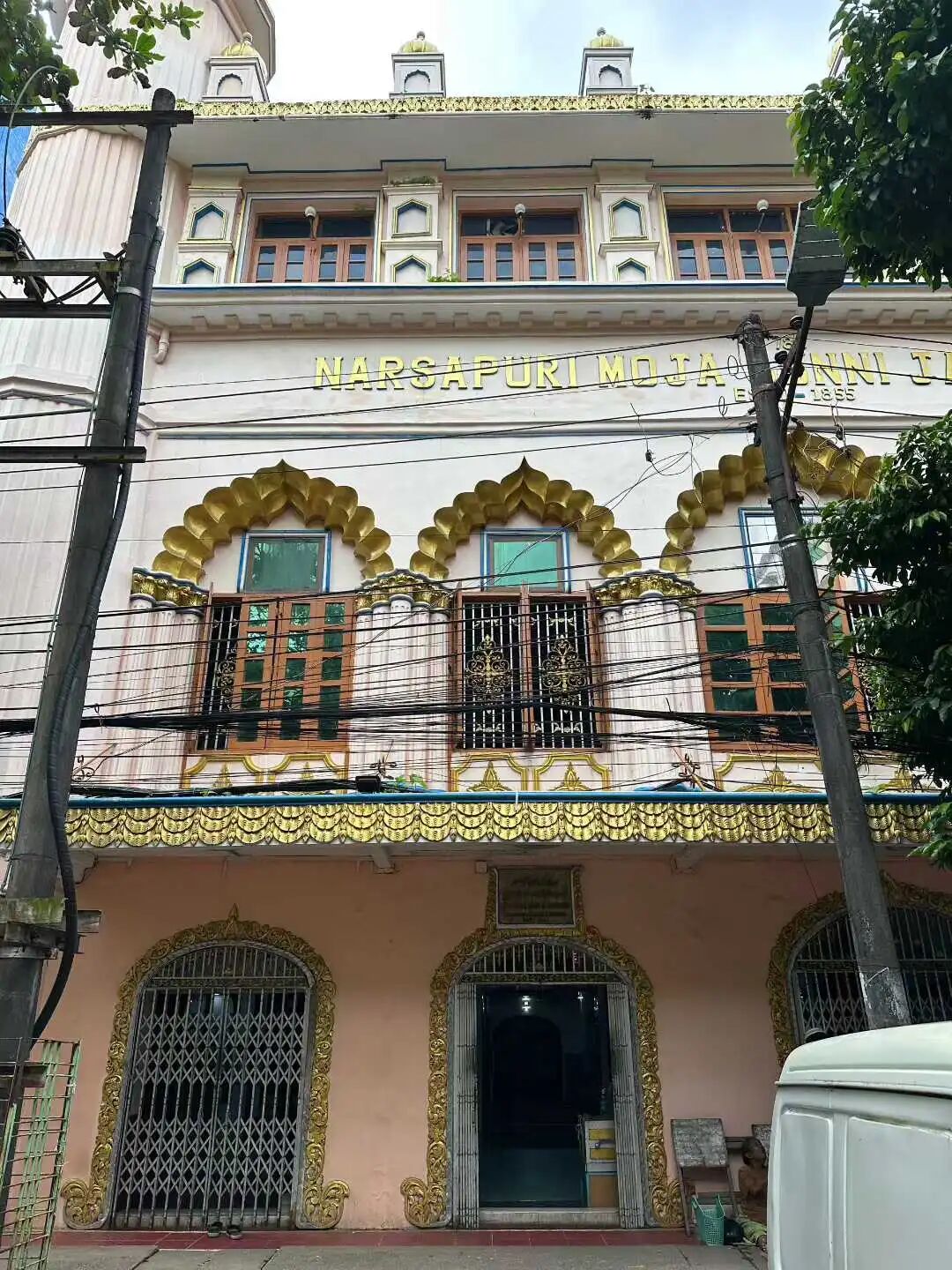
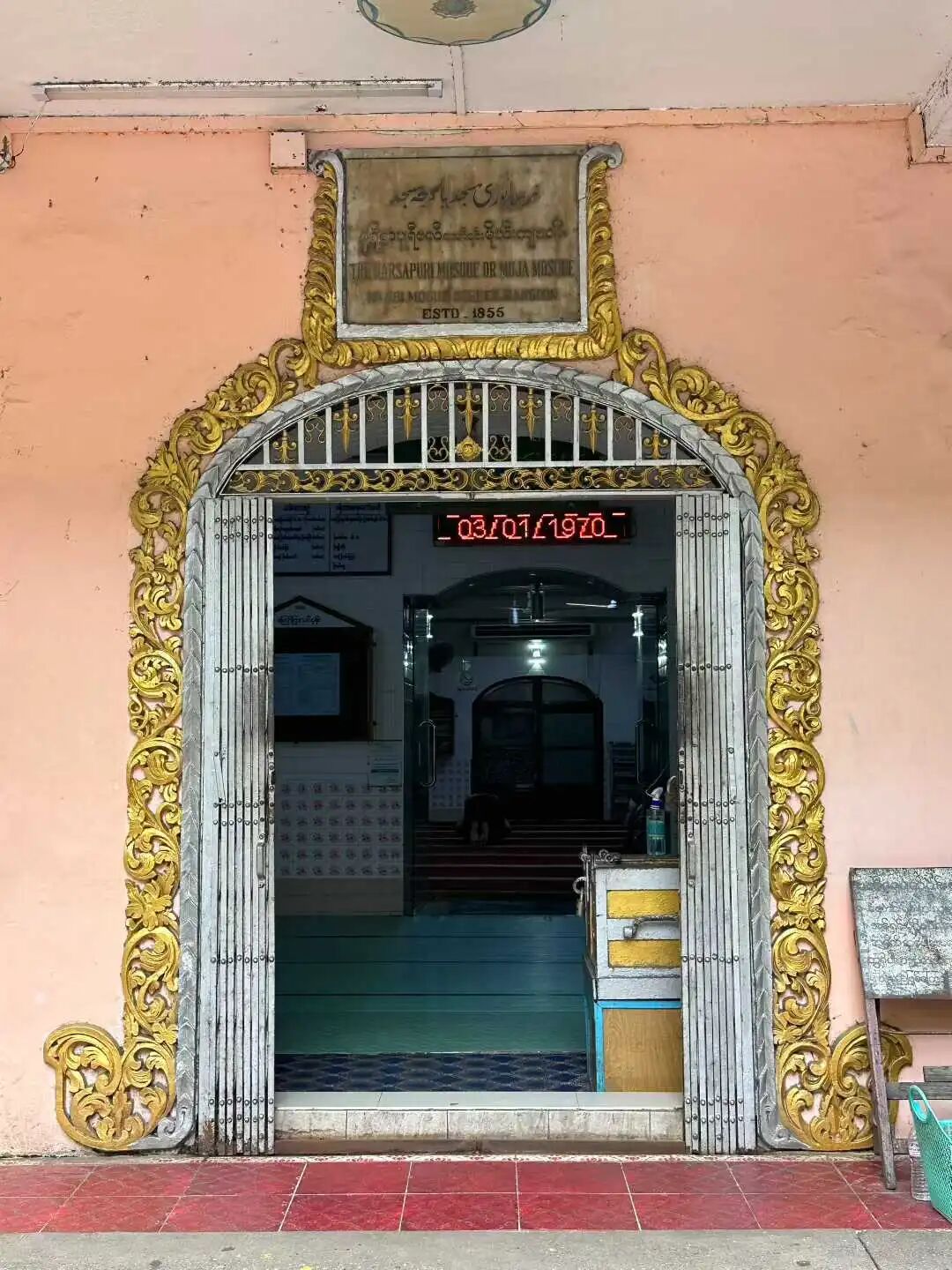
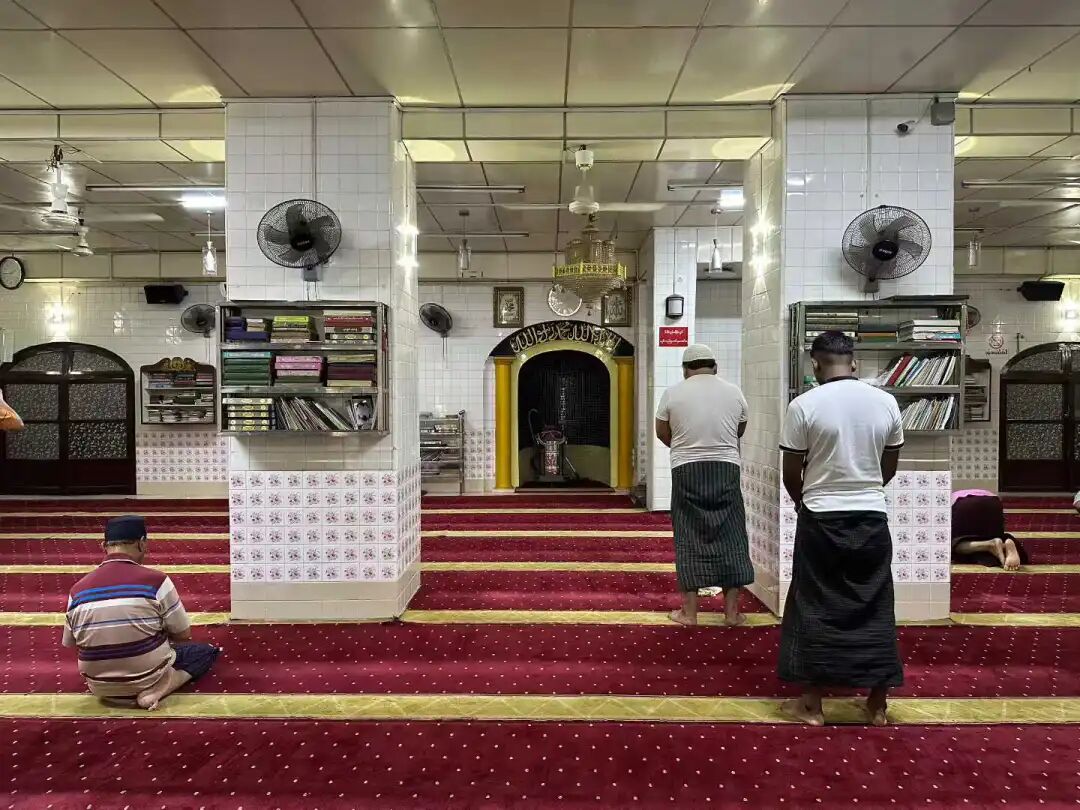
The Narsapuri Moja Sunni Jame Mosque is in the middle of Mogul Street in Yangon's old Indian quarter, north of the Surti Mosque. Friends (dosti) from Andhra Pradesh on the southeast coast of India first built it in 1855, and it was rebuilt into its current form in the 1890s.
Unlike northern India, where the faith spread through occupation, the faith in southern India mostly grew through merchants and Sufi saints. The dosti from Andhra Pradesh speak a special Deccan Urdu. Compared to northern Urdu, it keeps more ancient words from the pre-Mughal era and adds many loanwords from local Deccan languages like Telugu and Tamil.
The mosque is named after Narsapur, a coastal city in Andhra Pradesh, India. The dosti from Andhra Pradesh in Yangon boarded ships there to come to Yangon. The Dutch used Narsapur as a port in the 17th century. By the 18th century, it became an important Indian trade port and shipbuilding center, exporting large amounts of teak to the world.
The Gulam Ariff Mosque is on Lanmadaw Road in Yangon's Chinatown. The Indian real estate developer Gulam Ariff built it in 1888. Gulam Ariff owned a famous real estate company in Yangon. This mosque has fewer people, but it provides great convenience for the dosti who live and work near Chinatown.
The Hashim Kasim Patel Trust Mosque is on the far west side of Yangon's old city. The Kasim Patel family from Surat, India, built it in 1922, and the family still manages it today.
After the First Anglo-Burmese War in 1826, merchants from British India began traveling to Myanmar for business. The Kasim Patel family moved from Mumbai, India, to Myanmar in the 1830s. They first worked in the silk trade in Mawlamyine. After the British occupied Yangon in 1853, they moved to Yangon to open shops. The family started a company named after the eldest son, Hashim Kasim Patel. They also ran the Gulam Ariff Company and the Boglay Bazzar Company. From the late 19th century to the early 20th century, the Kasim Patel family held a very high status among the Gujarati dosti in Yangon.
The Chittagong Sunni Arkaty Chota Mosque is on 40th Street on the east side of Yangon's old city. Dosti from Chittagong, Bangladesh, built it. Chittagong is an ancient natural port in Bangladesh. It has been an important passage for the southern Silk Road since ancient times. Arab merchants began trading there in the 9th century, and the famous traveler Ibn Battuta and Zheng He's fleet both visited. After 1666, the Mughal Empire ruled Chittagong. During this time, Chittagong developed quickly and became a shipbuilding center. After 1823, the British occupied both Chittagong and Lower Myanmar, and the dosti from Chittagong began moving to Myanmar to make a living.
The Triangle Mosque is on Upper Pansodan Road, north of Yangon's old city. It is one of the oldest mosques in Yangon. Two officers of King Bagyidaw (who reigned from 1819 to 1837) of the Konbaung Dynasty, U Shwe Thie and U Shwe Mie, built it in 1826. This mosque was badly damaged during the Japanese invasion of Yangon in World War II, but it was later renovated.
The Mayin Gon Jame Mosque is in Sanchaung Township, north of Yangon's old city. It was first built in 1930. The spiral staircase inside the mosque was provided by Cowie Brothers, an exporter from Glasgow, Scotland. The company's founder, Charles, was once a manager at the Rangoon Oil Company and exported many goods to Myanmar from the late 19th to the early 20th century.
Mogul Street Jumu'ah Mosque (Mogul Street Jumu'ah Mosque) is located at the very busy Mogul Street intersection. Surrounded by many shopping malls, it is known as the New York Times Square of Yangon. Every Friday, many friends (dost) come to the mosque for Jumu'ah prayers. Although the mosque director has been applying to expand the mosque, it has never been approved due to the current situation.
Musmeah Yeshua Sunni Jumu'ah Mosque (Musmeah Yeshua Sunni Jumu'ah Mosque) is located in the Tamwe Township in northern Yangon. It was founded in 1908 by the Indian businessman Musmeah Yeshua. The top of the main hall features twenty-two intricate domes and small towers, making it the most distinctive mosque in Yangon. Despite damage from two earthquakes, most of the original design of the main hall, including the stained glass windows imported from India, has been preserved to this day.
According to newspaper records from the early 20th century, Musmeah Yeshua was once a famous gang leader in Yangon. At that time, two major Indian families in Yangon, led by Musmeah and Mamusa, were long-term rivals, which led to many gang incidents. The Straits Times reported on December 21, 1923, that Musmeah Yeshua himself clashed with a rival gang called the Sultans. He was injured by a series of glass soda bottles thrown from a roof and was later forced to apply to the police for protective custody.
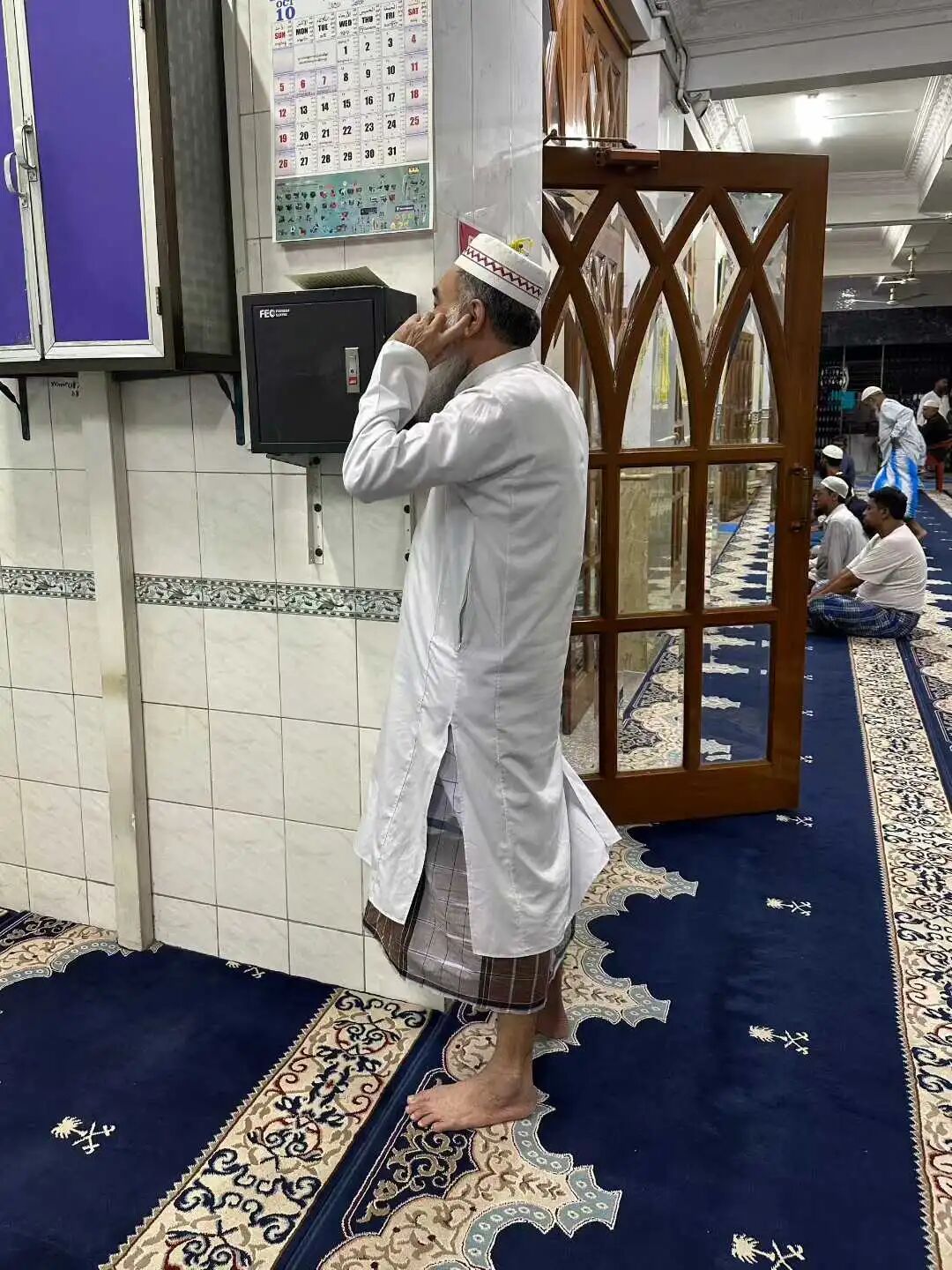
In every mosque in Yangon, the time between the dawn prayer (fajr) and the sunrise prayer (shuruq) is for studying the Quran. Adults and children learn the Quran sentence by sentence in the mosque, which is the best time to experience the religious atmosphere of Yangon.
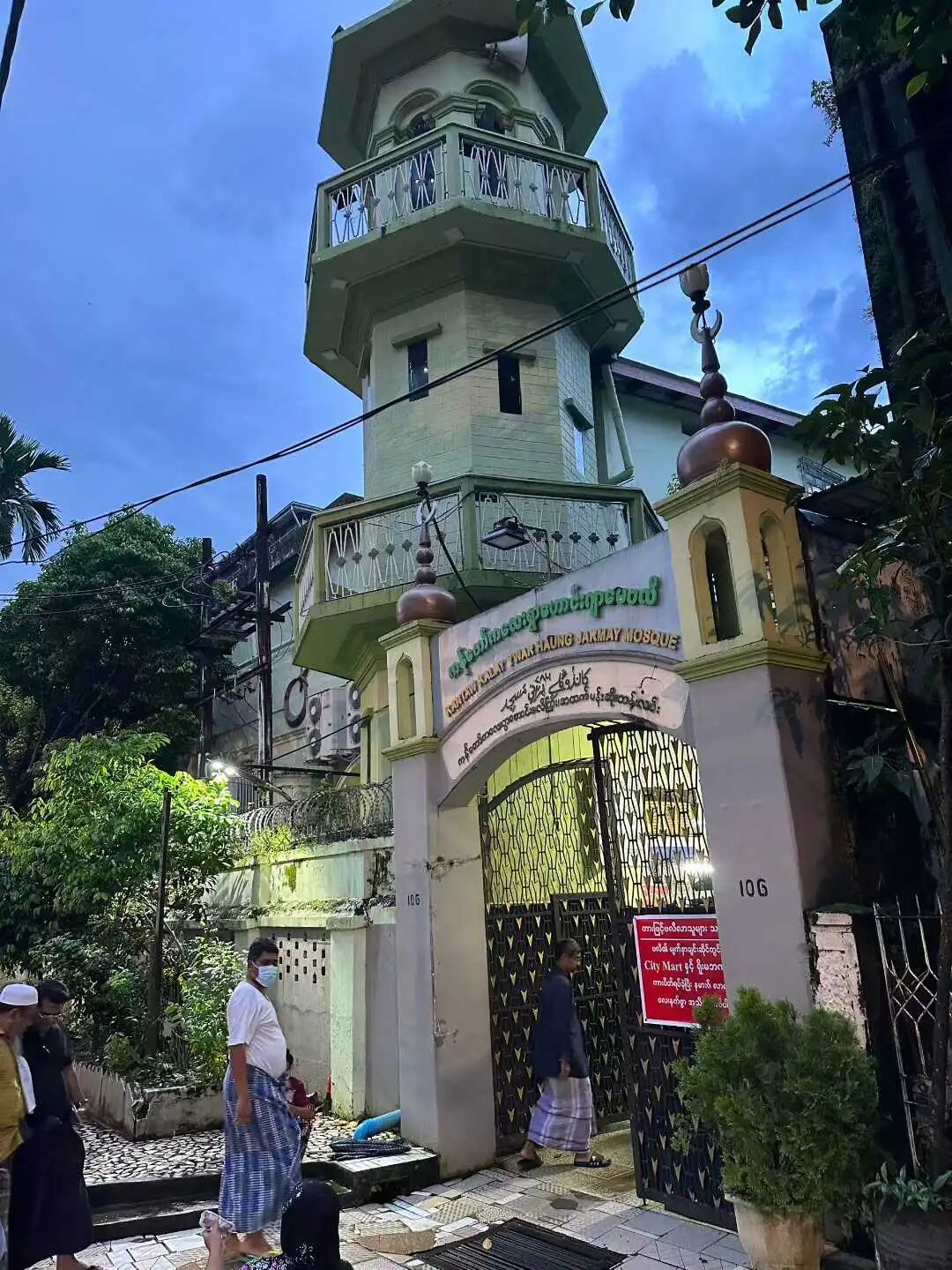
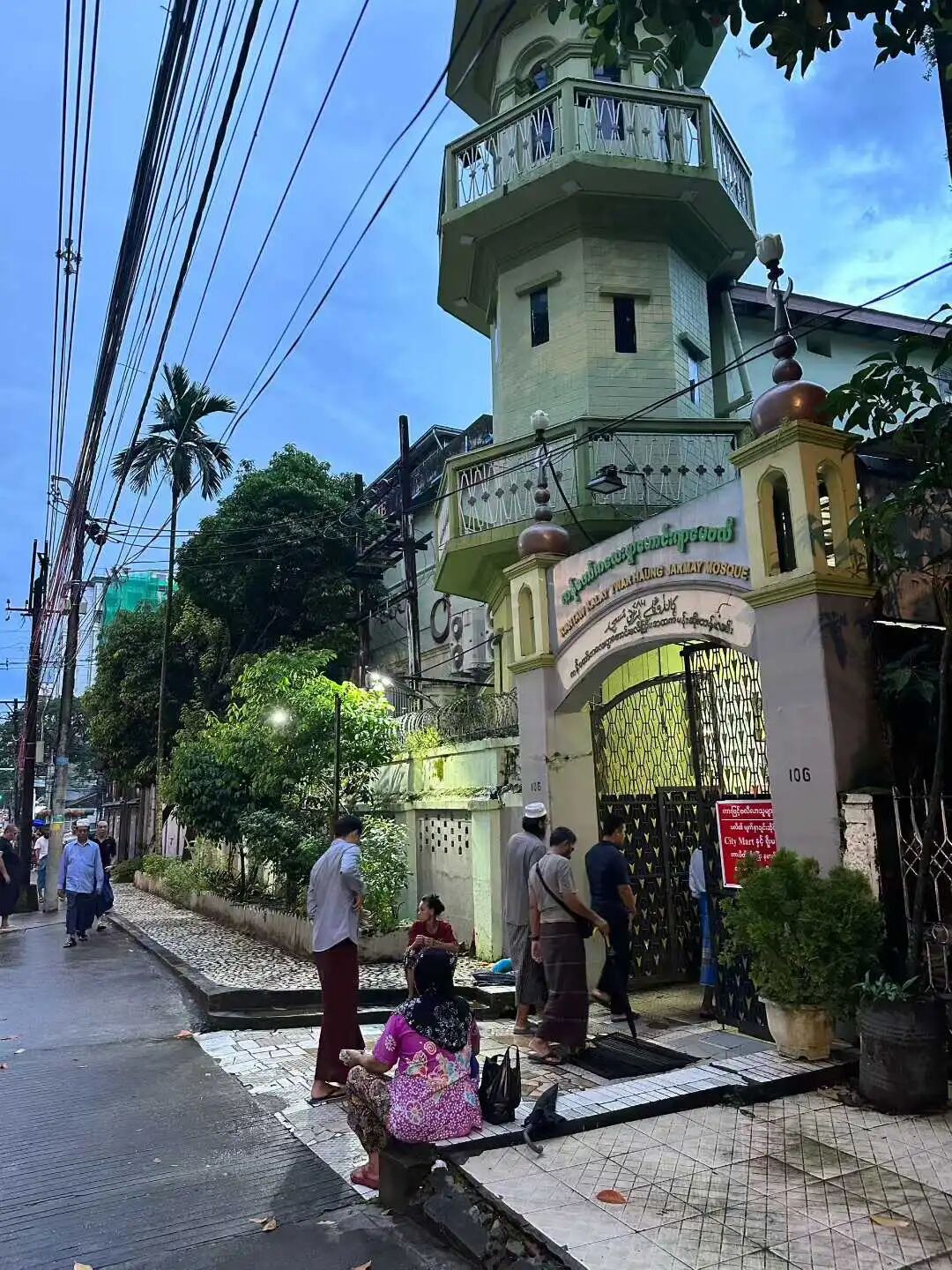
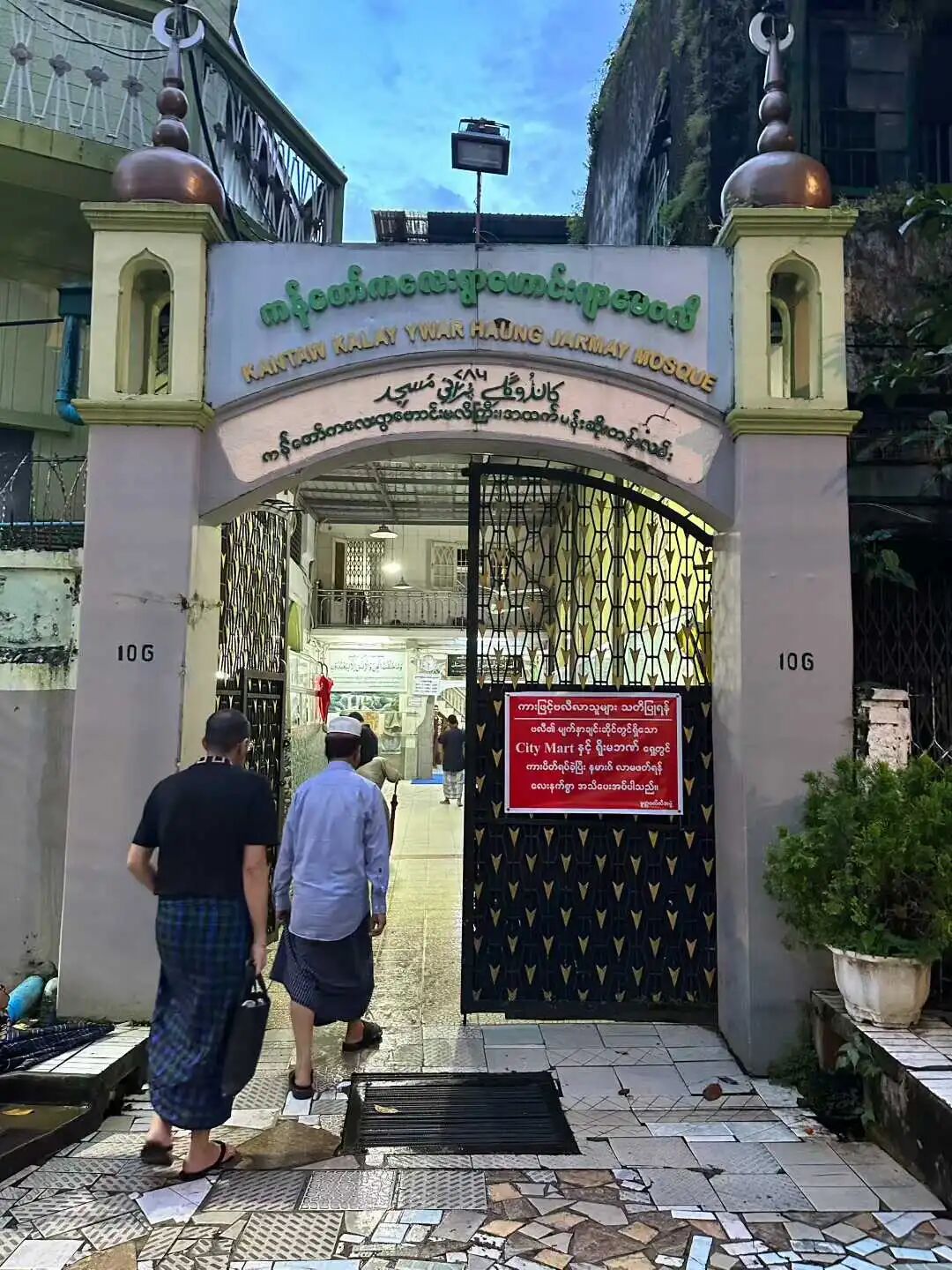
Kantaw Kalay Ywar Houng Mosque is located on Upper Pansodan Road, north of the old city of Yangon and not far north of the Triangle Mosque. Its founding date is unknown, and it was rebuilt into its current structure in 1940. This is another area in Yangon outside the Indian quarter where Indian friends (dost) live. Yunnan Hui Muslims also live here, so there is a lot of delicious food on the street, much like Shuncheng Street in Kunming or Niujie in Beijing. view all
Summary: This first part of the Yangon mosque guide records visits to twenty-three mosques in and around the old city, including Indian Sunni, Indian Shia, and Yunnan Hui Muslim sites. It keeps the source's mosque sequence, community background, architecture, and historical observations.
A detailed introduction to the twenty-three mosques in Yangon, Myanmar (Part 1)
On this trip to Yangon, I visited twenty-three mosques in the old city and surrounding areas. Eighteen belong to Indian Sunni Muslims, four to Indian Shia Muslims, and one belongs to Hui Muslims from Yunnan.
I have already introduced the Shia and Hui mosques in Yangon in my articles 'The Largest Shia Mosque in Southeast Asia—Yangon' and 'Hui Mosques and Hui Food in Yangon, Myanmar.' This time, I will introduce the eighteen Indian Sunni mosques in Yangon.
Although I have visited Southeast Asia many times, countries like Thailand, Vietnam, Malaysia, and Indonesia follow the Shafi'i school of thought. Their prayer movements and timings are different from ours, and I often felt out of place during namaz. This time, I finally reached a Hanafi region in Southeast Asia: Yangon, Myanmar. The prayer movements of the brothers (dosti) in Yangon are exactly the same as those of the Hui Muslims, so I felt very at home in the mosques every time.
There is another special feature in Yangon's mosques: almost every mosque has a shoe storage area with a brother (dosti) specifically in charge of looking after the shoes. This man has a great memory. After you finish your namaz, he will bring your shoes out and hand them to you before you even ask. He never mixes up anyone's shoes. Also, he does not accept any tips at all. In India and Egypt, I have always been charged a tip for shoe storage. That is why some brothers (dosti) in India would rather carry a bag for their shoes than use a storage service.
In the mosques of Yangon, the time between the afternoon prayer (dhuhr) and the late afternoon prayer (asr) is for studying scripture. Both adults and children sit in a circle to learn from the imam, and the atmosphere is wonderful.
Unlike in Malaysia, mosques in Yangon are not open all day and are usually locked outside of the five prayer times. This made visiting them more difficult, but alhamdulillah, I managed to visit most of the ones I wanted to see.
Indian brothers (dosti) have been settled in Yangon for 200 years. After the First Anglo-Burmese War in 1826, merchants from British India began traveling to Myanmar for business. The first to arrive in Yangon were Gujarati merchants from Surat in western India. In 1826, they built the Surti Sunni Jumu'ah Mosque in Yangon. In the same year, two officers from the Konbaung Dynasty of Myanmar also built the Triangle Mosque in Yangon. These were the first two mosques in the city.
After the British occupied Yangon in 1853, brothers (dosti) from Gujarat, Bengal, and the Tamil and Andhra regions of South India arrived in Yangon one after another. Many Gujarati merchants opened companies and built mosques in Yangon. The Mamusa family alone built two. Because the British made Yangon part of the Bengal Presidency of British India, a wave of Bengali immigration to Yangon began. The Bengali community also built three mosques in Yangon. At the same time, Tamils from South India followed the Indian Ocean monsoon winds across the Bay of Bengal to Yangon and also built two mosques.
Below, I will introduce the eighteen Indian Sunni mosques in Yangon one by one.
The Sunni Jumu'ah Bengali Mosque is located next to the Sule Pagoda in the center of Yangon's old city. It was founded by Bengali brothers (dosti) in 1862. After the British occupied Yangon in 1852, they made it part of the Bengal Presidency of British India, which triggered a wave of Bengali immigration to Yangon.
The Bengali Mosque was originally a wooden structure. It was rebuilt as a brick building in 1902 and renovated into the current tiled building in 1992. Now, you can see Arabic, English, Bengali, and Burmese on the gate and the prayer schedule. Because it is in the center of Yangon's old town and due to the Rohingya issue, some Burmese nationalist groups have long wanted to tear down the Bengali Mosque.
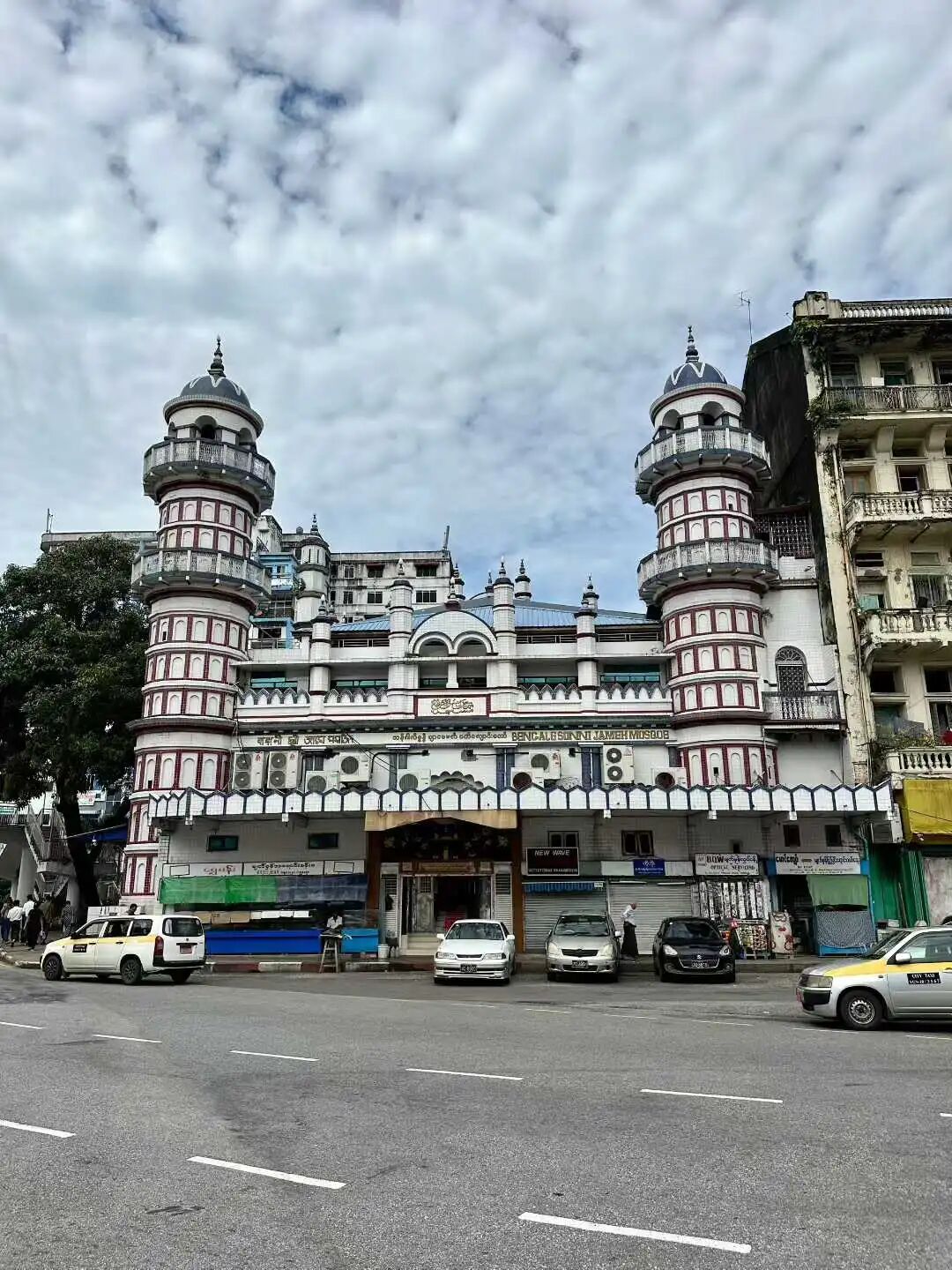
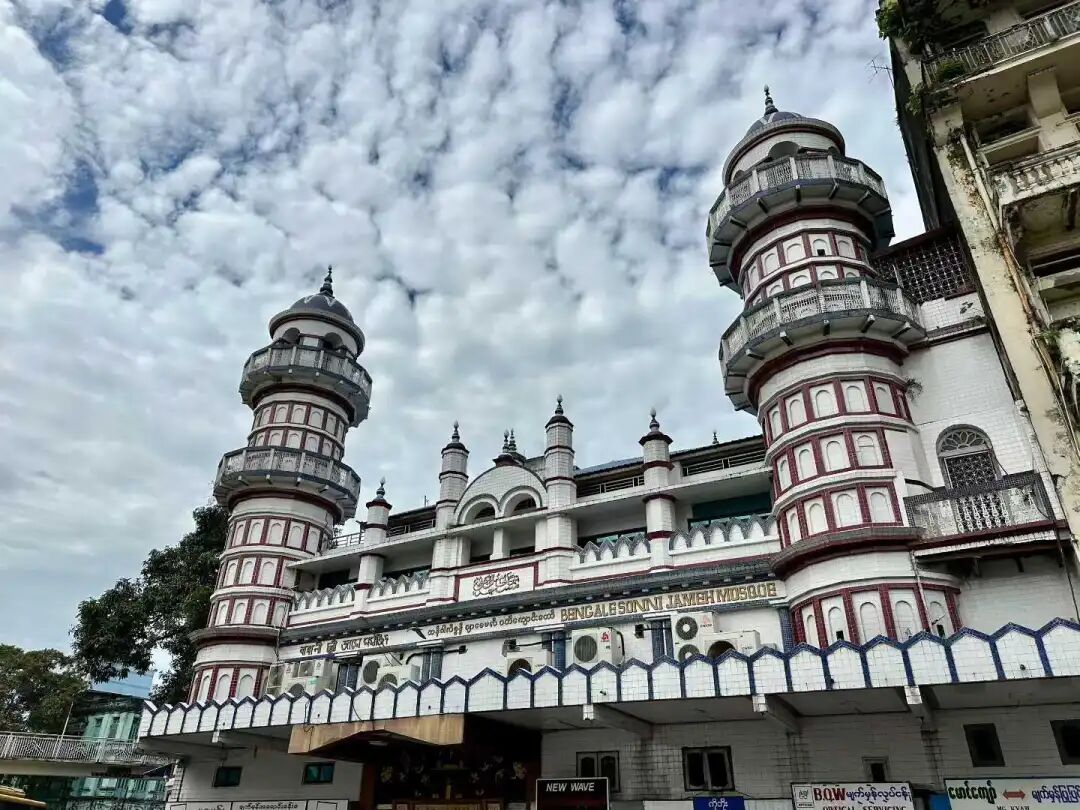
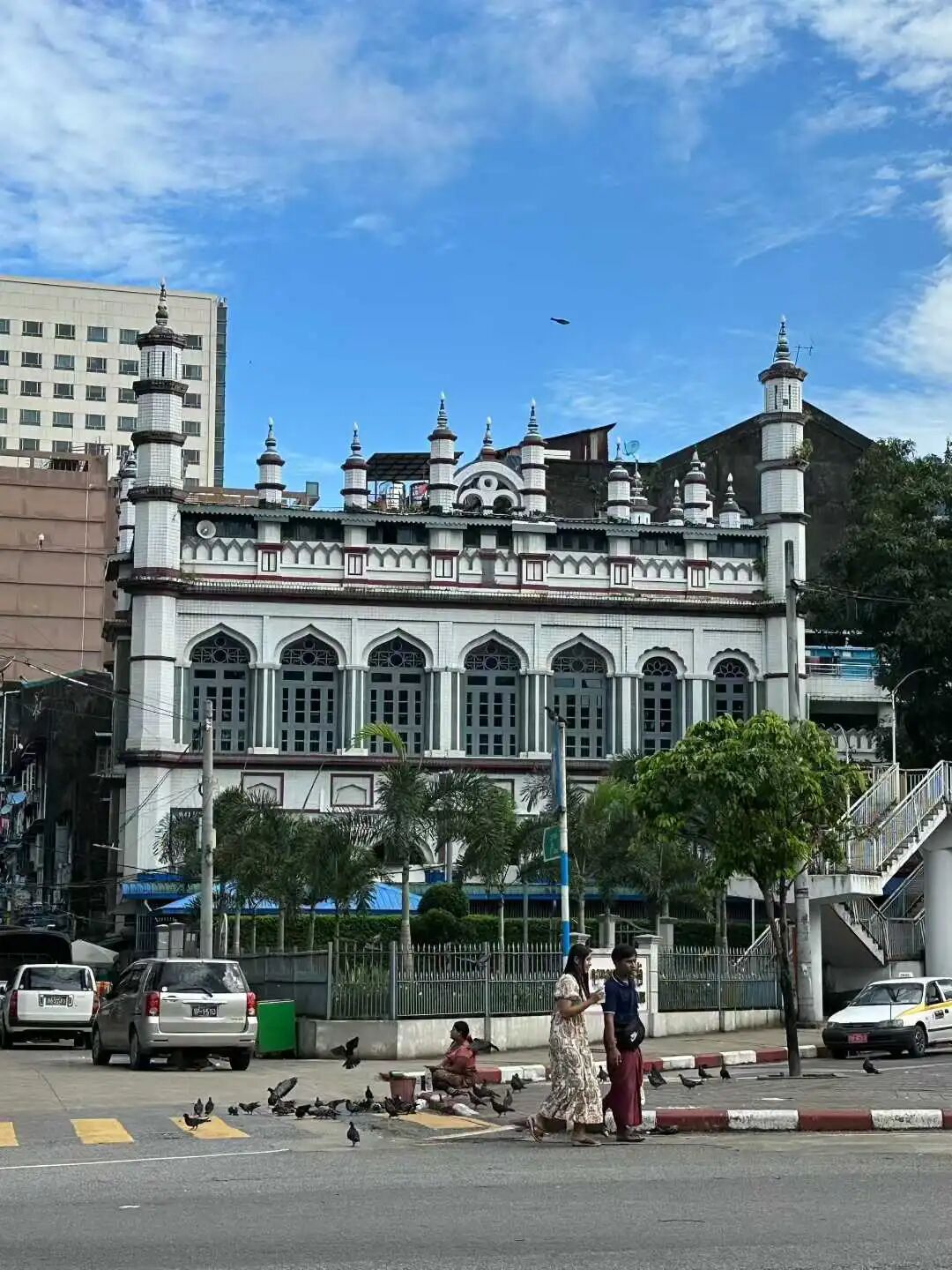
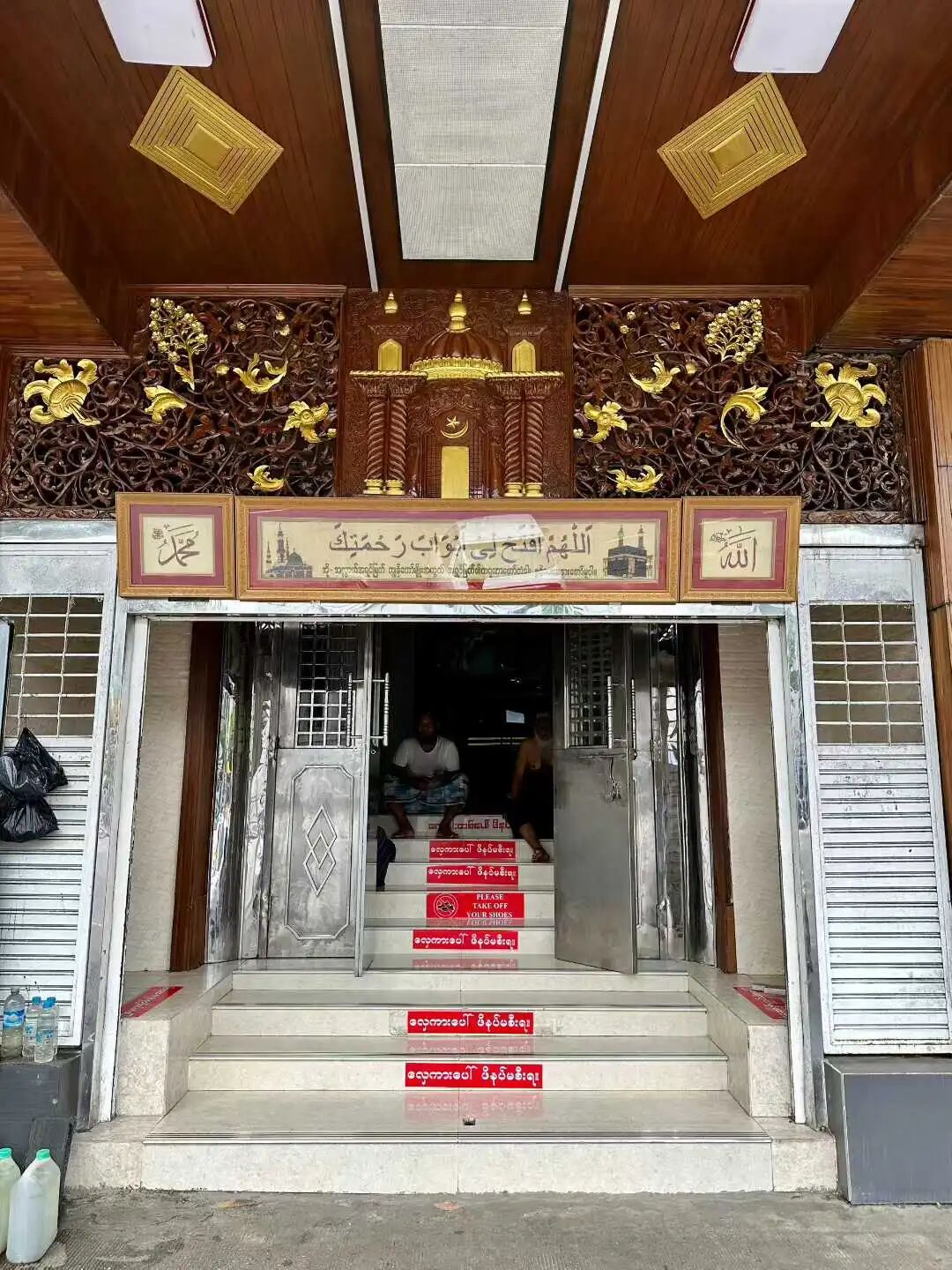
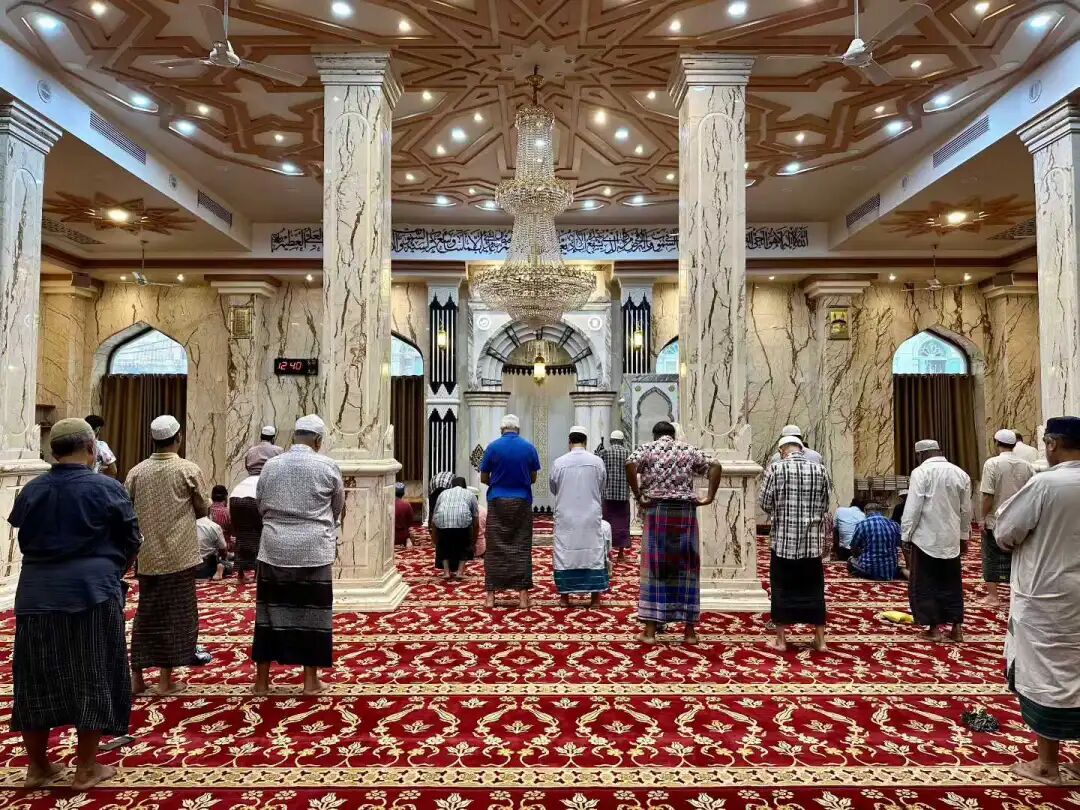
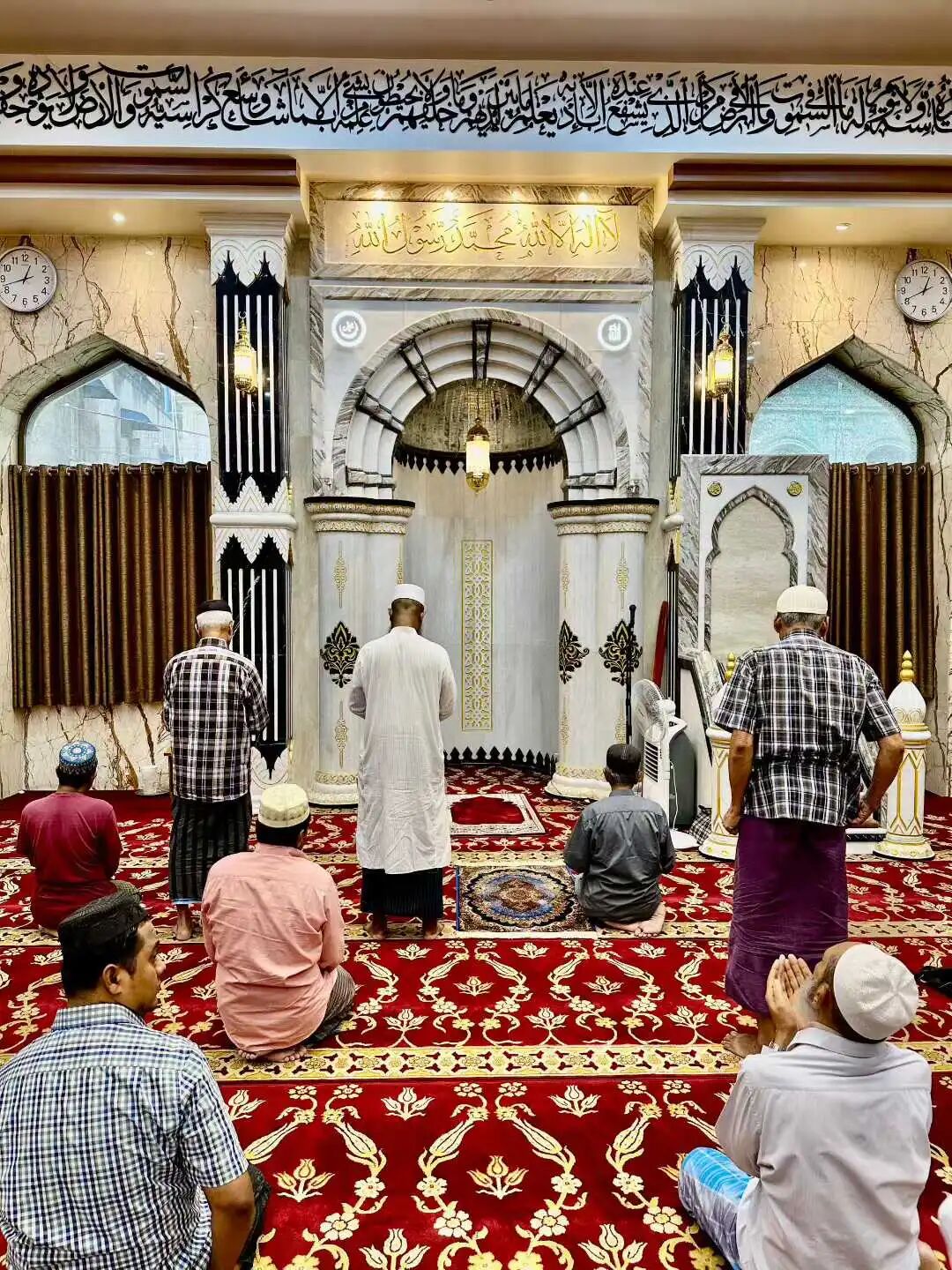
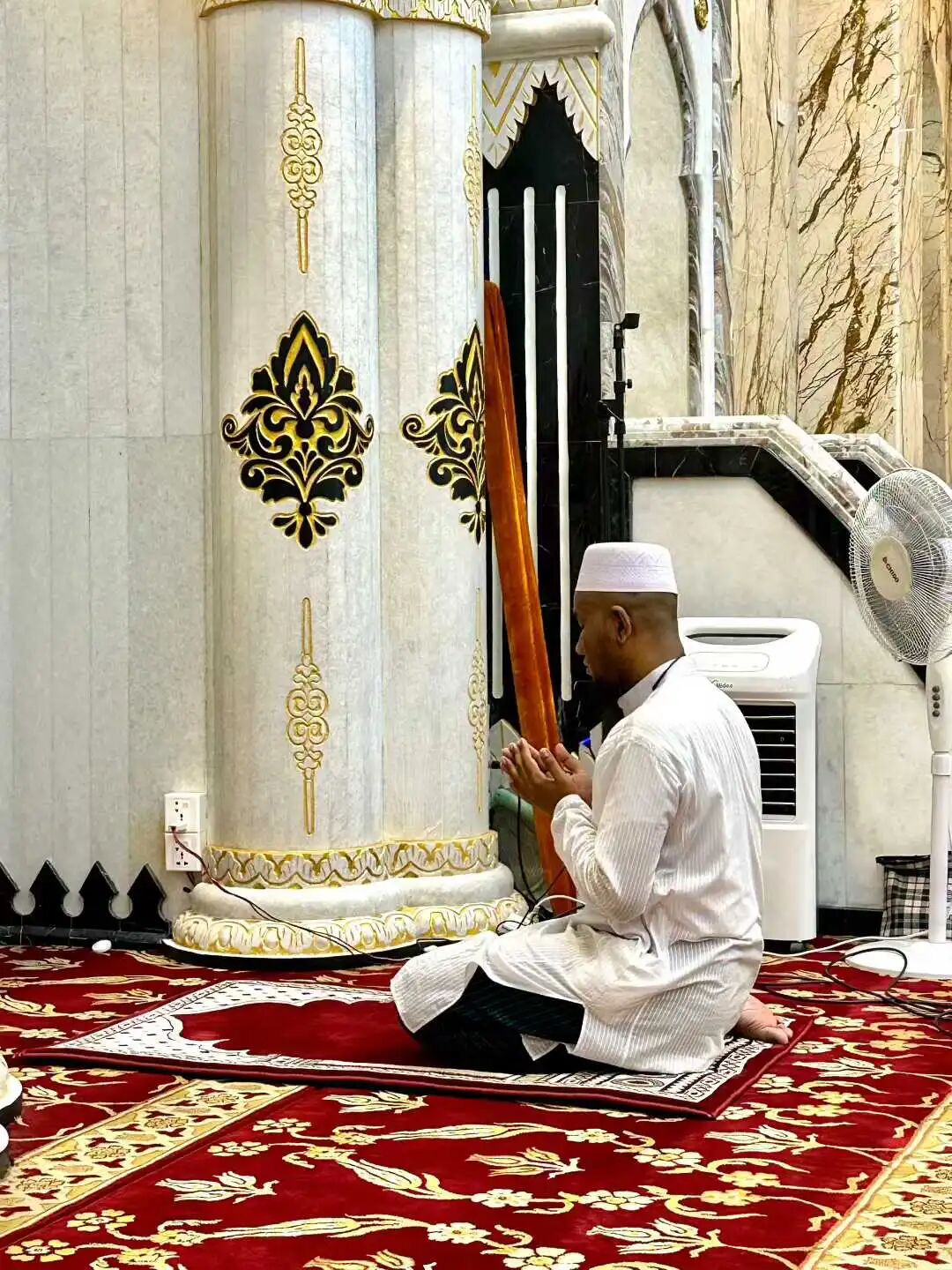
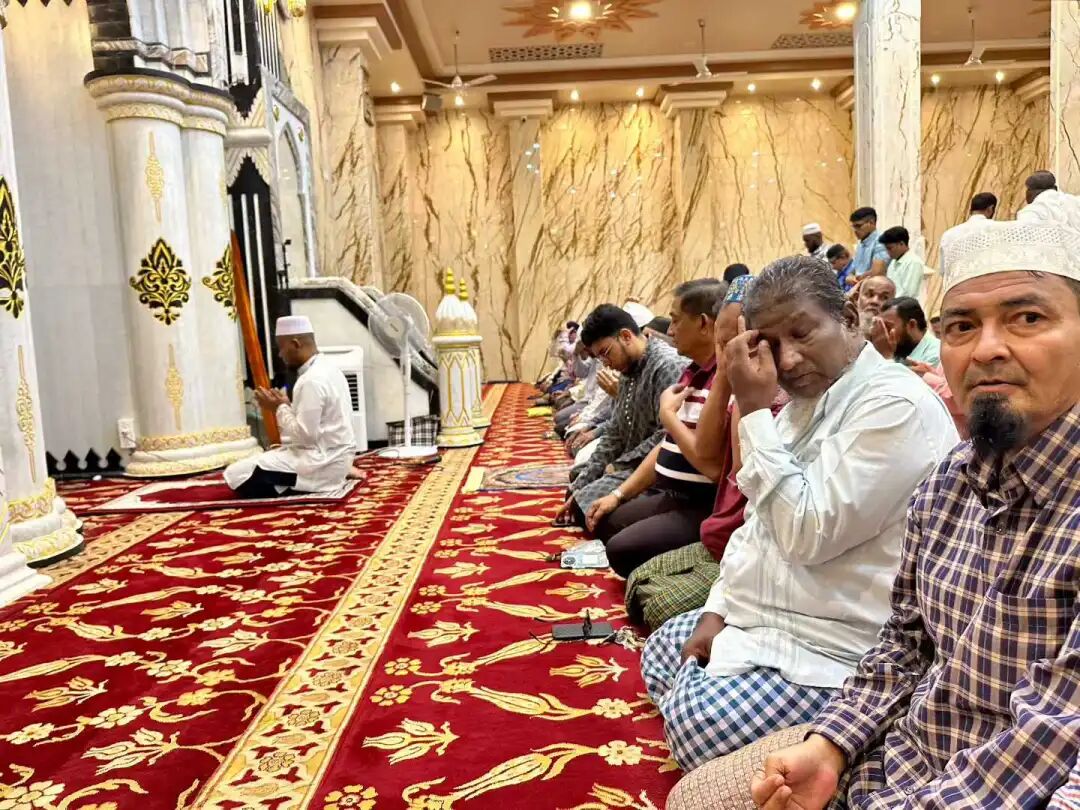
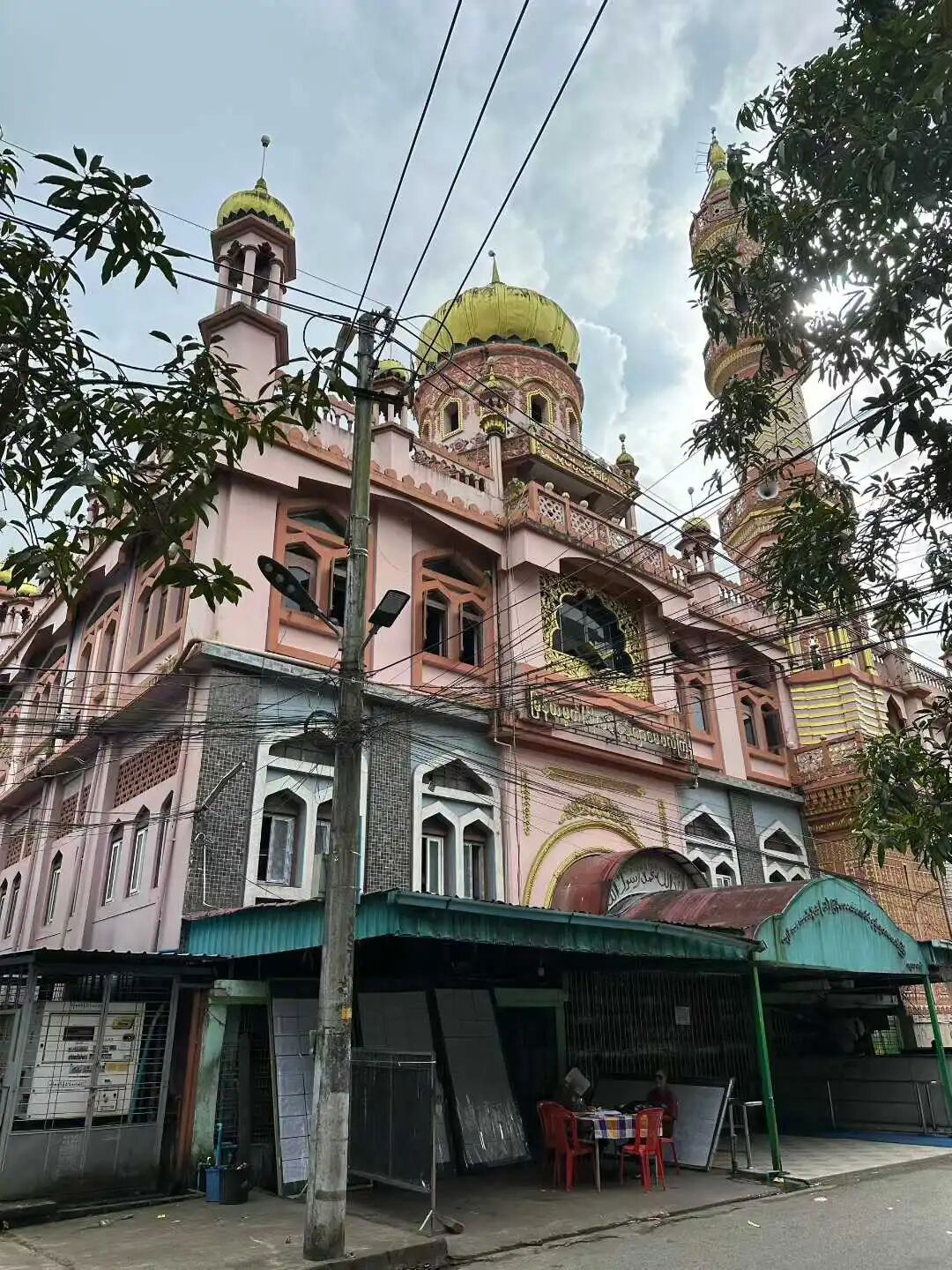
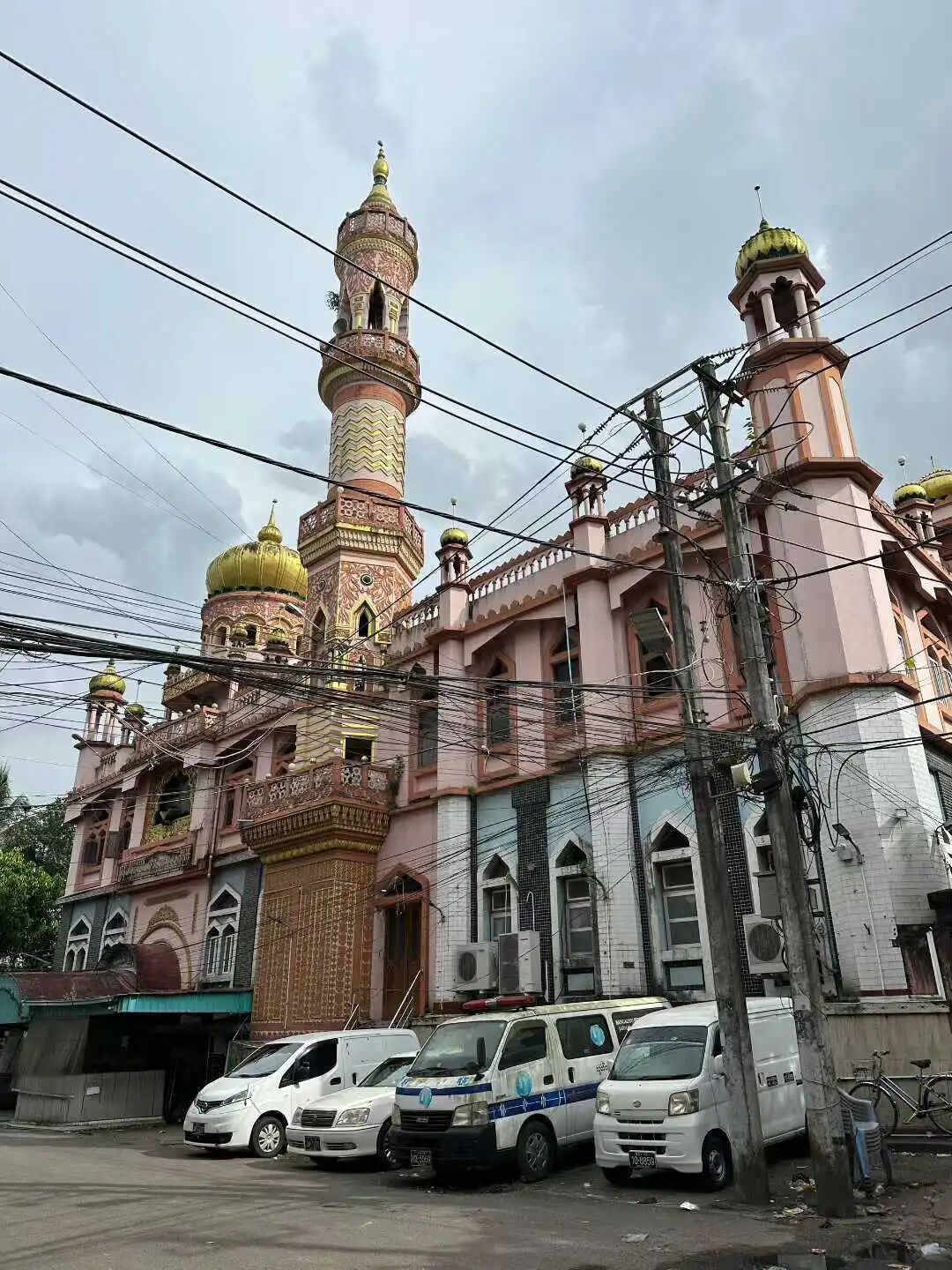
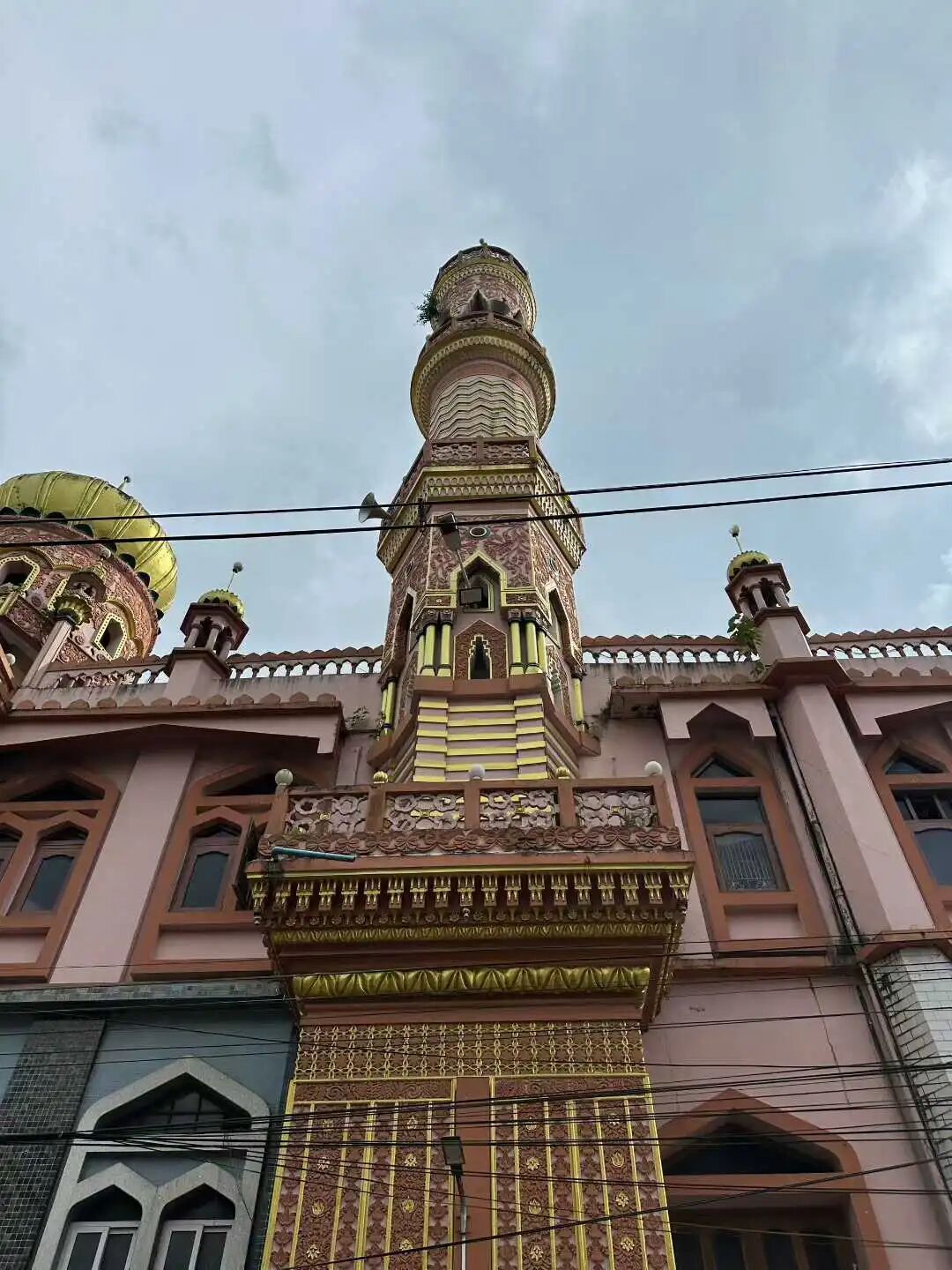
The Bengali Mosque (Bengali Dosti) was the second Sunni Friday mosque built in Yangon in 1932. It is located on 91st Street in the northern part of the old town, right next to the railway. The mosque looks very grand, and its minaret decorations are also quite ornate.
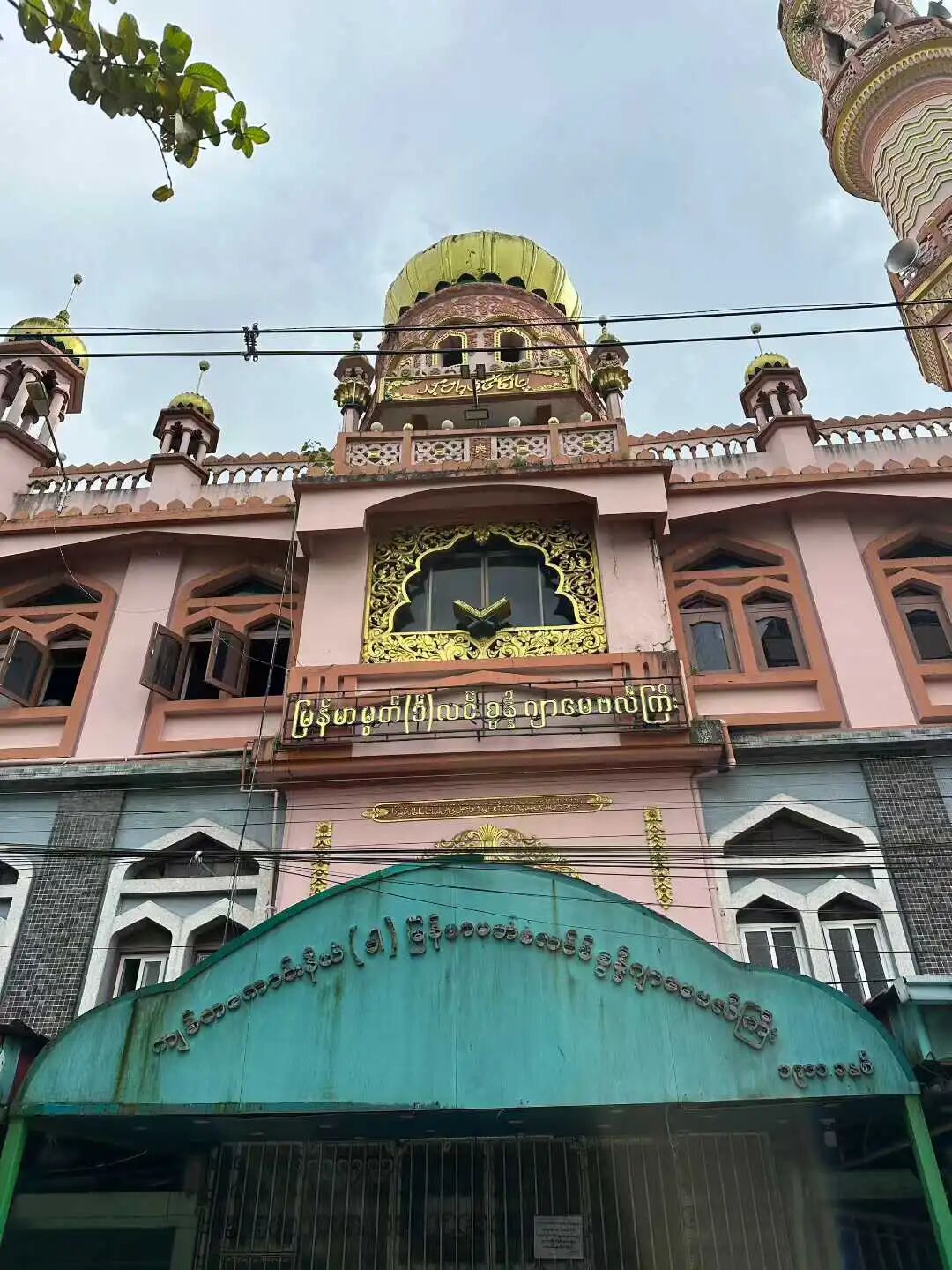
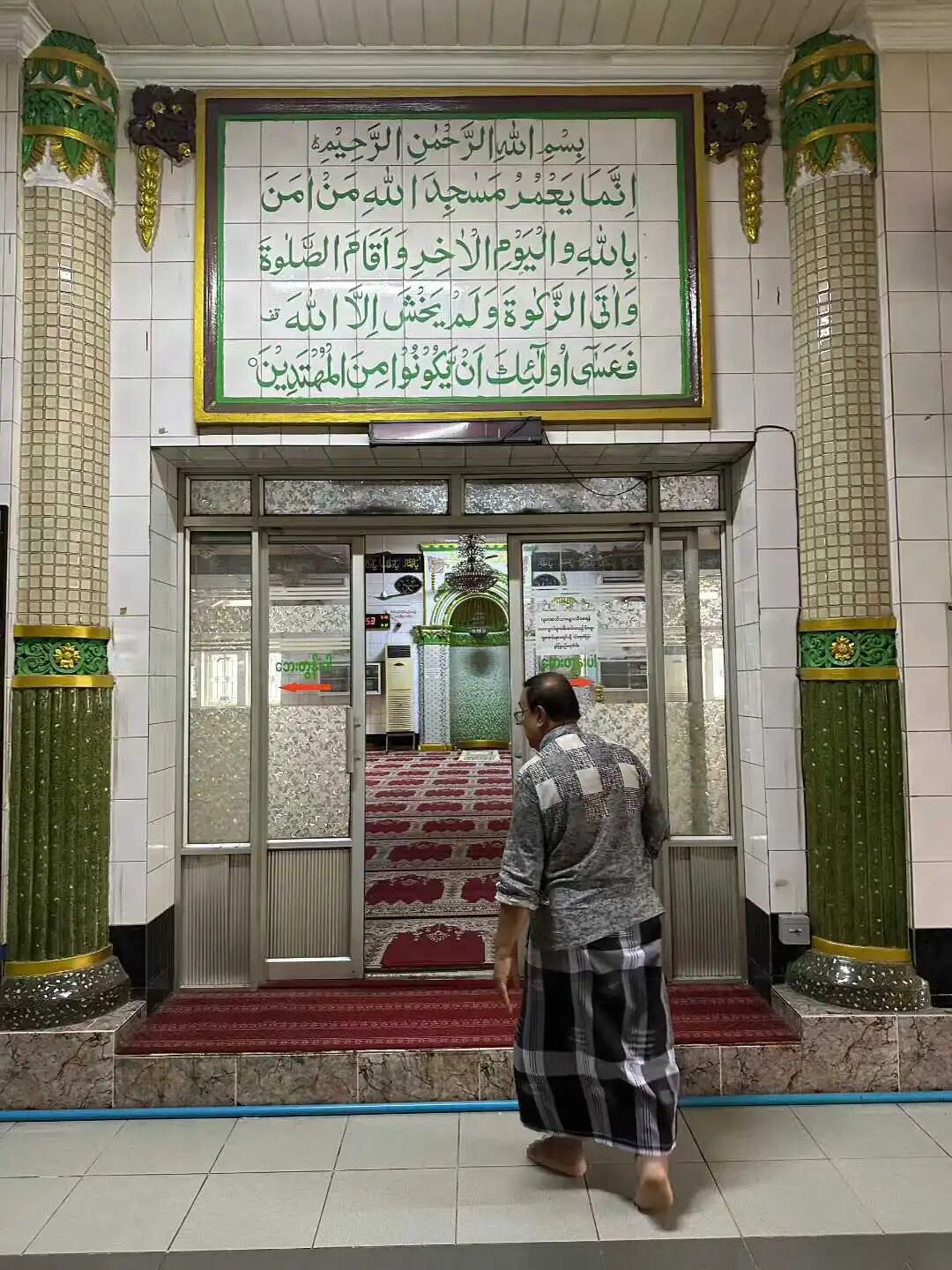
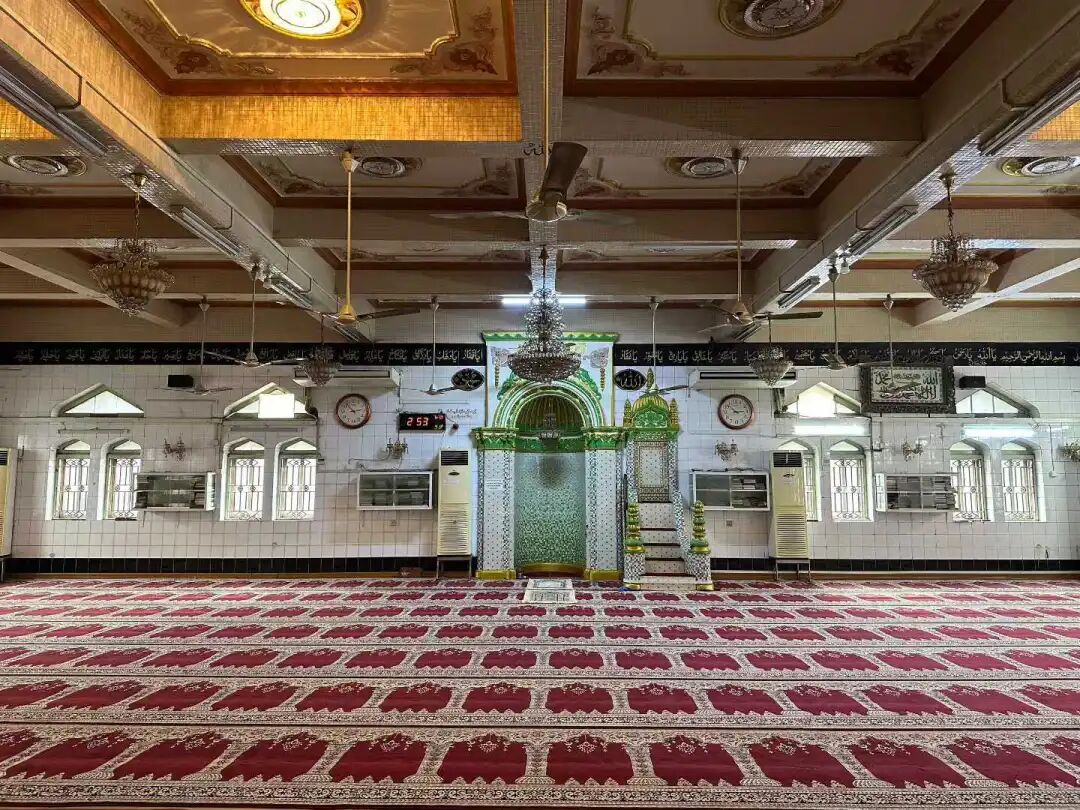
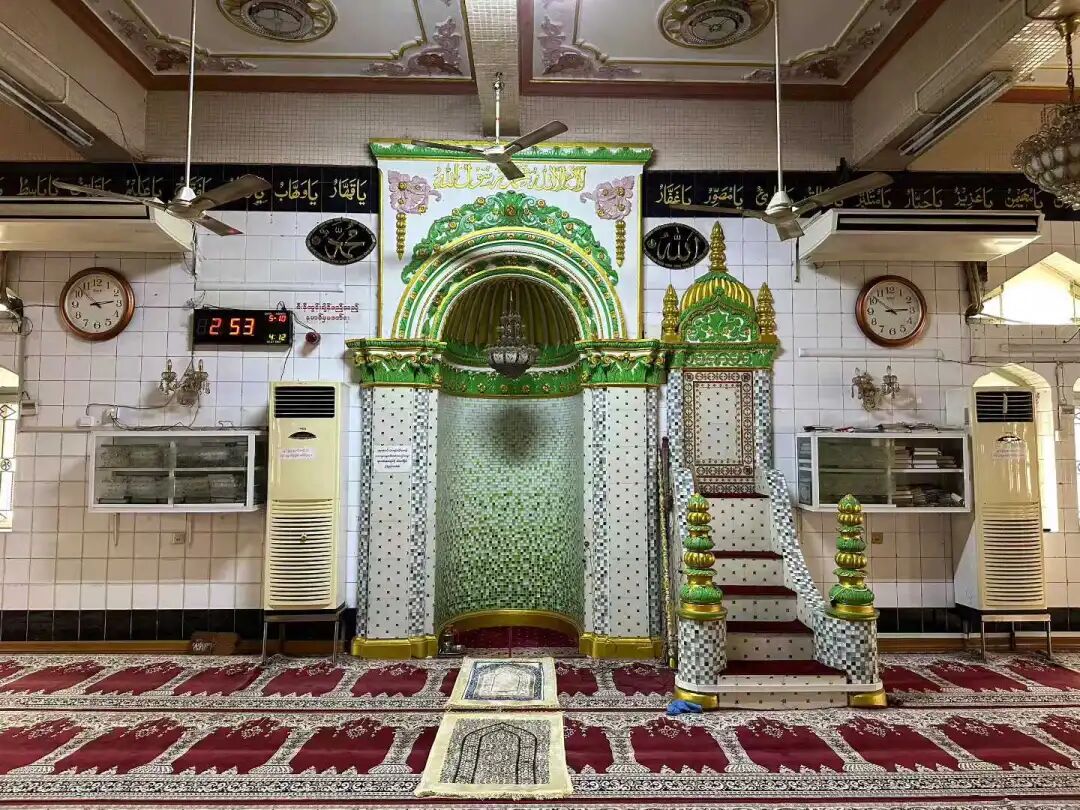
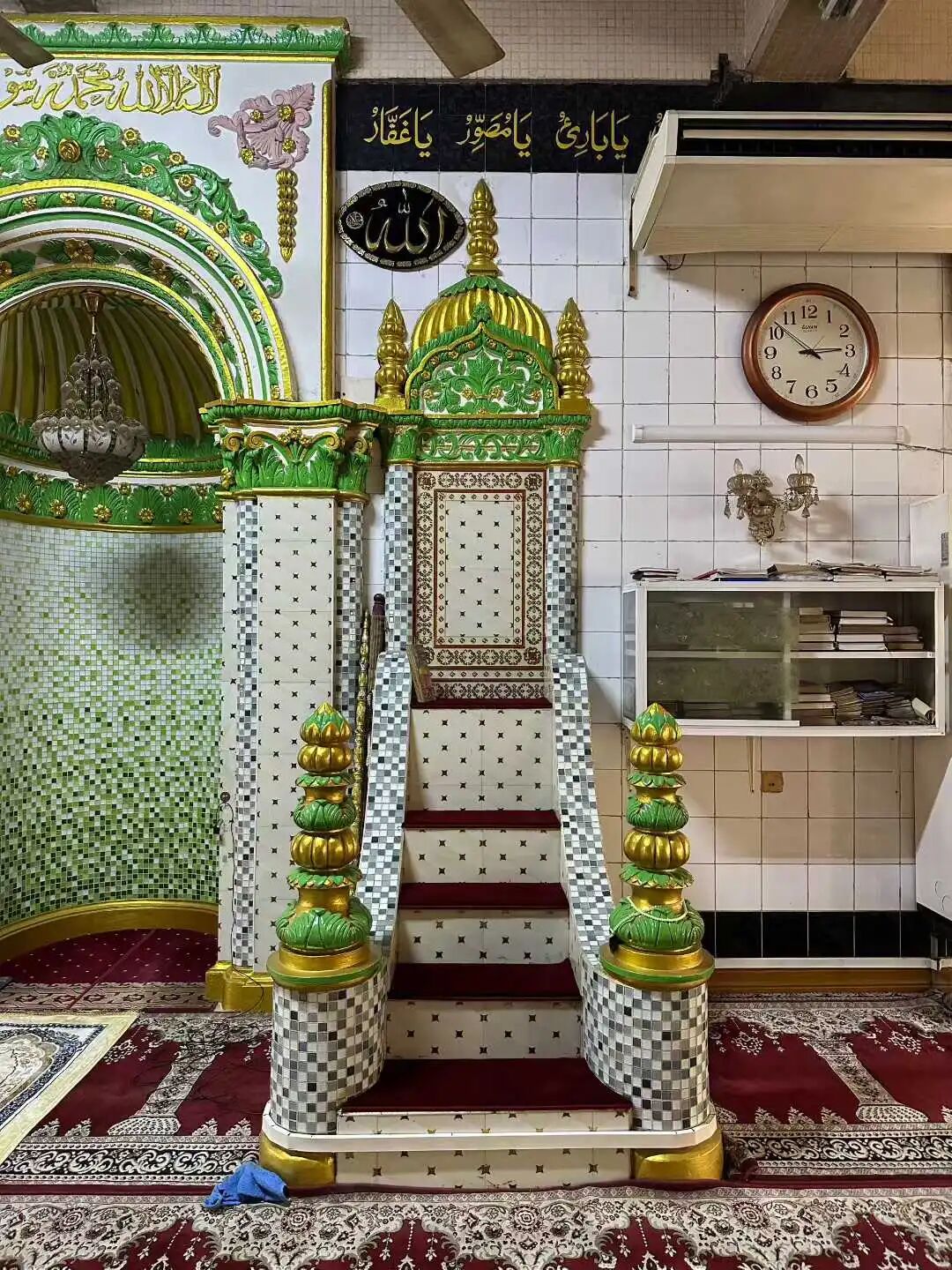
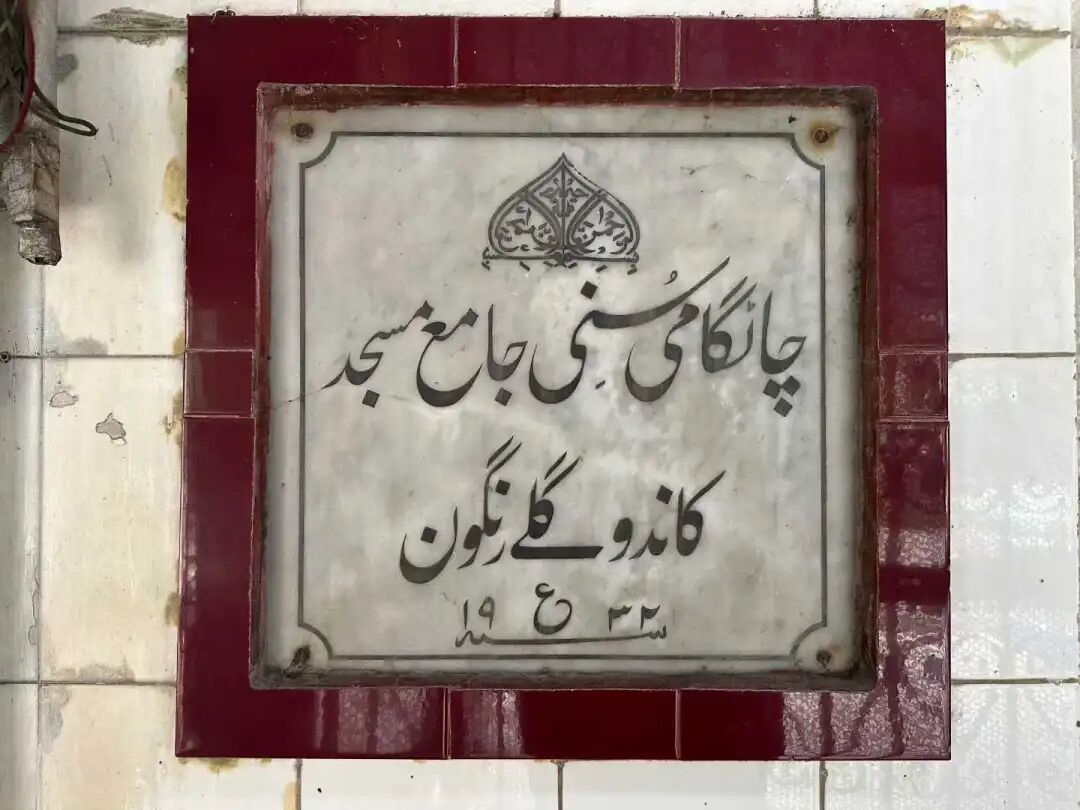
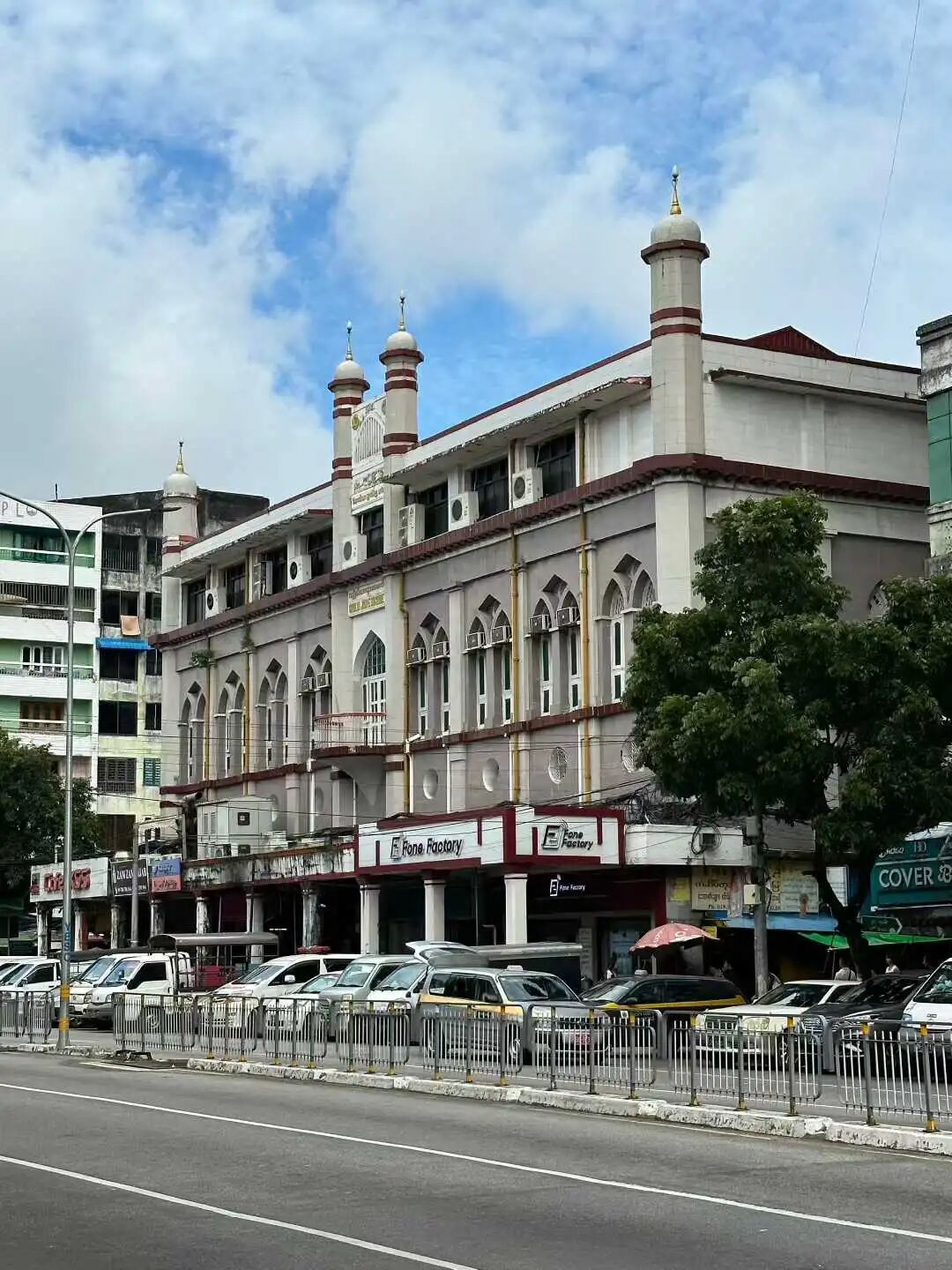
The Chulia Friday Mosque is in Yangon's Indian quarter, not far west of the Bengali Mosque. It was built in 1856 by South Indian Tamil Dosti. The name Chulia comes from the Chola dynasty that once ruled the Tamils. Long ago, Tamil Dosti followed the Indian Ocean monsoon winds across the Bay of Bengal to the coasts of Southeast Asia. The Jamae Mosque in Singapore's Chinatown was built by Tamils in 1826. After the British occupied Yangon in 1852, the number of Tamils immigrating to Yangon kept growing, and the Chulia Friday Mosque was established as a result.
The Chulia Friday Mosque was originally a wooden structure. It was rebuilt as a brick building in 1869, and in 1936, it was rebuilt into its current form by the Iranian-Armenian contractor AC Martin. AC Martin built many structures in Yangon, including the General Post Office.
There is a water well inside the Chulia Friday Mosque, and whenever there is a water shortage, it provides water for the Indian quarter. In 1941, the Japanese military bombed Yangon on a large scale, and the Chulia Friday Mosque was also damaged. Later, a porch was built in 1955, and the main hall was built in 1963. Currently, the shops on the first floor of the main hall are very busy, and the second floor can host wedding banquets. When we visited, there were wedding banquets being held every morning.
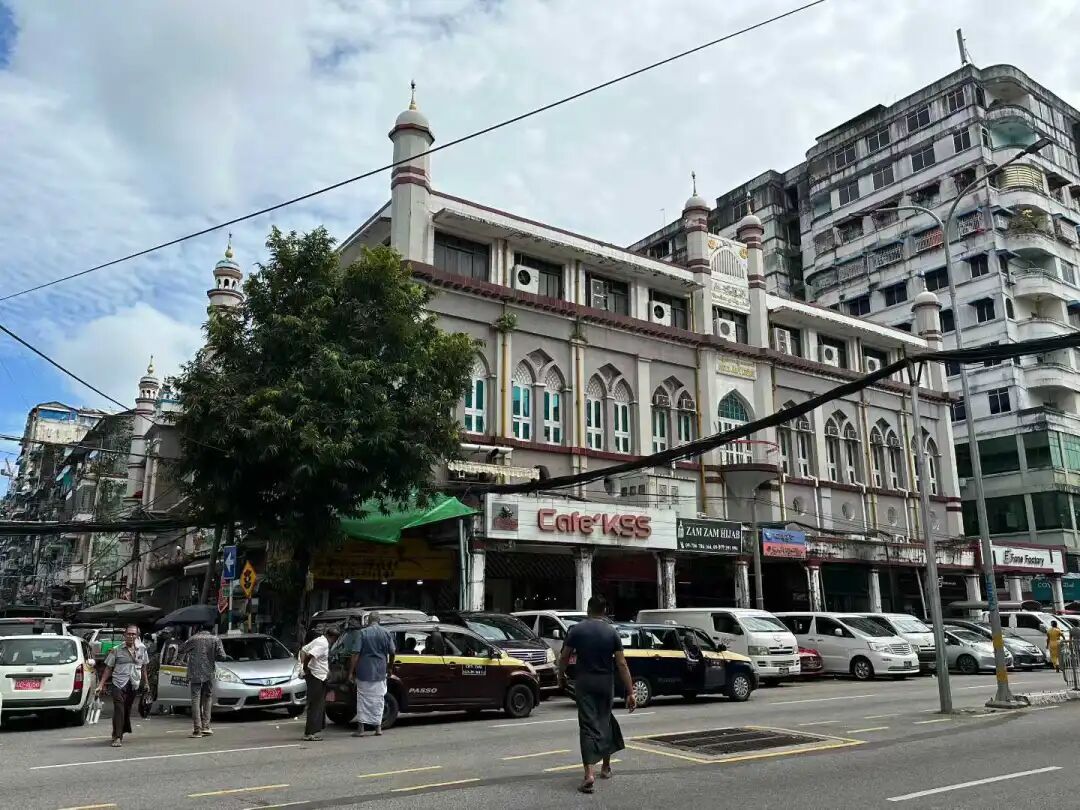
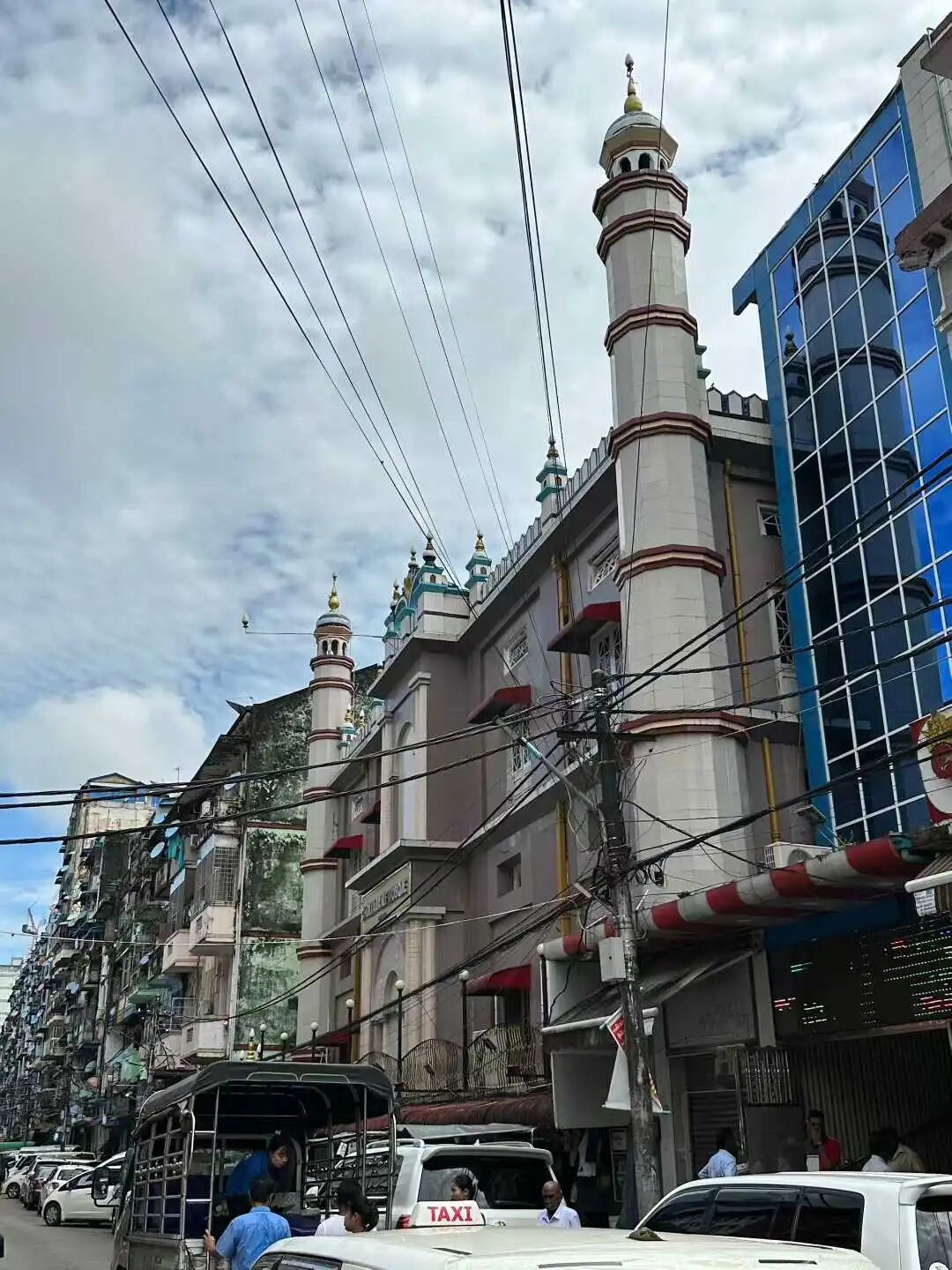
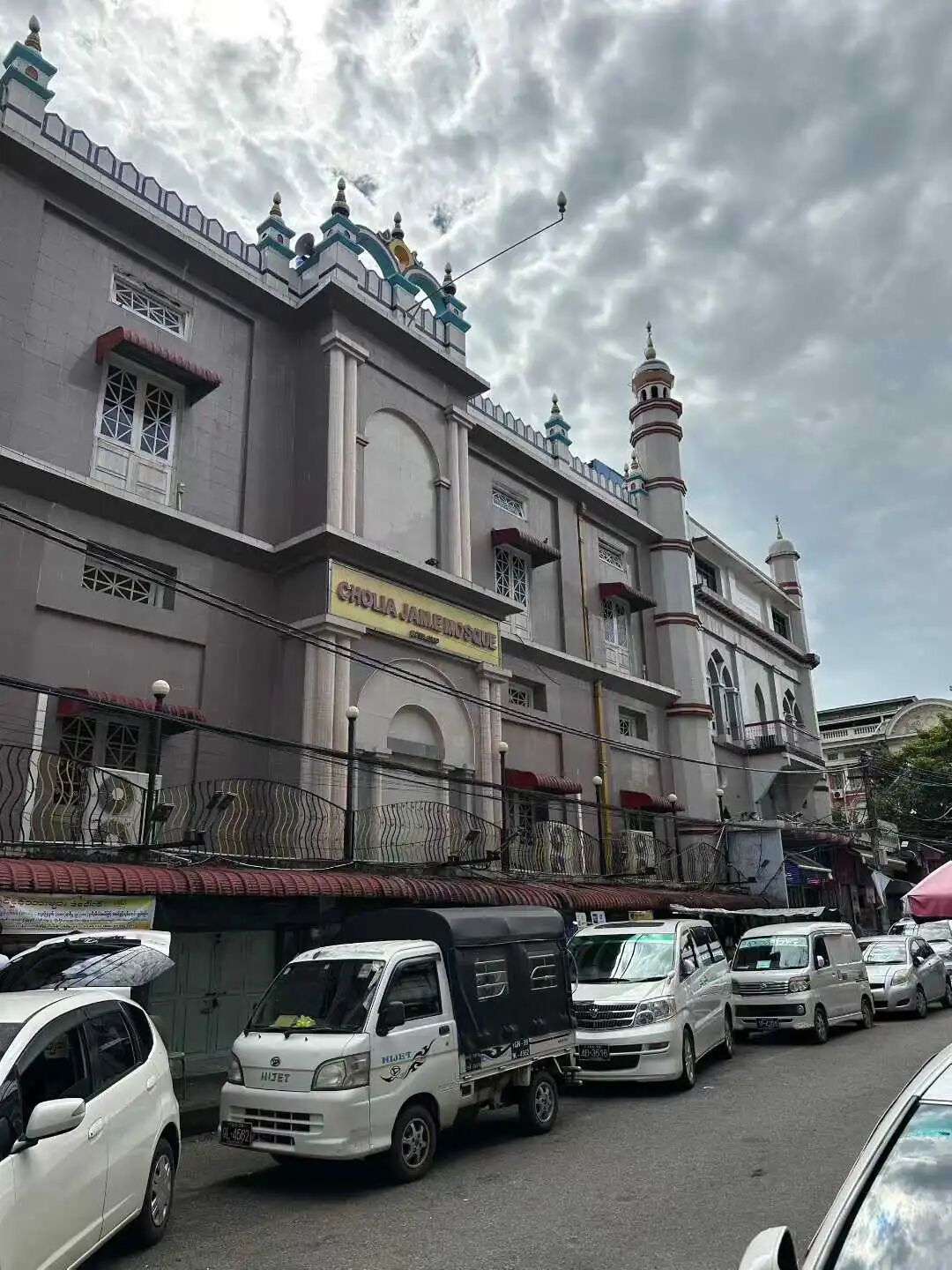
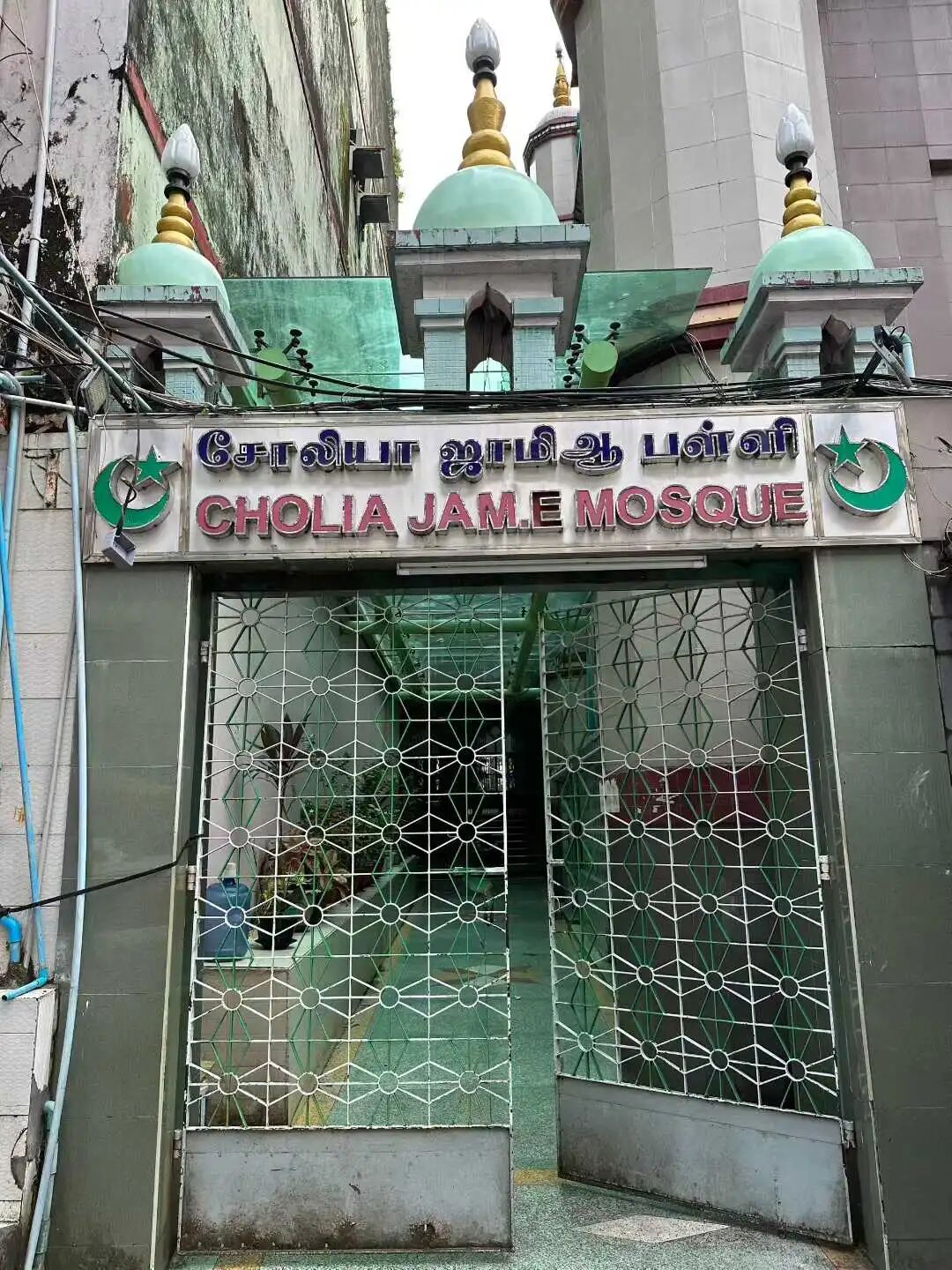
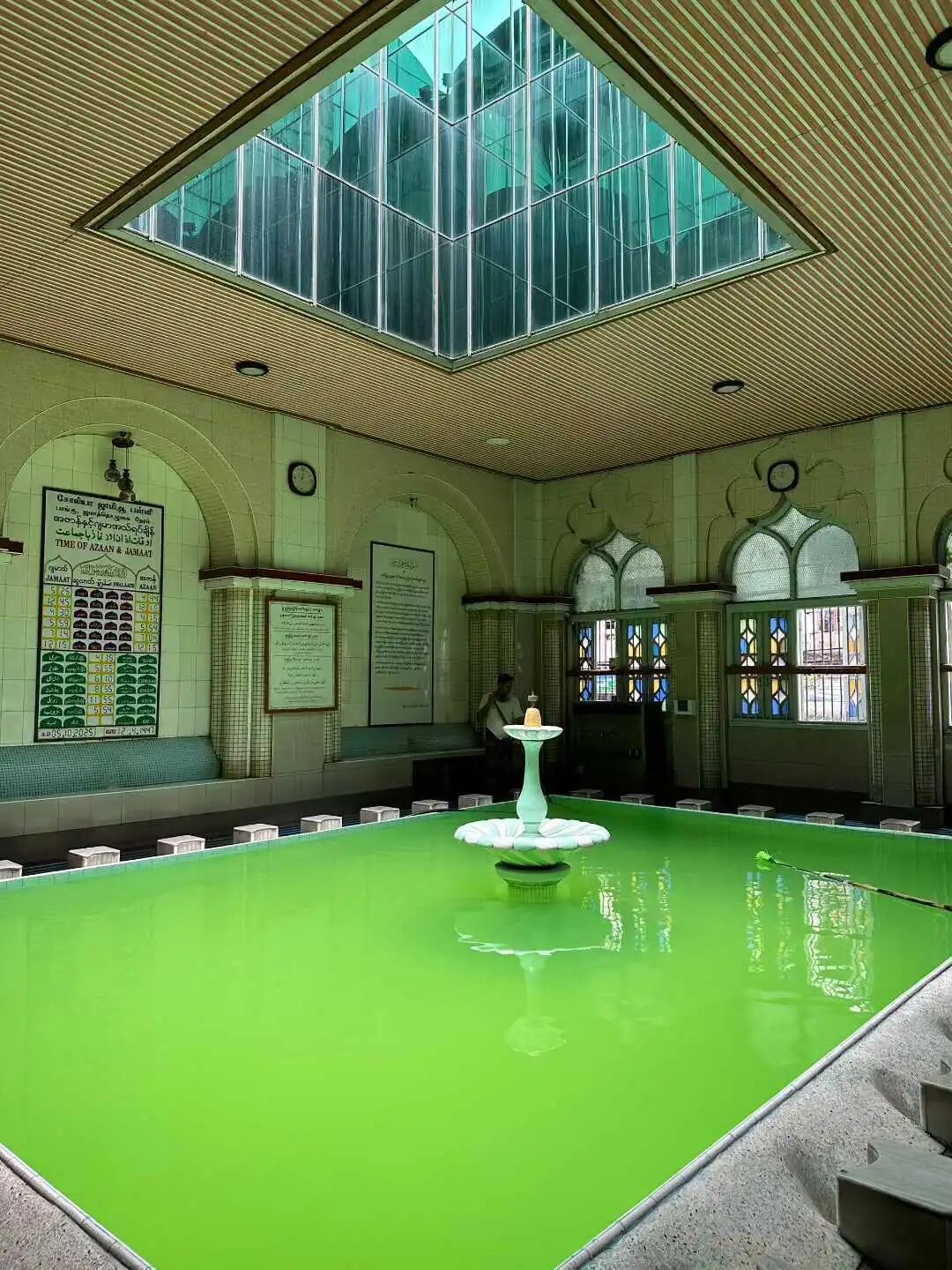
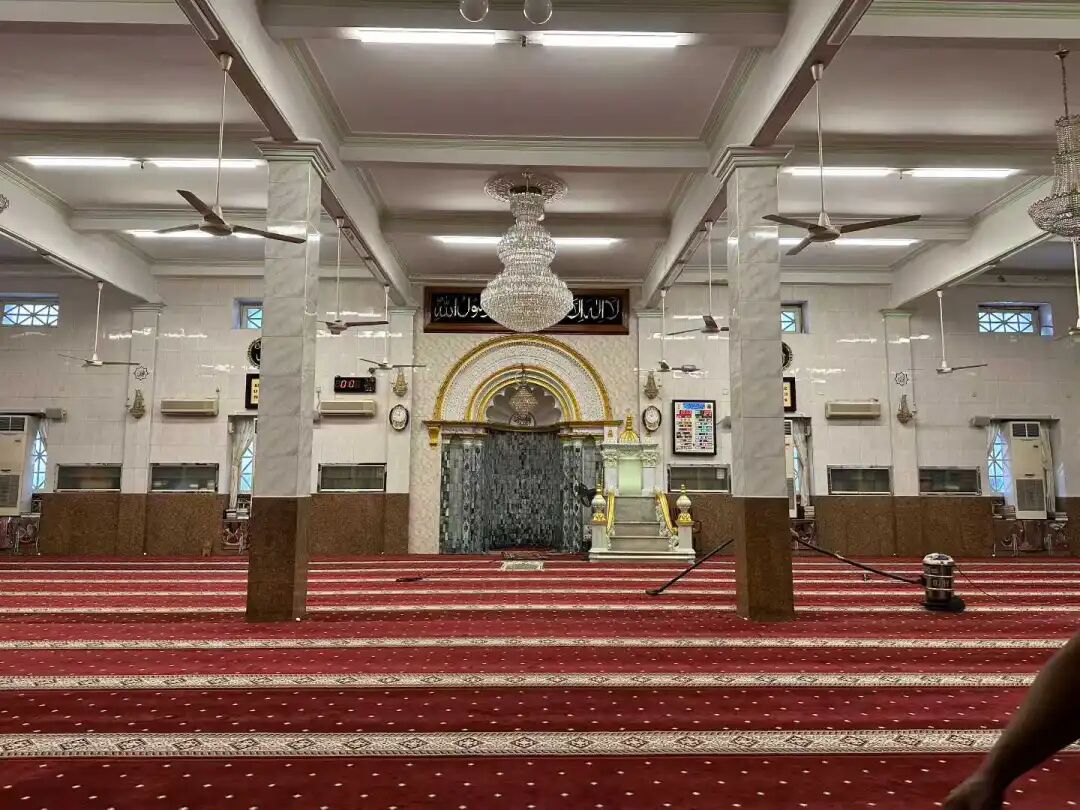
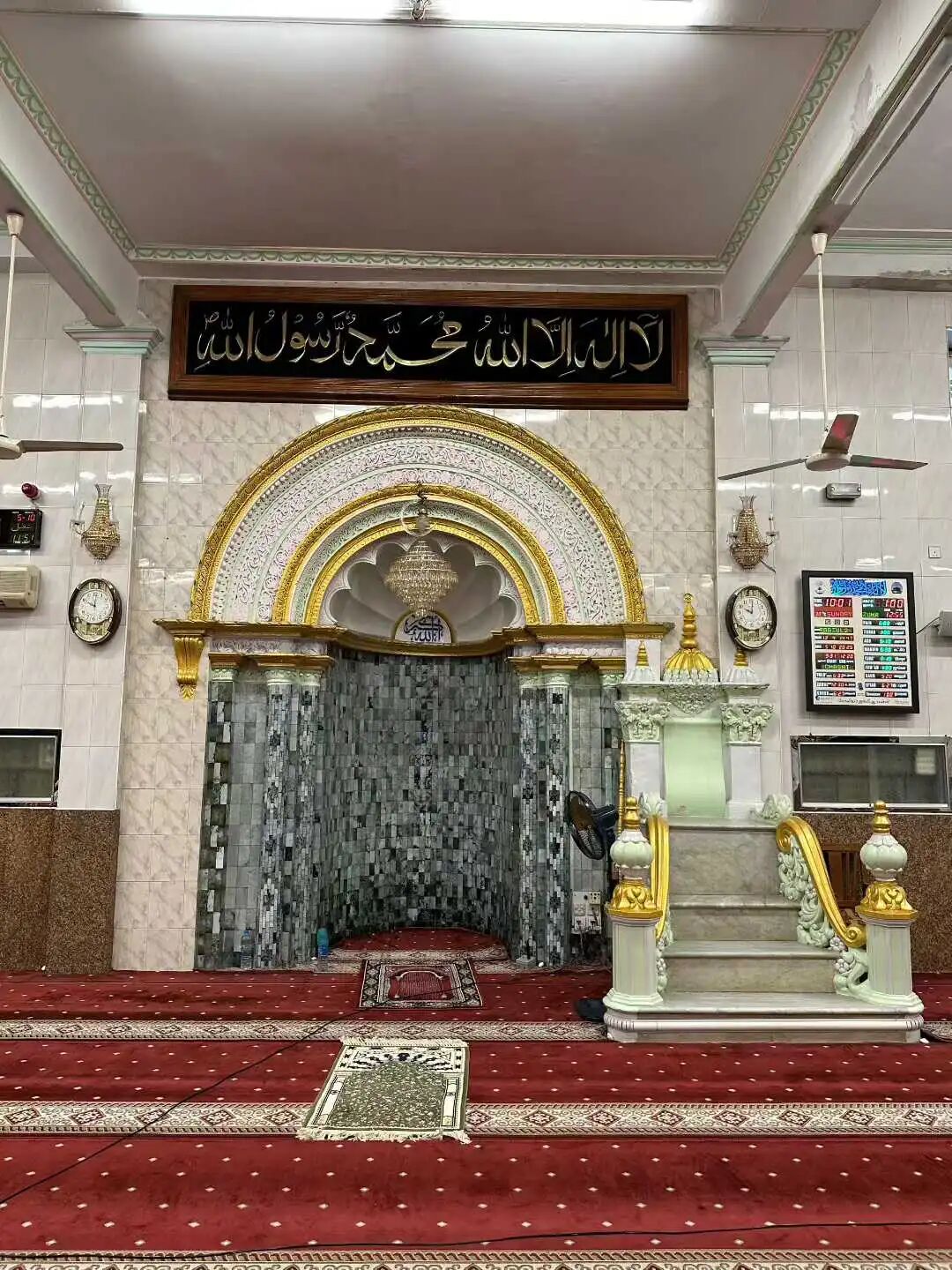
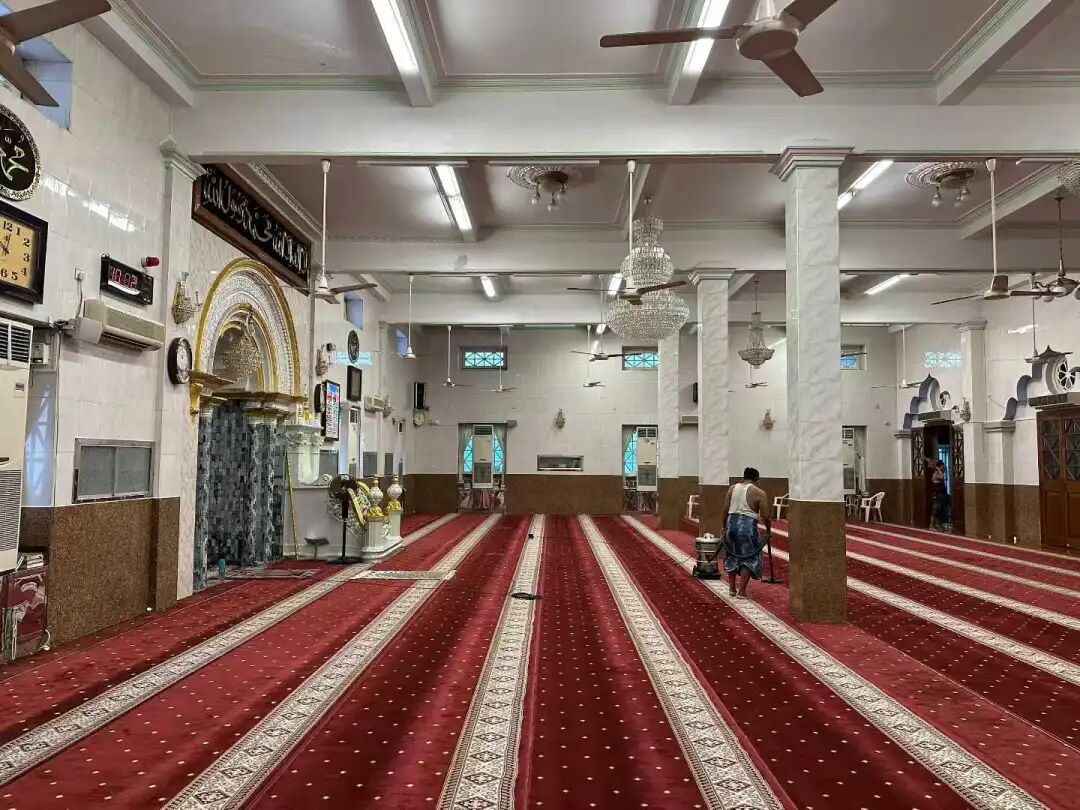
The Chulia Muslim Dargah Mosque is located opposite Bogyoke Aung San Market in the northern part of Yangon's old town. It is the second mosque built in Yangon by South Indian Tamil Dosti. It was funded by a Tamil couple born in Myanmar, Kassim Kaderlt and Daw Nyein Mae, in 1886, and renovated into its current appearance in 1995.
The original meaning of Dargah in Persian is 'portal,' which later evolved to mean a Sufi gongbei shrine. However, I did not find any gongbei or shrine inside the mosque.
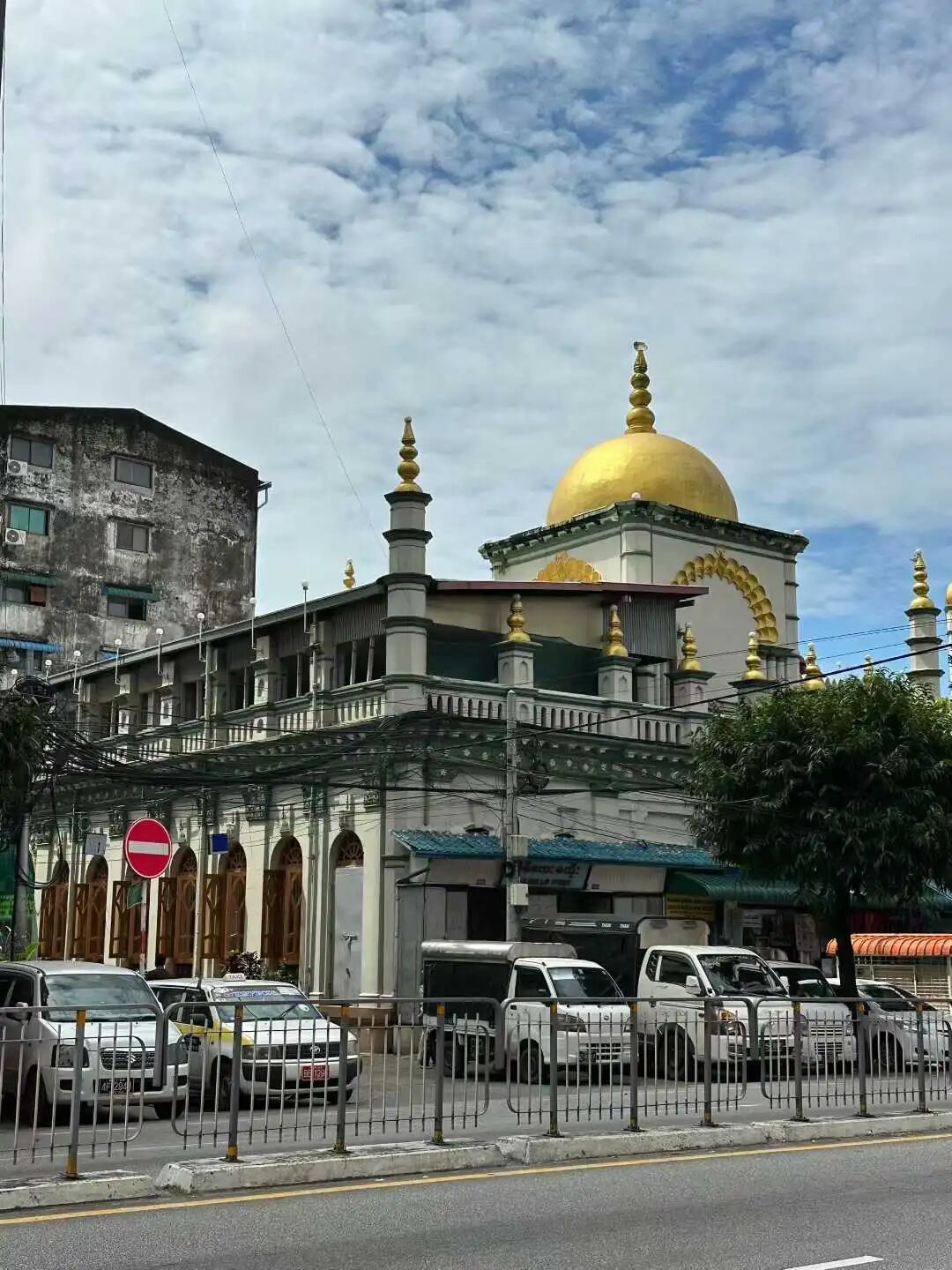
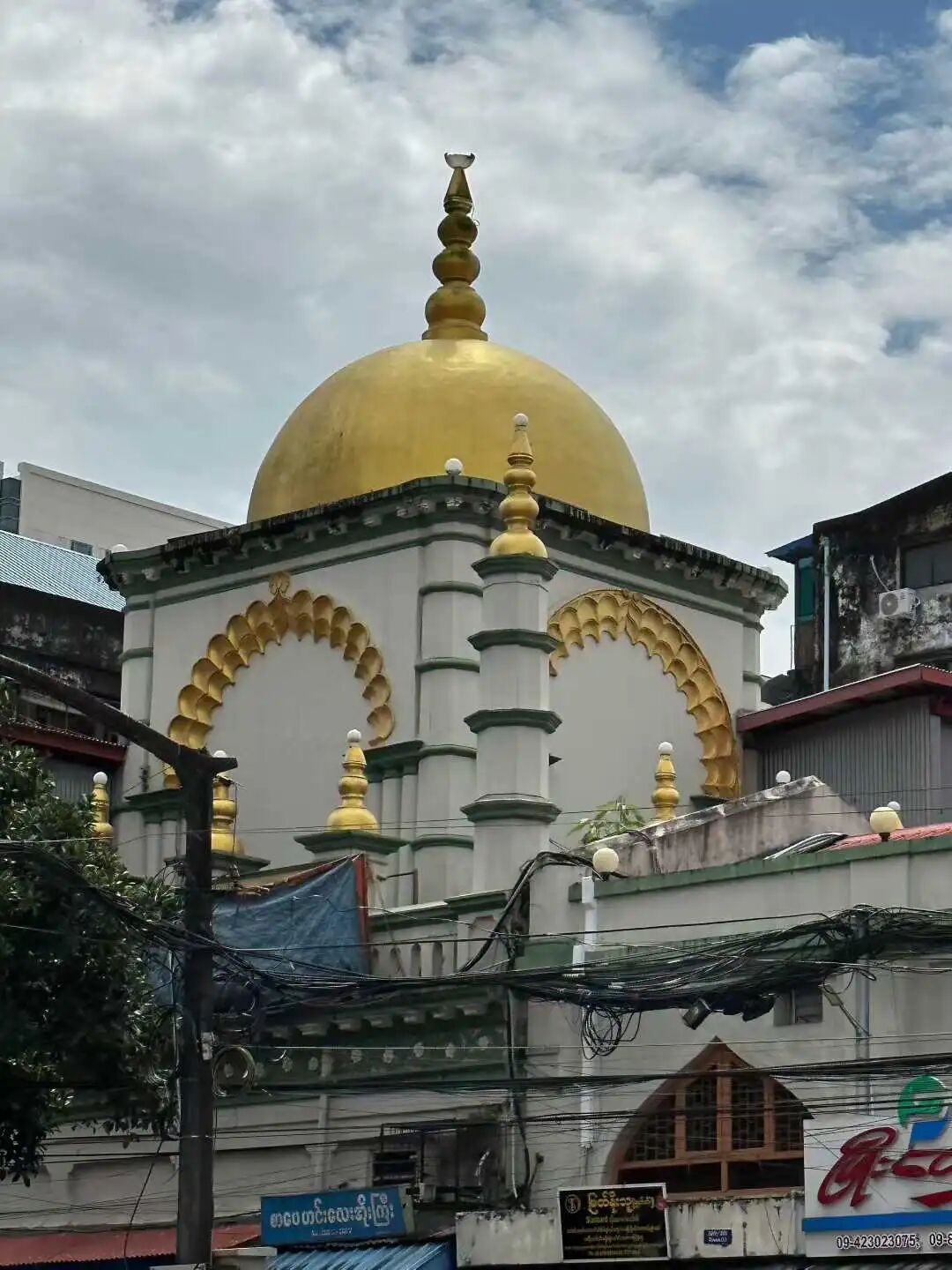
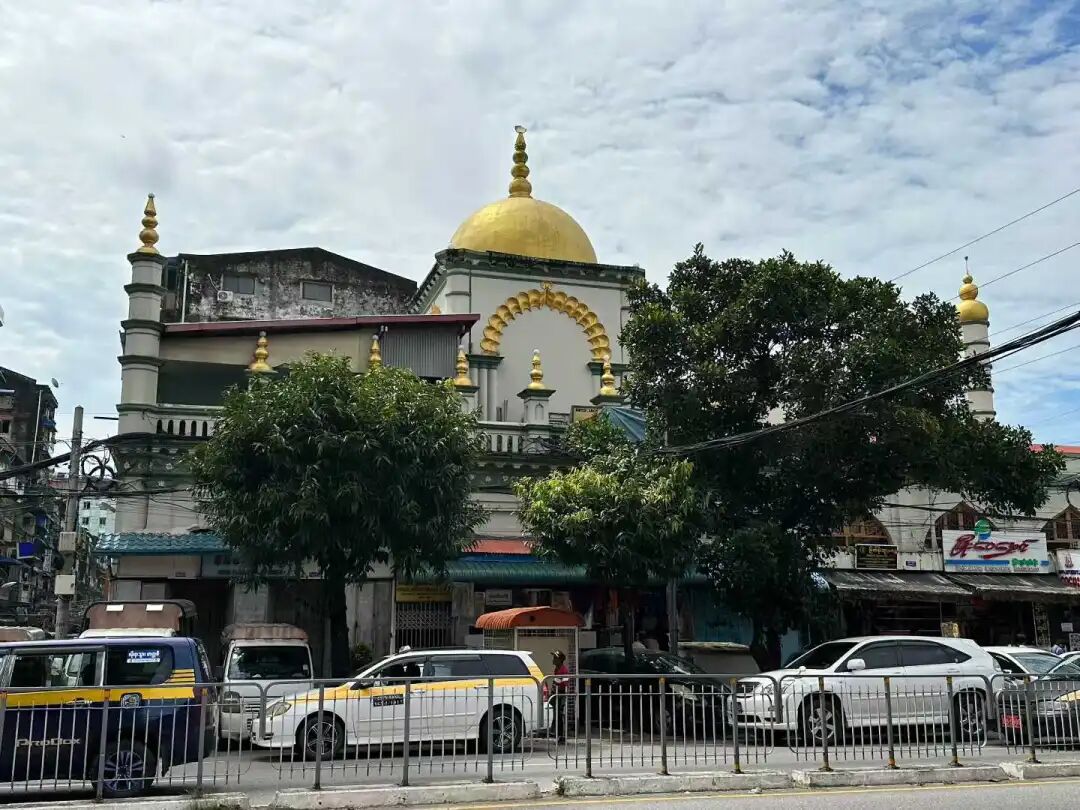
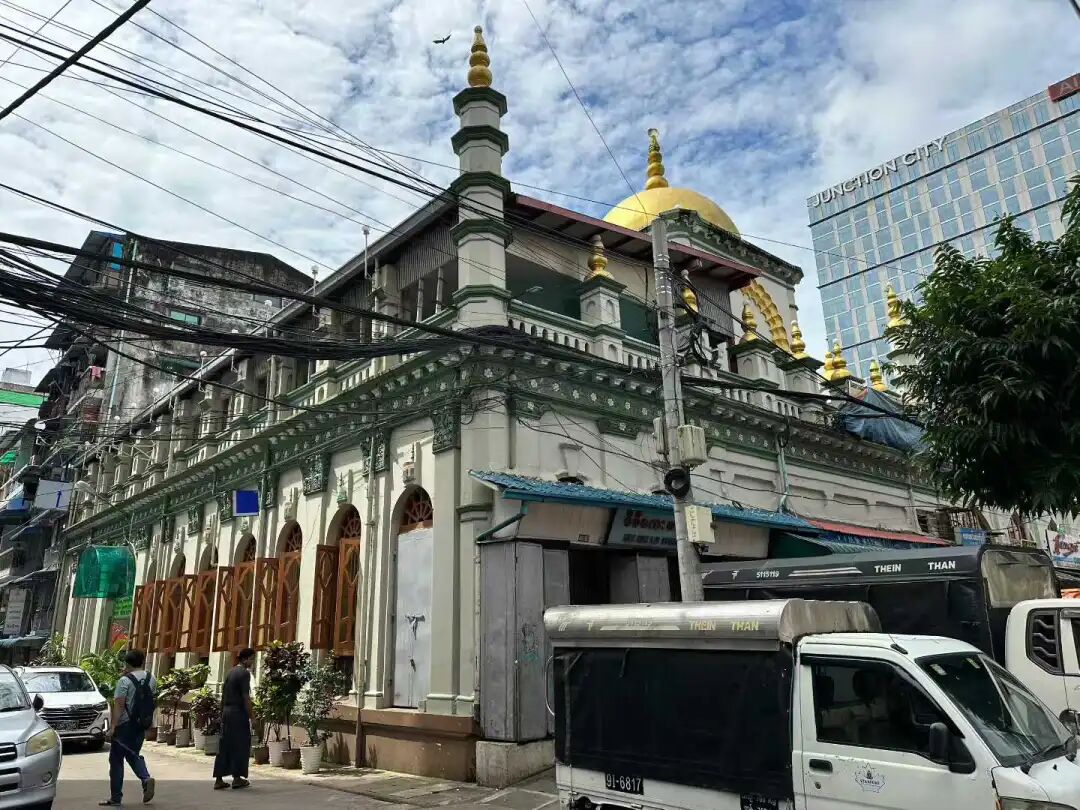
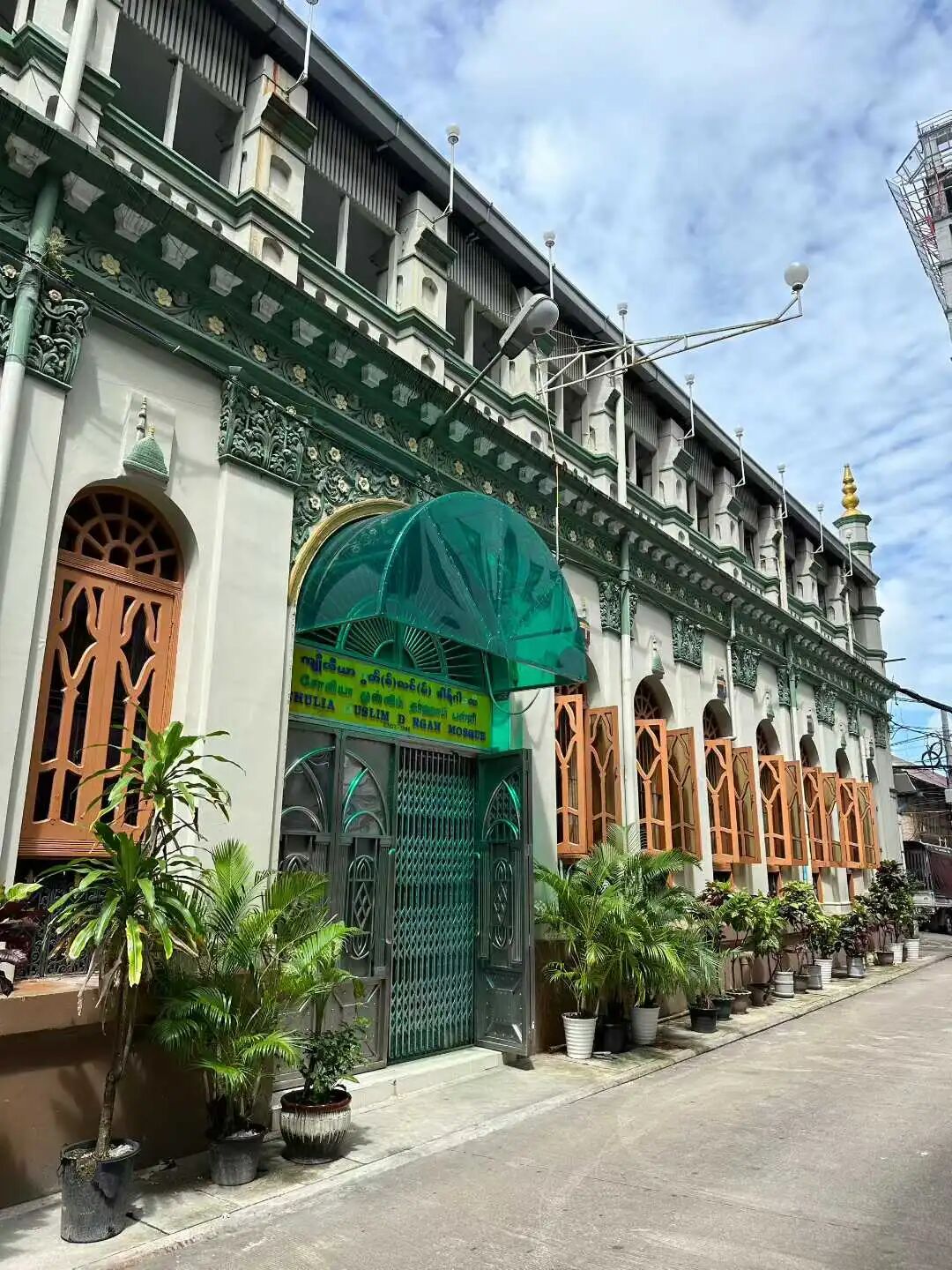
The Surti Sunni Friday Mosque is located on Mogul Street in the Indian quarter of Yangon's old town. It was first built in 1826 by Gujarati merchants from Surat in western India, but it was destroyed during the British invasion of Yangon in 1852. In the 1860s, the wealthy Gujarati company Sooratee Bara Bazaar led the reconstruction of the Surti Mosque, and it officially opened in 1871.
Many of Yangon's Gujarati Dosti came from the town of Rander near Surat. Historically, this was an important port in western India. As early as the 13th century, a large number of Arab merchants from Kufa, Iraq, lived there, and by the 16th century, the port was piled high with Sumatran spices and Chinese porcelain. After the 19th century, Gujarati merchants from Rander began to go to Yangon for business. Currently, many old houses in Rander are built of Burmese teak, and restaurants in Rander even serve a snack called Yangon paratha.
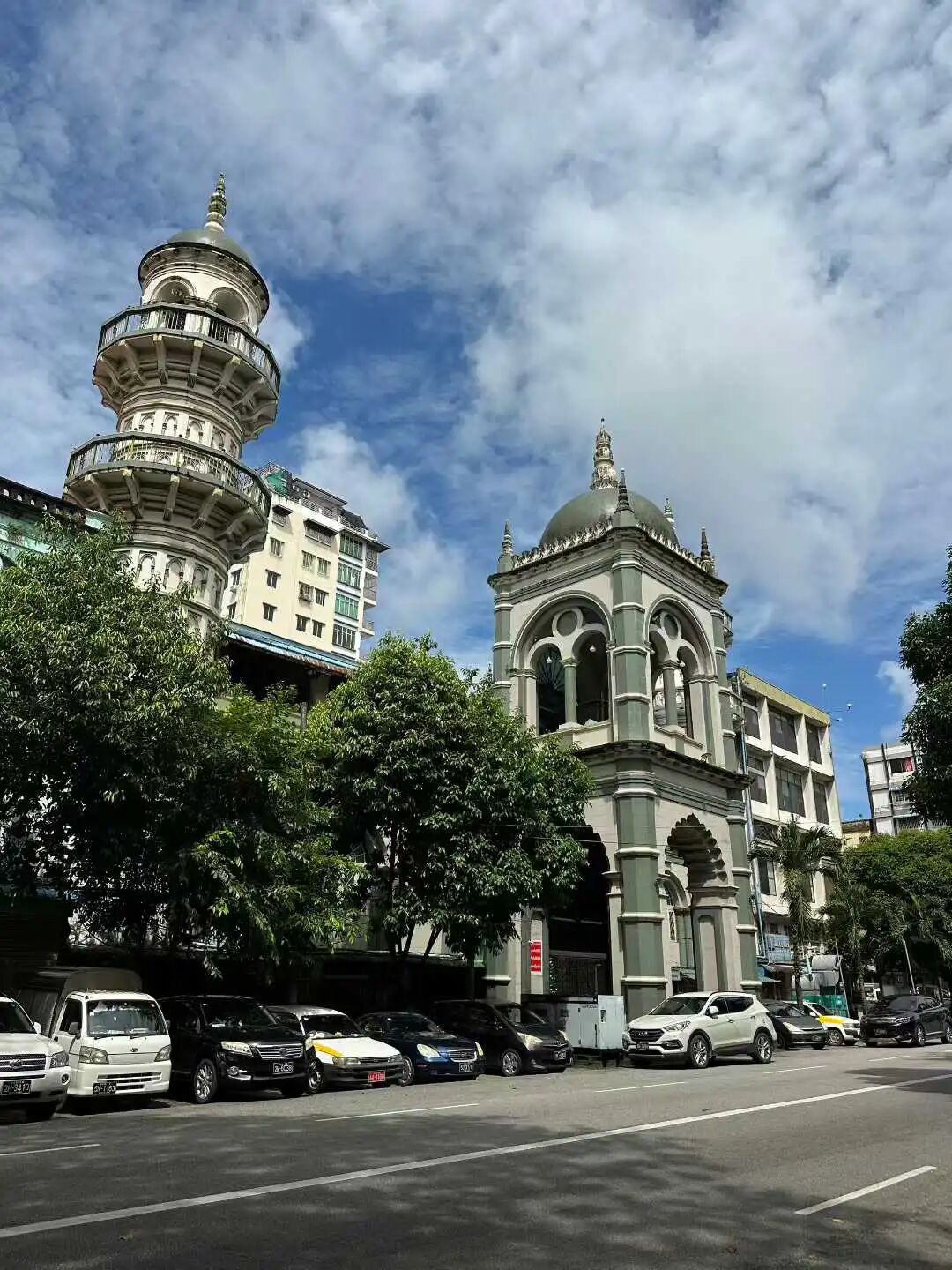
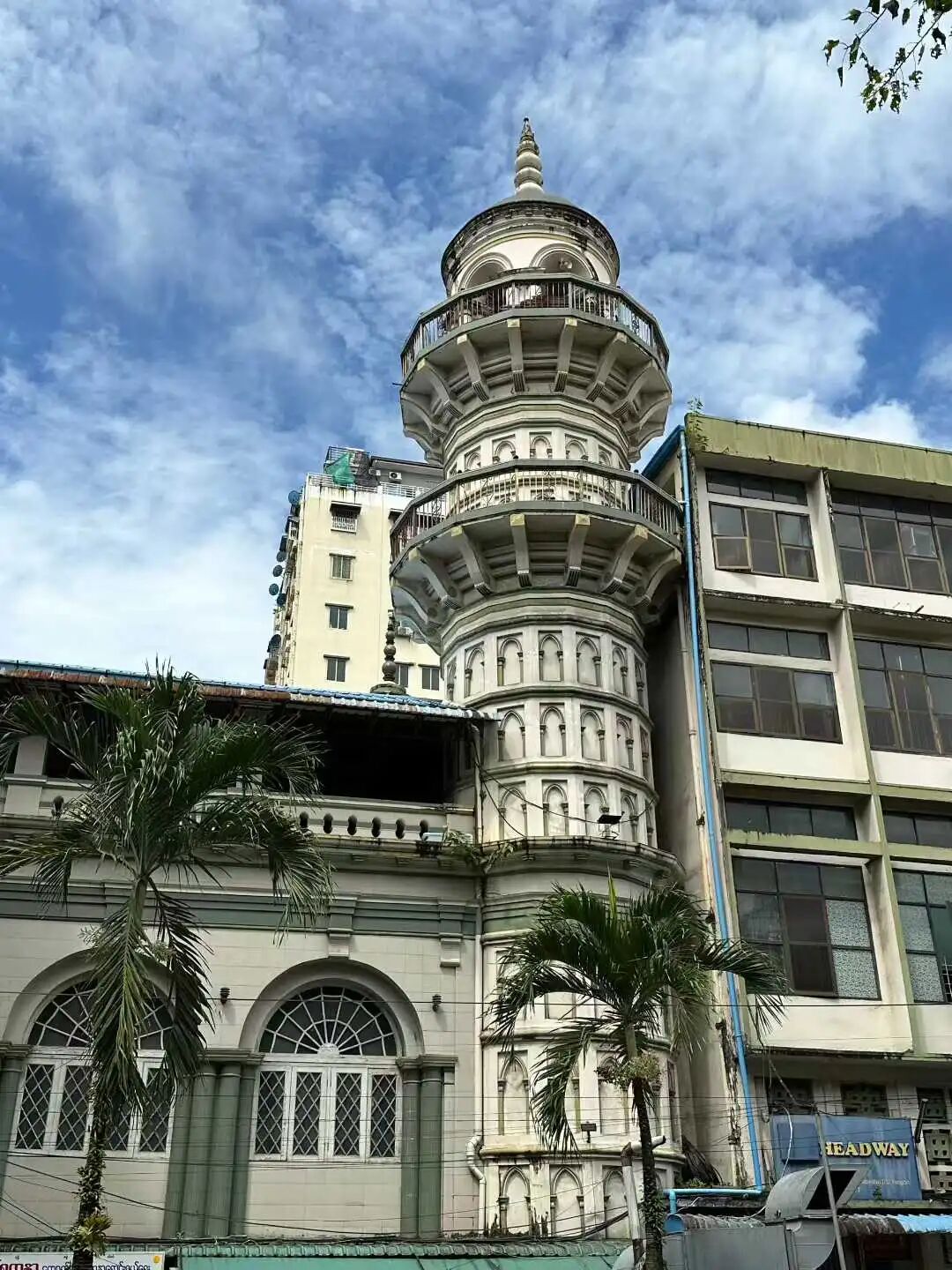
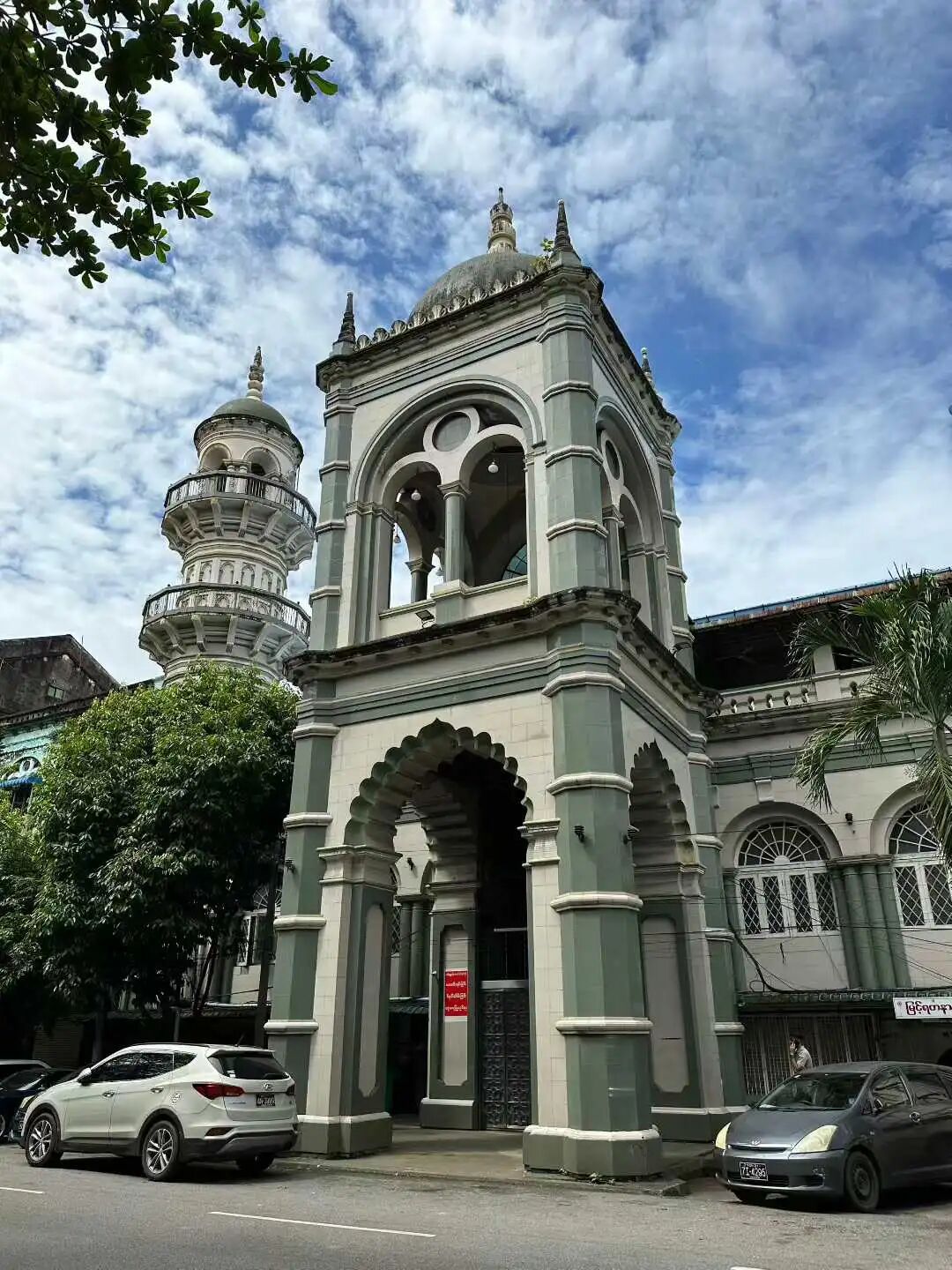
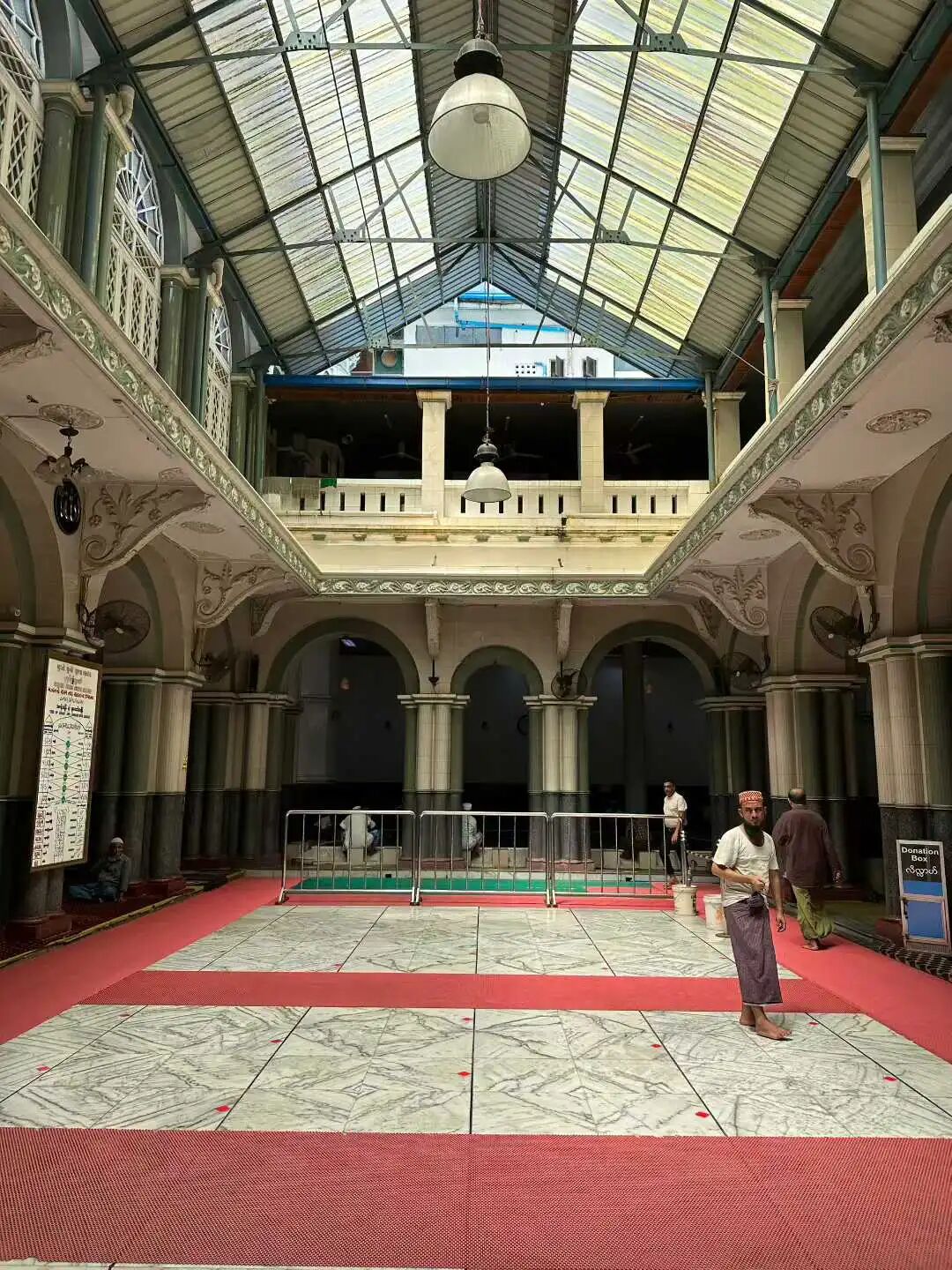
The Muhammadiyah Madrasa in Yangon, Myanmar, is located opposite the Surti Sunni Friday Mosque. It was first built in 1855 by Gujarati merchants from the town of Rander in Surat, western India. Before 1900, the madrasa only taught religious knowledge and Urdu. In 1900, it officially introduced English education, and in 1909, it officially transformed into the comprehensive Rander High School.
Although it was founded by wealthy Gujarati Dosti merchants, the school was open to everyone. Sunnis, Shias, Christians, Hindus, and Buddhists could all enroll. By 1927, all the teachers except for the principal were British. Before 1948, the school was supported by the British and taught in English. After 1948, it switched to teaching in Burmese, and after 1965, the government officially took over the school.
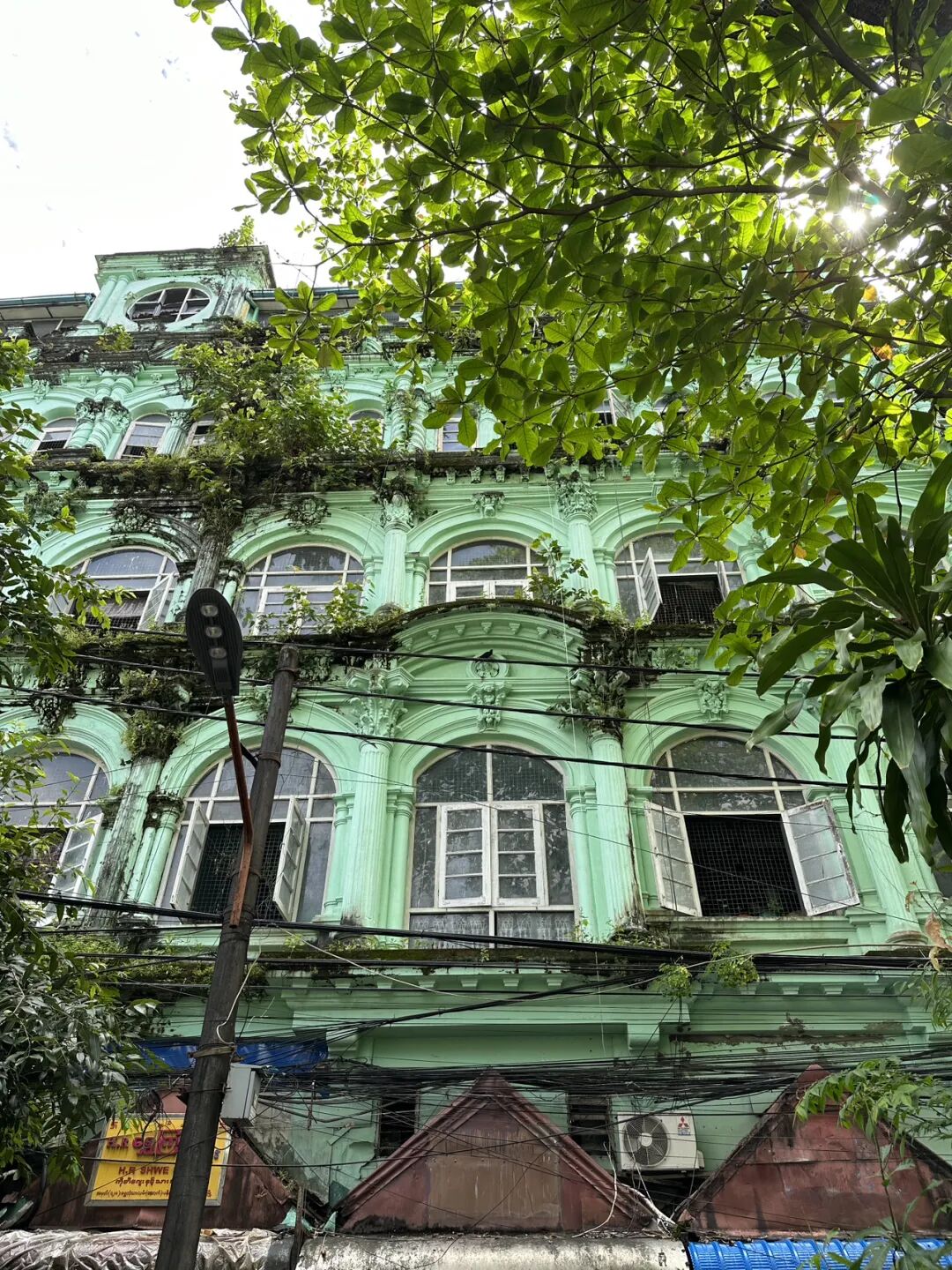
The Mamsa Mosque is located on 26th Street in the Indian quarter of Yangon's old town. It was built in 1923 by the Mamsa family, who were Gujarati merchants from Surat in western India. The Mamsa family gained a great deal of wealth by investing in real estate and still collects rent from more than 150 buildings today.
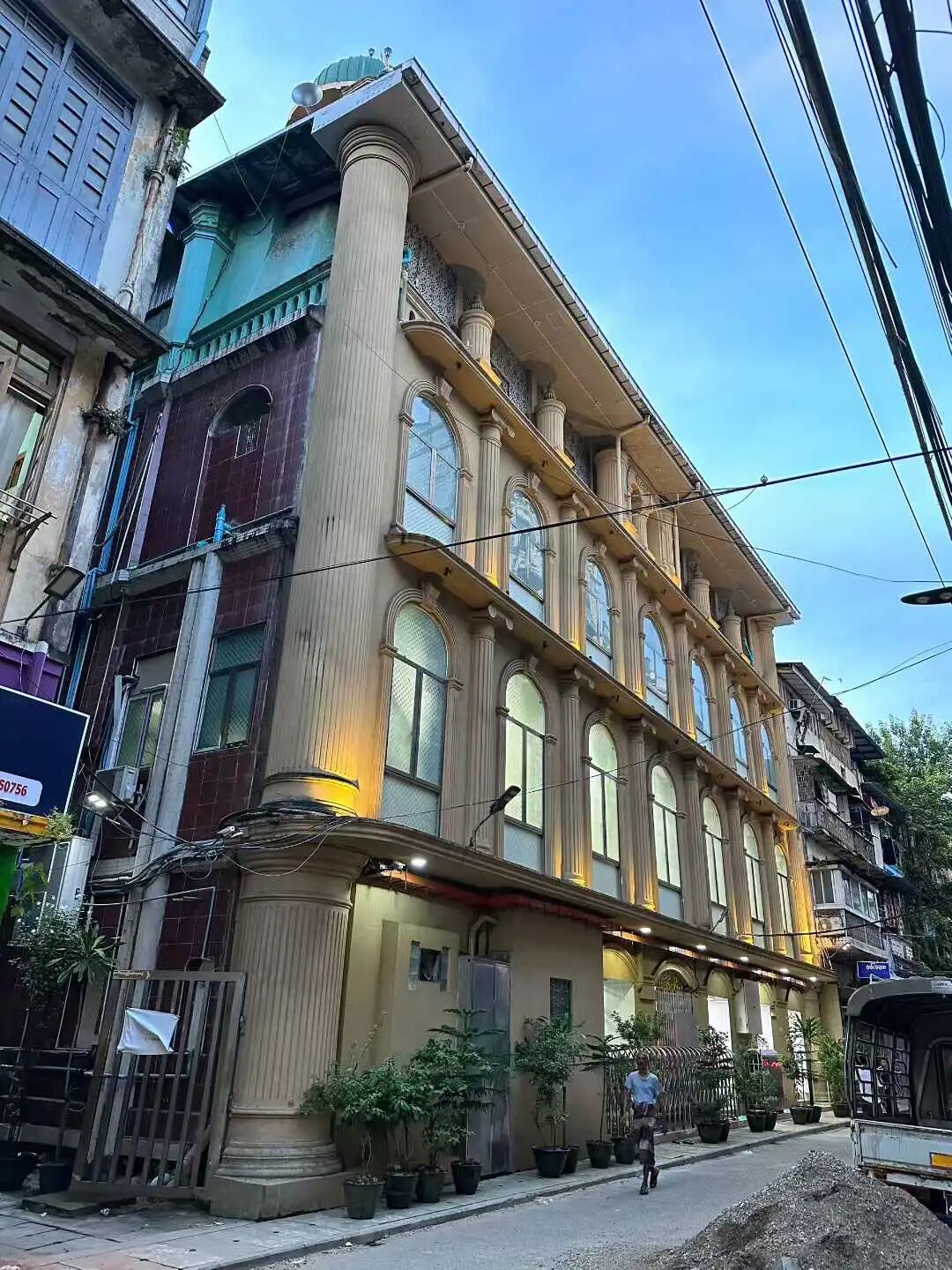
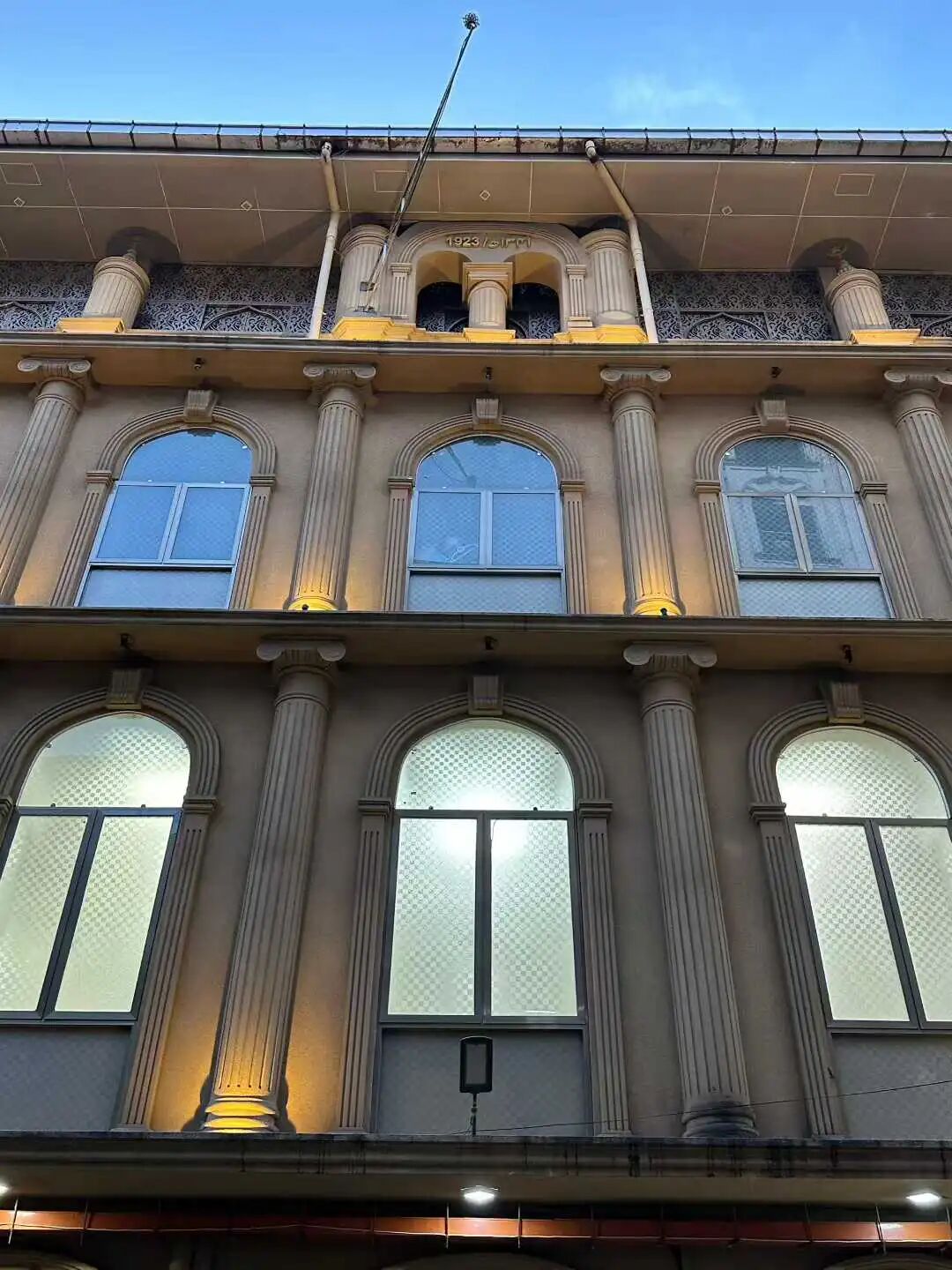
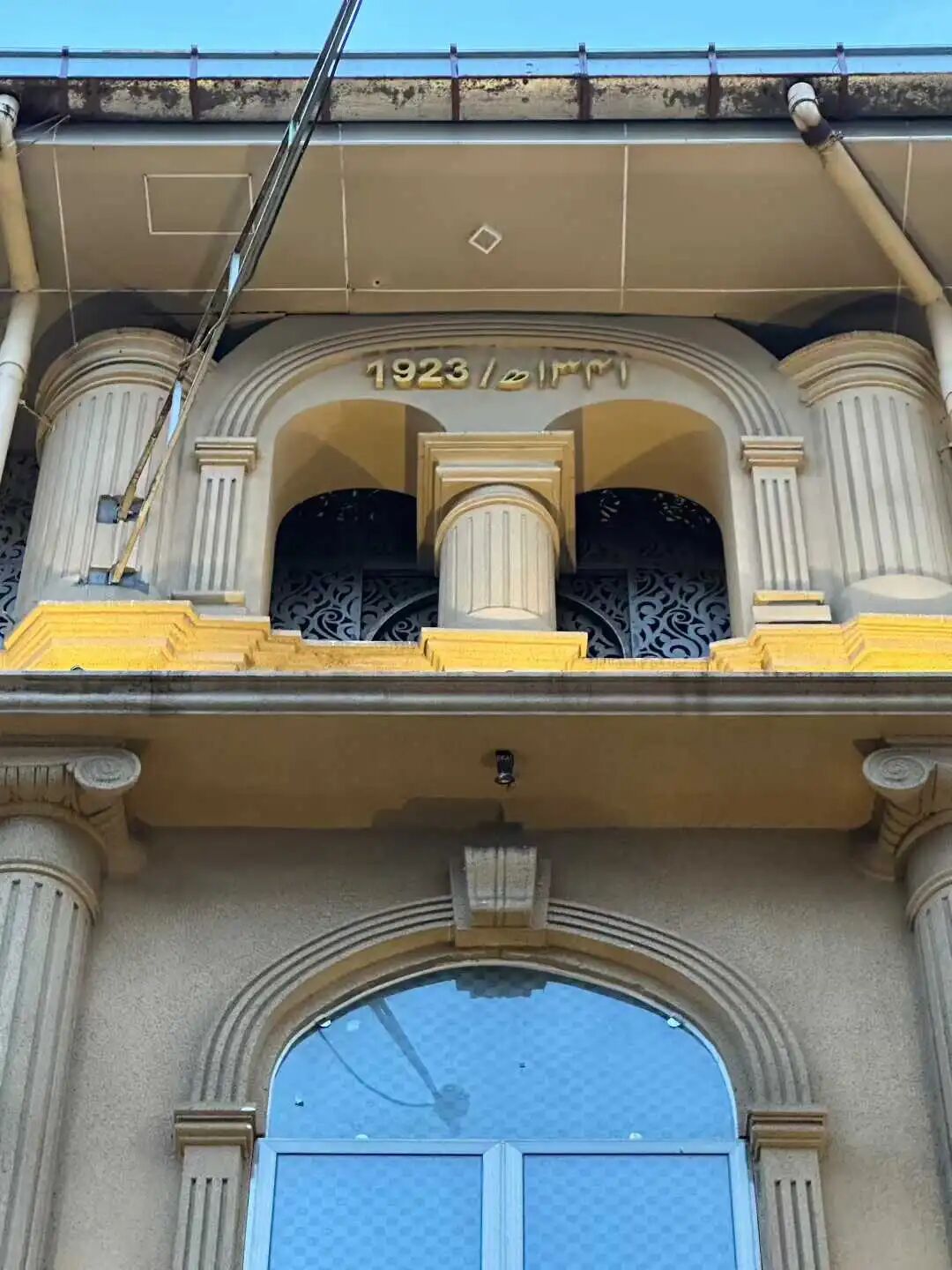
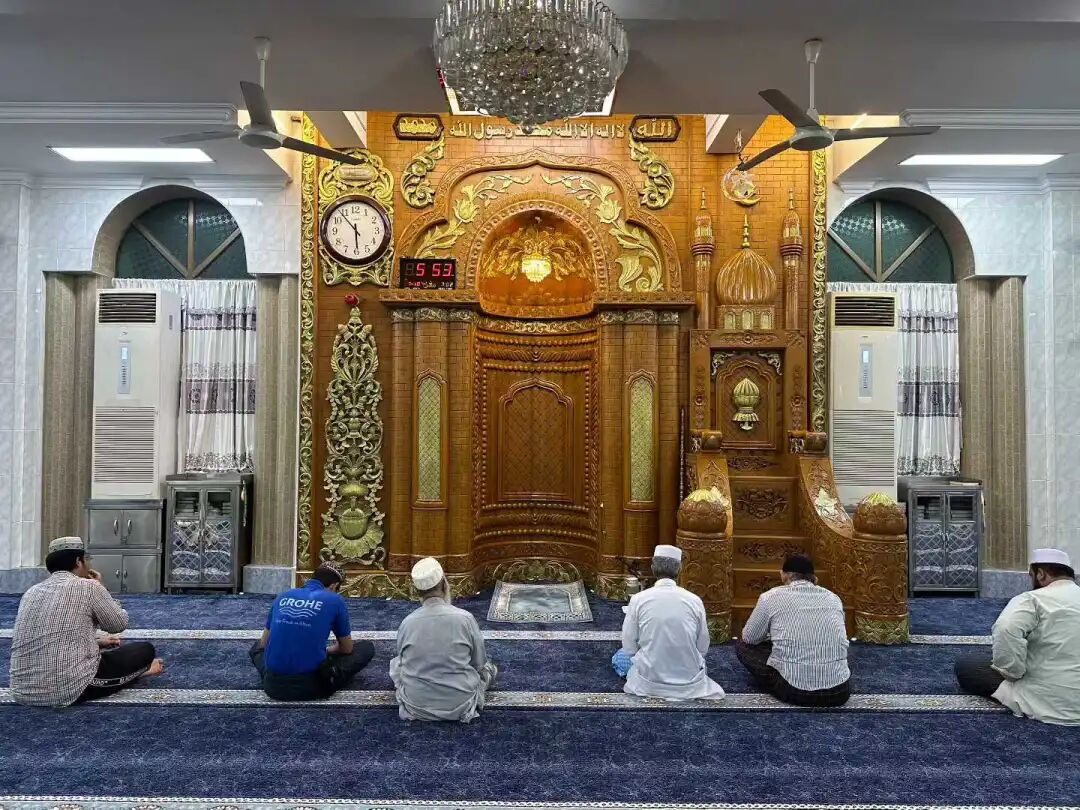
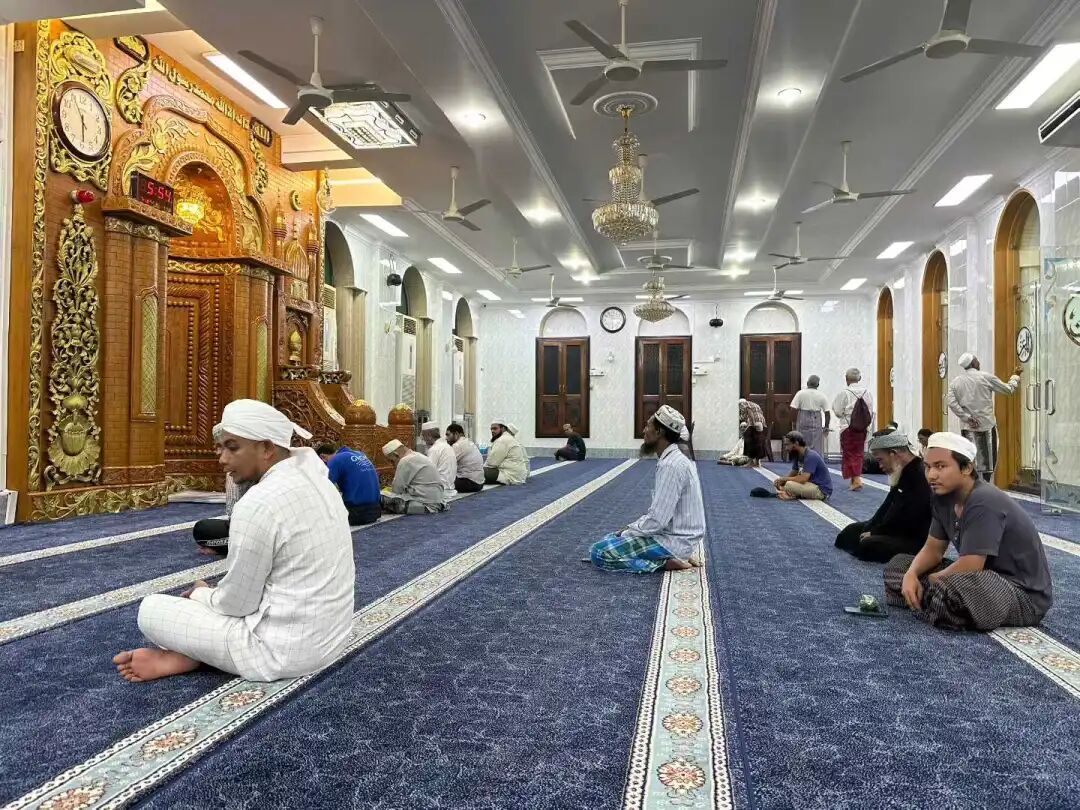
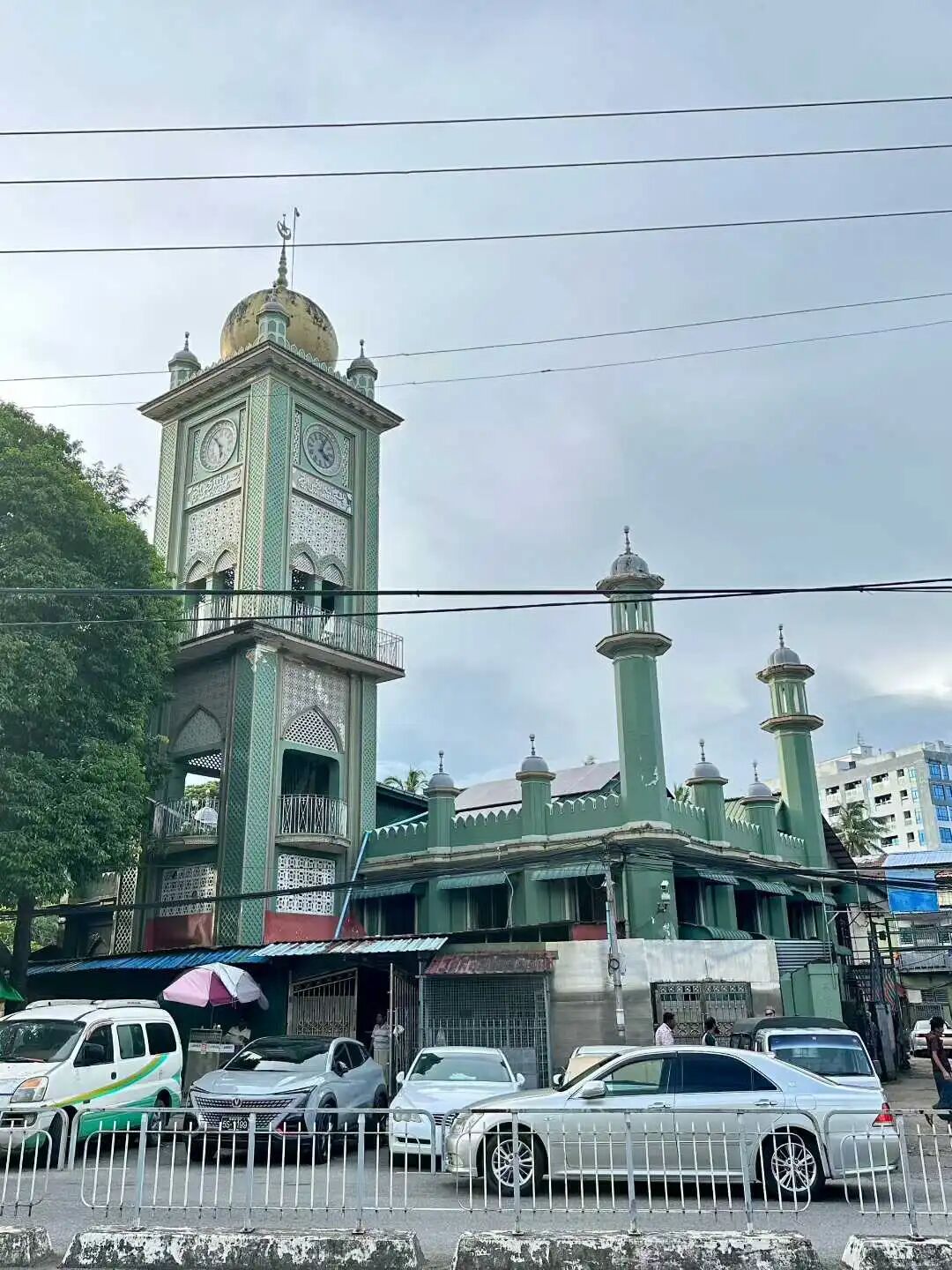
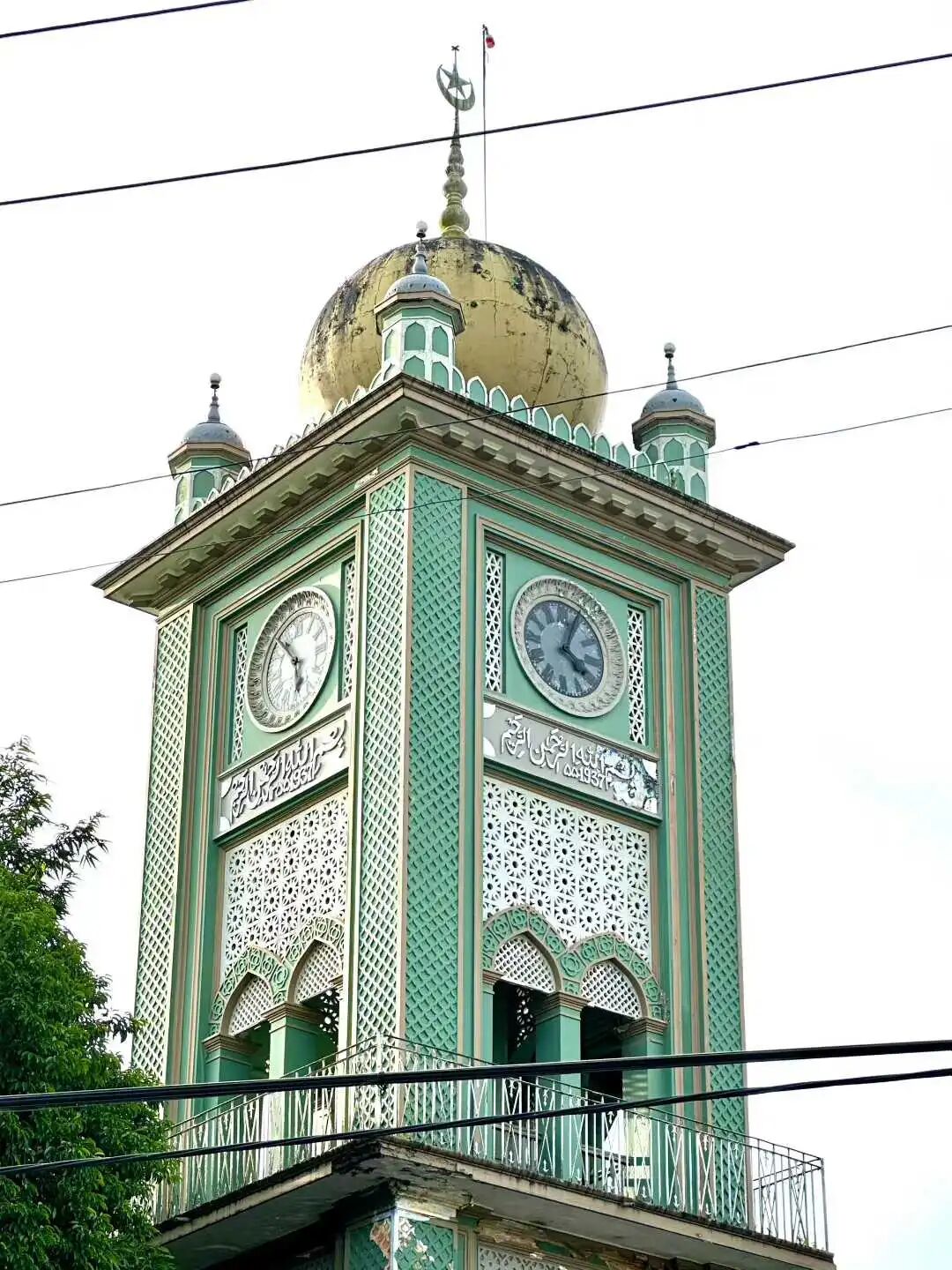
The Esof Ahmed Mamsa Family Mosque is in Tamwe Township, north of Yangon's old city. The Mamsa family, merchants from Gujarat, India, built it in 1937. In 1995, they renovated it to its current look using rent collected from family-owned properties.
The mosque has a tall clock tower facing the street. At the top is a clock made by the old Berlin, Germany, watchmaker C. F. Rochlitz, which still works today. If you look closely at the clock tower, you can still see bullet holes left from when the Japanese army invaded Yangon in 1942. The German company C. F. Rochlitz started in 1824 and specialized in clocks for towers. It won many international awards in the 19th century and stayed under the Rochlitz family until it was bought in 1984.
The Narsapuri Moja Sunni Jame Mosque is in the middle of Mogul Street in Yangon's old Indian quarter, north of the Surti Mosque. Friends (dosti) from Andhra Pradesh on the southeast coast of India first built it in 1855, and it was rebuilt into its current form in the 1890s.
Unlike northern India, where the faith spread through occupation, the faith in southern India mostly grew through merchants and Sufi saints. The dosti from Andhra Pradesh speak a special Deccan Urdu. Compared to northern Urdu, it keeps more ancient words from the pre-Mughal era and adds many loanwords from local Deccan languages like Telugu and Tamil.
The mosque is named after Narsapur, a coastal city in Andhra Pradesh, India. The dosti from Andhra Pradesh in Yangon boarded ships there to come to Yangon. The Dutch used Narsapur as a port in the 17th century. By the 18th century, it became an important Indian trade port and shipbuilding center, exporting large amounts of teak to the world.
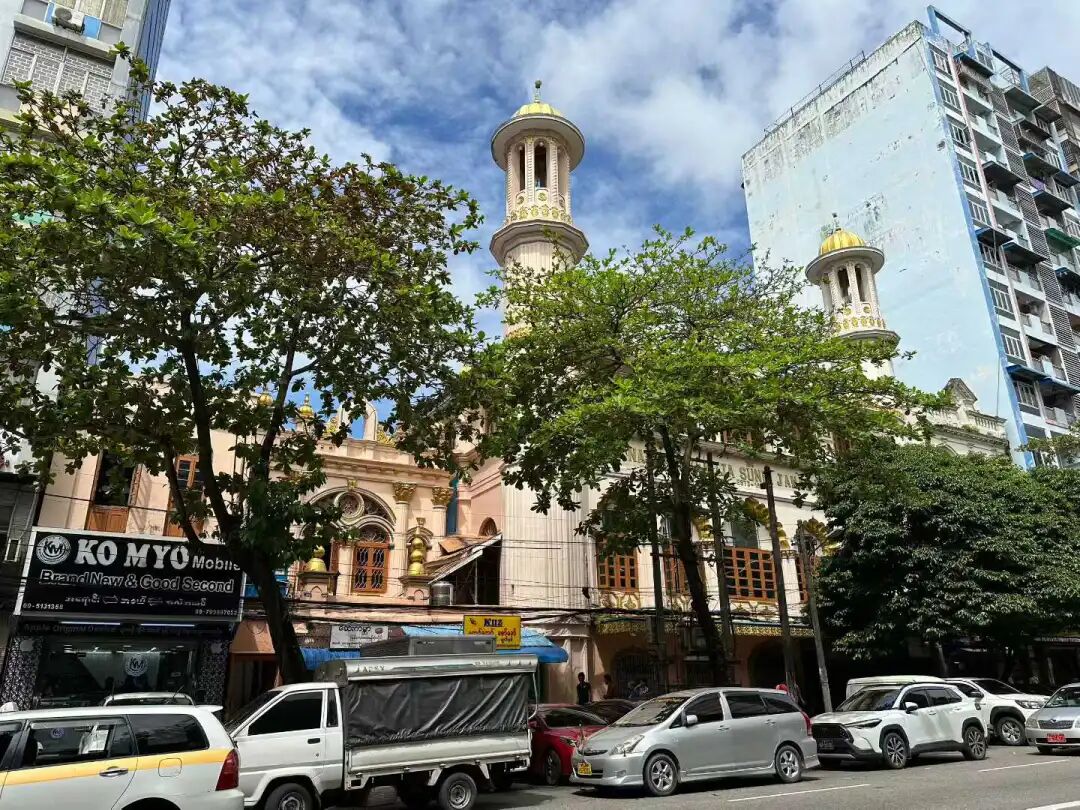
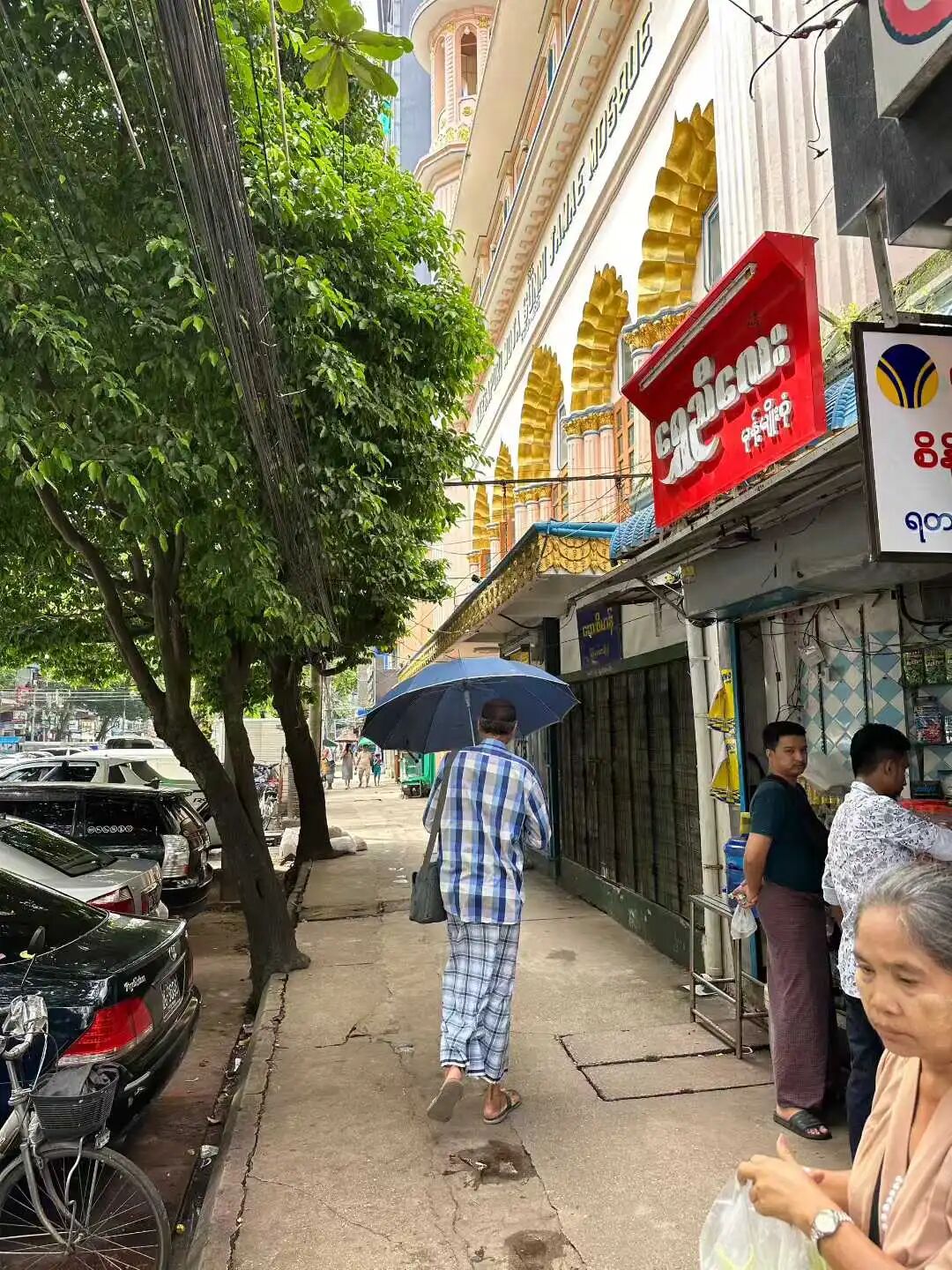
The Gulam Ariff Mosque is on Lanmadaw Road in Yangon's Chinatown. The Indian real estate developer Gulam Ariff built it in 1888. Gulam Ariff owned a famous real estate company in Yangon. This mosque has fewer people, but it provides great convenience for the dosti who live and work near Chinatown.
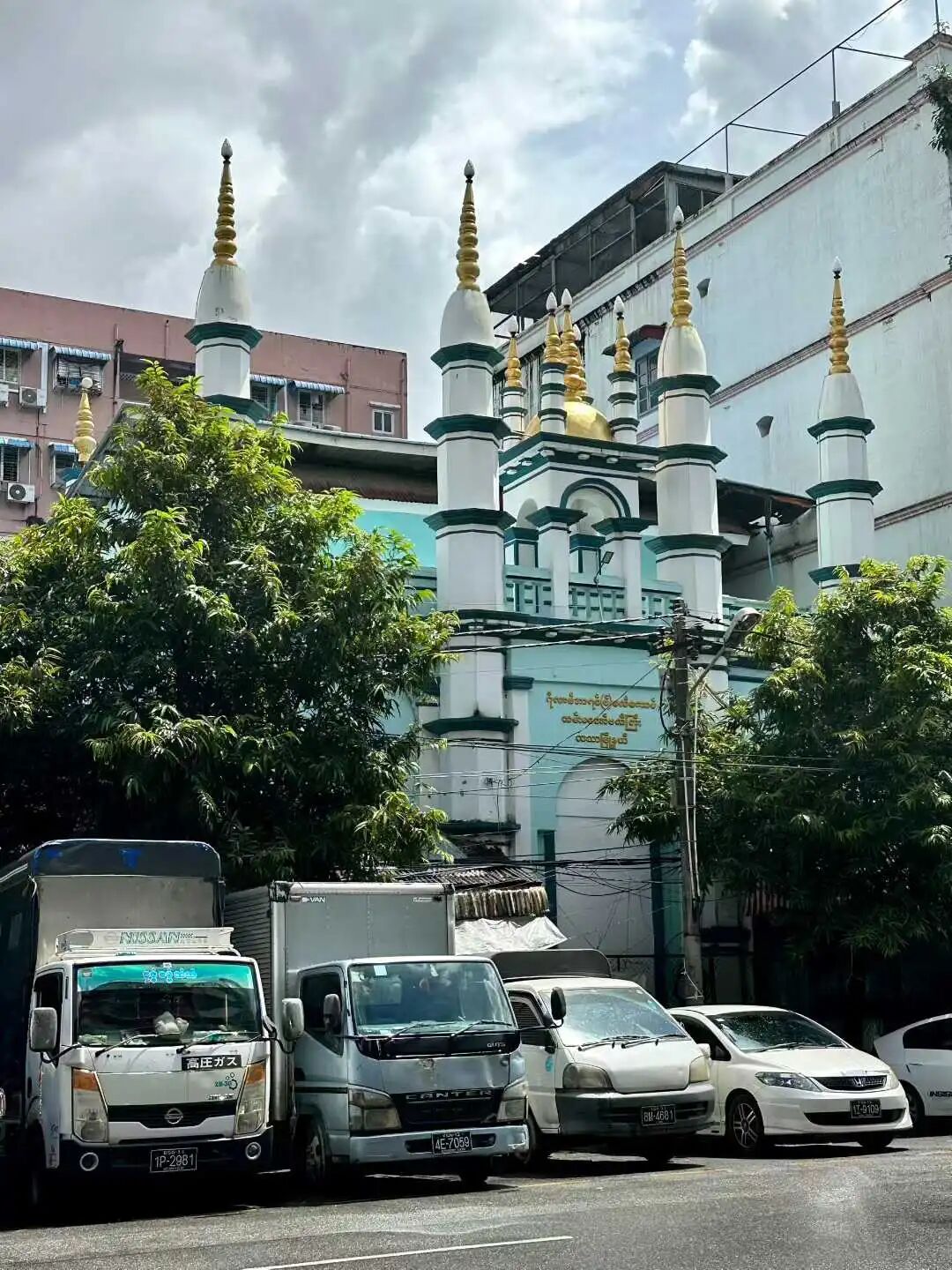
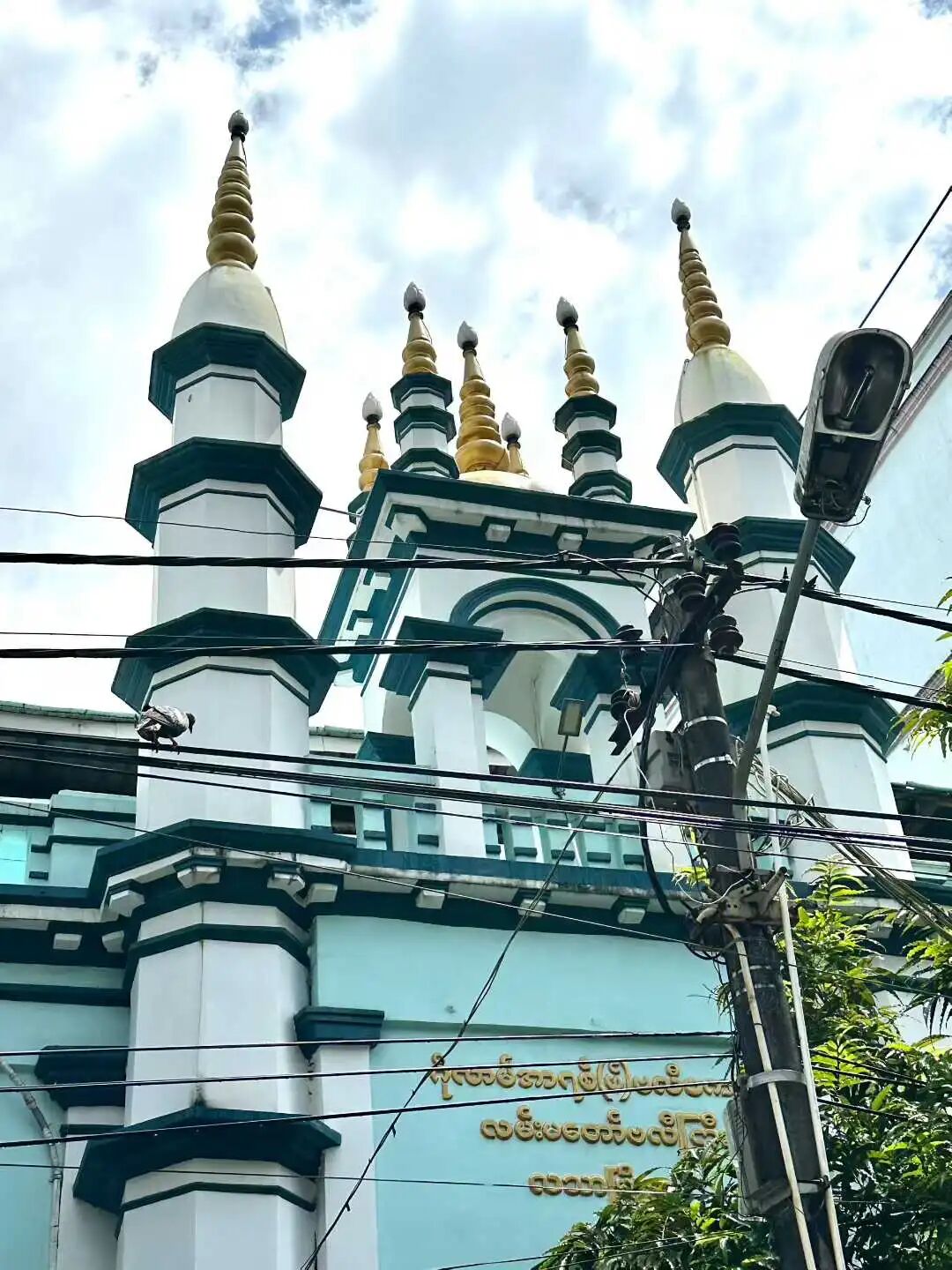
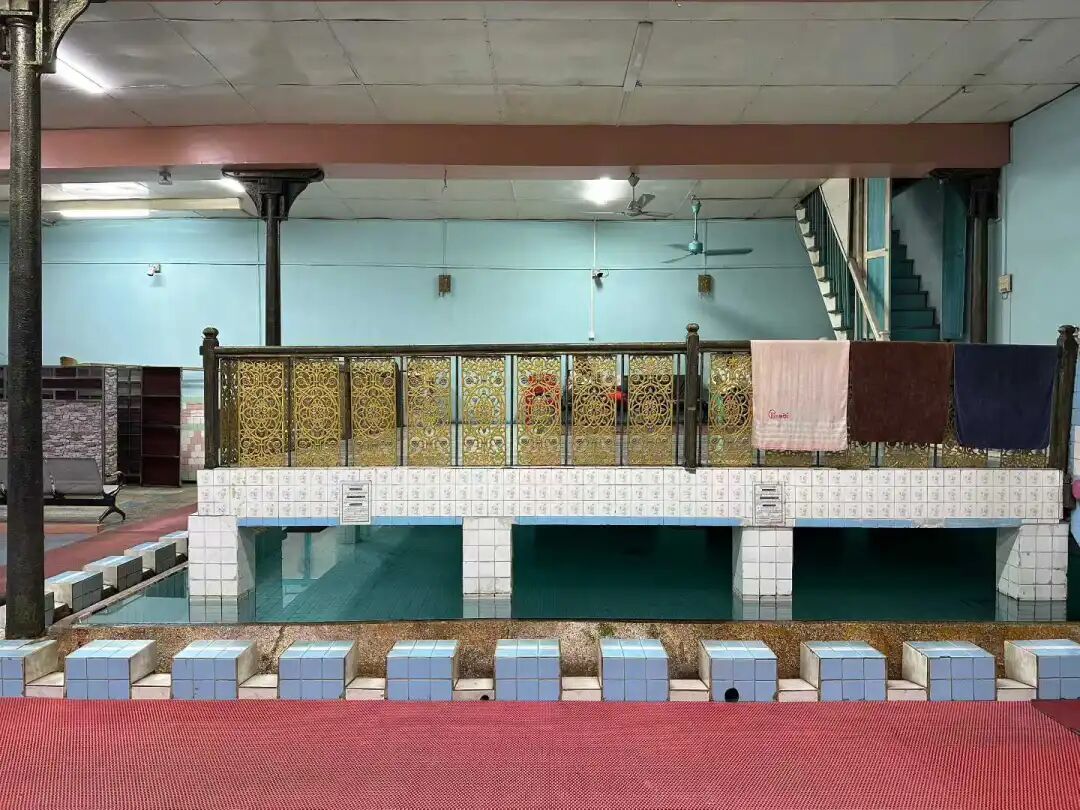
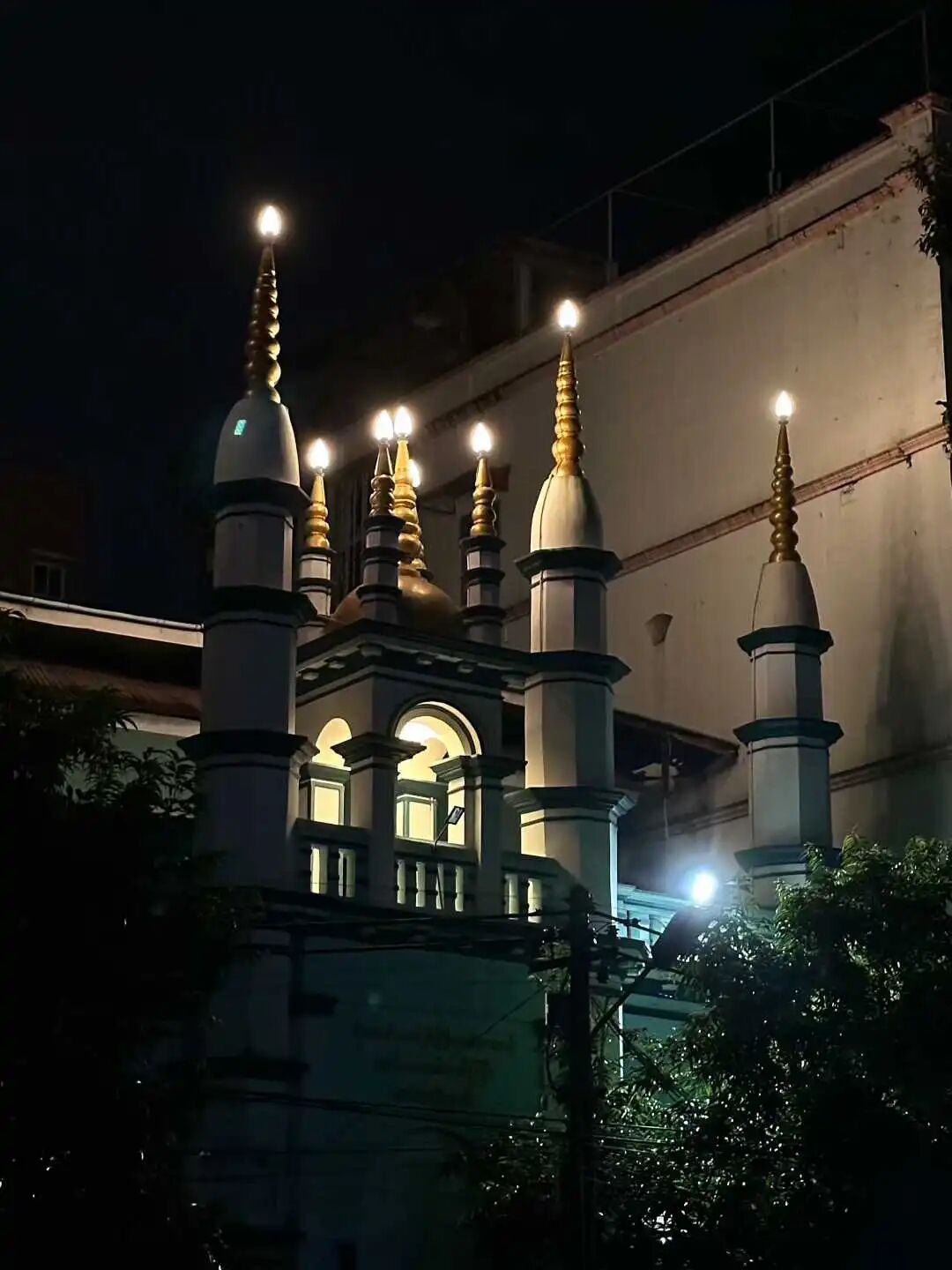
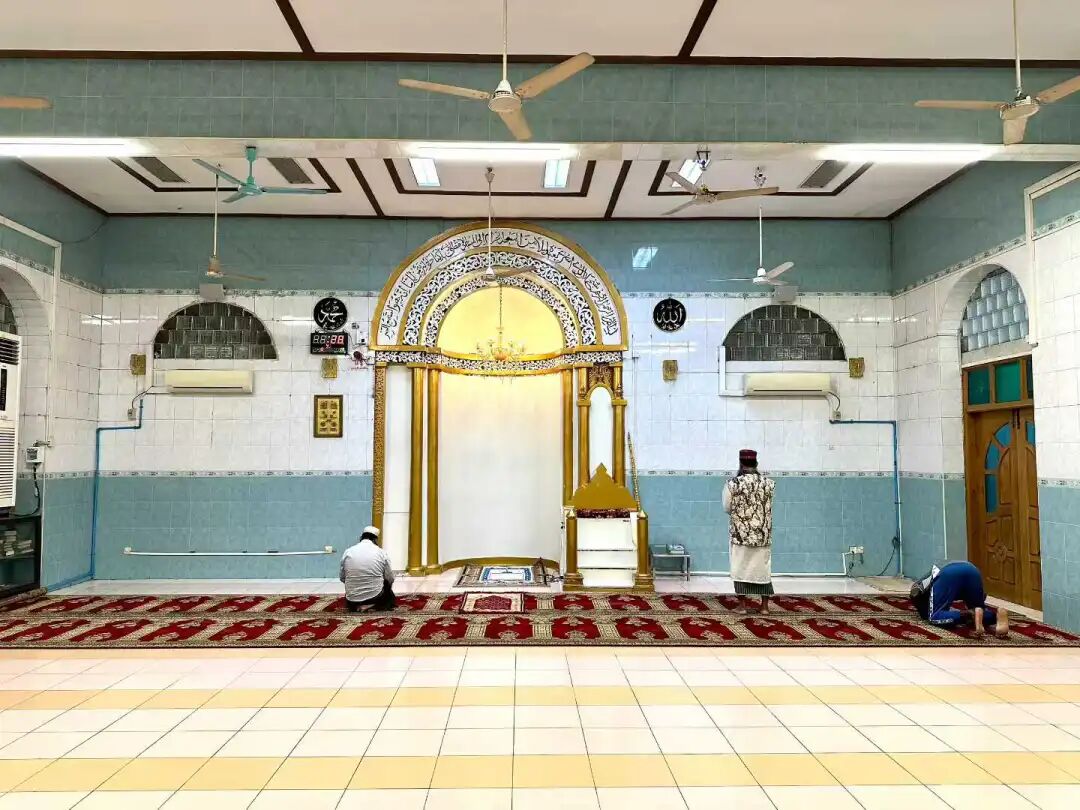
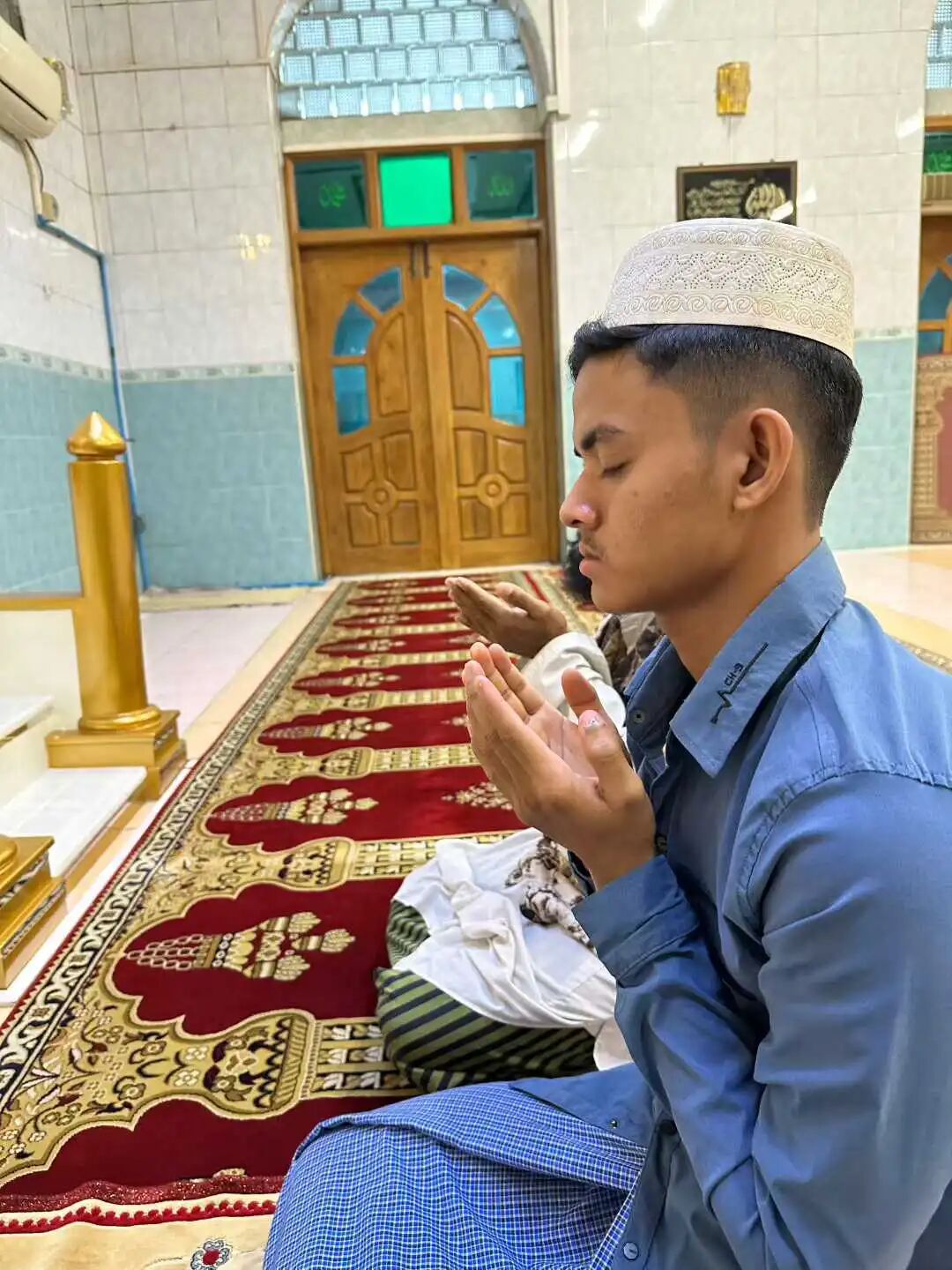
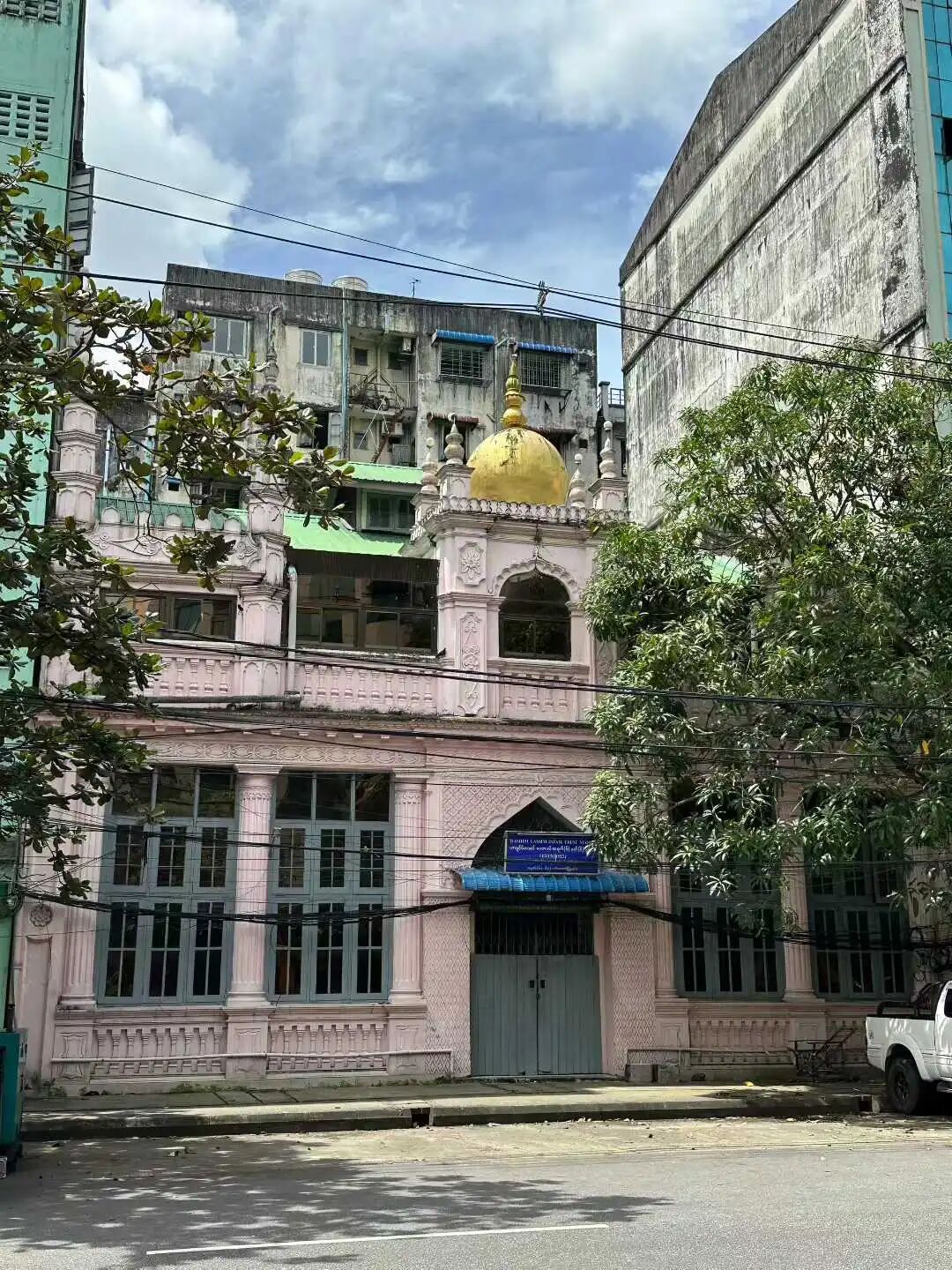
The Hashim Kasim Patel Trust Mosque is on the far west side of Yangon's old city. The Kasim Patel family from Surat, India, built it in 1922, and the family still manages it today.
After the First Anglo-Burmese War in 1826, merchants from British India began traveling to Myanmar for business. The Kasim Patel family moved from Mumbai, India, to Myanmar in the 1830s. They first worked in the silk trade in Mawlamyine. After the British occupied Yangon in 1853, they moved to Yangon to open shops. The family started a company named after the eldest son, Hashim Kasim Patel. They also ran the Gulam Ariff Company and the Boglay Bazzar Company. From the late 19th century to the early 20th century, the Kasim Patel family held a very high status among the Gujarati dosti in Yangon.
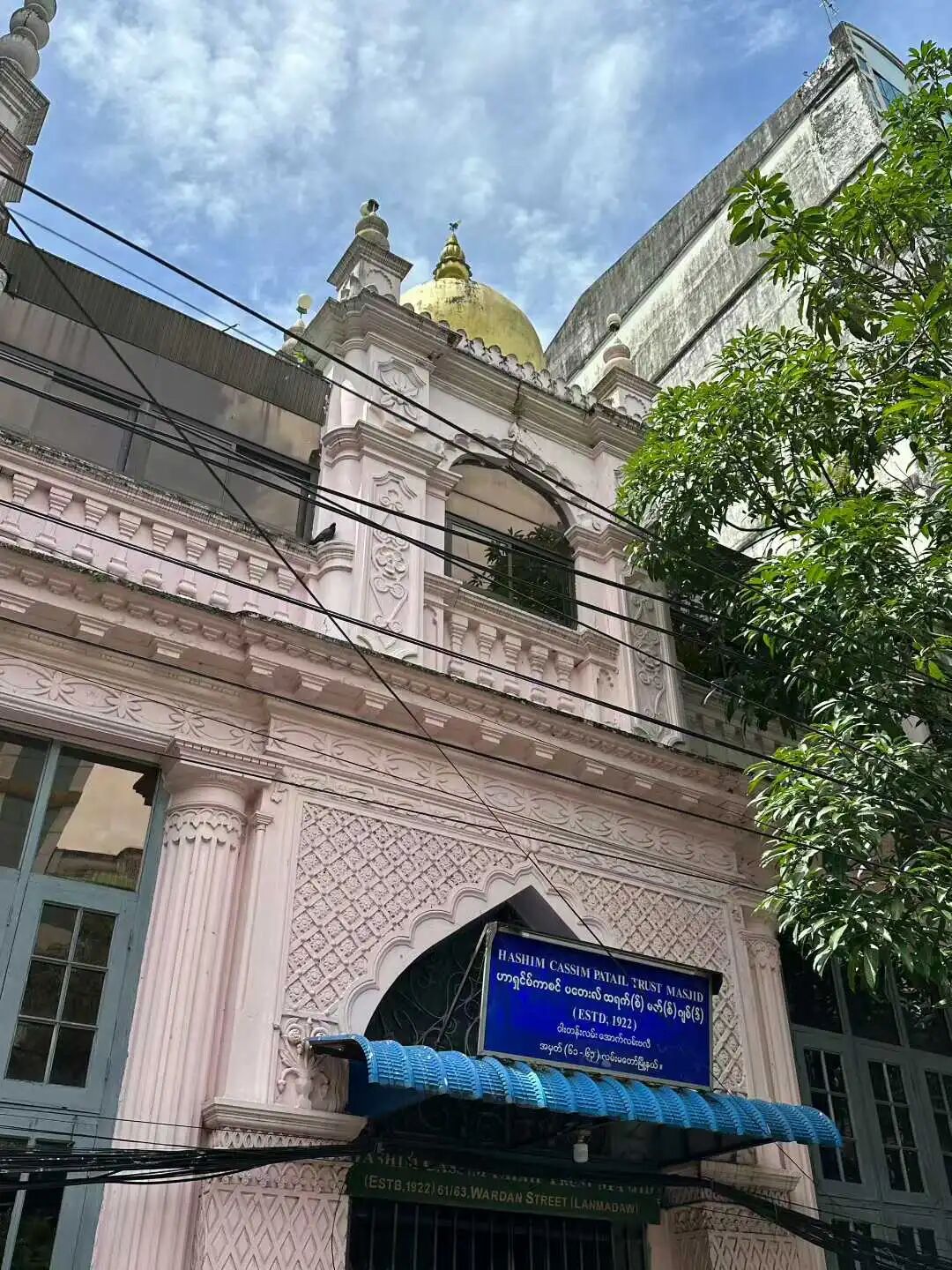
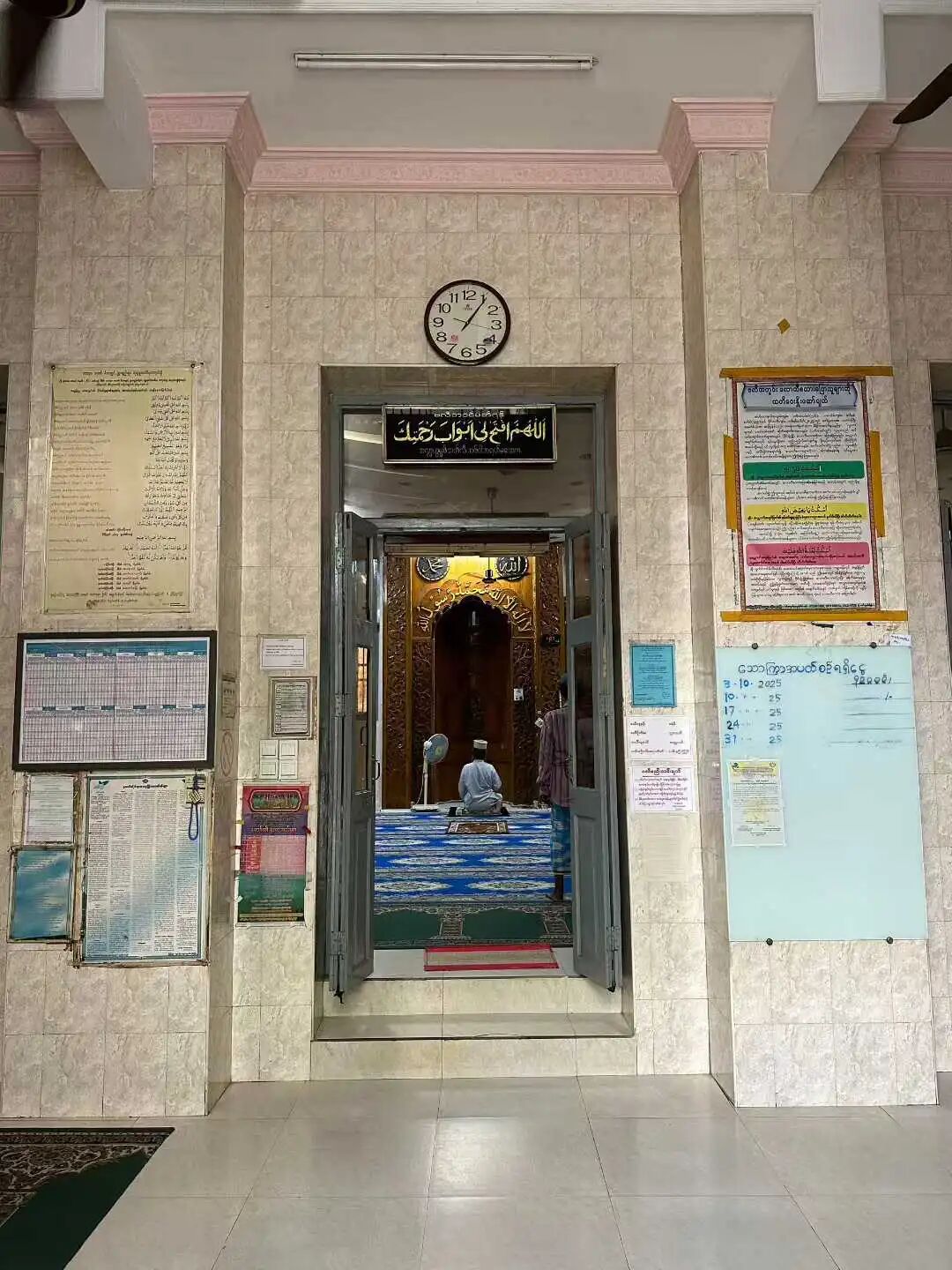
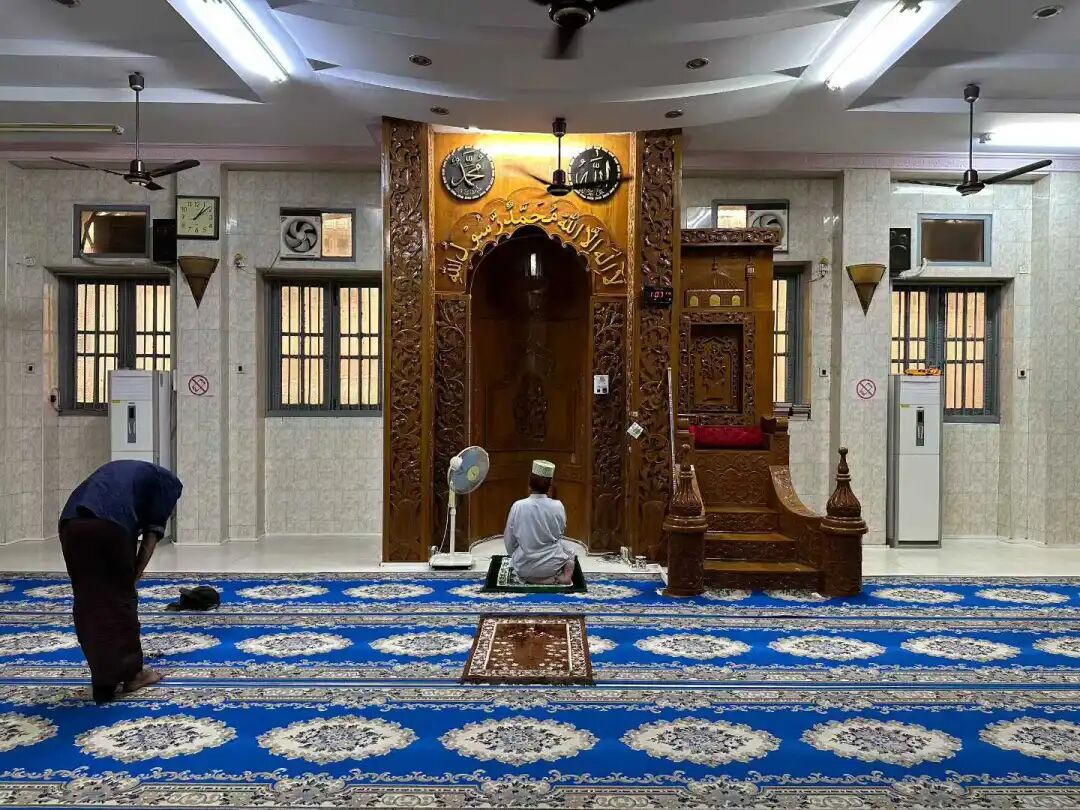
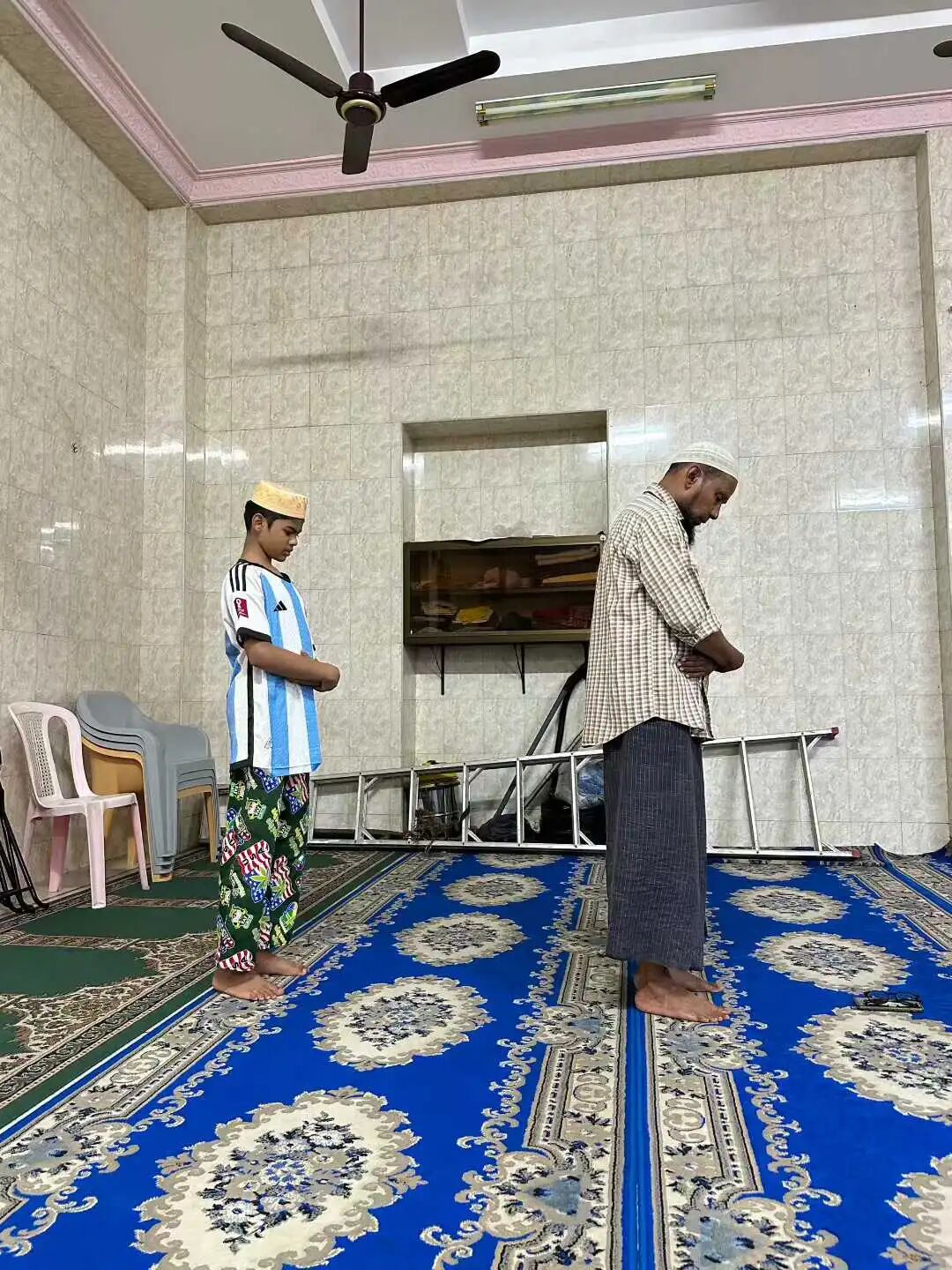
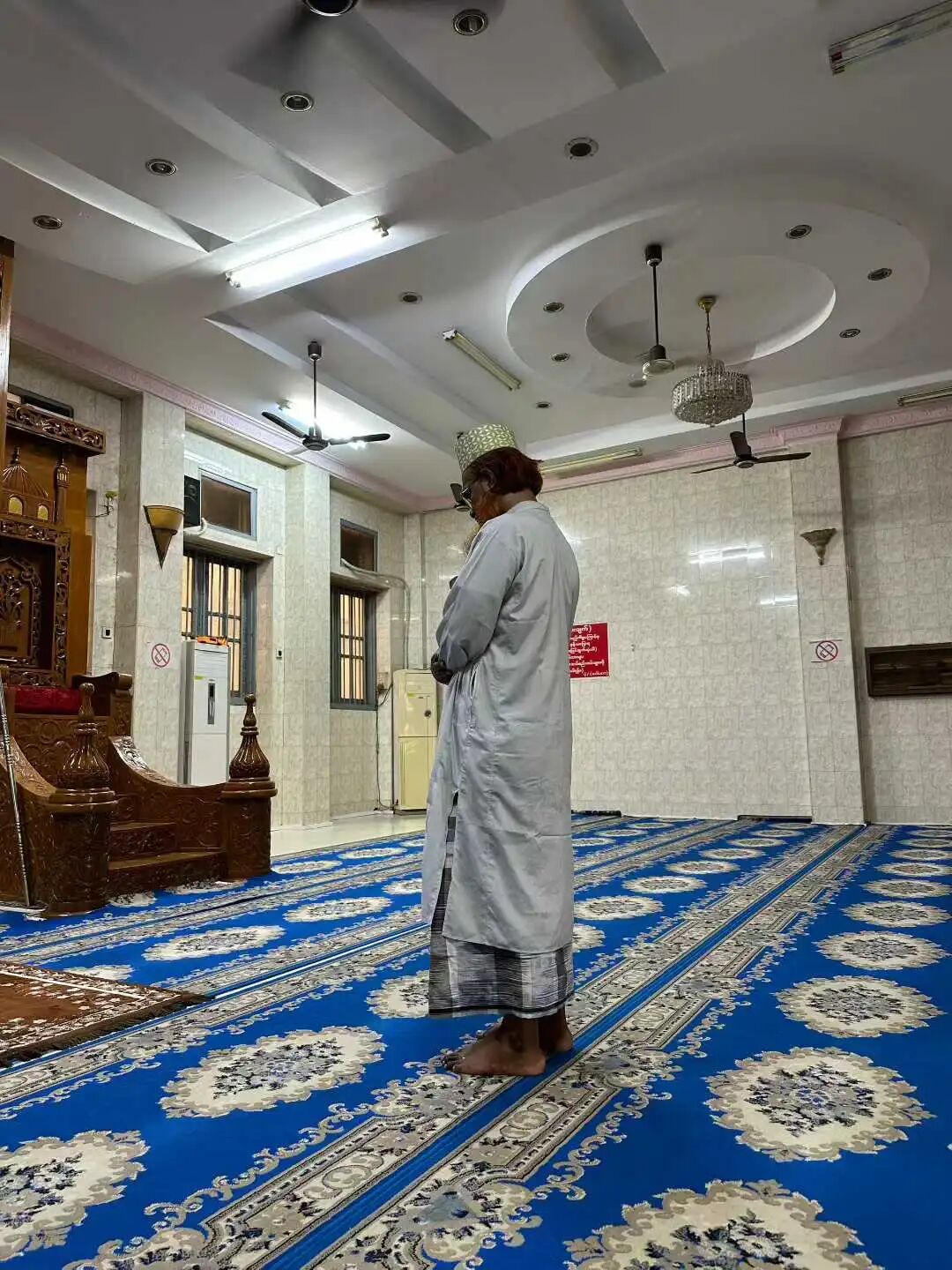
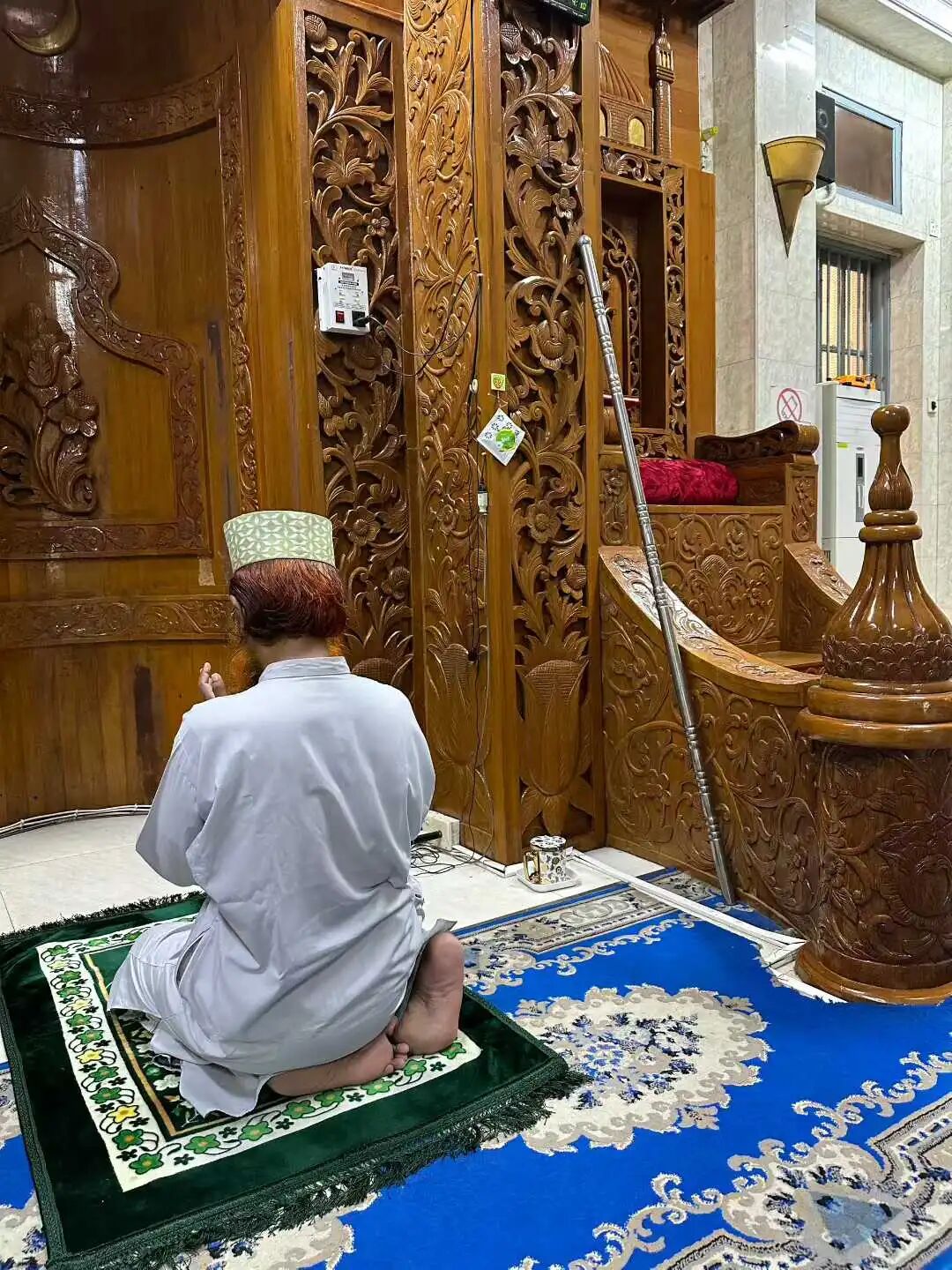
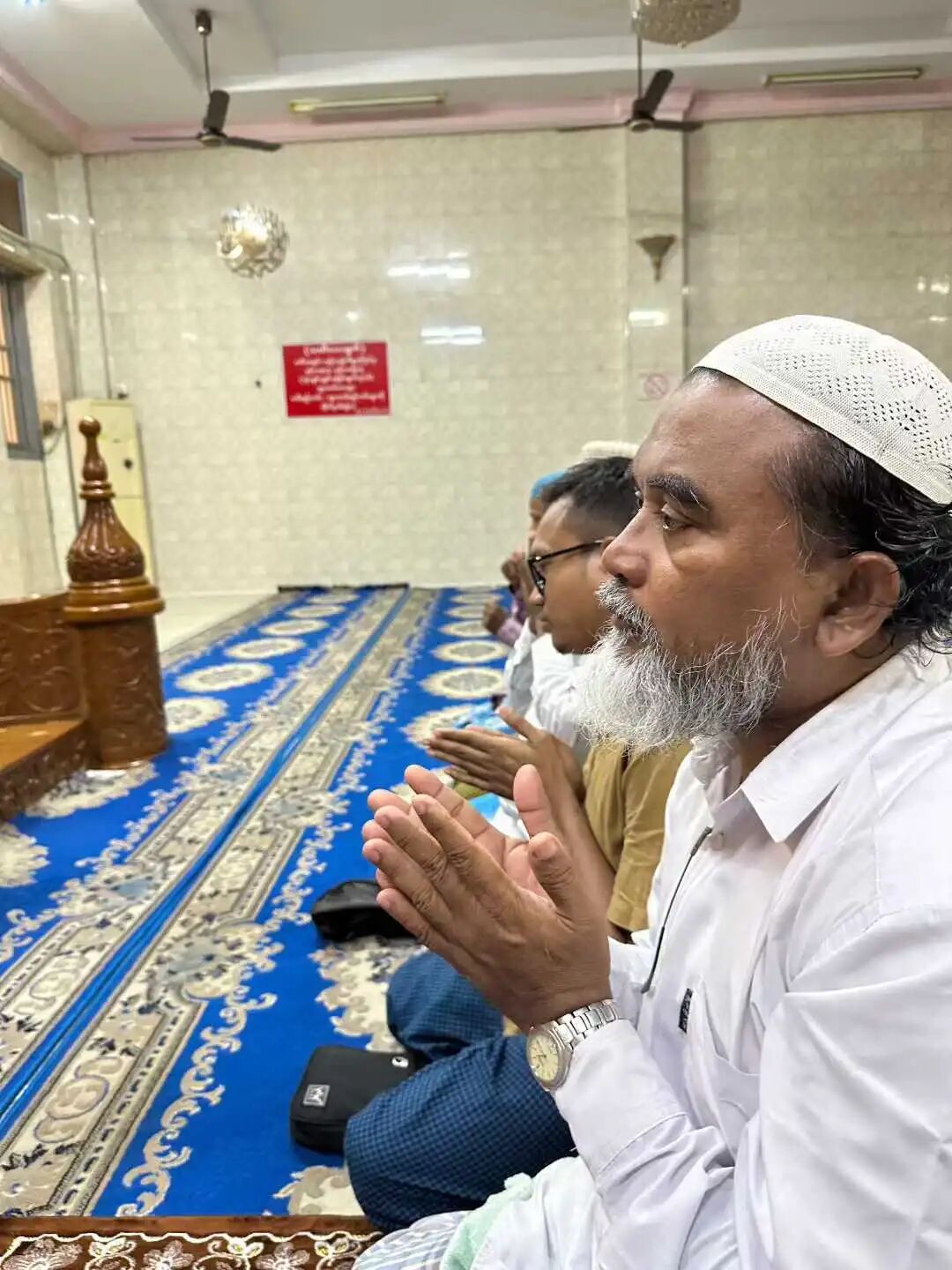
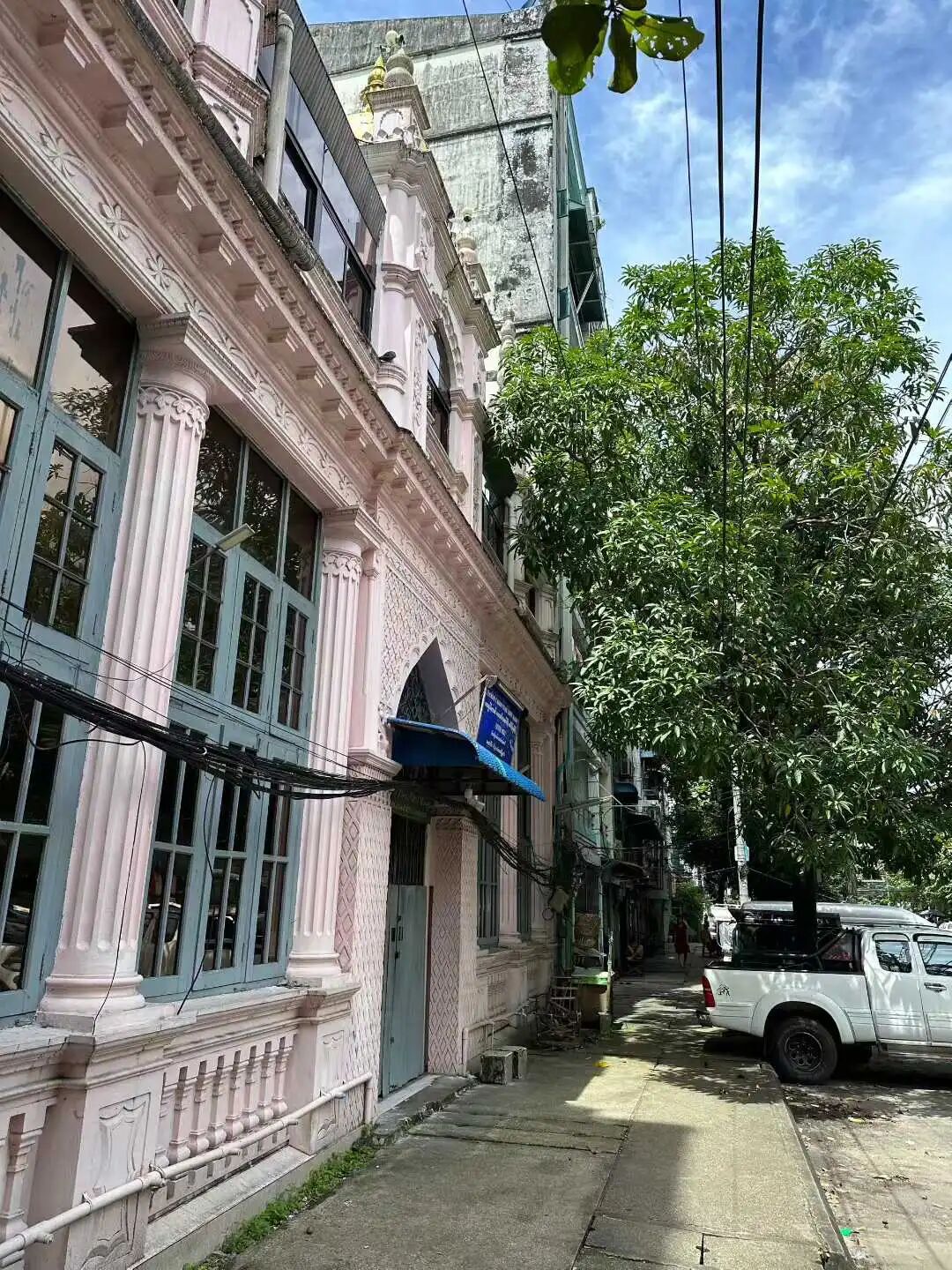
The Chittagong Sunni Arkaty Chota Mosque is on 40th Street on the east side of Yangon's old city. Dosti from Chittagong, Bangladesh, built it. Chittagong is an ancient natural port in Bangladesh. It has been an important passage for the southern Silk Road since ancient times. Arab merchants began trading there in the 9th century, and the famous traveler Ibn Battuta and Zheng He's fleet both visited. After 1666, the Mughal Empire ruled Chittagong. During this time, Chittagong developed quickly and became a shipbuilding center. After 1823, the British occupied both Chittagong and Lower Myanmar, and the dosti from Chittagong began moving to Myanmar to make a living.
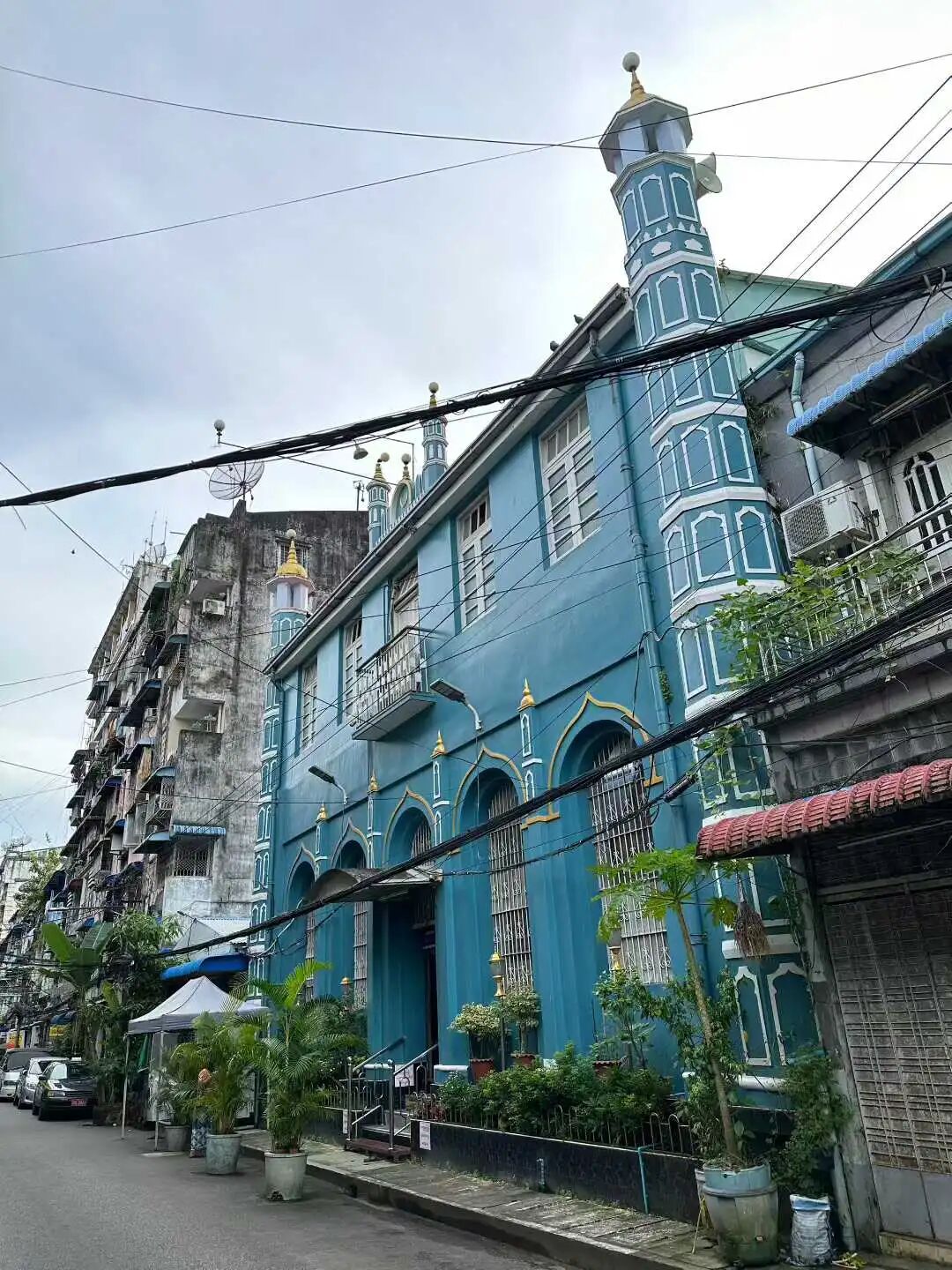
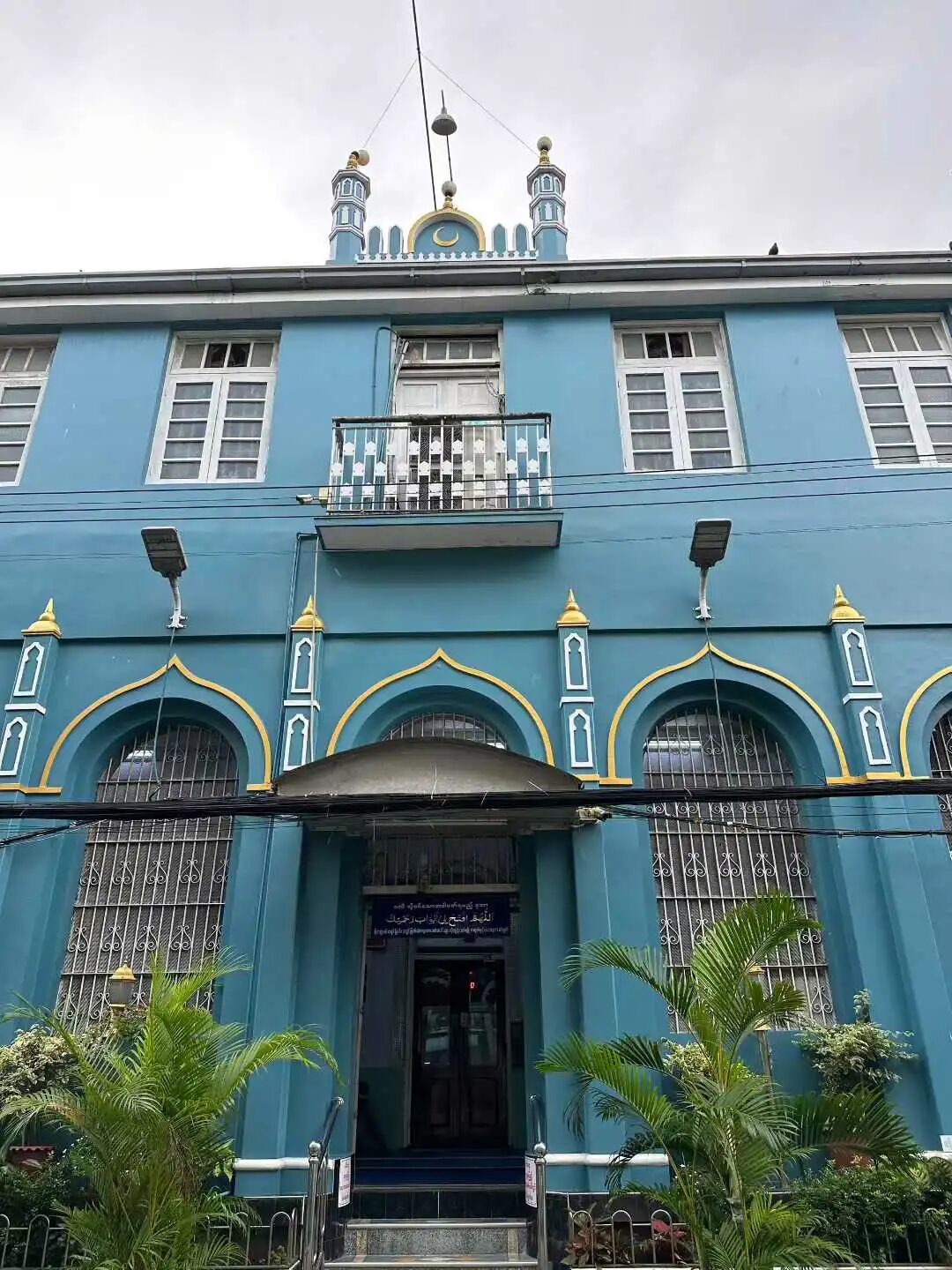
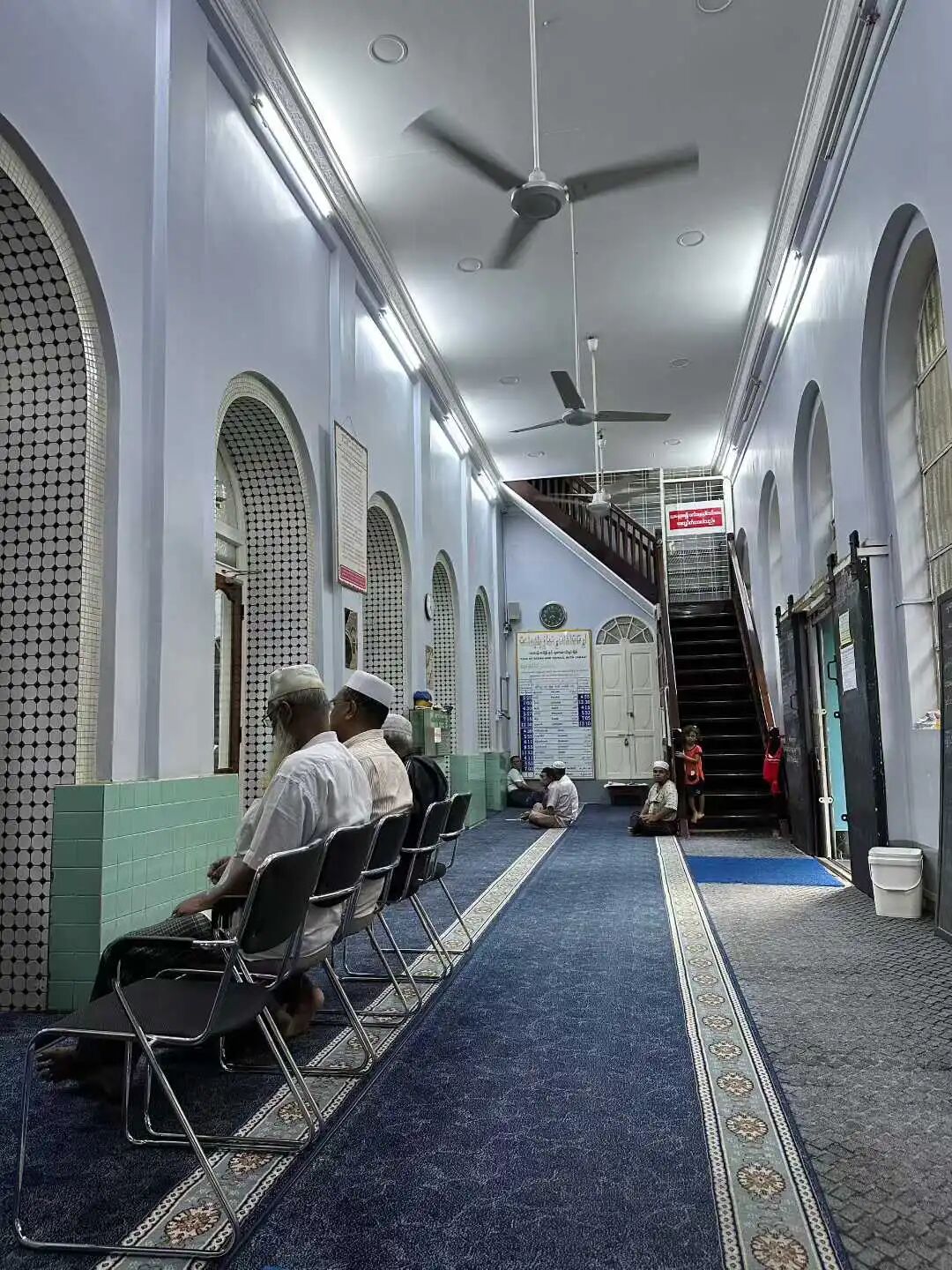
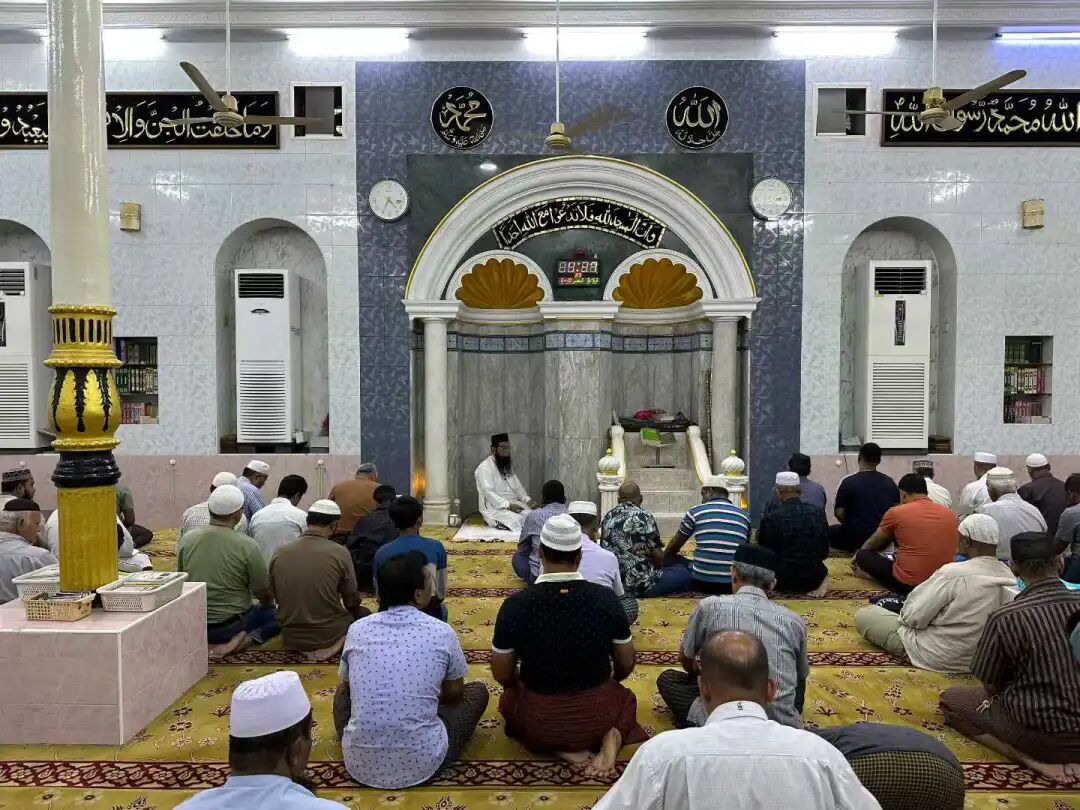
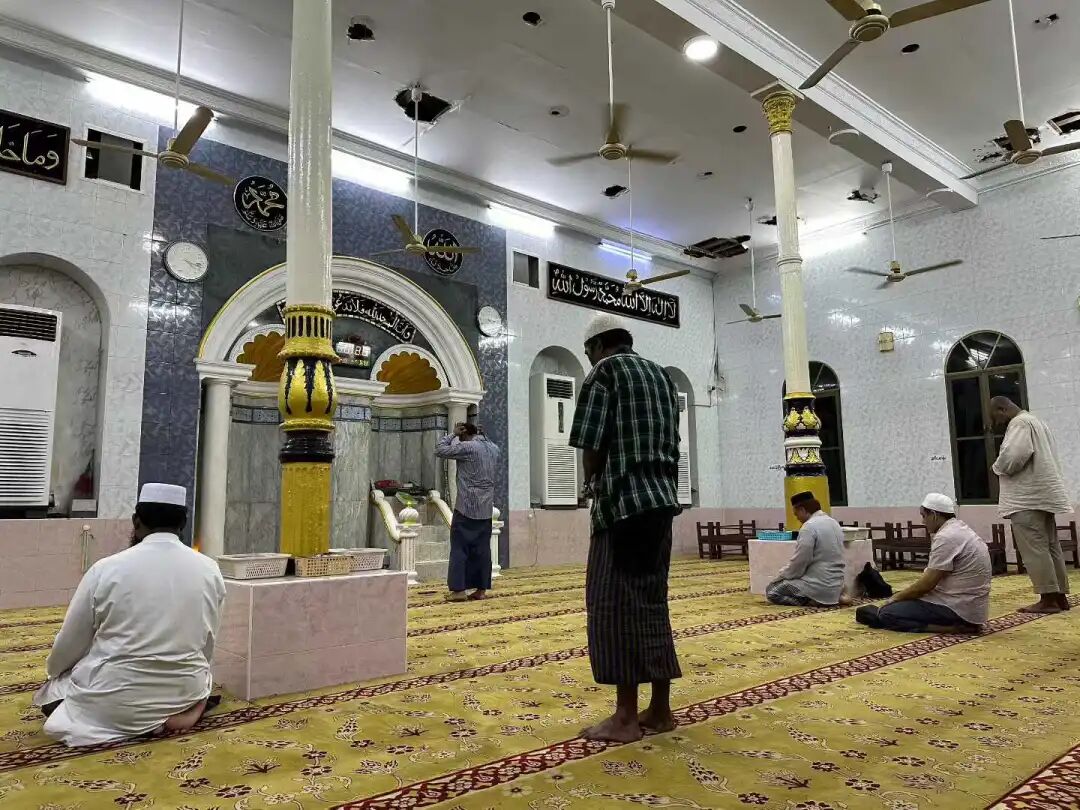
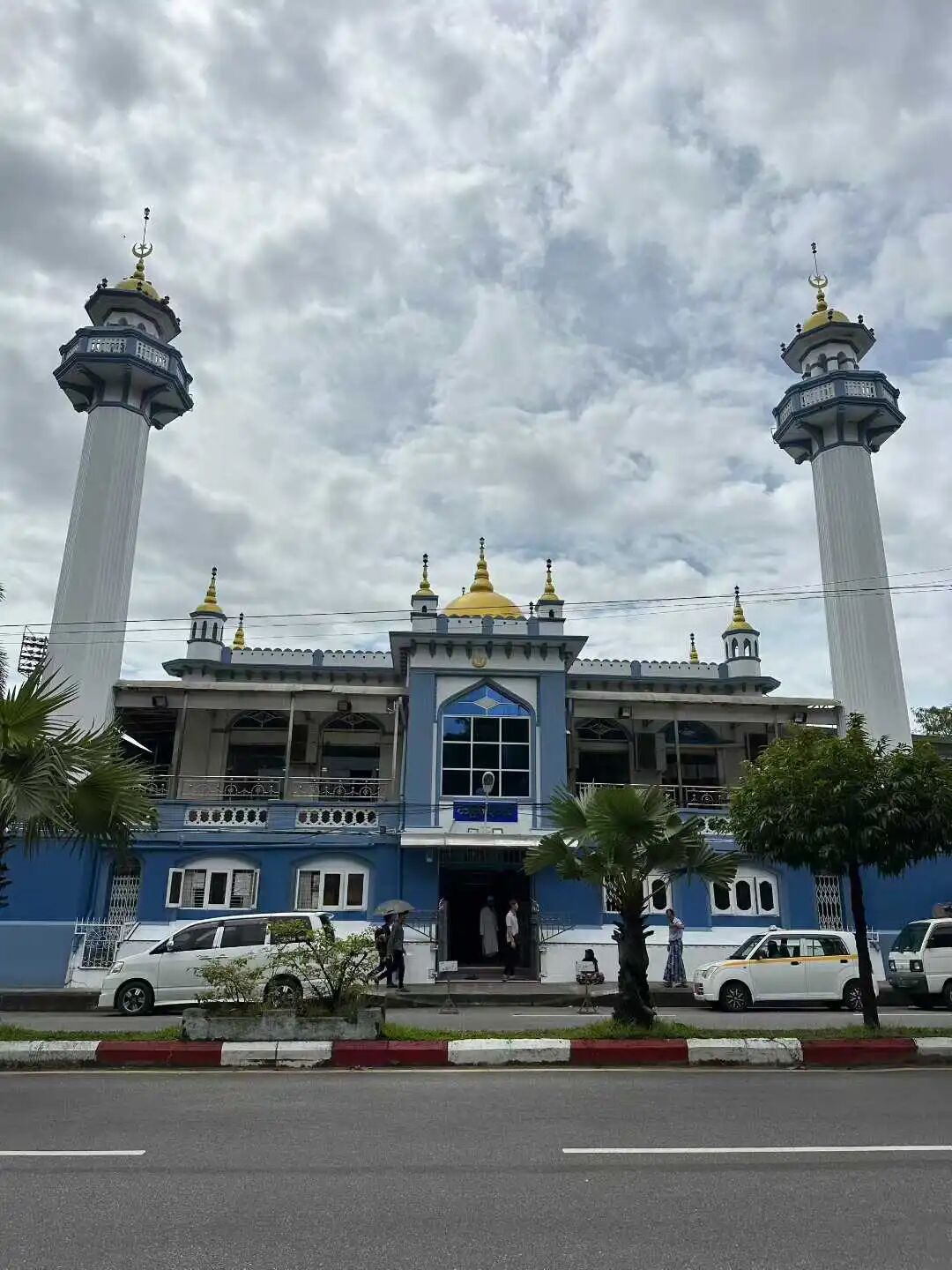
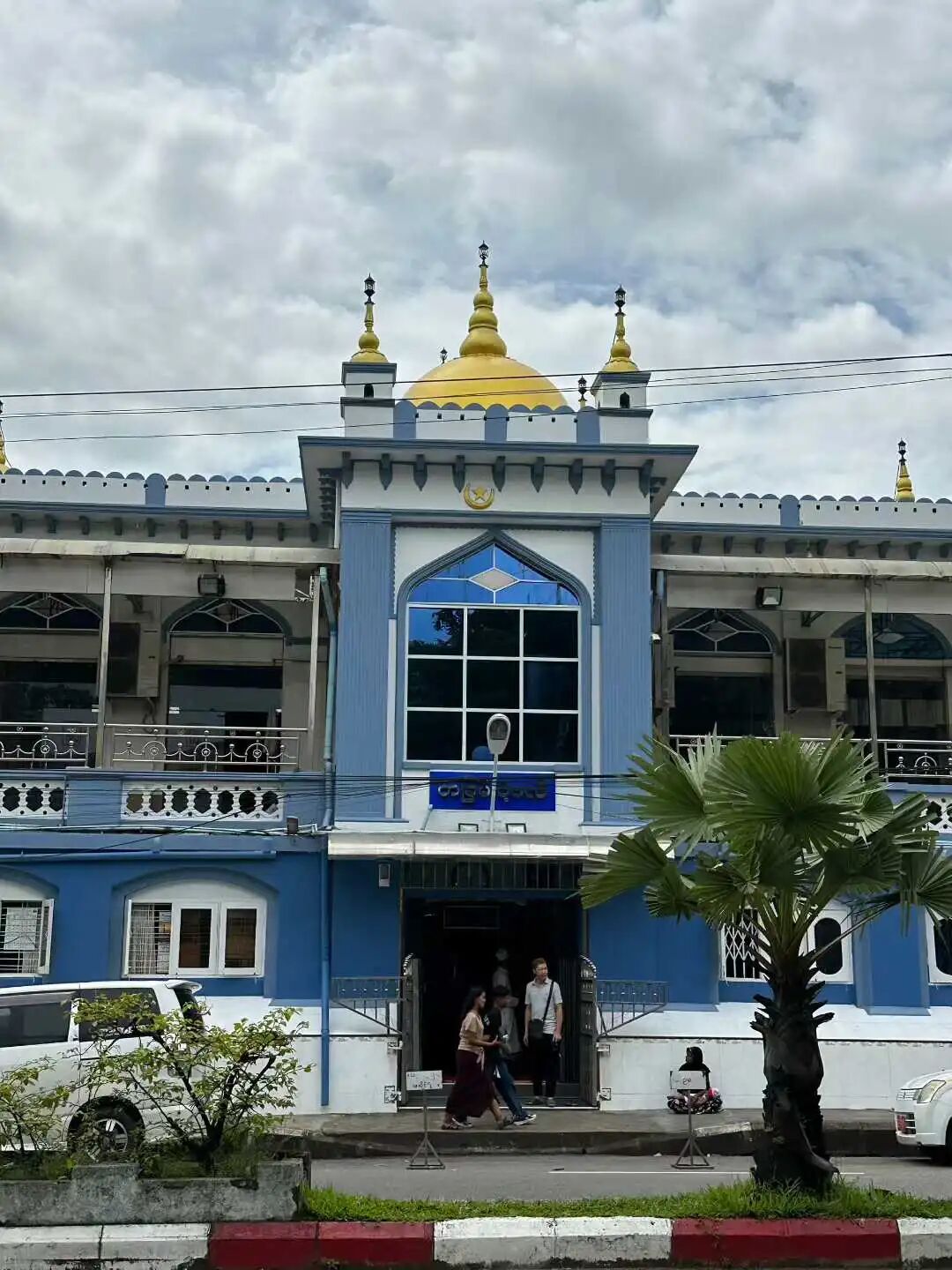
The Triangle Mosque is on Upper Pansodan Road, north of Yangon's old city. It is one of the oldest mosques in Yangon. Two officers of King Bagyidaw (who reigned from 1819 to 1837) of the Konbaung Dynasty, U Shwe Thie and U Shwe Mie, built it in 1826. This mosque was badly damaged during the Japanese invasion of Yangon in World War II, but it was later renovated.
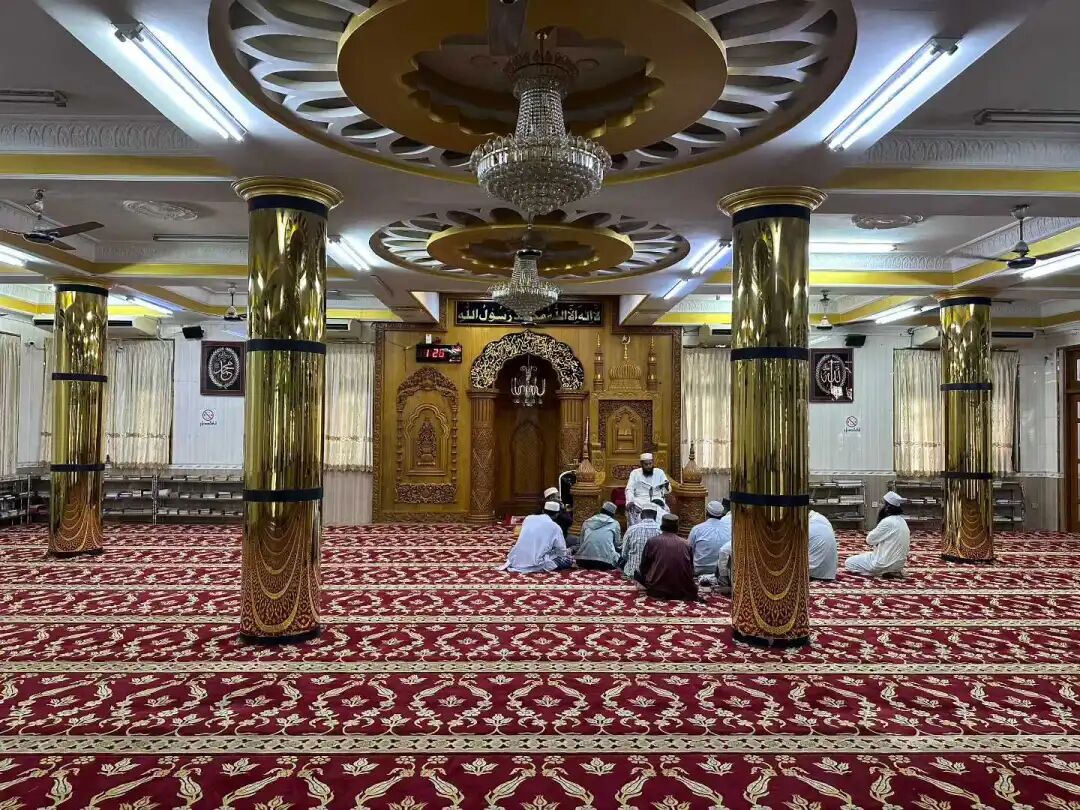
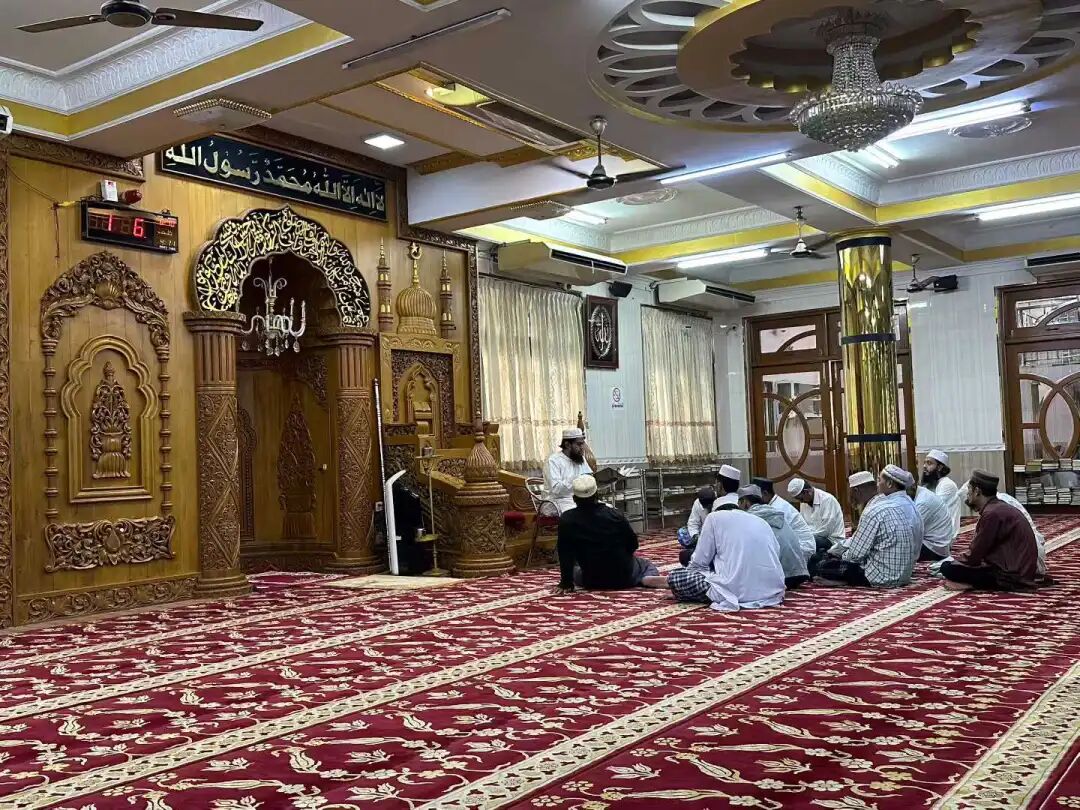
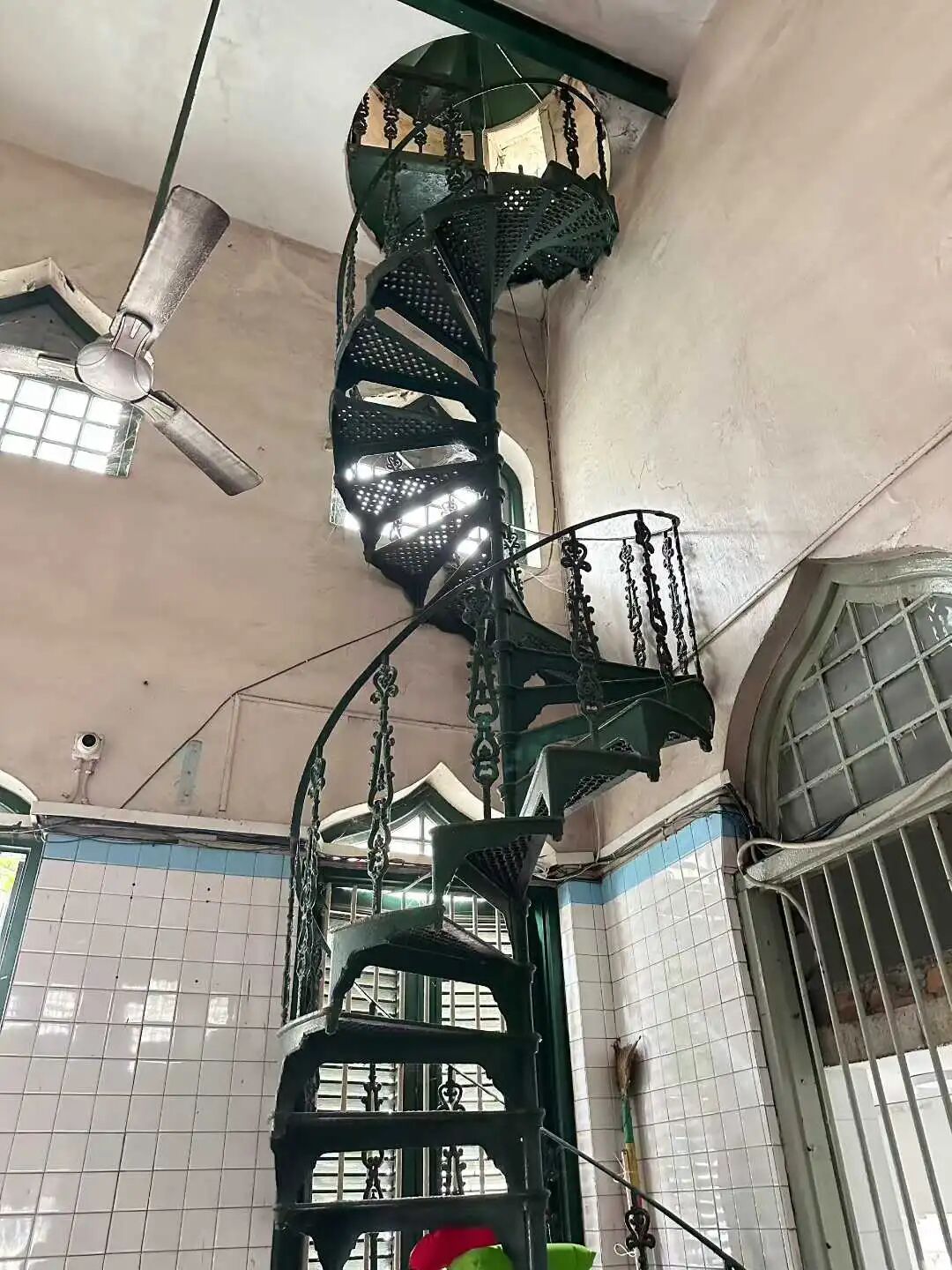
The Mayin Gon Jame Mosque is in Sanchaung Township, north of Yangon's old city. It was first built in 1930. The spiral staircase inside the mosque was provided by Cowie Brothers, an exporter from Glasgow, Scotland. The company's founder, Charles, was once a manager at the Rangoon Oil Company and exported many goods to Myanmar from the late 19th to the early 20th century.
Mogul Street Jumu'ah Mosque (Mogul Street Jumu'ah Mosque) is located at the very busy Mogul Street intersection. Surrounded by many shopping malls, it is known as the New York Times Square of Yangon. Every Friday, many friends (dost) come to the mosque for Jumu'ah prayers. Although the mosque director has been applying to expand the mosque, it has never been approved due to the current situation.
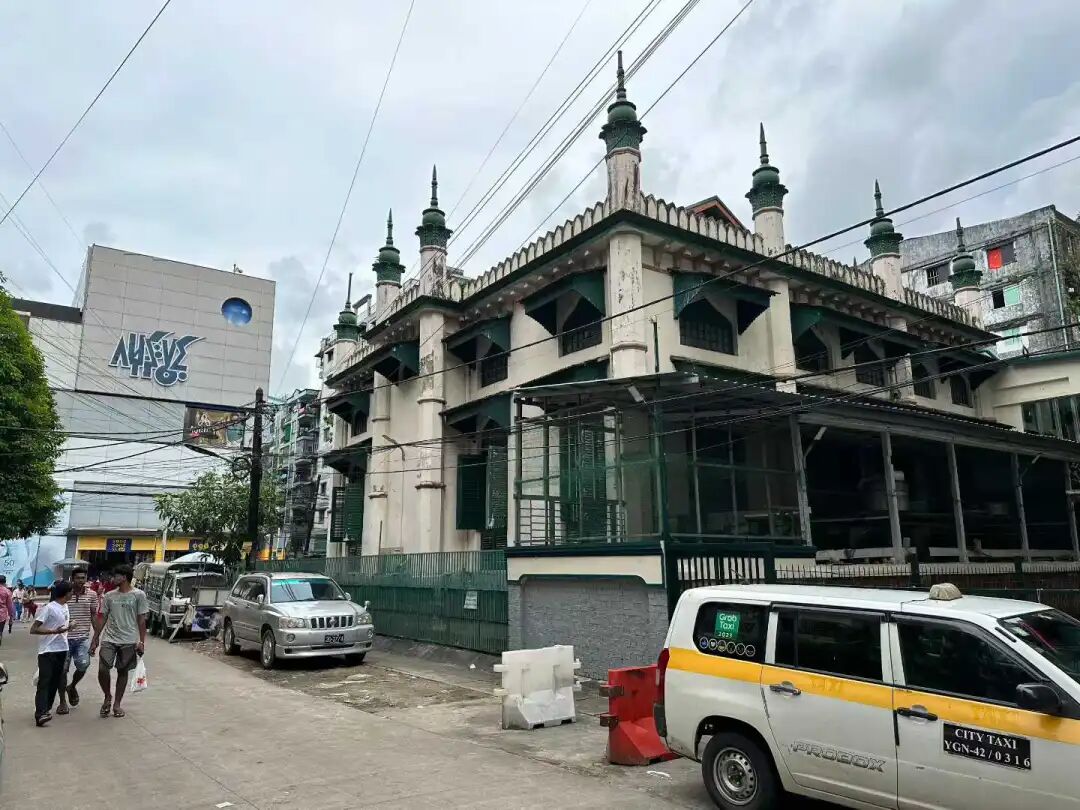
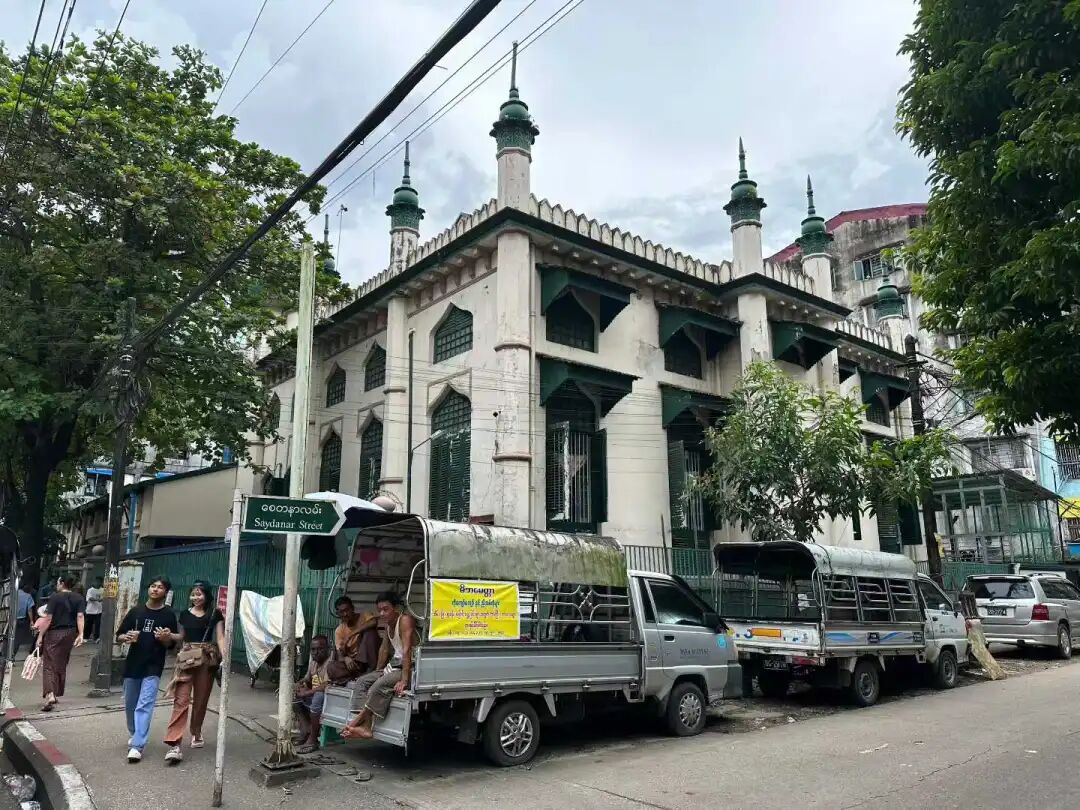
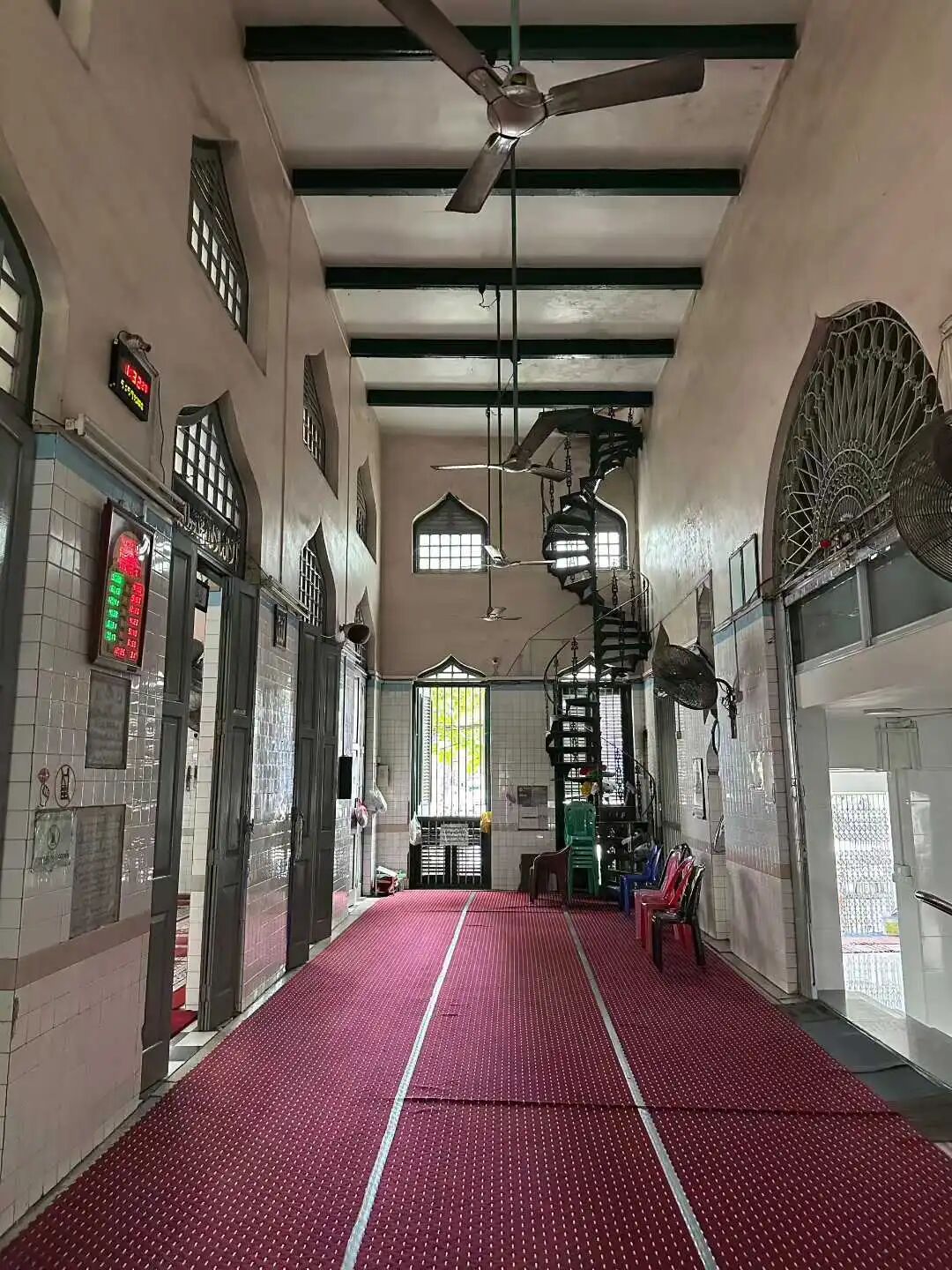
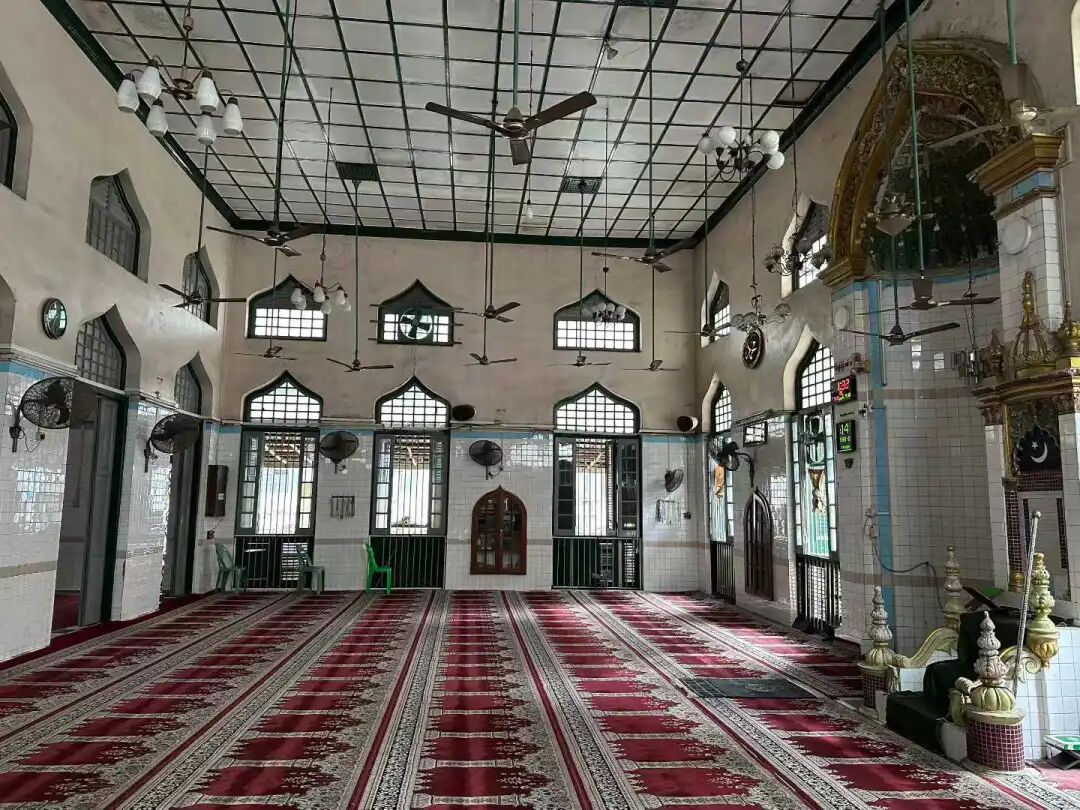
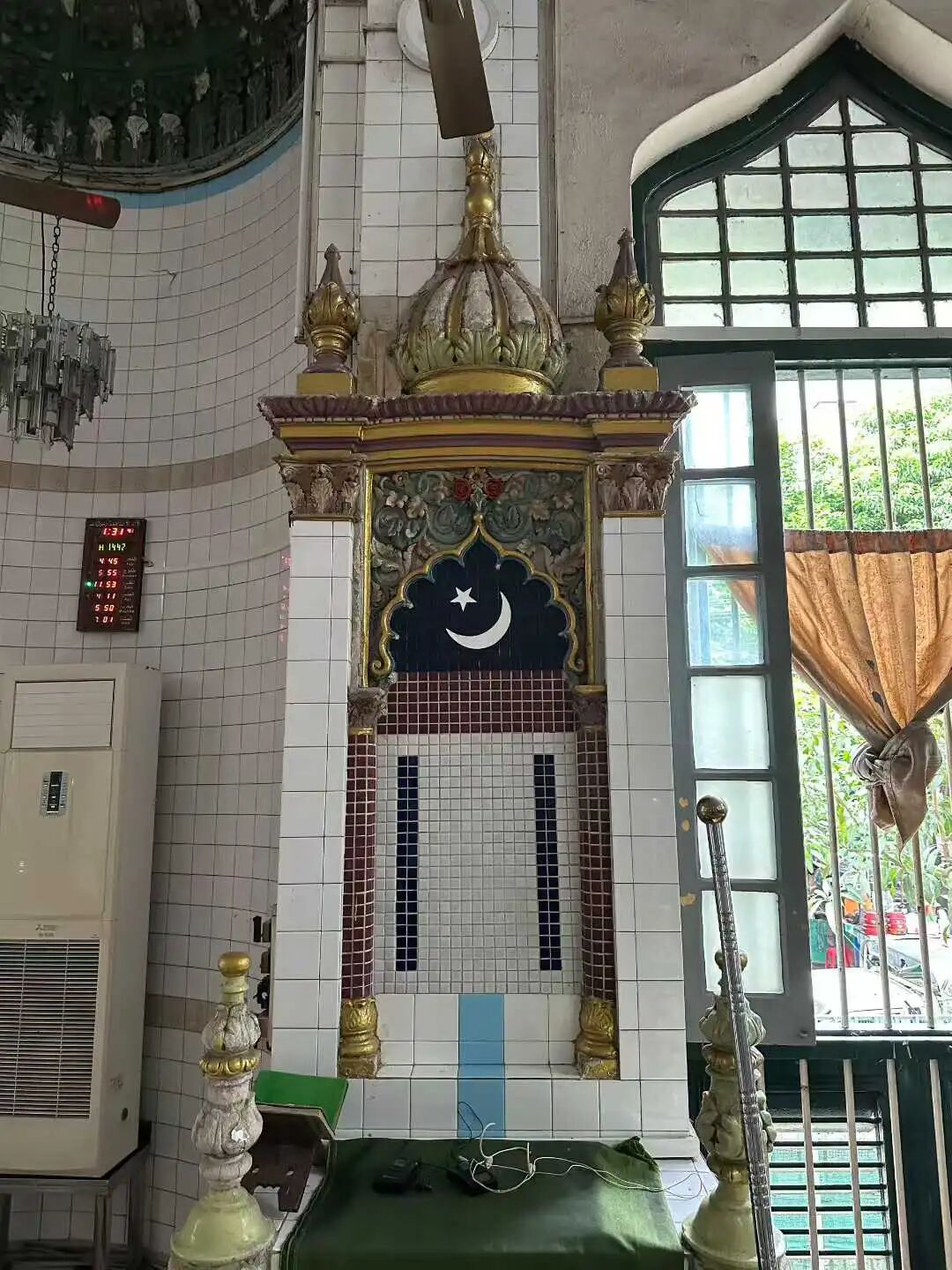
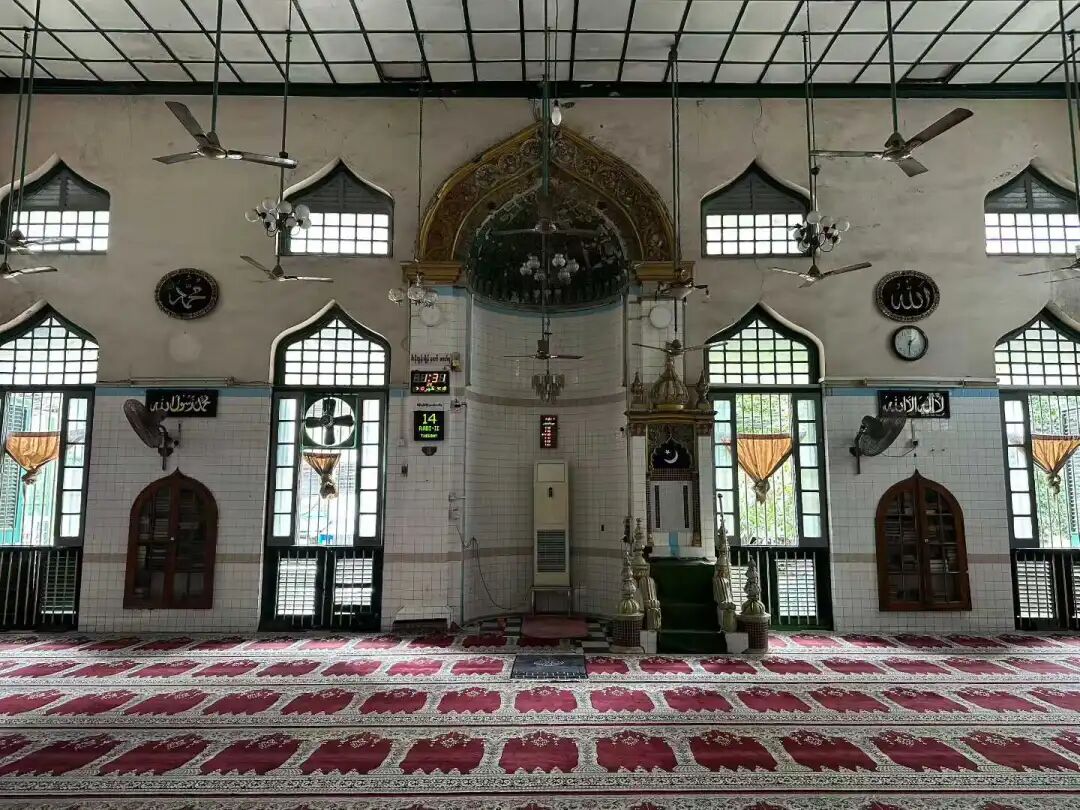
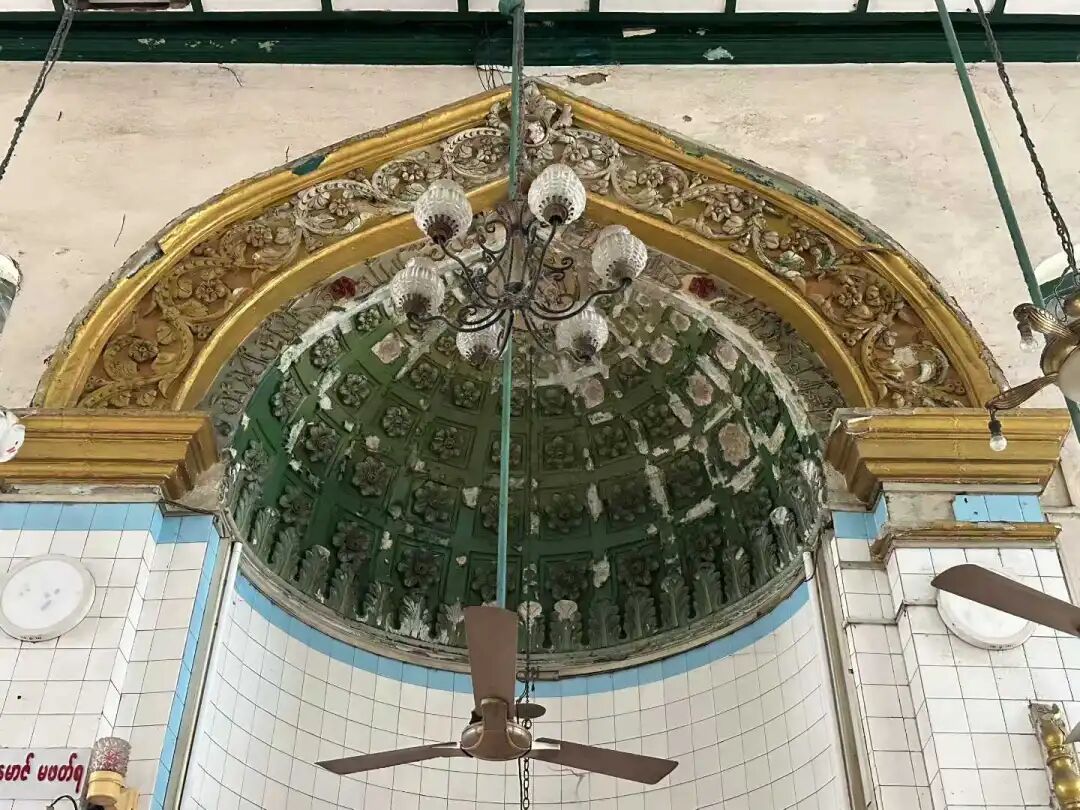
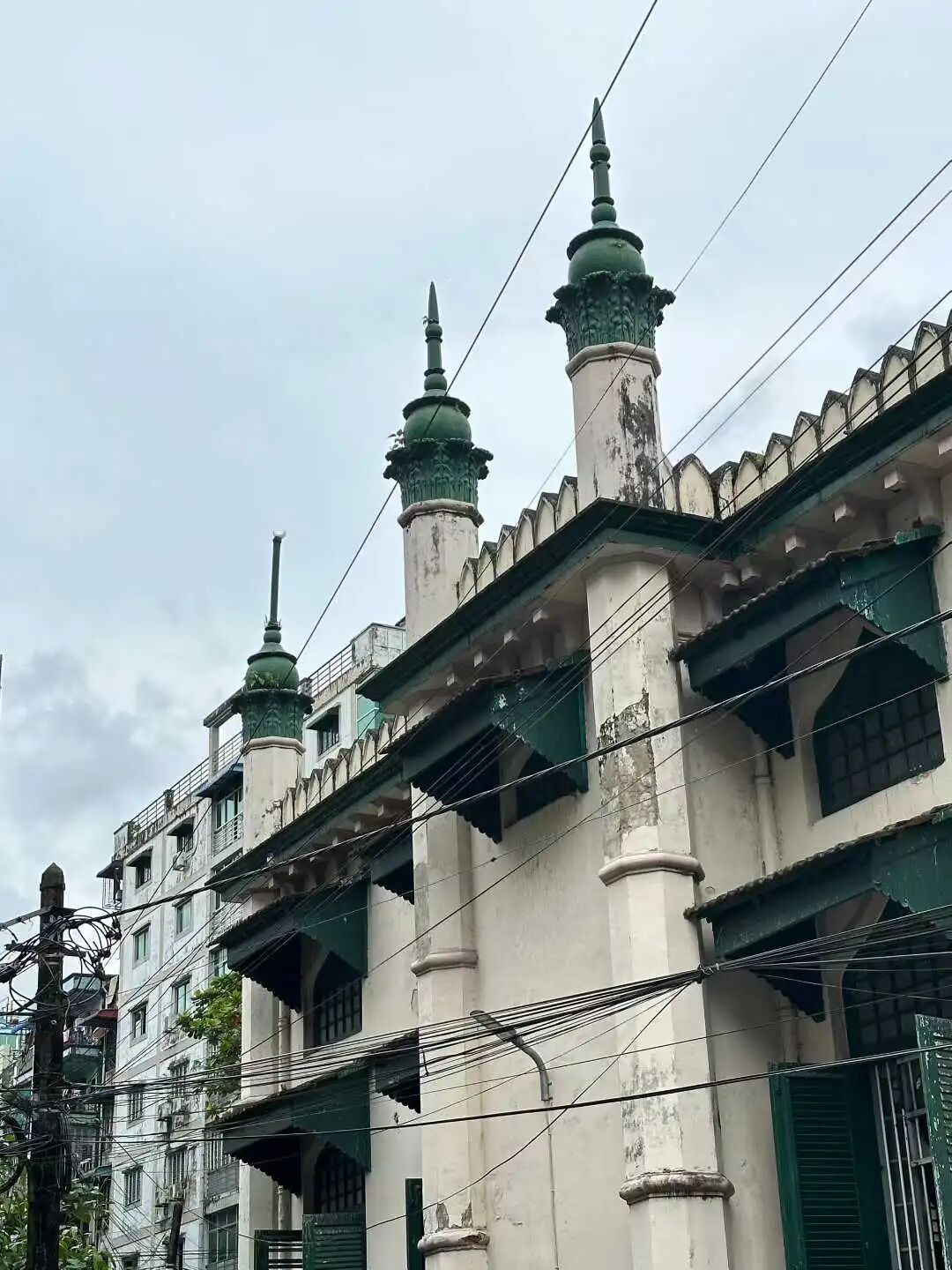
Musmeah Yeshua Sunni Jumu'ah Mosque (Musmeah Yeshua Sunni Jumu'ah Mosque) is located in the Tamwe Township in northern Yangon. It was founded in 1908 by the Indian businessman Musmeah Yeshua. The top of the main hall features twenty-two intricate domes and small towers, making it the most distinctive mosque in Yangon. Despite damage from two earthquakes, most of the original design of the main hall, including the stained glass windows imported from India, has been preserved to this day.
According to newspaper records from the early 20th century, Musmeah Yeshua was once a famous gang leader in Yangon. At that time, two major Indian families in Yangon, led by Musmeah and Mamusa, were long-term rivals, which led to many gang incidents. The Straits Times reported on December 21, 1923, that Musmeah Yeshua himself clashed with a rival gang called the Sultans. He was injured by a series of glass soda bottles thrown from a roof and was later forced to apply to the police for protective custody.
In every mosque in Yangon, the time between the dawn prayer (fajr) and the sunrise prayer (shuruq) is for studying the Quran. Adults and children learn the Quran sentence by sentence in the mosque, which is the best time to experience the religious atmosphere of Yangon.
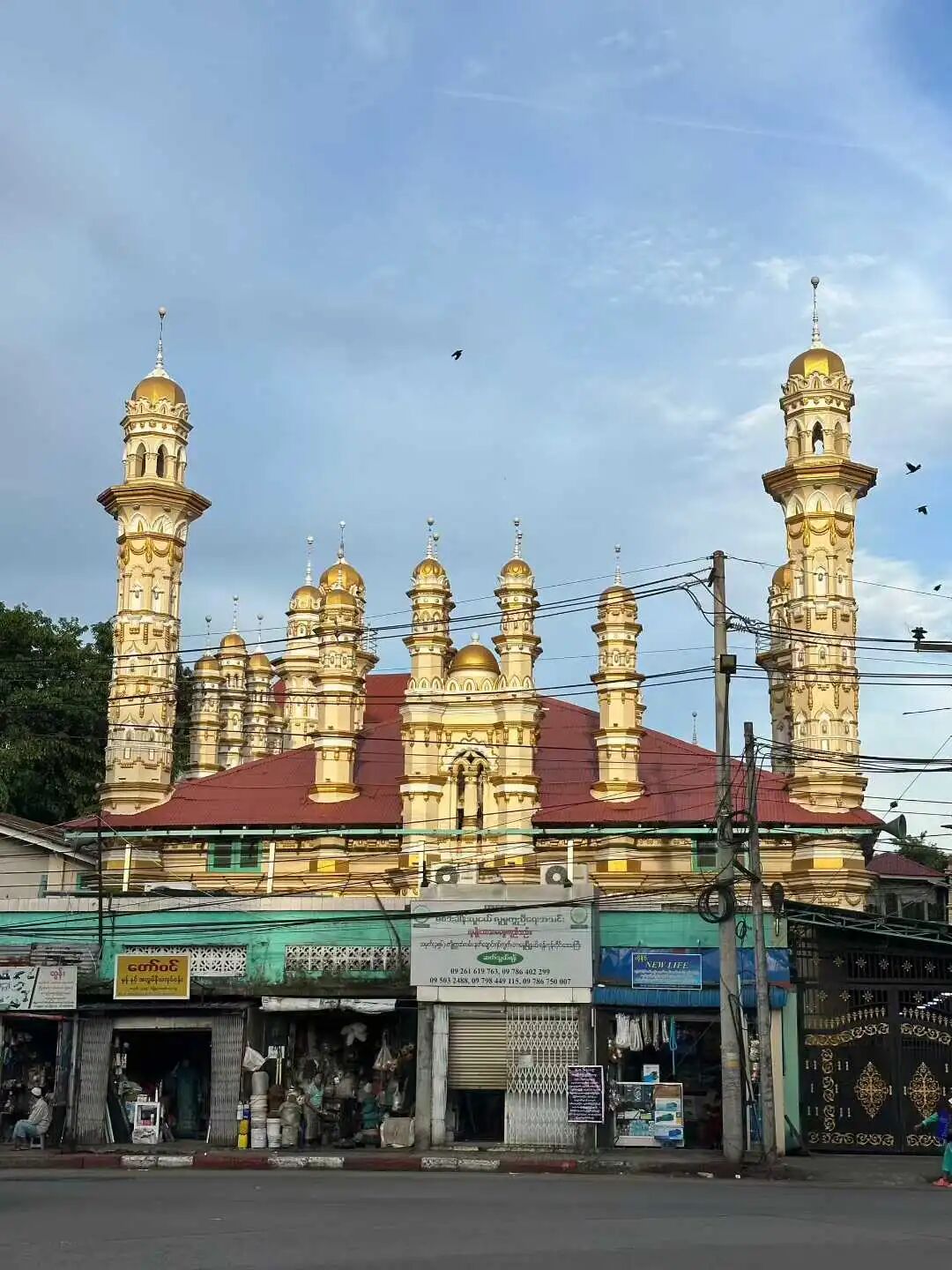
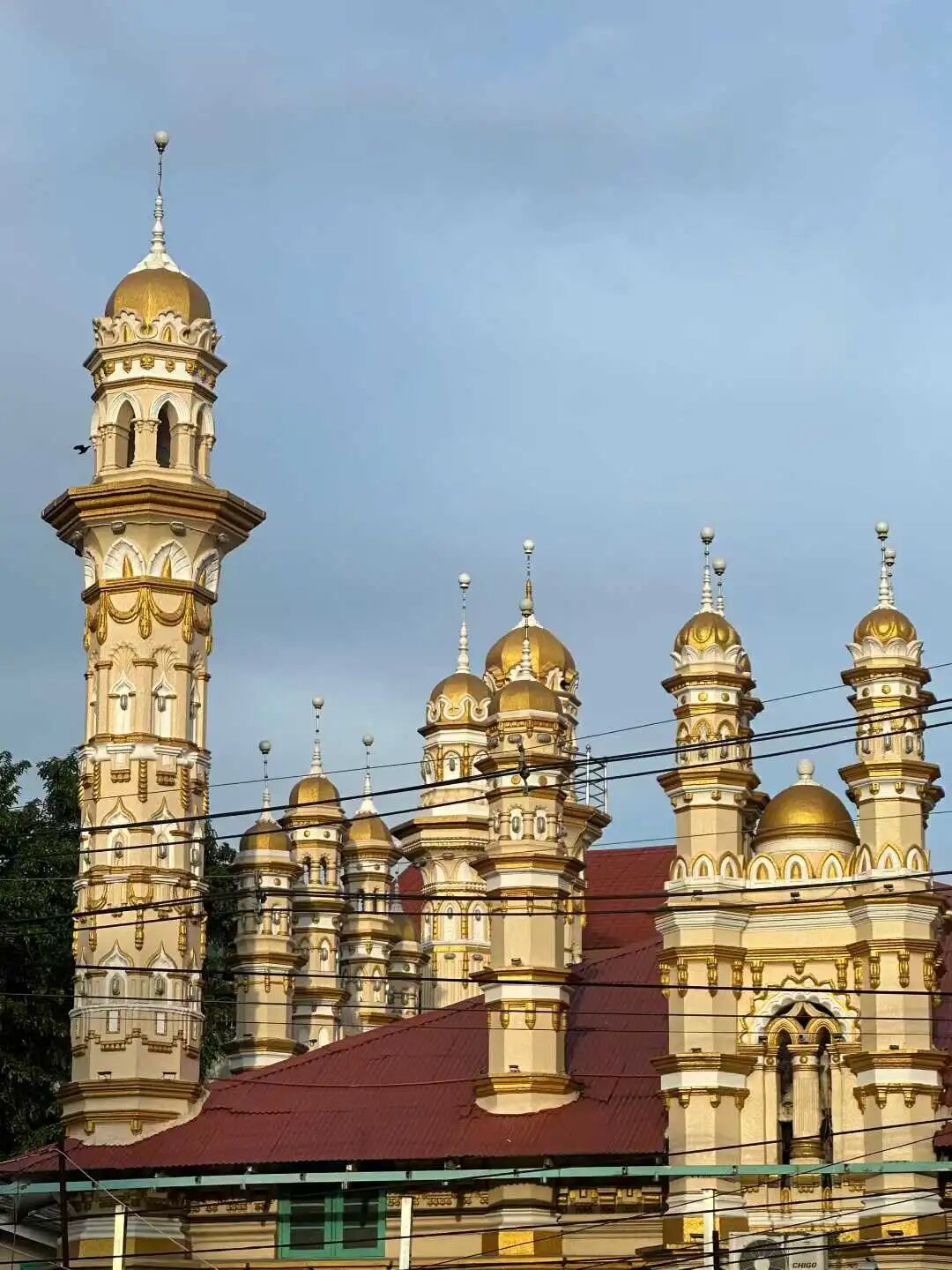
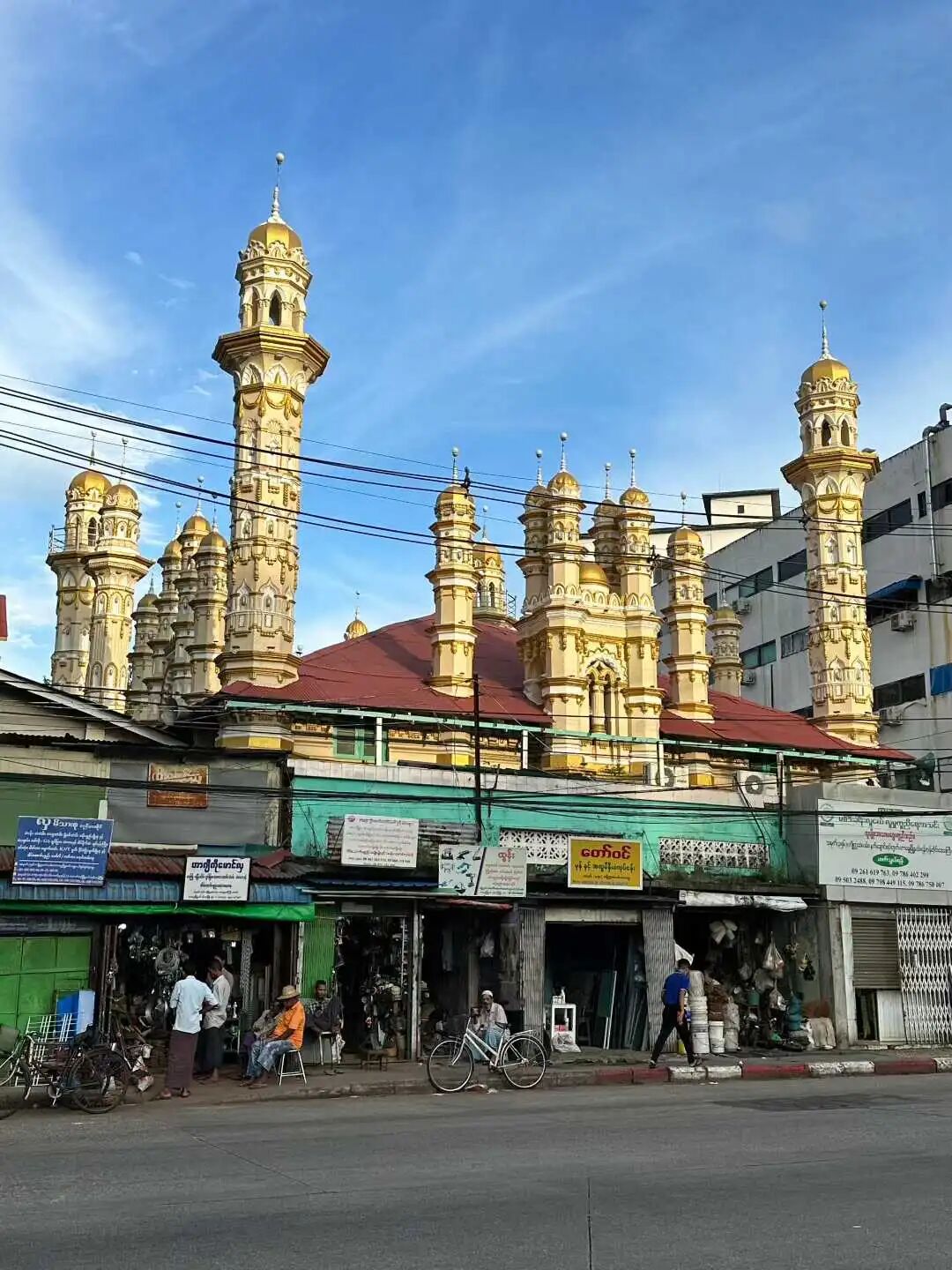
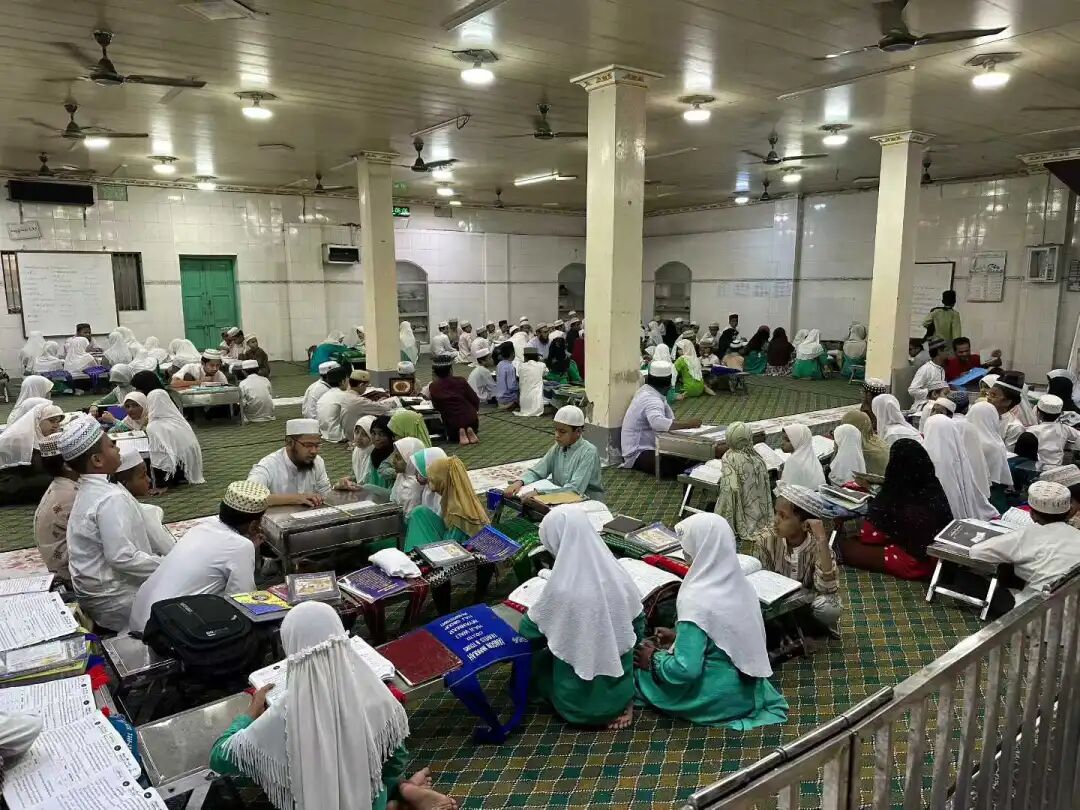
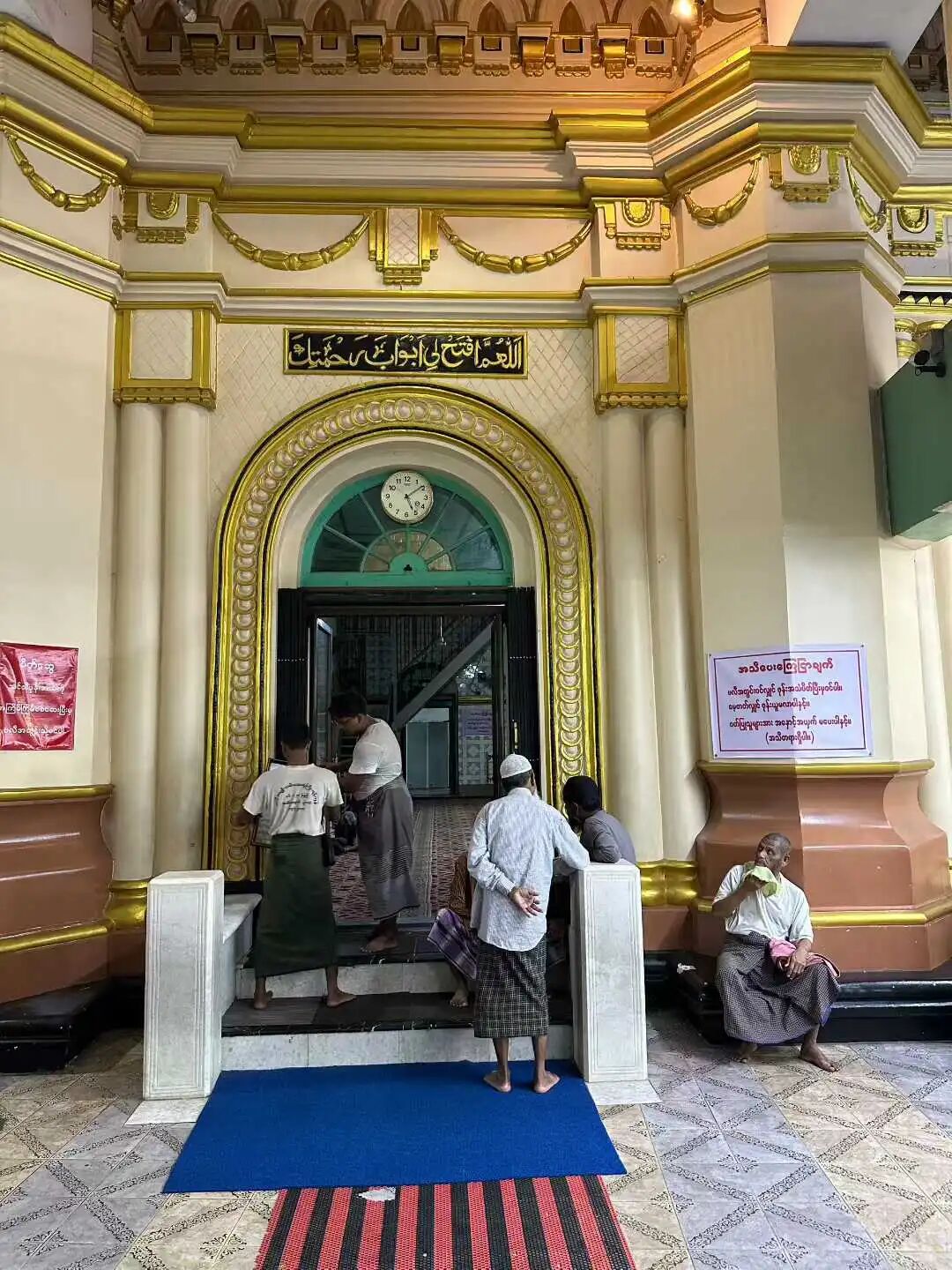
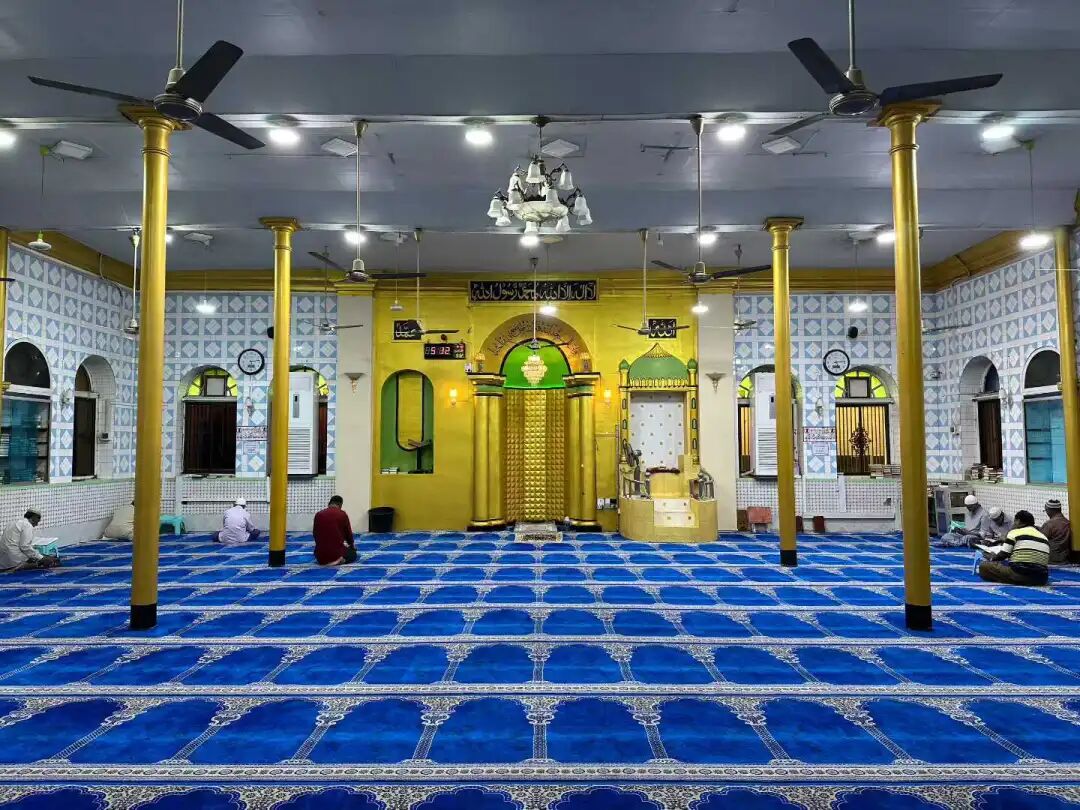
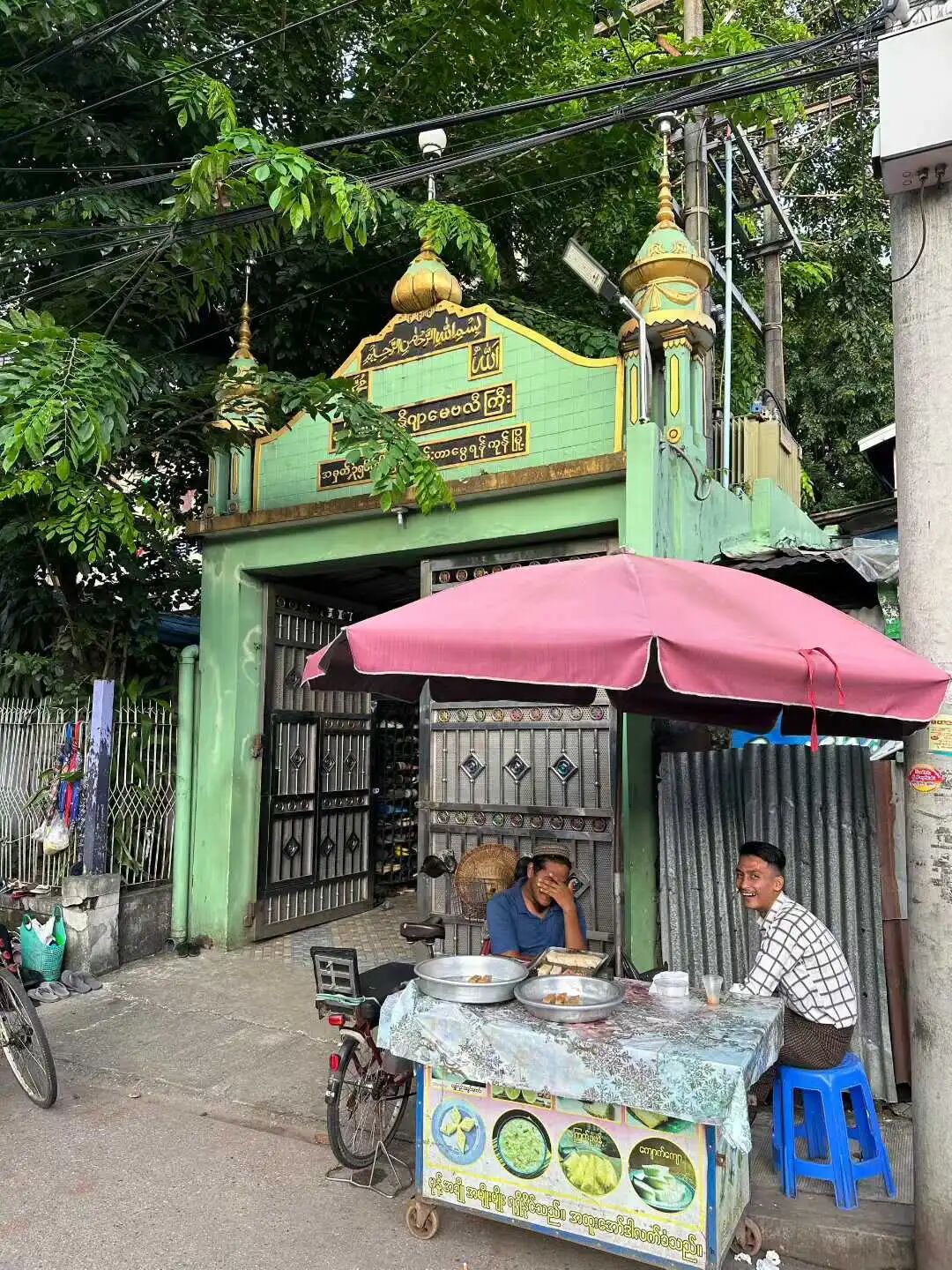
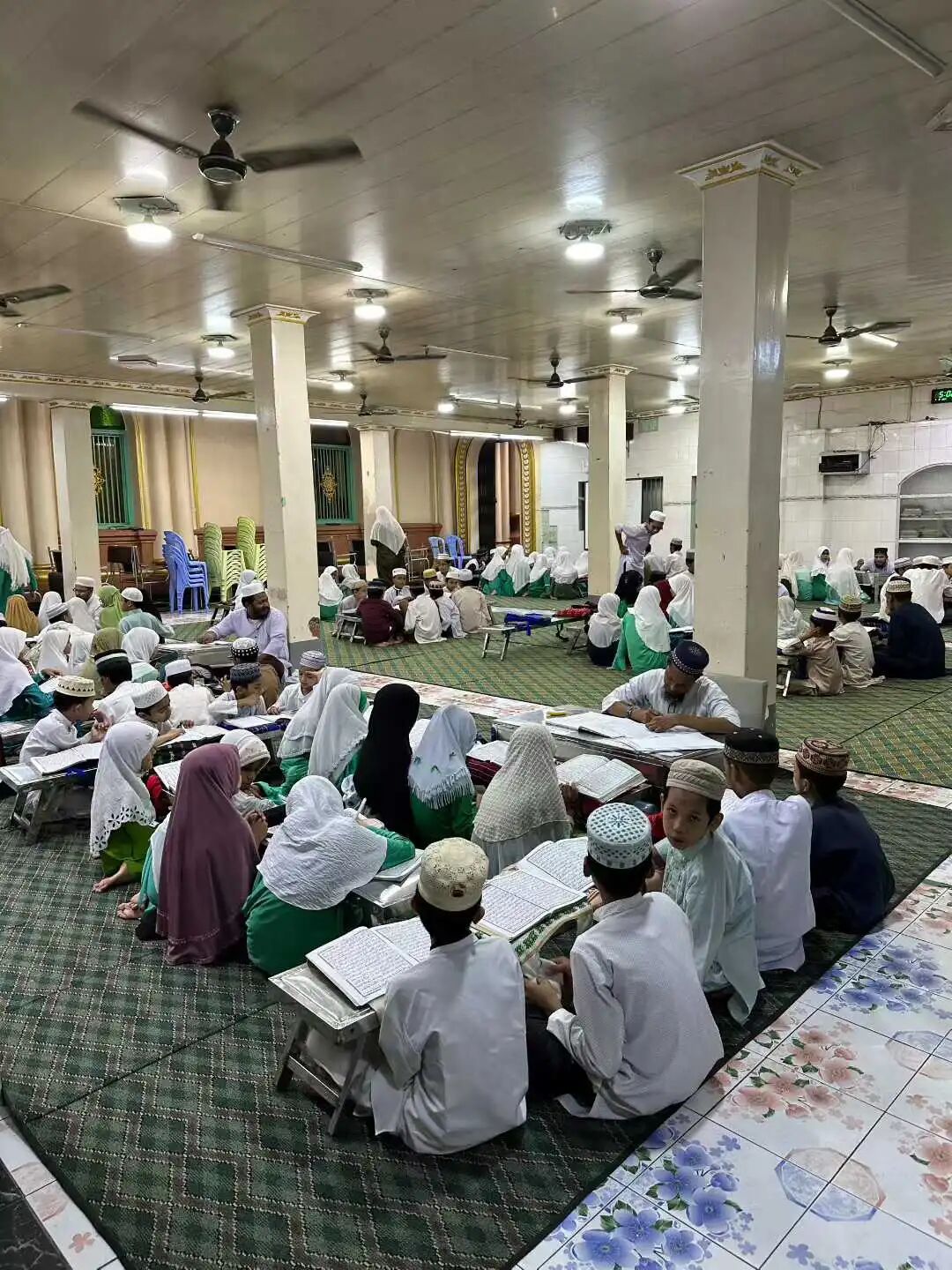
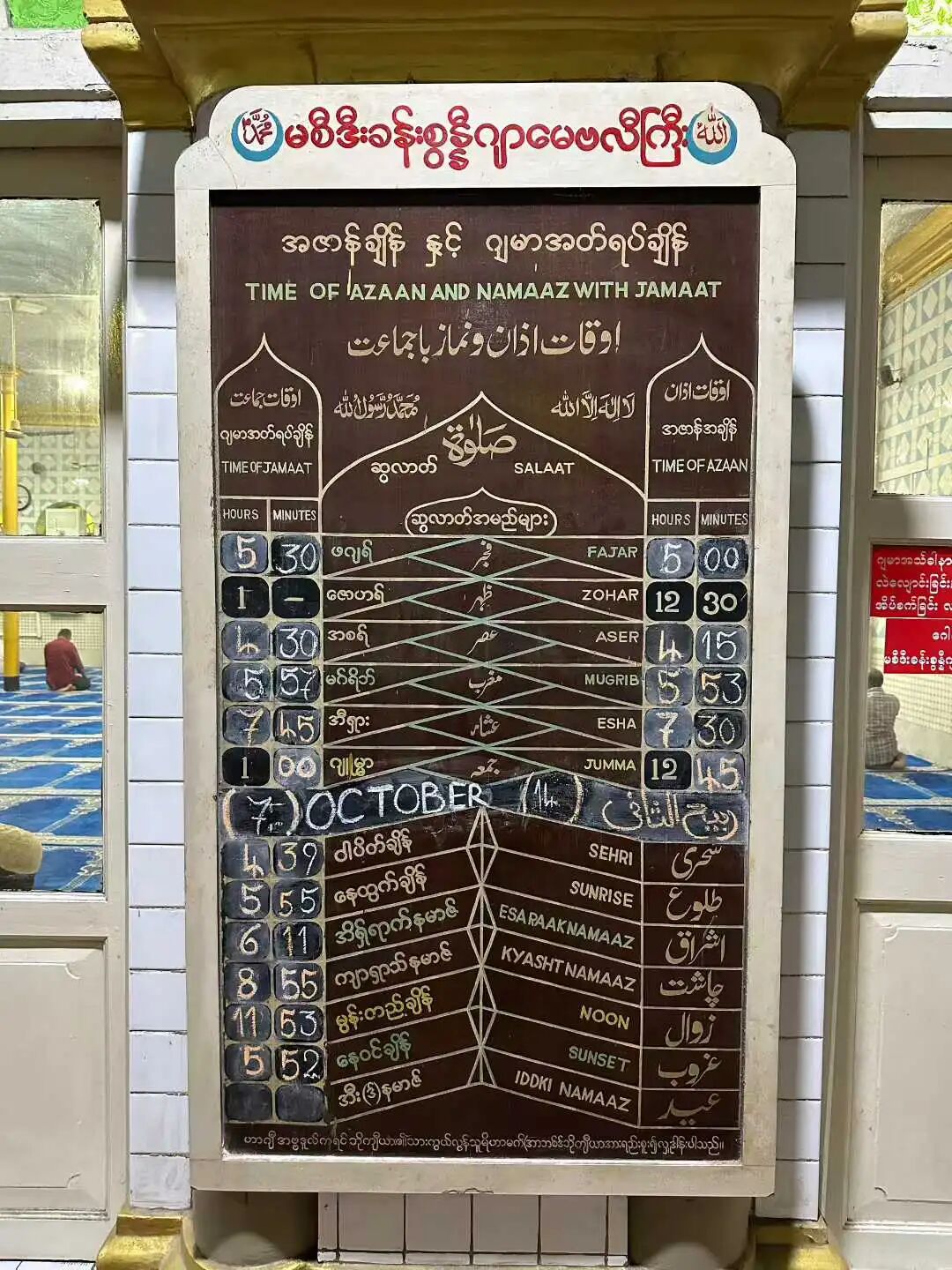
Kantaw Kalay Ywar Houng Mosque is located on Upper Pansodan Road, north of the old city of Yangon and not far north of the Triangle Mosque. Its founding date is unknown, and it was rebuilt into its current structure in 1940. This is another area in Yangon outside the Indian quarter where Indian friends (dost) live. Yunnan Hui Muslims also live here, so there is a lot of delicious food on the street, much like Shuncheng Street in Kunming or Niujie in Beijing.
Halal Travel Guide: Yangon - 23 Mosque Quarters, Part Two
Articles • ali2007fr posted the article • 0 comments • 231 views • 2026-05-20 23:51
Summary: This second part of the Yangon mosque guide continues through the city's old mosque quarters, including the shrine of Bahadur Shah II and other Muslim sites near the National Museum area. It preserves the source's mosque names, locations, community notes, and historical details.
A detailed guide to the twenty-three mosques of Yangon, Myanmar (Part 2)
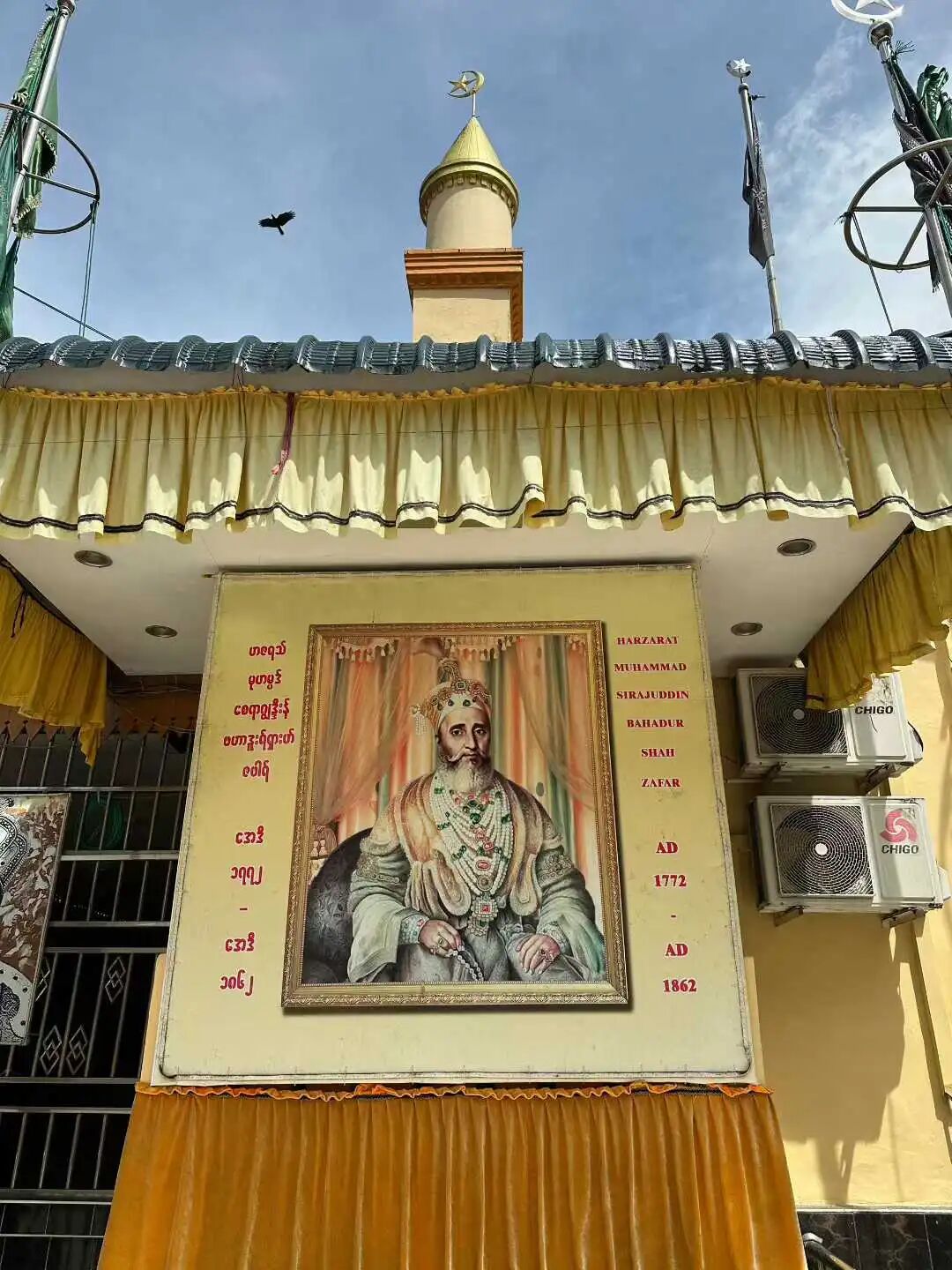
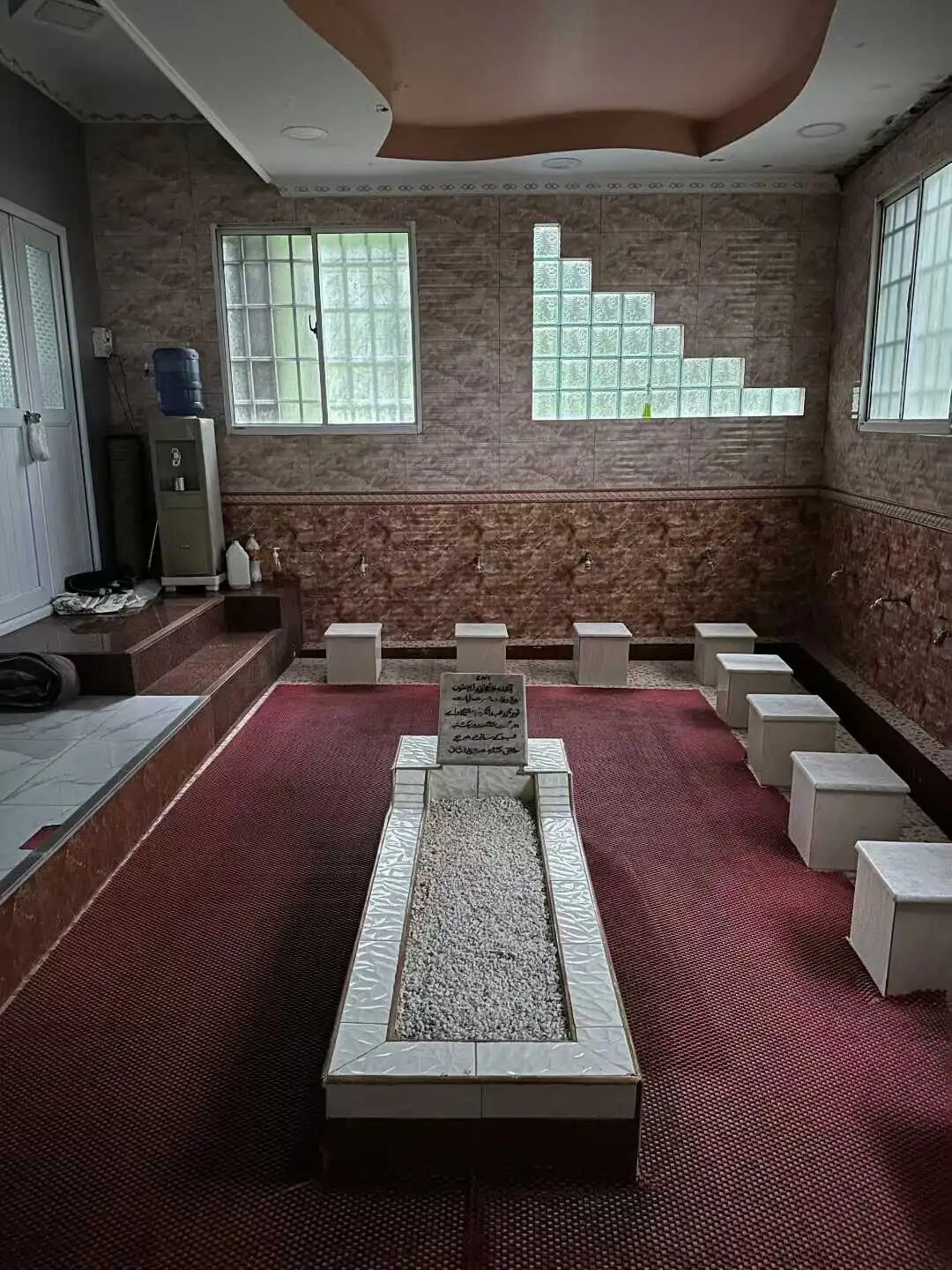
The shrine (gongbei) of the last Mughal Emperor, Bahadur Shah II, is located inside the shrine complex, right next to the National Museum of Myanmar. In 1858, Bahadur Shah II was exiled to Yangon. He lived in a small wooden house near the Shwedagon Pagoda until he passed away in 1862. Because his grave had no markings and only his two children and a servant attended the funeral, his burial site was soon forgotten. In 1905, the local Muslims (dosti) in Yangon protested to the British, and in 1907, the British agreed to put up a tombstone. In 1991, workers digging a drainage ditch accidentally found a brick grave. After identification, it was confirmed to be the grave of Bahadur Shah II himself. The shrine (gongbei) for Bahadur Shah II was officially completed in 1994, and a prayer hall was built next to it.
Bahadur Shah II was a devout Sufi sheikh during his life, and today his shrine (gongbei) has become a famous Sufi holy site in Myanmar. Since there are no Muslims (dosti) living near the shrine (gongbei), not many people come here for namaz on a daily basis.
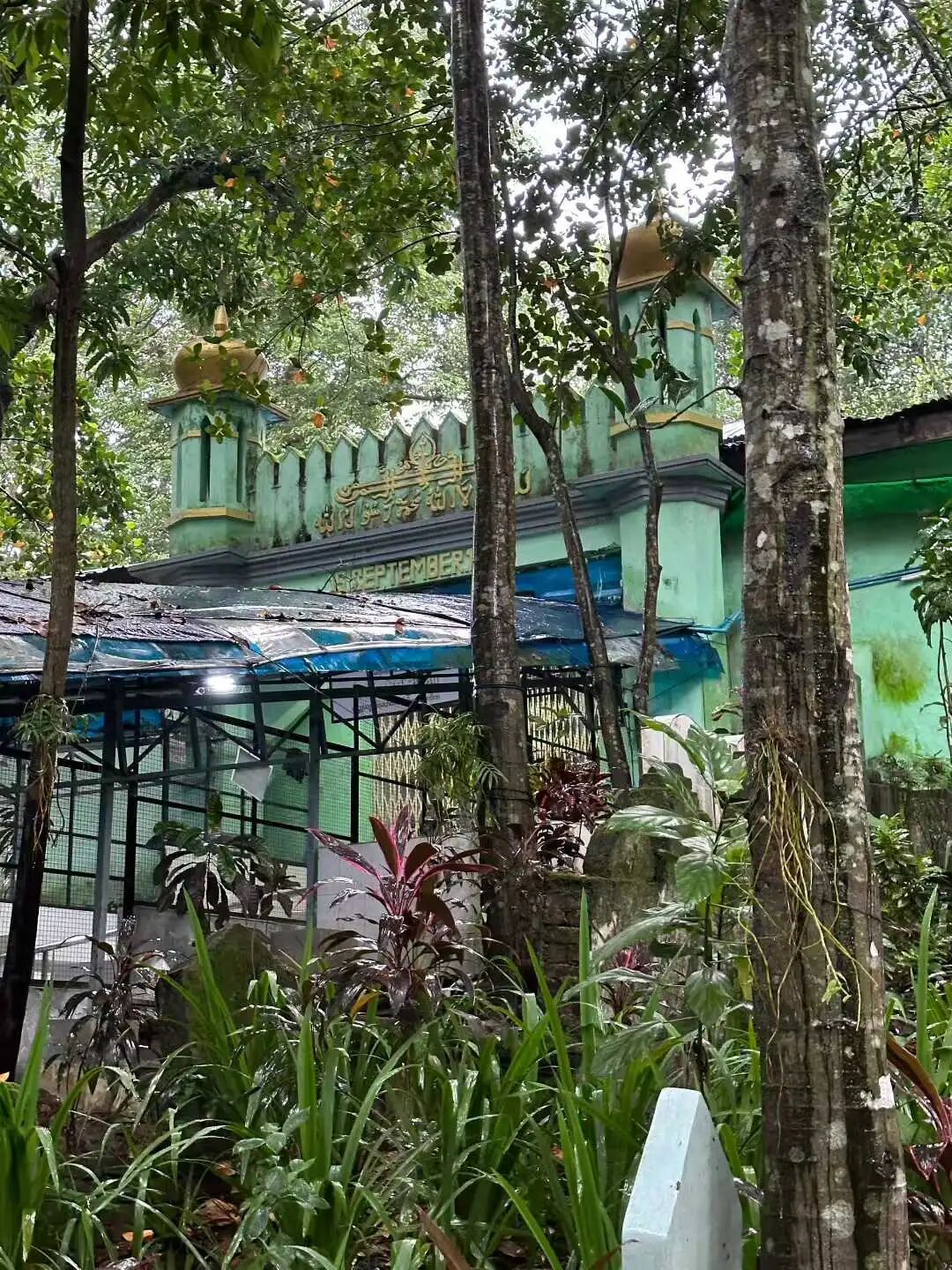
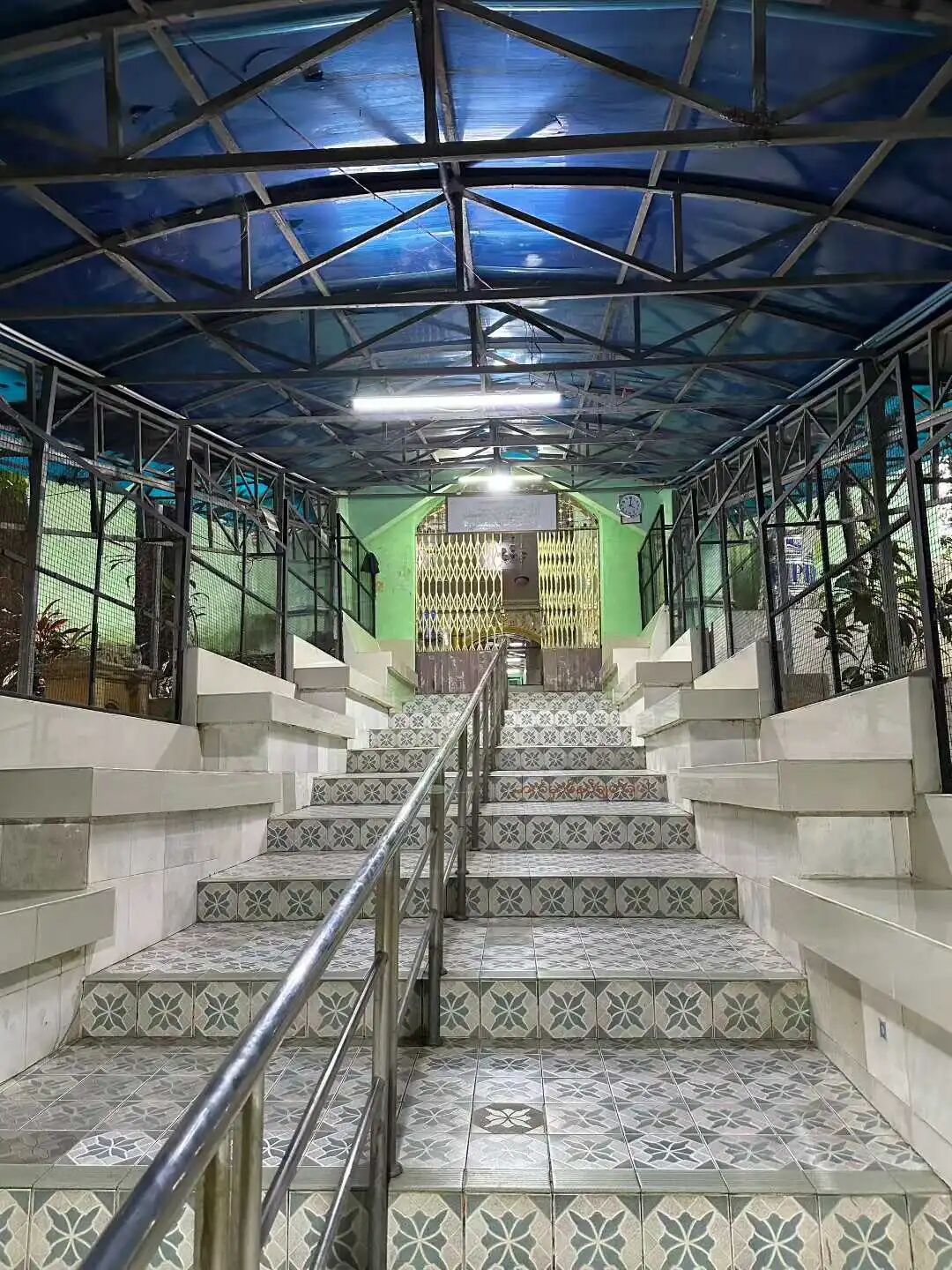
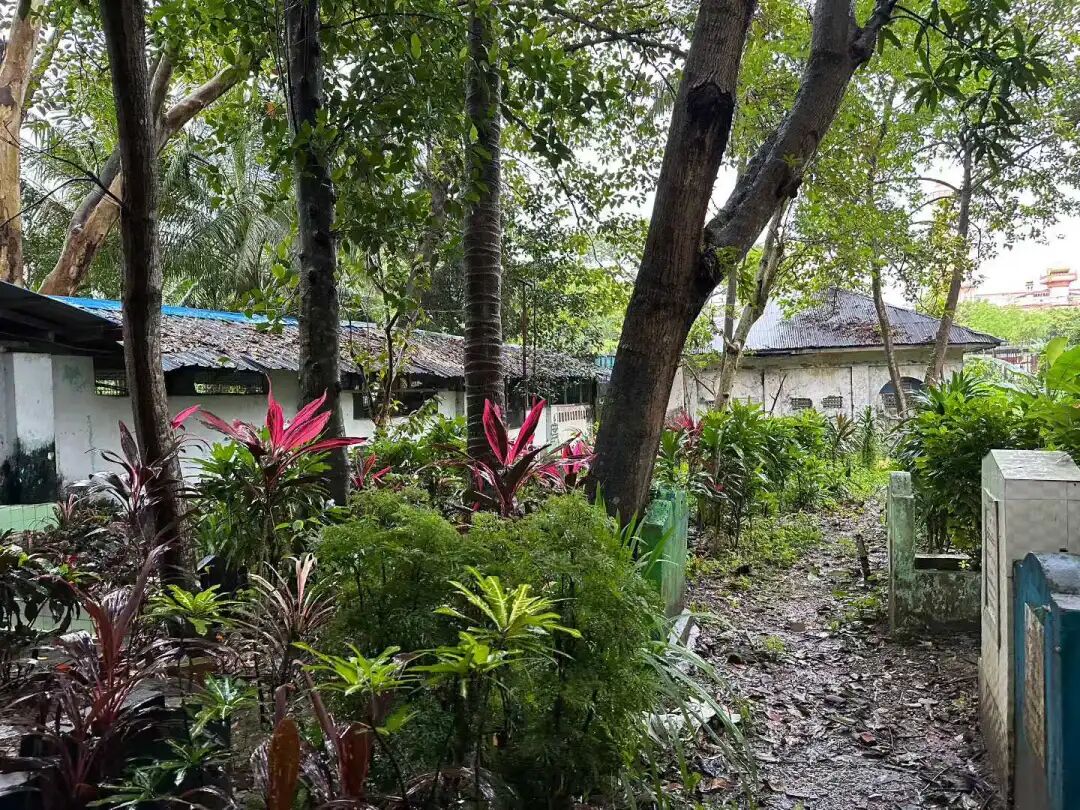
The Thinchai Sunni Maha Maiden mosque is located inside the Yangon Sunni cemetery. It is mainly used by those visiting graves, and the current building was constructed in 1989. There are also several tombs (mazar) of Sufi saints inside the Yangon Sunni cemetery, and many Muslims (dosti) often come here to perform religious gatherings (gu'ermaili).
I visited the Golab Khan Jumu'ah mosque on Tha Mein Ba Yan Street in northern Yangon, where I also met children studying the Quran. Overall, after walking around this time, I feel that the religious atmosphere in Yangon is very strong. view all
Summary: This second part of the Yangon mosque guide continues through the city's old mosque quarters, including the shrine of Bahadur Shah II and other Muslim sites near the National Museum area. It preserves the source's mosque names, locations, community notes, and historical details.
A detailed guide to the twenty-three mosques of Yangon, Myanmar (Part 2)
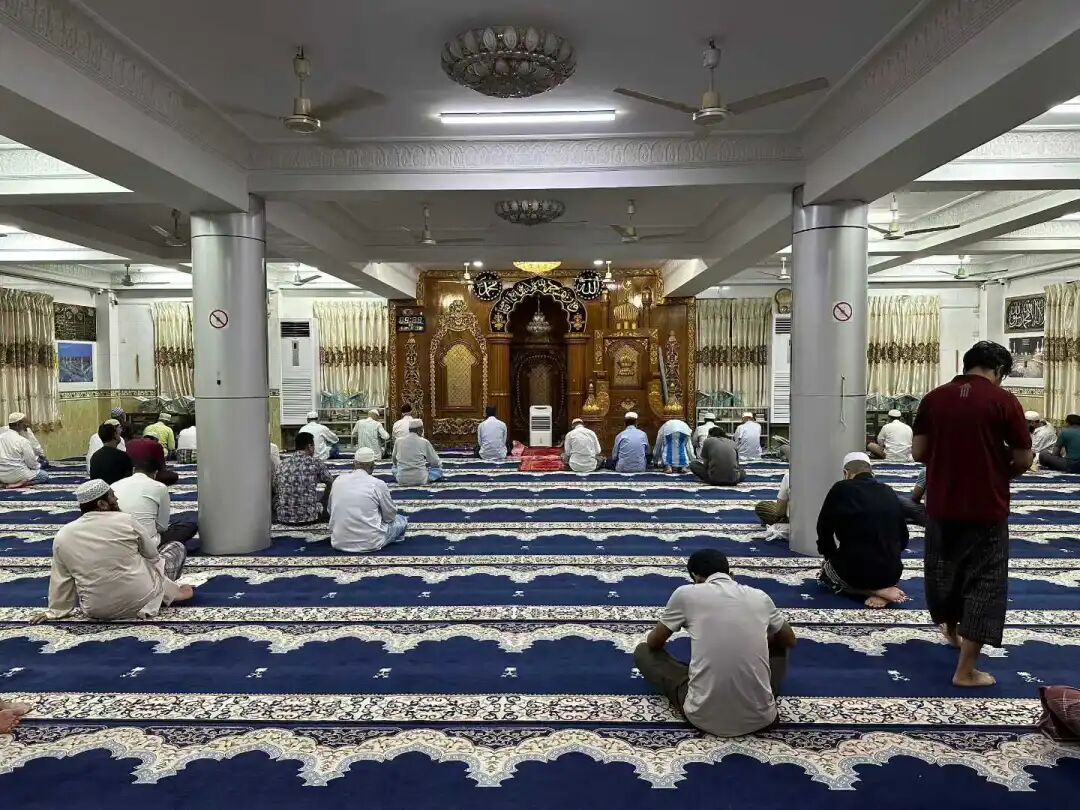
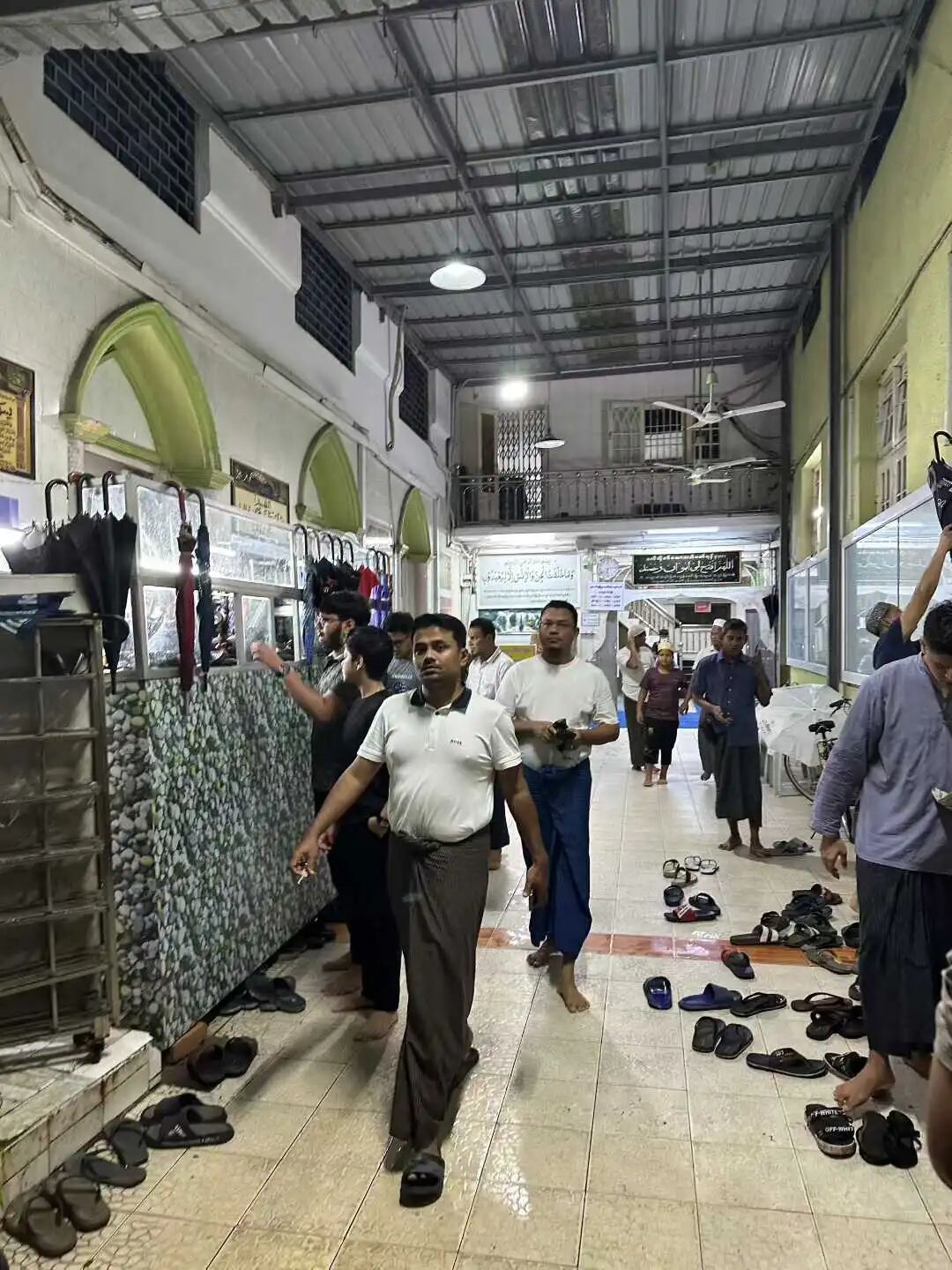
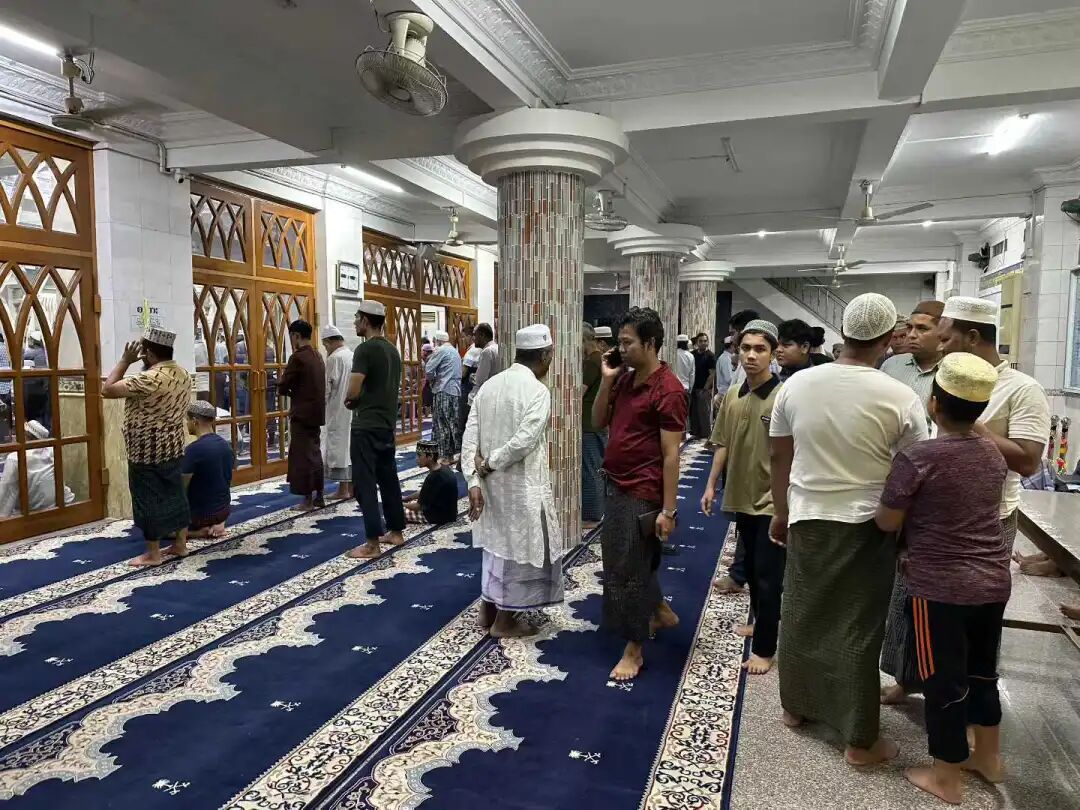
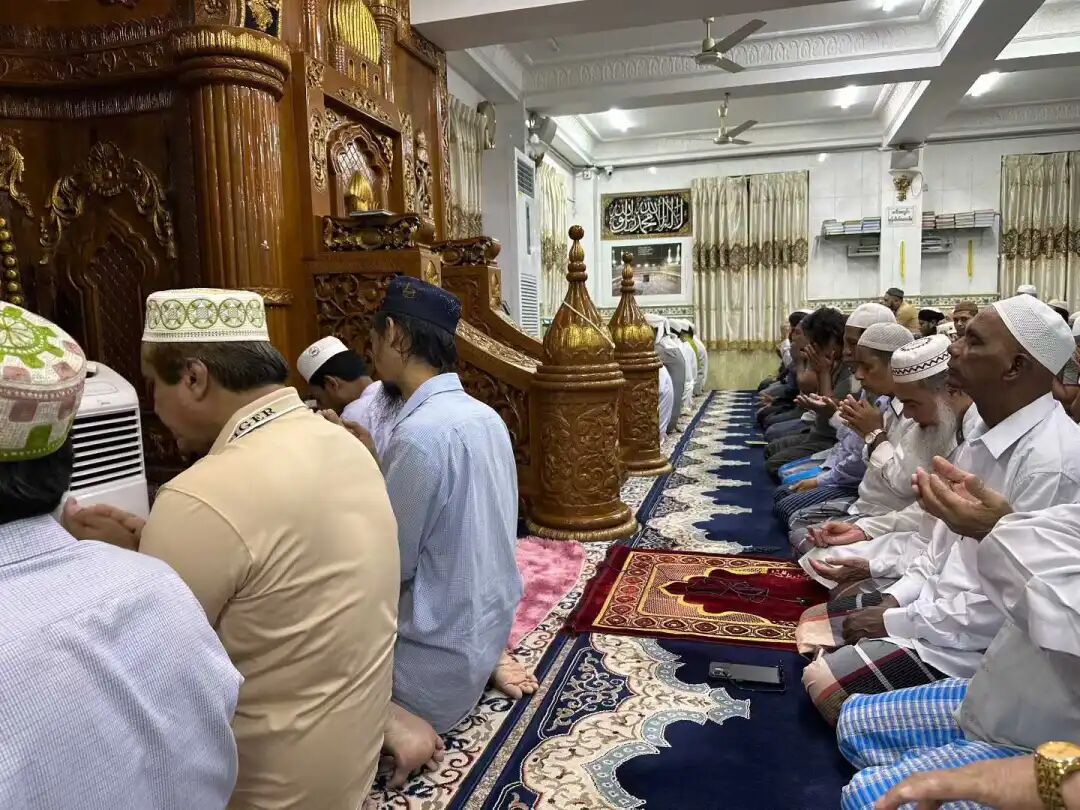
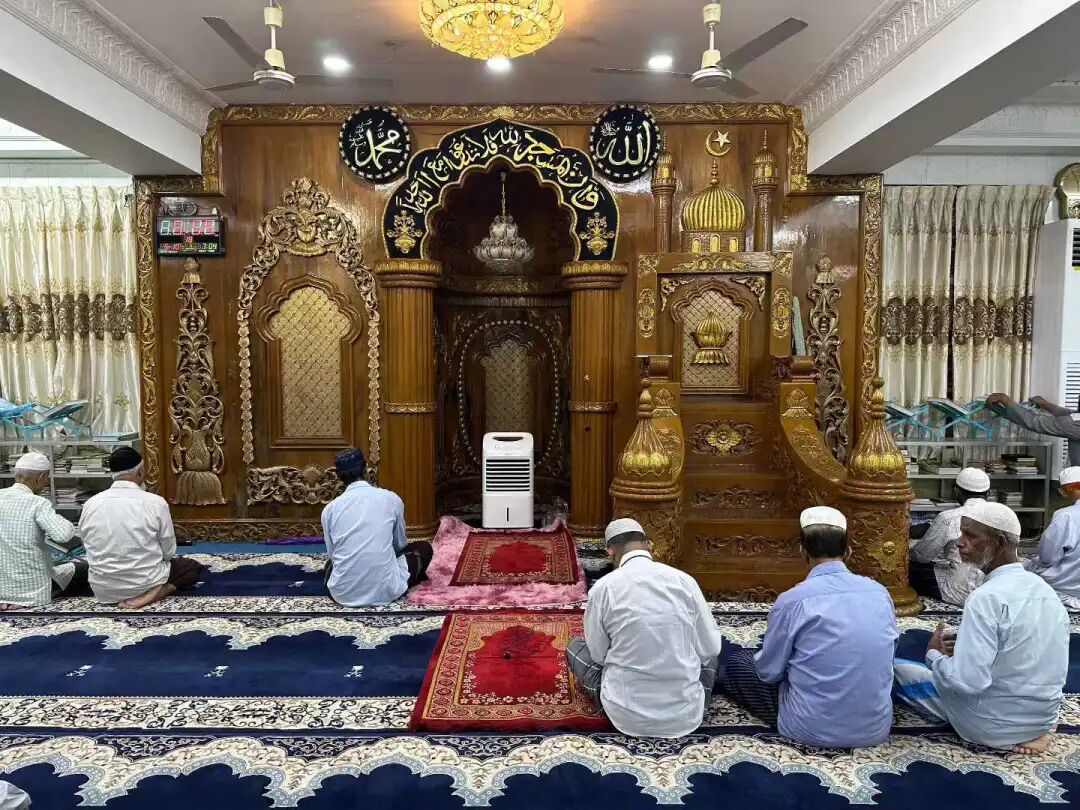
The shrine (gongbei) of the last Mughal Emperor, Bahadur Shah II, is located inside the shrine complex, right next to the National Museum of Myanmar. In 1858, Bahadur Shah II was exiled to Yangon. He lived in a small wooden house near the Shwedagon Pagoda until he passed away in 1862. Because his grave had no markings and only his two children and a servant attended the funeral, his burial site was soon forgotten. In 1905, the local Muslims (dosti) in Yangon protested to the British, and in 1907, the British agreed to put up a tombstone. In 1991, workers digging a drainage ditch accidentally found a brick grave. After identification, it was confirmed to be the grave of Bahadur Shah II himself. The shrine (gongbei) for Bahadur Shah II was officially completed in 1994, and a prayer hall was built next to it.
Bahadur Shah II was a devout Sufi sheikh during his life, and today his shrine (gongbei) has become a famous Sufi holy site in Myanmar. Since there are no Muslims (dosti) living near the shrine (gongbei), not many people come here for namaz on a daily basis.
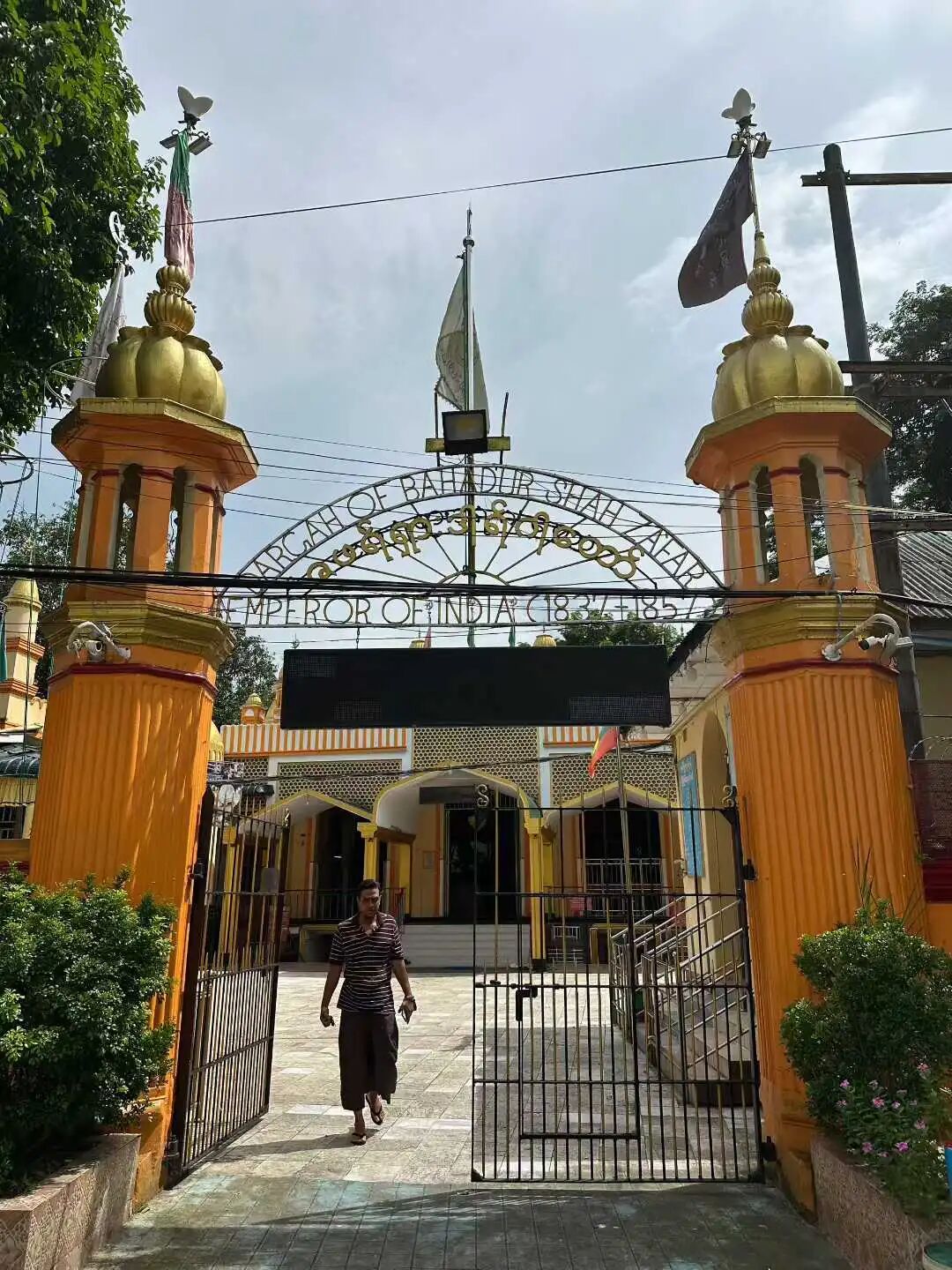
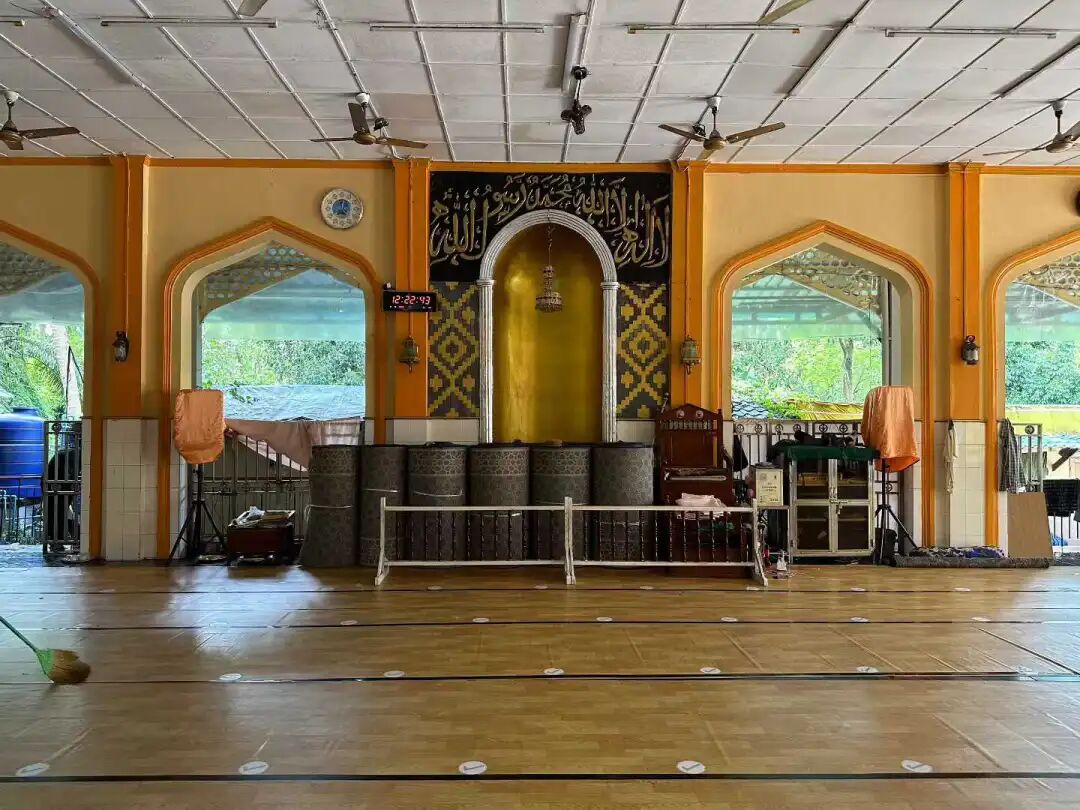
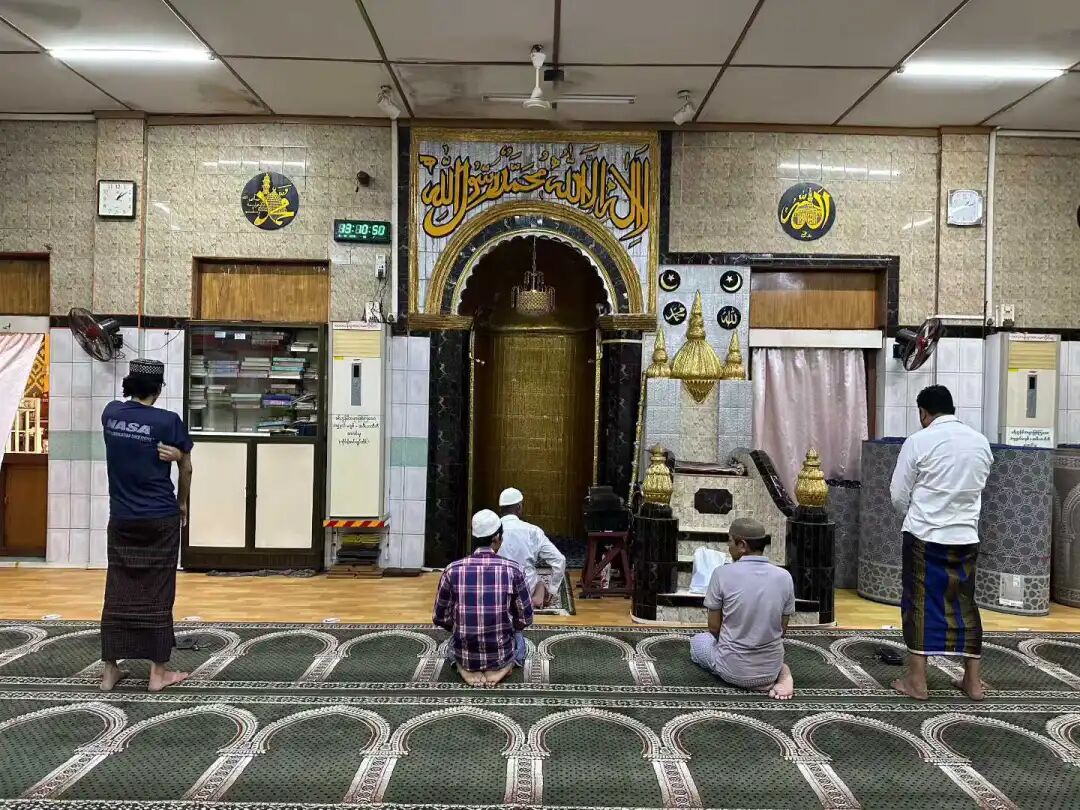
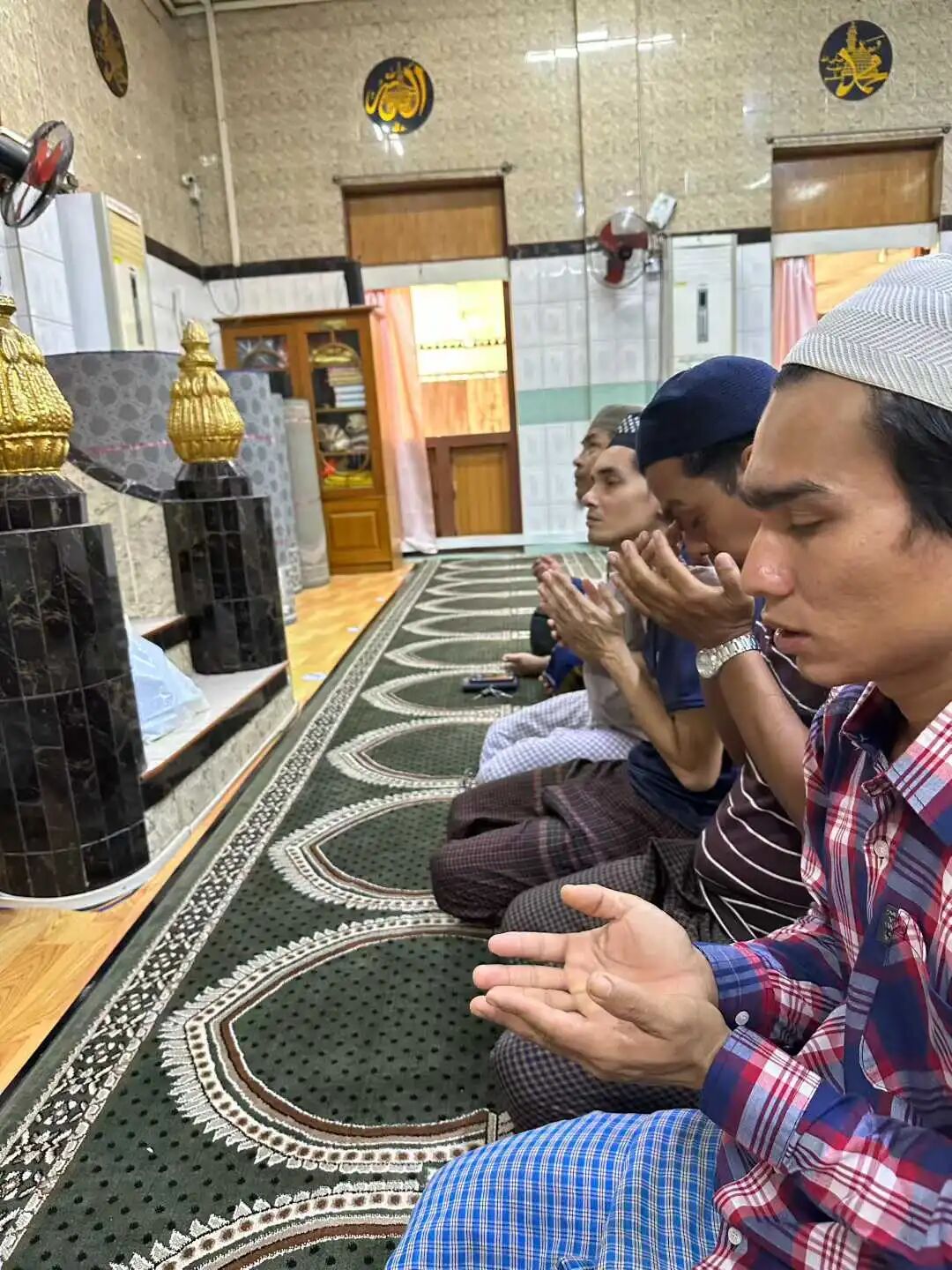
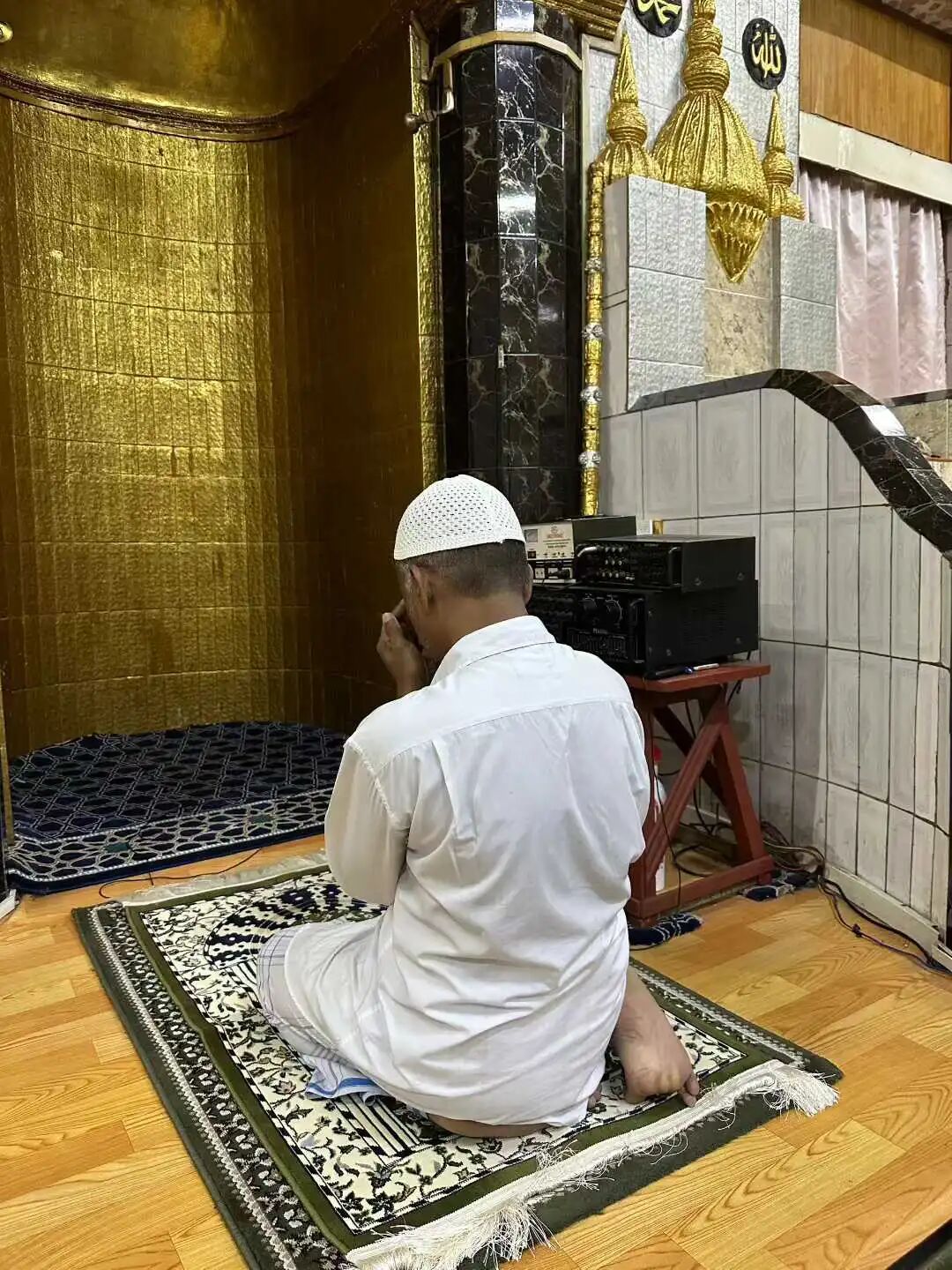
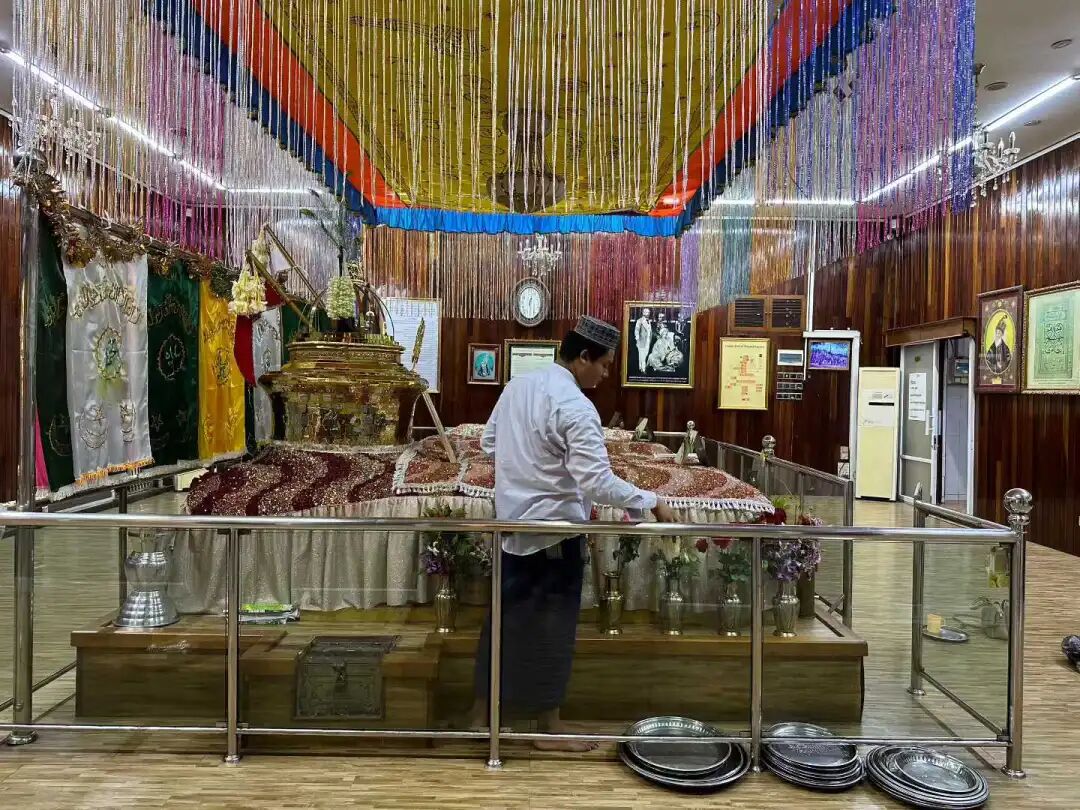
The Thinchai Sunni Maha Maiden mosque is located inside the Yangon Sunni cemetery. It is mainly used by those visiting graves, and the current building was constructed in 1989. There are also several tombs (mazar) of Sufi saints inside the Yangon Sunni cemetery, and many Muslims (dosti) often come here to perform religious gatherings (gu'ermaili).
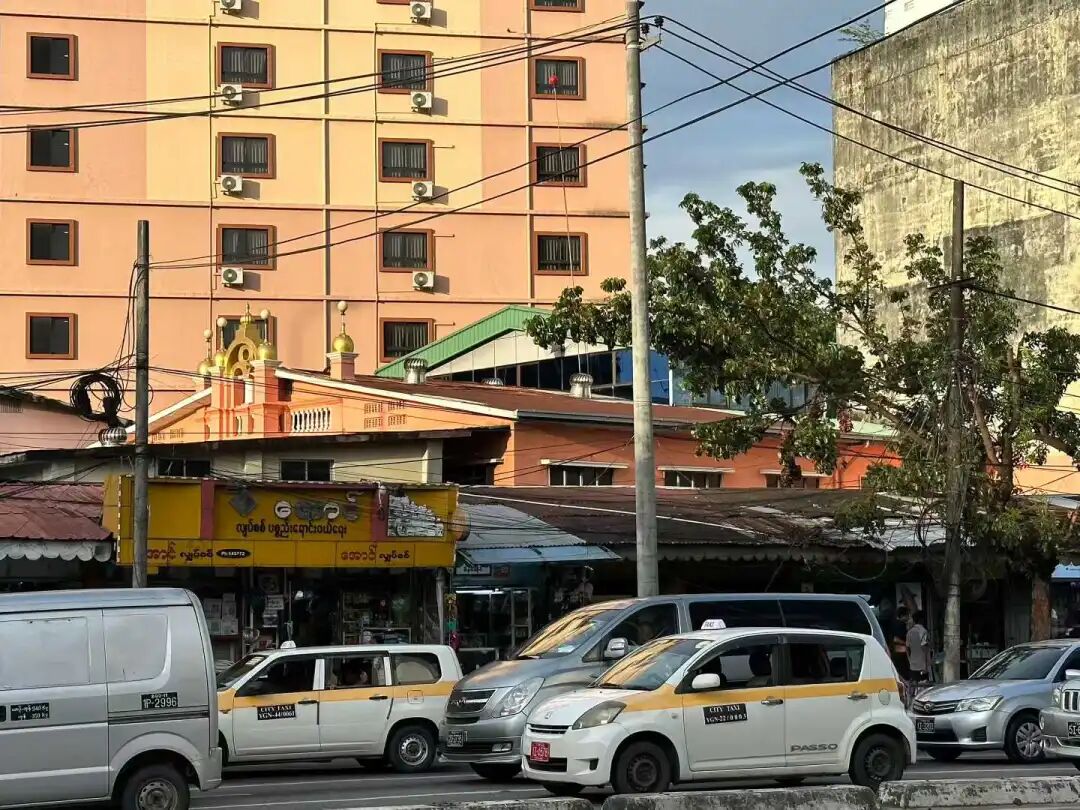
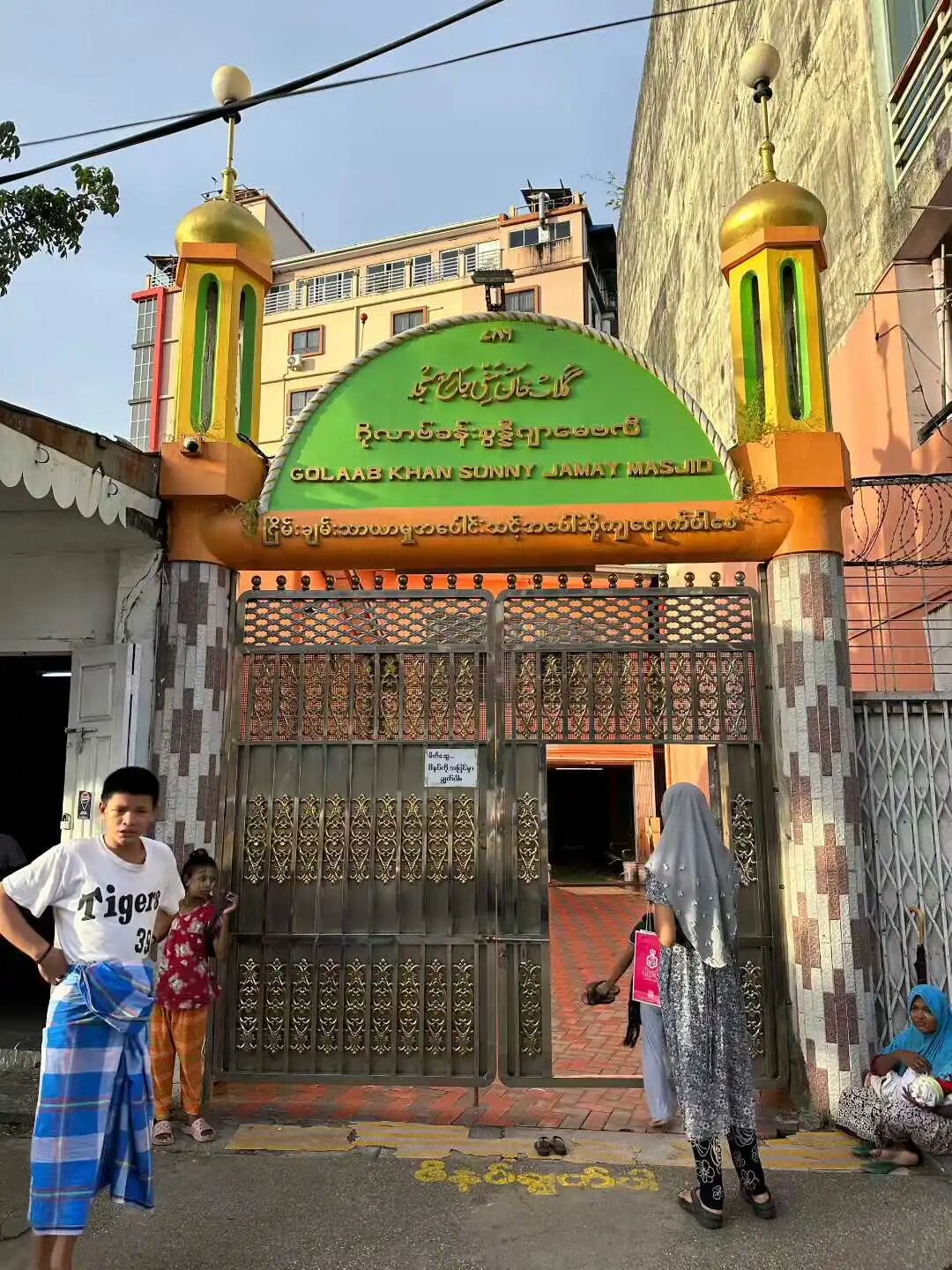
I visited the Golab Khan Jumu'ah mosque on Tha Mein Ba Yan Street in northern Yangon, where I also met children studying the Quran. Overall, after walking around this time, I feel that the religious atmosphere in Yangon is very strong.
Halal Travel Guide: Yangon - Southeast Asia's Largest Shia Mosque Complex
Articles • ali2007fr posted the article • 0 comments • 231 views • 2026-05-20 22:08
Summary: Yangon's Mughal Shia Mosque was founded in 1854 by Persian-Indian merchants and is described as the largest Shia mosque complex in Southeast Asia. This account covers its mosque compound, Muharram practices, Khoja community, and wider Shia history in Myanmar.
The Mughal Shia Mosque in Yangon, Myanmar, is the largest Shia mosque in Southeast Asia. It was founded in 1854 by Persian-Indian merchants who were among the first to settle in Yangon.
The British East India Company opened factories in Yangon starting in the 1790s, which led to the arrival of Persian and Indian Shia merchants. These Shia friends (dosti) and others from Iran, Afghanistan, and India were collectively called Mughals by the Burmese people. After the 19th century, these Mughals often served as intermediaries and translators between the British and the Burmese, becoming a key part of Yangon's foreign trade.
In 1852, the British officially occupied Yangon and made it the capital of British Burma. They hired army engineers to design a grid-patterned city, and the Shia community established the Mughal Shia Mosque. The Mughal Shia Mosque was originally a teak wood building. Between 1914 and 1918, mosque trustees from Isfahan, Shiraz, Khorasan, and Kabul in Iran and Afghanistan raised funds to rebuild it in its current Hyderabad style. The Shia faith developed on the Deccan Plateau in southern India between the 14th and 16th centuries. The Qutb Shahi dynasty declared it the state religion in 1518. Its capital, Hyderabad, was developed in 1591 with the help of Shia scholar and scientist Mir Muhammad Momin, and it later became a center for Shia culture in India.
S. Afsheen, a descendant of a trustee of the Yangon Mughal Shia Mosque, wrote in his autobiography that his ancestors were court advisors in the Mughal Empire. In the 19th century, his great-grandfather's father, Hasan Ali Khorasanee, came to Yangon to trade. He secured favorable trade terms and built a powerful trading company. Hasan Ali Khorasanee's son bought several properties in Yangon and ran leather and other trading businesses, which made the Khorasanee family one of the trustees of the Mughal Shia Mosque.
The Mughal Shia Mosque is located on Shwe Bon Thar Street in Yangon's Indian quarter. This street was originally called Mughal Street and is the area where Indian shops in Yangon are most concentrated. The mosque consists of a Mughal hall facing the street, a main prayer hall, and two tall minarets. The shops in the Mughal hall facing the street are rented out.
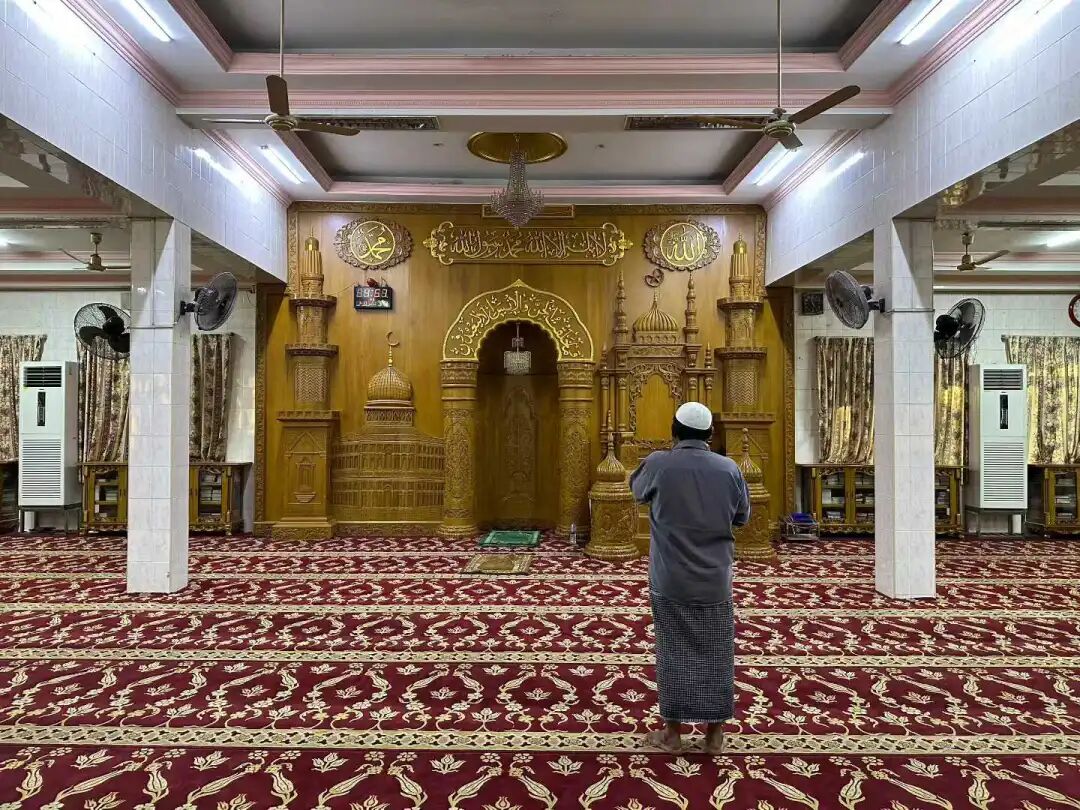
The layout of the main hall in the Yangon Mughal Shia Mosque is different from Sunni mosques. The hall has separate sections for men and women on either side, covered with prayer rugs, and features a mihrab to indicate the direction of prayer. The center is used for delivering the khutbah sermon and holding mourning ceremonies during the first month of the Islamic calendar.
In the middle of the hall is the minbar, the pulpit where the imam delivers the khutbah. Above the pulpit sits a metal hand called a Panja, which symbolizes the hand of Abbas, the standard-bearer for Imam Hussain, which was cut off during the Battle of Karbala. Abbas was the half-brother of Imam Hussain. People say on the night of Ashura, he was blocked by enemy troops while returning with water from the Euphrates River. He fought alone, had both arms cut off, and eventually died in battle.
On both sides of the pulpit are symbolic tombs for Imam Hassan and Imam Hussain, decorated with replicas of the swords and turbans (dastar) they used. They are considered the second and third imams of the Shia faith.
In front of the hall stands an Alam flagpole used during Ashura processions. It features a pear-shaped flat top with two dragon heads in the middle, symbolizing the sword of Ali.
Inside the hall are prayer tablets (turbah), known in Persian as mohr, which Shia Muslims use for prostration. Shia tradition requires prostrating on natural materials, so most people choose clay tablets. The most revered ones are made from the soil of Karbala, where Imam Hussain was martyred. This was my first time seeing them made of wood and stone.
The Mughal Shia Mosque in Yangon features unique calligraphy art. The gate is inscribed with the Shia version of the Shahada, which includes one extra phrase compared to the Sunni version: Ali-un-Waliullah, meaning Ali is the friend (wali) of Allah.
On 32nd Street, near the Sule Pagoda in the center of old Yangon, there is a Shia ceremonial hall called Hazarat Abbas (A. S) Astana Alamdar-e-Husayn. Built in 1856, it is an important ceremonial center for the Shia community in Yangon. Unlike the mosque, this place is used by the Shia community for commemorative ceremonies during the first and second months of the Islamic calendar and during Ramadan. It is an important way for the Shia community to strengthen their unity.
The hall has two floors. The first floor has the English words: 'Live like Ali, die like Hussain'. In the middle of the second floor sits a Punja, which is a symbol of the severed hand of Abbas, the standard-bearer for Imam Hussain during the Battle of Karbala. On both sides are tombs representing Imam Hussain and the standard-bearer Abbas, who were both martyred in the Battle of Karbala. An elder at the mosque showed me a book in Burmese about the standard-bearer Abbas.
In the Shia tradition, the standard-bearer Abbas is seen as the ultimate example of courage, love, sincerity, and self-sacrifice. Many Shia Muslims take oaths in his name or give out food in his honor. The death of Abbas is the oldest passion play in the Shia tradition, and verses about him often appear in Shia architectural decorations.
Punja Mosque is located on 38th Street on the east side of Yangon's old town. It was built in 1877 and is another Shia mosque in Yangon. You can also see the Shia Kalima on the mosque gate, with the added phrase 'Ali is the Wali of Allah'. The main hall is divided into two parts: the right side is a hall for mourning Imam Hussain, and the left side is the prayer hall. In the center of the right hall sits a tomb representing Imam Hussain. The left room contains the minbar, the pulpit where the Imam gives the khutbah. On the right is the Punja, representing the severed hand of Imam Hussain's standard-bearer Abbas during the Battle of Karbala, which is how this mosque got its name.
Besides the Twelver Shia, there are two other Shia minority mosques on Mughal Street in Yangon. Unfortunately, they are no longer in use because there are too few members left.
The Dawoodi Bohra Saifee Mosque is on the west side of Mughal Street. It was built by the Dawoodi Bohra sect in 1898. I have visited their mosques in Bangkok and Singapore before. The Dawoodi Bohra are a small branch of the Ismaili Shia. This branch has only a few million followers, most of whom live in the Indian state of Gujarat and the city of Karachi in Pakistan. The Dawoodi Bohra originated from the Ismaili Shia Fatimid Caliphate, which ruled North Africa from the 10th to the 12th century. In 1067, the Imam of the Fatimid Caliphate sent a man named Abdullah from Yemen to Gujarat, India, to preach, and he was very successful. Since then, the followers in Gujarat have kept in touch with Yemen and continued to grow. In 1589, the community leader Dawood Bin Qutubshah took office. A split occurred with Yemen, and they have been called the Dawoodis ever since.
Starting in the 19th century, Dawoodi Bohra members from Gujarat, India, began traveling across the Indian Ocean to do business. Many became wealthy merchants and industrialists, and some settled in Yangon, which has a large Indian population.
His Highness The Agakhan Building Myanmar Ismaili Khoja Jamatkhana is on the east side of Mughal Street. It was built in 1949 by the Khoja people, who follow the Nizari Ismaili branch of Shia Islam. They share the same faith as the Tajik people in China. The name Khoja comes from the title the 14th-century Ismaili scholar Pir Sadardin used for his followers. Sadardin was born in Persia and spent a long time preaching in South Asia. He promoted tolerance and integration between Islam and Hinduism, which led many merchants from the Lohana caste in Gujarat to convert.
The Khoja began doing business in Mumbai, India, in the 18th century. Later, they moved to South Asia, Oman, East Africa, Madagascar, and other places to trade and settle. Some also settled in Yangon. The Khoja community center is called a Jamatkhana, or 'Jummah hall,' where they hold congregational prayers, wedding banquets, and various memorial events. view all
Summary: Yangon's Mughal Shia Mosque was founded in 1854 by Persian-Indian merchants and is described as the largest Shia mosque complex in Southeast Asia. This account covers its mosque compound, Muharram practices, Khoja community, and wider Shia history in Myanmar.
The Mughal Shia Mosque in Yangon, Myanmar, is the largest Shia mosque in Southeast Asia. It was founded in 1854 by Persian-Indian merchants who were among the first to settle in Yangon.
The British East India Company opened factories in Yangon starting in the 1790s, which led to the arrival of Persian and Indian Shia merchants. These Shia friends (dosti) and others from Iran, Afghanistan, and India were collectively called Mughals by the Burmese people. After the 19th century, these Mughals often served as intermediaries and translators between the British and the Burmese, becoming a key part of Yangon's foreign trade.
In 1852, the British officially occupied Yangon and made it the capital of British Burma. They hired army engineers to design a grid-patterned city, and the Shia community established the Mughal Shia Mosque. The Mughal Shia Mosque was originally a teak wood building. Between 1914 and 1918, mosque trustees from Isfahan, Shiraz, Khorasan, and Kabul in Iran and Afghanistan raised funds to rebuild it in its current Hyderabad style. The Shia faith developed on the Deccan Plateau in southern India between the 14th and 16th centuries. The Qutb Shahi dynasty declared it the state religion in 1518. Its capital, Hyderabad, was developed in 1591 with the help of Shia scholar and scientist Mir Muhammad Momin, and it later became a center for Shia culture in India.
S. Afsheen, a descendant of a trustee of the Yangon Mughal Shia Mosque, wrote in his autobiography that his ancestors were court advisors in the Mughal Empire. In the 19th century, his great-grandfather's father, Hasan Ali Khorasanee, came to Yangon to trade. He secured favorable trade terms and built a powerful trading company. Hasan Ali Khorasanee's son bought several properties in Yangon and ran leather and other trading businesses, which made the Khorasanee family one of the trustees of the Mughal Shia Mosque.
The Mughal Shia Mosque is located on Shwe Bon Thar Street in Yangon's Indian quarter. This street was originally called Mughal Street and is the area where Indian shops in Yangon are most concentrated. The mosque consists of a Mughal hall facing the street, a main prayer hall, and two tall minarets. The shops in the Mughal hall facing the street are rented out.
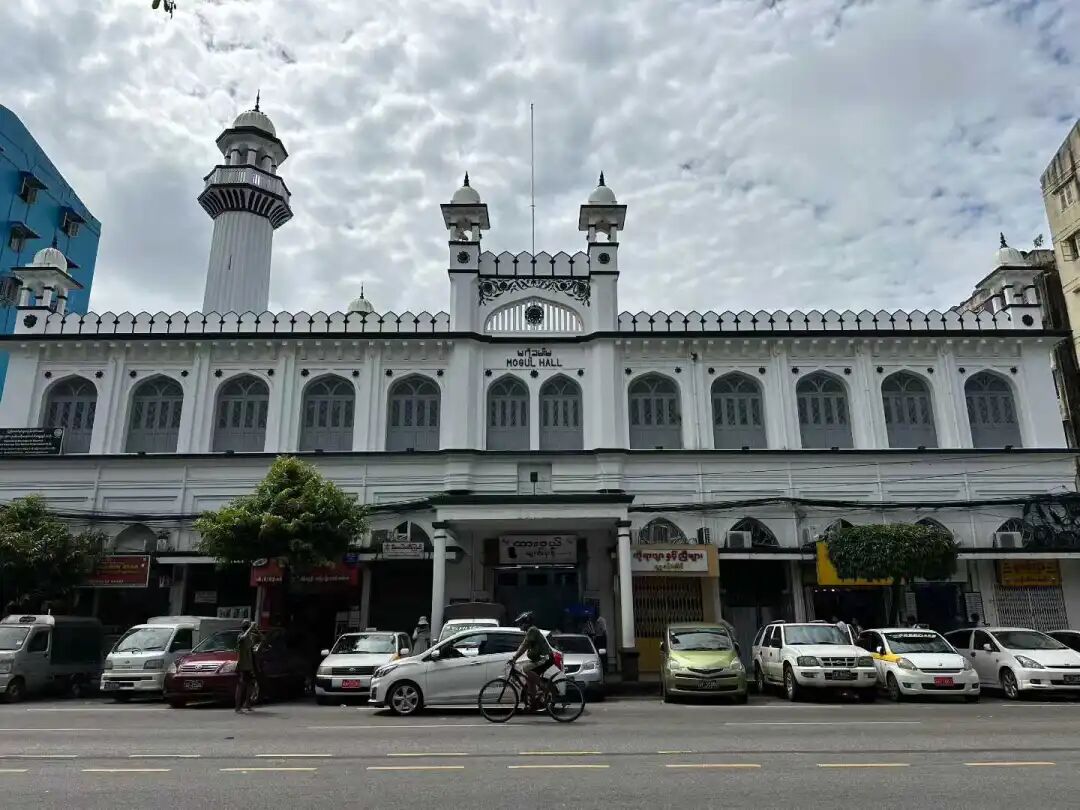
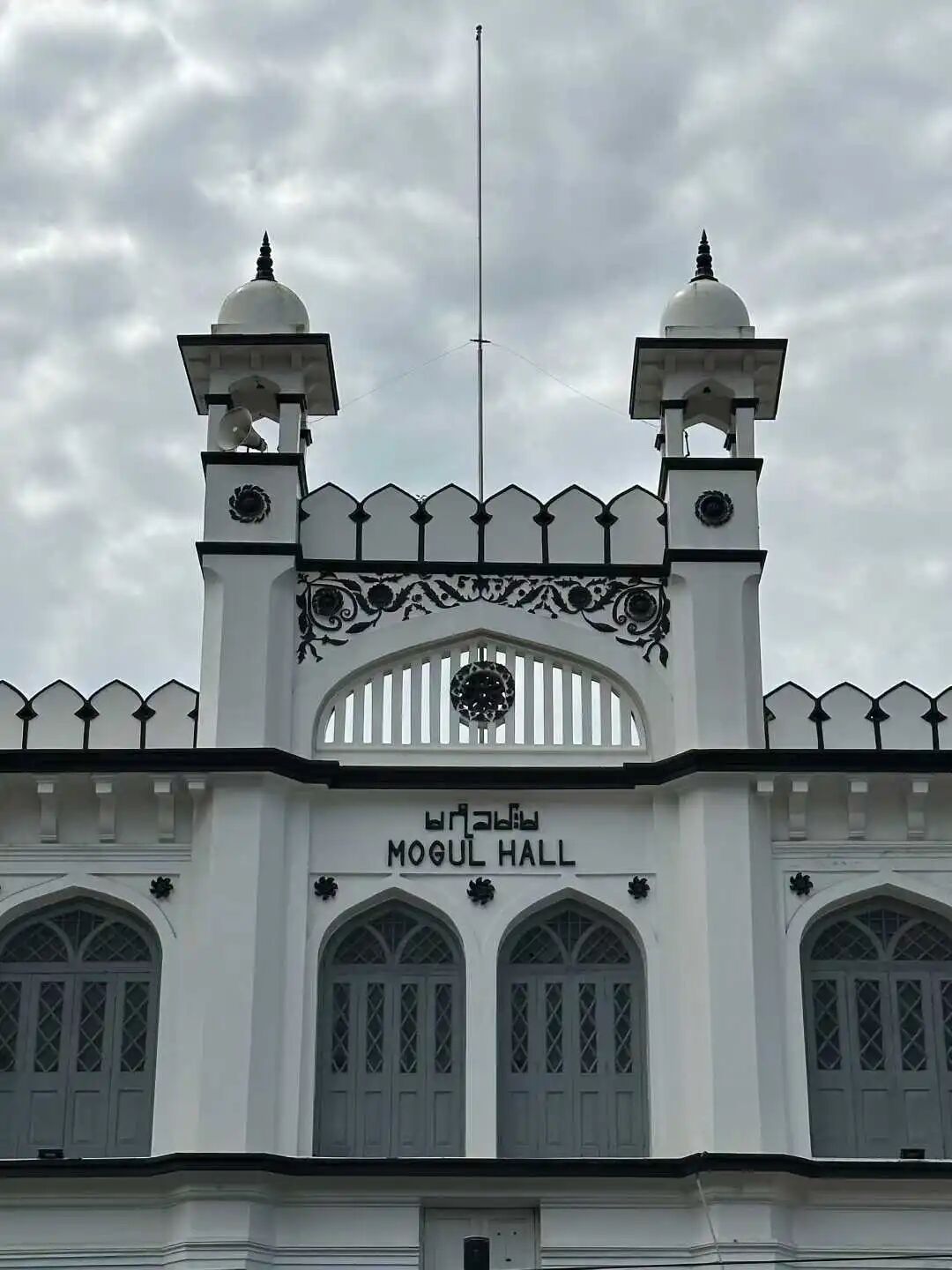
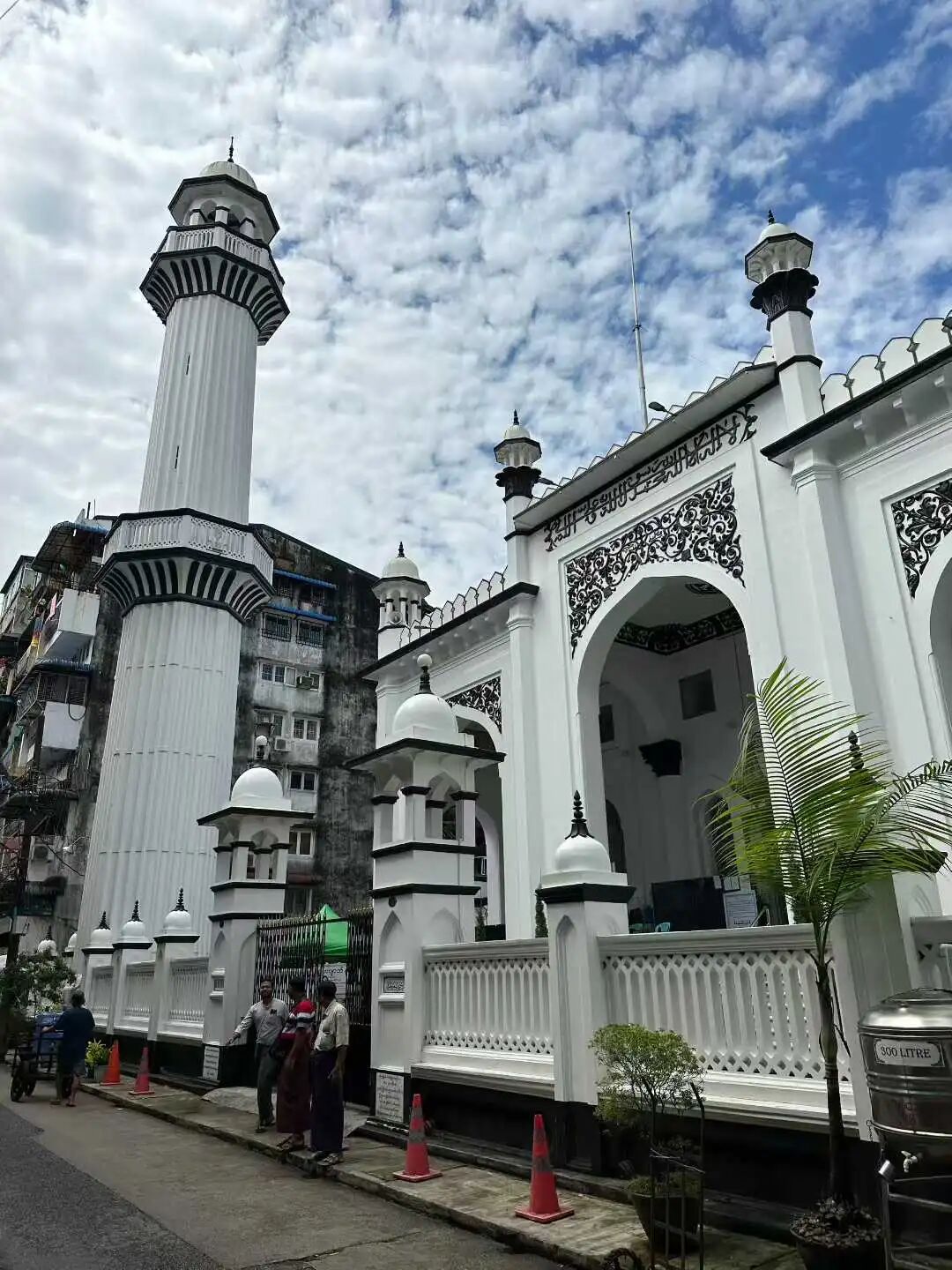
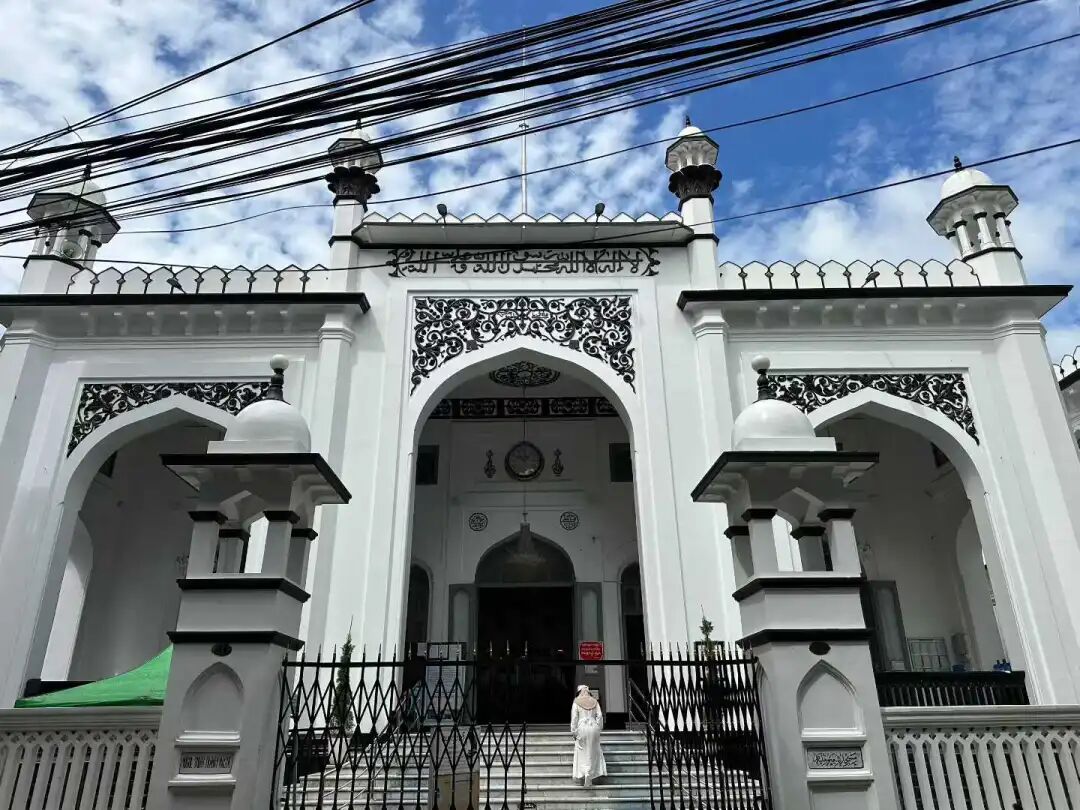
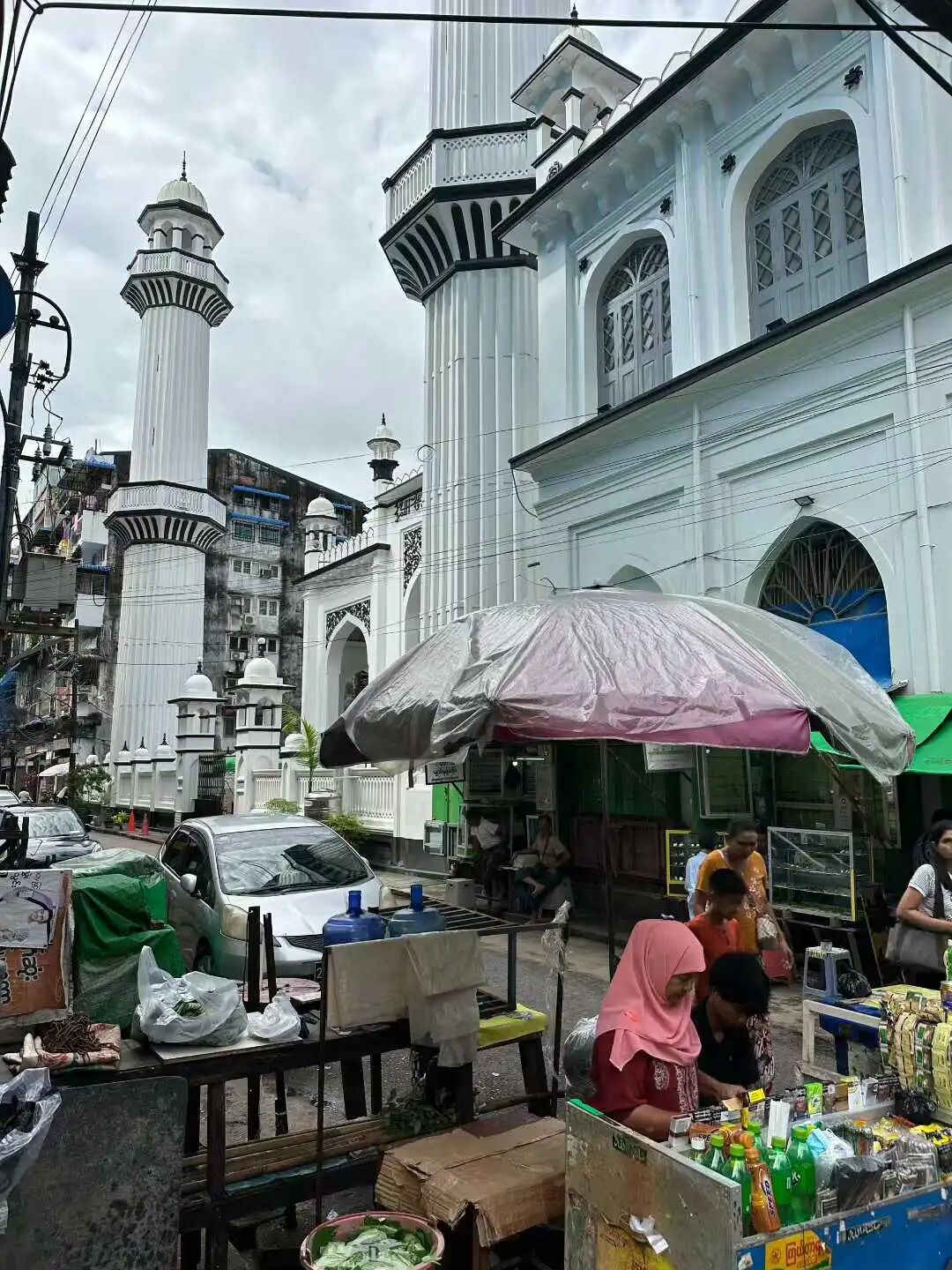
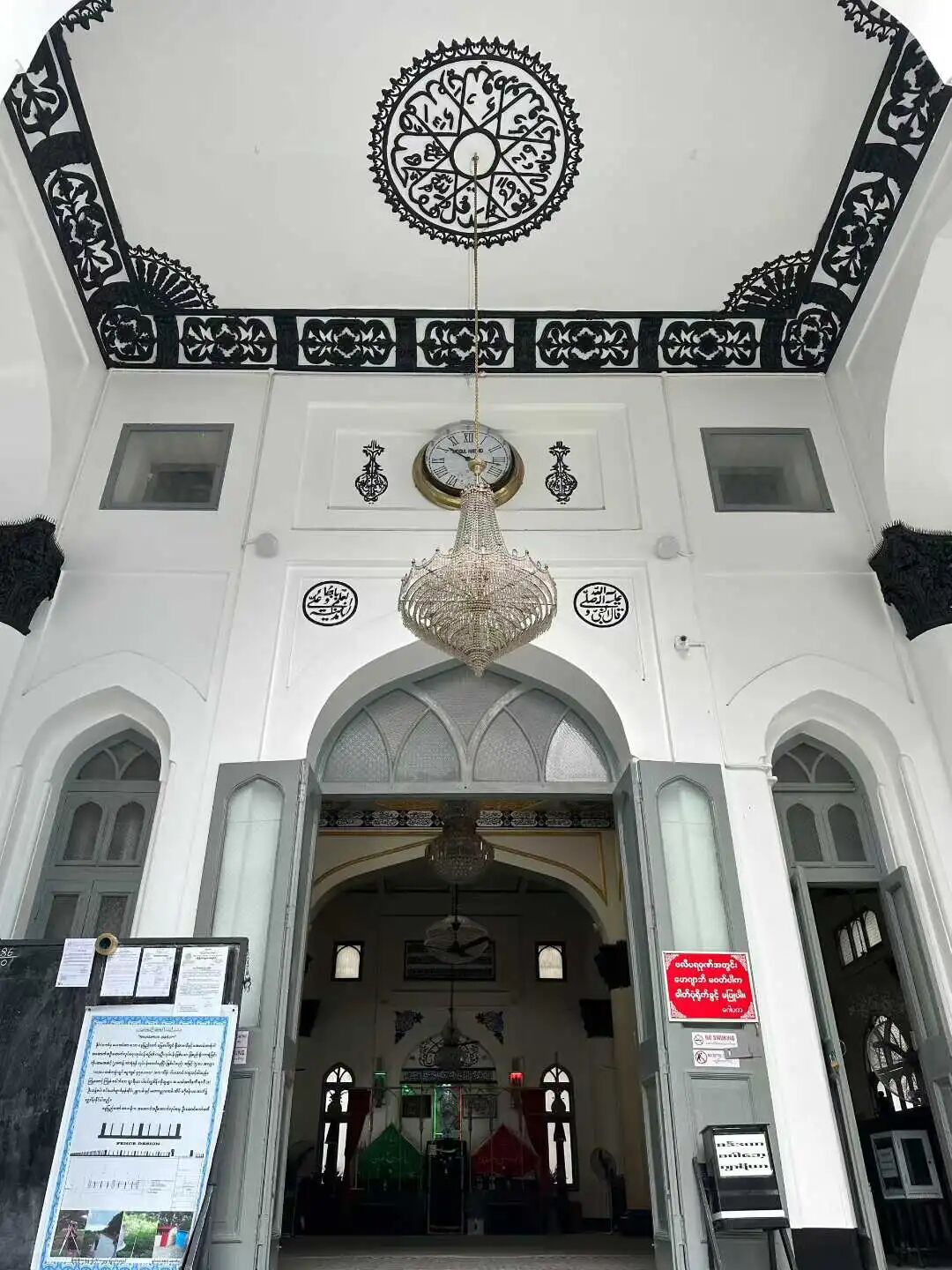
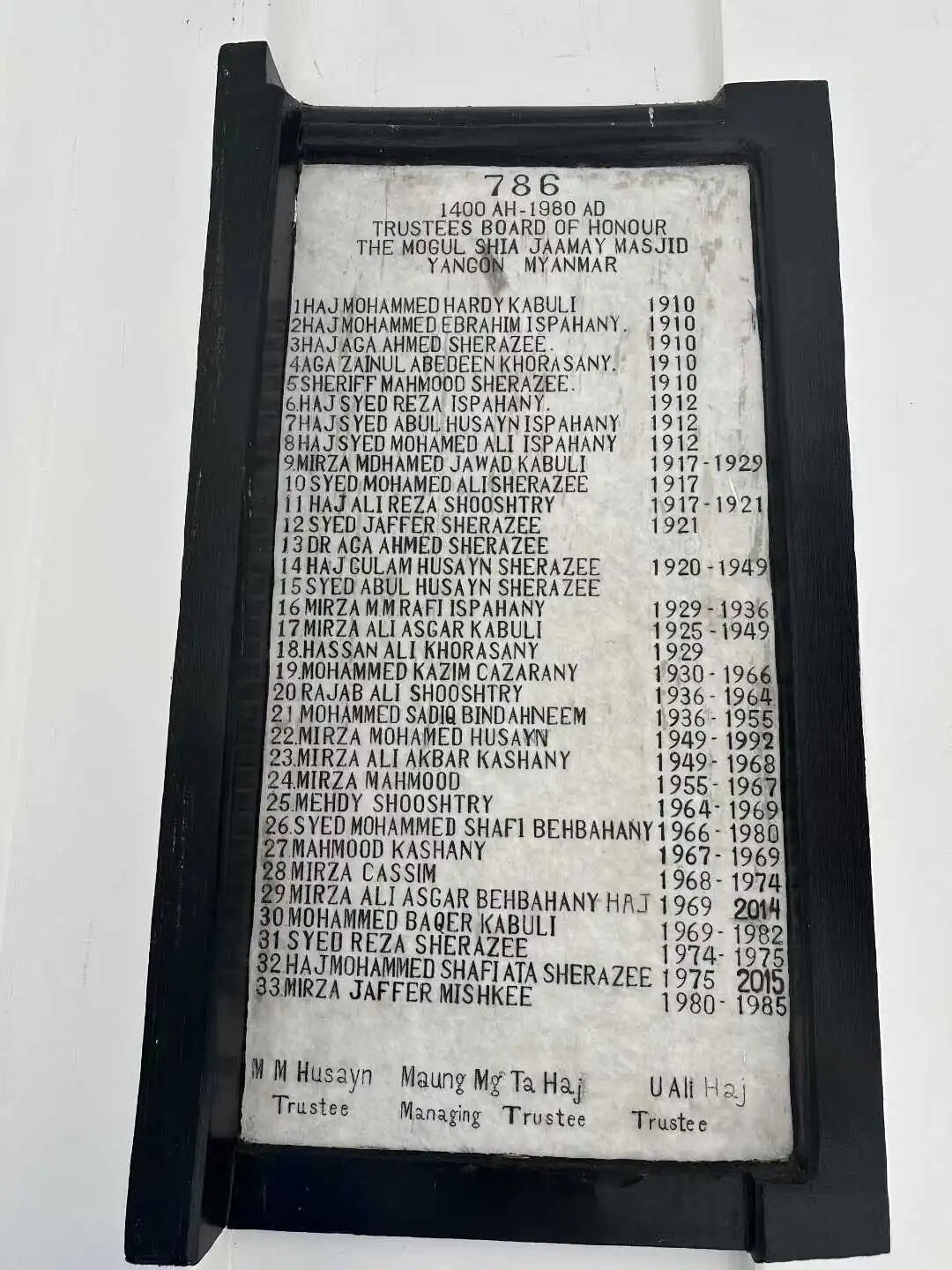
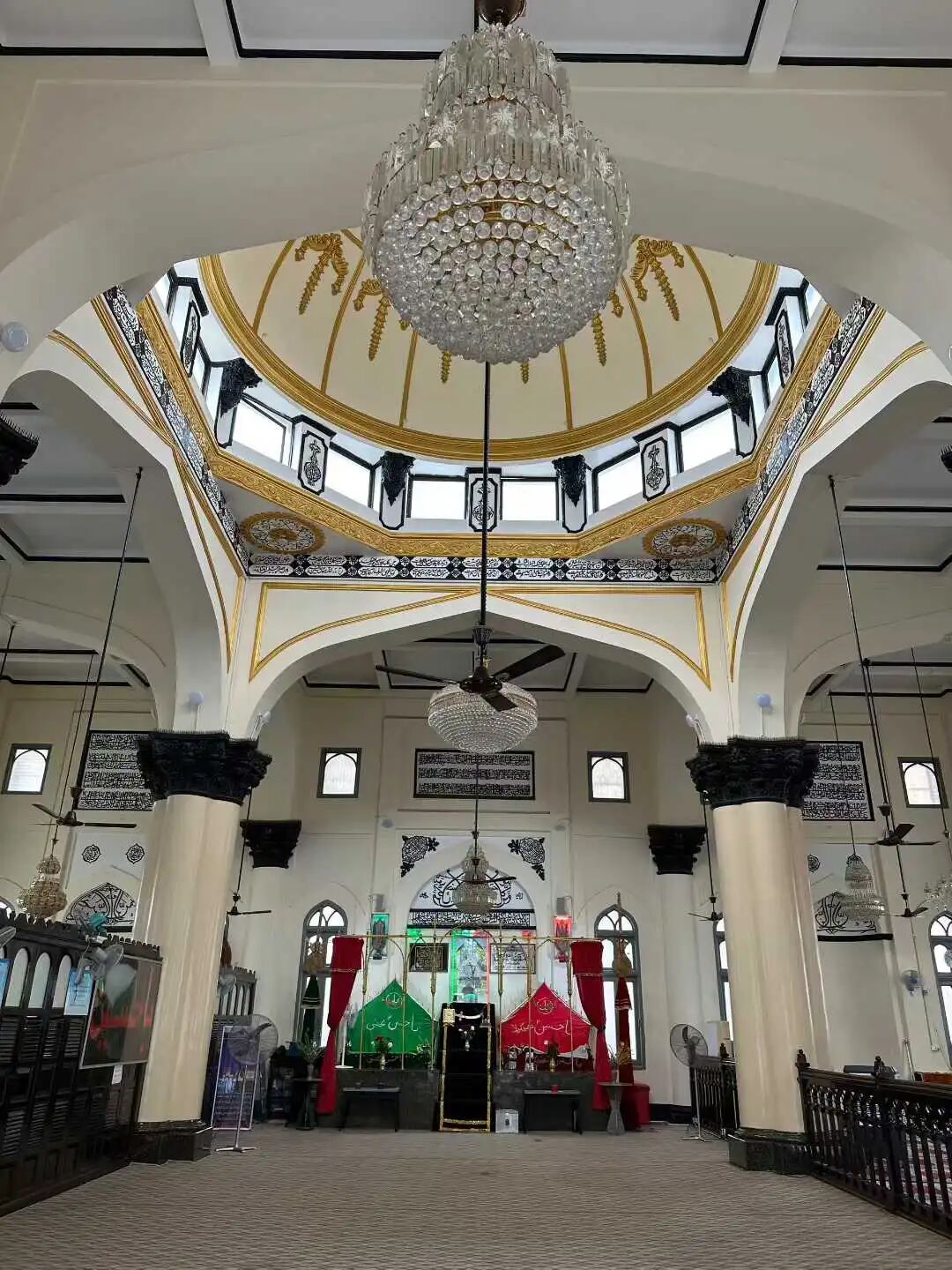
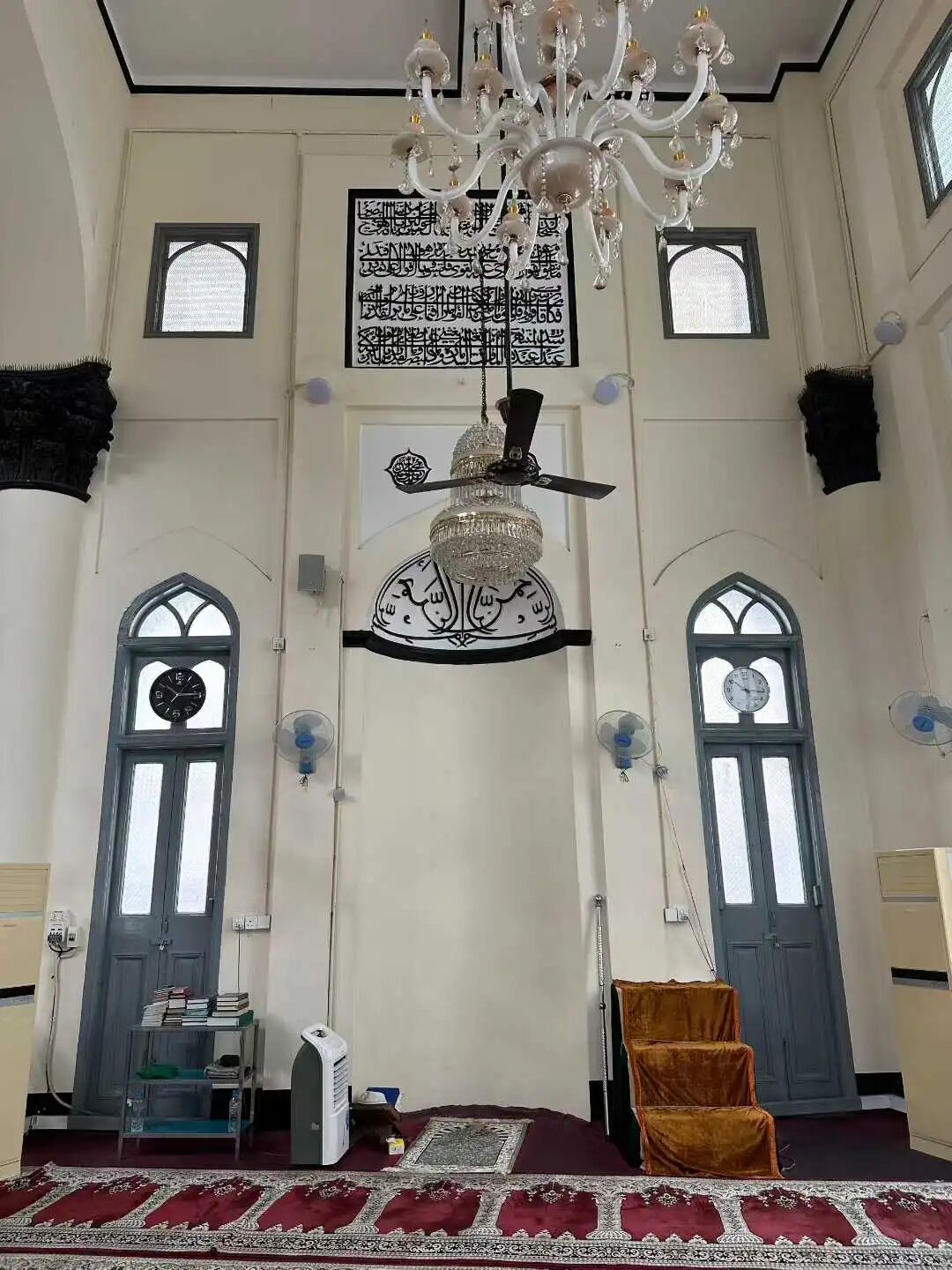
The layout of the main hall in the Yangon Mughal Shia Mosque is different from Sunni mosques. The hall has separate sections for men and women on either side, covered with prayer rugs, and features a mihrab to indicate the direction of prayer. The center is used for delivering the khutbah sermon and holding mourning ceremonies during the first month of the Islamic calendar.
In the middle of the hall is the minbar, the pulpit where the imam delivers the khutbah. Above the pulpit sits a metal hand called a Panja, which symbolizes the hand of Abbas, the standard-bearer for Imam Hussain, which was cut off during the Battle of Karbala. Abbas was the half-brother of Imam Hussain. People say on the night of Ashura, he was blocked by enemy troops while returning with water from the Euphrates River. He fought alone, had both arms cut off, and eventually died in battle.
On both sides of the pulpit are symbolic tombs for Imam Hassan and Imam Hussain, decorated with replicas of the swords and turbans (dastar) they used. They are considered the second and third imams of the Shia faith.
In front of the hall stands an Alam flagpole used during Ashura processions. It features a pear-shaped flat top with two dragon heads in the middle, symbolizing the sword of Ali.
Inside the hall are prayer tablets (turbah), known in Persian as mohr, which Shia Muslims use for prostration. Shia tradition requires prostrating on natural materials, so most people choose clay tablets. The most revered ones are made from the soil of Karbala, where Imam Hussain was martyred. This was my first time seeing them made of wood and stone.
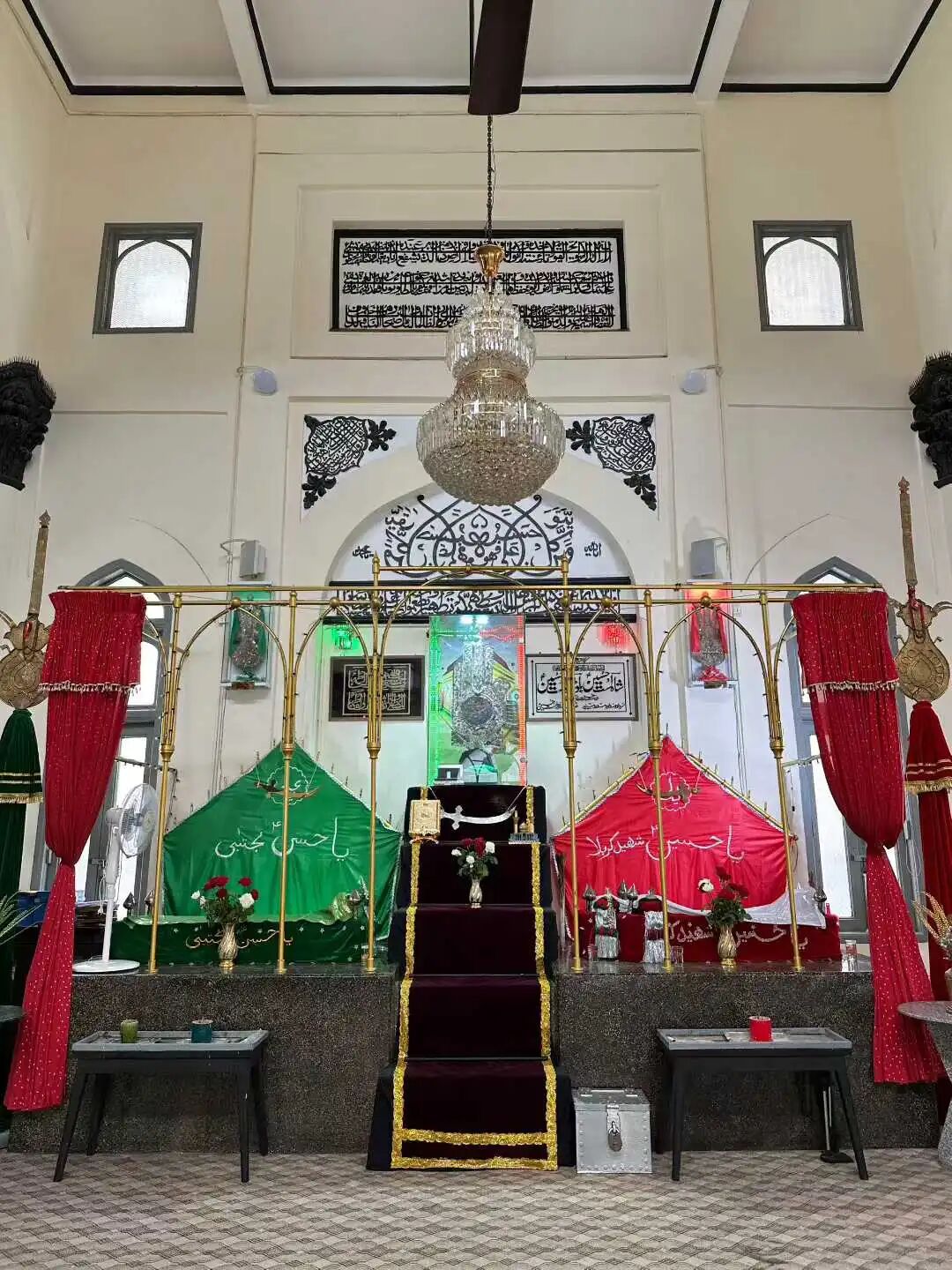
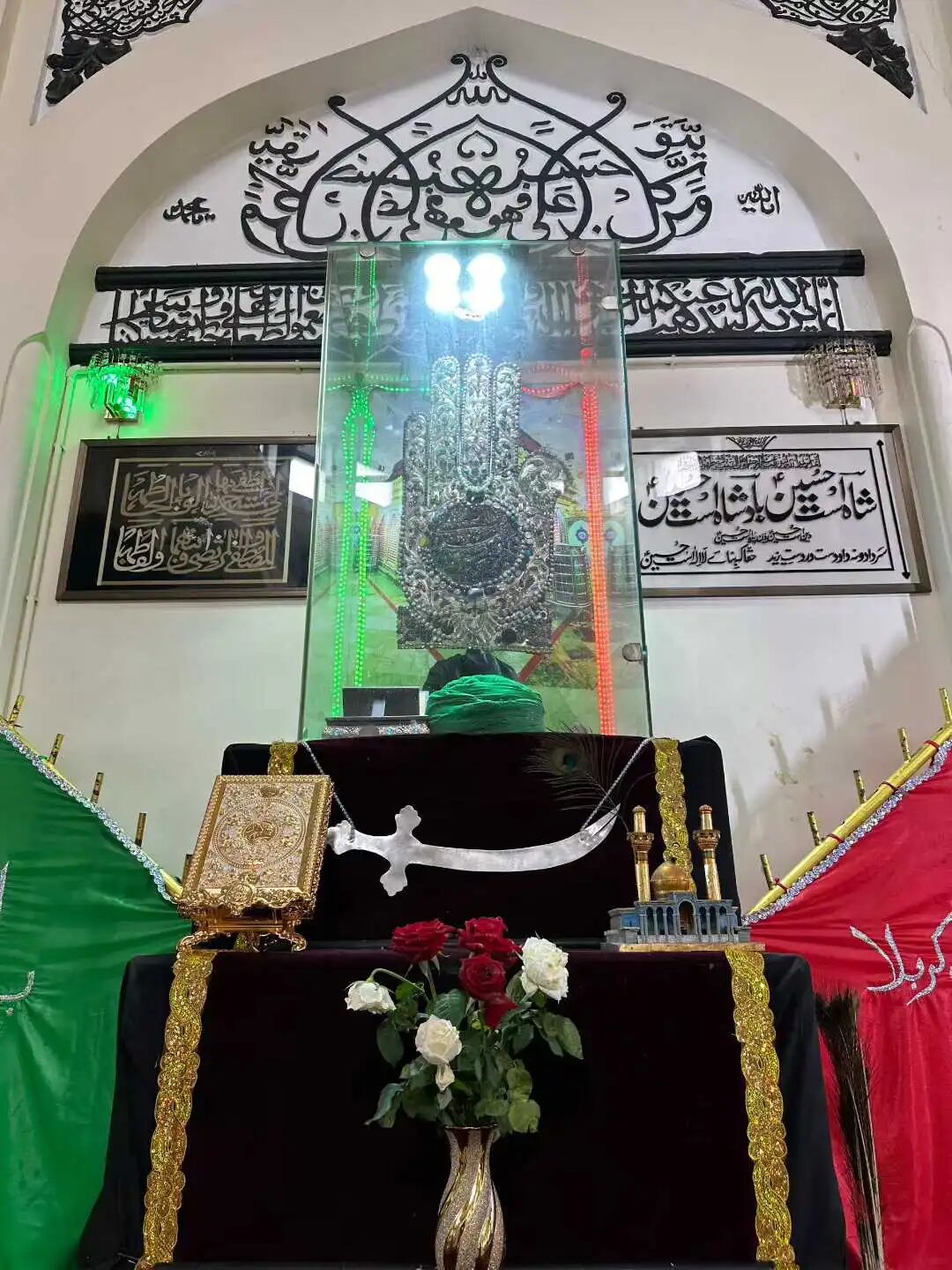
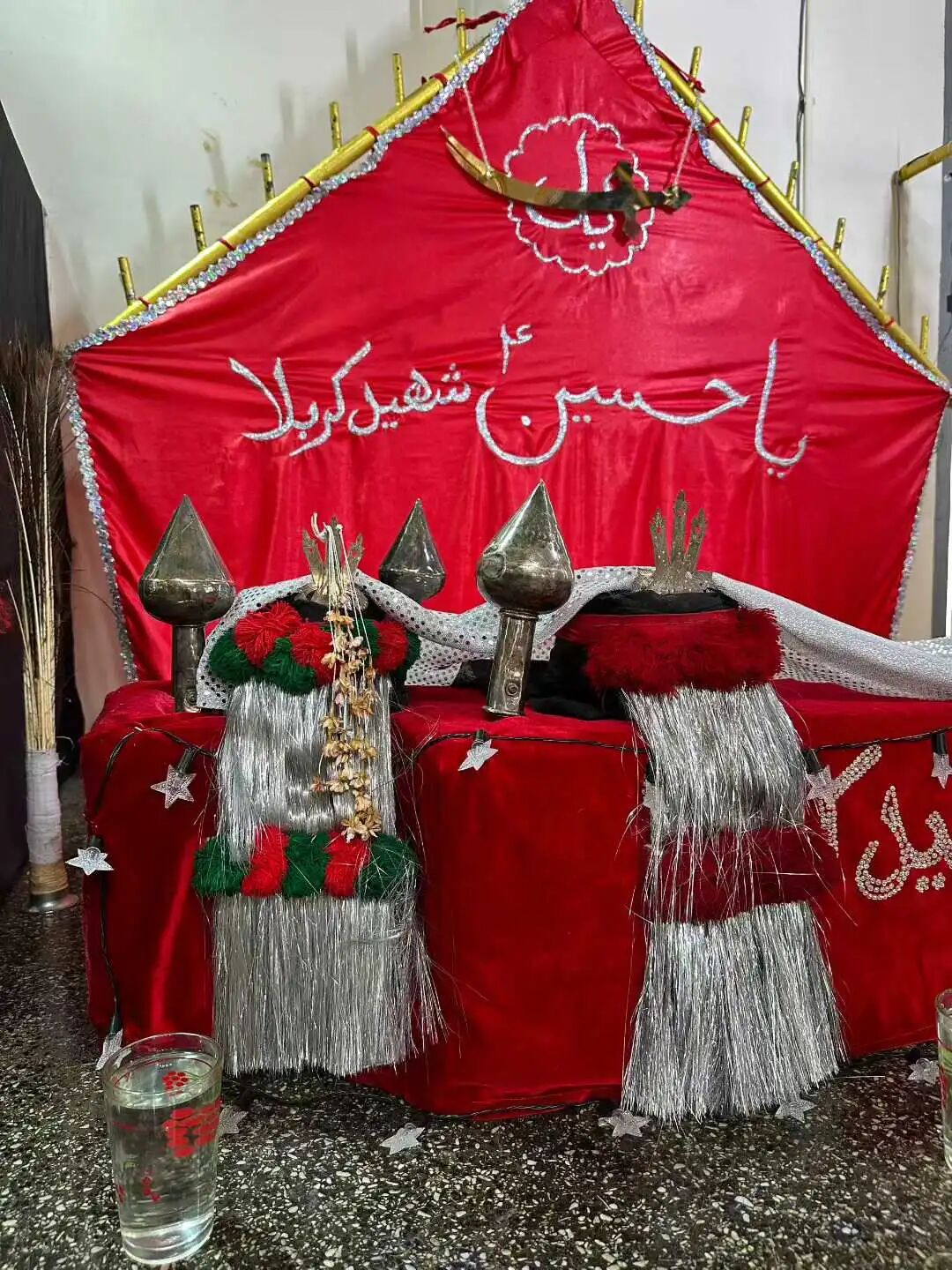
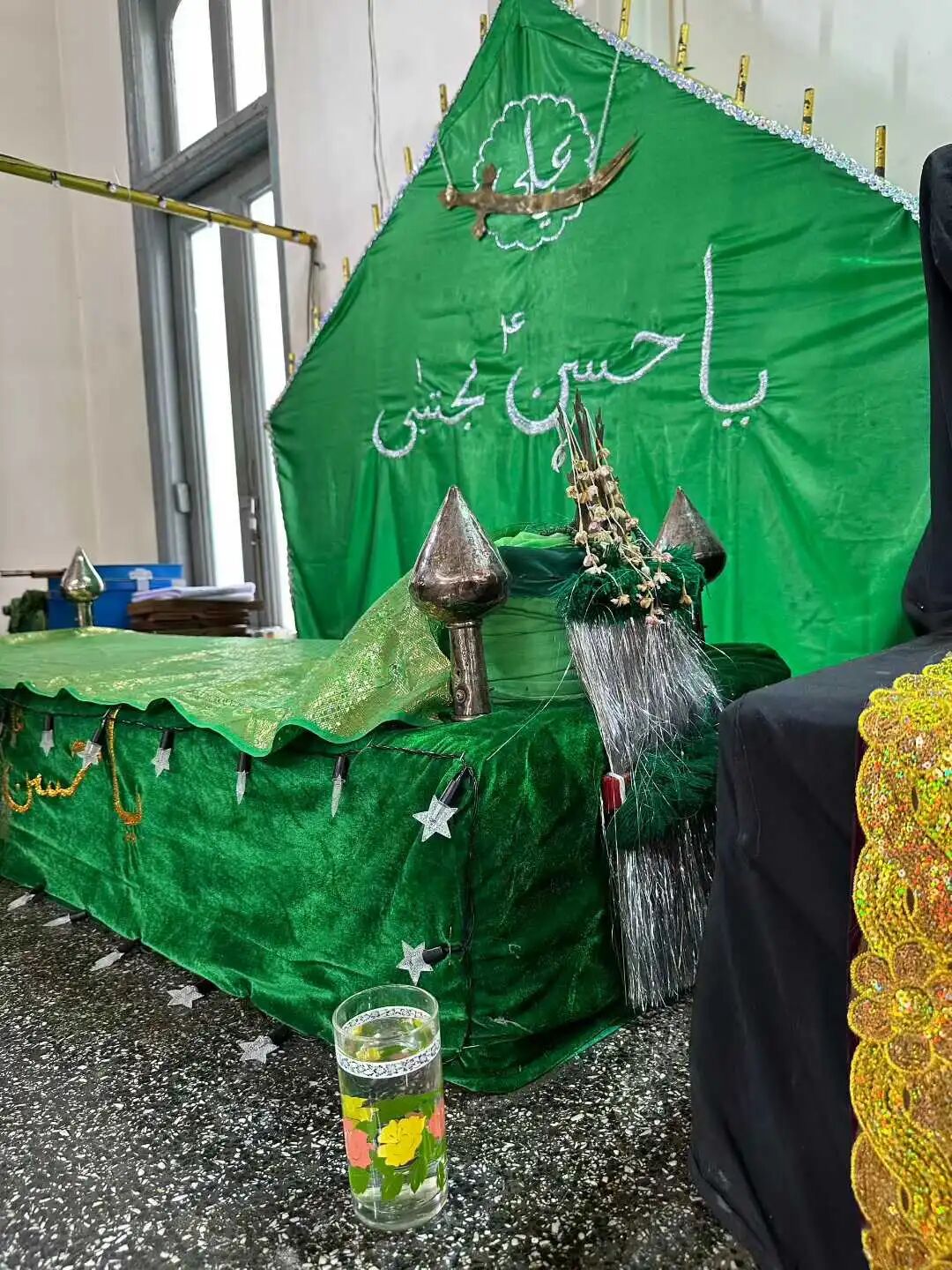
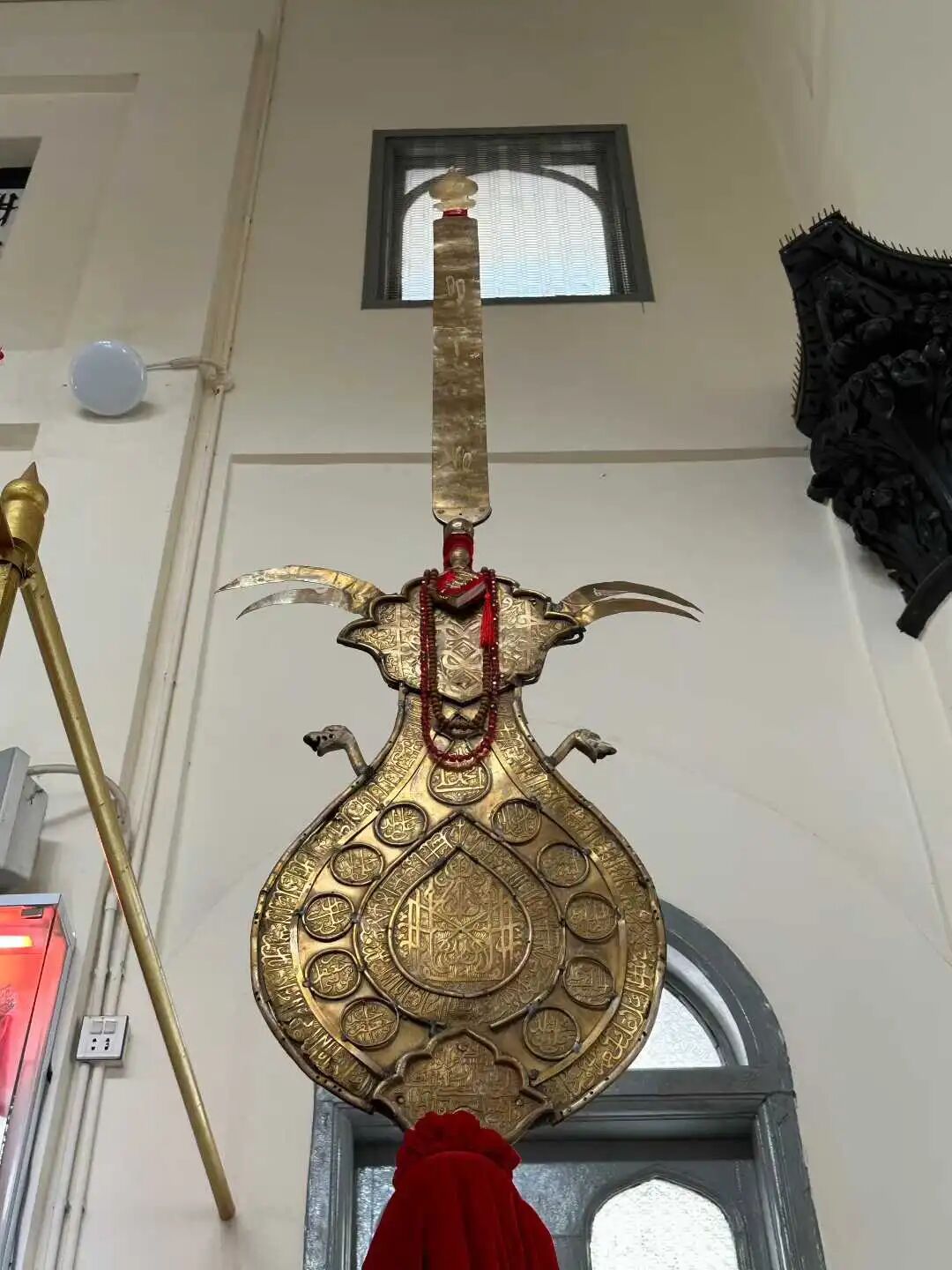
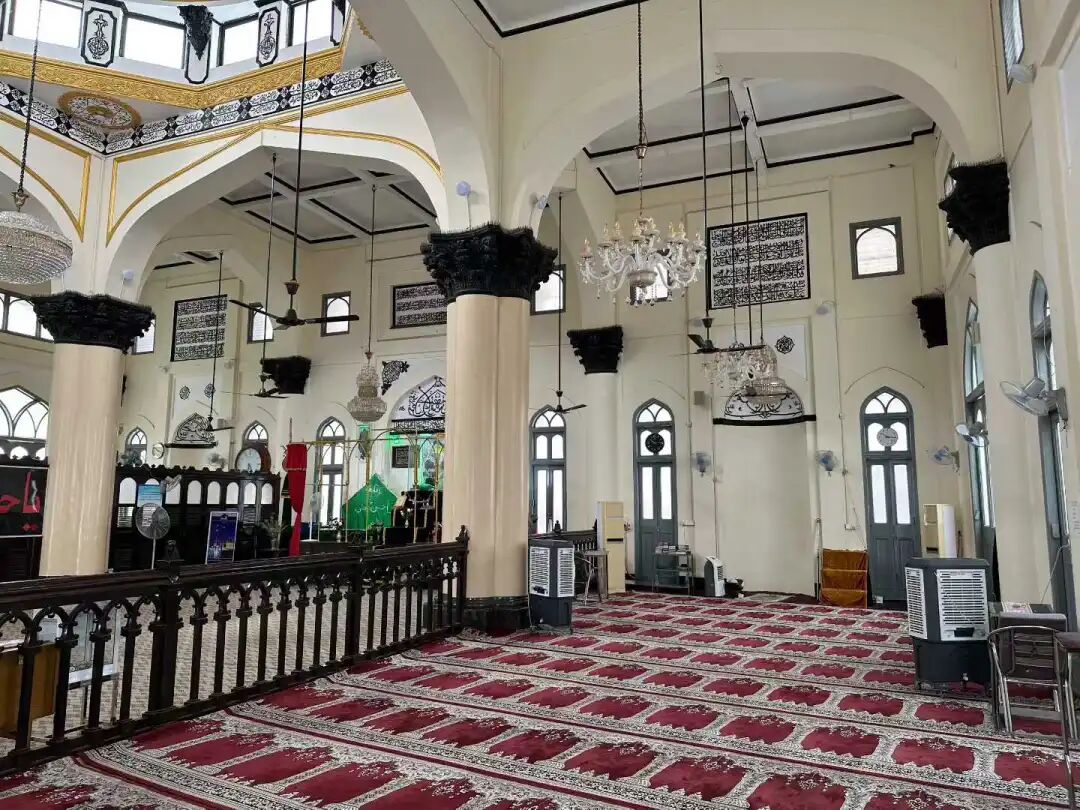
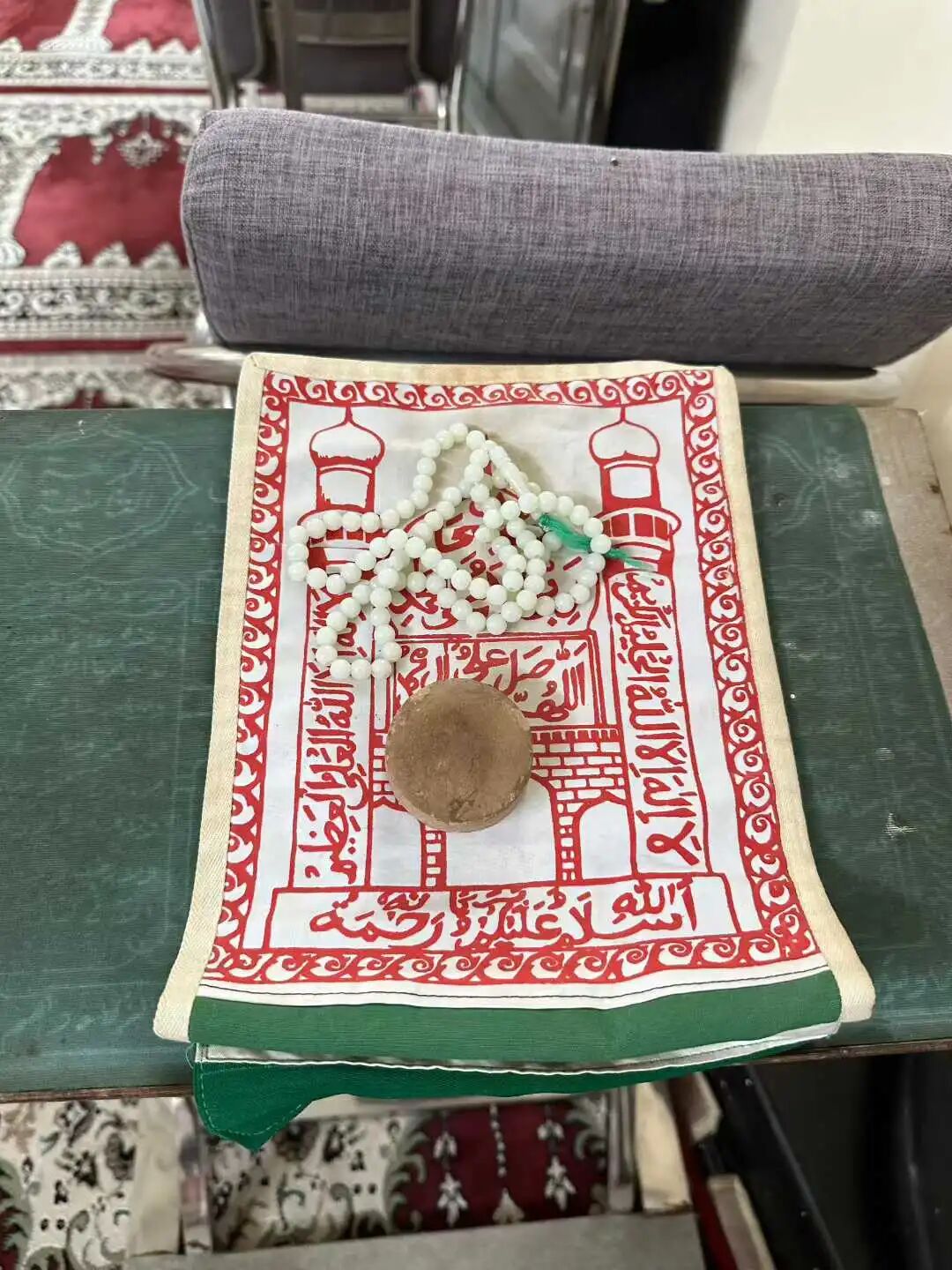
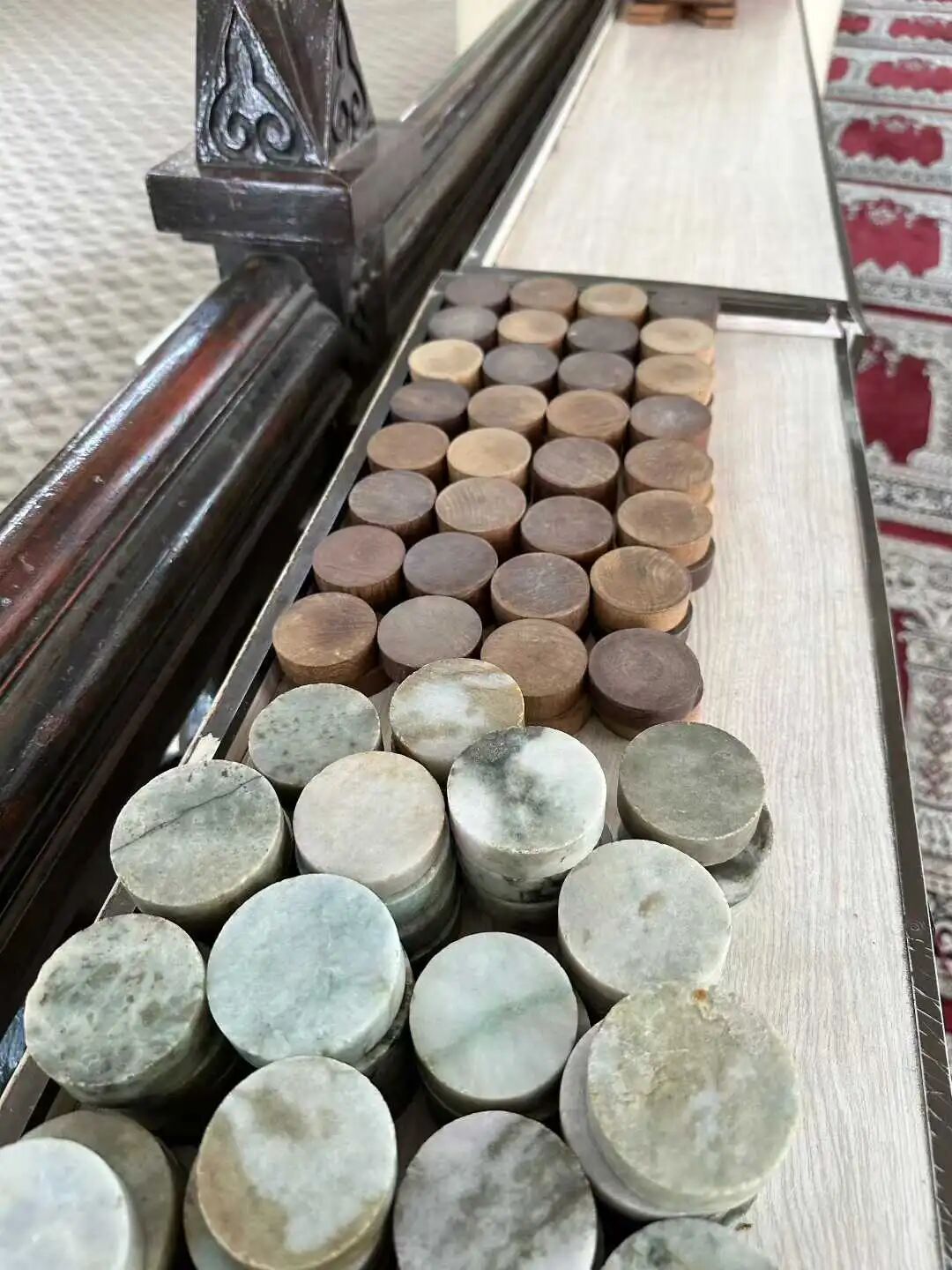
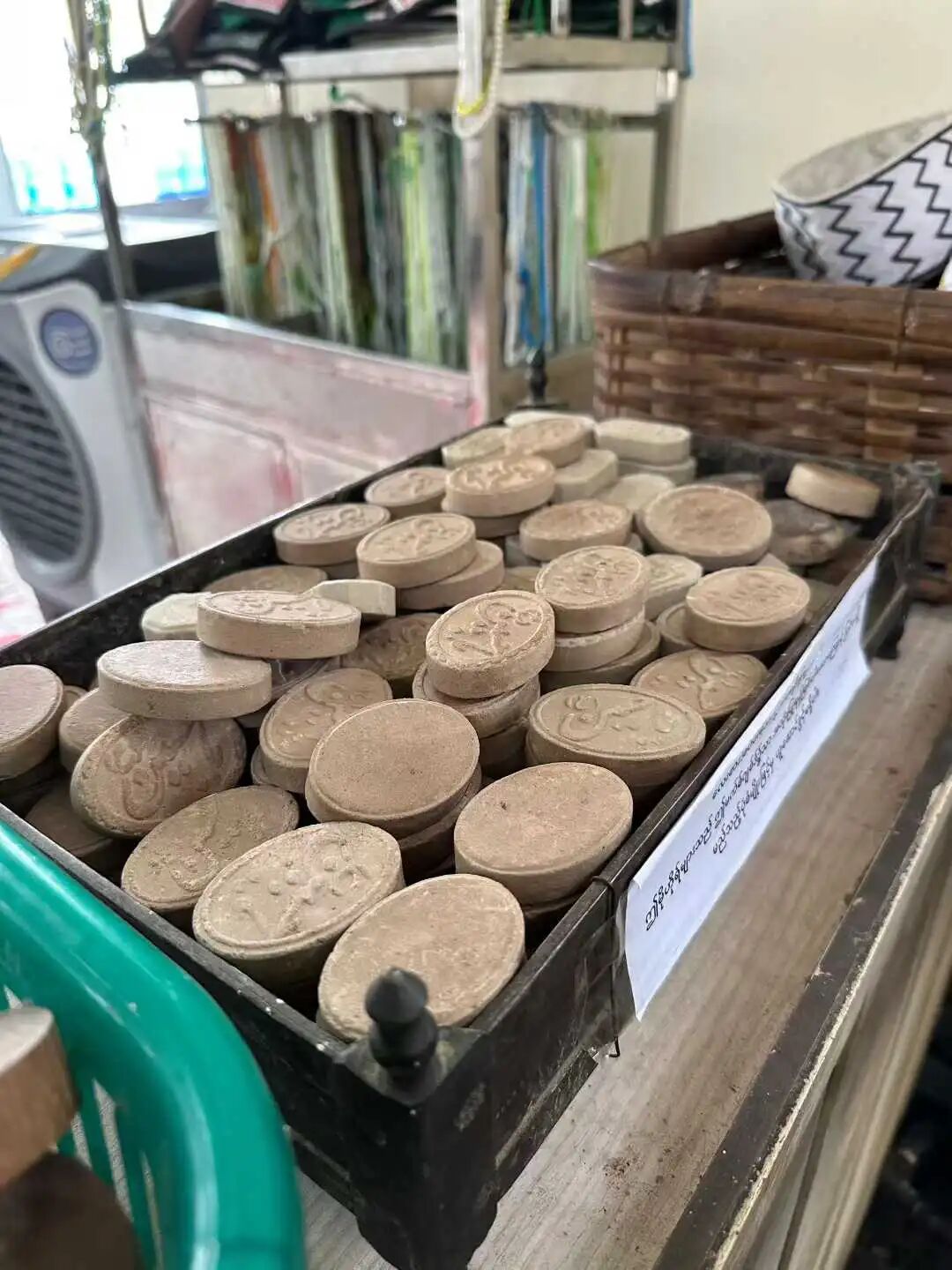
The Mughal Shia Mosque in Yangon features unique calligraphy art. The gate is inscribed with the Shia version of the Shahada, which includes one extra phrase compared to the Sunni version: Ali-un-Waliullah, meaning Ali is the friend (wali) of Allah.
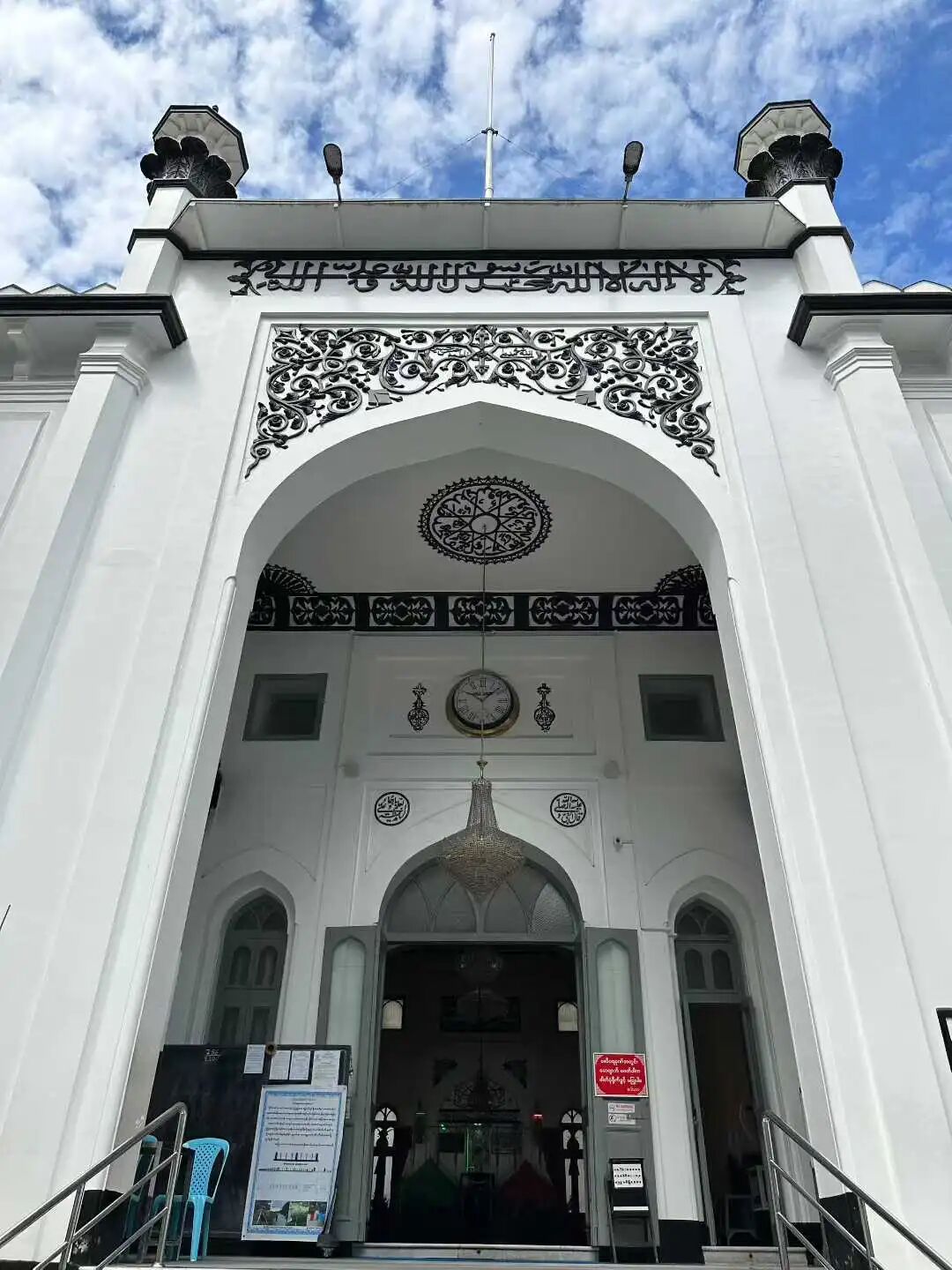
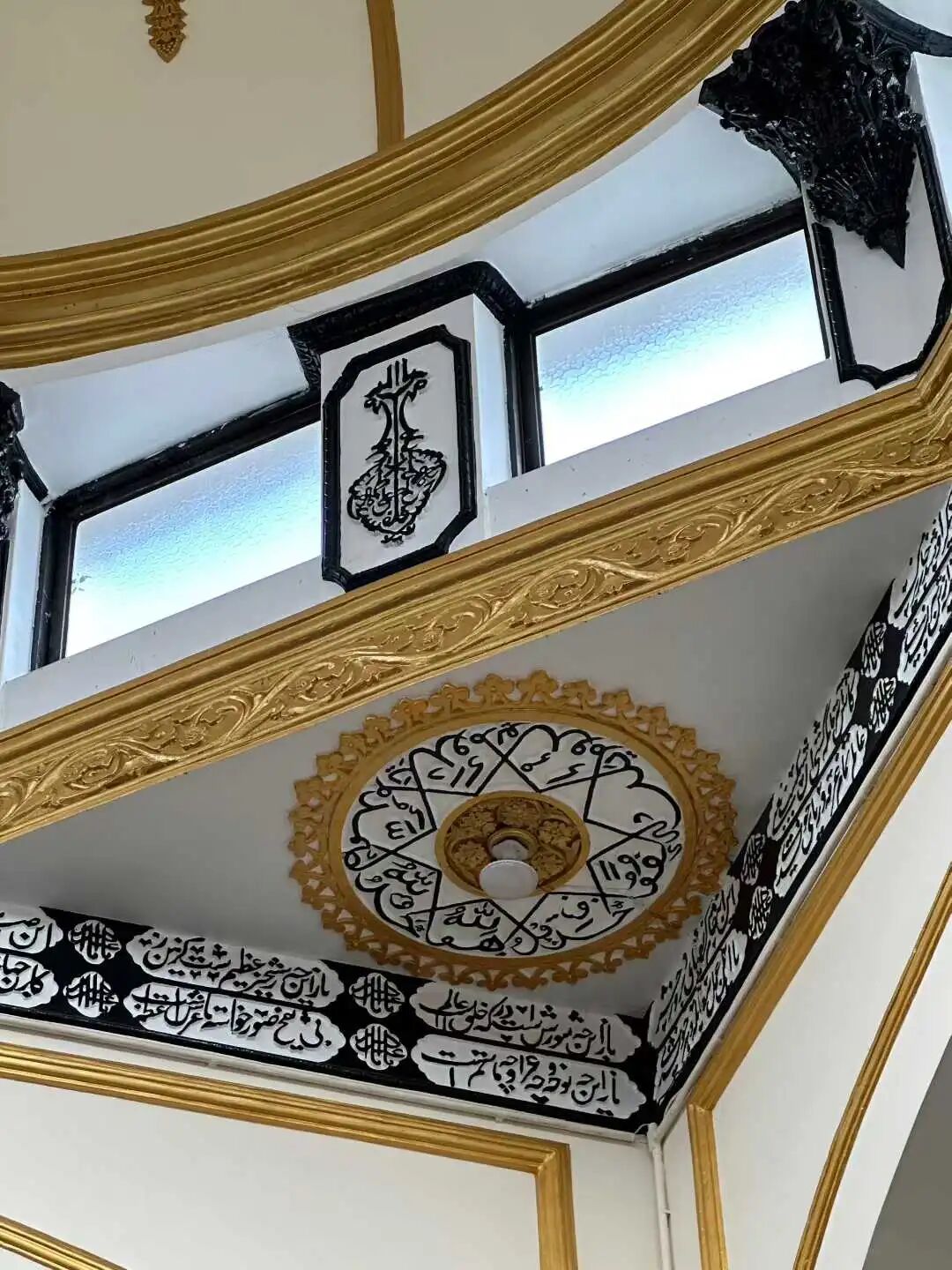
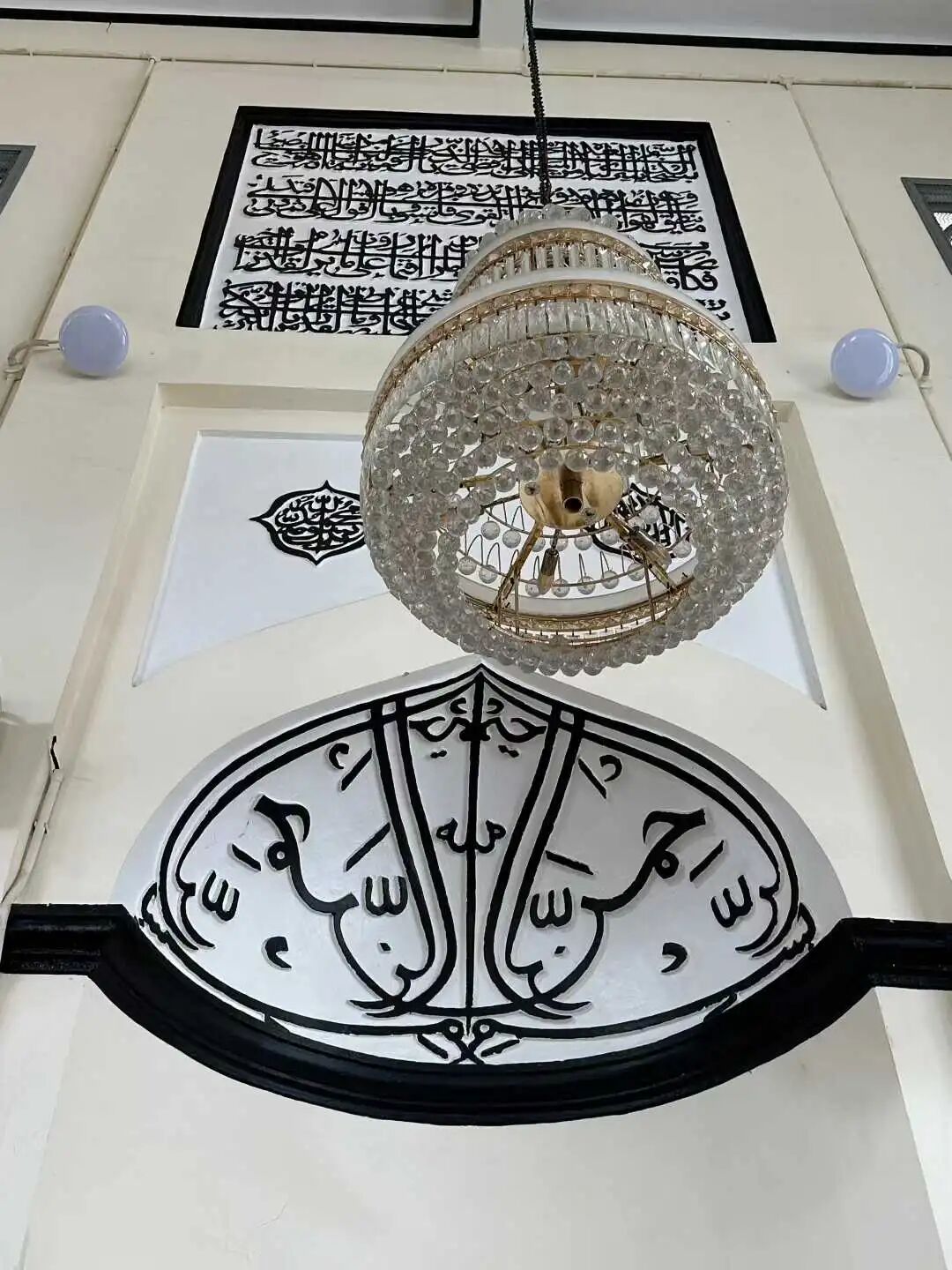
On 32nd Street, near the Sule Pagoda in the center of old Yangon, there is a Shia ceremonial hall called Hazarat Abbas (A. S) Astana Alamdar-e-Husayn. Built in 1856, it is an important ceremonial center for the Shia community in Yangon. Unlike the mosque, this place is used by the Shia community for commemorative ceremonies during the first and second months of the Islamic calendar and during Ramadan. It is an important way for the Shia community to strengthen their unity.
The hall has two floors. The first floor has the English words: 'Live like Ali, die like Hussain'. In the middle of the second floor sits a Punja, which is a symbol of the severed hand of Abbas, the standard-bearer for Imam Hussain during the Battle of Karbala. On both sides are tombs representing Imam Hussain and the standard-bearer Abbas, who were both martyred in the Battle of Karbala. An elder at the mosque showed me a book in Burmese about the standard-bearer Abbas.
In the Shia tradition, the standard-bearer Abbas is seen as the ultimate example of courage, love, sincerity, and self-sacrifice. Many Shia Muslims take oaths in his name or give out food in his honor. The death of Abbas is the oldest passion play in the Shia tradition, and verses about him often appear in Shia architectural decorations.
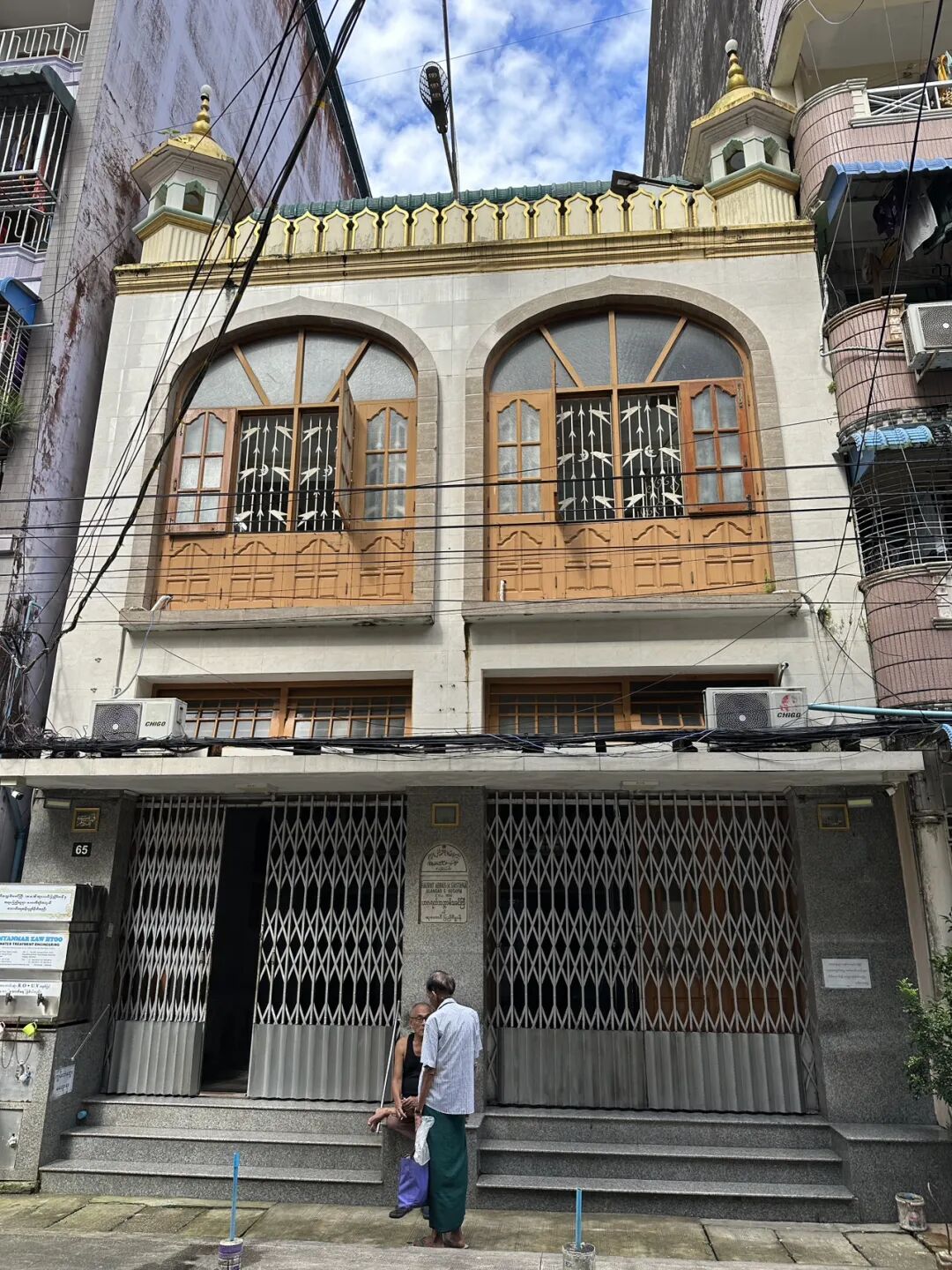
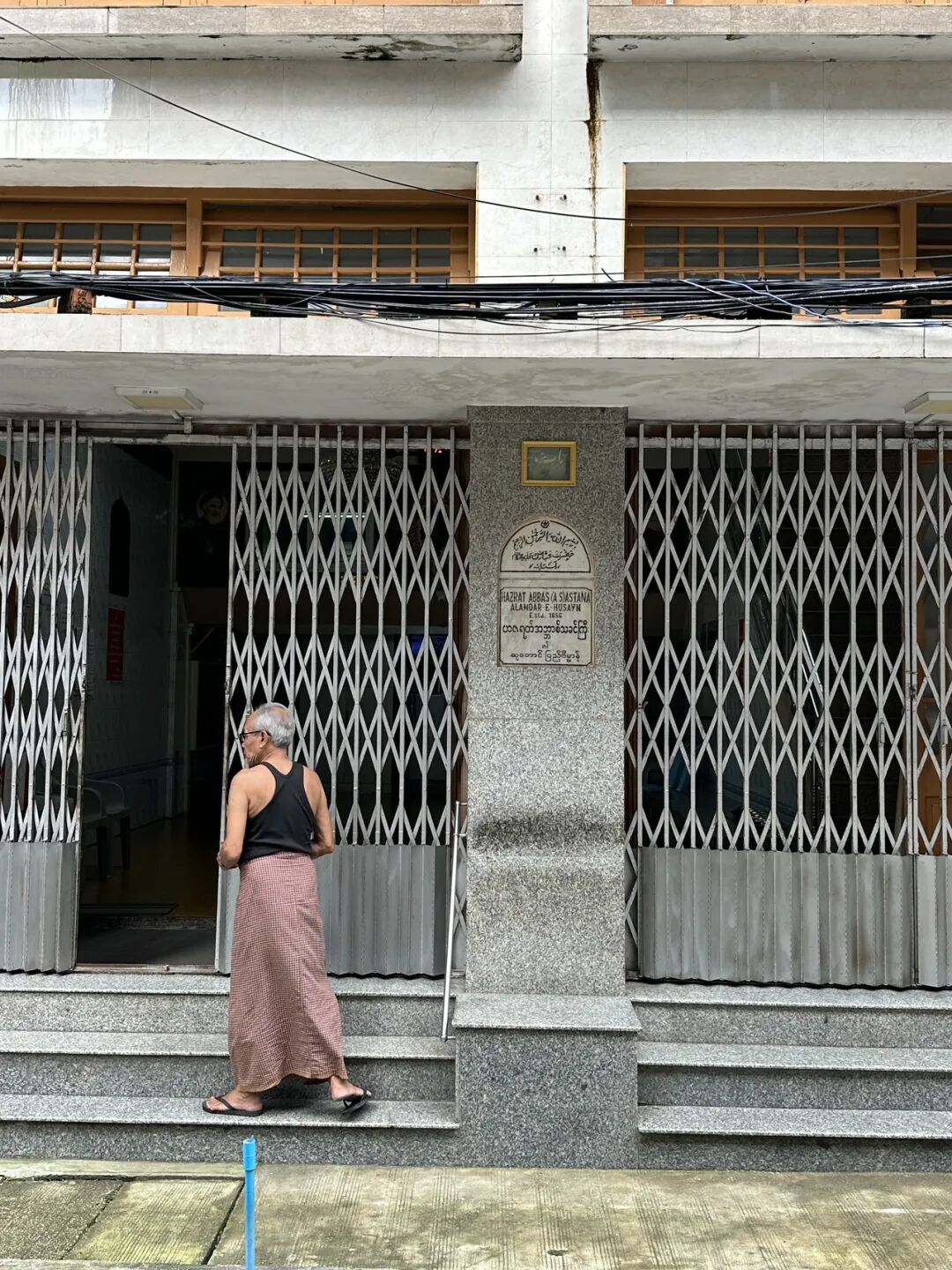
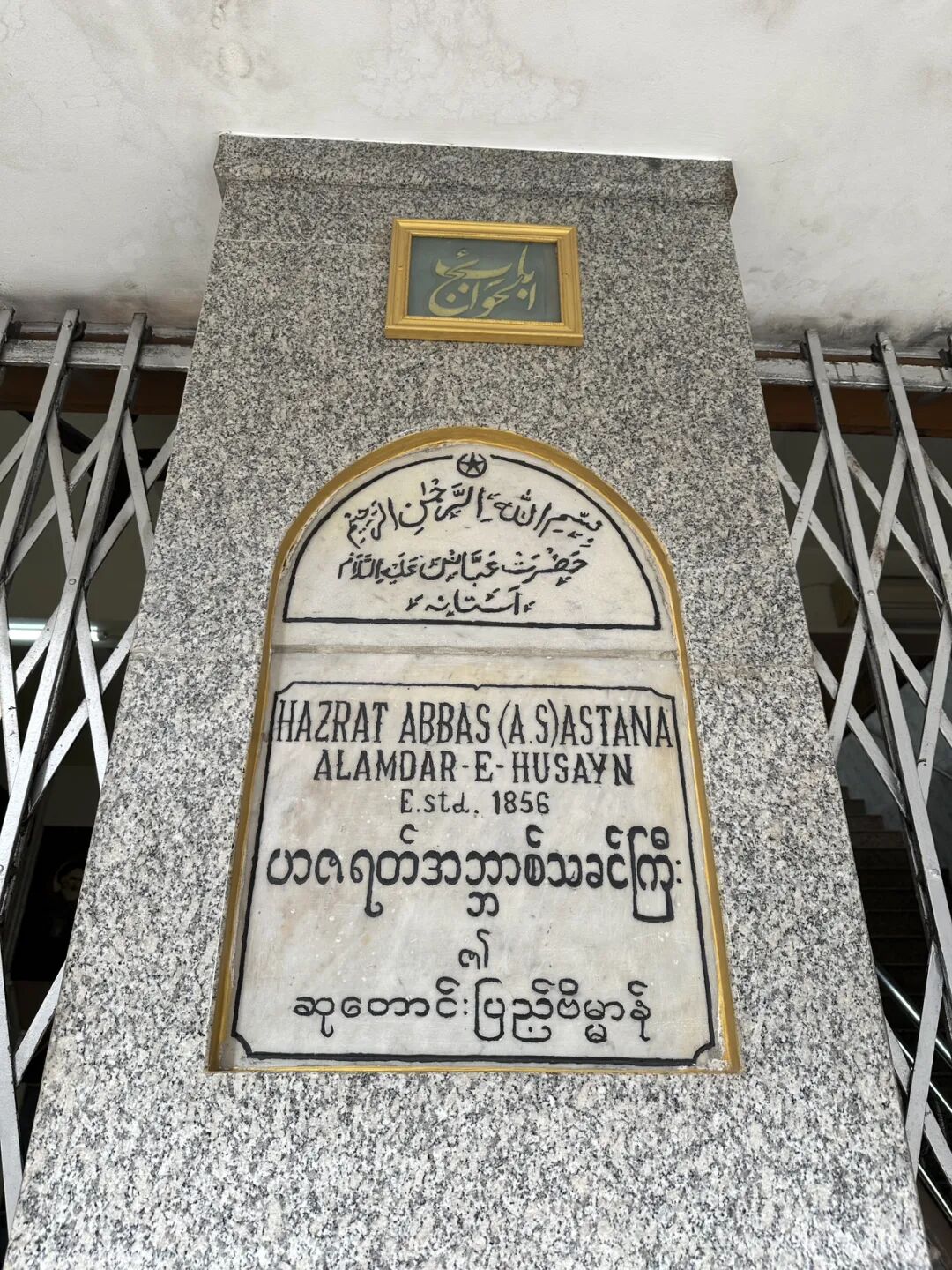
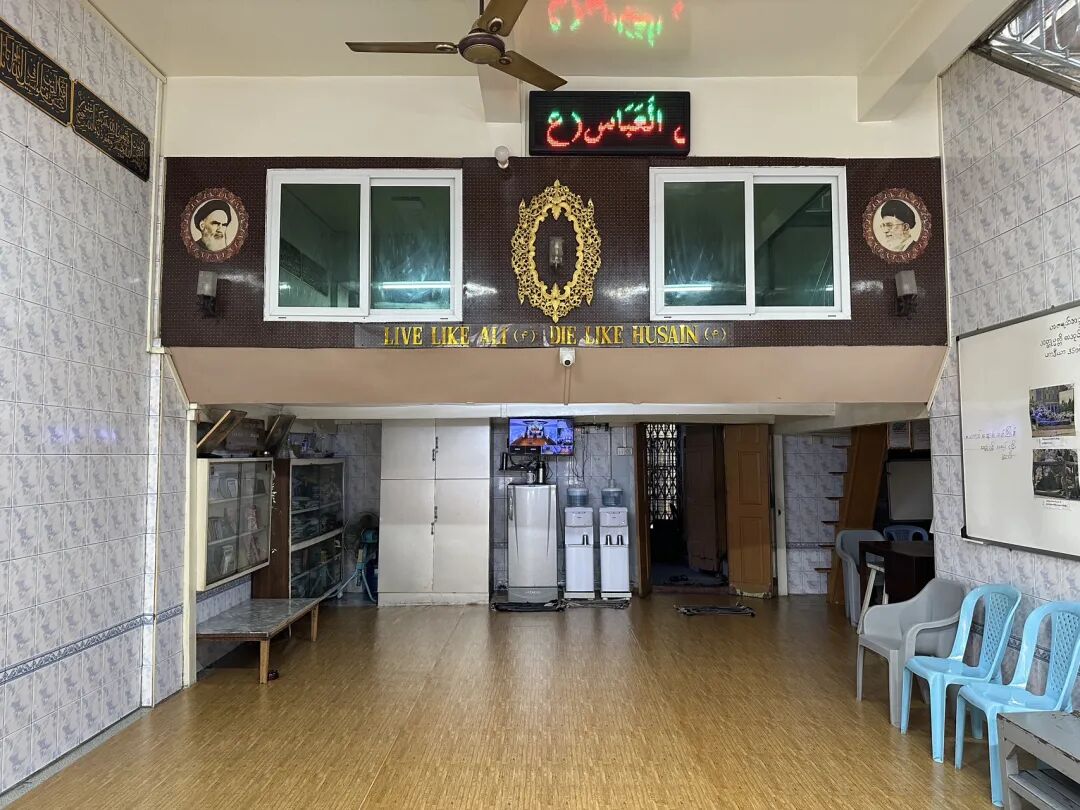
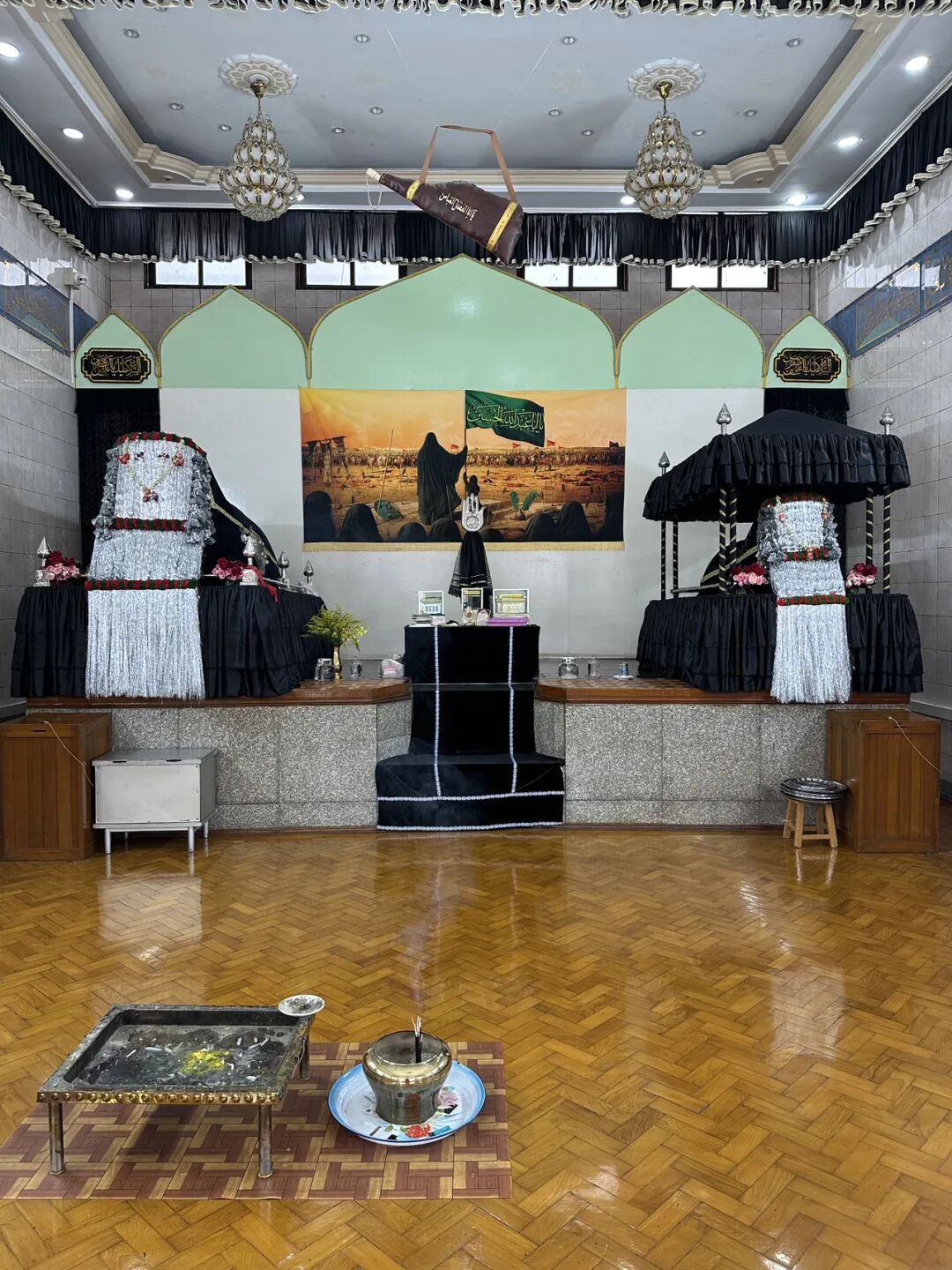
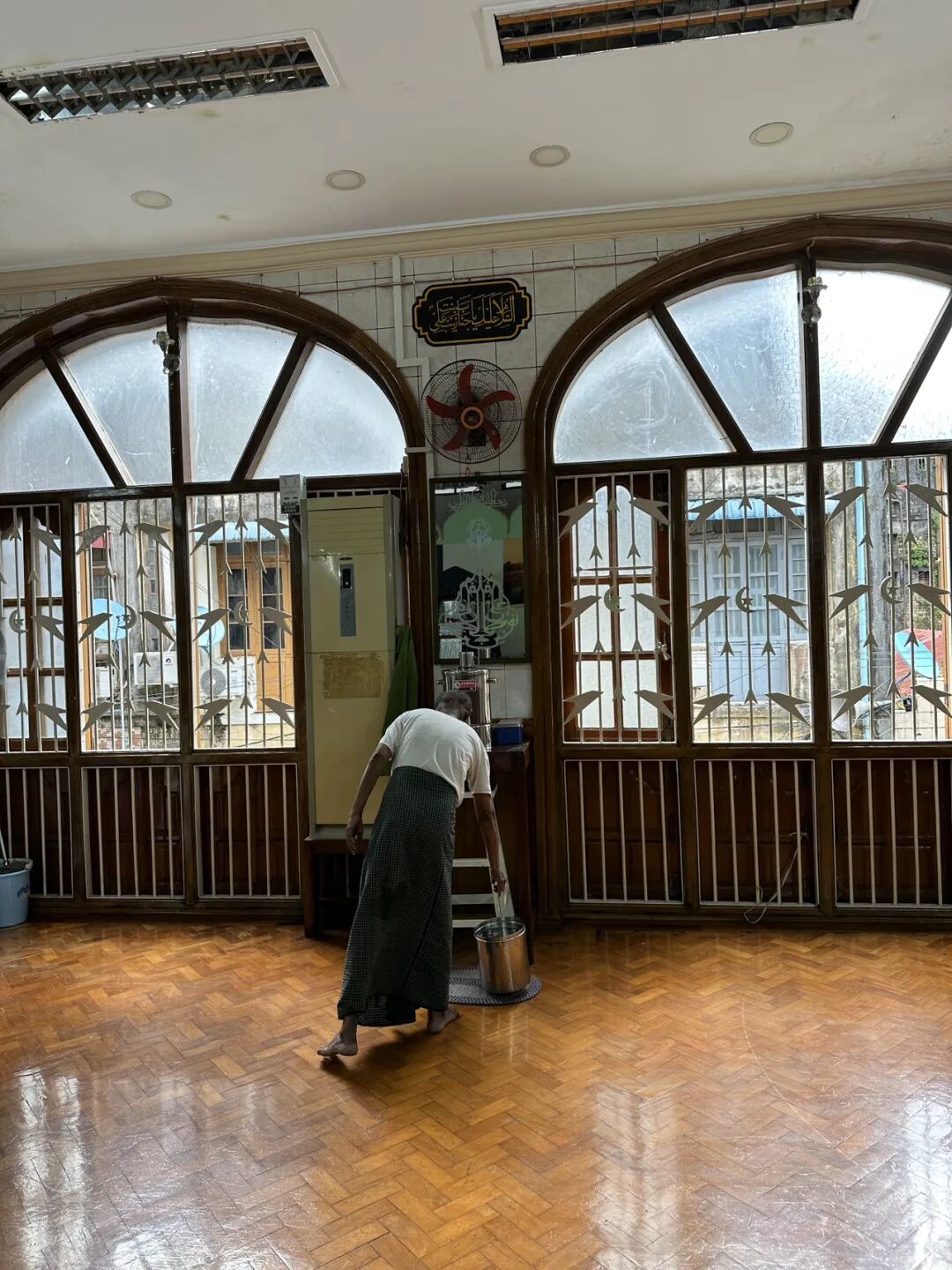
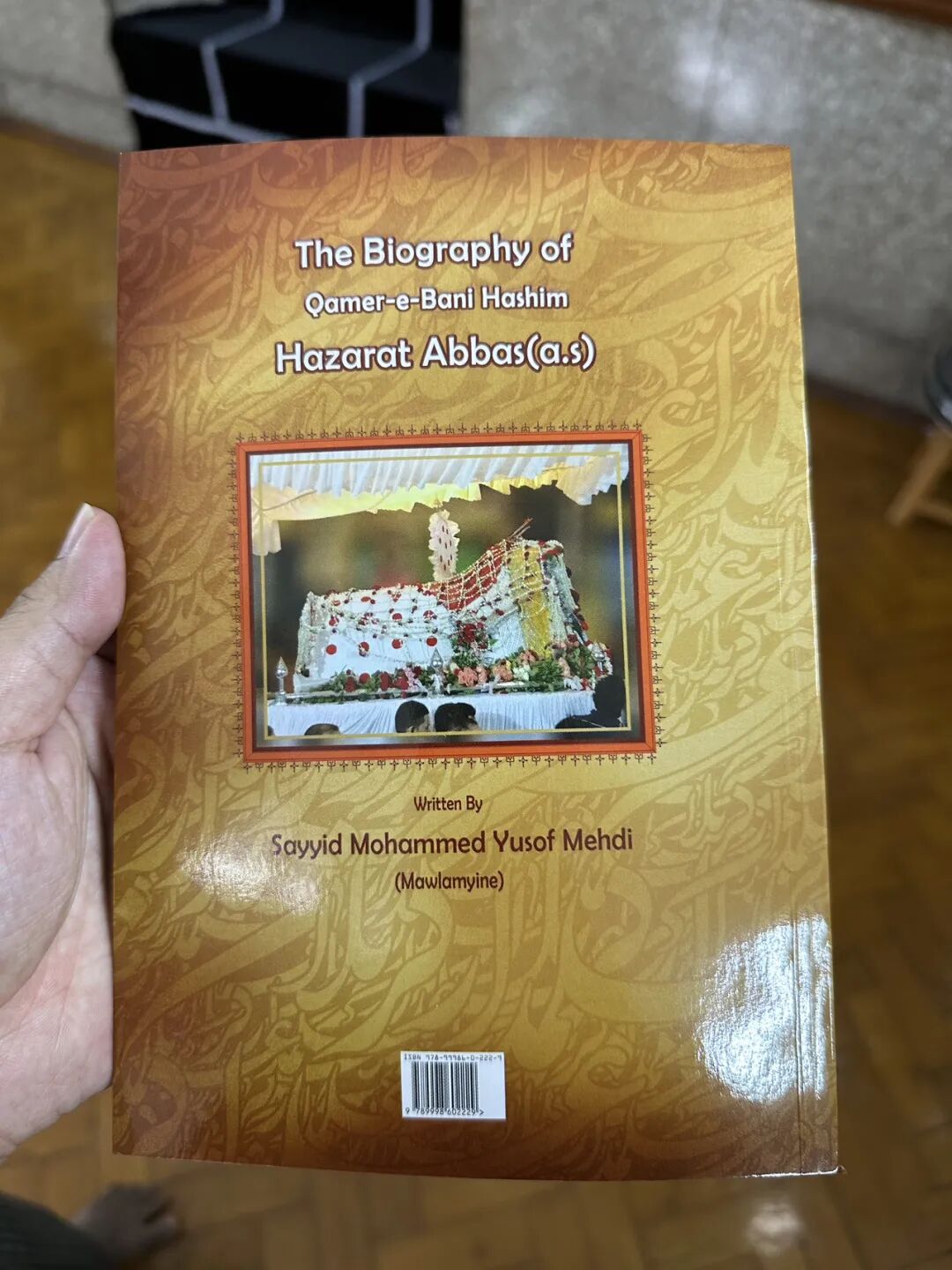
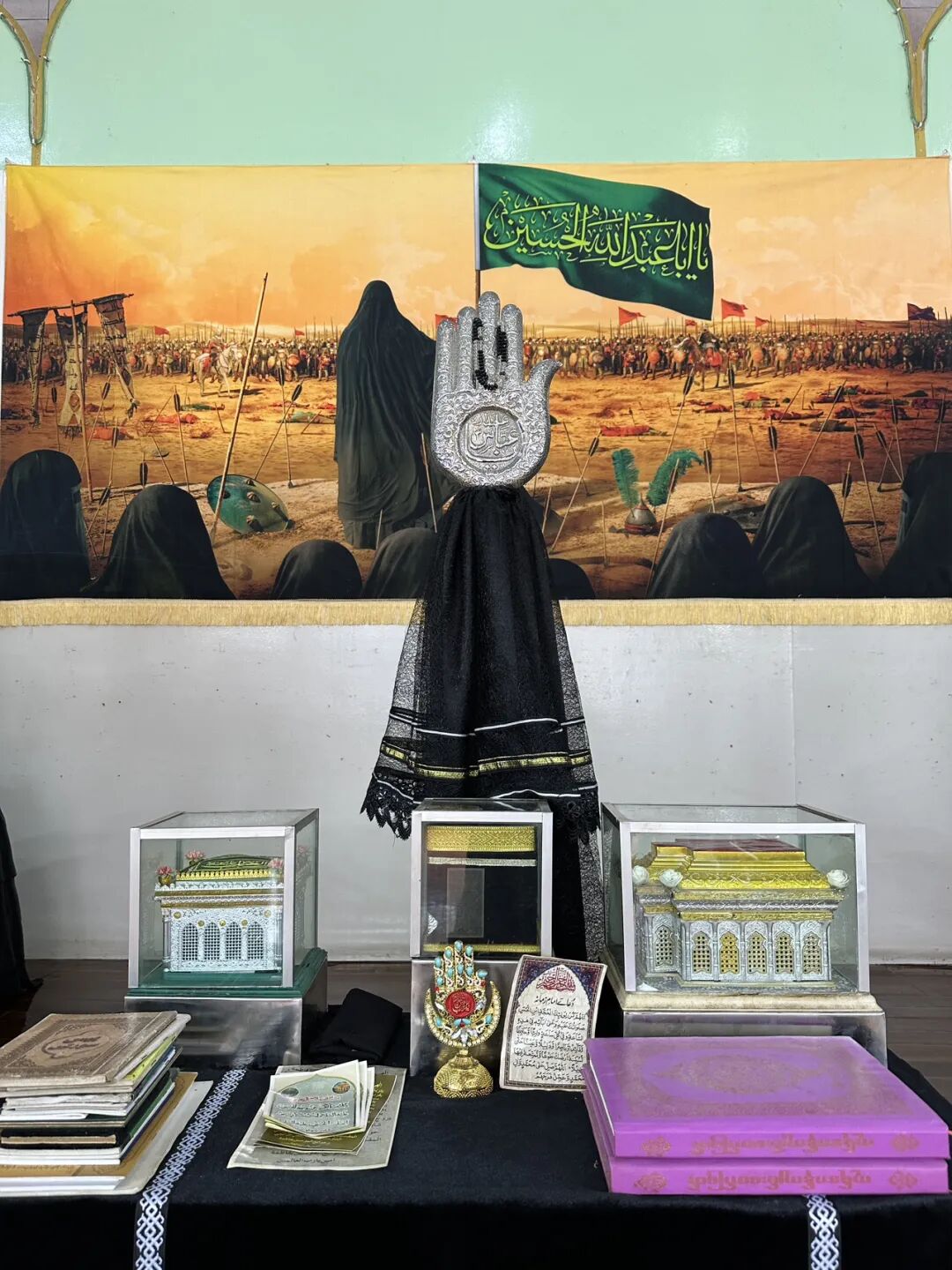
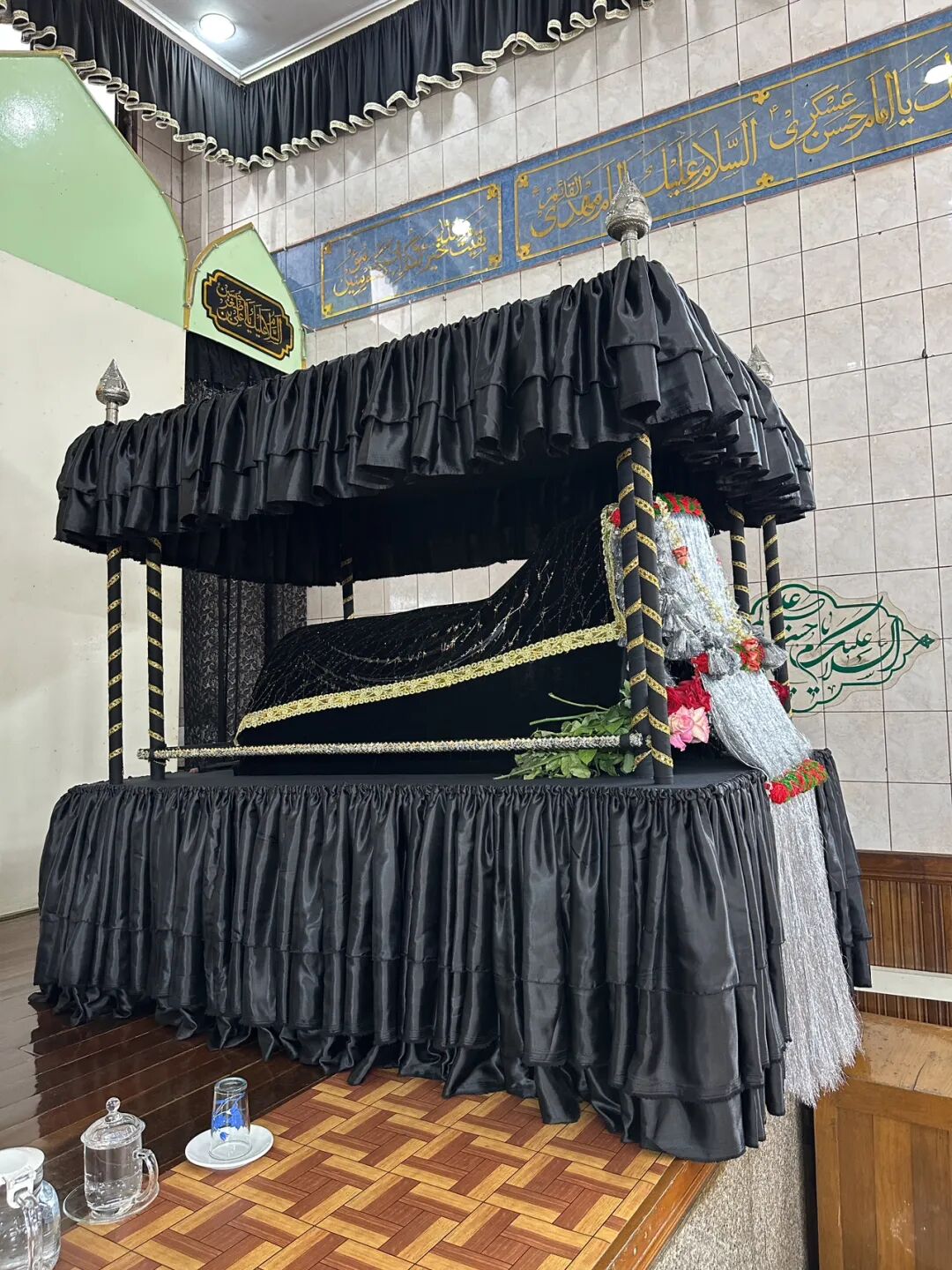
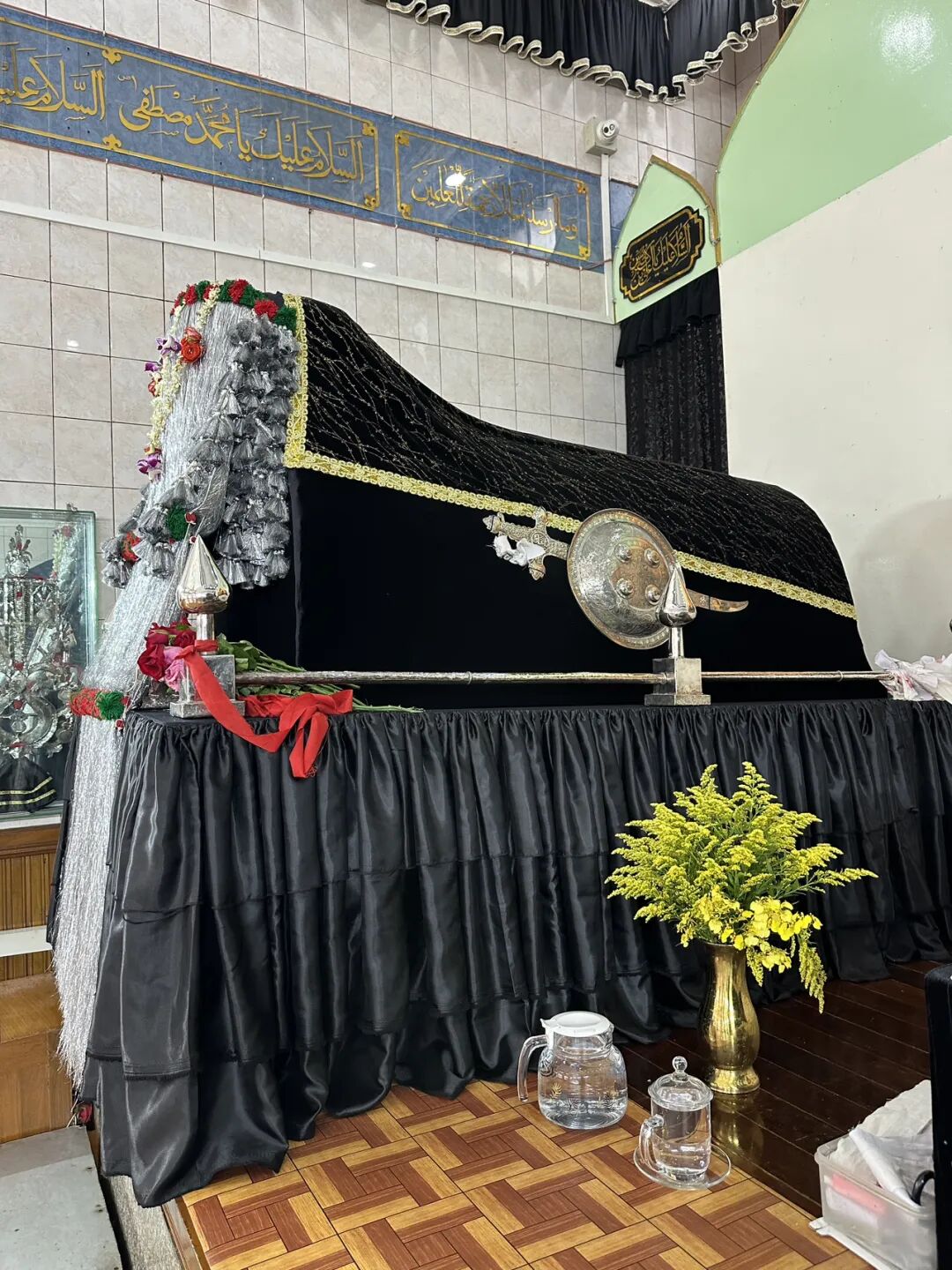
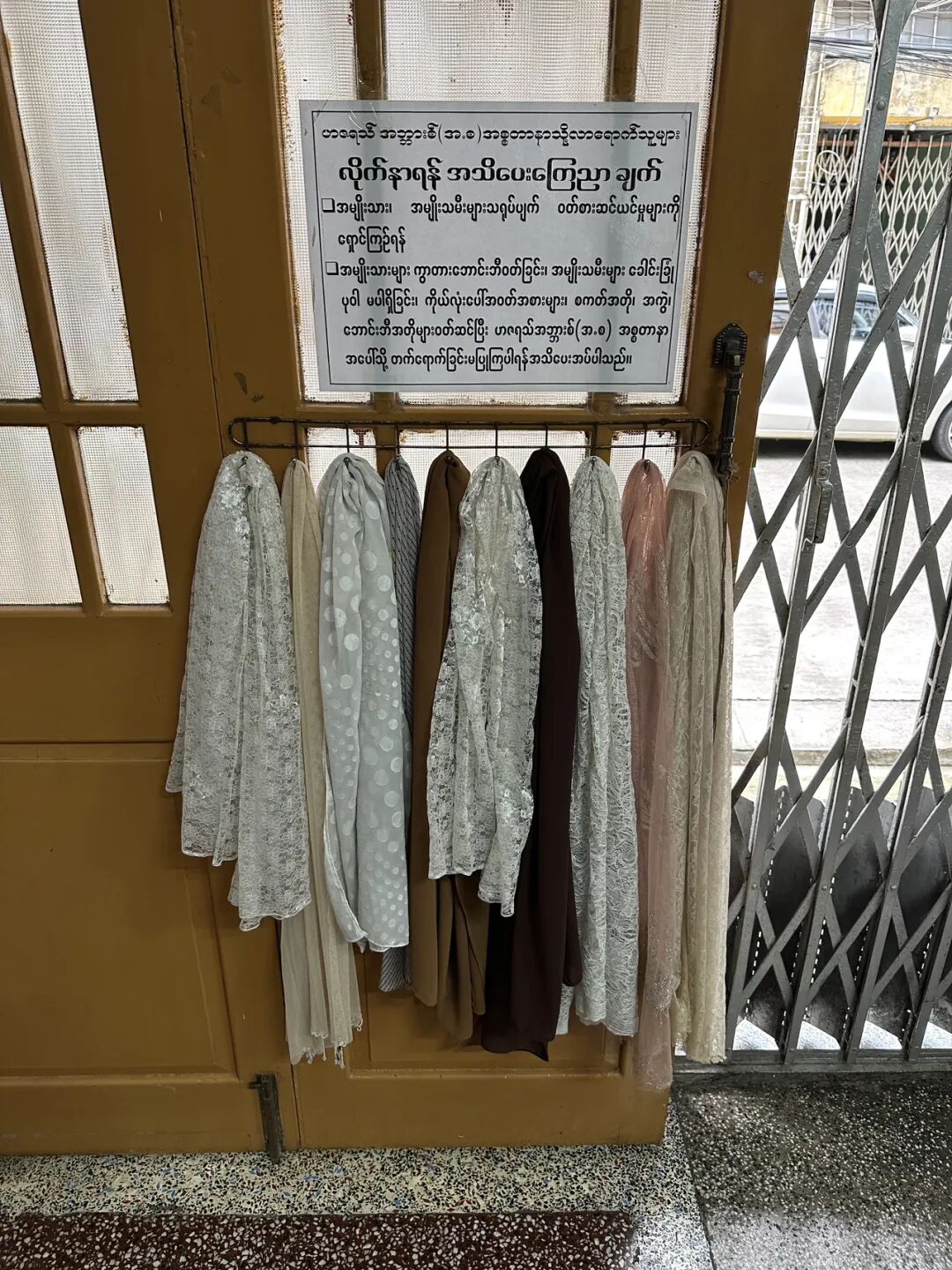
Punja Mosque is located on 38th Street on the east side of Yangon's old town. It was built in 1877 and is another Shia mosque in Yangon. You can also see the Shia Kalima on the mosque gate, with the added phrase 'Ali is the Wali of Allah'. The main hall is divided into two parts: the right side is a hall for mourning Imam Hussain, and the left side is the prayer hall. In the center of the right hall sits a tomb representing Imam Hussain. The left room contains the minbar, the pulpit where the Imam gives the khutbah. On the right is the Punja, representing the severed hand of Imam Hussain's standard-bearer Abbas during the Battle of Karbala, which is how this mosque got its name.
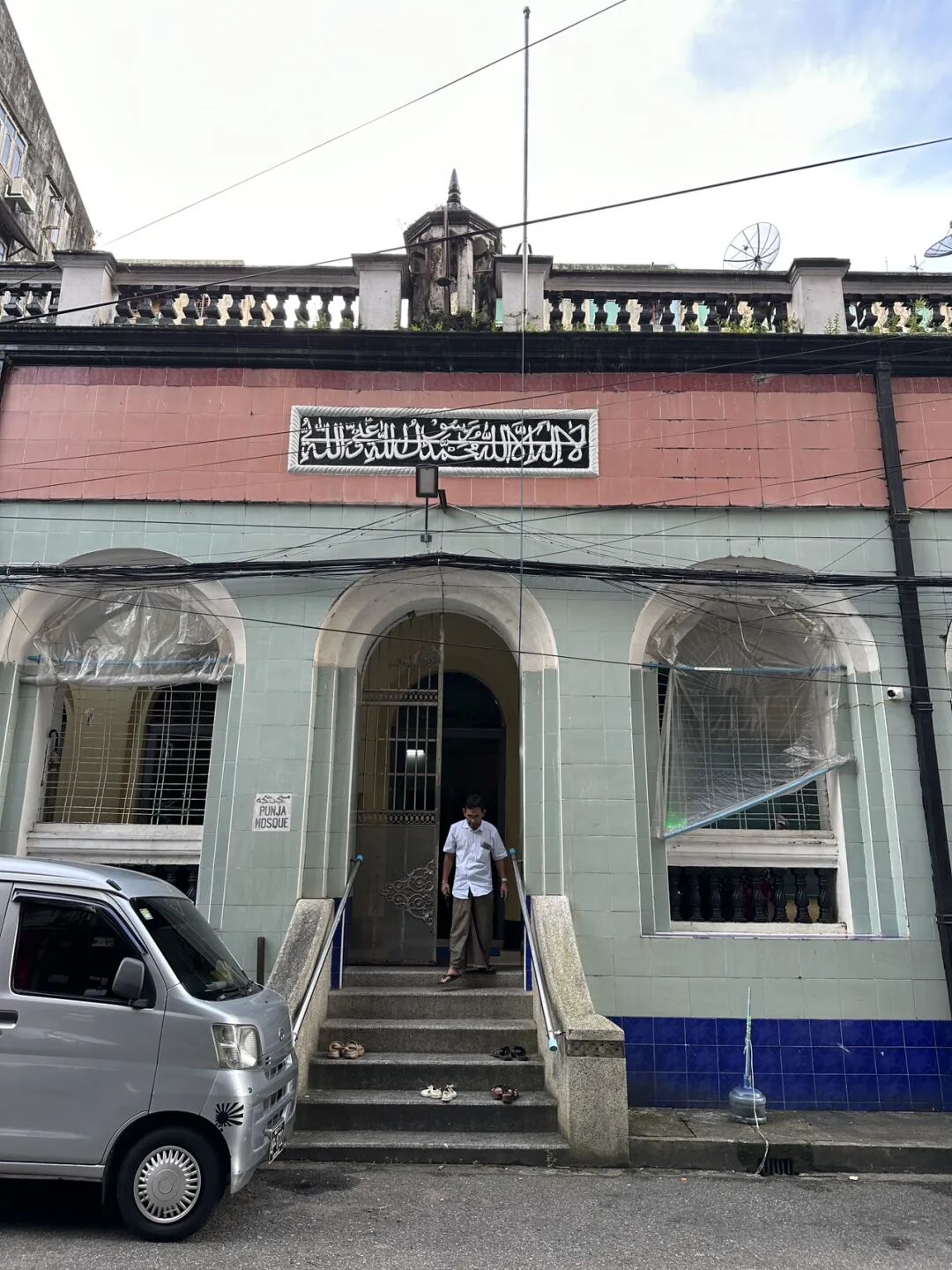
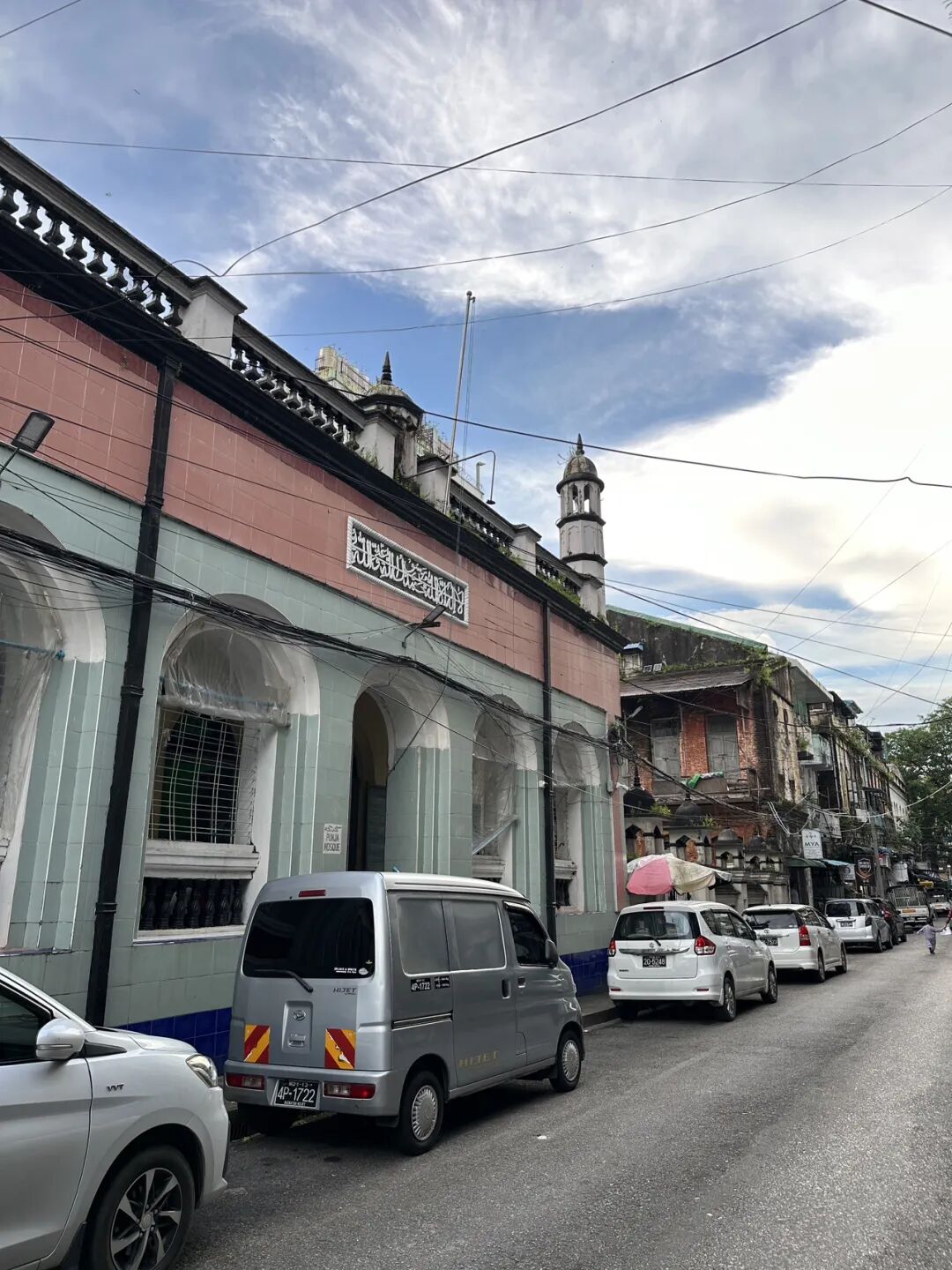
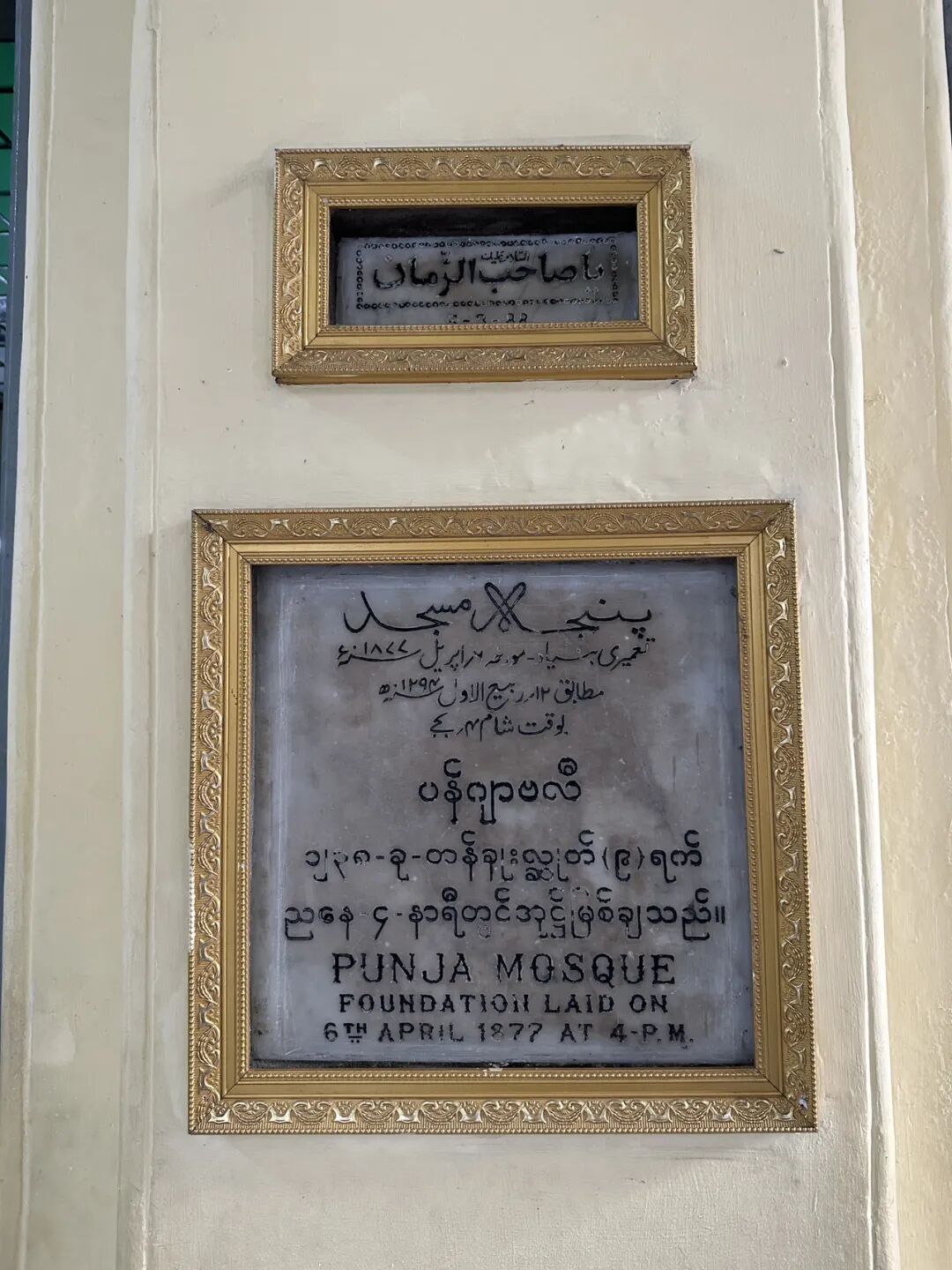
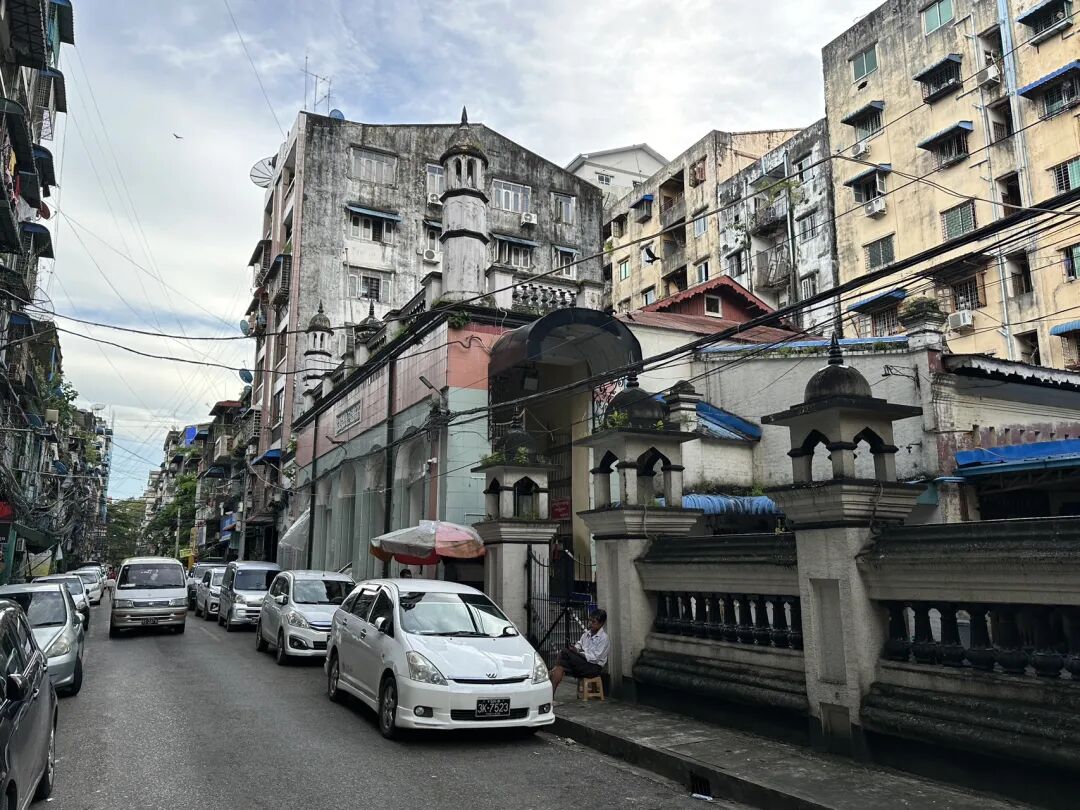
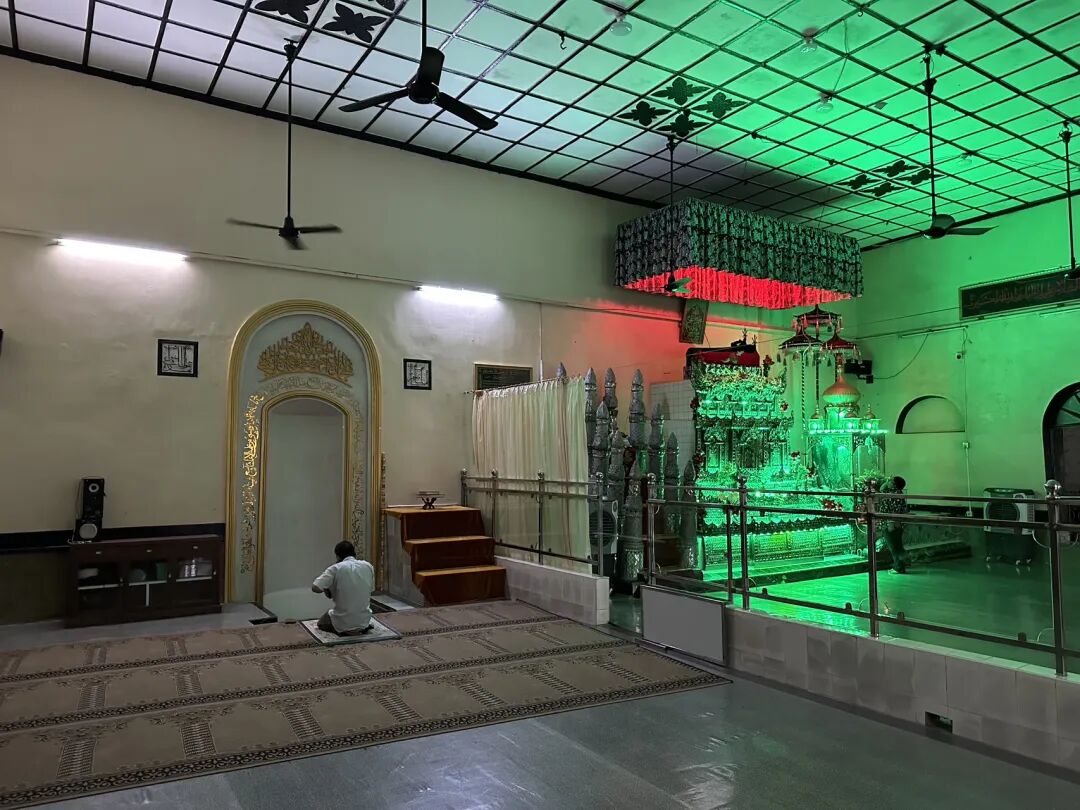
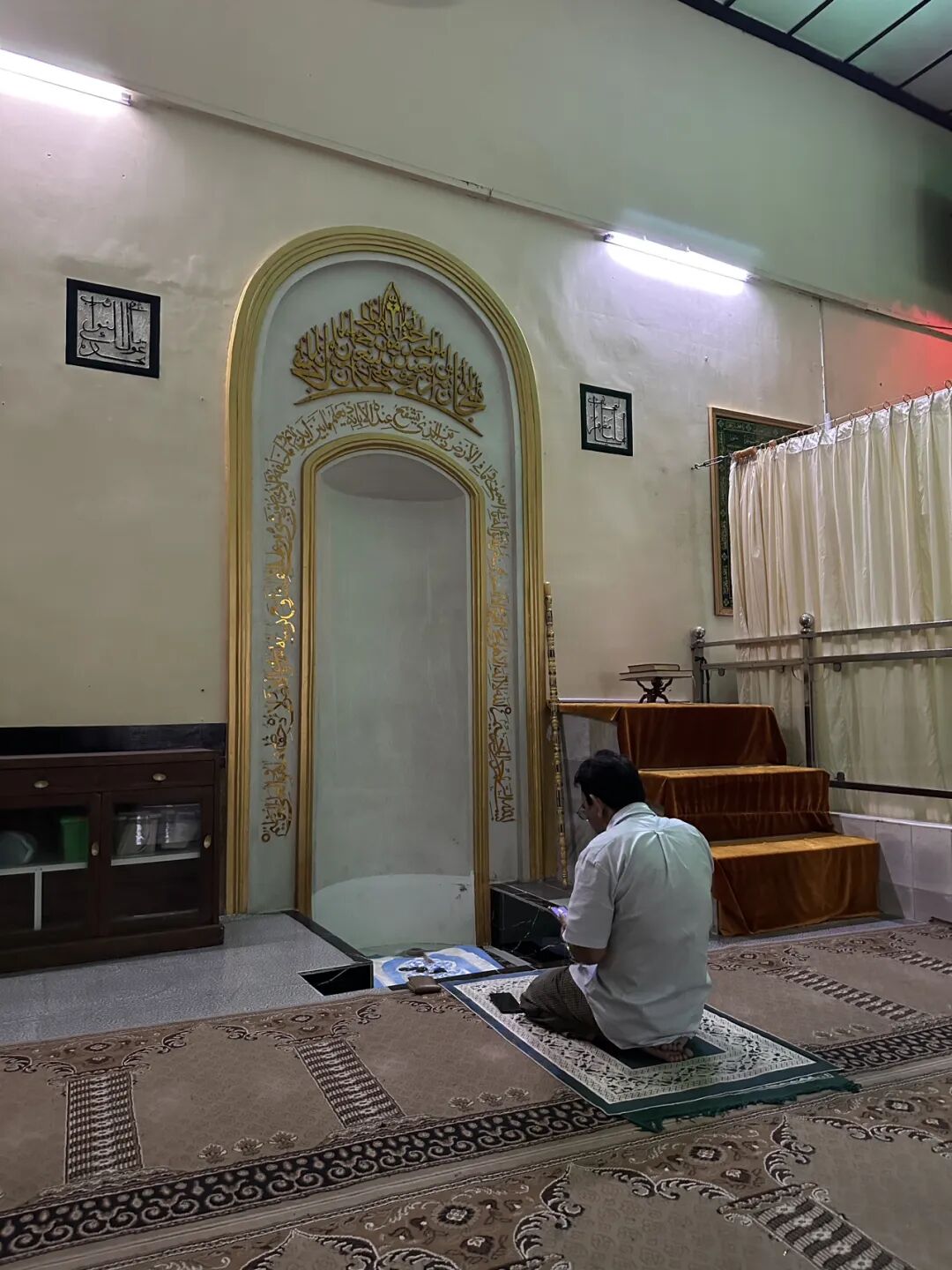
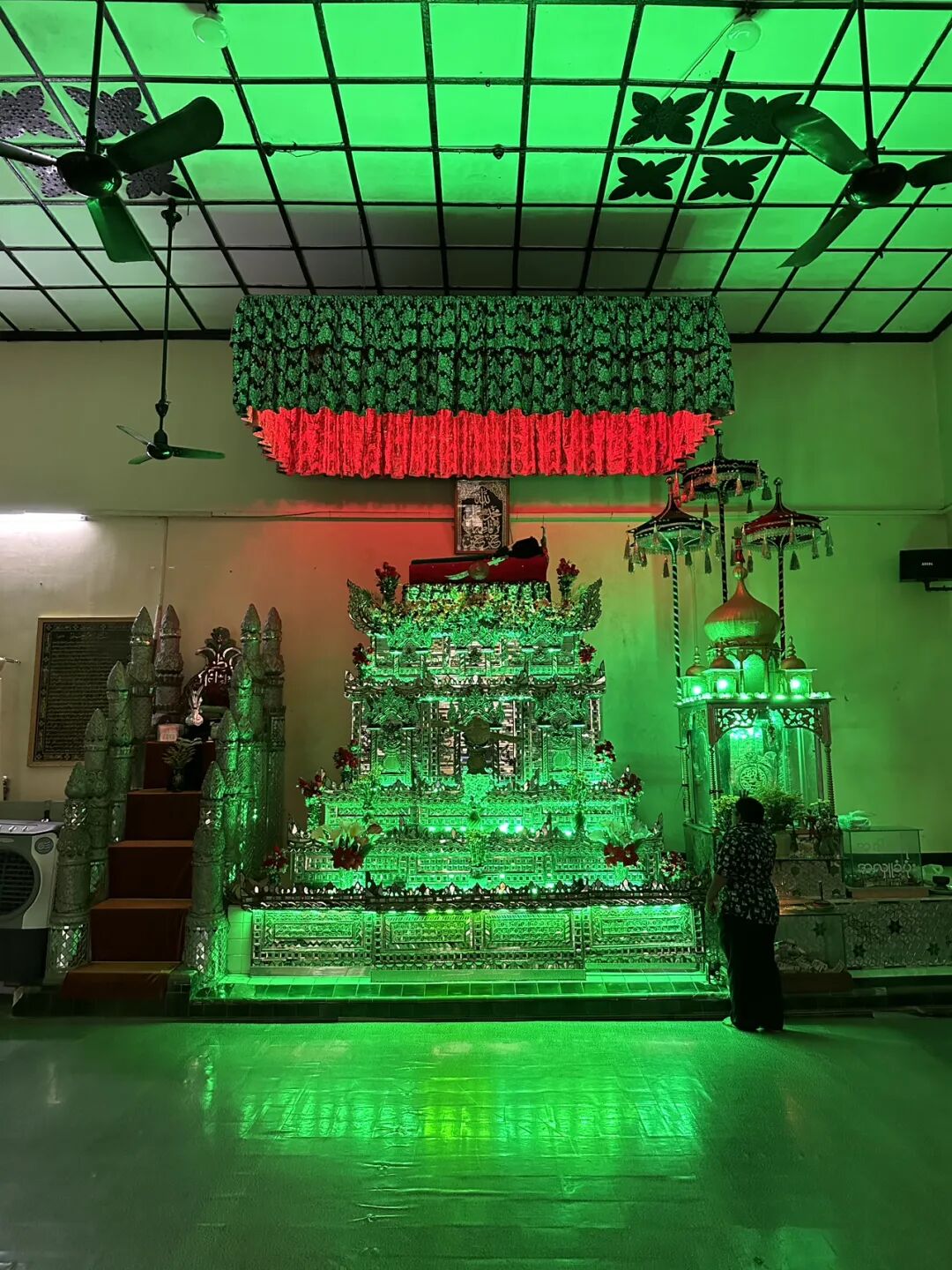
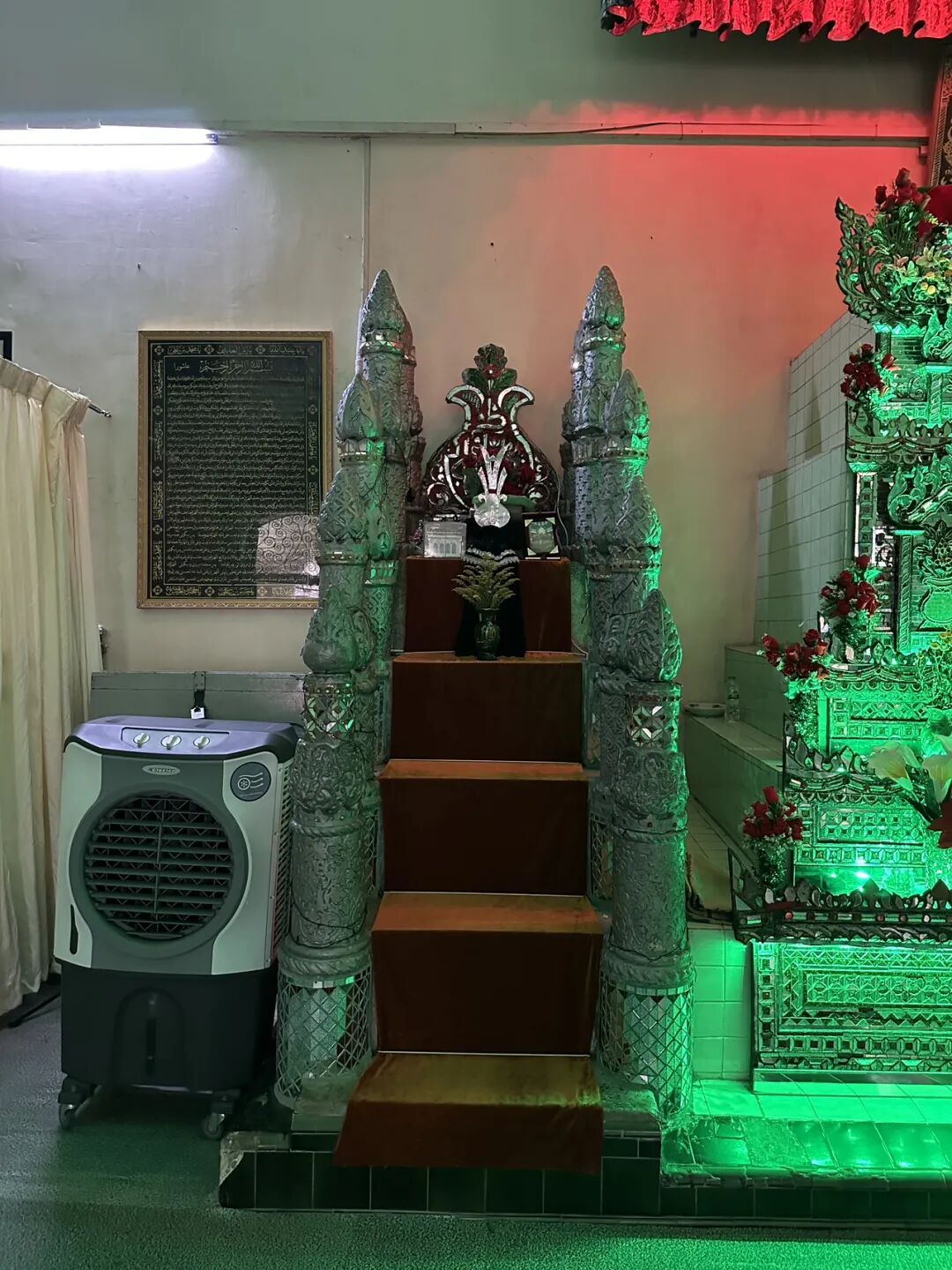
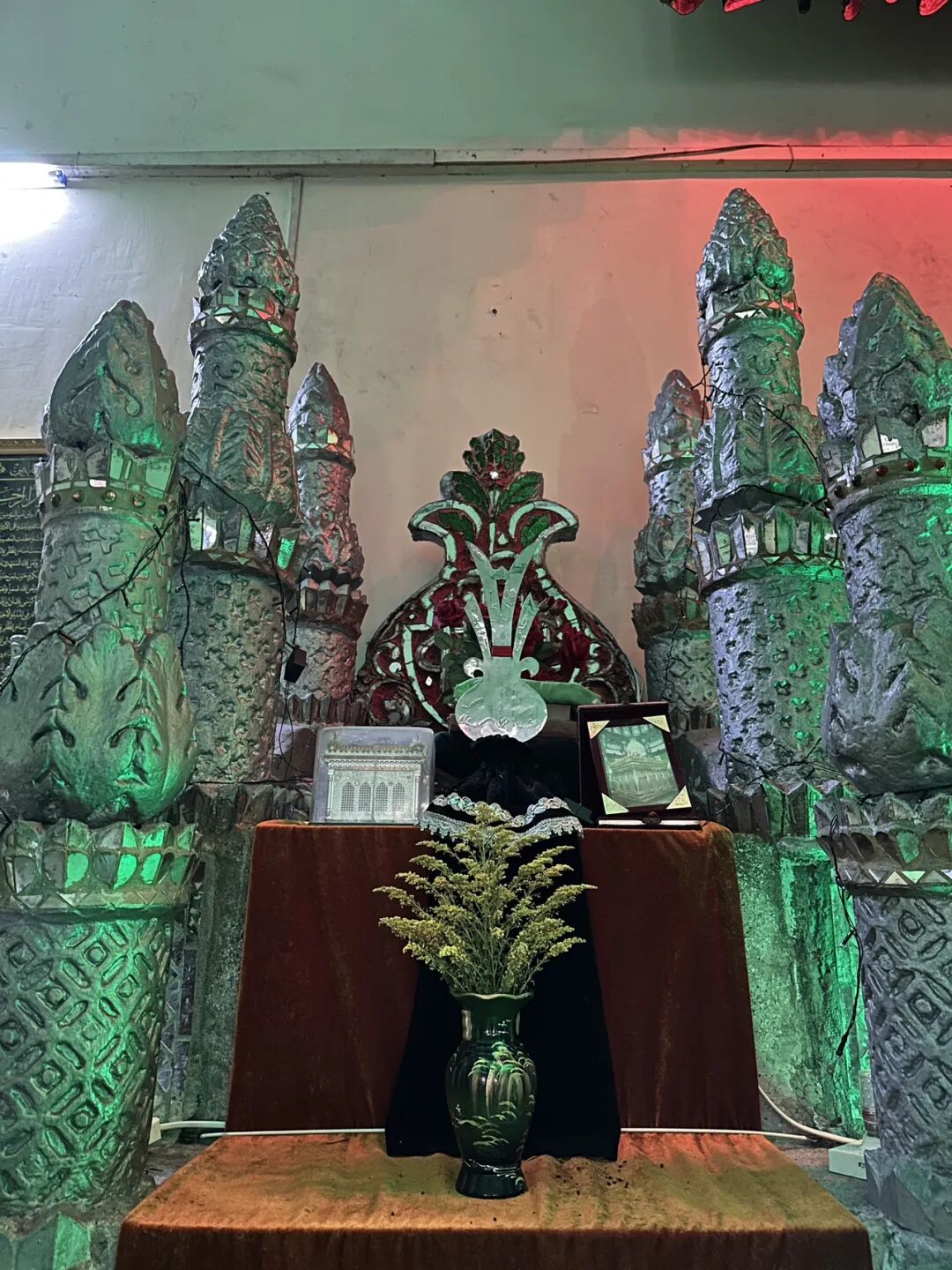
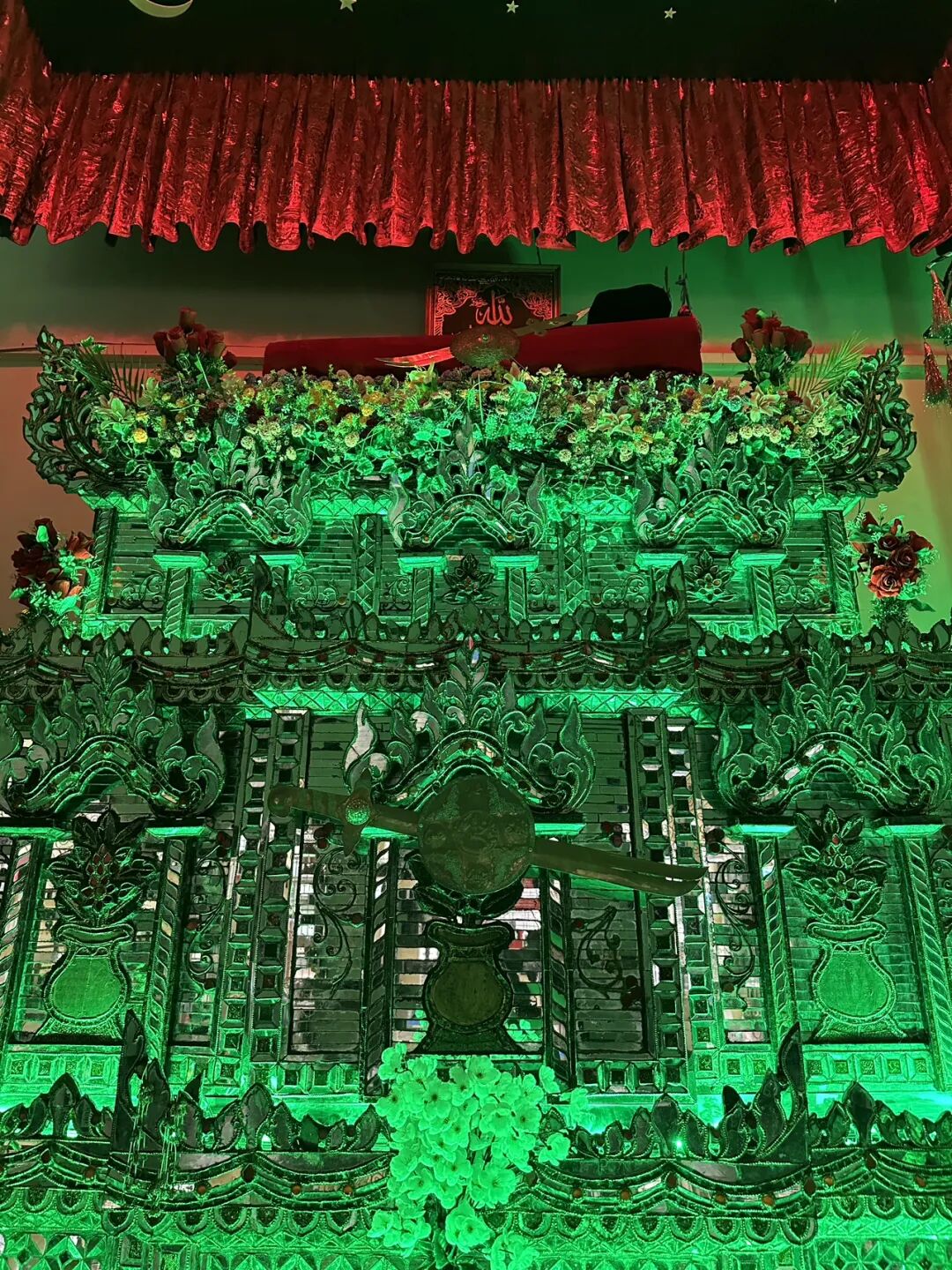
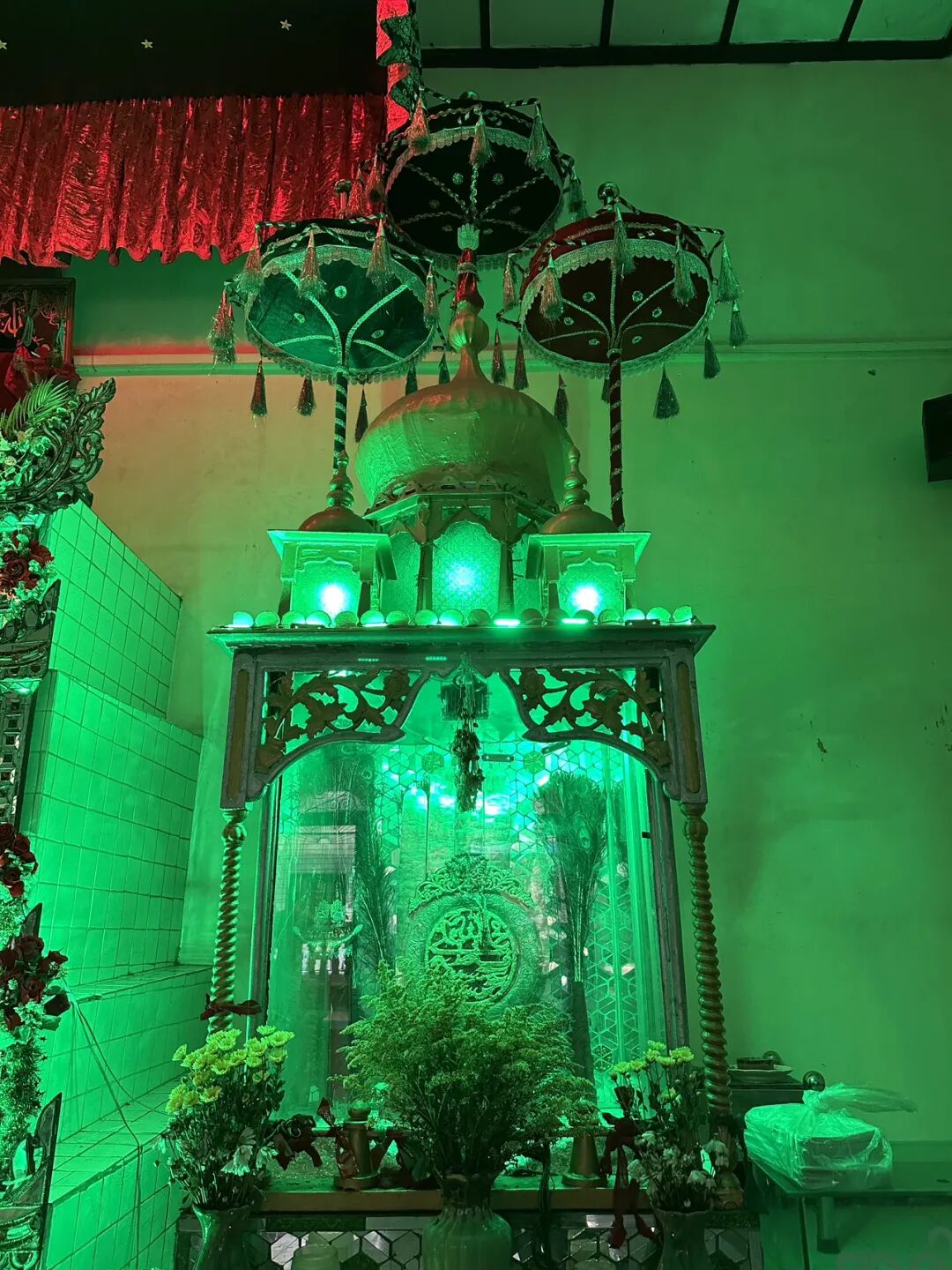
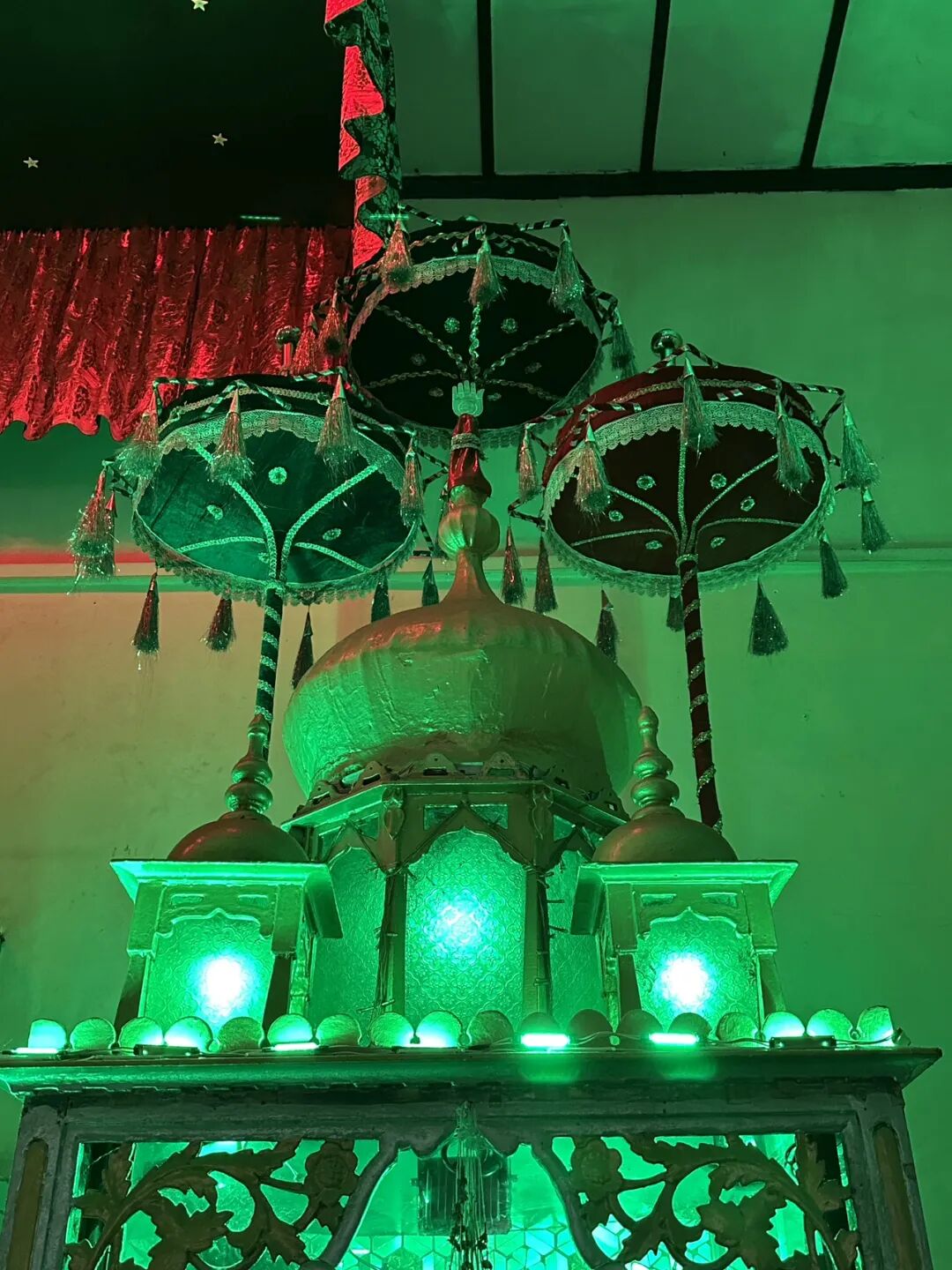
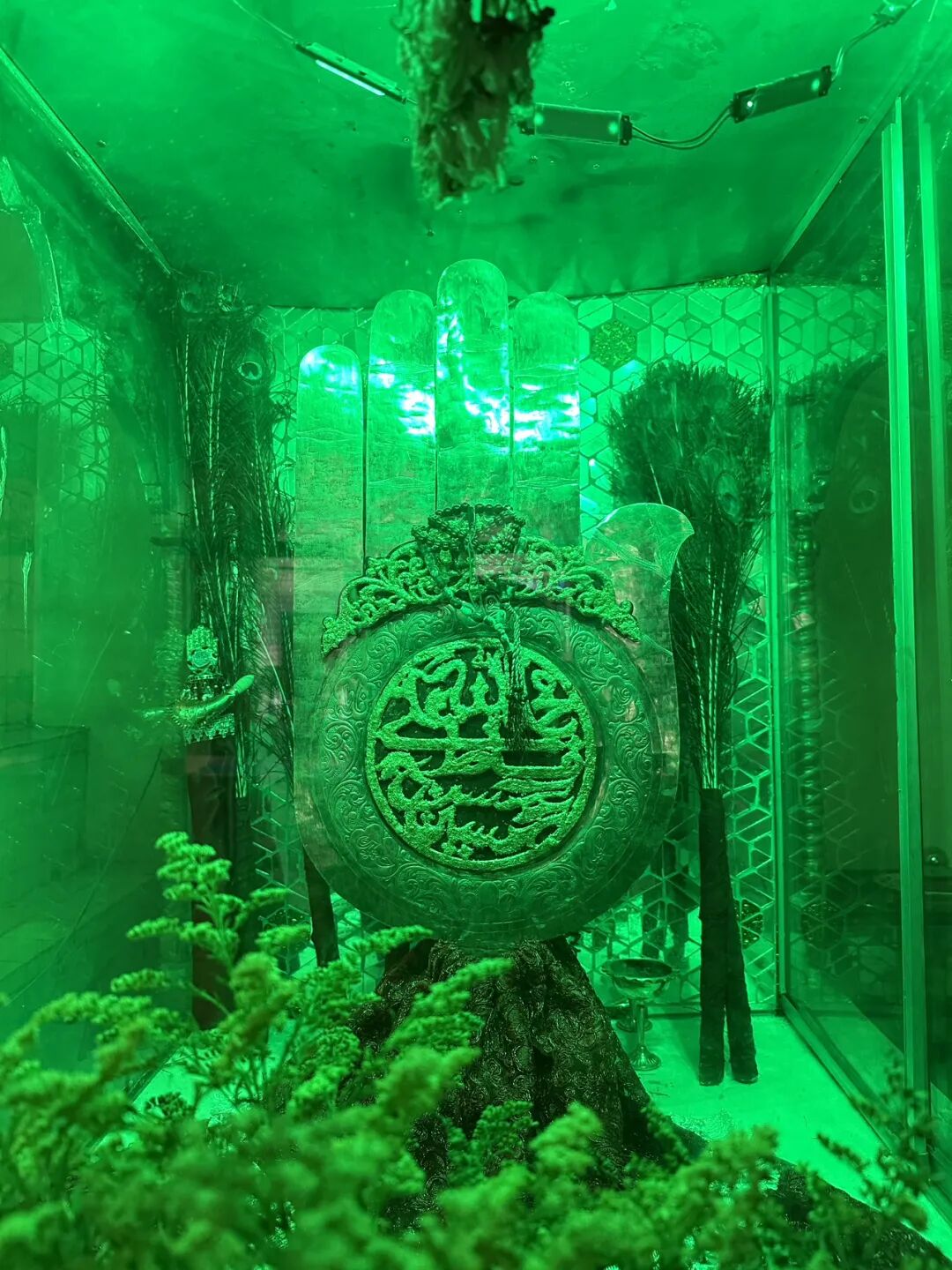
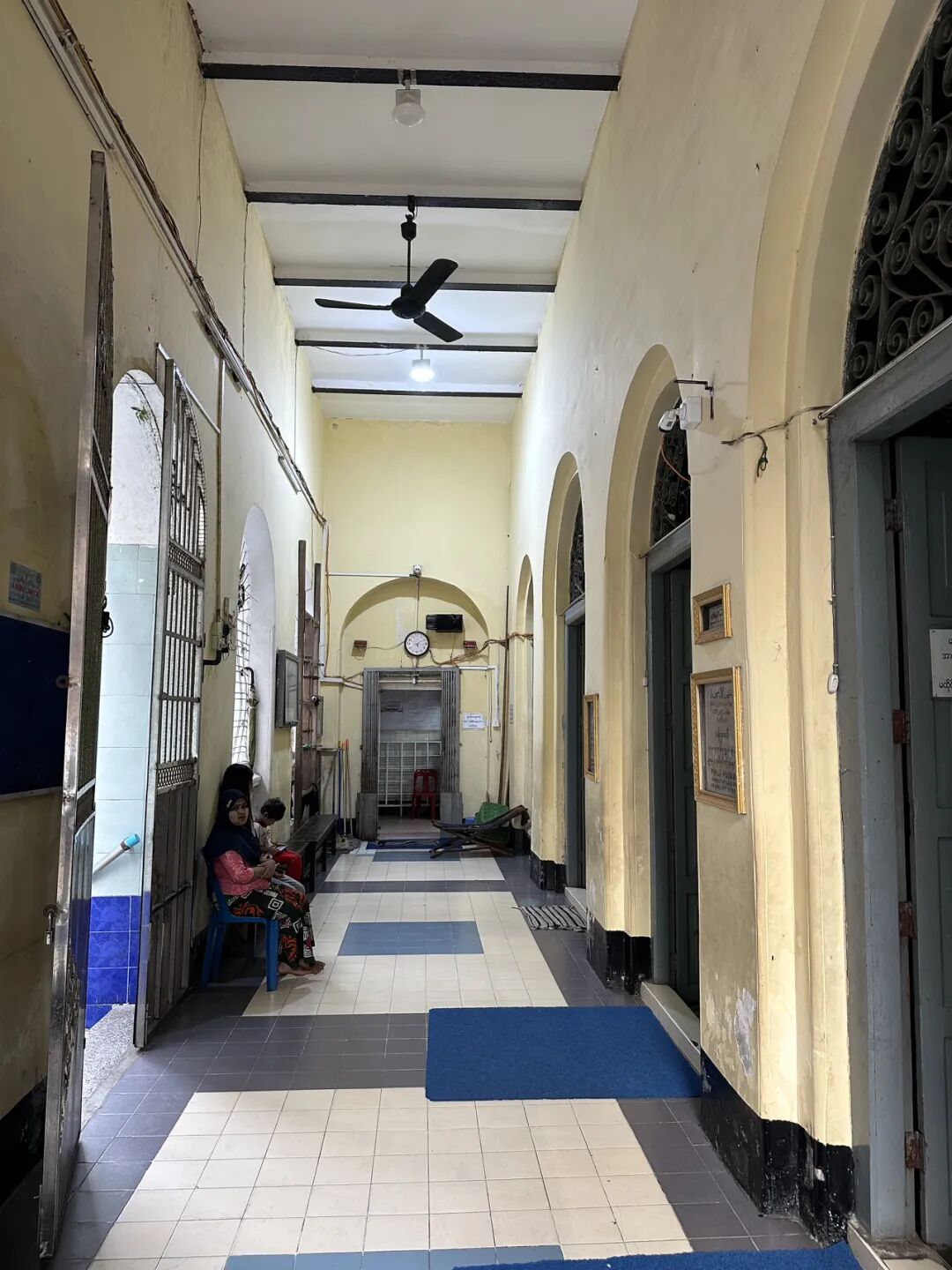
Besides the Twelver Shia, there are two other Shia minority mosques on Mughal Street in Yangon. Unfortunately, they are no longer in use because there are too few members left.
The Dawoodi Bohra Saifee Mosque is on the west side of Mughal Street. It was built by the Dawoodi Bohra sect in 1898. I have visited their mosques in Bangkok and Singapore before. The Dawoodi Bohra are a small branch of the Ismaili Shia. This branch has only a few million followers, most of whom live in the Indian state of Gujarat and the city of Karachi in Pakistan. The Dawoodi Bohra originated from the Ismaili Shia Fatimid Caliphate, which ruled North Africa from the 10th to the 12th century. In 1067, the Imam of the Fatimid Caliphate sent a man named Abdullah from Yemen to Gujarat, India, to preach, and he was very successful. Since then, the followers in Gujarat have kept in touch with Yemen and continued to grow. In 1589, the community leader Dawood Bin Qutubshah took office. A split occurred with Yemen, and they have been called the Dawoodis ever since.
Starting in the 19th century, Dawoodi Bohra members from Gujarat, India, began traveling across the Indian Ocean to do business. Many became wealthy merchants and industrialists, and some settled in Yangon, which has a large Indian population.
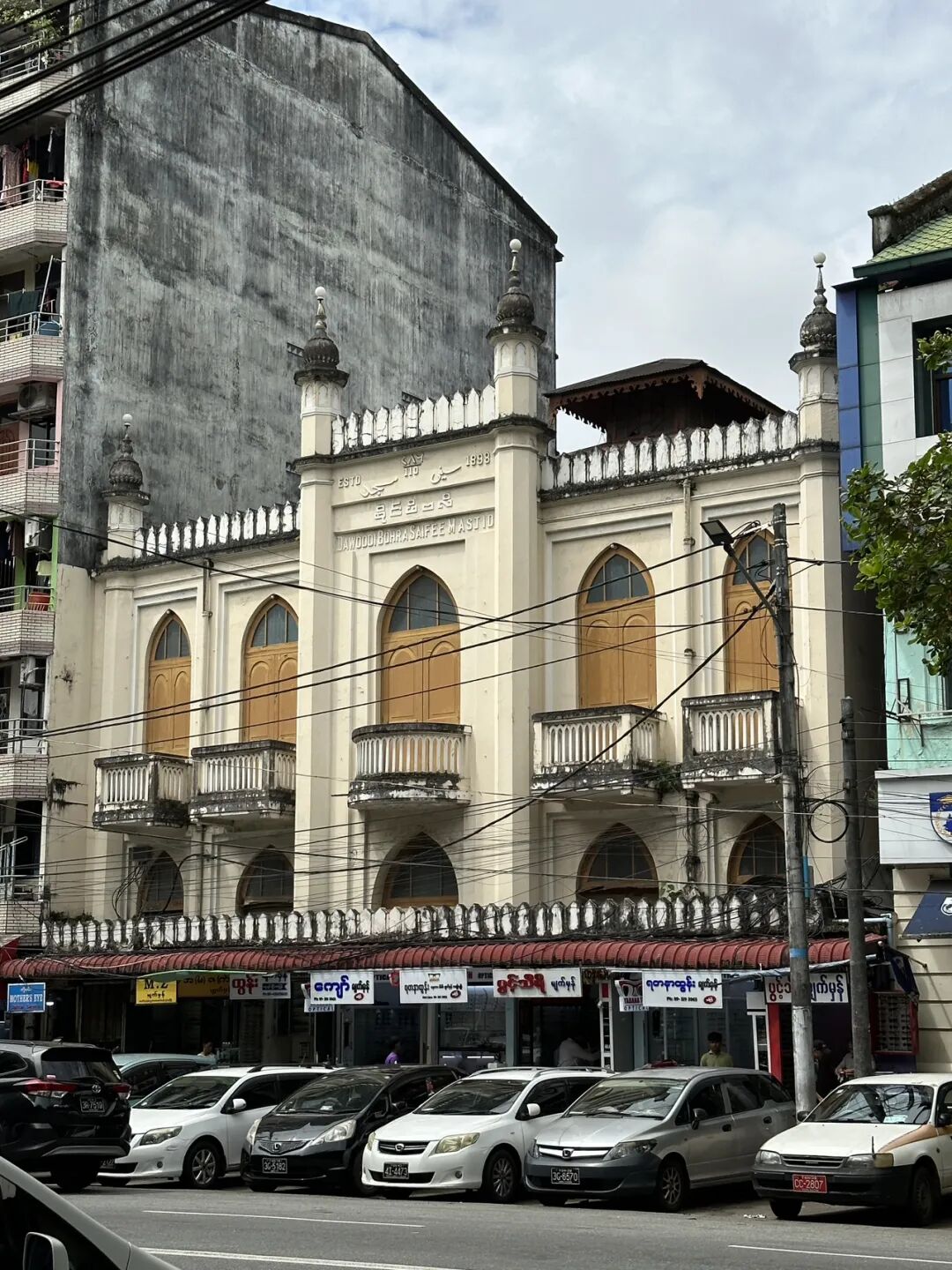
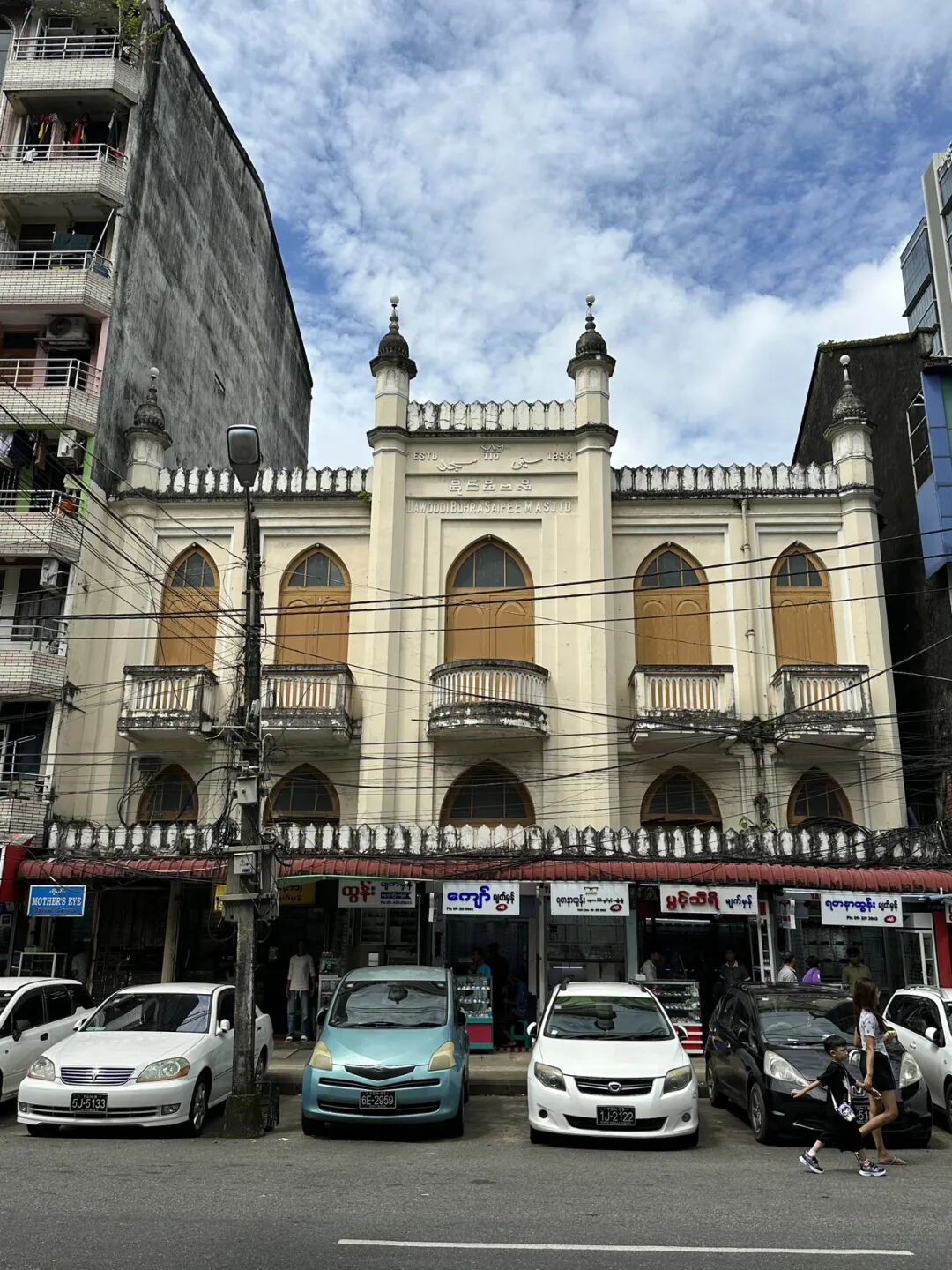
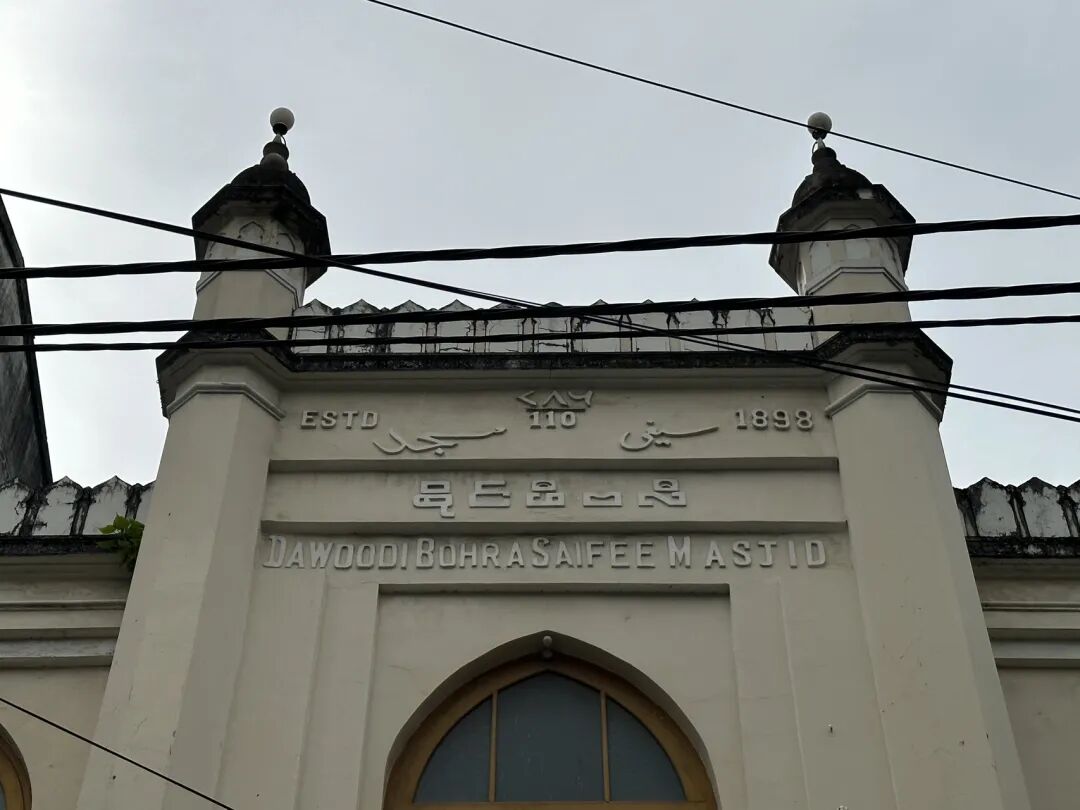
His Highness The Agakhan Building Myanmar Ismaili Khoja Jamatkhana is on the east side of Mughal Street. It was built in 1949 by the Khoja people, who follow the Nizari Ismaili branch of Shia Islam. They share the same faith as the Tajik people in China. The name Khoja comes from the title the 14th-century Ismaili scholar Pir Sadardin used for his followers. Sadardin was born in Persia and spent a long time preaching in South Asia. He promoted tolerance and integration between Islam and Hinduism, which led many merchants from the Lohana caste in Gujarat to convert.
The Khoja began doing business in Mumbai, India, in the 18th century. Later, they moved to South Asia, Oman, East Africa, Madagascar, and other places to trade and settle. Some also settled in Yangon. The Khoja community center is called a Jamatkhana, or 'Jummah hall,' where they hold congregational prayers, wedding banquets, and various memorial events.
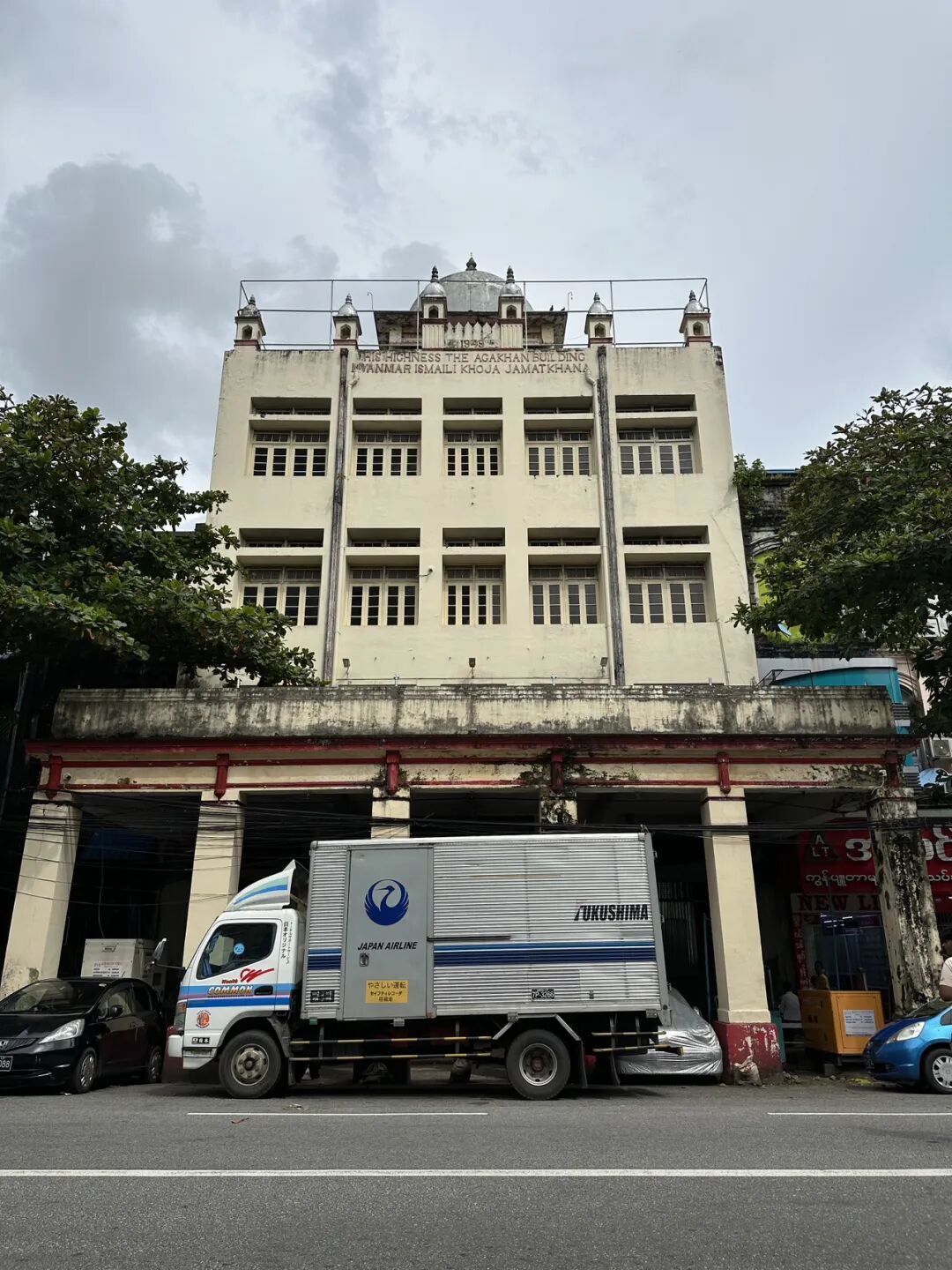
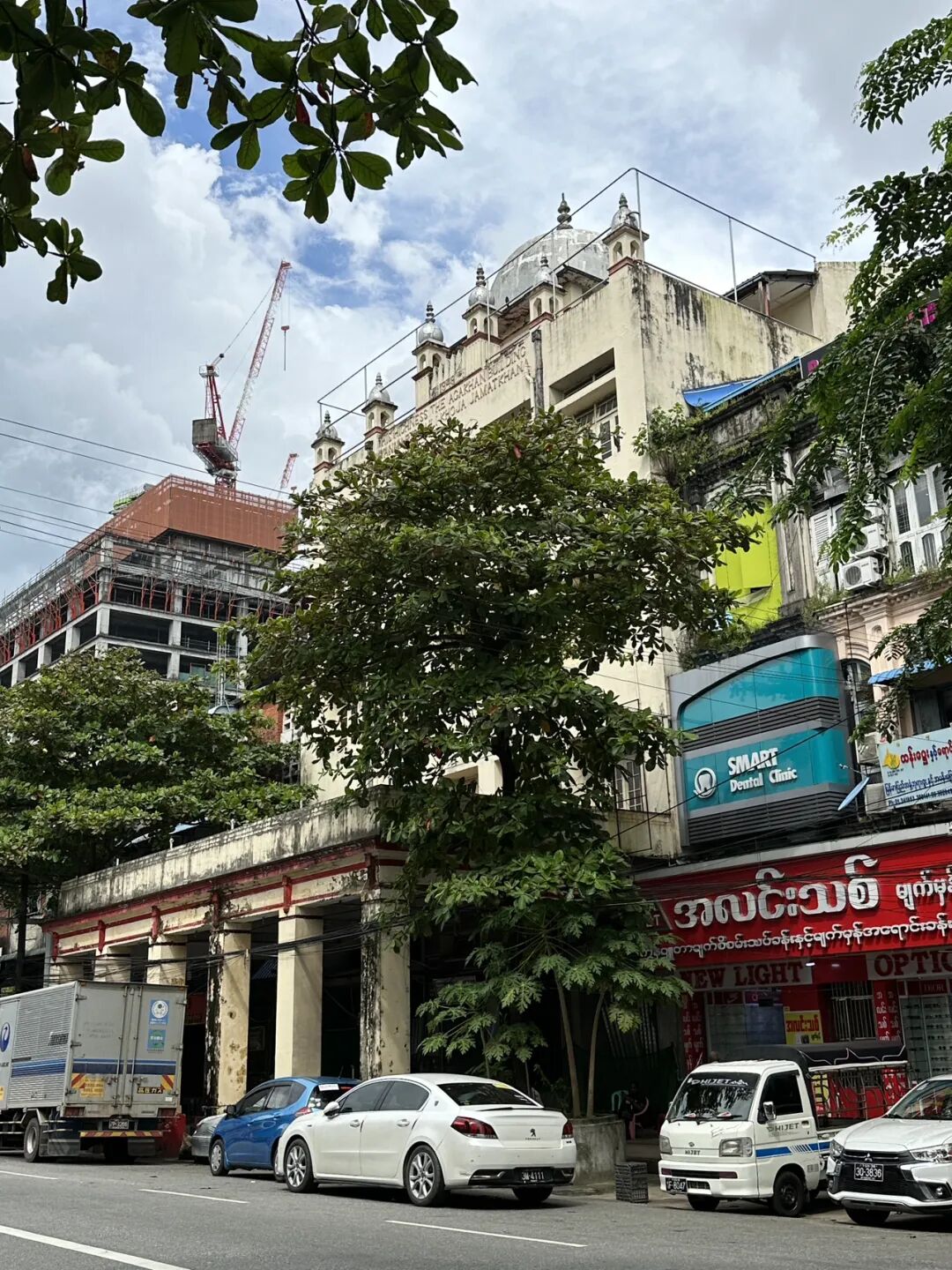
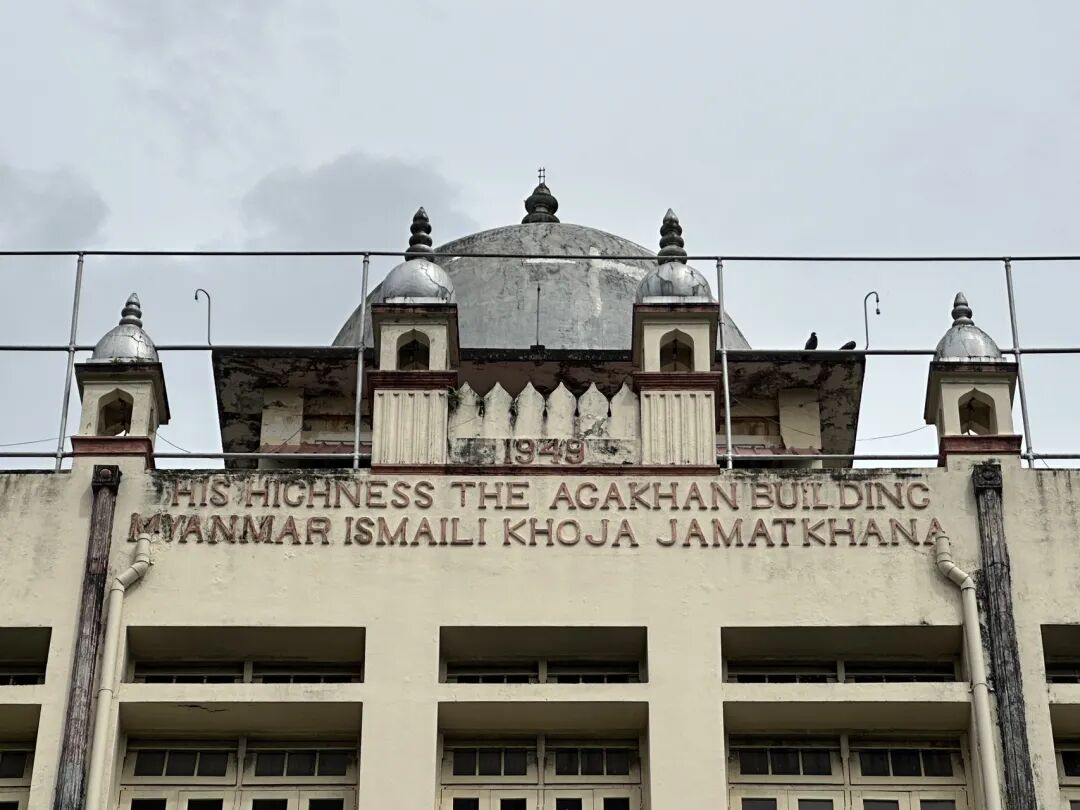
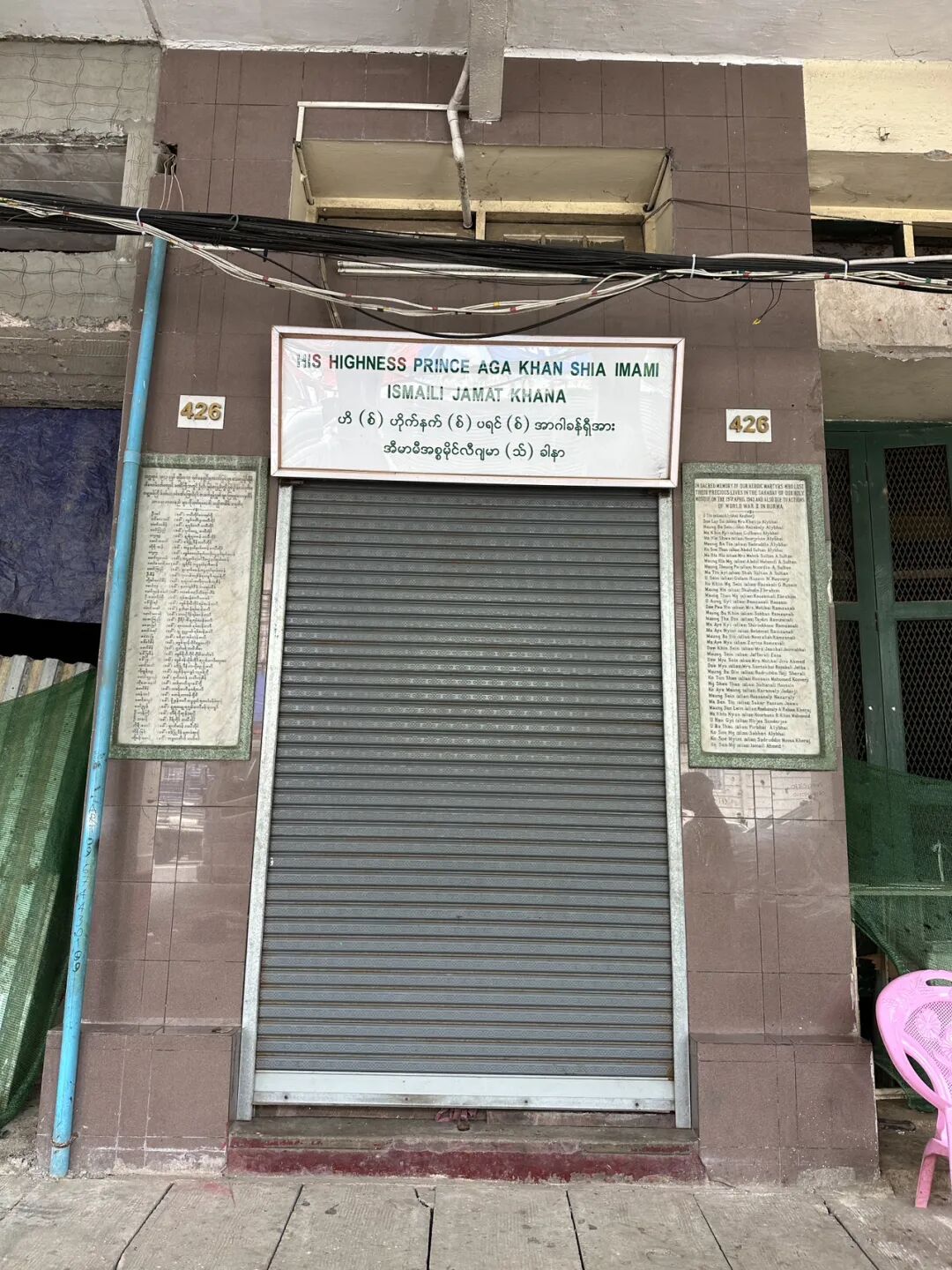
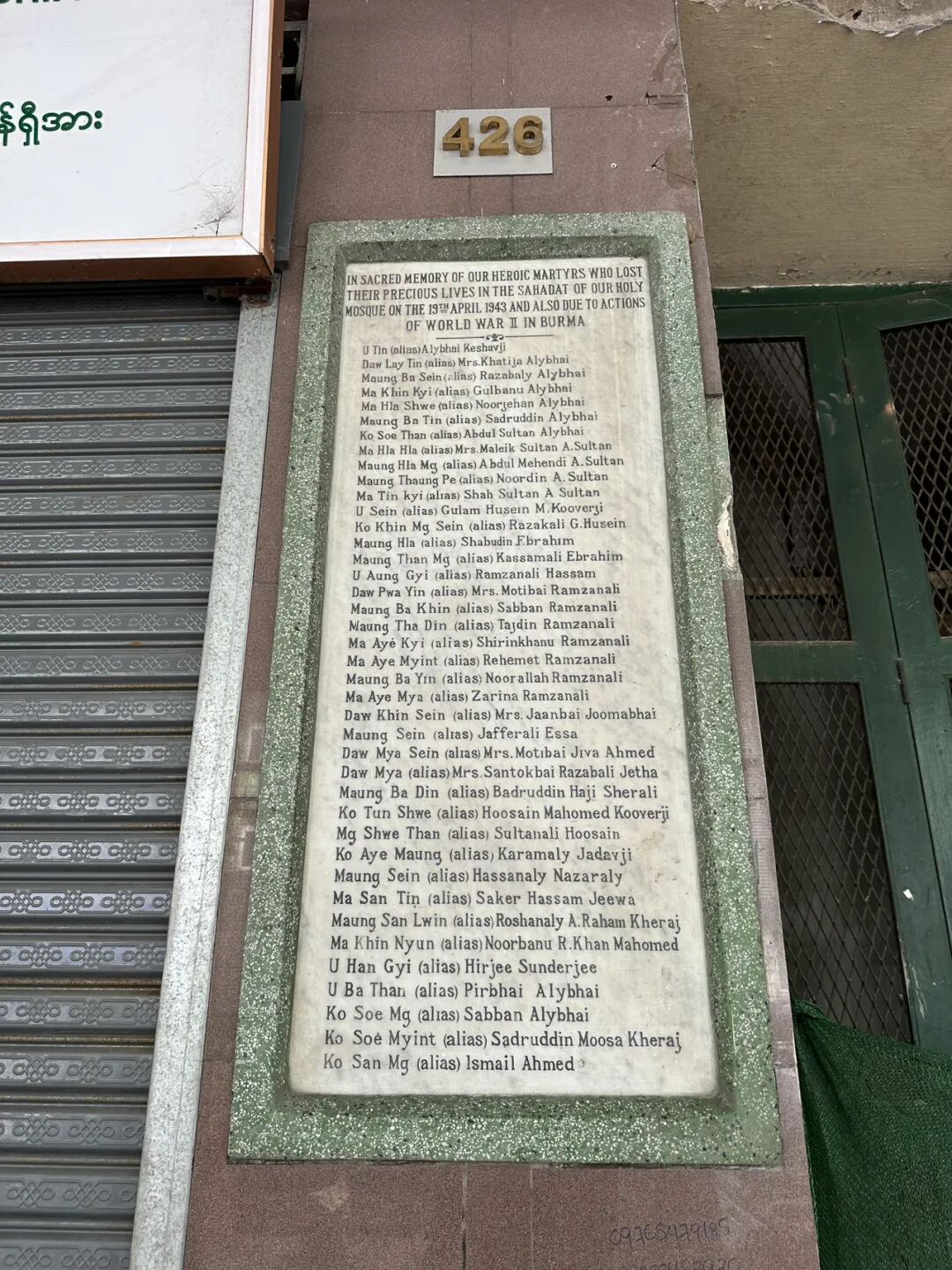
Halal Travel Guide: Yangon - Hui Muslim Food, Mosques and Panthay History
Articles • ali2007fr posted the article • 0 comments • 261 views • 2026-05-20 22:08
Summary: Yangon has a small but important Yunnan Hui Muslim story linked to Panthay traders, the Yangon Hui Mosque, and Hui restaurants along Daw Thein Tin Street. This travel account follows the mosques, restaurants, family histories, and dishes the source recorded in Myanmar.
During my trip to Yangon, Myanmar, over the October holiday, one word kept coming up: Panthay. Whenever a fellow Muslim (dosti) at the mosque learned I was Chinese, their first reaction was to say 'Panthay'. This made the word 'Panthay,' which I had only seen in articles before, feel real for the first time.
In fact, 'Panthay' is what the Burmese have called Hui Muslims from Yunnan since the 19th century, a term said to come from the Persian word 'Parsi'. During the Jiaqing and Daoguang reigns of the Qing Dynasty, trade routes opened from inland China through Kunming and Dali in Yunnan to Mandalay and Yangon in Myanmar, leading to India and Arabia. Many Hui Muslim caravan traders from Yunnan began traveling south to Myanmar for business. The famous Yunnan Islamic scholar Imam Ma Dexin recorded in his 'Travels to the Hajj' that he followed a caravan from Dali, Yunnan, through Menghai to Yangon in 1841 to catch a ship for the Hajj. This helped spread Islamic culture in the southwest.
In the 19th century, Hui Muslims from Yunnan in Myanmar mainly lived in the capital at the time, Mandalay. In 1868, the King of the Konbaung Dynasty, Mindon, personally granted land to the Yunnan Hui Muslims to build the first Mandalay Hui mosque and a caravan courtyard. After the Konbaung Dynasty fell in 1885, Yangon became the only capital of Myanmar, and many Yunnan Hui Muslims moved there to do business. Yunnan Hui Muslims in Yangon ran jewelry stores, shops, and hotels, while using caravans to transport European cotton cloth back to Yunnan.
The Yangon Hui Mosque is located in the northern part of the old city. Its full name is the 'Yangon Myanmar-Chinese Hui Mosque,' built in 1963, and it is one of several Yunnan Hui mosques in Myanmar. Currently, the congregation at the Yangon Hui Mosque is mostly of Indian descent, with few Yunnan Hui Muslims, but I still met some elderly Yunnan Hui Muslims there who spoke great Mandarin and were very welcoming.
Not far north of the Yangon Hui Mosque is Daw Thein Tin Street, a famous Hui Muslim food street in Yangon where most of the Hui restaurants are located. There are also several restaurants run by Indian and Burmese-speaking Muslims (dosti) on this street, and we ate here every day while in Yangon.
On our first night in Yangon, we ate roast duck, Mandalay-style sweet and sour fish, and mixed vegetables at the Mandalay Restaurant (Wacheng Canting) on that street. The restaurant owner's ancestral home was Weishan in Dali, Yunnan, before his family moved to Mandalay (Wacheng) and then to Yangon. The owner's family all spoke excellent Mandarin and were very enthusiastic about recommending dishes to us.
Roast duck is a local Hui specialty here. You can order a quarter of a duck, and the texture is very similar to the lean ducks I eat in Yunnan. The Mandalay-style sweet and sour fish is fried first and then drizzled with sauce; it has no bones and goes perfectly with rice, and the mixed vegetables were light and delicious. They use long-grain fragrant rice here, but cooked in the Chinese style, which is very tasty. You don't need to order rice separately; a server comes to every table to ask if you need more, so you can add as you go without wasting any.
Mandalay (Wacheng) is Myanmar's second-largest city. During the Qing Dynasty, it was the center for Yunnan caravans heading south. Many Hui Muslim caravans from Weishan, Dali, went to Mandalay for business, and some settled there permanently. After the end of the 19th century, Yangon developed rapidly, and more Yunnan Hui Muslims moved from Mandalay to settle in Yangon.
The service in Yangon's restaurants is excellent.
On the second night, we went back to the Hui Muslim street in Yangon for Yunnan-style Hui food. We ate at Elegant Restaurant, where we had dried beef (niuganba), beef noodles, crown daisy with mushrooms, and chive pan-fried dumplings (jianjiao). Because Yangon has a large Indian population, many restaurants do not sell beef. You have to come to the Hui Muslim street for authentic beef dishes.
The owner is a third-generation Yunnan Hui Muslim immigrant in Myanmar, and he speaks excellent Mandarin. I asked the owner, and he said many Hui Muslims here attend Chinese schools from a young age, so they all speak the national language.
The owner cooks great Yunnan Hui food. His dried beef is especially delicious; it is chewy but not too hard, and it has no strange aftertaste. The skin of the pan-fried dumplings is thin and crispy, and the chive filling is very fragrant. It is a pity the beef noodles used dried noodles, but the beef was stewed perfectly. The soup was sour and spicy, which is perfect for a rainy day. They serve pickles before the main dishes, which is also very typical of Yunnan.
We had breakfast at the Hui Muslim street in Yangon. At Golden Star Noodle Shop, we had chickpea porridge (xidoufen) and beef stew rice noodles (niupahu mixian). The beef broth was very fresh and flavorful, and the chickpea porridge was very authentic. As a younger generation Myanmar Hui Muslim, the owner still speaks great Mandarin. He said he still has relatives in Yunnan.
On the morning of our last day, we went to a Hui Muslim restaurant called Kyaing Tong Restaurant, which is not located on the Hui Muslim street, for breakfast. The owner is from Shadian, Yunnan. We met her younger brother at the shop; he was originally in Mae Sai, Thailand, and had flown to Yangon from Malaysia to visit his sister.
They open at seven in the morning and serve full meals, though most people just come to buy steamed buns (baozi). This is the only Hui Muslim restaurant I saw in Yangon with a Chinese menu. They can make various dishes from Yunnan, Myanmar, and Thailand. We ordered chicken steamed buns, Hui-style fried noodles, and mixed vegetable soup. The steamed buns were very soft. To attract Hindu customers, they do not use beef fillings, only chicken. The fried noodles were very fragrant and topped with sweet-style braised chicken wings. The mixed vegetable soup was very hearty and felt great to drink in the morning.
There were a few other Hui Muslim restaurants that were not open when I arrived, which was a real shame. view all
Summary: Yangon has a small but important Yunnan Hui Muslim story linked to Panthay traders, the Yangon Hui Mosque, and Hui restaurants along Daw Thein Tin Street. This travel account follows the mosques, restaurants, family histories, and dishes the source recorded in Myanmar.
During my trip to Yangon, Myanmar, over the October holiday, one word kept coming up: Panthay. Whenever a fellow Muslim (dosti) at the mosque learned I was Chinese, their first reaction was to say 'Panthay'. This made the word 'Panthay,' which I had only seen in articles before, feel real for the first time.
In fact, 'Panthay' is what the Burmese have called Hui Muslims from Yunnan since the 19th century, a term said to come from the Persian word 'Parsi'. During the Jiaqing and Daoguang reigns of the Qing Dynasty, trade routes opened from inland China through Kunming and Dali in Yunnan to Mandalay and Yangon in Myanmar, leading to India and Arabia. Many Hui Muslim caravan traders from Yunnan began traveling south to Myanmar for business. The famous Yunnan Islamic scholar Imam Ma Dexin recorded in his 'Travels to the Hajj' that he followed a caravan from Dali, Yunnan, through Menghai to Yangon in 1841 to catch a ship for the Hajj. This helped spread Islamic culture in the southwest.
In the 19th century, Hui Muslims from Yunnan in Myanmar mainly lived in the capital at the time, Mandalay. In 1868, the King of the Konbaung Dynasty, Mindon, personally granted land to the Yunnan Hui Muslims to build the first Mandalay Hui mosque and a caravan courtyard. After the Konbaung Dynasty fell in 1885, Yangon became the only capital of Myanmar, and many Yunnan Hui Muslims moved there to do business. Yunnan Hui Muslims in Yangon ran jewelry stores, shops, and hotels, while using caravans to transport European cotton cloth back to Yunnan.
The Yangon Hui Mosque is located in the northern part of the old city. Its full name is the 'Yangon Myanmar-Chinese Hui Mosque,' built in 1963, and it is one of several Yunnan Hui mosques in Myanmar. Currently, the congregation at the Yangon Hui Mosque is mostly of Indian descent, with few Yunnan Hui Muslims, but I still met some elderly Yunnan Hui Muslims there who spoke great Mandarin and were very welcoming.
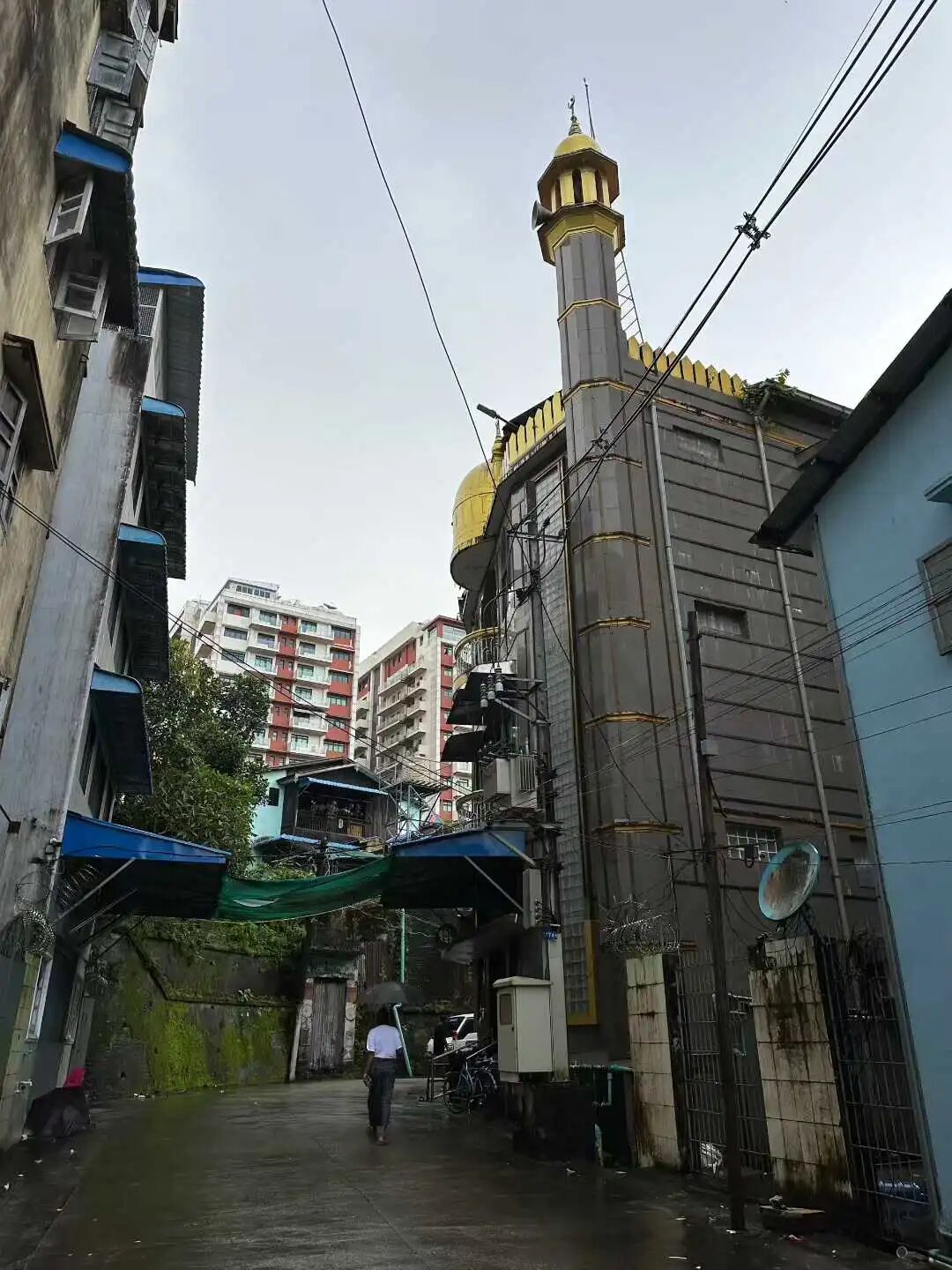
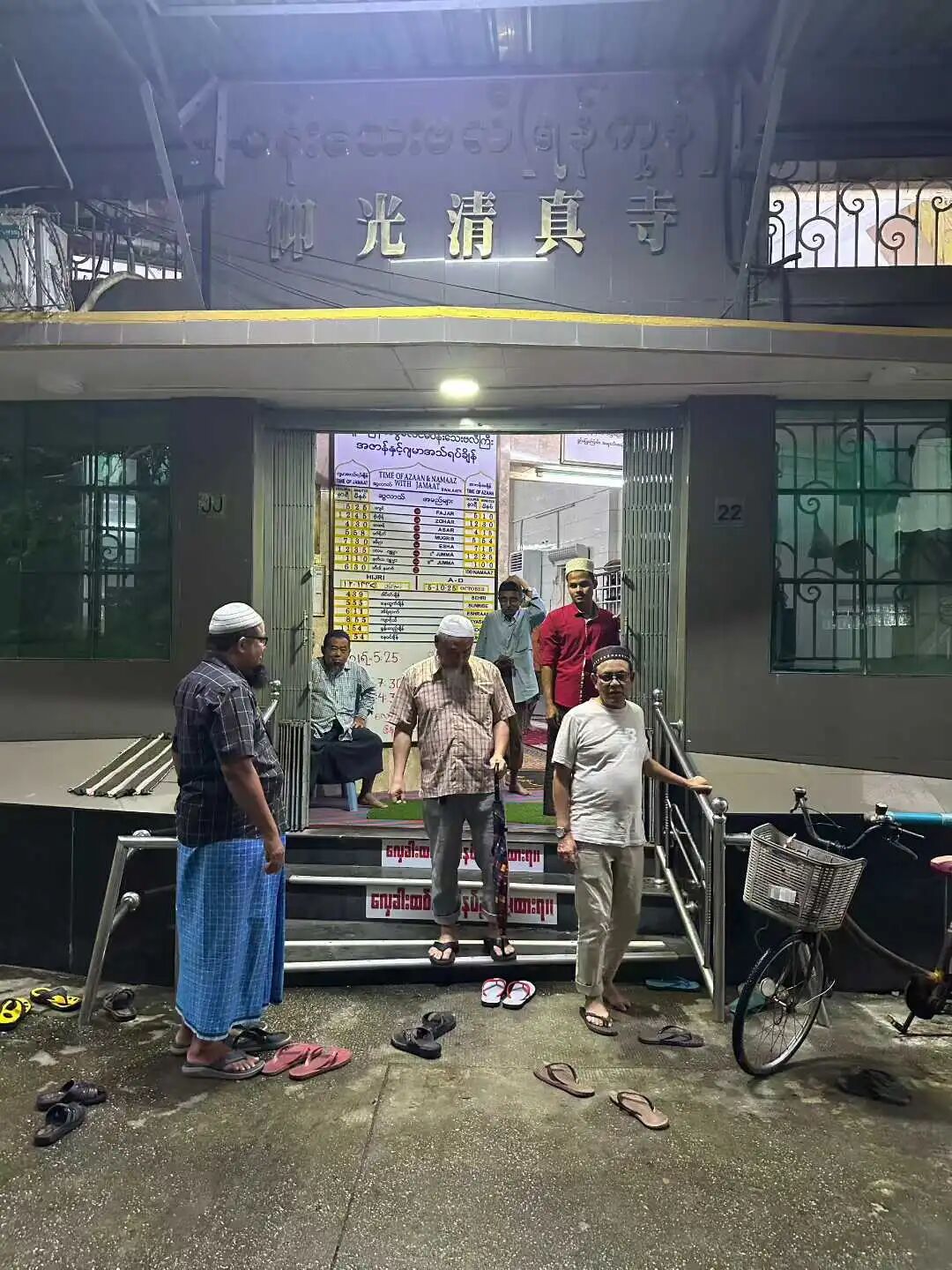
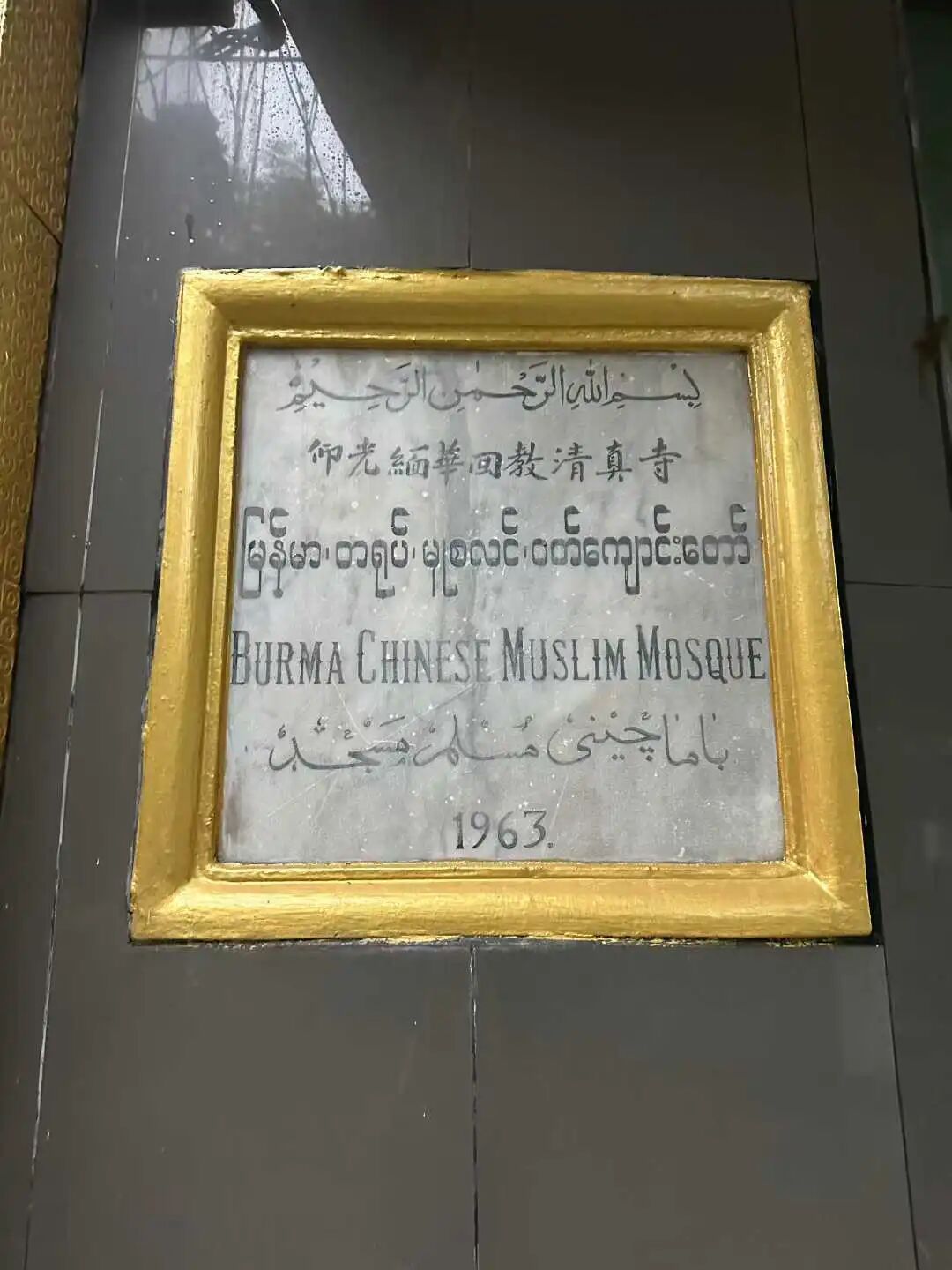
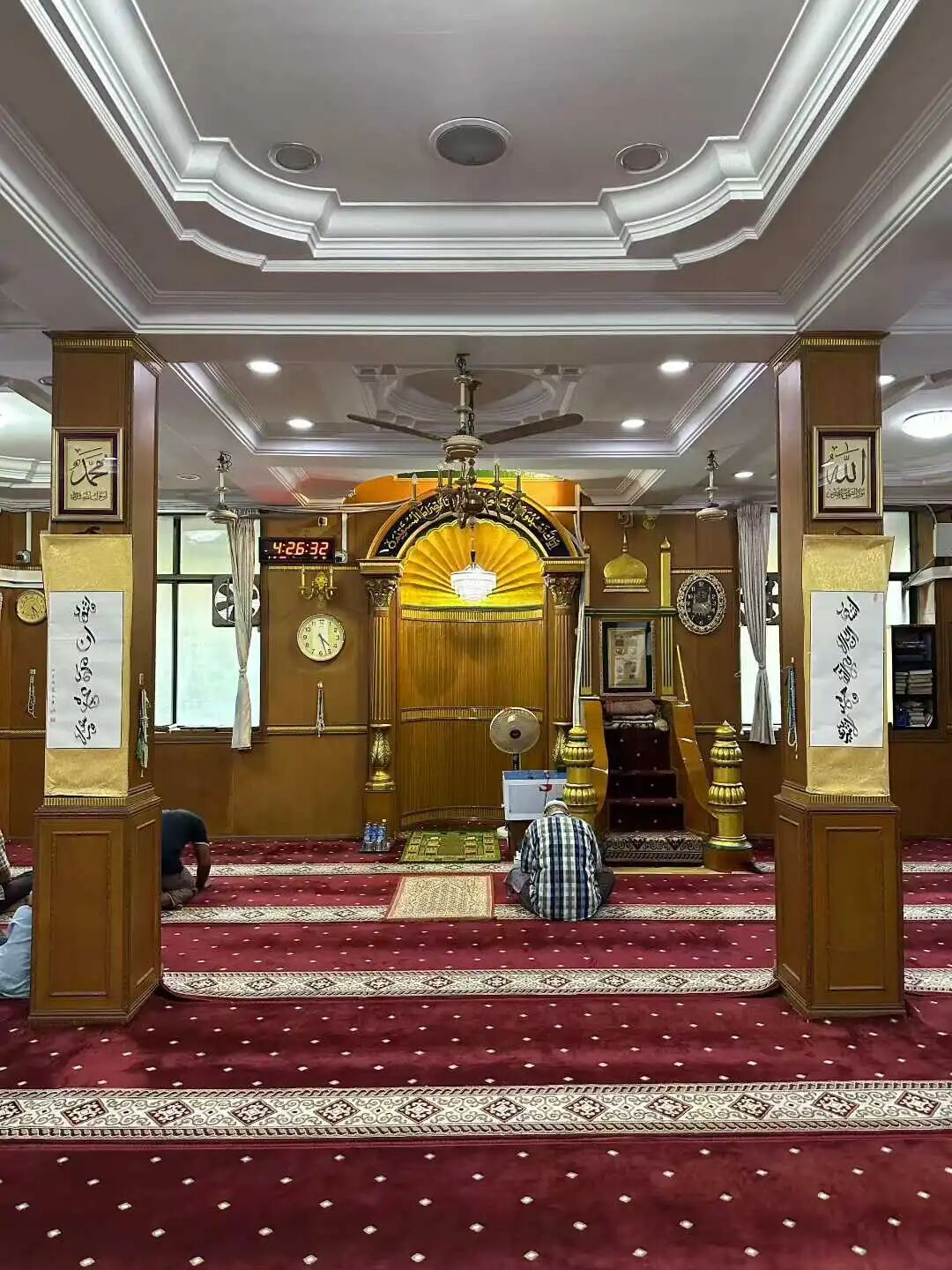
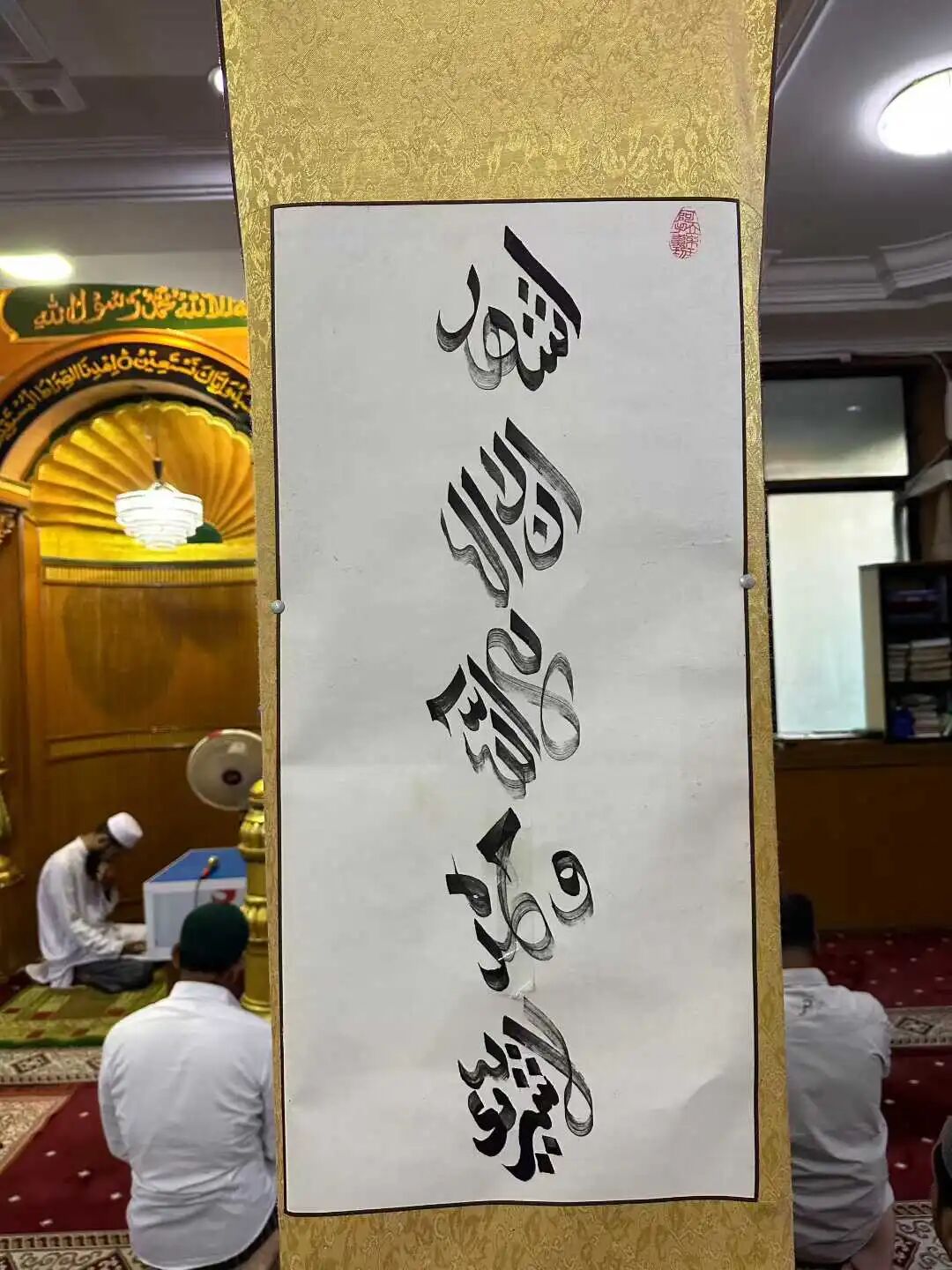
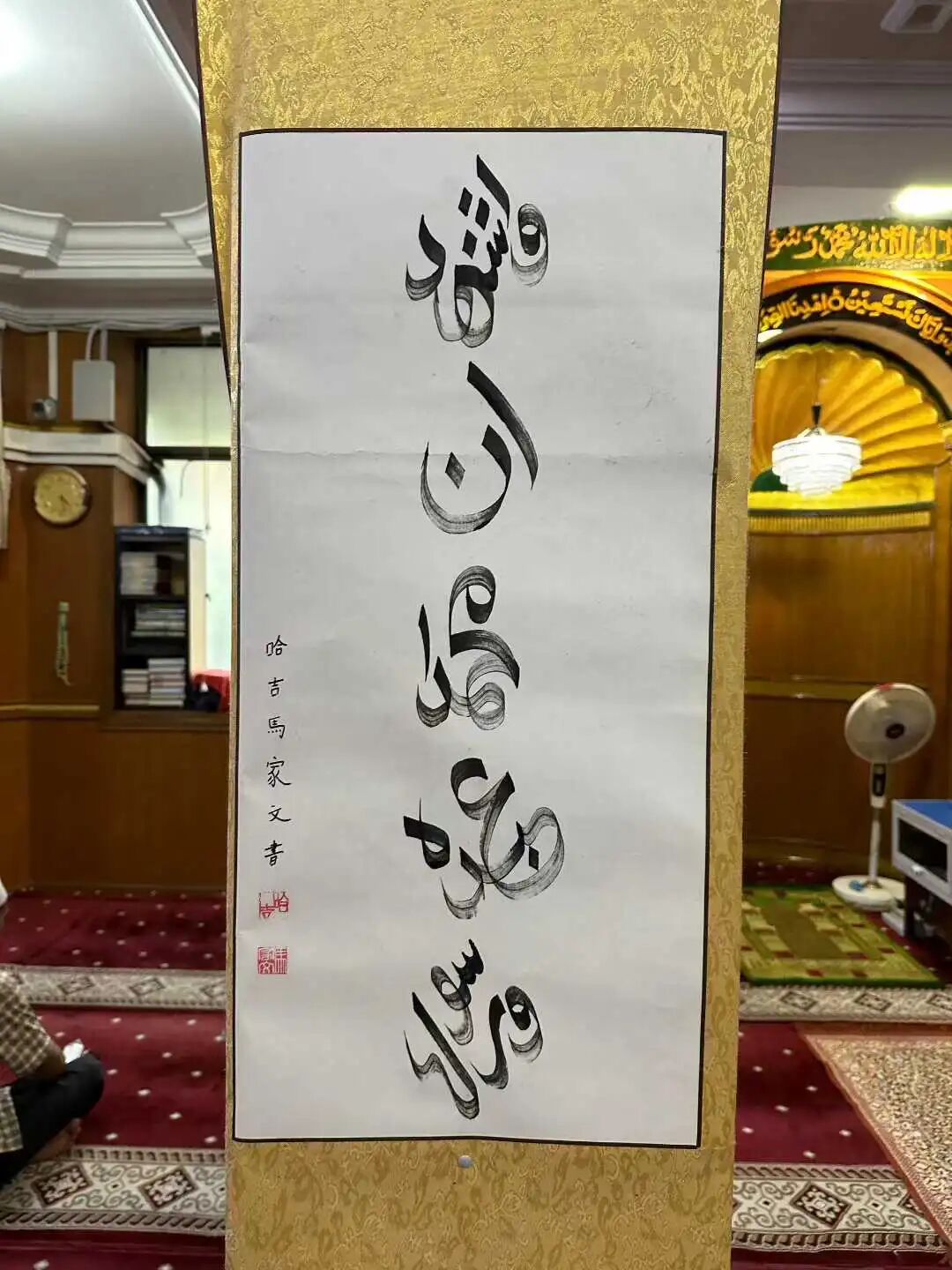
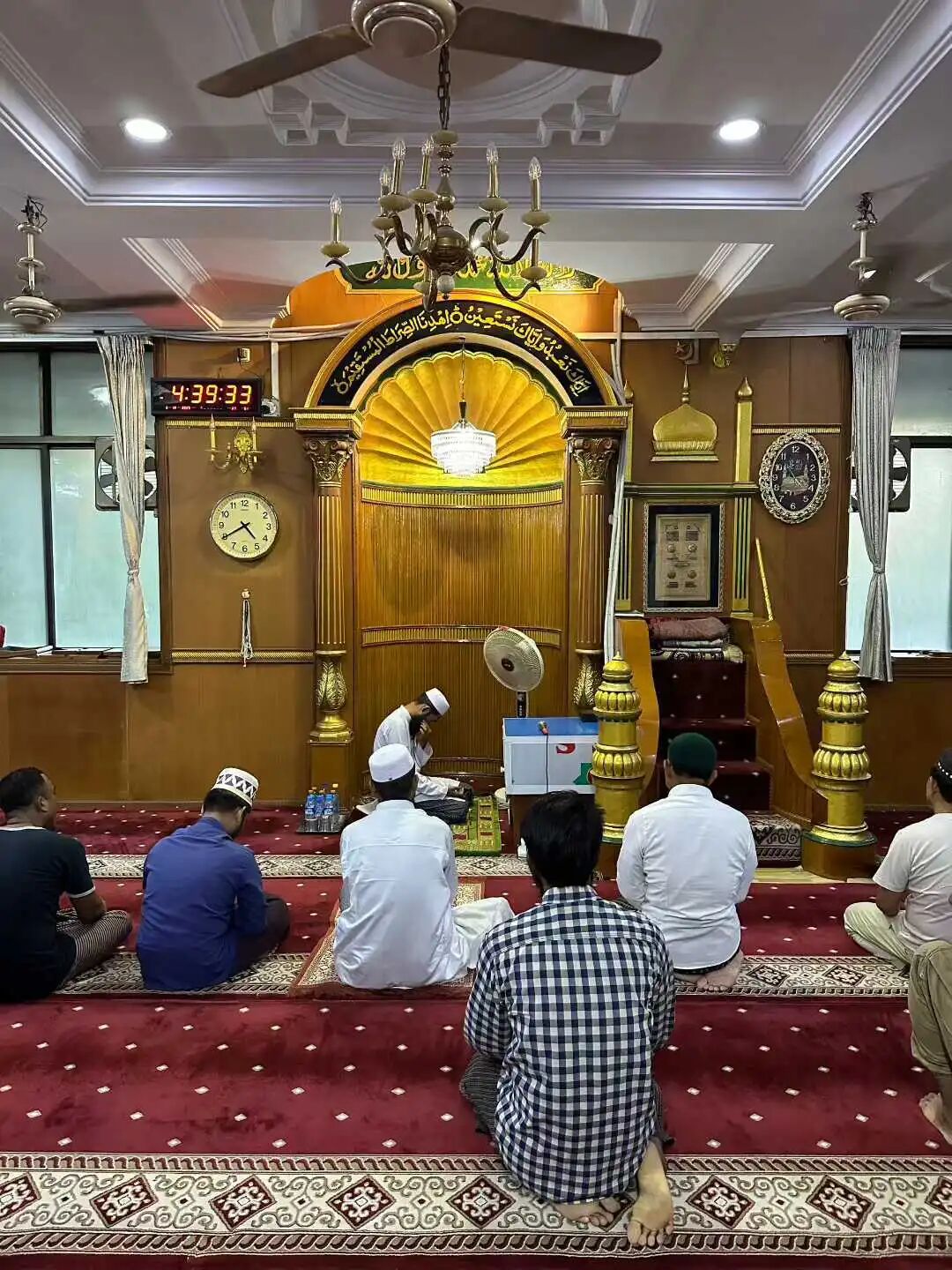
Not far north of the Yangon Hui Mosque is Daw Thein Tin Street, a famous Hui Muslim food street in Yangon where most of the Hui restaurants are located. There are also several restaurants run by Indian and Burmese-speaking Muslims (dosti) on this street, and we ate here every day while in Yangon.
On our first night in Yangon, we ate roast duck, Mandalay-style sweet and sour fish, and mixed vegetables at the Mandalay Restaurant (Wacheng Canting) on that street. The restaurant owner's ancestral home was Weishan in Dali, Yunnan, before his family moved to Mandalay (Wacheng) and then to Yangon. The owner's family all spoke excellent Mandarin and were very enthusiastic about recommending dishes to us.
Roast duck is a local Hui specialty here. You can order a quarter of a duck, and the texture is very similar to the lean ducks I eat in Yunnan. The Mandalay-style sweet and sour fish is fried first and then drizzled with sauce; it has no bones and goes perfectly with rice, and the mixed vegetables were light and delicious. They use long-grain fragrant rice here, but cooked in the Chinese style, which is very tasty. You don't need to order rice separately; a server comes to every table to ask if you need more, so you can add as you go without wasting any.
Mandalay (Wacheng) is Myanmar's second-largest city. During the Qing Dynasty, it was the center for Yunnan caravans heading south. Many Hui Muslim caravans from Weishan, Dali, went to Mandalay for business, and some settled there permanently. After the end of the 19th century, Yangon developed rapidly, and more Yunnan Hui Muslims moved from Mandalay to settle in Yangon.
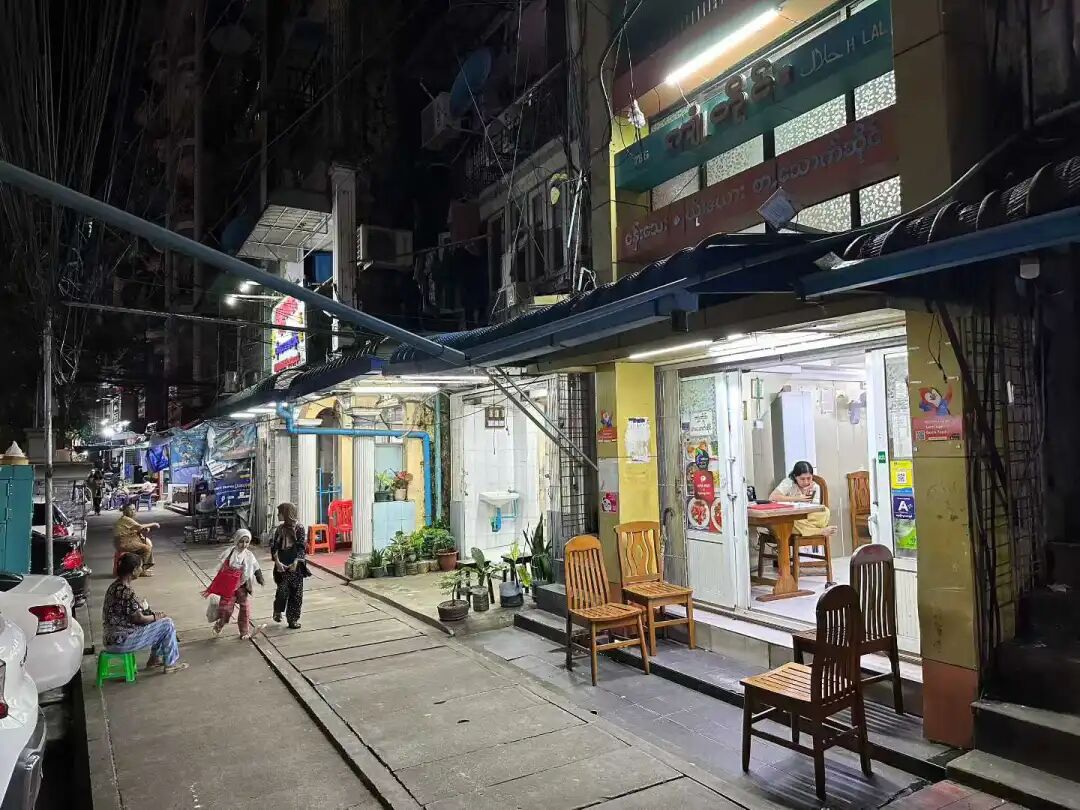
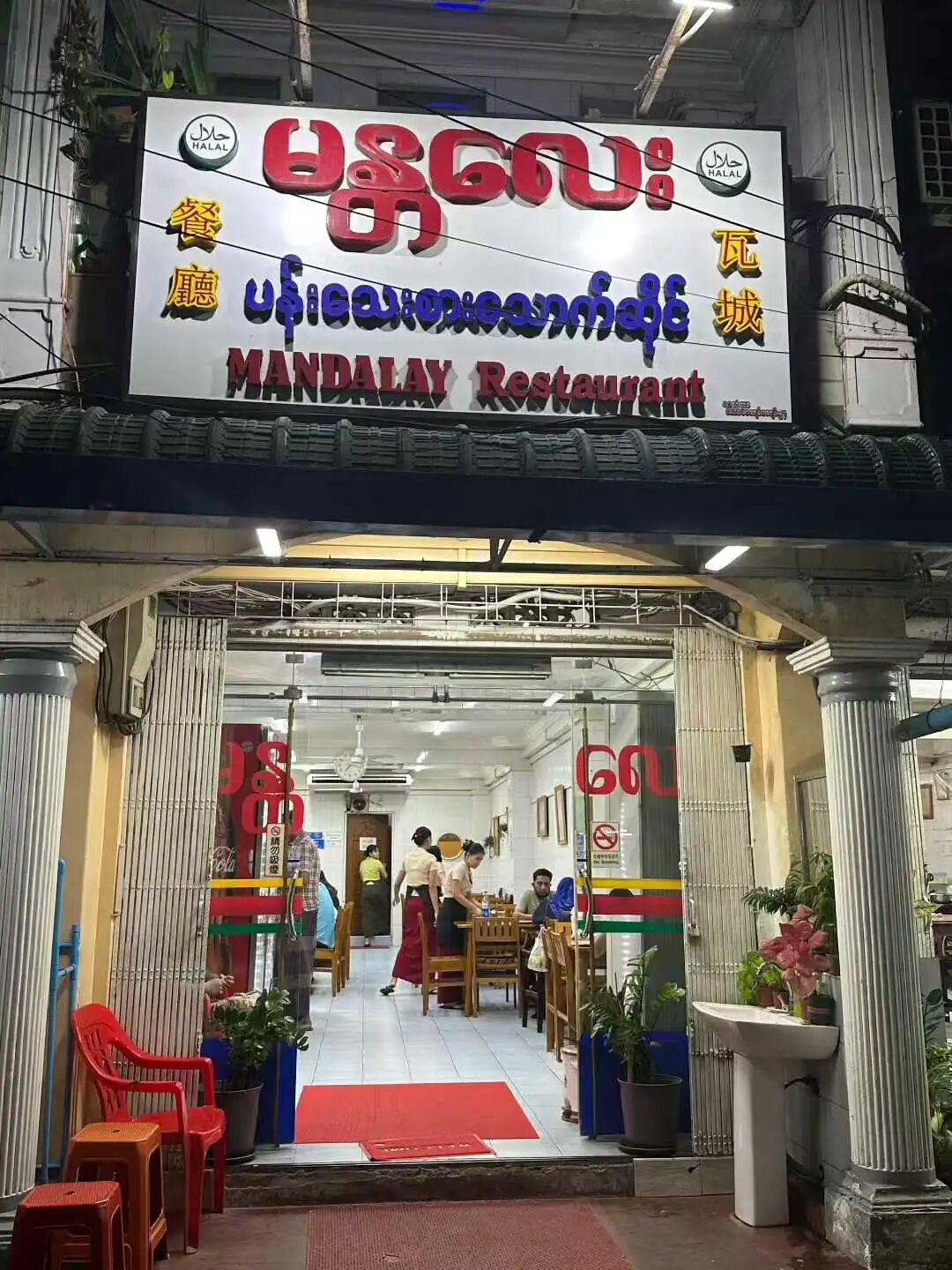
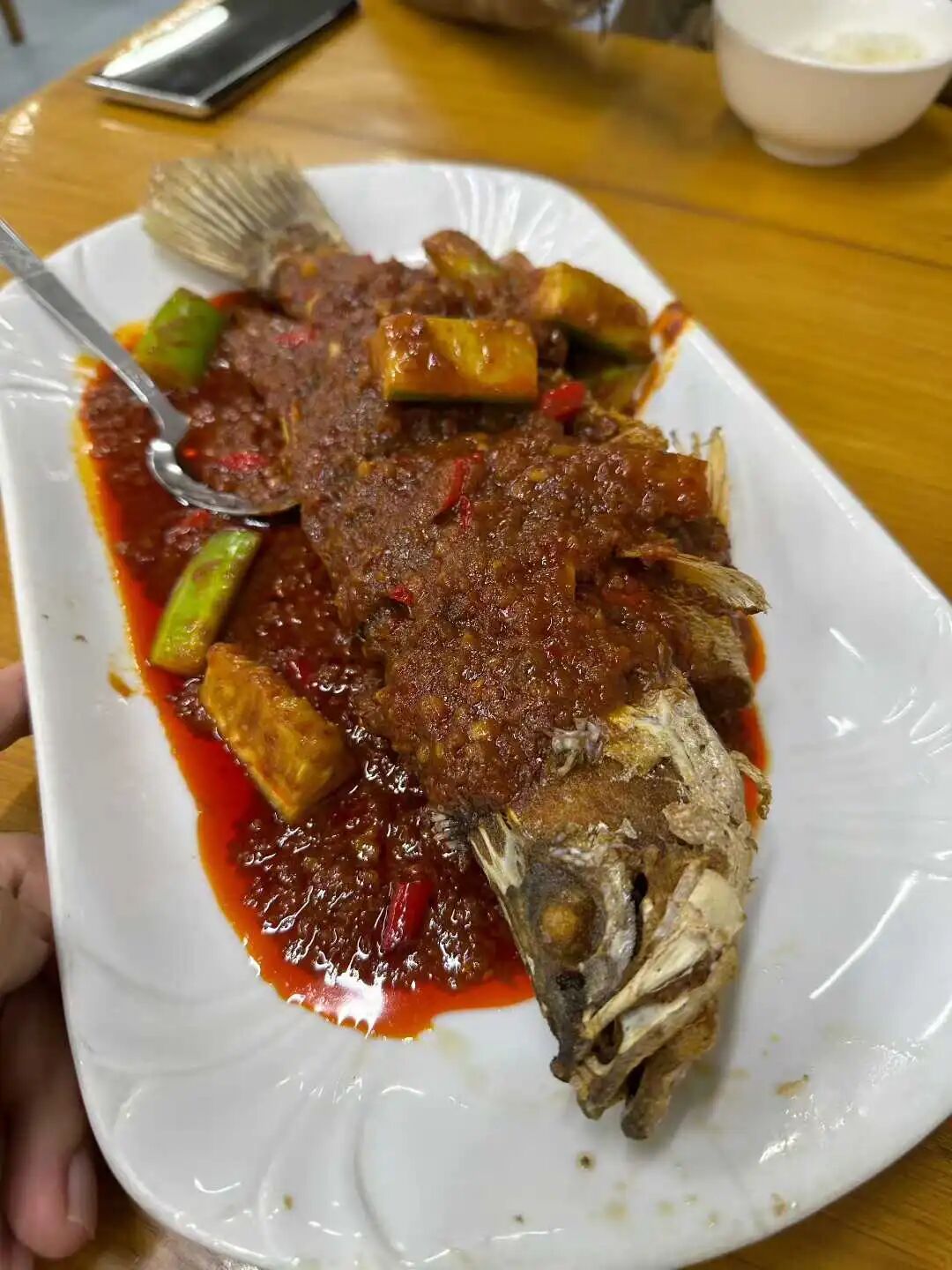

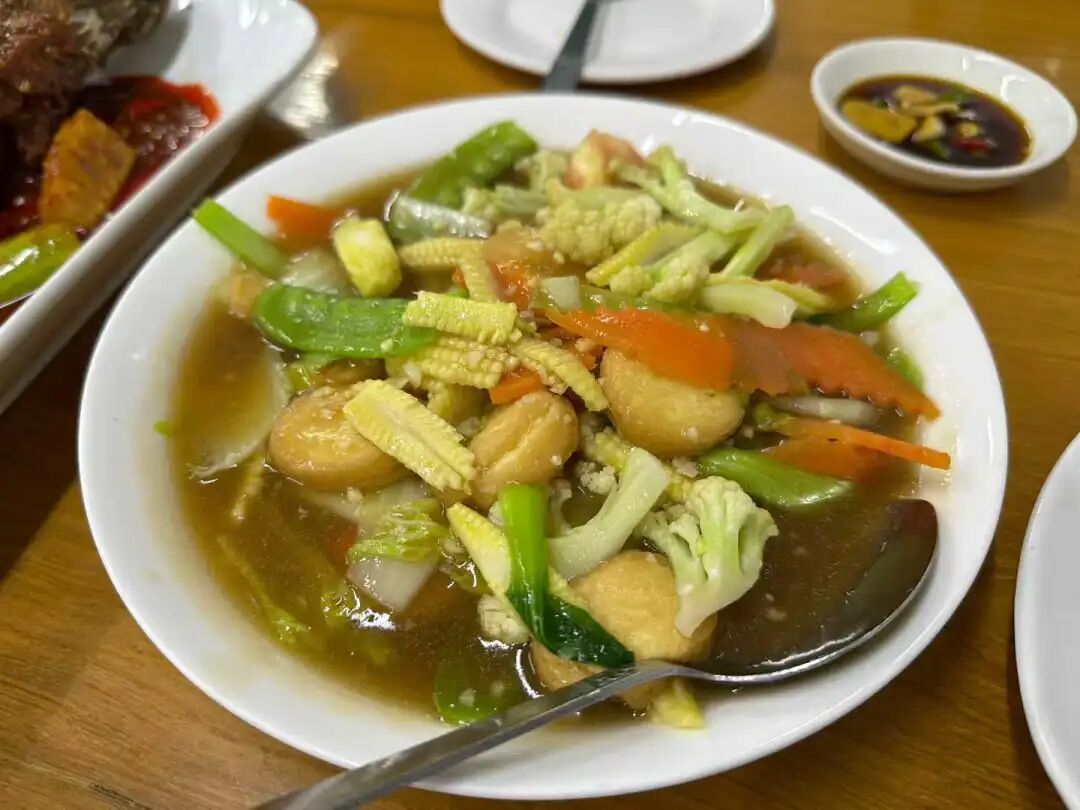
The service in Yangon's restaurants is excellent.
On the second night, we went back to the Hui Muslim street in Yangon for Yunnan-style Hui food. We ate at Elegant Restaurant, where we had dried beef (niuganba), beef noodles, crown daisy with mushrooms, and chive pan-fried dumplings (jianjiao). Because Yangon has a large Indian population, many restaurants do not sell beef. You have to come to the Hui Muslim street for authentic beef dishes.
The owner is a third-generation Yunnan Hui Muslim immigrant in Myanmar, and he speaks excellent Mandarin. I asked the owner, and he said many Hui Muslims here attend Chinese schools from a young age, so they all speak the national language.
The owner cooks great Yunnan Hui food. His dried beef is especially delicious; it is chewy but not too hard, and it has no strange aftertaste. The skin of the pan-fried dumplings is thin and crispy, and the chive filling is very fragrant. It is a pity the beef noodles used dried noodles, but the beef was stewed perfectly. The soup was sour and spicy, which is perfect for a rainy day. They serve pickles before the main dishes, which is also very typical of Yunnan.
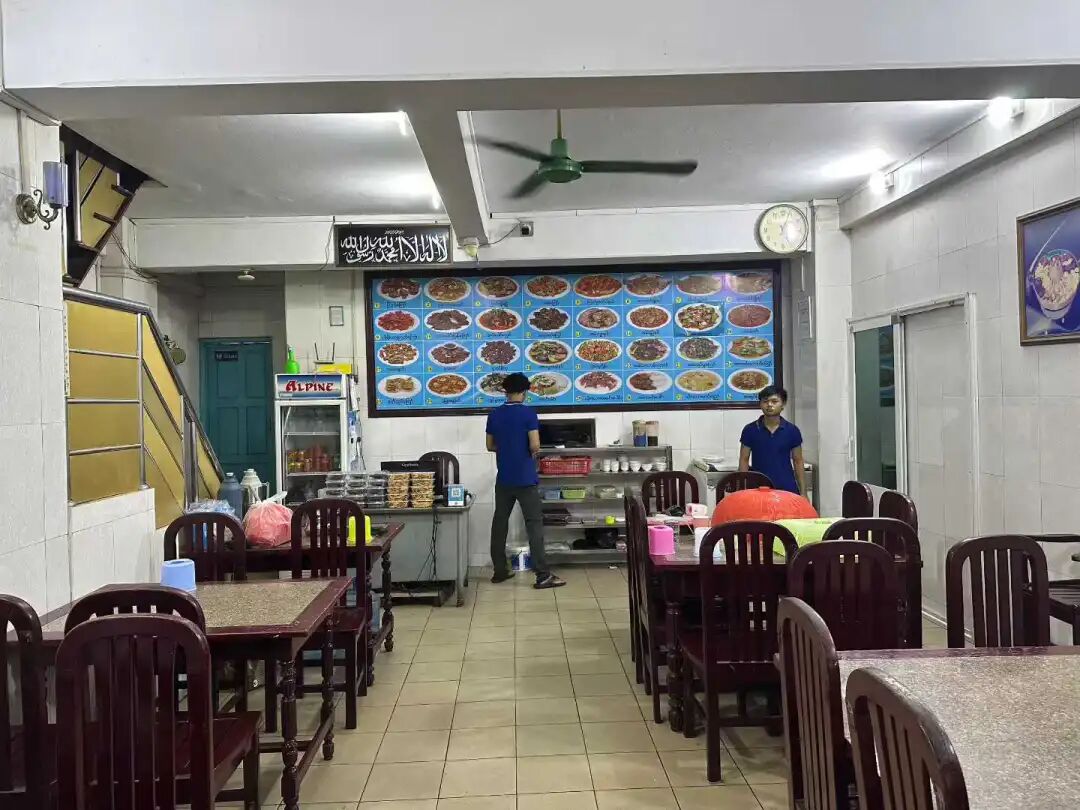

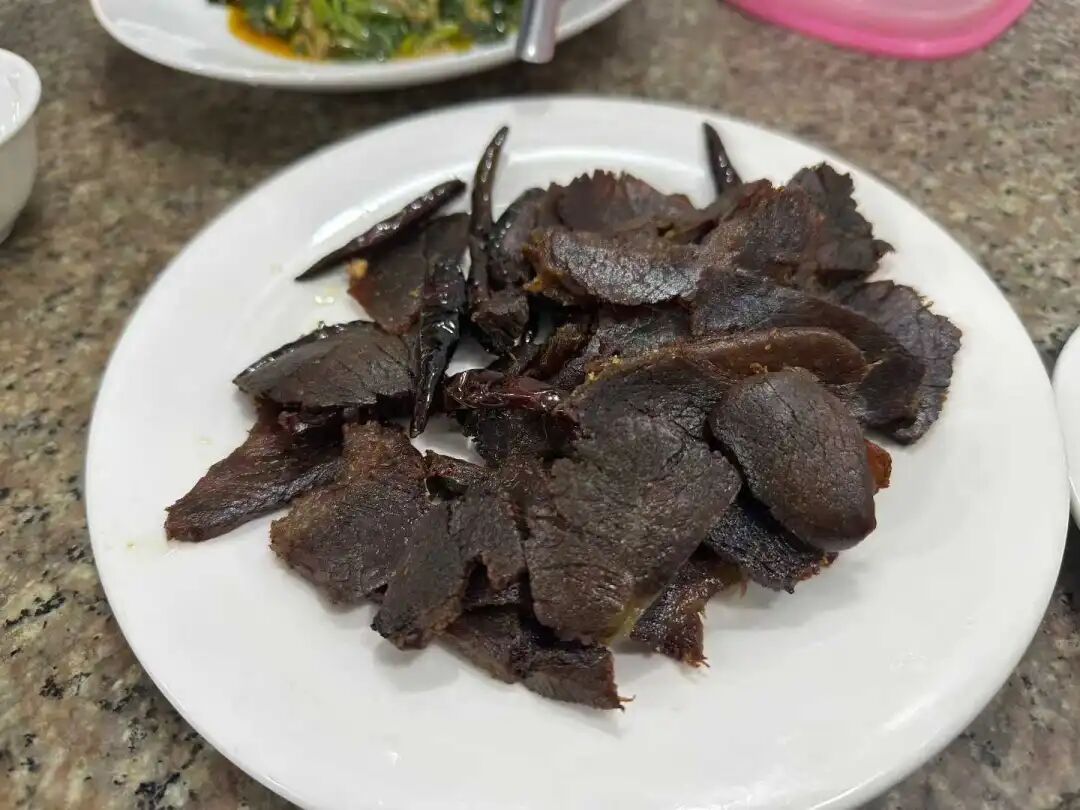
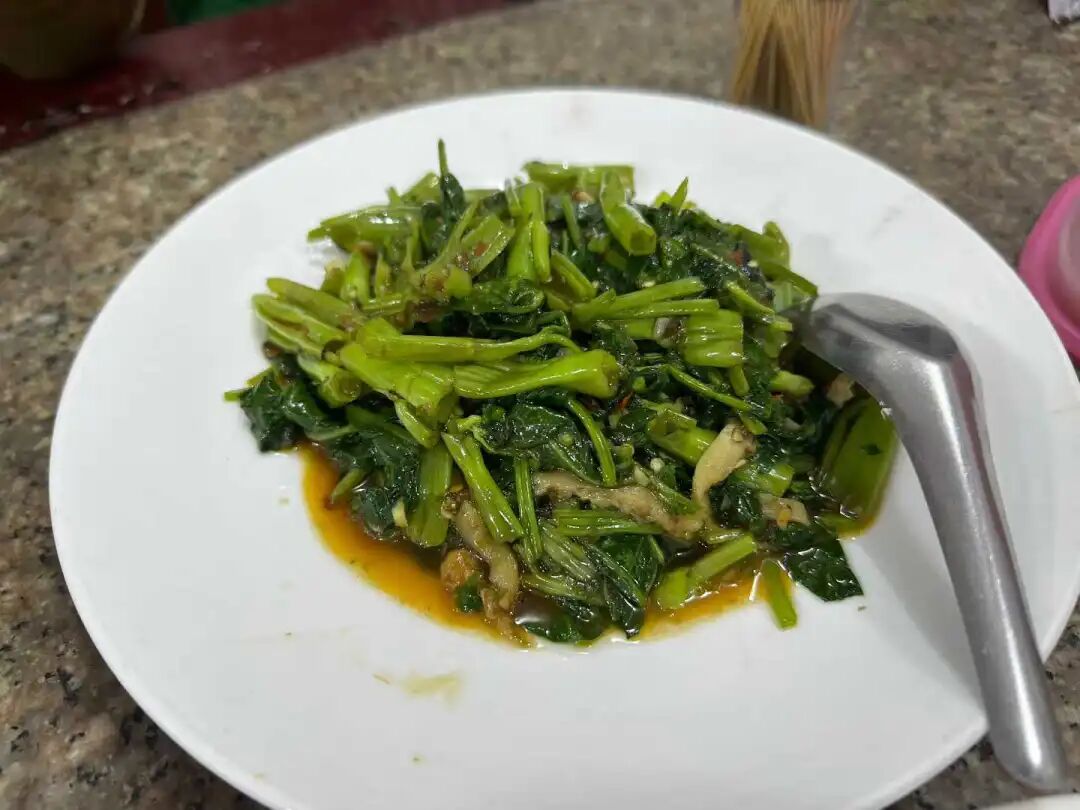
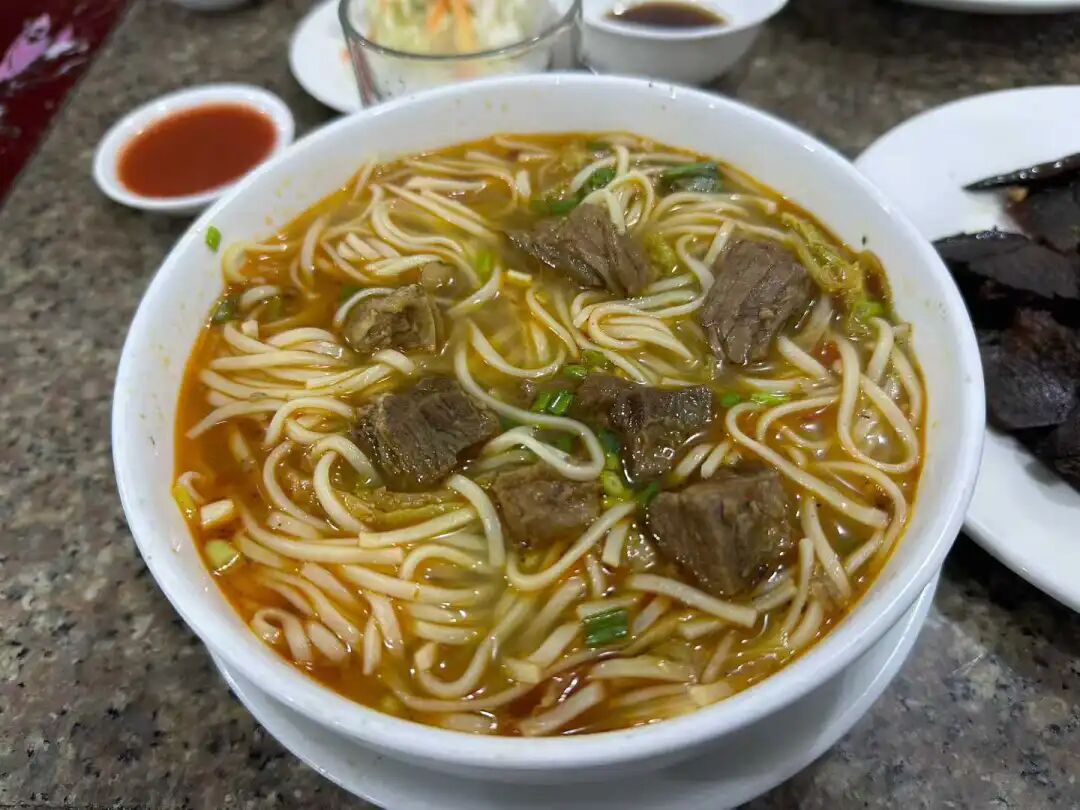
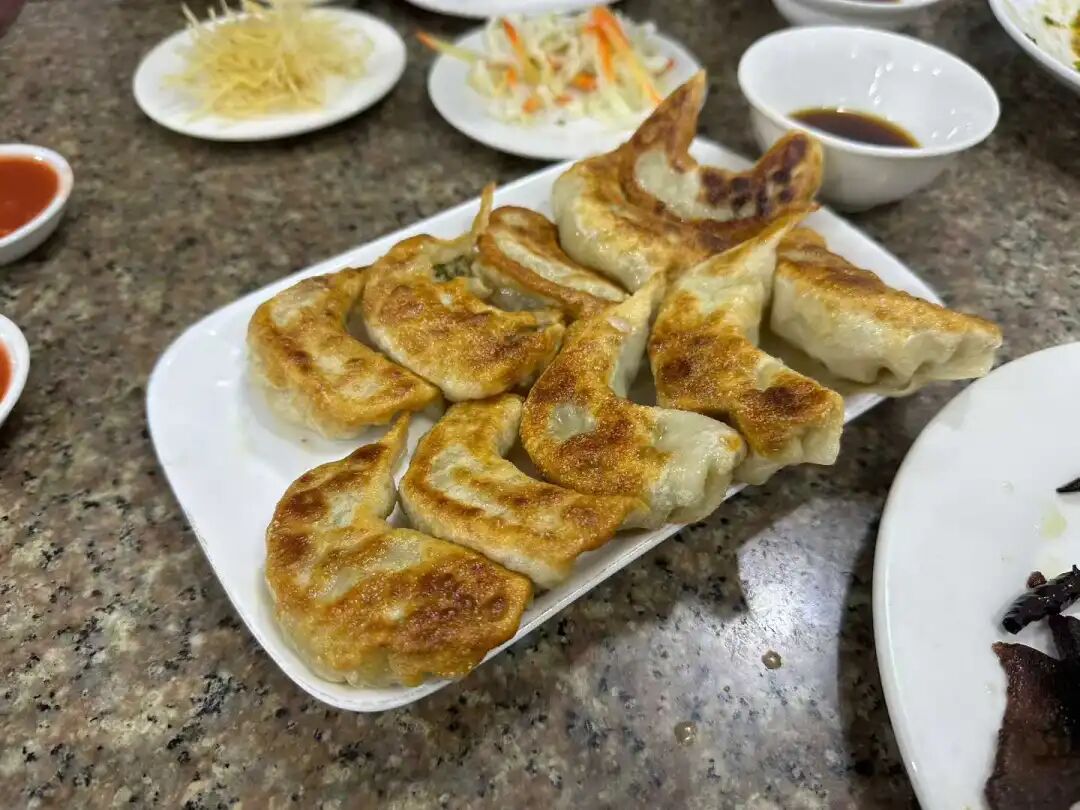

We had breakfast at the Hui Muslim street in Yangon. At Golden Star Noodle Shop, we had chickpea porridge (xidoufen) and beef stew rice noodles (niupahu mixian). The beef broth was very fresh and flavorful, and the chickpea porridge was very authentic. As a younger generation Myanmar Hui Muslim, the owner still speaks great Mandarin. He said he still has relatives in Yunnan.
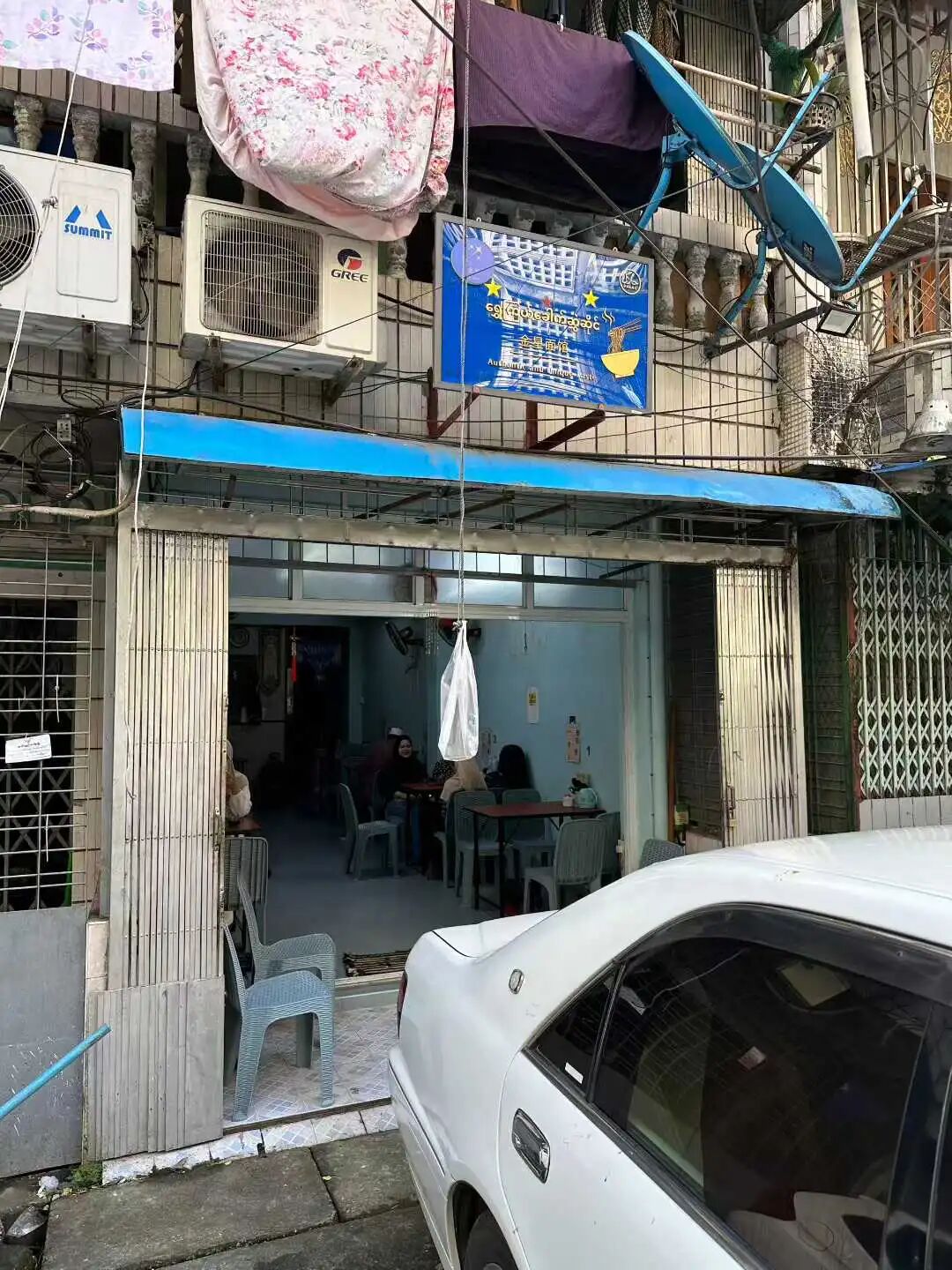
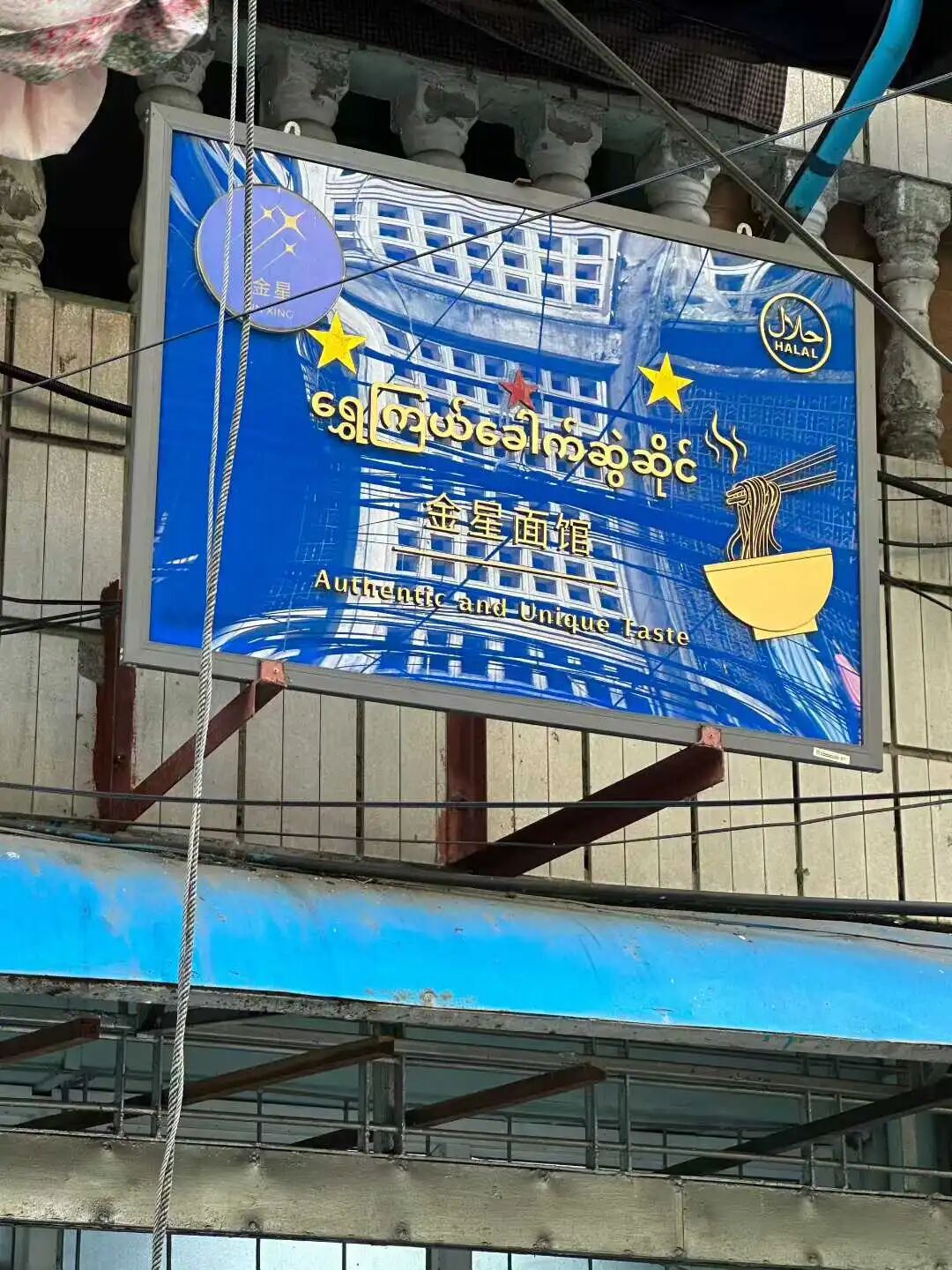


On the morning of our last day, we went to a Hui Muslim restaurant called Kyaing Tong Restaurant, which is not located on the Hui Muslim street, for breakfast. The owner is from Shadian, Yunnan. We met her younger brother at the shop; he was originally in Mae Sai, Thailand, and had flown to Yangon from Malaysia to visit his sister.
They open at seven in the morning and serve full meals, though most people just come to buy steamed buns (baozi). This is the only Hui Muslim restaurant I saw in Yangon with a Chinese menu. They can make various dishes from Yunnan, Myanmar, and Thailand. We ordered chicken steamed buns, Hui-style fried noodles, and mixed vegetable soup. The steamed buns were very soft. To attract Hindu customers, they do not use beef fillings, only chicken. The fried noodles were very fragrant and topped with sweet-style braised chicken wings. The mixed vegetable soup was very hearty and felt great to drink in the morning.
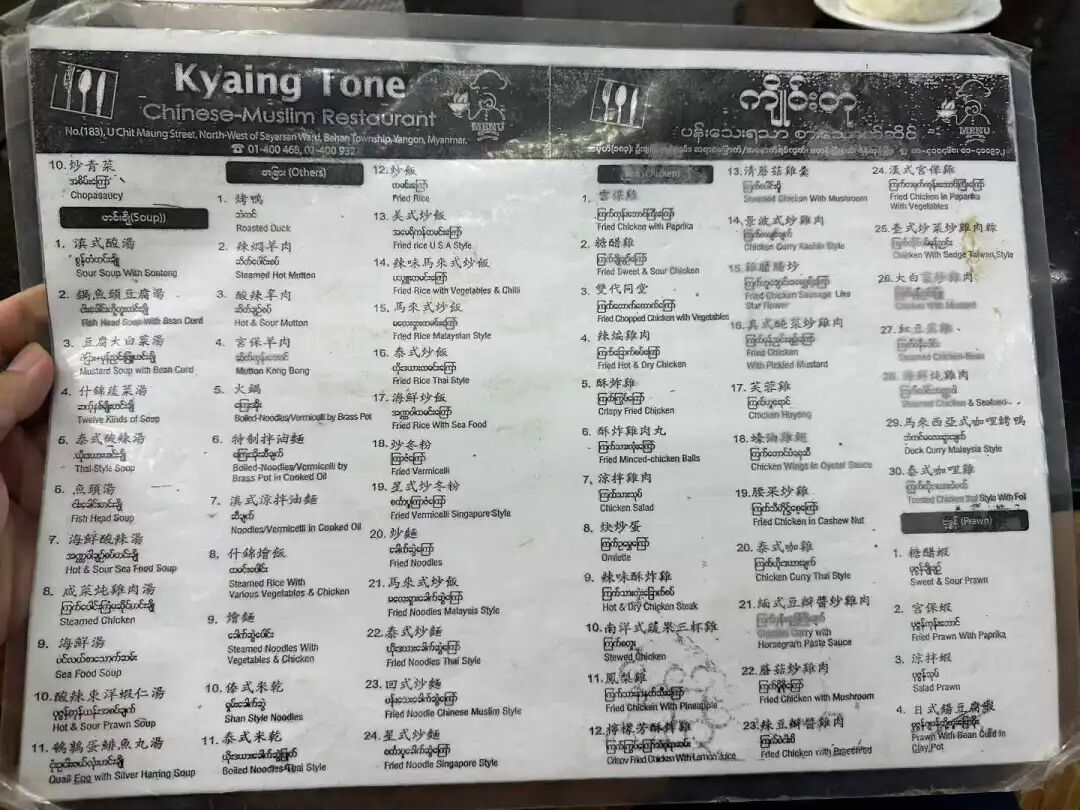
There were a few other Hui Muslim restaurants that were not open when I arrived, which was a real shame.
Halal Travel Guide: Yangon - Last Mughal Emperor Tomb and Qadiriyya Gongbei
Articles • ali2007fr posted the article • 0 comments • 239 views • 2026-05-21 02:08
Summary: Yangon holds the tomb of Bahadur Shah II, the last Mughal emperor, near Shwedagon Pagoda, along with a Qadiriyya gongbei connected to Muslim memory in Myanmar. This account keeps the source's shrine details, historical names, religious terms, and site observations.
The tomb of Bahadur Shah II, the last emperor of the Mughal Empire, is near the famous Shwedagon Pagoda in Yangon, Myanmar. This site was his home after he was exiled to Yangon in 1858. Because Bahadur Shah II was a devout Sufi sheikh during his life, his tomb has become a famous Sufi shrine (gongbei) in Myanmar.
Although Bahadur Shah II belonged to the Chishti order during his life, the shrine (gongbei) is now managed by the Qadiriyya order. I met a man here who was hanging fresh flowers on the shrine (gongbei), and after some local friends (dosti) finished their gathering (amali), they shared candy and bananas with us.
In 1803, the British East India Company used force to become the protector of the Mughal Empire, and the Mughal emperors lost their real power from then on. After Bahadur Shah II took the throne in 1837, his power was limited to the area around Delhi. He never had any ambition for the empire, but instead focused on Sufi practice and writing poetry. Legend says he started his Sufi practice at age 20 and became a murshid (guide) of the Chishti order by age 40. In 1843, he wrote a letter to Queen Victoria of Britain saying: "I am now old and have no ambitions left." I intend to devote myself entirely to religious work to comfort my remaining years.
The Sufi philosophy followed by Bahadur Shah II believed in embracing different cultures. Men, women, young, and old should all be able to express their love for Allah, and this love should transcend religion, gender, and social class. According to a report by Major Archer in 1828: "He is thin and small, and his clothes are simple, almost crude." He looks like a poor scholar or a language teacher. This is the typical appearance of a Sufi ascetic.
Like the Mughal rulers before him, Bahadur Shah II saw himself as the protector of his Hindu subjects. Under his rule, Hindu elites in Delhi would visit the Nizamuddin Sufi shrine (gongbei) to recite Persian poetry. Many people studied under great imams and attended religious schools (madrasas). The Mughal court would attend various Hindu events, and during the Shia month of Muharram, they would listen to elegies mourning Imam Hussein.
People say the Sufi poetry of Bahadur Shah II reached a level of perfection. His court had many famous Sufi scholars, writers, and poets, and a large number of poems were published during his reign. This style of lyric poetry became the main literary form of the late Mughal period.
In 1850, the knowledge and vitality of Delhi reached its final peak. At that time, the city had six famous religious schools (madrasas), nine Urdu and Persian newspapers, five academic journals, countless printers, and at least 130 doctors who mastered traditional Persian-Arabic medicine. Many new discoveries in Western science were translated into Persian and Arabic in Delhi. As the young poet Altaf Hussain Hali wrote at the time, "The capital, Delhi, was gathered with such a group of talented sages that it reminded people of the eras of Akbar and Shah Jahan."
In 1857, an uprising against the British East India Company broke out in India. It started because the British army made their Indian soldiers bite open greased rifle cartridges, and rumors immediately spread that the lubricant came from cow and pig fat. The insulted soldiers flooded into Delhi on May 11 and turned to Bahadur Shah II for help at the Red Fort. Bahadur Shah II initially refused them, but faced with the passionate soldiers surrounding him, he eventually had no choice but to accept them as they bowed before him one by one, changing the fate of the Mughal Empire.
As the Siege of Delhi dragged on and the outlook grew dim, Bahadur Shah II chose to escape reality through poetry. According to British spies, he recited the following lines one night:
The sky collapses on everyone
I can no longer rest or sleep
Only my final departure will come
Whether at dawn or in the dark of night
On September 14, the British army officially attacked the walls of Delhi, and on September 17, Bahadur Shah II fled the Red Fort through the Water Gate. He went to the most important Sufi shrine (gongbei) of Nizamuddin in Delhi and handed over his ancestors' relics to the Nizam family, the keepers of the shrine. It is said these included three hairs of the noble Prophet passed down by the Timurid family. Then he went to the tomb of his ancestor, the second Mughal emperor, Humayun. On September 20, Bahadur Shah II was finally captured by the British army.
By January 27, 1858, after all the dignitaries of the Mughal court had been tried, Bahadur Shah II faced his own trial. William Howard Russell, a foreign correspondent for The Times and the father of war journalism, saw Bahadur Shah II in captivity. He described him as silent, sitting motionless day and night, with his eyes cast down to the ground. People heard him reciting poems from his own works and writing poetry on the walls with a charred stick.
During the trial, Bahadur Shah II provided a written defense in Urdu. He denied any involvement in the uprising and insisted that he had been a helpless prisoner held by the Indian soldiers from start to finish. The trial dragged on for more than a month and was often adjourned because of Bahadur Shah II's poor health. On March 9, the British finally decided to exile Bahadur Shah II.
On October 7, 1858, after the Mughal Empire had ruled Delhi for 332 years, the last emperor, Bahadur Shah II, left Delhi in an ox cart. The group traveled slowly down the Ganges River by steamship and arrived at Diamond Harbour, south of Calcutta, on December 4. They boarded the British naval ship HMS Magpie there and finally reached Rangoon, Burma, where they lived in two small rooms in the British barracks area directly below the Shwedagon Pagoda.
In April 1859, Bahadur Shah II moved to a new wooden house near the fort guard camp. According to the report by his jailer, Captain Nelson Davies:
The residence consisted of four rooms, each 16 feet square. One room was assigned to the former king, another to Jawan Bakht and the young crown princess, and a third was occupied by Queen Zinat Mahal. Each of these rooms had an attached washing area. Shah Abbas and his mother lived in the remaining room.
The servants either lounged around the veranda or slept under the house, where the ground was covered in crushed brick to keep it dry. A drainage ditch ran around the house for the same reason. There were two washrooms, a double bathroom for the servants, and a place for cooking.
The veranda on the upper floors was full of chicks, which were kept inside by nailed-down slats. The frail former king and his sons usually sat there, where the floor was raised almost to the height of the railing, allowing them to enjoy the pleasant sea breeze and the wide, beautiful view. They watched people pass by and stared at the ships being loaded, which helped break up the monotony of their life behind bars and made them more willing to accept their current living situation.
Regarding the health of Bahadur Shah II, the report by Davis noted:
If given time to make up his mind, his memory was still good, but he spoke unclearly because he had lost his teeth. He was unable to handle anything requiring mental effort, and while that was the impression he gave, he seemed to be bearing the weight of his years remarkably well. He lived a dull, listless life, showing little interest in anything except eternal matters. This had been his normal state for a long time, and it would likely continue until his life ended, which would not surprise anyone.
Because the British did not allow him to use paper or pens, the world could only guess how he felt about his life in exile. By October 1862, his health took a sharp turn for the worse, and he could no longer swallow or eat food. On November 5, Davis ordered bricks and lime to be collected to prepare a quiet spot behind the house enclosure for his burial.
At 5:00 a.m. on November 7, 1862, Bahadur Shah II finally returned to Allah. Davis wrote: Everything was ready, and at 4:00 p.m. that day, he was buried in a brick grave behind the guard camp, with turf laid level with the ground... A bamboo fence surrounded the grave for a long time, and once the fence rotted, the area would be covered in thick grass, leaving no trace and making it impossible to identify the final resting place of the last Great Mughal. Davis specifically mentioned that only two of Bahadur Shah II's sons and a manservant attended the funeral, as women were not allowed to attend according to tradition.
The grave of Bahadur Shah II soon became impossible to identify. When a delegation from India came to visit in 1903, a local guide pointed out a jujube tree near the grave. In 1905, the Dosti group in Yangon protested and demanded that the grave site be marked. The British initially disagreed, but after a demonstration and a series of published reports, they finally agreed in 1907 to erect an inscribed stone slab and put a railing around it. In 1925, the railing was rebuilt into a temporary shrine (gongbei) covered with a corrugated iron roof.
It was not until February 16, 1991, when workers were digging a drainage ditch behind the shrine, that they discovered a brick-lined grave, finally confirming the remains of Bahadur Shah II. Later, this place was rebuilt into a mosque with a prayer hall (gongbei). Dignitaries from India, Pakistan, and Bangladesh have all visited, and Rajiv Gandhi even gifted a carpet here.
As a fallen monarch, Bahadur Shah II was a failure. He did not give the army the support it needed during the 1857 Indian Rebellion, which ultimately ended the Mughal civilization. Under the British policy of divide and rule, the various ethnic groups in India began to drift apart. But under his rule, Delhi was home to the most talented poets and writers in modern South Asian history, and literature and art reached their peak.
As a Sufi ruler, he never forgot how important it was for the different groups under his rule to depend on each other. During the Siege of Delhi, he refused the demands for a holy war (jihad) from the Wahhabis and tried his best to maintain relationships between all groups. When a large number of Muslim (dosti) elites moved from India to Pakistan in 1947, people could no longer imagine that just 90 years earlier, many Indian soldiers had rushed to the Red Fort in Delhi, gathered under the banner of a Sufi emperor, and faced national disaster with their Muslim brothers to fight against foreign invaders.
I found stone tablets standing around the front of the tomb.
Underground is the original location of the tomb.
Inside the tomb complex (gongbei), there is a portrait of Abdul Qadir Gilani, the founder of the Qadiriyya order.
Next to the tomb is a prayer hall. This is the same as the Qadiriyya order in China, where the tomb and prayer hall are adjacent, and there is an imam in the mosque.
In a forest near the Yangon Central Railway Station in Myanmar, the largest Sufi tomb complex in Yangon is hidden. Since most of the text inside the tomb is written in Burmese, I searched for information for a long time after I returned but could not find any leads. Recently, based on the few English words inside the tomb, I learned that this place belongs to the Maizbhandari order, which was established in the late 19th century by Bengali Muslims based on the Qadiriyya Sufi tradition.
The Maizbhandari order is the only indigenous Bengali Sufi order, and its founder was born in Chittagong in 1826. People say his ancestors were descendants of the Prophet, who moved through Medina, Baghdad, and Delhi before finally settling in Bengal, serving as imams for generations. Maizbhandari studied the scriptures from a young age. After graduating in 1853, he first served as a judge (qadi), but soon resigned to work as a teacher in Kolkata. In Kolkata, he met two sheikhs from the Qadiriyya Sufi order and joined them to practice Sufism. In the late 19th century, he established his own lodge and founded the Maizbhandari order.
From the 19th century to the present, the Maizbhandari order has grown into a modern organization with millions of followers and is the most important Sufi order in Bangladesh. The Maizbhandari order is known for its melodic and rhythmic way of chanting (dhikr). They have recorded tens of thousands of songs, which have had a great influence on the faith in Bengal. As Yangon, Myanmar, has a large population of Bengali Muslims, it is also an important area for the Maizbhandari order.
A live scene of the dhikr ceremony.
At the Sufi tomb in Yangon, not only Muslims but also Burmese Buddhists come to offer dua. This is the unique charm of Sufism in South and Southeast Asia. At many important shrines (gongbei) in India, you can see Hindus going inside to offer dua. In Malaysia and Singapore, many Chinese people also come to pay their respects at the shrines (keramat) of local saints.
I also saw white sugar placed in front of a shrine (gongbei).
A Sufi shrine (gongbei) inside the Thinchai Sunni Maha Maiden cemetery in Yangon, Myanmar. view all
Summary: Yangon holds the tomb of Bahadur Shah II, the last Mughal emperor, near Shwedagon Pagoda, along with a Qadiriyya gongbei connected to Muslim memory in Myanmar. This account keeps the source's shrine details, historical names, religious terms, and site observations.
The tomb of Bahadur Shah II, the last emperor of the Mughal Empire, is near the famous Shwedagon Pagoda in Yangon, Myanmar. This site was his home after he was exiled to Yangon in 1858. Because Bahadur Shah II was a devout Sufi sheikh during his life, his tomb has become a famous Sufi shrine (gongbei) in Myanmar.
Although Bahadur Shah II belonged to the Chishti order during his life, the shrine (gongbei) is now managed by the Qadiriyya order. I met a man here who was hanging fresh flowers on the shrine (gongbei), and after some local friends (dosti) finished their gathering (amali), they shared candy and bananas with us.
In 1803, the British East India Company used force to become the protector of the Mughal Empire, and the Mughal emperors lost their real power from then on. After Bahadur Shah II took the throne in 1837, his power was limited to the area around Delhi. He never had any ambition for the empire, but instead focused on Sufi practice and writing poetry. Legend says he started his Sufi practice at age 20 and became a murshid (guide) of the Chishti order by age 40. In 1843, he wrote a letter to Queen Victoria of Britain saying: "I am now old and have no ambitions left." I intend to devote myself entirely to religious work to comfort my remaining years.
The Sufi philosophy followed by Bahadur Shah II believed in embracing different cultures. Men, women, young, and old should all be able to express their love for Allah, and this love should transcend religion, gender, and social class. According to a report by Major Archer in 1828: "He is thin and small, and his clothes are simple, almost crude." He looks like a poor scholar or a language teacher. This is the typical appearance of a Sufi ascetic.
Like the Mughal rulers before him, Bahadur Shah II saw himself as the protector of his Hindu subjects. Under his rule, Hindu elites in Delhi would visit the Nizamuddin Sufi shrine (gongbei) to recite Persian poetry. Many people studied under great imams and attended religious schools (madrasas). The Mughal court would attend various Hindu events, and during the Shia month of Muharram, they would listen to elegies mourning Imam Hussein.
People say the Sufi poetry of Bahadur Shah II reached a level of perfection. His court had many famous Sufi scholars, writers, and poets, and a large number of poems were published during his reign. This style of lyric poetry became the main literary form of the late Mughal period.
In 1850, the knowledge and vitality of Delhi reached its final peak. At that time, the city had six famous religious schools (madrasas), nine Urdu and Persian newspapers, five academic journals, countless printers, and at least 130 doctors who mastered traditional Persian-Arabic medicine. Many new discoveries in Western science were translated into Persian and Arabic in Delhi. As the young poet Altaf Hussain Hali wrote at the time, "The capital, Delhi, was gathered with such a group of talented sages that it reminded people of the eras of Akbar and Shah Jahan."
In 1857, an uprising against the British East India Company broke out in India. It started because the British army made their Indian soldiers bite open greased rifle cartridges, and rumors immediately spread that the lubricant came from cow and pig fat. The insulted soldiers flooded into Delhi on May 11 and turned to Bahadur Shah II for help at the Red Fort. Bahadur Shah II initially refused them, but faced with the passionate soldiers surrounding him, he eventually had no choice but to accept them as they bowed before him one by one, changing the fate of the Mughal Empire.
As the Siege of Delhi dragged on and the outlook grew dim, Bahadur Shah II chose to escape reality through poetry. According to British spies, he recited the following lines one night:
The sky collapses on everyone
I can no longer rest or sleep
Only my final departure will come
Whether at dawn or in the dark of night
On September 14, the British army officially attacked the walls of Delhi, and on September 17, Bahadur Shah II fled the Red Fort through the Water Gate. He went to the most important Sufi shrine (gongbei) of Nizamuddin in Delhi and handed over his ancestors' relics to the Nizam family, the keepers of the shrine. It is said these included three hairs of the noble Prophet passed down by the Timurid family. Then he went to the tomb of his ancestor, the second Mughal emperor, Humayun. On September 20, Bahadur Shah II was finally captured by the British army.
By January 27, 1858, after all the dignitaries of the Mughal court had been tried, Bahadur Shah II faced his own trial. William Howard Russell, a foreign correspondent for The Times and the father of war journalism, saw Bahadur Shah II in captivity. He described him as silent, sitting motionless day and night, with his eyes cast down to the ground. People heard him reciting poems from his own works and writing poetry on the walls with a charred stick.
During the trial, Bahadur Shah II provided a written defense in Urdu. He denied any involvement in the uprising and insisted that he had been a helpless prisoner held by the Indian soldiers from start to finish. The trial dragged on for more than a month and was often adjourned because of Bahadur Shah II's poor health. On March 9, the British finally decided to exile Bahadur Shah II.
On October 7, 1858, after the Mughal Empire had ruled Delhi for 332 years, the last emperor, Bahadur Shah II, left Delhi in an ox cart. The group traveled slowly down the Ganges River by steamship and arrived at Diamond Harbour, south of Calcutta, on December 4. They boarded the British naval ship HMS Magpie there and finally reached Rangoon, Burma, where they lived in two small rooms in the British barracks area directly below the Shwedagon Pagoda.
In April 1859, Bahadur Shah II moved to a new wooden house near the fort guard camp. According to the report by his jailer, Captain Nelson Davies:
The residence consisted of four rooms, each 16 feet square. One room was assigned to the former king, another to Jawan Bakht and the young crown princess, and a third was occupied by Queen Zinat Mahal. Each of these rooms had an attached washing area. Shah Abbas and his mother lived in the remaining room.
The servants either lounged around the veranda or slept under the house, where the ground was covered in crushed brick to keep it dry. A drainage ditch ran around the house for the same reason. There were two washrooms, a double bathroom for the servants, and a place for cooking.
The veranda on the upper floors was full of chicks, which were kept inside by nailed-down slats. The frail former king and his sons usually sat there, where the floor was raised almost to the height of the railing, allowing them to enjoy the pleasant sea breeze and the wide, beautiful view. They watched people pass by and stared at the ships being loaded, which helped break up the monotony of their life behind bars and made them more willing to accept their current living situation.
Regarding the health of Bahadur Shah II, the report by Davis noted:
If given time to make up his mind, his memory was still good, but he spoke unclearly because he had lost his teeth. He was unable to handle anything requiring mental effort, and while that was the impression he gave, he seemed to be bearing the weight of his years remarkably well. He lived a dull, listless life, showing little interest in anything except eternal matters. This had been his normal state for a long time, and it would likely continue until his life ended, which would not surprise anyone.
Because the British did not allow him to use paper or pens, the world could only guess how he felt about his life in exile. By October 1862, his health took a sharp turn for the worse, and he could no longer swallow or eat food. On November 5, Davis ordered bricks and lime to be collected to prepare a quiet spot behind the house enclosure for his burial.
At 5:00 a.m. on November 7, 1862, Bahadur Shah II finally returned to Allah. Davis wrote: Everything was ready, and at 4:00 p.m. that day, he was buried in a brick grave behind the guard camp, with turf laid level with the ground... A bamboo fence surrounded the grave for a long time, and once the fence rotted, the area would be covered in thick grass, leaving no trace and making it impossible to identify the final resting place of the last Great Mughal. Davis specifically mentioned that only two of Bahadur Shah II's sons and a manservant attended the funeral, as women were not allowed to attend according to tradition.
The grave of Bahadur Shah II soon became impossible to identify. When a delegation from India came to visit in 1903, a local guide pointed out a jujube tree near the grave. In 1905, the Dosti group in Yangon protested and demanded that the grave site be marked. The British initially disagreed, but after a demonstration and a series of published reports, they finally agreed in 1907 to erect an inscribed stone slab and put a railing around it. In 1925, the railing was rebuilt into a temporary shrine (gongbei) covered with a corrugated iron roof.
It was not until February 16, 1991, when workers were digging a drainage ditch behind the shrine, that they discovered a brick-lined grave, finally confirming the remains of Bahadur Shah II. Later, this place was rebuilt into a mosque with a prayer hall (gongbei). Dignitaries from India, Pakistan, and Bangladesh have all visited, and Rajiv Gandhi even gifted a carpet here.
As a fallen monarch, Bahadur Shah II was a failure. He did not give the army the support it needed during the 1857 Indian Rebellion, which ultimately ended the Mughal civilization. Under the British policy of divide and rule, the various ethnic groups in India began to drift apart. But under his rule, Delhi was home to the most talented poets and writers in modern South Asian history, and literature and art reached their peak.
As a Sufi ruler, he never forgot how important it was for the different groups under his rule to depend on each other. During the Siege of Delhi, he refused the demands for a holy war (jihad) from the Wahhabis and tried his best to maintain relationships between all groups. When a large number of Muslim (dosti) elites moved from India to Pakistan in 1947, people could no longer imagine that just 90 years earlier, many Indian soldiers had rushed to the Red Fort in Delhi, gathered under the banner of a Sufi emperor, and faced national disaster with their Muslim brothers to fight against foreign invaders.
I found stone tablets standing around the front of the tomb.
Underground is the original location of the tomb.
Inside the tomb complex (gongbei), there is a portrait of Abdul Qadir Gilani, the founder of the Qadiriyya order.
Next to the tomb is a prayer hall. This is the same as the Qadiriyya order in China, where the tomb and prayer hall are adjacent, and there is an imam in the mosque.
In a forest near the Yangon Central Railway Station in Myanmar, the largest Sufi tomb complex in Yangon is hidden. Since most of the text inside the tomb is written in Burmese, I searched for information for a long time after I returned but could not find any leads. Recently, based on the few English words inside the tomb, I learned that this place belongs to the Maizbhandari order, which was established in the late 19th century by Bengali Muslims based on the Qadiriyya Sufi tradition.
The Maizbhandari order is the only indigenous Bengali Sufi order, and its founder was born in Chittagong in 1826. People say his ancestors were descendants of the Prophet, who moved through Medina, Baghdad, and Delhi before finally settling in Bengal, serving as imams for generations. Maizbhandari studied the scriptures from a young age. After graduating in 1853, he first served as a judge (qadi), but soon resigned to work as a teacher in Kolkata. In Kolkata, he met two sheikhs from the Qadiriyya Sufi order and joined them to practice Sufism. In the late 19th century, he established his own lodge and founded the Maizbhandari order.
From the 19th century to the present, the Maizbhandari order has grown into a modern organization with millions of followers and is the most important Sufi order in Bangladesh. The Maizbhandari order is known for its melodic and rhythmic way of chanting (dhikr). They have recorded tens of thousands of songs, which have had a great influence on the faith in Bengal. As Yangon, Myanmar, has a large population of Bengali Muslims, it is also an important area for the Maizbhandari order.
A live scene of the dhikr ceremony.
At the Sufi tomb in Yangon, not only Muslims but also Burmese Buddhists come to offer dua. This is the unique charm of Sufism in South and Southeast Asia. At many important shrines (gongbei) in India, you can see Hindus going inside to offer dua. In Malaysia and Singapore, many Chinese people also come to pay their respects at the shrines (keramat) of local saints.
I also saw white sugar placed in front of a shrine (gongbei).
A Sufi shrine (gongbei) inside the Thinchai Sunni Maha Maiden cemetery in Yangon, Myanmar.
Halal Travel Guide: Yangon Indian Quarter - Muslim Food and Hotels
Articles • ali2007fr posted the article • 0 comments • 250 views • 2026-05-20 23:51
Summary: Yangon's Indian Quarter offers halal restaurants, Muslim hotels, South Asian food, and practical lodging options tied to the city's colonial-era Indian Muslim history. This guide keeps the source's restaurant names, dishes, hotel notes, streets, and travel tips in one long English article.
A guide to eating and staying in the Indian Quarter of Yangon, Myanmar.
Although Yangon is now the largest city in Myanmar, it was known as an Indian city 100 years ago during the British Burma period. Indians began settling in Yangon after the First Anglo-Burmese War in 1826, and by the late 19th century, their population had already surpassed that of the Burmese people. In 1901, there were nearly 120,000 people of Indian descent in Yangon, while the Burmese population was only about 70,000. The Indian community in Yangon's old town mainly lived between Sule Pagoda and Chinatown, an area commonly known as the Indian Quarter, which is full of Indian culture.
We stayed at The Eravati Hotel by the Yangon River, which is very close to the Indian Quarter and makes dining very convenient.
The building housing this hotel is the New Law Courts building, constructed by British architect Thomas Oliphant Foster between 1927 and 1931.
Between 1942 and 1945, this place was used as the headquarters for the notorious Japanese Kempeitai, where many people suffered torture. British Army Major Hugh Seagrim trained Karen guerrillas to resist the Japanese after the invasion and constantly harassed the Japanese army. Due to the Japanese army's massive retaliatory actions against the Karen people, he was forced to surrender and was then imprisoned in this building. He refused the threats and inducements of the Japanese army here and was eventually heroically executed.
After 1948, it became a police station building, continuing to imprison and interrogate dissidents; before the renovation, people could still see the prison cells on the building.
It was renovated into a heritage hotel in 2014, having previously operated as a Kempinski and a Rosewood hotel, and is now The Eravati Hotel.
The Eravati Hotel is truly one of the best value hotels I have ever stayed in, and the service is excellent. From the front door, all the staff are always smiling and take the initiative to open doors. When checking in, a staff member carried our bags the whole way, and they did not accept tips. There are two glass bottles of water in the room, and you can ask for two more after finishing them. After cleaning the room, they would fold back the corner of the quilt and place the slippers by the side of the bed. The coffee provided is high-quality Myanmar coffee. There were several large picture books in the room, one of which covered the historical sites of Yangon, which was very helpful for my mosque-visiting trip. Another book was a collection of poems by a Burmese poet, which also included English translations and was very interesting.
In the morning, we had breakfast at Golden Tea in the Indian Quarter; they serve a classic South Asian style breakfast of chicken curry with naan, fried eggs, sweet milk tea, and rice cakes. The curry puffs (samosa) here are fried to be crispier, and the texture is not exactly the same as those in India.
There are also many fried food stalls on the streets of the Indian Quarter, and the fried dough sticks (youtiao) are very similar to those in China.
The Indian quarter in Yangon has pastry shops with a huge variety of sweets.
Chana Barfi is a chickpea pastry made by cooking a dairy product called khoa with sugar and letting it cool. Barf means snow in Persian. This pastry started in Persia, came to India with the Mughal Empire in the 16th century, and was brought to Myanmar by Indian immigrants in the 19th century.
Mysore pak is a South Indian-style ghee pastry that is very common at weddings and festivals in South India. This pastry began in the early 20th century at the royal palace of the Kingdom of Mysore in South India. The Maharaja Krishna Raja Wadiyar IV (who reigned from 1902 to 1940) loved food, and his palace chef Kakasura Madappa invented this golden, soft, and very fragrant pastry. After the partition of India and Pakistan in 1947, it was brought to Pakistan and Bangladesh, and later to Yangon.
The banana leaf hand-eating restaurant on 28th Street in Yangon's Indian quarter is very busy and attracts many customers. We went to the front counter to pick our dishes, which included curry and large shrimp. You can get more curry sauce after you finish.
The long-standing New Delhi restaurant in Yangon's Indian quarter opened in 1963 and has been around for 62 years. We had fried bread (puri), chicken curry, and sweet milk tea there in the morning. When you order a main dish, they serve it with coconut milk, potatoes, and two types of vegetable curry. You can get unlimited refills of the two vegetable curries, and the waiter walks around with a curry pot to ask every table.
The word puri comes from the Sanskrit word pūrikā, which means fried. To make it, wheat flour is kneaded into dough and fried in ghee or vegetable oil until golden brown. As it fries, the water inside turns to steam and expands, causing the dough to puff up into a round ball. If you poke the dough with a fork before frying, the steam escapes through the hole, and the finished puri turns out flatter.
The famous Indian restaurant Nilar Biryani in Yangon opened on Anawrahta Road in the Indian quarter in 1976 and now has 30 branches. We had their signature chicken biryani rice and lamb tikka skewers at the main store on Anawrahta Road for dinner, and we also ordered yogurt lassi. You can also get unlimited refills of their biryani rice. A waiter walks around with a pot of rice to ask every table, and you can choose between two flavors: one is lighter, and the other has a stronger spice flavor. They also have a large barrel of tea that you can help yourself to.
Innwa Cold Drinks and Confectionary is a sub-brand of the Yangon Indian restaurant chain Nilar Biryani, and it opened not far from the Nilar Biryani main store in 1999. They have all kinds of Western-style pastries, fast food, steamed snacks, and various cold drinks.
We bought several types of bread there and drank the classic Indian beverage faluda, which is the same as the paoluda found in Yunnan. Faluda originated from the Persian drink paloodeh, which means refined. Since there is no P in Arabic, it was changed to faloodeh in that language. The Indian faluda was inherited and developed by the Mughal Empire. It is made by mixing rose syrup, basil seeds, and milk, and is topped with ice cream. After falooda (faluda) arrived in Myanmar, grass jelly was added to it. More refined versions also include sago, jelly, and bits of fruit.
Halwa fudge sold by Indian street vendors in Yangon. Halwa originated in Persia and later spread throughout the Middle East and South Asia. South Asian halwa is made from semolina. It feels oily to the touch and has just the right amount of sweetness. view all
Summary: Yangon's Indian Quarter offers halal restaurants, Muslim hotels, South Asian food, and practical lodging options tied to the city's colonial-era Indian Muslim history. This guide keeps the source's restaurant names, dishes, hotel notes, streets, and travel tips in one long English article.
A guide to eating and staying in the Indian Quarter of Yangon, Myanmar.
Although Yangon is now the largest city in Myanmar, it was known as an Indian city 100 years ago during the British Burma period. Indians began settling in Yangon after the First Anglo-Burmese War in 1826, and by the late 19th century, their population had already surpassed that of the Burmese people. In 1901, there were nearly 120,000 people of Indian descent in Yangon, while the Burmese population was only about 70,000. The Indian community in Yangon's old town mainly lived between Sule Pagoda and Chinatown, an area commonly known as the Indian Quarter, which is full of Indian culture.
We stayed at The Eravati Hotel by the Yangon River, which is very close to the Indian Quarter and makes dining very convenient.
The building housing this hotel is the New Law Courts building, constructed by British architect Thomas Oliphant Foster between 1927 and 1931.
Between 1942 and 1945, this place was used as the headquarters for the notorious Japanese Kempeitai, where many people suffered torture. British Army Major Hugh Seagrim trained Karen guerrillas to resist the Japanese after the invasion and constantly harassed the Japanese army. Due to the Japanese army's massive retaliatory actions against the Karen people, he was forced to surrender and was then imprisoned in this building. He refused the threats and inducements of the Japanese army here and was eventually heroically executed.
After 1948, it became a police station building, continuing to imprison and interrogate dissidents; before the renovation, people could still see the prison cells on the building.
It was renovated into a heritage hotel in 2014, having previously operated as a Kempinski and a Rosewood hotel, and is now The Eravati Hotel.
The Eravati Hotel is truly one of the best value hotels I have ever stayed in, and the service is excellent. From the front door, all the staff are always smiling and take the initiative to open doors. When checking in, a staff member carried our bags the whole way, and they did not accept tips. There are two glass bottles of water in the room, and you can ask for two more after finishing them. After cleaning the room, they would fold back the corner of the quilt and place the slippers by the side of the bed. The coffee provided is high-quality Myanmar coffee. There were several large picture books in the room, one of which covered the historical sites of Yangon, which was very helpful for my mosque-visiting trip. Another book was a collection of poems by a Burmese poet, which also included English translations and was very interesting.
In the morning, we had breakfast at Golden Tea in the Indian Quarter; they serve a classic South Asian style breakfast of chicken curry with naan, fried eggs, sweet milk tea, and rice cakes. The curry puffs (samosa) here are fried to be crispier, and the texture is not exactly the same as those in India.
There are also many fried food stalls on the streets of the Indian Quarter, and the fried dough sticks (youtiao) are very similar to those in China.
The Indian quarter in Yangon has pastry shops with a huge variety of sweets.
Chana Barfi is a chickpea pastry made by cooking a dairy product called khoa with sugar and letting it cool. Barf means snow in Persian. This pastry started in Persia, came to India with the Mughal Empire in the 16th century, and was brought to Myanmar by Indian immigrants in the 19th century.
Mysore pak is a South Indian-style ghee pastry that is very common at weddings and festivals in South India. This pastry began in the early 20th century at the royal palace of the Kingdom of Mysore in South India. The Maharaja Krishna Raja Wadiyar IV (who reigned from 1902 to 1940) loved food, and his palace chef Kakasura Madappa invented this golden, soft, and very fragrant pastry. After the partition of India and Pakistan in 1947, it was brought to Pakistan and Bangladesh, and later to Yangon.
The banana leaf hand-eating restaurant on 28th Street in Yangon's Indian quarter is very busy and attracts many customers. We went to the front counter to pick our dishes, which included curry and large shrimp. You can get more curry sauce after you finish.
The long-standing New Delhi restaurant in Yangon's Indian quarter opened in 1963 and has been around for 62 years. We had fried bread (puri), chicken curry, and sweet milk tea there in the morning. When you order a main dish, they serve it with coconut milk, potatoes, and two types of vegetable curry. You can get unlimited refills of the two vegetable curries, and the waiter walks around with a curry pot to ask every table.
The word puri comes from the Sanskrit word pūrikā, which means fried. To make it, wheat flour is kneaded into dough and fried in ghee or vegetable oil until golden brown. As it fries, the water inside turns to steam and expands, causing the dough to puff up into a round ball. If you poke the dough with a fork before frying, the steam escapes through the hole, and the finished puri turns out flatter.
The famous Indian restaurant Nilar Biryani in Yangon opened on Anawrahta Road in the Indian quarter in 1976 and now has 30 branches. We had their signature chicken biryani rice and lamb tikka skewers at the main store on Anawrahta Road for dinner, and we also ordered yogurt lassi. You can also get unlimited refills of their biryani rice. A waiter walks around with a pot of rice to ask every table, and you can choose between two flavors: one is lighter, and the other has a stronger spice flavor. They also have a large barrel of tea that you can help yourself to.
Innwa Cold Drinks and Confectionary is a sub-brand of the Yangon Indian restaurant chain Nilar Biryani, and it opened not far from the Nilar Biryani main store in 1999. They have all kinds of Western-style pastries, fast food, steamed snacks, and various cold drinks.
We bought several types of bread there and drank the classic Indian beverage faluda, which is the same as the paoluda found in Yunnan. Faluda originated from the Persian drink paloodeh, which means refined. Since there is no P in Arabic, it was changed to faloodeh in that language. The Indian faluda was inherited and developed by the Mughal Empire. It is made by mixing rose syrup, basil seeds, and milk, and is topped with ice cream. After falooda (faluda) arrived in Myanmar, grass jelly was added to it. More refined versions also include sago, jelly, and bits of fruit.
Halwa fudge sold by Indian street vendors in Yangon. Halwa originated in Persia and later spread throughout the Middle East and South Asia. South Asian halwa is made from semolina. It feels oily to the touch and has just the right amount of sweetness.
Halal Travel Guide: Yangon - 23 Mosque Quarters, Part One
Articles • ali2007fr posted the article • 0 comments • 238 views • 2026-05-20 23:51
Summary: This first part of the Yangon mosque guide records visits to twenty-three mosques in and around the old city, including Indian Sunni, Indian Shia, and Yunnan Hui Muslim sites. It keeps the source's mosque sequence, community background, architecture, and historical observations.
A detailed introduction to the twenty-three mosques in Yangon, Myanmar (Part 1)
On this trip to Yangon, I visited twenty-three mosques in the old city and surrounding areas. Eighteen belong to Indian Sunni Muslims, four to Indian Shia Muslims, and one belongs to Hui Muslims from Yunnan.
I have already introduced the Shia and Hui mosques in Yangon in my articles 'The Largest Shia Mosque in Southeast Asia—Yangon' and 'Hui Mosques and Hui Food in Yangon, Myanmar.' This time, I will introduce the eighteen Indian Sunni mosques in Yangon.
Although I have visited Southeast Asia many times, countries like Thailand, Vietnam, Malaysia, and Indonesia follow the Shafi'i school of thought. Their prayer movements and timings are different from ours, and I often felt out of place during namaz. This time, I finally reached a Hanafi region in Southeast Asia: Yangon, Myanmar. The prayer movements of the brothers (dosti) in Yangon are exactly the same as those of the Hui Muslims, so I felt very at home in the mosques every time.
There is another special feature in Yangon's mosques: almost every mosque has a shoe storage area with a brother (dosti) specifically in charge of looking after the shoes. This man has a great memory. After you finish your namaz, he will bring your shoes out and hand them to you before you even ask. He never mixes up anyone's shoes. Also, he does not accept any tips at all. In India and Egypt, I have always been charged a tip for shoe storage. That is why some brothers (dosti) in India would rather carry a bag for their shoes than use a storage service.
In the mosques of Yangon, the time between the afternoon prayer (dhuhr) and the late afternoon prayer (asr) is for studying scripture. Both adults and children sit in a circle to learn from the imam, and the atmosphere is wonderful.
Unlike in Malaysia, mosques in Yangon are not open all day and are usually locked outside of the five prayer times. This made visiting them more difficult, but alhamdulillah, I managed to visit most of the ones I wanted to see.
Indian brothers (dosti) have been settled in Yangon for 200 years. After the First Anglo-Burmese War in 1826, merchants from British India began traveling to Myanmar for business. The first to arrive in Yangon were Gujarati merchants from Surat in western India. In 1826, they built the Surti Sunni Jumu'ah Mosque in Yangon. In the same year, two officers from the Konbaung Dynasty of Myanmar also built the Triangle Mosque in Yangon. These were the first two mosques in the city.
After the British occupied Yangon in 1853, brothers (dosti) from Gujarat, Bengal, and the Tamil and Andhra regions of South India arrived in Yangon one after another. Many Gujarati merchants opened companies and built mosques in Yangon. The Mamusa family alone built two. Because the British made Yangon part of the Bengal Presidency of British India, a wave of Bengali immigration to Yangon began. The Bengali community also built three mosques in Yangon. At the same time, Tamils from South India followed the Indian Ocean monsoon winds across the Bay of Bengal to Yangon and also built two mosques.
Below, I will introduce the eighteen Indian Sunni mosques in Yangon one by one.
The Sunni Jumu'ah Bengali Mosque is located next to the Sule Pagoda in the center of Yangon's old city. It was founded by Bengali brothers (dosti) in 1862. After the British occupied Yangon in 1852, they made it part of the Bengal Presidency of British India, which triggered a wave of Bengali immigration to Yangon.
The Bengali Mosque was originally a wooden structure. It was rebuilt as a brick building in 1902 and renovated into the current tiled building in 1992. Now, you can see Arabic, English, Bengali, and Burmese on the gate and the prayer schedule. Because it is in the center of Yangon's old town and due to the Rohingya issue, some Burmese nationalist groups have long wanted to tear down the Bengali Mosque.
The Bengali Mosque (Bengali Dosti) was the second Sunni Friday mosque built in Yangon in 1932. It is located on 91st Street in the northern part of the old town, right next to the railway. The mosque looks very grand, and its minaret decorations are also quite ornate.
The Chulia Friday Mosque is in Yangon's Indian quarter, not far west of the Bengali Mosque. It was built in 1856 by South Indian Tamil Dosti. The name Chulia comes from the Chola dynasty that once ruled the Tamils. Long ago, Tamil Dosti followed the Indian Ocean monsoon winds across the Bay of Bengal to the coasts of Southeast Asia. The Jamae Mosque in Singapore's Chinatown was built by Tamils in 1826. After the British occupied Yangon in 1852, the number of Tamils immigrating to Yangon kept growing, and the Chulia Friday Mosque was established as a result.
The Chulia Friday Mosque was originally a wooden structure. It was rebuilt as a brick building in 1869, and in 1936, it was rebuilt into its current form by the Iranian-Armenian contractor AC Martin. AC Martin built many structures in Yangon, including the General Post Office.
There is a water well inside the Chulia Friday Mosque, and whenever there is a water shortage, it provides water for the Indian quarter. In 1941, the Japanese military bombed Yangon on a large scale, and the Chulia Friday Mosque was also damaged. Later, a porch was built in 1955, and the main hall was built in 1963. Currently, the shops on the first floor of the main hall are very busy, and the second floor can host wedding banquets. When we visited, there were wedding banquets being held every morning.
The Chulia Muslim Dargah Mosque is located opposite Bogyoke Aung San Market in the northern part of Yangon's old town. It is the second mosque built in Yangon by South Indian Tamil Dosti. It was funded by a Tamil couple born in Myanmar, Kassim Kaderlt and Daw Nyein Mae, in 1886, and renovated into its current appearance in 1995.
The original meaning of Dargah in Persian is 'portal,' which later evolved to mean a Sufi gongbei shrine. However, I did not find any gongbei or shrine inside the mosque.
The Surti Sunni Friday Mosque is located on Mogul Street in the Indian quarter of Yangon's old town. It was first built in 1826 by Gujarati merchants from Surat in western India, but it was destroyed during the British invasion of Yangon in 1852. In the 1860s, the wealthy Gujarati company Sooratee Bara Bazaar led the reconstruction of the Surti Mosque, and it officially opened in 1871.
Many of Yangon's Gujarati Dosti came from the town of Rander near Surat. Historically, this was an important port in western India. As early as the 13th century, a large number of Arab merchants from Kufa, Iraq, lived there, and by the 16th century, the port was piled high with Sumatran spices and Chinese porcelain. After the 19th century, Gujarati merchants from Rander began to go to Yangon for business. Currently, many old houses in Rander are built of Burmese teak, and restaurants in Rander even serve a snack called Yangon paratha.
The Muhammadiyah Madrasa in Yangon, Myanmar, is located opposite the Surti Sunni Friday Mosque. It was first built in 1855 by Gujarati merchants from the town of Rander in Surat, western India. Before 1900, the madrasa only taught religious knowledge and Urdu. In 1900, it officially introduced English education, and in 1909, it officially transformed into the comprehensive Rander High School.
Although it was founded by wealthy Gujarati Dosti merchants, the school was open to everyone. Sunnis, Shias, Christians, Hindus, and Buddhists could all enroll. By 1927, all the teachers except for the principal were British. Before 1948, the school was supported by the British and taught in English. After 1948, it switched to teaching in Burmese, and after 1965, the government officially took over the school.
The Mamsa Mosque is located on 26th Street in the Indian quarter of Yangon's old town. It was built in 1923 by the Mamsa family, who were Gujarati merchants from Surat in western India. The Mamsa family gained a great deal of wealth by investing in real estate and still collects rent from more than 150 buildings today.
The Esof Ahmed Mamsa Family Mosque is in Tamwe Township, north of Yangon's old city. The Mamsa family, merchants from Gujarat, India, built it in 1937. In 1995, they renovated it to its current look using rent collected from family-owned properties.
The mosque has a tall clock tower facing the street. At the top is a clock made by the old Berlin, Germany, watchmaker C. F. Rochlitz, which still works today. If you look closely at the clock tower, you can still see bullet holes left from when the Japanese army invaded Yangon in 1942. The German company C. F. Rochlitz started in 1824 and specialized in clocks for towers. It won many international awards in the 19th century and stayed under the Rochlitz family until it was bought in 1984.
The Narsapuri Moja Sunni Jame Mosque is in the middle of Mogul Street in Yangon's old Indian quarter, north of the Surti Mosque. Friends (dosti) from Andhra Pradesh on the southeast coast of India first built it in 1855, and it was rebuilt into its current form in the 1890s.
Unlike northern India, where the faith spread through occupation, the faith in southern India mostly grew through merchants and Sufi saints. The dosti from Andhra Pradesh speak a special Deccan Urdu. Compared to northern Urdu, it keeps more ancient words from the pre-Mughal era and adds many loanwords from local Deccan languages like Telugu and Tamil.
The mosque is named after Narsapur, a coastal city in Andhra Pradesh, India. The dosti from Andhra Pradesh in Yangon boarded ships there to come to Yangon. The Dutch used Narsapur as a port in the 17th century. By the 18th century, it became an important Indian trade port and shipbuilding center, exporting large amounts of teak to the world.
The Gulam Ariff Mosque is on Lanmadaw Road in Yangon's Chinatown. The Indian real estate developer Gulam Ariff built it in 1888. Gulam Ariff owned a famous real estate company in Yangon. This mosque has fewer people, but it provides great convenience for the dosti who live and work near Chinatown.
The Hashim Kasim Patel Trust Mosque is on the far west side of Yangon's old city. The Kasim Patel family from Surat, India, built it in 1922, and the family still manages it today.
After the First Anglo-Burmese War in 1826, merchants from British India began traveling to Myanmar for business. The Kasim Patel family moved from Mumbai, India, to Myanmar in the 1830s. They first worked in the silk trade in Mawlamyine. After the British occupied Yangon in 1853, they moved to Yangon to open shops. The family started a company named after the eldest son, Hashim Kasim Patel. They also ran the Gulam Ariff Company and the Boglay Bazzar Company. From the late 19th century to the early 20th century, the Kasim Patel family held a very high status among the Gujarati dosti in Yangon.
The Chittagong Sunni Arkaty Chota Mosque is on 40th Street on the east side of Yangon's old city. Dosti from Chittagong, Bangladesh, built it. Chittagong is an ancient natural port in Bangladesh. It has been an important passage for the southern Silk Road since ancient times. Arab merchants began trading there in the 9th century, and the famous traveler Ibn Battuta and Zheng He's fleet both visited. After 1666, the Mughal Empire ruled Chittagong. During this time, Chittagong developed quickly and became a shipbuilding center. After 1823, the British occupied both Chittagong and Lower Myanmar, and the dosti from Chittagong began moving to Myanmar to make a living.
The Triangle Mosque is on Upper Pansodan Road, north of Yangon's old city. It is one of the oldest mosques in Yangon. Two officers of King Bagyidaw (who reigned from 1819 to 1837) of the Konbaung Dynasty, U Shwe Thie and U Shwe Mie, built it in 1826. This mosque was badly damaged during the Japanese invasion of Yangon in World War II, but it was later renovated.
The Mayin Gon Jame Mosque is in Sanchaung Township, north of Yangon's old city. It was first built in 1930. The spiral staircase inside the mosque was provided by Cowie Brothers, an exporter from Glasgow, Scotland. The company's founder, Charles, was once a manager at the Rangoon Oil Company and exported many goods to Myanmar from the late 19th to the early 20th century.
Mogul Street Jumu'ah Mosque (Mogul Street Jumu'ah Mosque) is located at the very busy Mogul Street intersection. Surrounded by many shopping malls, it is known as the New York Times Square of Yangon. Every Friday, many friends (dost) come to the mosque for Jumu'ah prayers. Although the mosque director has been applying to expand the mosque, it has never been approved due to the current situation.
Musmeah Yeshua Sunni Jumu'ah Mosque (Musmeah Yeshua Sunni Jumu'ah Mosque) is located in the Tamwe Township in northern Yangon. It was founded in 1908 by the Indian businessman Musmeah Yeshua. The top of the main hall features twenty-two intricate domes and small towers, making it the most distinctive mosque in Yangon. Despite damage from two earthquakes, most of the original design of the main hall, including the stained glass windows imported from India, has been preserved to this day.
According to newspaper records from the early 20th century, Musmeah Yeshua was once a famous gang leader in Yangon. At that time, two major Indian families in Yangon, led by Musmeah and Mamusa, were long-term rivals, which led to many gang incidents. The Straits Times reported on December 21, 1923, that Musmeah Yeshua himself clashed with a rival gang called the Sultans. He was injured by a series of glass soda bottles thrown from a roof and was later forced to apply to the police for protective custody.
In every mosque in Yangon, the time between the dawn prayer (fajr) and the sunrise prayer (shuruq) is for studying the Quran. Adults and children learn the Quran sentence by sentence in the mosque, which is the best time to experience the religious atmosphere of Yangon.
Kantaw Kalay Ywar Houng Mosque is located on Upper Pansodan Road, north of the old city of Yangon and not far north of the Triangle Mosque. Its founding date is unknown, and it was rebuilt into its current structure in 1940. This is another area in Yangon outside the Indian quarter where Indian friends (dost) live. Yunnan Hui Muslims also live here, so there is a lot of delicious food on the street, much like Shuncheng Street in Kunming or Niujie in Beijing. view all
Summary: This first part of the Yangon mosque guide records visits to twenty-three mosques in and around the old city, including Indian Sunni, Indian Shia, and Yunnan Hui Muslim sites. It keeps the source's mosque sequence, community background, architecture, and historical observations.
A detailed introduction to the twenty-three mosques in Yangon, Myanmar (Part 1)
On this trip to Yangon, I visited twenty-three mosques in the old city and surrounding areas. Eighteen belong to Indian Sunni Muslims, four to Indian Shia Muslims, and one belongs to Hui Muslims from Yunnan.
I have already introduced the Shia and Hui mosques in Yangon in my articles 'The Largest Shia Mosque in Southeast Asia—Yangon' and 'Hui Mosques and Hui Food in Yangon, Myanmar.' This time, I will introduce the eighteen Indian Sunni mosques in Yangon.
Although I have visited Southeast Asia many times, countries like Thailand, Vietnam, Malaysia, and Indonesia follow the Shafi'i school of thought. Their prayer movements and timings are different from ours, and I often felt out of place during namaz. This time, I finally reached a Hanafi region in Southeast Asia: Yangon, Myanmar. The prayer movements of the brothers (dosti) in Yangon are exactly the same as those of the Hui Muslims, so I felt very at home in the mosques every time.
There is another special feature in Yangon's mosques: almost every mosque has a shoe storage area with a brother (dosti) specifically in charge of looking after the shoes. This man has a great memory. After you finish your namaz, he will bring your shoes out and hand them to you before you even ask. He never mixes up anyone's shoes. Also, he does not accept any tips at all. In India and Egypt, I have always been charged a tip for shoe storage. That is why some brothers (dosti) in India would rather carry a bag for their shoes than use a storage service.
In the mosques of Yangon, the time between the afternoon prayer (dhuhr) and the late afternoon prayer (asr) is for studying scripture. Both adults and children sit in a circle to learn from the imam, and the atmosphere is wonderful.
Unlike in Malaysia, mosques in Yangon are not open all day and are usually locked outside of the five prayer times. This made visiting them more difficult, but alhamdulillah, I managed to visit most of the ones I wanted to see.
Indian brothers (dosti) have been settled in Yangon for 200 years. After the First Anglo-Burmese War in 1826, merchants from British India began traveling to Myanmar for business. The first to arrive in Yangon were Gujarati merchants from Surat in western India. In 1826, they built the Surti Sunni Jumu'ah Mosque in Yangon. In the same year, two officers from the Konbaung Dynasty of Myanmar also built the Triangle Mosque in Yangon. These were the first two mosques in the city.
After the British occupied Yangon in 1853, brothers (dosti) from Gujarat, Bengal, and the Tamil and Andhra regions of South India arrived in Yangon one after another. Many Gujarati merchants opened companies and built mosques in Yangon. The Mamusa family alone built two. Because the British made Yangon part of the Bengal Presidency of British India, a wave of Bengali immigration to Yangon began. The Bengali community also built three mosques in Yangon. At the same time, Tamils from South India followed the Indian Ocean monsoon winds across the Bay of Bengal to Yangon and also built two mosques.
Below, I will introduce the eighteen Indian Sunni mosques in Yangon one by one.
The Sunni Jumu'ah Bengali Mosque is located next to the Sule Pagoda in the center of Yangon's old city. It was founded by Bengali brothers (dosti) in 1862. After the British occupied Yangon in 1852, they made it part of the Bengal Presidency of British India, which triggered a wave of Bengali immigration to Yangon.
The Bengali Mosque was originally a wooden structure. It was rebuilt as a brick building in 1902 and renovated into the current tiled building in 1992. Now, you can see Arabic, English, Bengali, and Burmese on the gate and the prayer schedule. Because it is in the center of Yangon's old town and due to the Rohingya issue, some Burmese nationalist groups have long wanted to tear down the Bengali Mosque.
The Bengali Mosque (Bengali Dosti) was the second Sunni Friday mosque built in Yangon in 1932. It is located on 91st Street in the northern part of the old town, right next to the railway. The mosque looks very grand, and its minaret decorations are also quite ornate.
The Chulia Friday Mosque is in Yangon's Indian quarter, not far west of the Bengali Mosque. It was built in 1856 by South Indian Tamil Dosti. The name Chulia comes from the Chola dynasty that once ruled the Tamils. Long ago, Tamil Dosti followed the Indian Ocean monsoon winds across the Bay of Bengal to the coasts of Southeast Asia. The Jamae Mosque in Singapore's Chinatown was built by Tamils in 1826. After the British occupied Yangon in 1852, the number of Tamils immigrating to Yangon kept growing, and the Chulia Friday Mosque was established as a result.
The Chulia Friday Mosque was originally a wooden structure. It was rebuilt as a brick building in 1869, and in 1936, it was rebuilt into its current form by the Iranian-Armenian contractor AC Martin. AC Martin built many structures in Yangon, including the General Post Office.
There is a water well inside the Chulia Friday Mosque, and whenever there is a water shortage, it provides water for the Indian quarter. In 1941, the Japanese military bombed Yangon on a large scale, and the Chulia Friday Mosque was also damaged. Later, a porch was built in 1955, and the main hall was built in 1963. Currently, the shops on the first floor of the main hall are very busy, and the second floor can host wedding banquets. When we visited, there were wedding banquets being held every morning.
The Chulia Muslim Dargah Mosque is located opposite Bogyoke Aung San Market in the northern part of Yangon's old town. It is the second mosque built in Yangon by South Indian Tamil Dosti. It was funded by a Tamil couple born in Myanmar, Kassim Kaderlt and Daw Nyein Mae, in 1886, and renovated into its current appearance in 1995.
The original meaning of Dargah in Persian is 'portal,' which later evolved to mean a Sufi gongbei shrine. However, I did not find any gongbei or shrine inside the mosque.
The Surti Sunni Friday Mosque is located on Mogul Street in the Indian quarter of Yangon's old town. It was first built in 1826 by Gujarati merchants from Surat in western India, but it was destroyed during the British invasion of Yangon in 1852. In the 1860s, the wealthy Gujarati company Sooratee Bara Bazaar led the reconstruction of the Surti Mosque, and it officially opened in 1871.
Many of Yangon's Gujarati Dosti came from the town of Rander near Surat. Historically, this was an important port in western India. As early as the 13th century, a large number of Arab merchants from Kufa, Iraq, lived there, and by the 16th century, the port was piled high with Sumatran spices and Chinese porcelain. After the 19th century, Gujarati merchants from Rander began to go to Yangon for business. Currently, many old houses in Rander are built of Burmese teak, and restaurants in Rander even serve a snack called Yangon paratha.
The Muhammadiyah Madrasa in Yangon, Myanmar, is located opposite the Surti Sunni Friday Mosque. It was first built in 1855 by Gujarati merchants from the town of Rander in Surat, western India. Before 1900, the madrasa only taught religious knowledge and Urdu. In 1900, it officially introduced English education, and in 1909, it officially transformed into the comprehensive Rander High School.
Although it was founded by wealthy Gujarati Dosti merchants, the school was open to everyone. Sunnis, Shias, Christians, Hindus, and Buddhists could all enroll. By 1927, all the teachers except for the principal were British. Before 1948, the school was supported by the British and taught in English. After 1948, it switched to teaching in Burmese, and after 1965, the government officially took over the school.
The Mamsa Mosque is located on 26th Street in the Indian quarter of Yangon's old town. It was built in 1923 by the Mamsa family, who were Gujarati merchants from Surat in western India. The Mamsa family gained a great deal of wealth by investing in real estate and still collects rent from more than 150 buildings today.
The Esof Ahmed Mamsa Family Mosque is in Tamwe Township, north of Yangon's old city. The Mamsa family, merchants from Gujarat, India, built it in 1937. In 1995, they renovated it to its current look using rent collected from family-owned properties.
The mosque has a tall clock tower facing the street. At the top is a clock made by the old Berlin, Germany, watchmaker C. F. Rochlitz, which still works today. If you look closely at the clock tower, you can still see bullet holes left from when the Japanese army invaded Yangon in 1942. The German company C. F. Rochlitz started in 1824 and specialized in clocks for towers. It won many international awards in the 19th century and stayed under the Rochlitz family until it was bought in 1984.
The Narsapuri Moja Sunni Jame Mosque is in the middle of Mogul Street in Yangon's old Indian quarter, north of the Surti Mosque. Friends (dosti) from Andhra Pradesh on the southeast coast of India first built it in 1855, and it was rebuilt into its current form in the 1890s.
Unlike northern India, where the faith spread through occupation, the faith in southern India mostly grew through merchants and Sufi saints. The dosti from Andhra Pradesh speak a special Deccan Urdu. Compared to northern Urdu, it keeps more ancient words from the pre-Mughal era and adds many loanwords from local Deccan languages like Telugu and Tamil.
The mosque is named after Narsapur, a coastal city in Andhra Pradesh, India. The dosti from Andhra Pradesh in Yangon boarded ships there to come to Yangon. The Dutch used Narsapur as a port in the 17th century. By the 18th century, it became an important Indian trade port and shipbuilding center, exporting large amounts of teak to the world.
The Gulam Ariff Mosque is on Lanmadaw Road in Yangon's Chinatown. The Indian real estate developer Gulam Ariff built it in 1888. Gulam Ariff owned a famous real estate company in Yangon. This mosque has fewer people, but it provides great convenience for the dosti who live and work near Chinatown.
The Hashim Kasim Patel Trust Mosque is on the far west side of Yangon's old city. The Kasim Patel family from Surat, India, built it in 1922, and the family still manages it today.
After the First Anglo-Burmese War in 1826, merchants from British India began traveling to Myanmar for business. The Kasim Patel family moved from Mumbai, India, to Myanmar in the 1830s. They first worked in the silk trade in Mawlamyine. After the British occupied Yangon in 1853, they moved to Yangon to open shops. The family started a company named after the eldest son, Hashim Kasim Patel. They also ran the Gulam Ariff Company and the Boglay Bazzar Company. From the late 19th century to the early 20th century, the Kasim Patel family held a very high status among the Gujarati dosti in Yangon.
The Chittagong Sunni Arkaty Chota Mosque is on 40th Street on the east side of Yangon's old city. Dosti from Chittagong, Bangladesh, built it. Chittagong is an ancient natural port in Bangladesh. It has been an important passage for the southern Silk Road since ancient times. Arab merchants began trading there in the 9th century, and the famous traveler Ibn Battuta and Zheng He's fleet both visited. After 1666, the Mughal Empire ruled Chittagong. During this time, Chittagong developed quickly and became a shipbuilding center. After 1823, the British occupied both Chittagong and Lower Myanmar, and the dosti from Chittagong began moving to Myanmar to make a living.
The Triangle Mosque is on Upper Pansodan Road, north of Yangon's old city. It is one of the oldest mosques in Yangon. Two officers of King Bagyidaw (who reigned from 1819 to 1837) of the Konbaung Dynasty, U Shwe Thie and U Shwe Mie, built it in 1826. This mosque was badly damaged during the Japanese invasion of Yangon in World War II, but it was later renovated.
The Mayin Gon Jame Mosque is in Sanchaung Township, north of Yangon's old city. It was first built in 1930. The spiral staircase inside the mosque was provided by Cowie Brothers, an exporter from Glasgow, Scotland. The company's founder, Charles, was once a manager at the Rangoon Oil Company and exported many goods to Myanmar from the late 19th to the early 20th century.
Mogul Street Jumu'ah Mosque (Mogul Street Jumu'ah Mosque) is located at the very busy Mogul Street intersection. Surrounded by many shopping malls, it is known as the New York Times Square of Yangon. Every Friday, many friends (dost) come to the mosque for Jumu'ah prayers. Although the mosque director has been applying to expand the mosque, it has never been approved due to the current situation.
Musmeah Yeshua Sunni Jumu'ah Mosque (Musmeah Yeshua Sunni Jumu'ah Mosque) is located in the Tamwe Township in northern Yangon. It was founded in 1908 by the Indian businessman Musmeah Yeshua. The top of the main hall features twenty-two intricate domes and small towers, making it the most distinctive mosque in Yangon. Despite damage from two earthquakes, most of the original design of the main hall, including the stained glass windows imported from India, has been preserved to this day.
According to newspaper records from the early 20th century, Musmeah Yeshua was once a famous gang leader in Yangon. At that time, two major Indian families in Yangon, led by Musmeah and Mamusa, were long-term rivals, which led to many gang incidents. The Straits Times reported on December 21, 1923, that Musmeah Yeshua himself clashed with a rival gang called the Sultans. He was injured by a series of glass soda bottles thrown from a roof and was later forced to apply to the police for protective custody.
In every mosque in Yangon, the time between the dawn prayer (fajr) and the sunrise prayer (shuruq) is for studying the Quran. Adults and children learn the Quran sentence by sentence in the mosque, which is the best time to experience the religious atmosphere of Yangon.
Kantaw Kalay Ywar Houng Mosque is located on Upper Pansodan Road, north of the old city of Yangon and not far north of the Triangle Mosque. Its founding date is unknown, and it was rebuilt into its current structure in 1940. This is another area in Yangon outside the Indian quarter where Indian friends (dost) live. Yunnan Hui Muslims also live here, so there is a lot of delicious food on the street, much like Shuncheng Street in Kunming or Niujie in Beijing.
Halal Travel Guide: Yangon - 23 Mosque Quarters, Part Two
Articles • ali2007fr posted the article • 0 comments • 231 views • 2026-05-20 23:51
Summary: This second part of the Yangon mosque guide continues through the city's old mosque quarters, including the shrine of Bahadur Shah II and other Muslim sites near the National Museum area. It preserves the source's mosque names, locations, community notes, and historical details.
A detailed guide to the twenty-three mosques of Yangon, Myanmar (Part 2)
The shrine (gongbei) of the last Mughal Emperor, Bahadur Shah II, is located inside the shrine complex, right next to the National Museum of Myanmar. In 1858, Bahadur Shah II was exiled to Yangon. He lived in a small wooden house near the Shwedagon Pagoda until he passed away in 1862. Because his grave had no markings and only his two children and a servant attended the funeral, his burial site was soon forgotten. In 1905, the local Muslims (dosti) in Yangon protested to the British, and in 1907, the British agreed to put up a tombstone. In 1991, workers digging a drainage ditch accidentally found a brick grave. After identification, it was confirmed to be the grave of Bahadur Shah II himself. The shrine (gongbei) for Bahadur Shah II was officially completed in 1994, and a prayer hall was built next to it.
Bahadur Shah II was a devout Sufi sheikh during his life, and today his shrine (gongbei) has become a famous Sufi holy site in Myanmar. Since there are no Muslims (dosti) living near the shrine (gongbei), not many people come here for namaz on a daily basis.
The Thinchai Sunni Maha Maiden mosque is located inside the Yangon Sunni cemetery. It is mainly used by those visiting graves, and the current building was constructed in 1989. There are also several tombs (mazar) of Sufi saints inside the Yangon Sunni cemetery, and many Muslims (dosti) often come here to perform religious gatherings (gu'ermaili).
I visited the Golab Khan Jumu'ah mosque on Tha Mein Ba Yan Street in northern Yangon, where I also met children studying the Quran. Overall, after walking around this time, I feel that the religious atmosphere in Yangon is very strong. view all
Summary: This second part of the Yangon mosque guide continues through the city's old mosque quarters, including the shrine of Bahadur Shah II and other Muslim sites near the National Museum area. It preserves the source's mosque names, locations, community notes, and historical details.
A detailed guide to the twenty-three mosques of Yangon, Myanmar (Part 2)
The shrine (gongbei) of the last Mughal Emperor, Bahadur Shah II, is located inside the shrine complex, right next to the National Museum of Myanmar. In 1858, Bahadur Shah II was exiled to Yangon. He lived in a small wooden house near the Shwedagon Pagoda until he passed away in 1862. Because his grave had no markings and only his two children and a servant attended the funeral, his burial site was soon forgotten. In 1905, the local Muslims (dosti) in Yangon protested to the British, and in 1907, the British agreed to put up a tombstone. In 1991, workers digging a drainage ditch accidentally found a brick grave. After identification, it was confirmed to be the grave of Bahadur Shah II himself. The shrine (gongbei) for Bahadur Shah II was officially completed in 1994, and a prayer hall was built next to it.
Bahadur Shah II was a devout Sufi sheikh during his life, and today his shrine (gongbei) has become a famous Sufi holy site in Myanmar. Since there are no Muslims (dosti) living near the shrine (gongbei), not many people come here for namaz on a daily basis.
The Thinchai Sunni Maha Maiden mosque is located inside the Yangon Sunni cemetery. It is mainly used by those visiting graves, and the current building was constructed in 1989. There are also several tombs (mazar) of Sufi saints inside the Yangon Sunni cemetery, and many Muslims (dosti) often come here to perform religious gatherings (gu'ermaili).
I visited the Golab Khan Jumu'ah mosque on Tha Mein Ba Yan Street in northern Yangon, where I also met children studying the Quran. Overall, after walking around this time, I feel that the religious atmosphere in Yangon is very strong.
Halal Travel Guide: Yangon - Southeast Asia's Largest Shia Mosque Complex
Articles • ali2007fr posted the article • 0 comments • 231 views • 2026-05-20 22:08
Summary: Yangon's Mughal Shia Mosque was founded in 1854 by Persian-Indian merchants and is described as the largest Shia mosque complex in Southeast Asia. This account covers its mosque compound, Muharram practices, Khoja community, and wider Shia history in Myanmar.
The Mughal Shia Mosque in Yangon, Myanmar, is the largest Shia mosque in Southeast Asia. It was founded in 1854 by Persian-Indian merchants who were among the first to settle in Yangon.
The British East India Company opened factories in Yangon starting in the 1790s, which led to the arrival of Persian and Indian Shia merchants. These Shia friends (dosti) and others from Iran, Afghanistan, and India were collectively called Mughals by the Burmese people. After the 19th century, these Mughals often served as intermediaries and translators between the British and the Burmese, becoming a key part of Yangon's foreign trade.
In 1852, the British officially occupied Yangon and made it the capital of British Burma. They hired army engineers to design a grid-patterned city, and the Shia community established the Mughal Shia Mosque. The Mughal Shia Mosque was originally a teak wood building. Between 1914 and 1918, mosque trustees from Isfahan, Shiraz, Khorasan, and Kabul in Iran and Afghanistan raised funds to rebuild it in its current Hyderabad style. The Shia faith developed on the Deccan Plateau in southern India between the 14th and 16th centuries. The Qutb Shahi dynasty declared it the state religion in 1518. Its capital, Hyderabad, was developed in 1591 with the help of Shia scholar and scientist Mir Muhammad Momin, and it later became a center for Shia culture in India.
S. Afsheen, a descendant of a trustee of the Yangon Mughal Shia Mosque, wrote in his autobiography that his ancestors were court advisors in the Mughal Empire. In the 19th century, his great-grandfather's father, Hasan Ali Khorasanee, came to Yangon to trade. He secured favorable trade terms and built a powerful trading company. Hasan Ali Khorasanee's son bought several properties in Yangon and ran leather and other trading businesses, which made the Khorasanee family one of the trustees of the Mughal Shia Mosque.
The Mughal Shia Mosque is located on Shwe Bon Thar Street in Yangon's Indian quarter. This street was originally called Mughal Street and is the area where Indian shops in Yangon are most concentrated. The mosque consists of a Mughal hall facing the street, a main prayer hall, and two tall minarets. The shops in the Mughal hall facing the street are rented out.
The layout of the main hall in the Yangon Mughal Shia Mosque is different from Sunni mosques. The hall has separate sections for men and women on either side, covered with prayer rugs, and features a mihrab to indicate the direction of prayer. The center is used for delivering the khutbah sermon and holding mourning ceremonies during the first month of the Islamic calendar.
In the middle of the hall is the minbar, the pulpit where the imam delivers the khutbah. Above the pulpit sits a metal hand called a Panja, which symbolizes the hand of Abbas, the standard-bearer for Imam Hussain, which was cut off during the Battle of Karbala. Abbas was the half-brother of Imam Hussain. People say on the night of Ashura, he was blocked by enemy troops while returning with water from the Euphrates River. He fought alone, had both arms cut off, and eventually died in battle.
On both sides of the pulpit are symbolic tombs for Imam Hassan and Imam Hussain, decorated with replicas of the swords and turbans (dastar) they used. They are considered the second and third imams of the Shia faith.
In front of the hall stands an Alam flagpole used during Ashura processions. It features a pear-shaped flat top with two dragon heads in the middle, symbolizing the sword of Ali.
Inside the hall are prayer tablets (turbah), known in Persian as mohr, which Shia Muslims use for prostration. Shia tradition requires prostrating on natural materials, so most people choose clay tablets. The most revered ones are made from the soil of Karbala, where Imam Hussain was martyred. This was my first time seeing them made of wood and stone.
The Mughal Shia Mosque in Yangon features unique calligraphy art. The gate is inscribed with the Shia version of the Shahada, which includes one extra phrase compared to the Sunni version: Ali-un-Waliullah, meaning Ali is the friend (wali) of Allah.
On 32nd Street, near the Sule Pagoda in the center of old Yangon, there is a Shia ceremonial hall called Hazarat Abbas (A. S) Astana Alamdar-e-Husayn. Built in 1856, it is an important ceremonial center for the Shia community in Yangon. Unlike the mosque, this place is used by the Shia community for commemorative ceremonies during the first and second months of the Islamic calendar and during Ramadan. It is an important way for the Shia community to strengthen their unity.
The hall has two floors. The first floor has the English words: 'Live like Ali, die like Hussain'. In the middle of the second floor sits a Punja, which is a symbol of the severed hand of Abbas, the standard-bearer for Imam Hussain during the Battle of Karbala. On both sides are tombs representing Imam Hussain and the standard-bearer Abbas, who were both martyred in the Battle of Karbala. An elder at the mosque showed me a book in Burmese about the standard-bearer Abbas.
In the Shia tradition, the standard-bearer Abbas is seen as the ultimate example of courage, love, sincerity, and self-sacrifice. Many Shia Muslims take oaths in his name or give out food in his honor. The death of Abbas is the oldest passion play in the Shia tradition, and verses about him often appear in Shia architectural decorations.
Punja Mosque is located on 38th Street on the east side of Yangon's old town. It was built in 1877 and is another Shia mosque in Yangon. You can also see the Shia Kalima on the mosque gate, with the added phrase 'Ali is the Wali of Allah'. The main hall is divided into two parts: the right side is a hall for mourning Imam Hussain, and the left side is the prayer hall. In the center of the right hall sits a tomb representing Imam Hussain. The left room contains the minbar, the pulpit where the Imam gives the khutbah. On the right is the Punja, representing the severed hand of Imam Hussain's standard-bearer Abbas during the Battle of Karbala, which is how this mosque got its name.
Besides the Twelver Shia, there are two other Shia minority mosques on Mughal Street in Yangon. Unfortunately, they are no longer in use because there are too few members left.
The Dawoodi Bohra Saifee Mosque is on the west side of Mughal Street. It was built by the Dawoodi Bohra sect in 1898. I have visited their mosques in Bangkok and Singapore before. The Dawoodi Bohra are a small branch of the Ismaili Shia. This branch has only a few million followers, most of whom live in the Indian state of Gujarat and the city of Karachi in Pakistan. The Dawoodi Bohra originated from the Ismaili Shia Fatimid Caliphate, which ruled North Africa from the 10th to the 12th century. In 1067, the Imam of the Fatimid Caliphate sent a man named Abdullah from Yemen to Gujarat, India, to preach, and he was very successful. Since then, the followers in Gujarat have kept in touch with Yemen and continued to grow. In 1589, the community leader Dawood Bin Qutubshah took office. A split occurred with Yemen, and they have been called the Dawoodis ever since.
Starting in the 19th century, Dawoodi Bohra members from Gujarat, India, began traveling across the Indian Ocean to do business. Many became wealthy merchants and industrialists, and some settled in Yangon, which has a large Indian population.
His Highness The Agakhan Building Myanmar Ismaili Khoja Jamatkhana is on the east side of Mughal Street. It was built in 1949 by the Khoja people, who follow the Nizari Ismaili branch of Shia Islam. They share the same faith as the Tajik people in China. The name Khoja comes from the title the 14th-century Ismaili scholar Pir Sadardin used for his followers. Sadardin was born in Persia and spent a long time preaching in South Asia. He promoted tolerance and integration between Islam and Hinduism, which led many merchants from the Lohana caste in Gujarat to convert.
The Khoja began doing business in Mumbai, India, in the 18th century. Later, they moved to South Asia, Oman, East Africa, Madagascar, and other places to trade and settle. Some also settled in Yangon. The Khoja community center is called a Jamatkhana, or 'Jummah hall,' where they hold congregational prayers, wedding banquets, and various memorial events. view all
Summary: Yangon's Mughal Shia Mosque was founded in 1854 by Persian-Indian merchants and is described as the largest Shia mosque complex in Southeast Asia. This account covers its mosque compound, Muharram practices, Khoja community, and wider Shia history in Myanmar.
The Mughal Shia Mosque in Yangon, Myanmar, is the largest Shia mosque in Southeast Asia. It was founded in 1854 by Persian-Indian merchants who were among the first to settle in Yangon.
The British East India Company opened factories in Yangon starting in the 1790s, which led to the arrival of Persian and Indian Shia merchants. These Shia friends (dosti) and others from Iran, Afghanistan, and India were collectively called Mughals by the Burmese people. After the 19th century, these Mughals often served as intermediaries and translators between the British and the Burmese, becoming a key part of Yangon's foreign trade.
In 1852, the British officially occupied Yangon and made it the capital of British Burma. They hired army engineers to design a grid-patterned city, and the Shia community established the Mughal Shia Mosque. The Mughal Shia Mosque was originally a teak wood building. Between 1914 and 1918, mosque trustees from Isfahan, Shiraz, Khorasan, and Kabul in Iran and Afghanistan raised funds to rebuild it in its current Hyderabad style. The Shia faith developed on the Deccan Plateau in southern India between the 14th and 16th centuries. The Qutb Shahi dynasty declared it the state religion in 1518. Its capital, Hyderabad, was developed in 1591 with the help of Shia scholar and scientist Mir Muhammad Momin, and it later became a center for Shia culture in India.
S. Afsheen, a descendant of a trustee of the Yangon Mughal Shia Mosque, wrote in his autobiography that his ancestors were court advisors in the Mughal Empire. In the 19th century, his great-grandfather's father, Hasan Ali Khorasanee, came to Yangon to trade. He secured favorable trade terms and built a powerful trading company. Hasan Ali Khorasanee's son bought several properties in Yangon and ran leather and other trading businesses, which made the Khorasanee family one of the trustees of the Mughal Shia Mosque.
The Mughal Shia Mosque is located on Shwe Bon Thar Street in Yangon's Indian quarter. This street was originally called Mughal Street and is the area where Indian shops in Yangon are most concentrated. The mosque consists of a Mughal hall facing the street, a main prayer hall, and two tall minarets. The shops in the Mughal hall facing the street are rented out.
The layout of the main hall in the Yangon Mughal Shia Mosque is different from Sunni mosques. The hall has separate sections for men and women on either side, covered with prayer rugs, and features a mihrab to indicate the direction of prayer. The center is used for delivering the khutbah sermon and holding mourning ceremonies during the first month of the Islamic calendar.
In the middle of the hall is the minbar, the pulpit where the imam delivers the khutbah. Above the pulpit sits a metal hand called a Panja, which symbolizes the hand of Abbas, the standard-bearer for Imam Hussain, which was cut off during the Battle of Karbala. Abbas was the half-brother of Imam Hussain. People say on the night of Ashura, he was blocked by enemy troops while returning with water from the Euphrates River. He fought alone, had both arms cut off, and eventually died in battle.
On both sides of the pulpit are symbolic tombs for Imam Hassan and Imam Hussain, decorated with replicas of the swords and turbans (dastar) they used. They are considered the second and third imams of the Shia faith.
In front of the hall stands an Alam flagpole used during Ashura processions. It features a pear-shaped flat top with two dragon heads in the middle, symbolizing the sword of Ali.
Inside the hall are prayer tablets (turbah), known in Persian as mohr, which Shia Muslims use for prostration. Shia tradition requires prostrating on natural materials, so most people choose clay tablets. The most revered ones are made from the soil of Karbala, where Imam Hussain was martyred. This was my first time seeing them made of wood and stone.
The Mughal Shia Mosque in Yangon features unique calligraphy art. The gate is inscribed with the Shia version of the Shahada, which includes one extra phrase compared to the Sunni version: Ali-un-Waliullah, meaning Ali is the friend (wali) of Allah.
On 32nd Street, near the Sule Pagoda in the center of old Yangon, there is a Shia ceremonial hall called Hazarat Abbas (A. S) Astana Alamdar-e-Husayn. Built in 1856, it is an important ceremonial center for the Shia community in Yangon. Unlike the mosque, this place is used by the Shia community for commemorative ceremonies during the first and second months of the Islamic calendar and during Ramadan. It is an important way for the Shia community to strengthen their unity.
The hall has two floors. The first floor has the English words: 'Live like Ali, die like Hussain'. In the middle of the second floor sits a Punja, which is a symbol of the severed hand of Abbas, the standard-bearer for Imam Hussain during the Battle of Karbala. On both sides are tombs representing Imam Hussain and the standard-bearer Abbas, who were both martyred in the Battle of Karbala. An elder at the mosque showed me a book in Burmese about the standard-bearer Abbas.
In the Shia tradition, the standard-bearer Abbas is seen as the ultimate example of courage, love, sincerity, and self-sacrifice. Many Shia Muslims take oaths in his name or give out food in his honor. The death of Abbas is the oldest passion play in the Shia tradition, and verses about him often appear in Shia architectural decorations.
Punja Mosque is located on 38th Street on the east side of Yangon's old town. It was built in 1877 and is another Shia mosque in Yangon. You can also see the Shia Kalima on the mosque gate, with the added phrase 'Ali is the Wali of Allah'. The main hall is divided into two parts: the right side is a hall for mourning Imam Hussain, and the left side is the prayer hall. In the center of the right hall sits a tomb representing Imam Hussain. The left room contains the minbar, the pulpit where the Imam gives the khutbah. On the right is the Punja, representing the severed hand of Imam Hussain's standard-bearer Abbas during the Battle of Karbala, which is how this mosque got its name.
Besides the Twelver Shia, there are two other Shia minority mosques on Mughal Street in Yangon. Unfortunately, they are no longer in use because there are too few members left.
The Dawoodi Bohra Saifee Mosque is on the west side of Mughal Street. It was built by the Dawoodi Bohra sect in 1898. I have visited their mosques in Bangkok and Singapore before. The Dawoodi Bohra are a small branch of the Ismaili Shia. This branch has only a few million followers, most of whom live in the Indian state of Gujarat and the city of Karachi in Pakistan. The Dawoodi Bohra originated from the Ismaili Shia Fatimid Caliphate, which ruled North Africa from the 10th to the 12th century. In 1067, the Imam of the Fatimid Caliphate sent a man named Abdullah from Yemen to Gujarat, India, to preach, and he was very successful. Since then, the followers in Gujarat have kept in touch with Yemen and continued to grow. In 1589, the community leader Dawood Bin Qutubshah took office. A split occurred with Yemen, and they have been called the Dawoodis ever since.
Starting in the 19th century, Dawoodi Bohra members from Gujarat, India, began traveling across the Indian Ocean to do business. Many became wealthy merchants and industrialists, and some settled in Yangon, which has a large Indian population.
His Highness The Agakhan Building Myanmar Ismaili Khoja Jamatkhana is on the east side of Mughal Street. It was built in 1949 by the Khoja people, who follow the Nizari Ismaili branch of Shia Islam. They share the same faith as the Tajik people in China. The name Khoja comes from the title the 14th-century Ismaili scholar Pir Sadardin used for his followers. Sadardin was born in Persia and spent a long time preaching in South Asia. He promoted tolerance and integration between Islam and Hinduism, which led many merchants from the Lohana caste in Gujarat to convert.
The Khoja began doing business in Mumbai, India, in the 18th century. Later, they moved to South Asia, Oman, East Africa, Madagascar, and other places to trade and settle. Some also settled in Yangon. The Khoja community center is called a Jamatkhana, or 'Jummah hall,' where they hold congregational prayers, wedding banquets, and various memorial events.
Halal Travel Guide: Yangon - Hui Muslim Food, Mosques and Panthay History
Articles • ali2007fr posted the article • 0 comments • 261 views • 2026-05-20 22:08
Summary: Yangon has a small but important Yunnan Hui Muslim story linked to Panthay traders, the Yangon Hui Mosque, and Hui restaurants along Daw Thein Tin Street. This travel account follows the mosques, restaurants, family histories, and dishes the source recorded in Myanmar.
During my trip to Yangon, Myanmar, over the October holiday, one word kept coming up: Panthay. Whenever a fellow Muslim (dosti) at the mosque learned I was Chinese, their first reaction was to say 'Panthay'. This made the word 'Panthay,' which I had only seen in articles before, feel real for the first time.
In fact, 'Panthay' is what the Burmese have called Hui Muslims from Yunnan since the 19th century, a term said to come from the Persian word 'Parsi'. During the Jiaqing and Daoguang reigns of the Qing Dynasty, trade routes opened from inland China through Kunming and Dali in Yunnan to Mandalay and Yangon in Myanmar, leading to India and Arabia. Many Hui Muslim caravan traders from Yunnan began traveling south to Myanmar for business. The famous Yunnan Islamic scholar Imam Ma Dexin recorded in his 'Travels to the Hajj' that he followed a caravan from Dali, Yunnan, through Menghai to Yangon in 1841 to catch a ship for the Hajj. This helped spread Islamic culture in the southwest.
In the 19th century, Hui Muslims from Yunnan in Myanmar mainly lived in the capital at the time, Mandalay. In 1868, the King of the Konbaung Dynasty, Mindon, personally granted land to the Yunnan Hui Muslims to build the first Mandalay Hui mosque and a caravan courtyard. After the Konbaung Dynasty fell in 1885, Yangon became the only capital of Myanmar, and many Yunnan Hui Muslims moved there to do business. Yunnan Hui Muslims in Yangon ran jewelry stores, shops, and hotels, while using caravans to transport European cotton cloth back to Yunnan.
The Yangon Hui Mosque is located in the northern part of the old city. Its full name is the 'Yangon Myanmar-Chinese Hui Mosque,' built in 1963, and it is one of several Yunnan Hui mosques in Myanmar. Currently, the congregation at the Yangon Hui Mosque is mostly of Indian descent, with few Yunnan Hui Muslims, but I still met some elderly Yunnan Hui Muslims there who spoke great Mandarin and were very welcoming.
Not far north of the Yangon Hui Mosque is Daw Thein Tin Street, a famous Hui Muslim food street in Yangon where most of the Hui restaurants are located. There are also several restaurants run by Indian and Burmese-speaking Muslims (dosti) on this street, and we ate here every day while in Yangon.
On our first night in Yangon, we ate roast duck, Mandalay-style sweet and sour fish, and mixed vegetables at the Mandalay Restaurant (Wacheng Canting) on that street. The restaurant owner's ancestral home was Weishan in Dali, Yunnan, before his family moved to Mandalay (Wacheng) and then to Yangon. The owner's family all spoke excellent Mandarin and were very enthusiastic about recommending dishes to us.
Roast duck is a local Hui specialty here. You can order a quarter of a duck, and the texture is very similar to the lean ducks I eat in Yunnan. The Mandalay-style sweet and sour fish is fried first and then drizzled with sauce; it has no bones and goes perfectly with rice, and the mixed vegetables were light and delicious. They use long-grain fragrant rice here, but cooked in the Chinese style, which is very tasty. You don't need to order rice separately; a server comes to every table to ask if you need more, so you can add as you go without wasting any.
Mandalay (Wacheng) is Myanmar's second-largest city. During the Qing Dynasty, it was the center for Yunnan caravans heading south. Many Hui Muslim caravans from Weishan, Dali, went to Mandalay for business, and some settled there permanently. After the end of the 19th century, Yangon developed rapidly, and more Yunnan Hui Muslims moved from Mandalay to settle in Yangon.
The service in Yangon's restaurants is excellent.
On the second night, we went back to the Hui Muslim street in Yangon for Yunnan-style Hui food. We ate at Elegant Restaurant, where we had dried beef (niuganba), beef noodles, crown daisy with mushrooms, and chive pan-fried dumplings (jianjiao). Because Yangon has a large Indian population, many restaurants do not sell beef. You have to come to the Hui Muslim street for authentic beef dishes.
The owner is a third-generation Yunnan Hui Muslim immigrant in Myanmar, and he speaks excellent Mandarin. I asked the owner, and he said many Hui Muslims here attend Chinese schools from a young age, so they all speak the national language.
The owner cooks great Yunnan Hui food. His dried beef is especially delicious; it is chewy but not too hard, and it has no strange aftertaste. The skin of the pan-fried dumplings is thin and crispy, and the chive filling is very fragrant. It is a pity the beef noodles used dried noodles, but the beef was stewed perfectly. The soup was sour and spicy, which is perfect for a rainy day. They serve pickles before the main dishes, which is also very typical of Yunnan.
We had breakfast at the Hui Muslim street in Yangon. At Golden Star Noodle Shop, we had chickpea porridge (xidoufen) and beef stew rice noodles (niupahu mixian). The beef broth was very fresh and flavorful, and the chickpea porridge was very authentic. As a younger generation Myanmar Hui Muslim, the owner still speaks great Mandarin. He said he still has relatives in Yunnan.
On the morning of our last day, we went to a Hui Muslim restaurant called Kyaing Tong Restaurant, which is not located on the Hui Muslim street, for breakfast. The owner is from Shadian, Yunnan. We met her younger brother at the shop; he was originally in Mae Sai, Thailand, and had flown to Yangon from Malaysia to visit his sister.
They open at seven in the morning and serve full meals, though most people just come to buy steamed buns (baozi). This is the only Hui Muslim restaurant I saw in Yangon with a Chinese menu. They can make various dishes from Yunnan, Myanmar, and Thailand. We ordered chicken steamed buns, Hui-style fried noodles, and mixed vegetable soup. The steamed buns were very soft. To attract Hindu customers, they do not use beef fillings, only chicken. The fried noodles were very fragrant and topped with sweet-style braised chicken wings. The mixed vegetable soup was very hearty and felt great to drink in the morning.
There were a few other Hui Muslim restaurants that were not open when I arrived, which was a real shame. view all
Summary: Yangon has a small but important Yunnan Hui Muslim story linked to Panthay traders, the Yangon Hui Mosque, and Hui restaurants along Daw Thein Tin Street. This travel account follows the mosques, restaurants, family histories, and dishes the source recorded in Myanmar.
During my trip to Yangon, Myanmar, over the October holiday, one word kept coming up: Panthay. Whenever a fellow Muslim (dosti) at the mosque learned I was Chinese, their first reaction was to say 'Panthay'. This made the word 'Panthay,' which I had only seen in articles before, feel real for the first time.
In fact, 'Panthay' is what the Burmese have called Hui Muslims from Yunnan since the 19th century, a term said to come from the Persian word 'Parsi'. During the Jiaqing and Daoguang reigns of the Qing Dynasty, trade routes opened from inland China through Kunming and Dali in Yunnan to Mandalay and Yangon in Myanmar, leading to India and Arabia. Many Hui Muslim caravan traders from Yunnan began traveling south to Myanmar for business. The famous Yunnan Islamic scholar Imam Ma Dexin recorded in his 'Travels to the Hajj' that he followed a caravan from Dali, Yunnan, through Menghai to Yangon in 1841 to catch a ship for the Hajj. This helped spread Islamic culture in the southwest.
In the 19th century, Hui Muslims from Yunnan in Myanmar mainly lived in the capital at the time, Mandalay. In 1868, the King of the Konbaung Dynasty, Mindon, personally granted land to the Yunnan Hui Muslims to build the first Mandalay Hui mosque and a caravan courtyard. After the Konbaung Dynasty fell in 1885, Yangon became the only capital of Myanmar, and many Yunnan Hui Muslims moved there to do business. Yunnan Hui Muslims in Yangon ran jewelry stores, shops, and hotels, while using caravans to transport European cotton cloth back to Yunnan.
The Yangon Hui Mosque is located in the northern part of the old city. Its full name is the 'Yangon Myanmar-Chinese Hui Mosque,' built in 1963, and it is one of several Yunnan Hui mosques in Myanmar. Currently, the congregation at the Yangon Hui Mosque is mostly of Indian descent, with few Yunnan Hui Muslims, but I still met some elderly Yunnan Hui Muslims there who spoke great Mandarin and were very welcoming.
Not far north of the Yangon Hui Mosque is Daw Thein Tin Street, a famous Hui Muslim food street in Yangon where most of the Hui restaurants are located. There are also several restaurants run by Indian and Burmese-speaking Muslims (dosti) on this street, and we ate here every day while in Yangon.
On our first night in Yangon, we ate roast duck, Mandalay-style sweet and sour fish, and mixed vegetables at the Mandalay Restaurant (Wacheng Canting) on that street. The restaurant owner's ancestral home was Weishan in Dali, Yunnan, before his family moved to Mandalay (Wacheng) and then to Yangon. The owner's family all spoke excellent Mandarin and were very enthusiastic about recommending dishes to us.
Roast duck is a local Hui specialty here. You can order a quarter of a duck, and the texture is very similar to the lean ducks I eat in Yunnan. The Mandalay-style sweet and sour fish is fried first and then drizzled with sauce; it has no bones and goes perfectly with rice, and the mixed vegetables were light and delicious. They use long-grain fragrant rice here, but cooked in the Chinese style, which is very tasty. You don't need to order rice separately; a server comes to every table to ask if you need more, so you can add as you go without wasting any.
Mandalay (Wacheng) is Myanmar's second-largest city. During the Qing Dynasty, it was the center for Yunnan caravans heading south. Many Hui Muslim caravans from Weishan, Dali, went to Mandalay for business, and some settled there permanently. After the end of the 19th century, Yangon developed rapidly, and more Yunnan Hui Muslims moved from Mandalay to settle in Yangon.
The service in Yangon's restaurants is excellent.
On the second night, we went back to the Hui Muslim street in Yangon for Yunnan-style Hui food. We ate at Elegant Restaurant, where we had dried beef (niuganba), beef noodles, crown daisy with mushrooms, and chive pan-fried dumplings (jianjiao). Because Yangon has a large Indian population, many restaurants do not sell beef. You have to come to the Hui Muslim street for authentic beef dishes.
The owner is a third-generation Yunnan Hui Muslim immigrant in Myanmar, and he speaks excellent Mandarin. I asked the owner, and he said many Hui Muslims here attend Chinese schools from a young age, so they all speak the national language.
The owner cooks great Yunnan Hui food. His dried beef is especially delicious; it is chewy but not too hard, and it has no strange aftertaste. The skin of the pan-fried dumplings is thin and crispy, and the chive filling is very fragrant. It is a pity the beef noodles used dried noodles, but the beef was stewed perfectly. The soup was sour and spicy, which is perfect for a rainy day. They serve pickles before the main dishes, which is also very typical of Yunnan.
We had breakfast at the Hui Muslim street in Yangon. At Golden Star Noodle Shop, we had chickpea porridge (xidoufen) and beef stew rice noodles (niupahu mixian). The beef broth was very fresh and flavorful, and the chickpea porridge was very authentic. As a younger generation Myanmar Hui Muslim, the owner still speaks great Mandarin. He said he still has relatives in Yunnan.
On the morning of our last day, we went to a Hui Muslim restaurant called Kyaing Tong Restaurant, which is not located on the Hui Muslim street, for breakfast. The owner is from Shadian, Yunnan. We met her younger brother at the shop; he was originally in Mae Sai, Thailand, and had flown to Yangon from Malaysia to visit his sister.
They open at seven in the morning and serve full meals, though most people just come to buy steamed buns (baozi). This is the only Hui Muslim restaurant I saw in Yangon with a Chinese menu. They can make various dishes from Yunnan, Myanmar, and Thailand. We ordered chicken steamed buns, Hui-style fried noodles, and mixed vegetable soup. The steamed buns were very soft. To attract Hindu customers, they do not use beef fillings, only chicken. The fried noodles were very fragrant and topped with sweet-style braised chicken wings. The mixed vegetable soup was very hearty and felt great to drink in the morning.
There were a few other Hui Muslim restaurants that were not open when I arrived, which was a real shame.