
Halal Travel Guide: Tianshui Qinzhou - Ming Mosques and Qing Hui Homes
Reposted from the web
Summary: Qinzhou District in Tianshui, Gansu, preserves Ming Dynasty mosque sites, Qing Dynasty Hui Muslim courtyards, and old Silk Road neighborhood traces. This article follows the source's mosque names, lane details, family residences, architectural notes, and local history.
Qinzhou District is the old town of Tianshui, Gansu, located on the Silk Road route connecting Shaanxi and Gansu. Historically, Qinzhou was known as the Five Cities of Qinzhou. These five cities stretched 5 kilometers, connected by a main road and 21 city gates, looking like pearls on a string. Among these five cities, Hui Muslims mainly lived in the areas of Chengyuan Lane, Yimin Lane, Zizhi Lane, Qinmu Lane, and Houzhai in the Middle City.
Tianshui Houjie Mosque, also called Xiguan Mosque or the Great Mosque, was first built during the Yuan Dynasty (1341-1368). It was rebuilt in 1374 (the seventh year of the Ming Hongwu era) and expanded in 1468 (the fourth year of the Chenghua era). The Ming Dynasty main hall still stands today, and it was listed as a Major Historical and Cultural Site Protected at the National Level in 2006.
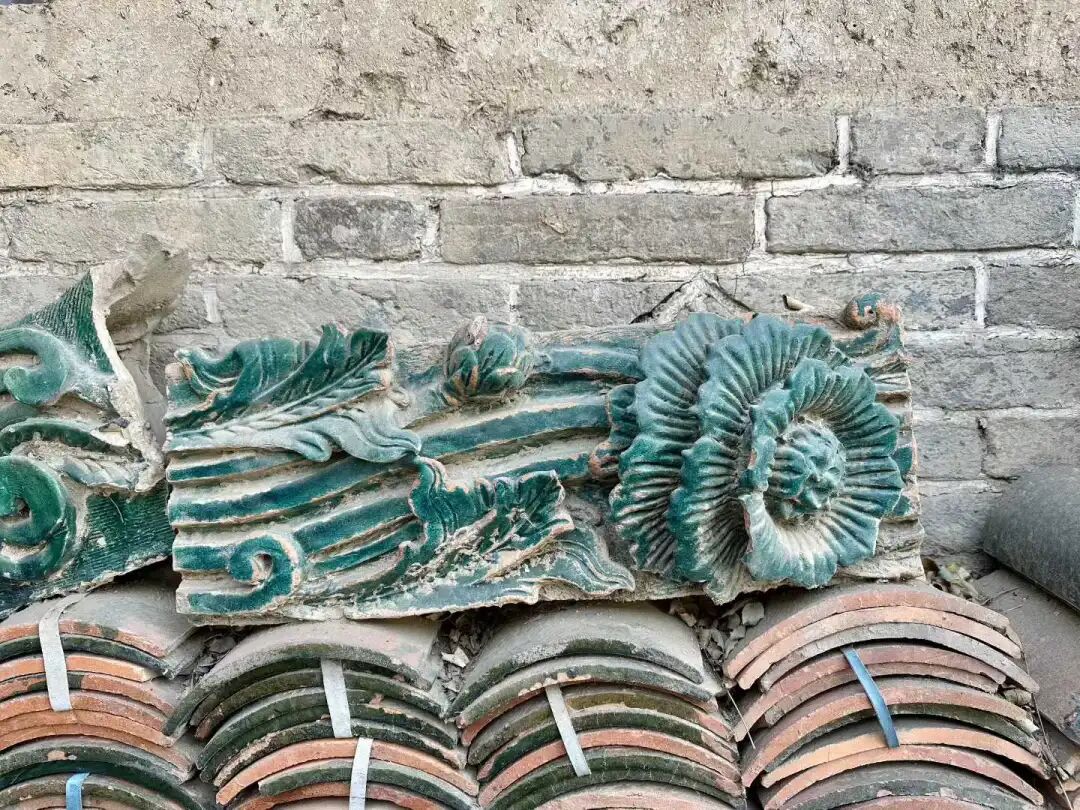
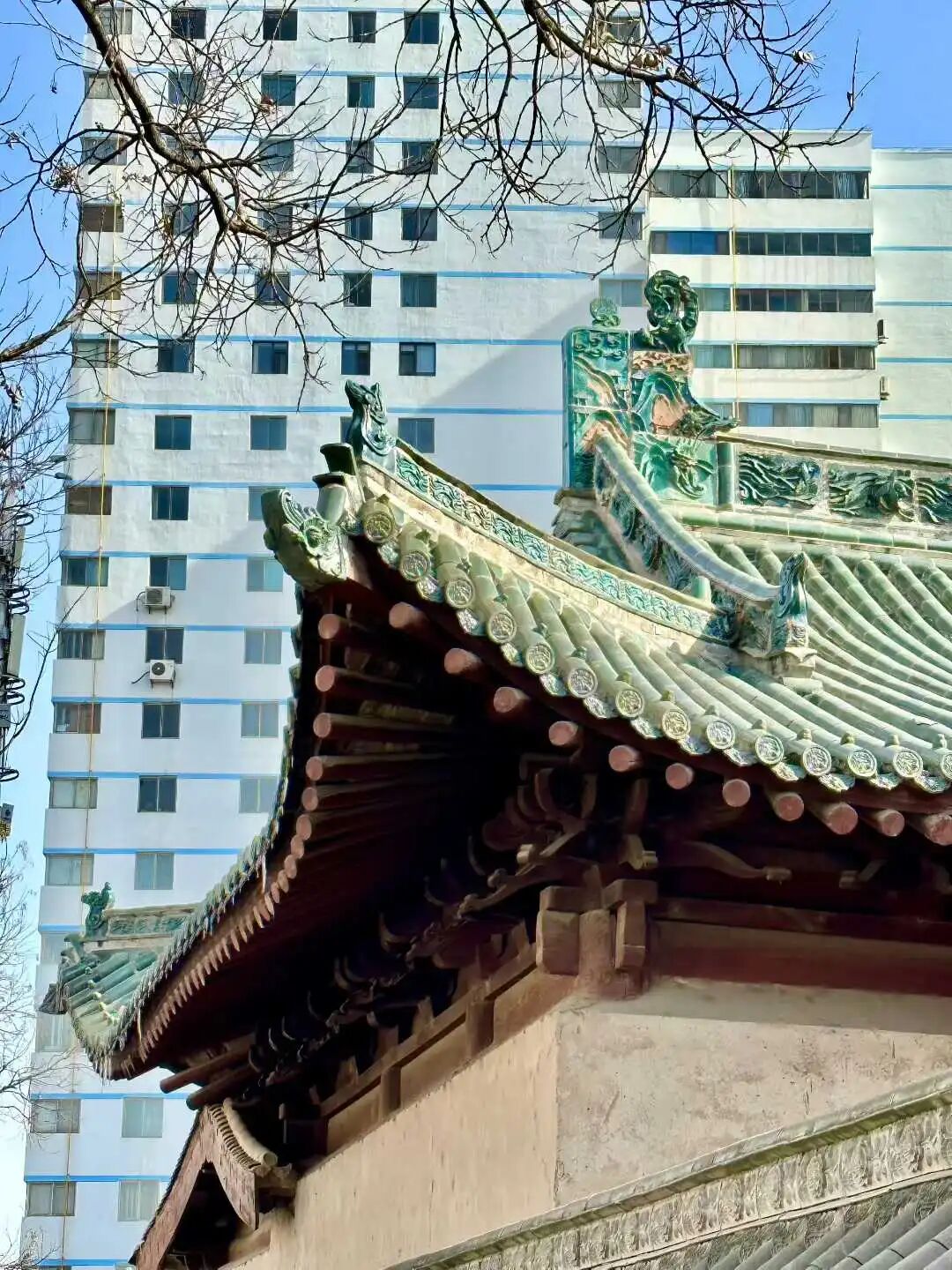
The front hall has five bays with a single-eave hip-and-gable roof covered in green glazed tiles. The main ridge features glazed lotus patterns, and the central vase decoration includes carvings of a memorial archway, a three-arch bridge, flowers, auspicious clouds, and a treasure gourd. The ridge is decorated with flower and pavilion motifs. The front porch of the main hall is supported by eave columns, which is different from the independent roof structure of Qing Dynasty halls. The rear kiln hall has three bays with a hip-and-gable roof, and the center of the main ridge features a glazed vase ornament.
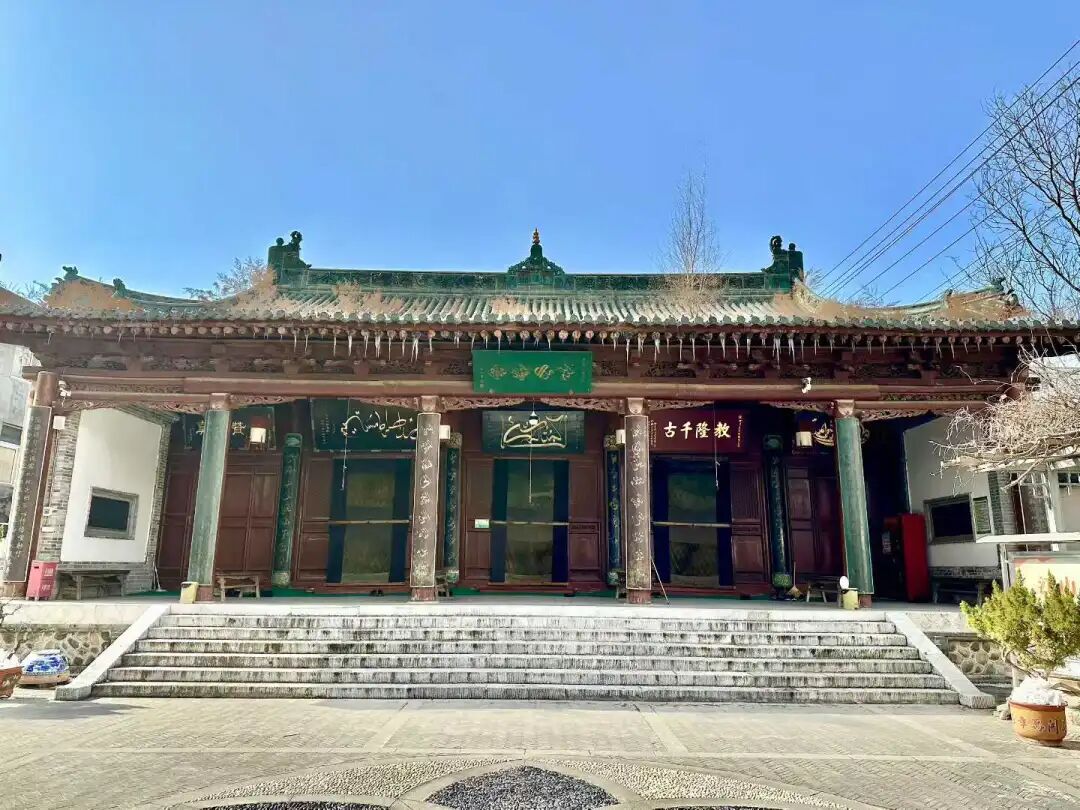
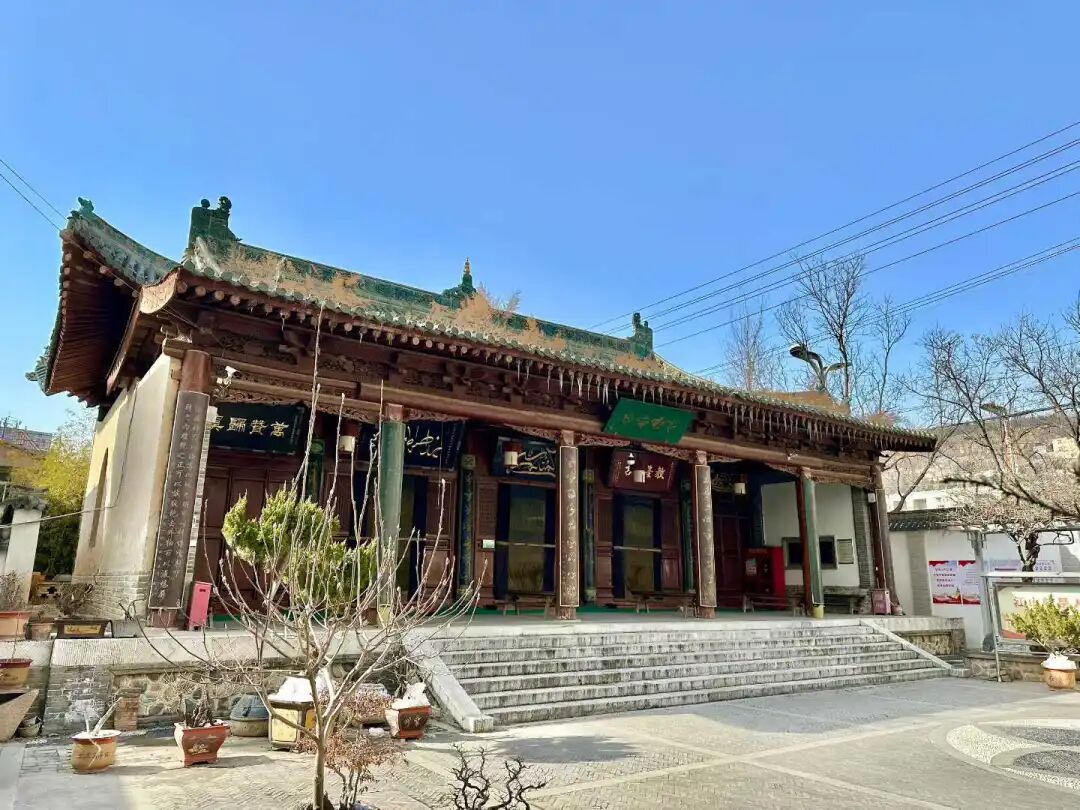
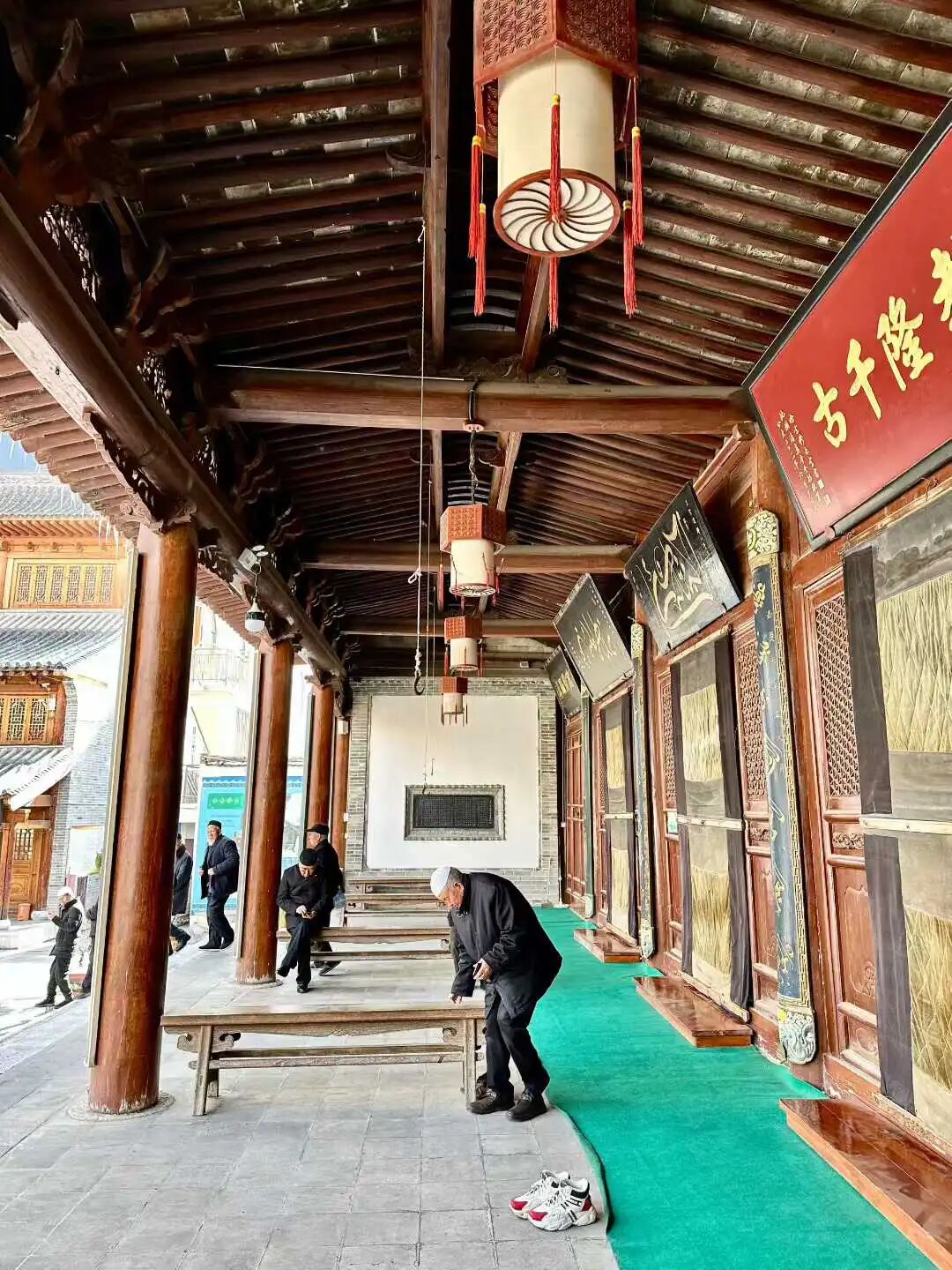
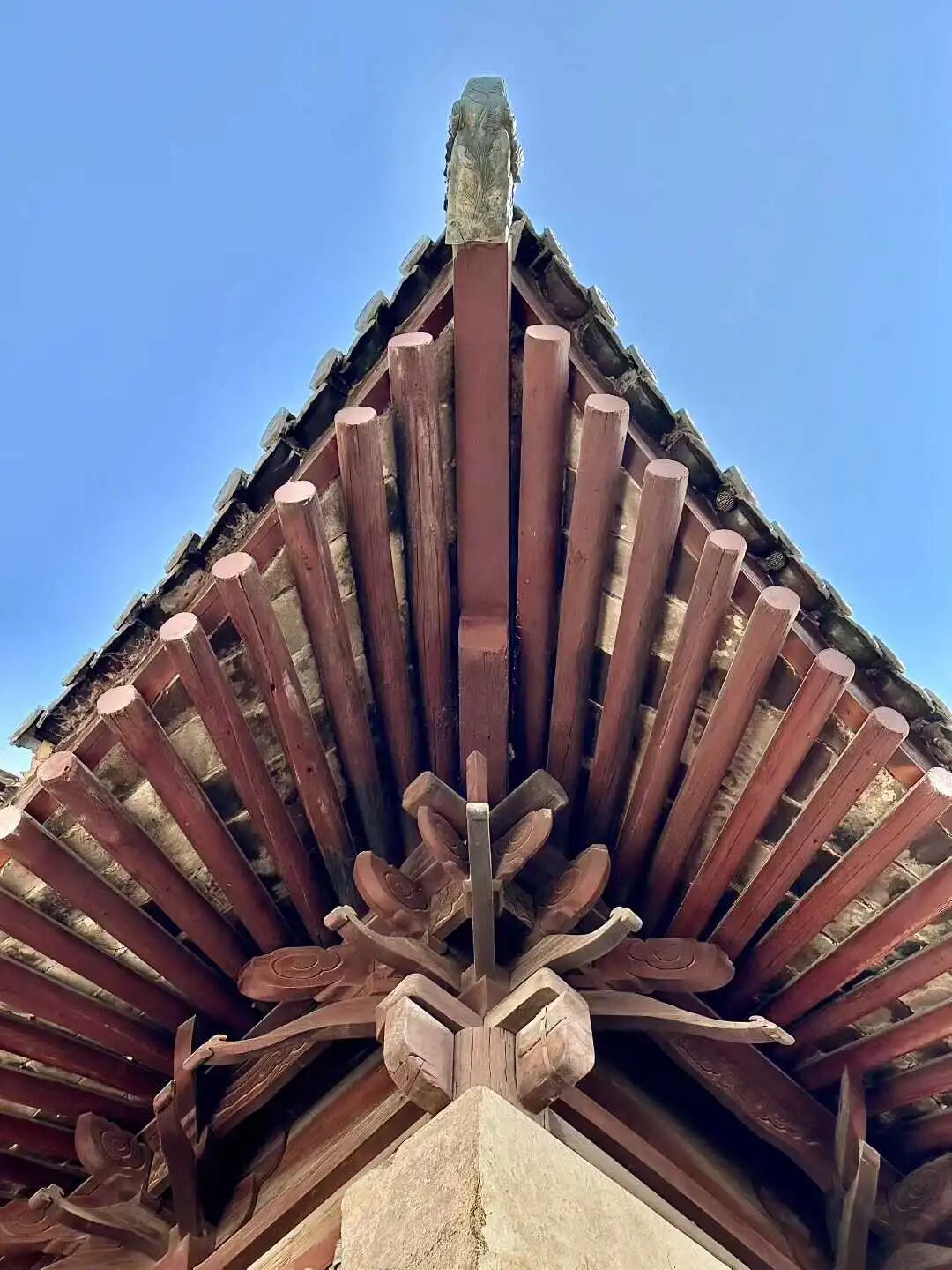
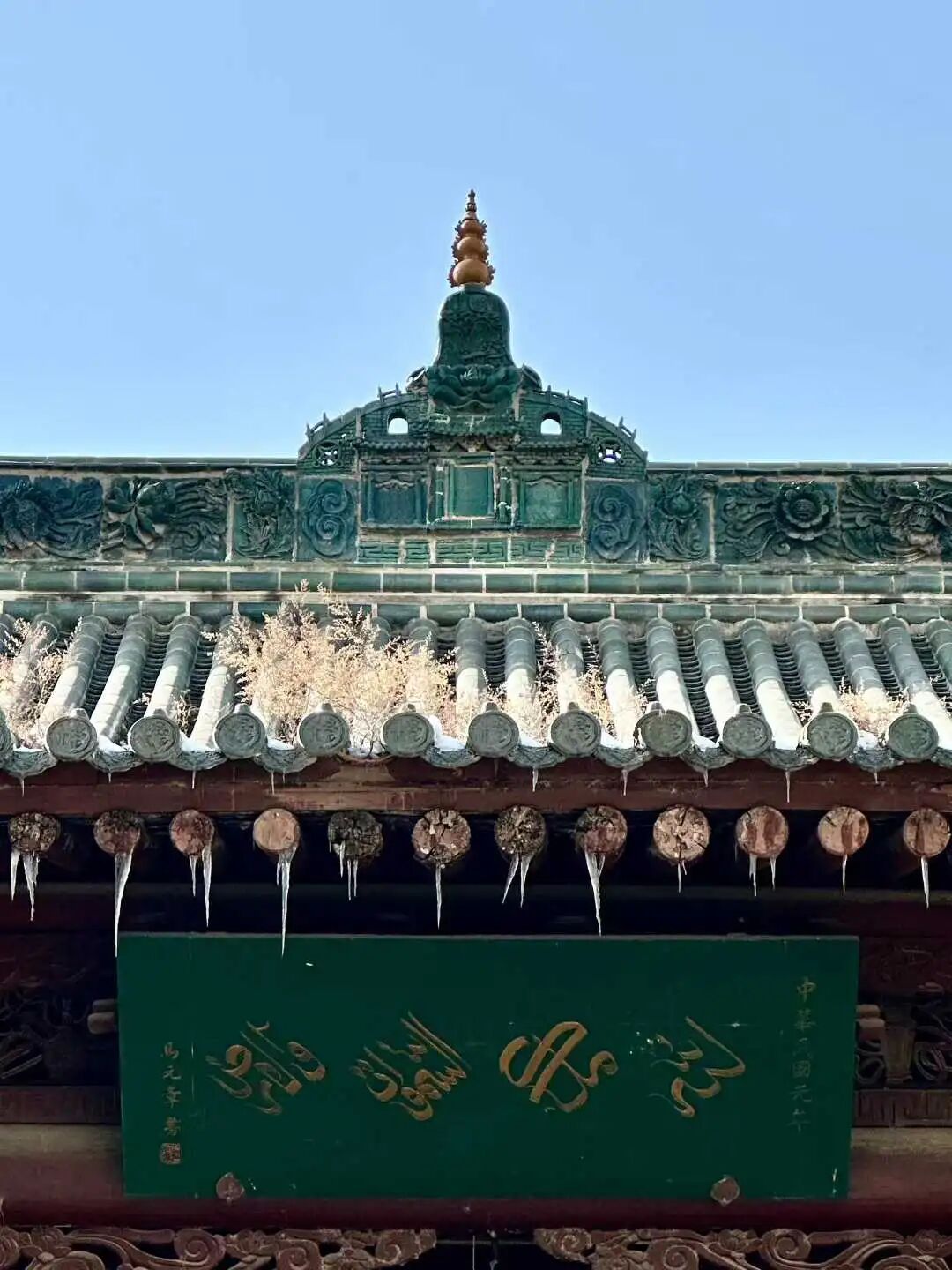
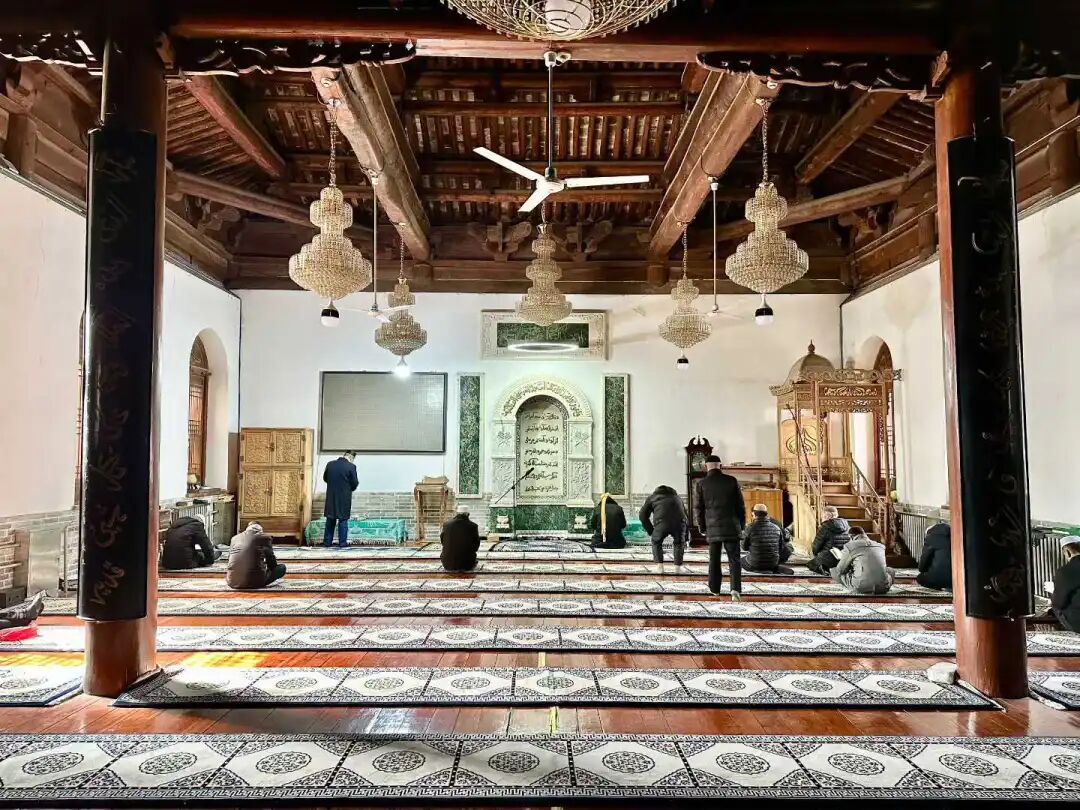
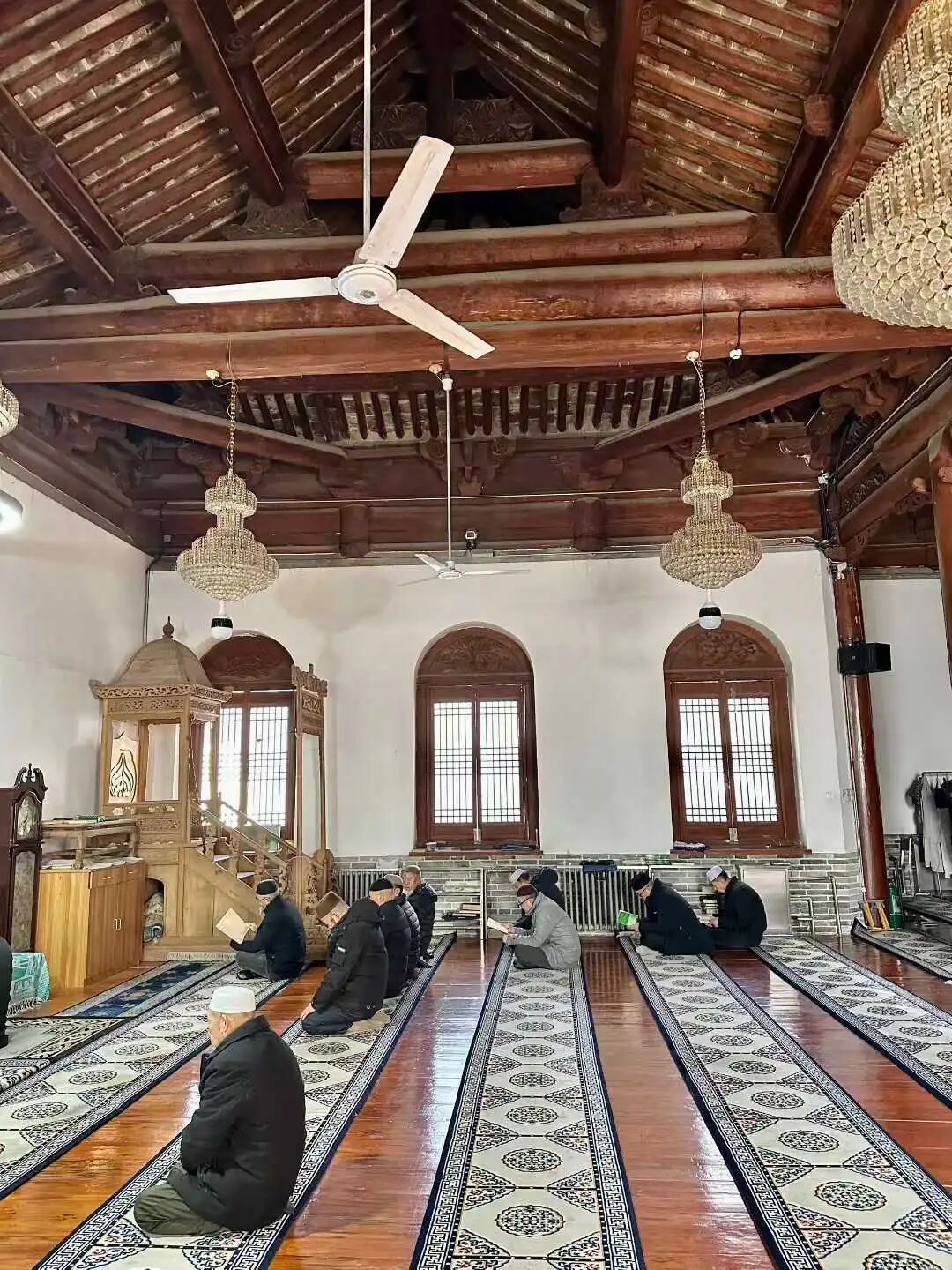
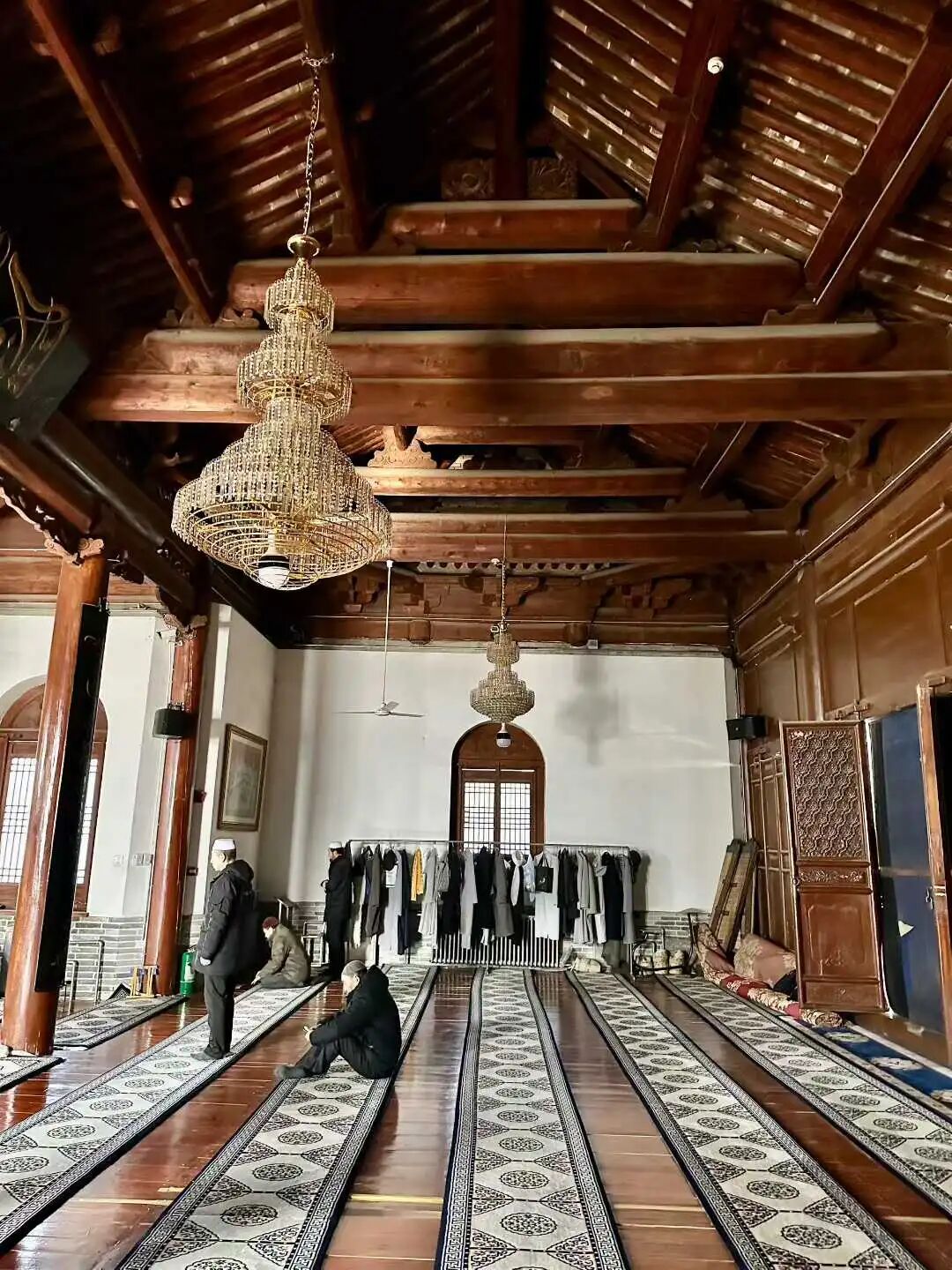
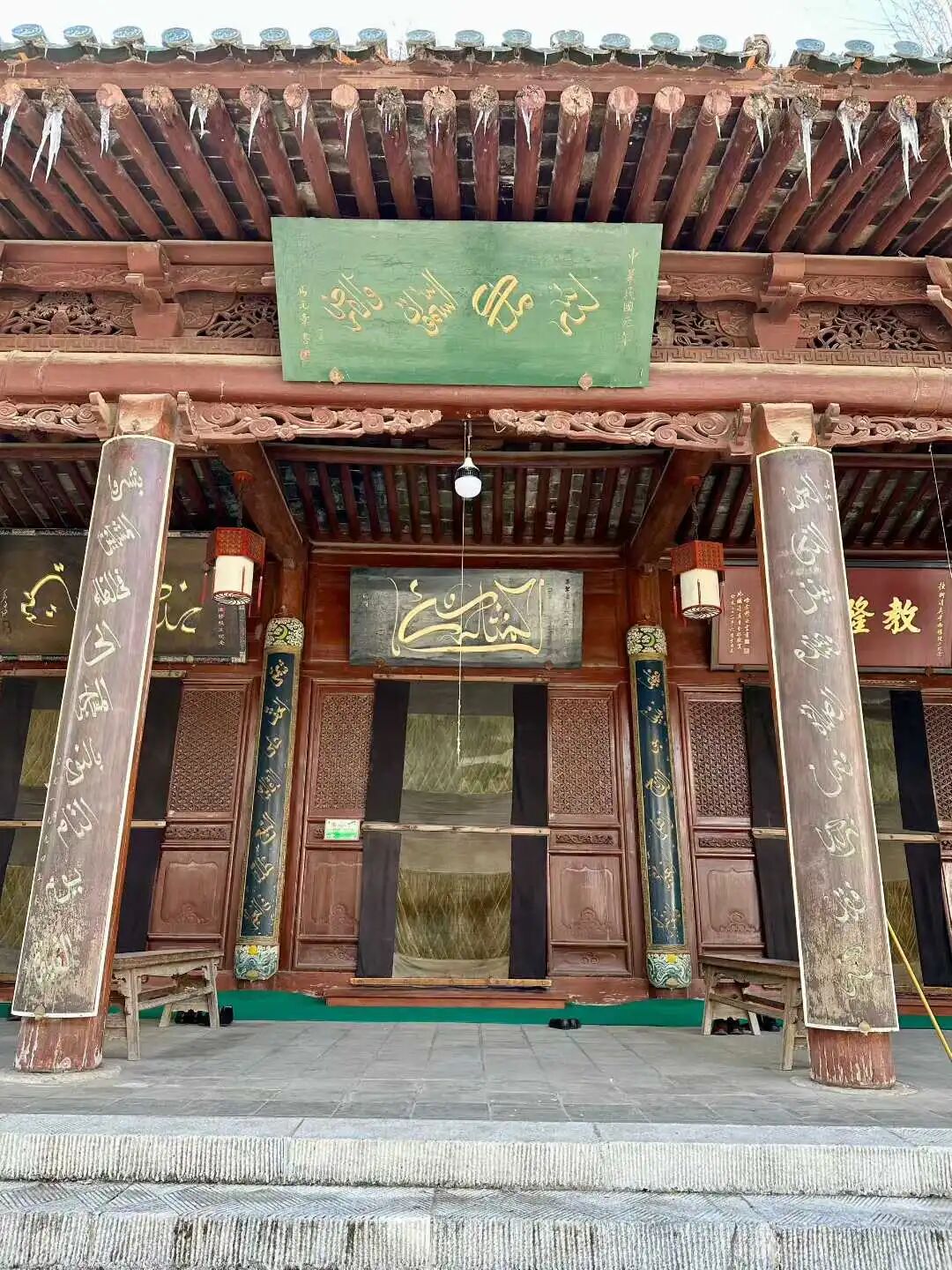
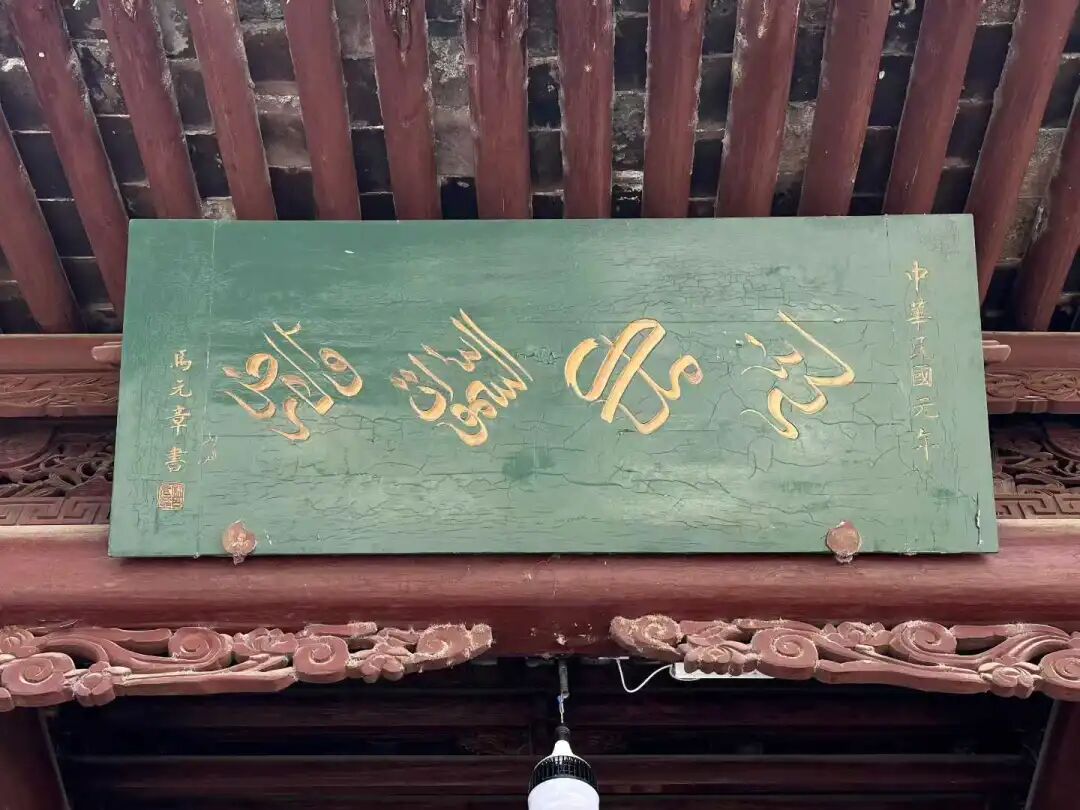
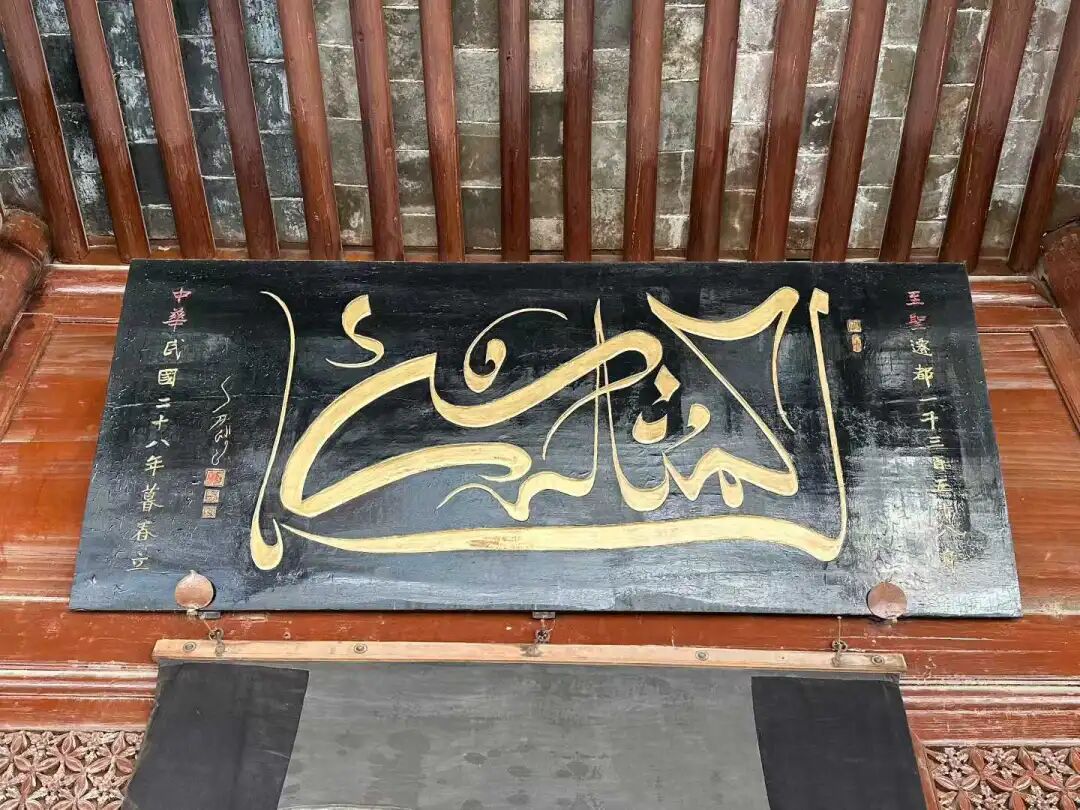
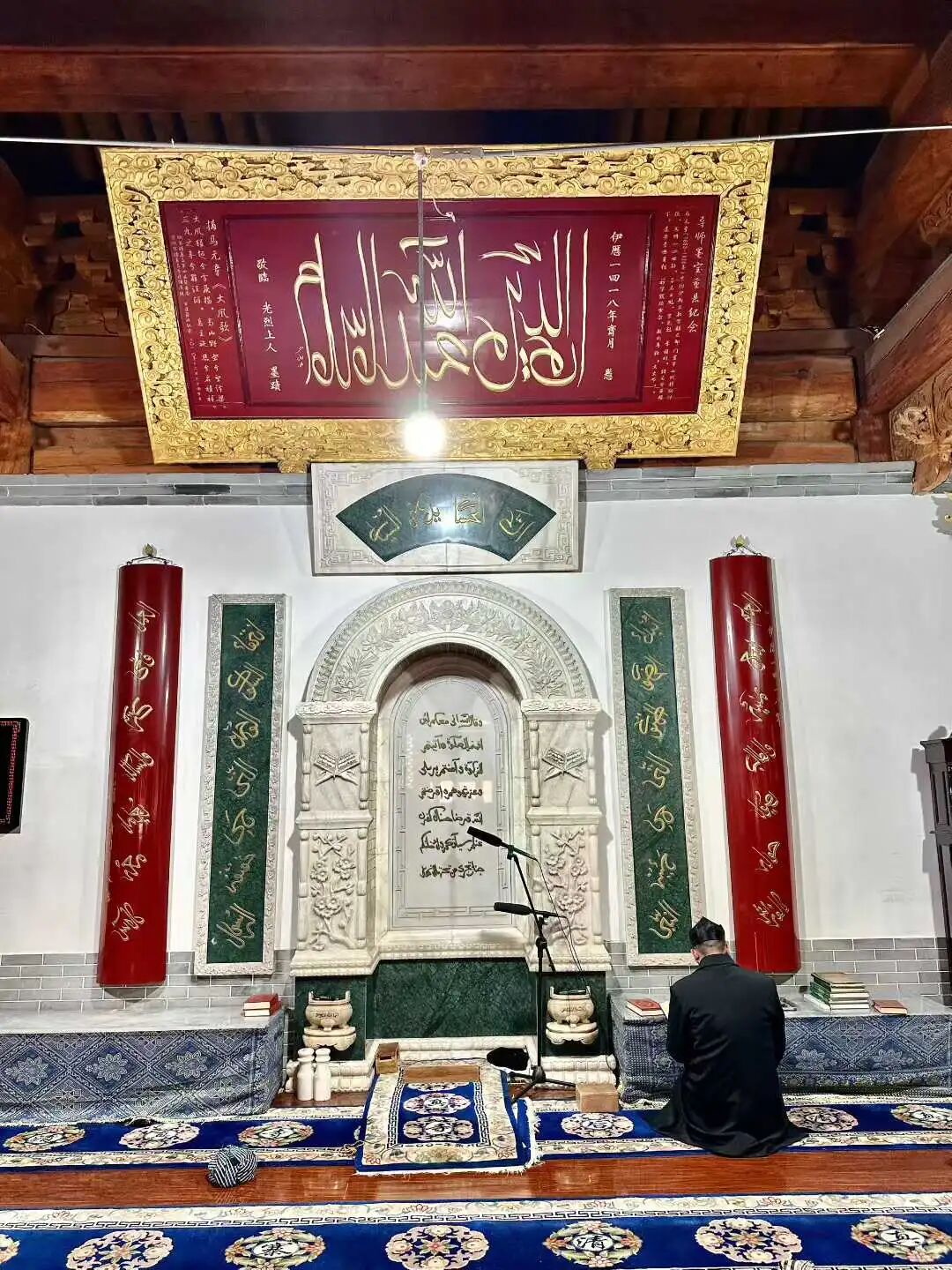
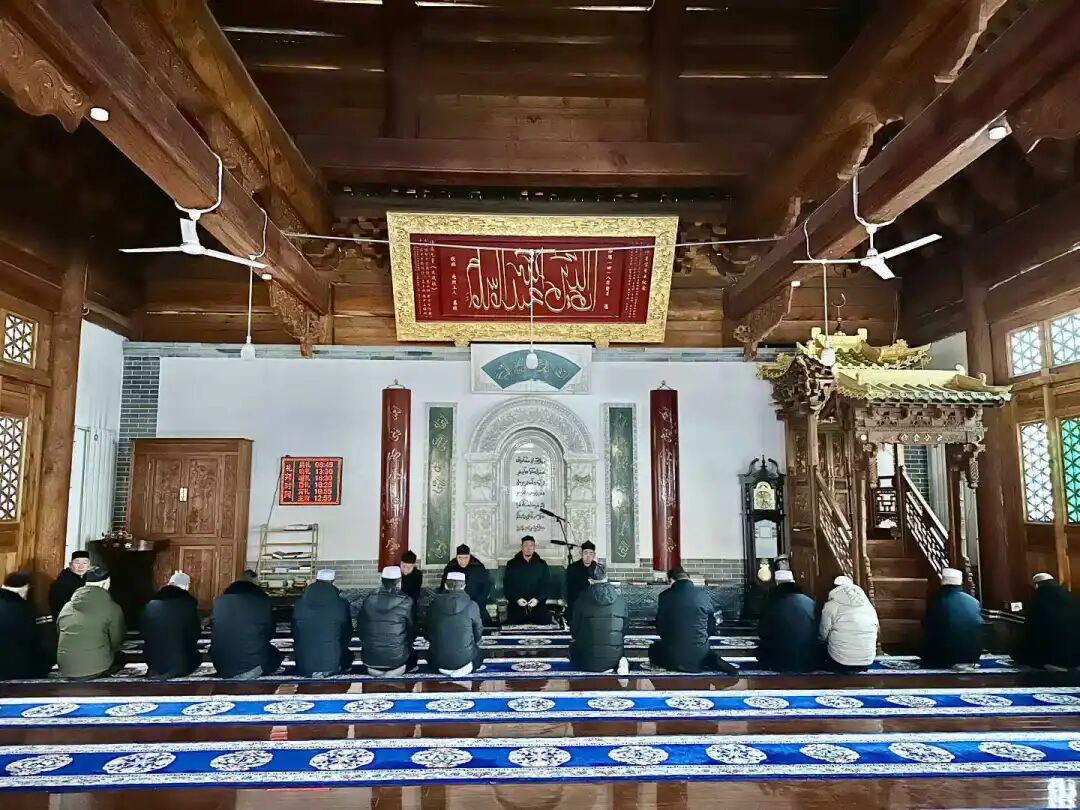
Houjie Mosque originally belonged to the Gedimu tradition, but later it became part of the Beishan Menhuan of the Jahriyya order. Legend says that in the mid-Qianlong era, Ma Mingxin, the founder of the Jahriyya order, came to Tianshui to teach and stayed in the north hall of Houjie Mosque. The mosque currently preserves a plaque from 1912 written by Ma Yuanzhang, the seventh Murshed of the Jahriyya order, saying 'The sovereignty of heaven and earth belongs to Allah,' and another from 1939 by Ma Yuanchao, founder of the Beishan Menhuan, saying 'The Lord is not like anything.'
Ma Yuanzhang was known as 'Shagou Taiye' and was the great-grandson of Ma Mingxin. He arrived in Zhangjiachuan in 1875 (the first year of the Guangxu era) and used it as a base to revive the Jahriyya order. He officially became the seventh Murshed in 1912 and died in a cave dwelling during the 1920 Haiyuan earthquake.
Ma Yuanchao was Ma Yuanzhang's younger brother. He came to Beishan in Zhangjiachuan during the Guangxu era to buy land and farm, later helping Ma Yuanzhang revive the Jahriyya order. After Ma Yuanzhang passed away in 1920, Ma Yuanchao began leading the religious affairs in Xuanhuagang, which became known as the 'Beishan Menhuan'.
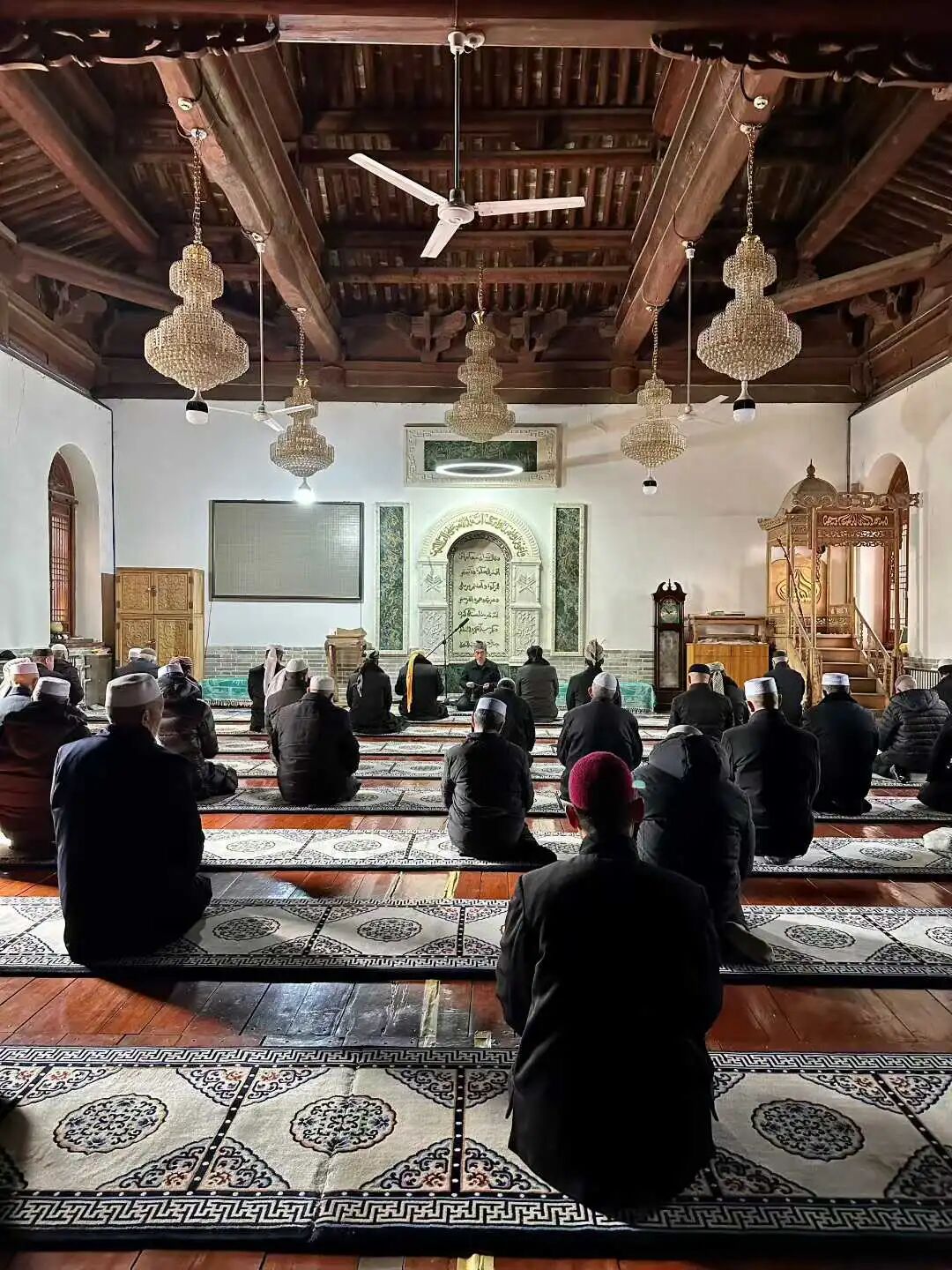
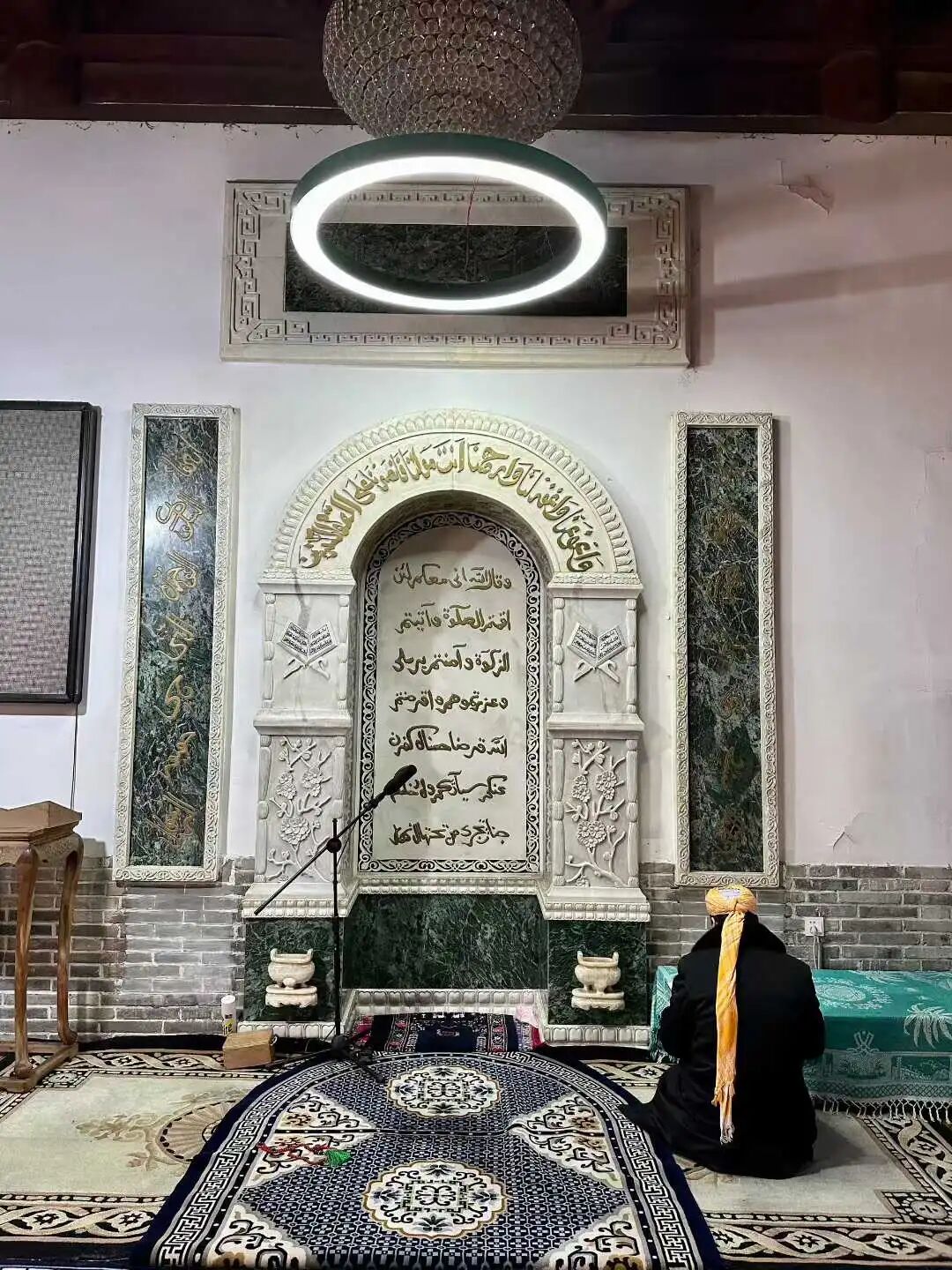
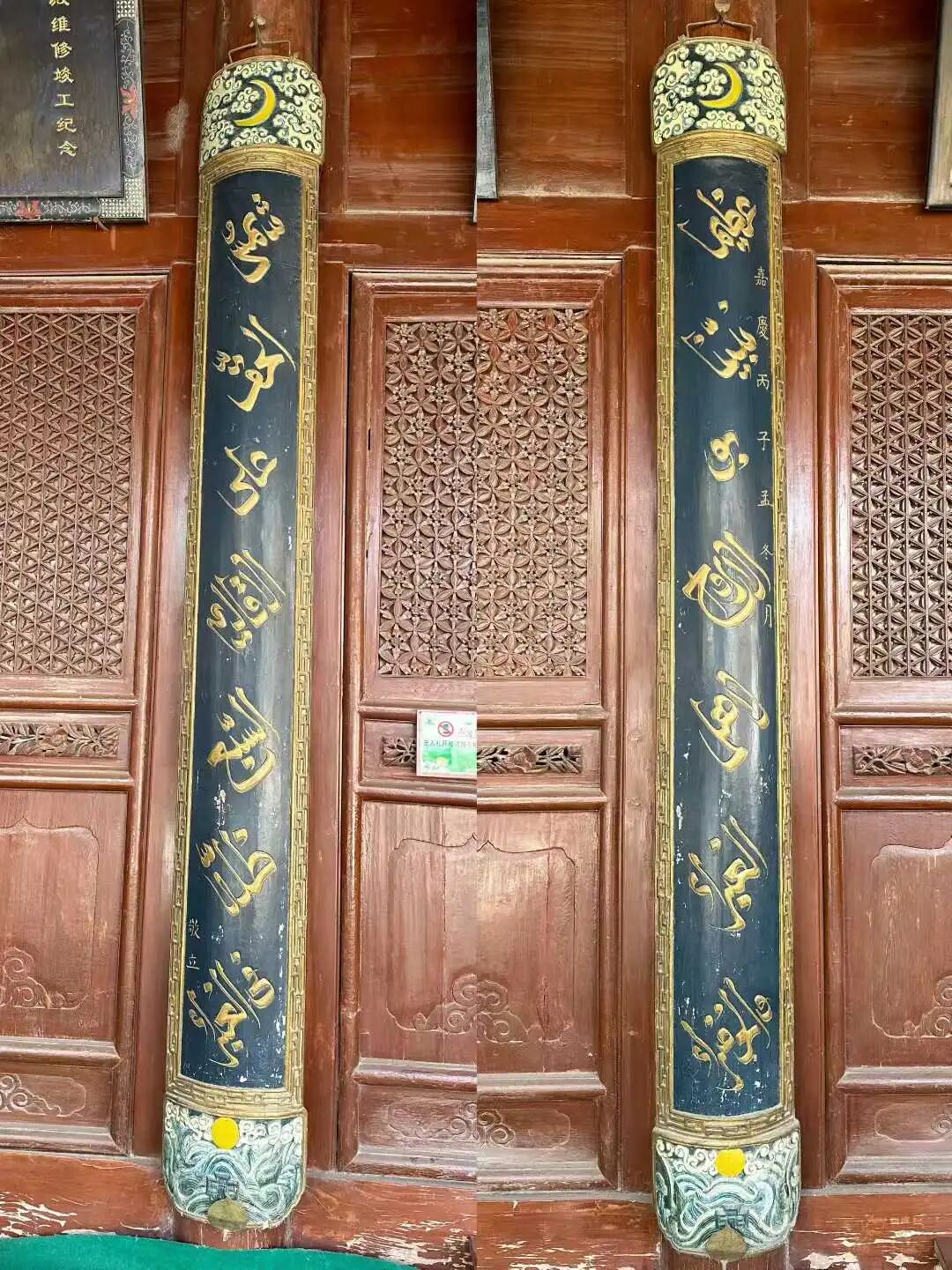
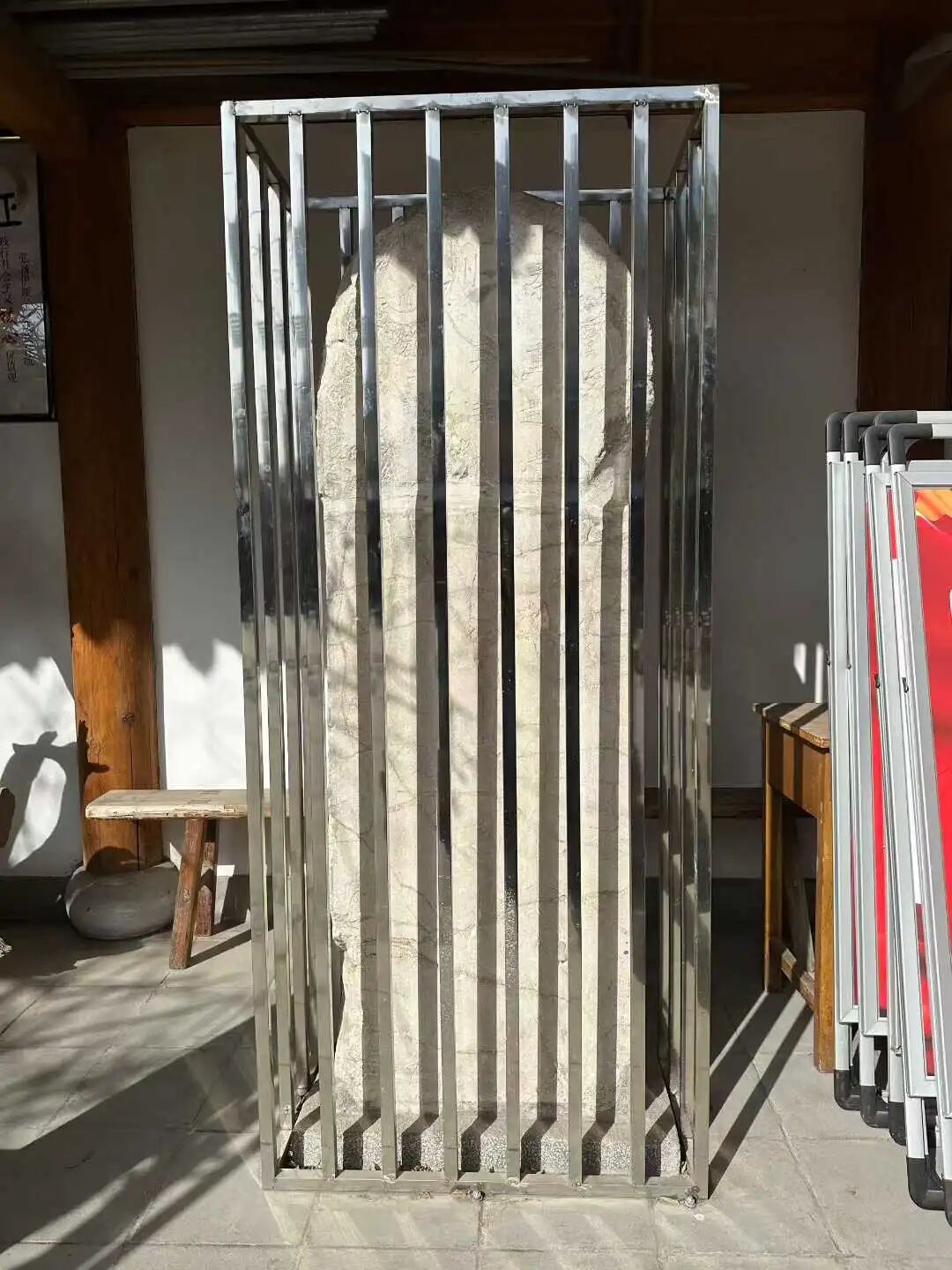
The mosque also preserves Arabic couplets from 1816 (the 21st year of the Jiaqing era) and a stone tablet recording the reconstruction from 1543 (the Ming Jiajing era). The Ming Dynasty tablet records that a local man named Gao Mu bought land at the northeast corner of Tianshui's West Gate in the seventh year of the Hongwu era and used his own money to buy wood, stone, and bricks to build a three-room mosque. In the fourth year of the Chenghua era, the religious leader Ma Fan encouraged local elders to donate money for a renovation. In the 13th year of the Jiajing era, they hired a master builder named Wu from their own community to build the mosque tower.
The Ming Jiajing tablet mentions Hui Muslims with the surnames Ma and Wu. Currently, there is a group of Hui Muslims in Tianshui with the surname Ma who claim their ancestral home is Hexi, Yunnan, and that they arrived in Tianshui in 1372 (the fifth year of the Ming Hongwu era).
According to a family genealogy from the tenth year of the Guangxu era, the Wu family originally settled in Jiangning Prefecture, Nanjing. In 1369 (the second year of the Ming Hongwu era), Generals Wu Zhen and Wu Liang moved to Qinzhou. The 'Supplement to the New Gazetteer of Qinzhou Prefecture' records that 'Qinzhou Garrison Commander Wu Zhen was a founding hero of the Ming Dynasty and was titled Marquis of Jinghai.' Wu Zhen and Wu Zhen (Wu Zhen/Wu Zhen) might be the same person.
Besides the Ma and Wu families, Hui Muslims with the surnames Lei, Zhao, and Huang also moved to the area during the Ming Dynasty. Oral history says the Lei family arrived in Qinzhou during the Ming Dynasty. The Guangxu-era Qinzhou Gazetteer records that Lei Jiaofeng was a local Hui Muslim with exceptional martial talent in the 13th year of the Chongzhen reign (1640).
The Zhao family moved here from Zhaocun in Xianyang, Shaanxi, between the end of the Ming Dynasty and the start of the Qing Dynasty. The Huang family's ancestral home was in Sichuan, and they moved to Tianshui at the end of the Ming Dynasty.
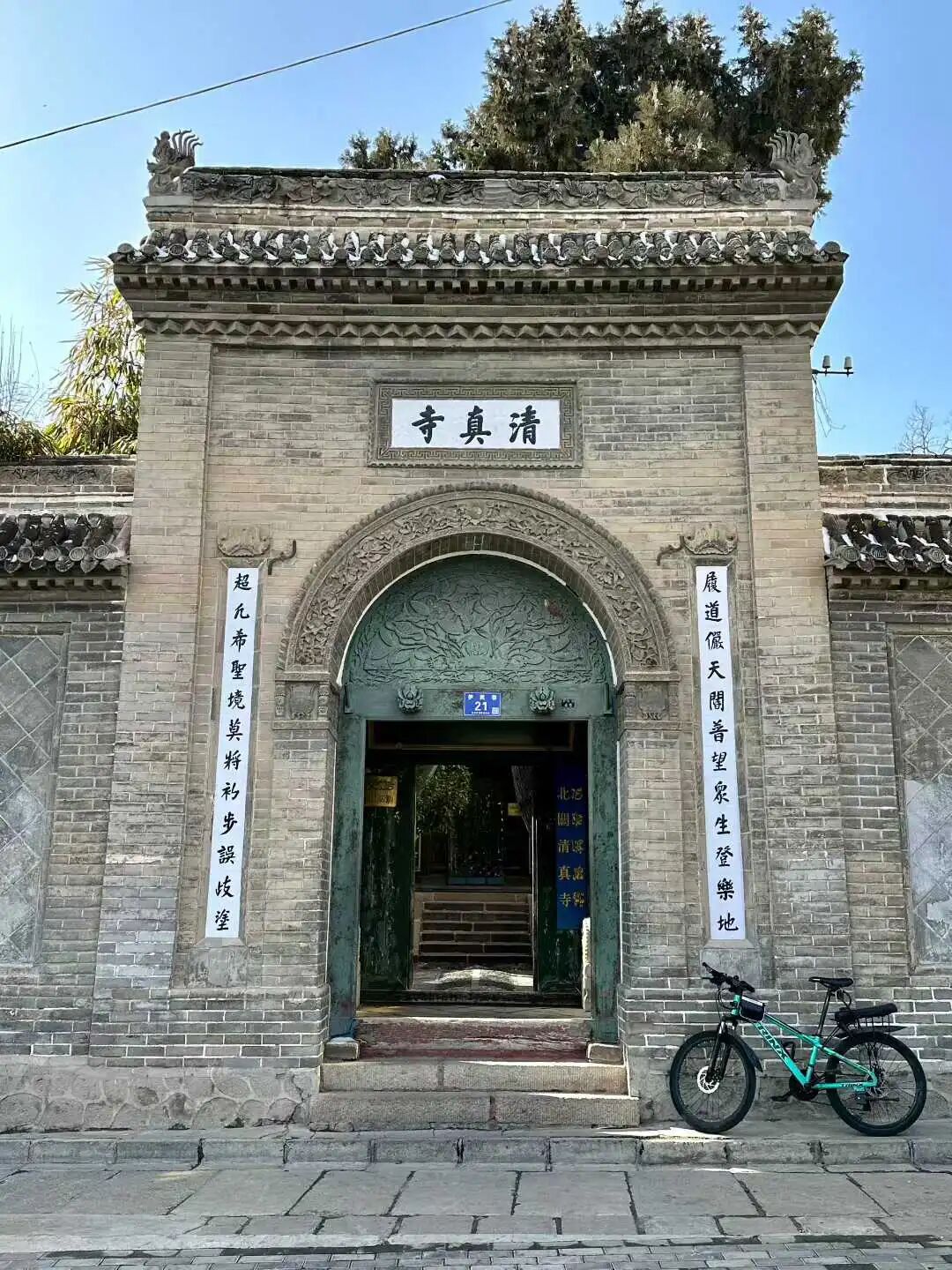
The founding date of the Beiguan Mosque in Qinzhou, Tianshui, is unknown. It was originally located at the entrance of Zhongyi Lane in Shang'an Valley but was destroyed by war in the early Tongzhi years. Later, a Hui Muslim named Wu donated a house in Mujia Pit to rebuild it. In 1929, Wu Zhenyi, a high-ranking member of the mosque and the then-magistrate of Cheng County, led a fundraising campaign. Another high-ranking member, Ma Hengtang, donated his own house, and the reconstruction was completed after two years. The couplet carved on the main gate reads: 'Walk the path to heaven and invite all living beings to the land of joy; transcend the ordinary and seek the holy, do not let the first step lead you astray.' This was written by the late Qing Dynasty Hui Muslim scholar Ha Yiqing. Inside the main hall, you can see exquisite calligraphy from the Jahriyya (Zhepai) order.
The Yuan family of Hui Muslims has lived in Beiguan, Qinzhou for generations, with ancestral roots in Fengxiang, Shaanxi. According to family oral history and ancestral graves, they have been here for 18 generations. One branch moved to Mei County, Sichuan, during the Tongzhi years of the Qing Dynasty, but returned to Tianshui in the early Republic of China era.
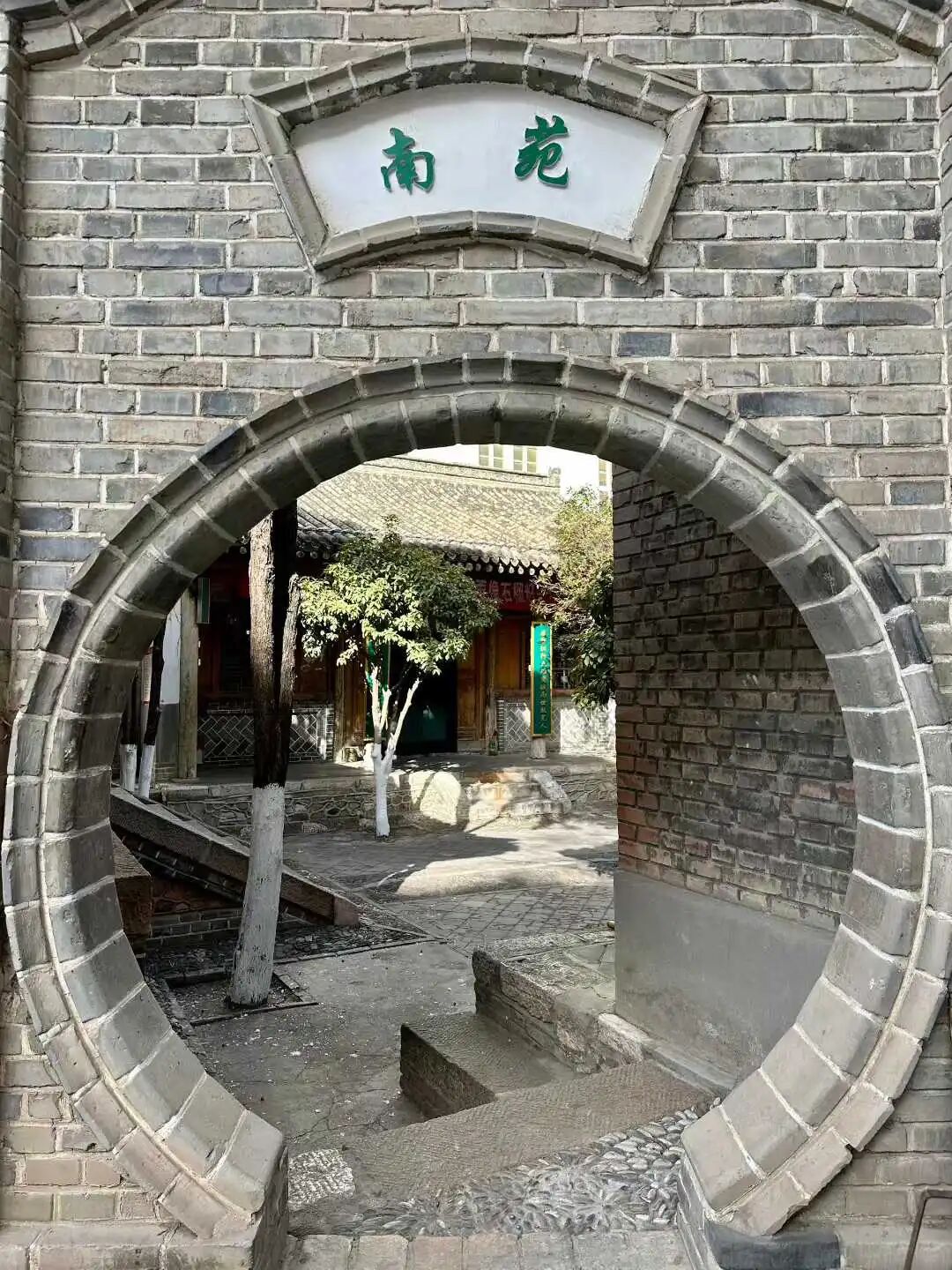
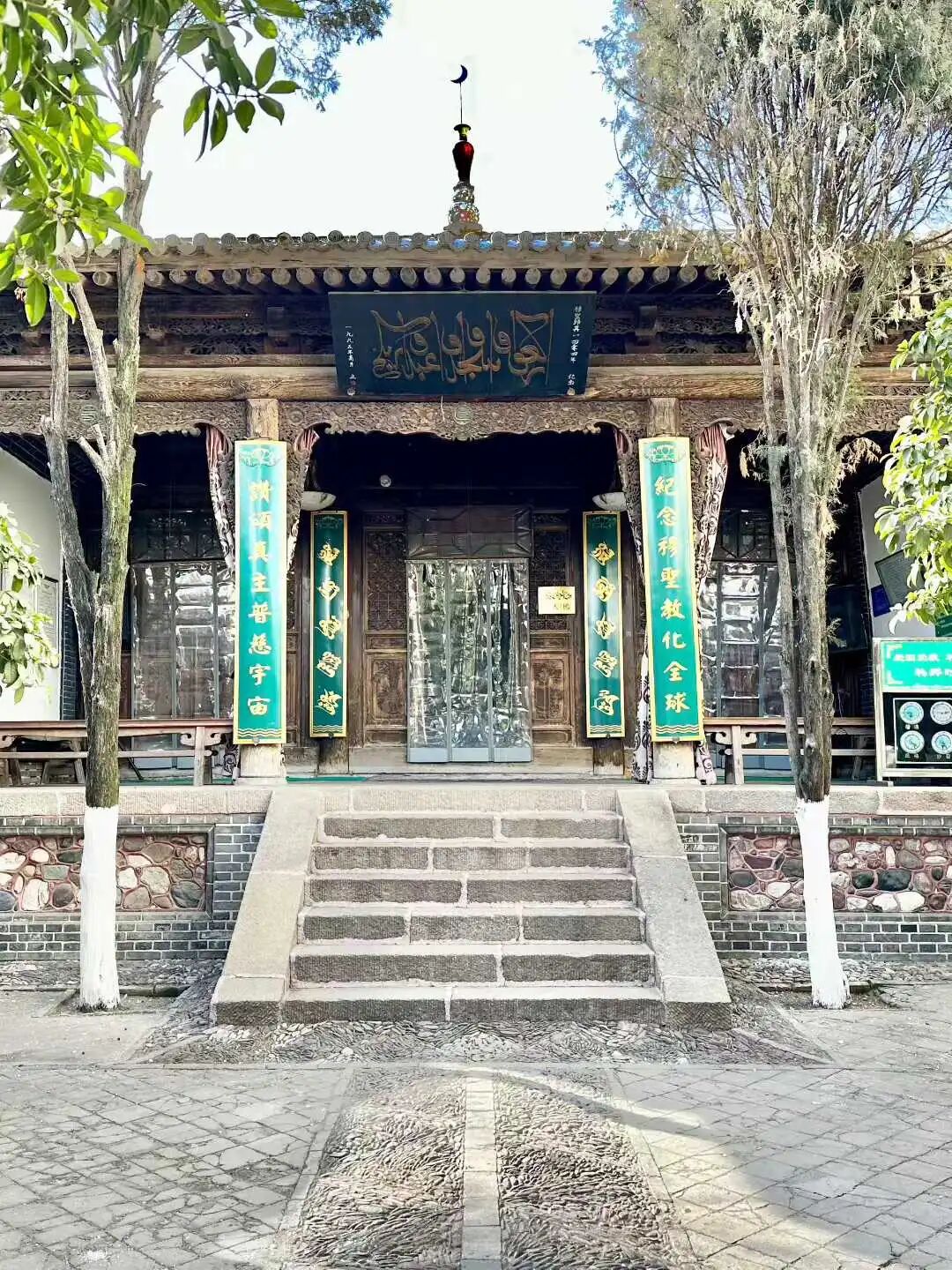
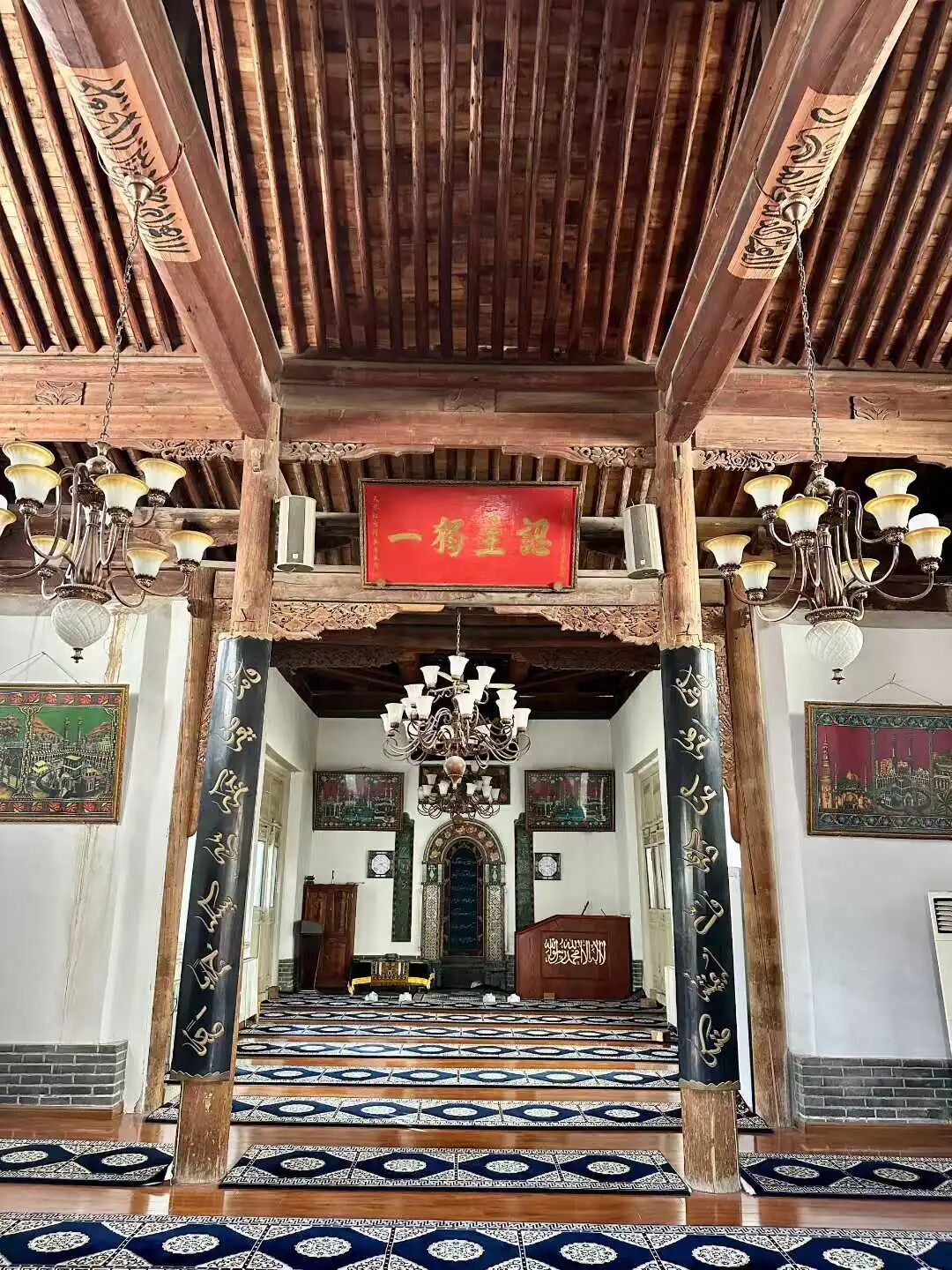
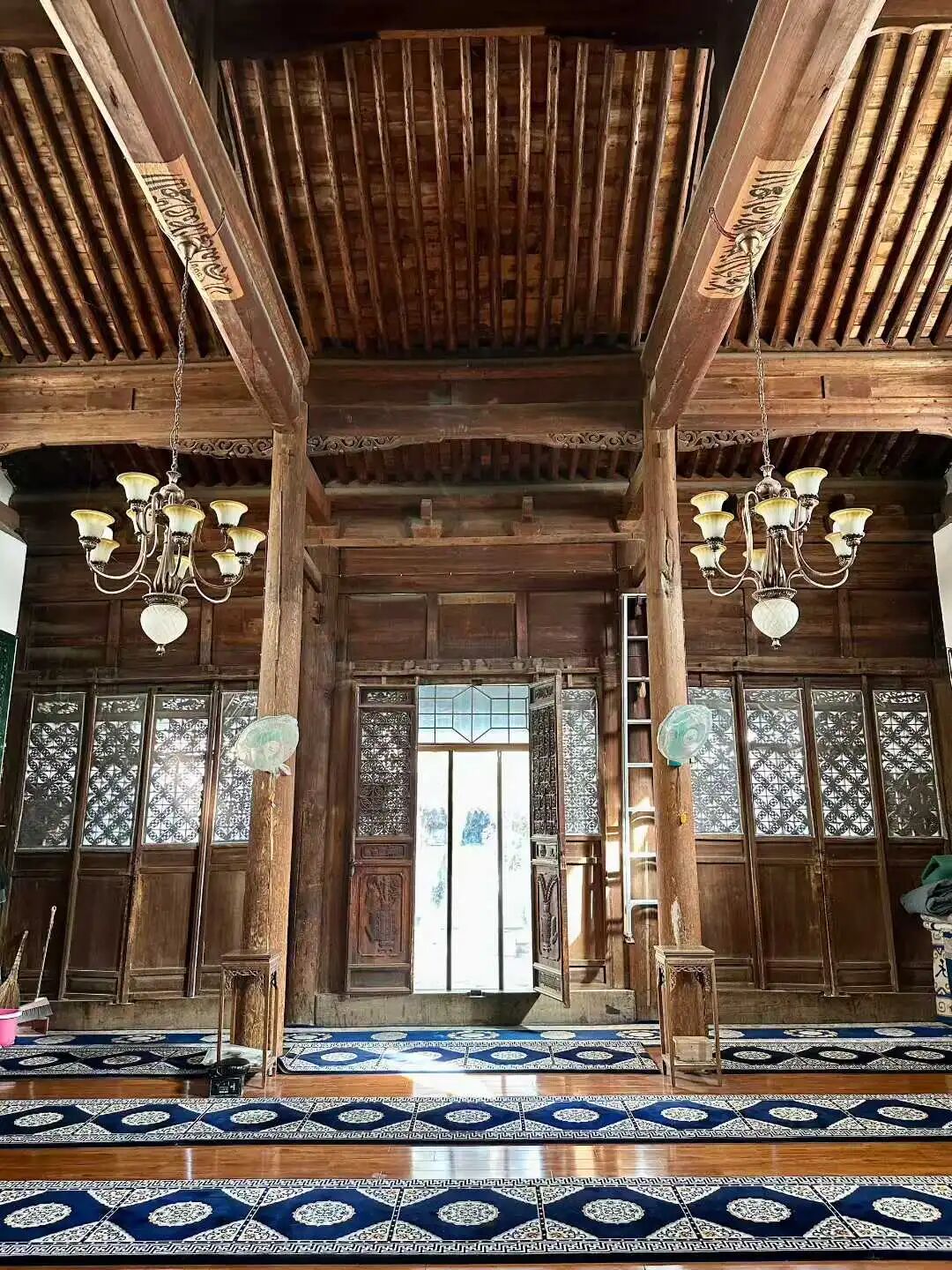
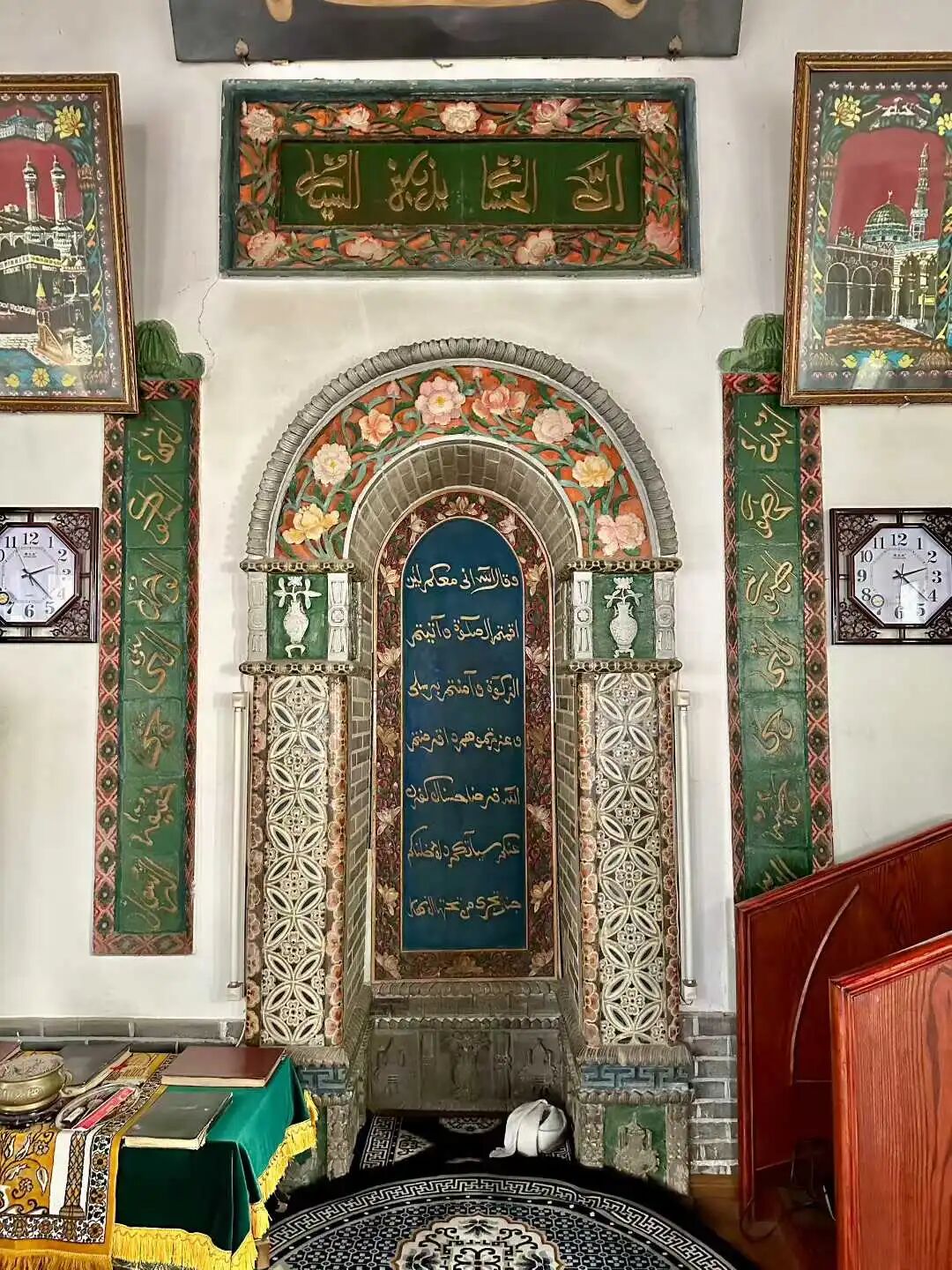
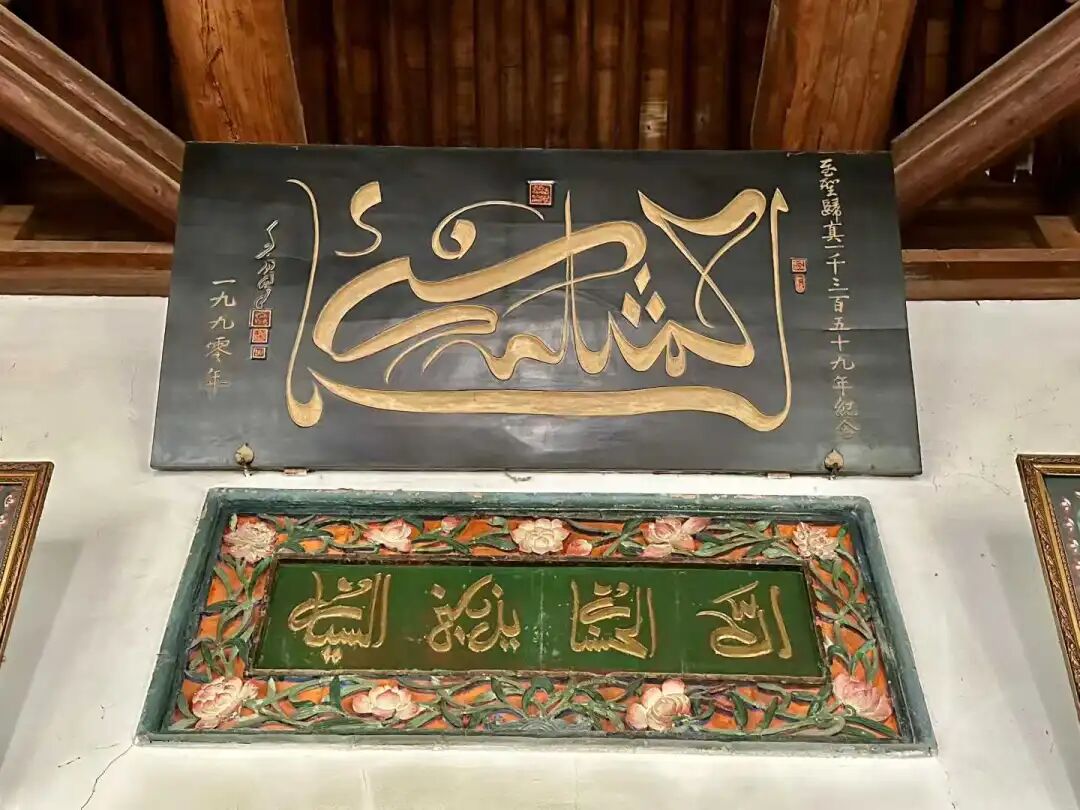
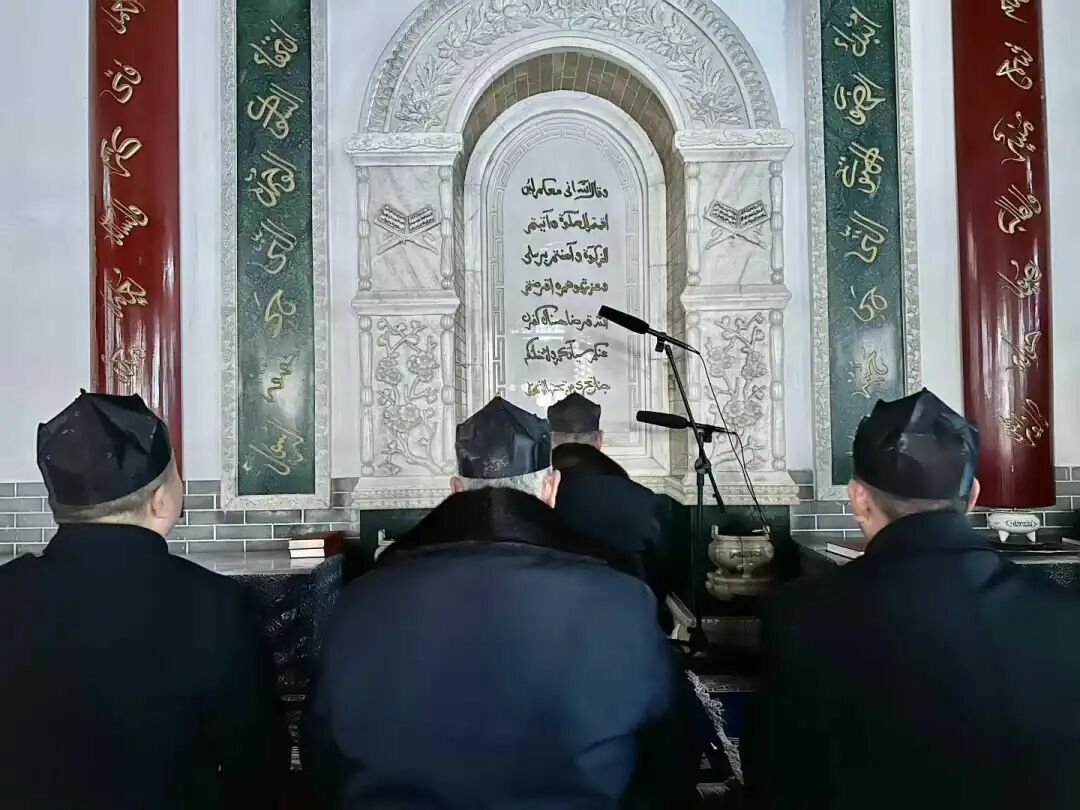
The Taizi Mosque in Qinzhou, Tianshui, is believed to have been built between the late Ming and early Qing dynasties. The main hall's roof beam has an inscription from the fourth year of the Yongzheng reign of the Qing Dynasty, and there are two 400-year-old locust trees in front of the gate. A larger main hall has been built behind the original Qing Dynasty hall. I regret that I could not enter the Qing hall, but I was lucky enough to experience the unique chanting style of the Jahriyya order.
The number of Hui Muslims moving to Qinzhui, Tianshui, continued to grow during the Qing Dynasty. According to the family genealogy, the Mu family ancestors came to Long from Youyan to do business during the prosperous Kangxi, Yongzheng, and Qianlong eras. Based on this, it is assumed they are a branch of the Mu family of Hui Muslims from Mujia Village in Tianjin.
There are two branches of the Su family of Hui Muslims, who moved here from Cheng County and Yanguan in Li County respectively at the end of the Qing Dynasty.
The Hai family lives in Zizhi Lane and their ancestral home is Lanzhou. Their ancestor was a mule cart driver for a Tianshui official working in Lanzhou. When the official returned home during the Daoguang reign of the Qing Dynasty, the Hai ancestor followed him and settled in Qinzhou.
The Mi family's ancestral home is Huaishu Village, Baqiao, Xi'an, Shaanxi. They fled to Qinzhou during the Tongzhi years of the Qing Dynasty, initially working as shed guards for a family named Fan, and have now been here for seven generations.
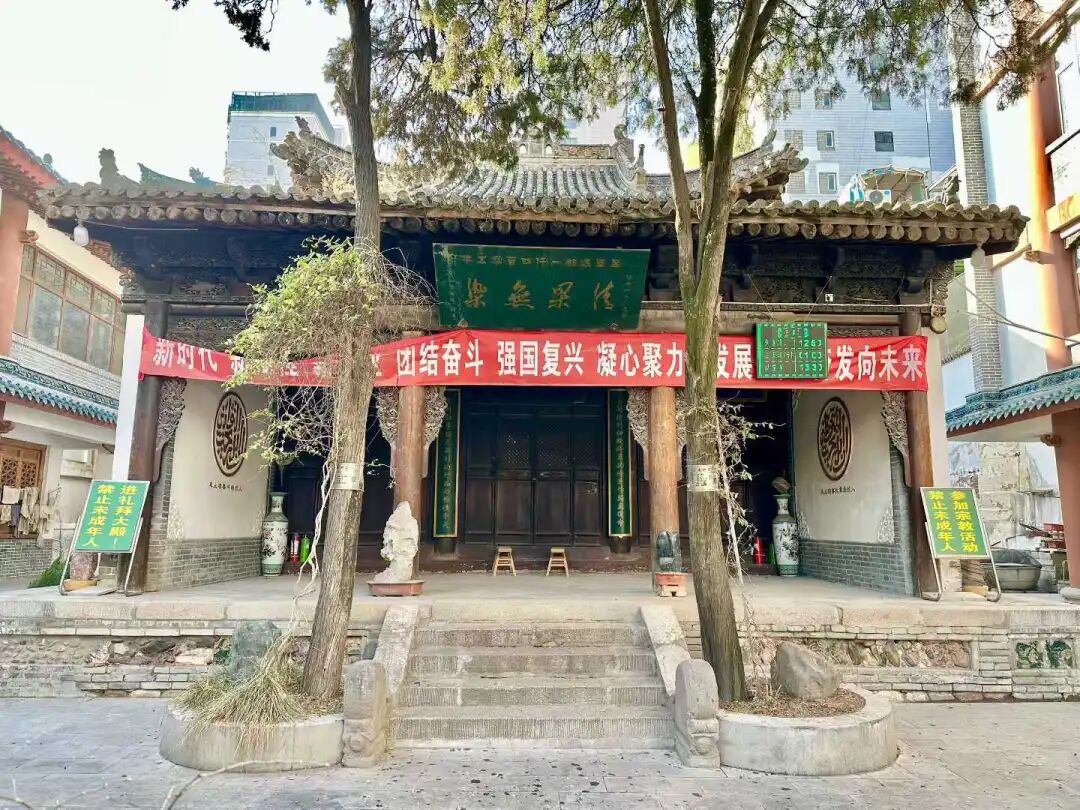
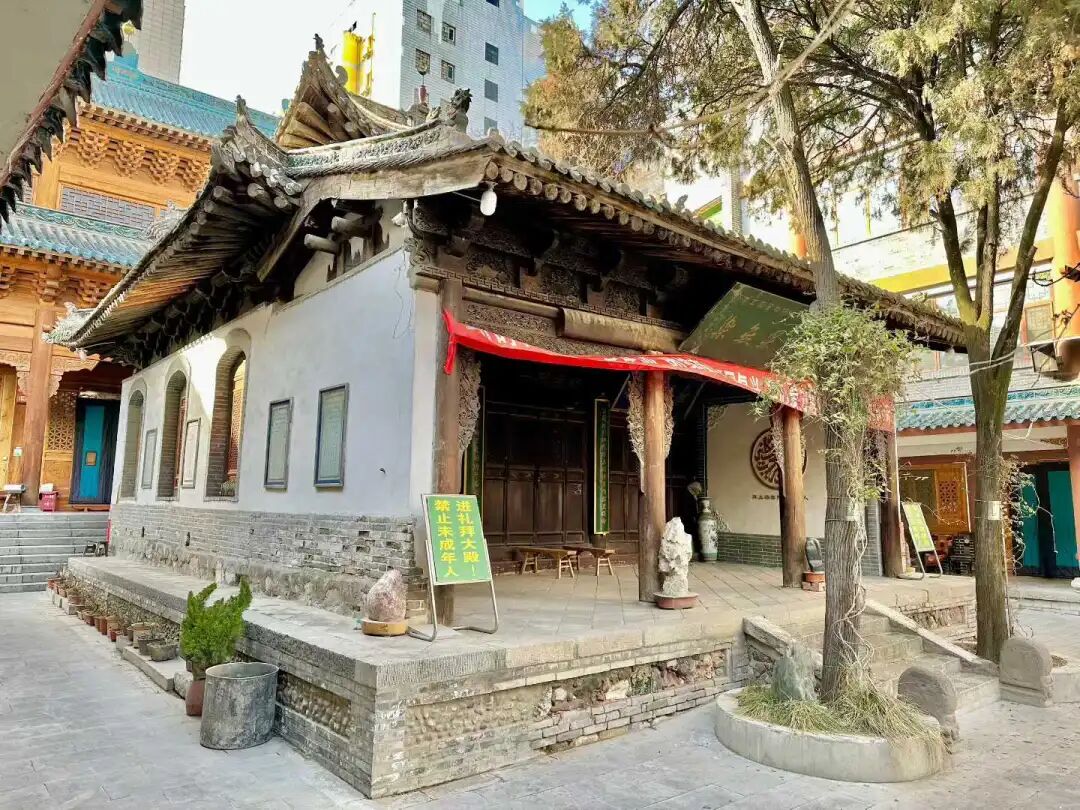
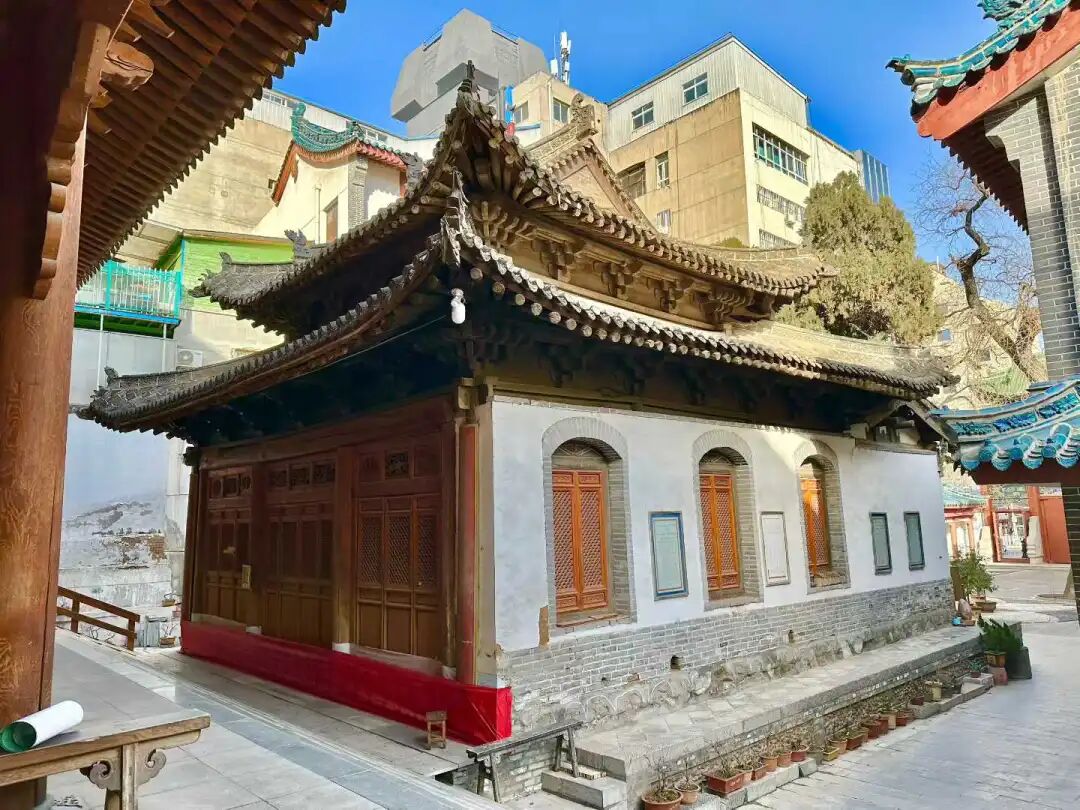
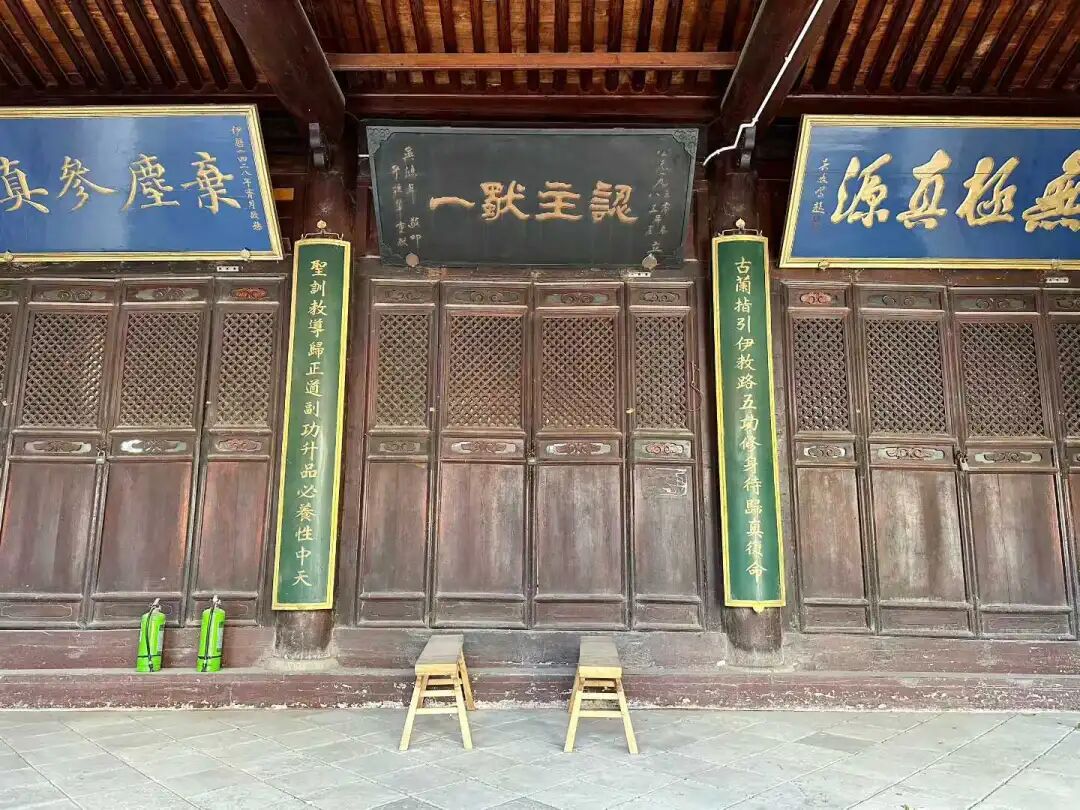
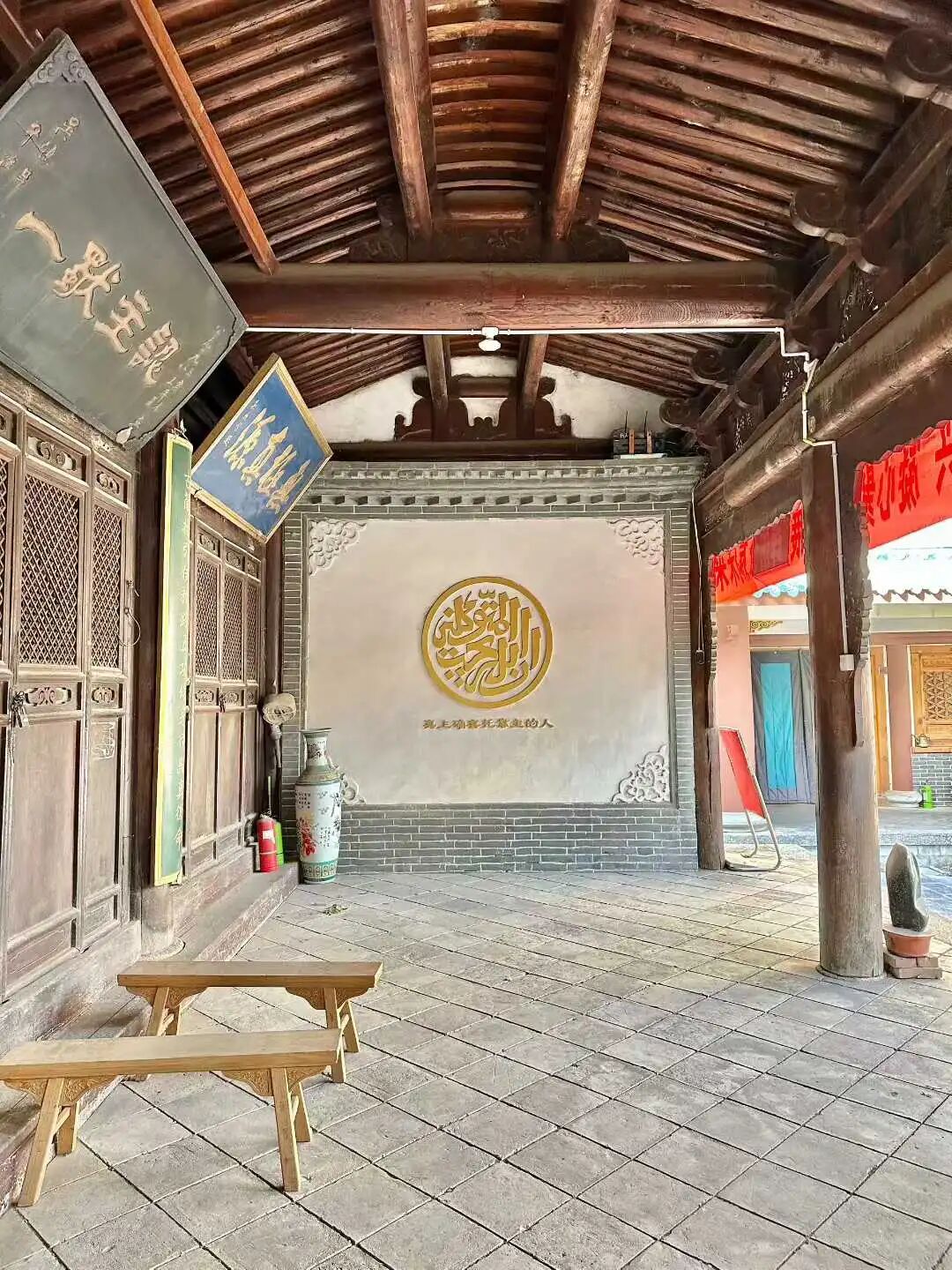
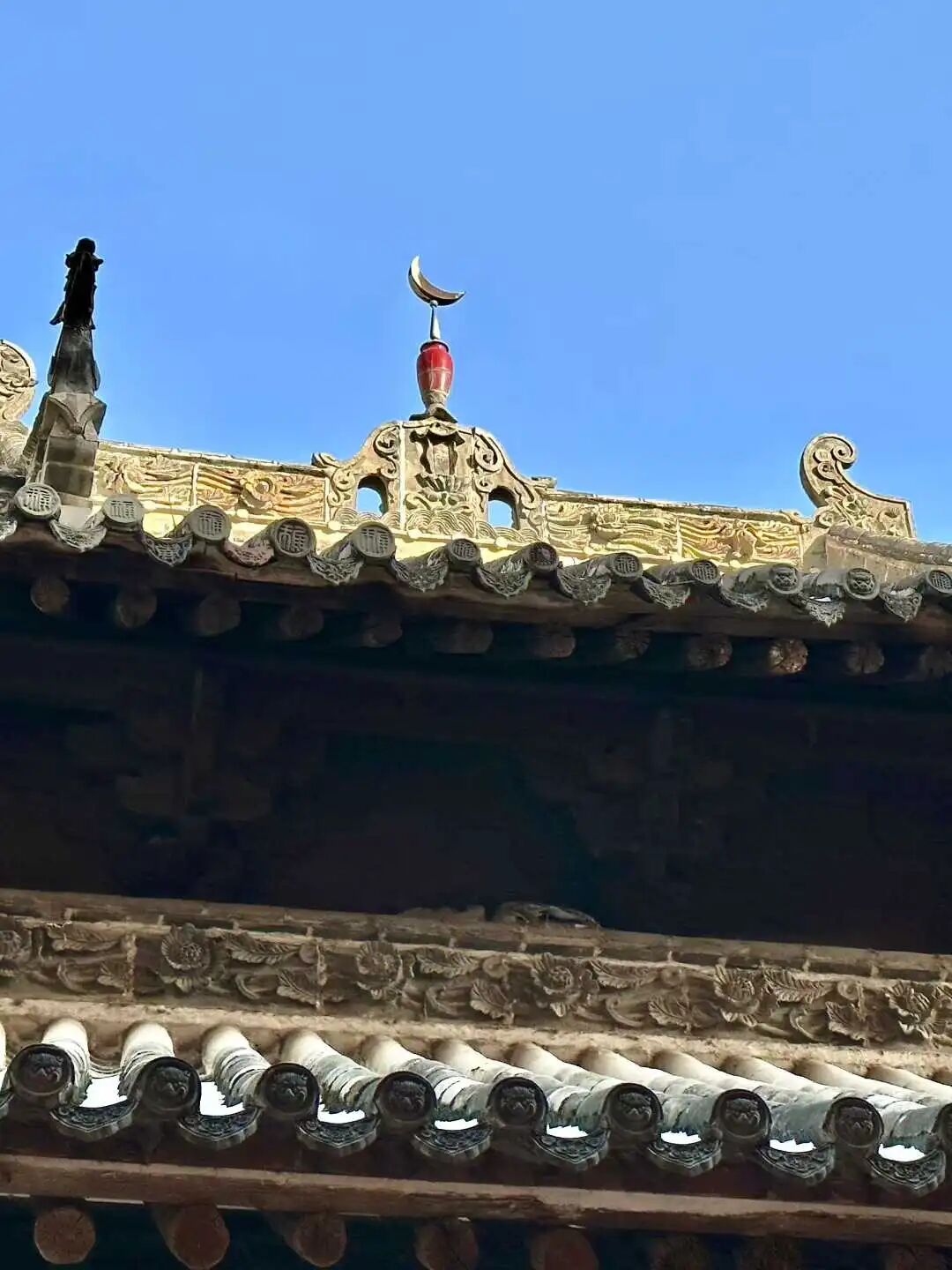
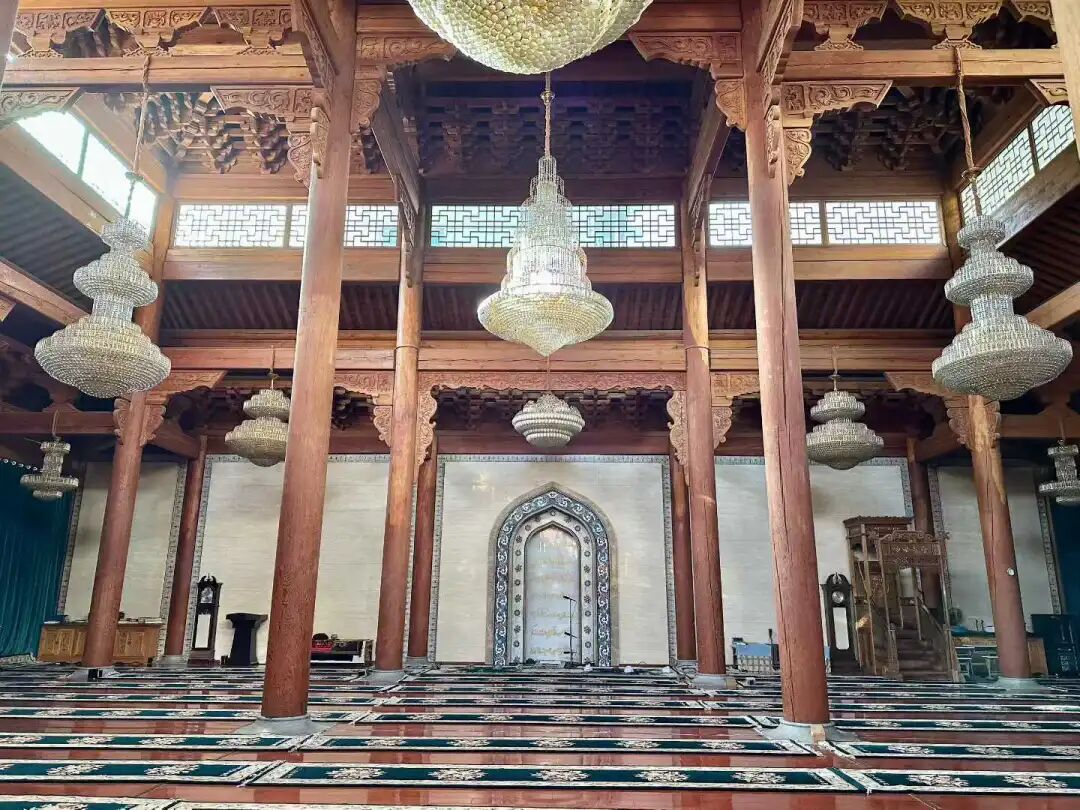
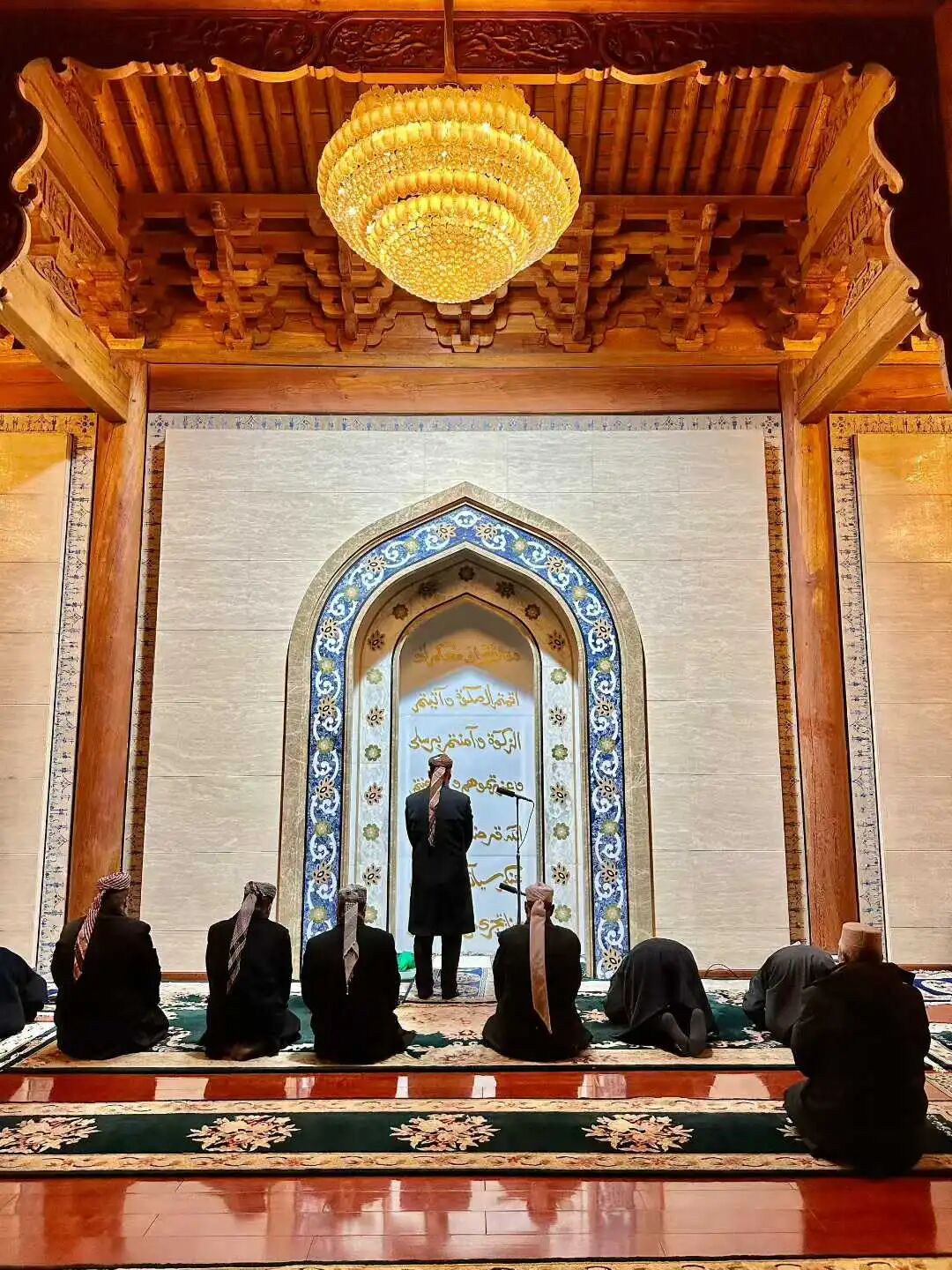
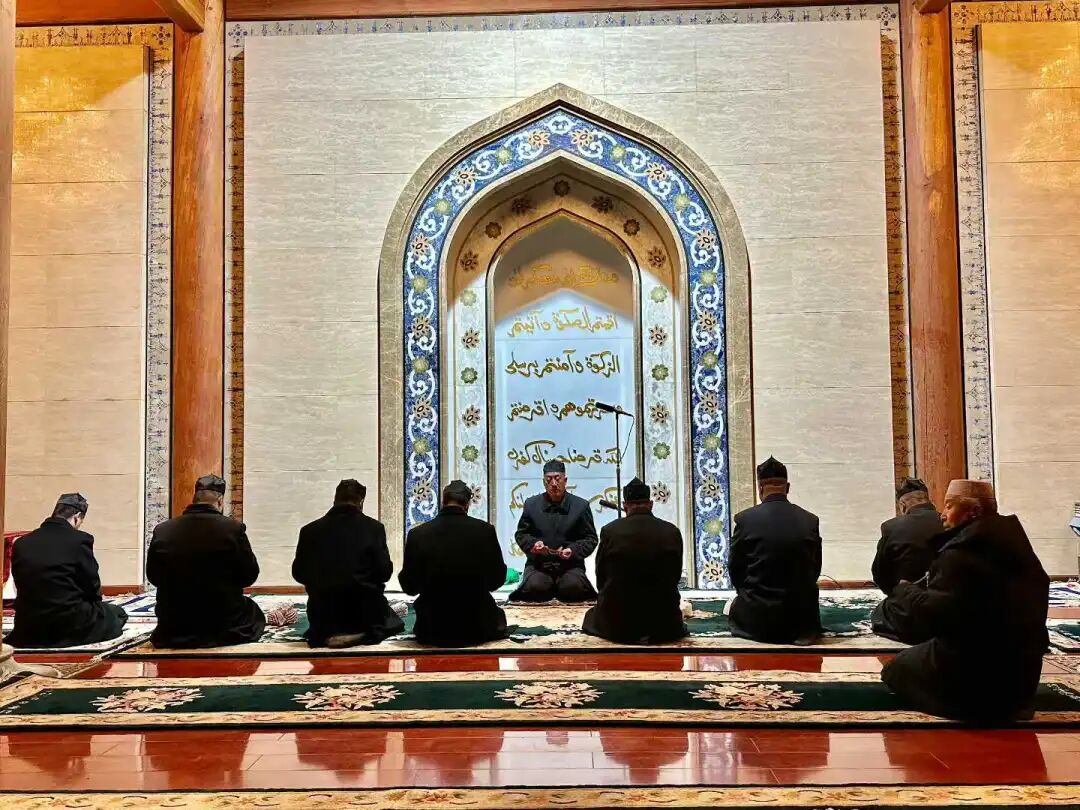
Exquisite brick carvings on the Qing Dynasty main hall of Taizi Mosque.
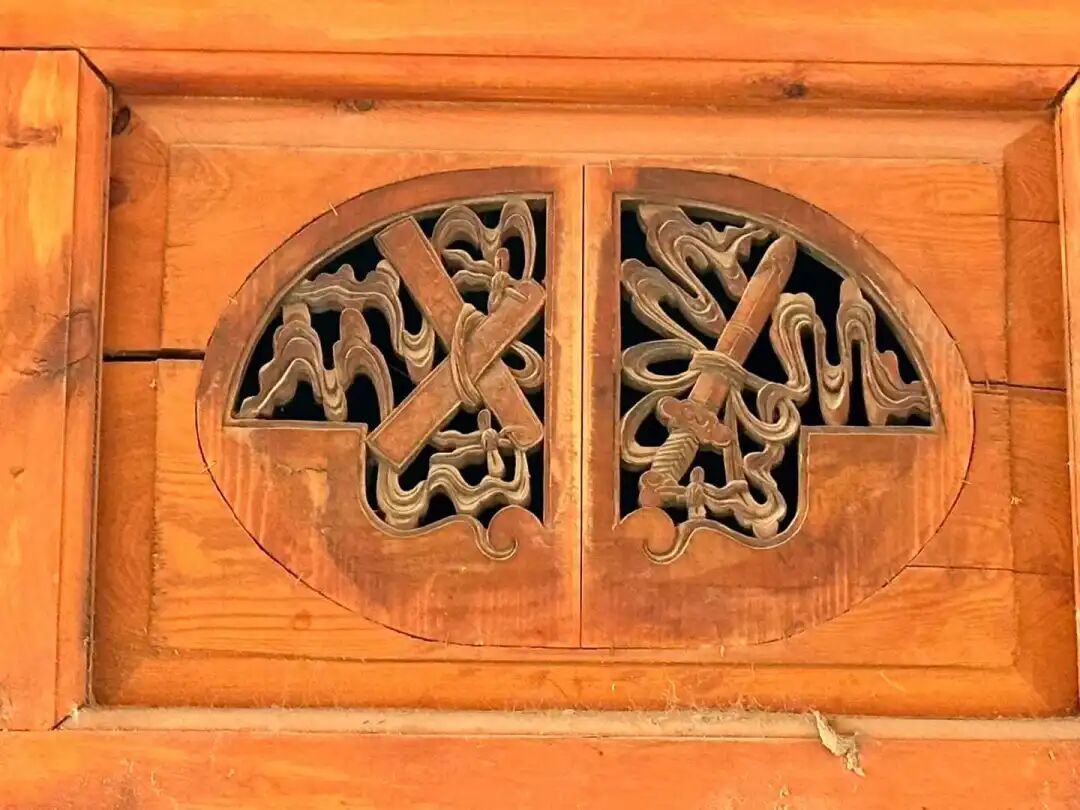
There was originally a 'Rear Mosque' in Houzhai, Qinzhou, Tianshui. In the early Tongzhi years, the Hui Muslims there scattered, and the mosque was demolished and turned into a Confucian mosque. In 1900 (the 26th year of the Guangxu reign), the Hui Muslim population in Houzhai gradually recovered. They pooled their money to buy the hall frame of a descendant of the Ming Dynasty magistrate Zhao Lianzhi in Zizhi Lane and moved it to build the 'Front Mosque,' which was completed in 1919. The current Houzhai Mosque is a replica building reconstructed in 2010.
The Na family of Hui Muslims are descendants of Nasr al-Din, the son of Ajall Shams al-Din Omar, and their ancestral home is Yunnan. In the first year of the Guangxu reign of the Qing Dynasty, Na Huatang followed the seventh-generation Jahriyya leader Ma Yuanzhang from Yunnan to Tianshui. He first settled in Paomazhuang Town, then moved to Houzhai in Qinzhou, where he served as the imam of the Houzhai Mosque. His family has been there for six generations.
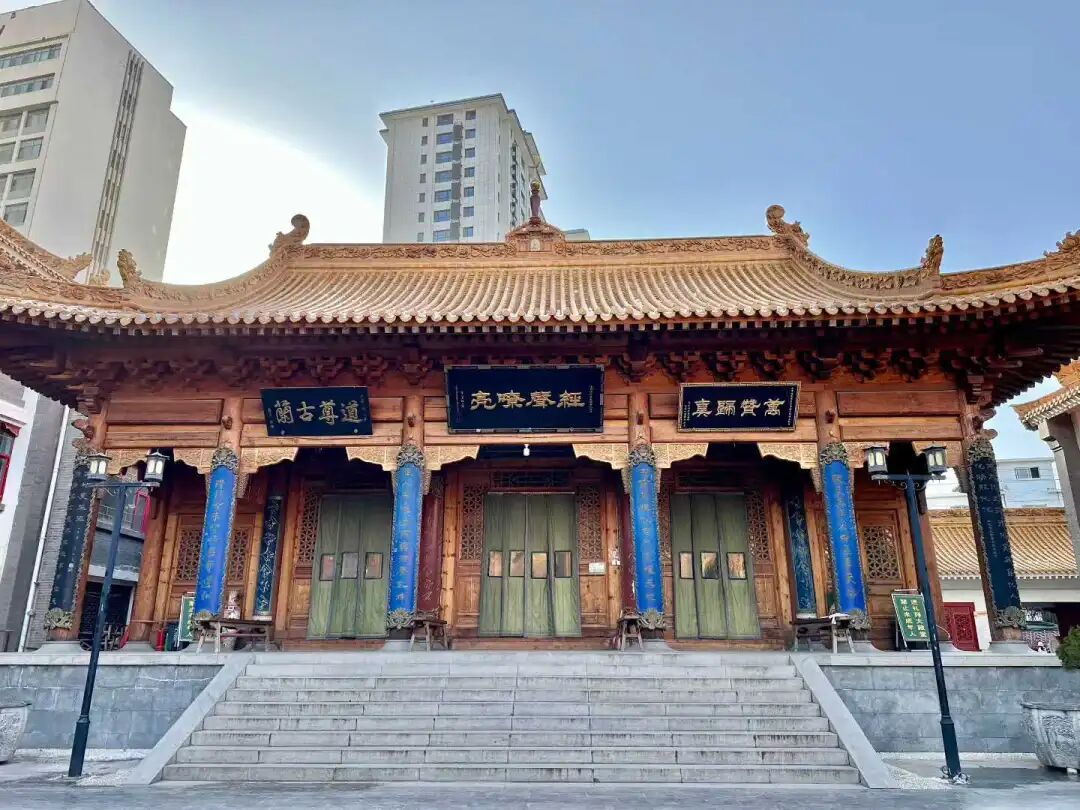
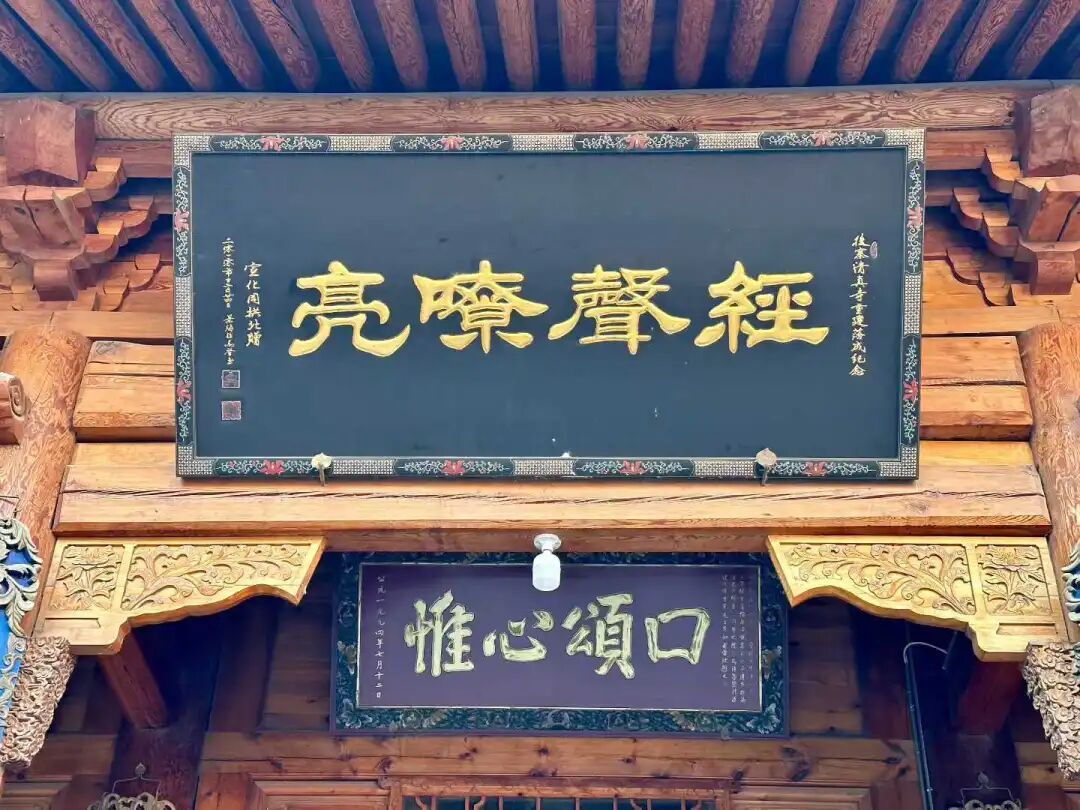
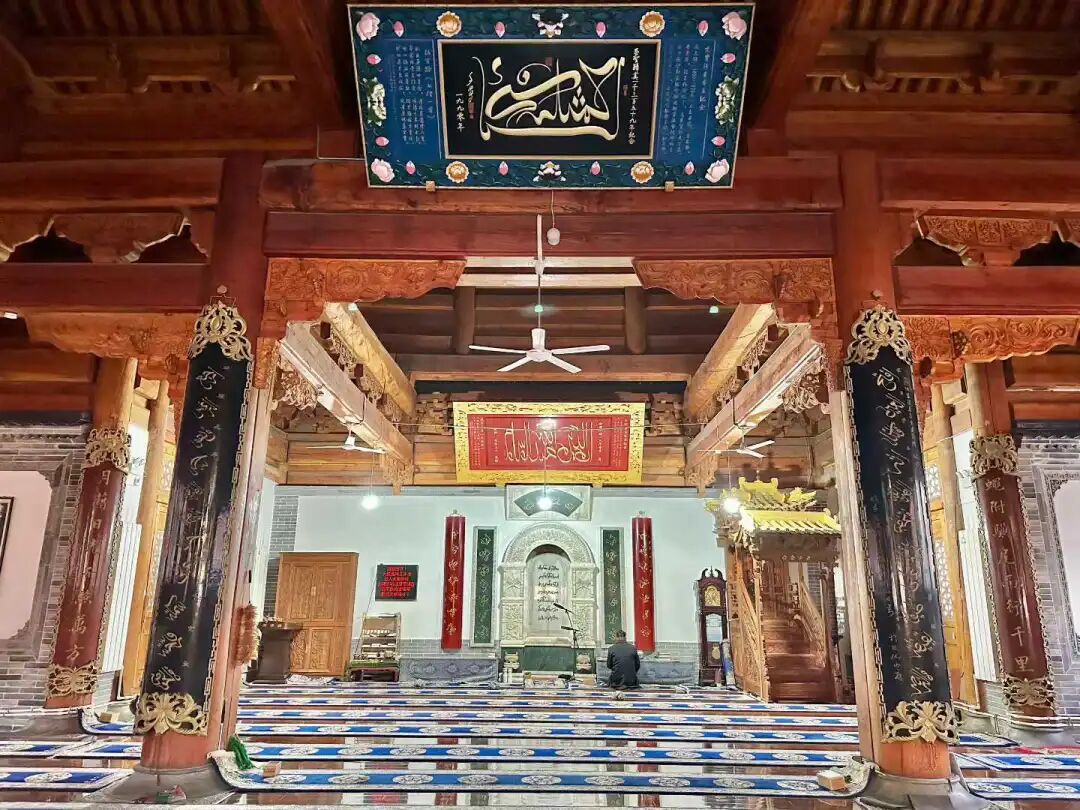
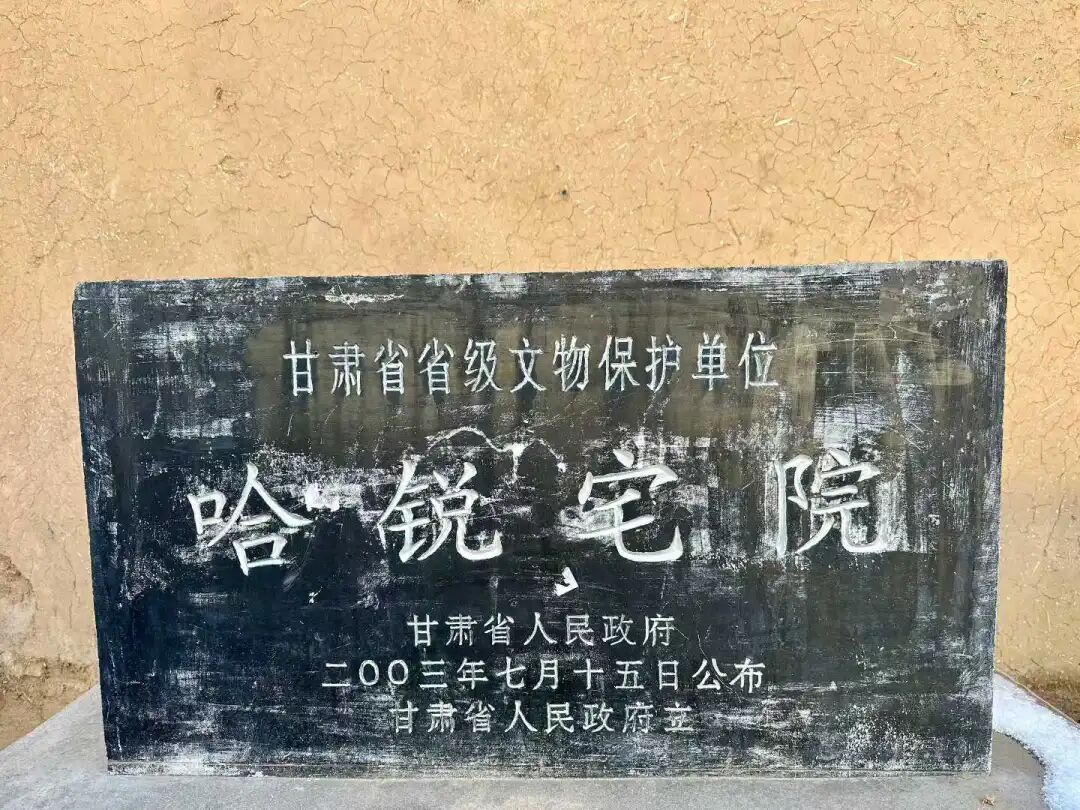
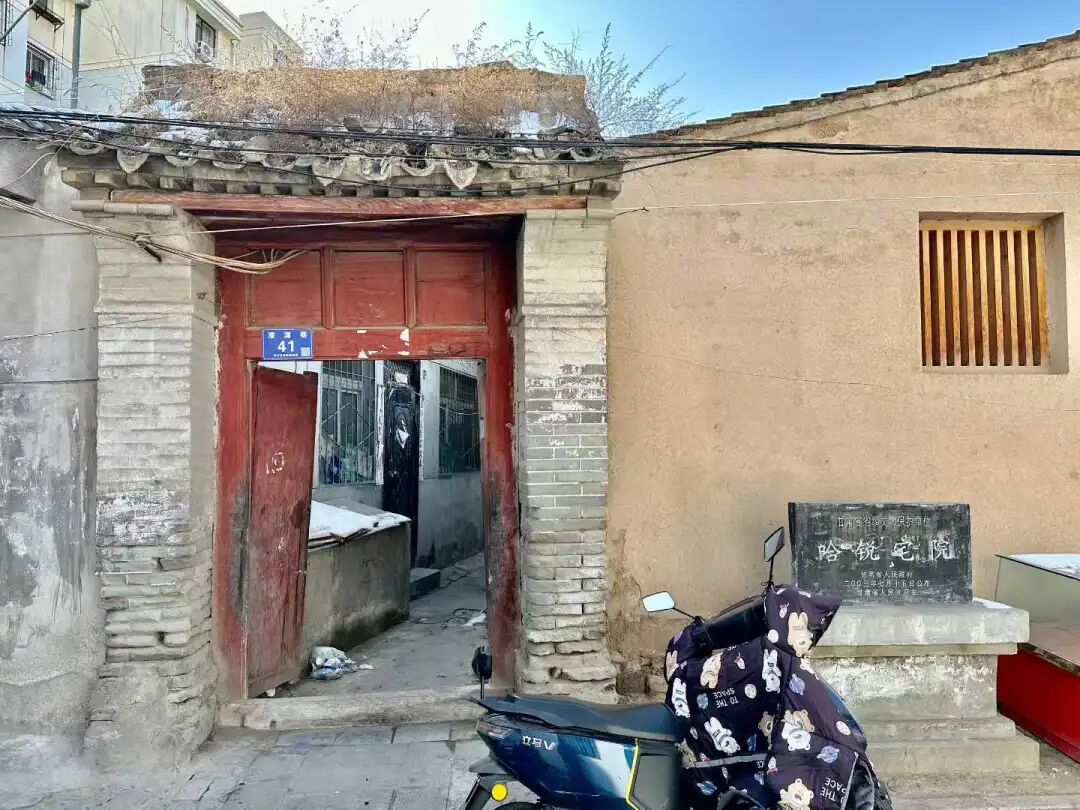
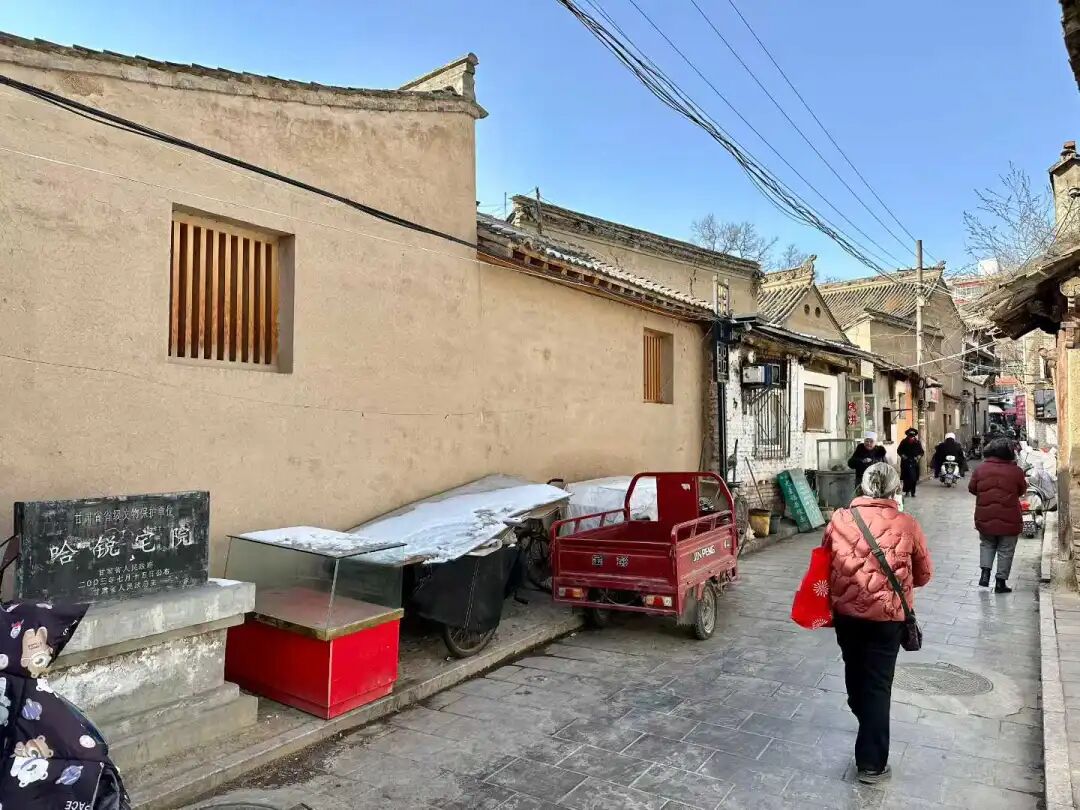
The Ha Rui Residence is located on Chengyuan Lane near the Back Street Mosque (Houjie Si). It is now a provincial-level cultural heritage site in Gansu. The residence originally had three courtyards. Due to demolition and reconstruction, only the east and west wing rooms of the first courtyard, the Four Seasons Hall and west wing room of the second courtyard, and the west wing room of the third courtyard remain. The middle courtyard has a two-story building with a hanging mountain roof (xuanshan ding) on the north side, and the back courtyard has a two-story, three-bay wooden building. These are very rare in traditional residential houses.
Ha Rui was a famous Hui Muslim scholar and industrialist in the late Qing Dynasty and the Republic of China. He was known as the Zhang Jian of Northwest China and made lasting contributions to the urban development of Tianshui.
Ha Rui came from a family of Hui Muslim doctors in Tianshui, with ancestral roots in Fujian. According to the Ha Family Genealogy, the Ha family was originally from Fujian. In the early Kangxi period, the Gansu Governor Liu Gongdou was sent to the northwest, and our ancestor Xiangfu came to Longshang with his banner. He found it a happy land and settled there with his younger brother Shengjiu. This was the beginning of the Ha family in Qinzhou.
Ha Rui was born in 1862 (the first year of the Tongzhi reign). He passed the provincial examination in 1882 (the eighth year of the Guangxu reign) and the imperial examination in 1892 (the eighteenth year of the Guangxu reign), then joined the Hanlin Academy as an editor. In 1894 (the twentieth year of the Guangxu reign), he served as a secretary in the Sichuan Department of the Ministry of Justice. In 1905 (the thirty-first year of the Guangxu reign), he served as the magistrate of Bishan, Sichuan, for five years, and later served as the magistrate of Yibin and Leshan. In 1911, he became the magistrate of Dongshan County. He resigned due to political instability and returned to his hometown of Tianshui in 1917. He founded the Bingxing Match Company and opened iron works, sulfur refineries, coal mines, paper mills, and transport teams. In 1920, he was hired as an advisor to the Longnan Garrison Commander. He actively promoted local public welfare, opened a carriage road connecting Tianshui to 12 surrounding counties, started an electric light company, and installed streetlights in the Dacheng area, making Tianshui the first city in Gansu to have streetlights.
Ha Rui valued education. After 1926, he founded the Bingxin Primary School and the Cungu Academy. His work in education became a well-known story in Tianshui. Ha Rui was skilled in calligraphy and poetry. His works, the Ha Rui Poetry Collection and the Ha Rui Self-Written Chronology, have been passed down.
Ha Rui had a close relationship with the Zhe school brothers Ma Yuanzhang and Ma Yuanchao. He visited Shagou and Xuanhuagang many times and wrote epitaphs for them after they passed away (gui zhen). In 1911, the Dongguan Mosque in Hui County, Gansu, was burned down. Young Hui Muslims fled to Tianshui and Shagou to find the Hui gentleman Ha Rui and the Shagou elder Ma Yuanzhang. Through their joint efforts, the Republic of China government allocated funds and sent officials to repair the mosque the following year.
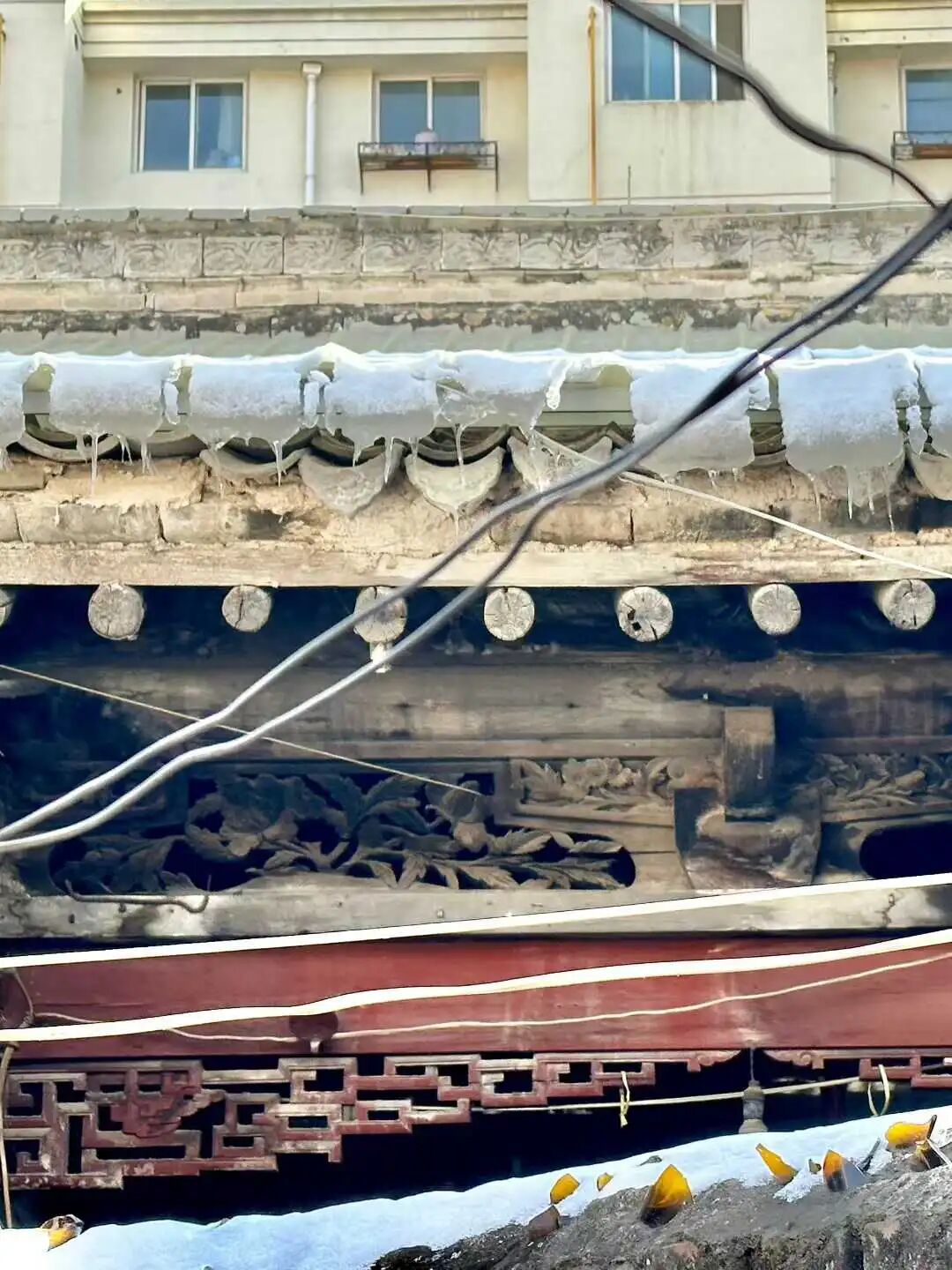
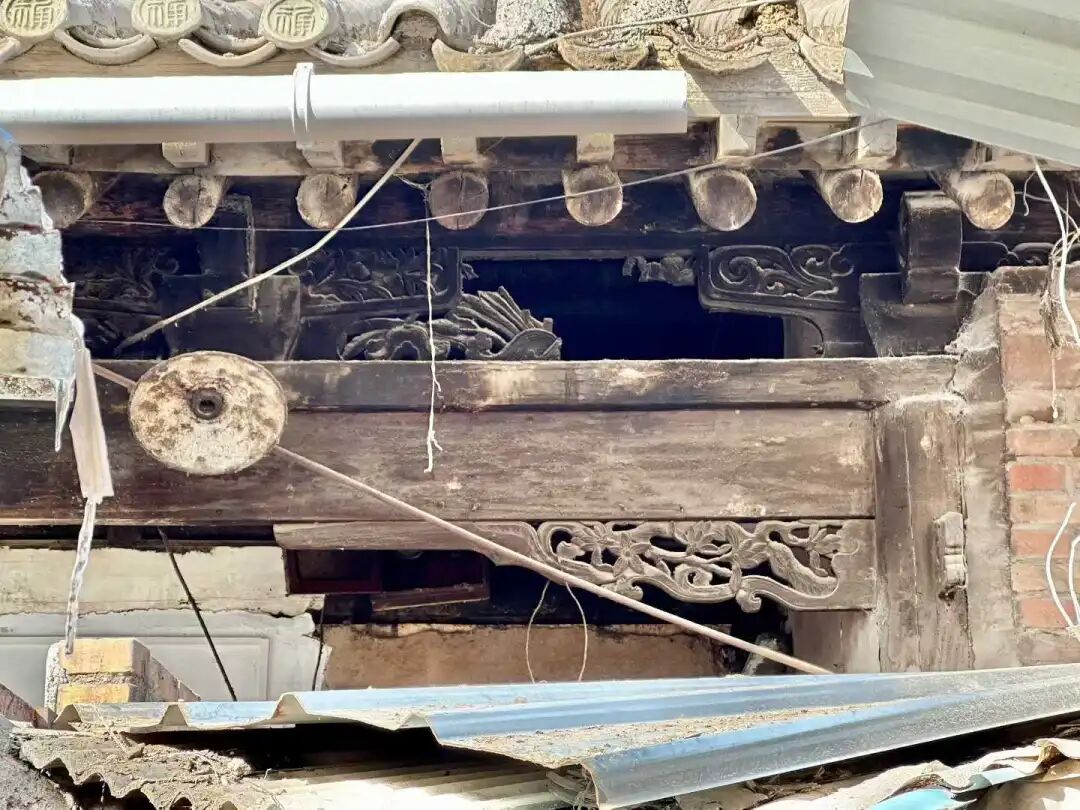
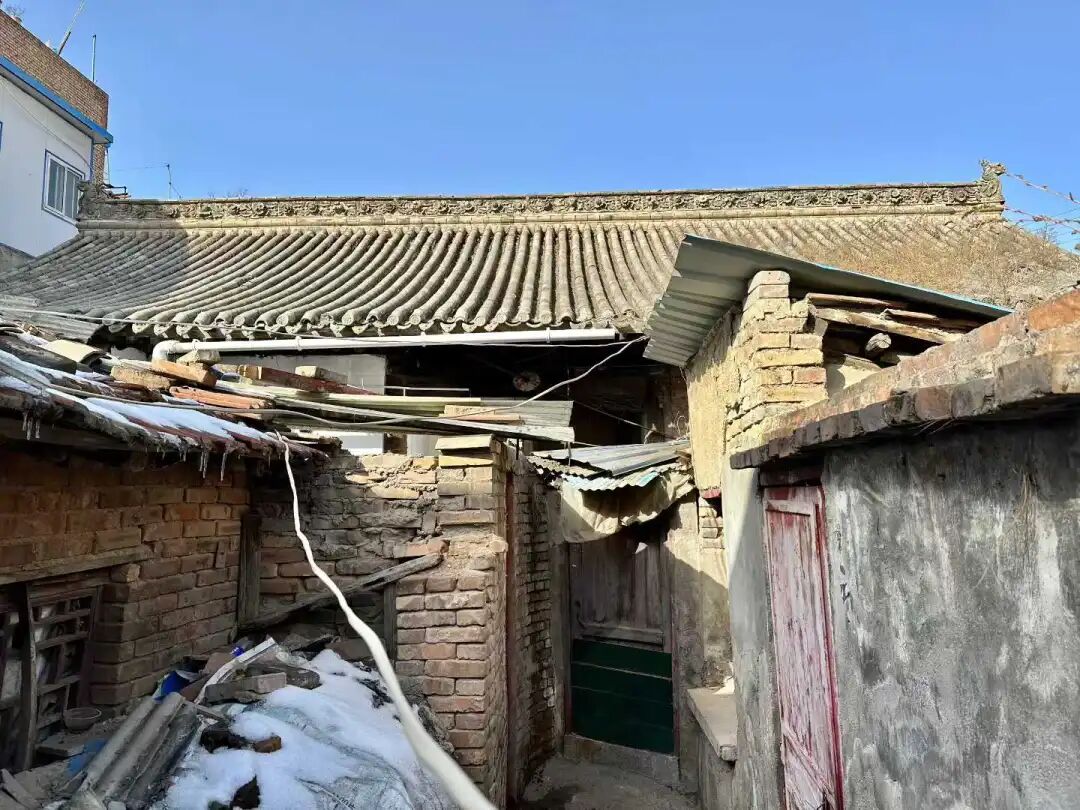
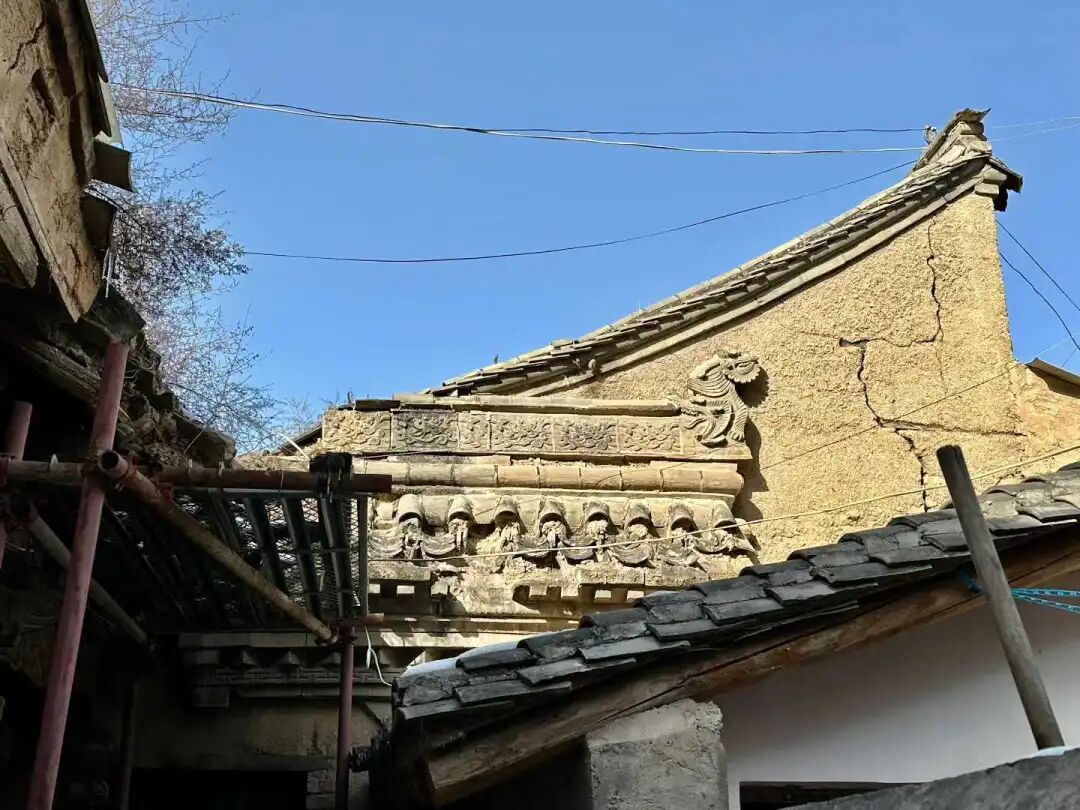
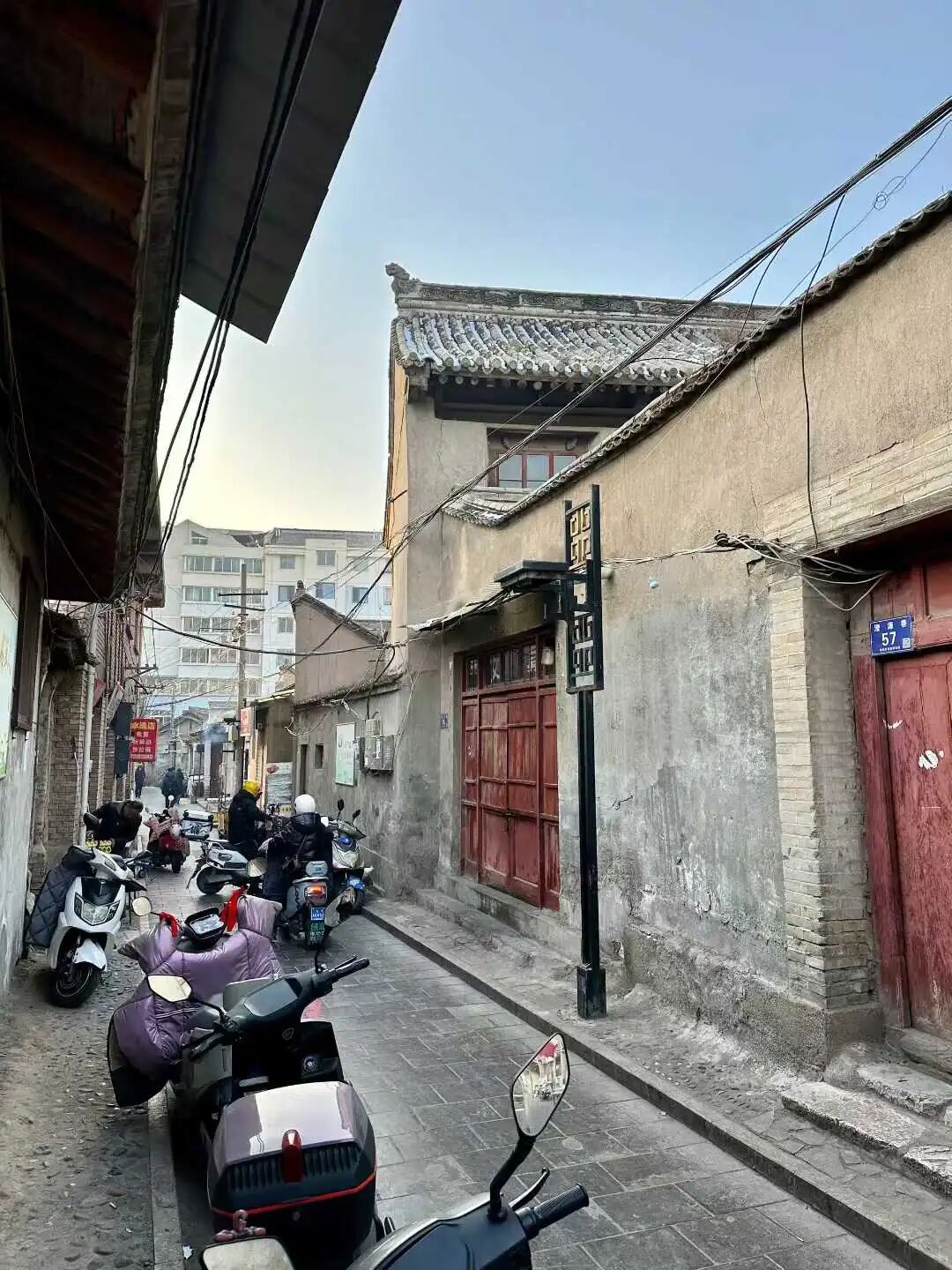
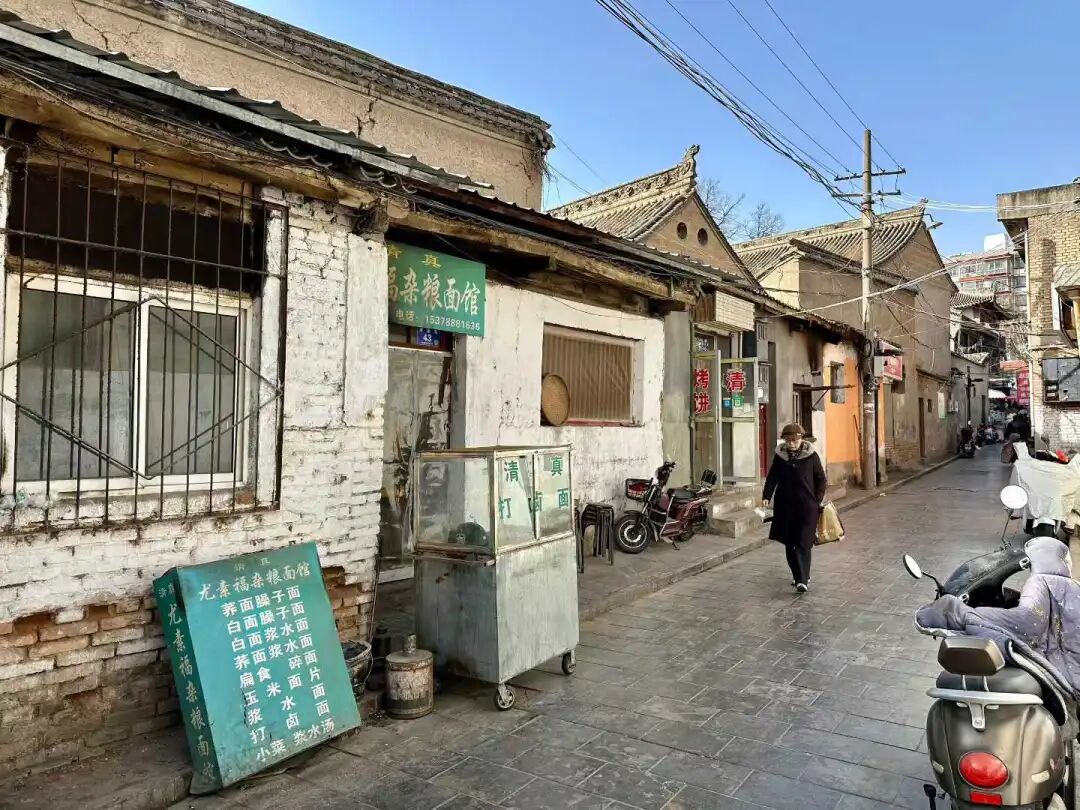
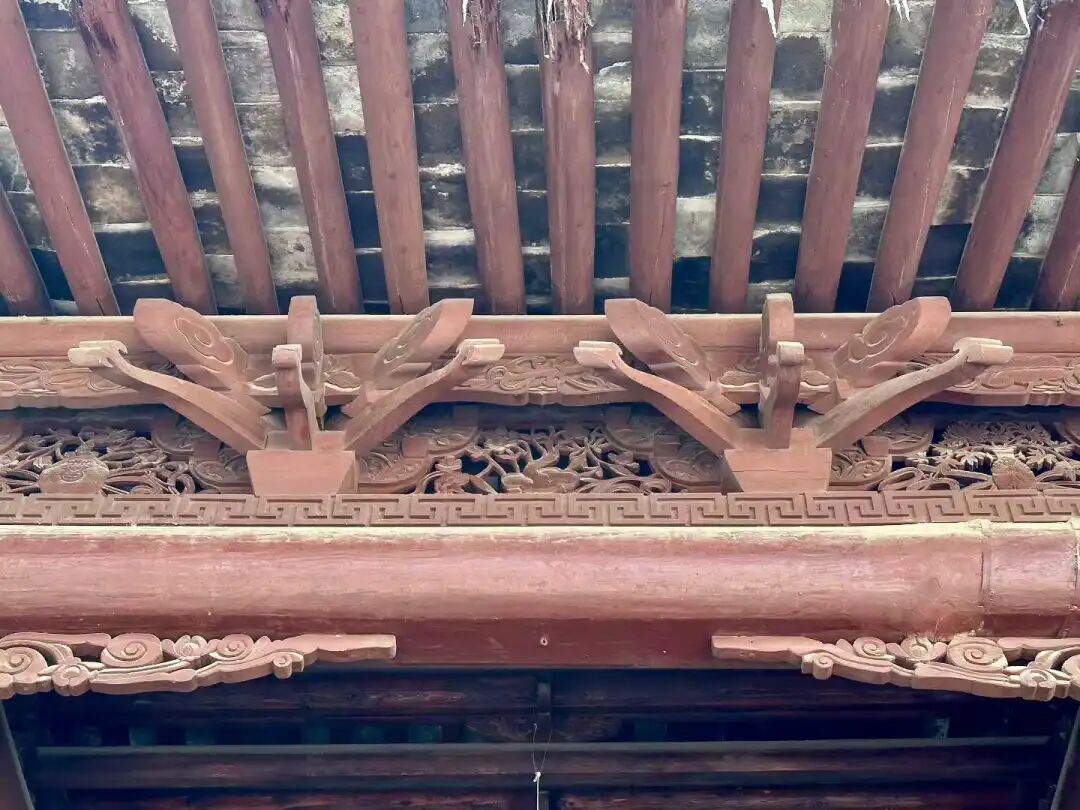
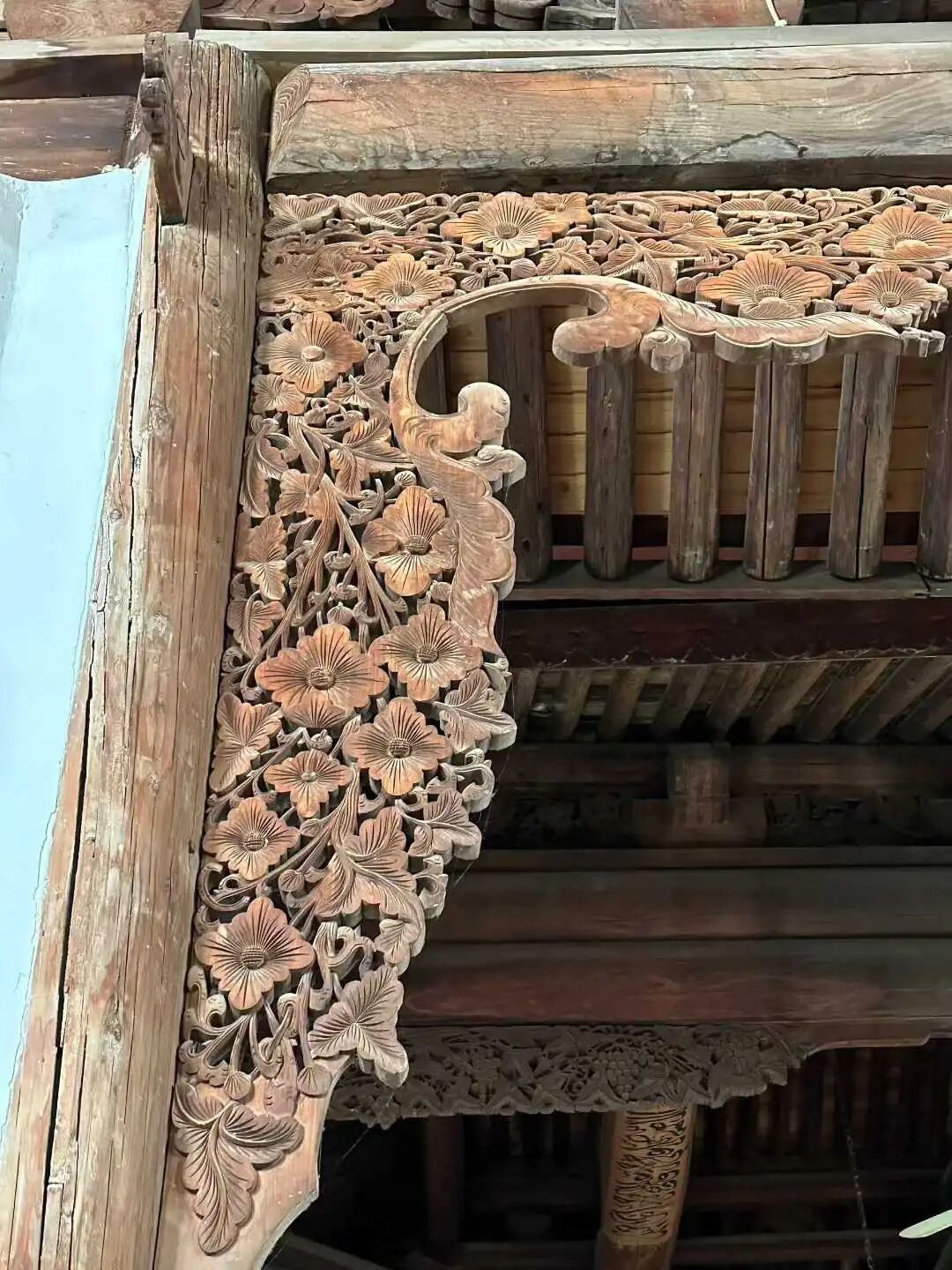
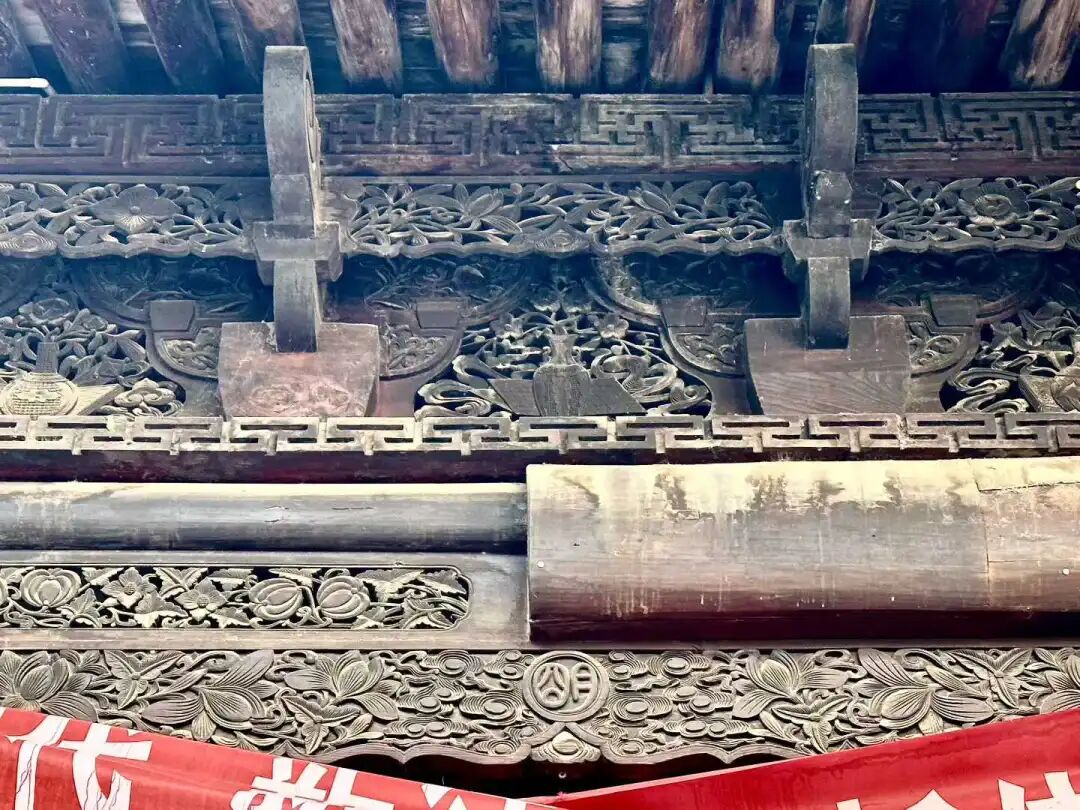
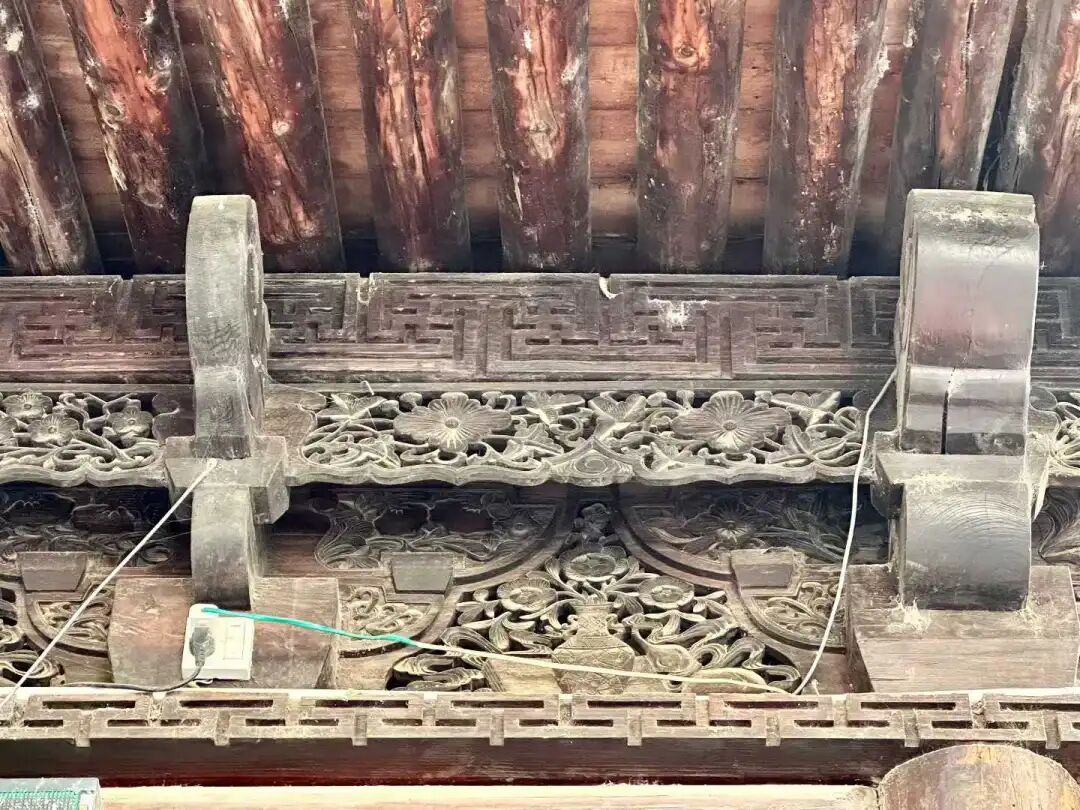
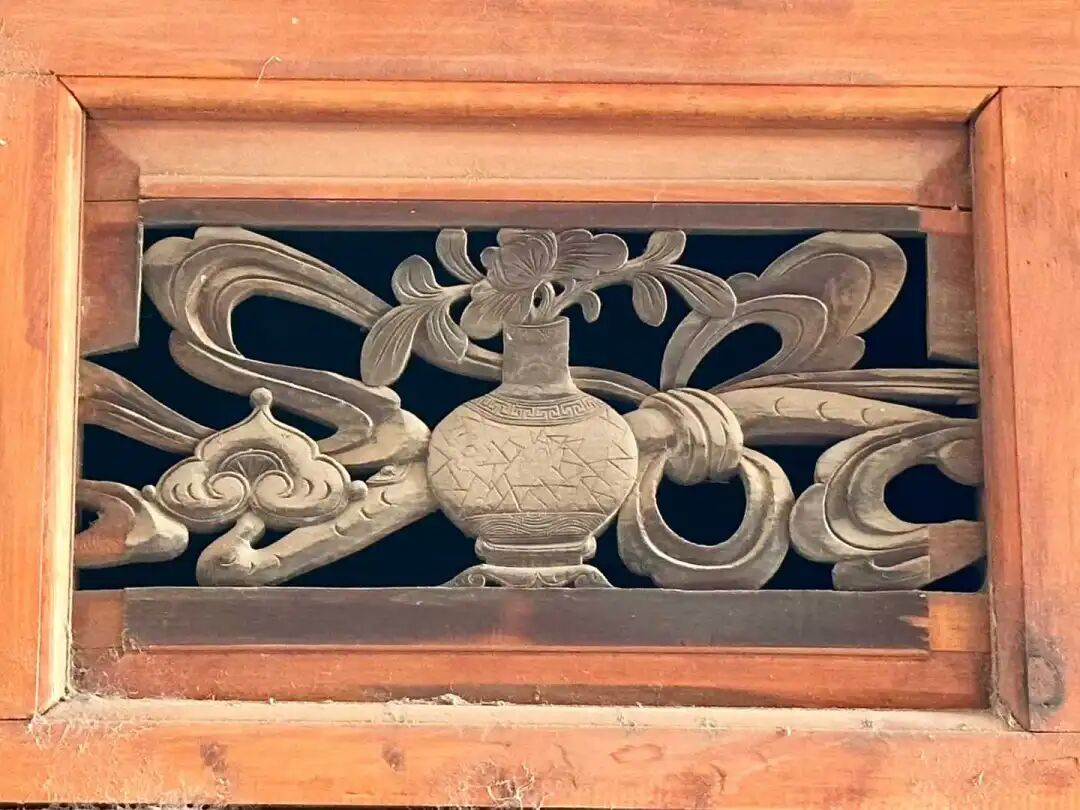
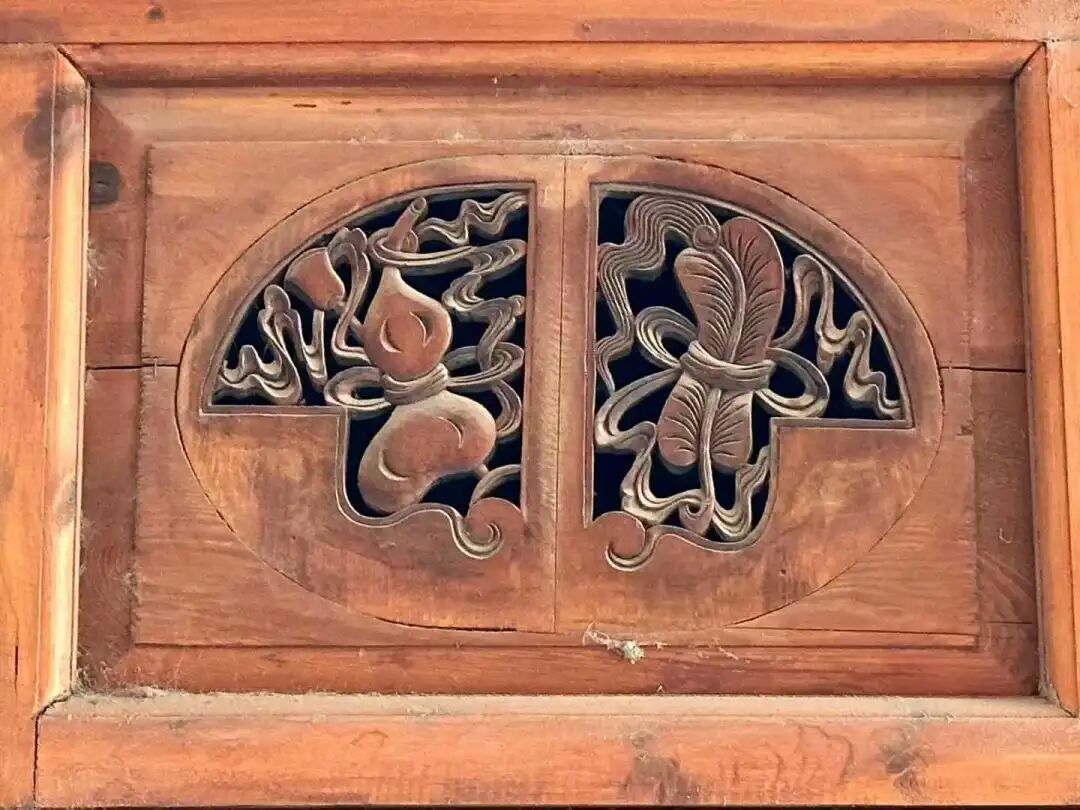
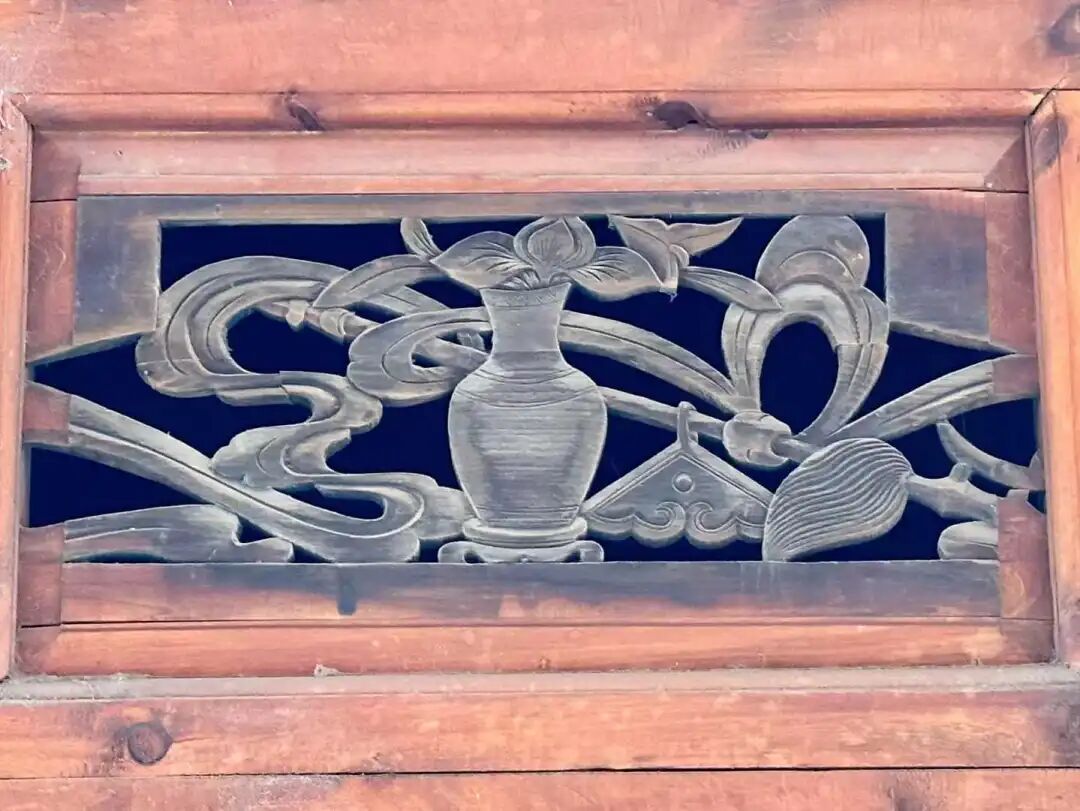
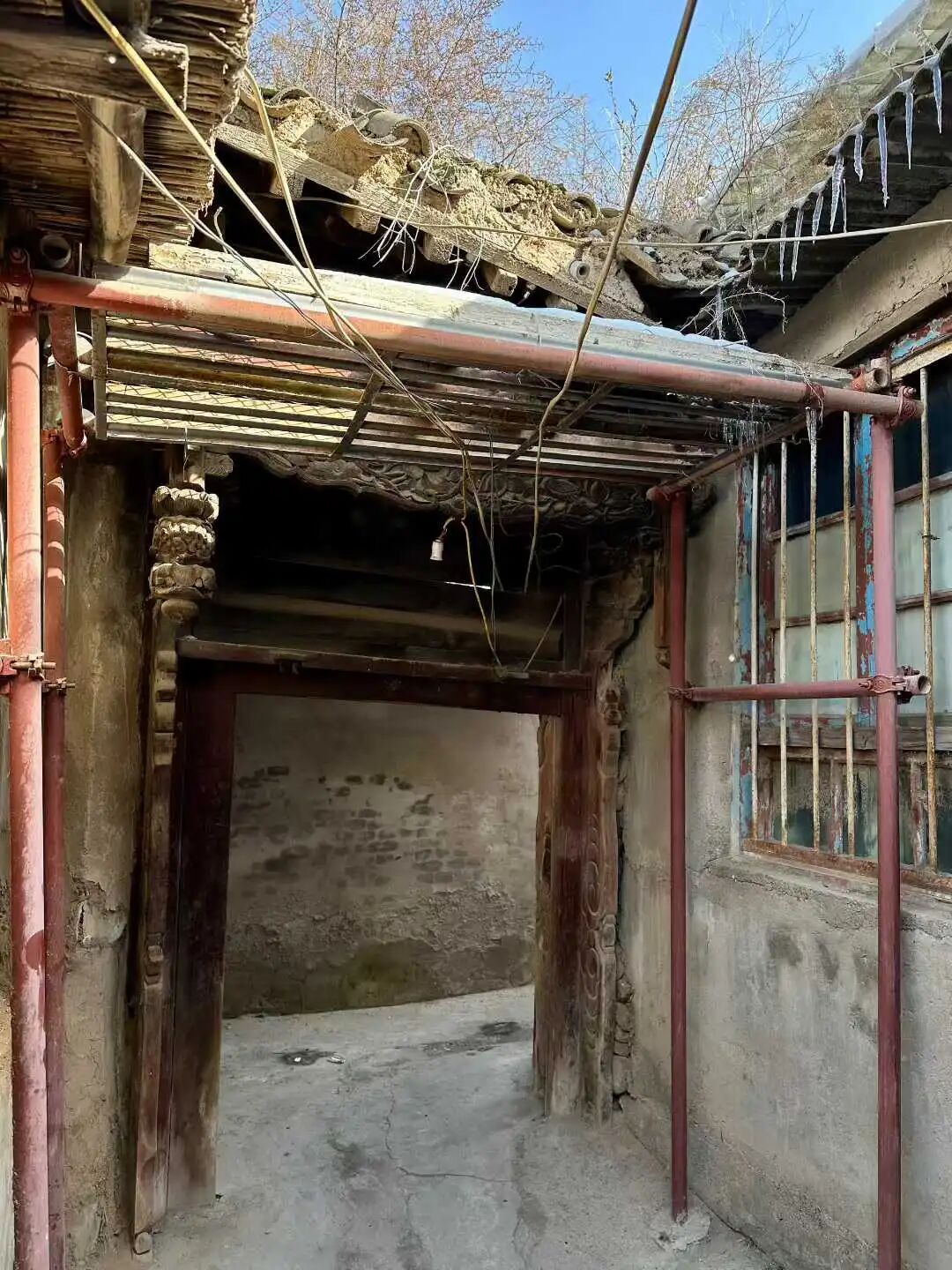
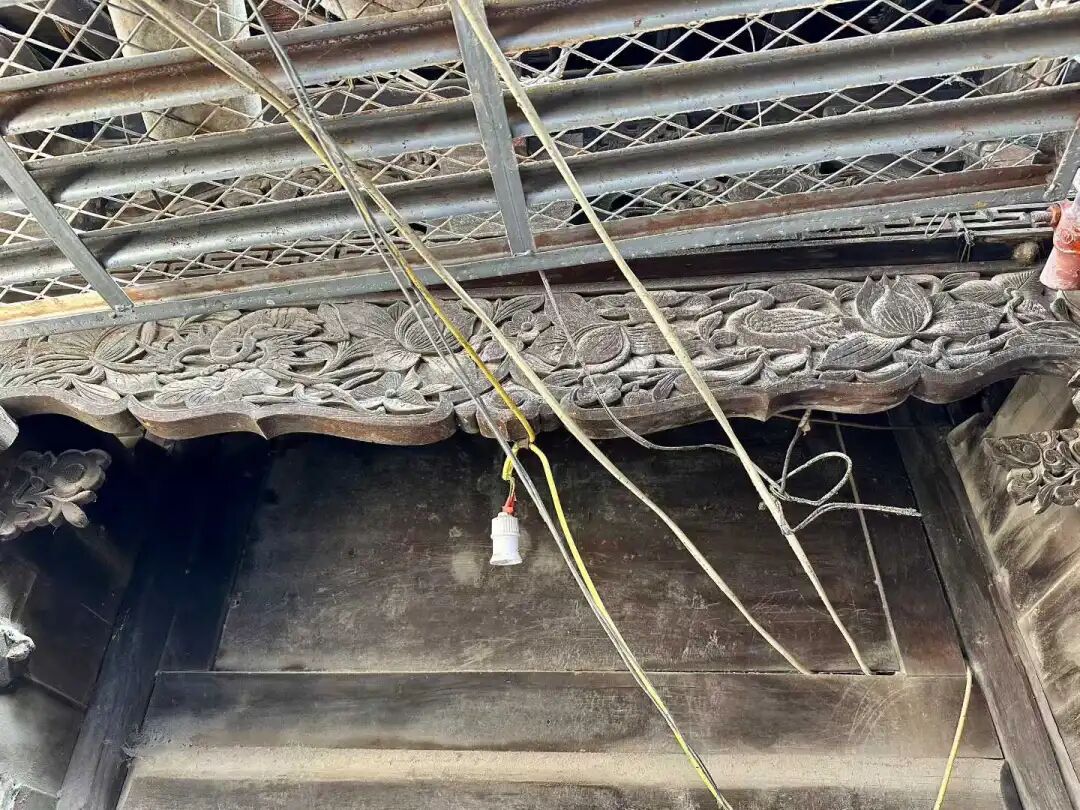
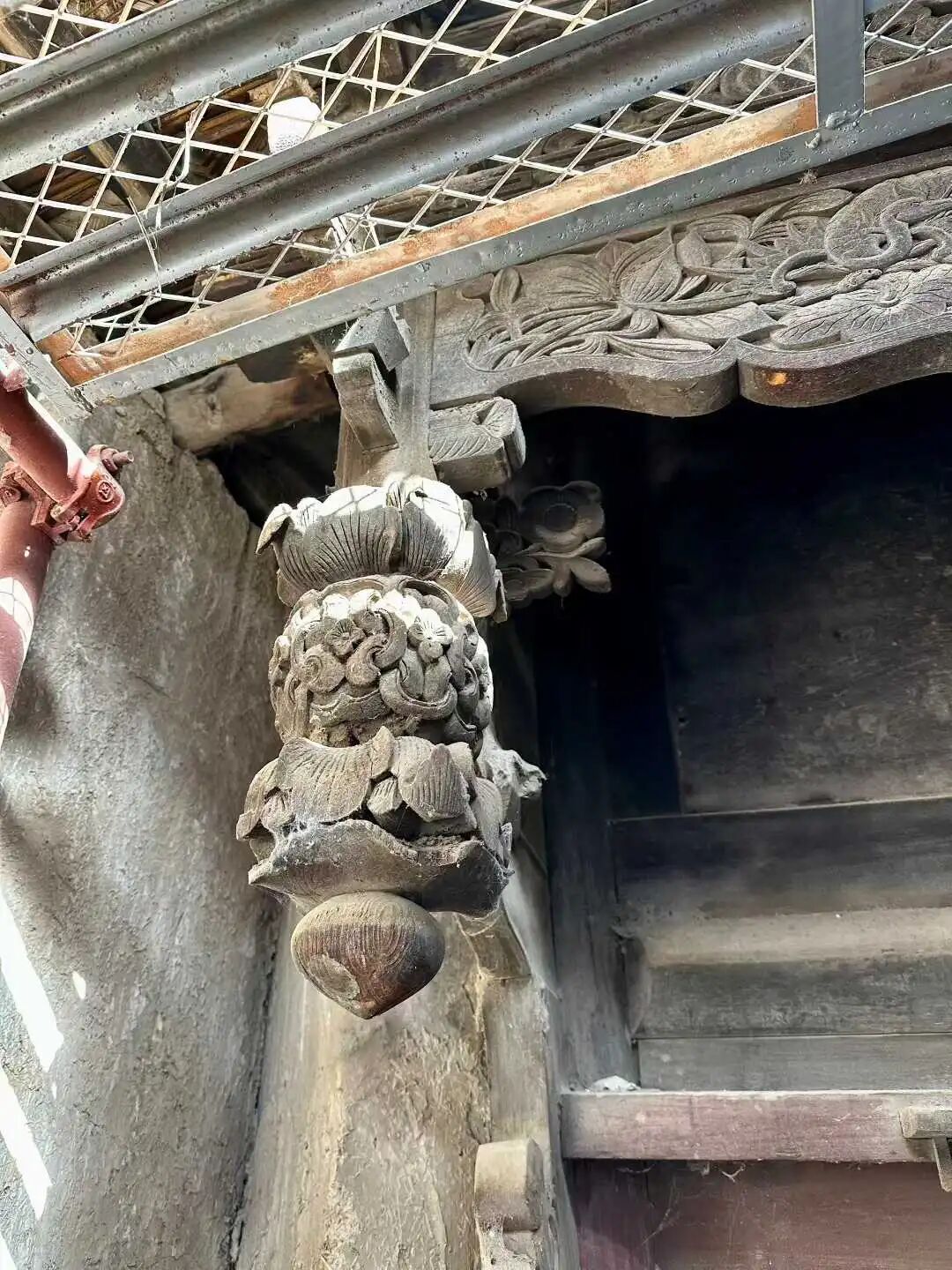
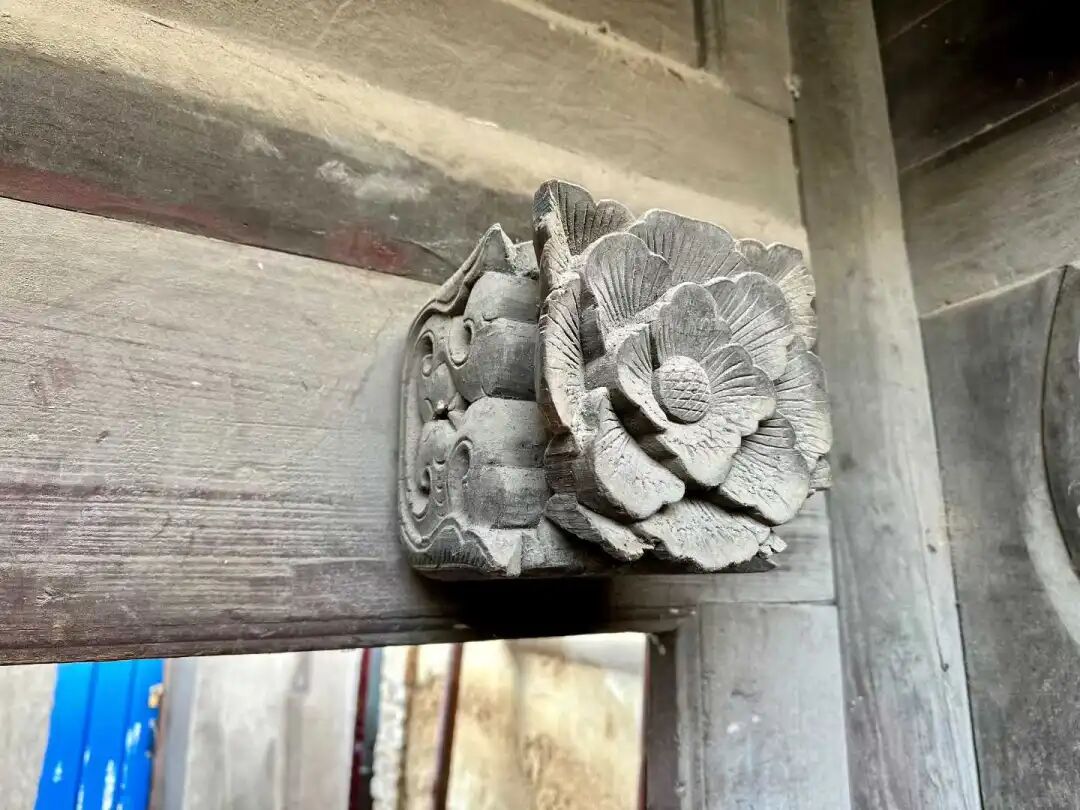
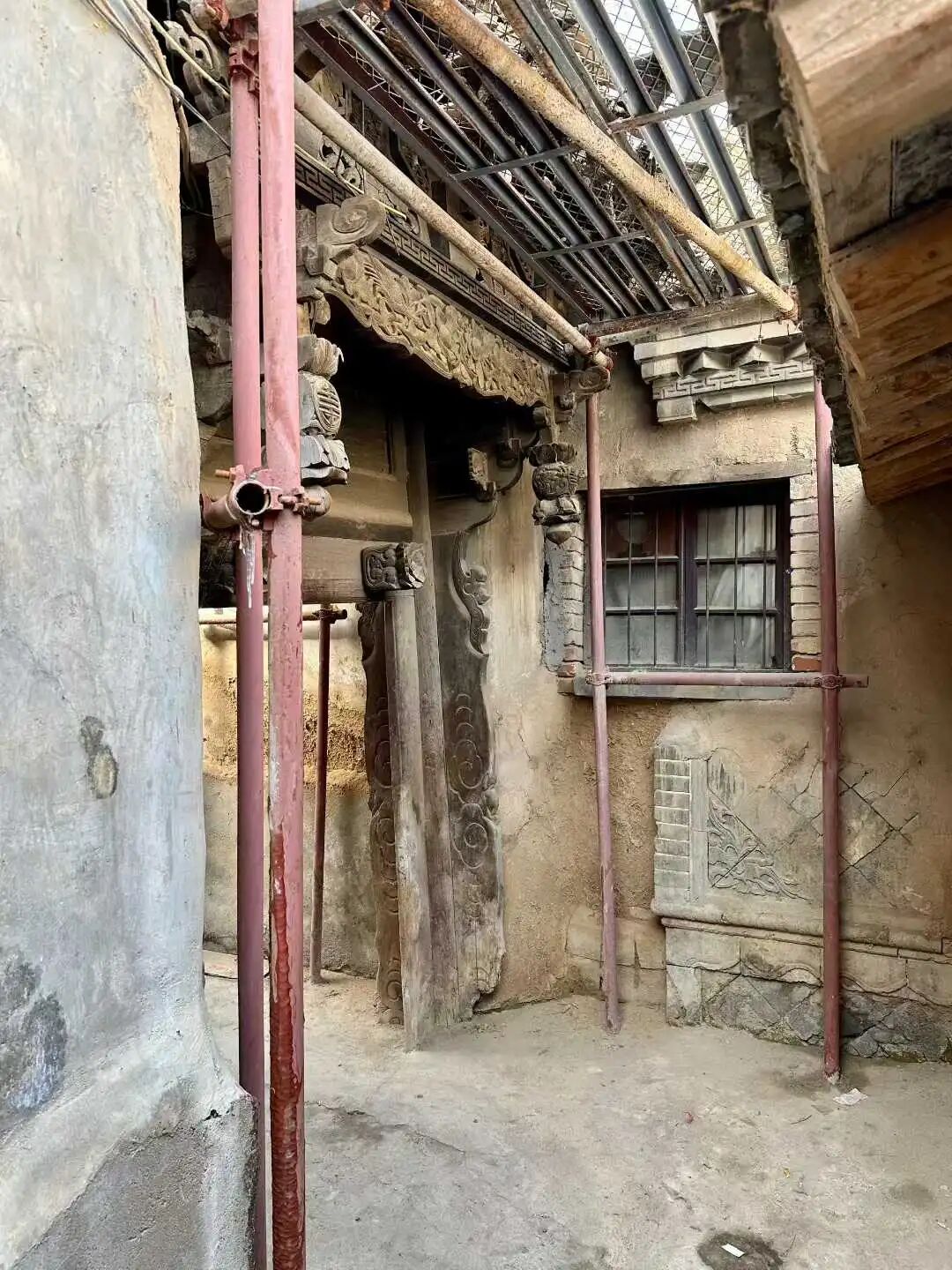
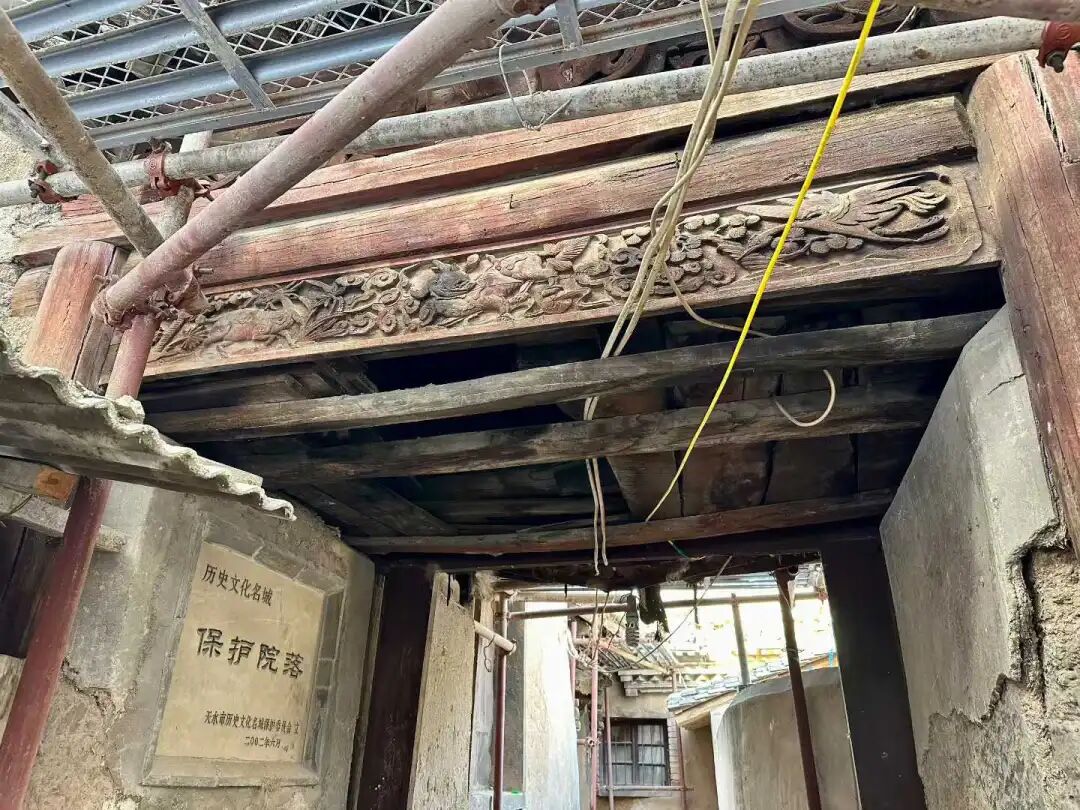
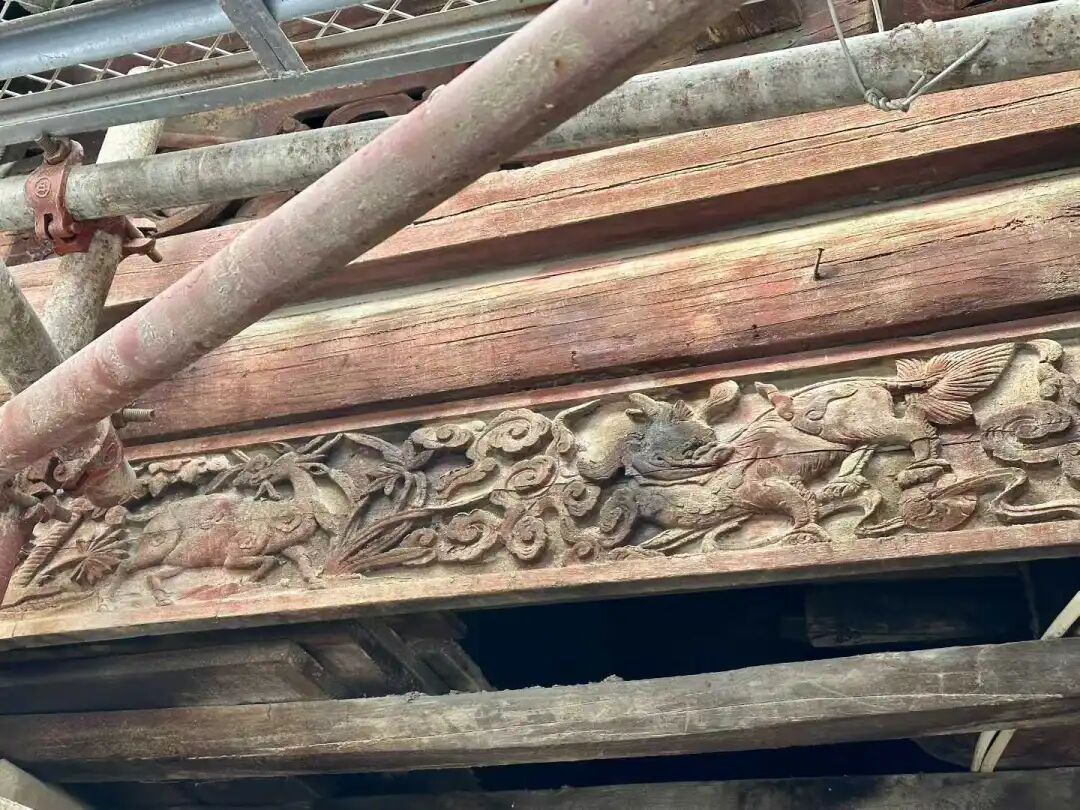
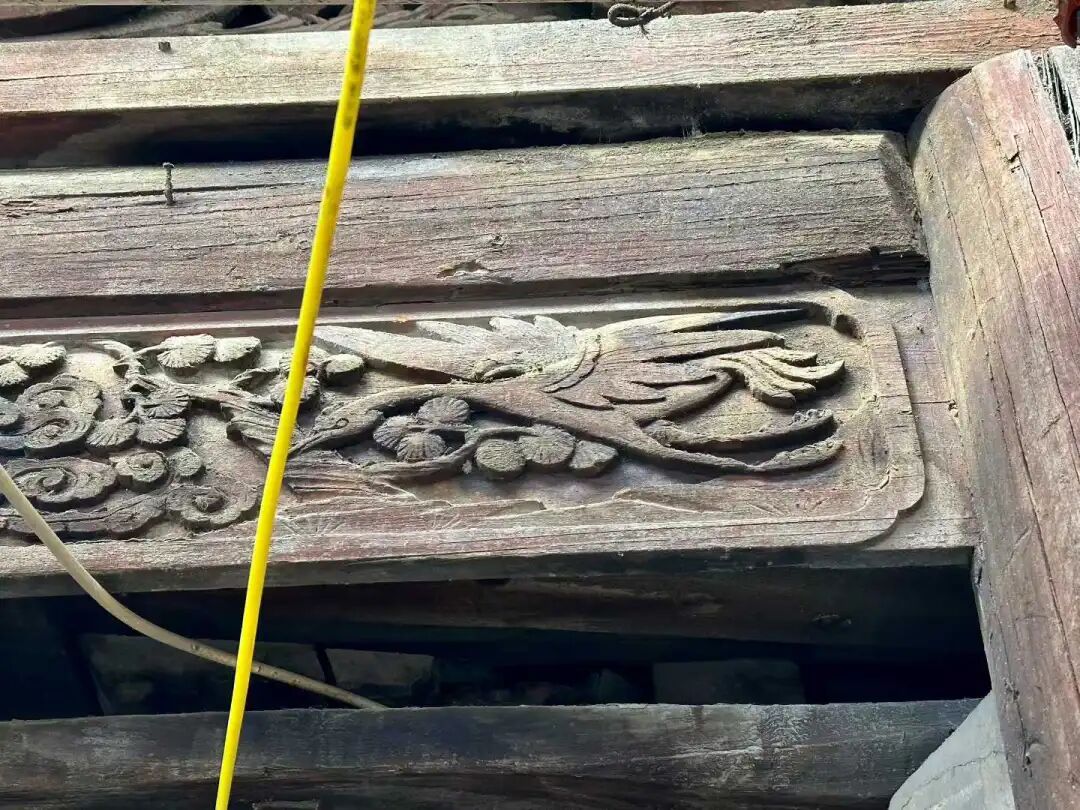
The exquisite wood carvings on the hanging flower gate (chuihua men) of the Ha Rui Residence.
Summary: Qinzhou District in Tianshui, Gansu, preserves Ming Dynasty mosque sites, Qing Dynasty Hui Muslim courtyards, and old Silk Road neighborhood traces. This article follows the source's mosque names, lane details, family residences, architectural notes, and local history.
Qinzhou District is the old town of Tianshui, Gansu, located on the Silk Road route connecting Shaanxi and Gansu. Historically, Qinzhou was known as the Five Cities of Qinzhou. These five cities stretched 5 kilometers, connected by a main road and 21 city gates, looking like pearls on a string. Among these five cities, Hui Muslims mainly lived in the areas of Chengyuan Lane, Yimin Lane, Zizhi Lane, Qinmu Lane, and Houzhai in the Middle City.
Tianshui Houjie Mosque, also called Xiguan Mosque or the Great Mosque, was first built during the Yuan Dynasty (1341-1368). It was rebuilt in 1374 (the seventh year of the Ming Hongwu era) and expanded in 1468 (the fourth year of the Chenghua era). The Ming Dynasty main hall still stands today, and it was listed as a Major Historical and Cultural Site Protected at the National Level in 2006.
The front hall has five bays with a single-eave hip-and-gable roof covered in green glazed tiles. The main ridge features glazed lotus patterns, and the central vase decoration includes carvings of a memorial archway, a three-arch bridge, flowers, auspicious clouds, and a treasure gourd. The ridge is decorated with flower and pavilion motifs. The front porch of the main hall is supported by eave columns, which is different from the independent roof structure of Qing Dynasty halls. The rear kiln hall has three bays with a hip-and-gable roof, and the center of the main ridge features a glazed vase ornament.
Houjie Mosque originally belonged to the Gedimu tradition, but later it became part of the Beishan Menhuan of the Jahriyya order. Legend says that in the mid-Qianlong era, Ma Mingxin, the founder of the Jahriyya order, came to Tianshui to teach and stayed in the north hall of Houjie Mosque. The mosque currently preserves a plaque from 1912 written by Ma Yuanzhang, the seventh Murshed of the Jahriyya order, saying 'The sovereignty of heaven and earth belongs to Allah,' and another from 1939 by Ma Yuanchao, founder of the Beishan Menhuan, saying 'The Lord is not like anything.'
Ma Yuanzhang was known as 'Shagou Taiye' and was the great-grandson of Ma Mingxin. He arrived in Zhangjiachuan in 1875 (the first year of the Guangxu era) and used it as a base to revive the Jahriyya order. He officially became the seventh Murshed in 1912 and died in a cave dwelling during the 1920 Haiyuan earthquake.
Ma Yuanchao was Ma Yuanzhang's younger brother. He came to Beishan in Zhangjiachuan during the Guangxu era to buy land and farm, later helping Ma Yuanzhang revive the Jahriyya order. After Ma Yuanzhang passed away in 1920, Ma Yuanchao began leading the religious affairs in Xuanhuagang, which became known as the 'Beishan Menhuan'.
The mosque also preserves Arabic couplets from 1816 (the 21st year of the Jiaqing era) and a stone tablet recording the reconstruction from 1543 (the Ming Jiajing era). The Ming Dynasty tablet records that a local man named Gao Mu bought land at the northeast corner of Tianshui's West Gate in the seventh year of the Hongwu era and used his own money to buy wood, stone, and bricks to build a three-room mosque. In the fourth year of the Chenghua era, the religious leader Ma Fan encouraged local elders to donate money for a renovation. In the 13th year of the Jiajing era, they hired a master builder named Wu from their own community to build the mosque tower.
The Ming Jiajing tablet mentions Hui Muslims with the surnames Ma and Wu. Currently, there is a group of Hui Muslims in Tianshui with the surname Ma who claim their ancestral home is Hexi, Yunnan, and that they arrived in Tianshui in 1372 (the fifth year of the Ming Hongwu era).
According to a family genealogy from the tenth year of the Guangxu era, the Wu family originally settled in Jiangning Prefecture, Nanjing. In 1369 (the second year of the Ming Hongwu era), Generals Wu Zhen and Wu Liang moved to Qinzhou. The 'Supplement to the New Gazetteer of Qinzhou Prefecture' records that 'Qinzhou Garrison Commander Wu Zhen was a founding hero of the Ming Dynasty and was titled Marquis of Jinghai.' Wu Zhen and Wu Zhen (Wu Zhen/Wu Zhen) might be the same person.
Besides the Ma and Wu families, Hui Muslims with the surnames Lei, Zhao, and Huang also moved to the area during the Ming Dynasty. Oral history says the Lei family arrived in Qinzhou during the Ming Dynasty. The Guangxu-era Qinzhou Gazetteer records that Lei Jiaofeng was a local Hui Muslim with exceptional martial talent in the 13th year of the Chongzhen reign (1640).
The Zhao family moved here from Zhaocun in Xianyang, Shaanxi, between the end of the Ming Dynasty and the start of the Qing Dynasty. The Huang family's ancestral home was in Sichuan, and they moved to Tianshui at the end of the Ming Dynasty.
The founding date of the Beiguan Mosque in Qinzhou, Tianshui, is unknown. It was originally located at the entrance of Zhongyi Lane in Shang'an Valley but was destroyed by war in the early Tongzhi years. Later, a Hui Muslim named Wu donated a house in Mujia Pit to rebuild it. In 1929, Wu Zhenyi, a high-ranking member of the mosque and the then-magistrate of Cheng County, led a fundraising campaign. Another high-ranking member, Ma Hengtang, donated his own house, and the reconstruction was completed after two years. The couplet carved on the main gate reads: 'Walk the path to heaven and invite all living beings to the land of joy; transcend the ordinary and seek the holy, do not let the first step lead you astray.' This was written by the late Qing Dynasty Hui Muslim scholar Ha Yiqing. Inside the main hall, you can see exquisite calligraphy from the Jahriyya (Zhepai) order.
The Yuan family of Hui Muslims has lived in Beiguan, Qinzhou for generations, with ancestral roots in Fengxiang, Shaanxi. According to family oral history and ancestral graves, they have been here for 18 generations. One branch moved to Mei County, Sichuan, during the Tongzhi years of the Qing Dynasty, but returned to Tianshui in the early Republic of China era.
The Taizi Mosque in Qinzhou, Tianshui, is believed to have been built between the late Ming and early Qing dynasties. The main hall's roof beam has an inscription from the fourth year of the Yongzheng reign of the Qing Dynasty, and there are two 400-year-old locust trees in front of the gate. A larger main hall has been built behind the original Qing Dynasty hall. I regret that I could not enter the Qing hall, but I was lucky enough to experience the unique chanting style of the Jahriyya order.
The number of Hui Muslims moving to Qinzhui, Tianshui, continued to grow during the Qing Dynasty. According to the family genealogy, the Mu family ancestors came to Long from Youyan to do business during the prosperous Kangxi, Yongzheng, and Qianlong eras. Based on this, it is assumed they are a branch of the Mu family of Hui Muslims from Mujia Village in Tianjin.
There are two branches of the Su family of Hui Muslims, who moved here from Cheng County and Yanguan in Li County respectively at the end of the Qing Dynasty.
The Hai family lives in Zizhi Lane and their ancestral home is Lanzhou. Their ancestor was a mule cart driver for a Tianshui official working in Lanzhou. When the official returned home during the Daoguang reign of the Qing Dynasty, the Hai ancestor followed him and settled in Qinzhou.
The Mi family's ancestral home is Huaishu Village, Baqiao, Xi'an, Shaanxi. They fled to Qinzhou during the Tongzhi years of the Qing Dynasty, initially working as shed guards for a family named Fan, and have now been here for seven generations.
Exquisite brick carvings on the Qing Dynasty main hall of Taizi Mosque.
There was originally a 'Rear Mosque' in Houzhai, Qinzhou, Tianshui. In the early Tongzhi years, the Hui Muslims there scattered, and the mosque was demolished and turned into a Confucian mosque. In 1900 (the 26th year of the Guangxu reign), the Hui Muslim population in Houzhai gradually recovered. They pooled their money to buy the hall frame of a descendant of the Ming Dynasty magistrate Zhao Lianzhi in Zizhi Lane and moved it to build the 'Front Mosque,' which was completed in 1919. The current Houzhai Mosque is a replica building reconstructed in 2010.
The Na family of Hui Muslims are descendants of Nasr al-Din, the son of Ajall Shams al-Din Omar, and their ancestral home is Yunnan. In the first year of the Guangxu reign of the Qing Dynasty, Na Huatang followed the seventh-generation Jahriyya leader Ma Yuanzhang from Yunnan to Tianshui. He first settled in Paomazhuang Town, then moved to Houzhai in Qinzhou, where he served as the imam of the Houzhai Mosque. His family has been there for six generations.
The Ha Rui Residence is located on Chengyuan Lane near the Back Street Mosque (Houjie Si). It is now a provincial-level cultural heritage site in Gansu. The residence originally had three courtyards. Due to demolition and reconstruction, only the east and west wing rooms of the first courtyard, the Four Seasons Hall and west wing room of the second courtyard, and the west wing room of the third courtyard remain. The middle courtyard has a two-story building with a hanging mountain roof (xuanshan ding) on the north side, and the back courtyard has a two-story, three-bay wooden building. These are very rare in traditional residential houses.
Ha Rui was a famous Hui Muslim scholar and industrialist in the late Qing Dynasty and the Republic of China. He was known as the Zhang Jian of Northwest China and made lasting contributions to the urban development of Tianshui.
Ha Rui came from a family of Hui Muslim doctors in Tianshui, with ancestral roots in Fujian. According to the Ha Family Genealogy, the Ha family was originally from Fujian. In the early Kangxi period, the Gansu Governor Liu Gongdou was sent to the northwest, and our ancestor Xiangfu came to Longshang with his banner. He found it a happy land and settled there with his younger brother Shengjiu. This was the beginning of the Ha family in Qinzhou.
Ha Rui was born in 1862 (the first year of the Tongzhi reign). He passed the provincial examination in 1882 (the eighth year of the Guangxu reign) and the imperial examination in 1892 (the eighteenth year of the Guangxu reign), then joined the Hanlin Academy as an editor. In 1894 (the twentieth year of the Guangxu reign), he served as a secretary in the Sichuan Department of the Ministry of Justice. In 1905 (the thirty-first year of the Guangxu reign), he served as the magistrate of Bishan, Sichuan, for five years, and later served as the magistrate of Yibin and Leshan. In 1911, he became the magistrate of Dongshan County. He resigned due to political instability and returned to his hometown of Tianshui in 1917. He founded the Bingxing Match Company and opened iron works, sulfur refineries, coal mines, paper mills, and transport teams. In 1920, he was hired as an advisor to the Longnan Garrison Commander. He actively promoted local public welfare, opened a carriage road connecting Tianshui to 12 surrounding counties, started an electric light company, and installed streetlights in the Dacheng area, making Tianshui the first city in Gansu to have streetlights.
Ha Rui valued education. After 1926, he founded the Bingxin Primary School and the Cungu Academy. His work in education became a well-known story in Tianshui. Ha Rui was skilled in calligraphy and poetry. His works, the Ha Rui Poetry Collection and the Ha Rui Self-Written Chronology, have been passed down.
Ha Rui had a close relationship with the Zhe school brothers Ma Yuanzhang and Ma Yuanchao. He visited Shagou and Xuanhuagang many times and wrote epitaphs for them after they passed away (gui zhen). In 1911, the Dongguan Mosque in Hui County, Gansu, was burned down. Young Hui Muslims fled to Tianshui and Shagou to find the Hui gentleman Ha Rui and the Shagou elder Ma Yuanzhang. Through their joint efforts, the Republic of China government allocated funds and sent officials to repair the mosque the following year.
The exquisite wood carvings on the hanging flower gate (chuihua men) of the Ha Rui Residence.
