
Friday Prayer at Damascus Umayyad Mosque: Jumu'ah, Khutbah and Living History
Reposted from the web
Summary: This first-person account records Friday namaz at the Great Mosque of Damascus, including the 12:40 p.m. khutbah by Mohammed Abu al-Khair Shukri, Syria's Minister of Religious Endowments since March 2025. It keeps the source's prayer details, people, security notes, historic setting, and photographs.
It has always been my wish to attend Friday namaz at the Great Mosque of Damascus.
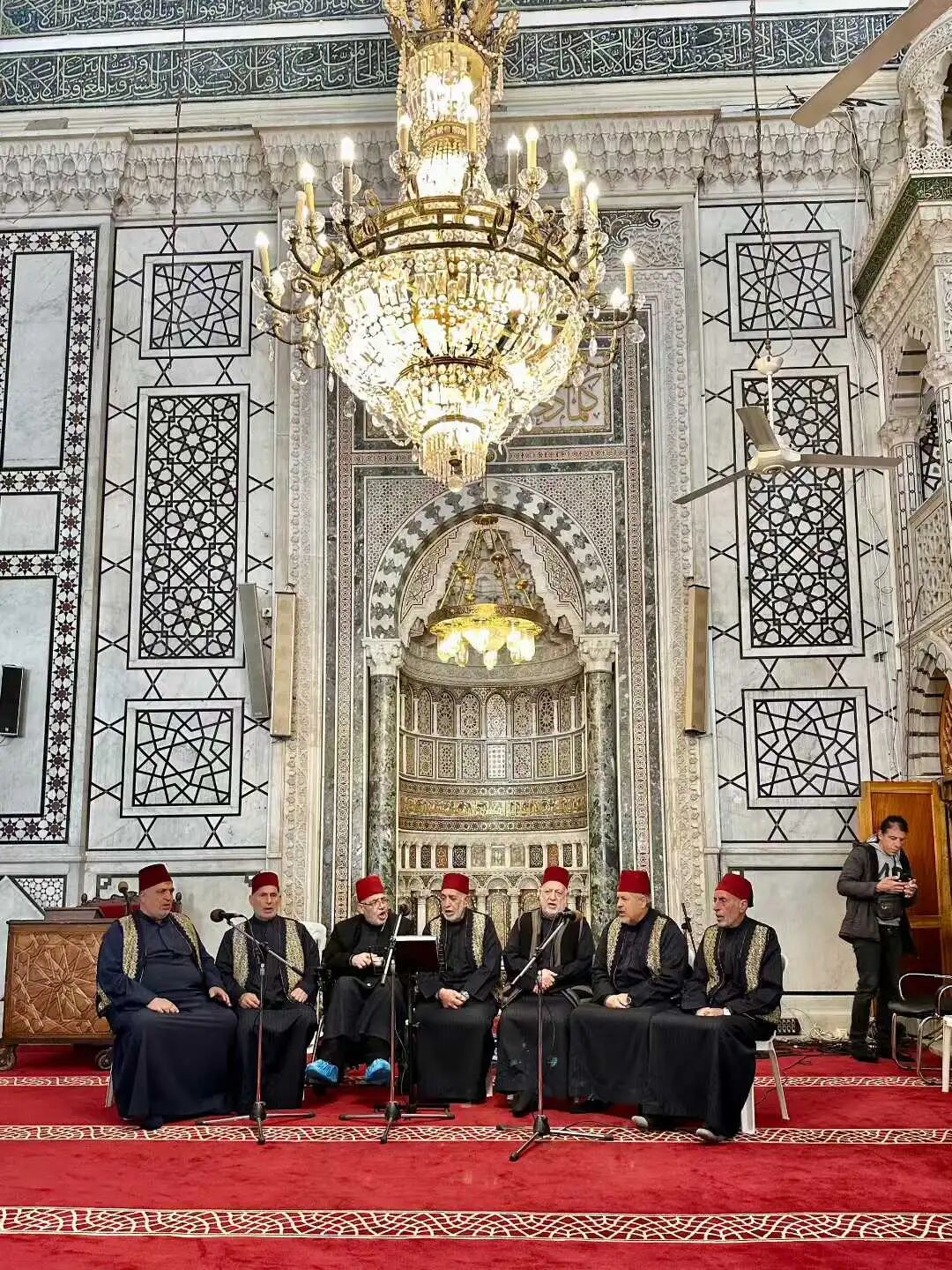
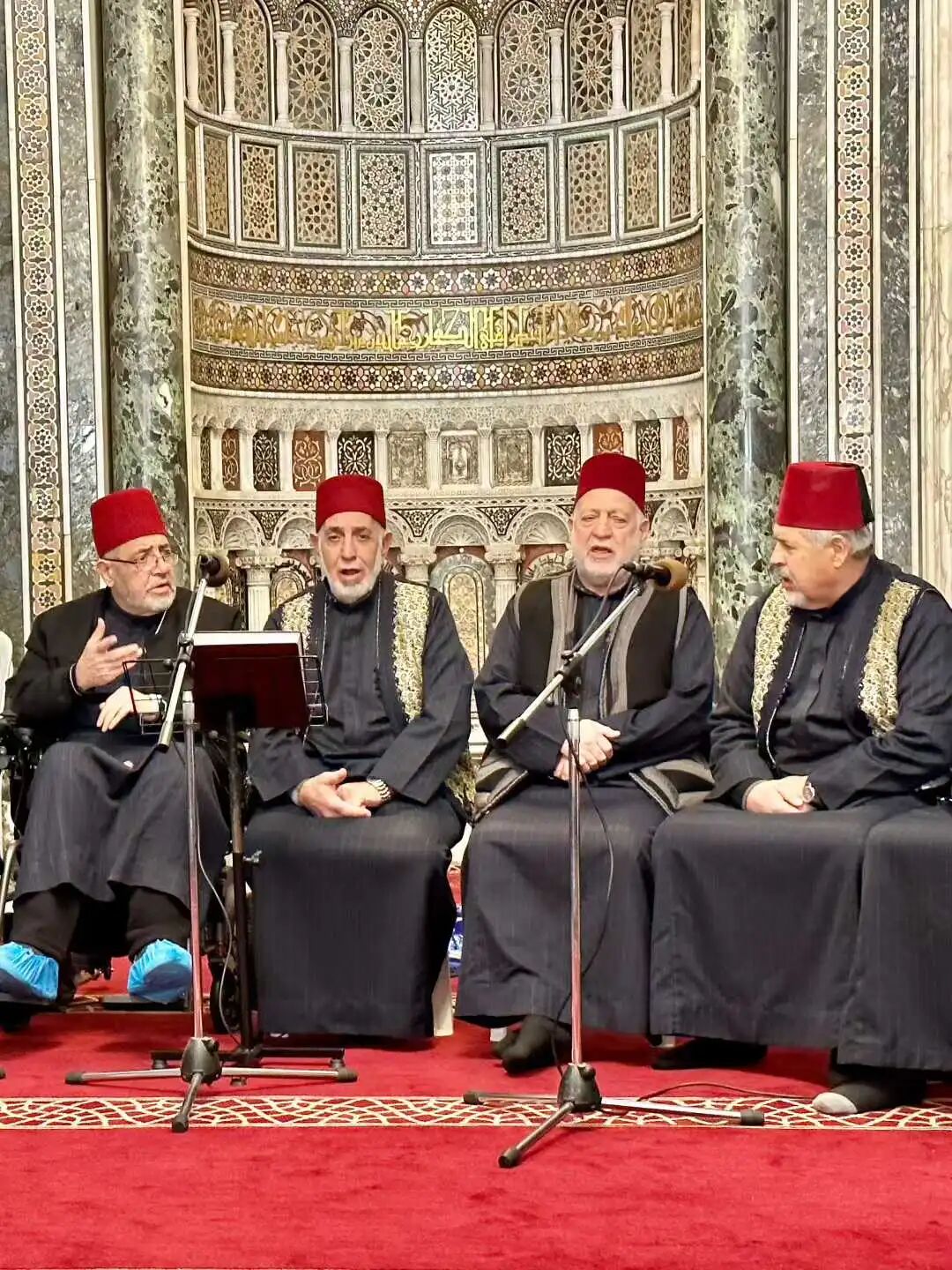
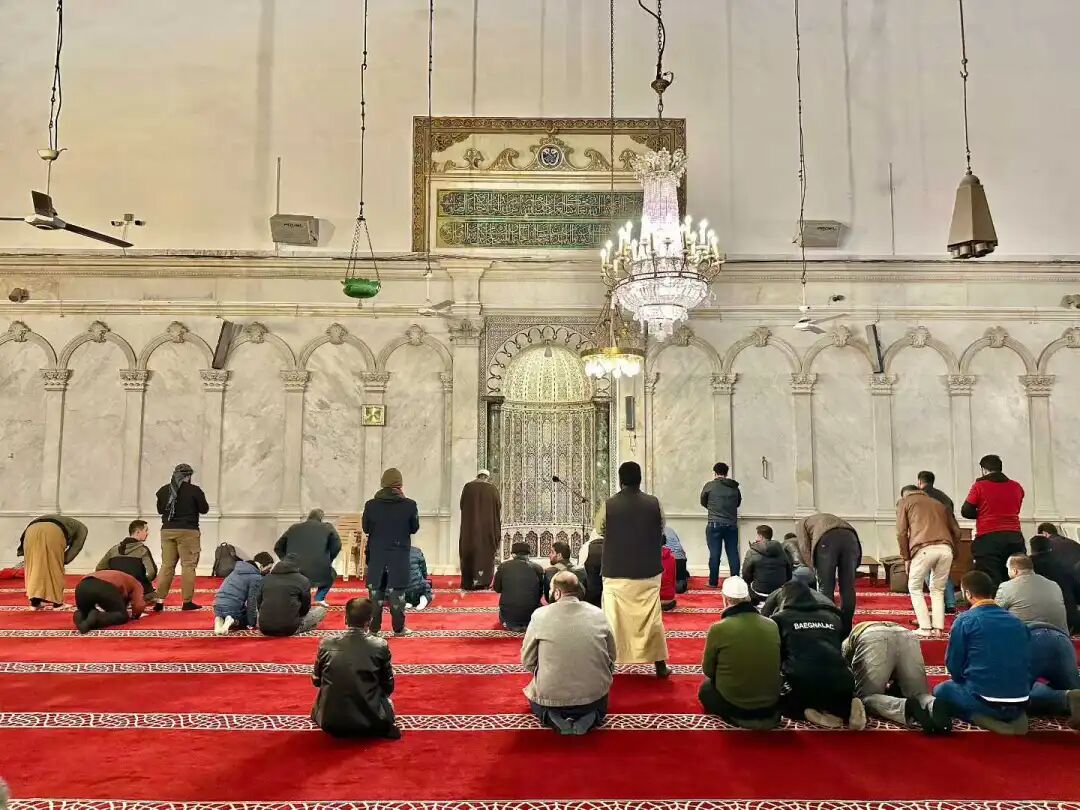
When I arrived after 11:00 a.m., the chanting had already begun. The elderly men wore traditional Ottoman-era clothing, and against the backdrop of Ottoman decorations, it felt like stepping back into the 19th century.
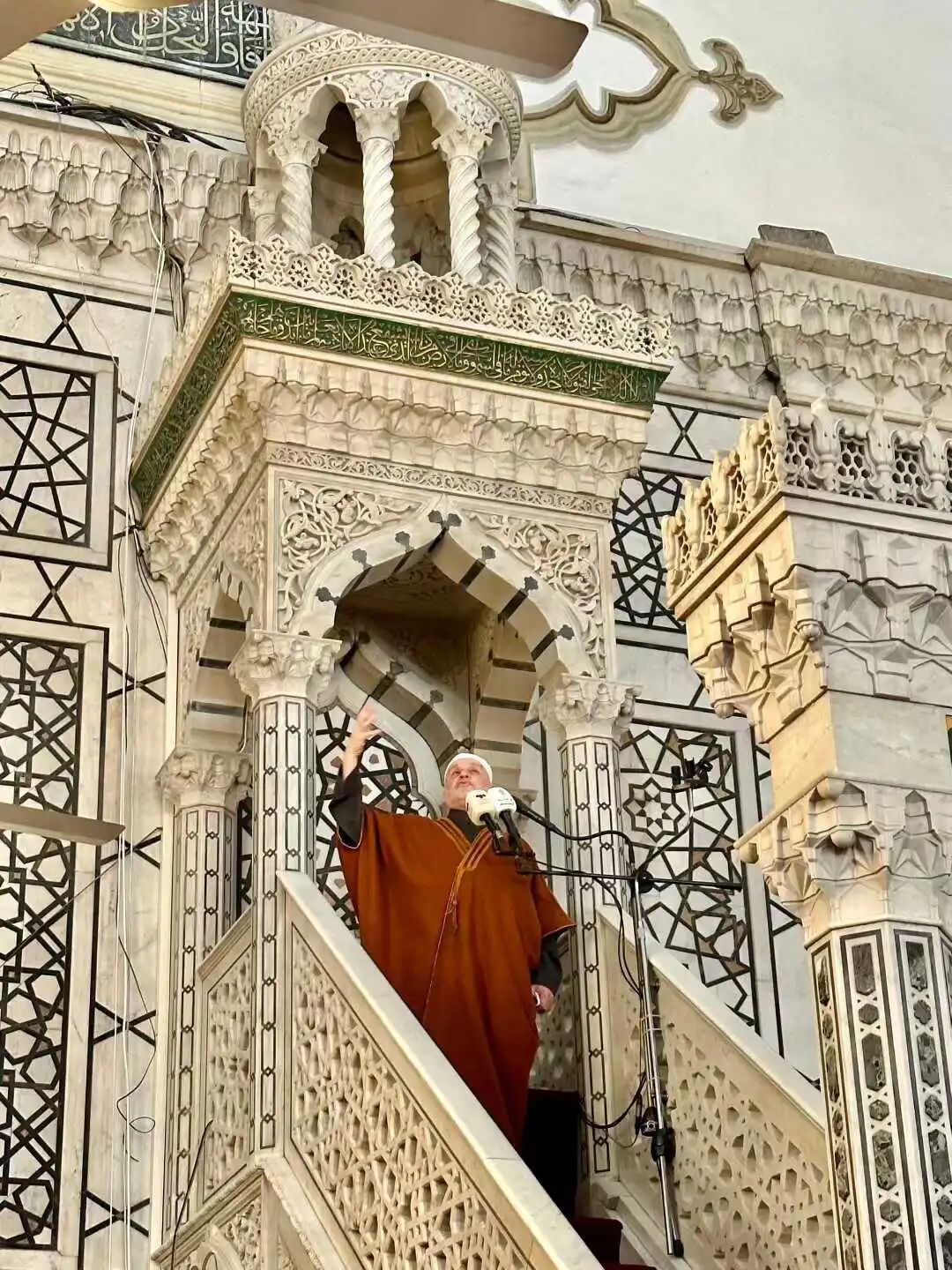
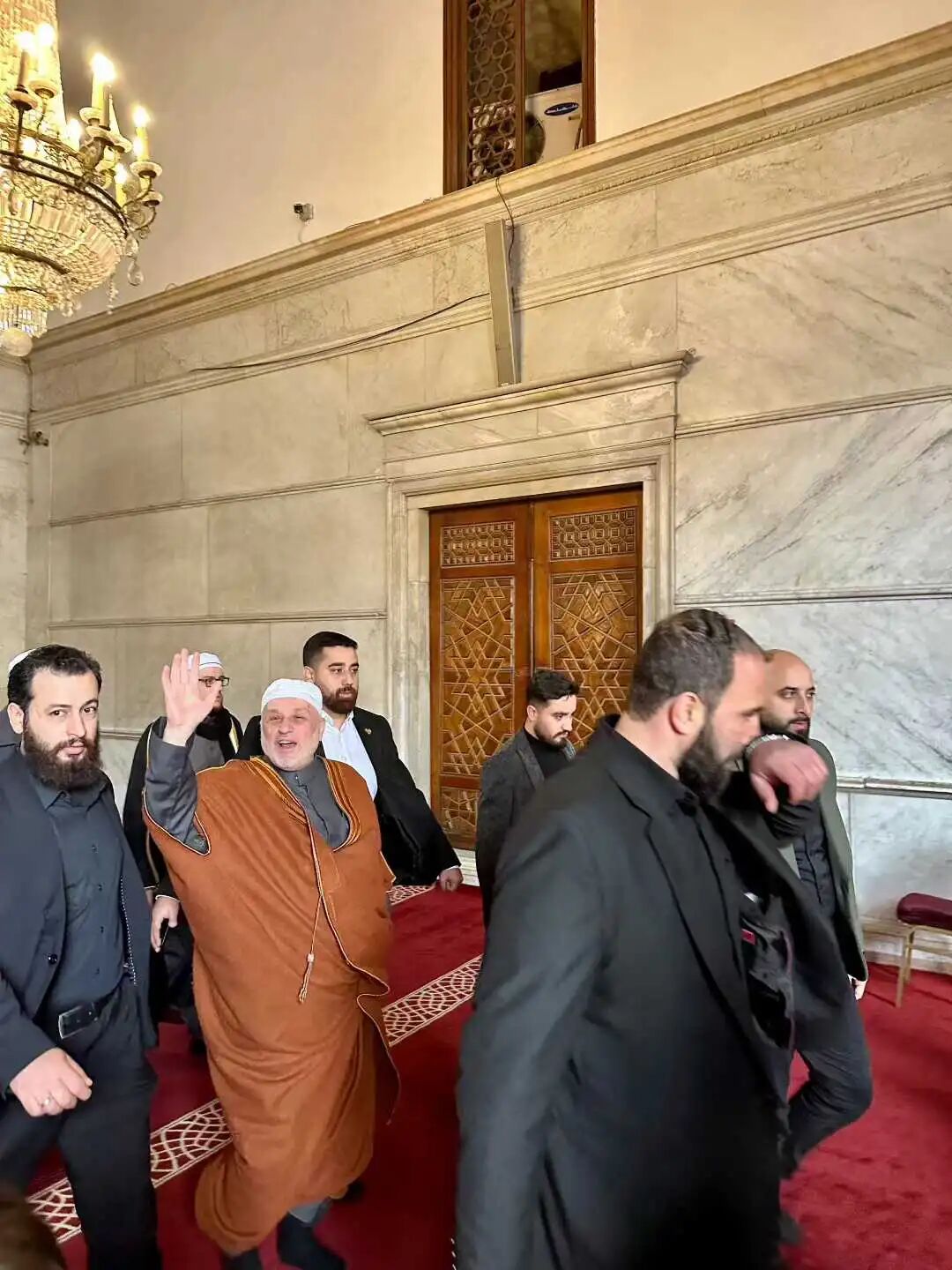
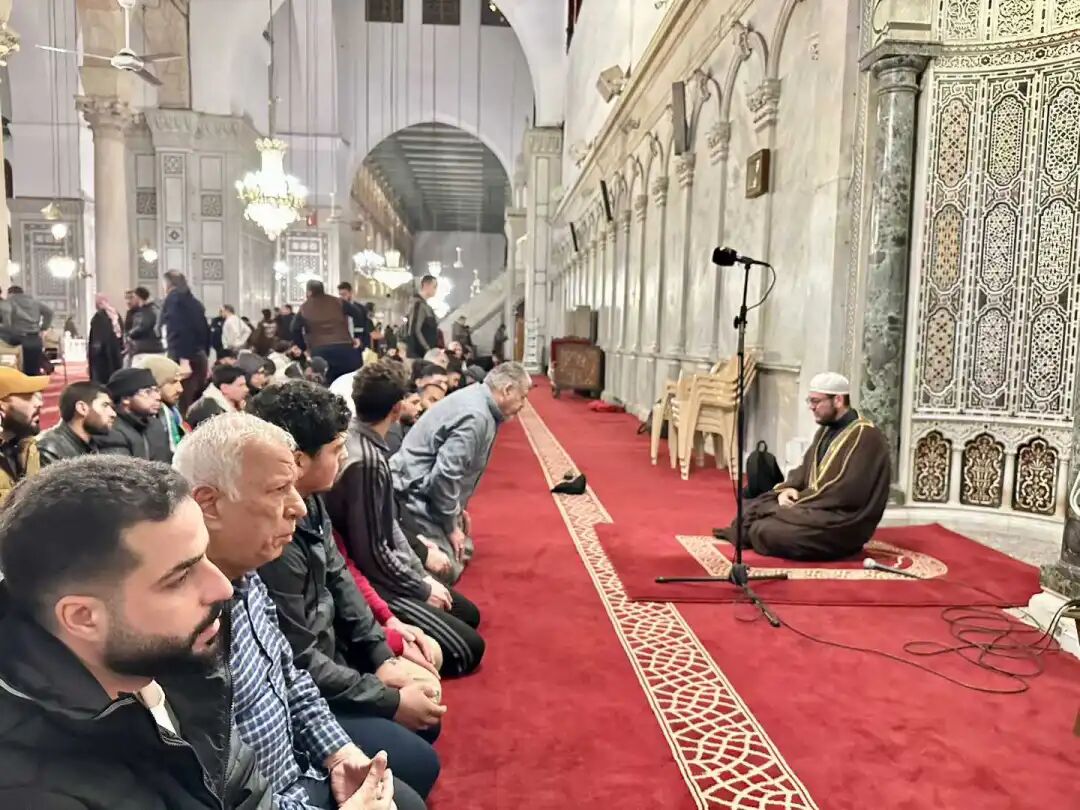
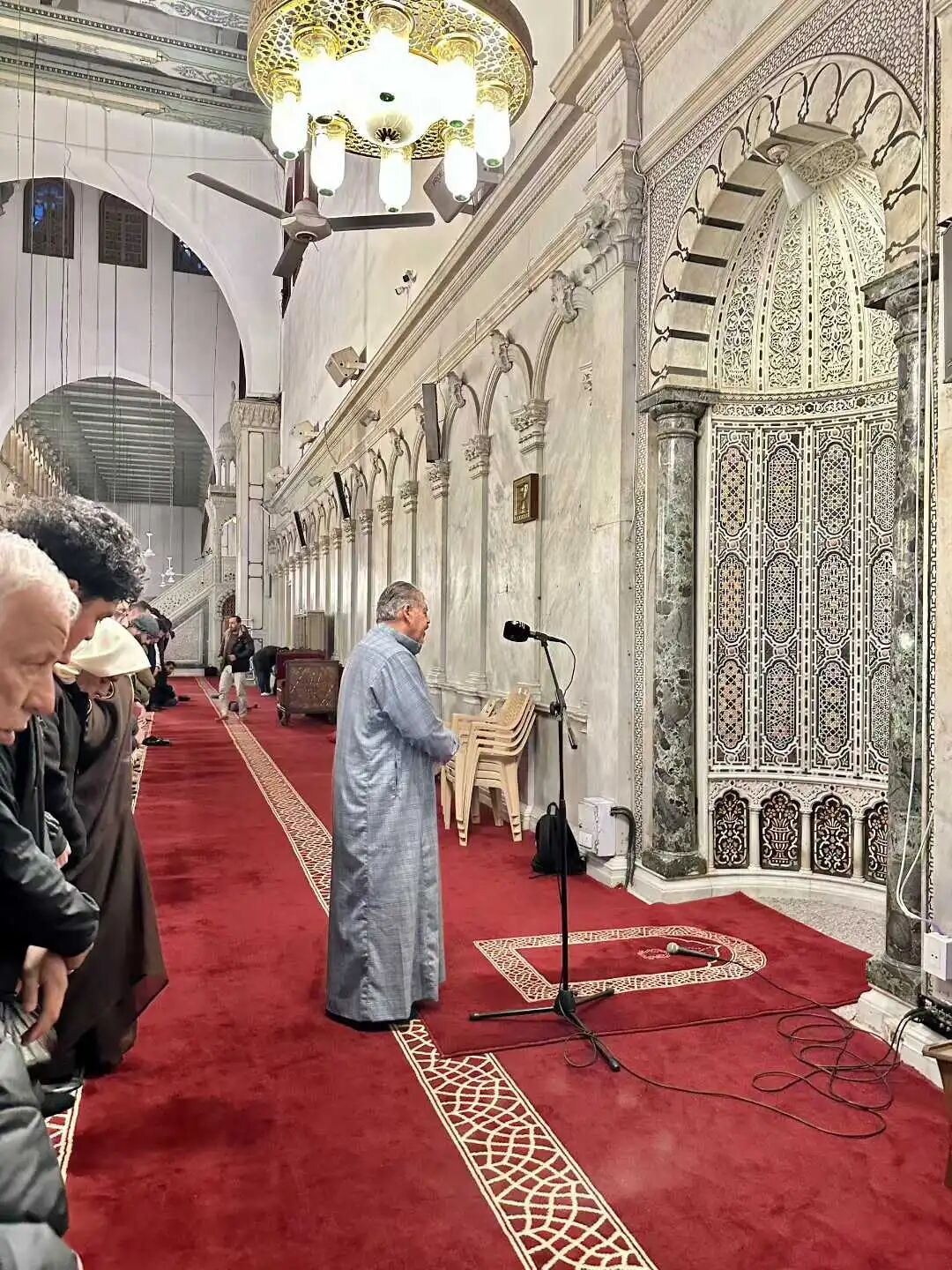
The khutbah began at 12:40 p.m., delivered by Mohammed Abu al-Khair Shukri, who has served as the Syrian Minister of Religious Endowments since March 2025. Born in Damascus in 1961, Shukri is a senior scholar of Islamic law, a university professor, a lawyer, and a social activist. In 2021, his assets were seized due to his support for the GM position. It was clear that Shukri is deeply loved by the people. They crowded around to talk and take photos with him, and he responded with a smile the entire time.
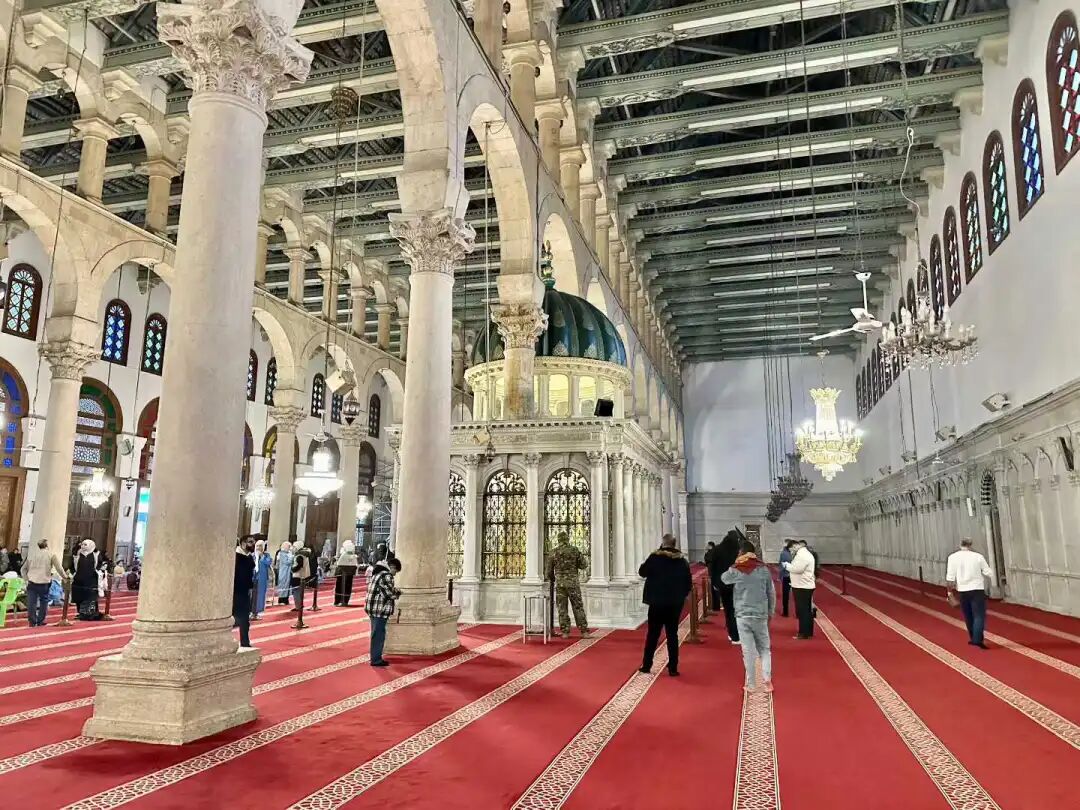
During Friday namaz, the front of the main hall was cordoned off for important figures to move through, and people could only stand there when it was time for the prayer rows. Shukri used this path to enter and leave, accompanied by his staff.
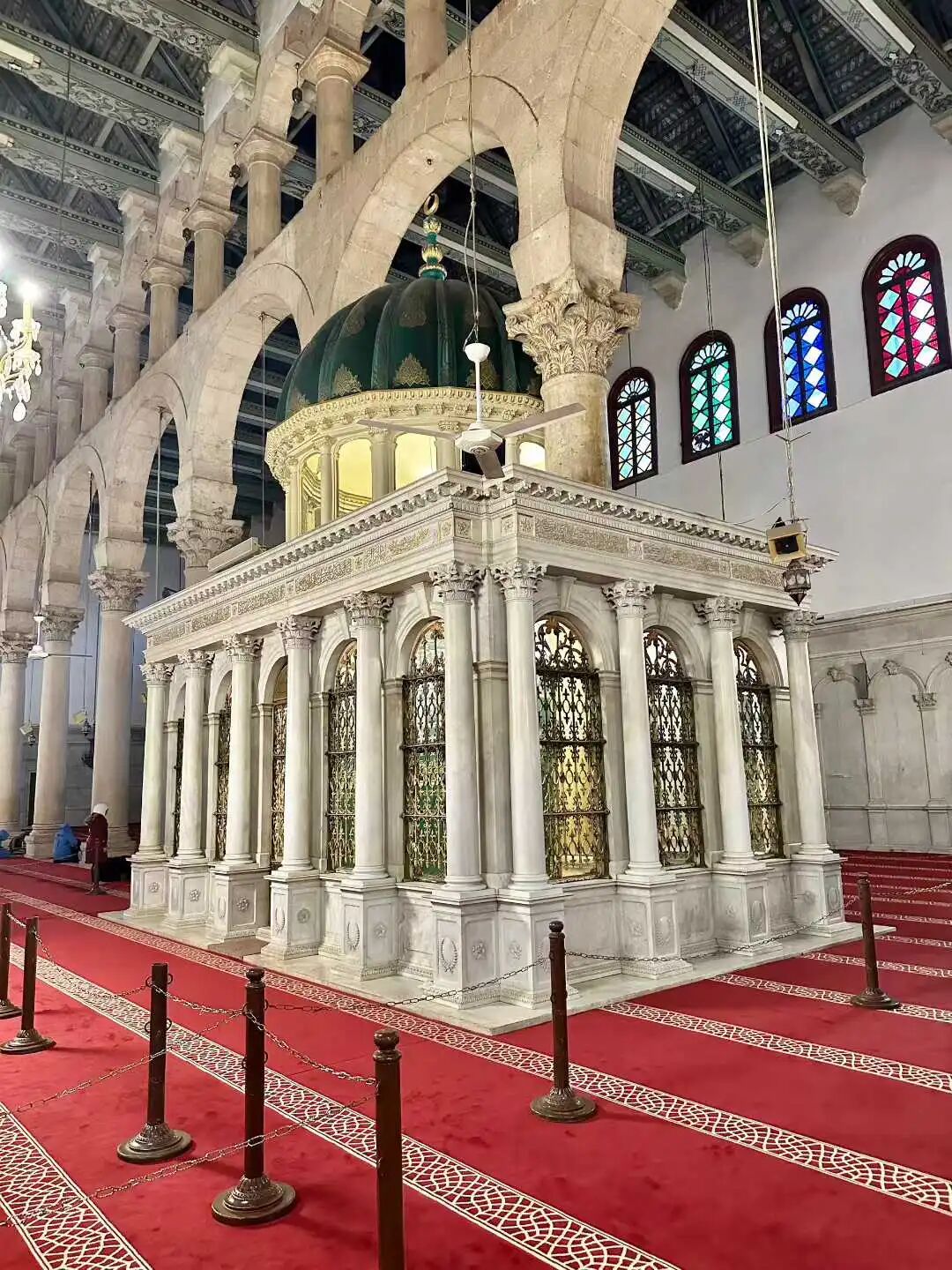
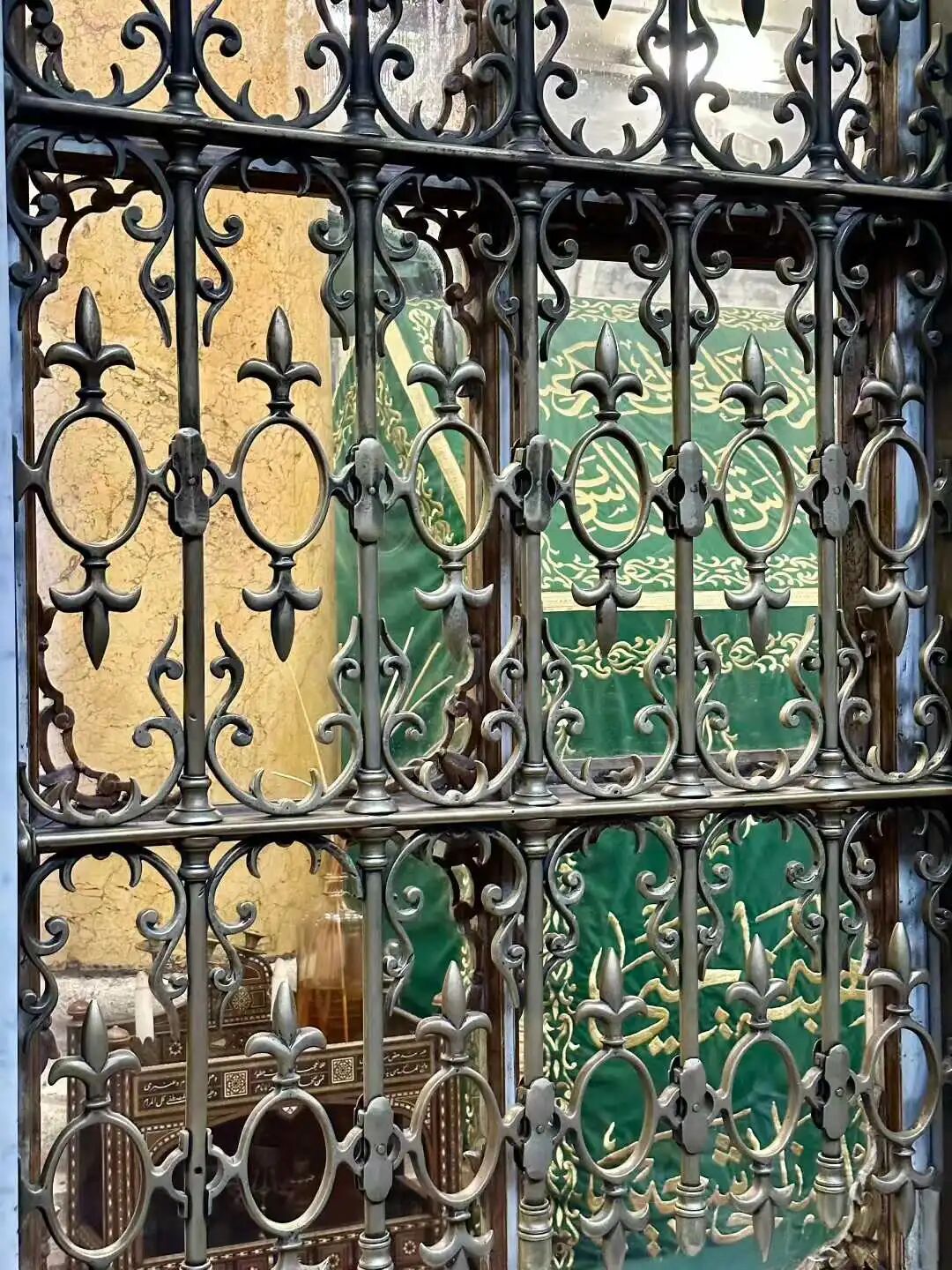
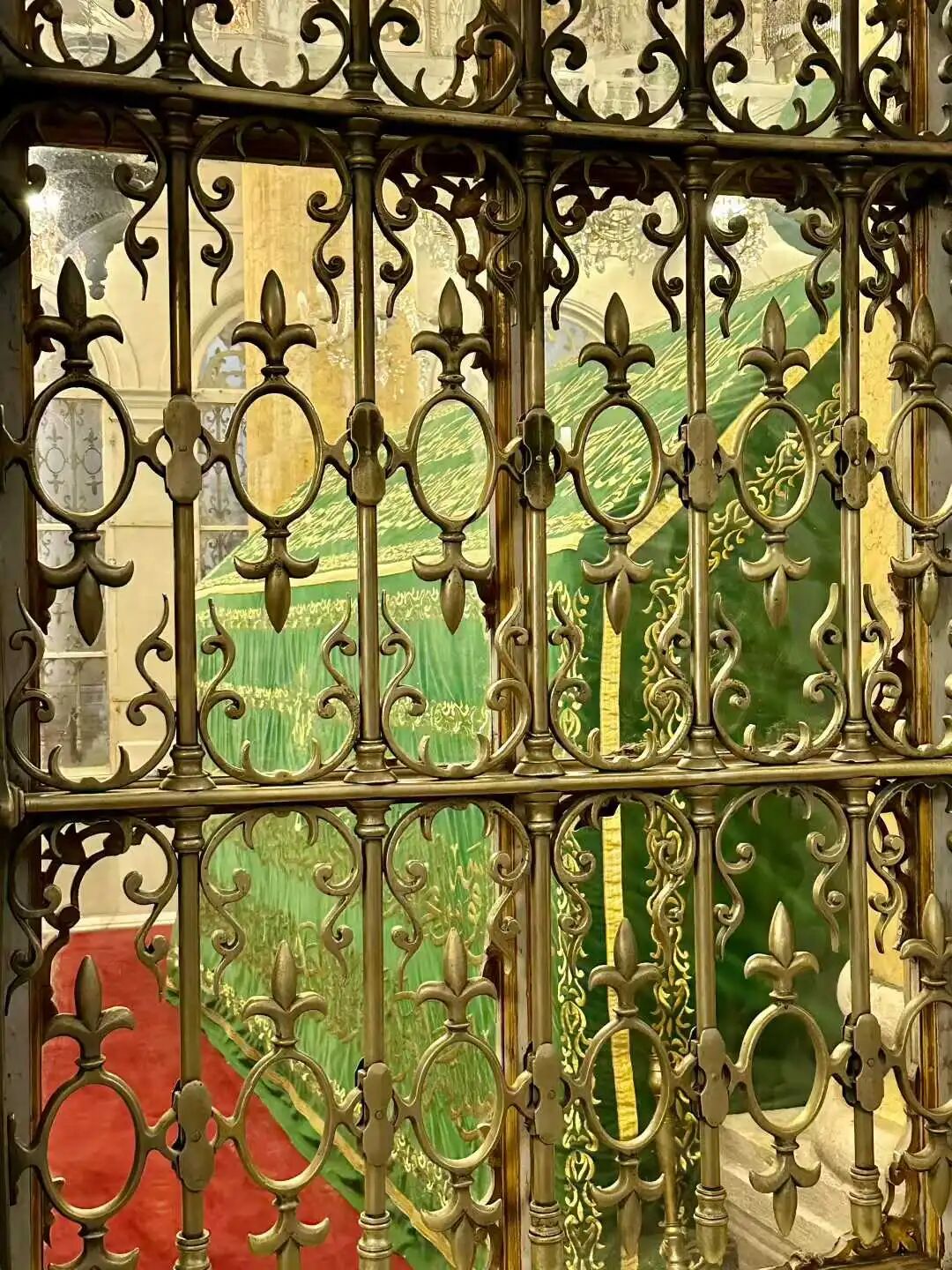
Additionally, the area near the gongbei of Prophet Yahya on the east side was closed during Friday namaz, likely to prevent people from visiting the tomb during the service. However, it is not uncommon to find tombs inside the main halls of mosques in the Middle East, and I have seen this elsewhere.
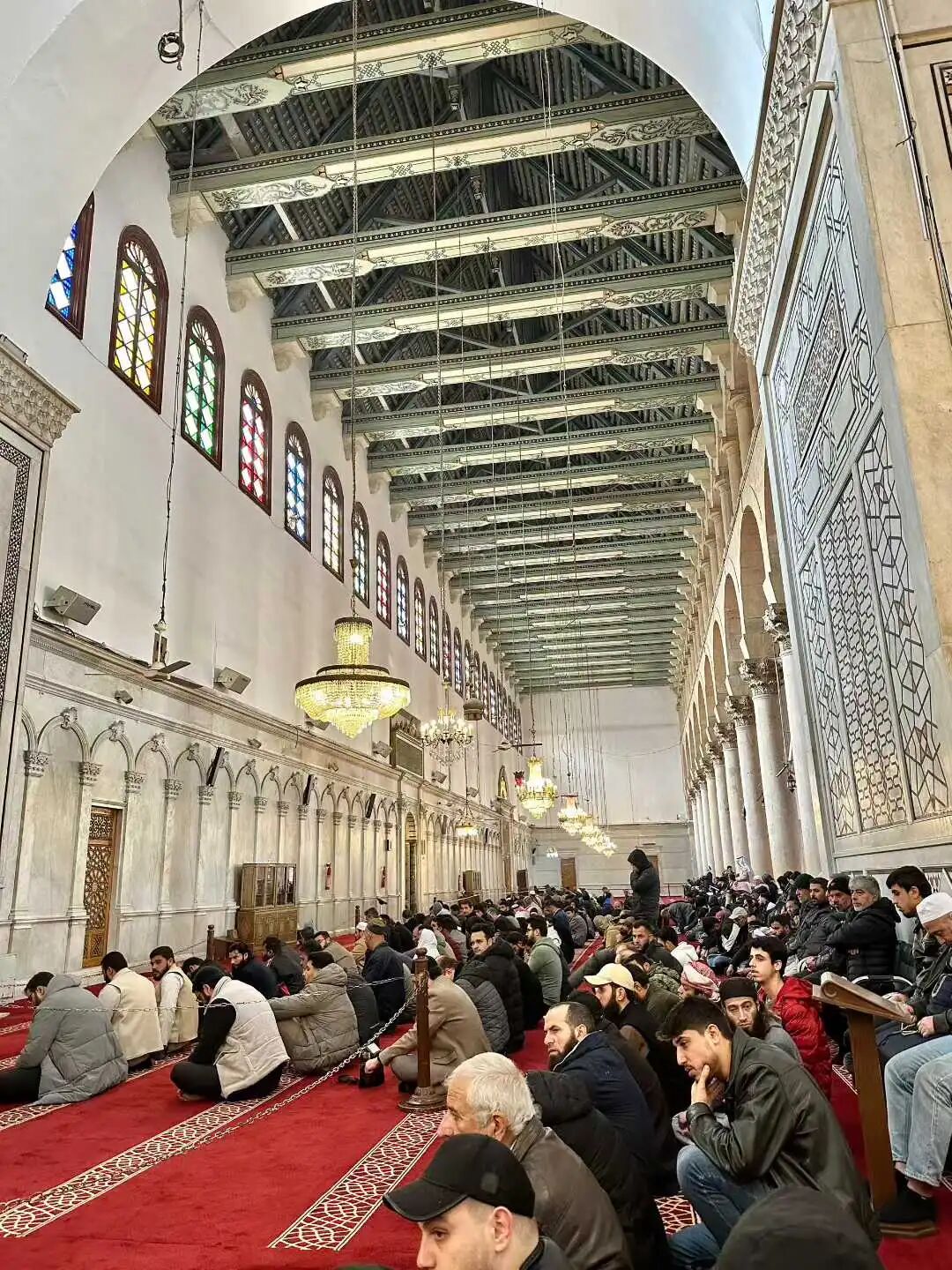
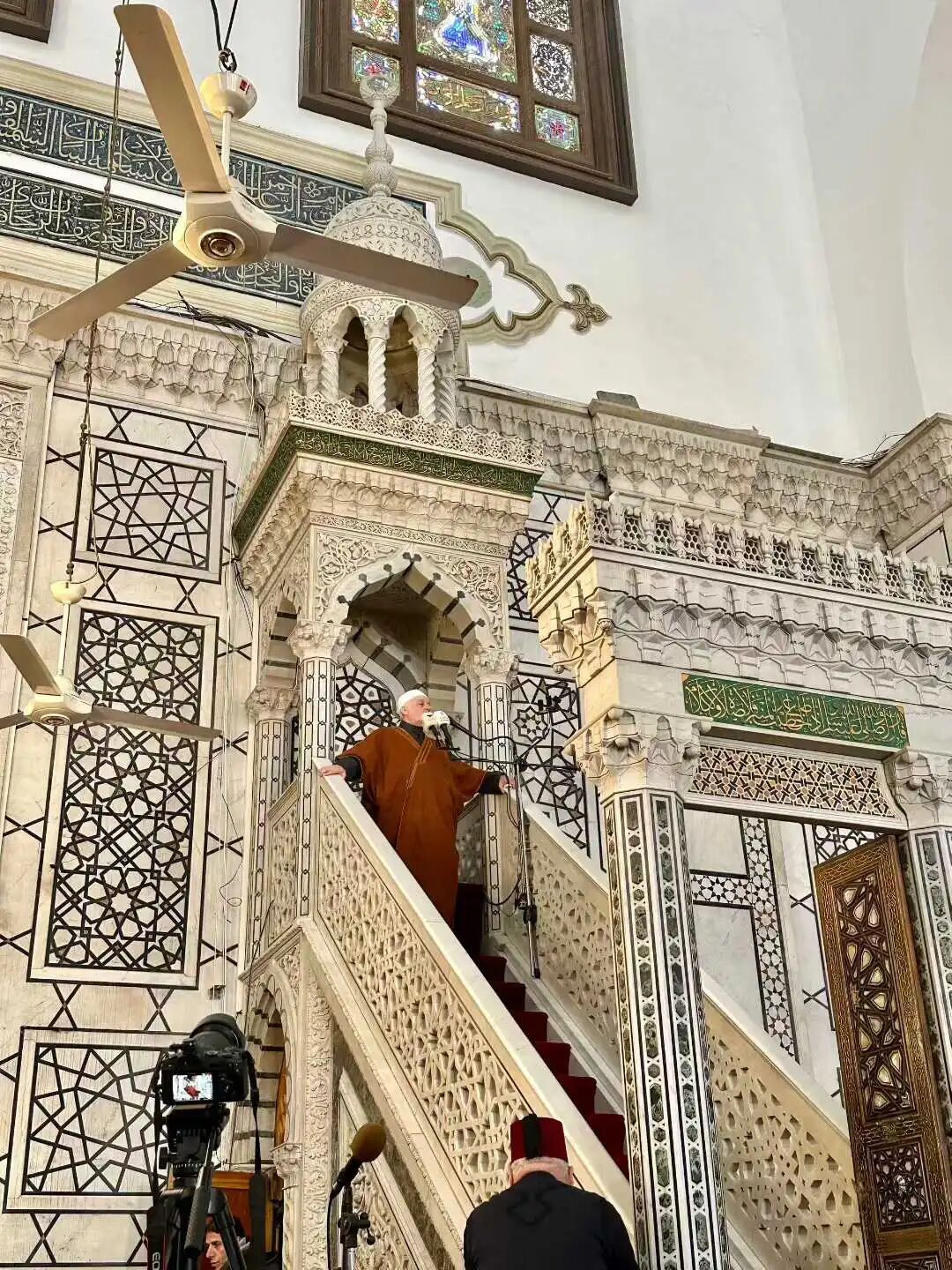
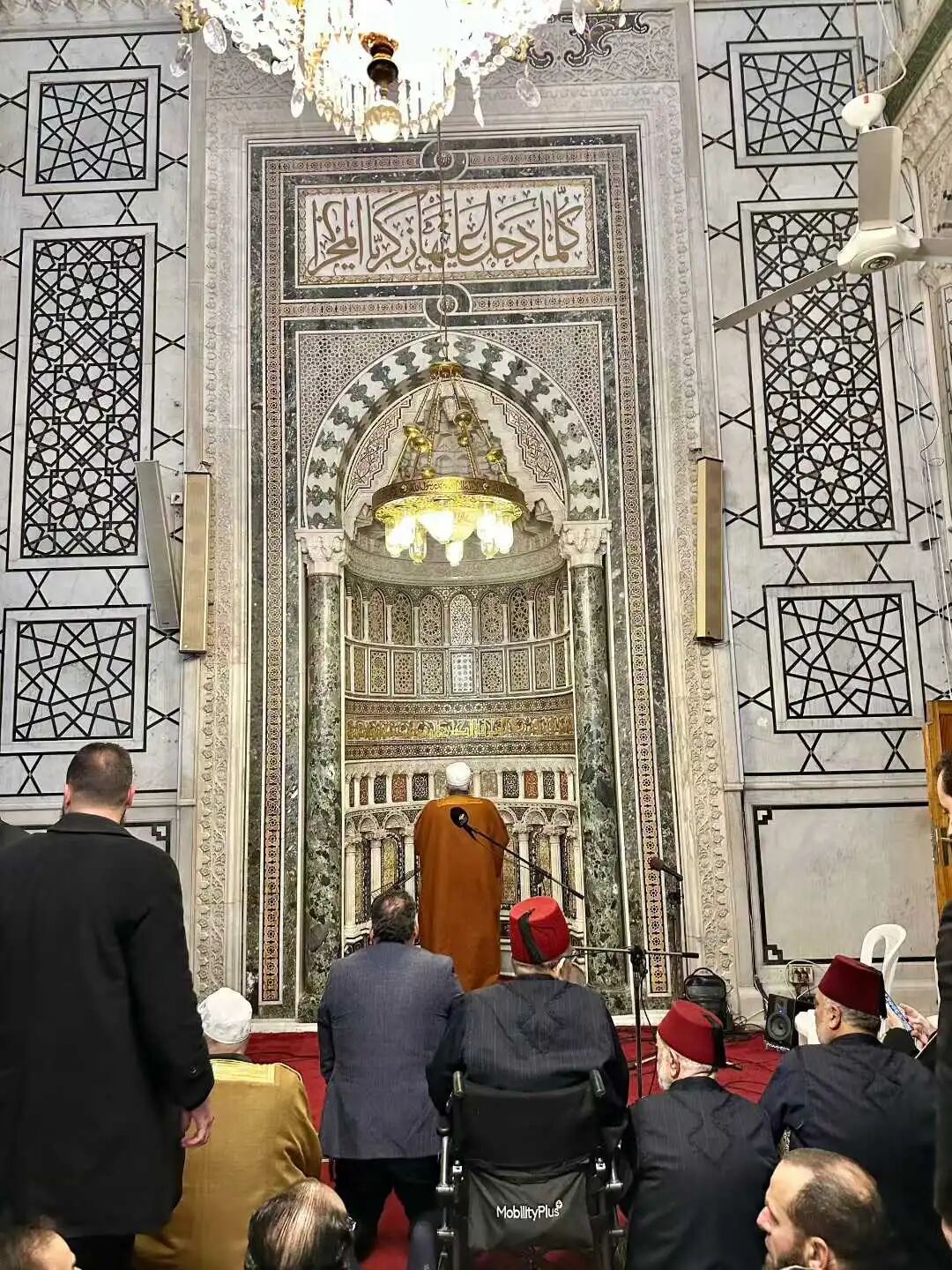
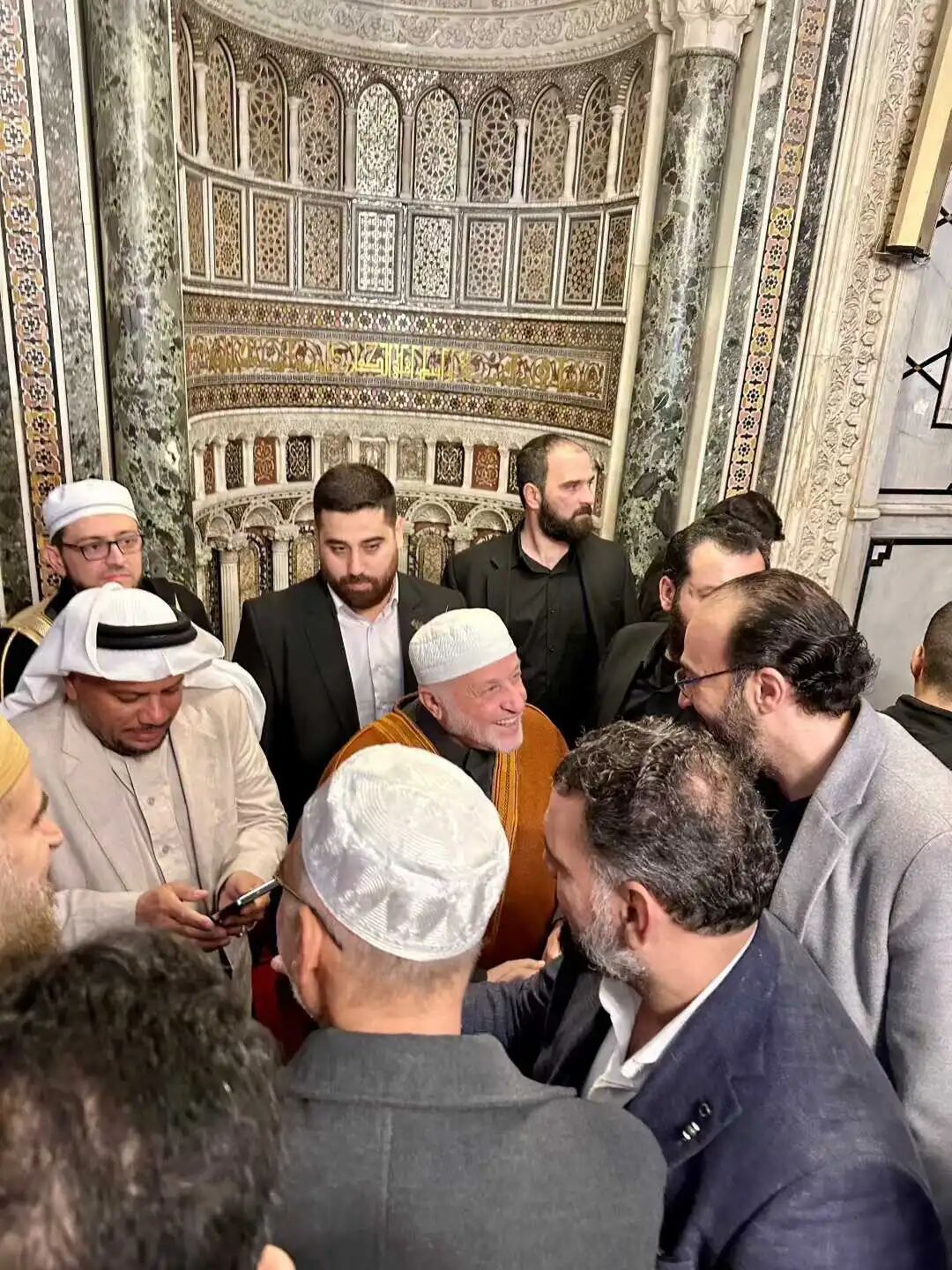
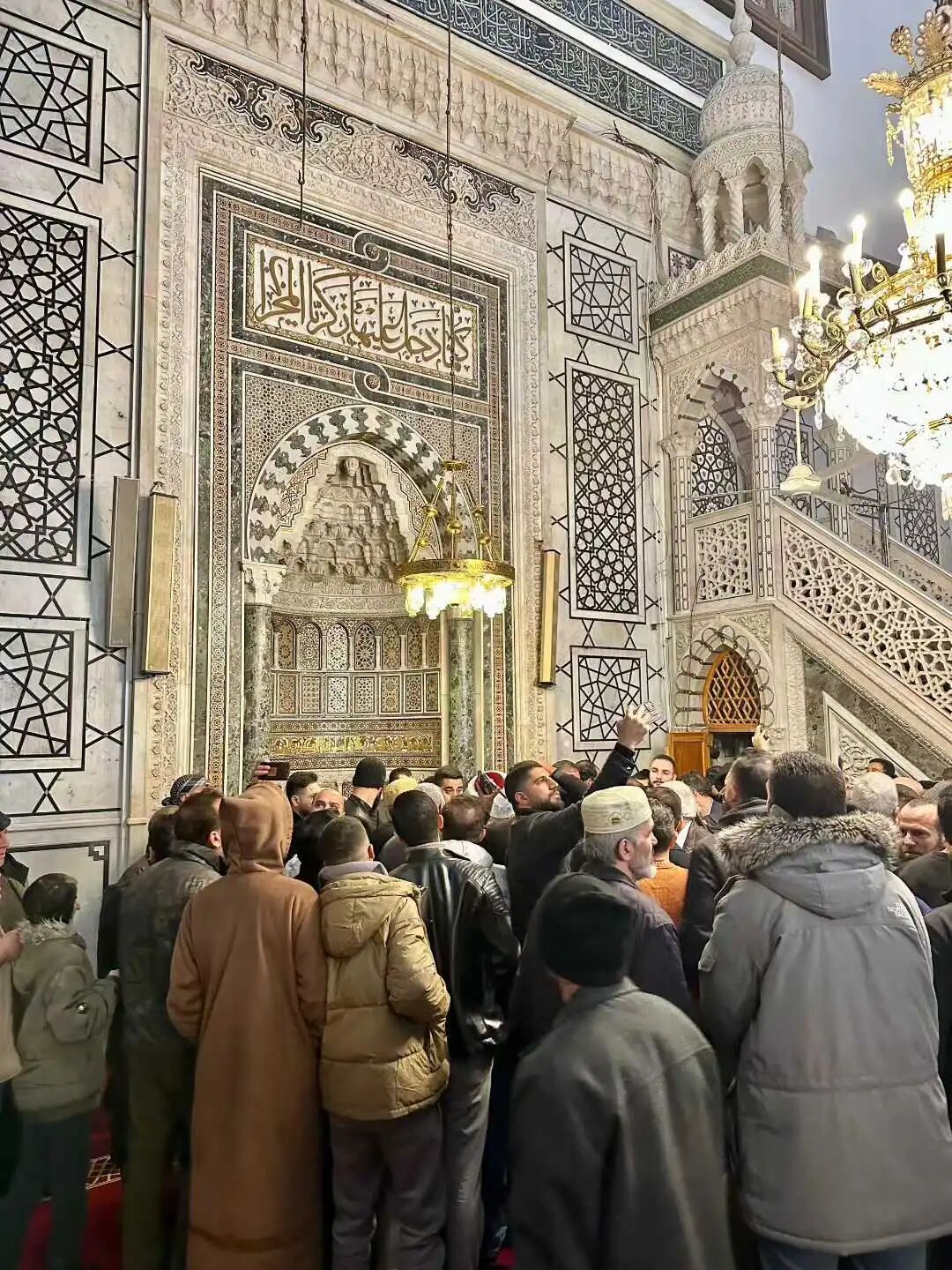
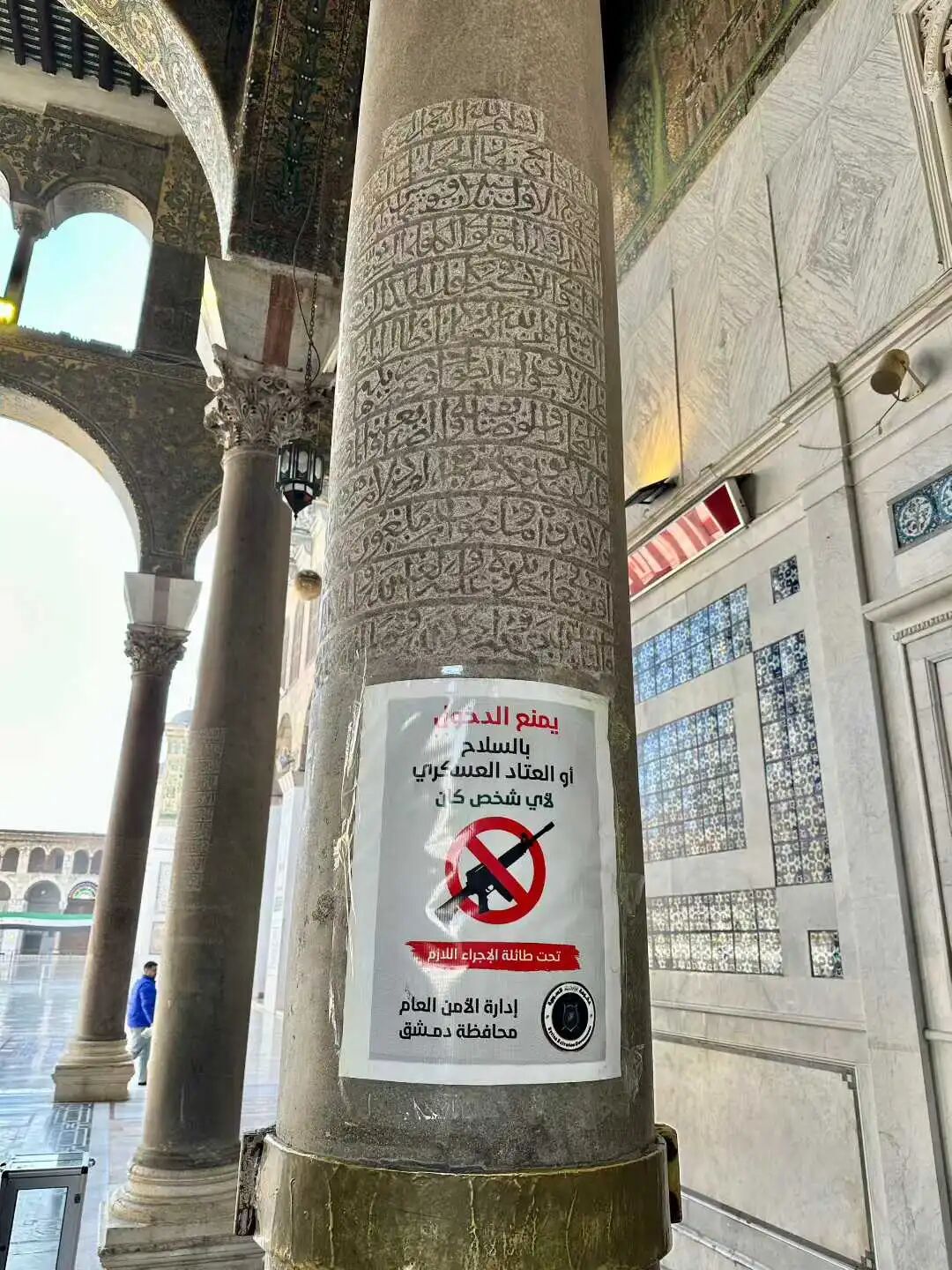
During Friday namaz at the Great Mosque, there were many young men in camouflage uniforms; I suspect many of them had just come from the front lines. A sign on the pillar at the entrance forbids carrying guns, which reminded us that war is not far away. On December 8, 2024, Ahmed Shara delivered a victory speech at the Great Mosque of Damascus and then became the de facto leader of Syria. These men were very warm toward me. Many of them told me that China is great and spoke of lasting friendship between China and Syria after learning I was Chinese.
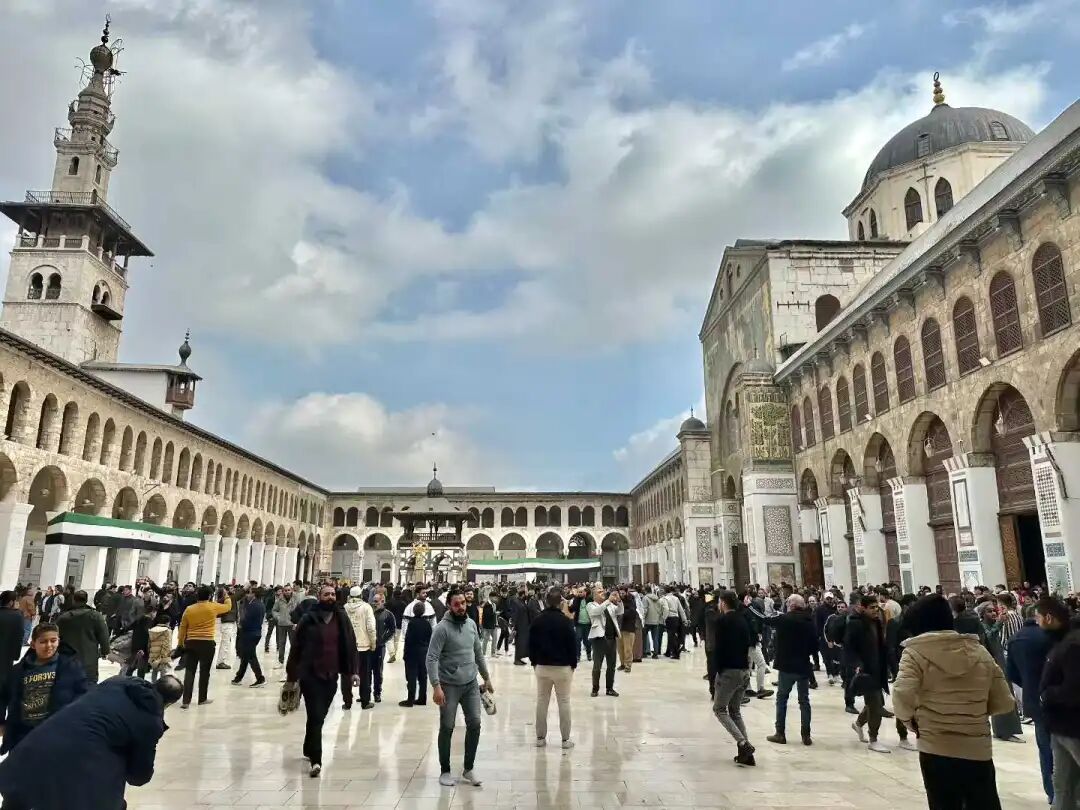
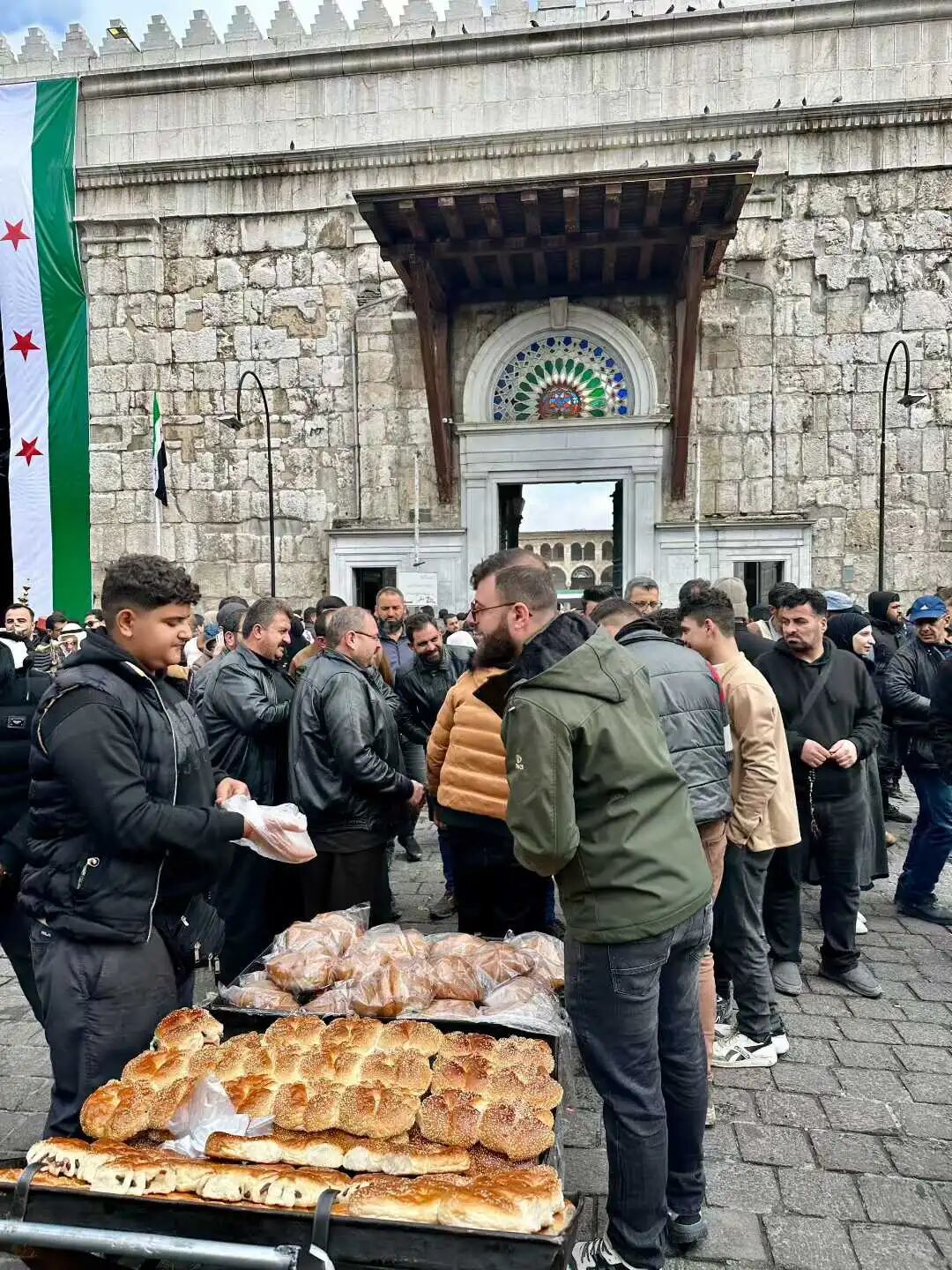
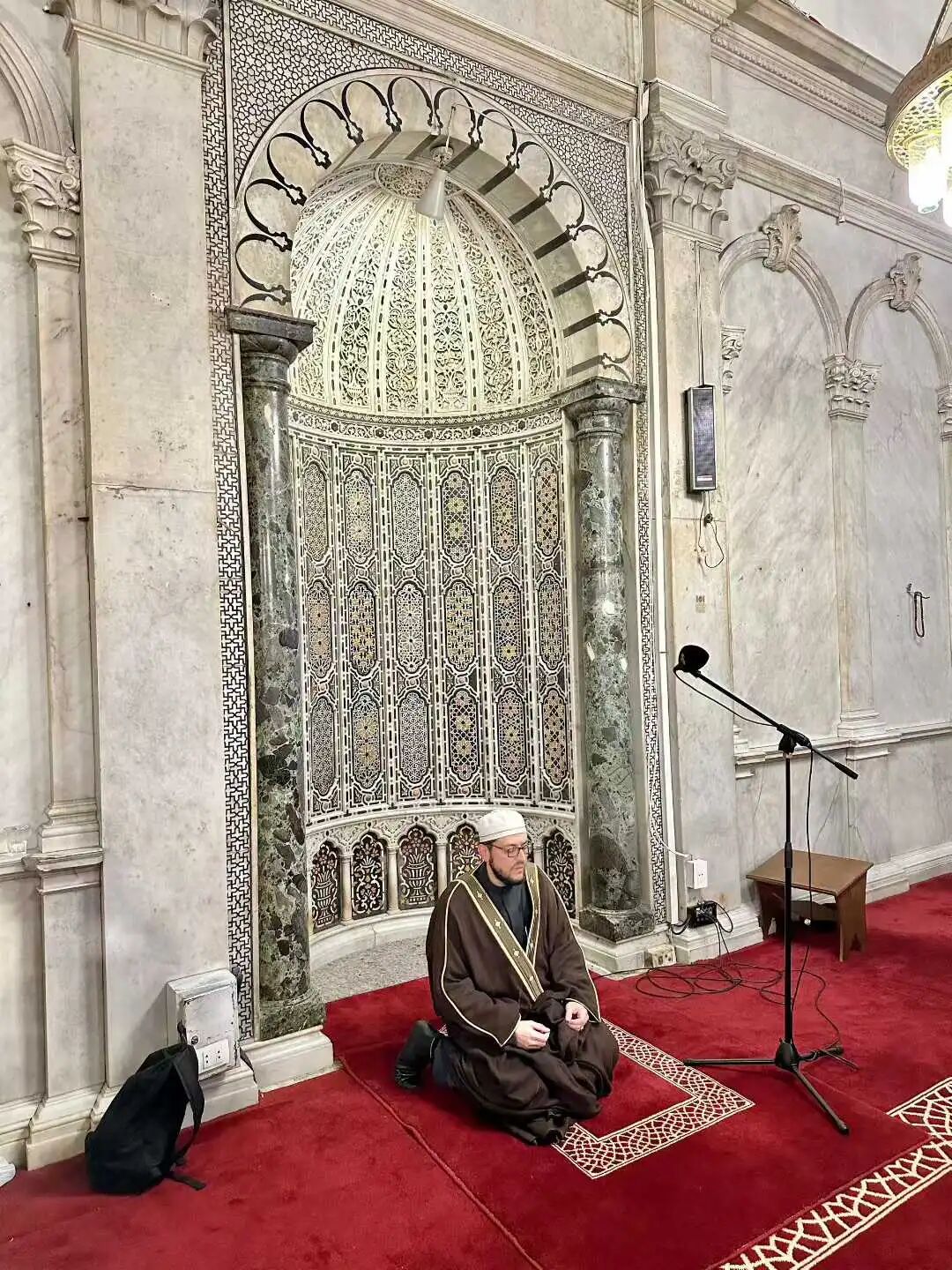
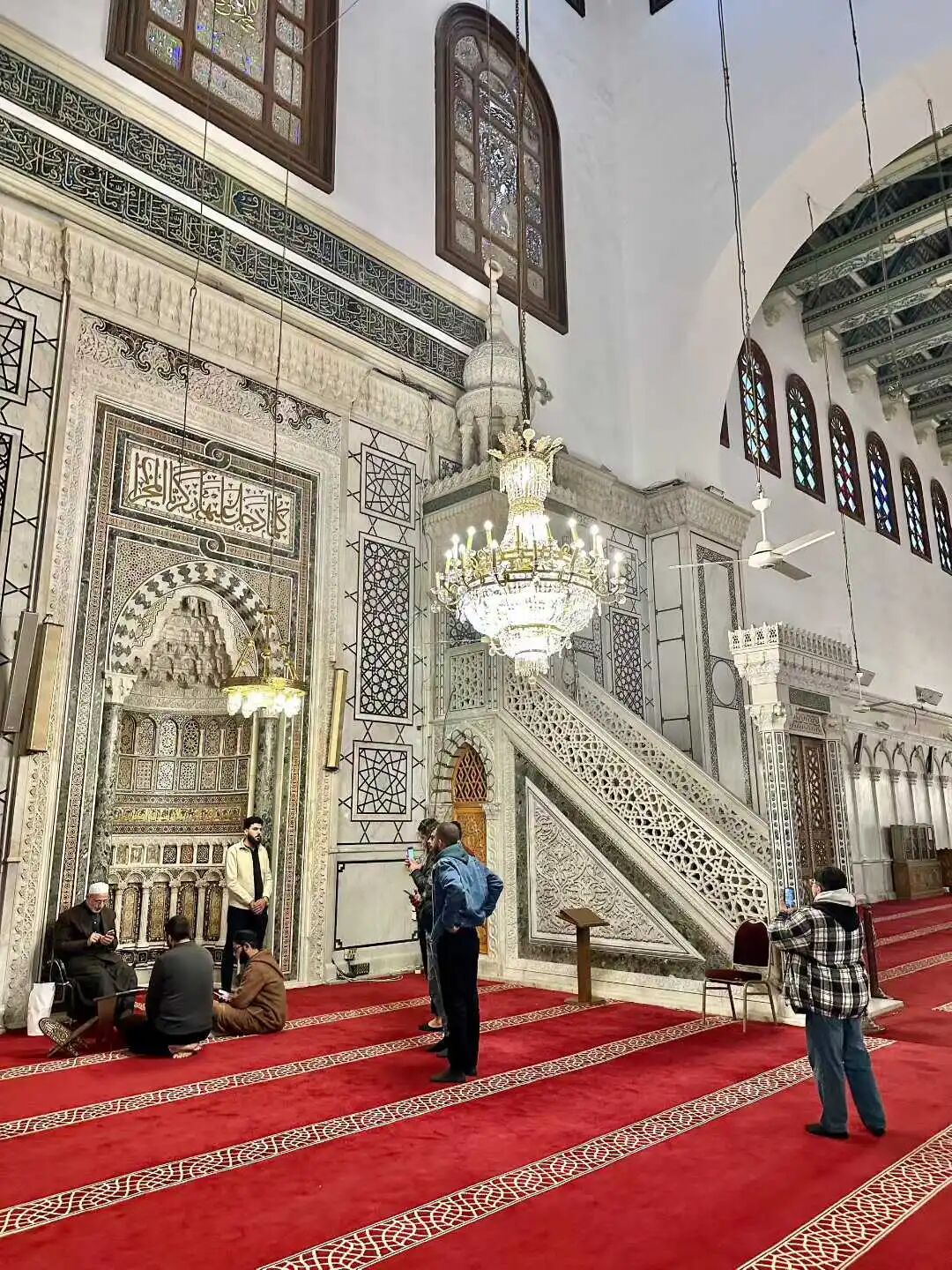
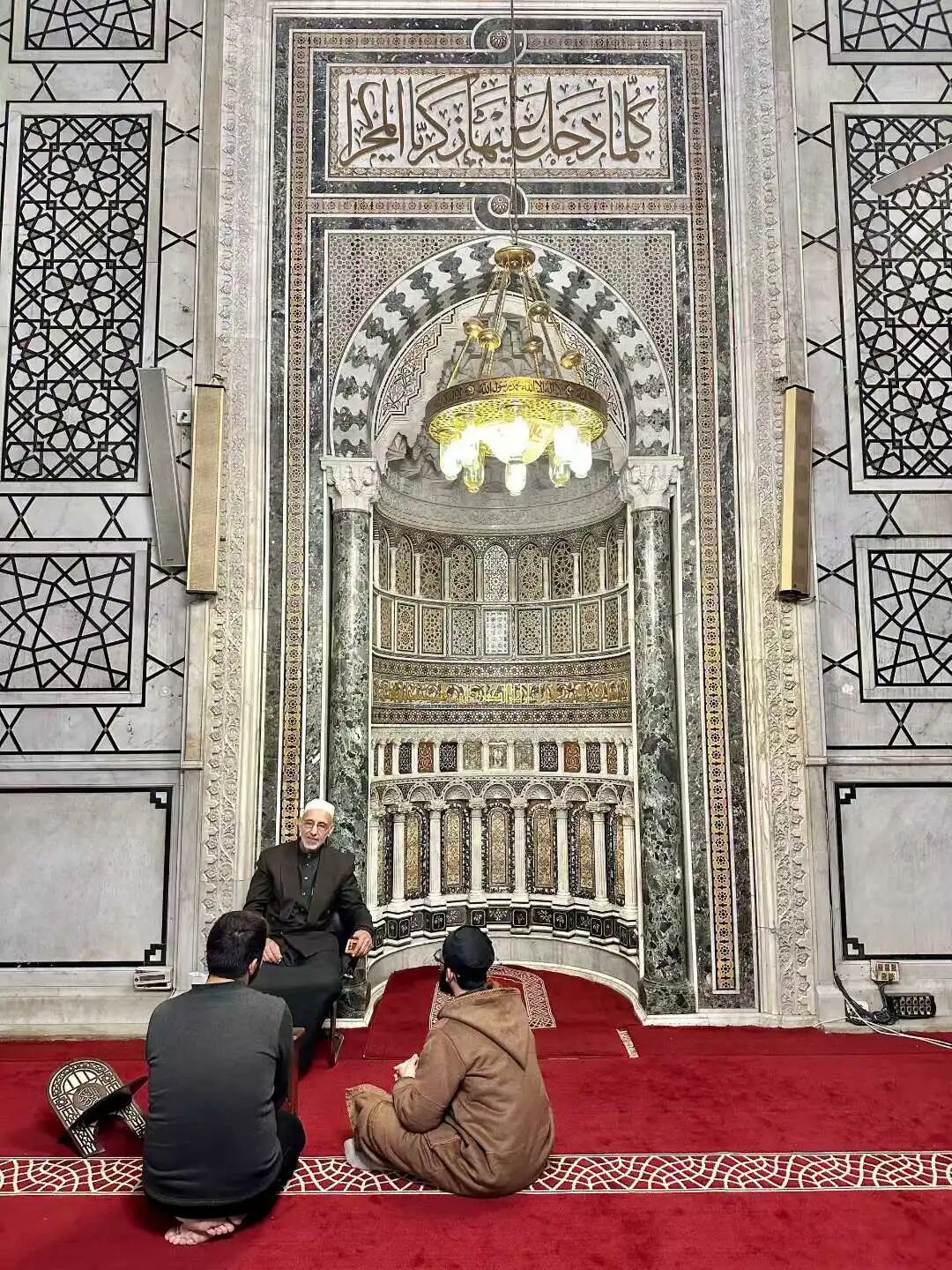
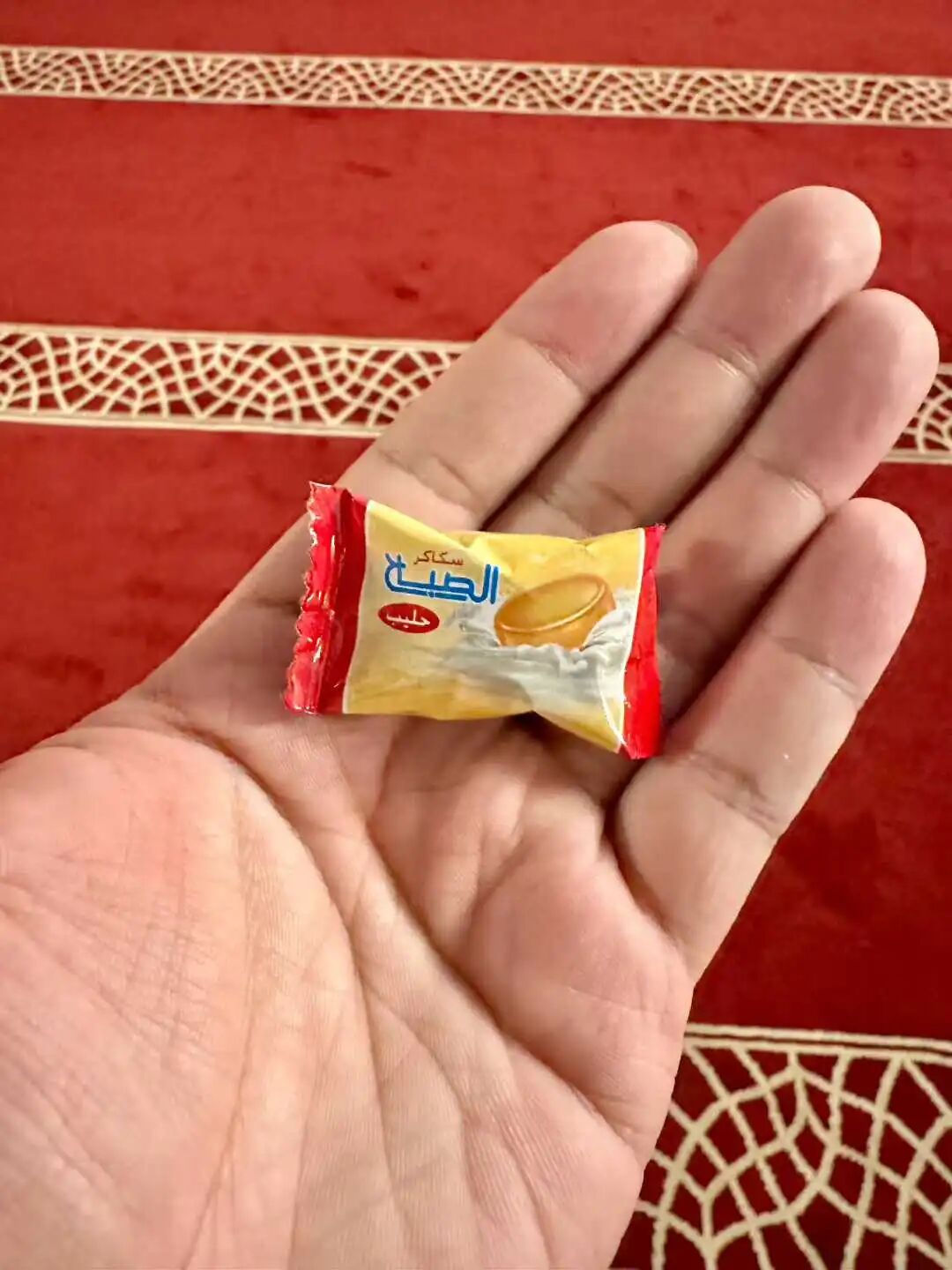
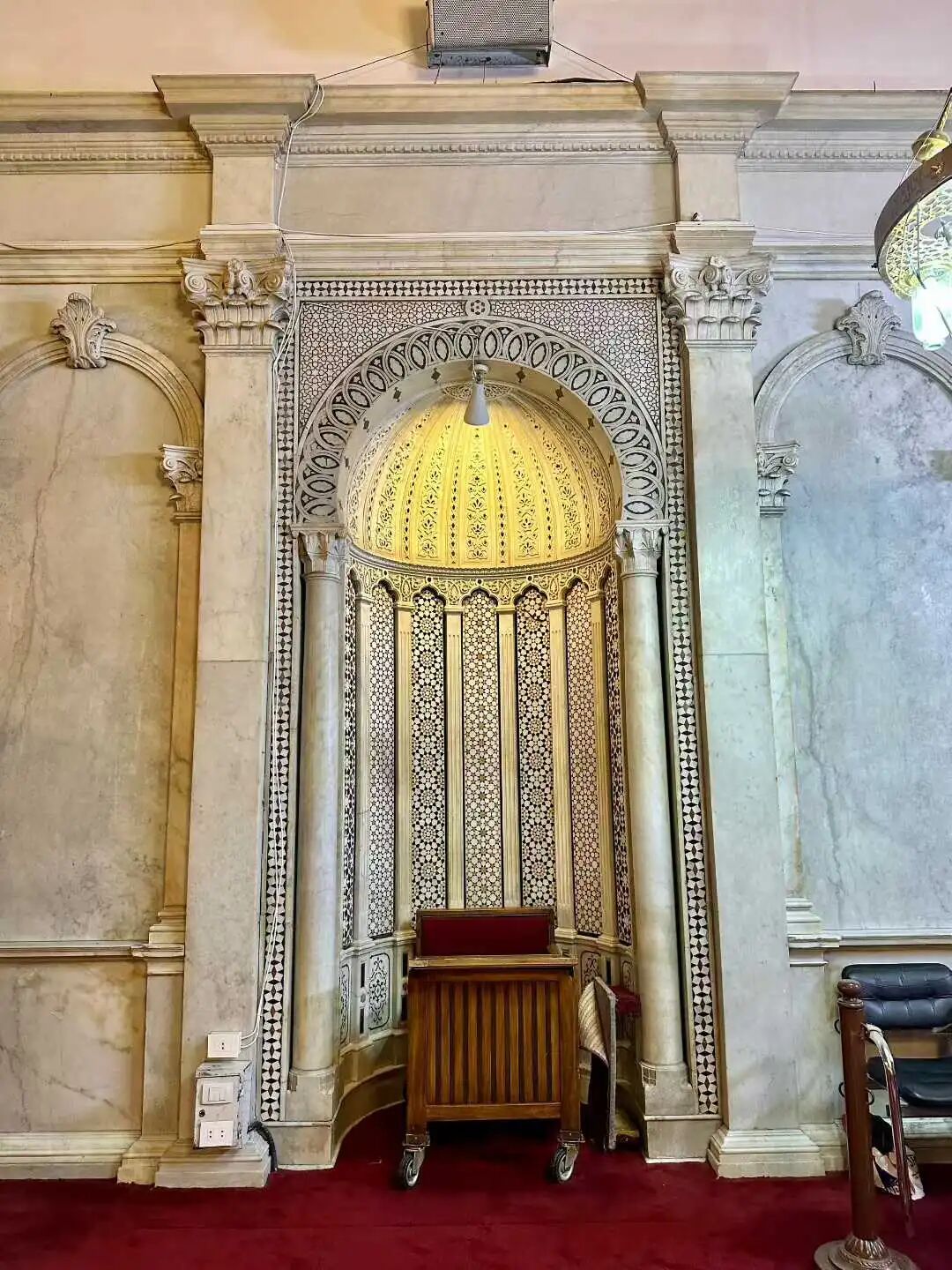
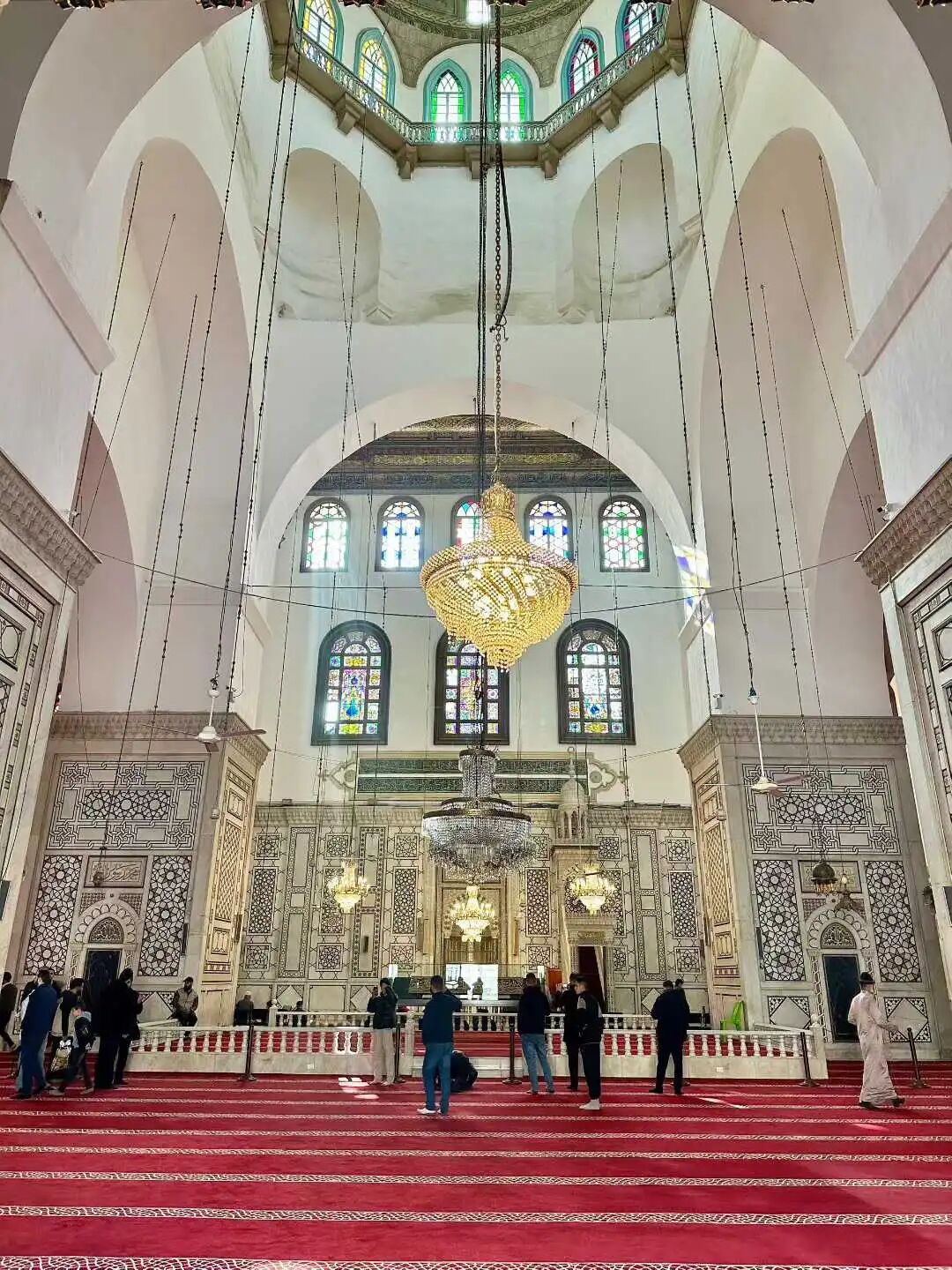
The mosque has four mihrabs (prayer niches). Daily prayers are usually held at the mihrab on the west side. In the afternoon, an ustadh (teacher) teaches scripture next to the large mihrab. He even gave me candy when he saw me passing by. I was given candy several times by warm-hearted people in Damascus, and I was very moved.
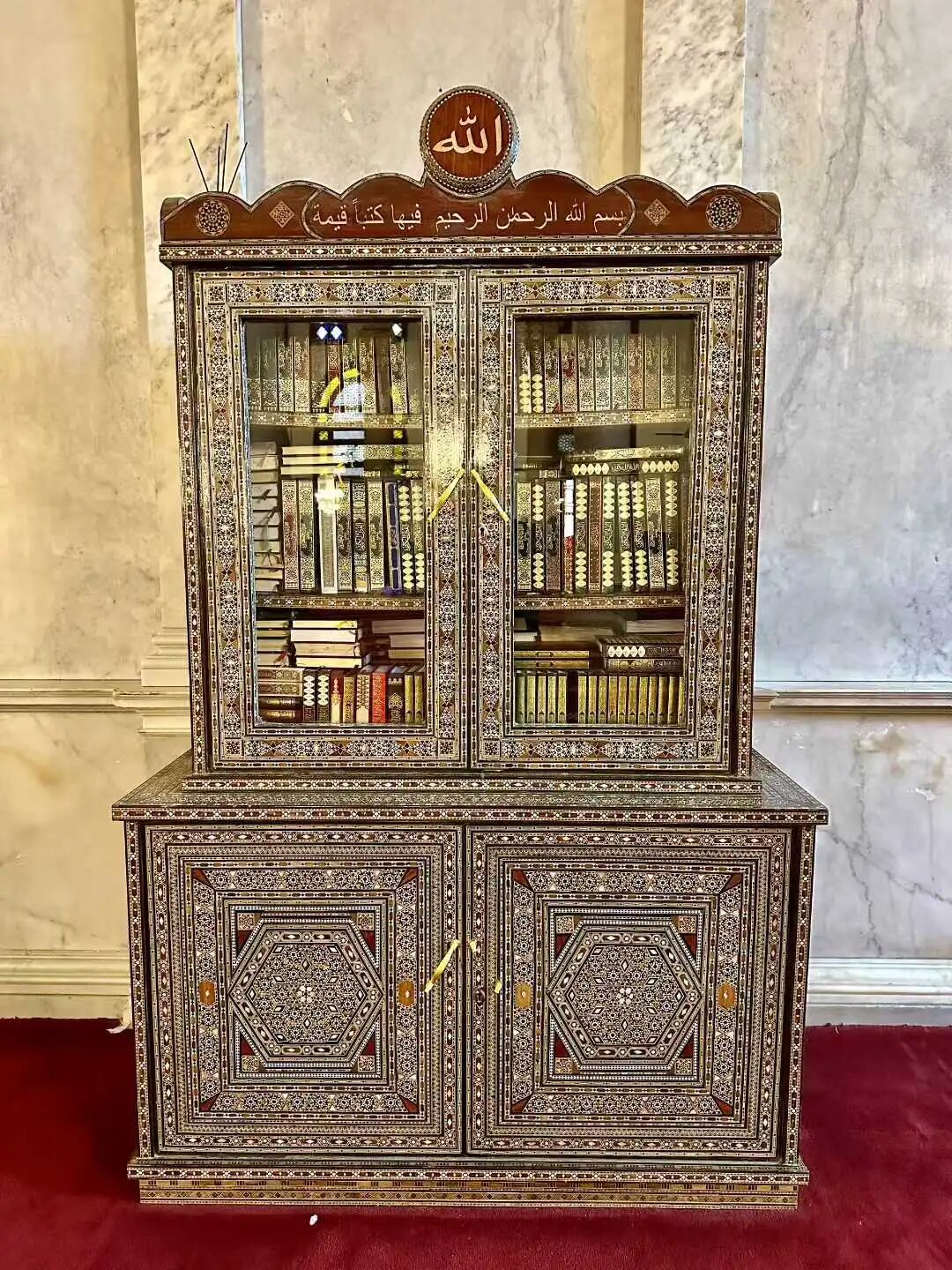
Damascus was captured by the Arabs in 634 and became the capital of the Umayyad Caliphate in 661. For the first 45 years after the capital was established, the site of the Great Mosque of Damascus remained an Orthodox church, though a prayer area (musalla) was built in the southeast corner. As the Muslim population in Damascus grew, and with the need for the Umayyad Caliph to build a grand mosque for Friday prayers, the sixth caliph, Al-Walid I, finally decided in 706 to convert the Orthodox church into a Friday mosque.
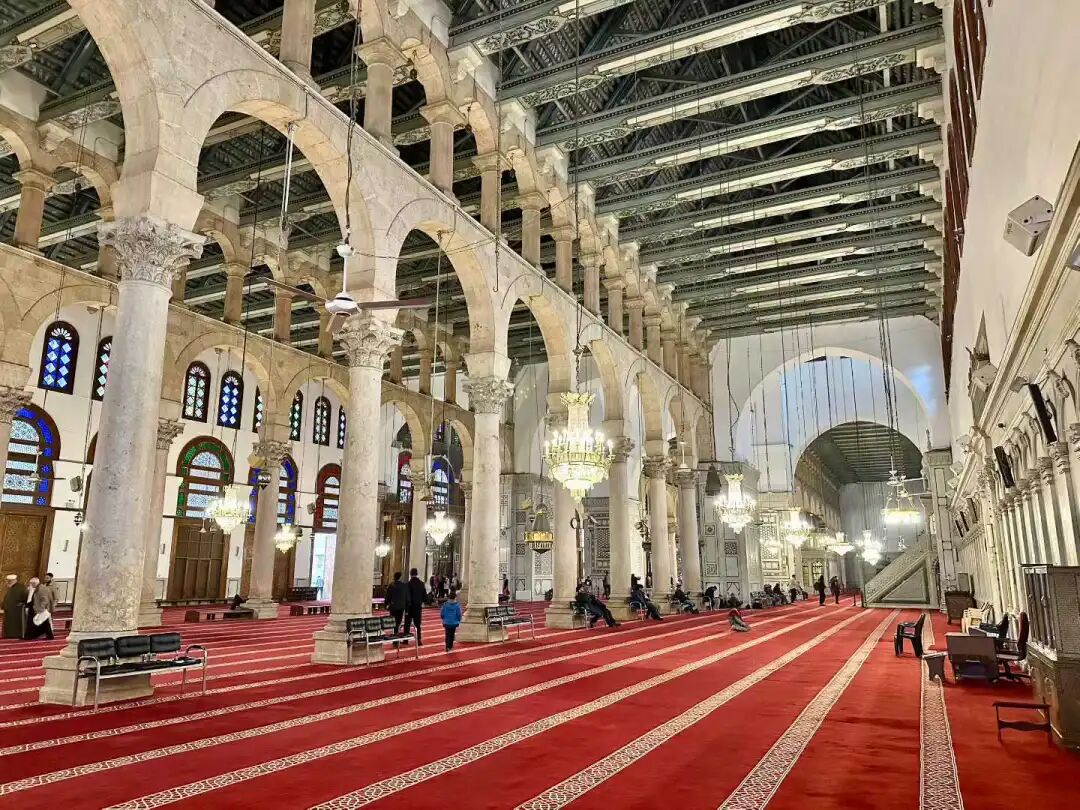
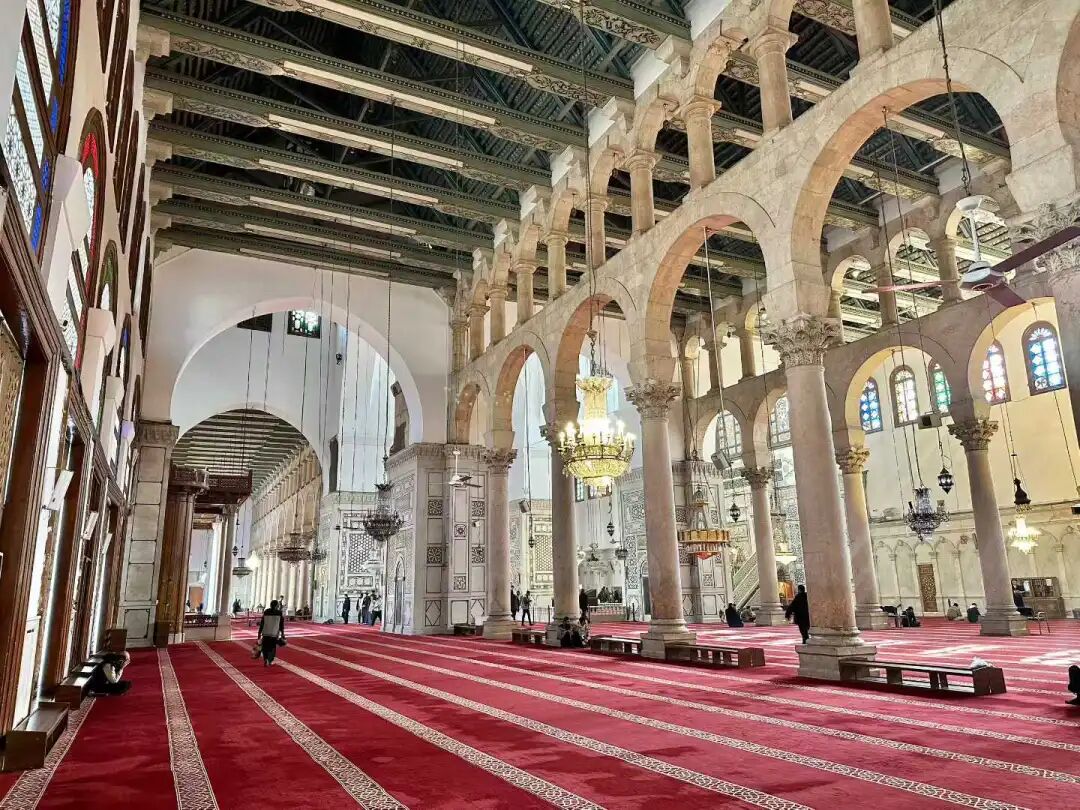
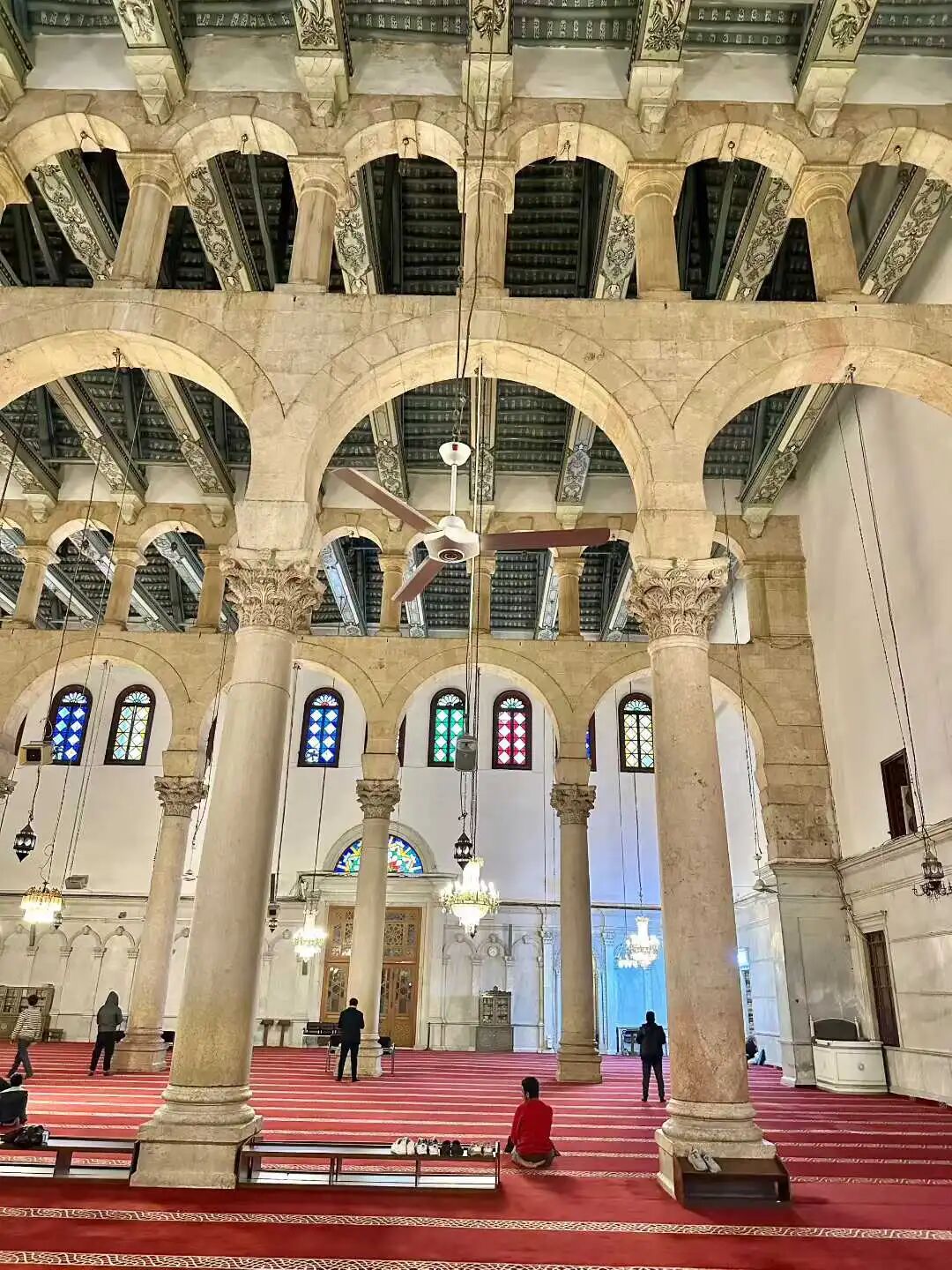
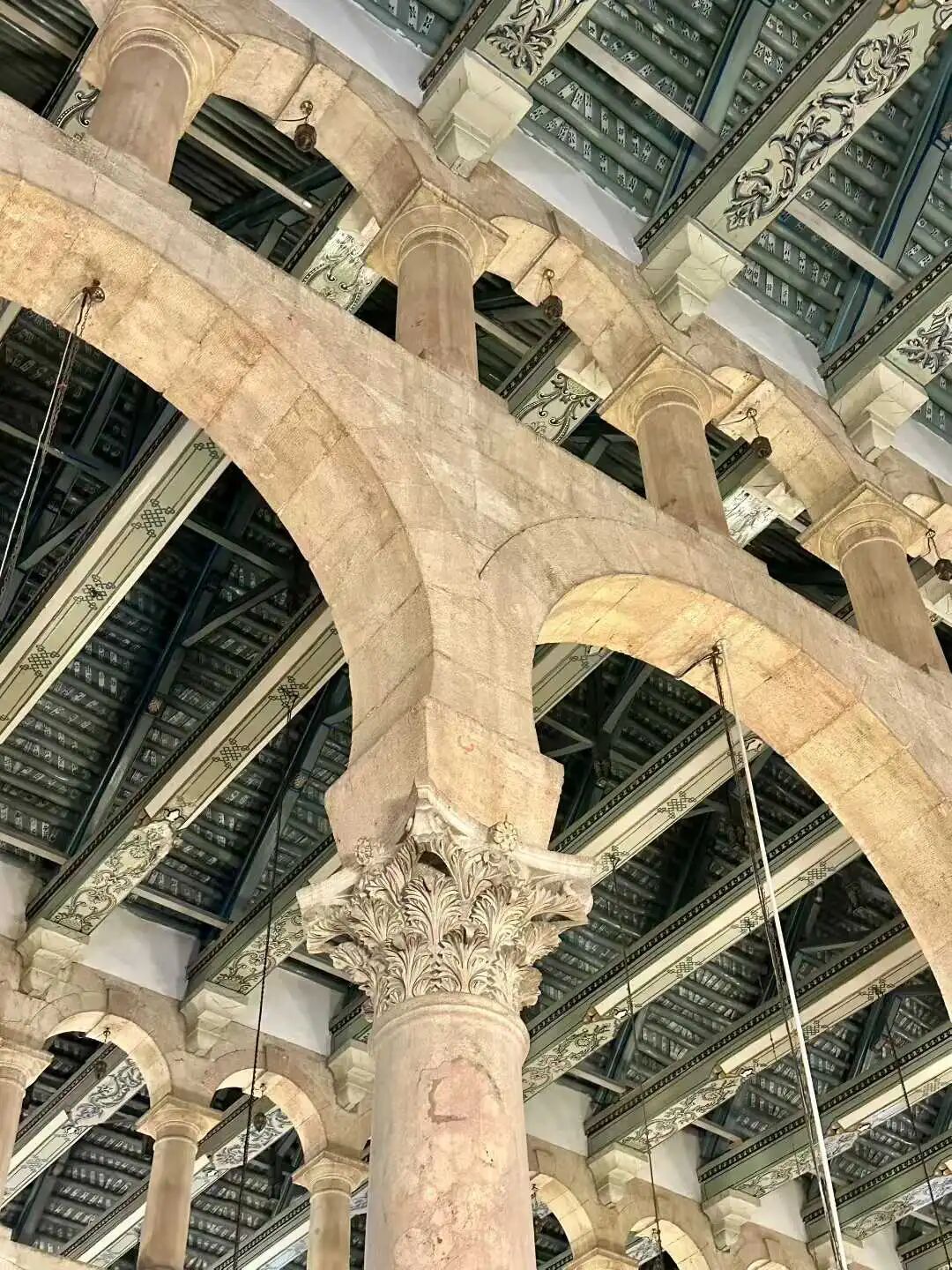
Al-Walid I personally oversaw the construction of the Great Mosque of Damascus. He kept the outer walls of the Roman mosque, removed the Corinthian columns and arcades from the mosque, and reinstalled them inside the main hall. The new mosque was completed in 715 and became known as a "wonder of the world" to medieval Muslim writers.
Before the Great Mosque of Damascus was built, traditional mosques were usually flat-roofed halls. The Great Mosque of Damascus introduced a basilica-style layout, featuring three wide, long halls with a central nave and a tall dome above.
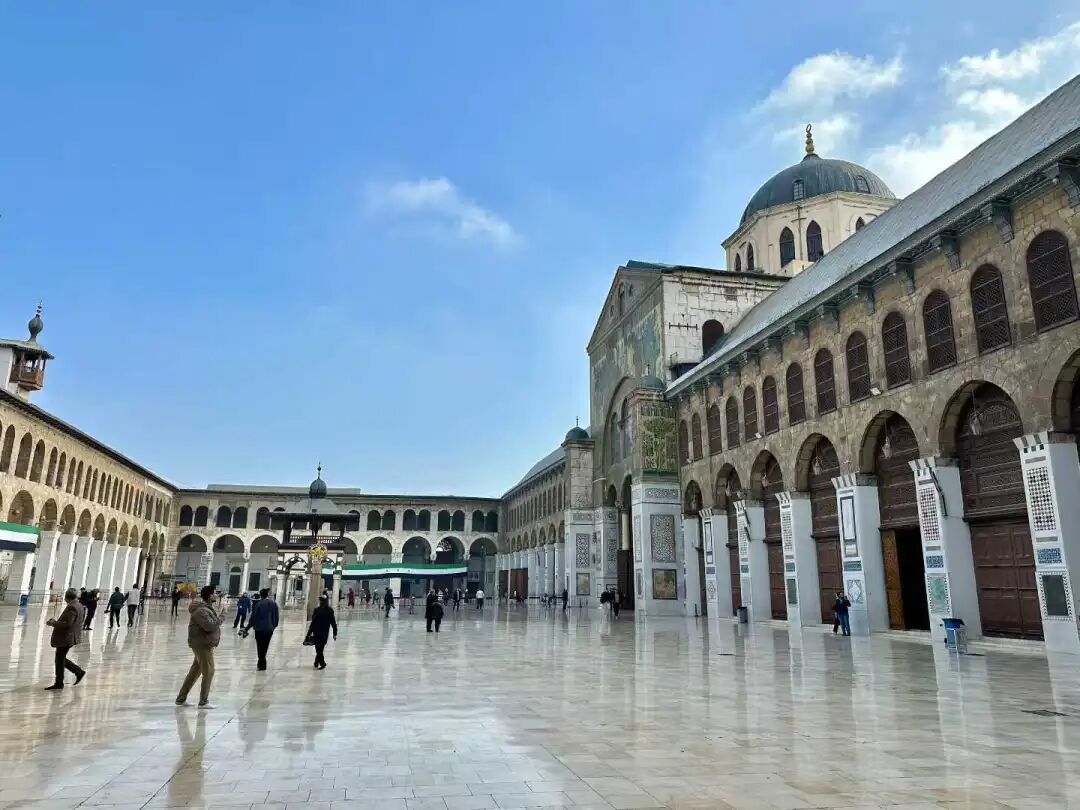
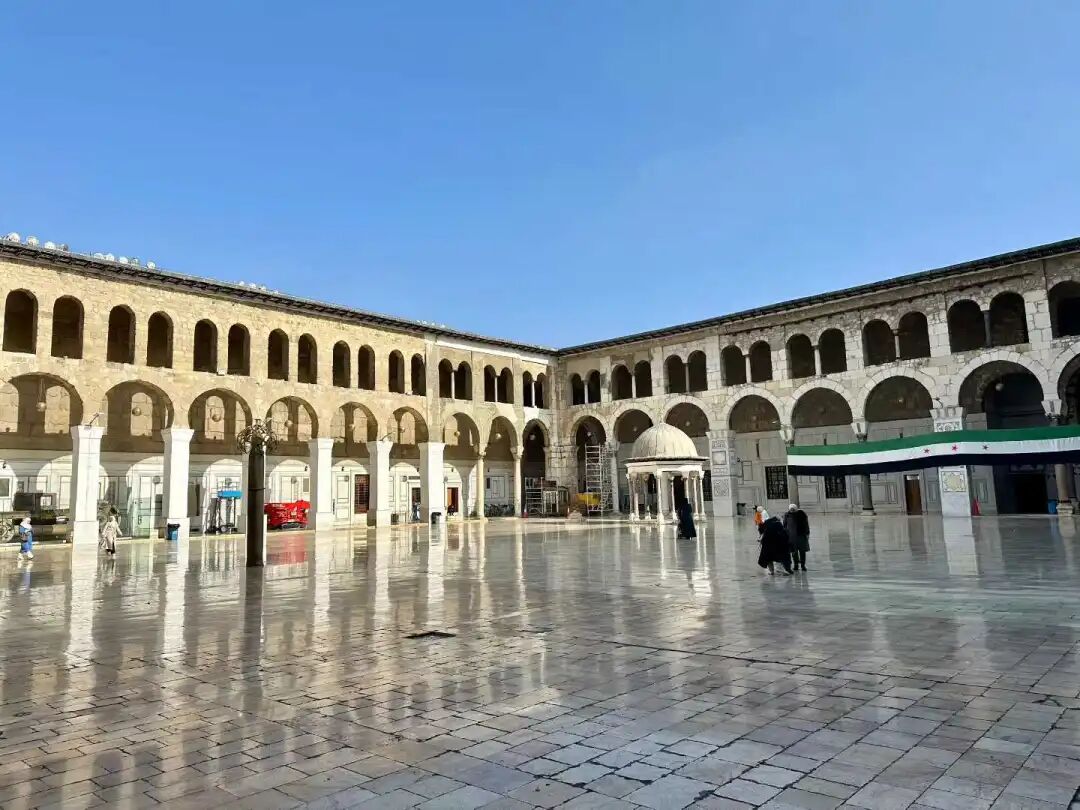
Legend has it that during the construction of the mosque, workers discovered a small cave chapel and found a box inside, which was said to contain the head of Prophet Yahya. Yahya was a cousin of Isa and was sent to guide the people of Israel, and he is highly regarded in the scriptures. Yahya was beheaded because he criticized the Jewish King Herod Antipas.
Later, the Umayyad Caliph Al-Walid I ordered Yahya's head to be buried under a pillar, and today this place has become the gongbei of the Prophet Yahya. However, the west side is currently used for the five daily prayers and Jumu'ah, while the east prayer hall where the gongbei of Yahya is located is not open.
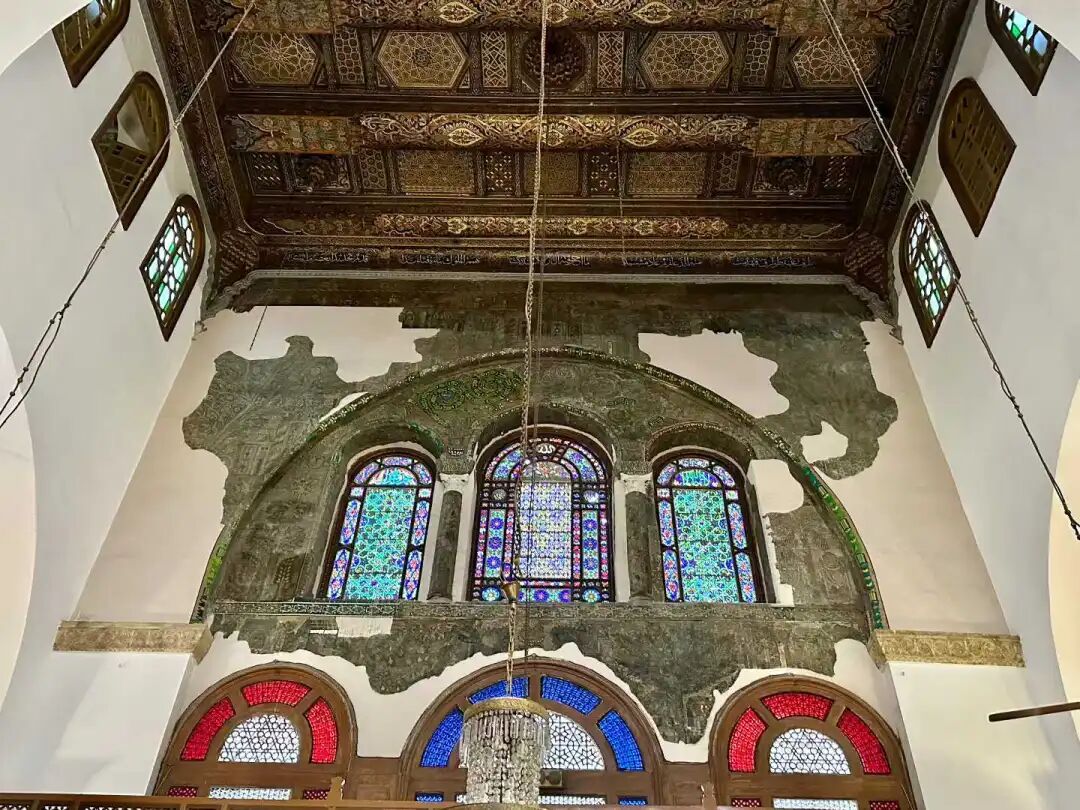
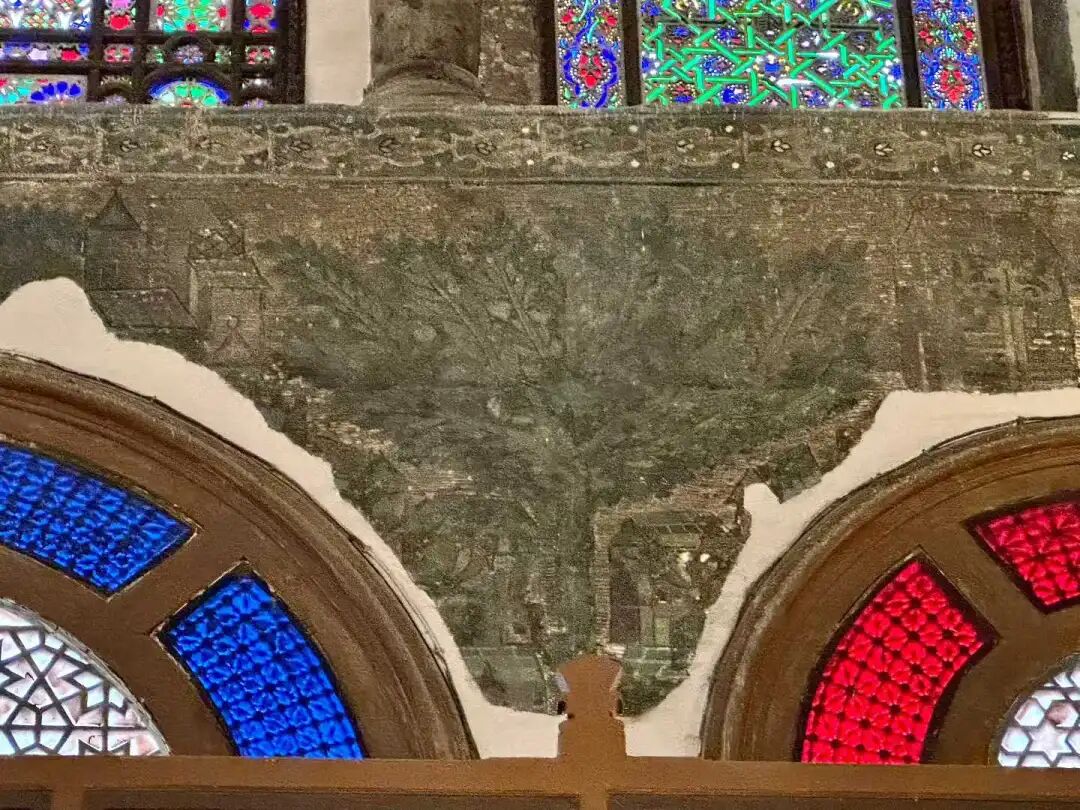
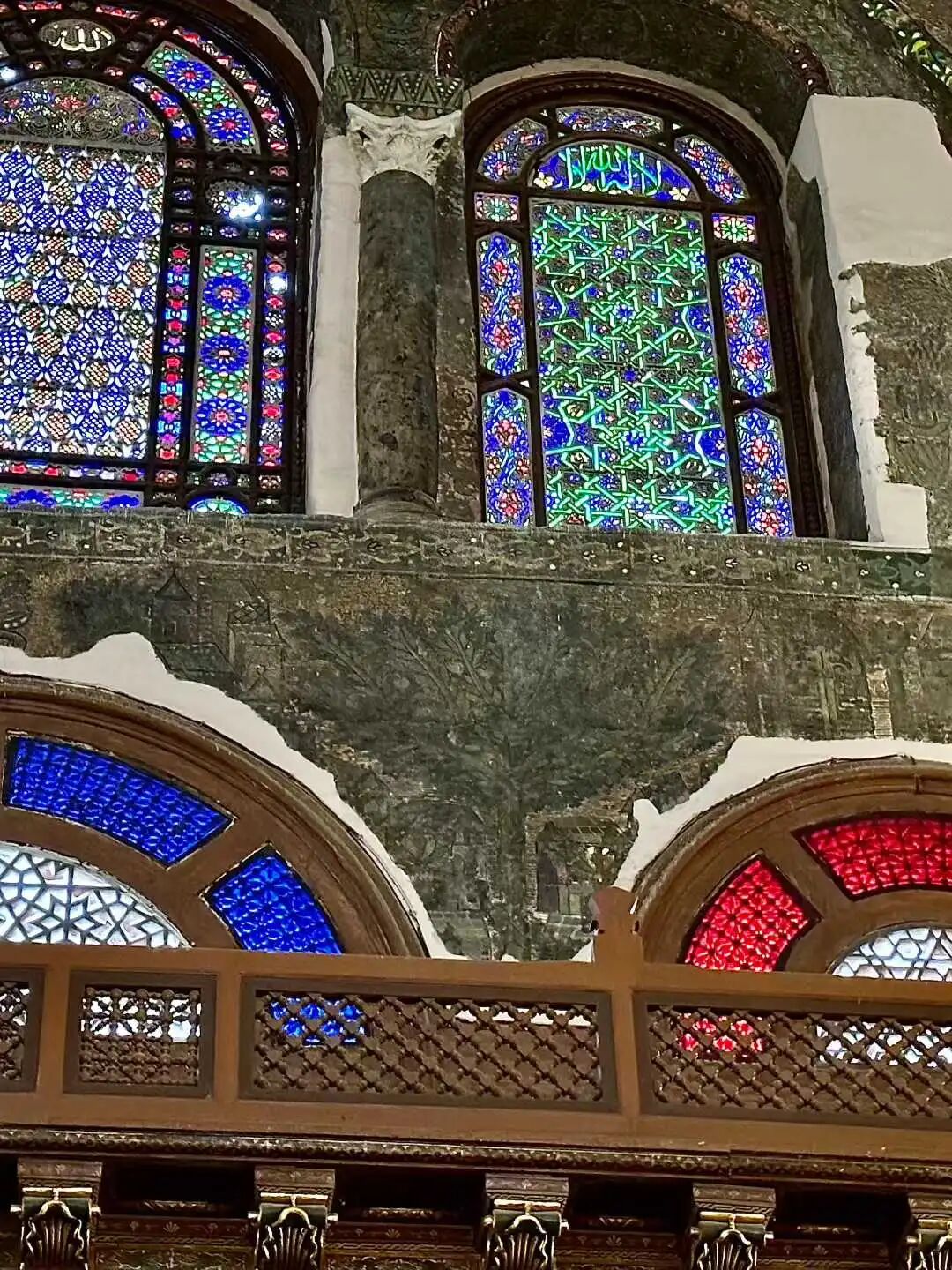
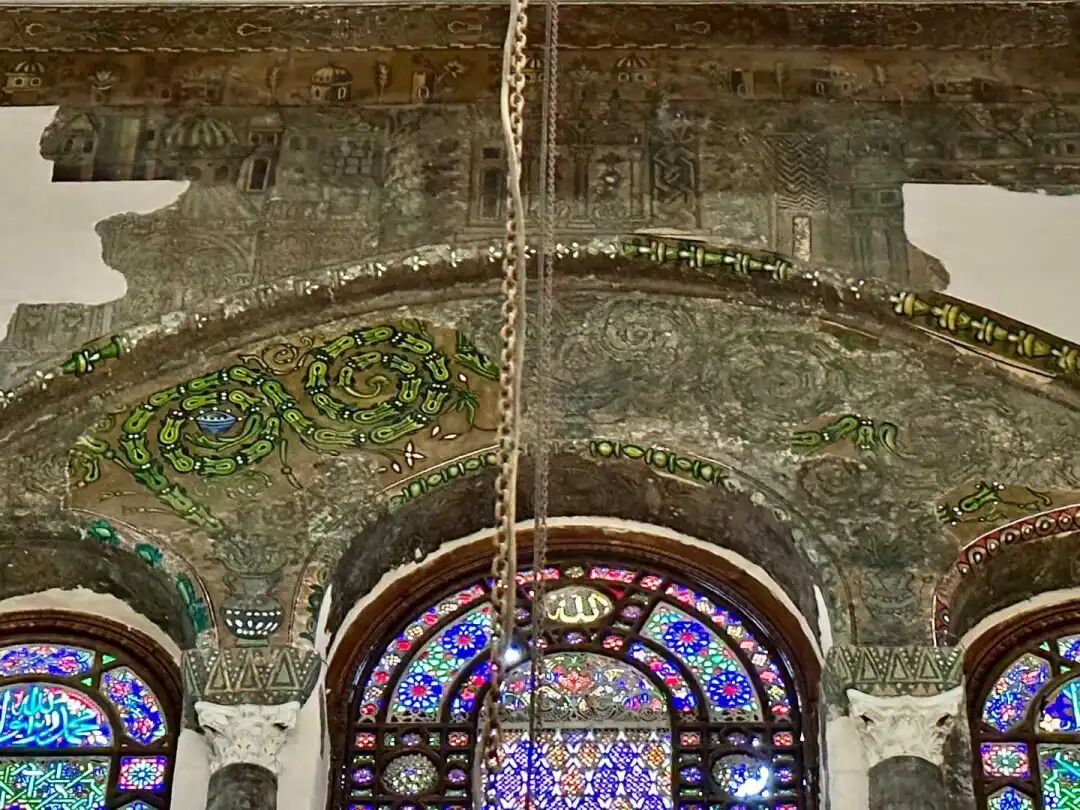
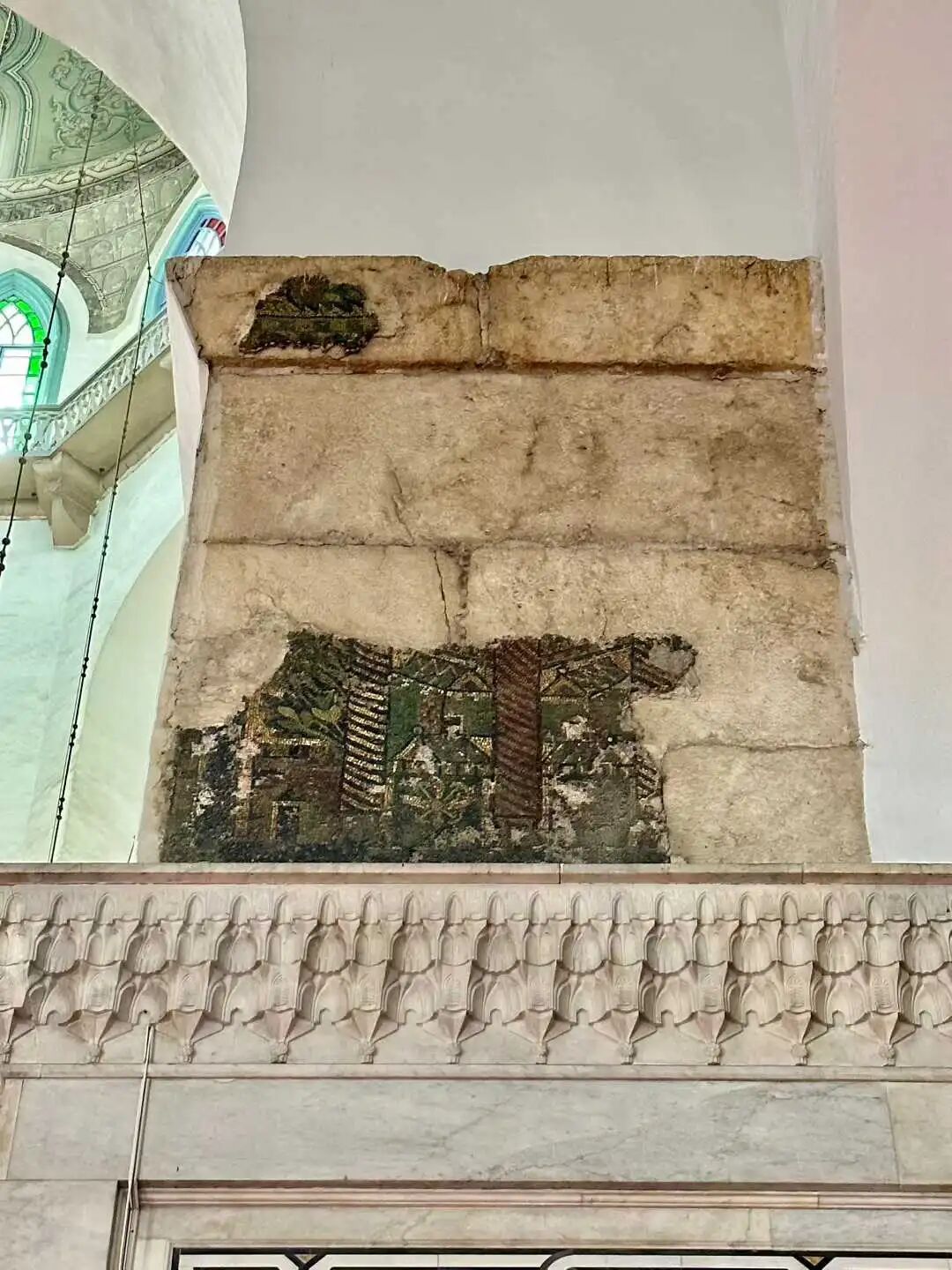
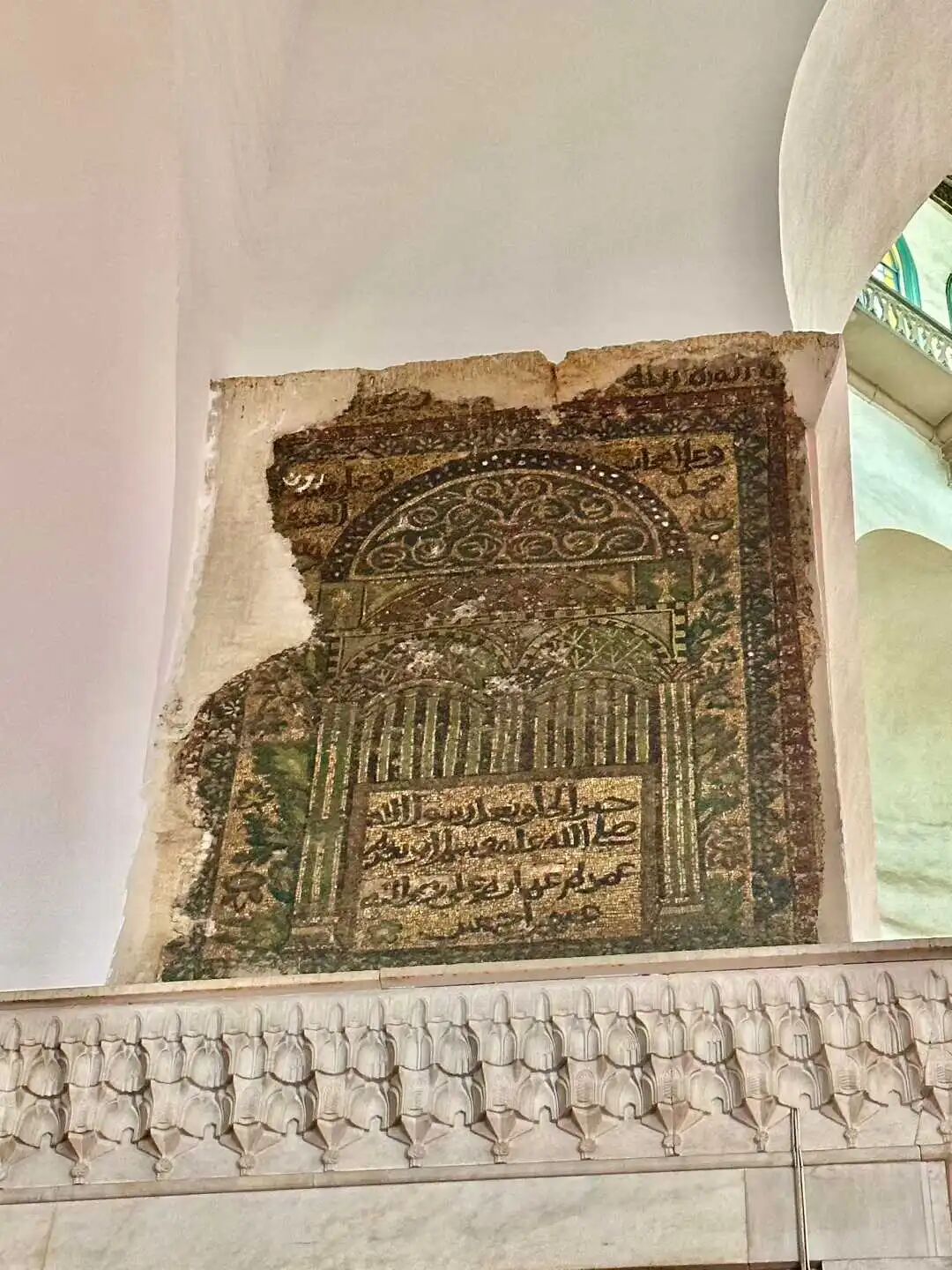
The Great Mosque of Damascus is world-famous for its rich Umayyad-era mosaic decorations. These mosaics use a late Roman style to depict various natural landscapes and buildings, showing a typical naturalistic style.
Some Arabic historical sources suggest the craftsmen and materials for the mosaics came from the Byzantine capital of Constantinople, but a 2022 chemical analysis study showed that most of the mosaics were actually produced in Egypt. Although these mosaic images show traces of Byzantine style, some scholars believe their style better matches mosaic craftsmanship from Syria, Palestine, and Egypt.
There has also been a long-standing debate about the meaning of the mosaic images. Some views suggest they represent the known world at that time, others think they depict Damascus and the Barada River, and some believe they show scenes of Paradise. Currently, there is relatively more evidence for the Paradise view, and the landscapes without human figures fit the idea of an empty Paradise waiting for people to arrive after the Day of Resurrection.
See "Umayyad Mosaic Decorations of the Great Mosque of Damascus" for details.
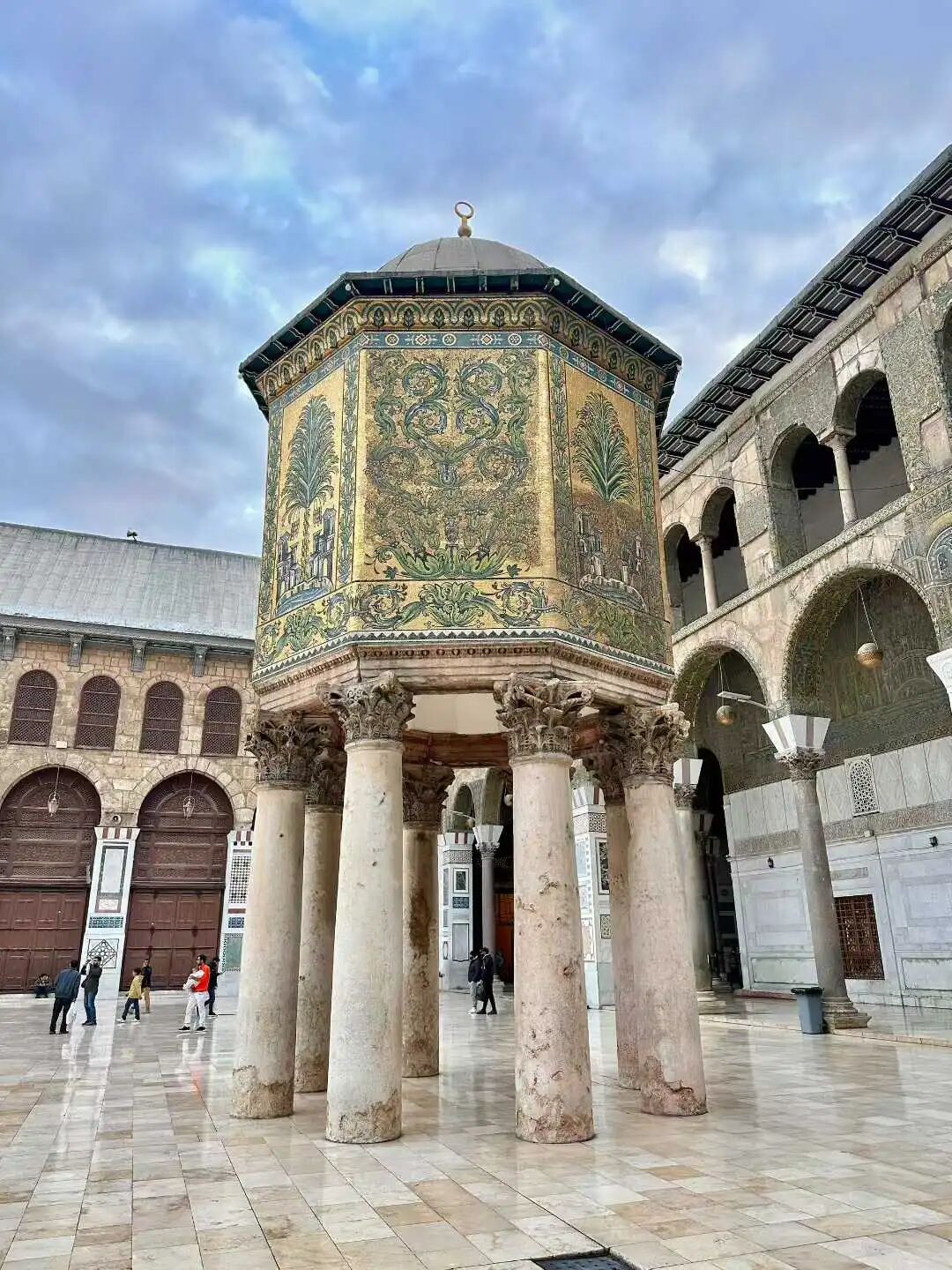
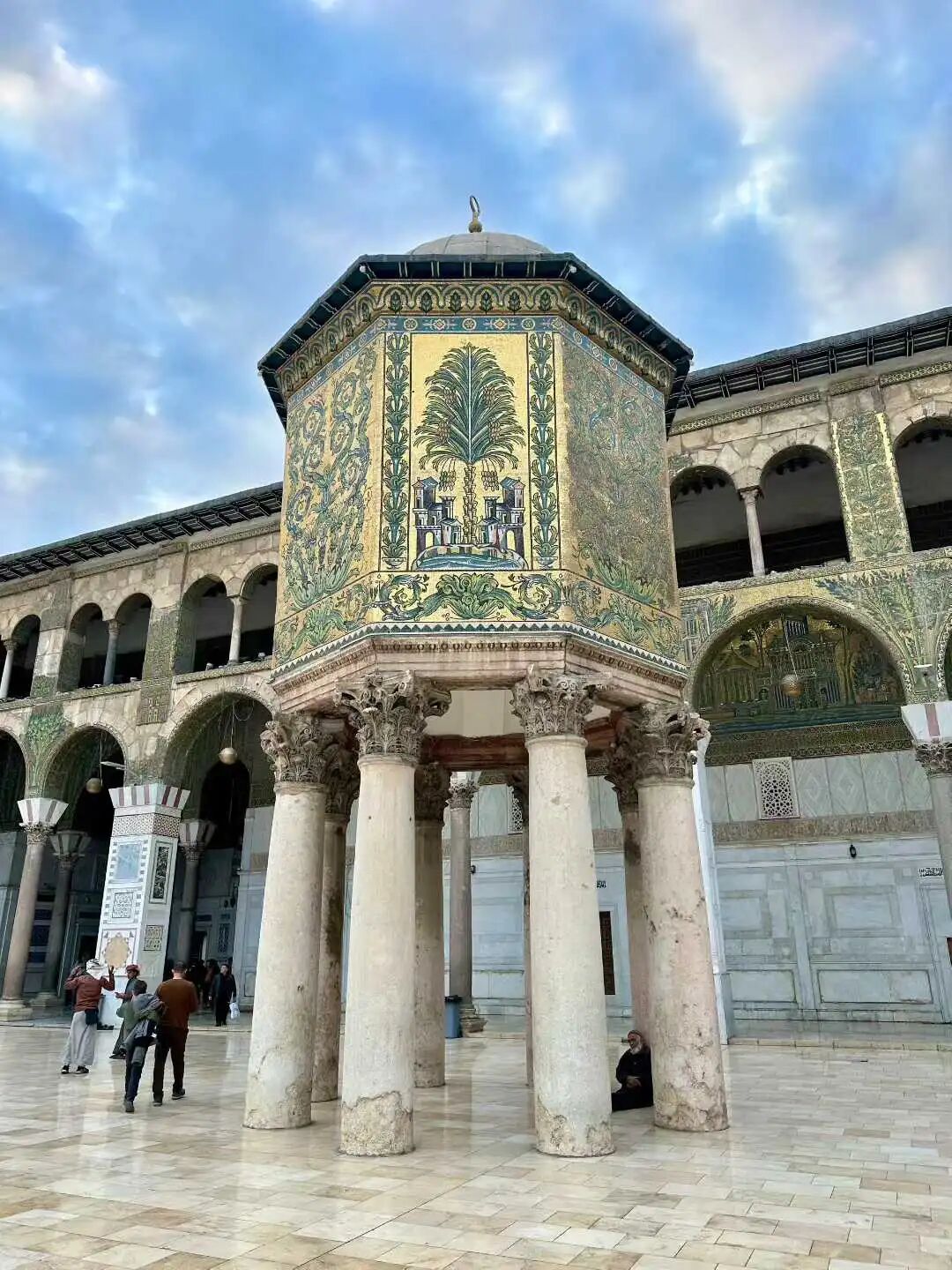
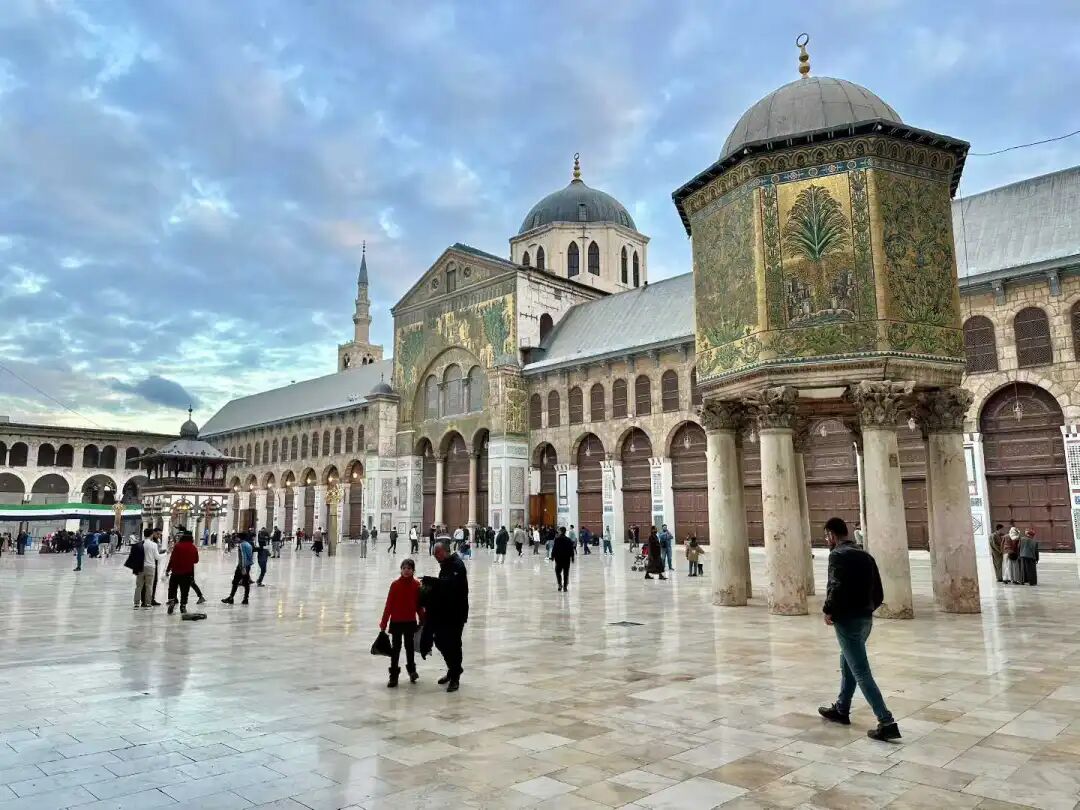
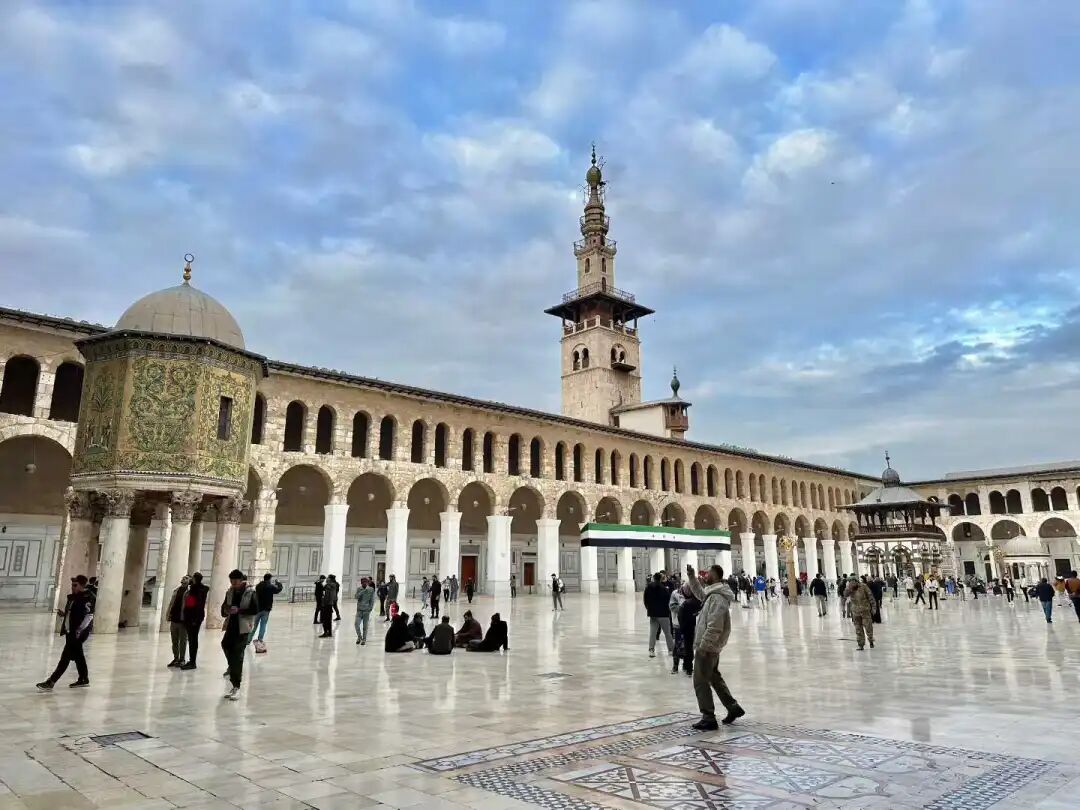
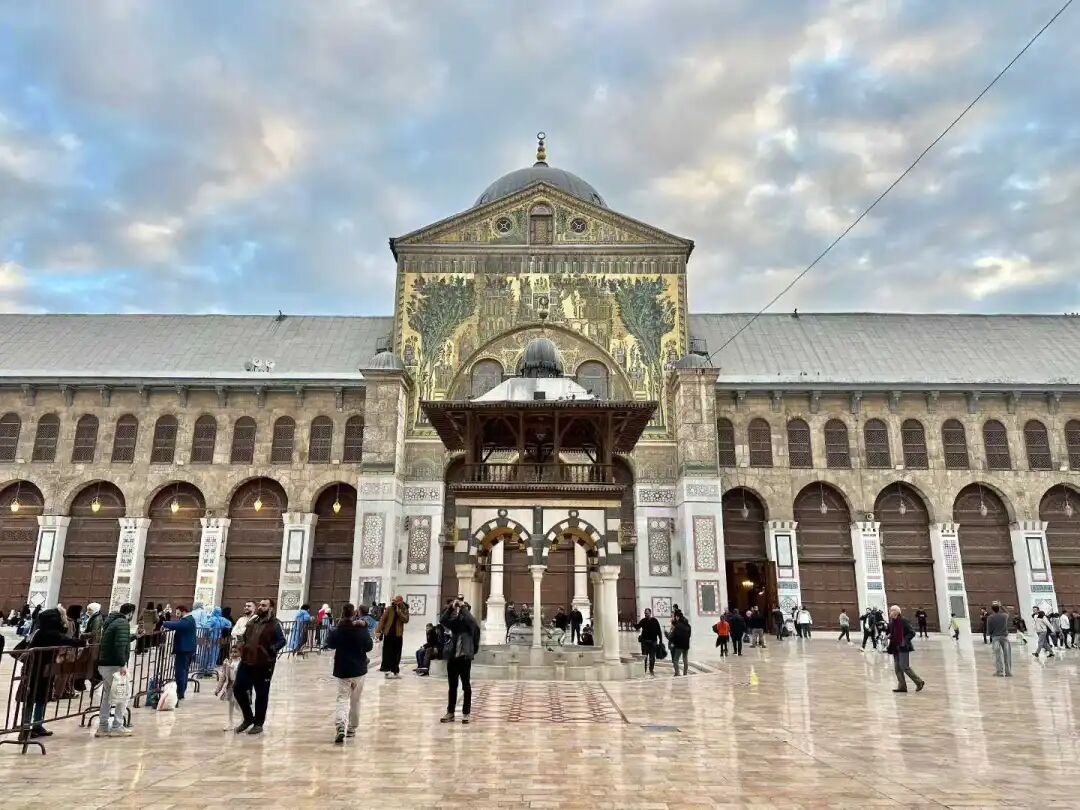
On the west side of the courtyard of the Great Mosque of Damascus stands the Treasury Dome built during the Abbasid Dynasty, which was used to store the charity (nietie) given to the mosque and many ancient manuscripts.
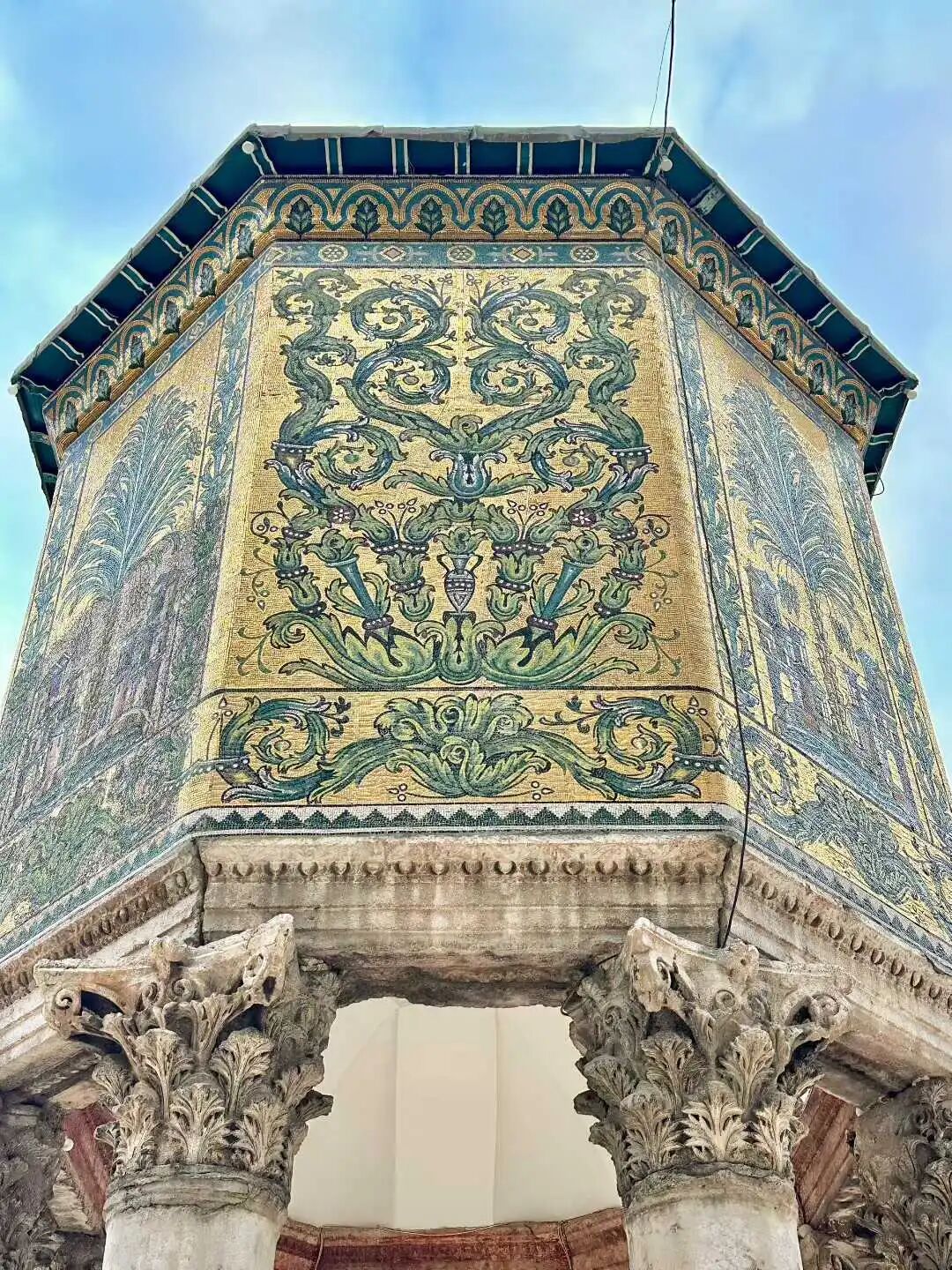
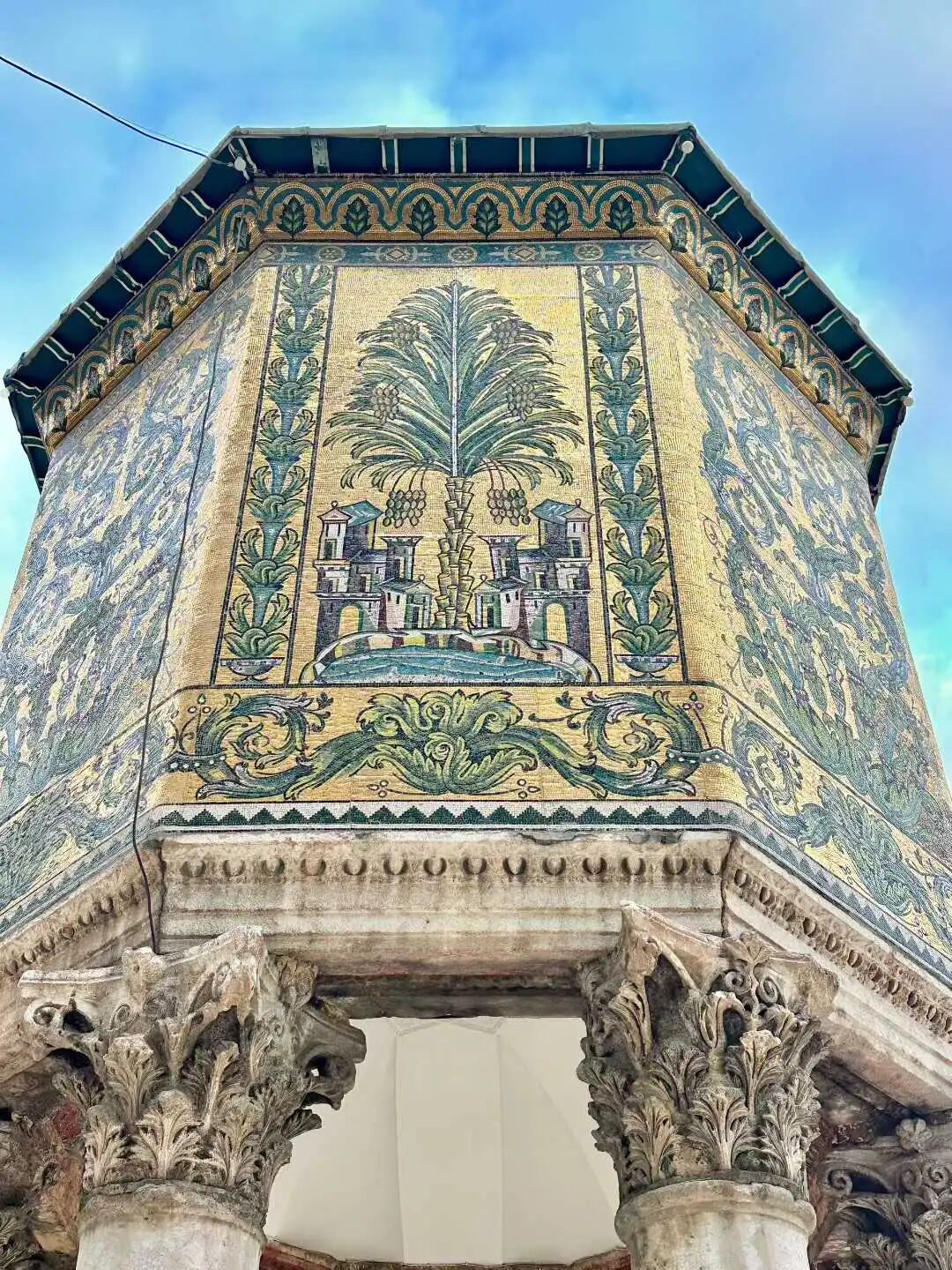
The Treasury Dome was ordered to be built in 789 by the Abbasid governor of Damascus, Fadl ibn Salih. The treasury is an octagonal building supported by eight Roman columns that still have their original capitals. The outer walls of the treasury are decorated with magnificent mosaic murals, which imitate the early Umayyad decorations in the mosque, though the craftsmanship is slightly inferior. The mosaic decorations on the outer walls of the treasury were restored at the end of the 20th century.
The treasury once housed ancient manuscripts in Greek, Latin, Syriac, Coptic, Hebrew, Aramaic, and Georgian, including 7th-8th century Greek New Testament manuscripts, but they were gifted to Kaiser Wilhelm II in 1899, and today only a few are kept in the Damascus National Archives.
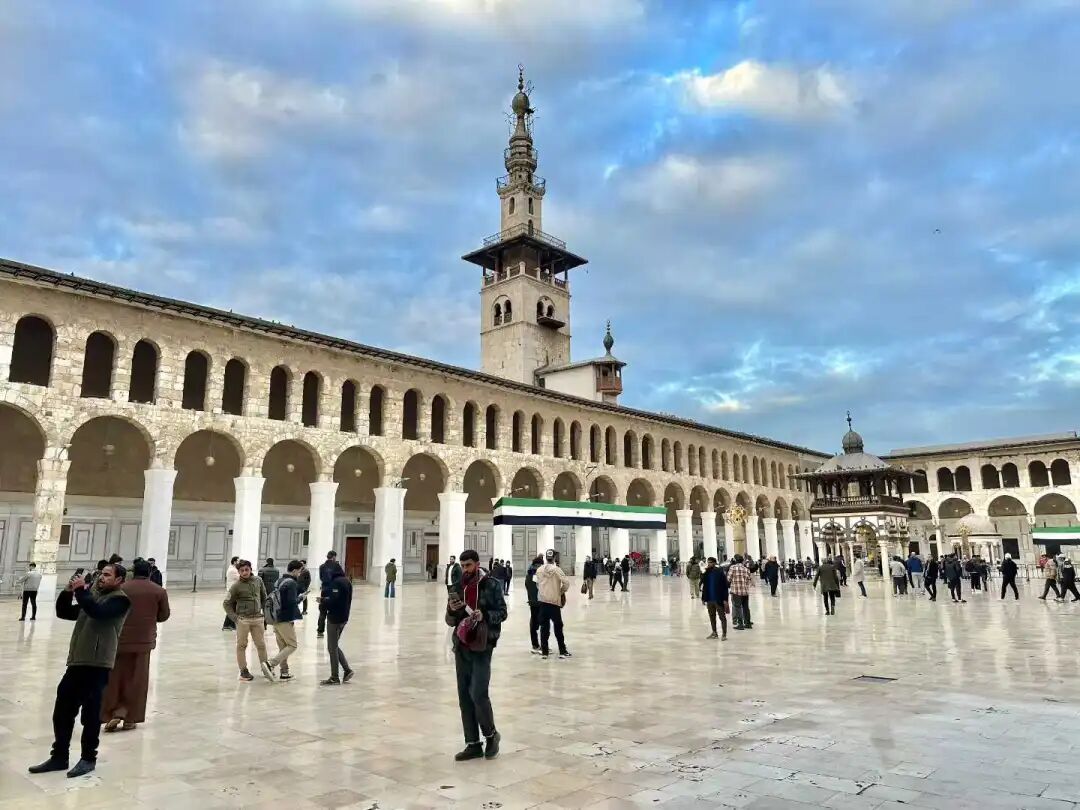
The Great Mosque of Damascus did not have a minaret (bangke ta) originally, but there was a small room on the Roman tower at the corner of the outer wall for the muezzin to call the adhan (bangke).
The first minaret of the Great Mosque of Damascus is the Bride's Minaret in the center of the north wall, which was first built during the Abbasid Dynasty in the 9th century. Only the lower level remains today, as the upper level was destroyed by fire in 1069 and later rebuilt by the Ayyubid Sultan Saladin in 1174. The Bride's Minaret has a 160-step spiral staircase, a square main tower, and horseshoe arches on the upper level.
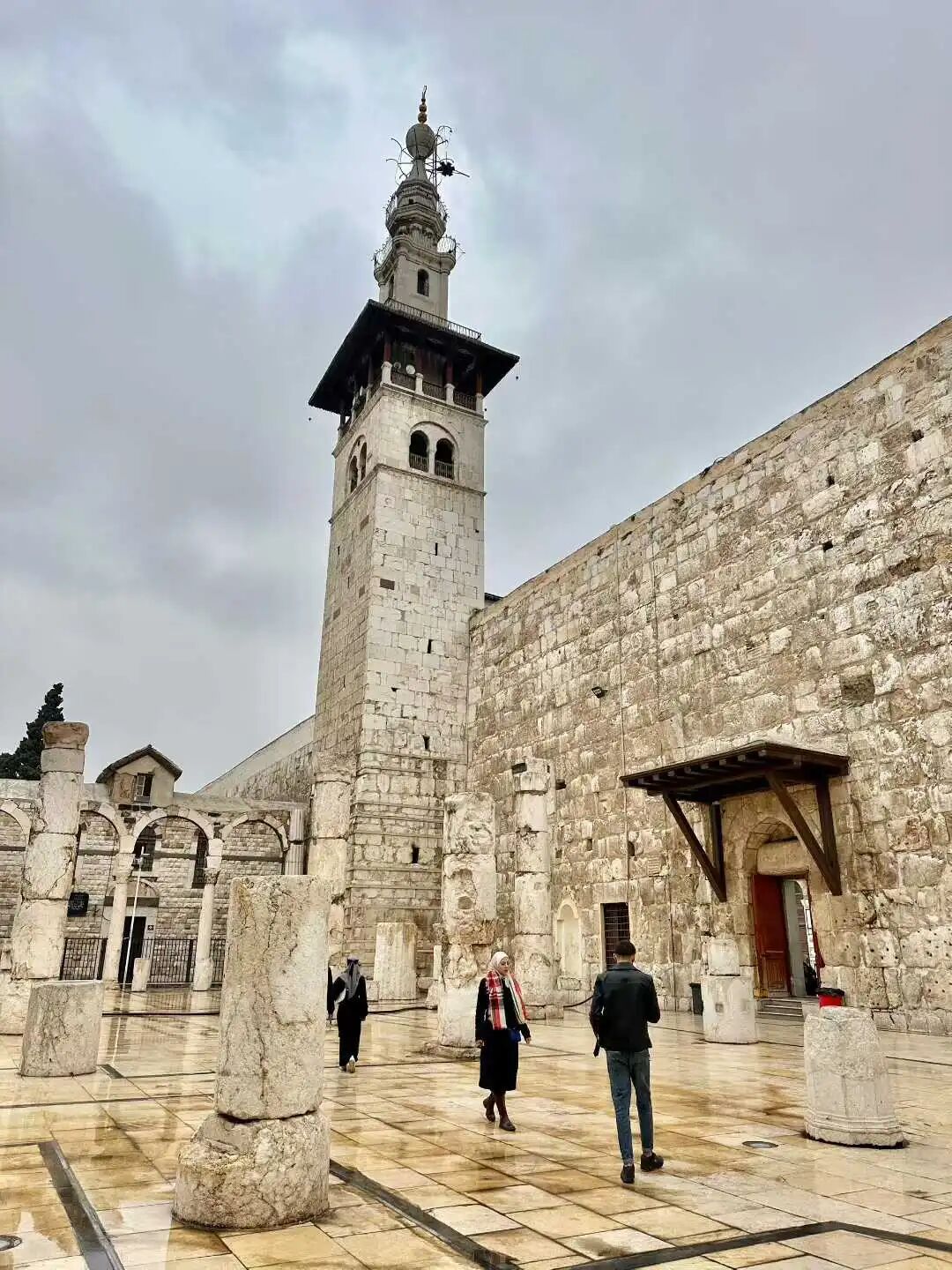
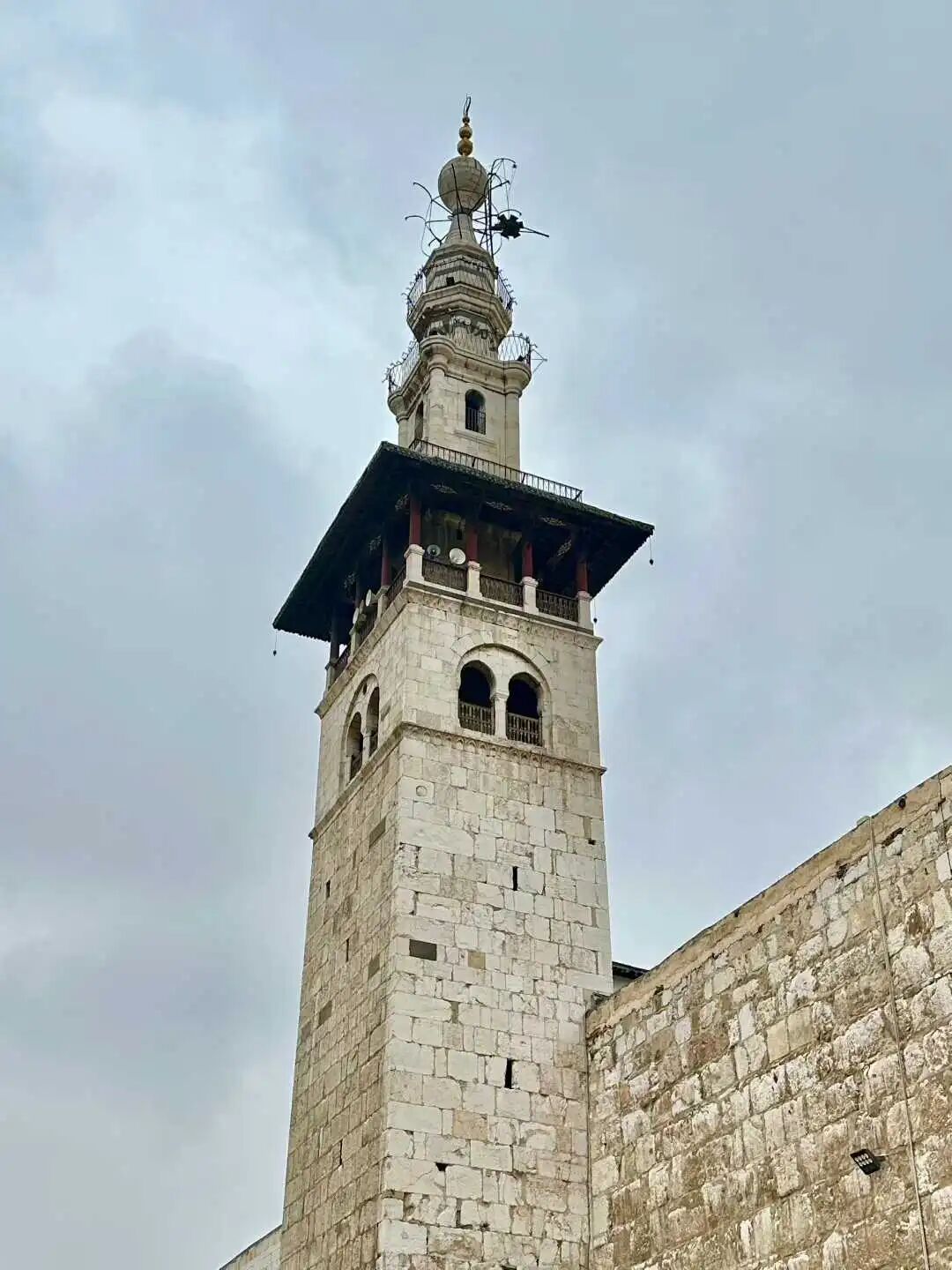
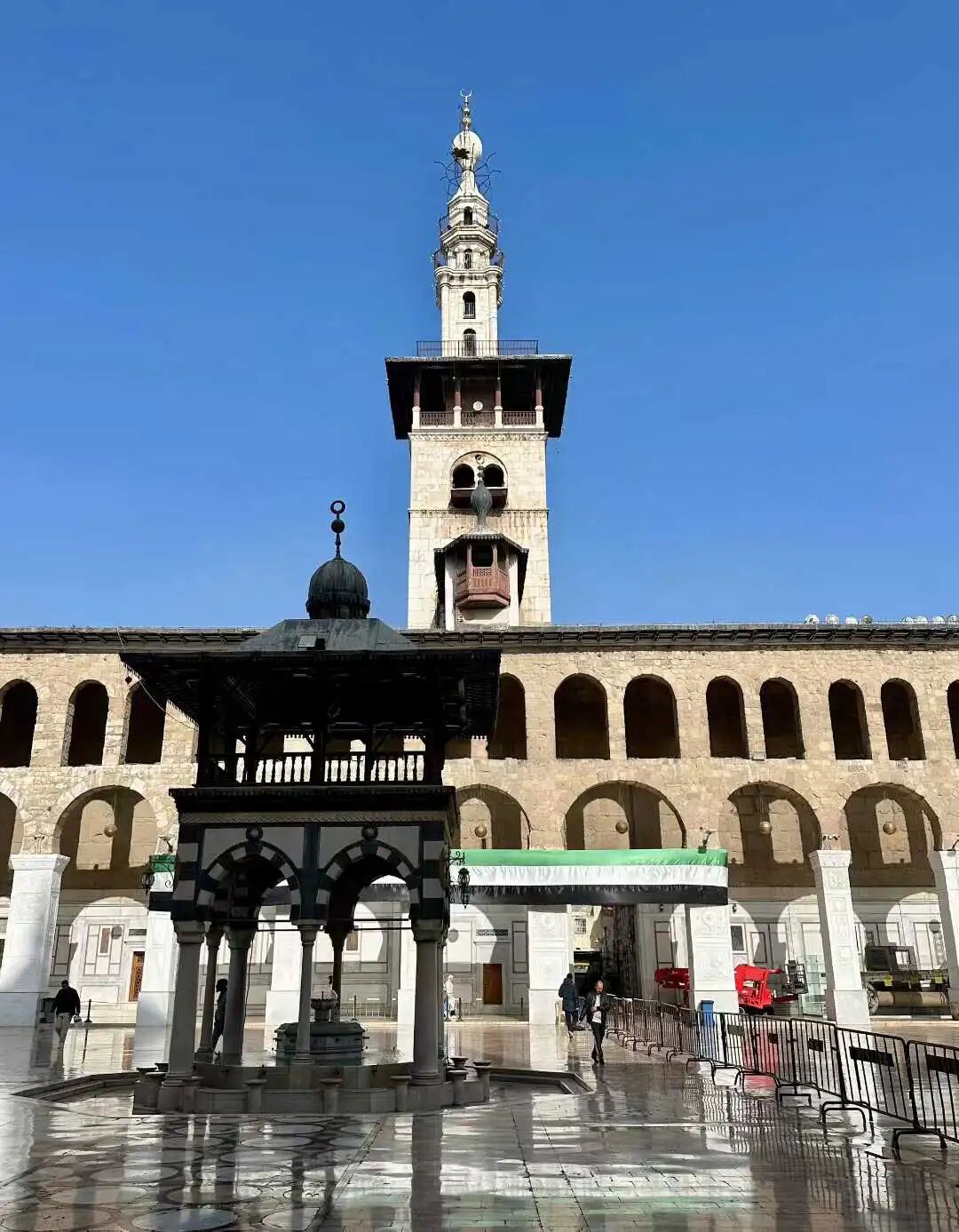
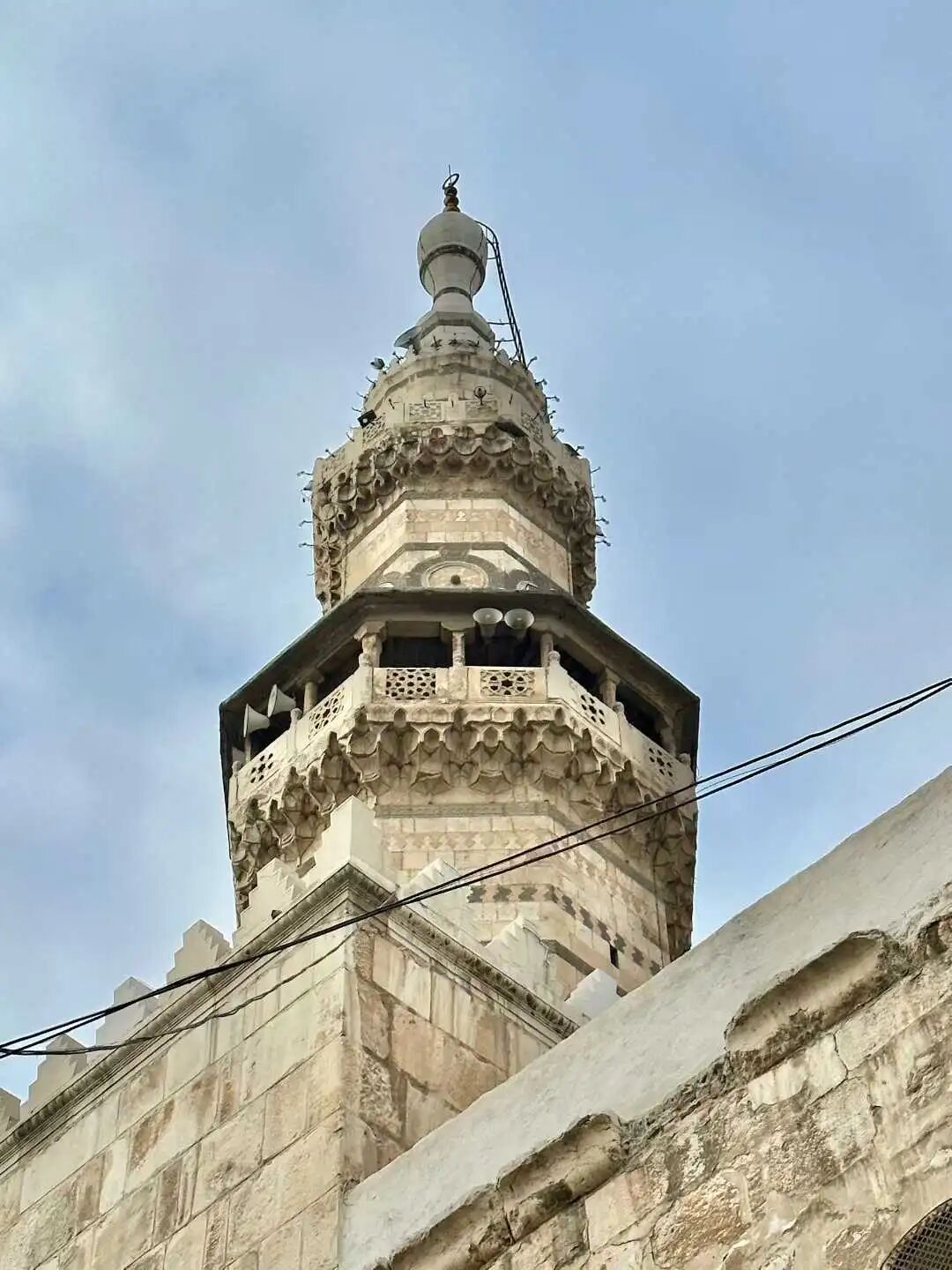
The Isa Minaret in the southeast is said to have been built in the 9th century during the Abbasid Dynasty, but it was destroyed in 1245 during the civil strife of the Ayyubid Dynasty. The current lower level of the building was built in 1247 during the Ayyubid Dynasty, and the upper level was built after the 16th century during the Ottoman Dynasty. The main body of the Isa Minaret is square, with an octagonal top and an open gallery. Legend says the Prophet Isa (Jesus) will descend from the Isa Minaret and perform the morning namaz behind the Mahdi (the Savior).
In 1285, the famous scholar Ibn Taymiyyah began teaching at the Great Mosque of Damascus. When the Mongols invaded Damascus in 1300, Ibn Taymiyyah firmly supported the people in their resistance. He preached at the Great Mosque and issued fatwas for those fleeing in panic. He personally joined the fight against the Ilkhanate, which finally ended the Mongol rule over Syria.
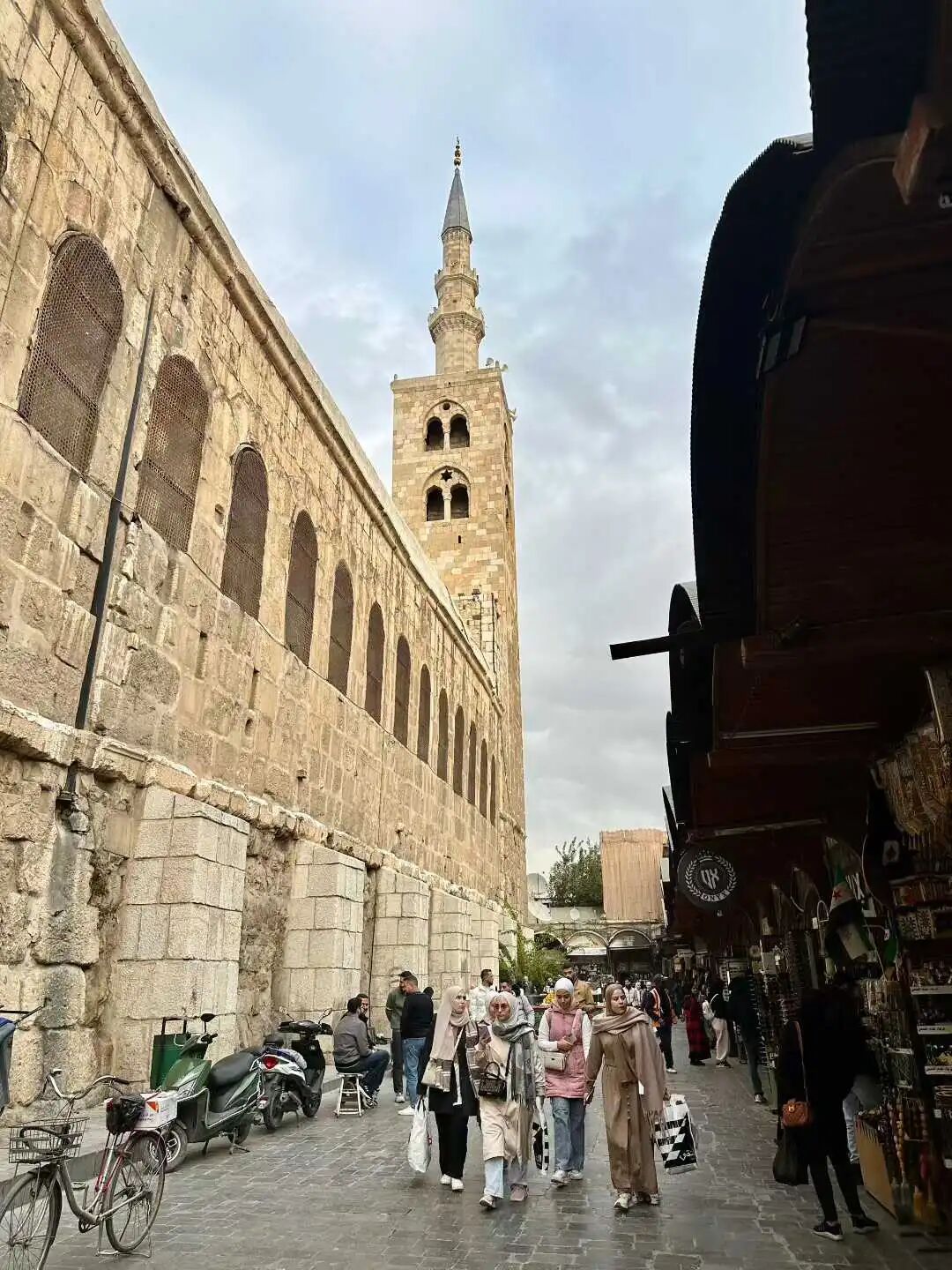
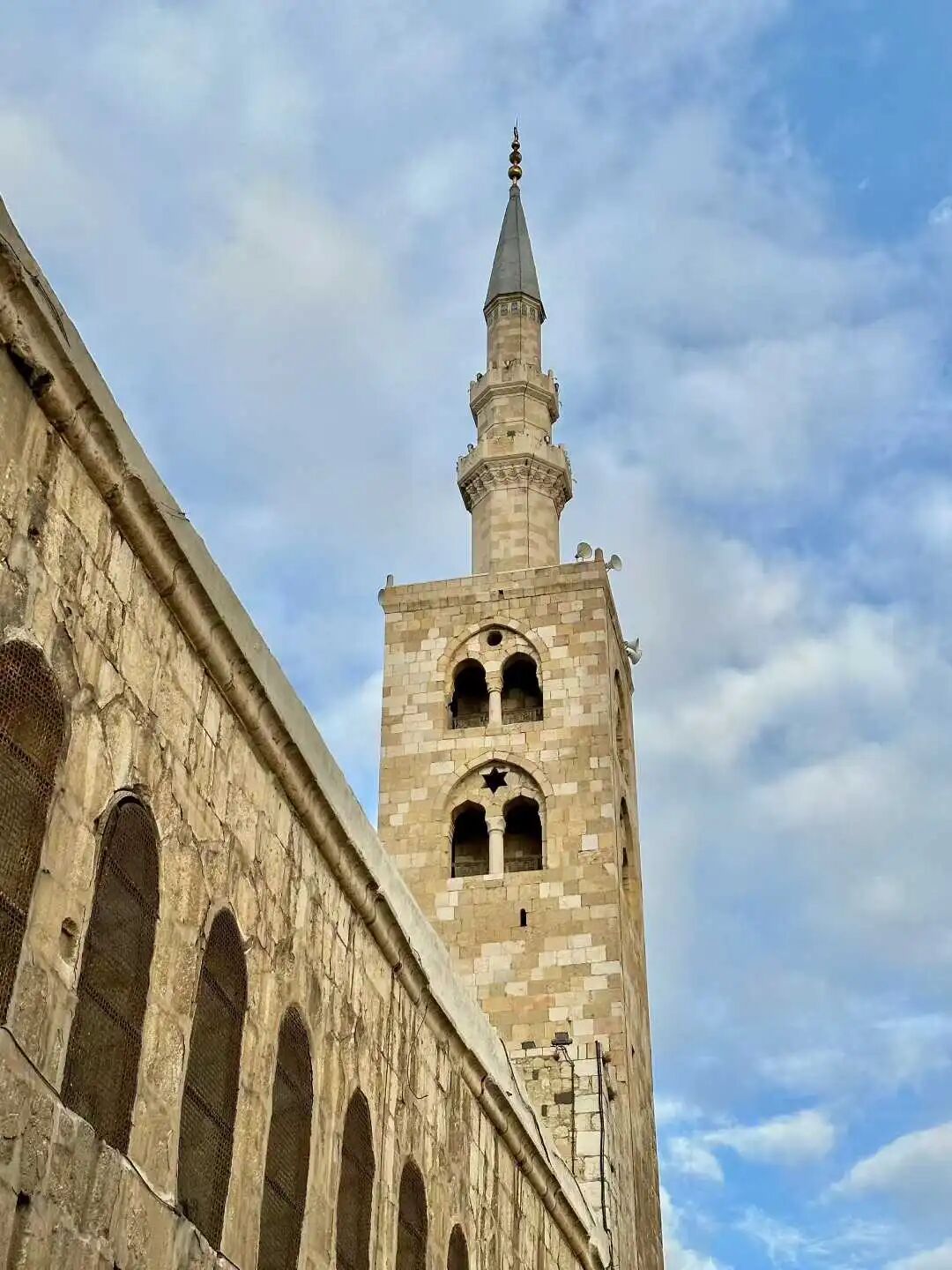
The Qaitbay Minaret in the southwest was built in 1488 by the Mamluk Sultan Qaitbay (reigned 1468-1496) and features a classic Mamluk style. The name of Assad was once carved on the minaret, but it was removed in October 2025. Qaitbay's reign was known for stability and prosperity. He defeated the powerful Ottoman Empire of that time several times and eventually signed a peace treaty with them, which greatly boosted his reputation. He also donated funds to build many structures across Egypt, Syria, Saudi Arabia, and other places.
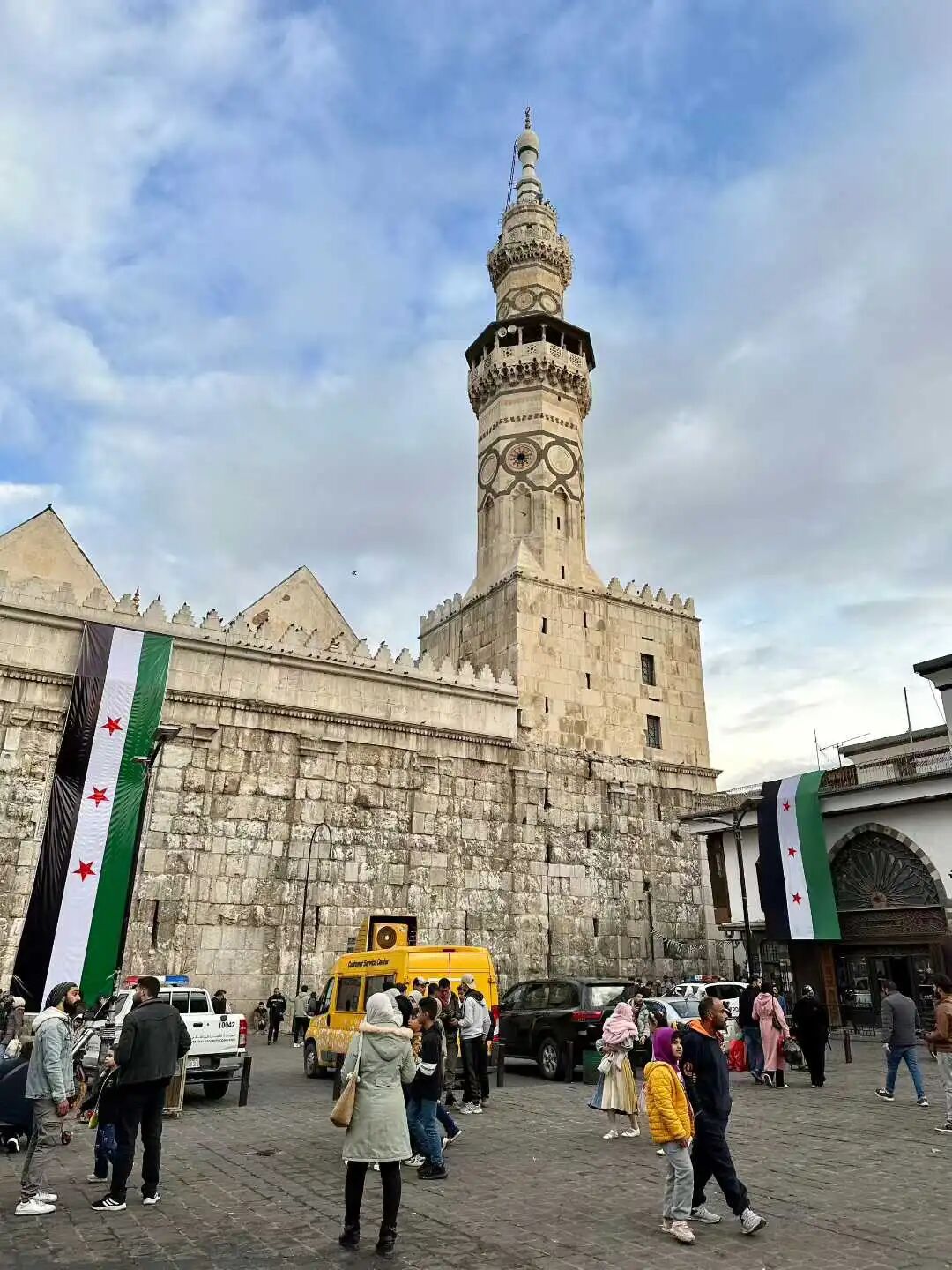
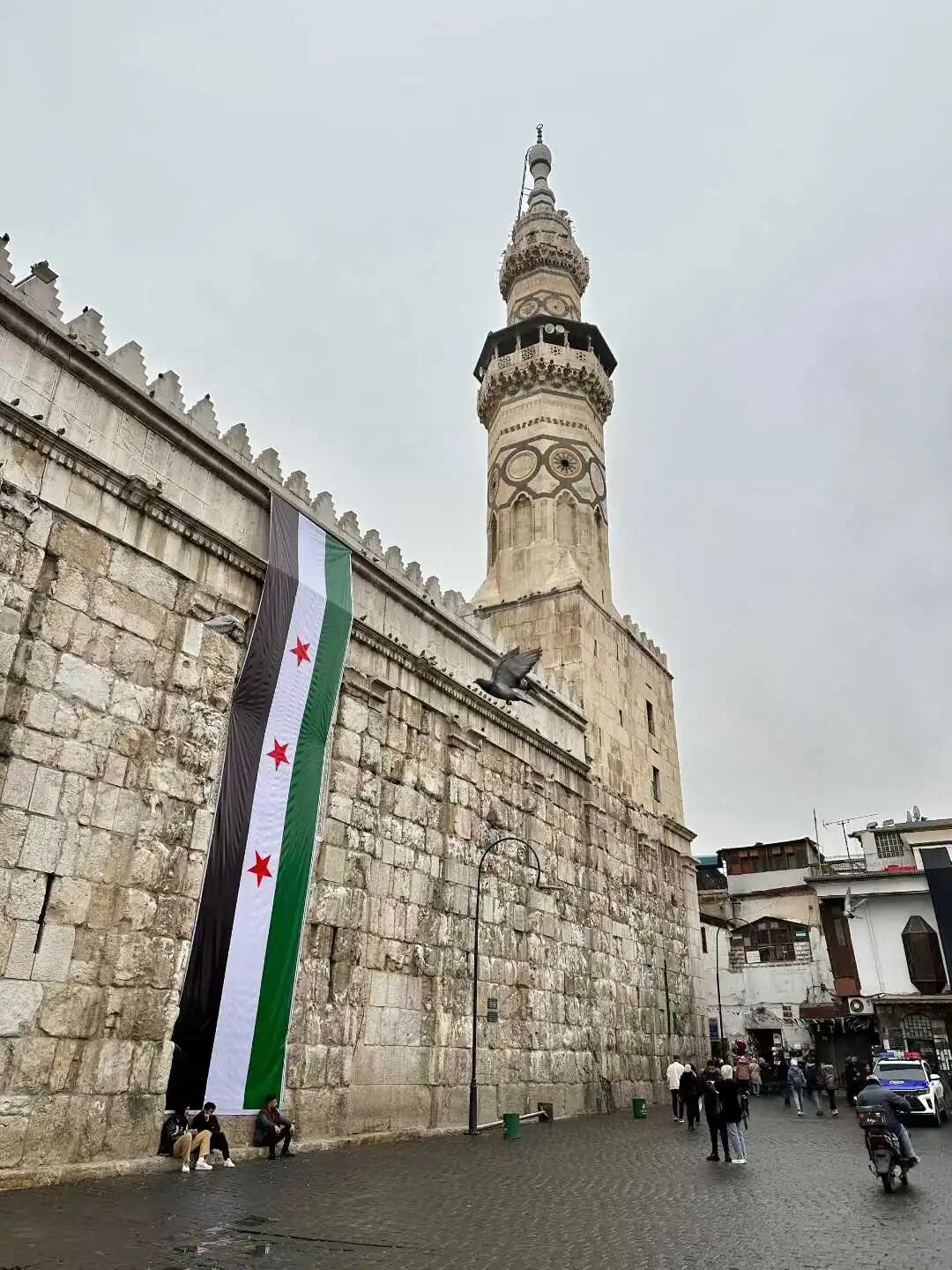
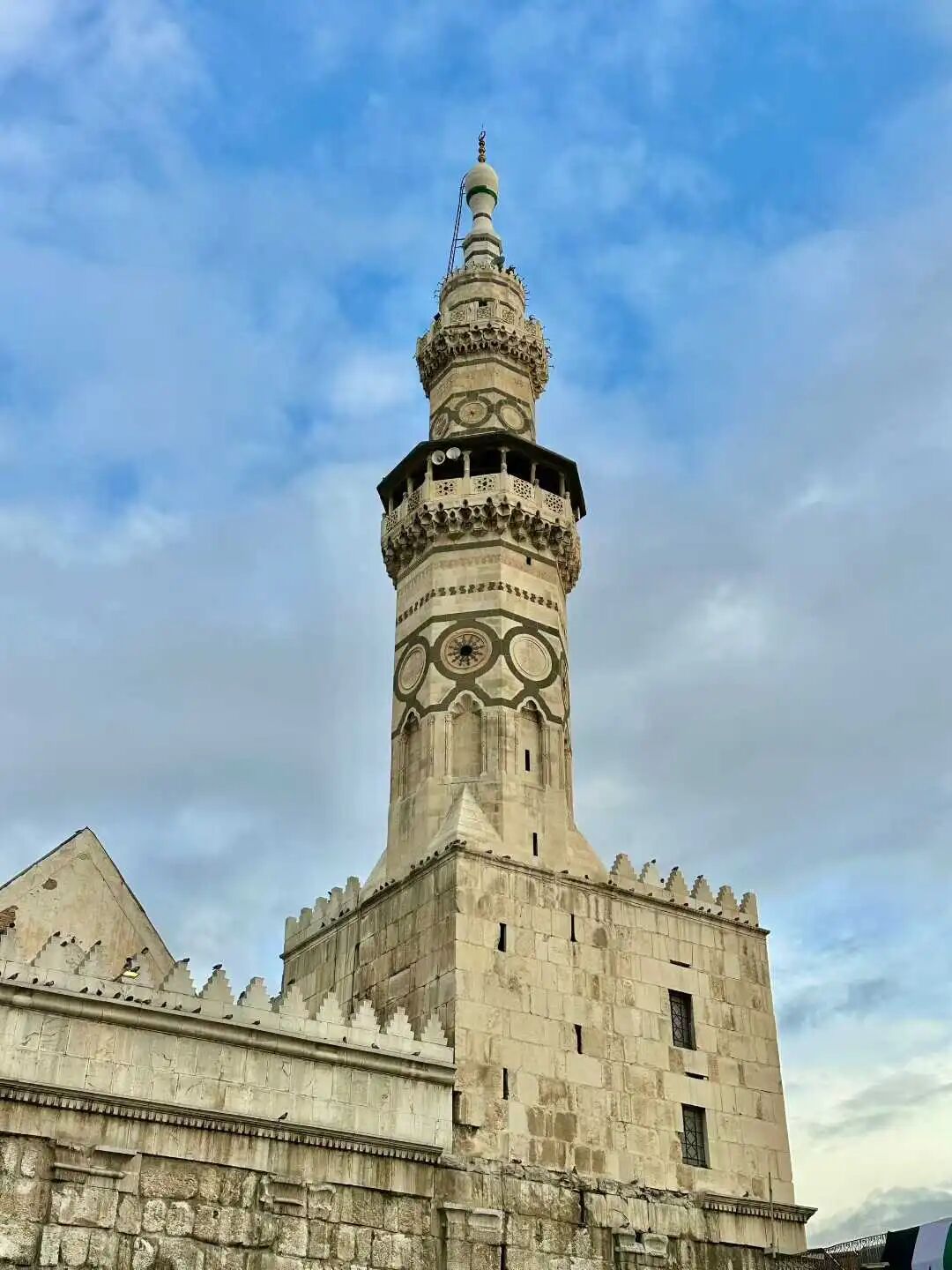
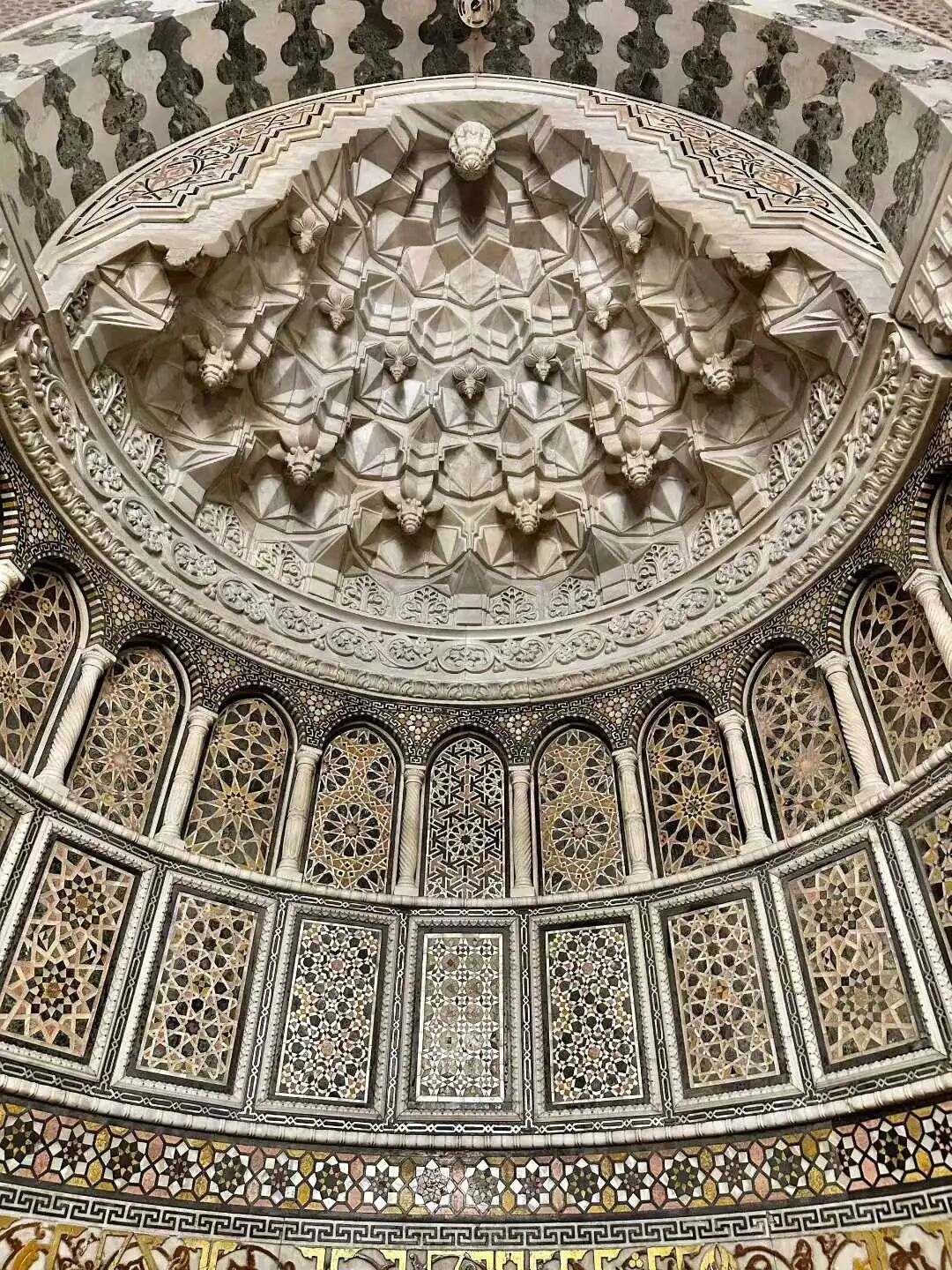
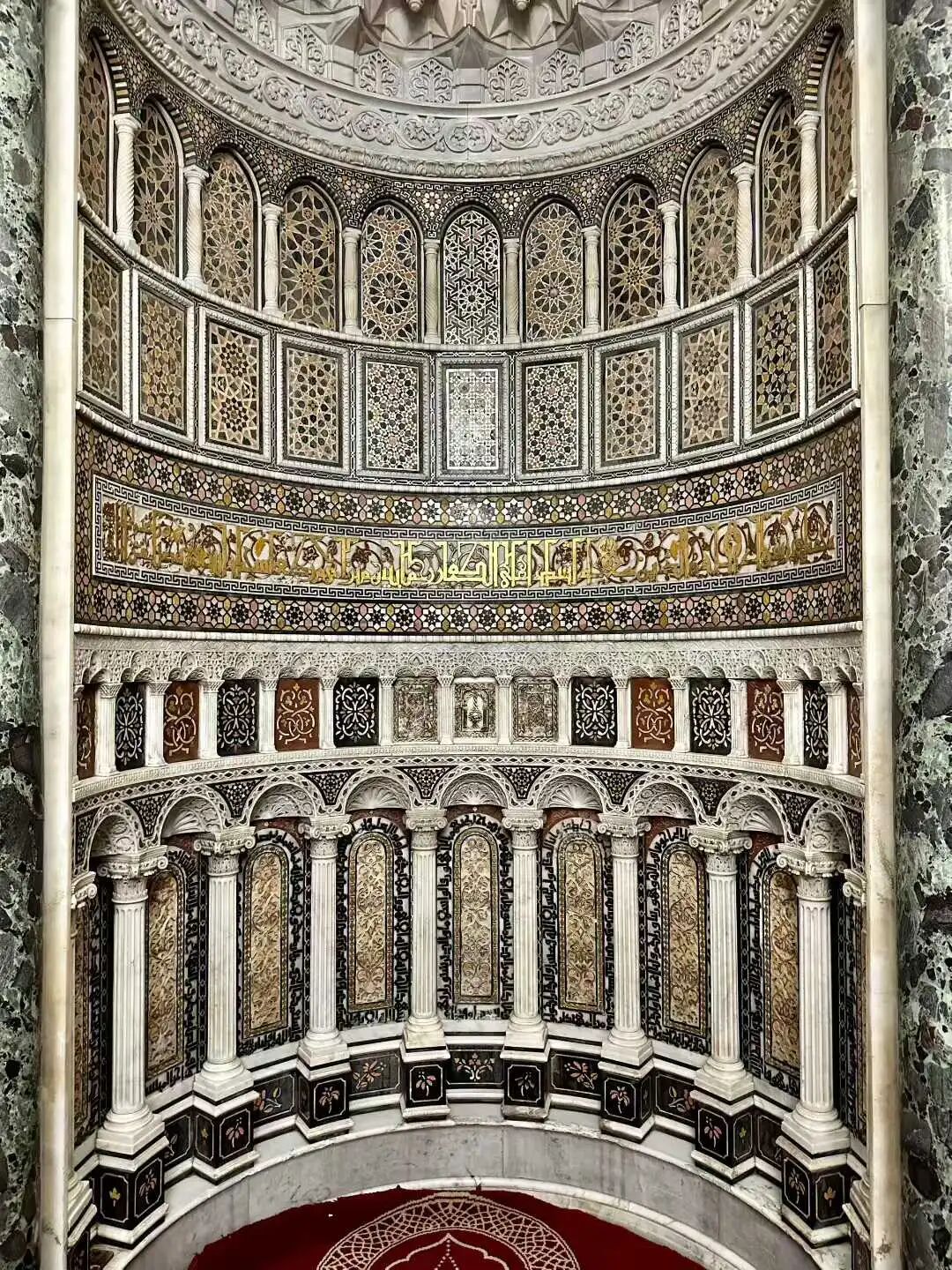
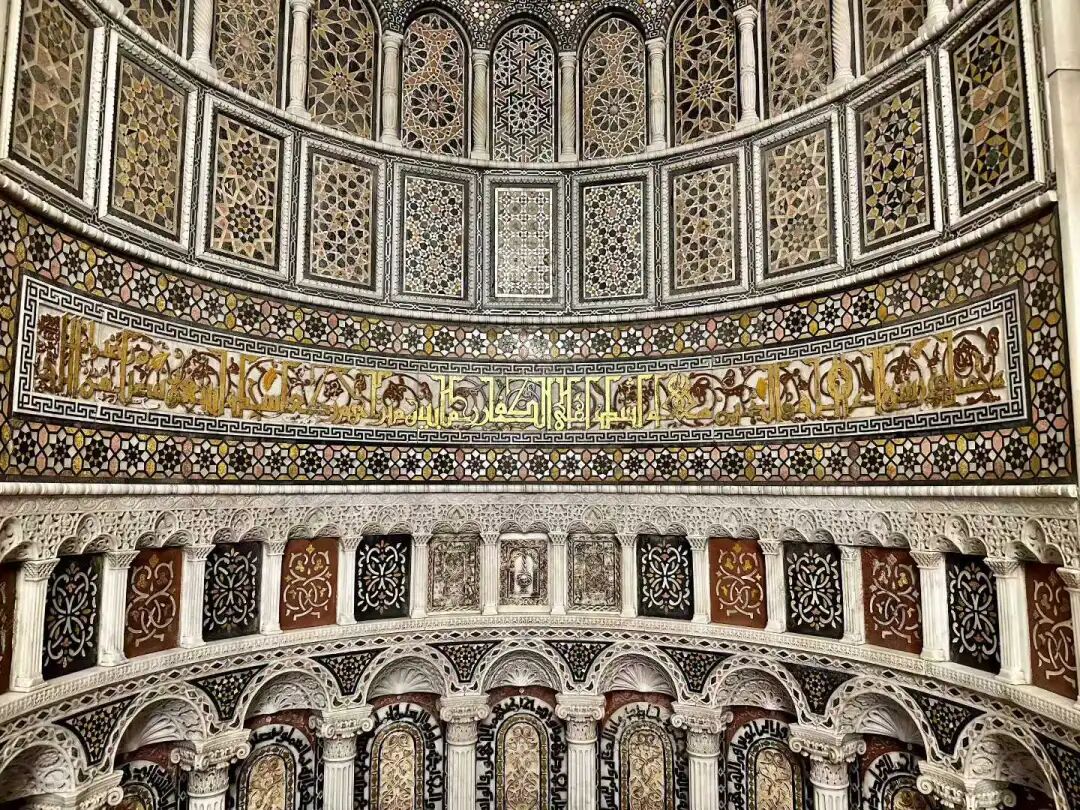
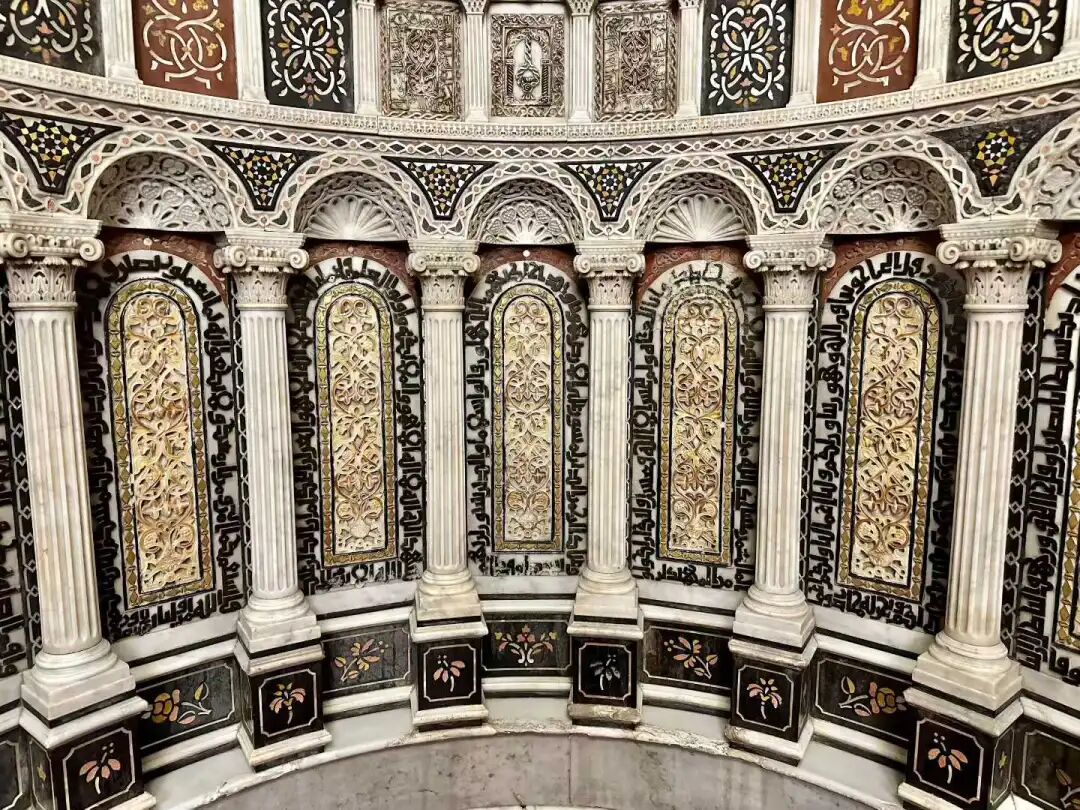
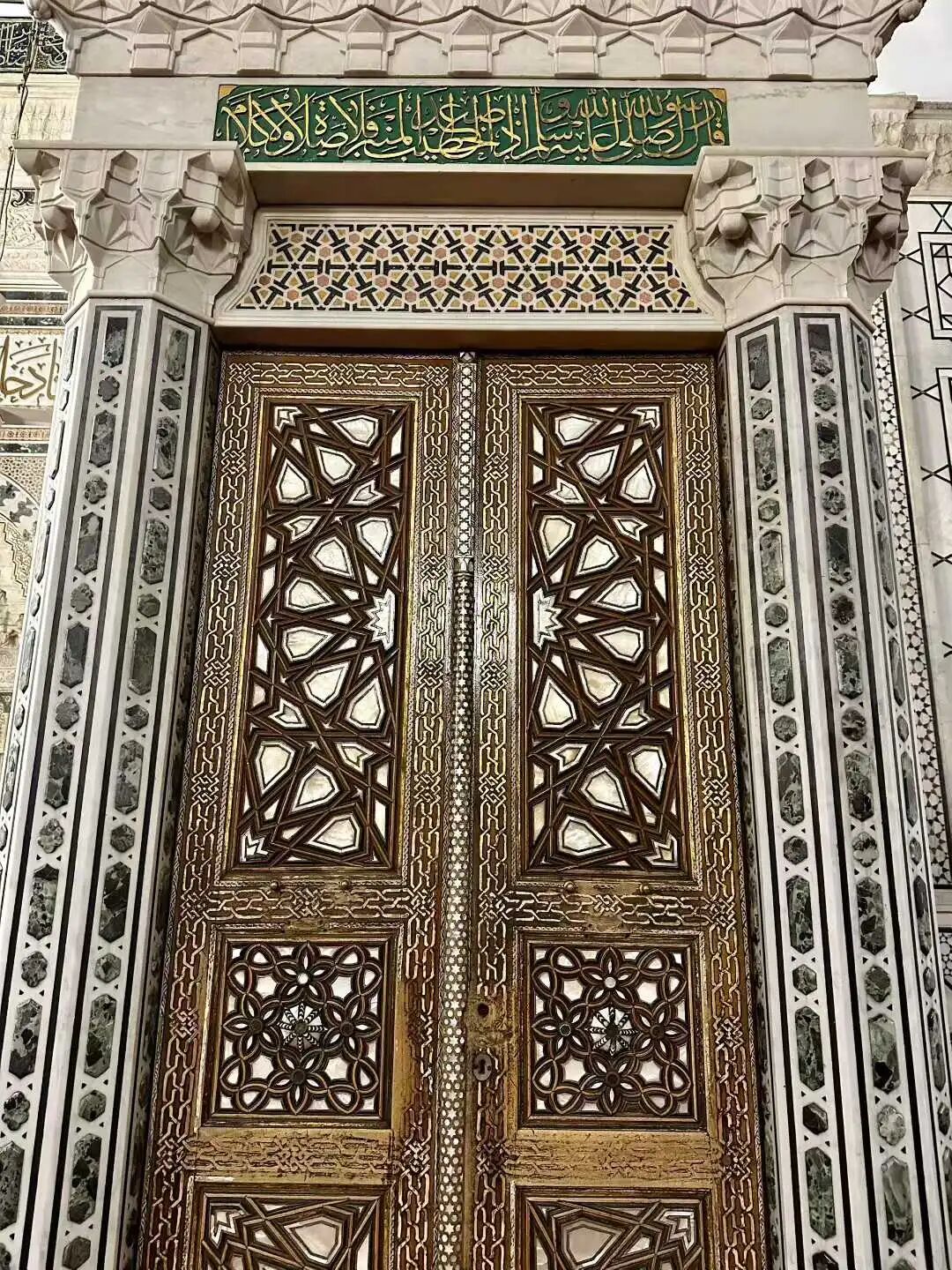
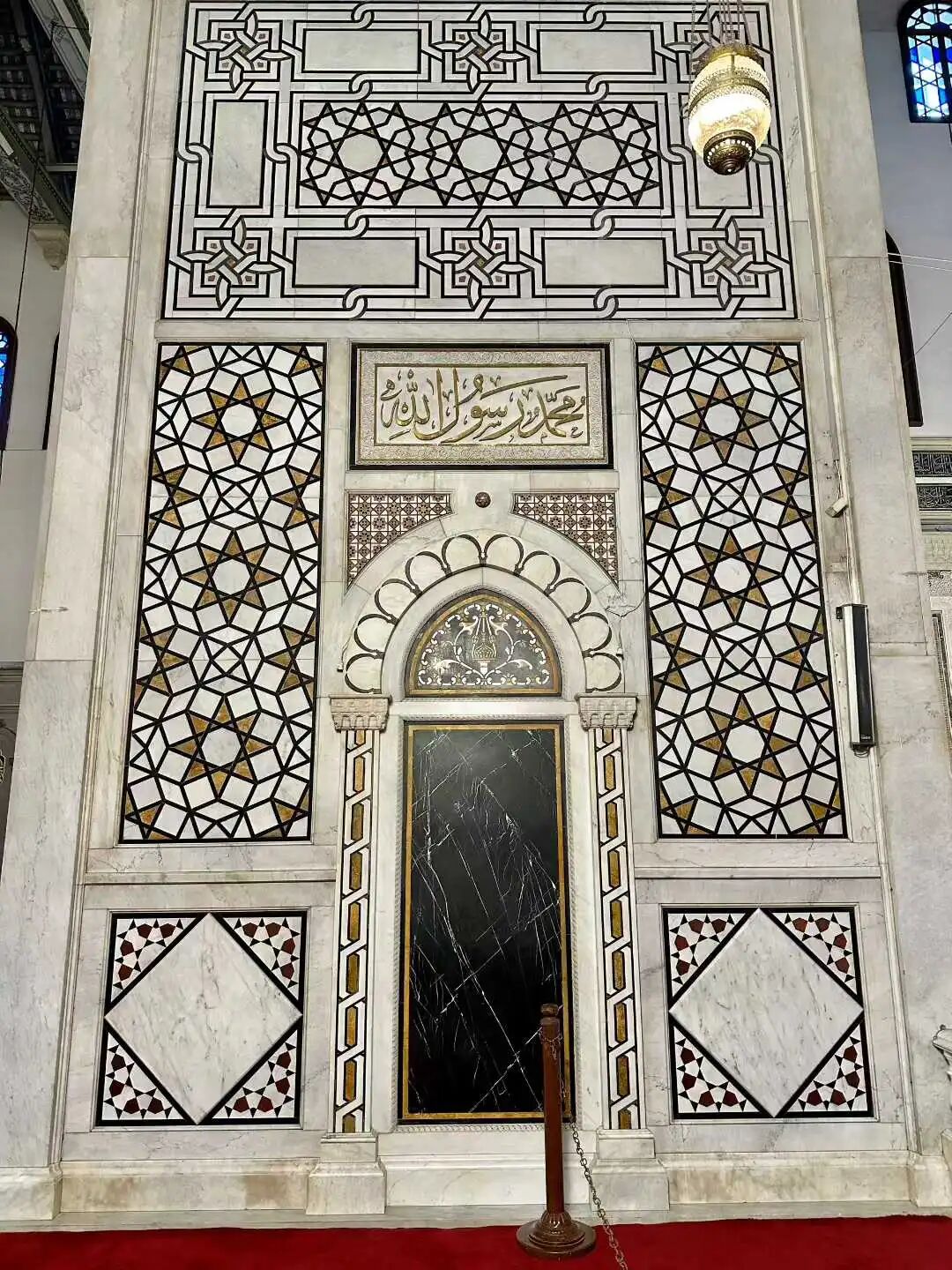
The main hall of the Great Mosque of Damascus caught fire in 1893. The Ottoman Empire spent nine years repairing it, rebuilding the mihrab, minbar, and dome, while removing the original Umayyad mosaic decorations. Today, the late Ottoman-style mihrab is very intricate and represents the delicate style of that period.
Summary: This first-person account records Friday namaz at the Great Mosque of Damascus, including the 12:40 p.m. khutbah by Mohammed Abu al-Khair Shukri, Syria's Minister of Religious Endowments since March 2025. It keeps the source's prayer details, people, security notes, historic setting, and photographs.
It has always been my wish to attend Friday namaz at the Great Mosque of Damascus.
When I arrived after 11:00 a.m., the chanting had already begun. The elderly men wore traditional Ottoman-era clothing, and against the backdrop of Ottoman decorations, it felt like stepping back into the 19th century.
The khutbah began at 12:40 p.m., delivered by Mohammed Abu al-Khair Shukri, who has served as the Syrian Minister of Religious Endowments since March 2025. Born in Damascus in 1961, Shukri is a senior scholar of Islamic law, a university professor, a lawyer, and a social activist. In 2021, his assets were seized due to his support for the GM position. It was clear that Shukri is deeply loved by the people. They crowded around to talk and take photos with him, and he responded with a smile the entire time.
During Friday namaz, the front of the main hall was cordoned off for important figures to move through, and people could only stand there when it was time for the prayer rows. Shukri used this path to enter and leave, accompanied by his staff.
Additionally, the area near the gongbei of Prophet Yahya on the east side was closed during Friday namaz, likely to prevent people from visiting the tomb during the service. However, it is not uncommon to find tombs inside the main halls of mosques in the Middle East, and I have seen this elsewhere.
During Friday namaz at the Great Mosque, there were many young men in camouflage uniforms; I suspect many of them had just come from the front lines. A sign on the pillar at the entrance forbids carrying guns, which reminded us that war is not far away. On December 8, 2024, Ahmed Shara delivered a victory speech at the Great Mosque of Damascus and then became the de facto leader of Syria. These men were very warm toward me. Many of them told me that China is great and spoke of lasting friendship between China and Syria after learning I was Chinese.
The mosque has four mihrabs (prayer niches). Daily prayers are usually held at the mihrab on the west side. In the afternoon, an ustadh (teacher) teaches scripture next to the large mihrab. He even gave me candy when he saw me passing by. I was given candy several times by warm-hearted people in Damascus, and I was very moved.
Damascus was captured by the Arabs in 634 and became the capital of the Umayyad Caliphate in 661. For the first 45 years after the capital was established, the site of the Great Mosque of Damascus remained an Orthodox church, though a prayer area (musalla) was built in the southeast corner. As the Muslim population in Damascus grew, and with the need for the Umayyad Caliph to build a grand mosque for Friday prayers, the sixth caliph, Al-Walid I, finally decided in 706 to convert the Orthodox church into a Friday mosque.
Al-Walid I personally oversaw the construction of the Great Mosque of Damascus. He kept the outer walls of the Roman mosque, removed the Corinthian columns and arcades from the mosque, and reinstalled them inside the main hall. The new mosque was completed in 715 and became known as a "wonder of the world" to medieval Muslim writers.
Before the Great Mosque of Damascus was built, traditional mosques were usually flat-roofed halls. The Great Mosque of Damascus introduced a basilica-style layout, featuring three wide, long halls with a central nave and a tall dome above.
Legend has it that during the construction of the mosque, workers discovered a small cave chapel and found a box inside, which was said to contain the head of Prophet Yahya. Yahya was a cousin of Isa and was sent to guide the people of Israel, and he is highly regarded in the scriptures. Yahya was beheaded because he criticized the Jewish King Herod Antipas.
Later, the Umayyad Caliph Al-Walid I ordered Yahya's head to be buried under a pillar, and today this place has become the gongbei of the Prophet Yahya. However, the west side is currently used for the five daily prayers and Jumu'ah, while the east prayer hall where the gongbei of Yahya is located is not open.
The Great Mosque of Damascus is world-famous for its rich Umayyad-era mosaic decorations. These mosaics use a late Roman style to depict various natural landscapes and buildings, showing a typical naturalistic style.
Some Arabic historical sources suggest the craftsmen and materials for the mosaics came from the Byzantine capital of Constantinople, but a 2022 chemical analysis study showed that most of the mosaics were actually produced in Egypt. Although these mosaic images show traces of Byzantine style, some scholars believe their style better matches mosaic craftsmanship from Syria, Palestine, and Egypt.
There has also been a long-standing debate about the meaning of the mosaic images. Some views suggest they represent the known world at that time, others think they depict Damascus and the Barada River, and some believe they show scenes of Paradise. Currently, there is relatively more evidence for the Paradise view, and the landscapes without human figures fit the idea of an empty Paradise waiting for people to arrive after the Day of Resurrection.
See "Umayyad Mosaic Decorations of the Great Mosque of Damascus" for details.
On the west side of the courtyard of the Great Mosque of Damascus stands the Treasury Dome built during the Abbasid Dynasty, which was used to store the charity (nietie) given to the mosque and many ancient manuscripts.
The Treasury Dome was ordered to be built in 789 by the Abbasid governor of Damascus, Fadl ibn Salih. The treasury is an octagonal building supported by eight Roman columns that still have their original capitals. The outer walls of the treasury are decorated with magnificent mosaic murals, which imitate the early Umayyad decorations in the mosque, though the craftsmanship is slightly inferior. The mosaic decorations on the outer walls of the treasury were restored at the end of the 20th century.
The treasury once housed ancient manuscripts in Greek, Latin, Syriac, Coptic, Hebrew, Aramaic, and Georgian, including 7th-8th century Greek New Testament manuscripts, but they were gifted to Kaiser Wilhelm II in 1899, and today only a few are kept in the Damascus National Archives.
The Great Mosque of Damascus did not have a minaret (bangke ta) originally, but there was a small room on the Roman tower at the corner of the outer wall for the muezzin to call the adhan (bangke).
The first minaret of the Great Mosque of Damascus is the Bride's Minaret in the center of the north wall, which was first built during the Abbasid Dynasty in the 9th century. Only the lower level remains today, as the upper level was destroyed by fire in 1069 and later rebuilt by the Ayyubid Sultan Saladin in 1174. The Bride's Minaret has a 160-step spiral staircase, a square main tower, and horseshoe arches on the upper level.
The Isa Minaret in the southeast is said to have been built in the 9th century during the Abbasid Dynasty, but it was destroyed in 1245 during the civil strife of the Ayyubid Dynasty. The current lower level of the building was built in 1247 during the Ayyubid Dynasty, and the upper level was built after the 16th century during the Ottoman Dynasty. The main body of the Isa Minaret is square, with an octagonal top and an open gallery. Legend says the Prophet Isa (Jesus) will descend from the Isa Minaret and perform the morning namaz behind the Mahdi (the Savior).
In 1285, the famous scholar Ibn Taymiyyah began teaching at the Great Mosque of Damascus. When the Mongols invaded Damascus in 1300, Ibn Taymiyyah firmly supported the people in their resistance. He preached at the Great Mosque and issued fatwas for those fleeing in panic. He personally joined the fight against the Ilkhanate, which finally ended the Mongol rule over Syria.
The Qaitbay Minaret in the southwest was built in 1488 by the Mamluk Sultan Qaitbay (reigned 1468-1496) and features a classic Mamluk style. The name of Assad was once carved on the minaret, but it was removed in October 2025. Qaitbay's reign was known for stability and prosperity. He defeated the powerful Ottoman Empire of that time several times and eventually signed a peace treaty with them, which greatly boosted his reputation. He also donated funds to build many structures across Egypt, Syria, Saudi Arabia, and other places.
The main hall of the Great Mosque of Damascus caught fire in 1893. The Ottoman Empire spent nine years repairing it, rebuilding the mihrab, minbar, and dome, while removing the original Umayyad mosaic decorations. Today, the late Ottoman-style mihrab is very intricate and represents the delicate style of that period.
