

Damascus
Authentic Damascus Heritage Hotels: Ottoman Mansions, Courtyards and Old City Restaurants
Articles • ali2007fr posted the article • 0 comments • 218 views • 2026-05-21 06:21
Summary: Damascus old city has heritage hotels and restaurants converted from Ottoman mansions, especially in the Christian Quarter east of the Umayyad Mosque. This guide keeps the source's nine hotel and restaurant notes, December 2025 prices, locations, bargaining details, and photographs.
In recent years, I have really enjoyed staying in heritage hotels while traveling. Even if some are a bit pricey or have thin walls, they let you fully experience the local history. Many people in Damascus choose Chinese-run guesthouses because they are cheaper and easier to communicate in. But if you really want to understand this thousand-year-old city, staying in an old Ottoman house inside the ancient city is a much better way to get close to history.
The east and west sides of the old city of Damascus are very different. The west has the busy Ottoman markets, the Umayyad Mosque, and the citadel. The east is the Christian Quarter, filled with churches and hotels or restaurants converted from old Ottoman mansions. I spent my days in Damascus staying in different mansions in the Christian Quarter. It is about a 1-kilometer walk to the Umayyad Mosque, but the road is full of shops, so it does not feel long.
Here are 9 places I stayed at or asked about, with prices from December 2025.
1. My top recommendation is Mamlouka Hotel, which has two locations: Dar Al Mamlouka and Beit al-Mamlouka. They asked for $122 for a single room, but I bargained it down to $110. I think this place offers the best value. The environment is great, it is the closest to the Umayyad Mosque, and it is right next to the market. The courtyard is a bit small. I only stayed at Dar Al Mamlouka this time because Beit al-Mamlouka had no rooms for two days.
2. Dar Al Yasmin Hotel asked for $140 for a single room, and I bargained it down to $125. It is in a small alley behind a church. It is very quiet and quite large inside.
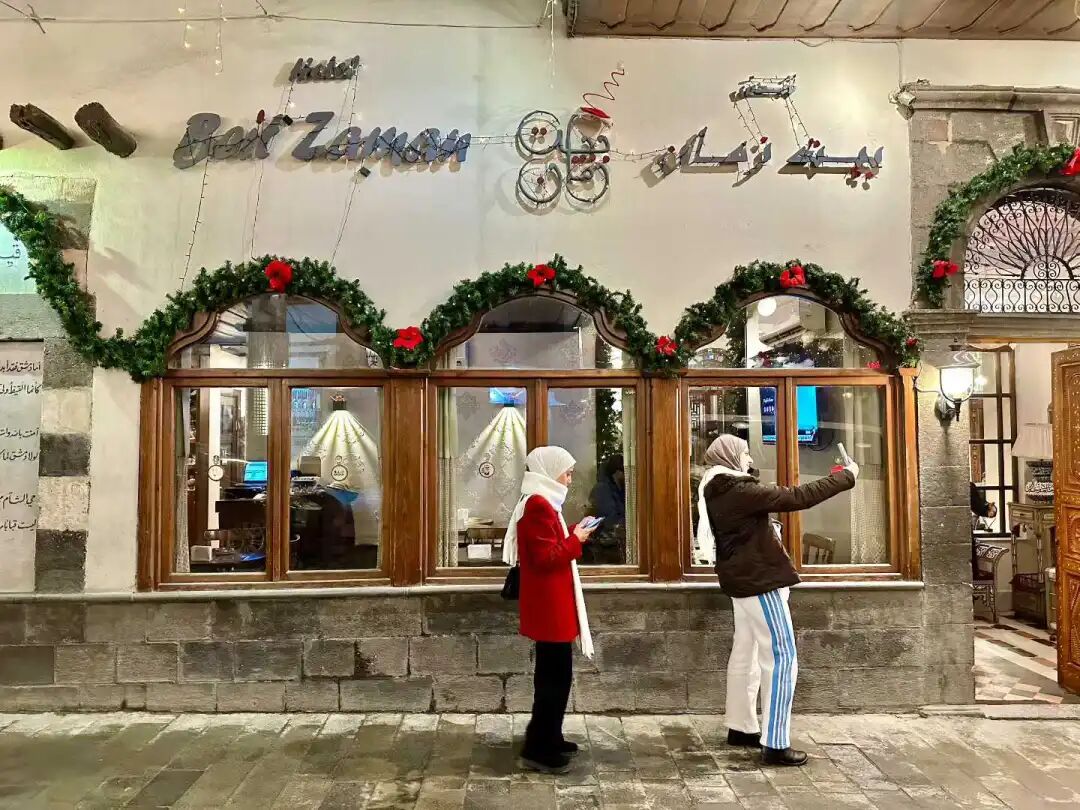
3. Beit Zaman Hotel asked for $150 for a single room, and I bargained it down to $135. It is right on the East Gate street. There are many shops nearby, and many young people come here to take photos.
4. Beit Rumman has a great environment, but unfortunately, it has no Wi-Fi. I did not buy a SIM card, so I would have been disconnected. I missed out on it and did not ask for the price.
5. Beit Al Wali Hotel is the most popular mansion hotel in the old city of Damascus, and it is also the most expensive. When I asked on the first day, they only had a royal suite for $500. On the second day, they asked for $290 for a single room, and they would not go below $200, so I did not stay there.
6. Albal Hotel charges $80 for a single room. It is the cheapest, but the facilities are the worst. The power was weak, and my phone would barely charge.
7. Al Zaytouna Hotel has an average environment. When I went in, some men were watching a ball game, so I did not ask for the price.
8. Beit Zafran Hotel is very close to Beit Al Wali Hotel. It looked nice in photos, but it was full when I went, so I did not ask for the price.
9. Al Shahbandar Palace Hotel has a cafe in its courtyard. I had a coffee there, but I did not stay.
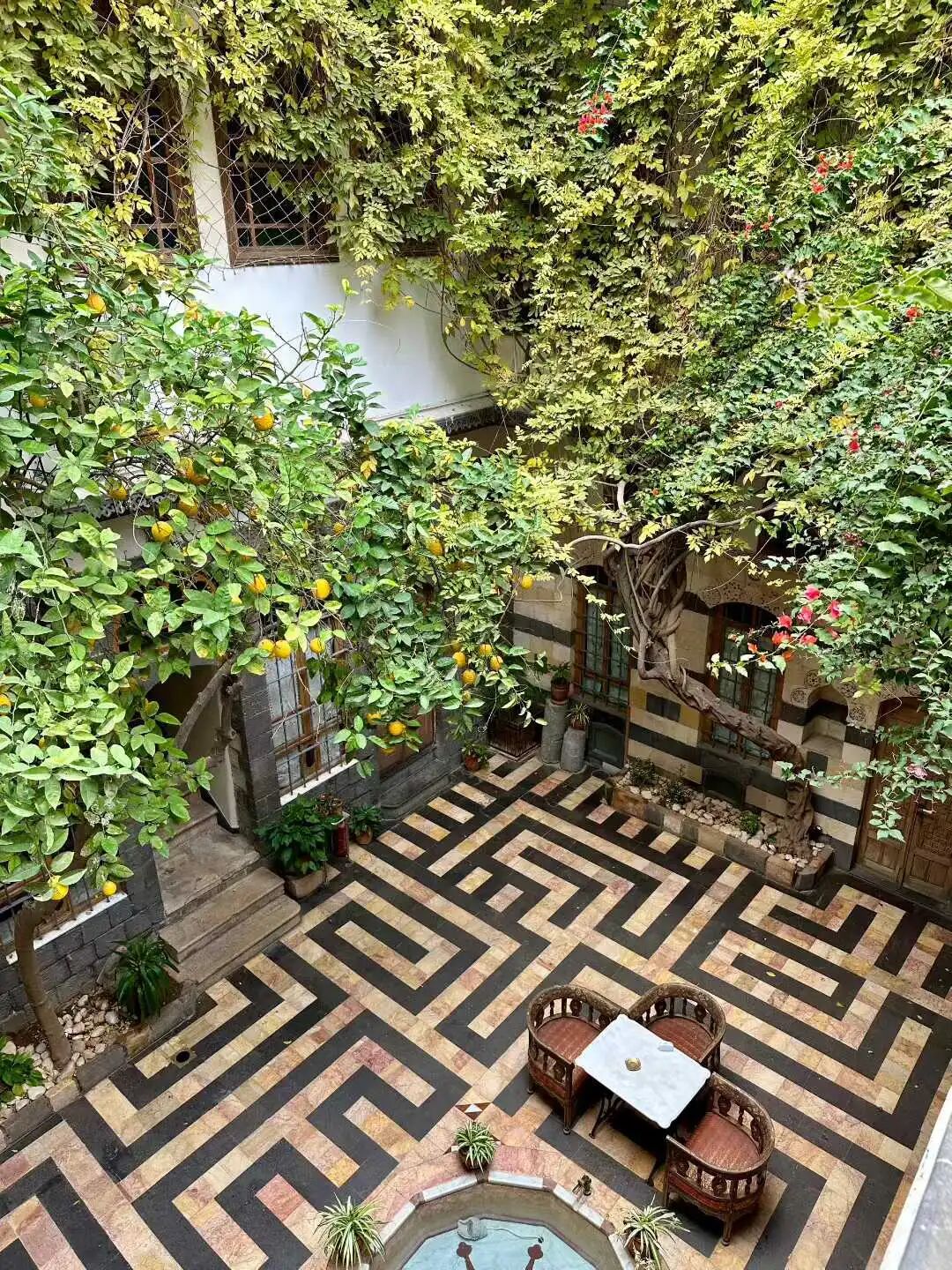
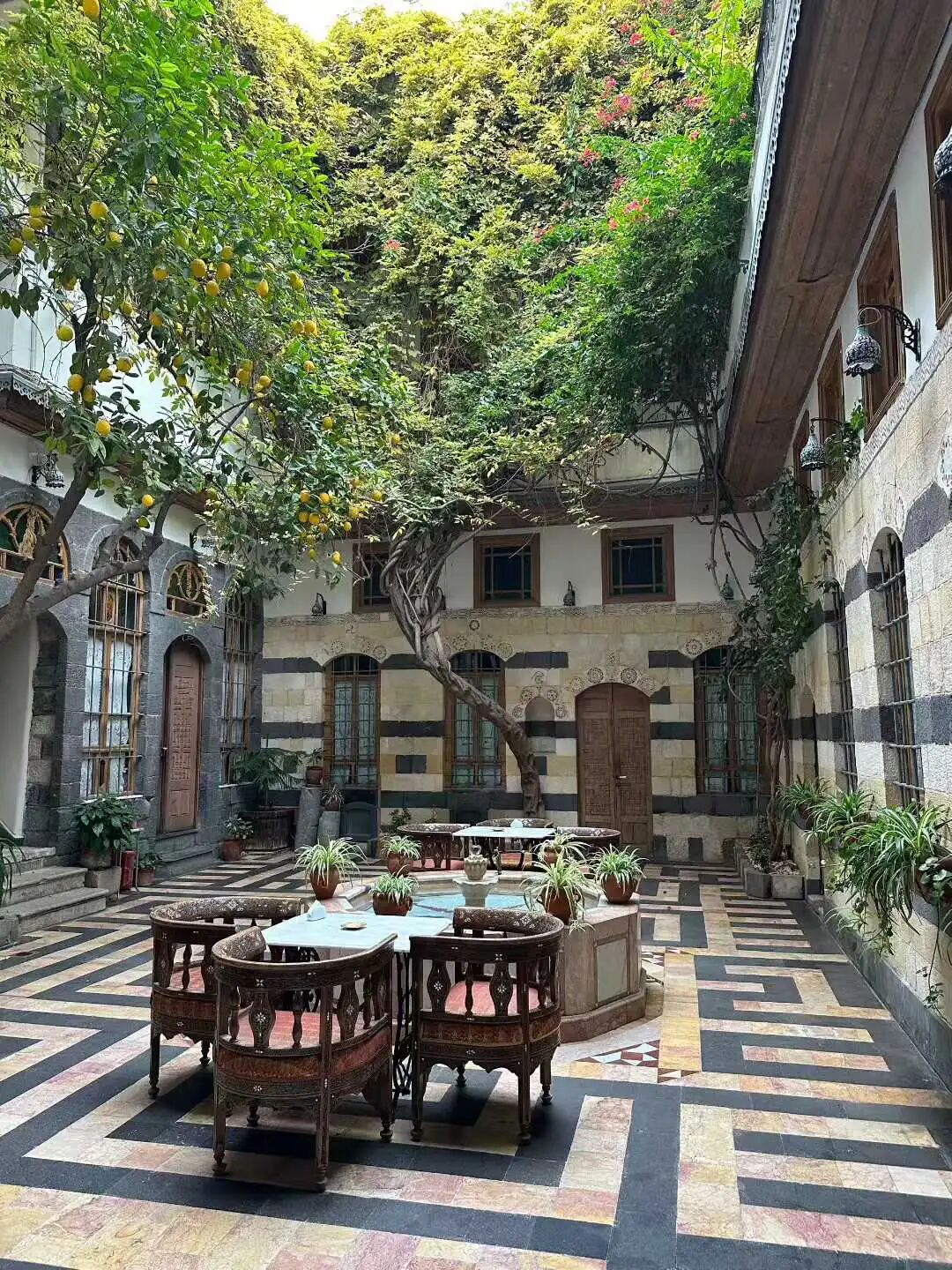
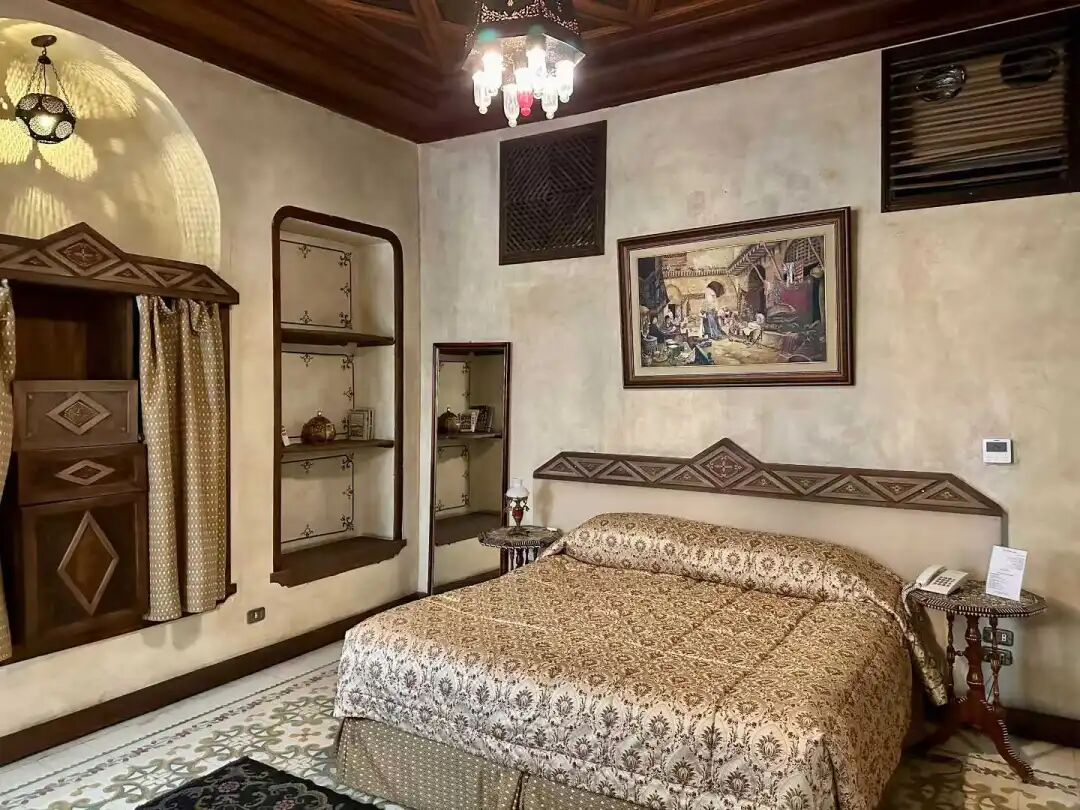
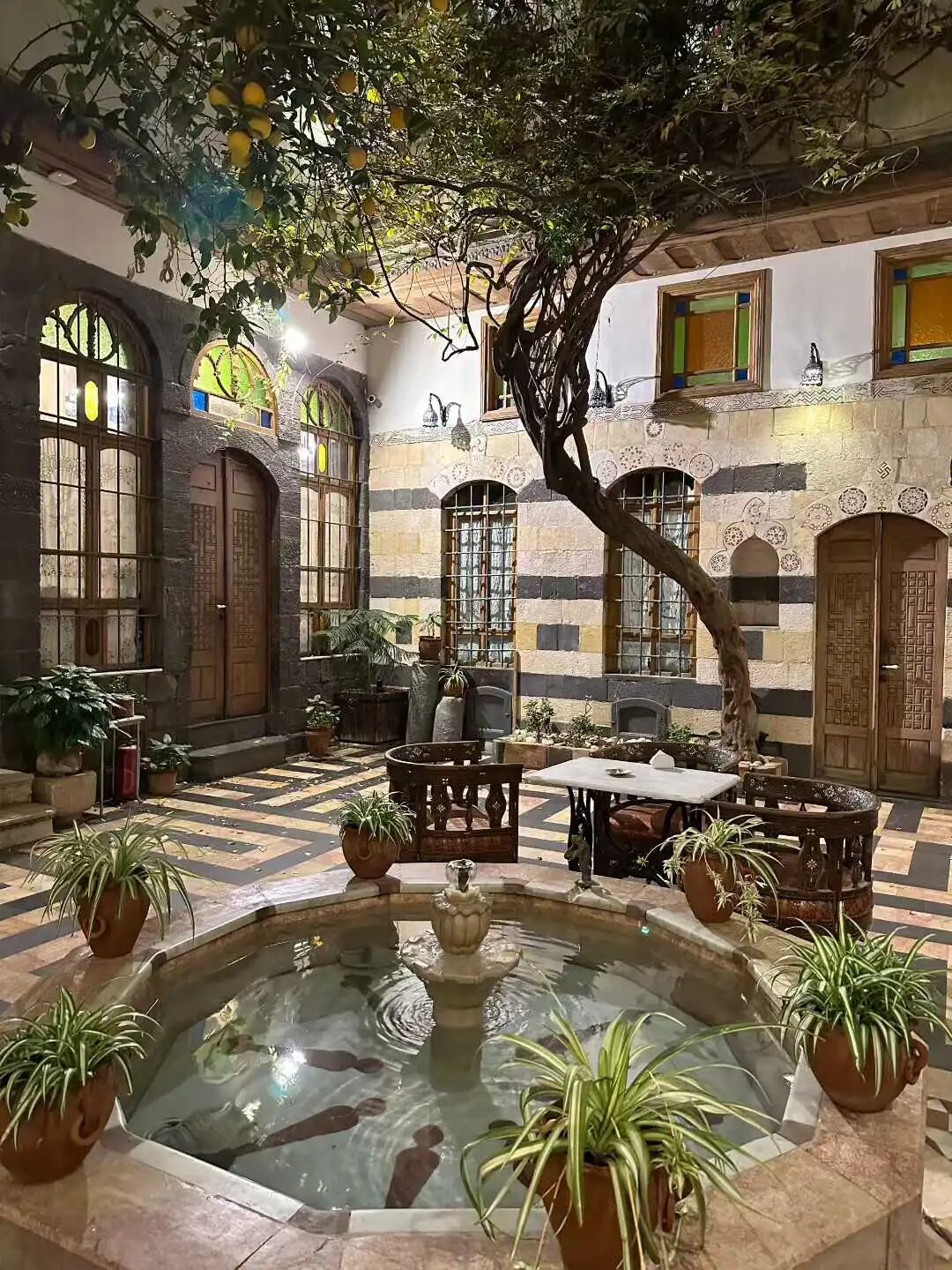
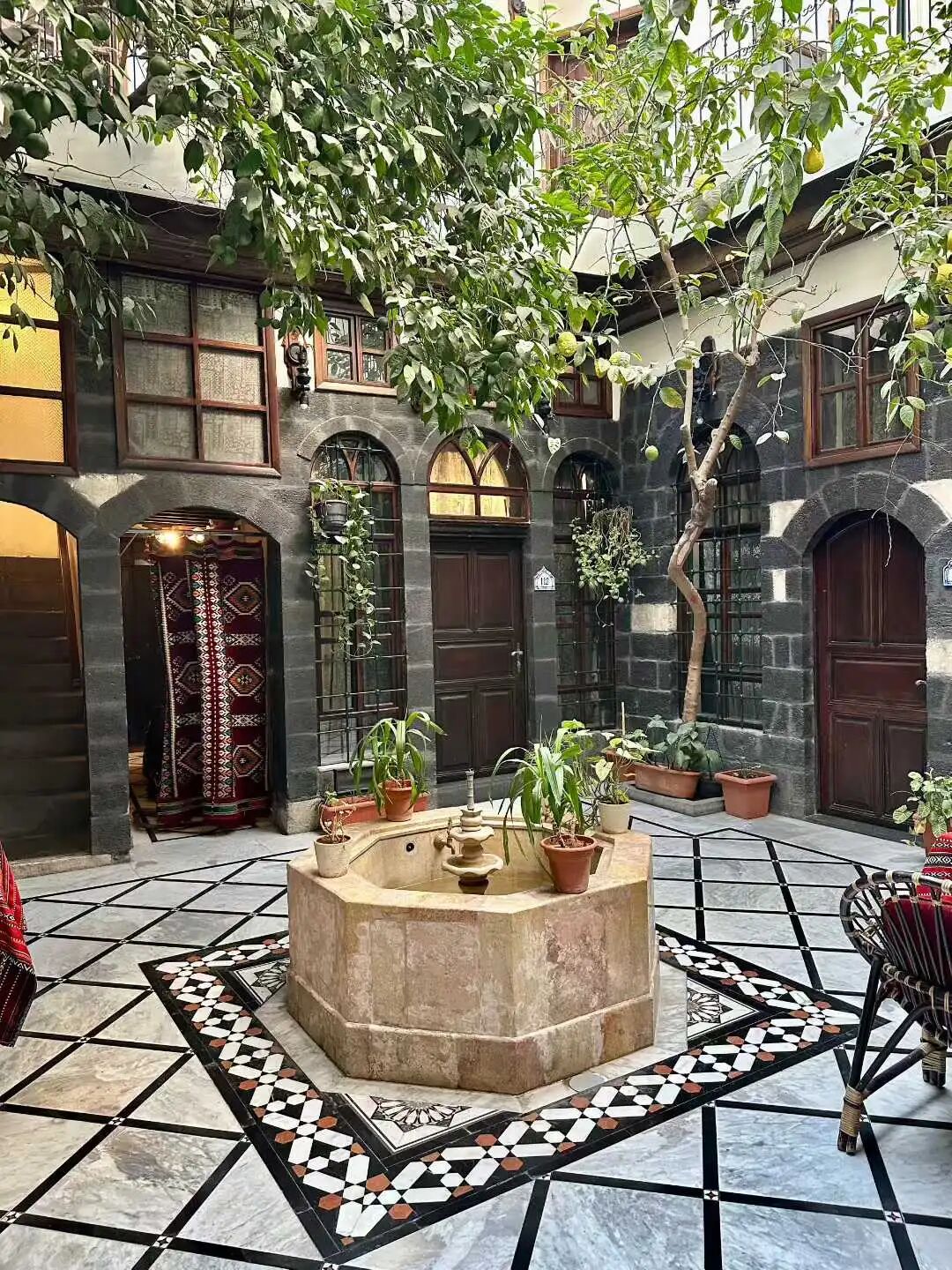
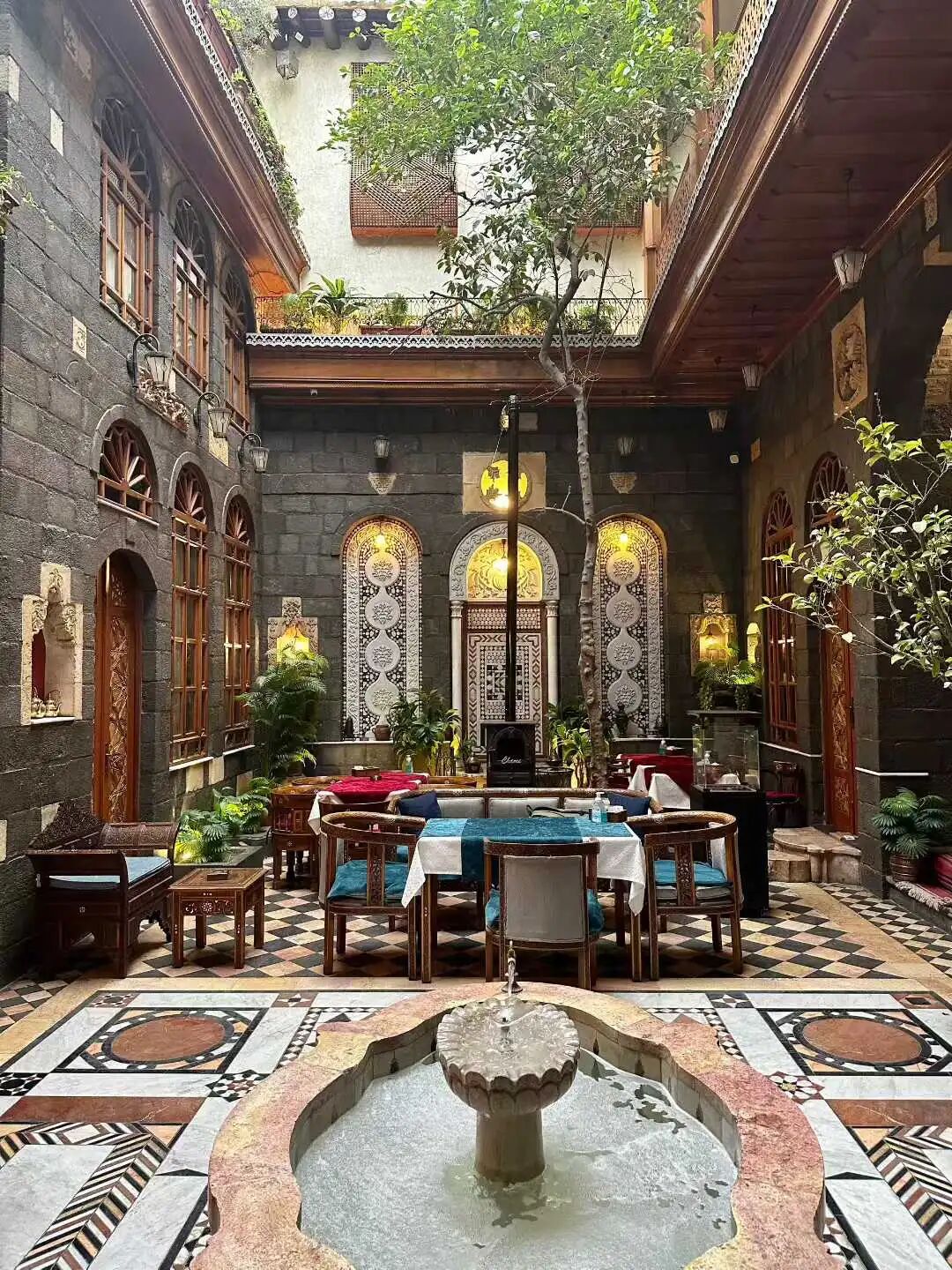
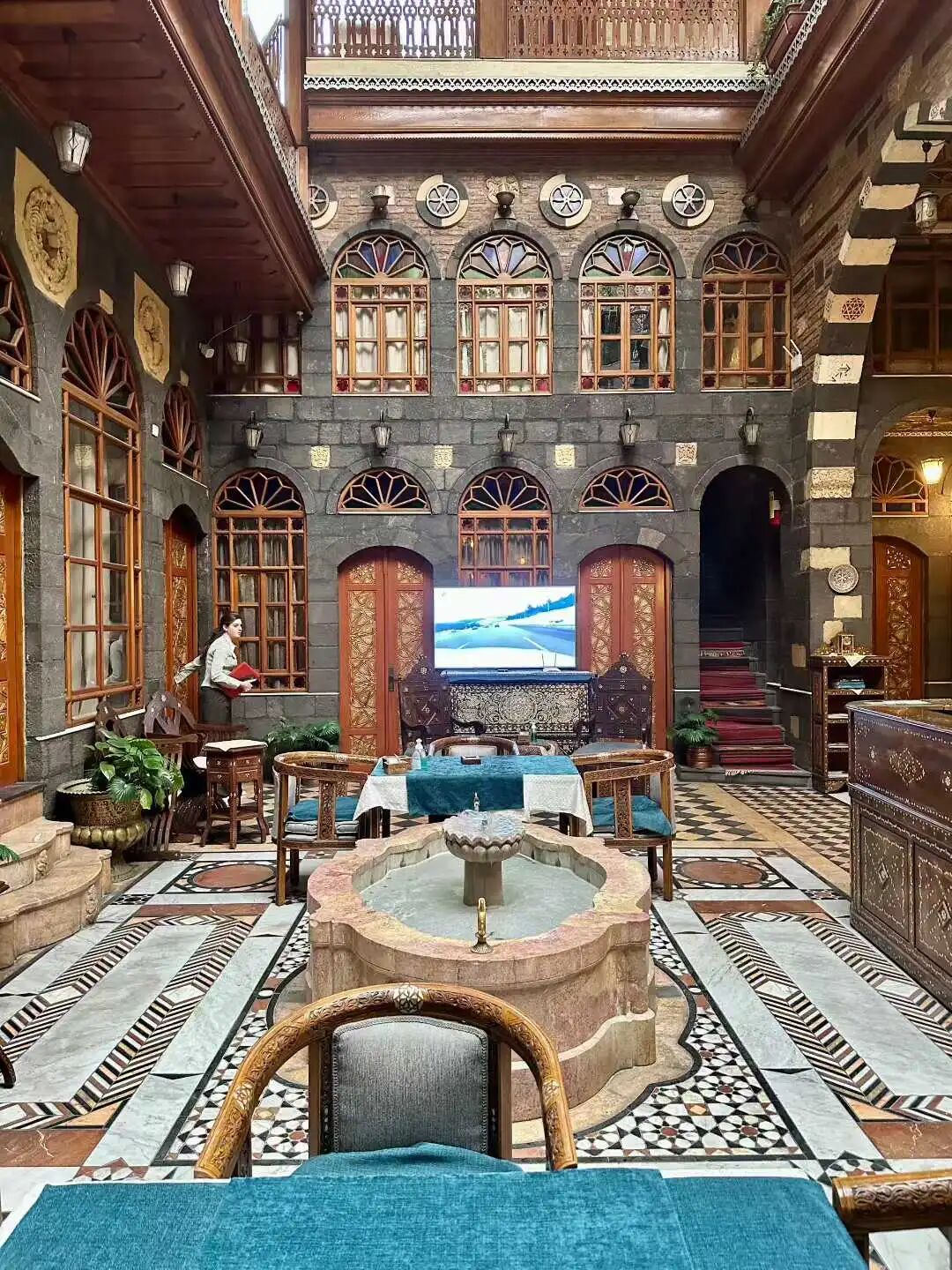
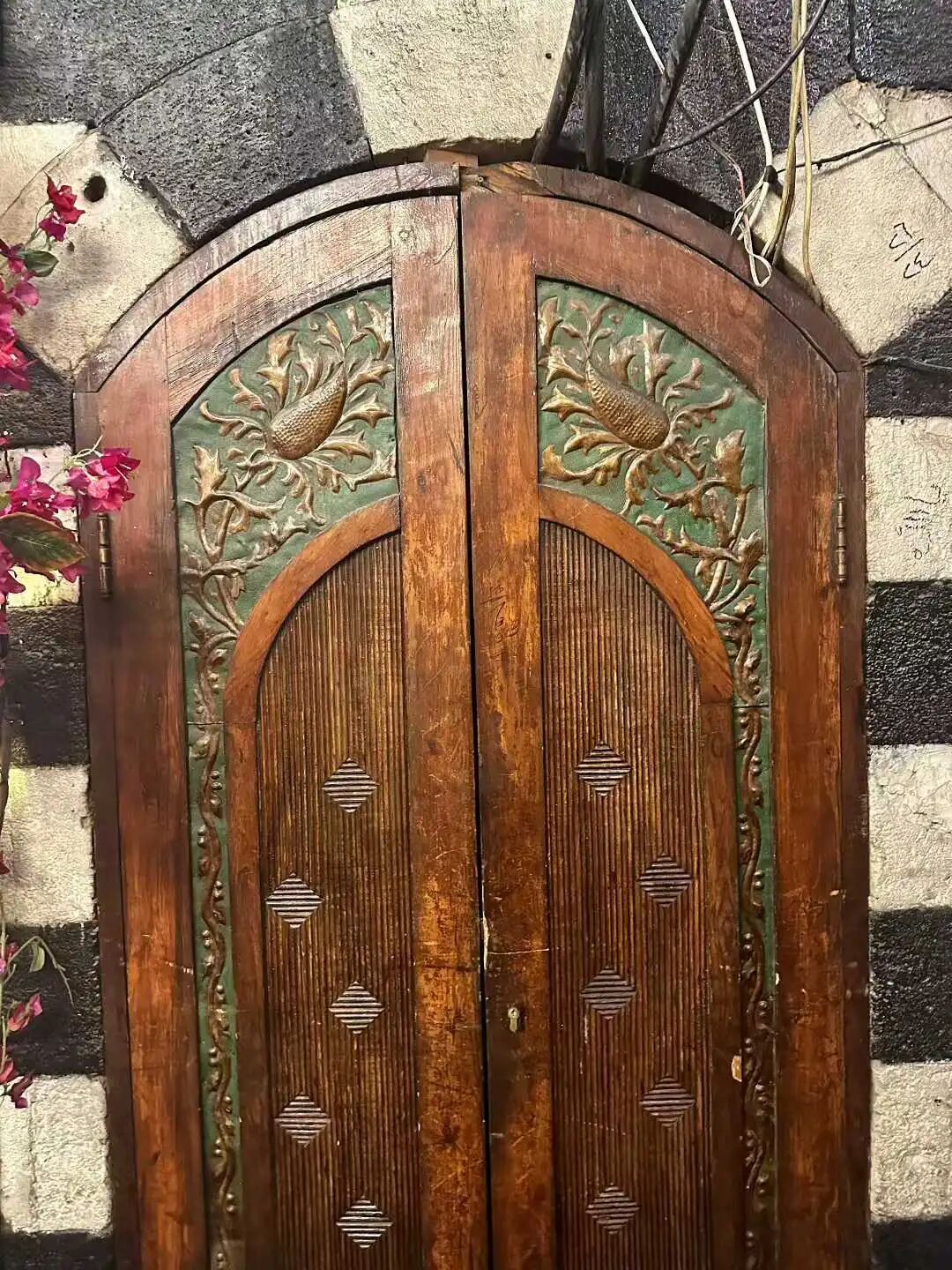
Dar Al Mamlouka is located on the far west side of the Bab Touma Christian Quarter in the old city of Damascus. The main building is a merchant mansion from the 17th-century Ottoman period, but it still has a strong 16th-century Mamluk style. The mansion has an inward-facing layout centered around a courtyard, with high ceilings on one side. The walls are built with alternating black basalt and white limestone bricks in the Mamluk style, and there is a marble fountain in the center of the courtyard.
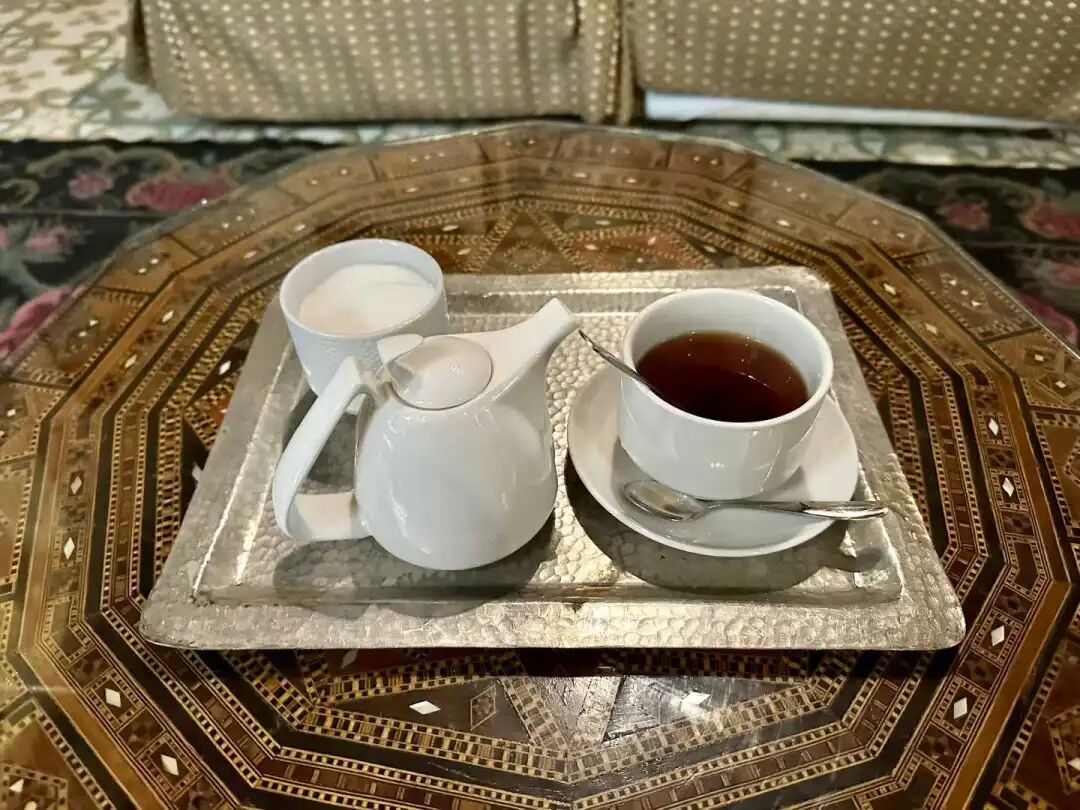
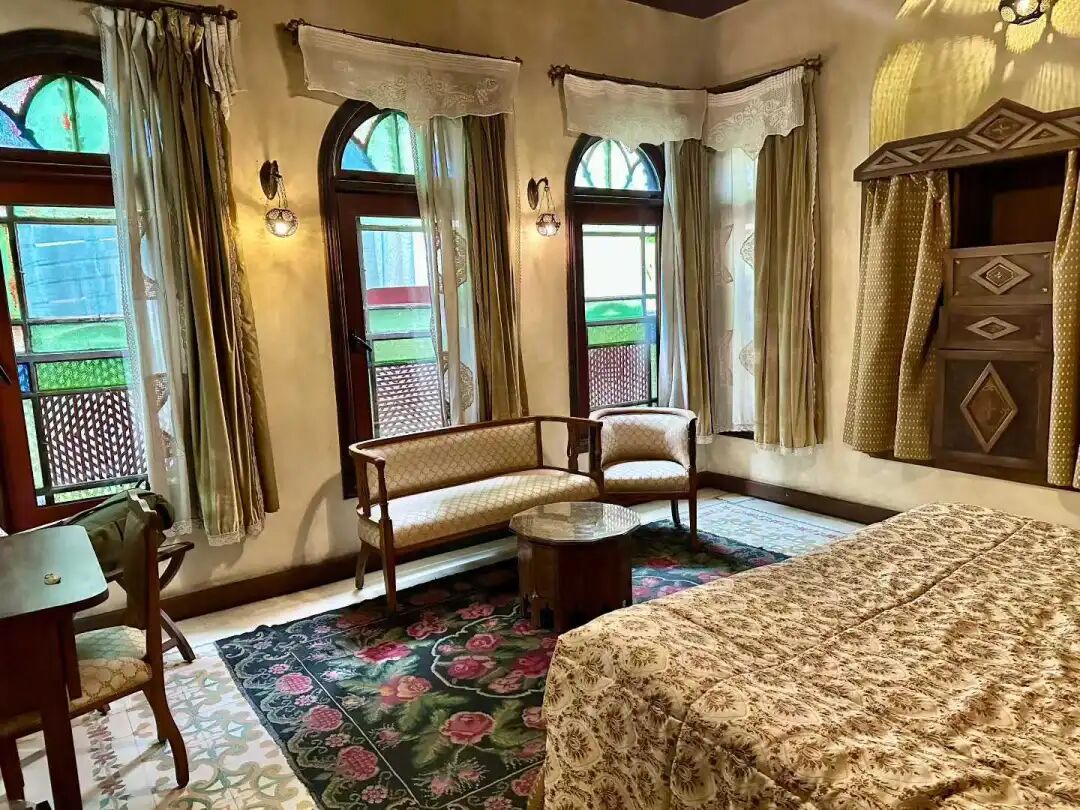
Dar Al Mamlouka was turned into a hotel in 2005. It is run by the same management as another nearby mansion, Beit al-Mamlouka, but that one is often fully booked. The single room was listed at 122 dollars, but I bargained it down to 110 dollars. The hotel has electricity and Wi-Fi all night. The single room is nice, and a staff member brought me tea right after I checked in. There are orange and lemon trees in the courtyard, which makes it very relaxing.
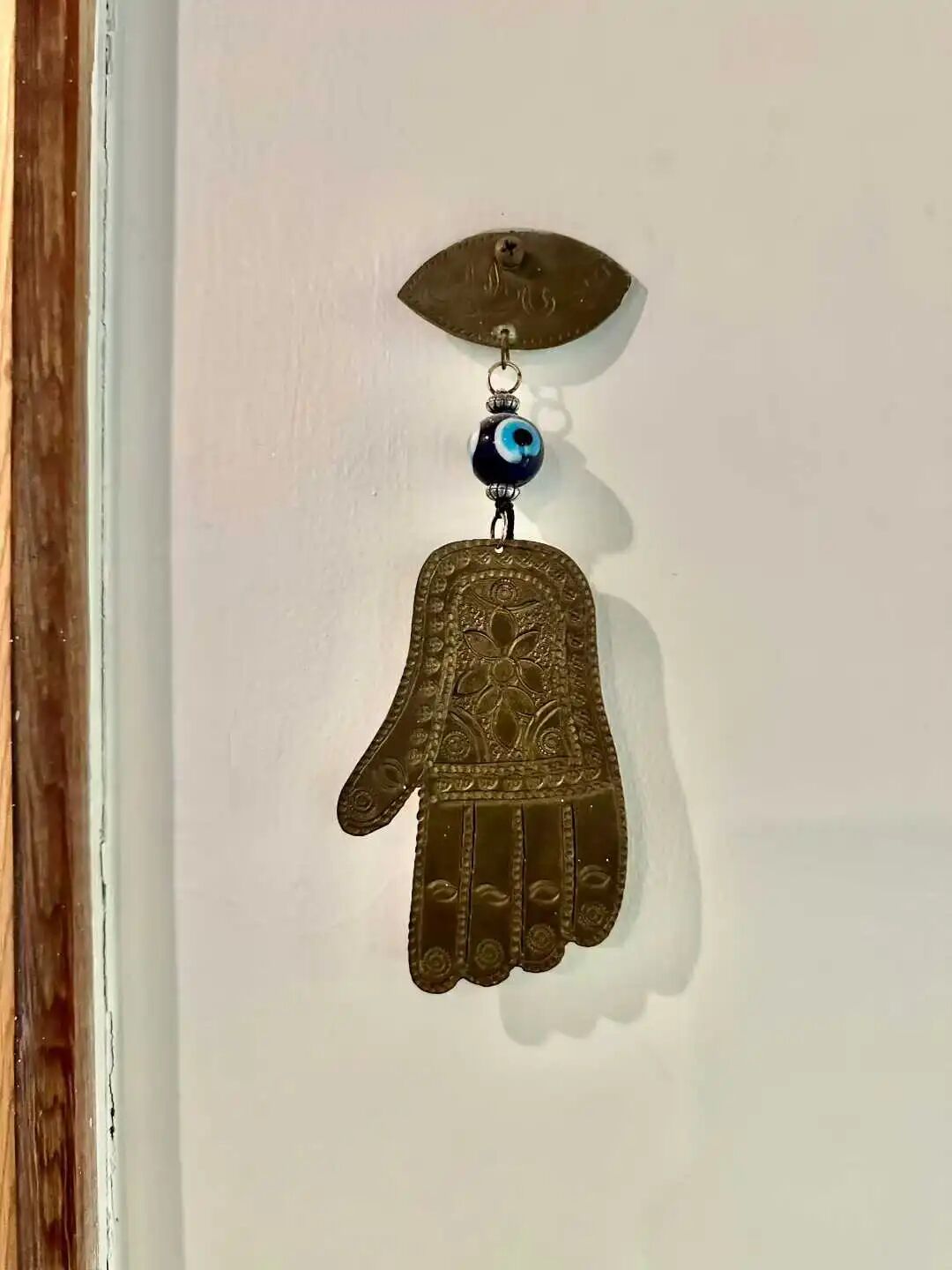
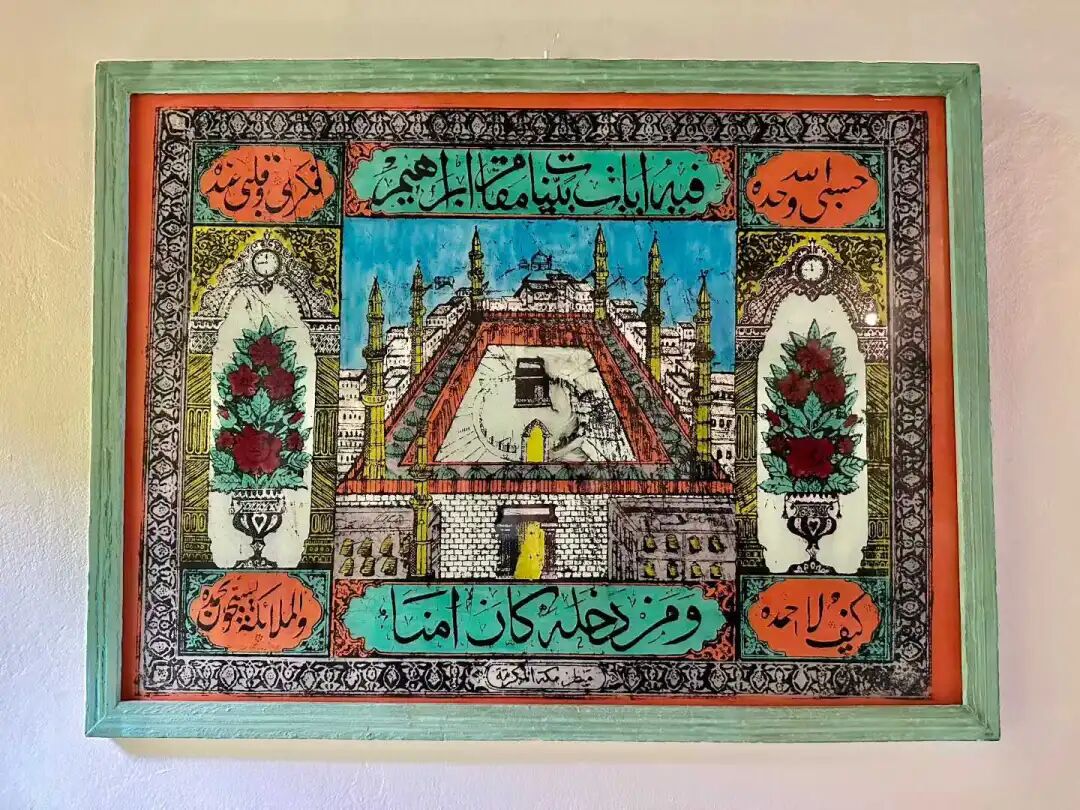
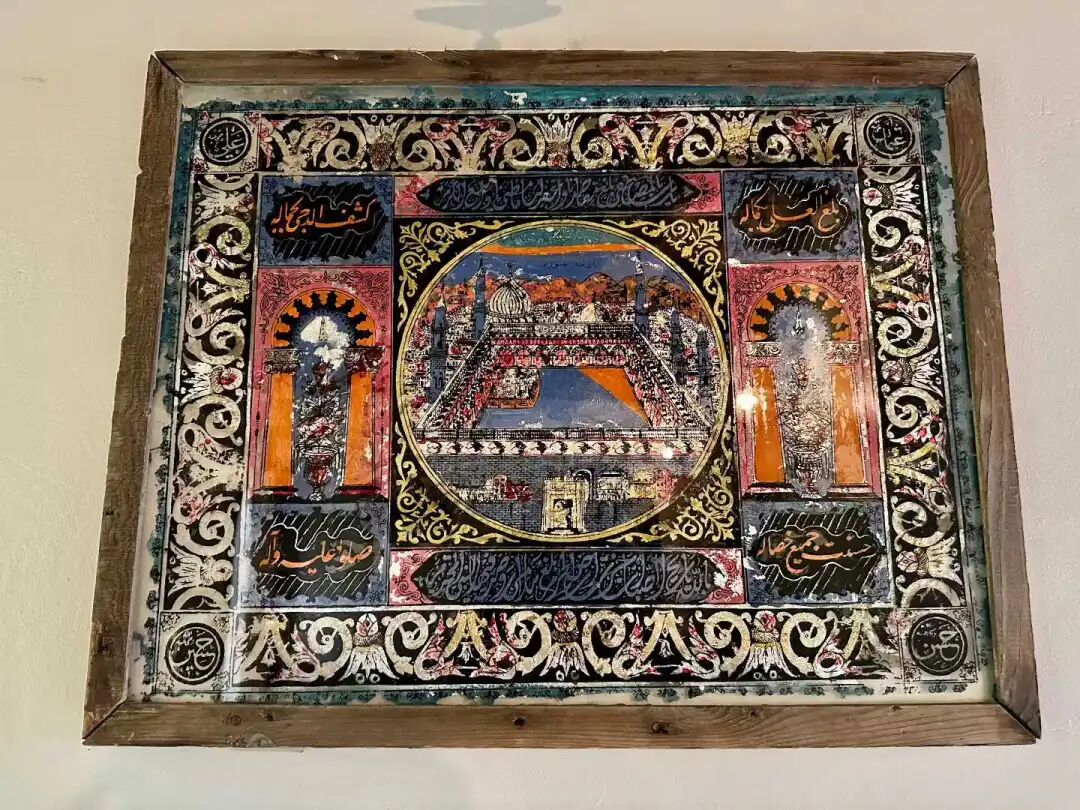
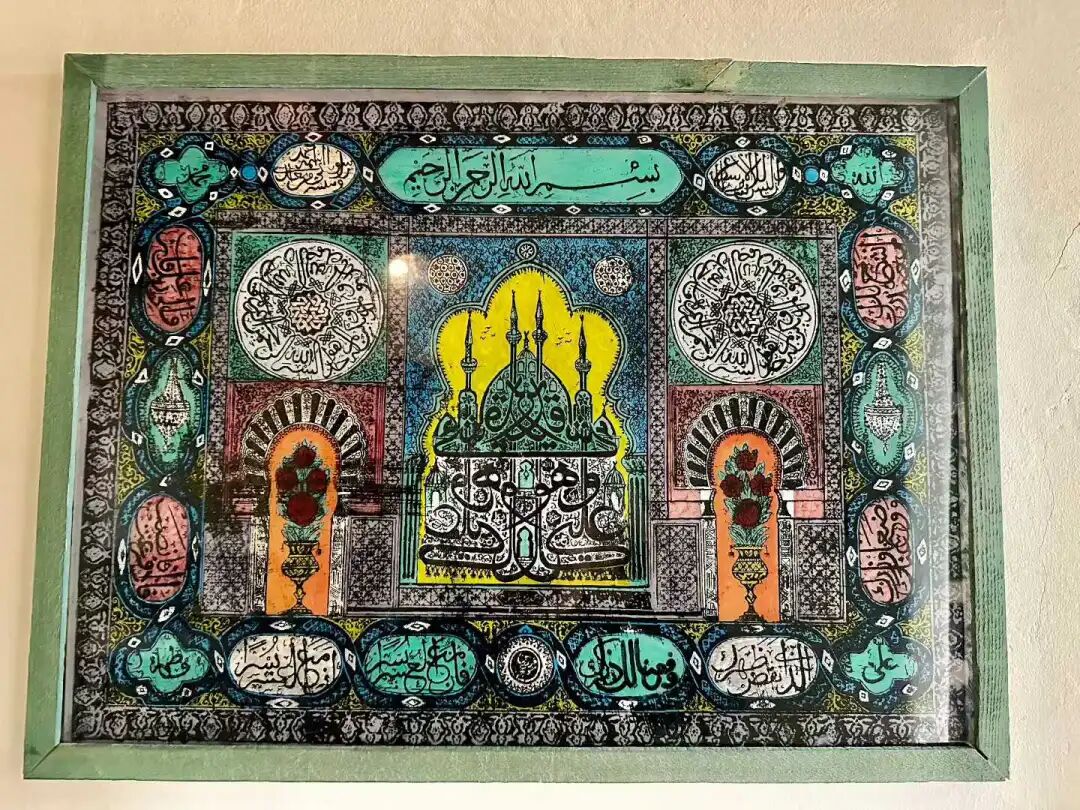
The Islamic decor at Dar Al Mamlouka includes the Hand of Fatima (Hamsa). Its five fingers represent the five pillars of the faith, and it is named after the Prophet's daughter, Fatima. During the Austro-Turkish War in 1788, the Ottoman Empire carried flags featuring the Hand of Fatima as the Grand Vizier led an army of 80,000 against Austria.
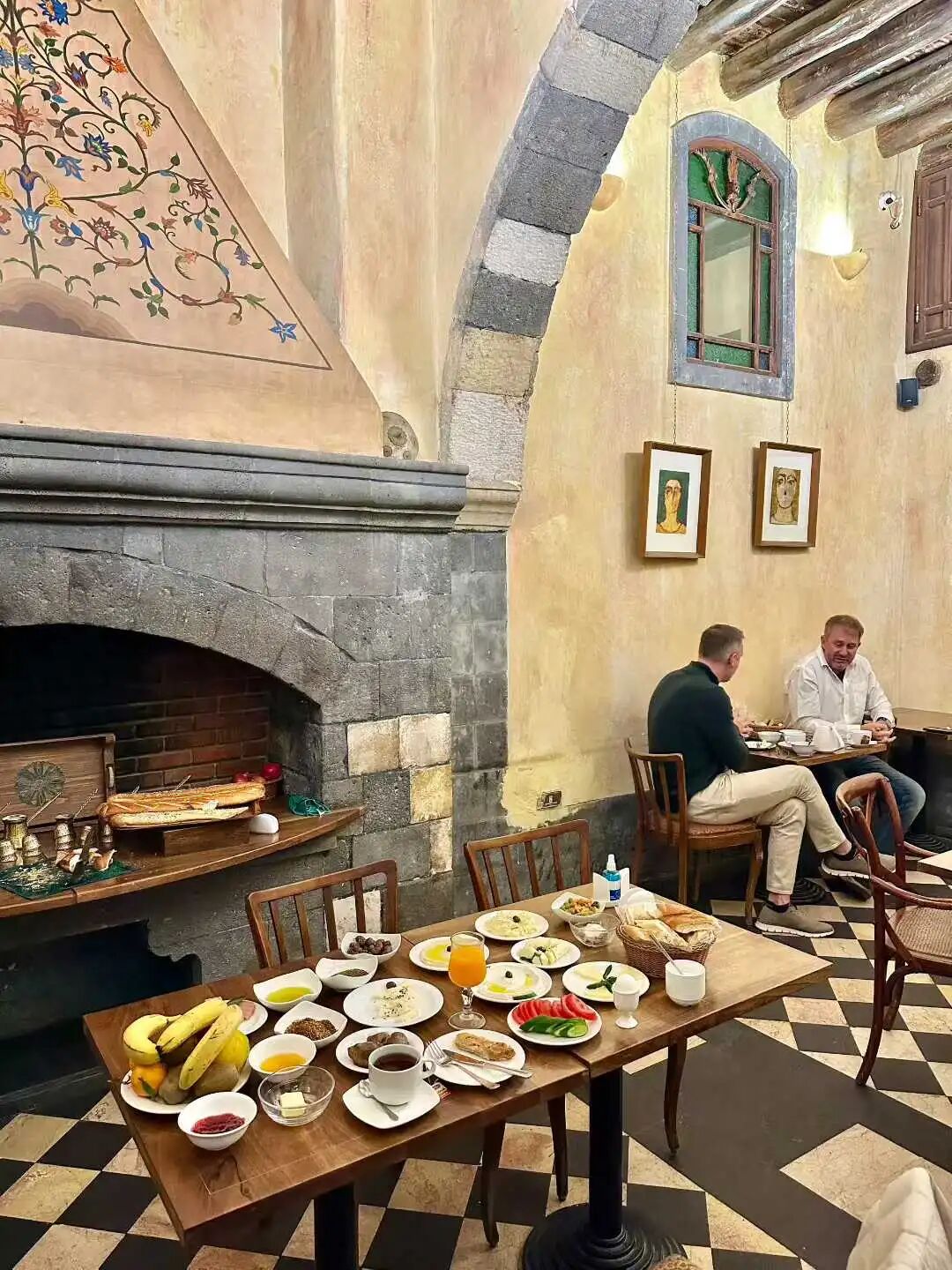
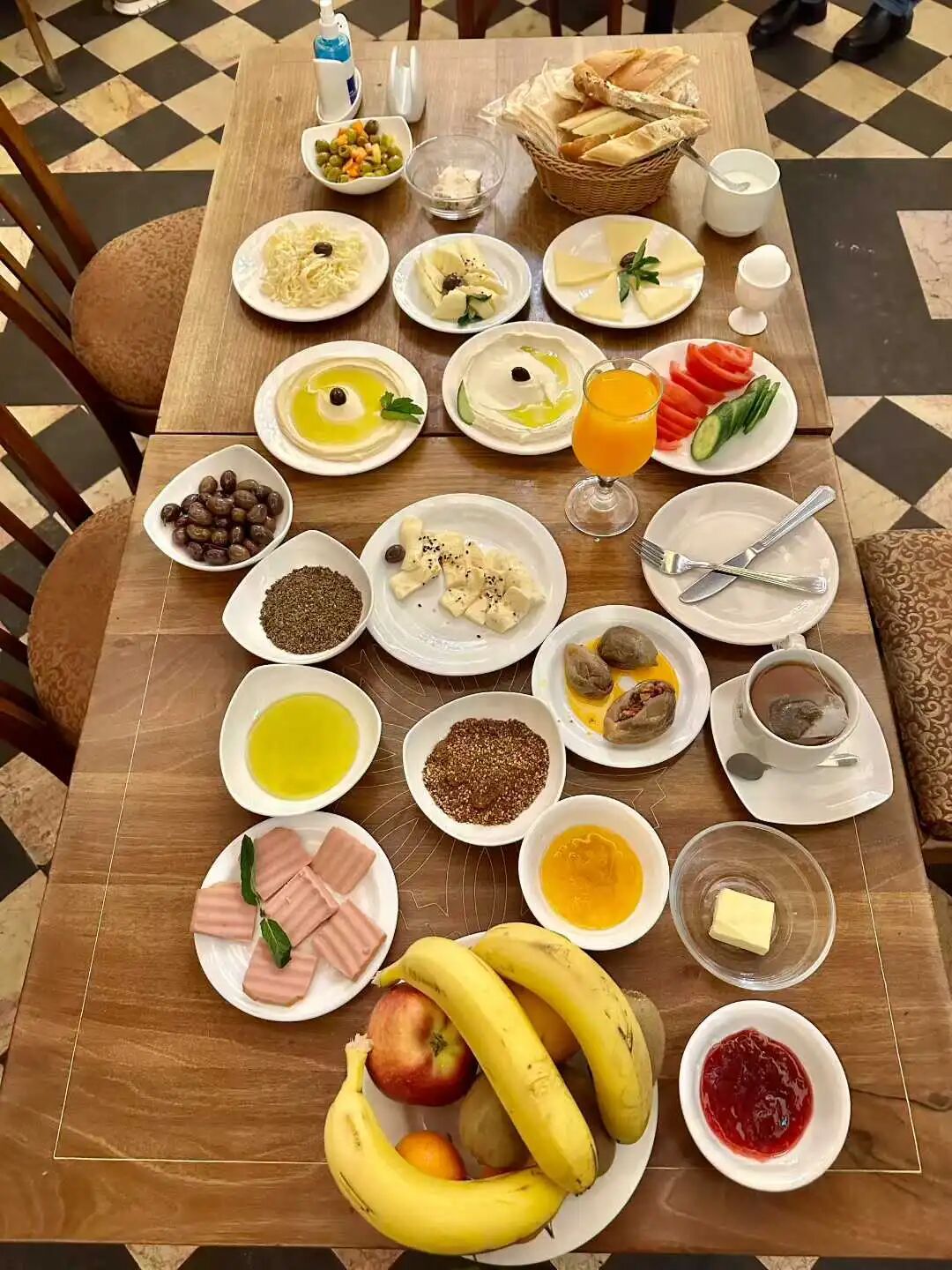
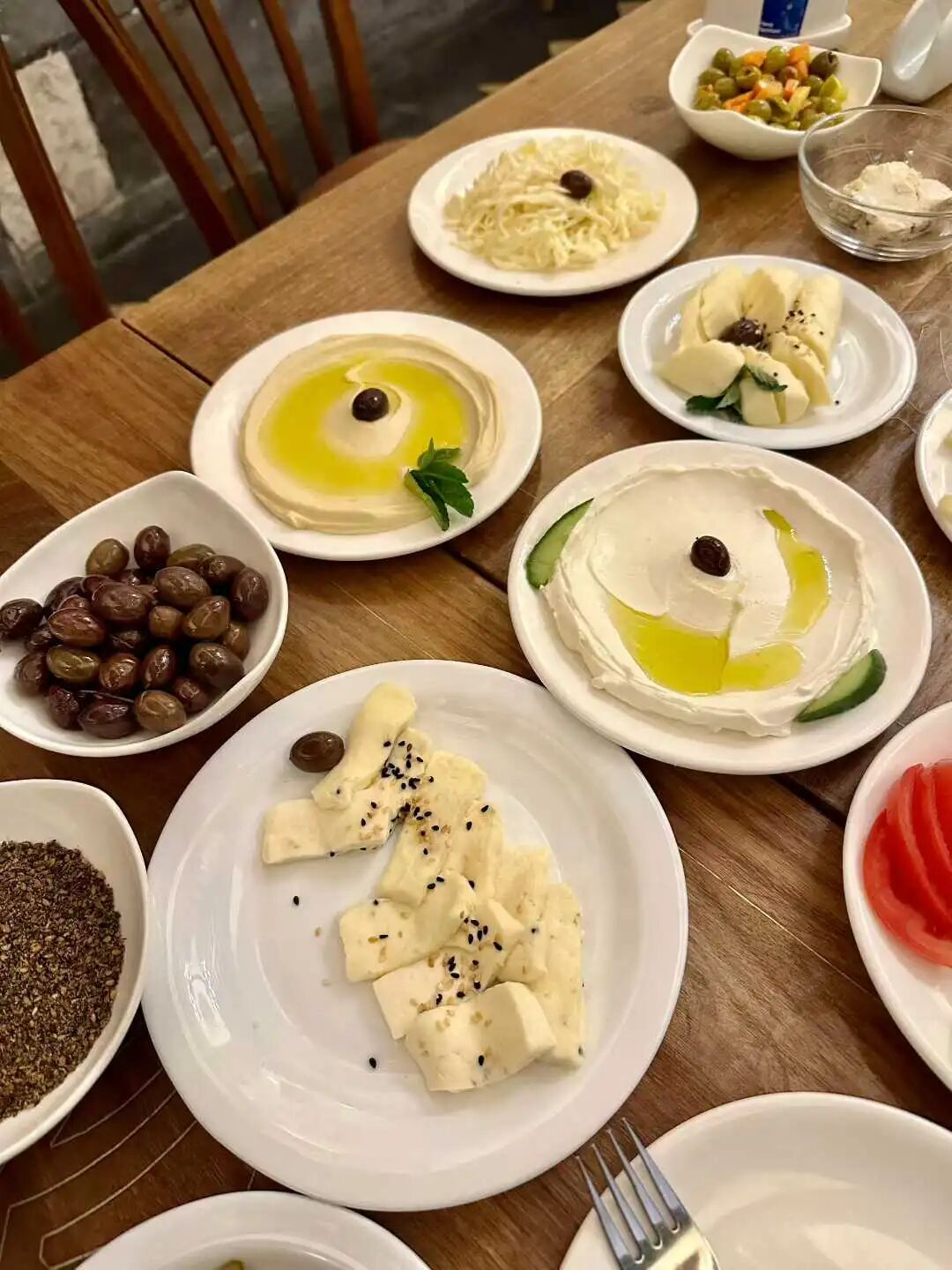
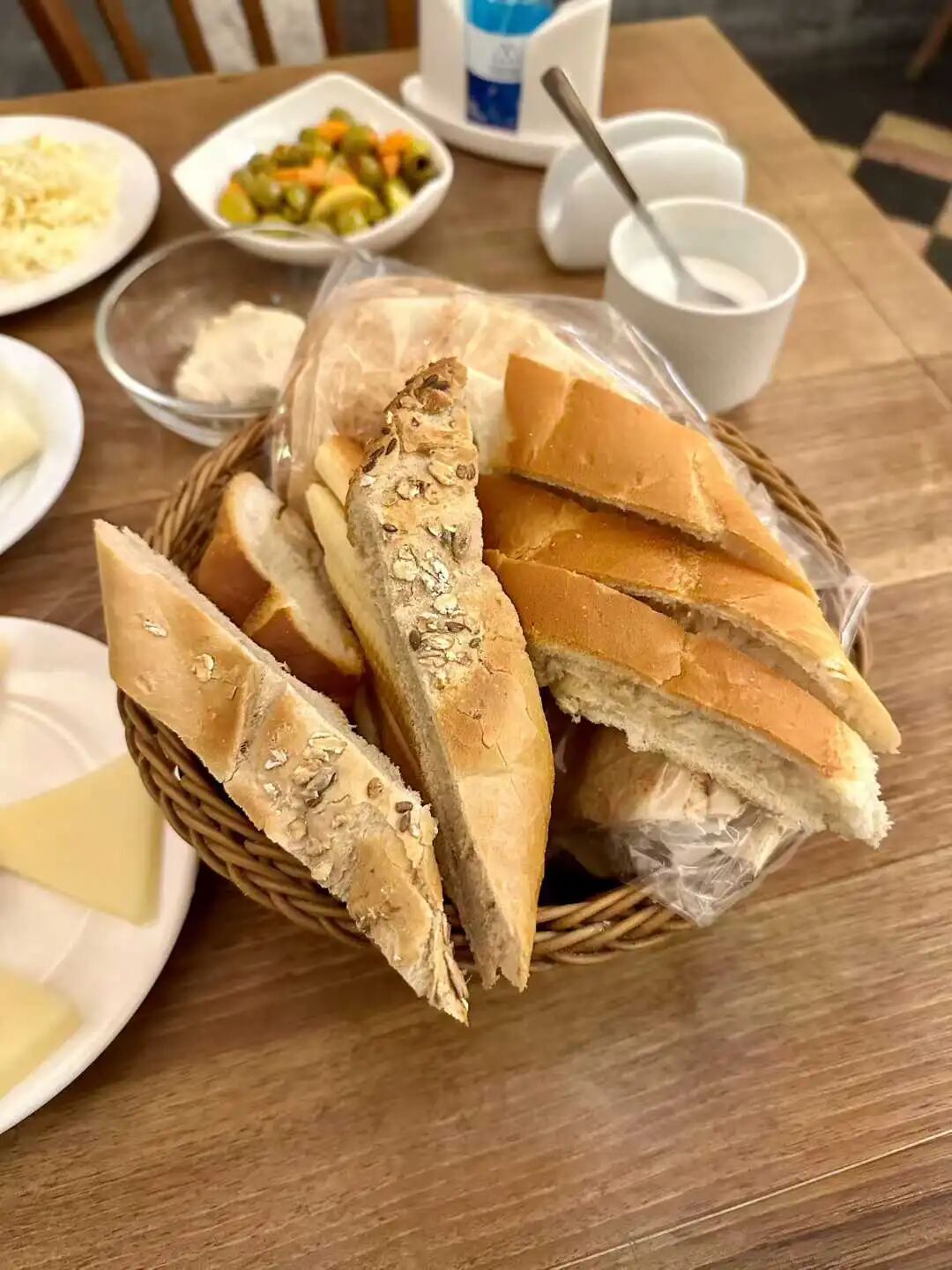
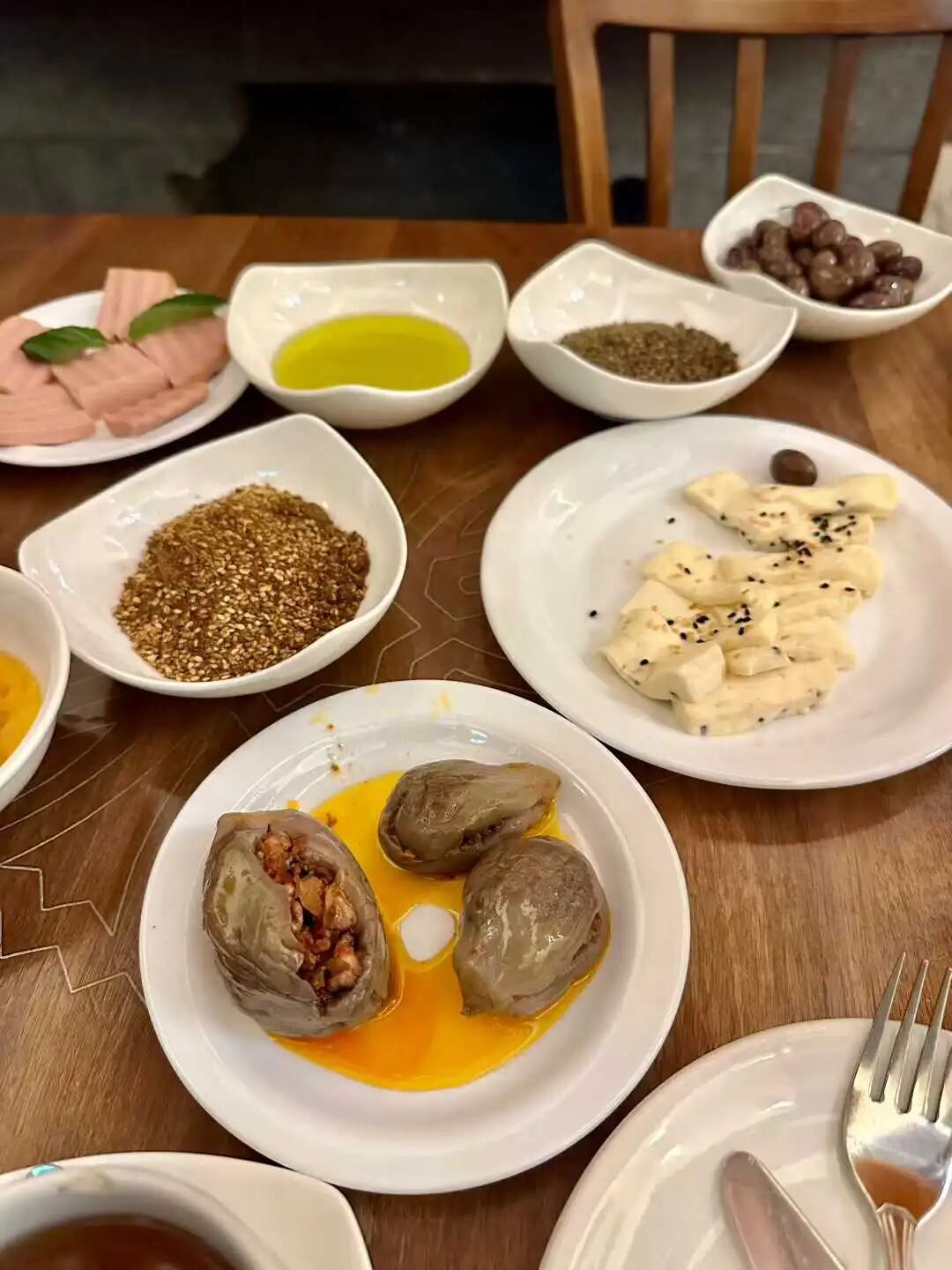
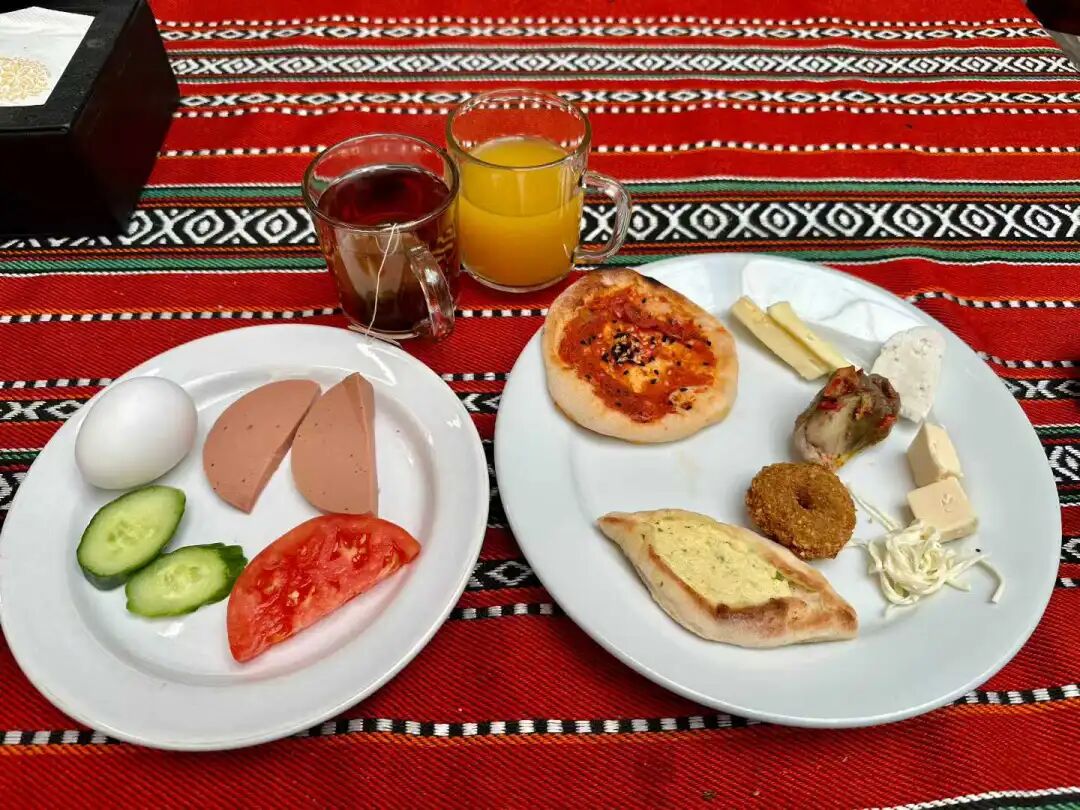
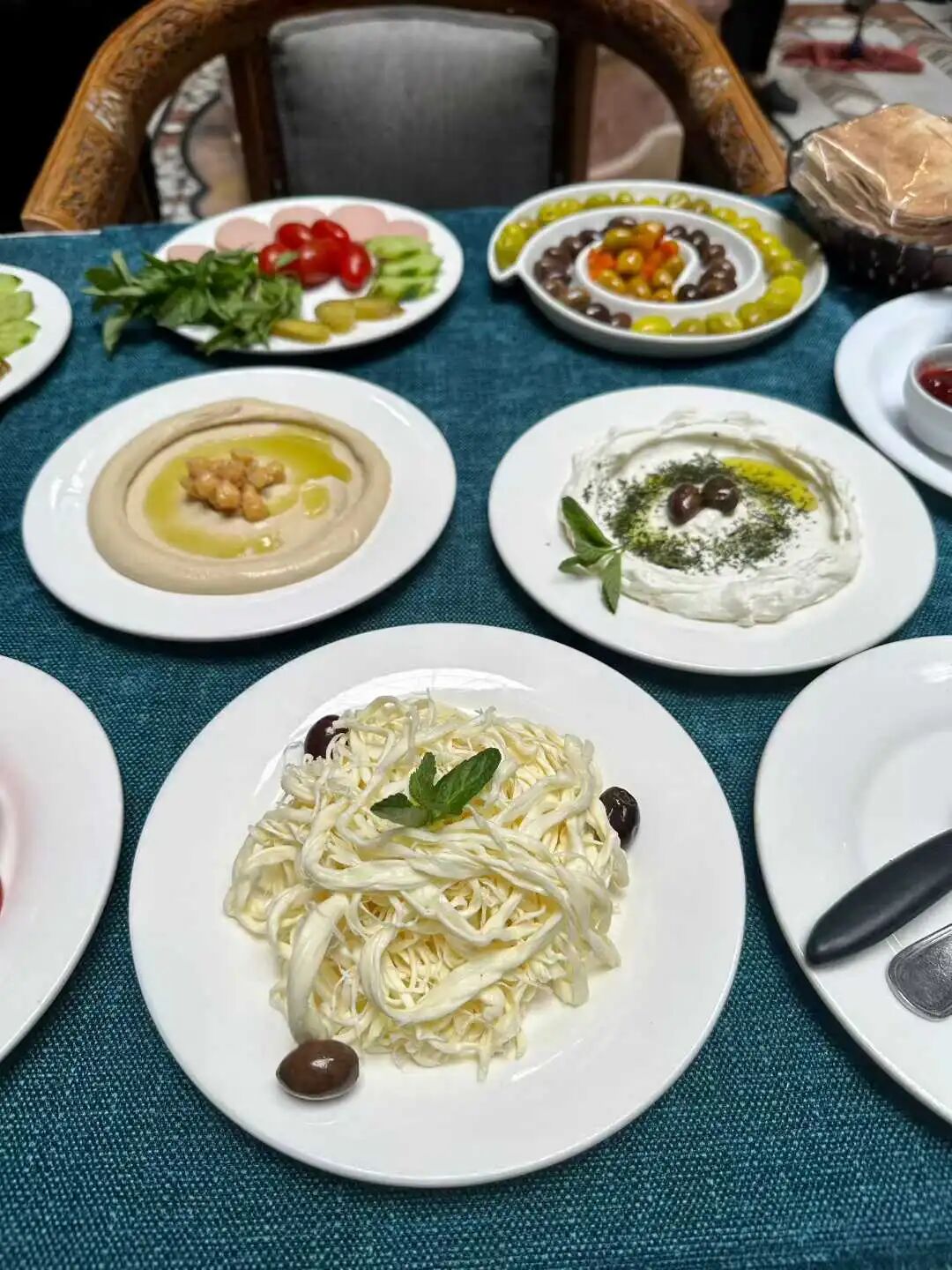
Breakfast at Dar Al Mamlouka is a typical Levantine cold platter served with bread and hot tea. They bring the full set even if you are eating alone. It mainly includes various cheeses, pickled olives, chickpea dip (hummus), jam, fresh cucumber and tomato, fruit juice, olive oil, and sausages. A special item is the pickled eggplant (makdous). These are miniature eggplants stuffed with walnuts, chili, garlic, olive oil, and salt. Syrians usually start pickling them in autumn to eat as an appetizer during winter. The powder on the table is the classic Levantine spice blend (za'atar). It is a mix of Syrian oregano, toasted sesame seeds, dried sumac, and thyme. It has an earthy taste with a hint of citrus and nuttiness, which is very unique.
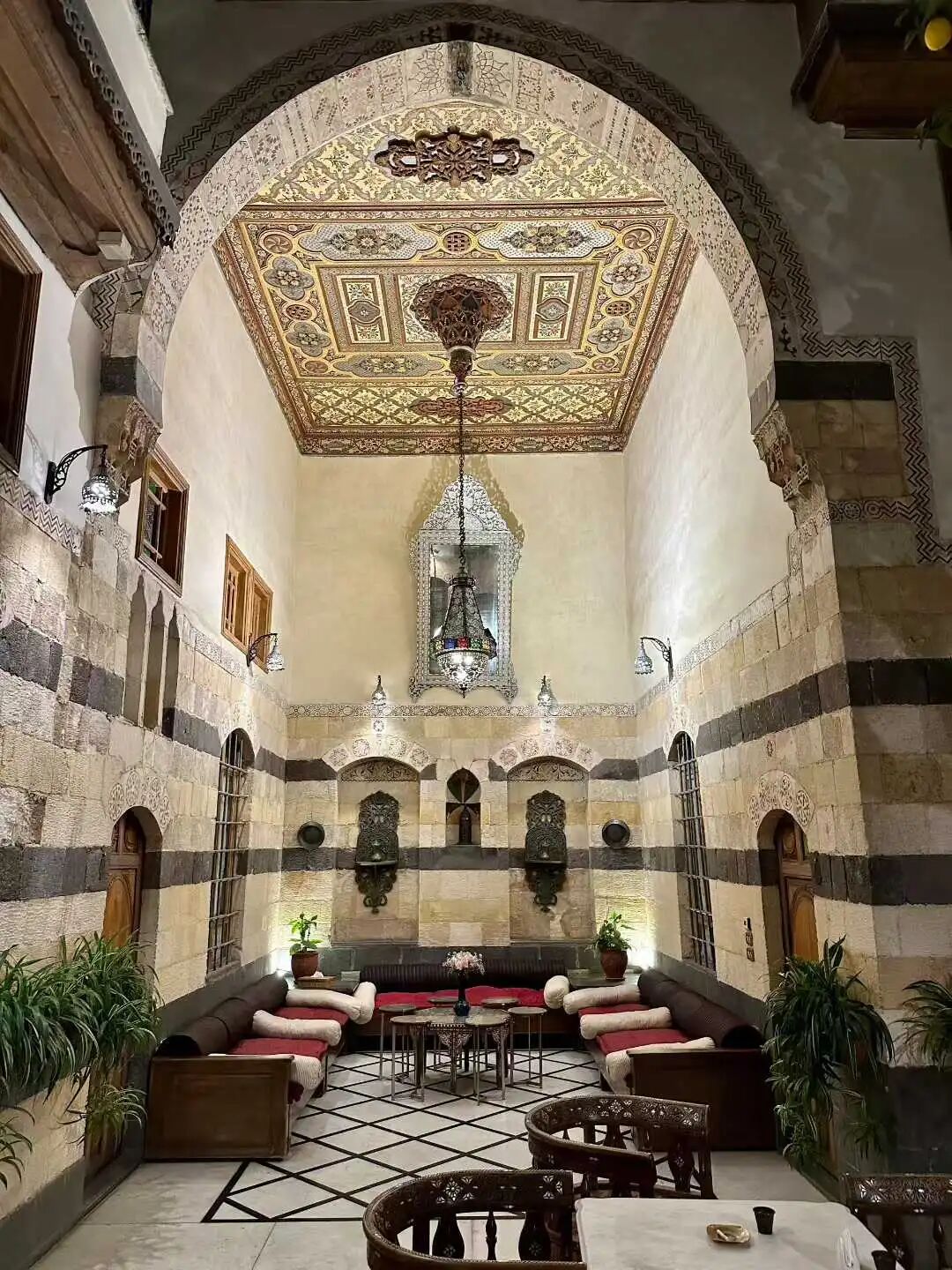
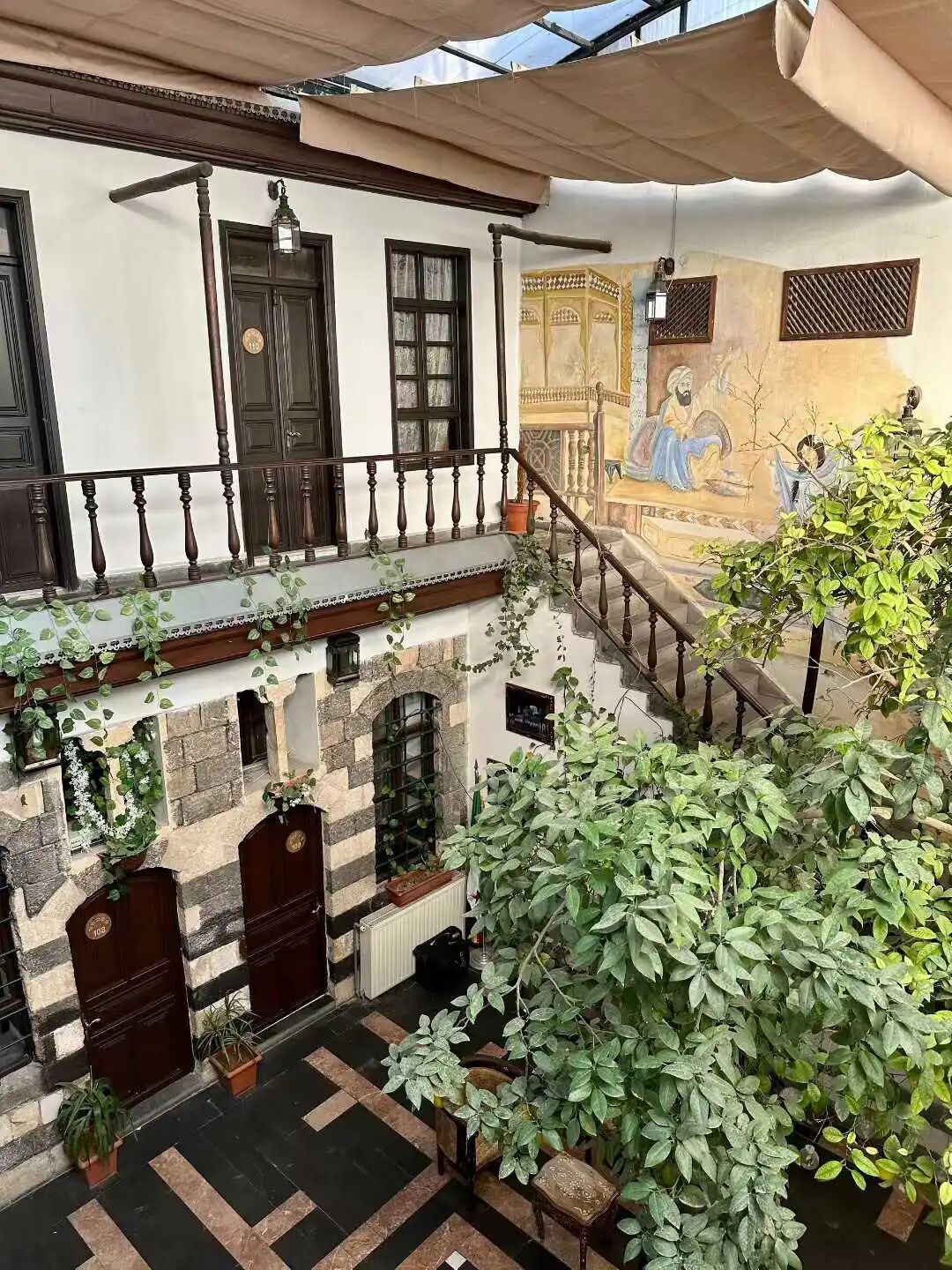
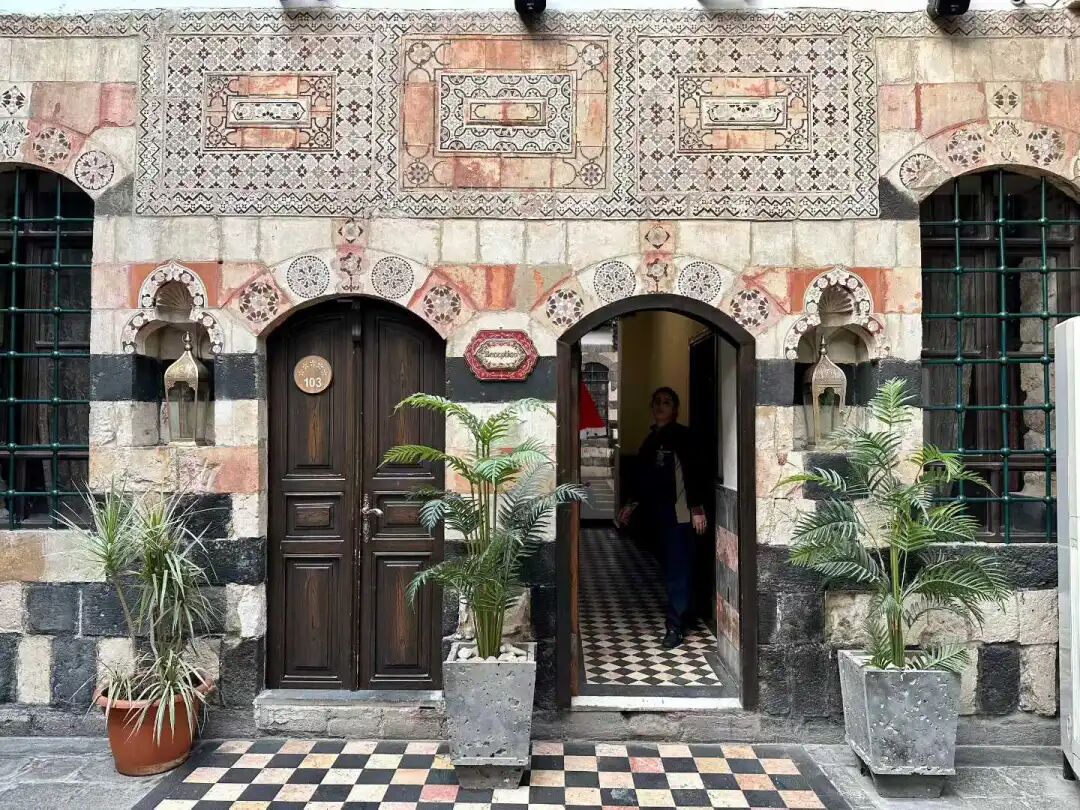
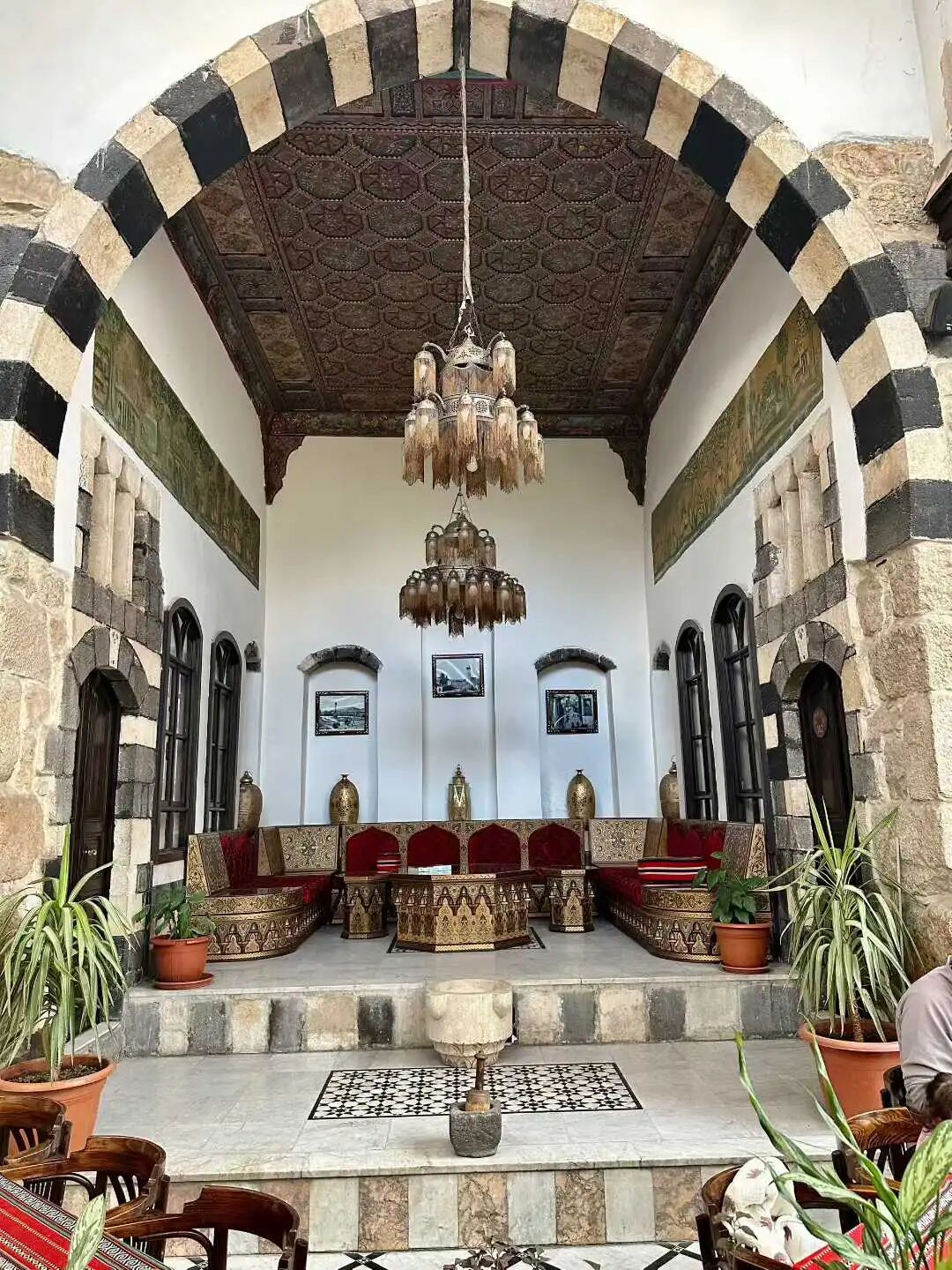
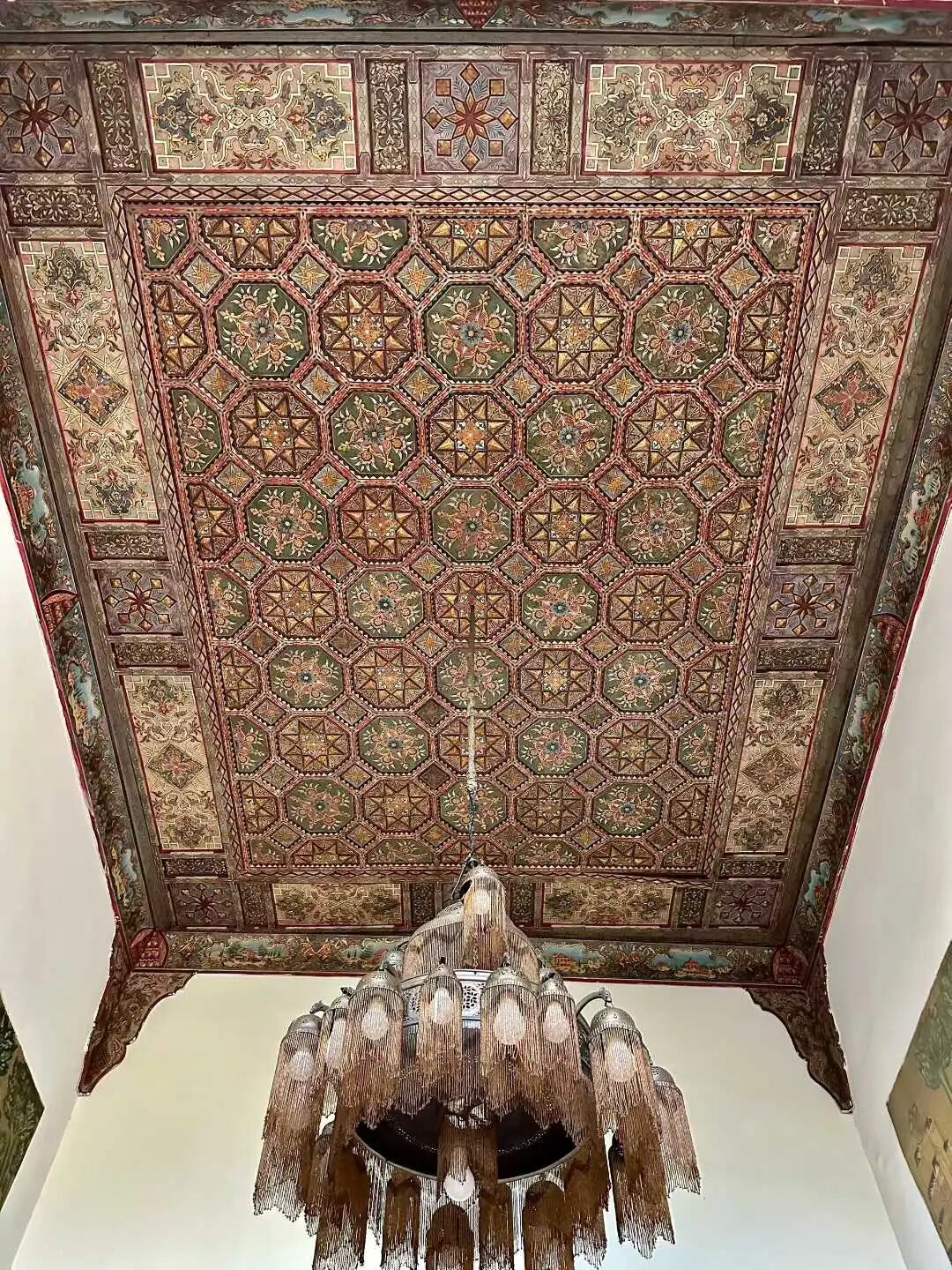
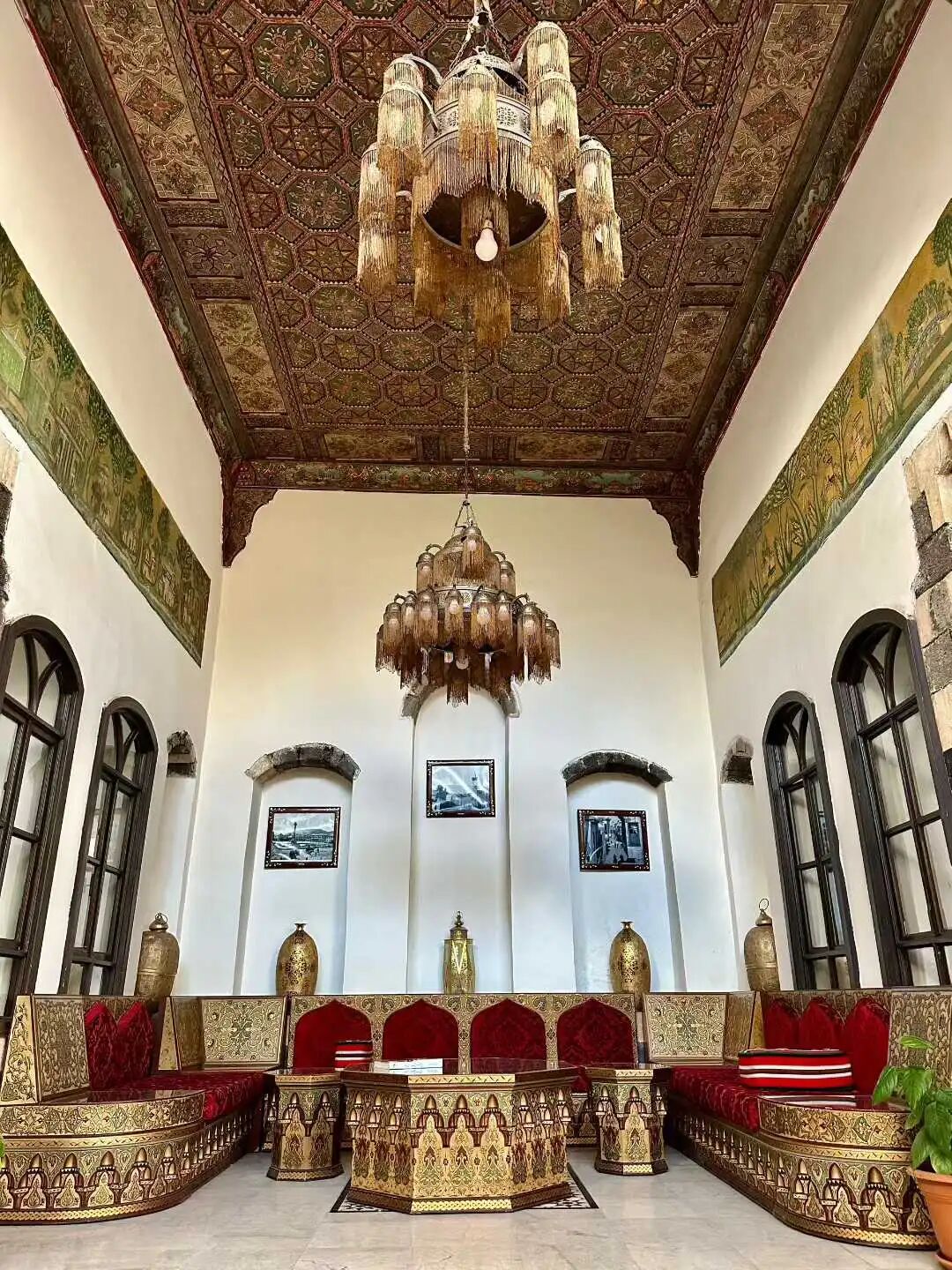
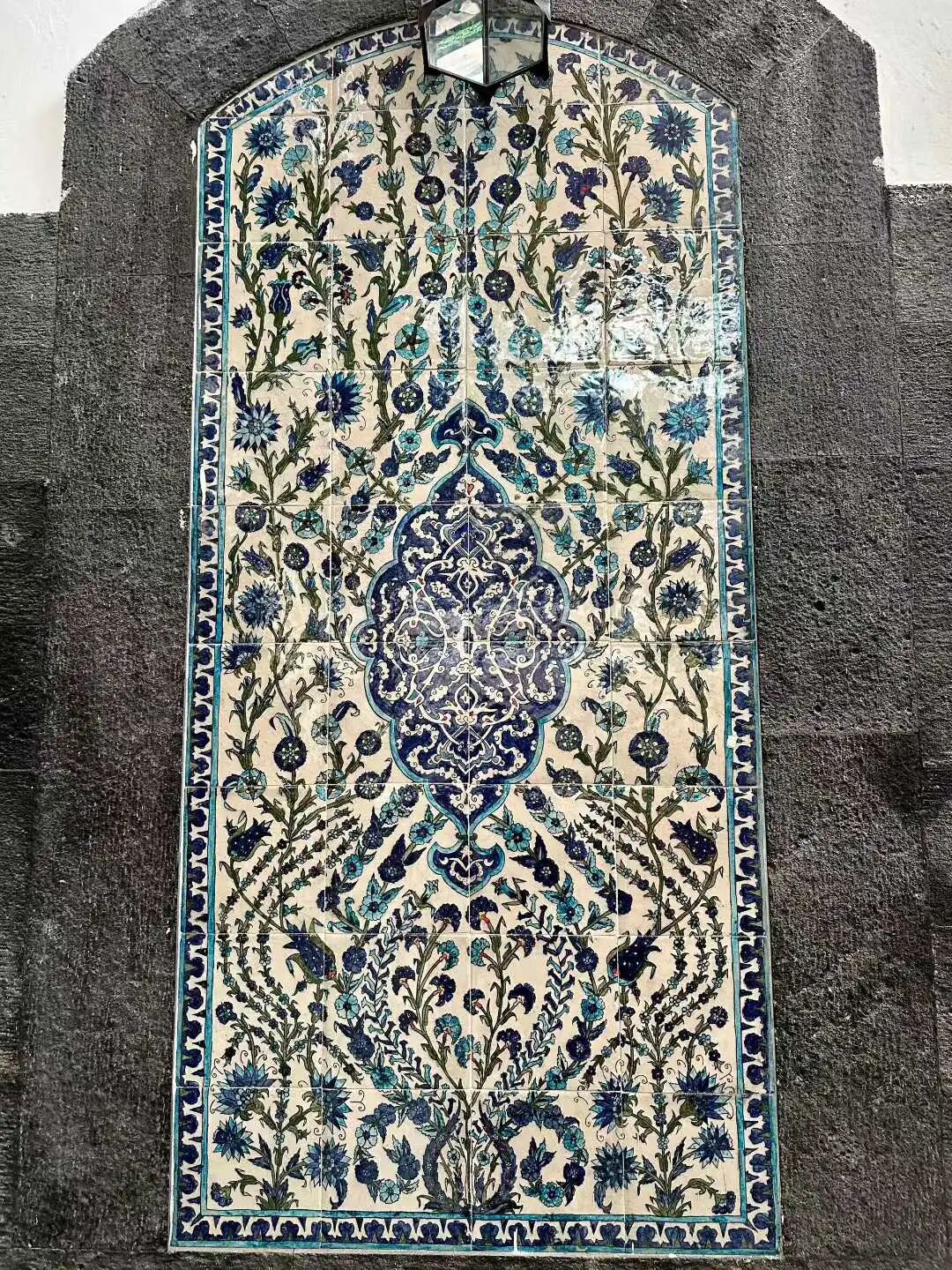
Dar Al Yasmin Hotel is located in the heart of the Christian Quarter of Bab Touma in the Old City of Damascus. The hotel is tucked away in a small alley, and it feels like a hidden world once you step inside. The hotel is made up of three 18th-century Ottoman mansions—two large and one small. It features a central courtyard, a fountain, a reception area (liwan), hand-painted wooden ceilings, traditional brick and stone structures, and carved doors and windows. The mansion changed hands many times after the 19th century until the Jasmine Hotels group took it over in 2005. They restored and opened it, making it a classic example of revitalizing a traditional Middle Eastern residence.
The single room was listed at 140 dollars, but I bargained it down to 125 dollars. The small alley at the entrance can get flooded when it rains, but overall it is a great value.
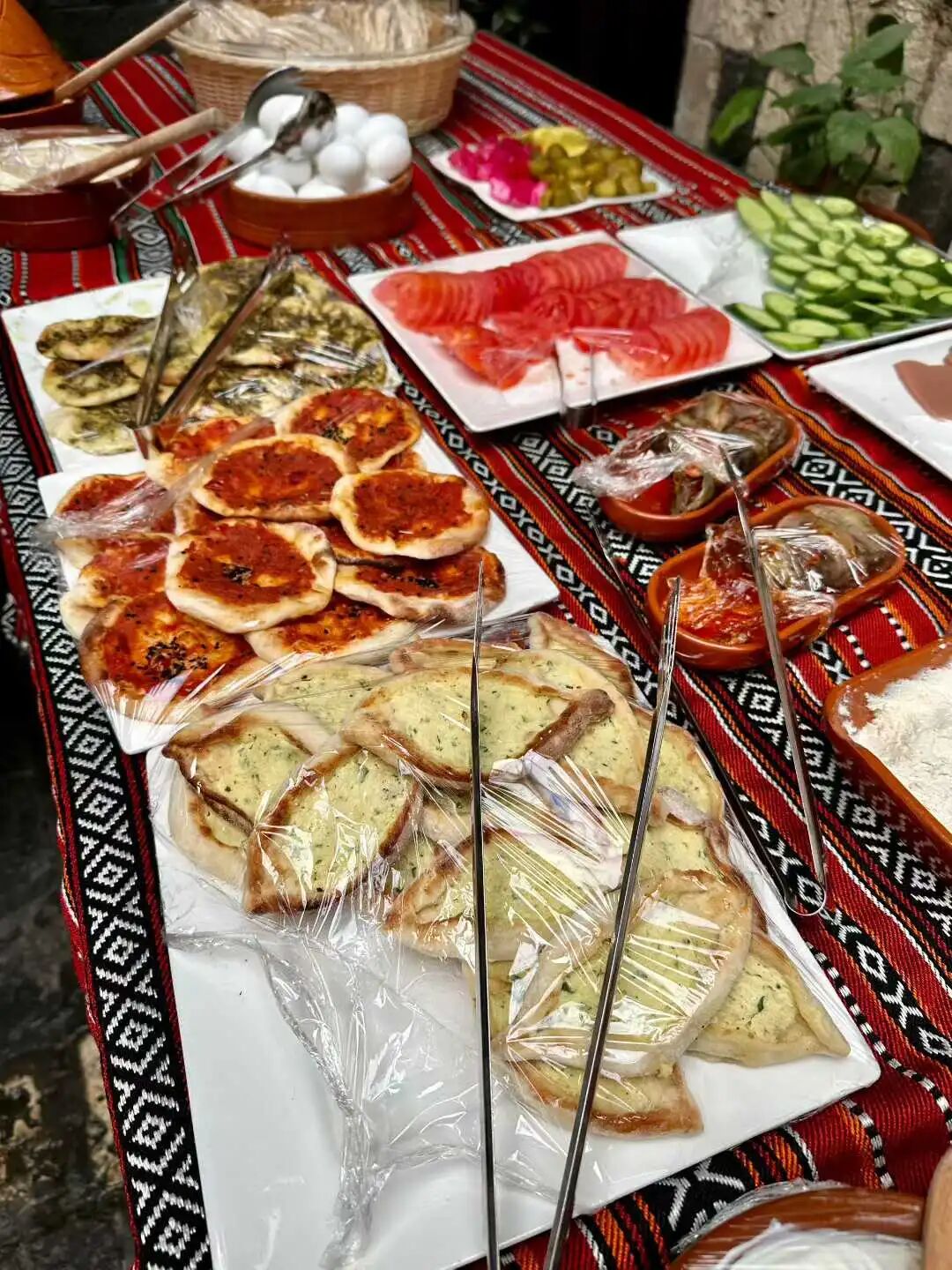
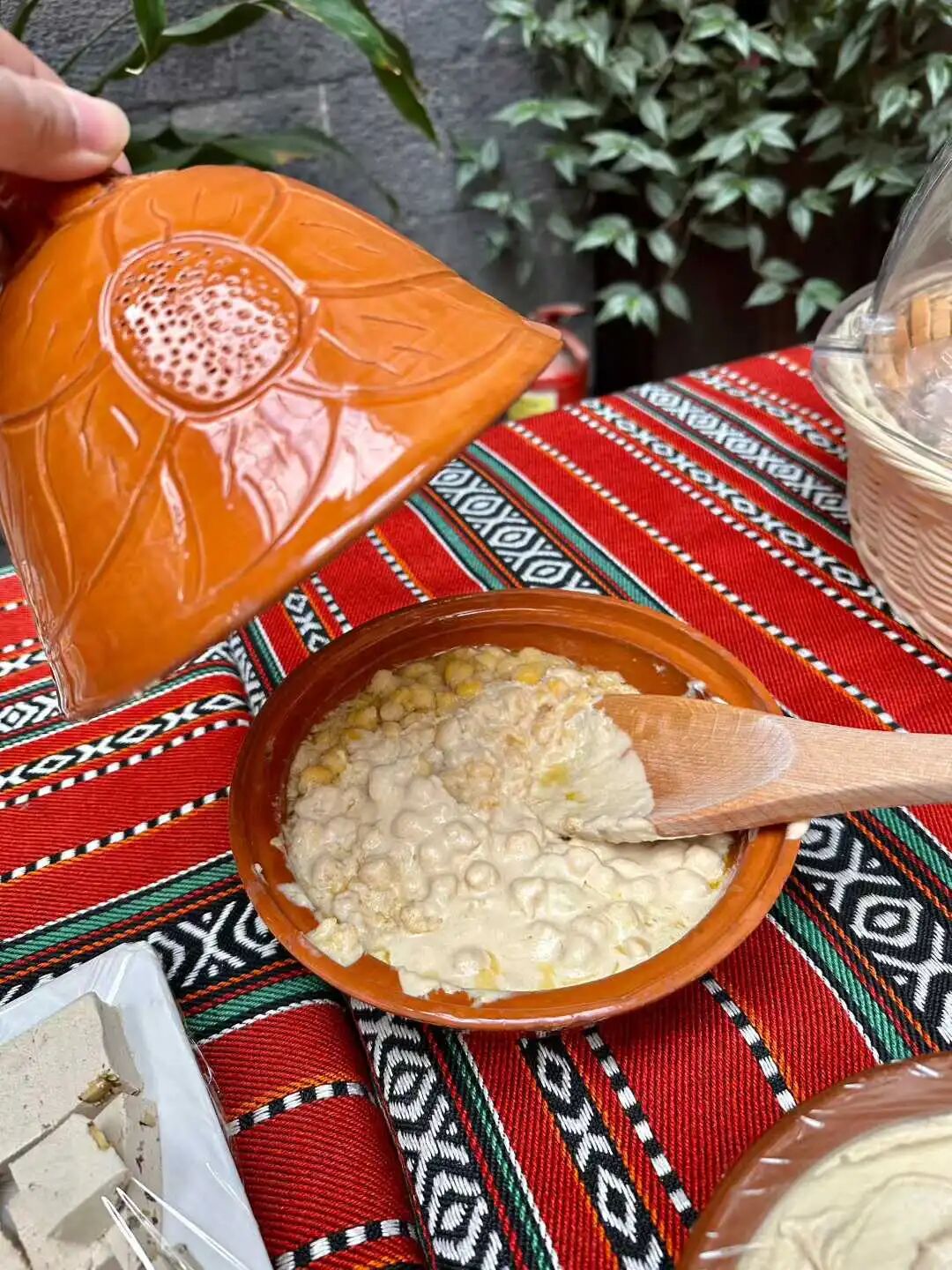
For breakfast at Dar Al Yasmin Hotel, the chickpea and sesame paste dip (hummus musabaha) is worth trying. Musabaha means swimming, as if the chickpeas are swimming in the sesame paste.
They also serve flatbread (manakish) in three varieties: with spice blend (za'atar), tomato, or cheese. Manakish originated from the traditional bread of the ancient Phoenicians and was added to the UNESCO Intangible Cultural Heritage list in 2023.
Beit Zaman Hotel is in the Christian Quarter of Bab Touma in the Old City of Damascus, right on the ancient Roman street (Via Recta). Their single room was listed at 150 dollars, but I bargained it down to 135 dollars.
The hotel opened in 2008 after five years of connecting and restoring three 17th-century Ottoman mansions. It kept original features like stone carvings, wood carvings, mosaics, and fountains. The wooden Ajami-style ceilings and the traditional courtyard layout are the most impressive parts.
The buffet breakfast at Beit Zaman Hotel includes sausages, cheese, bread, olives, and chickpea dip (hummus). The red dipping sauce is called Muhammara. It is a Syrian appetizer made from walnuts, red bell peppers, pomegranate molasses, and breadcrumbs.
Albal Hotel is near the Bab Touma gate in the Old City of Damascus. It is likely the most convenient for transportation. A single room costs 80 dollars, which is the lowest price, but the power is weak and it is almost impossible to charge a phone. Choose carefully.
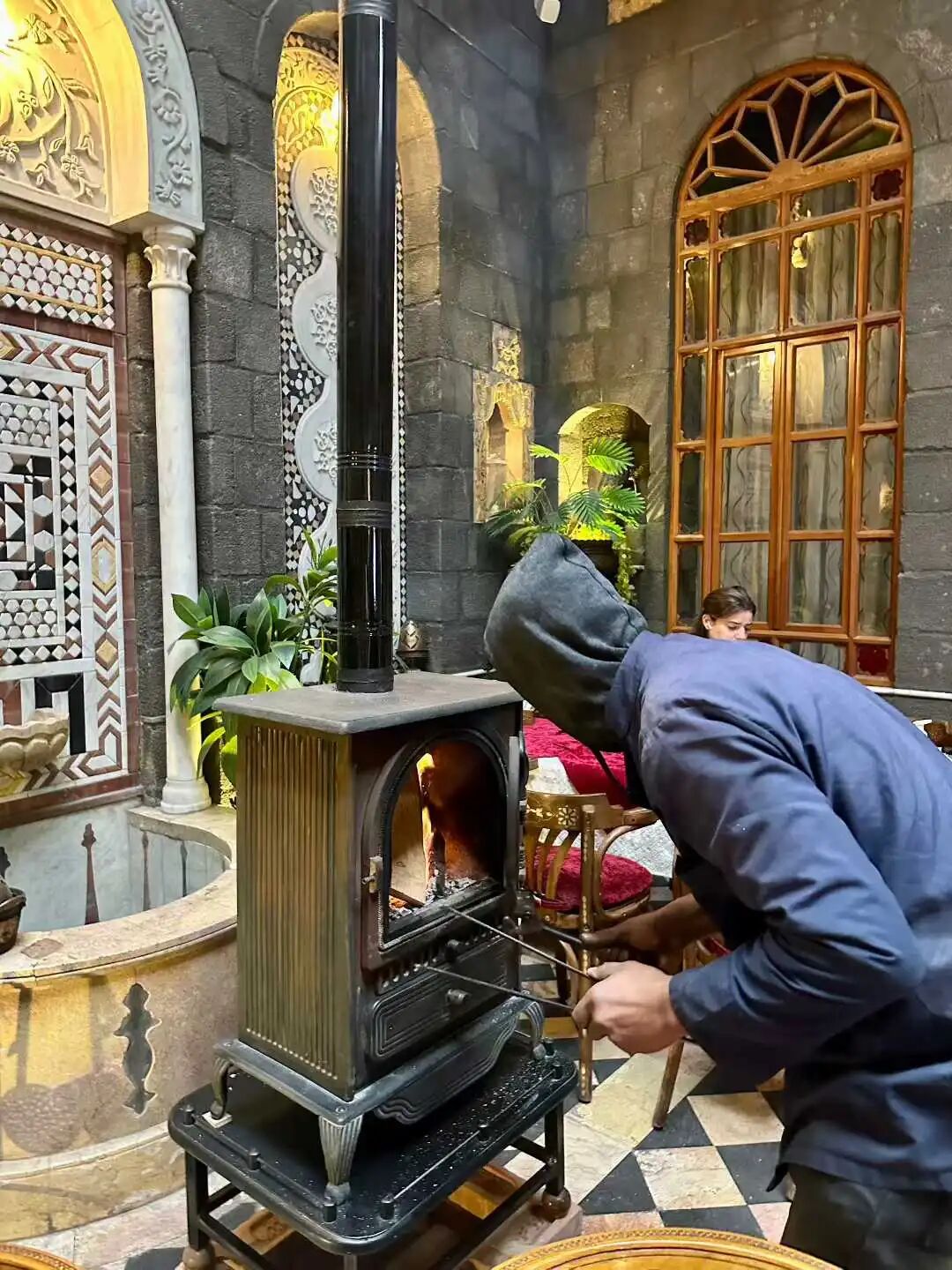
Albal Hotel is a converted Ottoman mansion rebuilt after the 1759 Damascus earthquake. It has a courtyard fountain and wood carvings. The breakfast is quite good, and they light a stove in the courtyard during winter.
Al Shahbandar Palace Hotel is on the west side of the Christian Quarter near Bab Touma in the Old City of Damascus, right on the busy Al Qemaryeh market street.
The hotel is inside an Ottoman noble mansion built in the 16th century. The Shahbandar family, a famous modern political family in Damascus, lived here for a long time. The famous nationalist leader Abdul Rahman Shahbandar came from this family. The Shahbandar family renovated the mansion on a large scale in the early 20th century and used it as a place to host guests for a long time. In 2007, it was converted into a historic hotel after adding private bathrooms, air conditioning, and electrical systems, while strictly preserving the facade, courtyard, and historical components.
Today, the mansion's courtyard is open as a cafe. You can drink coffee there, so you do not have to stay at the hotel to experience this Ottoman mansion.
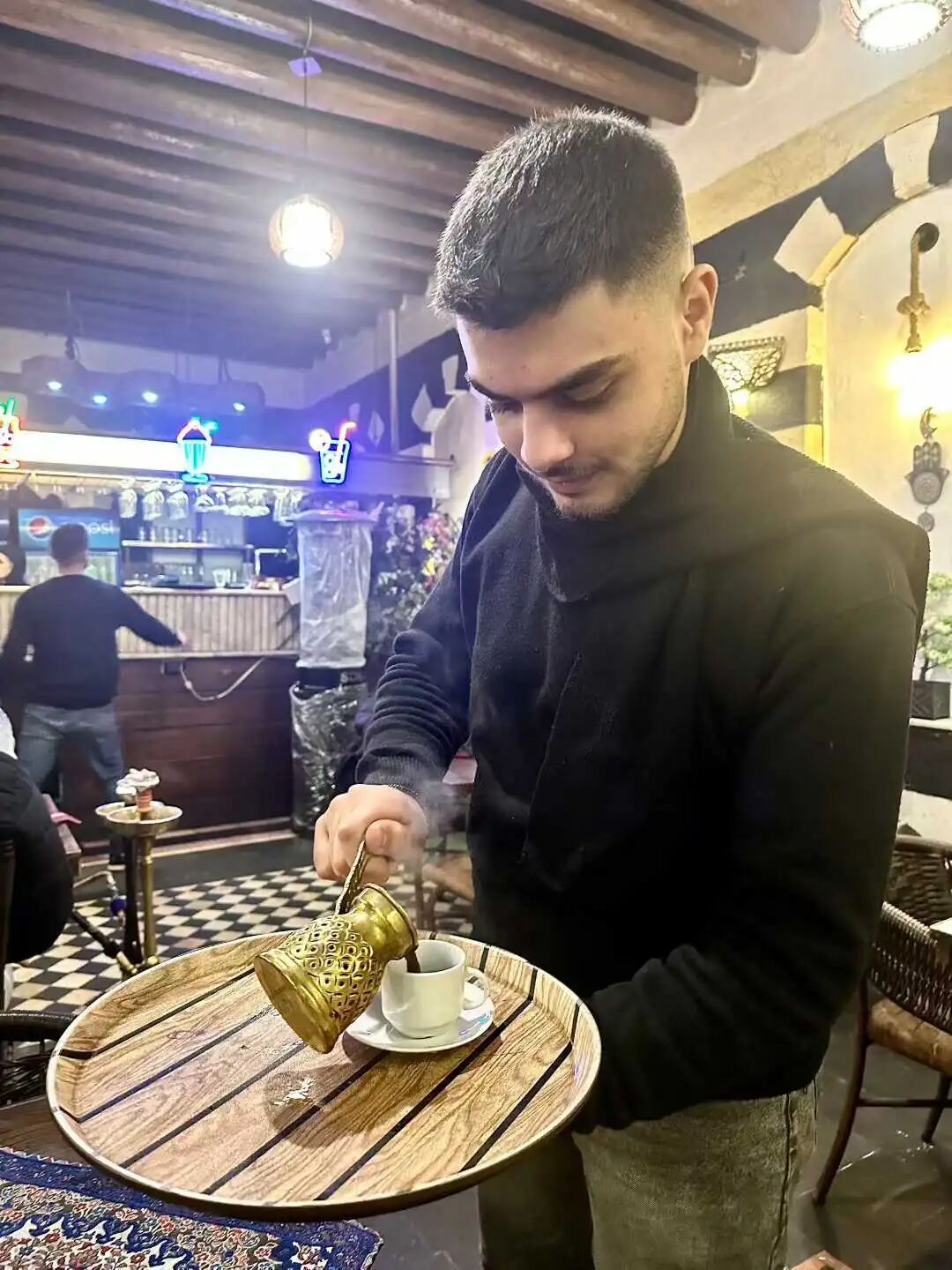
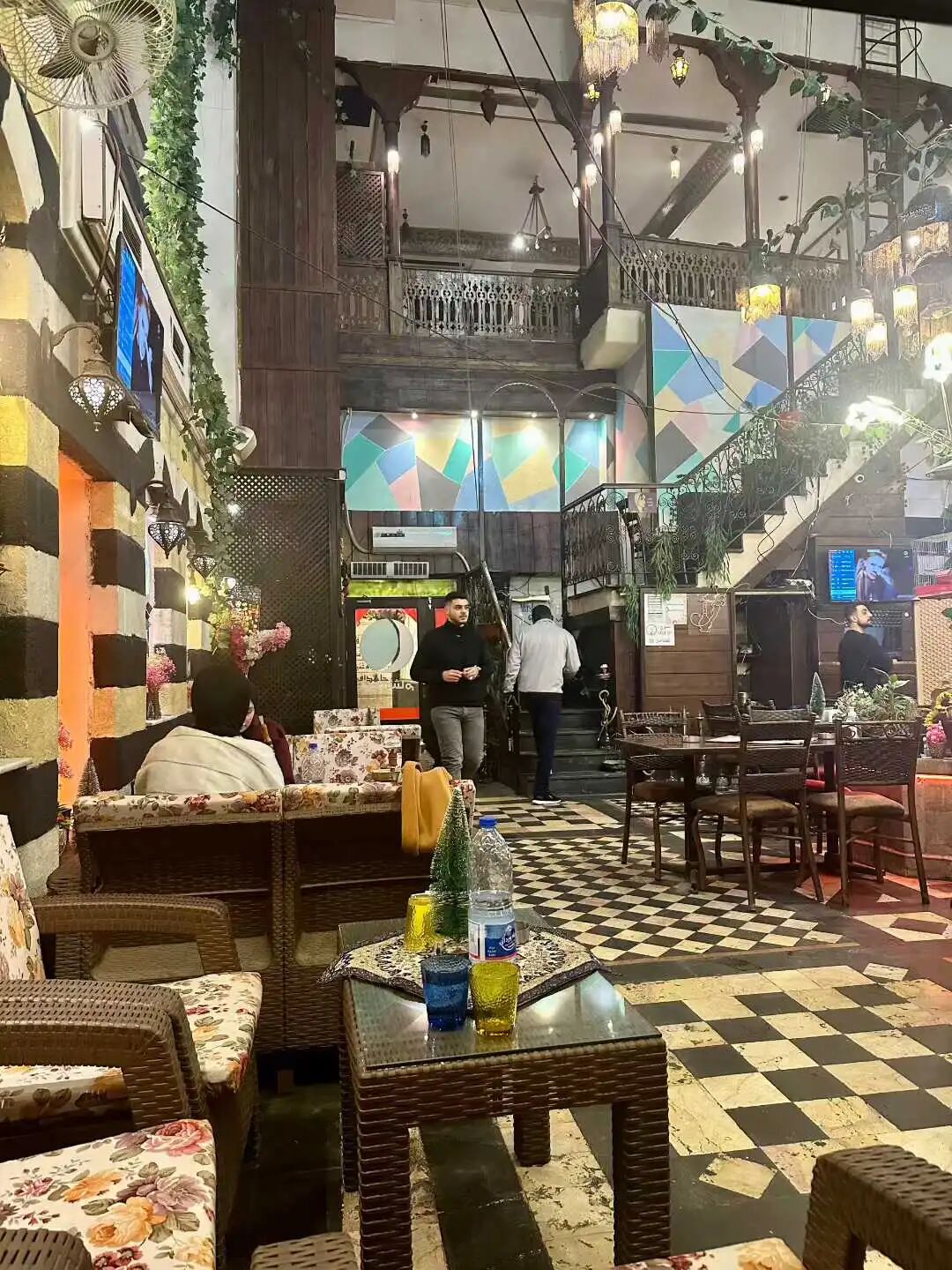
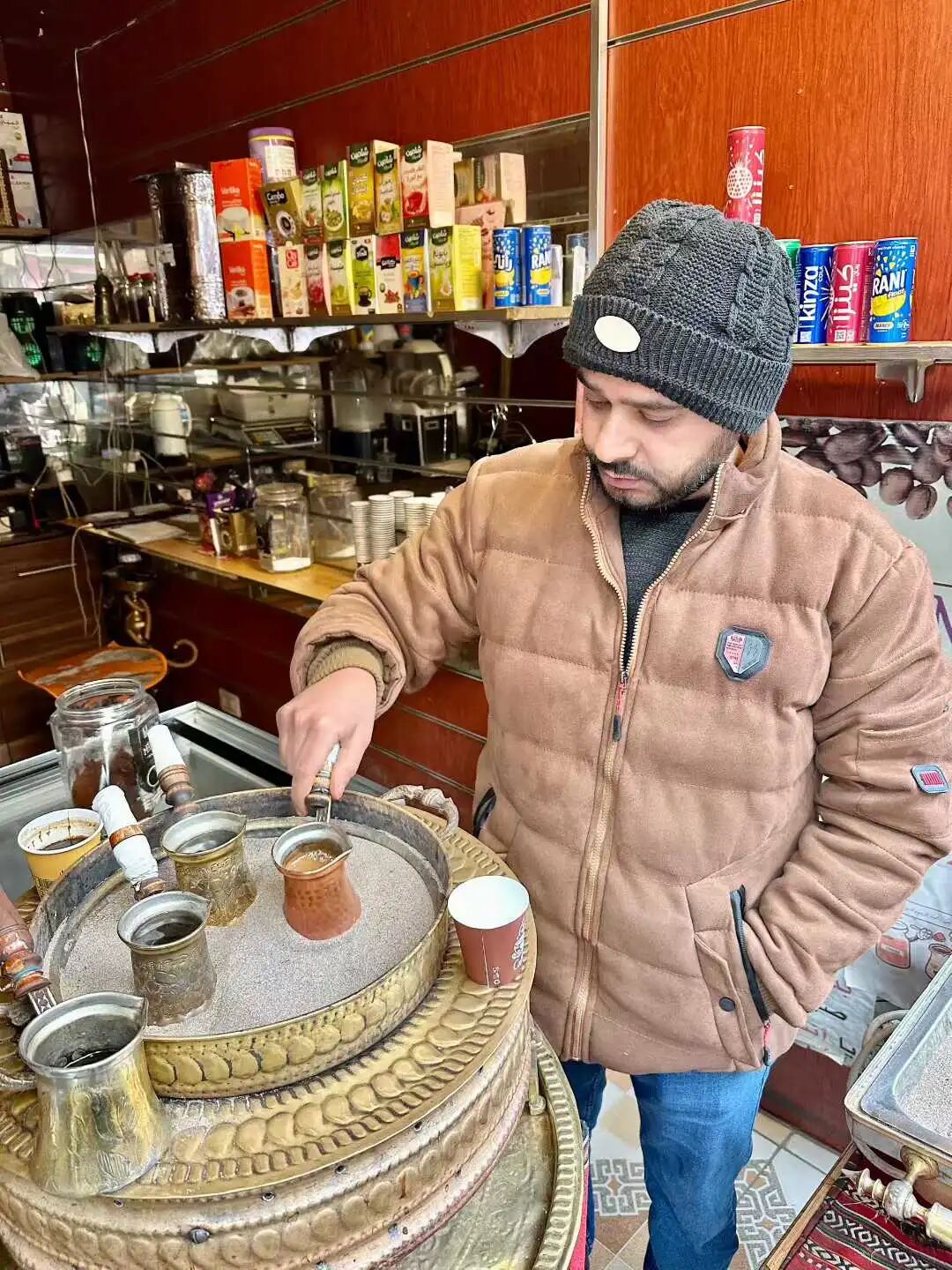
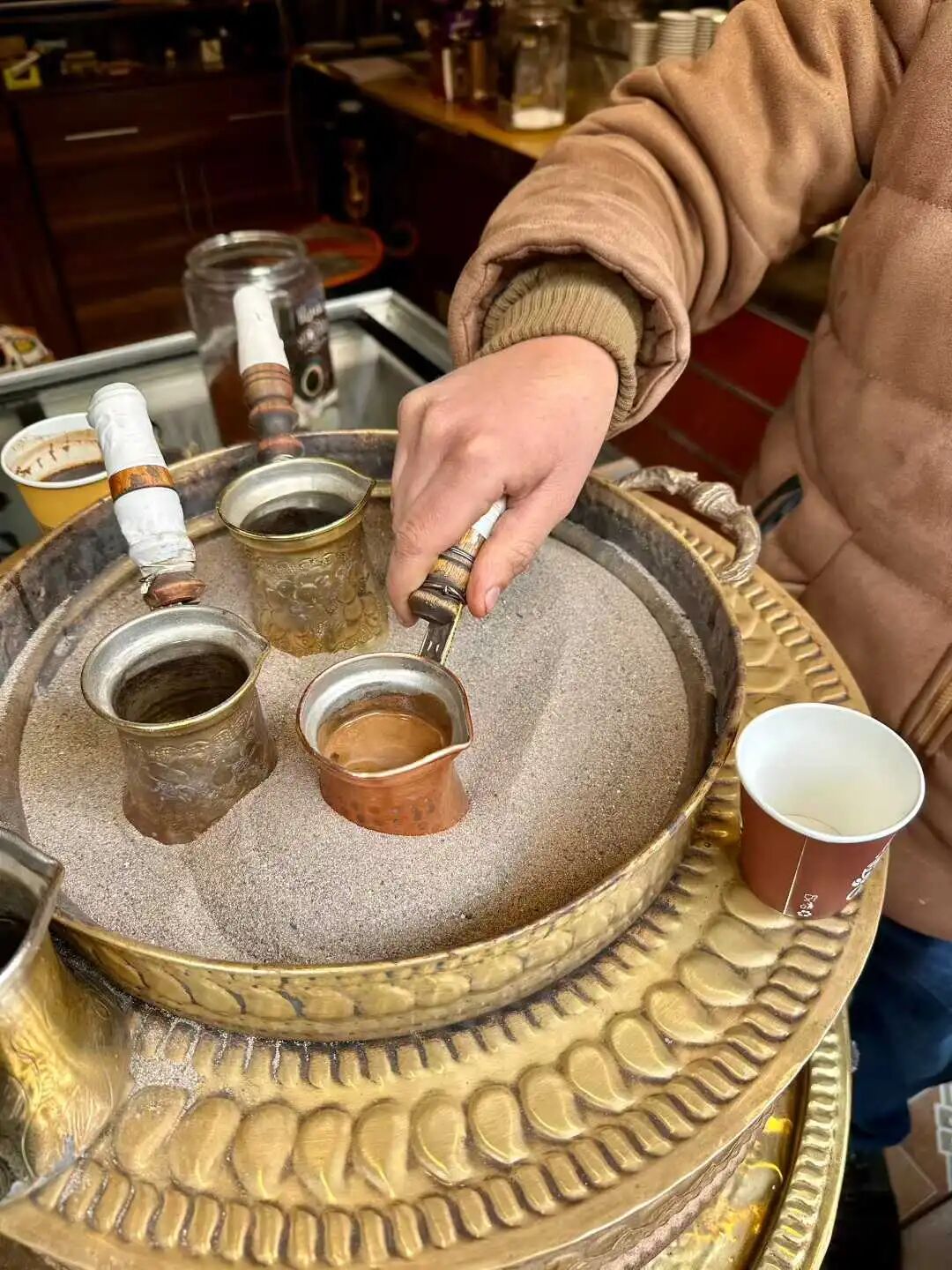
Besides historic hotels, many restaurants and cafes in the Old City of Damascus are also converted from Ottoman mansions. The first place I recommend had just opened when I visited, so you cannot even find it online. It is located on the road after entering the Old City of Damascus from the Bab Touma gate and turning west into Qanayet Al-Hatab street. They only had tea and coffee when I went, but the environment was quite nice. I ordered a cup of sand-brewed coffee. The owner speaks English. He was very enthusiastic and invited me to the second floor to see the old building.
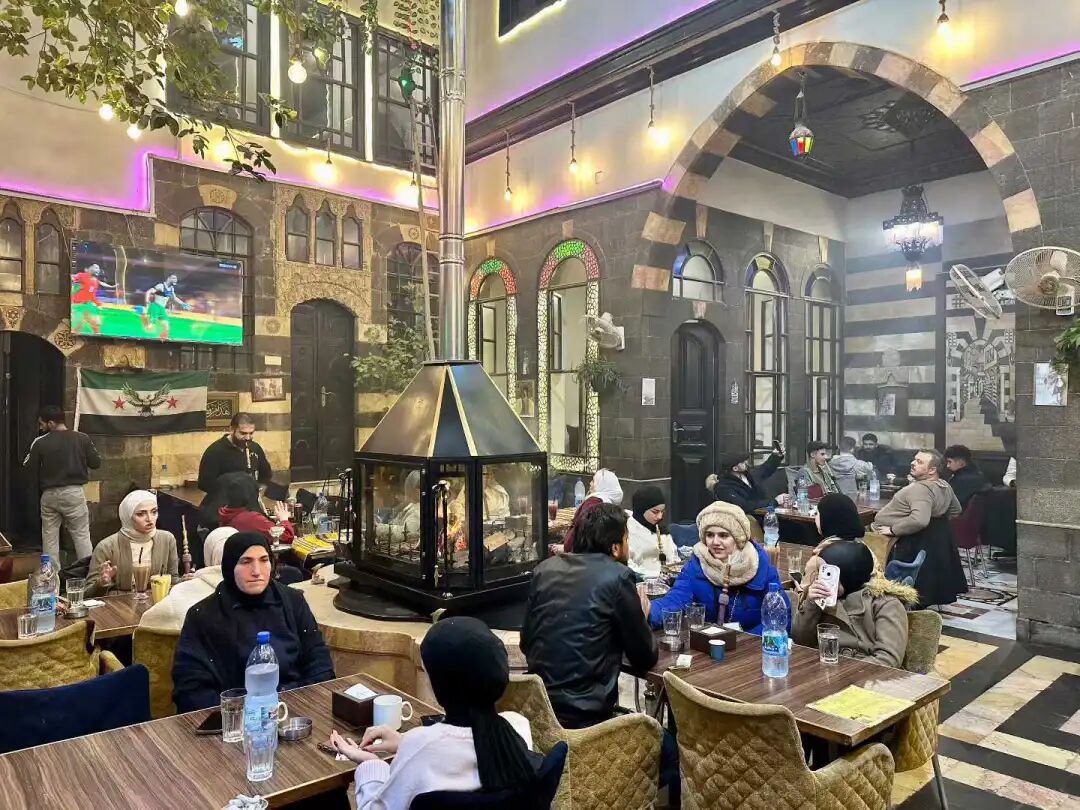
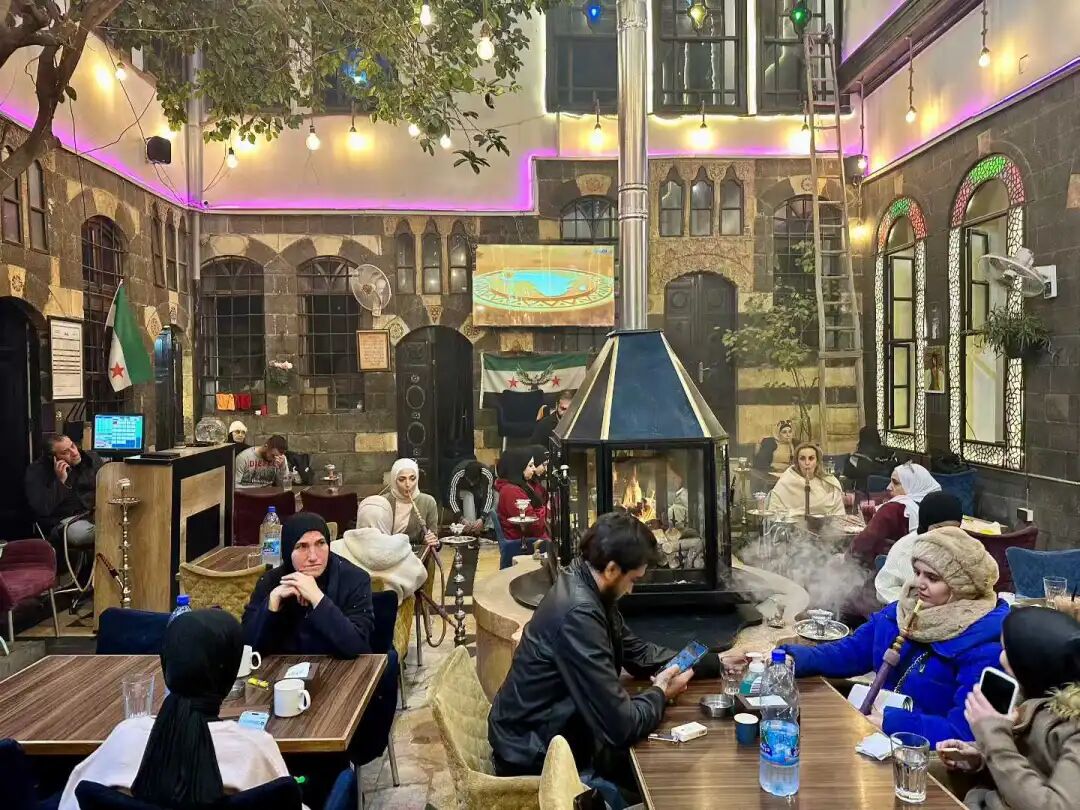
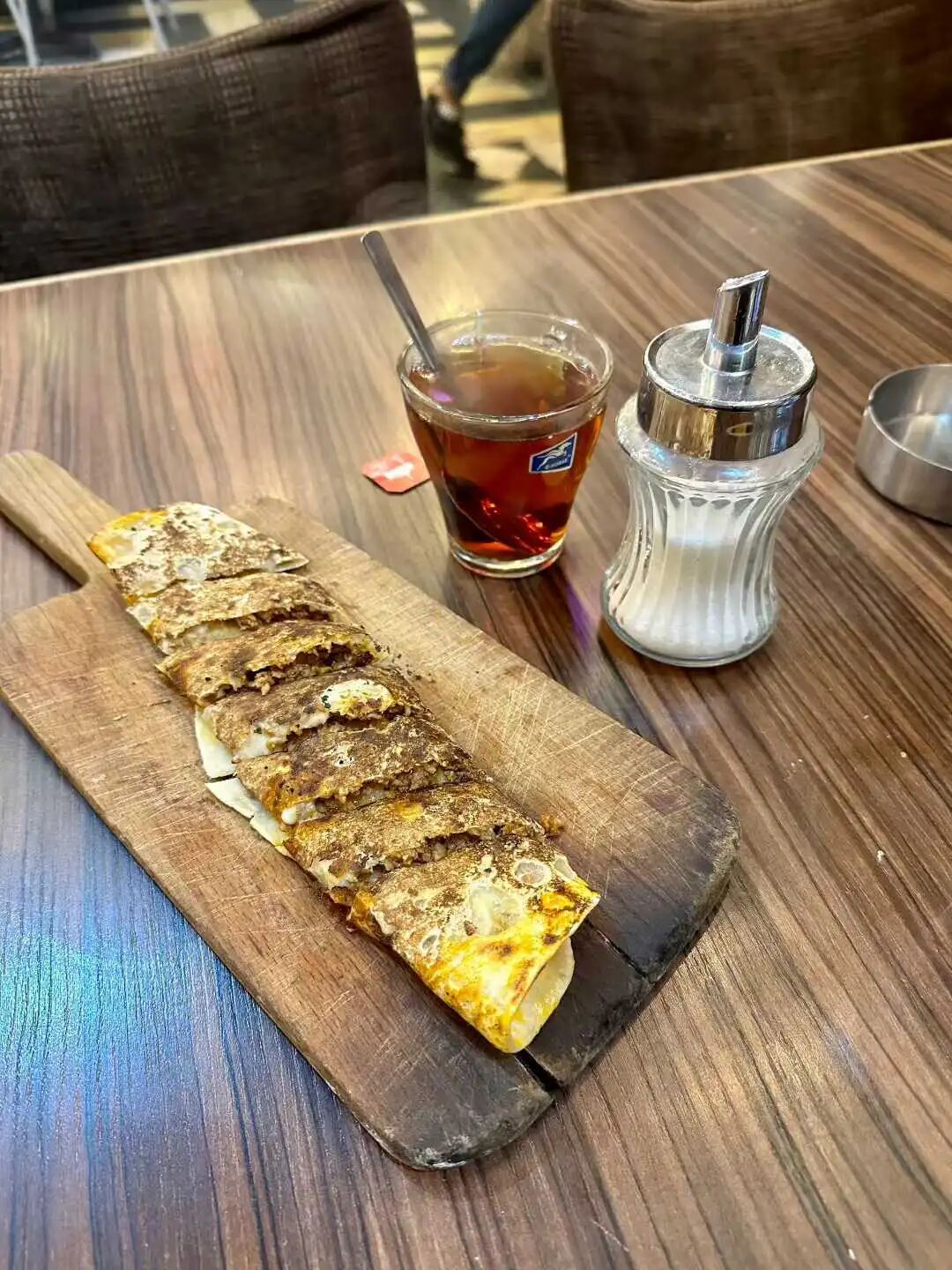
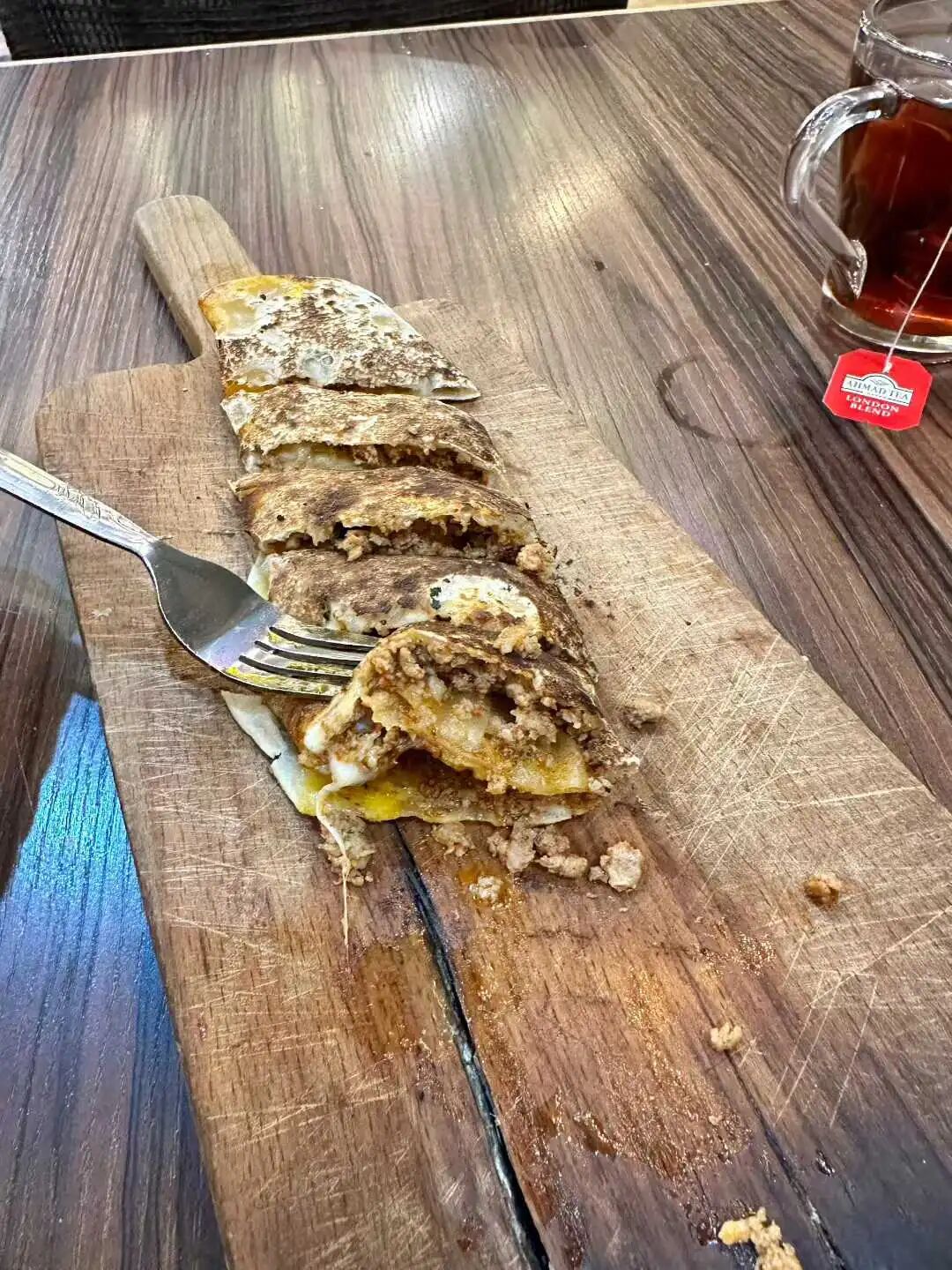
Lady Cafe is on the Al Nawfara pedestrian street outside the east gate of the Umayyad Mosque. It is very lively in the afternoon and evening. I ate a Damascus specialty snack called Toshka pie at the cafe. It is known as a national snack of Syria. Toshka is made by putting spicy sausage (Sujuk) and Kashkawan cheese inside pita bread, then pressing it on an iron griddle on both sides until the cheese melts and the bread is crispy. When you eat it, it is crispy on the outside and soft on the inside. The bread is charred and fragrant, and the meat and cheese are rich and stretchy.
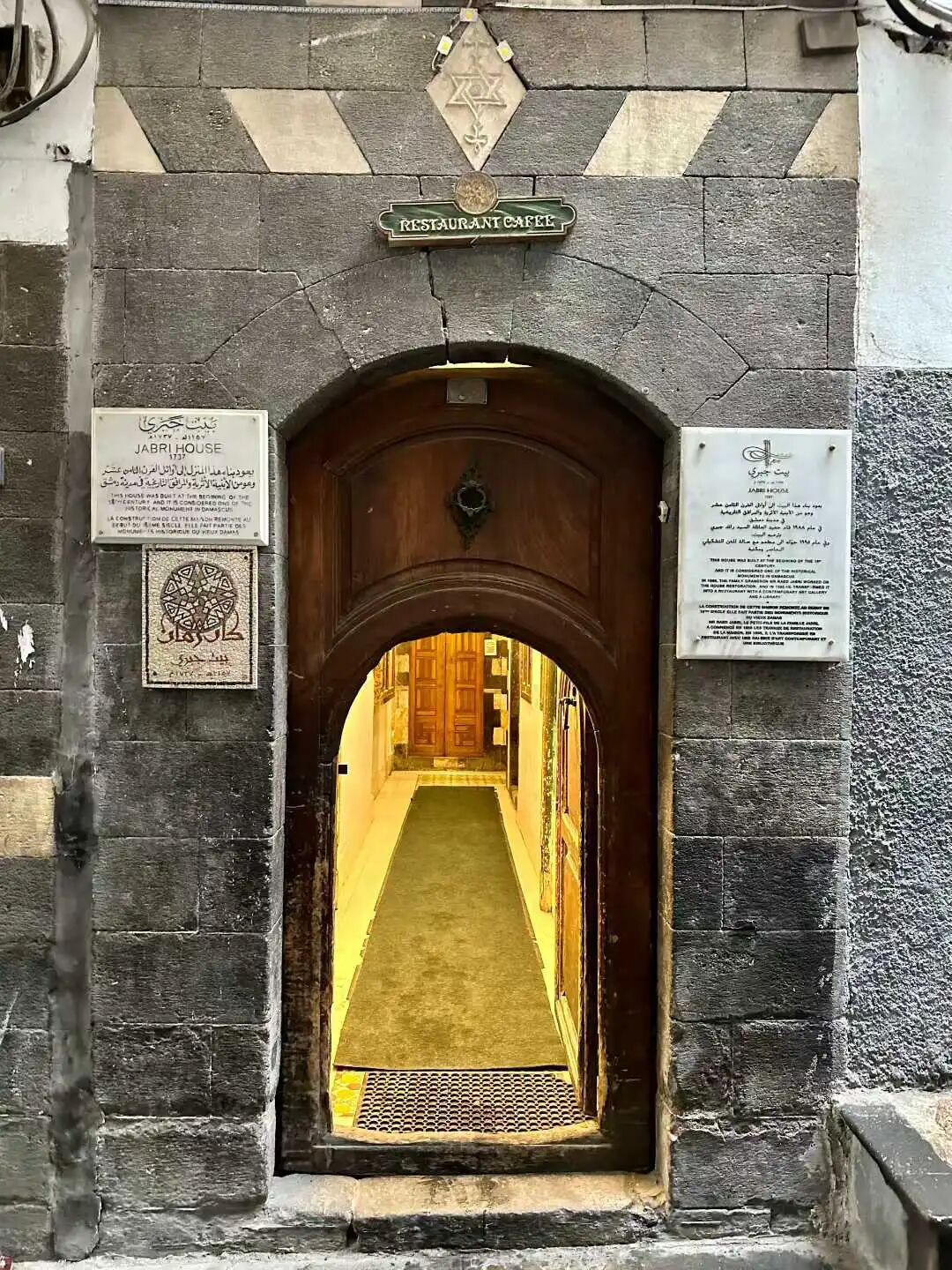
Beit Jabri is on As Sawwaf street, southeast of the Umayyad Mosque. It is an Ottoman mansion restaurant in the Old City of Damascus that is well worth a visit.
This mansion was built in the early 18th century. The current owner Raad Jabri's grandfather bought the property in the late 19th century, and their family lived there from 1905 to 1973. The house was gradually abandoned after the 1970s and later became a workshop for carpenters and blacksmiths. Raad Jabri restored the place in the 1990s and turned it into a restaurant. He also hosts cultural seminars, poetry readings, and classical music evenings from time to time.
Beit Jabri is a classic three-courtyard Ottoman mansion in Damascus. The arched hall (Iwan) is a typical example of 18th-century Damascus architecture, and the exquisite Ajrum roof was built in the mid-19th century. Influenced by Europe and the Ottoman Empire in the 19th century, Damascus architecture generally tended to decorate exterior walls more gorgeously. This is especially obvious on the north wall of Beit Jabri. We can clearly see the transition from 18th-century decorative styles to 19th-century patterns on the north wall, with complex wall paintings layered over traditional stone masonry (Ablaq).
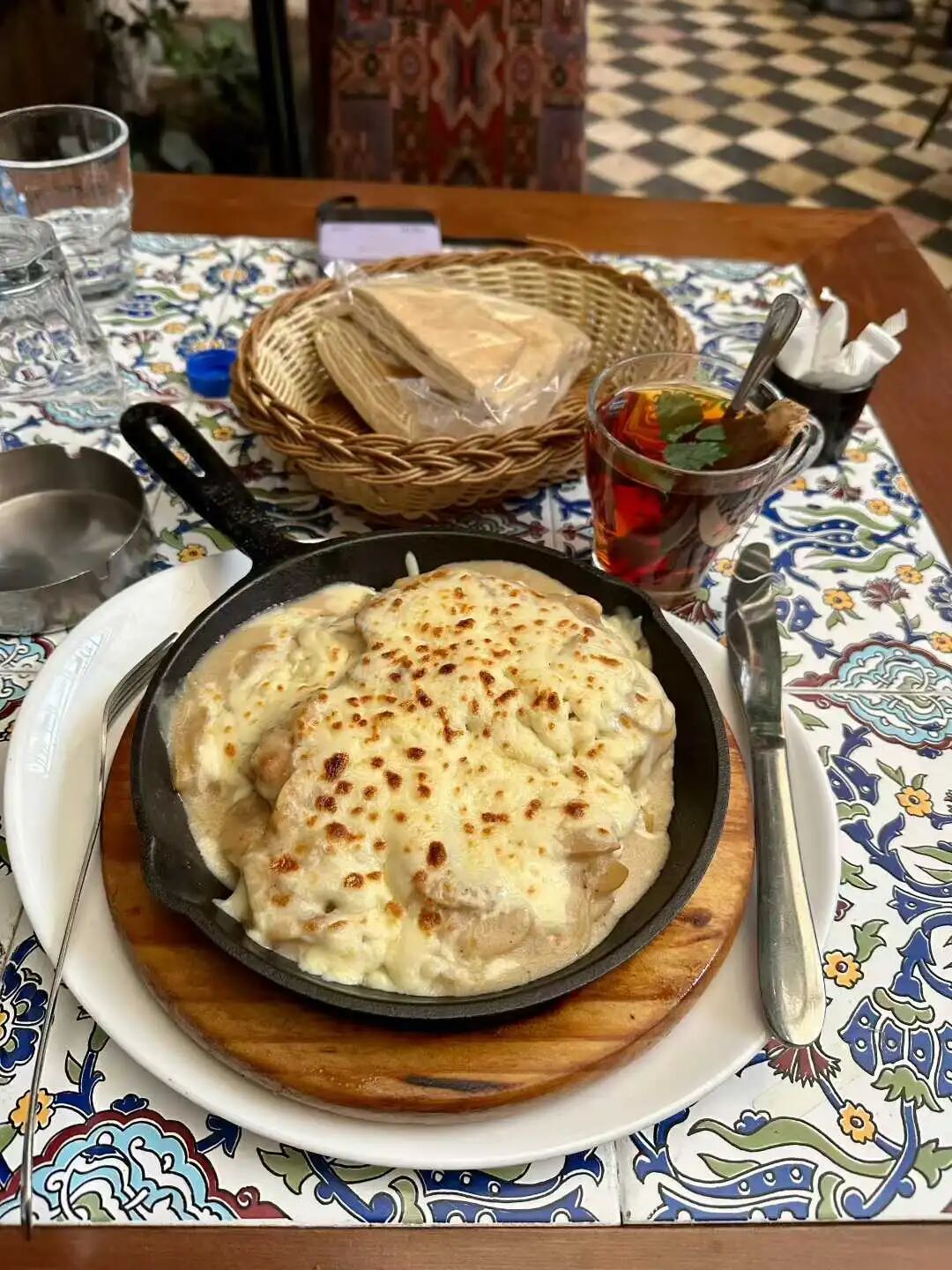
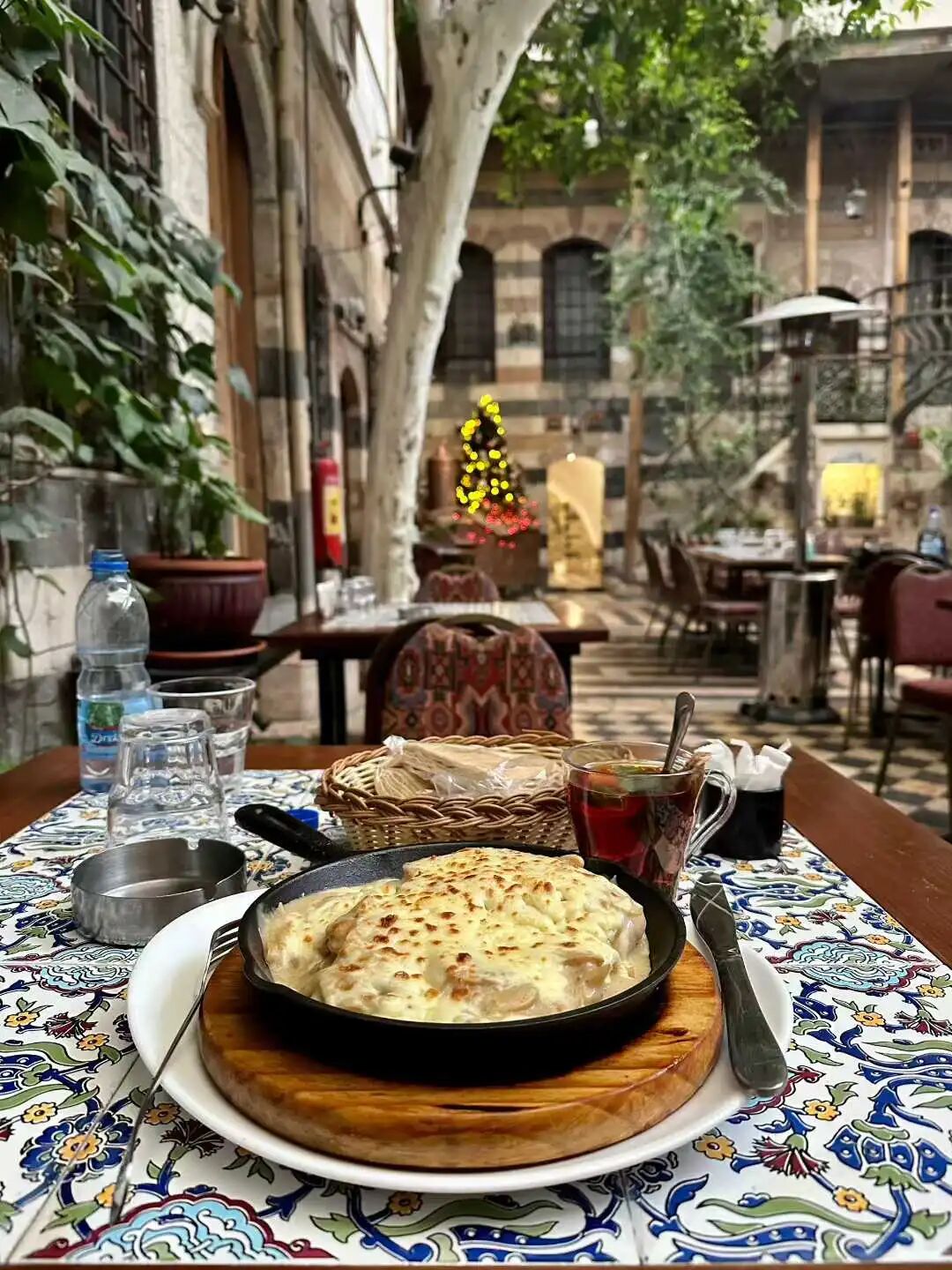
I ordered the iron pot cheesy baked chicken and mushrooms, served with Arabic pita bread and mint tea. The iron pot came straight to the table. The cheese on top was baked to a golden, crispy brown and stretched into long strings. The chicken was tender, and the mushrooms were soaked in the rich, creamy white sauce. It tasted quite good.
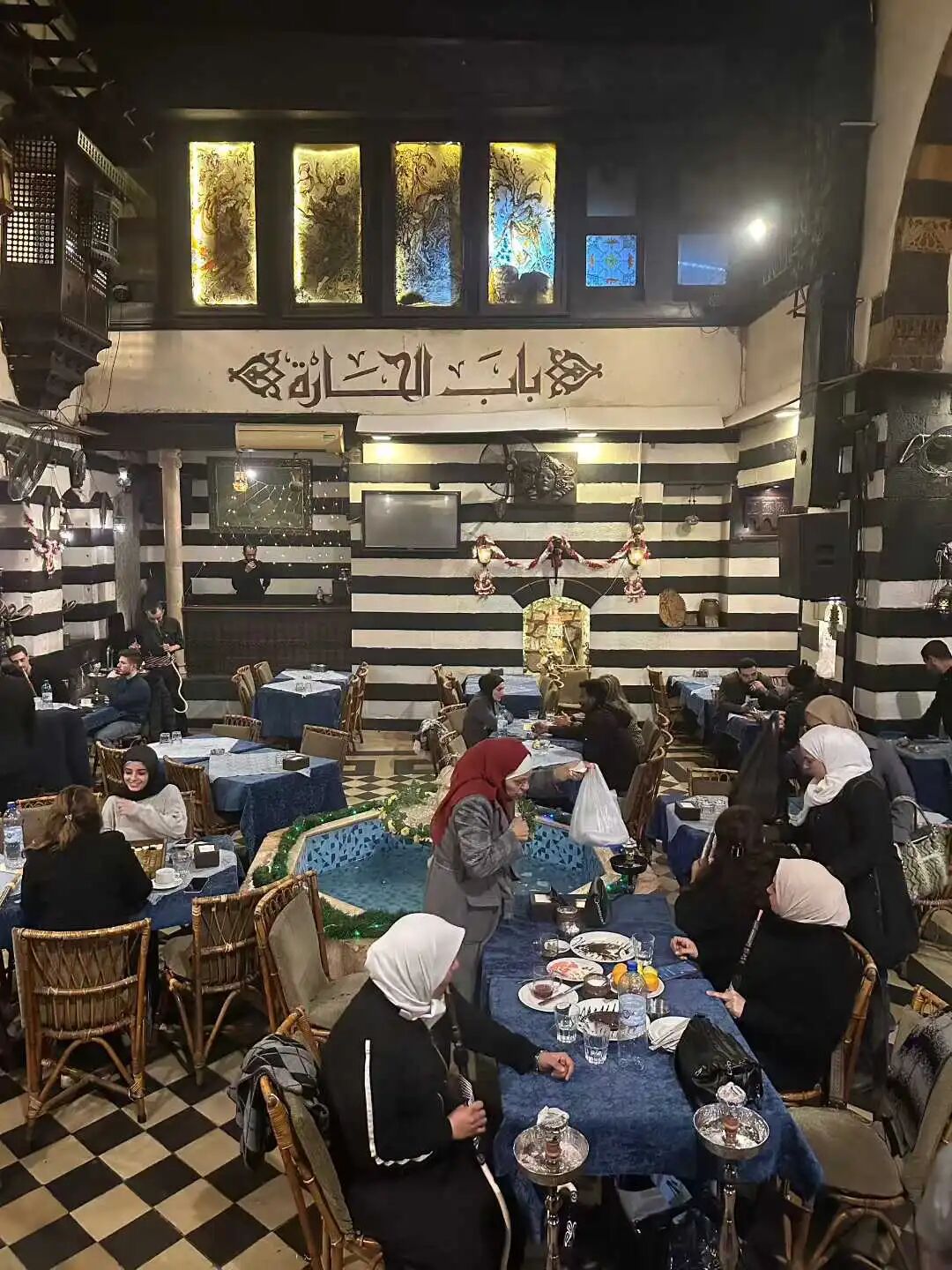
Bab Al Hara is located on Al Qaimarryeh pedestrian street, just outside the east gate of the Umayyad Mosque in Damascus. It is very lively every night. The restaurant is a converted traditional Ottoman mansion built in the late 19th century. It features a central courtyard with a fountain, wrap-around arcades, plaster carvings, and stained glass windows. This place was originally the home of a wealthy merchant. During the French Mandate period (1920–1946), it served as a community gathering spot. Later, it was used as a multi-family residence for a long time before gradually falling into disrepair in the late 20th century. The hit Syrian drama "Bab Al Hara" premiered in 2006, sparking a craze across the Arab world for the folk customs of the Old City of Damascus. The restaurant opened in 2007, starting as a cafe that focused on Syrian breakfast and snacks, then added full meals in 2010.
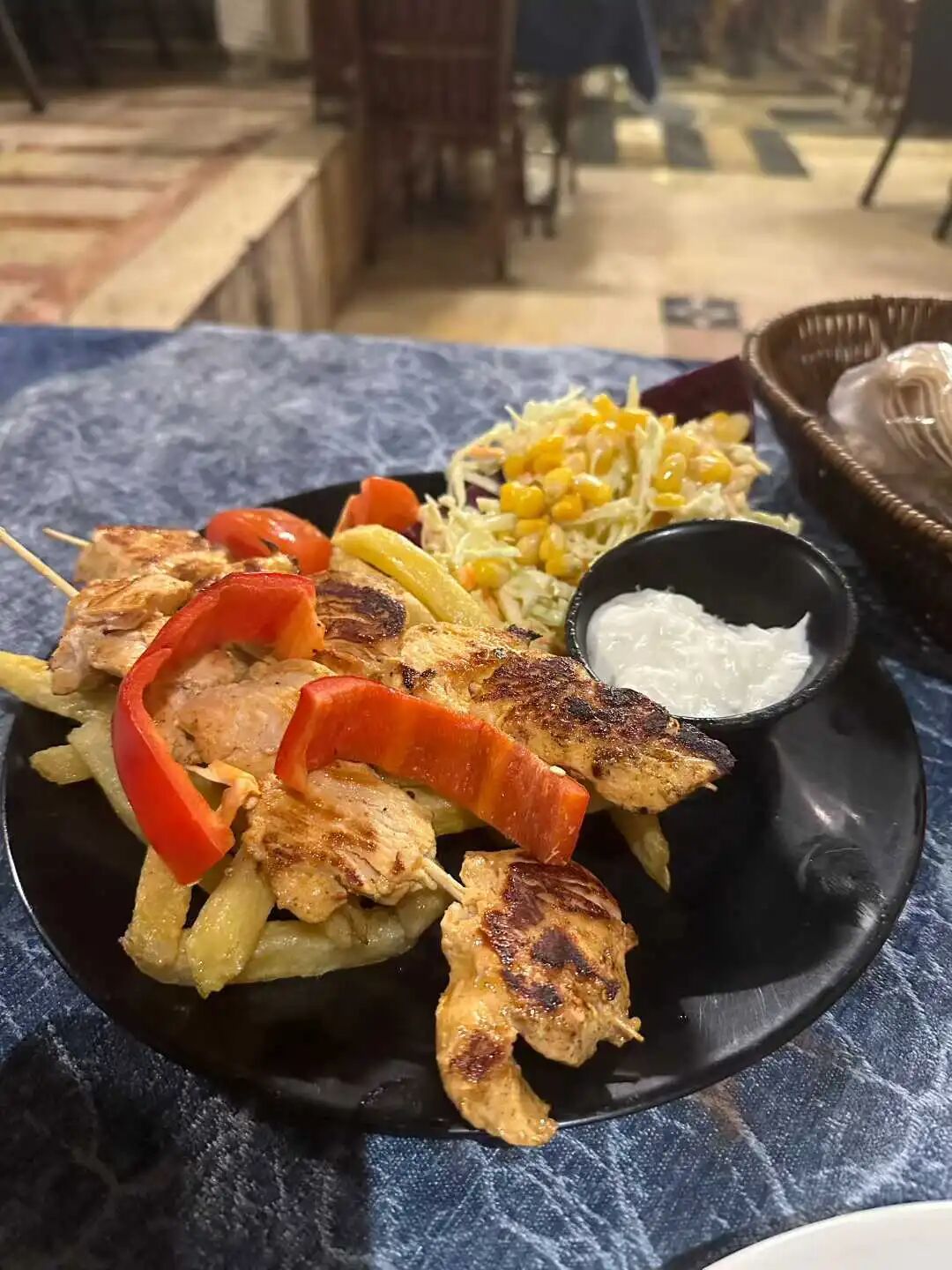
I had the grilled chicken skewers (Shish Taouk). The chicken was crispy on the outside and tender on the inside. It was very refreshing paired with garlic yogurt sauce (Tzatziki), along with a corn and cabbage salad and french fries. However, restaurants all over the Old City of Damascus are full of people smoking shisha at night. If you mind the shisha smoke, try to go at noon or in the afternoon.
Finally, I had some sand-boiled coffee at Café Ishq Sharqi in Bab Touma, Damascus. The name translates to "Love of the Orient." There are dozens more restaurants and cafes converted from Ottoman mansions in the Old City of Damascus. I only visited a small portion this time, so there are plenty more for everyone to discover. view all
Summary: Damascus old city has heritage hotels and restaurants converted from Ottoman mansions, especially in the Christian Quarter east of the Umayyad Mosque. This guide keeps the source's nine hotel and restaurant notes, December 2025 prices, locations, bargaining details, and photographs.
In recent years, I have really enjoyed staying in heritage hotels while traveling. Even if some are a bit pricey or have thin walls, they let you fully experience the local history. Many people in Damascus choose Chinese-run guesthouses because they are cheaper and easier to communicate in. But if you really want to understand this thousand-year-old city, staying in an old Ottoman house inside the ancient city is a much better way to get close to history.
The east and west sides of the old city of Damascus are very different. The west has the busy Ottoman markets, the Umayyad Mosque, and the citadel. The east is the Christian Quarter, filled with churches and hotels or restaurants converted from old Ottoman mansions. I spent my days in Damascus staying in different mansions in the Christian Quarter. It is about a 1-kilometer walk to the Umayyad Mosque, but the road is full of shops, so it does not feel long.
Here are 9 places I stayed at or asked about, with prices from December 2025.
1. My top recommendation is Mamlouka Hotel, which has two locations: Dar Al Mamlouka and Beit al-Mamlouka. They asked for $122 for a single room, but I bargained it down to $110. I think this place offers the best value. The environment is great, it is the closest to the Umayyad Mosque, and it is right next to the market. The courtyard is a bit small. I only stayed at Dar Al Mamlouka this time because Beit al-Mamlouka had no rooms for two days.
2. Dar Al Yasmin Hotel asked for $140 for a single room, and I bargained it down to $125. It is in a small alley behind a church. It is very quiet and quite large inside.
3. Beit Zaman Hotel asked for $150 for a single room, and I bargained it down to $135. It is right on the East Gate street. There are many shops nearby, and many young people come here to take photos.
4. Beit Rumman has a great environment, but unfortunately, it has no Wi-Fi. I did not buy a SIM card, so I would have been disconnected. I missed out on it and did not ask for the price.
5. Beit Al Wali Hotel is the most popular mansion hotel in the old city of Damascus, and it is also the most expensive. When I asked on the first day, they only had a royal suite for $500. On the second day, they asked for $290 for a single room, and they would not go below $200, so I did not stay there.
6. Albal Hotel charges $80 for a single room. It is the cheapest, but the facilities are the worst. The power was weak, and my phone would barely charge.
7. Al Zaytouna Hotel has an average environment. When I went in, some men were watching a ball game, so I did not ask for the price.
8. Beit Zafran Hotel is very close to Beit Al Wali Hotel. It looked nice in photos, but it was full when I went, so I did not ask for the price.
9. Al Shahbandar Palace Hotel has a cafe in its courtyard. I had a coffee there, but I did not stay.
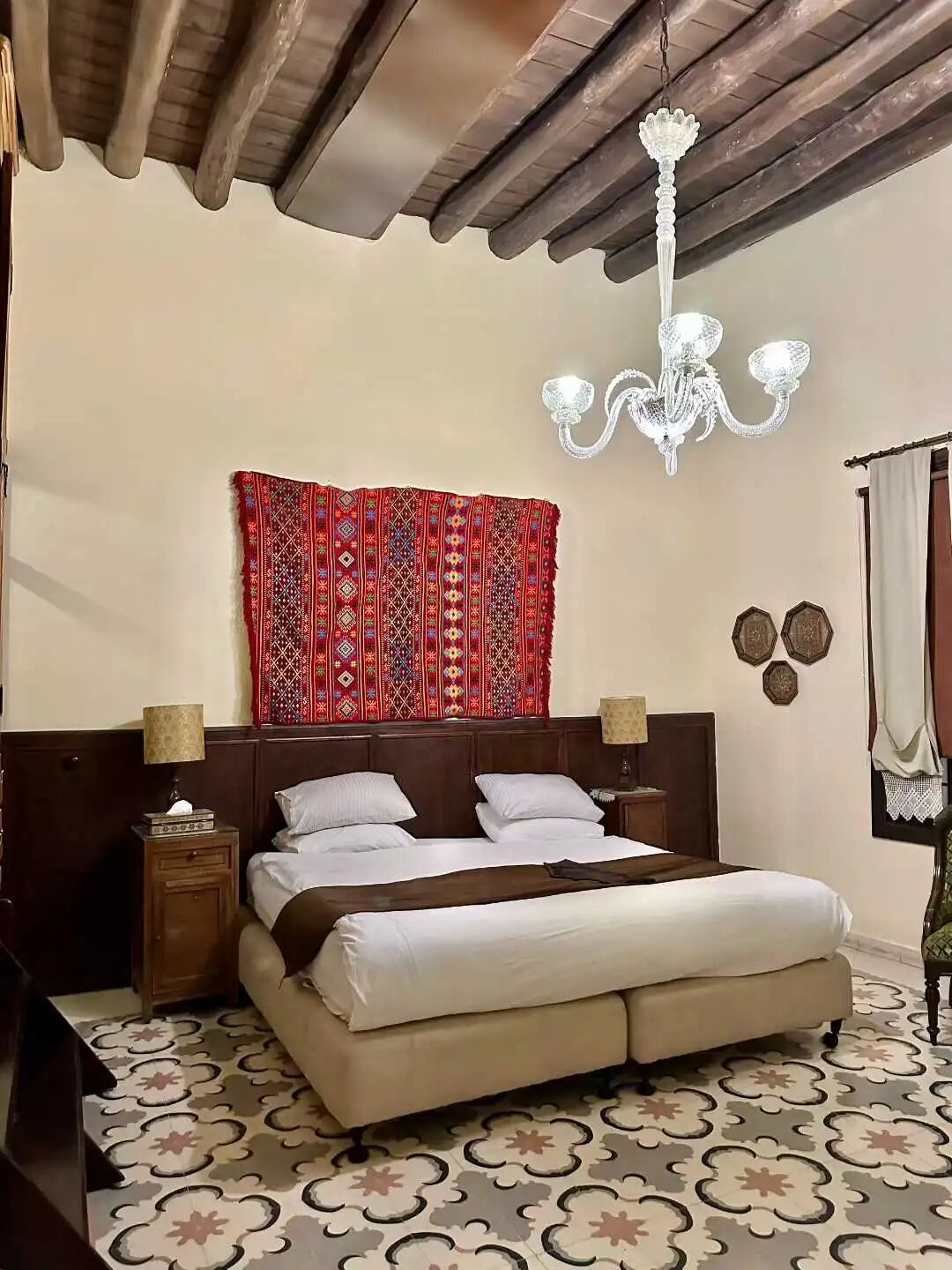
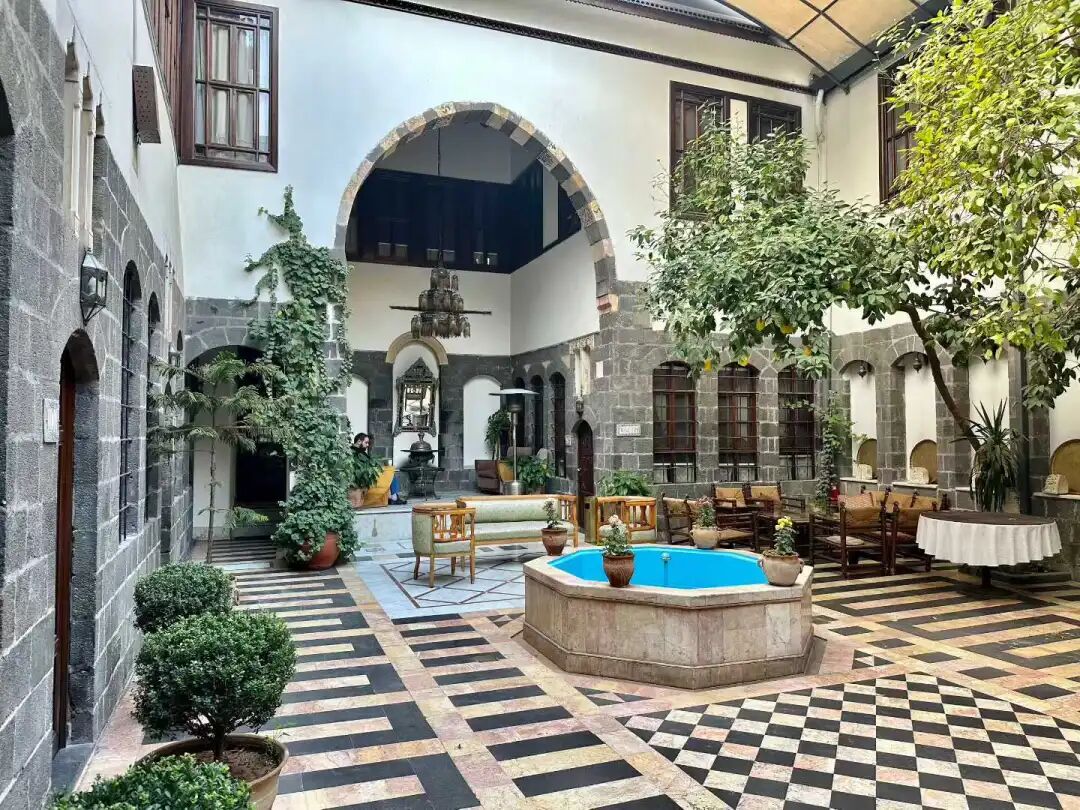
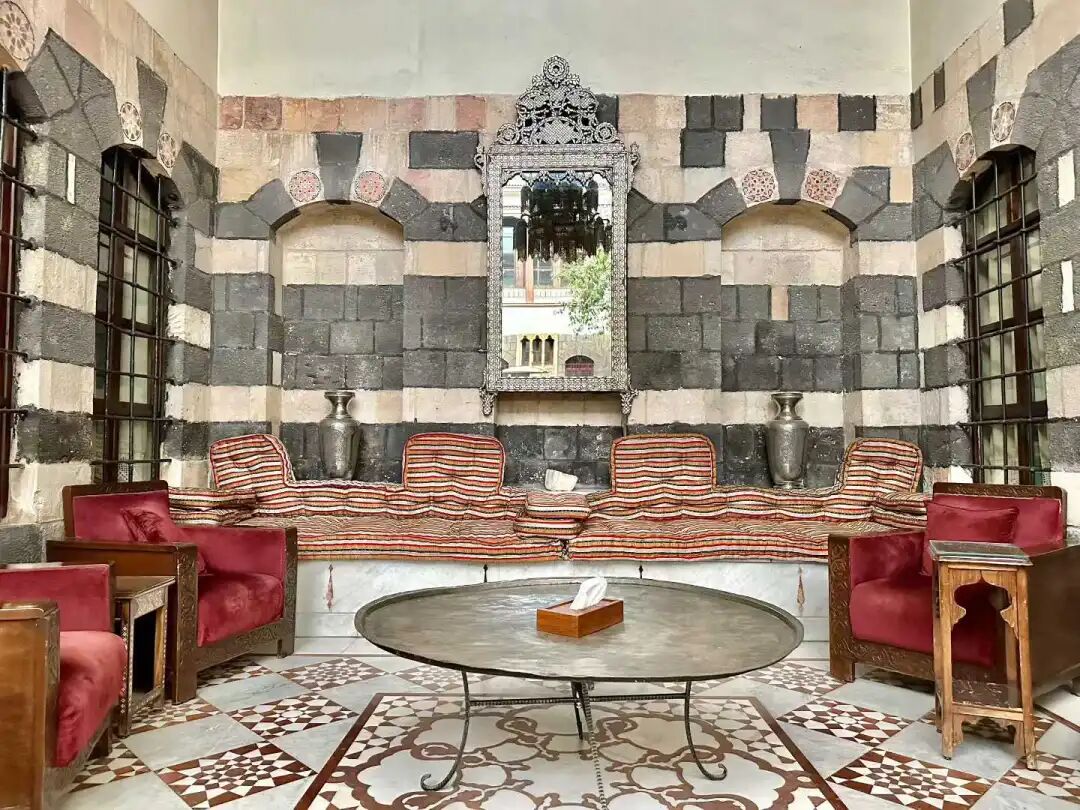
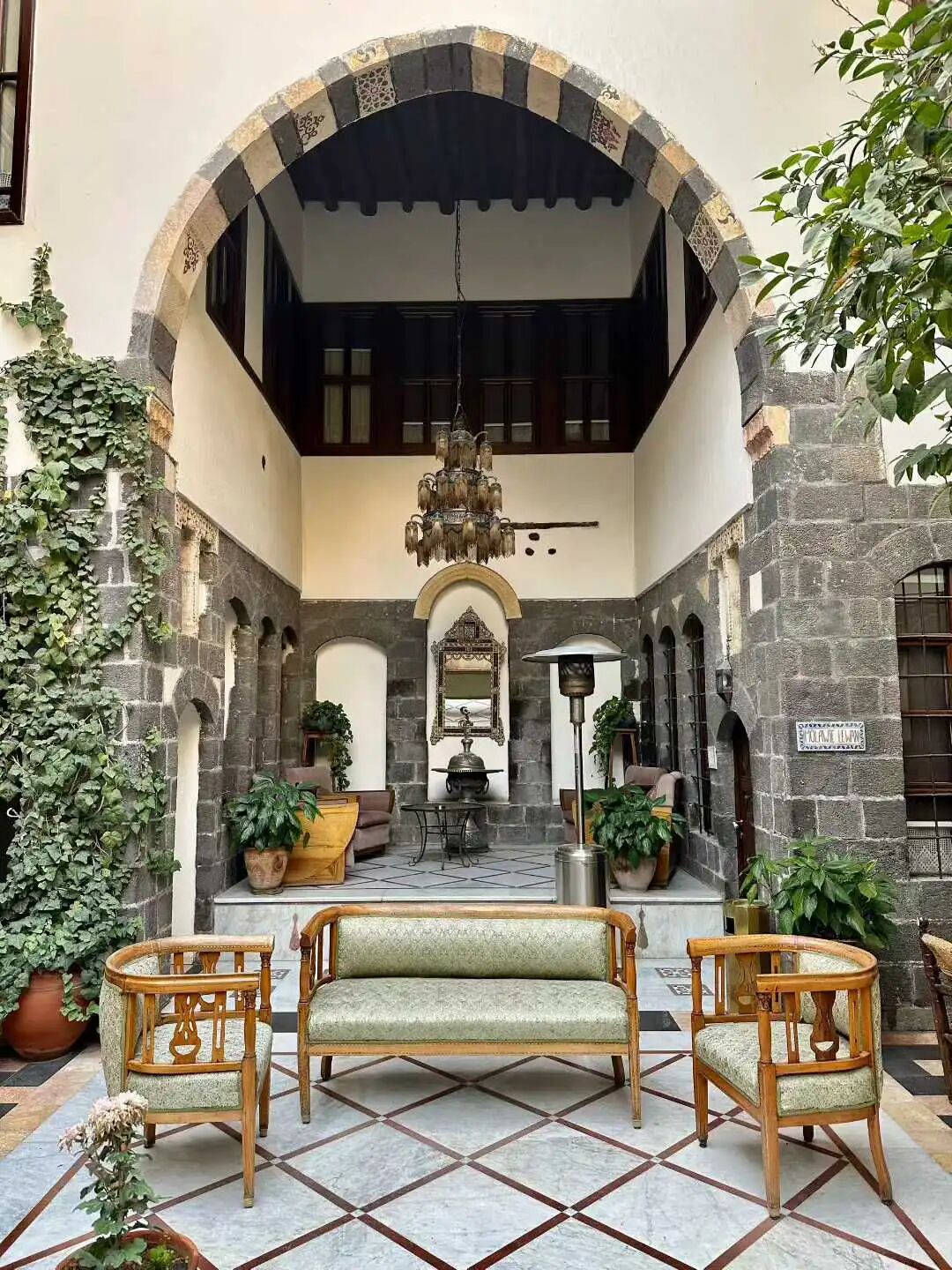
Dar Al Mamlouka is located on the far west side of the Bab Touma Christian Quarter in the old city of Damascus. The main building is a merchant mansion from the 17th-century Ottoman period, but it still has a strong 16th-century Mamluk style. The mansion has an inward-facing layout centered around a courtyard, with high ceilings on one side. The walls are built with alternating black basalt and white limestone bricks in the Mamluk style, and there is a marble fountain in the center of the courtyard.
Dar Al Mamlouka was turned into a hotel in 2005. It is run by the same management as another nearby mansion, Beit al-Mamlouka, but that one is often fully booked. The single room was listed at 122 dollars, but I bargained it down to 110 dollars. The hotel has electricity and Wi-Fi all night. The single room is nice, and a staff member brought me tea right after I checked in. There are orange and lemon trees in the courtyard, which makes it very relaxing.
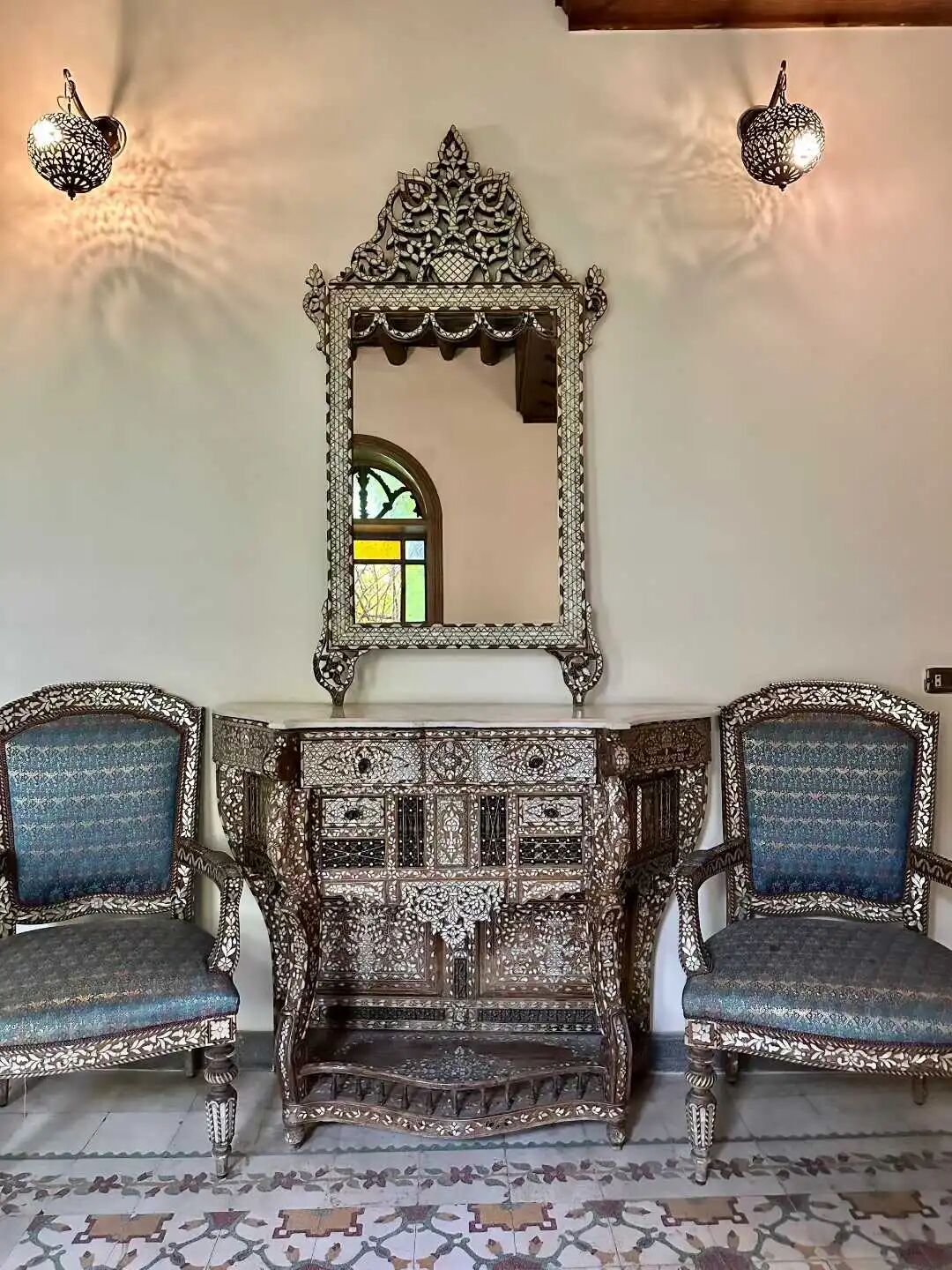
The Islamic decor at Dar Al Mamlouka includes the Hand of Fatima (Hamsa). Its five fingers represent the five pillars of the faith, and it is named after the Prophet's daughter, Fatima. During the Austro-Turkish War in 1788, the Ottoman Empire carried flags featuring the Hand of Fatima as the Grand Vizier led an army of 80,000 against Austria.
Breakfast at Dar Al Mamlouka is a typical Levantine cold platter served with bread and hot tea. They bring the full set even if you are eating alone. It mainly includes various cheeses, pickled olives, chickpea dip (hummus), jam, fresh cucumber and tomato, fruit juice, olive oil, and sausages. A special item is the pickled eggplant (makdous). These are miniature eggplants stuffed with walnuts, chili, garlic, olive oil, and salt. Syrians usually start pickling them in autumn to eat as an appetizer during winter. The powder on the table is the classic Levantine spice blend (za'atar). It is a mix of Syrian oregano, toasted sesame seeds, dried sumac, and thyme. It has an earthy taste with a hint of citrus and nuttiness, which is very unique.
Dar Al Yasmin Hotel is located in the heart of the Christian Quarter of Bab Touma in the Old City of Damascus. The hotel is tucked away in a small alley, and it feels like a hidden world once you step inside. The hotel is made up of three 18th-century Ottoman mansions—two large and one small. It features a central courtyard, a fountain, a reception area (liwan), hand-painted wooden ceilings, traditional brick and stone structures, and carved doors and windows. The mansion changed hands many times after the 19th century until the Jasmine Hotels group took it over in 2005. They restored and opened it, making it a classic example of revitalizing a traditional Middle Eastern residence.
The single room was listed at 140 dollars, but I bargained it down to 125 dollars. The small alley at the entrance can get flooded when it rains, but overall it is a great value.
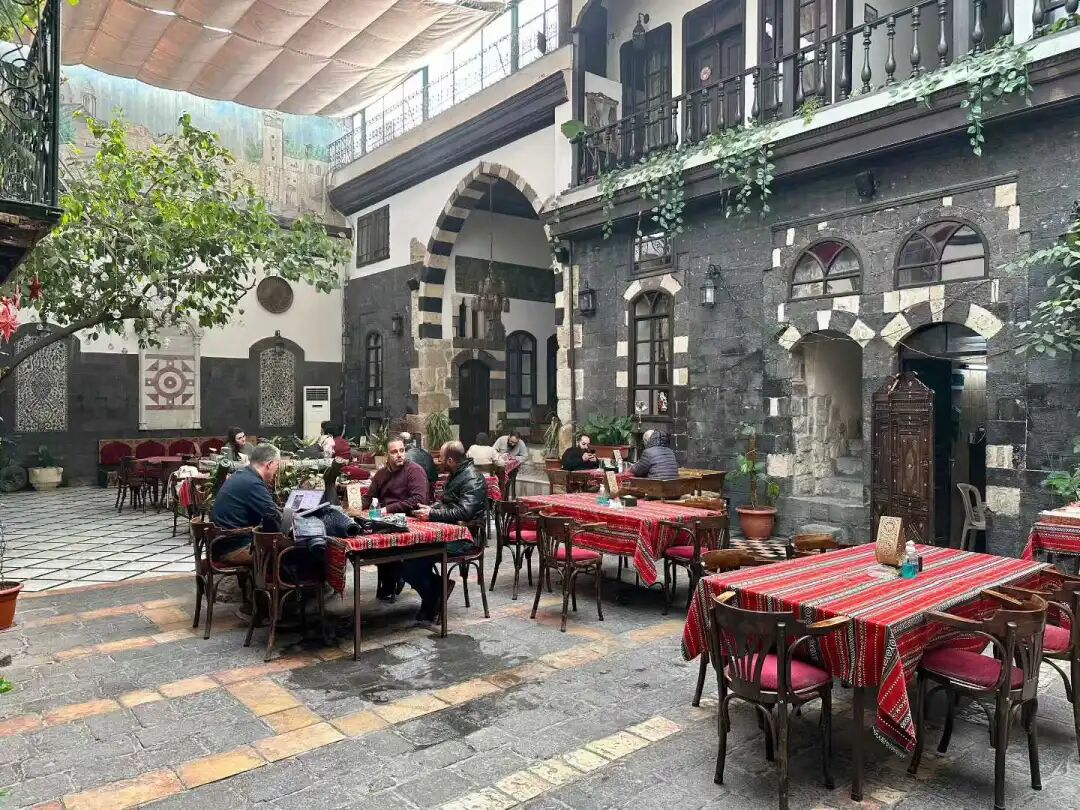
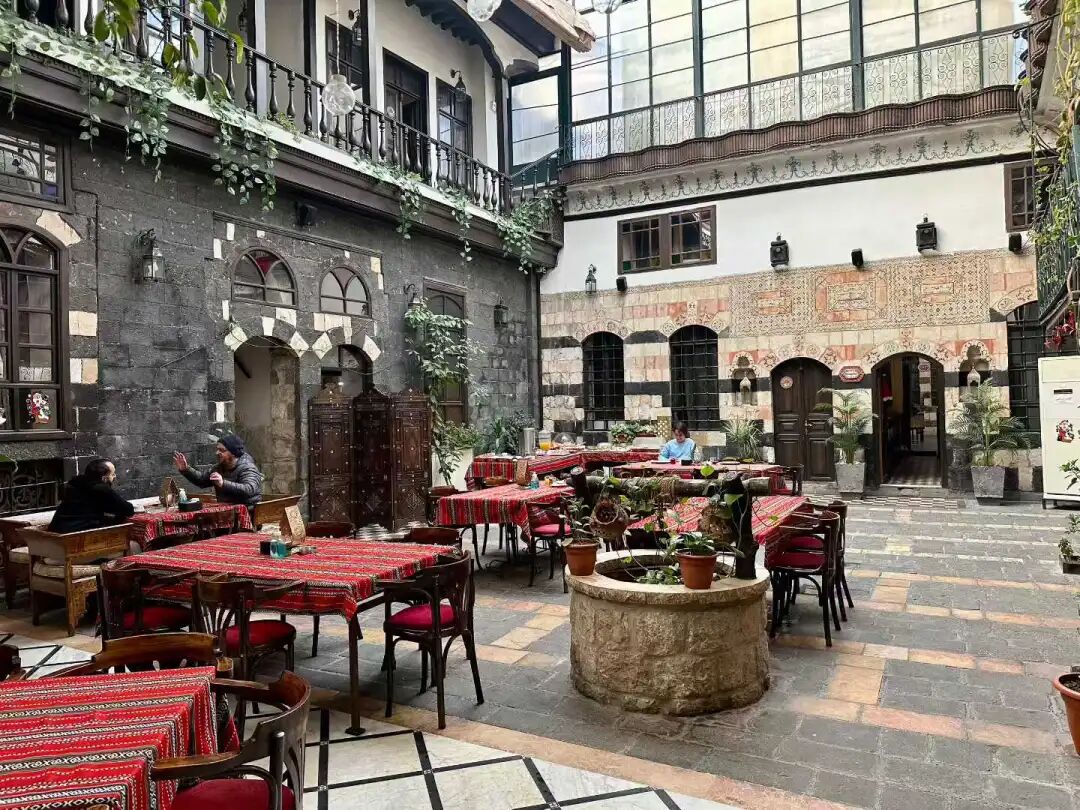
For breakfast at Dar Al Yasmin Hotel, the chickpea and sesame paste dip (hummus musabaha) is worth trying. Musabaha means swimming, as if the chickpeas are swimming in the sesame paste.
They also serve flatbread (manakish) in three varieties: with spice blend (za'atar), tomato, or cheese. Manakish originated from the traditional bread of the ancient Phoenicians and was added to the UNESCO Intangible Cultural Heritage list in 2023.
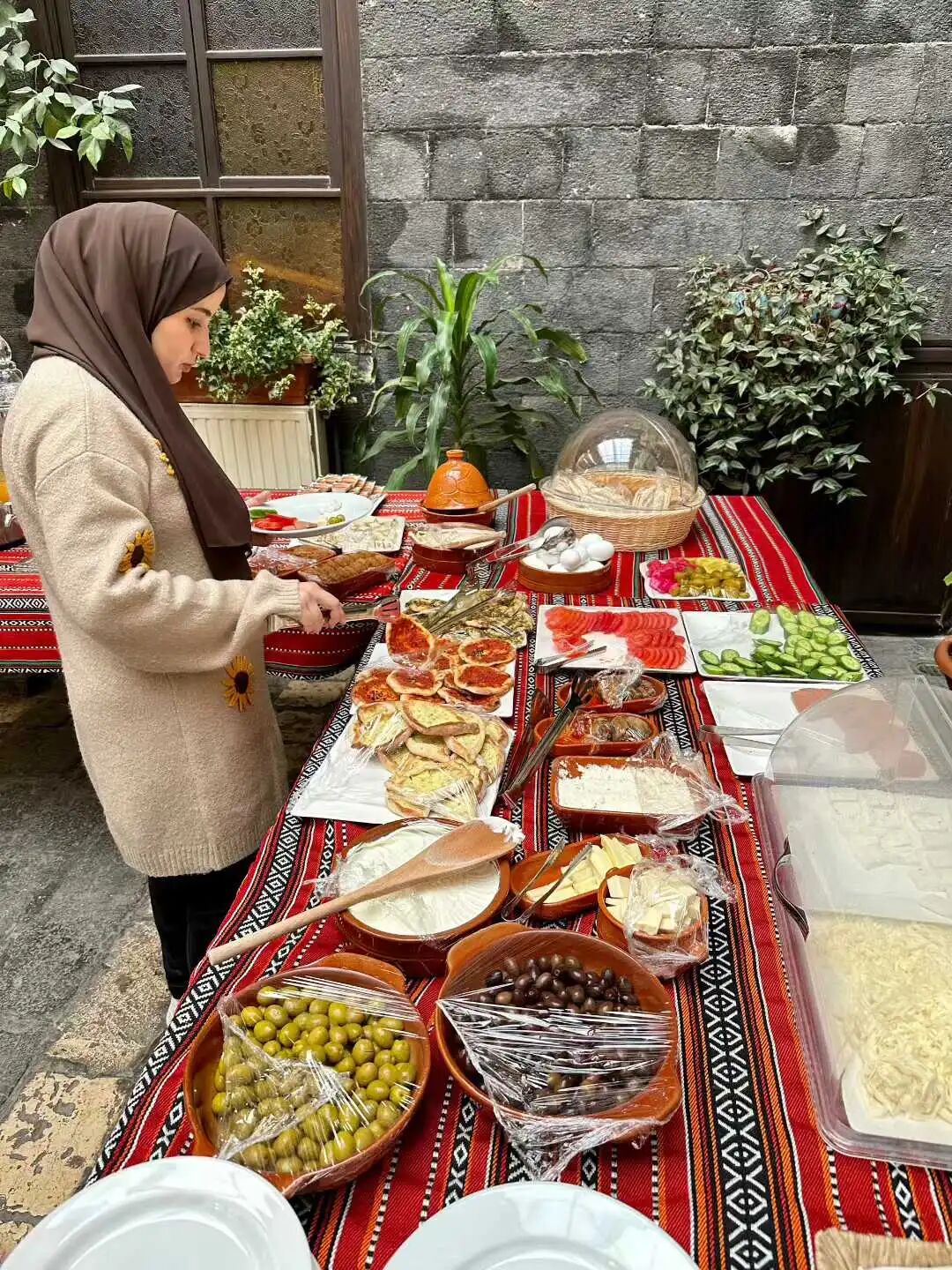
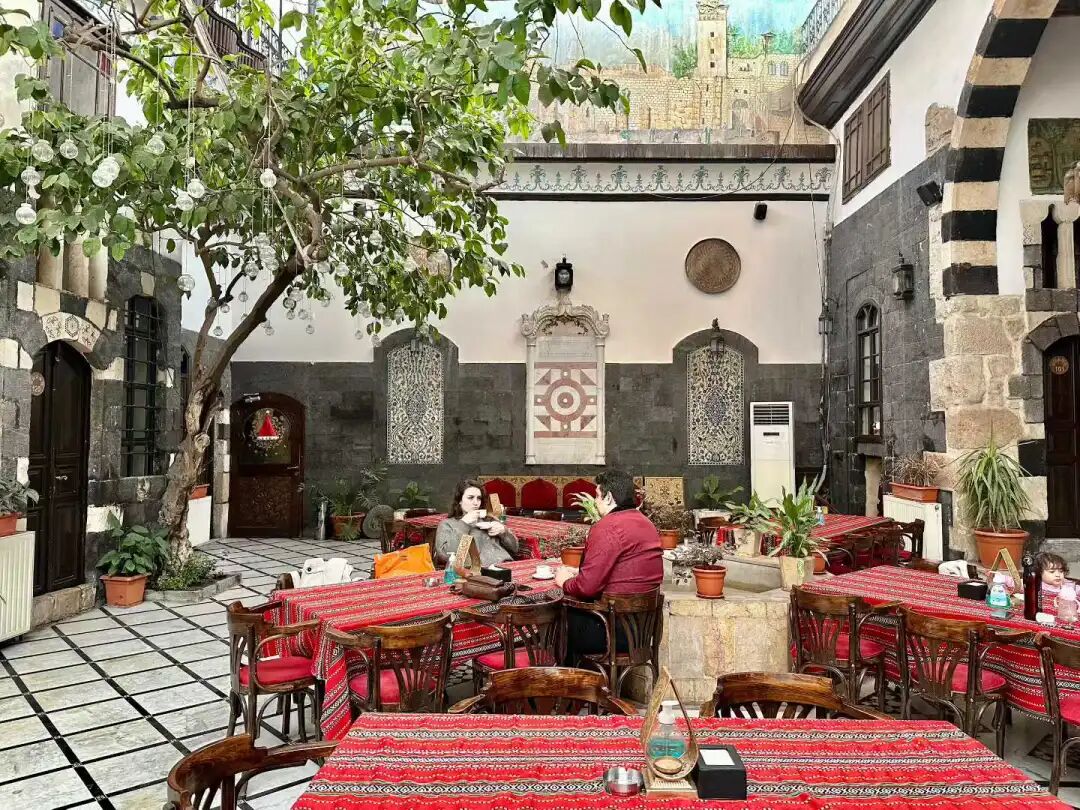
Beit Zaman Hotel is in the Christian Quarter of Bab Touma in the Old City of Damascus, right on the ancient Roman street (Via Recta). Their single room was listed at 150 dollars, but I bargained it down to 135 dollars.
The hotel opened in 2008 after five years of connecting and restoring three 17th-century Ottoman mansions. It kept original features like stone carvings, wood carvings, mosaics, and fountains. The wooden Ajami-style ceilings and the traditional courtyard layout are the most impressive parts.
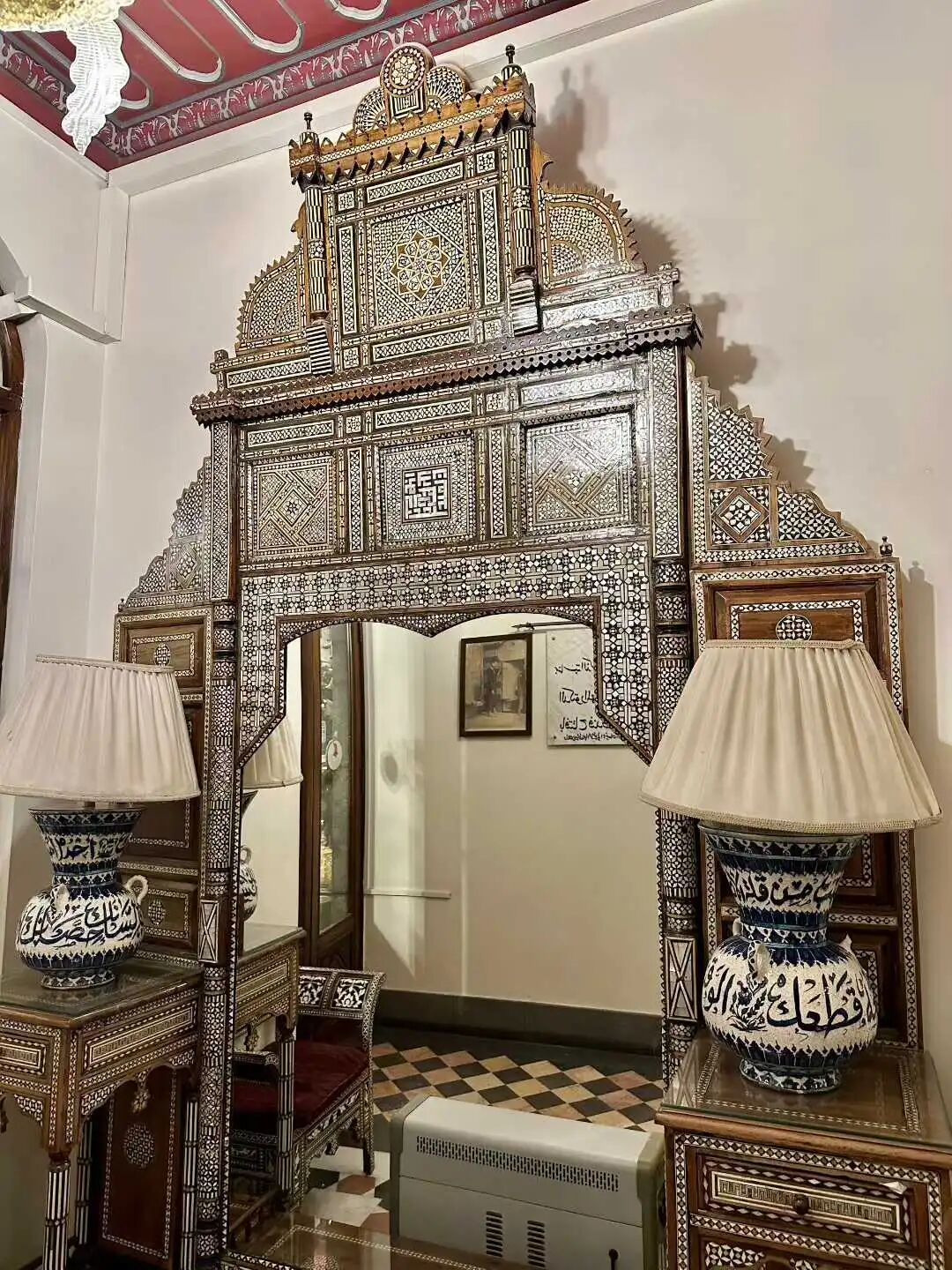
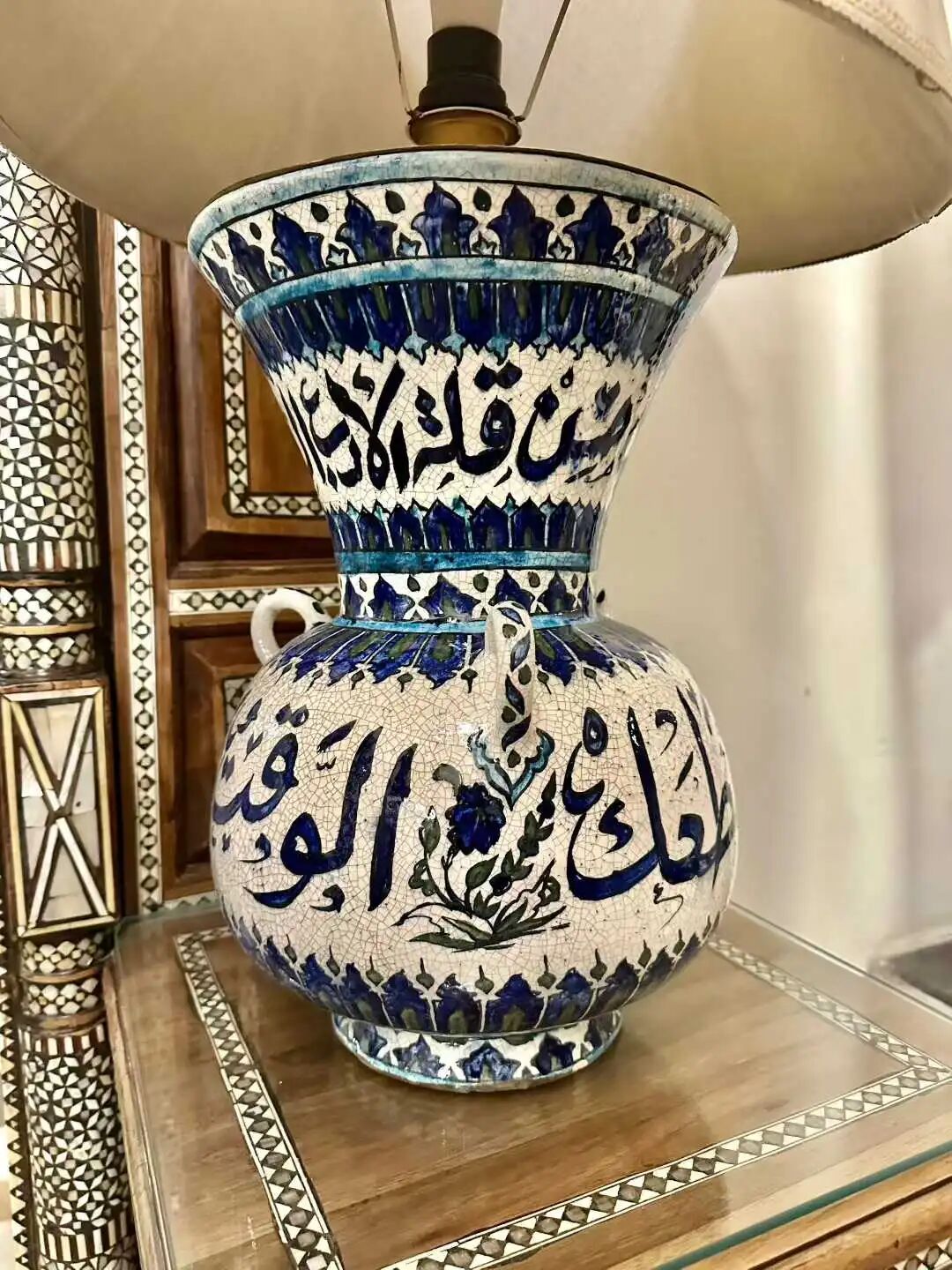
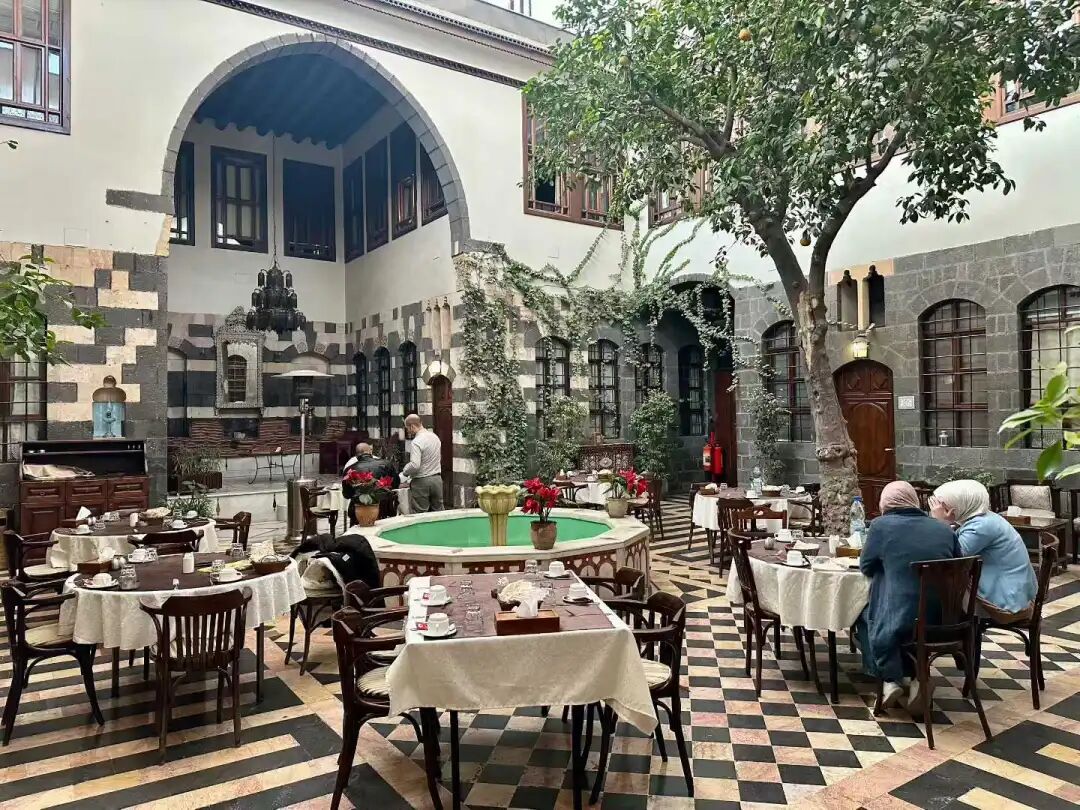
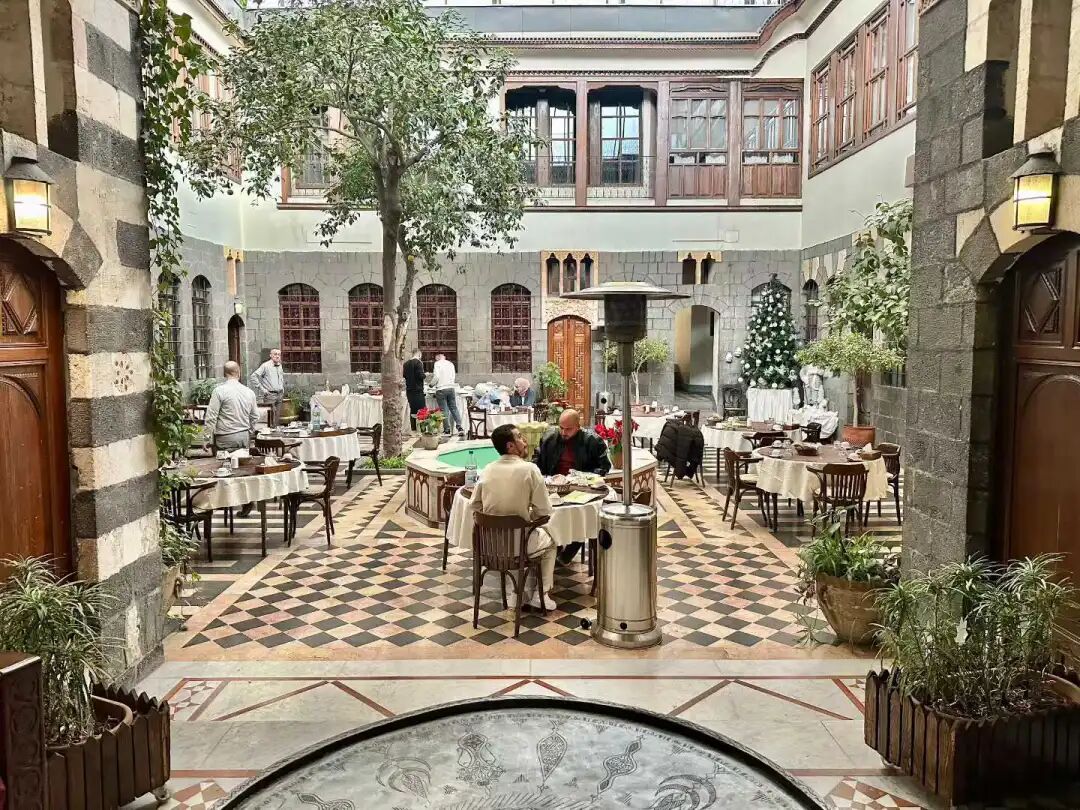
The buffet breakfast at Beit Zaman Hotel includes sausages, cheese, bread, olives, and chickpea dip (hummus). The red dipping sauce is called Muhammara. It is a Syrian appetizer made from walnuts, red bell peppers, pomegranate molasses, and breadcrumbs.
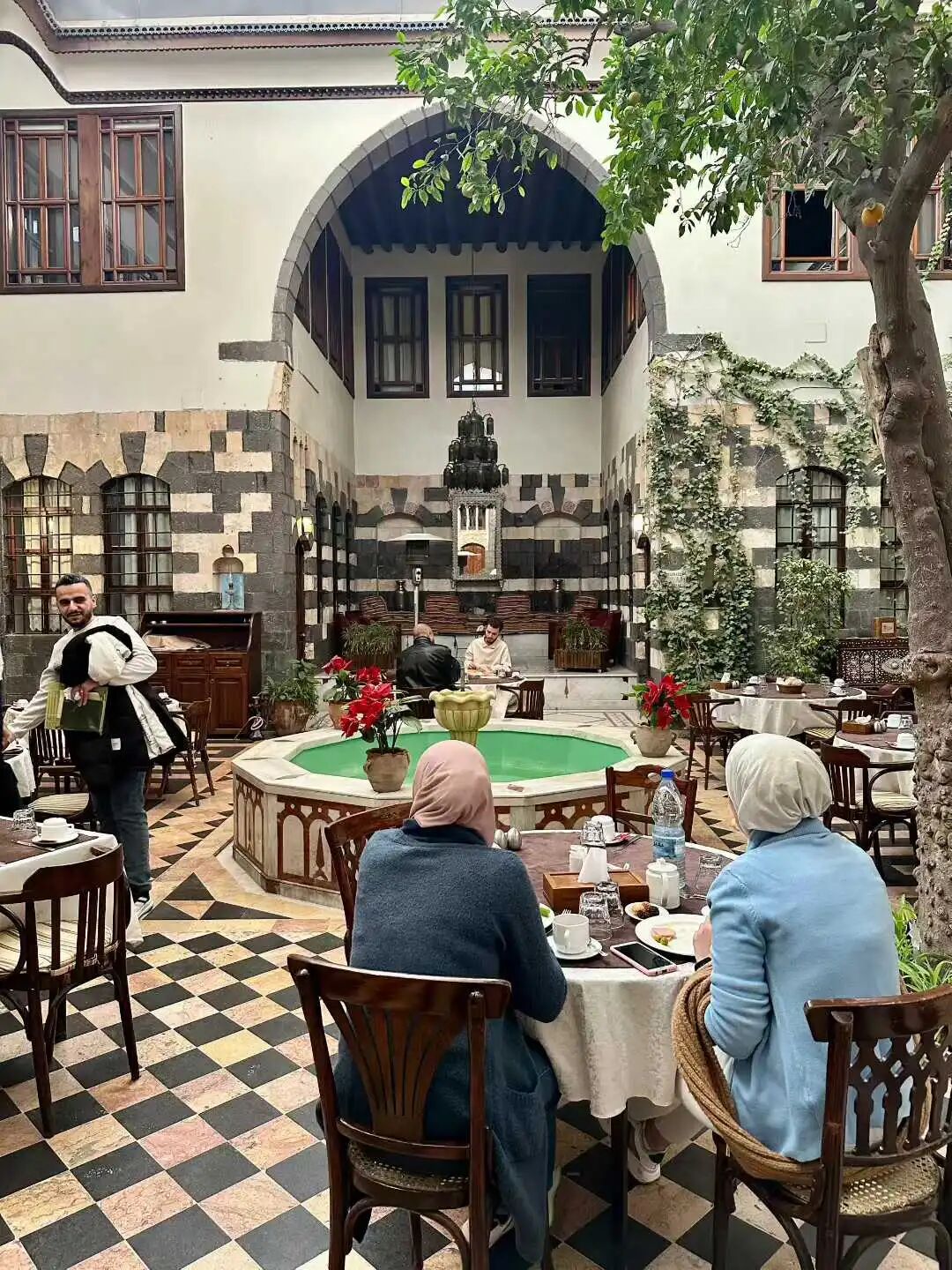
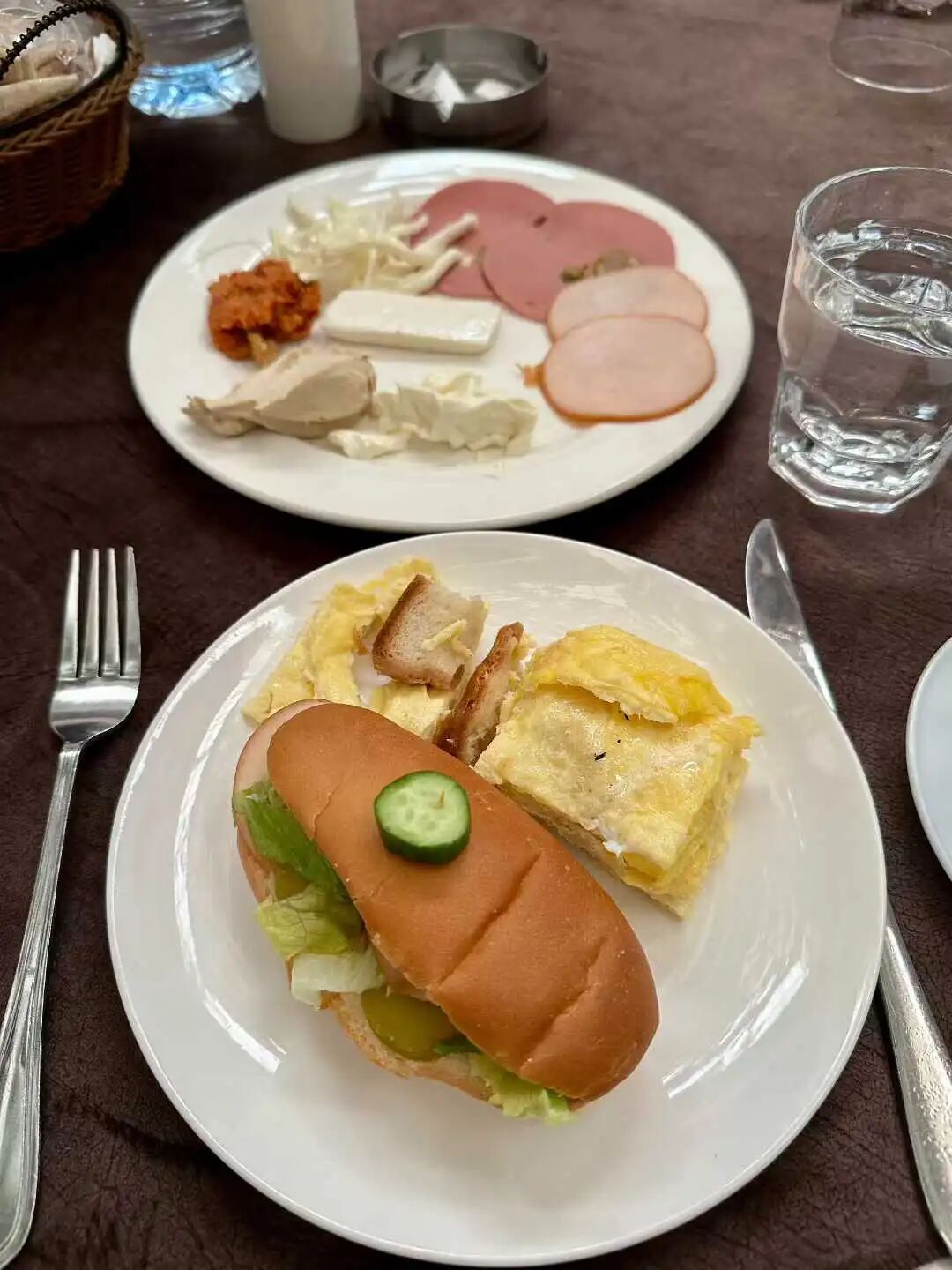
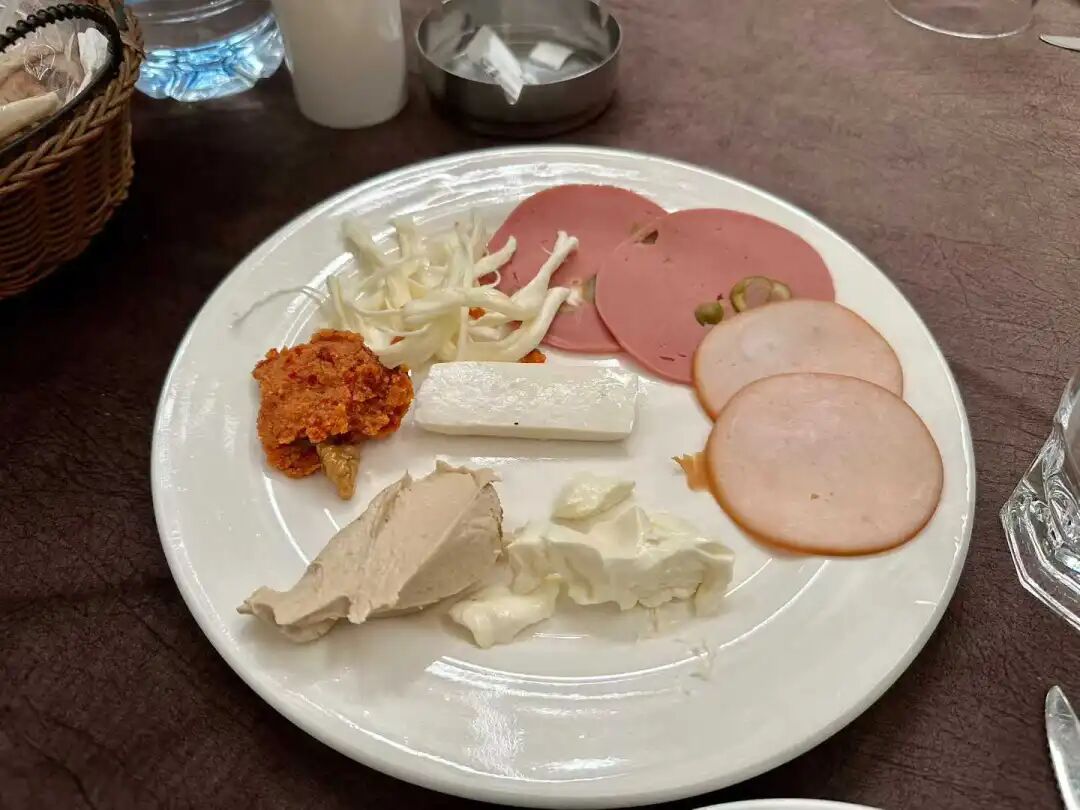
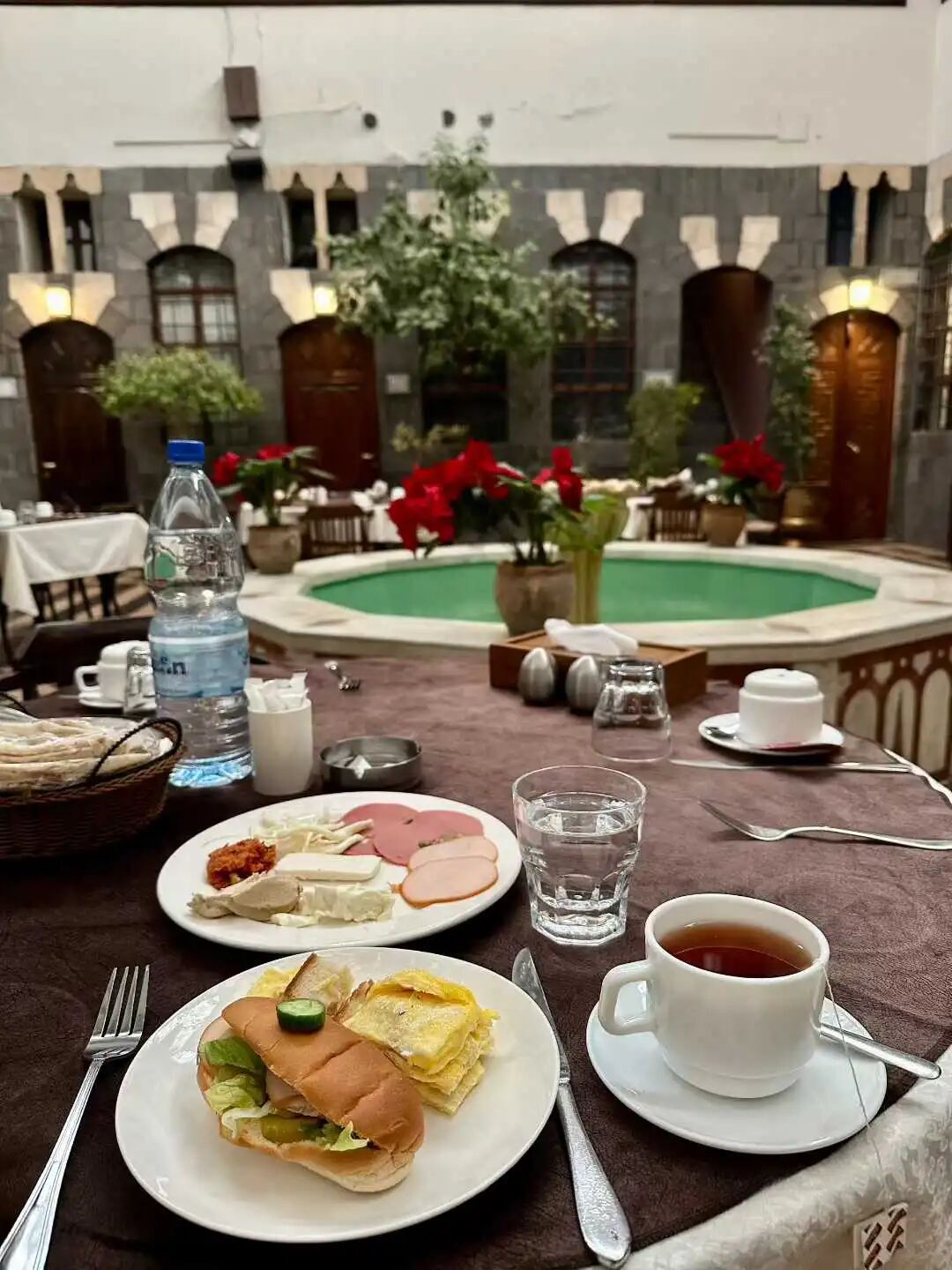
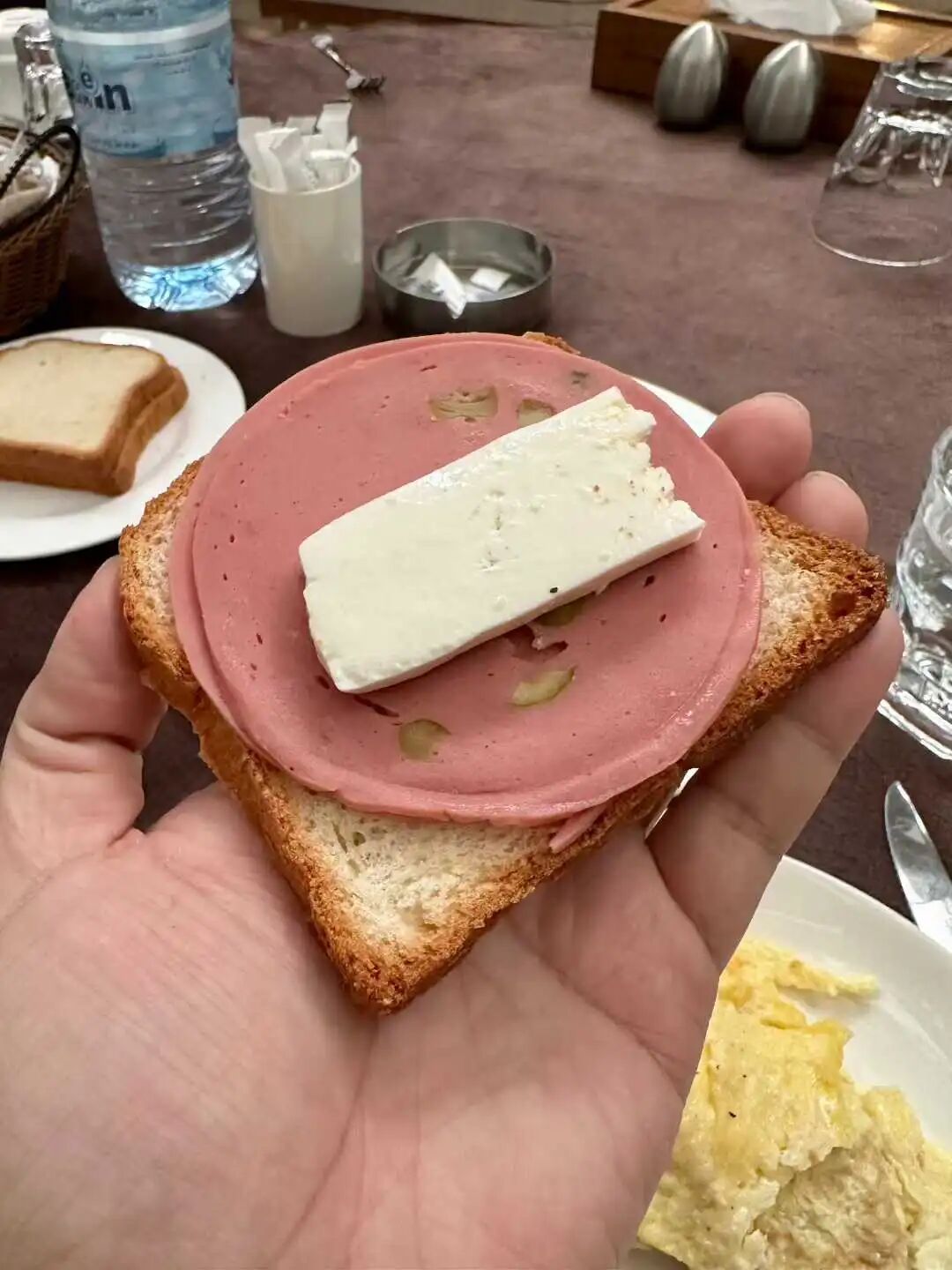
Albal Hotel is near the Bab Touma gate in the Old City of Damascus. It is likely the most convenient for transportation. A single room costs 80 dollars, which is the lowest price, but the power is weak and it is almost impossible to charge a phone. Choose carefully.
Albal Hotel is a converted Ottoman mansion rebuilt after the 1759 Damascus earthquake. It has a courtyard fountain and wood carvings. The breakfast is quite good, and they light a stove in the courtyard during winter.
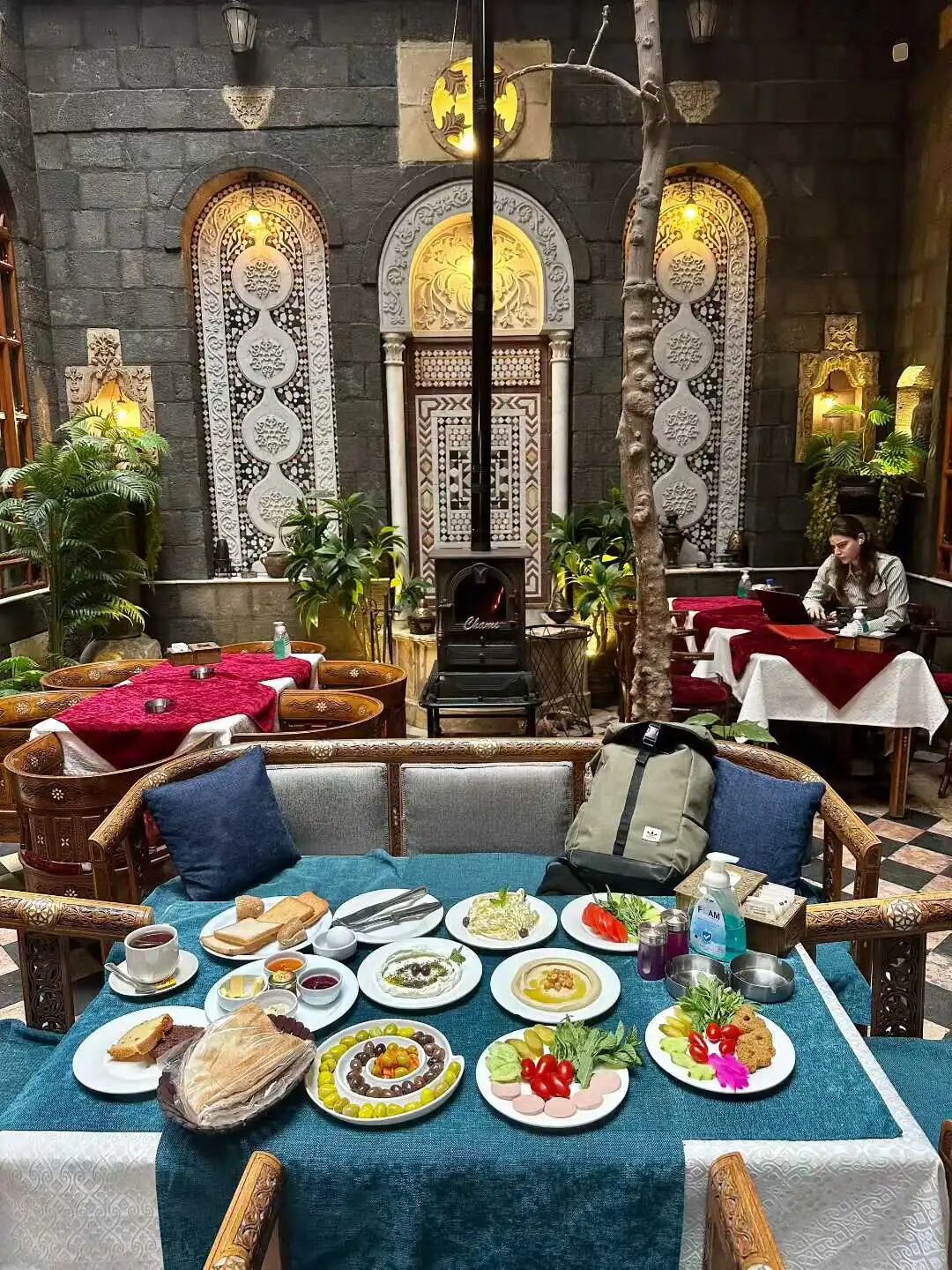
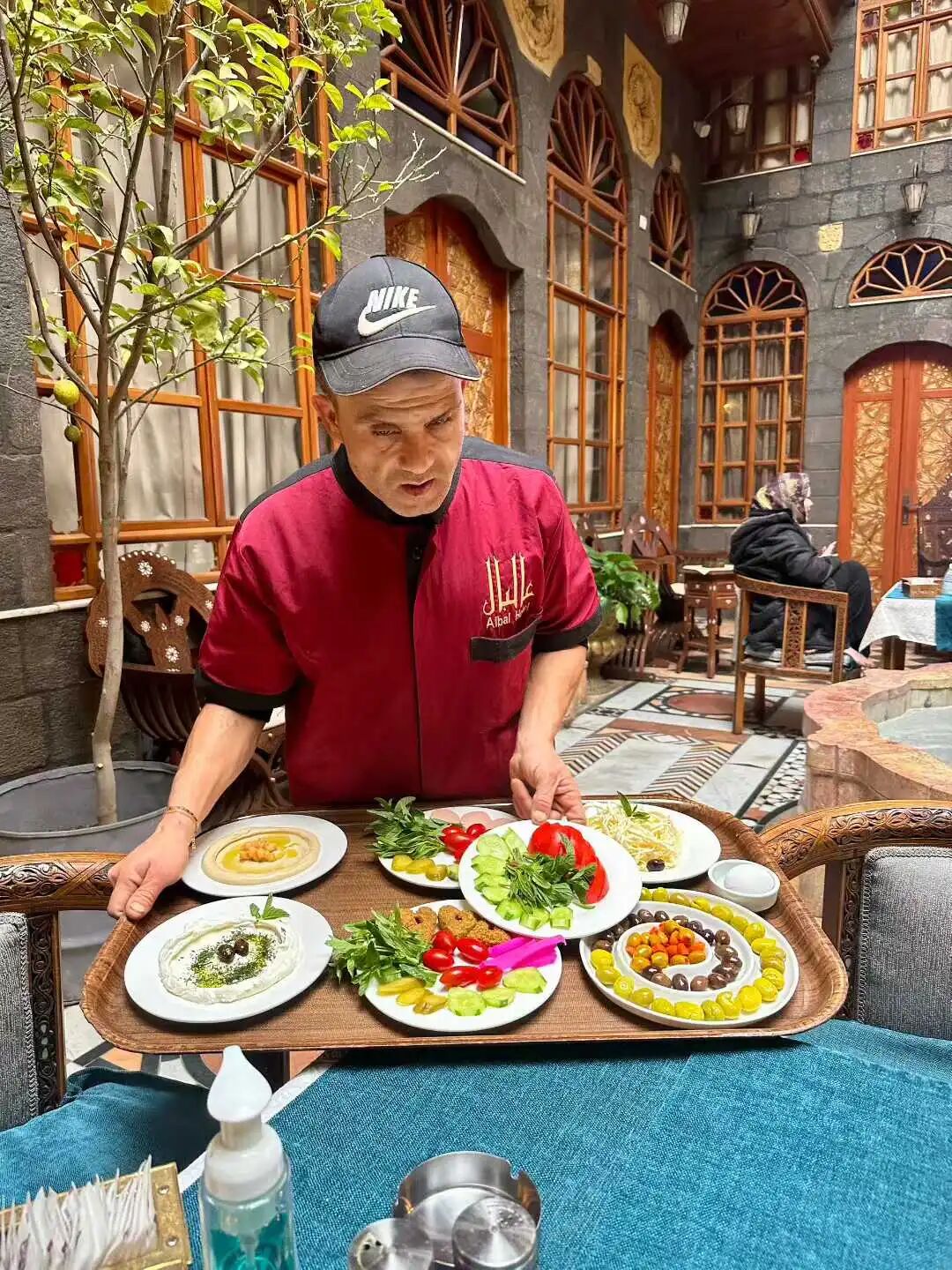
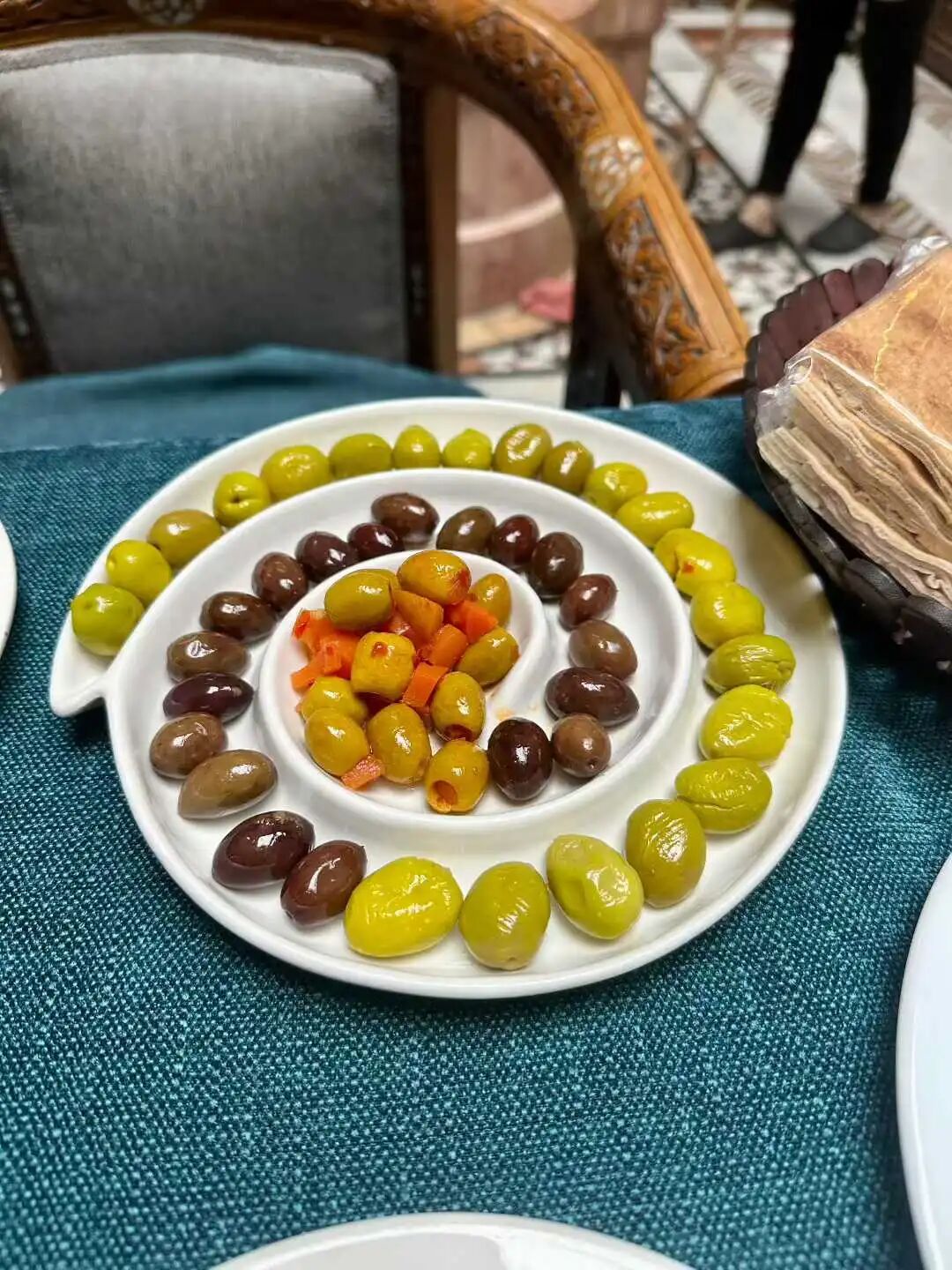
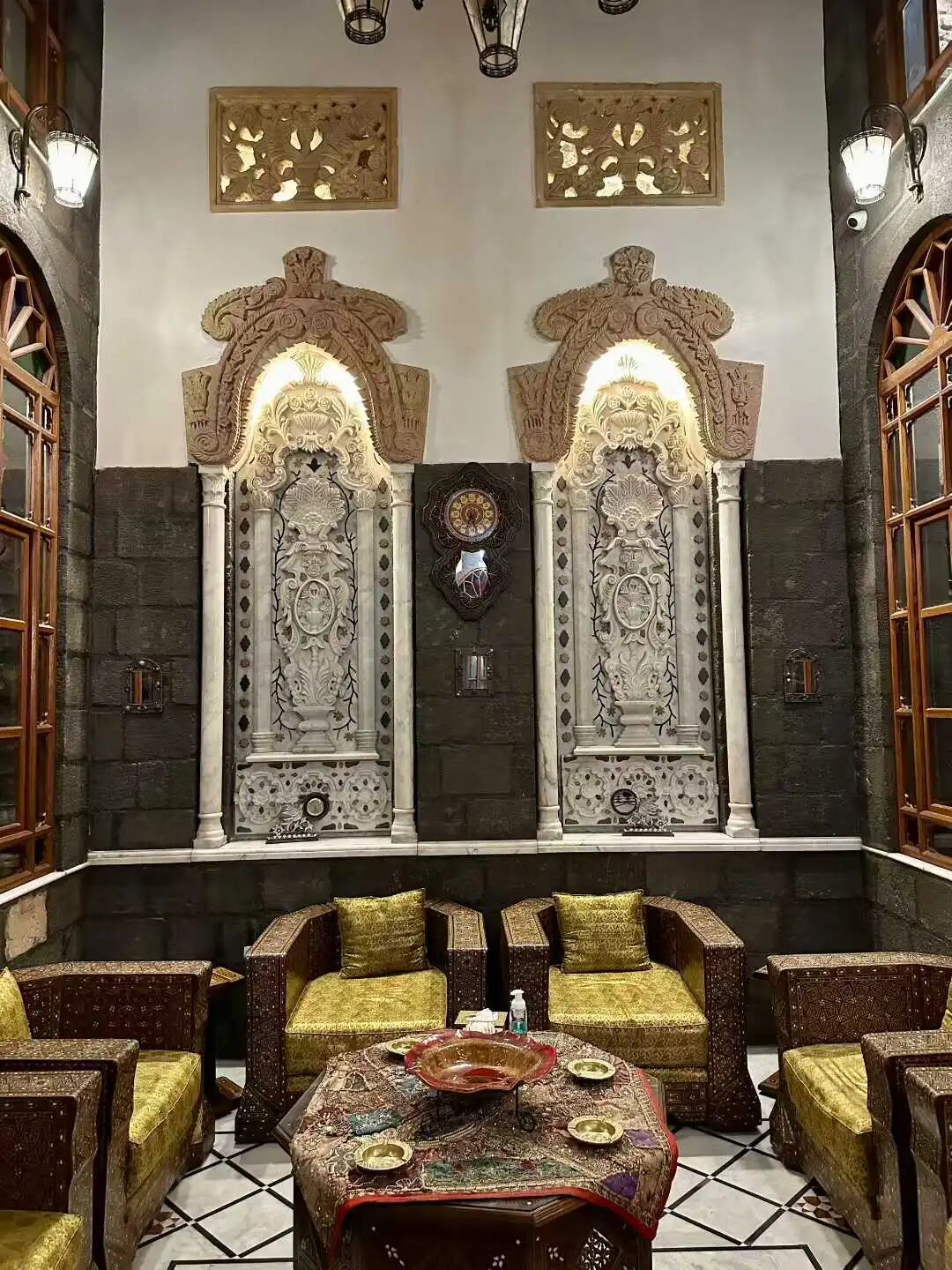
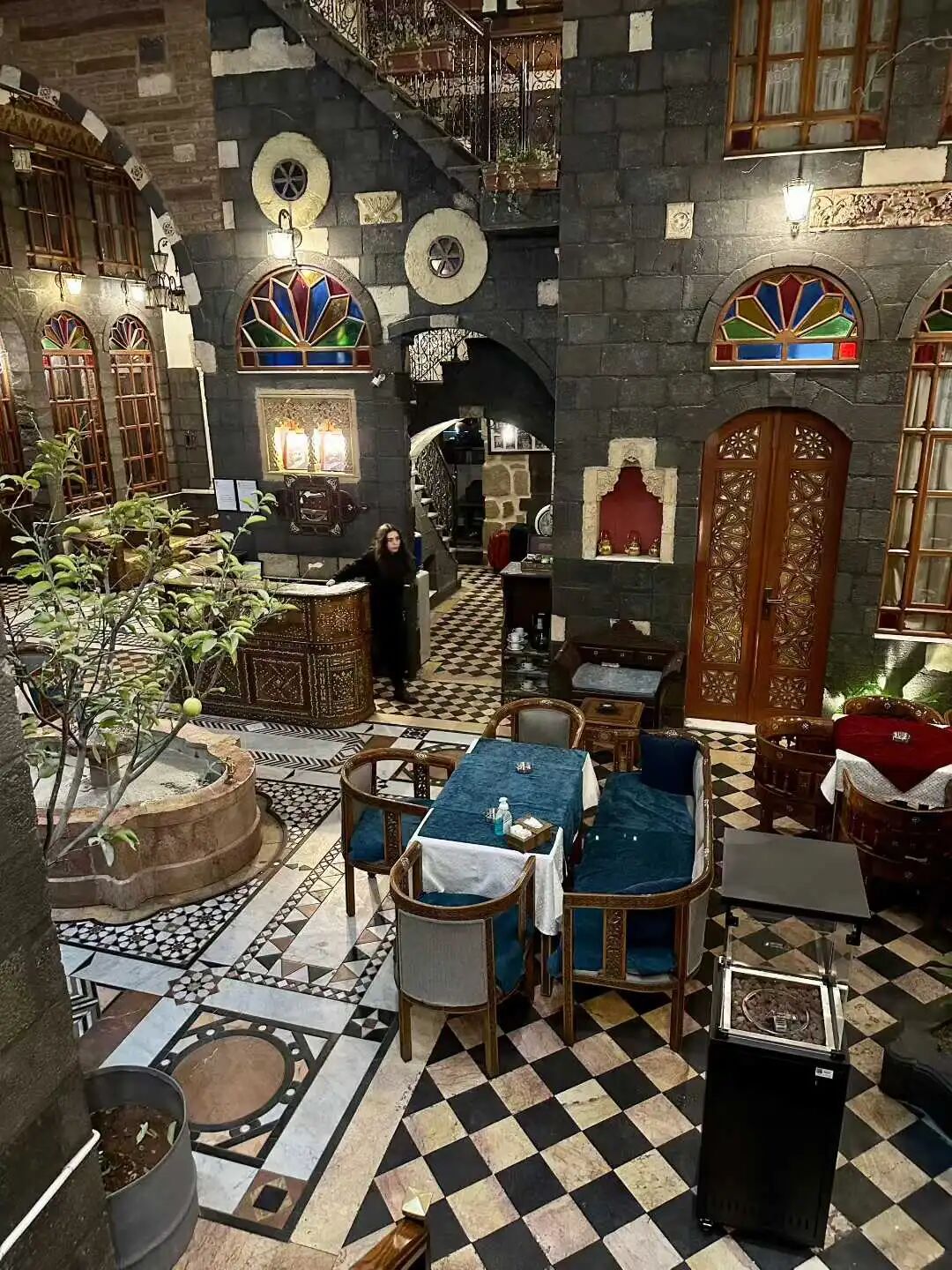
Al Shahbandar Palace Hotel is on the west side of the Christian Quarter near Bab Touma in the Old City of Damascus, right on the busy Al Qemaryeh market street.
The hotel is inside an Ottoman noble mansion built in the 16th century. The Shahbandar family, a famous modern political family in Damascus, lived here for a long time. The famous nationalist leader Abdul Rahman Shahbandar came from this family. The Shahbandar family renovated the mansion on a large scale in the early 20th century and used it as a place to host guests for a long time. In 2007, it was converted into a historic hotel after adding private bathrooms, air conditioning, and electrical systems, while strictly preserving the facade, courtyard, and historical components.
Today, the mansion's courtyard is open as a cafe. You can drink coffee there, so you do not have to stay at the hotel to experience this Ottoman mansion.
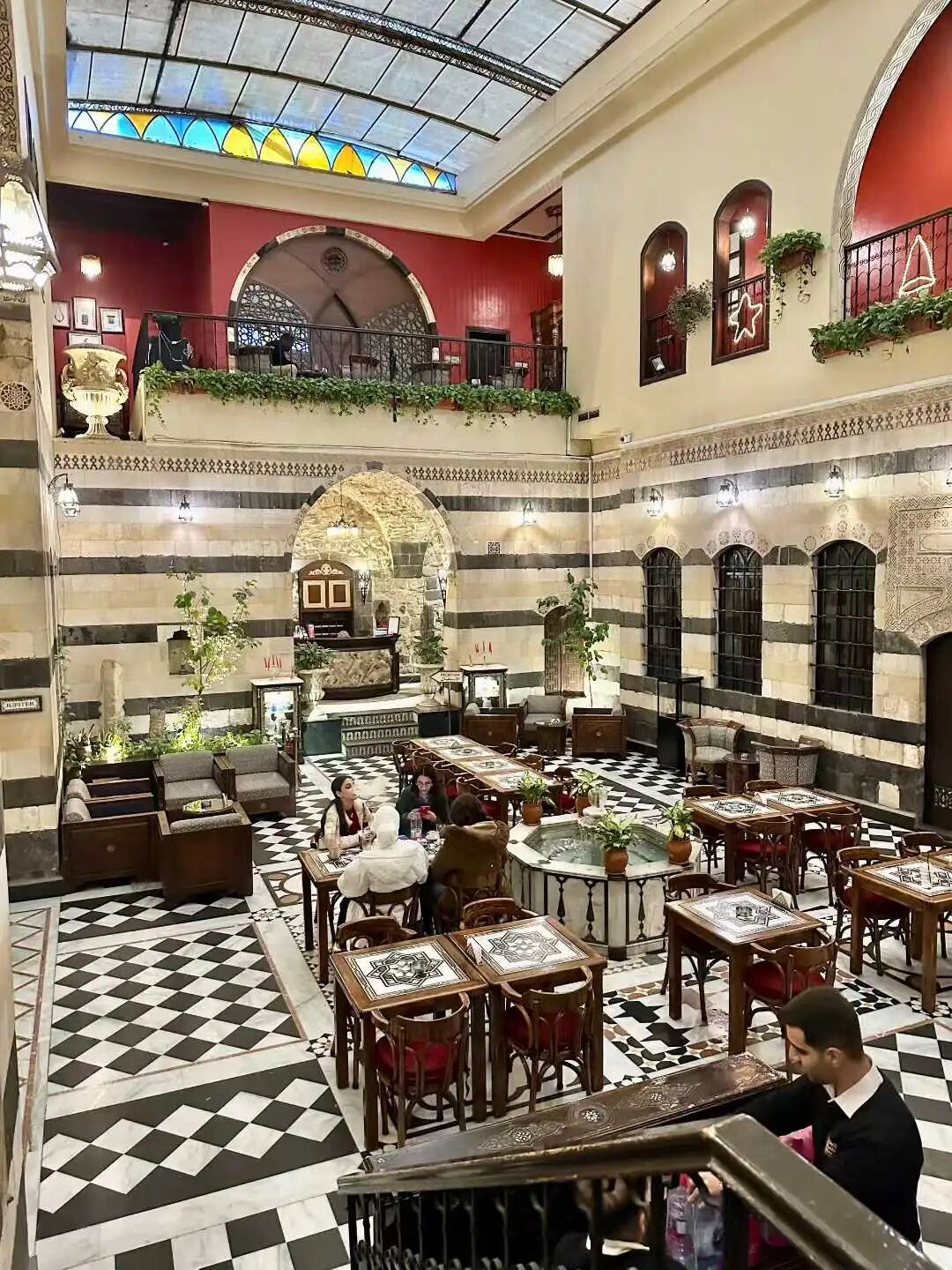
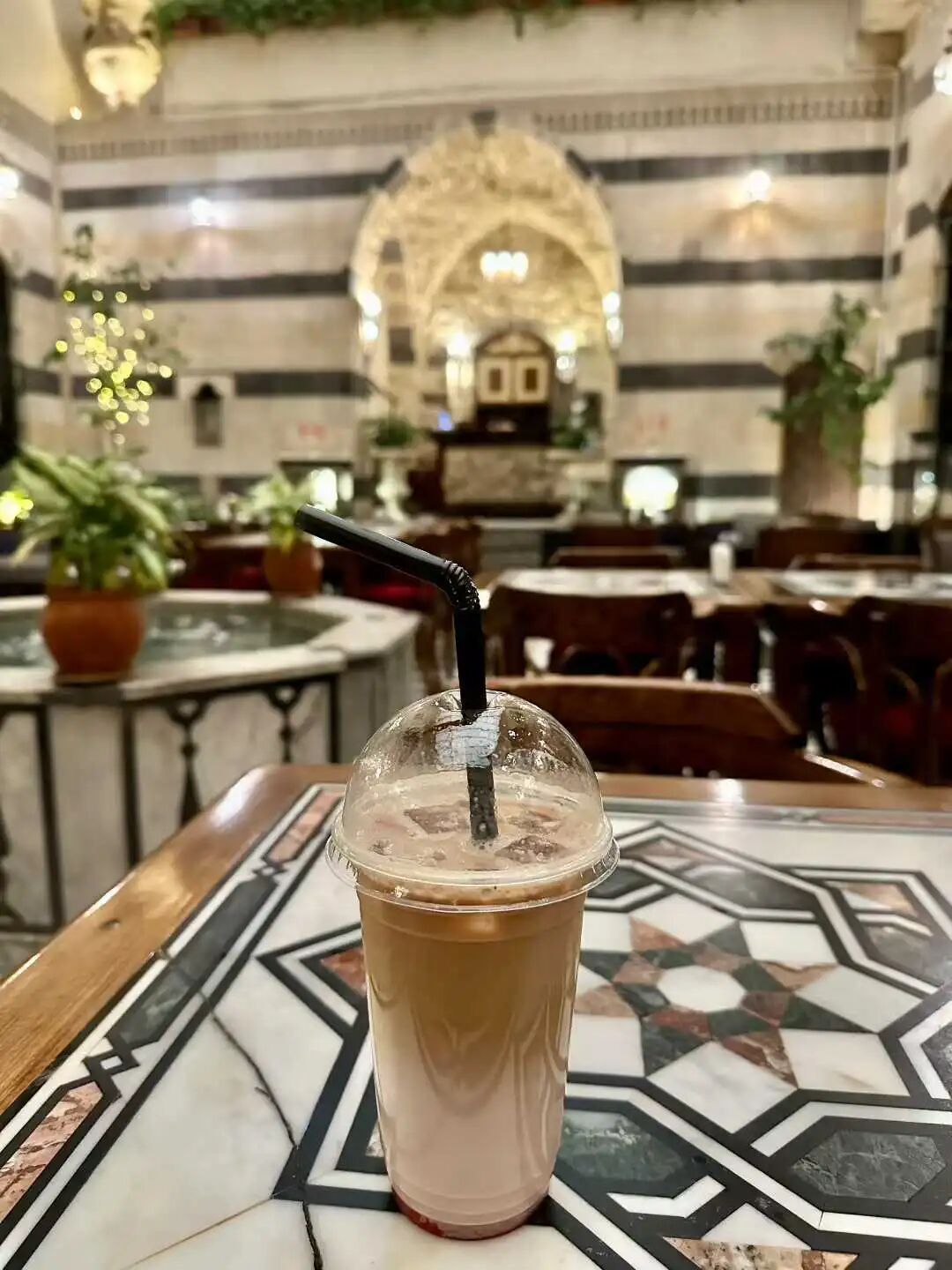
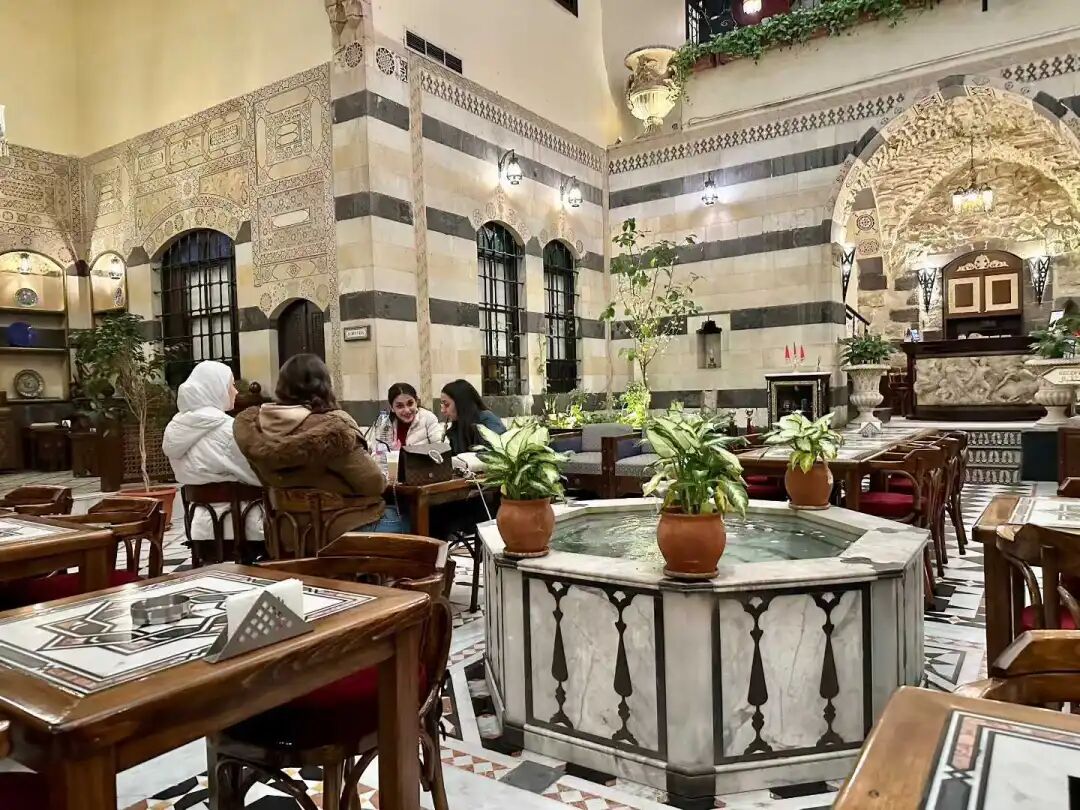
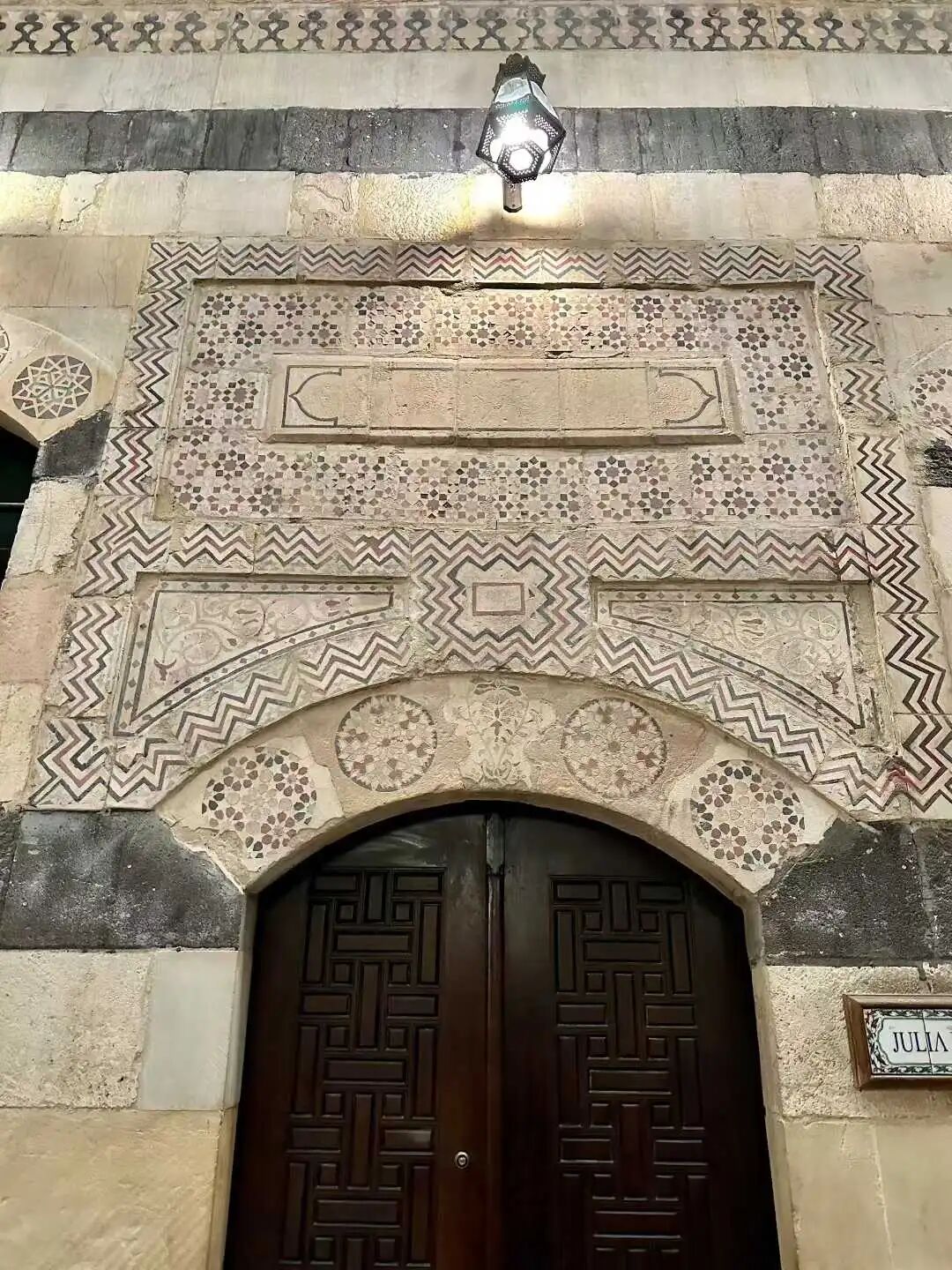
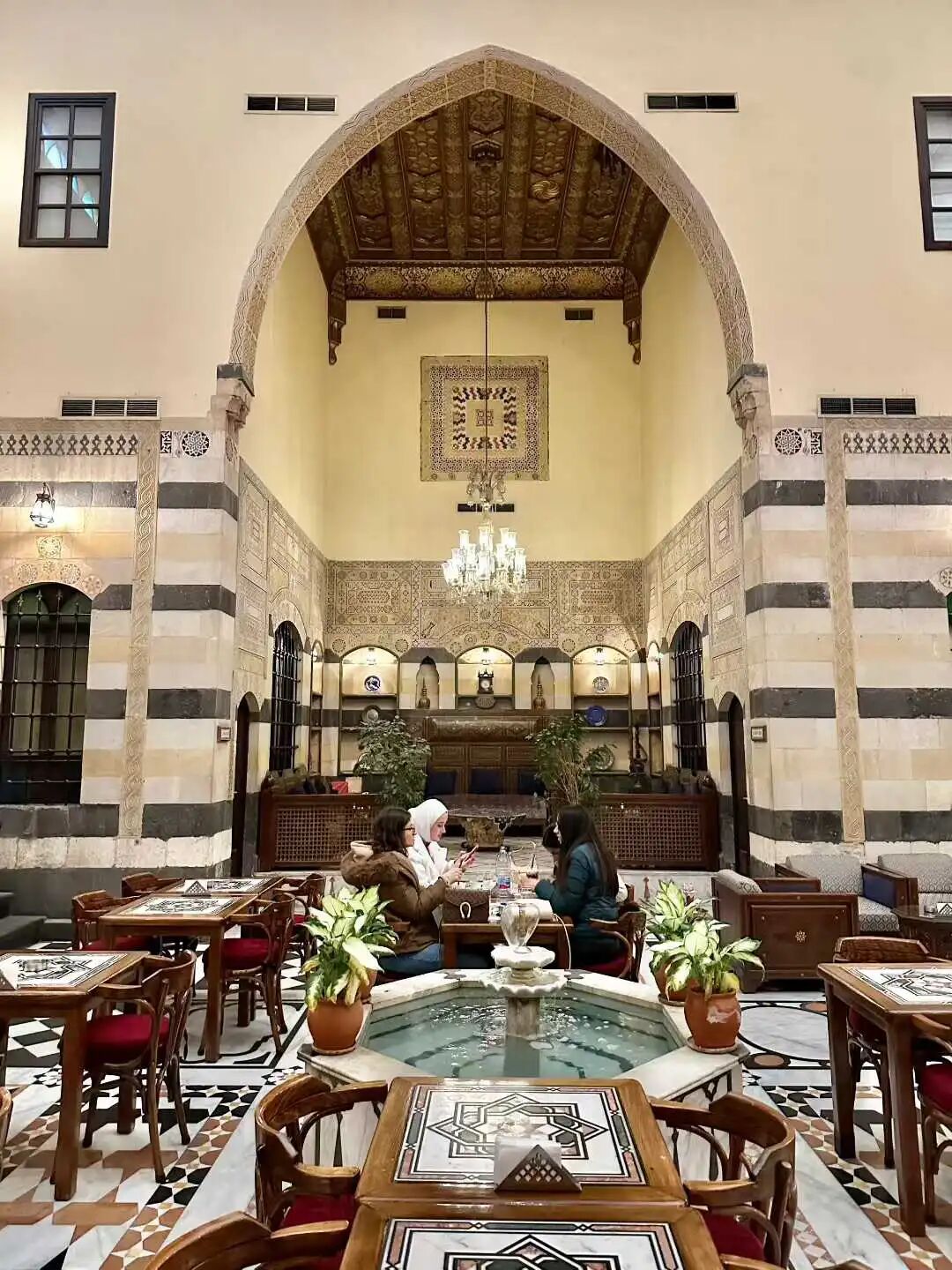
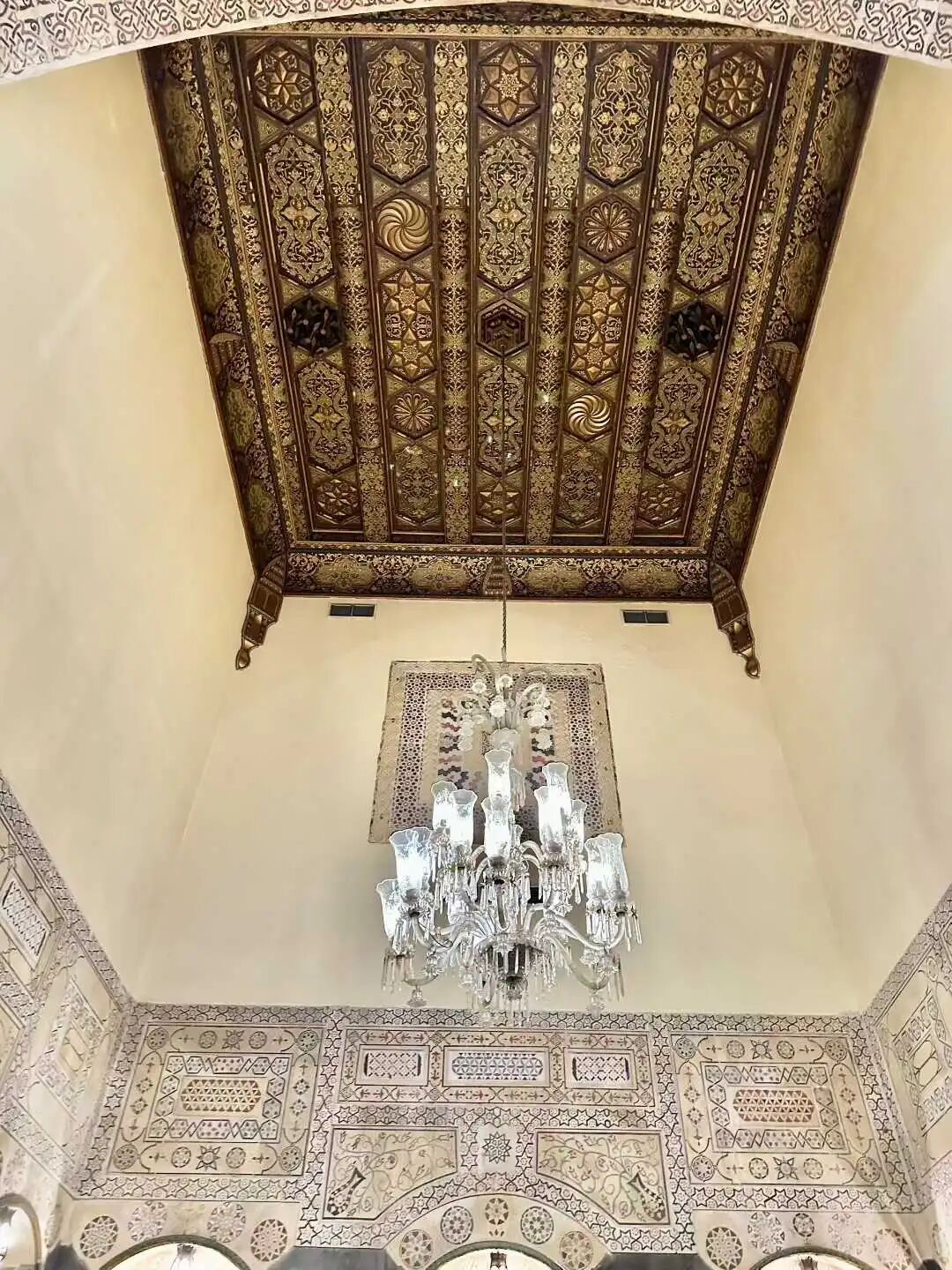
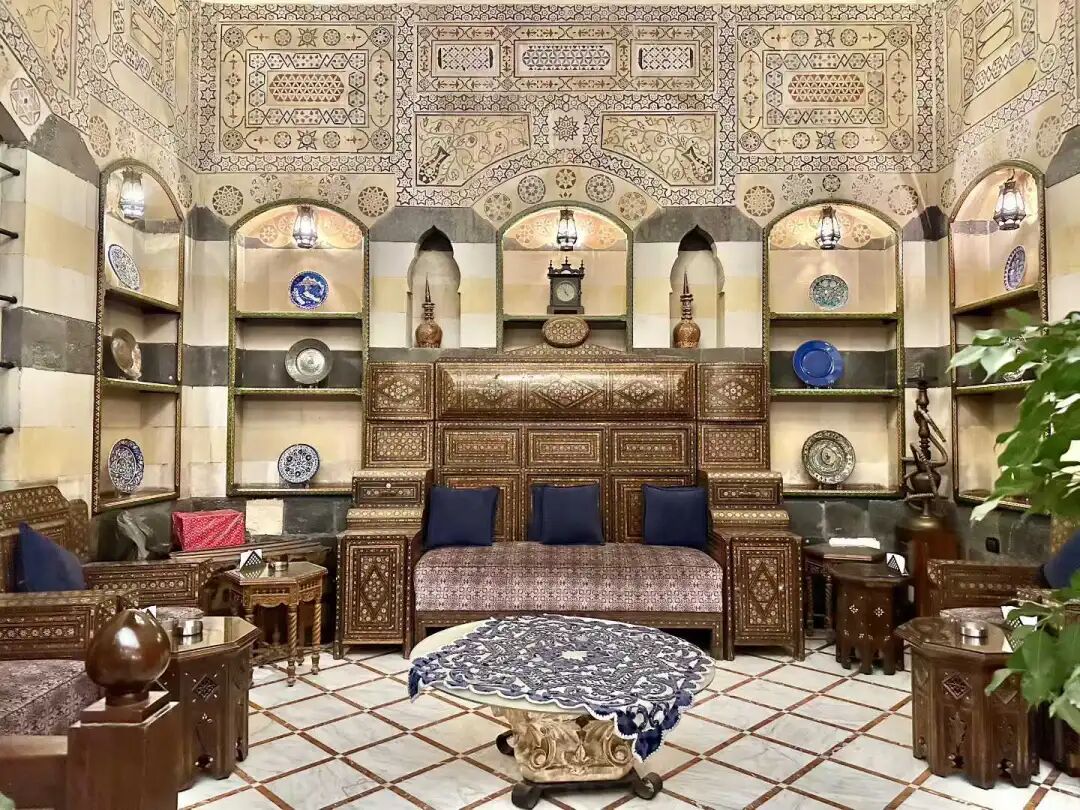
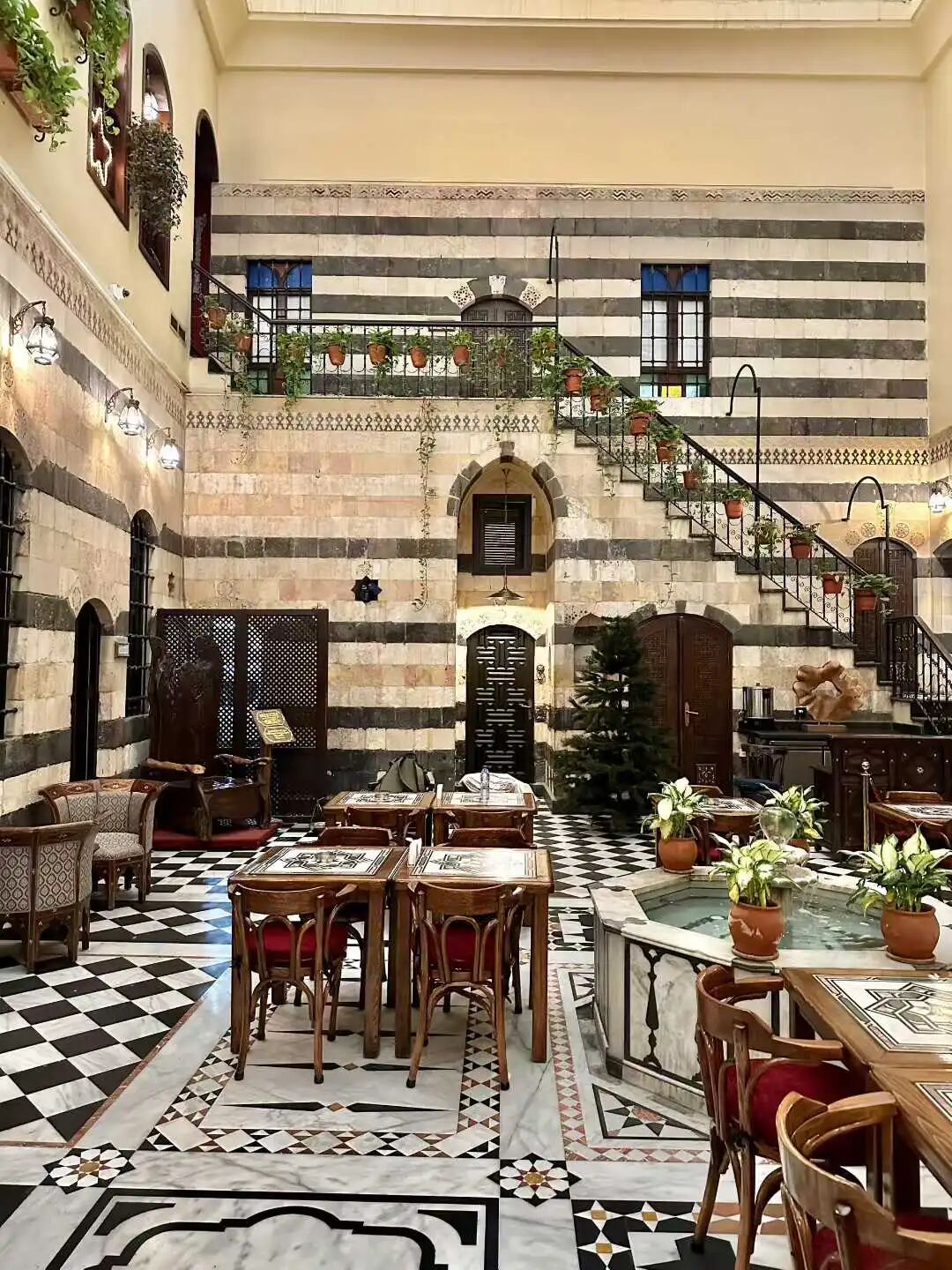
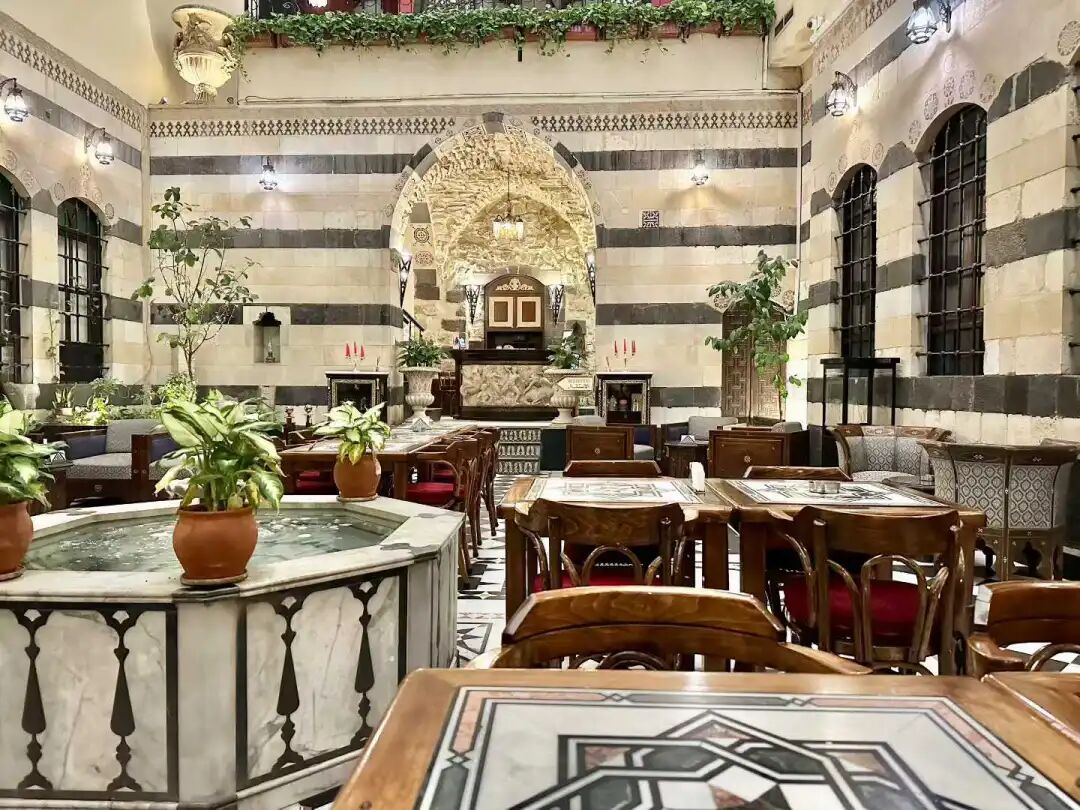
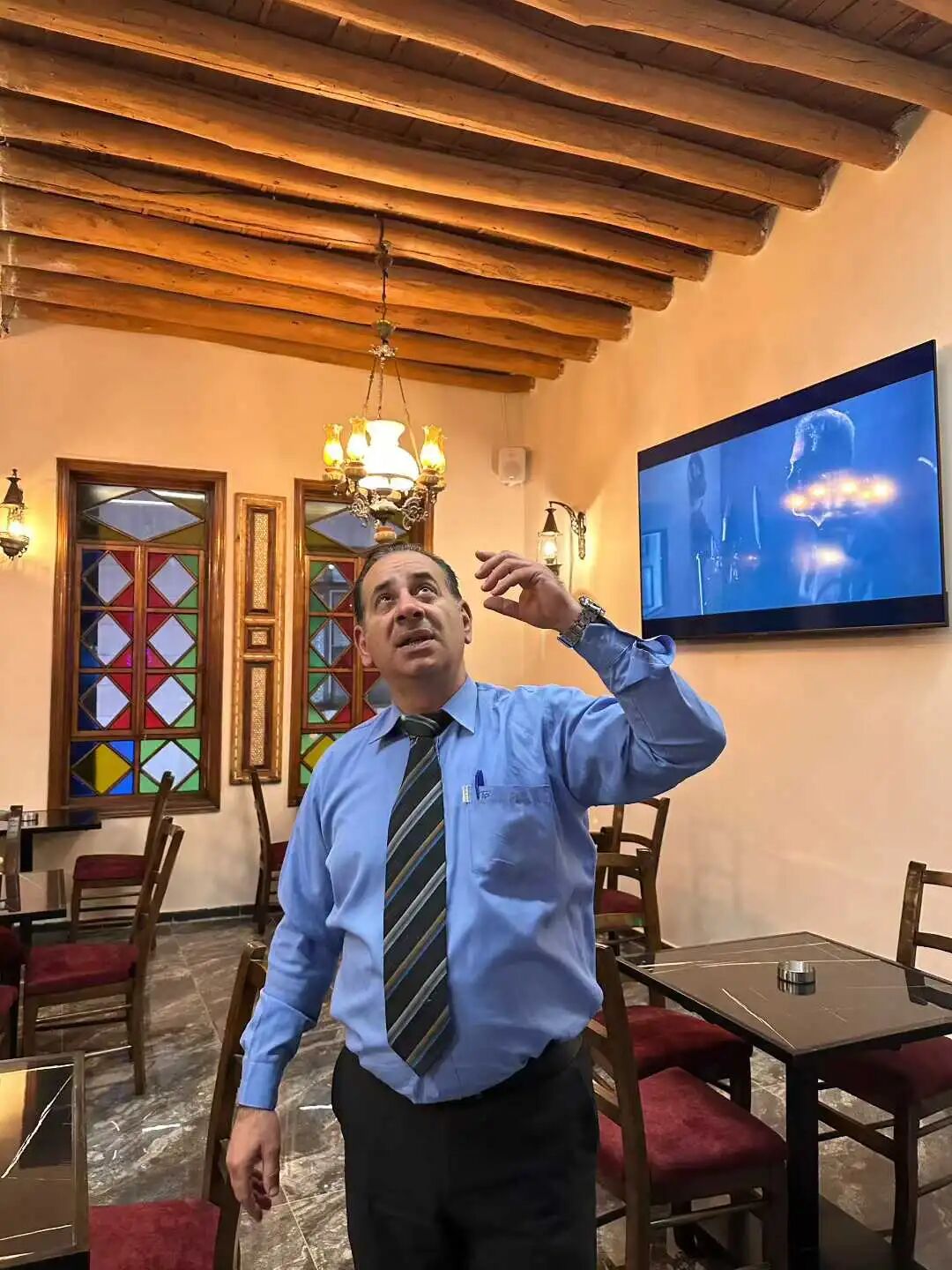
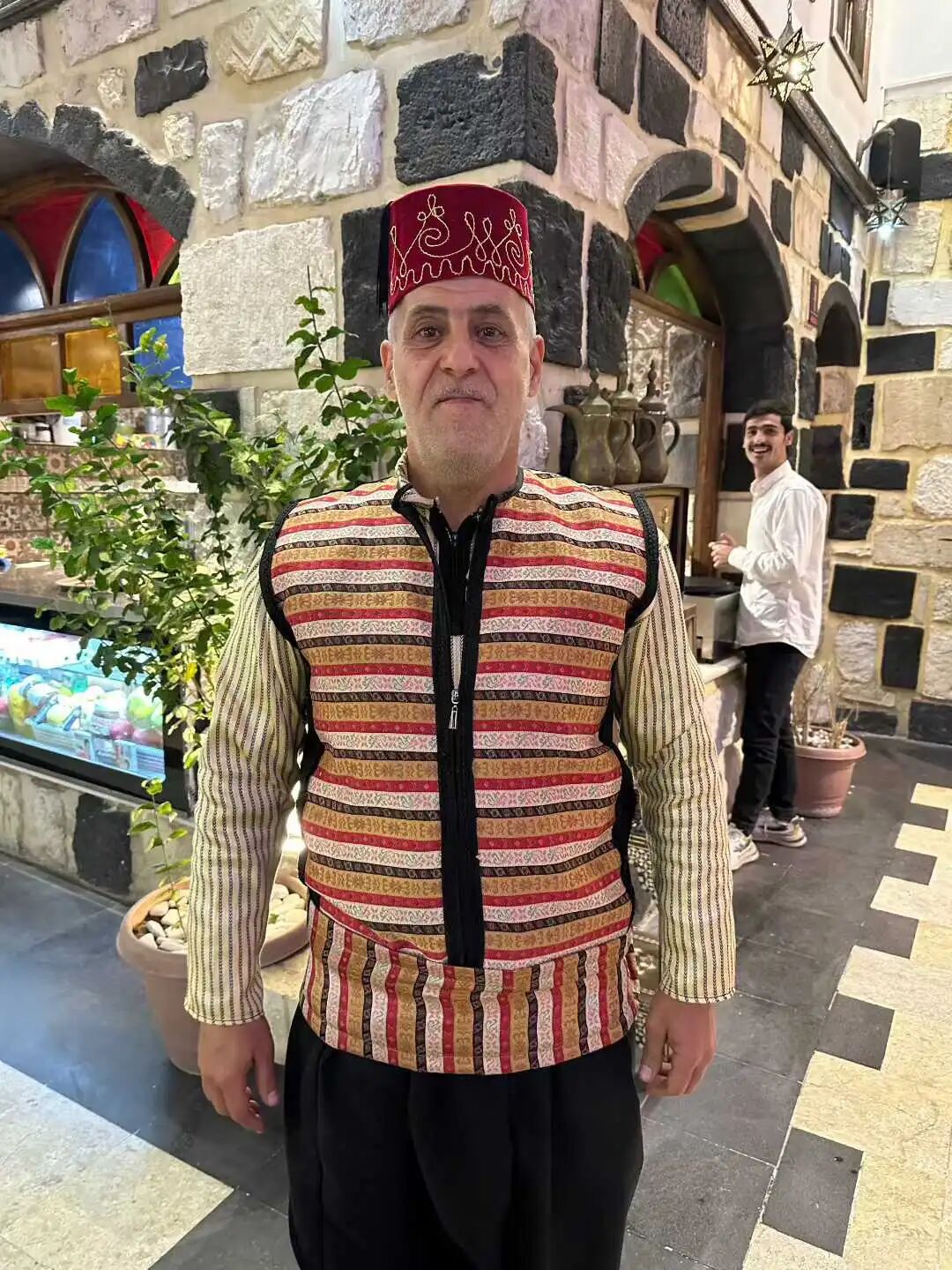
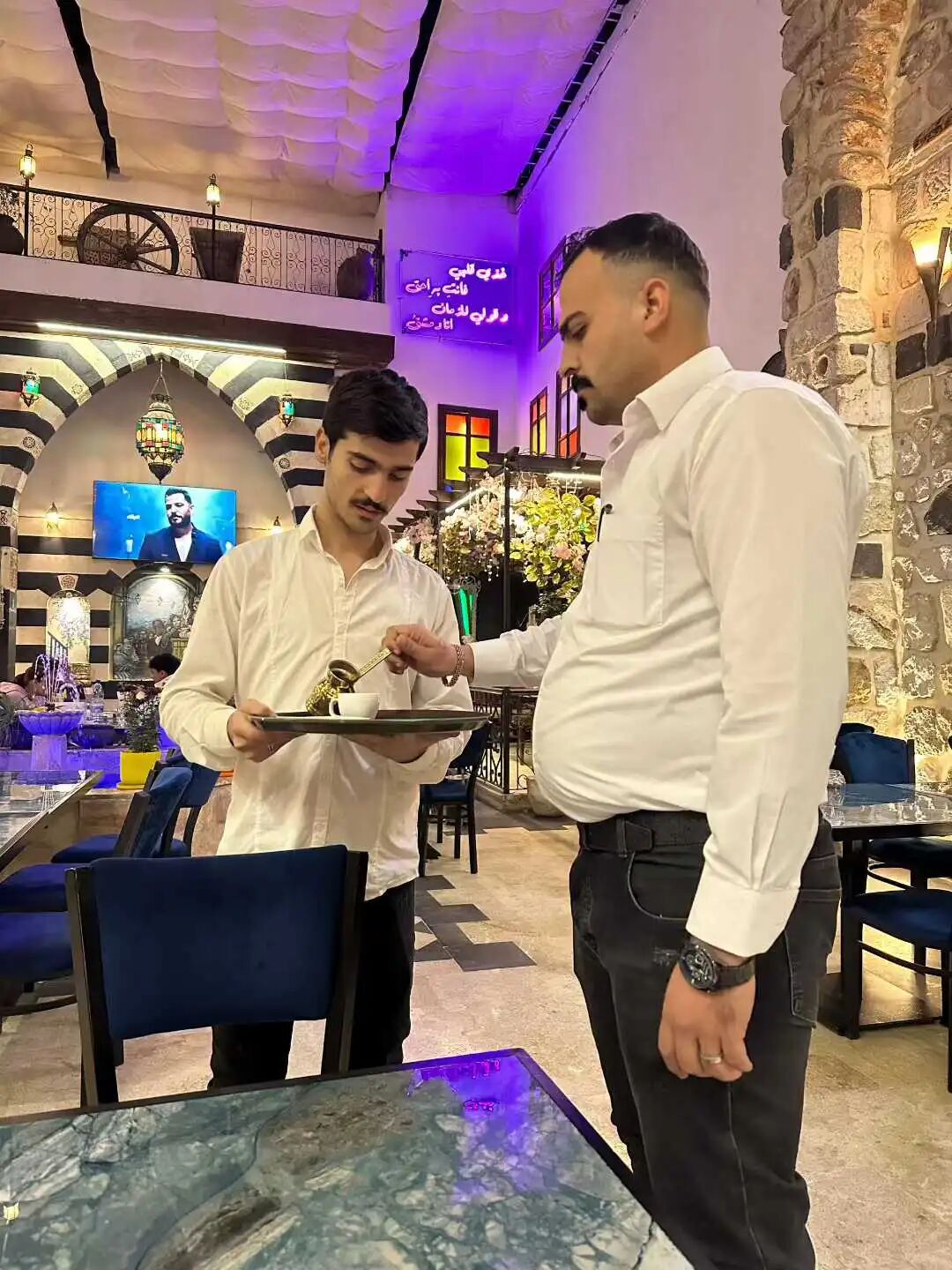
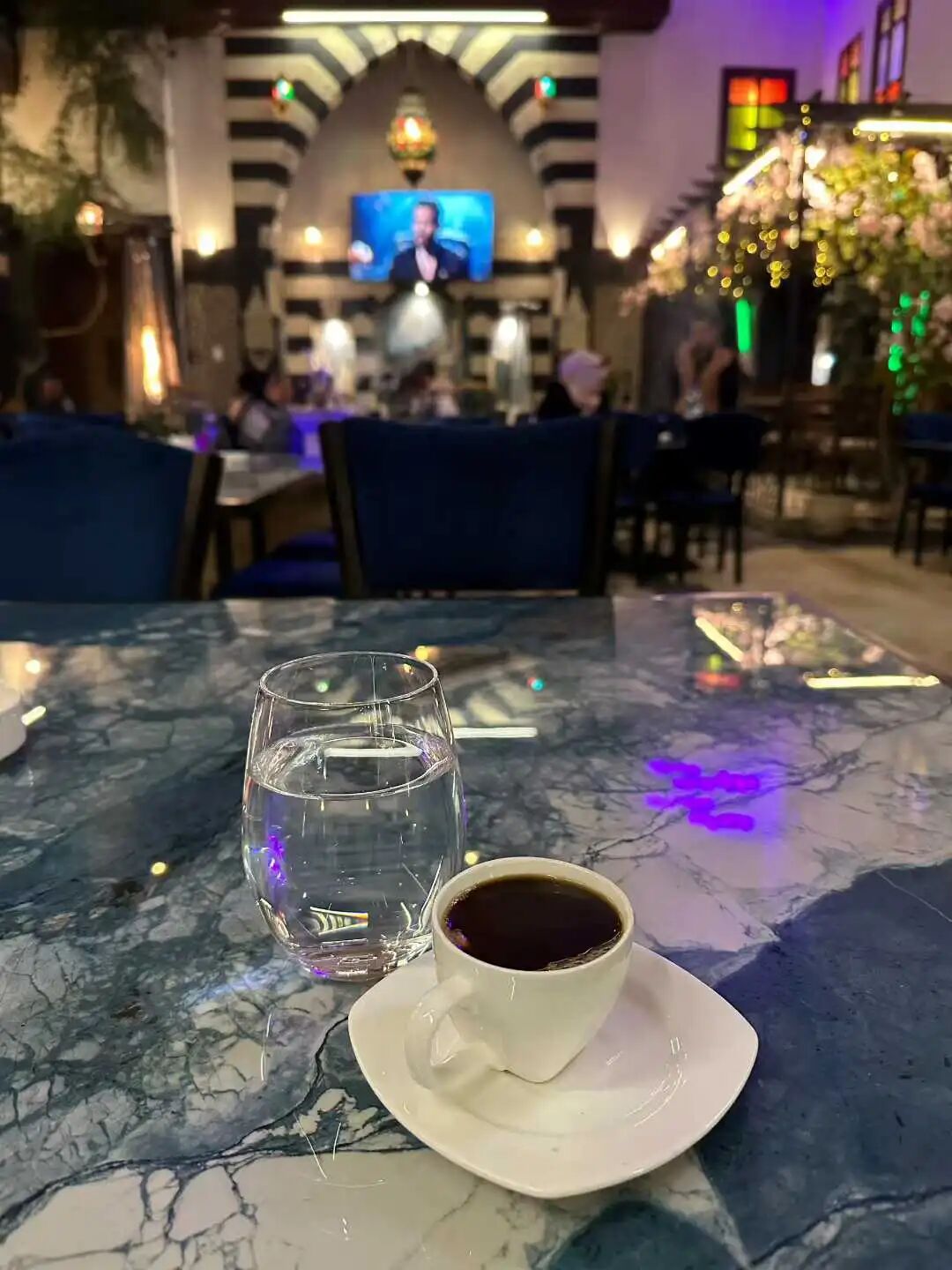
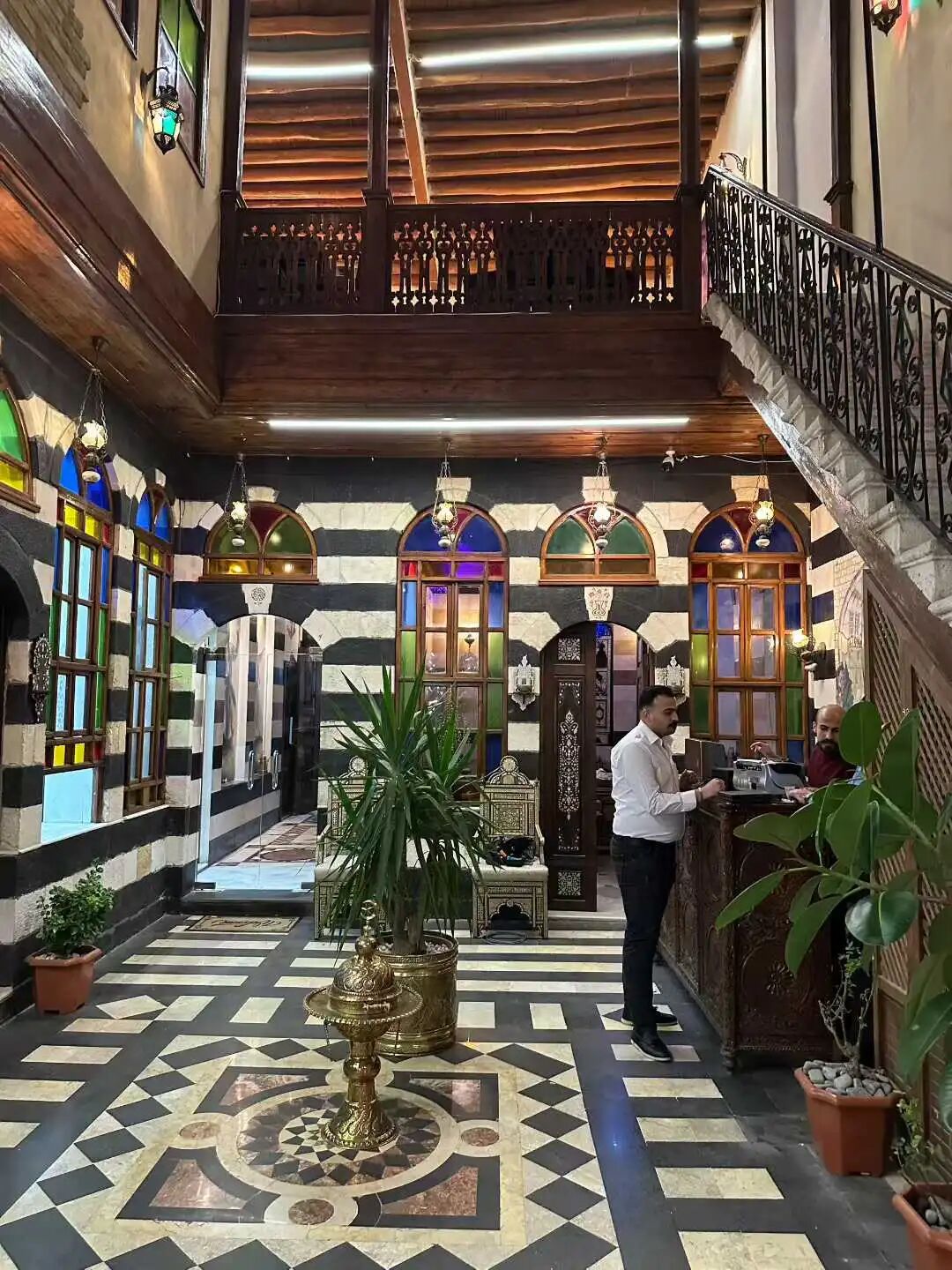
Besides historic hotels, many restaurants and cafes in the Old City of Damascus are also converted from Ottoman mansions. The first place I recommend had just opened when I visited, so you cannot even find it online. It is located on the road after entering the Old City of Damascus from the Bab Touma gate and turning west into Qanayet Al-Hatab street. They only had tea and coffee when I went, but the environment was quite nice. I ordered a cup of sand-brewed coffee. The owner speaks English. He was very enthusiastic and invited me to the second floor to see the old building.
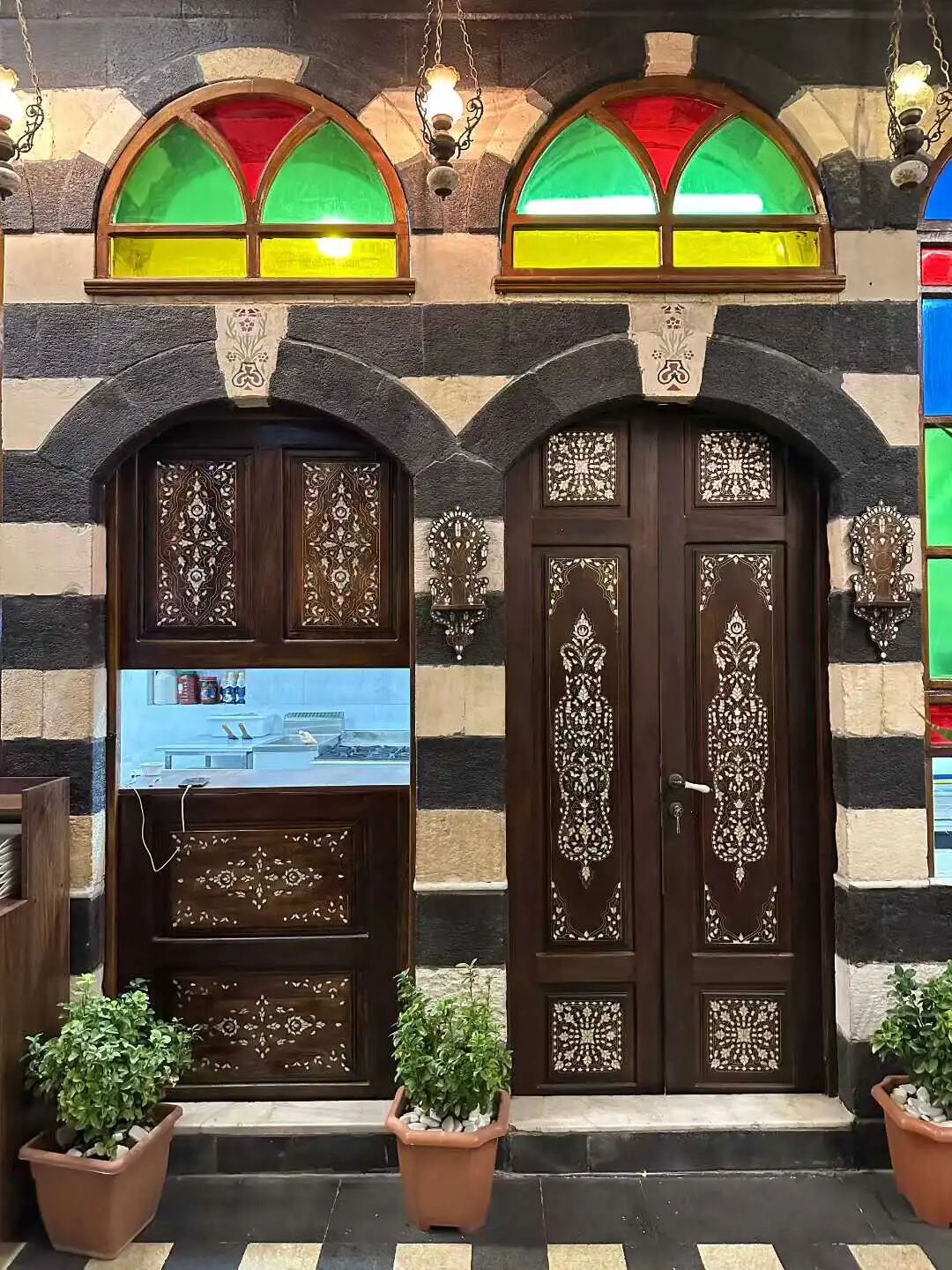
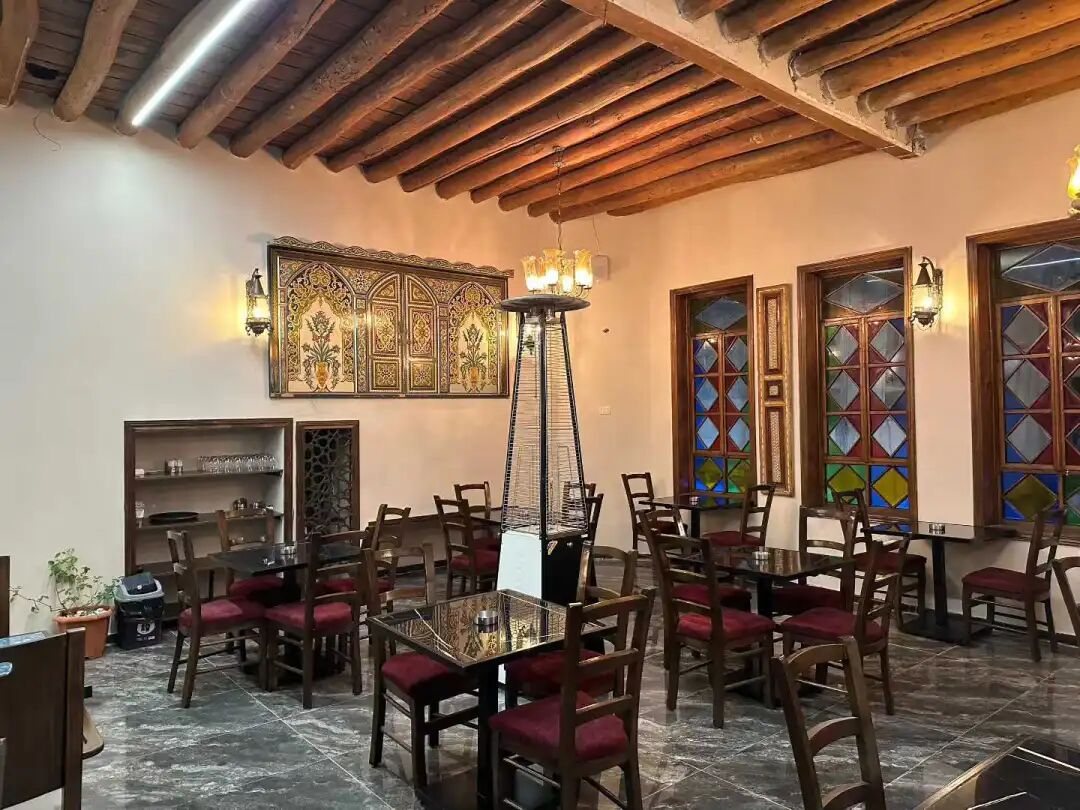
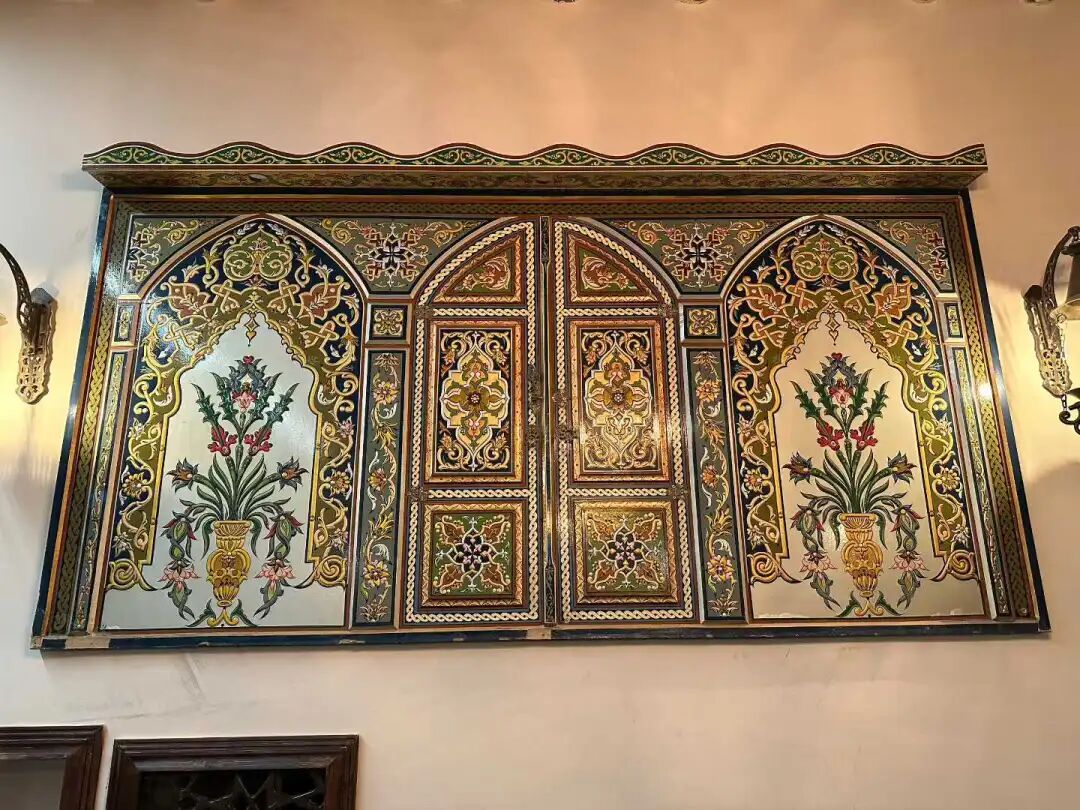
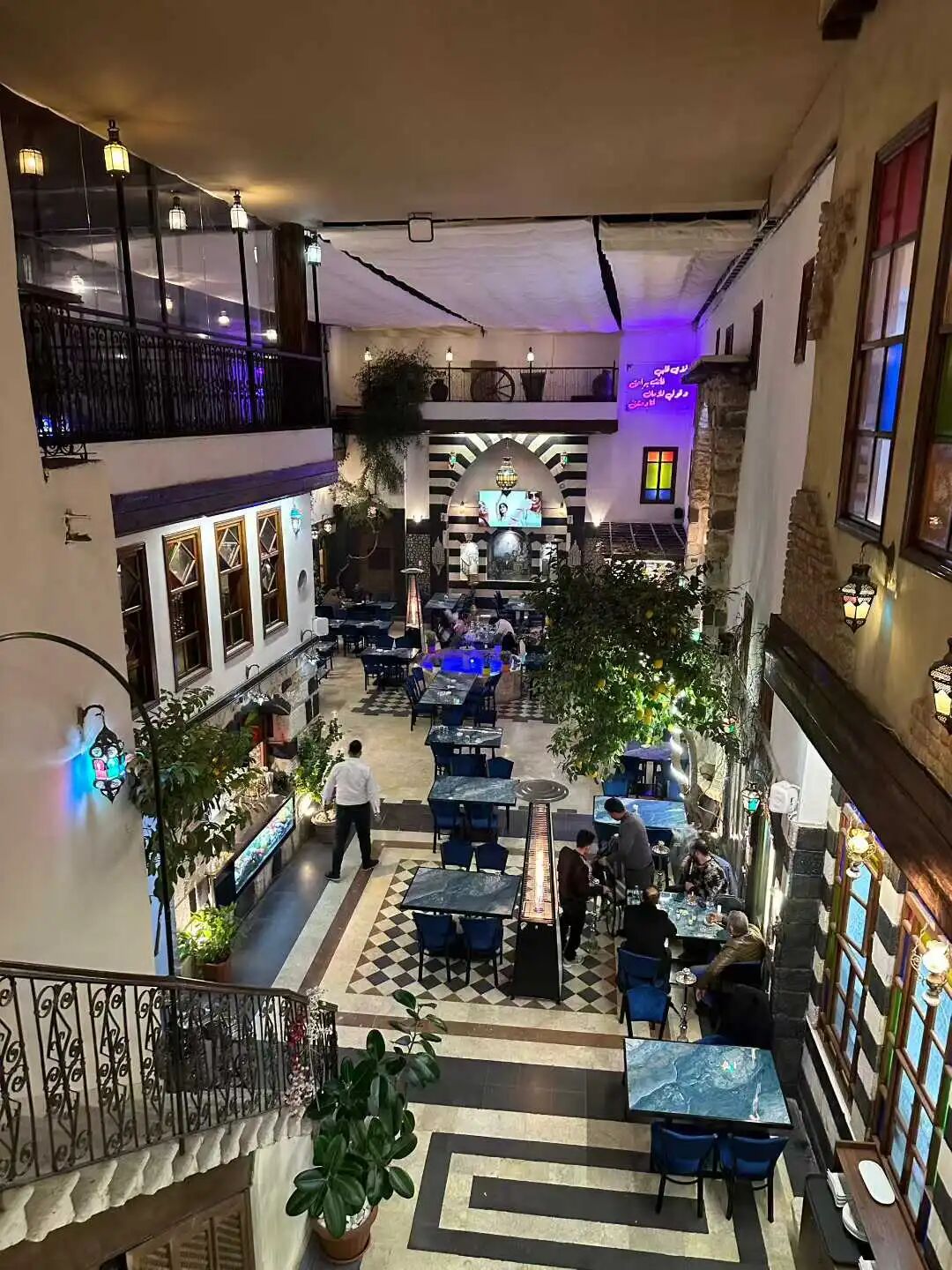
Lady Cafe is on the Al Nawfara pedestrian street outside the east gate of the Umayyad Mosque. It is very lively in the afternoon and evening. I ate a Damascus specialty snack called Toshka pie at the cafe. It is known as a national snack of Syria. Toshka is made by putting spicy sausage (Sujuk) and Kashkawan cheese inside pita bread, then pressing it on an iron griddle on both sides until the cheese melts and the bread is crispy. When you eat it, it is crispy on the outside and soft on the inside. The bread is charred and fragrant, and the meat and cheese are rich and stretchy.
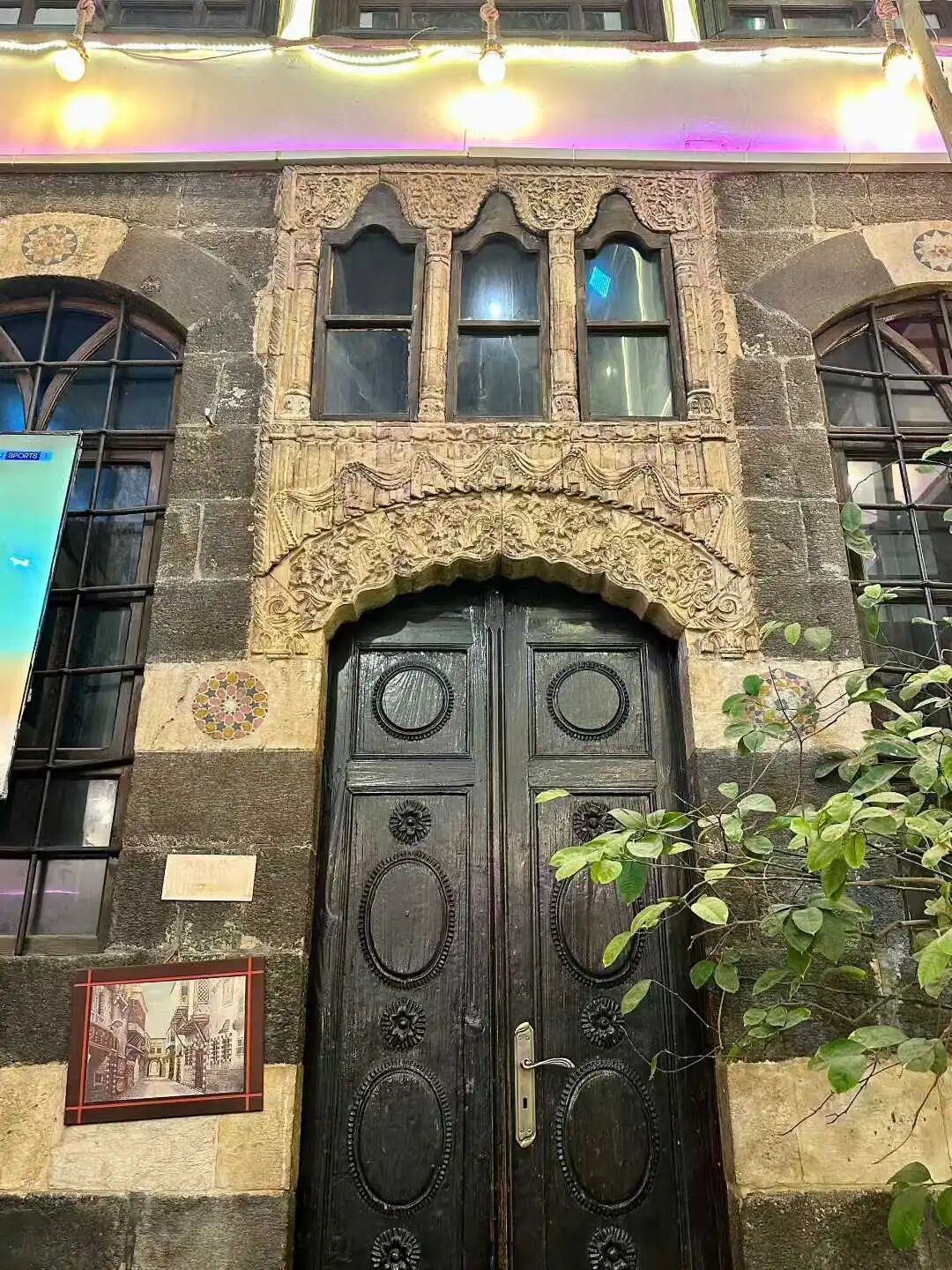
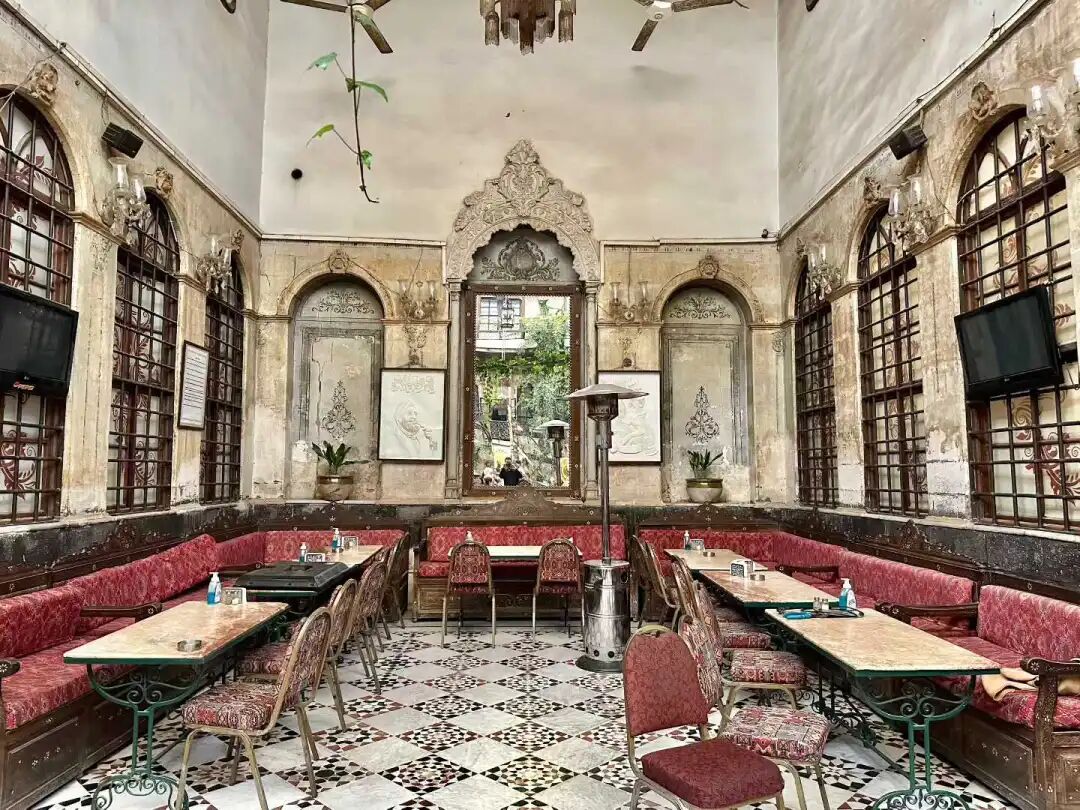
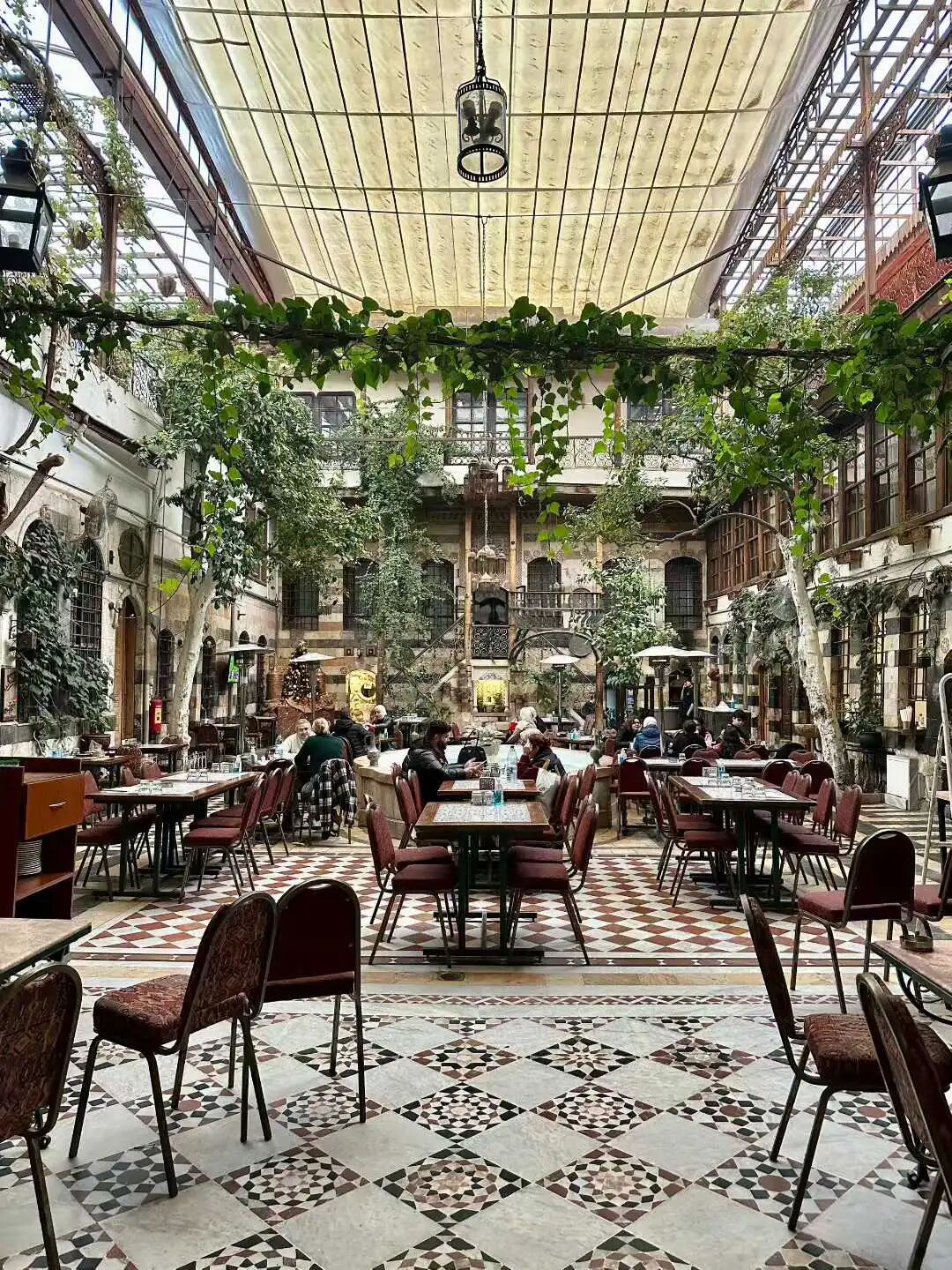
Beit Jabri is on As Sawwaf street, southeast of the Umayyad Mosque. It is an Ottoman mansion restaurant in the Old City of Damascus that is well worth a visit.
This mansion was built in the early 18th century. The current owner Raad Jabri's grandfather bought the property in the late 19th century, and their family lived there from 1905 to 1973. The house was gradually abandoned after the 1970s and later became a workshop for carpenters and blacksmiths. Raad Jabri restored the place in the 1990s and turned it into a restaurant. He also hosts cultural seminars, poetry readings, and classical music evenings from time to time.
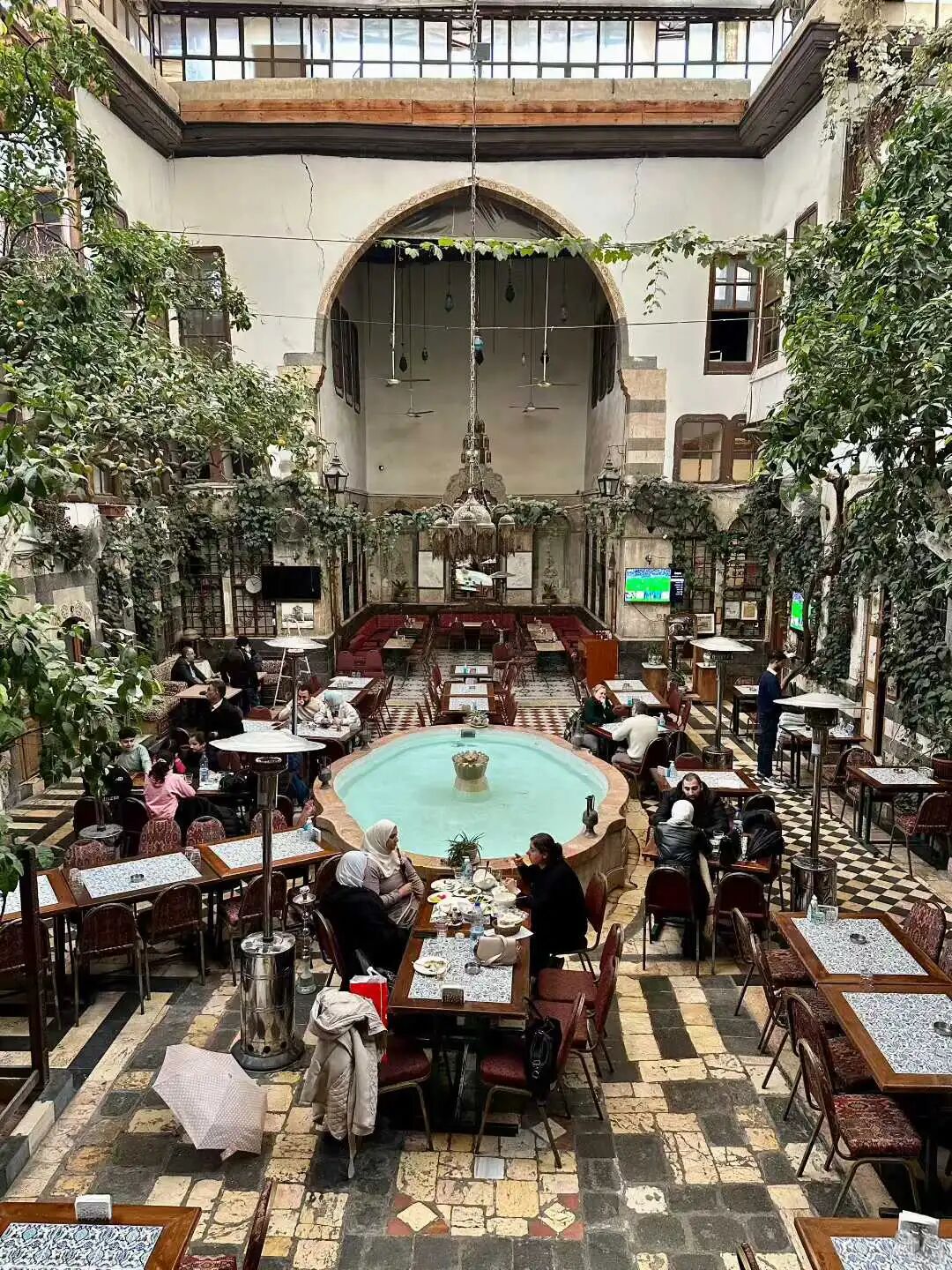
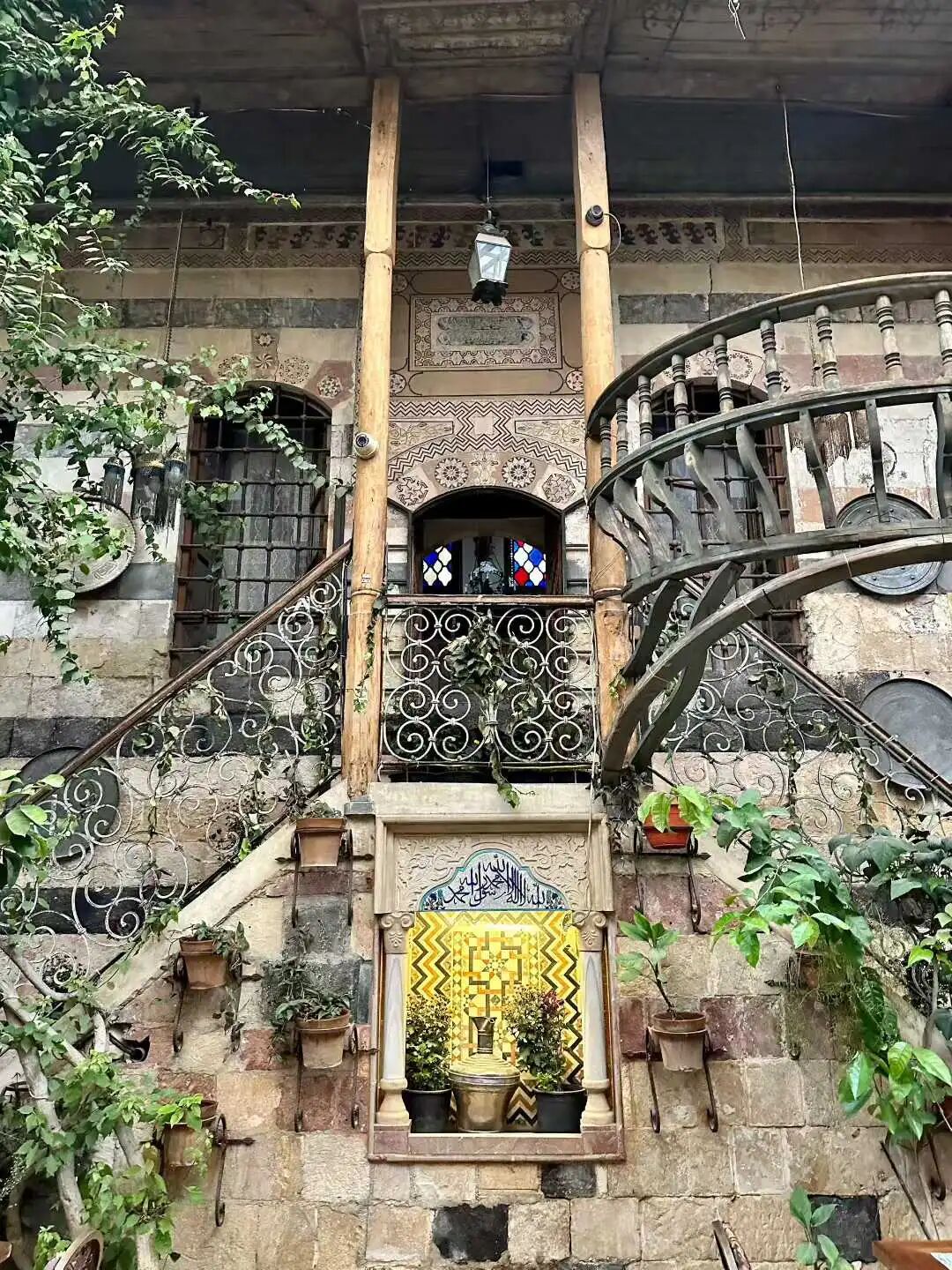
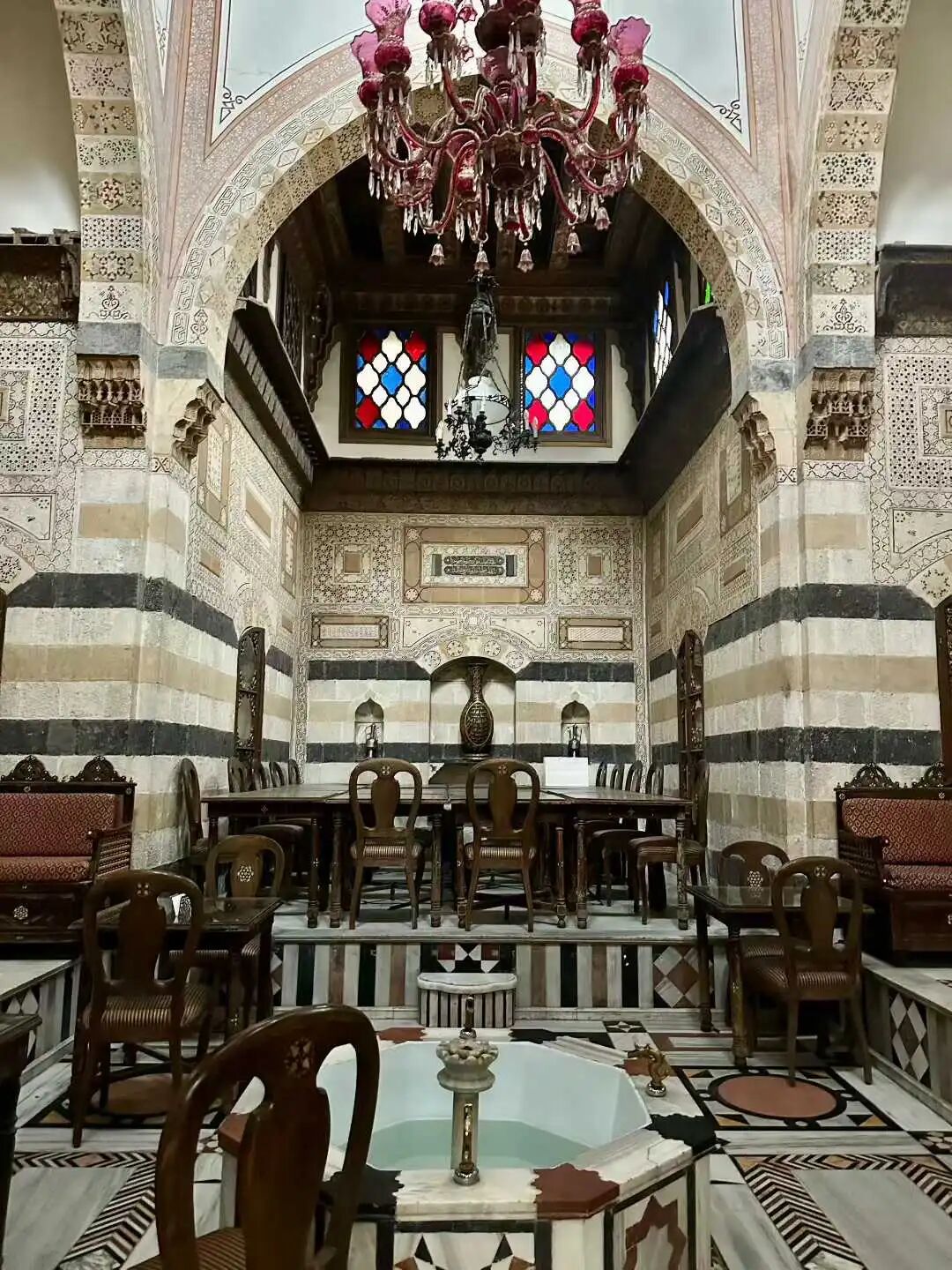
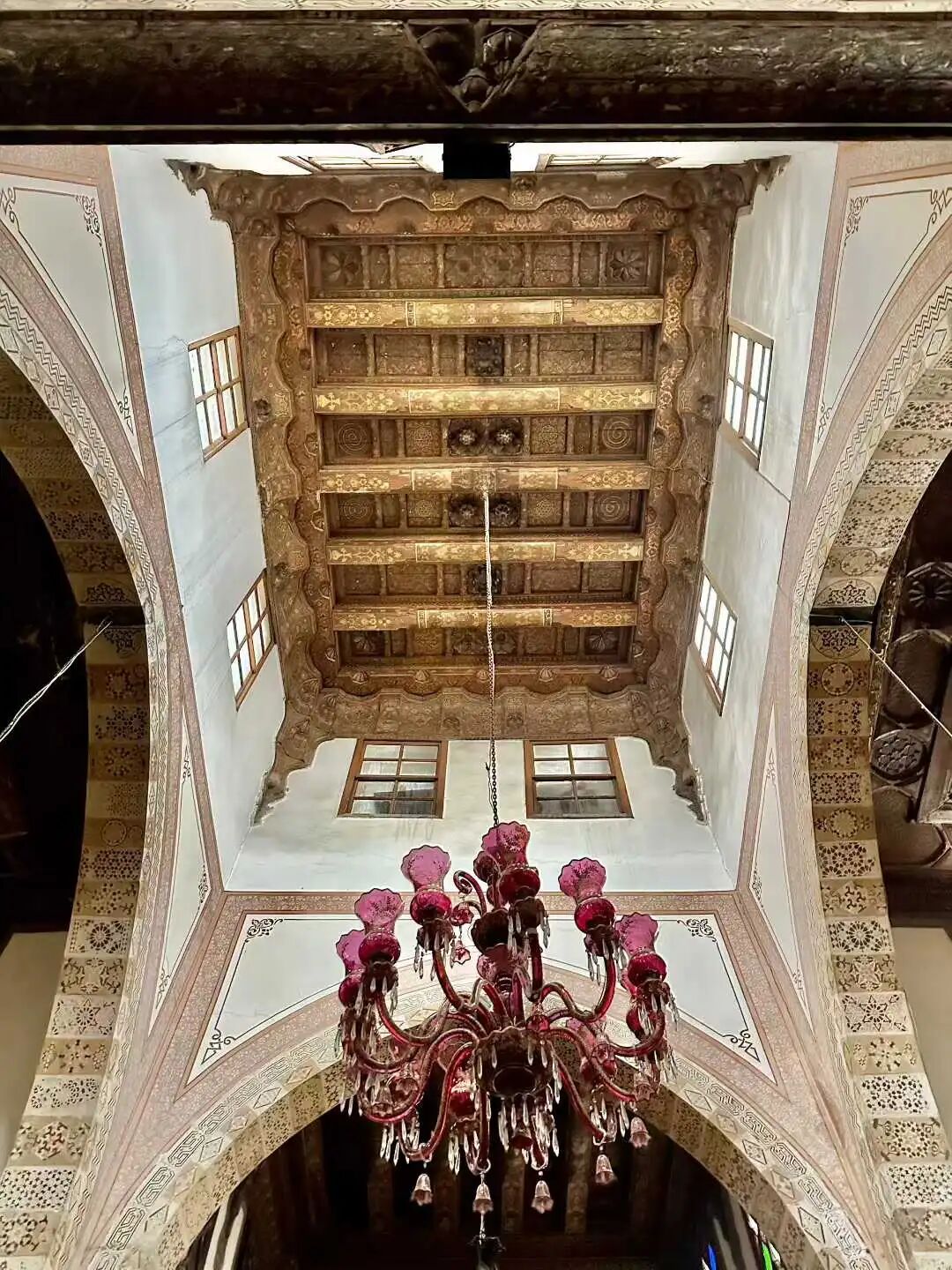
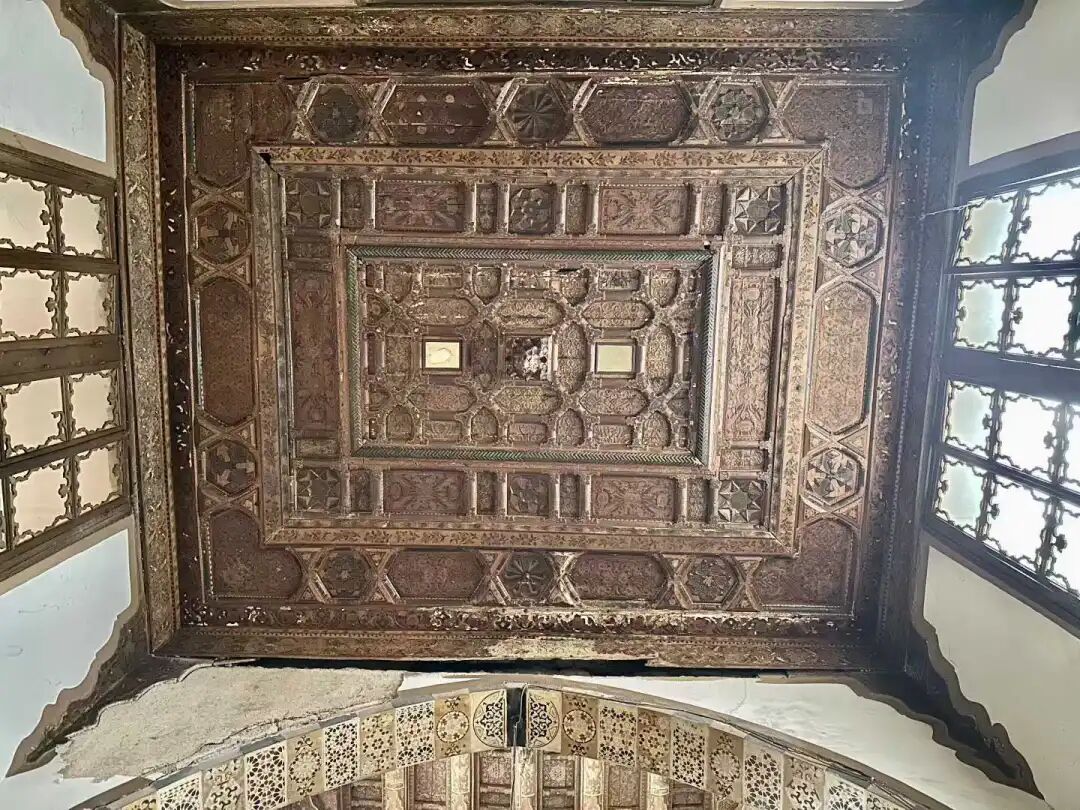
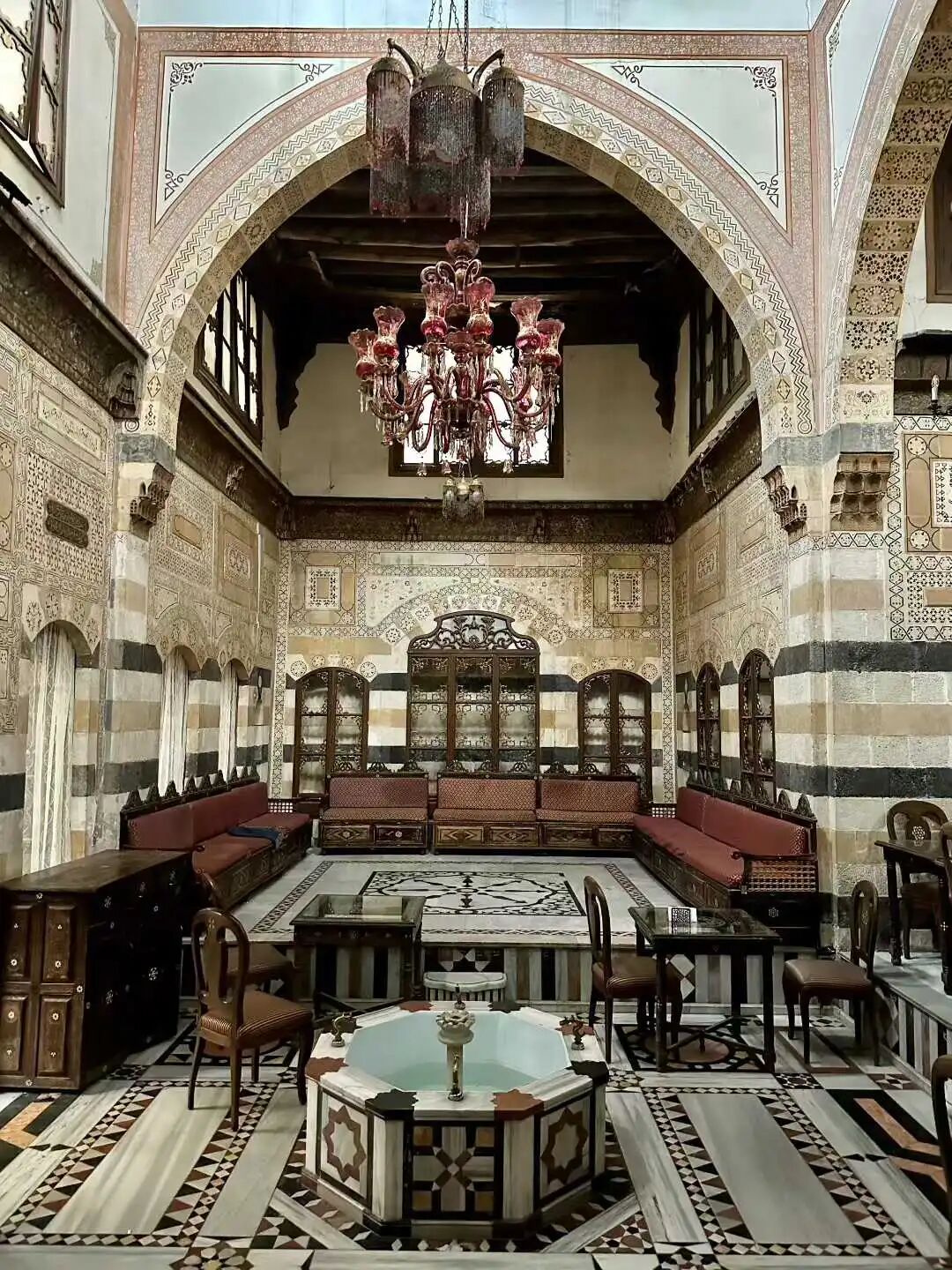
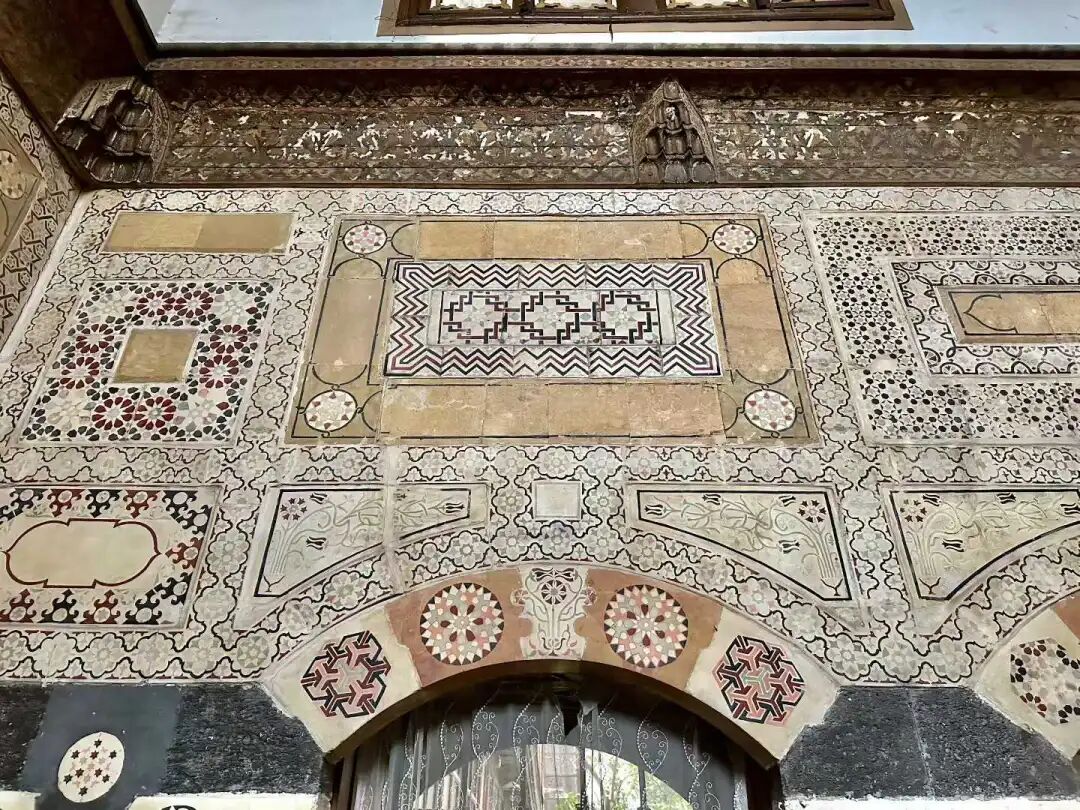
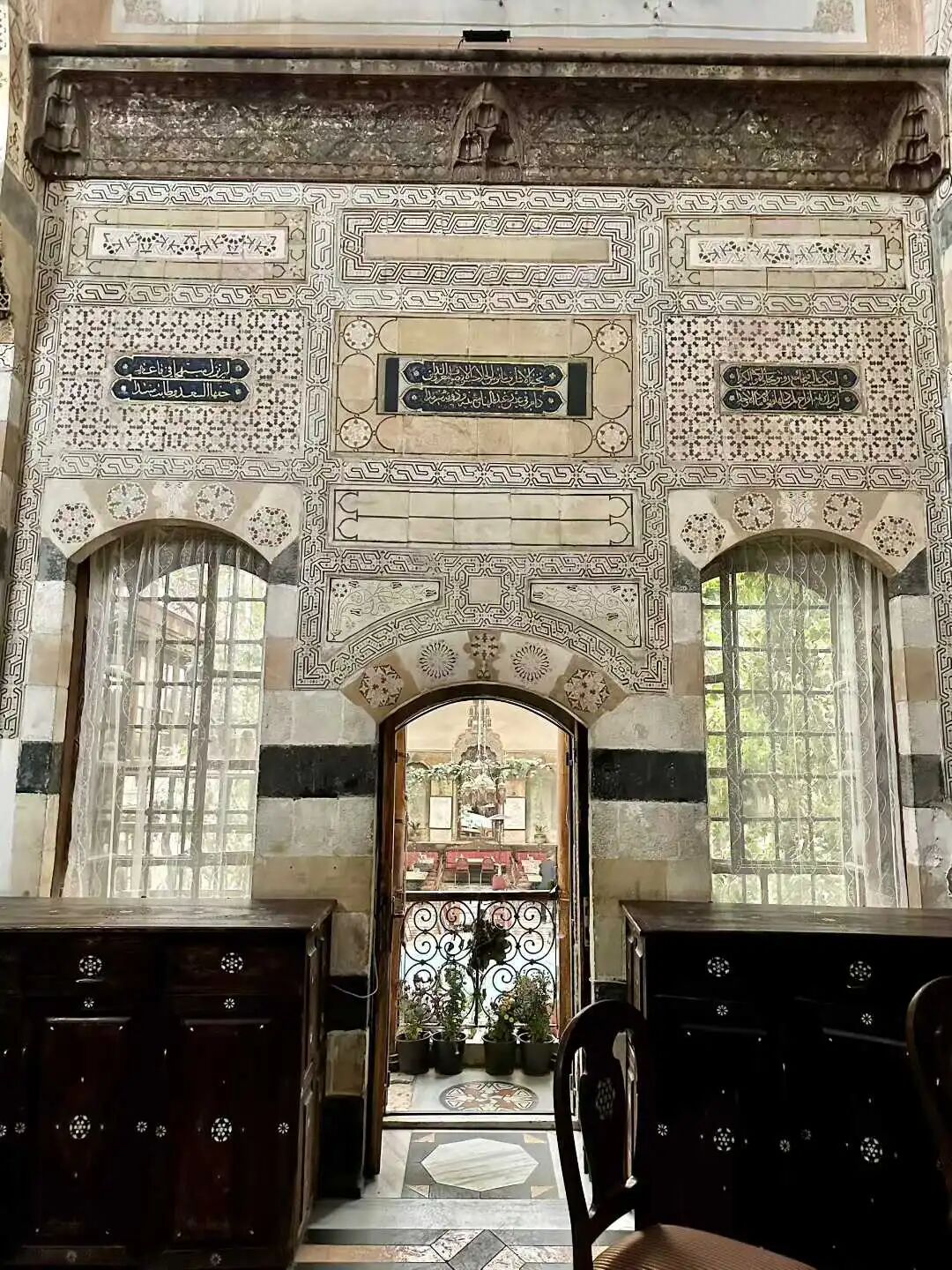
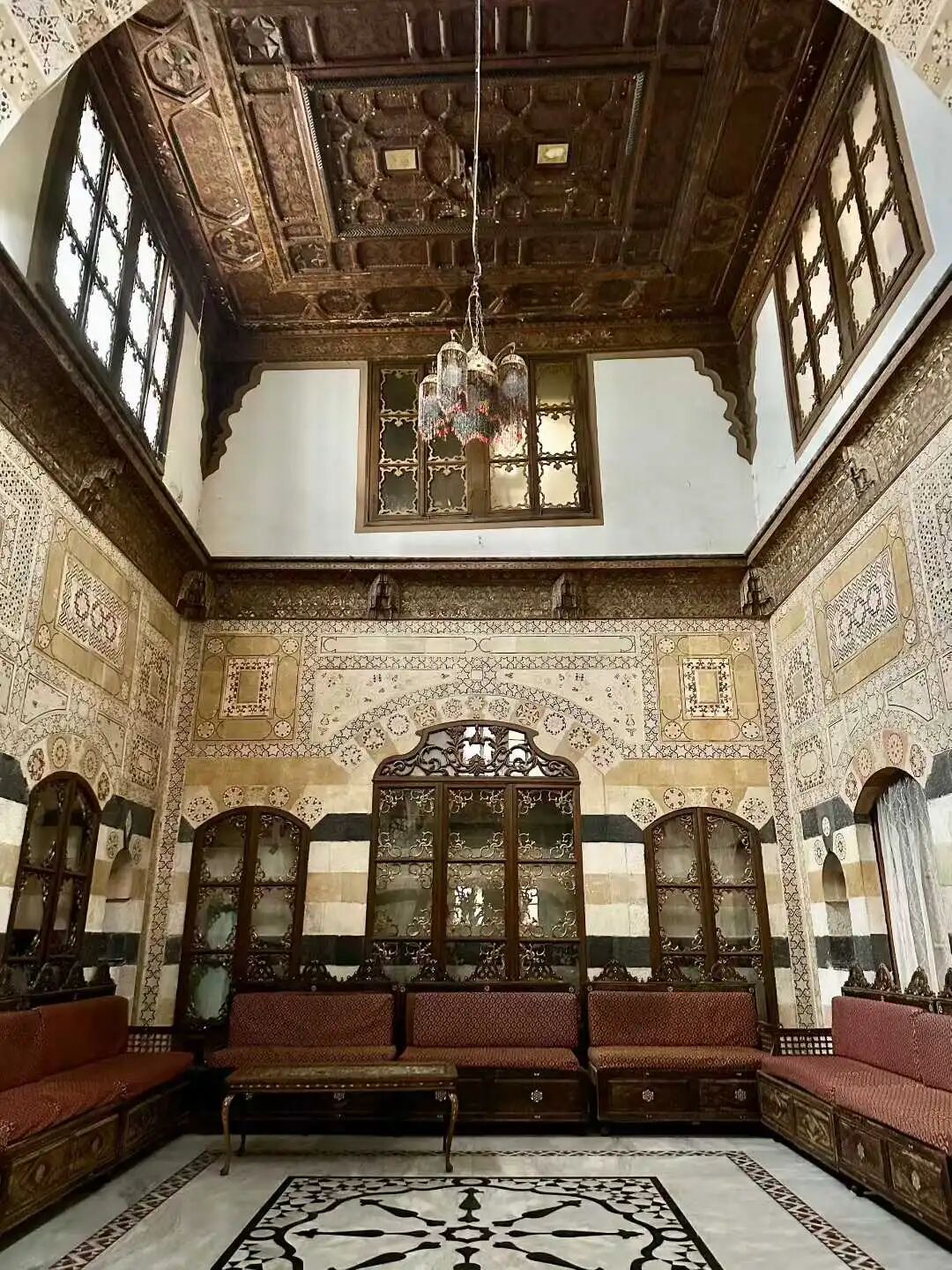
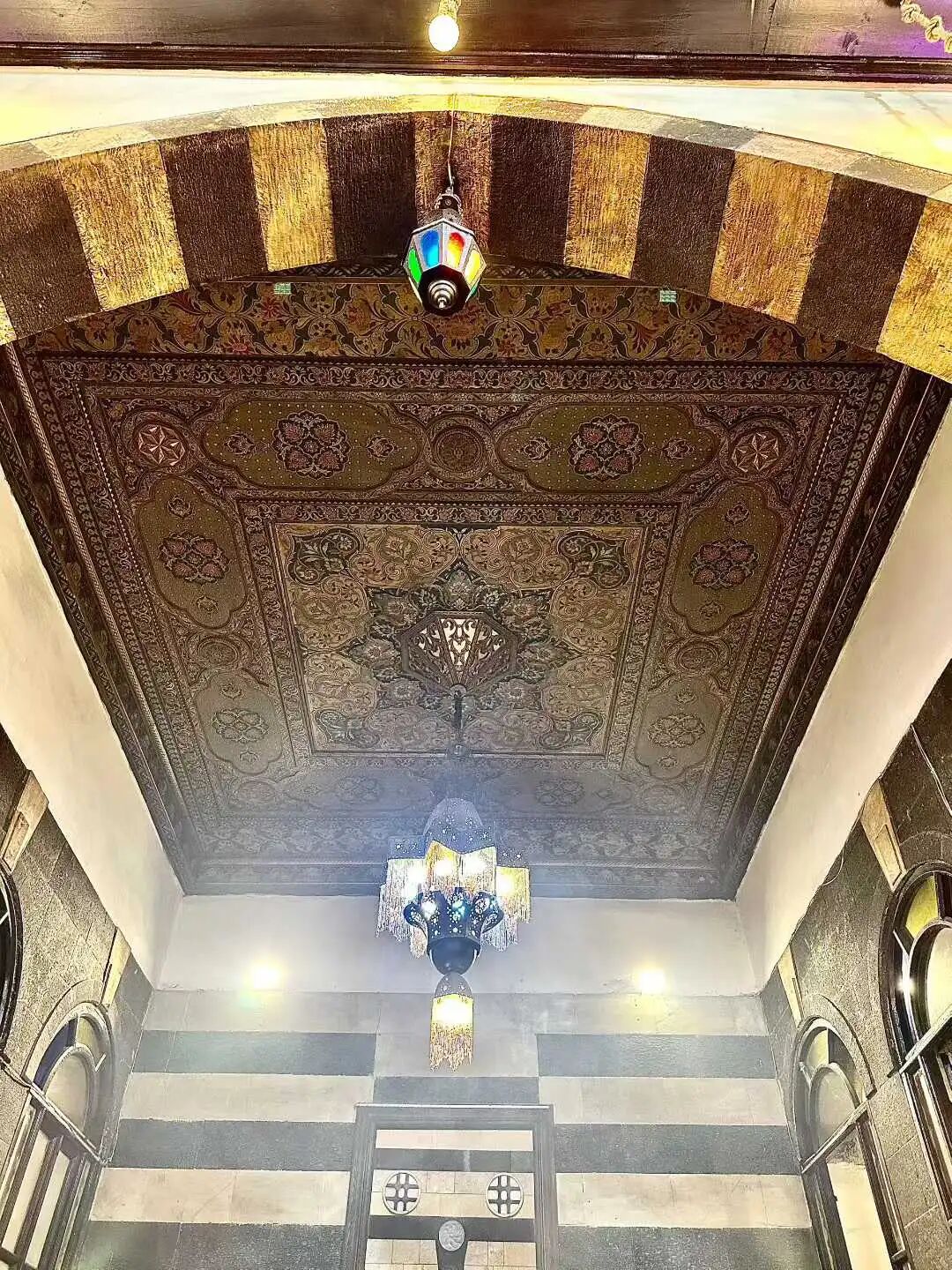
Beit Jabri is a classic three-courtyard Ottoman mansion in Damascus. The arched hall (Iwan) is a typical example of 18th-century Damascus architecture, and the exquisite Ajrum roof was built in the mid-19th century. Influenced by Europe and the Ottoman Empire in the 19th century, Damascus architecture generally tended to decorate exterior walls more gorgeously. This is especially obvious on the north wall of Beit Jabri. We can clearly see the transition from 18th-century decorative styles to 19th-century patterns on the north wall, with complex wall paintings layered over traditional stone masonry (Ablaq).
I ordered the iron pot cheesy baked chicken and mushrooms, served with Arabic pita bread and mint tea. The iron pot came straight to the table. The cheese on top was baked to a golden, crispy brown and stretched into long strings. The chicken was tender, and the mushrooms were soaked in the rich, creamy white sauce. It tasted quite good.
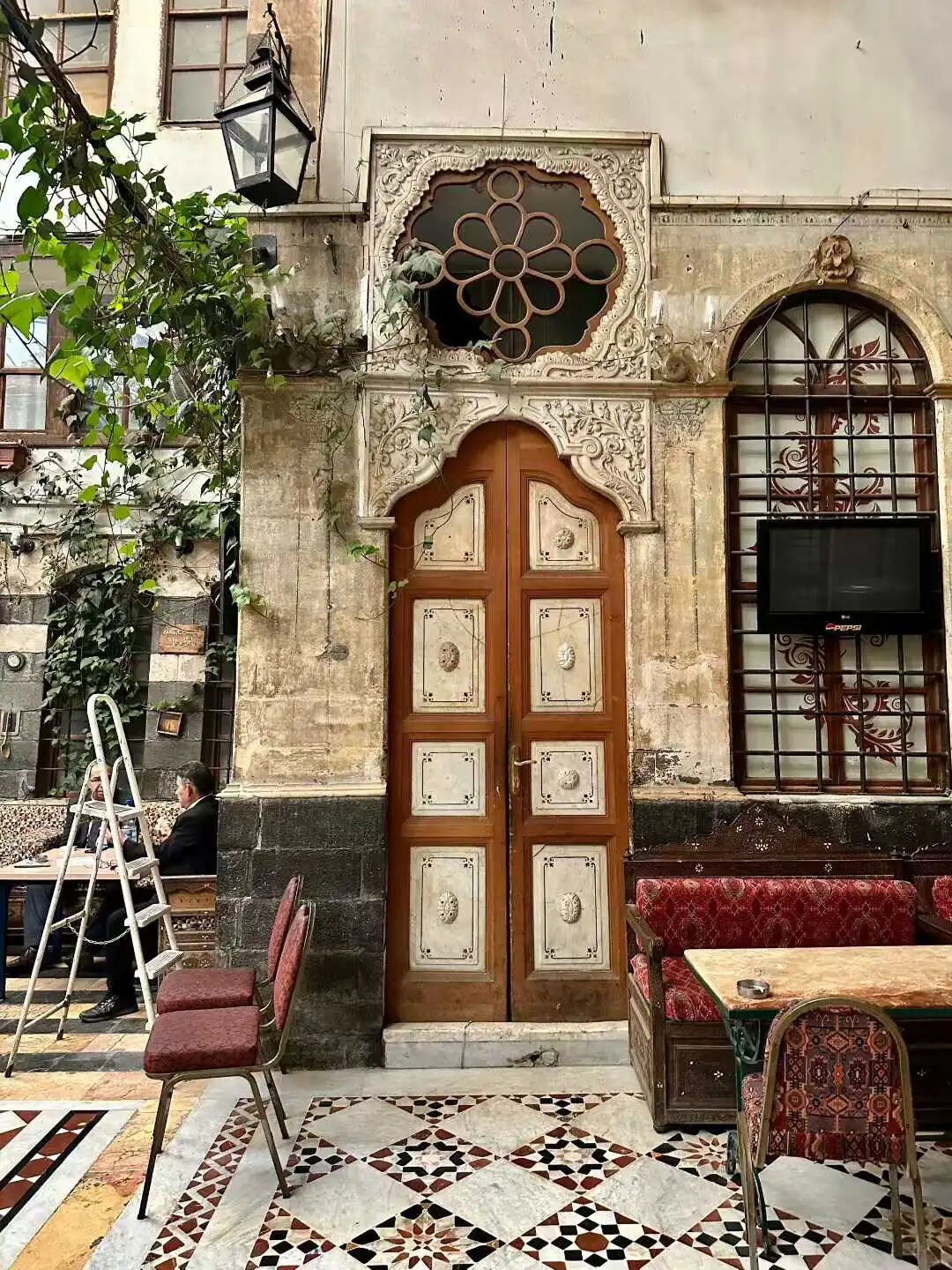
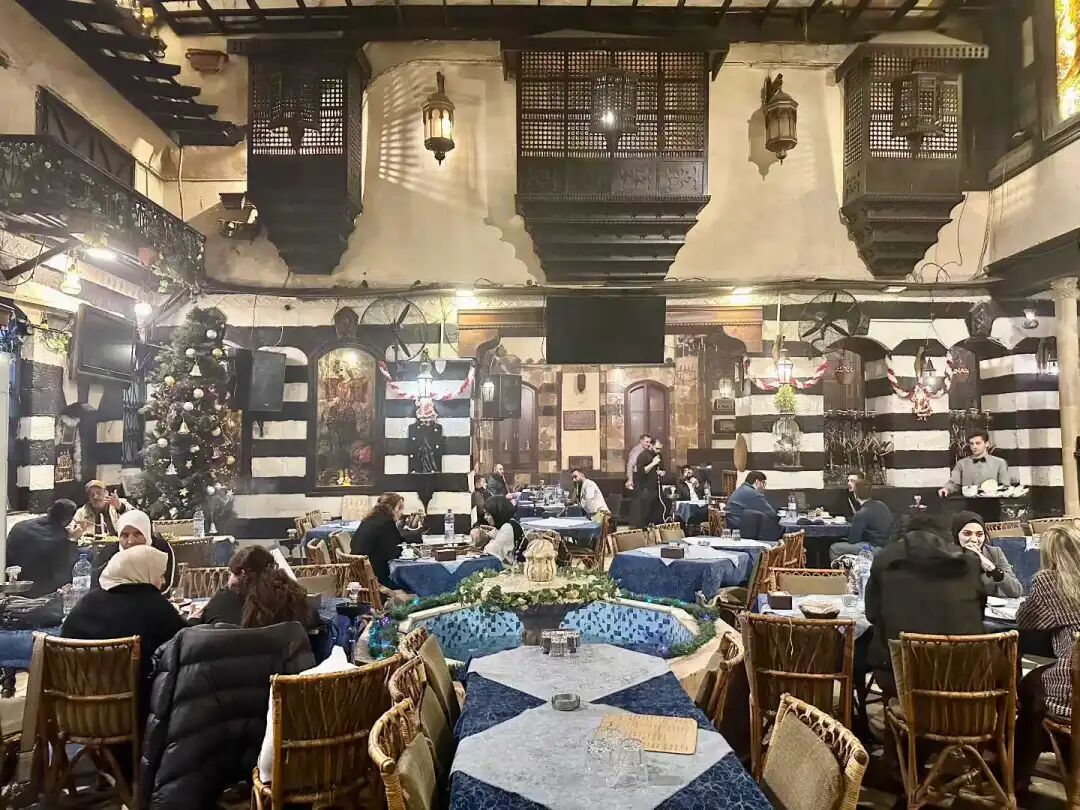
Bab Al Hara is located on Al Qaimarryeh pedestrian street, just outside the east gate of the Umayyad Mosque in Damascus. It is very lively every night. The restaurant is a converted traditional Ottoman mansion built in the late 19th century. It features a central courtyard with a fountain, wrap-around arcades, plaster carvings, and stained glass windows. This place was originally the home of a wealthy merchant. During the French Mandate period (1920–1946), it served as a community gathering spot. Later, it was used as a multi-family residence for a long time before gradually falling into disrepair in the late 20th century. The hit Syrian drama "Bab Al Hara" premiered in 2006, sparking a craze across the Arab world for the folk customs of the Old City of Damascus. The restaurant opened in 2007, starting as a cafe that focused on Syrian breakfast and snacks, then added full meals in 2010.
I had the grilled chicken skewers (Shish Taouk). The chicken was crispy on the outside and tender on the inside. It was very refreshing paired with garlic yogurt sauce (Tzatziki), along with a corn and cabbage salad and french fries. However, restaurants all over the Old City of Damascus are full of people smoking shisha at night. If you mind the shisha smoke, try to go at noon or in the afternoon.
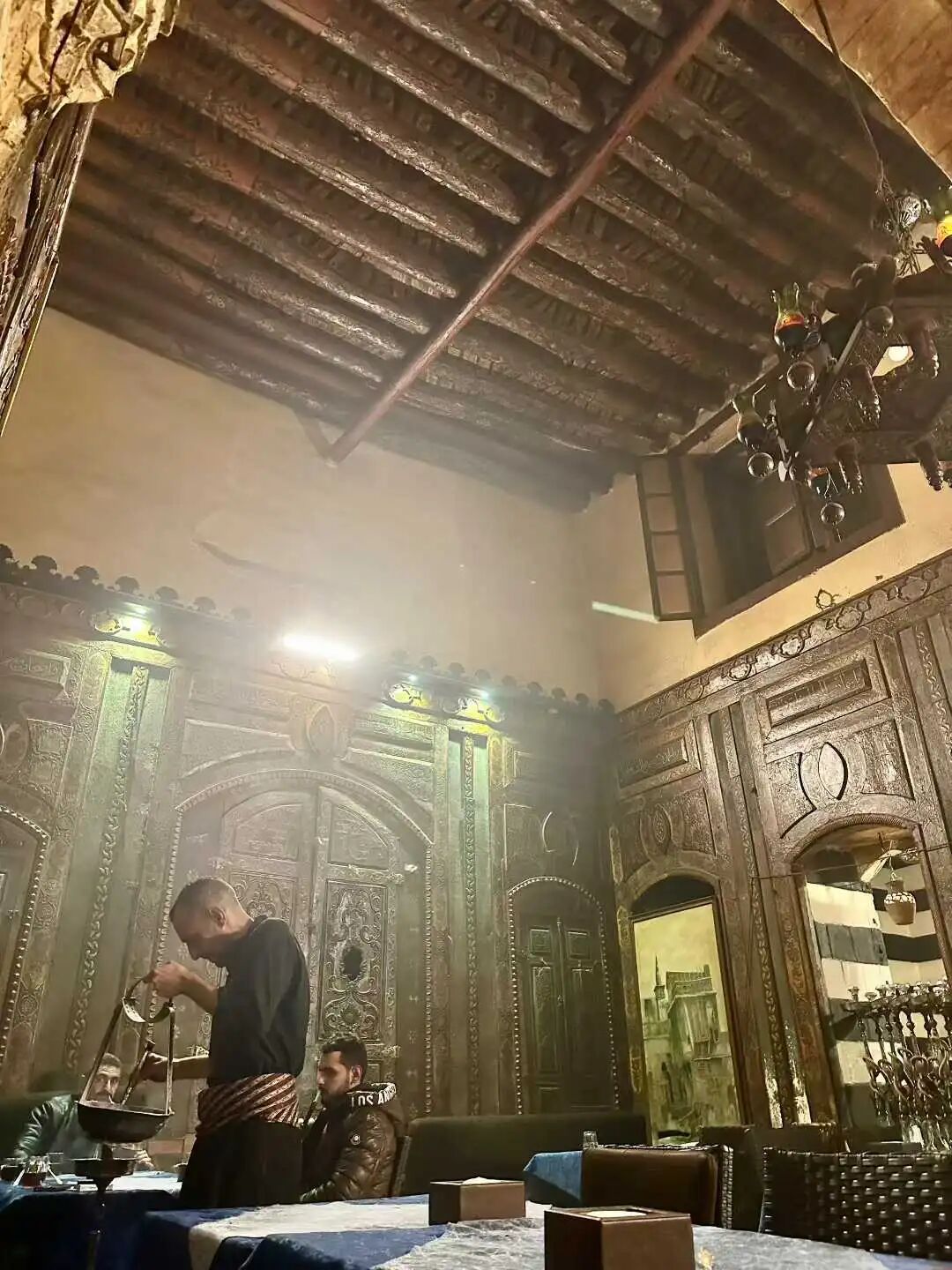
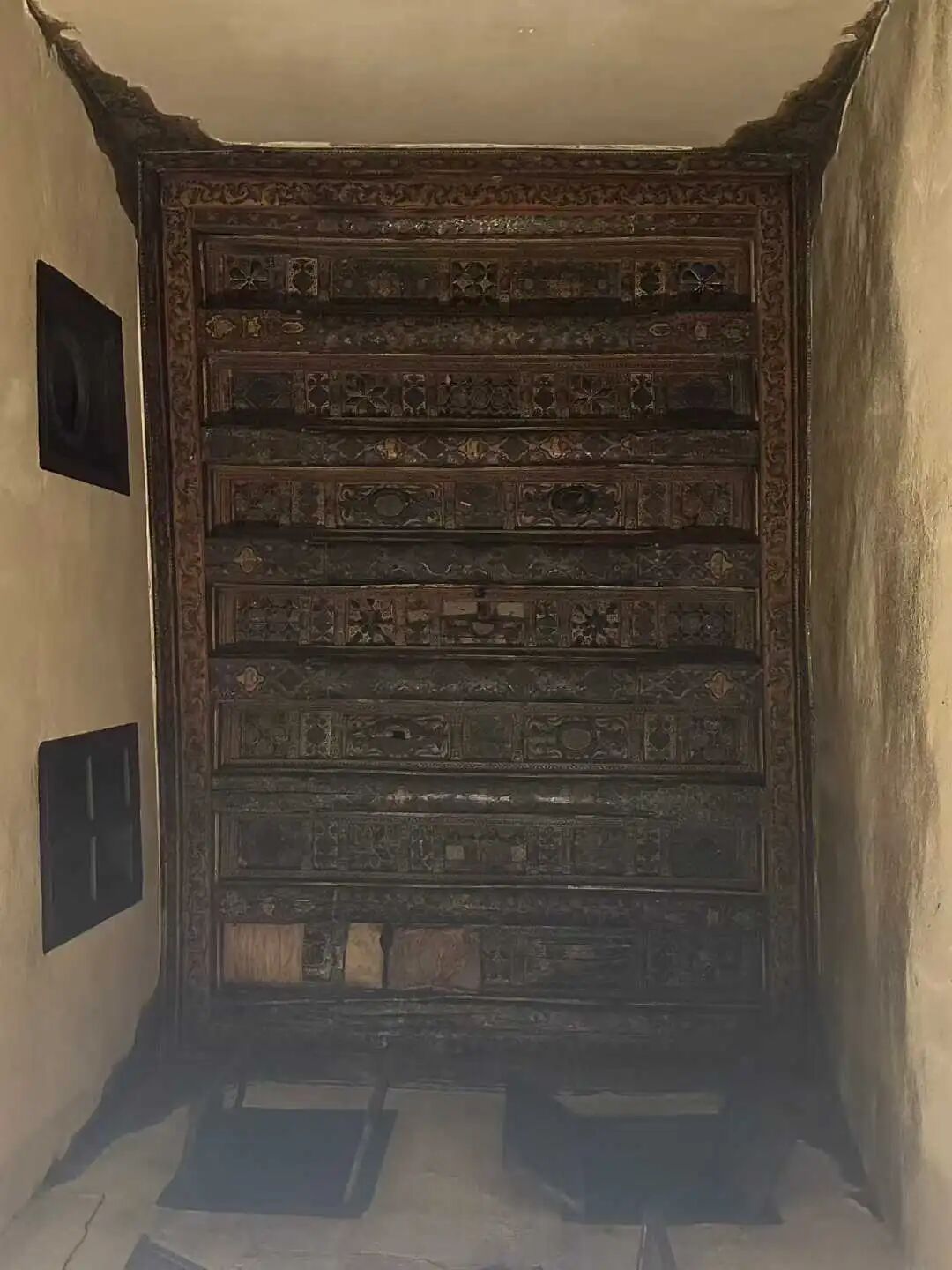
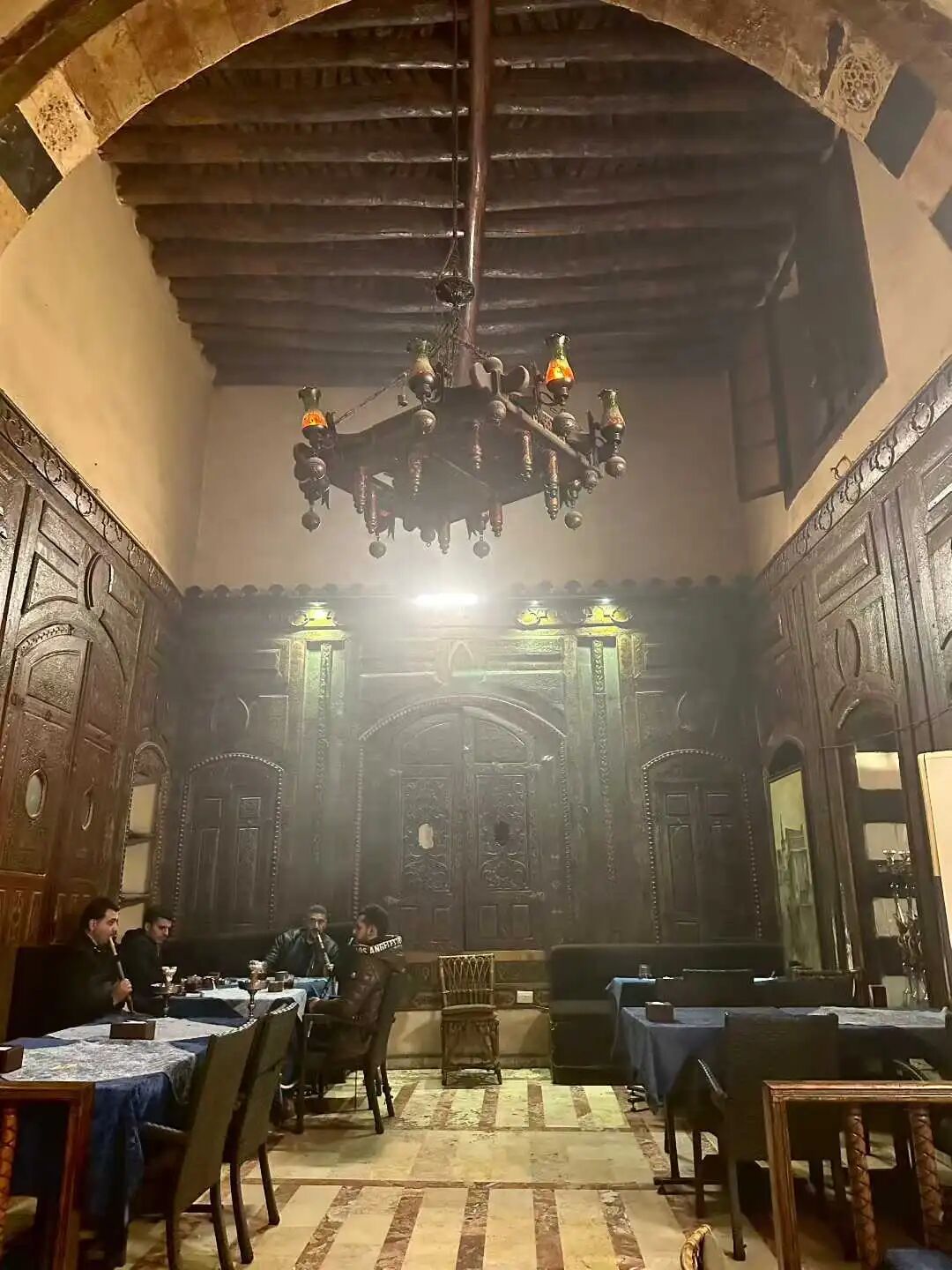
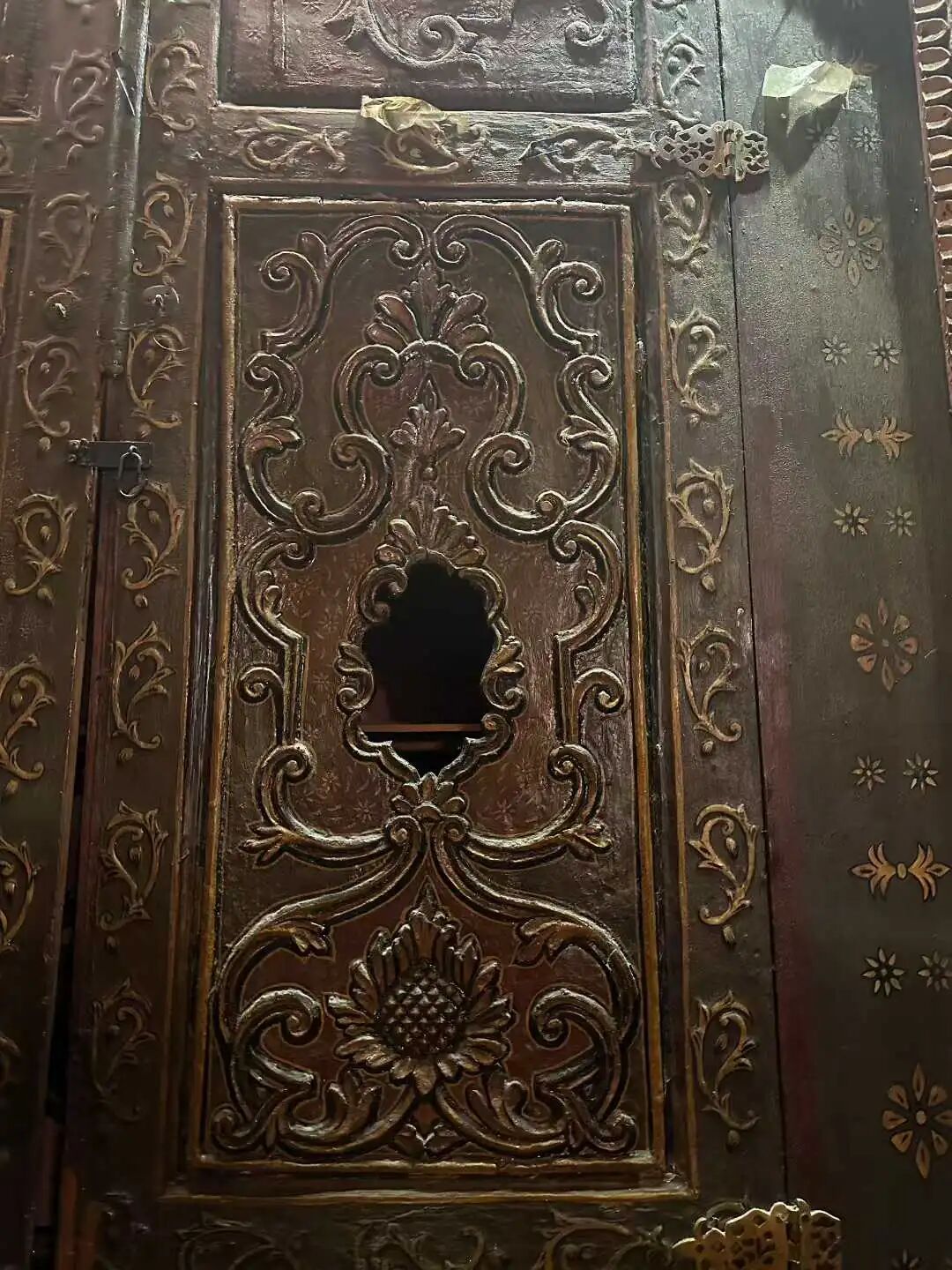
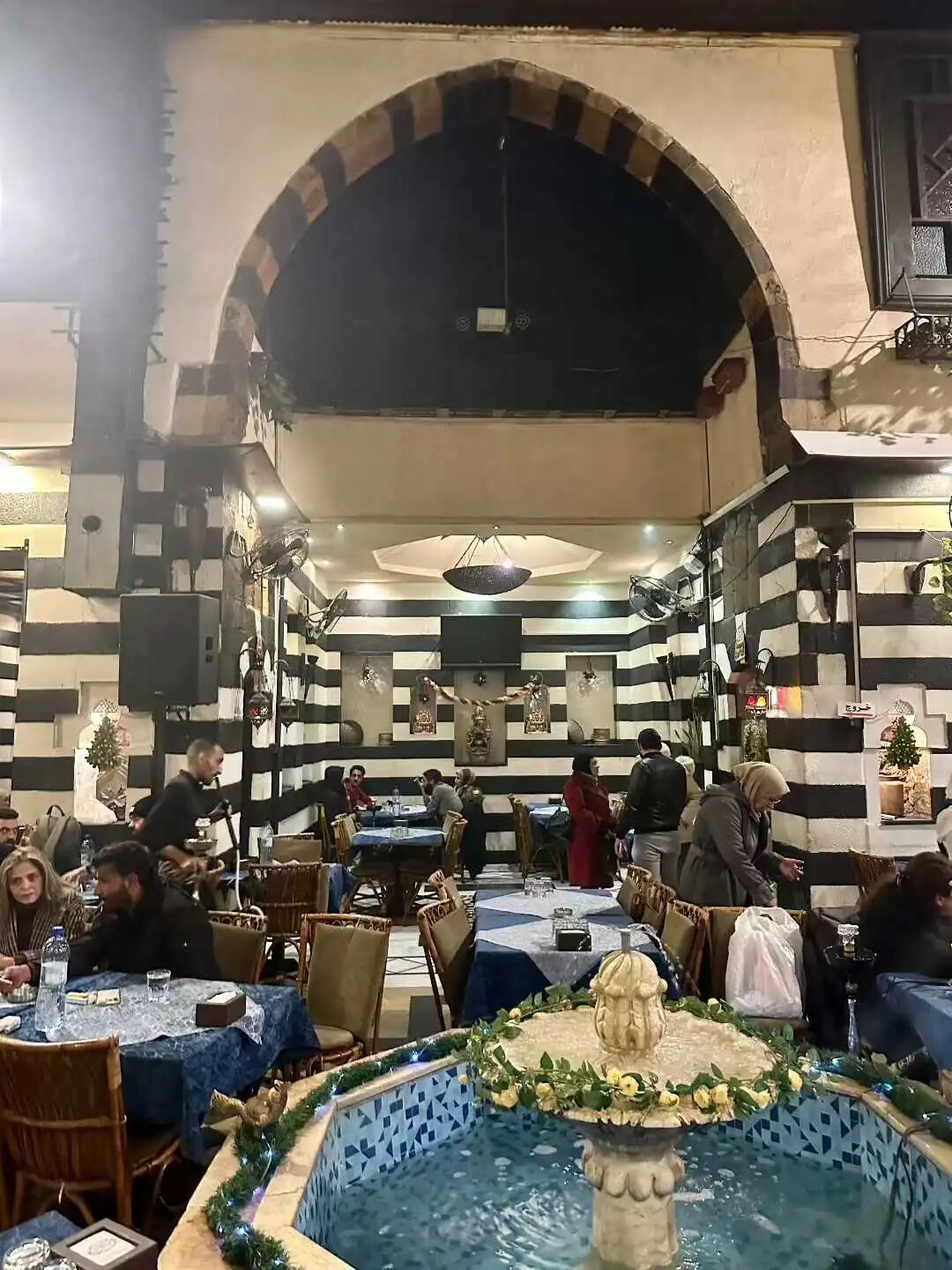
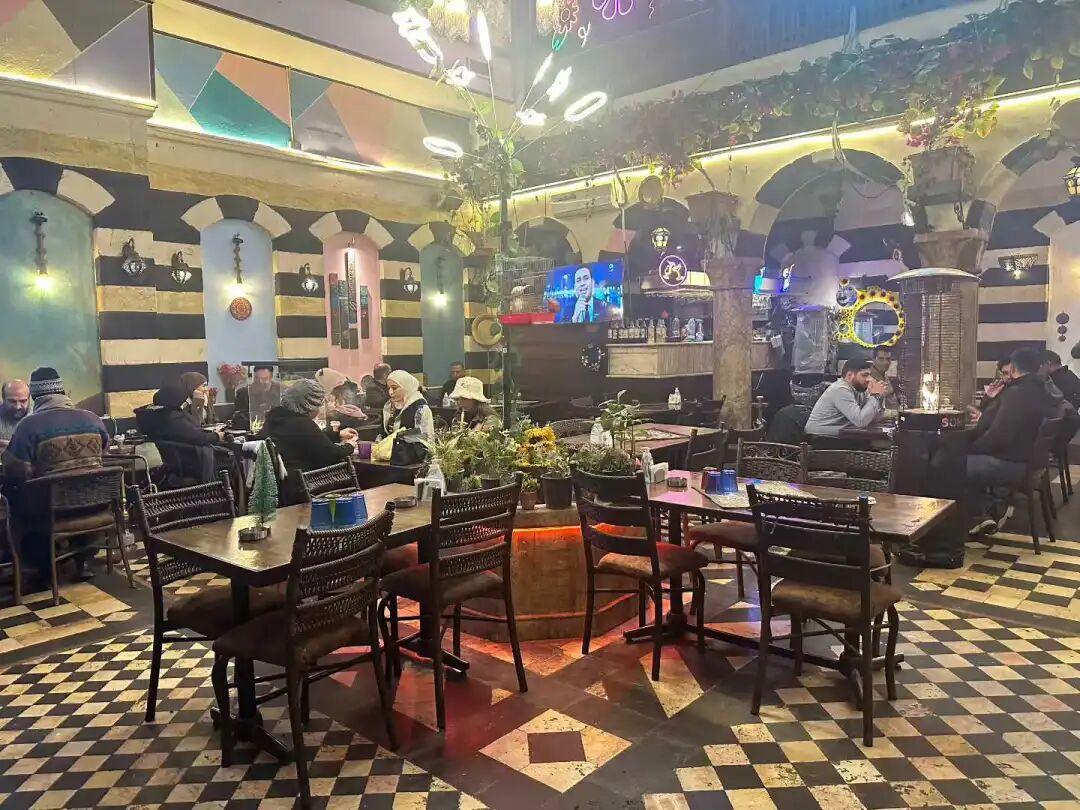
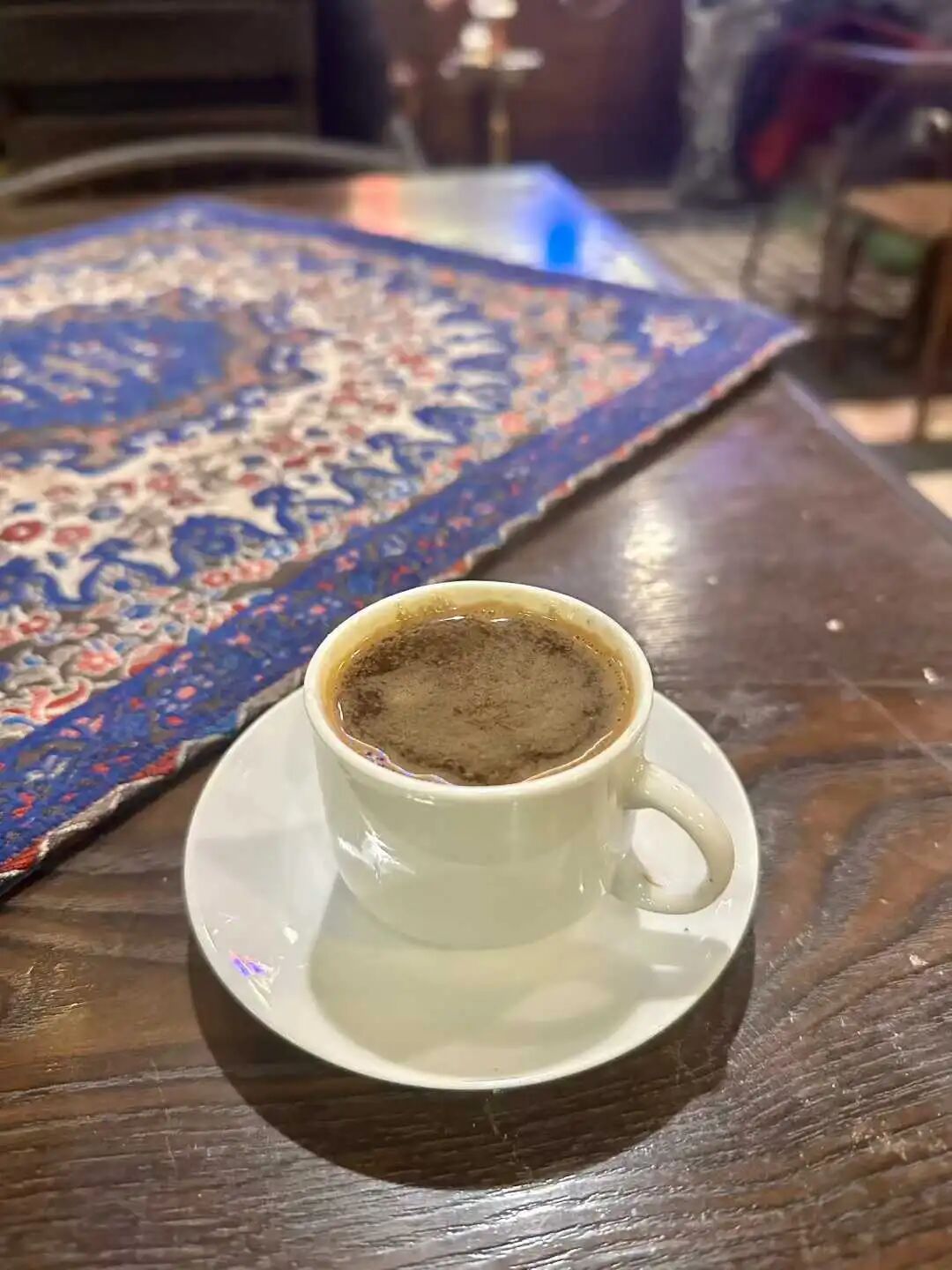
Finally, I had some sand-boiled coffee at Café Ishq Sharqi in Bab Touma, Damascus. The name translates to "Love of the Orient." There are dozens more restaurants and cafes converted from Ottoman mansions in the Old City of Damascus. I only visited a small portion this time, so there are plenty more for everyone to discover.
Friday Prayer at Damascus Umayyad Mosque: Jumu'ah, Khutbah and Living History
Articles • ali2007fr posted the article • 0 comments • 309 views • 2026-05-21 06:21
Summary: This first-person account records Friday namaz at the Great Mosque of Damascus, including the 12:40 p.m. khutbah by Mohammed Abu al-Khair Shukri, Syria's Minister of Religious Endowments since March 2025. It keeps the source's prayer details, people, security notes, historic setting, and photographs.
It has always been my wish to attend Friday namaz at the Great Mosque of Damascus.
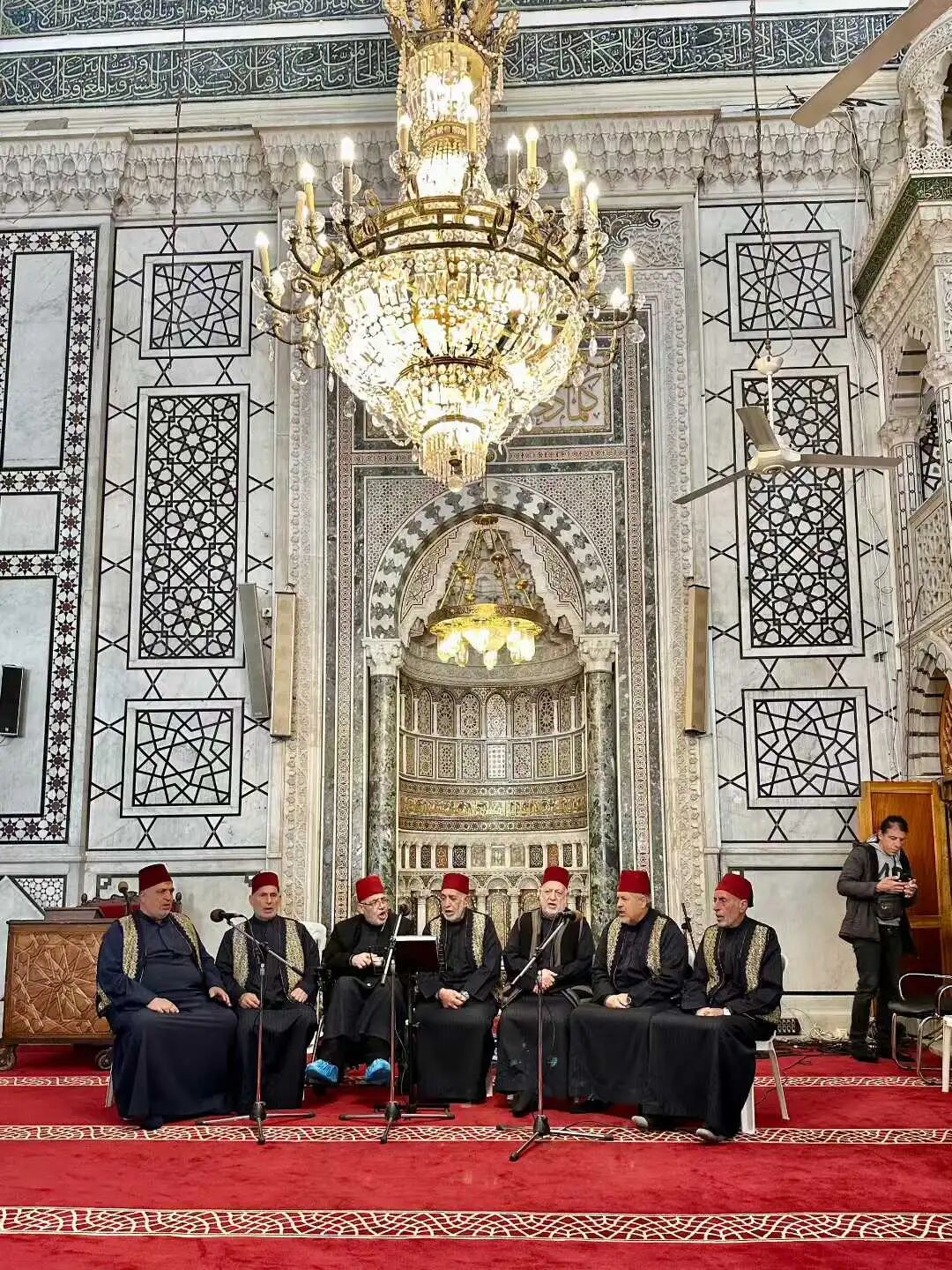
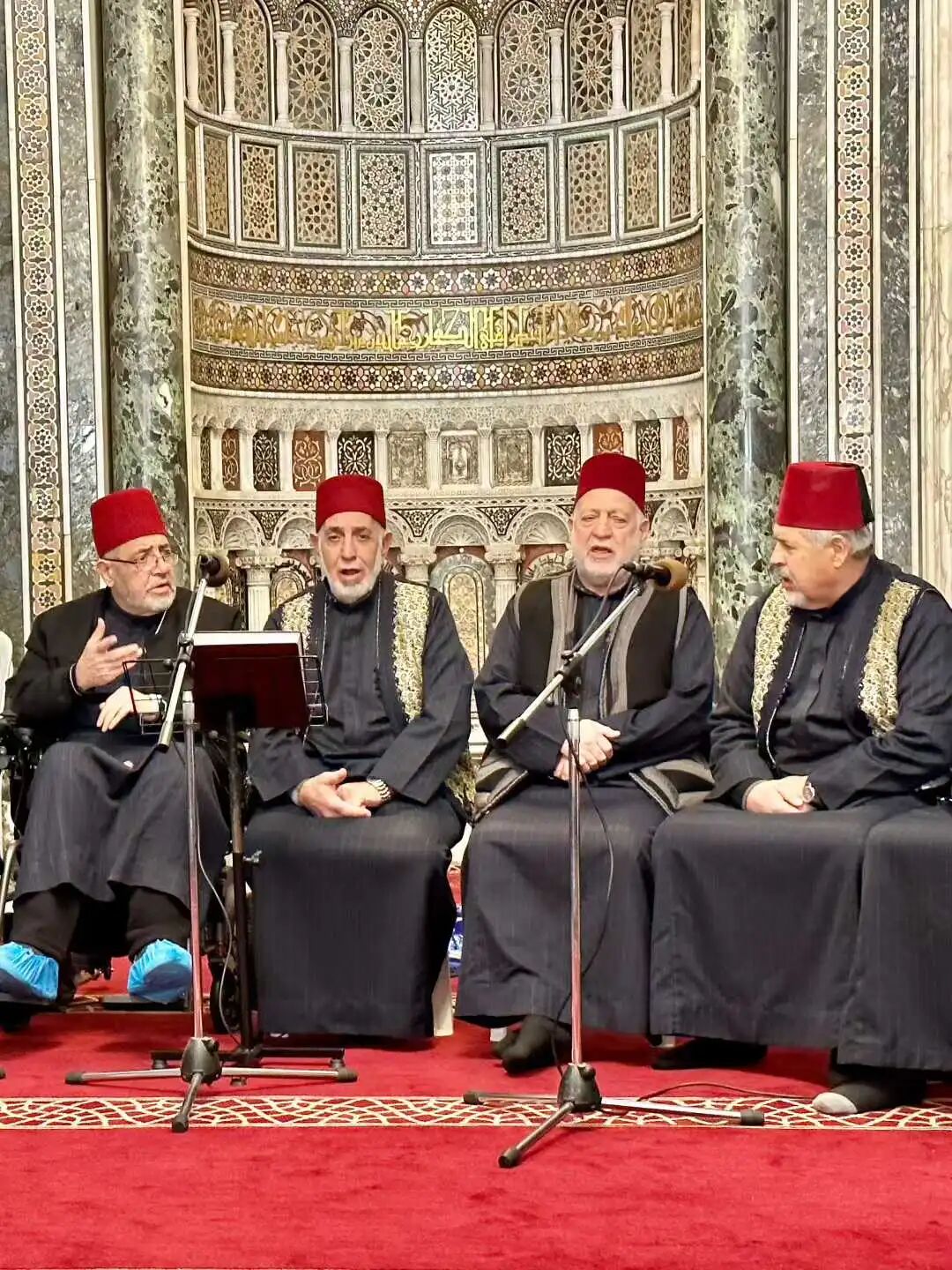
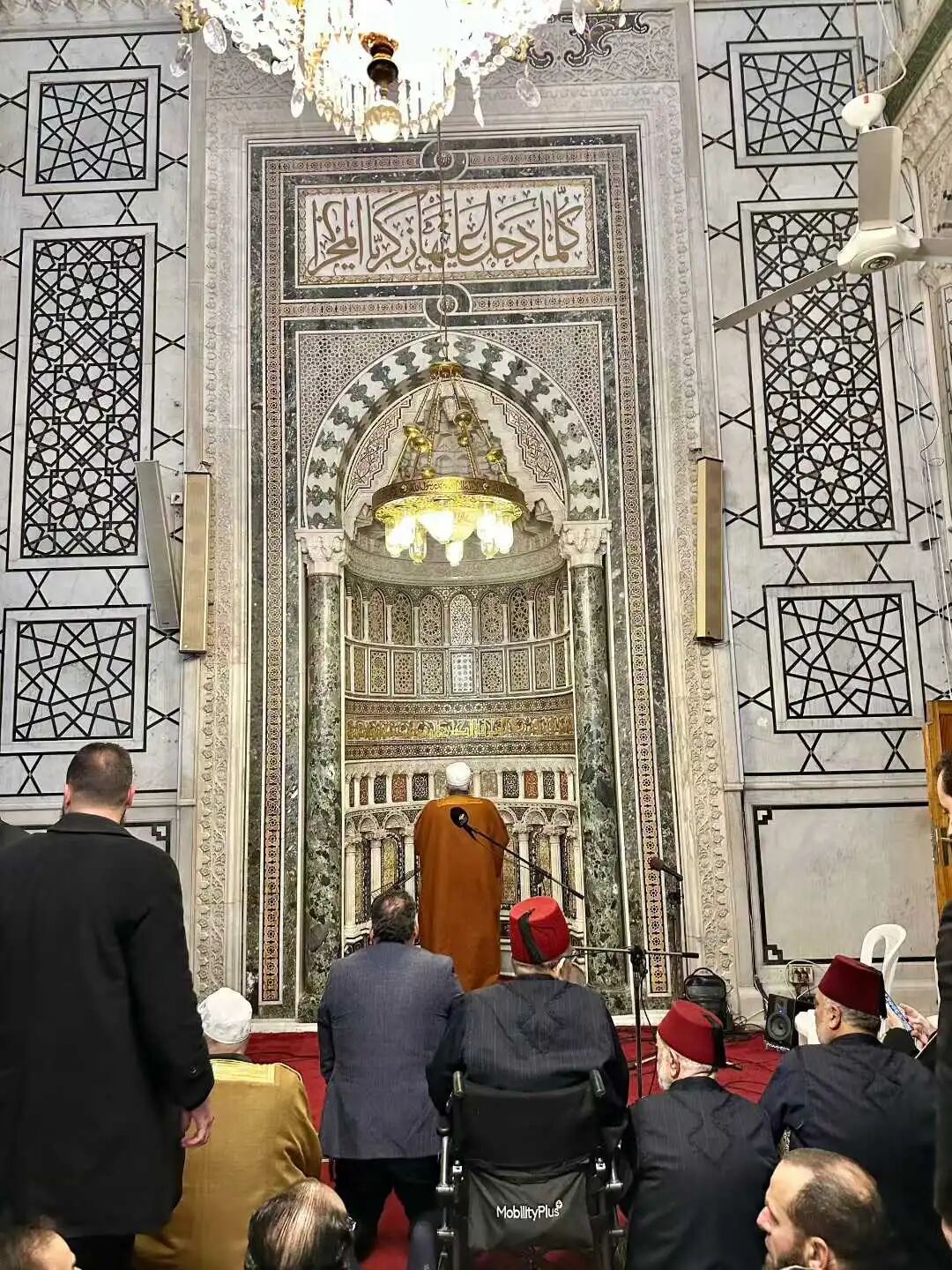
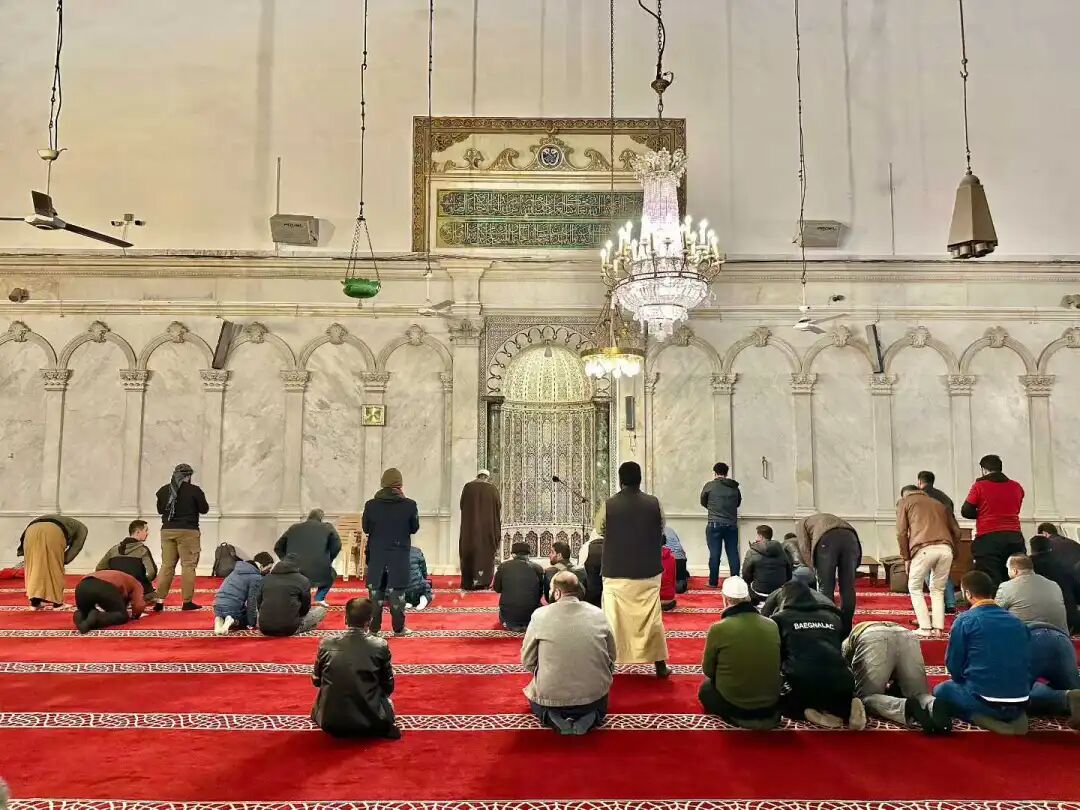
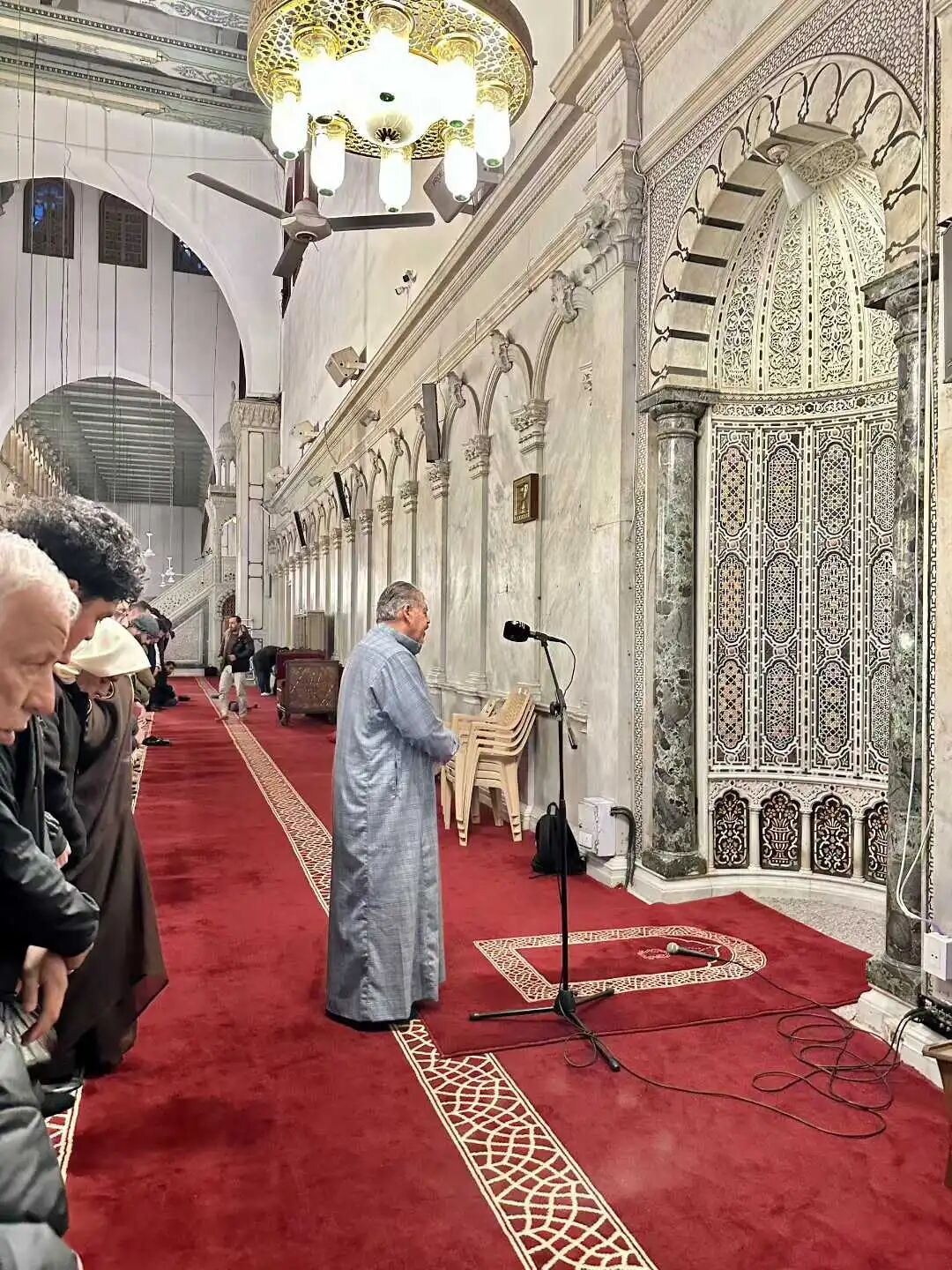
When I arrived after 11:00 a.m., the chanting had already begun. The elderly men wore traditional Ottoman-era clothing, and against the backdrop of Ottoman decorations, it felt like stepping back into the 19th century.
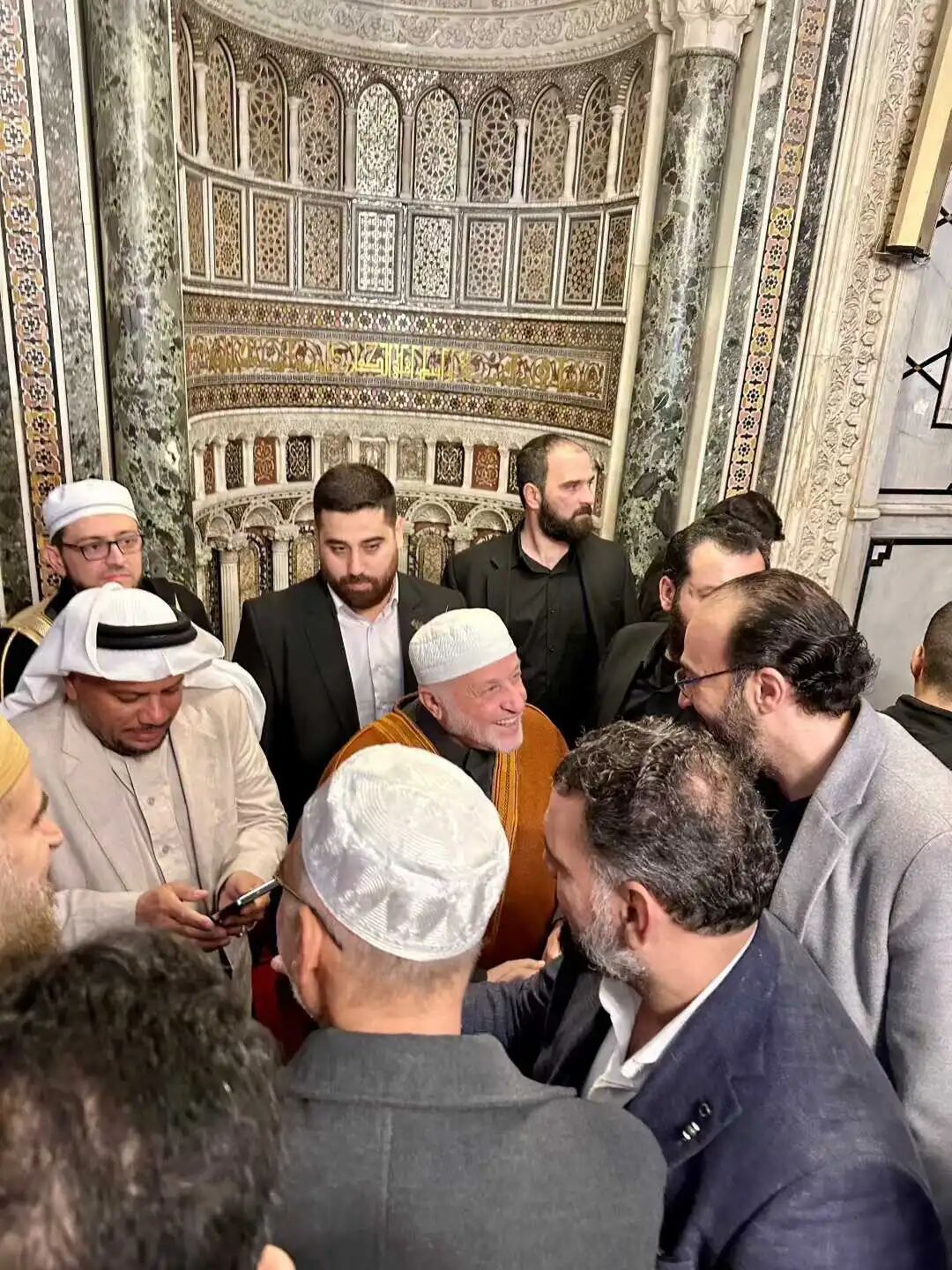
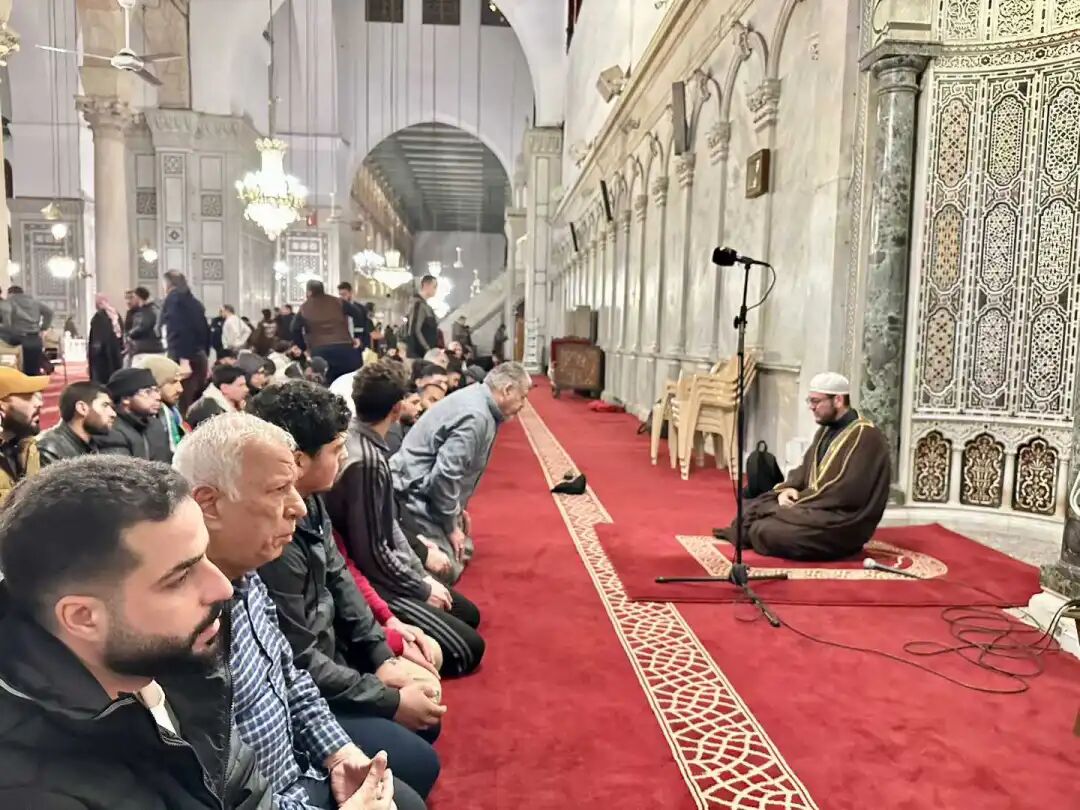
The khutbah began at 12:40 p.m., delivered by Mohammed Abu al-Khair Shukri, who has served as the Syrian Minister of Religious Endowments since March 2025. Born in Damascus in 1961, Shukri is a senior scholar of Islamic law, a university professor, a lawyer, and a social activist. In 2021, his assets were seized due to his support for the GM position. It was clear that Shukri is deeply loved by the people. They crowded around to talk and take photos with him, and he responded with a smile the entire time.
During Friday namaz, the front of the main hall was cordoned off for important figures to move through, and people could only stand there when it was time for the prayer rows. Shukri used this path to enter and leave, accompanied by his staff.
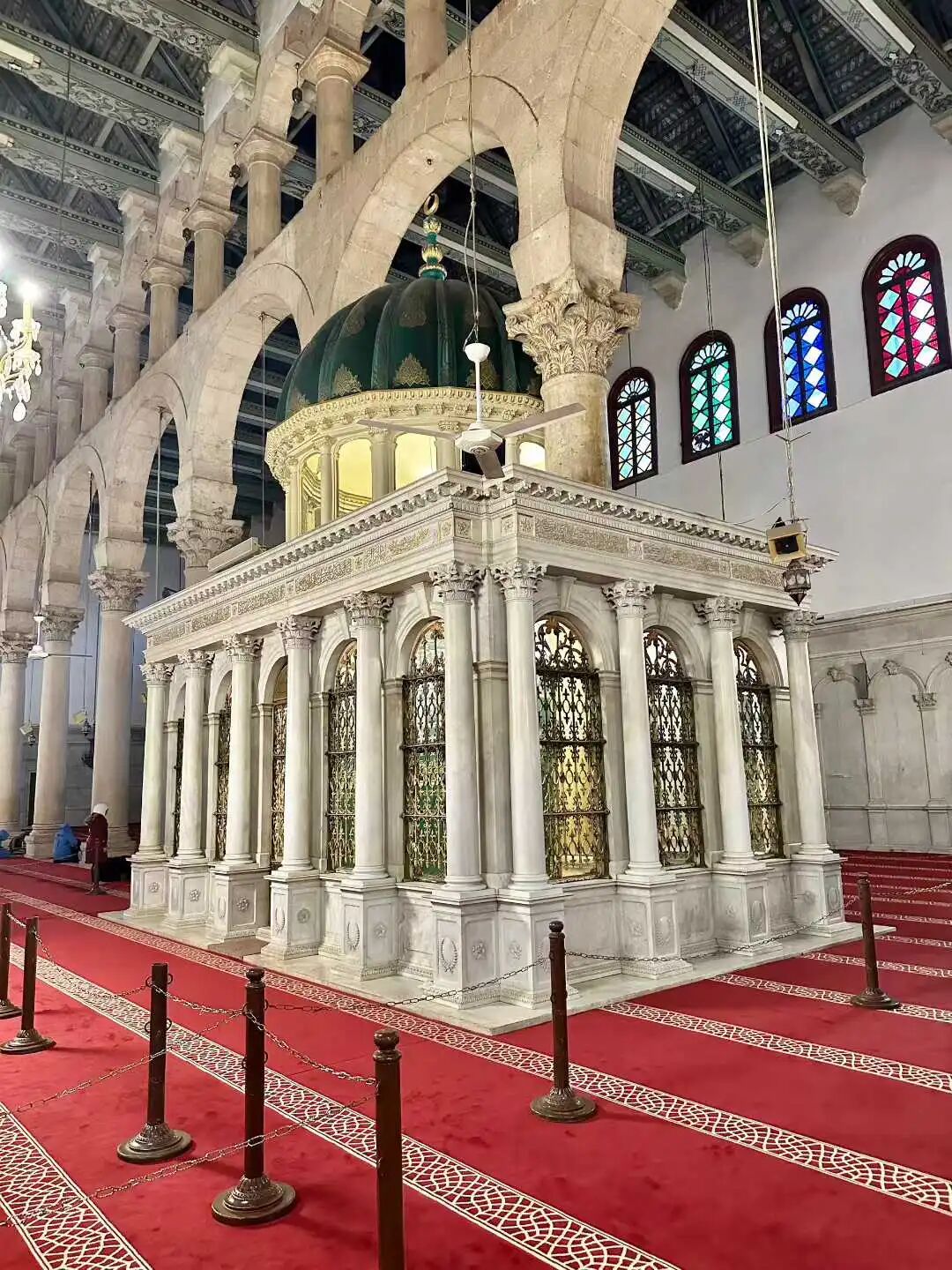
Additionally, the area near the gongbei of Prophet Yahya on the east side was closed during Friday namaz, likely to prevent people from visiting the tomb during the service. However, it is not uncommon to find tombs inside the main halls of mosques in the Middle East, and I have seen this elsewhere.
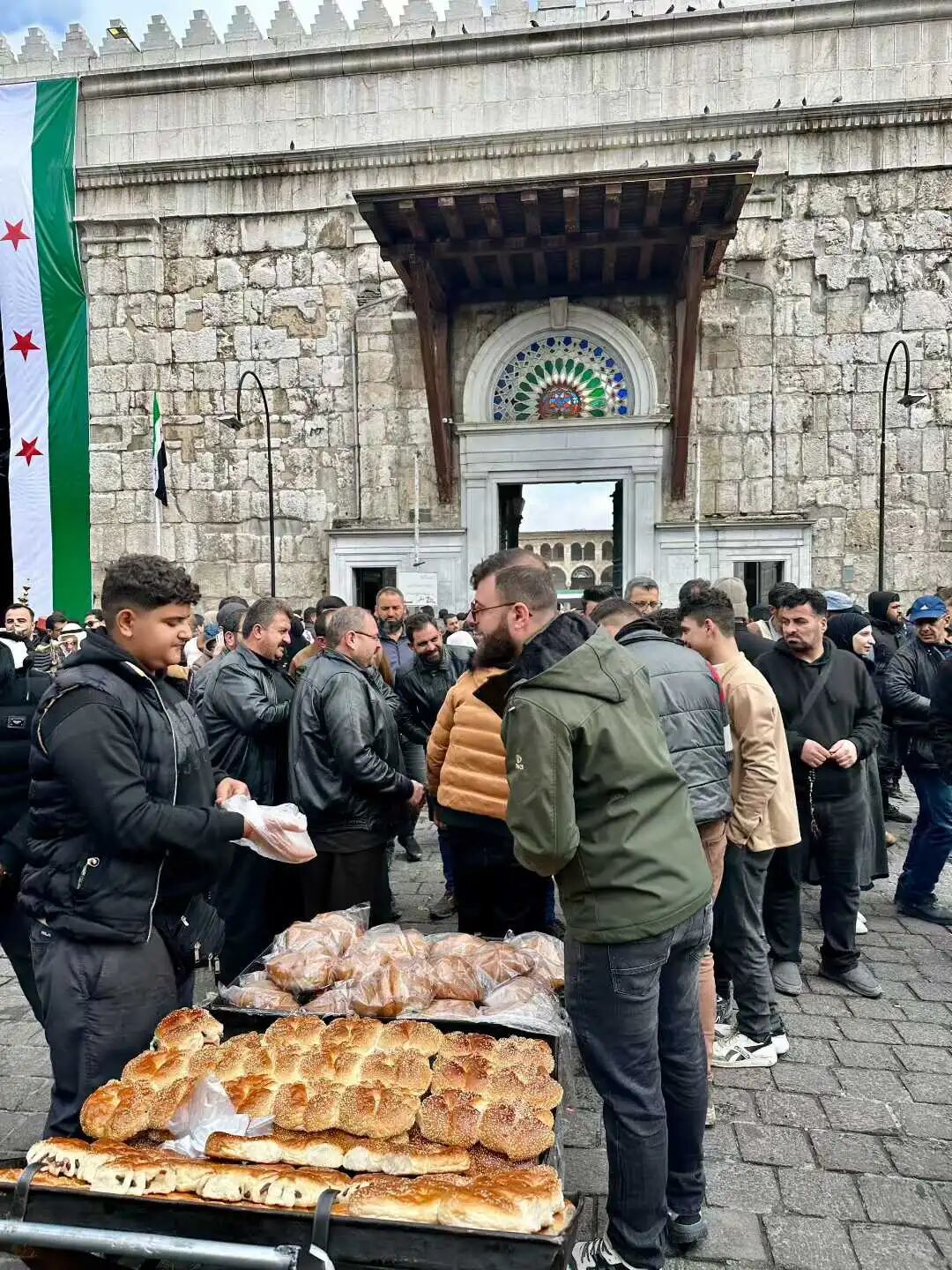
During Friday namaz at the Great Mosque, there were many young men in camouflage uniforms; I suspect many of them had just come from the front lines. A sign on the pillar at the entrance forbids carrying guns, which reminded us that war is not far away. On December 8, 2024, Ahmed Shara delivered a victory speech at the Great Mosque of Damascus and then became the de facto leader of Syria. These men were very warm toward me. Many of them told me that China is great and spoke of lasting friendship between China and Syria after learning I was Chinese.
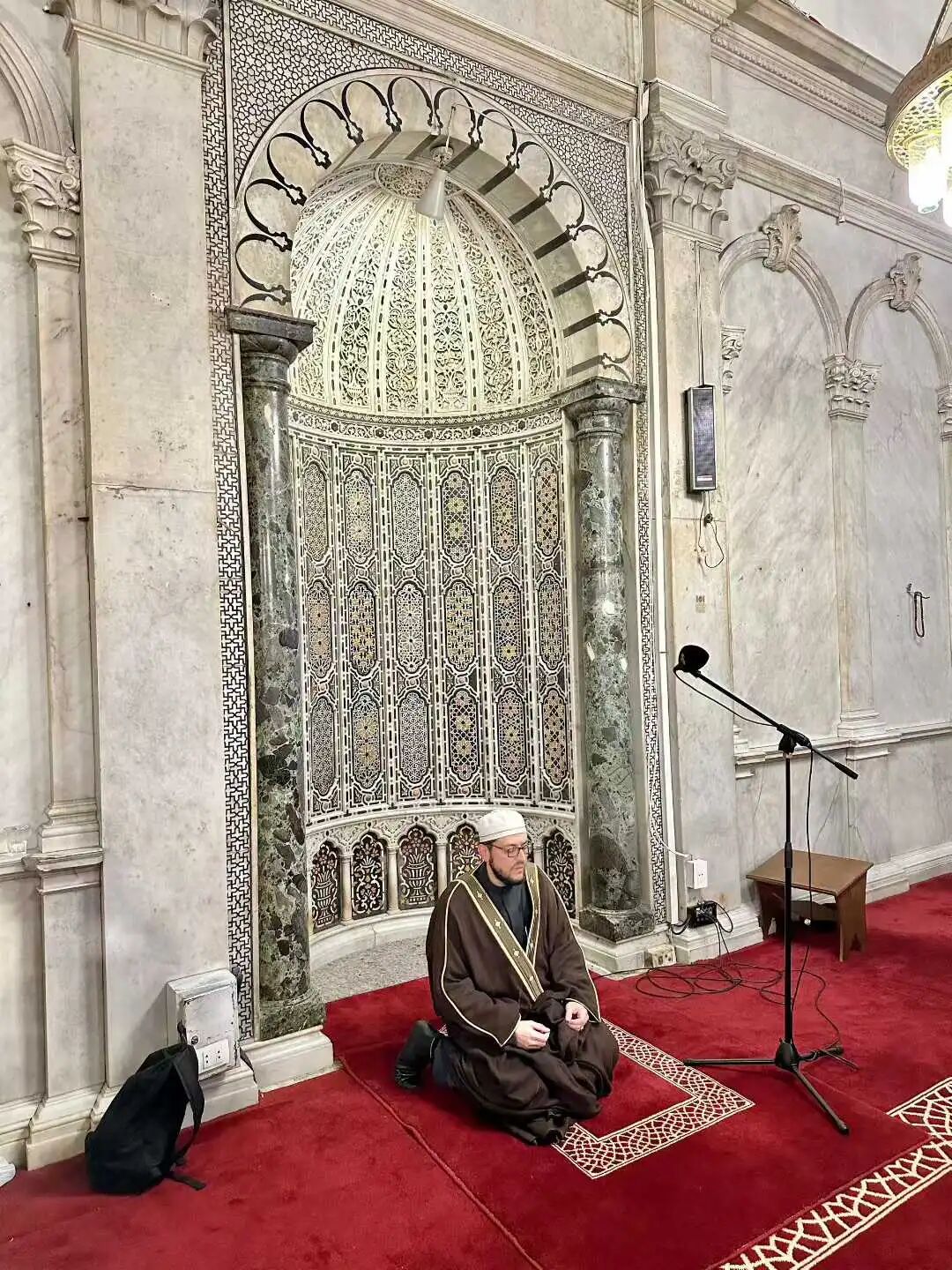
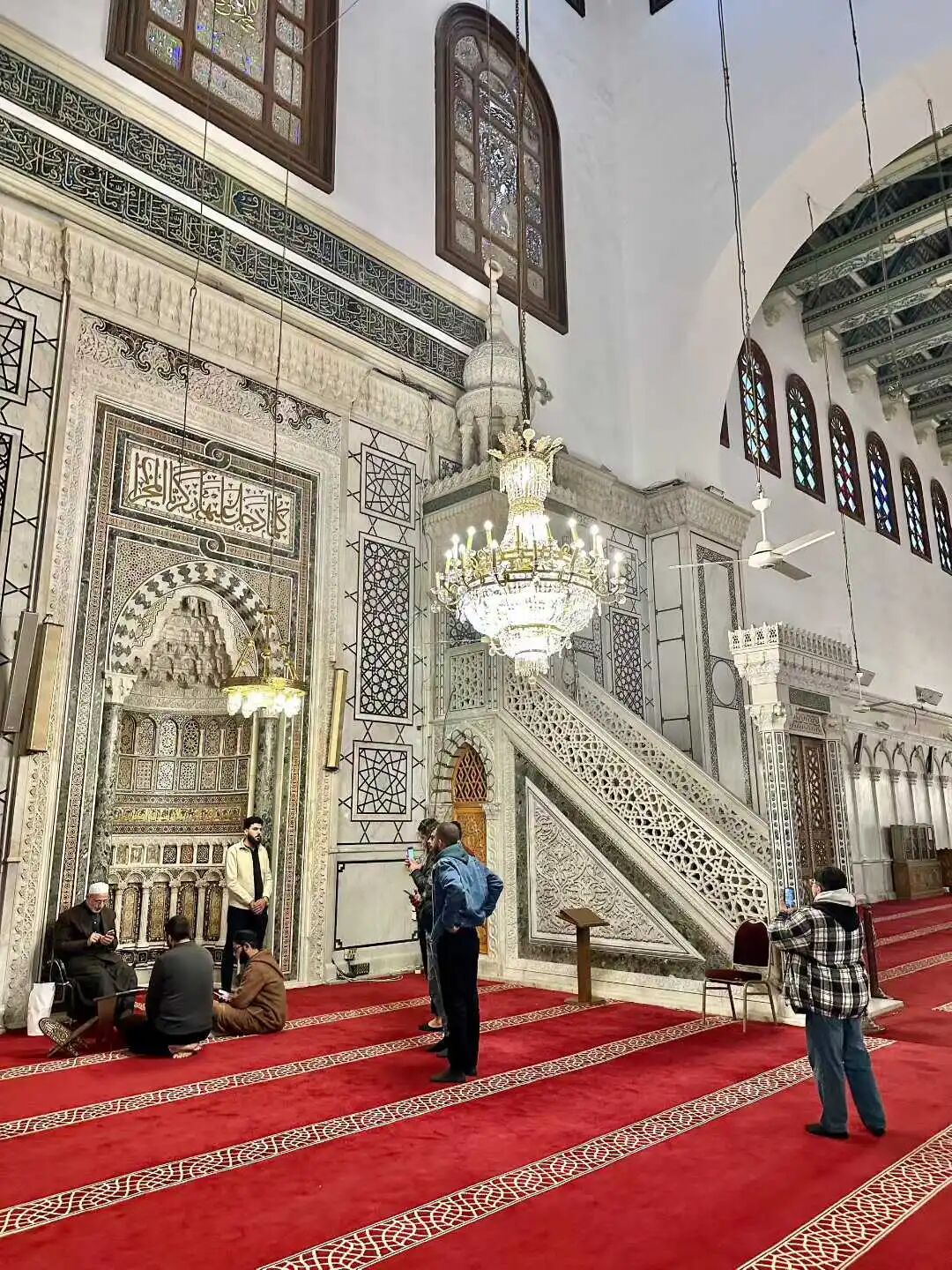
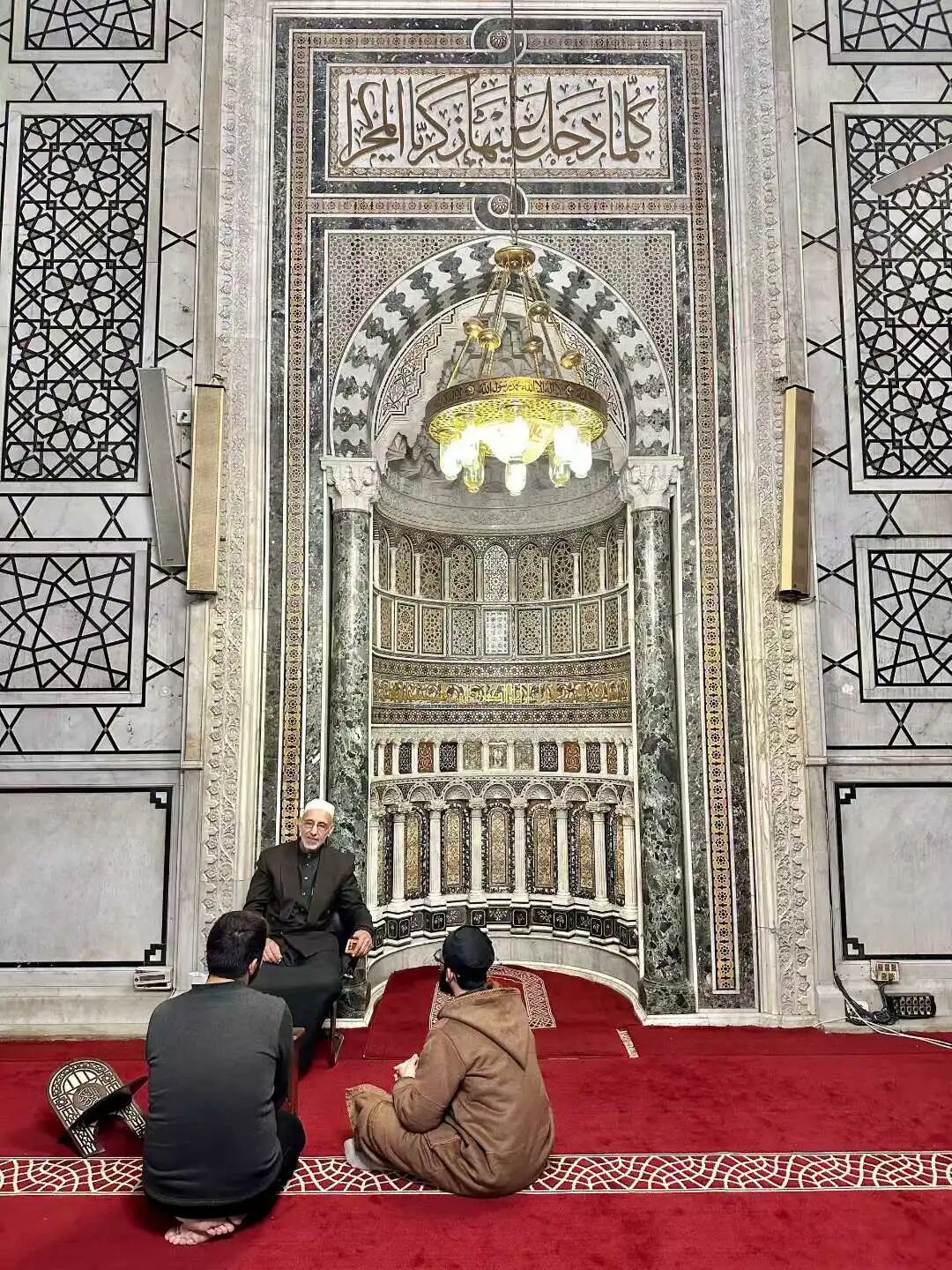
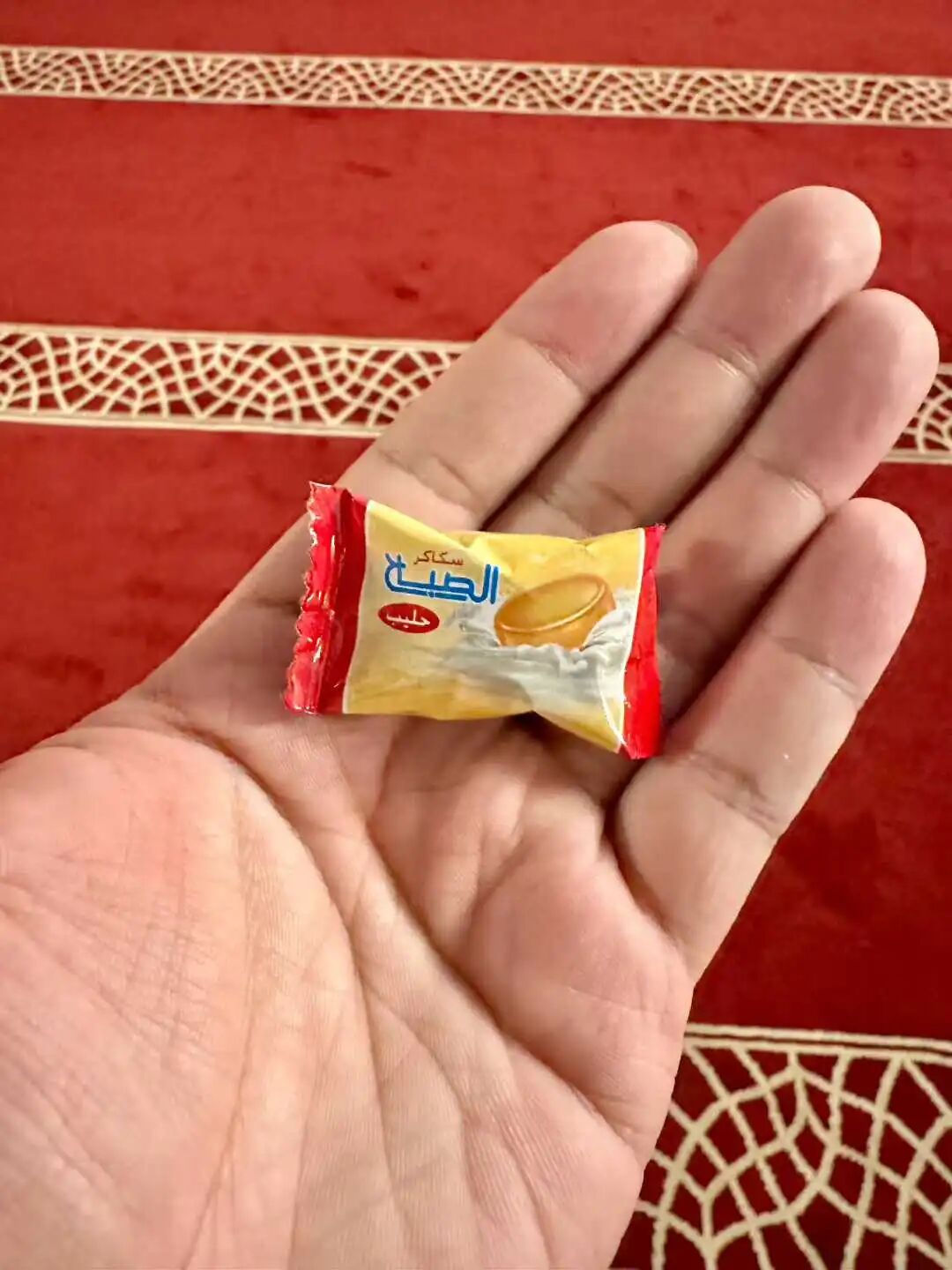
The mosque has four mihrabs (prayer niches). Daily prayers are usually held at the mihrab on the west side. In the afternoon, an ustadh (teacher) teaches scripture next to the large mihrab. He even gave me candy when he saw me passing by. I was given candy several times by warm-hearted people in Damascus, and I was very moved.
Damascus was captured by the Arabs in 634 and became the capital of the Umayyad Caliphate in 661. For the first 45 years after the capital was established, the site of the Great Mosque of Damascus remained an Orthodox church, though a prayer area (musalla) was built in the southeast corner. As the Muslim population in Damascus grew, and with the need for the Umayyad Caliph to build a grand mosque for Friday prayers, the sixth caliph, Al-Walid I, finally decided in 706 to convert the Orthodox church into a Friday mosque.
Al-Walid I personally oversaw the construction of the Great Mosque of Damascus. He kept the outer walls of the Roman mosque, removed the Corinthian columns and arcades from the mosque, and reinstalled them inside the main hall. The new mosque was completed in 715 and became known as a "wonder of the world" to medieval Muslim writers.
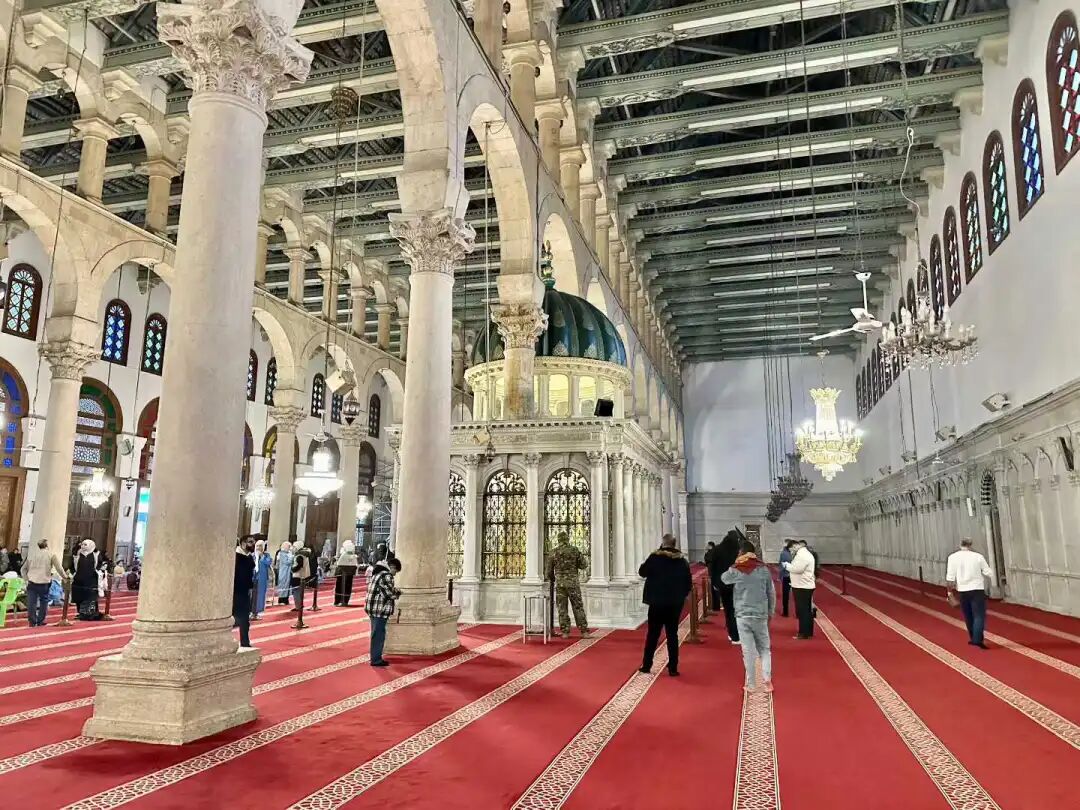
Before the Great Mosque of Damascus was built, traditional mosques were usually flat-roofed halls. The Great Mosque of Damascus introduced a basilica-style layout, featuring three wide, long halls with a central nave and a tall dome above.
Legend has it that during the construction of the mosque, workers discovered a small cave chapel and found a box inside, which was said to contain the head of Prophet Yahya. Yahya was a cousin of Isa and was sent to guide the people of Israel, and he is highly regarded in the scriptures. Yahya was beheaded because he criticized the Jewish King Herod Antipas.
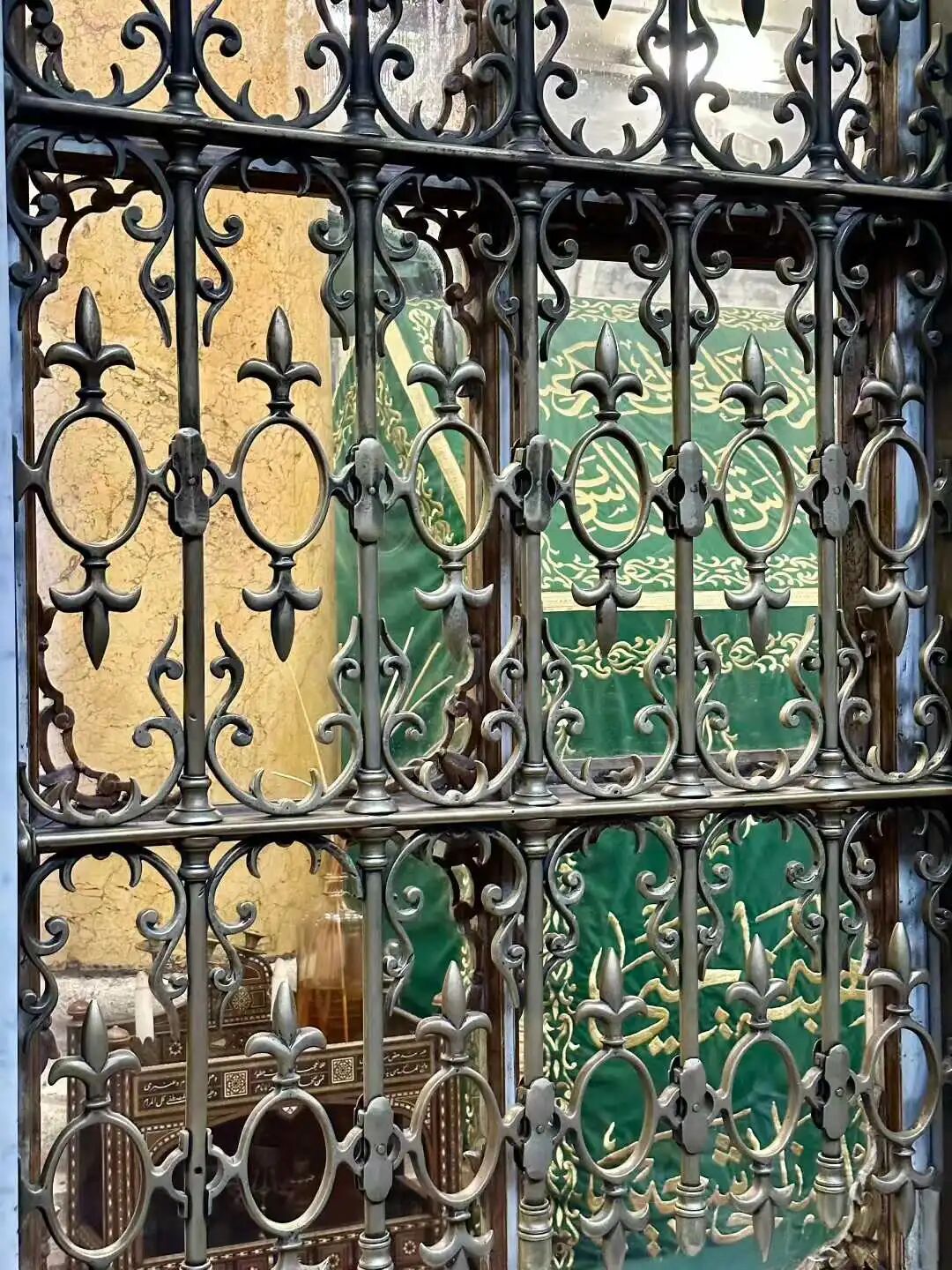
Later, the Umayyad Caliph Al-Walid I ordered Yahya's head to be buried under a pillar, and today this place has become the gongbei of the Prophet Yahya. However, the west side is currently used for the five daily prayers and Jumu'ah, while the east prayer hall where the gongbei of Yahya is located is not open.
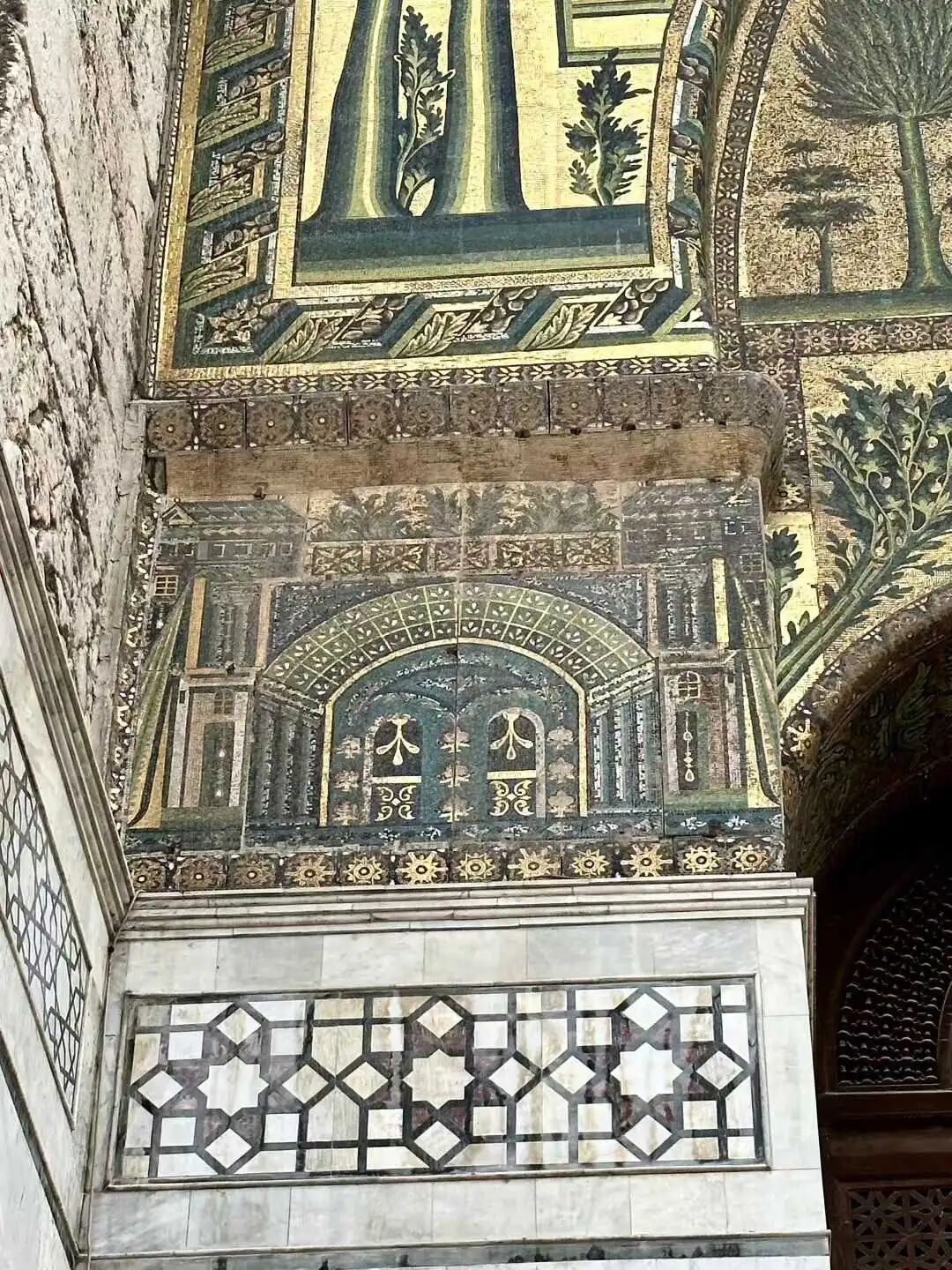
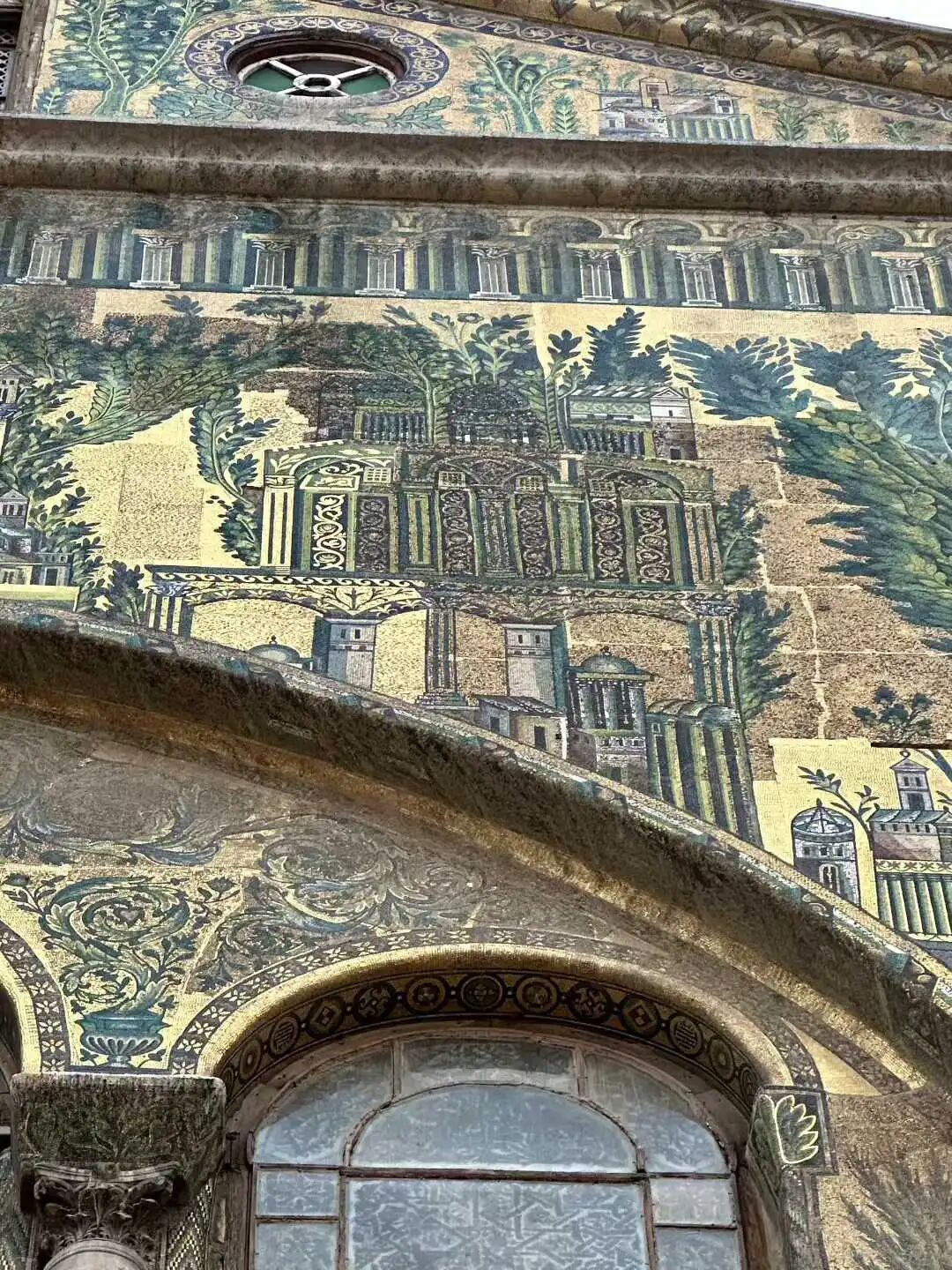
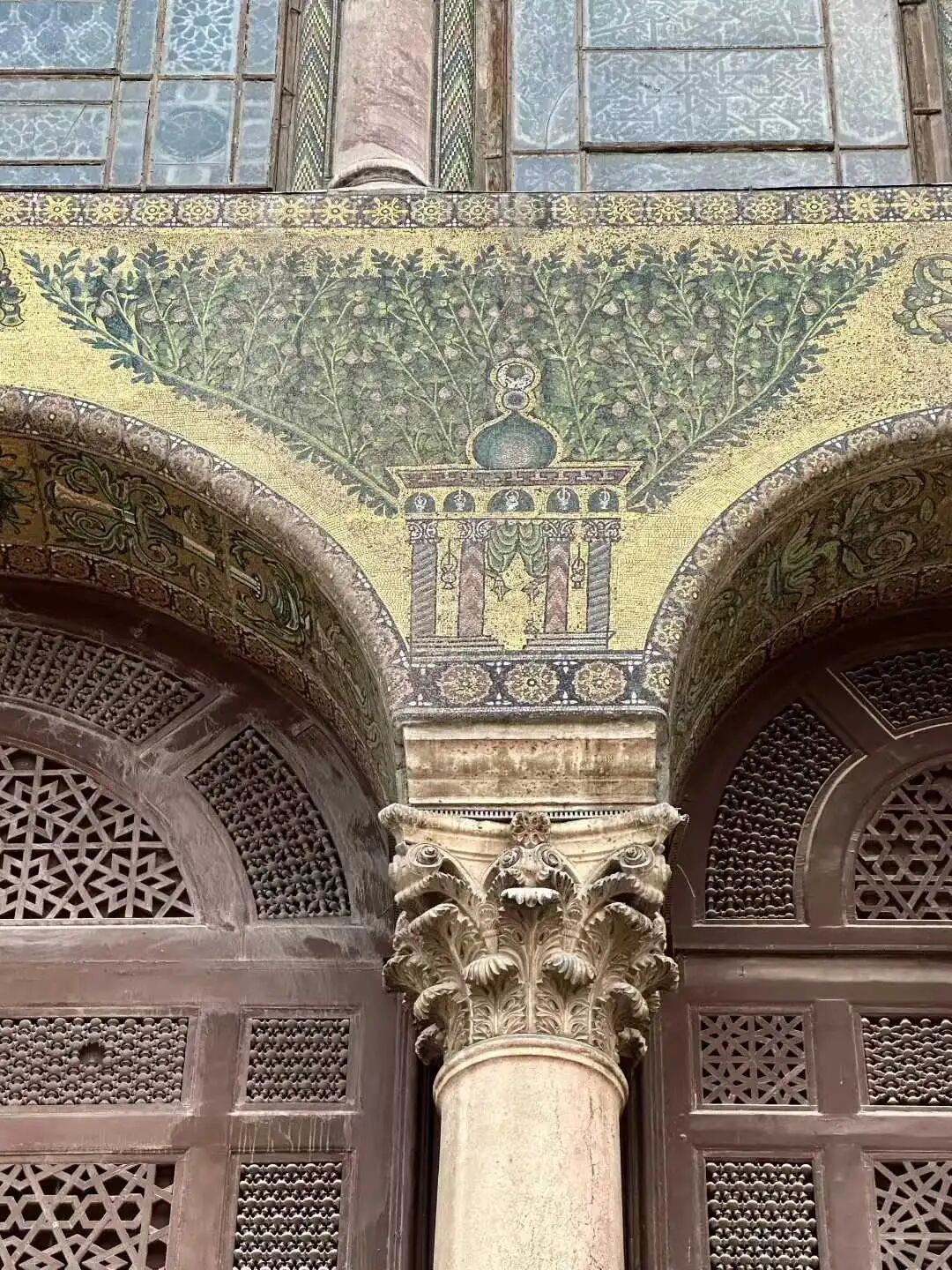
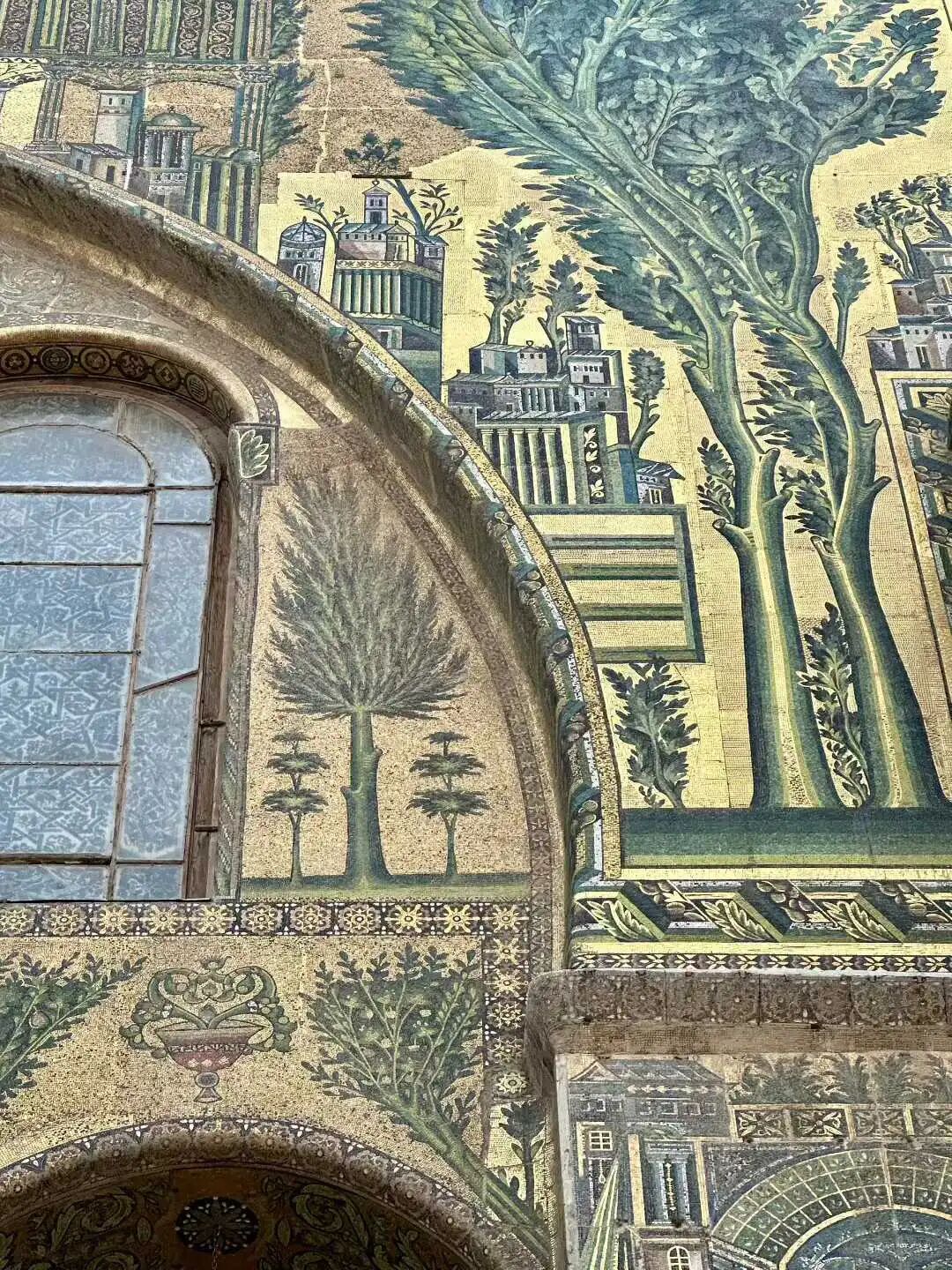
The Great Mosque of Damascus is world-famous for its rich Umayyad-era mosaic decorations. These mosaics use a late Roman style to depict various natural landscapes and buildings, showing a typical naturalistic style.
Some Arabic historical sources suggest the craftsmen and materials for the mosaics came from the Byzantine capital of Constantinople, but a 2022 chemical analysis study showed that most of the mosaics were actually produced in Egypt. Although these mosaic images show traces of Byzantine style, some scholars believe their style better matches mosaic craftsmanship from Syria, Palestine, and Egypt.
There has also been a long-standing debate about the meaning of the mosaic images. Some views suggest they represent the known world at that time, others think they depict Damascus and the Barada River, and some believe they show scenes of Paradise. Currently, there is relatively more evidence for the Paradise view, and the landscapes without human figures fit the idea of an empty Paradise waiting for people to arrive after the Day of Resurrection.
See "Umayyad Mosaic Decorations of the Great Mosque of Damascus" for details.
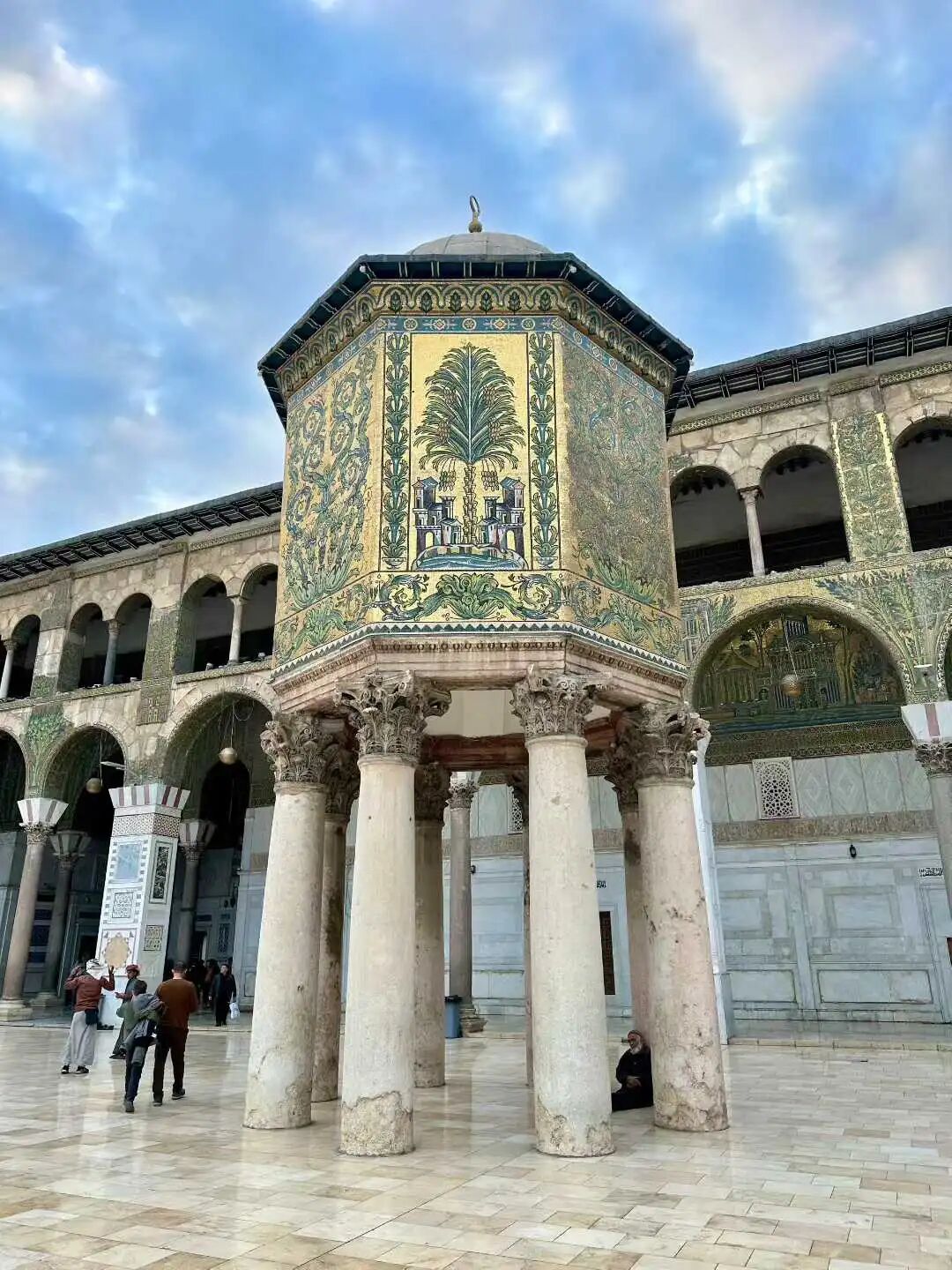
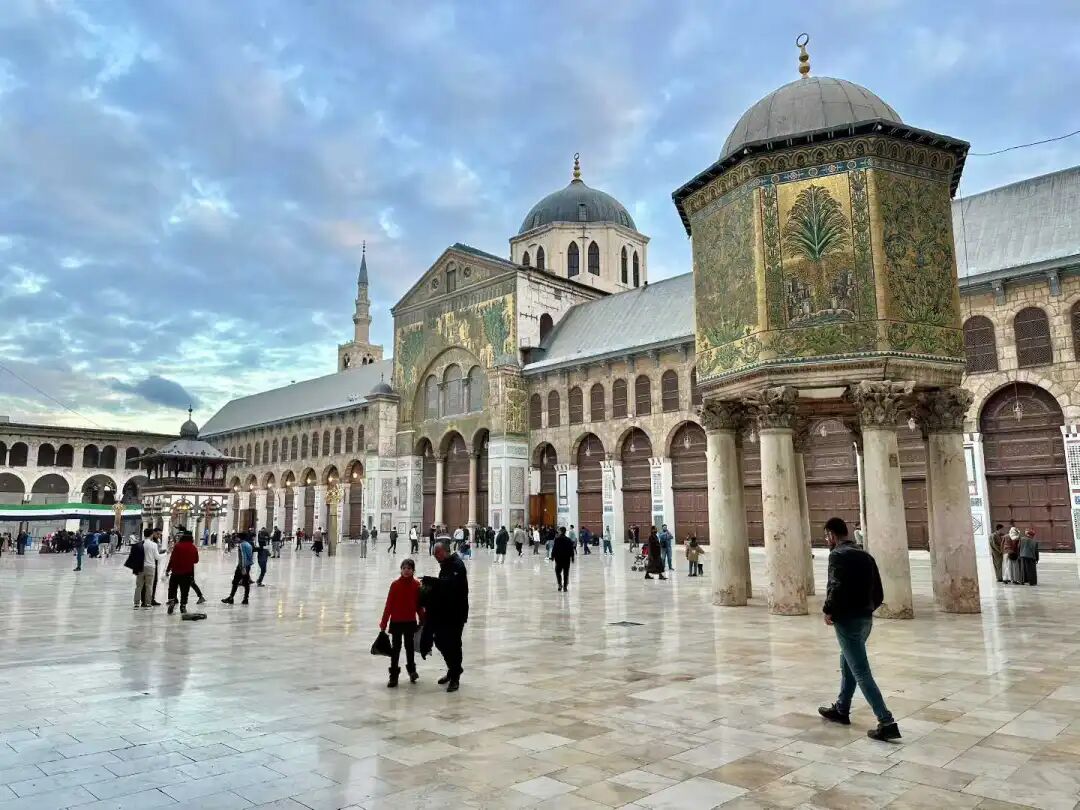
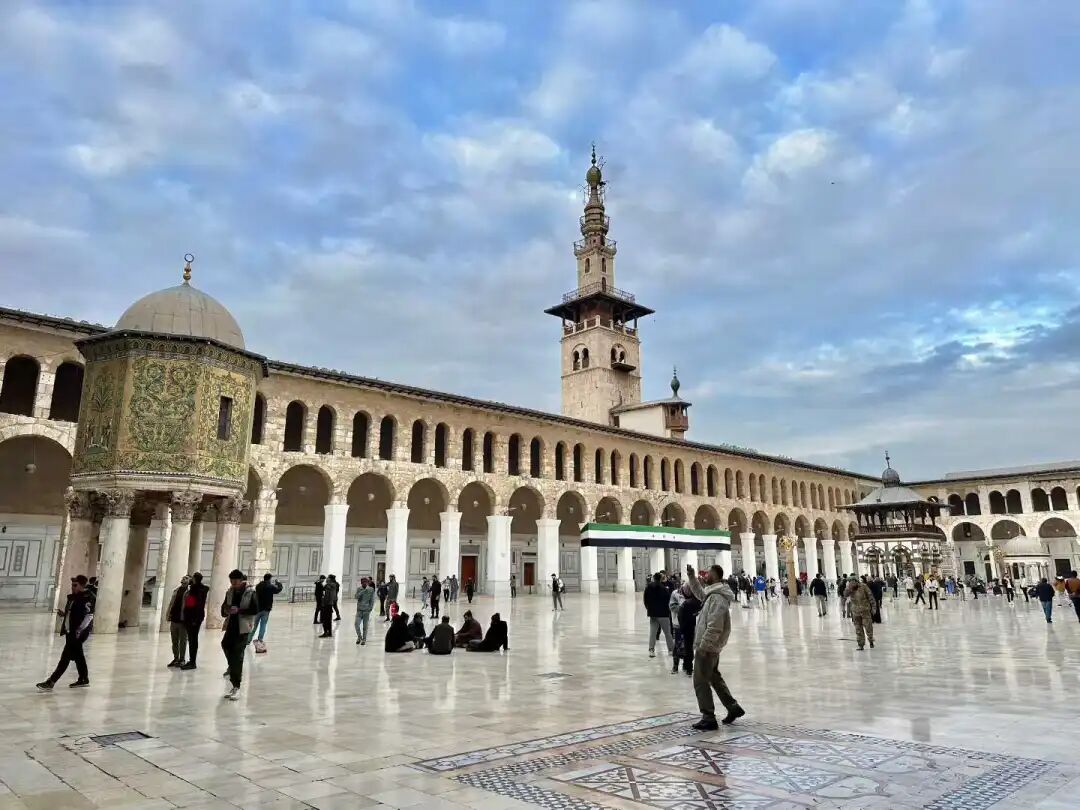
On the west side of the courtyard of the Great Mosque of Damascus stands the Treasury Dome built during the Abbasid Dynasty, which was used to store the charity (nietie) given to the mosque and many ancient manuscripts.
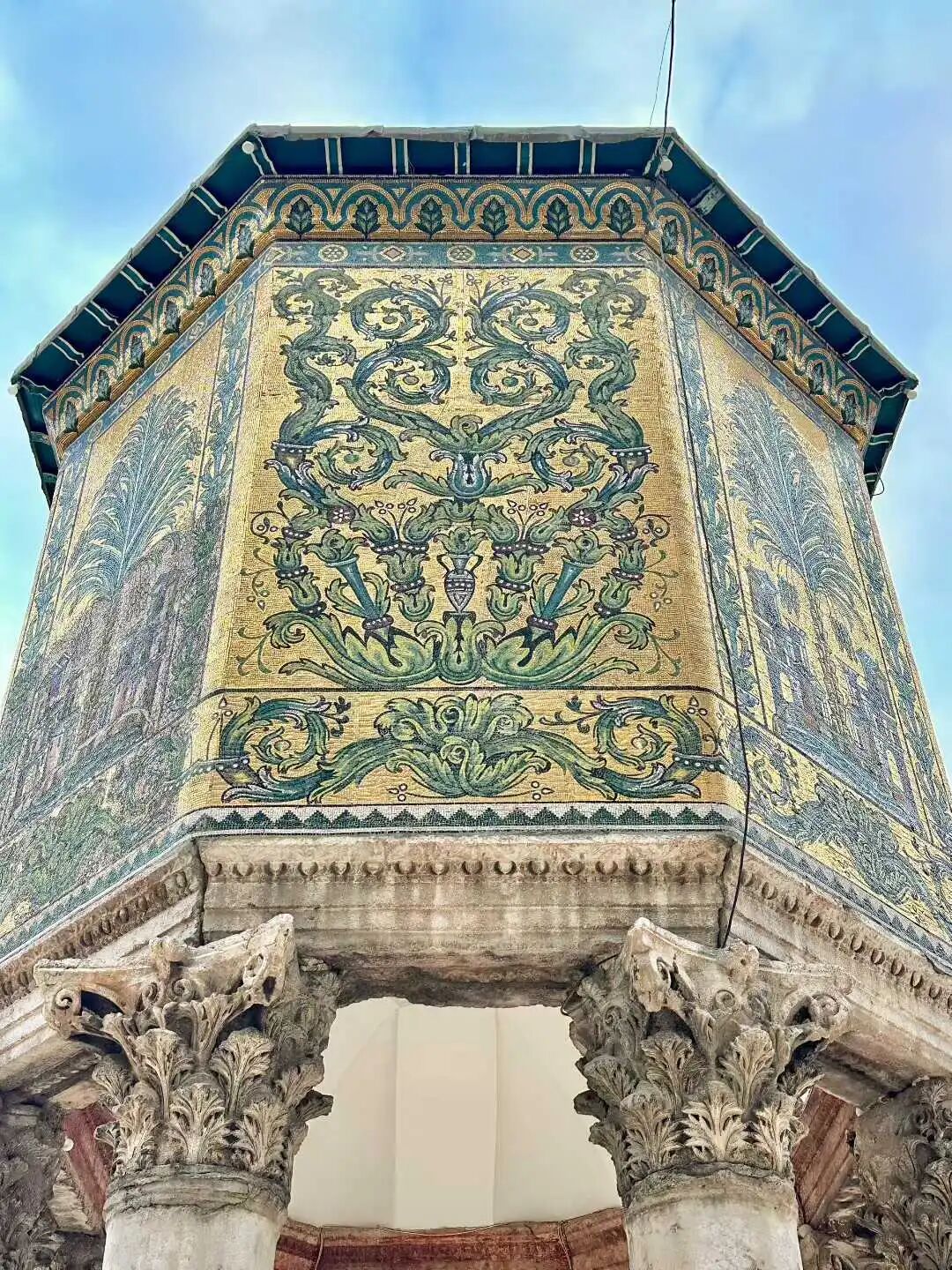
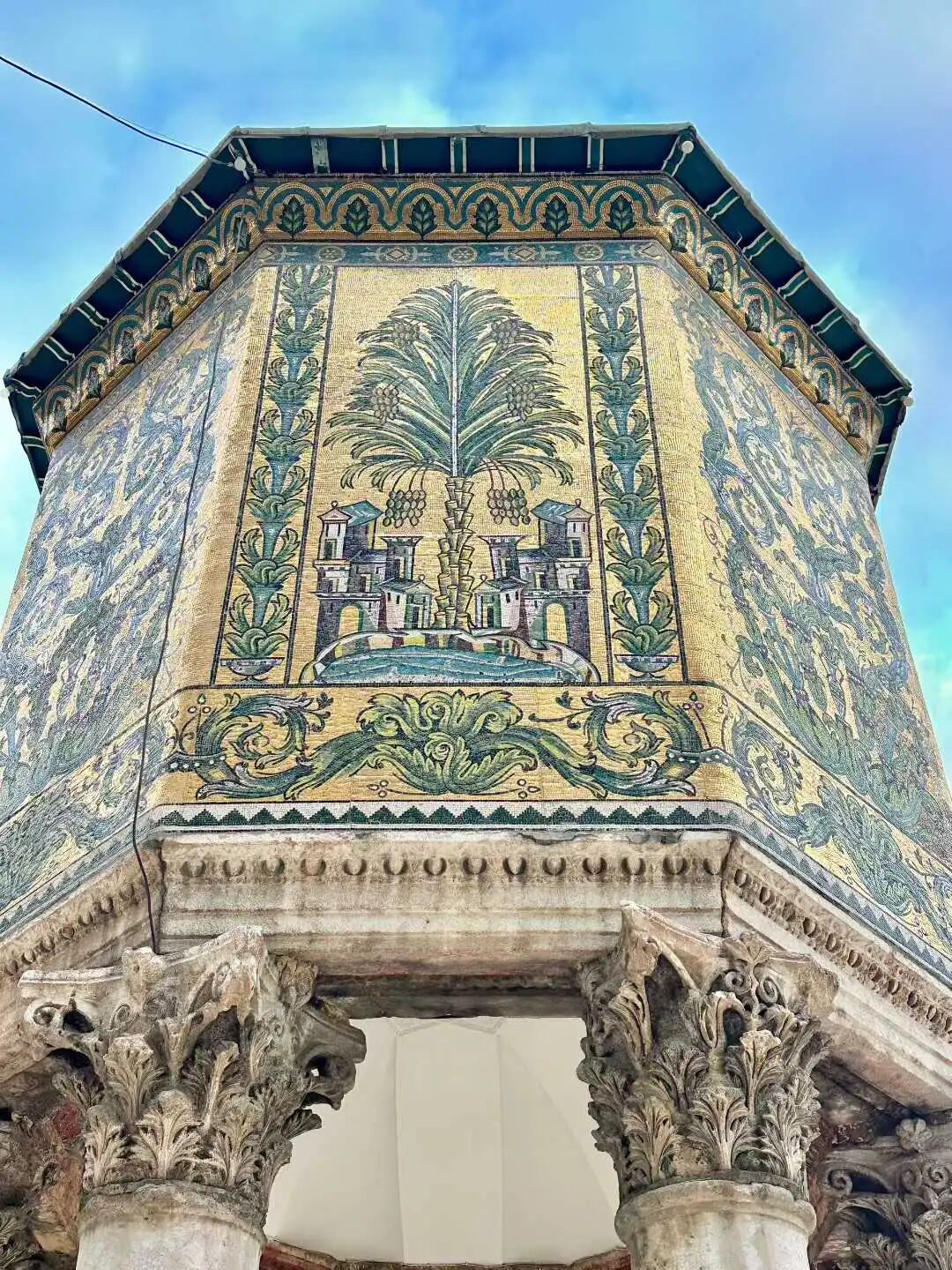
The Treasury Dome was ordered to be built in 789 by the Abbasid governor of Damascus, Fadl ibn Salih. The treasury is an octagonal building supported by eight Roman columns that still have their original capitals. The outer walls of the treasury are decorated with magnificent mosaic murals, which imitate the early Umayyad decorations in the mosque, though the craftsmanship is slightly inferior. The mosaic decorations on the outer walls of the treasury were restored at the end of the 20th century.
The treasury once housed ancient manuscripts in Greek, Latin, Syriac, Coptic, Hebrew, Aramaic, and Georgian, including 7th-8th century Greek New Testament manuscripts, but they were gifted to Kaiser Wilhelm II in 1899, and today only a few are kept in the Damascus National Archives.
The Great Mosque of Damascus did not have a minaret (bangke ta) originally, but there was a small room on the Roman tower at the corner of the outer wall for the muezzin to call the adhan (bangke).
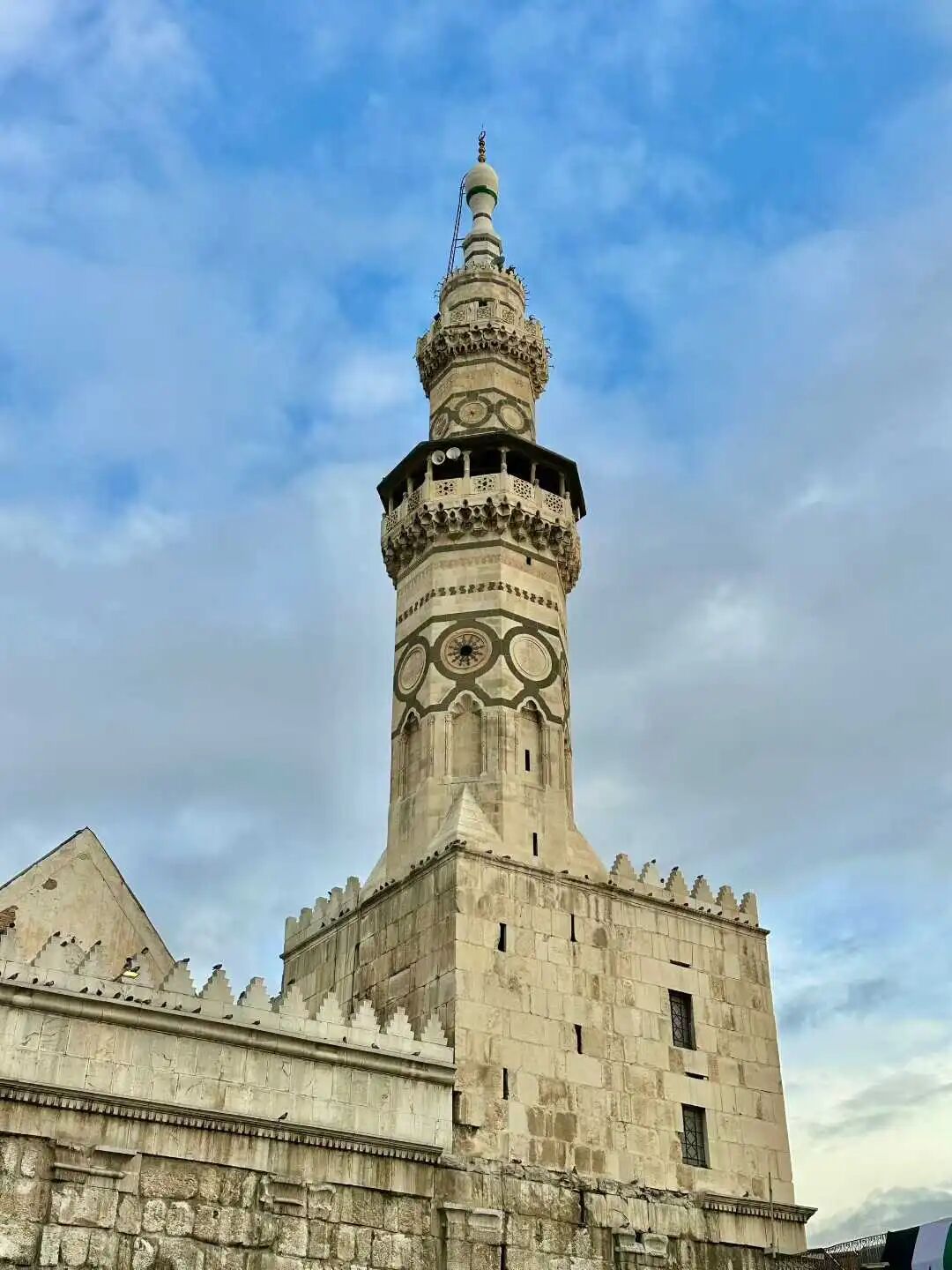
The first minaret of the Great Mosque of Damascus is the Bride's Minaret in the center of the north wall, which was first built during the Abbasid Dynasty in the 9th century. Only the lower level remains today, as the upper level was destroyed by fire in 1069 and later rebuilt by the Ayyubid Sultan Saladin in 1174. The Bride's Minaret has a 160-step spiral staircase, a square main tower, and horseshoe arches on the upper level.
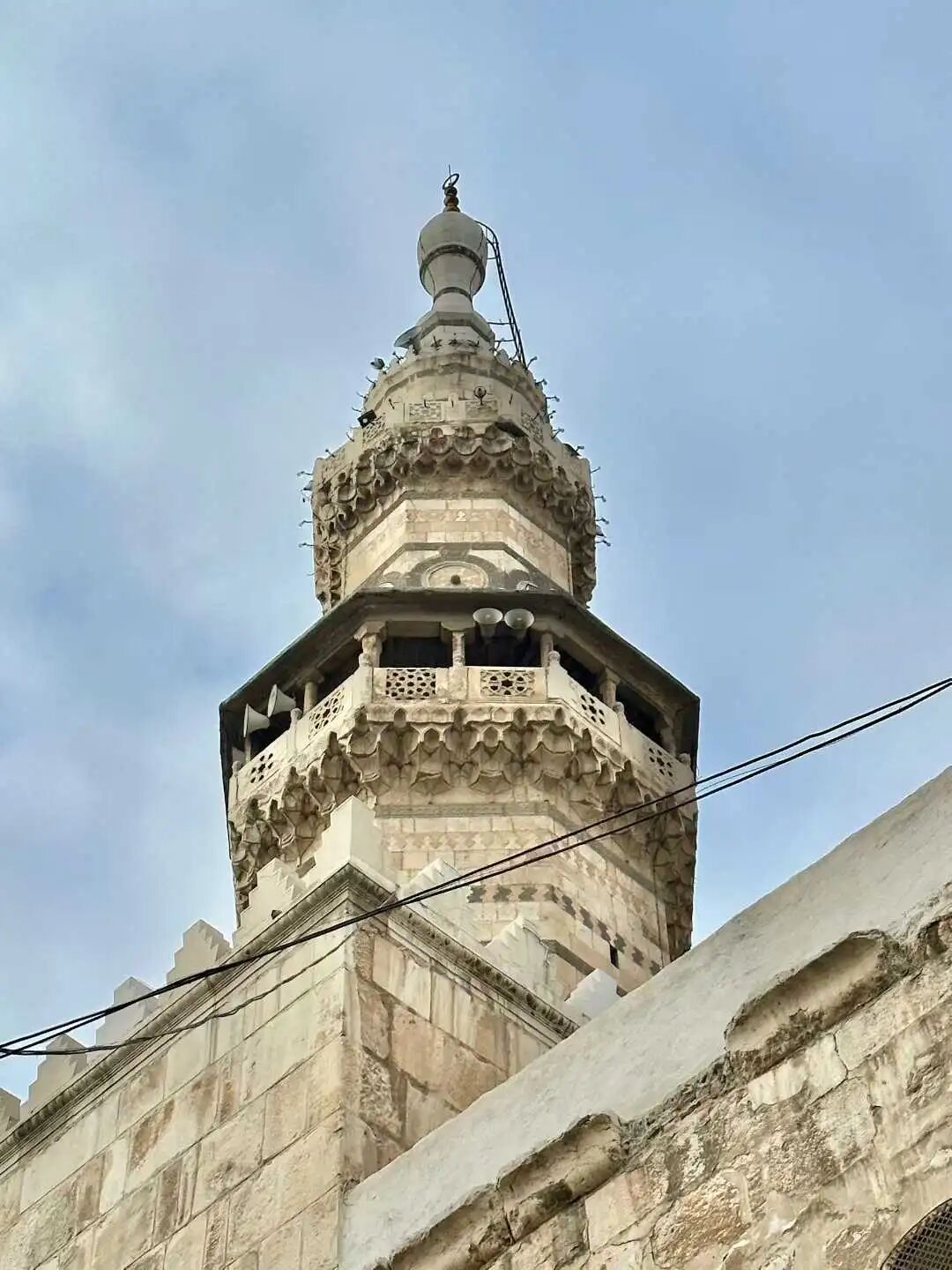
The Isa Minaret in the southeast is said to have been built in the 9th century during the Abbasid Dynasty, but it was destroyed in 1245 during the civil strife of the Ayyubid Dynasty. The current lower level of the building was built in 1247 during the Ayyubid Dynasty, and the upper level was built after the 16th century during the Ottoman Dynasty. The main body of the Isa Minaret is square, with an octagonal top and an open gallery. Legend says the Prophet Isa (Jesus) will descend from the Isa Minaret and perform the morning namaz behind the Mahdi (the Savior).
In 1285, the famous scholar Ibn Taymiyyah began teaching at the Great Mosque of Damascus. When the Mongols invaded Damascus in 1300, Ibn Taymiyyah firmly supported the people in their resistance. He preached at the Great Mosque and issued fatwas for those fleeing in panic. He personally joined the fight against the Ilkhanate, which finally ended the Mongol rule over Syria.
The Qaitbay Minaret in the southwest was built in 1488 by the Mamluk Sultan Qaitbay (reigned 1468-1496) and features a classic Mamluk style. The name of Assad was once carved on the minaret, but it was removed in October 2025. Qaitbay's reign was known for stability and prosperity. He defeated the powerful Ottoman Empire of that time several times and eventually signed a peace treaty with them, which greatly boosted his reputation. He also donated funds to build many structures across Egypt, Syria, Saudi Arabia, and other places.
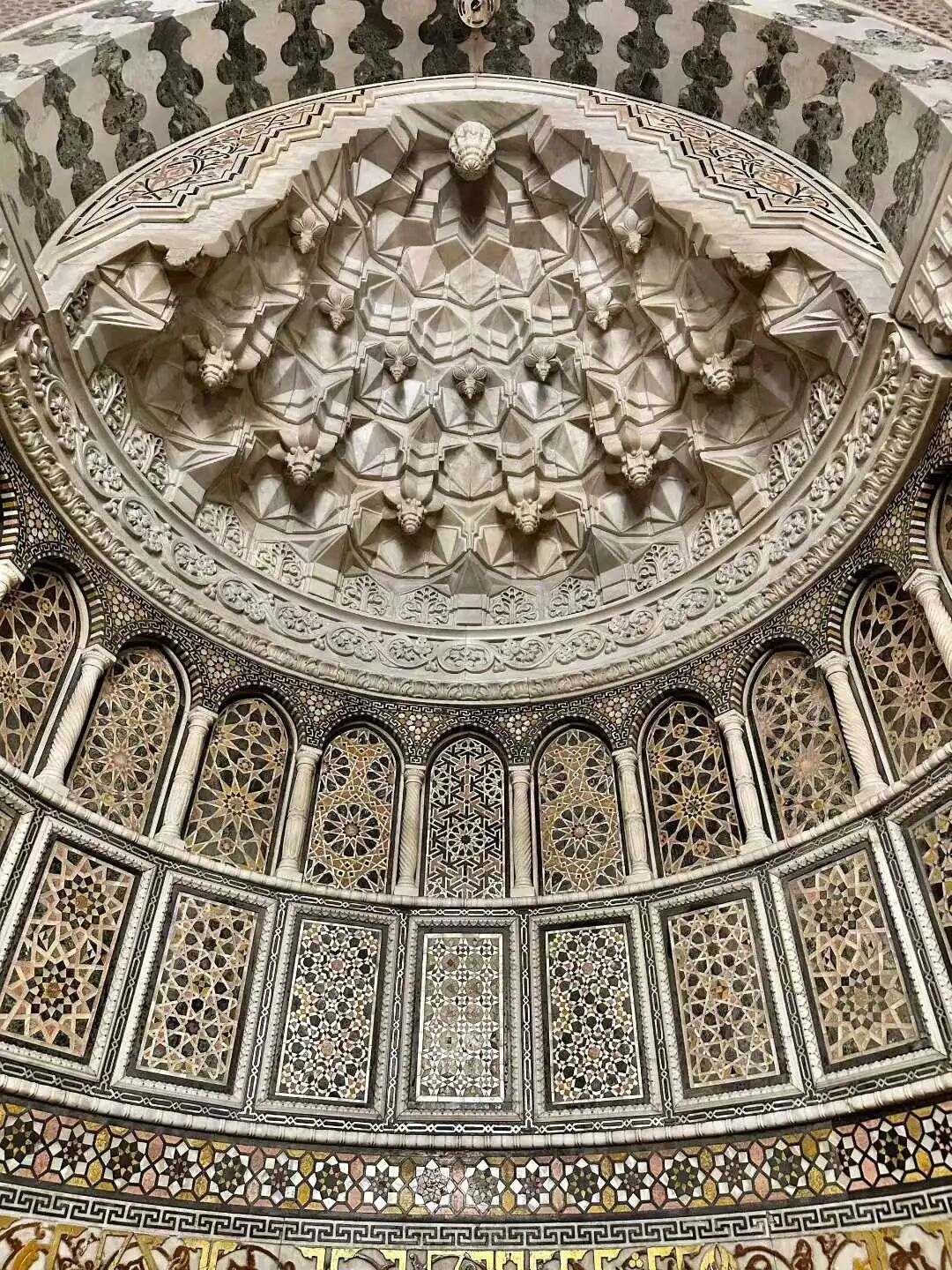
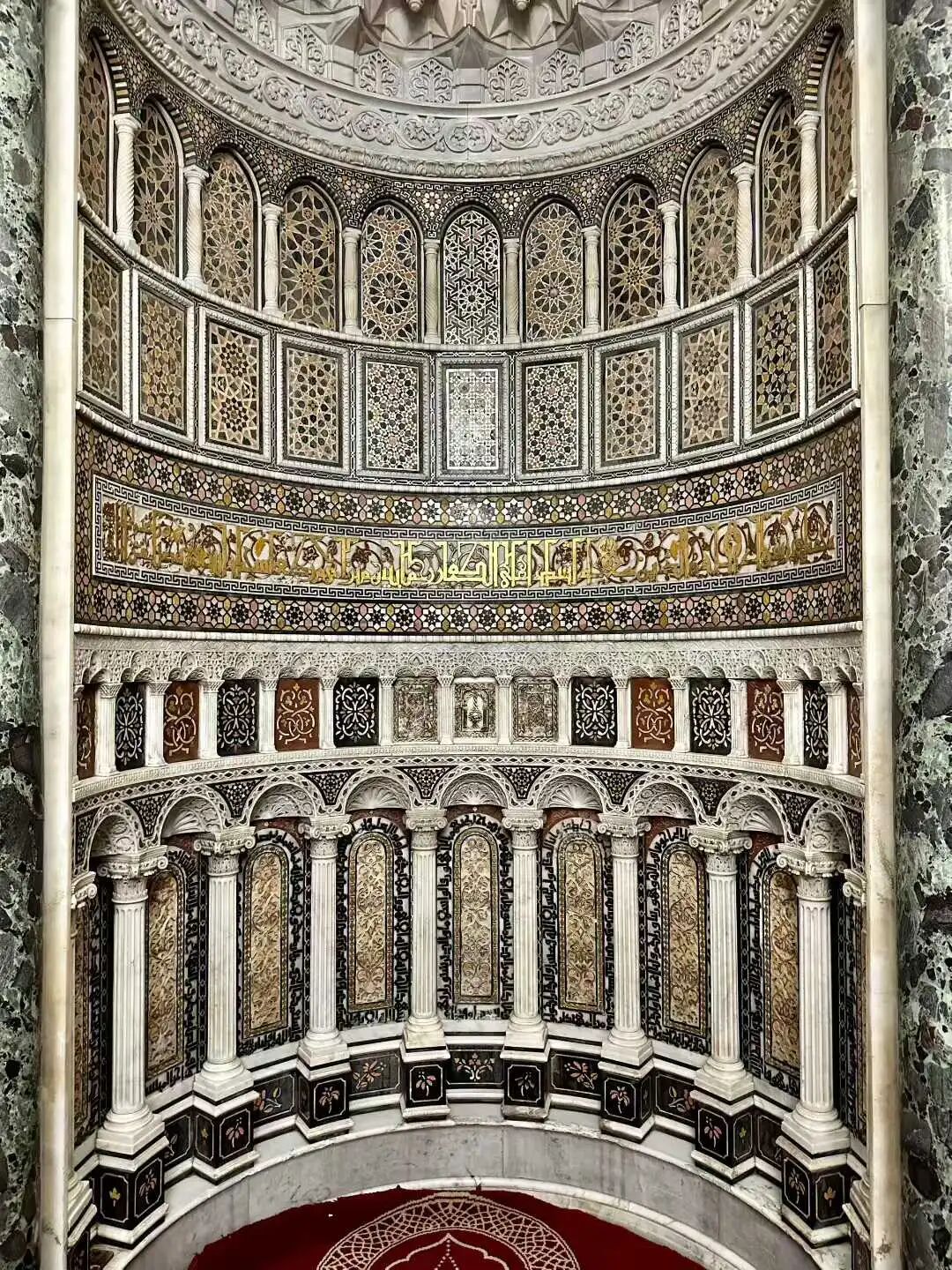
The main hall of the Great Mosque of Damascus caught fire in 1893. The Ottoman Empire spent nine years repairing it, rebuilding the mihrab, minbar, and dome, while removing the original Umayyad mosaic decorations. Today, the late Ottoman-style mihrab is very intricate and represents the delicate style of that period. view all
Summary: This first-person account records Friday namaz at the Great Mosque of Damascus, including the 12:40 p.m. khutbah by Mohammed Abu al-Khair Shukri, Syria's Minister of Religious Endowments since March 2025. It keeps the source's prayer details, people, security notes, historic setting, and photographs.
It has always been my wish to attend Friday namaz at the Great Mosque of Damascus.
When I arrived after 11:00 a.m., the chanting had already begun. The elderly men wore traditional Ottoman-era clothing, and against the backdrop of Ottoman decorations, it felt like stepping back into the 19th century.
The khutbah began at 12:40 p.m., delivered by Mohammed Abu al-Khair Shukri, who has served as the Syrian Minister of Religious Endowments since March 2025. Born in Damascus in 1961, Shukri is a senior scholar of Islamic law, a university professor, a lawyer, and a social activist. In 2021, his assets were seized due to his support for the GM position. It was clear that Shukri is deeply loved by the people. They crowded around to talk and take photos with him, and he responded with a smile the entire time.
During Friday namaz, the front of the main hall was cordoned off for important figures to move through, and people could only stand there when it was time for the prayer rows. Shukri used this path to enter and leave, accompanied by his staff.
Additionally, the area near the gongbei of Prophet Yahya on the east side was closed during Friday namaz, likely to prevent people from visiting the tomb during the service. However, it is not uncommon to find tombs inside the main halls of mosques in the Middle East, and I have seen this elsewhere.
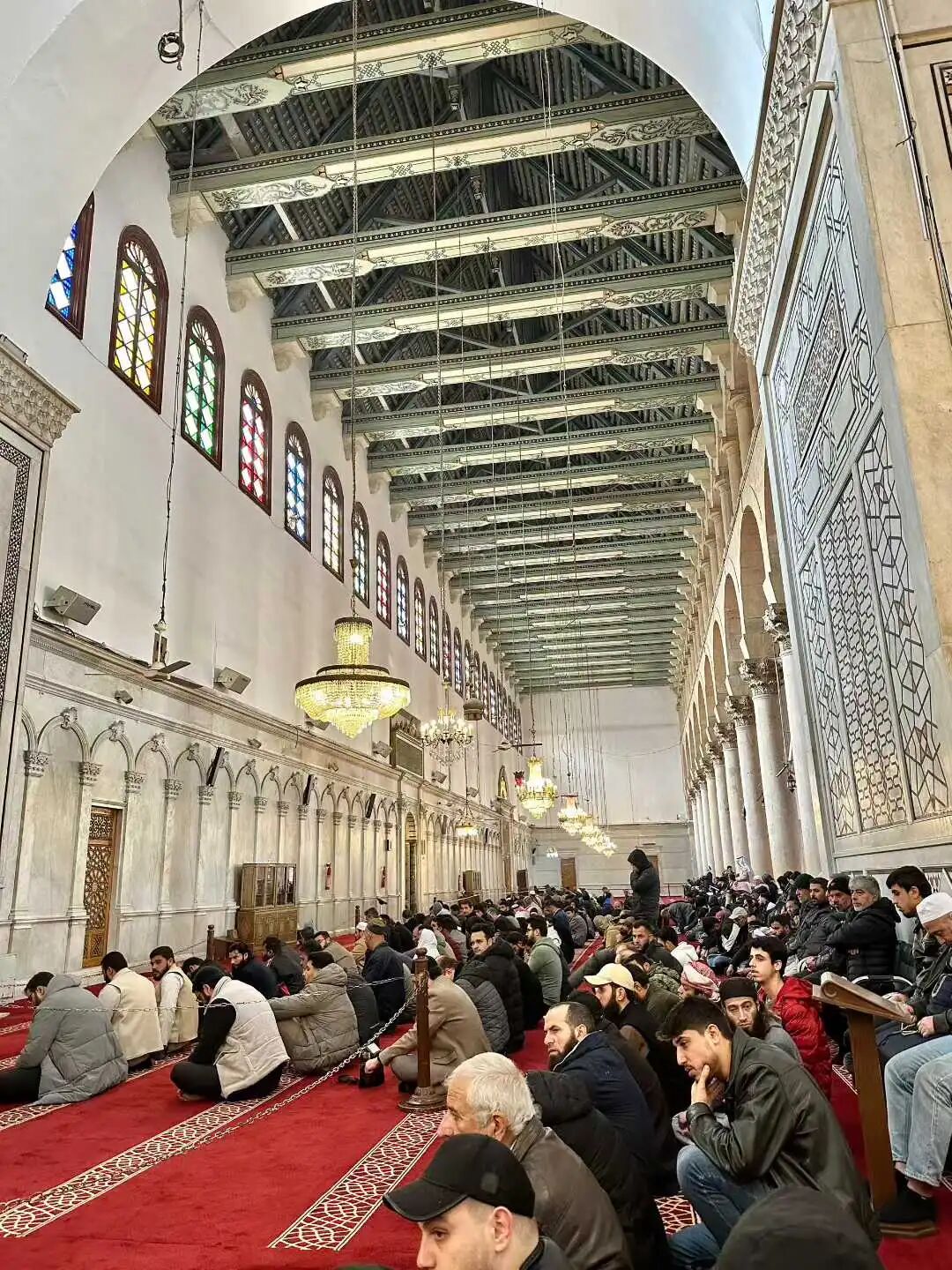
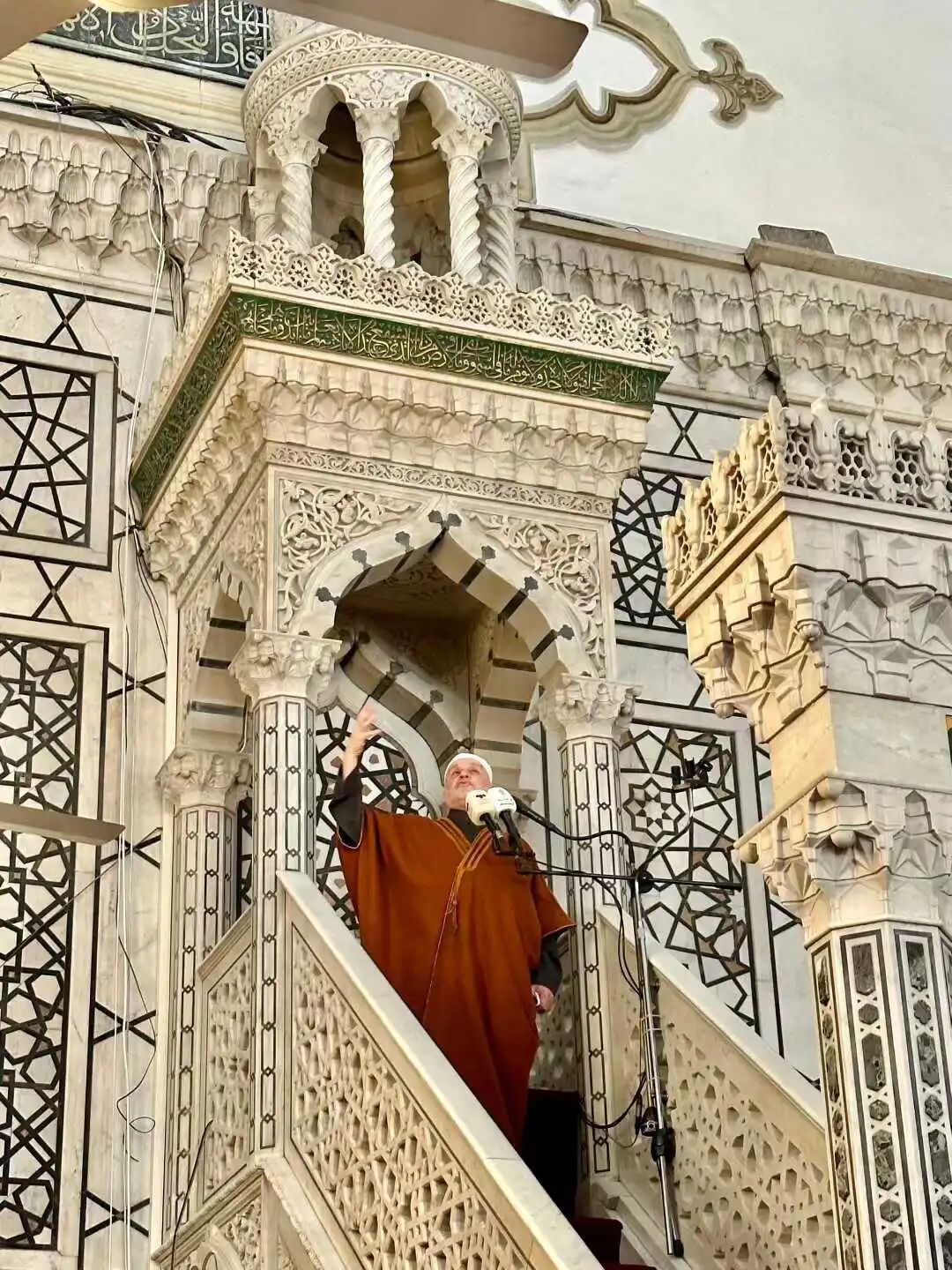
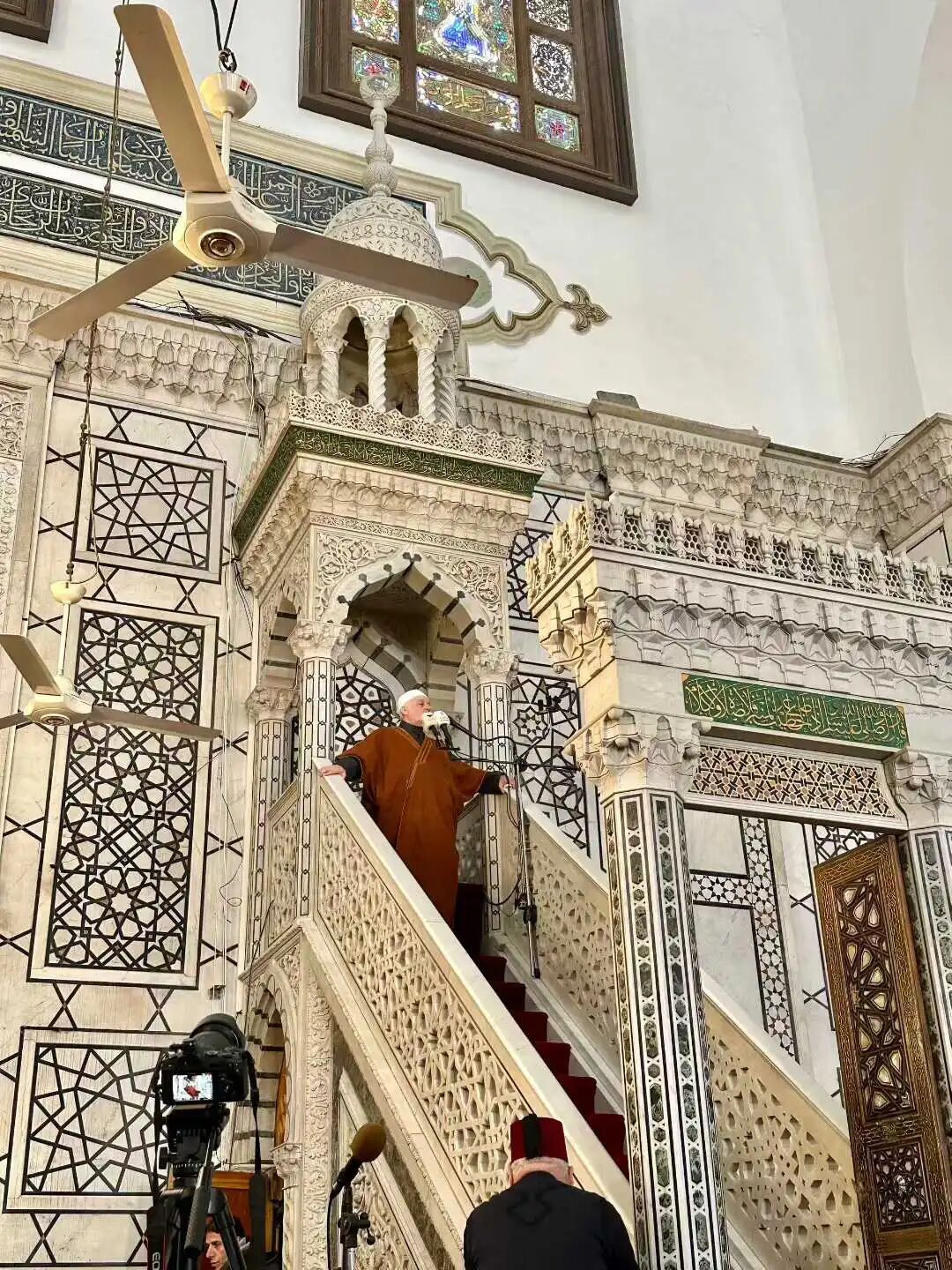
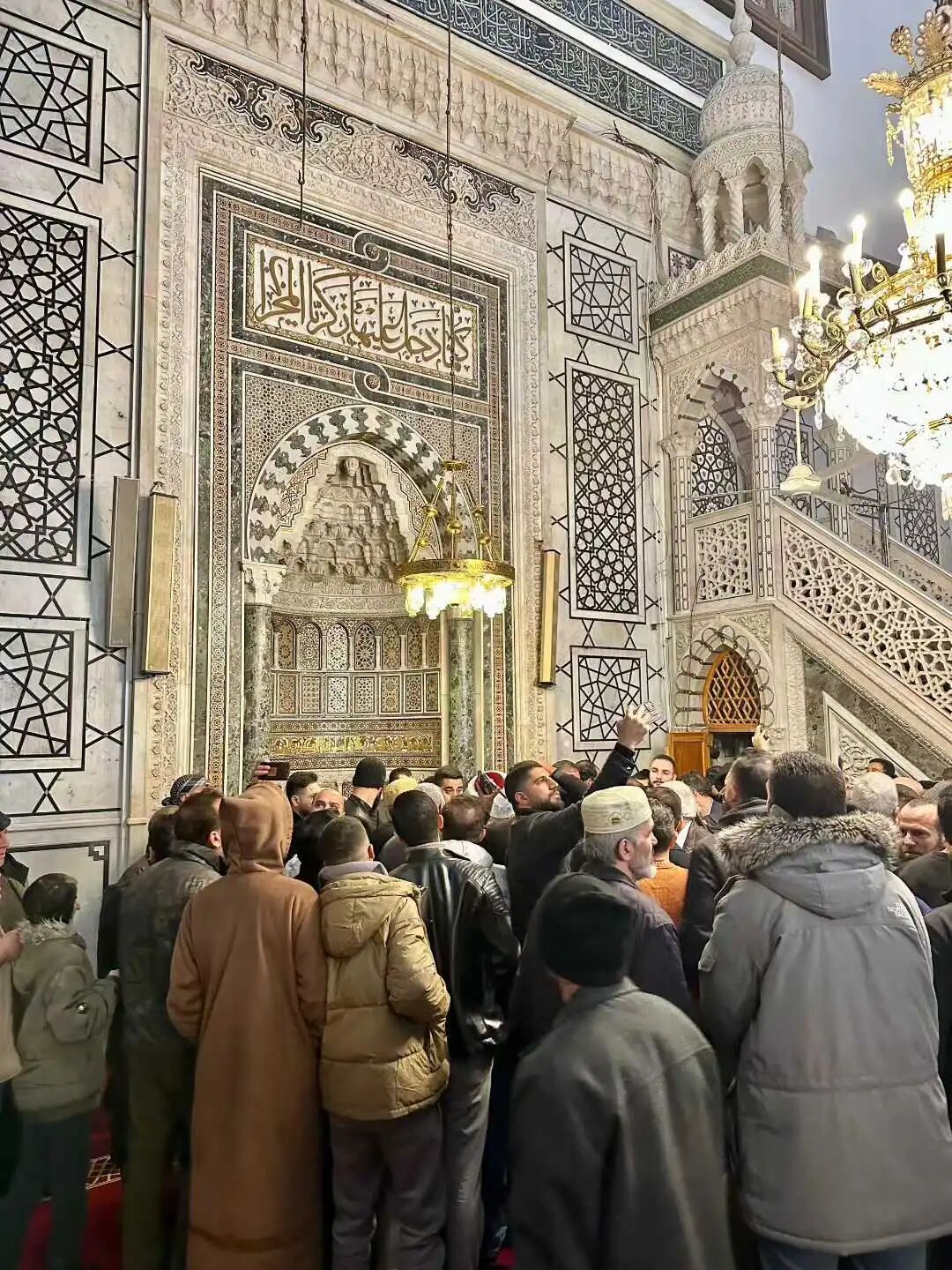
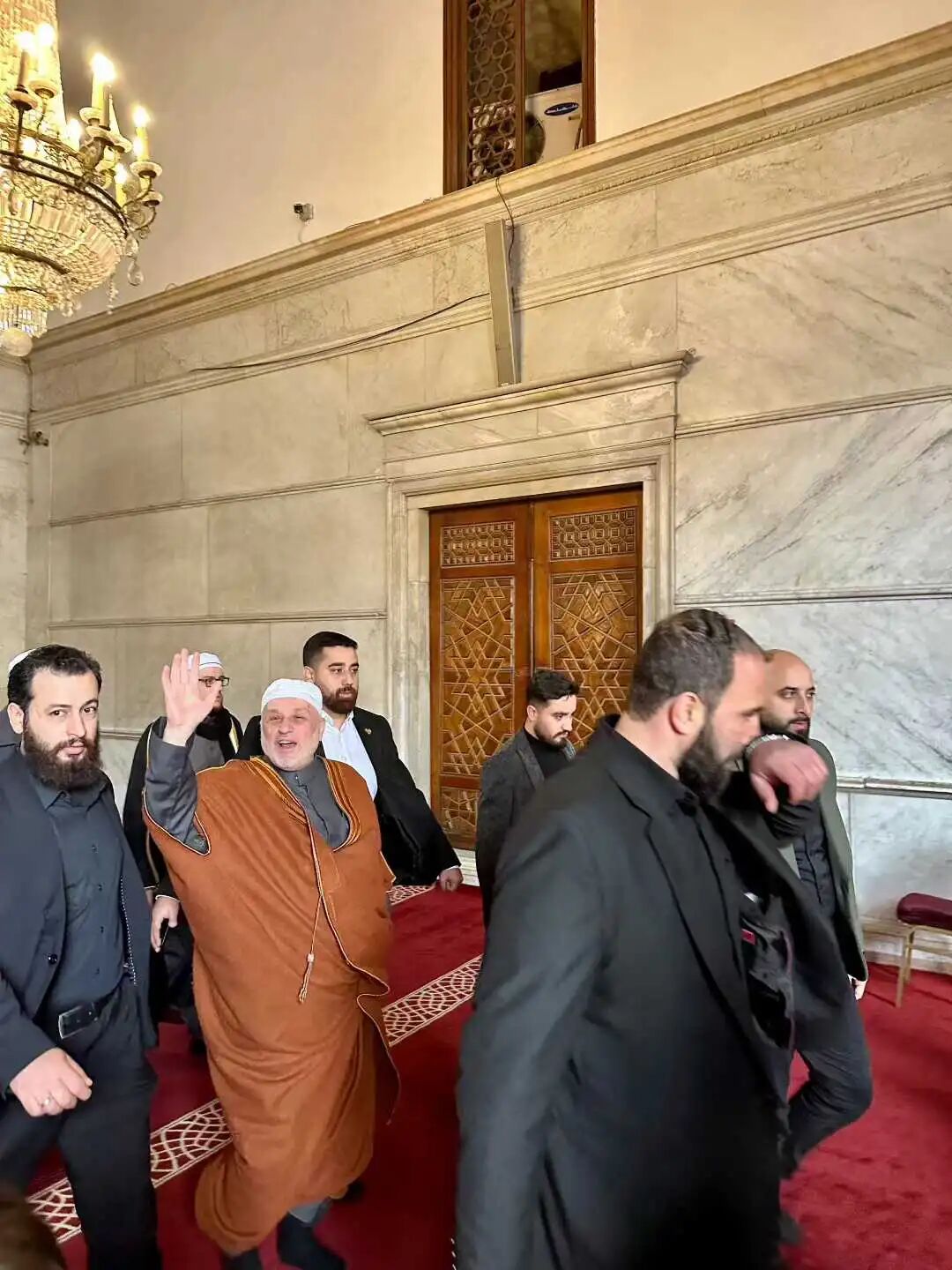
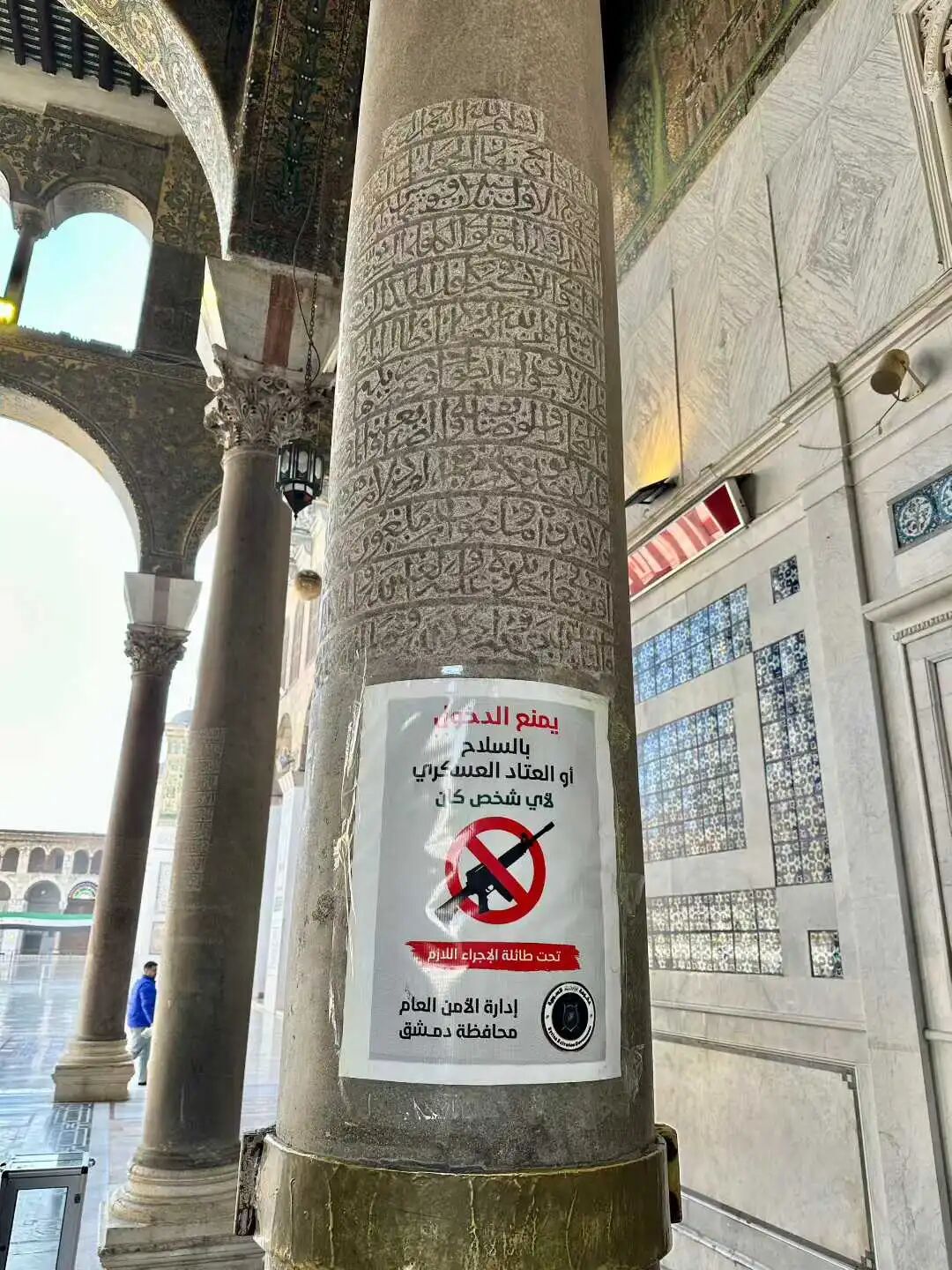
During Friday namaz at the Great Mosque, there were many young men in camouflage uniforms; I suspect many of them had just come from the front lines. A sign on the pillar at the entrance forbids carrying guns, which reminded us that war is not far away. On December 8, 2024, Ahmed Shara delivered a victory speech at the Great Mosque of Damascus and then became the de facto leader of Syria. These men were very warm toward me. Many of them told me that China is great and spoke of lasting friendship between China and Syria after learning I was Chinese.
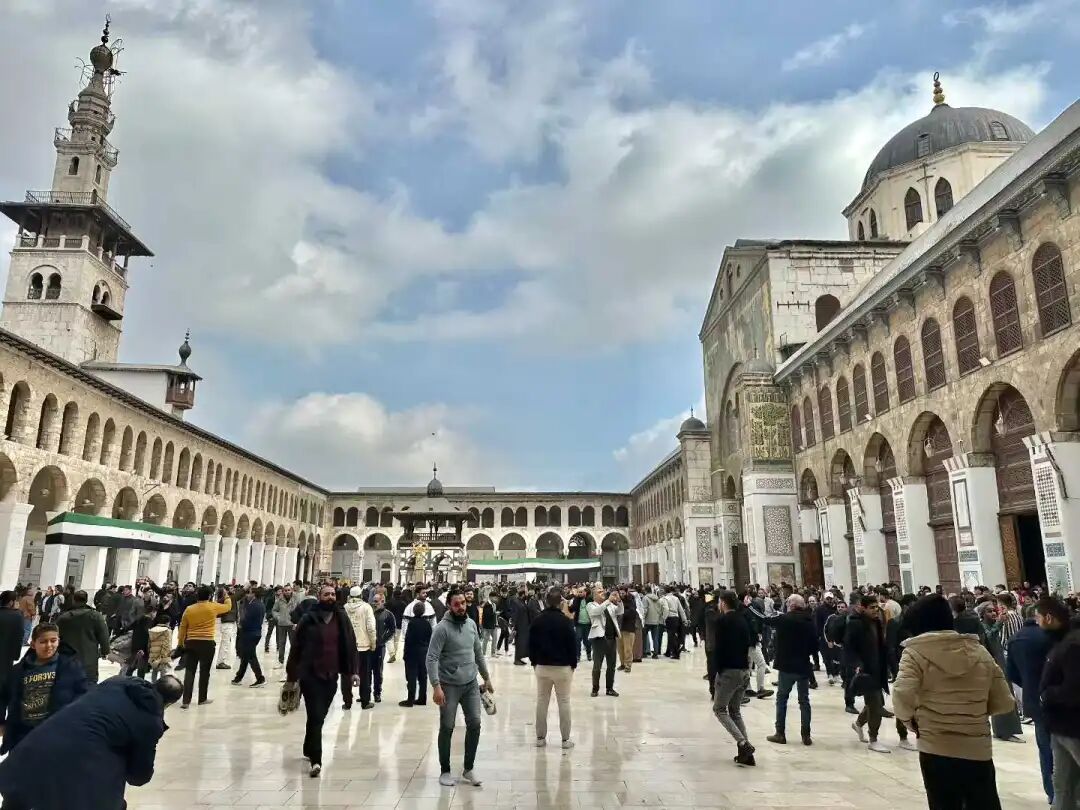
The mosque has four mihrabs (prayer niches). Daily prayers are usually held at the mihrab on the west side. In the afternoon, an ustadh (teacher) teaches scripture next to the large mihrab. He even gave me candy when he saw me passing by. I was given candy several times by warm-hearted people in Damascus, and I was very moved.
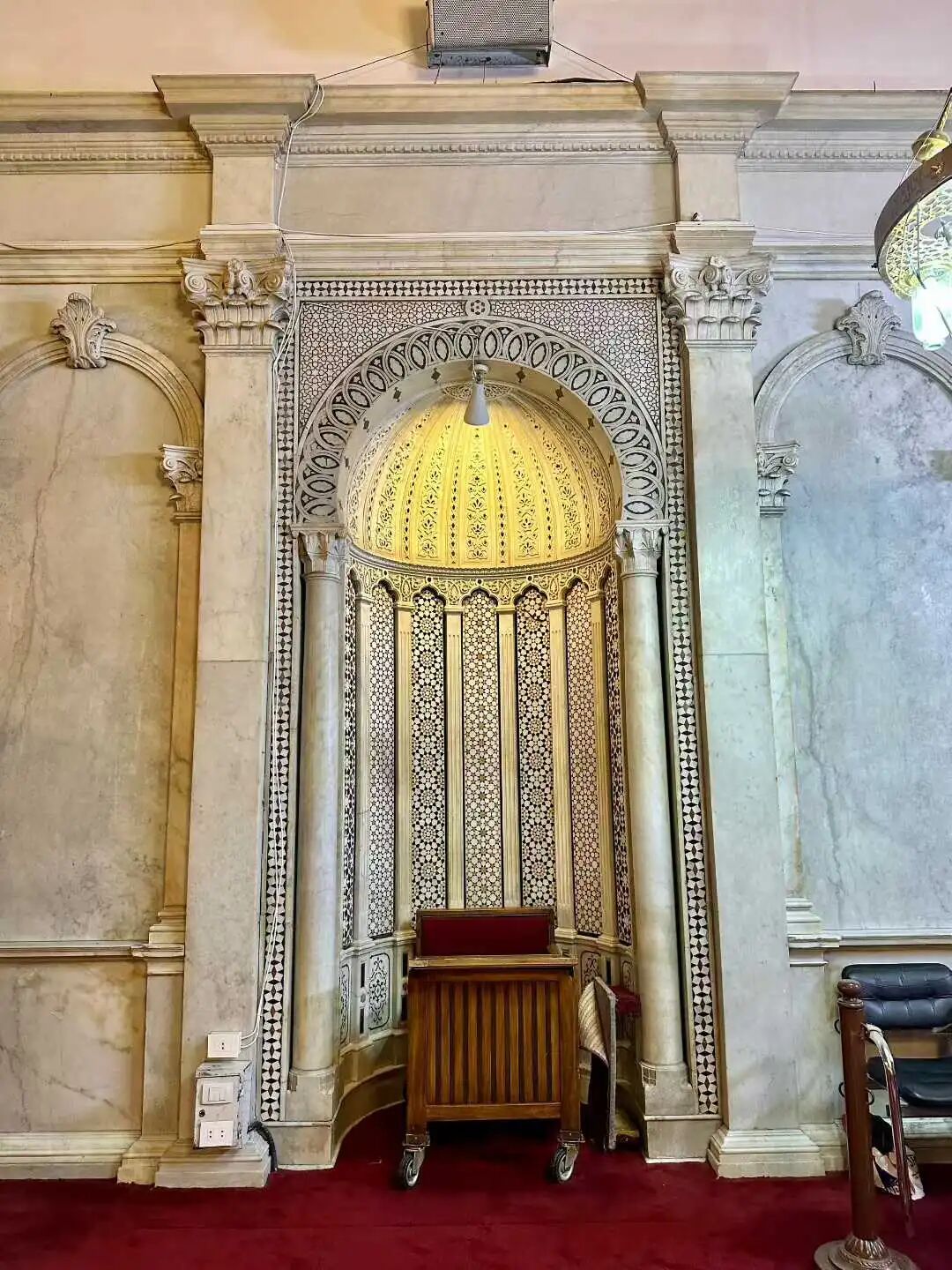
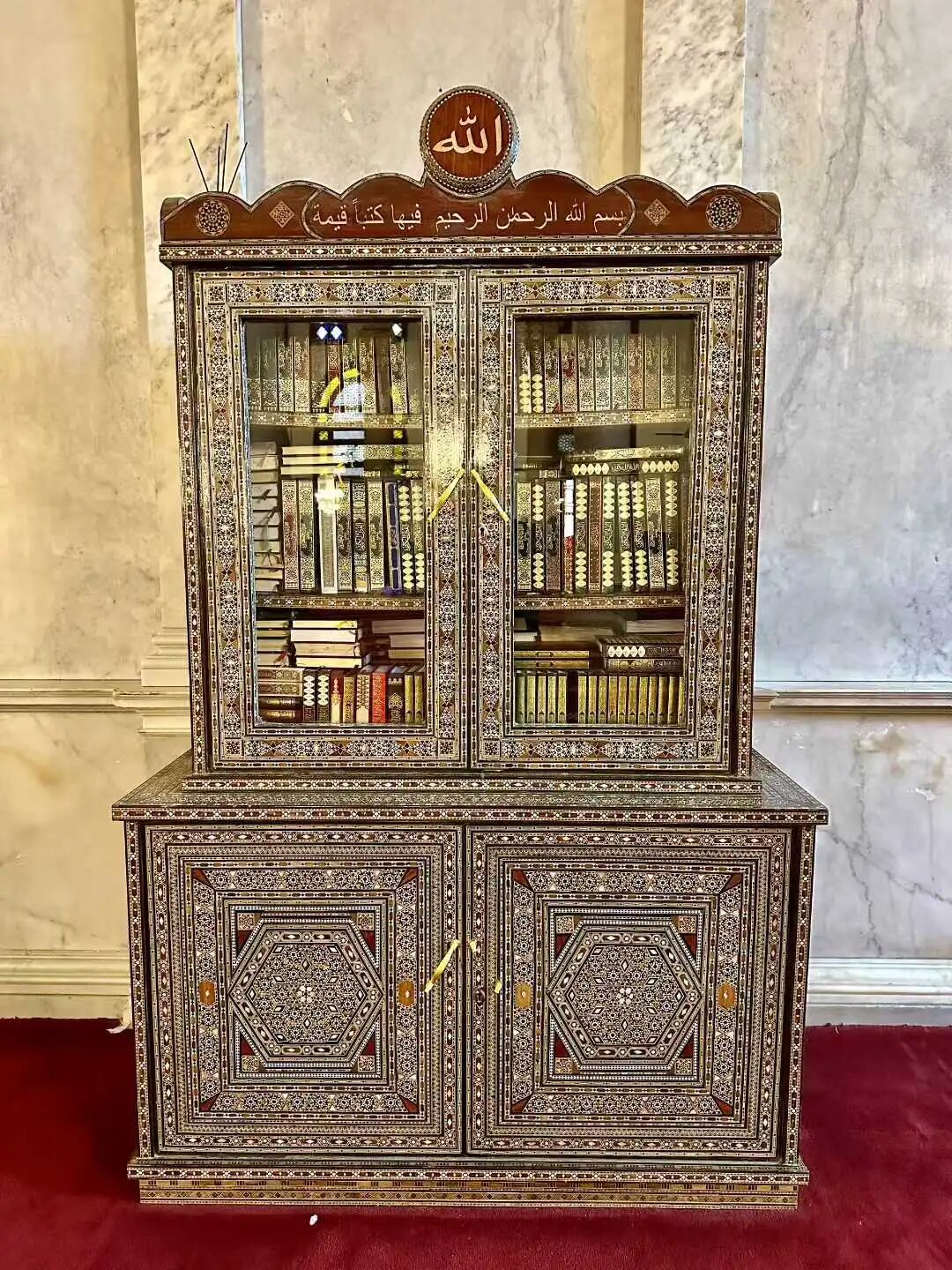
Damascus was captured by the Arabs in 634 and became the capital of the Umayyad Caliphate in 661. For the first 45 years after the capital was established, the site of the Great Mosque of Damascus remained an Orthodox church, though a prayer area (musalla) was built in the southeast corner. As the Muslim population in Damascus grew, and with the need for the Umayyad Caliph to build a grand mosque for Friday prayers, the sixth caliph, Al-Walid I, finally decided in 706 to convert the Orthodox church into a Friday mosque.
Al-Walid I personally oversaw the construction of the Great Mosque of Damascus. He kept the outer walls of the Roman mosque, removed the Corinthian columns and arcades from the mosque, and reinstalled them inside the main hall. The new mosque was completed in 715 and became known as a "wonder of the world" to medieval Muslim writers.
Before the Great Mosque of Damascus was built, traditional mosques were usually flat-roofed halls. The Great Mosque of Damascus introduced a basilica-style layout, featuring three wide, long halls with a central nave and a tall dome above.
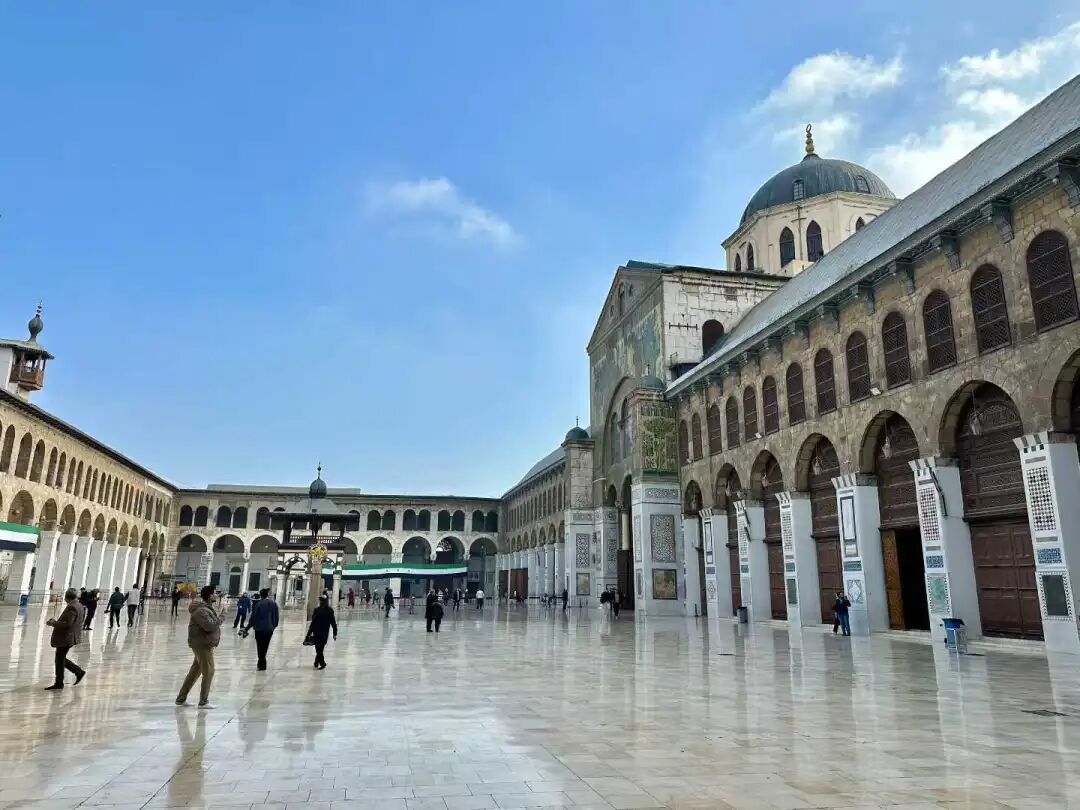
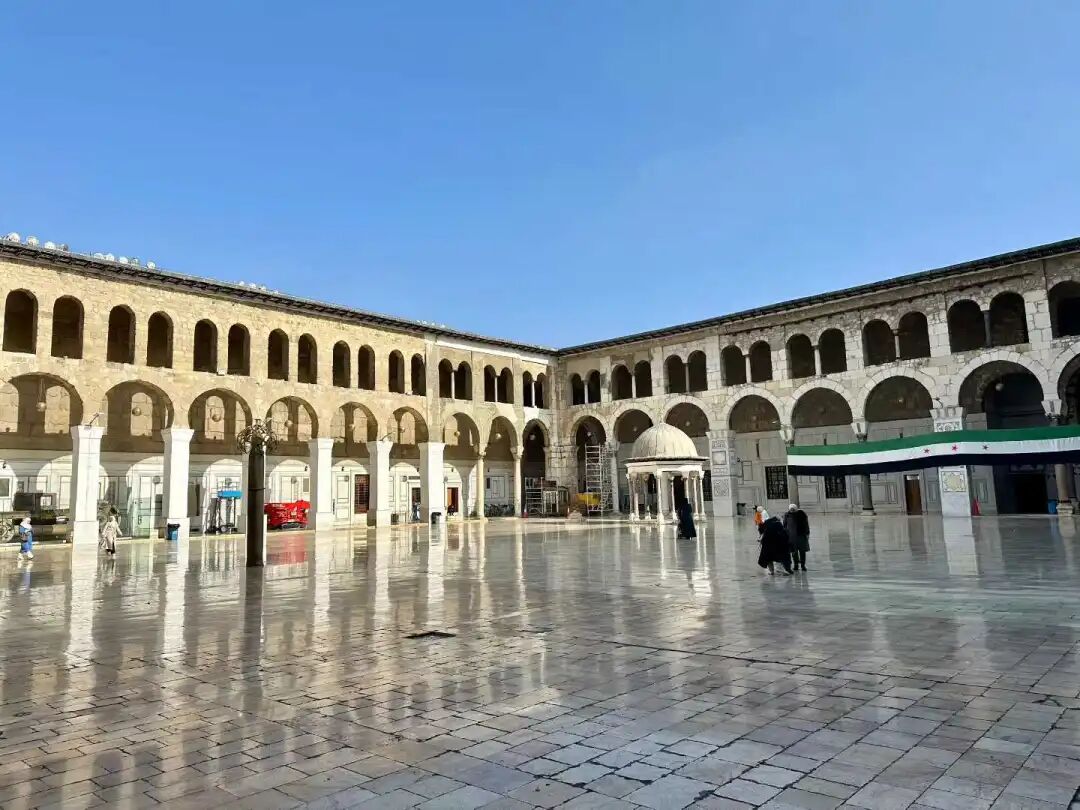
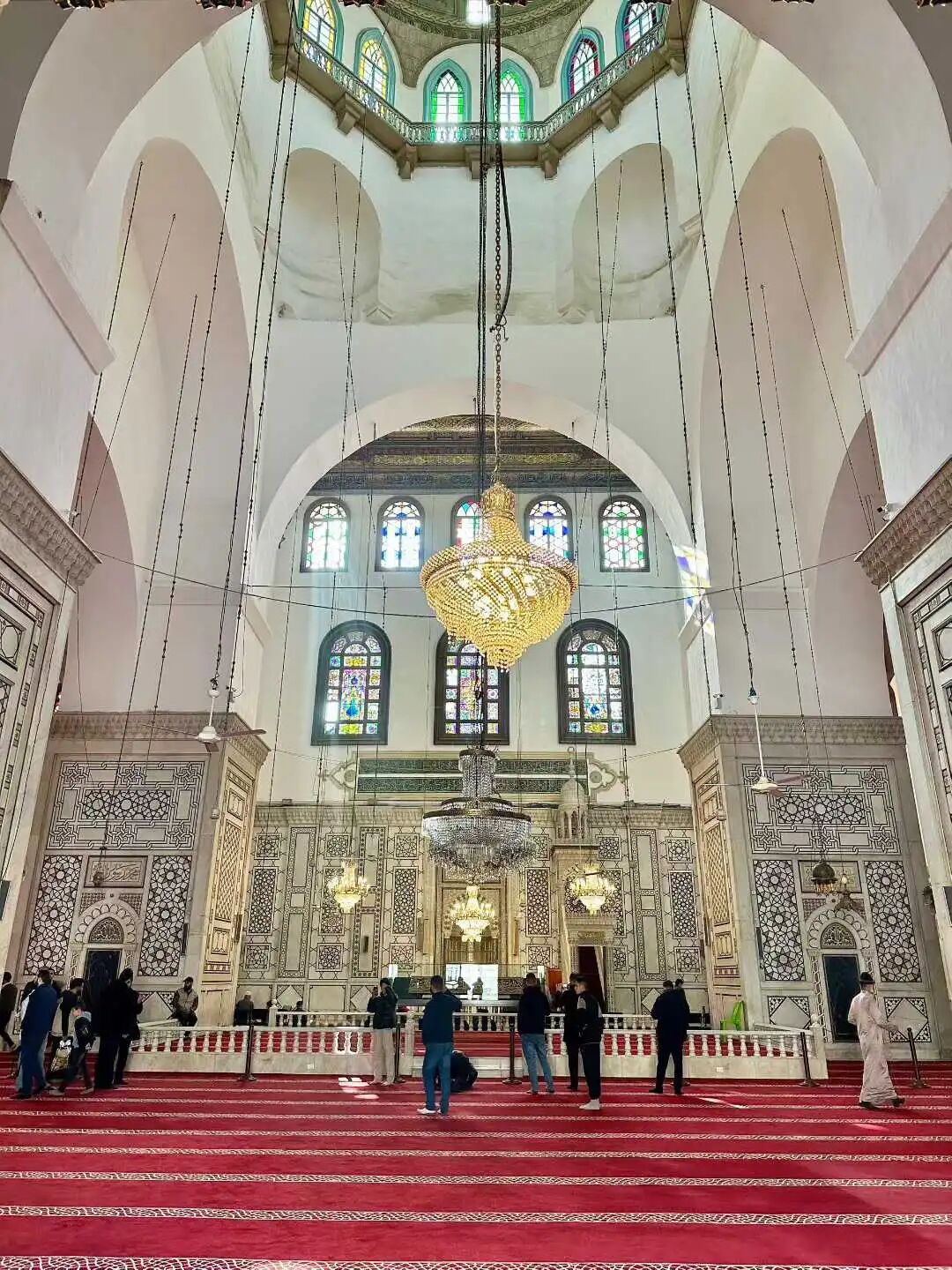
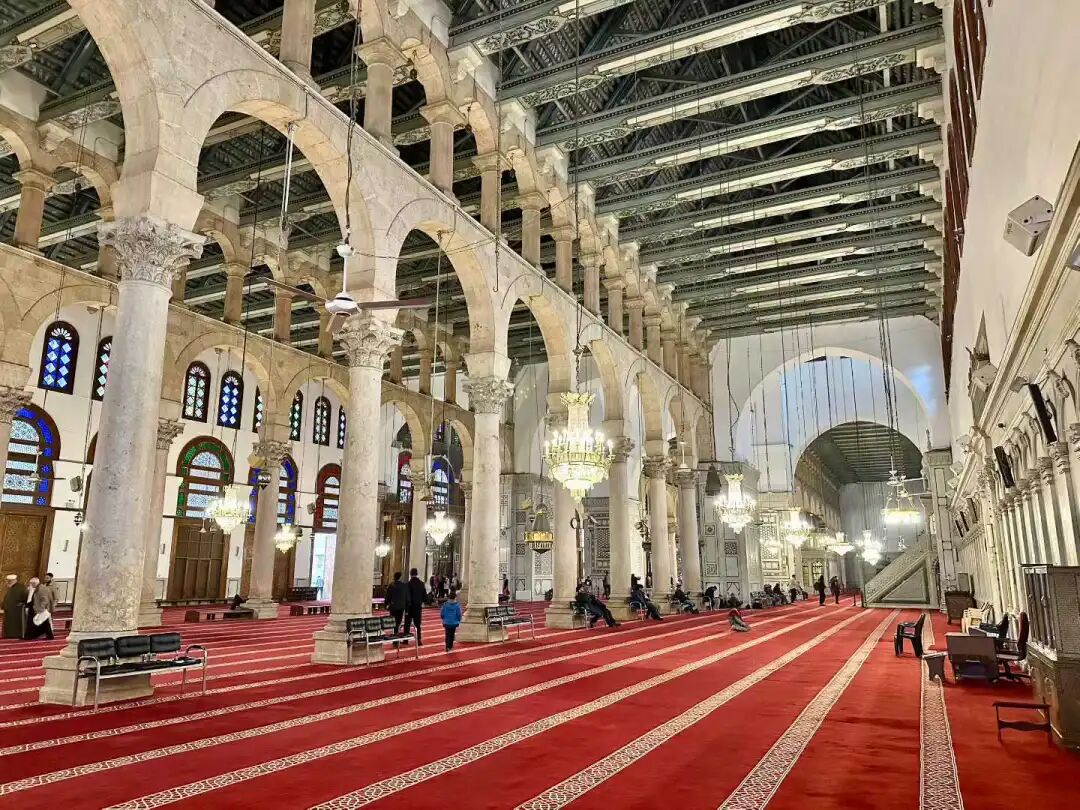
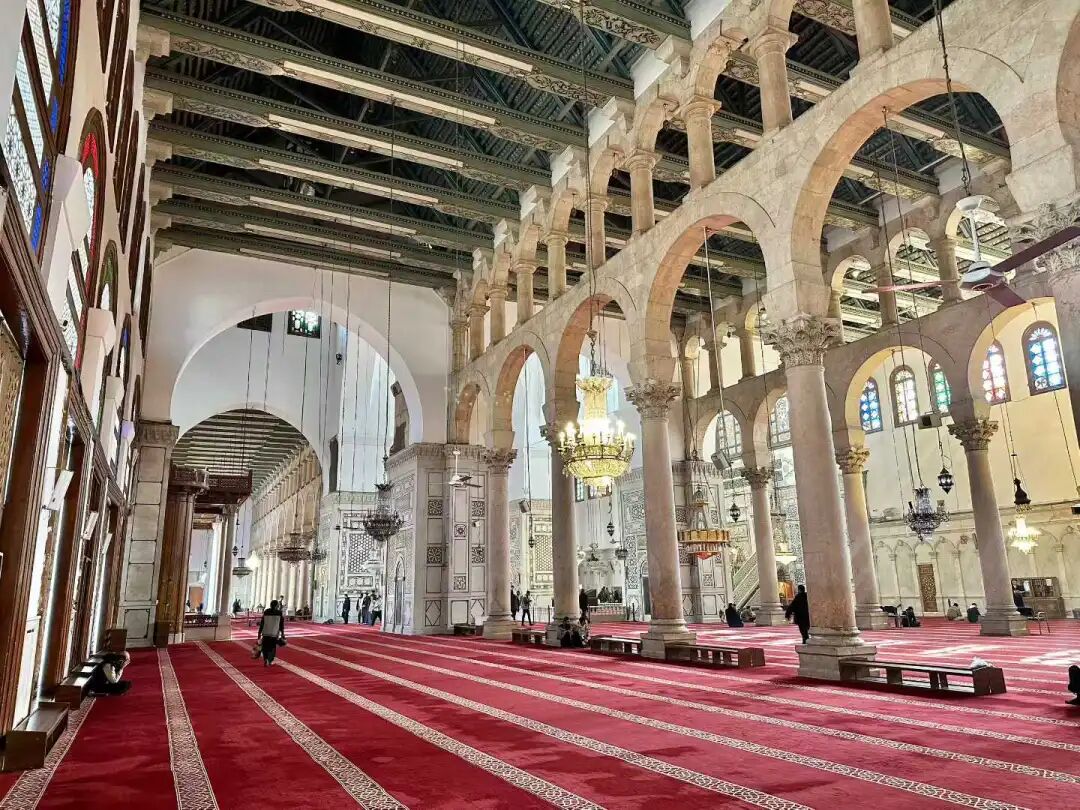
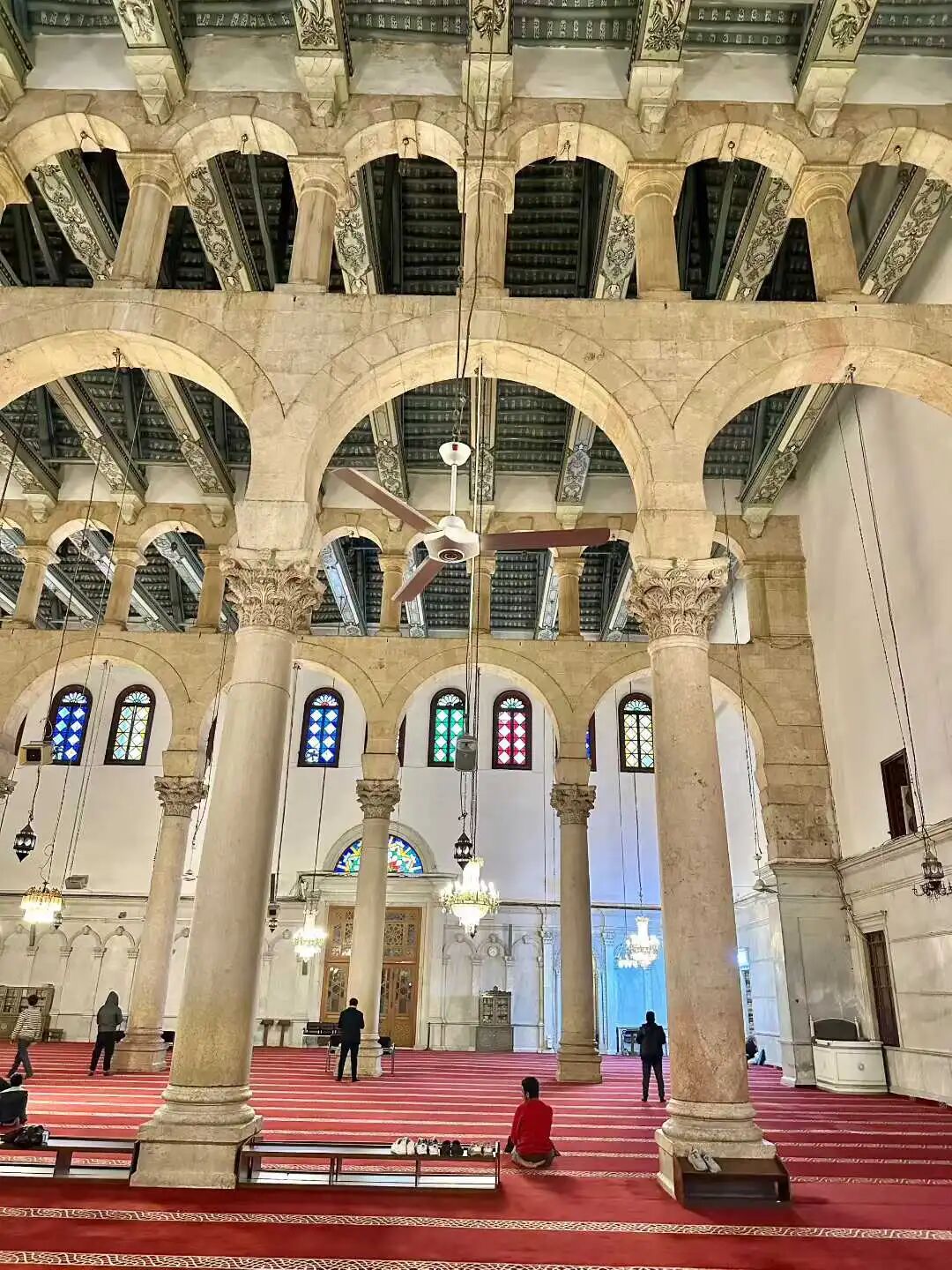
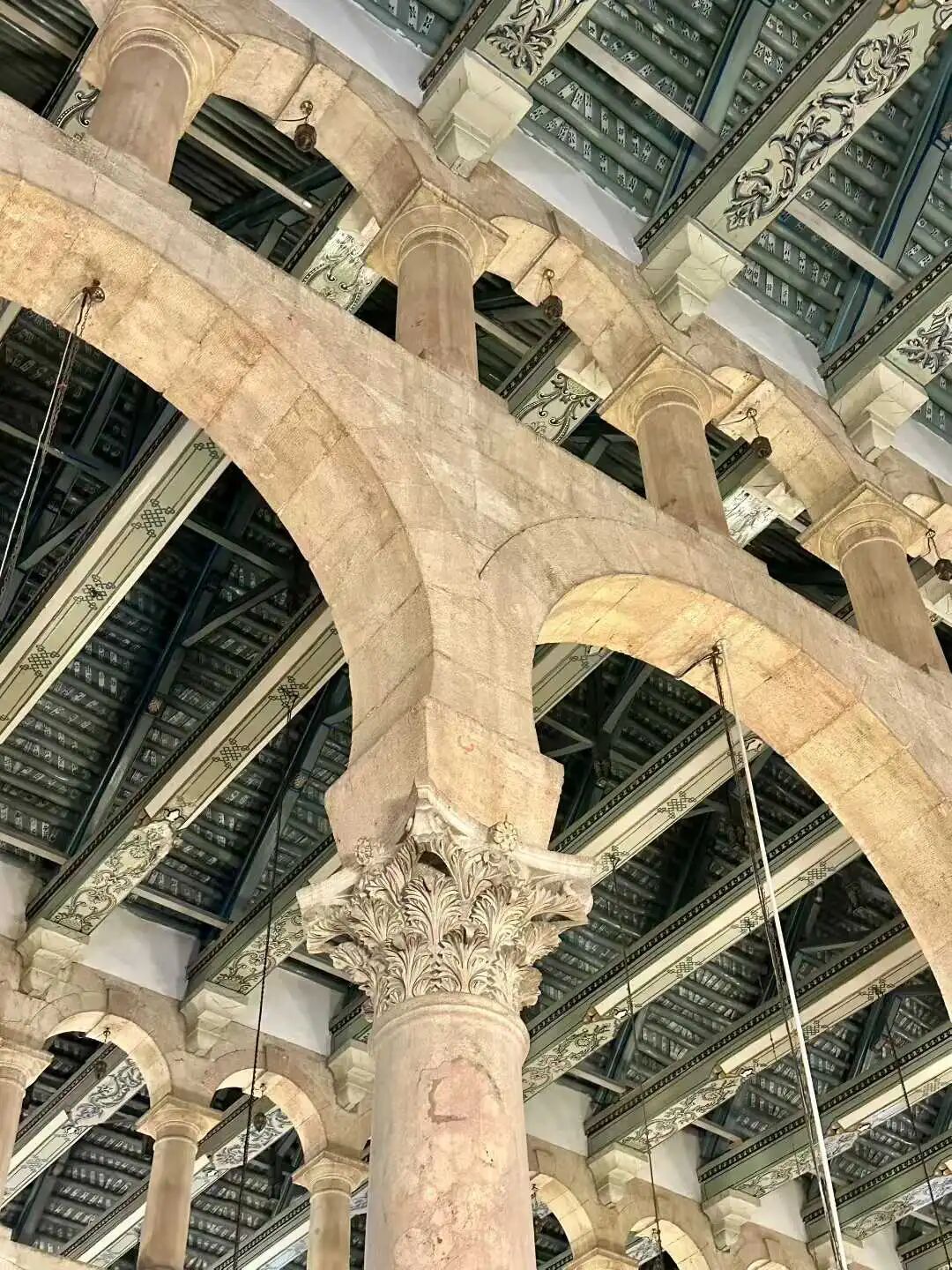
Legend has it that during the construction of the mosque, workers discovered a small cave chapel and found a box inside, which was said to contain the head of Prophet Yahya. Yahya was a cousin of Isa and was sent to guide the people of Israel, and he is highly regarded in the scriptures. Yahya was beheaded because he criticized the Jewish King Herod Antipas.
Later, the Umayyad Caliph Al-Walid I ordered Yahya's head to be buried under a pillar, and today this place has become the gongbei of the Prophet Yahya. However, the west side is currently used for the five daily prayers and Jumu'ah, while the east prayer hall where the gongbei of Yahya is located is not open.
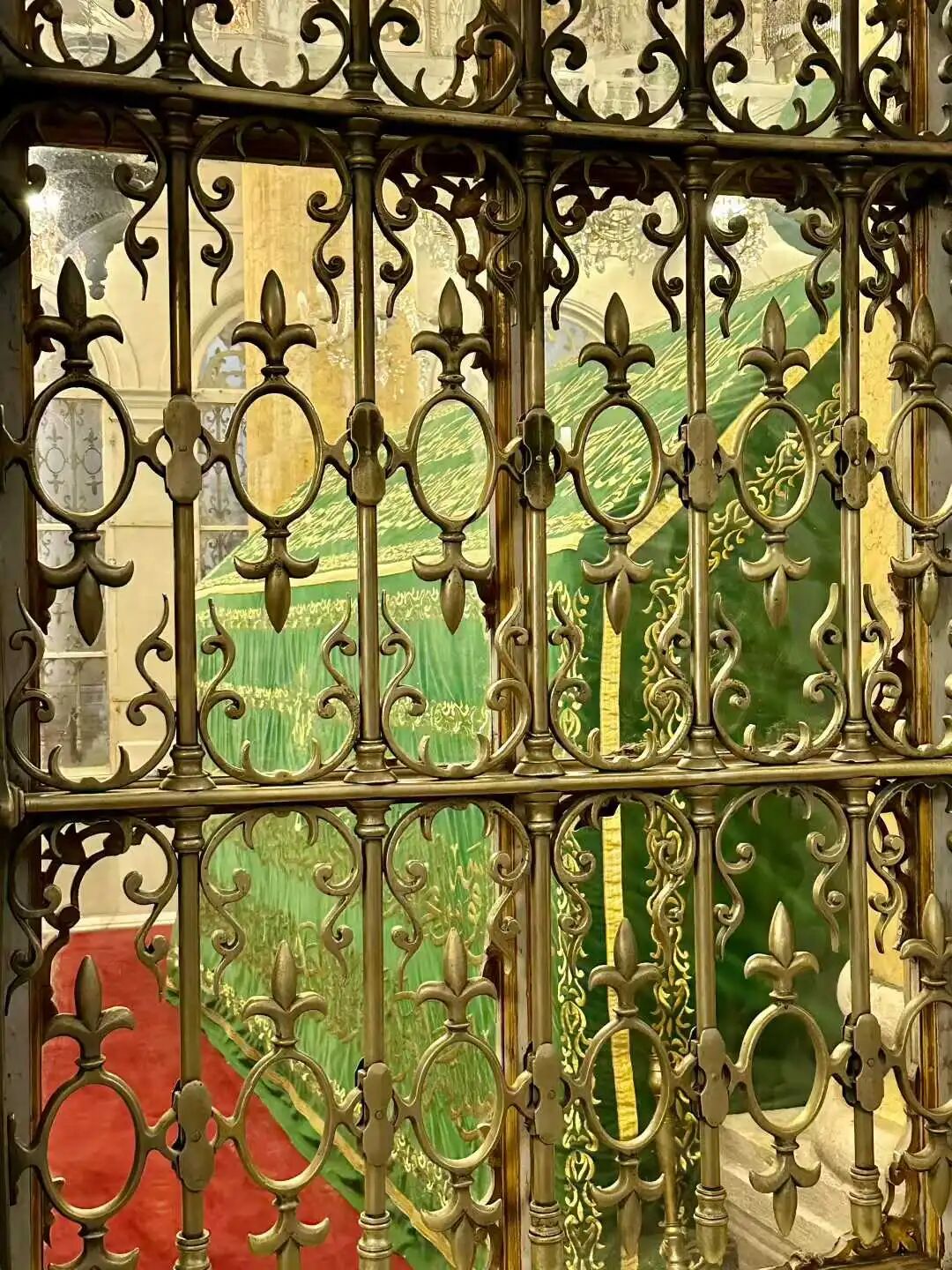
The Great Mosque of Damascus is world-famous for its rich Umayyad-era mosaic decorations. These mosaics use a late Roman style to depict various natural landscapes and buildings, showing a typical naturalistic style.
Some Arabic historical sources suggest the craftsmen and materials for the mosaics came from the Byzantine capital of Constantinople, but a 2022 chemical analysis study showed that most of the mosaics were actually produced in Egypt. Although these mosaic images show traces of Byzantine style, some scholars believe their style better matches mosaic craftsmanship from Syria, Palestine, and Egypt.
There has also been a long-standing debate about the meaning of the mosaic images. Some views suggest they represent the known world at that time, others think they depict Damascus and the Barada River, and some believe they show scenes of Paradise. Currently, there is relatively more evidence for the Paradise view, and the landscapes without human figures fit the idea of an empty Paradise waiting for people to arrive after the Day of Resurrection.
See "Umayyad Mosaic Decorations of the Great Mosque of Damascus" for details.
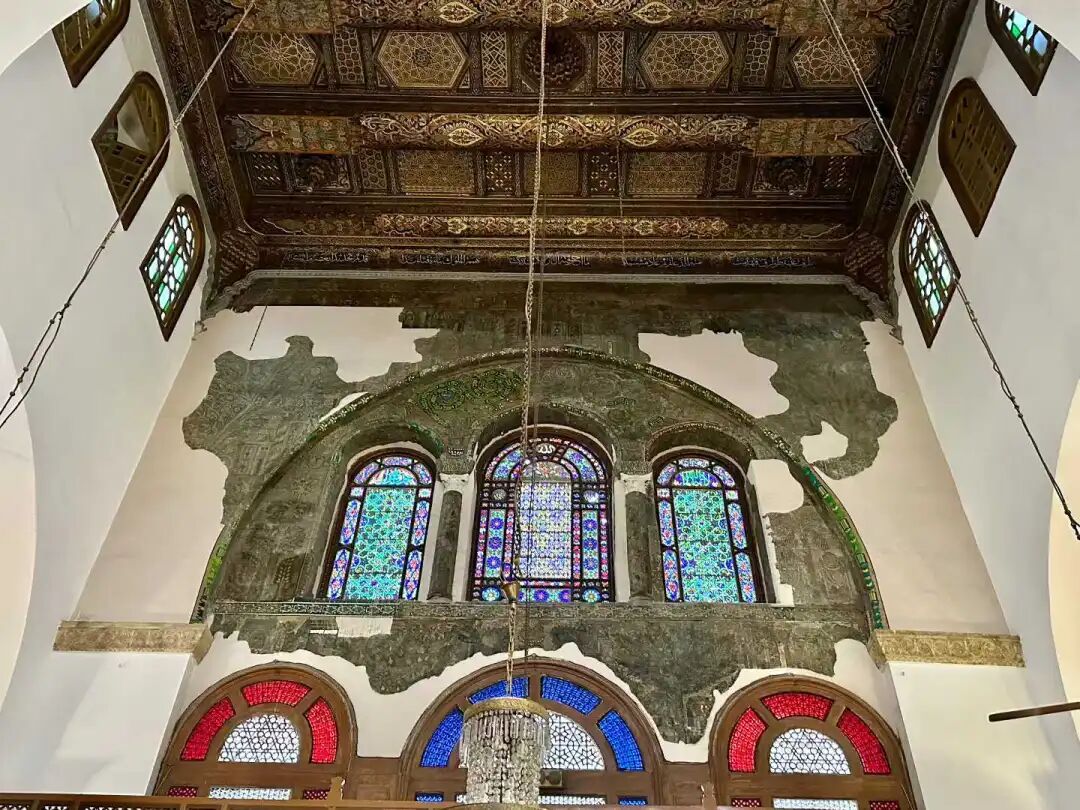
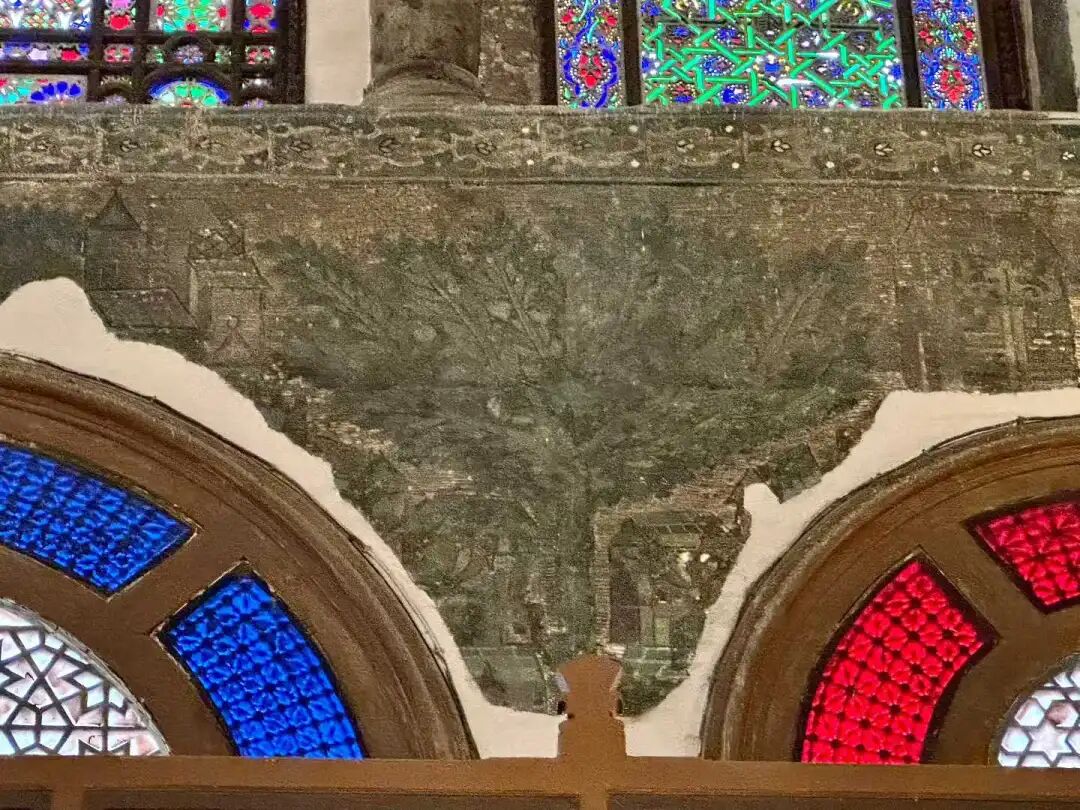
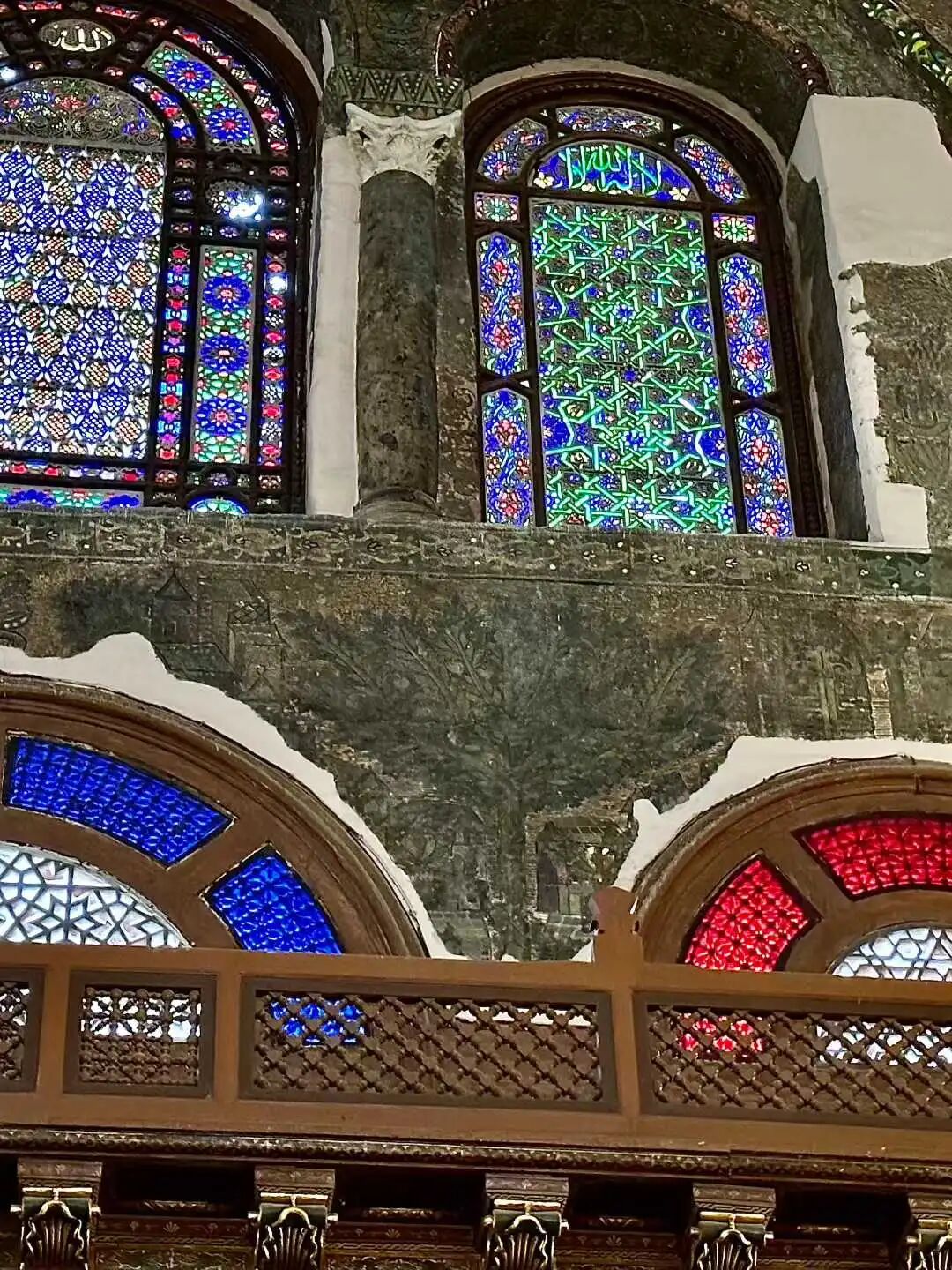
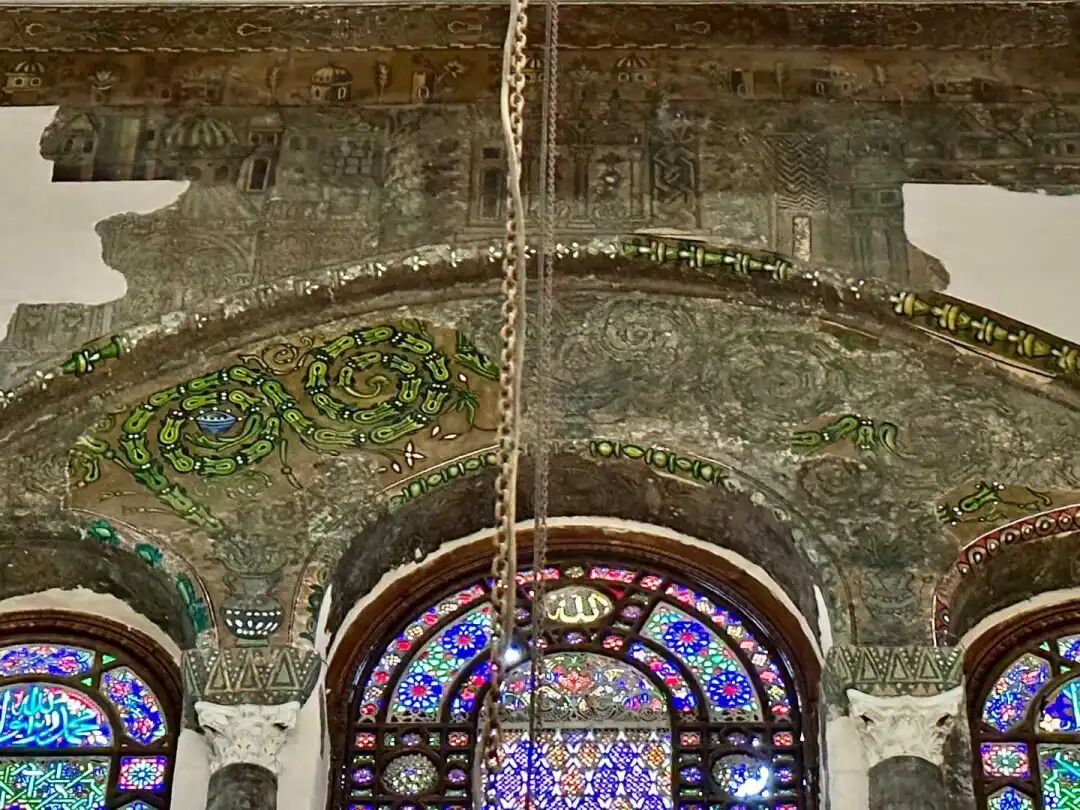
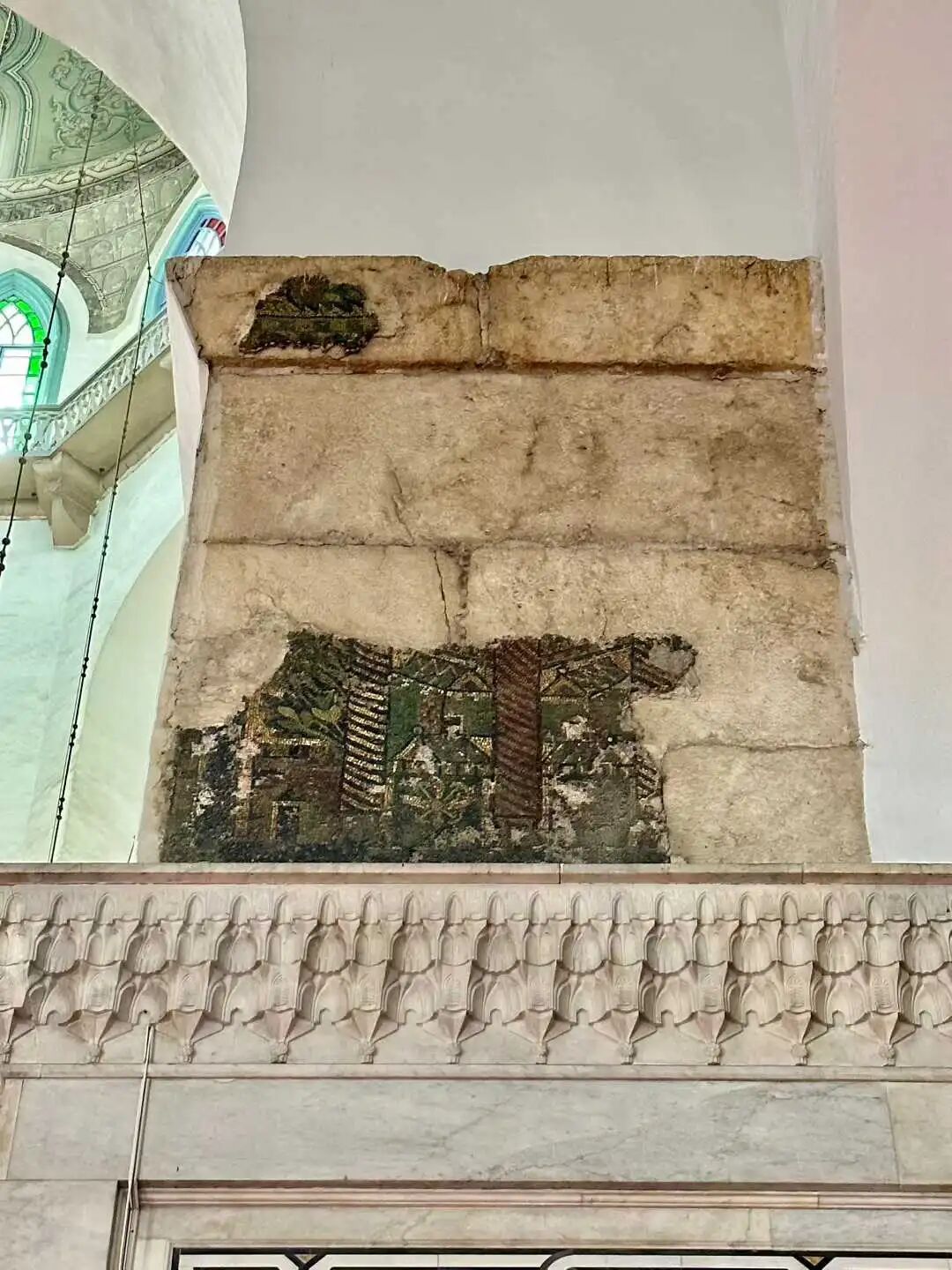
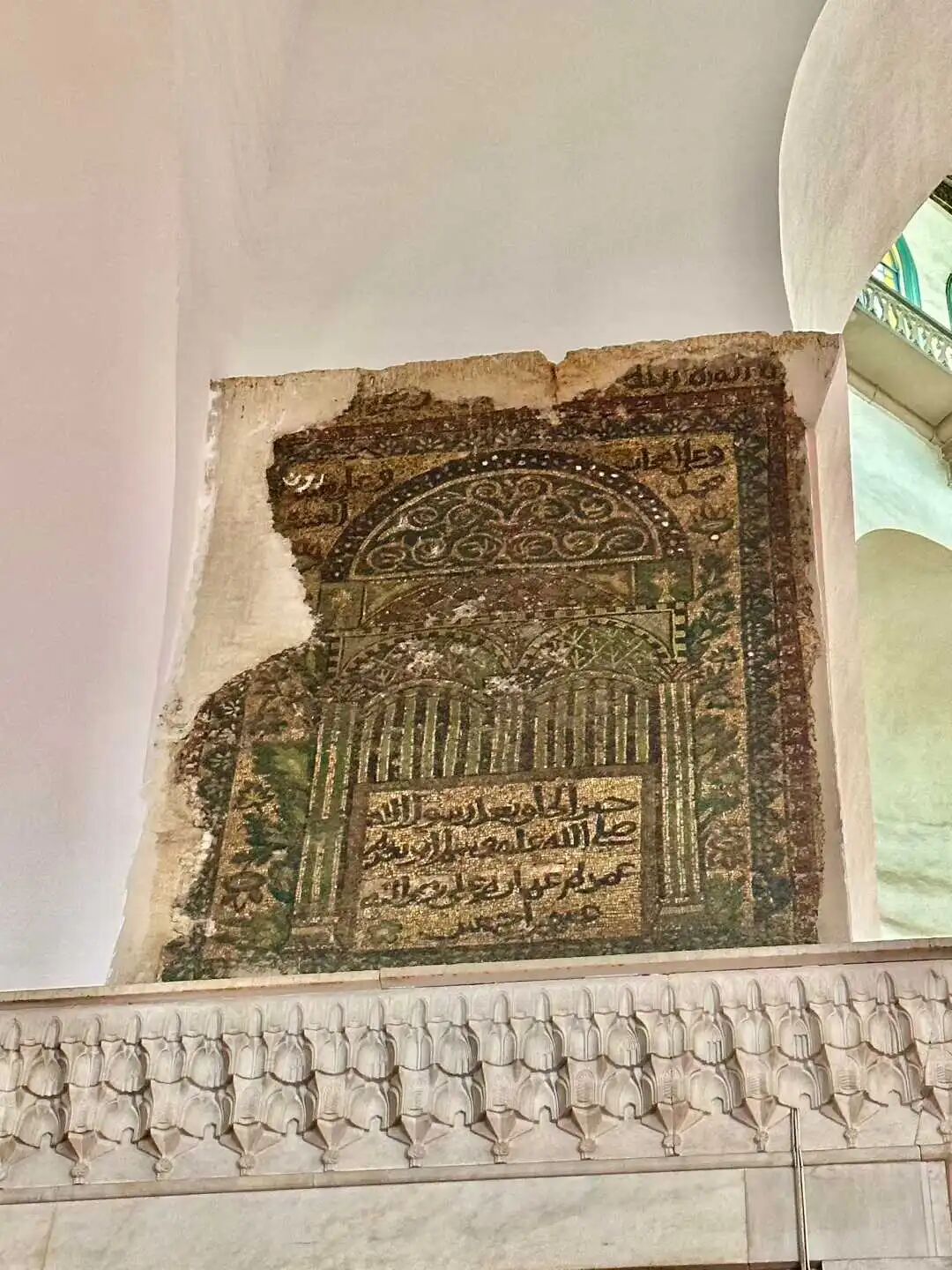
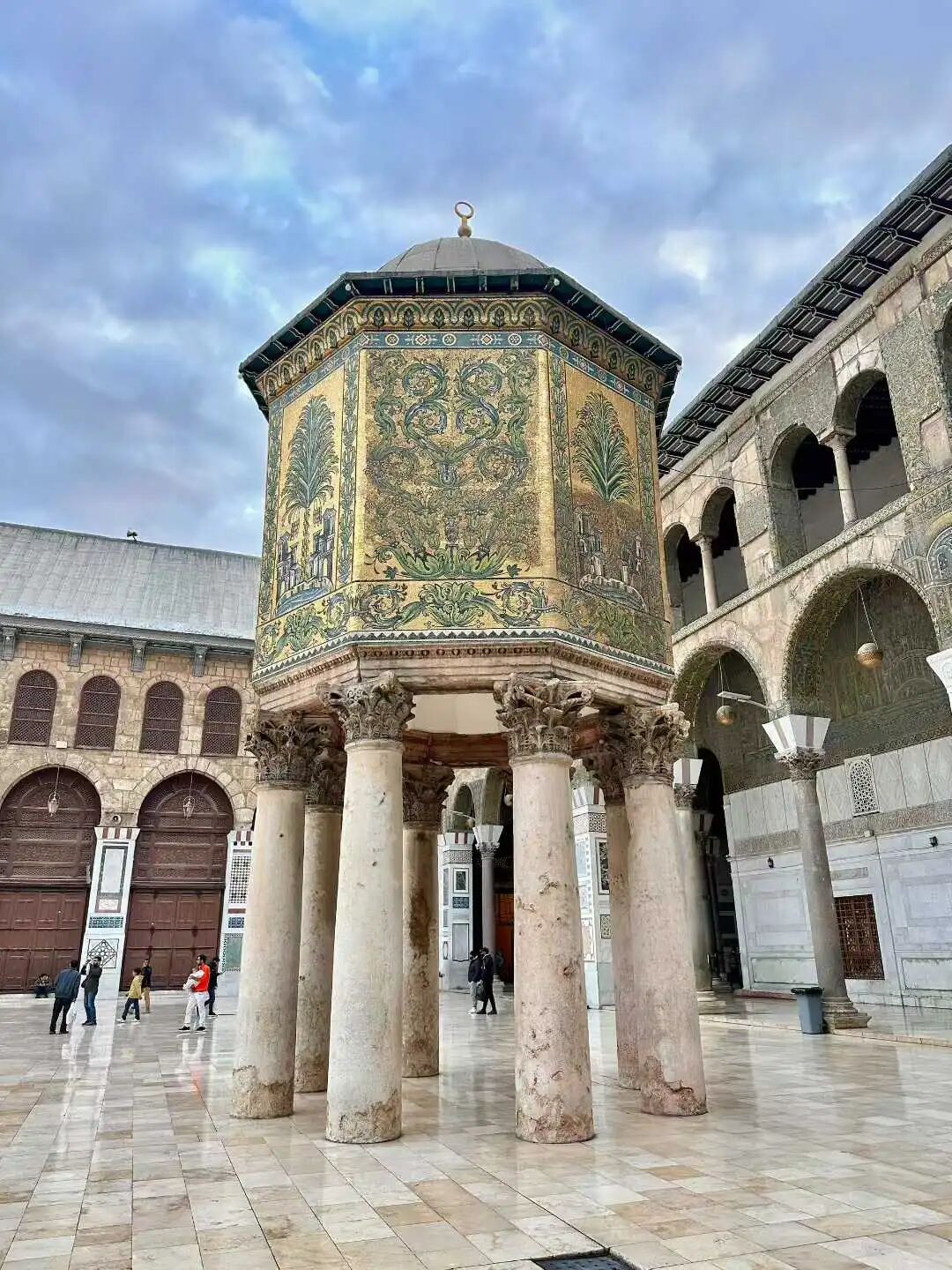
On the west side of the courtyard of the Great Mosque of Damascus stands the Treasury Dome built during the Abbasid Dynasty, which was used to store the charity (nietie) given to the mosque and many ancient manuscripts.
The Treasury Dome was ordered to be built in 789 by the Abbasid governor of Damascus, Fadl ibn Salih. The treasury is an octagonal building supported by eight Roman columns that still have their original capitals. The outer walls of the treasury are decorated with magnificent mosaic murals, which imitate the early Umayyad decorations in the mosque, though the craftsmanship is slightly inferior. The mosaic decorations on the outer walls of the treasury were restored at the end of the 20th century.
The treasury once housed ancient manuscripts in Greek, Latin, Syriac, Coptic, Hebrew, Aramaic, and Georgian, including 7th-8th century Greek New Testament manuscripts, but they were gifted to Kaiser Wilhelm II in 1899, and today only a few are kept in the Damascus National Archives.
The Great Mosque of Damascus did not have a minaret (bangke ta) originally, but there was a small room on the Roman tower at the corner of the outer wall for the muezzin to call the adhan (bangke).
The first minaret of the Great Mosque of Damascus is the Bride's Minaret in the center of the north wall, which was first built during the Abbasid Dynasty in the 9th century. Only the lower level remains today, as the upper level was destroyed by fire in 1069 and later rebuilt by the Ayyubid Sultan Saladin in 1174. The Bride's Minaret has a 160-step spiral staircase, a square main tower, and horseshoe arches on the upper level.
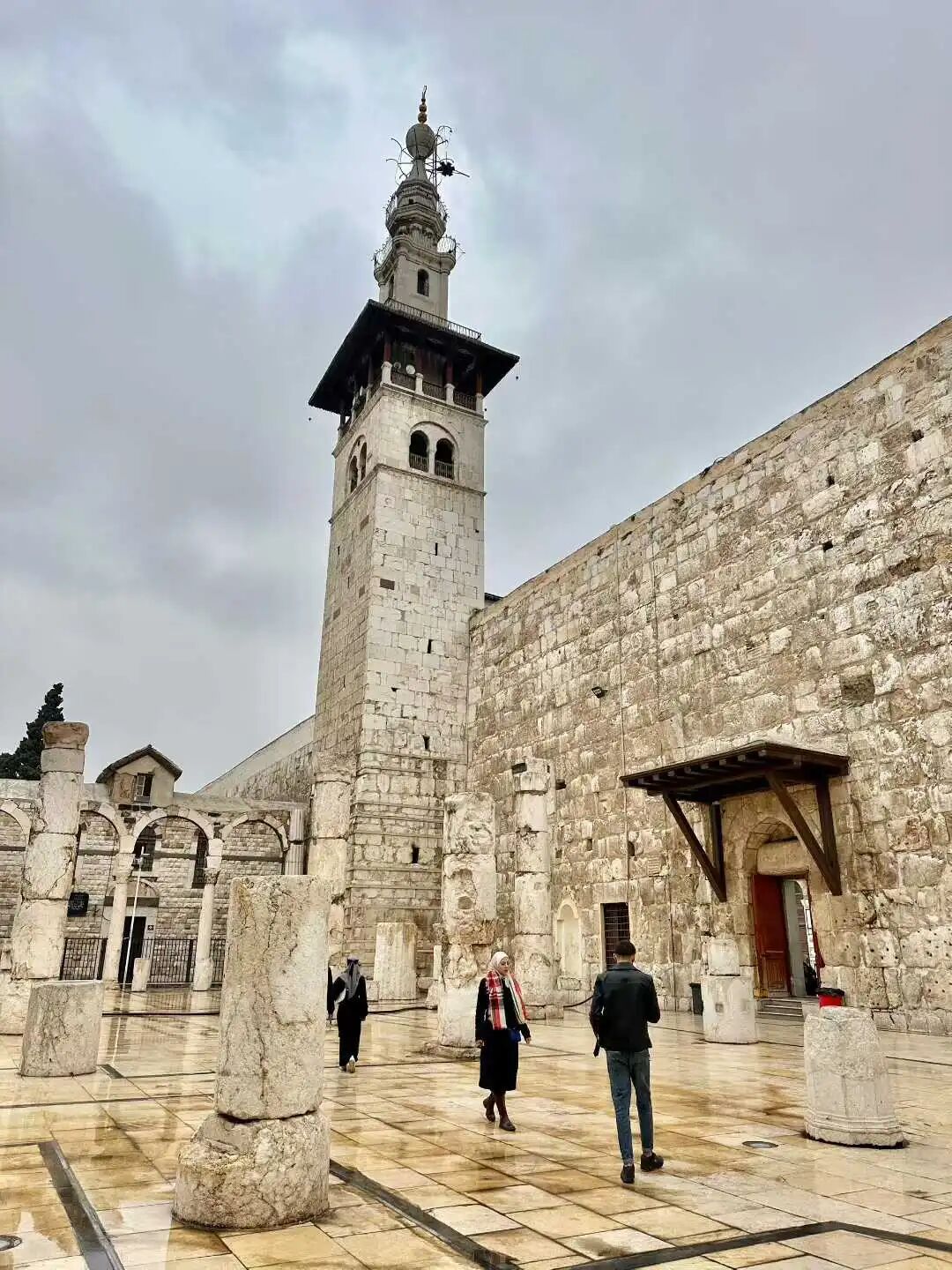
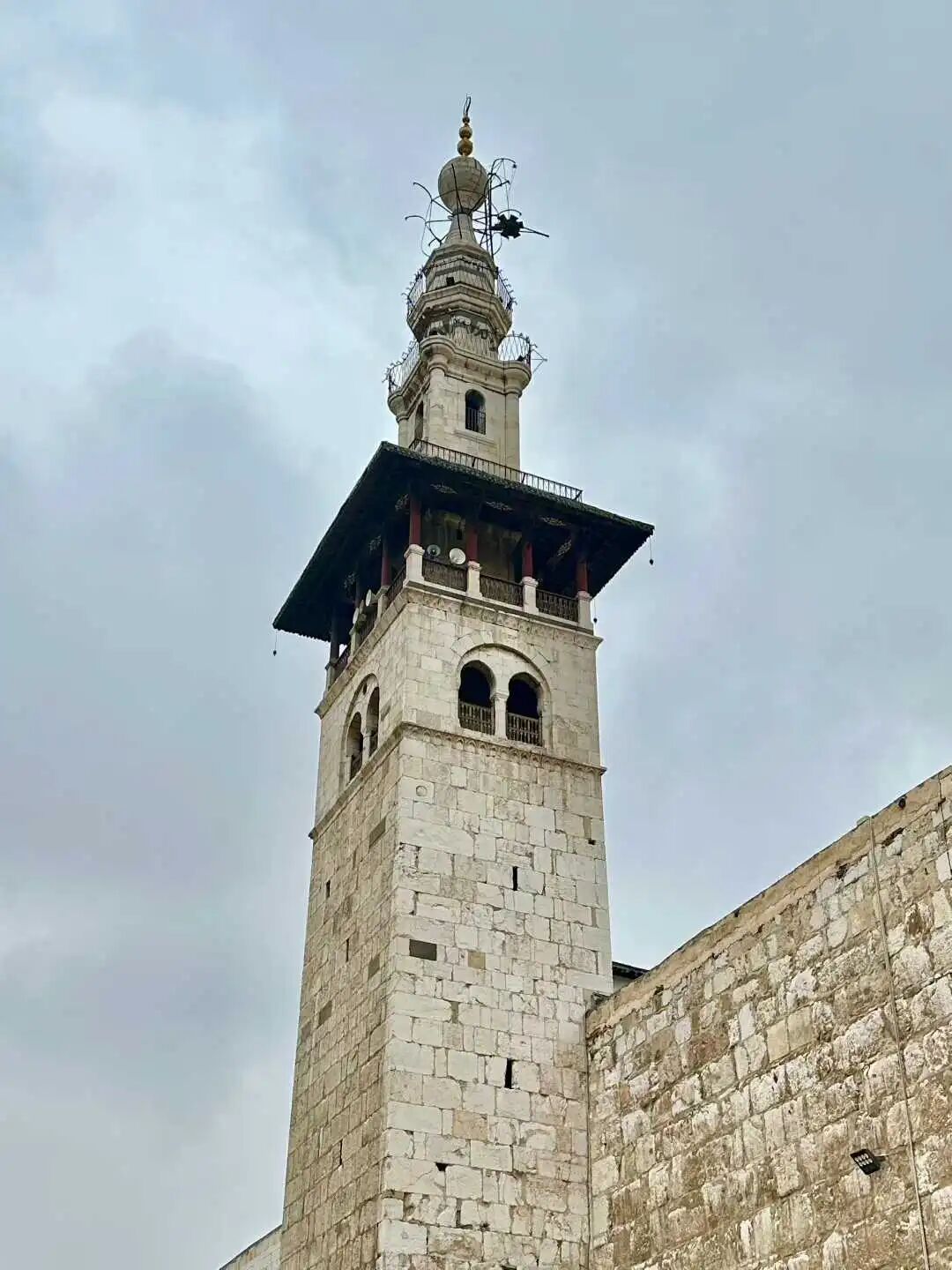
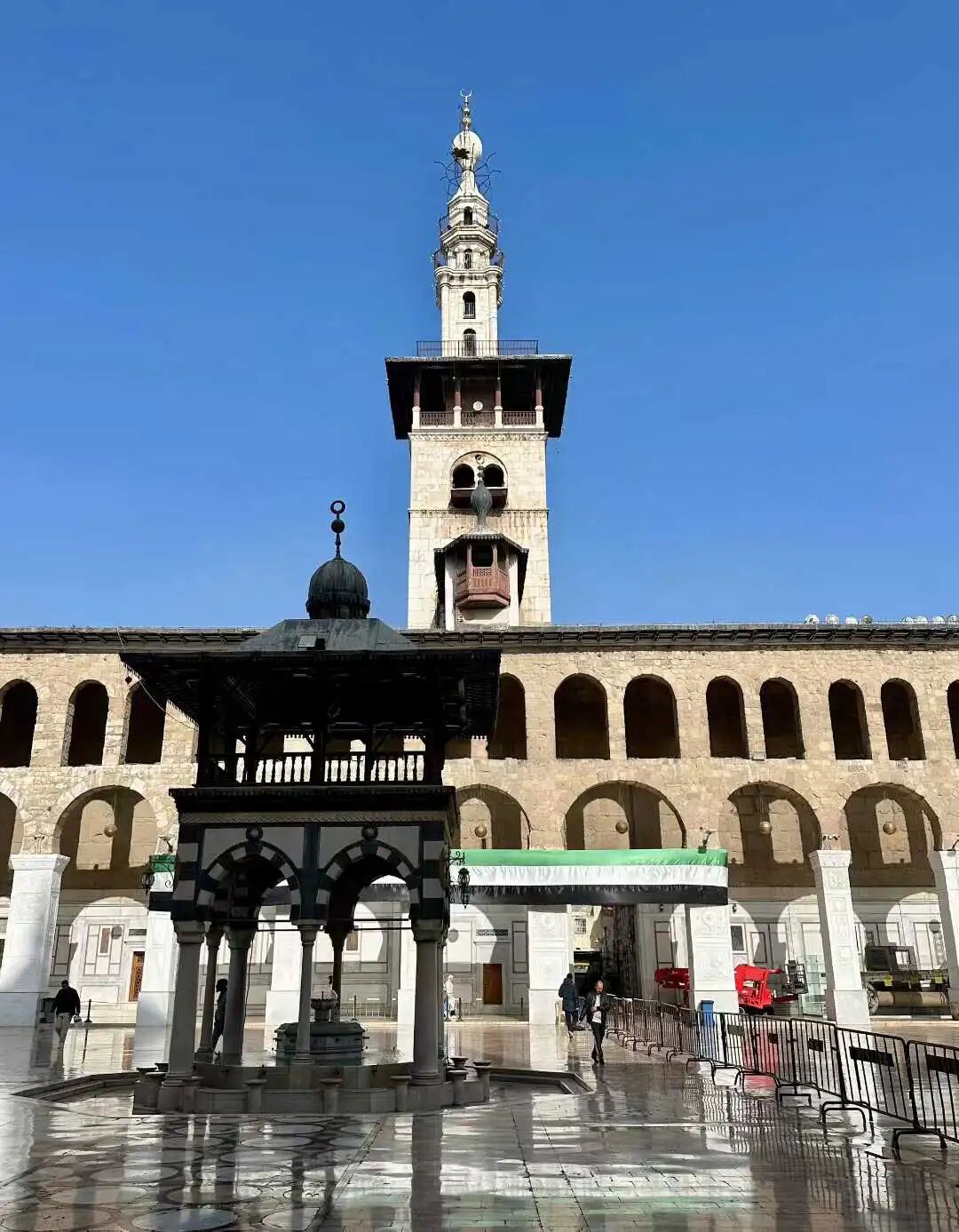
The Isa Minaret in the southeast is said to have been built in the 9th century during the Abbasid Dynasty, but it was destroyed in 1245 during the civil strife of the Ayyubid Dynasty. The current lower level of the building was built in 1247 during the Ayyubid Dynasty, and the upper level was built after the 16th century during the Ottoman Dynasty. The main body of the Isa Minaret is square, with an octagonal top and an open gallery. Legend says the Prophet Isa (Jesus) will descend from the Isa Minaret and perform the morning namaz behind the Mahdi (the Savior).
In 1285, the famous scholar Ibn Taymiyyah began teaching at the Great Mosque of Damascus. When the Mongols invaded Damascus in 1300, Ibn Taymiyyah firmly supported the people in their resistance. He preached at the Great Mosque and issued fatwas for those fleeing in panic. He personally joined the fight against the Ilkhanate, which finally ended the Mongol rule over Syria.
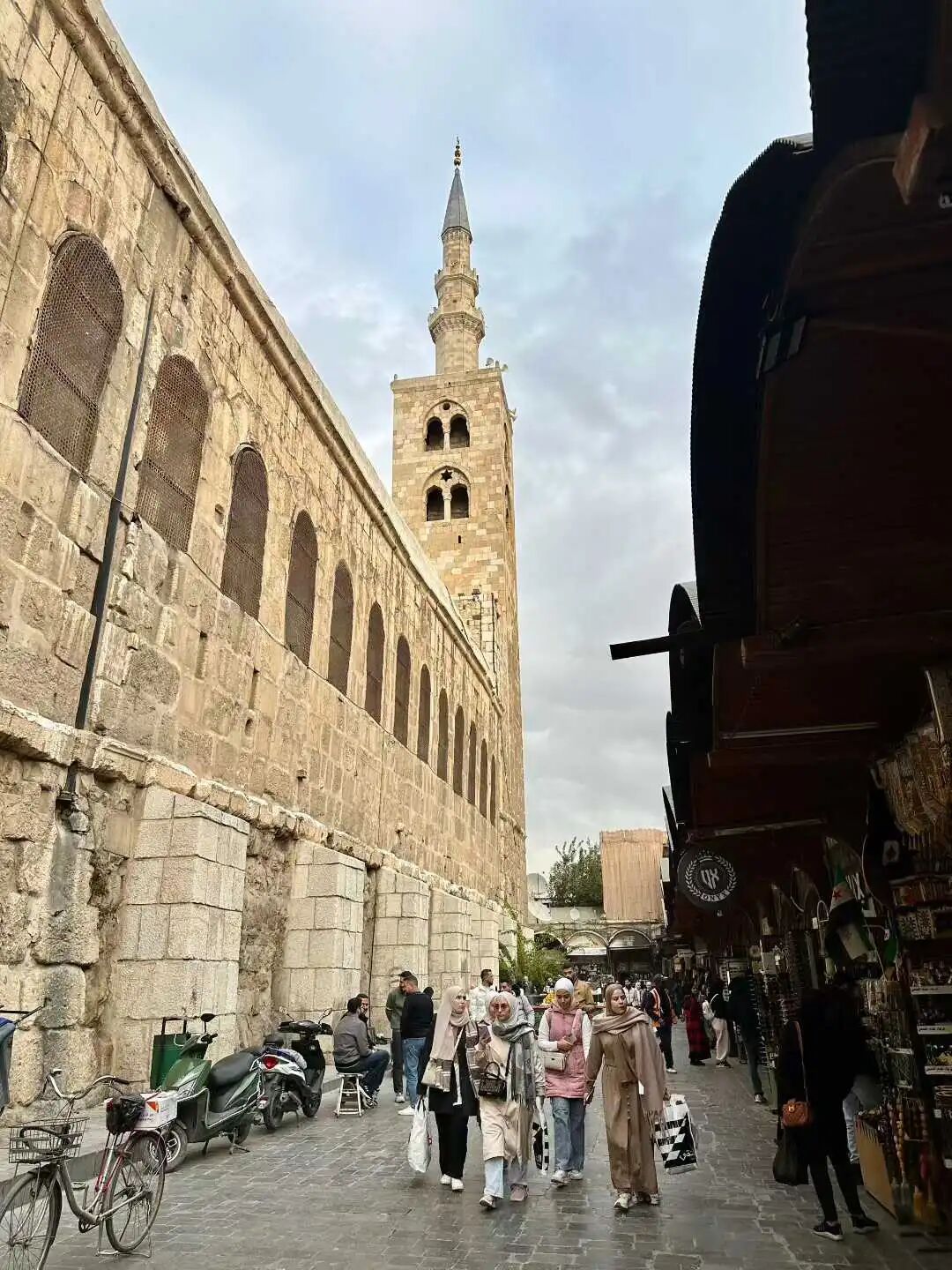
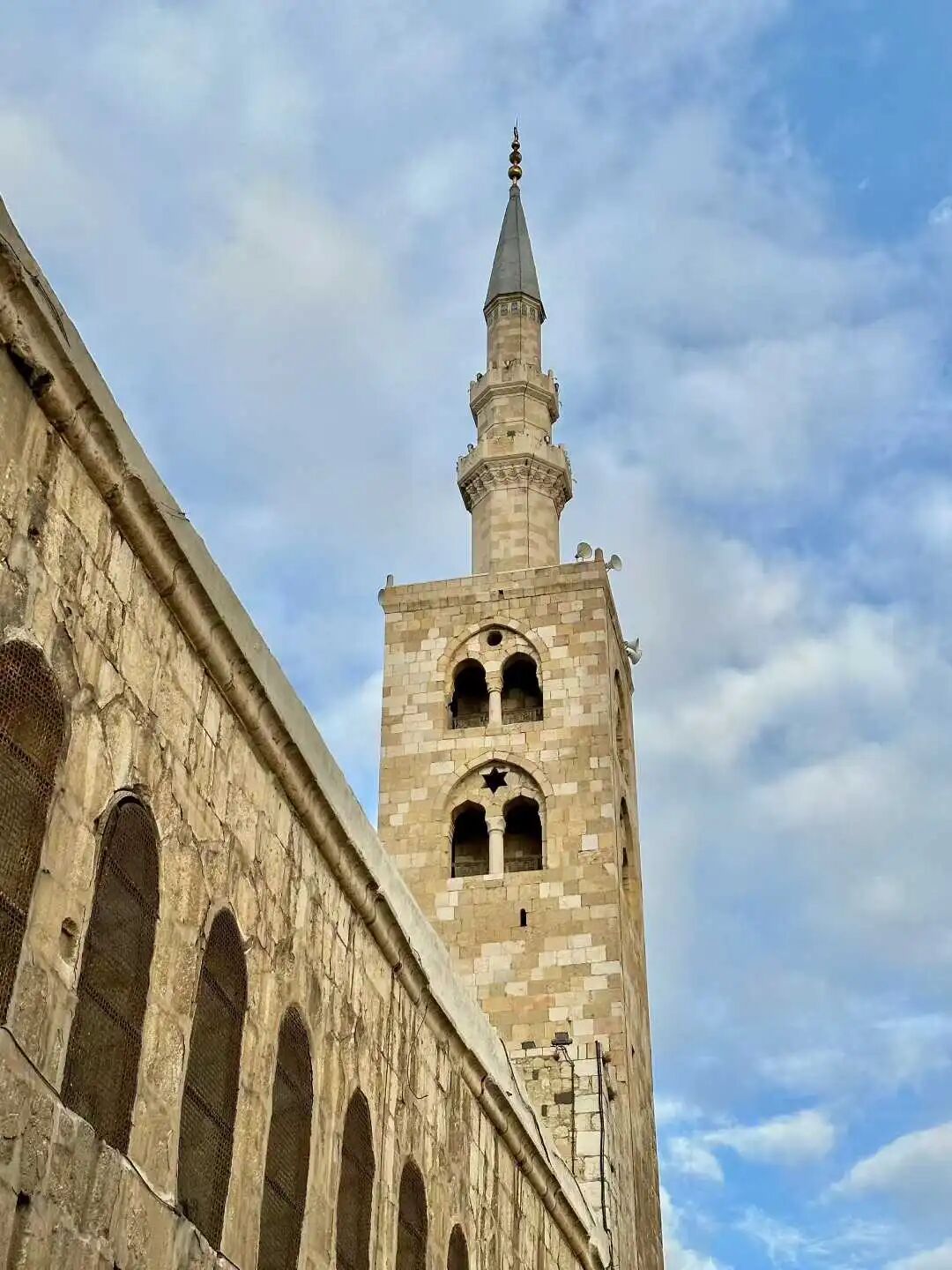
The Qaitbay Minaret in the southwest was built in 1488 by the Mamluk Sultan Qaitbay (reigned 1468-1496) and features a classic Mamluk style. The name of Assad was once carved on the minaret, but it was removed in October 2025. Qaitbay's reign was known for stability and prosperity. He defeated the powerful Ottoman Empire of that time several times and eventually signed a peace treaty with them, which greatly boosted his reputation. He also donated funds to build many structures across Egypt, Syria, Saudi Arabia, and other places.
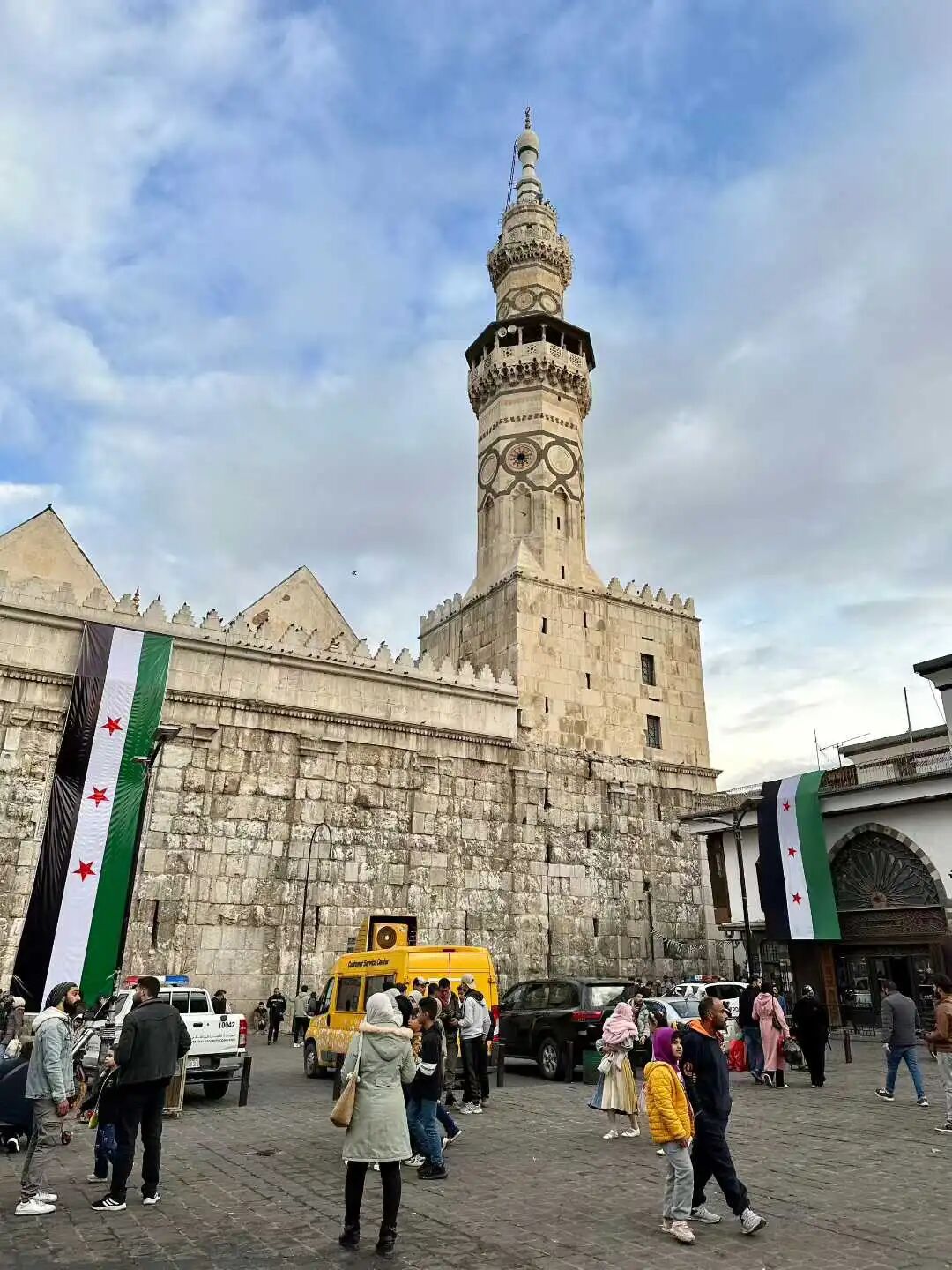
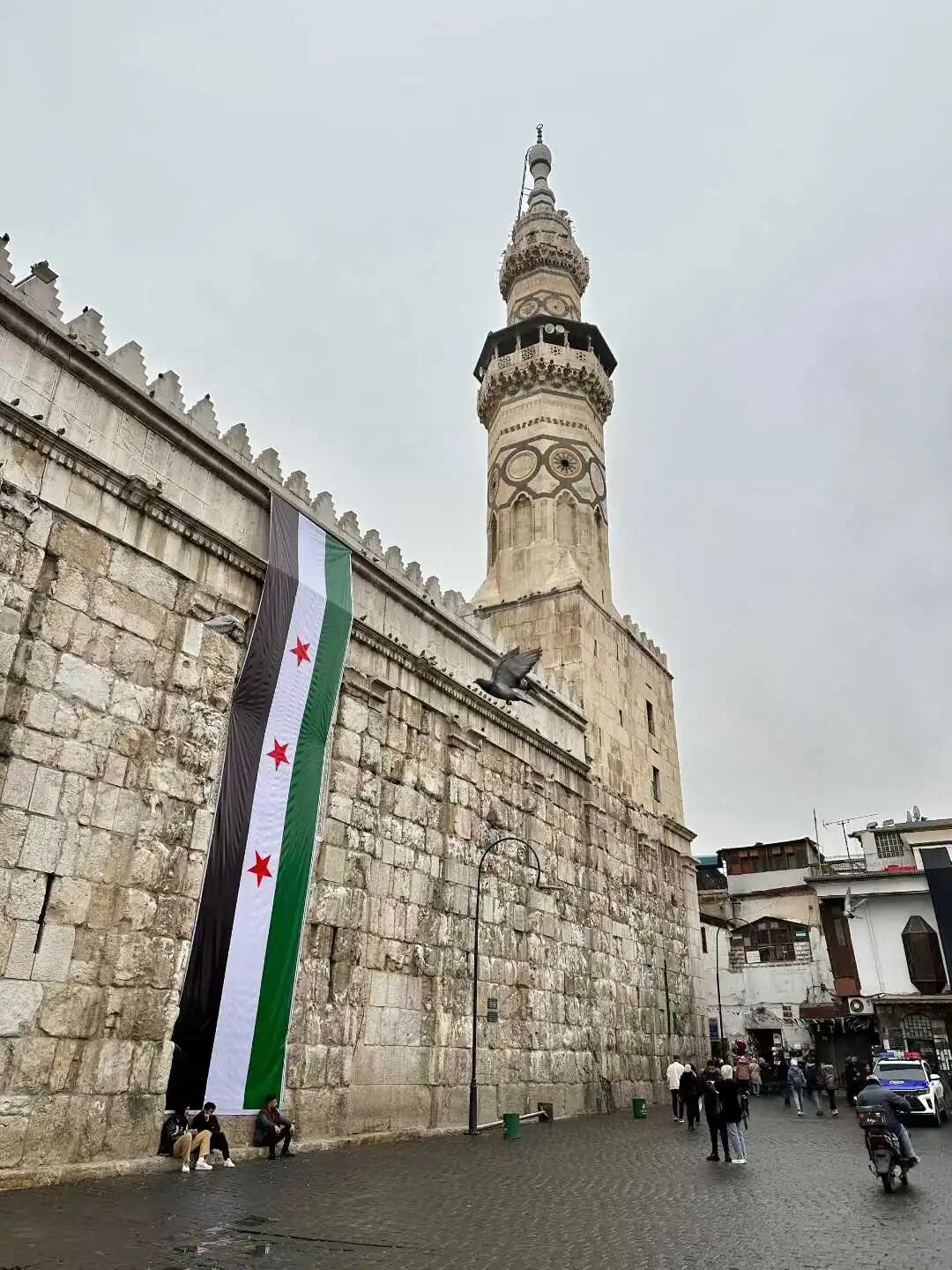
The main hall of the Great Mosque of Damascus caught fire in 1893. The Ottoman Empire spent nine years repairing it, rebuilding the mihrab, minbar, and dome, while removing the original Umayyad mosaic decorations. Today, the late Ottoman-style mihrab is very intricate and represents the delicate style of that period.
Hidden Islamic Art in Damascus: Umayyad Mosque Mosaics and the Barada Panel
Articles • ali2007fr posted the article • 0 comments • 200 views • 2026-05-21 06:21
Summary: The Great Mosque of Damascus is famous for Umayyad-era mosaics, including the Barada Panel restored by the Mamluk Sultan Baibars in 1270. This account keeps the source's art history, chemical study notes, scholarly interpretations, mosaic locations, and photographs.
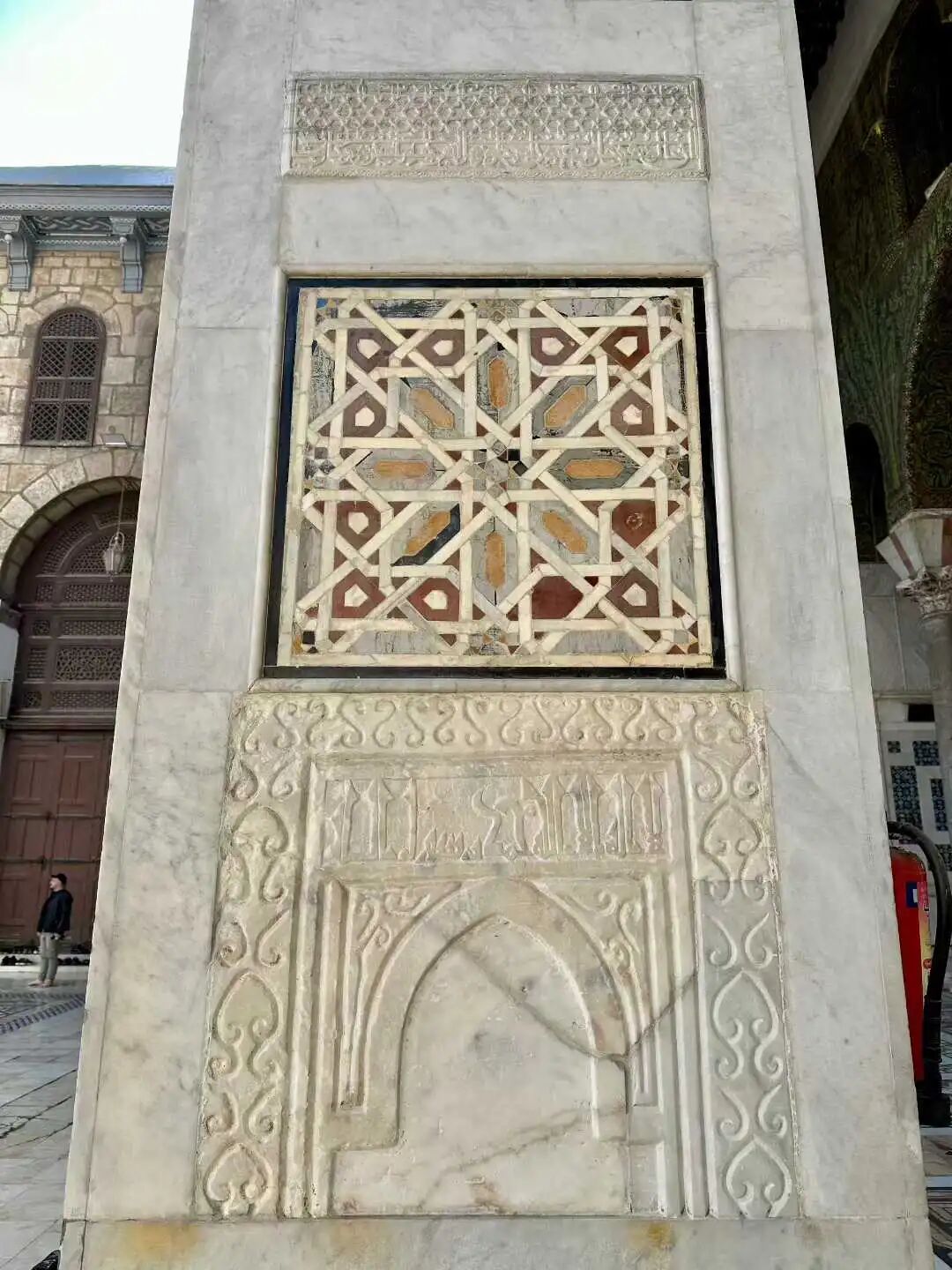
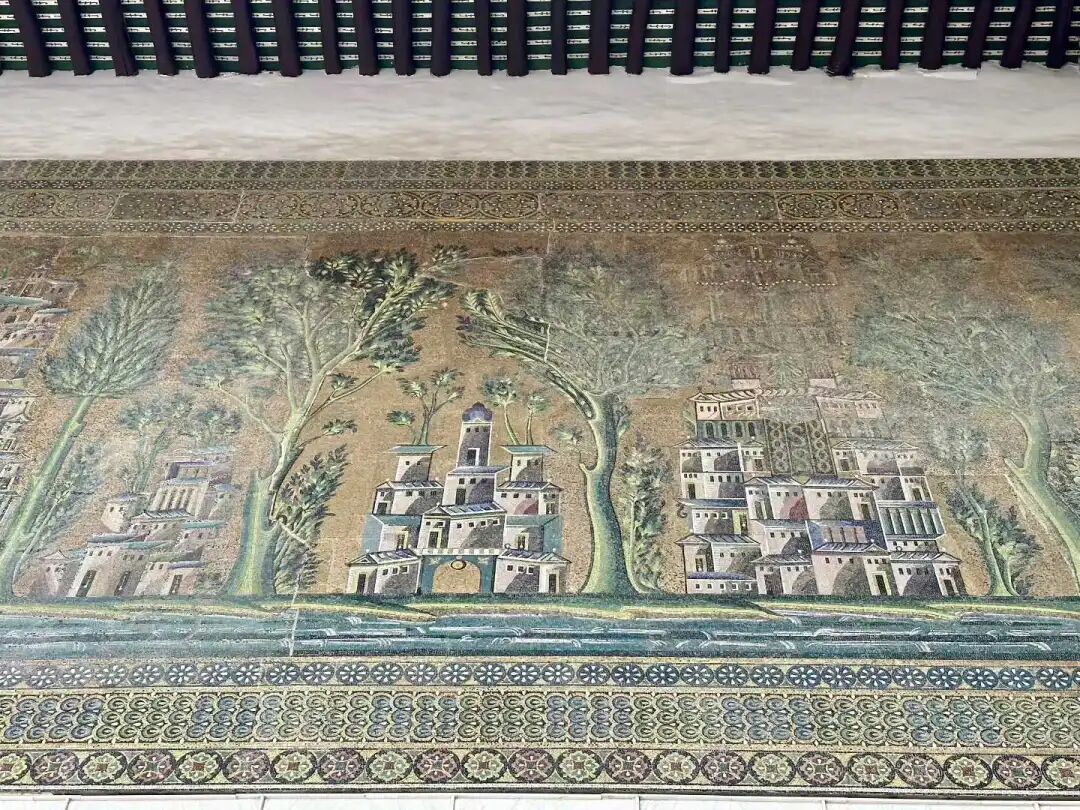
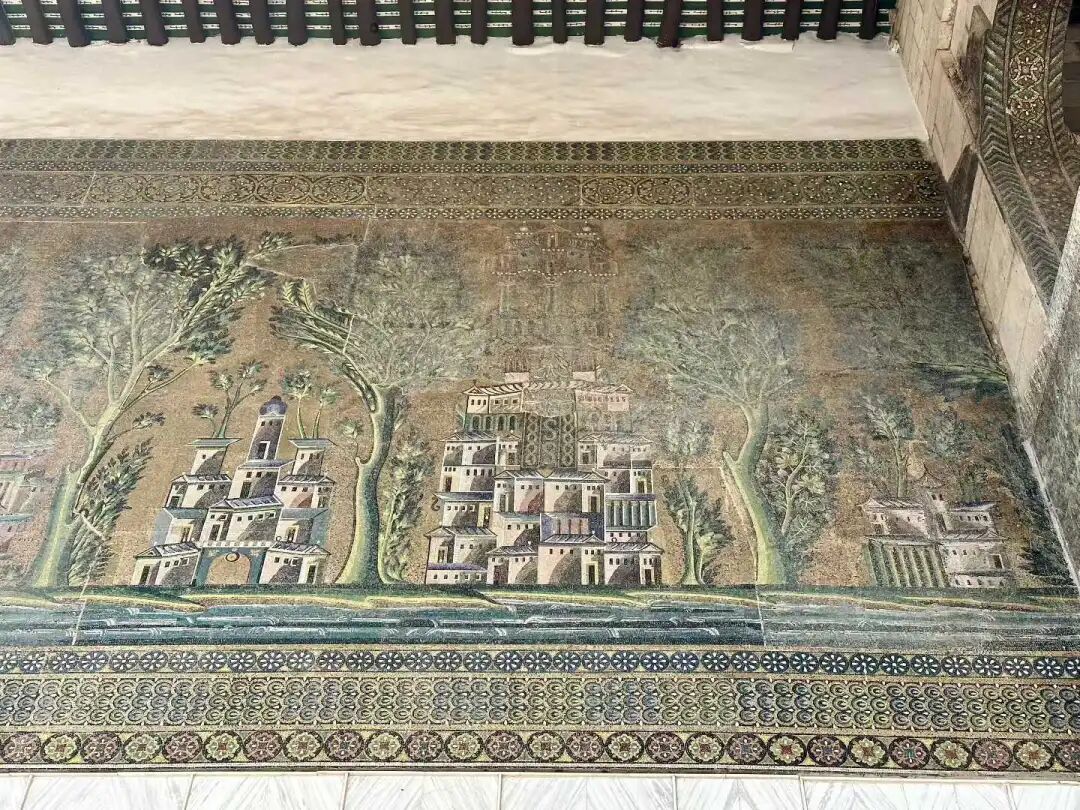
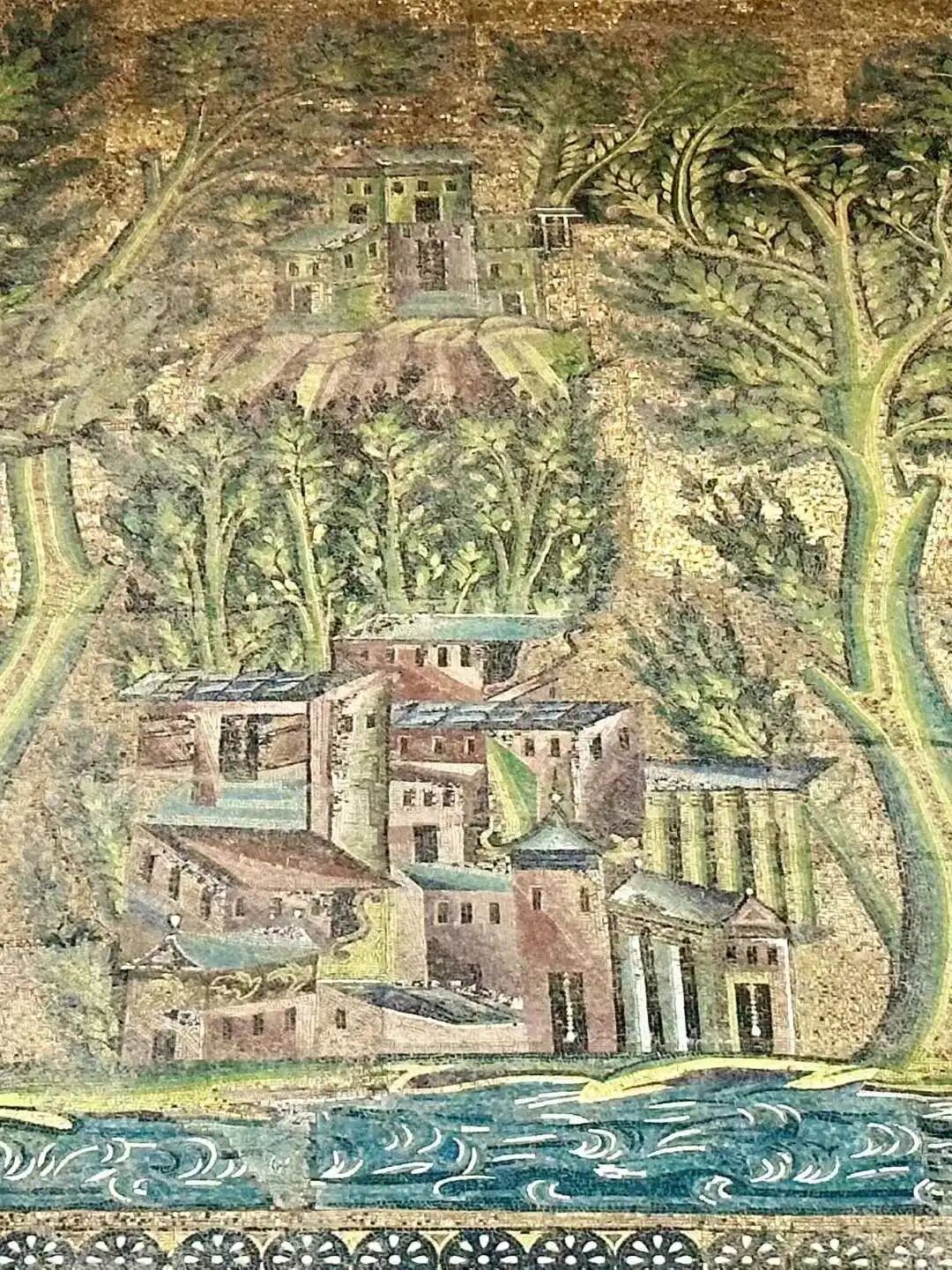
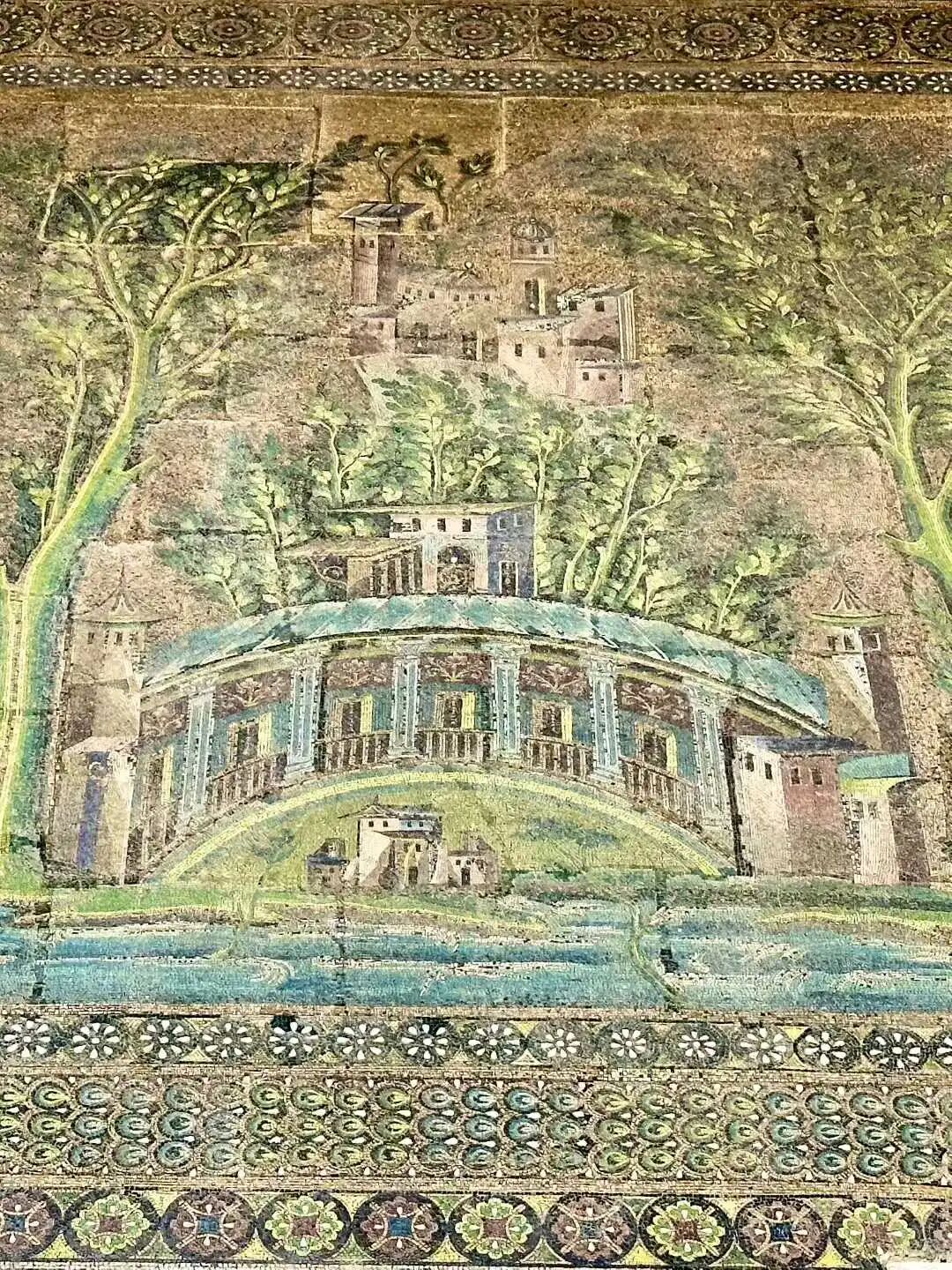
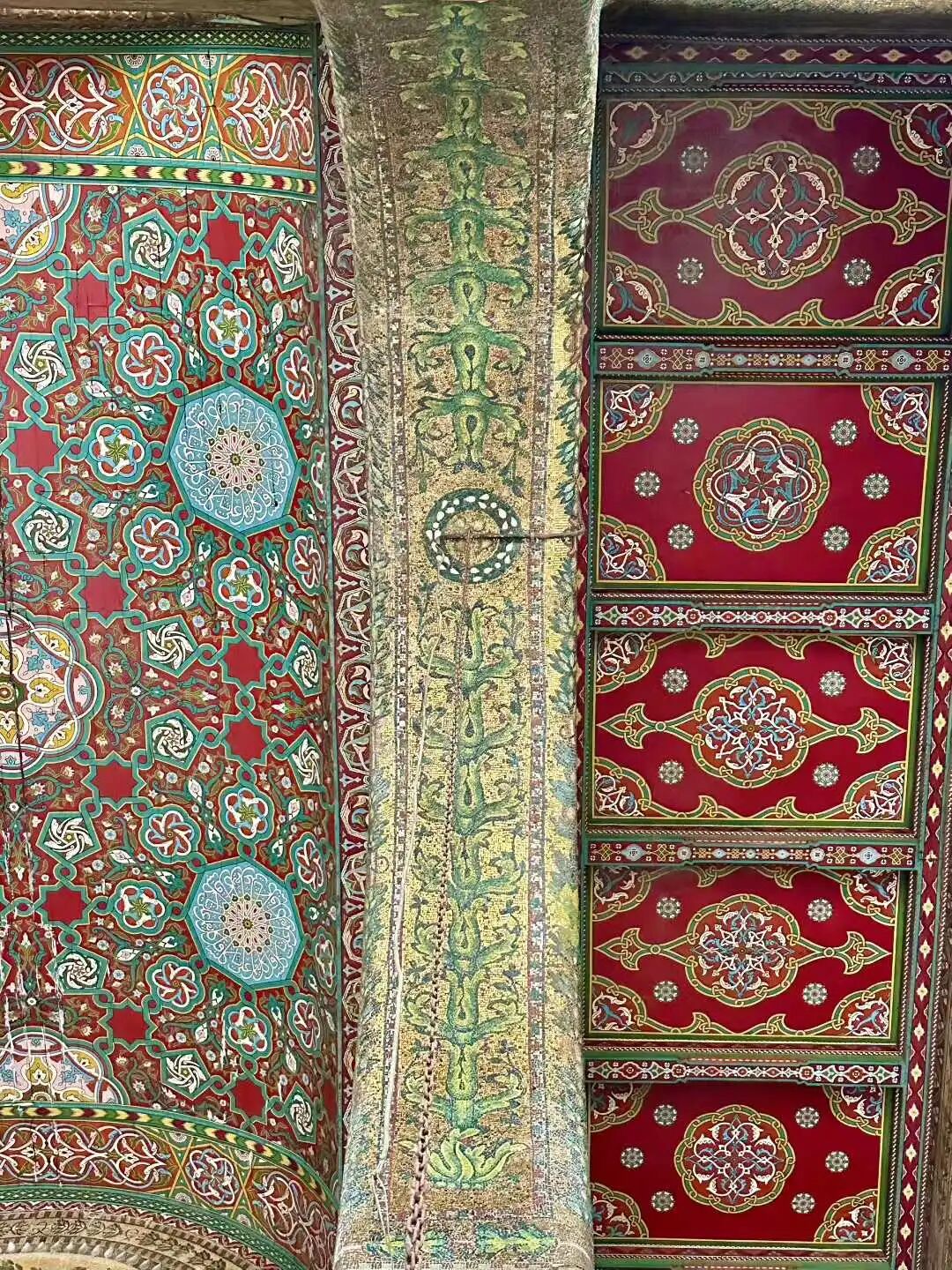
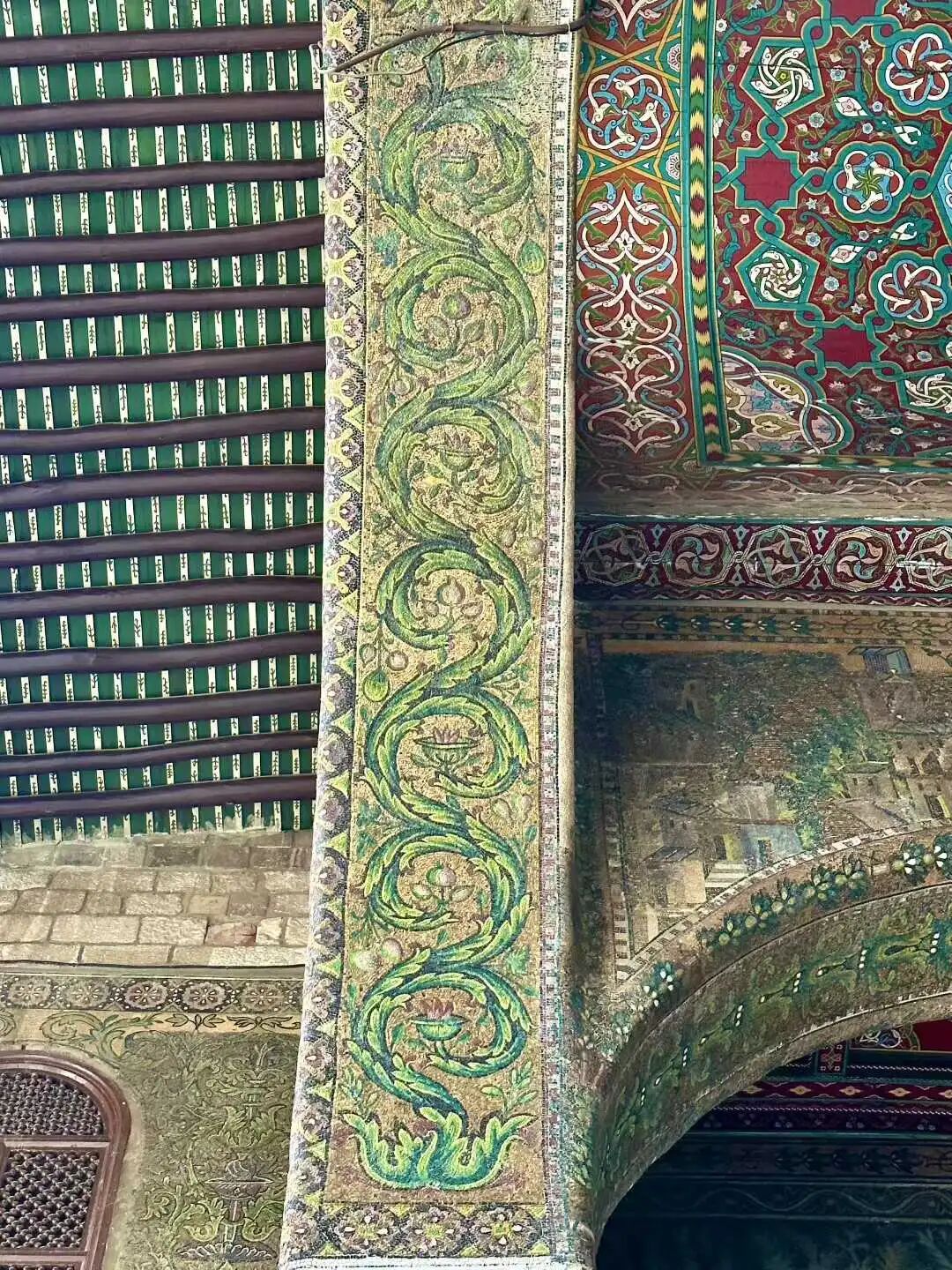
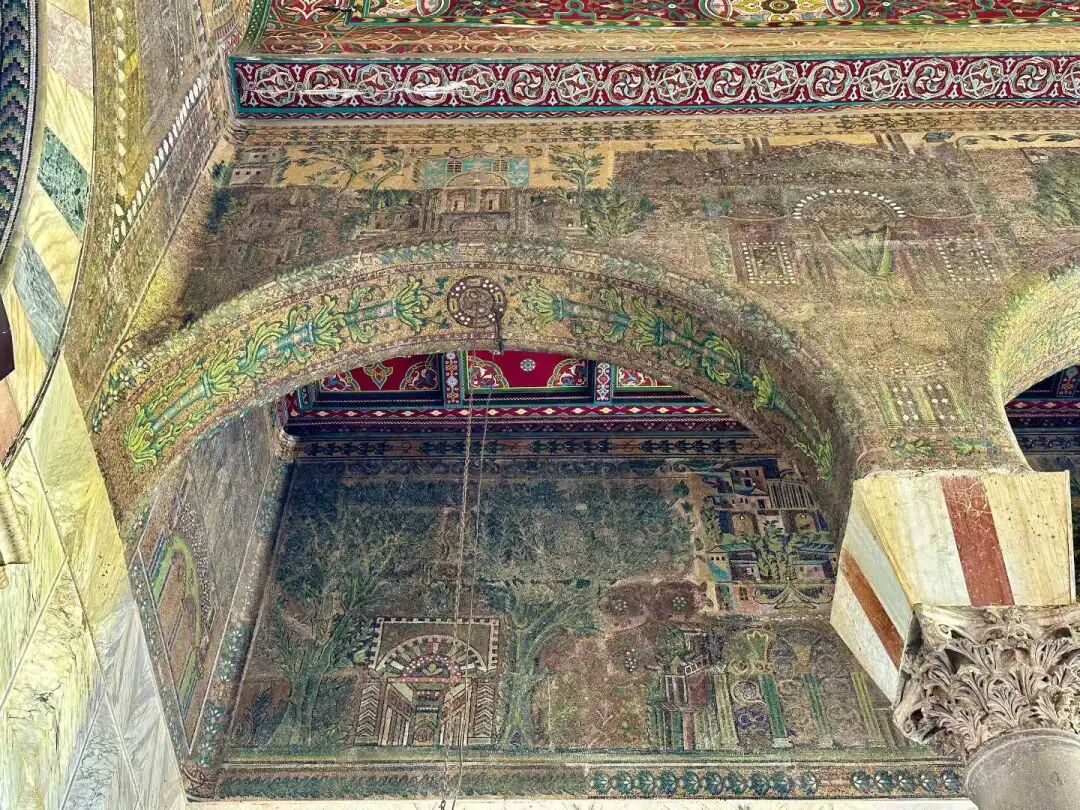
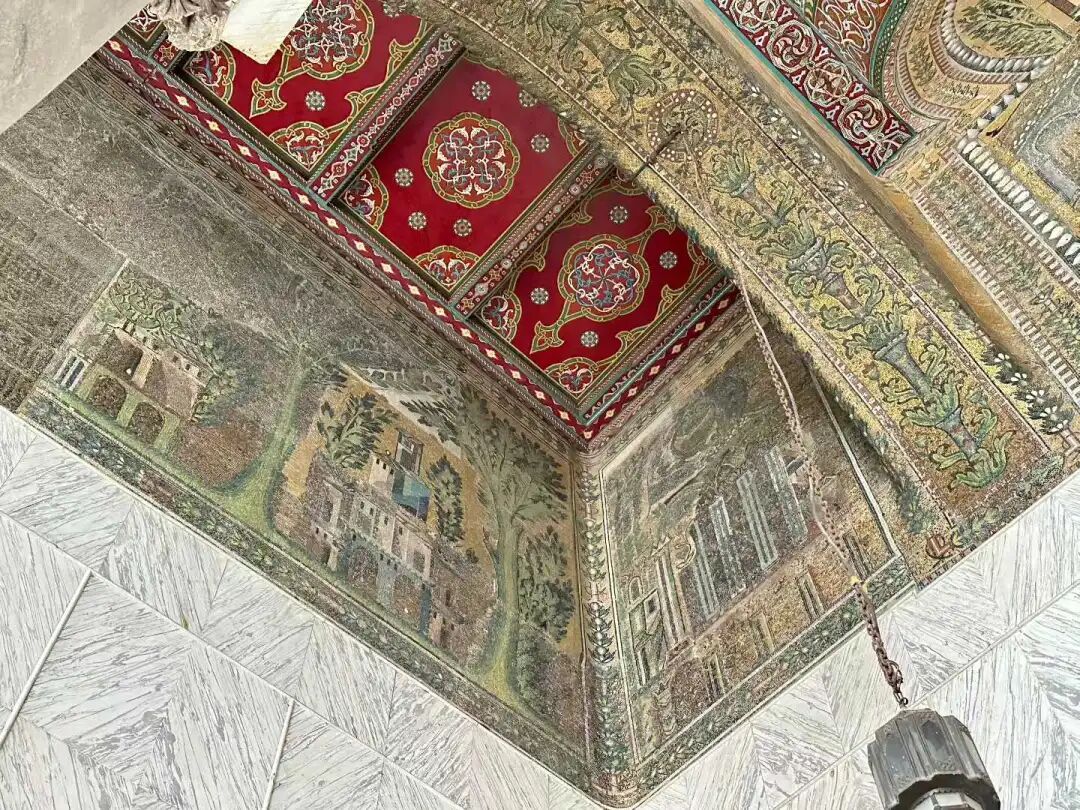
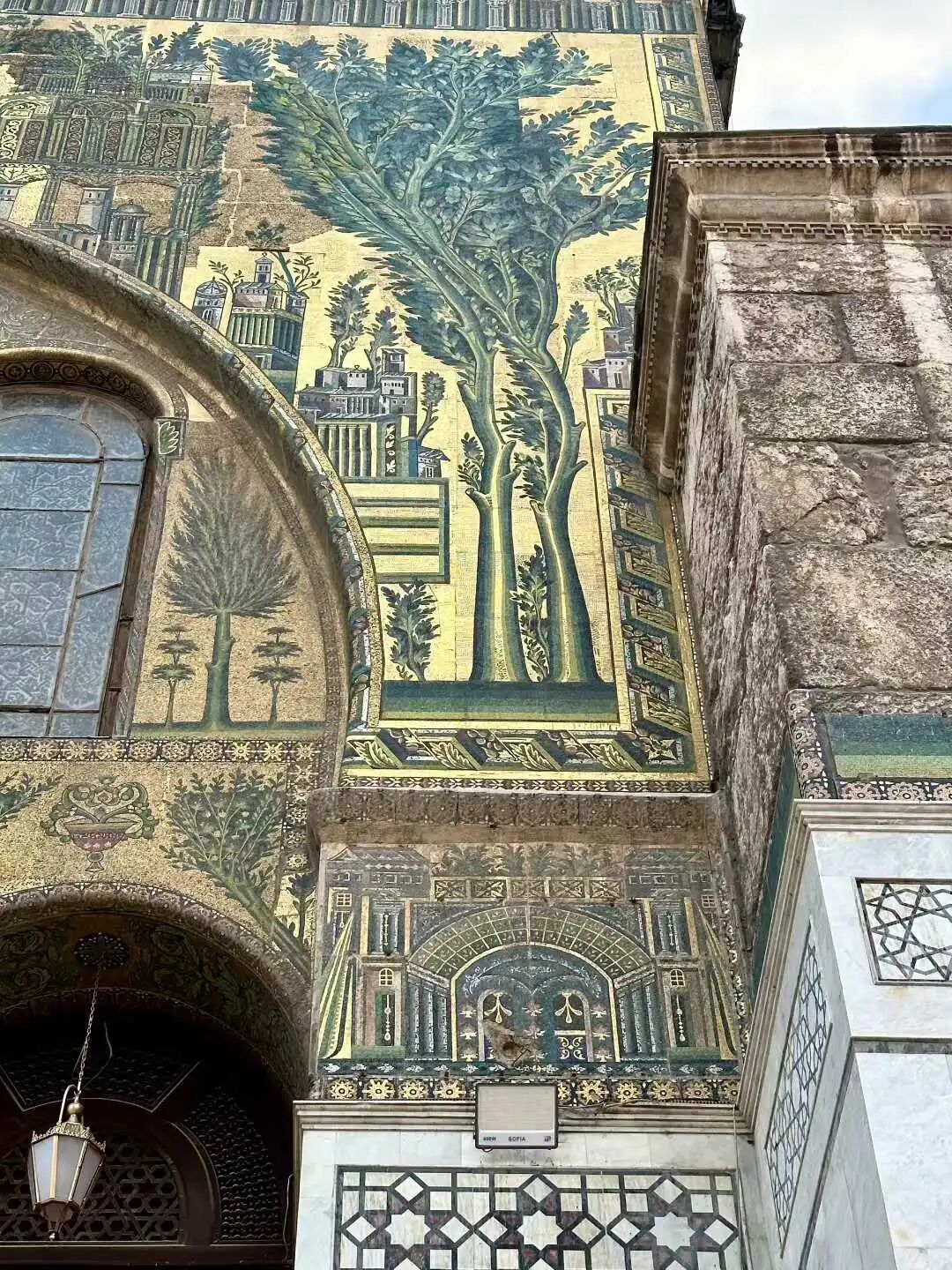
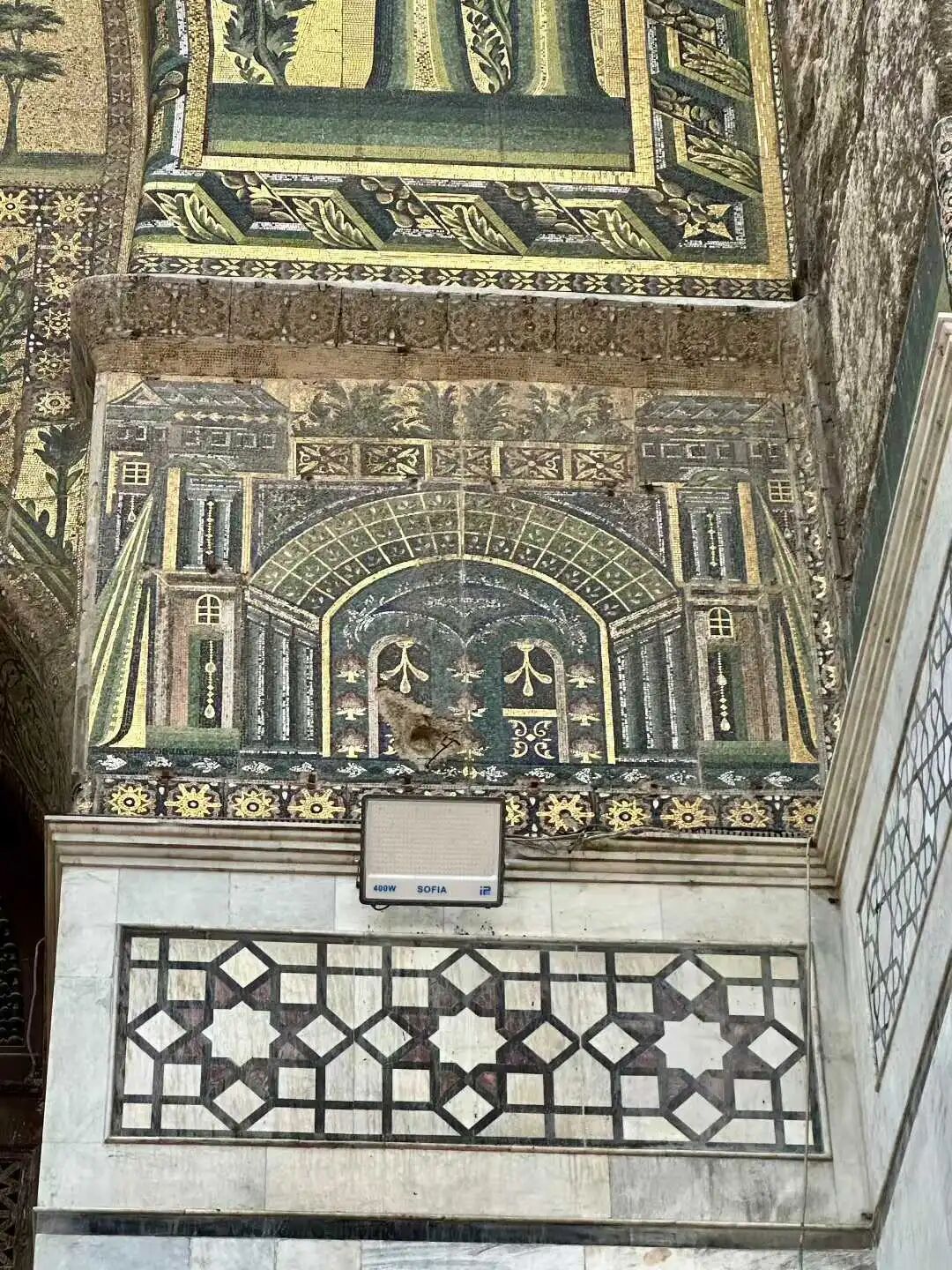
The Great Mosque of Damascus is world-famous for its rich Umayyad-era mosaic decorations. These mosaics use a late Roman style to depict various natural landscapes and buildings, showing a typical naturalistic style.
Some Arabic historical sources suggest the craftsmen and materials for the mosaics came from the Byzantine capital of Constantinople, but a 2022 chemical analysis study showed that most of the mosaics were actually produced in Egypt. Although these mosaic images show traces of Byzantine style, some scholars believe their style better matches mosaic craftsmanship from Syria, Palestine, and Egypt.
There has also been a long-standing debate about the meaning of the mosaic images. Some views suggest they represent the known world at that time, others think they depict Damascus and the Barada River, and some believe they show scenes of Paradise. Currently, there is relatively more evidence for the Paradise view, and the landscapes without human figures fit the idea of an empty Paradise waiting for people to arrive after the Day of Resurrection.
In 1270, the Mamluk Sultan Baibars carried out a large-scale restoration of the mosaics at the Great Mosque of Damascus, especially the Barada Panel in the western portico. The Barada River is the main river flowing through Damascus. This panel is believed to depict a town landscape along the Barada River.
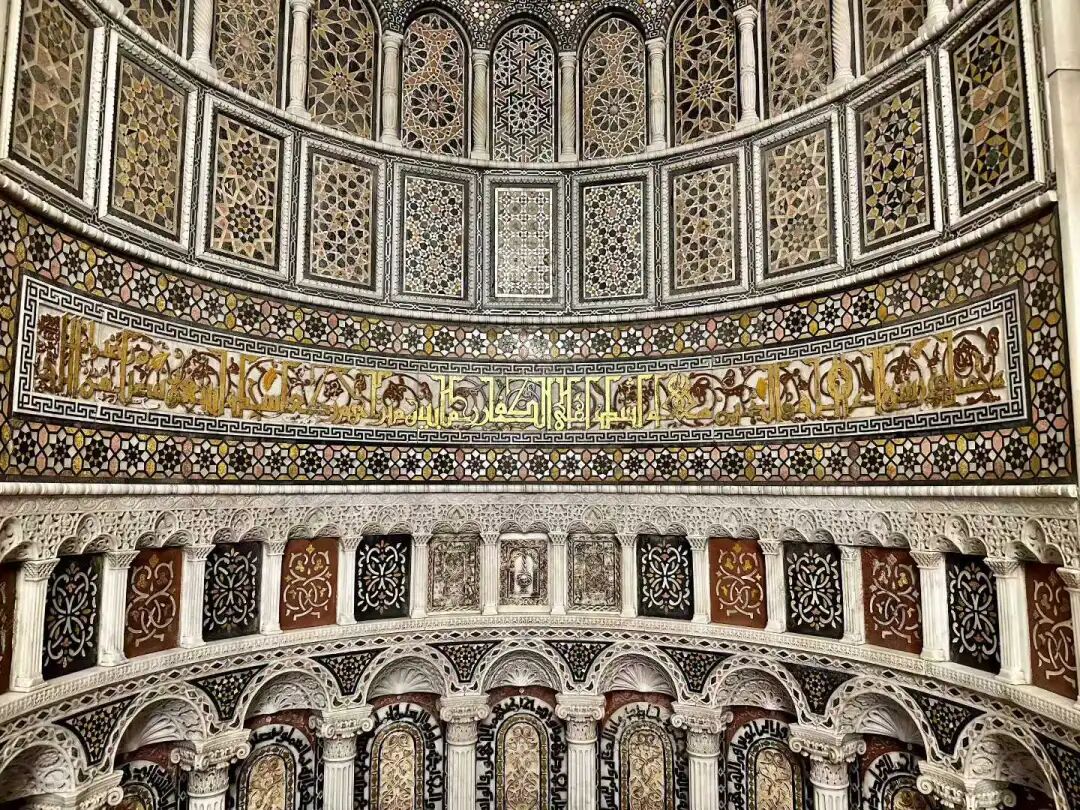
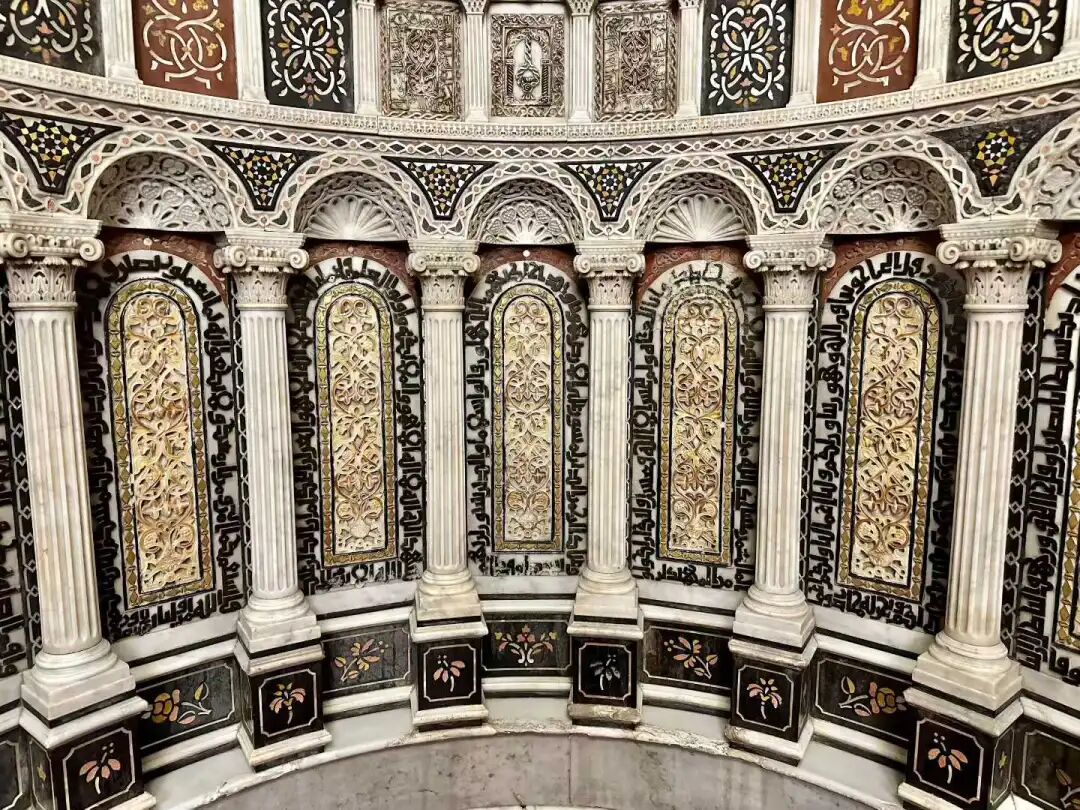
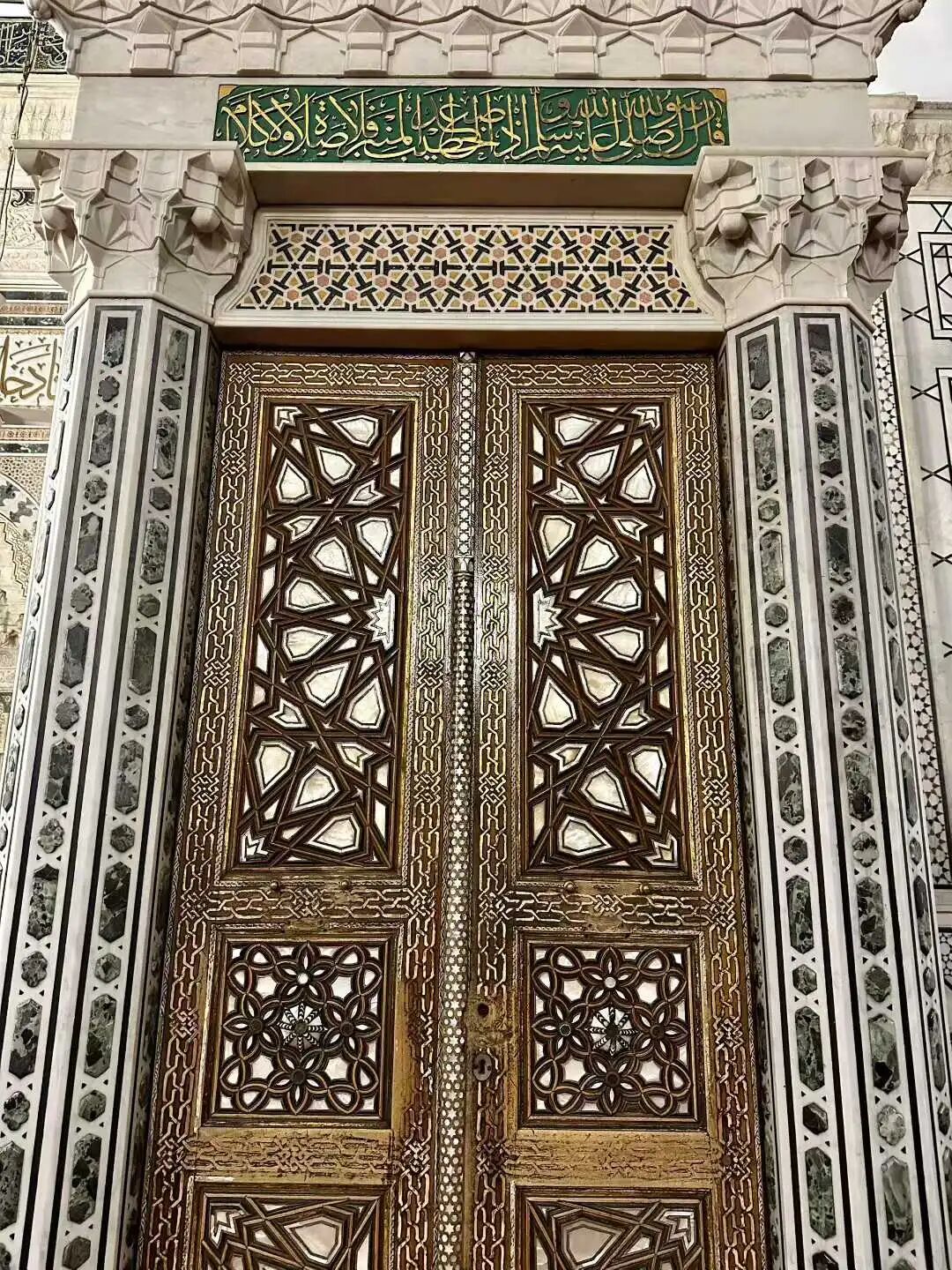
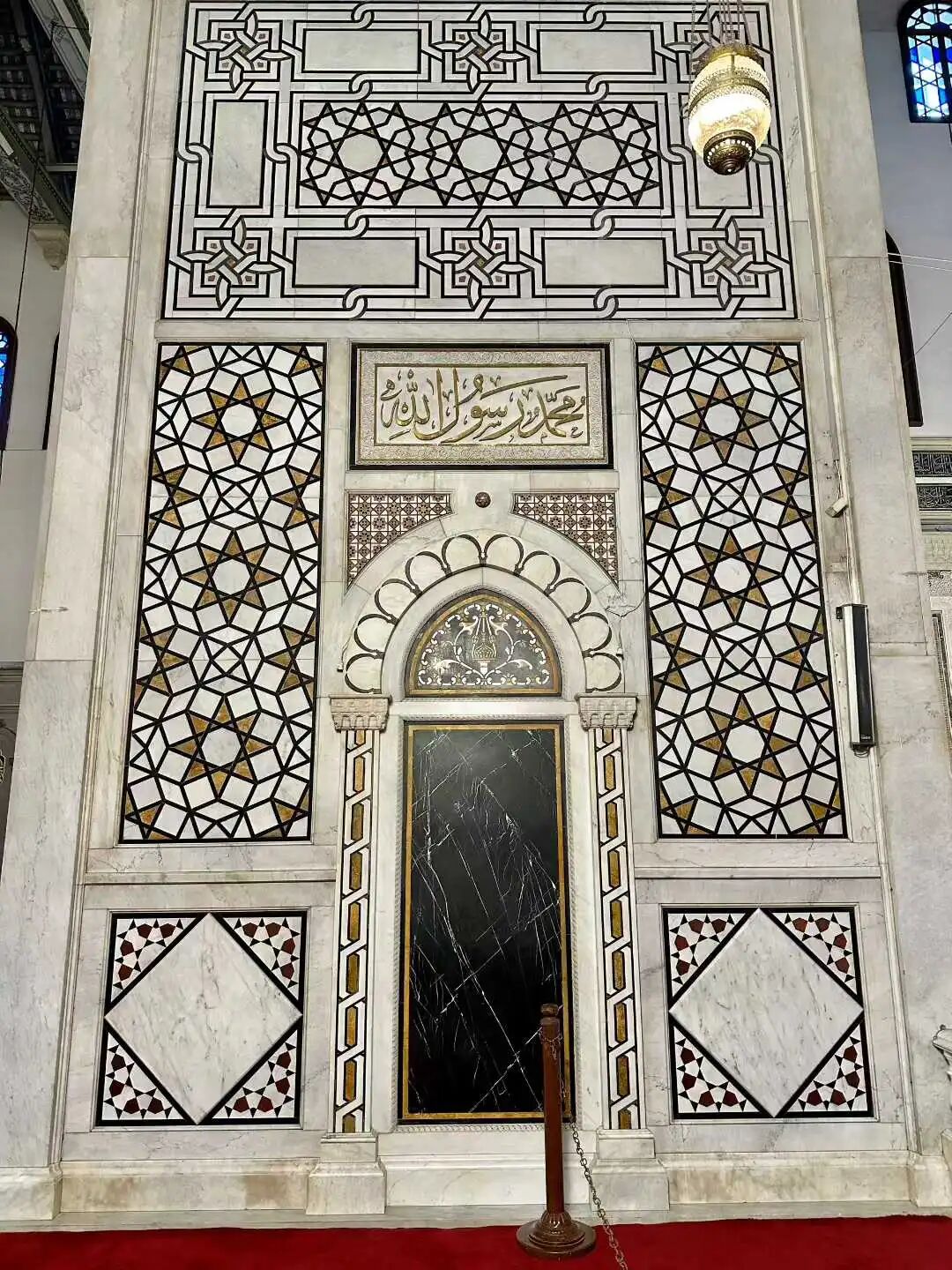
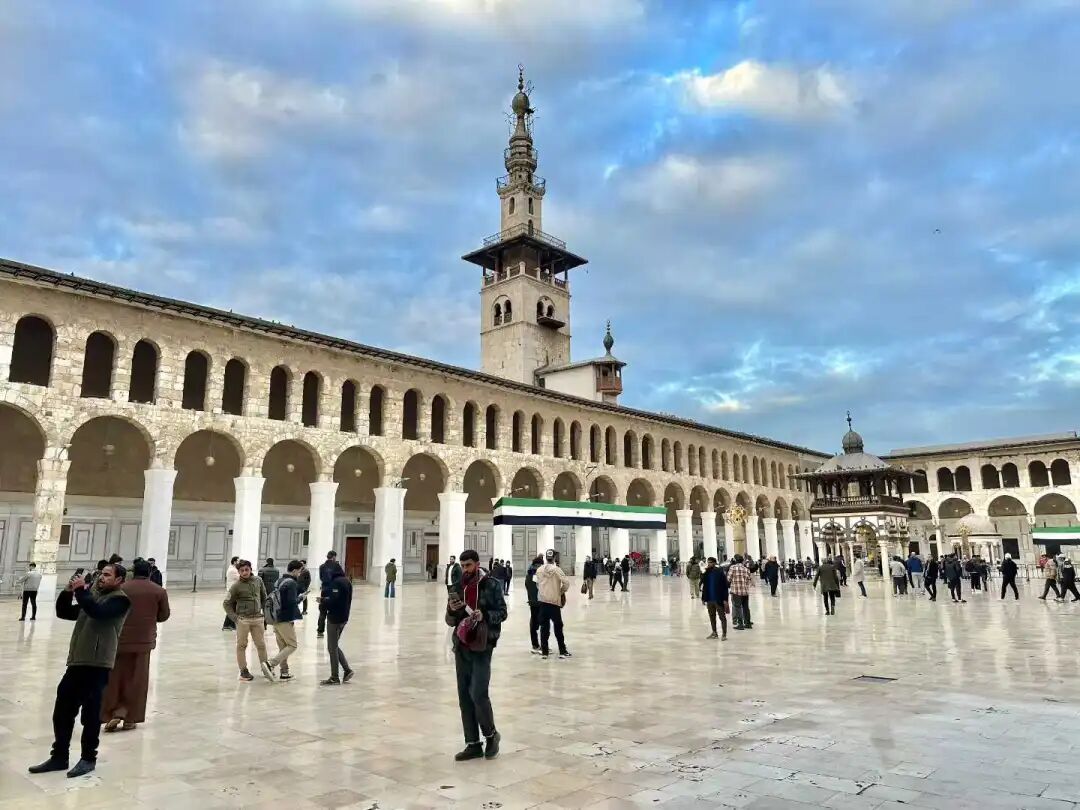
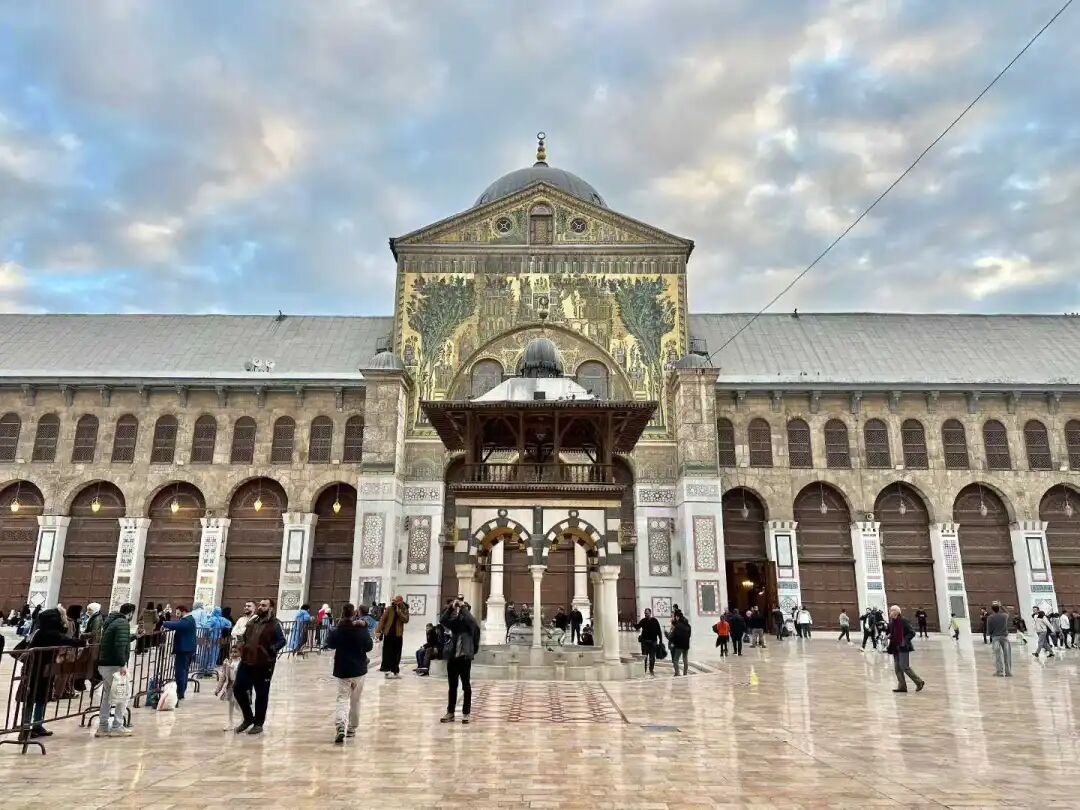
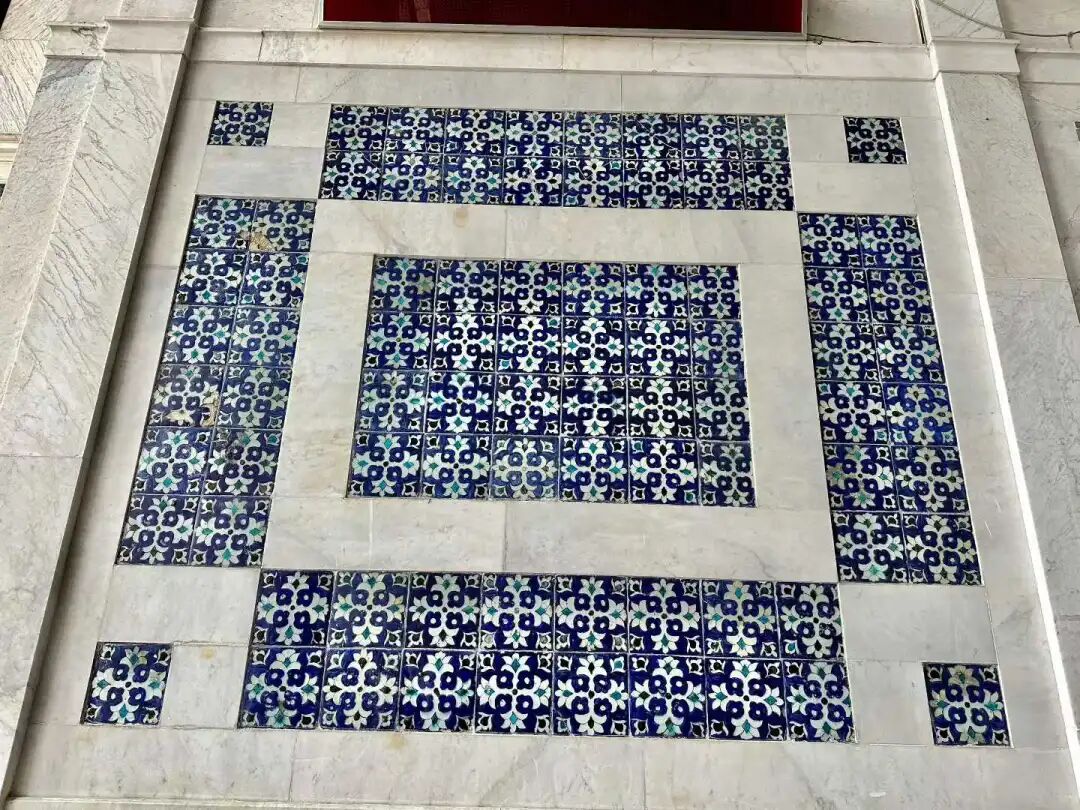
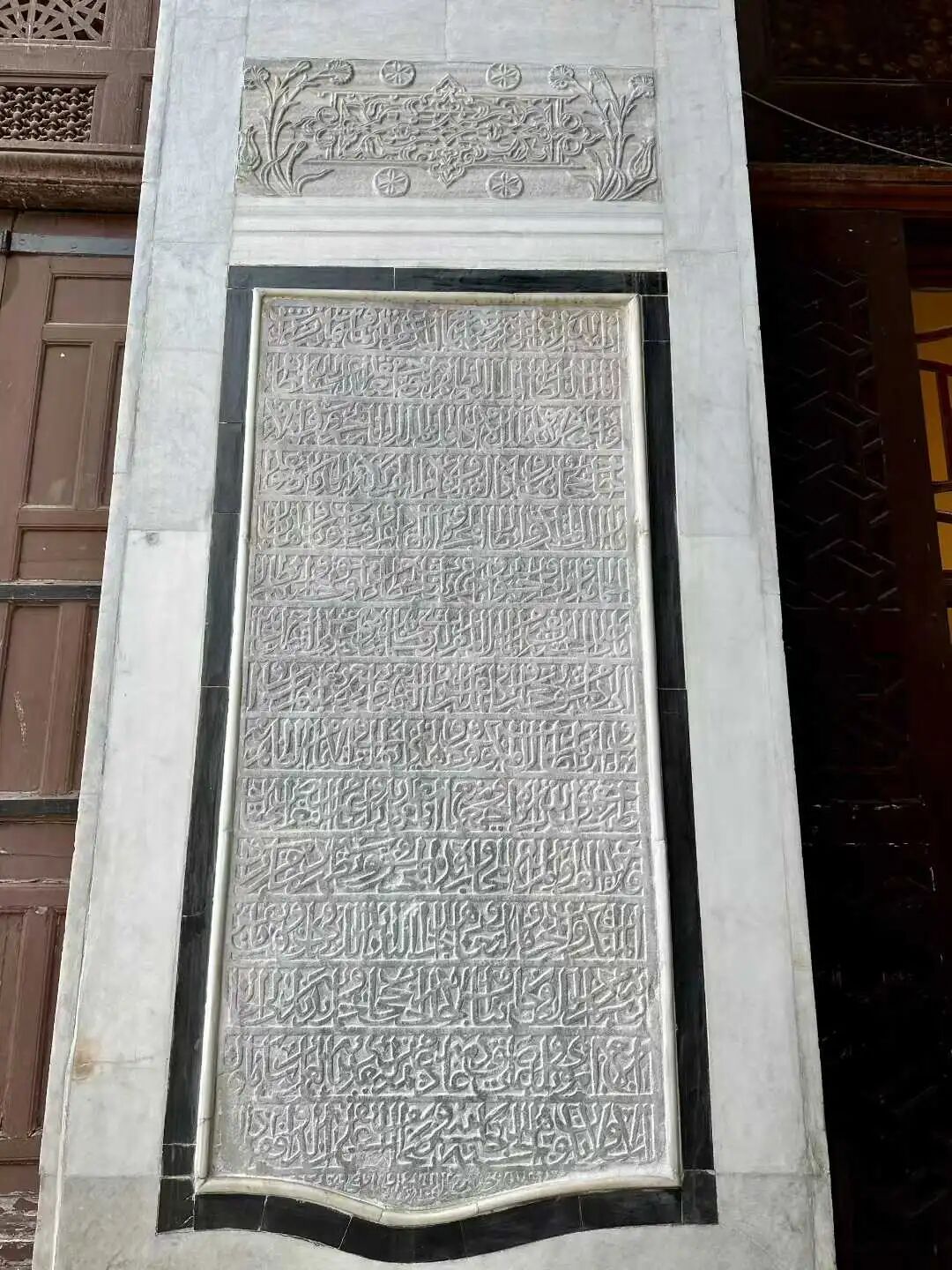
Mosaic decorations in the central hall of the west gate.
Mosaic decorations on the north and south sides of the west gate hall.
Mosaic decorations in the west portico.
Mosaic decorations on the main entrance of the prayer hall; the dark parts are original, and the bright parts were restored later. view all
Summary: The Great Mosque of Damascus is famous for Umayyad-era mosaics, including the Barada Panel restored by the Mamluk Sultan Baibars in 1270. This account keeps the source's art history, chemical study notes, scholarly interpretations, mosaic locations, and photographs.
The Great Mosque of Damascus is world-famous for its rich Umayyad-era mosaic decorations. These mosaics use a late Roman style to depict various natural landscapes and buildings, showing a typical naturalistic style.
Some Arabic historical sources suggest the craftsmen and materials for the mosaics came from the Byzantine capital of Constantinople, but a 2022 chemical analysis study showed that most of the mosaics were actually produced in Egypt. Although these mosaic images show traces of Byzantine style, some scholars believe their style better matches mosaic craftsmanship from Syria, Palestine, and Egypt.
There has also been a long-standing debate about the meaning of the mosaic images. Some views suggest they represent the known world at that time, others think they depict Damascus and the Barada River, and some believe they show scenes of Paradise. Currently, there is relatively more evidence for the Paradise view, and the landscapes without human figures fit the idea of an empty Paradise waiting for people to arrive after the Day of Resurrection.
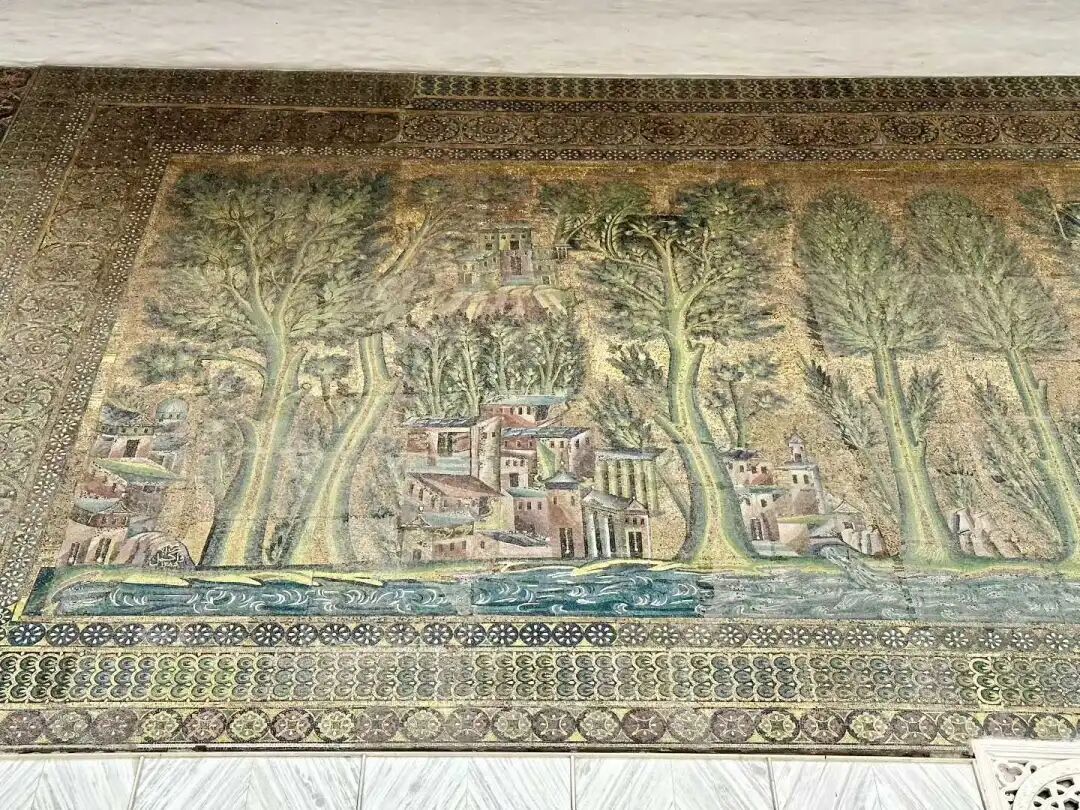
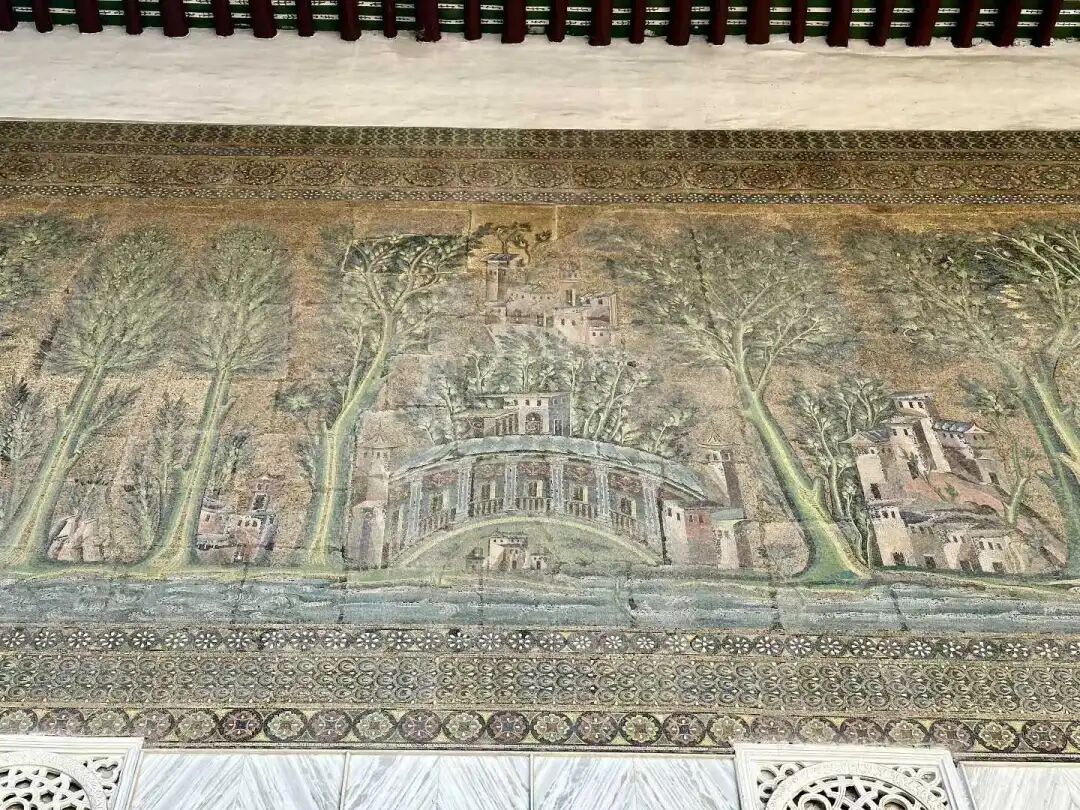
In 1270, the Mamluk Sultan Baibars carried out a large-scale restoration of the mosaics at the Great Mosque of Damascus, especially the Barada Panel in the western portico. The Barada River is the main river flowing through Damascus. This panel is believed to depict a town landscape along the Barada River.
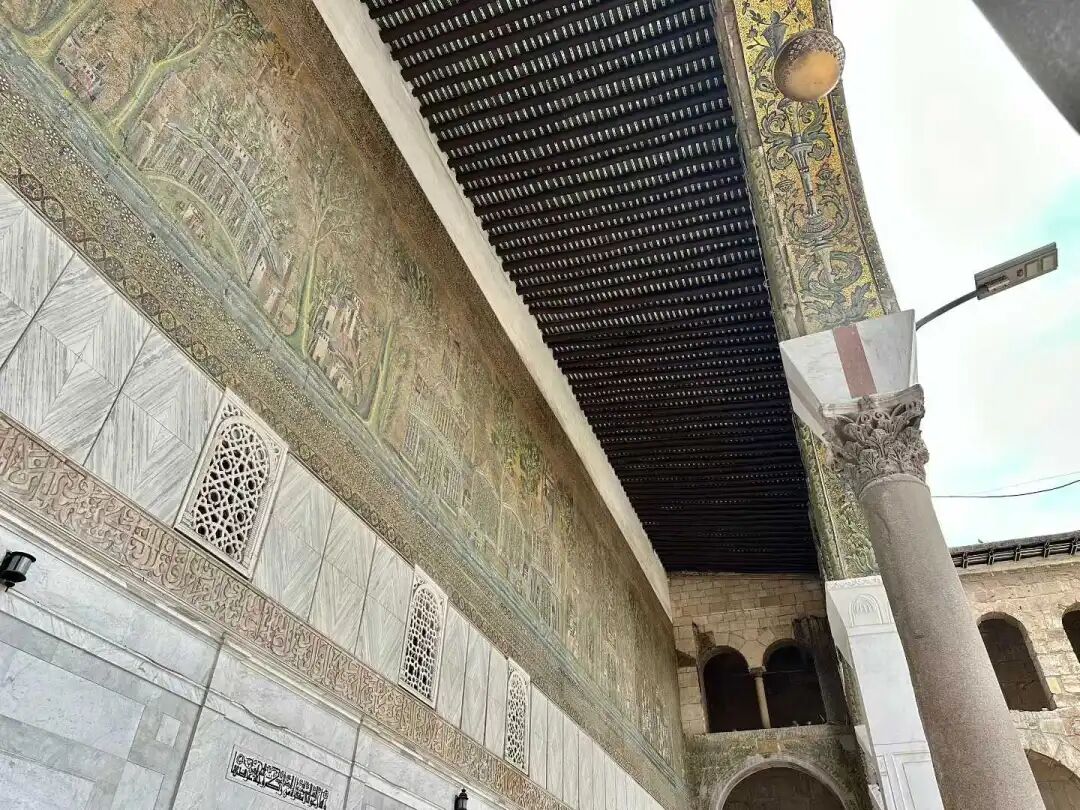
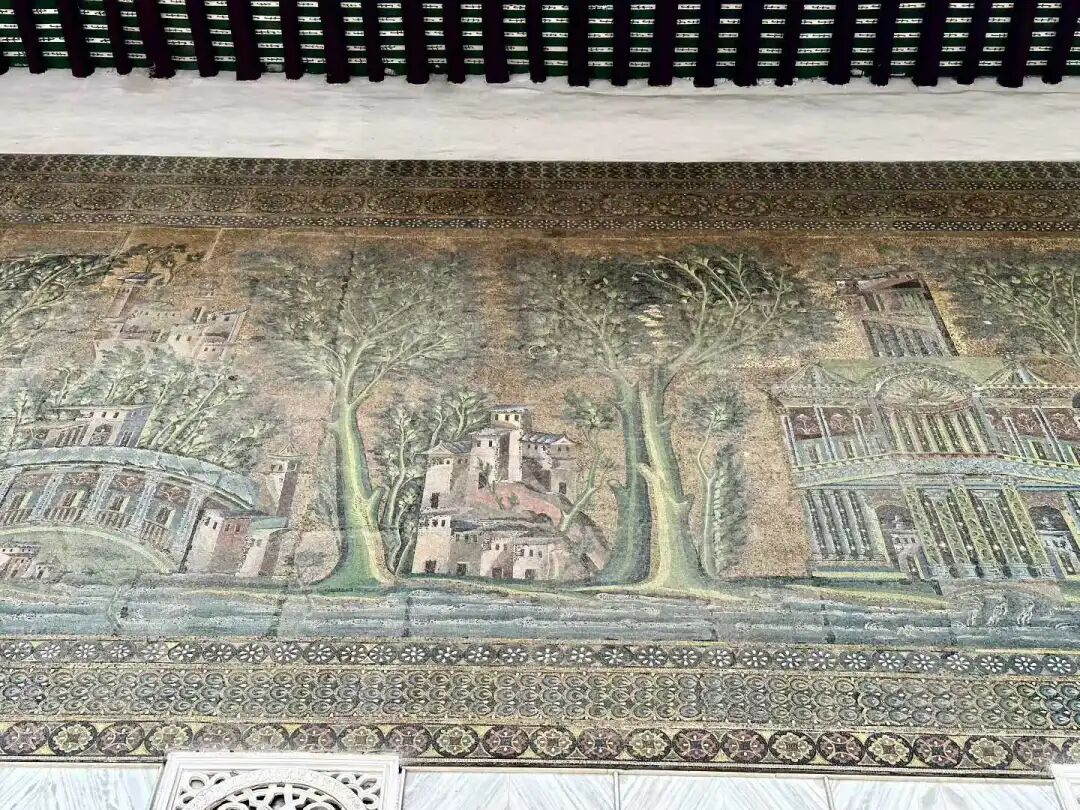
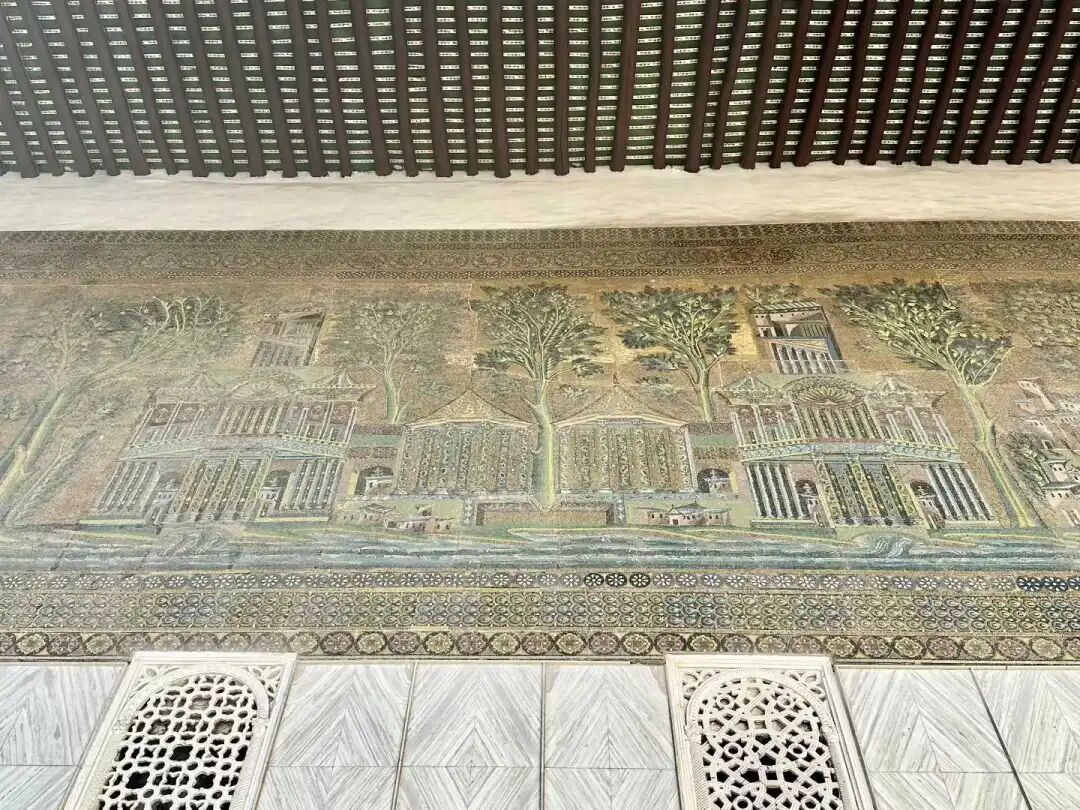
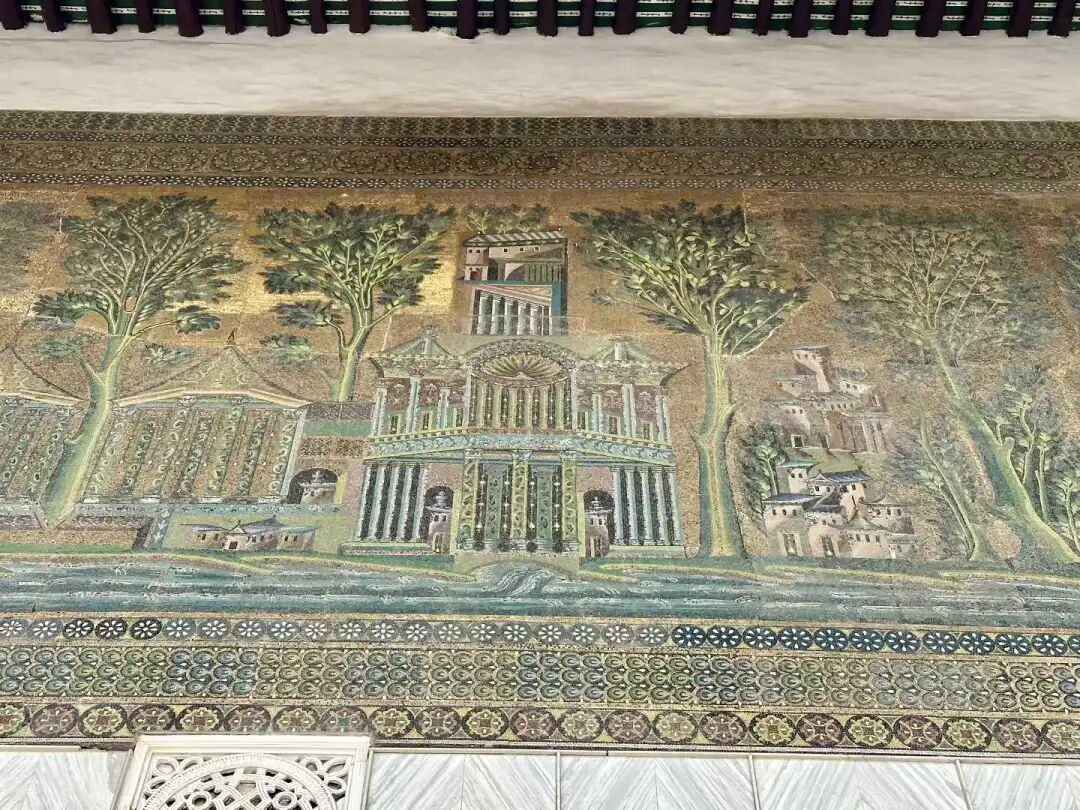
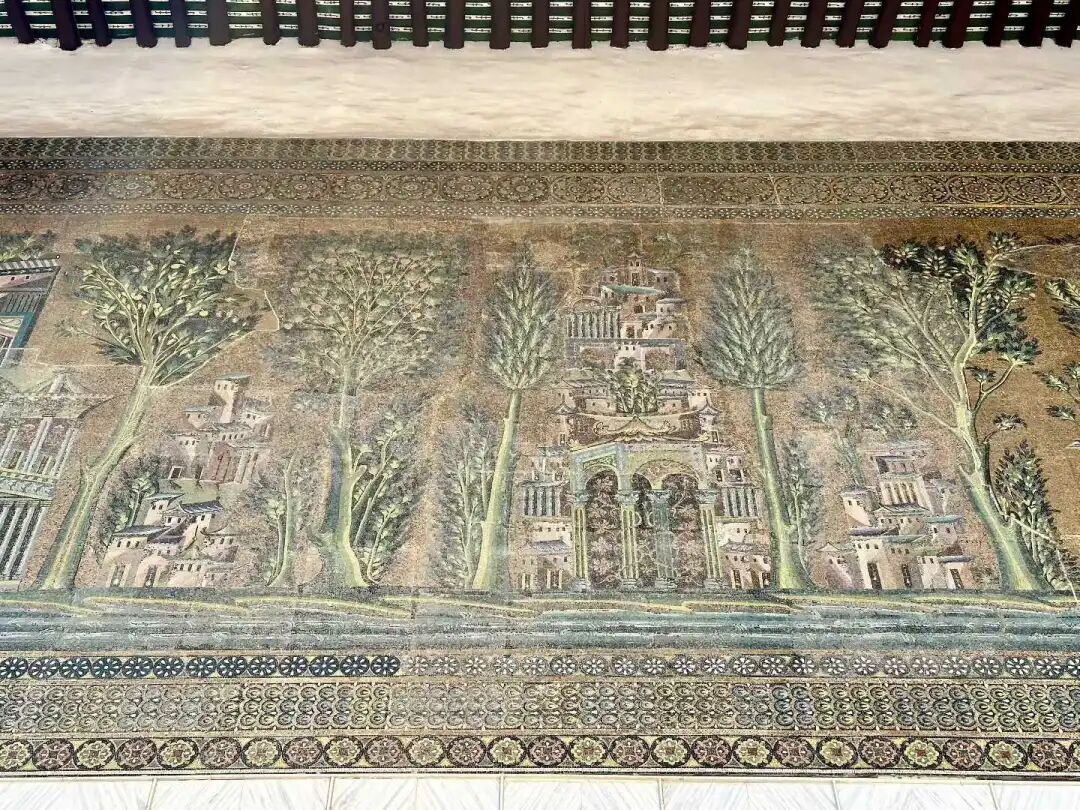
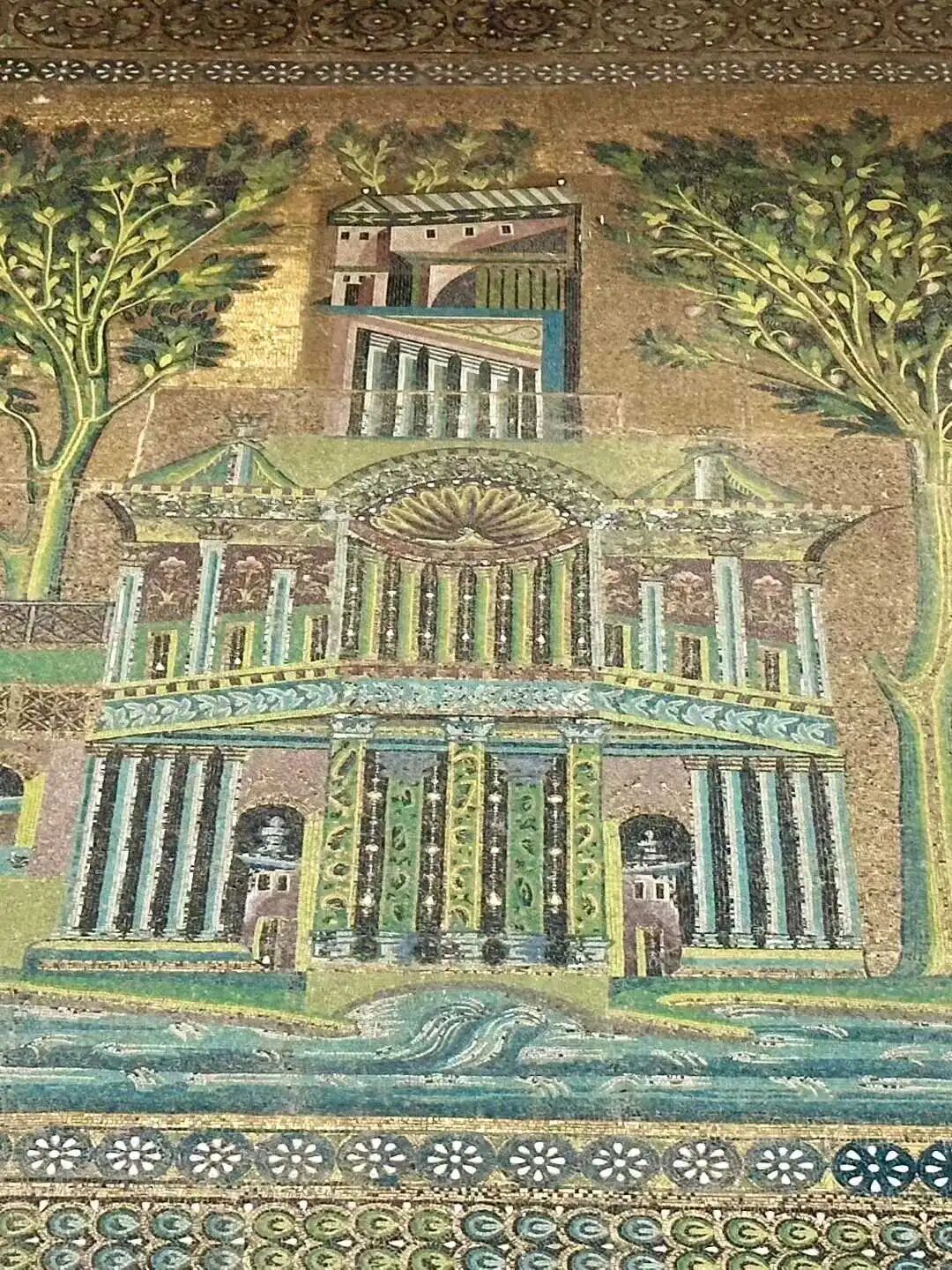
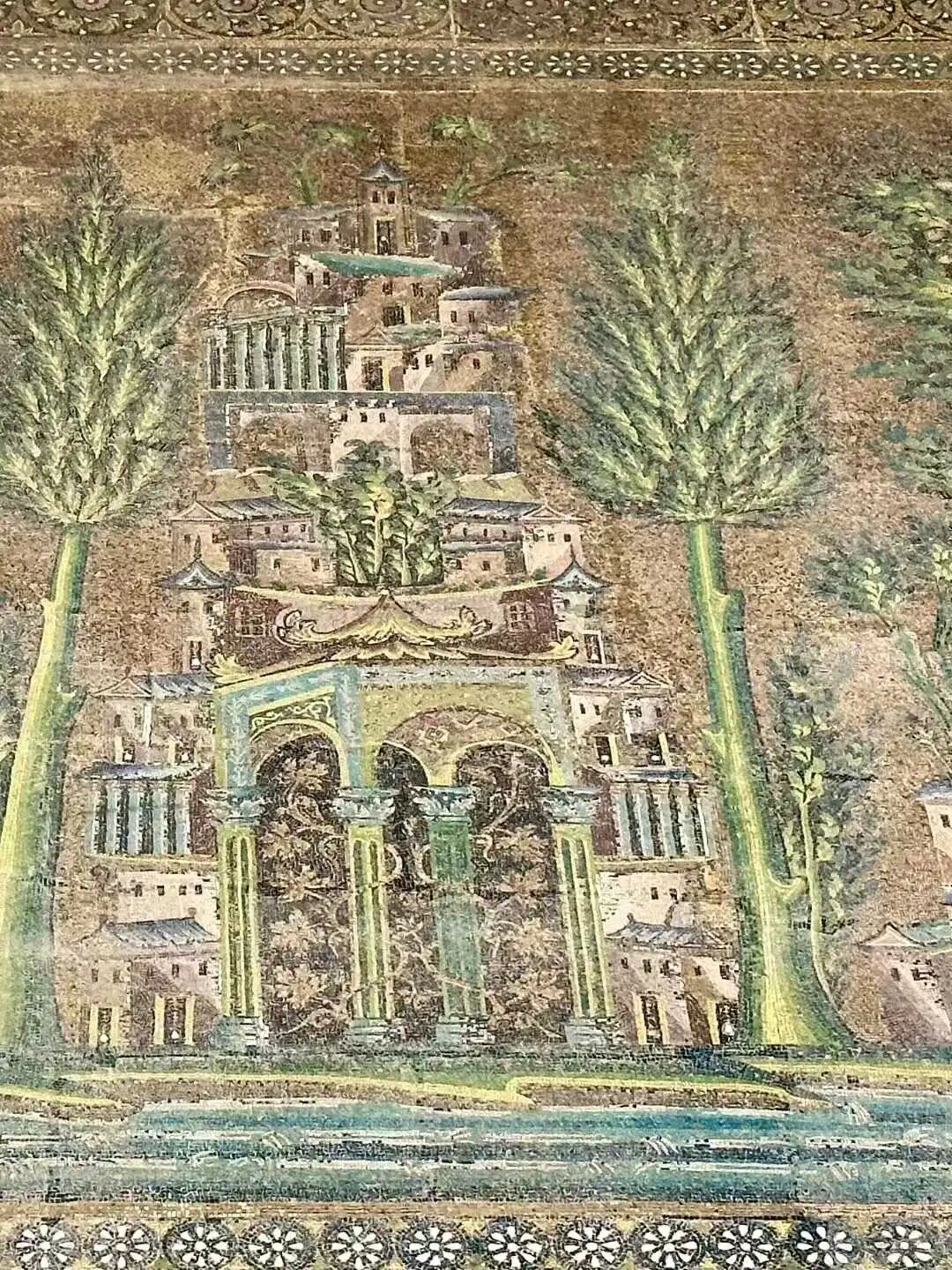
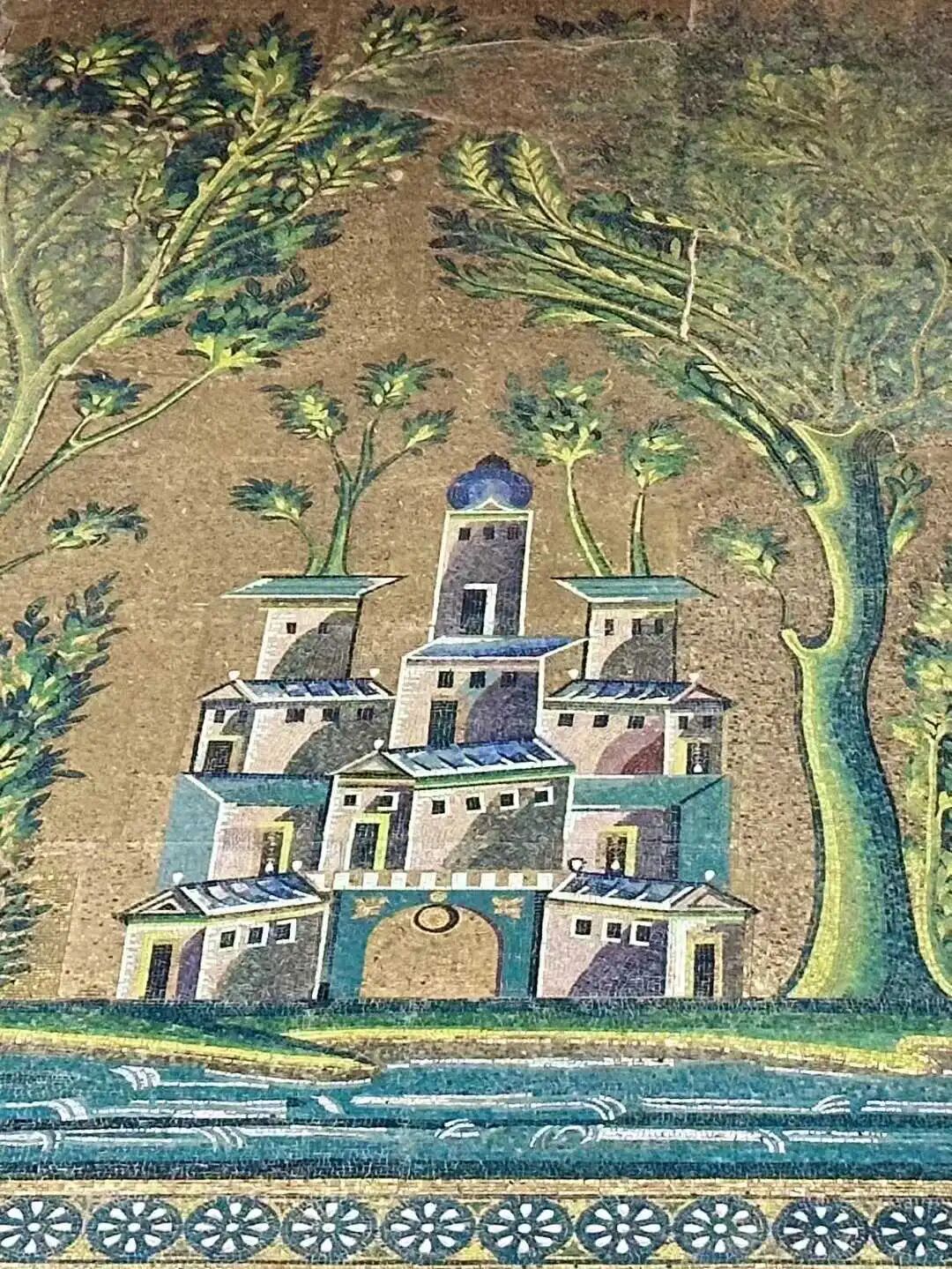
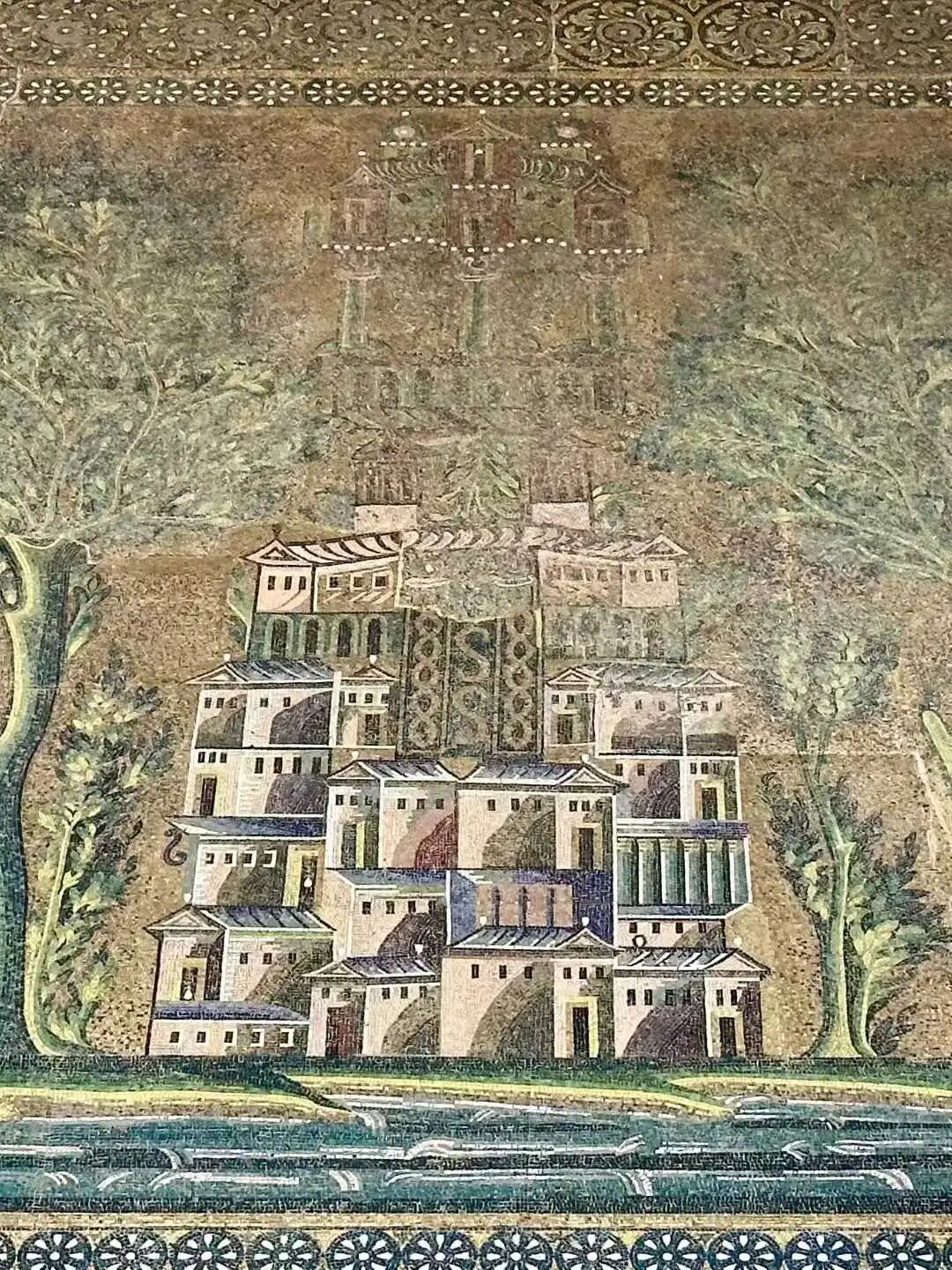
Mosaic decorations in the central hall of the west gate.
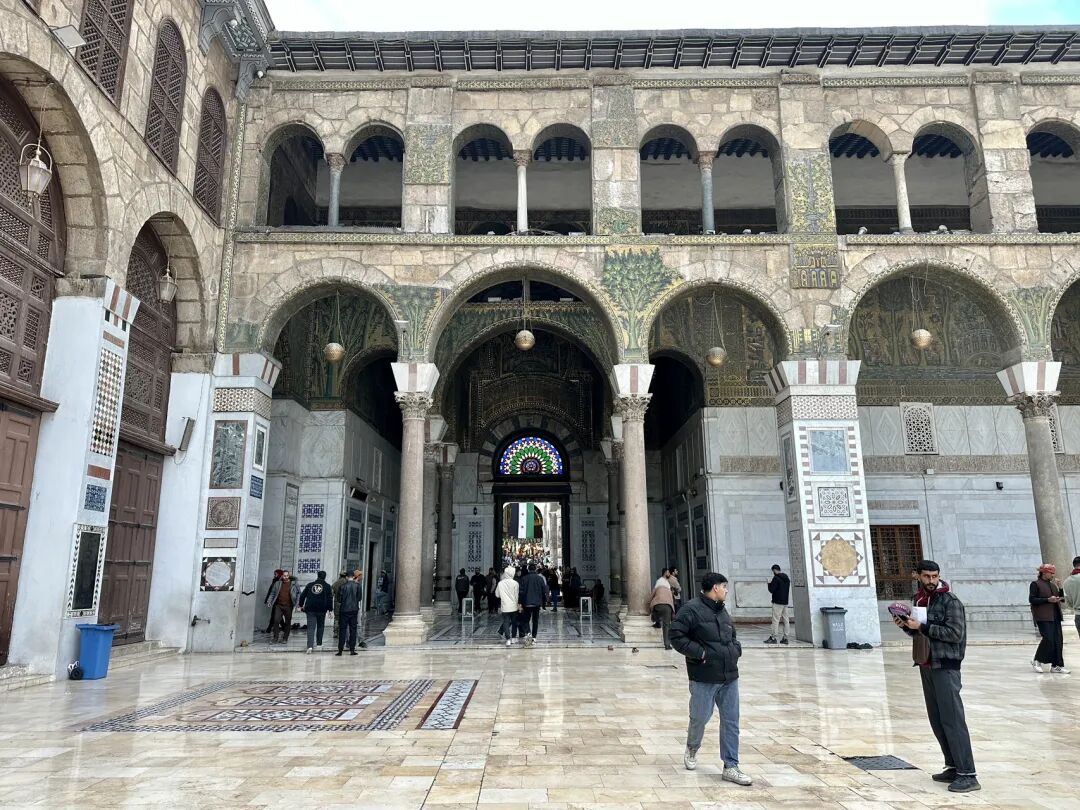
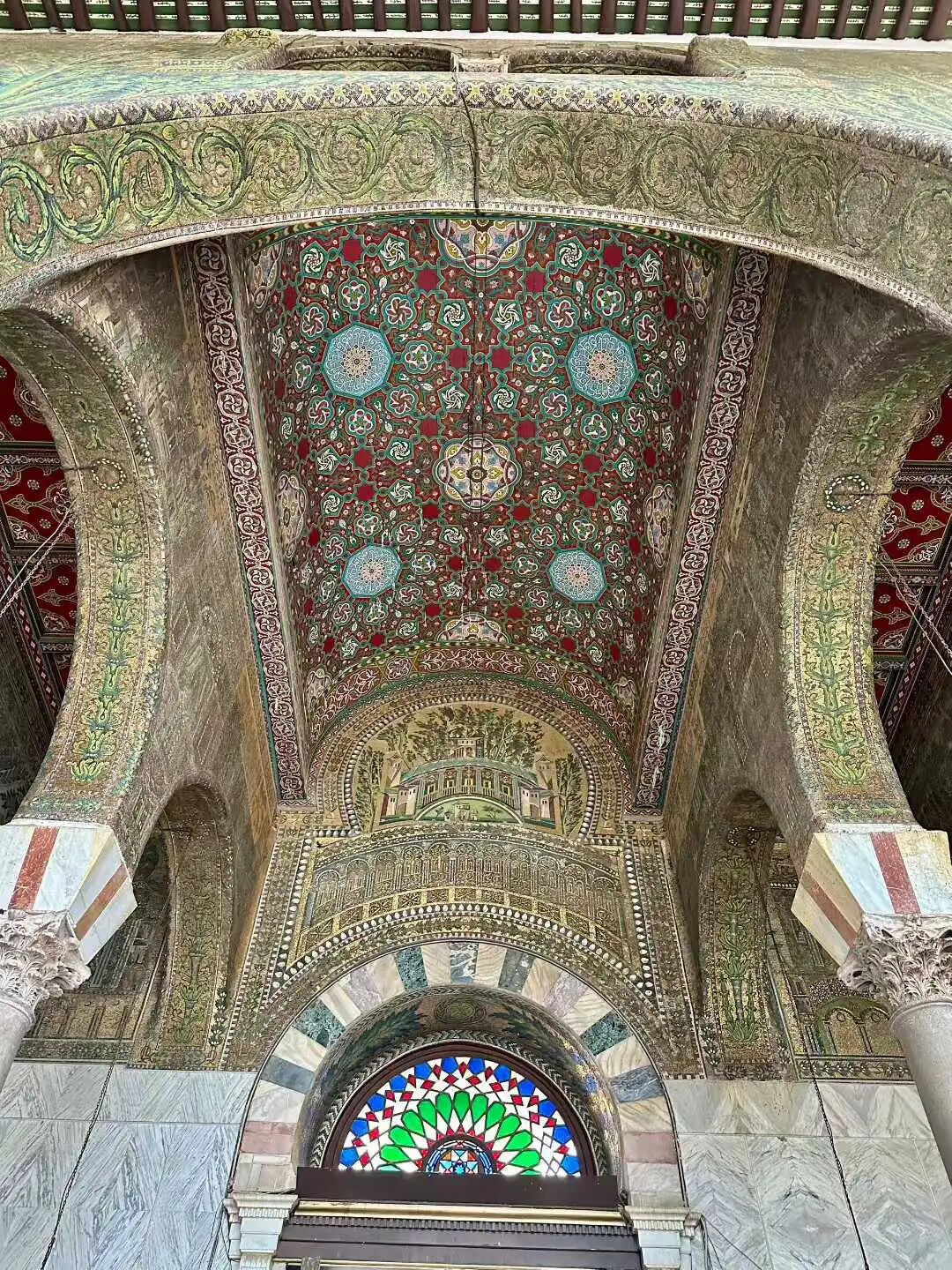
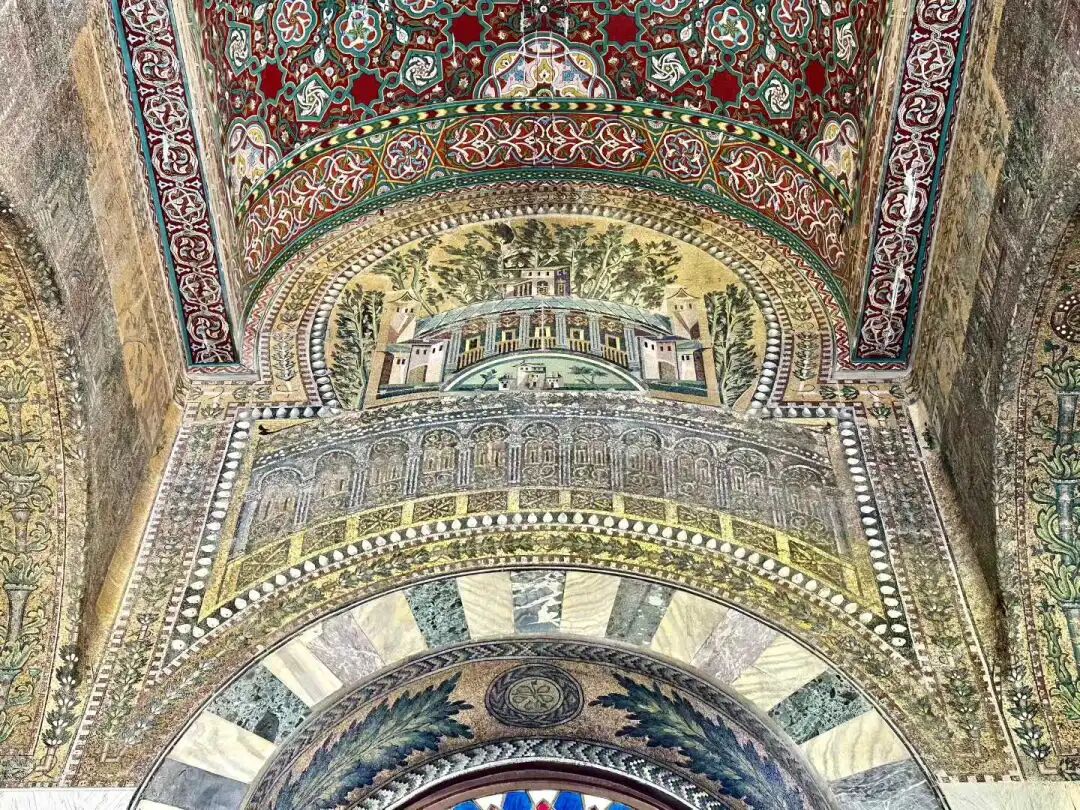
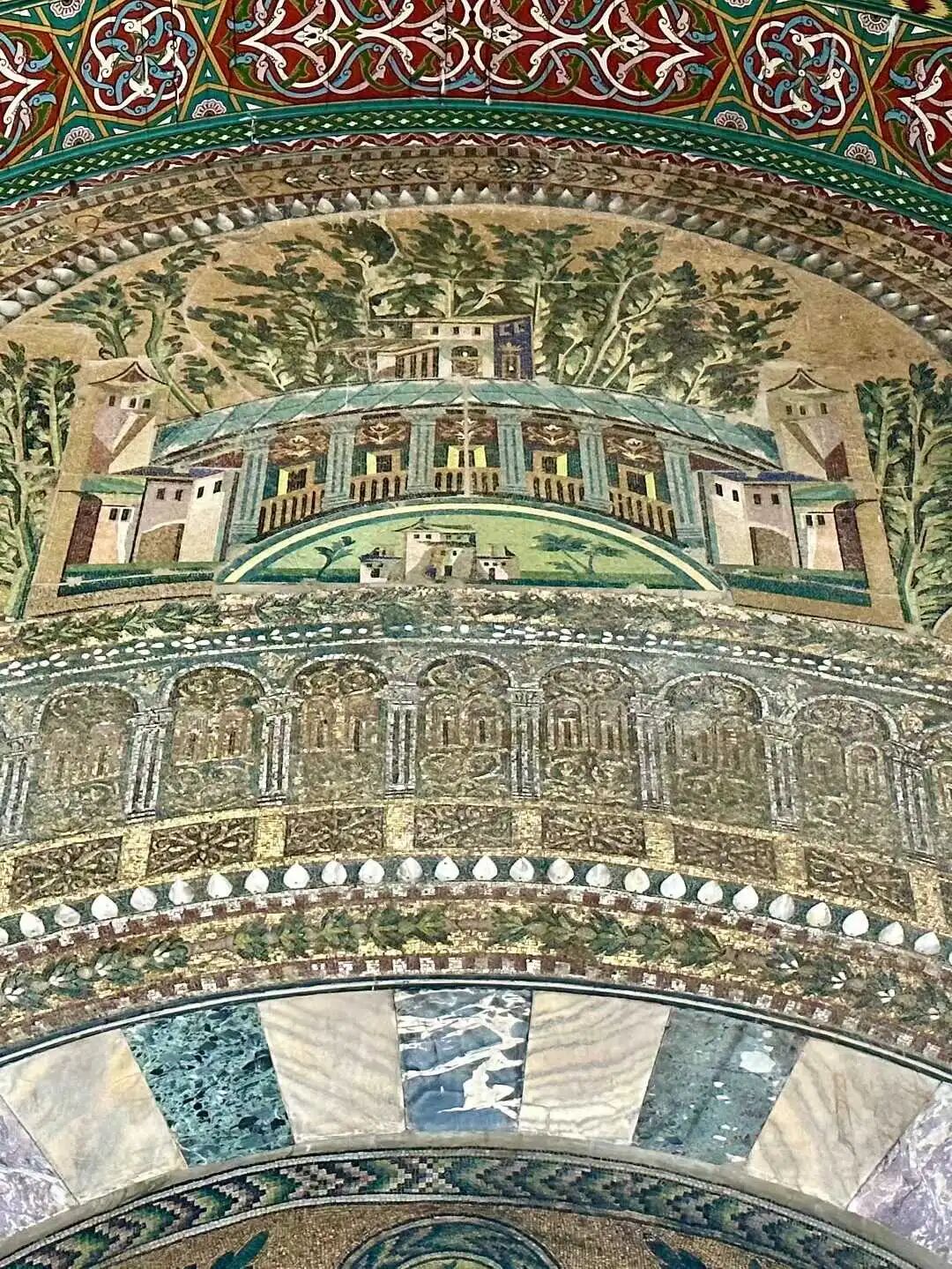
Mosaic decorations on the north and south sides of the west gate hall.
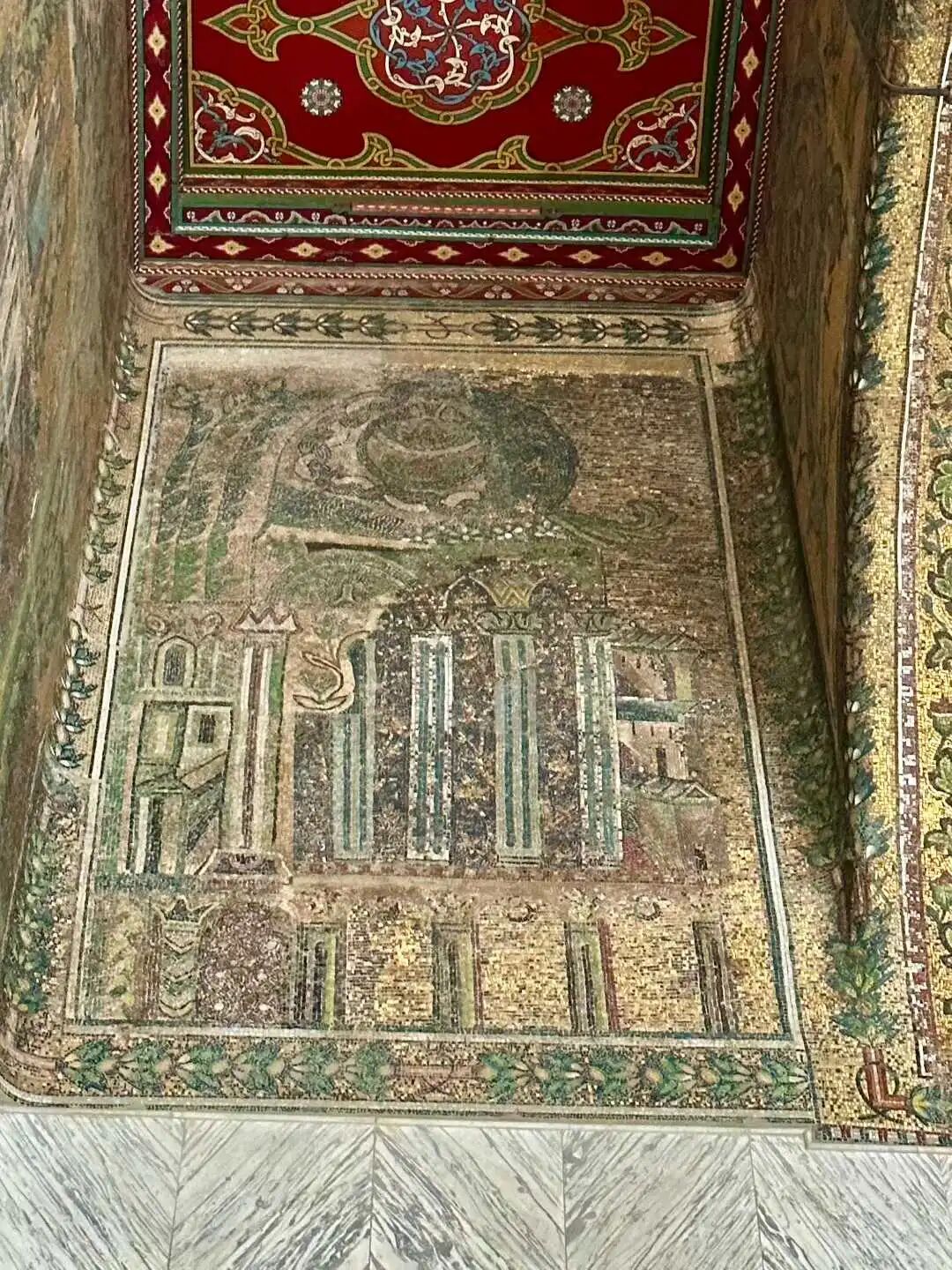
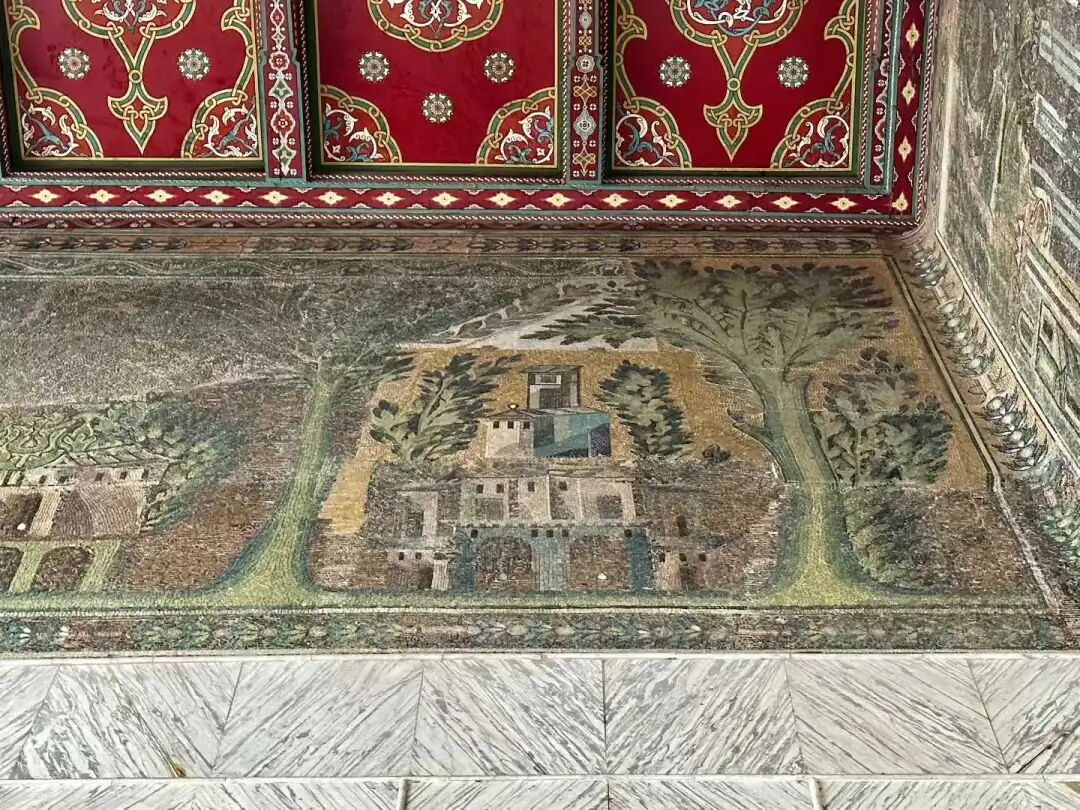
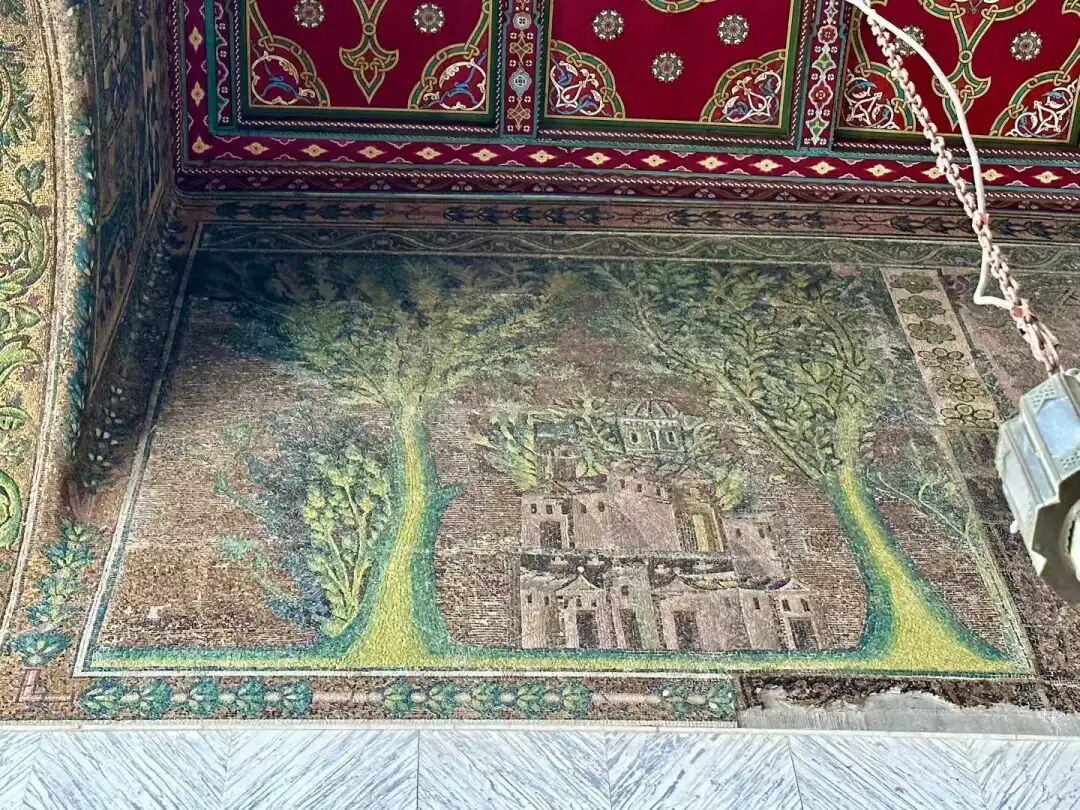
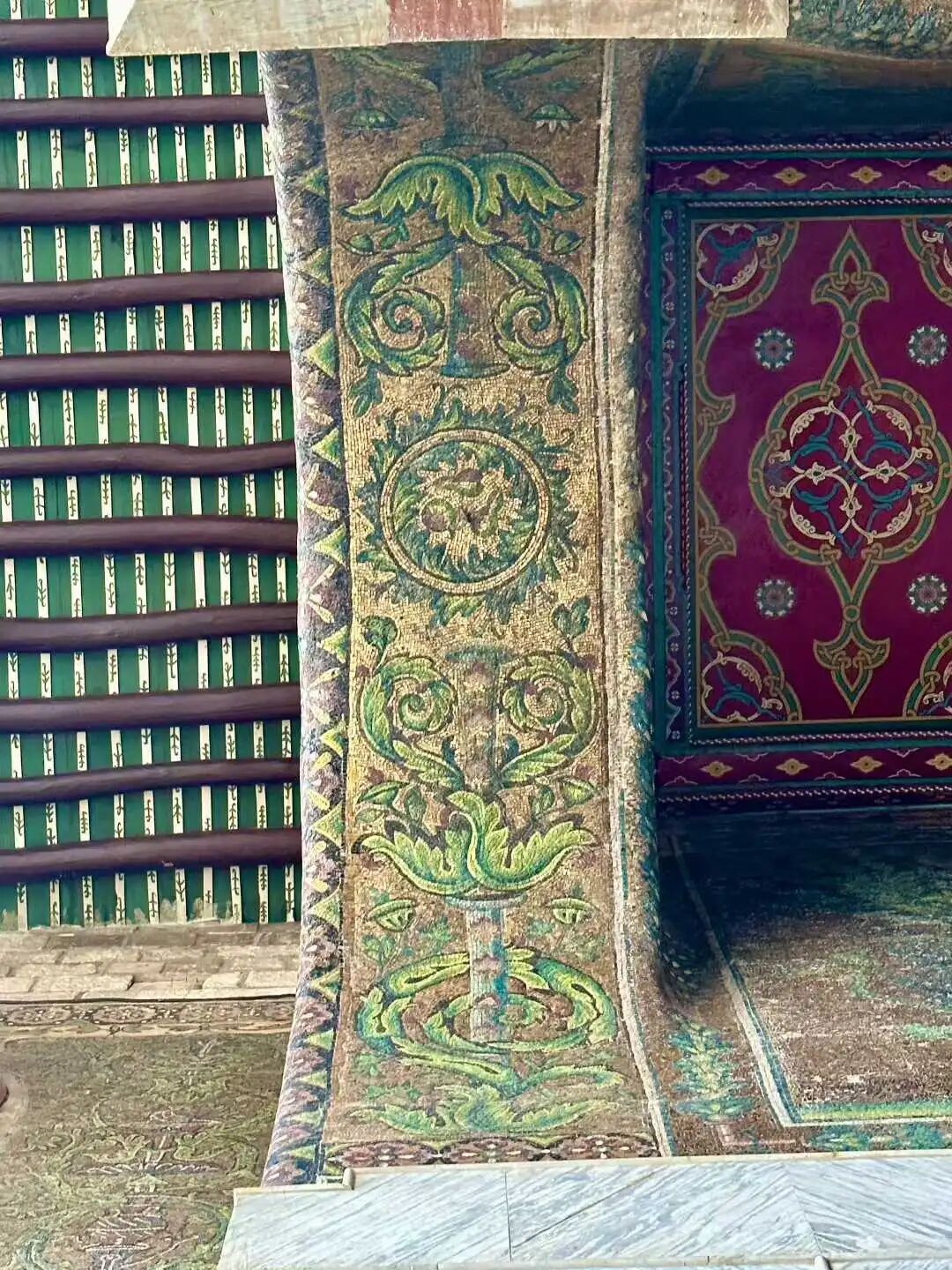
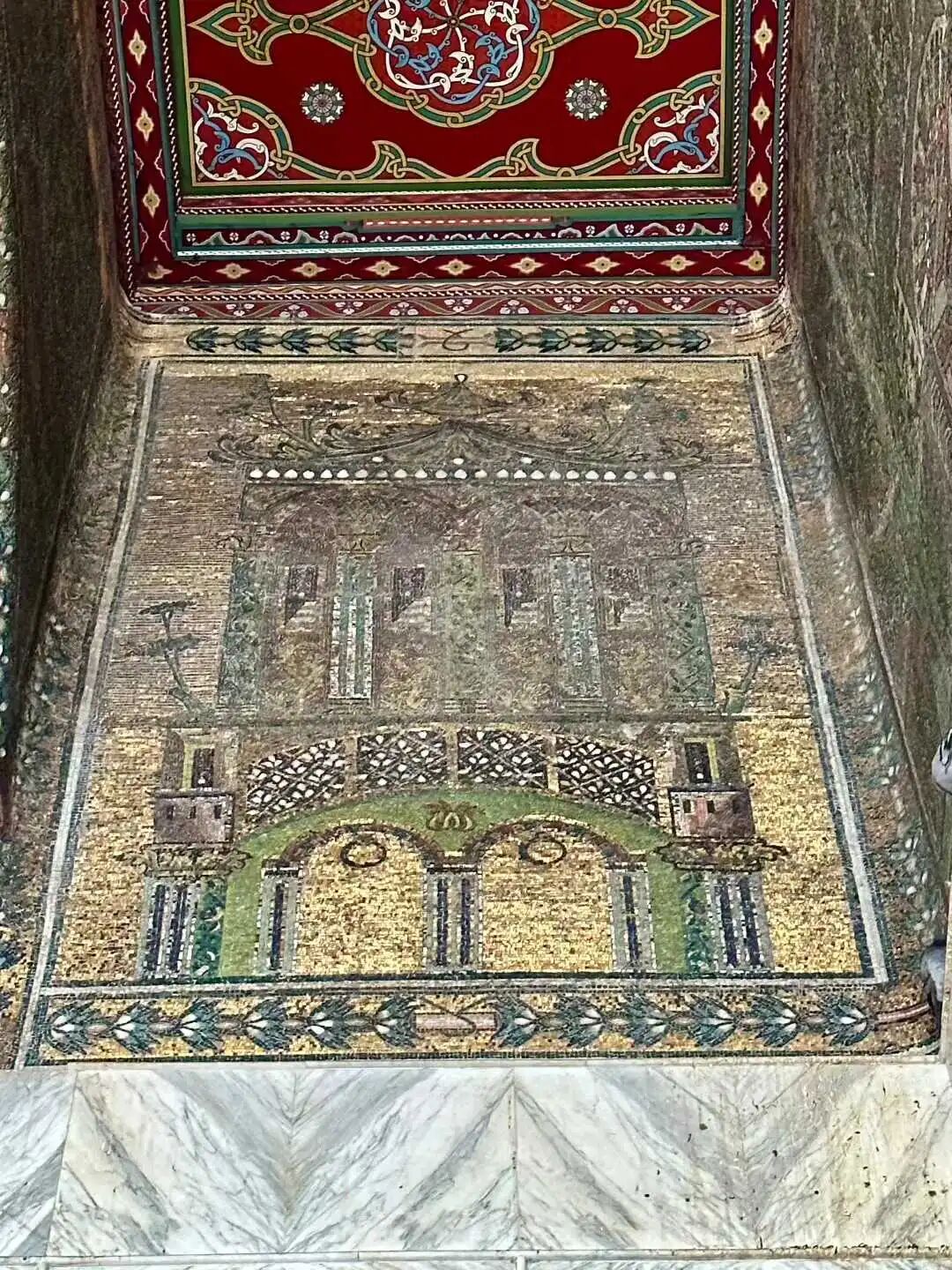
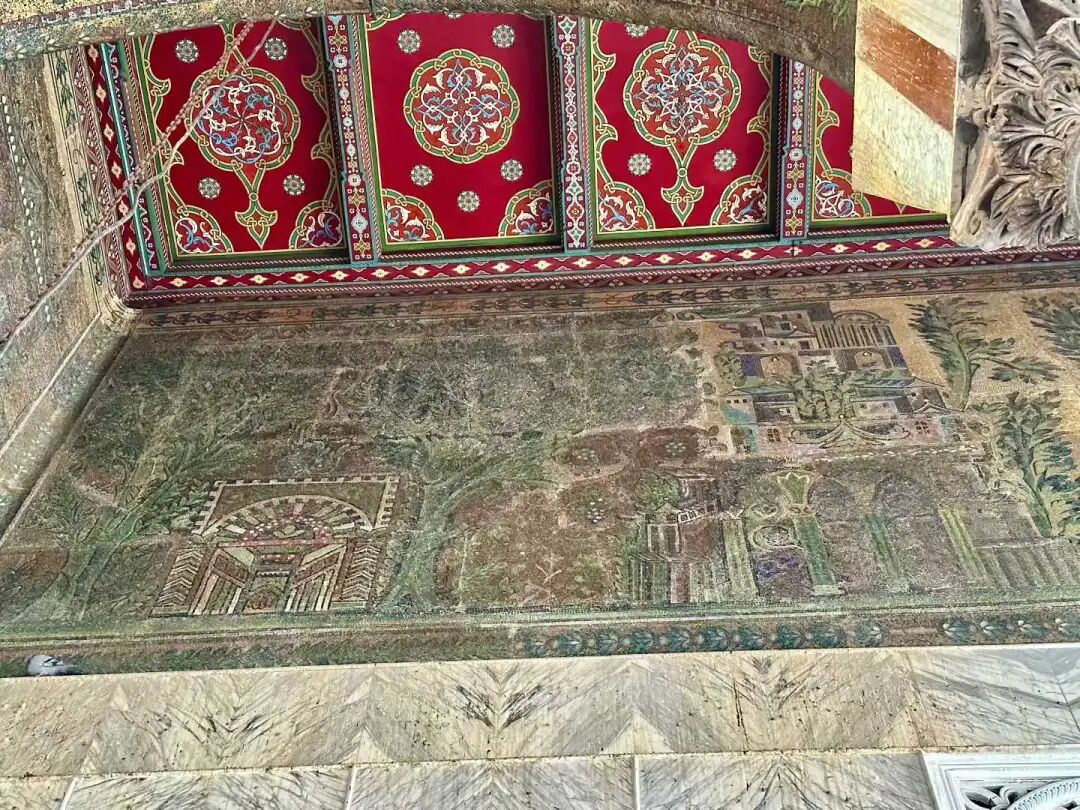
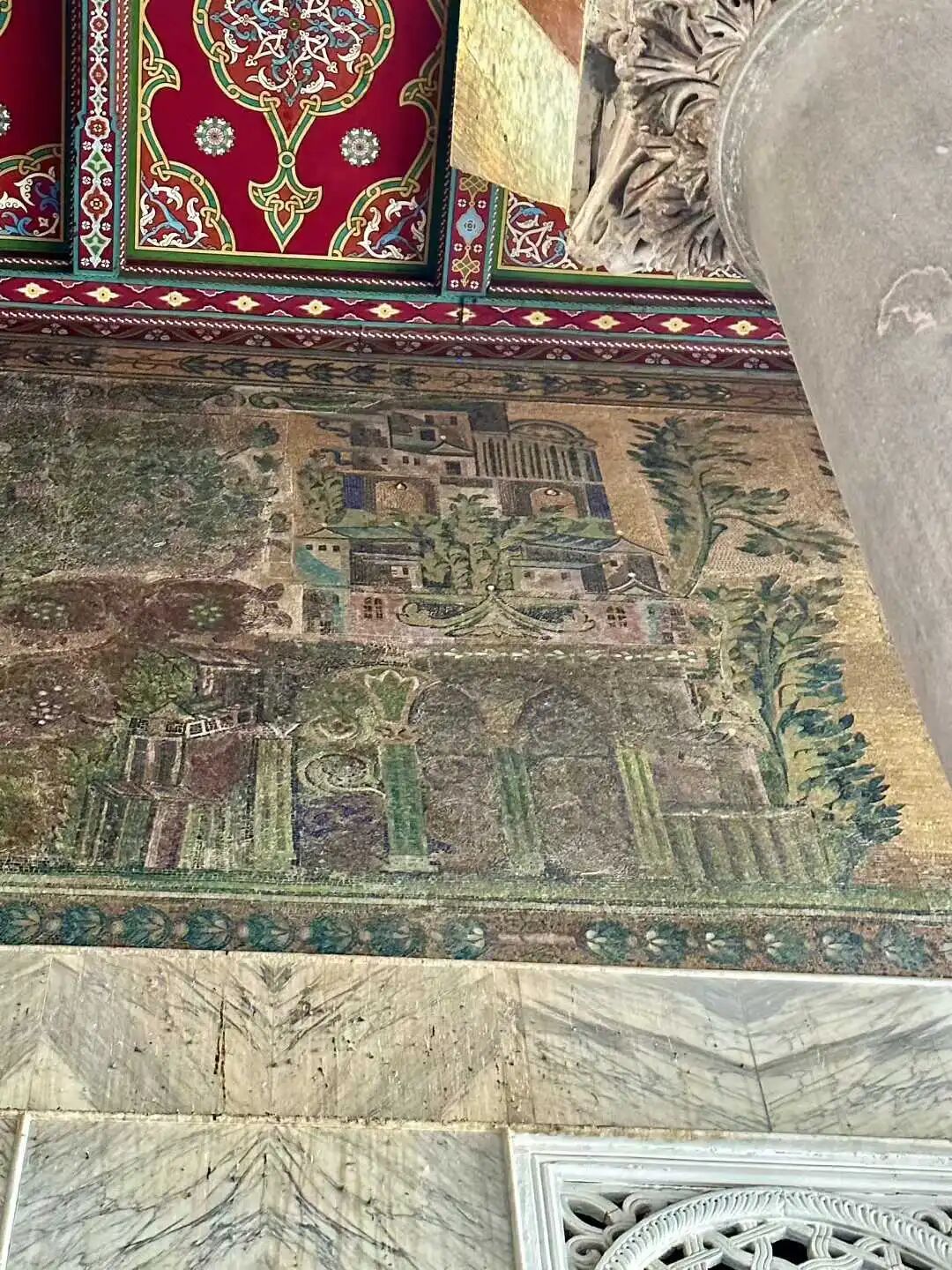
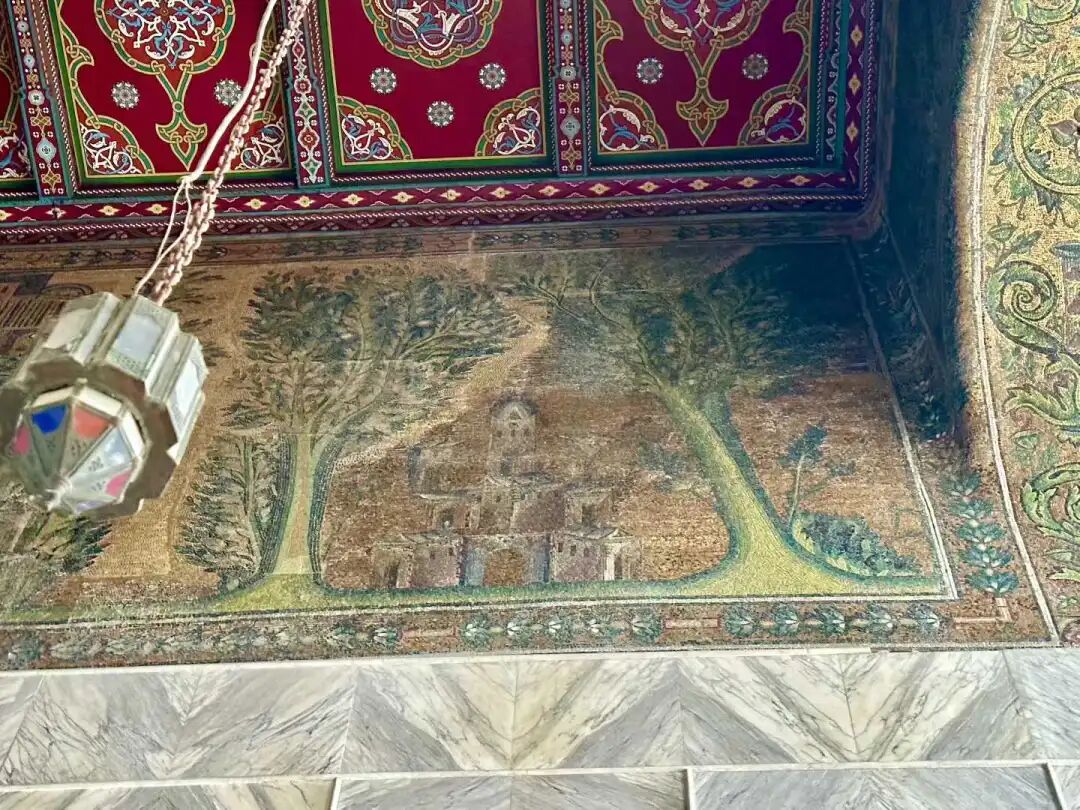
Mosaic decorations in the west portico.
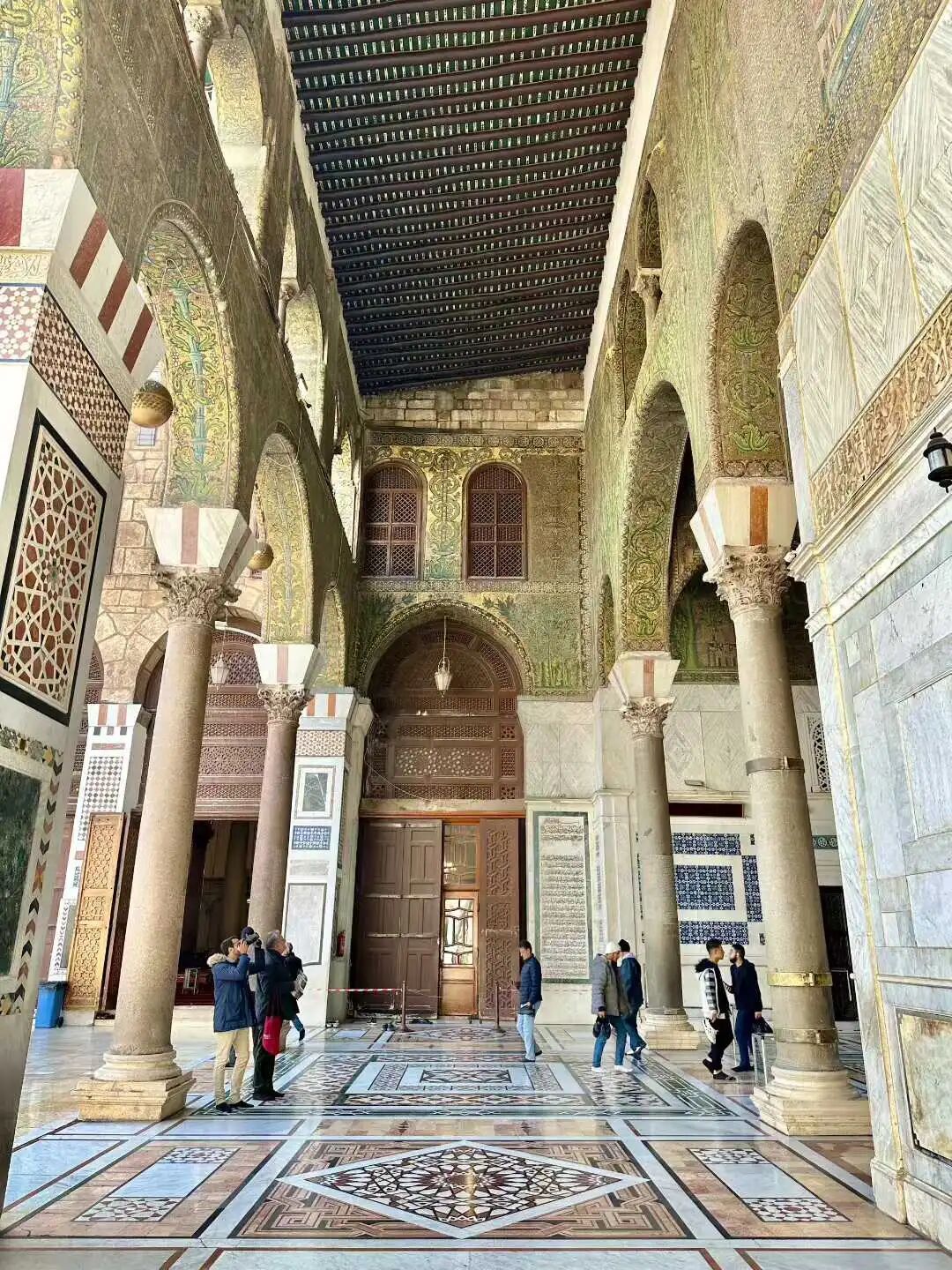
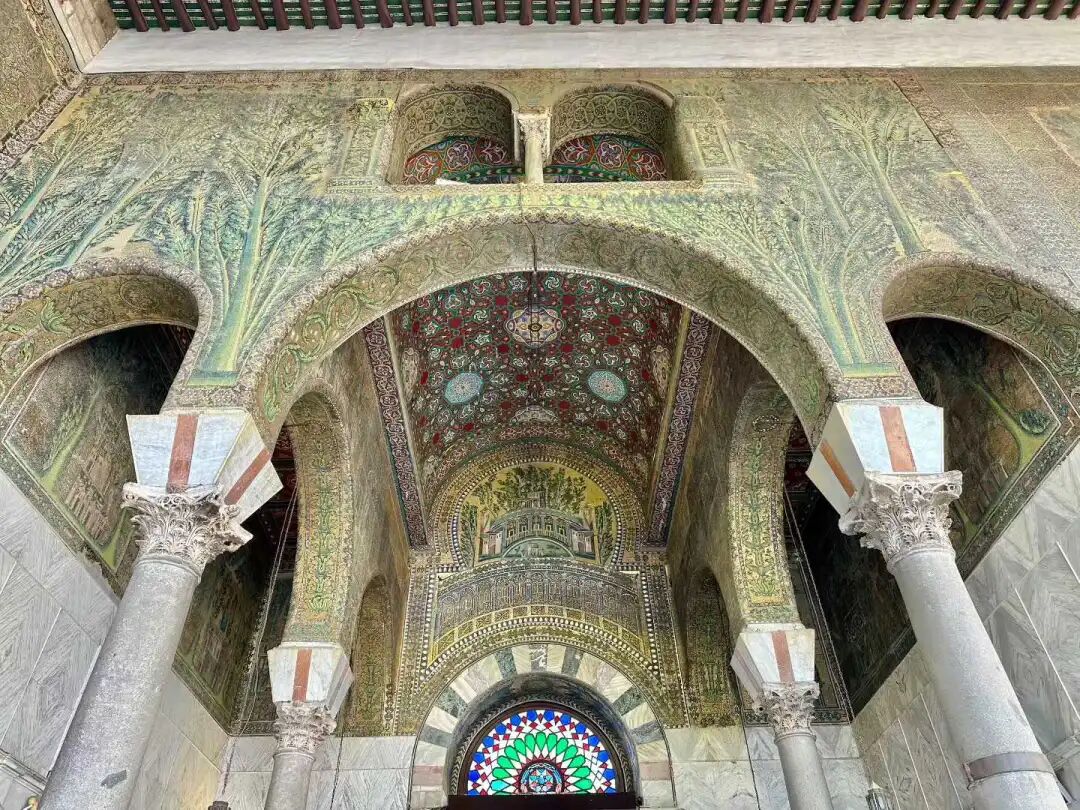
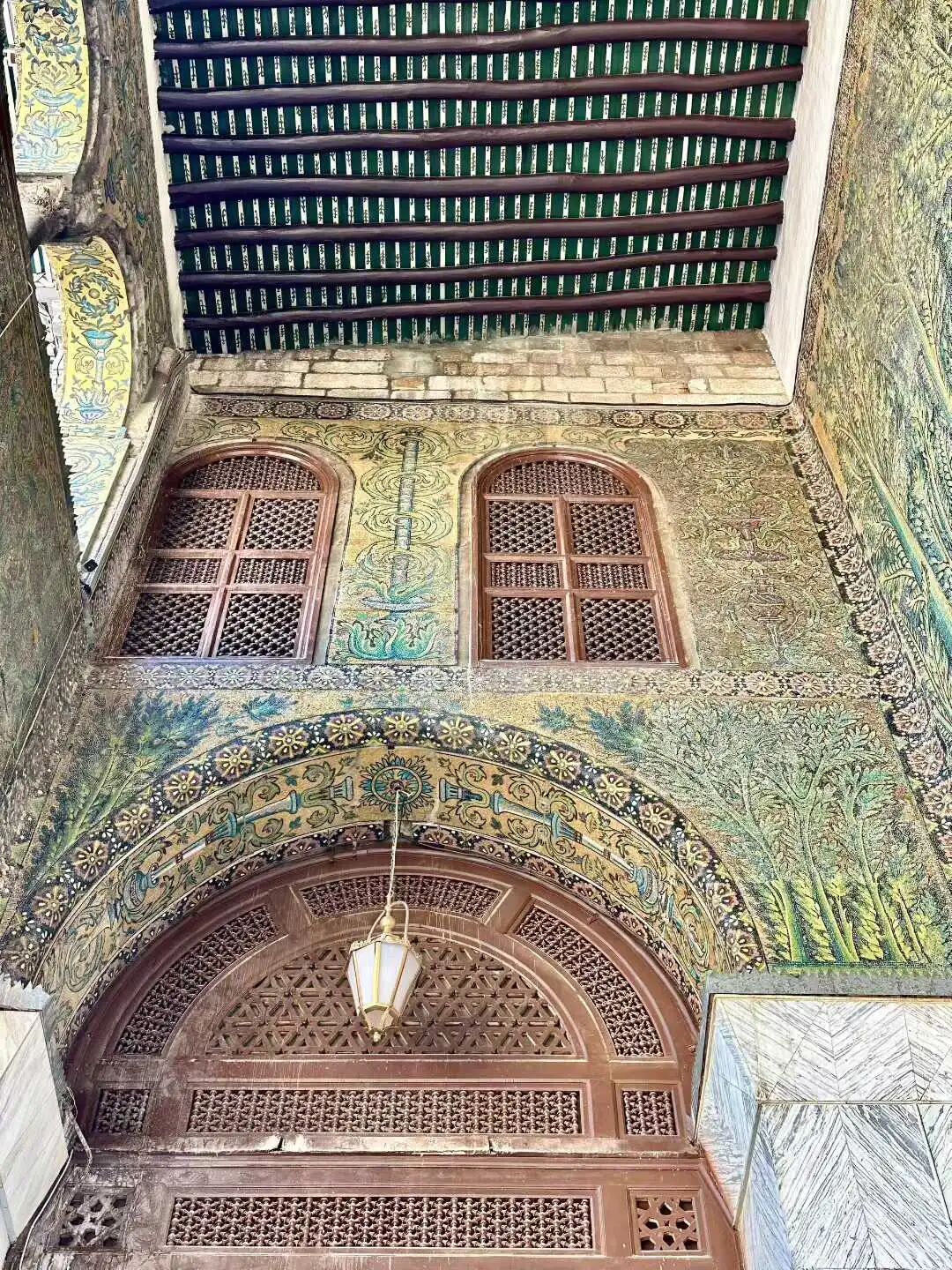
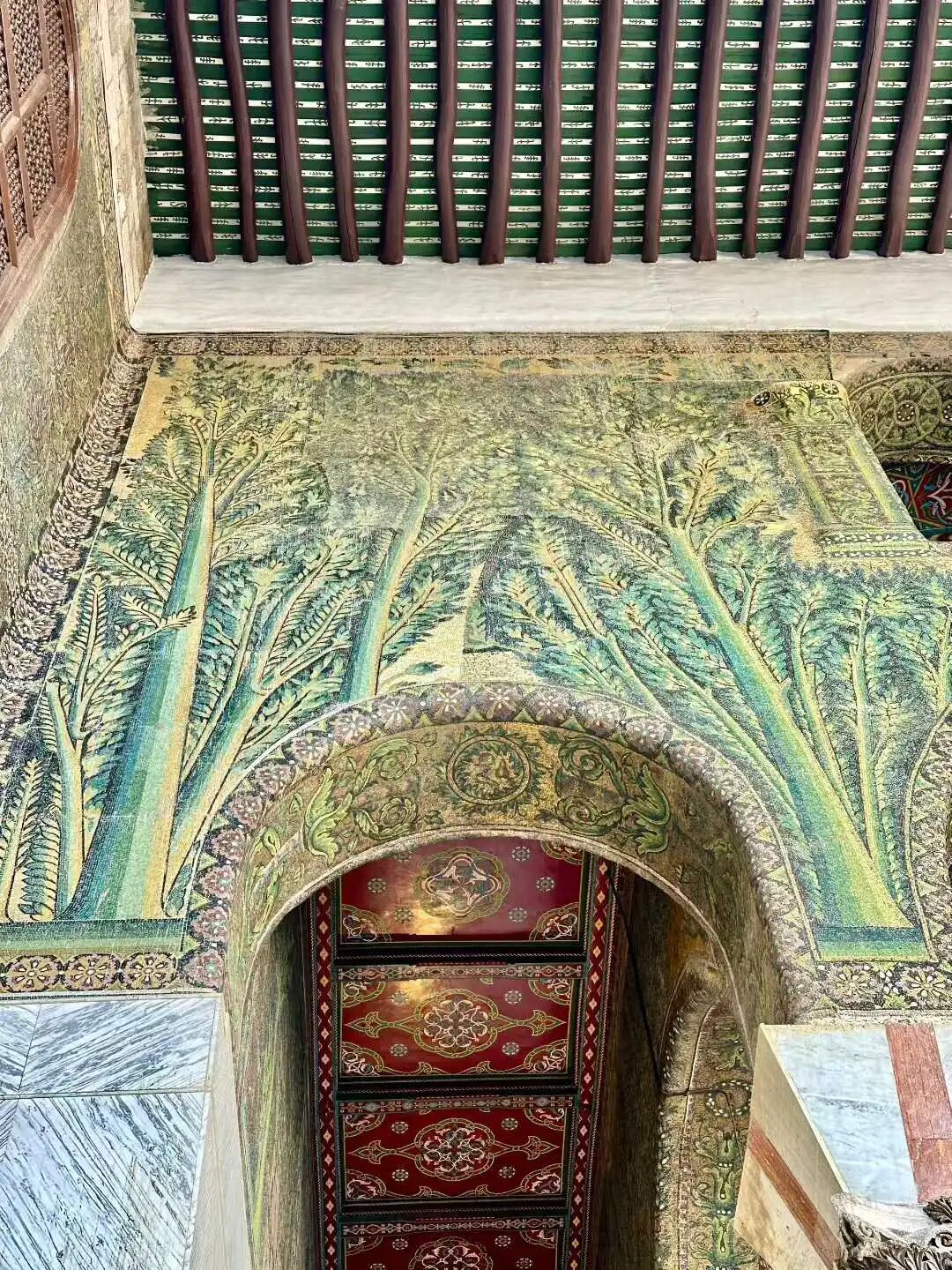
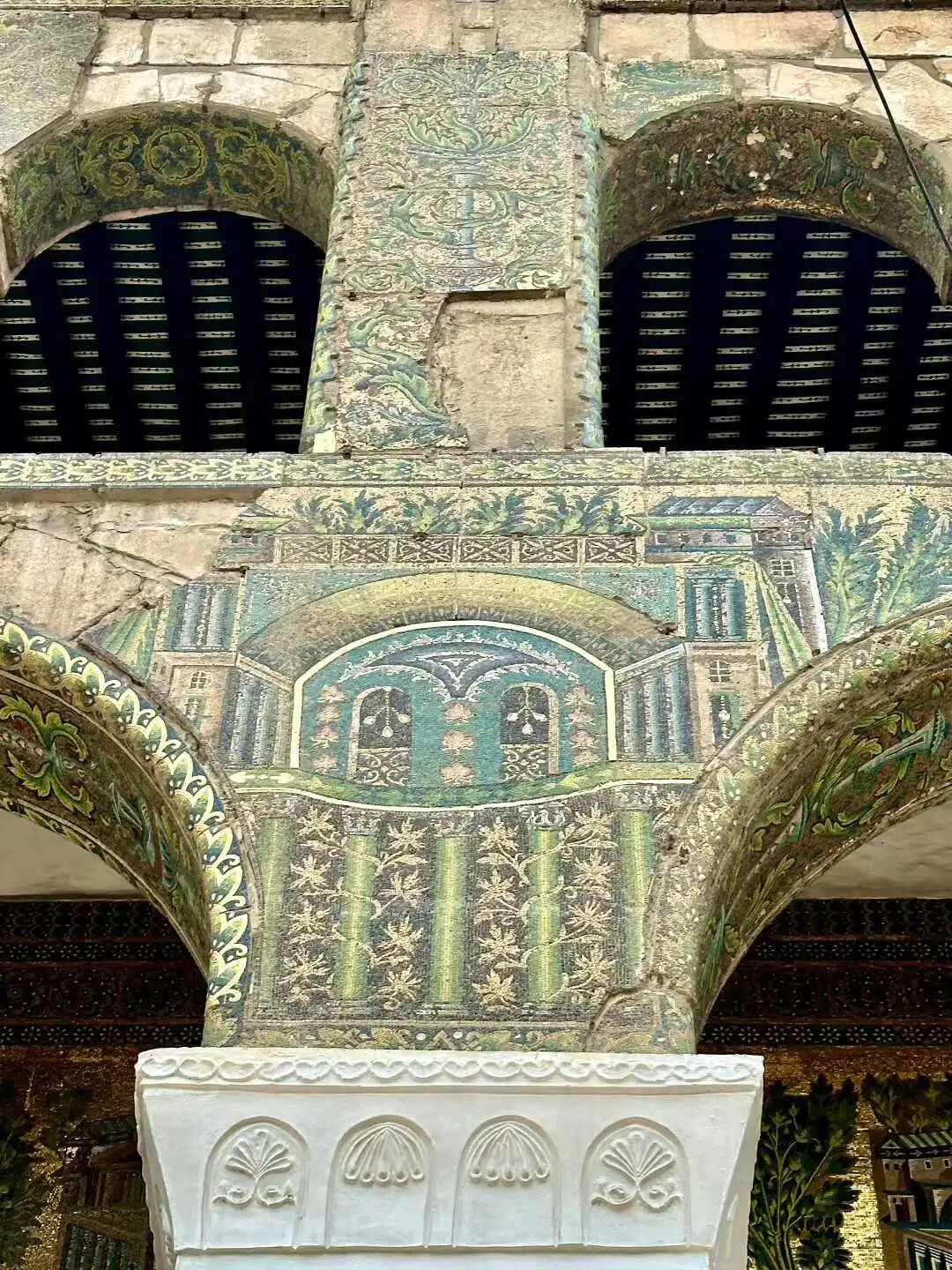
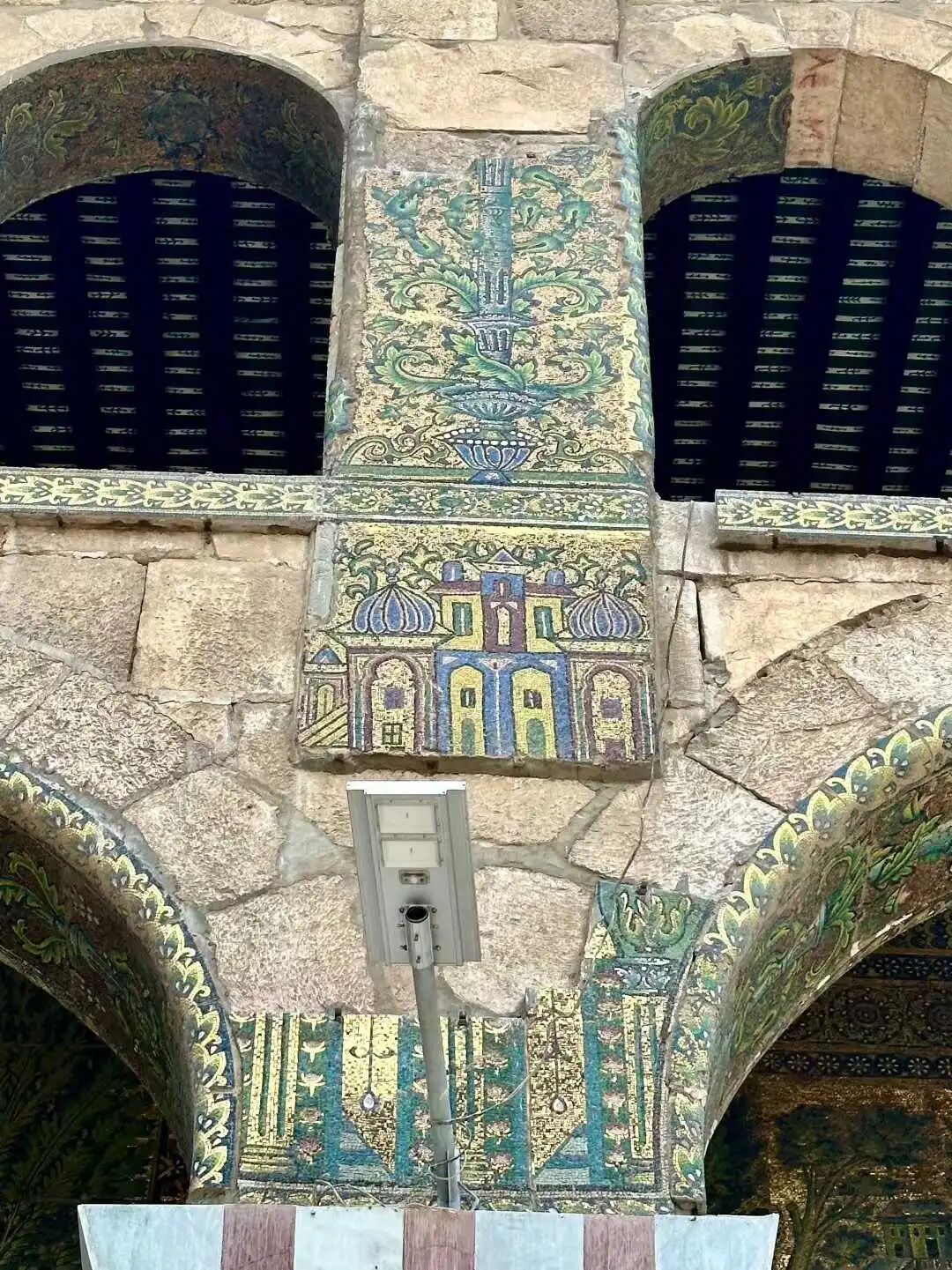
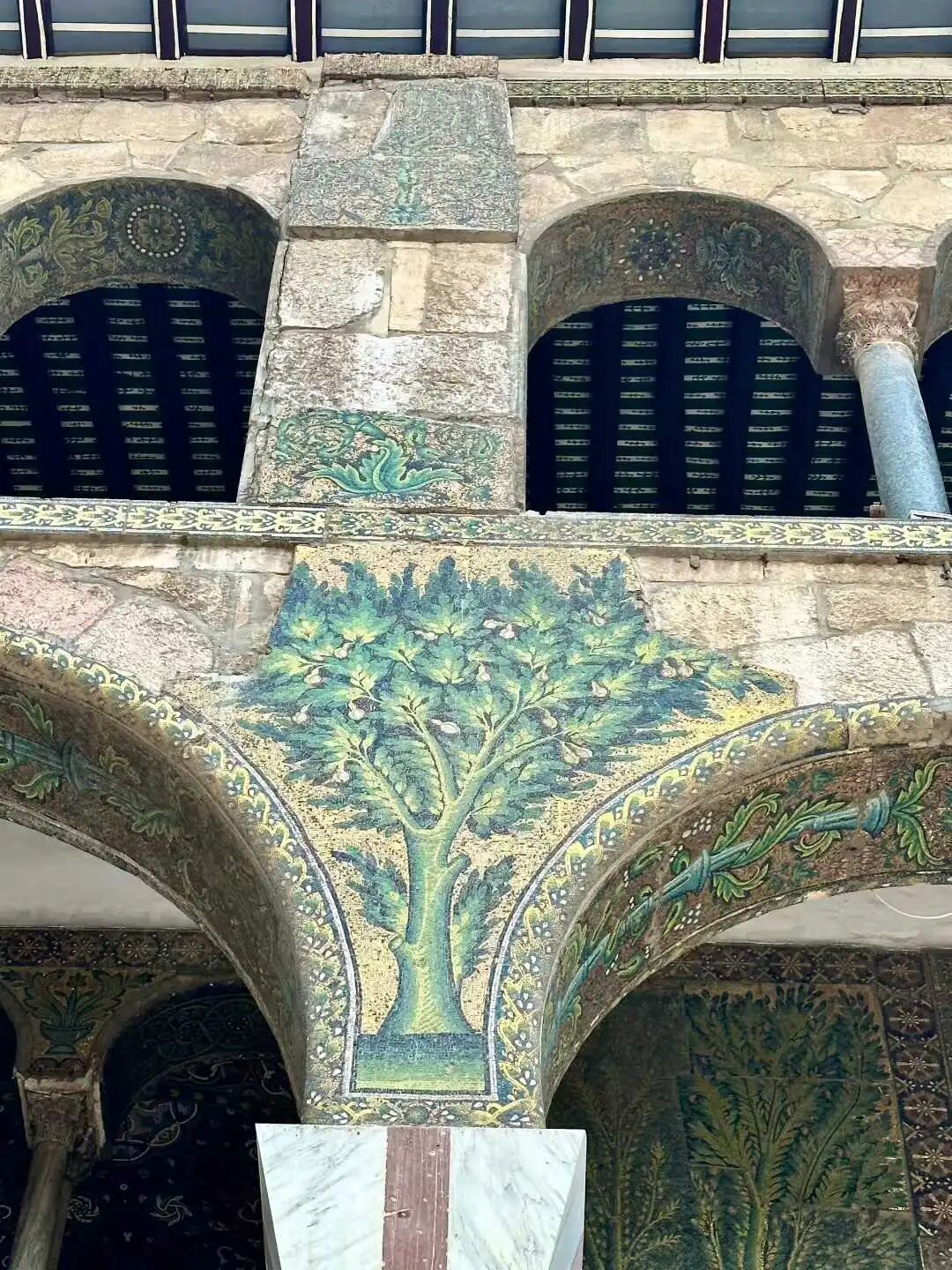
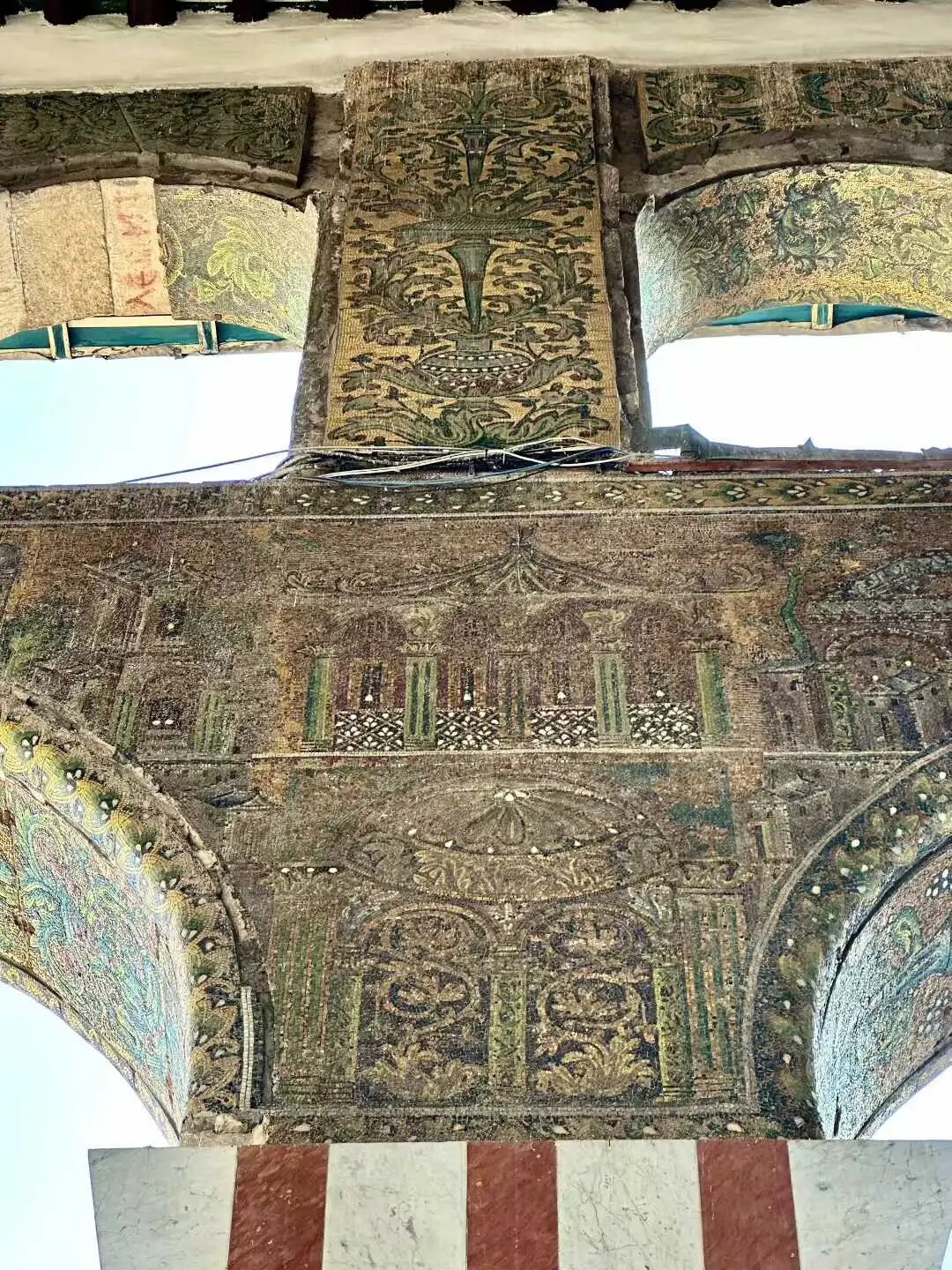
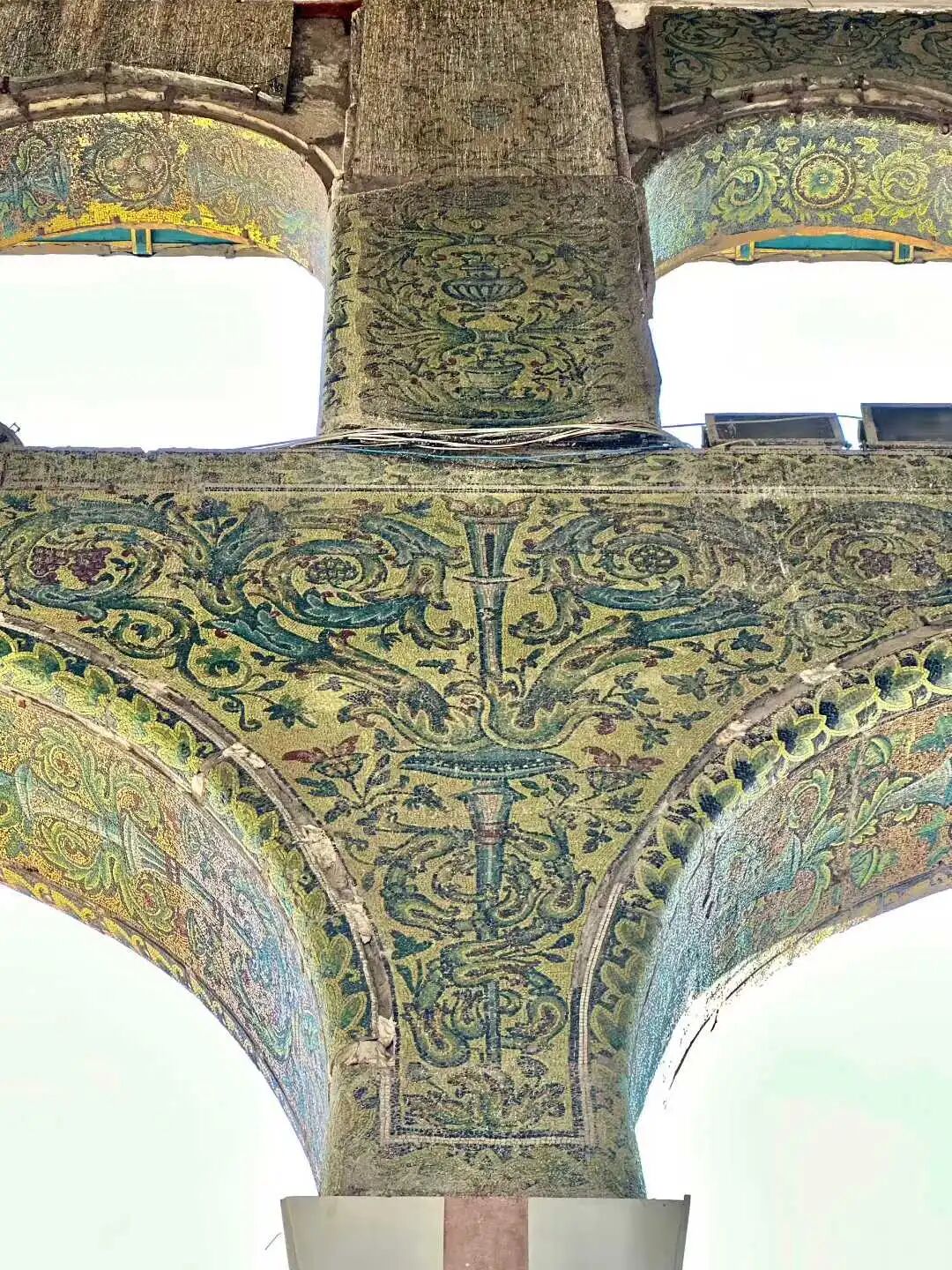
Mosaic decorations on the main entrance of the prayer hall; the dark parts are original, and the bright parts were restored later.
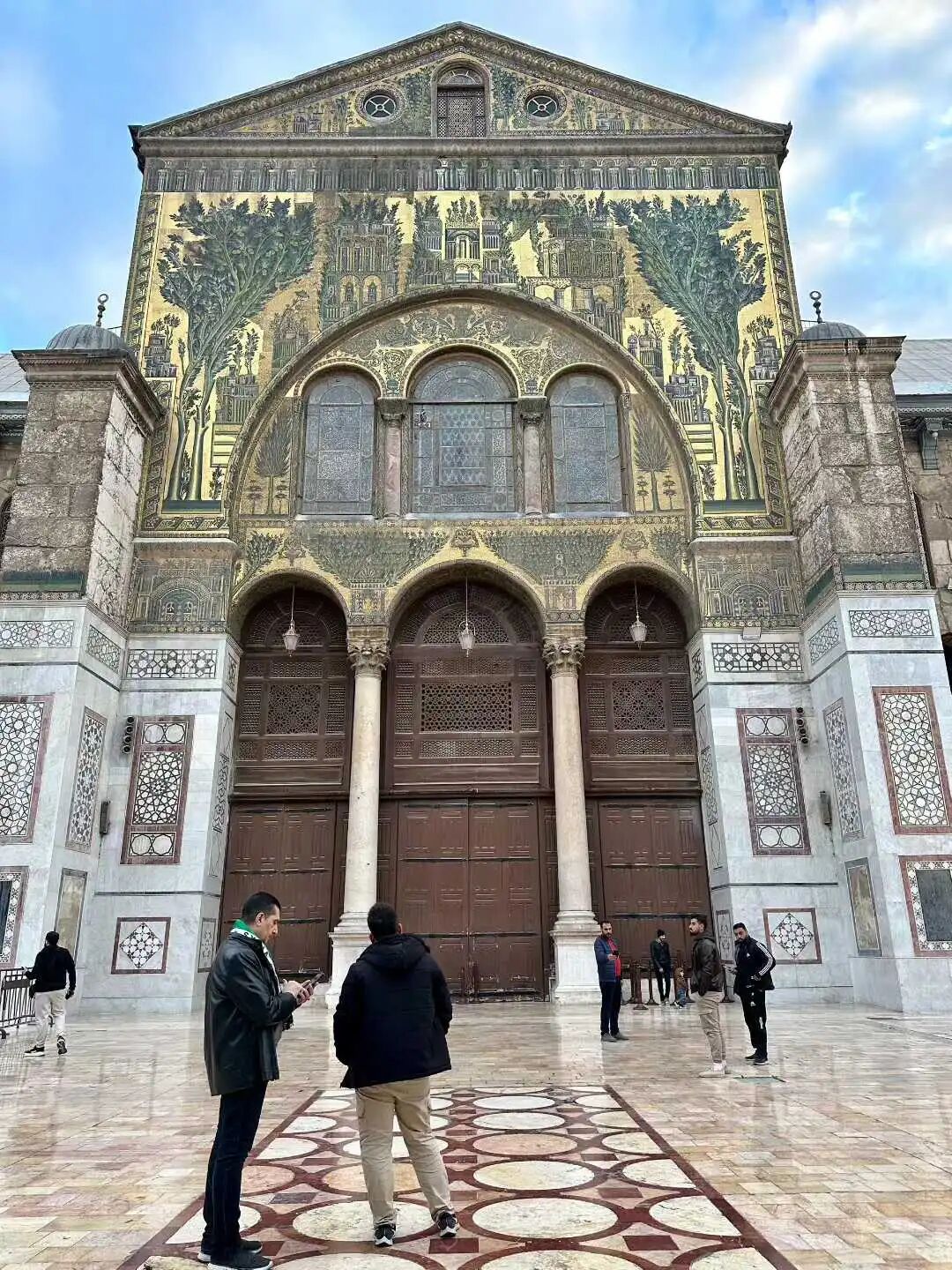
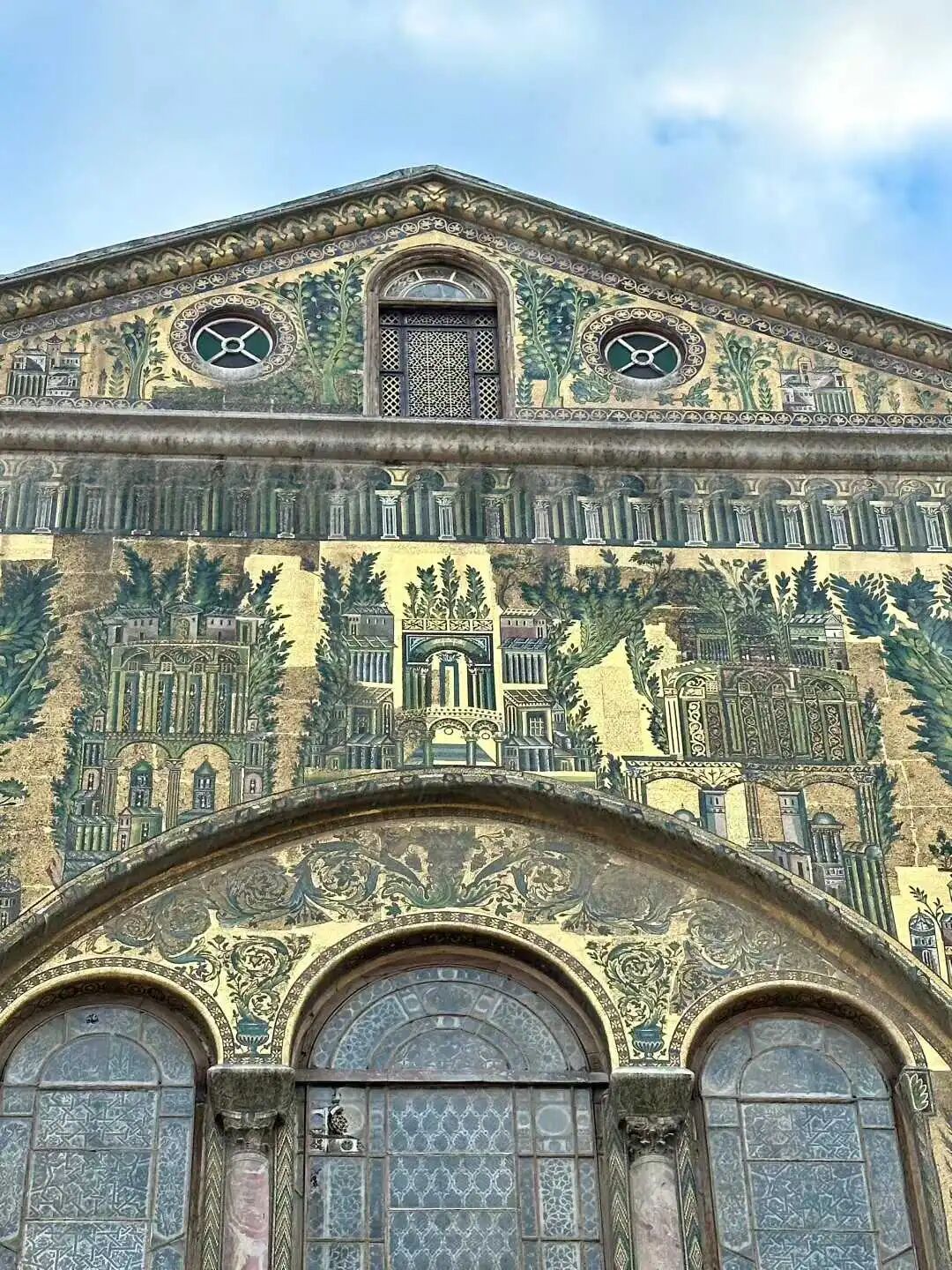
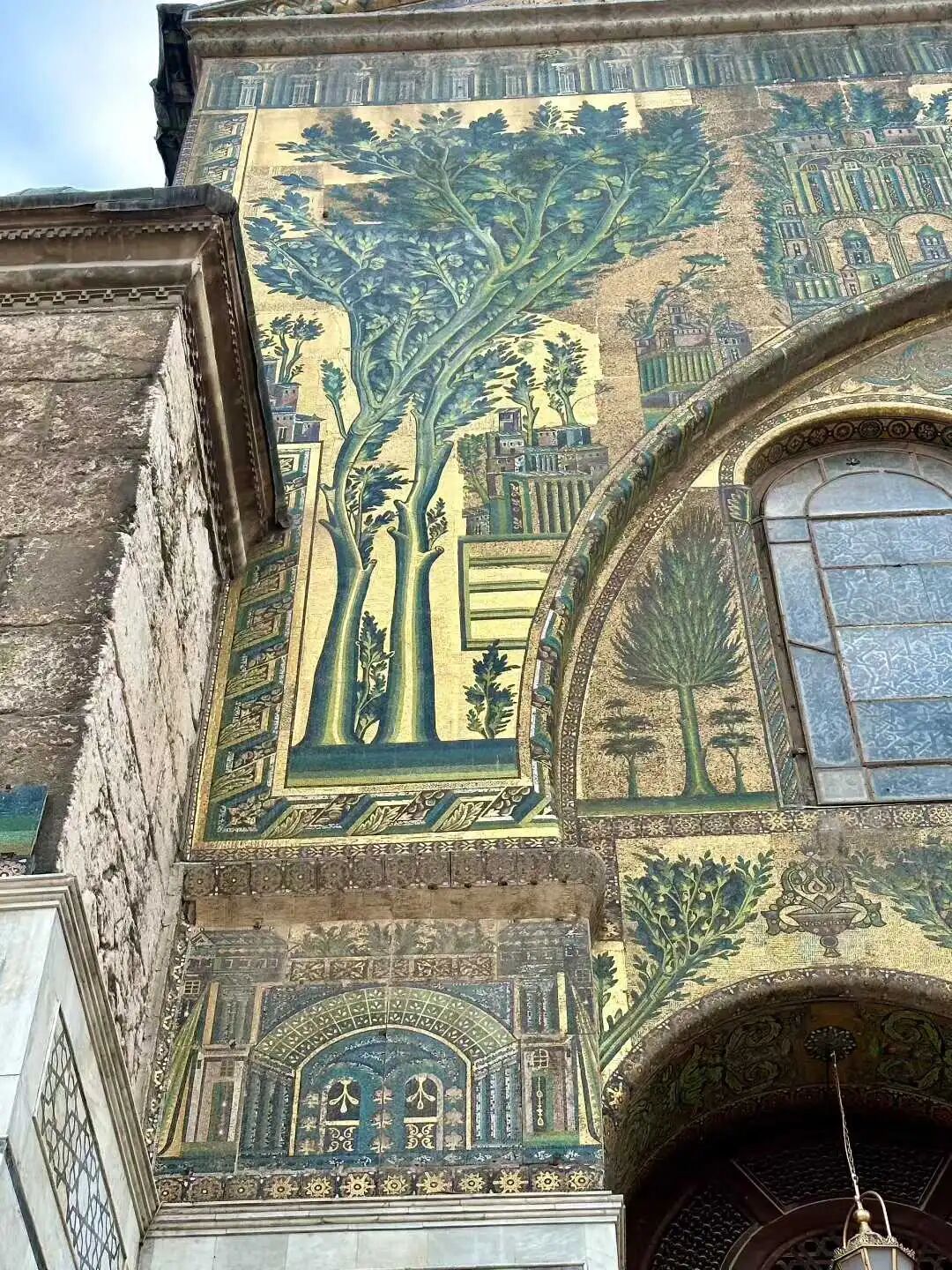
Halal Travel Guide: Damascus - Shia Holy Sites in the Old City
Articles • ali2007fr posted the article • 0 comments • 258 views • 2026-05-21 02:26
Summary: Damascus Old City contains important Shia holy sites, including Sayyidah Ruqayya Mosque near the old city's northern gate. This account keeps the source's shrine names, religious history, location details, photographs, and travel observations.
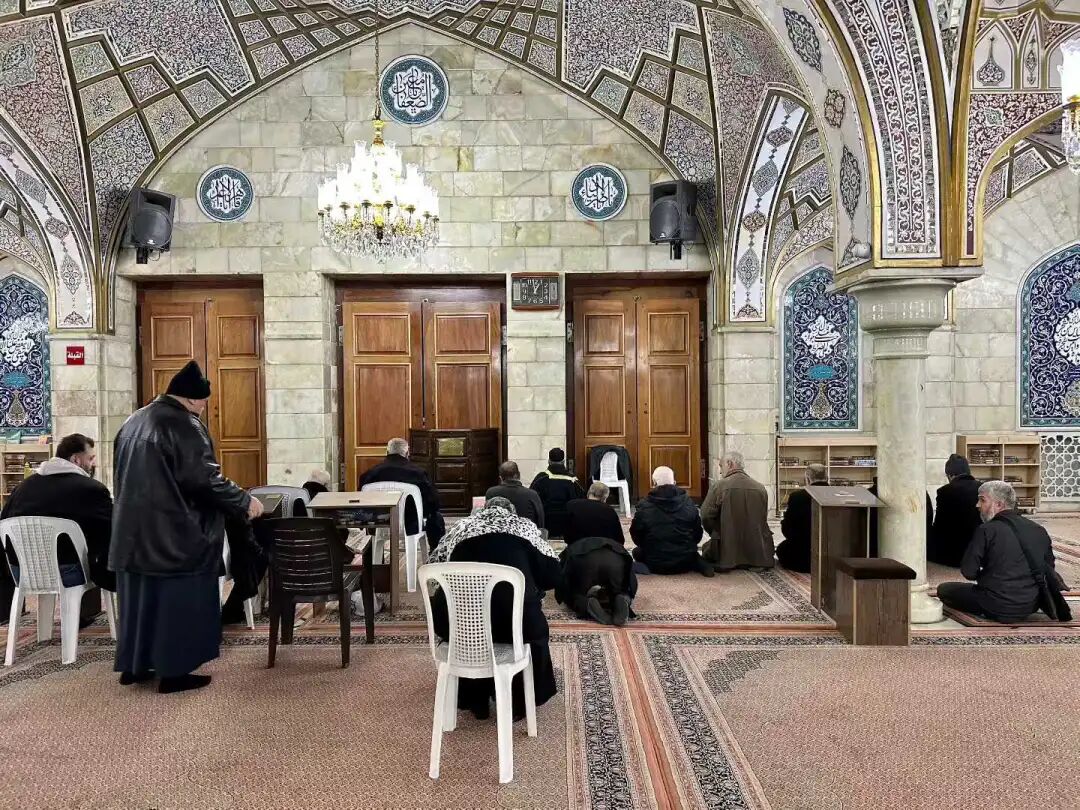
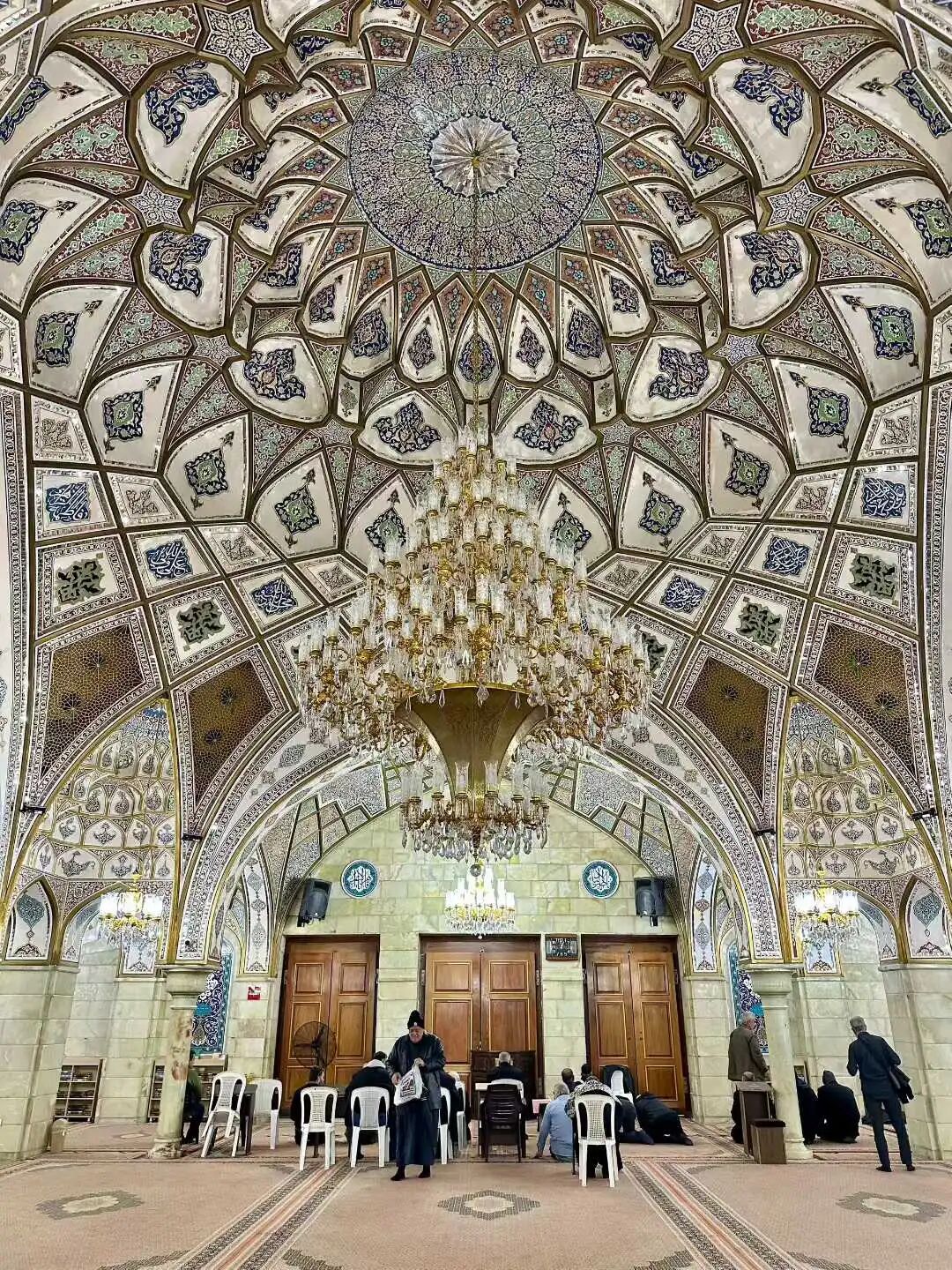
The most important Shia holy site in the old city of Damascus is the Sayyidah Ruqayya Mosque, located inside the Gate of Paradise at the north gate of the old city. People say the young daughter of Imam Hussein, Ruqayya, is buried inside. The mosque dates back to the 15th century and was rebuilt to its current size in 1985.
Ruqayya was born in 676 and was only three years old during the Battle of Karbala in 680. She was taken by the Umayyad dynasty to the capital, Damascus, and passed away shortly after arriving. Early books record that one night, a four-year-old daughter of Hussein woke up crying from a nightmare. She asked about her father, saying she had just seen him in great pain in her dream. The girl's crying woke the Umayyad Caliph Yazid I. He asked his men why she was crying and then ordered them to bring Hussein's head to the girl. The girl was terrified when she saw the head and passed away a few days later. Shia Muslims view her passing as martyrdom, which freed her from the suffering caused by the Umayyads.
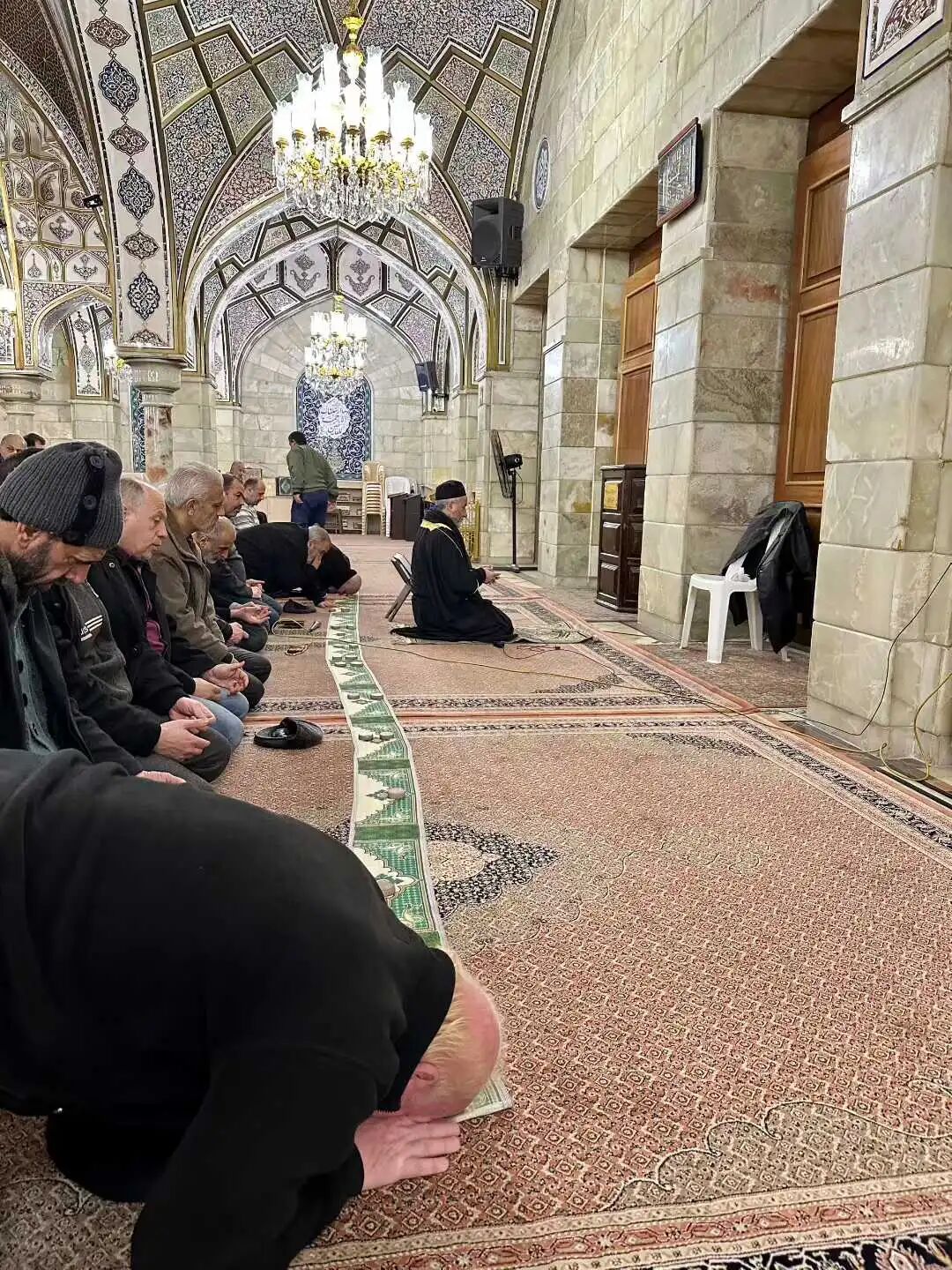
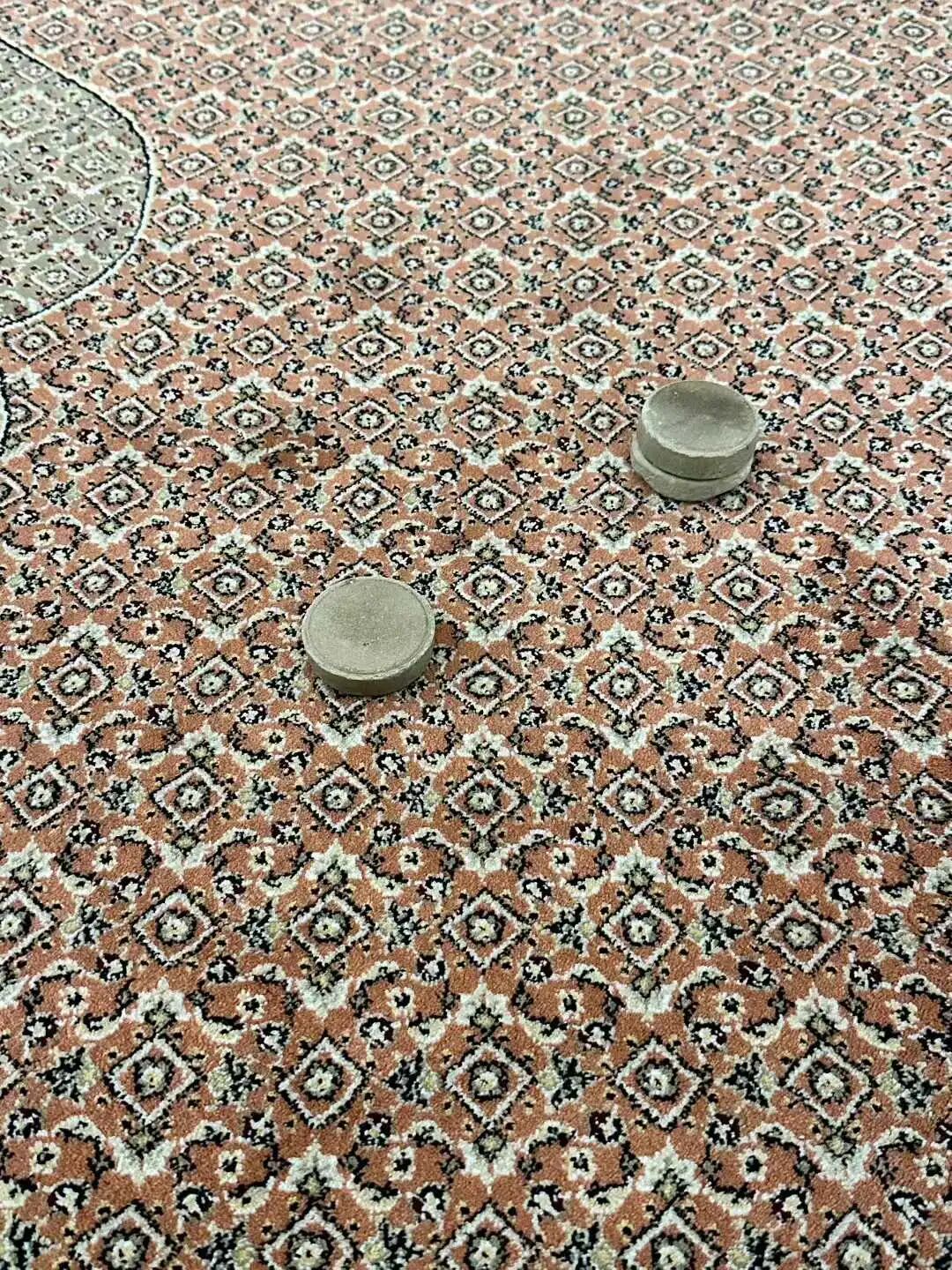
I joined a Shia congregation (jama'at) for the first time at the Sayyidah Ruqayya Mosque in Damascus. There are big differences between Shia and Sunni namaz. First, the content of the call to prayer (adhan) is different. When we stand with our hands folded, they keep their hands at their sides, and they prostrate on natural materials, usually clay tablets. They raise their hands multiple times during dua and hold their hands out to make dua. The rows are not tight, and it is fine to have some space between people. After the afternoon prayer (asr), they recite praises for a while, then stand up to call the adhan again for the sunset prayer (maghrib).
The friends (dosti) at the mosque were very tolerant of me. They were not unfriendly because I am Sunni and all greeted me with smiles. Because Assad has close ties with Iran, the new government has banned Iranians from entering Syria, so the number of Shia friends visiting here has dropped significantly. When the new government first took power, many Syrian Shia fled their homes for fear of being accused of colluding with Iran. Many have returned now that the government has provided guarantees. The Sayyidah Ruqayya Mosque is currently operating normally. Aside from a security post at the entrance, everything else is normal.
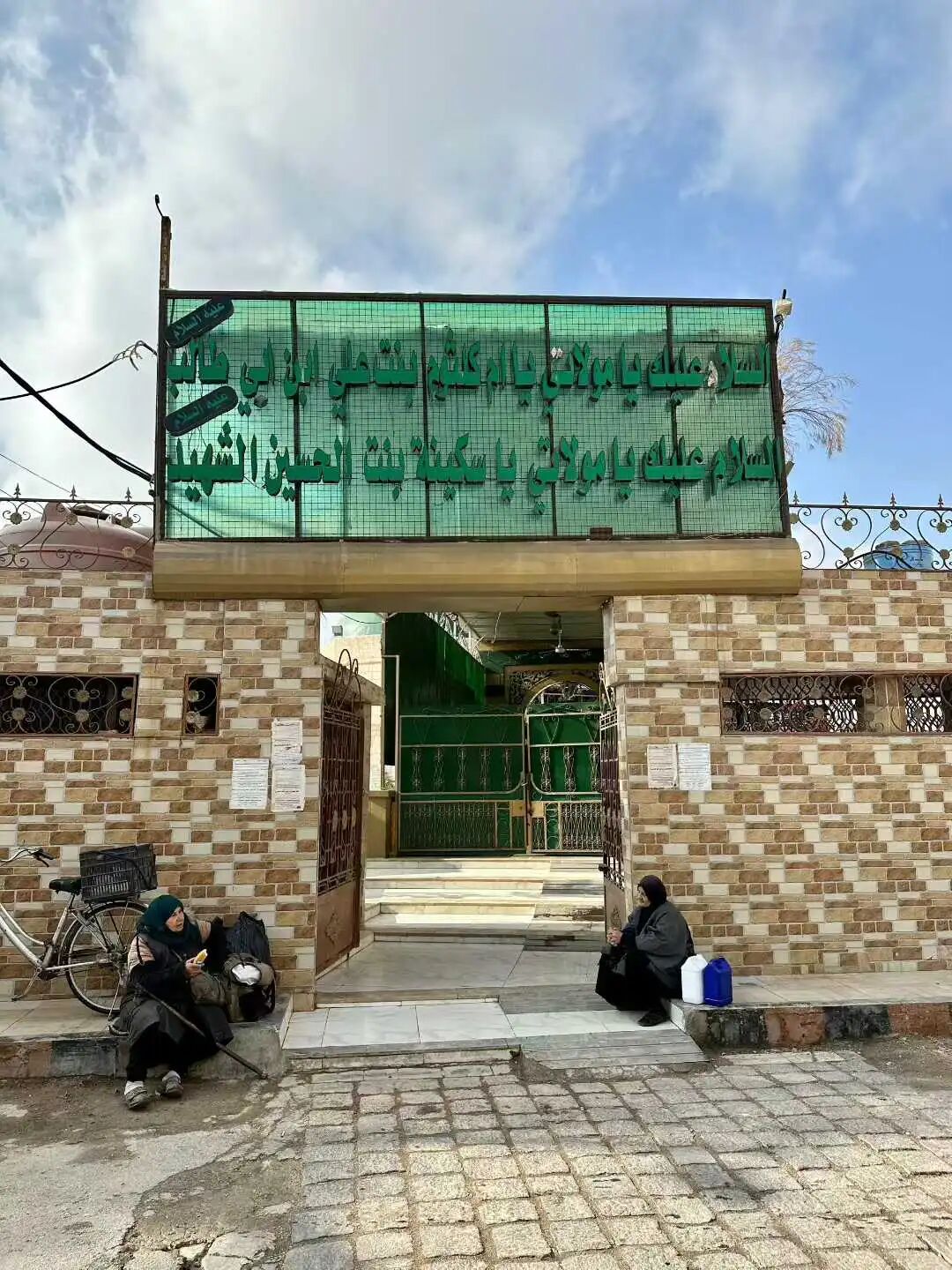
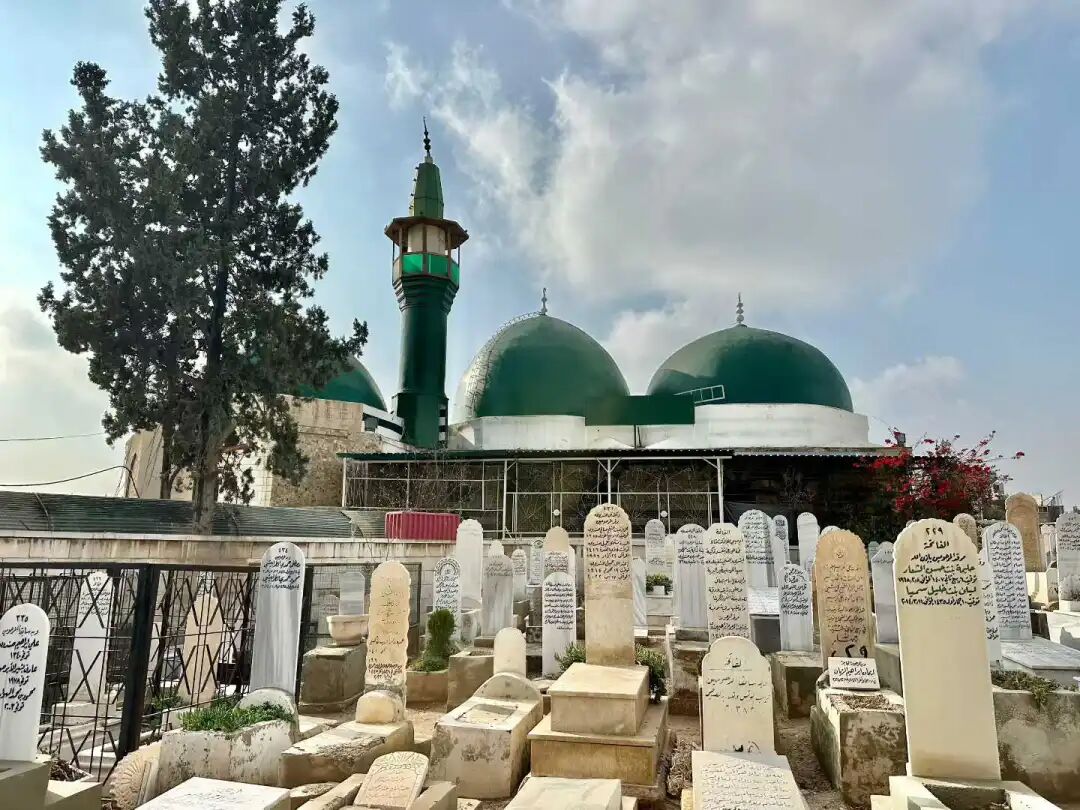
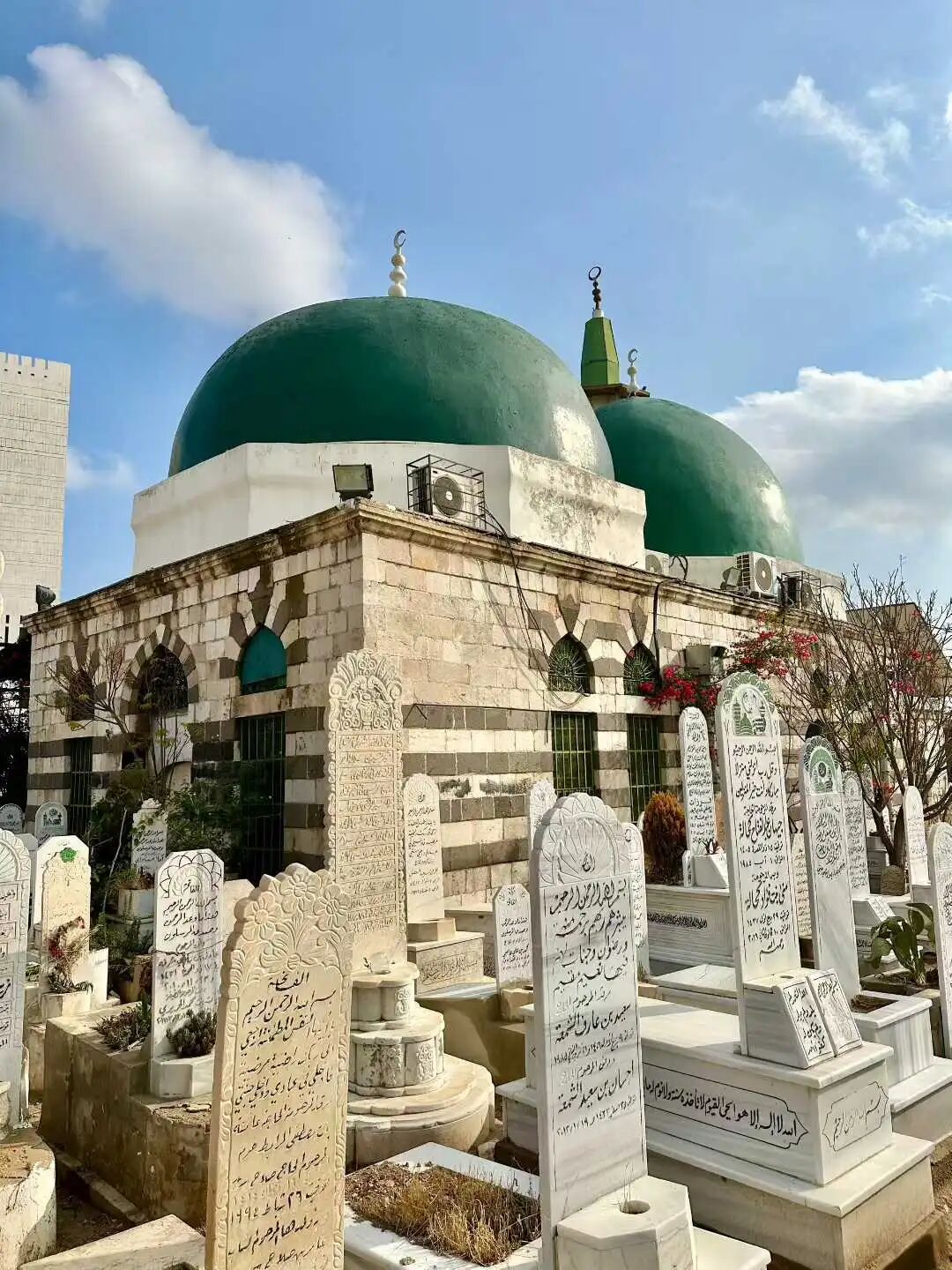
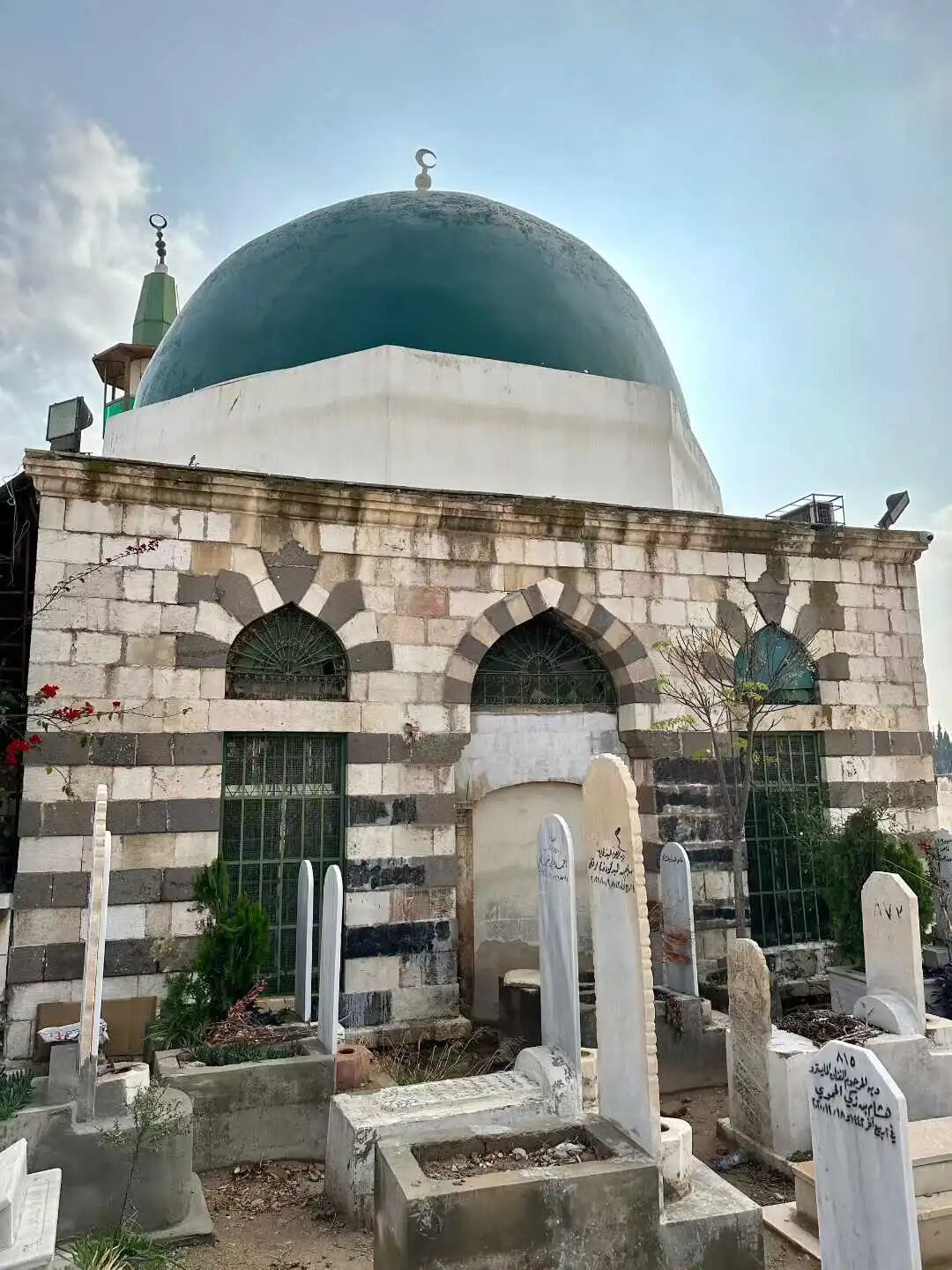
Another Shia holy site in the old city of Damascus is the tomb of Sakina bint Al Hussein and Umm Kulthum bint Ali, located inside the Bab al-Saghir cemetery in the south. Unfortunately, the tomb was closed when I arrived after Friday prayer (Jumu'ah), so I could not go inside.
Sakina was another daughter of Imam Hussein. She was taken to Damascus and imprisoned after the Battle of Karbala in 680. In Shia ceremonies commemorating the Battle of Karbala, Sakina is usually the one who tells the story of the battle. People perform scenes of Sakina jumping in front of her father's horse to spend the last few seconds with him before he is killed. Sakina was later released and returned to Medina. Early historical records describe her as beautiful, generous, and humble, and she was known for her eloquence and poetry. Sakina has tombs in Medina, Damascus, and Cairo, but people generally believe she is buried in Medina, while the tombs in Damascus and Cairo represent the longing people have for her.
Umm Kulthum was the youngest daughter of Imam Ali and Lady Fatimah. After the Battle of Karbala in 680, she was taken prisoner to Damascus. Once released, she returned to Medina and became a narrator of Shia hadith. There are two different accounts regarding the location of her tomb, with some saying it is in Medina and others saying it is in Damascus. view all
Summary: Damascus Old City contains important Shia holy sites, including Sayyidah Ruqayya Mosque near the old city's northern gate. This account keeps the source's shrine names, religious history, location details, photographs, and travel observations.
The most important Shia holy site in the old city of Damascus is the Sayyidah Ruqayya Mosque, located inside the Gate of Paradise at the north gate of the old city. People say the young daughter of Imam Hussein, Ruqayya, is buried inside. The mosque dates back to the 15th century and was rebuilt to its current size in 1985.
Ruqayya was born in 676 and was only three years old during the Battle of Karbala in 680. She was taken by the Umayyad dynasty to the capital, Damascus, and passed away shortly after arriving. Early books record that one night, a four-year-old daughter of Hussein woke up crying from a nightmare. She asked about her father, saying she had just seen him in great pain in her dream. The girl's crying woke the Umayyad Caliph Yazid I. He asked his men why she was crying and then ordered them to bring Hussein's head to the girl. The girl was terrified when she saw the head and passed away a few days later. Shia Muslims view her passing as martyrdom, which freed her from the suffering caused by the Umayyads.
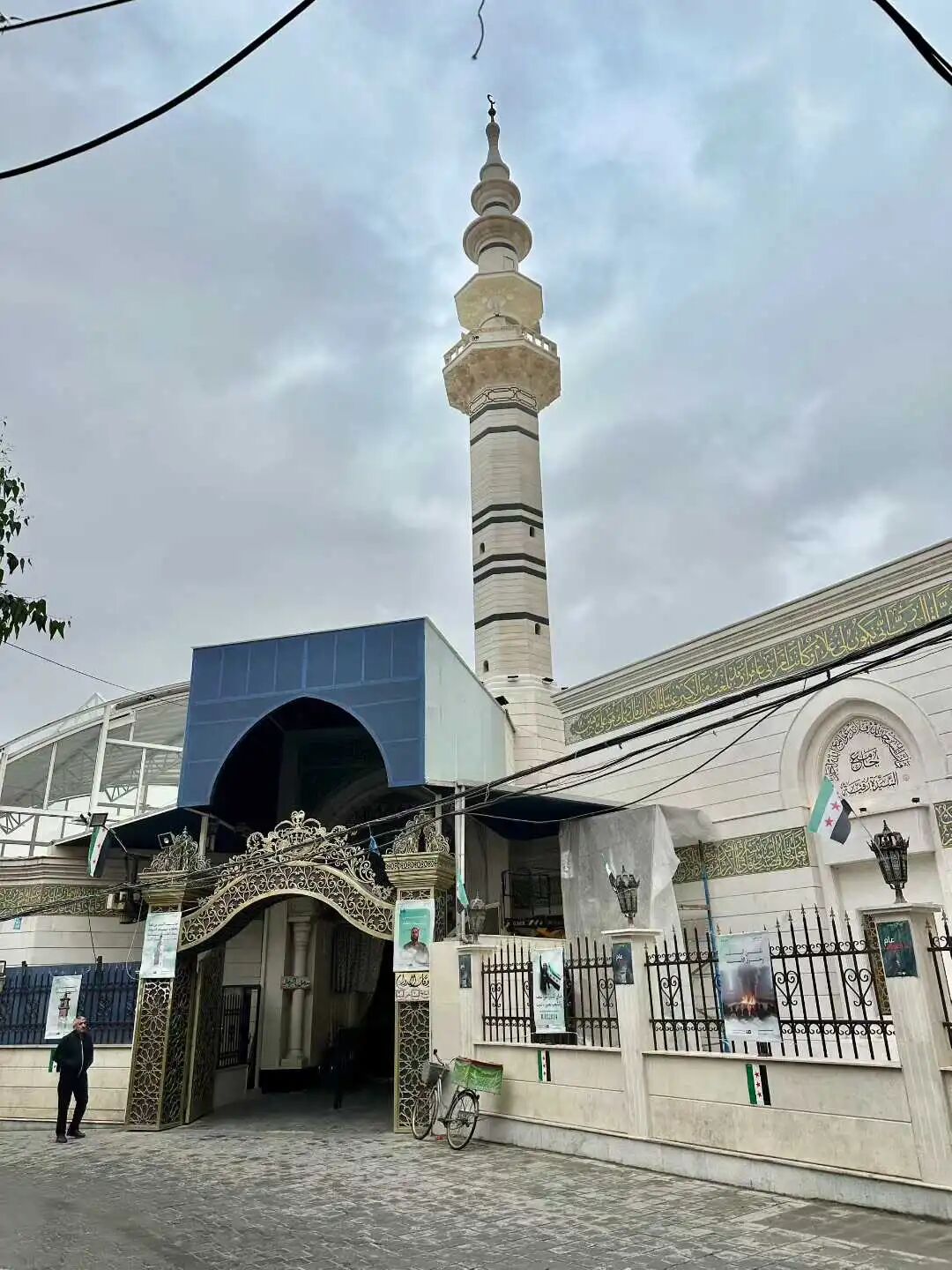
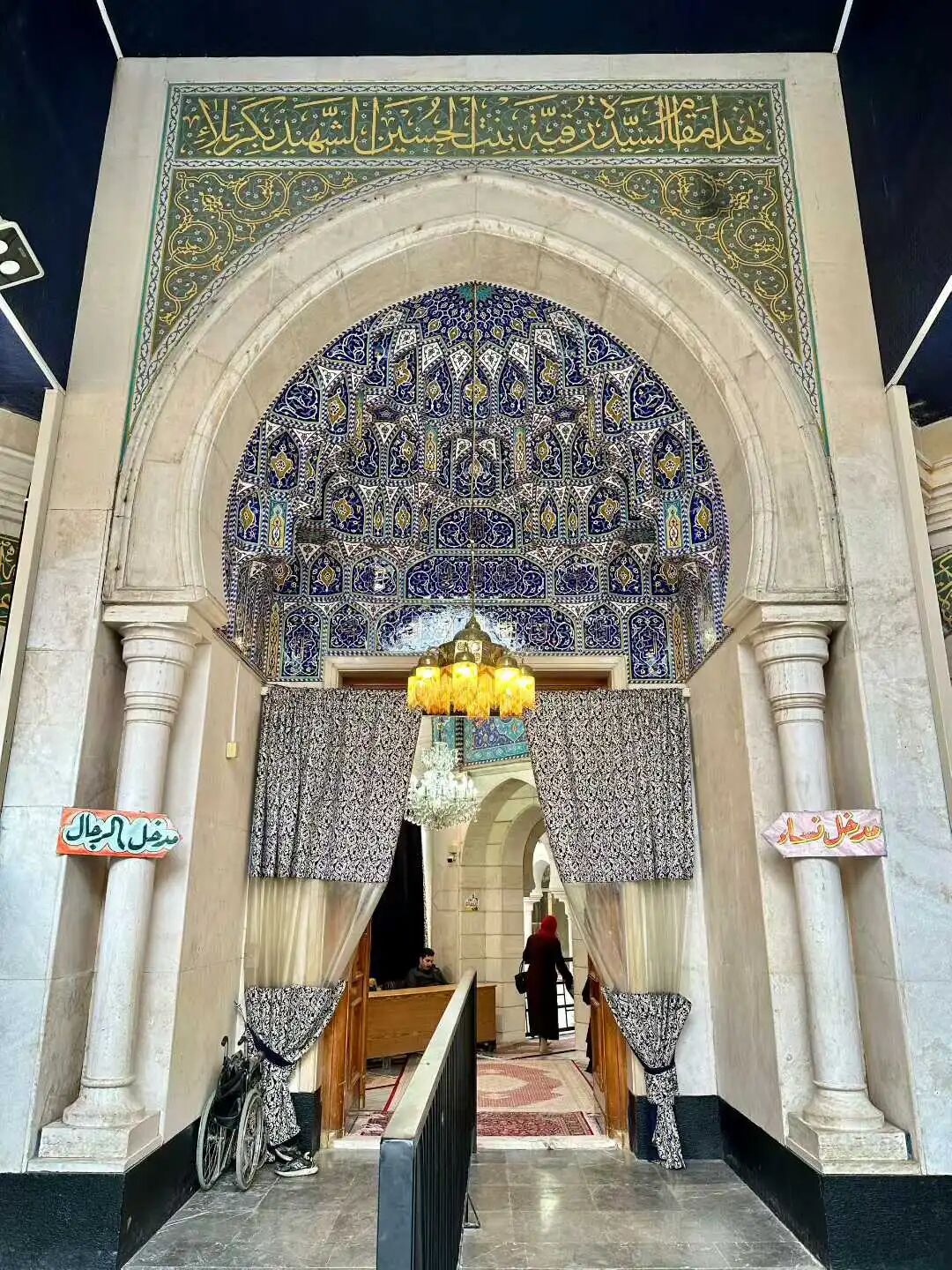
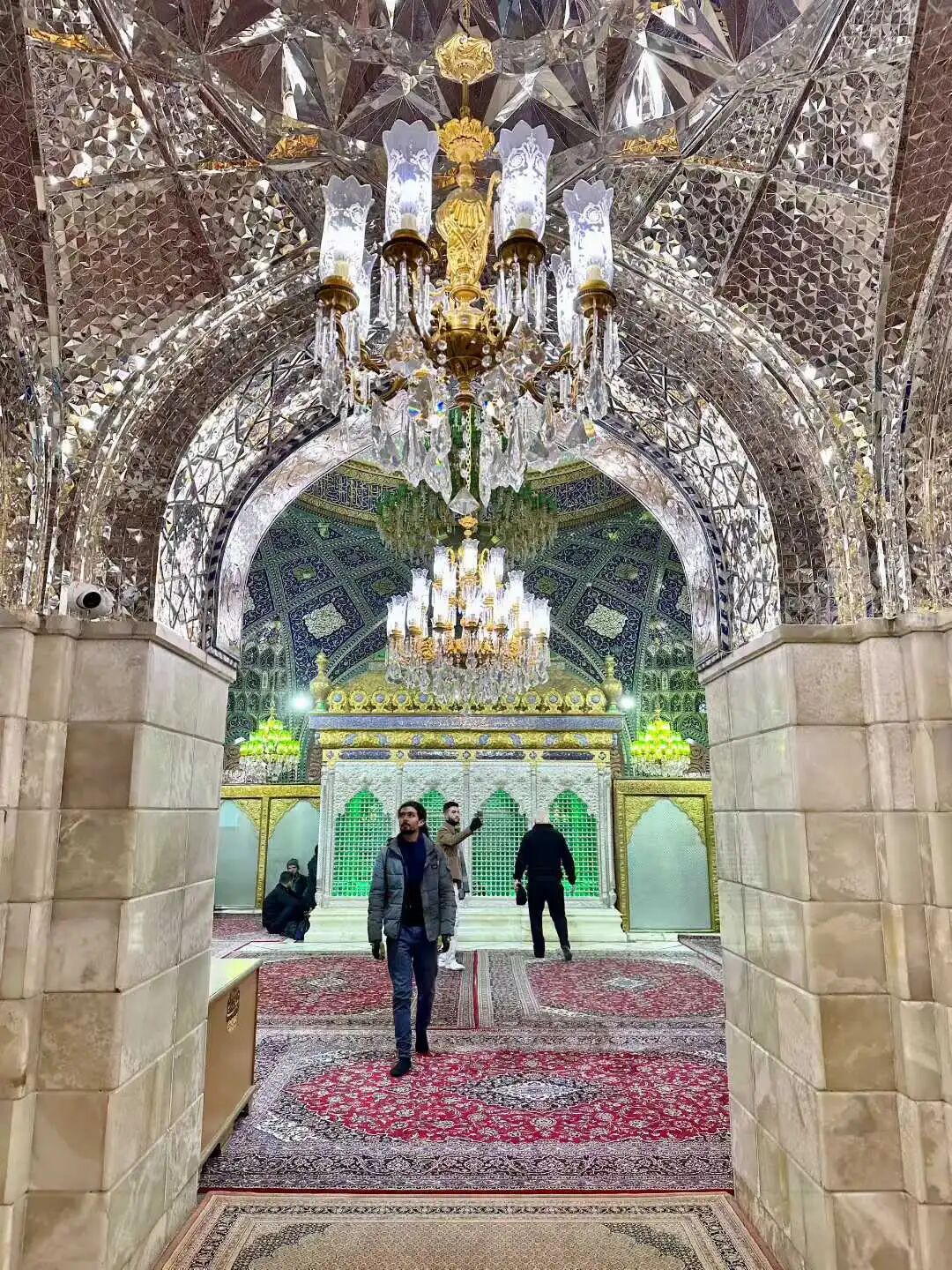
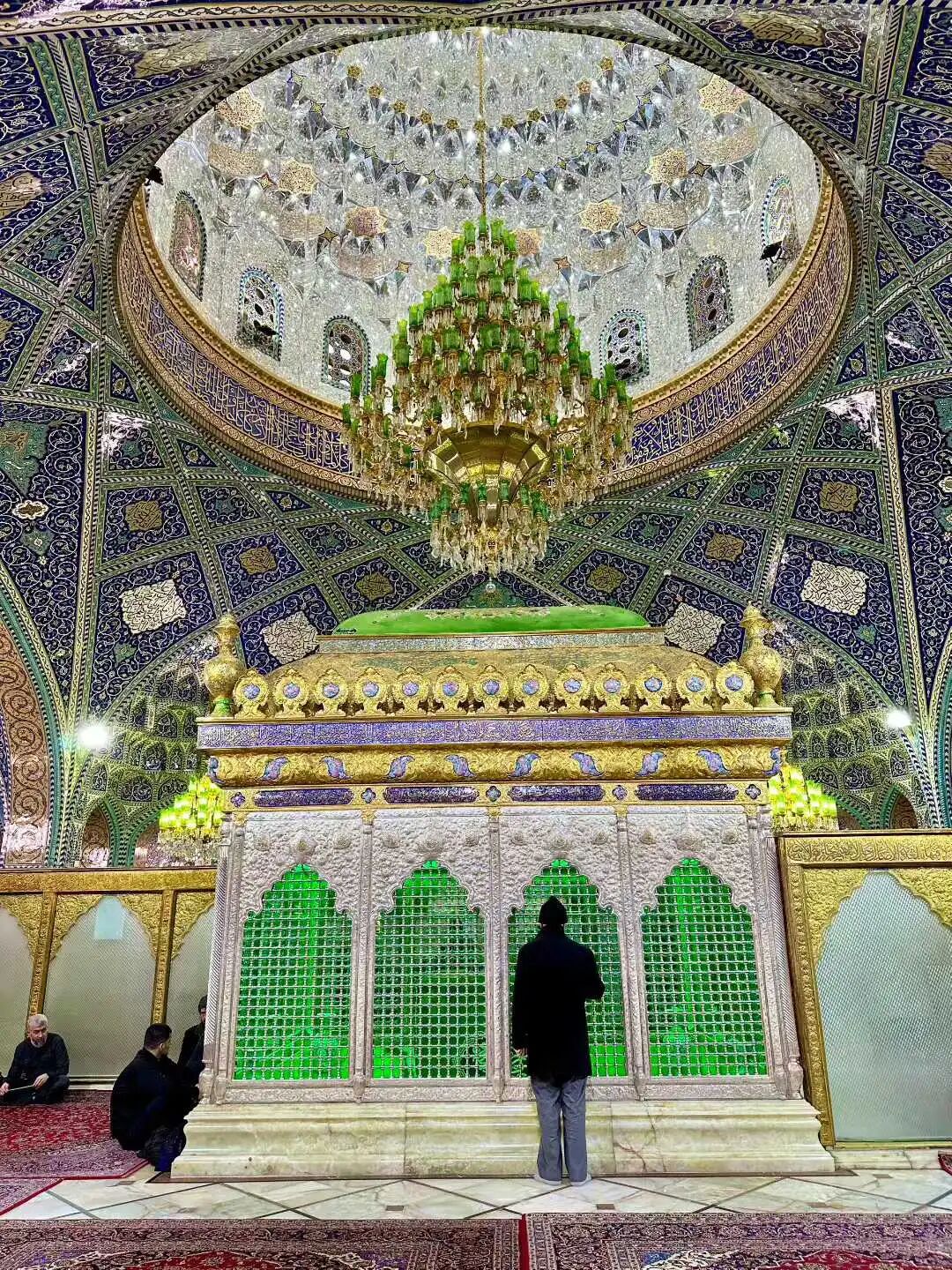
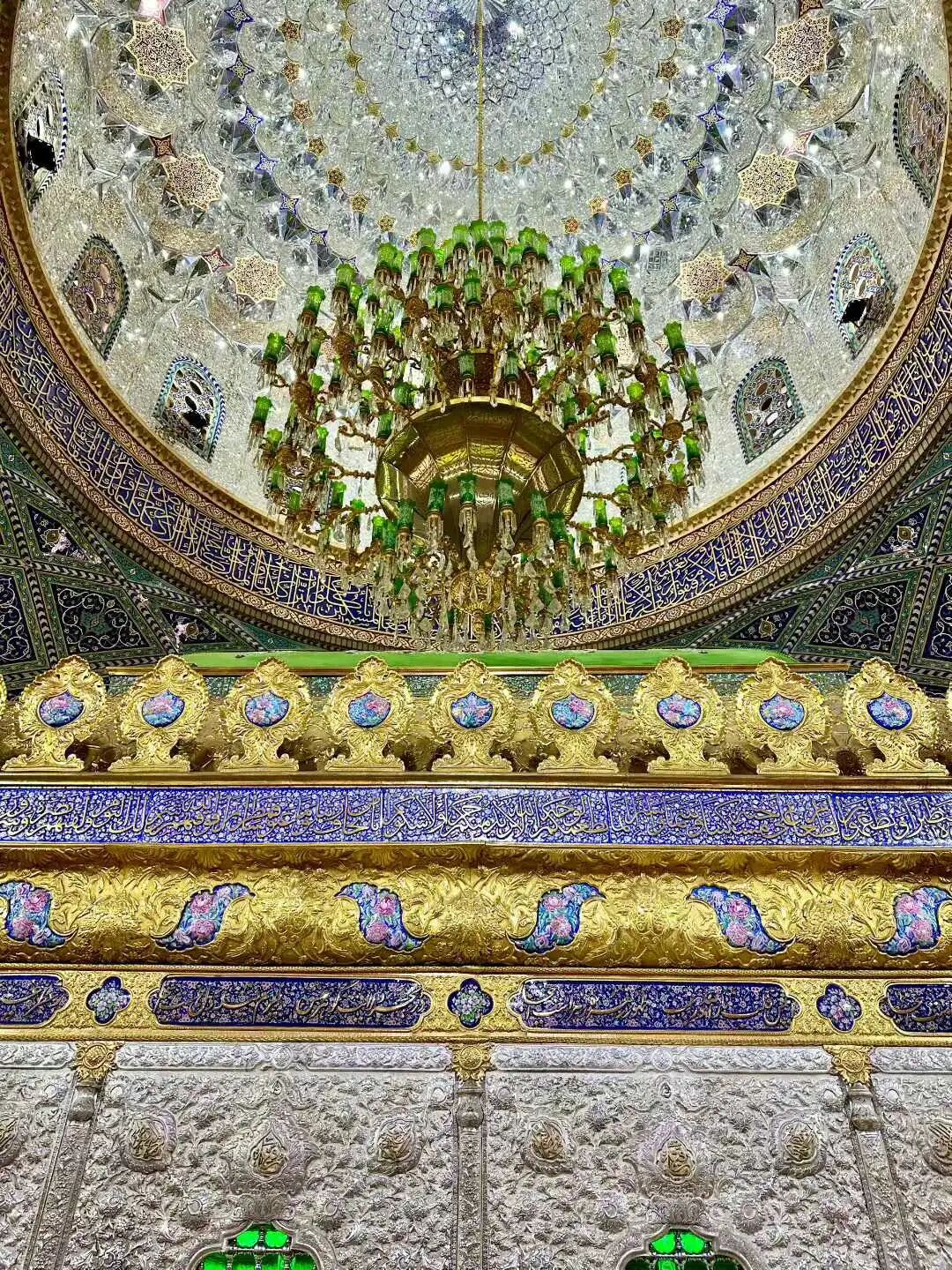
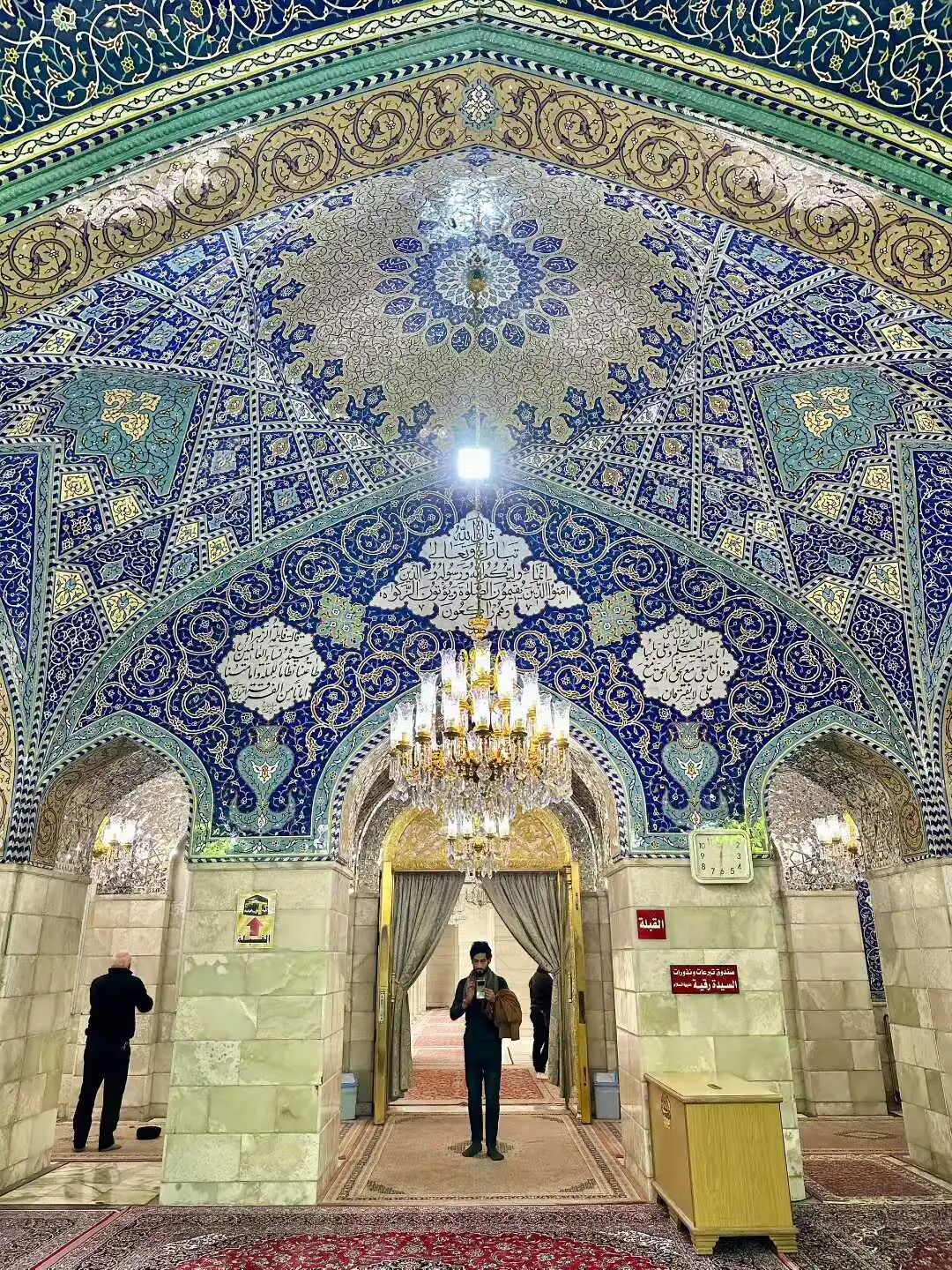
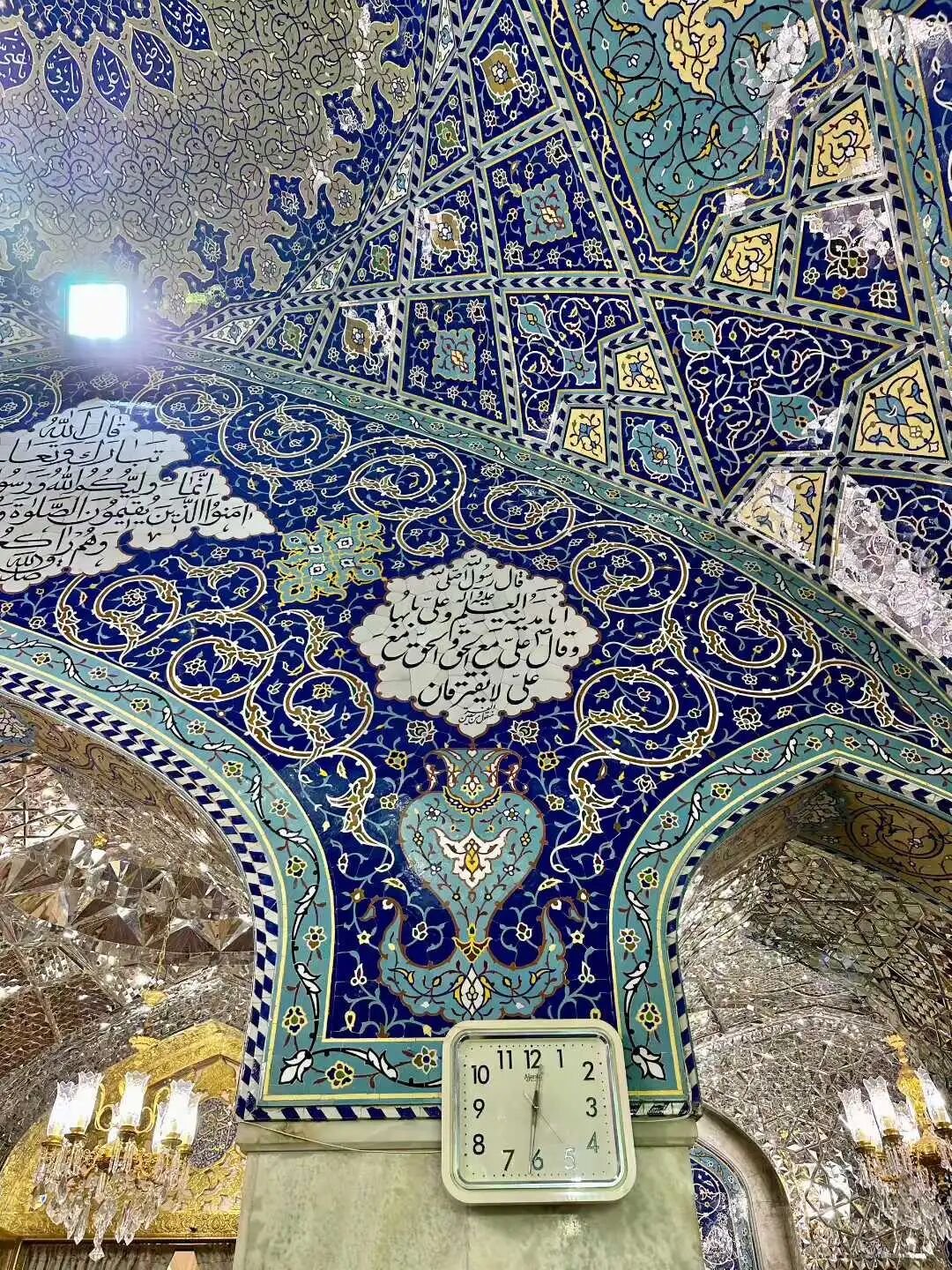
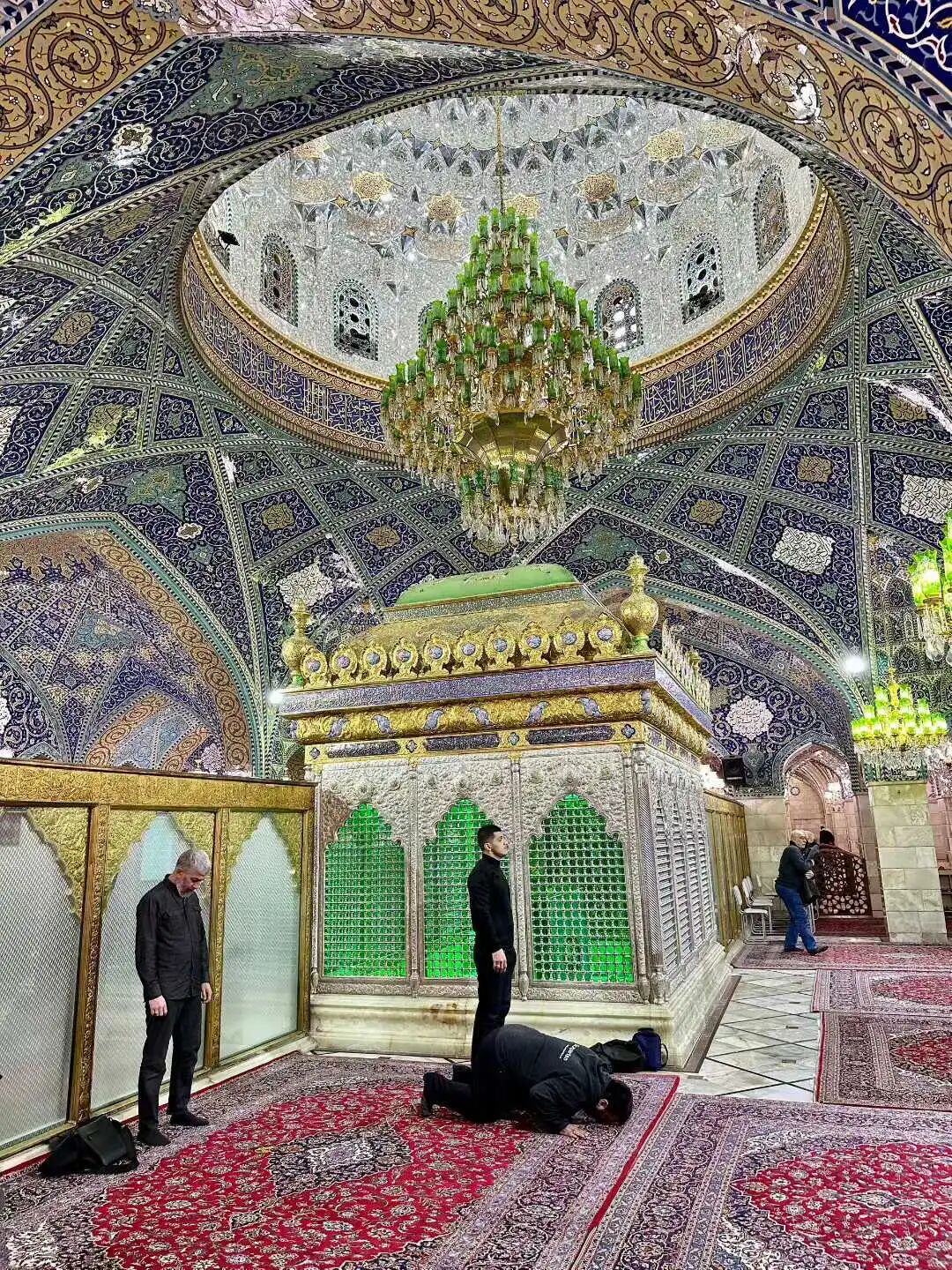
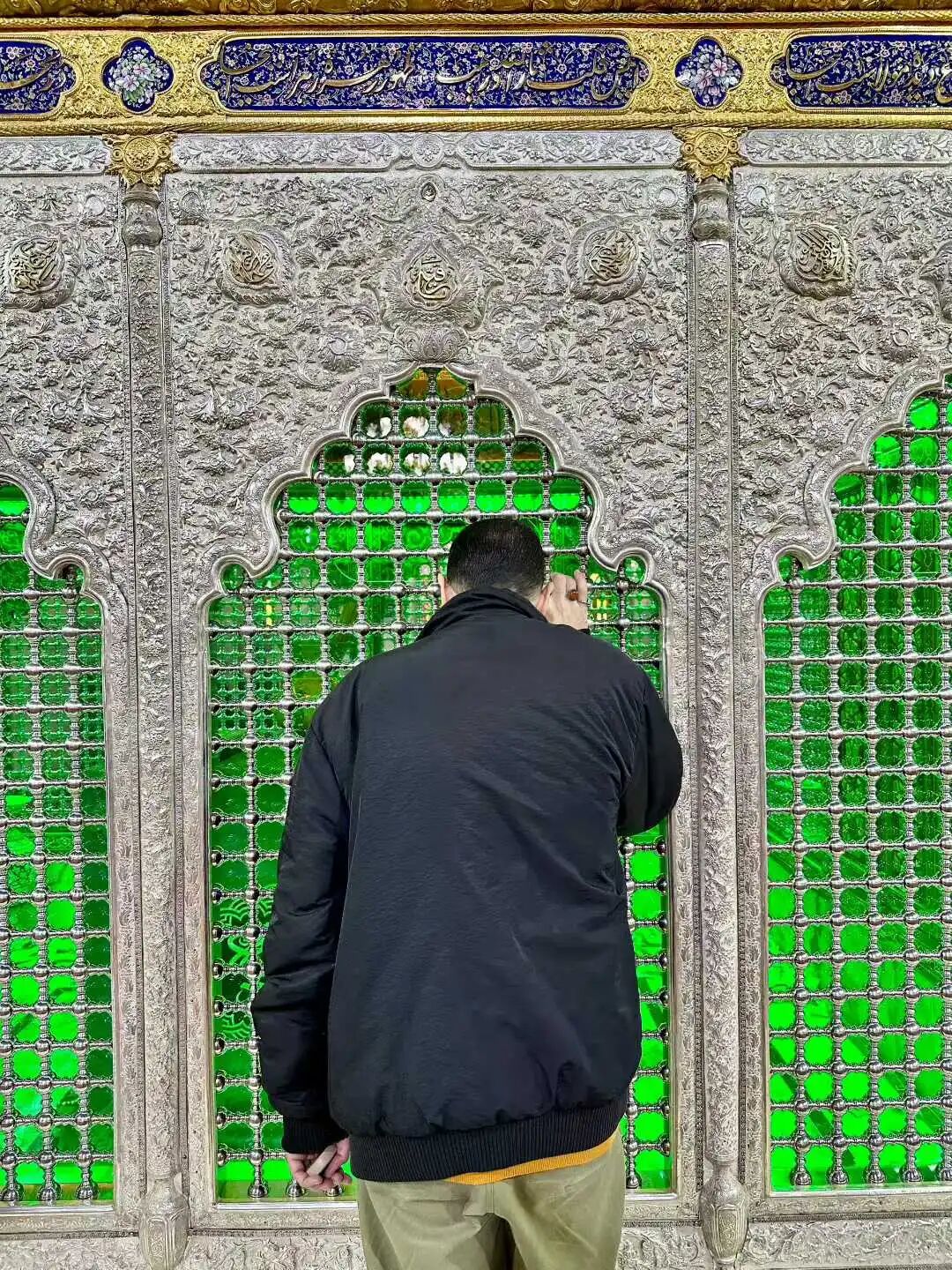
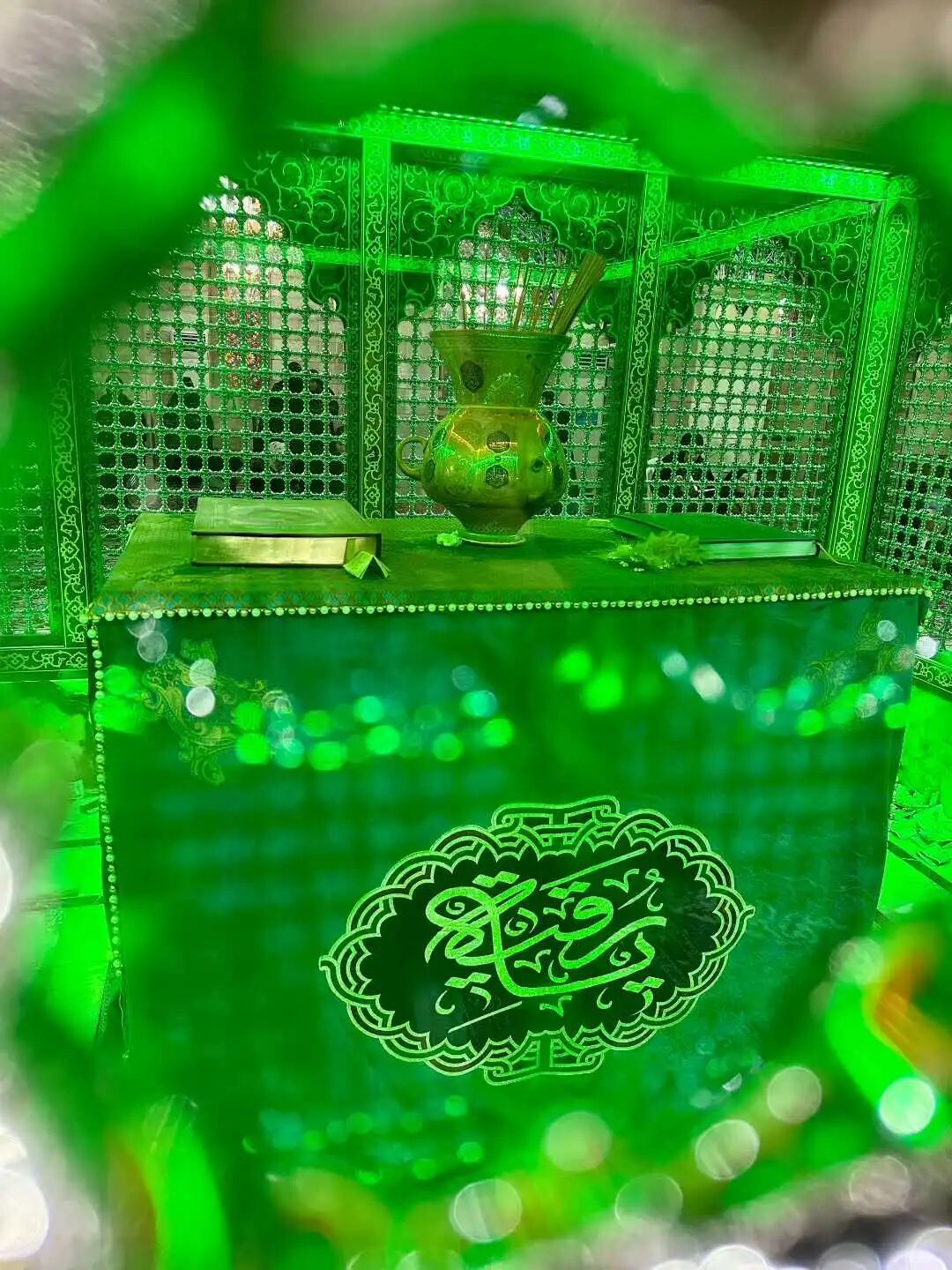
I joined a Shia congregation (jama'at) for the first time at the Sayyidah Ruqayya Mosque in Damascus. There are big differences between Shia and Sunni namaz. First, the content of the call to prayer (adhan) is different. When we stand with our hands folded, they keep their hands at their sides, and they prostrate on natural materials, usually clay tablets. They raise their hands multiple times during dua and hold their hands out to make dua. The rows are not tight, and it is fine to have some space between people. After the afternoon prayer (asr), they recite praises for a while, then stand up to call the adhan again for the sunset prayer (maghrib).
The friends (dosti) at the mosque were very tolerant of me. They were not unfriendly because I am Sunni and all greeted me with smiles. Because Assad has close ties with Iran, the new government has banned Iranians from entering Syria, so the number of Shia friends visiting here has dropped significantly. When the new government first took power, many Syrian Shia fled their homes for fear of being accused of colluding with Iran. Many have returned now that the government has provided guarantees. The Sayyidah Ruqayya Mosque is currently operating normally. Aside from a security post at the entrance, everything else is normal.
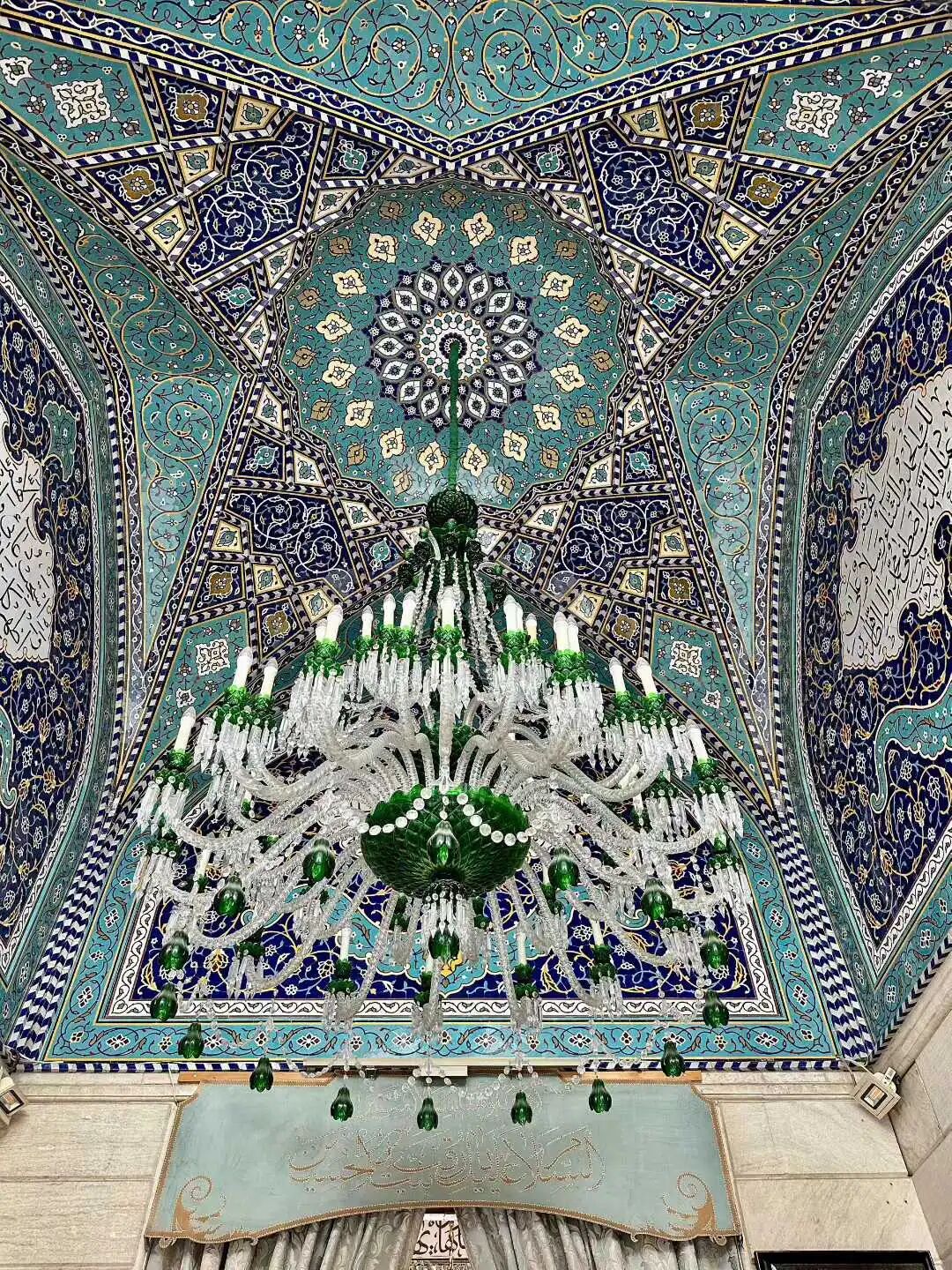
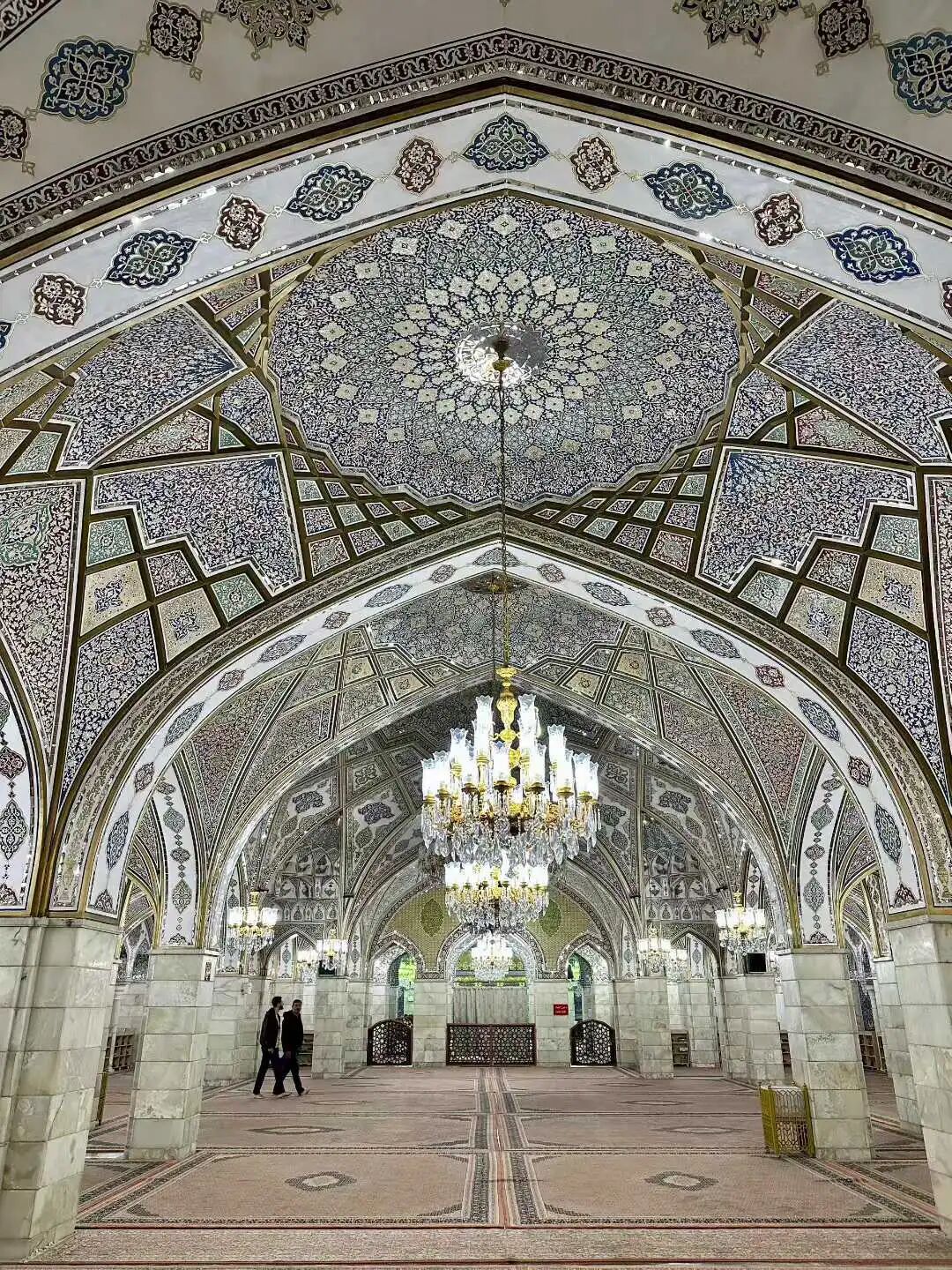
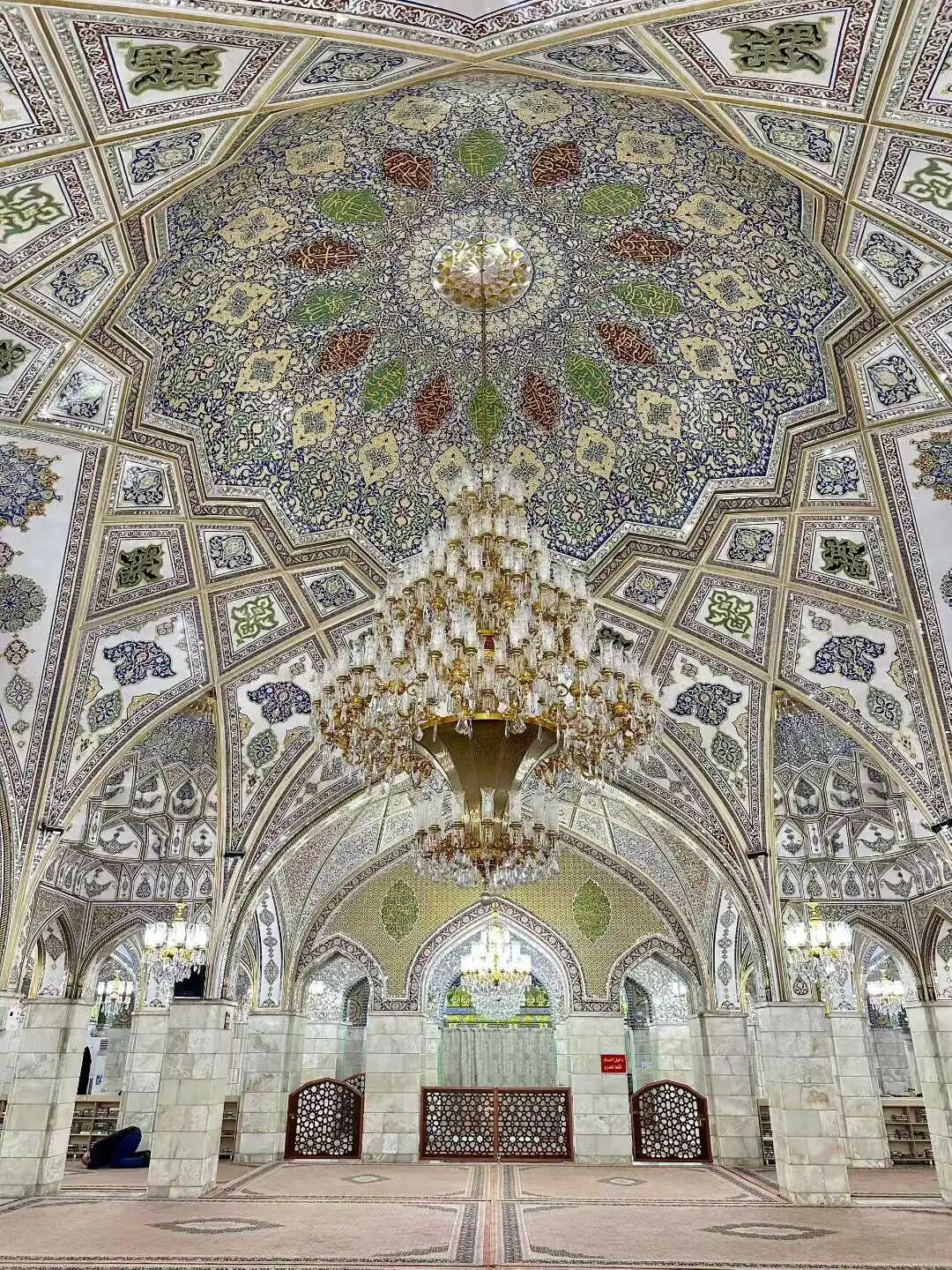
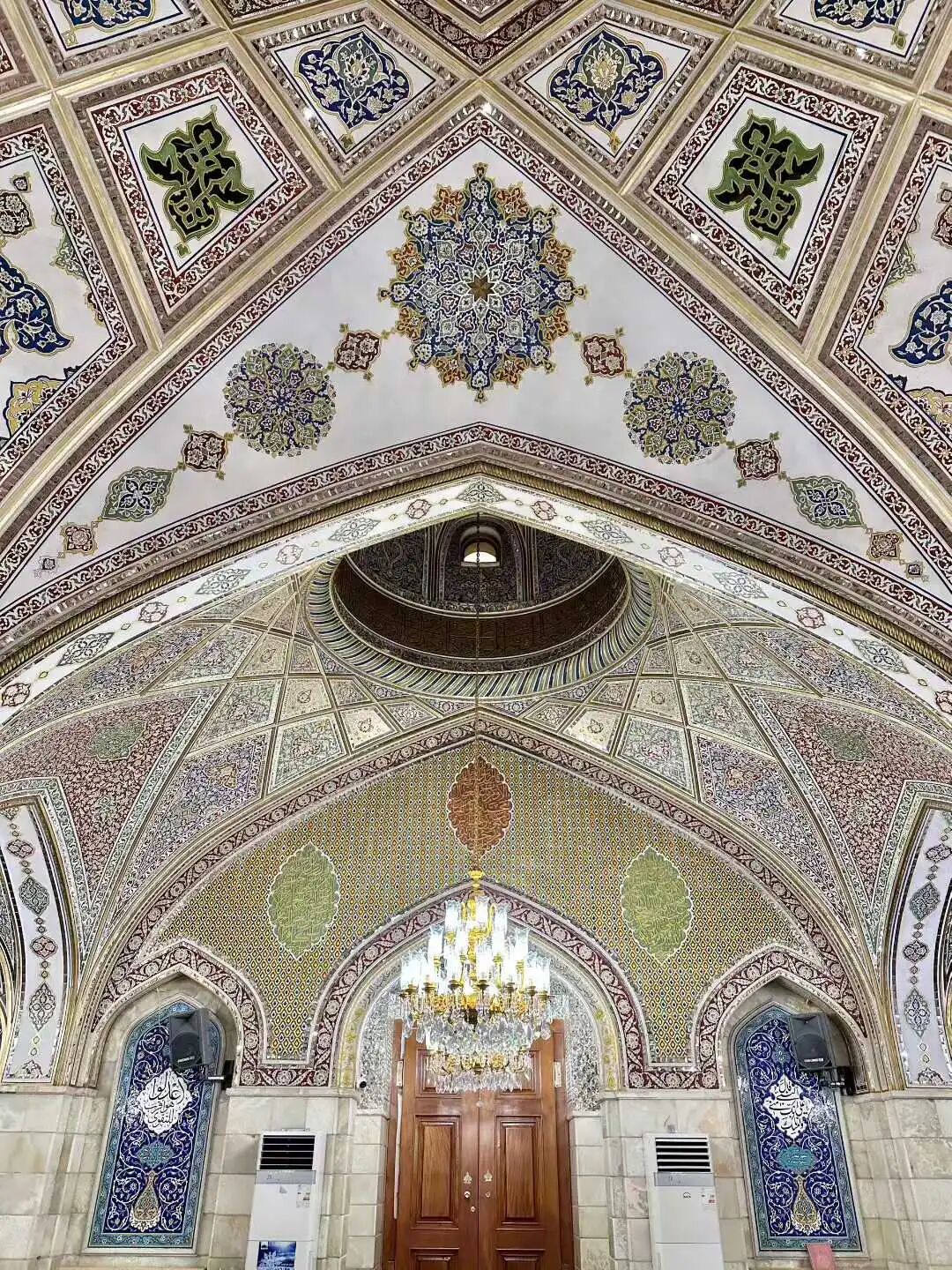
Another Shia holy site in the old city of Damascus is the tomb of Sakina bint Al Hussein and Umm Kulthum bint Ali, located inside the Bab al-Saghir cemetery in the south. Unfortunately, the tomb was closed when I arrived after Friday prayer (Jumu'ah), so I could not go inside.
Sakina was another daughter of Imam Hussein. She was taken to Damascus and imprisoned after the Battle of Karbala in 680. In Shia ceremonies commemorating the Battle of Karbala, Sakina is usually the one who tells the story of the battle. People perform scenes of Sakina jumping in front of her father's horse to spend the last few seconds with him before he is killed. Sakina was later released and returned to Medina. Early historical records describe her as beautiful, generous, and humble, and she was known for her eloquence and poetry. Sakina has tombs in Medina, Damascus, and Cairo, but people generally believe she is buried in Medina, while the tombs in Damascus and Cairo represent the longing people have for her.
Umm Kulthum was the youngest daughter of Imam Ali and Lady Fatimah. After the Battle of Karbala in 680, she was taken prisoner to Damascus. Once released, she returned to Medina and became a narrator of Shia hadith. There are two different accounts regarding the location of her tomb, with some saying it is in Medina and others saying it is in Damascus.
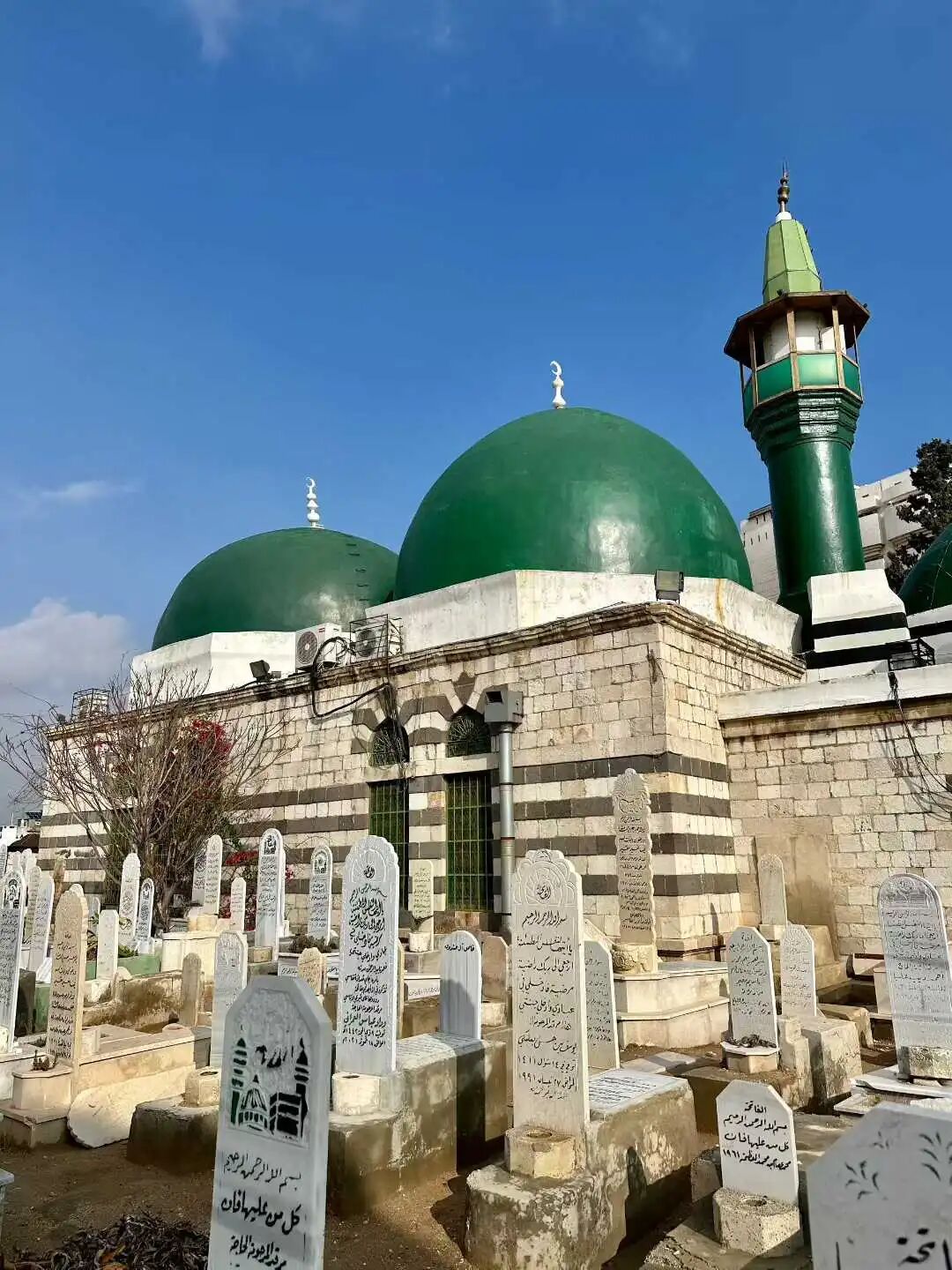
Travel Guide: Damascus Christian Quarter - Christmas in the Old City
Articles • ali2007fr posted the article • 0 comments • 275 views • 2026-05-21 02:25
Summary: The eastern side of the UNESCO-listed old city of Damascus contains a long-standing Christian quarter with churches, alleys, shops, and Christmas decorations. This travel account preserves the source's route, neighborhood details, holiday atmosphere, food, and photographs.
In the eastern part of the ancient World Heritage city of Damascus, there is an old Christian quarter. It is divided into the Bab Tuma area in the northeast and the Bab Sharqi area in the east. This area is full of churches and many restaurants and shops run by Christians. You can even find places that sell alcohol and tattoo parlors. The streets here are relatively clean and tidy, which is very different from the busy markets in the western part of the old city.
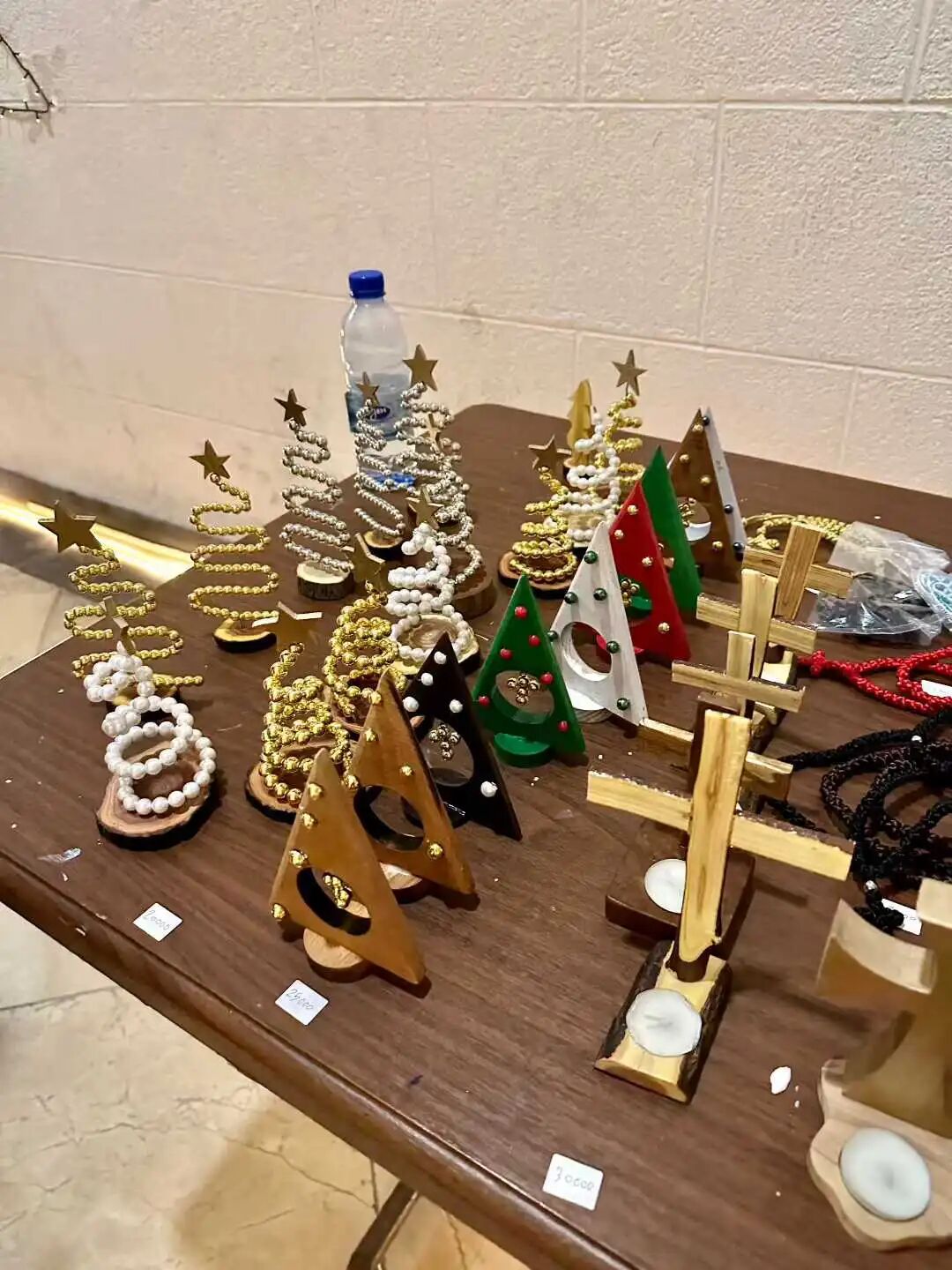
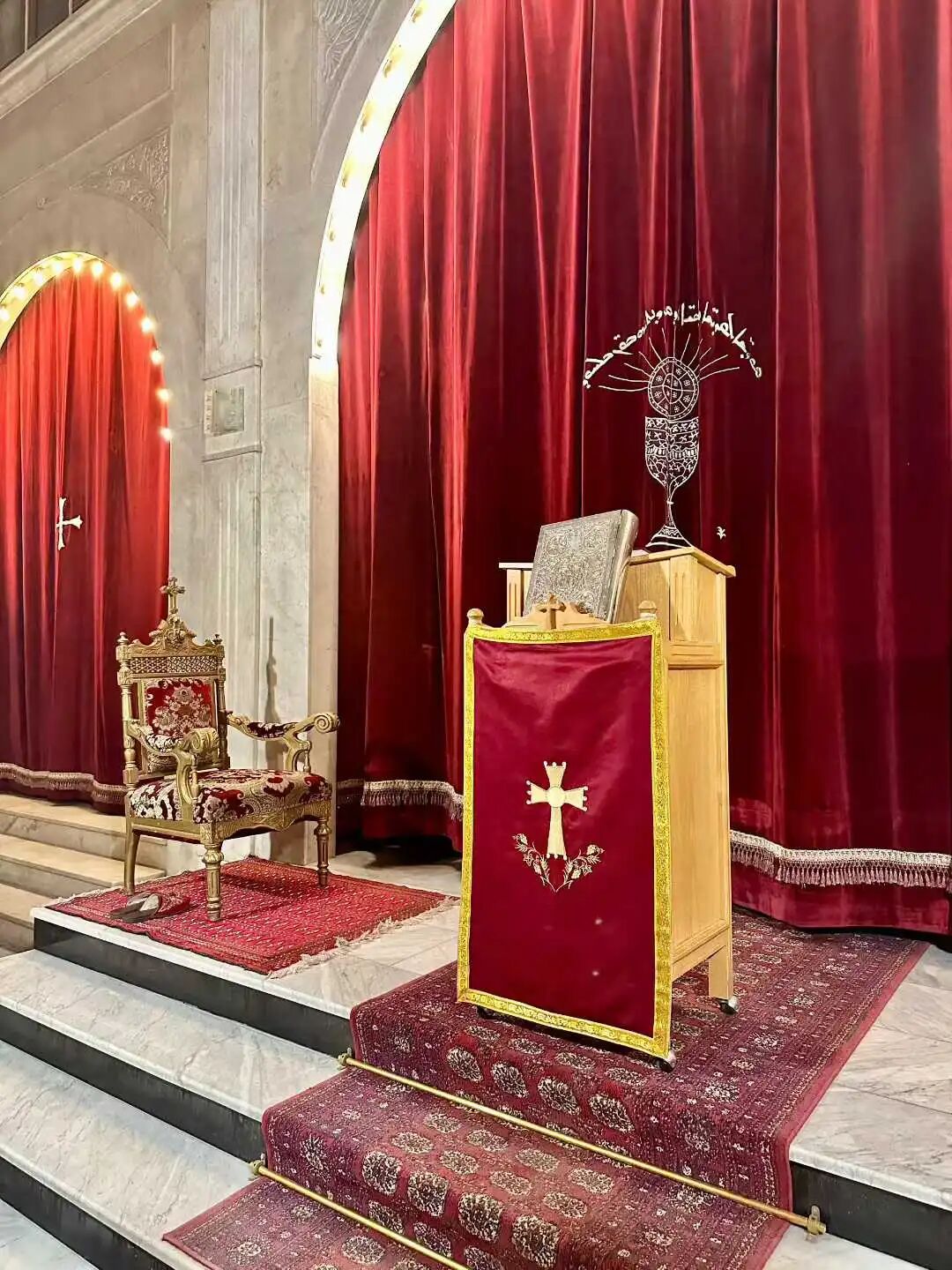
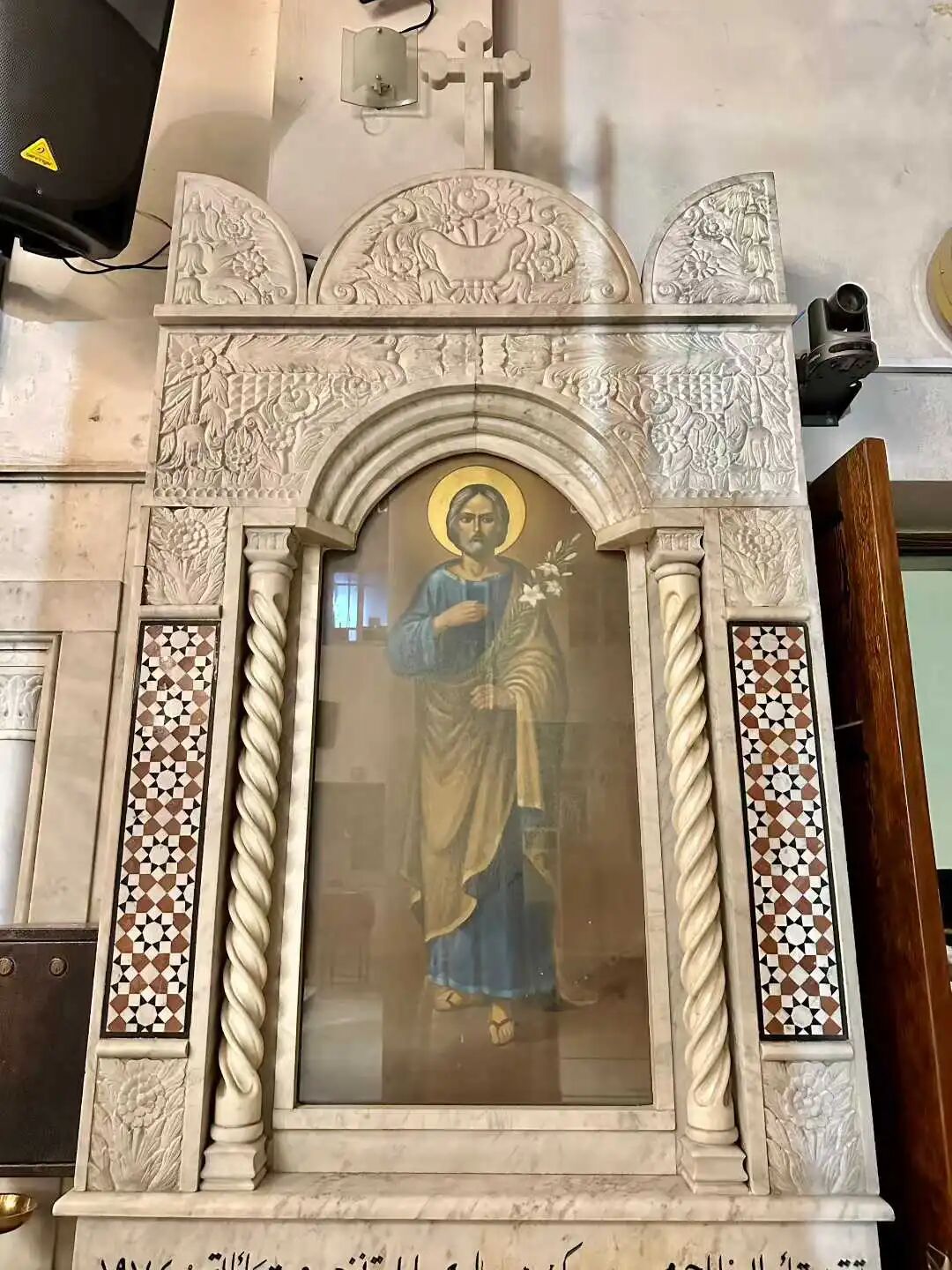
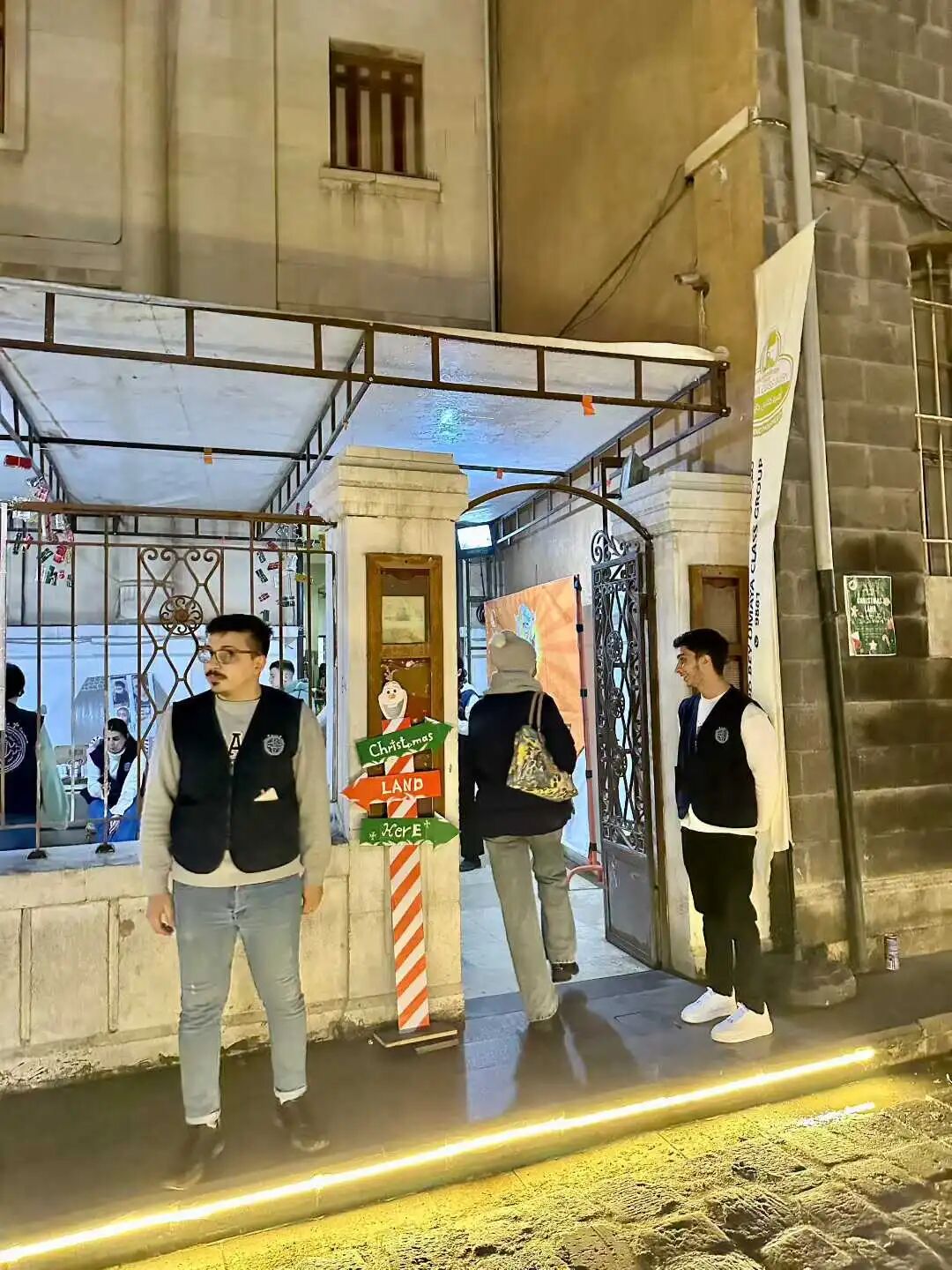
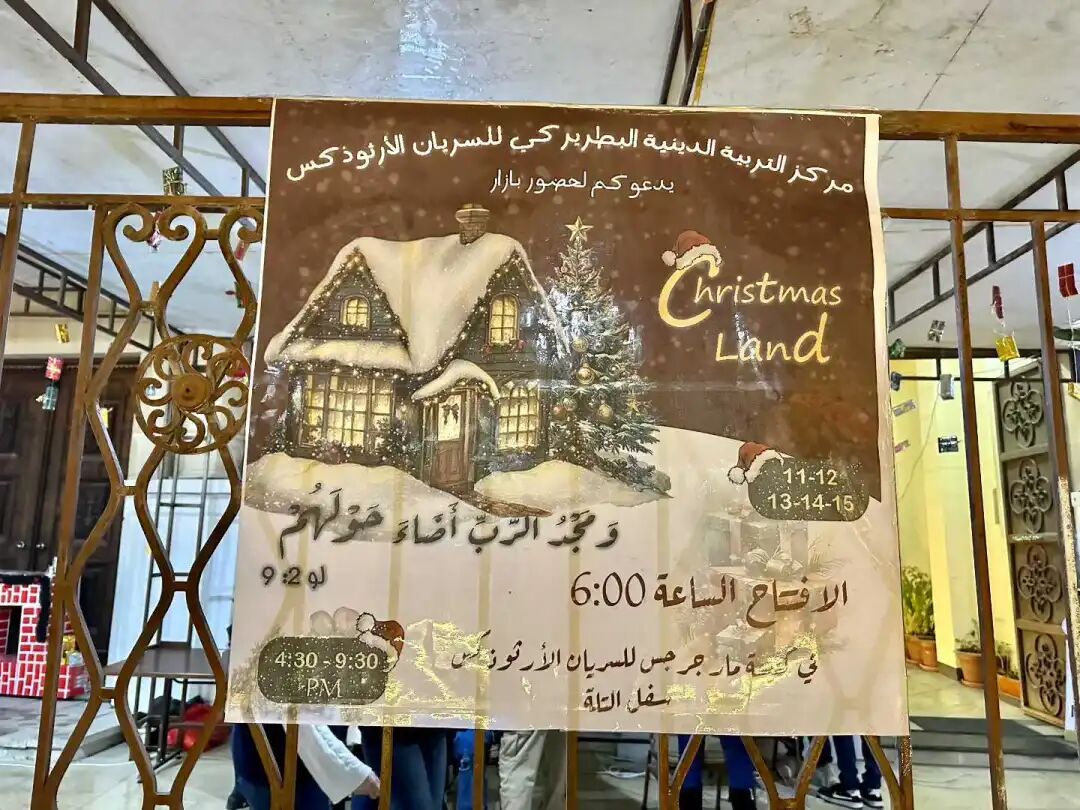
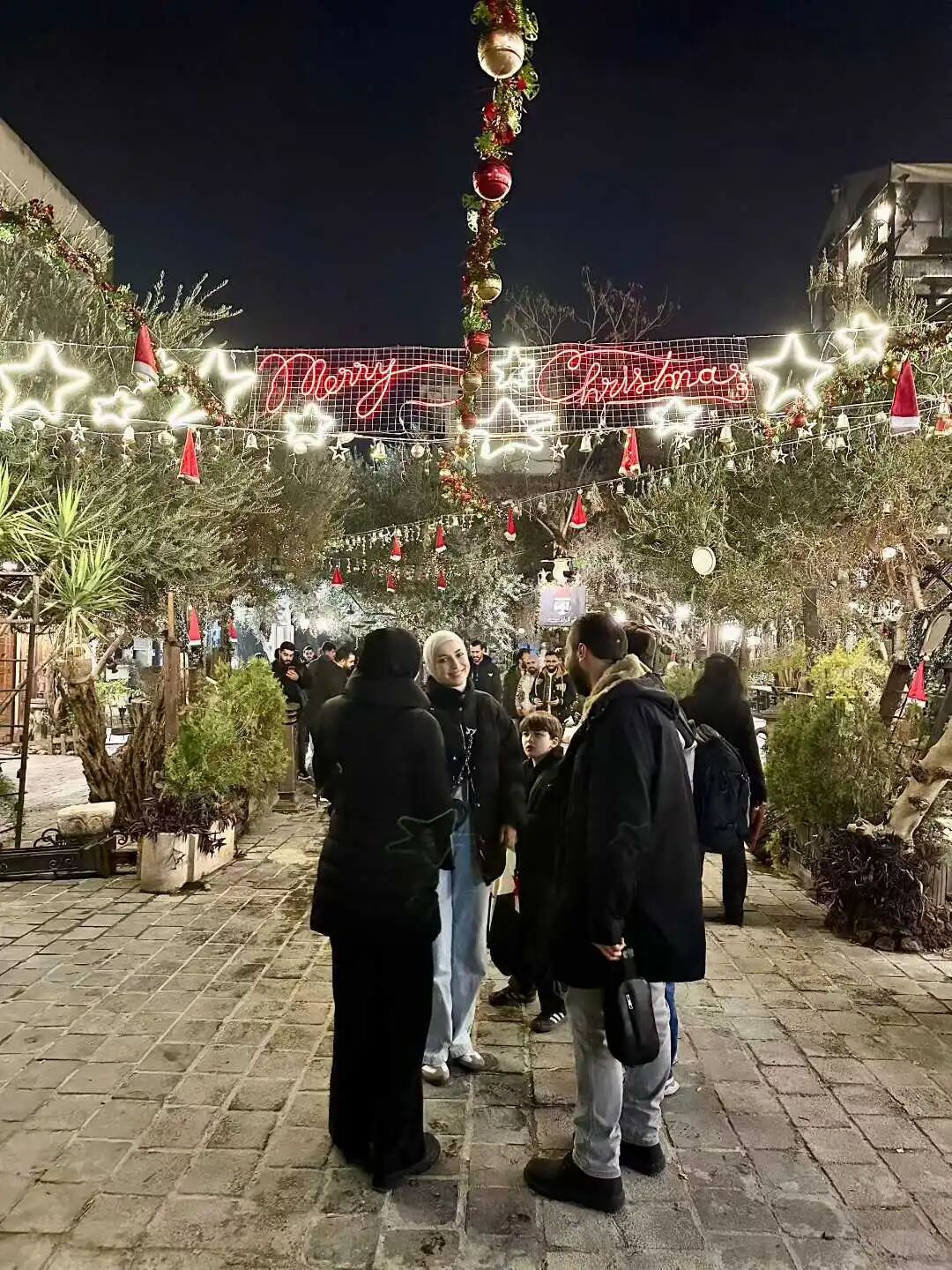
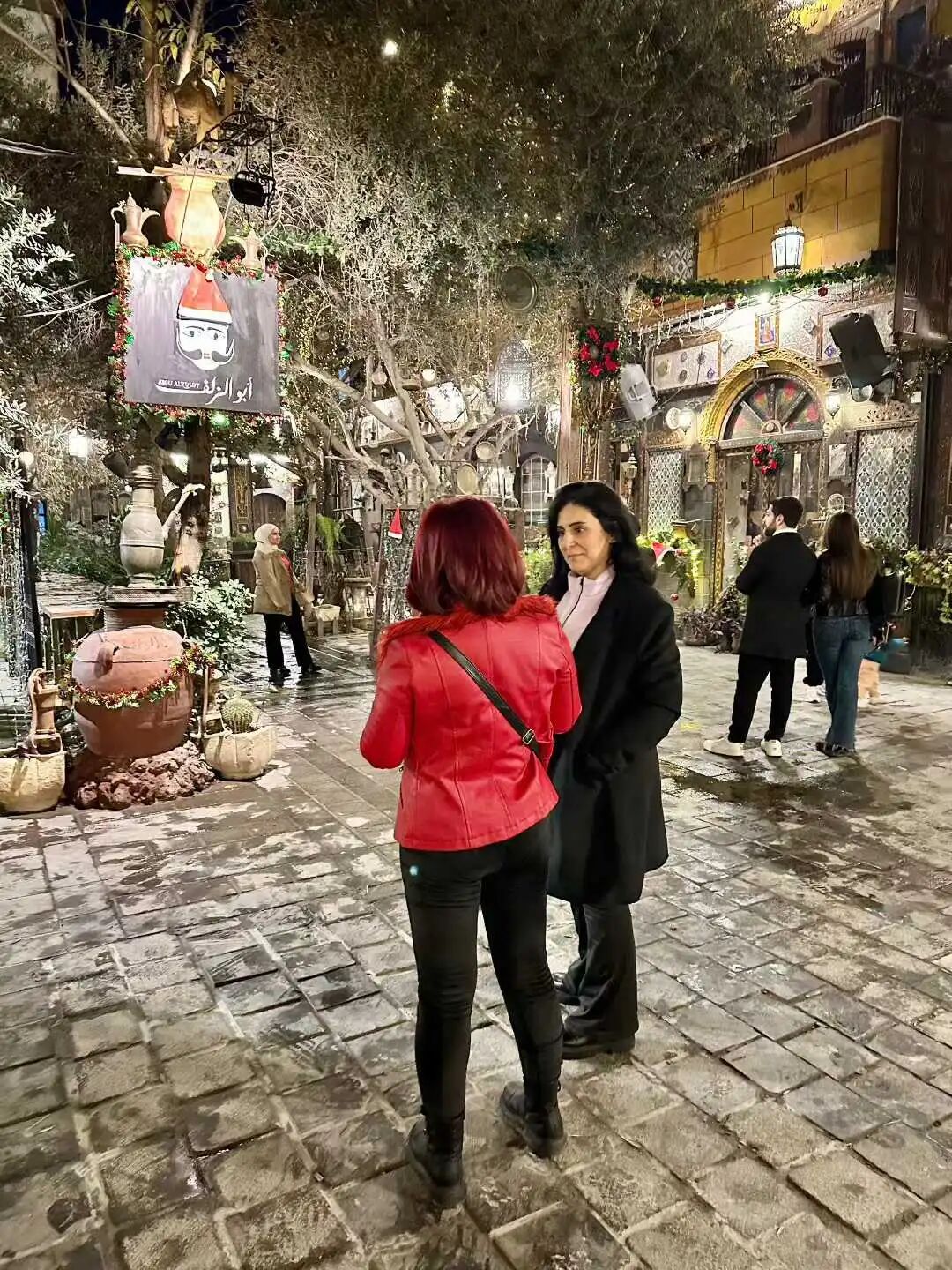
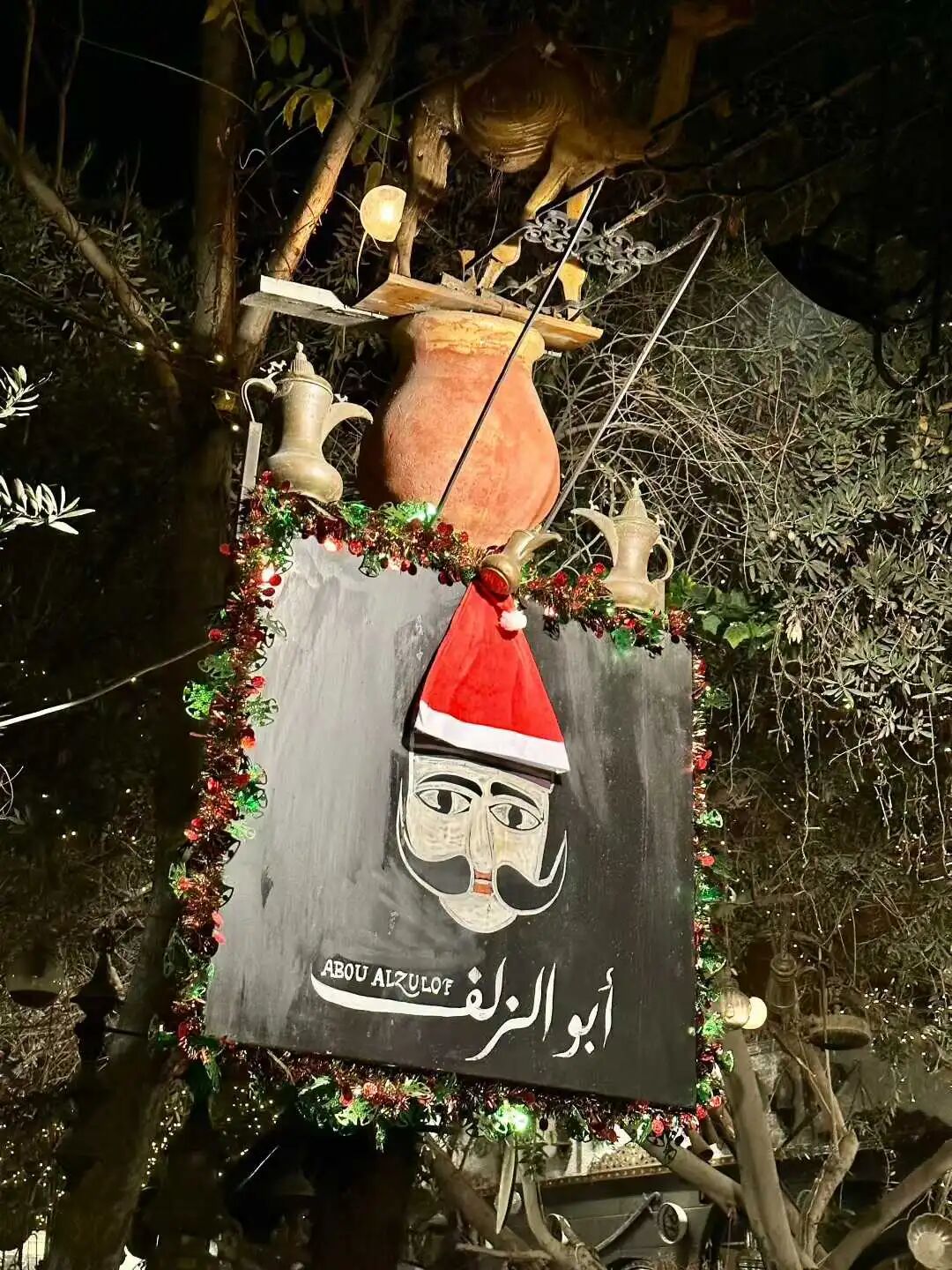
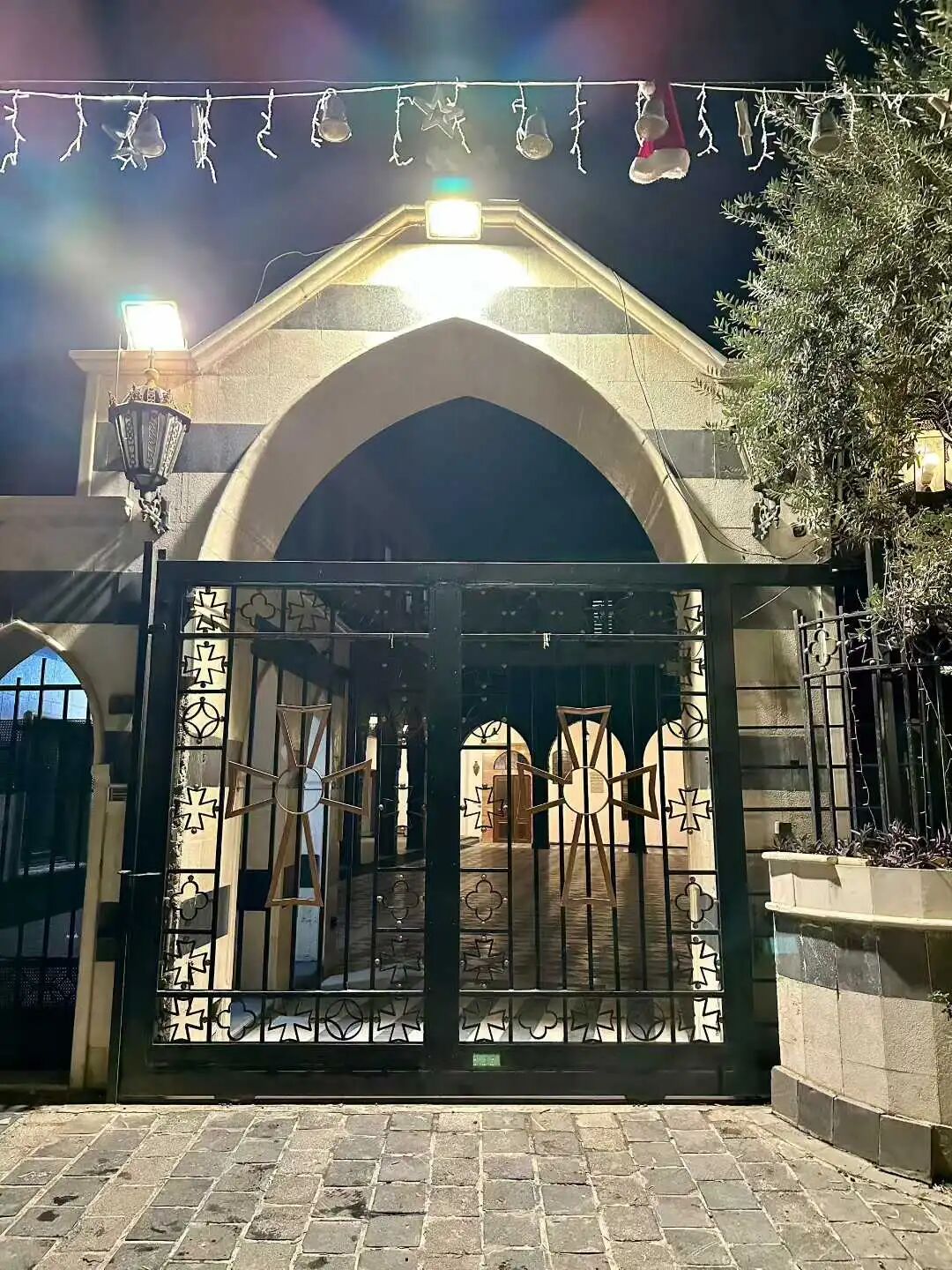
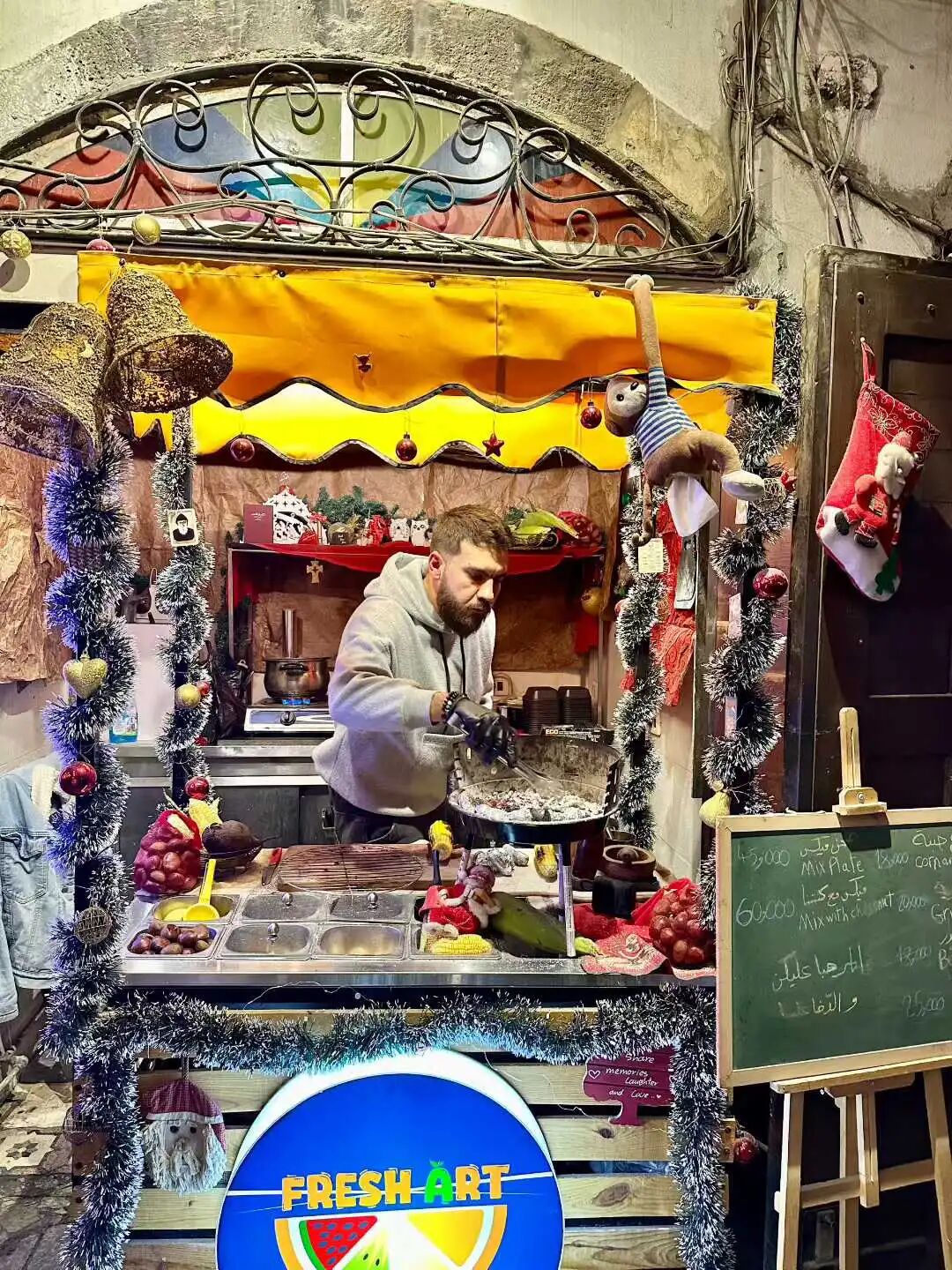
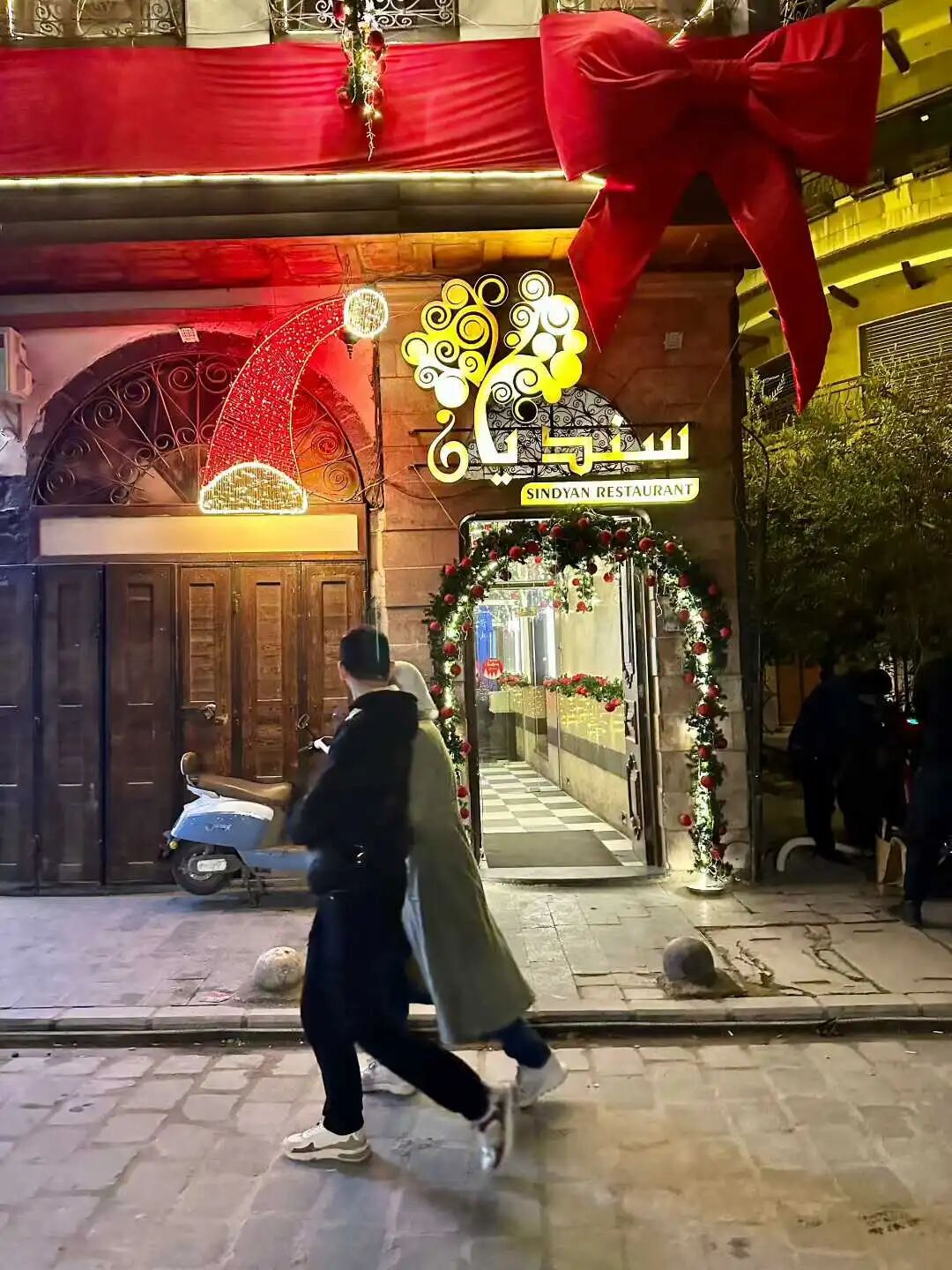
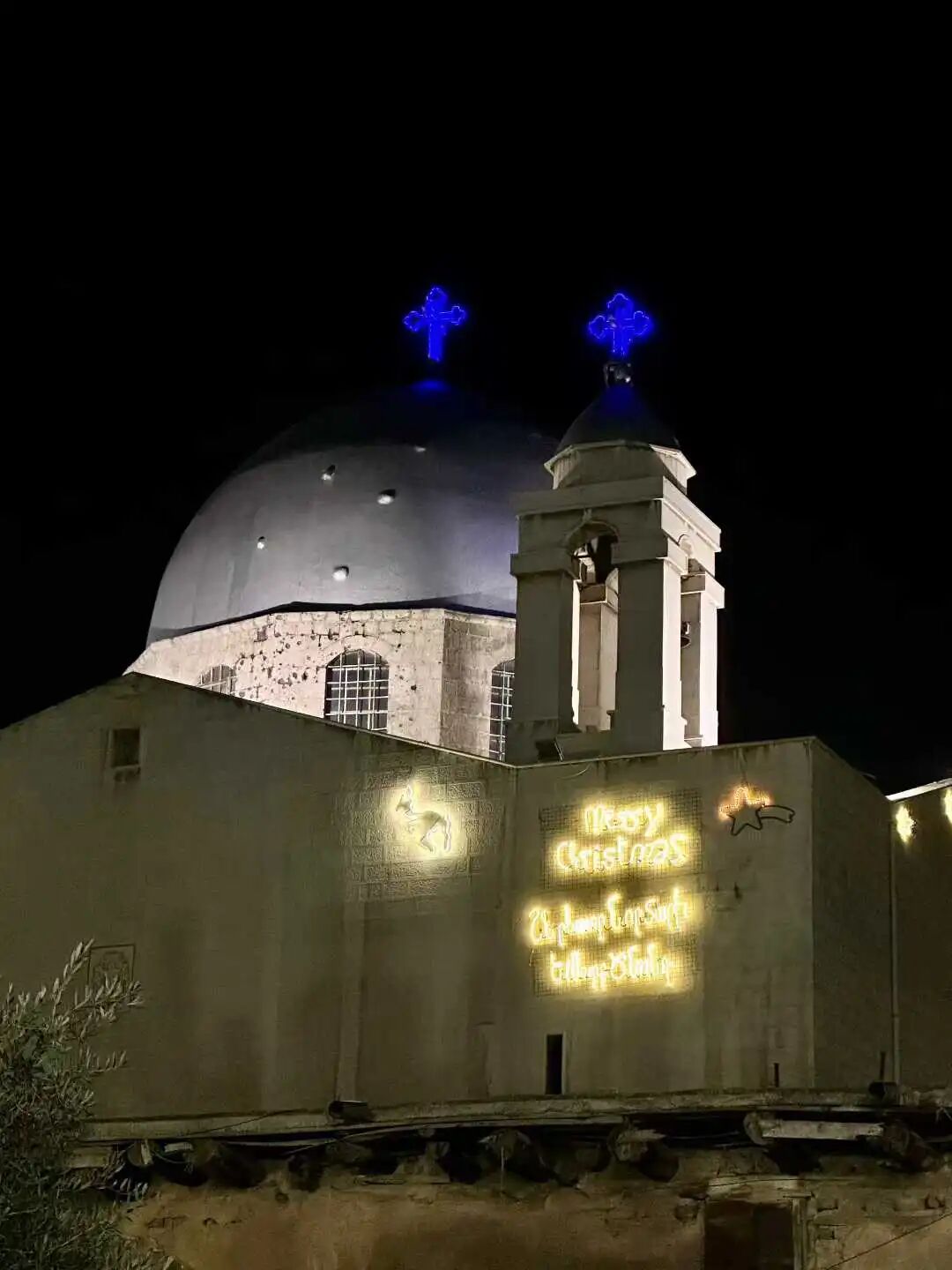
I arrived in Damascus in December, and the Christian quarter had a very strong Christmas atmosphere. The Saint George Cathedral of the Syriac Orthodox Church hosts a Christmas market every night, and everyone is welcome to join.
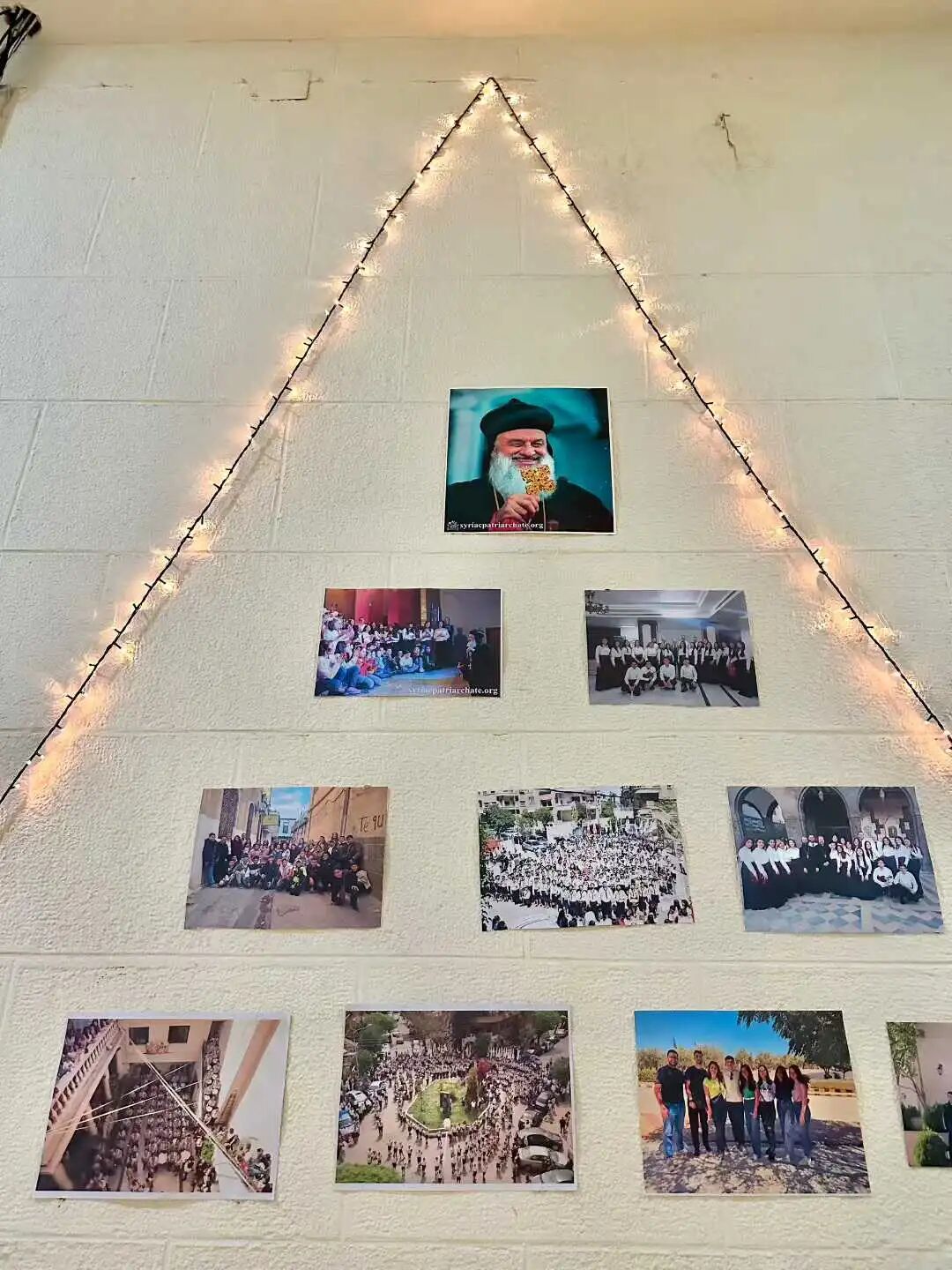
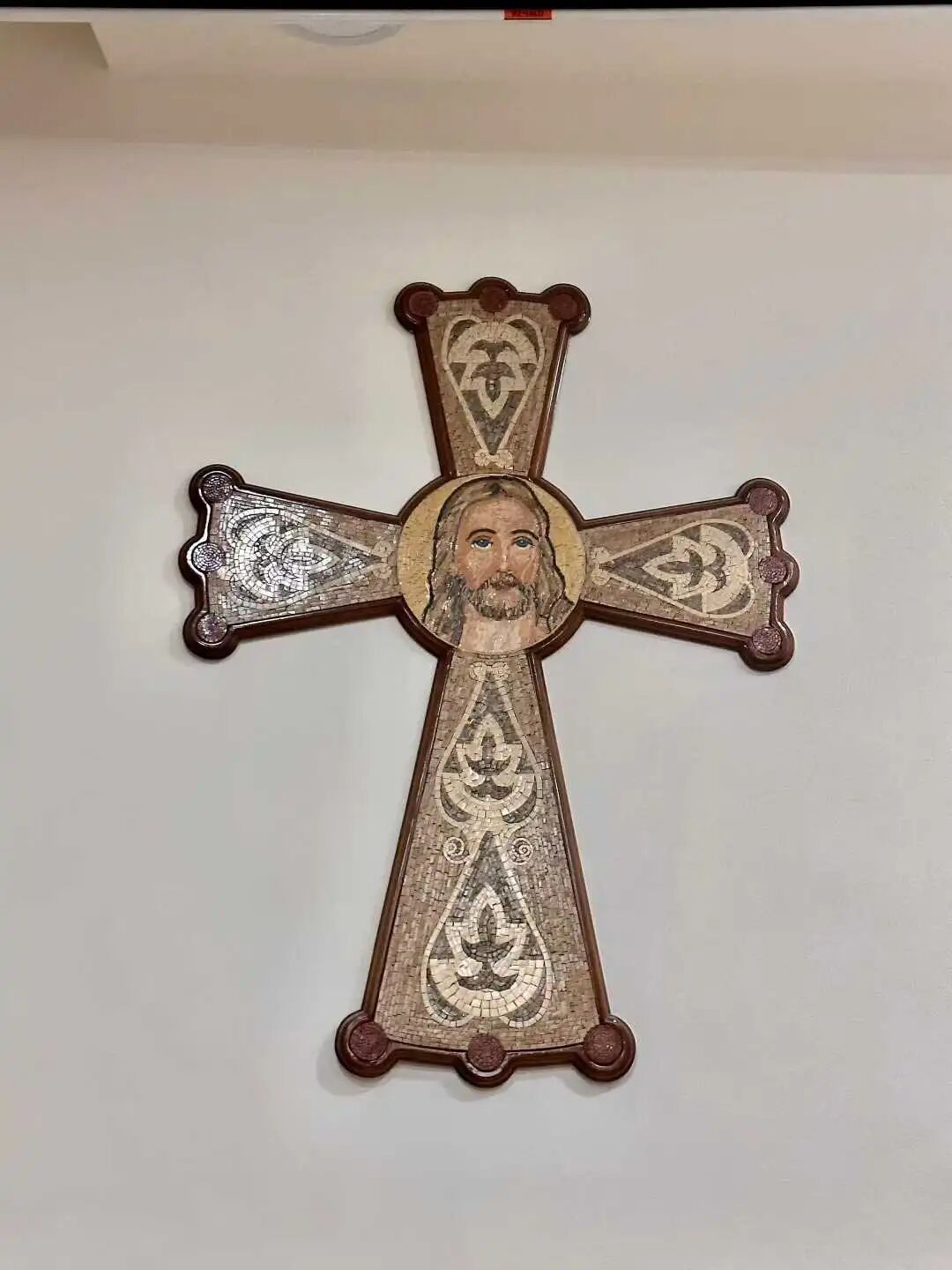
Since 1959, the Saint George Cathedral in Damascus has served as the seat of the Patriarch of the Syriac Orthodox Church, making it a very important site. The Syriac Orthodox Church holds to Miaphysitism. Its patriarch was removed by the Christian church in 518, and it gradually formed an independent church after that.
The seat of the Syriac Orthodox Patriarch was originally near the ancient city of Mardin in southeastern Turkey. It moved to Homs, Syria, after 1933, and then to the Saint George Cathedral in Damascus in 1959. Its followers are mainly in Syria, Iraq, Palestine, Jordan, Lebanon, Turkey, and India, with others scattered across Europe, America, and Oceania.
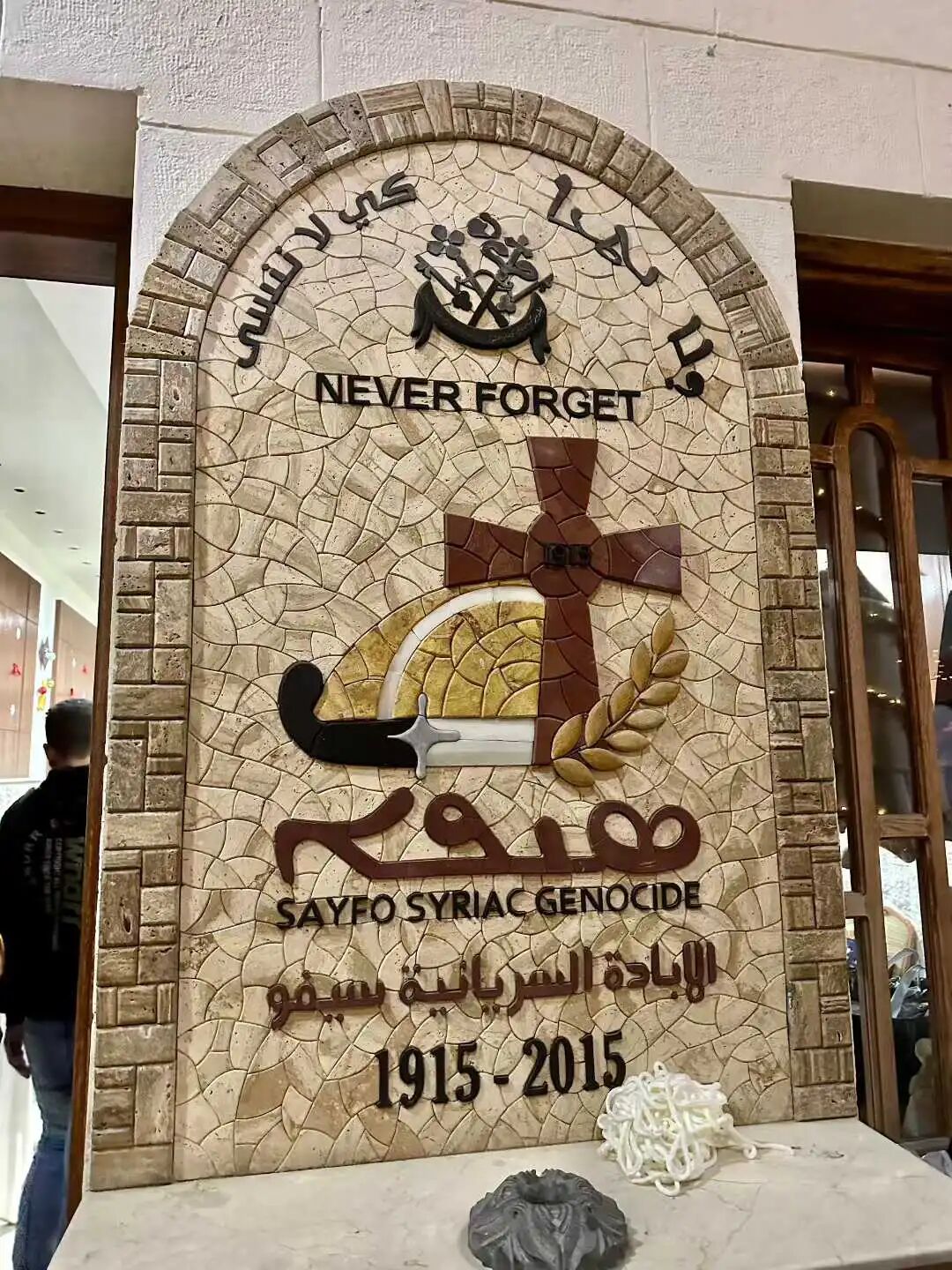
It is written that one should never forget the 1915 Ottoman genocide of the Assyrians. This was carried out by the Ottoman army and Kurdish tribes in the border region between Turkey and Iran during World War I, and Turkey still avoids this issue today.
Youths from the Syriac Orthodox Church celebrate Christmas inside the cathedral.
Besides the Syriac Orthodox Church, the Chaldean Catholic Church in Damascus also held a Christmas market at the Saint Theresa Church in the old Christian quarter.
The Chaldean Catholic Church is one of 23 Eastern Catholic Churches that use Eastern Christian rites but are in communion with the Pope. Its believers are mainly Assyrians, mostly living in northern Iraq. The Chaldean Catholic Church can be traced back to the Church of the East (Nestorianism). After the Church of the East was considered heretical by the Roman Catholic Church in 431, the two remained divided. More than a thousand years later, in 1552, some members of the Church of the East from the border of Turkey and Iran opposed the hereditary system of the patriarchate. They elected another patriarch and went to Rome to discuss communion with the Pope. In 1553, the Pope in Rome appointed the first patriarch of the Chaldean Catholic Church. Over the next few centuries, the relationship between the Chaldean Catholic Church and Rome was on and off, often reverting to the Church of the East, until it finally entered into communion with the Catholic Church in 1830.
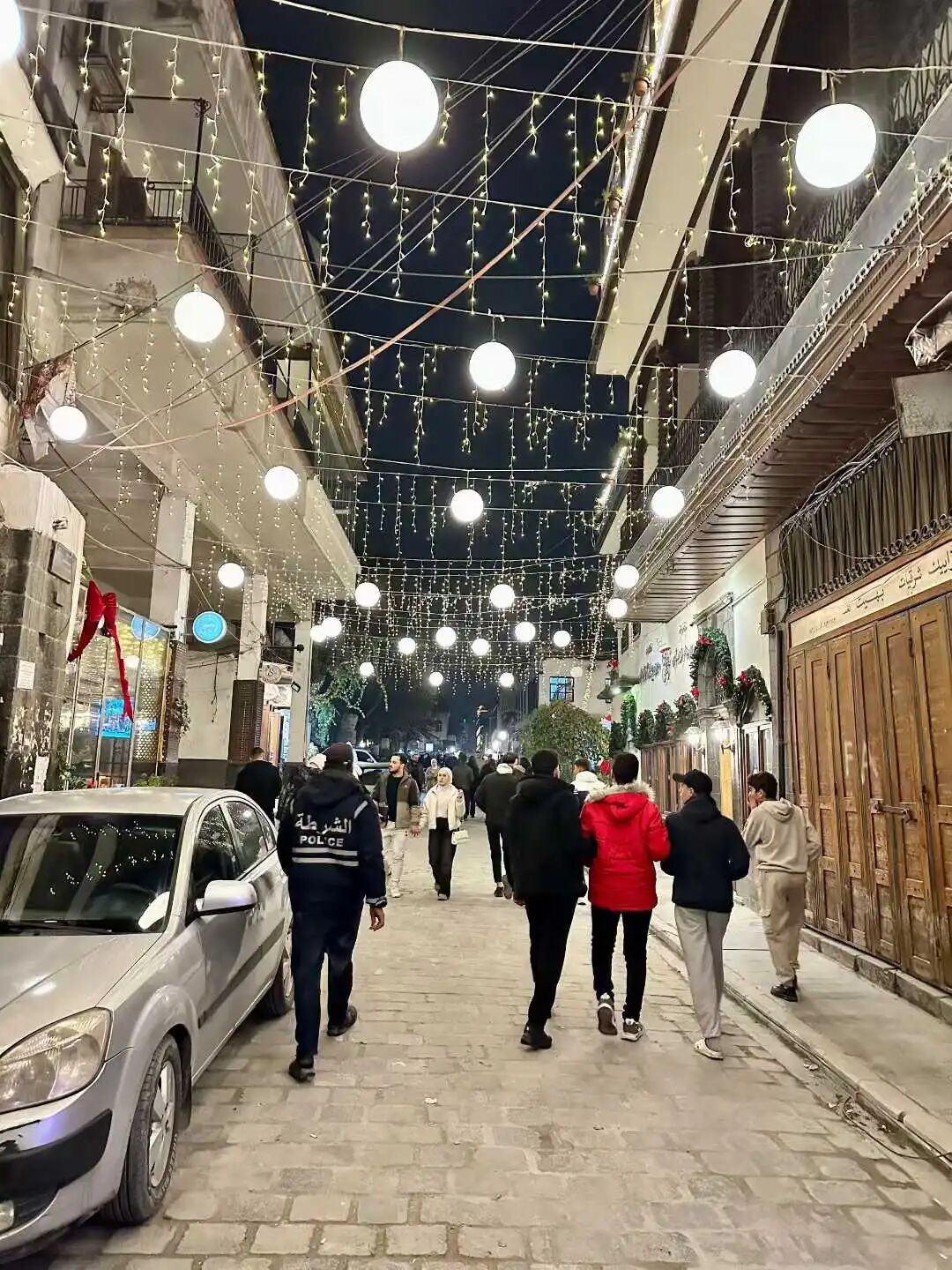
The road in front of the Cathedral of Our Lady of the Dormition inside the East Gate of Damascus must have the best Christmas decorations in the old city, and many young people come here to take photos.
The Cathedral of Our Lady of the Dormition in Damascus is the headquarters of the Melkite Greek Catholic Church. The Melkite Greek Catholic Church is an Eastern Catholic Church that follows the Byzantine rite but is in communion with the Roman Curia. The church can be traced back to Greek-speaking Christians living in the Middle East during the Roman period. When Middle Eastern Christianity split in 451, they accepted the authority of the Council and the Byzantine Empire. In 1729, the Melkite Greek Catholic Church broke away from Constantinople and entered into communion with the Roman Catholic Church.
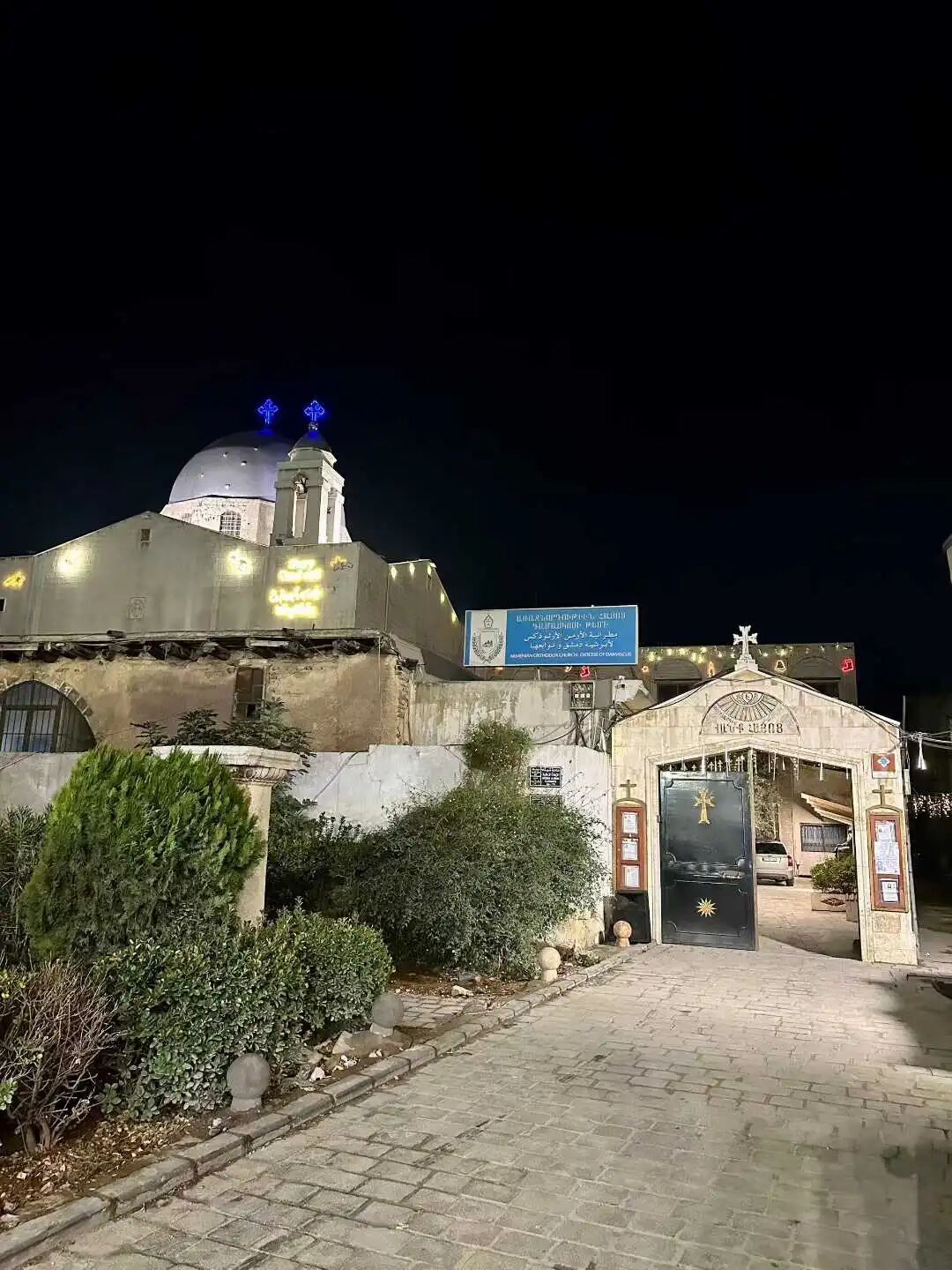
The Armenian Apostolic Church inside the East Gate of Damascus; Armenians arrived in Damascus during the Umayyad Caliphate.
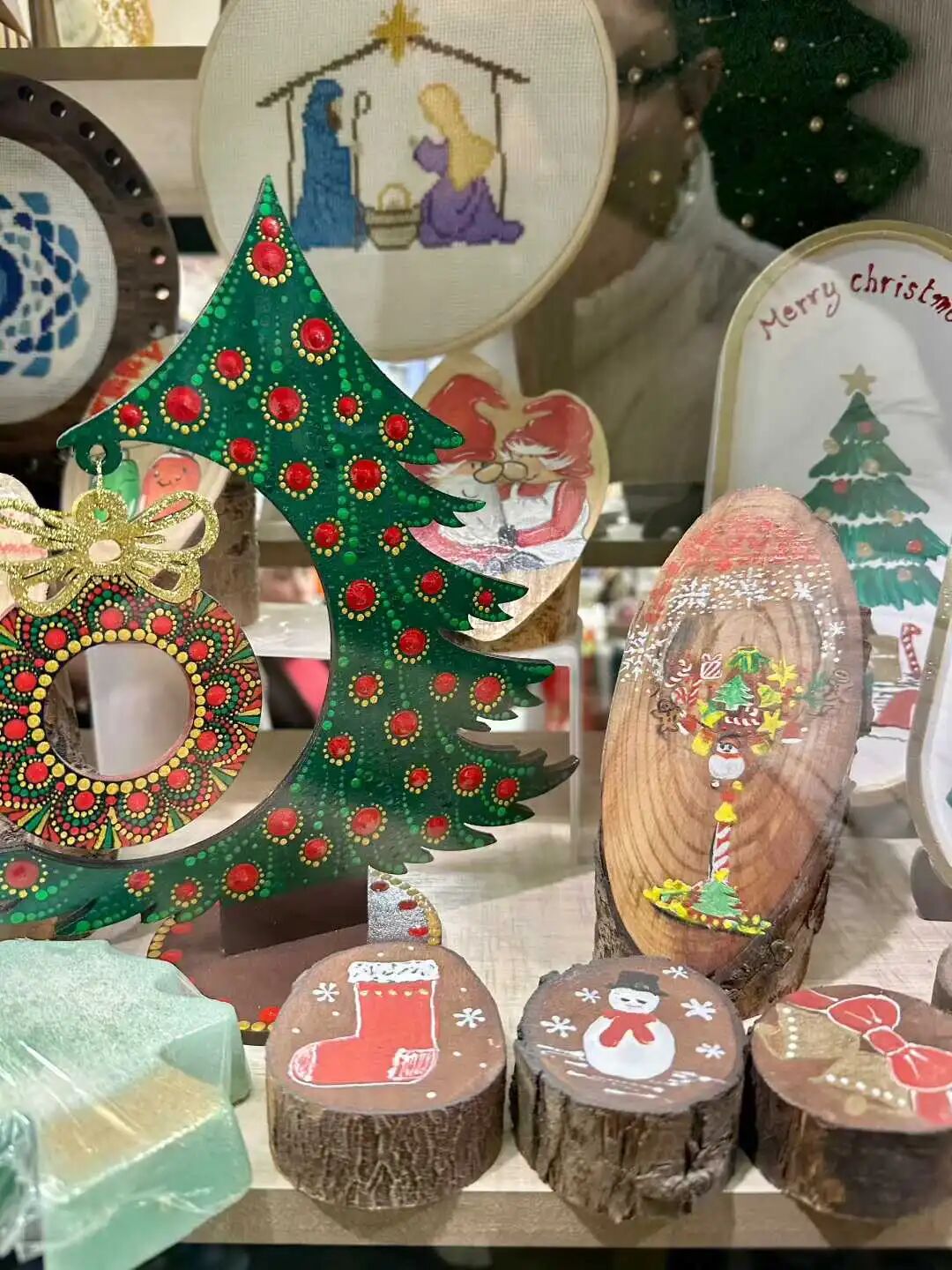
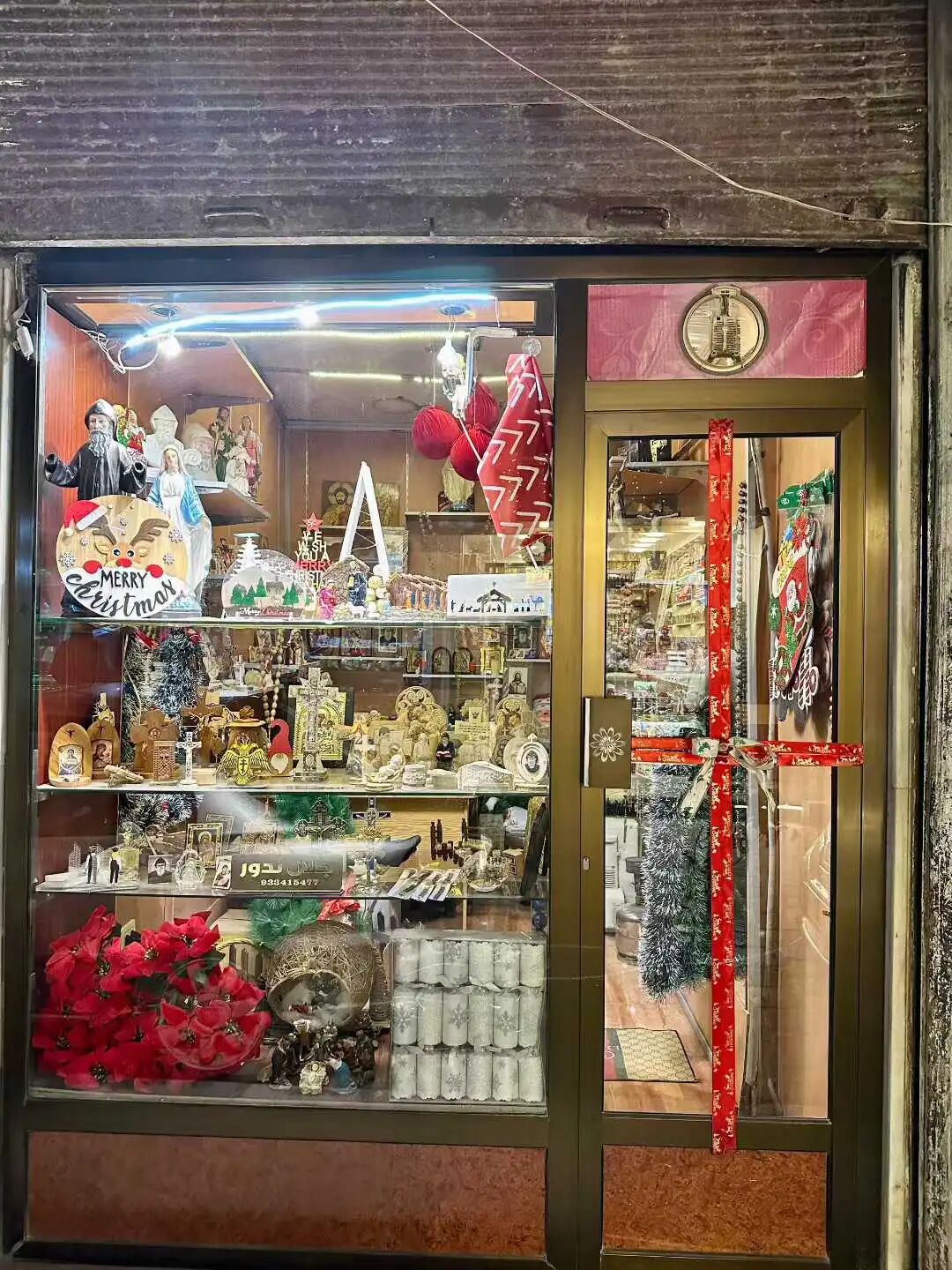
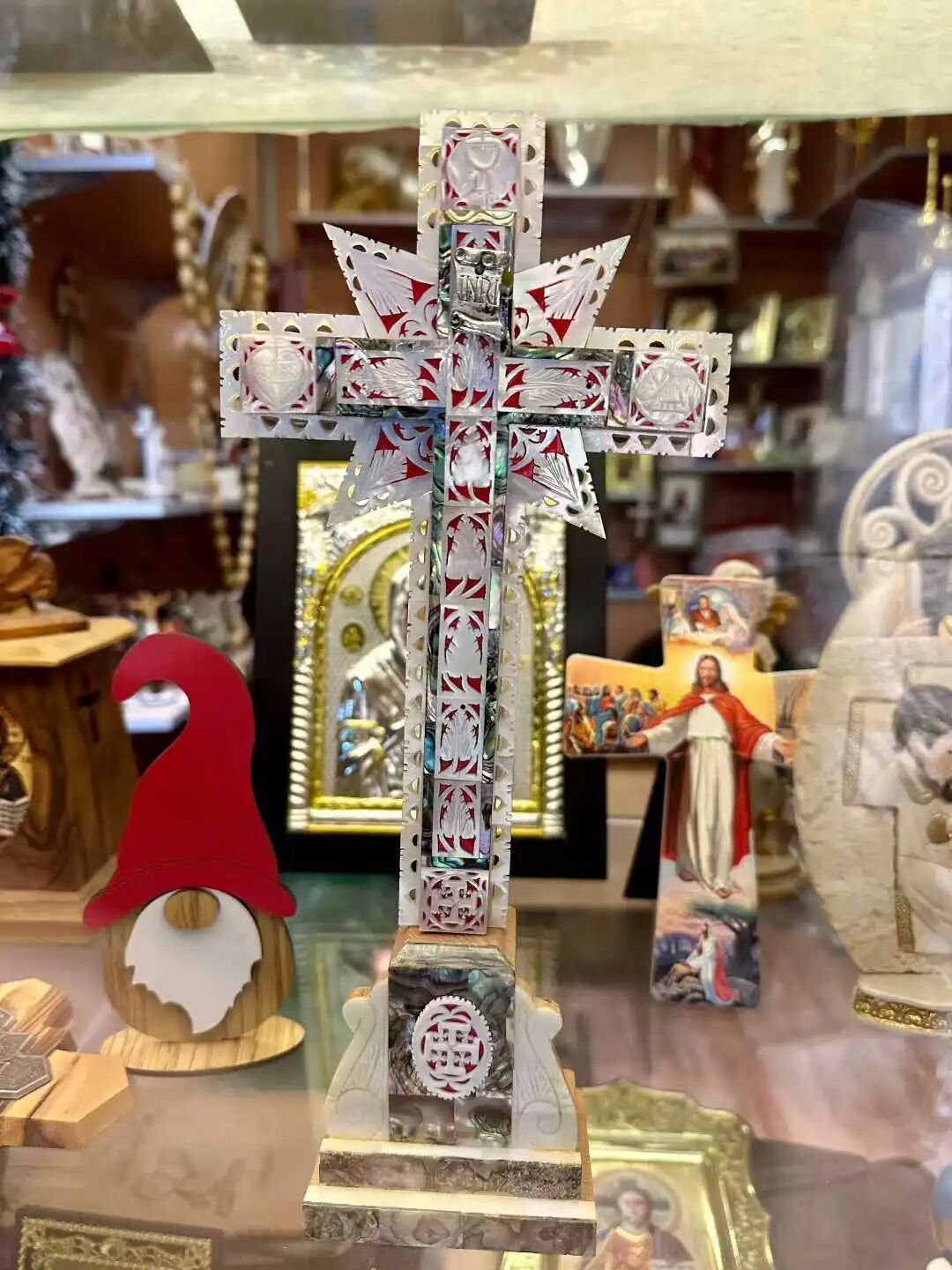
The Christian shops in the Christian Quarter of Damascus are mainly located on the north-south Bab Touma Street.
You can only see this sight in the Christian Quarter of Damascus, where monasteries and churches are built side by side. The minaret and the cross stand next to each other, specifically at the St. Paul Franciscan Church and the Omayyad Mosque on Bab Touma Street.
On Bab Touma Street in the Christian Quarter, there are restaurant bars with traditional music performances at night, which is hard to find in the western part of the Old City. view all
Summary: The eastern side of the UNESCO-listed old city of Damascus contains a long-standing Christian quarter with churches, alleys, shops, and Christmas decorations. This travel account preserves the source's route, neighborhood details, holiday atmosphere, food, and photographs.
In the eastern part of the ancient World Heritage city of Damascus, there is an old Christian quarter. It is divided into the Bab Tuma area in the northeast and the Bab Sharqi area in the east. This area is full of churches and many restaurants and shops run by Christians. You can even find places that sell alcohol and tattoo parlors. The streets here are relatively clean and tidy, which is very different from the busy markets in the western part of the old city.
I arrived in Damascus in December, and the Christian quarter had a very strong Christmas atmosphere. The Saint George Cathedral of the Syriac Orthodox Church hosts a Christmas market every night, and everyone is welcome to join.
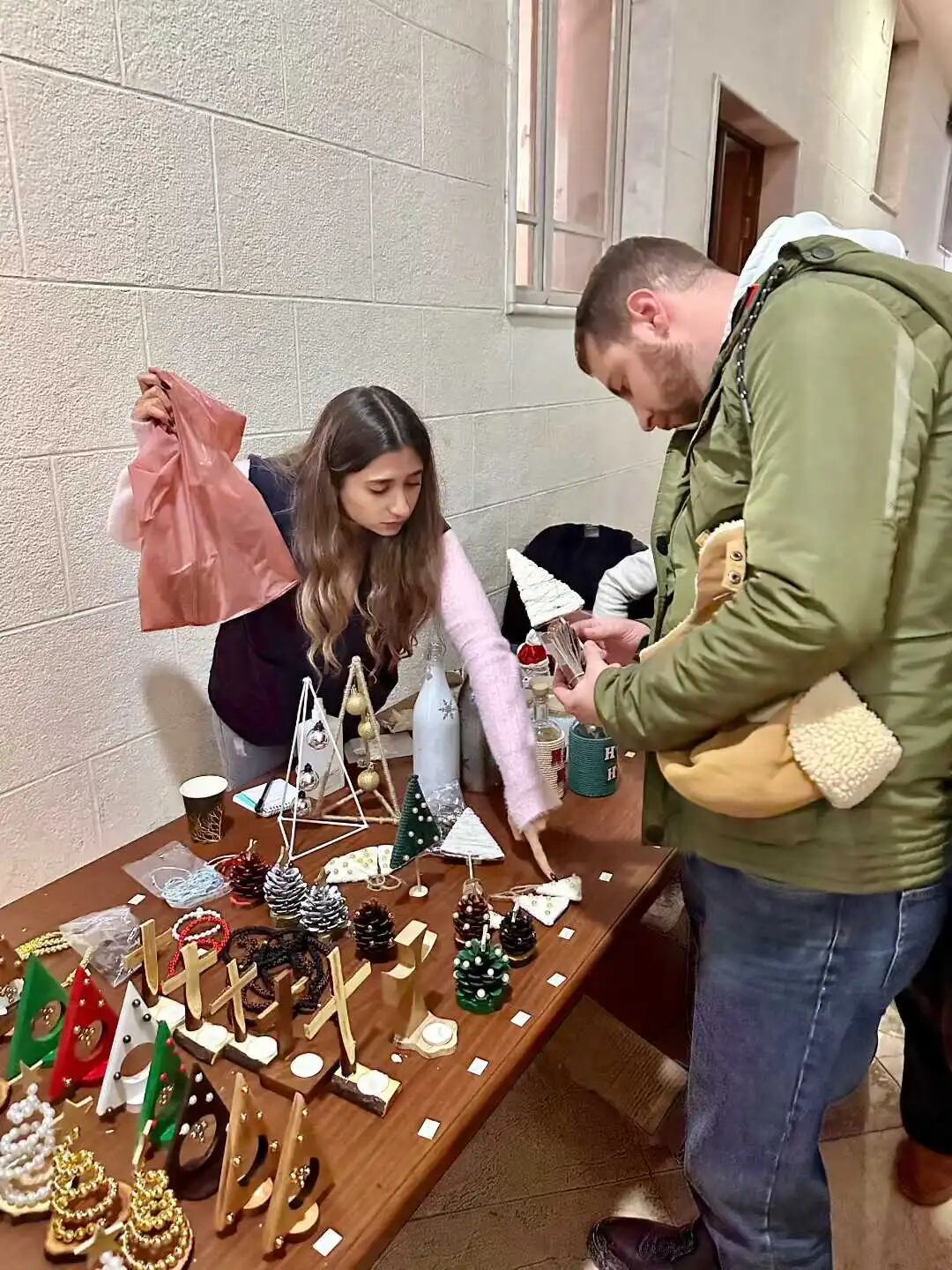
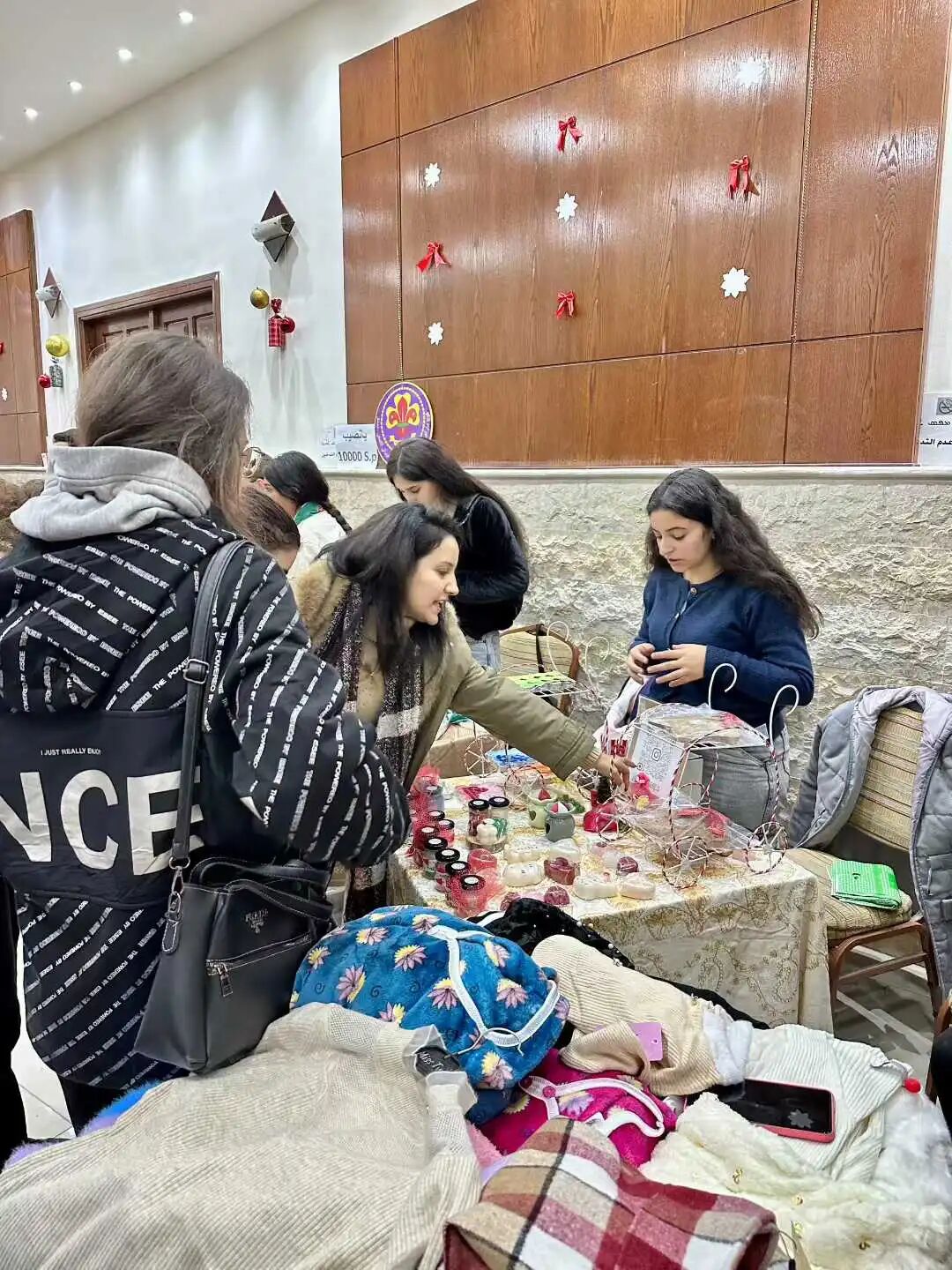
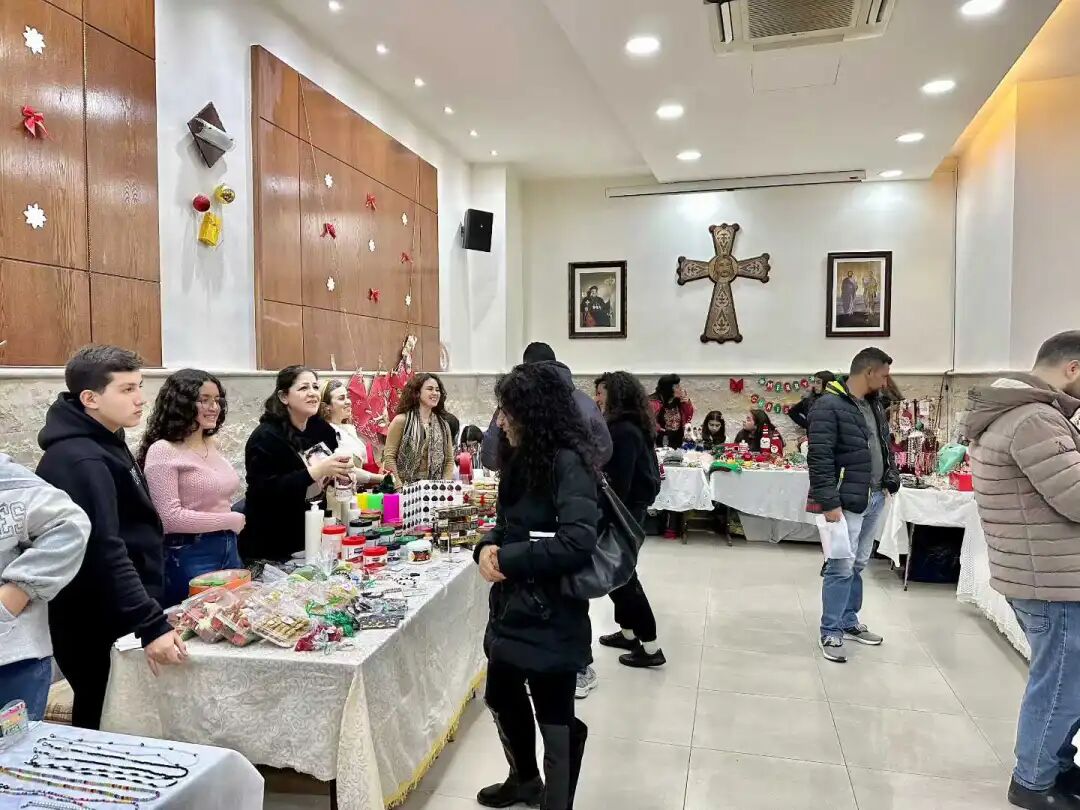
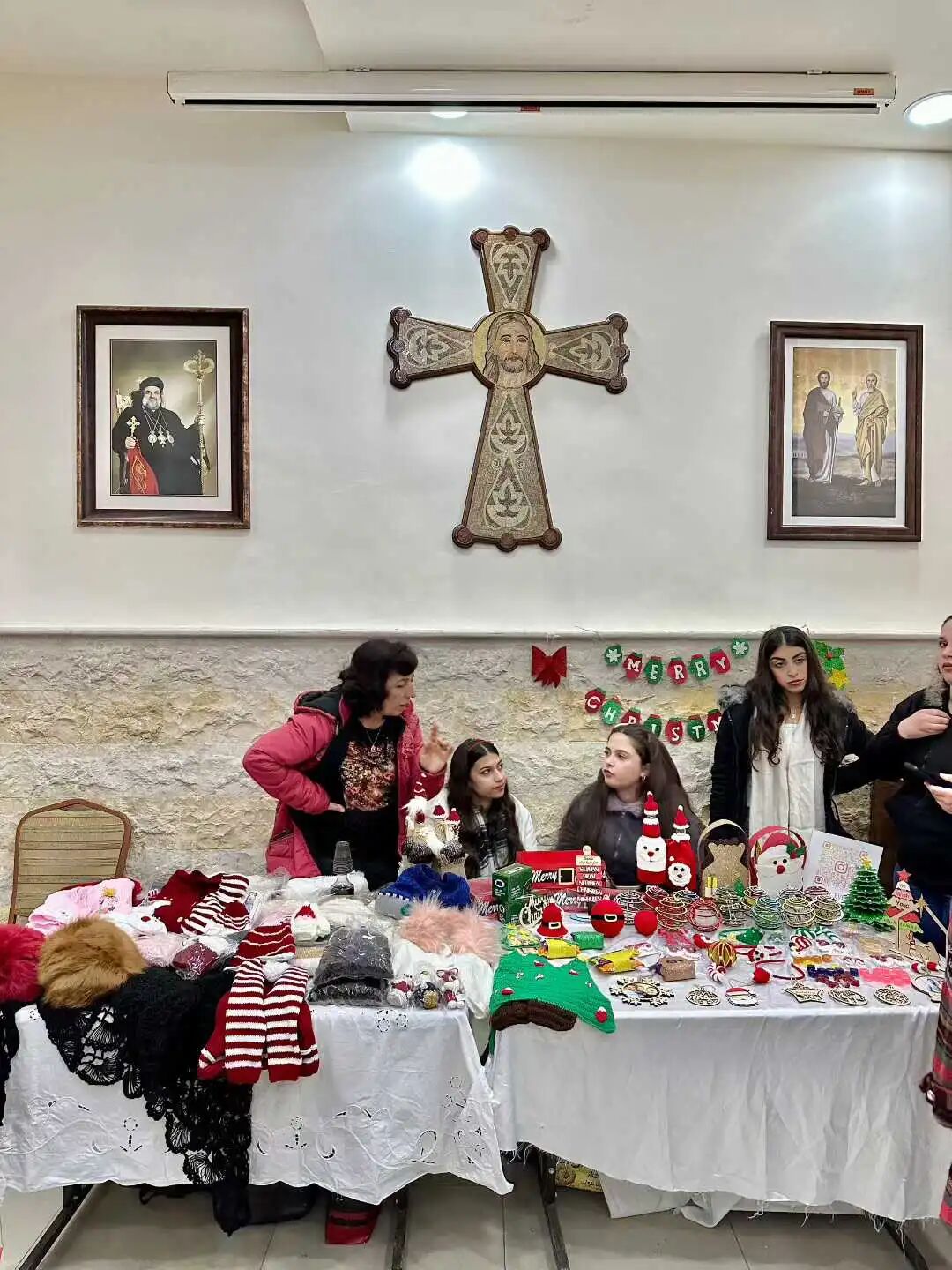
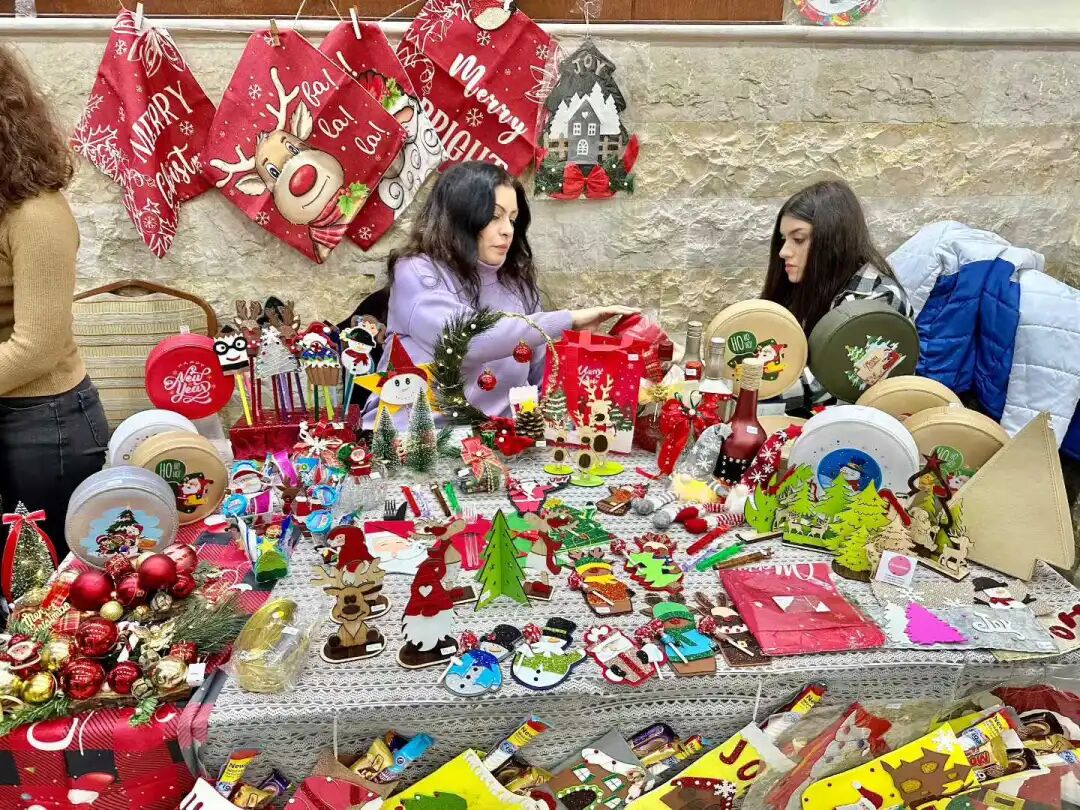
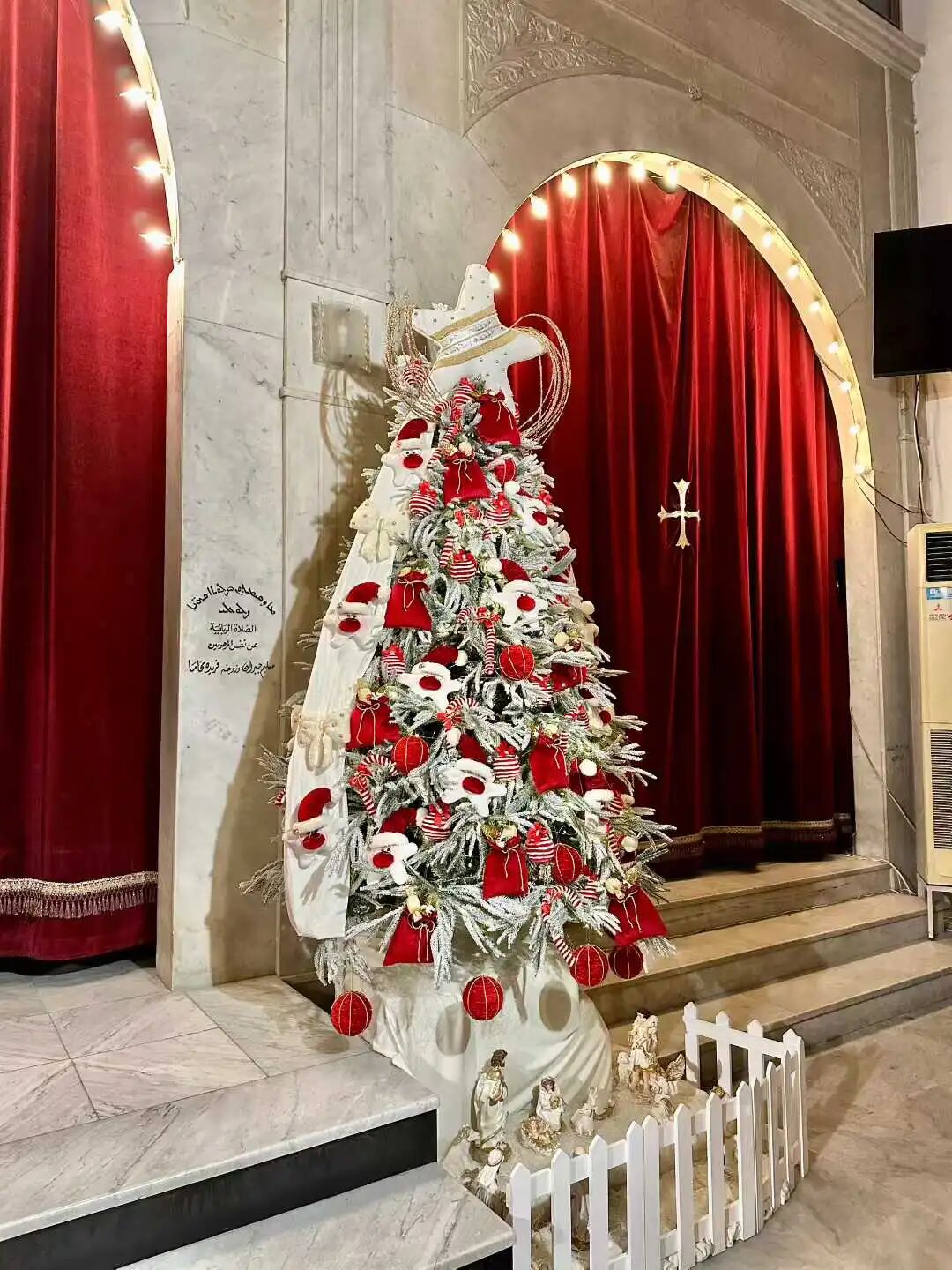
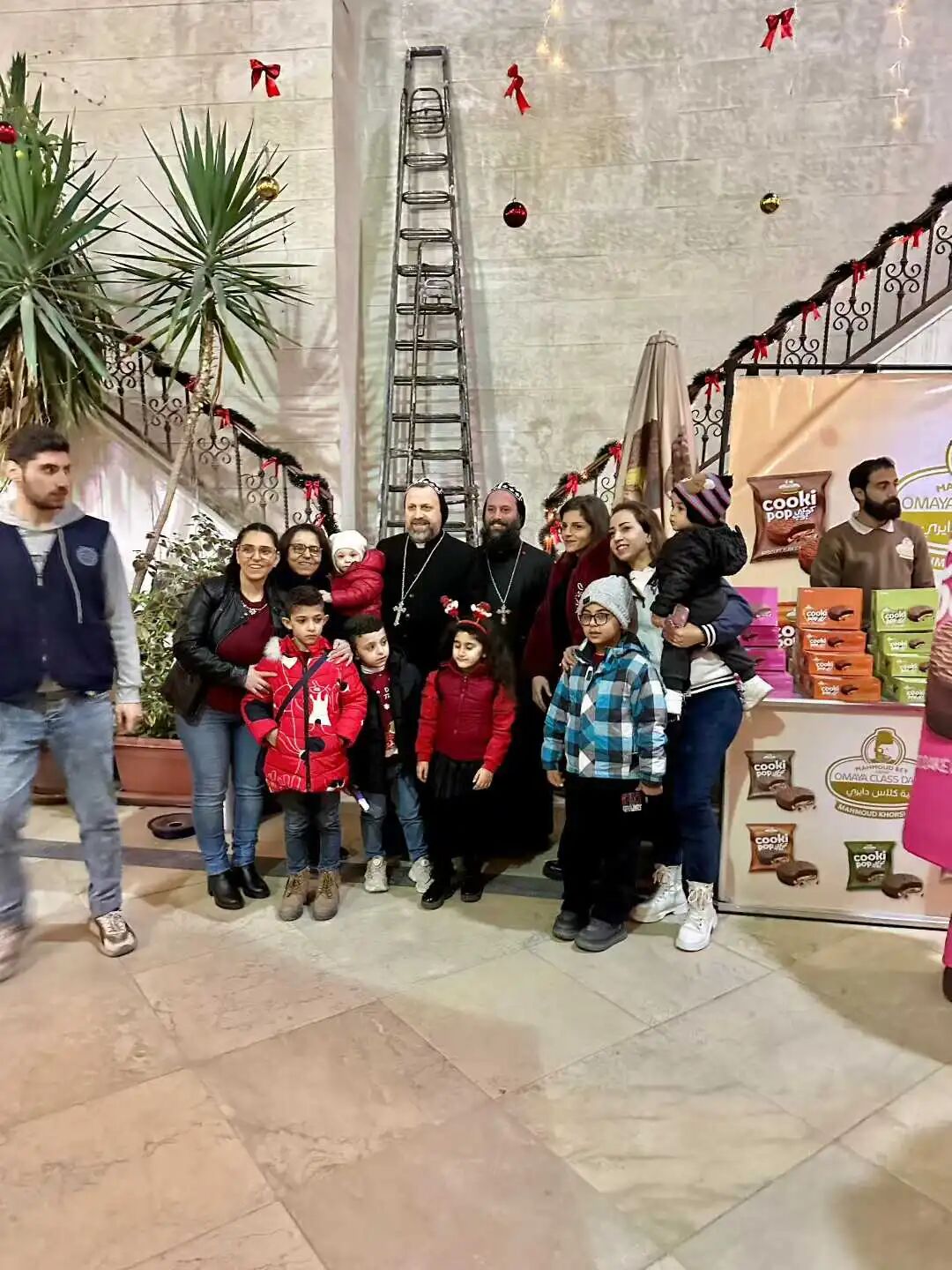
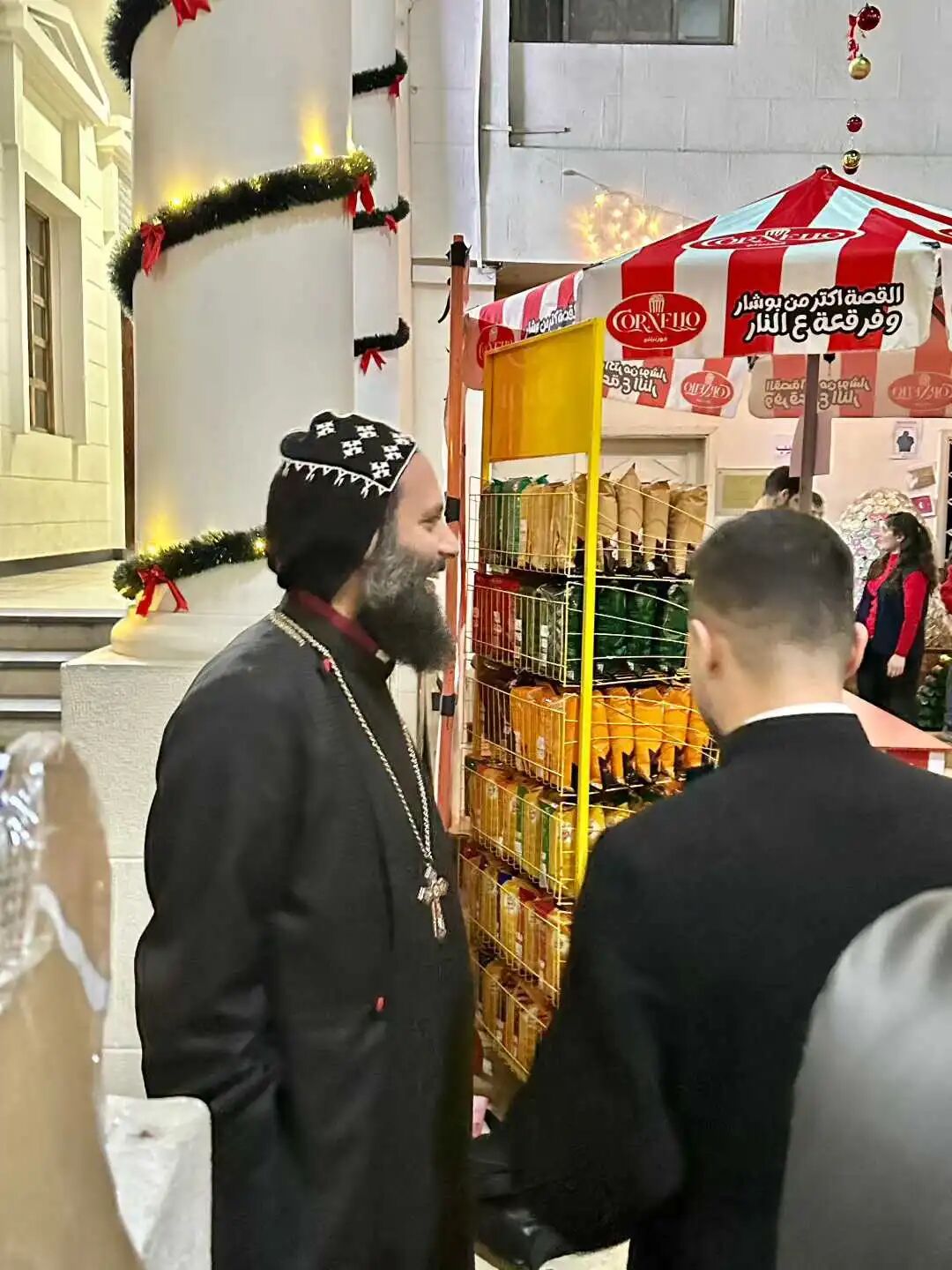
Since 1959, the Saint George Cathedral in Damascus has served as the seat of the Patriarch of the Syriac Orthodox Church, making it a very important site. The Syriac Orthodox Church holds to Miaphysitism. Its patriarch was removed by the Christian church in 518, and it gradually formed an independent church after that.
The seat of the Syriac Orthodox Patriarch was originally near the ancient city of Mardin in southeastern Turkey. It moved to Homs, Syria, after 1933, and then to the Saint George Cathedral in Damascus in 1959. Its followers are mainly in Syria, Iraq, Palestine, Jordan, Lebanon, Turkey, and India, with others scattered across Europe, America, and Oceania.
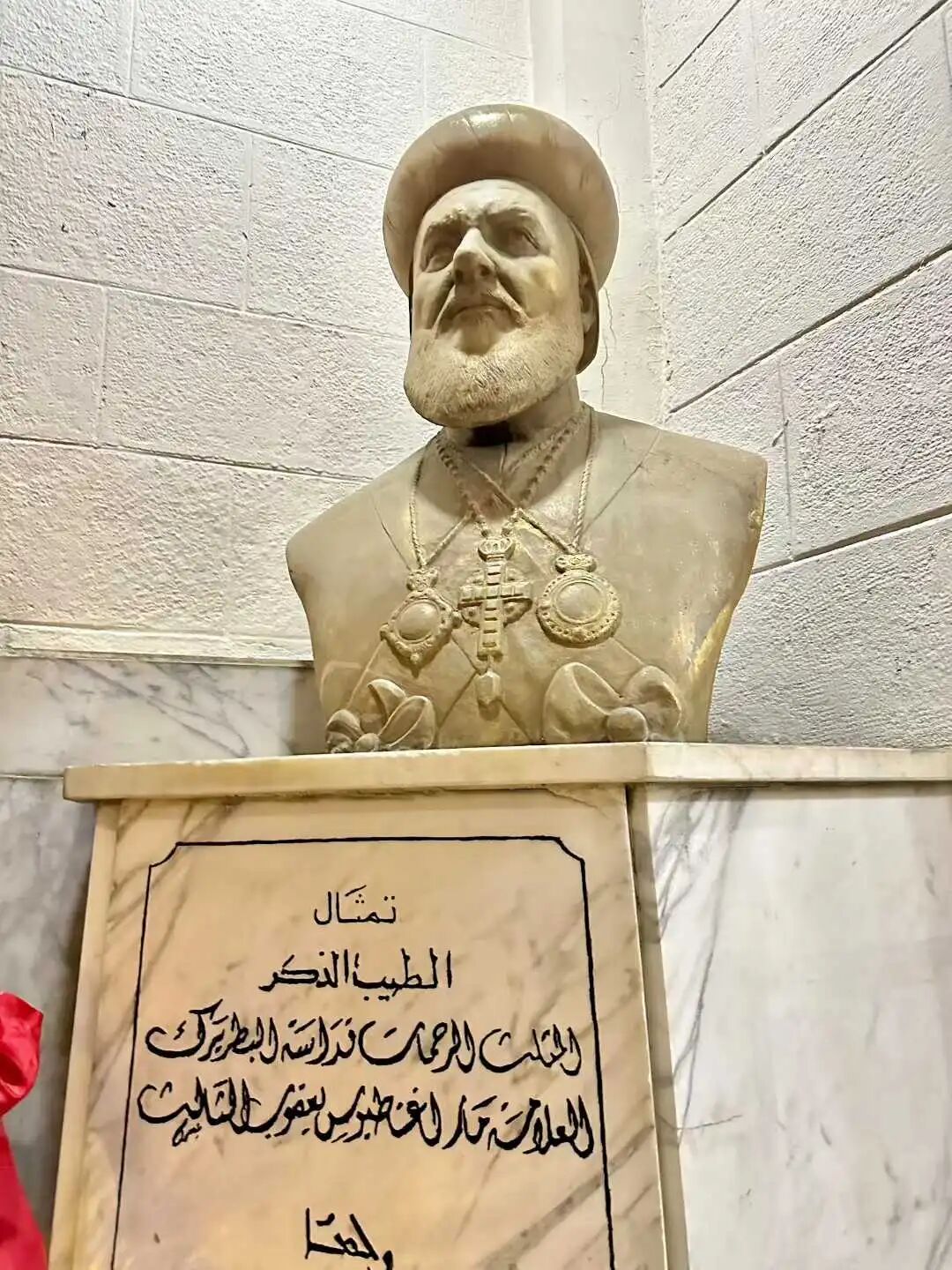
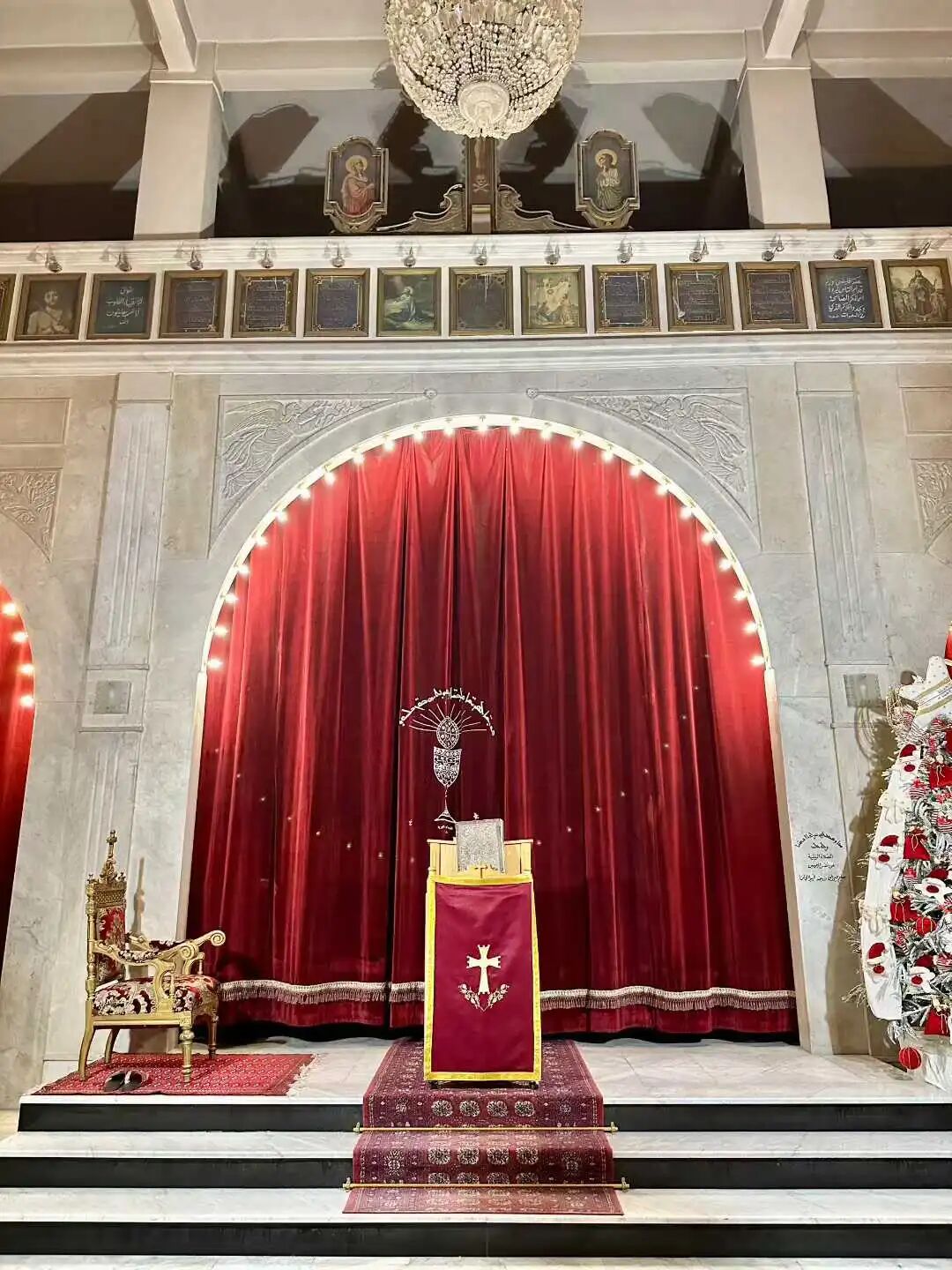
It is written that one should never forget the 1915 Ottoman genocide of the Assyrians. This was carried out by the Ottoman army and Kurdish tribes in the border region between Turkey and Iran during World War I, and Turkey still avoids this issue today.
Youths from the Syriac Orthodox Church celebrate Christmas inside the cathedral.
Besides the Syriac Orthodox Church, the Chaldean Catholic Church in Damascus also held a Christmas market at the Saint Theresa Church in the old Christian quarter.
The Chaldean Catholic Church is one of 23 Eastern Catholic Churches that use Eastern Christian rites but are in communion with the Pope. Its believers are mainly Assyrians, mostly living in northern Iraq. The Chaldean Catholic Church can be traced back to the Church of the East (Nestorianism). After the Church of the East was considered heretical by the Roman Catholic Church in 431, the two remained divided. More than a thousand years later, in 1552, some members of the Church of the East from the border of Turkey and Iran opposed the hereditary system of the patriarchate. They elected another patriarch and went to Rome to discuss communion with the Pope. In 1553, the Pope in Rome appointed the first patriarch of the Chaldean Catholic Church. Over the next few centuries, the relationship between the Chaldean Catholic Church and Rome was on and off, often reverting to the Church of the East, until it finally entered into communion with the Catholic Church in 1830.
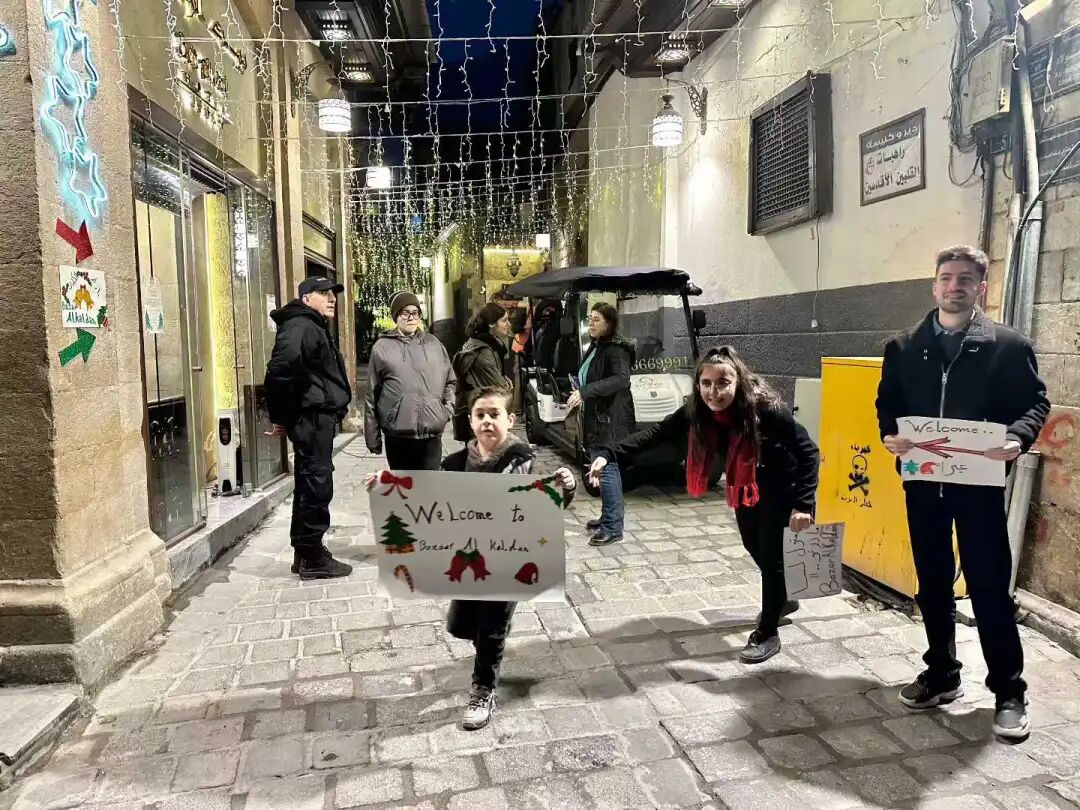
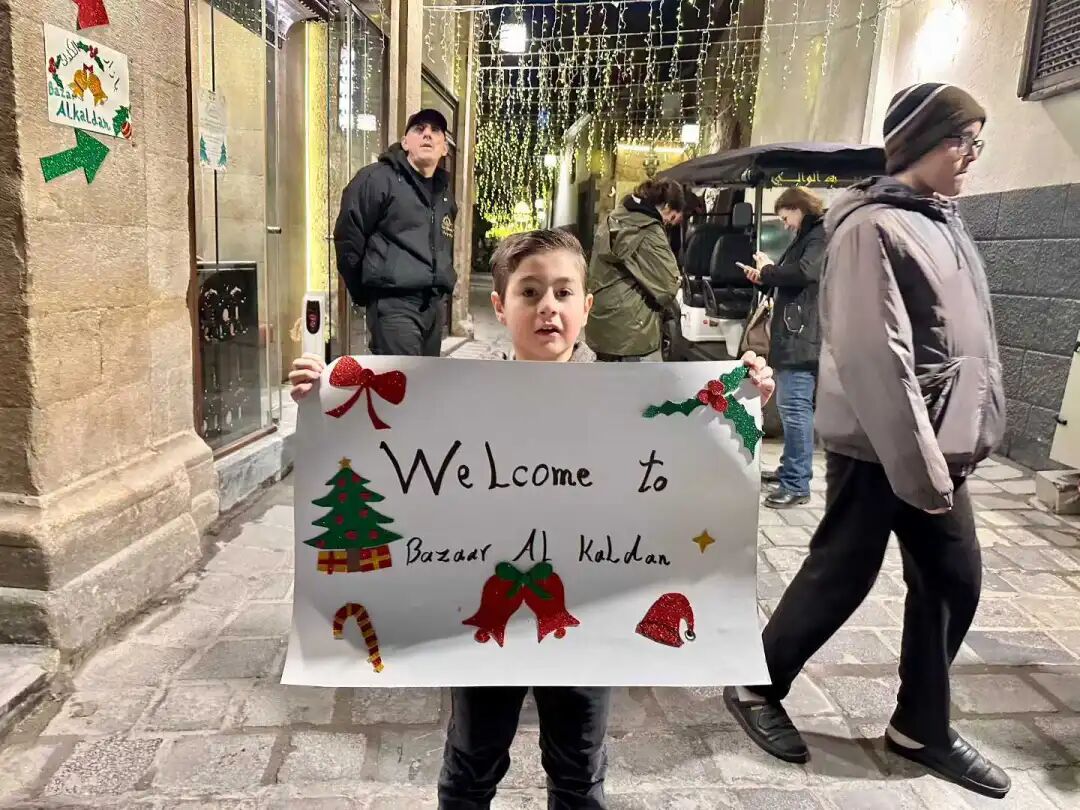
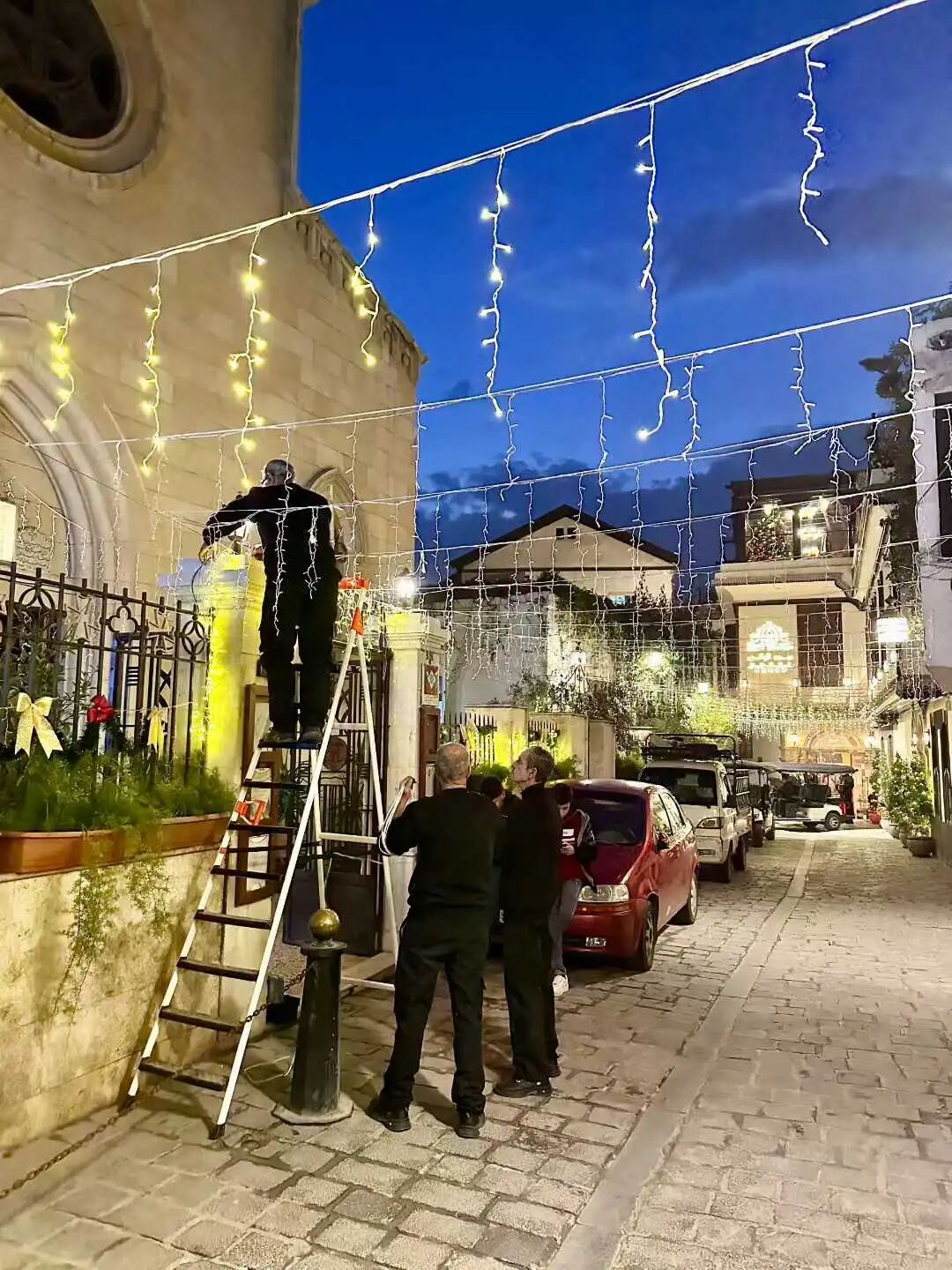
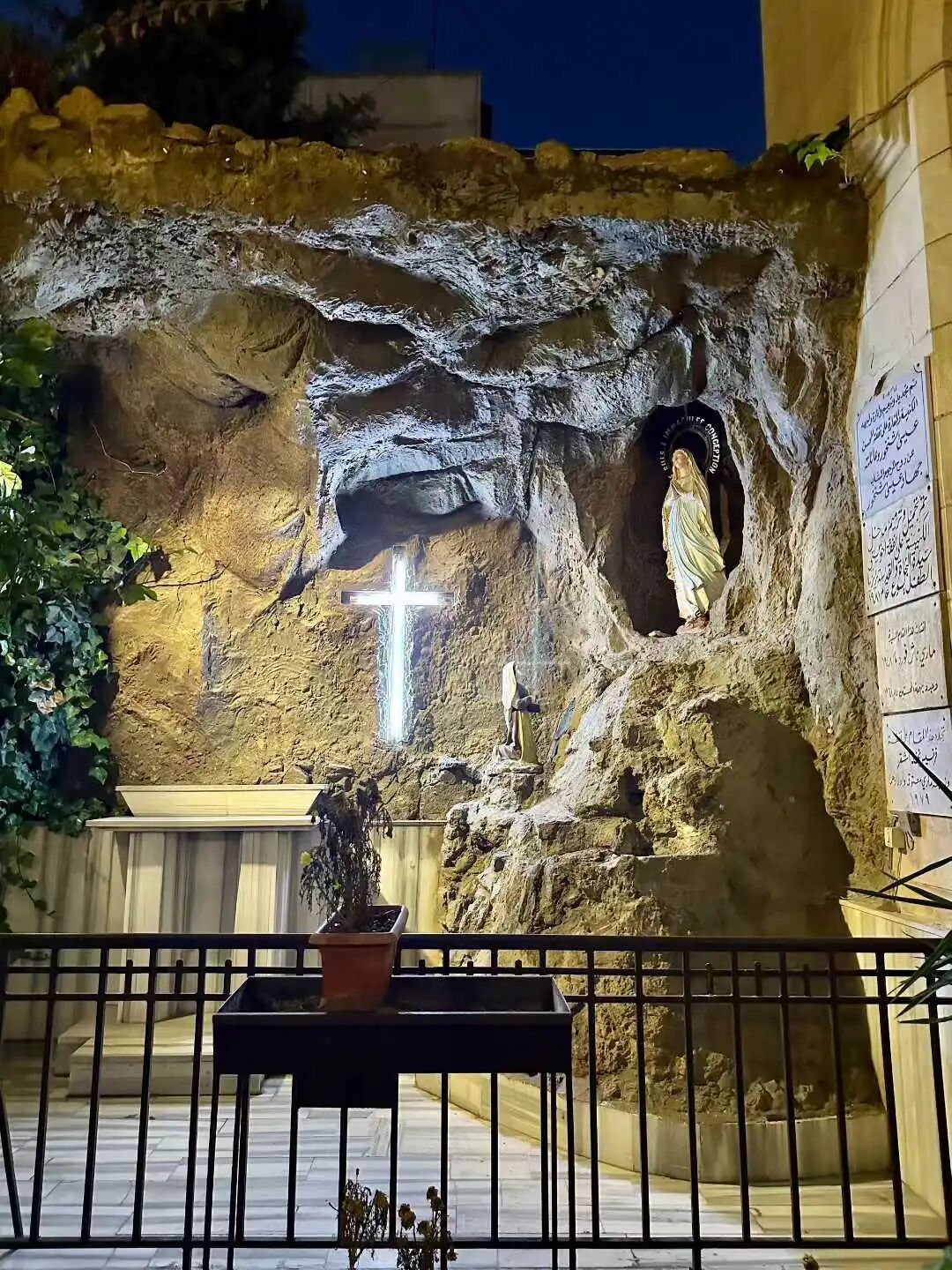
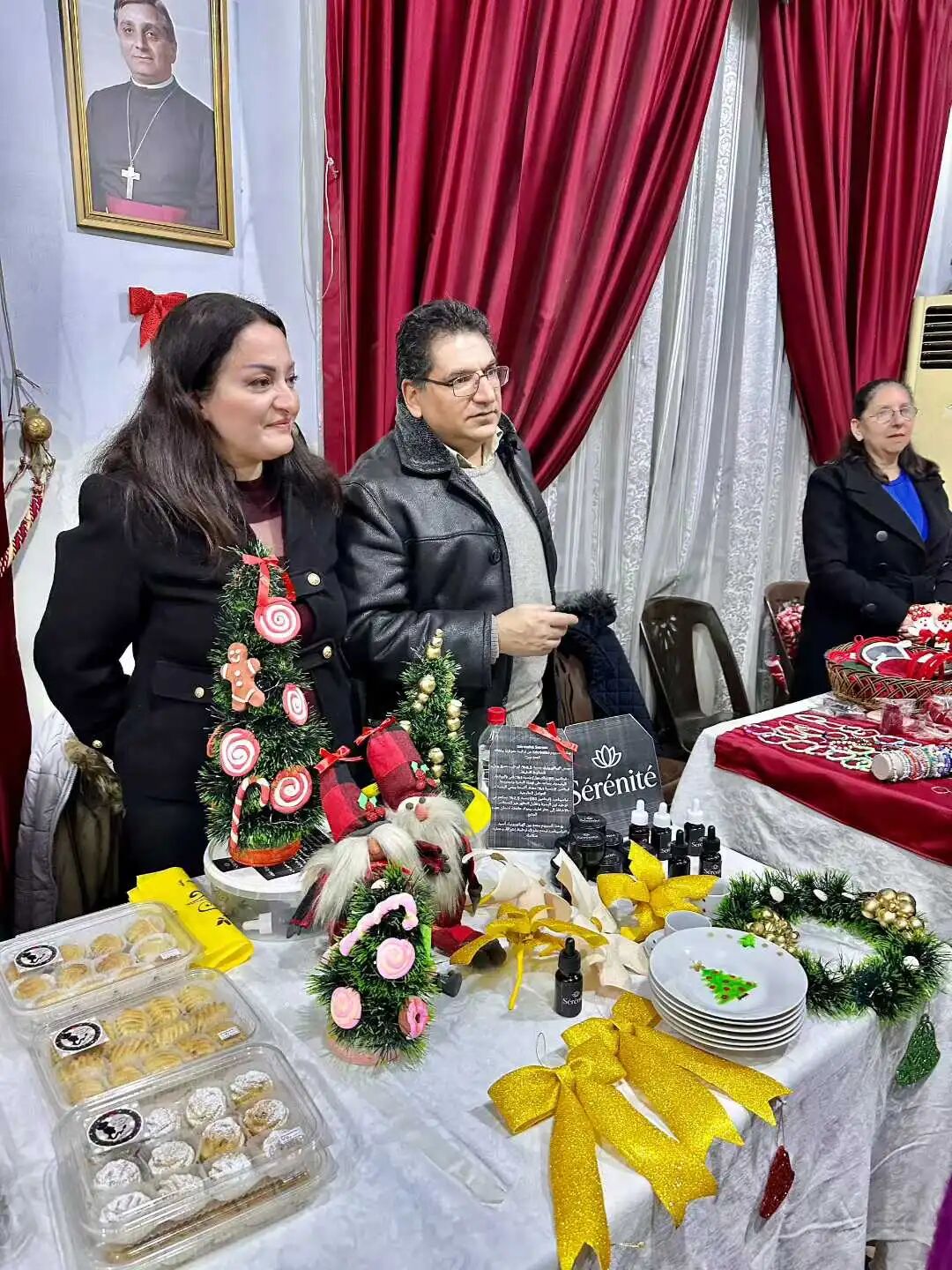
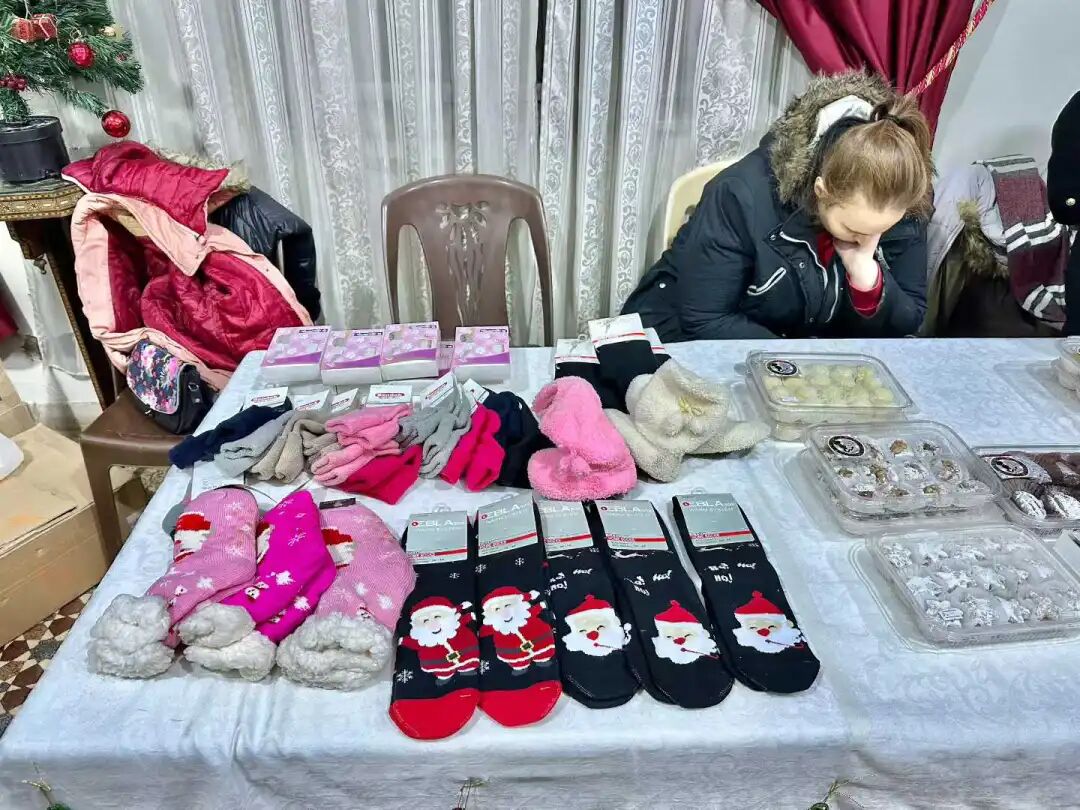
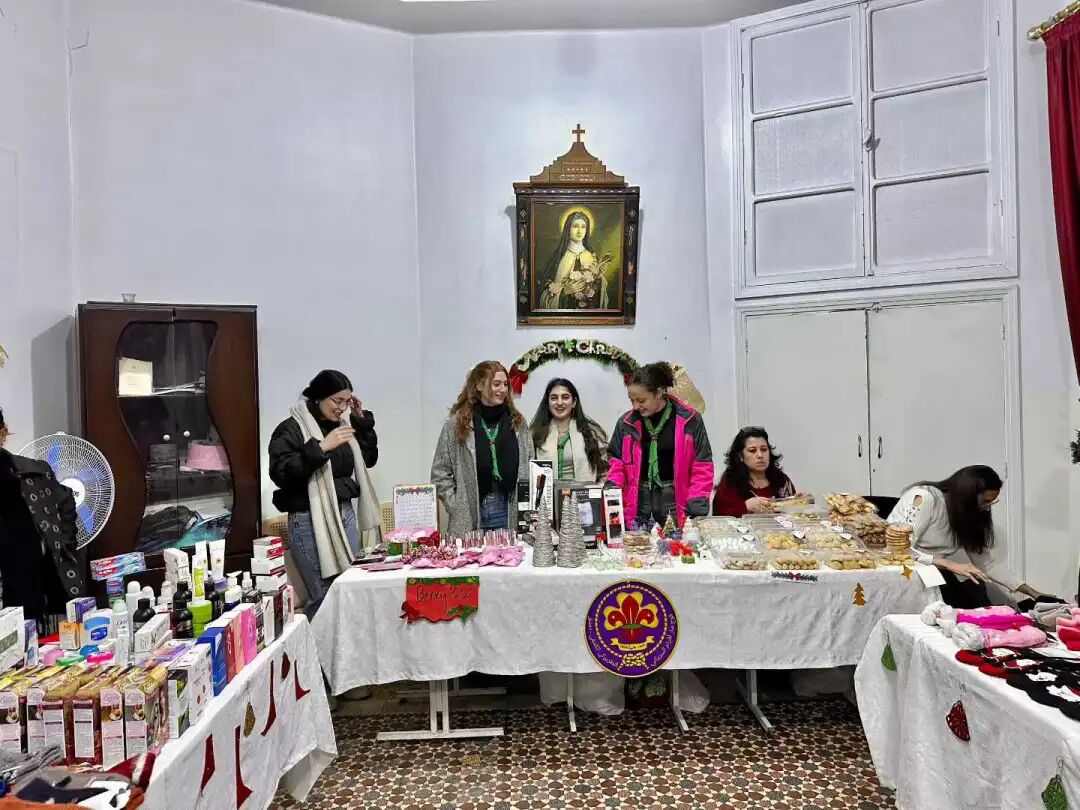
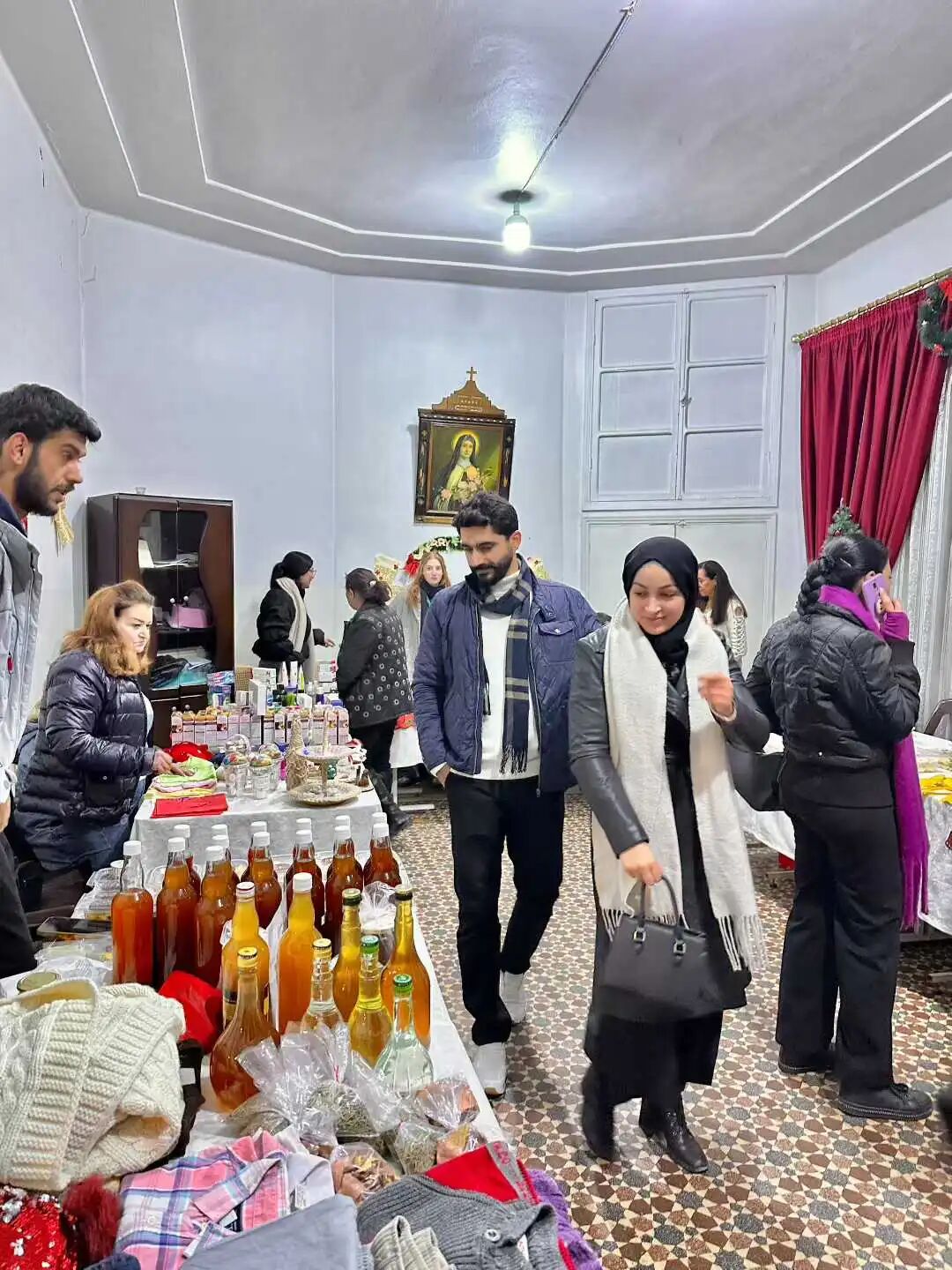
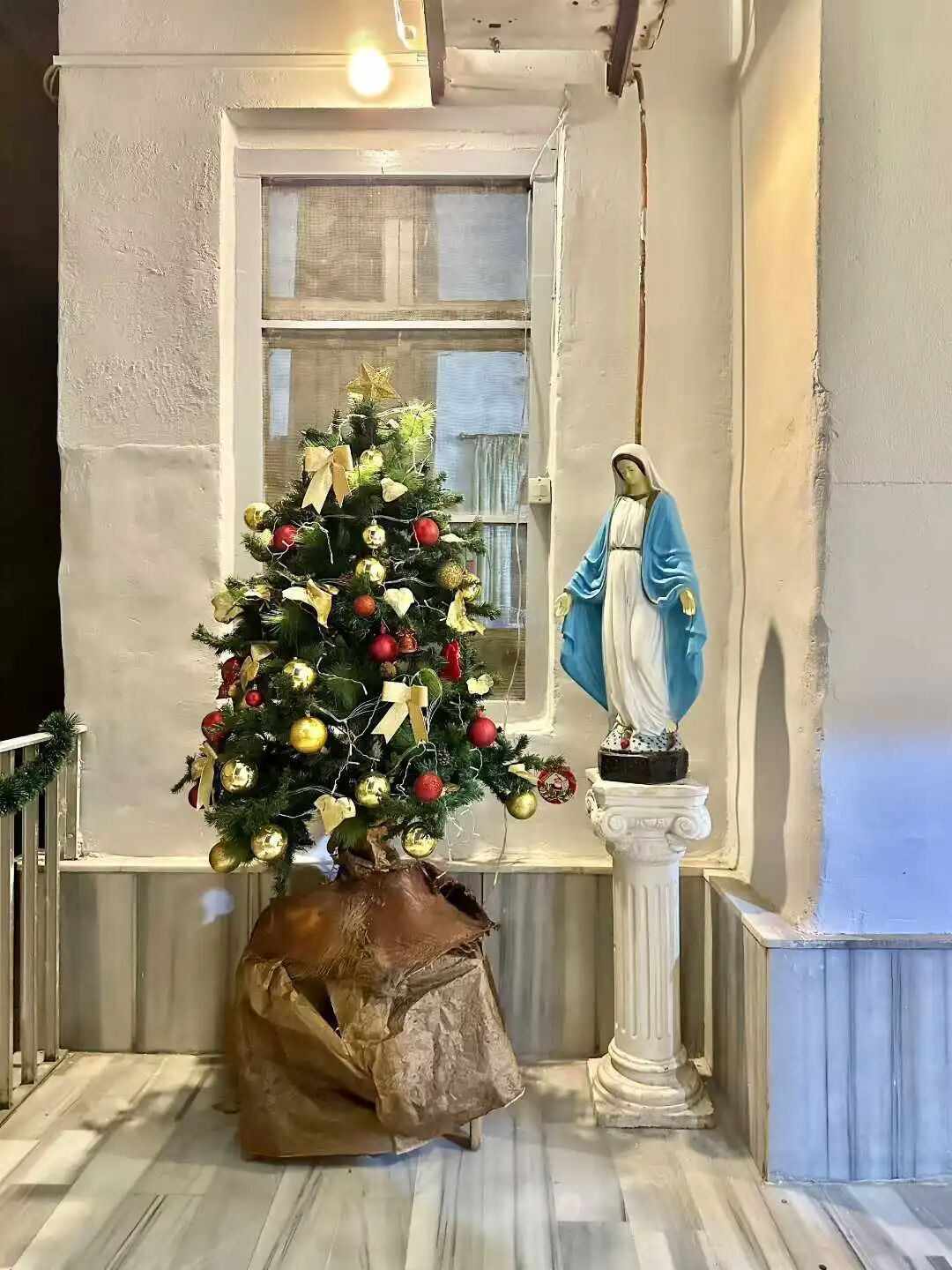
The road in front of the Cathedral of Our Lady of the Dormition inside the East Gate of Damascus must have the best Christmas decorations in the old city, and many young people come here to take photos.
The Cathedral of Our Lady of the Dormition in Damascus is the headquarters of the Melkite Greek Catholic Church. The Melkite Greek Catholic Church is an Eastern Catholic Church that follows the Byzantine rite but is in communion with the Roman Curia. The church can be traced back to Greek-speaking Christians living in the Middle East during the Roman period. When Middle Eastern Christianity split in 451, they accepted the authority of the Council and the Byzantine Empire. In 1729, the Melkite Greek Catholic Church broke away from Constantinople and entered into communion with the Roman Catholic Church.
The Armenian Apostolic Church inside the East Gate of Damascus; Armenians arrived in Damascus during the Umayyad Caliphate.
The Christian shops in the Christian Quarter of Damascus are mainly located on the north-south Bab Touma Street.
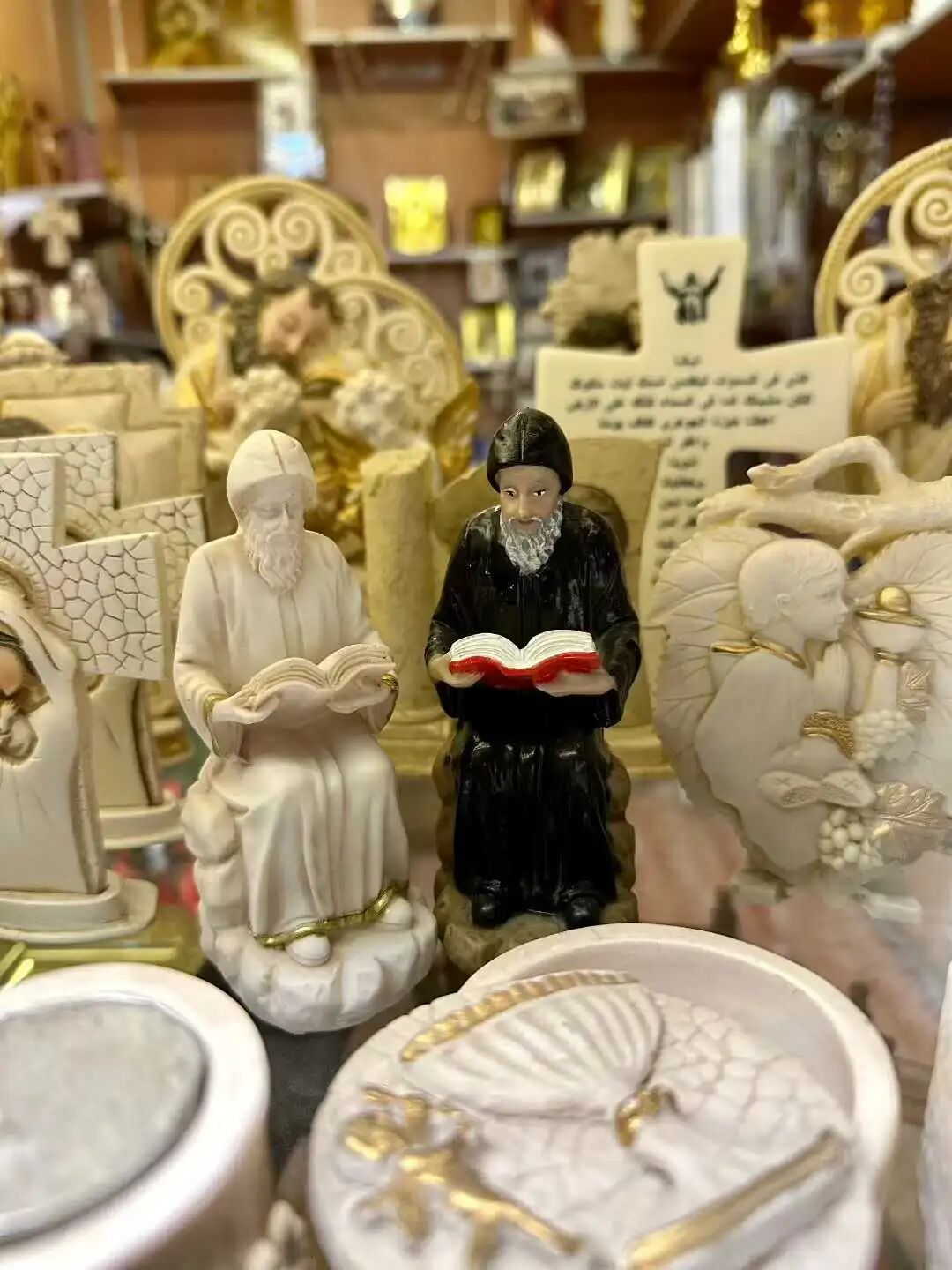
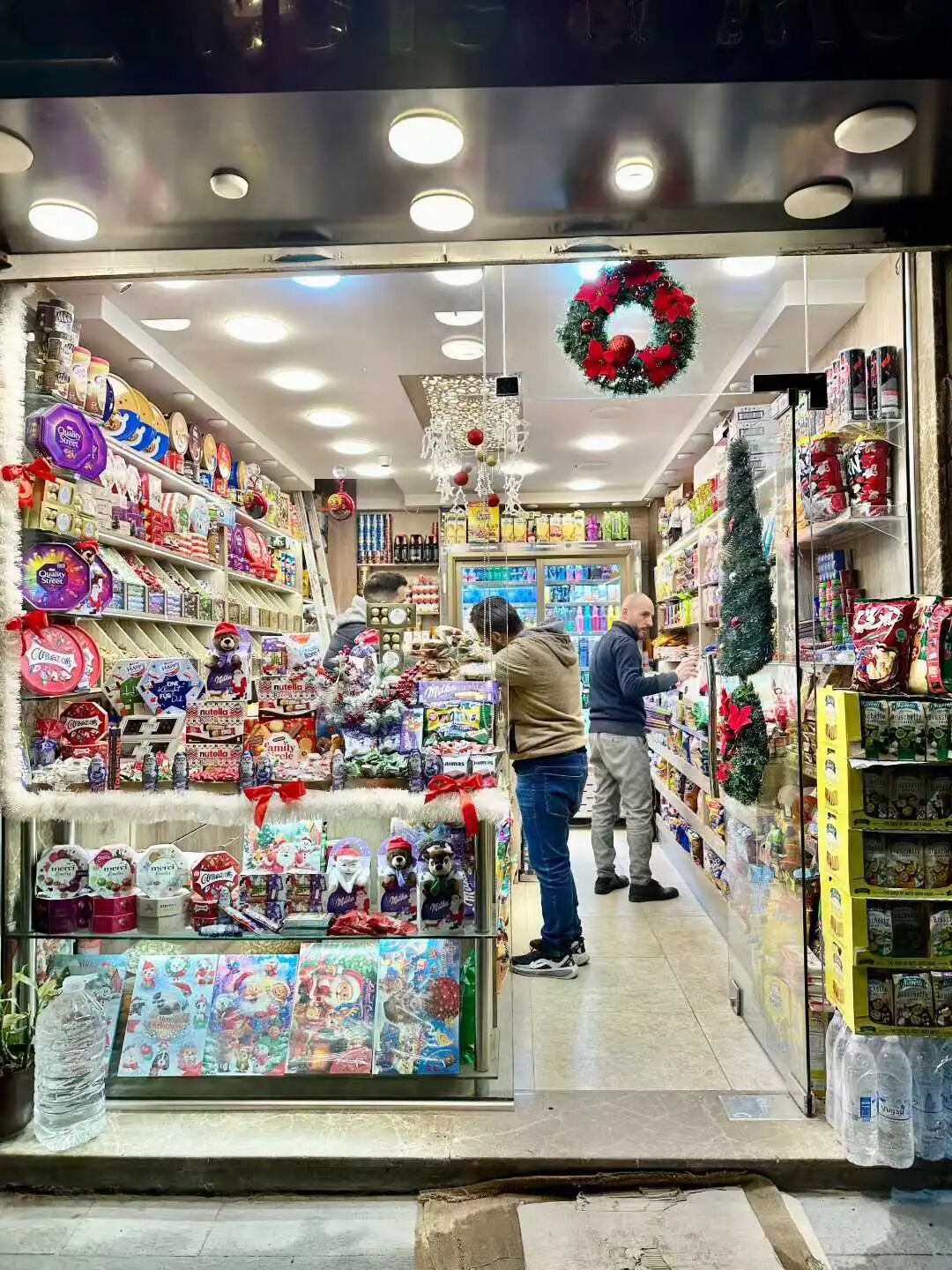
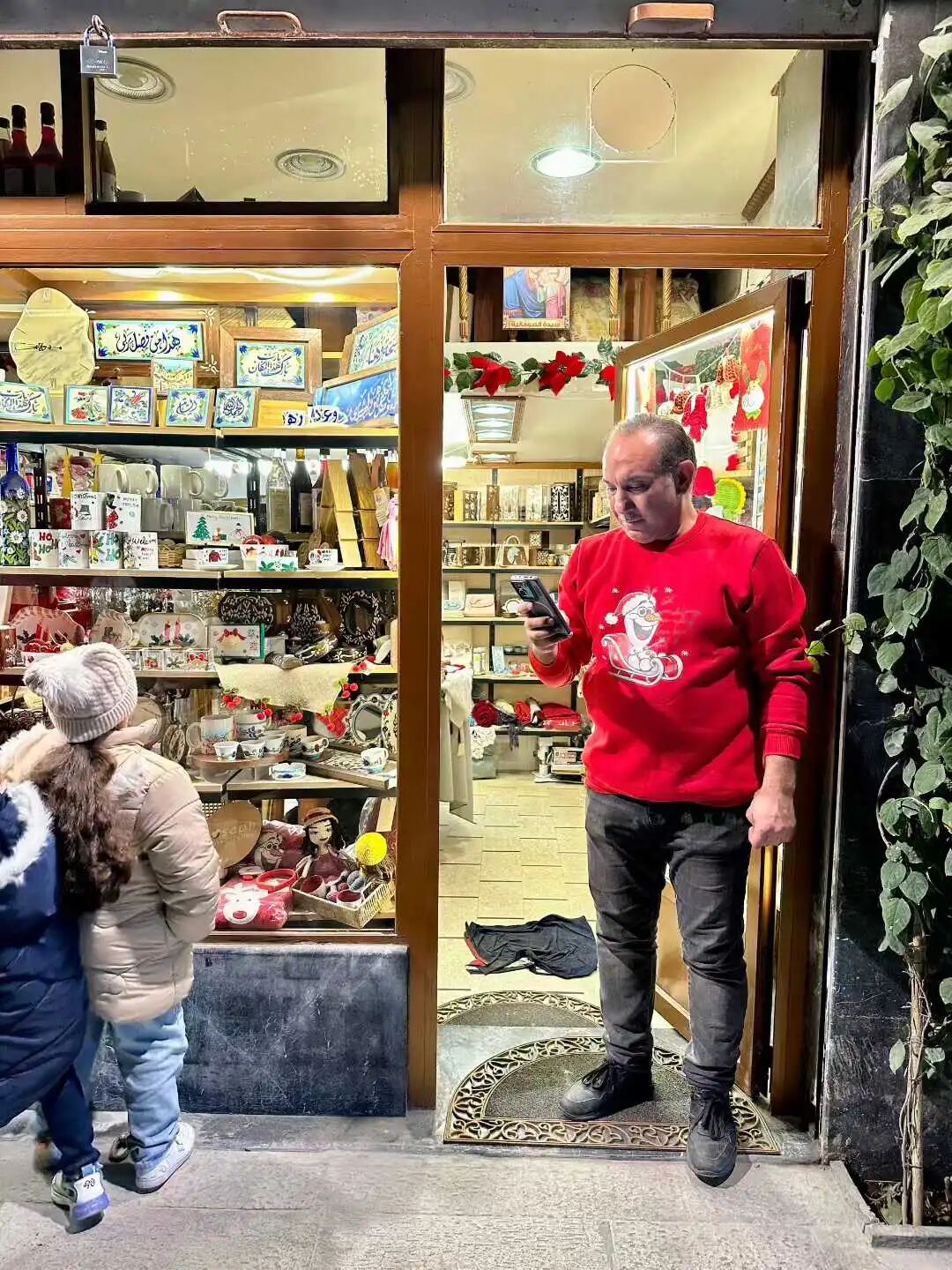
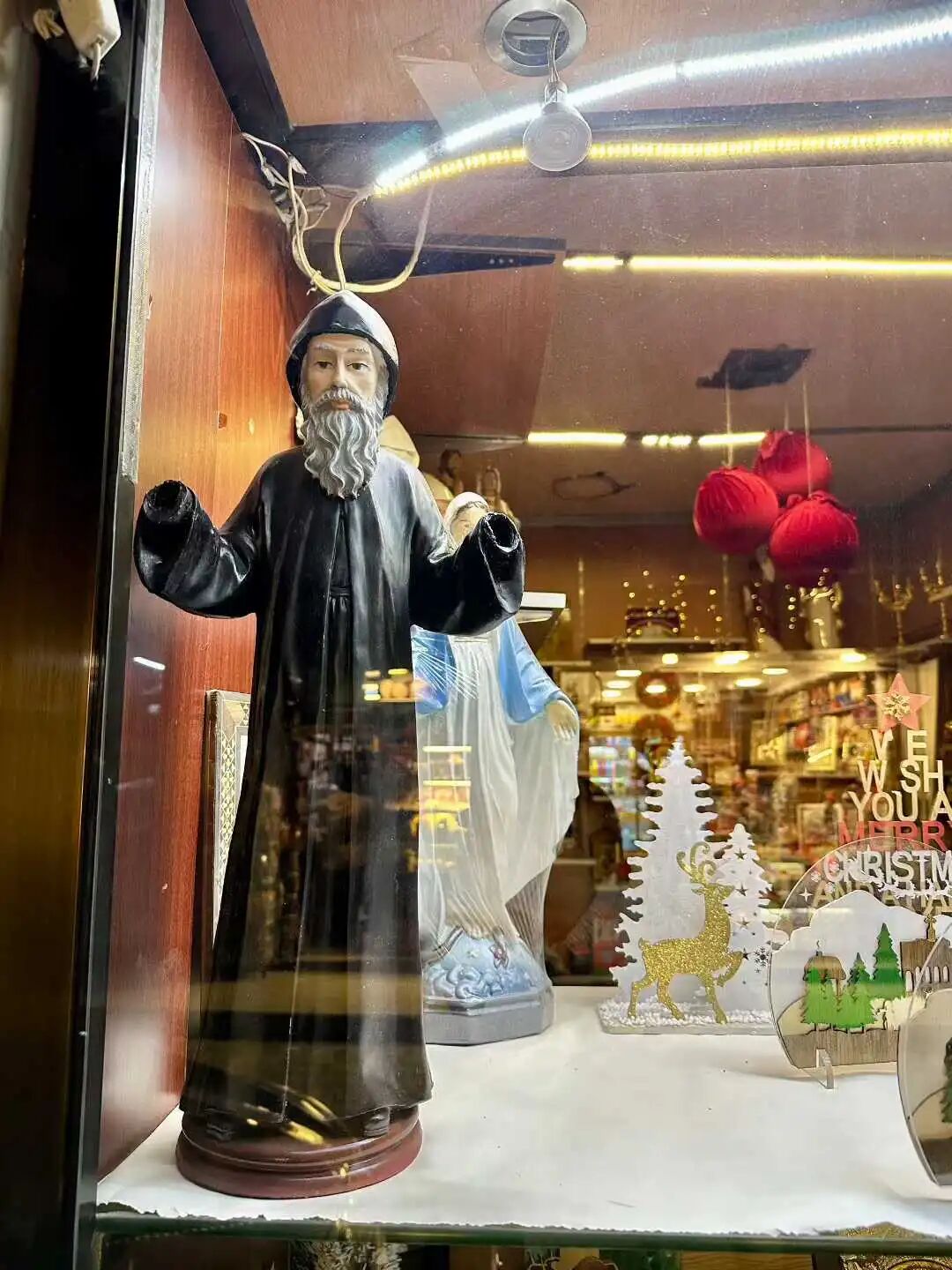
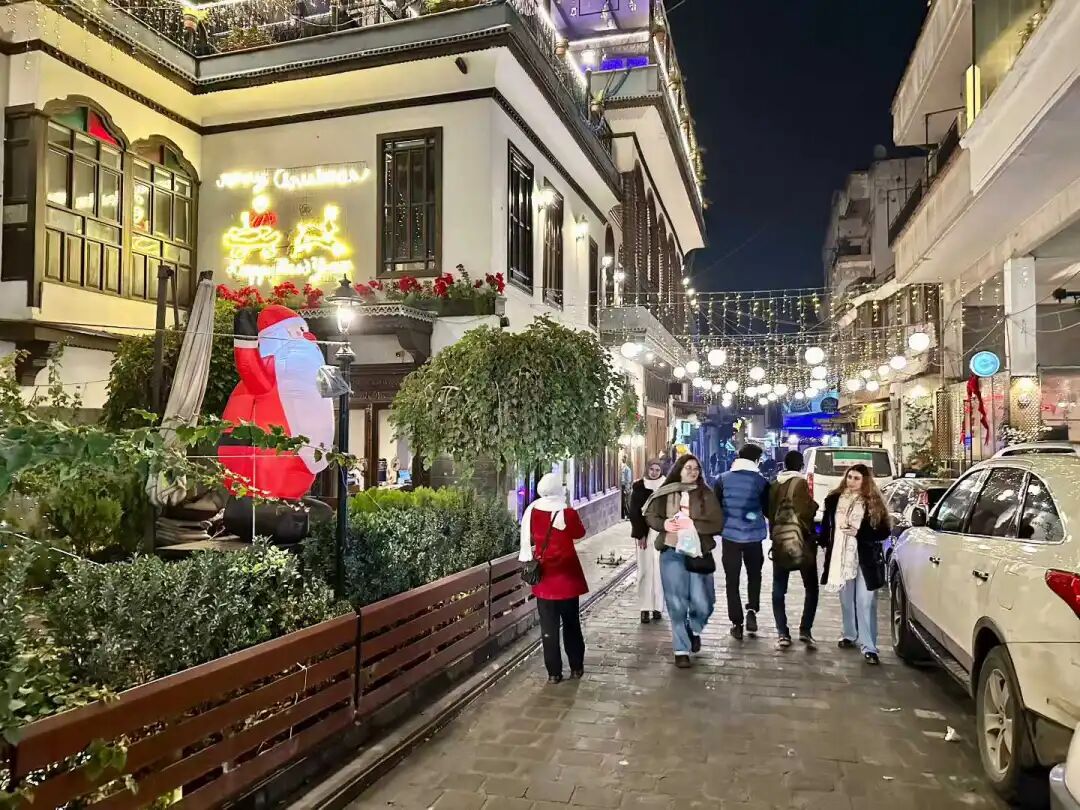
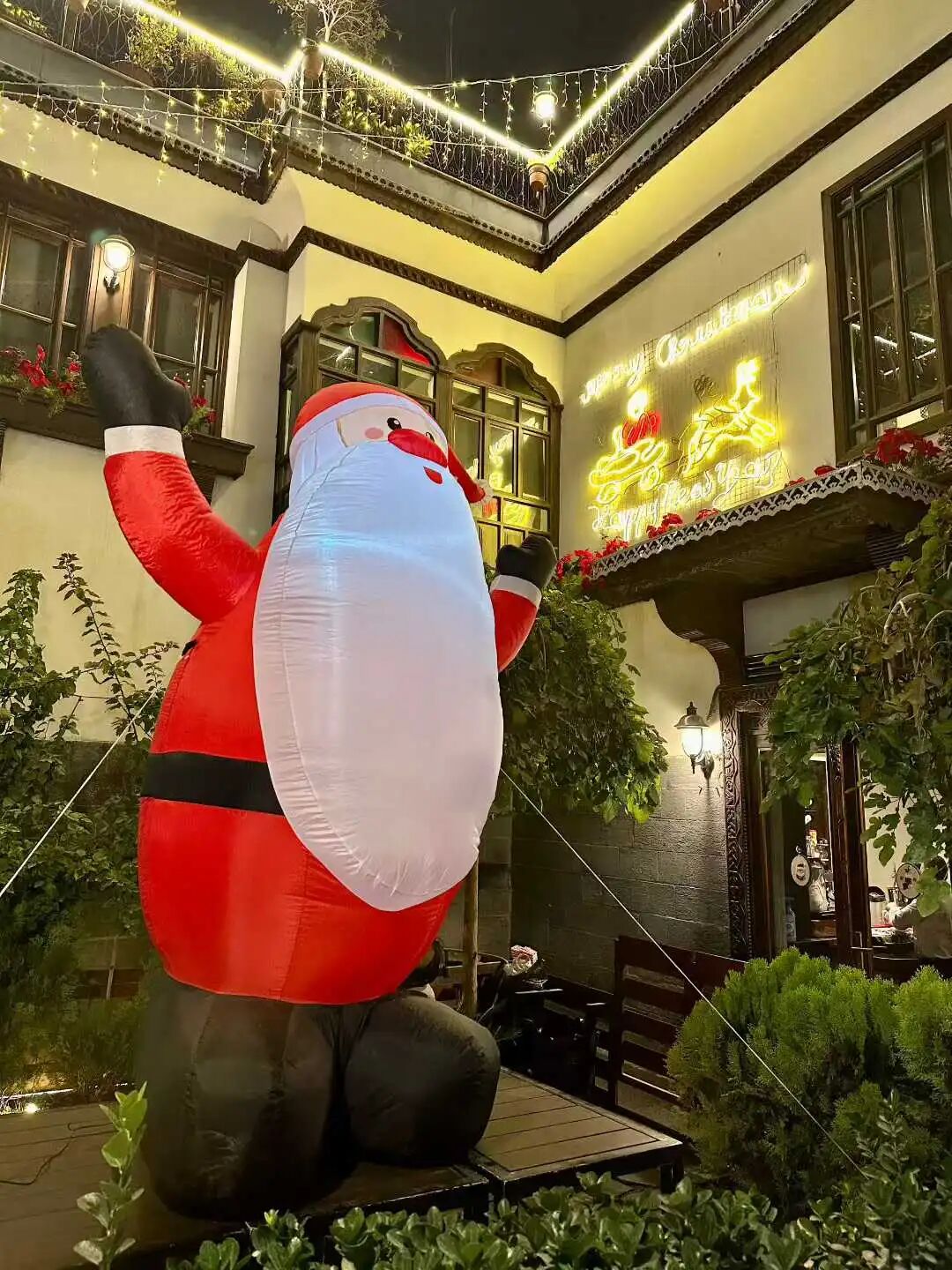
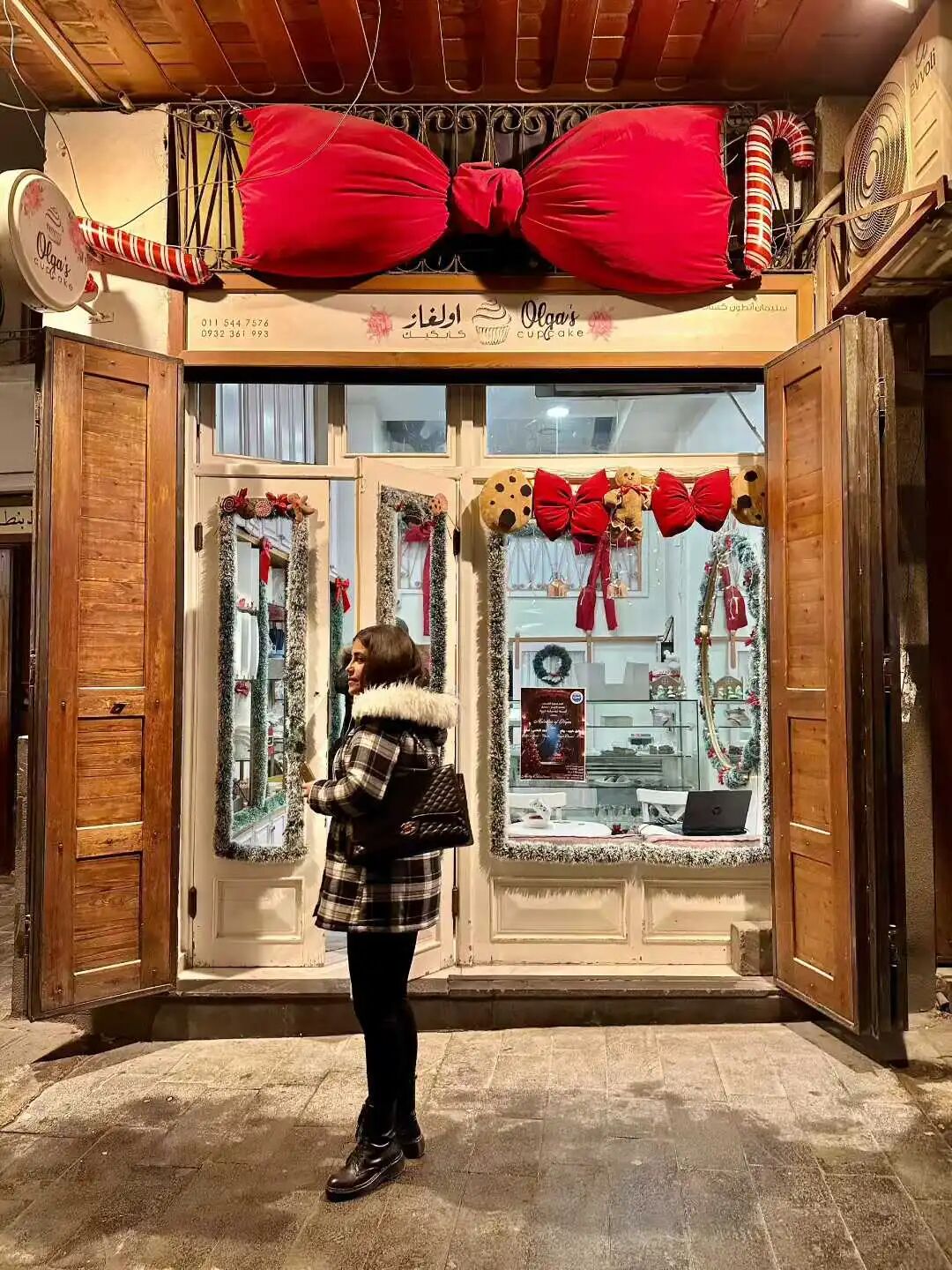
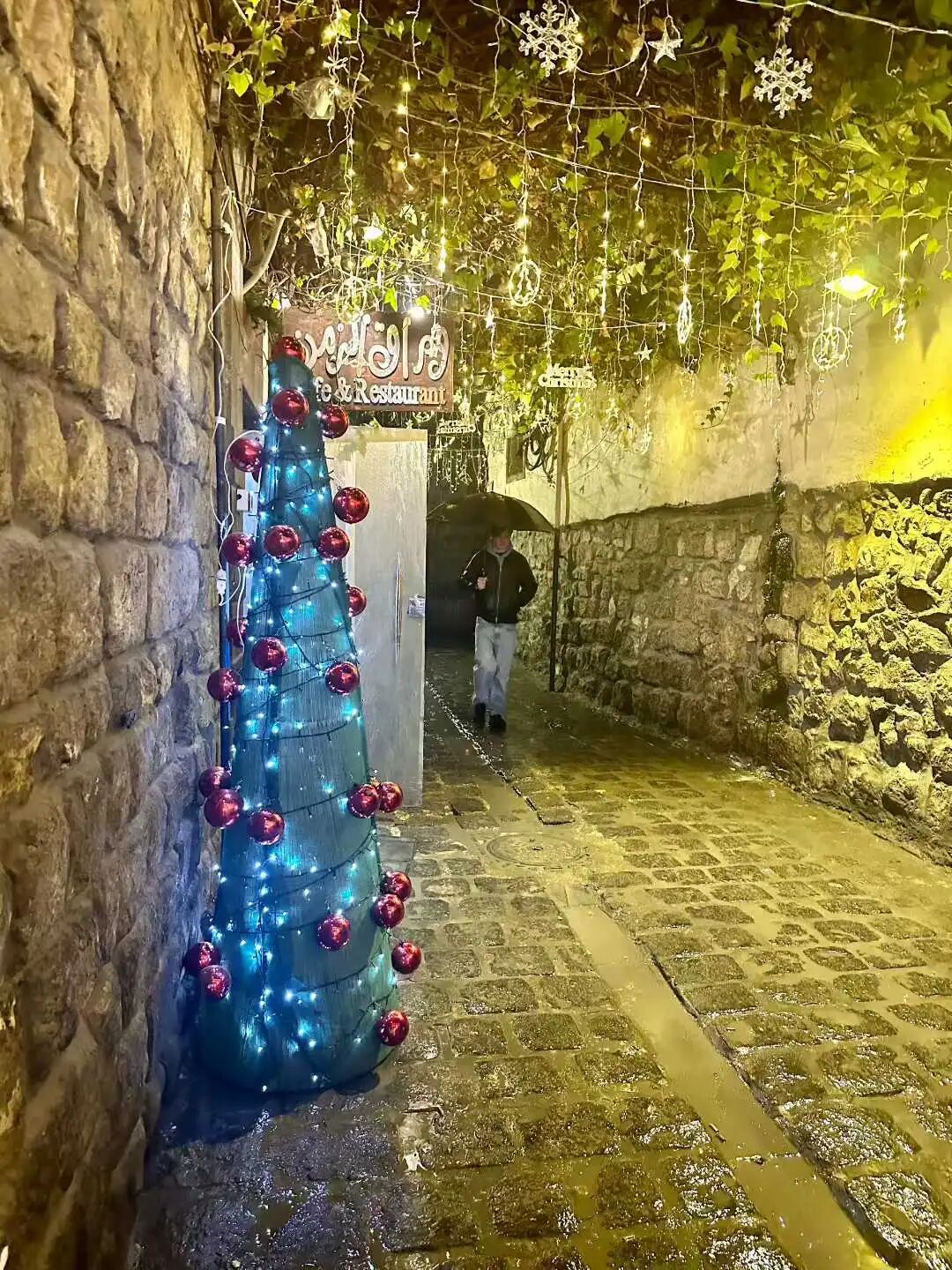
You can only see this sight in the Christian Quarter of Damascus, where monasteries and churches are built side by side. The minaret and the cross stand next to each other, specifically at the St. Paul Franciscan Church and the Omayyad Mosque on Bab Touma Street.
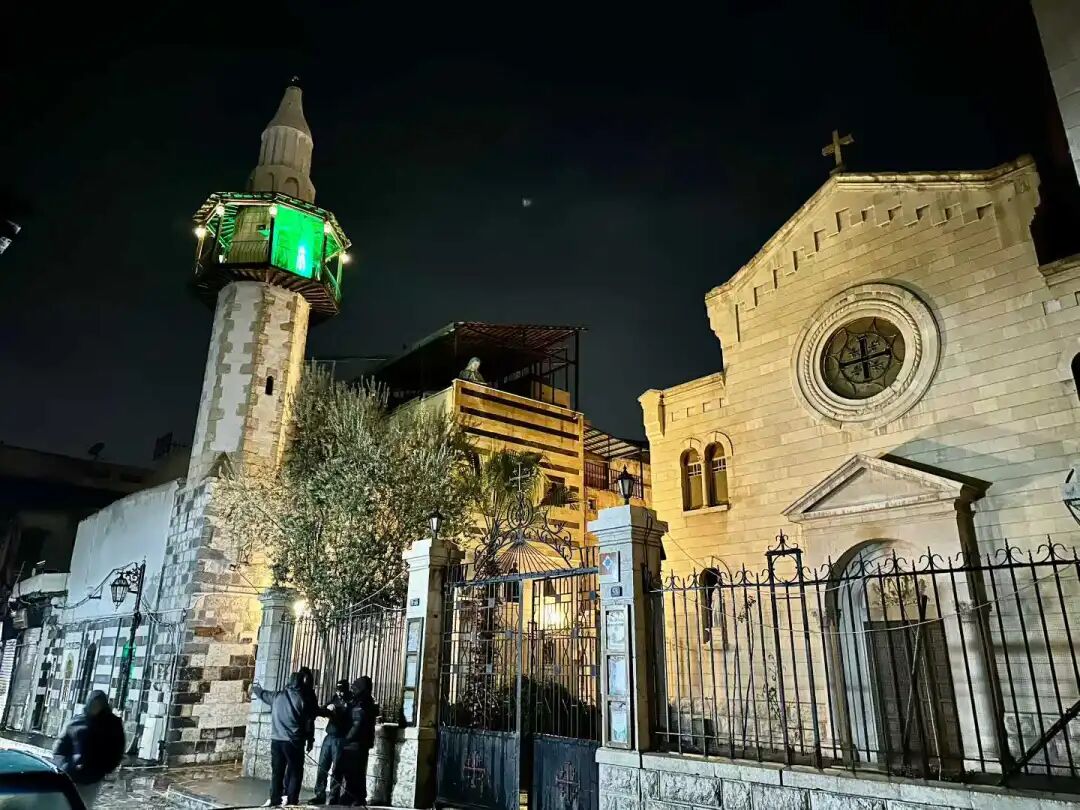
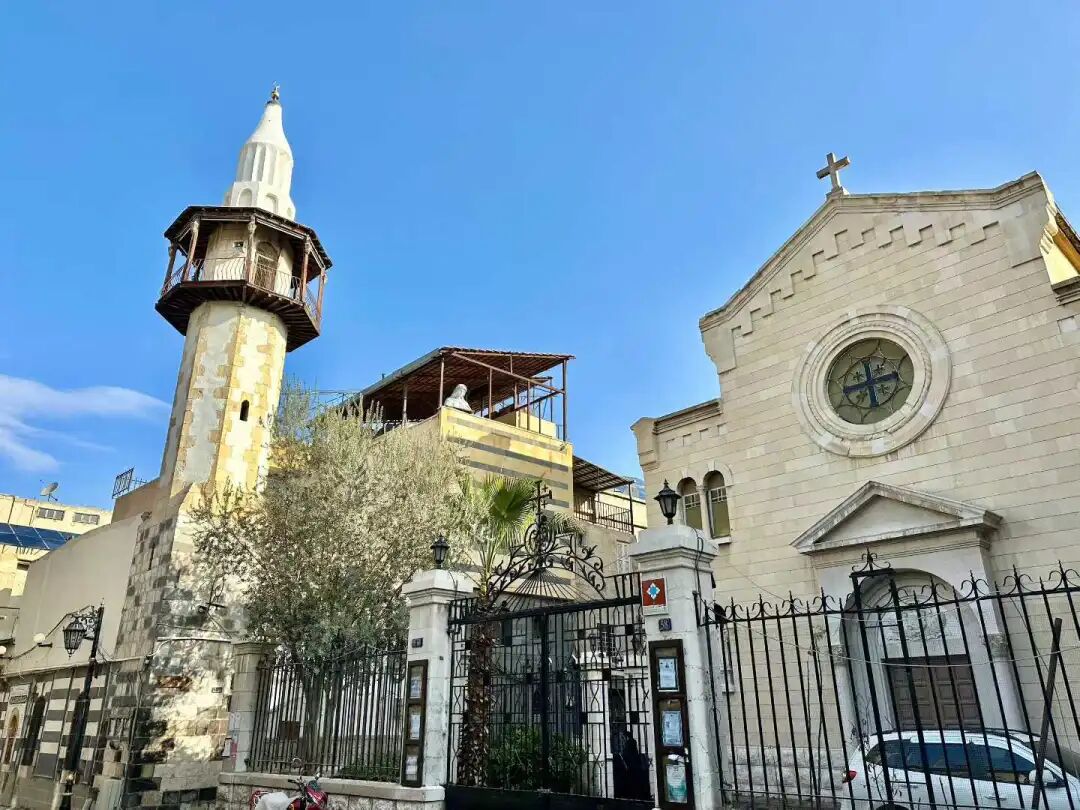
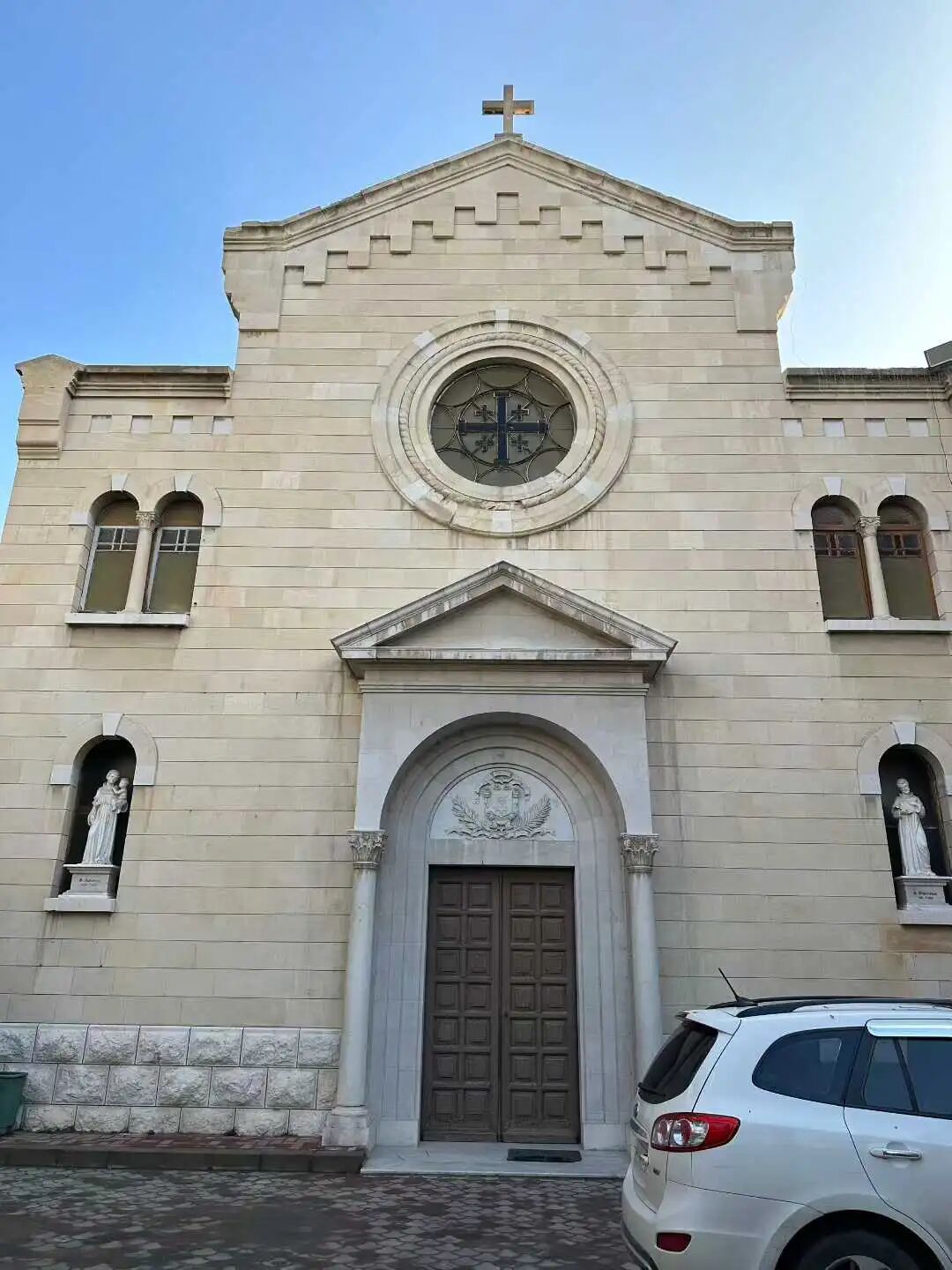
On Bab Touma Street in the Christian Quarter, there are restaurant bars with traditional music performances at night, which is hard to find in the western part of the Old City.
Halal Travel Guide: Damascus Old City - Food, Streets and Umayyad Mosque
Articles • ali2007fr posted the article • 0 comments • 280 views • 2026-05-21 02:25
Summary: Damascus Old City offers snacks, old markets, restaurants, and street life around Al-Qaymariyya Street and the Umayyad Mosque. This account keeps the source's food names, shop details, routes, historic neighborhood observations, and photographs.
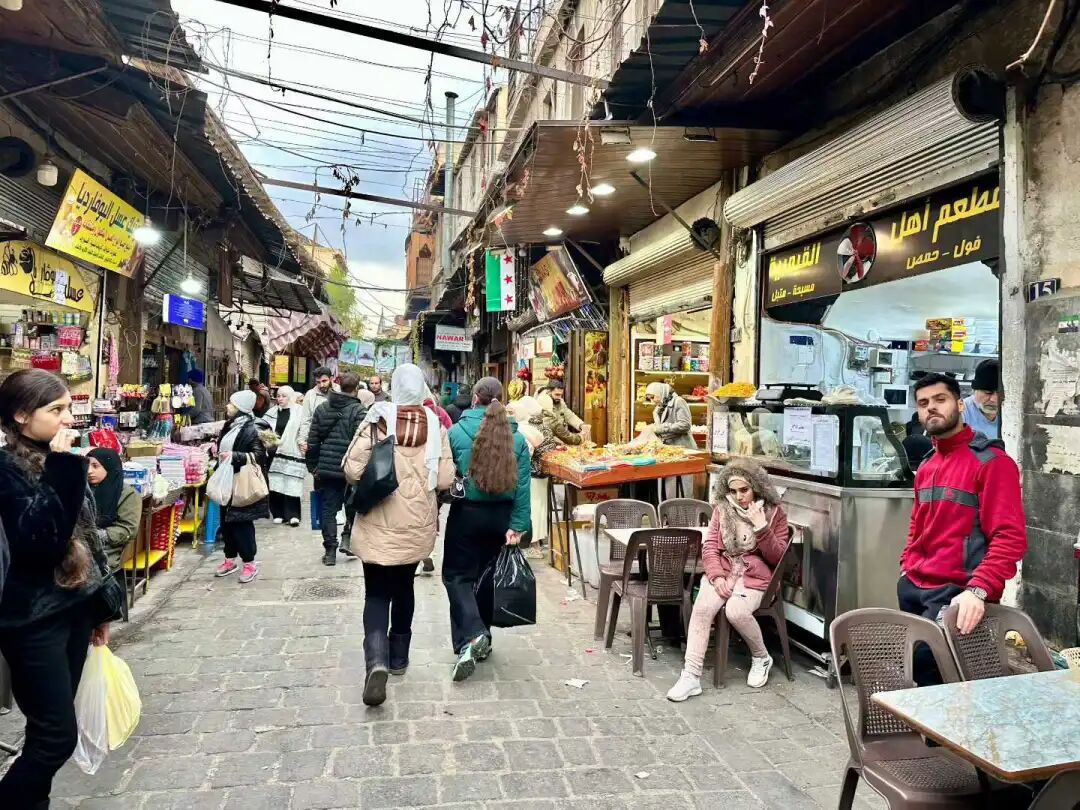
The best place for snacks in the Old City of Damascus is Al-Qaymariyya Street, right outside the east gate of the Umayyad Mosque. It gets very busy here every afternoon, and crowds stay until midnight. It feels a lot like the Nanluoguxiang of Damascus.
Because it connects the heritage hotels in the Christian Quarter with the historic buildings around the Umayyad Mosque, I walked through Al-Qaymariyya Street many times a day during my stay in Damascus and ate plenty of street food there.
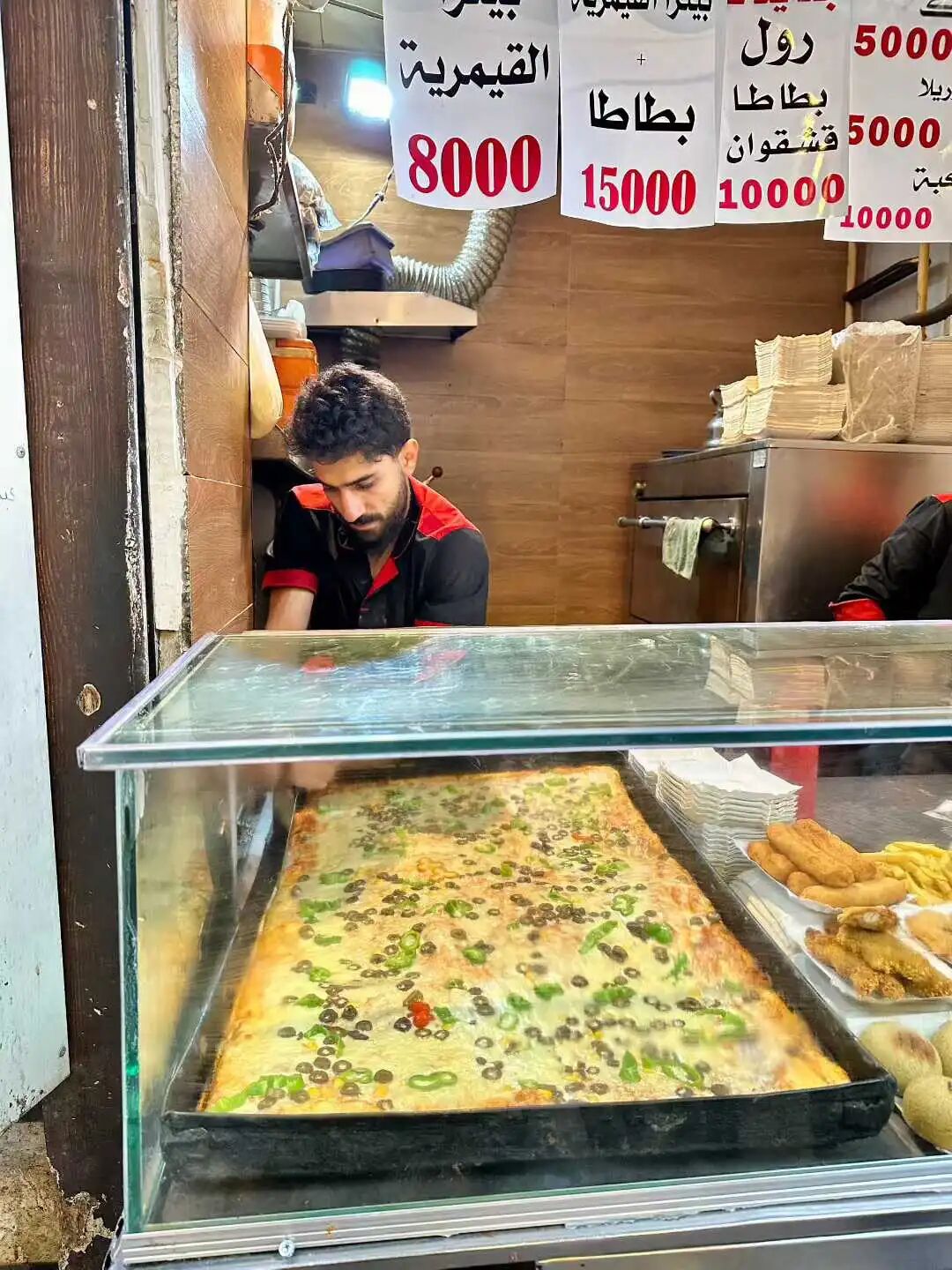
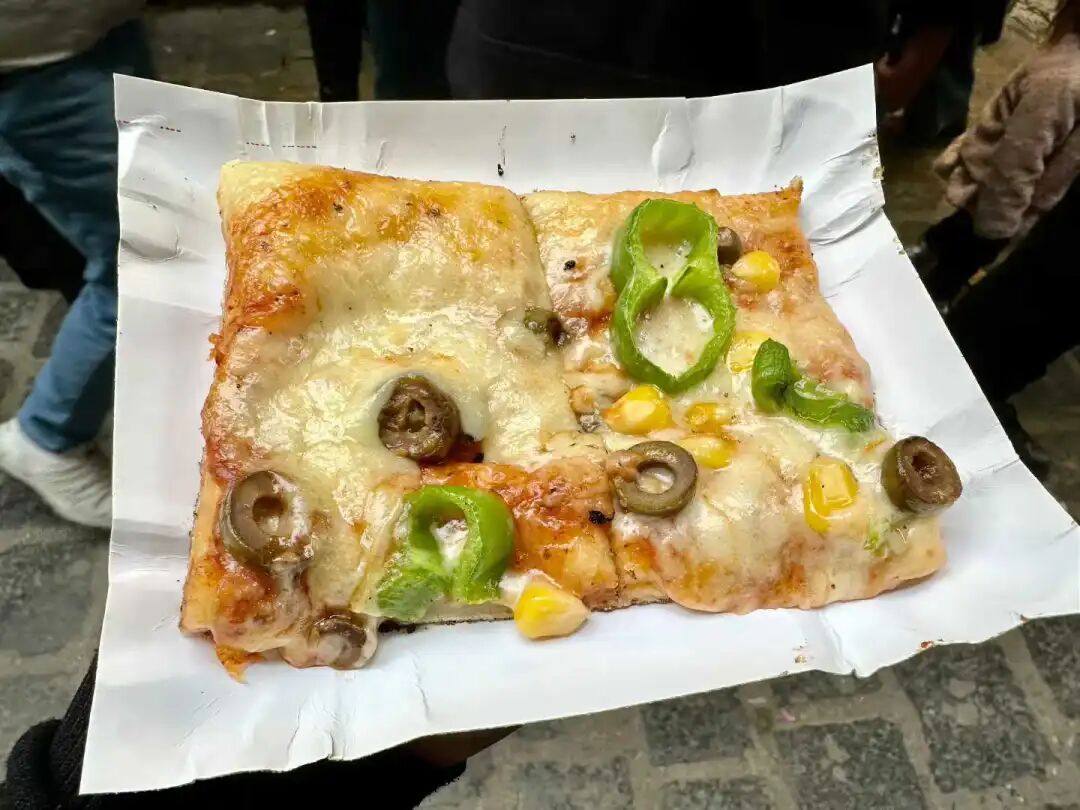
A popular item on the street is the giant square pizza. It is made like a regular pizza with cheese, green peppers, olives, and corn, but it is baked in a large square tray and cut into small squares to sell by the piece. Each piece is very cheap.
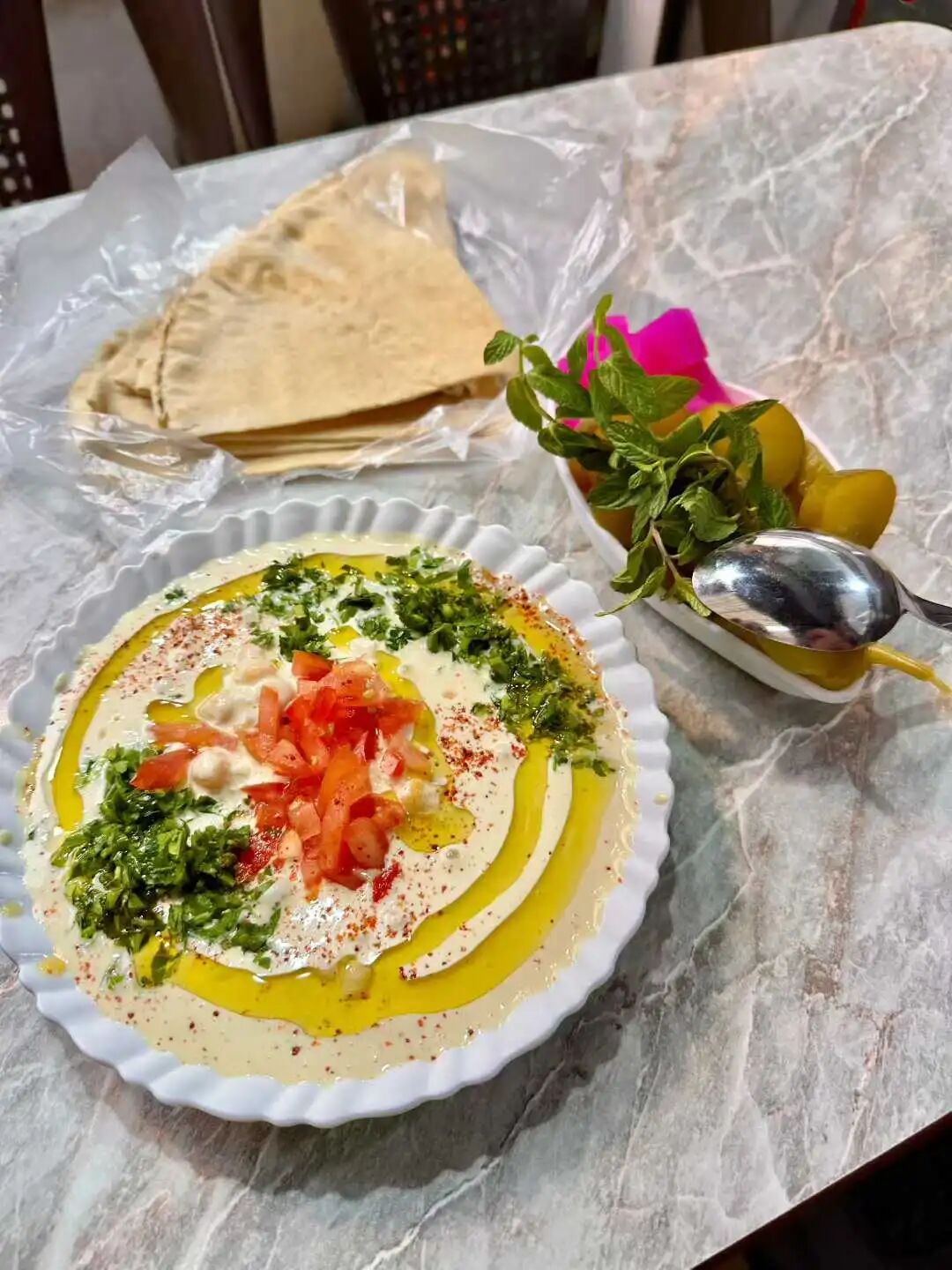
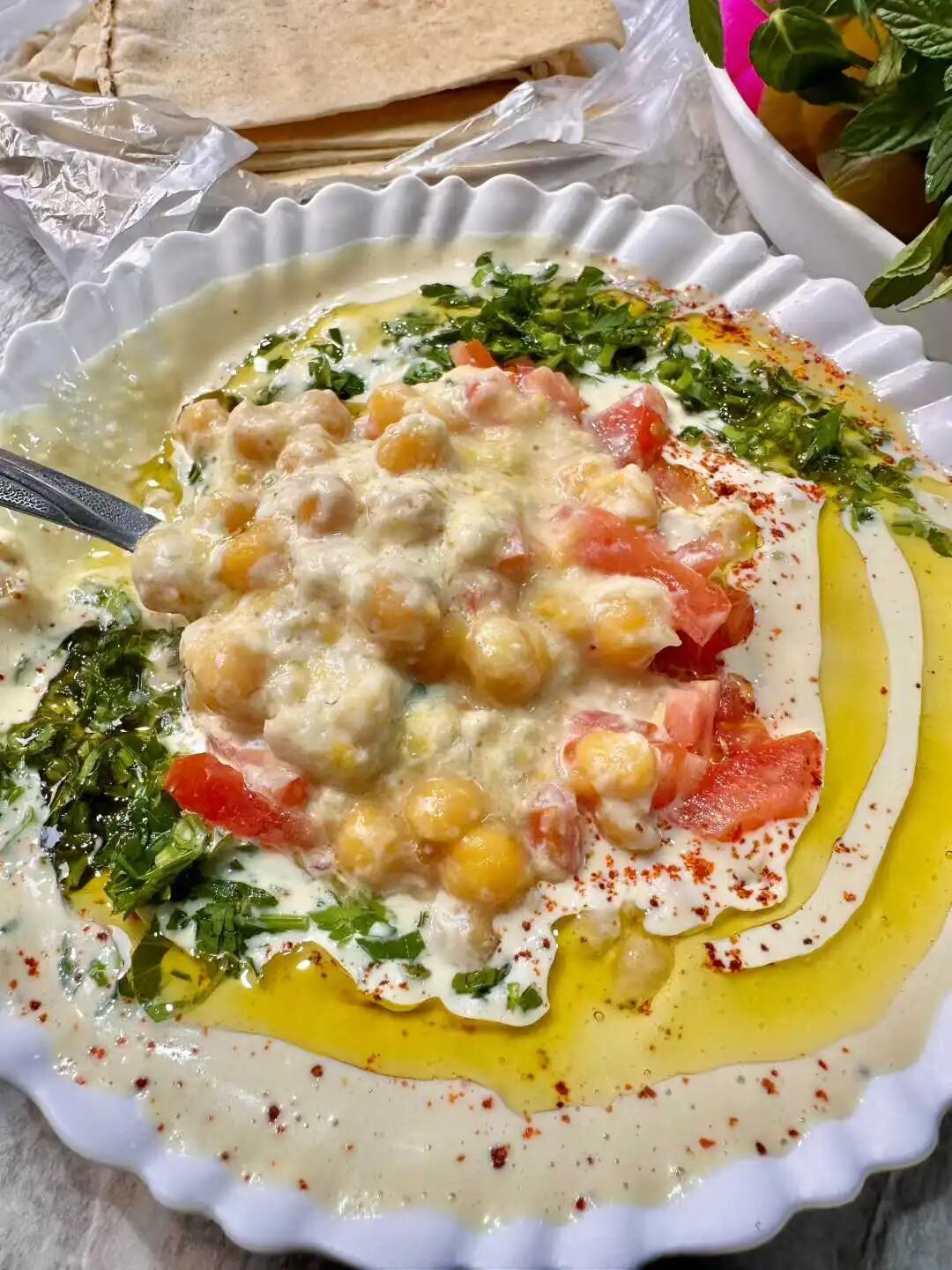
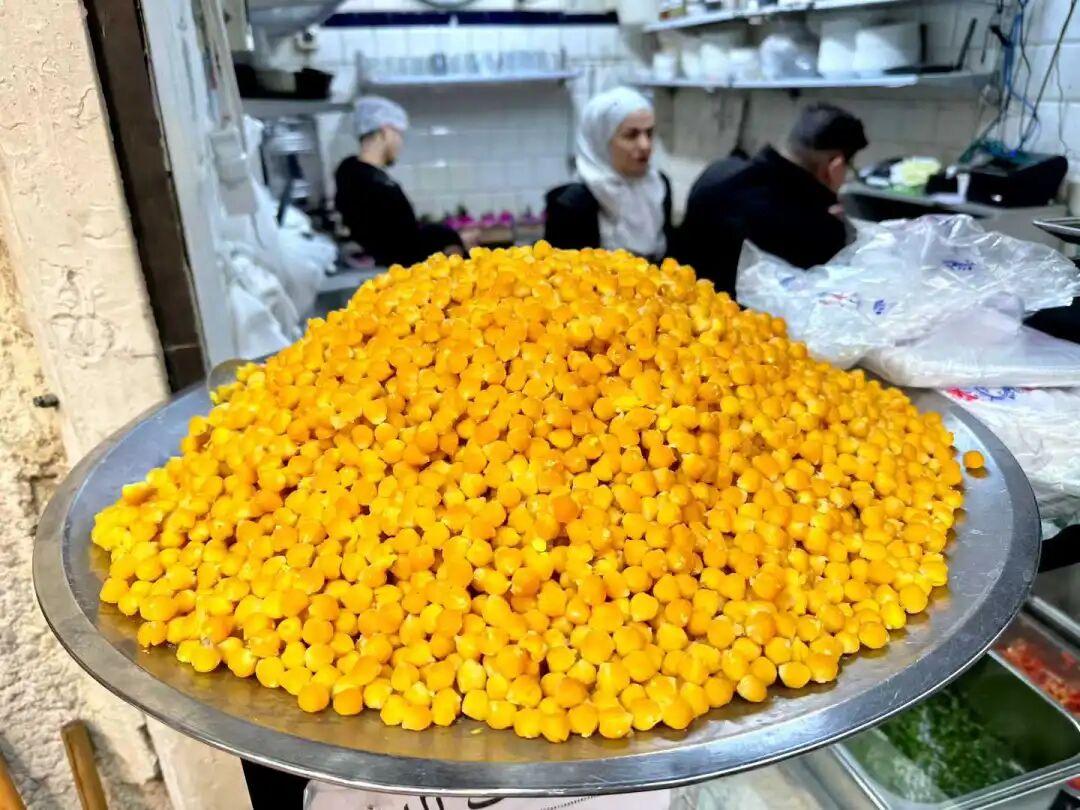
At shops specializing in appetizers (meze), the most popular dish is a mix of chickpeas and sesame paste called Hummus Musabaha, or just Musabaha. Musabaha means swimming here, as if the chickpeas are swimming in the sesame paste. When you order meze here, it always comes with pita bread, pickled cucumbers, and pickled radishes.
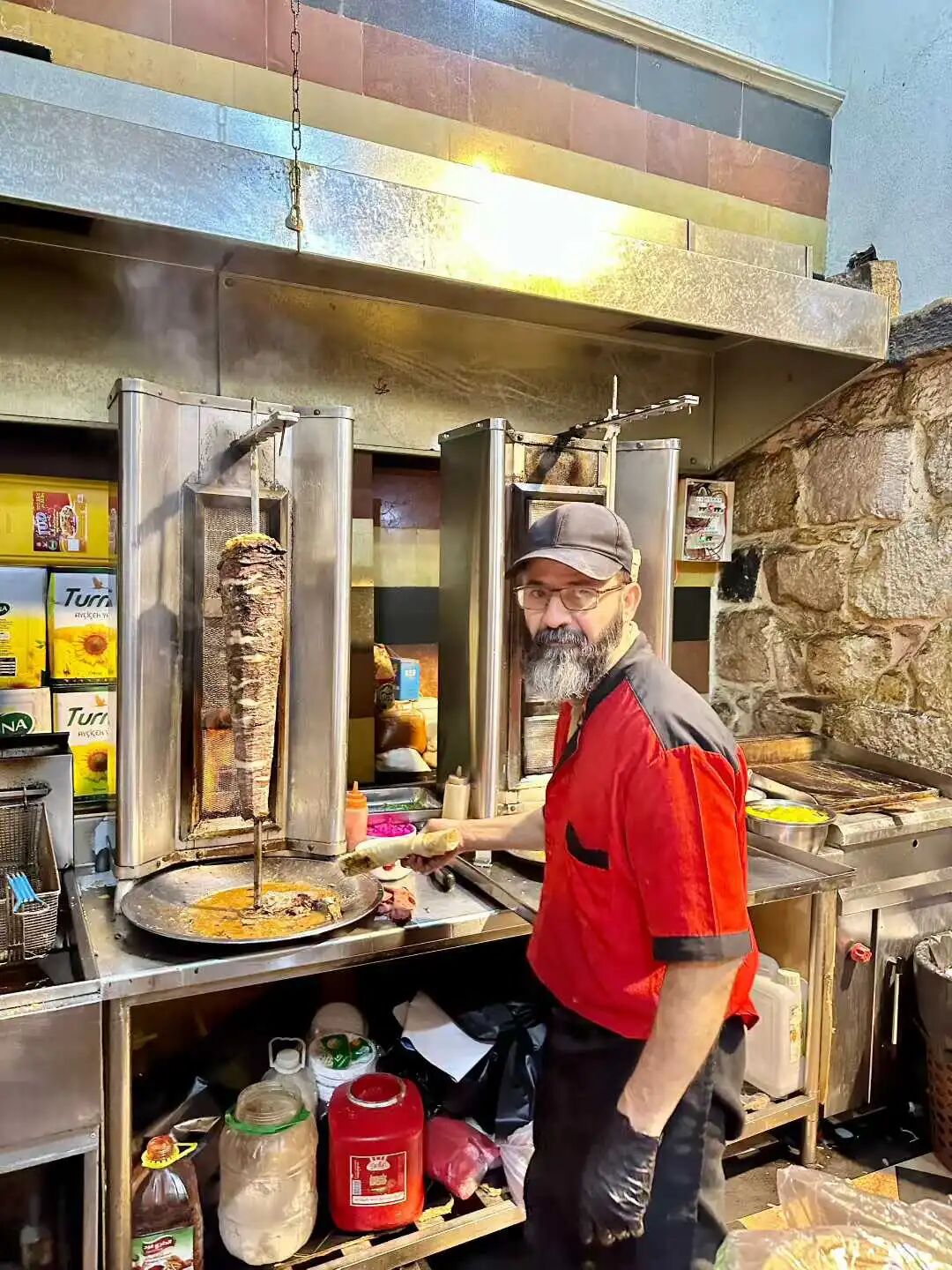
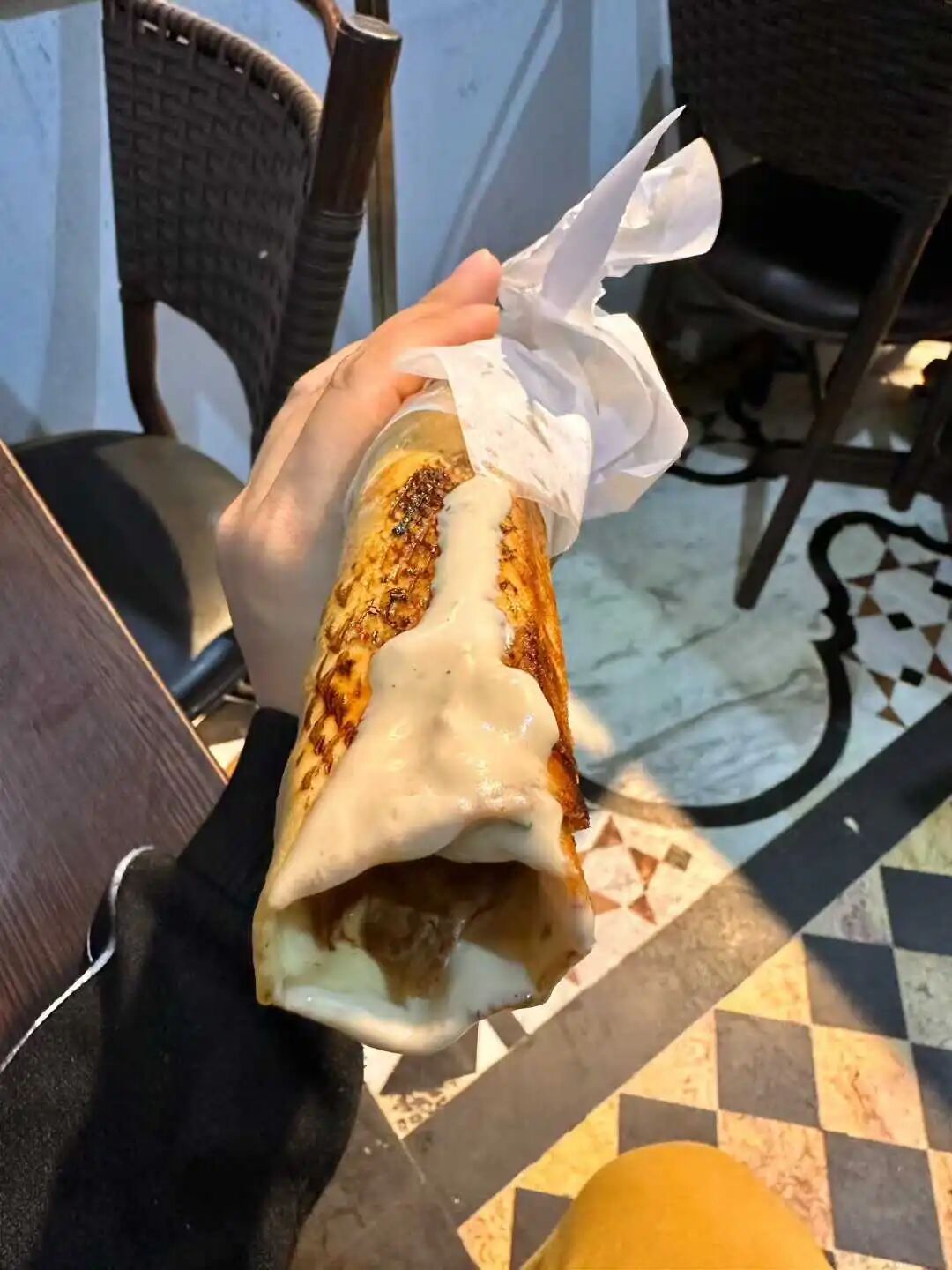
At the rotisserie meat shops (shawarma), you can choose chicken or beef. You can have it in a pita wrap or a sandwich. The pita can be heated on the rotisserie grill, and after it is wrapped, they drizzle it with garlic sauce. It is very filling.
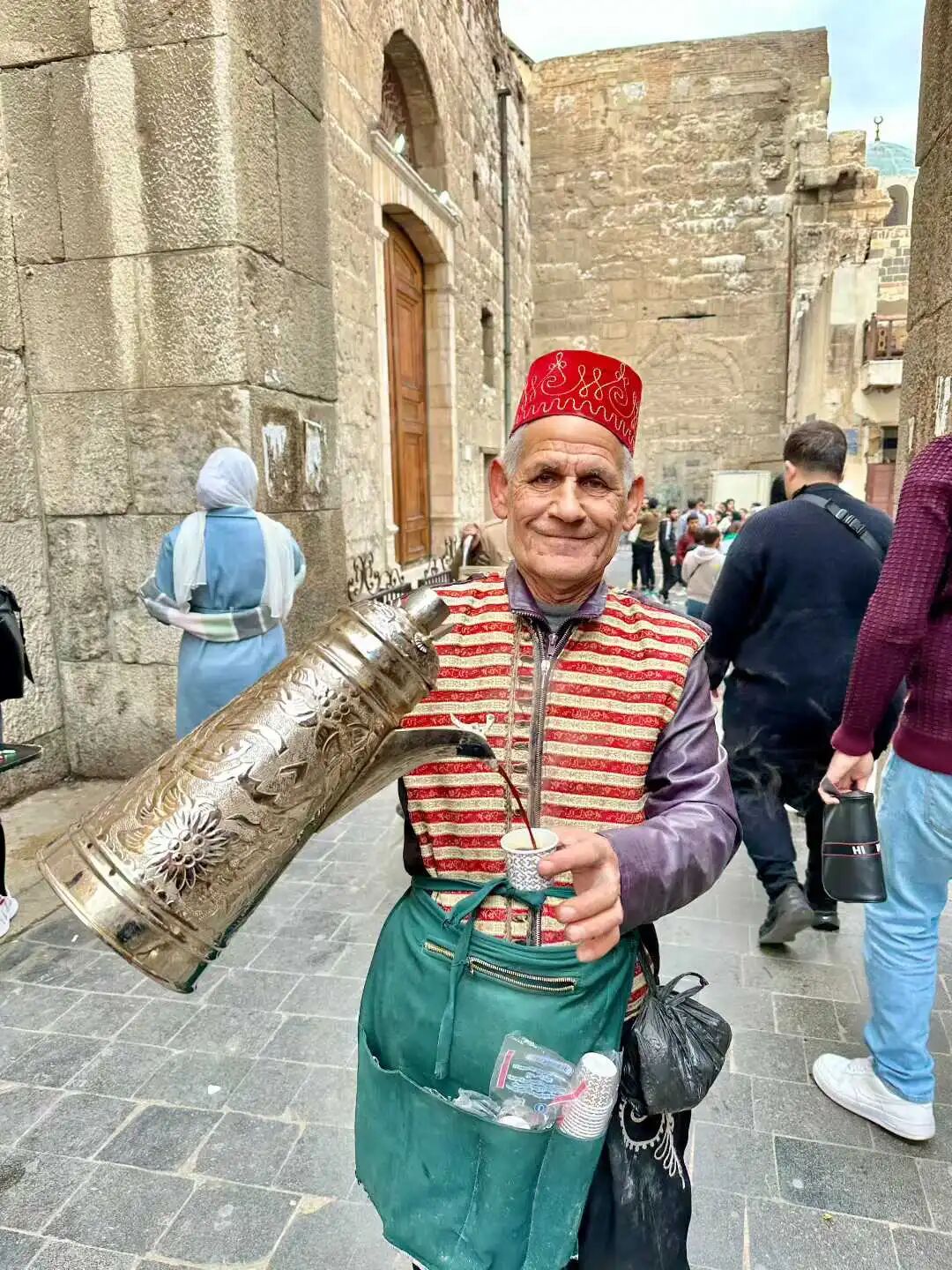
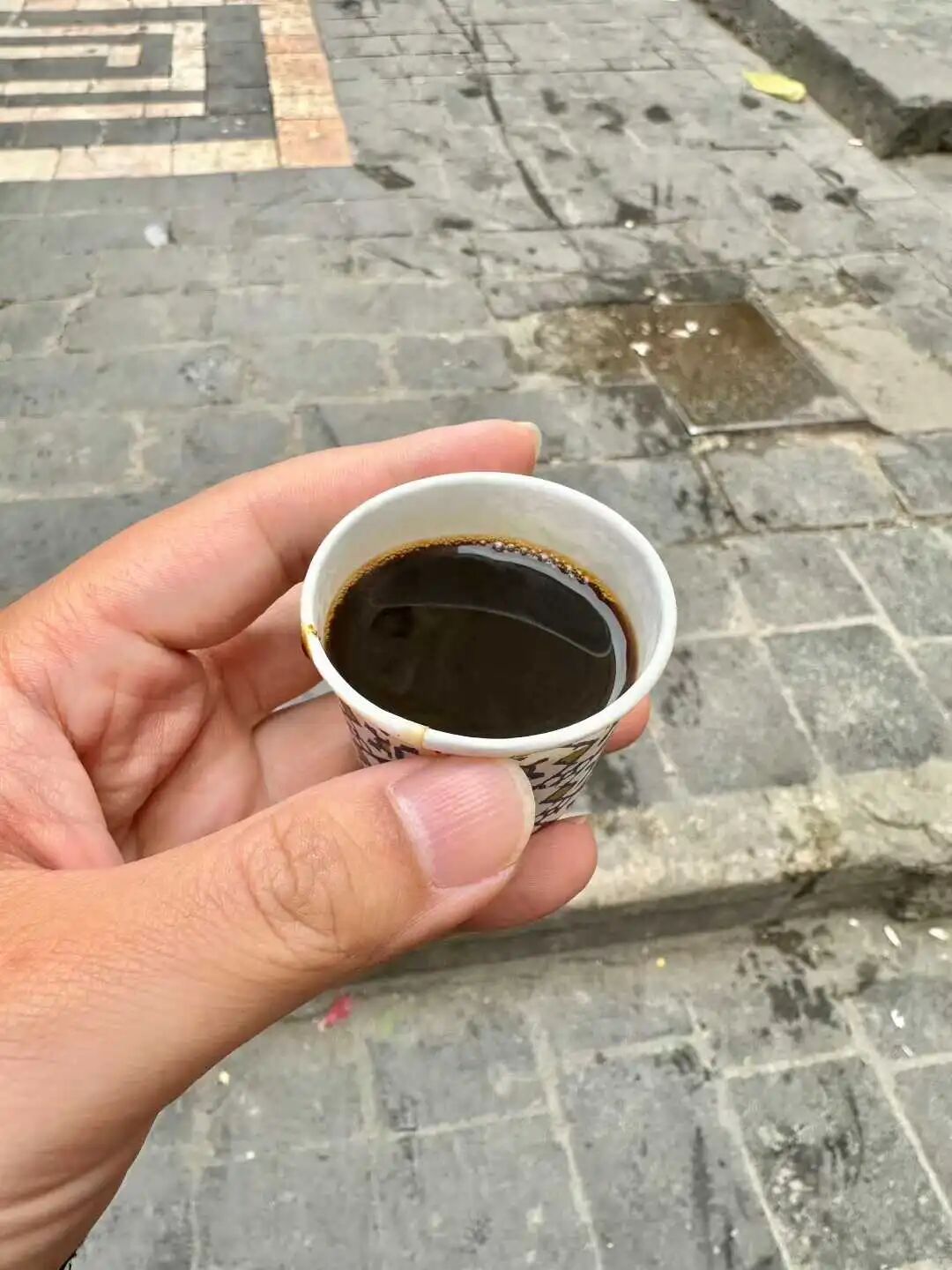
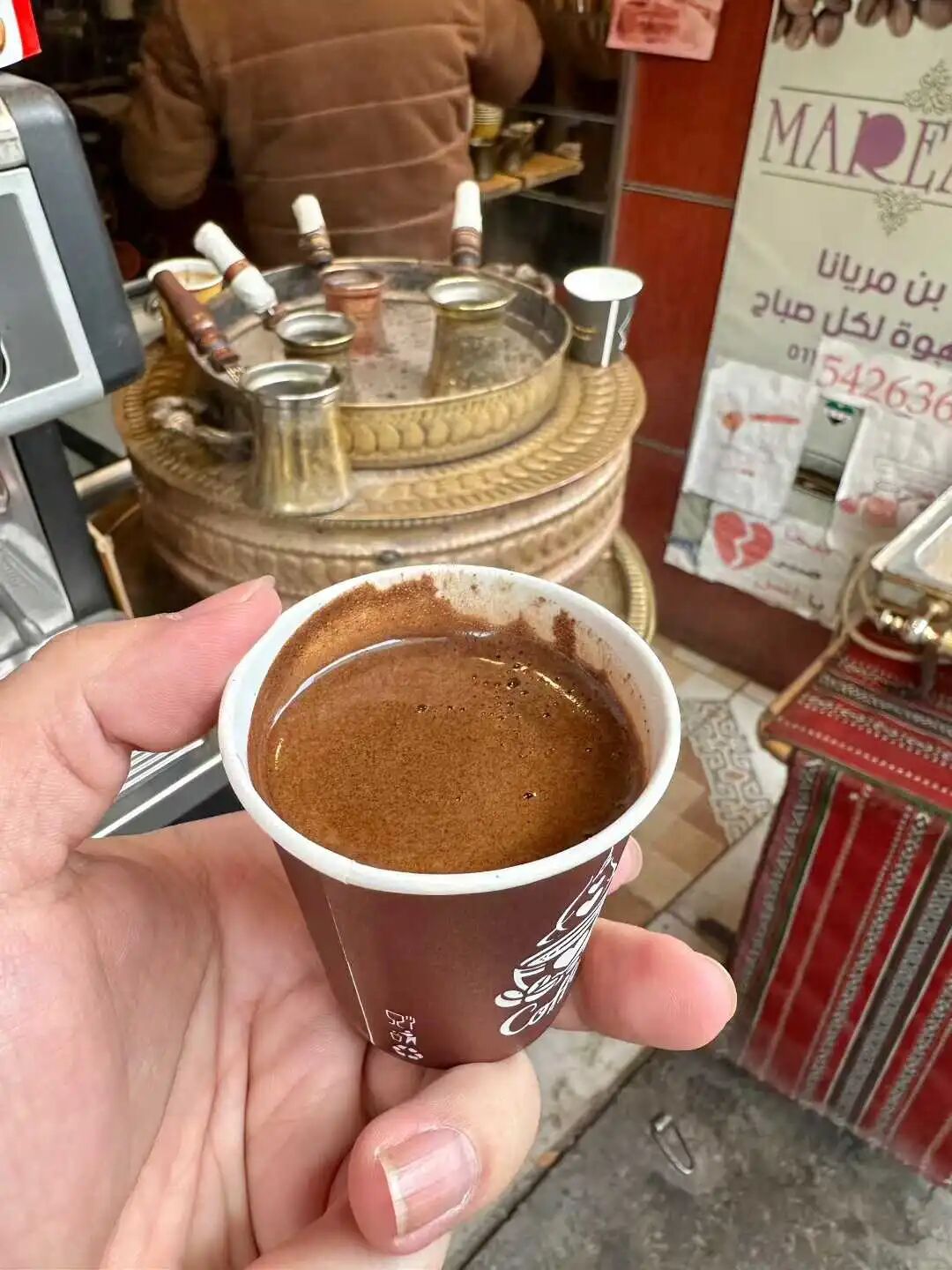
Street coffee on Al-Qaymariyya Street in the Old City of Damascus. The rich black coffee with coffee grounds is very refreshing. You can find men in traditional Ottoman clothing or sand-boiled coffee at street stalls, all for just a few yuan a cup. Coffee arrived in Damascus from Yemen in the early 16th century. The world's first coffee house was opened by a Damascus merchant. Syrians love coffee and drink it from morning until night.
Surprisingly, the best thing to pair with coffee on the streets of the Old City of Damascus is a croissant. There are a few shops on Al-Qaymariyya Street that always have lines. Syrian croissants come in cheese or chocolate. The cheese ones are salty, and the chocolate ones are sweet. You see people eating them everywhere in the Old City.
After the Ottoman Empire was defeated in 1918, France took control of the Syrian region, and the croissant became a symbol of French cultural influence in Syria. Legend says the croissant was invented in Austria to celebrate the victory over the Ottoman Empire at the 1683 Siege of Vienna, using the crescent shape from the Ottoman flag. Because of this, ISIS once tried to ban croissants in Syria. But in the peaceful city of Damascus, crispy croissants are still loved by adults and children alike.
The most common flatbread on the streets of the Old City of Damascus is Manakish. It comes in three flavors: zaatar spice, tomato, and cheese. A freshly baked one costs only 1.5 yuan. Manakish originated from the traditional bread of the ancient Phoenicians and was added to the UNESCO Intangible Cultural Heritage list in 2023. Zaatar is a unique blend of thyme, sumac, oregano, marjoram, and sesame seeds. Zaatar dates back to ancient Egypt. It has been used for thousands of years as a seasoning and a health remedy. Medieval Arabic texts mention its benefits for digestion.
There is also unleavened flatbread (saj), which also comes in zaatar or cheese flavors, and you can add spicy sauce. Saj refers to the large metal griddle used to bake the bread. It is thinner and larger than pita bread.
I think street-side pomegranate juice is the perfect match for these flatbreads. The pomegranate juice in Damascus has just the right balance of sweet and sour. In the scriptures, the pomegranate is also a fruit found in Paradise.
At the bean shop on Qaimariya Street, they have fava beans, soybeans, and chickpeas, all served with plenty of lime juice—it is very sour. There is also boiled corn that you peel and eat with various seasonings.
This is the street view of Qaimariya, which is very lively from the afternoon until the evening.
Outside the south wall of the Umayyad Mosque in Damascus is a street of craft shops where you can buy traditional Ottoman tiles and mosaic-inlaid jewelry boxes.
West of the Umayyad Mosque in Damascus lies the Al-Hamidiyah Souq. The market was first built during the Ottoman period in 1780 and was expanded to its current form between the late 19th and early 20th centuries. The most famous spot in the market is the Bakdash ice cream shop, which opened in 1895. The shop's signature item is Damascus Booza ice cream. When making Booza, classic Ottoman spices like mastic, salep, and plenty of nuts are added to the milk. Mastic is the resin of the mastic tree, recorded as "masitachi" in the Hui Muslim medical text Huihui Yaofang. Salep is a powder made from orchid tubers and was an important spice during the Ottoman Empire. Unlike regular ice cream, Booza is not made by churning, but by pounding and constantly stretching it in an ice bucket.
Booza ice cream is topped with crushed pistachios and a Middle Eastern version of milk skin called Qishta. Qishta is a natural milk skin made by boiling milk at 60 degrees without fermentation or coagulants. It only lasts a few days even when refrigerated. It is a classic ingredient for various puddings and desserts, or it can be eaten directly with crushed pistachios.
At the Al-Hamidiyah Souq, you can drink the classic Syrian Jallab water. This is a drink made from a mixture of carob, dates, grape molasses, and rose water, sometimes smoked with Arabic incense. Syrians often drink Jallab water during Ramadan.
This is the shawarma rotisserie at the west entrance of the Al-Hamidiyah Souq. When you are busy visiting historical sites in Damascus during the day and do not have time for a full meal, shawarma is a great fast food. Chicken usually costs about a dozen yuan, and beef costs about twenty yuan.
In the old city of Damascus on the first anniversary of the Syrian uprising, you can see excited young people everywhere, as well as caricatures of Assad. These "stepping on the villain" socks are quite interesting. A shop has photos of young people who died as martyrs (shahid) hanging up, and you can feel that the war is not far from us.
Under the walls of the Umayyad Mosque in the old city of Damascus, Syrian youths are singing and dancing so happily.
Straight Street is an ancient Roman road that runs through the old city of Damascus. It is mentioned in the New Testament, and the famous Apostle Paul once lived on this street. In 2007, Damascus restored the eastern section of Straight Street. They laid down sidewalks and basalt paving, decorated the sides of the road with Corinthian column ruins, and added greenery and lighting. This made Straight Street a favorite place for young people in Damascus to hang out.
I was walking on Straight Street at night and ran into young Syrians singing on the street. They used traditional Arabic Ney flutes and Goblet drums for accompaniment. These two instruments appeared thousands of years ago in ancient Egyptian civilization and are the oldest Arabic instruments.
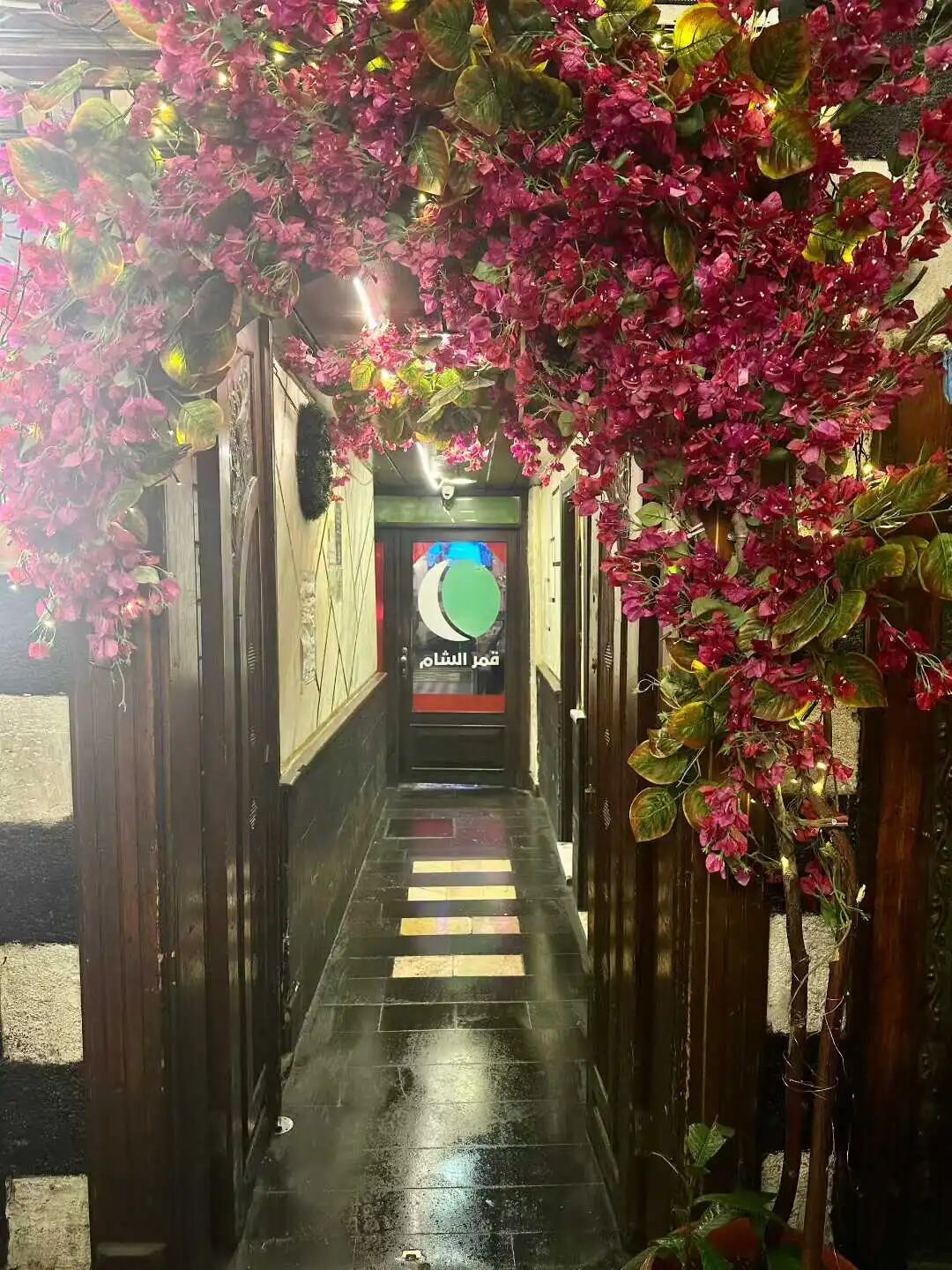
Young people in Damascus like to walk and chat on Straight Street in the old city at night. The Al-Shami coffee shop on the street stays open until midnight and has become a gathering place for them. A cup of their traditional coffee costs only 1.5 yuan, which is very cheap.
I bought bags of coffee and a box of traditional snacks there. This box cost 40 yuan and is perfect to take home for my family. The box contains three types of traditional Syrian pastries, all of which date back to the Ottoman period. The first is Barazek cookies, made with flour, butter, powdered sugar, and egg yolks. The front is covered in sesame seeds, and the back is embedded with pistachios. The second is date-filled Ma'amoul, a classic snack for Arabs during the breaking of the fast. The third is Qurabiya shortbread, which is widely found in Arab and former Ottoman regions. Each area has its own version, and the Syrian version is special because it includes pistachios.
In the late 19th century, with the arrival of steel and cement, the Ottoman Empire began building modern neighborhoods in the western part of the old city of Damascus, modeled after Europe. A courthouse, post office, city hall, and train station were built one after another, with Marjeh Square at the center.
The largest building in the Marjeh area is the Yalbugha complex, which has been an unfinished project for 20 years and is still not fully open. It has become a symbol of Assad's economic downturn and corruption. Preparations for this complex began in 1973. The initial drainage work caused by groundwater leakage took 10 years. Structural construction of the 11-story building did not start until 1990. After the main structure was completed in 2004, it was abandoned for 20 years and has remained unfinished.
In 2025, the bottom of the complex finally opened for use with a row of restaurants. I ate the classic Syrian yogurt-stewed lamb, Shakriyeh, at one of them. To make it, tender lamb shanks are soaked in cardamom and cinnamon spices, then slow-cooked in yogurt. It is served with Arabic rice and is very delicious. view all
Summary: Damascus Old City offers snacks, old markets, restaurants, and street life around Al-Qaymariyya Street and the Umayyad Mosque. This account keeps the source's food names, shop details, routes, historic neighborhood observations, and photographs.
The best place for snacks in the Old City of Damascus is Al-Qaymariyya Street, right outside the east gate of the Umayyad Mosque. It gets very busy here every afternoon, and crowds stay until midnight. It feels a lot like the Nanluoguxiang of Damascus.
Because it connects the heritage hotels in the Christian Quarter with the historic buildings around the Umayyad Mosque, I walked through Al-Qaymariyya Street many times a day during my stay in Damascus and ate plenty of street food there.
A popular item on the street is the giant square pizza. It is made like a regular pizza with cheese, green peppers, olives, and corn, but it is baked in a large square tray and cut into small squares to sell by the piece. Each piece is very cheap.
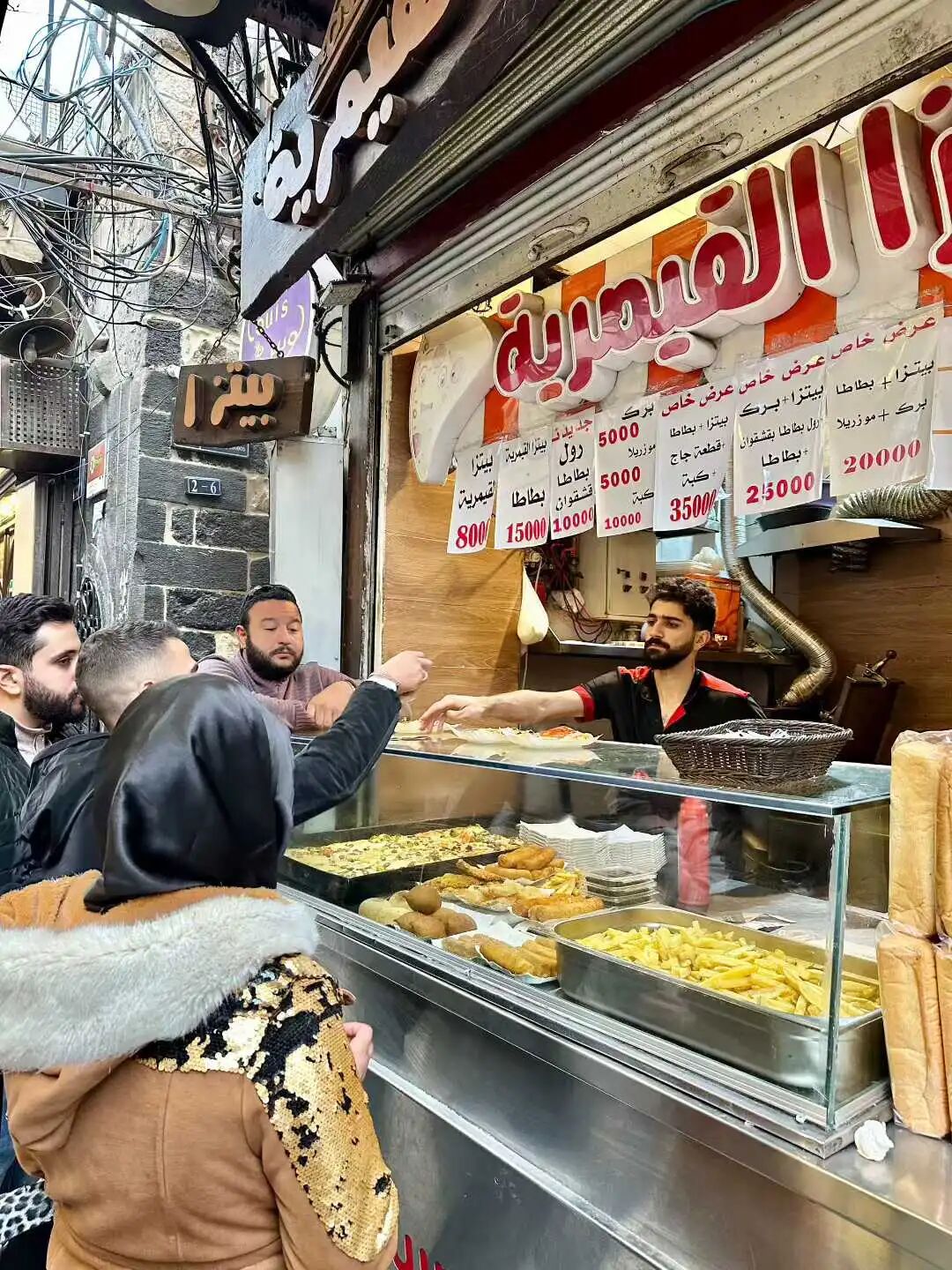
At shops specializing in appetizers (meze), the most popular dish is a mix of chickpeas and sesame paste called Hummus Musabaha, or just Musabaha. Musabaha means swimming here, as if the chickpeas are swimming in the sesame paste. When you order meze here, it always comes with pita bread, pickled cucumbers, and pickled radishes.
At the rotisserie meat shops (shawarma), you can choose chicken or beef. You can have it in a pita wrap or a sandwich. The pita can be heated on the rotisserie grill, and after it is wrapped, they drizzle it with garlic sauce. It is very filling.
Street coffee on Al-Qaymariyya Street in the Old City of Damascus. The rich black coffee with coffee grounds is very refreshing. You can find men in traditional Ottoman clothing or sand-boiled coffee at street stalls, all for just a few yuan a cup. Coffee arrived in Damascus from Yemen in the early 16th century. The world's first coffee house was opened by a Damascus merchant. Syrians love coffee and drink it from morning until night.
Surprisingly, the best thing to pair with coffee on the streets of the Old City of Damascus is a croissant. There are a few shops on Al-Qaymariyya Street that always have lines. Syrian croissants come in cheese or chocolate. The cheese ones are salty, and the chocolate ones are sweet. You see people eating them everywhere in the Old City.
After the Ottoman Empire was defeated in 1918, France took control of the Syrian region, and the croissant became a symbol of French cultural influence in Syria. Legend says the croissant was invented in Austria to celebrate the victory over the Ottoman Empire at the 1683 Siege of Vienna, using the crescent shape from the Ottoman flag. Because of this, ISIS once tried to ban croissants in Syria. But in the peaceful city of Damascus, crispy croissants are still loved by adults and children alike.
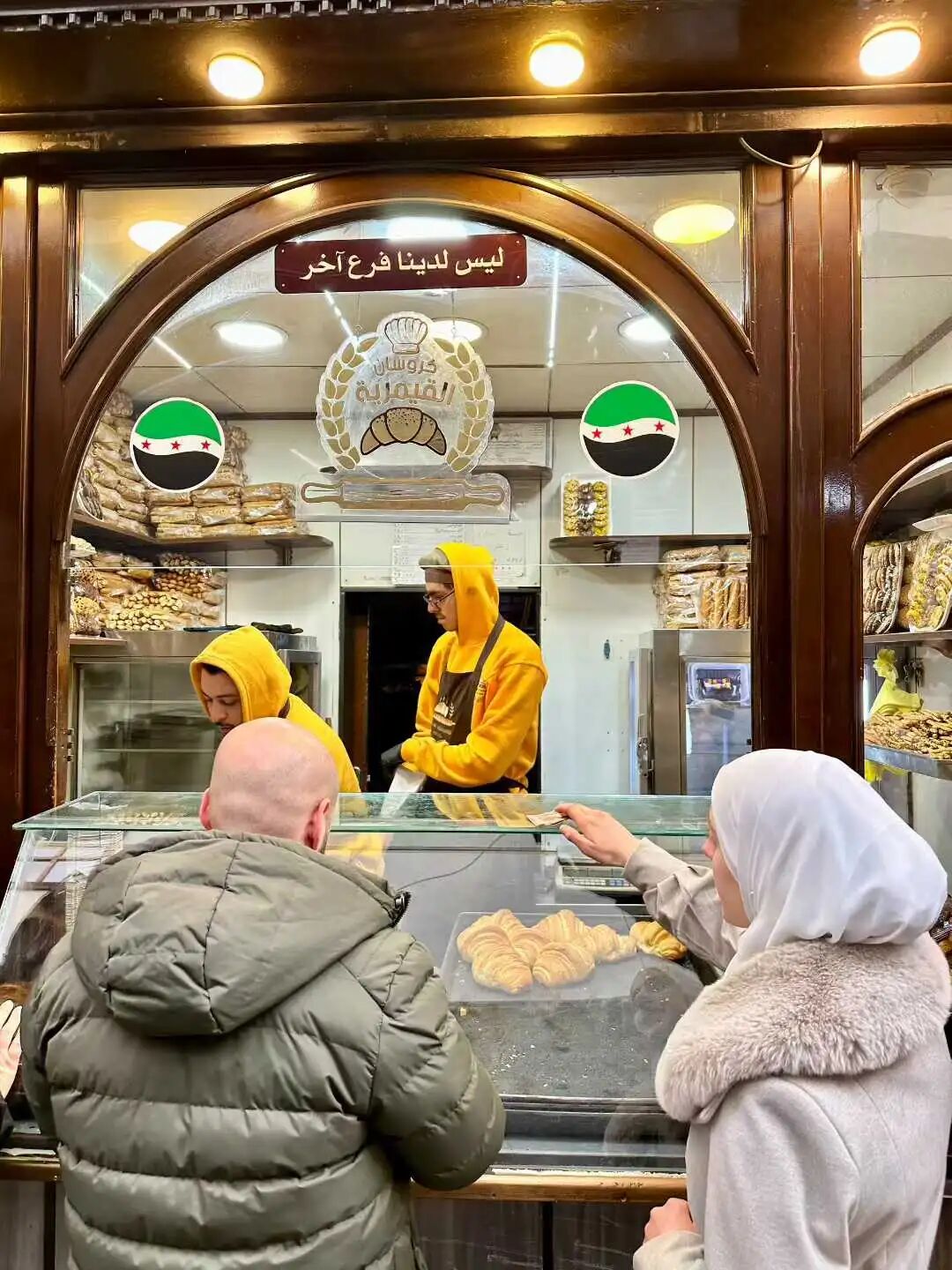
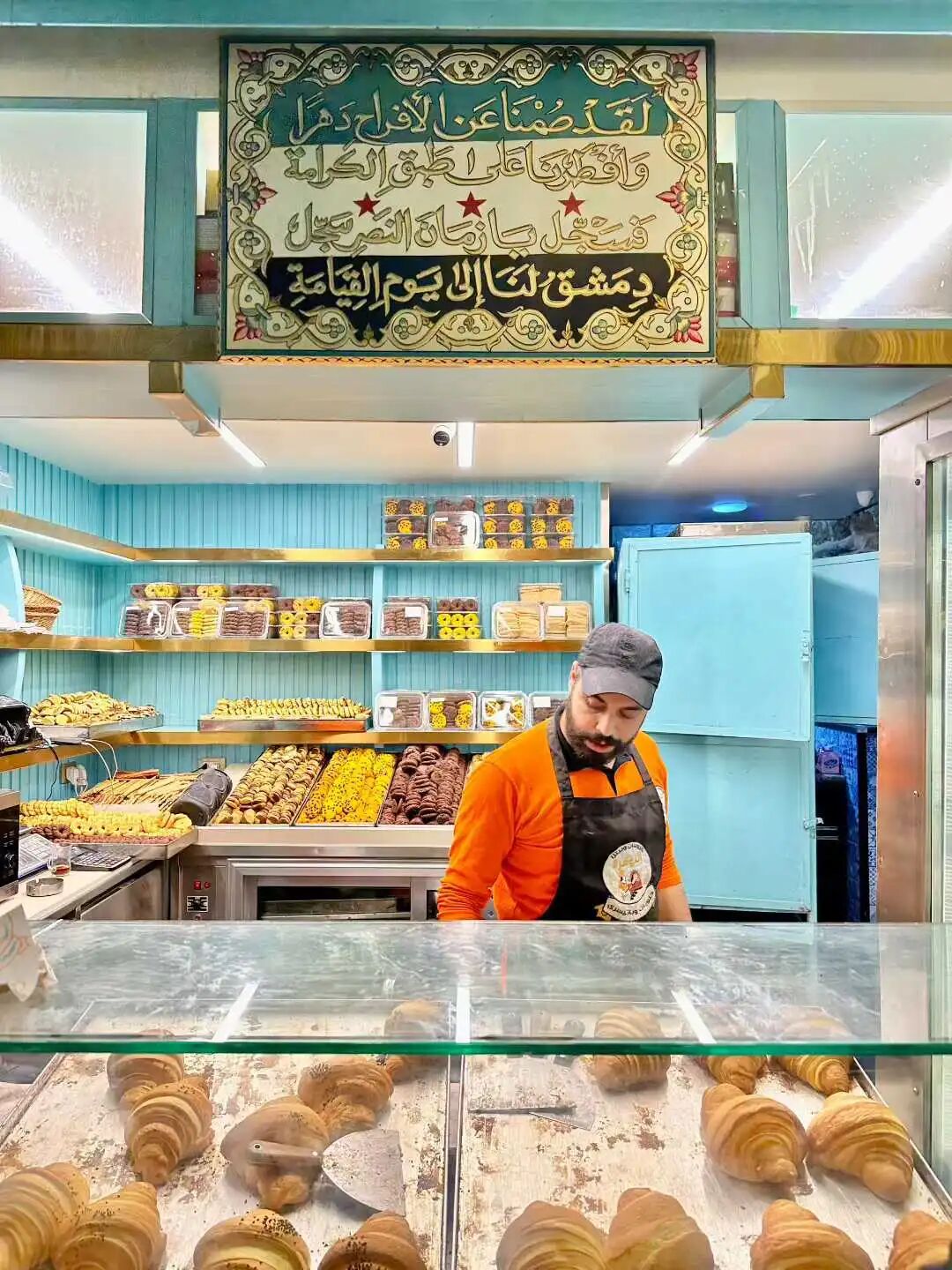
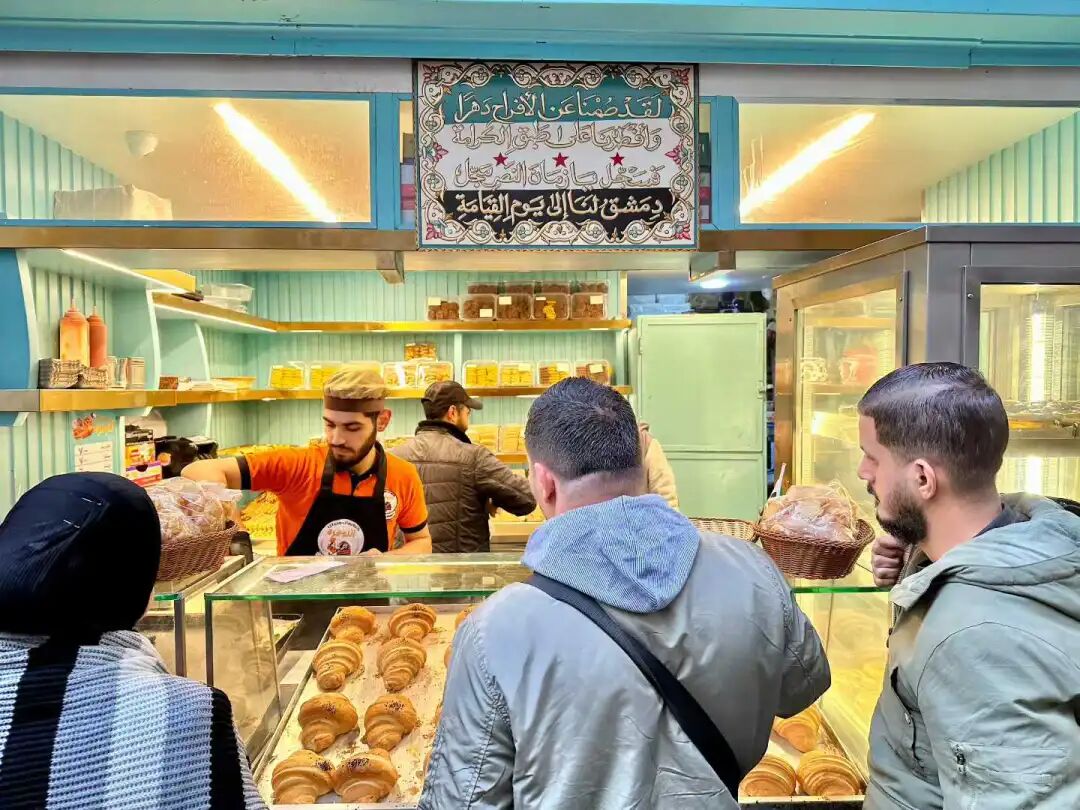
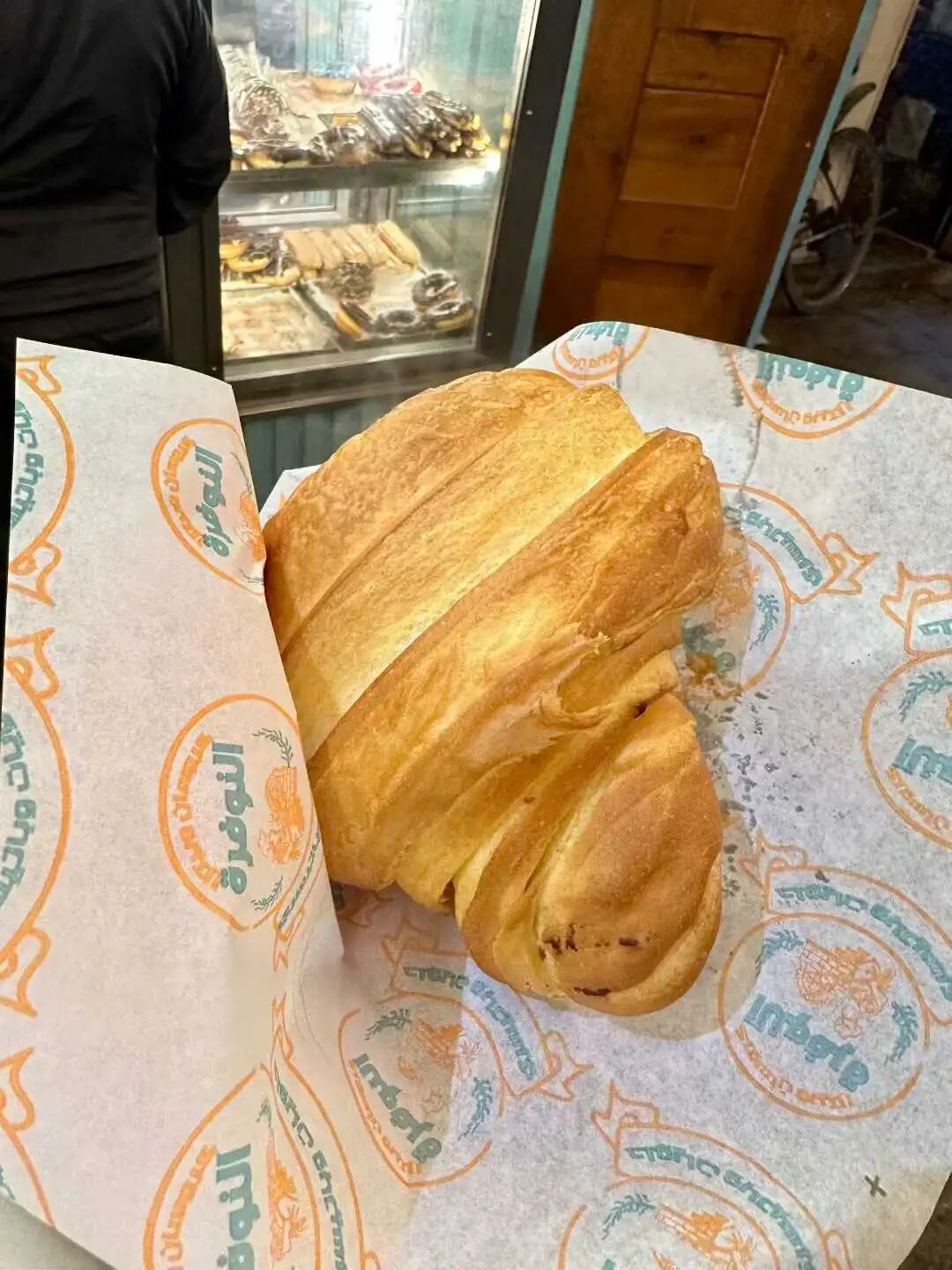
The most common flatbread on the streets of the Old City of Damascus is Manakish. It comes in three flavors: zaatar spice, tomato, and cheese. A freshly baked one costs only 1.5 yuan. Manakish originated from the traditional bread of the ancient Phoenicians and was added to the UNESCO Intangible Cultural Heritage list in 2023. Zaatar is a unique blend of thyme, sumac, oregano, marjoram, and sesame seeds. Zaatar dates back to ancient Egypt. It has been used for thousands of years as a seasoning and a health remedy. Medieval Arabic texts mention its benefits for digestion.
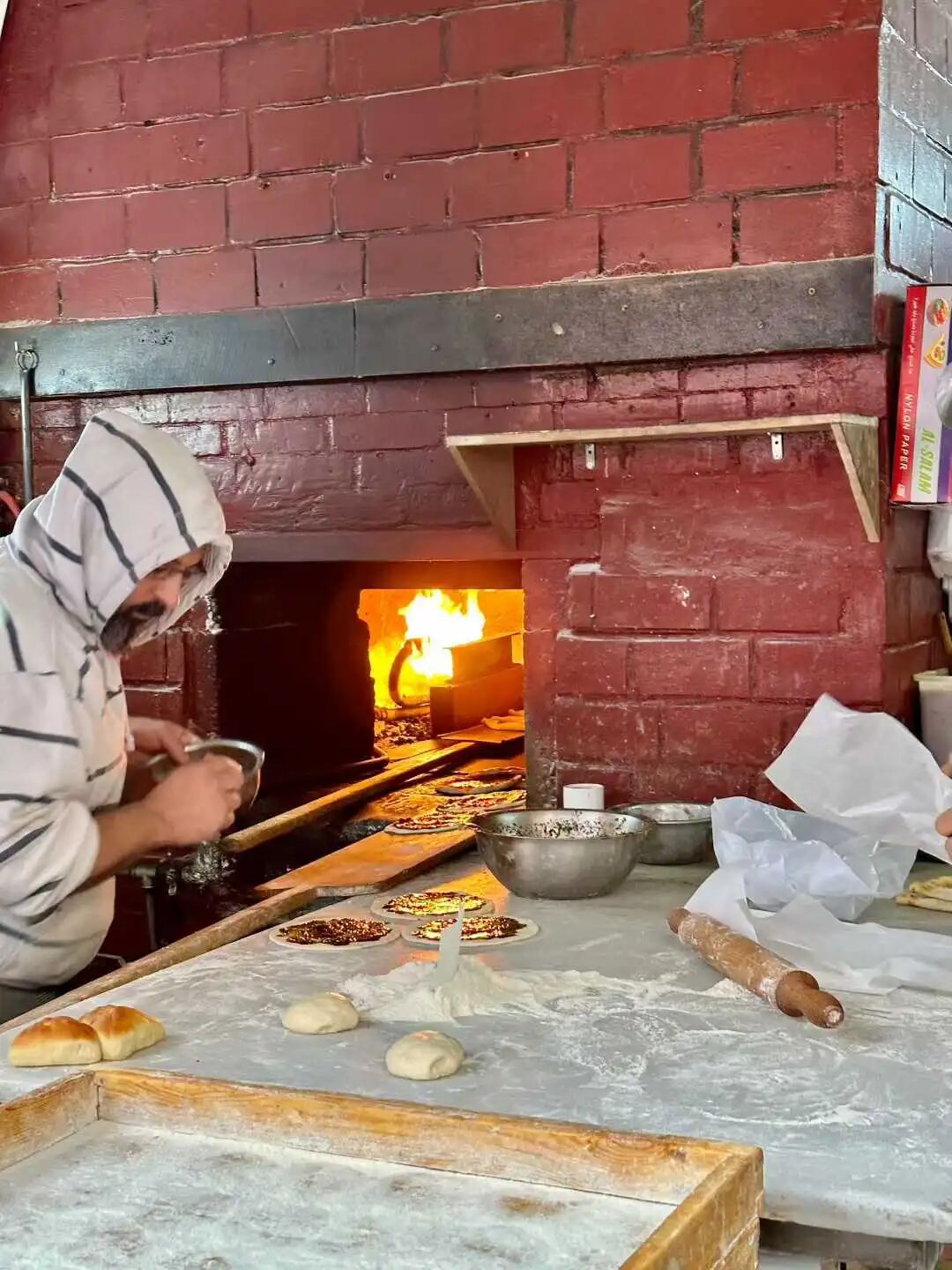
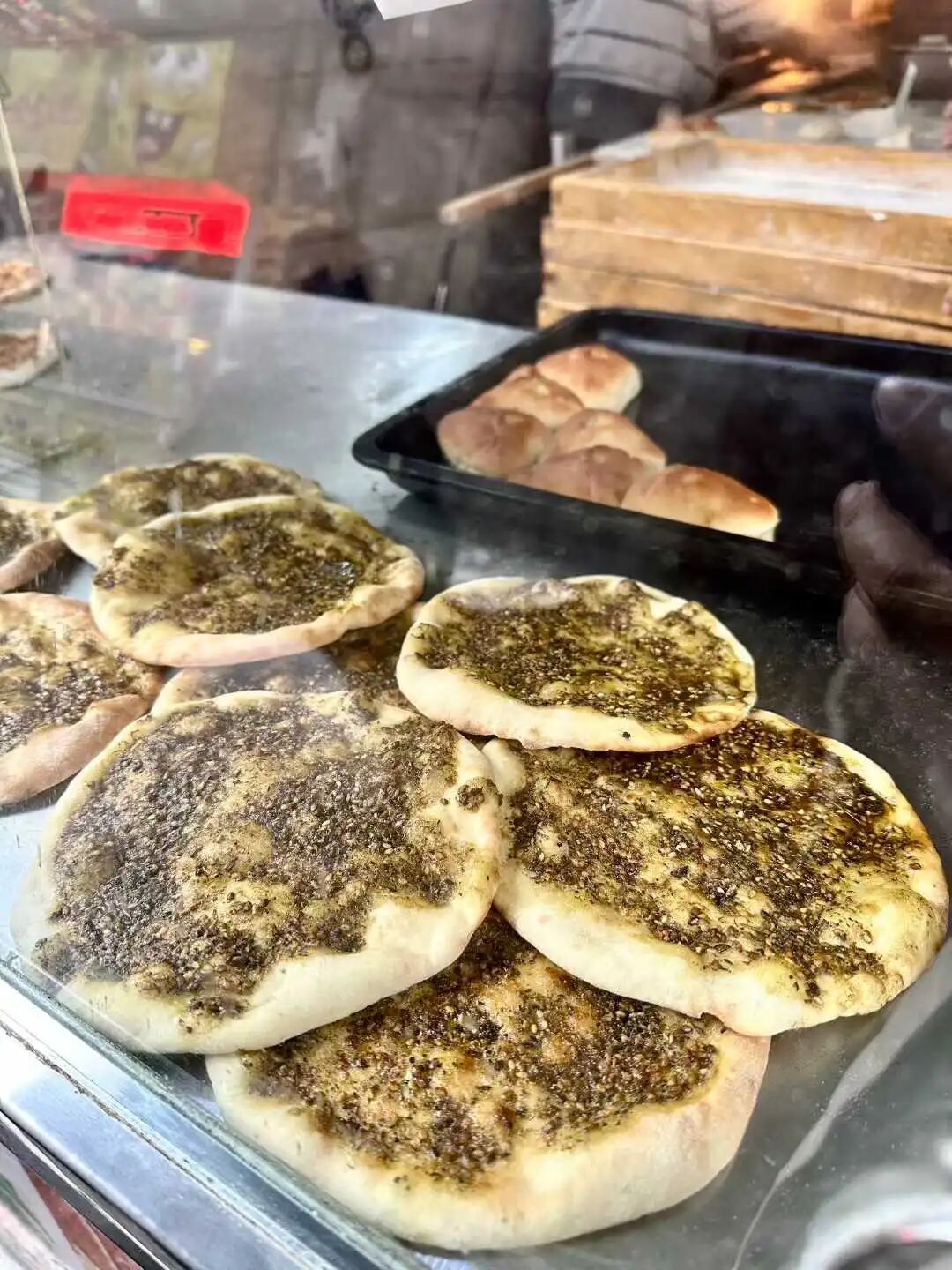
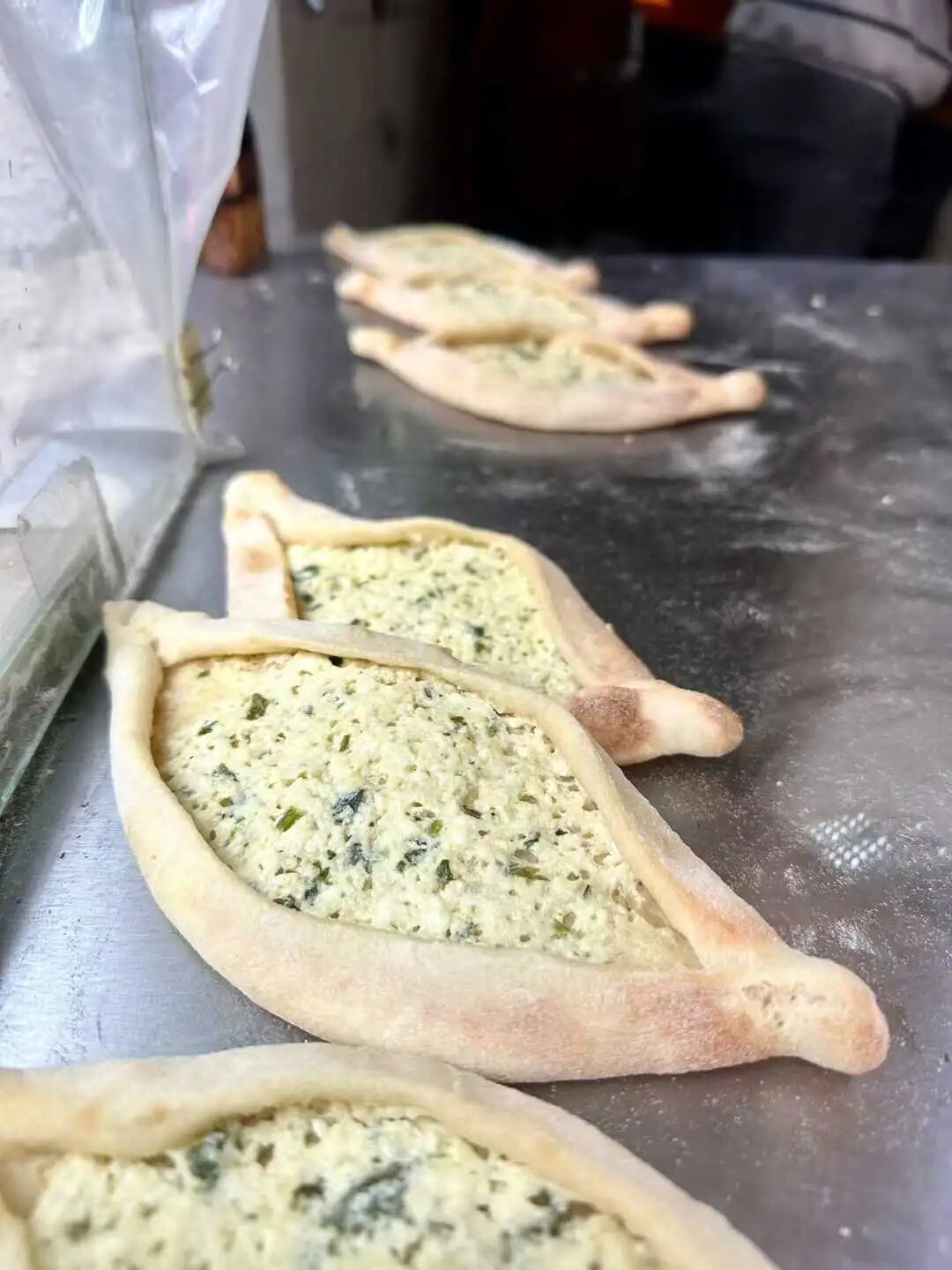
There is also unleavened flatbread (saj), which also comes in zaatar or cheese flavors, and you can add spicy sauce. Saj refers to the large metal griddle used to bake the bread. It is thinner and larger than pita bread.
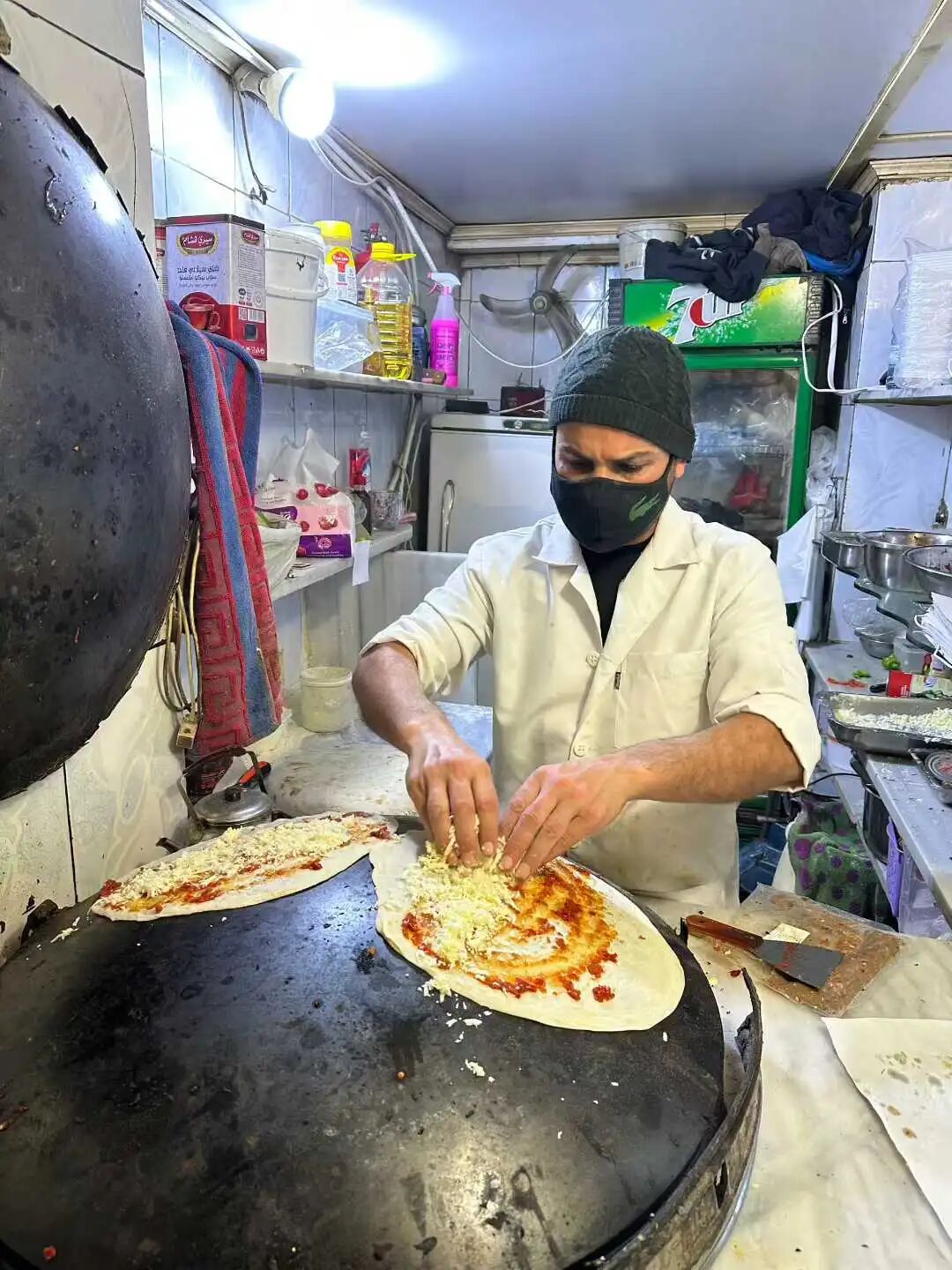
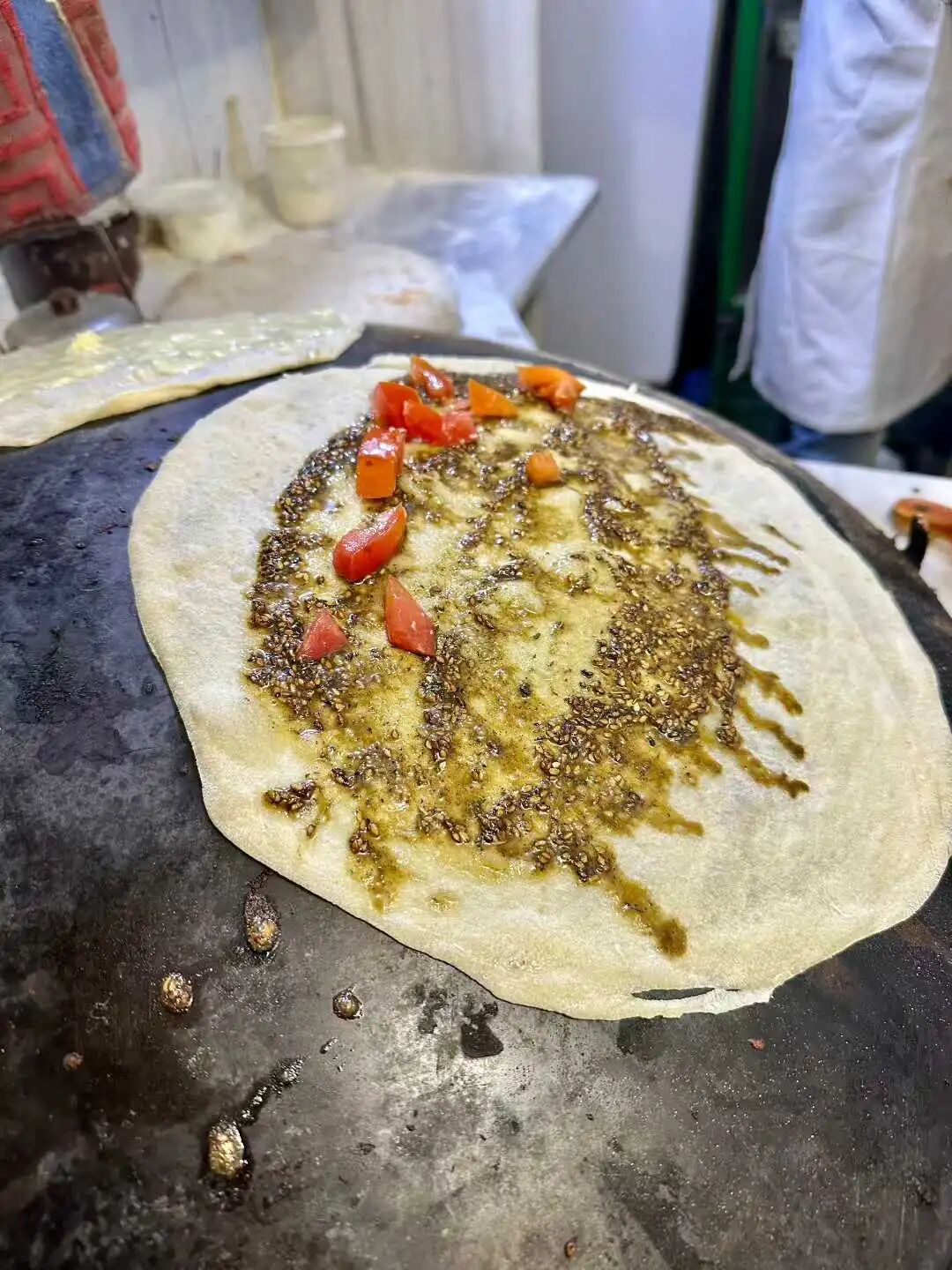
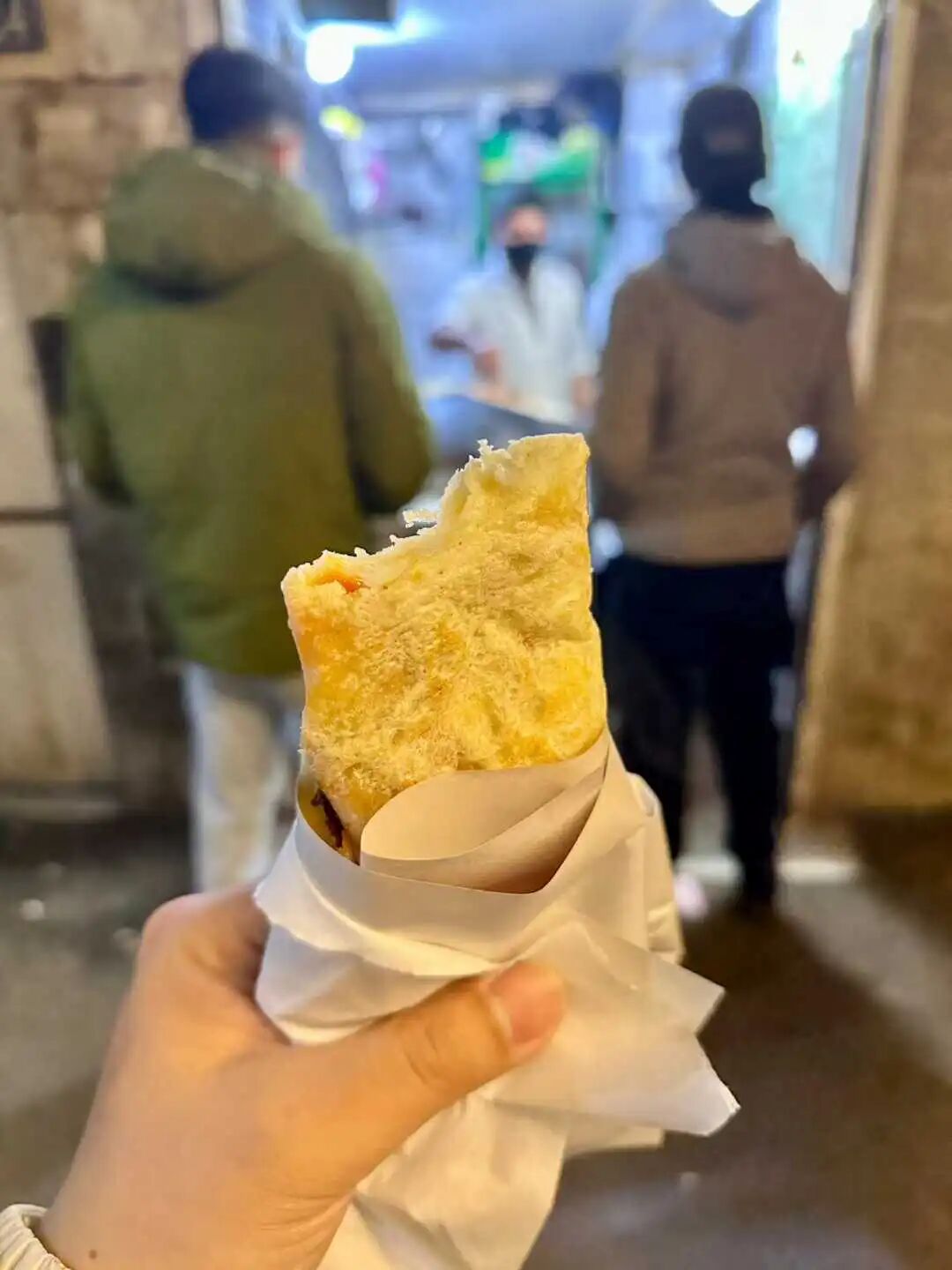
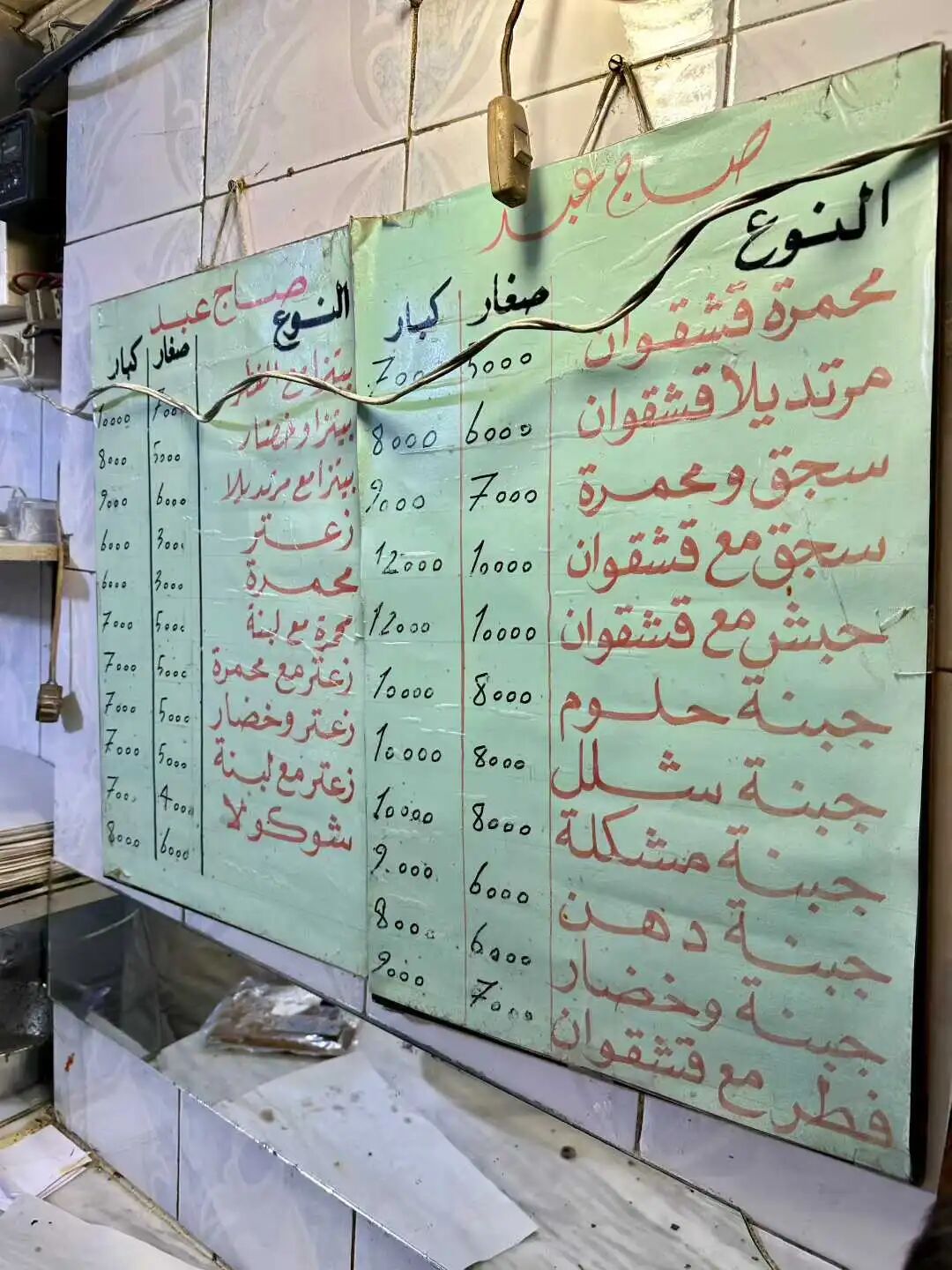
I think street-side pomegranate juice is the perfect match for these flatbreads. The pomegranate juice in Damascus has just the right balance of sweet and sour. In the scriptures, the pomegranate is also a fruit found in Paradise.
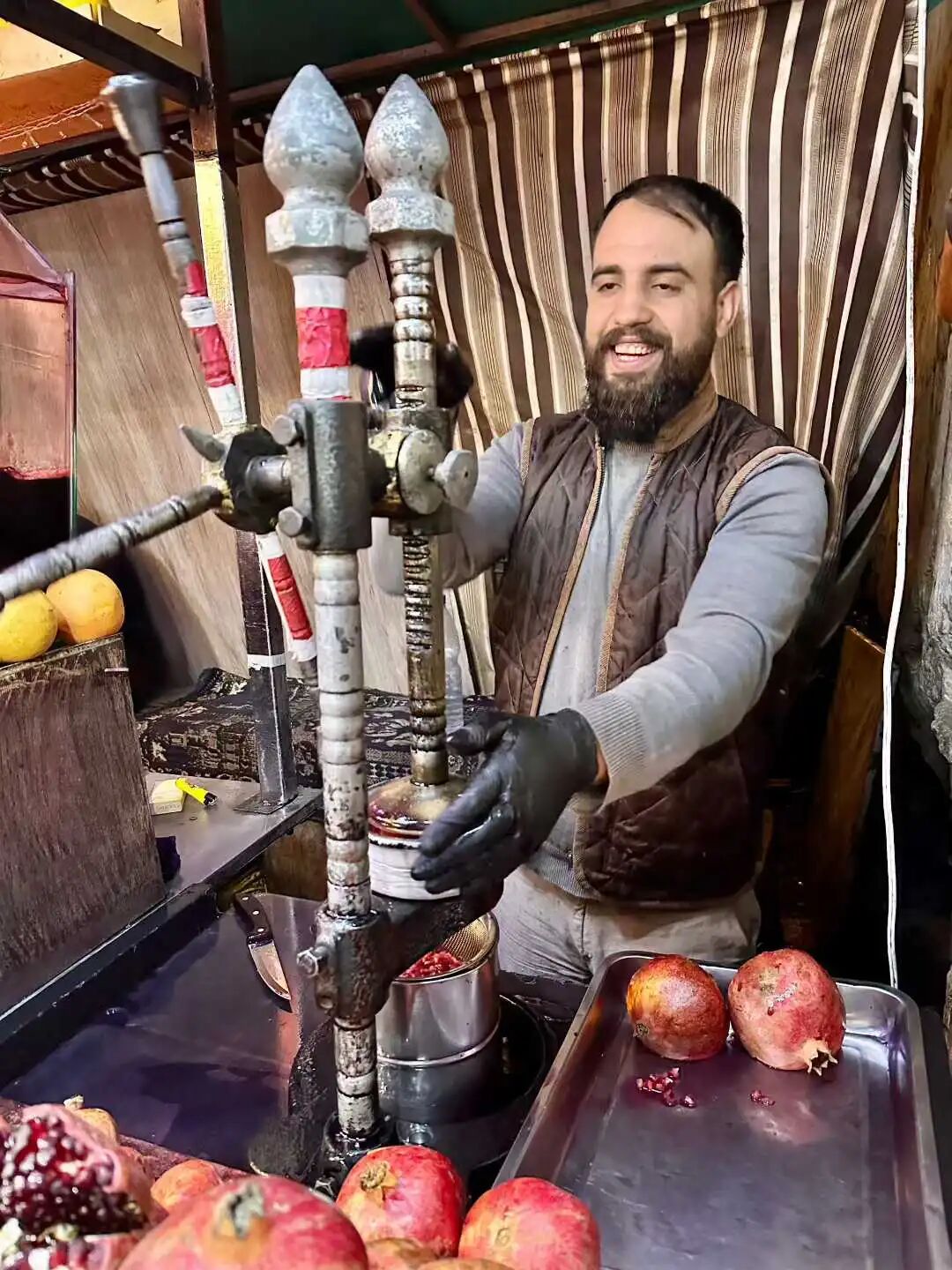
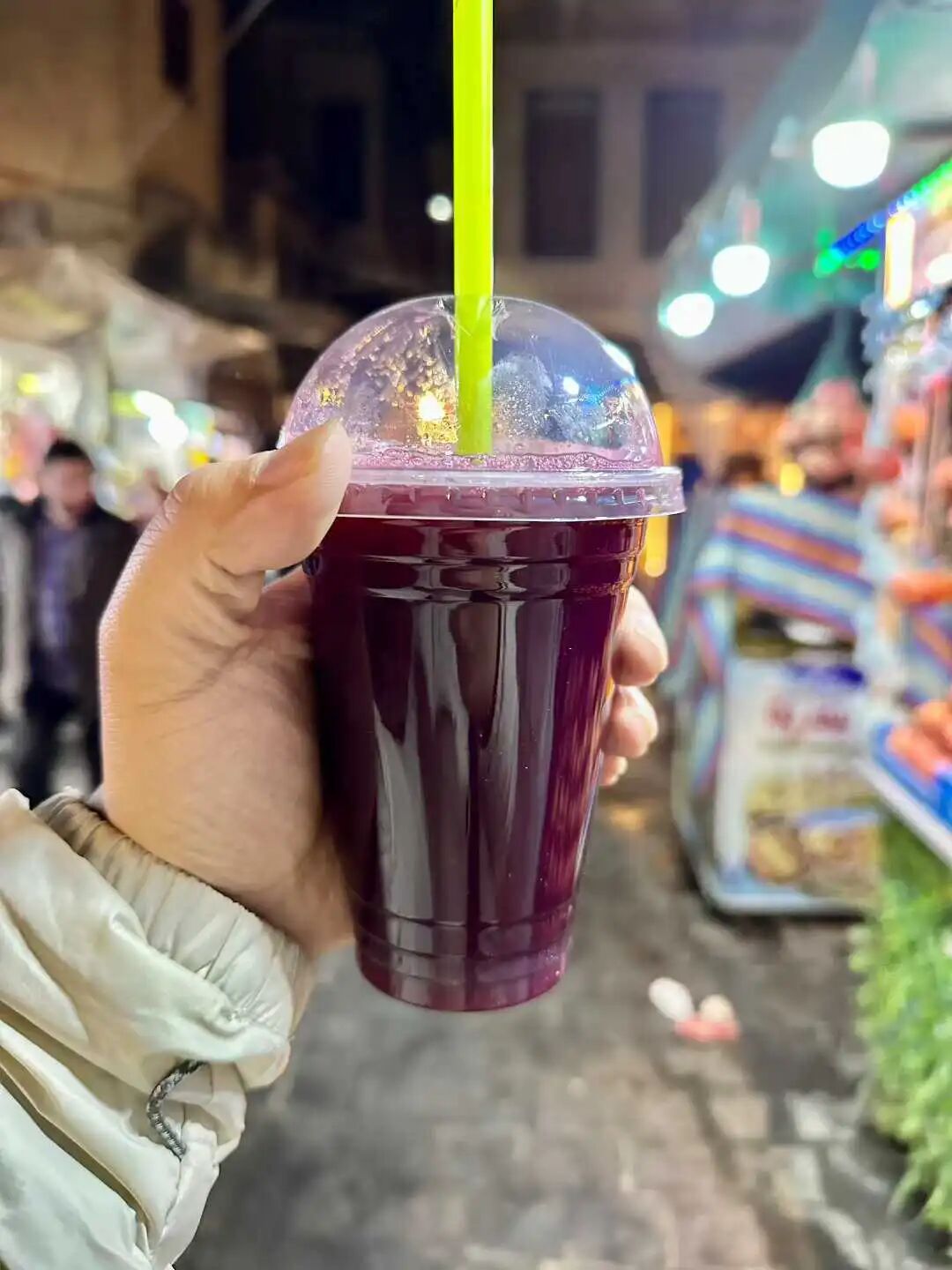
At the bean shop on Qaimariya Street, they have fava beans, soybeans, and chickpeas, all served with plenty of lime juice—it is very sour. There is also boiled corn that you peel and eat with various seasonings.
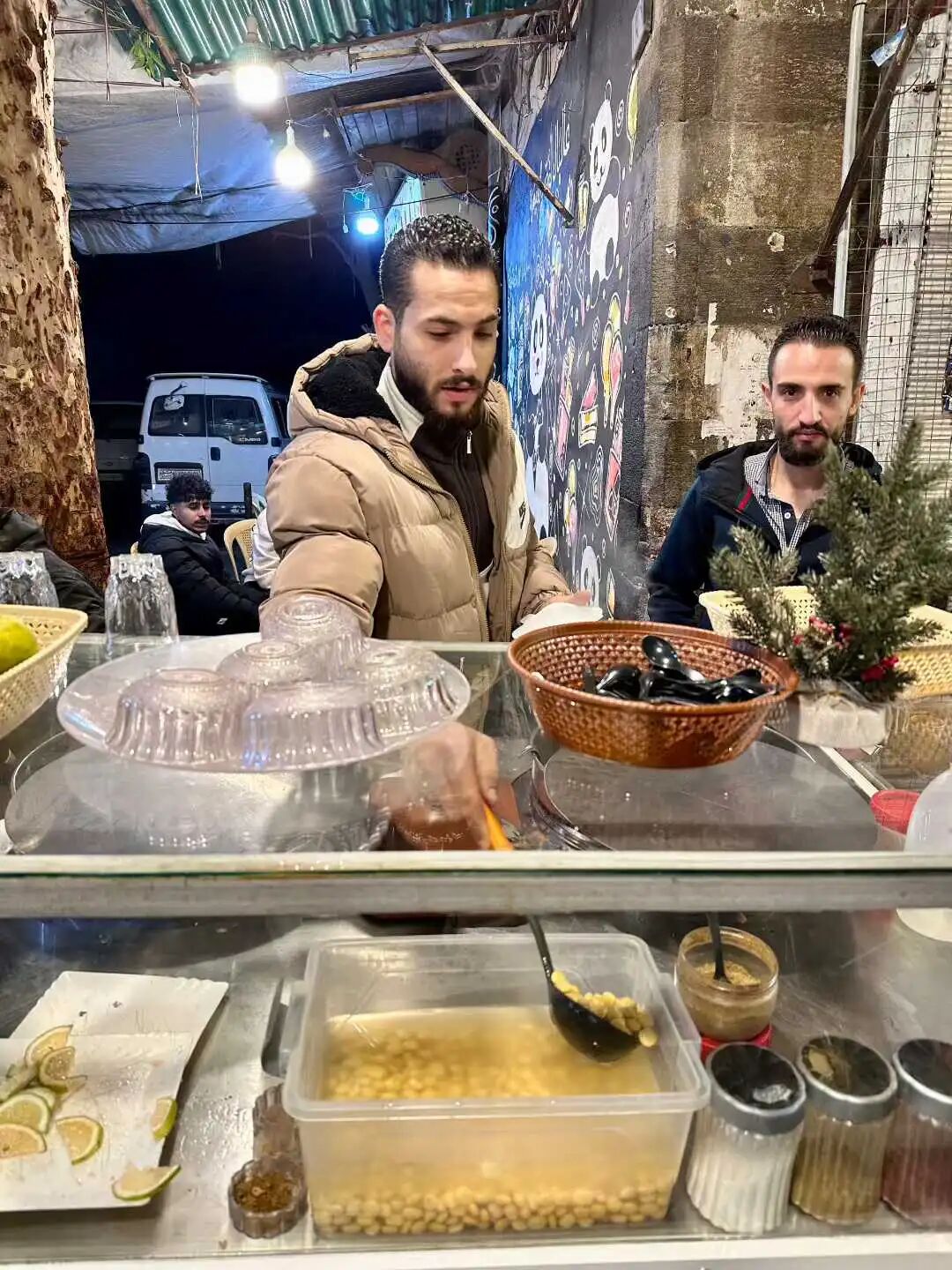
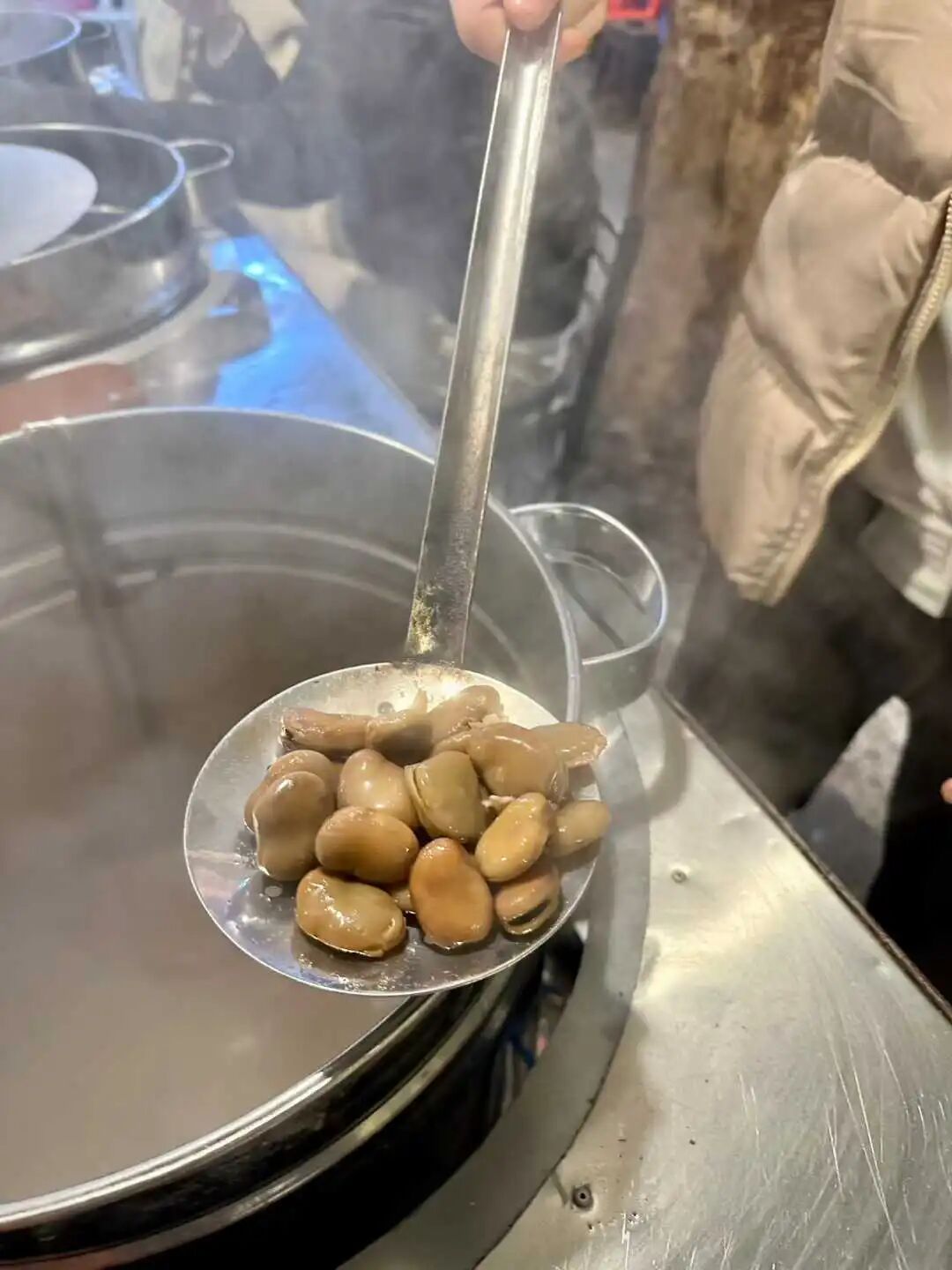
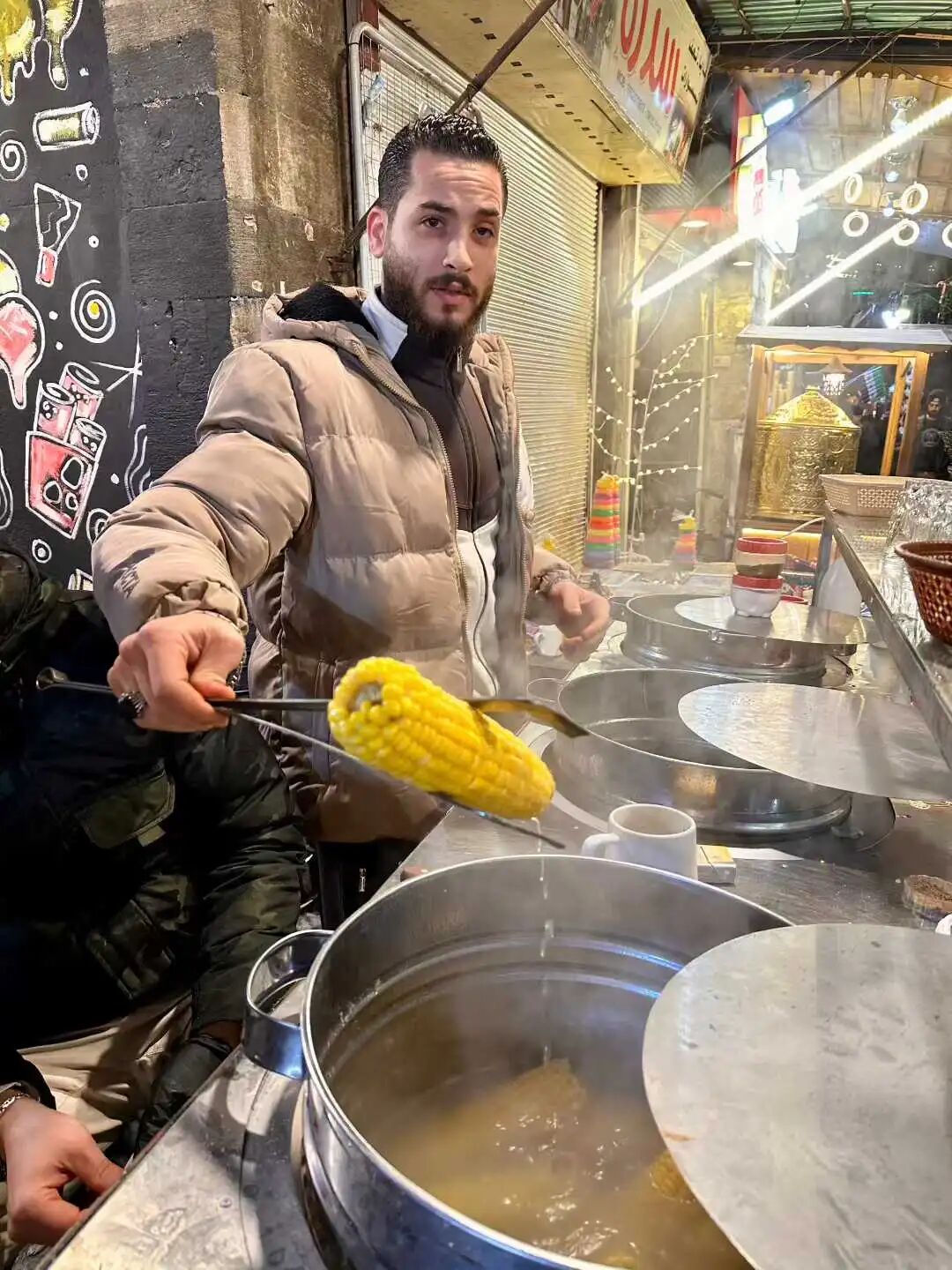
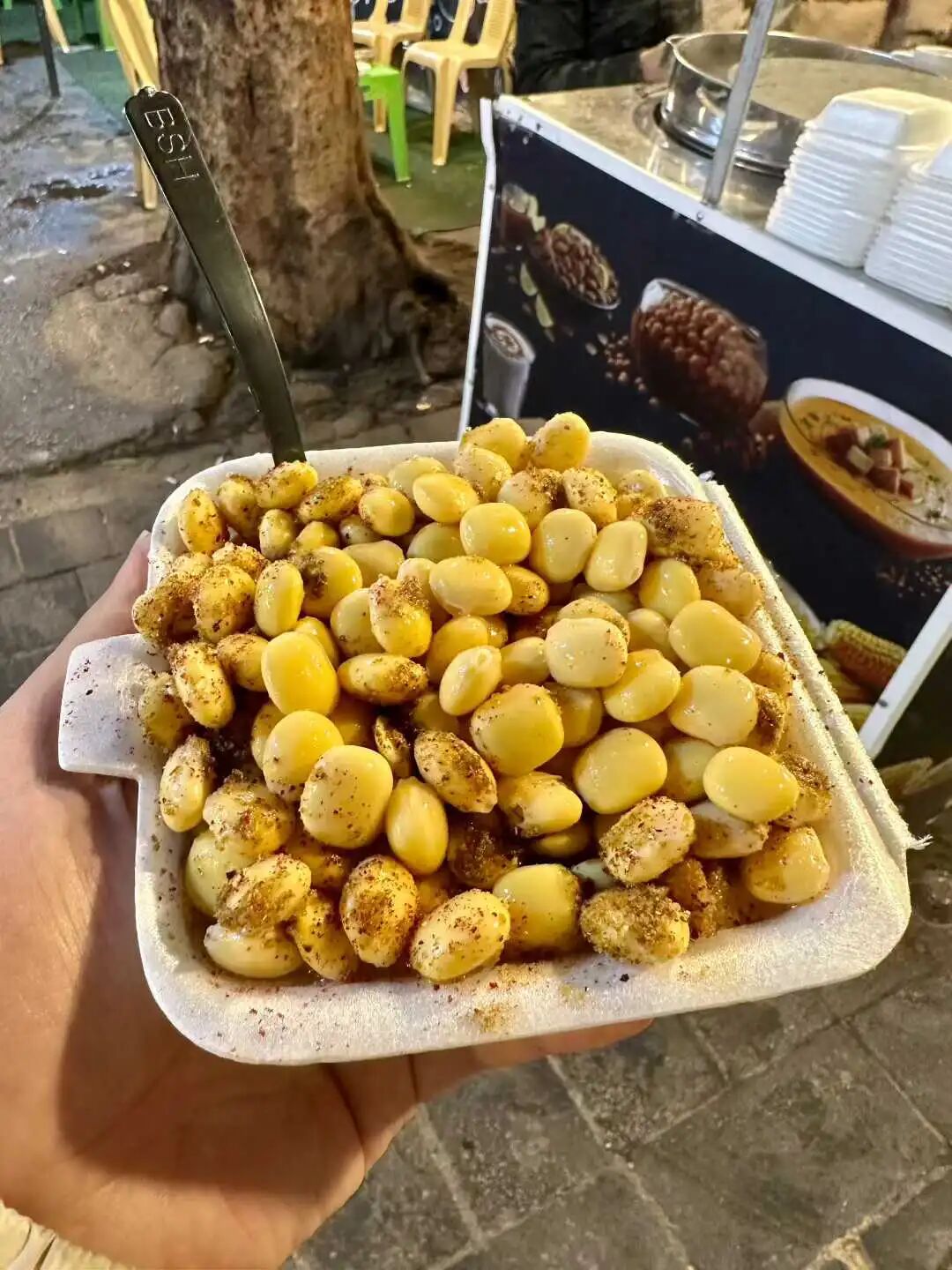
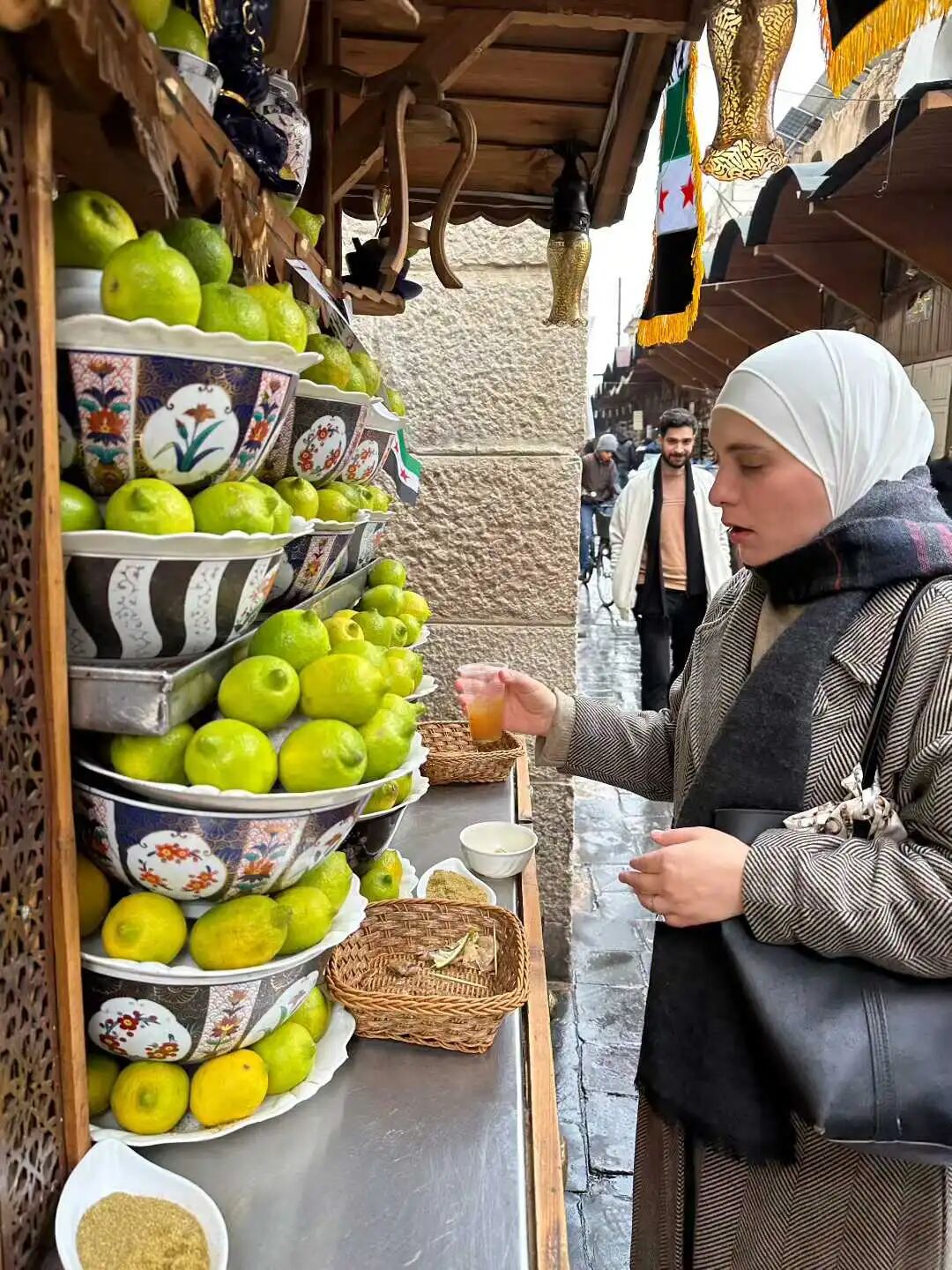
This is the street view of Qaimariya, which is very lively from the afternoon until the evening.
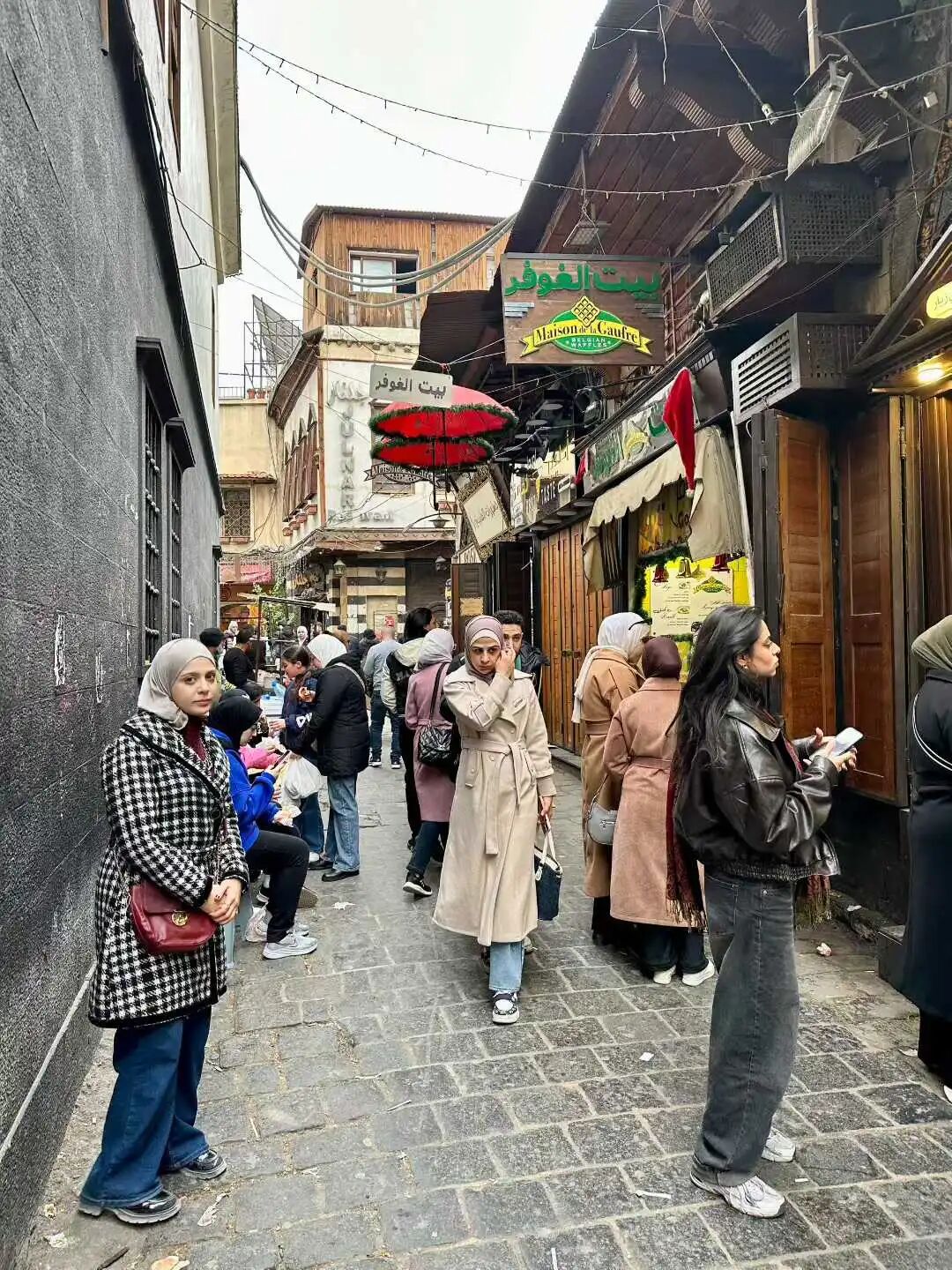
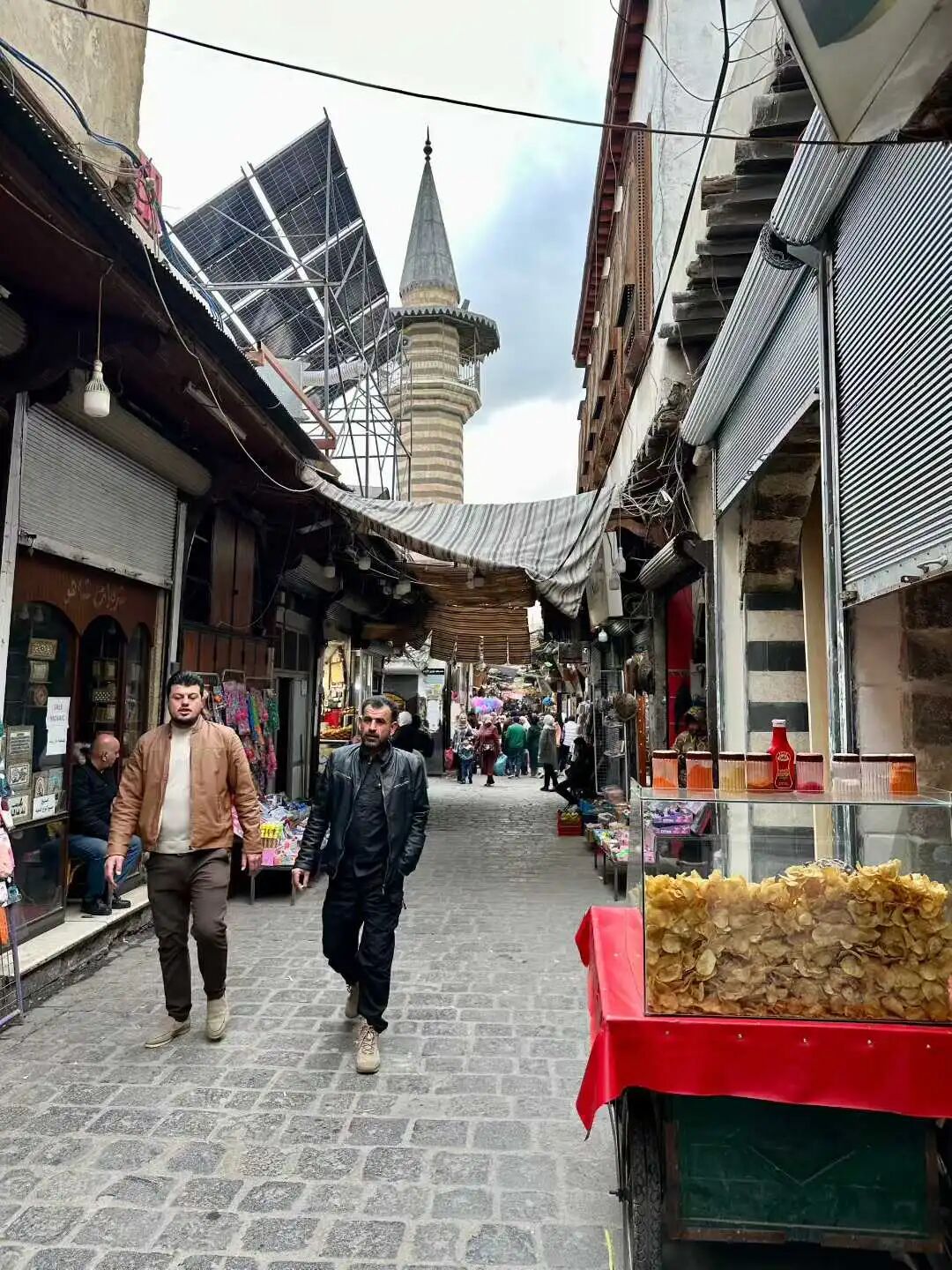
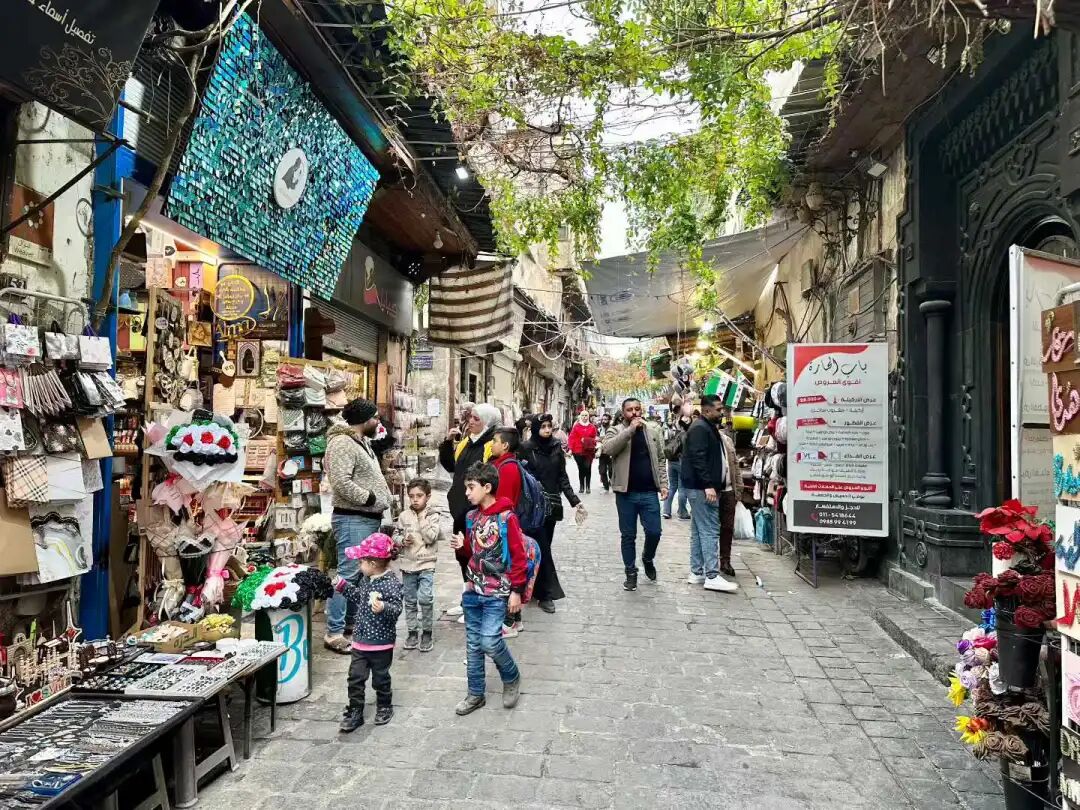
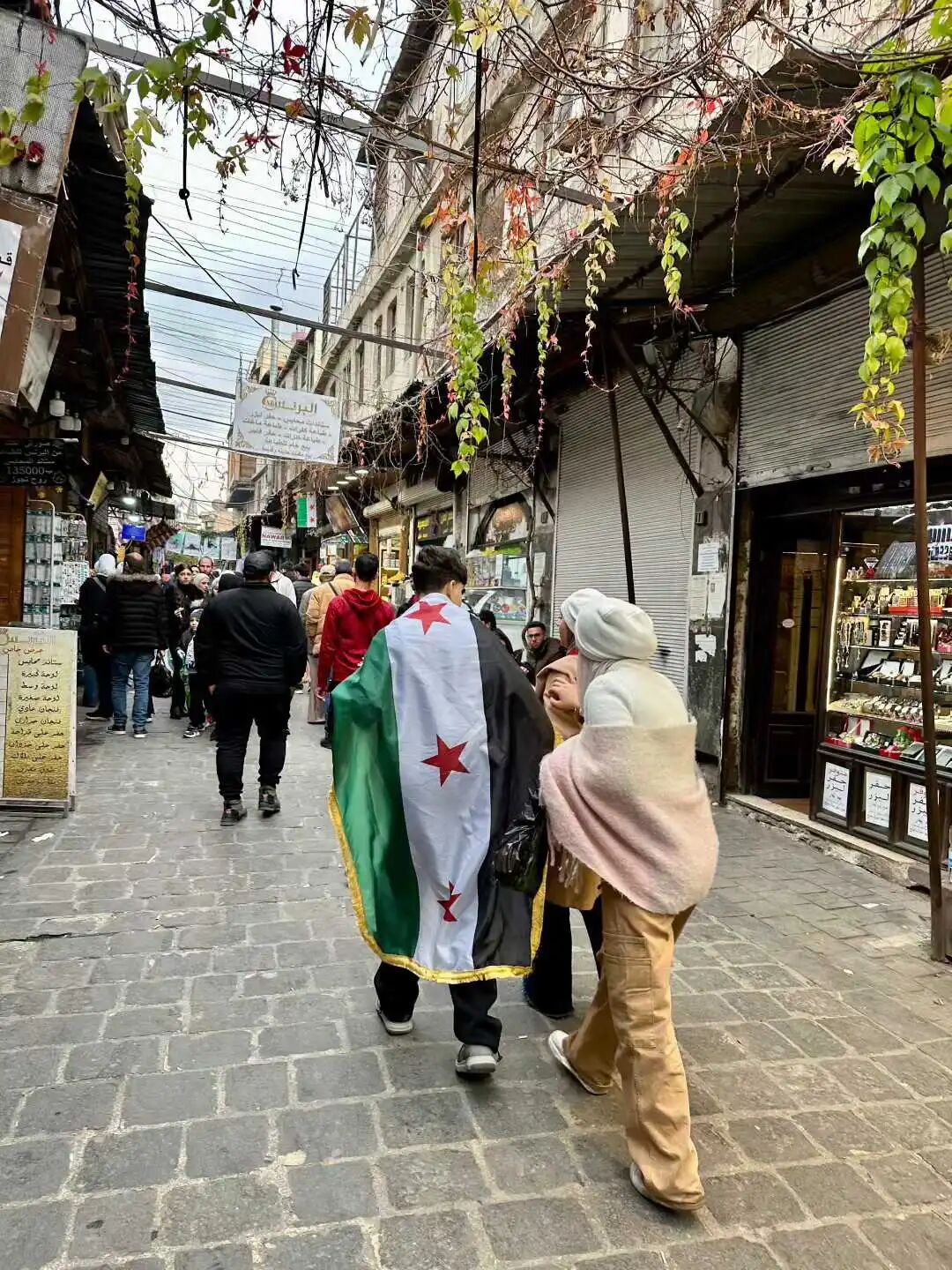
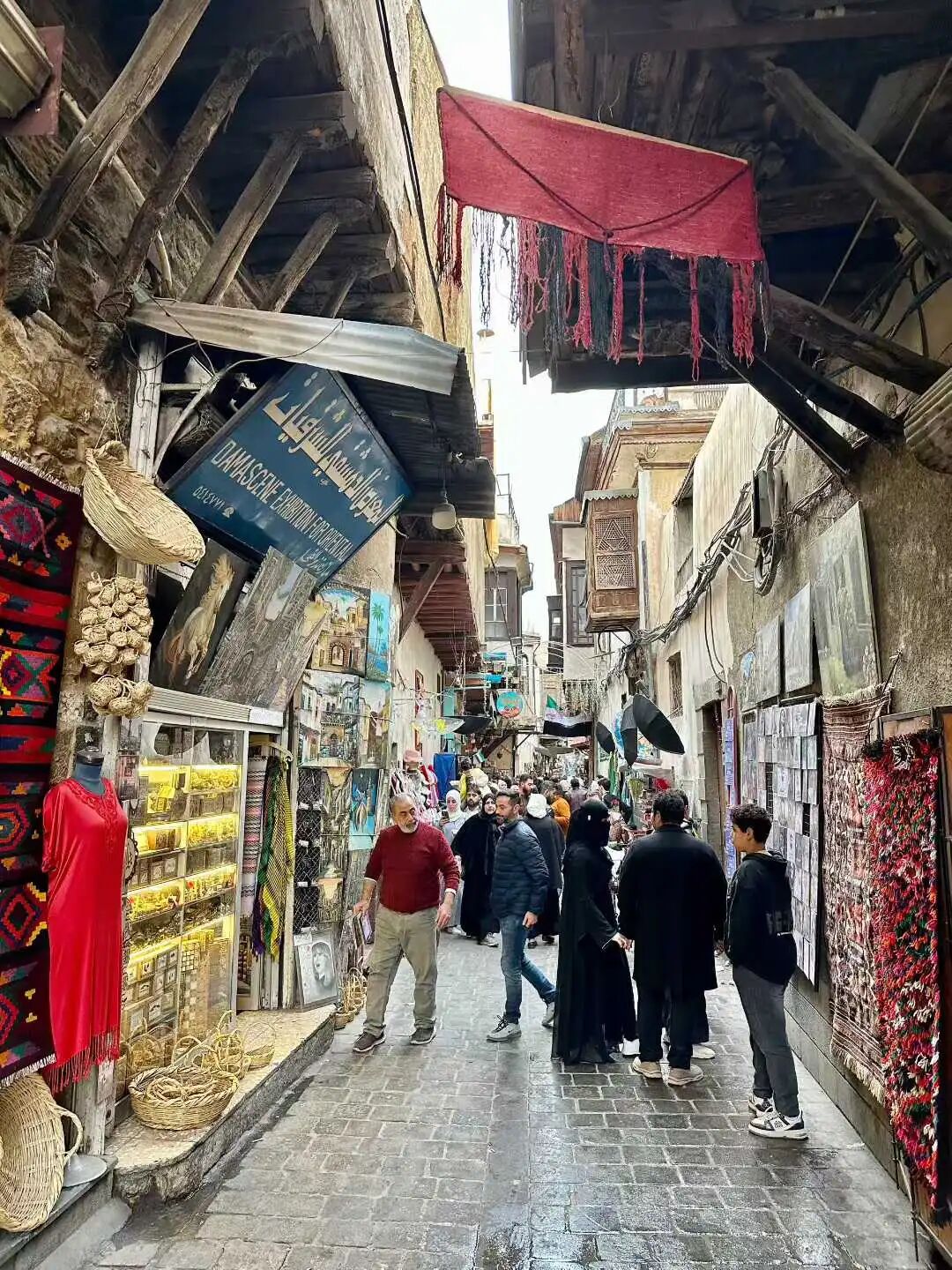
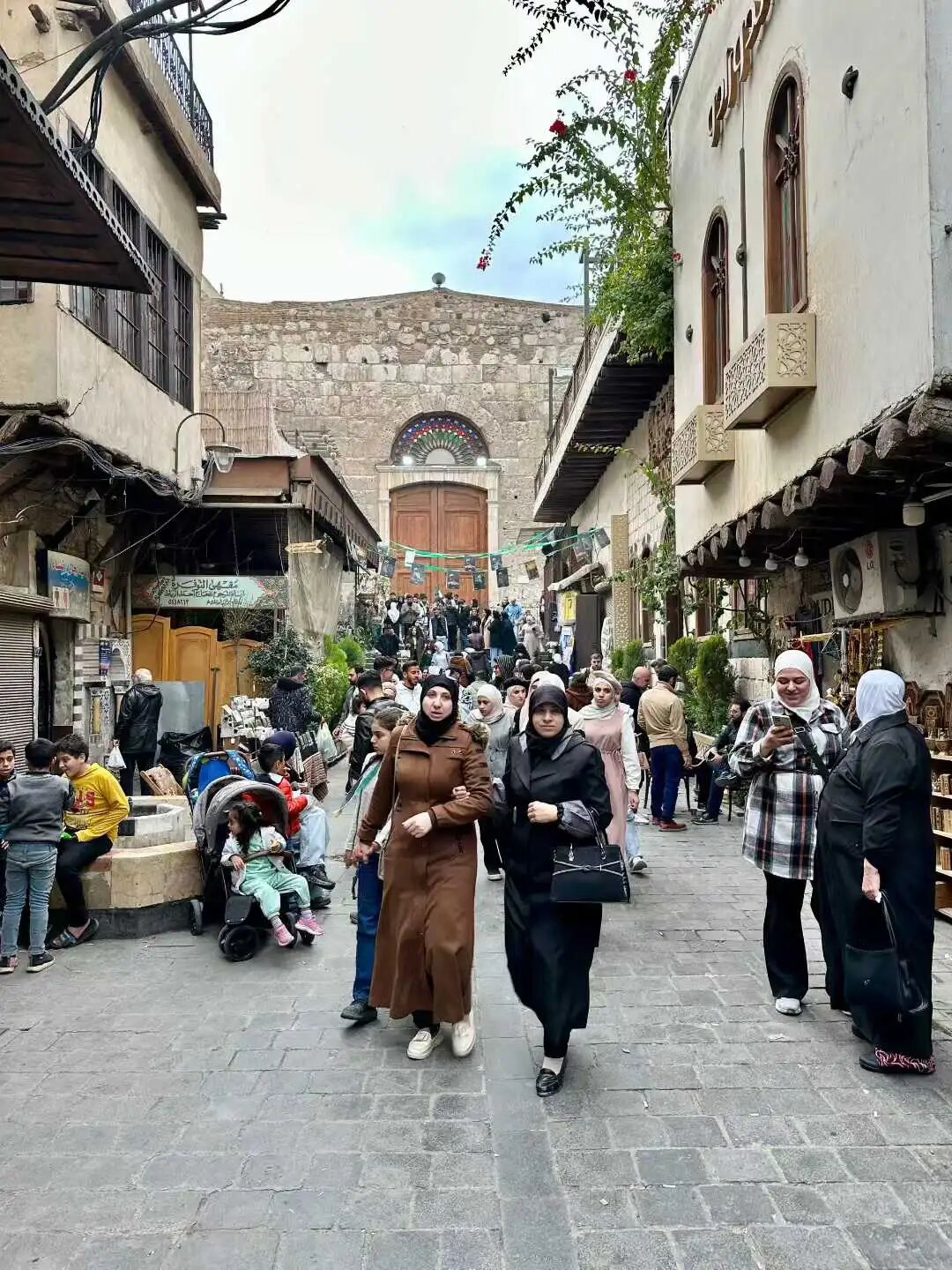
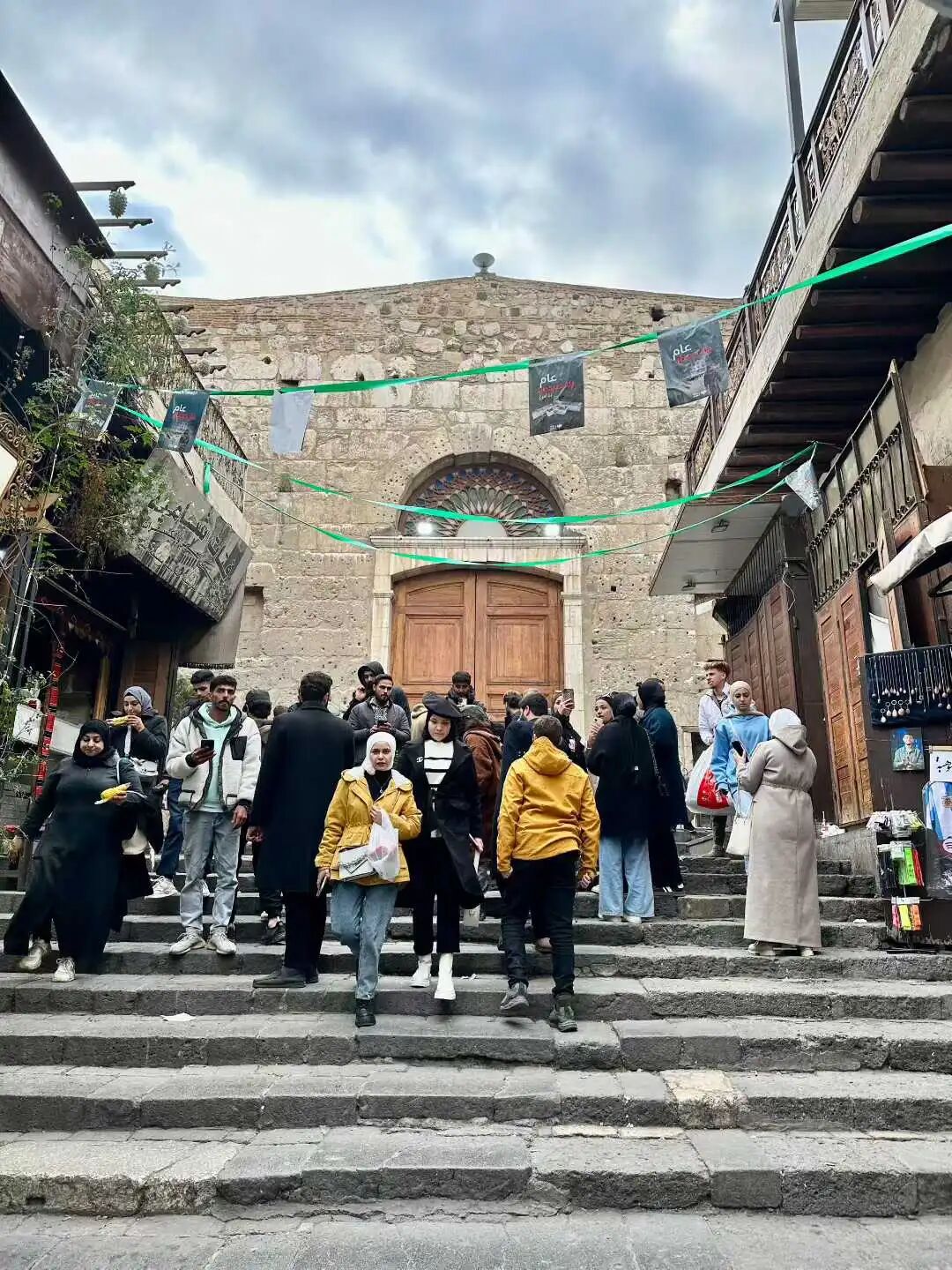
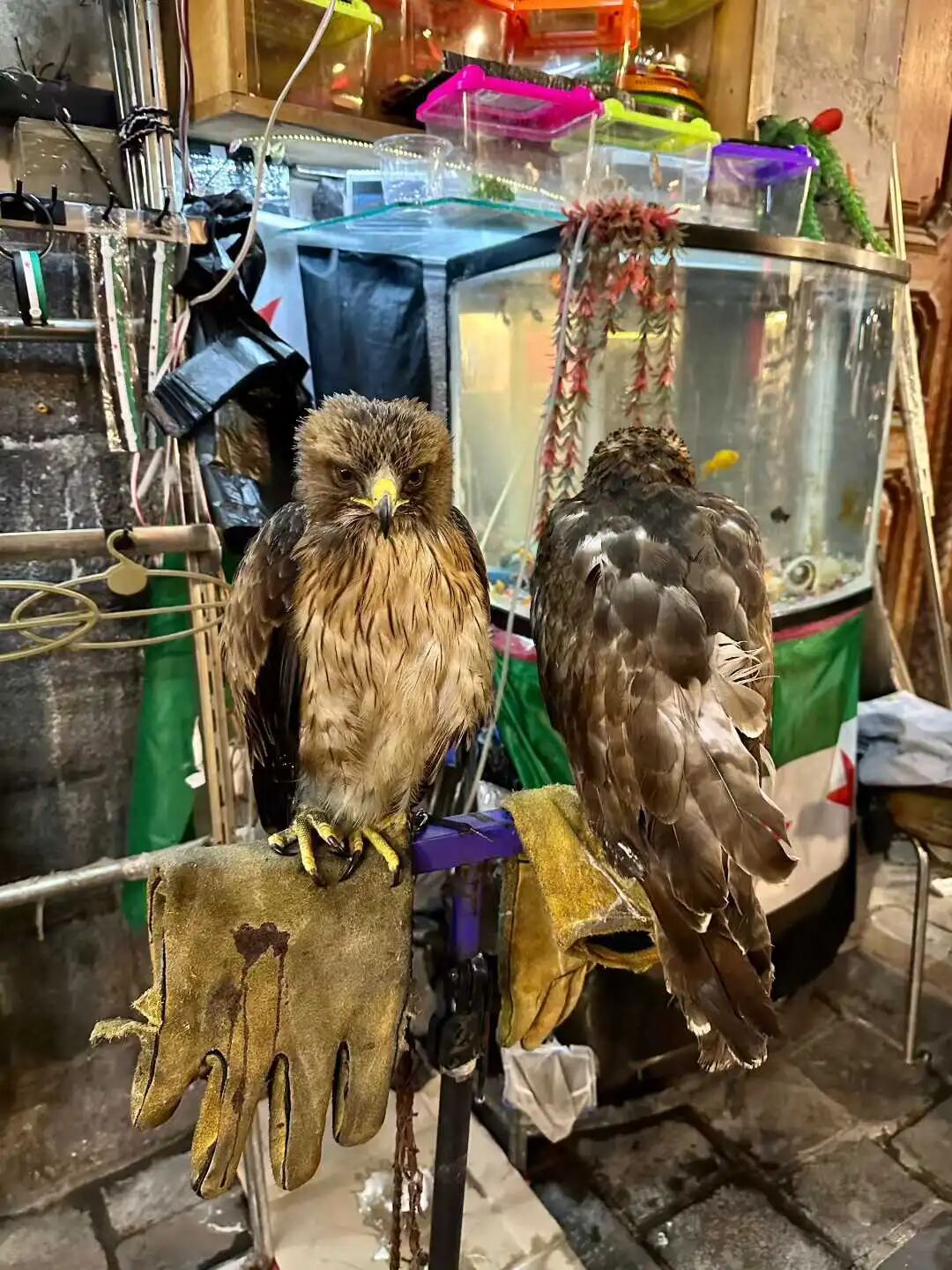
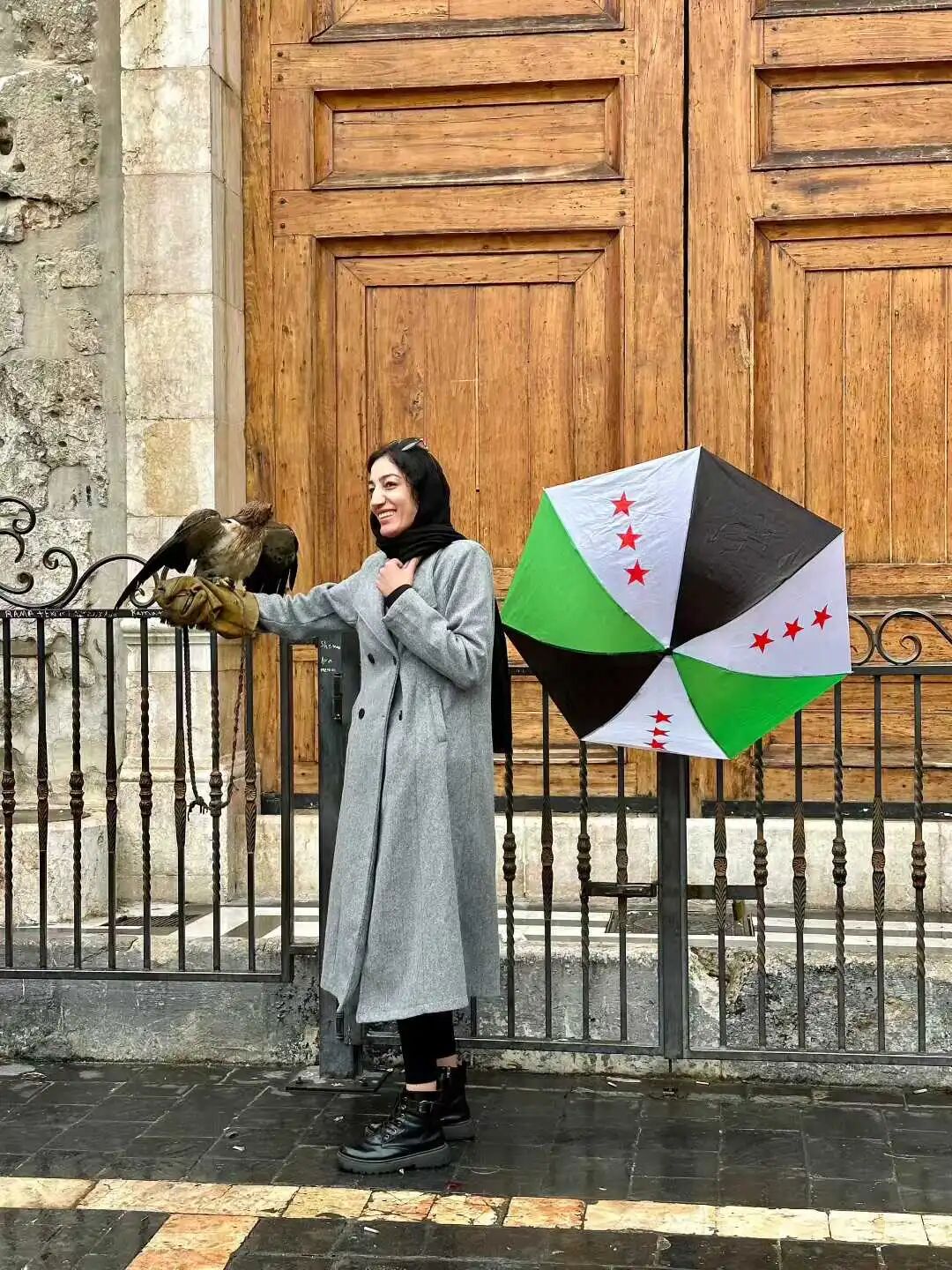
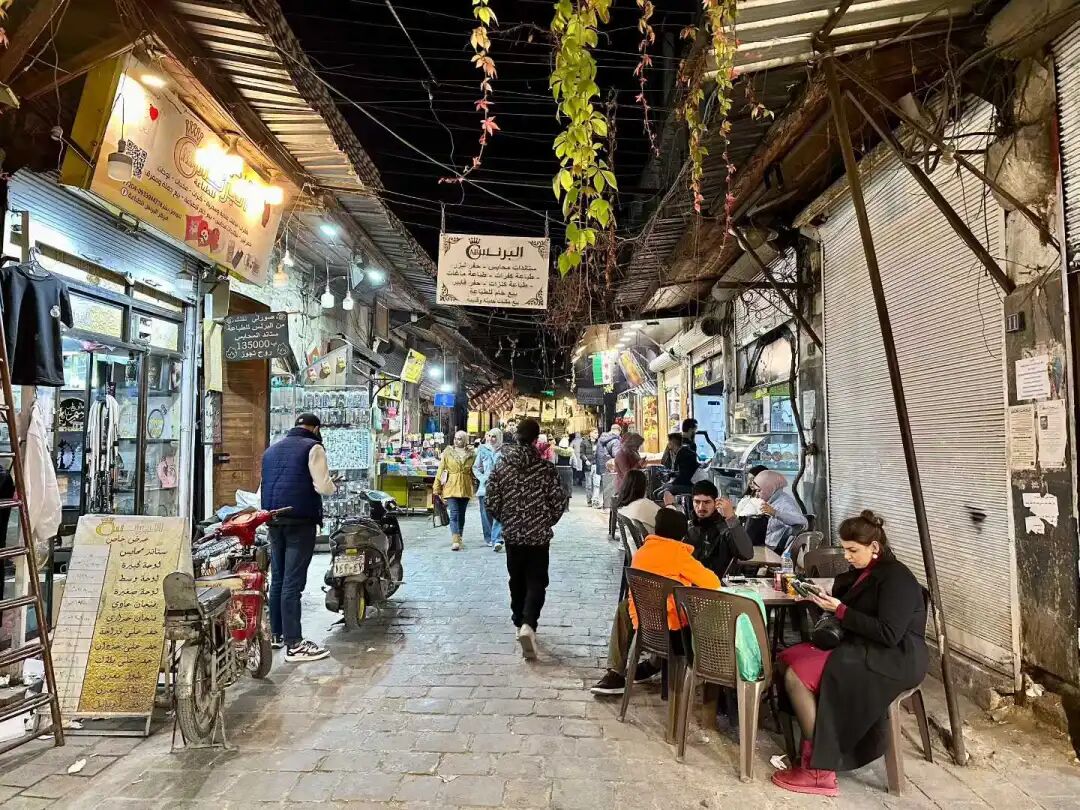
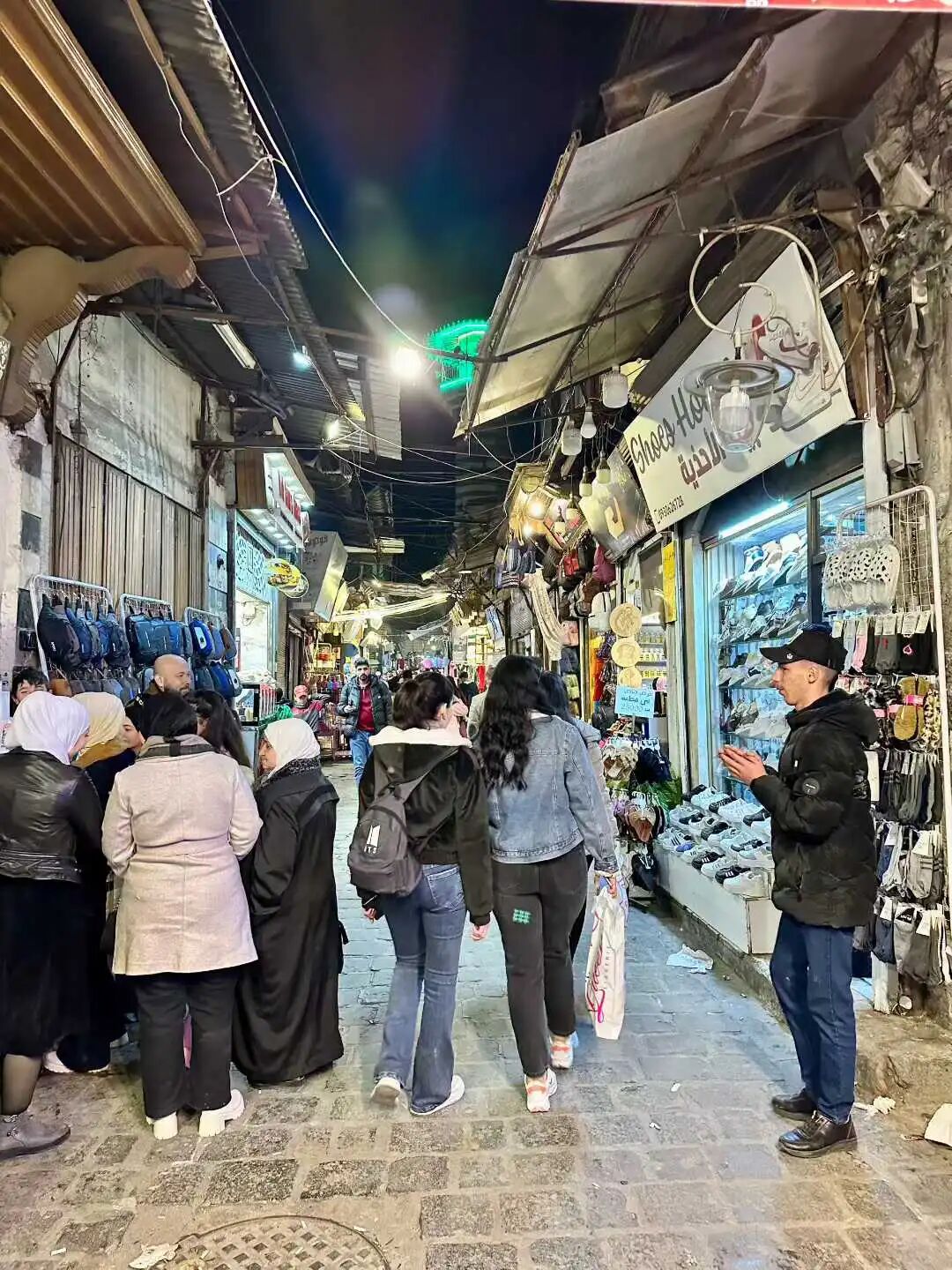
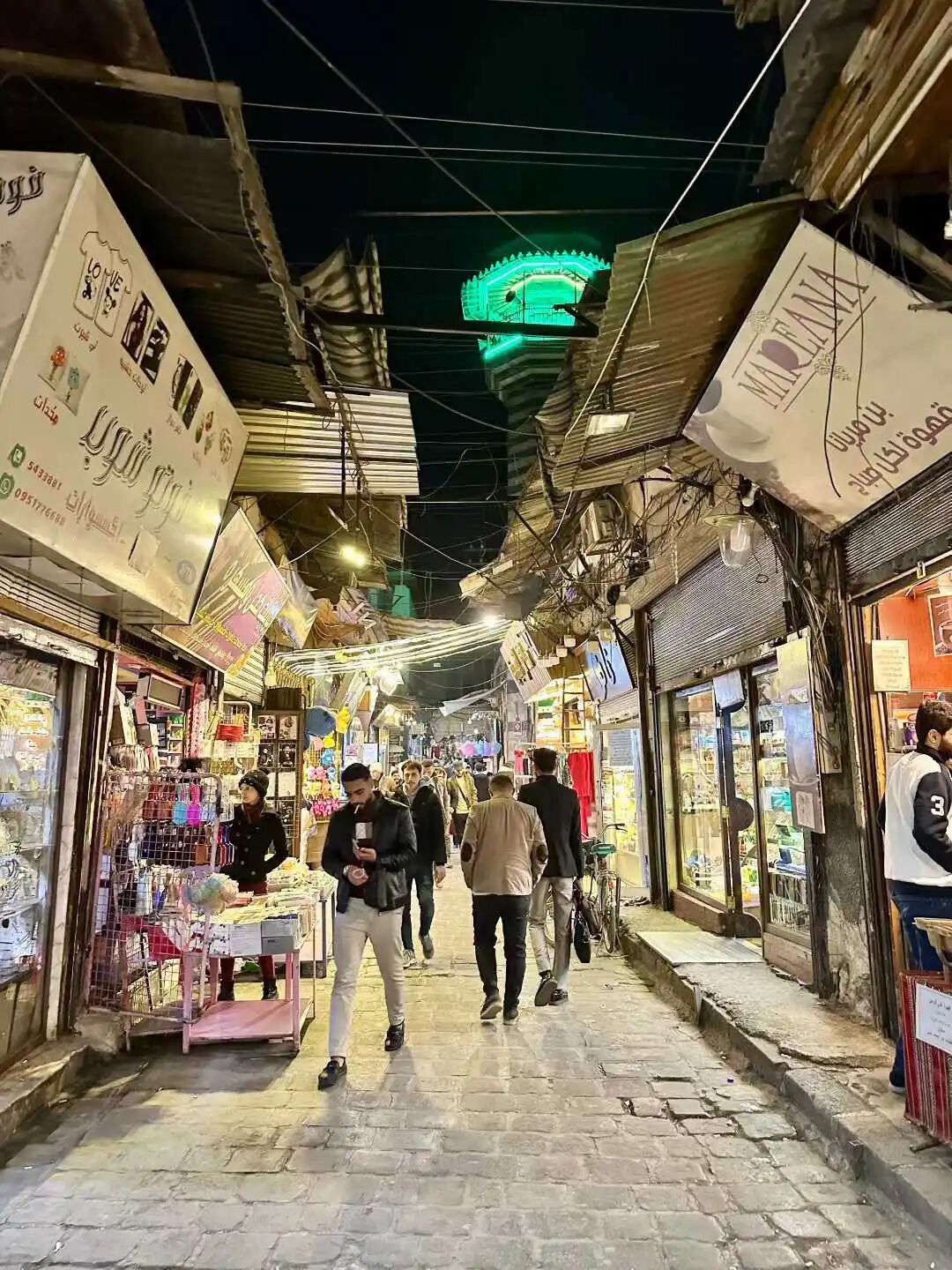
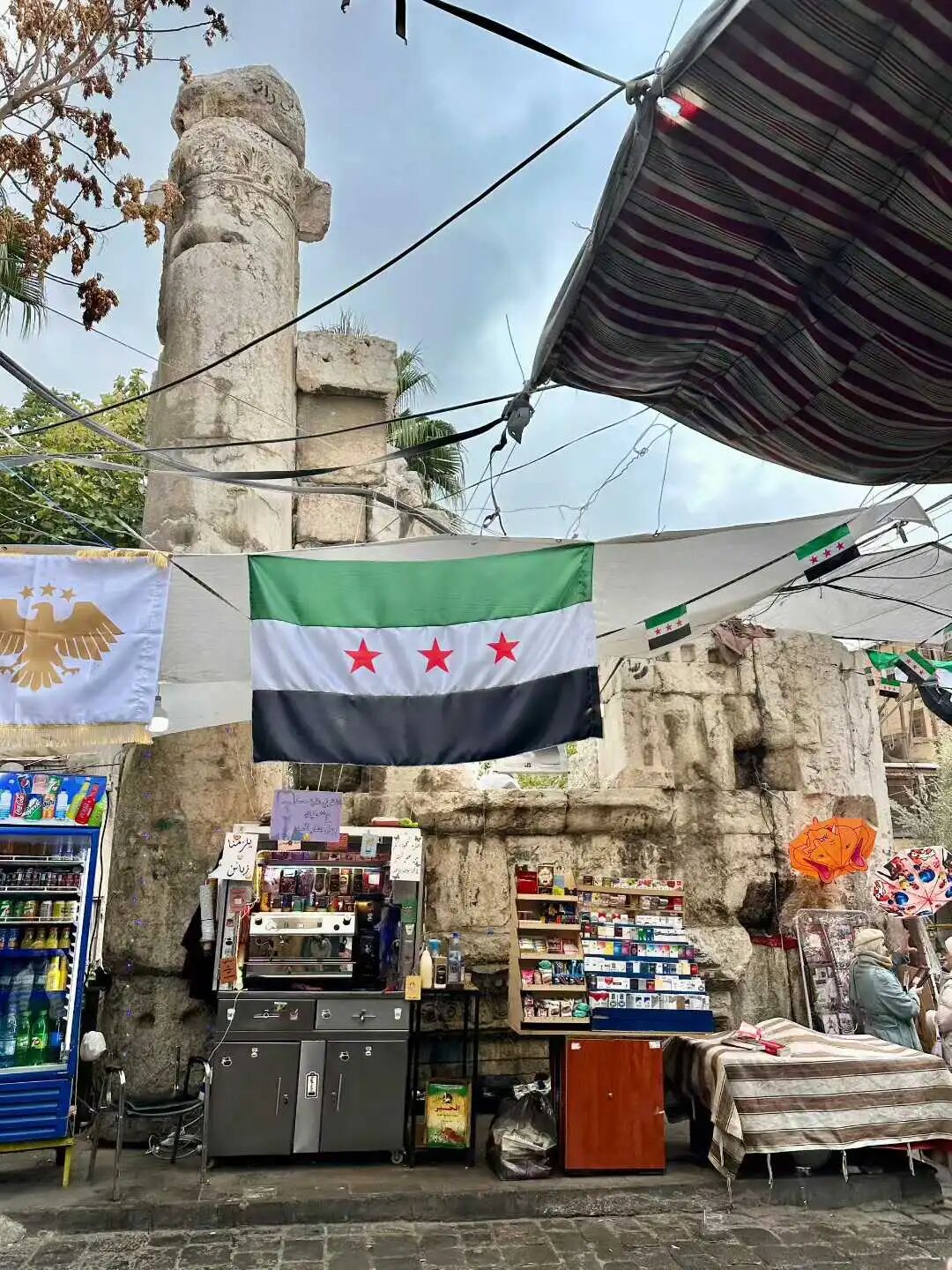
Outside the south wall of the Umayyad Mosque in Damascus is a street of craft shops where you can buy traditional Ottoman tiles and mosaic-inlaid jewelry boxes.
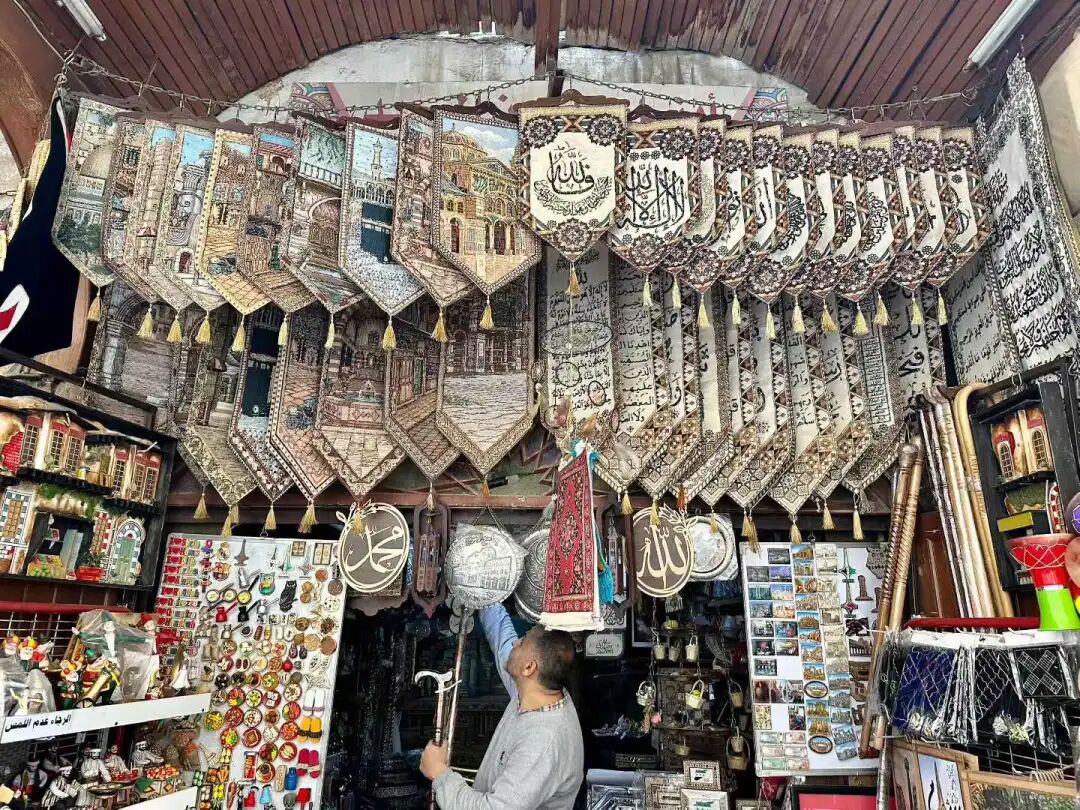
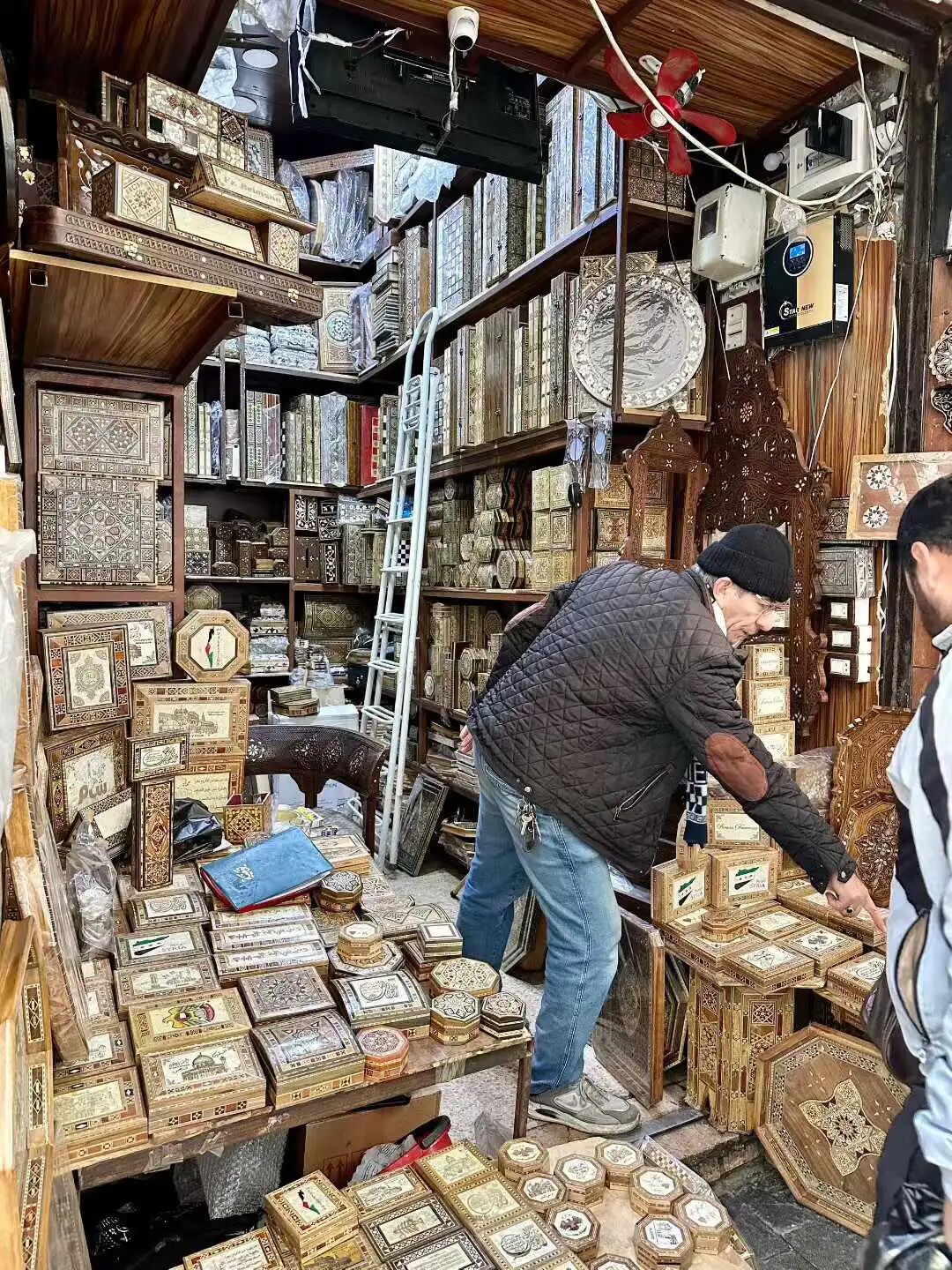
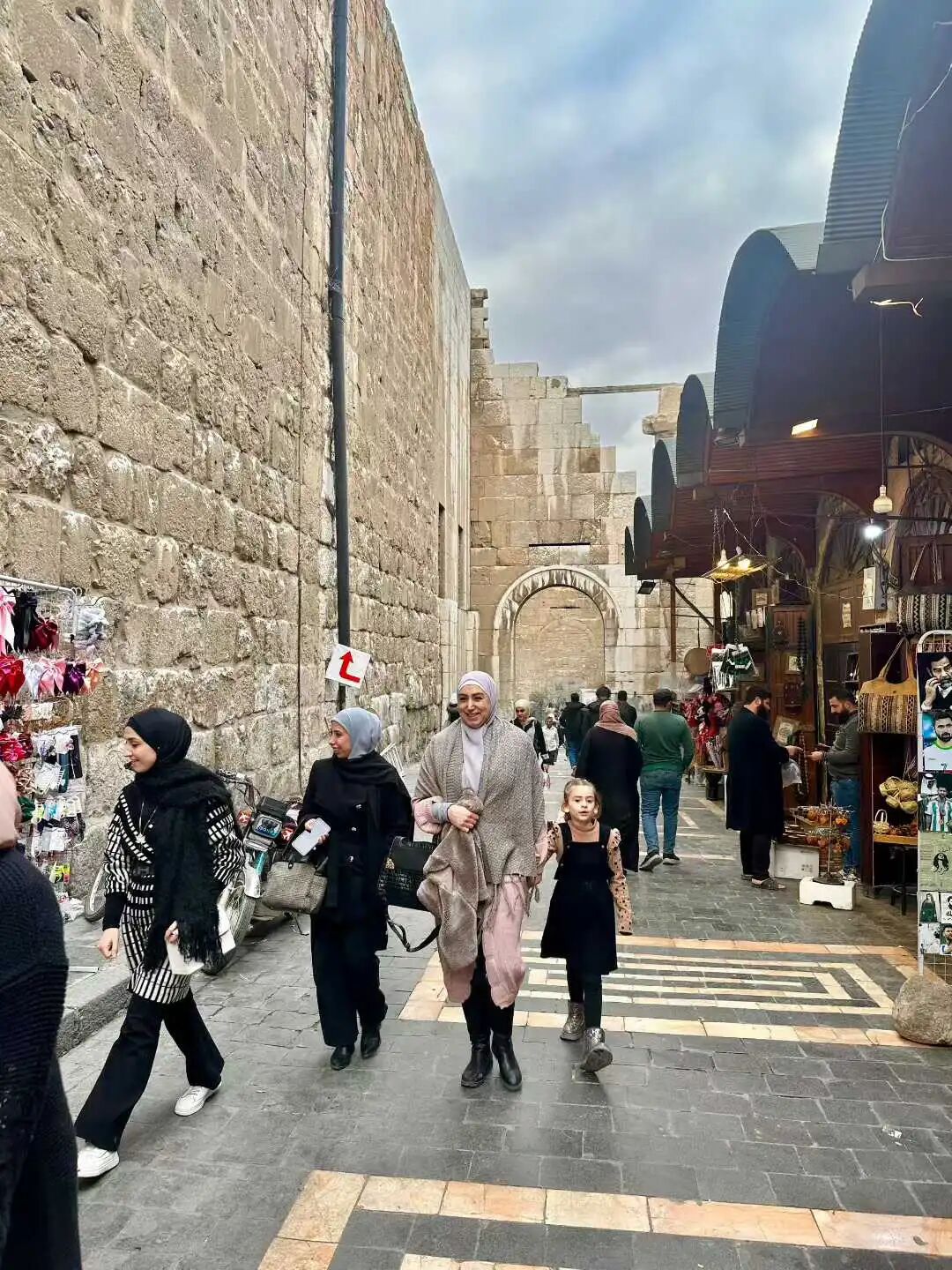
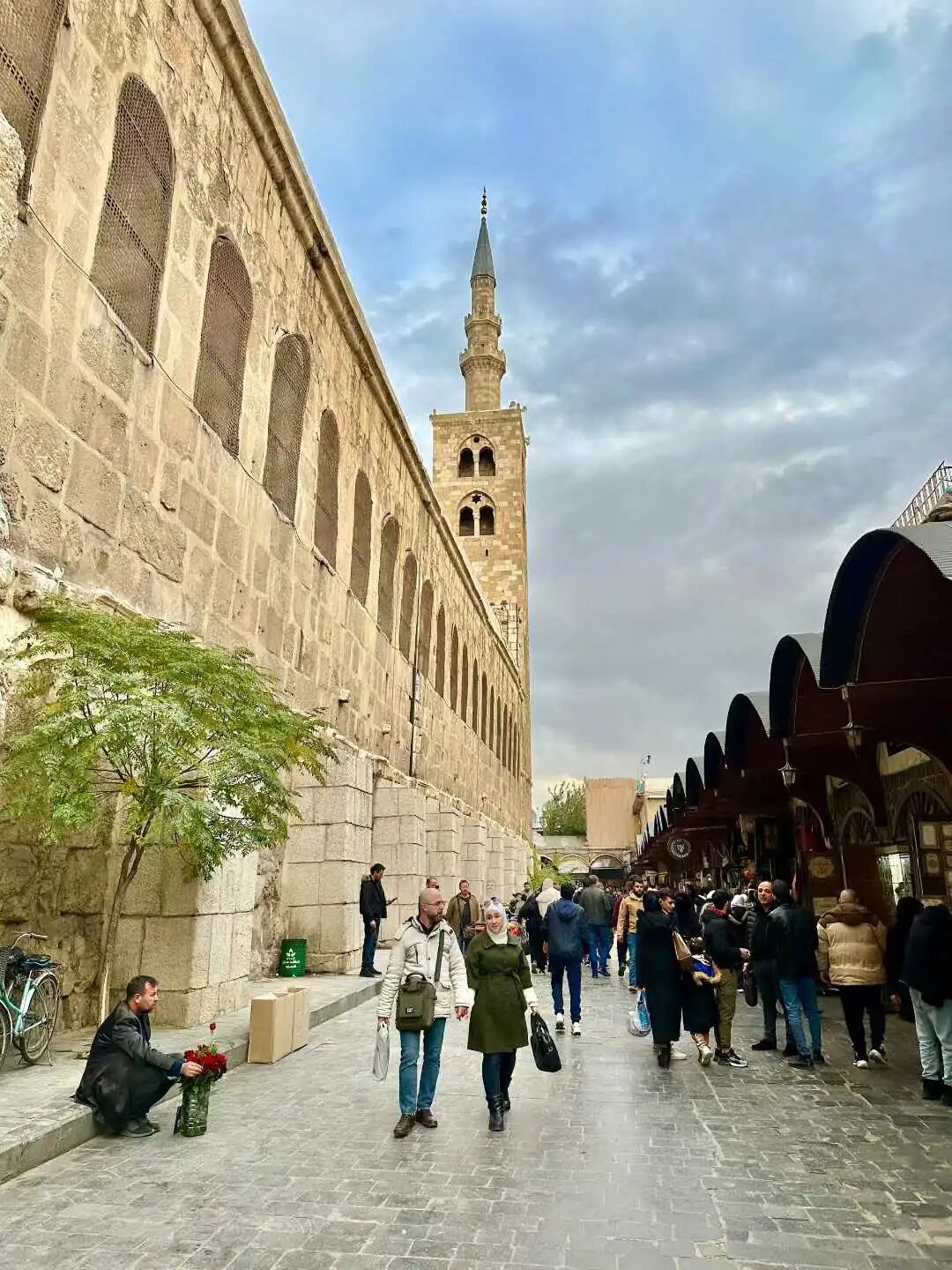
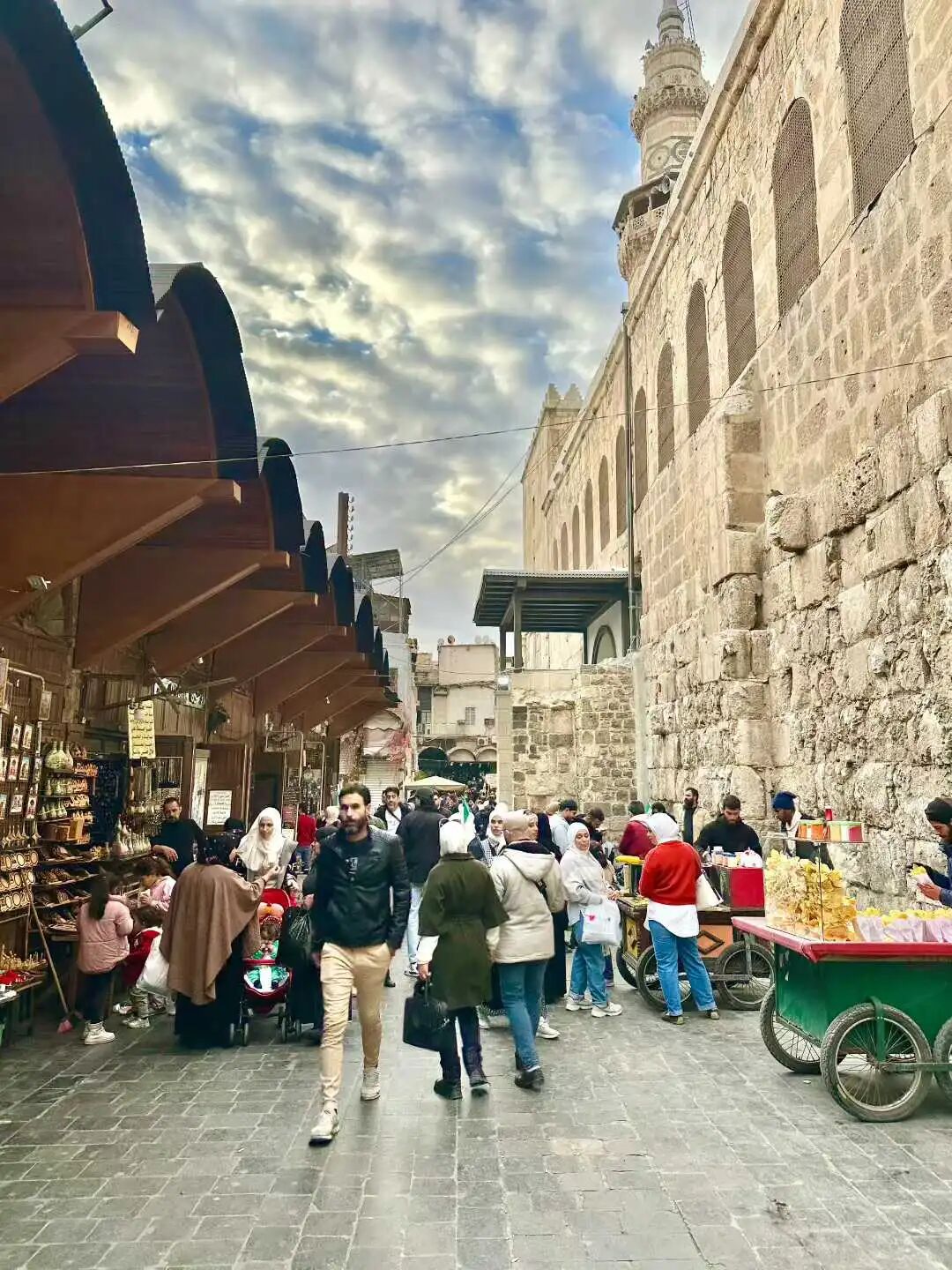
West of the Umayyad Mosque in Damascus lies the Al-Hamidiyah Souq. The market was first built during the Ottoman period in 1780 and was expanded to its current form between the late 19th and early 20th centuries. The most famous spot in the market is the Bakdash ice cream shop, which opened in 1895. The shop's signature item is Damascus Booza ice cream. When making Booza, classic Ottoman spices like mastic, salep, and plenty of nuts are added to the milk. Mastic is the resin of the mastic tree, recorded as "masitachi" in the Hui Muslim medical text Huihui Yaofang. Salep is a powder made from orchid tubers and was an important spice during the Ottoman Empire. Unlike regular ice cream, Booza is not made by churning, but by pounding and constantly stretching it in an ice bucket.
Booza ice cream is topped with crushed pistachios and a Middle Eastern version of milk skin called Qishta. Qishta is a natural milk skin made by boiling milk at 60 degrees without fermentation or coagulants. It only lasts a few days even when refrigerated. It is a classic ingredient for various puddings and desserts, or it can be eaten directly with crushed pistachios.
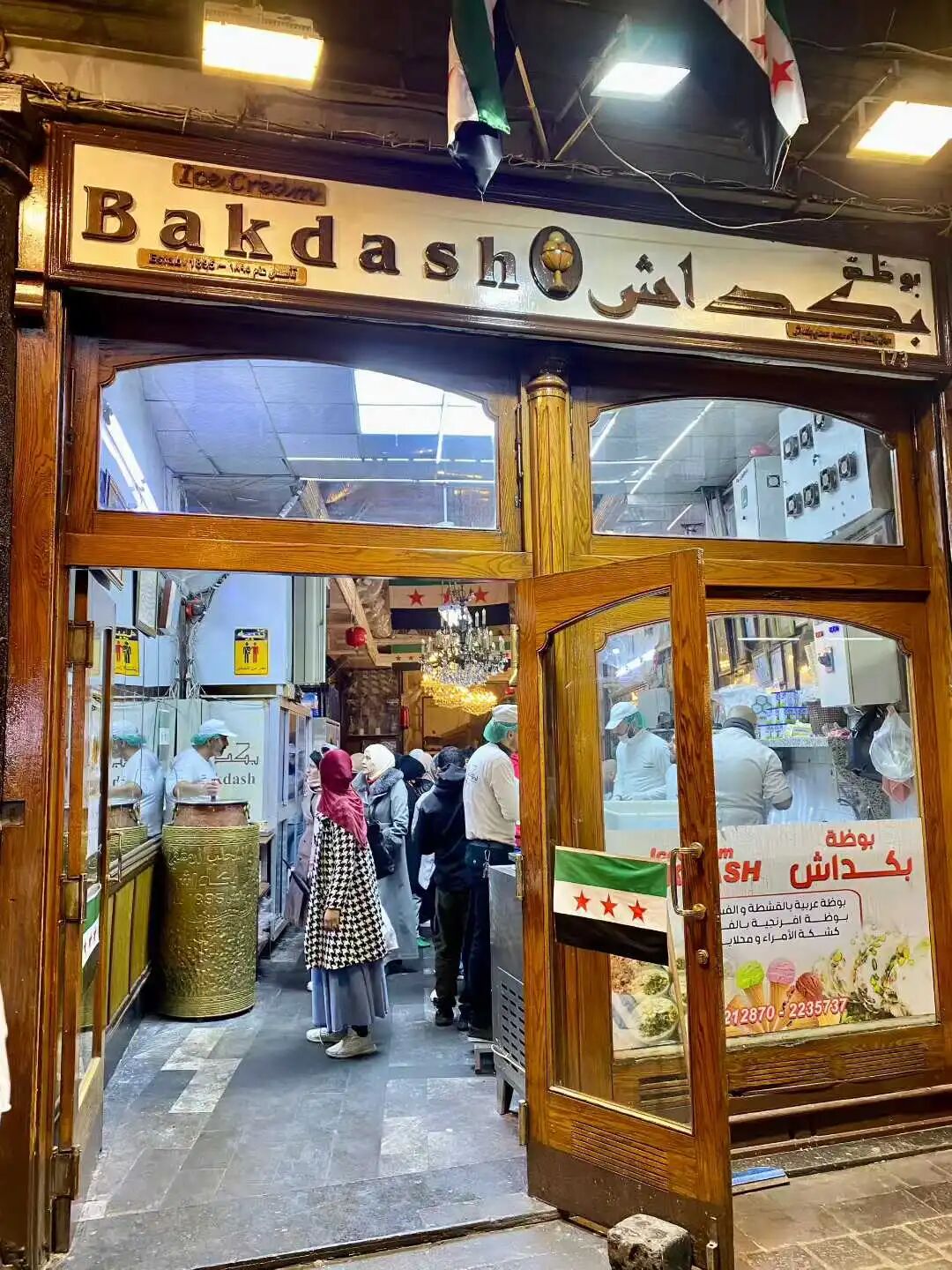
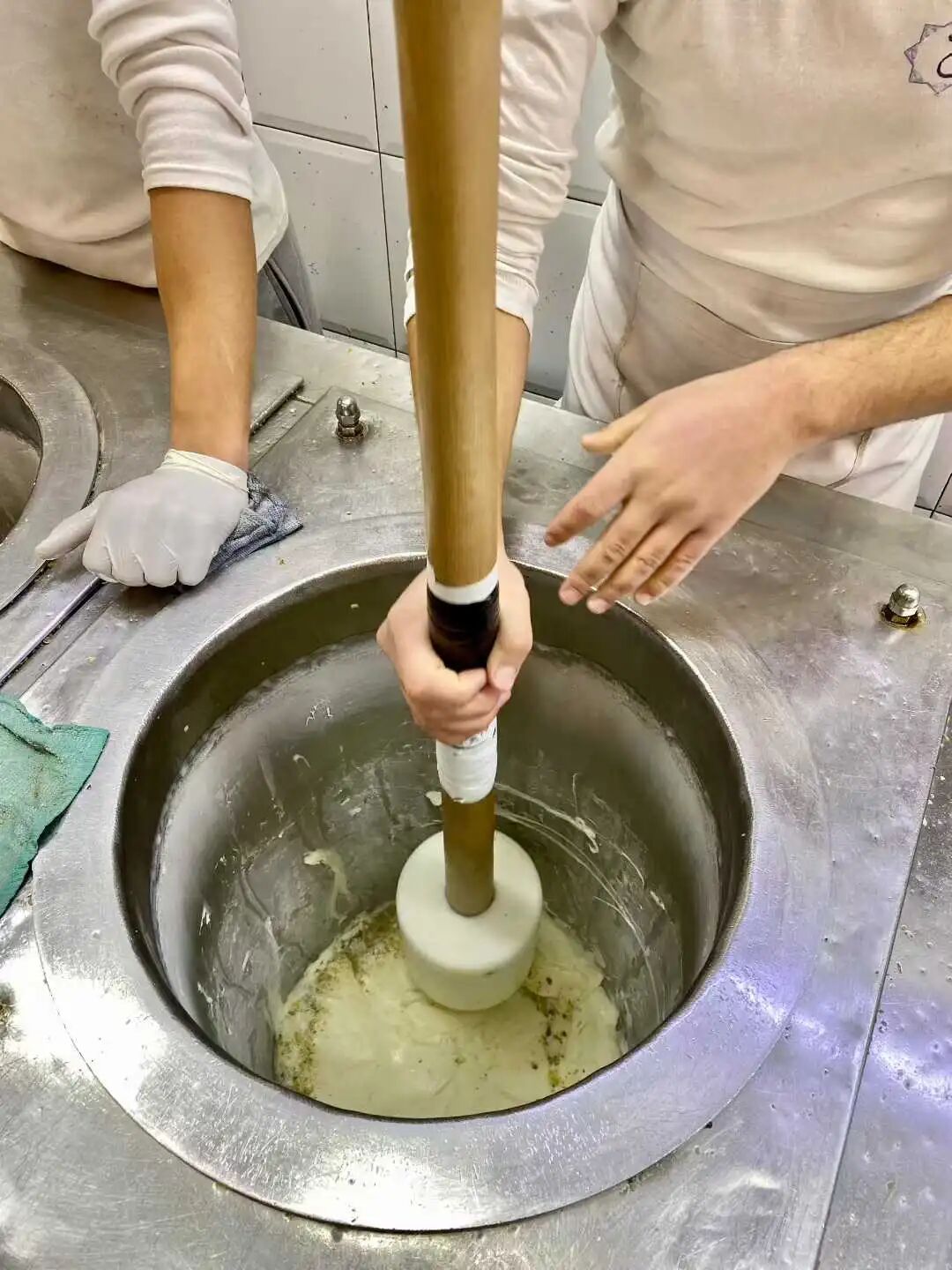
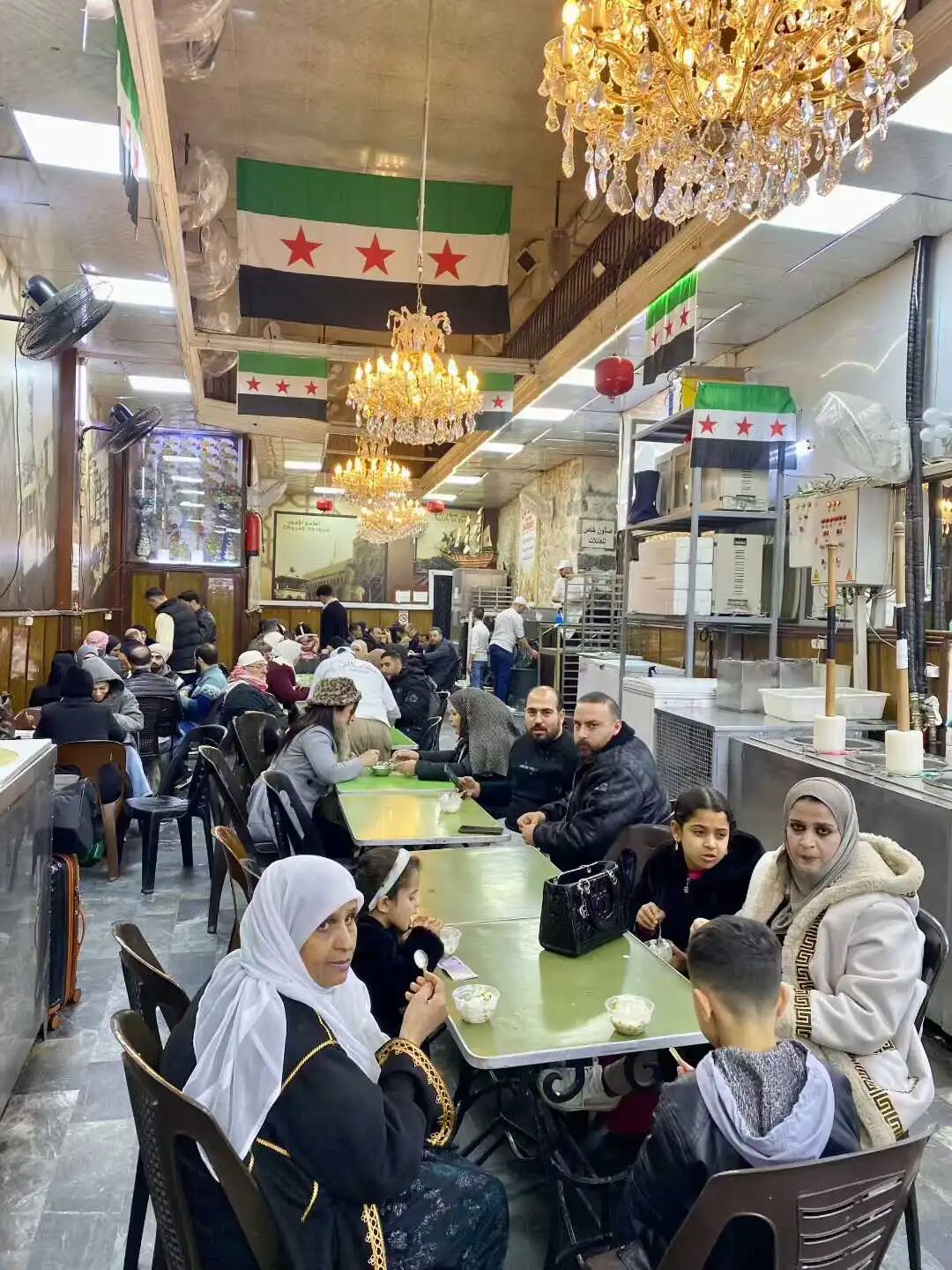
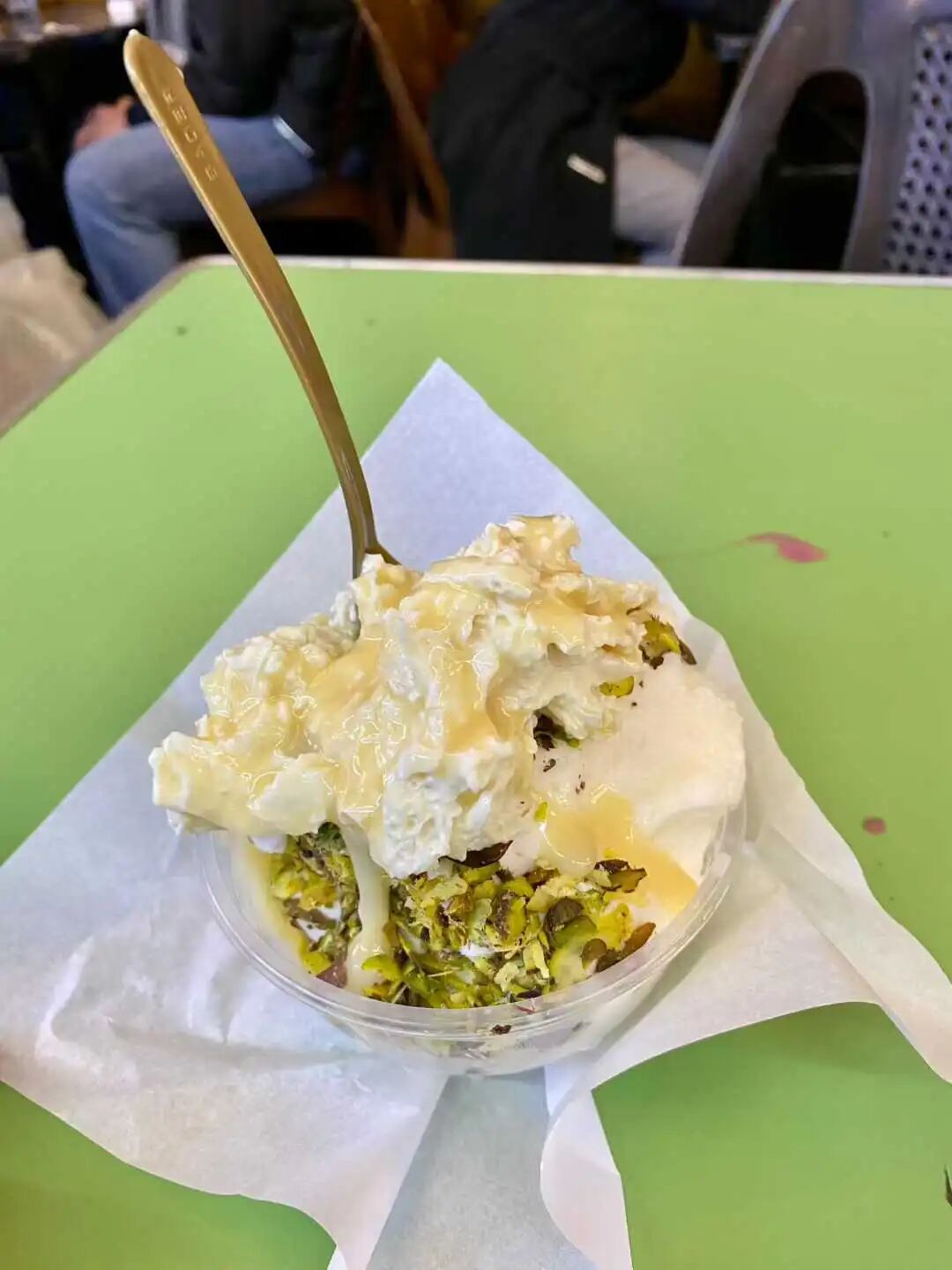
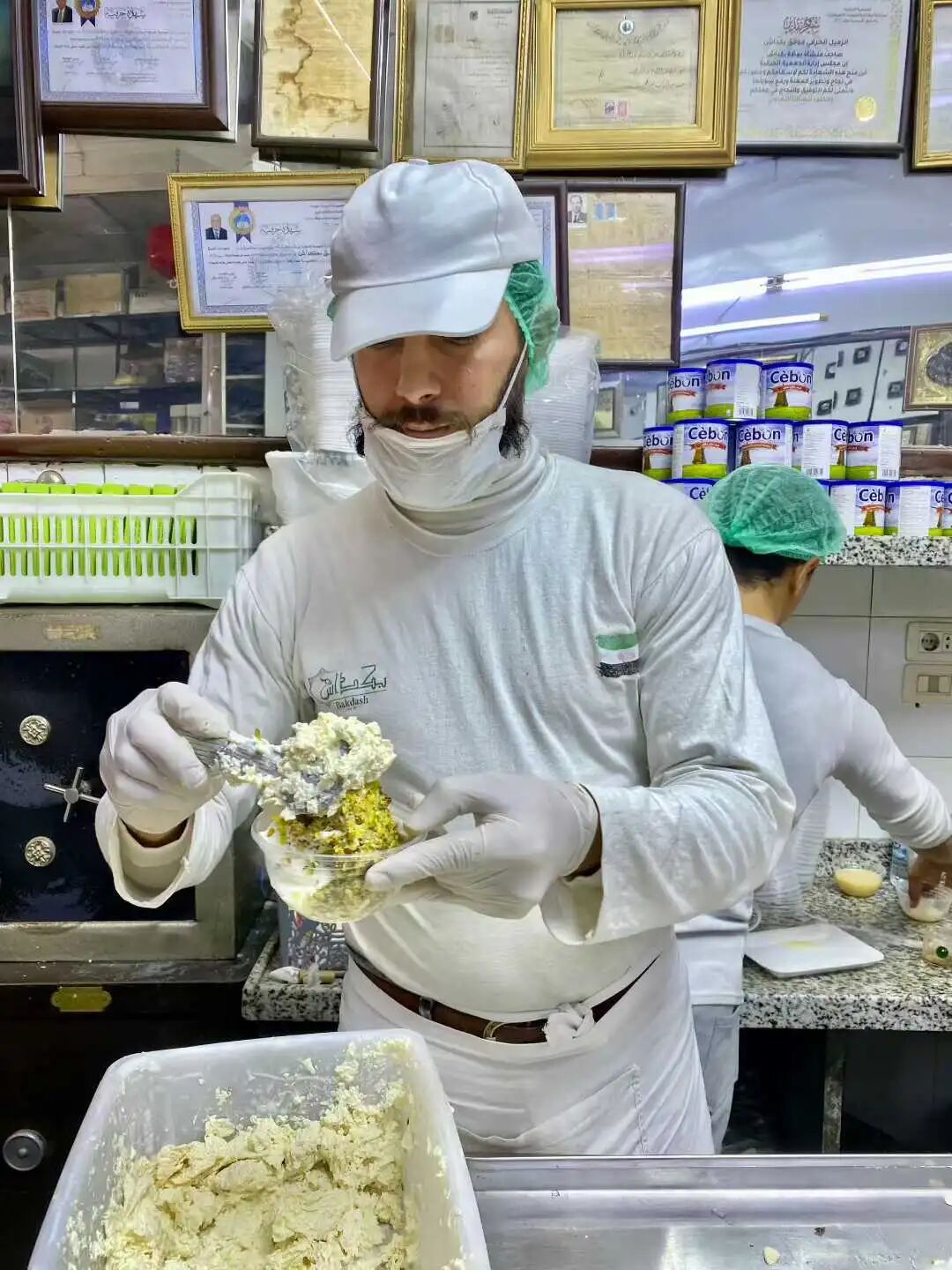
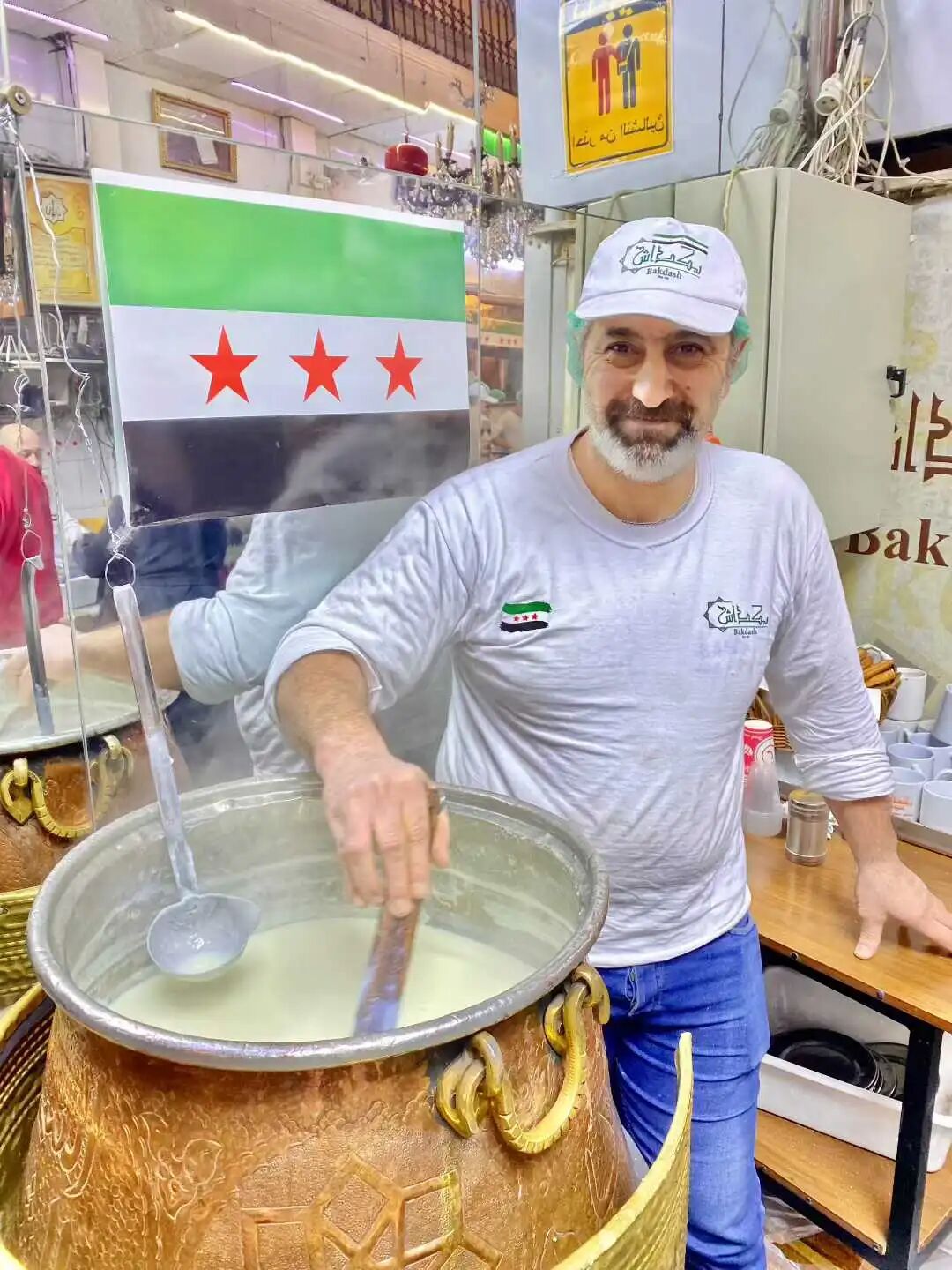
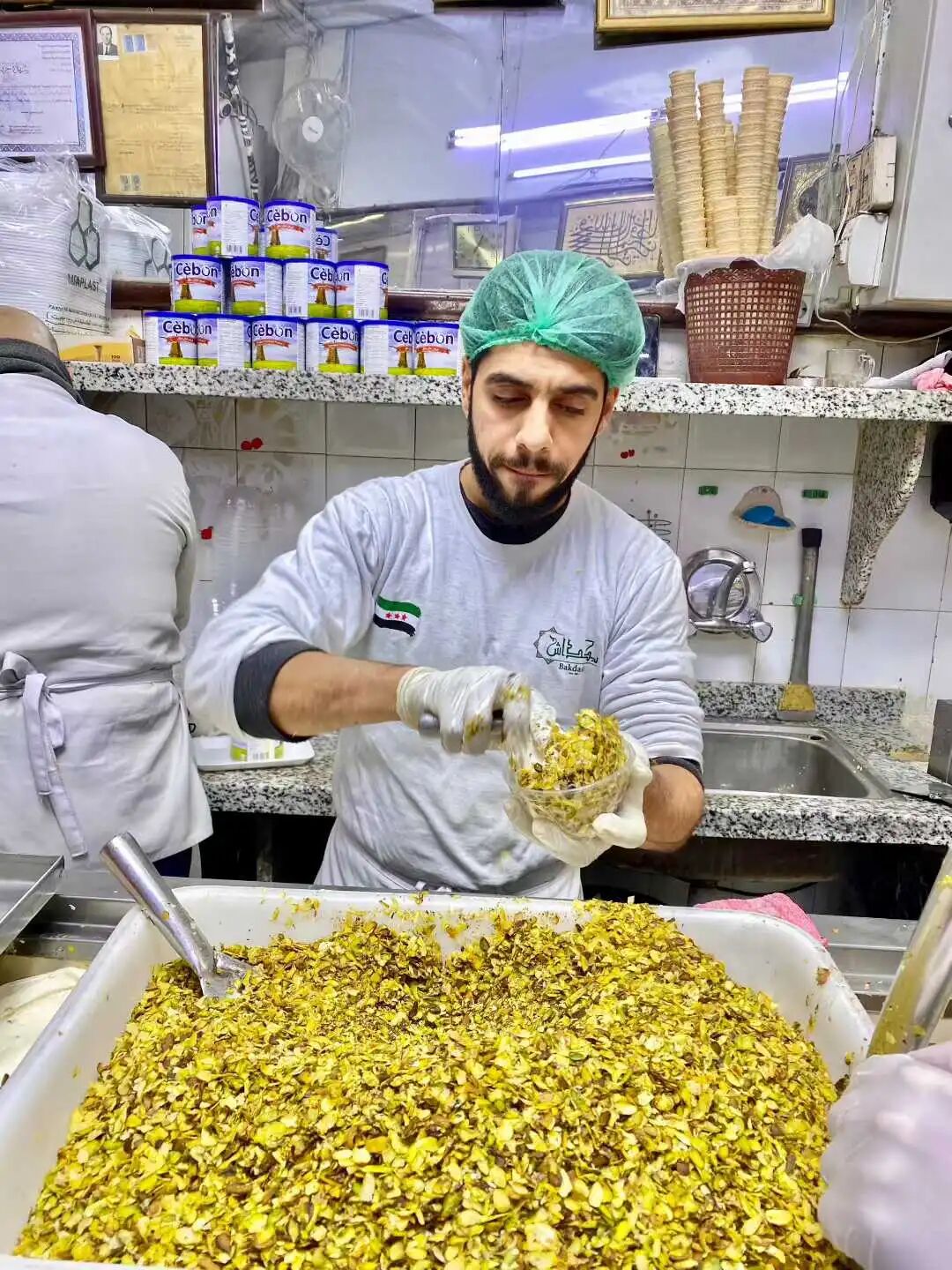
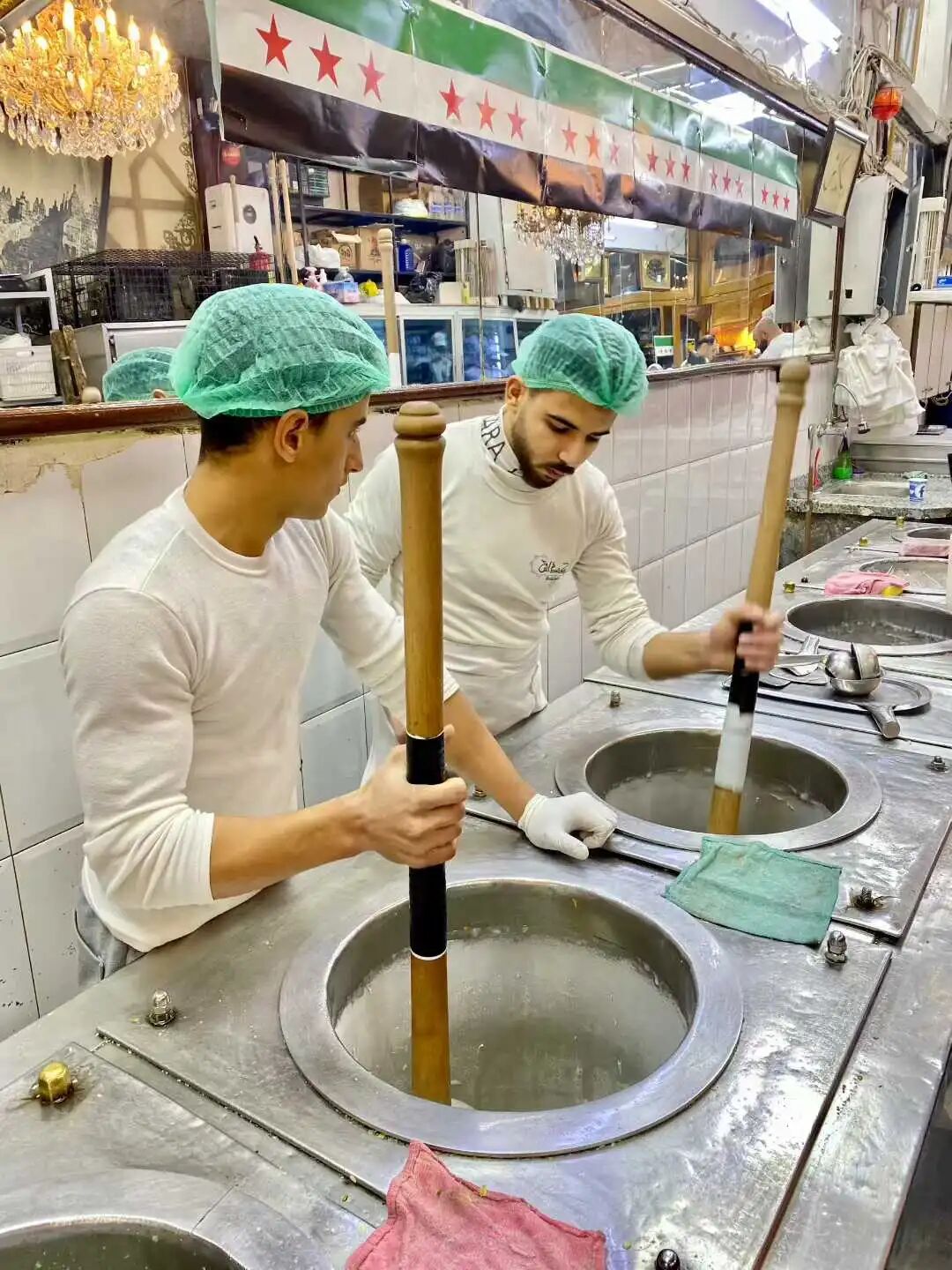
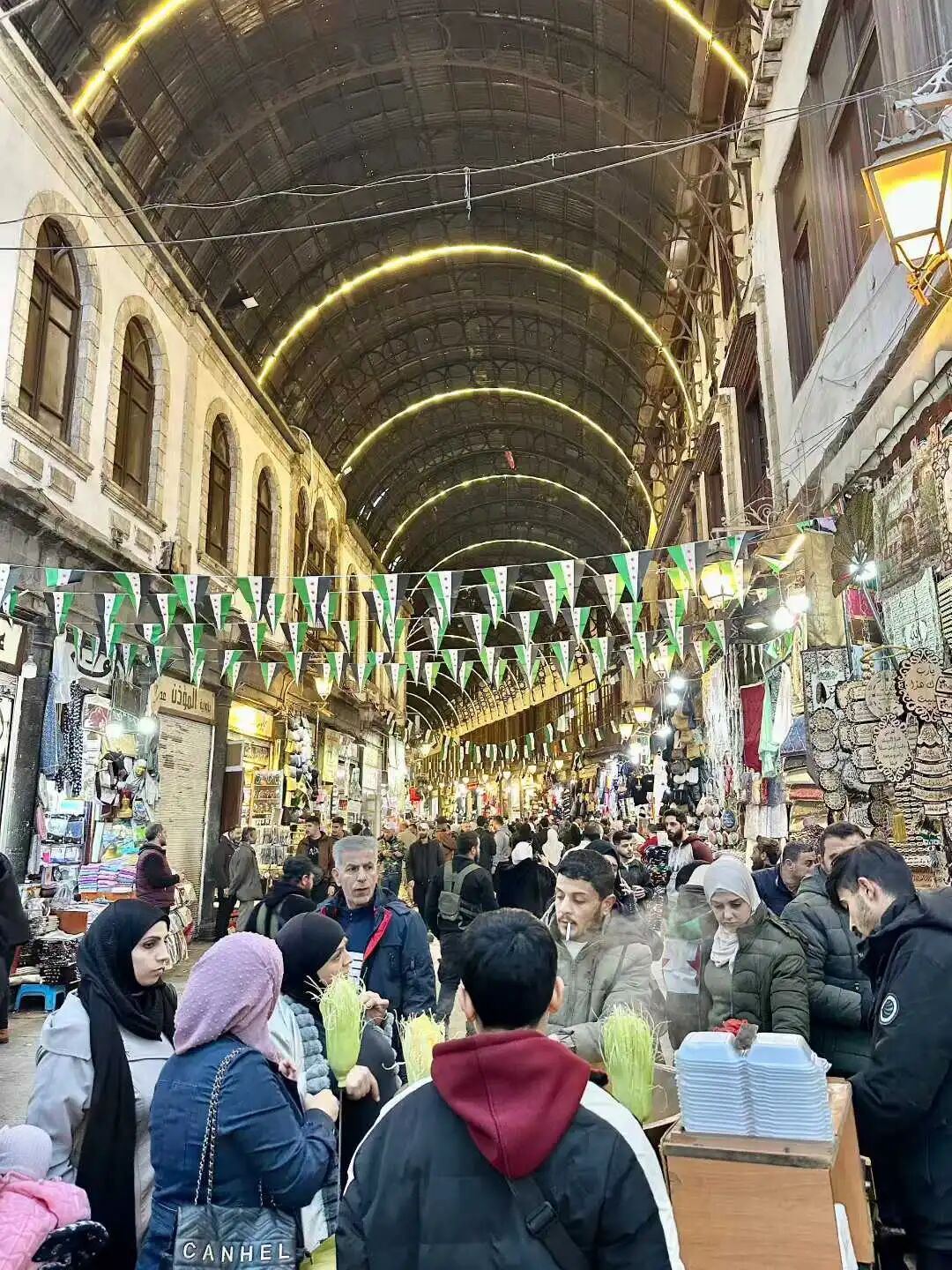
At the Al-Hamidiyah Souq, you can drink the classic Syrian Jallab water. This is a drink made from a mixture of carob, dates, grape molasses, and rose water, sometimes smoked with Arabic incense. Syrians often drink Jallab water during Ramadan.
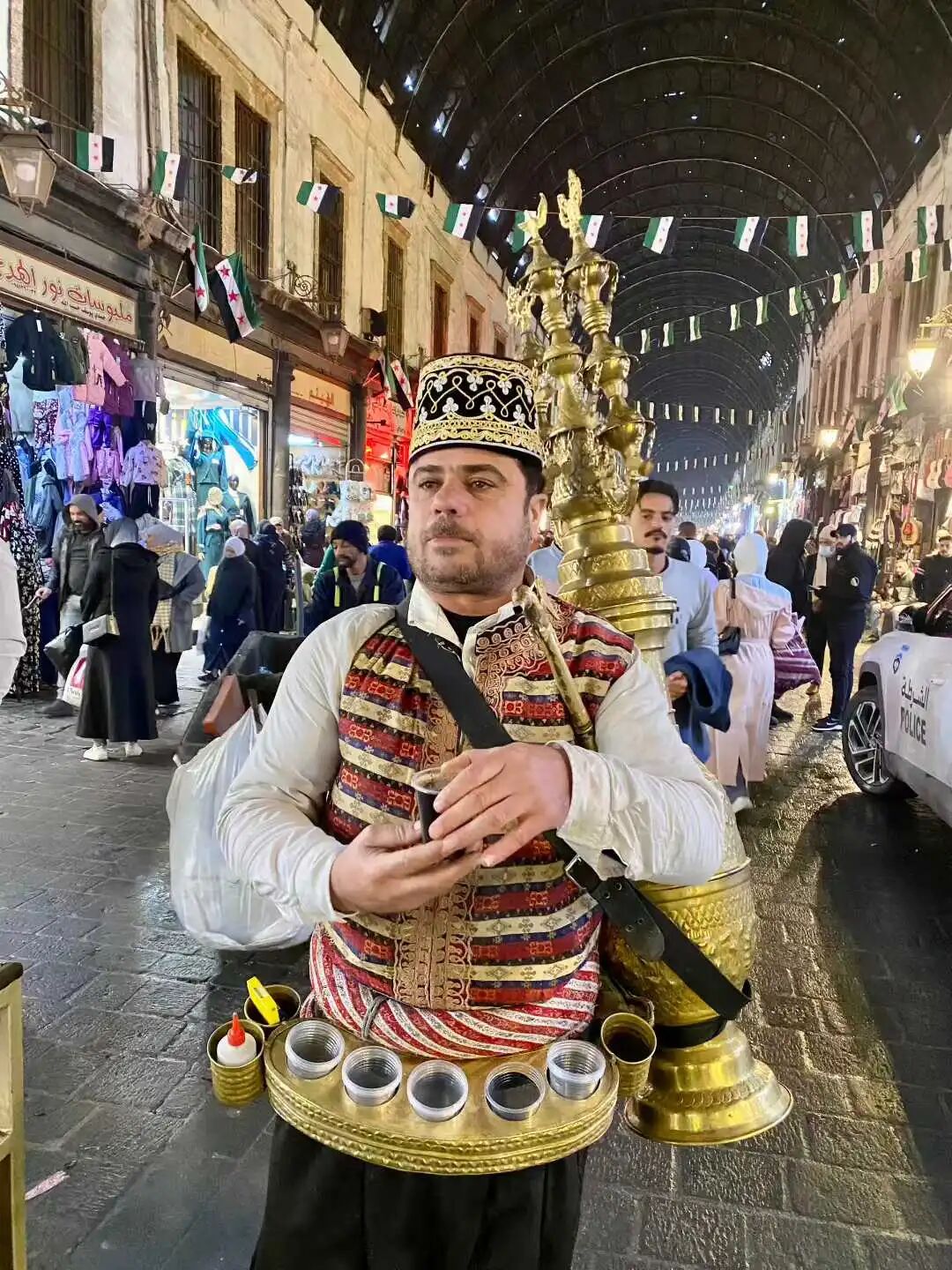
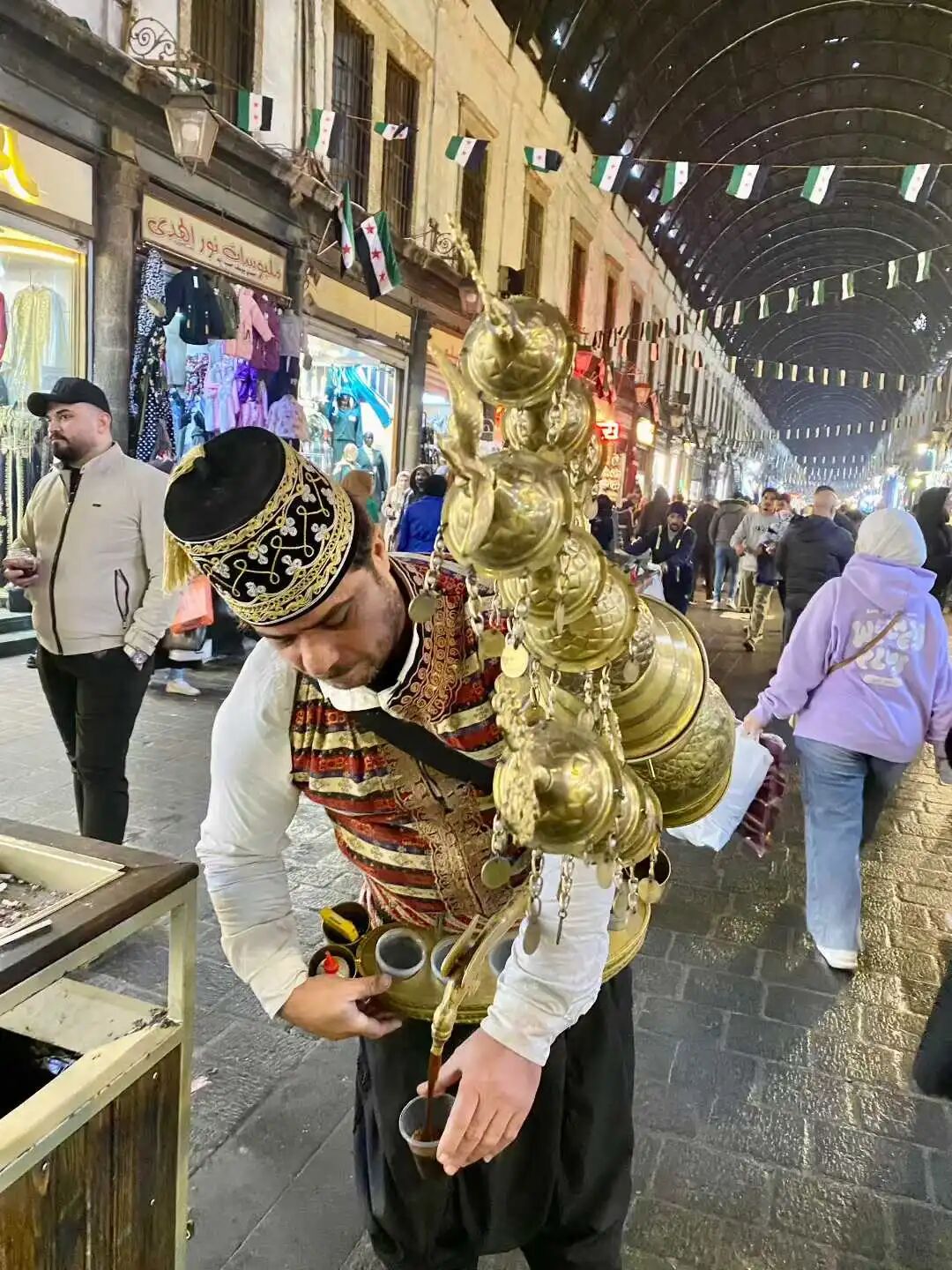
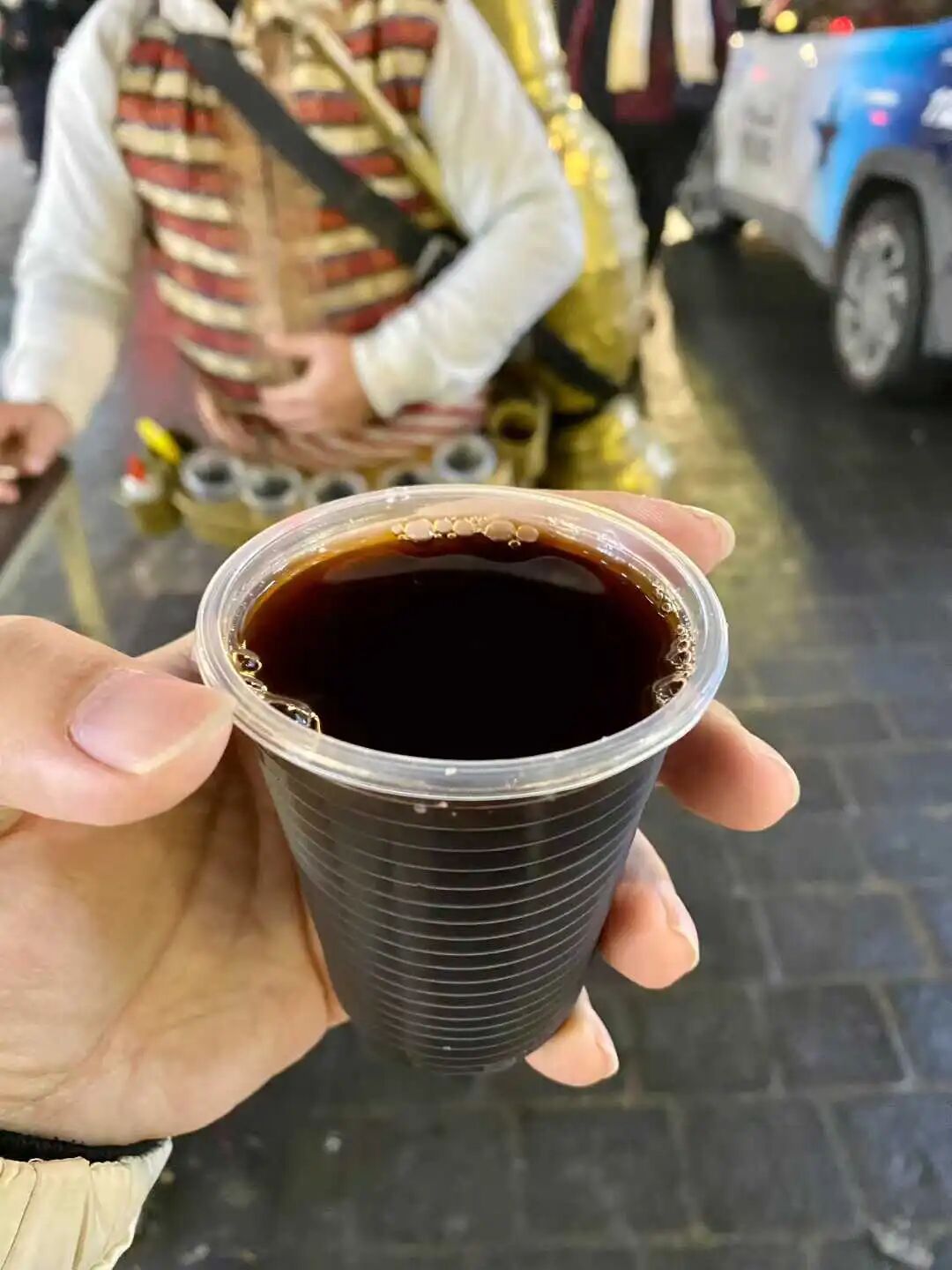
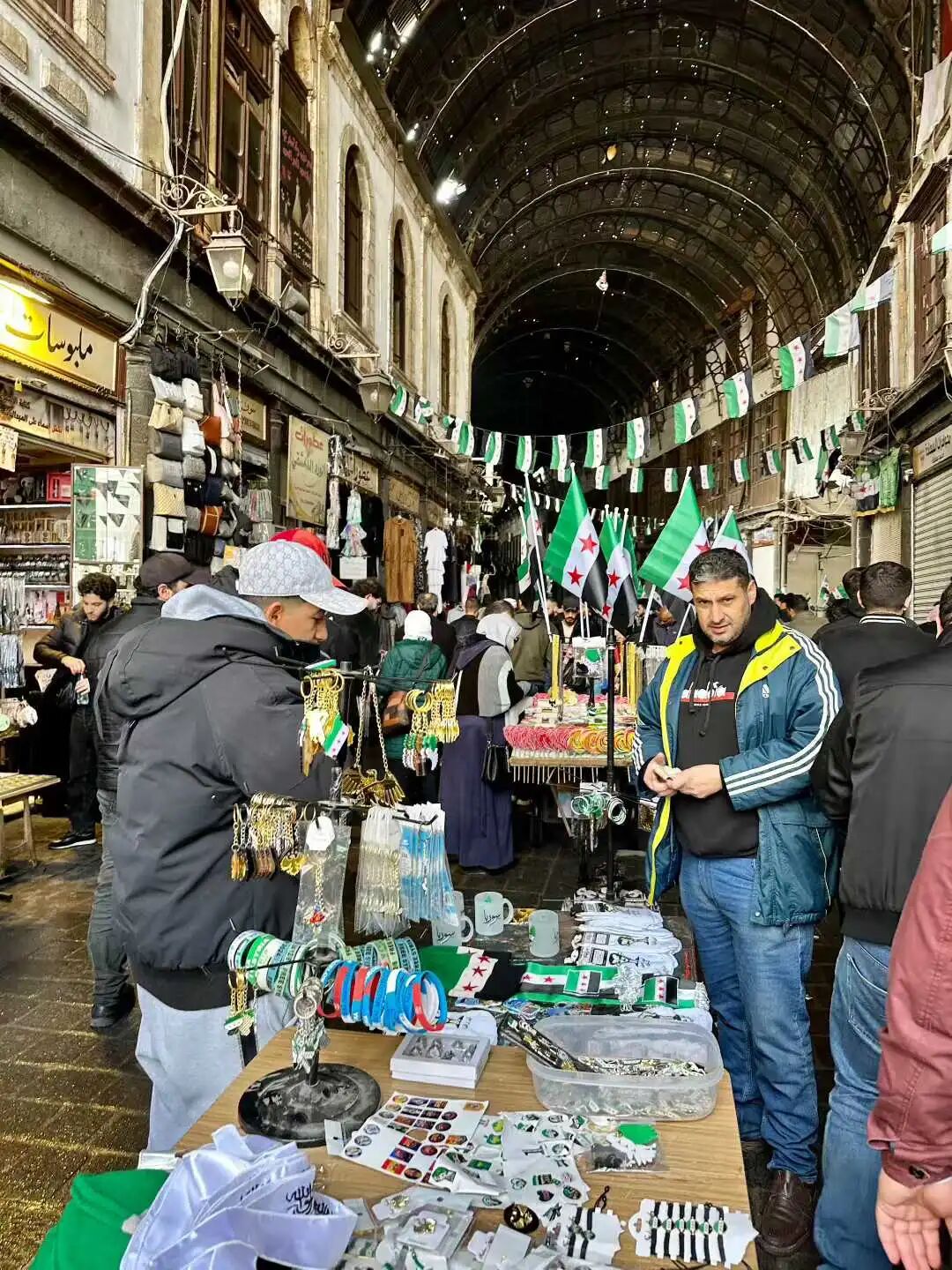
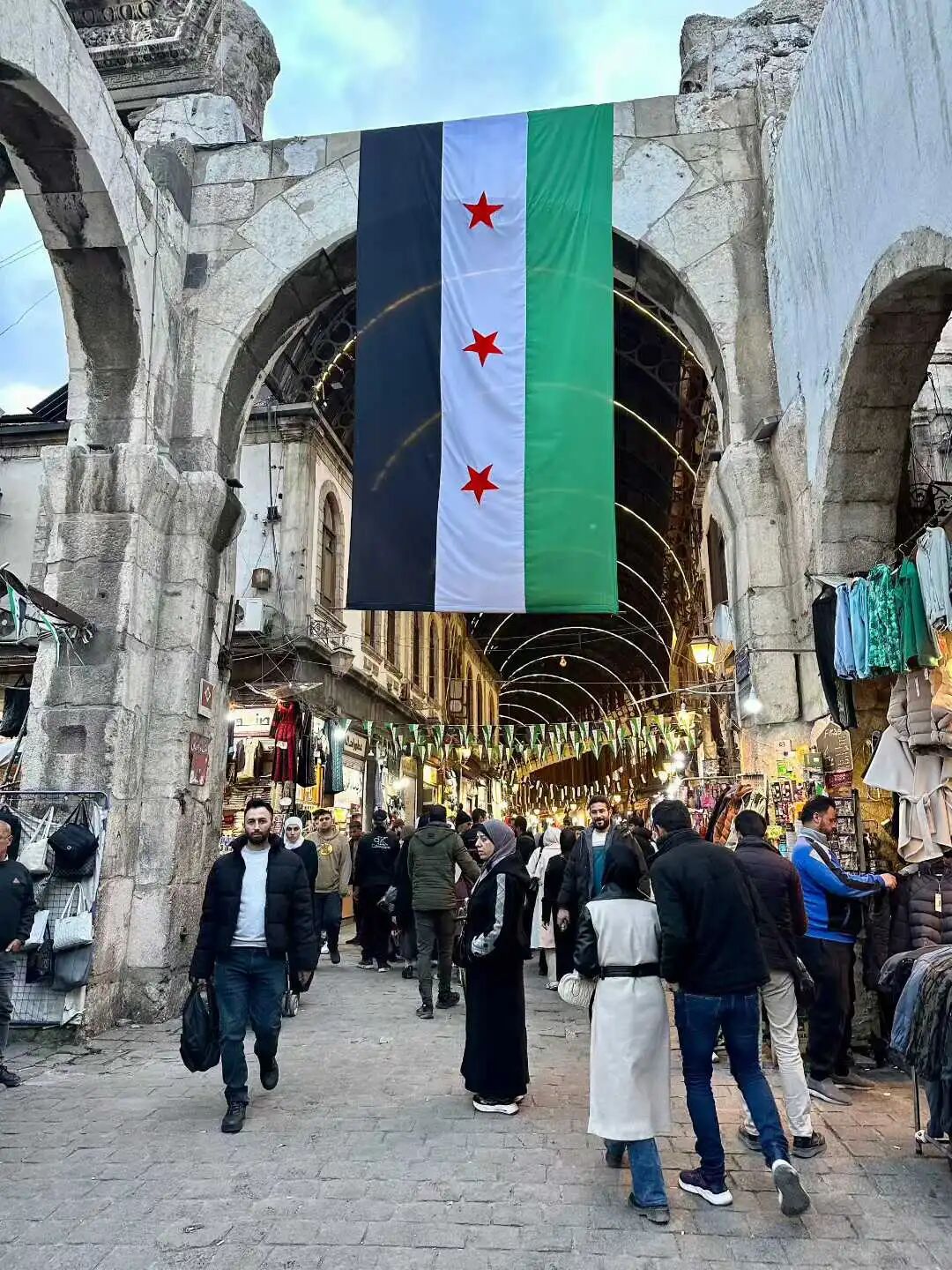
This is the shawarma rotisserie at the west entrance of the Al-Hamidiyah Souq. When you are busy visiting historical sites in Damascus during the day and do not have time for a full meal, shawarma is a great fast food. Chicken usually costs about a dozen yuan, and beef costs about twenty yuan.
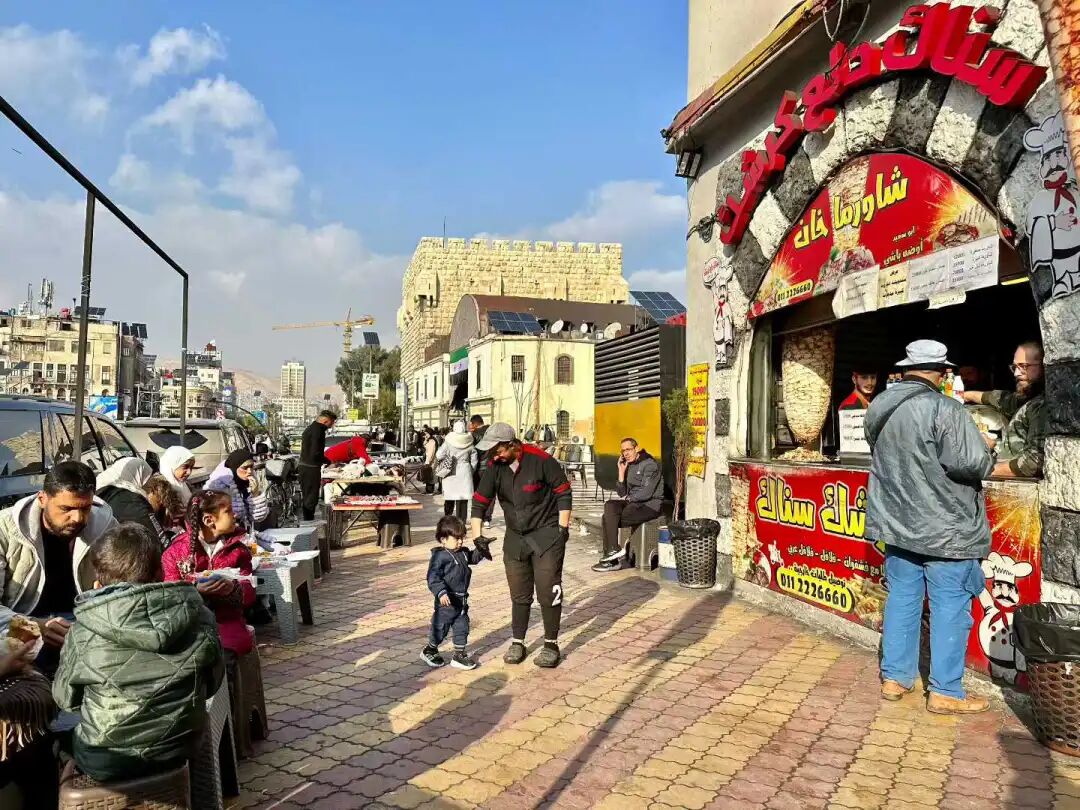
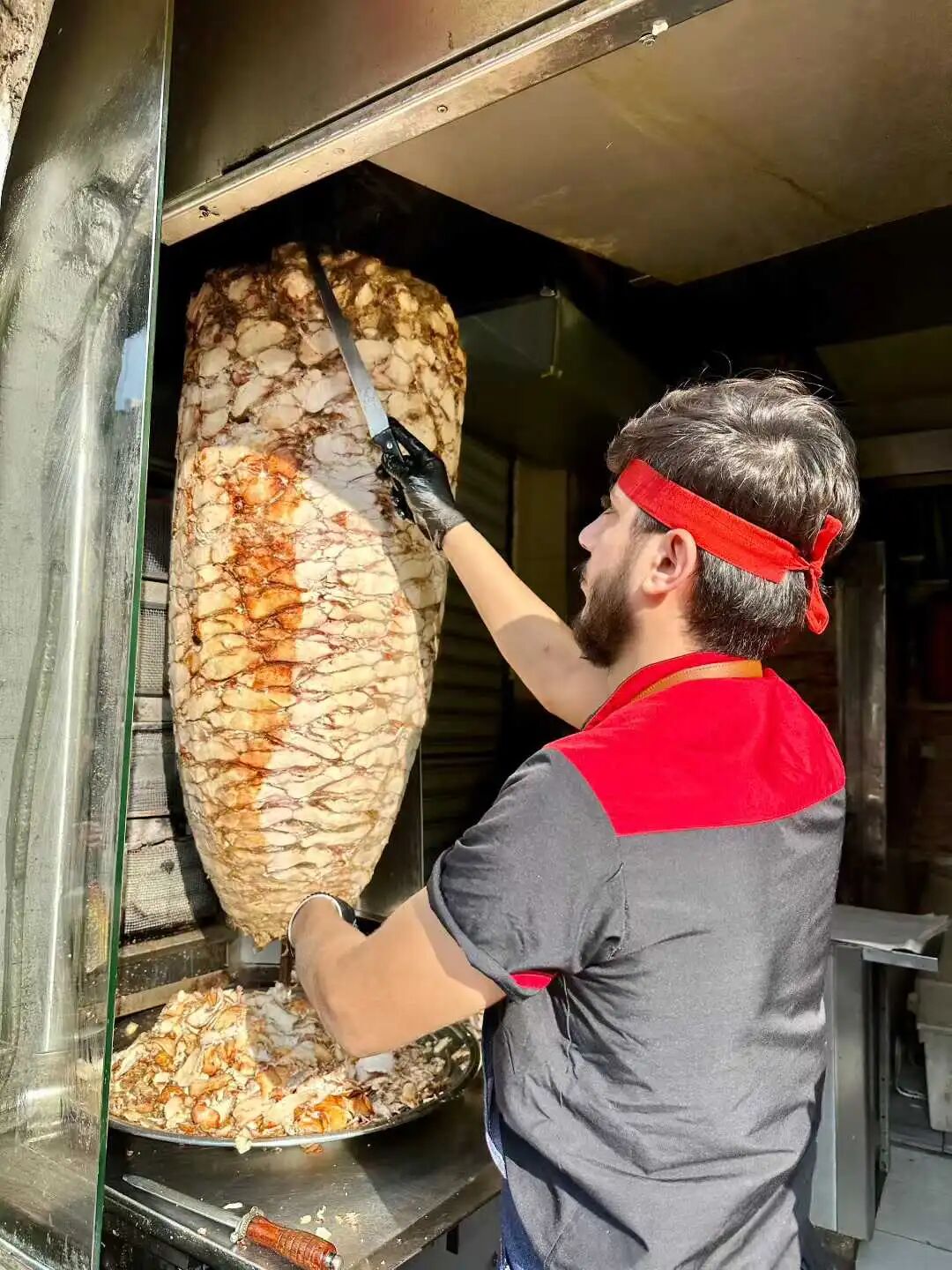
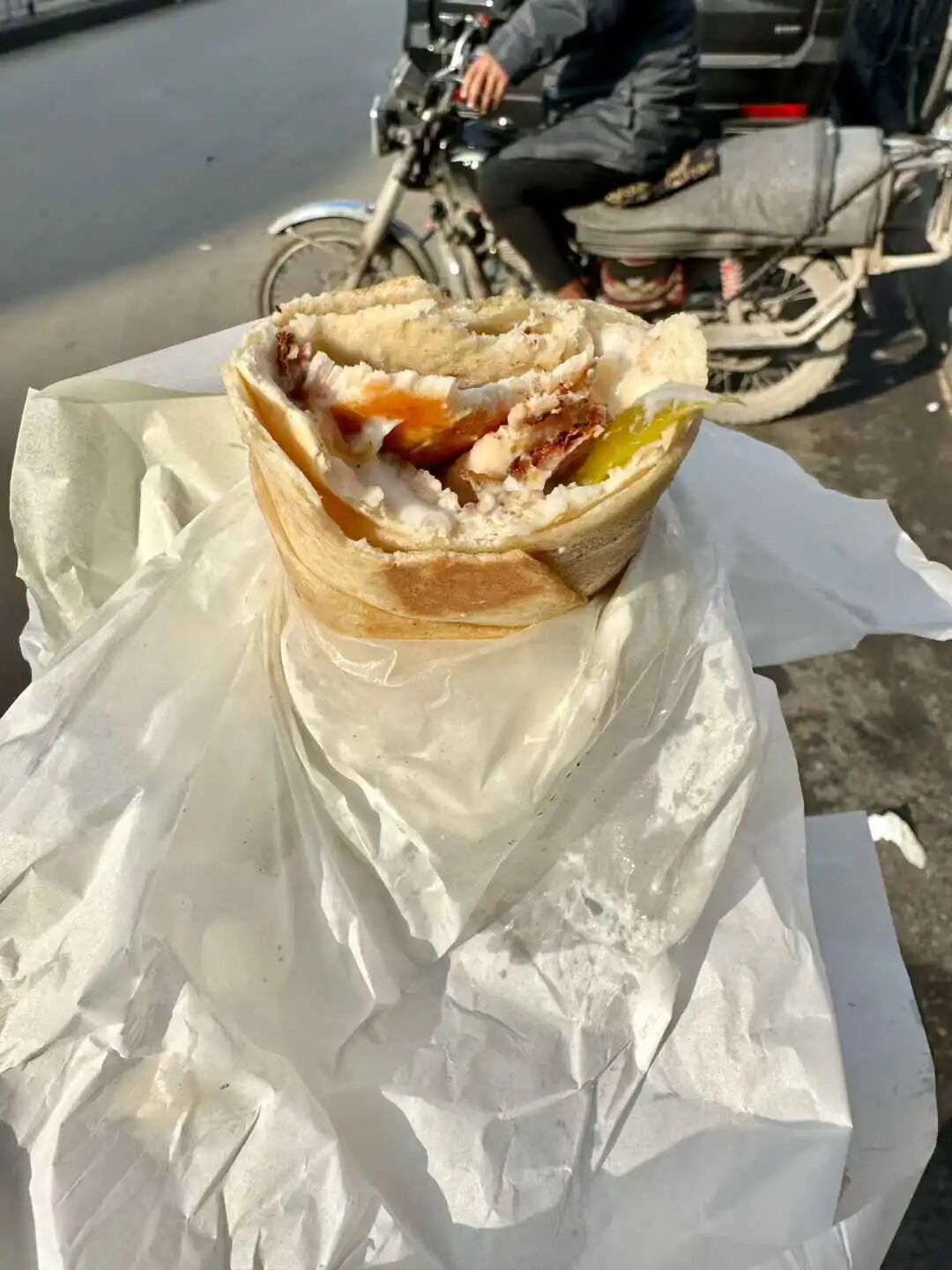
In the old city of Damascus on the first anniversary of the Syrian uprising, you can see excited young people everywhere, as well as caricatures of Assad. These "stepping on the villain" socks are quite interesting. A shop has photos of young people who died as martyrs (shahid) hanging up, and you can feel that the war is not far from us.
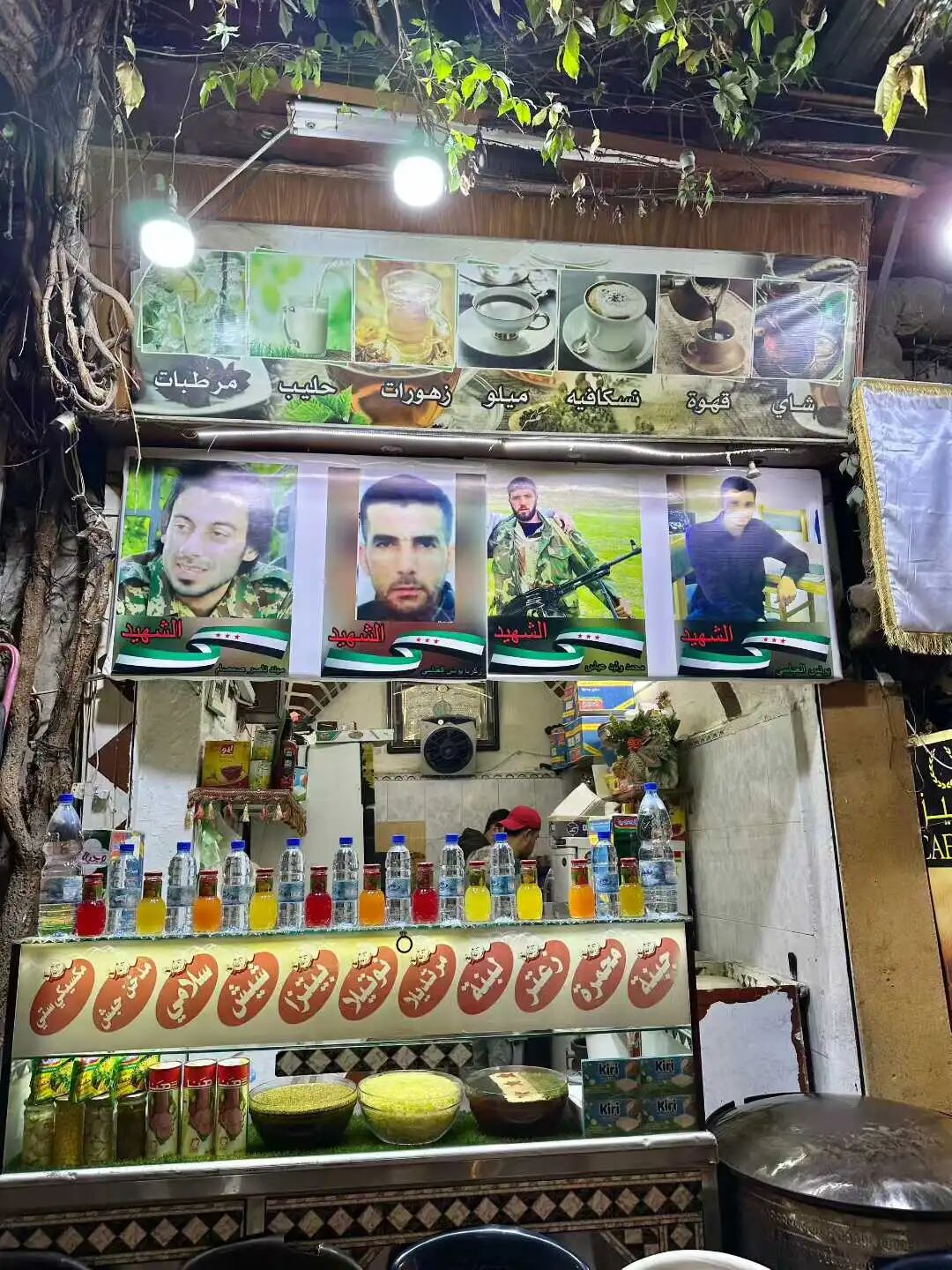
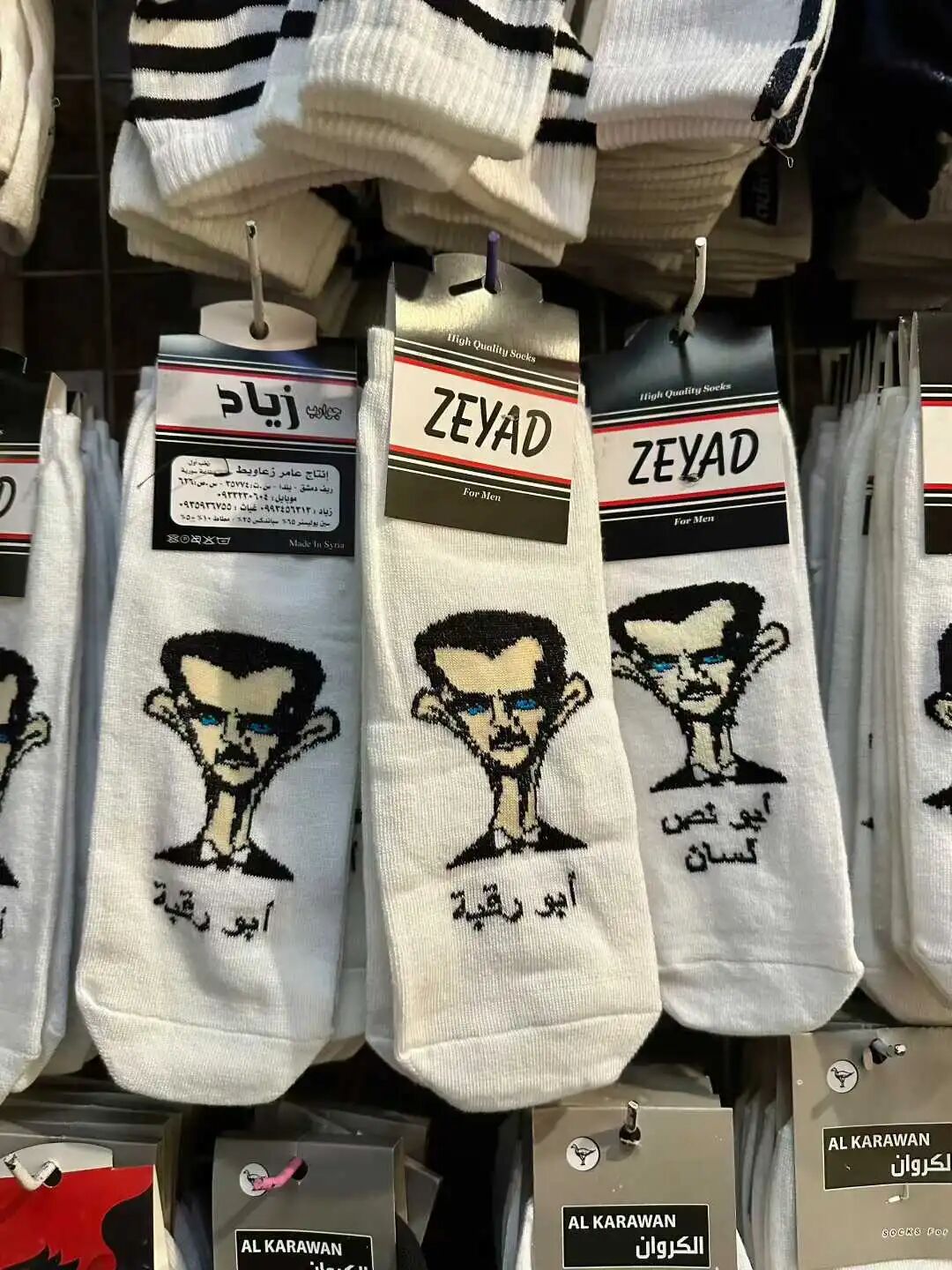
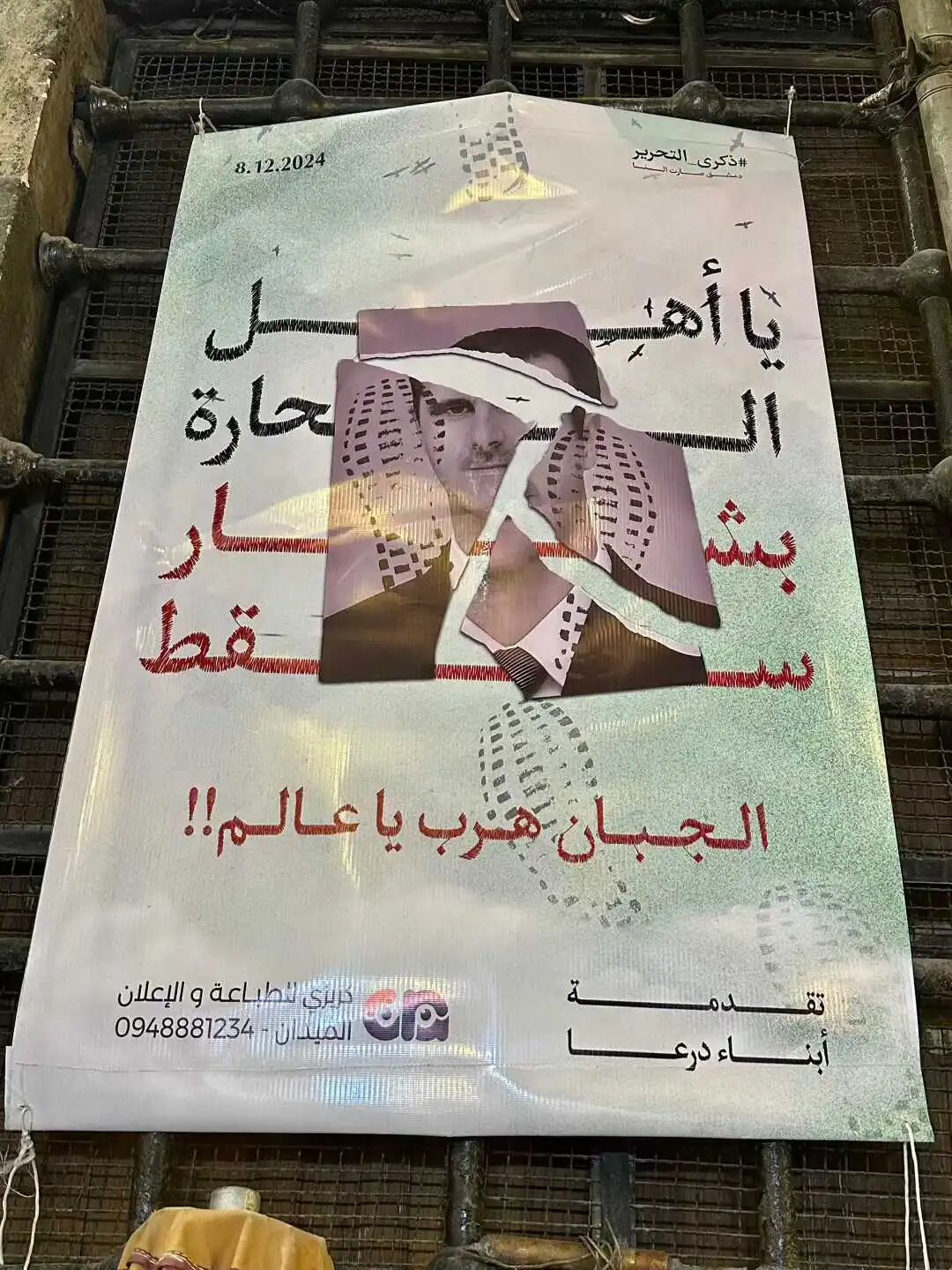
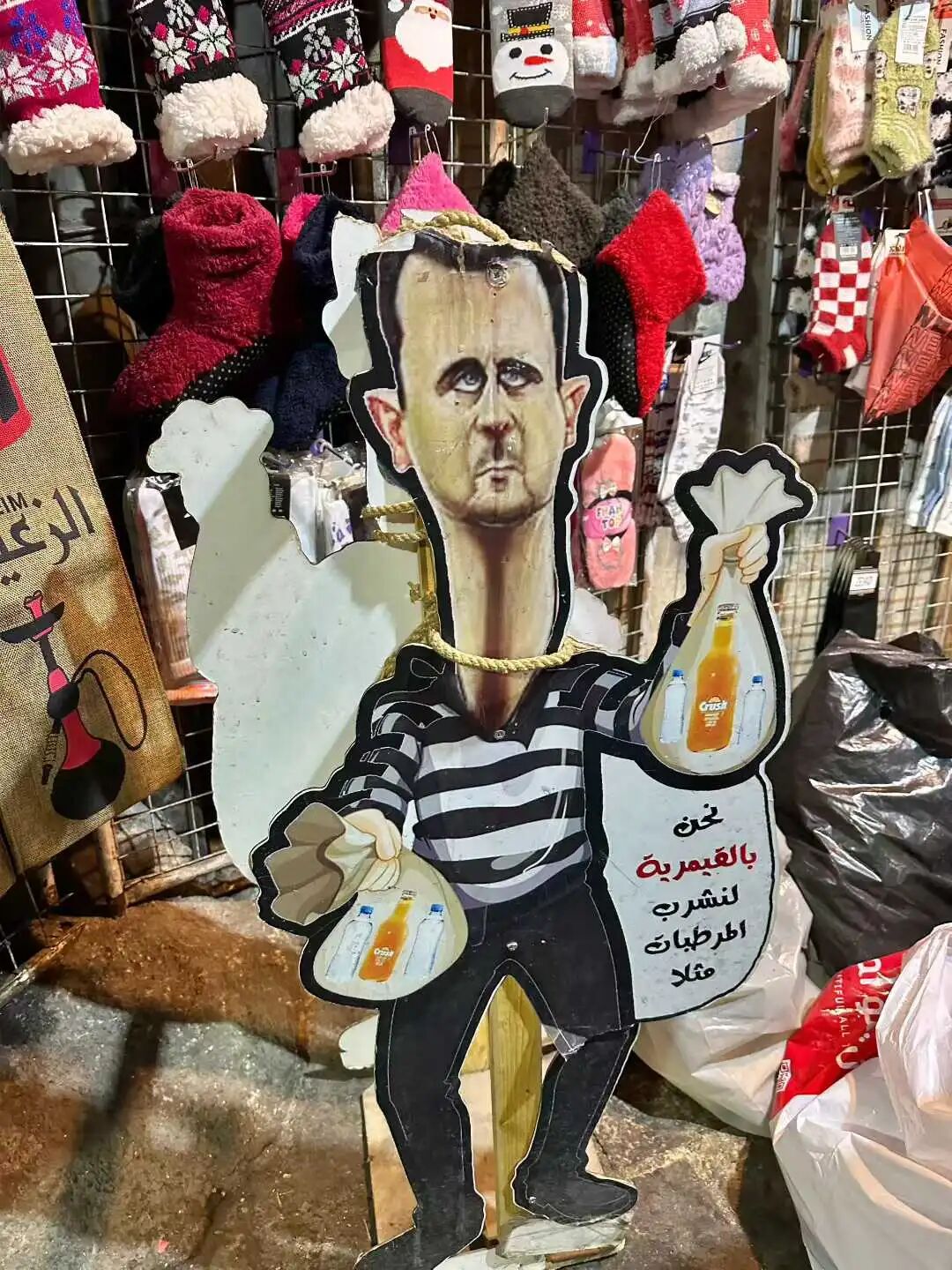
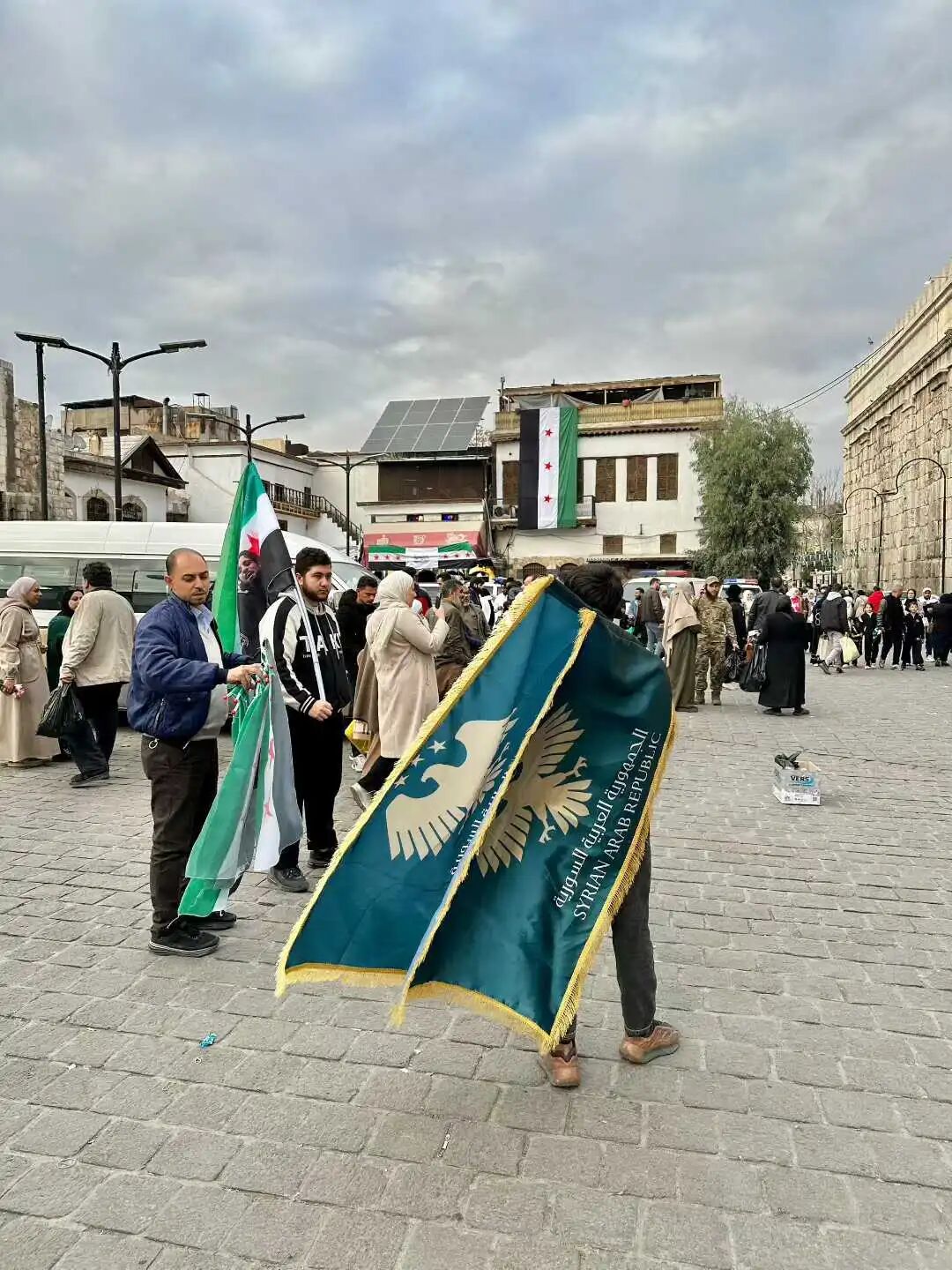
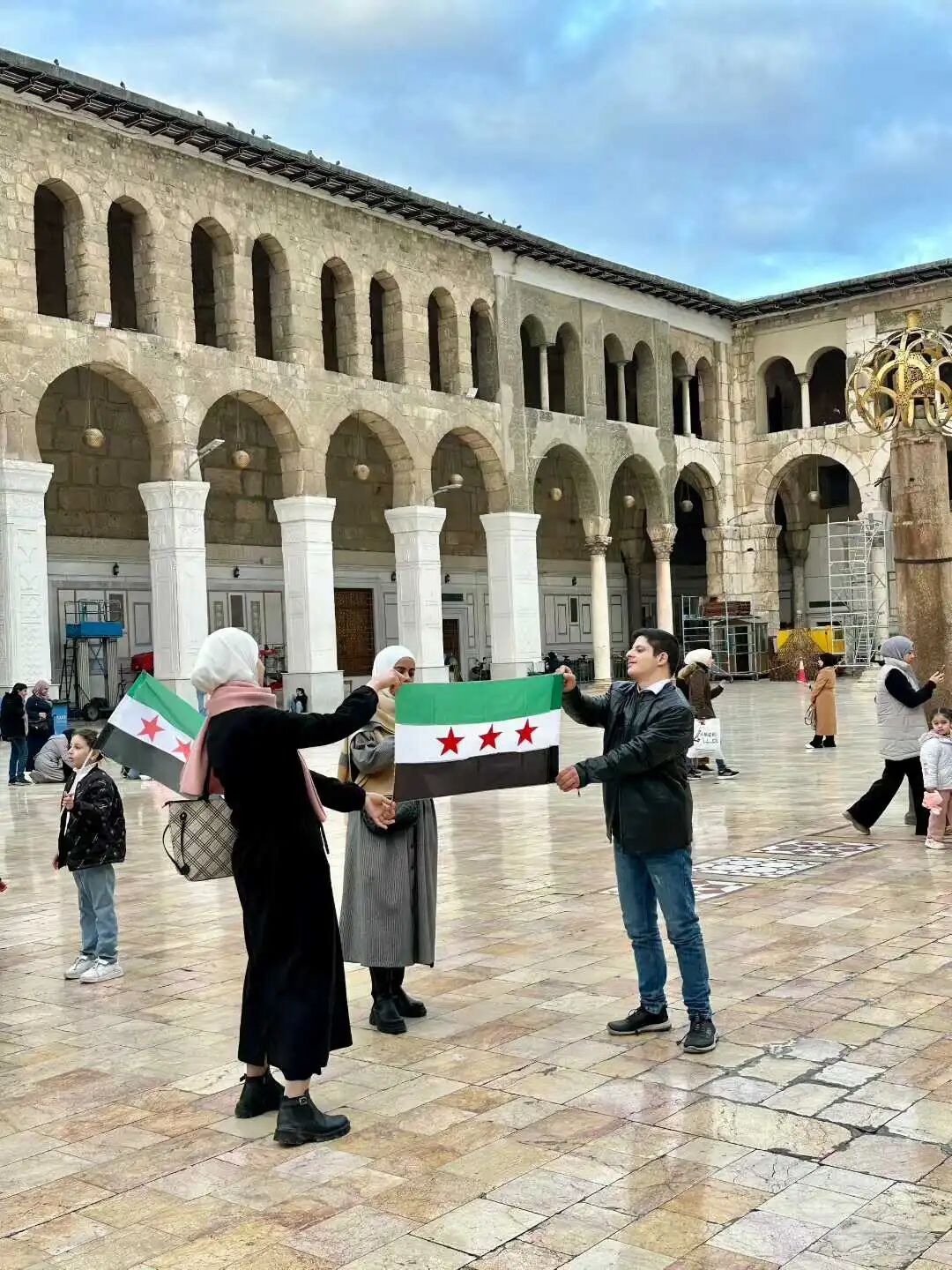
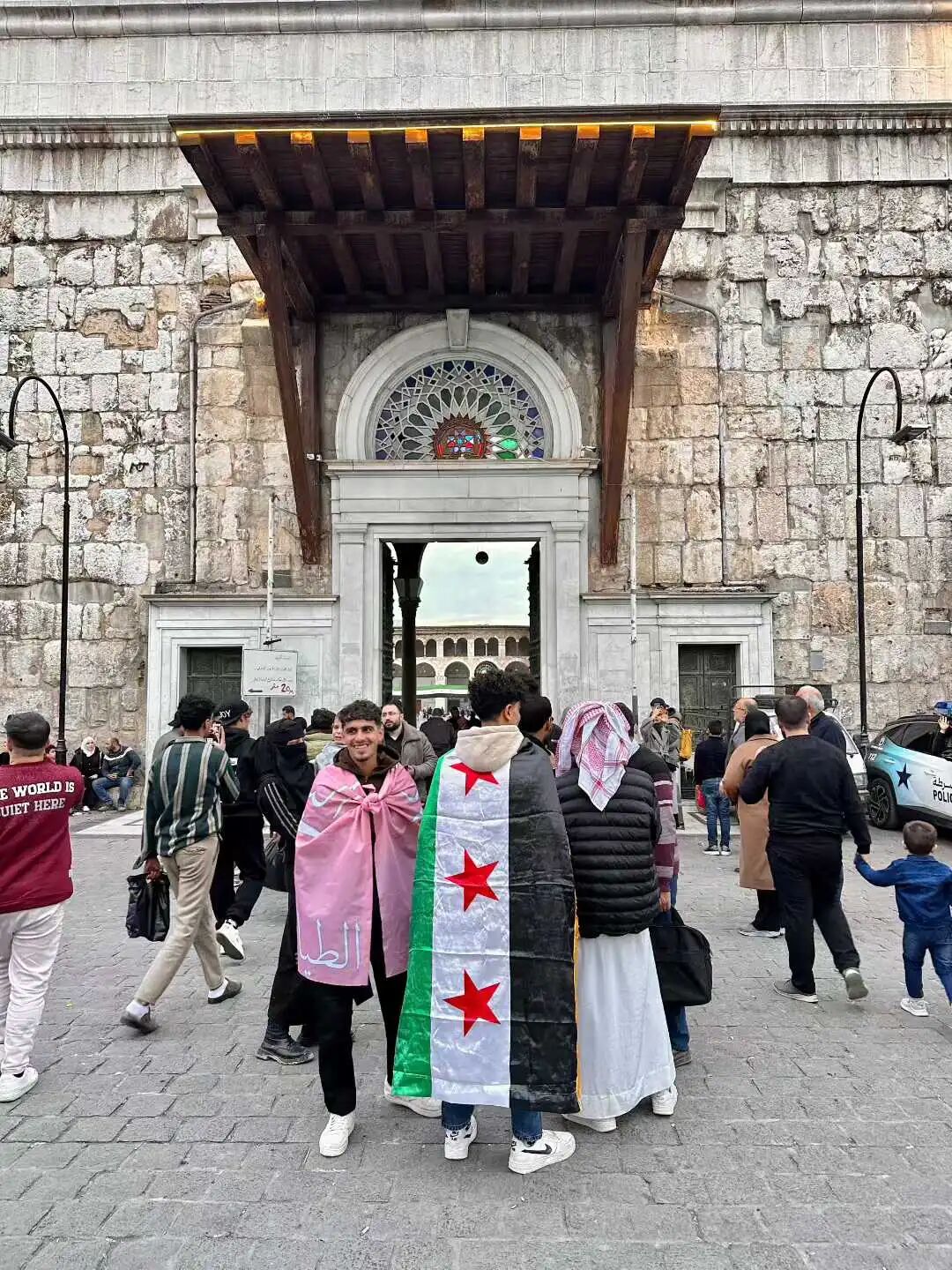
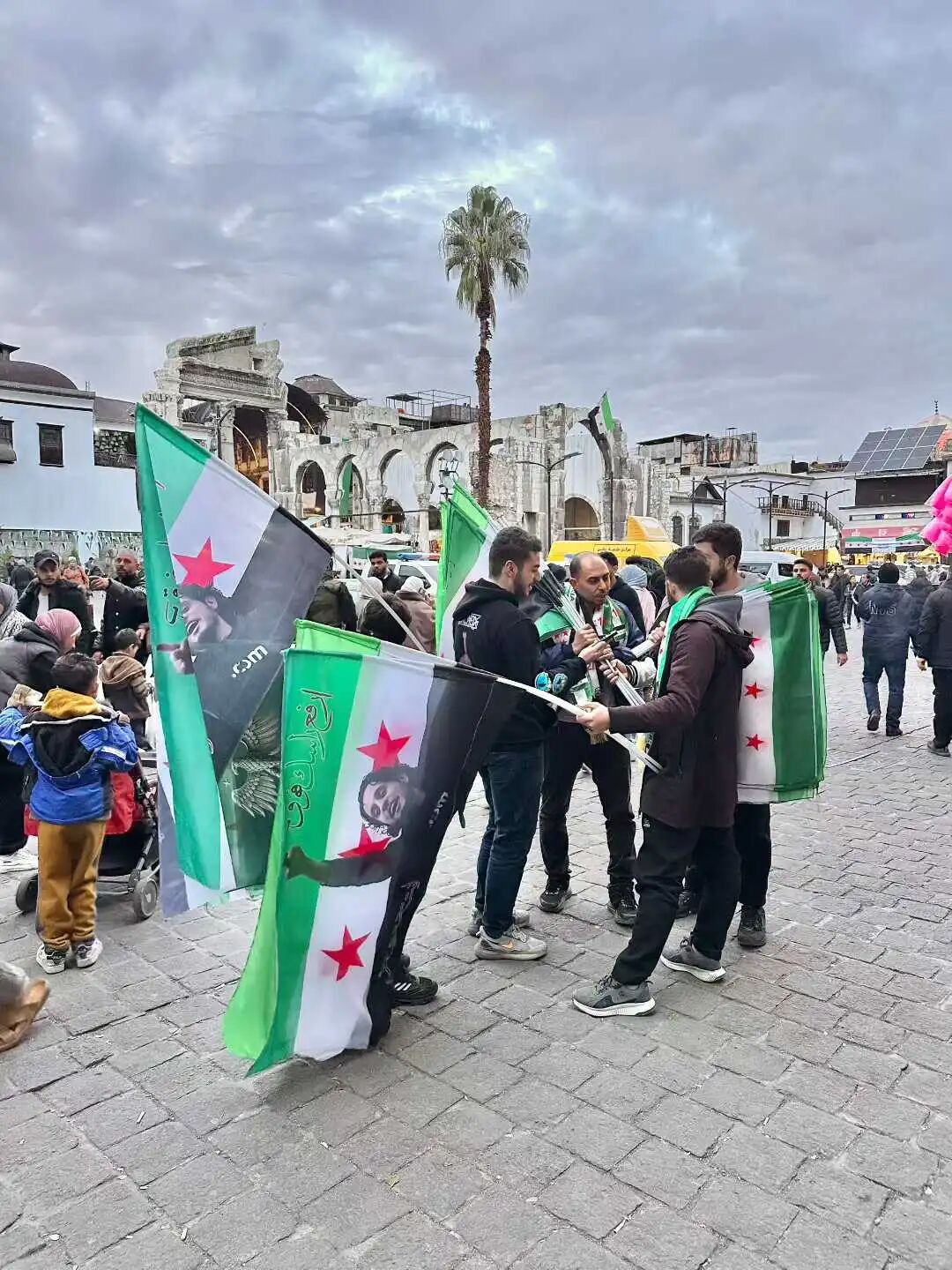
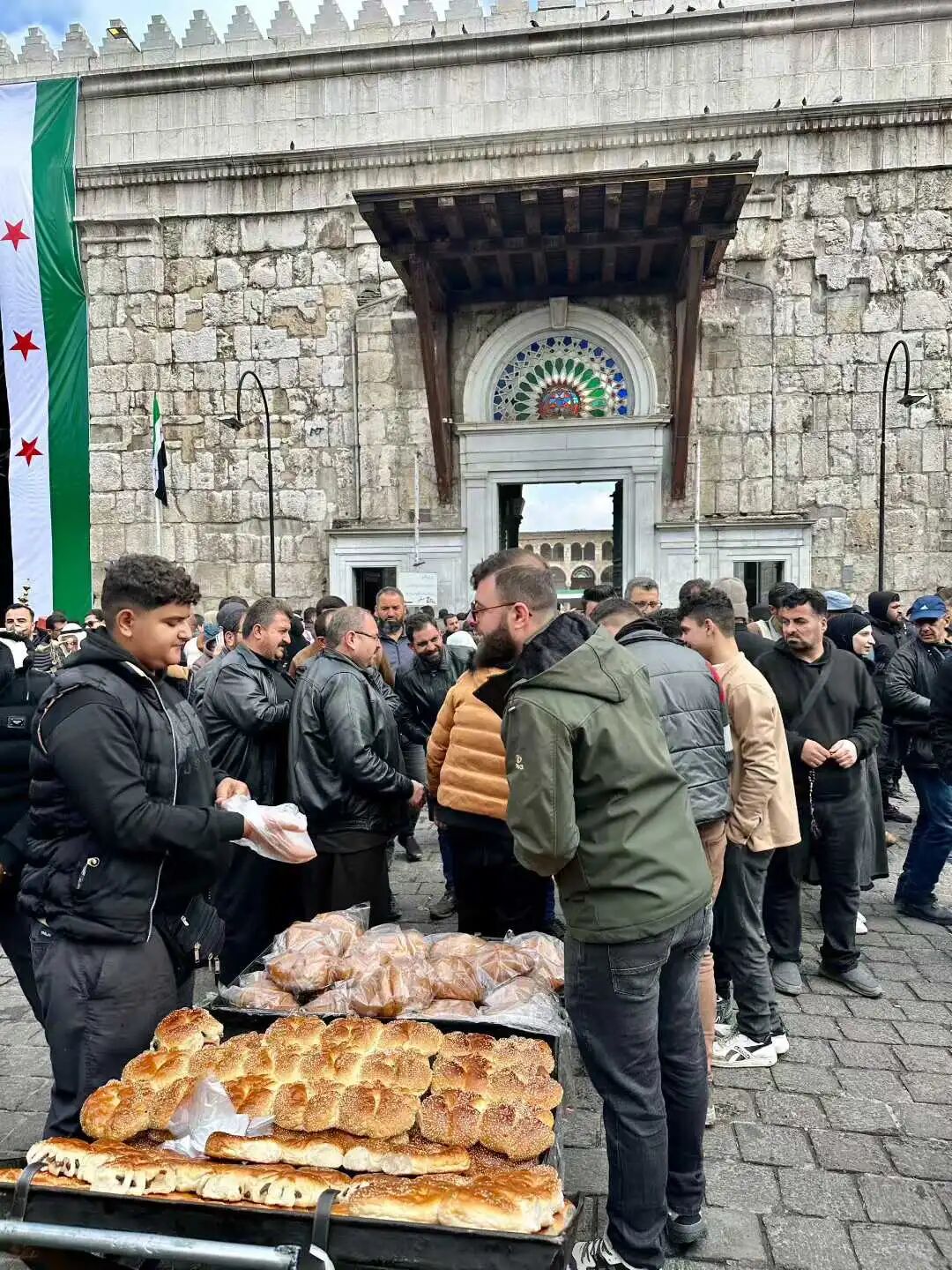
Under the walls of the Umayyad Mosque in the old city of Damascus, Syrian youths are singing and dancing so happily.
Straight Street is an ancient Roman road that runs through the old city of Damascus. It is mentioned in the New Testament, and the famous Apostle Paul once lived on this street. In 2007, Damascus restored the eastern section of Straight Street. They laid down sidewalks and basalt paving, decorated the sides of the road with Corinthian column ruins, and added greenery and lighting. This made Straight Street a favorite place for young people in Damascus to hang out.
I was walking on Straight Street at night and ran into young Syrians singing on the street. They used traditional Arabic Ney flutes and Goblet drums for accompaniment. These two instruments appeared thousands of years ago in ancient Egyptian civilization and are the oldest Arabic instruments.
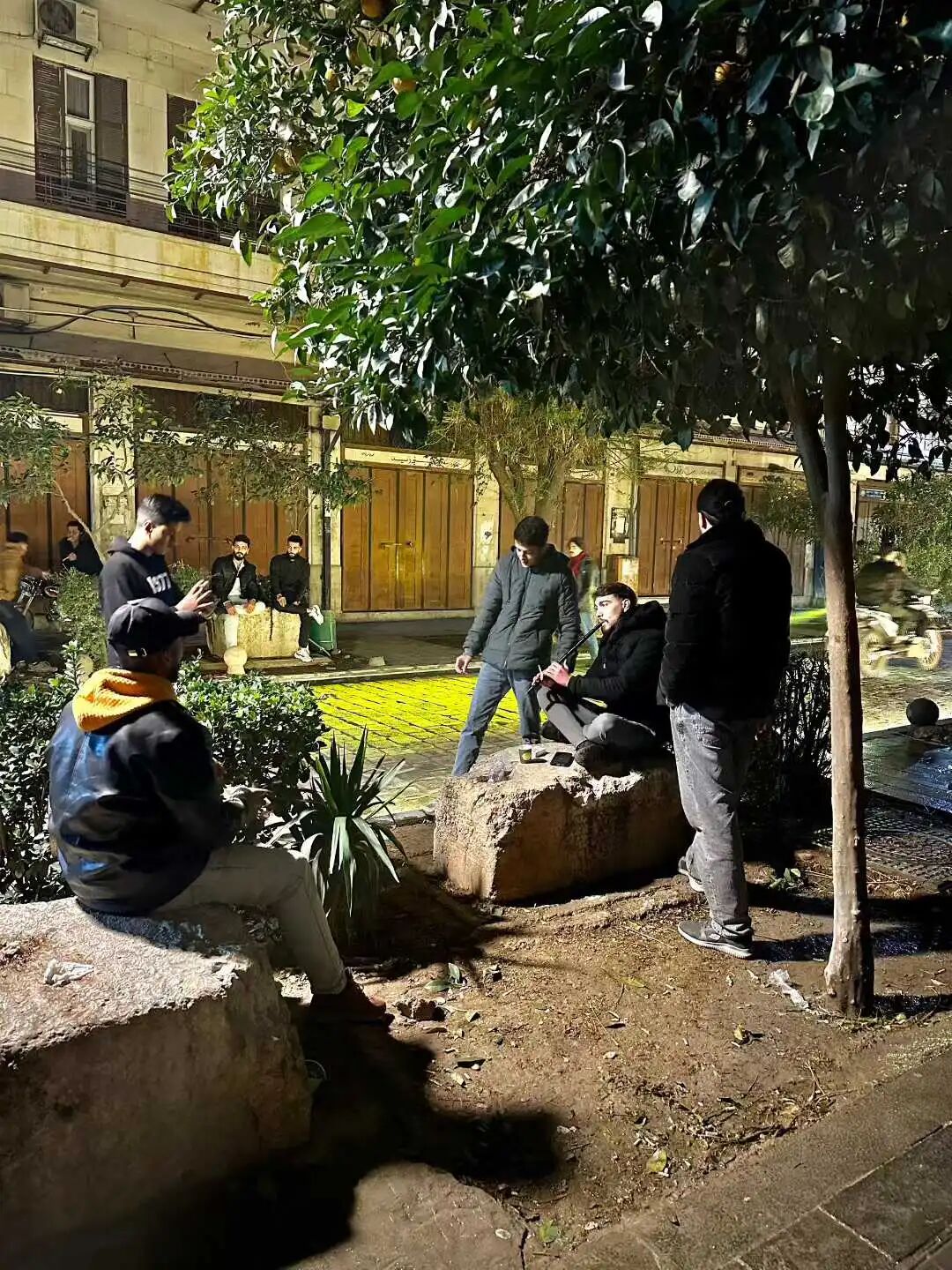
Young people in Damascus like to walk and chat on Straight Street in the old city at night. The Al-Shami coffee shop on the street stays open until midnight and has become a gathering place for them. A cup of their traditional coffee costs only 1.5 yuan, which is very cheap.
I bought bags of coffee and a box of traditional snacks there. This box cost 40 yuan and is perfect to take home for my family. The box contains three types of traditional Syrian pastries, all of which date back to the Ottoman period. The first is Barazek cookies, made with flour, butter, powdered sugar, and egg yolks. The front is covered in sesame seeds, and the back is embedded with pistachios. The second is date-filled Ma'amoul, a classic snack for Arabs during the breaking of the fast. The third is Qurabiya shortbread, which is widely found in Arab and former Ottoman regions. Each area has its own version, and the Syrian version is special because it includes pistachios.
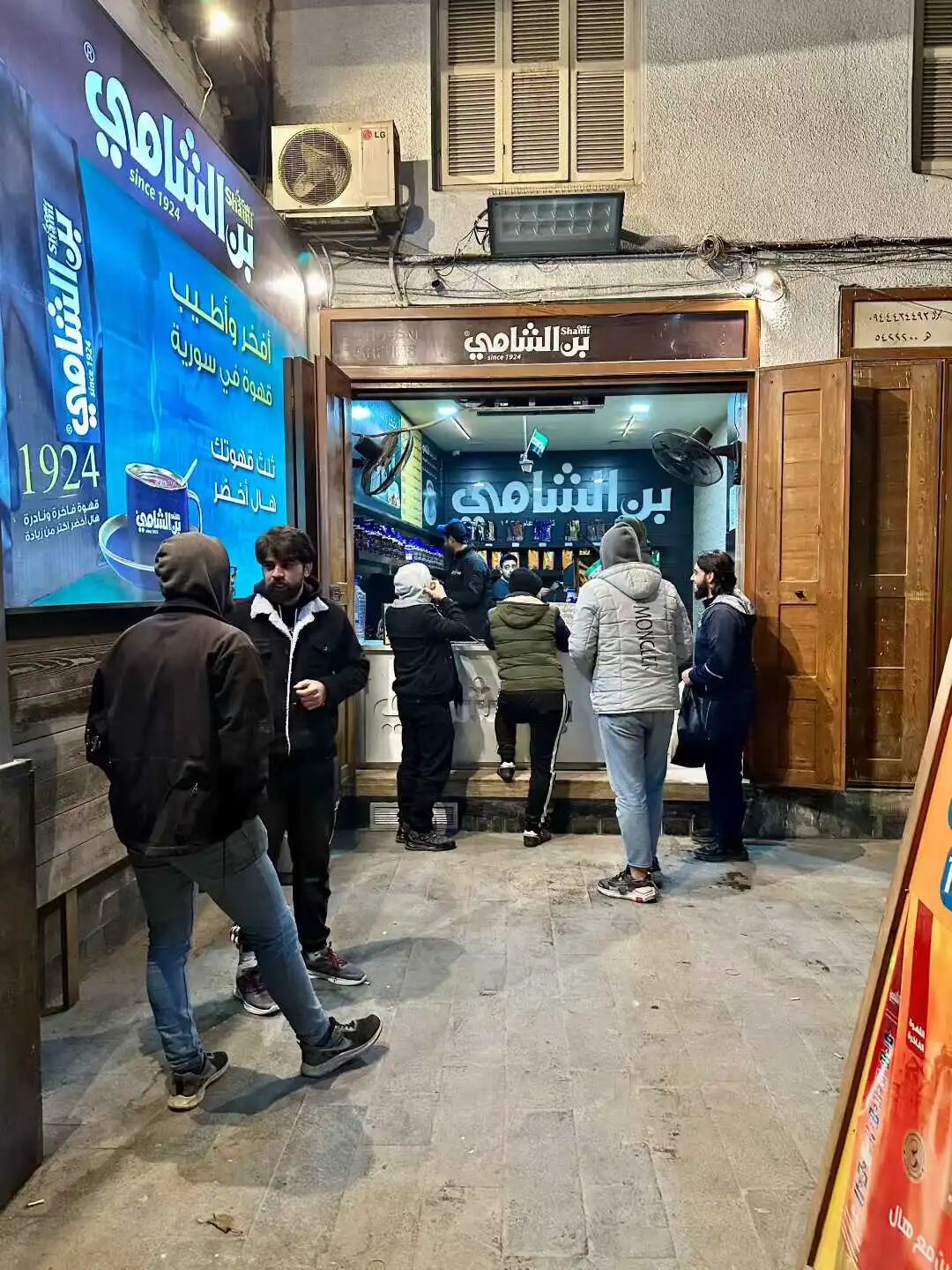
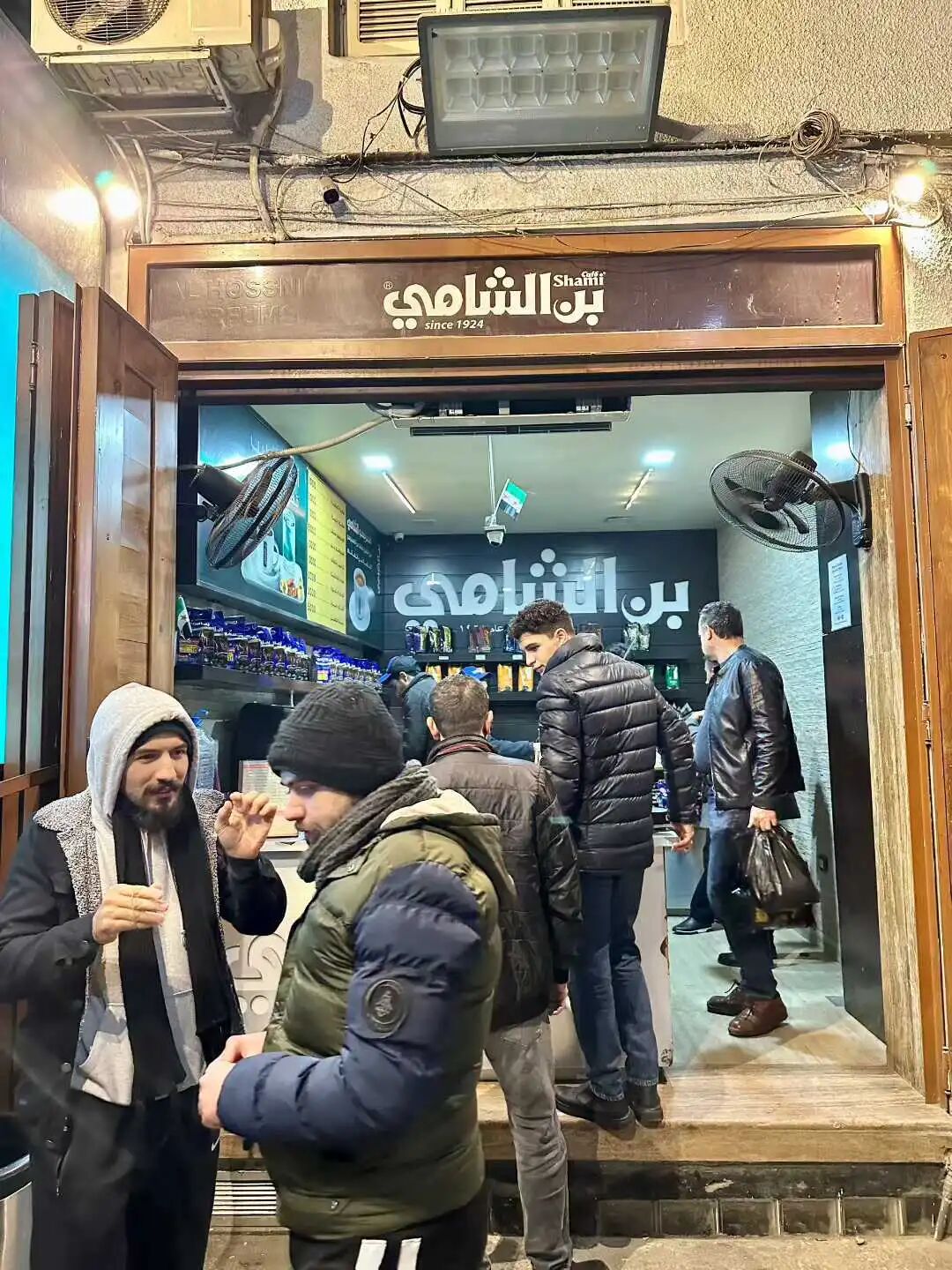
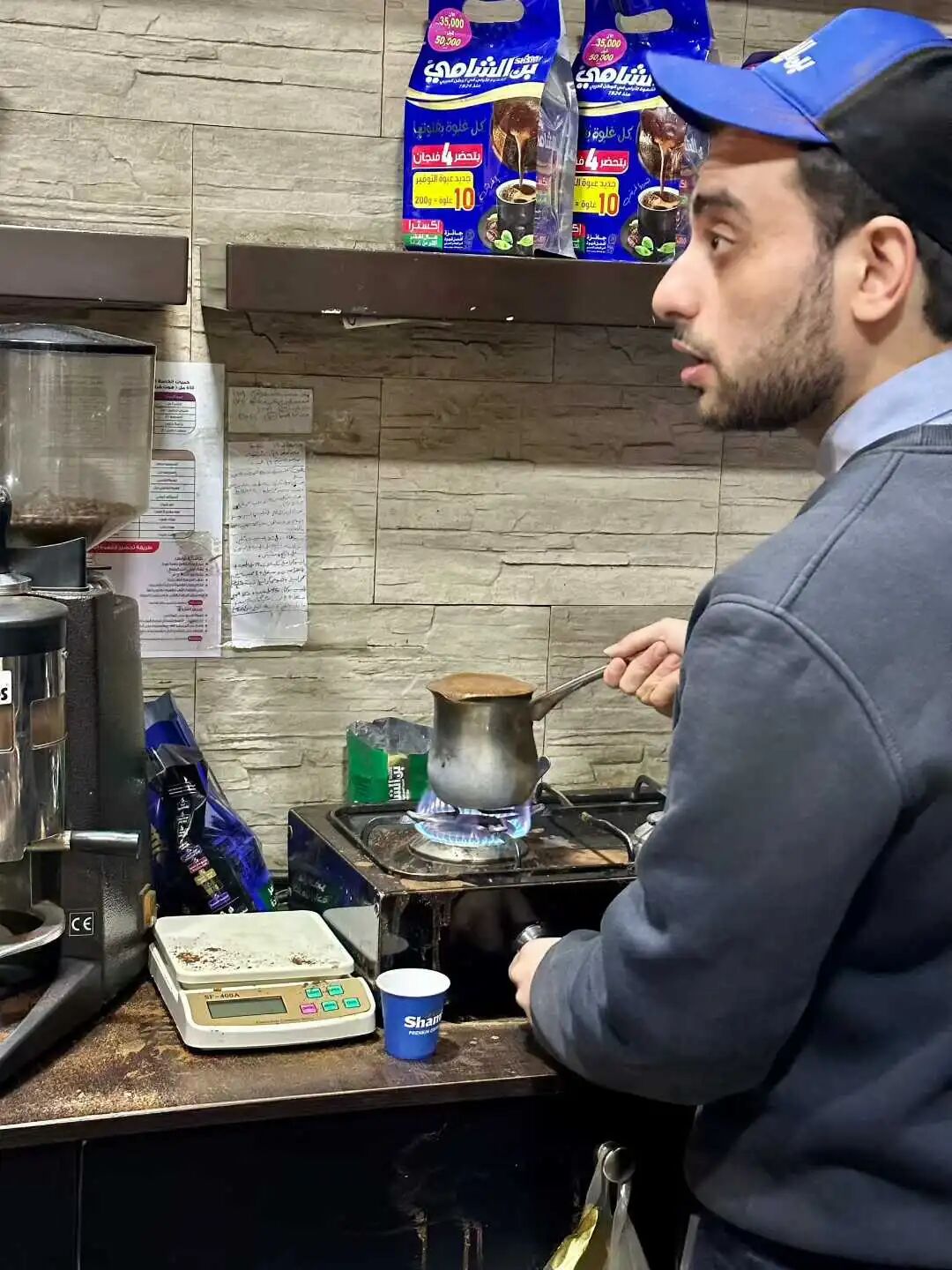
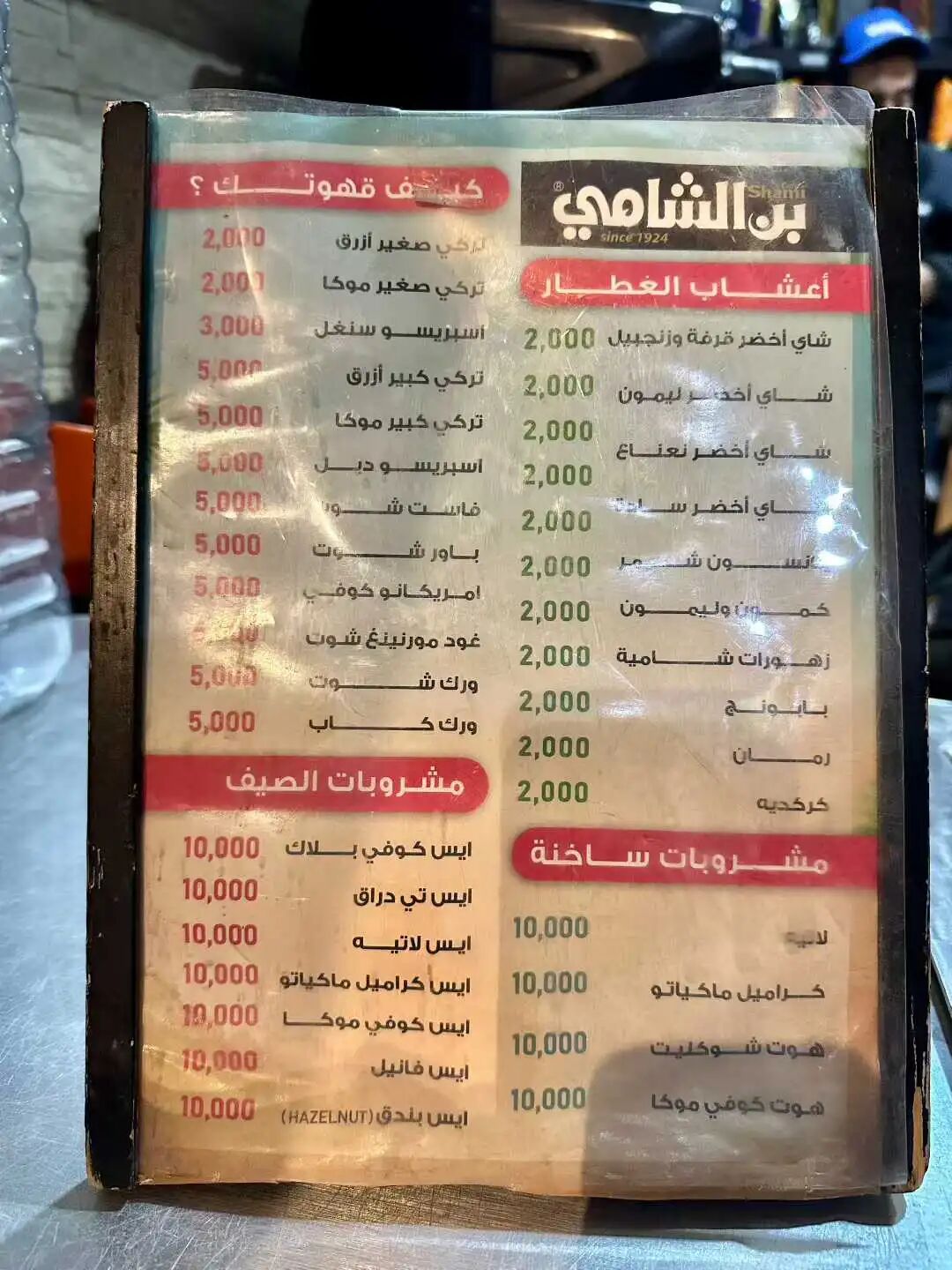
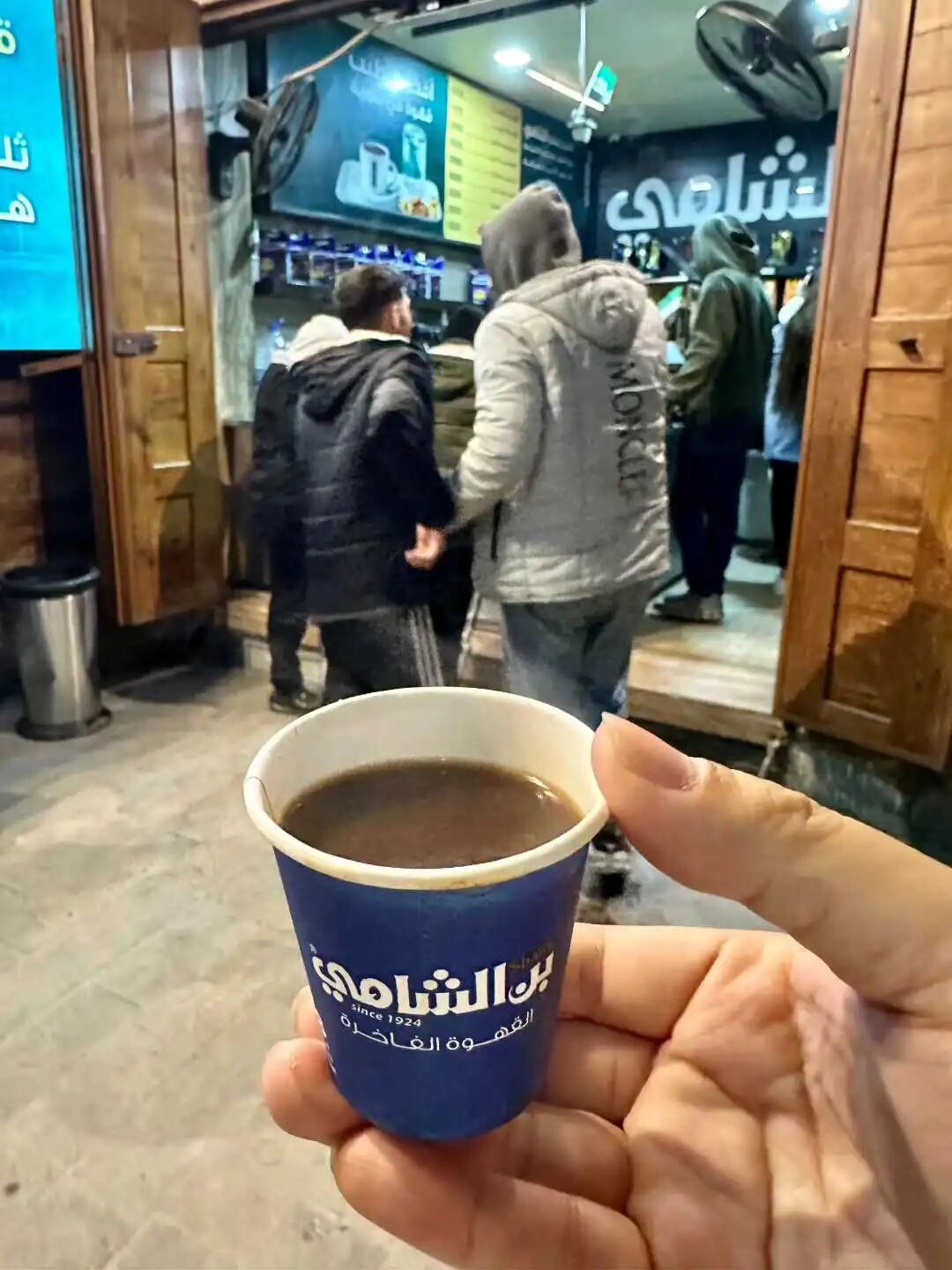
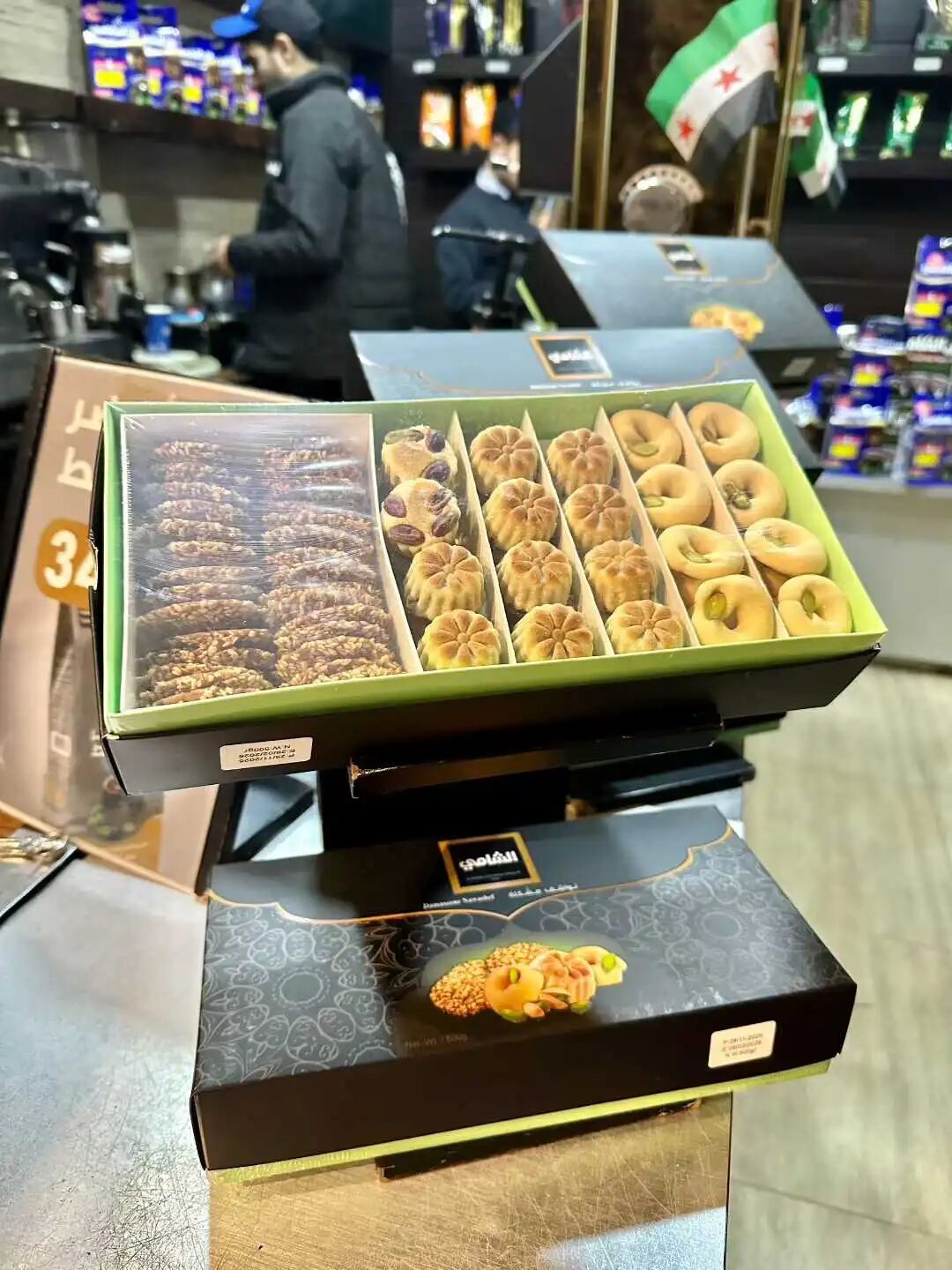
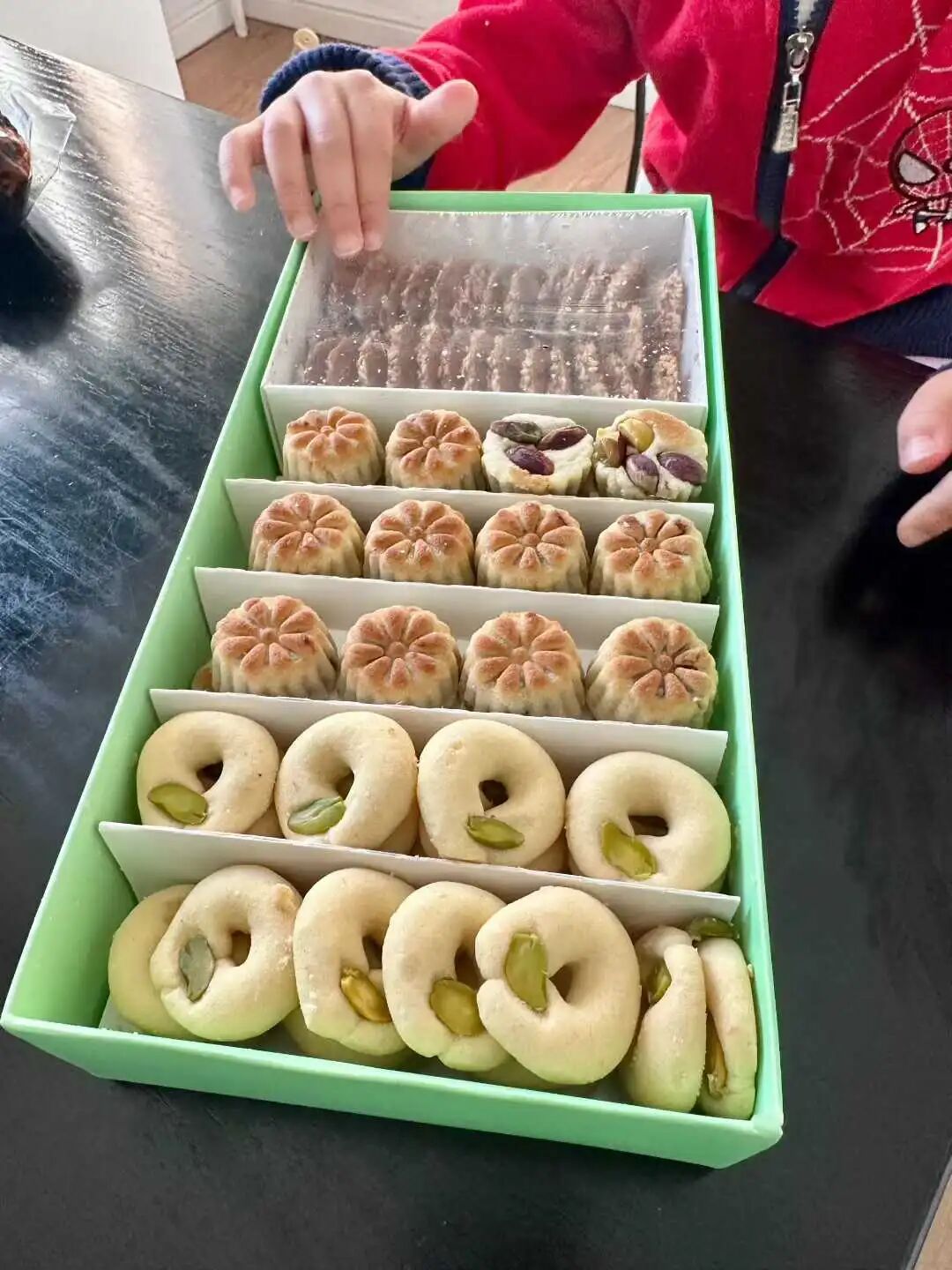
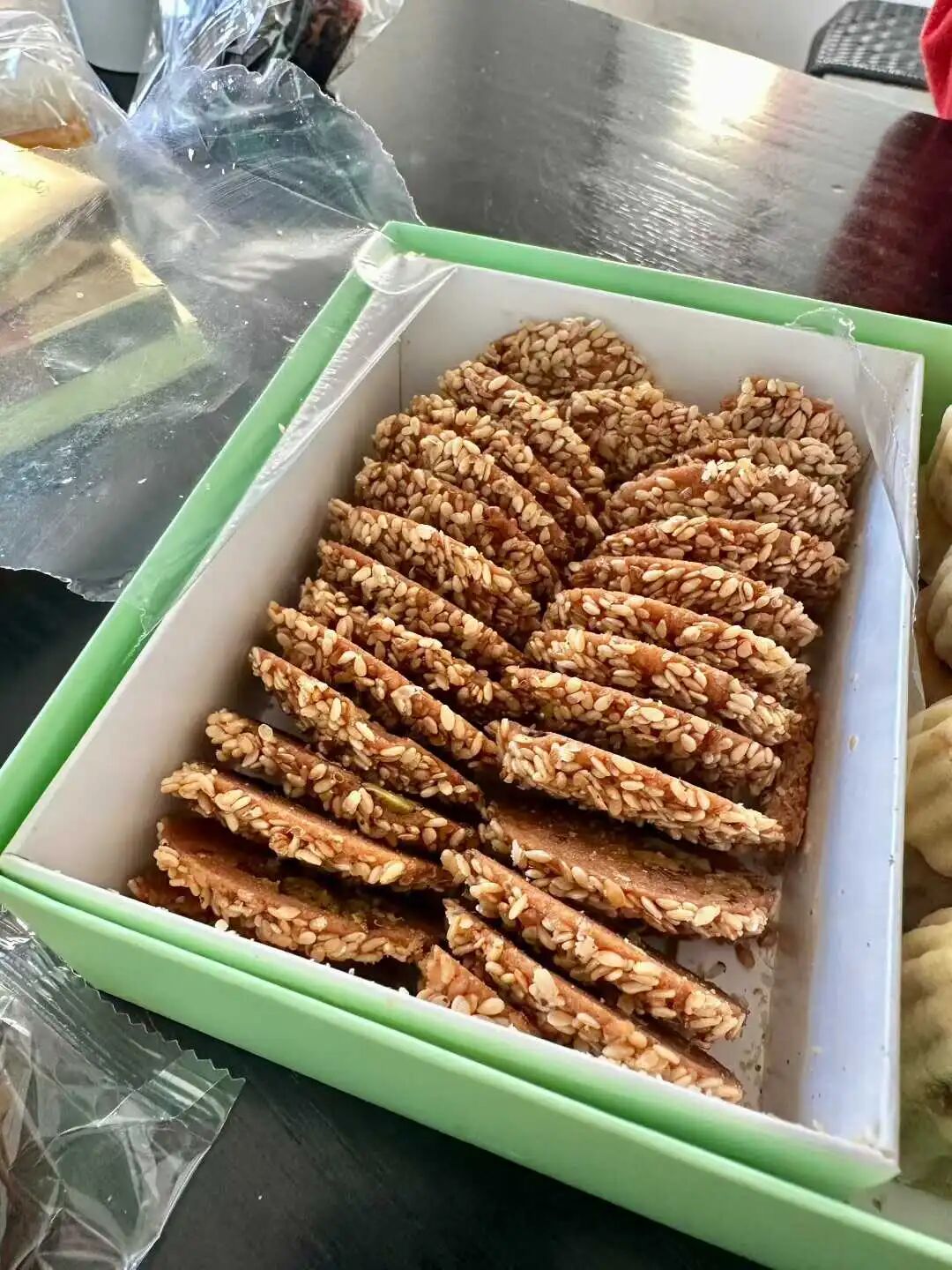
In the late 19th century, with the arrival of steel and cement, the Ottoman Empire began building modern neighborhoods in the western part of the old city of Damascus, modeled after Europe. A courthouse, post office, city hall, and train station were built one after another, with Marjeh Square at the center.
The largest building in the Marjeh area is the Yalbugha complex, which has been an unfinished project for 20 years and is still not fully open. It has become a symbol of Assad's economic downturn and corruption. Preparations for this complex began in 1973. The initial drainage work caused by groundwater leakage took 10 years. Structural construction of the 11-story building did not start until 1990. After the main structure was completed in 2004, it was abandoned for 20 years and has remained unfinished.
In 2025, the bottom of the complex finally opened for use with a row of restaurants. I ate the classic Syrian yogurt-stewed lamb, Shakriyeh, at one of them. To make it, tender lamb shanks are soaked in cardamom and cinnamon spices, then slow-cooked in yogurt. It is served with Arabic rice and is very delicious.
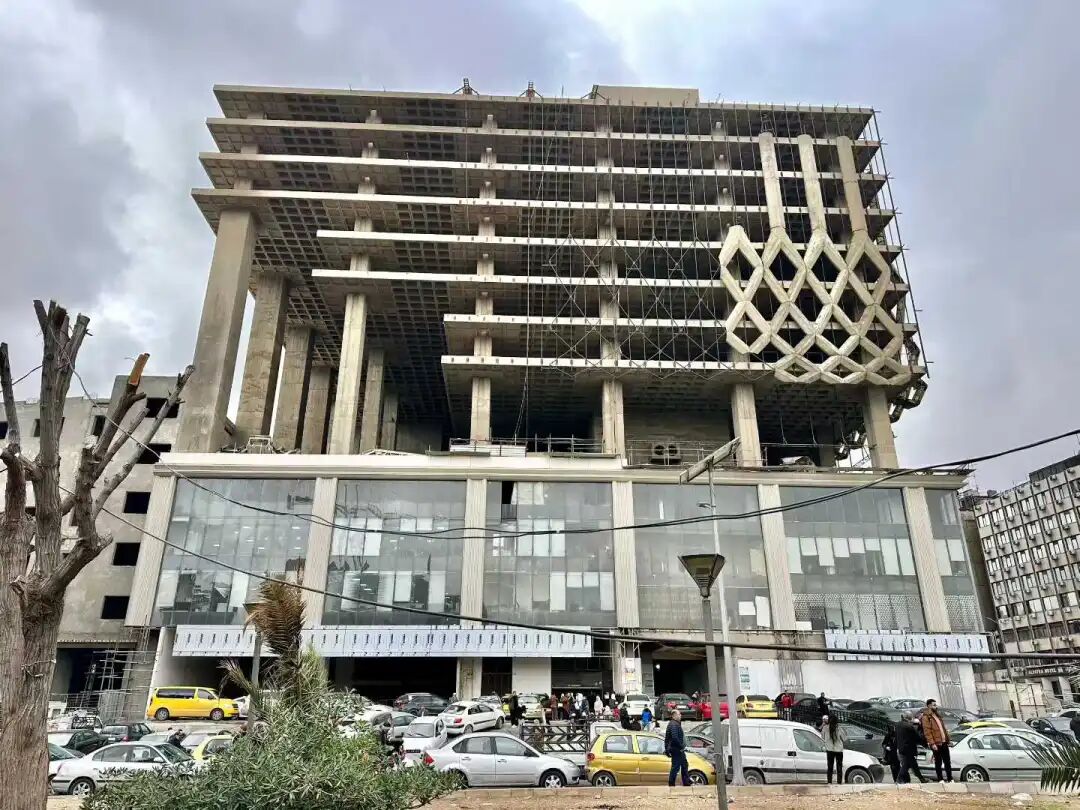
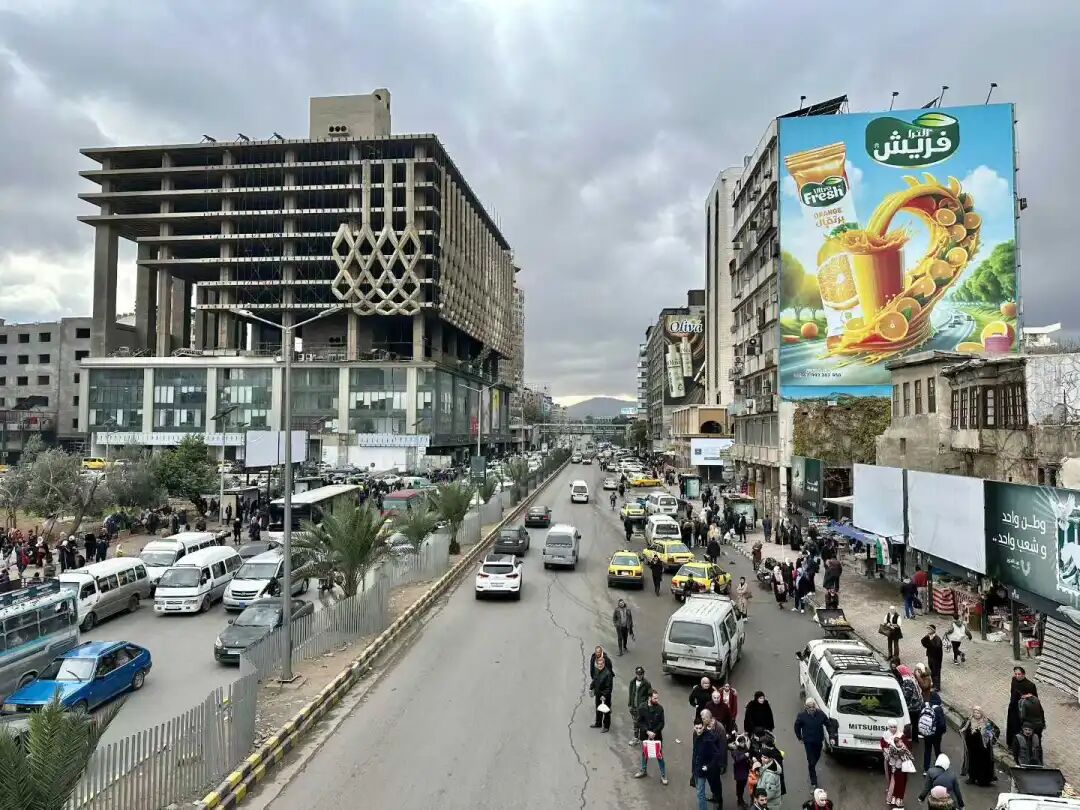
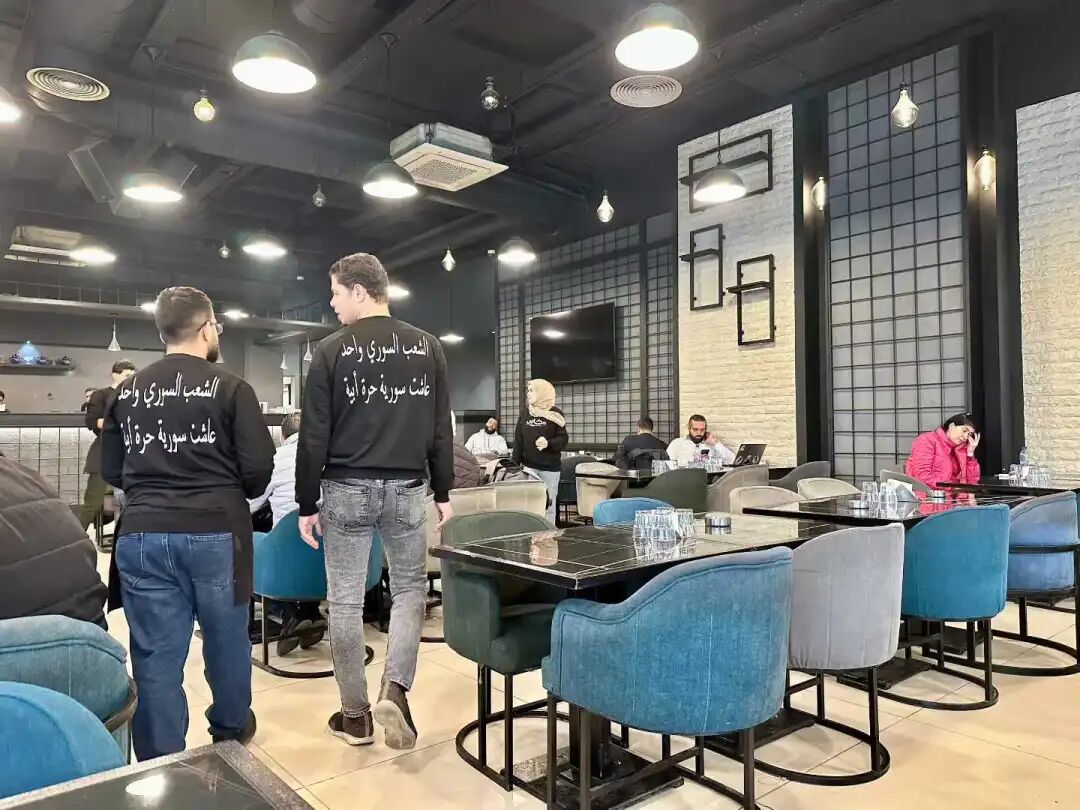
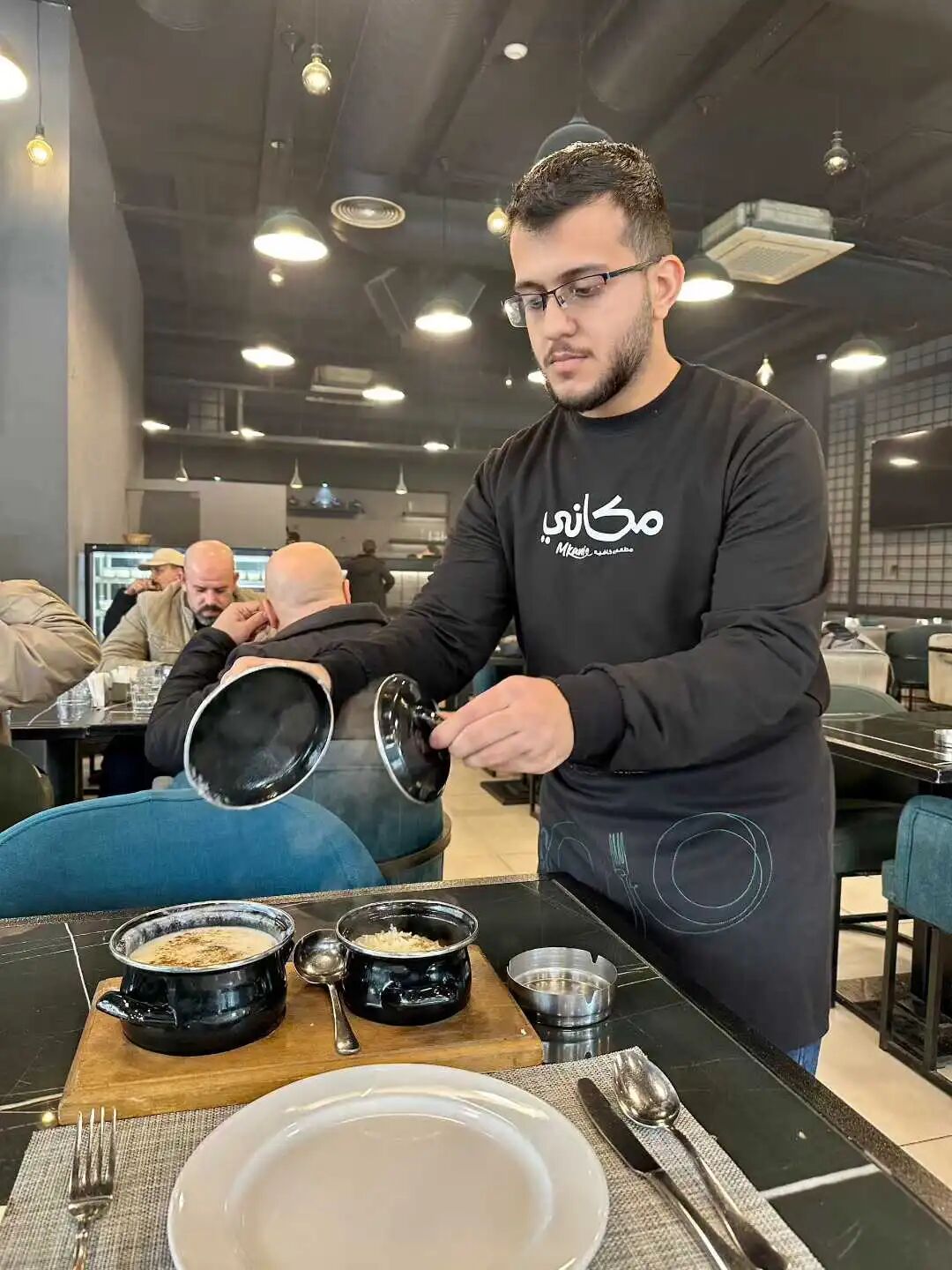
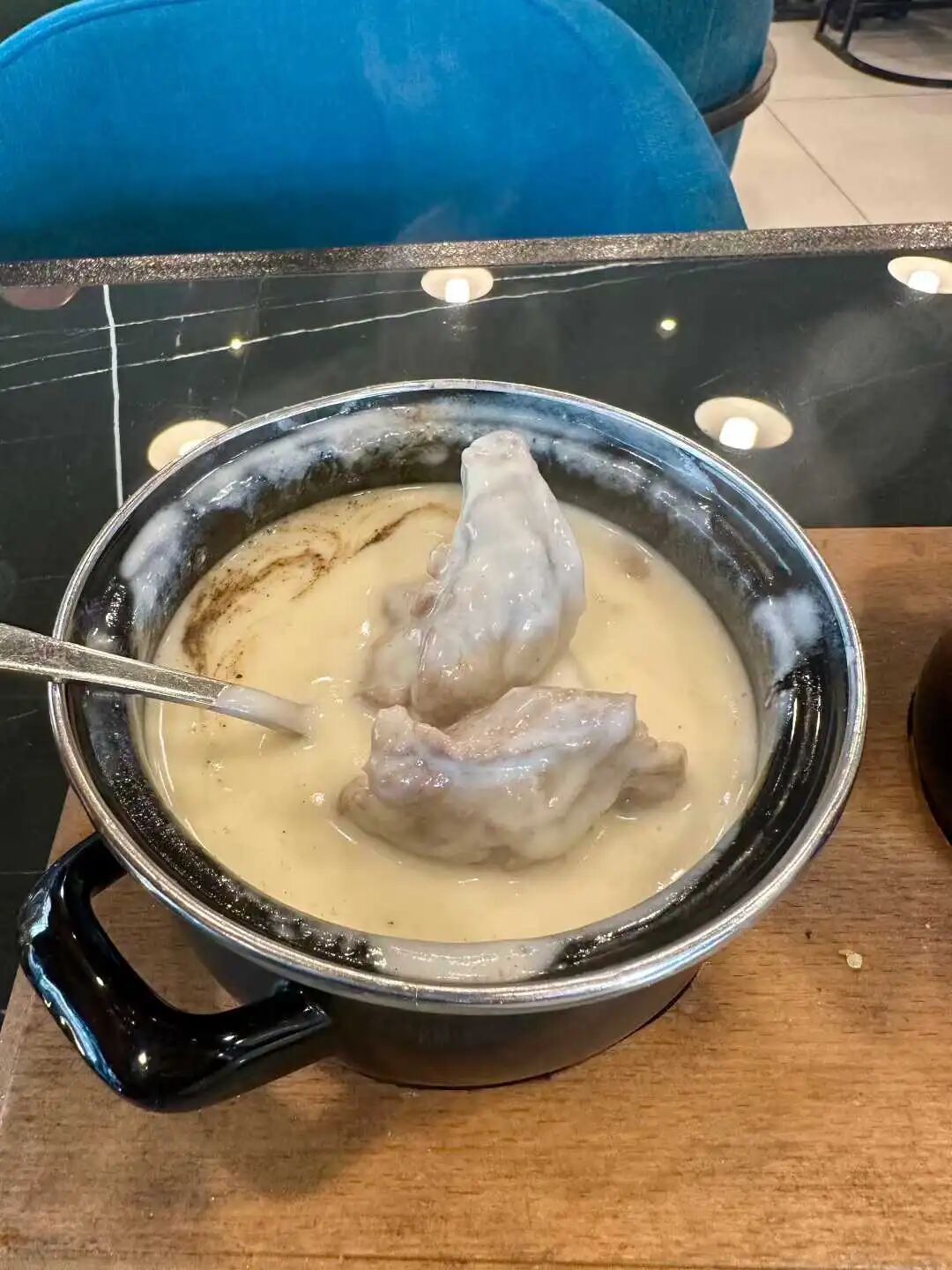
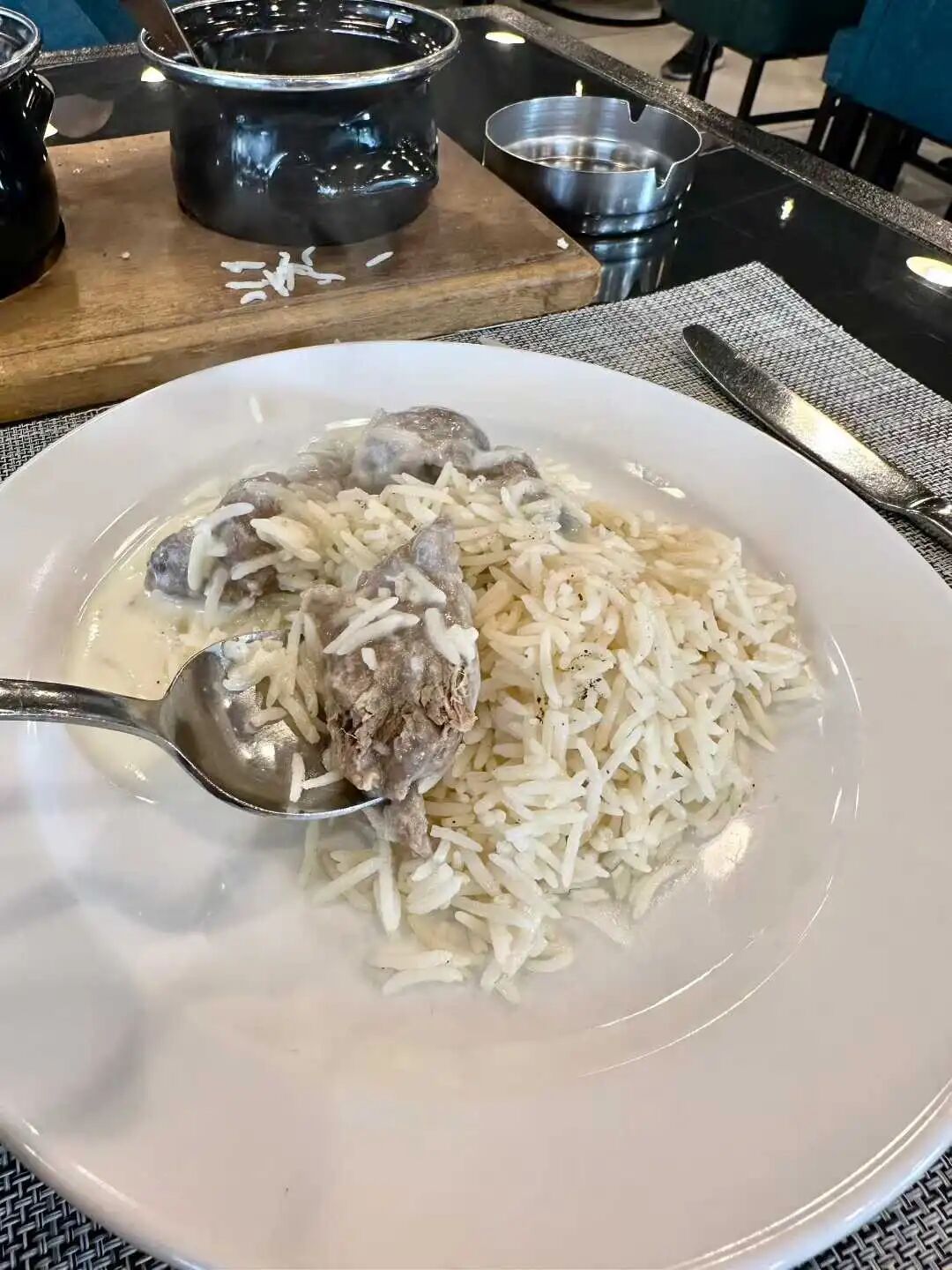
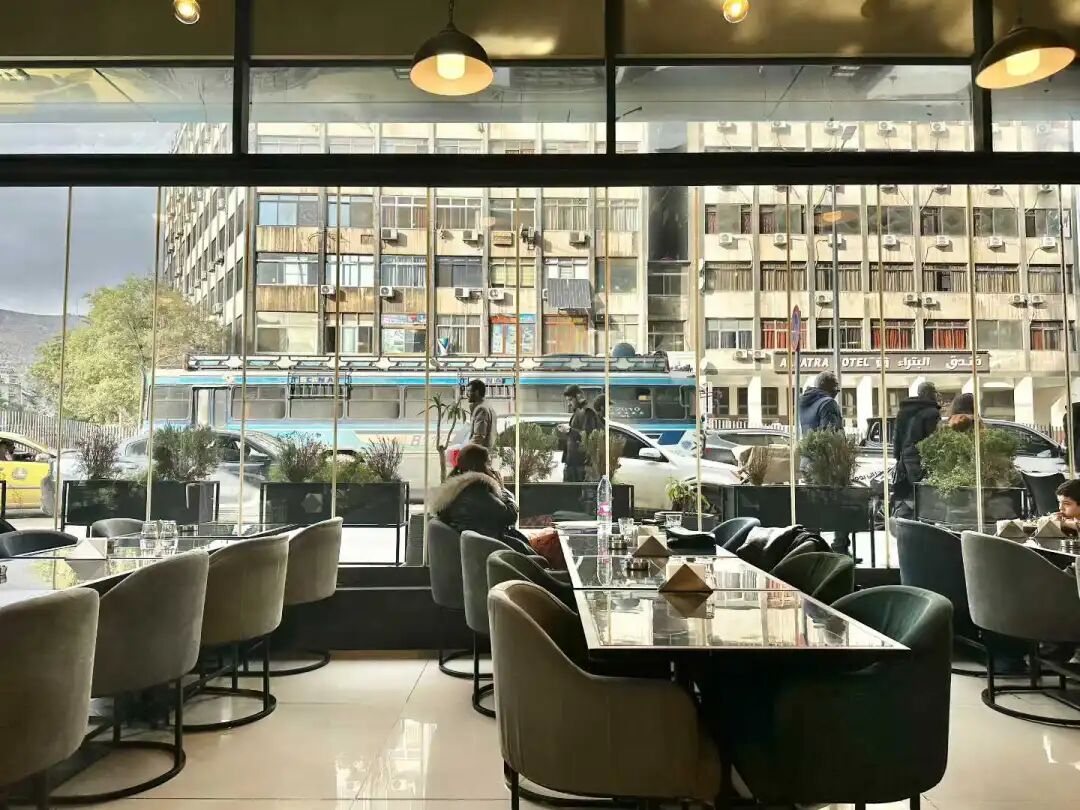
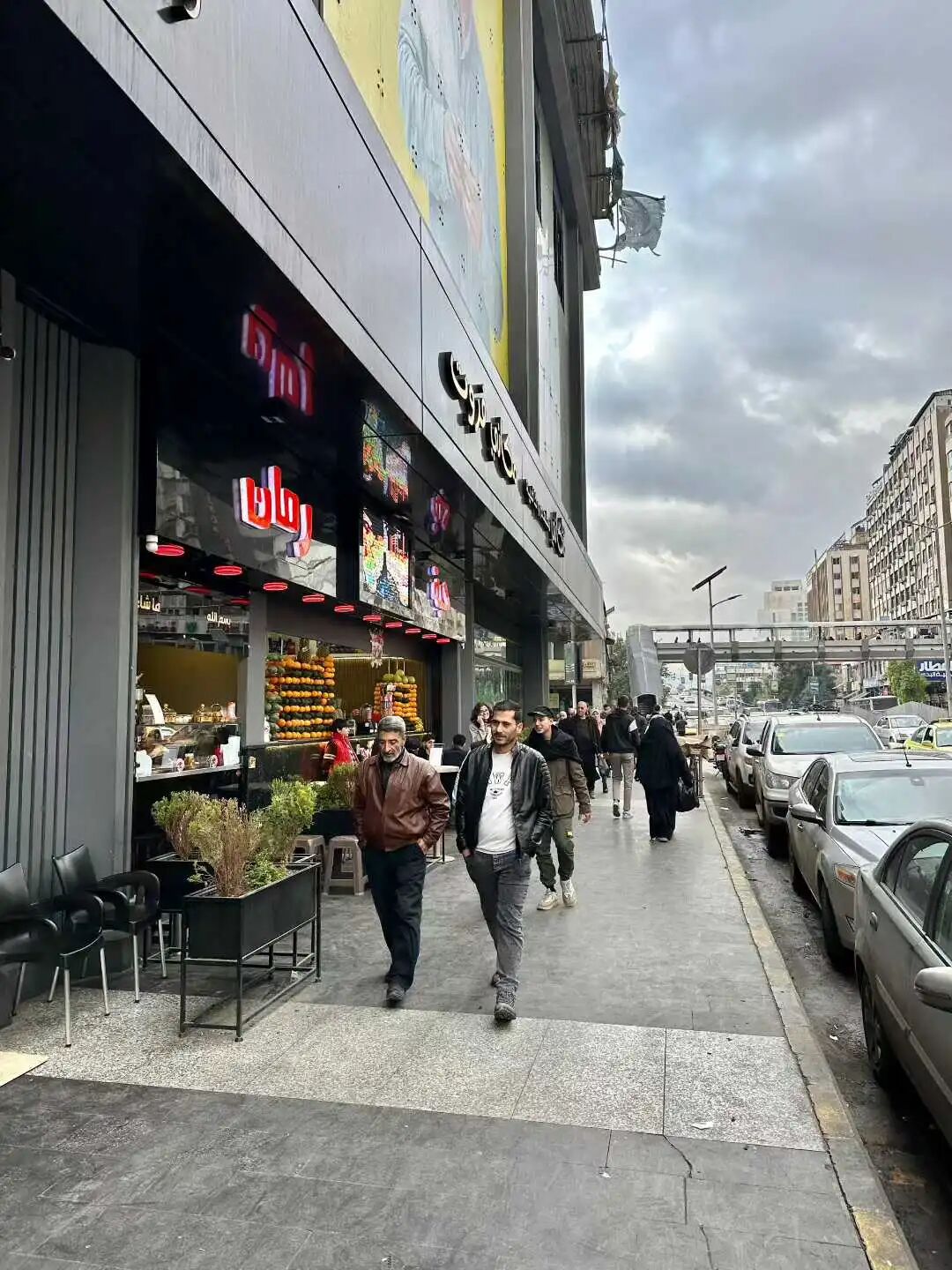
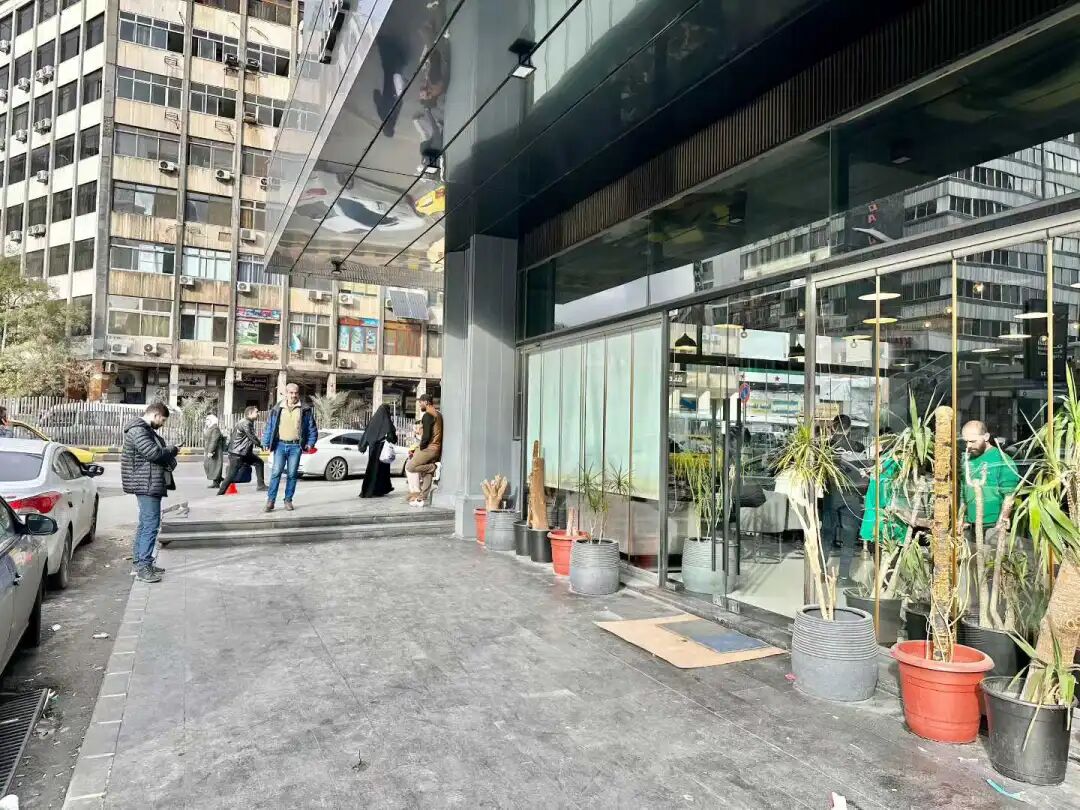
Authentic Damascus Heritage Hotels: Ottoman Mansions, Courtyards and Old City Restaurants
Articles • ali2007fr posted the article • 0 comments • 218 views • 2026-05-21 06:21
Summary: Damascus old city has heritage hotels and restaurants converted from Ottoman mansions, especially in the Christian Quarter east of the Umayyad Mosque. This guide keeps the source's nine hotel and restaurant notes, December 2025 prices, locations, bargaining details, and photographs.
In recent years, I have really enjoyed staying in heritage hotels while traveling. Even if some are a bit pricey or have thin walls, they let you fully experience the local history. Many people in Damascus choose Chinese-run guesthouses because they are cheaper and easier to communicate in. But if you really want to understand this thousand-year-old city, staying in an old Ottoman house inside the ancient city is a much better way to get close to history.
The east and west sides of the old city of Damascus are very different. The west has the busy Ottoman markets, the Umayyad Mosque, and the citadel. The east is the Christian Quarter, filled with churches and hotels or restaurants converted from old Ottoman mansions. I spent my days in Damascus staying in different mansions in the Christian Quarter. It is about a 1-kilometer walk to the Umayyad Mosque, but the road is full of shops, so it does not feel long.
Here are 9 places I stayed at or asked about, with prices from December 2025.
1. My top recommendation is Mamlouka Hotel, which has two locations: Dar Al Mamlouka and Beit al-Mamlouka. They asked for $122 for a single room, but I bargained it down to $110. I think this place offers the best value. The environment is great, it is the closest to the Umayyad Mosque, and it is right next to the market. The courtyard is a bit small. I only stayed at Dar Al Mamlouka this time because Beit al-Mamlouka had no rooms for two days.
2. Dar Al Yasmin Hotel asked for $140 for a single room, and I bargained it down to $125. It is in a small alley behind a church. It is very quiet and quite large inside.
3. Beit Zaman Hotel asked for $150 for a single room, and I bargained it down to $135. It is right on the East Gate street. There are many shops nearby, and many young people come here to take photos.
4. Beit Rumman has a great environment, but unfortunately, it has no Wi-Fi. I did not buy a SIM card, so I would have been disconnected. I missed out on it and did not ask for the price.
5. Beit Al Wali Hotel is the most popular mansion hotel in the old city of Damascus, and it is also the most expensive. When I asked on the first day, they only had a royal suite for $500. On the second day, they asked for $290 for a single room, and they would not go below $200, so I did not stay there.
6. Albal Hotel charges $80 for a single room. It is the cheapest, but the facilities are the worst. The power was weak, and my phone would barely charge.
7. Al Zaytouna Hotel has an average environment. When I went in, some men were watching a ball game, so I did not ask for the price.
8. Beit Zafran Hotel is very close to Beit Al Wali Hotel. It looked nice in photos, but it was full when I went, so I did not ask for the price.
9. Al Shahbandar Palace Hotel has a cafe in its courtyard. I had a coffee there, but I did not stay.
Dar Al Mamlouka is located on the far west side of the Bab Touma Christian Quarter in the old city of Damascus. The main building is a merchant mansion from the 17th-century Ottoman period, but it still has a strong 16th-century Mamluk style. The mansion has an inward-facing layout centered around a courtyard, with high ceilings on one side. The walls are built with alternating black basalt and white limestone bricks in the Mamluk style, and there is a marble fountain in the center of the courtyard.
Dar Al Mamlouka was turned into a hotel in 2005. It is run by the same management as another nearby mansion, Beit al-Mamlouka, but that one is often fully booked. The single room was listed at 122 dollars, but I bargained it down to 110 dollars. The hotel has electricity and Wi-Fi all night. The single room is nice, and a staff member brought me tea right after I checked in. There are orange and lemon trees in the courtyard, which makes it very relaxing.
The Islamic decor at Dar Al Mamlouka includes the Hand of Fatima (Hamsa). Its five fingers represent the five pillars of the faith, and it is named after the Prophet's daughter, Fatima. During the Austro-Turkish War in 1788, the Ottoman Empire carried flags featuring the Hand of Fatima as the Grand Vizier led an army of 80,000 against Austria.
Breakfast at Dar Al Mamlouka is a typical Levantine cold platter served with bread and hot tea. They bring the full set even if you are eating alone. It mainly includes various cheeses, pickled olives, chickpea dip (hummus), jam, fresh cucumber and tomato, fruit juice, olive oil, and sausages. A special item is the pickled eggplant (makdous). These are miniature eggplants stuffed with walnuts, chili, garlic, olive oil, and salt. Syrians usually start pickling them in autumn to eat as an appetizer during winter. The powder on the table is the classic Levantine spice blend (za'atar). It is a mix of Syrian oregano, toasted sesame seeds, dried sumac, and thyme. It has an earthy taste with a hint of citrus and nuttiness, which is very unique.
Dar Al Yasmin Hotel is located in the heart of the Christian Quarter of Bab Touma in the Old City of Damascus. The hotel is tucked away in a small alley, and it feels like a hidden world once you step inside. The hotel is made up of three 18th-century Ottoman mansions—two large and one small. It features a central courtyard, a fountain, a reception area (liwan), hand-painted wooden ceilings, traditional brick and stone structures, and carved doors and windows. The mansion changed hands many times after the 19th century until the Jasmine Hotels group took it over in 2005. They restored and opened it, making it a classic example of revitalizing a traditional Middle Eastern residence.
The single room was listed at 140 dollars, but I bargained it down to 125 dollars. The small alley at the entrance can get flooded when it rains, but overall it is a great value.
For breakfast at Dar Al Yasmin Hotel, the chickpea and sesame paste dip (hummus musabaha) is worth trying. Musabaha means swimming, as if the chickpeas are swimming in the sesame paste.
They also serve flatbread (manakish) in three varieties: with spice blend (za'atar), tomato, or cheese. Manakish originated from the traditional bread of the ancient Phoenicians and was added to the UNESCO Intangible Cultural Heritage list in 2023.
Beit Zaman Hotel is in the Christian Quarter of Bab Touma in the Old City of Damascus, right on the ancient Roman street (Via Recta). Their single room was listed at 150 dollars, but I bargained it down to 135 dollars.
The hotel opened in 2008 after five years of connecting and restoring three 17th-century Ottoman mansions. It kept original features like stone carvings, wood carvings, mosaics, and fountains. The wooden Ajami-style ceilings and the traditional courtyard layout are the most impressive parts.
The buffet breakfast at Beit Zaman Hotel includes sausages, cheese, bread, olives, and chickpea dip (hummus). The red dipping sauce is called Muhammara. It is a Syrian appetizer made from walnuts, red bell peppers, pomegranate molasses, and breadcrumbs.
Albal Hotel is near the Bab Touma gate in the Old City of Damascus. It is likely the most convenient for transportation. A single room costs 80 dollars, which is the lowest price, but the power is weak and it is almost impossible to charge a phone. Choose carefully.
Albal Hotel is a converted Ottoman mansion rebuilt after the 1759 Damascus earthquake. It has a courtyard fountain and wood carvings. The breakfast is quite good, and they light a stove in the courtyard during winter.
Al Shahbandar Palace Hotel is on the west side of the Christian Quarter near Bab Touma in the Old City of Damascus, right on the busy Al Qemaryeh market street.
The hotel is inside an Ottoman noble mansion built in the 16th century. The Shahbandar family, a famous modern political family in Damascus, lived here for a long time. The famous nationalist leader Abdul Rahman Shahbandar came from this family. The Shahbandar family renovated the mansion on a large scale in the early 20th century and used it as a place to host guests for a long time. In 2007, it was converted into a historic hotel after adding private bathrooms, air conditioning, and electrical systems, while strictly preserving the facade, courtyard, and historical components.
Today, the mansion's courtyard is open as a cafe. You can drink coffee there, so you do not have to stay at the hotel to experience this Ottoman mansion.
Besides historic hotels, many restaurants and cafes in the Old City of Damascus are also converted from Ottoman mansions. The first place I recommend had just opened when I visited, so you cannot even find it online. It is located on the road after entering the Old City of Damascus from the Bab Touma gate and turning west into Qanayet Al-Hatab street. They only had tea and coffee when I went, but the environment was quite nice. I ordered a cup of sand-brewed coffee. The owner speaks English. He was very enthusiastic and invited me to the second floor to see the old building.
Lady Cafe is on the Al Nawfara pedestrian street outside the east gate of the Umayyad Mosque. It is very lively in the afternoon and evening. I ate a Damascus specialty snack called Toshka pie at the cafe. It is known as a national snack of Syria. Toshka is made by putting spicy sausage (Sujuk) and Kashkawan cheese inside pita bread, then pressing it on an iron griddle on both sides until the cheese melts and the bread is crispy. When you eat it, it is crispy on the outside and soft on the inside. The bread is charred and fragrant, and the meat and cheese are rich and stretchy.
Beit Jabri is on As Sawwaf street, southeast of the Umayyad Mosque. It is an Ottoman mansion restaurant in the Old City of Damascus that is well worth a visit.
This mansion was built in the early 18th century. The current owner Raad Jabri's grandfather bought the property in the late 19th century, and their family lived there from 1905 to 1973. The house was gradually abandoned after the 1970s and later became a workshop for carpenters and blacksmiths. Raad Jabri restored the place in the 1990s and turned it into a restaurant. He also hosts cultural seminars, poetry readings, and classical music evenings from time to time.
Beit Jabri is a classic three-courtyard Ottoman mansion in Damascus. The arched hall (Iwan) is a typical example of 18th-century Damascus architecture, and the exquisite Ajrum roof was built in the mid-19th century. Influenced by Europe and the Ottoman Empire in the 19th century, Damascus architecture generally tended to decorate exterior walls more gorgeously. This is especially obvious on the north wall of Beit Jabri. We can clearly see the transition from 18th-century decorative styles to 19th-century patterns on the north wall, with complex wall paintings layered over traditional stone masonry (Ablaq).
I ordered the iron pot cheesy baked chicken and mushrooms, served with Arabic pita bread and mint tea. The iron pot came straight to the table. The cheese on top was baked to a golden, crispy brown and stretched into long strings. The chicken was tender, and the mushrooms were soaked in the rich, creamy white sauce. It tasted quite good.
Bab Al Hara is located on Al Qaimarryeh pedestrian street, just outside the east gate of the Umayyad Mosque in Damascus. It is very lively every night. The restaurant is a converted traditional Ottoman mansion built in the late 19th century. It features a central courtyard with a fountain, wrap-around arcades, plaster carvings, and stained glass windows. This place was originally the home of a wealthy merchant. During the French Mandate period (1920–1946), it served as a community gathering spot. Later, it was used as a multi-family residence for a long time before gradually falling into disrepair in the late 20th century. The hit Syrian drama "Bab Al Hara" premiered in 2006, sparking a craze across the Arab world for the folk customs of the Old City of Damascus. The restaurant opened in 2007, starting as a cafe that focused on Syrian breakfast and snacks, then added full meals in 2010.
I had the grilled chicken skewers (Shish Taouk). The chicken was crispy on the outside and tender on the inside. It was very refreshing paired with garlic yogurt sauce (Tzatziki), along with a corn and cabbage salad and french fries. However, restaurants all over the Old City of Damascus are full of people smoking shisha at night. If you mind the shisha smoke, try to go at noon or in the afternoon.
Finally, I had some sand-boiled coffee at Café Ishq Sharqi in Bab Touma, Damascus. The name translates to "Love of the Orient." There are dozens more restaurants and cafes converted from Ottoman mansions in the Old City of Damascus. I only visited a small portion this time, so there are plenty more for everyone to discover. view all
Summary: Damascus old city has heritage hotels and restaurants converted from Ottoman mansions, especially in the Christian Quarter east of the Umayyad Mosque. This guide keeps the source's nine hotel and restaurant notes, December 2025 prices, locations, bargaining details, and photographs.
In recent years, I have really enjoyed staying in heritage hotels while traveling. Even if some are a bit pricey or have thin walls, they let you fully experience the local history. Many people in Damascus choose Chinese-run guesthouses because they are cheaper and easier to communicate in. But if you really want to understand this thousand-year-old city, staying in an old Ottoman house inside the ancient city is a much better way to get close to history.
The east and west sides of the old city of Damascus are very different. The west has the busy Ottoman markets, the Umayyad Mosque, and the citadel. The east is the Christian Quarter, filled with churches and hotels or restaurants converted from old Ottoman mansions. I spent my days in Damascus staying in different mansions in the Christian Quarter. It is about a 1-kilometer walk to the Umayyad Mosque, but the road is full of shops, so it does not feel long.
Here are 9 places I stayed at or asked about, with prices from December 2025.
1. My top recommendation is Mamlouka Hotel, which has two locations: Dar Al Mamlouka and Beit al-Mamlouka. They asked for $122 for a single room, but I bargained it down to $110. I think this place offers the best value. The environment is great, it is the closest to the Umayyad Mosque, and it is right next to the market. The courtyard is a bit small. I only stayed at Dar Al Mamlouka this time because Beit al-Mamlouka had no rooms for two days.
2. Dar Al Yasmin Hotel asked for $140 for a single room, and I bargained it down to $125. It is in a small alley behind a church. It is very quiet and quite large inside.
3. Beit Zaman Hotel asked for $150 for a single room, and I bargained it down to $135. It is right on the East Gate street. There are many shops nearby, and many young people come here to take photos.
4. Beit Rumman has a great environment, but unfortunately, it has no Wi-Fi. I did not buy a SIM card, so I would have been disconnected. I missed out on it and did not ask for the price.
5. Beit Al Wali Hotel is the most popular mansion hotel in the old city of Damascus, and it is also the most expensive. When I asked on the first day, they only had a royal suite for $500. On the second day, they asked for $290 for a single room, and they would not go below $200, so I did not stay there.
6. Albal Hotel charges $80 for a single room. It is the cheapest, but the facilities are the worst. The power was weak, and my phone would barely charge.
7. Al Zaytouna Hotel has an average environment. When I went in, some men were watching a ball game, so I did not ask for the price.
8. Beit Zafran Hotel is very close to Beit Al Wali Hotel. It looked nice in photos, but it was full when I went, so I did not ask for the price.
9. Al Shahbandar Palace Hotel has a cafe in its courtyard. I had a coffee there, but I did not stay.
Dar Al Mamlouka is located on the far west side of the Bab Touma Christian Quarter in the old city of Damascus. The main building is a merchant mansion from the 17th-century Ottoman period, but it still has a strong 16th-century Mamluk style. The mansion has an inward-facing layout centered around a courtyard, with high ceilings on one side. The walls are built with alternating black basalt and white limestone bricks in the Mamluk style, and there is a marble fountain in the center of the courtyard.
Dar Al Mamlouka was turned into a hotel in 2005. It is run by the same management as another nearby mansion, Beit al-Mamlouka, but that one is often fully booked. The single room was listed at 122 dollars, but I bargained it down to 110 dollars. The hotel has electricity and Wi-Fi all night. The single room is nice, and a staff member brought me tea right after I checked in. There are orange and lemon trees in the courtyard, which makes it very relaxing.
The Islamic decor at Dar Al Mamlouka includes the Hand of Fatima (Hamsa). Its five fingers represent the five pillars of the faith, and it is named after the Prophet's daughter, Fatima. During the Austro-Turkish War in 1788, the Ottoman Empire carried flags featuring the Hand of Fatima as the Grand Vizier led an army of 80,000 against Austria.
Breakfast at Dar Al Mamlouka is a typical Levantine cold platter served with bread and hot tea. They bring the full set even if you are eating alone. It mainly includes various cheeses, pickled olives, chickpea dip (hummus), jam, fresh cucumber and tomato, fruit juice, olive oil, and sausages. A special item is the pickled eggplant (makdous). These are miniature eggplants stuffed with walnuts, chili, garlic, olive oil, and salt. Syrians usually start pickling them in autumn to eat as an appetizer during winter. The powder on the table is the classic Levantine spice blend (za'atar). It is a mix of Syrian oregano, toasted sesame seeds, dried sumac, and thyme. It has an earthy taste with a hint of citrus and nuttiness, which is very unique.
Dar Al Yasmin Hotel is located in the heart of the Christian Quarter of Bab Touma in the Old City of Damascus. The hotel is tucked away in a small alley, and it feels like a hidden world once you step inside. The hotel is made up of three 18th-century Ottoman mansions—two large and one small. It features a central courtyard, a fountain, a reception area (liwan), hand-painted wooden ceilings, traditional brick and stone structures, and carved doors and windows. The mansion changed hands many times after the 19th century until the Jasmine Hotels group took it over in 2005. They restored and opened it, making it a classic example of revitalizing a traditional Middle Eastern residence.
The single room was listed at 140 dollars, but I bargained it down to 125 dollars. The small alley at the entrance can get flooded when it rains, but overall it is a great value.
For breakfast at Dar Al Yasmin Hotel, the chickpea and sesame paste dip (hummus musabaha) is worth trying. Musabaha means swimming, as if the chickpeas are swimming in the sesame paste.
They also serve flatbread (manakish) in three varieties: with spice blend (za'atar), tomato, or cheese. Manakish originated from the traditional bread of the ancient Phoenicians and was added to the UNESCO Intangible Cultural Heritage list in 2023.
Beit Zaman Hotel is in the Christian Quarter of Bab Touma in the Old City of Damascus, right on the ancient Roman street (Via Recta). Their single room was listed at 150 dollars, but I bargained it down to 135 dollars.
The hotel opened in 2008 after five years of connecting and restoring three 17th-century Ottoman mansions. It kept original features like stone carvings, wood carvings, mosaics, and fountains. The wooden Ajami-style ceilings and the traditional courtyard layout are the most impressive parts.
The buffet breakfast at Beit Zaman Hotel includes sausages, cheese, bread, olives, and chickpea dip (hummus). The red dipping sauce is called Muhammara. It is a Syrian appetizer made from walnuts, red bell peppers, pomegranate molasses, and breadcrumbs.
Albal Hotel is near the Bab Touma gate in the Old City of Damascus. It is likely the most convenient for transportation. A single room costs 80 dollars, which is the lowest price, but the power is weak and it is almost impossible to charge a phone. Choose carefully.
Albal Hotel is a converted Ottoman mansion rebuilt after the 1759 Damascus earthquake. It has a courtyard fountain and wood carvings. The breakfast is quite good, and they light a stove in the courtyard during winter.
Al Shahbandar Palace Hotel is on the west side of the Christian Quarter near Bab Touma in the Old City of Damascus, right on the busy Al Qemaryeh market street.
The hotel is inside an Ottoman noble mansion built in the 16th century. The Shahbandar family, a famous modern political family in Damascus, lived here for a long time. The famous nationalist leader Abdul Rahman Shahbandar came from this family. The Shahbandar family renovated the mansion on a large scale in the early 20th century and used it as a place to host guests for a long time. In 2007, it was converted into a historic hotel after adding private bathrooms, air conditioning, and electrical systems, while strictly preserving the facade, courtyard, and historical components.
Today, the mansion's courtyard is open as a cafe. You can drink coffee there, so you do not have to stay at the hotel to experience this Ottoman mansion.
Besides historic hotels, many restaurants and cafes in the Old City of Damascus are also converted from Ottoman mansions. The first place I recommend had just opened when I visited, so you cannot even find it online. It is located on the road after entering the Old City of Damascus from the Bab Touma gate and turning west into Qanayet Al-Hatab street. They only had tea and coffee when I went, but the environment was quite nice. I ordered a cup of sand-brewed coffee. The owner speaks English. He was very enthusiastic and invited me to the second floor to see the old building.
Lady Cafe is on the Al Nawfara pedestrian street outside the east gate of the Umayyad Mosque. It is very lively in the afternoon and evening. I ate a Damascus specialty snack called Toshka pie at the cafe. It is known as a national snack of Syria. Toshka is made by putting spicy sausage (Sujuk) and Kashkawan cheese inside pita bread, then pressing it on an iron griddle on both sides until the cheese melts and the bread is crispy. When you eat it, it is crispy on the outside and soft on the inside. The bread is charred and fragrant, and the meat and cheese are rich and stretchy.
Beit Jabri is on As Sawwaf street, southeast of the Umayyad Mosque. It is an Ottoman mansion restaurant in the Old City of Damascus that is well worth a visit.
This mansion was built in the early 18th century. The current owner Raad Jabri's grandfather bought the property in the late 19th century, and their family lived there from 1905 to 1973. The house was gradually abandoned after the 1970s and later became a workshop for carpenters and blacksmiths. Raad Jabri restored the place in the 1990s and turned it into a restaurant. He also hosts cultural seminars, poetry readings, and classical music evenings from time to time.
Beit Jabri is a classic three-courtyard Ottoman mansion in Damascus. The arched hall (Iwan) is a typical example of 18th-century Damascus architecture, and the exquisite Ajrum roof was built in the mid-19th century. Influenced by Europe and the Ottoman Empire in the 19th century, Damascus architecture generally tended to decorate exterior walls more gorgeously. This is especially obvious on the north wall of Beit Jabri. We can clearly see the transition from 18th-century decorative styles to 19th-century patterns on the north wall, with complex wall paintings layered over traditional stone masonry (Ablaq).
I ordered the iron pot cheesy baked chicken and mushrooms, served with Arabic pita bread and mint tea. The iron pot came straight to the table. The cheese on top was baked to a golden, crispy brown and stretched into long strings. The chicken was tender, and the mushrooms were soaked in the rich, creamy white sauce. It tasted quite good.
Bab Al Hara is located on Al Qaimarryeh pedestrian street, just outside the east gate of the Umayyad Mosque in Damascus. It is very lively every night. The restaurant is a converted traditional Ottoman mansion built in the late 19th century. It features a central courtyard with a fountain, wrap-around arcades, plaster carvings, and stained glass windows. This place was originally the home of a wealthy merchant. During the French Mandate period (1920–1946), it served as a community gathering spot. Later, it was used as a multi-family residence for a long time before gradually falling into disrepair in the late 20th century. The hit Syrian drama "Bab Al Hara" premiered in 2006, sparking a craze across the Arab world for the folk customs of the Old City of Damascus. The restaurant opened in 2007, starting as a cafe that focused on Syrian breakfast and snacks, then added full meals in 2010.
I had the grilled chicken skewers (Shish Taouk). The chicken was crispy on the outside and tender on the inside. It was very refreshing paired with garlic yogurt sauce (Tzatziki), along with a corn and cabbage salad and french fries. However, restaurants all over the Old City of Damascus are full of people smoking shisha at night. If you mind the shisha smoke, try to go at noon or in the afternoon.
Finally, I had some sand-boiled coffee at Café Ishq Sharqi in Bab Touma, Damascus. The name translates to "Love of the Orient." There are dozens more restaurants and cafes converted from Ottoman mansions in the Old City of Damascus. I only visited a small portion this time, so there are plenty more for everyone to discover.
Friday Prayer at Damascus Umayyad Mosque: Jumu'ah, Khutbah and Living History
Articles • ali2007fr posted the article • 0 comments • 309 views • 2026-05-21 06:21
Summary: This first-person account records Friday namaz at the Great Mosque of Damascus, including the 12:40 p.m. khutbah by Mohammed Abu al-Khair Shukri, Syria's Minister of Religious Endowments since March 2025. It keeps the source's prayer details, people, security notes, historic setting, and photographs.
It has always been my wish to attend Friday namaz at the Great Mosque of Damascus.
When I arrived after 11:00 a.m., the chanting had already begun. The elderly men wore traditional Ottoman-era clothing, and against the backdrop of Ottoman decorations, it felt like stepping back into the 19th century.
The khutbah began at 12:40 p.m., delivered by Mohammed Abu al-Khair Shukri, who has served as the Syrian Minister of Religious Endowments since March 2025. Born in Damascus in 1961, Shukri is a senior scholar of Islamic law, a university professor, a lawyer, and a social activist. In 2021, his assets were seized due to his support for the GM position. It was clear that Shukri is deeply loved by the people. They crowded around to talk and take photos with him, and he responded with a smile the entire time.
During Friday namaz, the front of the main hall was cordoned off for important figures to move through, and people could only stand there when it was time for the prayer rows. Shukri used this path to enter and leave, accompanied by his staff.
Additionally, the area near the gongbei of Prophet Yahya on the east side was closed during Friday namaz, likely to prevent people from visiting the tomb during the service. However, it is not uncommon to find tombs inside the main halls of mosques in the Middle East, and I have seen this elsewhere.
During Friday namaz at the Great Mosque, there were many young men in camouflage uniforms; I suspect many of them had just come from the front lines. A sign on the pillar at the entrance forbids carrying guns, which reminded us that war is not far away. On December 8, 2024, Ahmed Shara delivered a victory speech at the Great Mosque of Damascus and then became the de facto leader of Syria. These men were very warm toward me. Many of them told me that China is great and spoke of lasting friendship between China and Syria after learning I was Chinese.
The mosque has four mihrabs (prayer niches). Daily prayers are usually held at the mihrab on the west side. In the afternoon, an ustadh (teacher) teaches scripture next to the large mihrab. He even gave me candy when he saw me passing by. I was given candy several times by warm-hearted people in Damascus, and I was very moved.
Damascus was captured by the Arabs in 634 and became the capital of the Umayyad Caliphate in 661. For the first 45 years after the capital was established, the site of the Great Mosque of Damascus remained an Orthodox church, though a prayer area (musalla) was built in the southeast corner. As the Muslim population in Damascus grew, and with the need for the Umayyad Caliph to build a grand mosque for Friday prayers, the sixth caliph, Al-Walid I, finally decided in 706 to convert the Orthodox church into a Friday mosque.
Al-Walid I personally oversaw the construction of the Great Mosque of Damascus. He kept the outer walls of the Roman mosque, removed the Corinthian columns and arcades from the mosque, and reinstalled them inside the main hall. The new mosque was completed in 715 and became known as a "wonder of the world" to medieval Muslim writers.
Before the Great Mosque of Damascus was built, traditional mosques were usually flat-roofed halls. The Great Mosque of Damascus introduced a basilica-style layout, featuring three wide, long halls with a central nave and a tall dome above.
Legend has it that during the construction of the mosque, workers discovered a small cave chapel and found a box inside, which was said to contain the head of Prophet Yahya. Yahya was a cousin of Isa and was sent to guide the people of Israel, and he is highly regarded in the scriptures. Yahya was beheaded because he criticized the Jewish King Herod Antipas.
Later, the Umayyad Caliph Al-Walid I ordered Yahya's head to be buried under a pillar, and today this place has become the gongbei of the Prophet Yahya. However, the west side is currently used for the five daily prayers and Jumu'ah, while the east prayer hall where the gongbei of Yahya is located is not open.
The Great Mosque of Damascus is world-famous for its rich Umayyad-era mosaic decorations. These mosaics use a late Roman style to depict various natural landscapes and buildings, showing a typical naturalistic style.
Some Arabic historical sources suggest the craftsmen and materials for the mosaics came from the Byzantine capital of Constantinople, but a 2022 chemical analysis study showed that most of the mosaics were actually produced in Egypt. Although these mosaic images show traces of Byzantine style, some scholars believe their style better matches mosaic craftsmanship from Syria, Palestine, and Egypt.
There has also been a long-standing debate about the meaning of the mosaic images. Some views suggest they represent the known world at that time, others think they depict Damascus and the Barada River, and some believe they show scenes of Paradise. Currently, there is relatively more evidence for the Paradise view, and the landscapes without human figures fit the idea of an empty Paradise waiting for people to arrive after the Day of Resurrection.
See "Umayyad Mosaic Decorations of the Great Mosque of Damascus" for details.
On the west side of the courtyard of the Great Mosque of Damascus stands the Treasury Dome built during the Abbasid Dynasty, which was used to store the charity (nietie) given to the mosque and many ancient manuscripts.
The Treasury Dome was ordered to be built in 789 by the Abbasid governor of Damascus, Fadl ibn Salih. The treasury is an octagonal building supported by eight Roman columns that still have their original capitals. The outer walls of the treasury are decorated with magnificent mosaic murals, which imitate the early Umayyad decorations in the mosque, though the craftsmanship is slightly inferior. The mosaic decorations on the outer walls of the treasury were restored at the end of the 20th century.
The treasury once housed ancient manuscripts in Greek, Latin, Syriac, Coptic, Hebrew, Aramaic, and Georgian, including 7th-8th century Greek New Testament manuscripts, but they were gifted to Kaiser Wilhelm II in 1899, and today only a few are kept in the Damascus National Archives.
The Great Mosque of Damascus did not have a minaret (bangke ta) originally, but there was a small room on the Roman tower at the corner of the outer wall for the muezzin to call the adhan (bangke).
The first minaret of the Great Mosque of Damascus is the Bride's Minaret in the center of the north wall, which was first built during the Abbasid Dynasty in the 9th century. Only the lower level remains today, as the upper level was destroyed by fire in 1069 and later rebuilt by the Ayyubid Sultan Saladin in 1174. The Bride's Minaret has a 160-step spiral staircase, a square main tower, and horseshoe arches on the upper level.
The Isa Minaret in the southeast is said to have been built in the 9th century during the Abbasid Dynasty, but it was destroyed in 1245 during the civil strife of the Ayyubid Dynasty. The current lower level of the building was built in 1247 during the Ayyubid Dynasty, and the upper level was built after the 16th century during the Ottoman Dynasty. The main body of the Isa Minaret is square, with an octagonal top and an open gallery. Legend says the Prophet Isa (Jesus) will descend from the Isa Minaret and perform the morning namaz behind the Mahdi (the Savior).
In 1285, the famous scholar Ibn Taymiyyah began teaching at the Great Mosque of Damascus. When the Mongols invaded Damascus in 1300, Ibn Taymiyyah firmly supported the people in their resistance. He preached at the Great Mosque and issued fatwas for those fleeing in panic. He personally joined the fight against the Ilkhanate, which finally ended the Mongol rule over Syria.
The Qaitbay Minaret in the southwest was built in 1488 by the Mamluk Sultan Qaitbay (reigned 1468-1496) and features a classic Mamluk style. The name of Assad was once carved on the minaret, but it was removed in October 2025. Qaitbay's reign was known for stability and prosperity. He defeated the powerful Ottoman Empire of that time several times and eventually signed a peace treaty with them, which greatly boosted his reputation. He also donated funds to build many structures across Egypt, Syria, Saudi Arabia, and other places.
The main hall of the Great Mosque of Damascus caught fire in 1893. The Ottoman Empire spent nine years repairing it, rebuilding the mihrab, minbar, and dome, while removing the original Umayyad mosaic decorations. Today, the late Ottoman-style mihrab is very intricate and represents the delicate style of that period. view all
Summary: This first-person account records Friday namaz at the Great Mosque of Damascus, including the 12:40 p.m. khutbah by Mohammed Abu al-Khair Shukri, Syria's Minister of Religious Endowments since March 2025. It keeps the source's prayer details, people, security notes, historic setting, and photographs.
It has always been my wish to attend Friday namaz at the Great Mosque of Damascus.
When I arrived after 11:00 a.m., the chanting had already begun. The elderly men wore traditional Ottoman-era clothing, and against the backdrop of Ottoman decorations, it felt like stepping back into the 19th century.
The khutbah began at 12:40 p.m., delivered by Mohammed Abu al-Khair Shukri, who has served as the Syrian Minister of Religious Endowments since March 2025. Born in Damascus in 1961, Shukri is a senior scholar of Islamic law, a university professor, a lawyer, and a social activist. In 2021, his assets were seized due to his support for the GM position. It was clear that Shukri is deeply loved by the people. They crowded around to talk and take photos with him, and he responded with a smile the entire time.
During Friday namaz, the front of the main hall was cordoned off for important figures to move through, and people could only stand there when it was time for the prayer rows. Shukri used this path to enter and leave, accompanied by his staff.
Additionally, the area near the gongbei of Prophet Yahya on the east side was closed during Friday namaz, likely to prevent people from visiting the tomb during the service. However, it is not uncommon to find tombs inside the main halls of mosques in the Middle East, and I have seen this elsewhere.
During Friday namaz at the Great Mosque, there were many young men in camouflage uniforms; I suspect many of them had just come from the front lines. A sign on the pillar at the entrance forbids carrying guns, which reminded us that war is not far away. On December 8, 2024, Ahmed Shara delivered a victory speech at the Great Mosque of Damascus and then became the de facto leader of Syria. These men were very warm toward me. Many of them told me that China is great and spoke of lasting friendship between China and Syria after learning I was Chinese.
The mosque has four mihrabs (prayer niches). Daily prayers are usually held at the mihrab on the west side. In the afternoon, an ustadh (teacher) teaches scripture next to the large mihrab. He even gave me candy when he saw me passing by. I was given candy several times by warm-hearted people in Damascus, and I was very moved.
Damascus was captured by the Arabs in 634 and became the capital of the Umayyad Caliphate in 661. For the first 45 years after the capital was established, the site of the Great Mosque of Damascus remained an Orthodox church, though a prayer area (musalla) was built in the southeast corner. As the Muslim population in Damascus grew, and with the need for the Umayyad Caliph to build a grand mosque for Friday prayers, the sixth caliph, Al-Walid I, finally decided in 706 to convert the Orthodox church into a Friday mosque.
Al-Walid I personally oversaw the construction of the Great Mosque of Damascus. He kept the outer walls of the Roman mosque, removed the Corinthian columns and arcades from the mosque, and reinstalled them inside the main hall. The new mosque was completed in 715 and became known as a "wonder of the world" to medieval Muslim writers.
Before the Great Mosque of Damascus was built, traditional mosques were usually flat-roofed halls. The Great Mosque of Damascus introduced a basilica-style layout, featuring three wide, long halls with a central nave and a tall dome above.
Legend has it that during the construction of the mosque, workers discovered a small cave chapel and found a box inside, which was said to contain the head of Prophet Yahya. Yahya was a cousin of Isa and was sent to guide the people of Israel, and he is highly regarded in the scriptures. Yahya was beheaded because he criticized the Jewish King Herod Antipas.
Later, the Umayyad Caliph Al-Walid I ordered Yahya's head to be buried under a pillar, and today this place has become the gongbei of the Prophet Yahya. However, the west side is currently used for the five daily prayers and Jumu'ah, while the east prayer hall where the gongbei of Yahya is located is not open.
The Great Mosque of Damascus is world-famous for its rich Umayyad-era mosaic decorations. These mosaics use a late Roman style to depict various natural landscapes and buildings, showing a typical naturalistic style.
Some Arabic historical sources suggest the craftsmen and materials for the mosaics came from the Byzantine capital of Constantinople, but a 2022 chemical analysis study showed that most of the mosaics were actually produced in Egypt. Although these mosaic images show traces of Byzantine style, some scholars believe their style better matches mosaic craftsmanship from Syria, Palestine, and Egypt.
There has also been a long-standing debate about the meaning of the mosaic images. Some views suggest they represent the known world at that time, others think they depict Damascus and the Barada River, and some believe they show scenes of Paradise. Currently, there is relatively more evidence for the Paradise view, and the landscapes without human figures fit the idea of an empty Paradise waiting for people to arrive after the Day of Resurrection.
See "Umayyad Mosaic Decorations of the Great Mosque of Damascus" for details.
On the west side of the courtyard of the Great Mosque of Damascus stands the Treasury Dome built during the Abbasid Dynasty, which was used to store the charity (nietie) given to the mosque and many ancient manuscripts.
The Treasury Dome was ordered to be built in 789 by the Abbasid governor of Damascus, Fadl ibn Salih. The treasury is an octagonal building supported by eight Roman columns that still have their original capitals. The outer walls of the treasury are decorated with magnificent mosaic murals, which imitate the early Umayyad decorations in the mosque, though the craftsmanship is slightly inferior. The mosaic decorations on the outer walls of the treasury were restored at the end of the 20th century.
The treasury once housed ancient manuscripts in Greek, Latin, Syriac, Coptic, Hebrew, Aramaic, and Georgian, including 7th-8th century Greek New Testament manuscripts, but they were gifted to Kaiser Wilhelm II in 1899, and today only a few are kept in the Damascus National Archives.
The Great Mosque of Damascus did not have a minaret (bangke ta) originally, but there was a small room on the Roman tower at the corner of the outer wall for the muezzin to call the adhan (bangke).
The first minaret of the Great Mosque of Damascus is the Bride's Minaret in the center of the north wall, which was first built during the Abbasid Dynasty in the 9th century. Only the lower level remains today, as the upper level was destroyed by fire in 1069 and later rebuilt by the Ayyubid Sultan Saladin in 1174. The Bride's Minaret has a 160-step spiral staircase, a square main tower, and horseshoe arches on the upper level.
The Isa Minaret in the southeast is said to have been built in the 9th century during the Abbasid Dynasty, but it was destroyed in 1245 during the civil strife of the Ayyubid Dynasty. The current lower level of the building was built in 1247 during the Ayyubid Dynasty, and the upper level was built after the 16th century during the Ottoman Dynasty. The main body of the Isa Minaret is square, with an octagonal top and an open gallery. Legend says the Prophet Isa (Jesus) will descend from the Isa Minaret and perform the morning namaz behind the Mahdi (the Savior).
In 1285, the famous scholar Ibn Taymiyyah began teaching at the Great Mosque of Damascus. When the Mongols invaded Damascus in 1300, Ibn Taymiyyah firmly supported the people in their resistance. He preached at the Great Mosque and issued fatwas for those fleeing in panic. He personally joined the fight against the Ilkhanate, which finally ended the Mongol rule over Syria.
The Qaitbay Minaret in the southwest was built in 1488 by the Mamluk Sultan Qaitbay (reigned 1468-1496) and features a classic Mamluk style. The name of Assad was once carved on the minaret, but it was removed in October 2025. Qaitbay's reign was known for stability and prosperity. He defeated the powerful Ottoman Empire of that time several times and eventually signed a peace treaty with them, which greatly boosted his reputation. He also donated funds to build many structures across Egypt, Syria, Saudi Arabia, and other places.
The main hall of the Great Mosque of Damascus caught fire in 1893. The Ottoman Empire spent nine years repairing it, rebuilding the mihrab, minbar, and dome, while removing the original Umayyad mosaic decorations. Today, the late Ottoman-style mihrab is very intricate and represents the delicate style of that period.
Hidden Islamic Art in Damascus: Umayyad Mosque Mosaics and the Barada Panel
Articles • ali2007fr posted the article • 0 comments • 200 views • 2026-05-21 06:21
Summary: The Great Mosque of Damascus is famous for Umayyad-era mosaics, including the Barada Panel restored by the Mamluk Sultan Baibars in 1270. This account keeps the source's art history, chemical study notes, scholarly interpretations, mosaic locations, and photographs.
The Great Mosque of Damascus is world-famous for its rich Umayyad-era mosaic decorations. These mosaics use a late Roman style to depict various natural landscapes and buildings, showing a typical naturalistic style.
Some Arabic historical sources suggest the craftsmen and materials for the mosaics came from the Byzantine capital of Constantinople, but a 2022 chemical analysis study showed that most of the mosaics were actually produced in Egypt. Although these mosaic images show traces of Byzantine style, some scholars believe their style better matches mosaic craftsmanship from Syria, Palestine, and Egypt.
There has also been a long-standing debate about the meaning of the mosaic images. Some views suggest they represent the known world at that time, others think they depict Damascus and the Barada River, and some believe they show scenes of Paradise. Currently, there is relatively more evidence for the Paradise view, and the landscapes without human figures fit the idea of an empty Paradise waiting for people to arrive after the Day of Resurrection.
In 1270, the Mamluk Sultan Baibars carried out a large-scale restoration of the mosaics at the Great Mosque of Damascus, especially the Barada Panel in the western portico. The Barada River is the main river flowing through Damascus. This panel is believed to depict a town landscape along the Barada River.
Mosaic decorations in the central hall of the west gate.
Mosaic decorations on the north and south sides of the west gate hall.
Mosaic decorations in the west portico.
Mosaic decorations on the main entrance of the prayer hall; the dark parts are original, and the bright parts were restored later. view all
Summary: The Great Mosque of Damascus is famous for Umayyad-era mosaics, including the Barada Panel restored by the Mamluk Sultan Baibars in 1270. This account keeps the source's art history, chemical study notes, scholarly interpretations, mosaic locations, and photographs.
The Great Mosque of Damascus is world-famous for its rich Umayyad-era mosaic decorations. These mosaics use a late Roman style to depict various natural landscapes and buildings, showing a typical naturalistic style.
Some Arabic historical sources suggest the craftsmen and materials for the mosaics came from the Byzantine capital of Constantinople, but a 2022 chemical analysis study showed that most of the mosaics were actually produced in Egypt. Although these mosaic images show traces of Byzantine style, some scholars believe their style better matches mosaic craftsmanship from Syria, Palestine, and Egypt.
There has also been a long-standing debate about the meaning of the mosaic images. Some views suggest they represent the known world at that time, others think they depict Damascus and the Barada River, and some believe they show scenes of Paradise. Currently, there is relatively more evidence for the Paradise view, and the landscapes without human figures fit the idea of an empty Paradise waiting for people to arrive after the Day of Resurrection.
In 1270, the Mamluk Sultan Baibars carried out a large-scale restoration of the mosaics at the Great Mosque of Damascus, especially the Barada Panel in the western portico. The Barada River is the main river flowing through Damascus. This panel is believed to depict a town landscape along the Barada River.
Mosaic decorations in the central hall of the west gate.
Mosaic decorations on the north and south sides of the west gate hall.
Mosaic decorations in the west portico.
Mosaic decorations on the main entrance of the prayer hall; the dark parts are original, and the bright parts were restored later.
Halal Travel Guide: Damascus - Shia Holy Sites in the Old City
Articles • ali2007fr posted the article • 0 comments • 258 views • 2026-05-21 02:26
Summary: Damascus Old City contains important Shia holy sites, including Sayyidah Ruqayya Mosque near the old city's northern gate. This account keeps the source's shrine names, religious history, location details, photographs, and travel observations.
The most important Shia holy site in the old city of Damascus is the Sayyidah Ruqayya Mosque, located inside the Gate of Paradise at the north gate of the old city. People say the young daughter of Imam Hussein, Ruqayya, is buried inside. The mosque dates back to the 15th century and was rebuilt to its current size in 1985.
Ruqayya was born in 676 and was only three years old during the Battle of Karbala in 680. She was taken by the Umayyad dynasty to the capital, Damascus, and passed away shortly after arriving. Early books record that one night, a four-year-old daughter of Hussein woke up crying from a nightmare. She asked about her father, saying she had just seen him in great pain in her dream. The girl's crying woke the Umayyad Caliph Yazid I. He asked his men why she was crying and then ordered them to bring Hussein's head to the girl. The girl was terrified when she saw the head and passed away a few days later. Shia Muslims view her passing as martyrdom, which freed her from the suffering caused by the Umayyads.
I joined a Shia congregation (jama'at) for the first time at the Sayyidah Ruqayya Mosque in Damascus. There are big differences between Shia and Sunni namaz. First, the content of the call to prayer (adhan) is different. When we stand with our hands folded, they keep their hands at their sides, and they prostrate on natural materials, usually clay tablets. They raise their hands multiple times during dua and hold their hands out to make dua. The rows are not tight, and it is fine to have some space between people. After the afternoon prayer (asr), they recite praises for a while, then stand up to call the adhan again for the sunset prayer (maghrib).
The friends (dosti) at the mosque were very tolerant of me. They were not unfriendly because I am Sunni and all greeted me with smiles. Because Assad has close ties with Iran, the new government has banned Iranians from entering Syria, so the number of Shia friends visiting here has dropped significantly. When the new government first took power, many Syrian Shia fled their homes for fear of being accused of colluding with Iran. Many have returned now that the government has provided guarantees. The Sayyidah Ruqayya Mosque is currently operating normally. Aside from a security post at the entrance, everything else is normal.
Another Shia holy site in the old city of Damascus is the tomb of Sakina bint Al Hussein and Umm Kulthum bint Ali, located inside the Bab al-Saghir cemetery in the south. Unfortunately, the tomb was closed when I arrived after Friday prayer (Jumu'ah), so I could not go inside.
Sakina was another daughter of Imam Hussein. She was taken to Damascus and imprisoned after the Battle of Karbala in 680. In Shia ceremonies commemorating the Battle of Karbala, Sakina is usually the one who tells the story of the battle. People perform scenes of Sakina jumping in front of her father's horse to spend the last few seconds with him before he is killed. Sakina was later released and returned to Medina. Early historical records describe her as beautiful, generous, and humble, and she was known for her eloquence and poetry. Sakina has tombs in Medina, Damascus, and Cairo, but people generally believe she is buried in Medina, while the tombs in Damascus and Cairo represent the longing people have for her.
Umm Kulthum was the youngest daughter of Imam Ali and Lady Fatimah. After the Battle of Karbala in 680, she was taken prisoner to Damascus. Once released, she returned to Medina and became a narrator of Shia hadith. There are two different accounts regarding the location of her tomb, with some saying it is in Medina and others saying it is in Damascus. view all
Summary: Damascus Old City contains important Shia holy sites, including Sayyidah Ruqayya Mosque near the old city's northern gate. This account keeps the source's shrine names, religious history, location details, photographs, and travel observations.
The most important Shia holy site in the old city of Damascus is the Sayyidah Ruqayya Mosque, located inside the Gate of Paradise at the north gate of the old city. People say the young daughter of Imam Hussein, Ruqayya, is buried inside. The mosque dates back to the 15th century and was rebuilt to its current size in 1985.
Ruqayya was born in 676 and was only three years old during the Battle of Karbala in 680. She was taken by the Umayyad dynasty to the capital, Damascus, and passed away shortly after arriving. Early books record that one night, a four-year-old daughter of Hussein woke up crying from a nightmare. She asked about her father, saying she had just seen him in great pain in her dream. The girl's crying woke the Umayyad Caliph Yazid I. He asked his men why she was crying and then ordered them to bring Hussein's head to the girl. The girl was terrified when she saw the head and passed away a few days later. Shia Muslims view her passing as martyrdom, which freed her from the suffering caused by the Umayyads.
I joined a Shia congregation (jama'at) for the first time at the Sayyidah Ruqayya Mosque in Damascus. There are big differences between Shia and Sunni namaz. First, the content of the call to prayer (adhan) is different. When we stand with our hands folded, they keep their hands at their sides, and they prostrate on natural materials, usually clay tablets. They raise their hands multiple times during dua and hold their hands out to make dua. The rows are not tight, and it is fine to have some space between people. After the afternoon prayer (asr), they recite praises for a while, then stand up to call the adhan again for the sunset prayer (maghrib).
The friends (dosti) at the mosque were very tolerant of me. They were not unfriendly because I am Sunni and all greeted me with smiles. Because Assad has close ties with Iran, the new government has banned Iranians from entering Syria, so the number of Shia friends visiting here has dropped significantly. When the new government first took power, many Syrian Shia fled their homes for fear of being accused of colluding with Iran. Many have returned now that the government has provided guarantees. The Sayyidah Ruqayya Mosque is currently operating normally. Aside from a security post at the entrance, everything else is normal.
Another Shia holy site in the old city of Damascus is the tomb of Sakina bint Al Hussein and Umm Kulthum bint Ali, located inside the Bab al-Saghir cemetery in the south. Unfortunately, the tomb was closed when I arrived after Friday prayer (Jumu'ah), so I could not go inside.
Sakina was another daughter of Imam Hussein. She was taken to Damascus and imprisoned after the Battle of Karbala in 680. In Shia ceremonies commemorating the Battle of Karbala, Sakina is usually the one who tells the story of the battle. People perform scenes of Sakina jumping in front of her father's horse to spend the last few seconds with him before he is killed. Sakina was later released and returned to Medina. Early historical records describe her as beautiful, generous, and humble, and she was known for her eloquence and poetry. Sakina has tombs in Medina, Damascus, and Cairo, but people generally believe she is buried in Medina, while the tombs in Damascus and Cairo represent the longing people have for her.
Umm Kulthum was the youngest daughter of Imam Ali and Lady Fatimah. After the Battle of Karbala in 680, she was taken prisoner to Damascus. Once released, she returned to Medina and became a narrator of Shia hadith. There are two different accounts regarding the location of her tomb, with some saying it is in Medina and others saying it is in Damascus.
Travel Guide: Damascus Christian Quarter - Christmas in the Old City
Articles • ali2007fr posted the article • 0 comments • 275 views • 2026-05-21 02:25
Summary: The eastern side of the UNESCO-listed old city of Damascus contains a long-standing Christian quarter with churches, alleys, shops, and Christmas decorations. This travel account preserves the source's route, neighborhood details, holiday atmosphere, food, and photographs.
In the eastern part of the ancient World Heritage city of Damascus, there is an old Christian quarter. It is divided into the Bab Tuma area in the northeast and the Bab Sharqi area in the east. This area is full of churches and many restaurants and shops run by Christians. You can even find places that sell alcohol and tattoo parlors. The streets here are relatively clean and tidy, which is very different from the busy markets in the western part of the old city.
I arrived in Damascus in December, and the Christian quarter had a very strong Christmas atmosphere. The Saint George Cathedral of the Syriac Orthodox Church hosts a Christmas market every night, and everyone is welcome to join.
Since 1959, the Saint George Cathedral in Damascus has served as the seat of the Patriarch of the Syriac Orthodox Church, making it a very important site. The Syriac Orthodox Church holds to Miaphysitism. Its patriarch was removed by the Christian church in 518, and it gradually formed an independent church after that.
The seat of the Syriac Orthodox Patriarch was originally near the ancient city of Mardin in southeastern Turkey. It moved to Homs, Syria, after 1933, and then to the Saint George Cathedral in Damascus in 1959. Its followers are mainly in Syria, Iraq, Palestine, Jordan, Lebanon, Turkey, and India, with others scattered across Europe, America, and Oceania.
It is written that one should never forget the 1915 Ottoman genocide of the Assyrians. This was carried out by the Ottoman army and Kurdish tribes in the border region between Turkey and Iran during World War I, and Turkey still avoids this issue today.
Youths from the Syriac Orthodox Church celebrate Christmas inside the cathedral.
Besides the Syriac Orthodox Church, the Chaldean Catholic Church in Damascus also held a Christmas market at the Saint Theresa Church in the old Christian quarter.
The Chaldean Catholic Church is one of 23 Eastern Catholic Churches that use Eastern Christian rites but are in communion with the Pope. Its believers are mainly Assyrians, mostly living in northern Iraq. The Chaldean Catholic Church can be traced back to the Church of the East (Nestorianism). After the Church of the East was considered heretical by the Roman Catholic Church in 431, the two remained divided. More than a thousand years later, in 1552, some members of the Church of the East from the border of Turkey and Iran opposed the hereditary system of the patriarchate. They elected another patriarch and went to Rome to discuss communion with the Pope. In 1553, the Pope in Rome appointed the first patriarch of the Chaldean Catholic Church. Over the next few centuries, the relationship between the Chaldean Catholic Church and Rome was on and off, often reverting to the Church of the East, until it finally entered into communion with the Catholic Church in 1830.
The road in front of the Cathedral of Our Lady of the Dormition inside the East Gate of Damascus must have the best Christmas decorations in the old city, and many young people come here to take photos.
The Cathedral of Our Lady of the Dormition in Damascus is the headquarters of the Melkite Greek Catholic Church. The Melkite Greek Catholic Church is an Eastern Catholic Church that follows the Byzantine rite but is in communion with the Roman Curia. The church can be traced back to Greek-speaking Christians living in the Middle East during the Roman period. When Middle Eastern Christianity split in 451, they accepted the authority of the Council and the Byzantine Empire. In 1729, the Melkite Greek Catholic Church broke away from Constantinople and entered into communion with the Roman Catholic Church.
The Armenian Apostolic Church inside the East Gate of Damascus; Armenians arrived in Damascus during the Umayyad Caliphate.
The Christian shops in the Christian Quarter of Damascus are mainly located on the north-south Bab Touma Street.
You can only see this sight in the Christian Quarter of Damascus, where monasteries and churches are built side by side. The minaret and the cross stand next to each other, specifically at the St. Paul Franciscan Church and the Omayyad Mosque on Bab Touma Street.
On Bab Touma Street in the Christian Quarter, there are restaurant bars with traditional music performances at night, which is hard to find in the western part of the Old City. view all
Summary: The eastern side of the UNESCO-listed old city of Damascus contains a long-standing Christian quarter with churches, alleys, shops, and Christmas decorations. This travel account preserves the source's route, neighborhood details, holiday atmosphere, food, and photographs.
In the eastern part of the ancient World Heritage city of Damascus, there is an old Christian quarter. It is divided into the Bab Tuma area in the northeast and the Bab Sharqi area in the east. This area is full of churches and many restaurants and shops run by Christians. You can even find places that sell alcohol and tattoo parlors. The streets here are relatively clean and tidy, which is very different from the busy markets in the western part of the old city.
I arrived in Damascus in December, and the Christian quarter had a very strong Christmas atmosphere. The Saint George Cathedral of the Syriac Orthodox Church hosts a Christmas market every night, and everyone is welcome to join.
Since 1959, the Saint George Cathedral in Damascus has served as the seat of the Patriarch of the Syriac Orthodox Church, making it a very important site. The Syriac Orthodox Church holds to Miaphysitism. Its patriarch was removed by the Christian church in 518, and it gradually formed an independent church after that.
The seat of the Syriac Orthodox Patriarch was originally near the ancient city of Mardin in southeastern Turkey. It moved to Homs, Syria, after 1933, and then to the Saint George Cathedral in Damascus in 1959. Its followers are mainly in Syria, Iraq, Palestine, Jordan, Lebanon, Turkey, and India, with others scattered across Europe, America, and Oceania.
It is written that one should never forget the 1915 Ottoman genocide of the Assyrians. This was carried out by the Ottoman army and Kurdish tribes in the border region between Turkey and Iran during World War I, and Turkey still avoids this issue today.
Youths from the Syriac Orthodox Church celebrate Christmas inside the cathedral.
Besides the Syriac Orthodox Church, the Chaldean Catholic Church in Damascus also held a Christmas market at the Saint Theresa Church in the old Christian quarter.
The Chaldean Catholic Church is one of 23 Eastern Catholic Churches that use Eastern Christian rites but are in communion with the Pope. Its believers are mainly Assyrians, mostly living in northern Iraq. The Chaldean Catholic Church can be traced back to the Church of the East (Nestorianism). After the Church of the East was considered heretical by the Roman Catholic Church in 431, the two remained divided. More than a thousand years later, in 1552, some members of the Church of the East from the border of Turkey and Iran opposed the hereditary system of the patriarchate. They elected another patriarch and went to Rome to discuss communion with the Pope. In 1553, the Pope in Rome appointed the first patriarch of the Chaldean Catholic Church. Over the next few centuries, the relationship between the Chaldean Catholic Church and Rome was on and off, often reverting to the Church of the East, until it finally entered into communion with the Catholic Church in 1830.
The road in front of the Cathedral of Our Lady of the Dormition inside the East Gate of Damascus must have the best Christmas decorations in the old city, and many young people come here to take photos.
The Cathedral of Our Lady of the Dormition in Damascus is the headquarters of the Melkite Greek Catholic Church. The Melkite Greek Catholic Church is an Eastern Catholic Church that follows the Byzantine rite but is in communion with the Roman Curia. The church can be traced back to Greek-speaking Christians living in the Middle East during the Roman period. When Middle Eastern Christianity split in 451, they accepted the authority of the Council and the Byzantine Empire. In 1729, the Melkite Greek Catholic Church broke away from Constantinople and entered into communion with the Roman Catholic Church.
The Armenian Apostolic Church inside the East Gate of Damascus; Armenians arrived in Damascus during the Umayyad Caliphate.
The Christian shops in the Christian Quarter of Damascus are mainly located on the north-south Bab Touma Street.
You can only see this sight in the Christian Quarter of Damascus, where monasteries and churches are built side by side. The minaret and the cross stand next to each other, specifically at the St. Paul Franciscan Church and the Omayyad Mosque on Bab Touma Street.
On Bab Touma Street in the Christian Quarter, there are restaurant bars with traditional music performances at night, which is hard to find in the western part of the Old City.
Halal Travel Guide: Damascus Old City - Food, Streets and Umayyad Mosque
Articles • ali2007fr posted the article • 0 comments • 280 views • 2026-05-21 02:25
Summary: Damascus Old City offers snacks, old markets, restaurants, and street life around Al-Qaymariyya Street and the Umayyad Mosque. This account keeps the source's food names, shop details, routes, historic neighborhood observations, and photographs.
The best place for snacks in the Old City of Damascus is Al-Qaymariyya Street, right outside the east gate of the Umayyad Mosque. It gets very busy here every afternoon, and crowds stay until midnight. It feels a lot like the Nanluoguxiang of Damascus.
Because it connects the heritage hotels in the Christian Quarter with the historic buildings around the Umayyad Mosque, I walked through Al-Qaymariyya Street many times a day during my stay in Damascus and ate plenty of street food there.
A popular item on the street is the giant square pizza. It is made like a regular pizza with cheese, green peppers, olives, and corn, but it is baked in a large square tray and cut into small squares to sell by the piece. Each piece is very cheap.
At shops specializing in appetizers (meze), the most popular dish is a mix of chickpeas and sesame paste called Hummus Musabaha, or just Musabaha. Musabaha means swimming here, as if the chickpeas are swimming in the sesame paste. When you order meze here, it always comes with pita bread, pickled cucumbers, and pickled radishes.
At the rotisserie meat shops (shawarma), you can choose chicken or beef. You can have it in a pita wrap or a sandwich. The pita can be heated on the rotisserie grill, and after it is wrapped, they drizzle it with garlic sauce. It is very filling.
Street coffee on Al-Qaymariyya Street in the Old City of Damascus. The rich black coffee with coffee grounds is very refreshing. You can find men in traditional Ottoman clothing or sand-boiled coffee at street stalls, all for just a few yuan a cup. Coffee arrived in Damascus from Yemen in the early 16th century. The world's first coffee house was opened by a Damascus merchant. Syrians love coffee and drink it from morning until night.
Surprisingly, the best thing to pair with coffee on the streets of the Old City of Damascus is a croissant. There are a few shops on Al-Qaymariyya Street that always have lines. Syrian croissants come in cheese or chocolate. The cheese ones are salty, and the chocolate ones are sweet. You see people eating them everywhere in the Old City.
After the Ottoman Empire was defeated in 1918, France took control of the Syrian region, and the croissant became a symbol of French cultural influence in Syria. Legend says the croissant was invented in Austria to celebrate the victory over the Ottoman Empire at the 1683 Siege of Vienna, using the crescent shape from the Ottoman flag. Because of this, ISIS once tried to ban croissants in Syria. But in the peaceful city of Damascus, crispy croissants are still loved by adults and children alike.
The most common flatbread on the streets of the Old City of Damascus is Manakish. It comes in three flavors: zaatar spice, tomato, and cheese. A freshly baked one costs only 1.5 yuan. Manakish originated from the traditional bread of the ancient Phoenicians and was added to the UNESCO Intangible Cultural Heritage list in 2023. Zaatar is a unique blend of thyme, sumac, oregano, marjoram, and sesame seeds. Zaatar dates back to ancient Egypt. It has been used for thousands of years as a seasoning and a health remedy. Medieval Arabic texts mention its benefits for digestion.
There is also unleavened flatbread (saj), which also comes in zaatar or cheese flavors, and you can add spicy sauce. Saj refers to the large metal griddle used to bake the bread. It is thinner and larger than pita bread.
I think street-side pomegranate juice is the perfect match for these flatbreads. The pomegranate juice in Damascus has just the right balance of sweet and sour. In the scriptures, the pomegranate is also a fruit found in Paradise.
At the bean shop on Qaimariya Street, they have fava beans, soybeans, and chickpeas, all served with plenty of lime juice—it is very sour. There is also boiled corn that you peel and eat with various seasonings.
This is the street view of Qaimariya, which is very lively from the afternoon until the evening.
Outside the south wall of the Umayyad Mosque in Damascus is a street of craft shops where you can buy traditional Ottoman tiles and mosaic-inlaid jewelry boxes.
West of the Umayyad Mosque in Damascus lies the Al-Hamidiyah Souq. The market was first built during the Ottoman period in 1780 and was expanded to its current form between the late 19th and early 20th centuries. The most famous spot in the market is the Bakdash ice cream shop, which opened in 1895. The shop's signature item is Damascus Booza ice cream. When making Booza, classic Ottoman spices like mastic, salep, and plenty of nuts are added to the milk. Mastic is the resin of the mastic tree, recorded as "masitachi" in the Hui Muslim medical text Huihui Yaofang. Salep is a powder made from orchid tubers and was an important spice during the Ottoman Empire. Unlike regular ice cream, Booza is not made by churning, but by pounding and constantly stretching it in an ice bucket.
Booza ice cream is topped with crushed pistachios and a Middle Eastern version of milk skin called Qishta. Qishta is a natural milk skin made by boiling milk at 60 degrees without fermentation or coagulants. It only lasts a few days even when refrigerated. It is a classic ingredient for various puddings and desserts, or it can be eaten directly with crushed pistachios.
At the Al-Hamidiyah Souq, you can drink the classic Syrian Jallab water. This is a drink made from a mixture of carob, dates, grape molasses, and rose water, sometimes smoked with Arabic incense. Syrians often drink Jallab water during Ramadan.
This is the shawarma rotisserie at the west entrance of the Al-Hamidiyah Souq. When you are busy visiting historical sites in Damascus during the day and do not have time for a full meal, shawarma is a great fast food. Chicken usually costs about a dozen yuan, and beef costs about twenty yuan.
In the old city of Damascus on the first anniversary of the Syrian uprising, you can see excited young people everywhere, as well as caricatures of Assad. These "stepping on the villain" socks are quite interesting. A shop has photos of young people who died as martyrs (shahid) hanging up, and you can feel that the war is not far from us.
Under the walls of the Umayyad Mosque in the old city of Damascus, Syrian youths are singing and dancing so happily.
Straight Street is an ancient Roman road that runs through the old city of Damascus. It is mentioned in the New Testament, and the famous Apostle Paul once lived on this street. In 2007, Damascus restored the eastern section of Straight Street. They laid down sidewalks and basalt paving, decorated the sides of the road with Corinthian column ruins, and added greenery and lighting. This made Straight Street a favorite place for young people in Damascus to hang out.
I was walking on Straight Street at night and ran into young Syrians singing on the street. They used traditional Arabic Ney flutes and Goblet drums for accompaniment. These two instruments appeared thousands of years ago in ancient Egyptian civilization and are the oldest Arabic instruments.
Young people in Damascus like to walk and chat on Straight Street in the old city at night. The Al-Shami coffee shop on the street stays open until midnight and has become a gathering place for them. A cup of their traditional coffee costs only 1.5 yuan, which is very cheap.
I bought bags of coffee and a box of traditional snacks there. This box cost 40 yuan and is perfect to take home for my family. The box contains three types of traditional Syrian pastries, all of which date back to the Ottoman period. The first is Barazek cookies, made with flour, butter, powdered sugar, and egg yolks. The front is covered in sesame seeds, and the back is embedded with pistachios. The second is date-filled Ma'amoul, a classic snack for Arabs during the breaking of the fast. The third is Qurabiya shortbread, which is widely found in Arab and former Ottoman regions. Each area has its own version, and the Syrian version is special because it includes pistachios.
In the late 19th century, with the arrival of steel and cement, the Ottoman Empire began building modern neighborhoods in the western part of the old city of Damascus, modeled after Europe. A courthouse, post office, city hall, and train station were built one after another, with Marjeh Square at the center.
The largest building in the Marjeh area is the Yalbugha complex, which has been an unfinished project for 20 years and is still not fully open. It has become a symbol of Assad's economic downturn and corruption. Preparations for this complex began in 1973. The initial drainage work caused by groundwater leakage took 10 years. Structural construction of the 11-story building did not start until 1990. After the main structure was completed in 2004, it was abandoned for 20 years and has remained unfinished.
In 2025, the bottom of the complex finally opened for use with a row of restaurants. I ate the classic Syrian yogurt-stewed lamb, Shakriyeh, at one of them. To make it, tender lamb shanks are soaked in cardamom and cinnamon spices, then slow-cooked in yogurt. It is served with Arabic rice and is very delicious. view all
Summary: Damascus Old City offers snacks, old markets, restaurants, and street life around Al-Qaymariyya Street and the Umayyad Mosque. This account keeps the source's food names, shop details, routes, historic neighborhood observations, and photographs.
The best place for snacks in the Old City of Damascus is Al-Qaymariyya Street, right outside the east gate of the Umayyad Mosque. It gets very busy here every afternoon, and crowds stay until midnight. It feels a lot like the Nanluoguxiang of Damascus.
Because it connects the heritage hotels in the Christian Quarter with the historic buildings around the Umayyad Mosque, I walked through Al-Qaymariyya Street many times a day during my stay in Damascus and ate plenty of street food there.
A popular item on the street is the giant square pizza. It is made like a regular pizza with cheese, green peppers, olives, and corn, but it is baked in a large square tray and cut into small squares to sell by the piece. Each piece is very cheap.
At shops specializing in appetizers (meze), the most popular dish is a mix of chickpeas and sesame paste called Hummus Musabaha, or just Musabaha. Musabaha means swimming here, as if the chickpeas are swimming in the sesame paste. When you order meze here, it always comes with pita bread, pickled cucumbers, and pickled radishes.
At the rotisserie meat shops (shawarma), you can choose chicken or beef. You can have it in a pita wrap or a sandwich. The pita can be heated on the rotisserie grill, and after it is wrapped, they drizzle it with garlic sauce. It is very filling.
Street coffee on Al-Qaymariyya Street in the Old City of Damascus. The rich black coffee with coffee grounds is very refreshing. You can find men in traditional Ottoman clothing or sand-boiled coffee at street stalls, all for just a few yuan a cup. Coffee arrived in Damascus from Yemen in the early 16th century. The world's first coffee house was opened by a Damascus merchant. Syrians love coffee and drink it from morning until night.
Surprisingly, the best thing to pair with coffee on the streets of the Old City of Damascus is a croissant. There are a few shops on Al-Qaymariyya Street that always have lines. Syrian croissants come in cheese or chocolate. The cheese ones are salty, and the chocolate ones are sweet. You see people eating them everywhere in the Old City.
After the Ottoman Empire was defeated in 1918, France took control of the Syrian region, and the croissant became a symbol of French cultural influence in Syria. Legend says the croissant was invented in Austria to celebrate the victory over the Ottoman Empire at the 1683 Siege of Vienna, using the crescent shape from the Ottoman flag. Because of this, ISIS once tried to ban croissants in Syria. But in the peaceful city of Damascus, crispy croissants are still loved by adults and children alike.
The most common flatbread on the streets of the Old City of Damascus is Manakish. It comes in three flavors: zaatar spice, tomato, and cheese. A freshly baked one costs only 1.5 yuan. Manakish originated from the traditional bread of the ancient Phoenicians and was added to the UNESCO Intangible Cultural Heritage list in 2023. Zaatar is a unique blend of thyme, sumac, oregano, marjoram, and sesame seeds. Zaatar dates back to ancient Egypt. It has been used for thousands of years as a seasoning and a health remedy. Medieval Arabic texts mention its benefits for digestion.
There is also unleavened flatbread (saj), which also comes in zaatar or cheese flavors, and you can add spicy sauce. Saj refers to the large metal griddle used to bake the bread. It is thinner and larger than pita bread.
I think street-side pomegranate juice is the perfect match for these flatbreads. The pomegranate juice in Damascus has just the right balance of sweet and sour. In the scriptures, the pomegranate is also a fruit found in Paradise.
At the bean shop on Qaimariya Street, they have fava beans, soybeans, and chickpeas, all served with plenty of lime juice—it is very sour. There is also boiled corn that you peel and eat with various seasonings.
This is the street view of Qaimariya, which is very lively from the afternoon until the evening.
Outside the south wall of the Umayyad Mosque in Damascus is a street of craft shops where you can buy traditional Ottoman tiles and mosaic-inlaid jewelry boxes.
West of the Umayyad Mosque in Damascus lies the Al-Hamidiyah Souq. The market was first built during the Ottoman period in 1780 and was expanded to its current form between the late 19th and early 20th centuries. The most famous spot in the market is the Bakdash ice cream shop, which opened in 1895. The shop's signature item is Damascus Booza ice cream. When making Booza, classic Ottoman spices like mastic, salep, and plenty of nuts are added to the milk. Mastic is the resin of the mastic tree, recorded as "masitachi" in the Hui Muslim medical text Huihui Yaofang. Salep is a powder made from orchid tubers and was an important spice during the Ottoman Empire. Unlike regular ice cream, Booza is not made by churning, but by pounding and constantly stretching it in an ice bucket.
Booza ice cream is topped with crushed pistachios and a Middle Eastern version of milk skin called Qishta. Qishta is a natural milk skin made by boiling milk at 60 degrees without fermentation or coagulants. It only lasts a few days even when refrigerated. It is a classic ingredient for various puddings and desserts, or it can be eaten directly with crushed pistachios.
At the Al-Hamidiyah Souq, you can drink the classic Syrian Jallab water. This is a drink made from a mixture of carob, dates, grape molasses, and rose water, sometimes smoked with Arabic incense. Syrians often drink Jallab water during Ramadan.
This is the shawarma rotisserie at the west entrance of the Al-Hamidiyah Souq. When you are busy visiting historical sites in Damascus during the day and do not have time for a full meal, shawarma is a great fast food. Chicken usually costs about a dozen yuan, and beef costs about twenty yuan.
In the old city of Damascus on the first anniversary of the Syrian uprising, you can see excited young people everywhere, as well as caricatures of Assad. These "stepping on the villain" socks are quite interesting. A shop has photos of young people who died as martyrs (shahid) hanging up, and you can feel that the war is not far from us.
Under the walls of the Umayyad Mosque in the old city of Damascus, Syrian youths are singing and dancing so happily.
Straight Street is an ancient Roman road that runs through the old city of Damascus. It is mentioned in the New Testament, and the famous Apostle Paul once lived on this street. In 2007, Damascus restored the eastern section of Straight Street. They laid down sidewalks and basalt paving, decorated the sides of the road with Corinthian column ruins, and added greenery and lighting. This made Straight Street a favorite place for young people in Damascus to hang out.
I was walking on Straight Street at night and ran into young Syrians singing on the street. They used traditional Arabic Ney flutes and Goblet drums for accompaniment. These two instruments appeared thousands of years ago in ancient Egyptian civilization and are the oldest Arabic instruments.
Young people in Damascus like to walk and chat on Straight Street in the old city at night. The Al-Shami coffee shop on the street stays open until midnight and has become a gathering place for them. A cup of their traditional coffee costs only 1.5 yuan, which is very cheap.
I bought bags of coffee and a box of traditional snacks there. This box cost 40 yuan and is perfect to take home for my family. The box contains three types of traditional Syrian pastries, all of which date back to the Ottoman period. The first is Barazek cookies, made with flour, butter, powdered sugar, and egg yolks. The front is covered in sesame seeds, and the back is embedded with pistachios. The second is date-filled Ma'amoul, a classic snack for Arabs during the breaking of the fast. The third is Qurabiya shortbread, which is widely found in Arab and former Ottoman regions. Each area has its own version, and the Syrian version is special because it includes pistachios.
In the late 19th century, with the arrival of steel and cement, the Ottoman Empire began building modern neighborhoods in the western part of the old city of Damascus, modeled after Europe. A courthouse, post office, city hall, and train station were built one after another, with Marjeh Square at the center.
The largest building in the Marjeh area is the Yalbugha complex, which has been an unfinished project for 20 years and is still not fully open. It has become a symbol of Assad's economic downturn and corruption. Preparations for this complex began in 1973. The initial drainage work caused by groundwater leakage took 10 years. Structural construction of the 11-story building did not start until 1990. After the main structure was completed in 2004, it was abandoned for 20 years and has remained unfinished.
In 2025, the bottom of the complex finally opened for use with a row of restaurants. I ate the classic Syrian yogurt-stewed lamb, Shakriyeh, at one of them. To make it, tender lamb shanks are soaked in cardamom and cinnamon spices, then slow-cooked in yogurt. It is served with Arabic rice and is very delicious.