
Authentic Damascus Heritage Hotels: Ottoman Mansions, Courtyards and Old City Restaurants
Reposted from the web
Summary: Damascus old city has heritage hotels and restaurants converted from Ottoman mansions, especially in the Christian Quarter east of the Umayyad Mosque. This guide keeps the source's nine hotel and restaurant notes, December 2025 prices, locations, bargaining details, and photographs.
In recent years, I have really enjoyed staying in heritage hotels while traveling. Even if some are a bit pricey or have thin walls, they let you fully experience the local history. Many people in Damascus choose Chinese-run guesthouses because they are cheaper and easier to communicate in. But if you really want to understand this thousand-year-old city, staying in an old Ottoman house inside the ancient city is a much better way to get close to history.
The east and west sides of the old city of Damascus are very different. The west has the busy Ottoman markets, the Umayyad Mosque, and the citadel. The east is the Christian Quarter, filled with churches and hotels or restaurants converted from old Ottoman mansions. I spent my days in Damascus staying in different mansions in the Christian Quarter. It is about a 1-kilometer walk to the Umayyad Mosque, but the road is full of shops, so it does not feel long.
Here are 9 places I stayed at or asked about, with prices from December 2025.
1. My top recommendation is Mamlouka Hotel, which has two locations: Dar Al Mamlouka and Beit al-Mamlouka. They asked for $122 for a single room, but I bargained it down to $110. I think this place offers the best value. The environment is great, it is the closest to the Umayyad Mosque, and it is right next to the market. The courtyard is a bit small. I only stayed at Dar Al Mamlouka this time because Beit al-Mamlouka had no rooms for two days.
2. Dar Al Yasmin Hotel asked for $140 for a single room, and I bargained it down to $125. It is in a small alley behind a church. It is very quiet and quite large inside.
3. Beit Zaman Hotel asked for $150 for a single room, and I bargained it down to $135. It is right on the East Gate street. There are many shops nearby, and many young people come here to take photos.
4. Beit Rumman has a great environment, but unfortunately, it has no Wi-Fi. I did not buy a SIM card, so I would have been disconnected. I missed out on it and did not ask for the price.
5. Beit Al Wali Hotel is the most popular mansion hotel in the old city of Damascus, and it is also the most expensive. When I asked on the first day, they only had a royal suite for $500. On the second day, they asked for $290 for a single room, and they would not go below $200, so I did not stay there.
6. Albal Hotel charges $80 for a single room. It is the cheapest, but the facilities are the worst. The power was weak, and my phone would barely charge.
7. Al Zaytouna Hotel has an average environment. When I went in, some men were watching a ball game, so I did not ask for the price.
8. Beit Zafran Hotel is very close to Beit Al Wali Hotel. It looked nice in photos, but it was full when I went, so I did not ask for the price.
9. Al Shahbandar Palace Hotel has a cafe in its courtyard. I had a coffee there, but I did not stay.
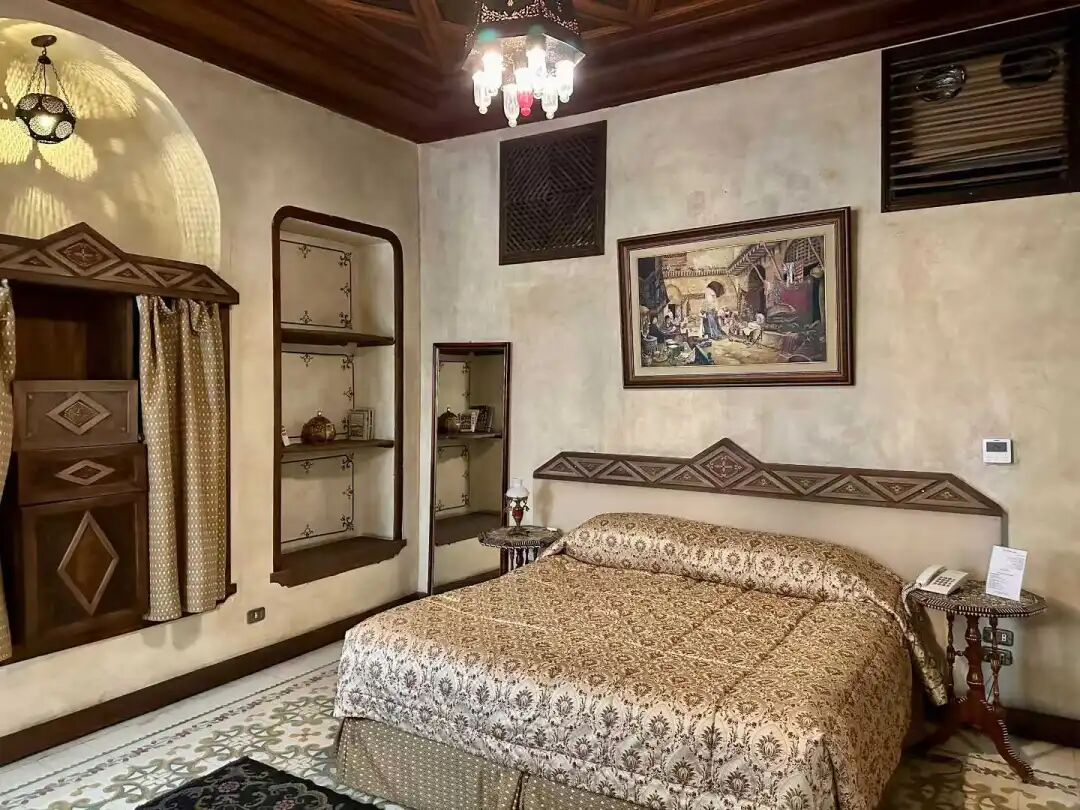
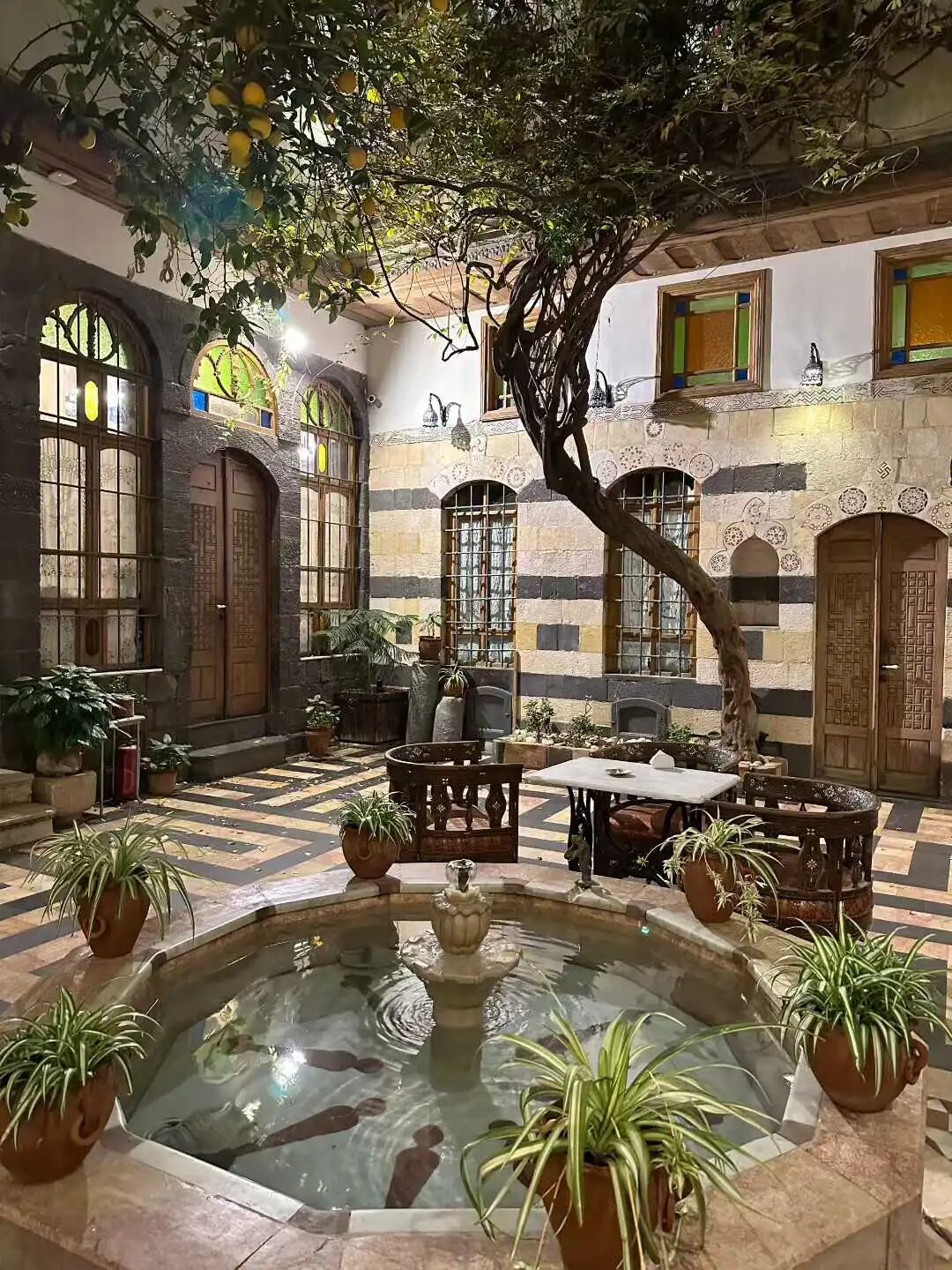
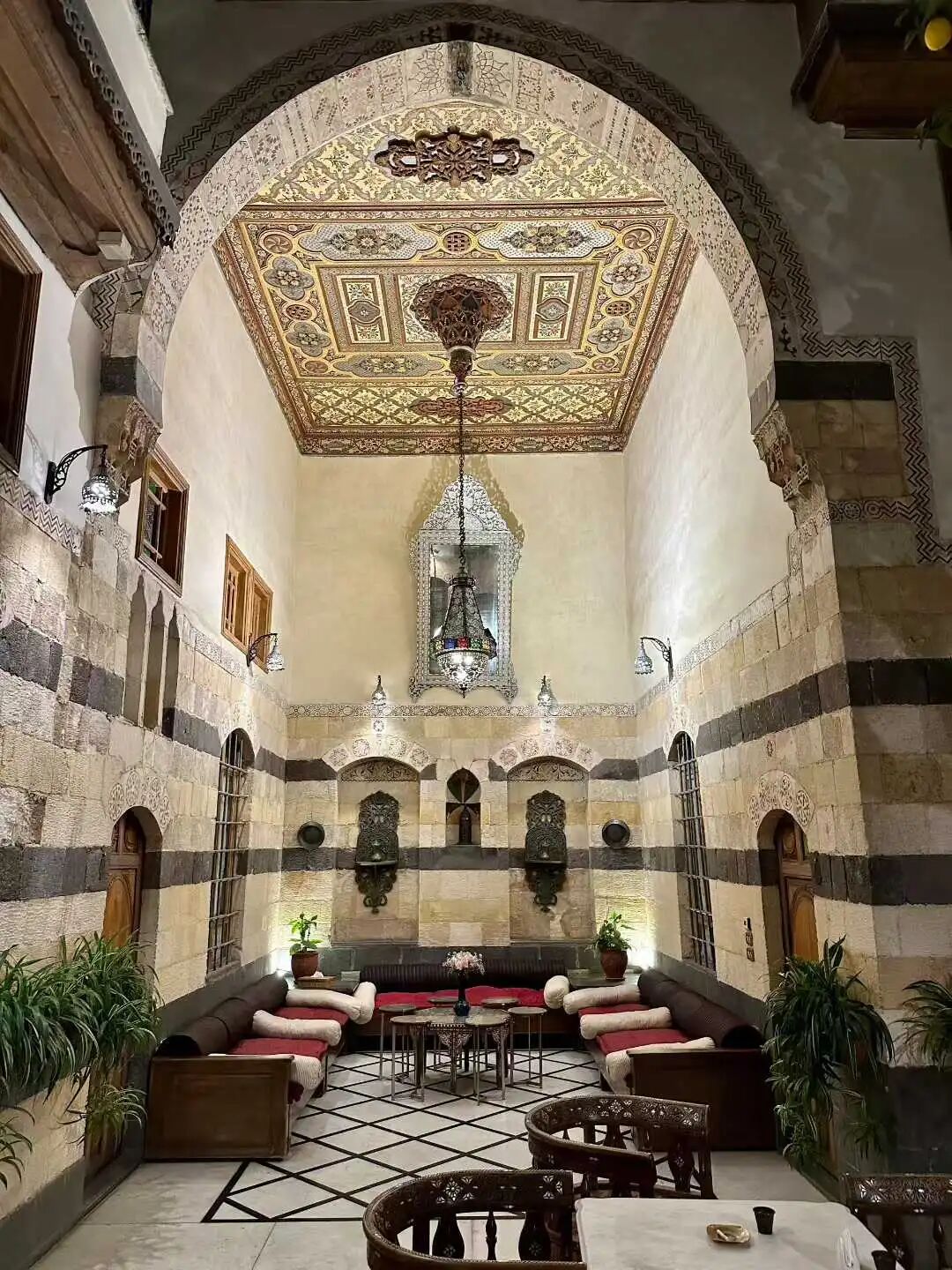
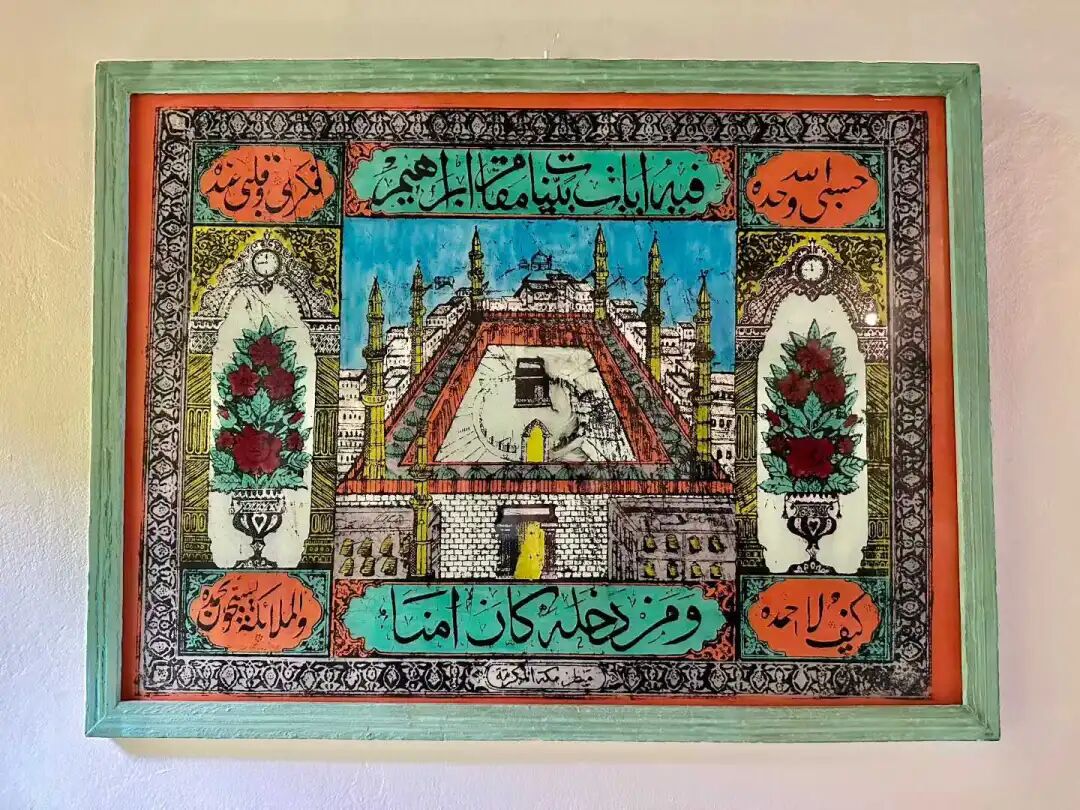
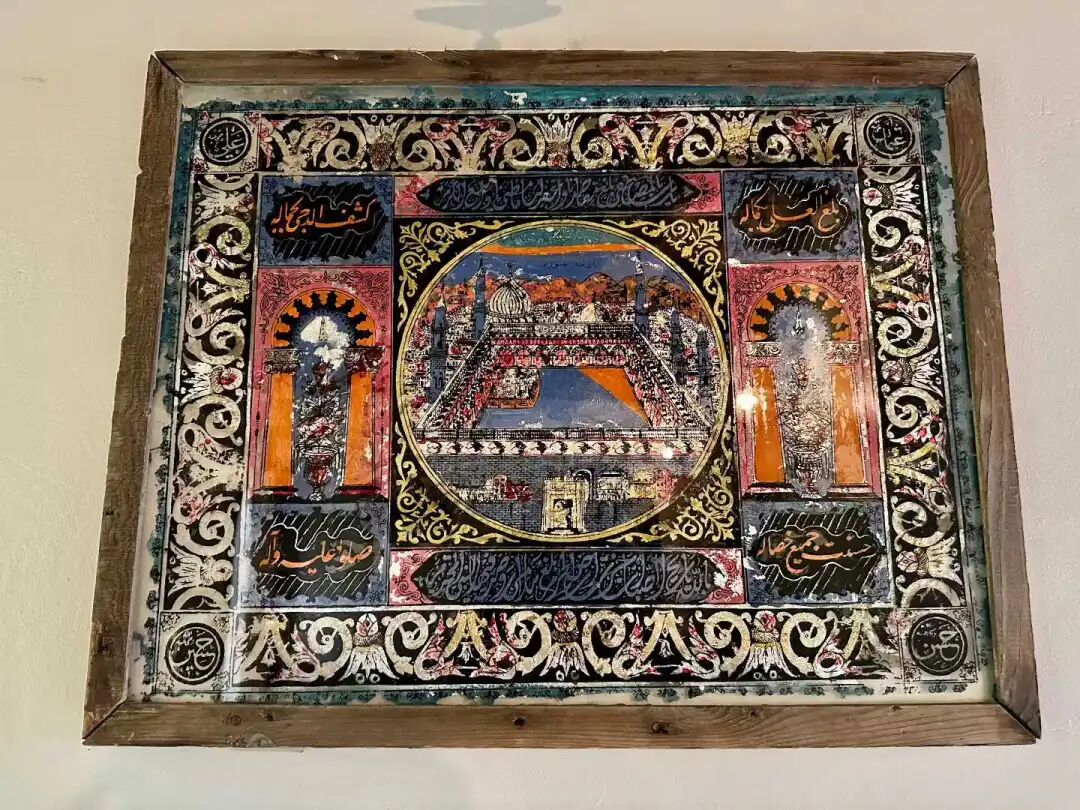
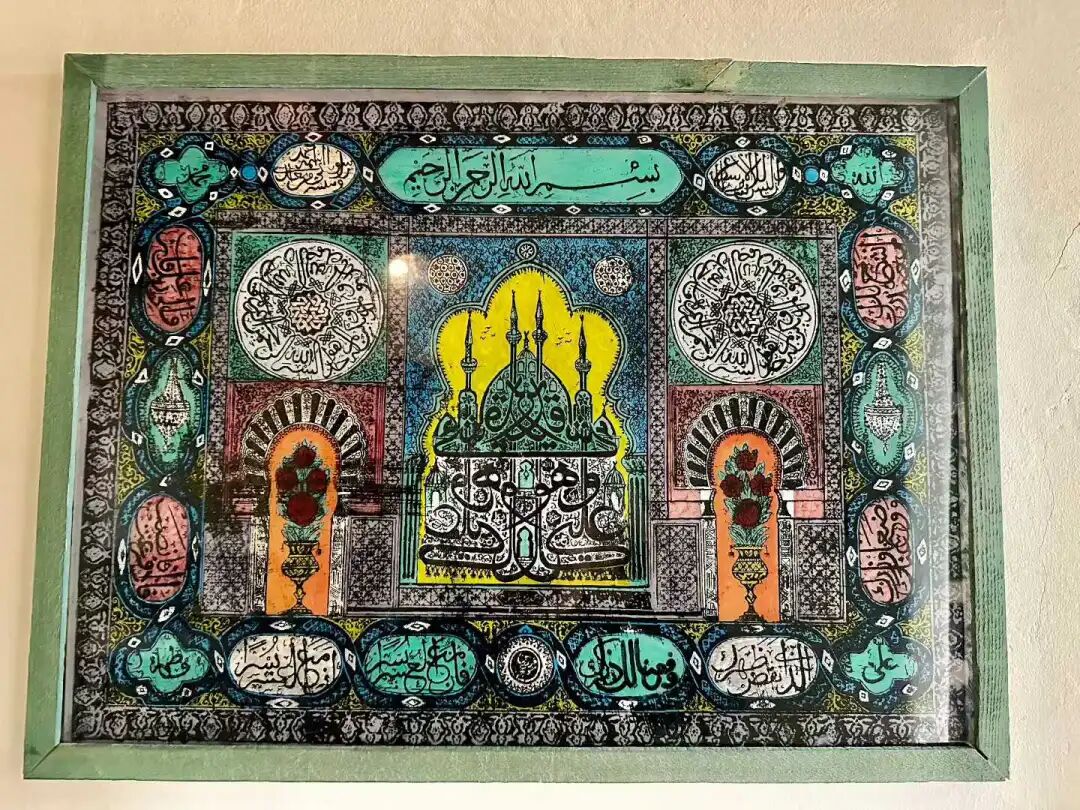
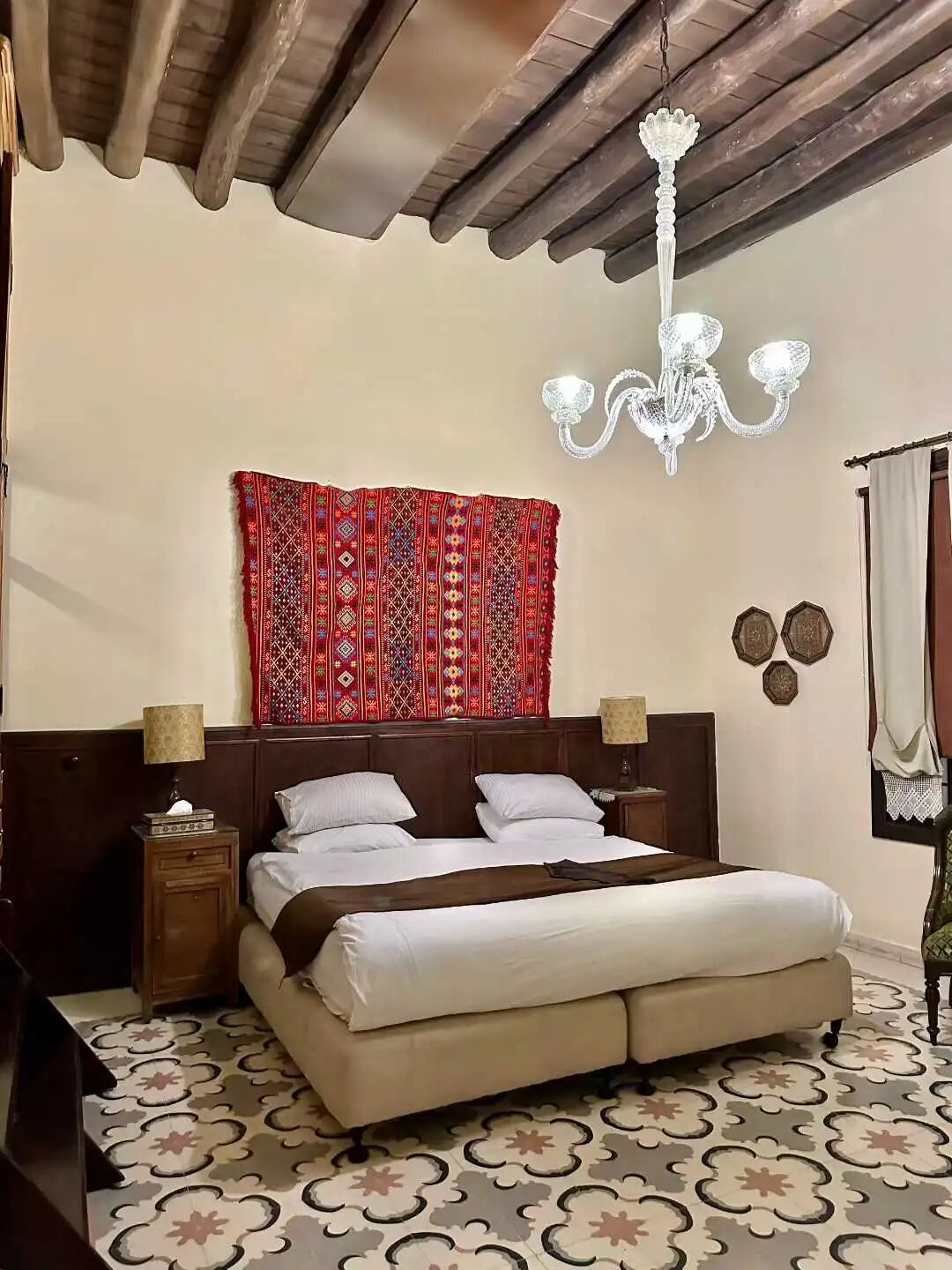
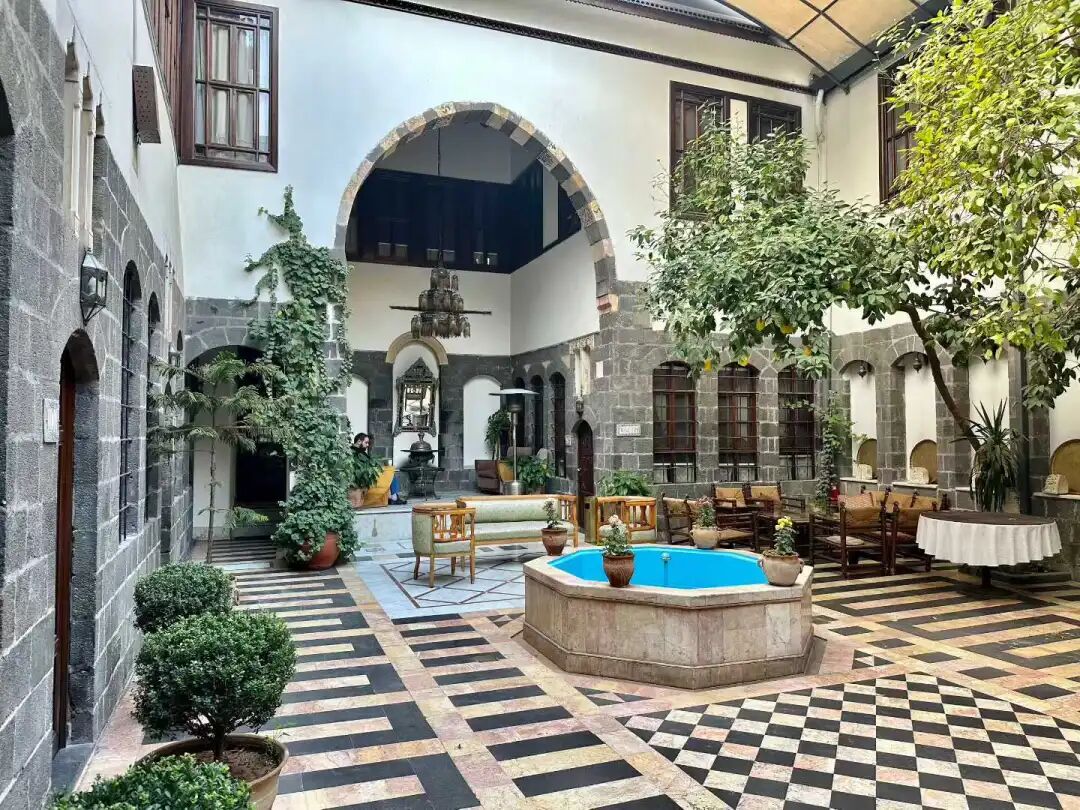
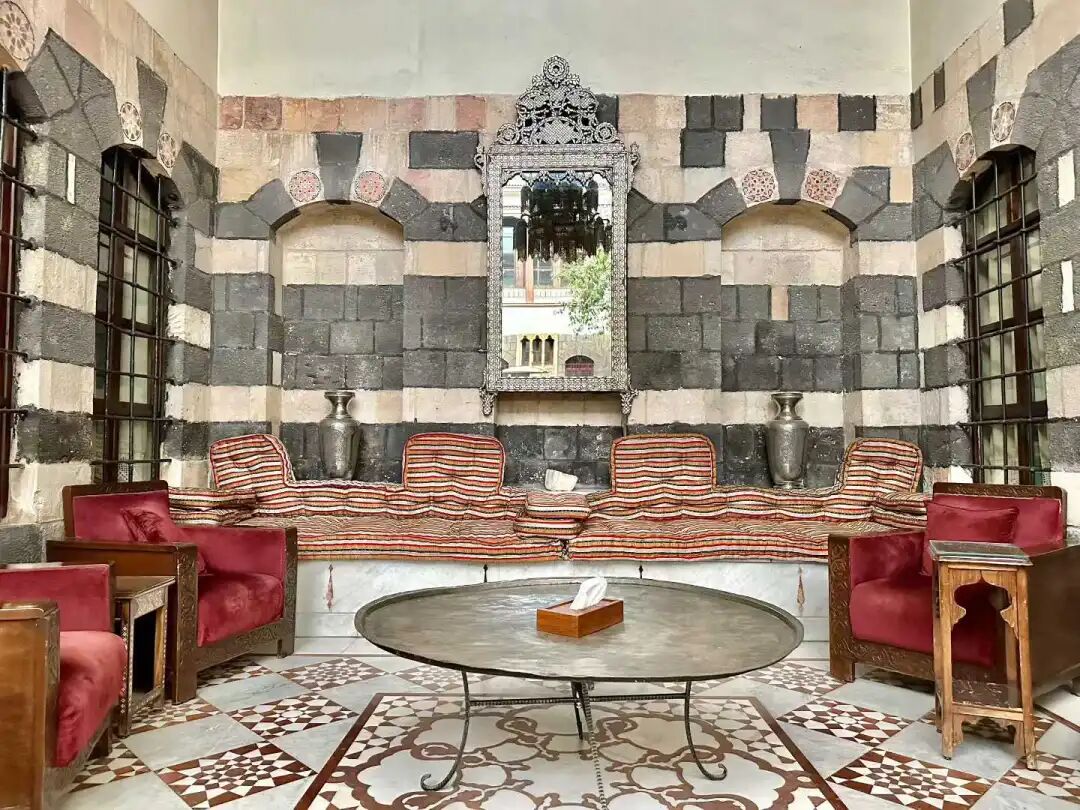
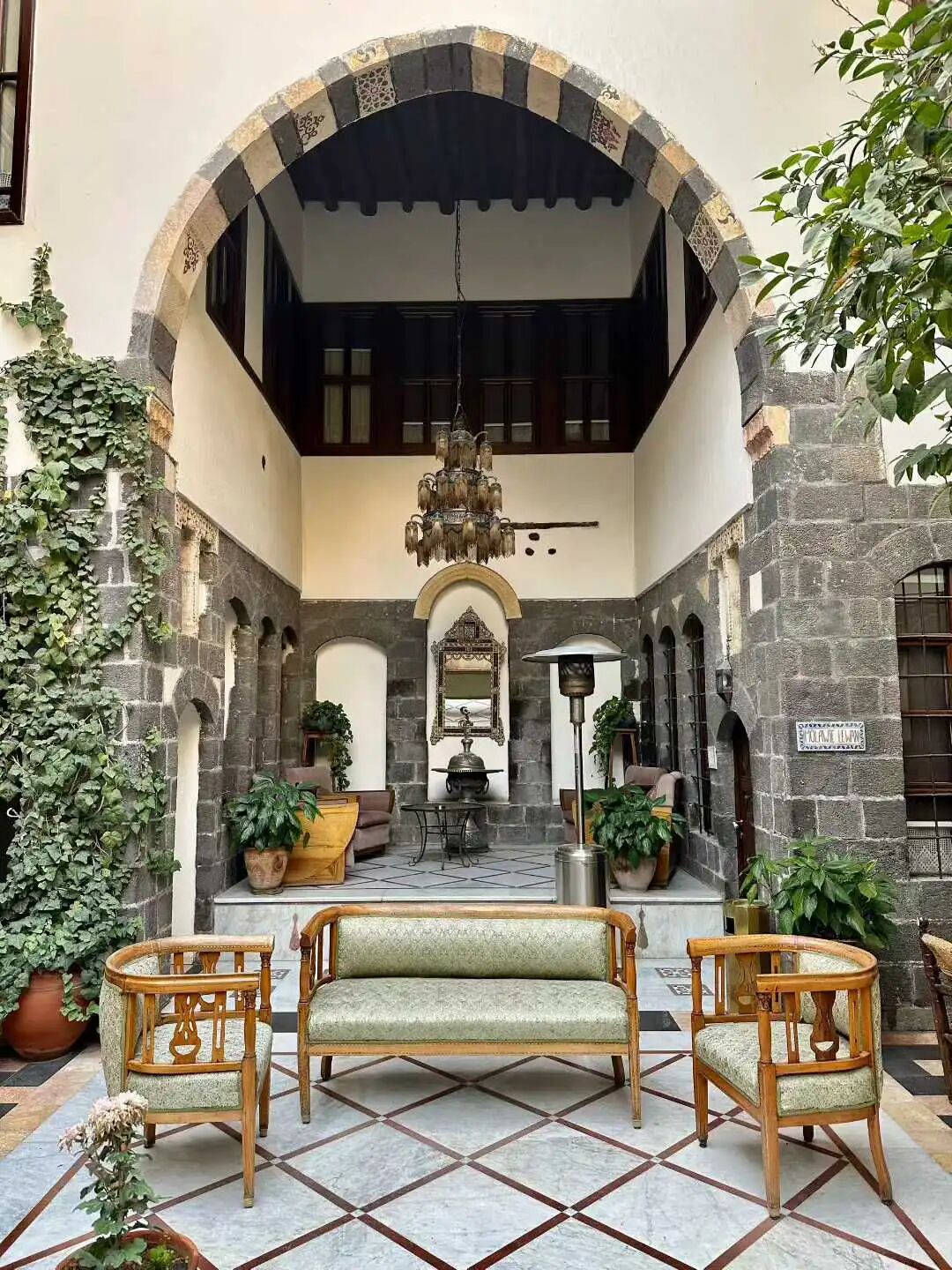
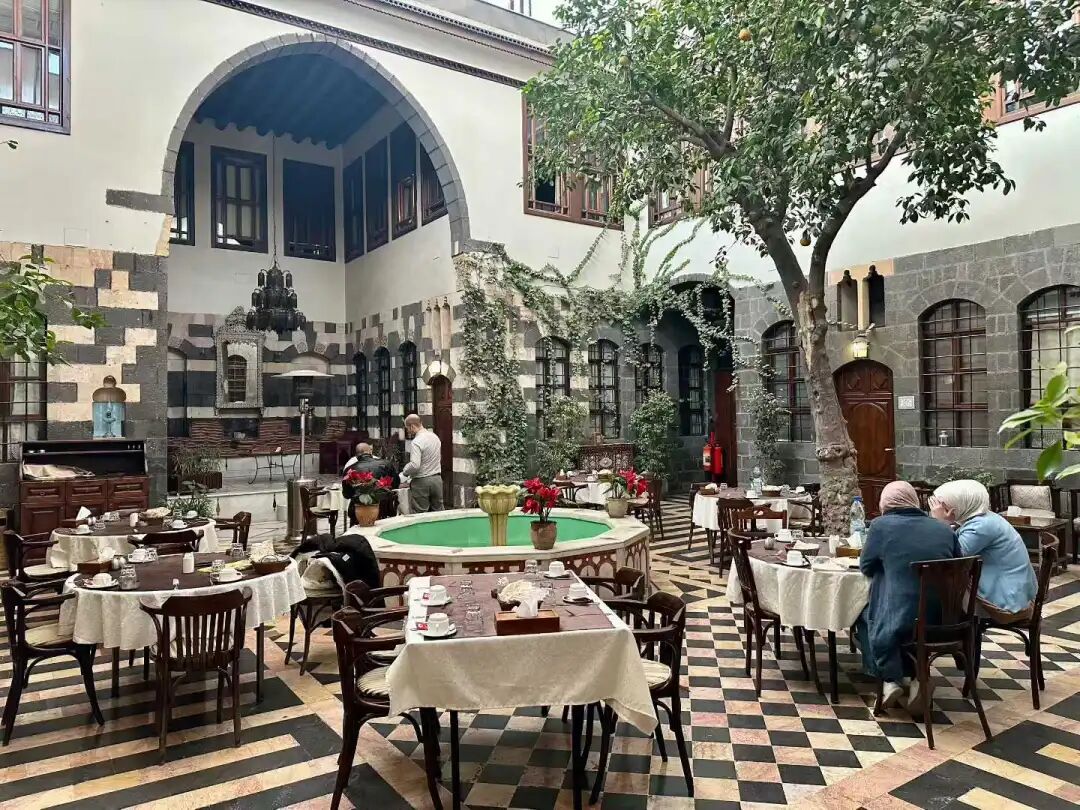
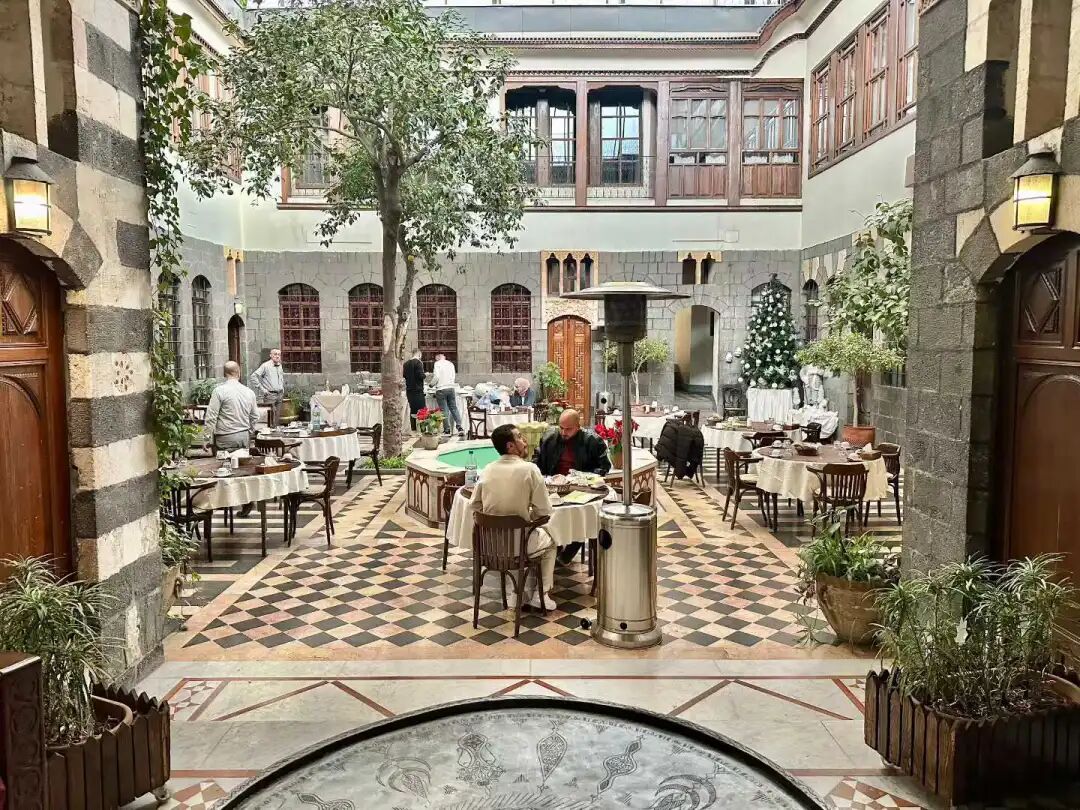
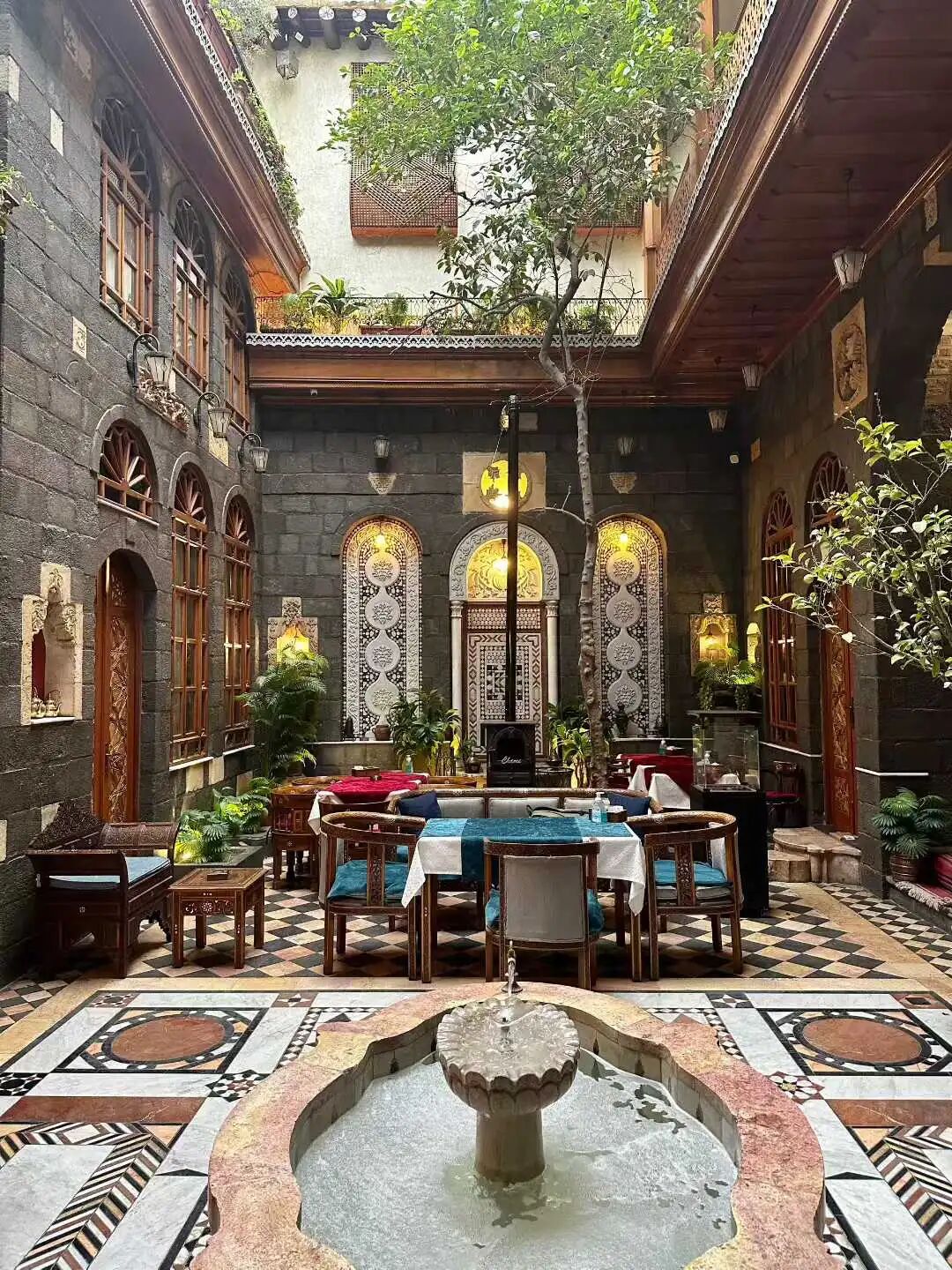
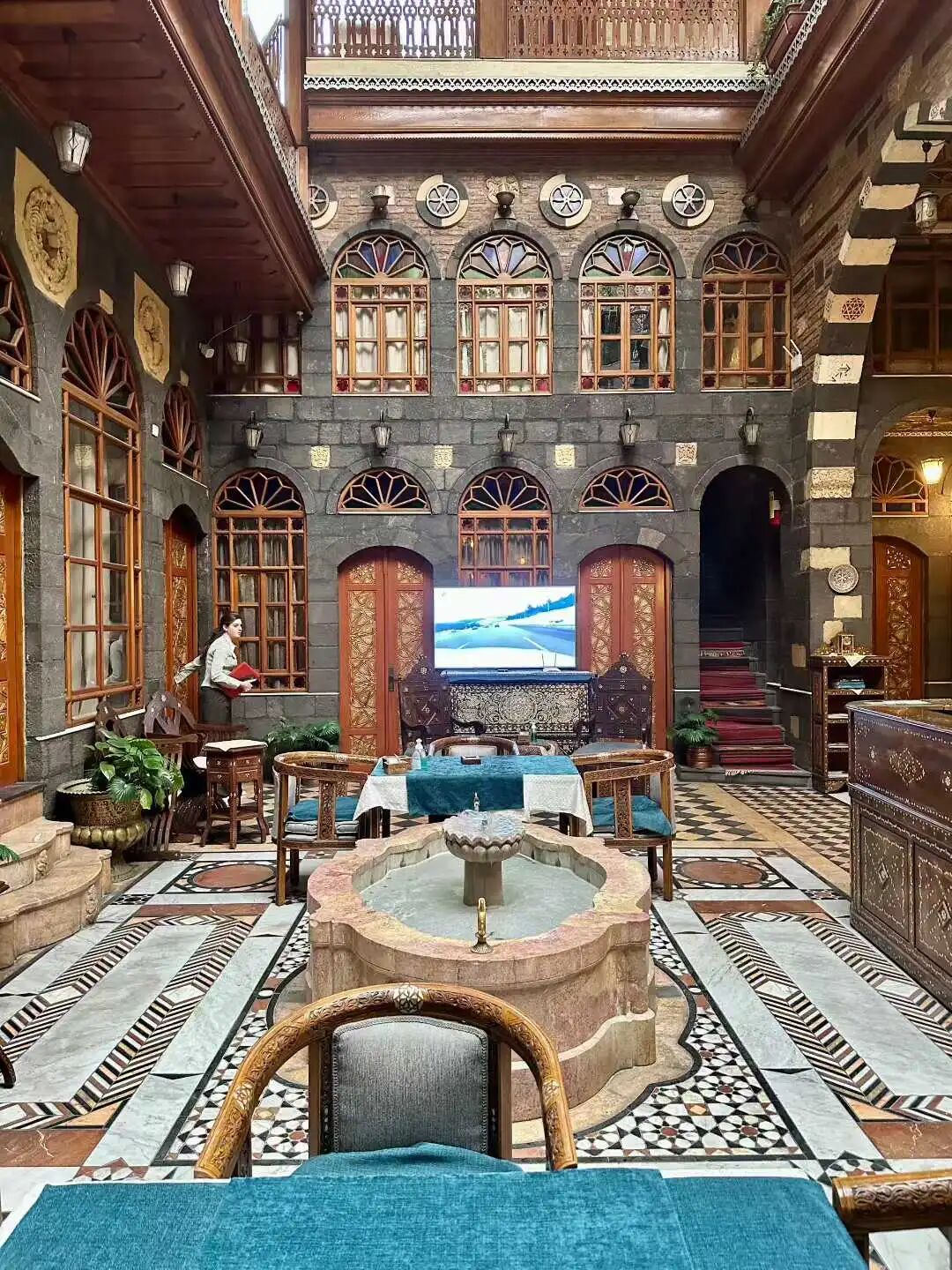
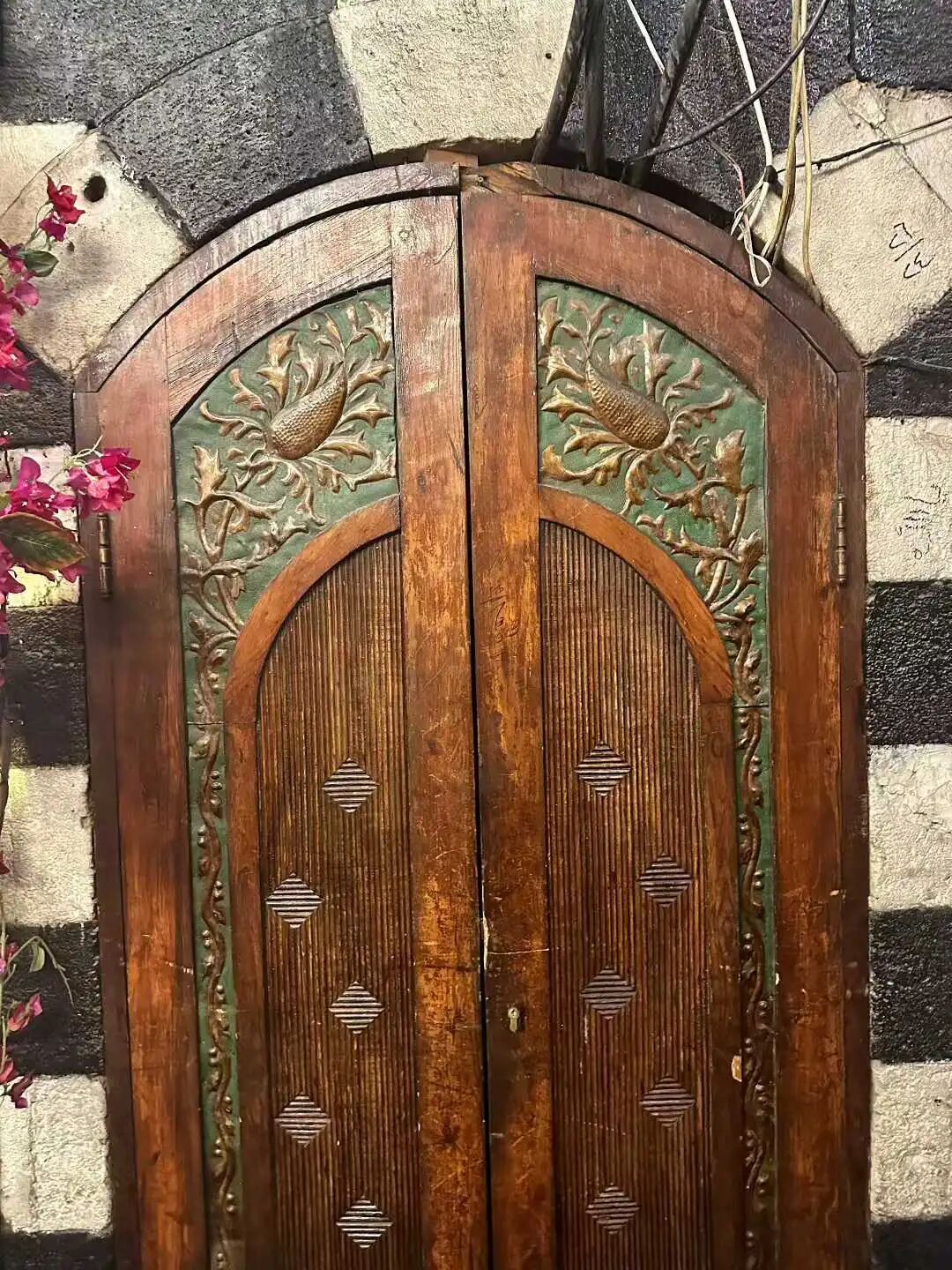
Dar Al Mamlouka is located on the far west side of the Bab Touma Christian Quarter in the old city of Damascus. The main building is a merchant mansion from the 17th-century Ottoman period, but it still has a strong 16th-century Mamluk style. The mansion has an inward-facing layout centered around a courtyard, with high ceilings on one side. The walls are built with alternating black basalt and white limestone bricks in the Mamluk style, and there is a marble fountain in the center of the courtyard.
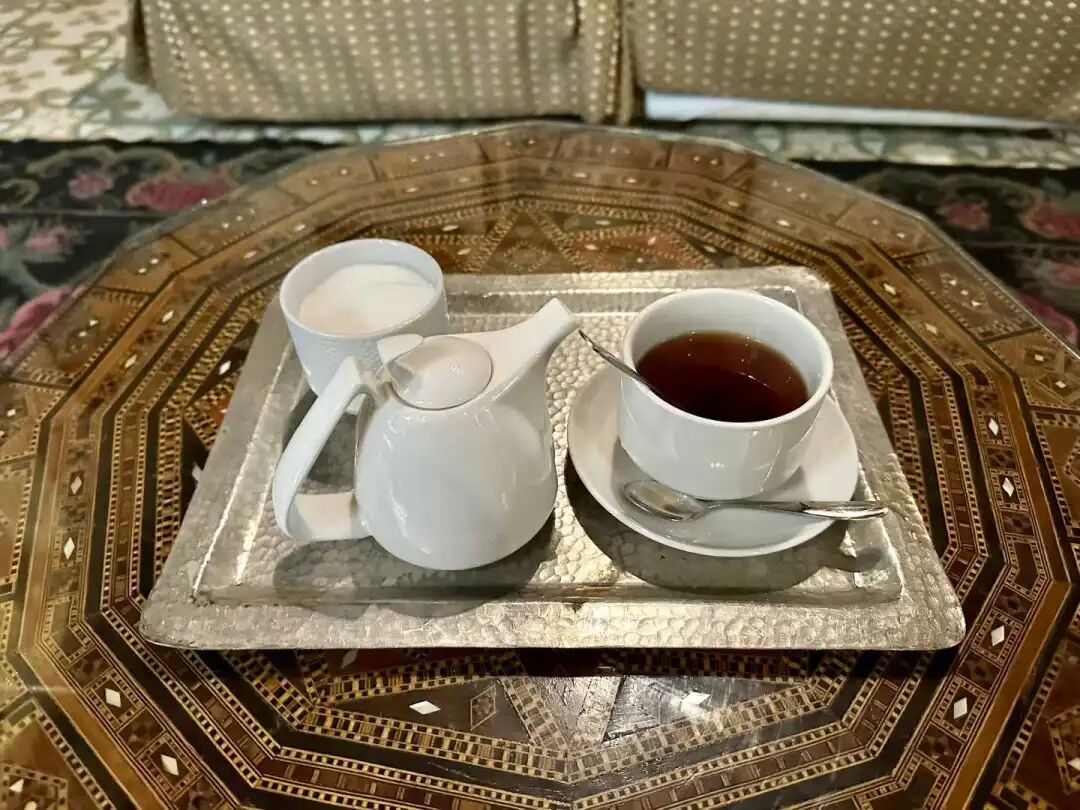
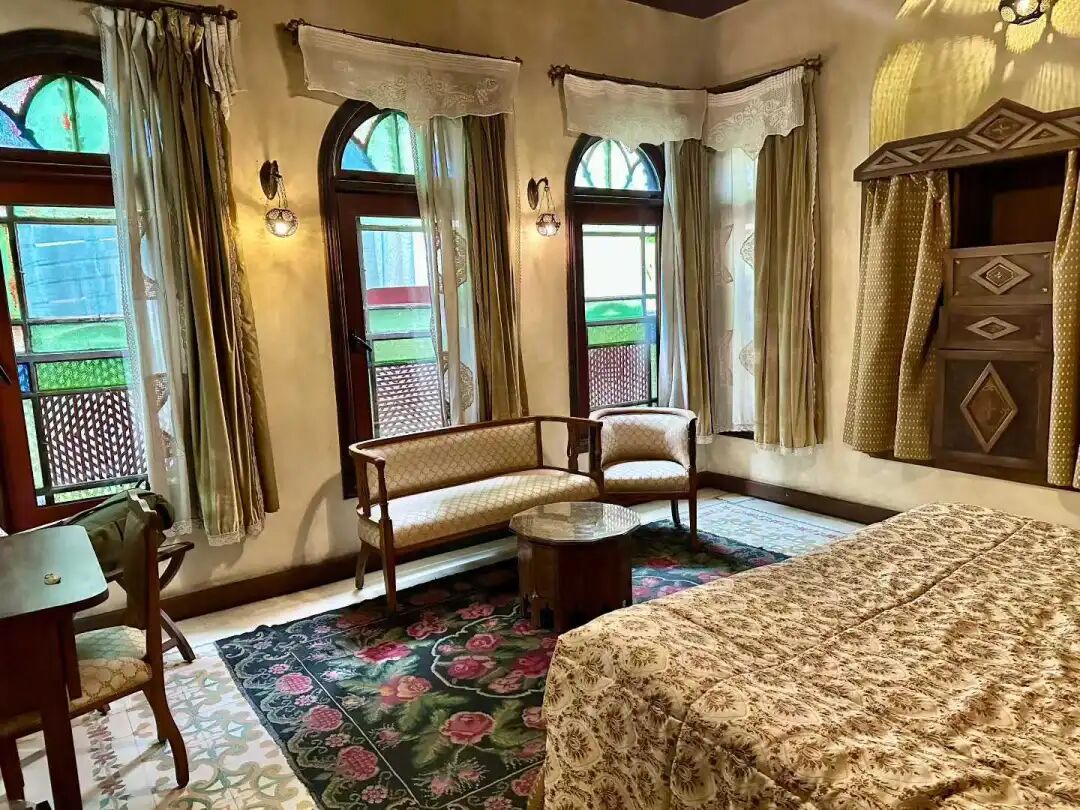
Dar Al Mamlouka was turned into a hotel in 2005. It is run by the same management as another nearby mansion, Beit al-Mamlouka, but that one is often fully booked. The single room was listed at 122 dollars, but I bargained it down to 110 dollars. The hotel has electricity and Wi-Fi all night. The single room is nice, and a staff member brought me tea right after I checked in. There are orange and lemon trees in the courtyard, which makes it very relaxing.
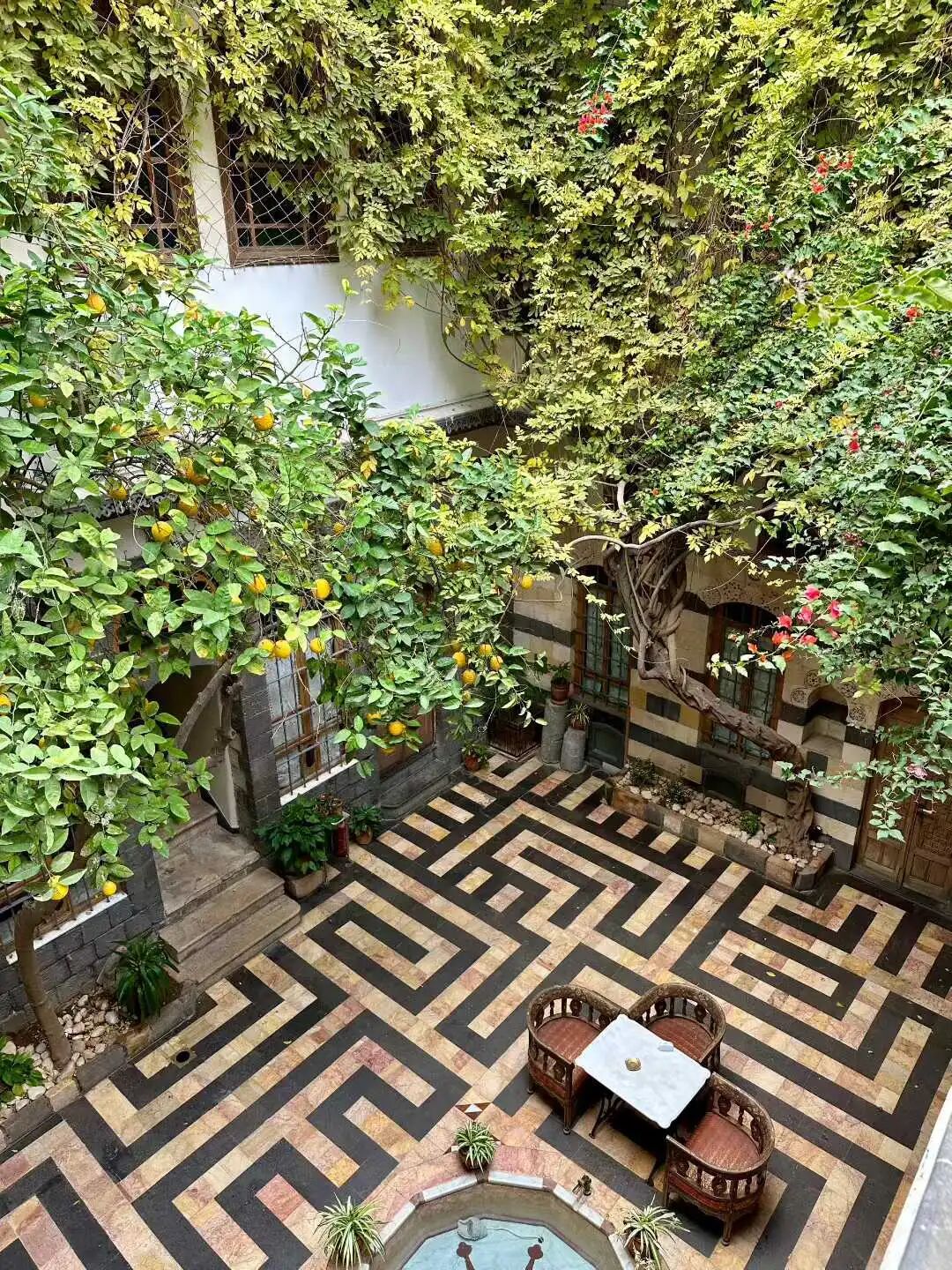
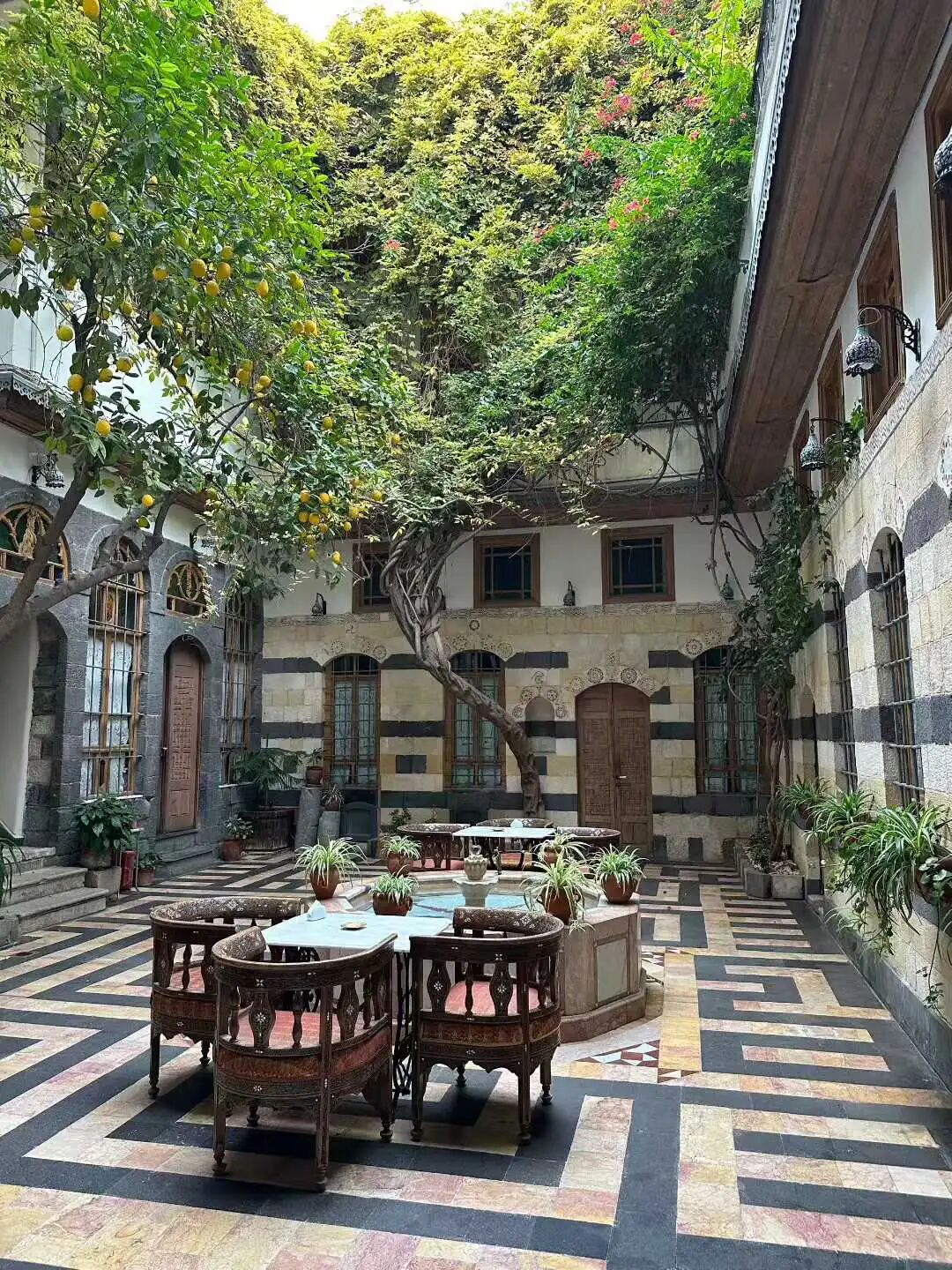
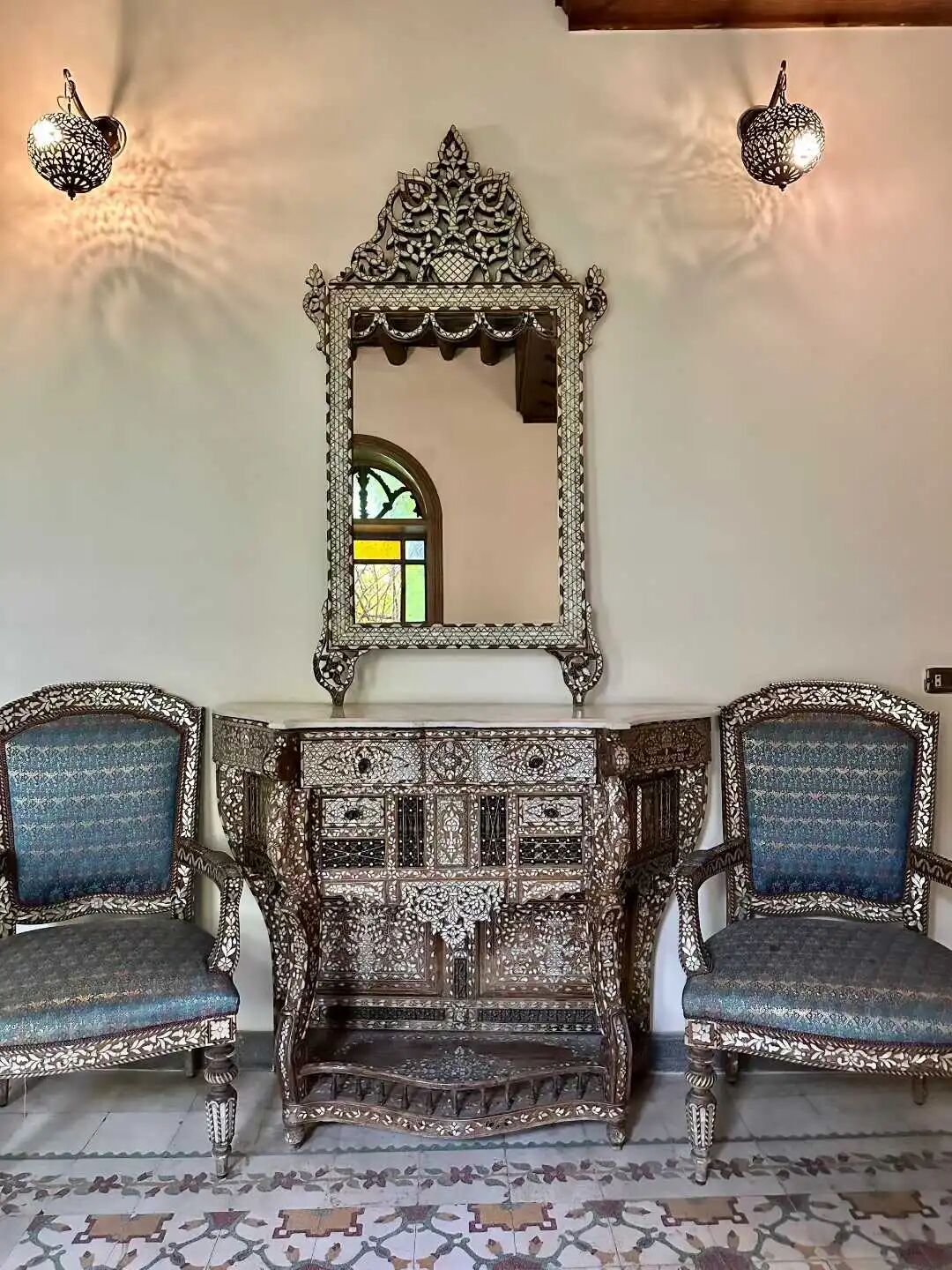
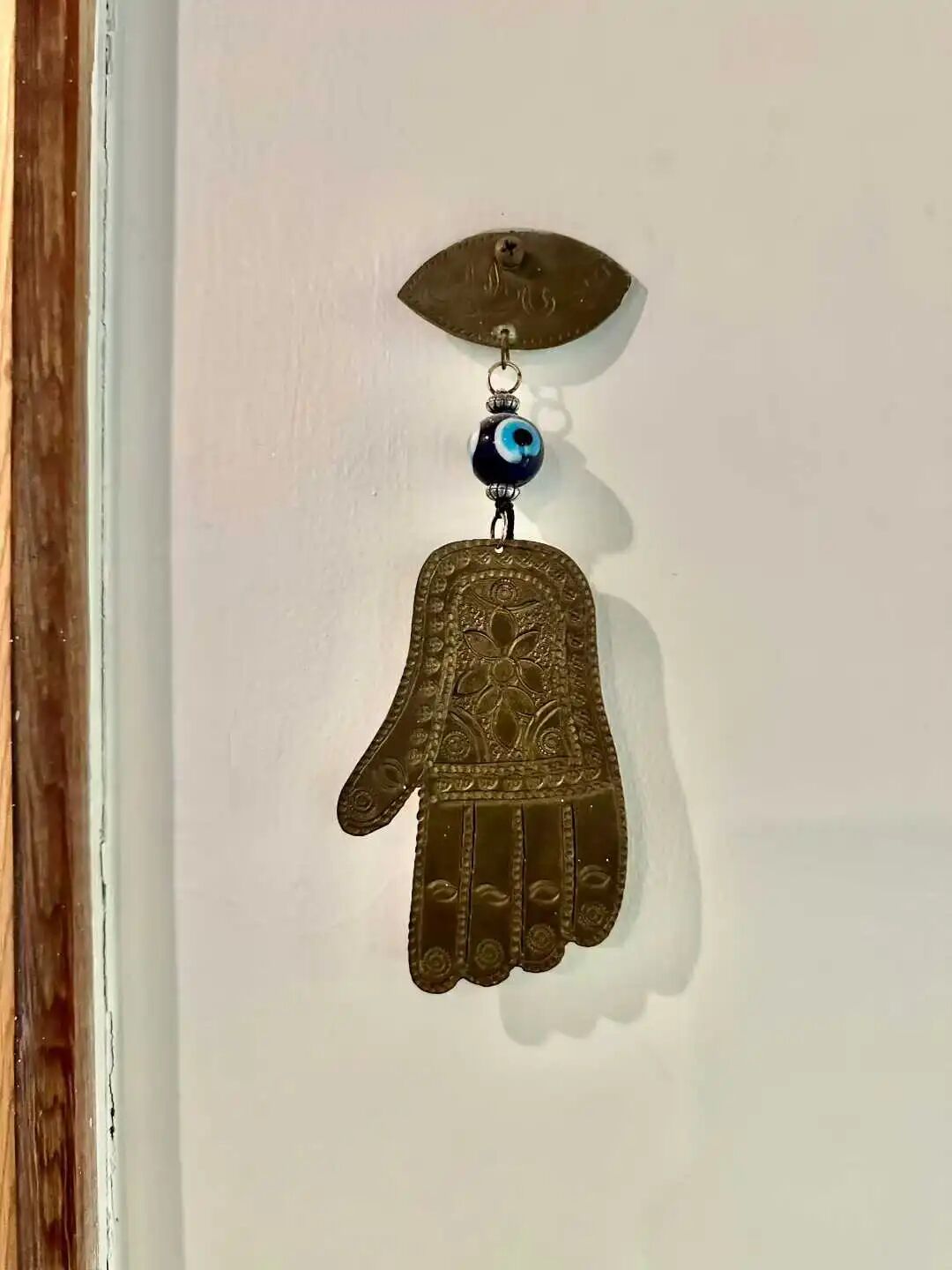
The Islamic decor at Dar Al Mamlouka includes the Hand of Fatima (Hamsa). Its five fingers represent the five pillars of the faith, and it is named after the Prophet's daughter, Fatima. During the Austro-Turkish War in 1788, the Ottoman Empire carried flags featuring the Hand of Fatima as the Grand Vizier led an army of 80,000 against Austria.
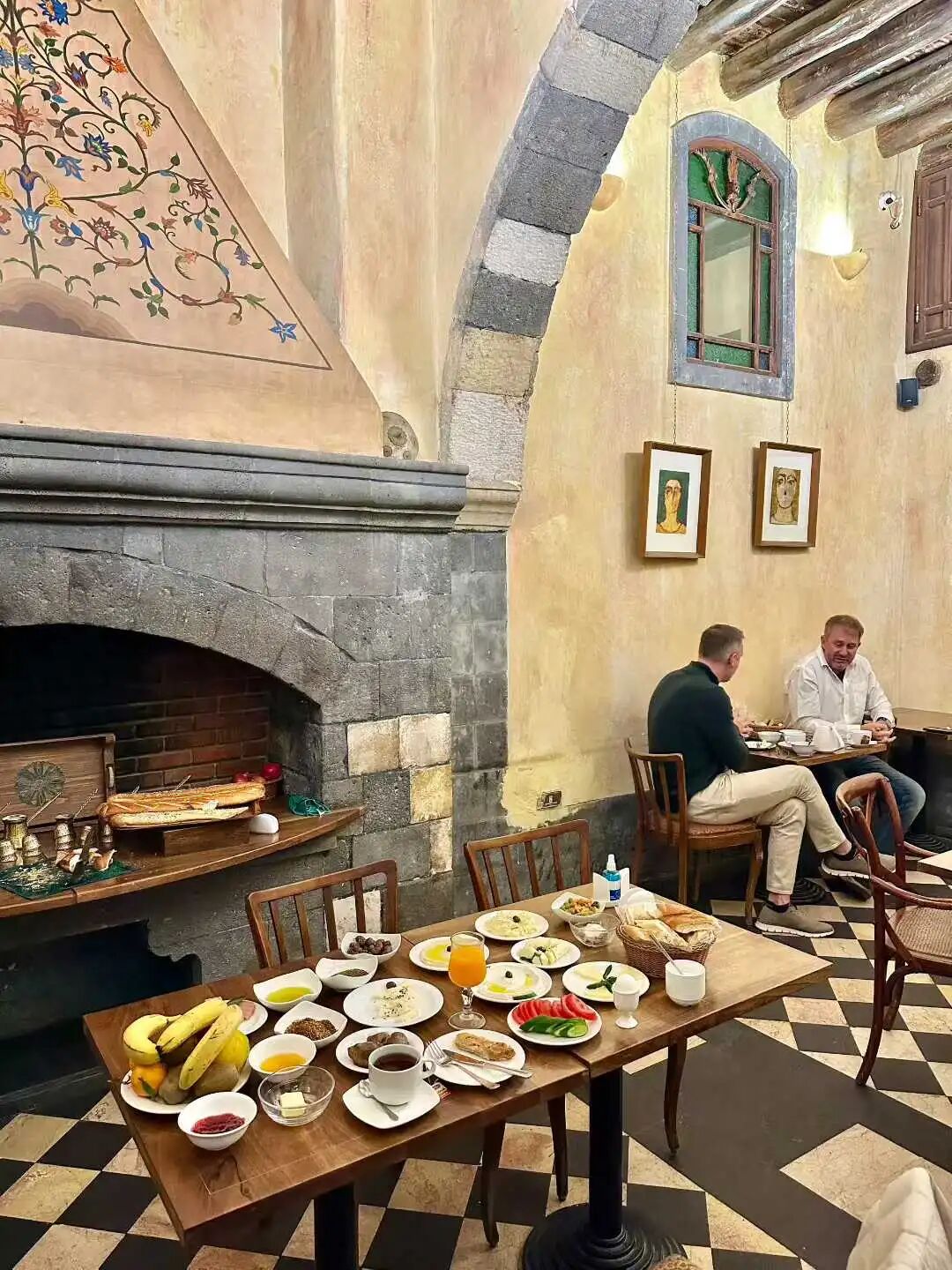
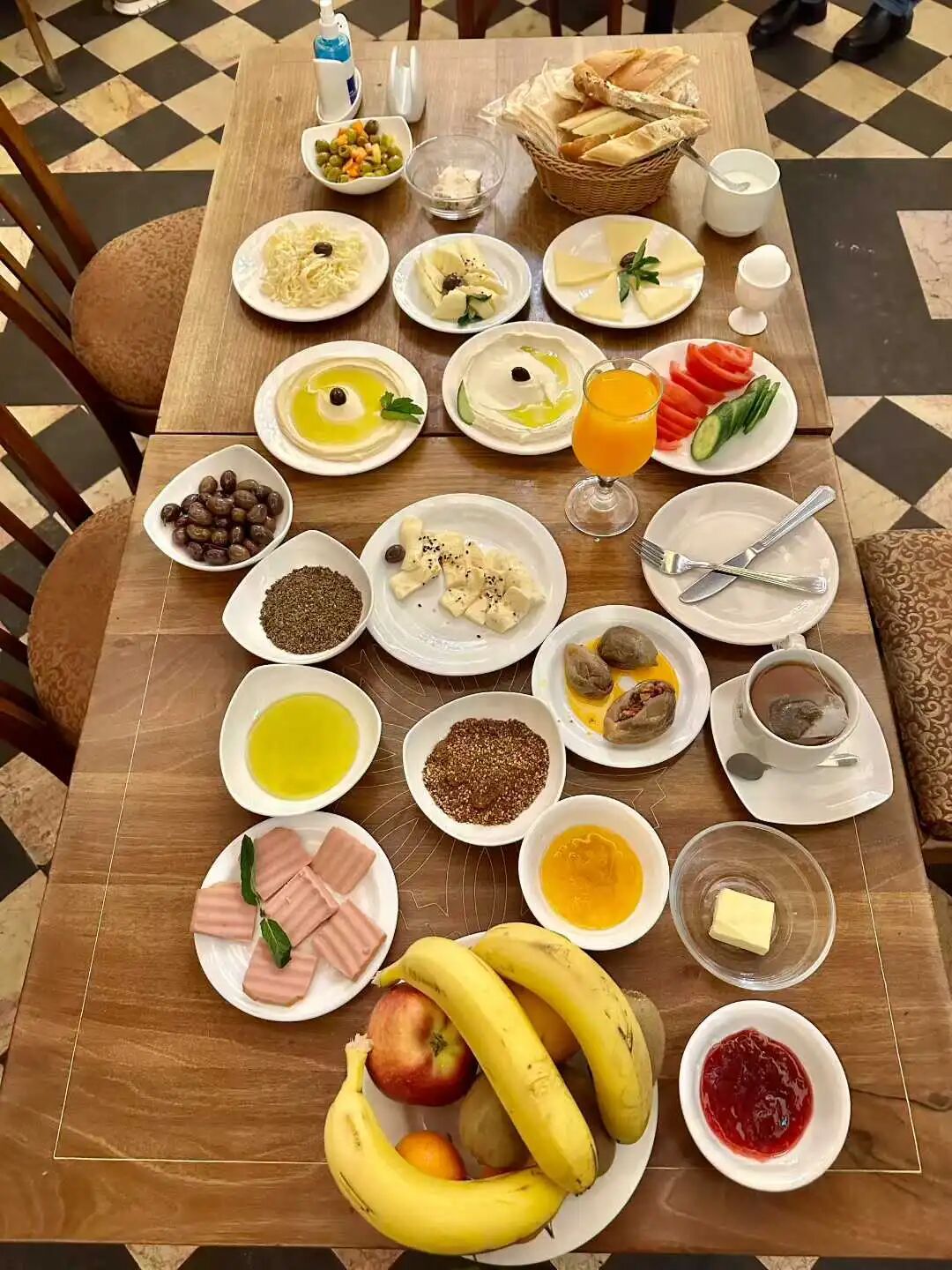
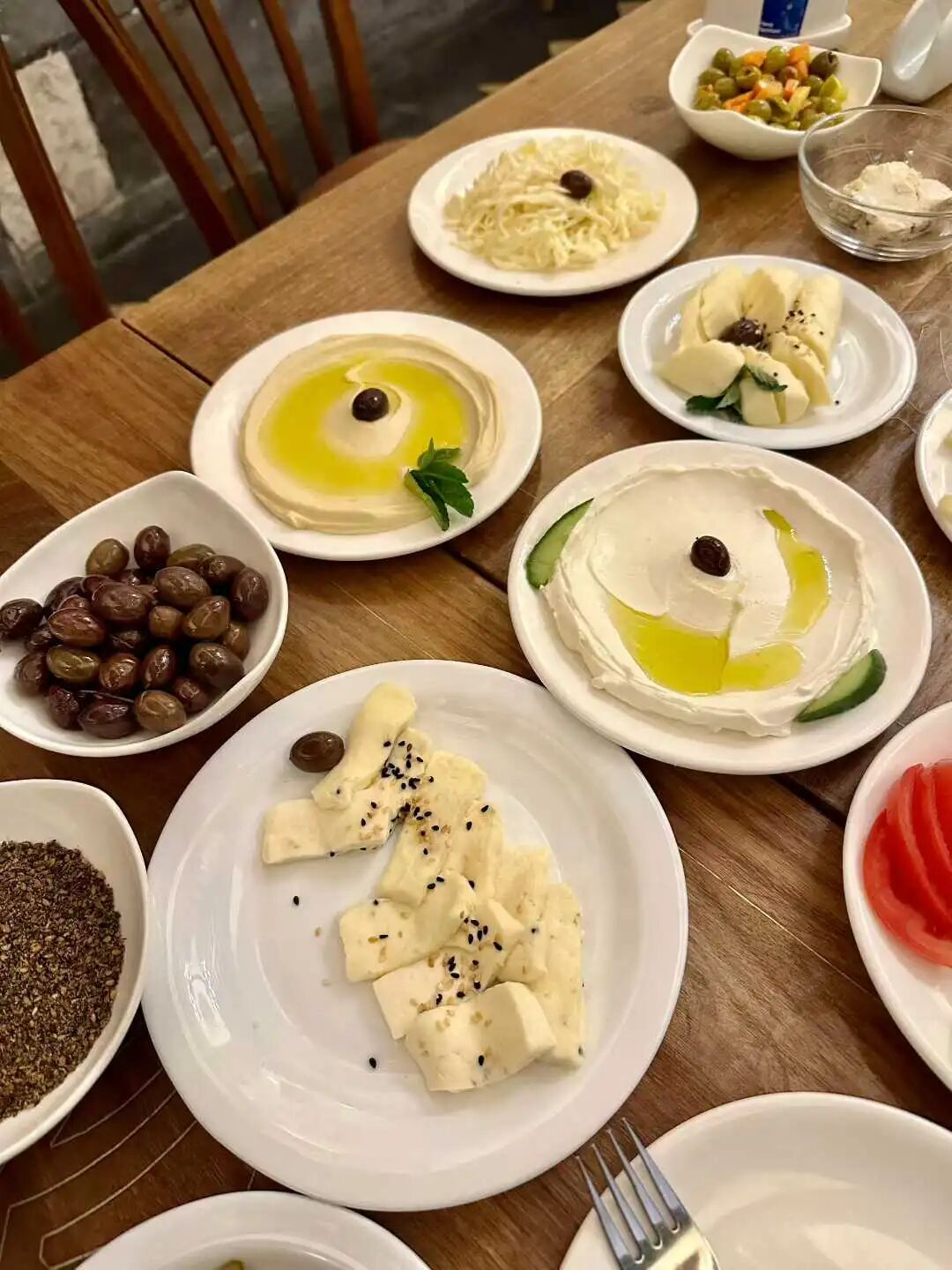
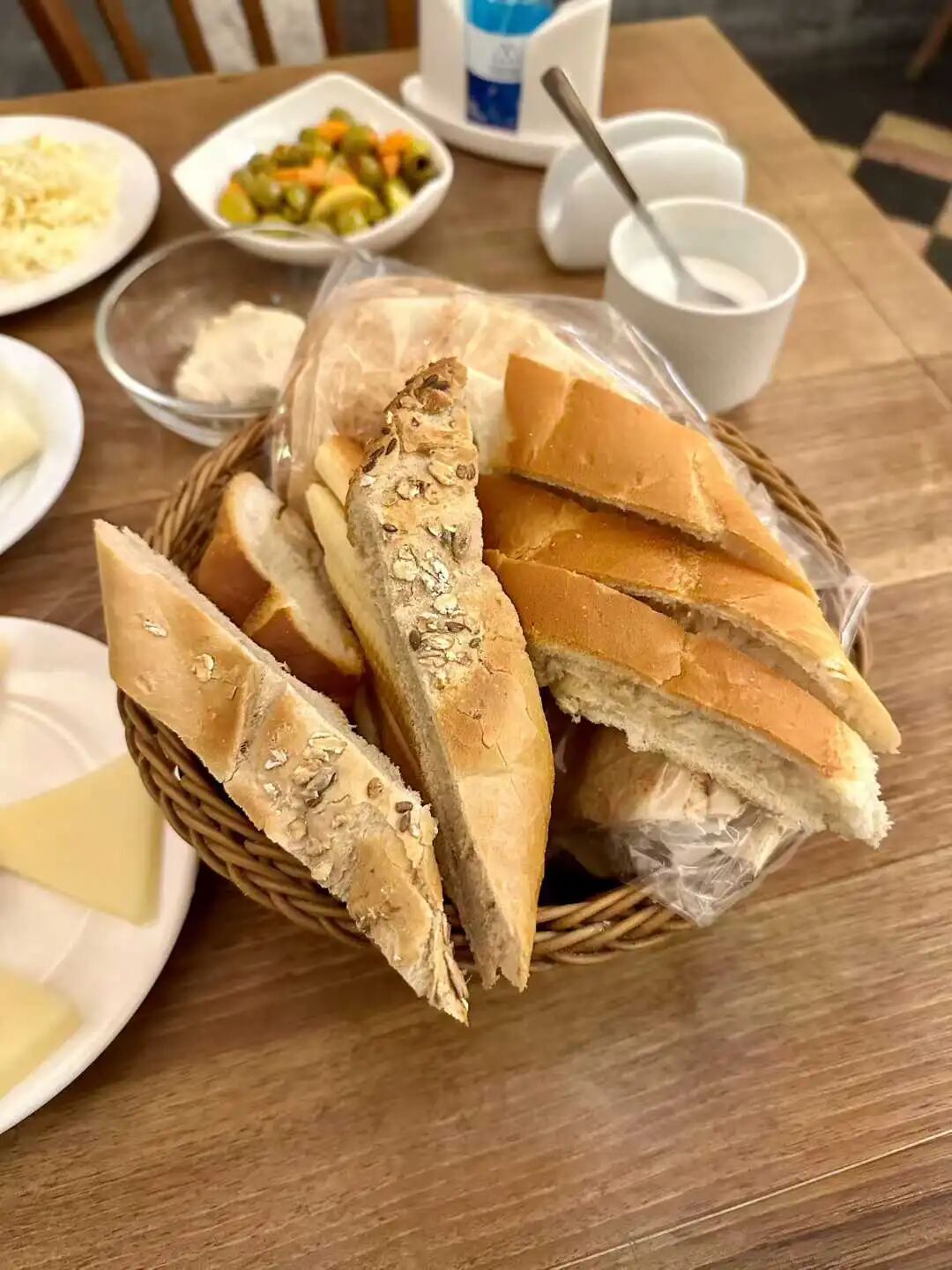
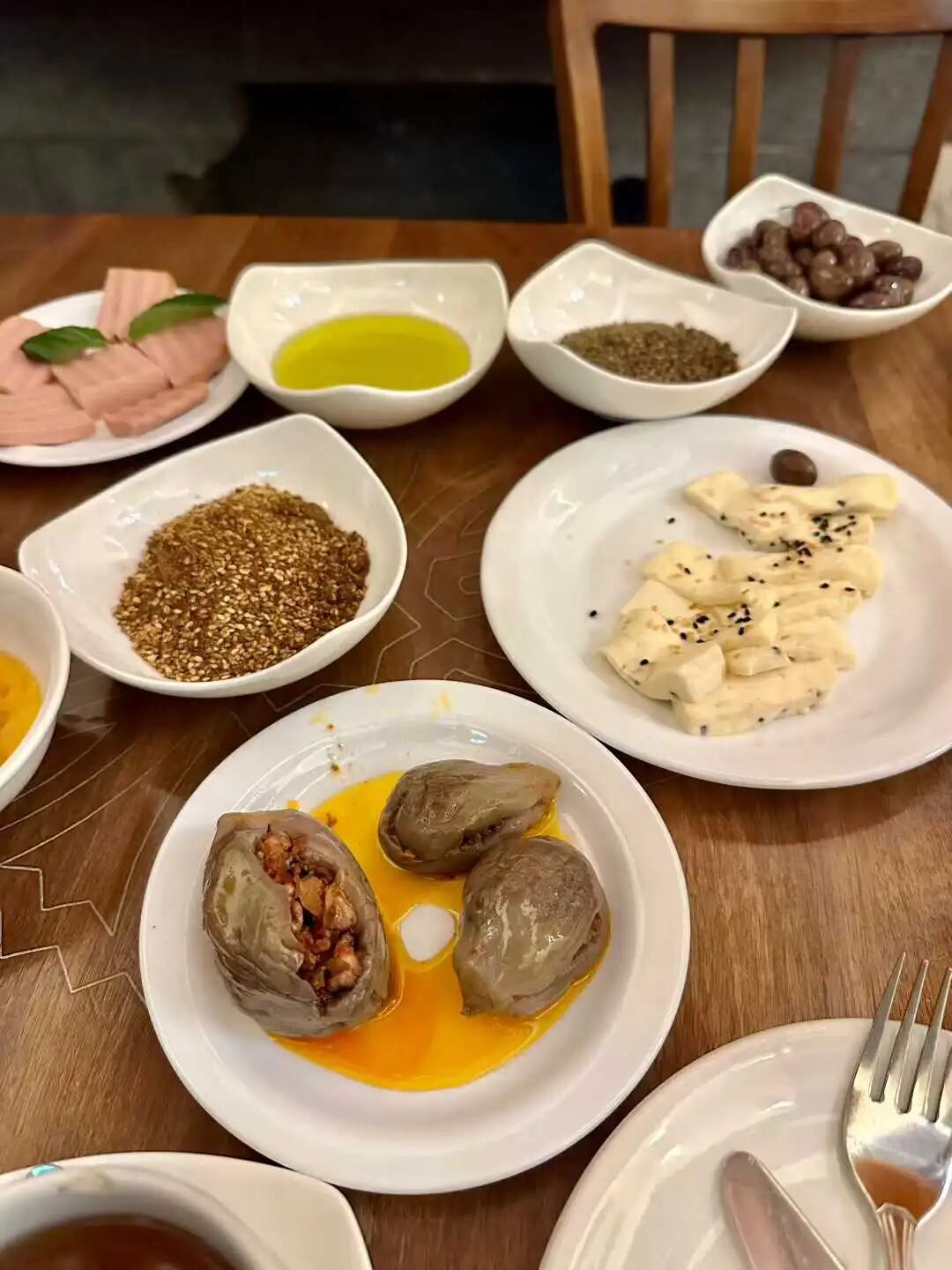
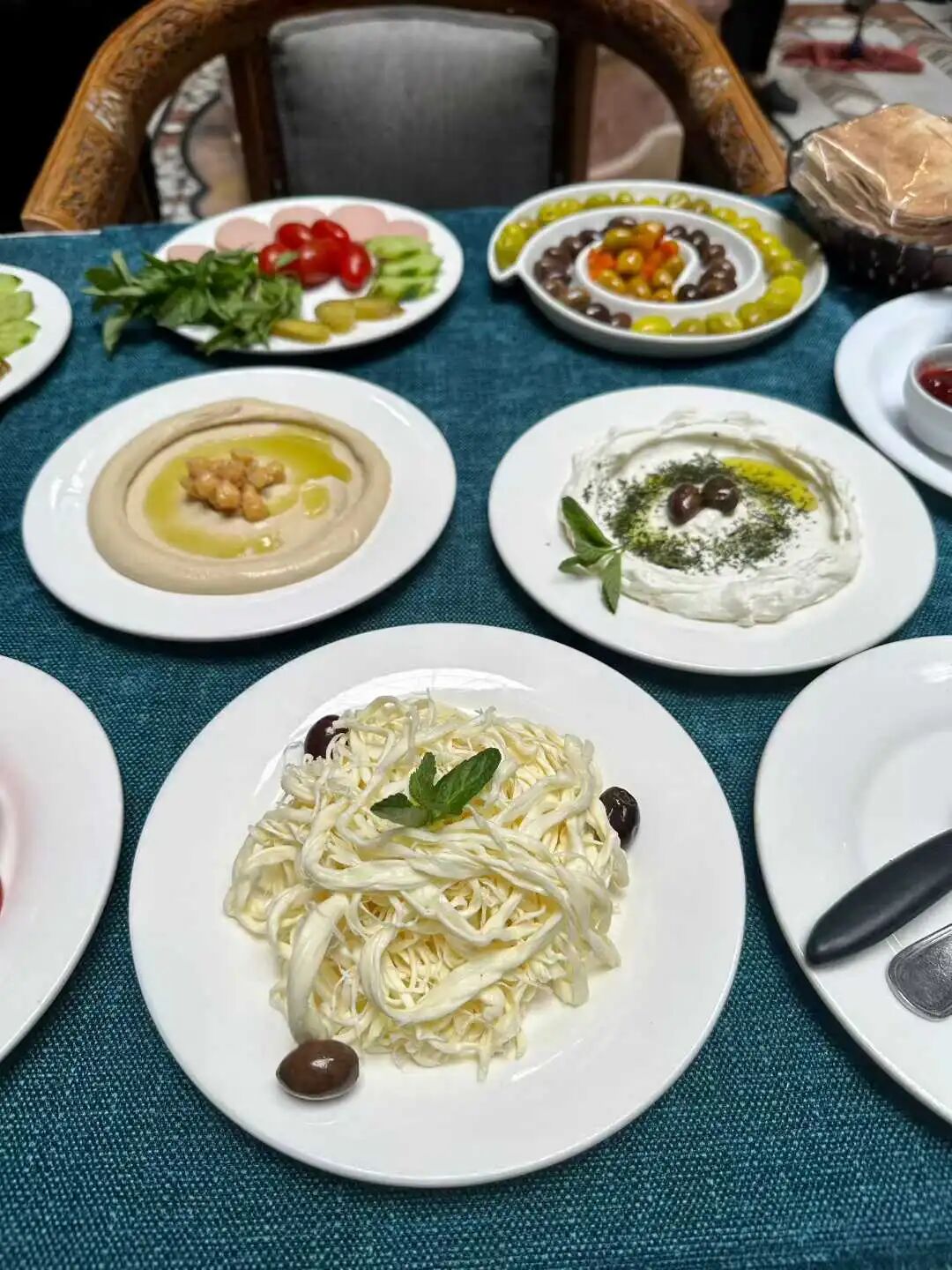
Breakfast at Dar Al Mamlouka is a typical Levantine cold platter served with bread and hot tea. They bring the full set even if you are eating alone. It mainly includes various cheeses, pickled olives, chickpea dip (hummus), jam, fresh cucumber and tomato, fruit juice, olive oil, and sausages. A special item is the pickled eggplant (makdous). These are miniature eggplants stuffed with walnuts, chili, garlic, olive oil, and salt. Syrians usually start pickling them in autumn to eat as an appetizer during winter. The powder on the table is the classic Levantine spice blend (za'atar). It is a mix of Syrian oregano, toasted sesame seeds, dried sumac, and thyme. It has an earthy taste with a hint of citrus and nuttiness, which is very unique.
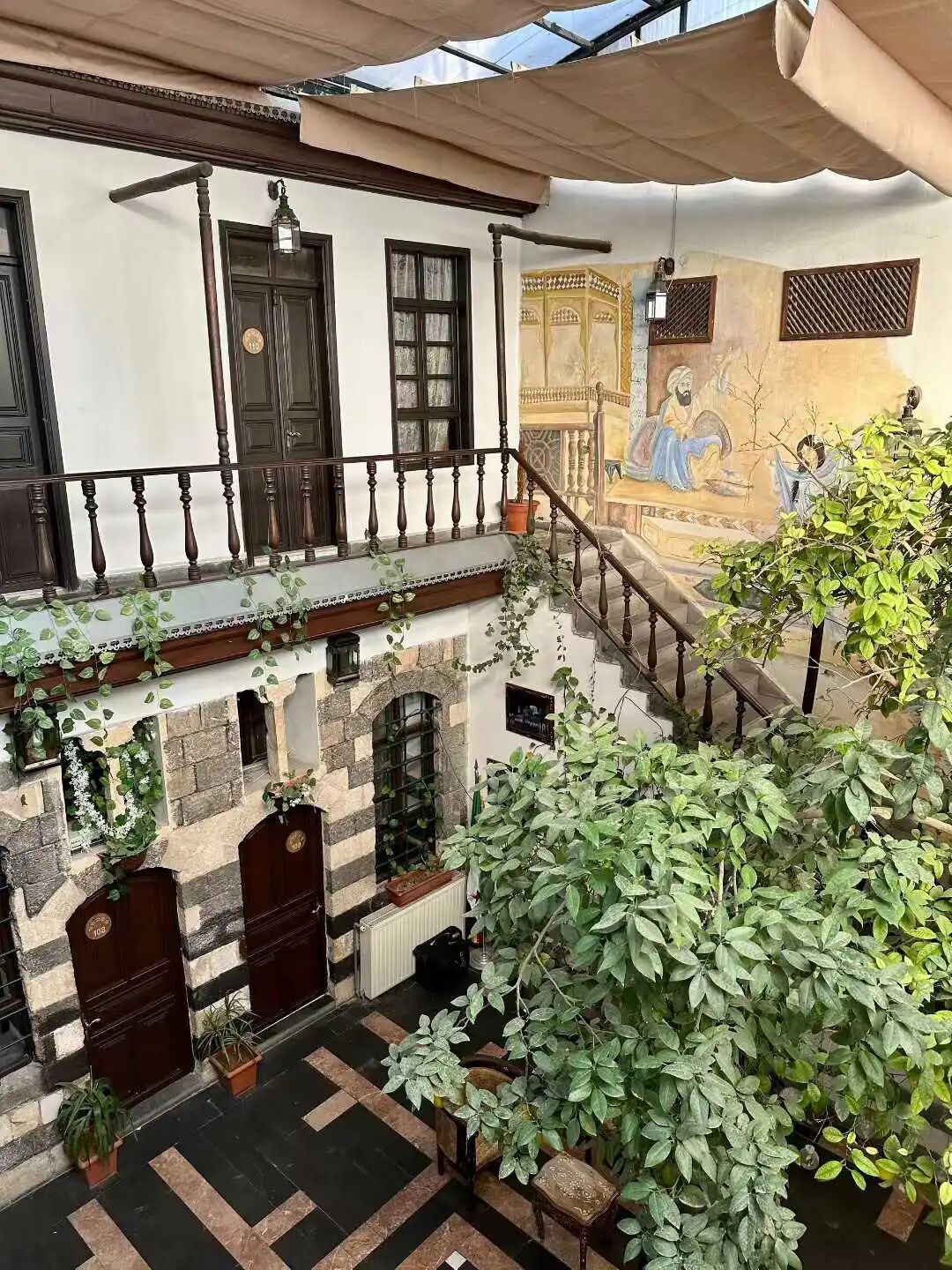
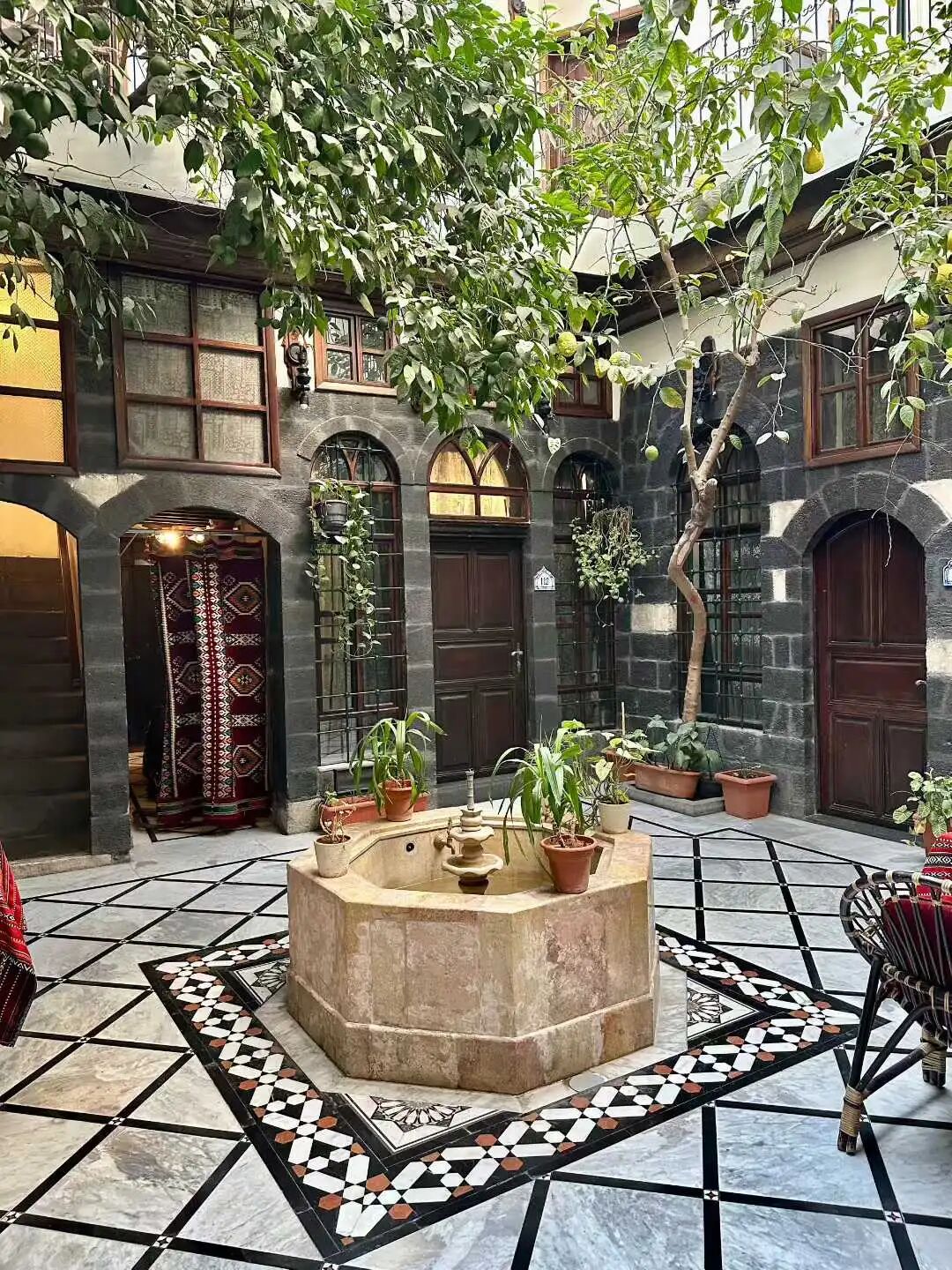
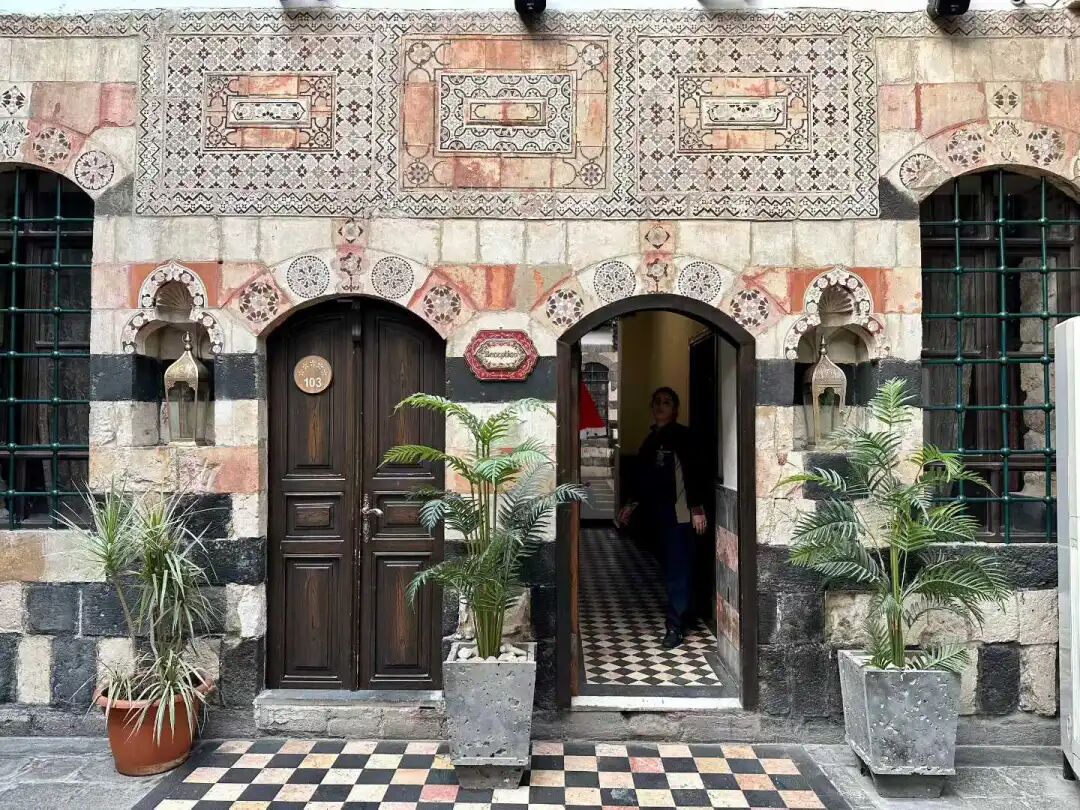
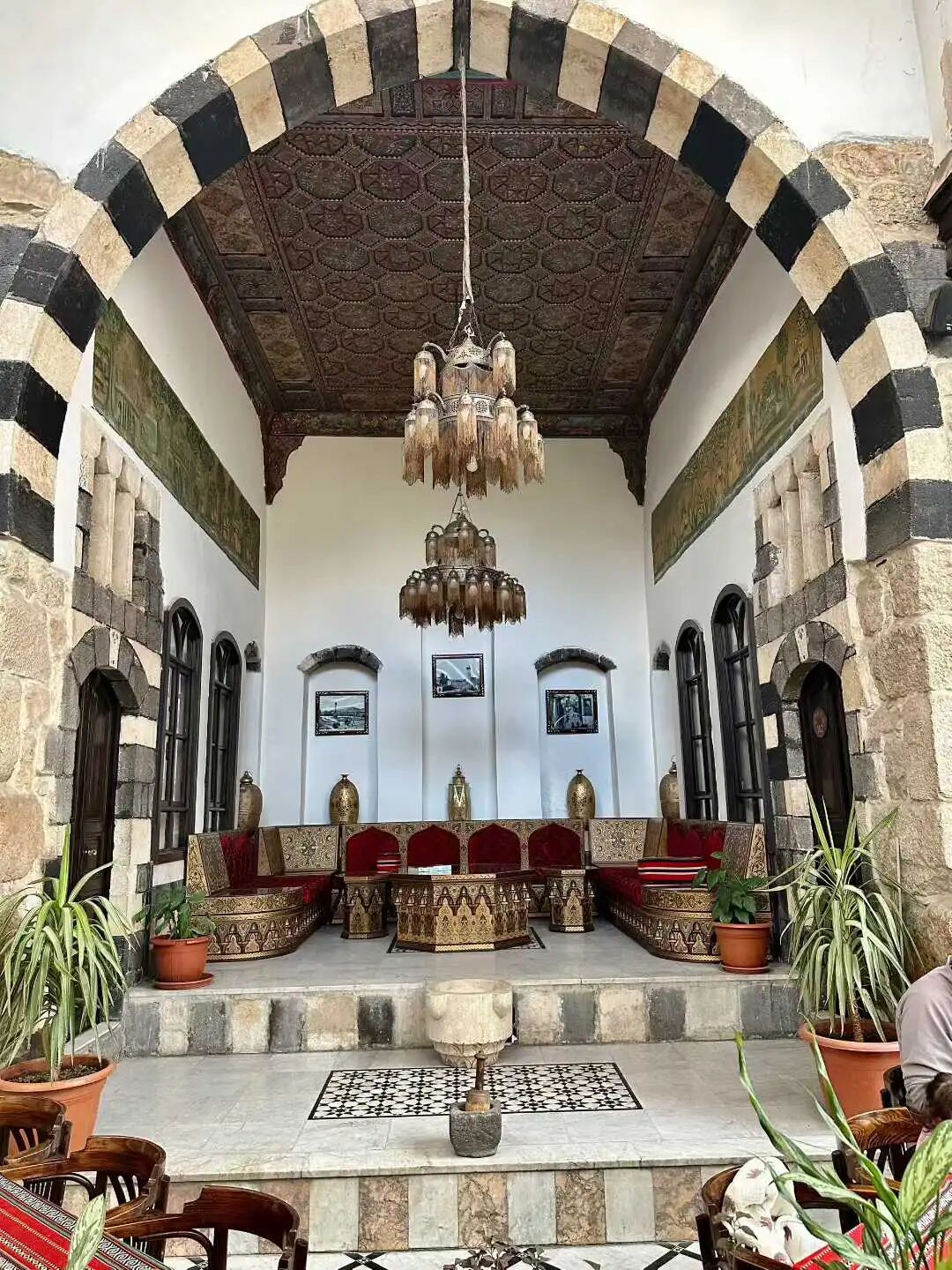
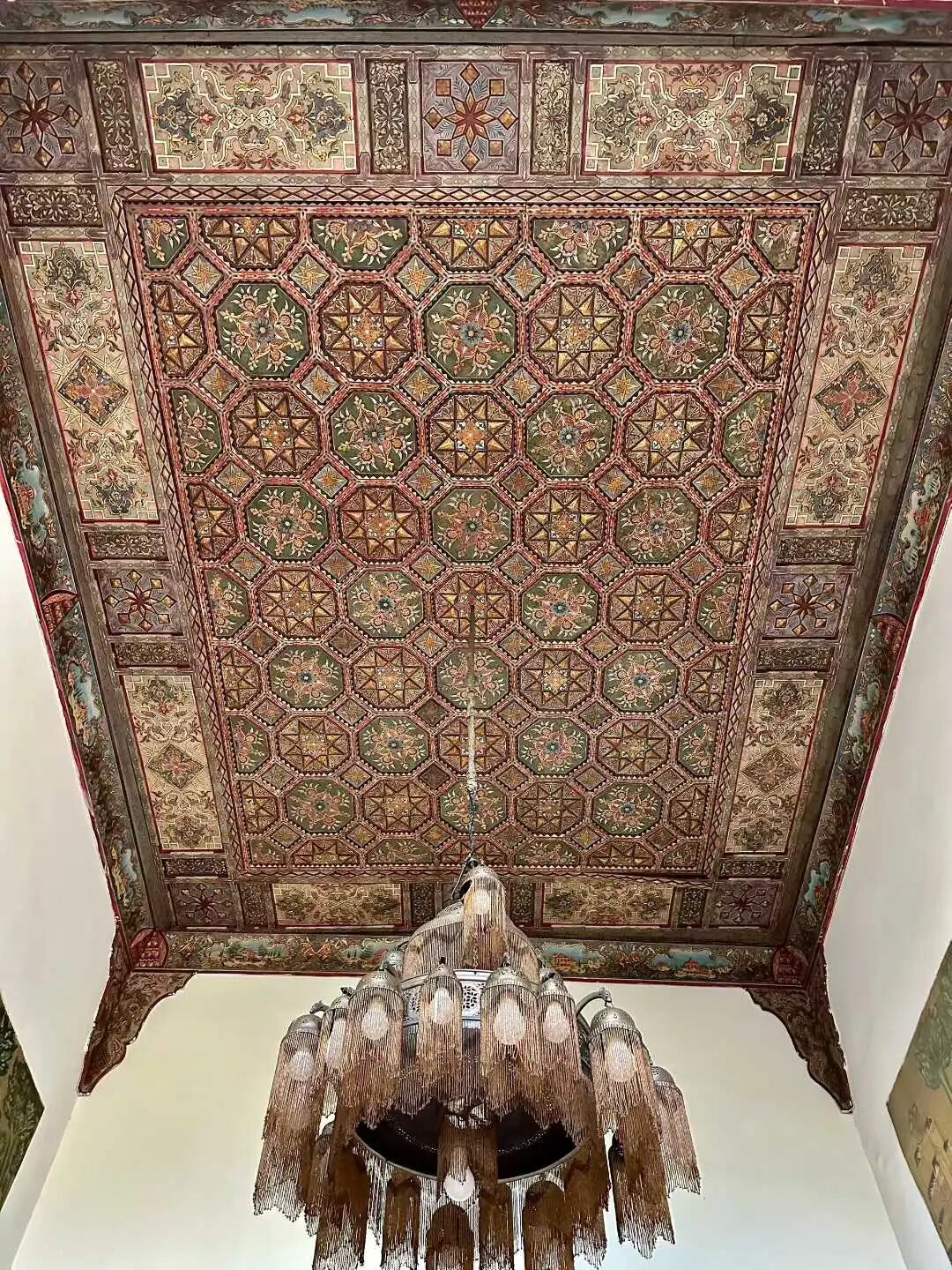
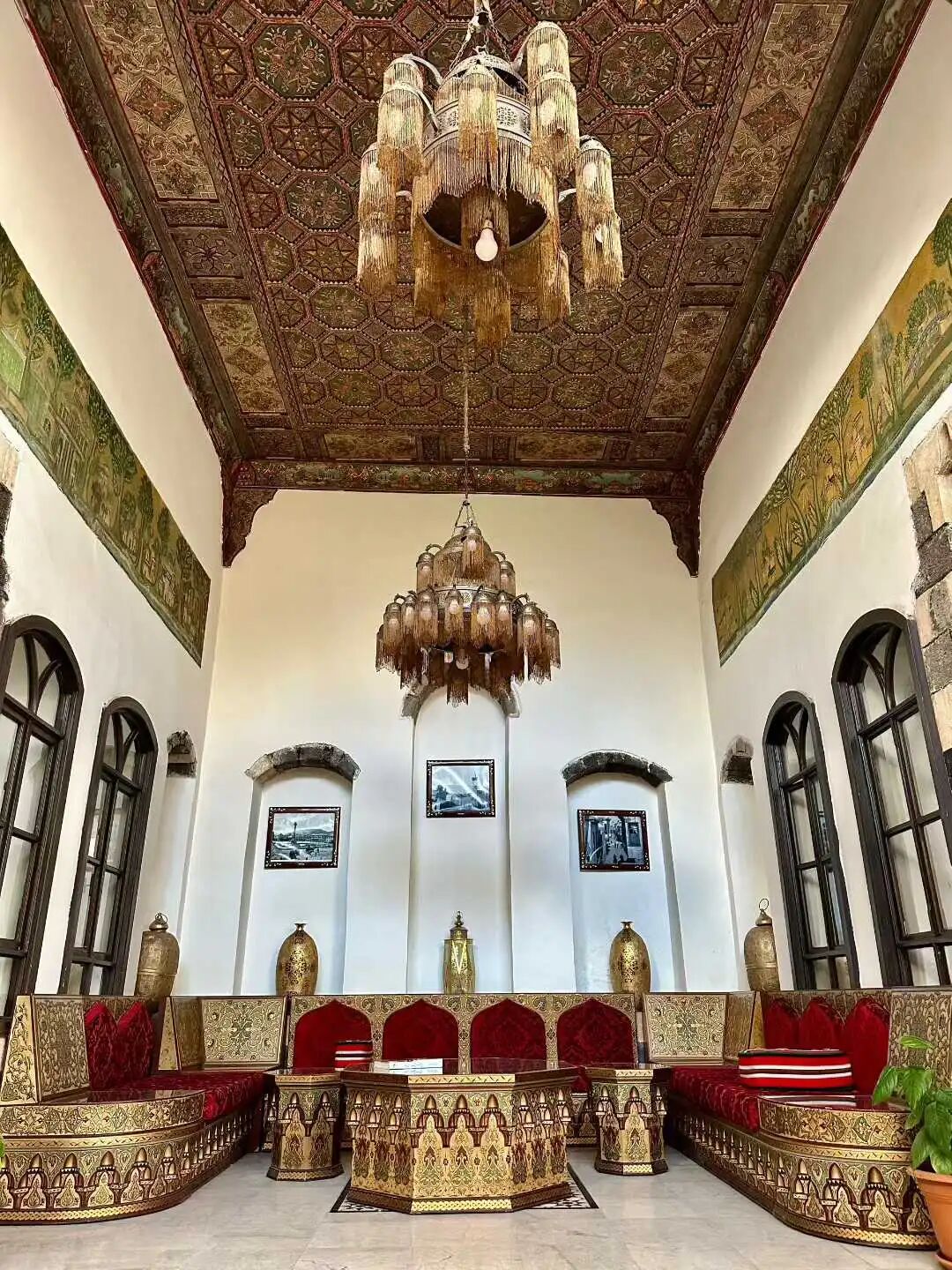
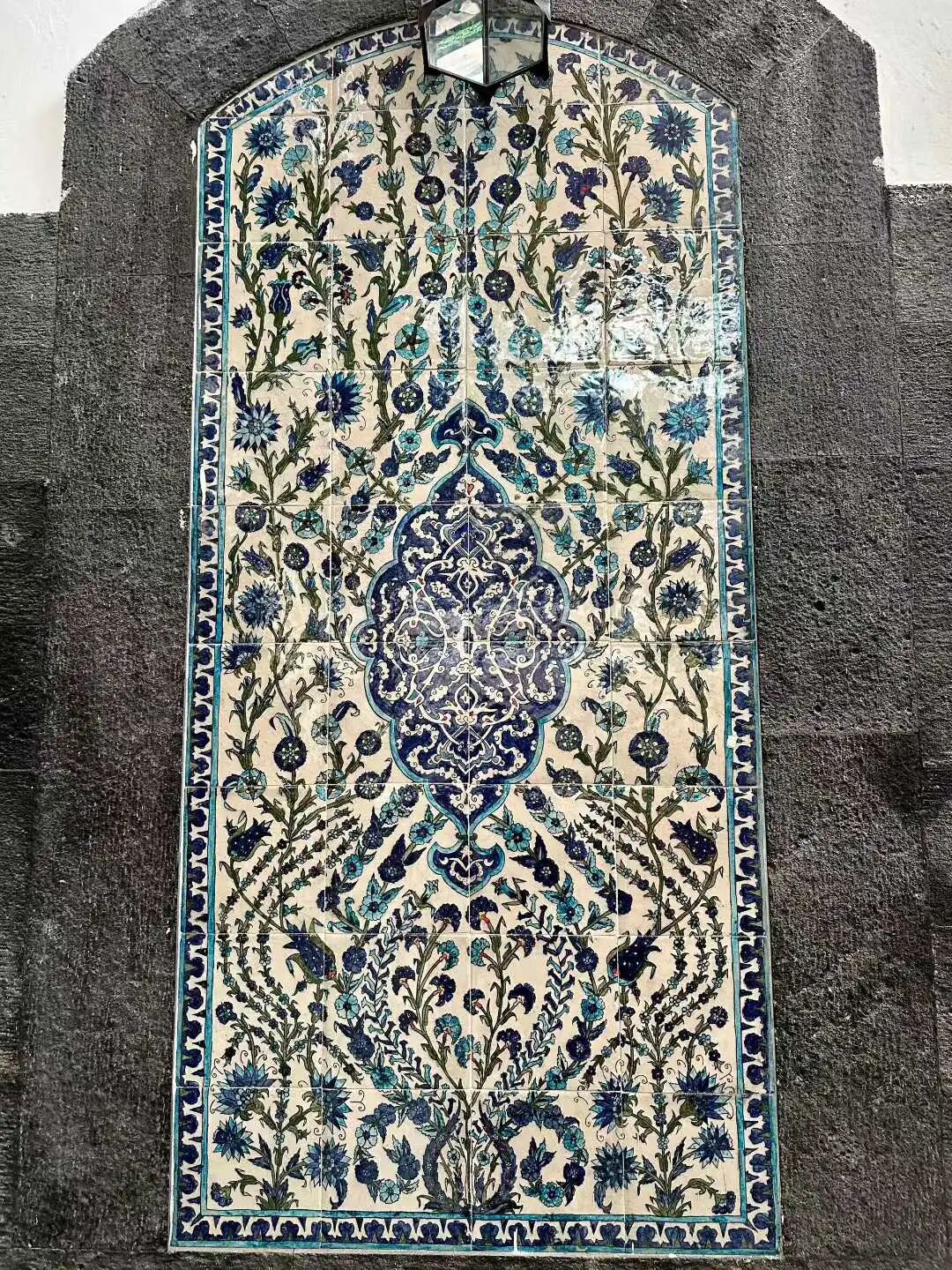
Dar Al Yasmin Hotel is located in the heart of the Christian Quarter of Bab Touma in the Old City of Damascus. The hotel is tucked away in a small alley, and it feels like a hidden world once you step inside. The hotel is made up of three 18th-century Ottoman mansions—two large and one small. It features a central courtyard, a fountain, a reception area (liwan), hand-painted wooden ceilings, traditional brick and stone structures, and carved doors and windows. The mansion changed hands many times after the 19th century until the Jasmine Hotels group took it over in 2005. They restored and opened it, making it a classic example of revitalizing a traditional Middle Eastern residence.
The single room was listed at 140 dollars, but I bargained it down to 125 dollars. The small alley at the entrance can get flooded when it rains, but overall it is a great value.
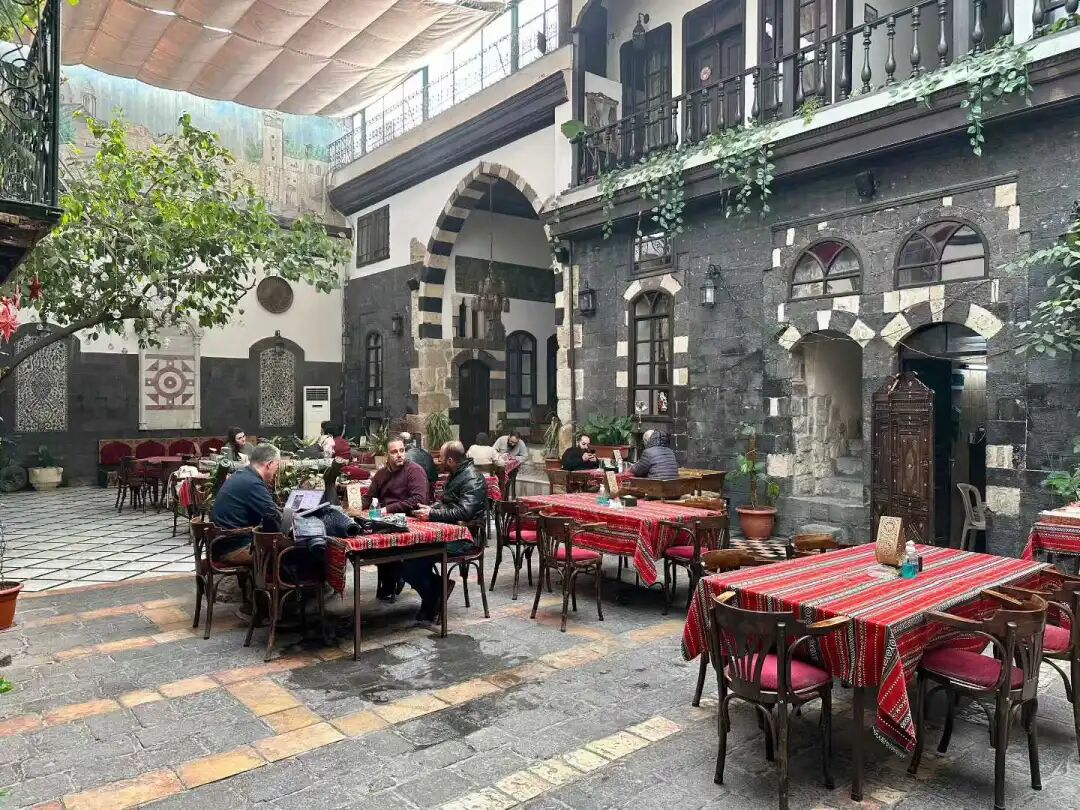
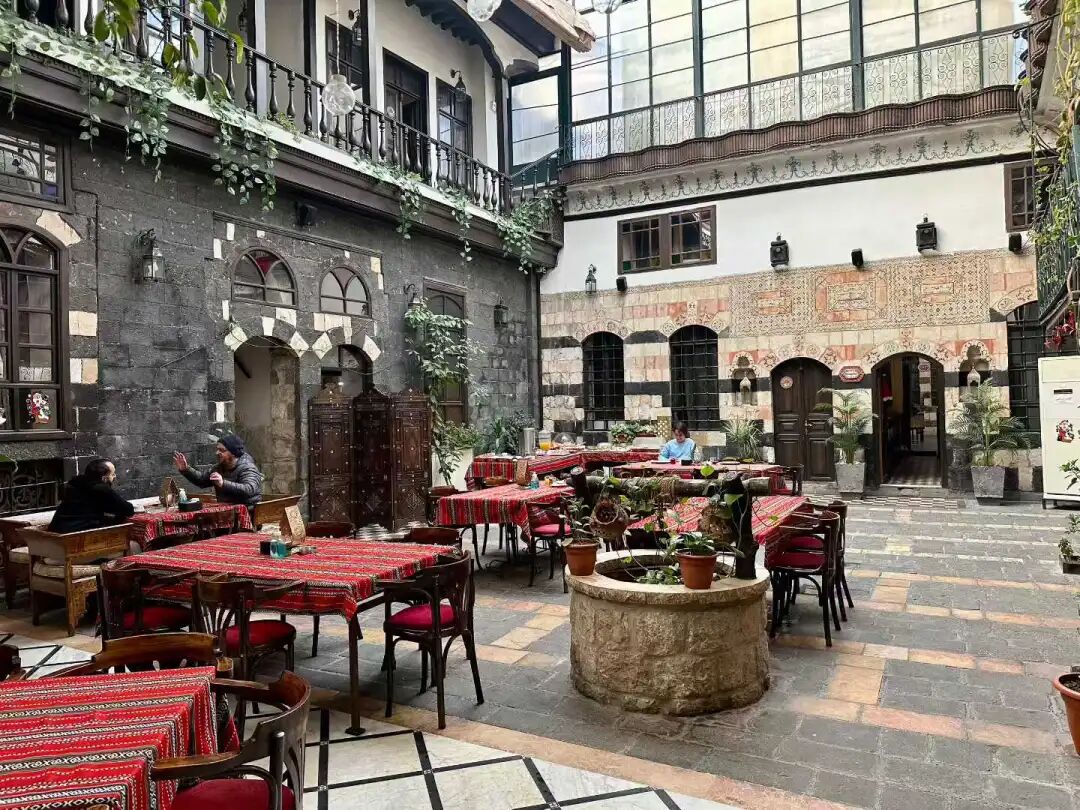
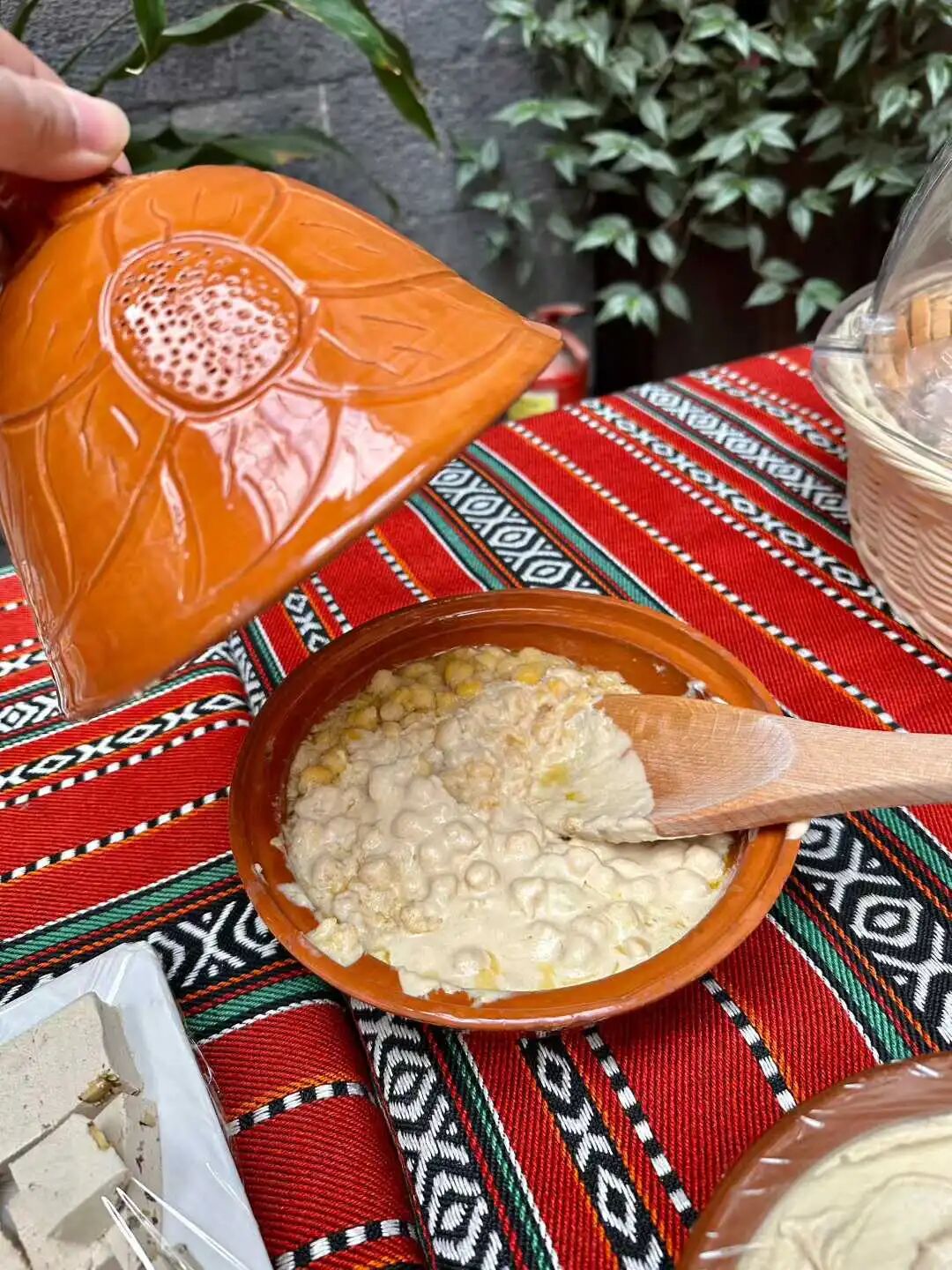
For breakfast at Dar Al Yasmin Hotel, the chickpea and sesame paste dip (hummus musabaha) is worth trying. Musabaha means swimming, as if the chickpeas are swimming in the sesame paste.
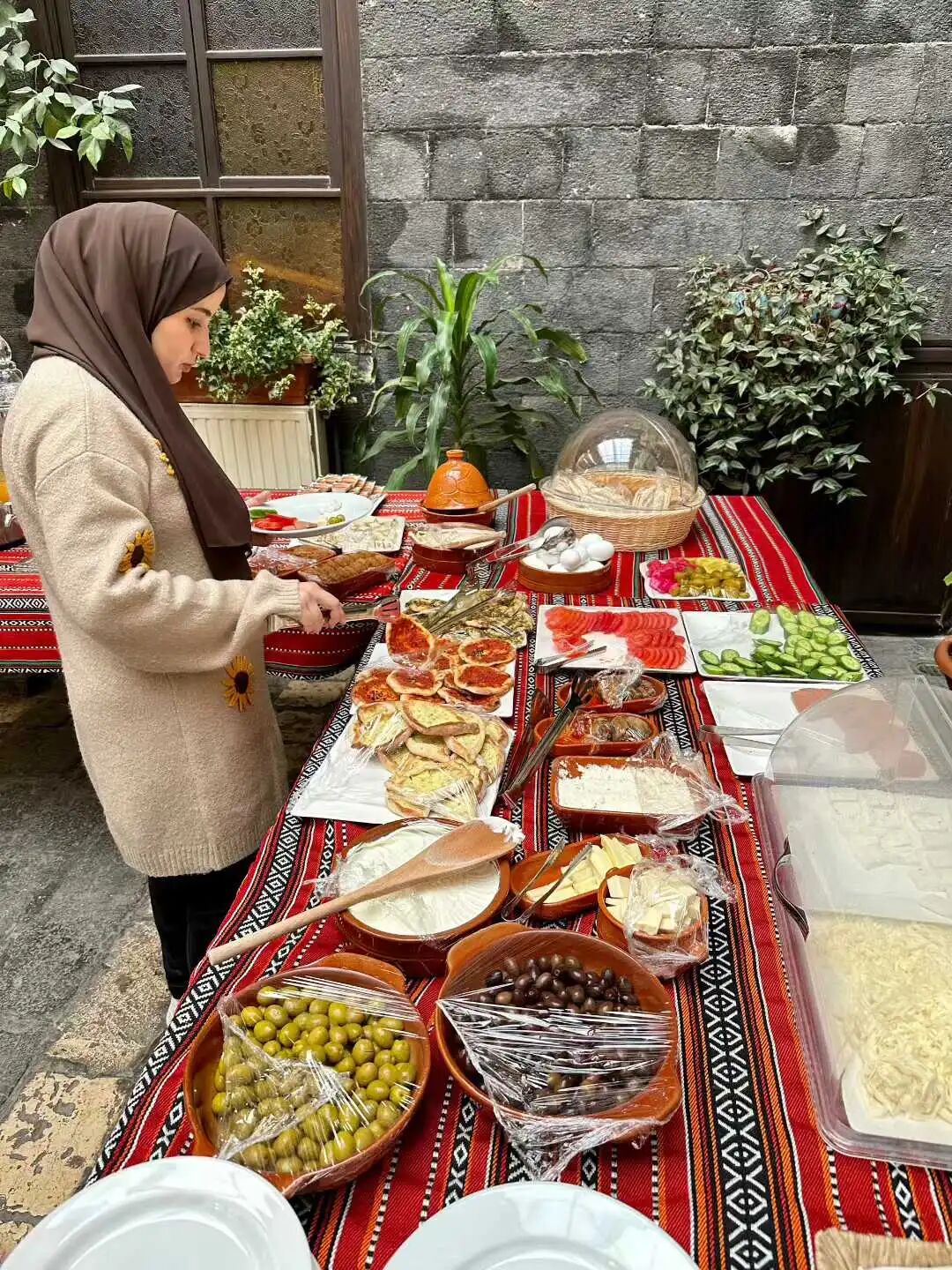
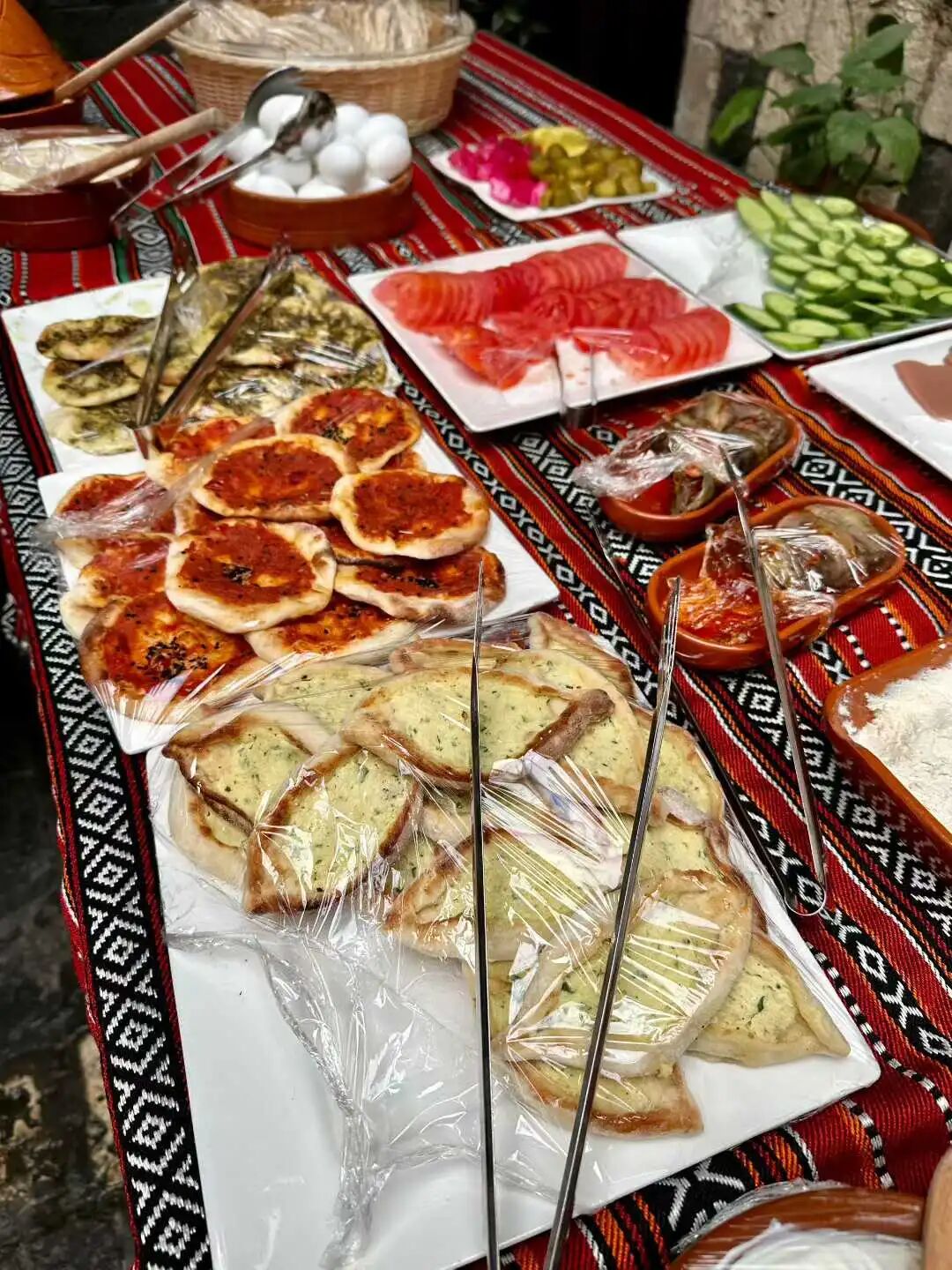
They also serve flatbread (manakish) in three varieties: with spice blend (za'atar), tomato, or cheese. Manakish originated from the traditional bread of the ancient Phoenicians and was added to the UNESCO Intangible Cultural Heritage list in 2023.
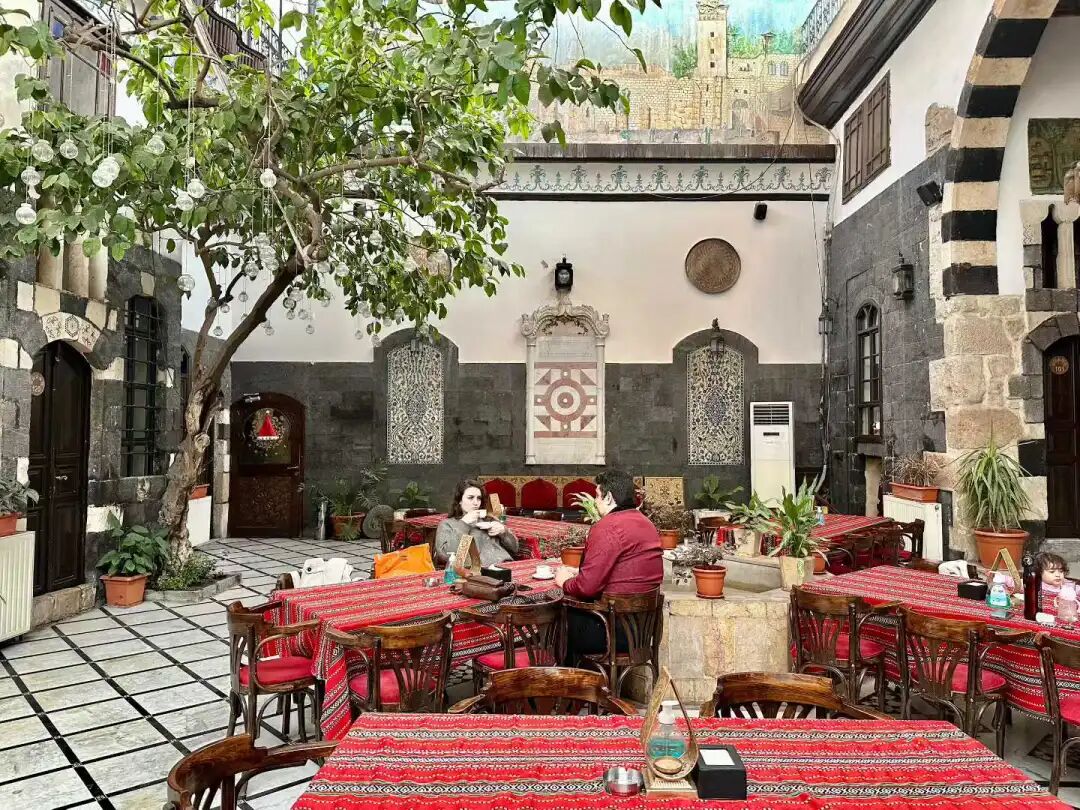
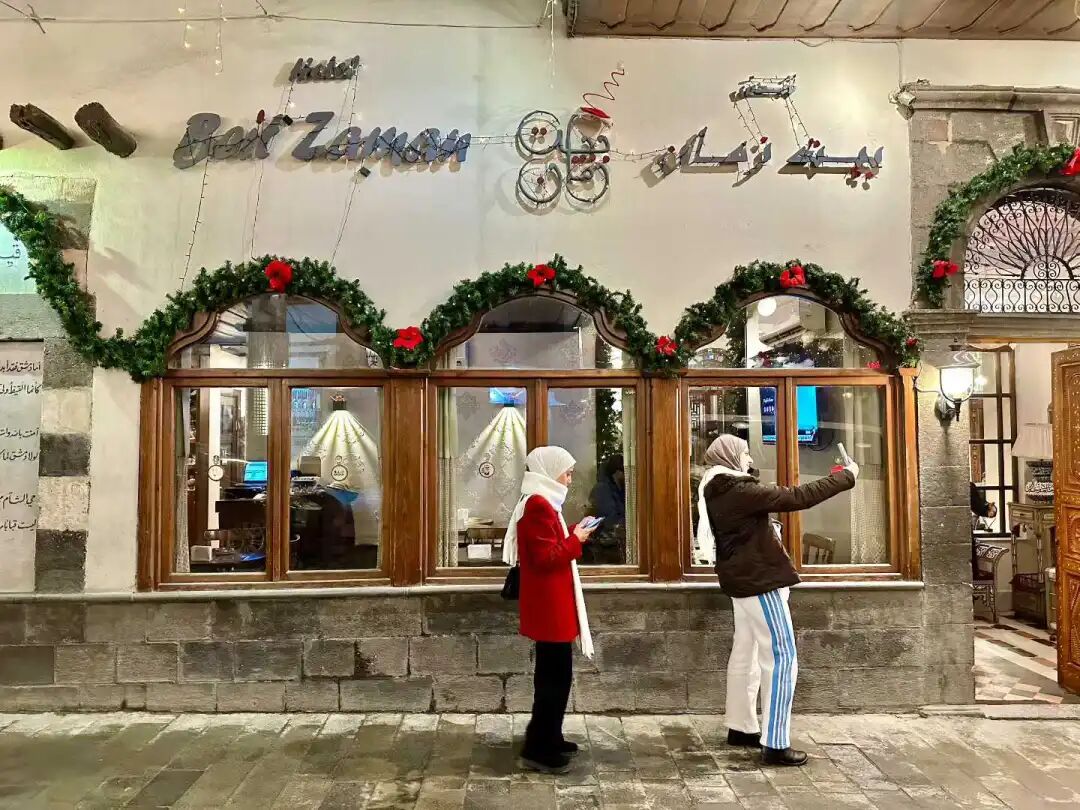
Beit Zaman Hotel is in the Christian Quarter of Bab Touma in the Old City of Damascus, right on the ancient Roman street (Via Recta). Their single room was listed at 150 dollars, but I bargained it down to 135 dollars.
The hotel opened in 2008 after five years of connecting and restoring three 17th-century Ottoman mansions. It kept original features like stone carvings, wood carvings, mosaics, and fountains. The wooden Ajami-style ceilings and the traditional courtyard layout are the most impressive parts.
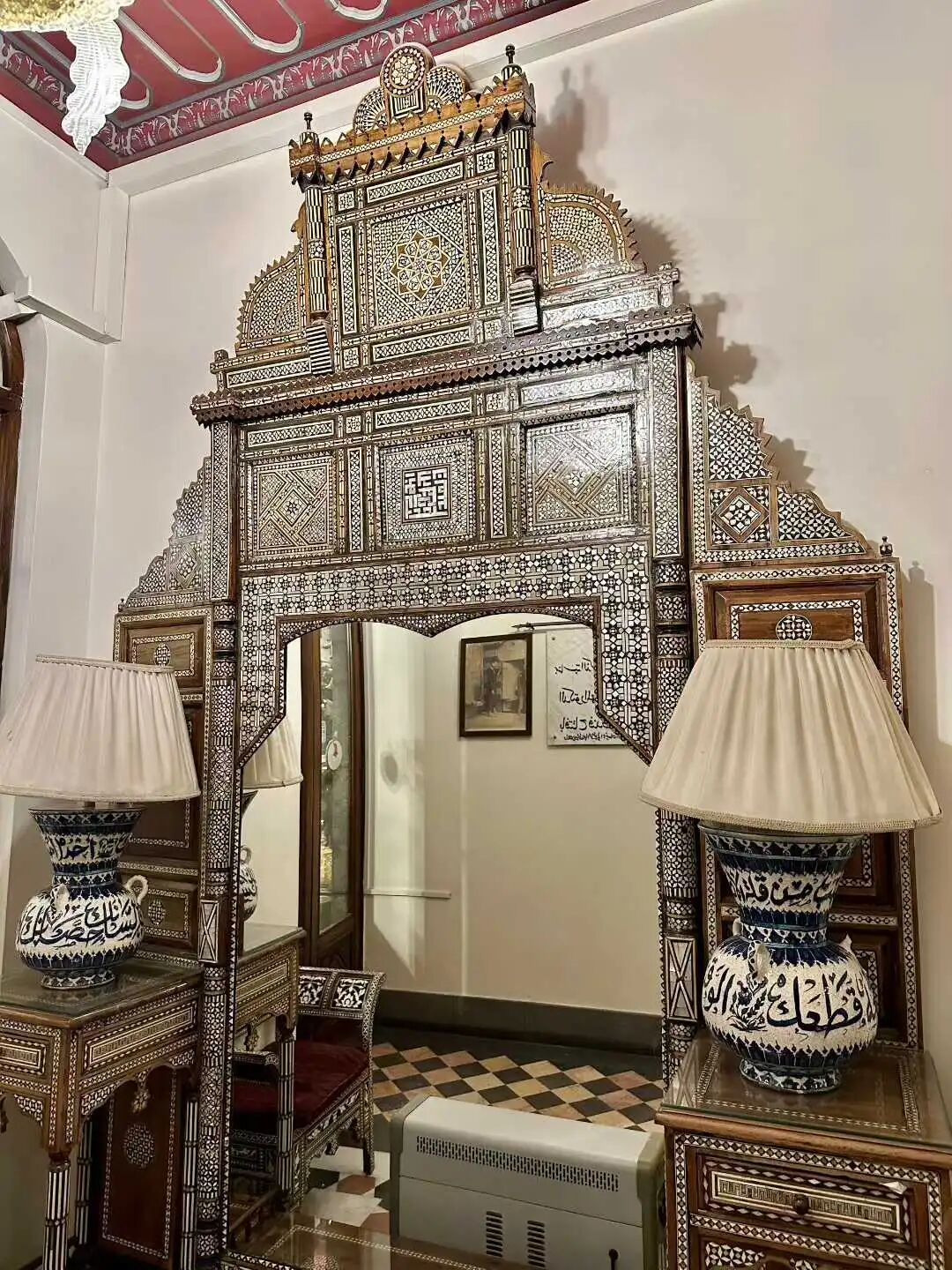
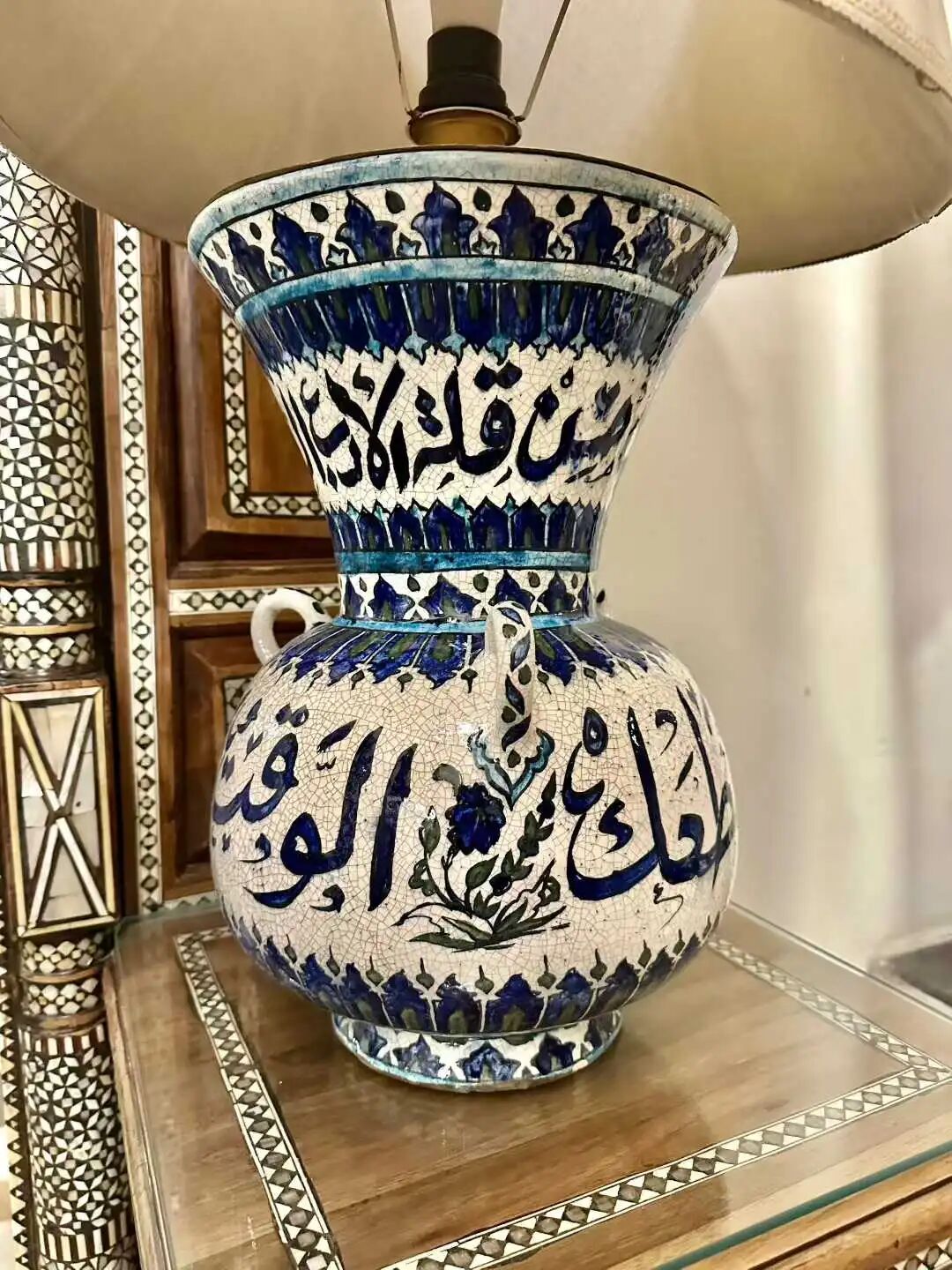
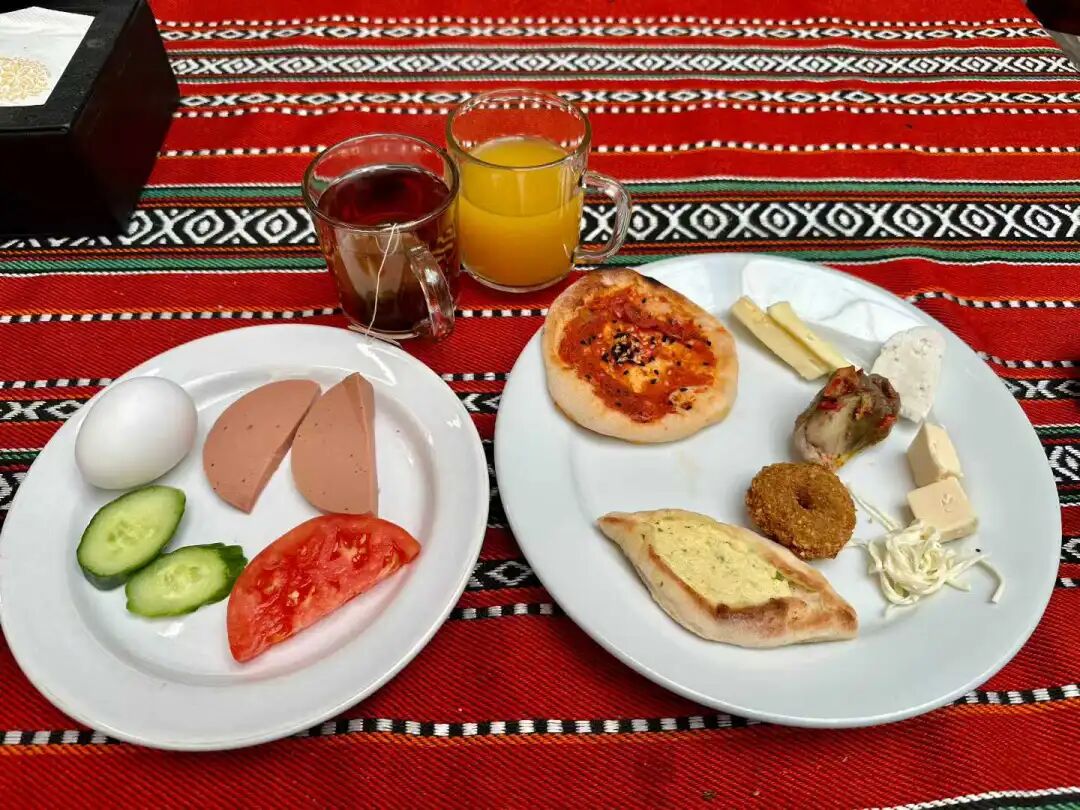
The buffet breakfast at Beit Zaman Hotel includes sausages, cheese, bread, olives, and chickpea dip (hummus). The red dipping sauce is called Muhammara. It is a Syrian appetizer made from walnuts, red bell peppers, pomegranate molasses, and breadcrumbs.
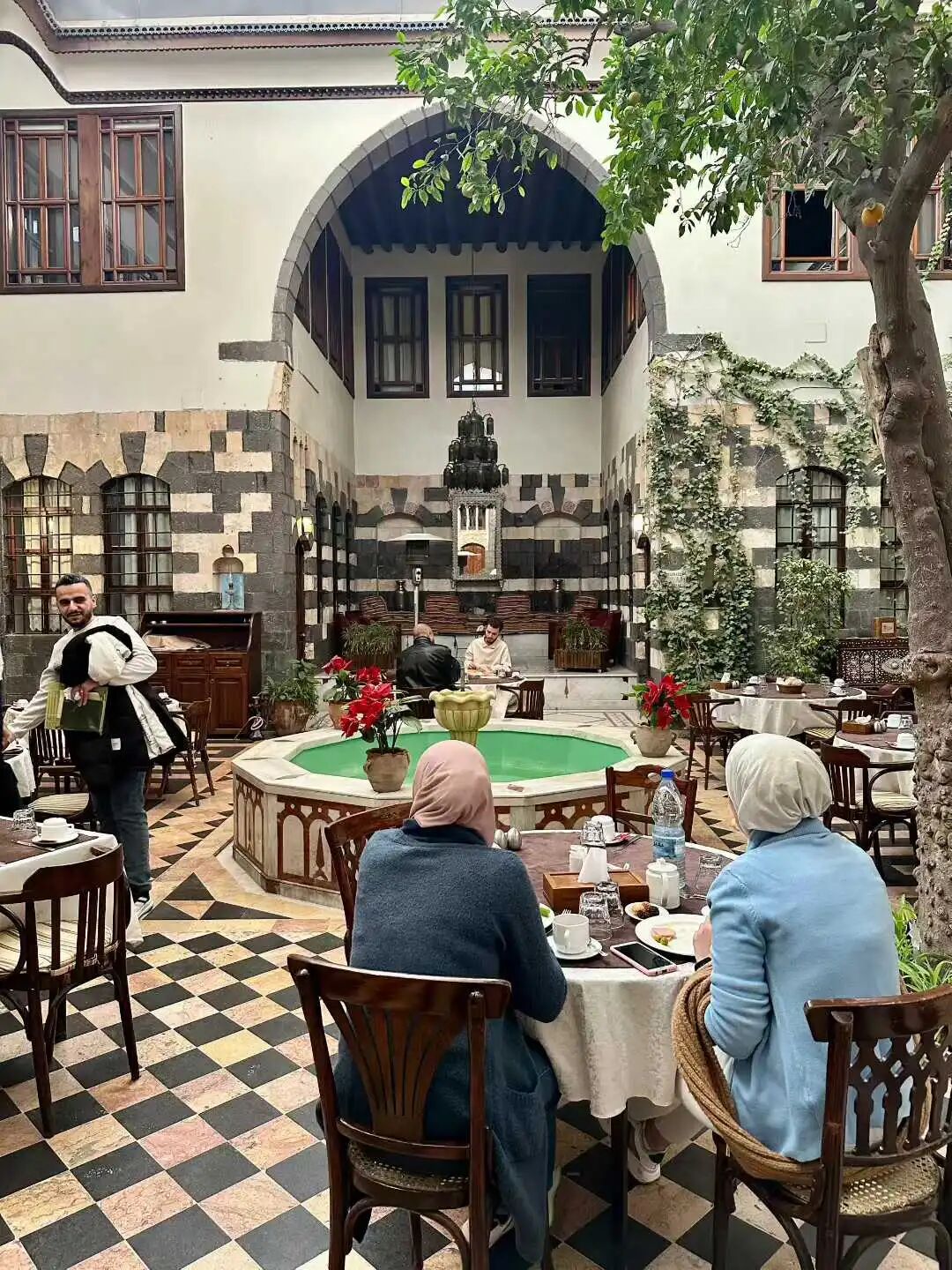
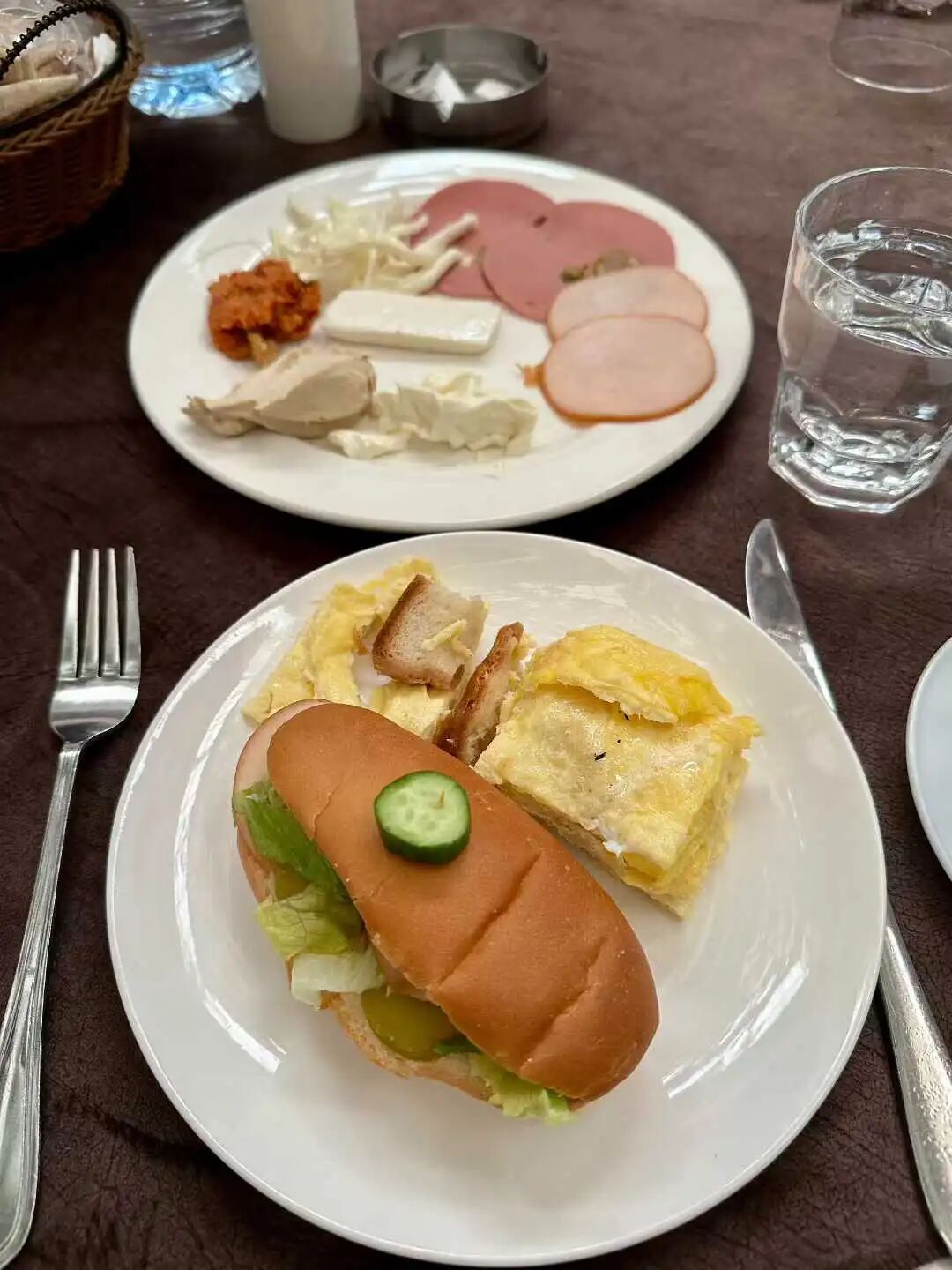
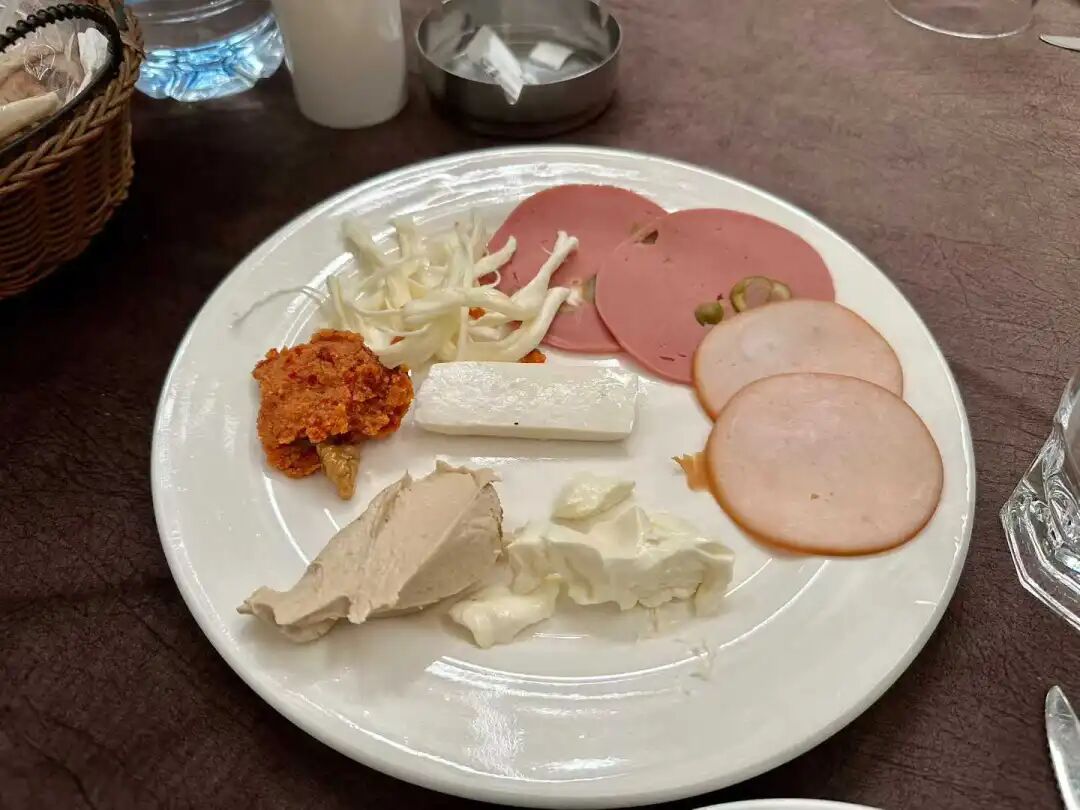
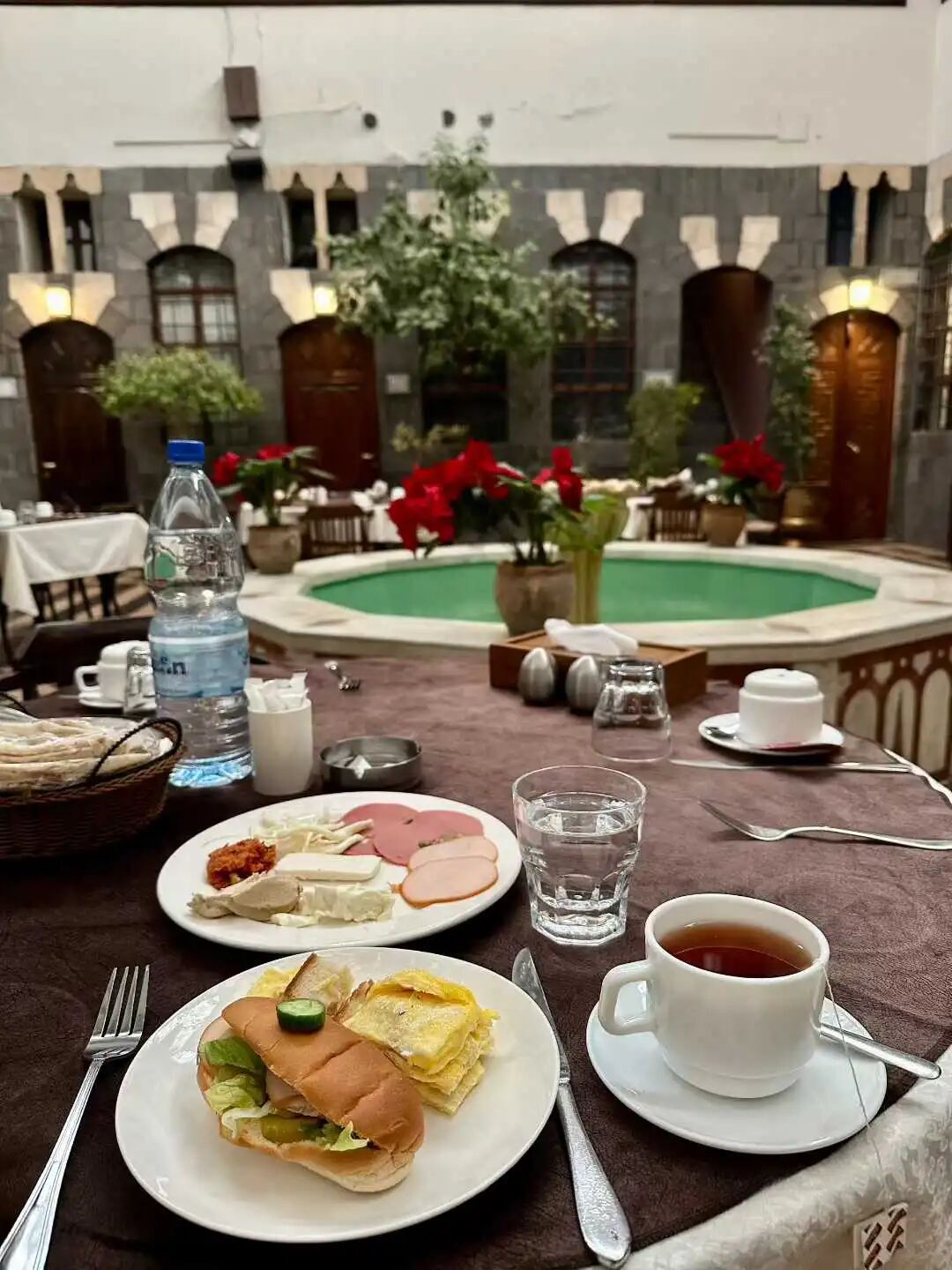
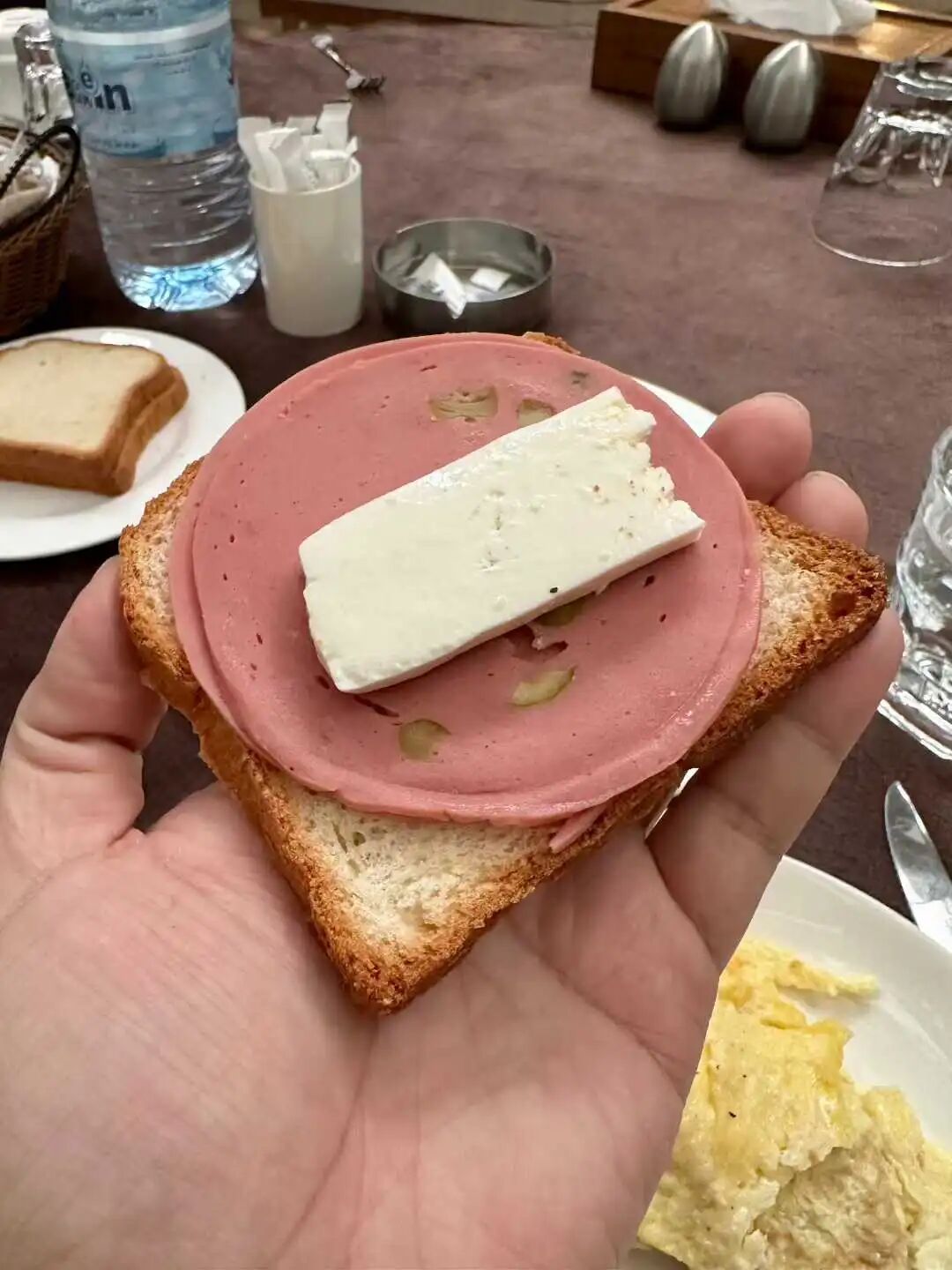
Albal Hotel is near the Bab Touma gate in the Old City of Damascus. It is likely the most convenient for transportation. A single room costs 80 dollars, which is the lowest price, but the power is weak and it is almost impossible to charge a phone. Choose carefully.
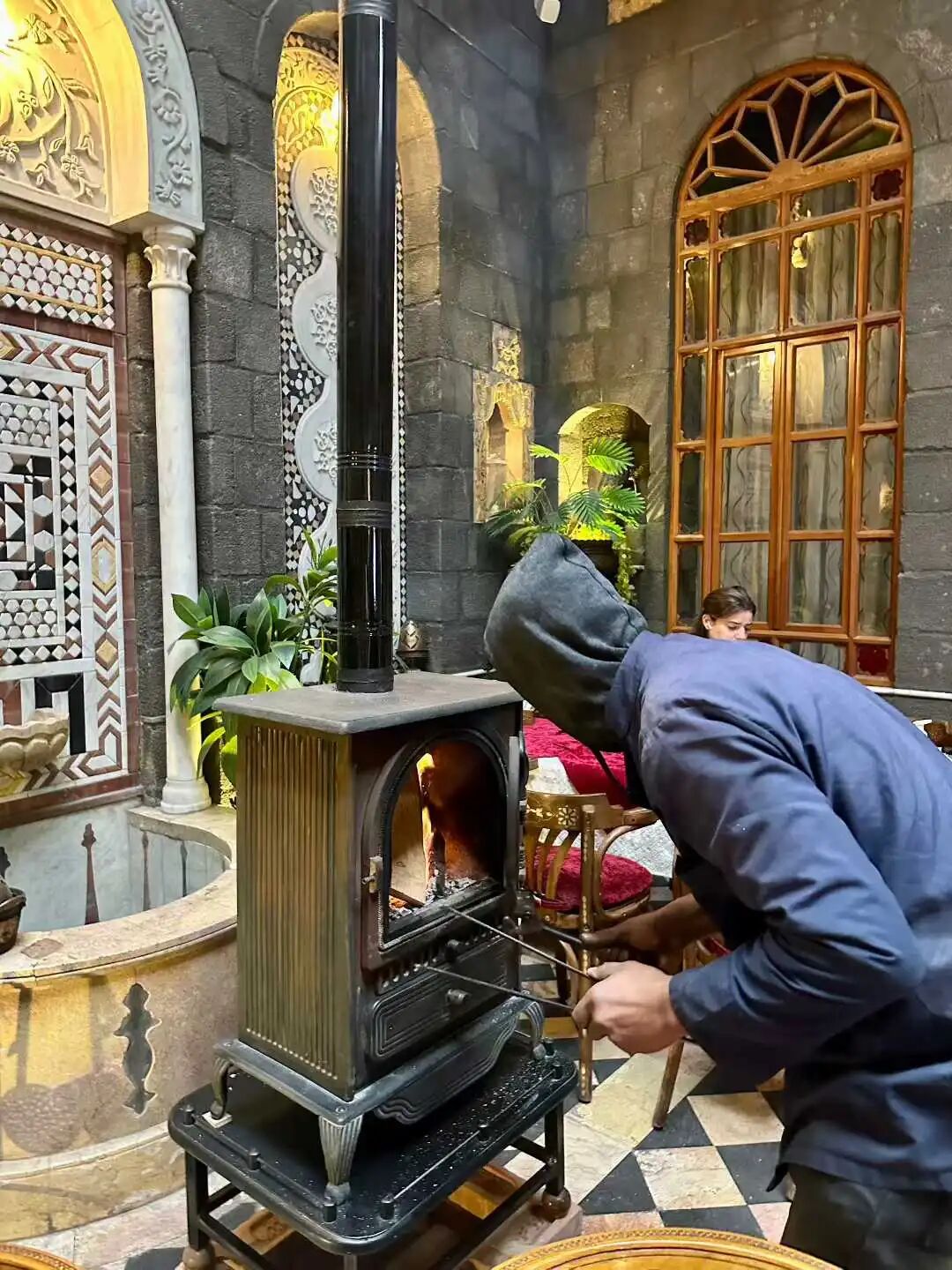
Albal Hotel is a converted Ottoman mansion rebuilt after the 1759 Damascus earthquake. It has a courtyard fountain and wood carvings. The breakfast is quite good, and they light a stove in the courtyard during winter.
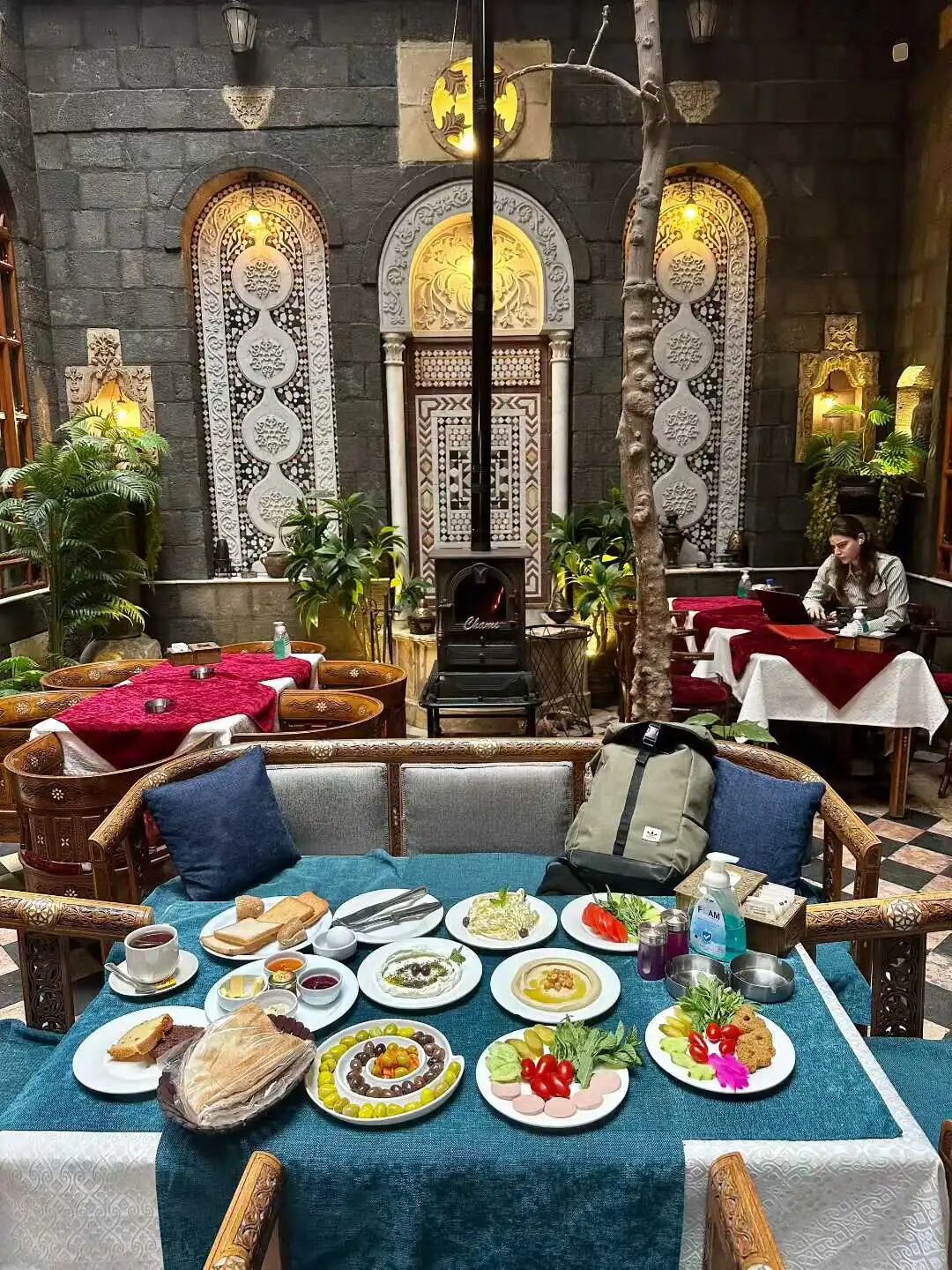
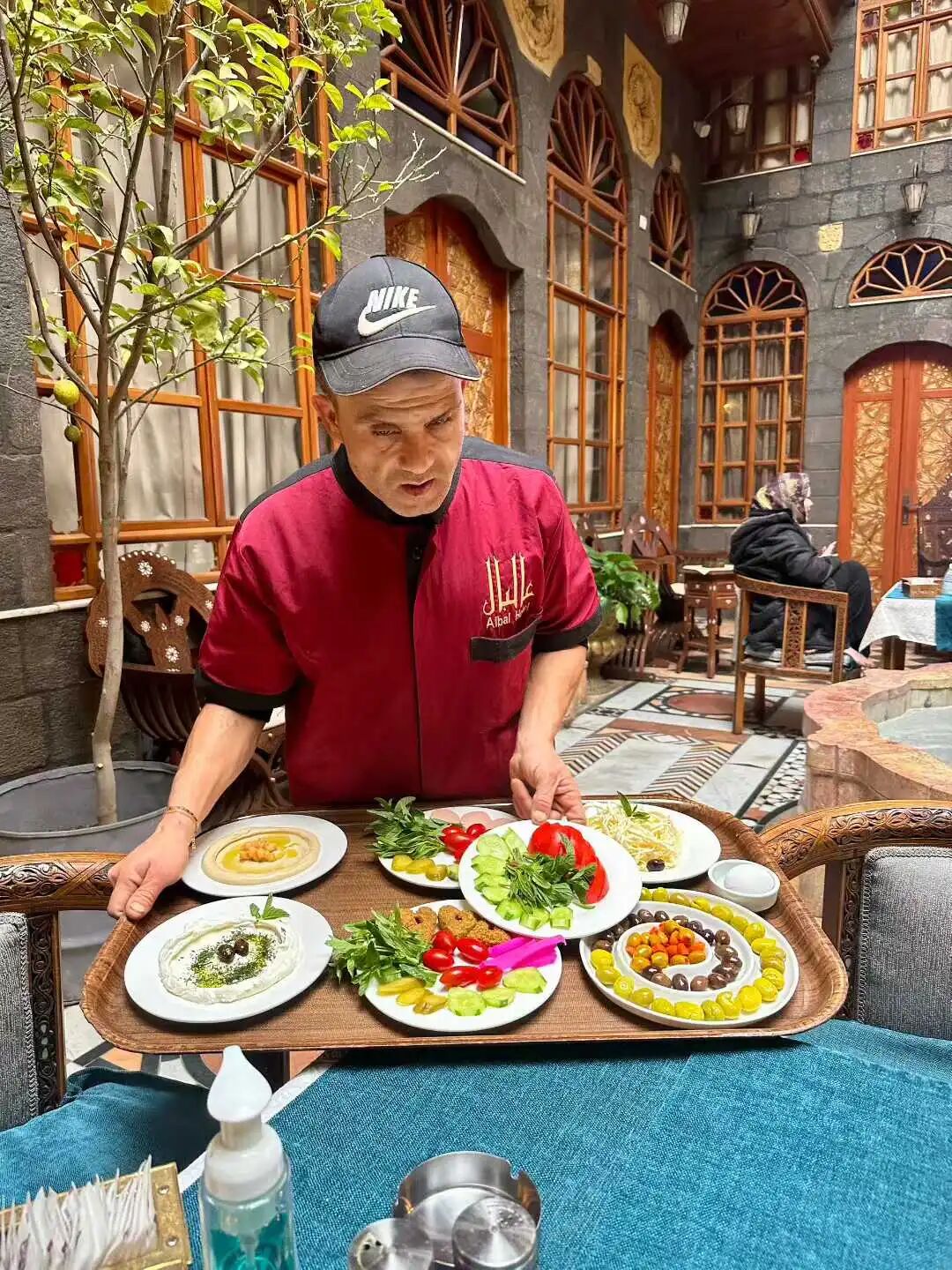
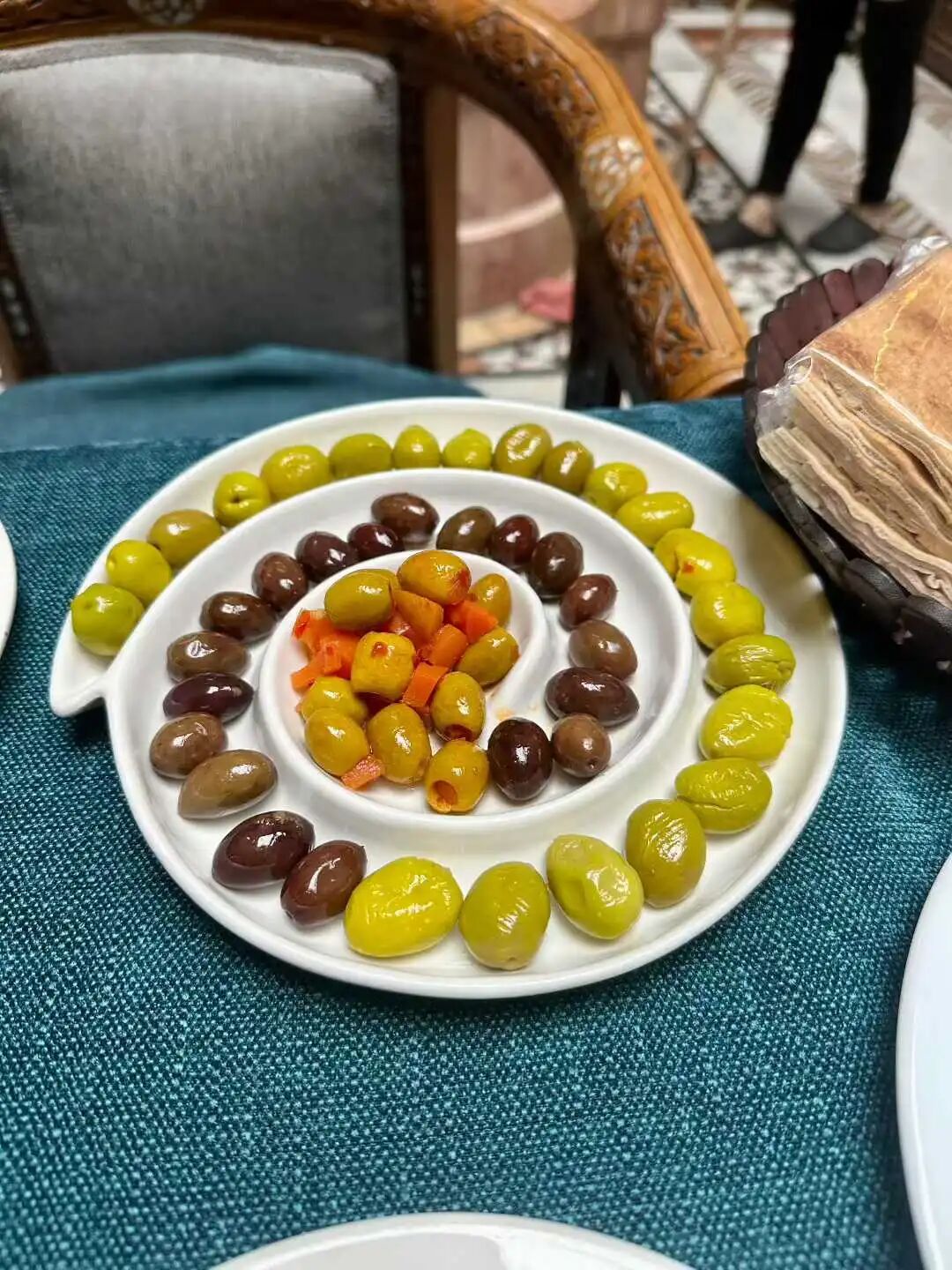
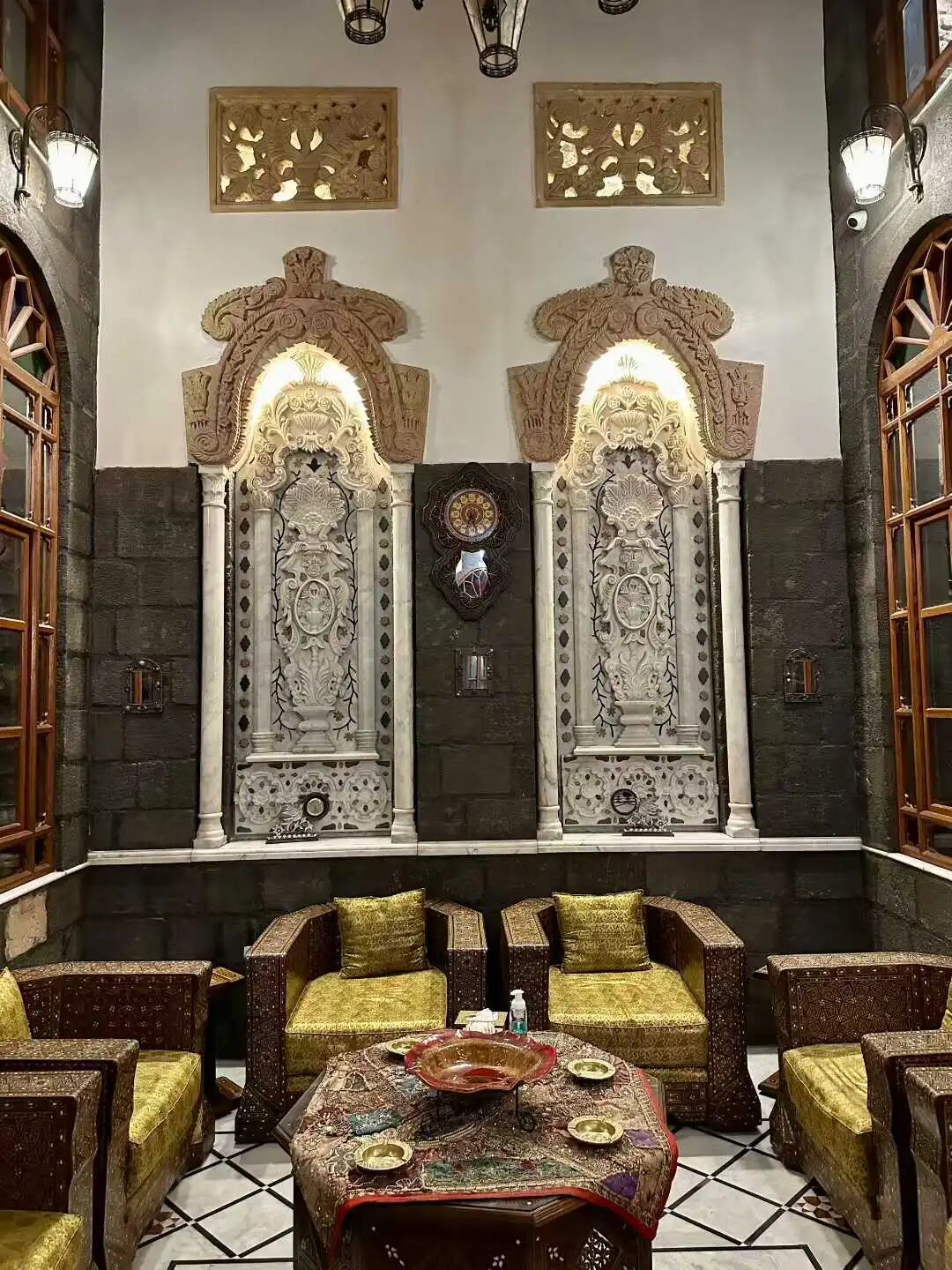
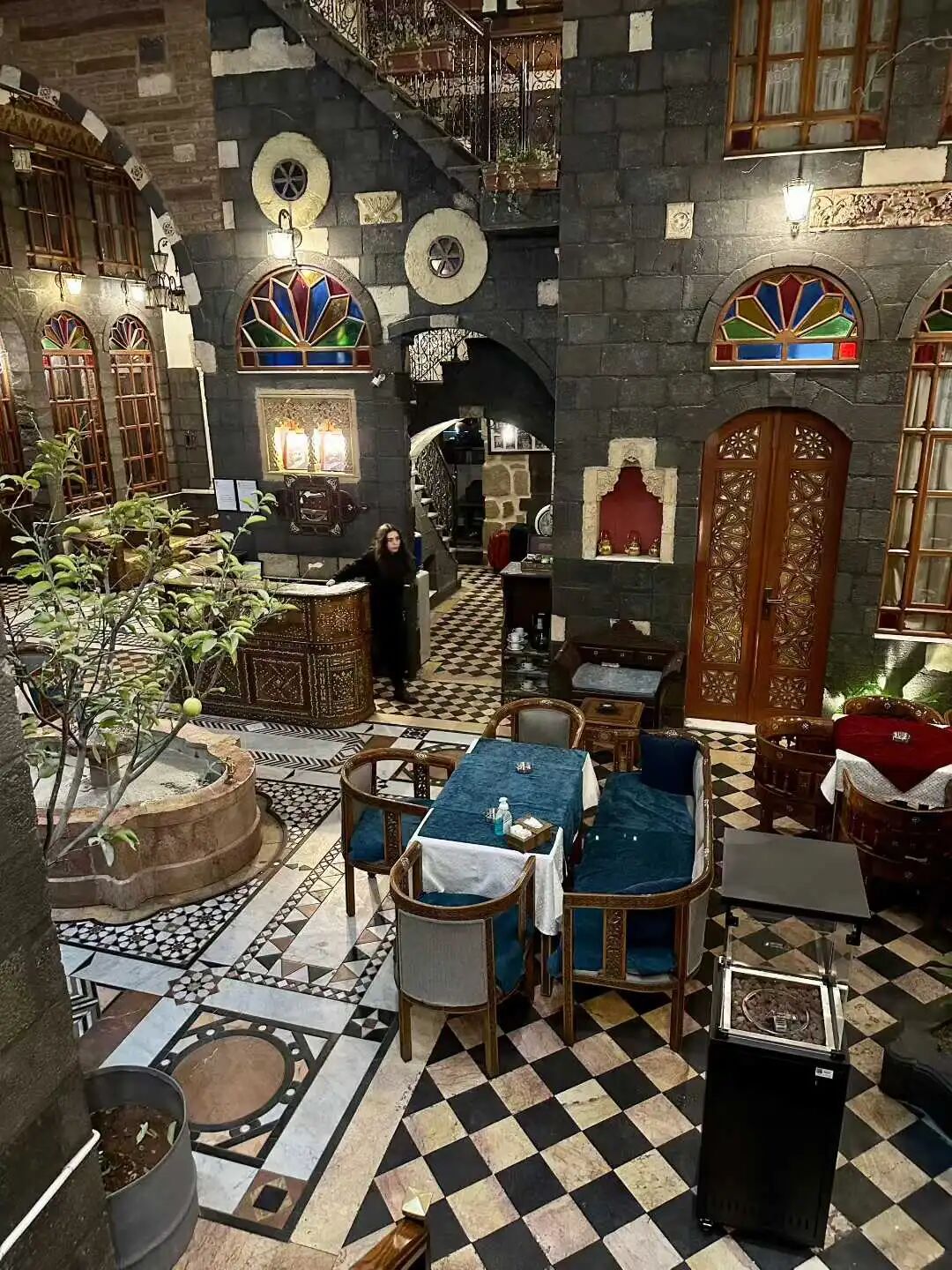
Al Shahbandar Palace Hotel is on the west side of the Christian Quarter near Bab Touma in the Old City of Damascus, right on the busy Al Qemaryeh market street.
The hotel is inside an Ottoman noble mansion built in the 16th century. The Shahbandar family, a famous modern political family in Damascus, lived here for a long time. The famous nationalist leader Abdul Rahman Shahbandar came from this family. The Shahbandar family renovated the mansion on a large scale in the early 20th century and used it as a place to host guests for a long time. In 2007, it was converted into a historic hotel after adding private bathrooms, air conditioning, and electrical systems, while strictly preserving the facade, courtyard, and historical components.
Today, the mansion's courtyard is open as a cafe. You can drink coffee there, so you do not have to stay at the hotel to experience this Ottoman mansion.
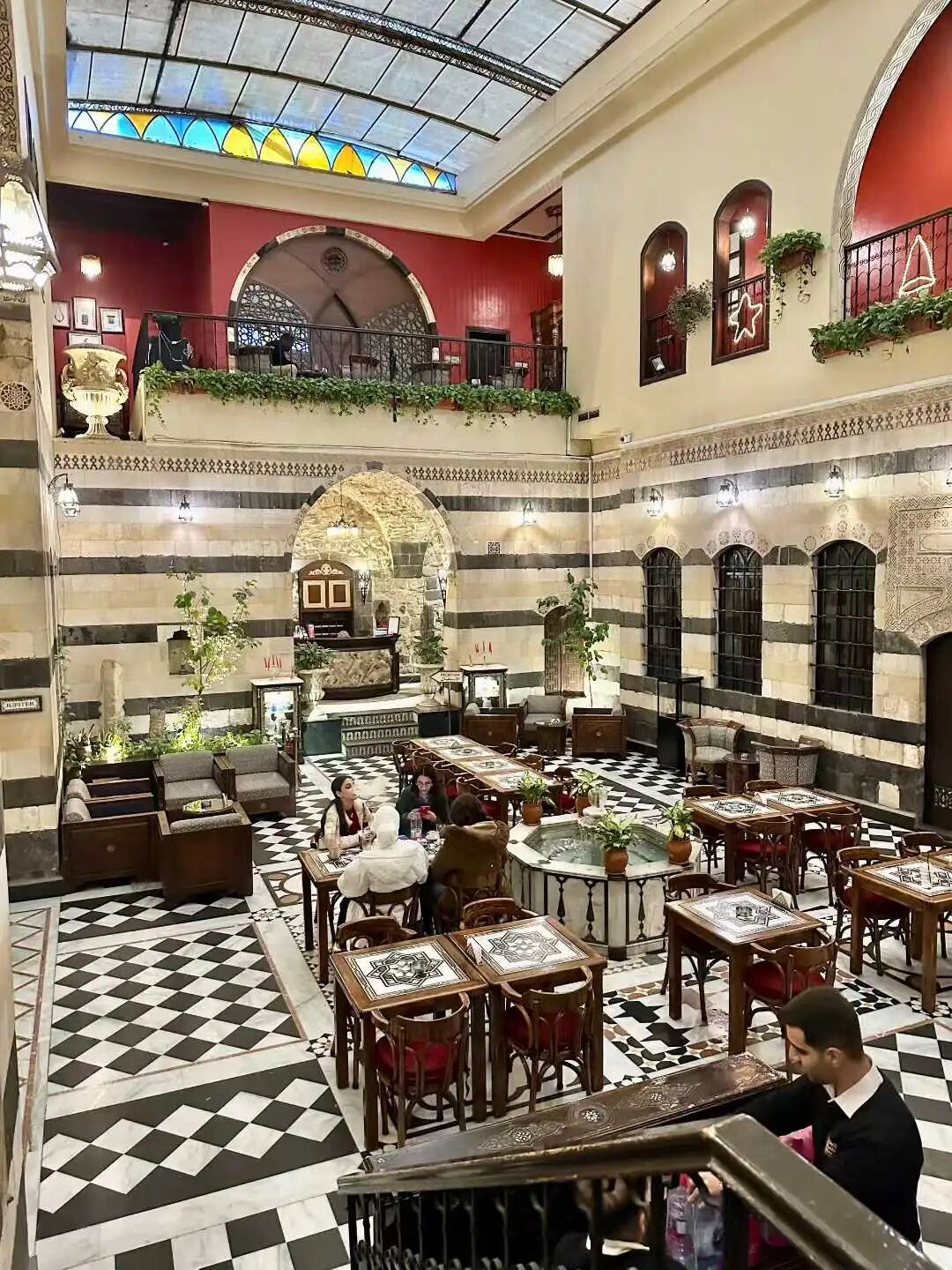
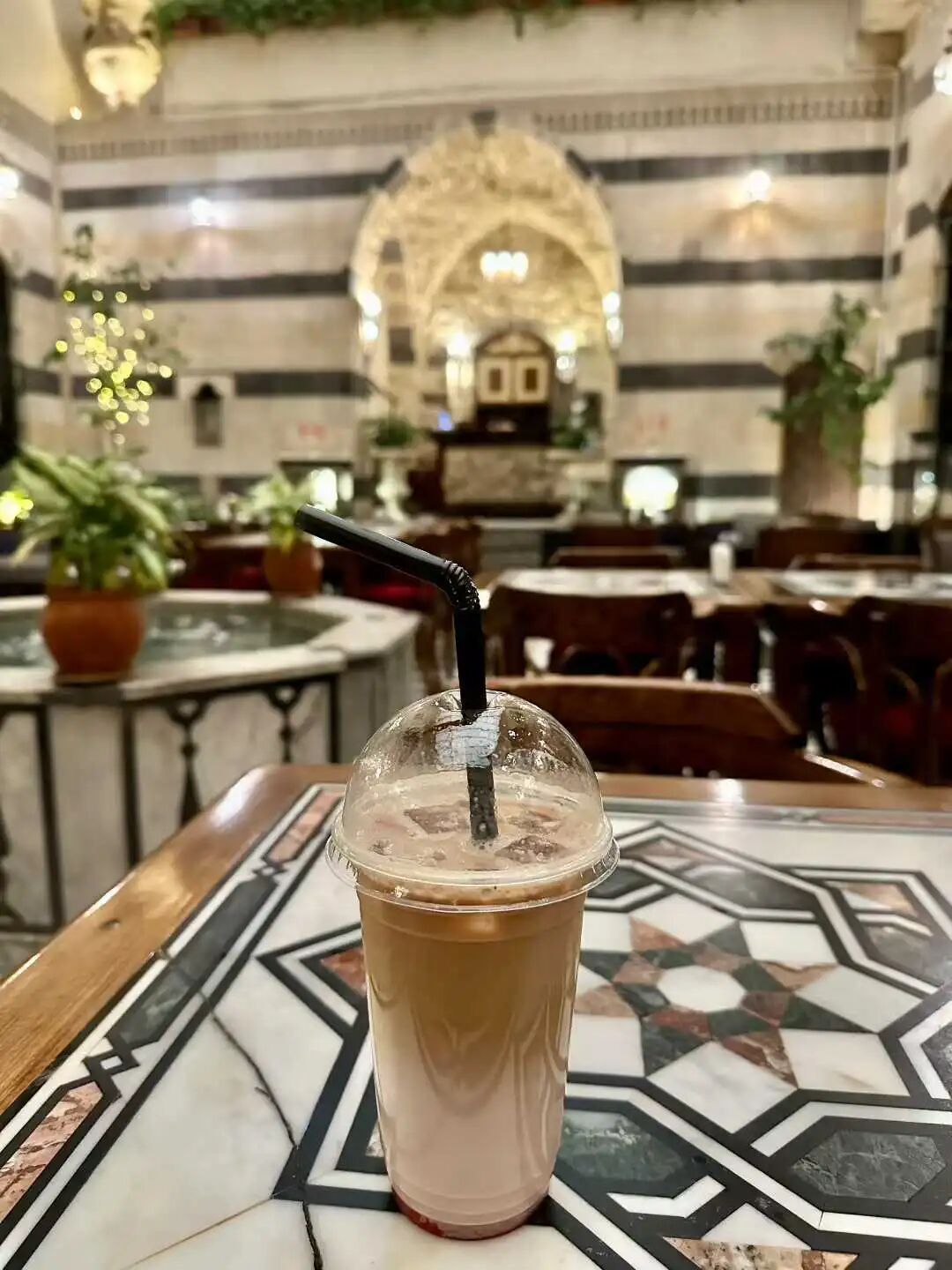
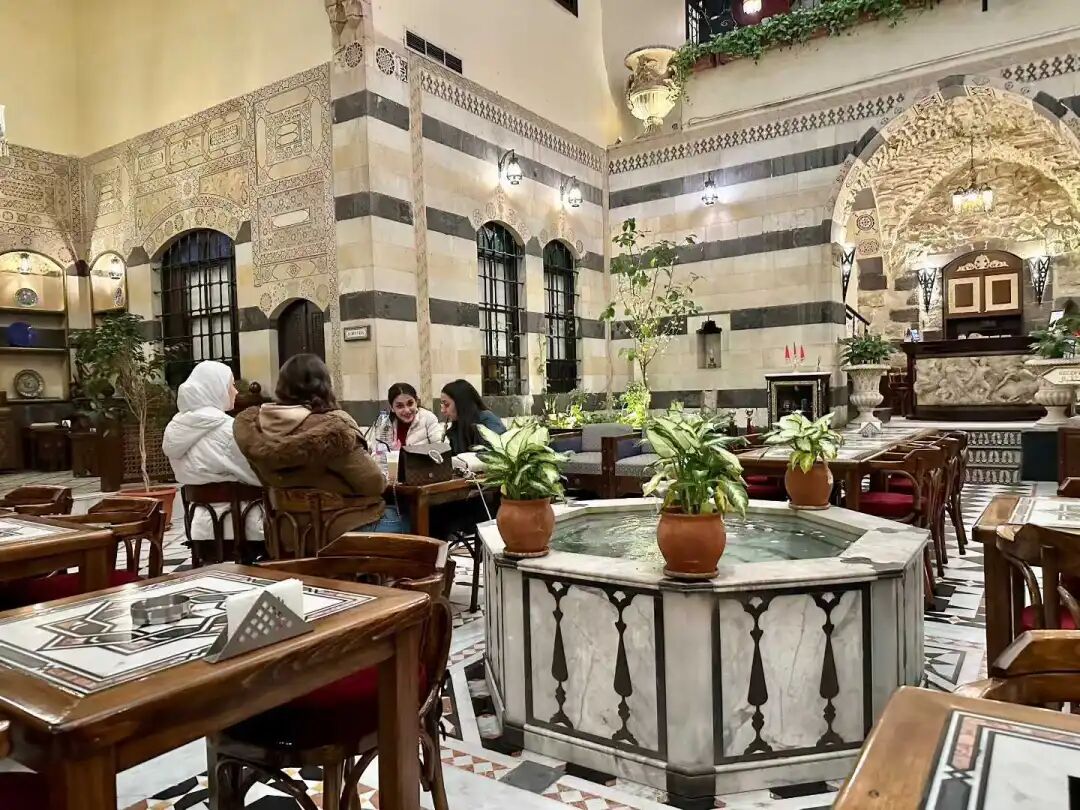
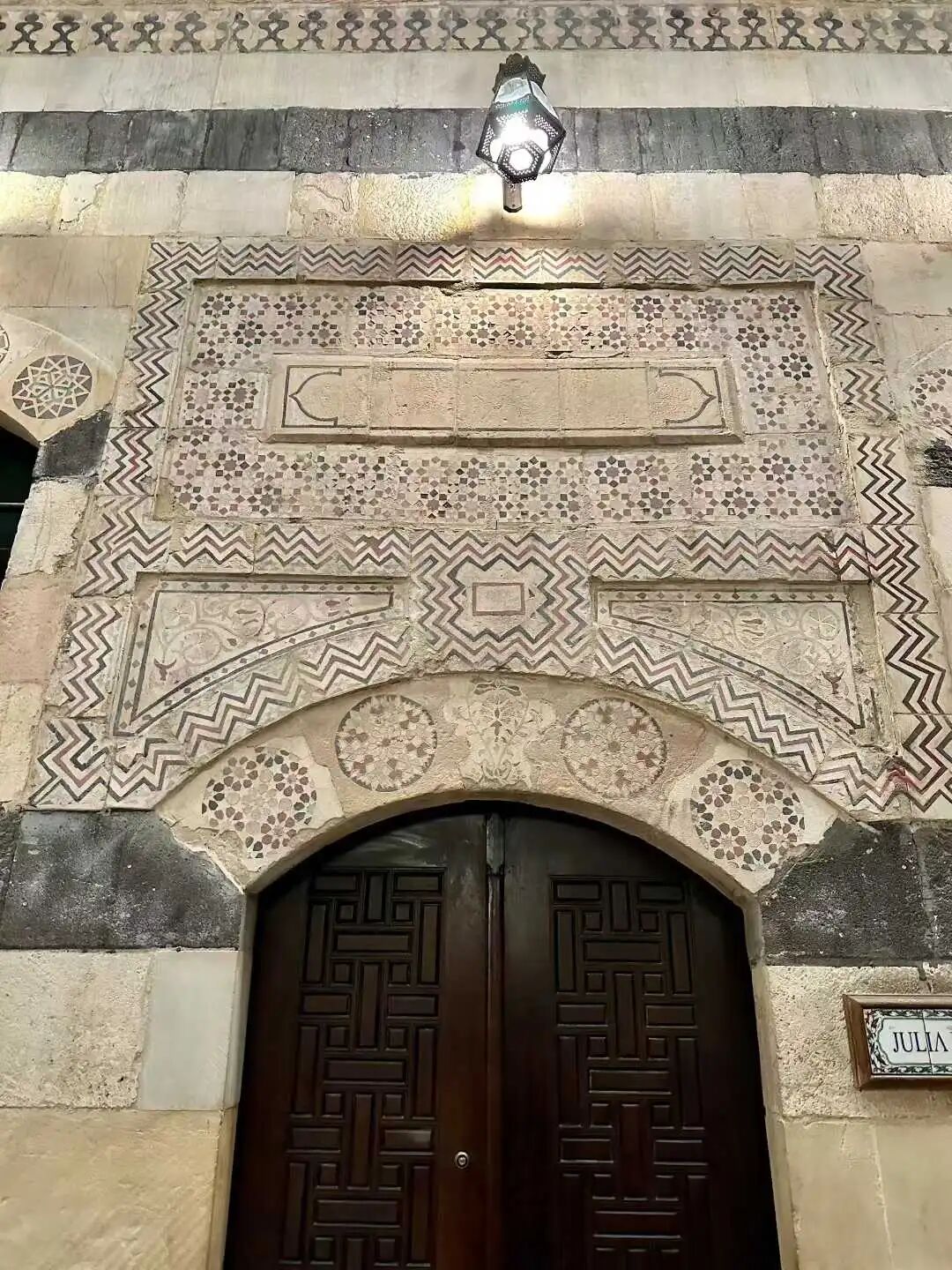
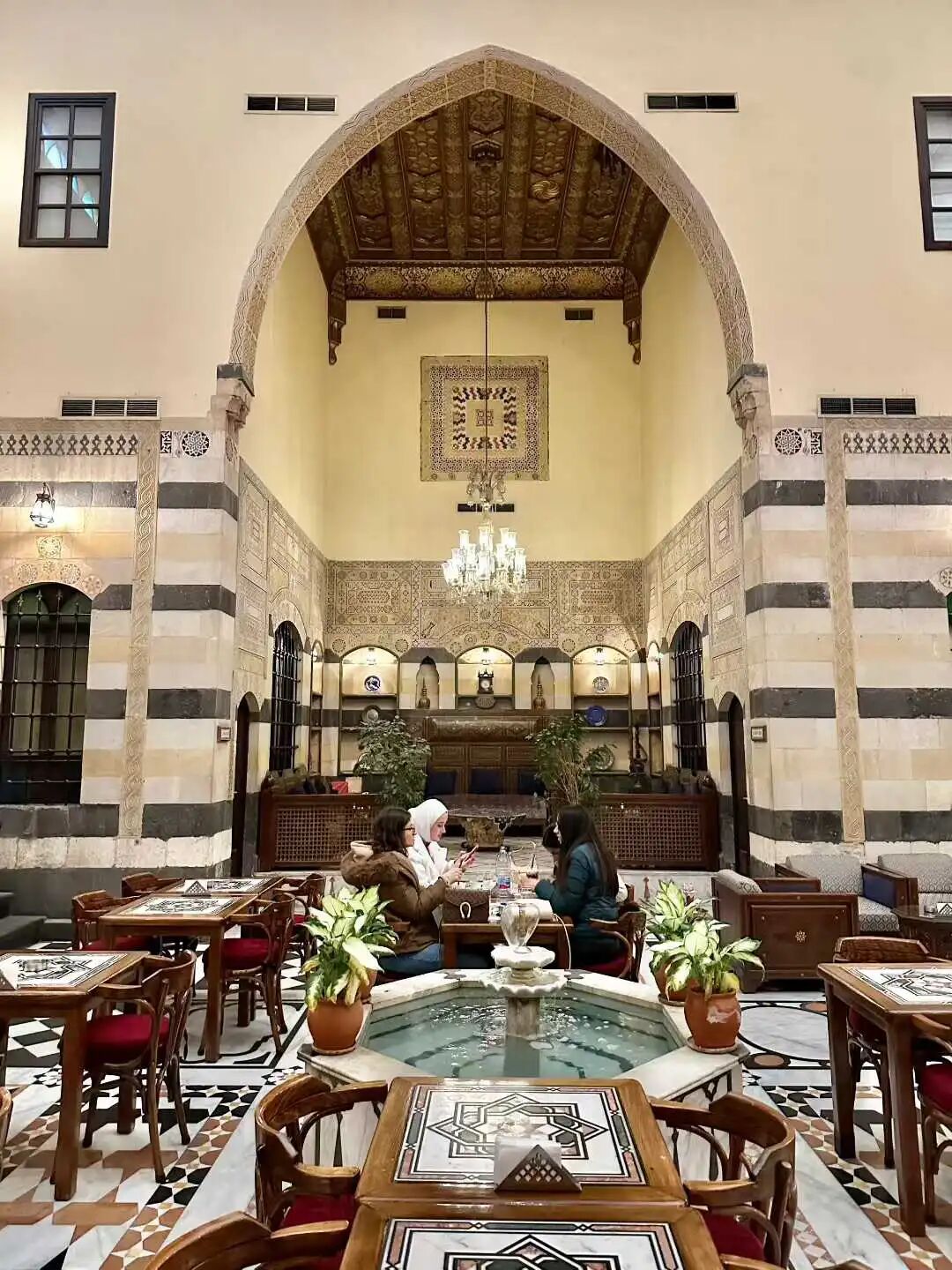
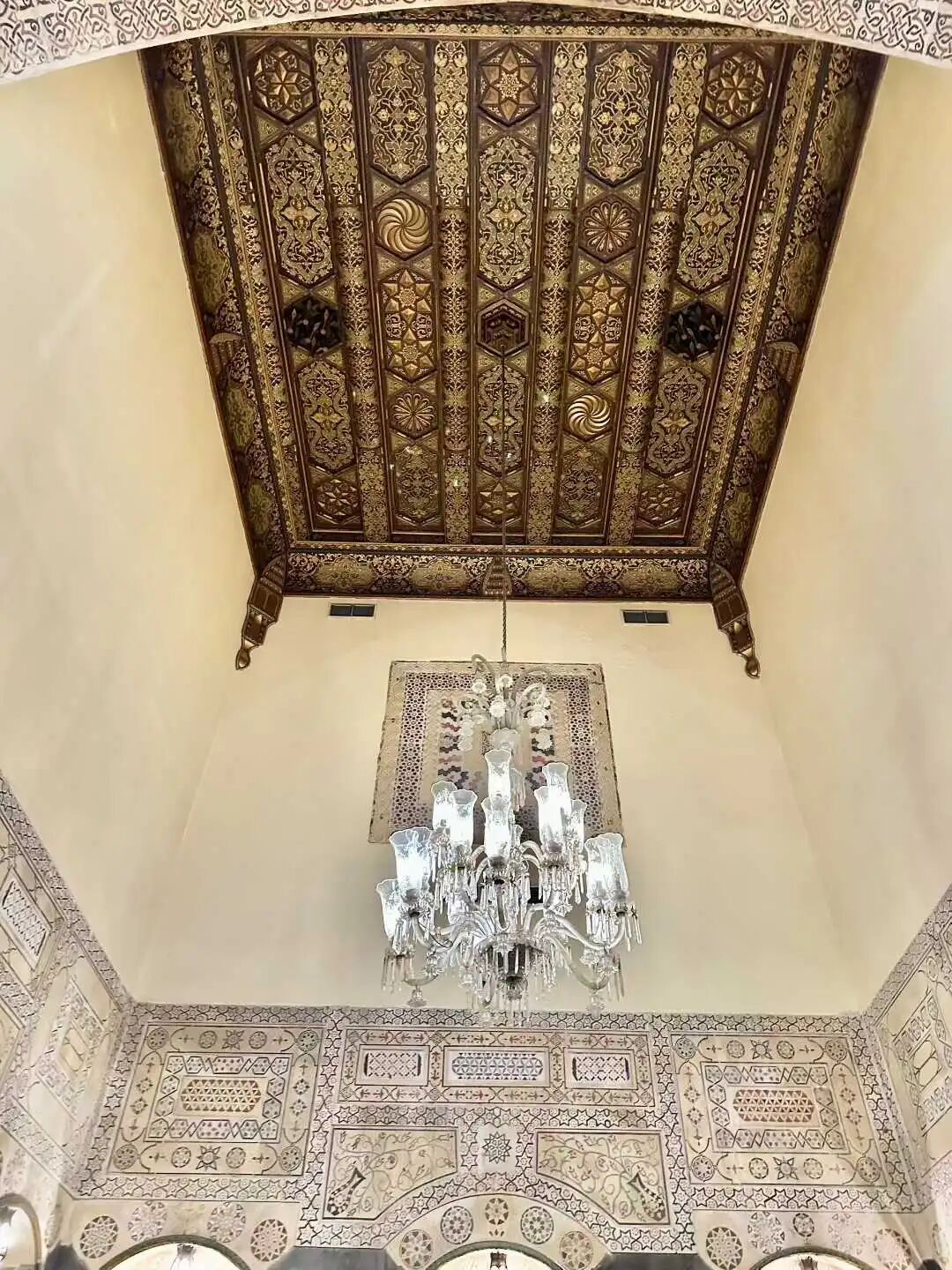
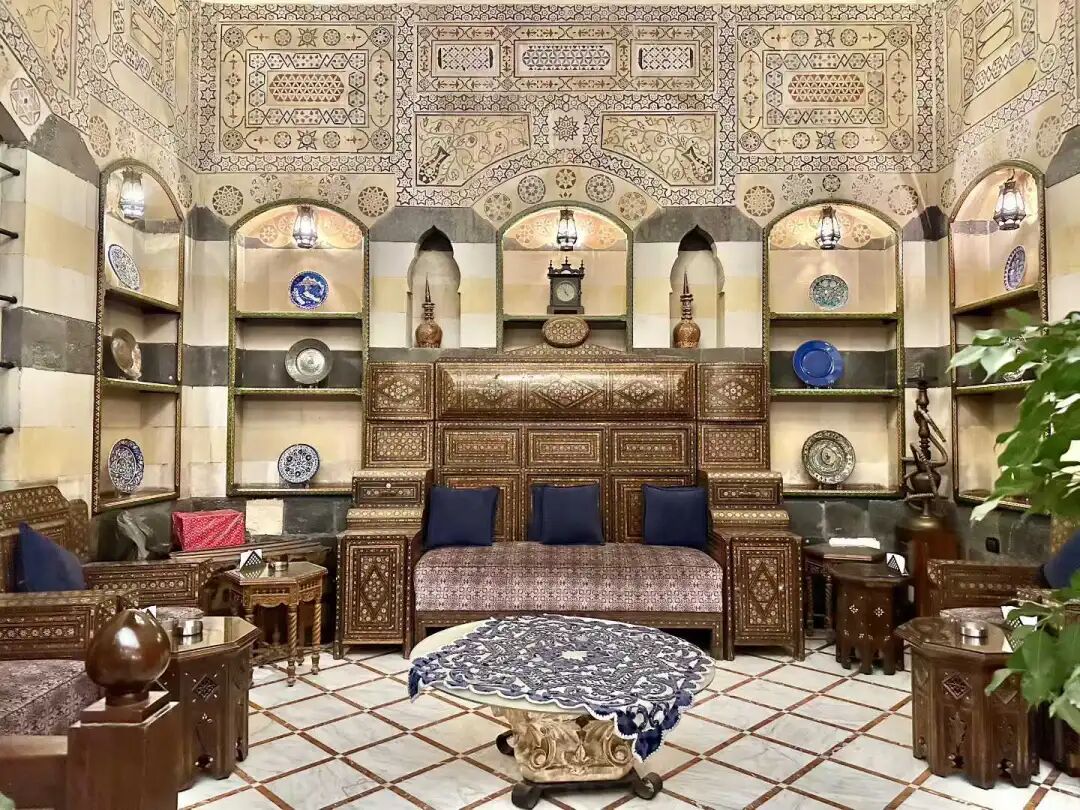
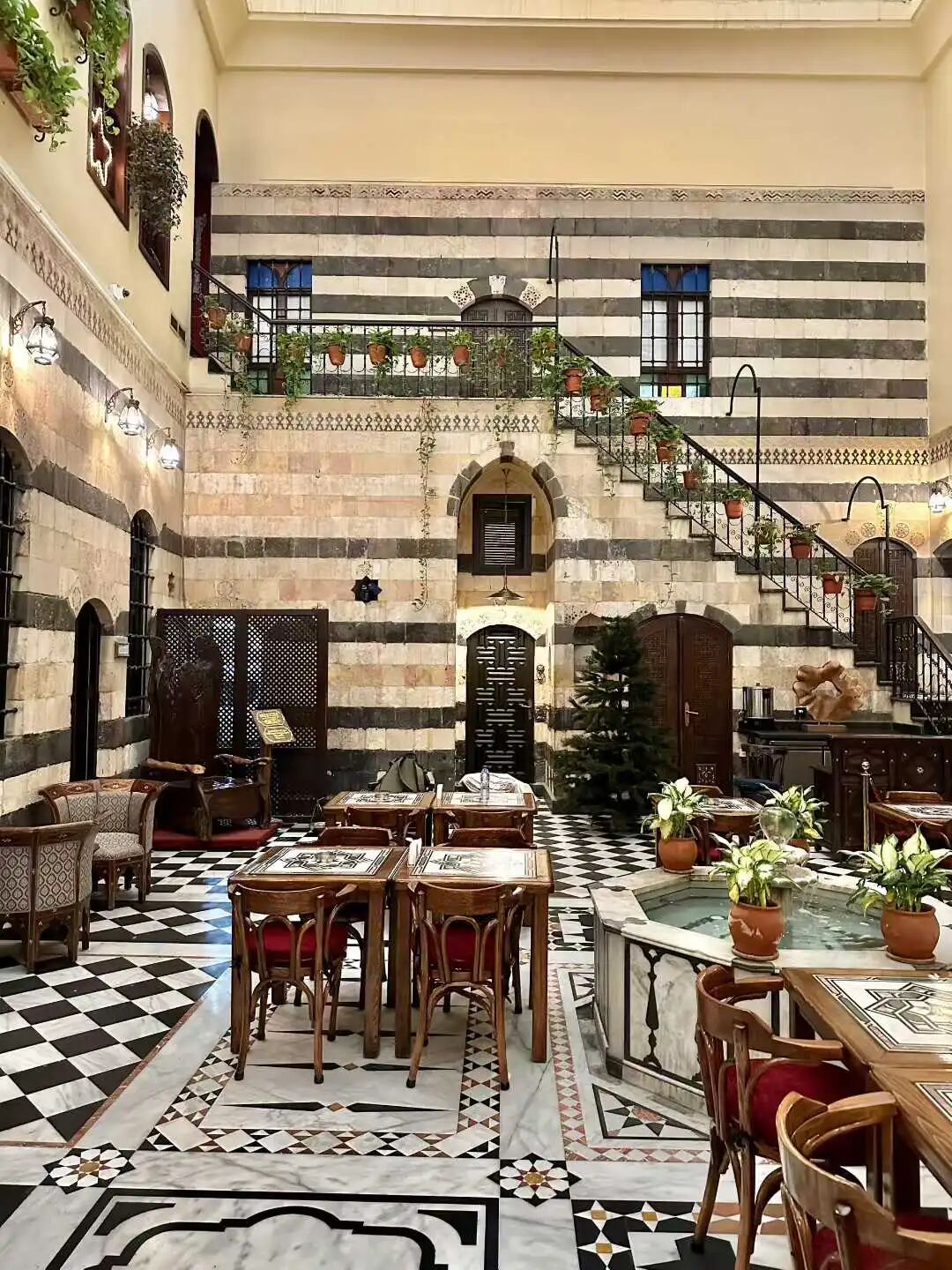
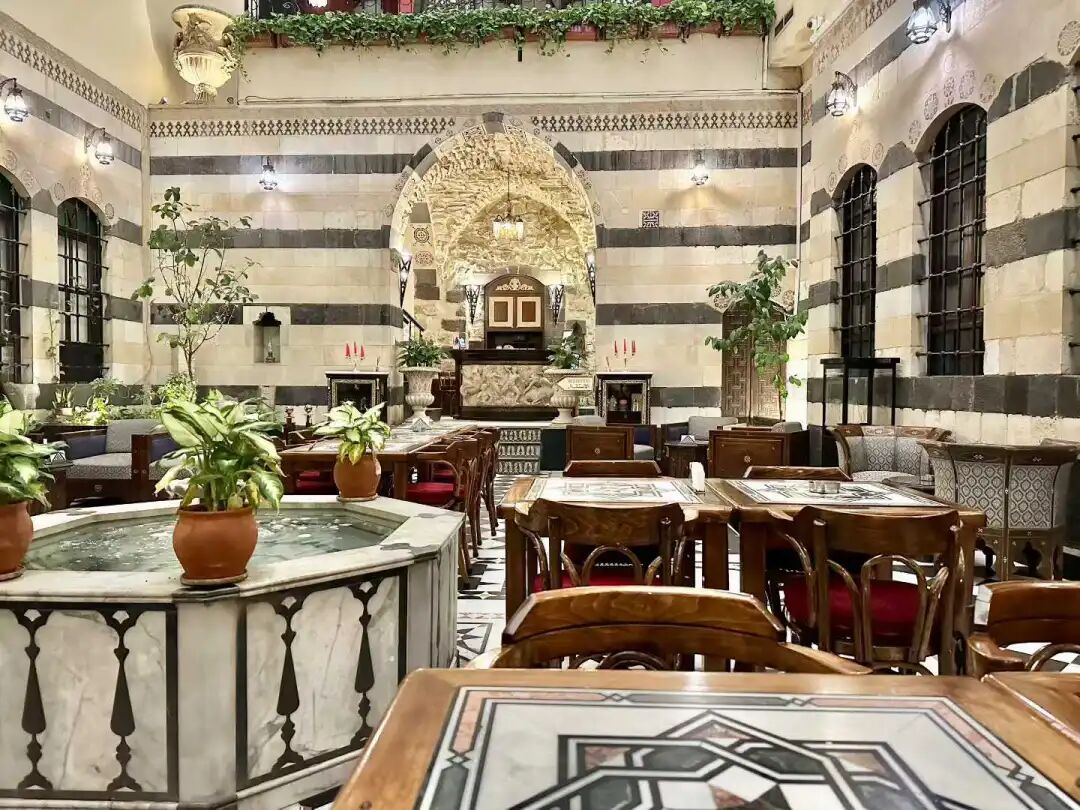
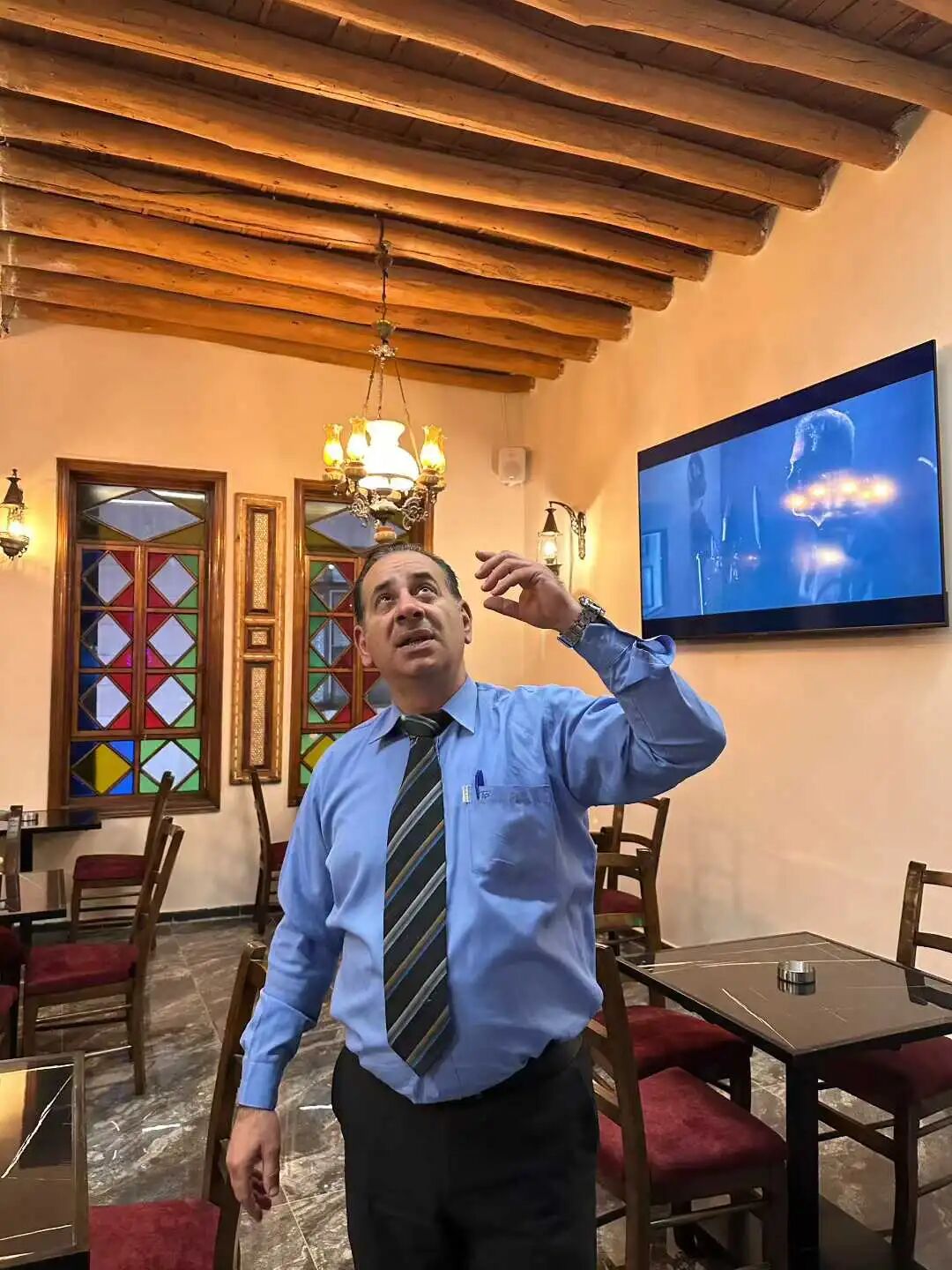
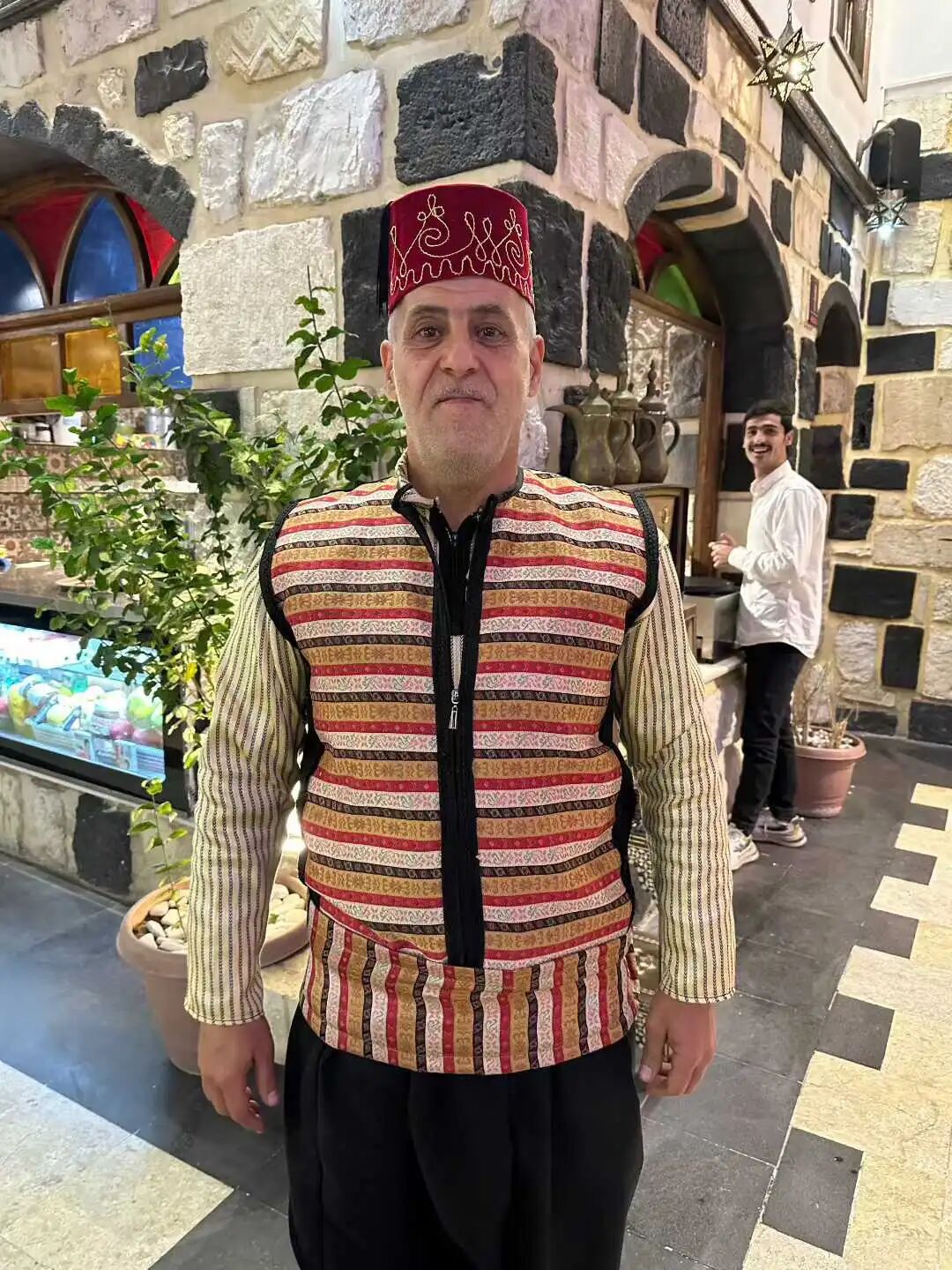
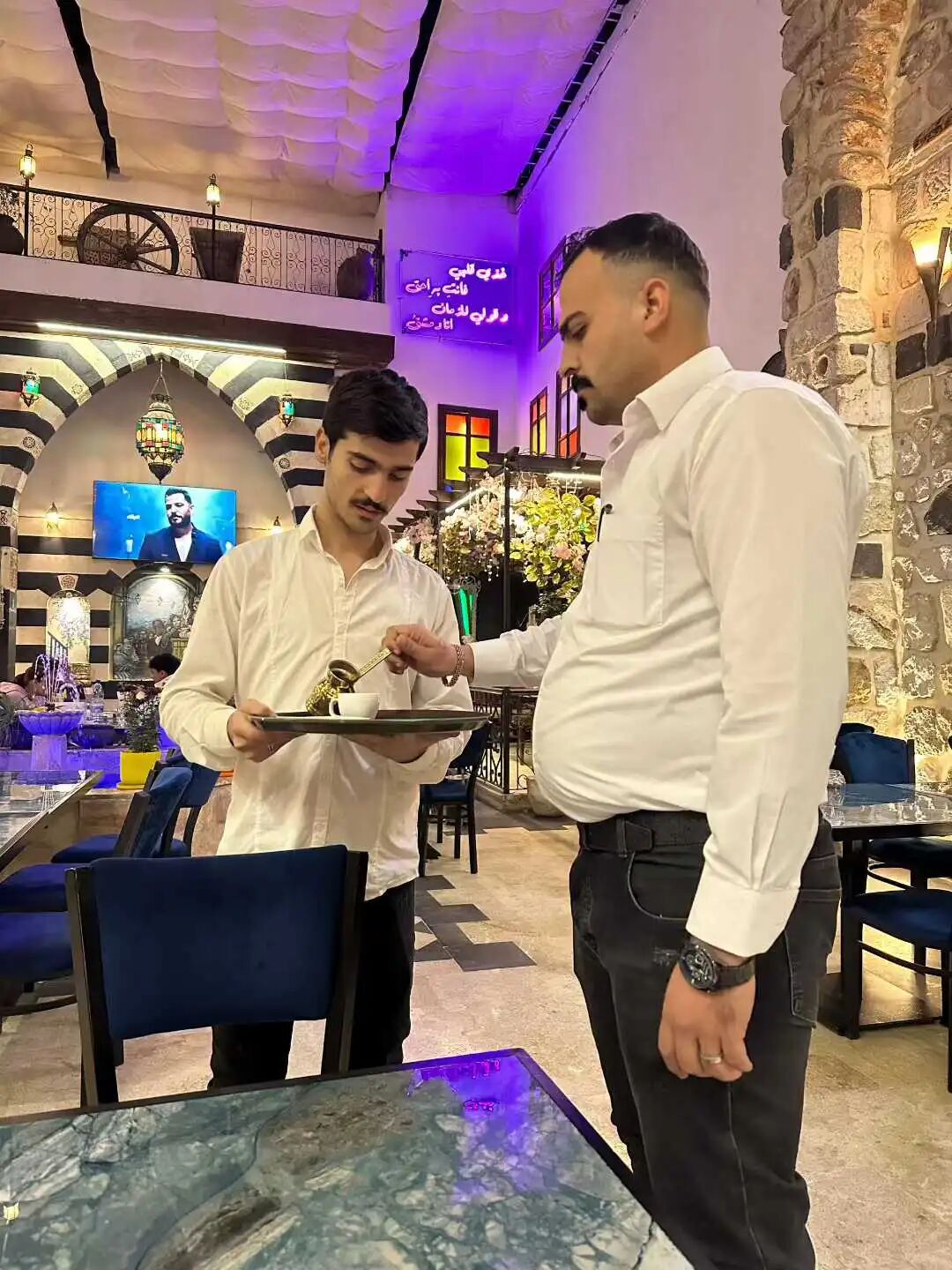
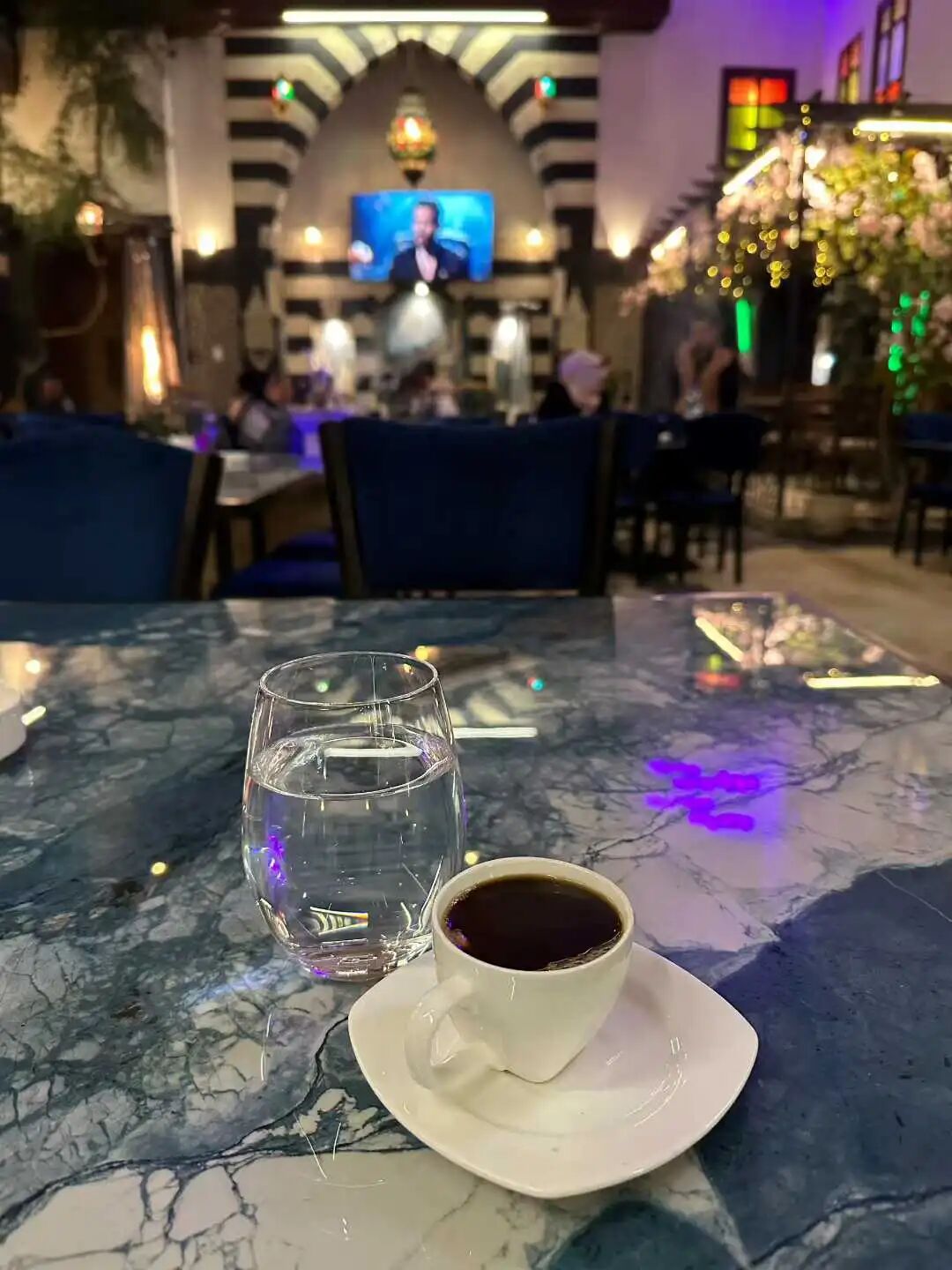
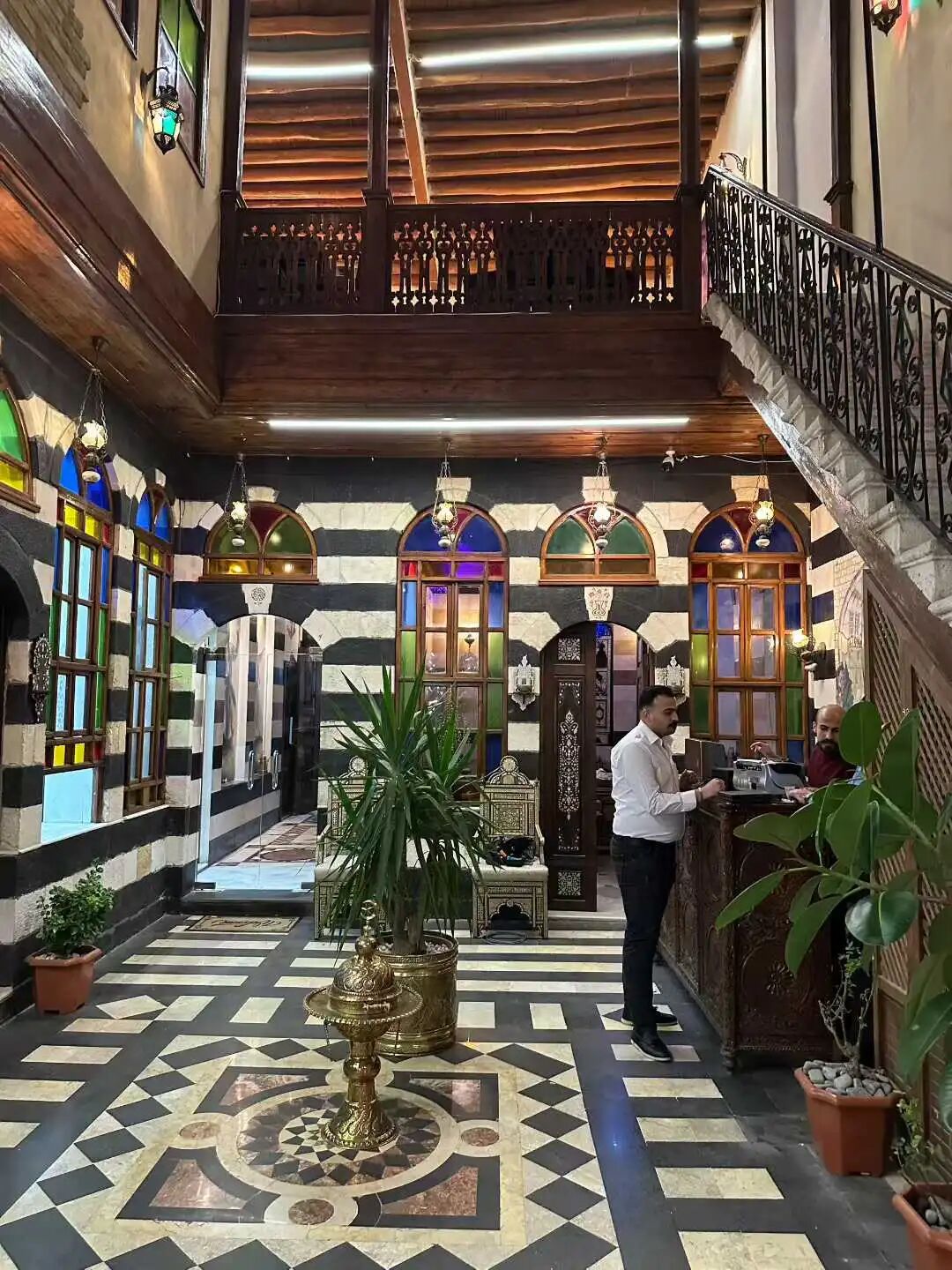
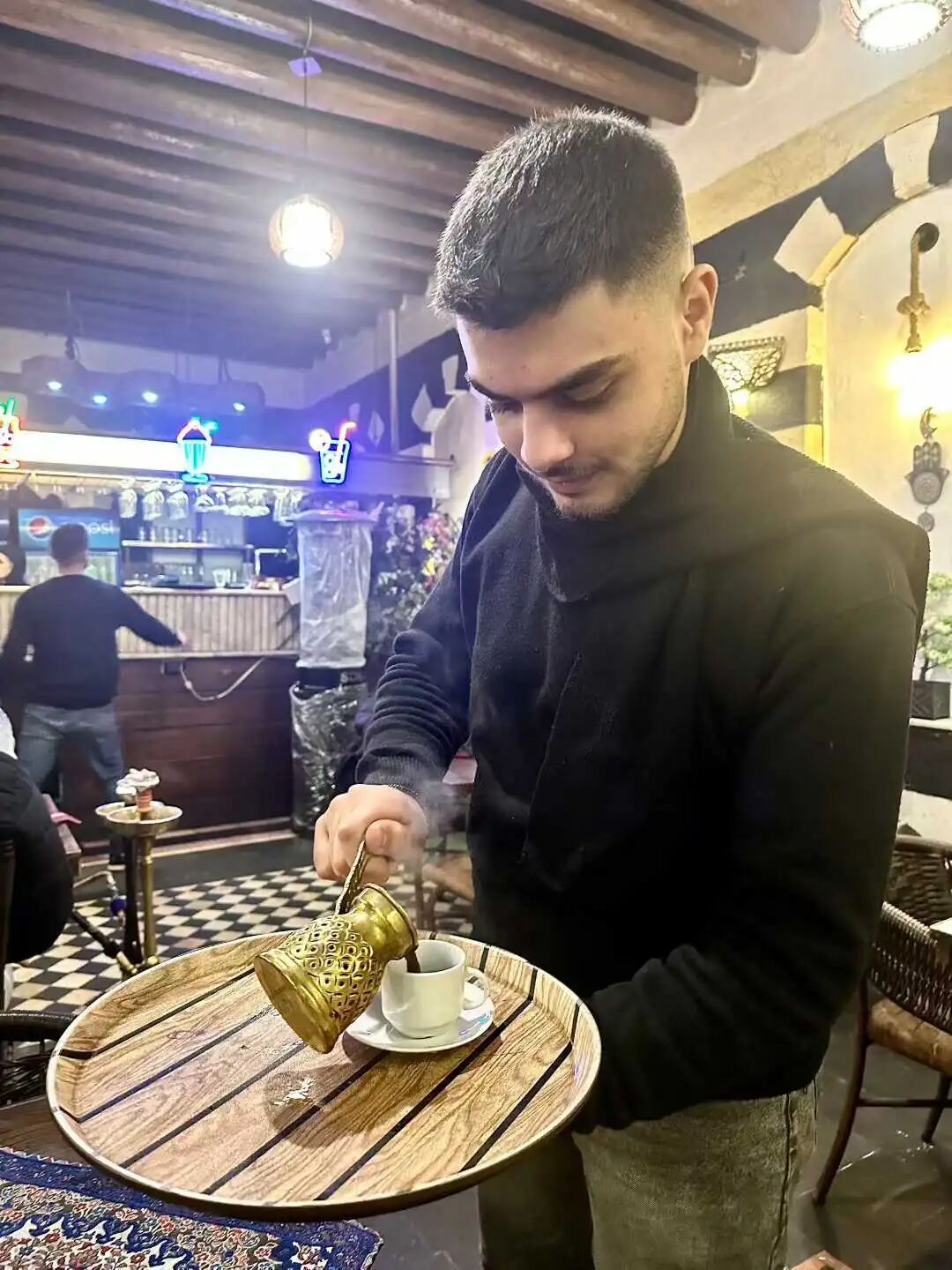
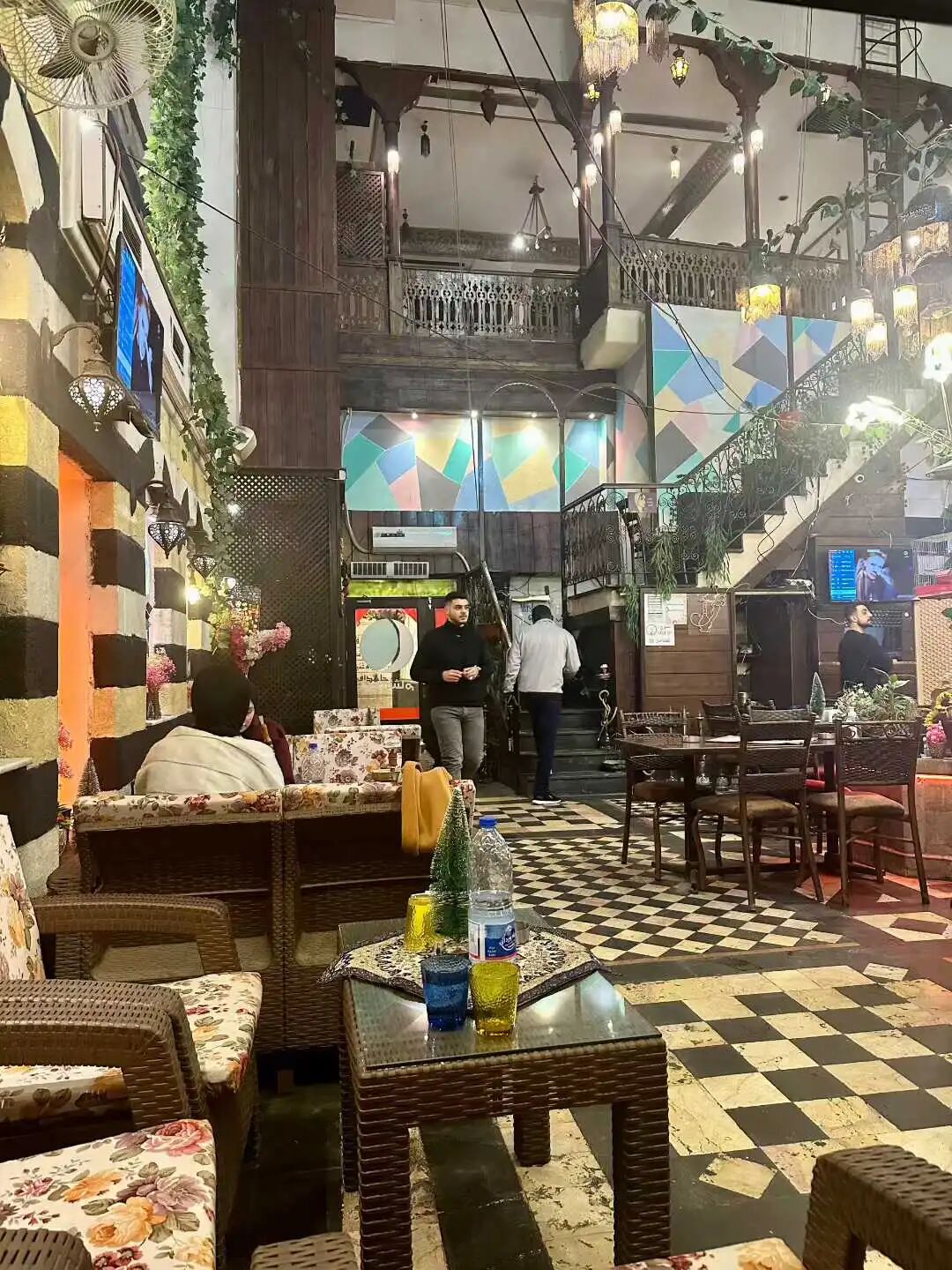
Besides historic hotels, many restaurants and cafes in the Old City of Damascus are also converted from Ottoman mansions. The first place I recommend had just opened when I visited, so you cannot even find it online. It is located on the road after entering the Old City of Damascus from the Bab Touma gate and turning west into Qanayet Al-Hatab street. They only had tea and coffee when I went, but the environment was quite nice. I ordered a cup of sand-brewed coffee. The owner speaks English. He was very enthusiastic and invited me to the second floor to see the old building.
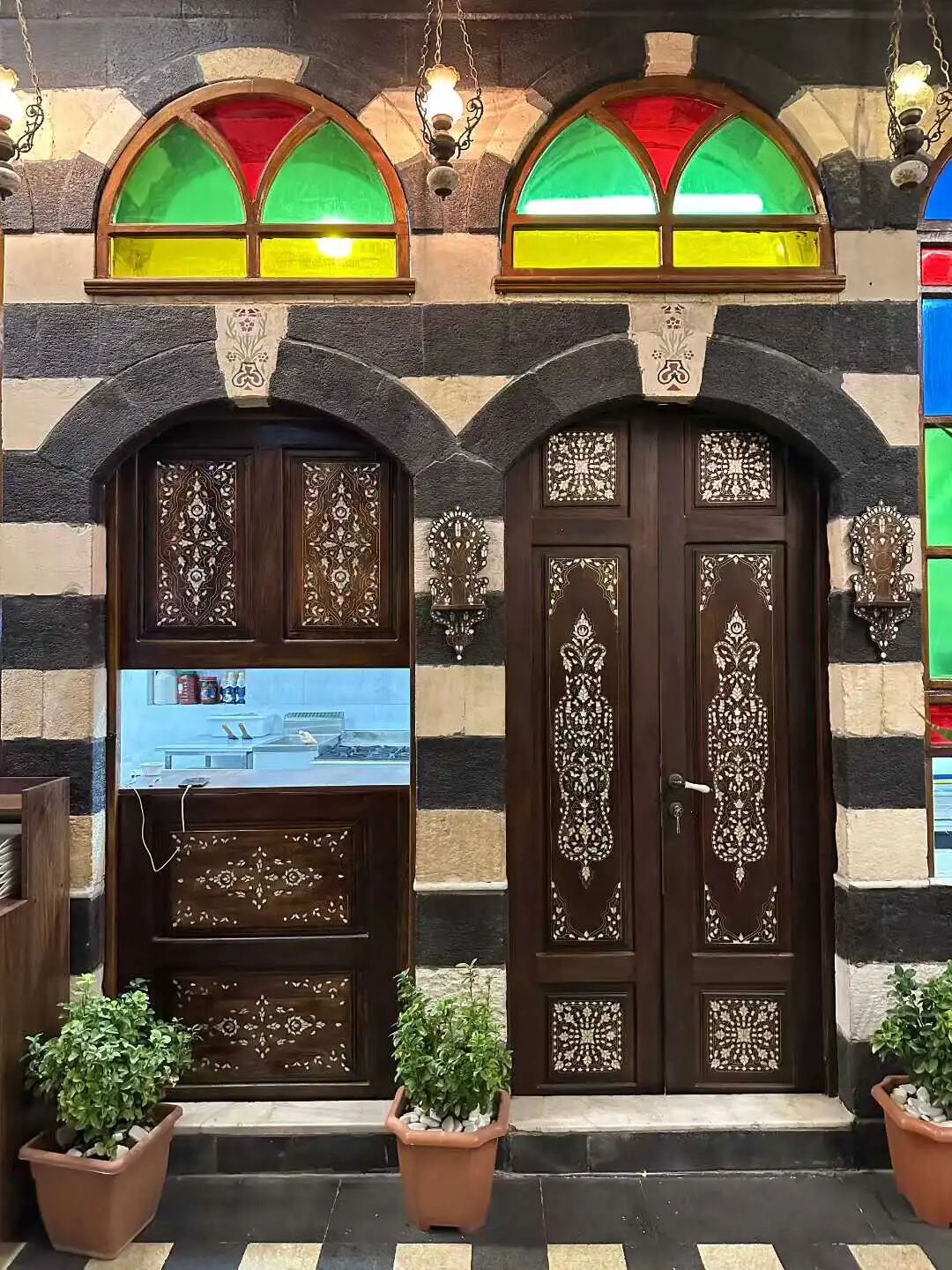
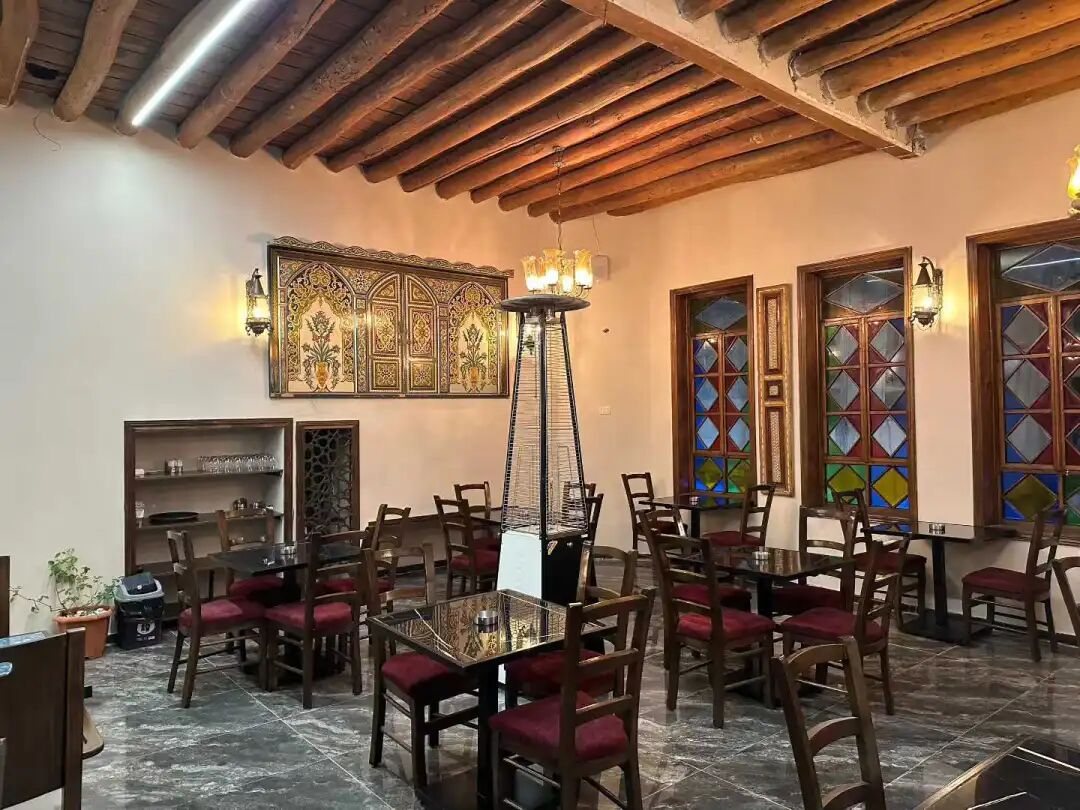
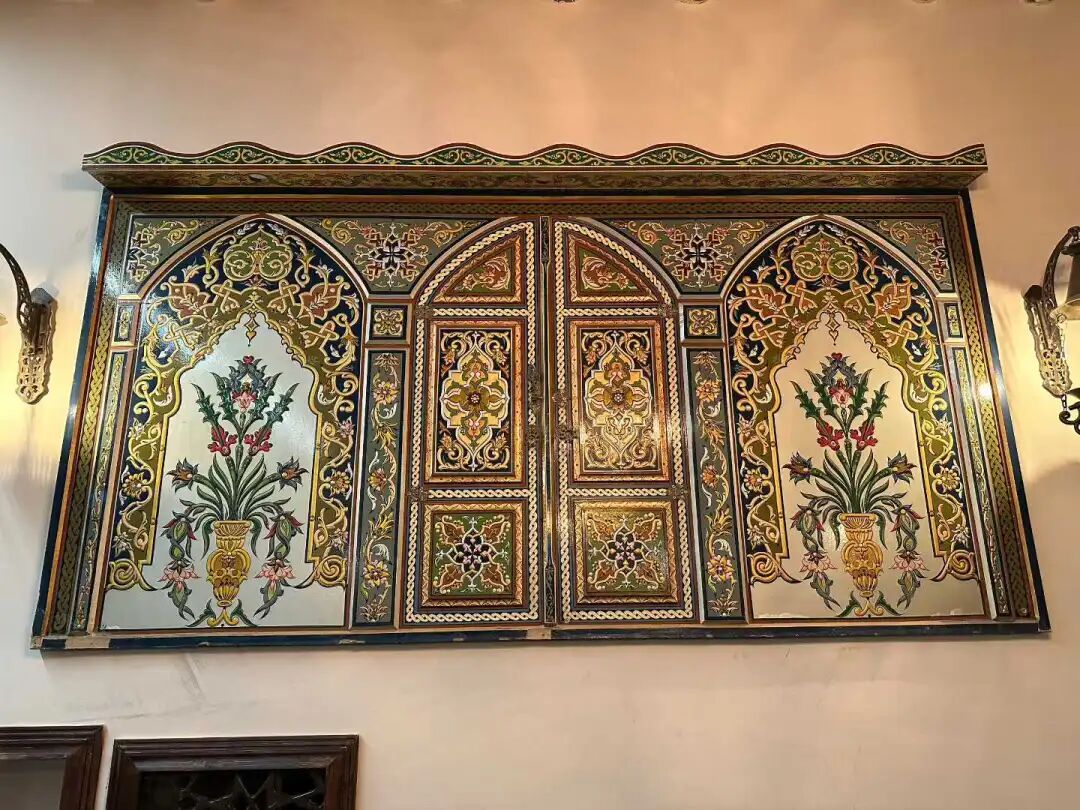
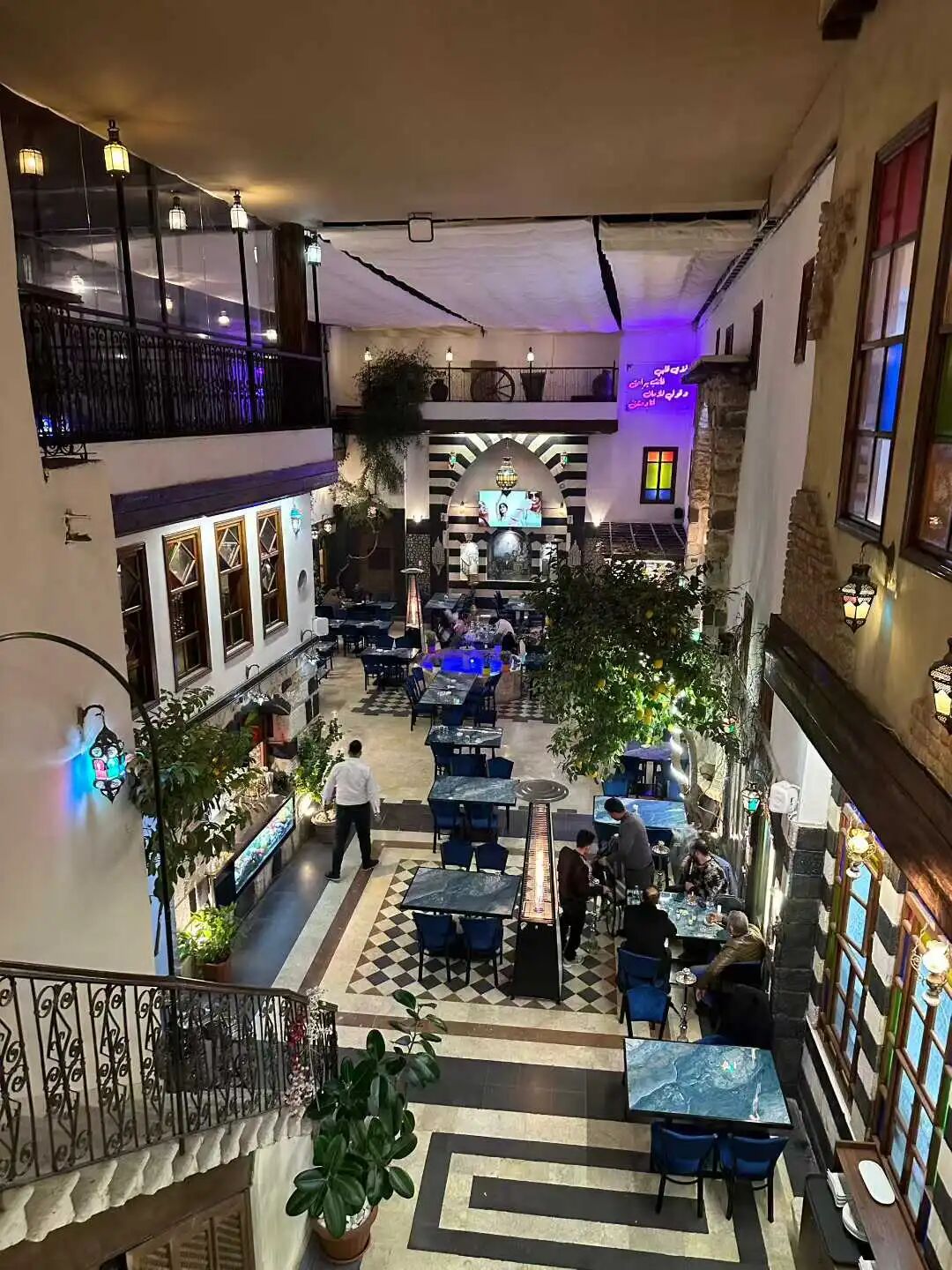
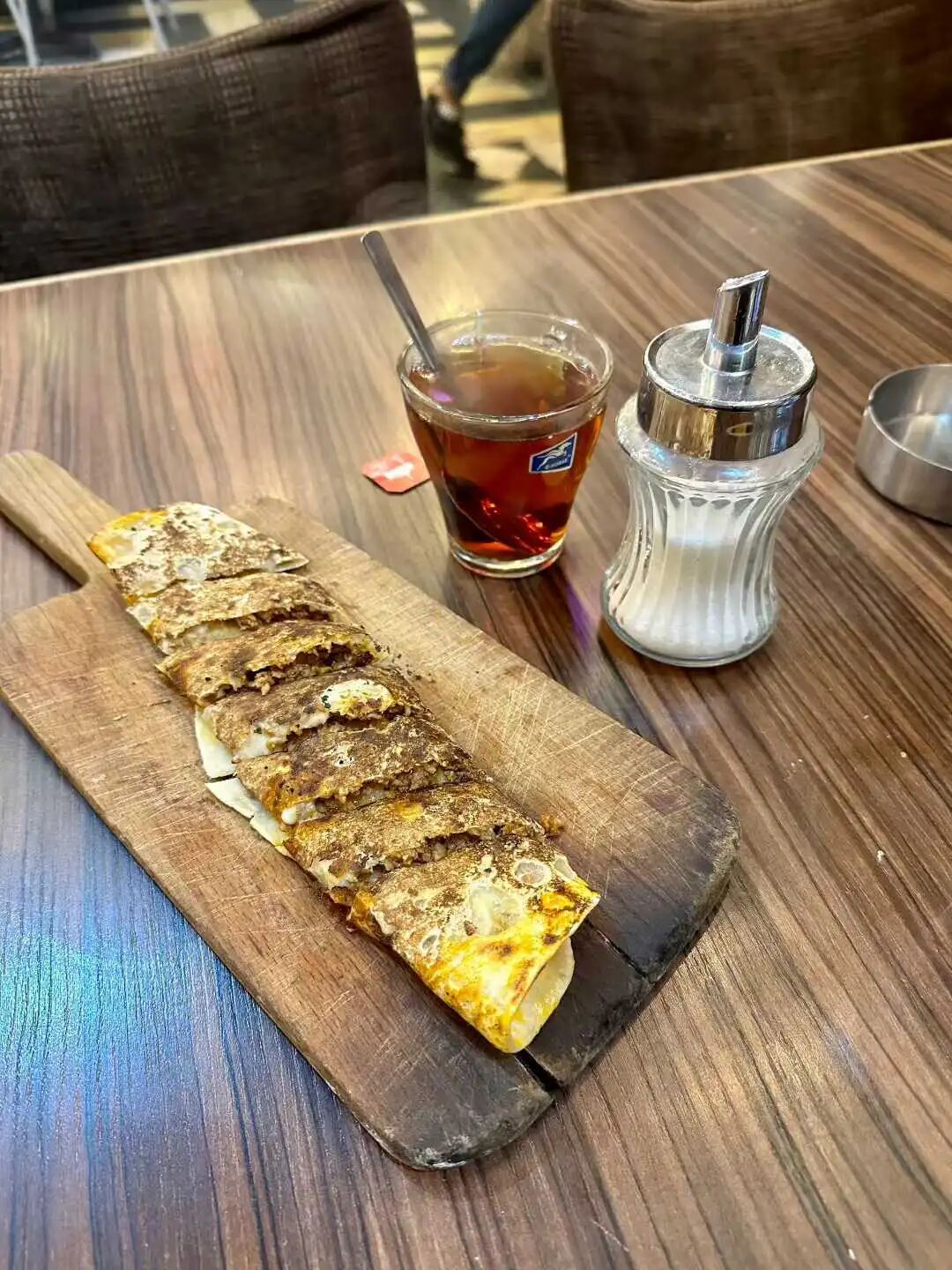
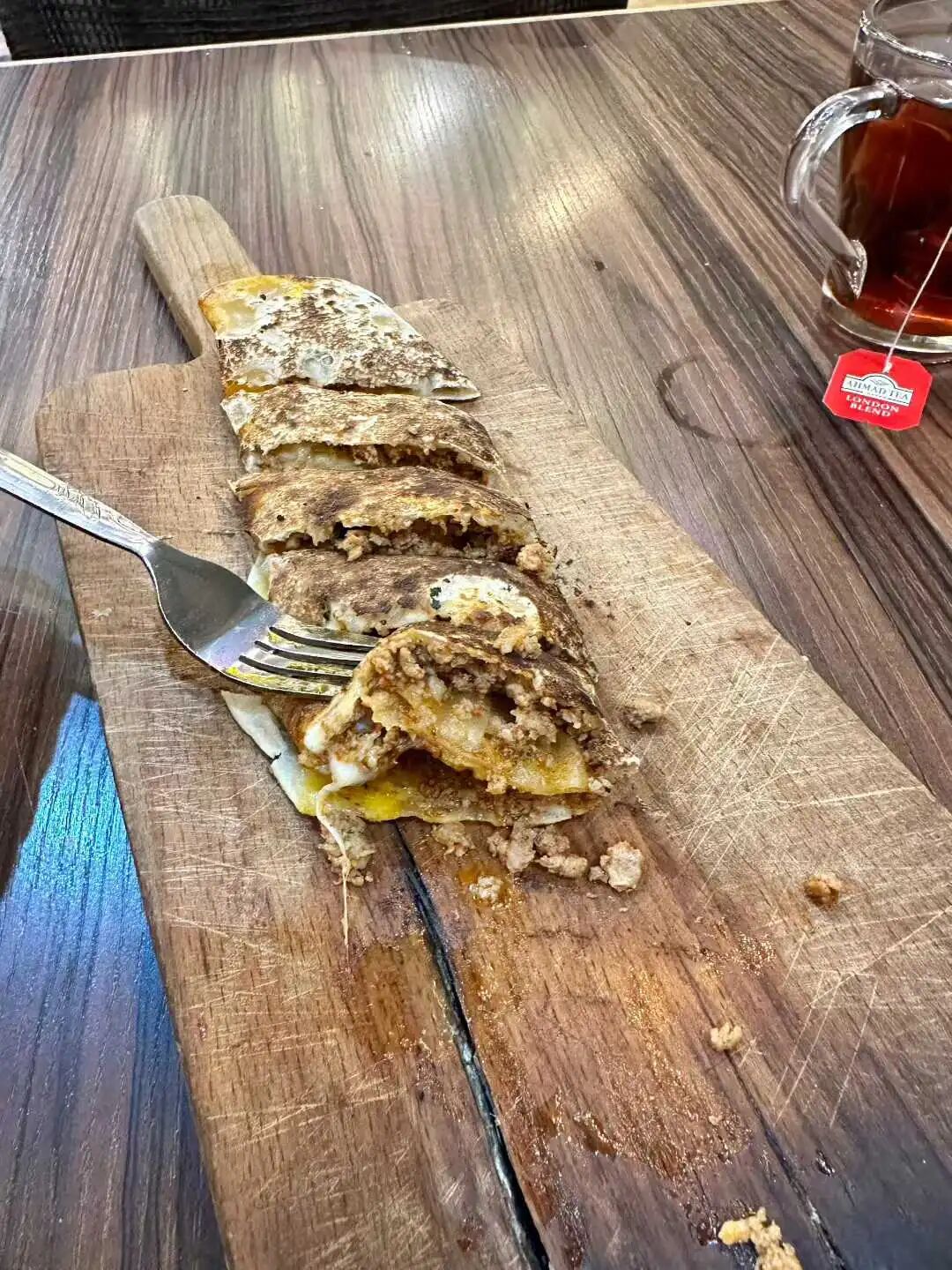
Lady Cafe is on the Al Nawfara pedestrian street outside the east gate of the Umayyad Mosque. It is very lively in the afternoon and evening. I ate a Damascus specialty snack called Toshka pie at the cafe. It is known as a national snack of Syria. Toshka is made by putting spicy sausage (Sujuk) and Kashkawan cheese inside pita bread, then pressing it on an iron griddle on both sides until the cheese melts and the bread is crispy. When you eat it, it is crispy on the outside and soft on the inside. The bread is charred and fragrant, and the meat and cheese are rich and stretchy.
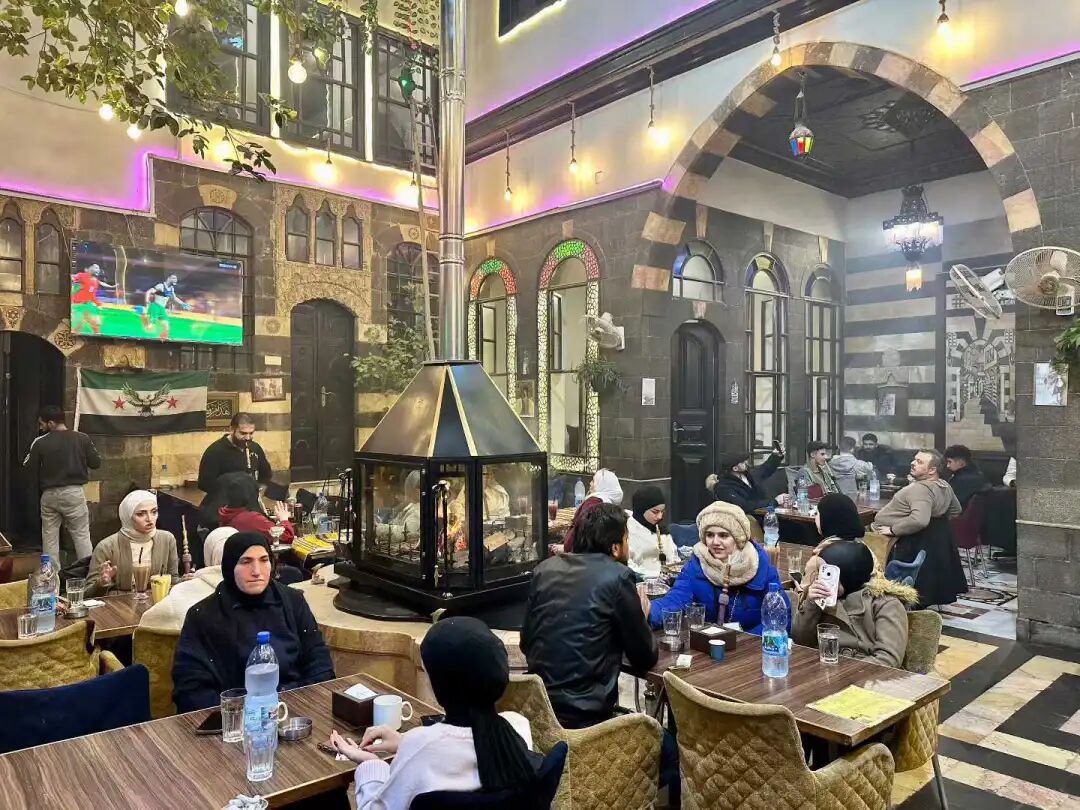
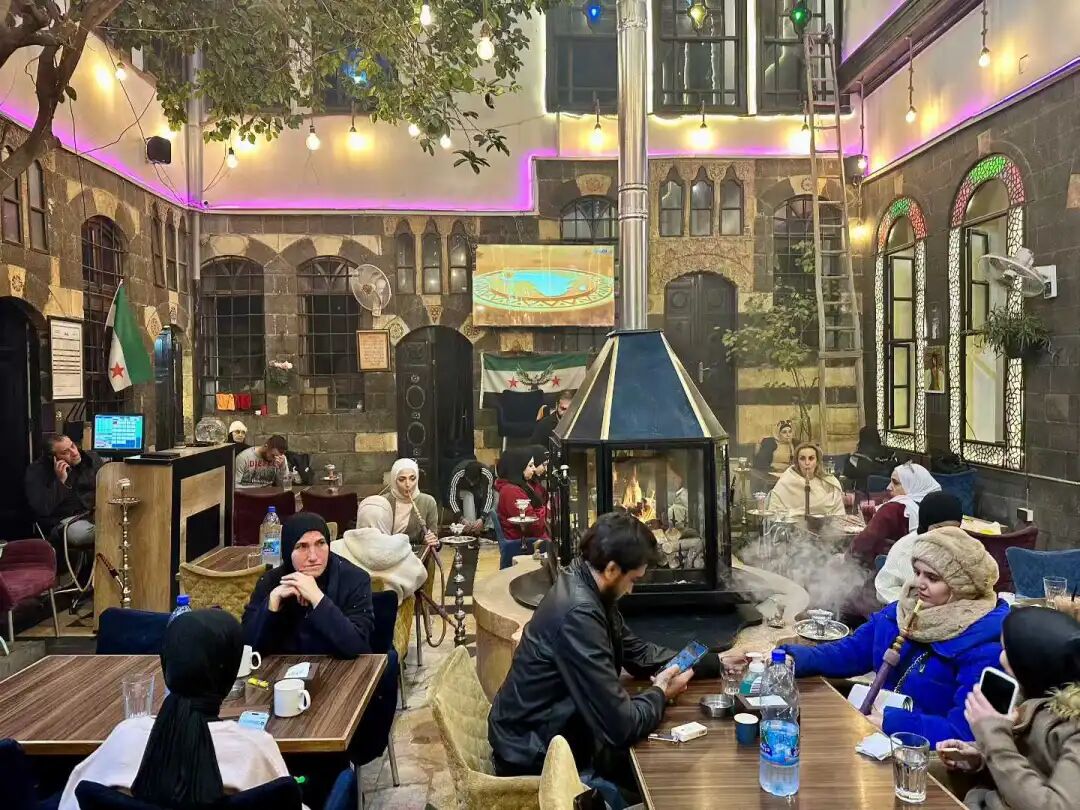
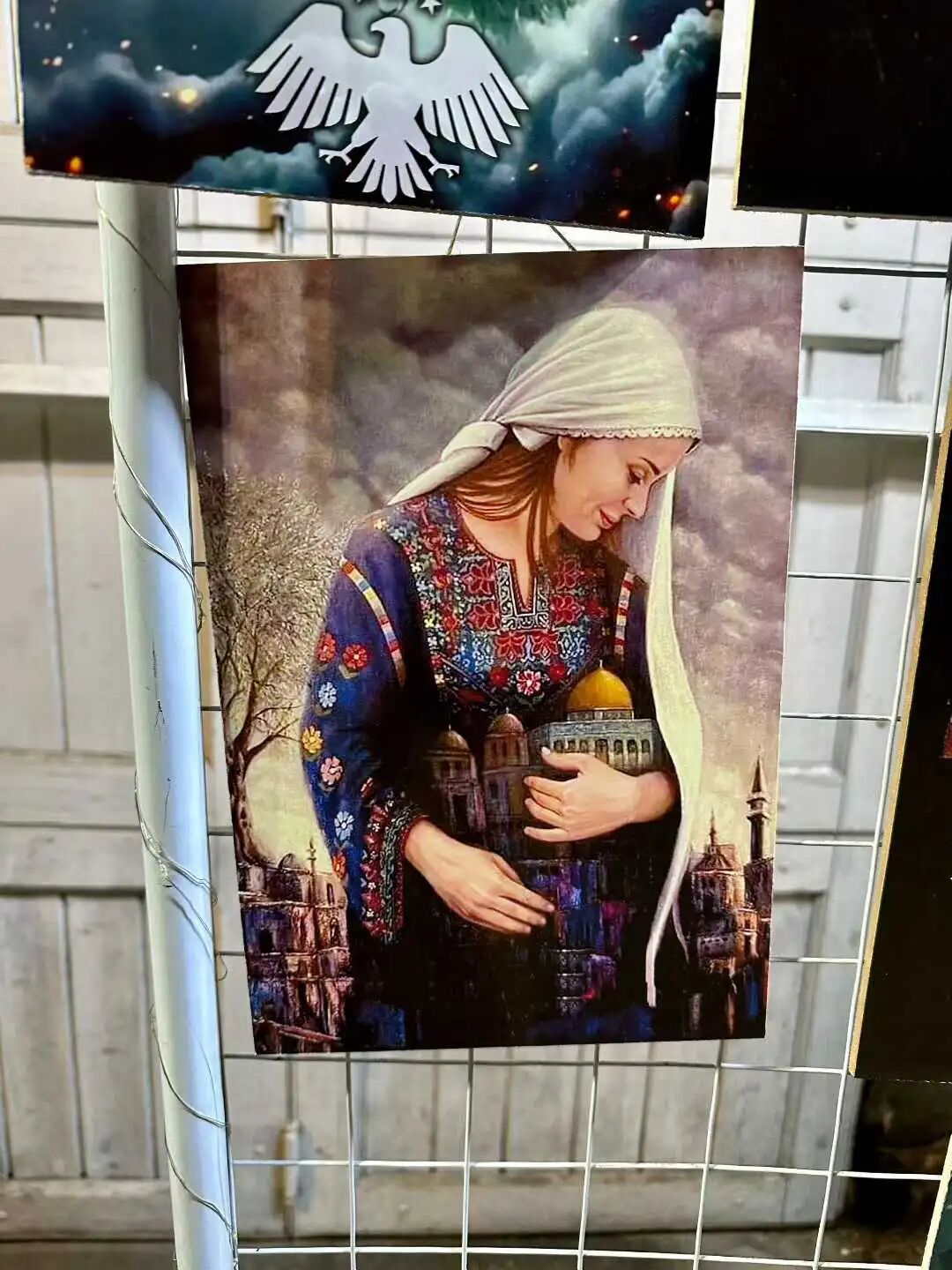
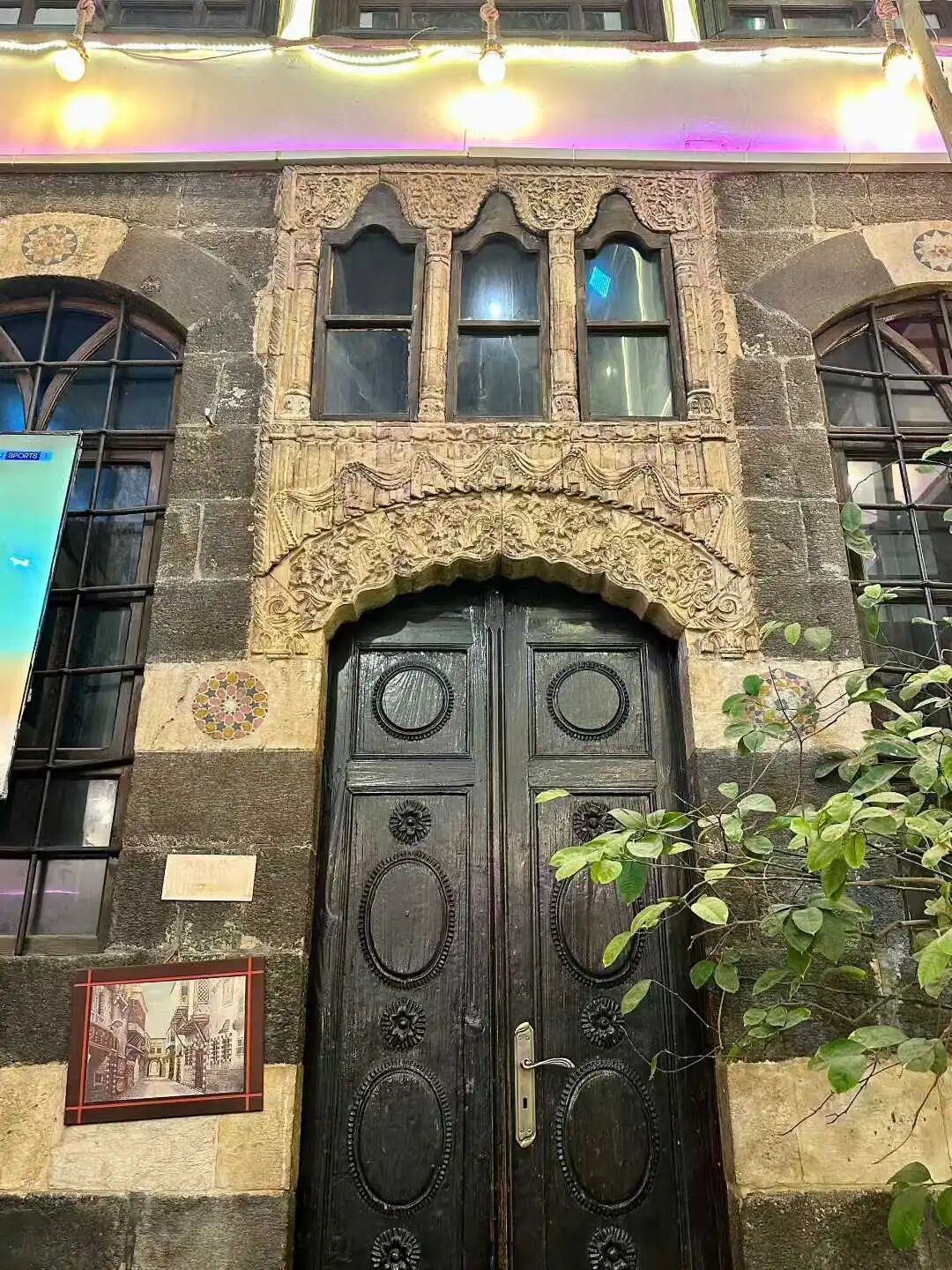
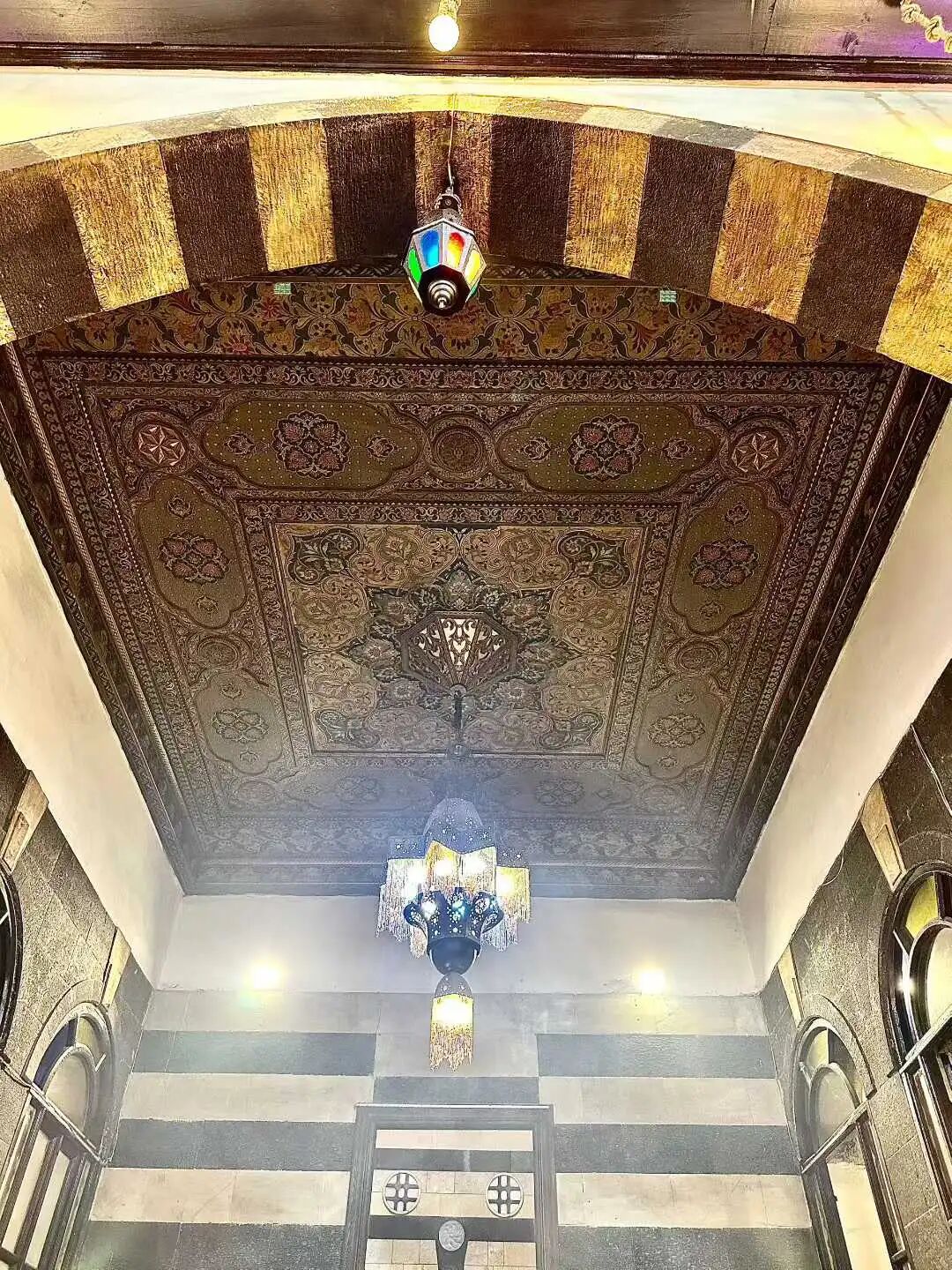
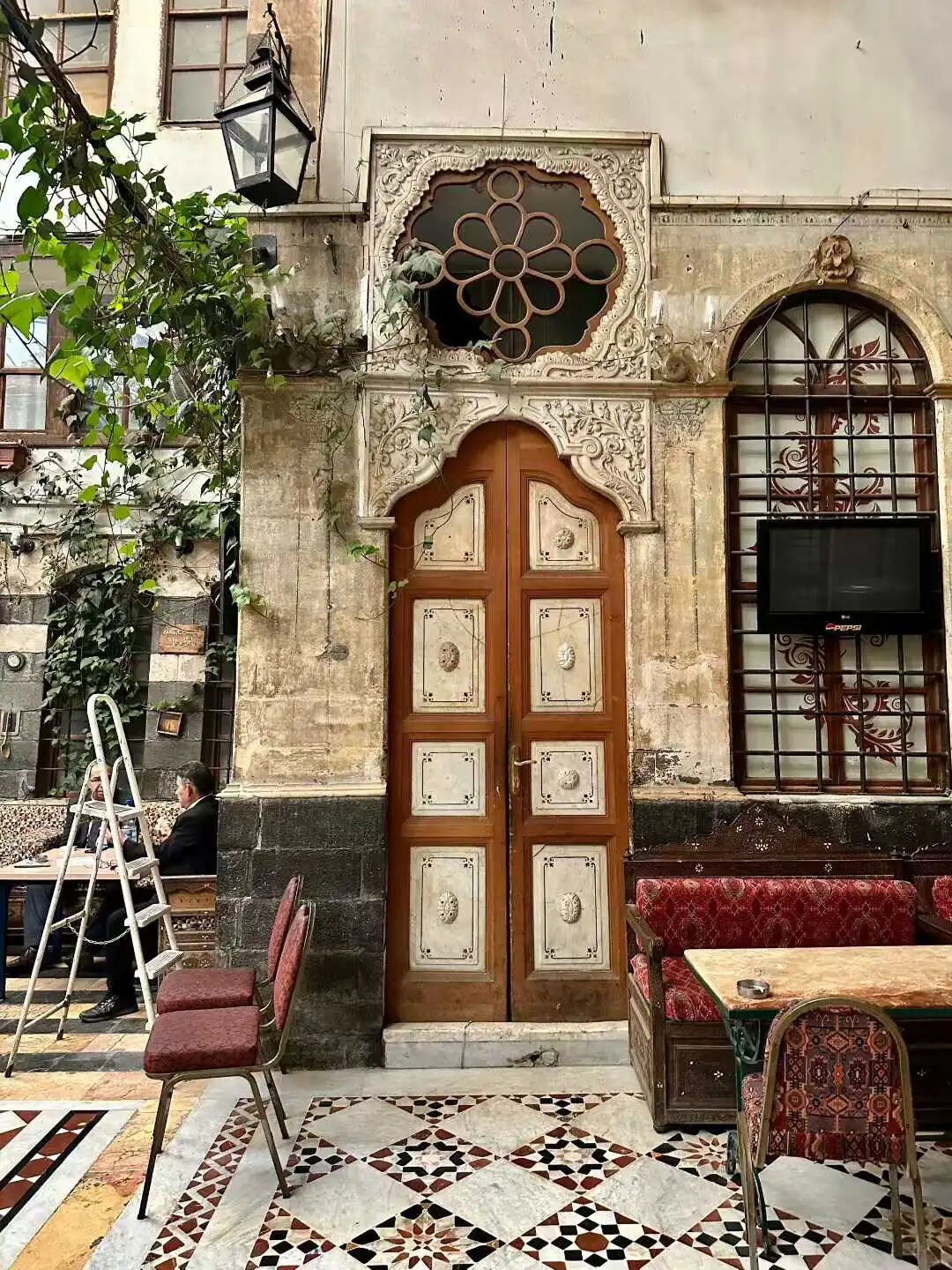
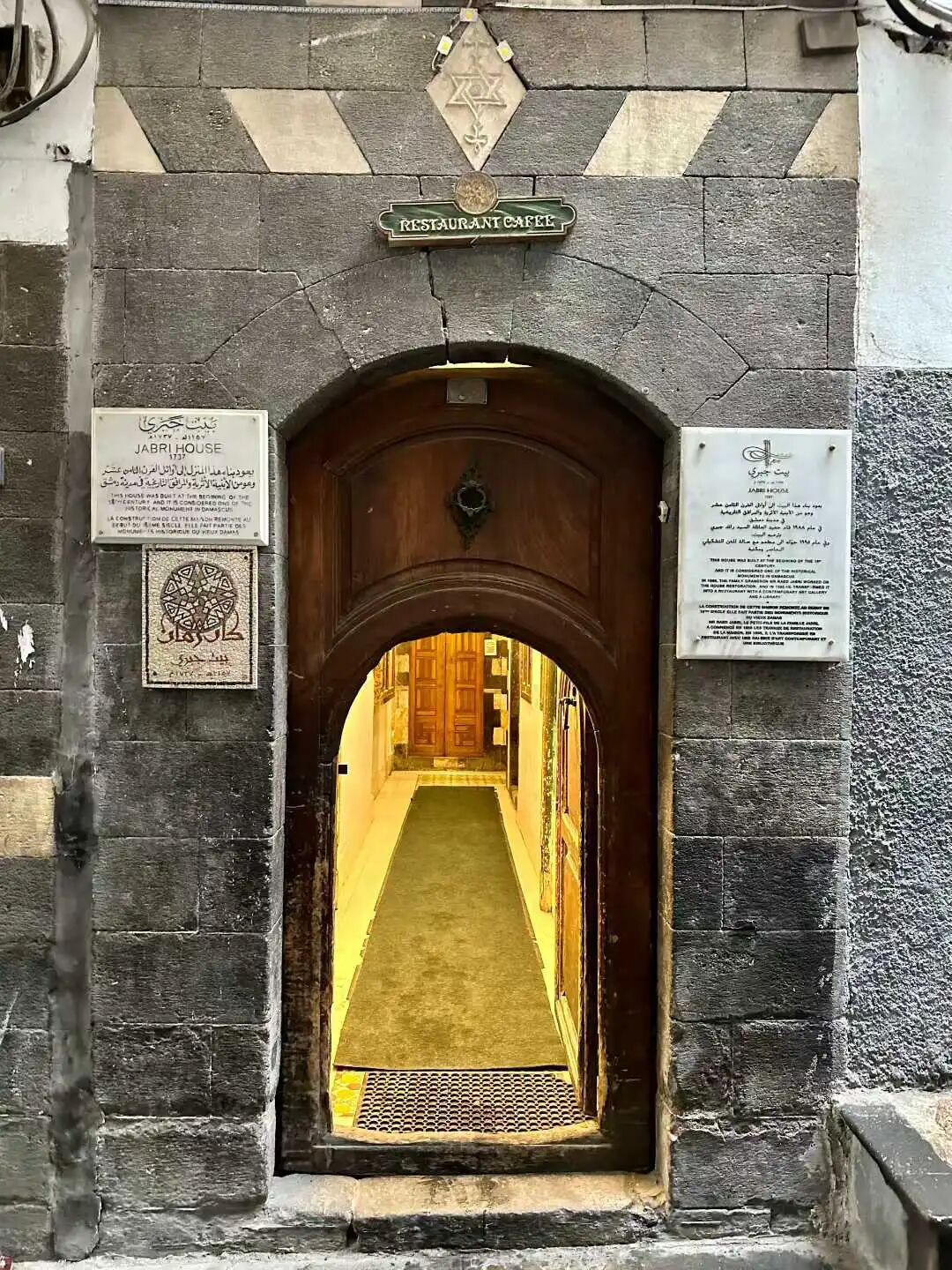
Beit Jabri is on As Sawwaf street, southeast of the Umayyad Mosque. It is an Ottoman mansion restaurant in the Old City of Damascus that is well worth a visit.
This mansion was built in the early 18th century. The current owner Raad Jabri's grandfather bought the property in the late 19th century, and their family lived there from 1905 to 1973. The house was gradually abandoned after the 1970s and later became a workshop for carpenters and blacksmiths. Raad Jabri restored the place in the 1990s and turned it into a restaurant. He also hosts cultural seminars, poetry readings, and classical music evenings from time to time.
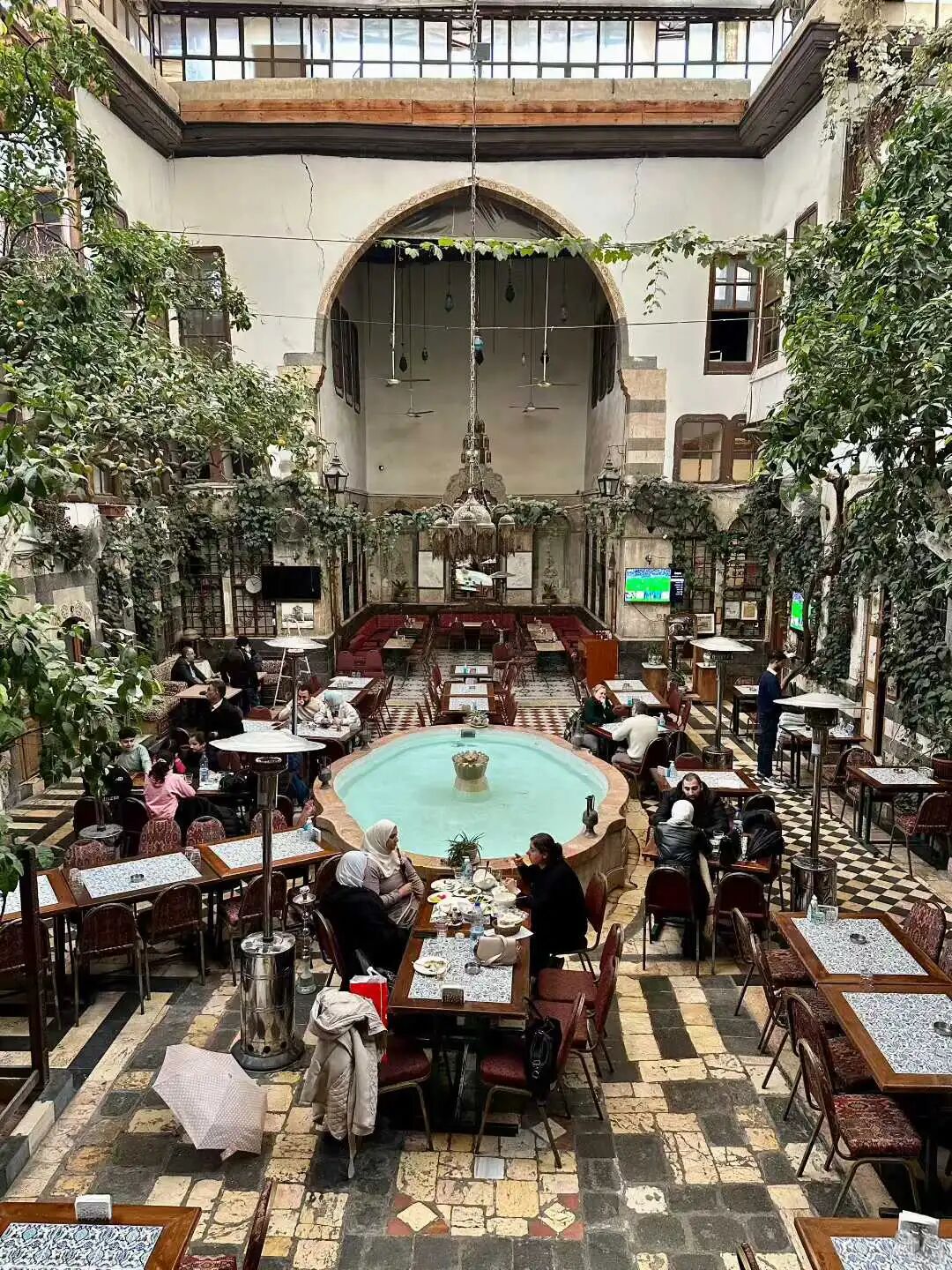
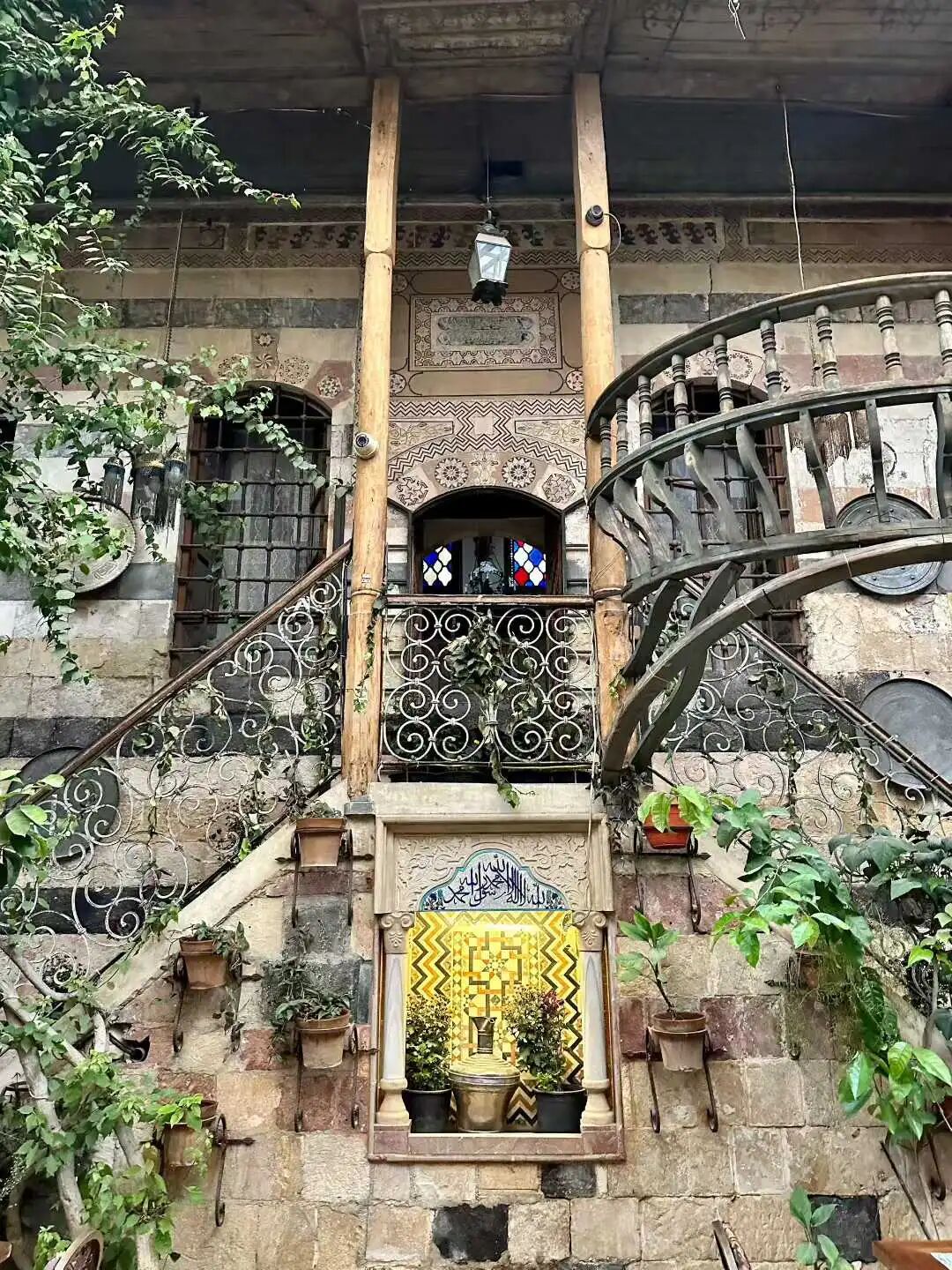
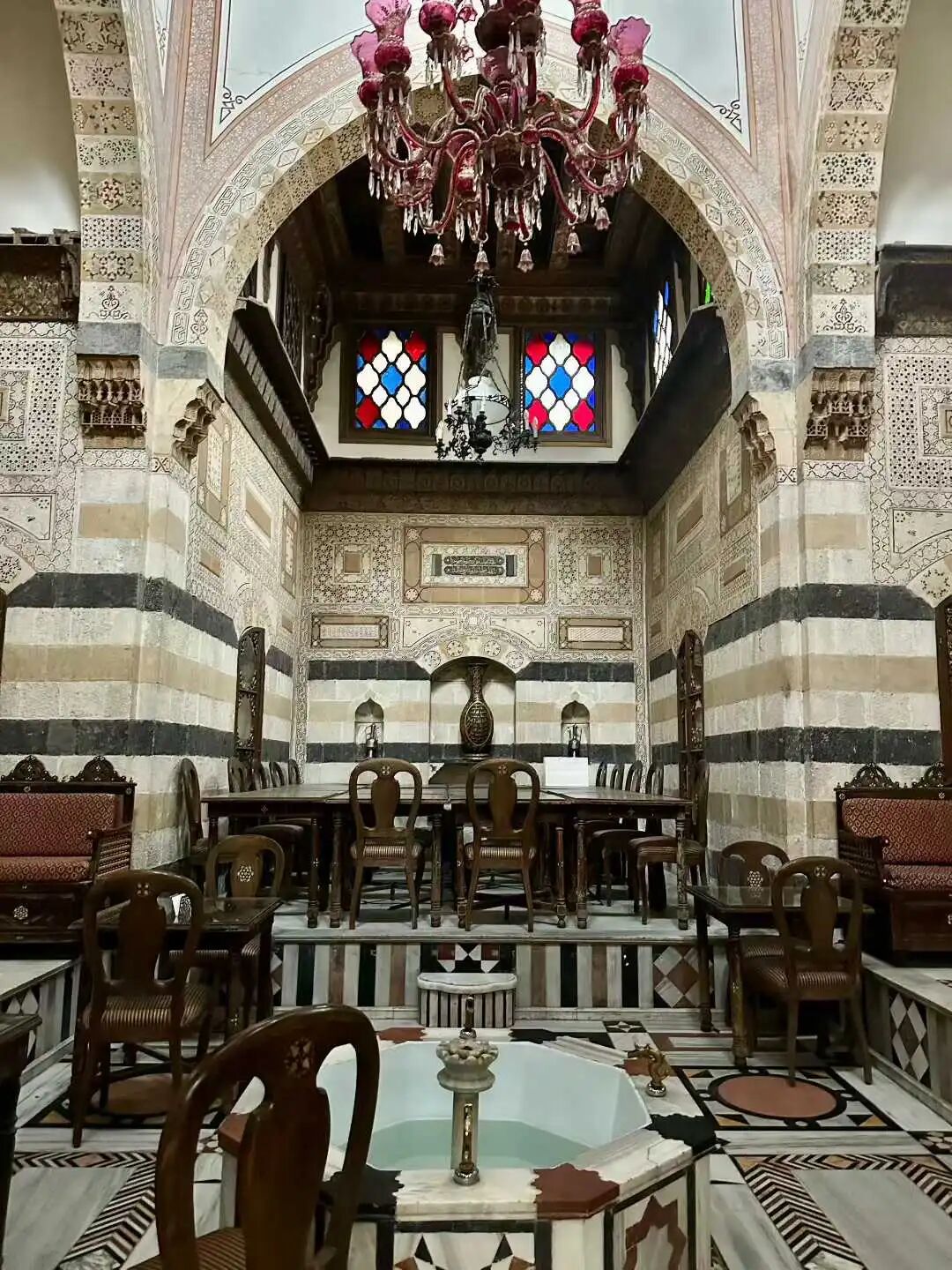
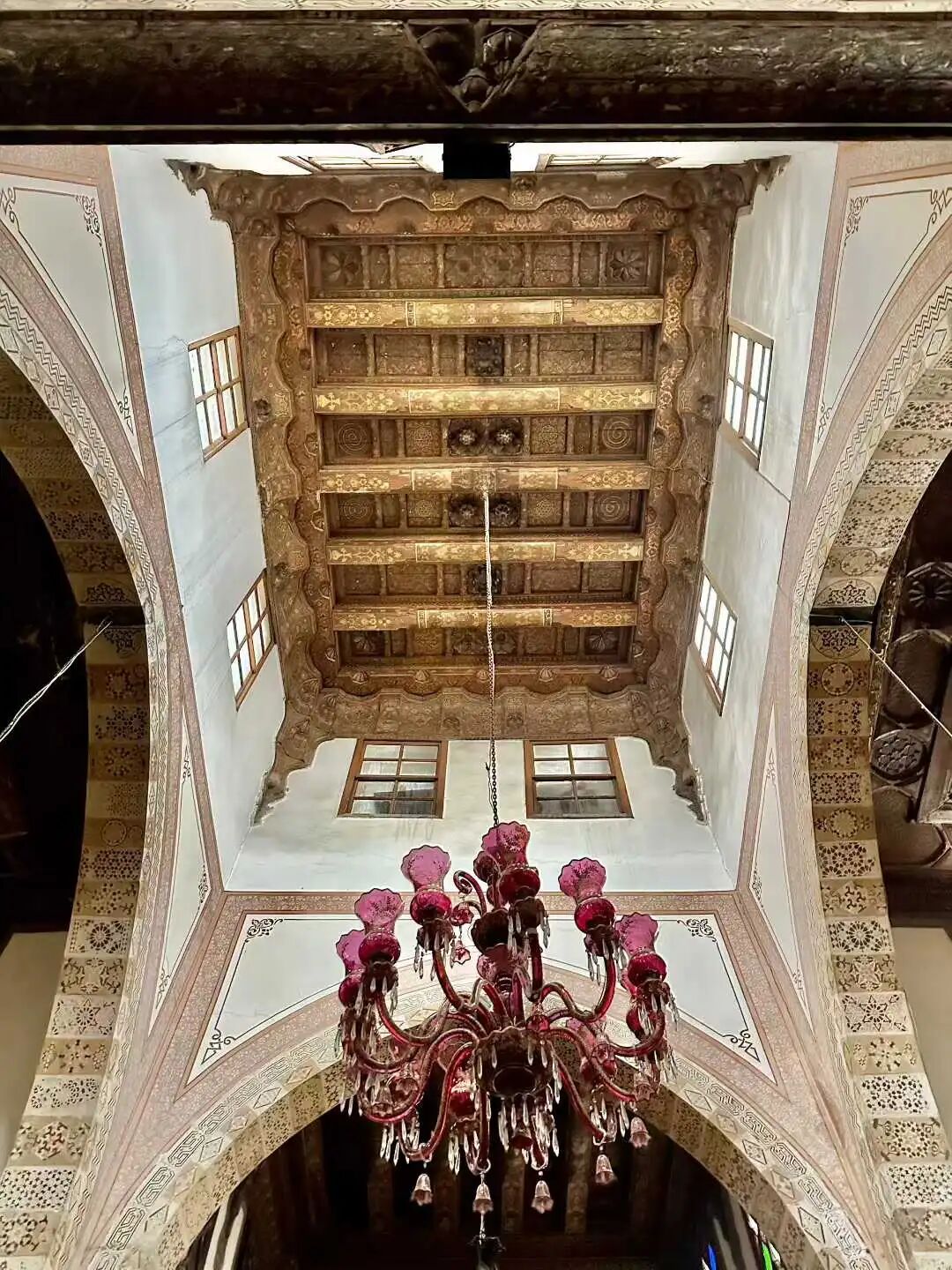
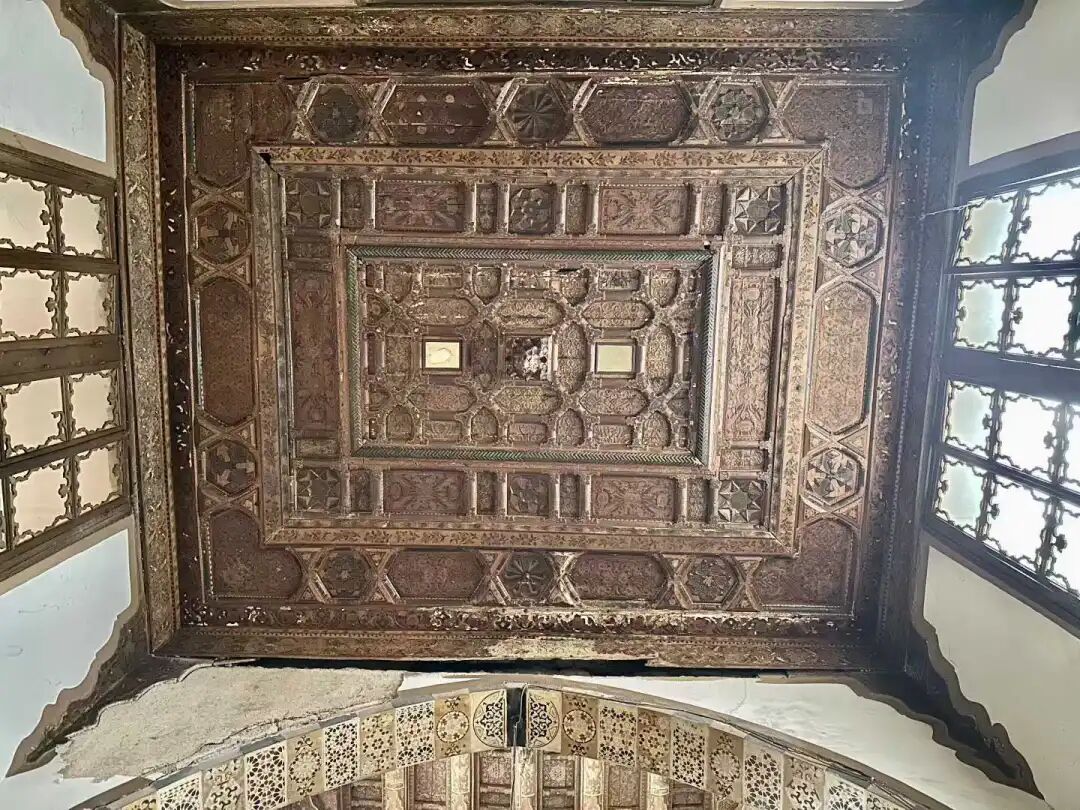
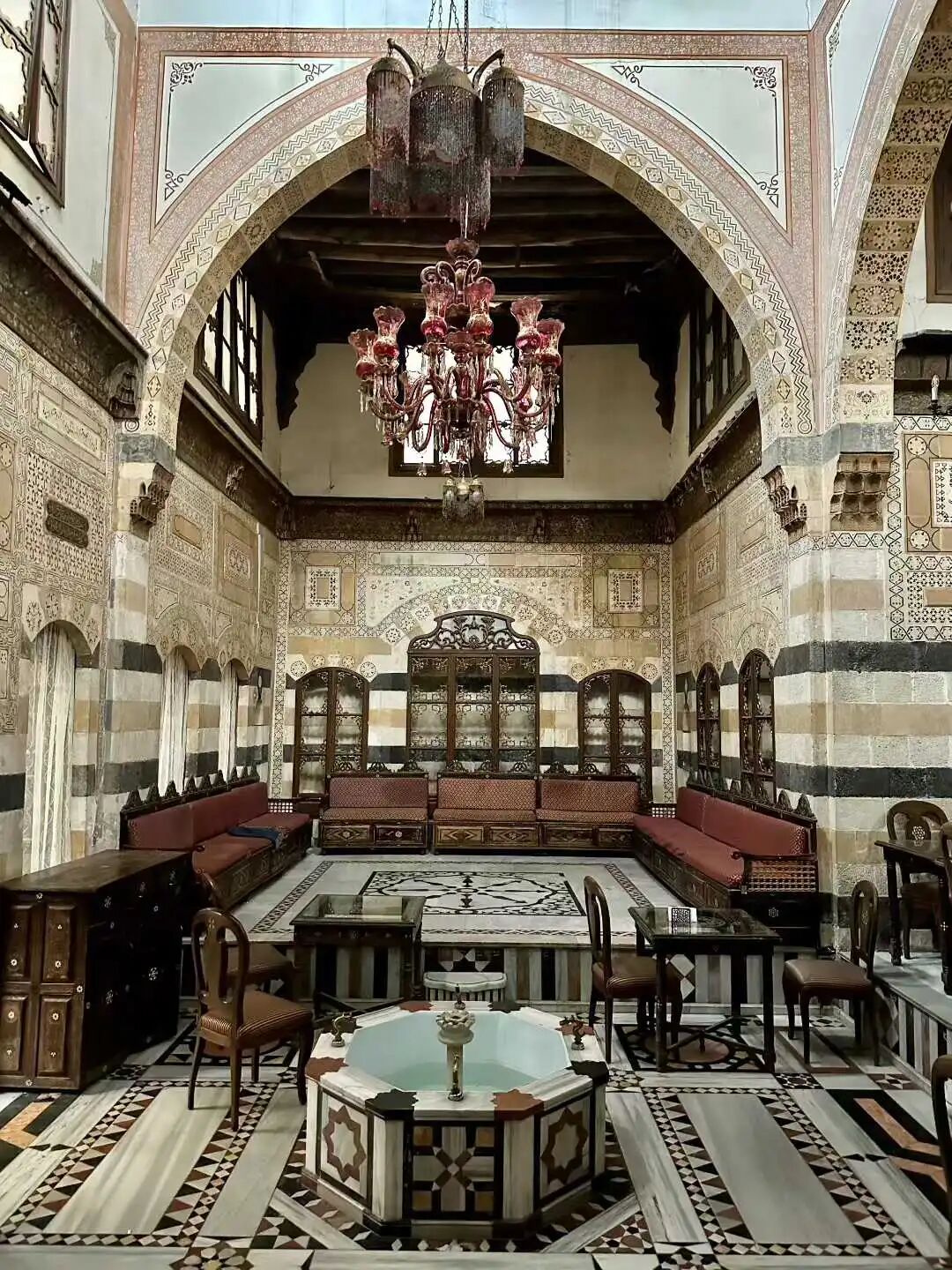
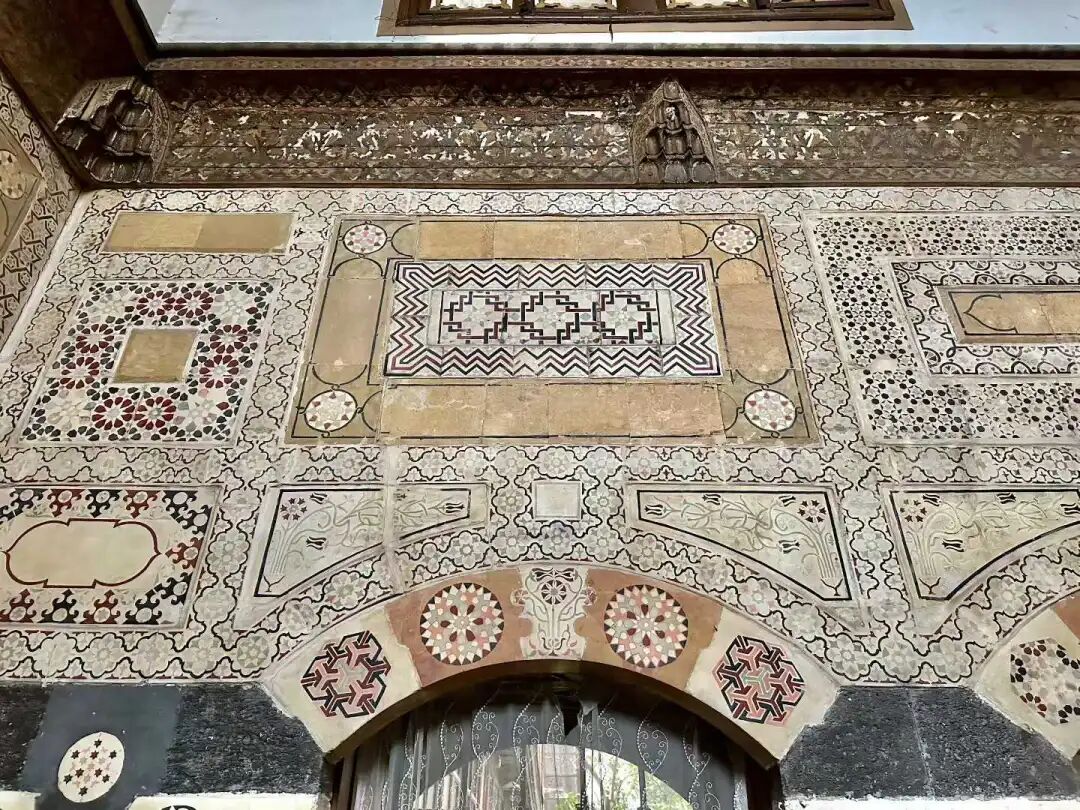
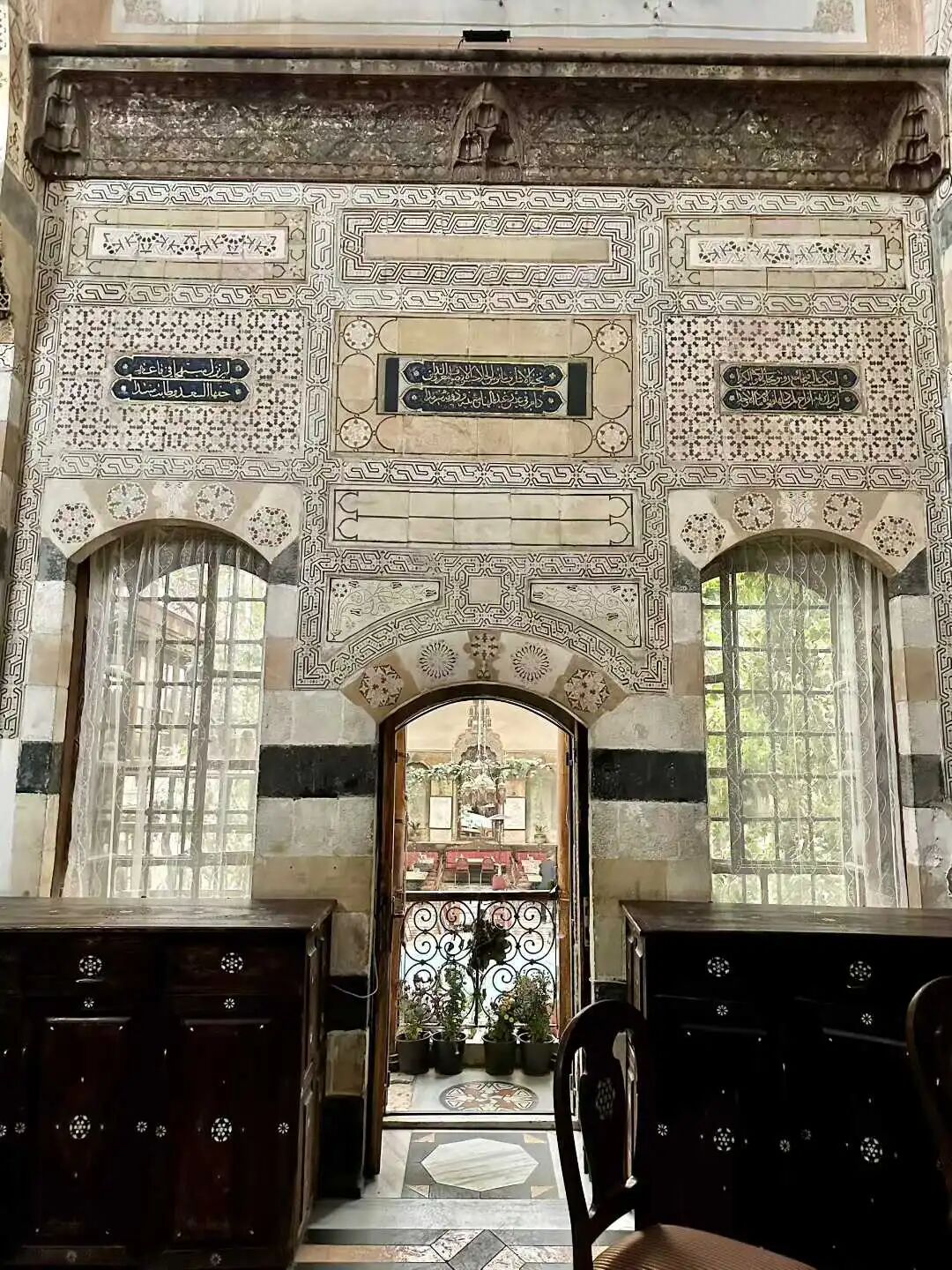
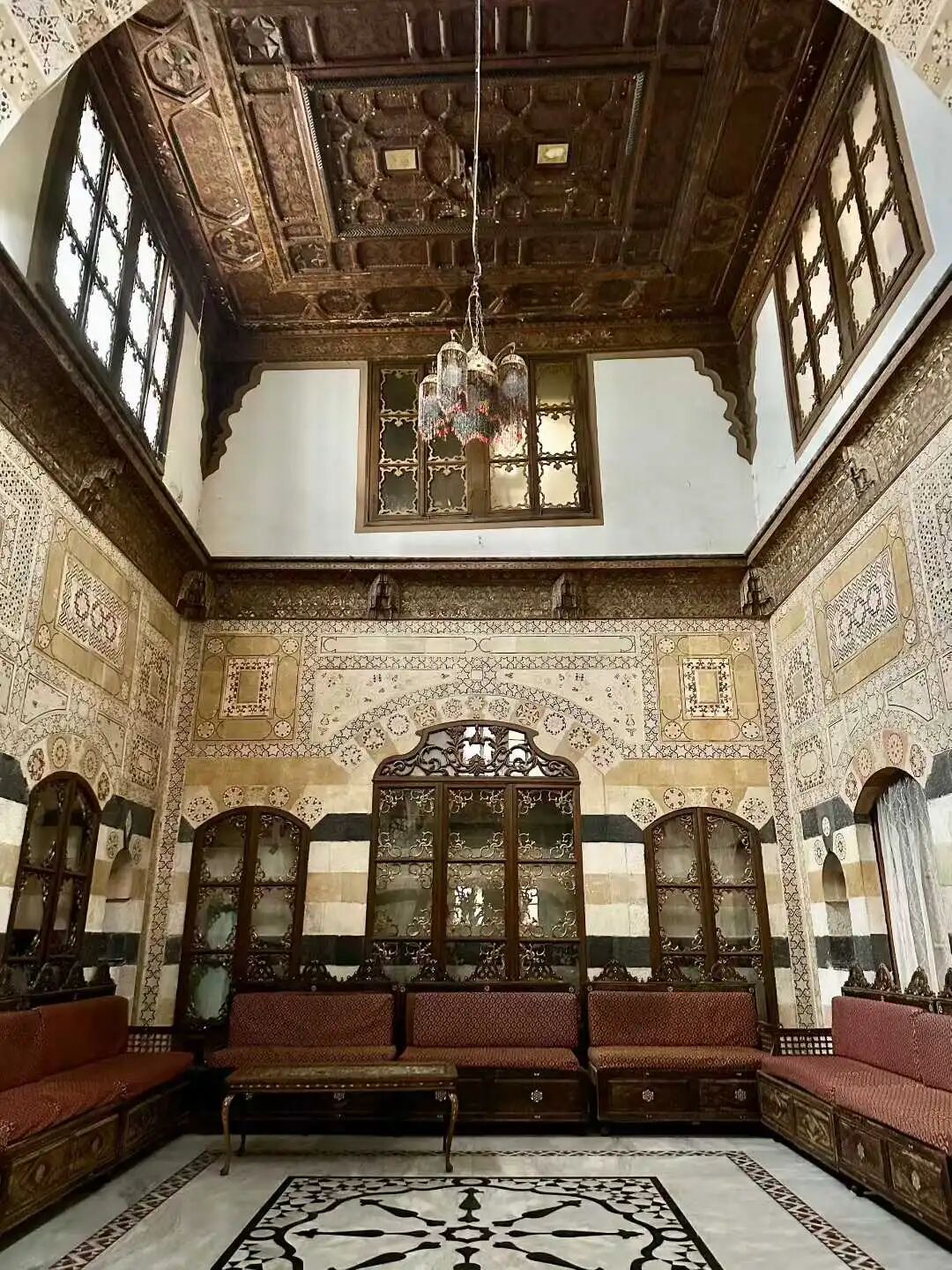
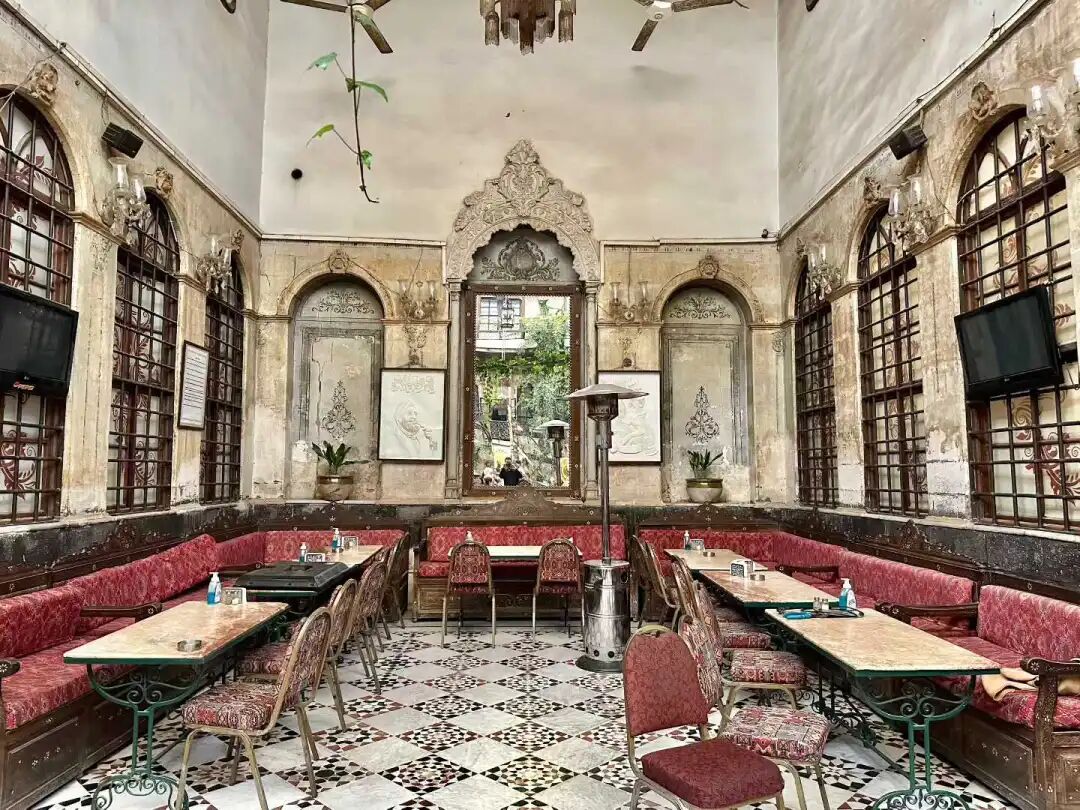
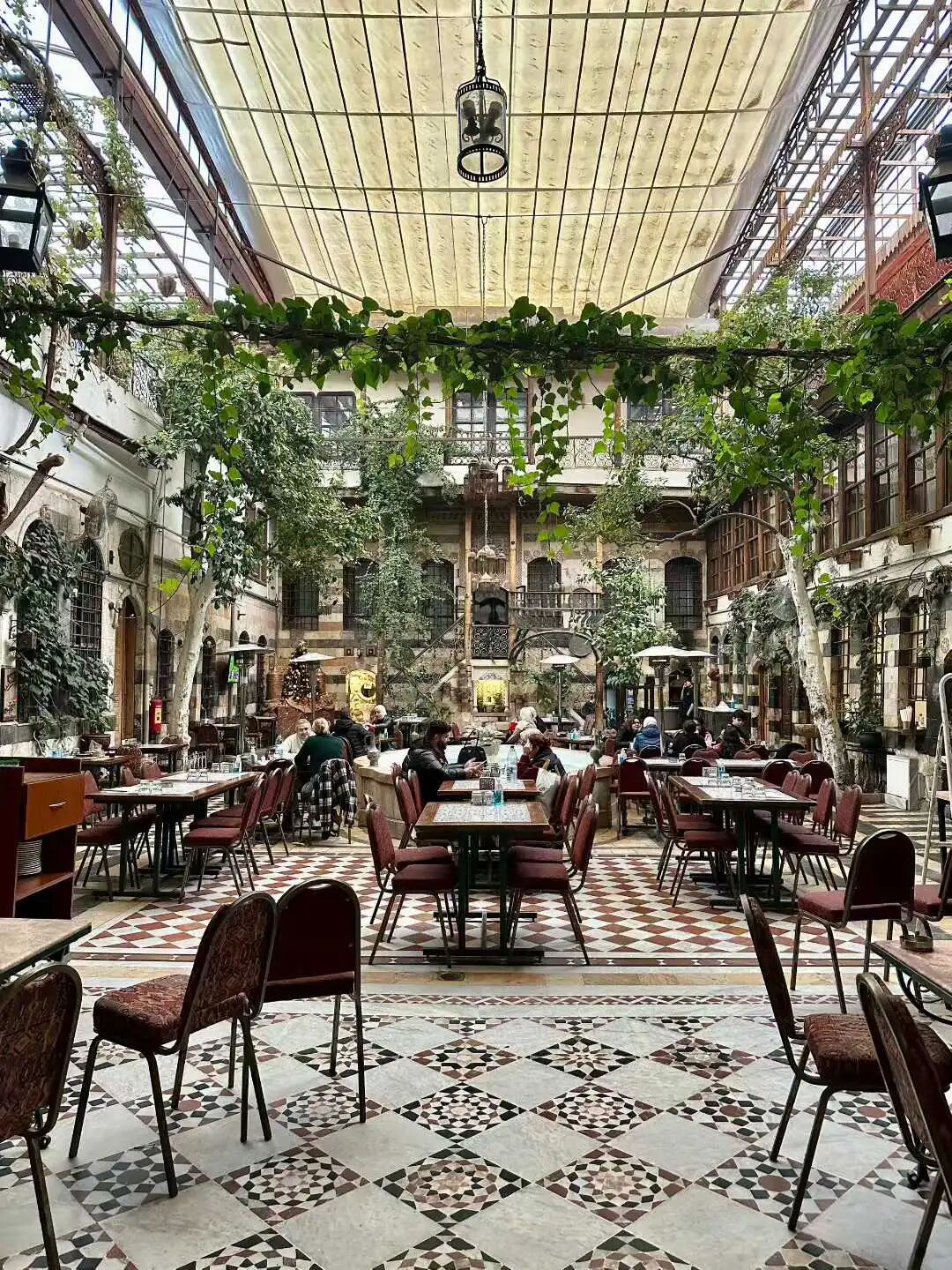
Beit Jabri is a classic three-courtyard Ottoman mansion in Damascus. The arched hall (Iwan) is a typical example of 18th-century Damascus architecture, and the exquisite Ajrum roof was built in the mid-19th century. Influenced by Europe and the Ottoman Empire in the 19th century, Damascus architecture generally tended to decorate exterior walls more gorgeously. This is especially obvious on the north wall of Beit Jabri. We can clearly see the transition from 18th-century decorative styles to 19th-century patterns on the north wall, with complex wall paintings layered over traditional stone masonry (Ablaq).
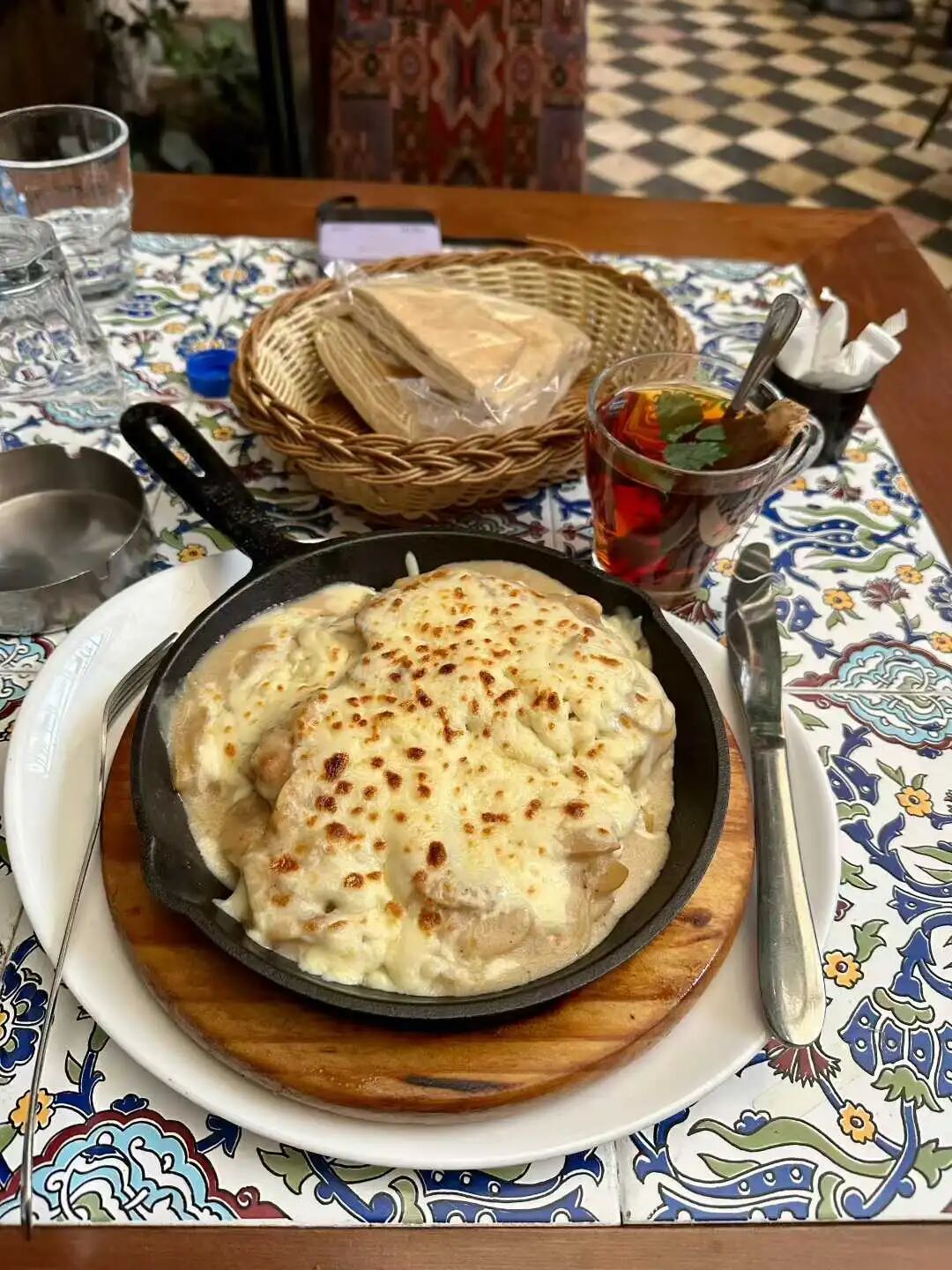
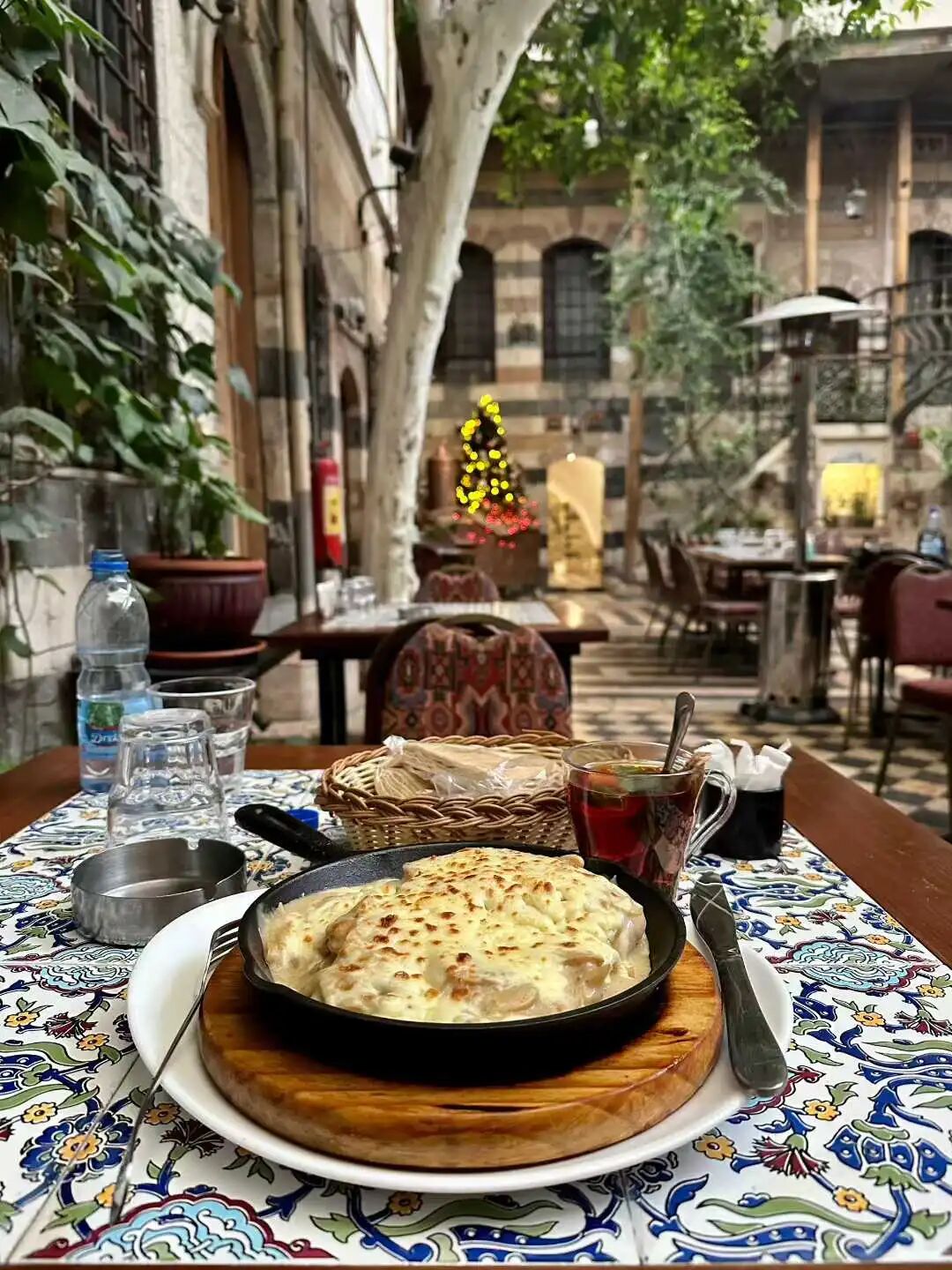
I ordered the iron pot cheesy baked chicken and mushrooms, served with Arabic pita bread and mint tea. The iron pot came straight to the table. The cheese on top was baked to a golden, crispy brown and stretched into long strings. The chicken was tender, and the mushrooms were soaked in the rich, creamy white sauce. It tasted quite good.
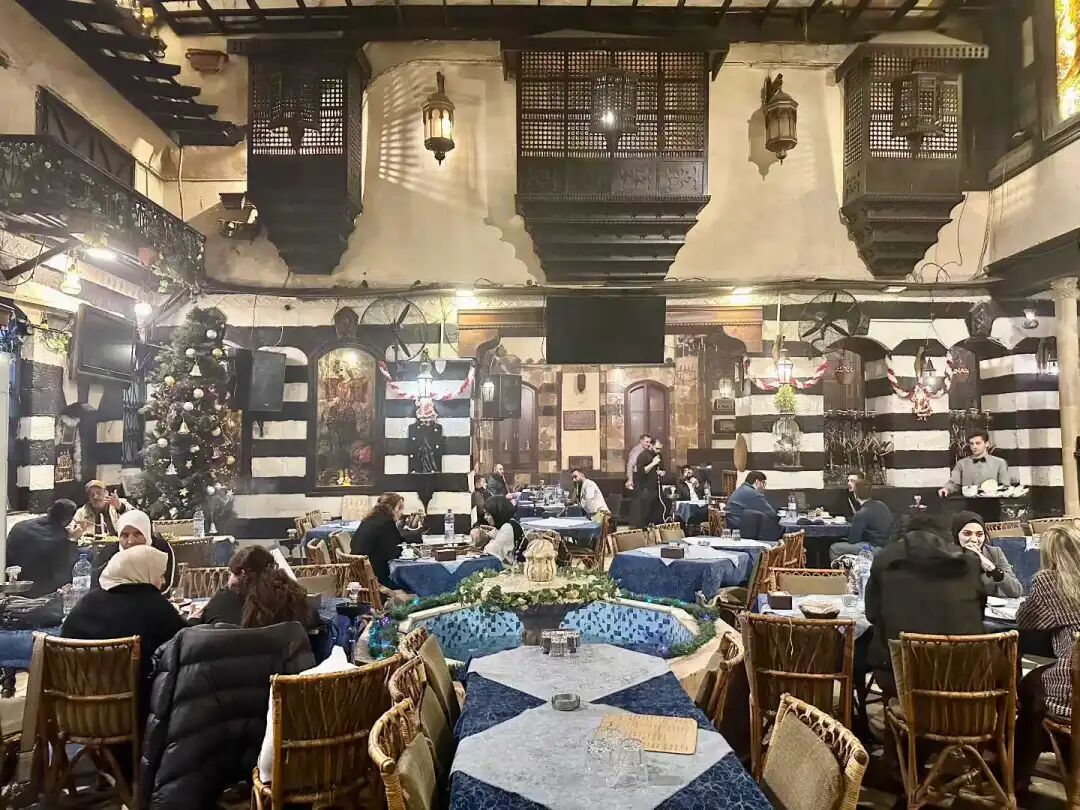
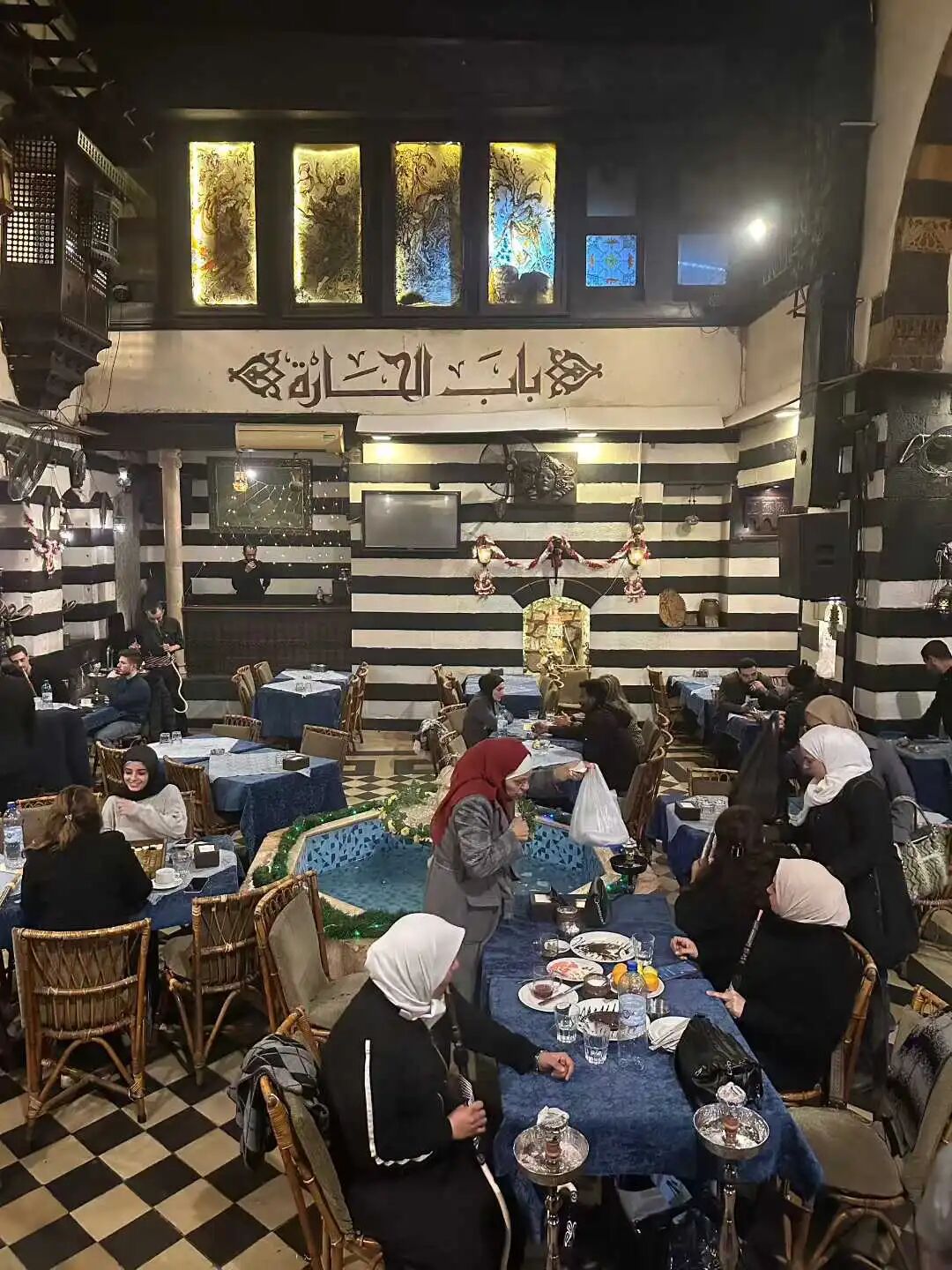
Bab Al Hara is located on Al Qaimarryeh pedestrian street, just outside the east gate of the Umayyad Mosque in Damascus. It is very lively every night. The restaurant is a converted traditional Ottoman mansion built in the late 19th century. It features a central courtyard with a fountain, wrap-around arcades, plaster carvings, and stained glass windows. This place was originally the home of a wealthy merchant. During the French Mandate period (1920–1946), it served as a community gathering spot. Later, it was used as a multi-family residence for a long time before gradually falling into disrepair in the late 20th century. The hit Syrian drama "Bab Al Hara" premiered in 2006, sparking a craze across the Arab world for the folk customs of the Old City of Damascus. The restaurant opened in 2007, starting as a cafe that focused on Syrian breakfast and snacks, then added full meals in 2010.
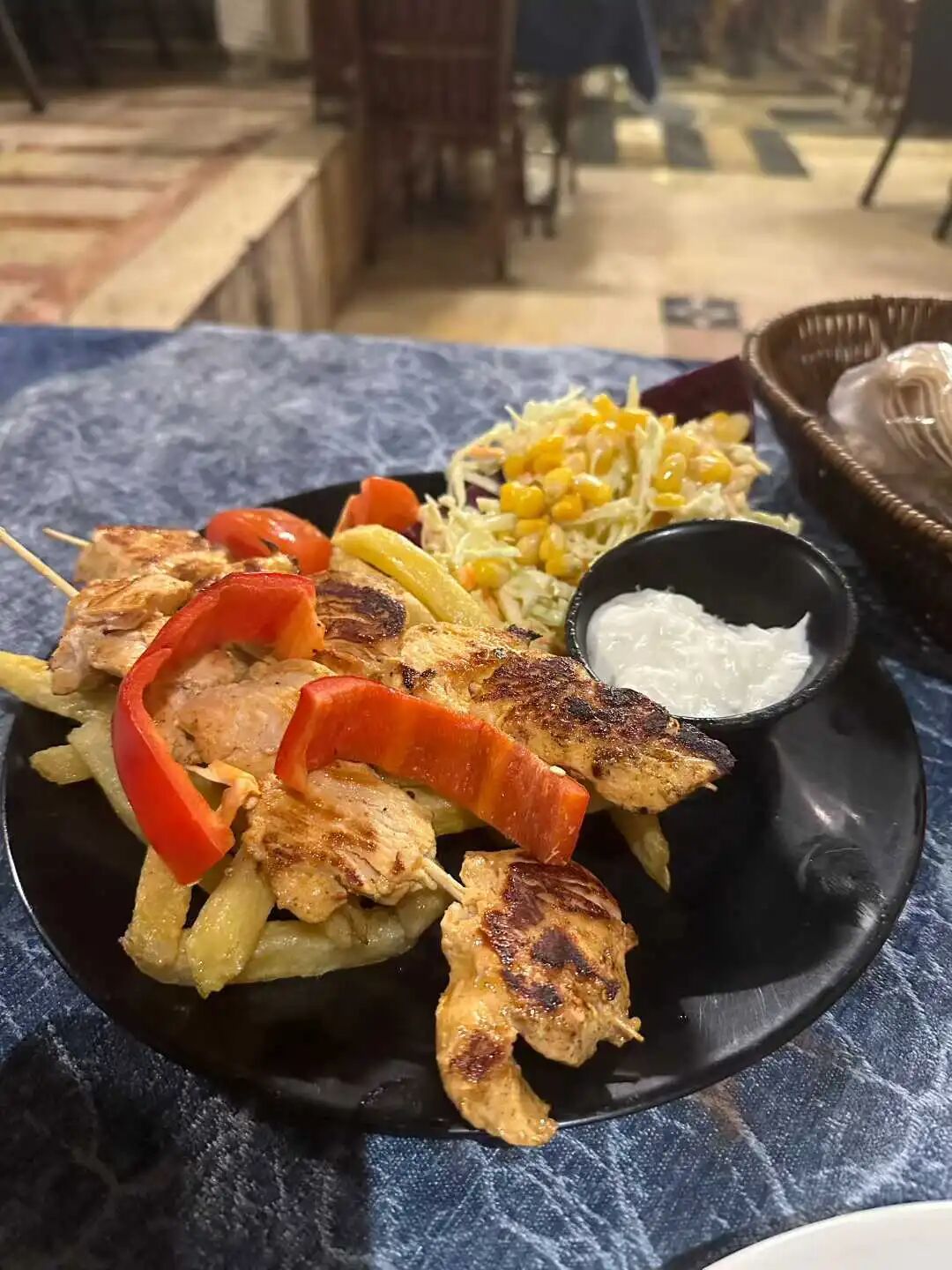
I had the grilled chicken skewers (Shish Taouk). The chicken was crispy on the outside and tender on the inside. It was very refreshing paired with garlic yogurt sauce (Tzatziki), along with a corn and cabbage salad and french fries. However, restaurants all over the Old City of Damascus are full of people smoking shisha at night. If you mind the shisha smoke, try to go at noon or in the afternoon.
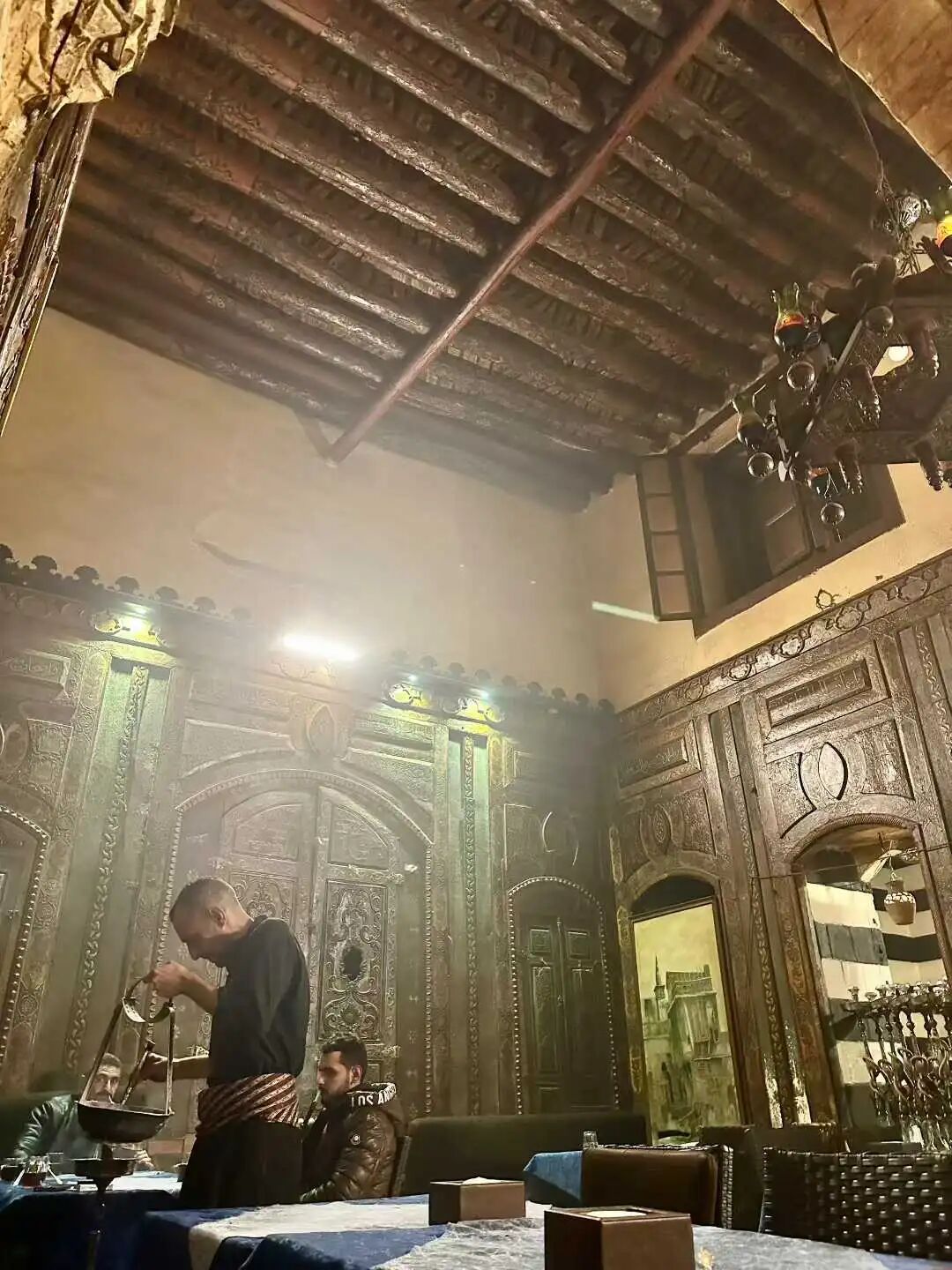
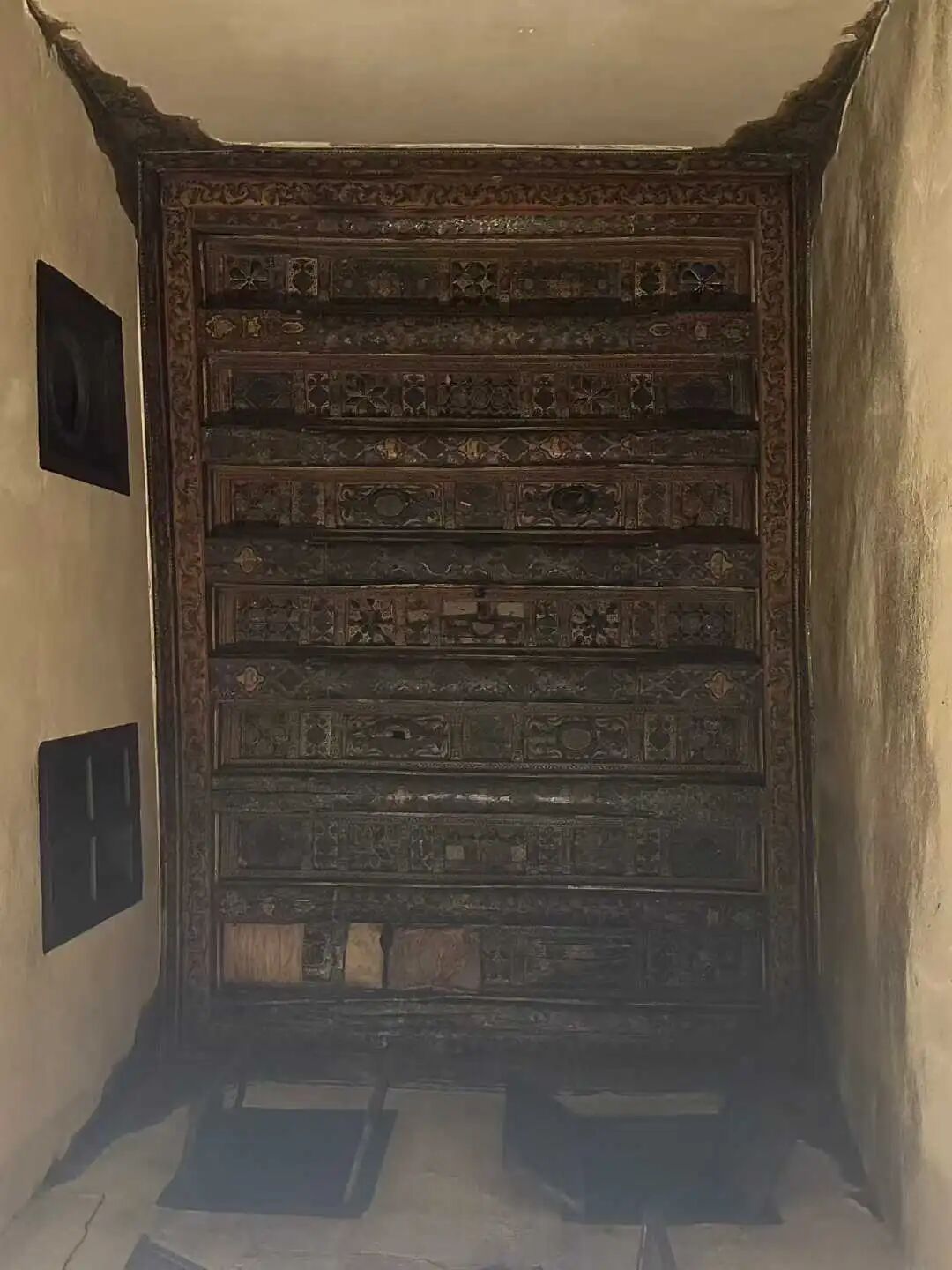
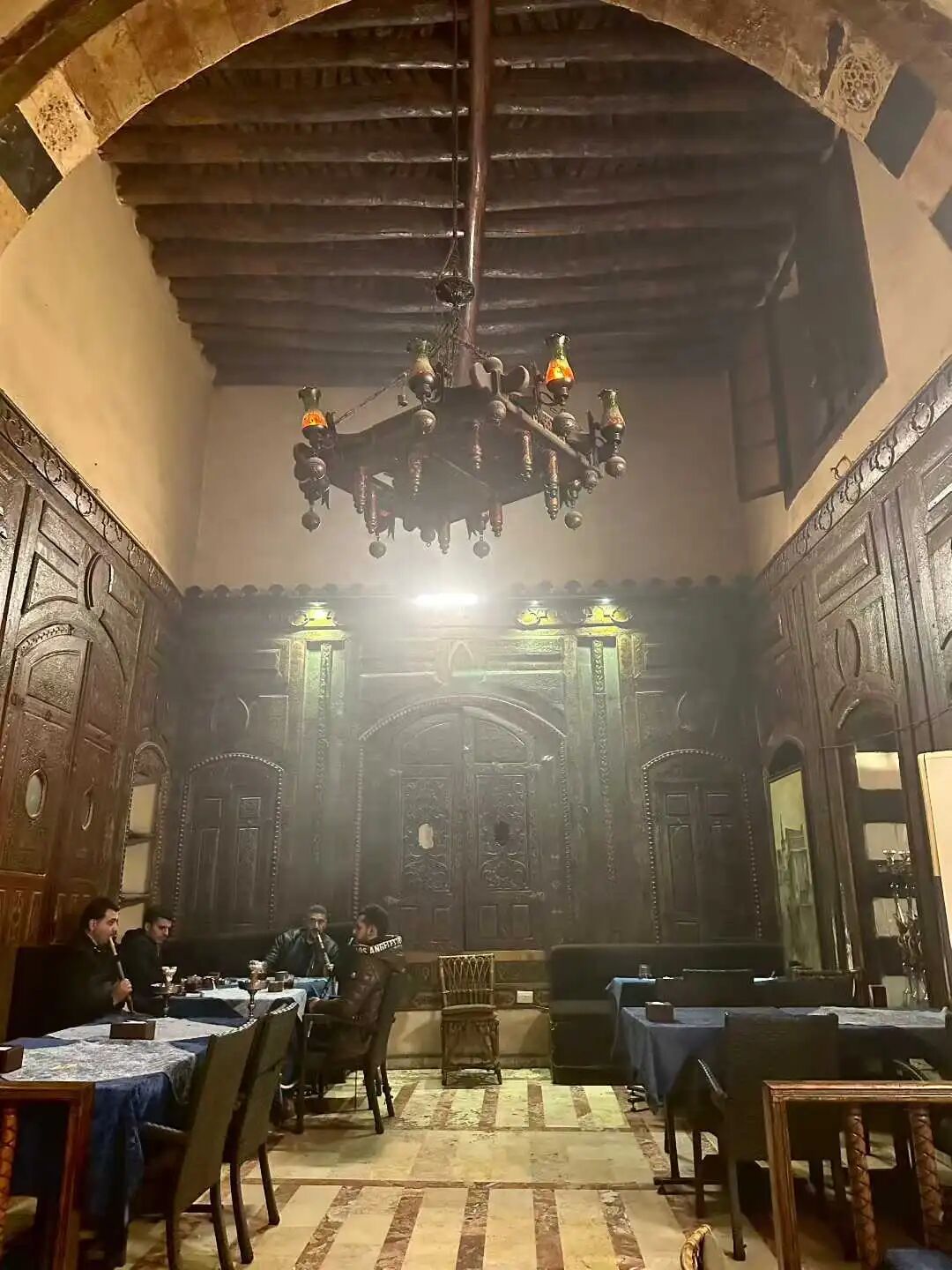
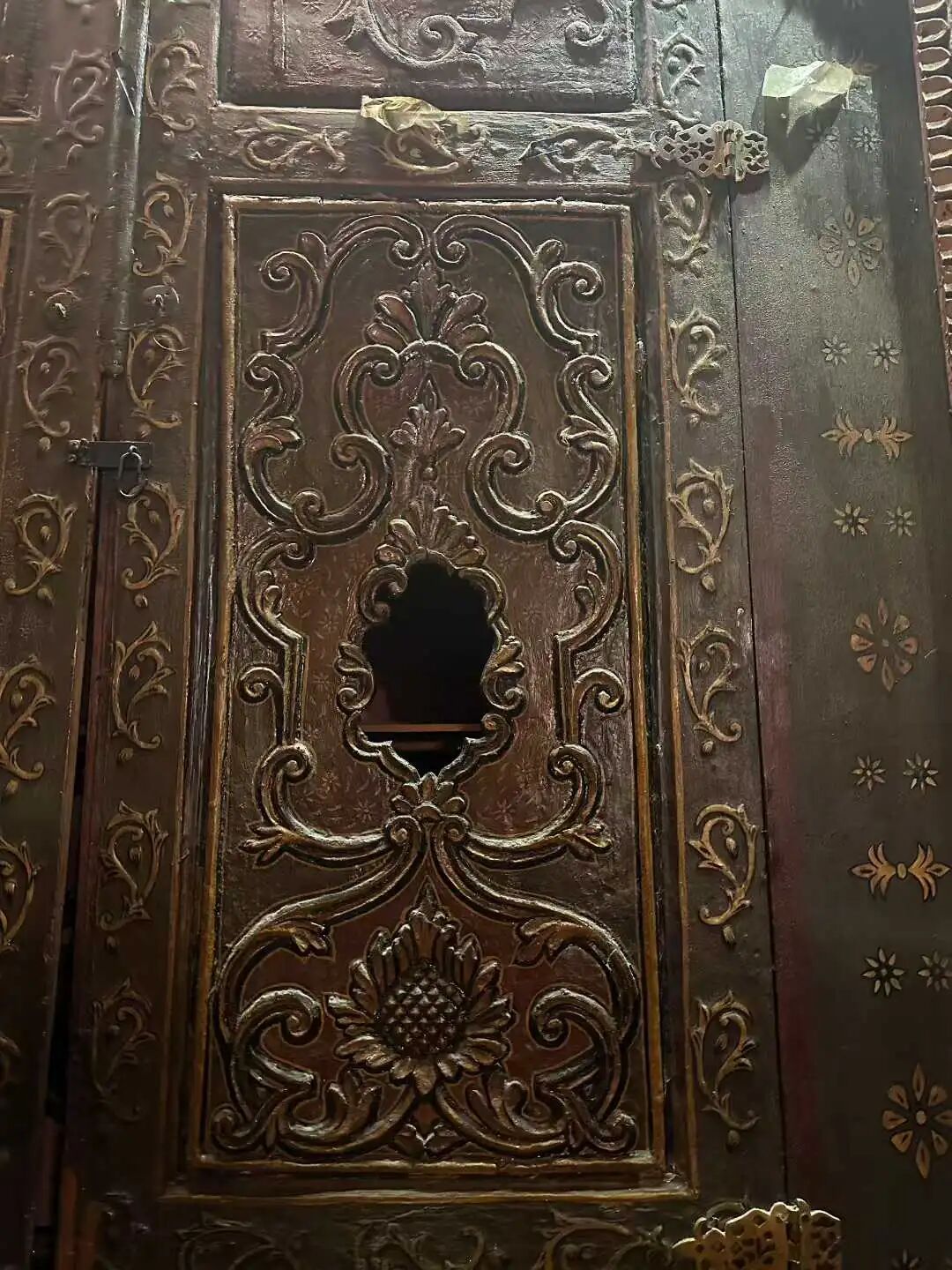
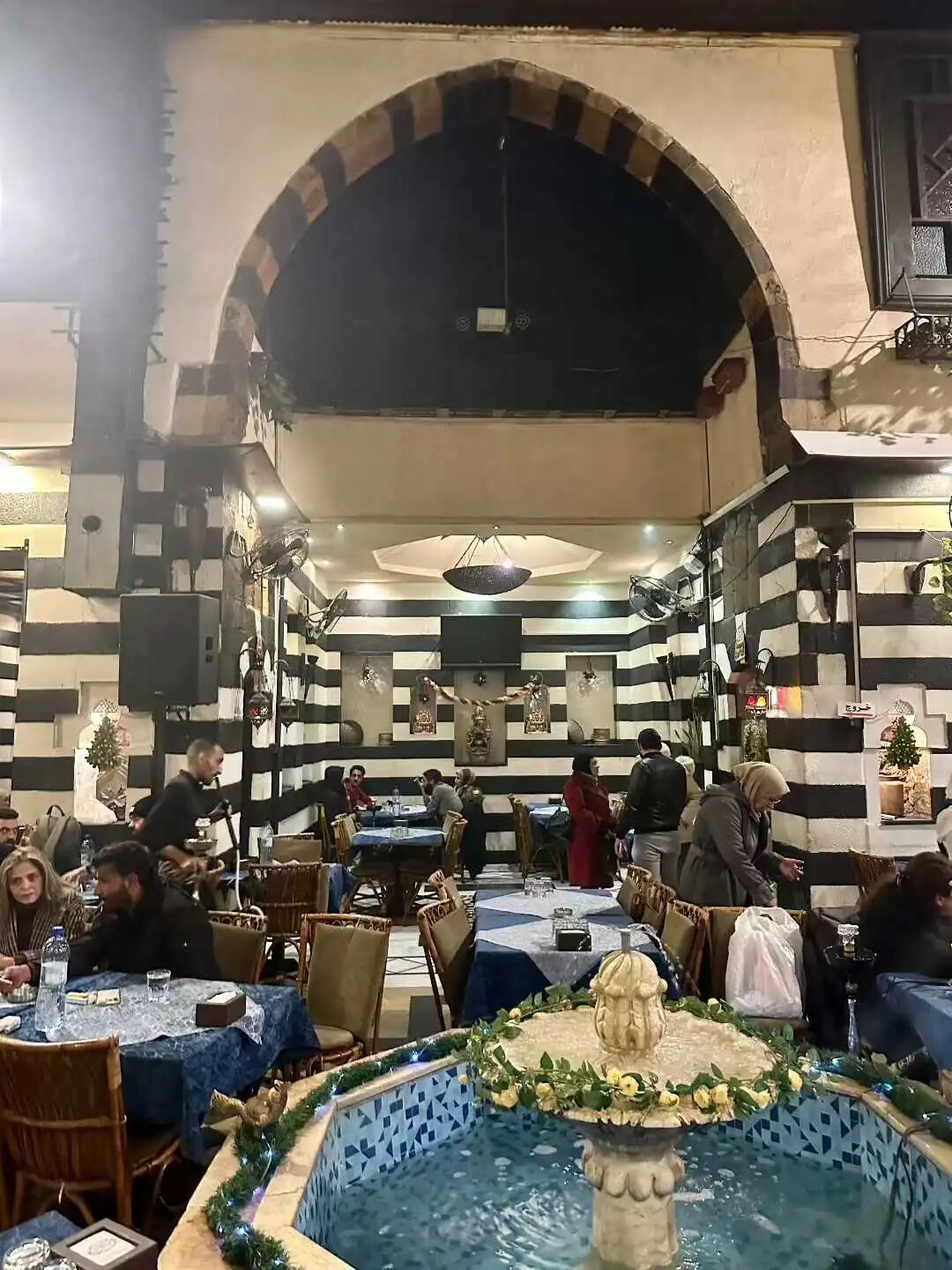
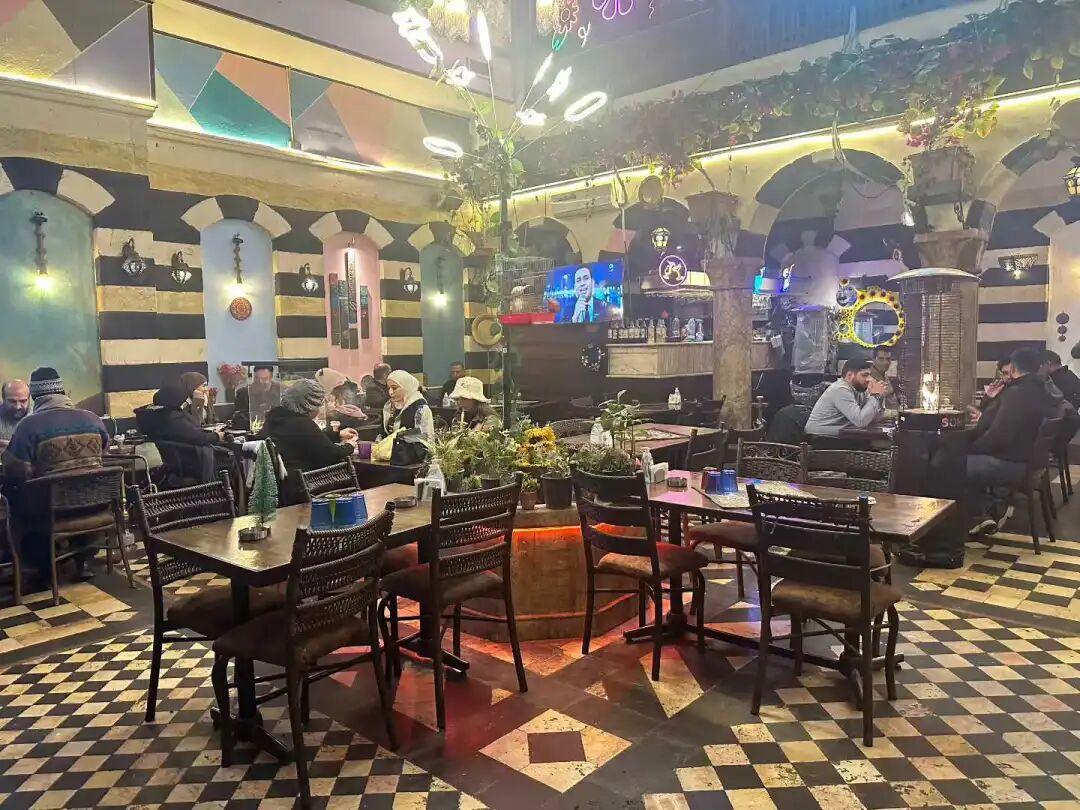
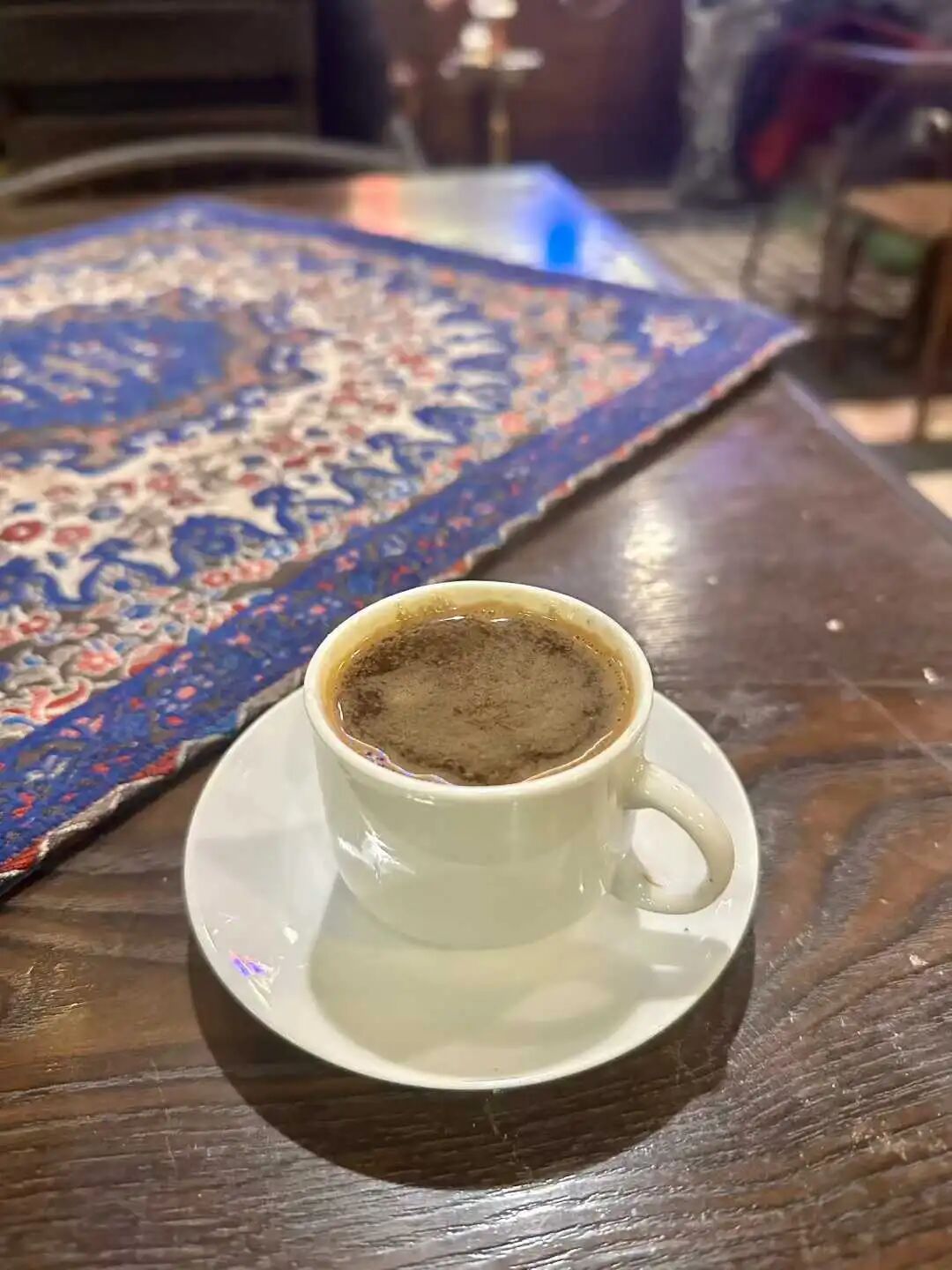
Finally, I had some sand-boiled coffee at Café Ishq Sharqi in Bab Touma, Damascus. The name translates to "Love of the Orient." There are dozens more restaurants and cafes converted from Ottoman mansions in the Old City of Damascus. I only visited a small portion this time, so there are plenty more for everyone to discover.
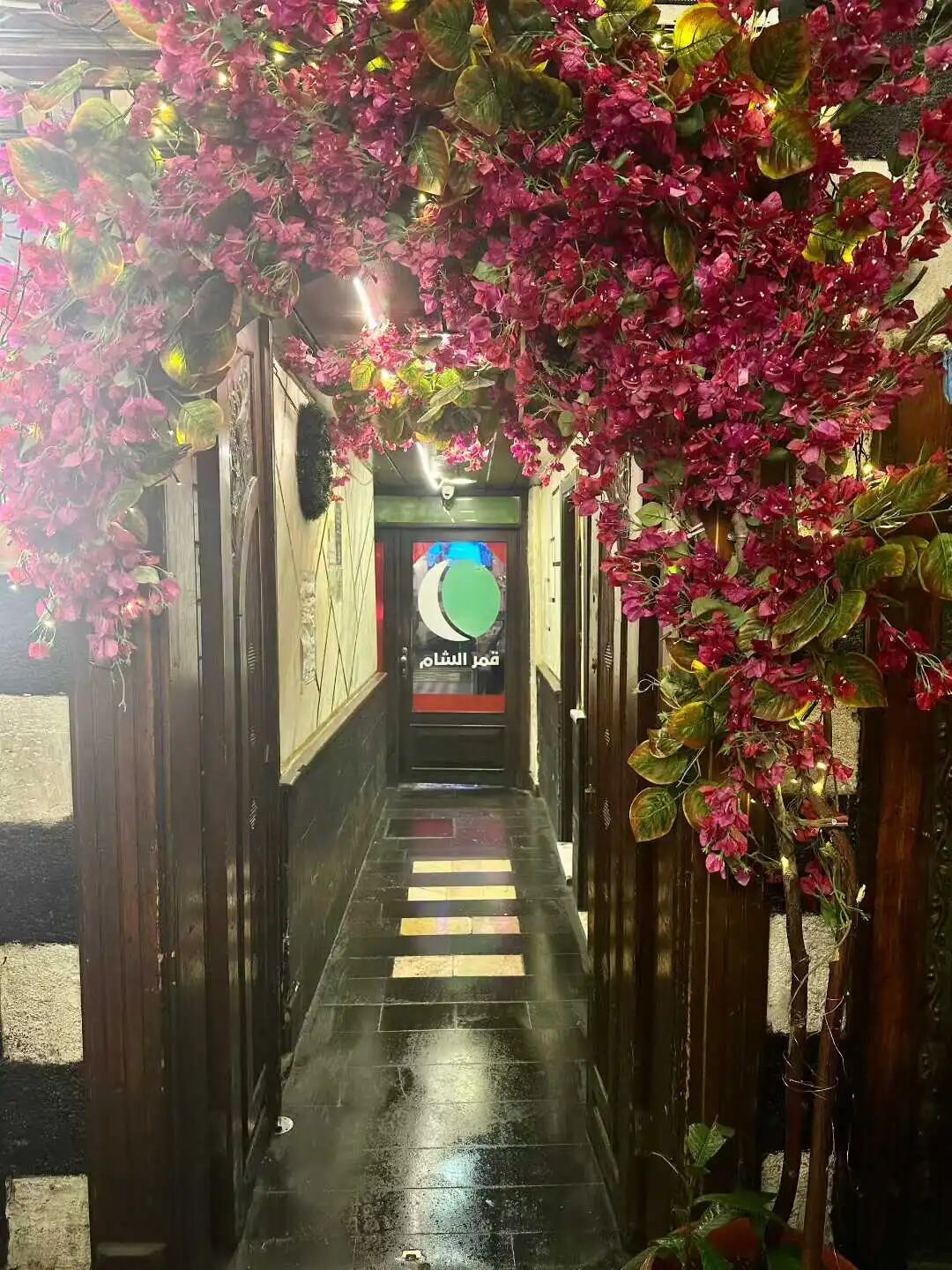
Summary: Damascus old city has heritage hotels and restaurants converted from Ottoman mansions, especially in the Christian Quarter east of the Umayyad Mosque. This guide keeps the source's nine hotel and restaurant notes, December 2025 prices, locations, bargaining details, and photographs.
In recent years, I have really enjoyed staying in heritage hotels while traveling. Even if some are a bit pricey or have thin walls, they let you fully experience the local history. Many people in Damascus choose Chinese-run guesthouses because they are cheaper and easier to communicate in. But if you really want to understand this thousand-year-old city, staying in an old Ottoman house inside the ancient city is a much better way to get close to history.
The east and west sides of the old city of Damascus are very different. The west has the busy Ottoman markets, the Umayyad Mosque, and the citadel. The east is the Christian Quarter, filled with churches and hotels or restaurants converted from old Ottoman mansions. I spent my days in Damascus staying in different mansions in the Christian Quarter. It is about a 1-kilometer walk to the Umayyad Mosque, but the road is full of shops, so it does not feel long.
Here are 9 places I stayed at or asked about, with prices from December 2025.
1. My top recommendation is Mamlouka Hotel, which has two locations: Dar Al Mamlouka and Beit al-Mamlouka. They asked for $122 for a single room, but I bargained it down to $110. I think this place offers the best value. The environment is great, it is the closest to the Umayyad Mosque, and it is right next to the market. The courtyard is a bit small. I only stayed at Dar Al Mamlouka this time because Beit al-Mamlouka had no rooms for two days.
2. Dar Al Yasmin Hotel asked for $140 for a single room, and I bargained it down to $125. It is in a small alley behind a church. It is very quiet and quite large inside.
3. Beit Zaman Hotel asked for $150 for a single room, and I bargained it down to $135. It is right on the East Gate street. There are many shops nearby, and many young people come here to take photos.
4. Beit Rumman has a great environment, but unfortunately, it has no Wi-Fi. I did not buy a SIM card, so I would have been disconnected. I missed out on it and did not ask for the price.
5. Beit Al Wali Hotel is the most popular mansion hotel in the old city of Damascus, and it is also the most expensive. When I asked on the first day, they only had a royal suite for $500. On the second day, they asked for $290 for a single room, and they would not go below $200, so I did not stay there.
6. Albal Hotel charges $80 for a single room. It is the cheapest, but the facilities are the worst. The power was weak, and my phone would barely charge.
7. Al Zaytouna Hotel has an average environment. When I went in, some men were watching a ball game, so I did not ask for the price.
8. Beit Zafran Hotel is very close to Beit Al Wali Hotel. It looked nice in photos, but it was full when I went, so I did not ask for the price.
9. Al Shahbandar Palace Hotel has a cafe in its courtyard. I had a coffee there, but I did not stay.
Dar Al Mamlouka is located on the far west side of the Bab Touma Christian Quarter in the old city of Damascus. The main building is a merchant mansion from the 17th-century Ottoman period, but it still has a strong 16th-century Mamluk style. The mansion has an inward-facing layout centered around a courtyard, with high ceilings on one side. The walls are built with alternating black basalt and white limestone bricks in the Mamluk style, and there is a marble fountain in the center of the courtyard.
Dar Al Mamlouka was turned into a hotel in 2005. It is run by the same management as another nearby mansion, Beit al-Mamlouka, but that one is often fully booked. The single room was listed at 122 dollars, but I bargained it down to 110 dollars. The hotel has electricity and Wi-Fi all night. The single room is nice, and a staff member brought me tea right after I checked in. There are orange and lemon trees in the courtyard, which makes it very relaxing.
The Islamic decor at Dar Al Mamlouka includes the Hand of Fatima (Hamsa). Its five fingers represent the five pillars of the faith, and it is named after the Prophet's daughter, Fatima. During the Austro-Turkish War in 1788, the Ottoman Empire carried flags featuring the Hand of Fatima as the Grand Vizier led an army of 80,000 against Austria.
Breakfast at Dar Al Mamlouka is a typical Levantine cold platter served with bread and hot tea. They bring the full set even if you are eating alone. It mainly includes various cheeses, pickled olives, chickpea dip (hummus), jam, fresh cucumber and tomato, fruit juice, olive oil, and sausages. A special item is the pickled eggplant (makdous). These are miniature eggplants stuffed with walnuts, chili, garlic, olive oil, and salt. Syrians usually start pickling them in autumn to eat as an appetizer during winter. The powder on the table is the classic Levantine spice blend (za'atar). It is a mix of Syrian oregano, toasted sesame seeds, dried sumac, and thyme. It has an earthy taste with a hint of citrus and nuttiness, which is very unique.
Dar Al Yasmin Hotel is located in the heart of the Christian Quarter of Bab Touma in the Old City of Damascus. The hotel is tucked away in a small alley, and it feels like a hidden world once you step inside. The hotel is made up of three 18th-century Ottoman mansions—two large and one small. It features a central courtyard, a fountain, a reception area (liwan), hand-painted wooden ceilings, traditional brick and stone structures, and carved doors and windows. The mansion changed hands many times after the 19th century until the Jasmine Hotels group took it over in 2005. They restored and opened it, making it a classic example of revitalizing a traditional Middle Eastern residence.
The single room was listed at 140 dollars, but I bargained it down to 125 dollars. The small alley at the entrance can get flooded when it rains, but overall it is a great value.
For breakfast at Dar Al Yasmin Hotel, the chickpea and sesame paste dip (hummus musabaha) is worth trying. Musabaha means swimming, as if the chickpeas are swimming in the sesame paste.
They also serve flatbread (manakish) in three varieties: with spice blend (za'atar), tomato, or cheese. Manakish originated from the traditional bread of the ancient Phoenicians and was added to the UNESCO Intangible Cultural Heritage list in 2023.
Beit Zaman Hotel is in the Christian Quarter of Bab Touma in the Old City of Damascus, right on the ancient Roman street (Via Recta). Their single room was listed at 150 dollars, but I bargained it down to 135 dollars.
The hotel opened in 2008 after five years of connecting and restoring three 17th-century Ottoman mansions. It kept original features like stone carvings, wood carvings, mosaics, and fountains. The wooden Ajami-style ceilings and the traditional courtyard layout are the most impressive parts.
The buffet breakfast at Beit Zaman Hotel includes sausages, cheese, bread, olives, and chickpea dip (hummus). The red dipping sauce is called Muhammara. It is a Syrian appetizer made from walnuts, red bell peppers, pomegranate molasses, and breadcrumbs.
Albal Hotel is near the Bab Touma gate in the Old City of Damascus. It is likely the most convenient for transportation. A single room costs 80 dollars, which is the lowest price, but the power is weak and it is almost impossible to charge a phone. Choose carefully.
Albal Hotel is a converted Ottoman mansion rebuilt after the 1759 Damascus earthquake. It has a courtyard fountain and wood carvings. The breakfast is quite good, and they light a stove in the courtyard during winter.
Al Shahbandar Palace Hotel is on the west side of the Christian Quarter near Bab Touma in the Old City of Damascus, right on the busy Al Qemaryeh market street.
The hotel is inside an Ottoman noble mansion built in the 16th century. The Shahbandar family, a famous modern political family in Damascus, lived here for a long time. The famous nationalist leader Abdul Rahman Shahbandar came from this family. The Shahbandar family renovated the mansion on a large scale in the early 20th century and used it as a place to host guests for a long time. In 2007, it was converted into a historic hotel after adding private bathrooms, air conditioning, and electrical systems, while strictly preserving the facade, courtyard, and historical components.
Today, the mansion's courtyard is open as a cafe. You can drink coffee there, so you do not have to stay at the hotel to experience this Ottoman mansion.
Besides historic hotels, many restaurants and cafes in the Old City of Damascus are also converted from Ottoman mansions. The first place I recommend had just opened when I visited, so you cannot even find it online. It is located on the road after entering the Old City of Damascus from the Bab Touma gate and turning west into Qanayet Al-Hatab street. They only had tea and coffee when I went, but the environment was quite nice. I ordered a cup of sand-brewed coffee. The owner speaks English. He was very enthusiastic and invited me to the second floor to see the old building.
Lady Cafe is on the Al Nawfara pedestrian street outside the east gate of the Umayyad Mosque. It is very lively in the afternoon and evening. I ate a Damascus specialty snack called Toshka pie at the cafe. It is known as a national snack of Syria. Toshka is made by putting spicy sausage (Sujuk) and Kashkawan cheese inside pita bread, then pressing it on an iron griddle on both sides until the cheese melts and the bread is crispy. When you eat it, it is crispy on the outside and soft on the inside. The bread is charred and fragrant, and the meat and cheese are rich and stretchy.
Beit Jabri is on As Sawwaf street, southeast of the Umayyad Mosque. It is an Ottoman mansion restaurant in the Old City of Damascus that is well worth a visit.
This mansion was built in the early 18th century. The current owner Raad Jabri's grandfather bought the property in the late 19th century, and their family lived there from 1905 to 1973. The house was gradually abandoned after the 1970s and later became a workshop for carpenters and blacksmiths. Raad Jabri restored the place in the 1990s and turned it into a restaurant. He also hosts cultural seminars, poetry readings, and classical music evenings from time to time.
Beit Jabri is a classic three-courtyard Ottoman mansion in Damascus. The arched hall (Iwan) is a typical example of 18th-century Damascus architecture, and the exquisite Ajrum roof was built in the mid-19th century. Influenced by Europe and the Ottoman Empire in the 19th century, Damascus architecture generally tended to decorate exterior walls more gorgeously. This is especially obvious on the north wall of Beit Jabri. We can clearly see the transition from 18th-century decorative styles to 19th-century patterns on the north wall, with complex wall paintings layered over traditional stone masonry (Ablaq).
I ordered the iron pot cheesy baked chicken and mushrooms, served with Arabic pita bread and mint tea. The iron pot came straight to the table. The cheese on top was baked to a golden, crispy brown and stretched into long strings. The chicken was tender, and the mushrooms were soaked in the rich, creamy white sauce. It tasted quite good.
Bab Al Hara is located on Al Qaimarryeh pedestrian street, just outside the east gate of the Umayyad Mosque in Damascus. It is very lively every night. The restaurant is a converted traditional Ottoman mansion built in the late 19th century. It features a central courtyard with a fountain, wrap-around arcades, plaster carvings, and stained glass windows. This place was originally the home of a wealthy merchant. During the French Mandate period (1920–1946), it served as a community gathering spot. Later, it was used as a multi-family residence for a long time before gradually falling into disrepair in the late 20th century. The hit Syrian drama "Bab Al Hara" premiered in 2006, sparking a craze across the Arab world for the folk customs of the Old City of Damascus. The restaurant opened in 2007, starting as a cafe that focused on Syrian breakfast and snacks, then added full meals in 2010.
I had the grilled chicken skewers (Shish Taouk). The chicken was crispy on the outside and tender on the inside. It was very refreshing paired with garlic yogurt sauce (Tzatziki), along with a corn and cabbage salad and french fries. However, restaurants all over the Old City of Damascus are full of people smoking shisha at night. If you mind the shisha smoke, try to go at noon or in the afternoon.
Finally, I had some sand-boiled coffee at Café Ishq Sharqi in Bab Touma, Damascus. The name translates to "Love of the Orient." There are dozens more restaurants and cafes converted from Ottoman mansions in the Old City of Damascus. I only visited a small portion this time, so there are plenty more for everyone to discover.
