
Hidden Halal Food in China: Chongqing Maodu Hotpot, Hui Muslims and Real Local Restaurants
Reposted from the web
Summary: Hidden Halal Food in China: Chongqing Maodu Hotpot, Hui Muslims and Real Local Restaurants is presented here as a clear English travel account for Muslim readers, beginning with this scene: The Hui Muslims are one of the ethnic minorities who have lived in Chongqing for a long time. They settled in Chongqing long before the Yuan Dynasty. The oldest existing mosque in Chongqing, the Fengjie. The article keeps the original place names, food details, photographs, and cultural context while focusing on Chongqing Halal Food, Maodu Hotpot, Hui Muslims.
The Hui Muslims are one of the ethnic minorities who have lived in Chongqing for a long time. They settled in Chongqing long before the Yuan Dynasty. The oldest existing mosque in Chongqing, the Fengjie Mosque, was built in the Yuan Dynasty.
When I revisited Chongqing this time, I not only tasted authentic Chongqing halal food, but also learned about the history of Chongqing hot pot. It turns out that the emergence of Chongqing hot pot is closely related to the Hui Muslims.
cattle were an important production tool in Chinese history and could not be slaughtered at will. This tradition continued until the end of the Qing Dynasty. According to the historical data of Nanchuan County, Chongqing in the early Republic of China, "Revisiting Nanchuan County Chronicles": "In the Qing Dynasty, cattle slaughter was often prohibited, and no one dared to openly set up an operation. However, the place name Diaobuzhu, two miles outside the east gate, was the place where cattle were slaughtered despite the ban. Officials sent messengers to investigate and arrest people, but they were bribed and indulged in bribes. Even if he is arrested and flogged, he will return to his old profession after being released from the shackles. Exceptions include Catholicism and Islam. Before and after the Republic of China, the ban on collecting donations was relaxed, and beef was everywhere in the streets after autumn and before summer. If cattle are not allowed to be slaughtered, there will be more theft and farmers will suffer. This is not just a treacherous Buddha.
What I mentioned above is the ban on cattle slaughter in Chongqing. Because the Hui Muslims have long settled in Chongqing, the government specifically allowed the Hui Muslims to slaughter some weak cattle in order to maintain the livelihood of the Hui Muslims.
On December 4, 1931, there was a news article in Chongqing's "Xin Shu News", "The Hui Muslims of this city have requested that the Municipal Finance Bureau has forwarded a letter to the Ba County Government for inspection." The main content of the news was that some criminals took advantage of the loophole and slaughtered strong cattle privately, resulting in the reduction of fine cattle breeds. In order to save the cattle market, the government has strengthened the regulations prohibiting the slaughter of cattle, and the lives of the Hui Muslims in Chongqing have also been affected. The Hui Muslims specifically requested the Municipal Finance Bureau to request the magistrate and county government to change the restrictions on the slaughter of cattle. Otherwise, the livelihood of the local Hui Muslims will be difficult to maintain.
Therefore, during the Republic of China, the first people who could eat beef tripe and butter among the people were the Hui Muslims. These two ingredients were the main ingredients of Chongqing hot pot. Traditional Chongqing hot pot uses butter as the bottom of the pot. Existing information shows that the history of Chongqing hot pot is only a hundred years old, and the Chongqing riverside wharves during the Republic of China were all places where Hui Muslims slaughtered cattle. In the 15th year of the Republic of China, the Ma brothers introduced the simple hot pot "Shui Ba Kuai" to the restaurant in Zaifang Street (now under the sill of the Yangtze River Bridge). It was the prototype of Chongqing hot pot, similar to today's Jiugongge. A pot is divided into eight compartments, and each compartment can be used to prepare different dishes. At that time, this division was just to help the guests to share a table. After all, the diners were mostly poor boatmen on the riverside, and it was impossible to have the luxury of one pot per person. In this way, until the Anti-Japanese War, there was still an old lady surnamed Ma running an authentic tripe hot pot on the street in Jiaochangkou, which specialized in beef tripe.
There is an article saying that the Hui Muslims in Chaotianmen slaughtered cows and kept only the meat, and did not put it into the water. They threw the water away and let the boatmen pick it up and make tripe hot pot. This is obviously not in line with common sense. I guess the Hui Muslims are regarded as some foreigners who do not eat offal. In fact, the Hui Muslims are very good at eating tripe and beef offal. The fried tripe and mutton offal soup in old Beijing were first sold by the Hui Muslims. As poor people, the Hui Muslims regard cattle and sheep as good food.
However, with the Japanese invasion of China, Chongqing, as the capital of the Nationalist Government, suffered six years of bombing by the Japanese army. All mosques in Chongqing were not spared and suffered serious damage. As a result, many Hui Muslims in Chongqing left their homes and found other livelihoods. In the following years, it was difficult to find traces of halal hairy tripe hot pot in Chongqing.
It wasn't until the 1980s that hot pot re-emerged in Chongqing, but there were no halal restaurants anymore.
I remember my first visit to Chongqing in 2016. I wanted to try the authentic halal Chongqing hot pot but there was no one. Only the Ningxia Huixiangzhai restaurant opposite the Jiaochangkou Mosque also sold Chongqing hot pot. Because it was the only one, it was difficult to compare and evaluate. But when I came to Chongqing again in 2020, the situation had changed a lot, and halal Chongqing hot pot was blooming everywhere.
Currently, the halal restaurants in Chongqing are mainly concentrated in two places. The first is Jiaochangkou and the second is Songpai Road. Let’s talk about Songpai Road first.
Before setting off, I had saved several hot pot restaurants on my phone that I planned to try. When I followed the navigation to find one of the highly rated Halal Chongqing Hot Pots on Songpai Road, my eyes lit up when I arrived at my destination. There were actually several Halal restaurants densely packed together on this street, which can be called a Halal Food Street.
Songpai Road Halal Food Street
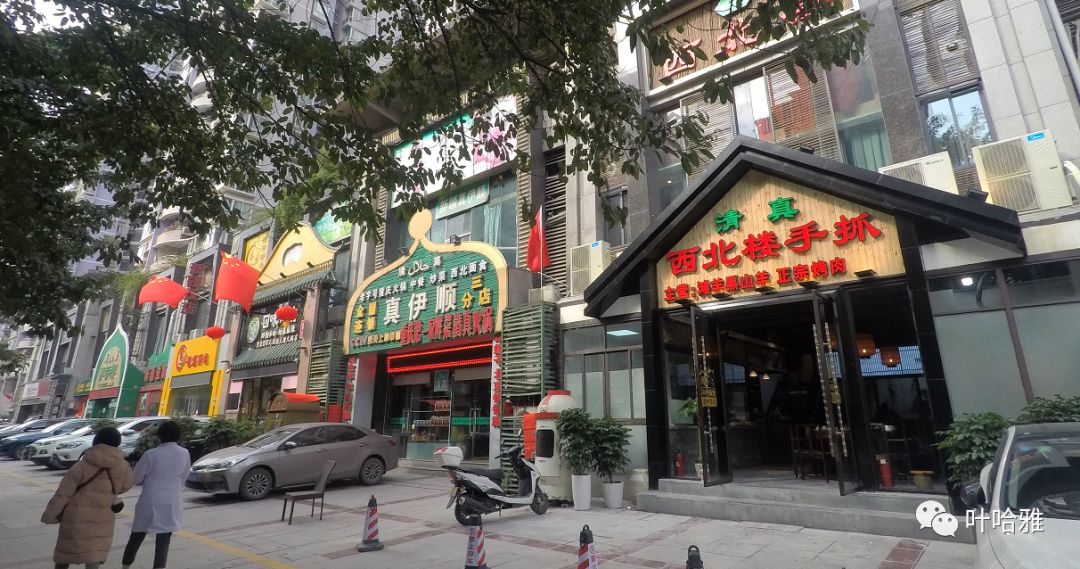
△Songpai Road
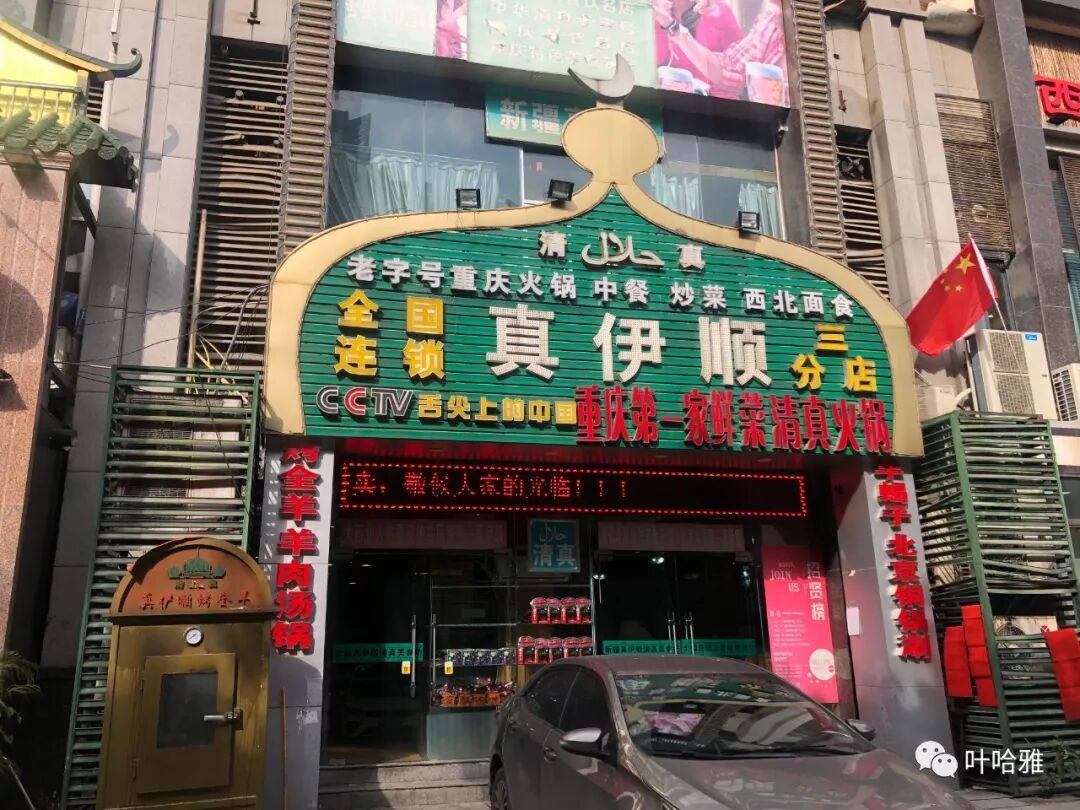
△Zhen Yishun is a chain brand with many branches in Chongqing, but its main features are different. This one is for Chongqing hot pot.
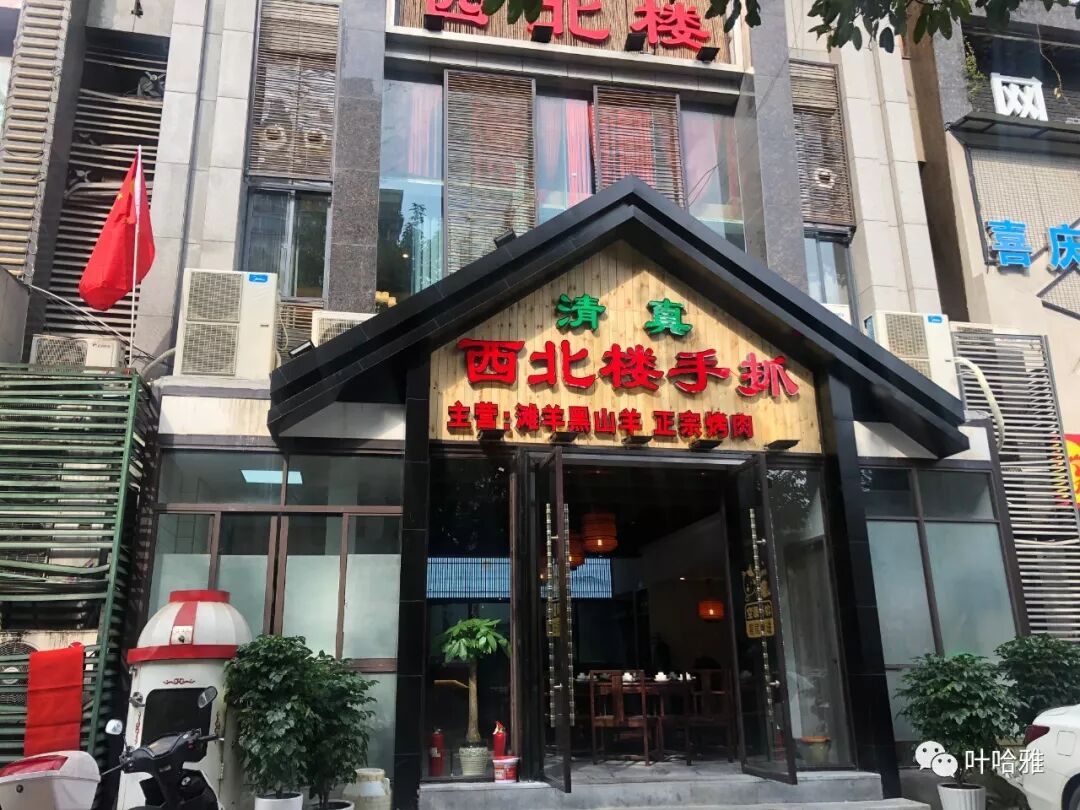
△Hand grab at Northwest Tower
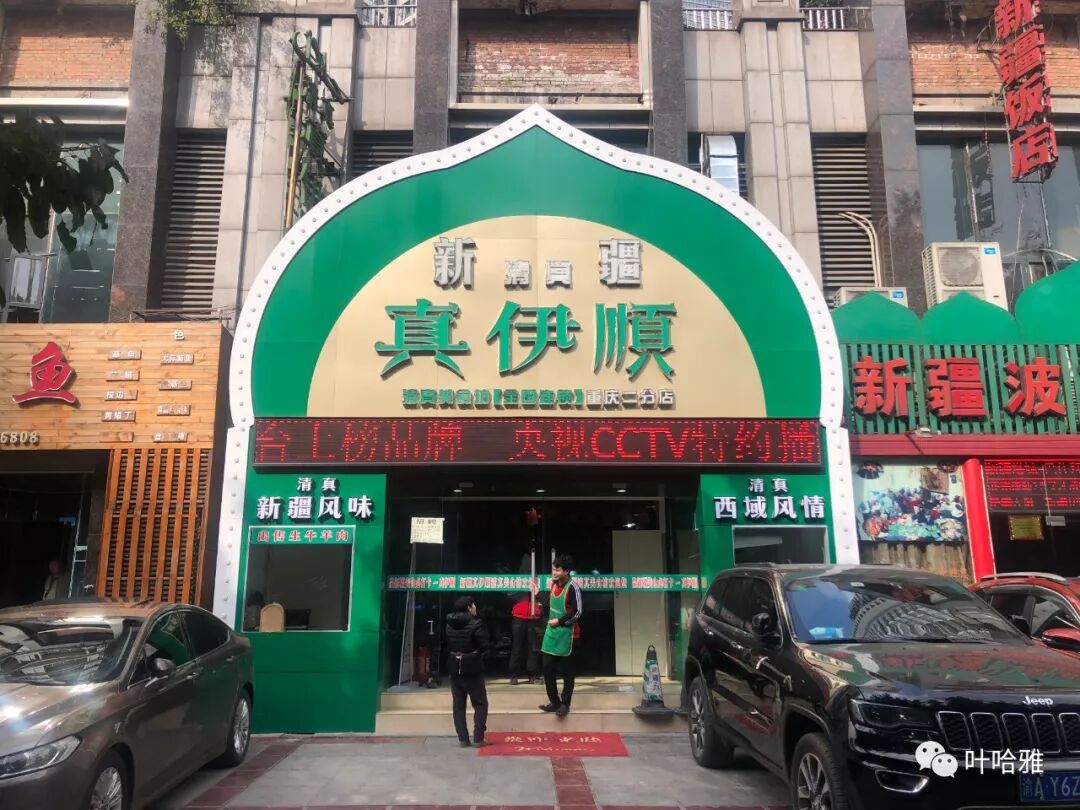
△The second branch of Zhen Yishun is next to the third branch, but its main business is Xinjiang cuisine
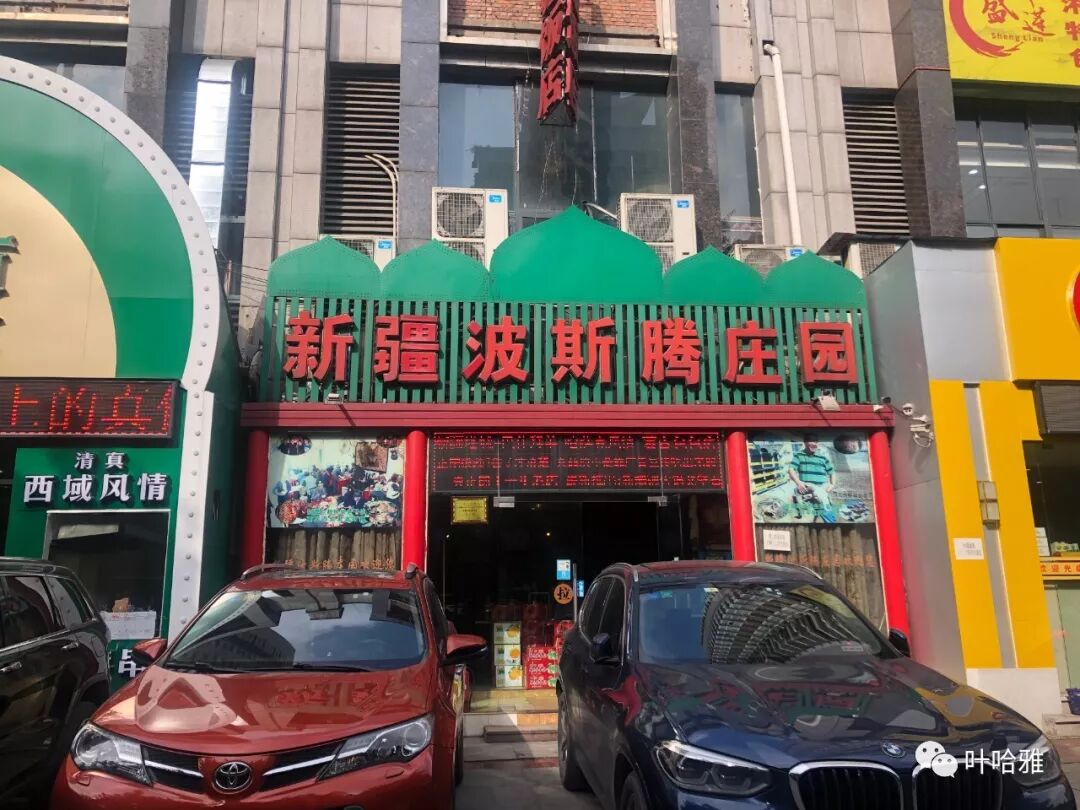
△Xinjiang Bosten Manor, specializing in Xinjiang cuisine
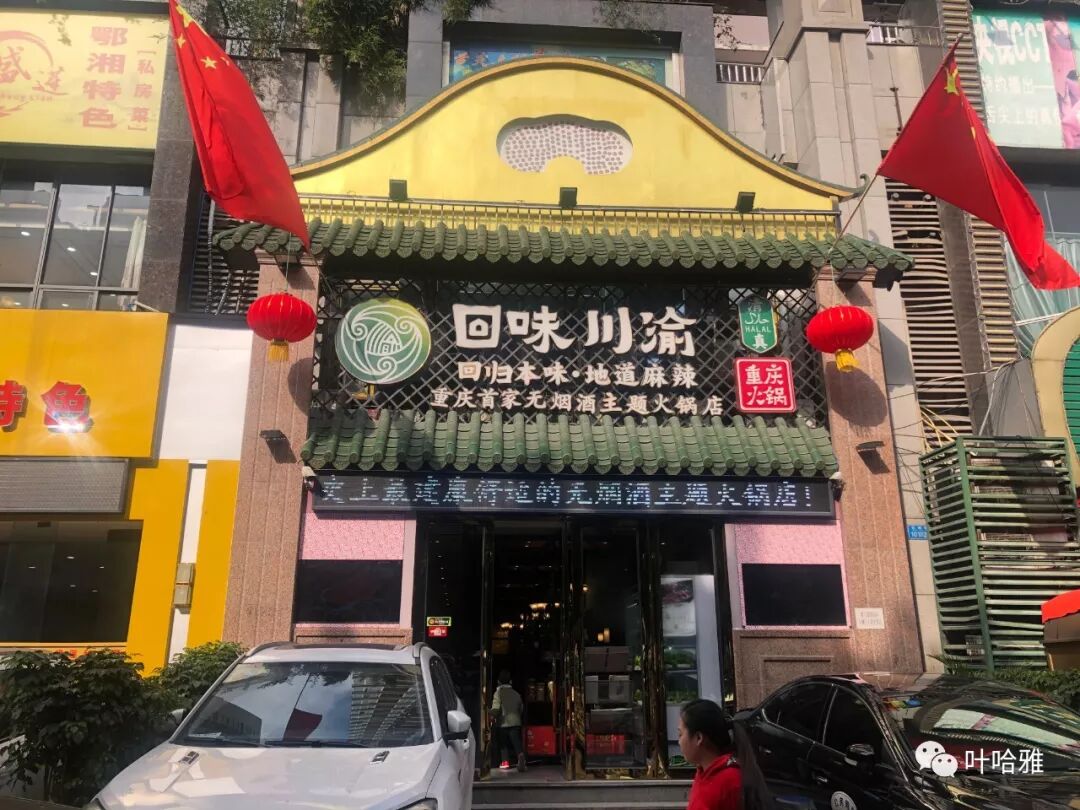
△Aftertaste of Sichuan and Chongqing Halal Chongqing Hot Pot
The store I would like to introduce to you on Songpai Road is Huiwei Sichuan and Chongqing Halal Chongqing Hot Pot (Youssef Store)
, the boss is from Lanzhou, and the store is a chain store with branches in Lanzhou and other places.
The reason why I recommend this restaurant is first of all because it is the first non-smoking hot pot restaurant in Chongqing. Feeling safe while eating is more important than anything else. Secondly, this restaurant has a high five-star rating on Dianping. I am a very popular person with a down-to-earth taste. Generally, restaurants that everyone thinks are delicious, I also think they are delicious, and I think delicious restaurants are easily accepted by others.
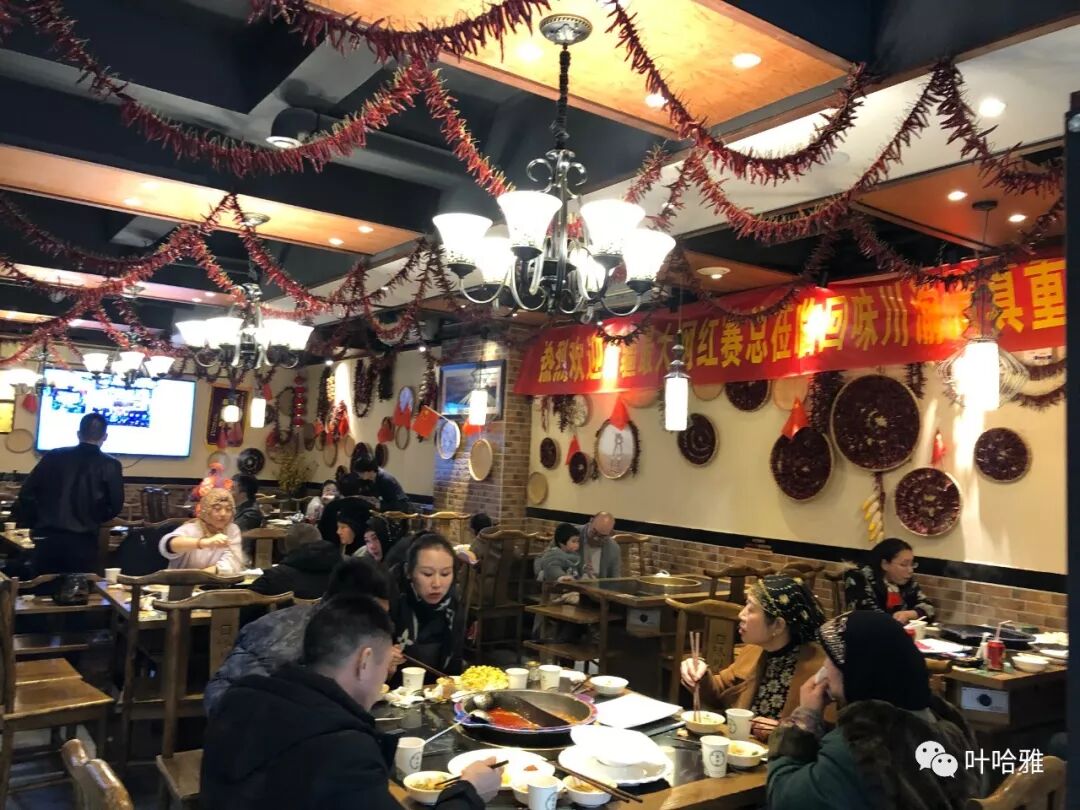
I felt a halal atmosphere as soon as I entered the door. There was an event in the store that day. Imams and village elders were being entertained on the first floor. The lobby was full of dustis. I came alone and said selan to the boss and waiter. The boss enthusiastically led me to the private room on the second floor and asked the waiter to prepare some dishes suitable for one person.
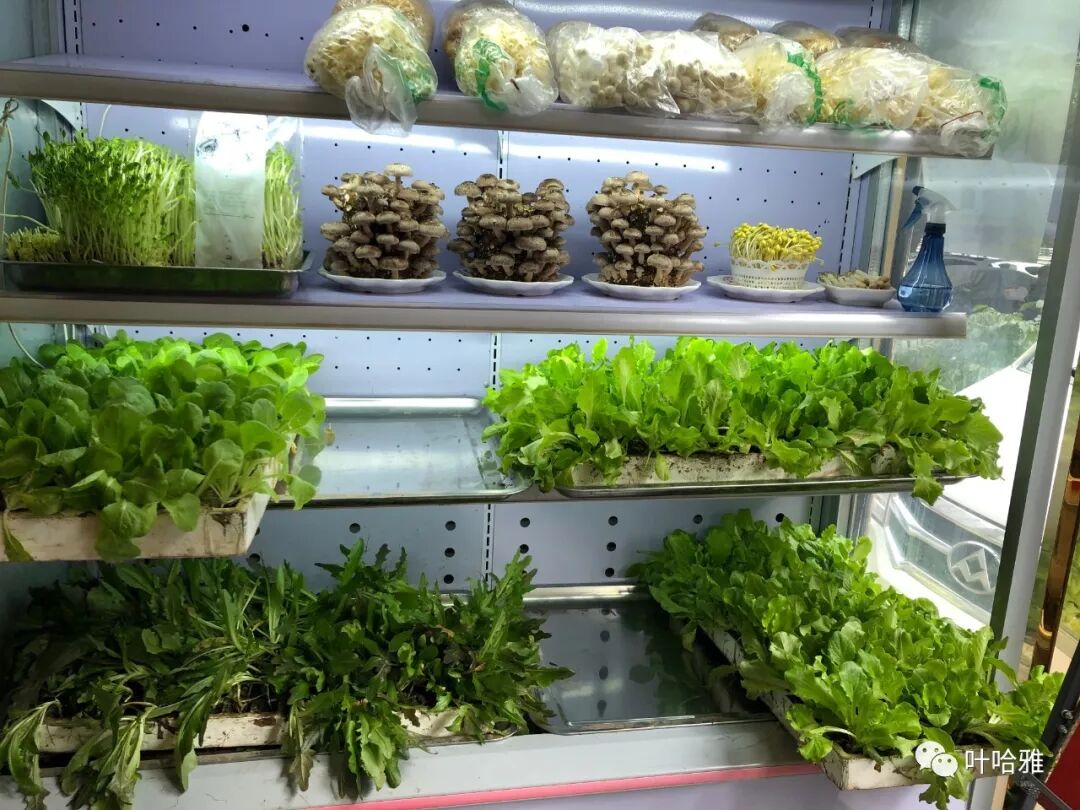
△The vegetable rack placed at the entrance of the store, please note that the green vegetables are all freshly cultivated and are only pulled out when eating.
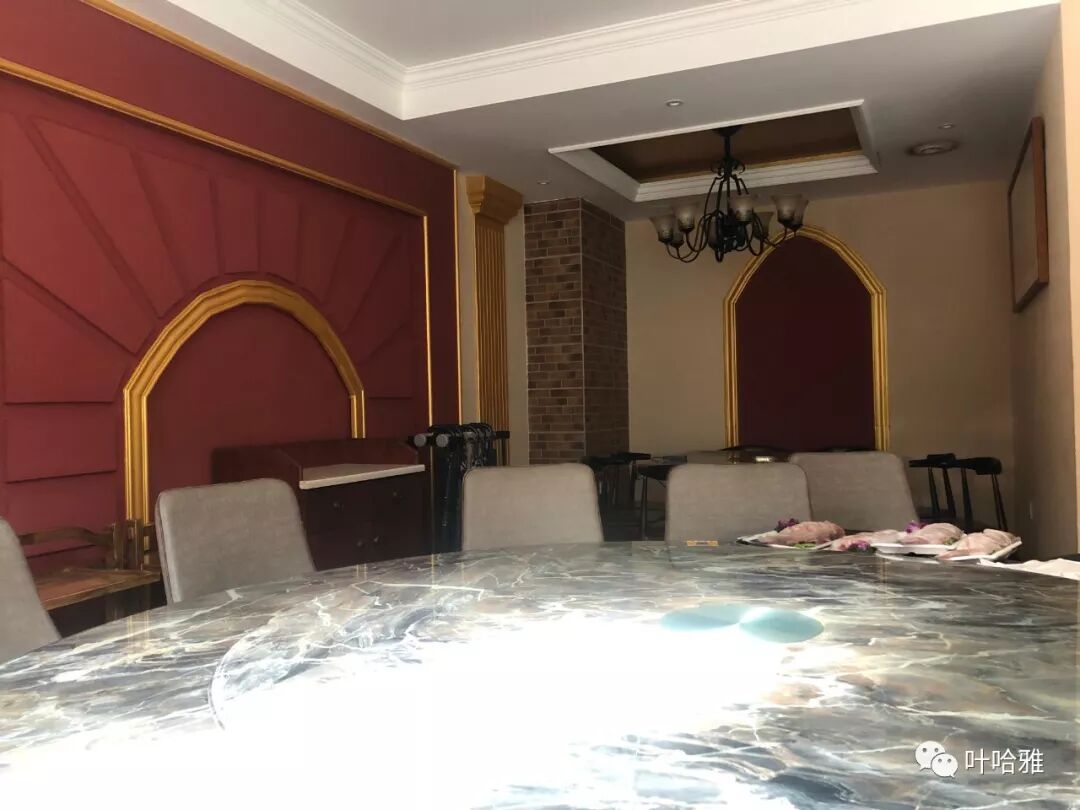
△The restaurant’s private room can accommodate 20 people dining at the same time.
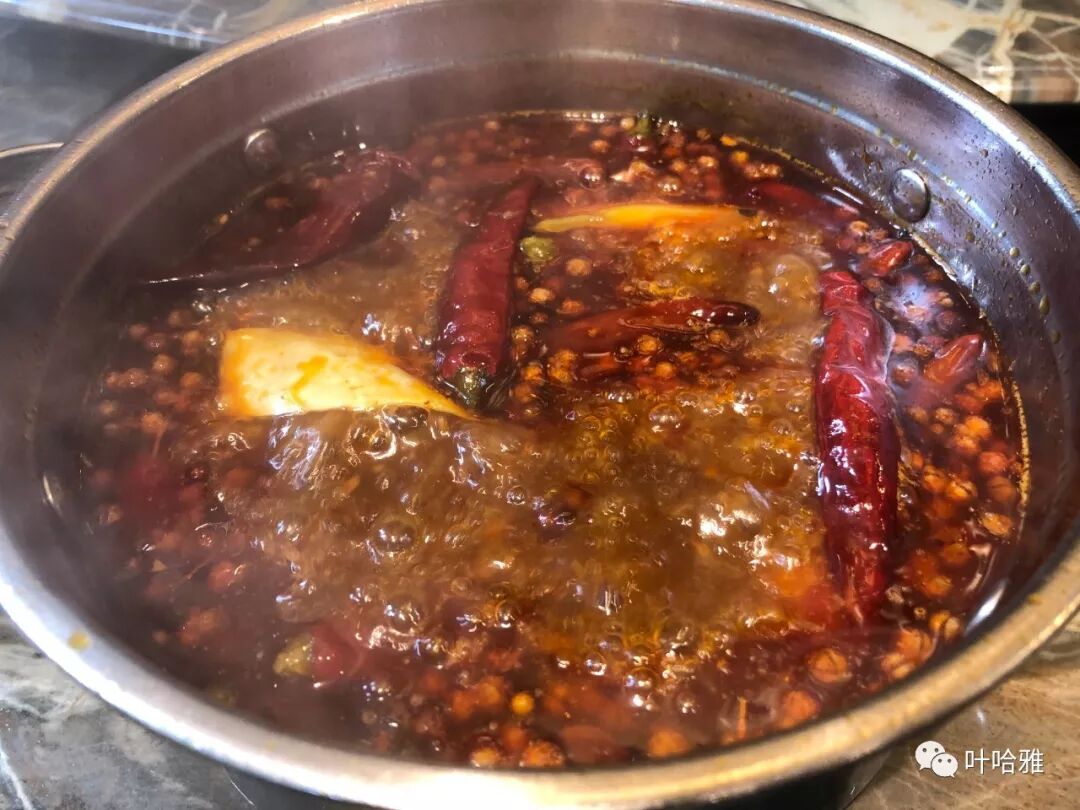
△Single pot
The boss said that the most enjoyable thing about eating Chongqing hot pot is the nine-square grid of the big pot, which allows you to taste different flavors. But I am only one person, so I can only choose a small pot to avoid waste. Compared with Chengdu hot pot, Chongqing hot pot is older and has a spicier taste. Chengdu hot pot is an improved version.
Chongqing people think that the longer the hot pot is cooked, the more fragrant it becomes. The hot pot soup is repeatedly simmered and the flavor becomes richer, so they are accustomed to calling it old hot pot. The soup in old hot pot is the leftover soup from the previous guests. There are really local people who eat hot pot and don’t mind eating the leftover old soup from the table. They enjoy it. It is delicious, but this is limited to the way of eating in non-halal restaurants. Halal restaurants will not use old soup, and halal restaurants have not been open in Chongqing for a long time, so it is impossible to have old soup. there are no favorites of Chongqing people such as duck blood and pig brains, so halal restaurants are not very popular among old Chongqing people.
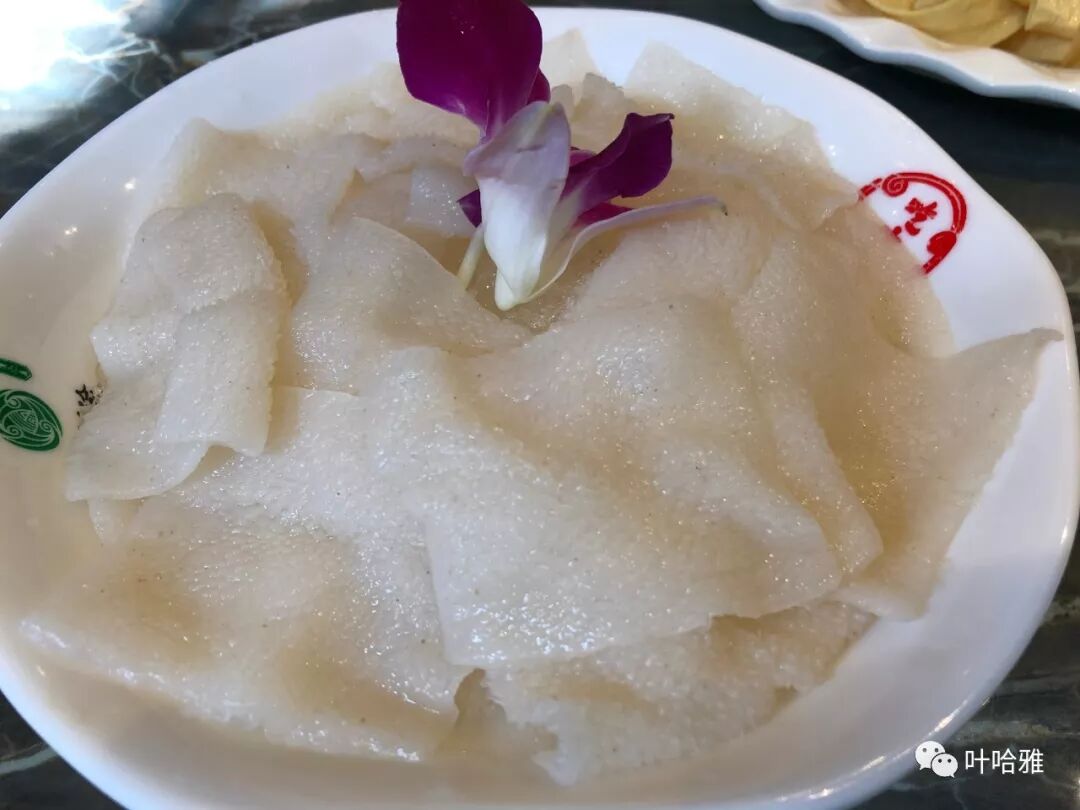
△Fairy hairy belly
The tripe is a must-have ingredient for Chongqing hot pot. You can eat the tripe in a red oil pan for three to five seconds. After being scalded by the spicy butter soup, the smell of the tripe is gone.
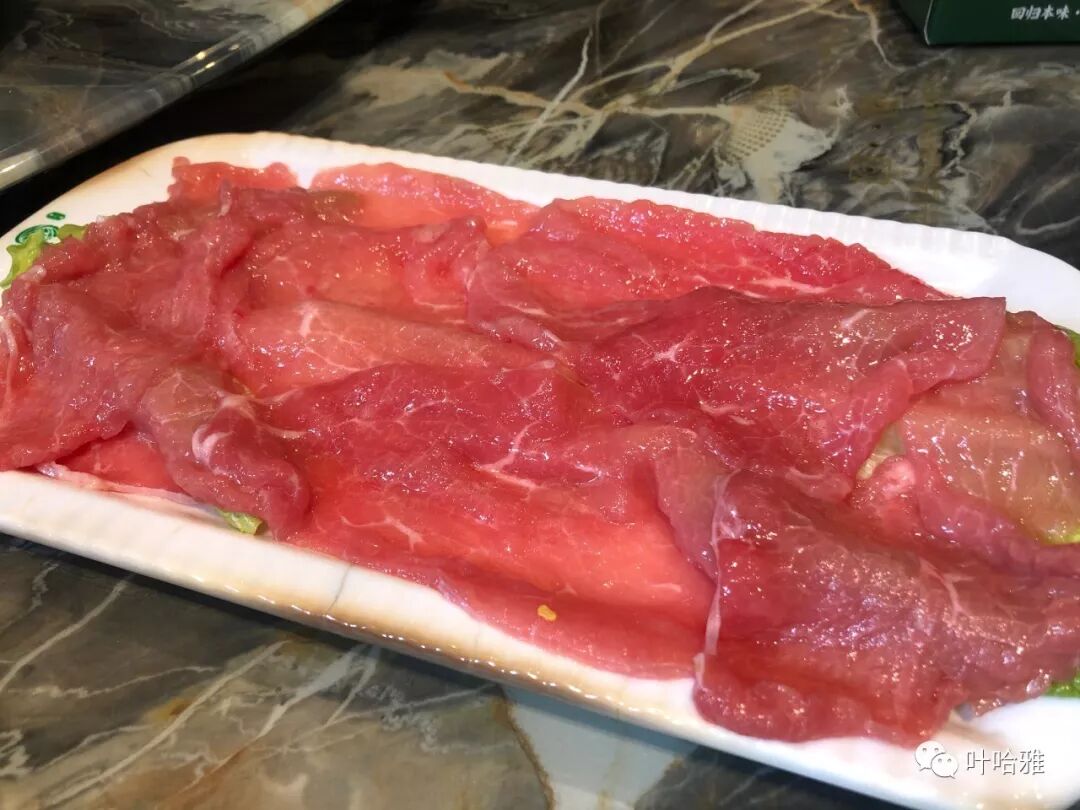
△Fresh cut beef tenderloin
Beijing's mutton-shabu-shabu mainly uses sheep, while Chongqing's hot pot focuses on beef. I suggest that when you come to Chongqing, you should mainly eat beef. Shabu-shabu beef in butter will have a unified taste.
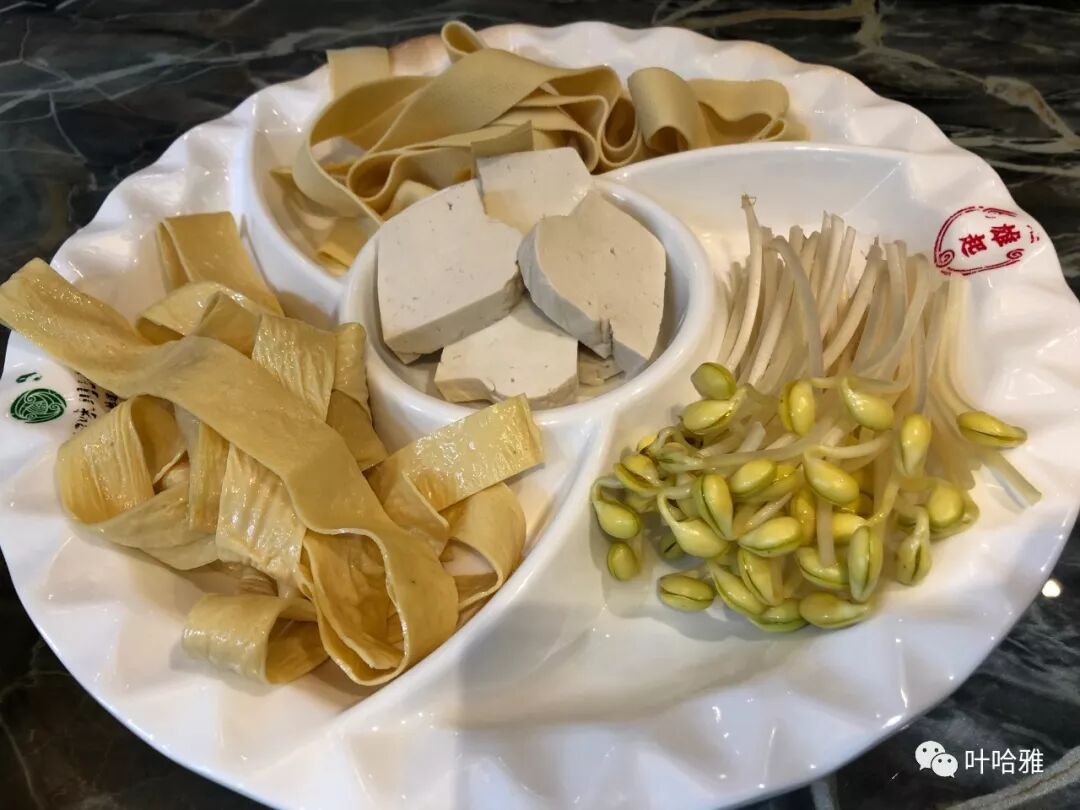
△Vegetable platter
What’s worth noting is the vegetable platter in Chongqing hot pot. I only realized after eating it that there were no green leafy vegetables in the vegetable platter, only soy products such as bean sprouts. As for the reason, experienced hot pot eaters should have guessed that green leafy vegetables cooked in spicy red oil will taste spicier and most people can’t stand it. However, light ingredients such as bean sprouts and tofu are more fragrant and more flavorful after being rolled in red oil, so those who want to try spicy food can just order the green vegetables.
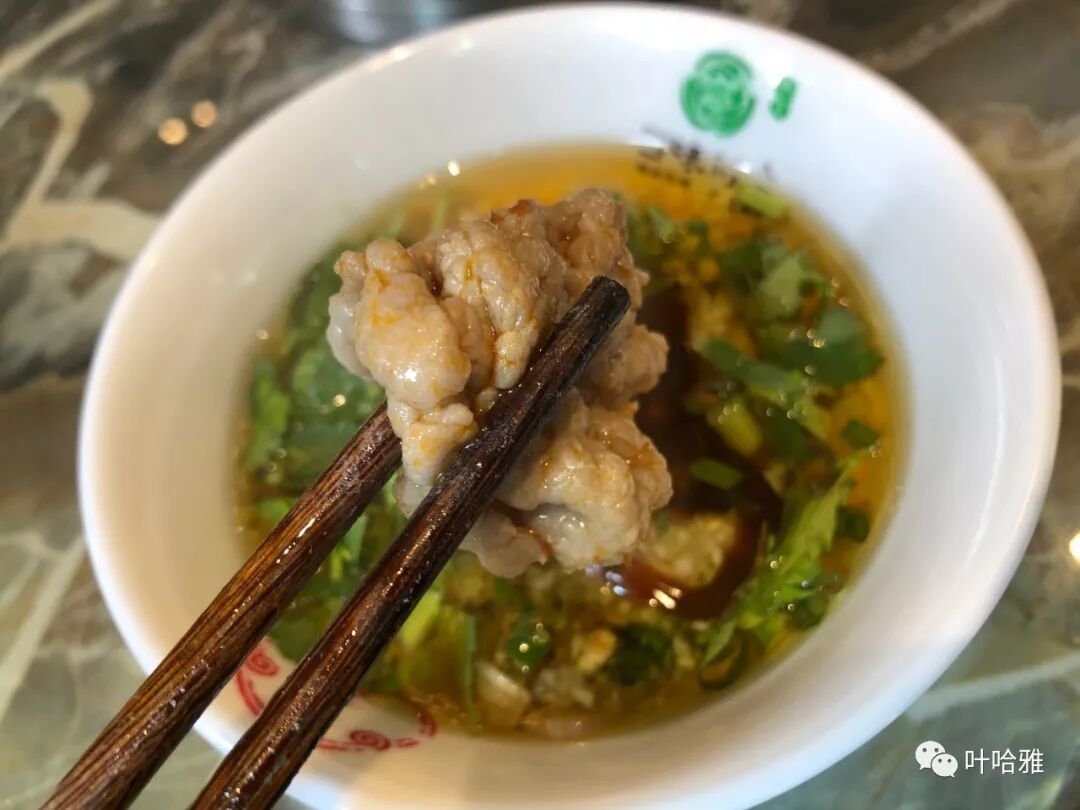
The dipping sauce of Chongqing hot pot is traditionally sesame oil and minced garlic, which mainly plays the role of cooling the hairy belly. Chengdu hot pot has made some innovations in the dipping sauce, adding sweet flavors such as oyster sauce. The dipping sauces here can be mixed as you like.
Jiaochangkou Muslim Building
Jiaochangkou is the only mosque in the central city of Chongqing. The original mosque was bombed by the Japanese army. Now a Muslim building has been built. The 14th and 15th floors are used as mosques, and the other floors are rented out to hotels. Currently, Chongqing has built a mosque similar to Hangzhou Xinda Mosque in the southern section of Erlangfeng West Road, but it has not yet been opened.
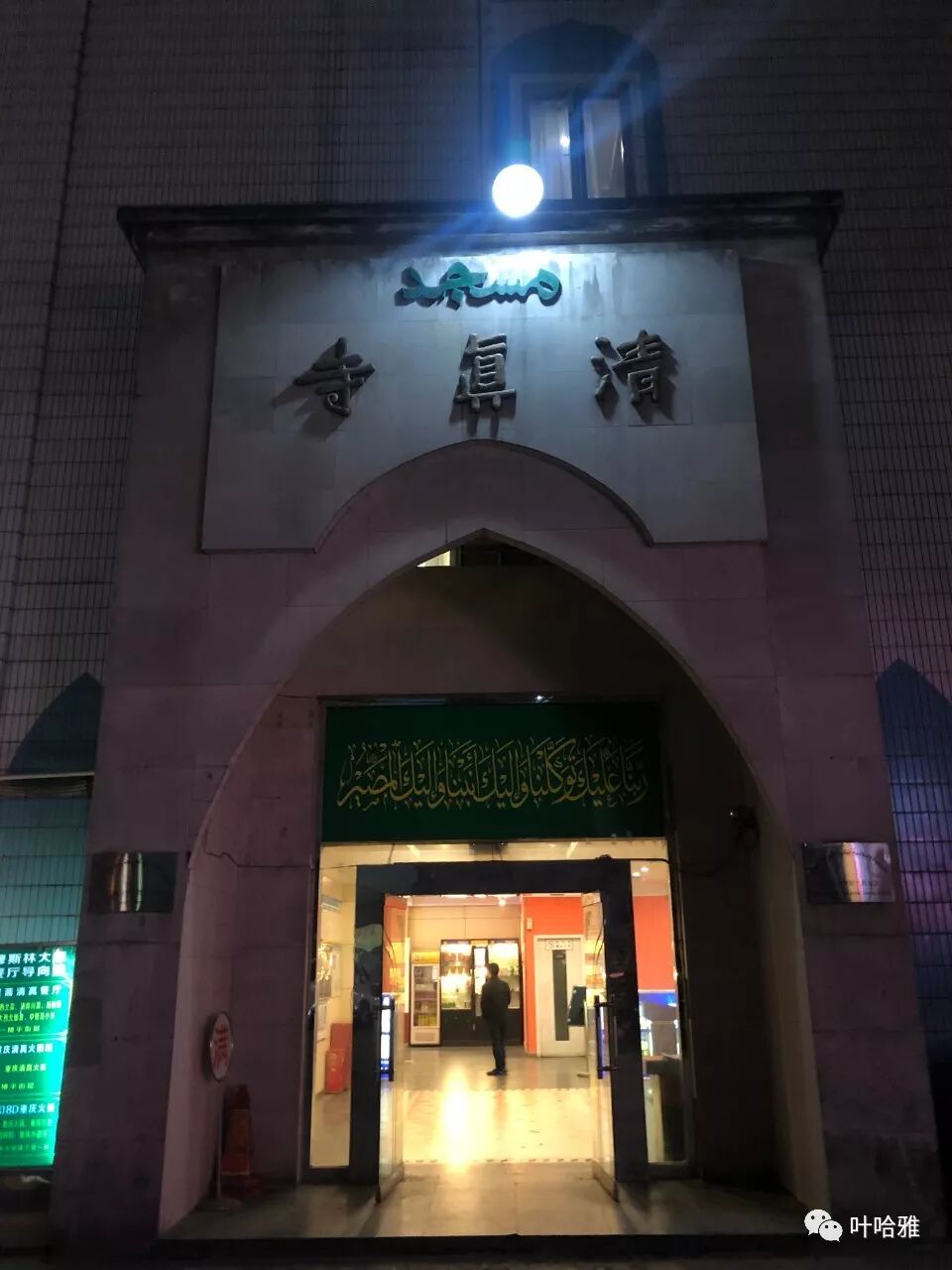
△Chongqing West mosque
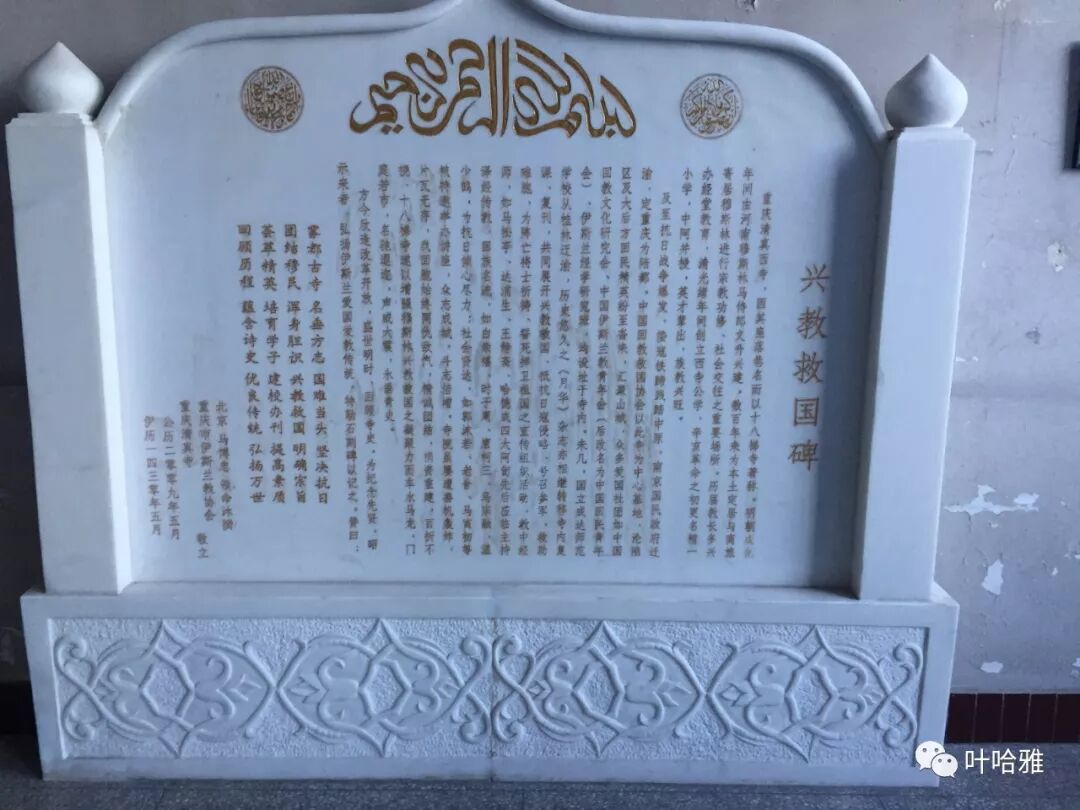
△The Monument of Promoting Religion and Saving the Nation
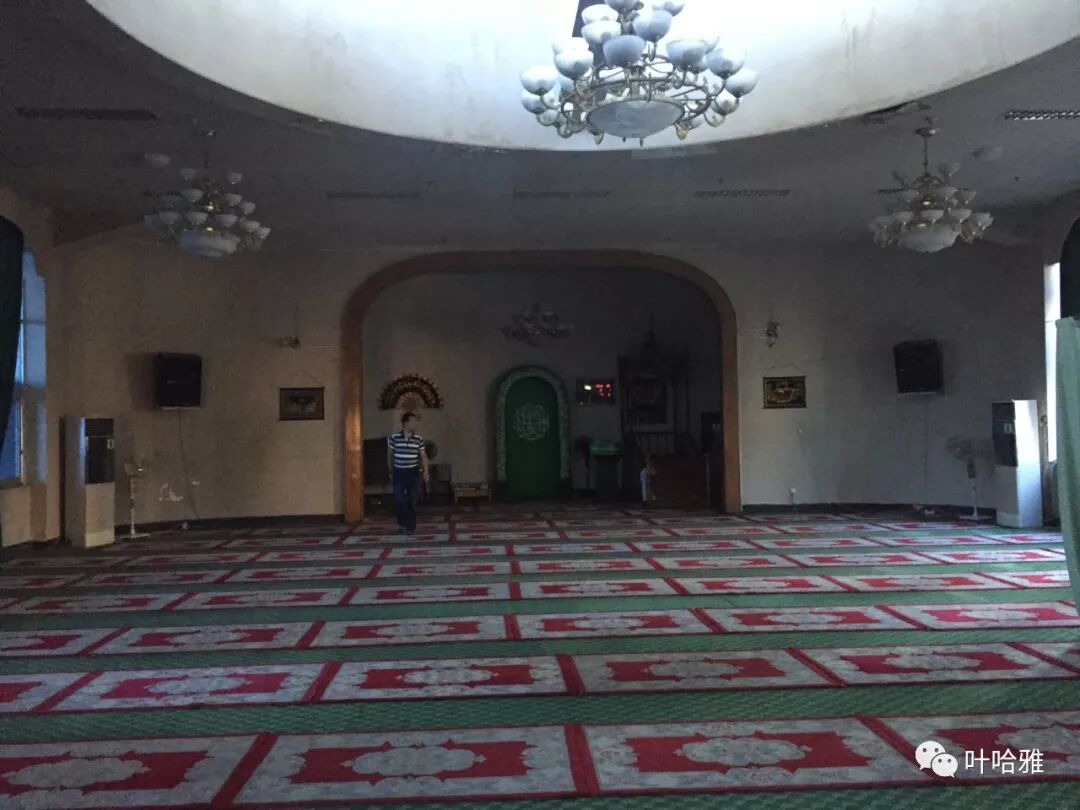
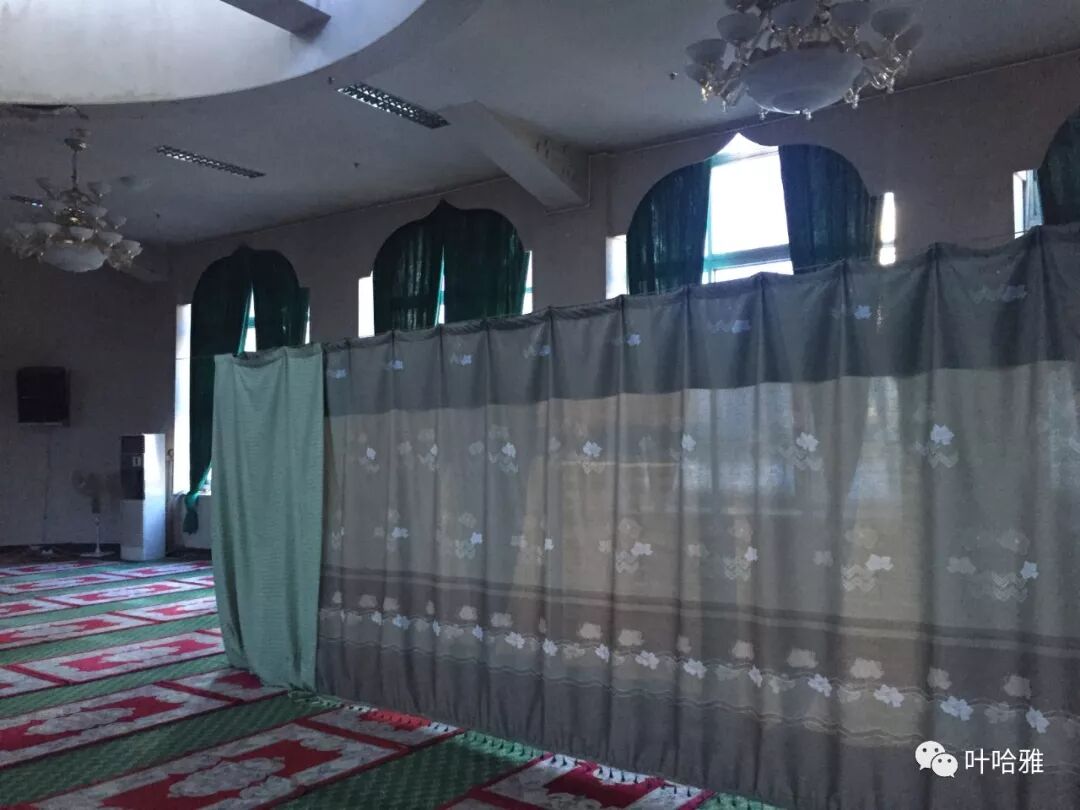
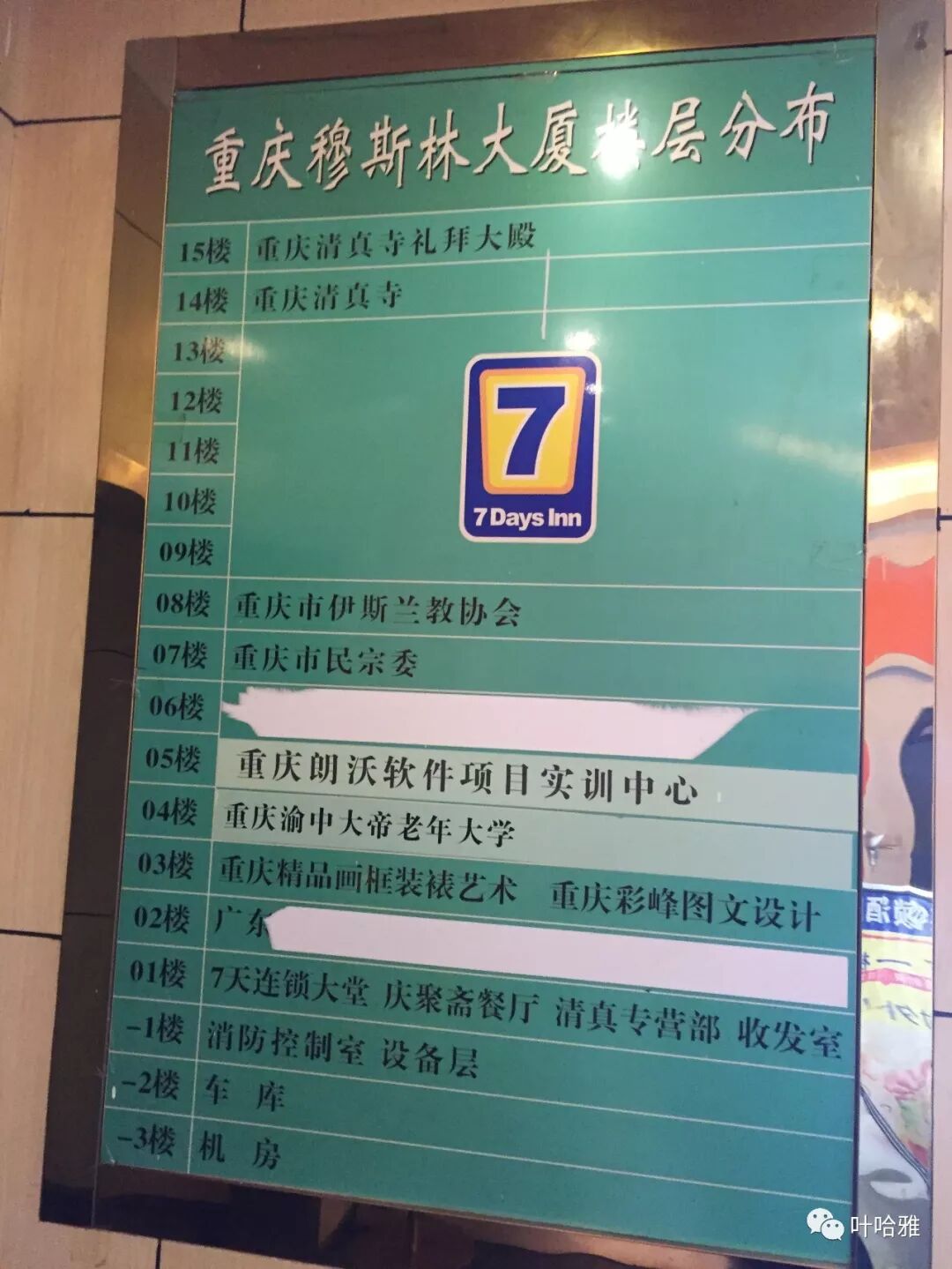
△The photo was taken in 2016, when the underground was not yet open.
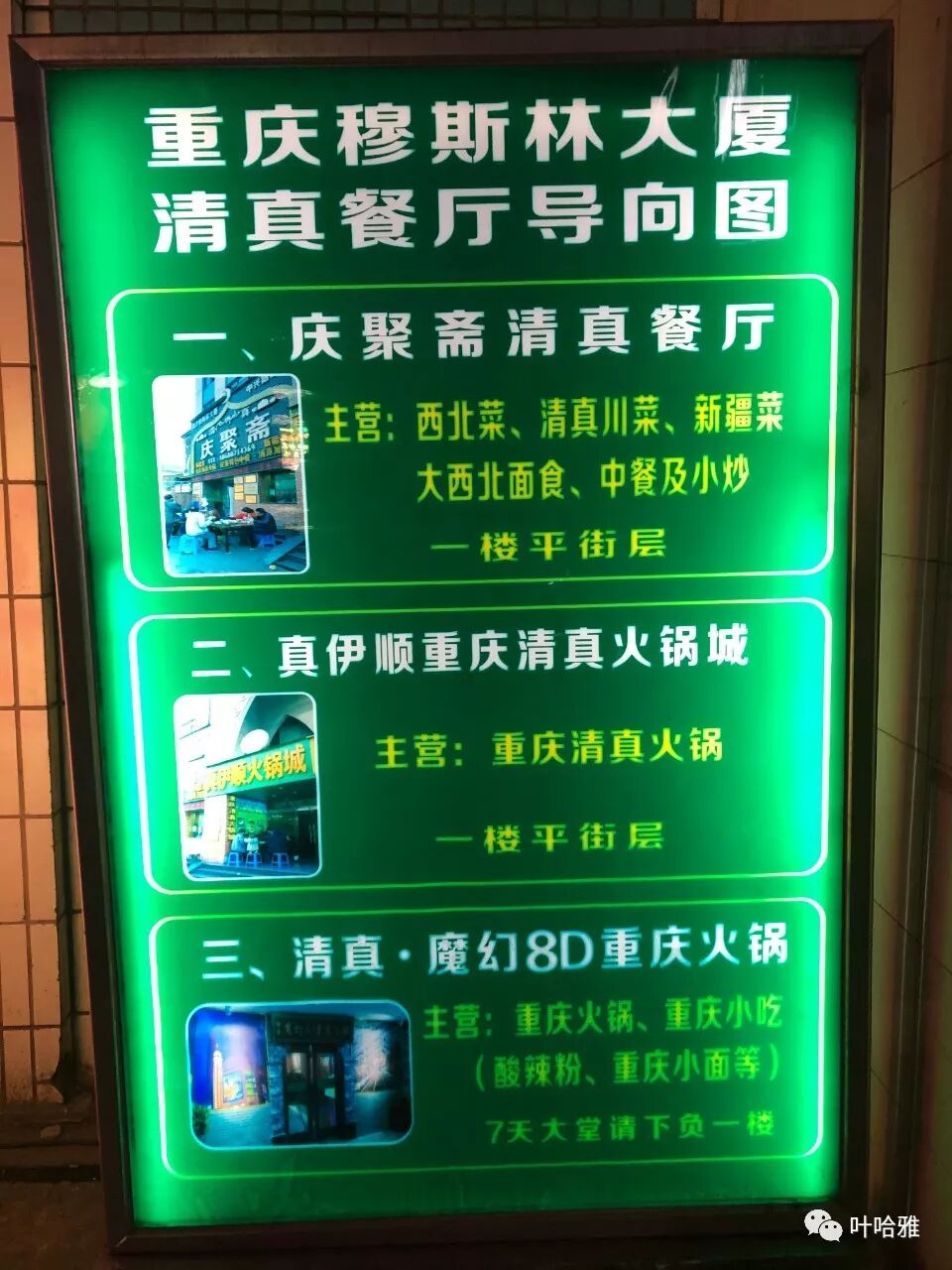
△Now the first floor and the basement have become a hotpot city.
△Qingjuzhai Halal Restaurant
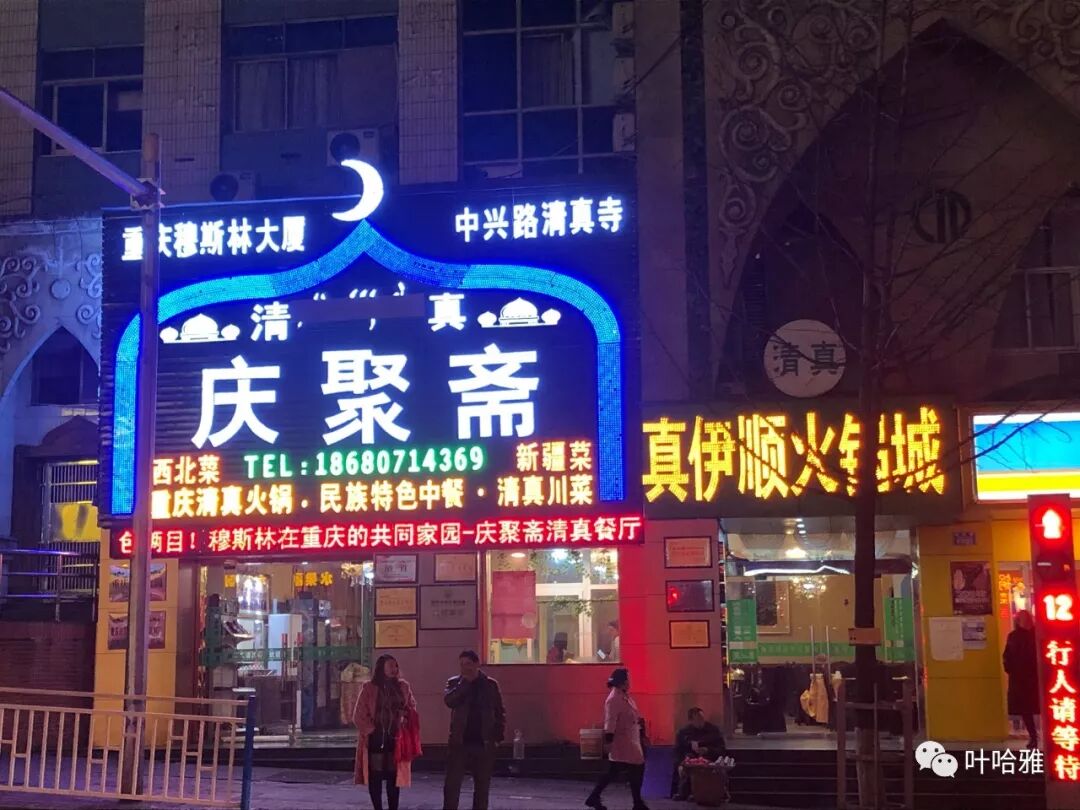
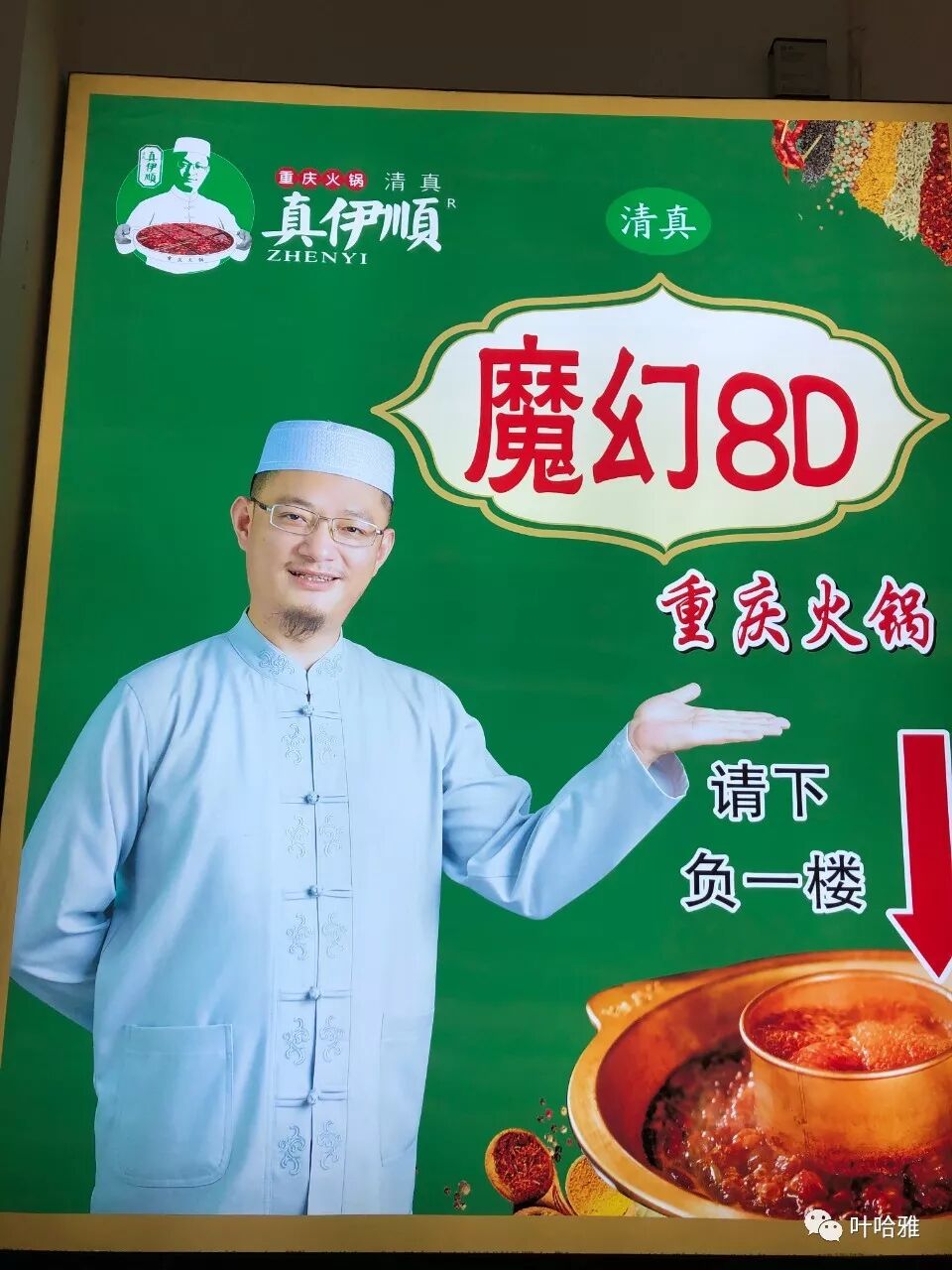
All three restaurants are owned by a Xinjiang owner. I specifically asked the waiter about the differences between the three restaurants and learned that the Magic 8D Chongqing Hot Pot on the basement floor is a sauce-flavored hot pot, the Zhen Yishun Chongqing Hot Pot on the first floor specializes in spicy and spicy hot pot, and the Qingjuzhai on the first floor specializes in Northwest Xinjiang stir-fry dishes, as well as Sichuan cuisine.
△This must be the boss.
After eating Sichuan and Chongqing hot pot at noon, I really can’t eat hot pot again in the evening. I came here mainly to eat halal Chongqing noodles.
△You can buy halal Chongqing hot pot base here.
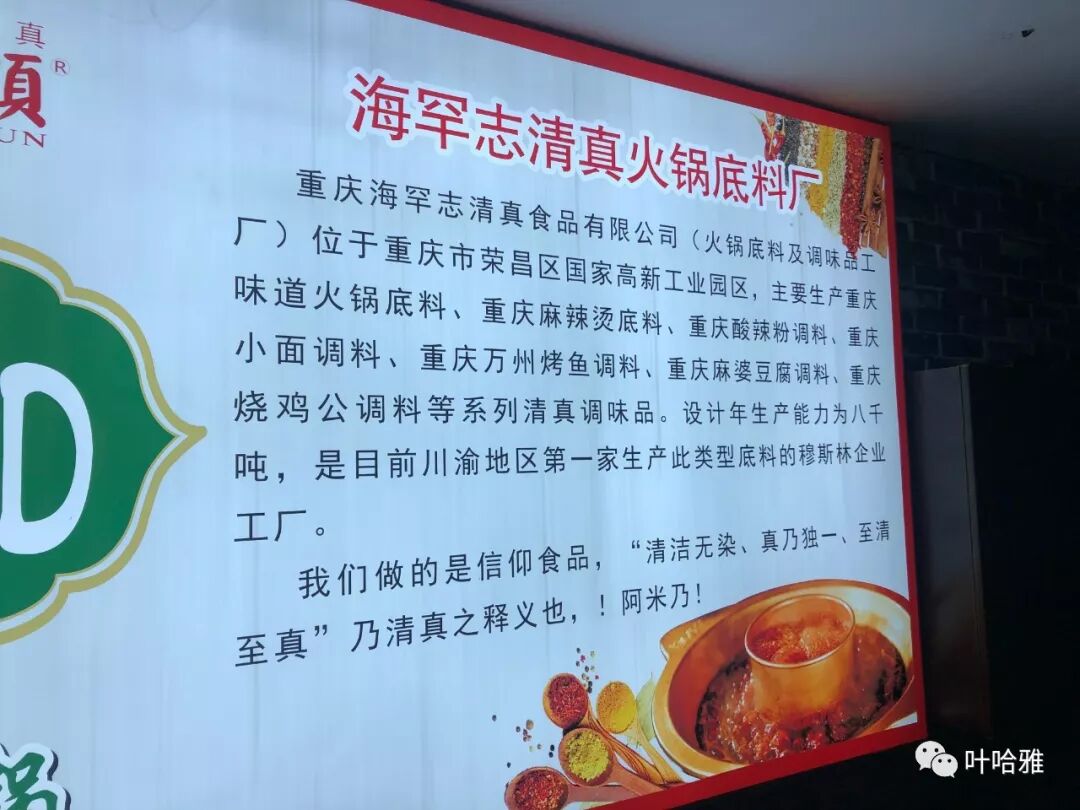
I ate the halal Chongqing hot pot base from a friend in Beijing, and I can use an induction cooker to cook it at home. The advantage is that I can add different concentrations of ingredients according to my own taste. I can eat five meals of the base that locals would eat in one meal, because the taste is mainly numb and spicy. If the ingredients are the same, it will not be affected by the region, and I can taste it at home like in a store.
△Still open at 10pm.
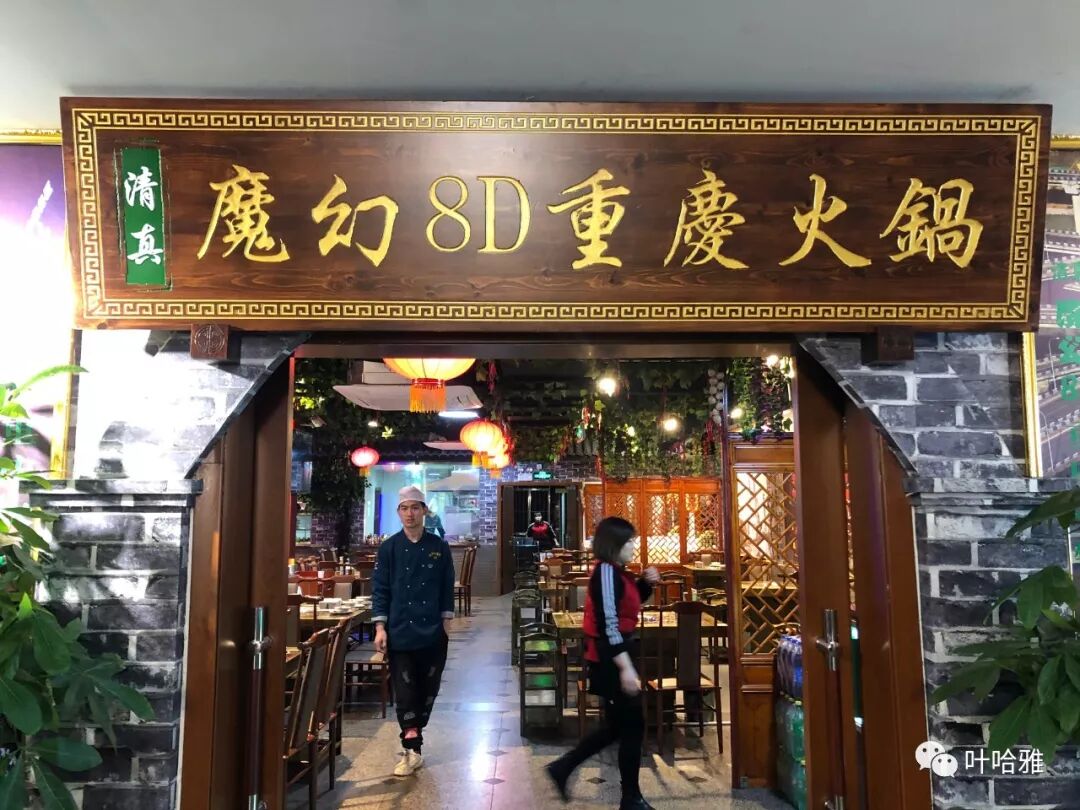
It was about 10 o'clock when I came to Magic 8D. The waiter said that we can go upstairs to eat hot pot. The upstairs is open until 11 o'clock and the current floor was about to close. But I said I just wanted to have a bowl of noodles, and they still made me a bowl. The waiters in the store are all Yaomei from Chongqing and have a very good attitude.
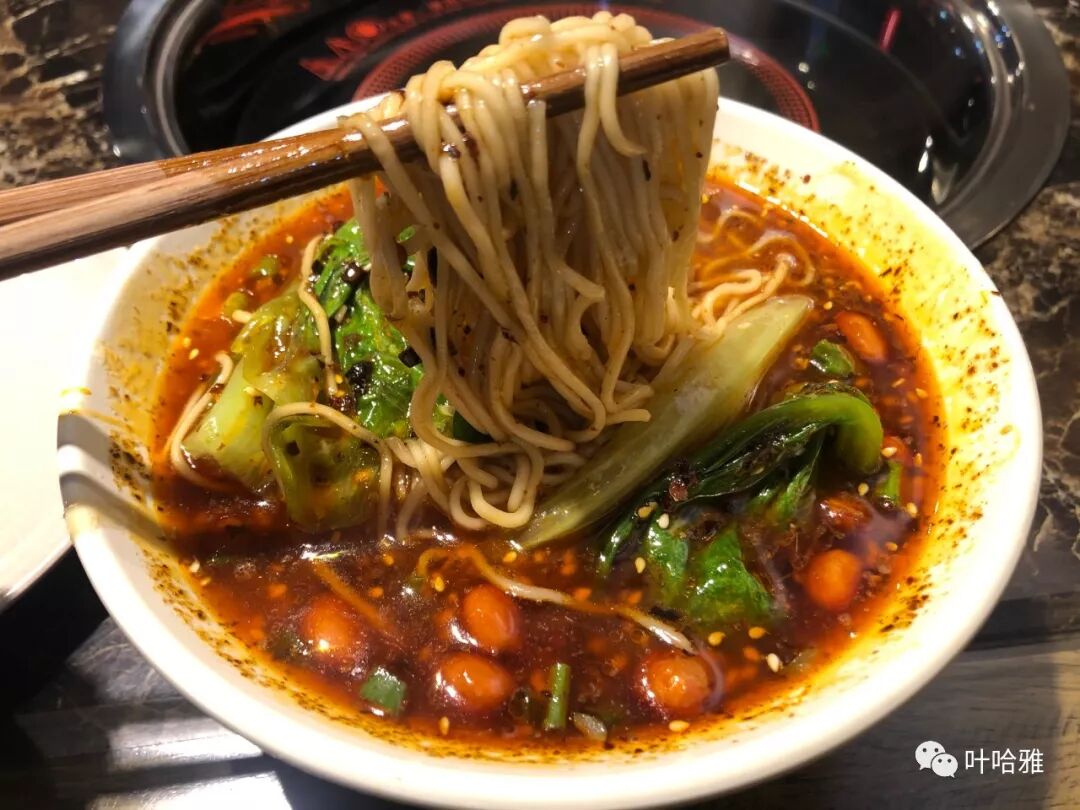
△Chongqing noodles
Finally, I was able to eat halal noodles in Chongqing. To be honest, the taste did not disappoint me. I ate the whole bowl. Of course, I didn’t finish the soup. The noodles here are not particularly spicy, just like the waiter said they have a special sauce flavor. The basic version of authentic Chongqing noodles is spicy plain noodles, but various toppings can be added. Chongqing noodles are one of the most important daily noodles for Chongqing people. People eat them since morning. Although they are plain noodles, it does not mean that you can go to halal restaurants to eat them, because they will add lard to them, so you must cherish the opportunity to eat halal noodles.
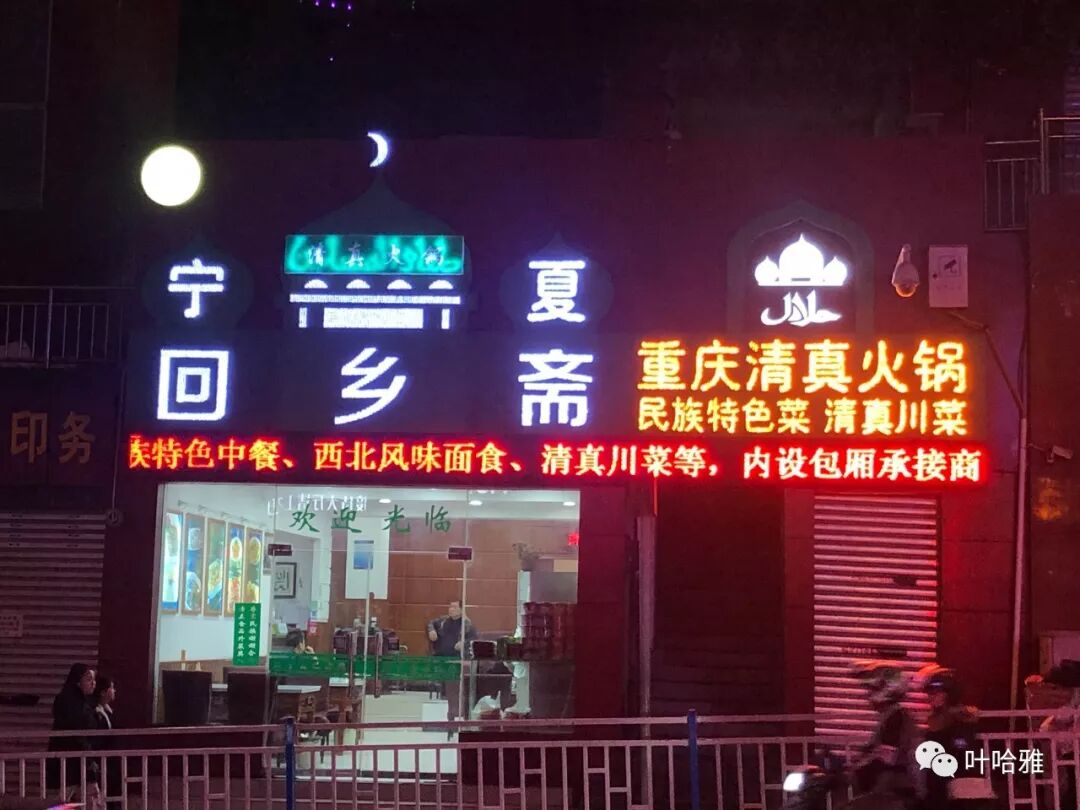
△Huixiangzhai, a northwest restaurant that also serves Chongqing hot pot.
Opposite the Muslim Building is Huixiangzhai. I had my first meal here when I came to Chongqing in 2016. It has basically remained unchanged in four years. This restaurant should be the first restaurant in Chongqing to start making Halal Chongqing hot pot in the past 10 years, although it is not the main dish.
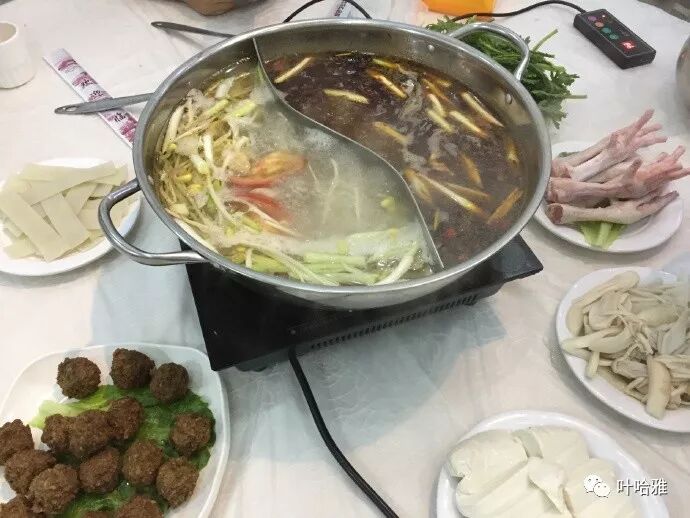
△Chongqing hot pot at Huixiangzhai
Next to the Muslim Building, there are several halal restaurants selling Chongqing hot pot nearby. They should have only opened in the past two years. Forgive me for not trying them all. If I eat spicy hot pot all the time, I'm afraid I won't be able to return to Beijing normally.
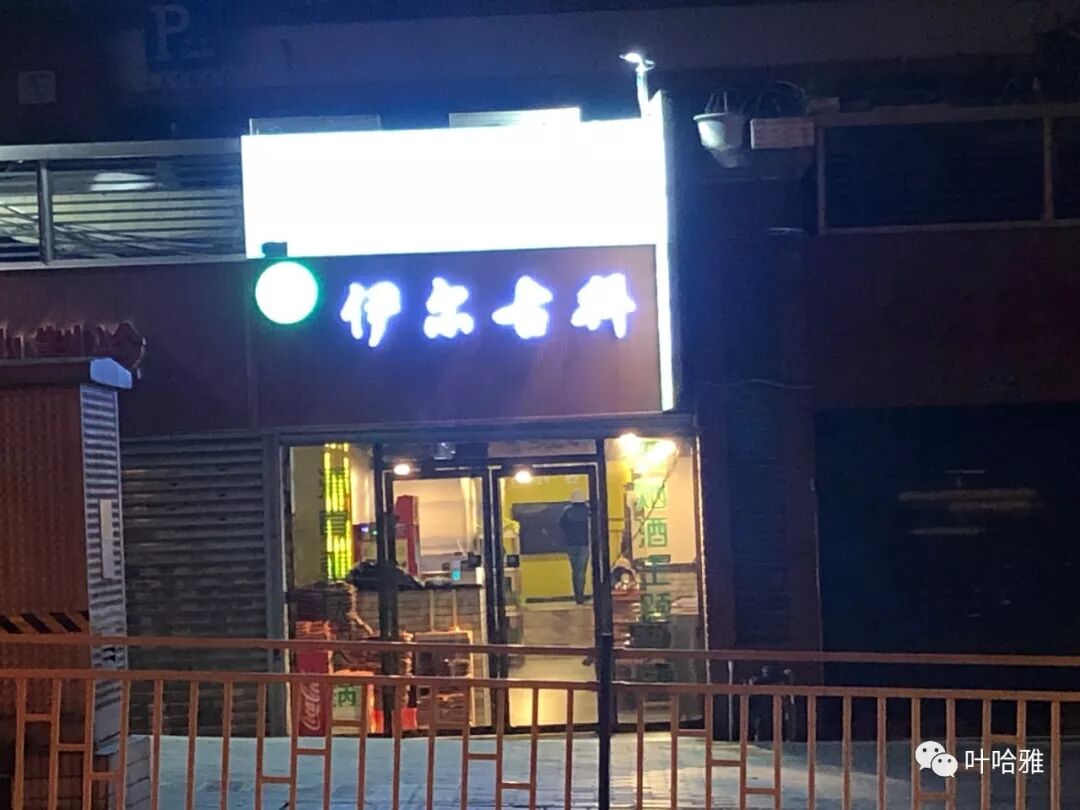
△Irquba halal hot pot, smoke-free wine restaurant.
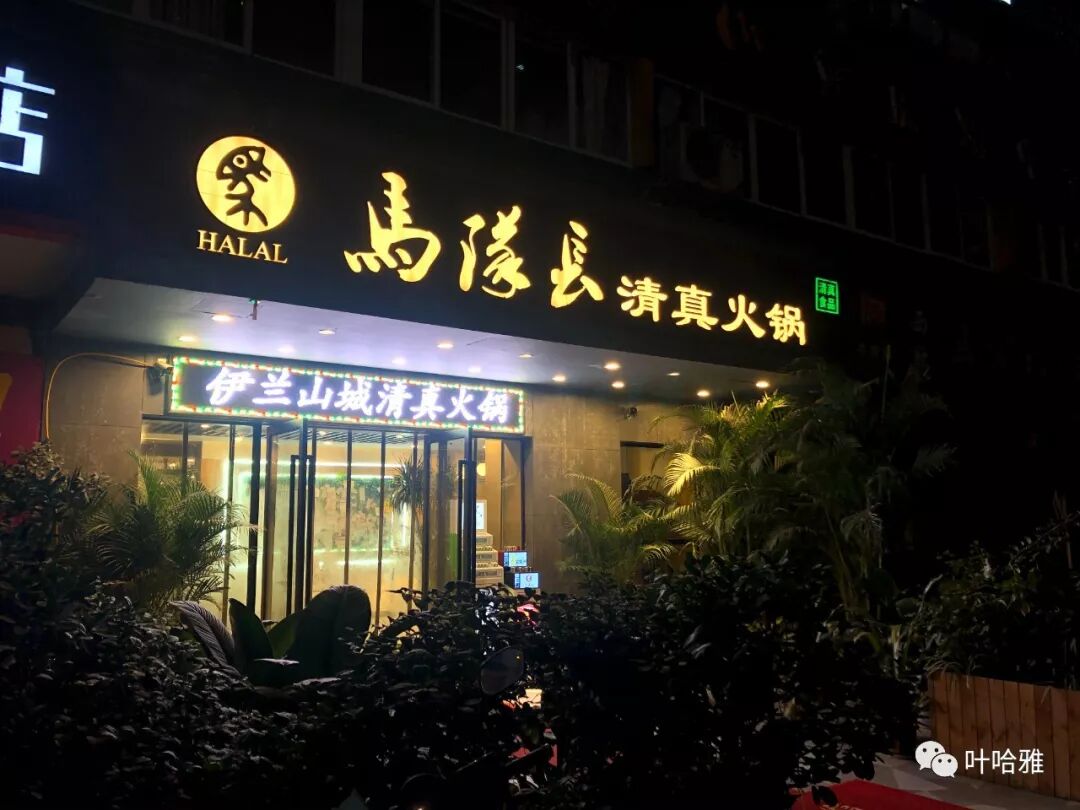
△Captain Ma Halal Hot Pot
About 900 meters away from Jiaochangkou, there is a night market. The first stall at the entrance of the night market is Huawei Yipin, which sells halal snacks.
The food truck is also the only halal stall in this night market.
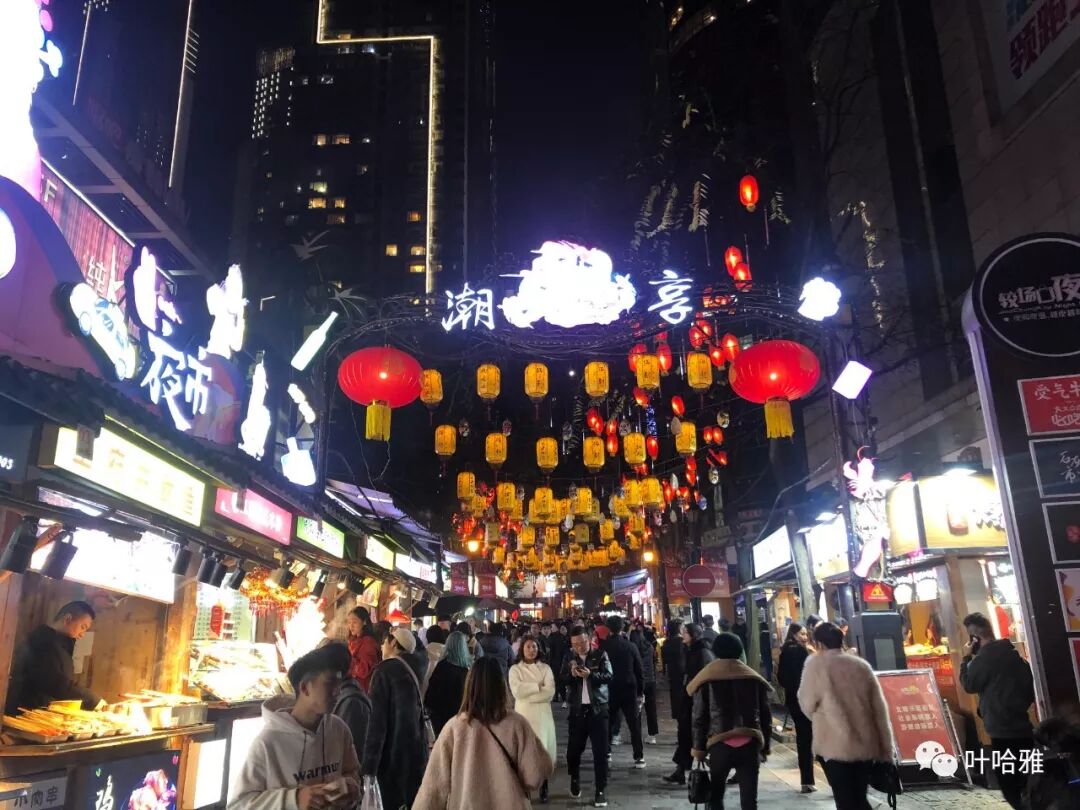
△30 Degree Street Bar in Lime City
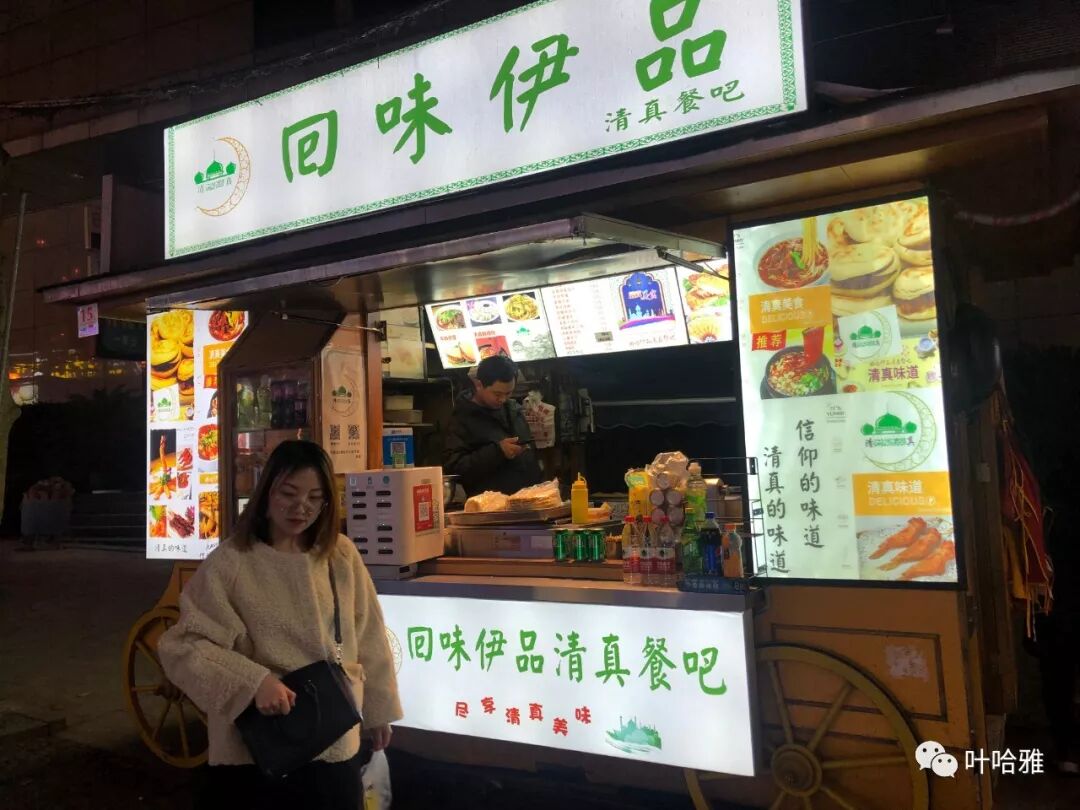
△Aftertaste of Yipin
Huiwei Yipin mainly sells snacks such as beef noodles, beef steamed buns, hot and sour noodles, fried chicken, and cold noodles. It also sells Chongqing noodles. It is run by a couple from Liaocheng, Shandong. We exchanged words about selan. The young man seemed to be in a good mood and was laughing. Narrowly, he said that he has been doing business in Chongqing for more than 20 years and has settled in Chongqing. During the chat, I heard him communicating with Chongqing guests in Chongqing dialect with a pure accent. He said that locals in his Chongqing accent generally can't tell the difference.
I asked him about the situation of local hot pot in Chongqing. I said that the hot pot restaurants in Chongqing seemed to be doing very well, and I often saw long lines of people queuing up to eat hot pot. He told me that many of the queuing restaurants paid people to queue up. Generally, traditional Chongqing people would not queue up to eat hot pot. They would eat the familiar taste in small alleys near their homes. There is no need to queue up in such small shops.
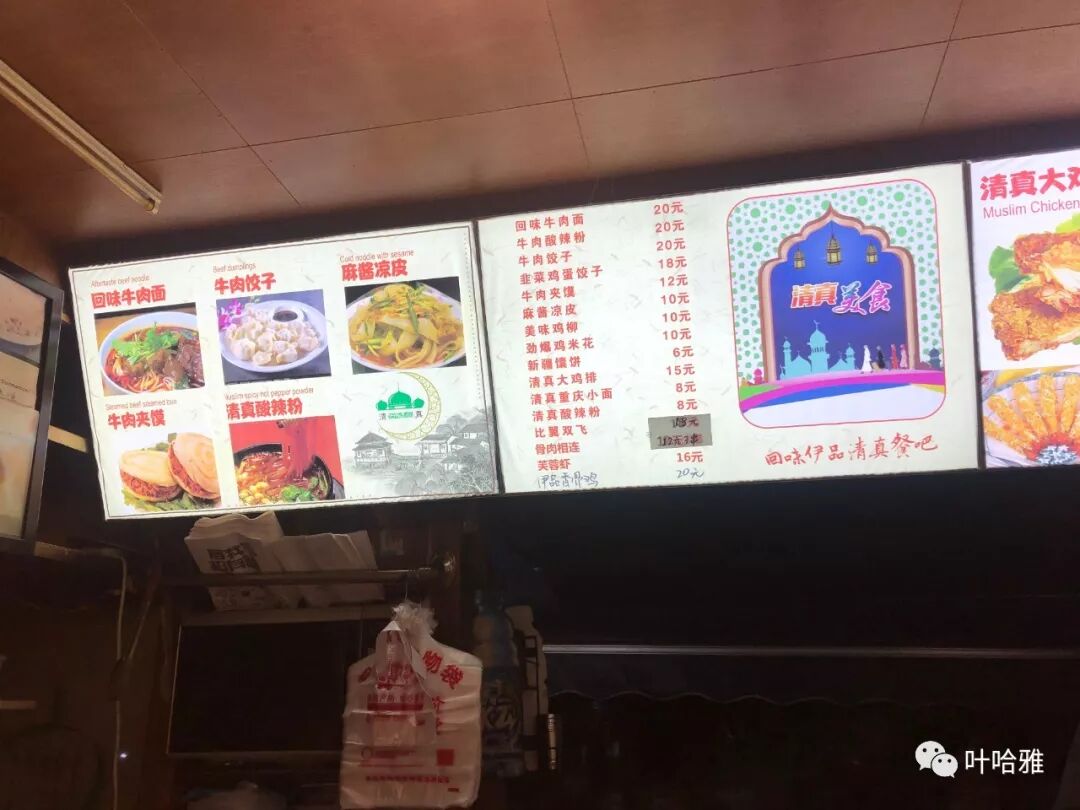
△Aftertaste Yipin’s menu
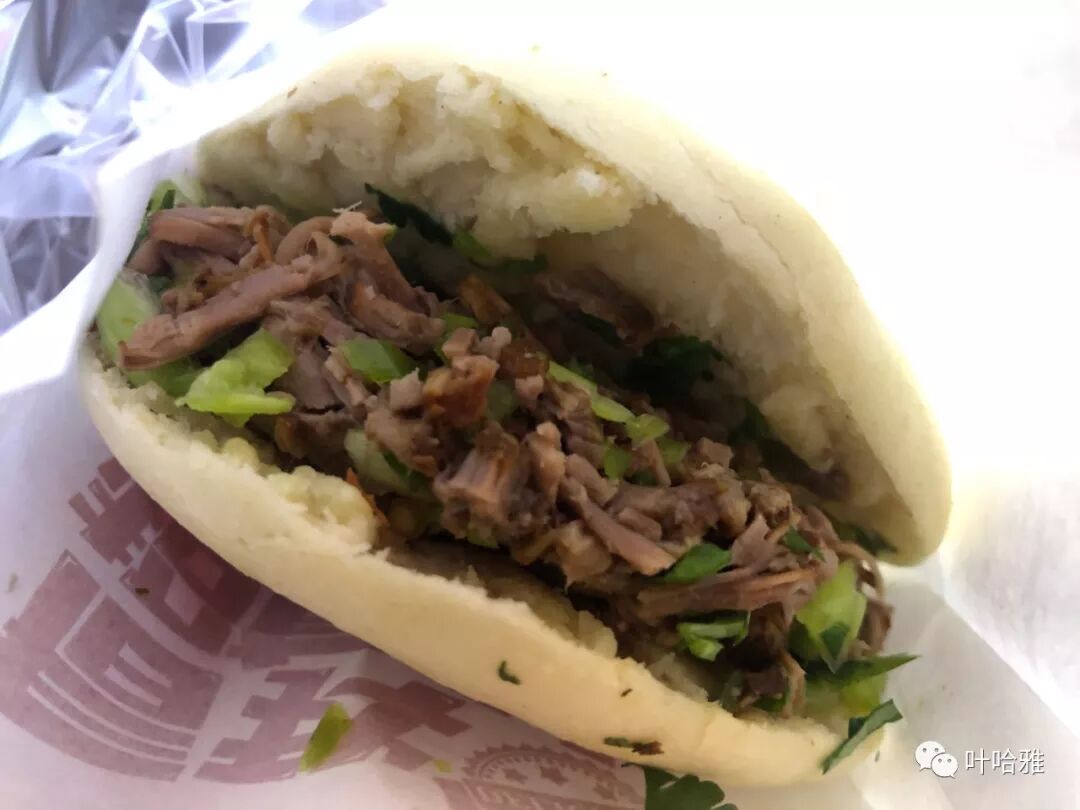
△Beef steamed buns
The Roujiamo they make is really delicious. I had just finished eating the spicy hot pot, so a hot Roujiamo saved my stomach. The buns are all heated on the pan. I believe that friends who can't eat spicy food will want to have a Roujiamo to resist the burning of their stomach after eating spicy hot pot.
Weiyijia·Ethnic Specialty Restaurant
The biggest gain from my trip to Chongqing this time was to find an authentic Chongqing restaurant in Hechuan District run by local Muslims in Chongqing. The location of Hechuan District in Chongqing is roughly equivalent to the outer suburbs of Yanqing and Huairou in Beijing. You need to take a train from Chongqing North Railway Station. The journey takes about half an hour and there are many trains.
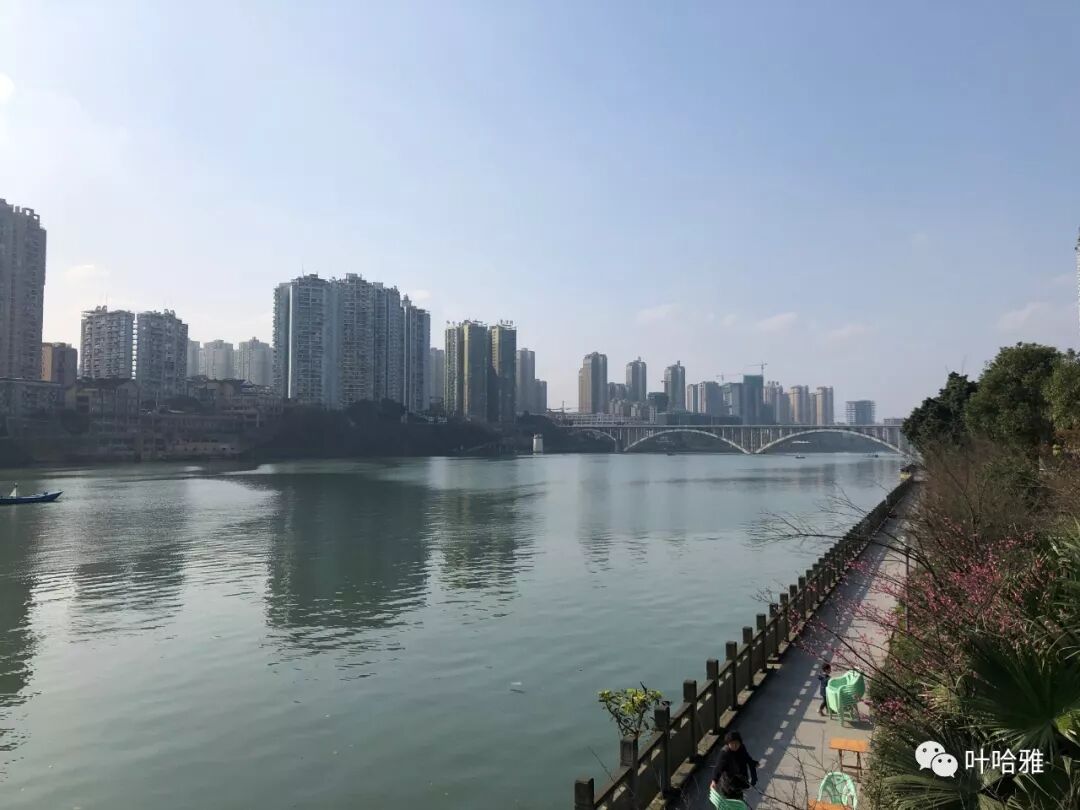
△Fujiang River in Hechuan District
Weiyijia Restaurant is located in a street shop along the Fujiang River. On the opposite bank is Wenfeng Ancient City, a famous scenic spot in Hechuan District. I have visited the ancient city for you and found no halal restaurants, but there are vegetarian restaurants.
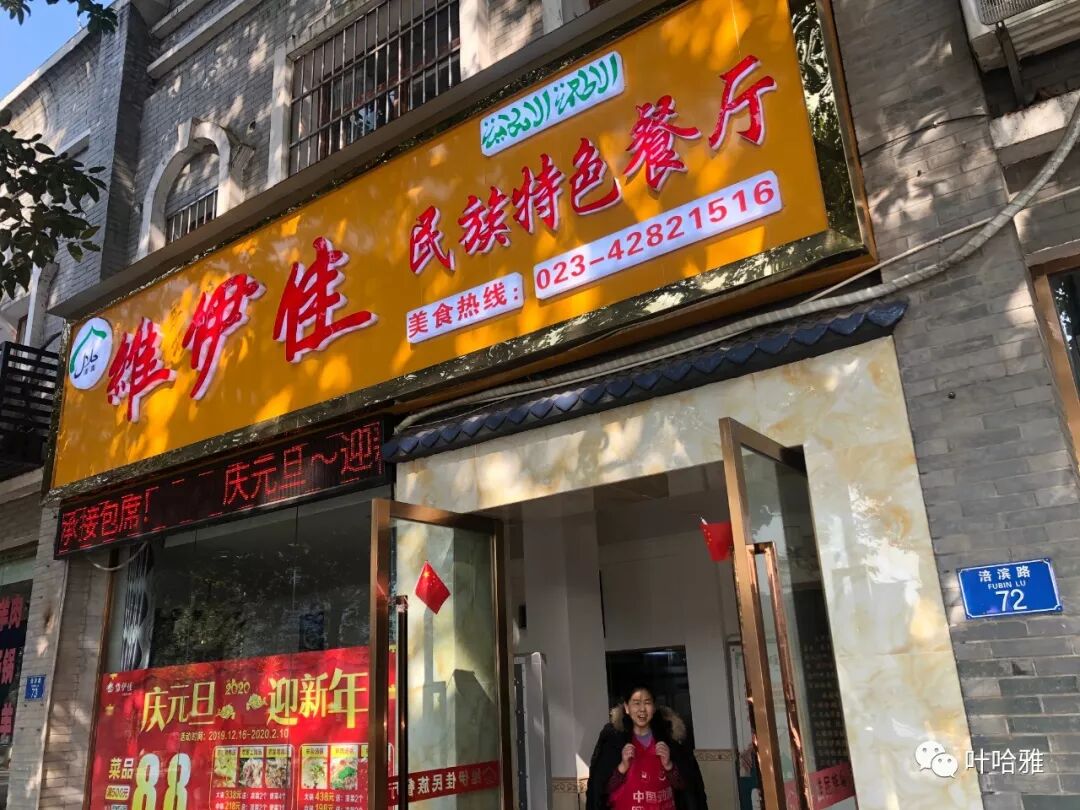
Weiyijia Ethnic Specialty Restaurant is the only Chongqing-style halal restaurant in Hechuan District. The owner is a Chongqing native and the director of the Hechuan Mosque. This restaurant is a non-smoking and alcoholic restaurant, and all the meat in the restaurant comes from Lanzhou. This is simply perfect and must be highly recommended.
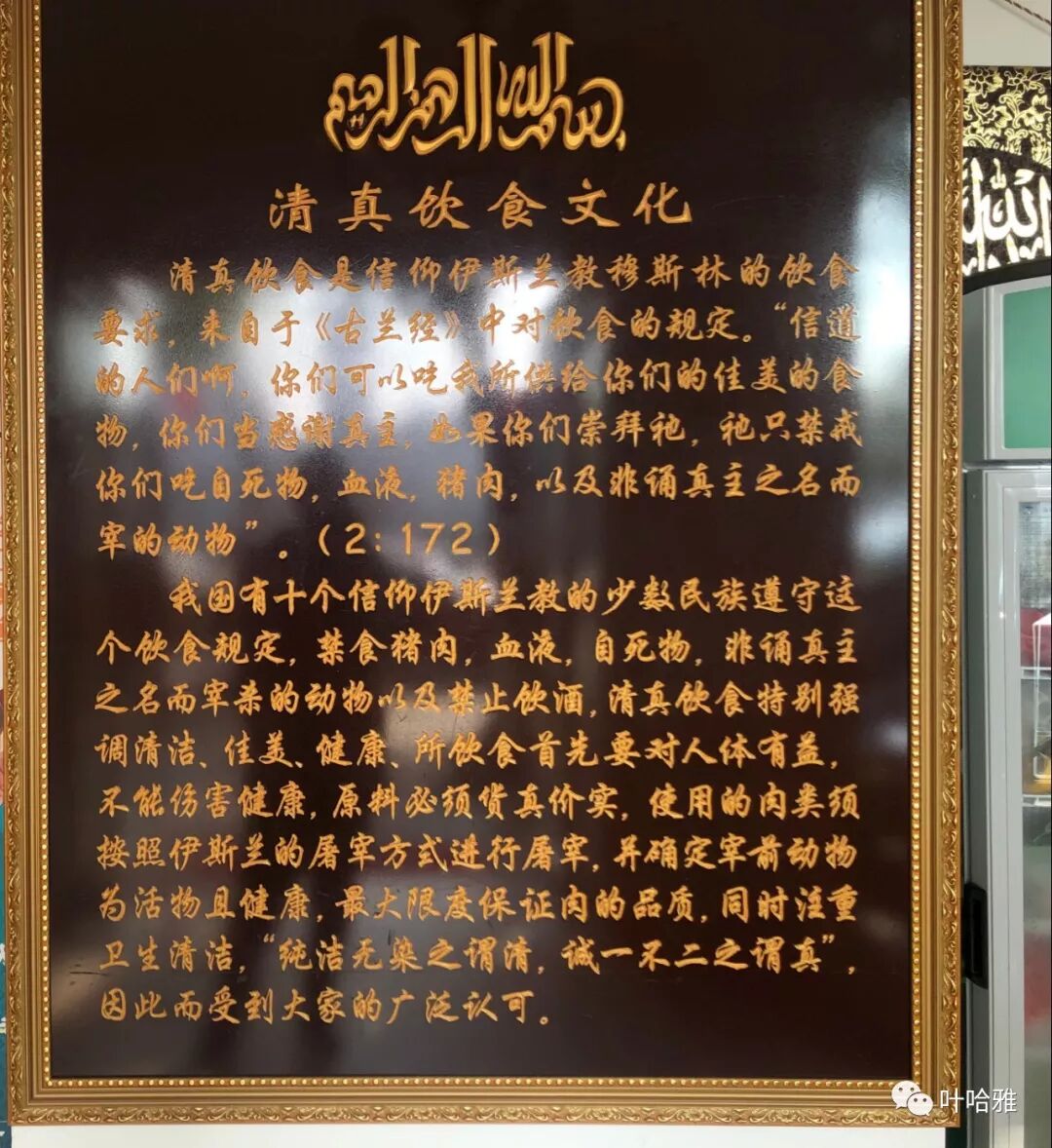
The signboard placed at the entrance not only introduces the concept of halal food and emphasizes that alcohol is prohibited, but also clearly states that the ingredients come from Lanzhou, emphasizing that the ingredients are of high quality and can be eaten with confidence. In fact, Lanzhou is not too far from Chongqing. There are some areas in Gansu where the food taste is closer to Sichuan, such as the Longnan area. Halal Sichuan hot pot restaurants can be found everywhere in Lanzhou, and the taste is basically the same as that in Sichuan and Chongqing.
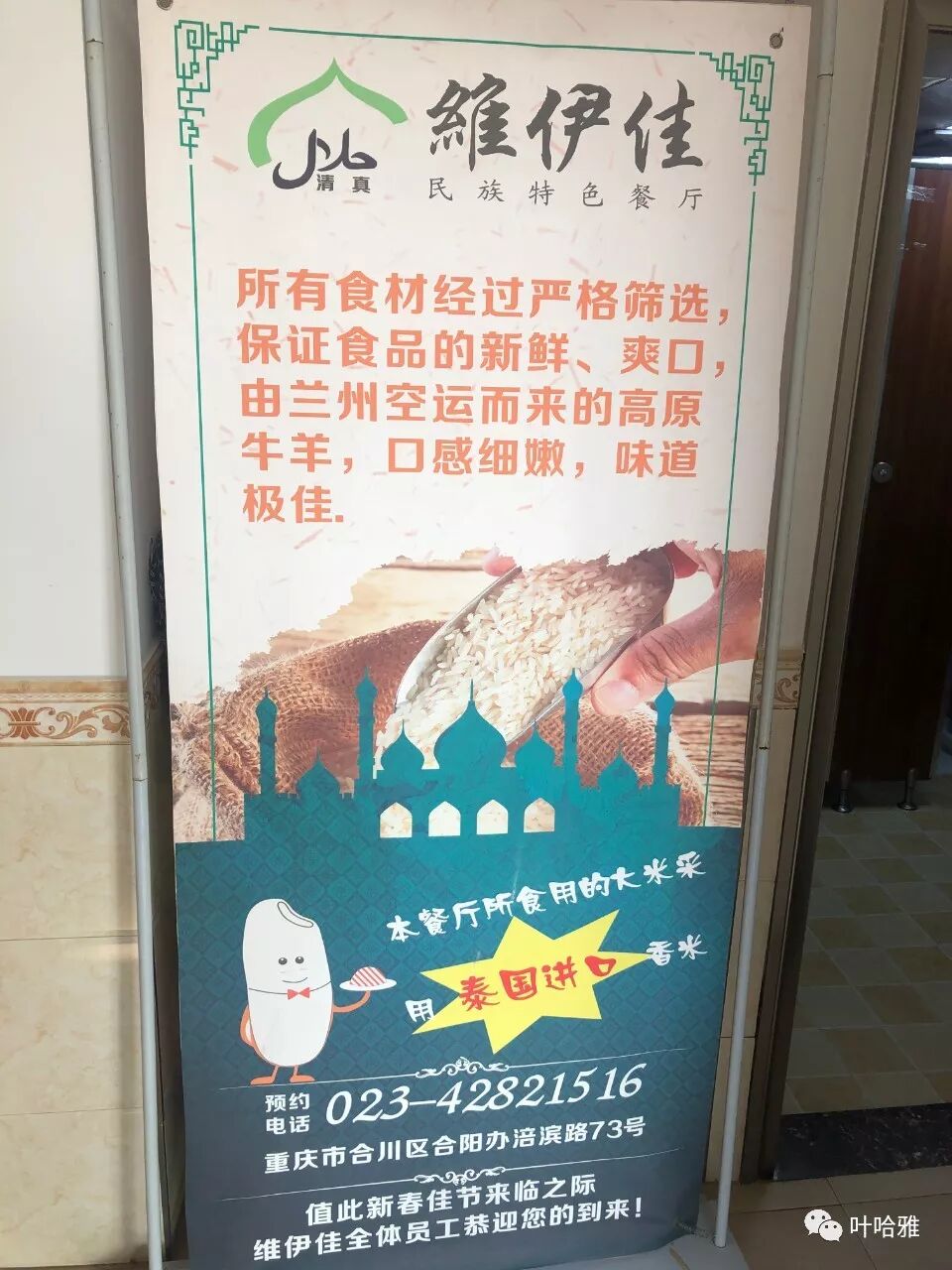
△Not only is the meat good, but the rice is also imported from Thailand.
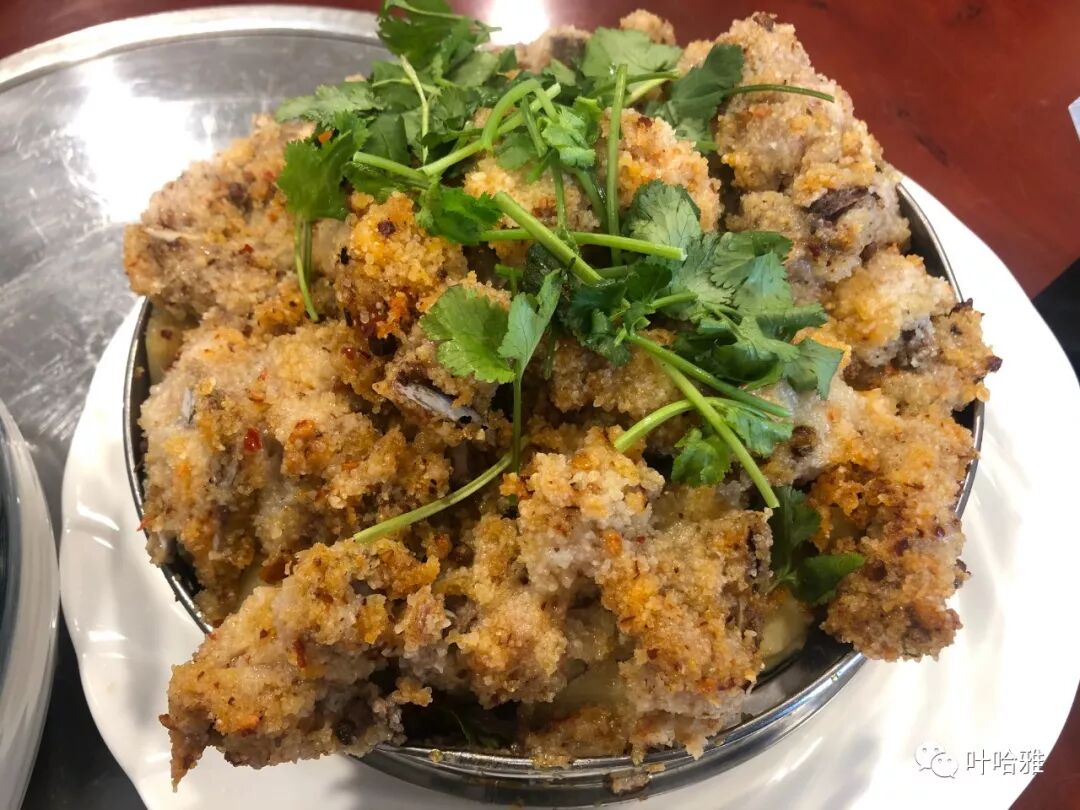
△Steamed mutton with rice flour
Steamed pork is popular in many southern provinces and is one of the top ten famous dishes in Chongqing. It is steamed with rice noodles, meat and other materials. The Hui Muslims use beef and mutton as the main ingredients, and then put sweet potato cubes on the bottom. Eat the steamed pork on top first, and then eat the ground pork on the bottom. The role of the melon, rice noodles and sweet potatoes may be to absorb the mutton smell of the meat. This Lanzhou mutton has no mutton smell, but I underestimated the amount of dishes in Chongqing restaurants. This portion is probably enough for two or three people. It is a pity that I can't finish them all.
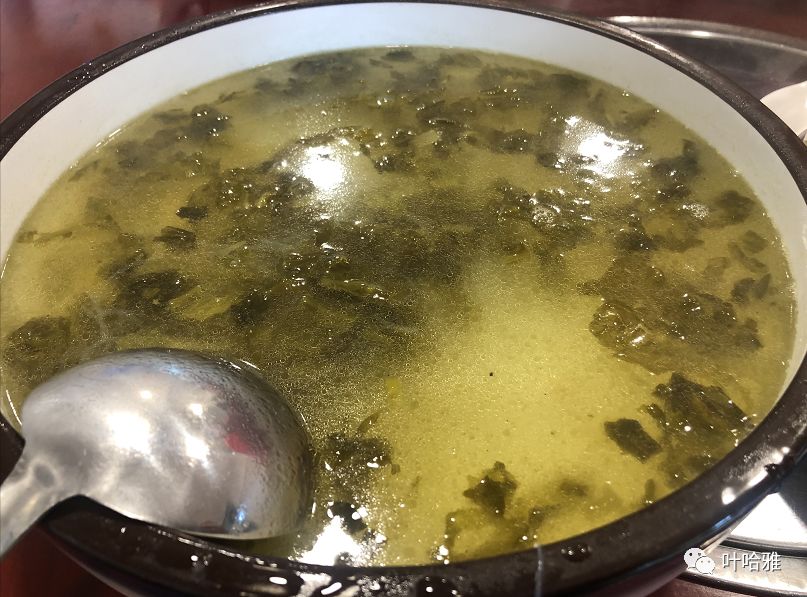
△Sauerkraut and Vermicelli Soup
The most inconvenient thing about traveling alone is that my food intake is limited and I can’t eat more. I had a premonition before ordering that I might not be able to finish it all, so I only ordered one portion of steamed pork with rice flour and another portion of soup. I didn’t expect that the soup came in a big bowl, which shocked me, and it only cost 12 yuan. This time I tasted Chongqing sauerkraut. The texture is very different from northern sauerkraut. It is more sour and has a more complex taste, which is very appetizing.
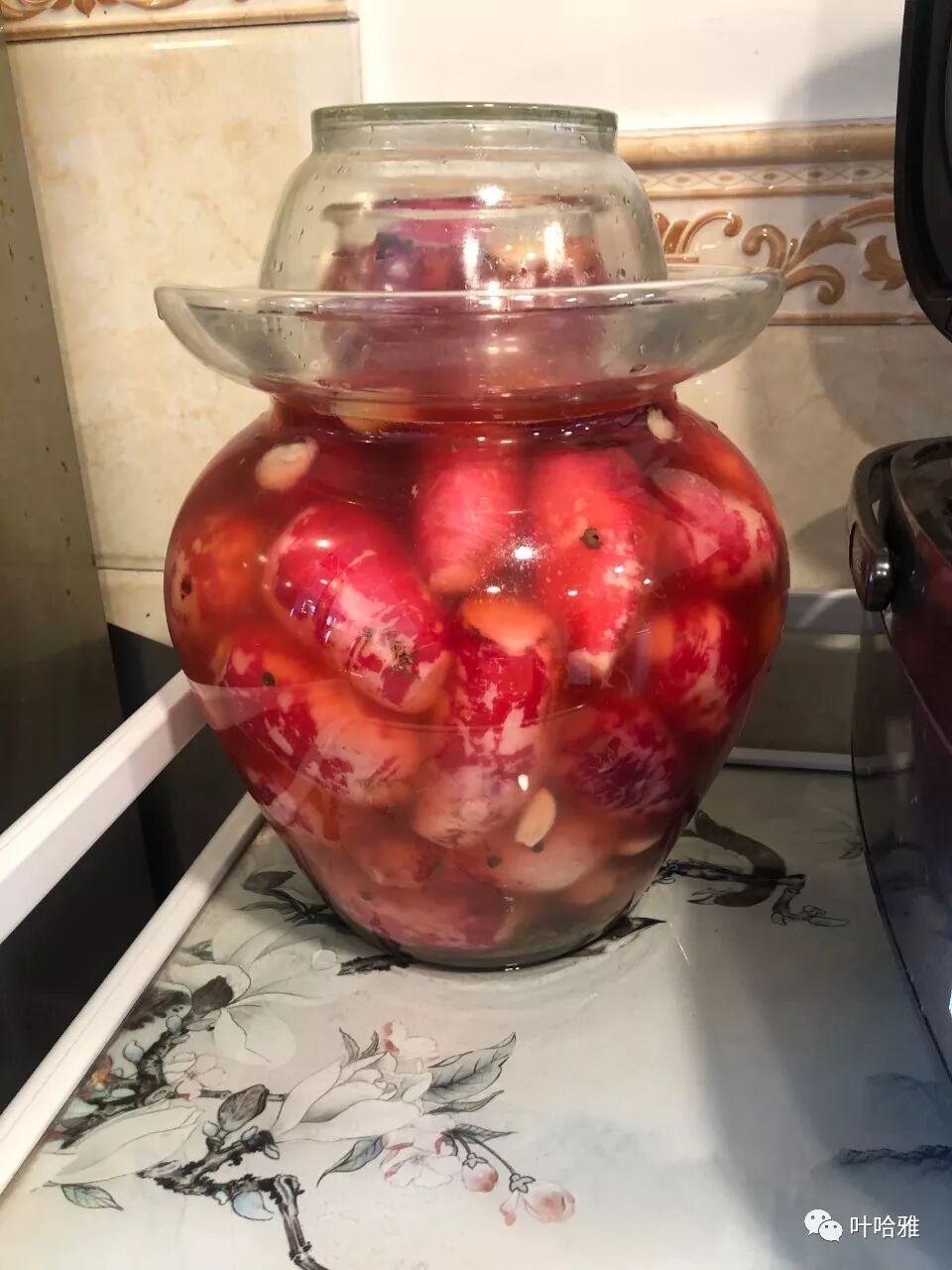
The waitress at Weiyijia’s kimchi is a native of Hechuan with a strong accent. She saw that I was very interested in this kimchi and said she could give it to me to try. However, the kimchi was not yet ripe (carelessness). I ate some and thought it was quite delicious. The people of Bashu are very good at making pickled food.
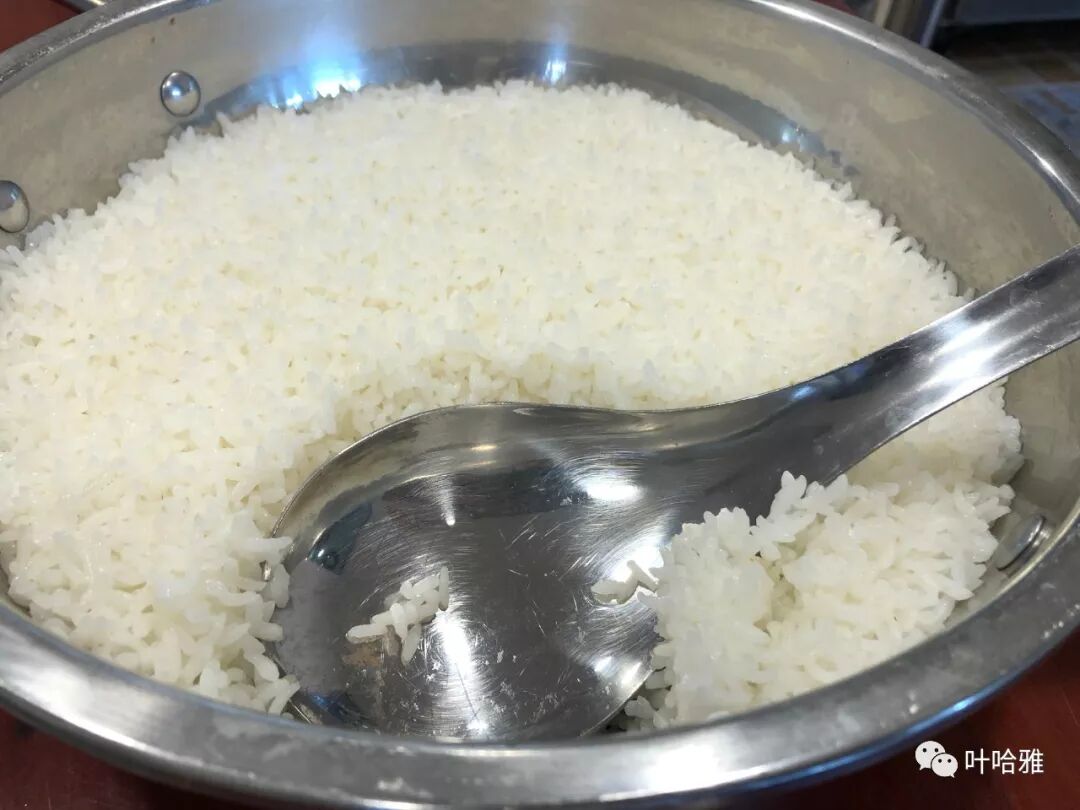
△A bowl of rice
Eating rice in both pots and buckets is a specialty of the Sichuan and Chongqing regions. You have to get used to this. In fact, I also want to try Weiyijia's twice-cooked beef or something, but I don't have the energy to do it. I will come again in the future if I have the opportunity.
Hechuan Mosque
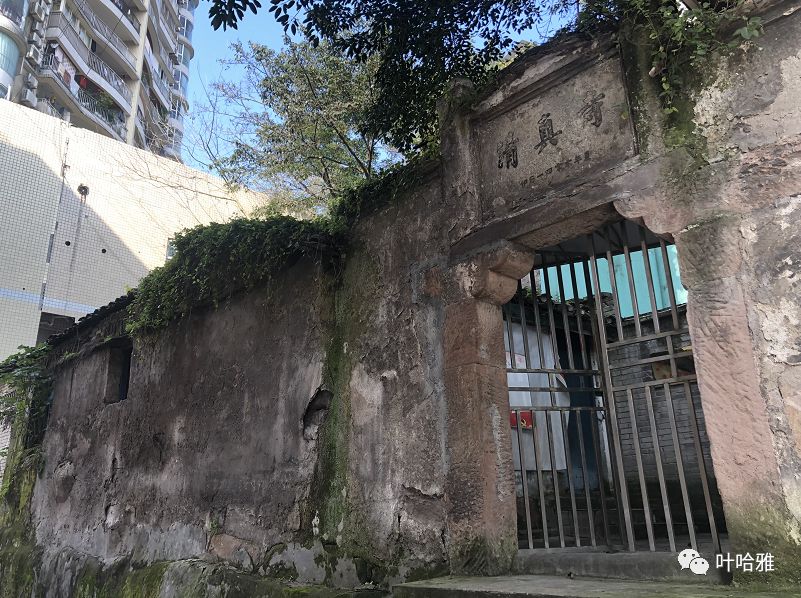
△Hechuan Mosque
Qingzhuwan Street, about 1 kilometer away from Weiyijia Restaurant, is where the Hechuan Mosque is located. The mosque was built in 1748 and was built with funds raised by the Hui Muslims from Shaanxi who came to Hechuan for business. During the Guangxu period of the Qing Dynasty, a Hui named Yin from Fengjie, Chongqing, became the general manager of the Yamen of Hechuan County and was elected as the village elder of the mosque, which improved the status of the Hui Muslims in Hechuan. The Republic of China was the most prosperous period for the religious community in Hechuan County, with more than 150 Hui Muslims. Su Weixin, who was the imam of the Hechuan Mosque at that time, was employed as a teacher at the Hechuan Martial Arts Hall.
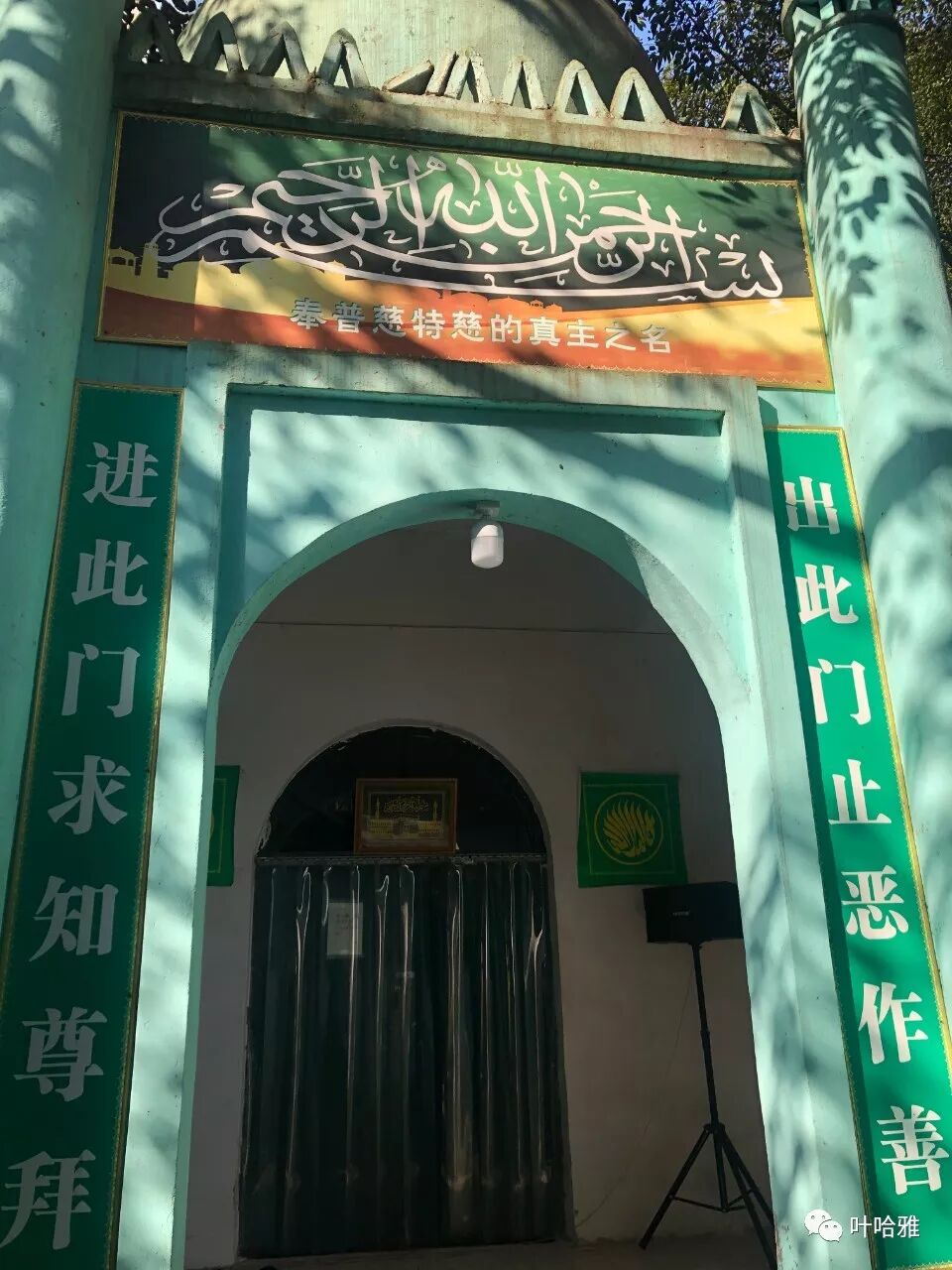
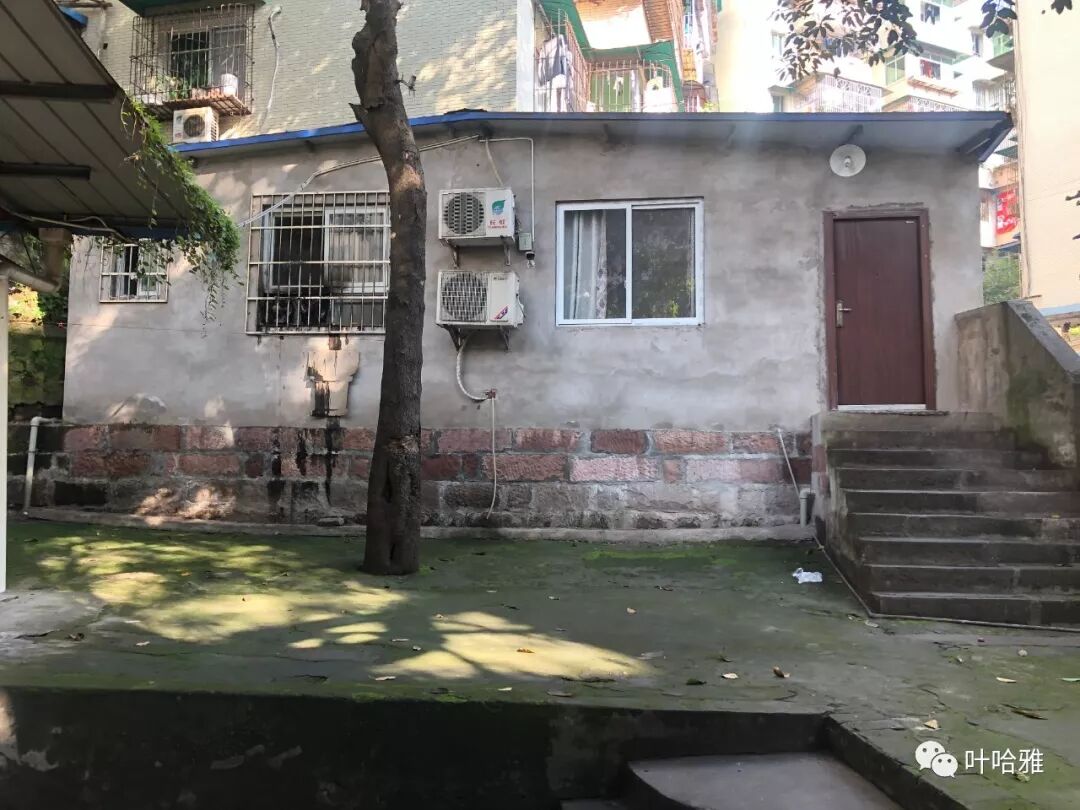
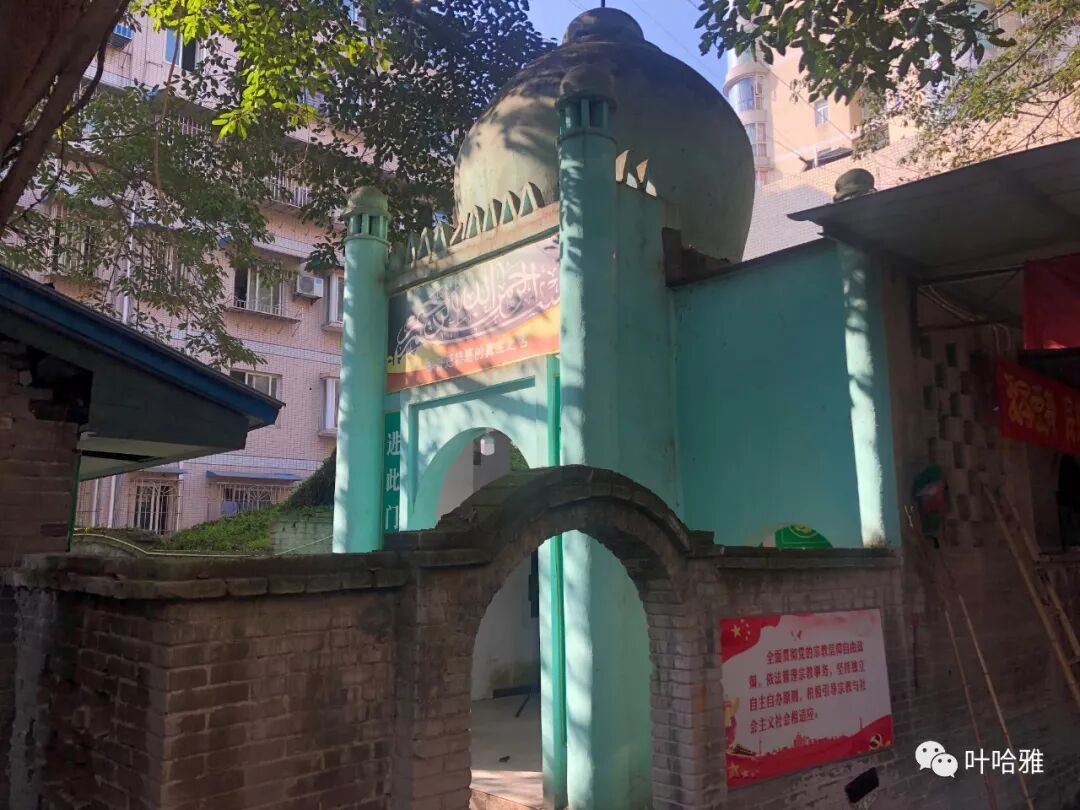
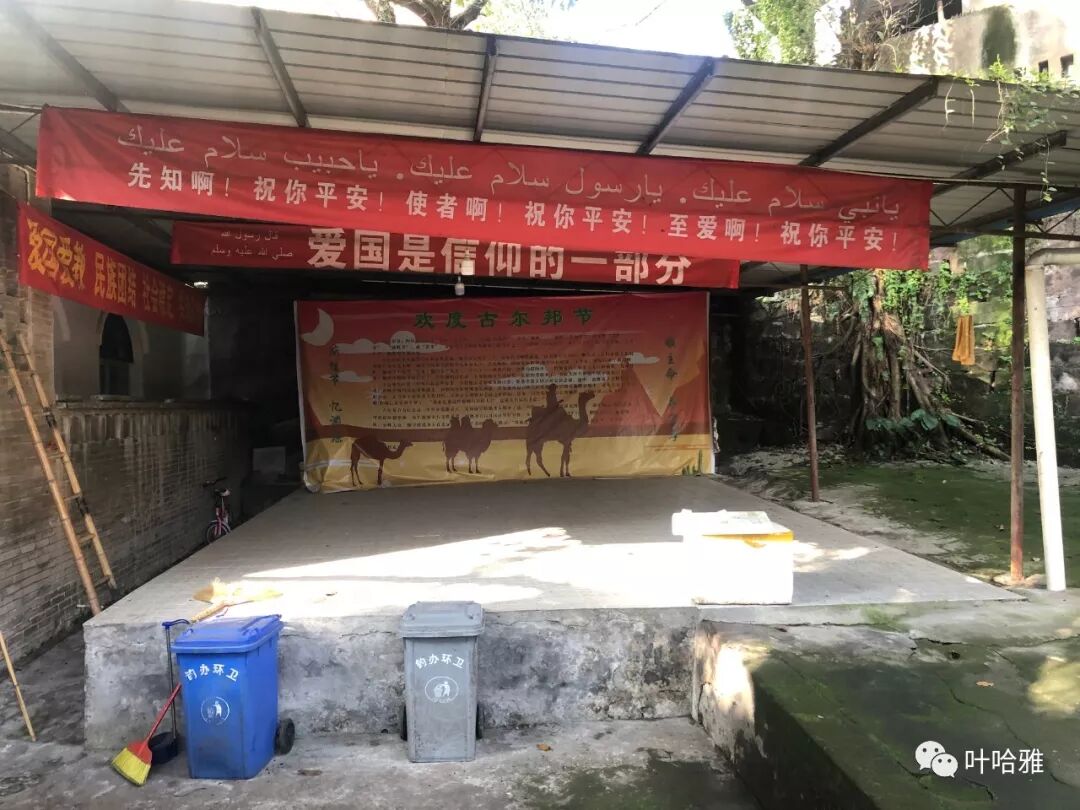
△Overall view of the yard
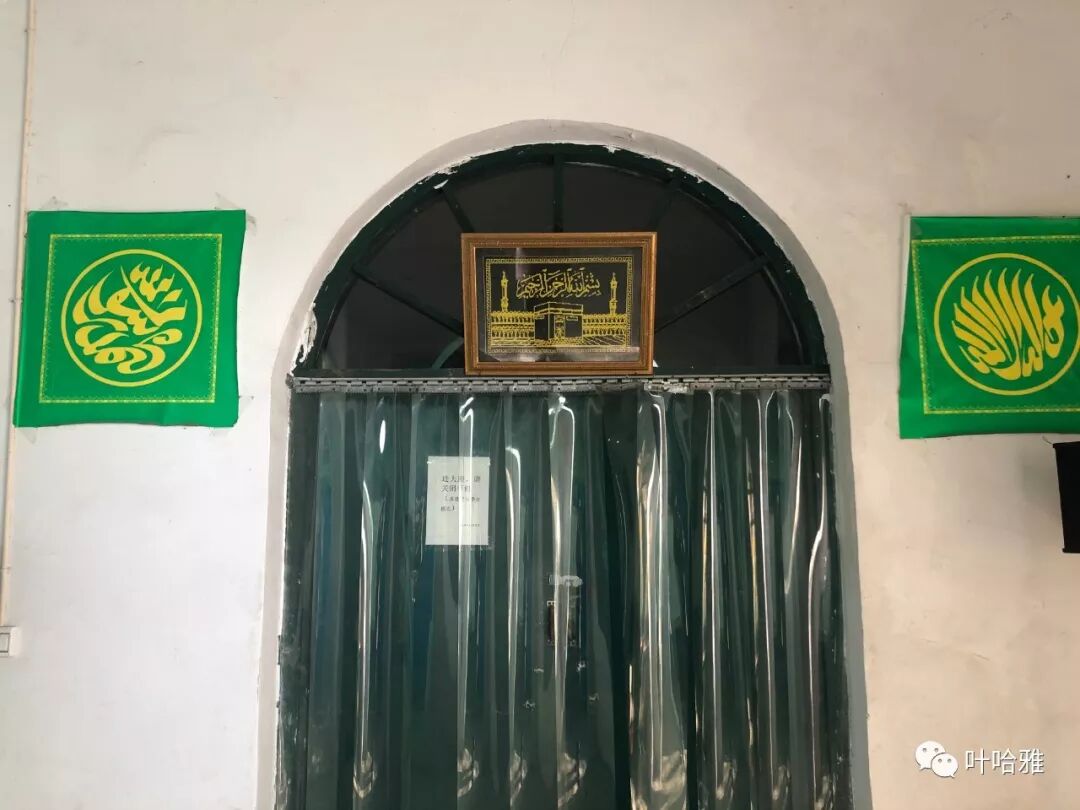
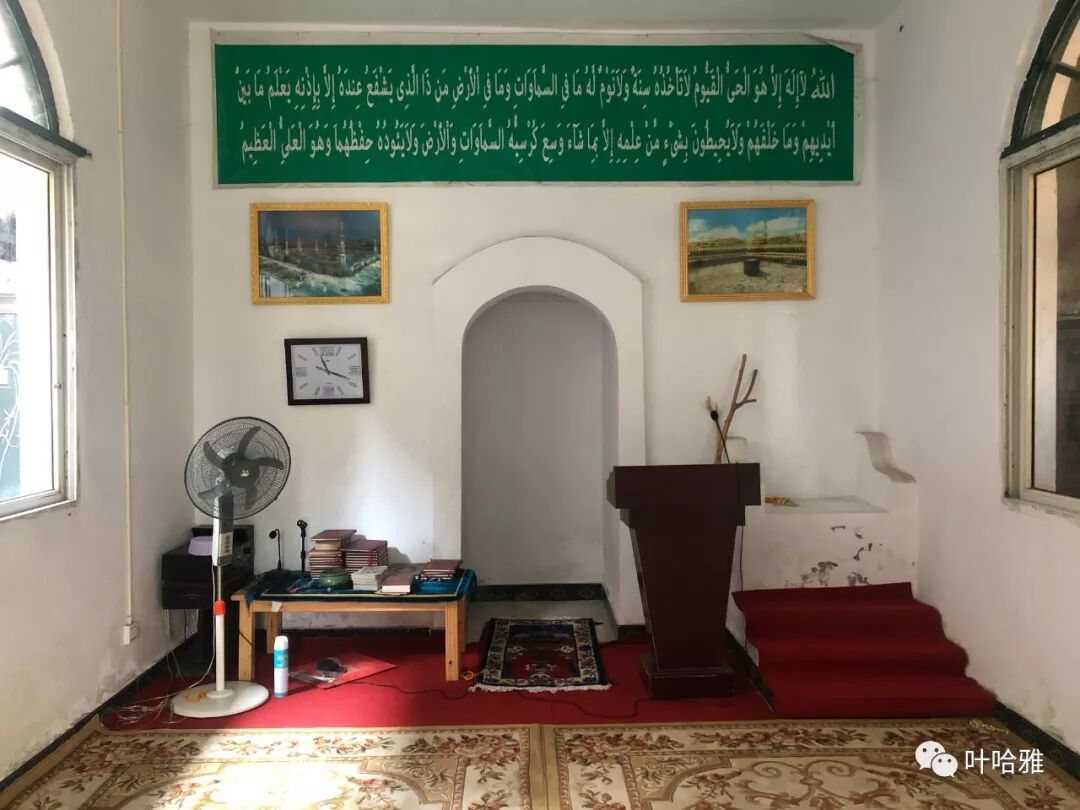
△The worship hall is very small.
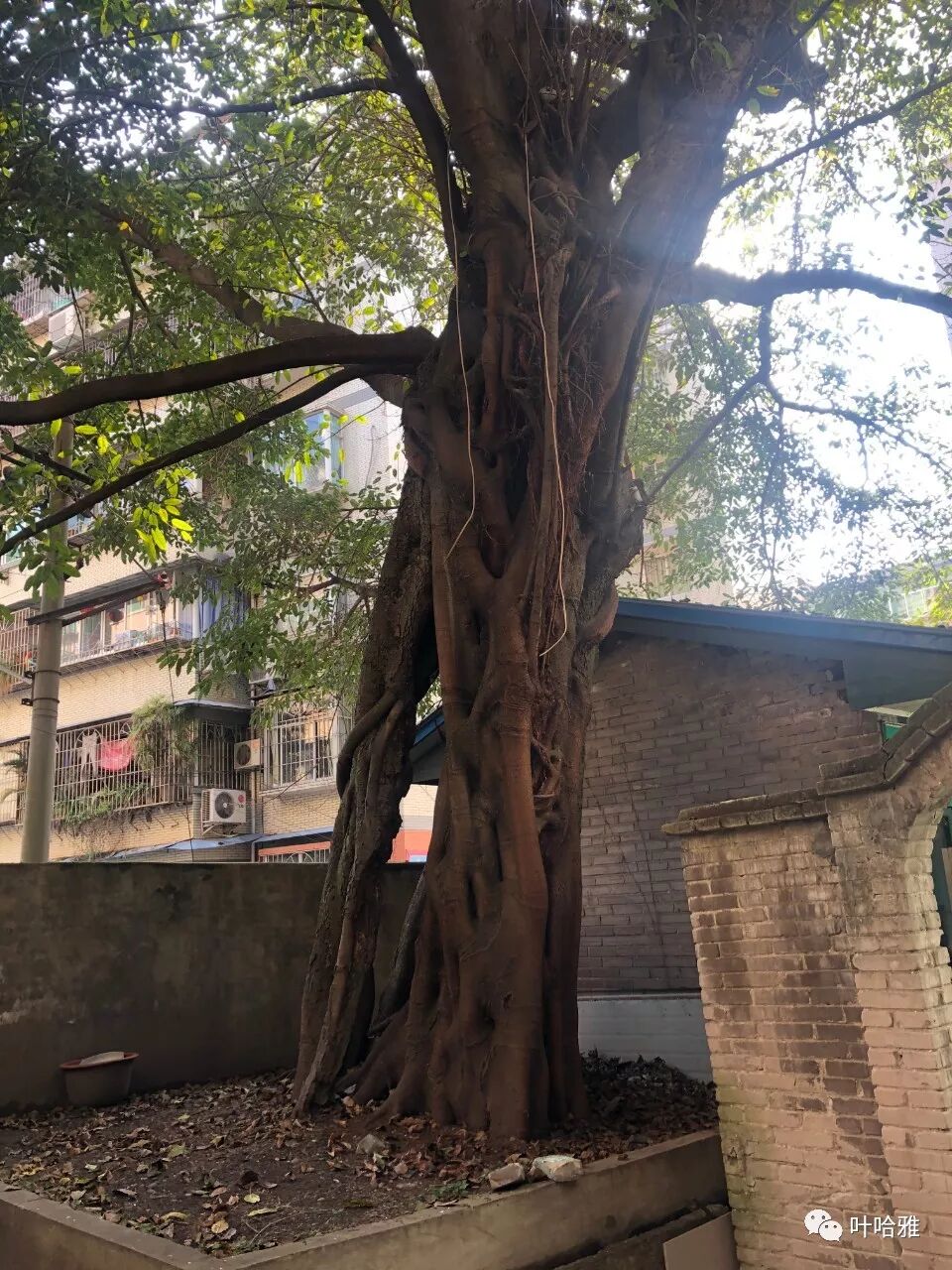
△The ancient trees in the yard
There are currently 6 mosques in use in Chongqing, namely Jiaochangkou Mosque, Hechuan Mosque, Fengjie Mosque, Rongchang Mosque, Wanzhou Mosque and Kaixian Mosque.
, each mosque belongs to different districts and counties, and they are all very far apart, so you need to take a train to get there.
Dunhuang Tower Northwest Restaurant
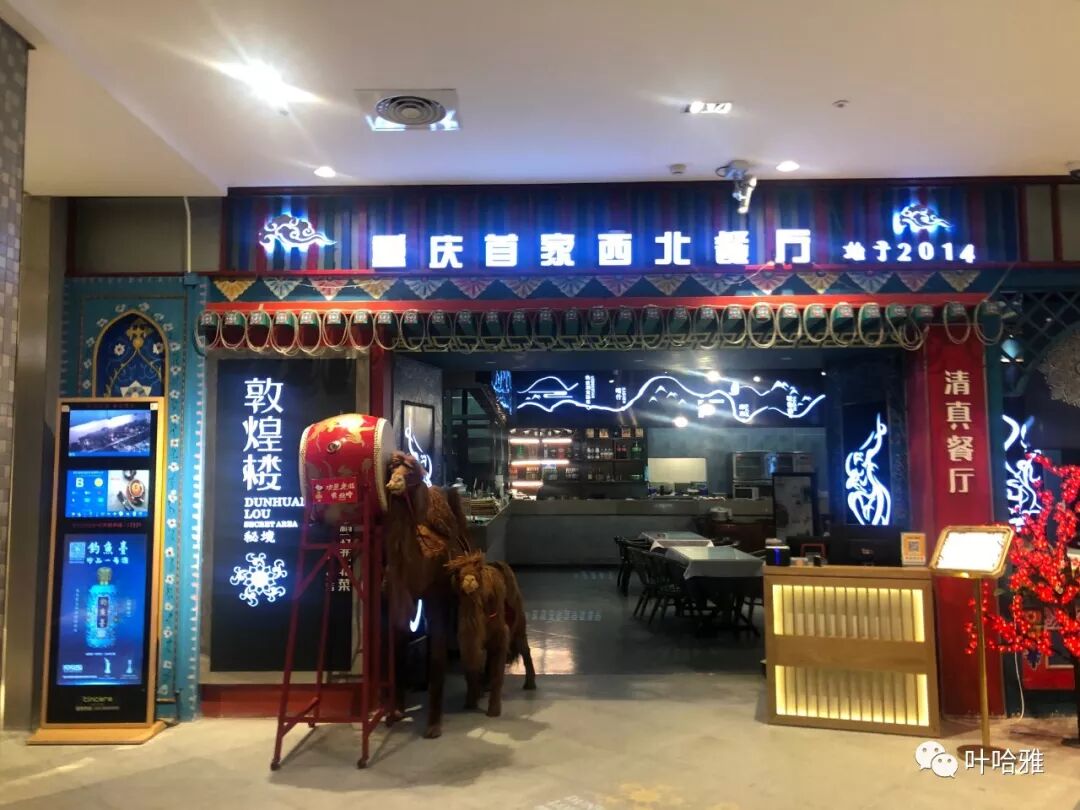
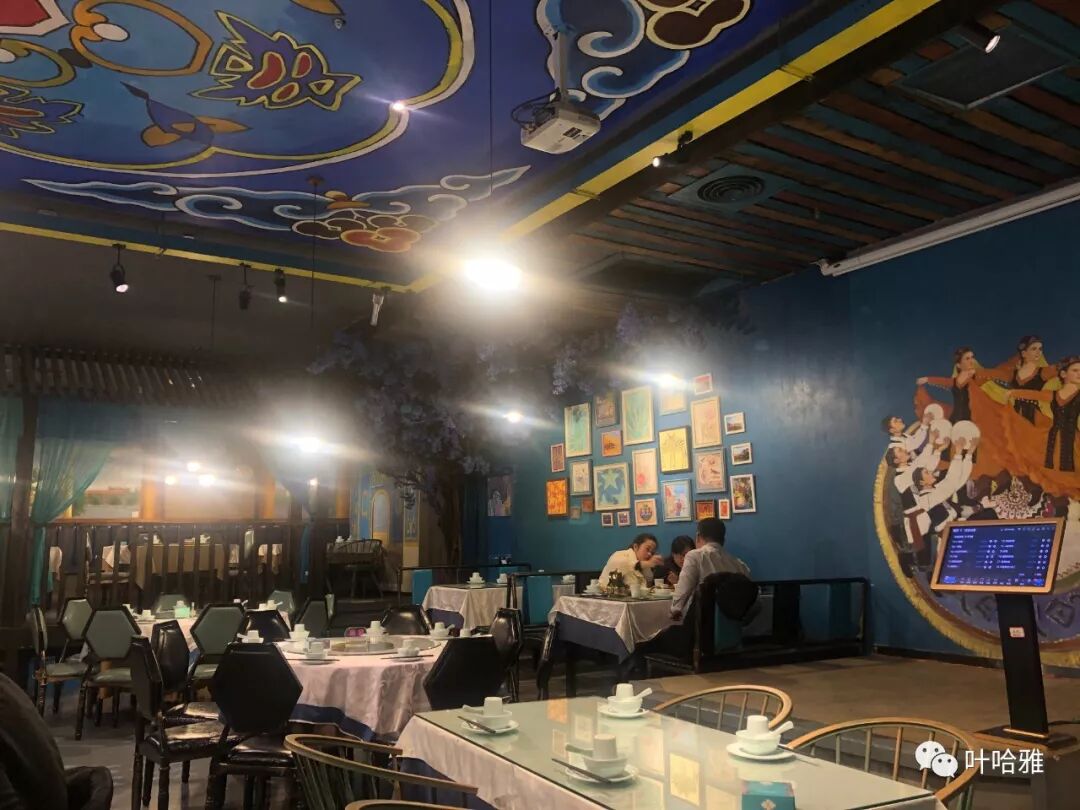
Dunhuang Lou is the first northwest halal restaurant in Chongqing. It is not the same as Dunhuang Lou in Shanghai. It is located in the food court on B1 of Shin Kong Place Department Store. I like the overall decoration style and service of this store, and you can also eat halal Chongqing stir-fry here.
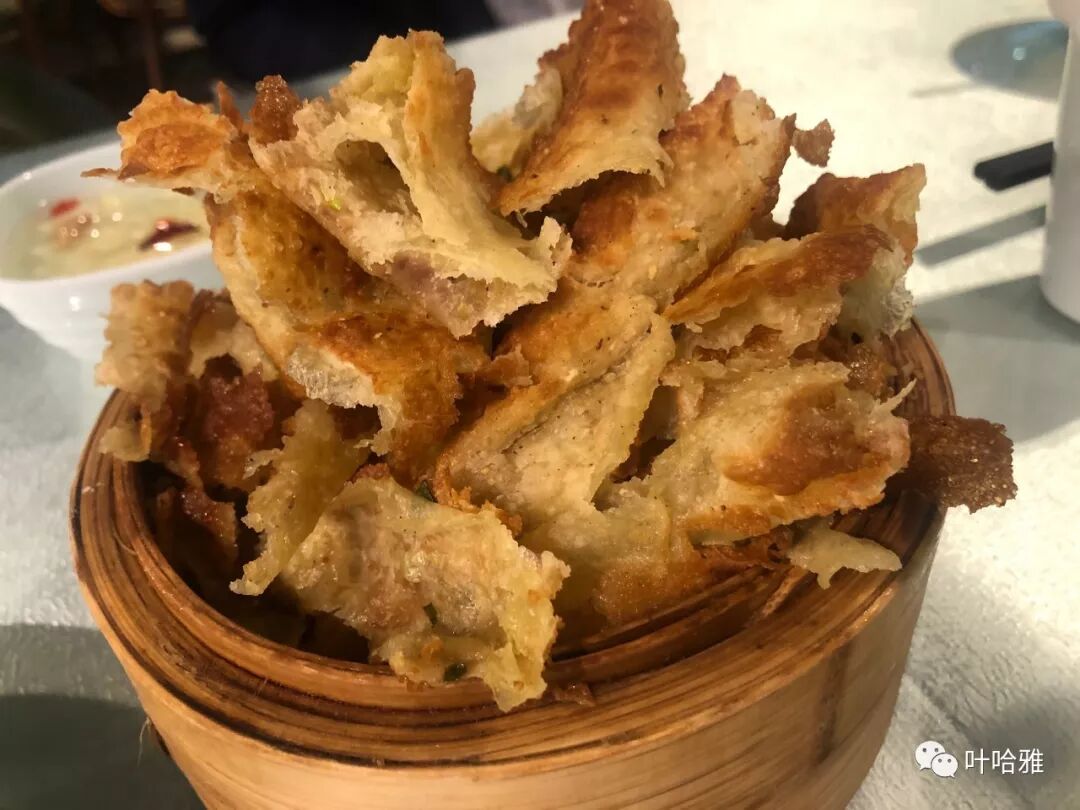
△Hand-shredded cakes
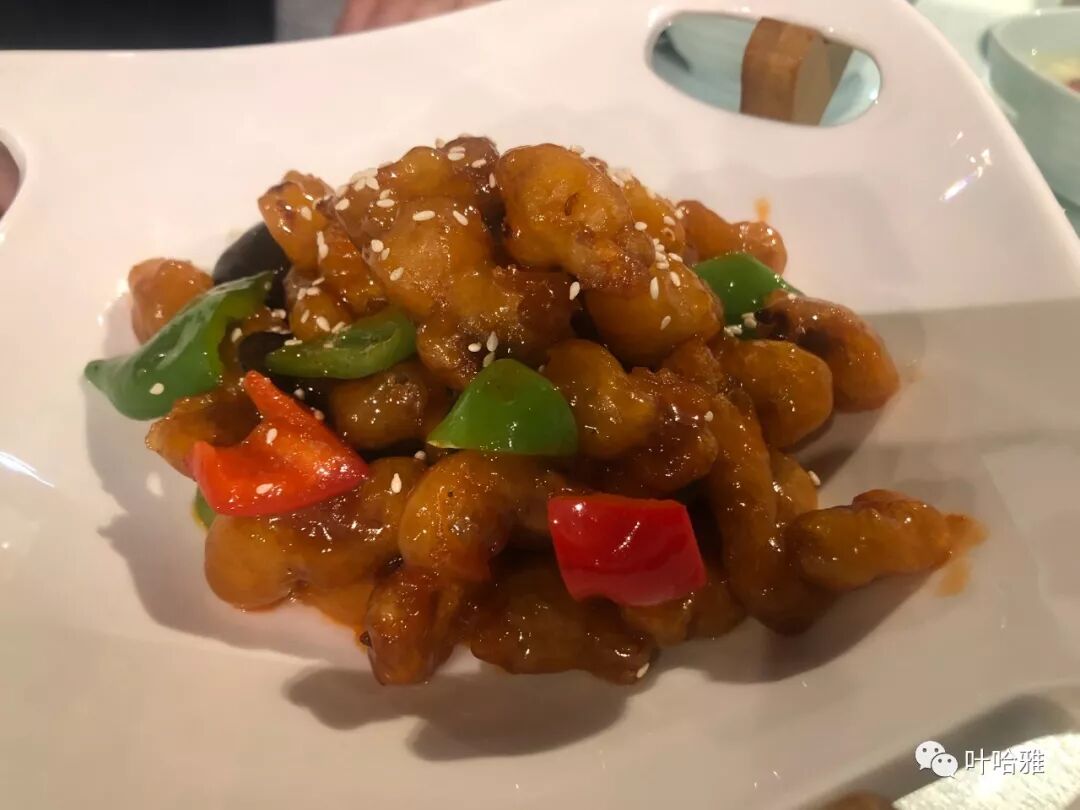
△Sweet and Sour Pork
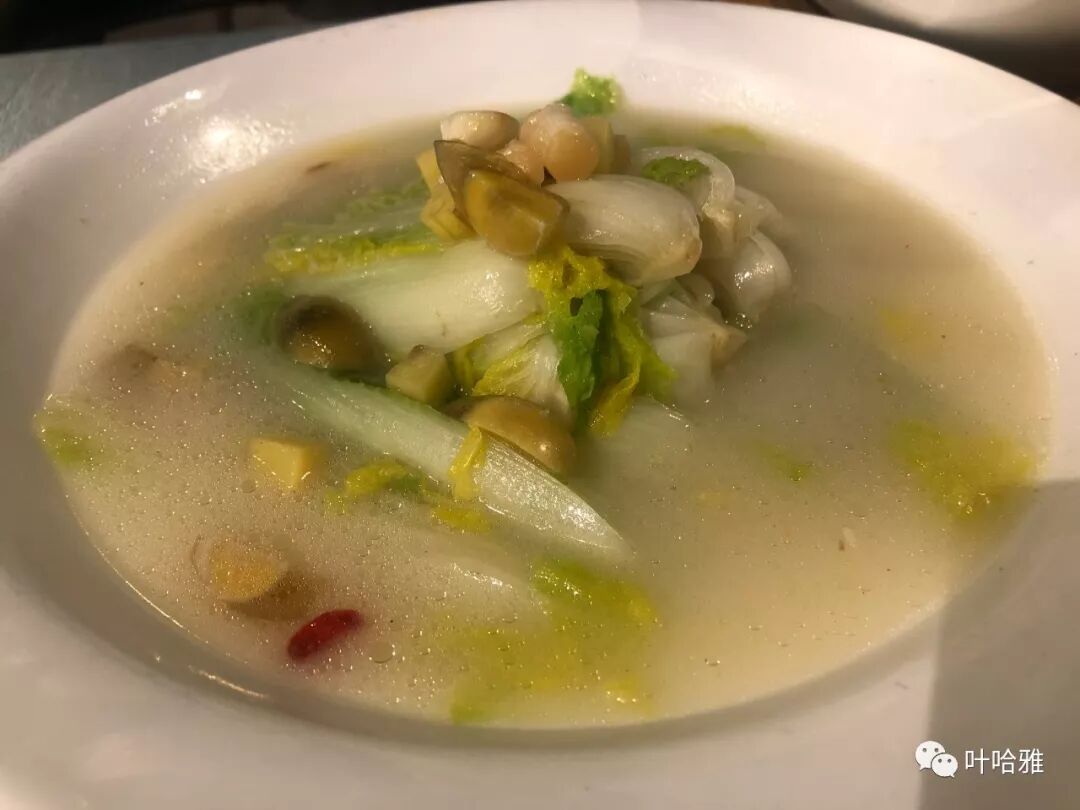
△Balancai in soup
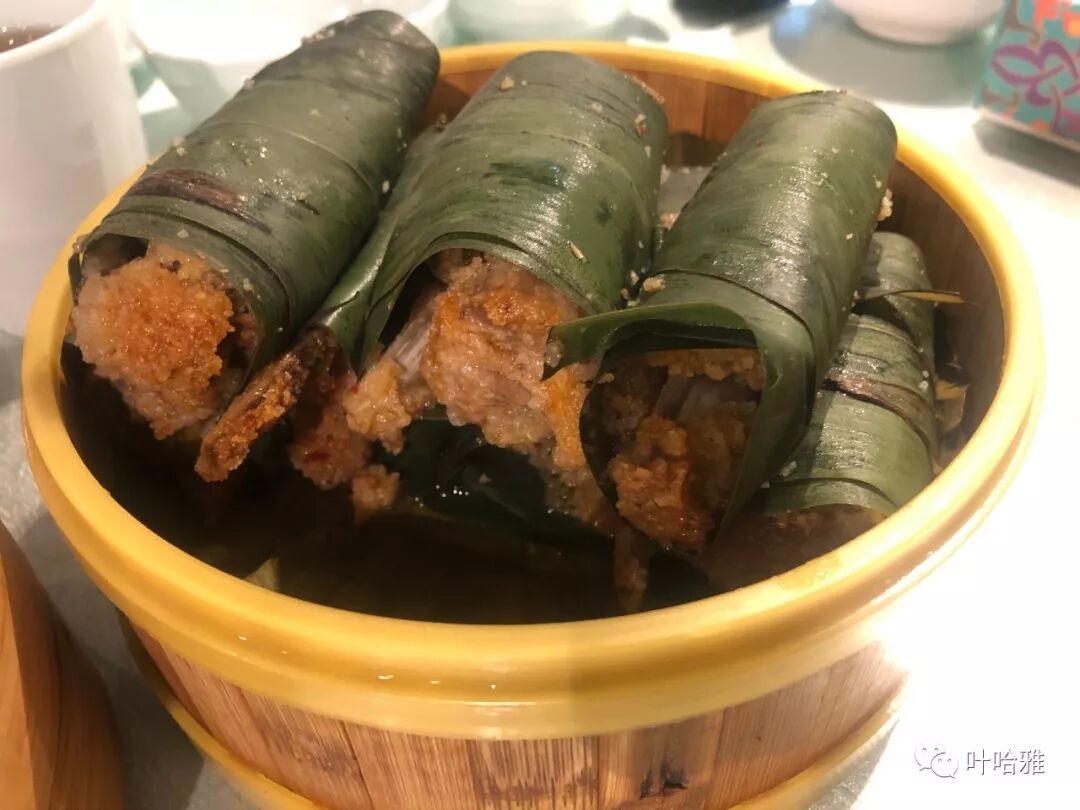
△Steamed pork with rice flour
The steamed pork here is wrapped in rice dumpling leaves and tastes delicious. The mutton is steamed to perfection and there is a snack stall at the entrance of the restaurant.
Silk Road Xiangfei·Xinjiang Restaurant
Silk Road Xiangfei Xinjiang Restaurant is the largest halal restaurant in Chongqing. It is located in Area A of Liujia Wharf on the edge of the Jialing River. Opposite is the popular Jiangjing business district in Chongqing, and you can overlook Hongya Cave.
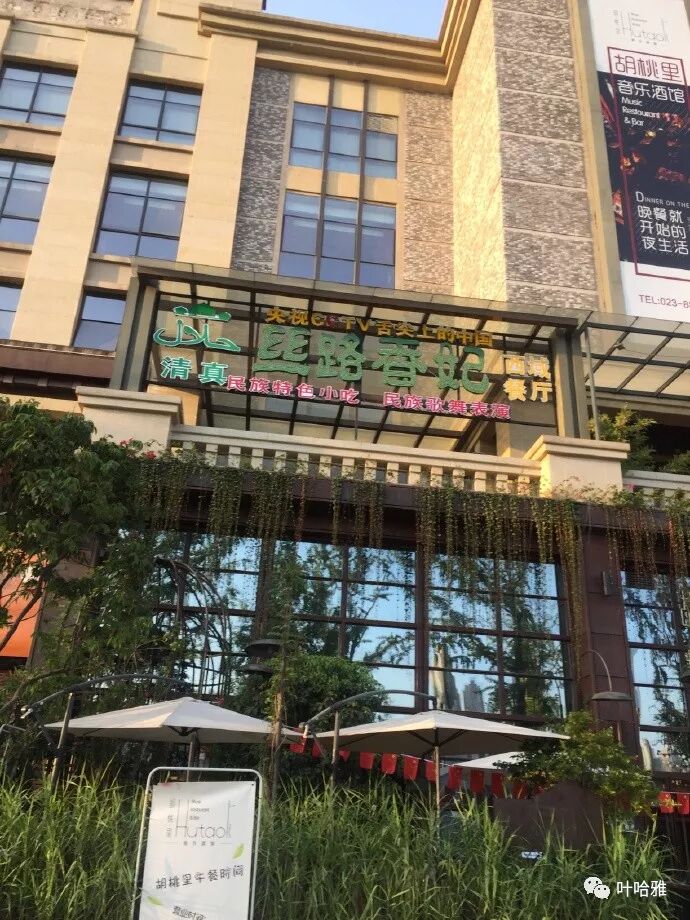
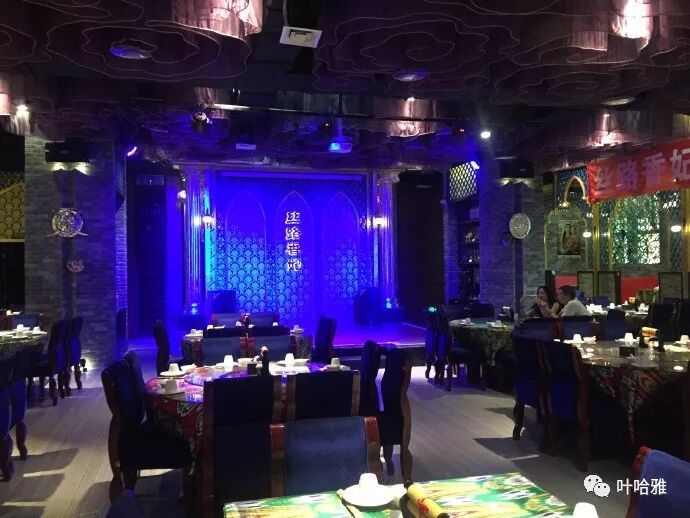
△There will be ethnic song and dance performances in the evening.
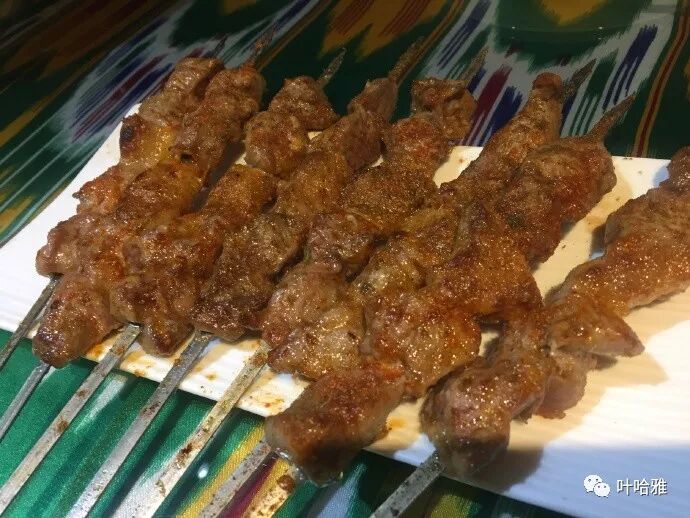
△Iron barbecue
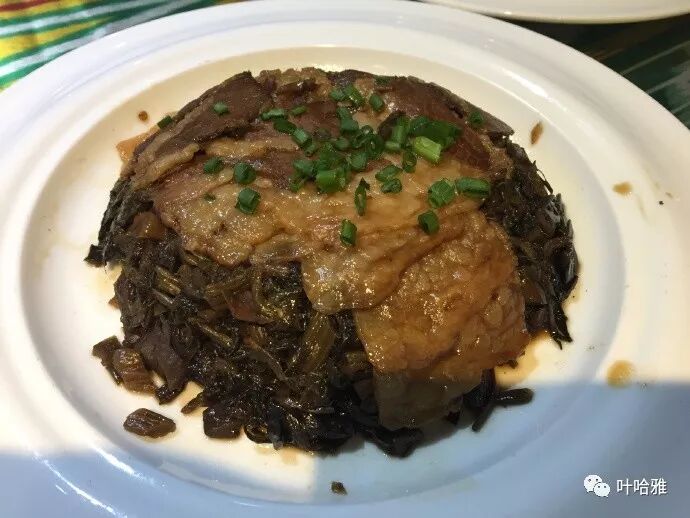
△Steamed beef brisket with sprouts
This Xinjiang restaurant also has local Chongqing recipes, but the taste of the Chongqing dishes is a little less interesting. It is not as delicious as the Chongqing dishes in Dunhuang House. It should not be difficult to find a chef in Chongqing who can cook local dishes.
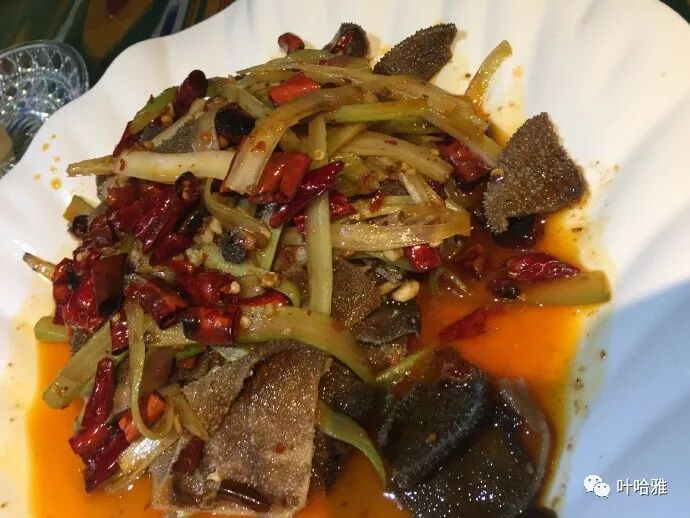
△Exploded tripe
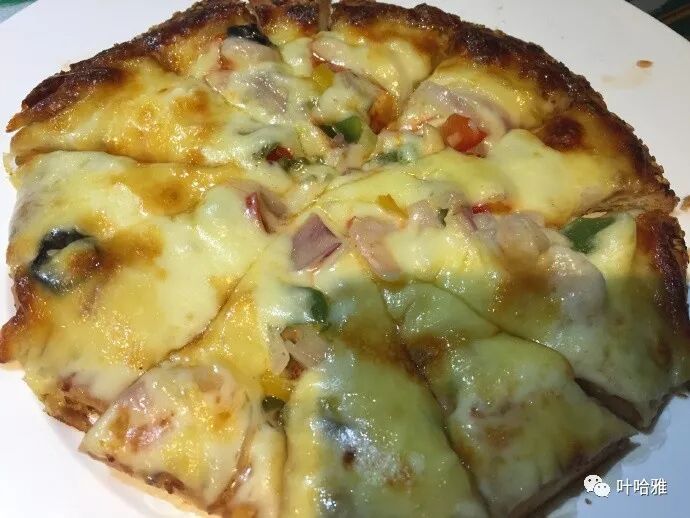
△Naan grilled pizza
If you don’t want to eat something too spicy and want to have a dinner together, I recommend Silu Xiangfei.
Longxing Tower
When returning to Beijing, I departed from the domestic terminal of Chongqing Jiangbei Airport T3. After passing the security check, I could see this halal ramen restaurant.
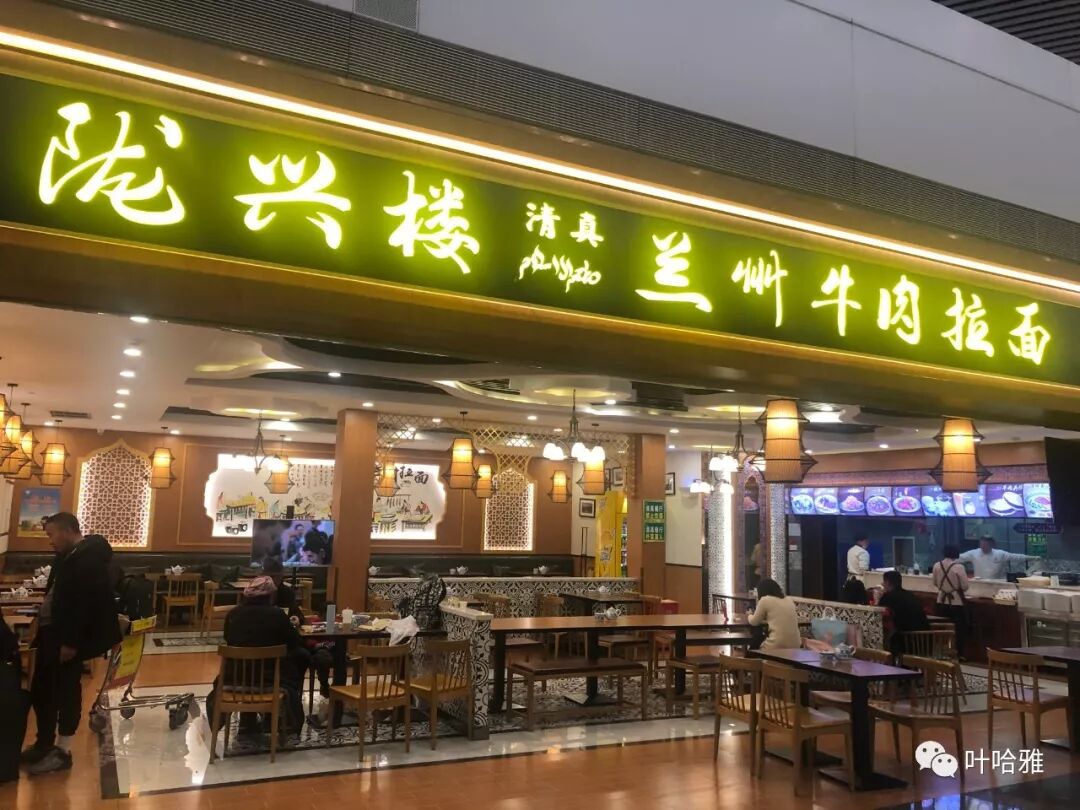
△Longxinglou·Lanzhou Beef Ramen
It is another alcohol-free restaurant. The proportion of non-alcohol restaurants in Chongqing seems to be more than half. It is really gratifying to have such a proportion in an area where halal catering is not developed. I hope that these restaurants can have a prosperous business and caterers will have good luck in their lifetime.
Summary: Hidden Halal Food in China: Chongqing Maodu Hotpot, Hui Muslims and Real Local Restaurants is presented here as a clear English travel account for Muslim readers, beginning with this scene: The Hui Muslims are one of the ethnic minorities who have lived in Chongqing for a long time. They settled in Chongqing long before the Yuan Dynasty. The oldest existing mosque in Chongqing, the Fengjie. The article keeps the original place names, food details, photographs, and cultural context while focusing on Chongqing Halal Food, Maodu Hotpot, Hui Muslims.
The Hui Muslims are one of the ethnic minorities who have lived in Chongqing for a long time. They settled in Chongqing long before the Yuan Dynasty. The oldest existing mosque in Chongqing, the Fengjie Mosque, was built in the Yuan Dynasty.
When I revisited Chongqing this time, I not only tasted authentic Chongqing halal food, but also learned about the history of Chongqing hot pot. It turns out that the emergence of Chongqing hot pot is closely related to the Hui Muslims.
cattle were an important production tool in Chinese history and could not be slaughtered at will. This tradition continued until the end of the Qing Dynasty. According to the historical data of Nanchuan County, Chongqing in the early Republic of China, "Revisiting Nanchuan County Chronicles": "In the Qing Dynasty, cattle slaughter was often prohibited, and no one dared to openly set up an operation. However, the place name Diaobuzhu, two miles outside the east gate, was the place where cattle were slaughtered despite the ban. Officials sent messengers to investigate and arrest people, but they were bribed and indulged in bribes. Even if he is arrested and flogged, he will return to his old profession after being released from the shackles. Exceptions include Catholicism and Islam. Before and after the Republic of China, the ban on collecting donations was relaxed, and beef was everywhere in the streets after autumn and before summer. If cattle are not allowed to be slaughtered, there will be more theft and farmers will suffer. This is not just a treacherous Buddha.
What I mentioned above is the ban on cattle slaughter in Chongqing. Because the Hui Muslims have long settled in Chongqing, the government specifically allowed the Hui Muslims to slaughter some weak cattle in order to maintain the livelihood of the Hui Muslims.
On December 4, 1931, there was a news article in Chongqing's "Xin Shu News", "The Hui Muslims of this city have requested that the Municipal Finance Bureau has forwarded a letter to the Ba County Government for inspection." The main content of the news was that some criminals took advantage of the loophole and slaughtered strong cattle privately, resulting in the reduction of fine cattle breeds. In order to save the cattle market, the government has strengthened the regulations prohibiting the slaughter of cattle, and the lives of the Hui Muslims in Chongqing have also been affected. The Hui Muslims specifically requested the Municipal Finance Bureau to request the magistrate and county government to change the restrictions on the slaughter of cattle. Otherwise, the livelihood of the local Hui Muslims will be difficult to maintain.
Therefore, during the Republic of China, the first people who could eat beef tripe and butter among the people were the Hui Muslims. These two ingredients were the main ingredients of Chongqing hot pot. Traditional Chongqing hot pot uses butter as the bottom of the pot. Existing information shows that the history of Chongqing hot pot is only a hundred years old, and the Chongqing riverside wharves during the Republic of China were all places where Hui Muslims slaughtered cattle. In the 15th year of the Republic of China, the Ma brothers introduced the simple hot pot "Shui Ba Kuai" to the restaurant in Zaifang Street (now under the sill of the Yangtze River Bridge). It was the prototype of Chongqing hot pot, similar to today's Jiugongge. A pot is divided into eight compartments, and each compartment can be used to prepare different dishes. At that time, this division was just to help the guests to share a table. After all, the diners were mostly poor boatmen on the riverside, and it was impossible to have the luxury of one pot per person. In this way, until the Anti-Japanese War, there was still an old lady surnamed Ma running an authentic tripe hot pot on the street in Jiaochangkou, which specialized in beef tripe.
There is an article saying that the Hui Muslims in Chaotianmen slaughtered cows and kept only the meat, and did not put it into the water. They threw the water away and let the boatmen pick it up and make tripe hot pot. This is obviously not in line with common sense. I guess the Hui Muslims are regarded as some foreigners who do not eat offal. In fact, the Hui Muslims are very good at eating tripe and beef offal. The fried tripe and mutton offal soup in old Beijing were first sold by the Hui Muslims. As poor people, the Hui Muslims regard cattle and sheep as good food.
However, with the Japanese invasion of China, Chongqing, as the capital of the Nationalist Government, suffered six years of bombing by the Japanese army. All mosques in Chongqing were not spared and suffered serious damage. As a result, many Hui Muslims in Chongqing left their homes and found other livelihoods. In the following years, it was difficult to find traces of halal hairy tripe hot pot in Chongqing.
It wasn't until the 1980s that hot pot re-emerged in Chongqing, but there were no halal restaurants anymore.
I remember my first visit to Chongqing in 2016. I wanted to try the authentic halal Chongqing hot pot but there was no one. Only the Ningxia Huixiangzhai restaurant opposite the Jiaochangkou Mosque also sold Chongqing hot pot. Because it was the only one, it was difficult to compare and evaluate. But when I came to Chongqing again in 2020, the situation had changed a lot, and halal Chongqing hot pot was blooming everywhere.
Currently, the halal restaurants in Chongqing are mainly concentrated in two places. The first is Jiaochangkou and the second is Songpai Road. Let’s talk about Songpai Road first.
Before setting off, I had saved several hot pot restaurants on my phone that I planned to try. When I followed the navigation to find one of the highly rated Halal Chongqing Hot Pots on Songpai Road, my eyes lit up when I arrived at my destination. There were actually several Halal restaurants densely packed together on this street, which can be called a Halal Food Street.
Songpai Road Halal Food Street
△Songpai Road
△Zhen Yishun is a chain brand with many branches in Chongqing, but its main features are different. This one is for Chongqing hot pot.
△Hand grab at Northwest Tower
△The second branch of Zhen Yishun is next to the third branch, but its main business is Xinjiang cuisine
△Xinjiang Bosten Manor, specializing in Xinjiang cuisine
△Aftertaste of Sichuan and Chongqing Halal Chongqing Hot Pot
The store I would like to introduce to you on Songpai Road is Huiwei Sichuan and Chongqing Halal Chongqing Hot Pot (Youssef Store)
, the boss is from Lanzhou, and the store is a chain store with branches in Lanzhou and other places.
The reason why I recommend this restaurant is first of all because it is the first non-smoking hot pot restaurant in Chongqing. Feeling safe while eating is more important than anything else. Secondly, this restaurant has a high five-star rating on Dianping. I am a very popular person with a down-to-earth taste. Generally, restaurants that everyone thinks are delicious, I also think they are delicious, and I think delicious restaurants are easily accepted by others.
I felt a halal atmosphere as soon as I entered the door. There was an event in the store that day. Imams and village elders were being entertained on the first floor. The lobby was full of dustis. I came alone and said selan to the boss and waiter. The boss enthusiastically led me to the private room on the second floor and asked the waiter to prepare some dishes suitable for one person.
△The vegetable rack placed at the entrance of the store, please note that the green vegetables are all freshly cultivated and are only pulled out when eating.
△The restaurant’s private room can accommodate 20 people dining at the same time.
△Single pot
The boss said that the most enjoyable thing about eating Chongqing hot pot is the nine-square grid of the big pot, which allows you to taste different flavors. But I am only one person, so I can only choose a small pot to avoid waste. Compared with Chengdu hot pot, Chongqing hot pot is older and has a spicier taste. Chengdu hot pot is an improved version.
Chongqing people think that the longer the hot pot is cooked, the more fragrant it becomes. The hot pot soup is repeatedly simmered and the flavor becomes richer, so they are accustomed to calling it old hot pot. The soup in old hot pot is the leftover soup from the previous guests. There are really local people who eat hot pot and don’t mind eating the leftover old soup from the table. They enjoy it. It is delicious, but this is limited to the way of eating in non-halal restaurants. Halal restaurants will not use old soup, and halal restaurants have not been open in Chongqing for a long time, so it is impossible to have old soup. there are no favorites of Chongqing people such as duck blood and pig brains, so halal restaurants are not very popular among old Chongqing people.
△Fairy hairy belly
The tripe is a must-have ingredient for Chongqing hot pot. You can eat the tripe in a red oil pan for three to five seconds. After being scalded by the spicy butter soup, the smell of the tripe is gone.
△Fresh cut beef tenderloin
Beijing's mutton-shabu-shabu mainly uses sheep, while Chongqing's hot pot focuses on beef. I suggest that when you come to Chongqing, you should mainly eat beef. Shabu-shabu beef in butter will have a unified taste.
△Vegetable platter
What’s worth noting is the vegetable platter in Chongqing hot pot. I only realized after eating it that there were no green leafy vegetables in the vegetable platter, only soy products such as bean sprouts. As for the reason, experienced hot pot eaters should have guessed that green leafy vegetables cooked in spicy red oil will taste spicier and most people can’t stand it. However, light ingredients such as bean sprouts and tofu are more fragrant and more flavorful after being rolled in red oil, so those who want to try spicy food can just order the green vegetables.
The dipping sauce of Chongqing hot pot is traditionally sesame oil and minced garlic, which mainly plays the role of cooling the hairy belly. Chengdu hot pot has made some innovations in the dipping sauce, adding sweet flavors such as oyster sauce. The dipping sauces here can be mixed as you like.
Jiaochangkou Muslim Building
Jiaochangkou is the only mosque in the central city of Chongqing. The original mosque was bombed by the Japanese army. Now a Muslim building has been built. The 14th and 15th floors are used as mosques, and the other floors are rented out to hotels. Currently, Chongqing has built a mosque similar to Hangzhou Xinda Mosque in the southern section of Erlangfeng West Road, but it has not yet been opened.
△Chongqing West mosque
△The Monument of Promoting Religion and Saving the Nation
△The photo was taken in 2016, when the underground was not yet open.
△Now the first floor and the basement have become a hotpot city.
△Qingjuzhai Halal Restaurant
All three restaurants are owned by a Xinjiang owner. I specifically asked the waiter about the differences between the three restaurants and learned that the Magic 8D Chongqing Hot Pot on the basement floor is a sauce-flavored hot pot, the Zhen Yishun Chongqing Hot Pot on the first floor specializes in spicy and spicy hot pot, and the Qingjuzhai on the first floor specializes in Northwest Xinjiang stir-fry dishes, as well as Sichuan cuisine.
△This must be the boss.
After eating Sichuan and Chongqing hot pot at noon, I really can’t eat hot pot again in the evening. I came here mainly to eat halal Chongqing noodles.
△You can buy halal Chongqing hot pot base here.
I ate the halal Chongqing hot pot base from a friend in Beijing, and I can use an induction cooker to cook it at home. The advantage is that I can add different concentrations of ingredients according to my own taste. I can eat five meals of the base that locals would eat in one meal, because the taste is mainly numb and spicy. If the ingredients are the same, it will not be affected by the region, and I can taste it at home like in a store.
△Still open at 10pm.
It was about 10 o'clock when I came to Magic 8D. The waiter said that we can go upstairs to eat hot pot. The upstairs is open until 11 o'clock and the current floor was about to close. But I said I just wanted to have a bowl of noodles, and they still made me a bowl. The waiters in the store are all Yaomei from Chongqing and have a very good attitude.
△Chongqing noodles
Finally, I was able to eat halal noodles in Chongqing. To be honest, the taste did not disappoint me. I ate the whole bowl. Of course, I didn’t finish the soup. The noodles here are not particularly spicy, just like the waiter said they have a special sauce flavor. The basic version of authentic Chongqing noodles is spicy plain noodles, but various toppings can be added. Chongqing noodles are one of the most important daily noodles for Chongqing people. People eat them since morning. Although they are plain noodles, it does not mean that you can go to halal restaurants to eat them, because they will add lard to them, so you must cherish the opportunity to eat halal noodles.
△Huixiangzhai, a northwest restaurant that also serves Chongqing hot pot.
Opposite the Muslim Building is Huixiangzhai. I had my first meal here when I came to Chongqing in 2016. It has basically remained unchanged in four years. This restaurant should be the first restaurant in Chongqing to start making Halal Chongqing hot pot in the past 10 years, although it is not the main dish.
△Chongqing hot pot at Huixiangzhai
Next to the Muslim Building, there are several halal restaurants selling Chongqing hot pot nearby. They should have only opened in the past two years. Forgive me for not trying them all. If I eat spicy hot pot all the time, I'm afraid I won't be able to return to Beijing normally.
△Irquba halal hot pot, smoke-free wine restaurant.
△Captain Ma Halal Hot Pot
About 900 meters away from Jiaochangkou, there is a night market. The first stall at the entrance of the night market is Huawei Yipin, which sells halal snacks.
The food truck is also the only halal stall in this night market.
△30 Degree Street Bar in Lime City
△Aftertaste of Yipin
Huiwei Yipin mainly sells snacks such as beef noodles, beef steamed buns, hot and sour noodles, fried chicken, and cold noodles. It also sells Chongqing noodles. It is run by a couple from Liaocheng, Shandong. We exchanged words about selan. The young man seemed to be in a good mood and was laughing. Narrowly, he said that he has been doing business in Chongqing for more than 20 years and has settled in Chongqing. During the chat, I heard him communicating with Chongqing guests in Chongqing dialect with a pure accent. He said that locals in his Chongqing accent generally can't tell the difference.
I asked him about the situation of local hot pot in Chongqing. I said that the hot pot restaurants in Chongqing seemed to be doing very well, and I often saw long lines of people queuing up to eat hot pot. He told me that many of the queuing restaurants paid people to queue up. Generally, traditional Chongqing people would not queue up to eat hot pot. They would eat the familiar taste in small alleys near their homes. There is no need to queue up in such small shops.
△Aftertaste Yipin’s menu
△Beef steamed buns
The Roujiamo they make is really delicious. I had just finished eating the spicy hot pot, so a hot Roujiamo saved my stomach. The buns are all heated on the pan. I believe that friends who can't eat spicy food will want to have a Roujiamo to resist the burning of their stomach after eating spicy hot pot.
Weiyijia·Ethnic Specialty Restaurant
The biggest gain from my trip to Chongqing this time was to find an authentic Chongqing restaurant in Hechuan District run by local Muslims in Chongqing. The location of Hechuan District in Chongqing is roughly equivalent to the outer suburbs of Yanqing and Huairou in Beijing. You need to take a train from Chongqing North Railway Station. The journey takes about half an hour and there are many trains.
△Fujiang River in Hechuan District
Weiyijia Restaurant is located in a street shop along the Fujiang River. On the opposite bank is Wenfeng Ancient City, a famous scenic spot in Hechuan District. I have visited the ancient city for you and found no halal restaurants, but there are vegetarian restaurants.
Weiyijia Ethnic Specialty Restaurant is the only Chongqing-style halal restaurant in Hechuan District. The owner is a Chongqing native and the director of the Hechuan Mosque. This restaurant is a non-smoking and alcoholic restaurant, and all the meat in the restaurant comes from Lanzhou. This is simply perfect and must be highly recommended.
The signboard placed at the entrance not only introduces the concept of halal food and emphasizes that alcohol is prohibited, but also clearly states that the ingredients come from Lanzhou, emphasizing that the ingredients are of high quality and can be eaten with confidence. In fact, Lanzhou is not too far from Chongqing. There are some areas in Gansu where the food taste is closer to Sichuan, such as the Longnan area. Halal Sichuan hot pot restaurants can be found everywhere in Lanzhou, and the taste is basically the same as that in Sichuan and Chongqing.
△Not only is the meat good, but the rice is also imported from Thailand.
△Steamed mutton with rice flour
Steamed pork is popular in many southern provinces and is one of the top ten famous dishes in Chongqing. It is steamed with rice noodles, meat and other materials. The Hui Muslims use beef and mutton as the main ingredients, and then put sweet potato cubes on the bottom. Eat the steamed pork on top first, and then eat the ground pork on the bottom. The role of the melon, rice noodles and sweet potatoes may be to absorb the mutton smell of the meat. This Lanzhou mutton has no mutton smell, but I underestimated the amount of dishes in Chongqing restaurants. This portion is probably enough for two or three people. It is a pity that I can't finish them all.
△Sauerkraut and Vermicelli Soup
The most inconvenient thing about traveling alone is that my food intake is limited and I can’t eat more. I had a premonition before ordering that I might not be able to finish it all, so I only ordered one portion of steamed pork with rice flour and another portion of soup. I didn’t expect that the soup came in a big bowl, which shocked me, and it only cost 12 yuan. This time I tasted Chongqing sauerkraut. The texture is very different from northern sauerkraut. It is more sour and has a more complex taste, which is very appetizing.
The waitress at Weiyijia’s kimchi is a native of Hechuan with a strong accent. She saw that I was very interested in this kimchi and said she could give it to me to try. However, the kimchi was not yet ripe (carelessness). I ate some and thought it was quite delicious. The people of Bashu are very good at making pickled food.
△A bowl of rice
Eating rice in both pots and buckets is a specialty of the Sichuan and Chongqing regions. You have to get used to this. In fact, I also want to try Weiyijia's twice-cooked beef or something, but I don't have the energy to do it. I will come again in the future if I have the opportunity.
Hechuan Mosque
△Hechuan Mosque
Qingzhuwan Street, about 1 kilometer away from Weiyijia Restaurant, is where the Hechuan Mosque is located. The mosque was built in 1748 and was built with funds raised by the Hui Muslims from Shaanxi who came to Hechuan for business. During the Guangxu period of the Qing Dynasty, a Hui named Yin from Fengjie, Chongqing, became the general manager of the Yamen of Hechuan County and was elected as the village elder of the mosque, which improved the status of the Hui Muslims in Hechuan. The Republic of China was the most prosperous period for the religious community in Hechuan County, with more than 150 Hui Muslims. Su Weixin, who was the imam of the Hechuan Mosque at that time, was employed as a teacher at the Hechuan Martial Arts Hall.
△Overall view of the yard
△The worship hall is very small.
△The ancient trees in the yard
There are currently 6 mosques in use in Chongqing, namely Jiaochangkou Mosque, Hechuan Mosque, Fengjie Mosque, Rongchang Mosque, Wanzhou Mosque and Kaixian Mosque.
, each mosque belongs to different districts and counties, and they are all very far apart, so you need to take a train to get there.
Dunhuang Tower Northwest Restaurant
Dunhuang Lou is the first northwest halal restaurant in Chongqing. It is not the same as Dunhuang Lou in Shanghai. It is located in the food court on B1 of Shin Kong Place Department Store. I like the overall decoration style and service of this store, and you can also eat halal Chongqing stir-fry here.
△Hand-shredded cakes
△Sweet and Sour Pork
△Balancai in soup
△Steamed pork with rice flour
The steamed pork here is wrapped in rice dumpling leaves and tastes delicious. The mutton is steamed to perfection and there is a snack stall at the entrance of the restaurant.
Silk Road Xiangfei·Xinjiang Restaurant
Silk Road Xiangfei Xinjiang Restaurant is the largest halal restaurant in Chongqing. It is located in Area A of Liujia Wharf on the edge of the Jialing River. Opposite is the popular Jiangjing business district in Chongqing, and you can overlook Hongya Cave.
△There will be ethnic song and dance performances in the evening.
△Iron barbecue
△Steamed beef brisket with sprouts
This Xinjiang restaurant also has local Chongqing recipes, but the taste of the Chongqing dishes is a little less interesting. It is not as delicious as the Chongqing dishes in Dunhuang House. It should not be difficult to find a chef in Chongqing who can cook local dishes.
△Exploded tripe
△Naan grilled pizza
If you don’t want to eat something too spicy and want to have a dinner together, I recommend Silu Xiangfei.
Longxing Tower
When returning to Beijing, I departed from the domestic terminal of Chongqing Jiangbei Airport T3. After passing the security check, I could see this halal ramen restaurant.
△Longxinglou·Lanzhou Beef Ramen
It is another alcohol-free restaurant. The proportion of non-alcohol restaurants in Chongqing seems to be more than half. It is really gratifying to have such a proportion in an area where halal catering is not developed. I hope that these restaurants can have a prosperous business and caterers will have good luck in their lifetime.
