
Muslim Travel Guide China 2026: Changsha Han-Hui Village, Mosque Life and Hunan Heritage
Reposted from the web
Summary: Muslim Travel Guide China 2026: Changsha Han-Hui Village, Mosque Life and Hunan Heritage is presented here as a clear English account for Muslim readers, beginning with this scene: — Hello, Travel —. The article keeps the original names, food details, mosque details, photographs, and cultural context while focusing on Changsha Muslims, Hunan Heritage, Mosque Travel.

— Hello, Travel —
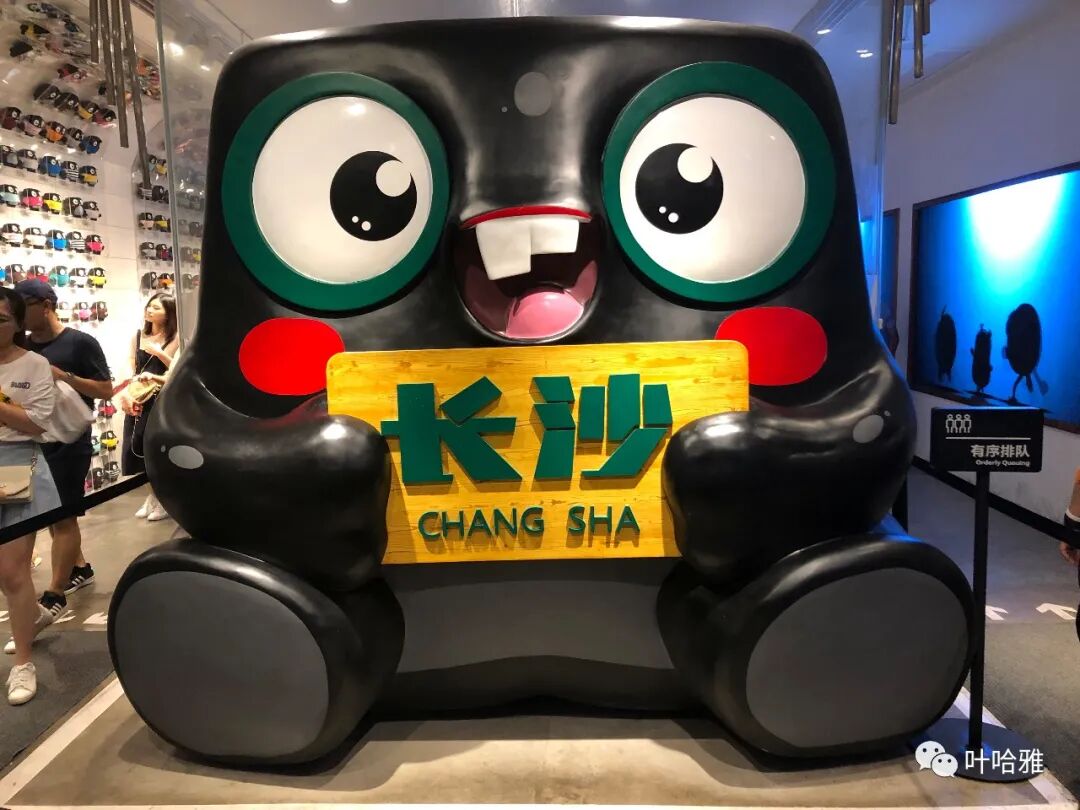
I have been to Changsha twice, once for work and once for personal reasons. On these two trips, I visited the only two mosques in the city. One is the Changsha Mosque, which is well-known to local Muslims in the city center. The other is less known, the Han-Hui Ethnic Village Mosque in the suburbs.
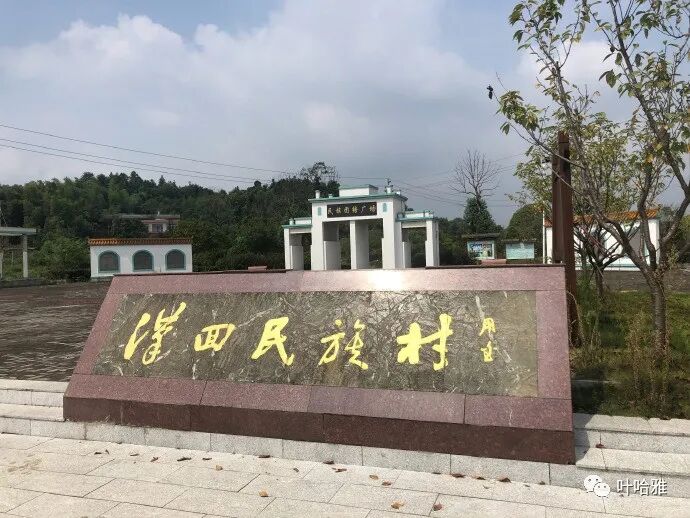
Han-Hui Ethnic Village
Han-Hui Village is in the northern suburbs of Changsha. The name dates back to the early days of the People's Republic of China. The Hui Muslims here have a history of over 100 years. The village has a total population of over 1,400, with Hui Muslims making up one-third. Han-Hui Village covers 2.8 square kilometers. The village is home to a Buddhist Tielu Mosque, a mosque, and a Taoist mosque, where three religions coexist.
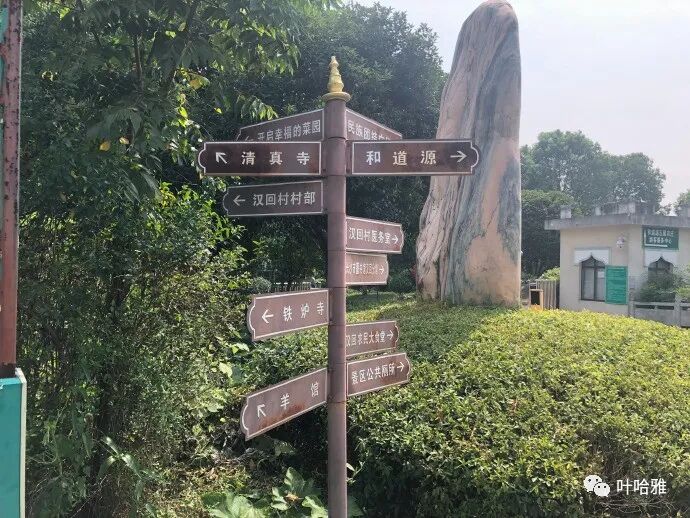
Han-Hui Village road sign
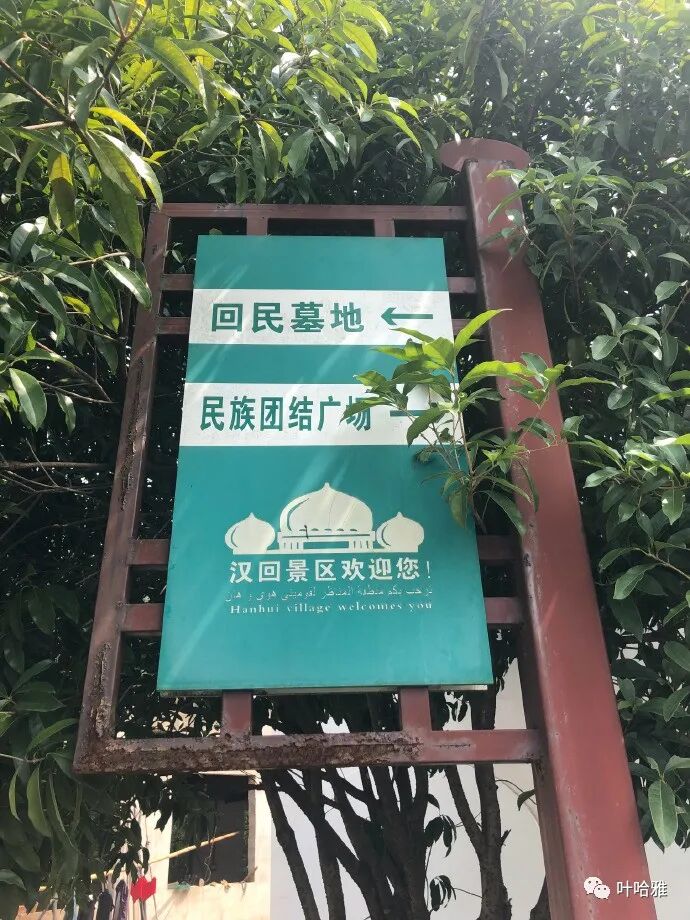
Han-Hui Village signpost
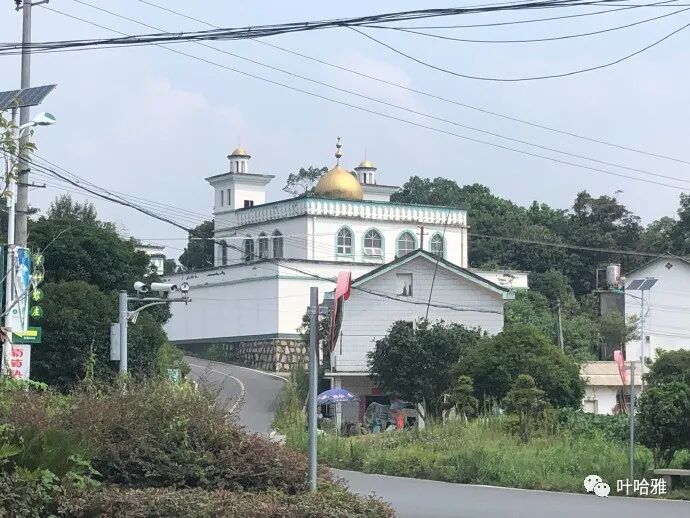
The golden-roofed building in the distance is the mosque. In 2009, Yusuf Zhang Weidong, chairman of the Juzhou Donglaixing Halal Restaurant, donated the funds to build it. Unfortunately, the mosque has never been open since it was completed.
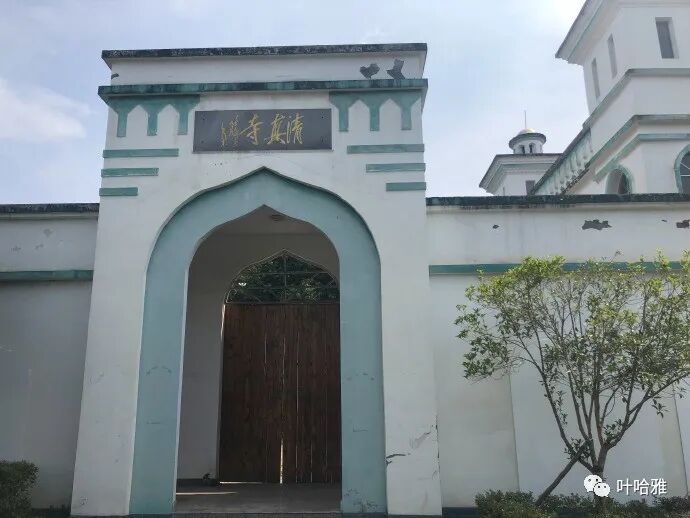
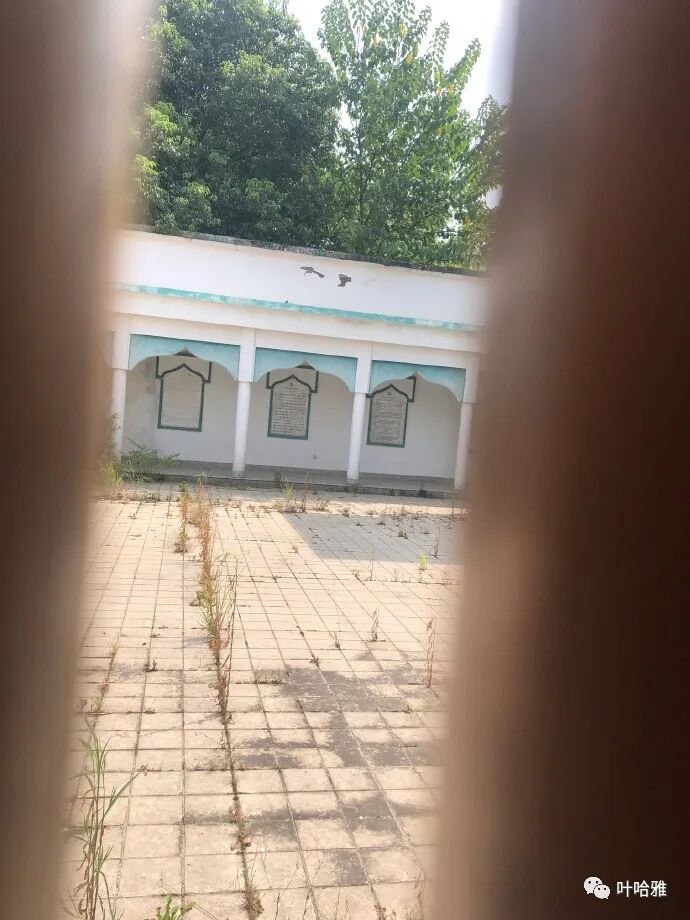
I looked through the crack in the door and saw only weeds covering the ground.
I asked the villagers and learned that the village committee might have the key, so I went to their office.
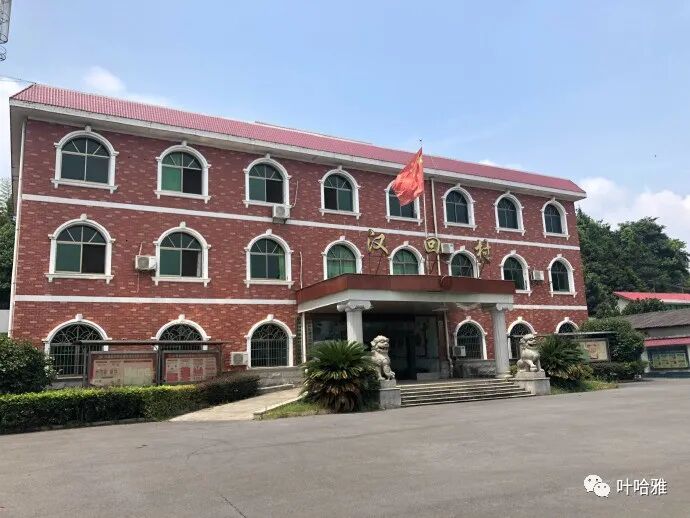
Unfortunately, no one was on duty at the village committee that day, and the building was completely empty.
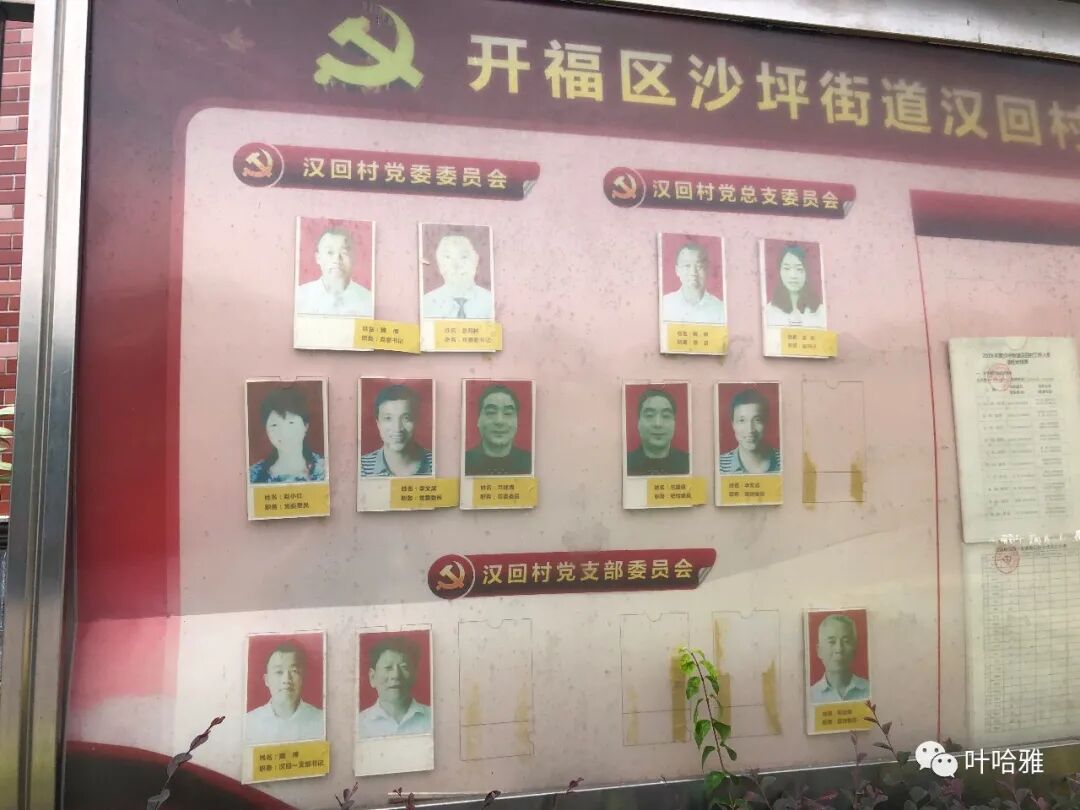
I found a staff phone directory on the bulletin board and saw a phone number for someone with the surname Lan. I thought they must be a Hui Muslim and would be easy to talk to, so I called. The voice on the other end was not friendly. I said I was a Hui Muslim from Beijing and wanted to visit the mosque, but the person named Lan was firm: the mosque is not open now and will not be open in the future. Then they hung up.
I was not surprised by this result, because if the villagers still had Iman, they would not let the mosque grow over with weeds, while the local Earth God Mosque is quite busy with visitors.
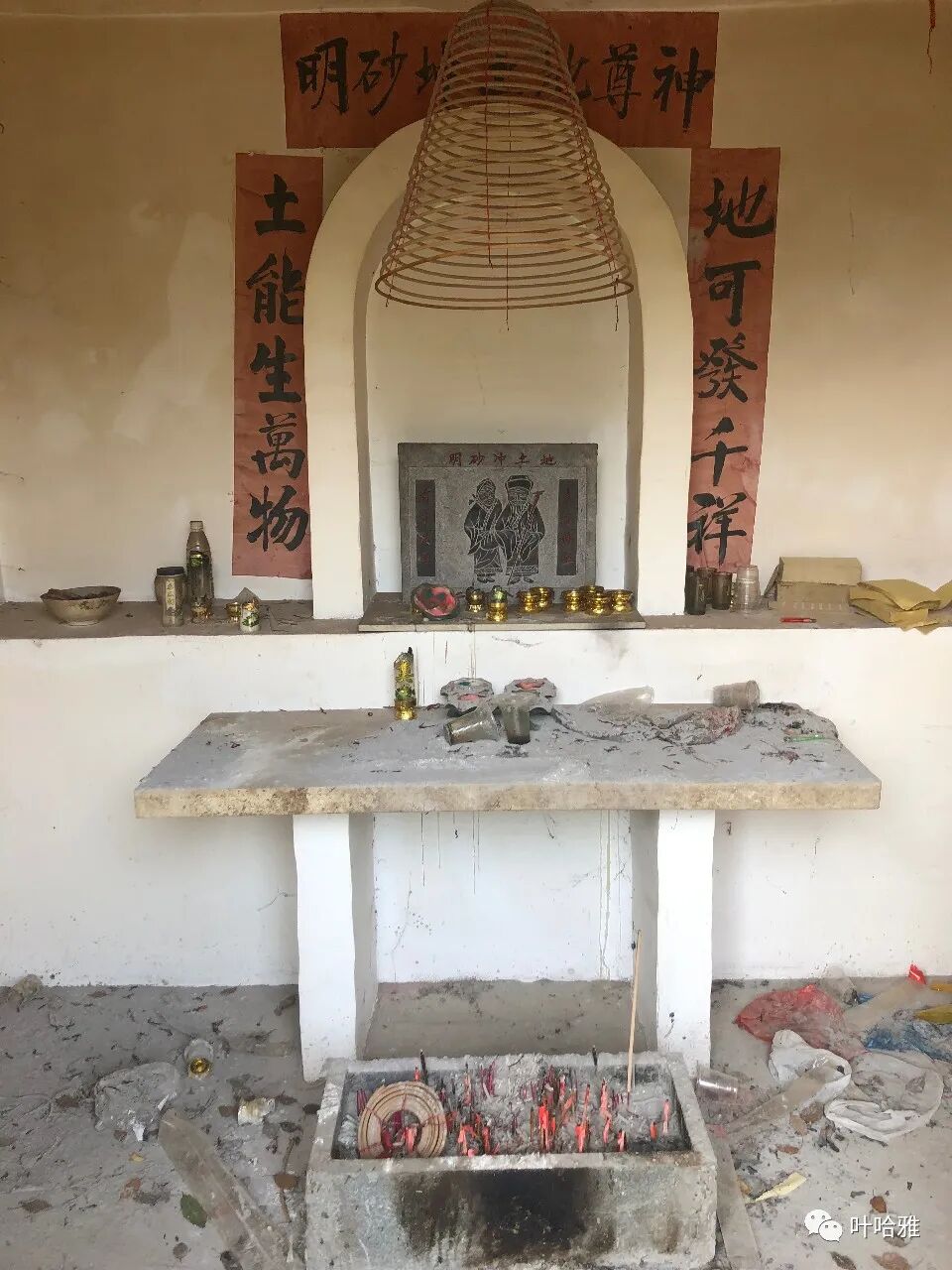
Earth God Temple
Since I could not enter the mosque, I walked around the village. In the Han-Hui Village Ethnic Square, there is a stone tablet recording the history of the Hui Muslims in the village.
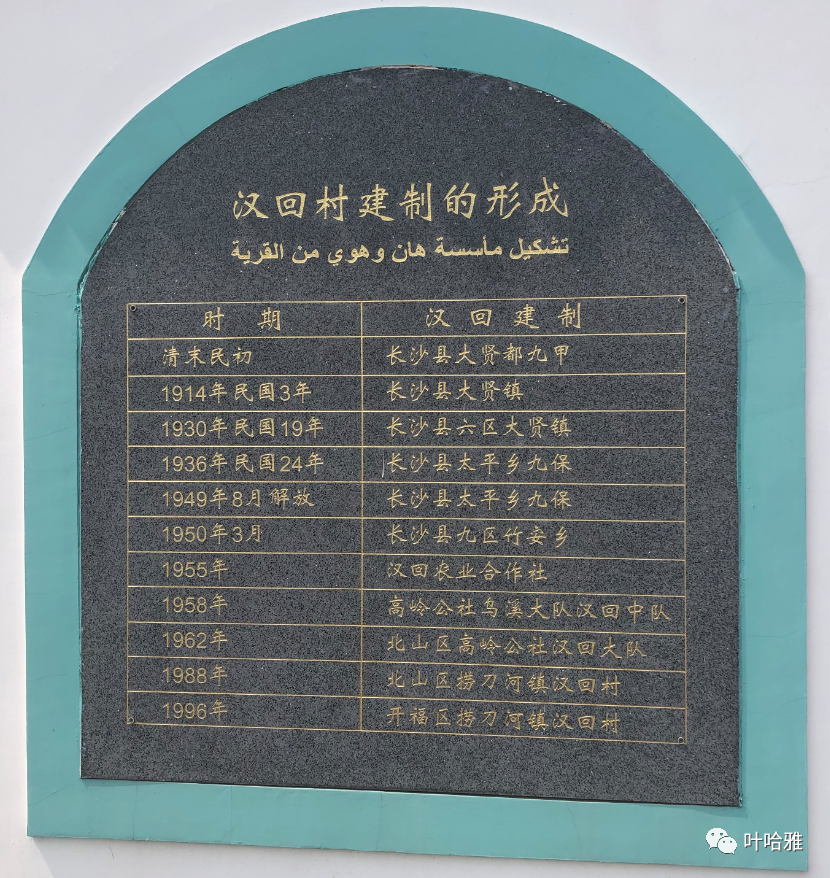
Establishment of Han-Hui Village
Islam first arrived in Hunan in the second year of the Deyou era of the Song Dynasty (1276), according to information released by the Hunan Provincial Religious Affairs Bureau. Hui Muslims including Ali Han, Wuerma, Lamadan (Kanmalading), Sademishi, Saliman, Bolantai, Qulie, Luoli, Ma Mousha, Alilan, Mahemu, and Macheng came to Hunan one after another to serve as officials. During the Hongwu era of the Ming Dynasty, a large number of Hui Muslim soldiers moved to Hunan and settled down. Ming Emperor Taizu Zhu Yuanzhang granted titles to a group of Muslim generals who entered Hunan for military service, such as Puluode (given the surname Zhang), Sutong, Haimengshi, Caineng, Halebashi (given the surname Jian), and Madecheng. They settled in Baoqing and Changde.
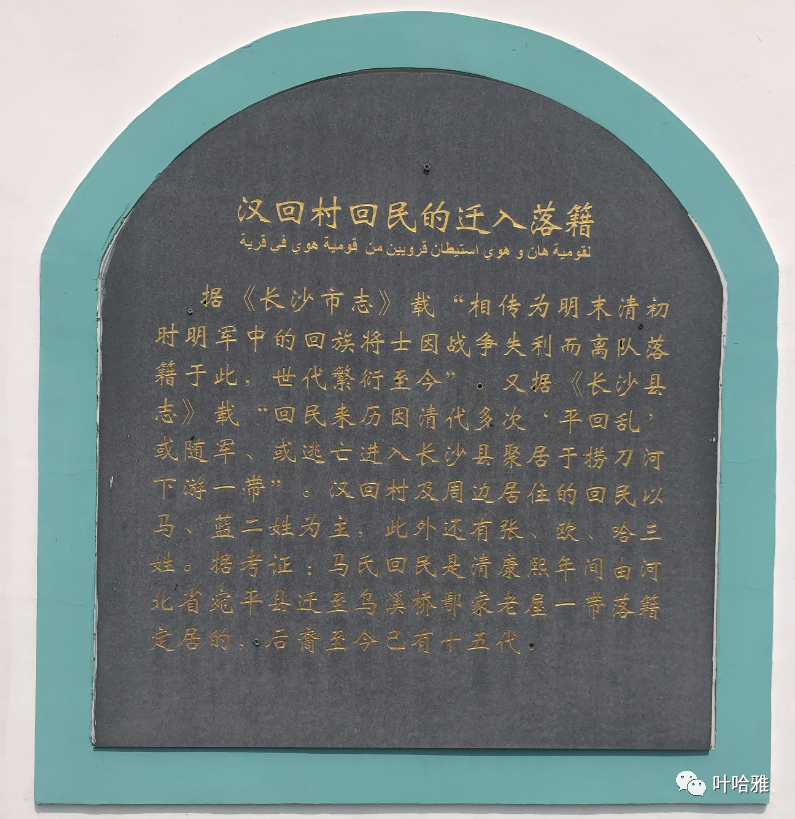
According to stone inscriptions, defeated Hui Muslim soldiers settled here during the Ming and Qing dynasties. They were mainly from the Ma and Lan families, along with the Zhang, Ou, and Ha families. The Ma family of Hui Muslims moved from Wanping County, Hebei Province, to the area around Wuxi Bridge and Yanjia Laowu during the Kangxi era of the Qing Dynasty.
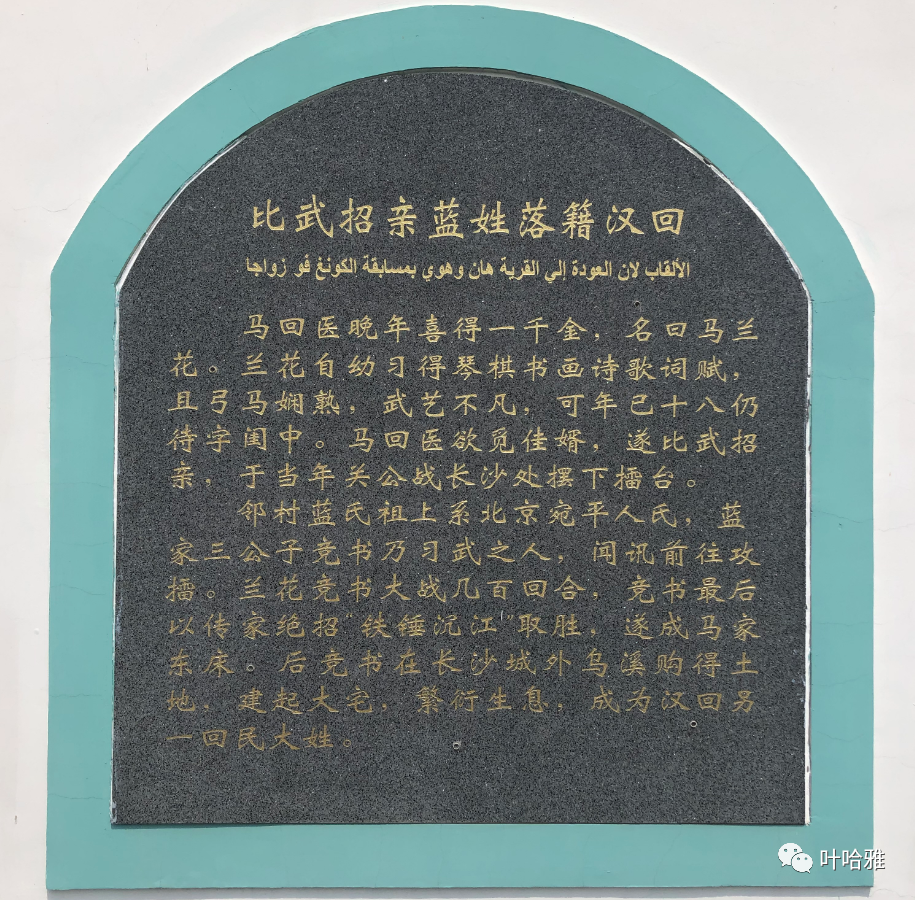
The ancestors of the Lan family of Hui Muslims were from Wanping, Beijing. One ancestor became a son-in-law of the Ma family after winning a martial arts competition to find a husband, and he settled down in Changsha.
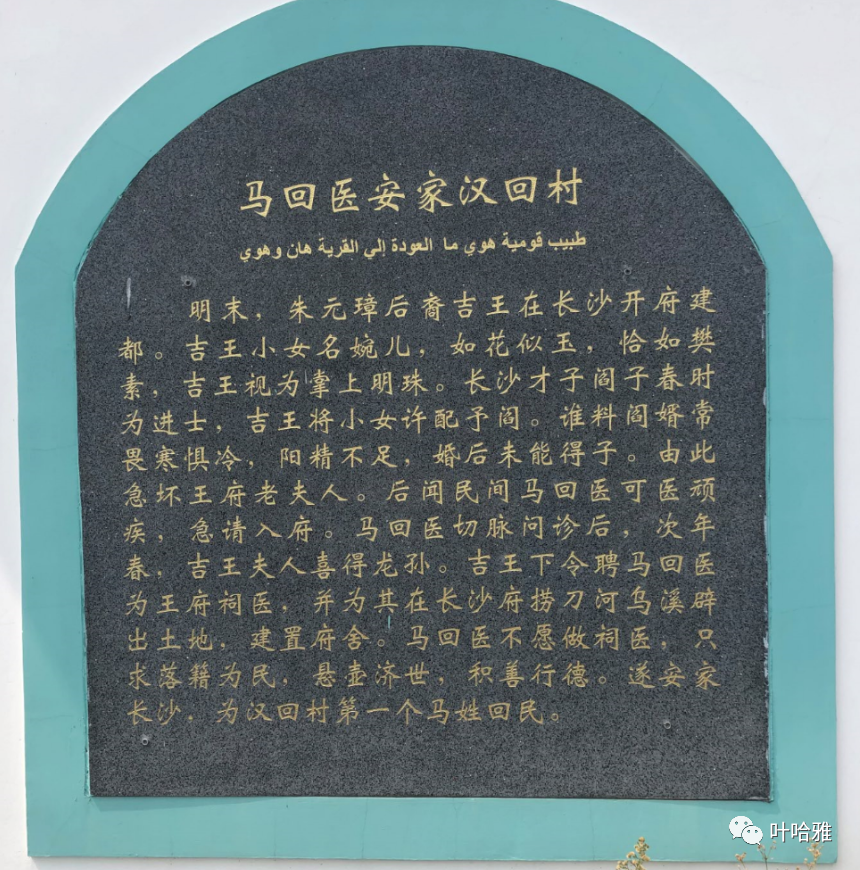
The stone inscriptions in the village also record the story of the first Hui Muslim doctor named Ma to settle in Hanhui Village. Legend has it that he once treated a descendant of Zhu Yuanzhang.
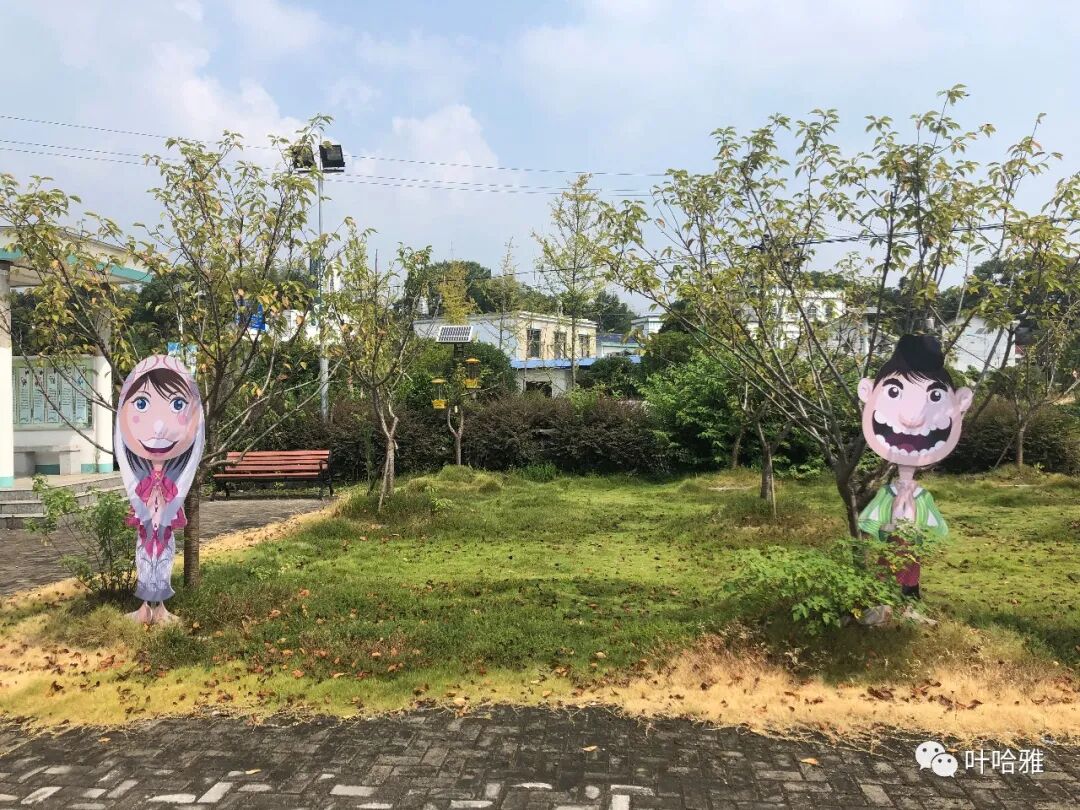
The statues decorating the ethnic culture square now seem to be just symbols or window dressing, lacking real substance.
Niubenwei Hui Muslim Restaurant
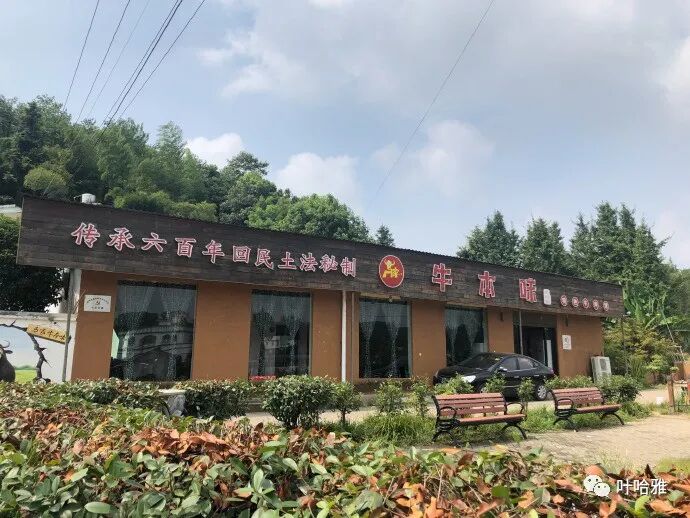
Niubenwei Restaurant
Before I arrived, I found a Hui Muslim restaurant in the village on Dazhong Dianping that featured local Changsha Hui Muslim specialties. I thought I had found a treasure, but after learning about the current state of faith in Hanhui Village, I did not dare to try it.
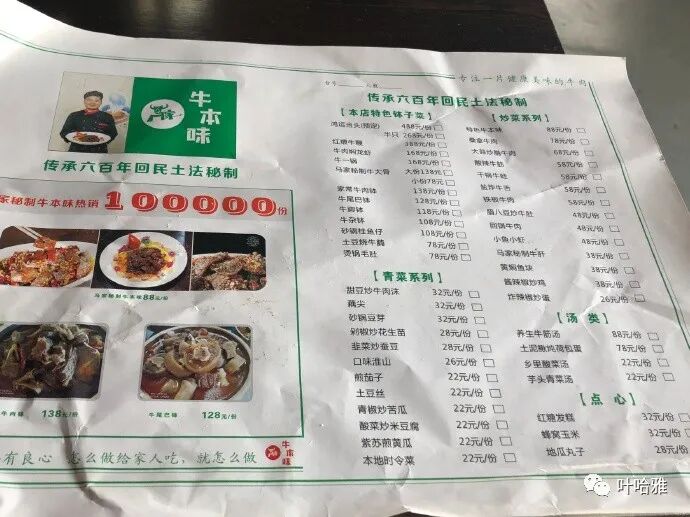
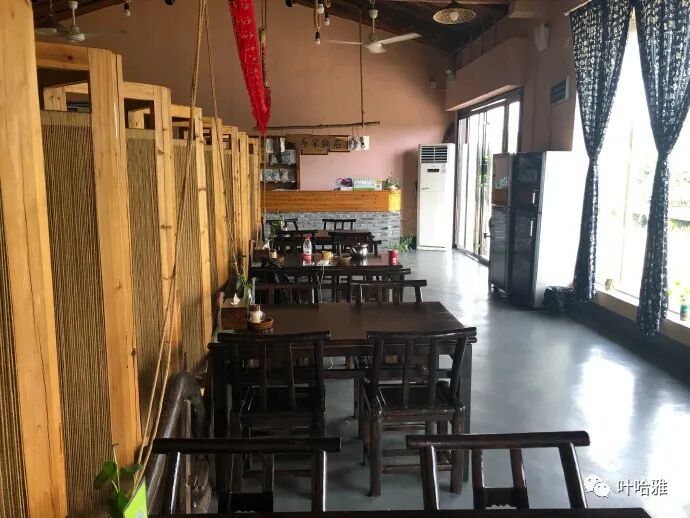
I sat in the shop for a while and chatted with the staff. The staff said they do not use lard. Changsha people love using lard for cooking, even for stir-frying vegetables, but this place does not use it. Niubenwei is the only restaurant in the village, and many Changsha residents come here on weekends specifically to eat beef. The staff called namaz 'praying' and said no one here goes to the mosque to pray, so I did not ask anything else.
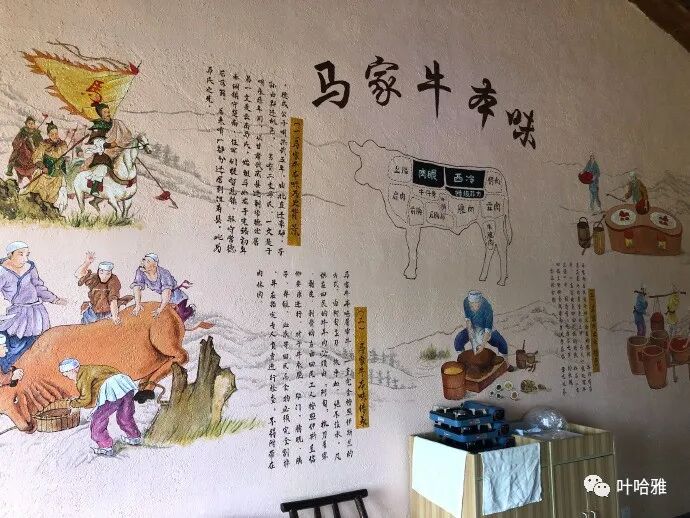
Looking at the small text on the wall describing the Islamic method of slaughter, I only felt regret. It would be great to have a restaurant serving authentic traditional Changsha dishes, but unfortunately, there are none in Changsha, and Niubenwei is not reliable.
It is impossible to find a restaurant with local characteristics in Changsha now, but you can eat Shaoyang Hui Muslim rice noodles. Shaoyang is a prefecture-level city in Hunan, not far from Changsha and accessible by high-speed rail. I once visited two mosques in the city of Shaoyang. The center of the faith in Hunan is in Shaoyang, and my impression of Shaoyang is that there are Hui Muslim noodle shops everywhere in the streets and alleys.
Shaoyang Hui Muslim rice noodles
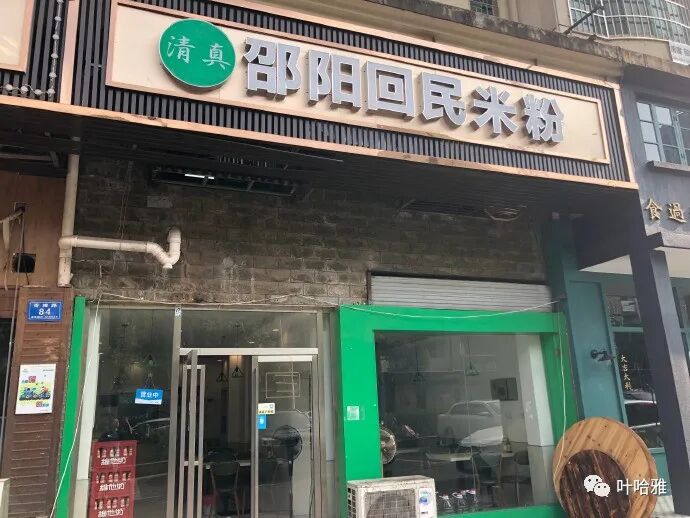
Shaoyang rice noodles in Changsha
This shop is on Xiangzhang Road in Changsha. The staff are Hui Muslims from Shaoyang. The difference between Shaoyang rice noodles (shaoyang fen) and Changsha rice noodles (changsha fen) is that Shaoyang noodles are round, while Changsha noodles can be flat. Both are equally spicy. This rice noodle shop on Xiangzhang Road has special snacks, but they only sell them after autumn because Changsha summers are very hot and the food spoils easily.
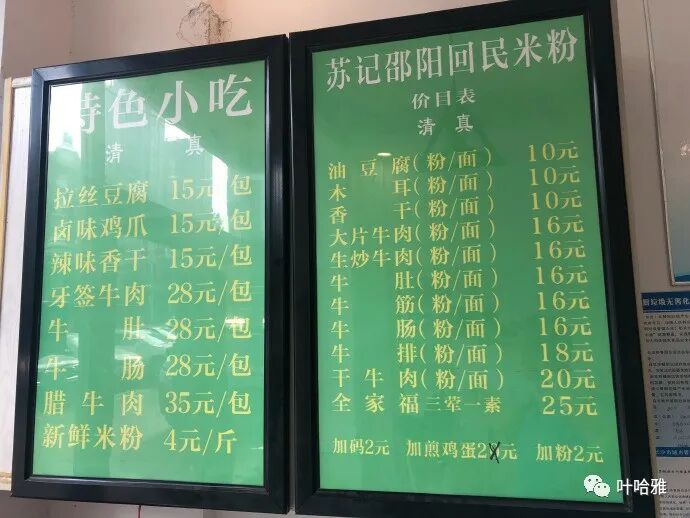
Price list
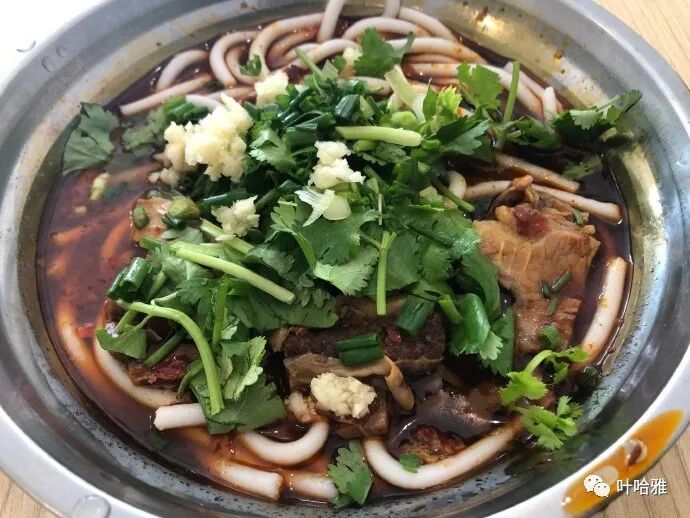
Shaoyang rice noodles (shaoyang mifen)
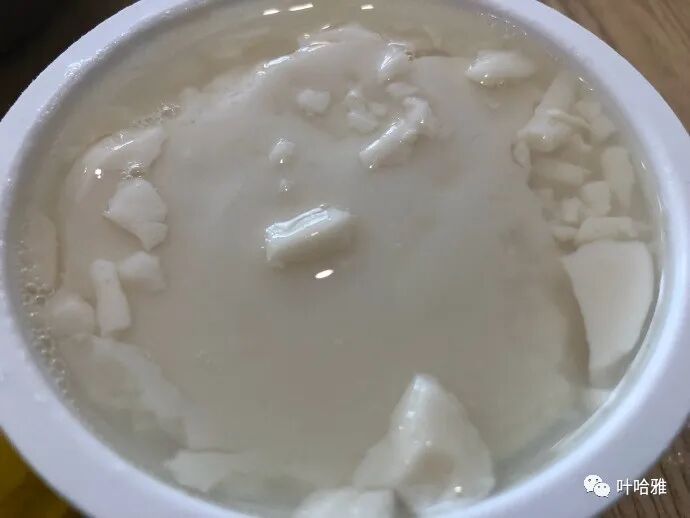
Tofu pudding (douhua)
Besides this special rice noodle shop, Changsha mostly has hand-pulled noodle shops (lamian guan) and Xinjiang restaurants. When I visited Changsha before, I saw many Uyghurs doing business and running shops here. This time, I found that many of those Xinjiang restaurants have closed.
Changsha Mosque
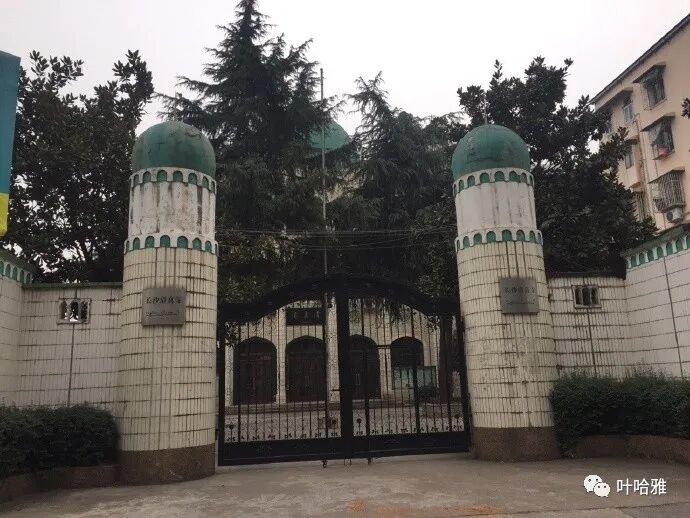
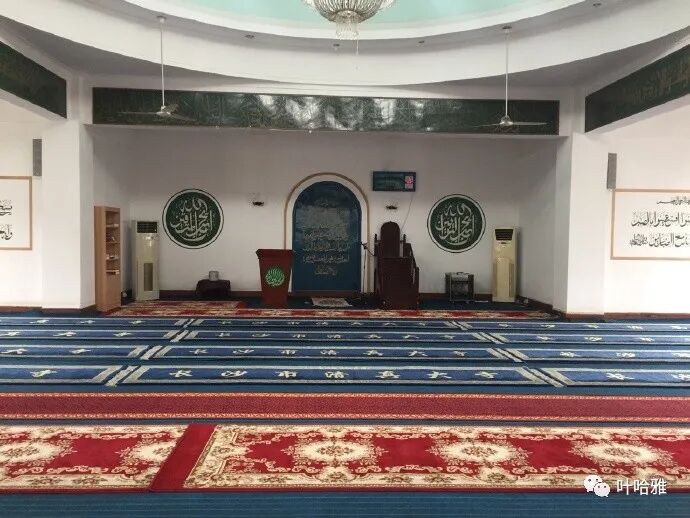
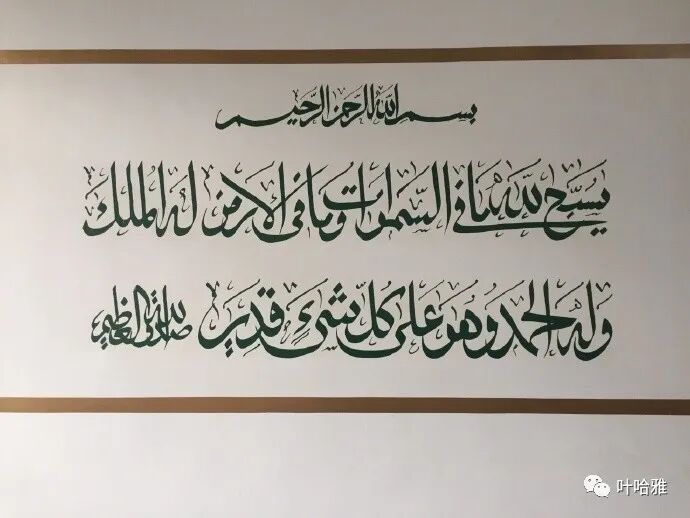
Changsha Mosque is located at No. 115 Sanxing Street in the West District of Changsha. It was first built in 1711 during the 50th year of the Kangxi reign of the Qing Dynasty. The original mosque was destroyed in the 1938 Changsha 'Wenxi' fire, and the current building was rebuilt in 1992.
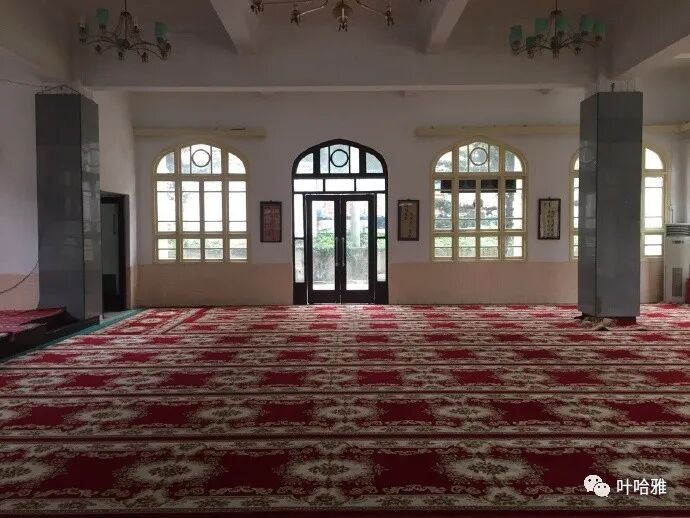
The mosque has three floors and covers a total area of 5.92 mu. The main prayer hall is on the third floor.
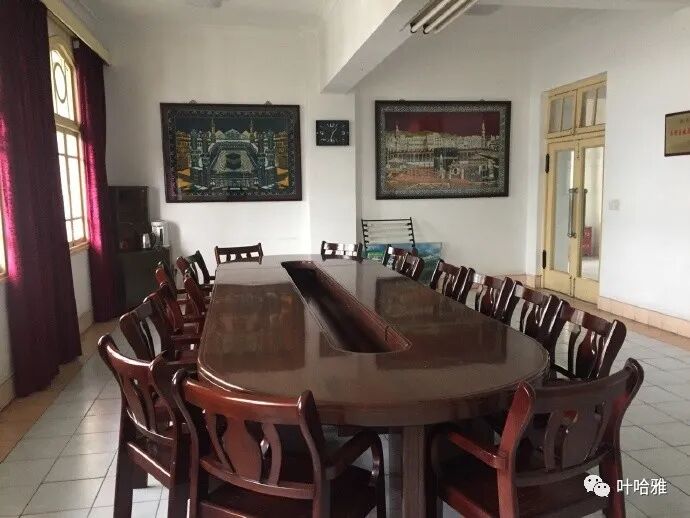
There are very few local Muslims in Changsha. Most Hui Muslims in Hunan live in Shaoyang (40,000), Changde (60,000), and Yiyang (12,000). They have established six ethnic minority townships: Shanjie Hui Ethnic Township in Longhui County, Fengshu Uyghur-Hui Ethnic Township and Qinglin Uyghur-Hui Ethnic Township in Taoyuan County, Zhabu Hui Ethnic Township in Taojiang County, and Maojiatan Uyghur-Hui Ethnic Township and Xujiaqiao Uyghur-Hui Ethnic Township in Dingcheng District. More than 10,000 descendants of Uyghurs still live in Taoyuan County, Changde City, though they have been mostly assimilated into Han culture.
To maintain national unity, suppress rebellions in the south, and consolidate his rule, Ming Emperor Zhu Yuanzhang appointed Hale Bashi, a descendant of Hale and the then-commander of Yanjing, as Grand Commander. He led his troops south into the Xiangchu region. Because Hale Bashi was successful in eliminating hostile forces, Ming Emperor Zhu Yuanzhang promoted him to General of Southern Pacification and National Stability and added the title of Crown Prince's Guardian. He was granted the surname 'Jian' and his name 'Bashi' was changed to 'Bashi' (using a different character). He was ordered to guard the Hubei, Guangxi, Yunnan, and Guizhou regions. Jian Bashi stationed his troops in Fengshu, Taoyuan, and set up a base camp called the 'Hale Banner Camp' (Ha Qi Ying). This is the origin of the Uyghurs in Hunan.
It is rumored that Taiwanese singer Angela Chang has Uyghur ancestry. I checked the records and found that her maternal grandfather was originally from Taoyuan County, Hunan. Her mother, Jiang Rouyi, originally had the surname 'Jian' before changing it to Jiang. So, Angela Chang actually has Hunan Uyghur ancestry, which is quite different from the Uyghurs in Xinjiang.


Summary: Muslim Travel Guide China 2026: Changsha Han-Hui Village, Mosque Life and Hunan Heritage is presented here as a clear English account for Muslim readers, beginning with this scene: — Hello, Travel —. The article keeps the original names, food details, mosque details, photographs, and cultural context while focusing on Changsha Muslims, Hunan Heritage, Mosque Travel.
— Hello, Travel —
I have been to Changsha twice, once for work and once for personal reasons. On these two trips, I visited the only two mosques in the city. One is the Changsha Mosque, which is well-known to local Muslims in the city center. The other is less known, the Han-Hui Ethnic Village Mosque in the suburbs.
Han-Hui Ethnic Village
Han-Hui Village is in the northern suburbs of Changsha. The name dates back to the early days of the People's Republic of China. The Hui Muslims here have a history of over 100 years. The village has a total population of over 1,400, with Hui Muslims making up one-third. Han-Hui Village covers 2.8 square kilometers. The village is home to a Buddhist Tielu Mosque, a mosque, and a Taoist mosque, where three religions coexist.
Han-Hui Village road sign
Han-Hui Village signpost
The golden-roofed building in the distance is the mosque. In 2009, Yusuf Zhang Weidong, chairman of the Juzhou Donglaixing Halal Restaurant, donated the funds to build it. Unfortunately, the mosque has never been open since it was completed.
I looked through the crack in the door and saw only weeds covering the ground.
I asked the villagers and learned that the village committee might have the key, so I went to their office.
Unfortunately, no one was on duty at the village committee that day, and the building was completely empty.
I found a staff phone directory on the bulletin board and saw a phone number for someone with the surname Lan. I thought they must be a Hui Muslim and would be easy to talk to, so I called. The voice on the other end was not friendly. I said I was a Hui Muslim from Beijing and wanted to visit the mosque, but the person named Lan was firm: the mosque is not open now and will not be open in the future. Then they hung up.
I was not surprised by this result, because if the villagers still had Iman, they would not let the mosque grow over with weeds, while the local Earth God Mosque is quite busy with visitors.
Earth God Temple
Since I could not enter the mosque, I walked around the village. In the Han-Hui Village Ethnic Square, there is a stone tablet recording the history of the Hui Muslims in the village.
Establishment of Han-Hui Village
Islam first arrived in Hunan in the second year of the Deyou era of the Song Dynasty (1276), according to information released by the Hunan Provincial Religious Affairs Bureau. Hui Muslims including Ali Han, Wuerma, Lamadan (Kanmalading), Sademishi, Saliman, Bolantai, Qulie, Luoli, Ma Mousha, Alilan, Mahemu, and Macheng came to Hunan one after another to serve as officials. During the Hongwu era of the Ming Dynasty, a large number of Hui Muslim soldiers moved to Hunan and settled down. Ming Emperor Taizu Zhu Yuanzhang granted titles to a group of Muslim generals who entered Hunan for military service, such as Puluode (given the surname Zhang), Sutong, Haimengshi, Caineng, Halebashi (given the surname Jian), and Madecheng. They settled in Baoqing and Changde.
According to stone inscriptions, defeated Hui Muslim soldiers settled here during the Ming and Qing dynasties. They were mainly from the Ma and Lan families, along with the Zhang, Ou, and Ha families. The Ma family of Hui Muslims moved from Wanping County, Hebei Province, to the area around Wuxi Bridge and Yanjia Laowu during the Kangxi era of the Qing Dynasty.
The ancestors of the Lan family of Hui Muslims were from Wanping, Beijing. One ancestor became a son-in-law of the Ma family after winning a martial arts competition to find a husband, and he settled down in Changsha.
The stone inscriptions in the village also record the story of the first Hui Muslim doctor named Ma to settle in Hanhui Village. Legend has it that he once treated a descendant of Zhu Yuanzhang.
The statues decorating the ethnic culture square now seem to be just symbols or window dressing, lacking real substance.
Niubenwei Hui Muslim Restaurant
Niubenwei Restaurant
Before I arrived, I found a Hui Muslim restaurant in the village on Dazhong Dianping that featured local Changsha Hui Muslim specialties. I thought I had found a treasure, but after learning about the current state of faith in Hanhui Village, I did not dare to try it.
I sat in the shop for a while and chatted with the staff. The staff said they do not use lard. Changsha people love using lard for cooking, even for stir-frying vegetables, but this place does not use it. Niubenwei is the only restaurant in the village, and many Changsha residents come here on weekends specifically to eat beef. The staff called namaz 'praying' and said no one here goes to the mosque to pray, so I did not ask anything else.
Looking at the small text on the wall describing the Islamic method of slaughter, I only felt regret. It would be great to have a restaurant serving authentic traditional Changsha dishes, but unfortunately, there are none in Changsha, and Niubenwei is not reliable.
It is impossible to find a restaurant with local characteristics in Changsha now, but you can eat Shaoyang Hui Muslim rice noodles. Shaoyang is a prefecture-level city in Hunan, not far from Changsha and accessible by high-speed rail. I once visited two mosques in the city of Shaoyang. The center of the faith in Hunan is in Shaoyang, and my impression of Shaoyang is that there are Hui Muslim noodle shops everywhere in the streets and alleys.
Shaoyang Hui Muslim rice noodles
Shaoyang rice noodles in Changsha
This shop is on Xiangzhang Road in Changsha. The staff are Hui Muslims from Shaoyang. The difference between Shaoyang rice noodles (shaoyang fen) and Changsha rice noodles (changsha fen) is that Shaoyang noodles are round, while Changsha noodles can be flat. Both are equally spicy. This rice noodle shop on Xiangzhang Road has special snacks, but they only sell them after autumn because Changsha summers are very hot and the food spoils easily.
Price list
Shaoyang rice noodles (shaoyang mifen)
Tofu pudding (douhua)
Besides this special rice noodle shop, Changsha mostly has hand-pulled noodle shops (lamian guan) and Xinjiang restaurants. When I visited Changsha before, I saw many Uyghurs doing business and running shops here. This time, I found that many of those Xinjiang restaurants have closed.
Changsha Mosque
Changsha Mosque is located at No. 115 Sanxing Street in the West District of Changsha. It was first built in 1711 during the 50th year of the Kangxi reign of the Qing Dynasty. The original mosque was destroyed in the 1938 Changsha 'Wenxi' fire, and the current building was rebuilt in 1992.
The mosque has three floors and covers a total area of 5.92 mu. The main prayer hall is on the third floor.
There are very few local Muslims in Changsha. Most Hui Muslims in Hunan live in Shaoyang (40,000), Changde (60,000), and Yiyang (12,000). They have established six ethnic minority townships: Shanjie Hui Ethnic Township in Longhui County, Fengshu Uyghur-Hui Ethnic Township and Qinglin Uyghur-Hui Ethnic Township in Taoyuan County, Zhabu Hui Ethnic Township in Taojiang County, and Maojiatan Uyghur-Hui Ethnic Township and Xujiaqiao Uyghur-Hui Ethnic Township in Dingcheng District. More than 10,000 descendants of Uyghurs still live in Taoyuan County, Changde City, though they have been mostly assimilated into Han culture.
To maintain national unity, suppress rebellions in the south, and consolidate his rule, Ming Emperor Zhu Yuanzhang appointed Hale Bashi, a descendant of Hale and the then-commander of Yanjing, as Grand Commander. He led his troops south into the Xiangchu region. Because Hale Bashi was successful in eliminating hostile forces, Ming Emperor Zhu Yuanzhang promoted him to General of Southern Pacification and National Stability and added the title of Crown Prince's Guardian. He was granted the surname 'Jian' and his name 'Bashi' was changed to 'Bashi' (using a different character). He was ordered to guard the Hubei, Guangxi, Yunnan, and Guizhou regions. Jian Bashi stationed his troops in Fengshu, Taoyuan, and set up a base camp called the 'Hale Banner Camp' (Ha Qi Ying). This is the origin of the Uyghurs in Hunan.
It is rumored that Taiwanese singer Angela Chang has Uyghur ancestry. I checked the records and found that her maternal grandfather was originally from Taoyuan County, Hunan. Her mother, Jiang Rouyi, originally had the surname 'Jian' before changing it to Jiang. So, Angela Chang actually has Hunan Uyghur ancestry, which is quite different from the Uyghurs in Xinjiang.
