
Muslim Travel Guide Medina: Prophet Mosque, Quba Mosque and Sacred Islamic Sites
Reposted from the web
Summary: This Muslim travel guide to Medina covers Umrah preparation, the Prophet Mosque, high-speed rail from Jeddah, Medina hotels, Al-Ghamama Mosque, Quba Mosque, Uhud, Qiblatayn Mosque, and other sacred Islamic sites.
Map of Sacred Sites in Medina is presented here as a firsthand travel account in clear English, beginning with this scene: This year, I successfully took my family of three to complete the Umrah. My son, Fahim, is likely the youngest little Haji in the Beijing area ever, at less than two years old. The account keeps its focus on Mosque Travel, Islamic Heritage, Beijing while preserving the names, places, food, and historical details from the Chinese source.
This year, I successfully took my family of three to complete the Umrah. My son, Fahim, is likely the youngest little Haji in the Beijing area ever, at less than two years old. However, for a minor, both the Hajj and Umrah only count as voluntary acts of worship. He will need to perform the Hajj again after he reaches adulthood to fulfill his religious obligation.
I will explain the Umrah process in detail in my Mecca travelogue. Saudi Arabia's current tourist visa includes an Umrah option. Just check that box under the travel destination section and apply for an e-visa at this website: https://visa.visitsaudi.com/.
The Saudi tourist e-visa is approved instantly. Once you pay, the visa is issued. It costs 488 Saudi Riyals, which is about 930 RMB. It is valid for one year, allows multiple entries, and you can stay for up to 90 days each time.
Before starting our Umrah, we arrived in Medina from Jeddah. Medina is where the Prophet Muhammad migrated and passed away. Praying one unit of namaz in the Prophet's Mosque is worth more than a thousand prayers in other mosques, and some say it is worth fifty thousand. Regardless of the exact number, it shows the importance of the Prophet's Mosque. Medina is perfect for peaceful worship. The temperature here is cooler than in Mecca. In December, there is a big difference between day and night temperatures, so you need to add or remove layers of clothing. Many pilgrims prepare for their Umrah in Medina and make their intention to enter the state of ihram there.
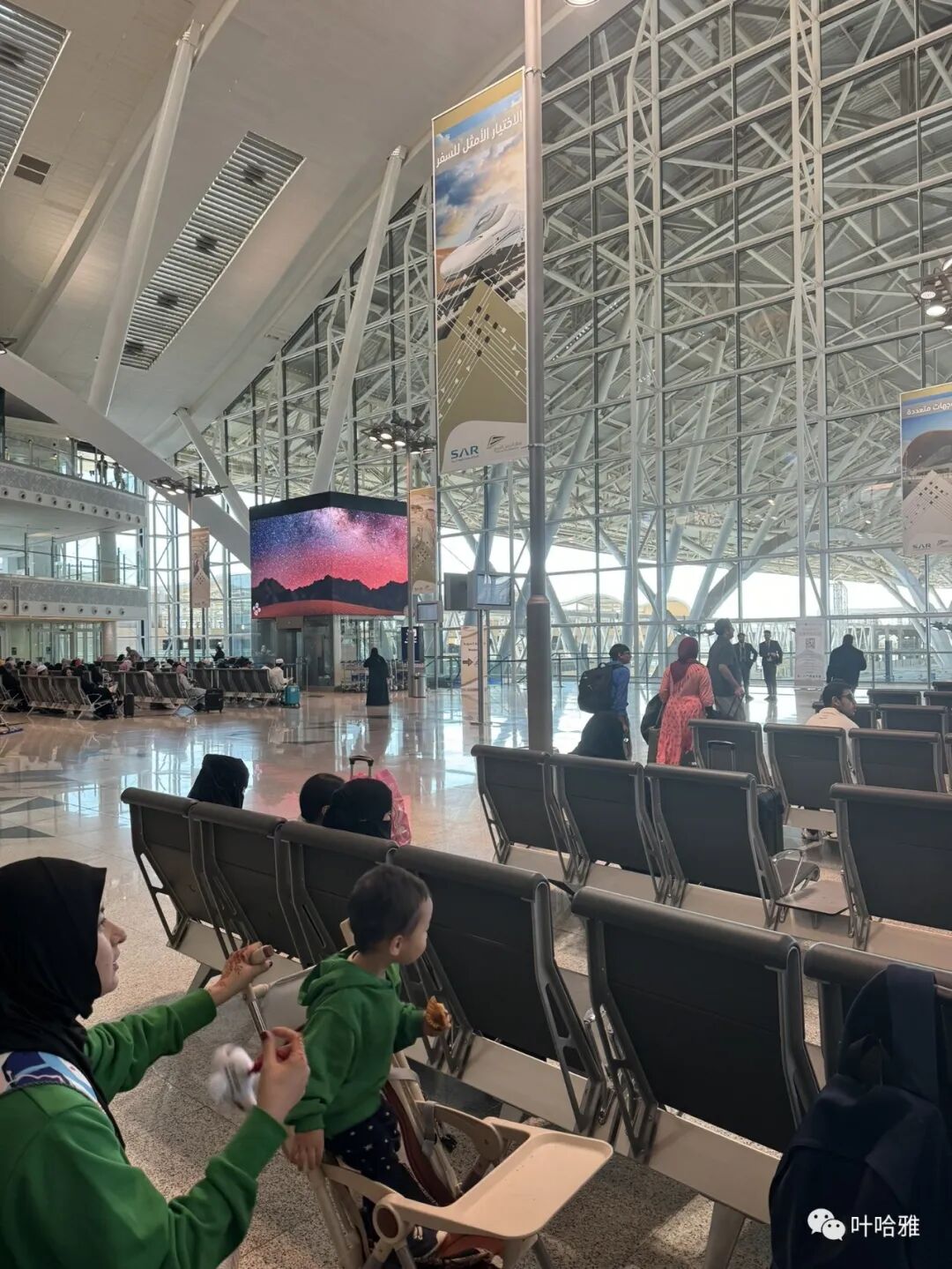
You need to buy tickets for the high-speed train from Jeddah to Medina on the official Saudi app called HHR Train. I suggest ordering a few days in advance because if you buy them at the station on the day of travel, you might not get a seat. We traveled in December, which is the coolest season in Saudi Arabia. It is about 20 degrees Celsius during the day and over 10 degrees at night. This is also when the most people perform Umrah, so hotels and train tickets are in high demand.
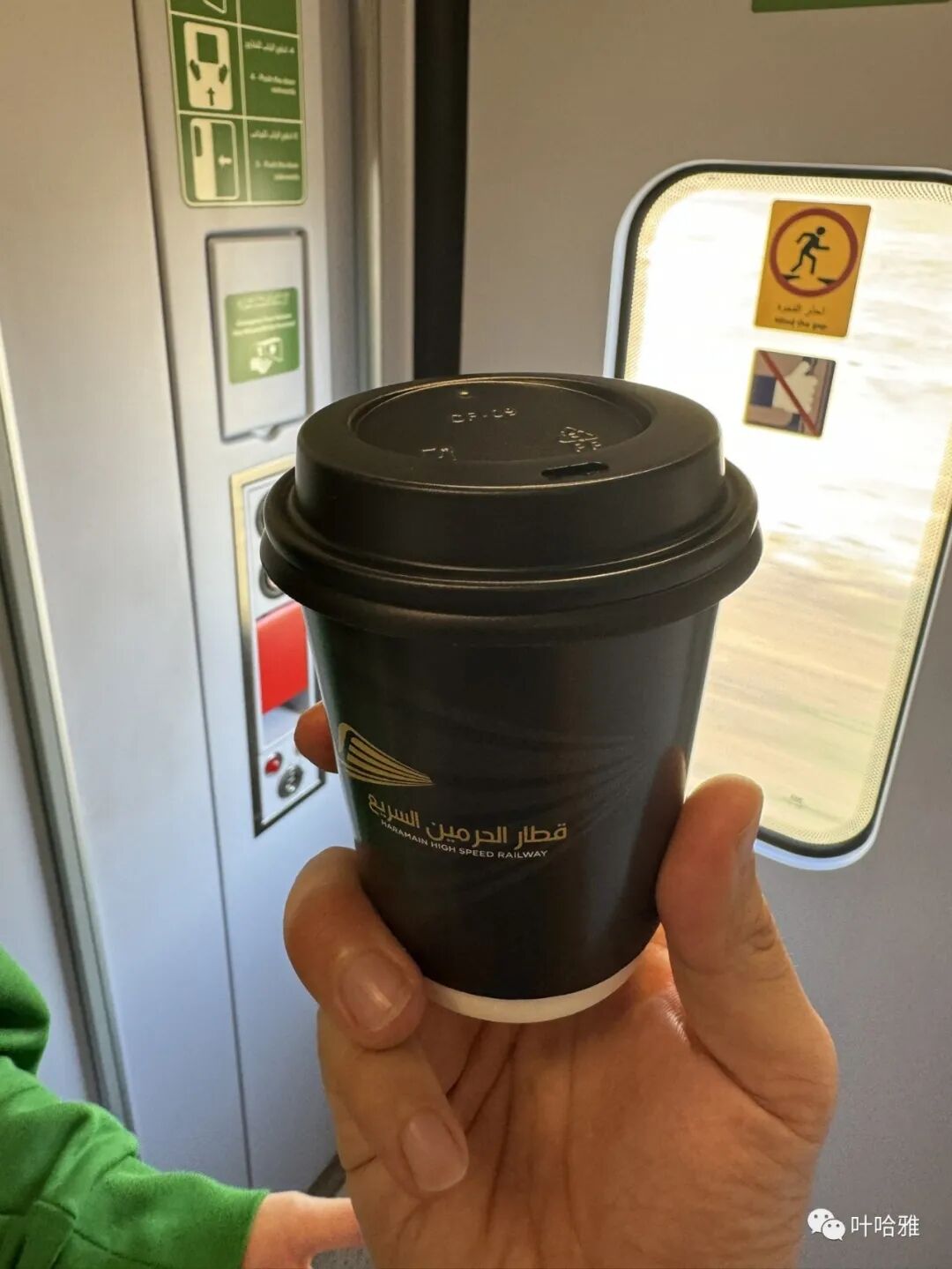
I bought a coffee on the train. I stood between the train cars because our seats were taken by a veiled Arab woman. She sat in our spots with a little girl. When my wife told her the seats were ours, she said the seat next to her was for a man and she did not want to sit next to one. She had not bought a ticket for her child, did not understand why I bought a ticket for a toddler like Fahim, and insisted on staying in our seats.
I did not want to argue. The trip from Jeddah to Medina takes about two hours, so I just walked to the area between the cars. A passing train attendant saw me and told me I could sit in any empty seat.
A taxi from the station to the hotel usually costs 100 Saudi Riyals. There were seven of us, so we hired an Arab driver. It happened to be Friday, the day of Jumu'ah. Our hotel was right across from the Prophet's Mosque. The roads around the mosque were restricted, so the driver wanted to drop us off halfway and have us walk. I checked the map and we were still 3 kilometers away. It was noon with the sun beating down, and we had elderly people and children with us, so walking was very difficult. I insisted that the driver take us to our destination. The driver looked frustrated, drove a long way around, and finally dropped us off in front of the hotel. Then he asked for an extra 50 Riyals. After some bargaining, we gave him 5 more.
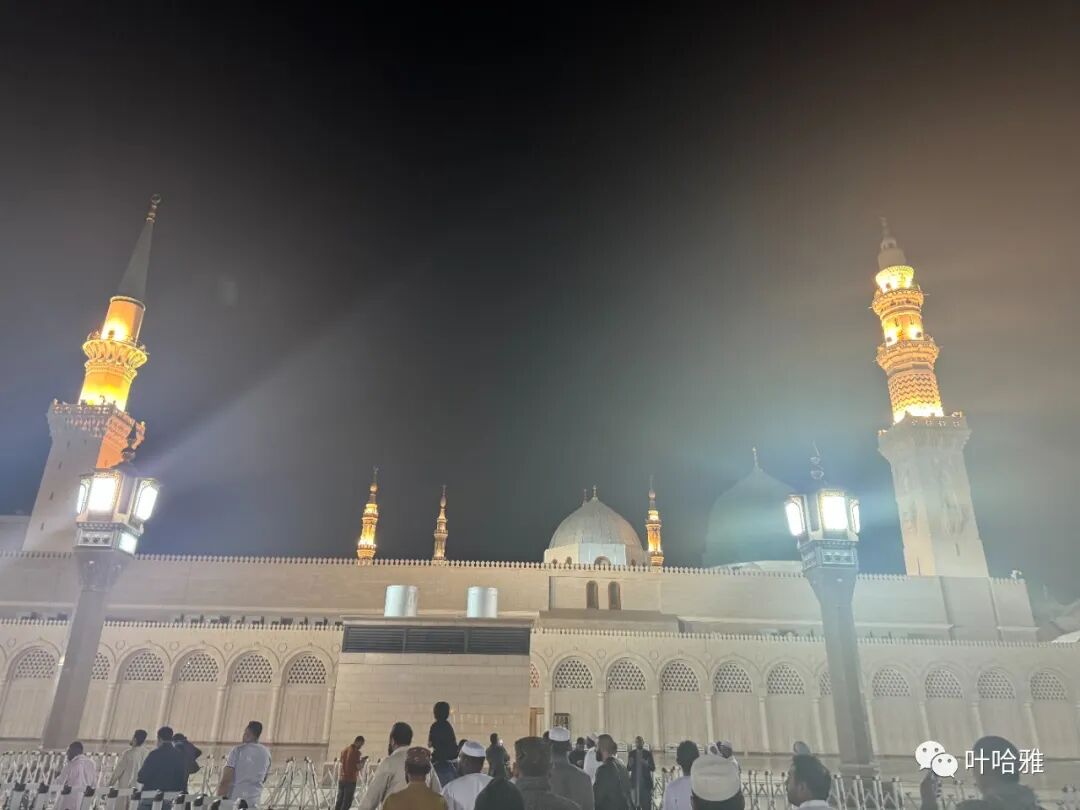
The Prophet's Mosque.
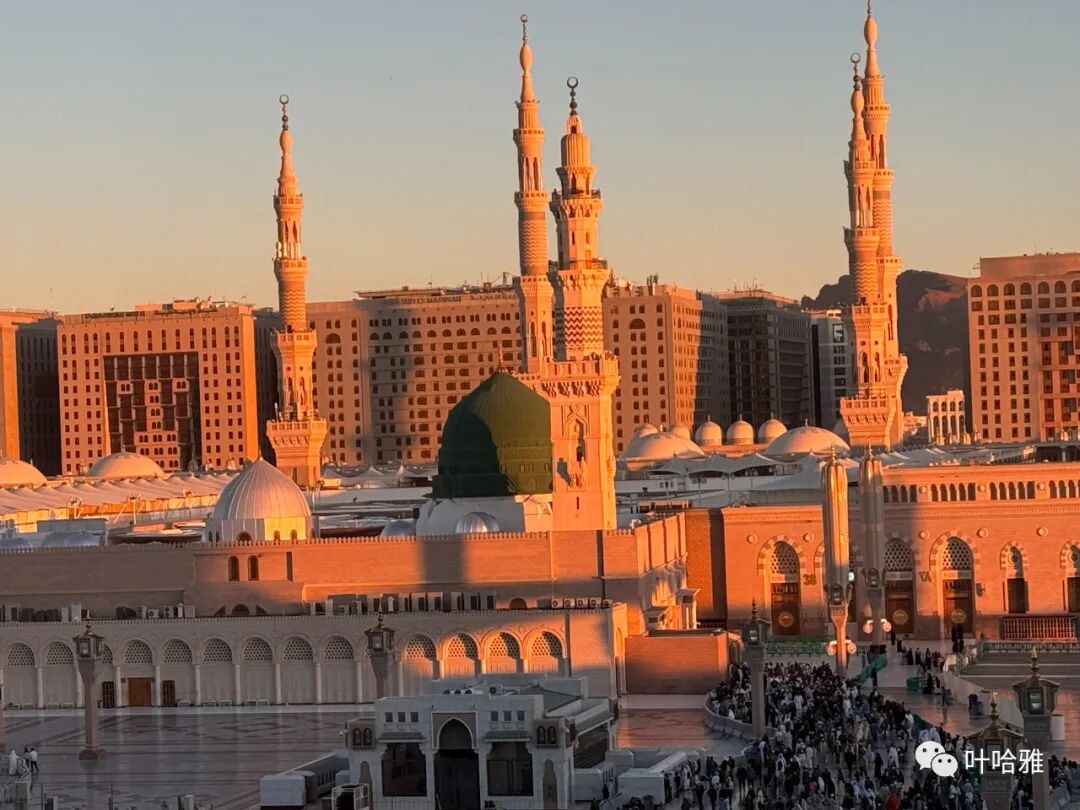
Our hotel was just across the street from the Prophet's Mosque. We could see the mosque from our room window. We did not even rest; we dropped off our luggage and went straight to the mosque to pray.
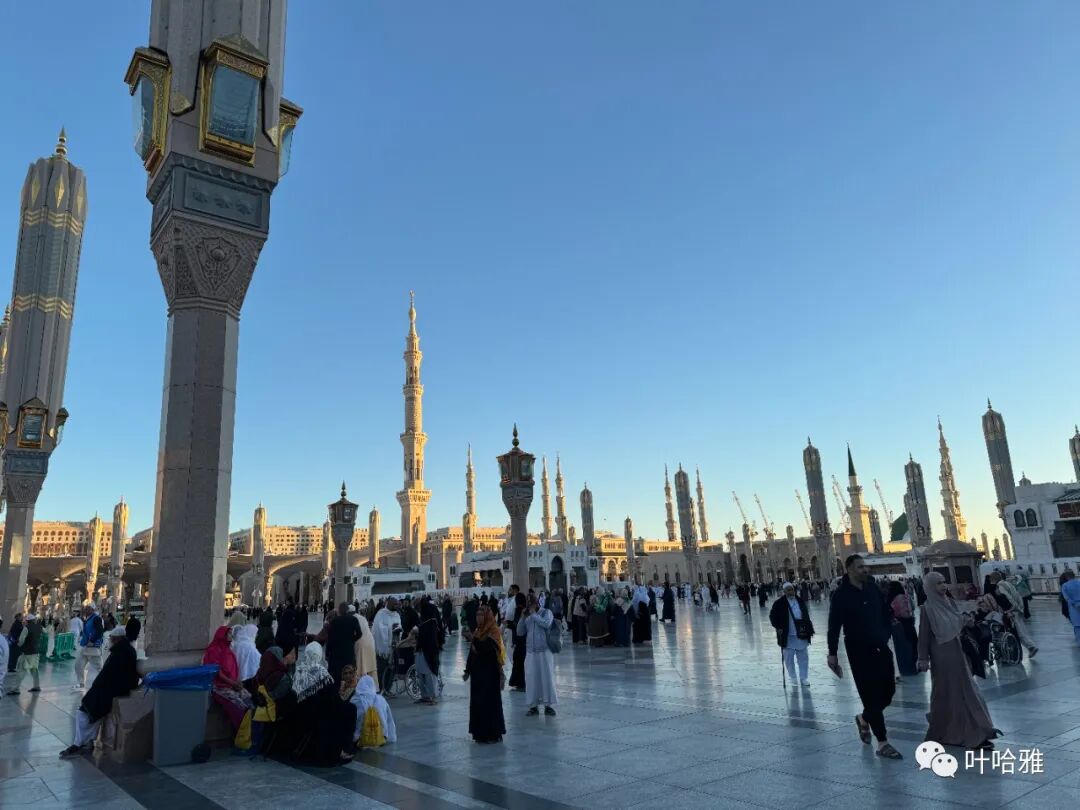
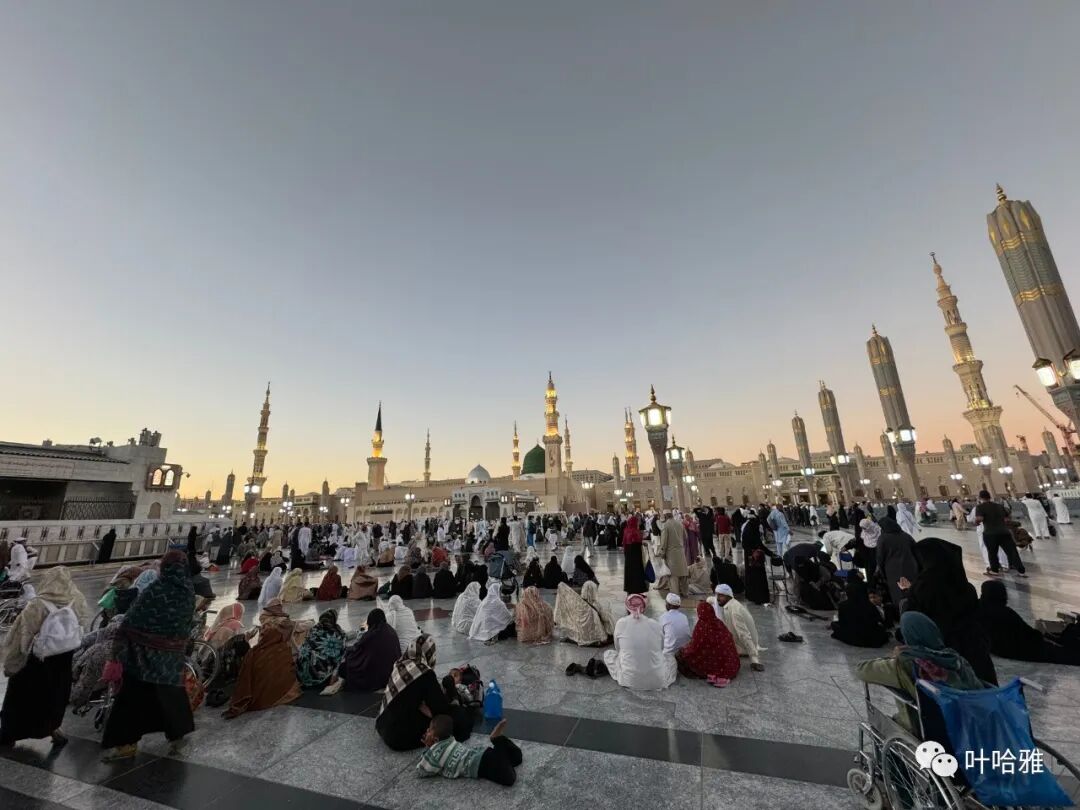
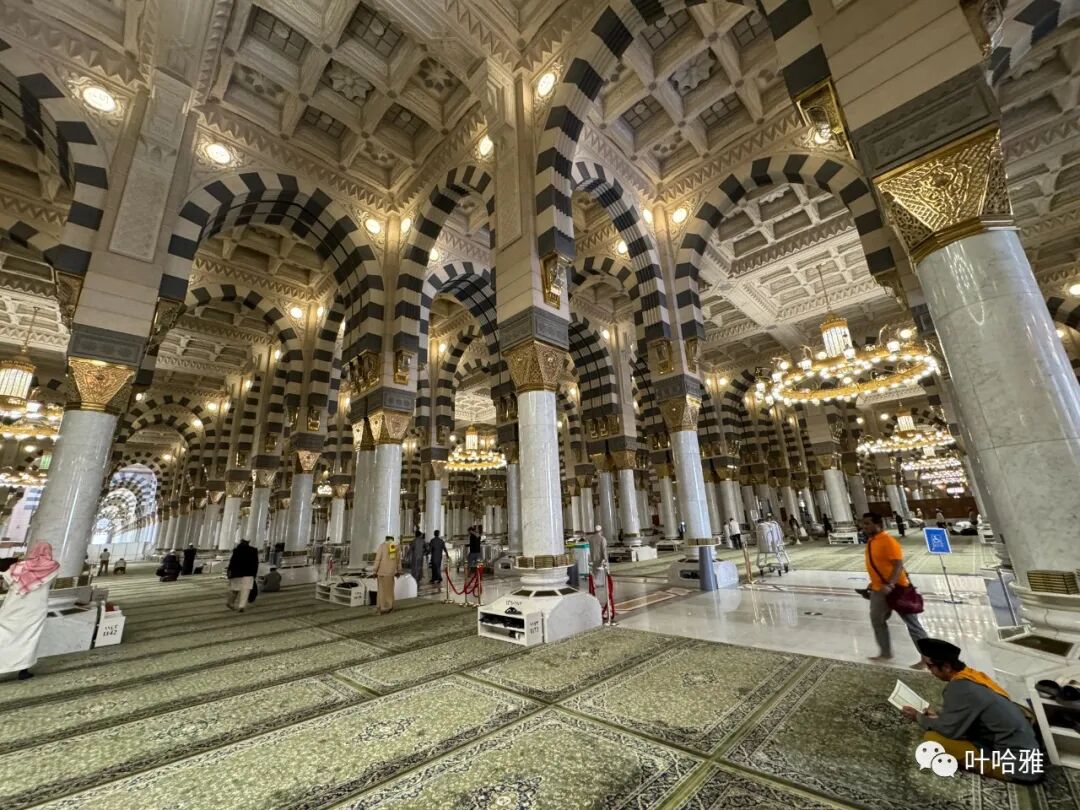
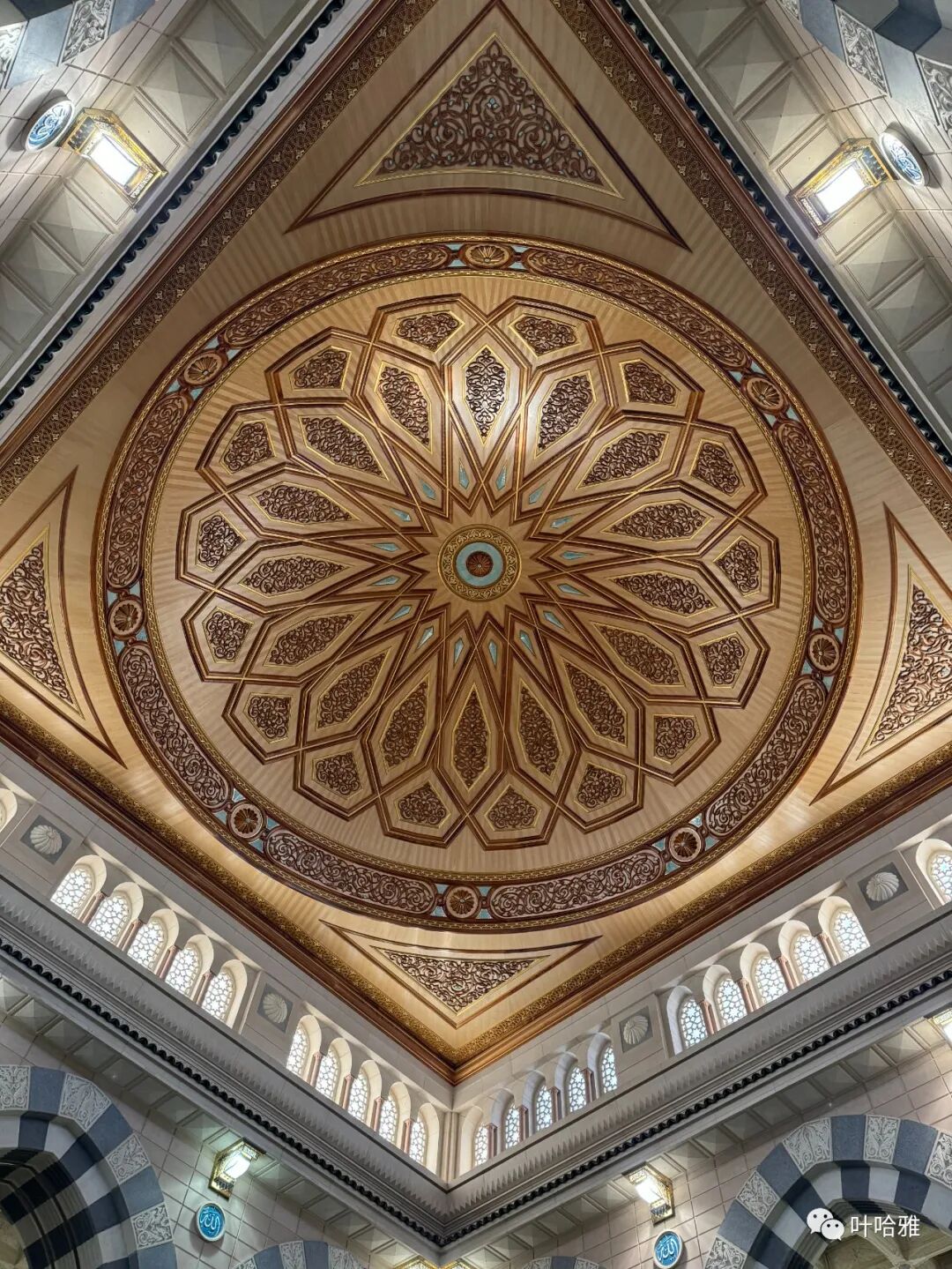
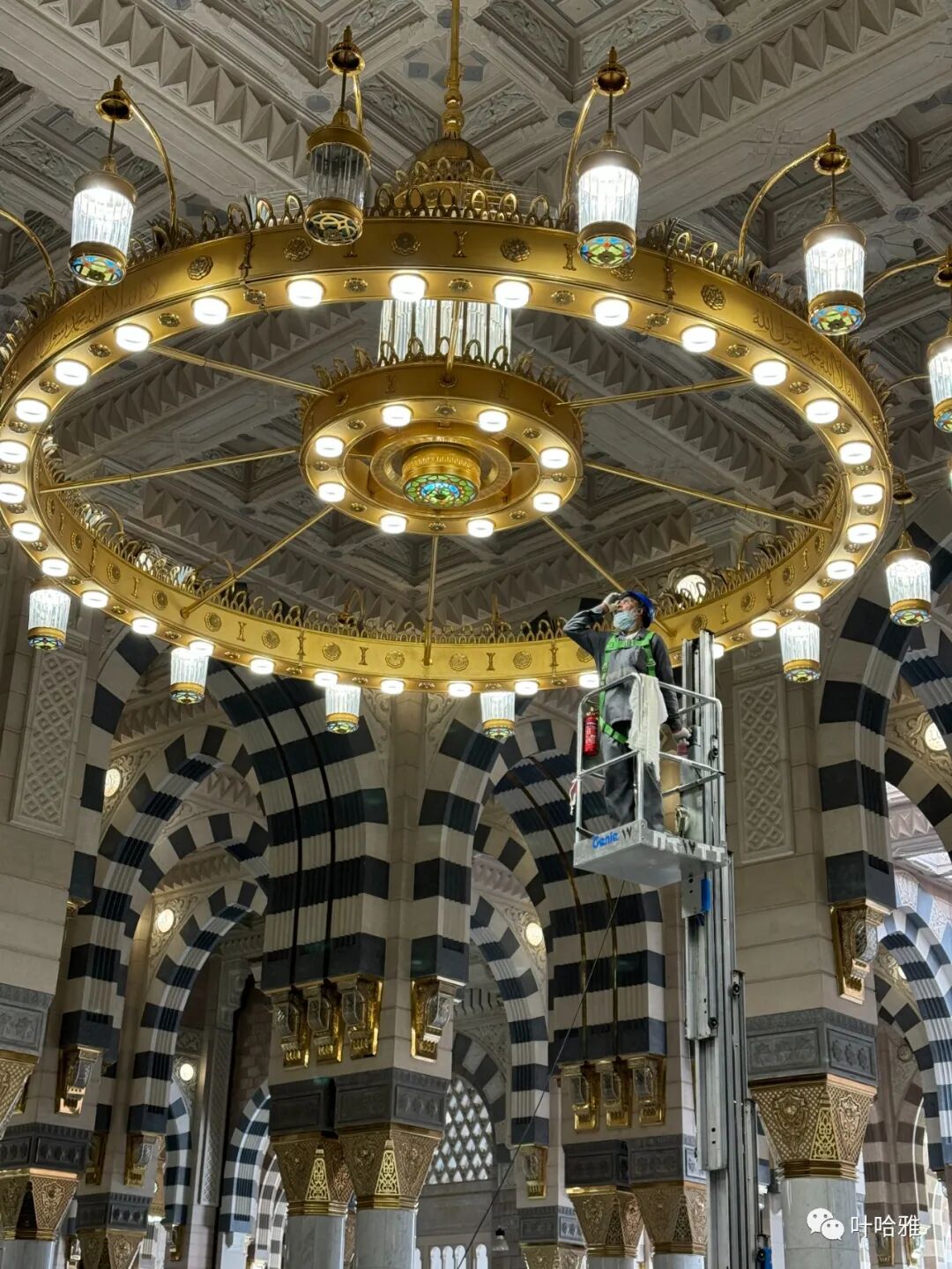
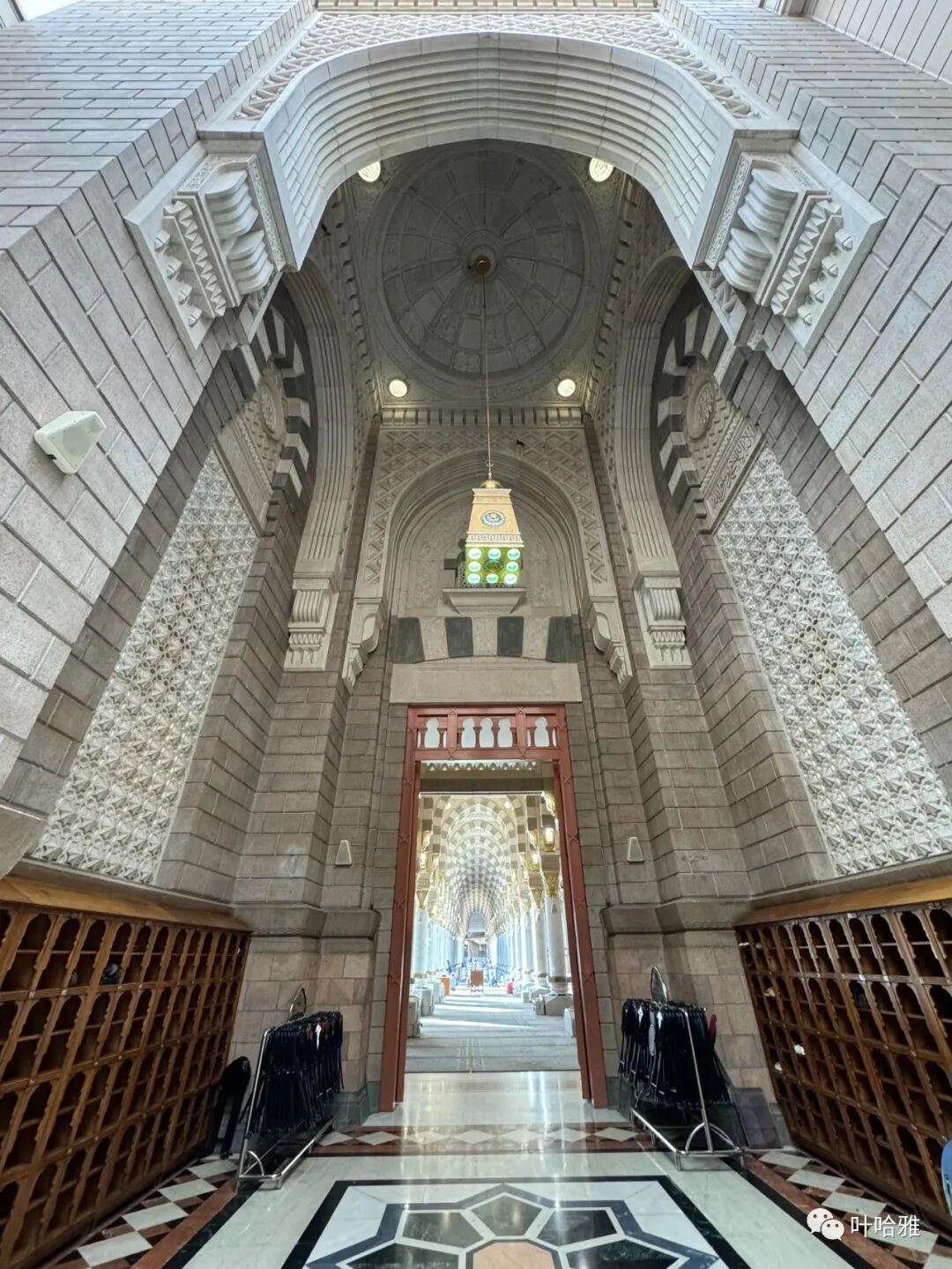
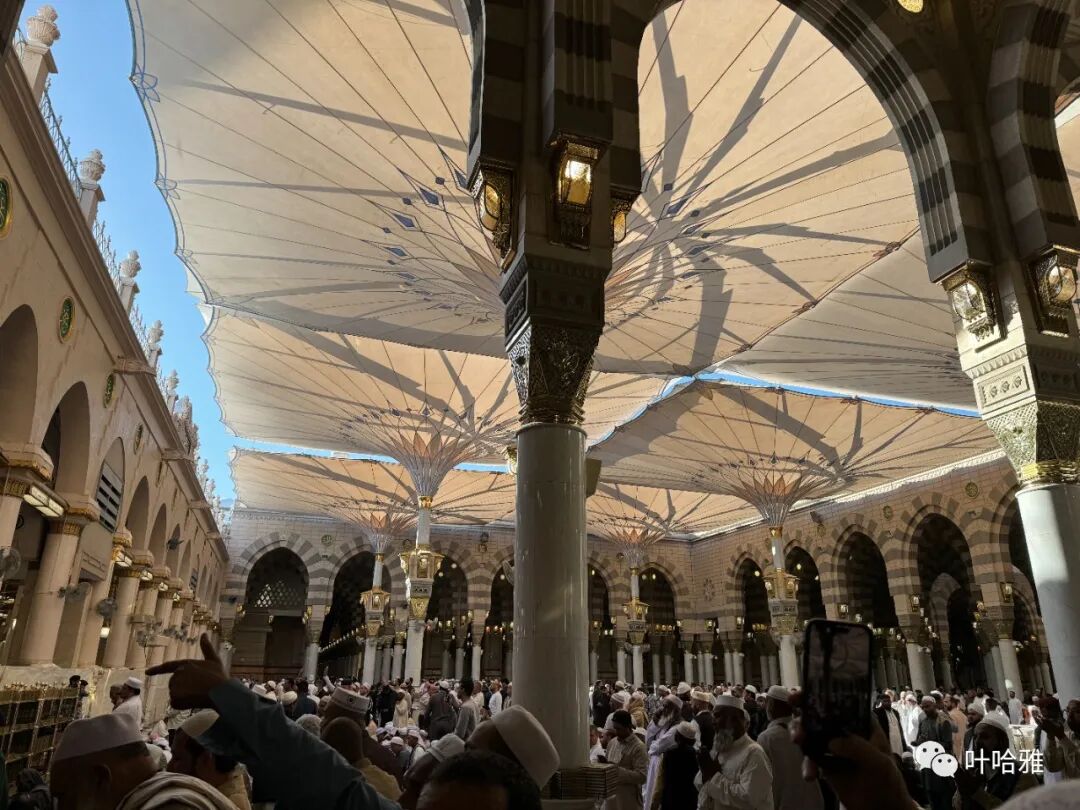
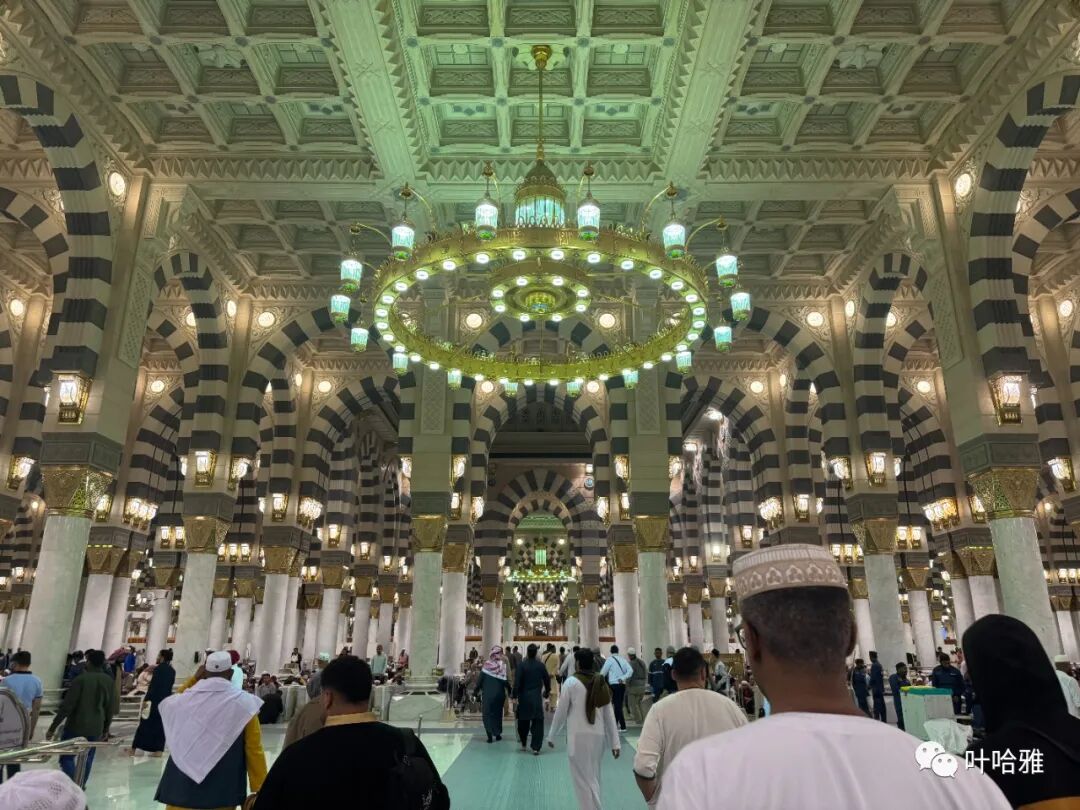
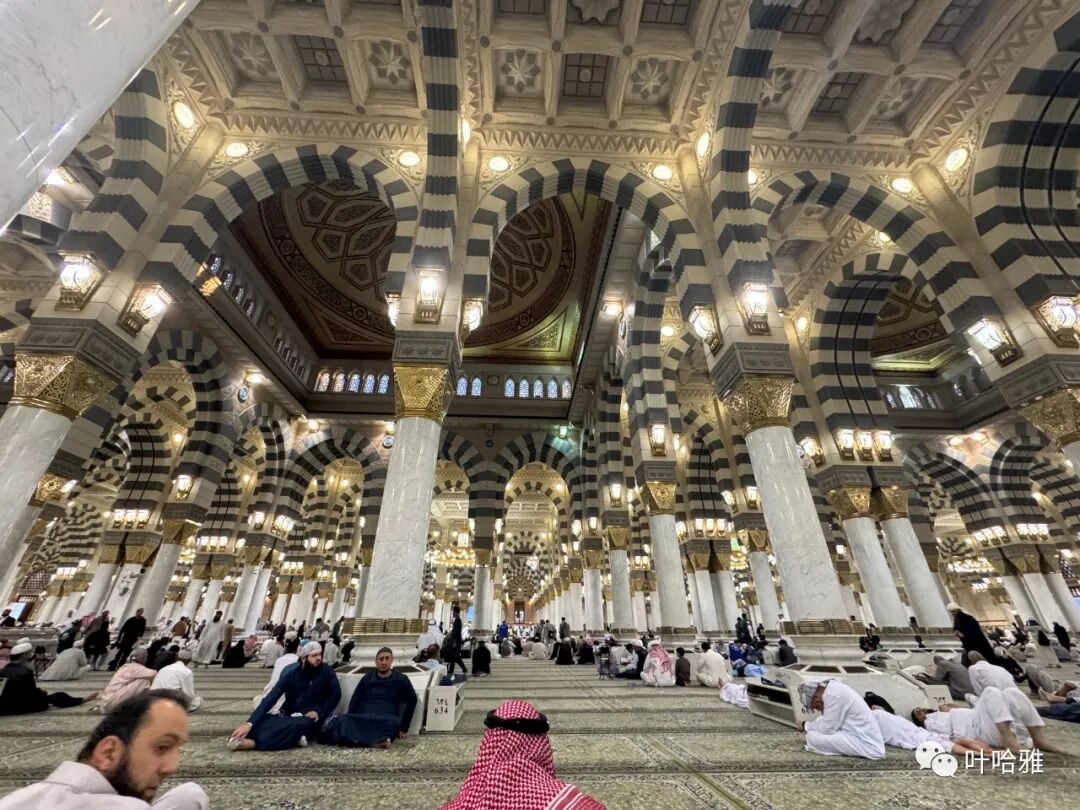
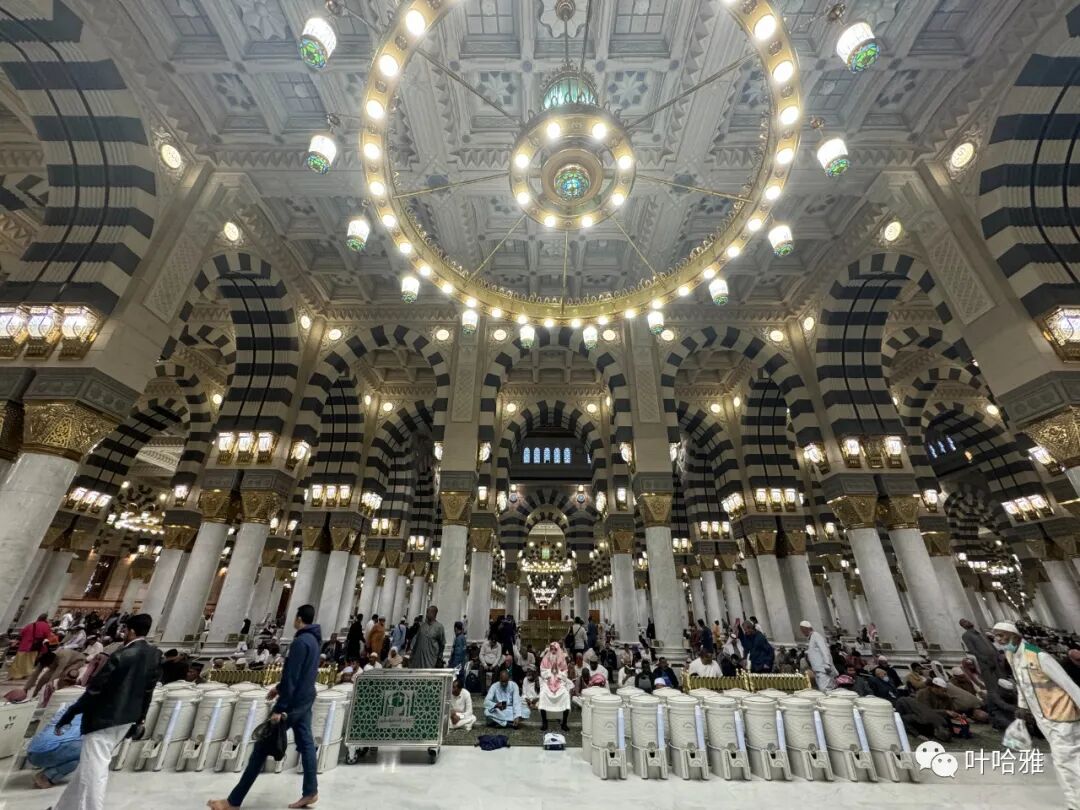
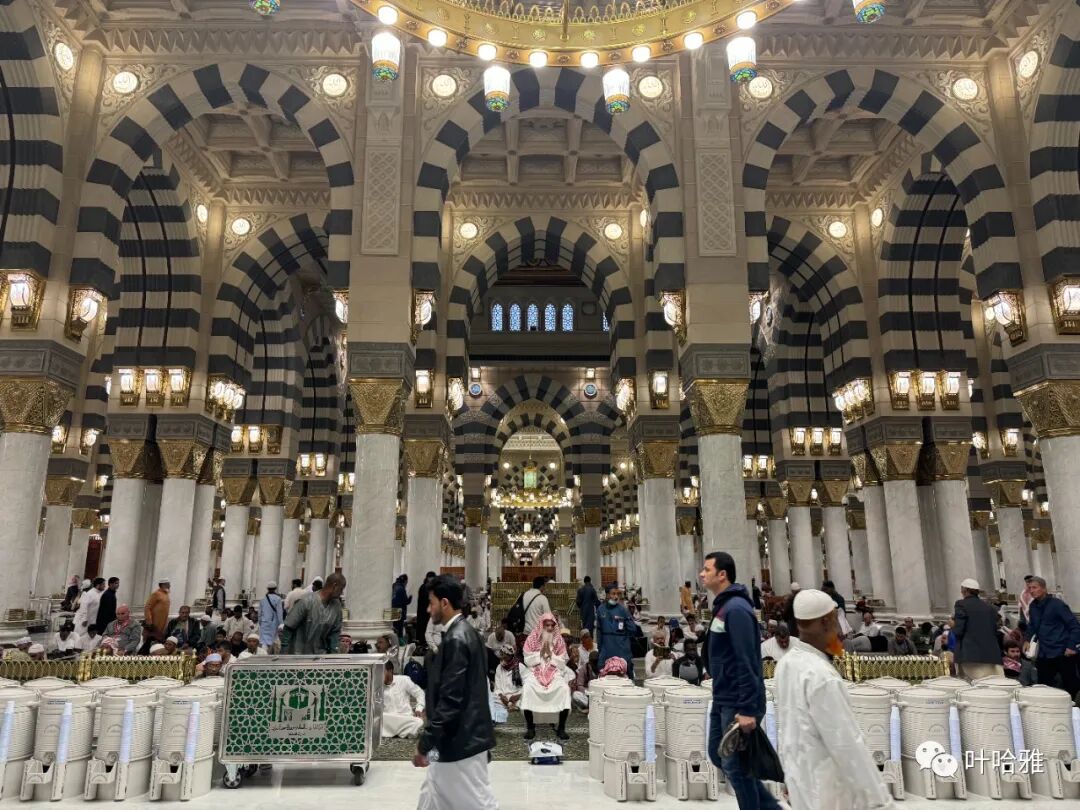
The Prophet's Mosque is the second-largest mosque in the world, after the Sacred Mosque in Mecca. It has a building area of 82,000 square meters. Including the plaza, it can hold 530,000 people for prayer at the same time. If you are in the south plaza and want to walk to the north gate, it takes at least 15 minutes. I once tried to meet a friend after the Fajr prayer. We were on opposite sides, north and south, and after waiting for 20 minutes, we still could not find each other.
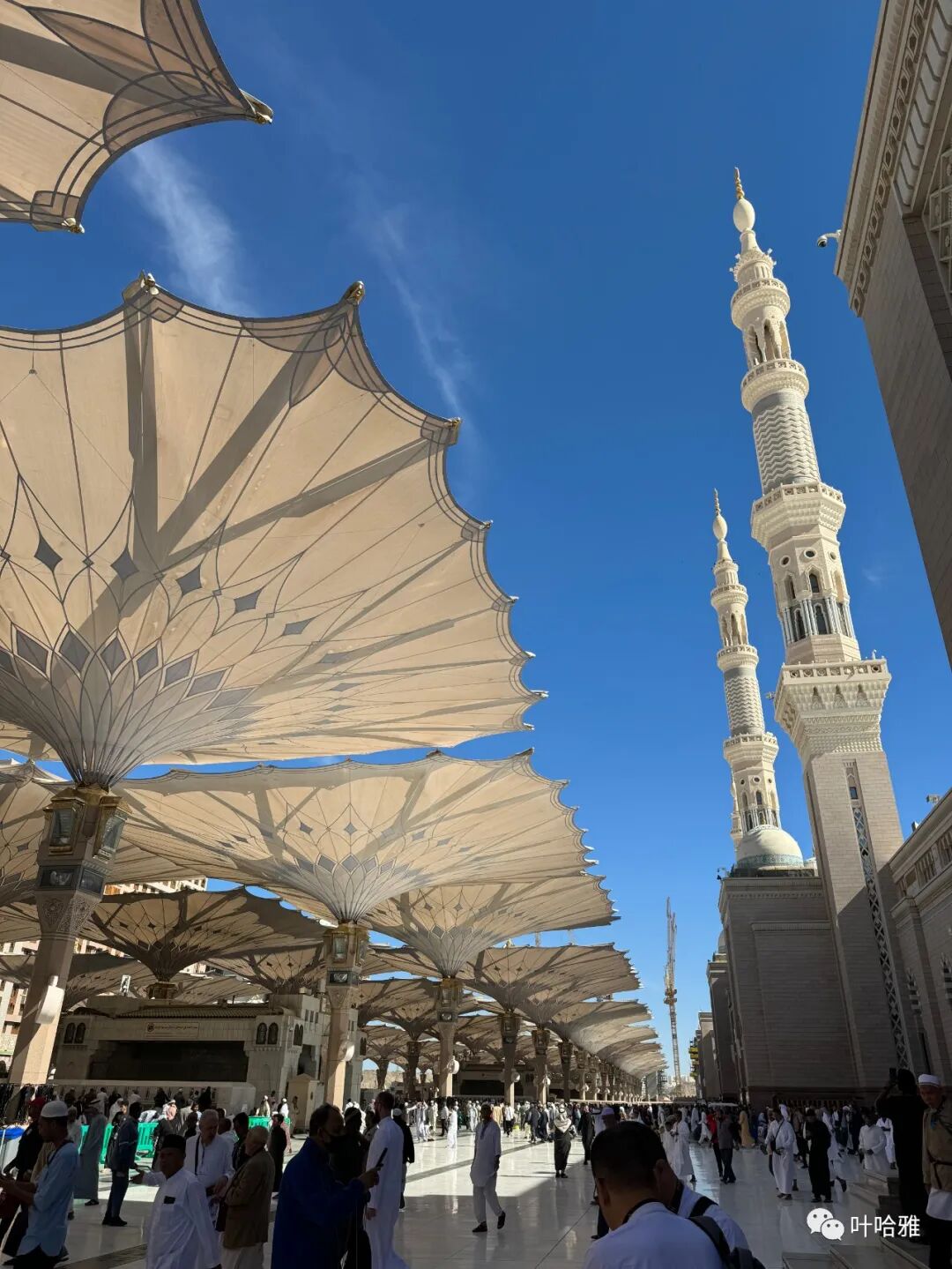
When you arrive at the holy sites, you see people of all skin colors from around the world gathered together. The number of pilgrims grows every year, which is why Saudi Arabia keeps expanding the holy sites. People who live there often feel the strength of the faith. Some visitors from China feel sad when they see few people in local mosques, thinking faith is fading, but that is only true in some places. Looking at the world as a whole, the number of people practicing the faith is increasing every year.
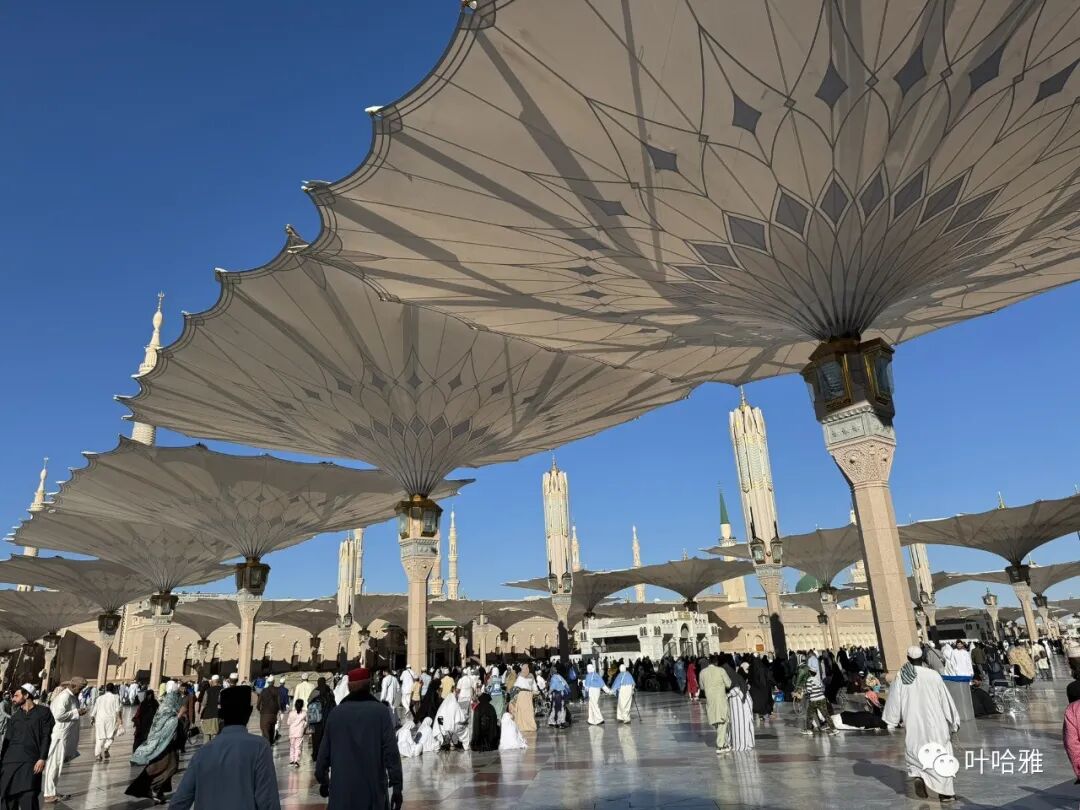
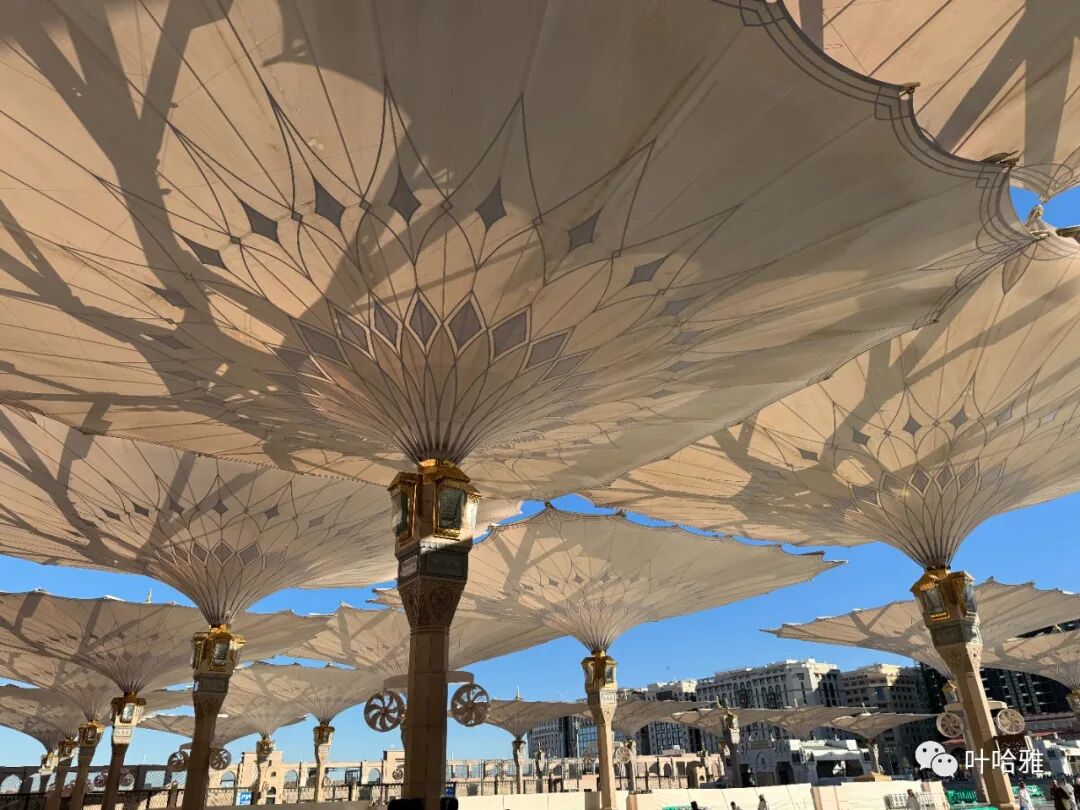
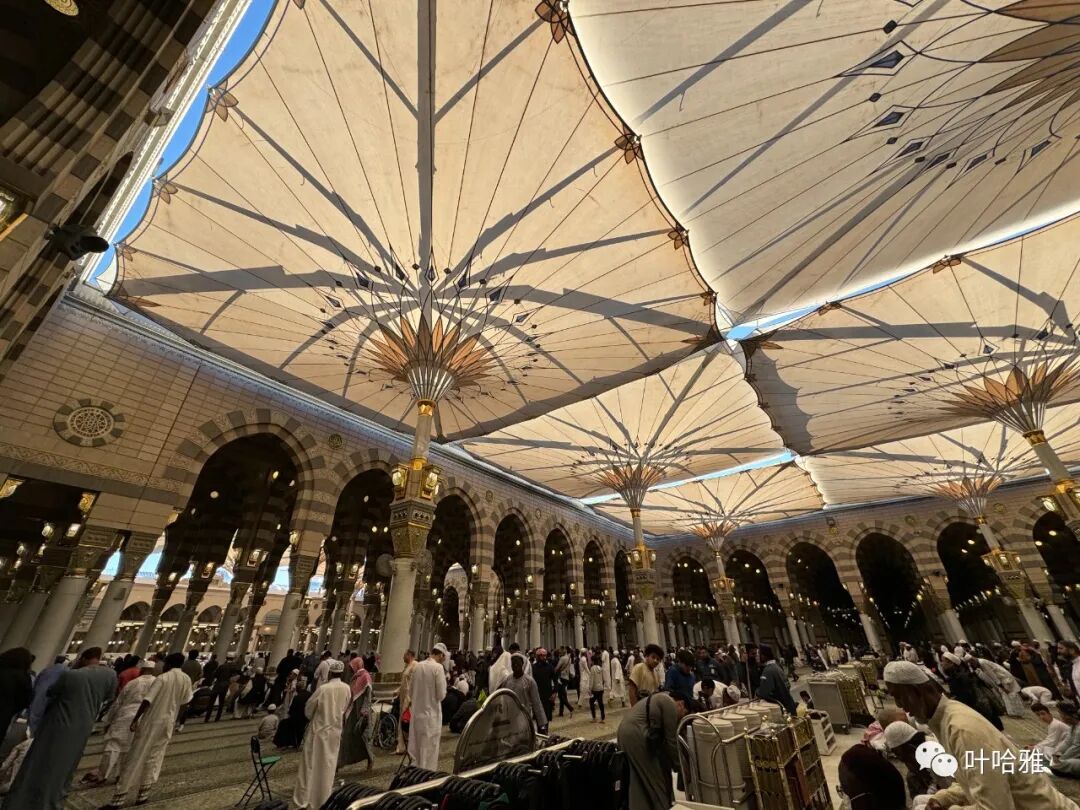
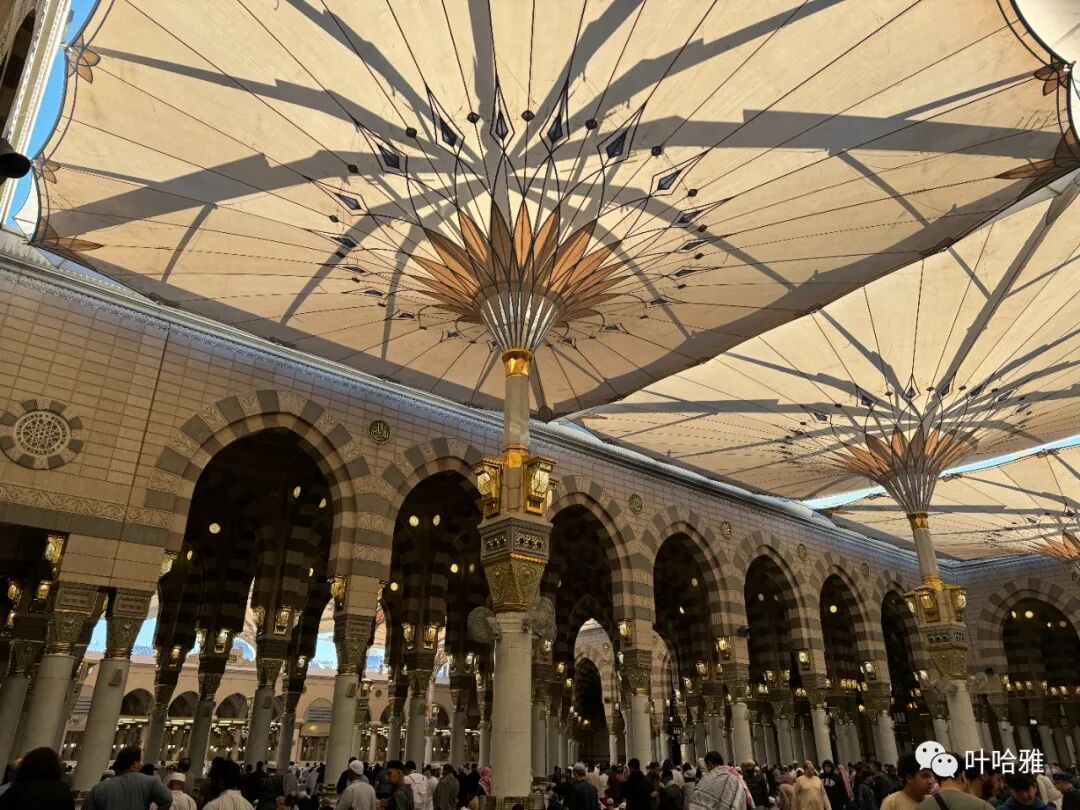
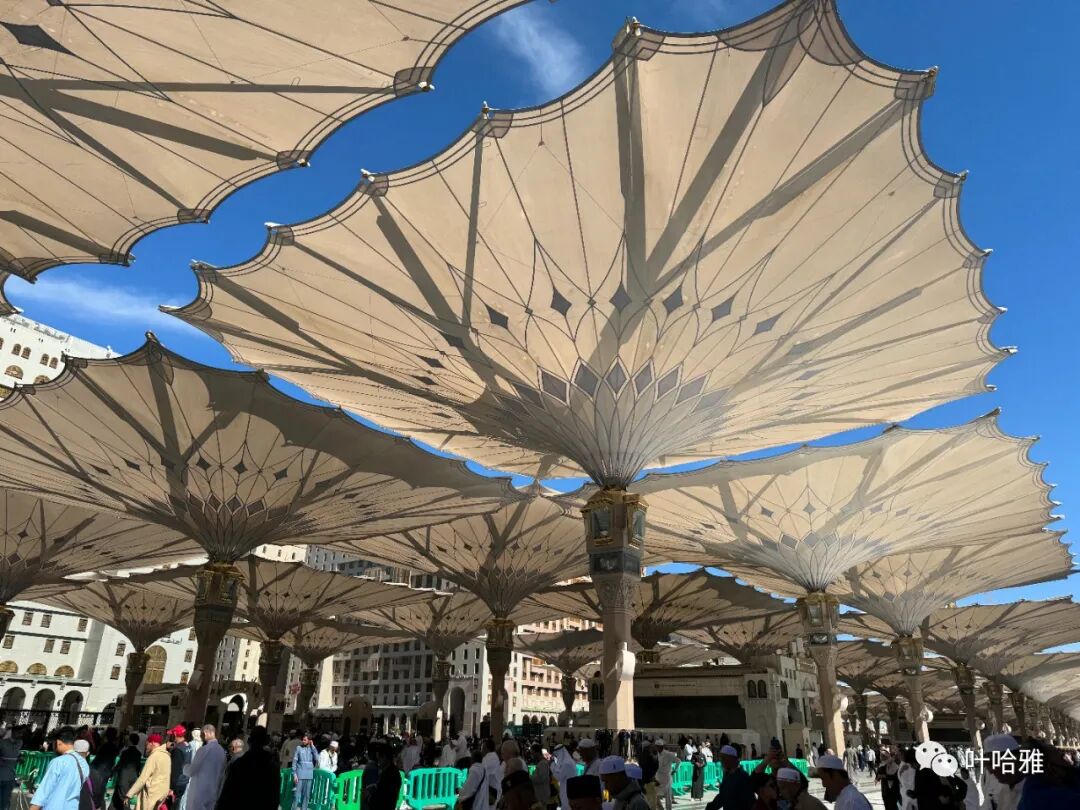
The large umbrellas in the mosque courtyard open during the day and close at night. Shade is very precious in Saudi Arabia, as it is hard to handle the intense sun otherwise.
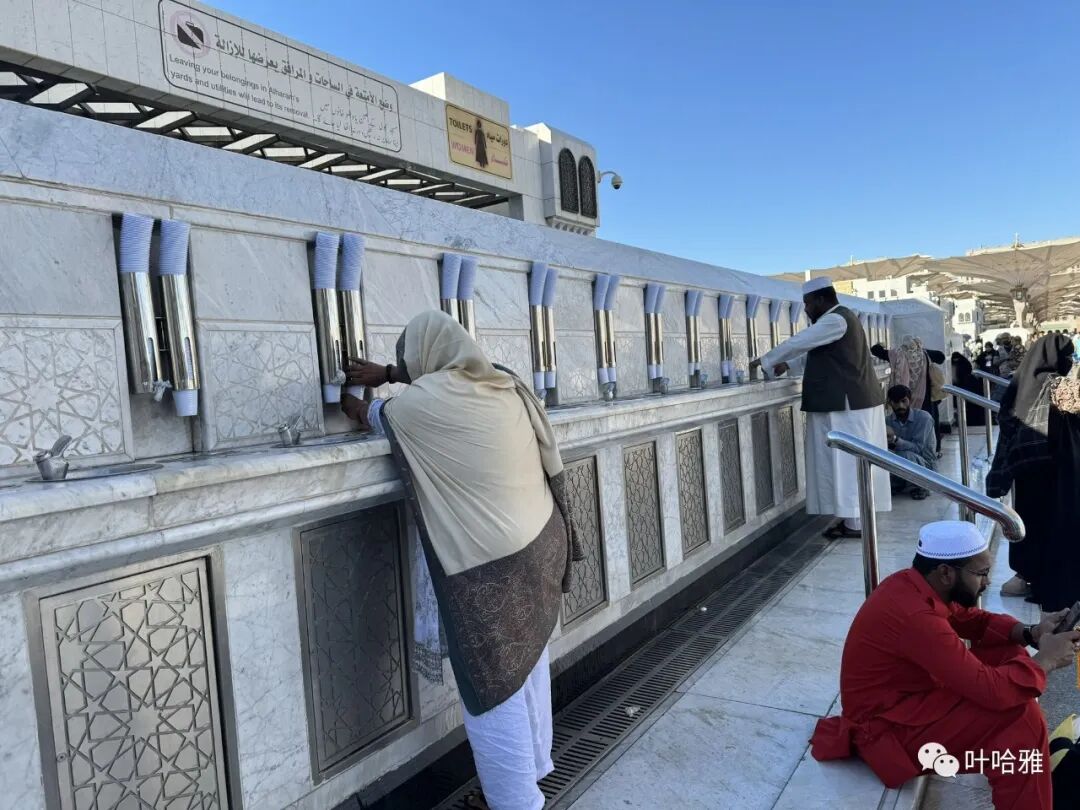
There are many water stations around the courtyard that provide free drinking water for believers.
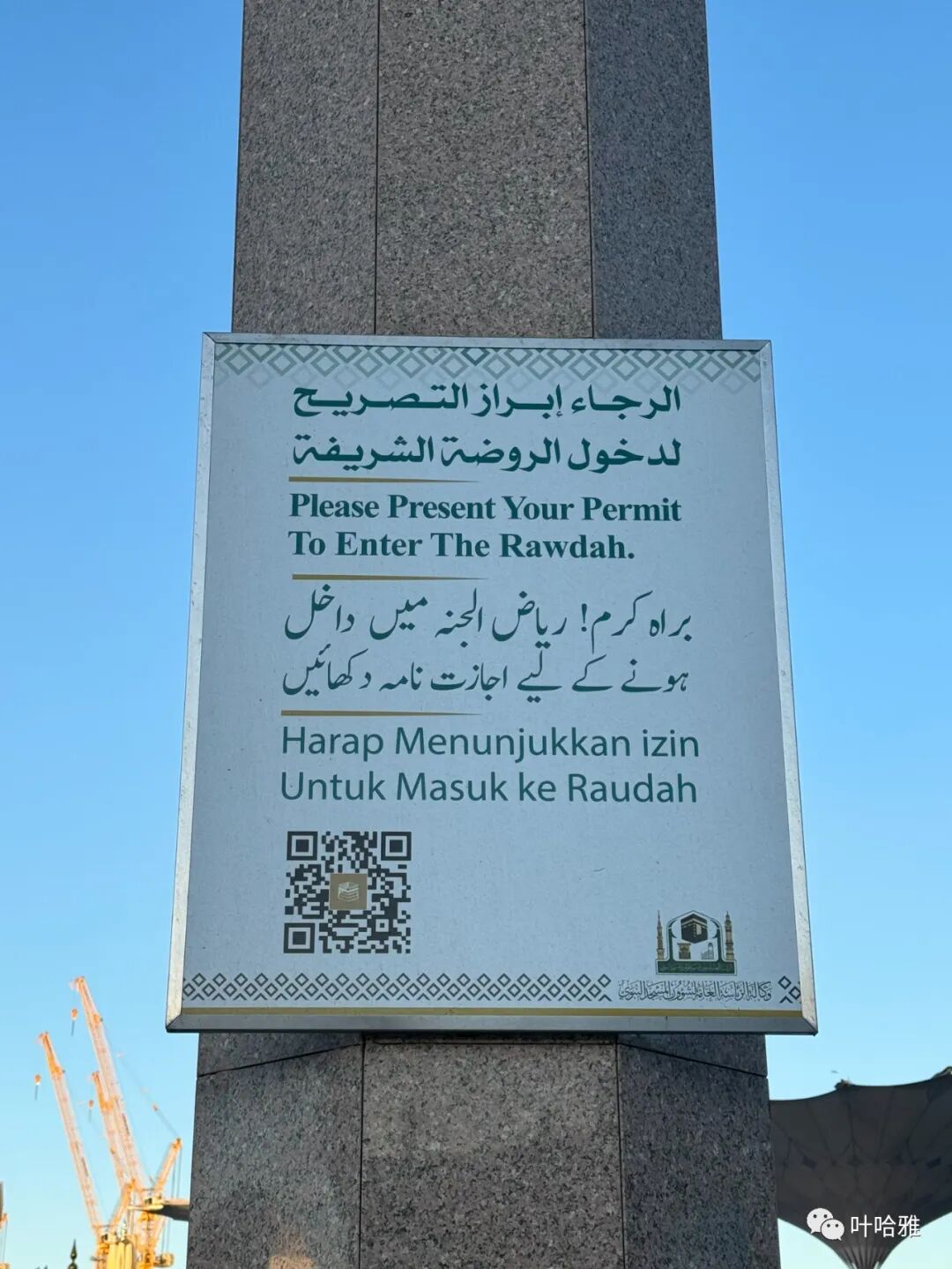
To visit the Garden of Paradise (Rawdah), you must download an app called Nusuk and book a time. This is where the Prophet once prayed. The Prophet said, 'Between my house and my pulpit is one of the gardens of Paradise.' It is a pity I could not get a reservation, but men and women visit separately, and it is easier for women to book than men.
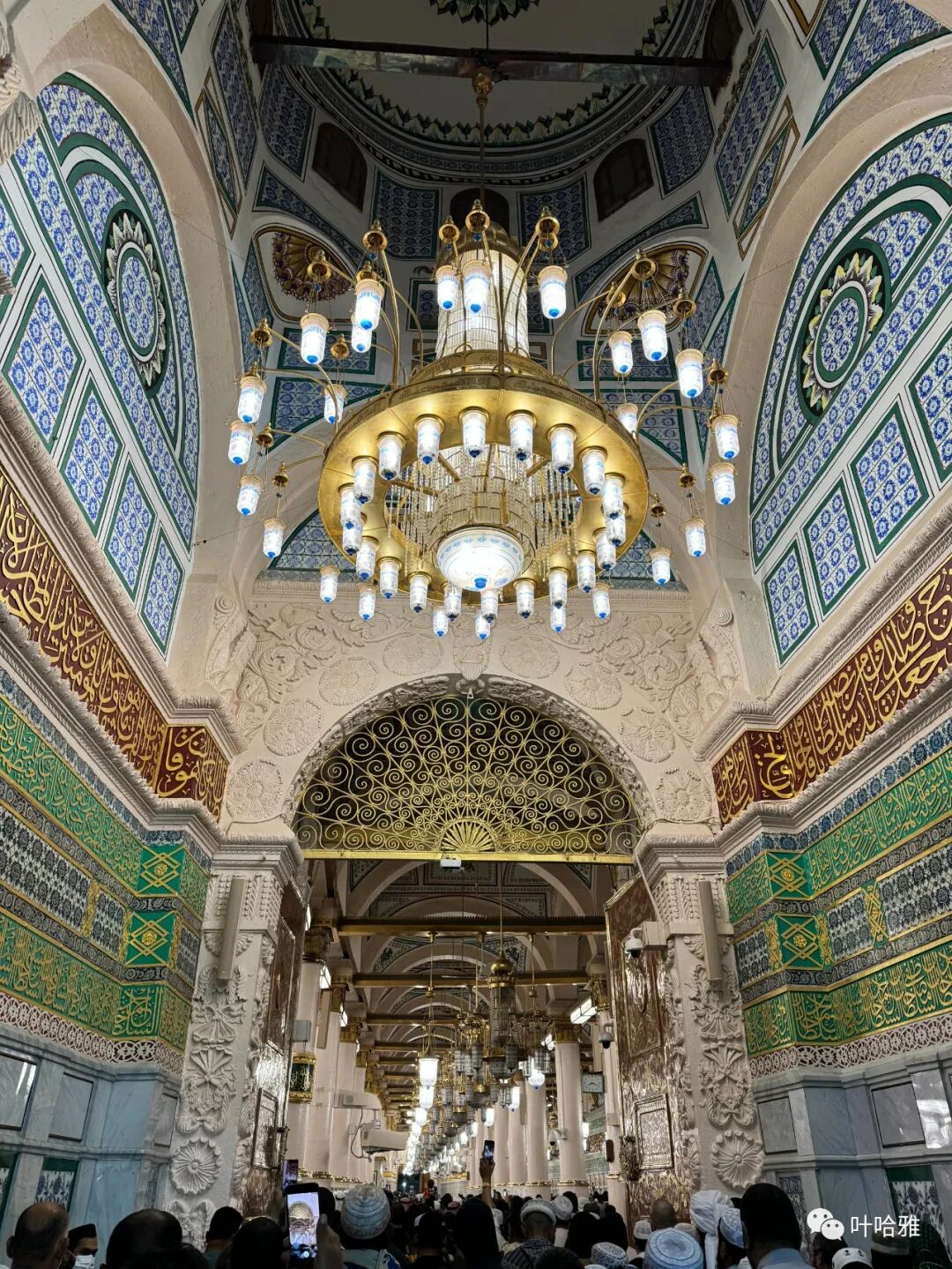
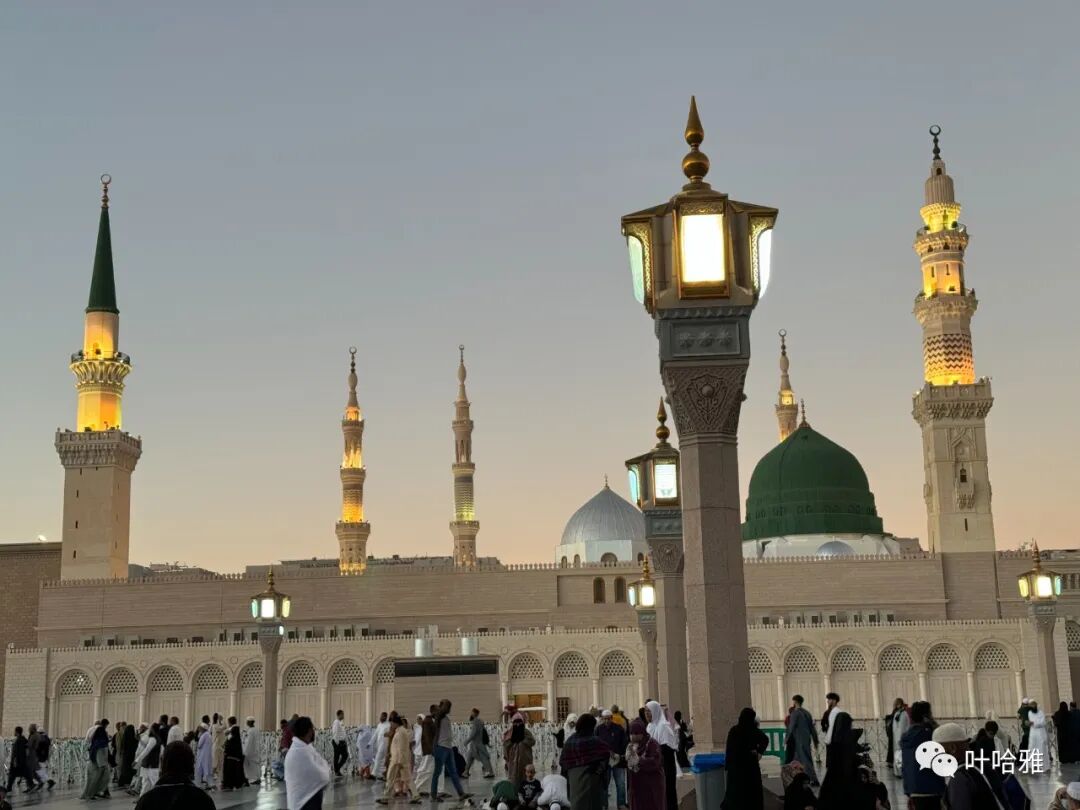
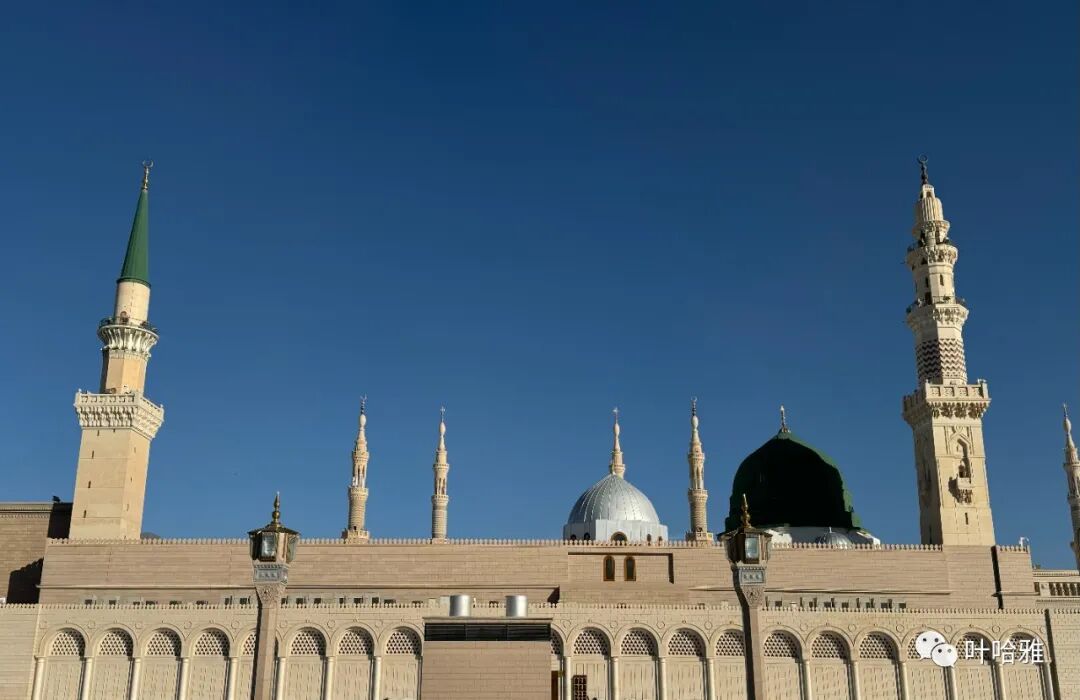
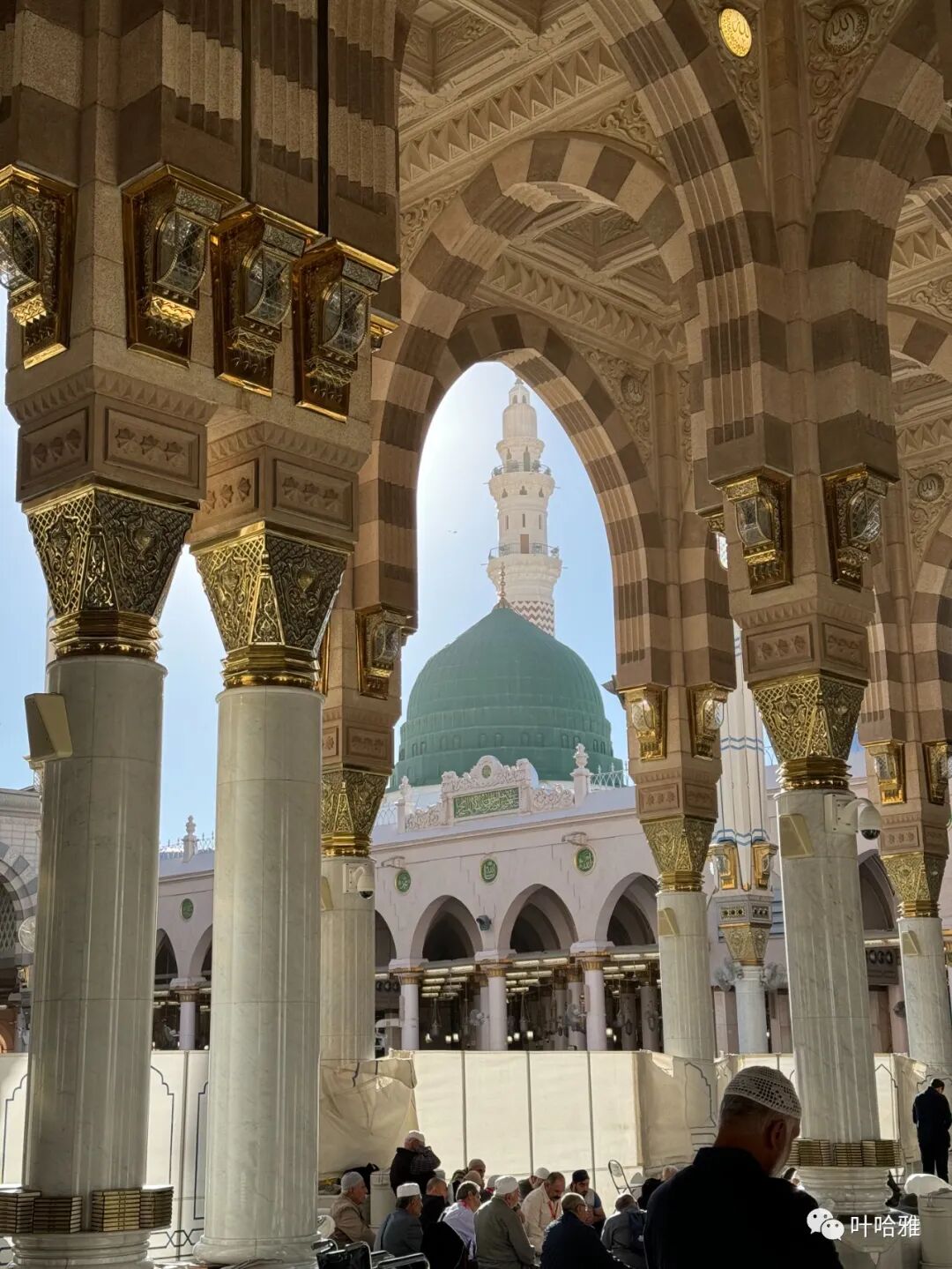
Fortunately, you do not need a reservation for the Prophet's Tomb. You just need to line up and follow the crowd. The Prophet's Tomb is right under the green dome. The green dome of the mosque was originally the house of Aisha, where the Prophet passed away and was buried.
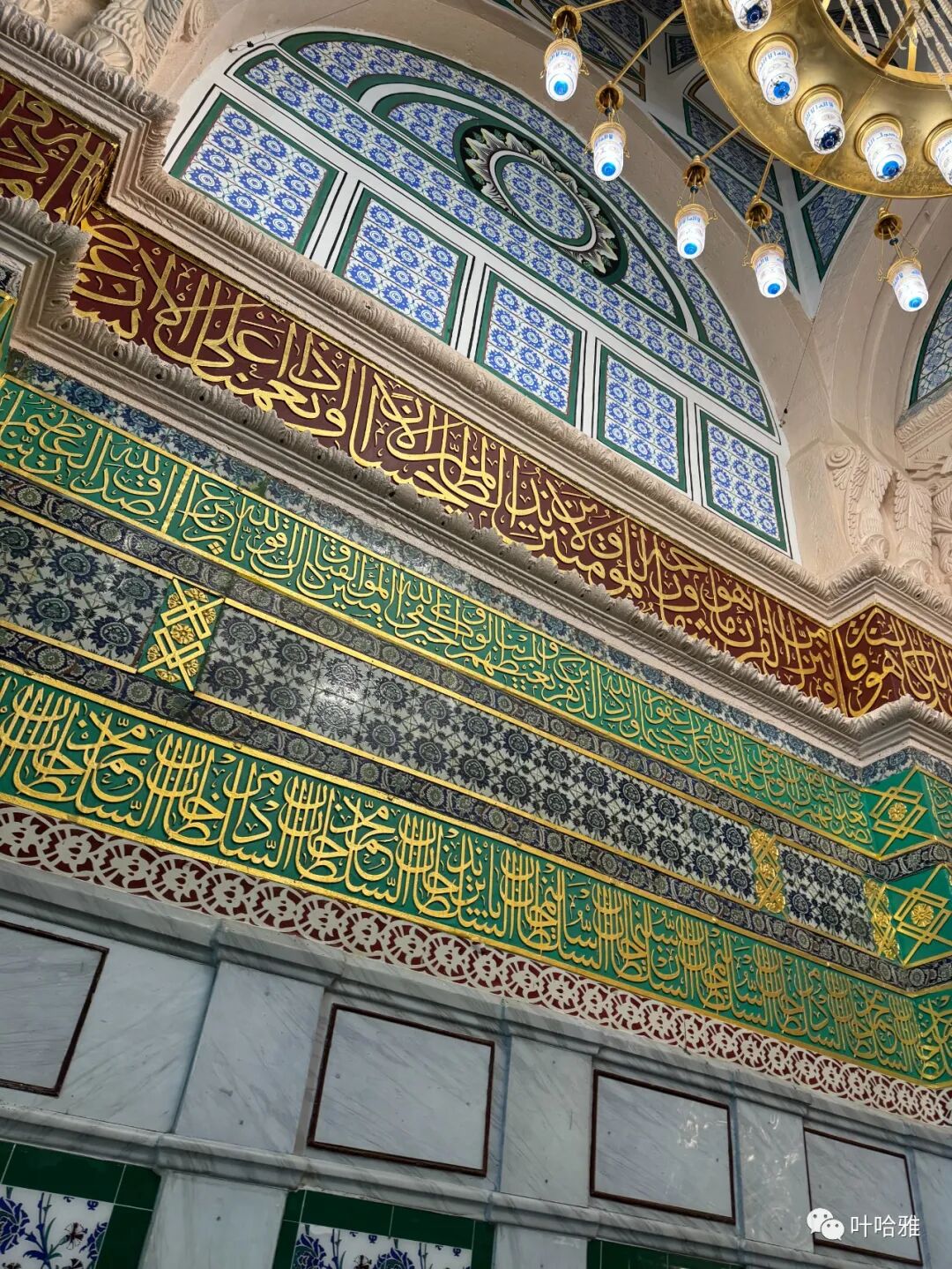
Believers carry their shoes in their hands and walk barefoot into the Prophet's Tomb. Everything is orderly, and people respectfully offer their salaams to the Prophet.
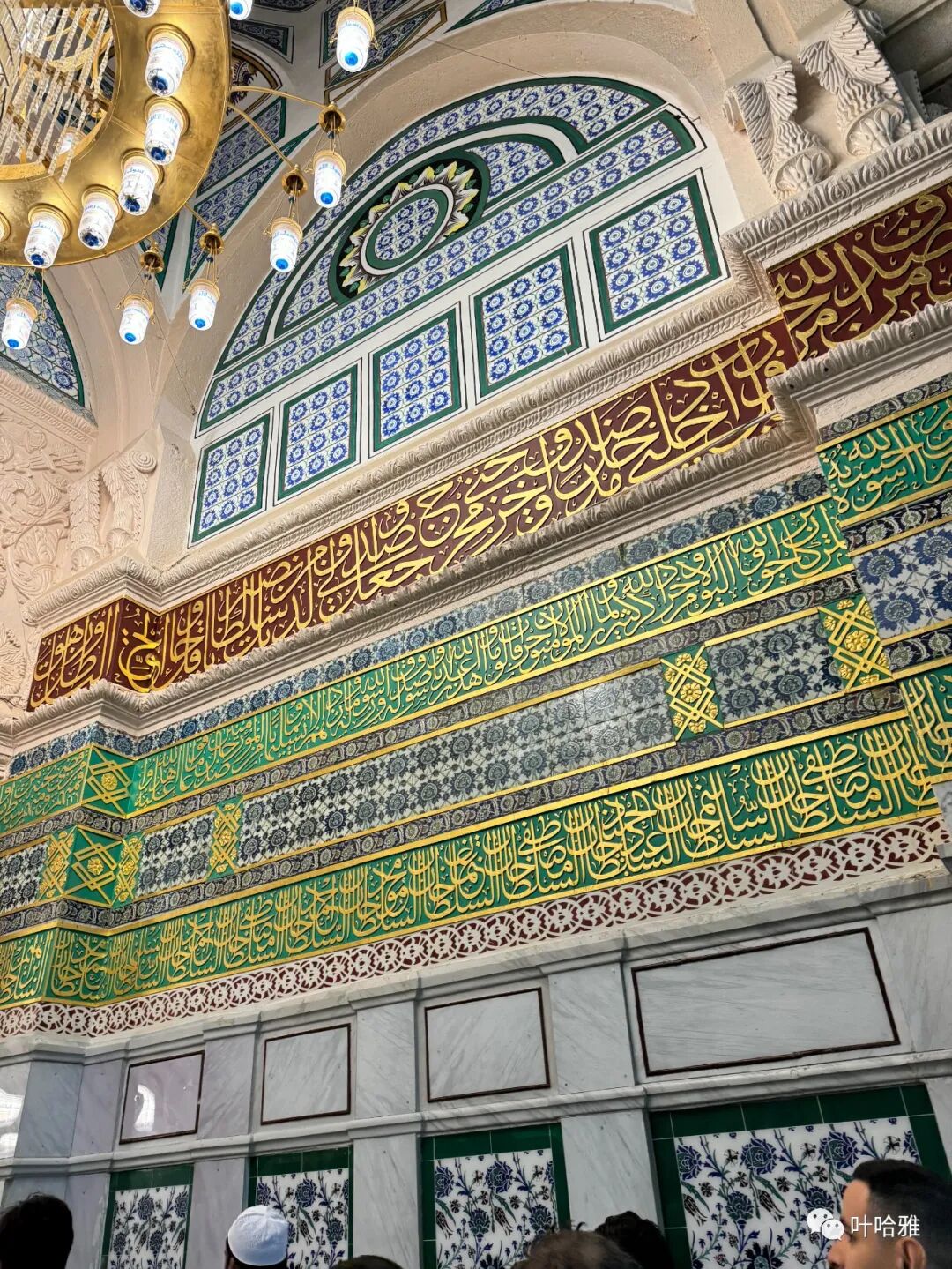
The Caliphs Abu Bakr and Umar are also buried with the Prophet, and people offer their salaams to them as well.
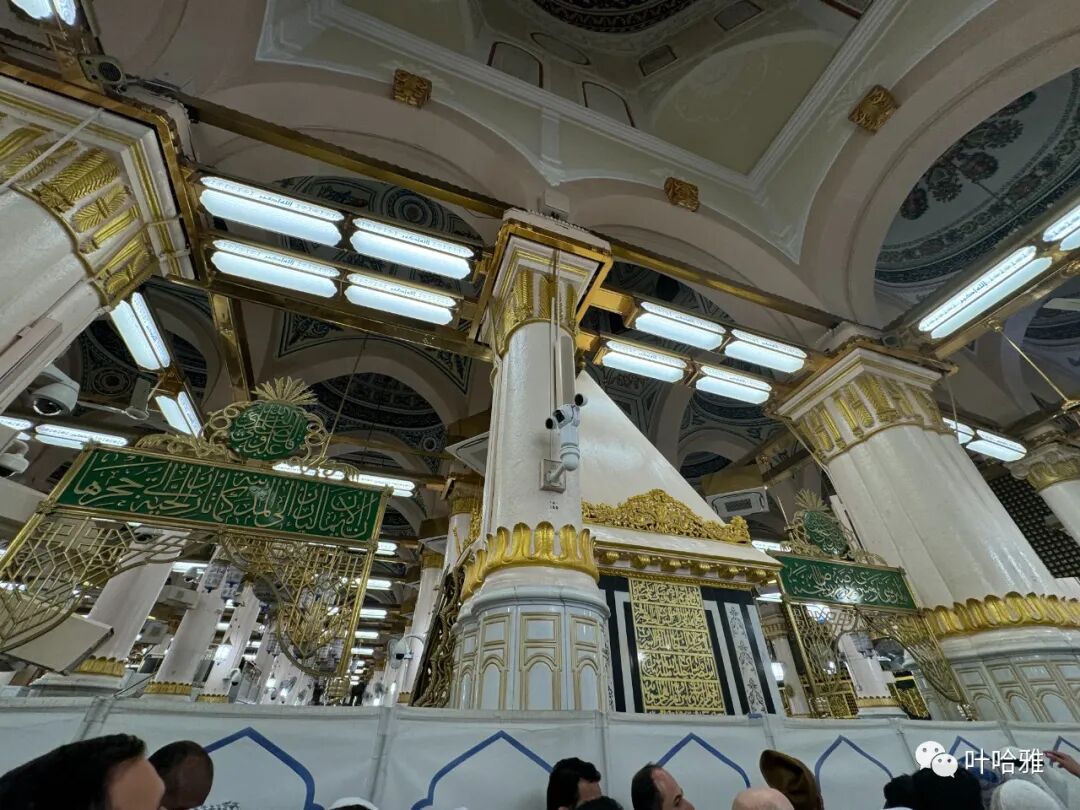
The Prophet's Tomb is separated from the Garden of Paradise, and the Garden of Paradise is inside the railing. There is one empty space reserved in the tomb for when the Prophet Isa passes away. According to Abdullah ibn Salam (may Allah be pleased with him), the Torah describes the characteristics of the Prophet and states that Isa ibn Maryam will be buried alongside him. Abu Mawdud said, 'Indeed, there is still a grave site inside the house.' [Jami at-Tirmidhi: 3696]
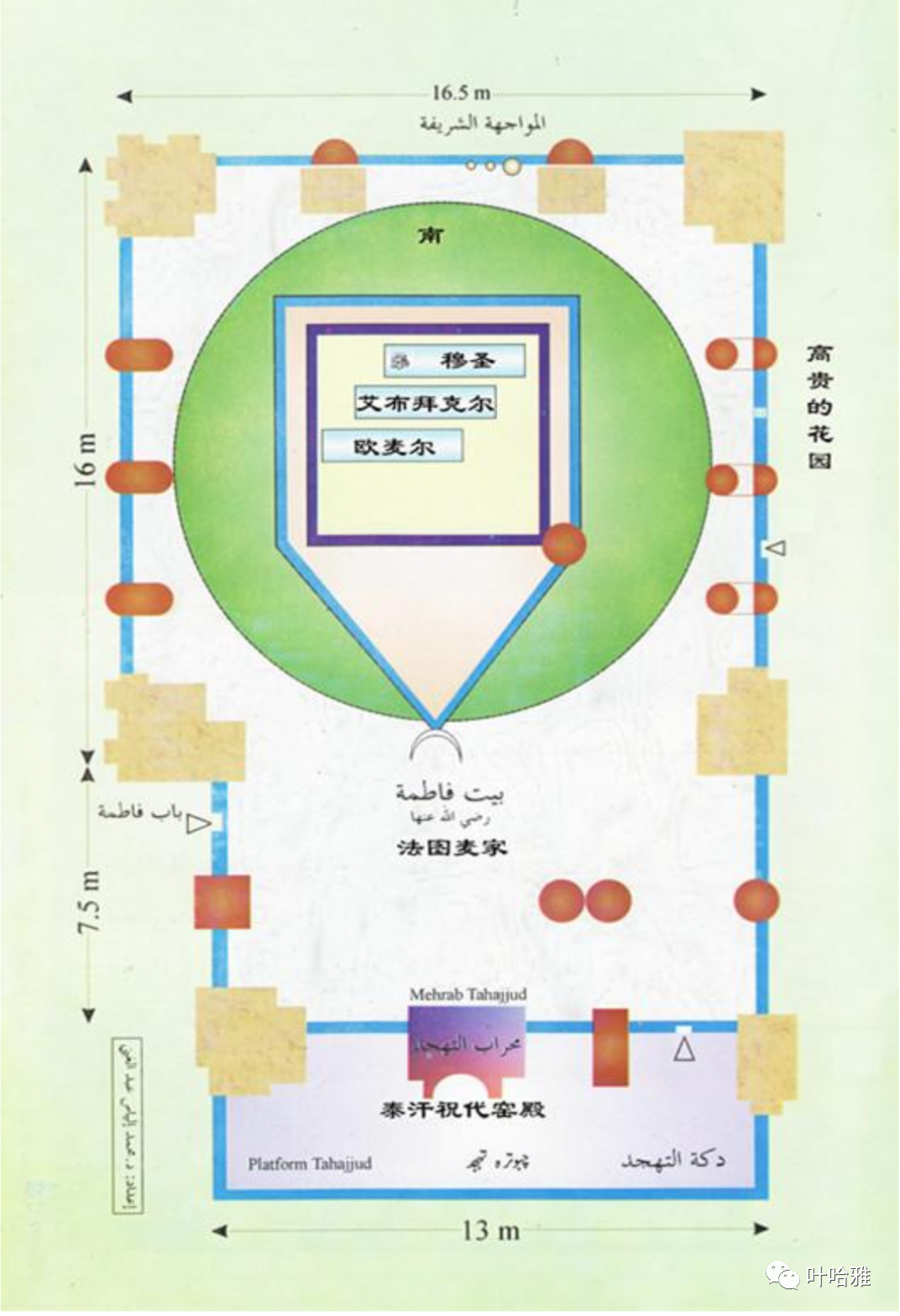
Screenshot from History of Medina
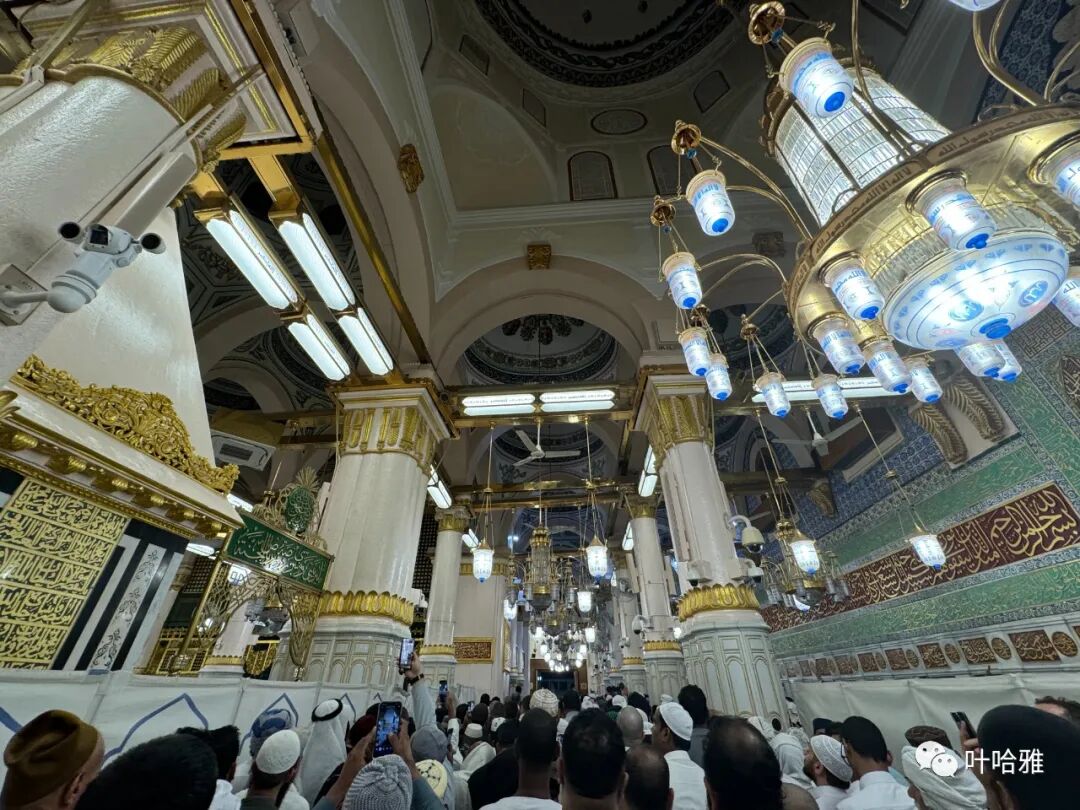
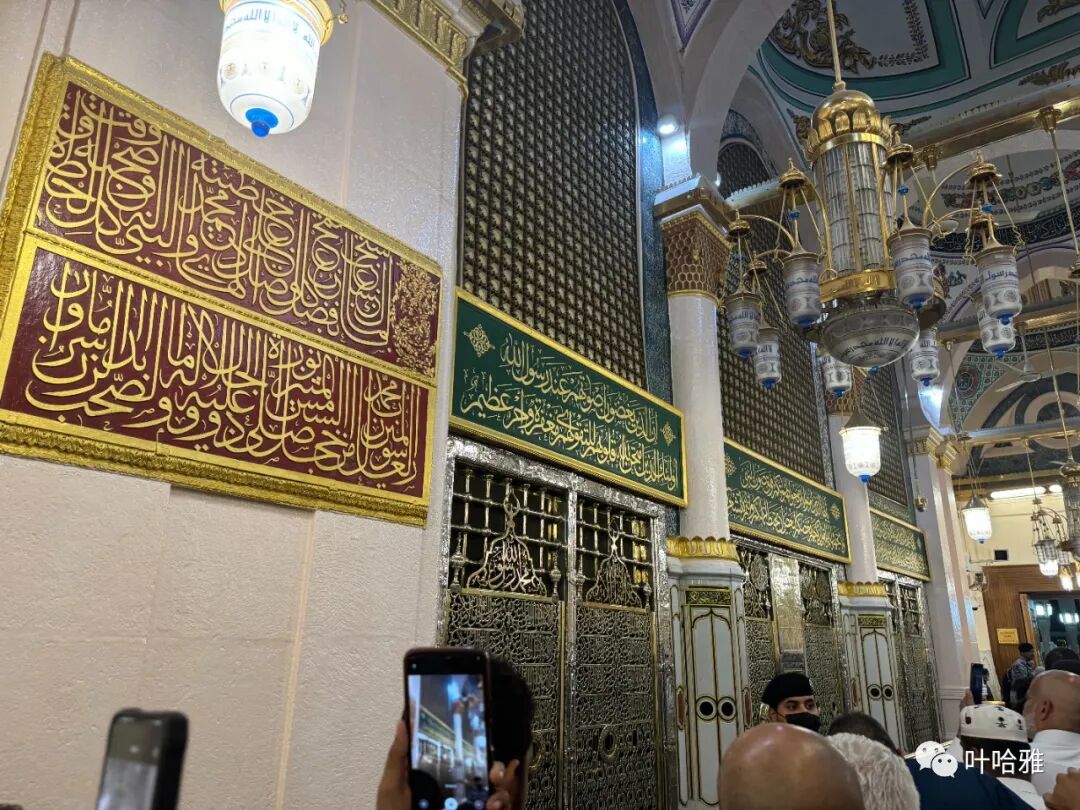
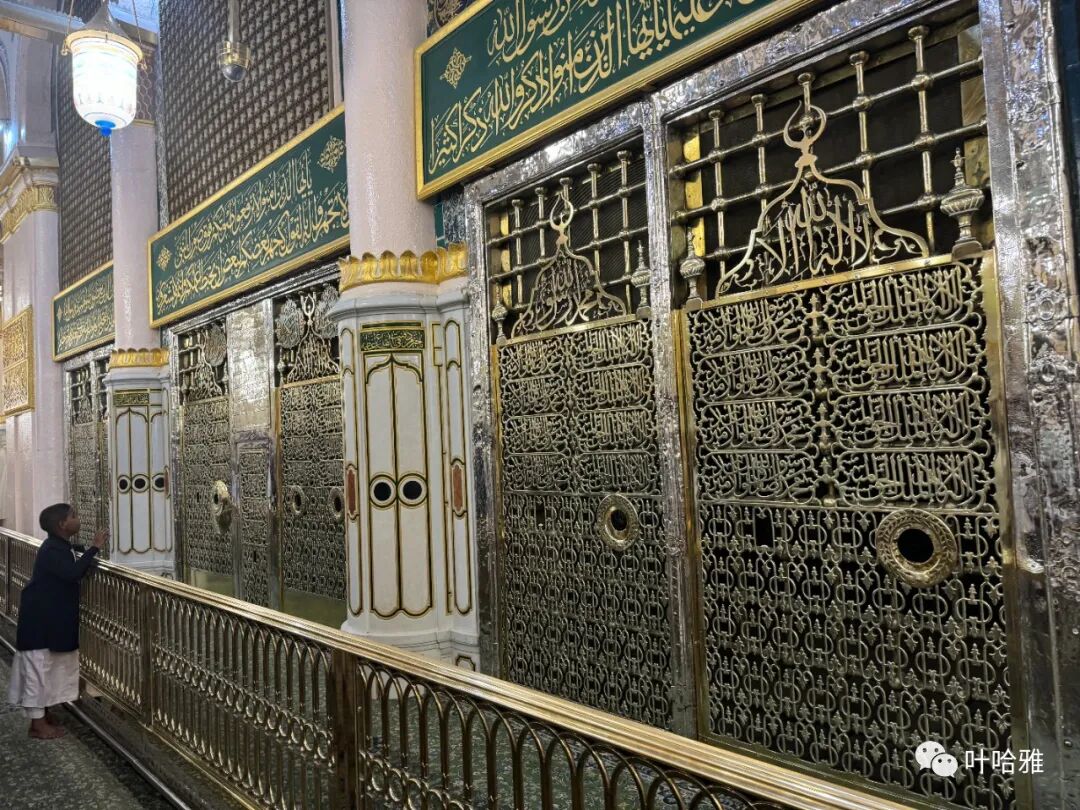
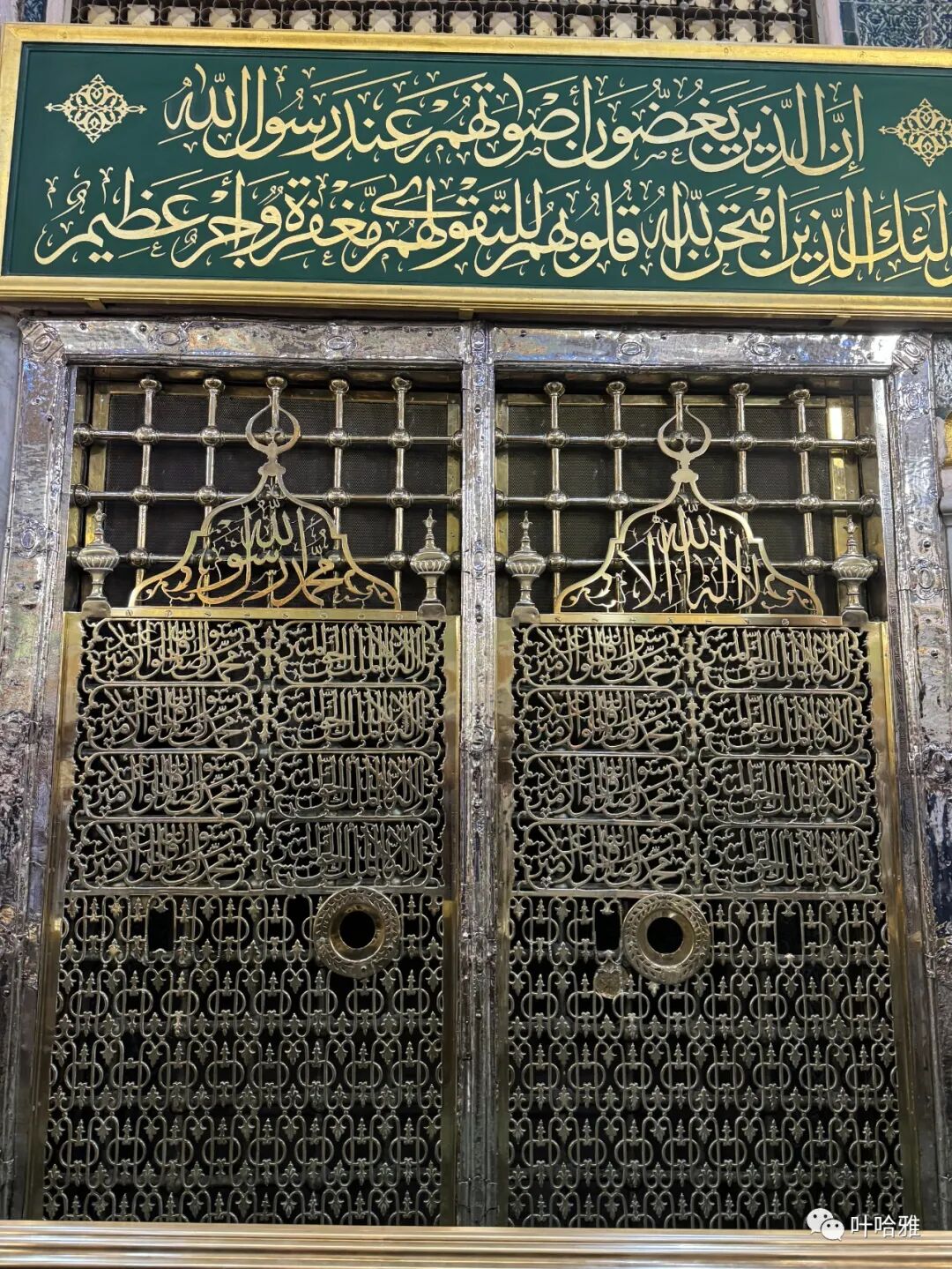
Stand behind the railing and say your salam toward the round hole. You do not need to speak loudly; just recite it silently. Do not linger so you can make it easier for the brothers (dosti) behind you, because there are really too many people.
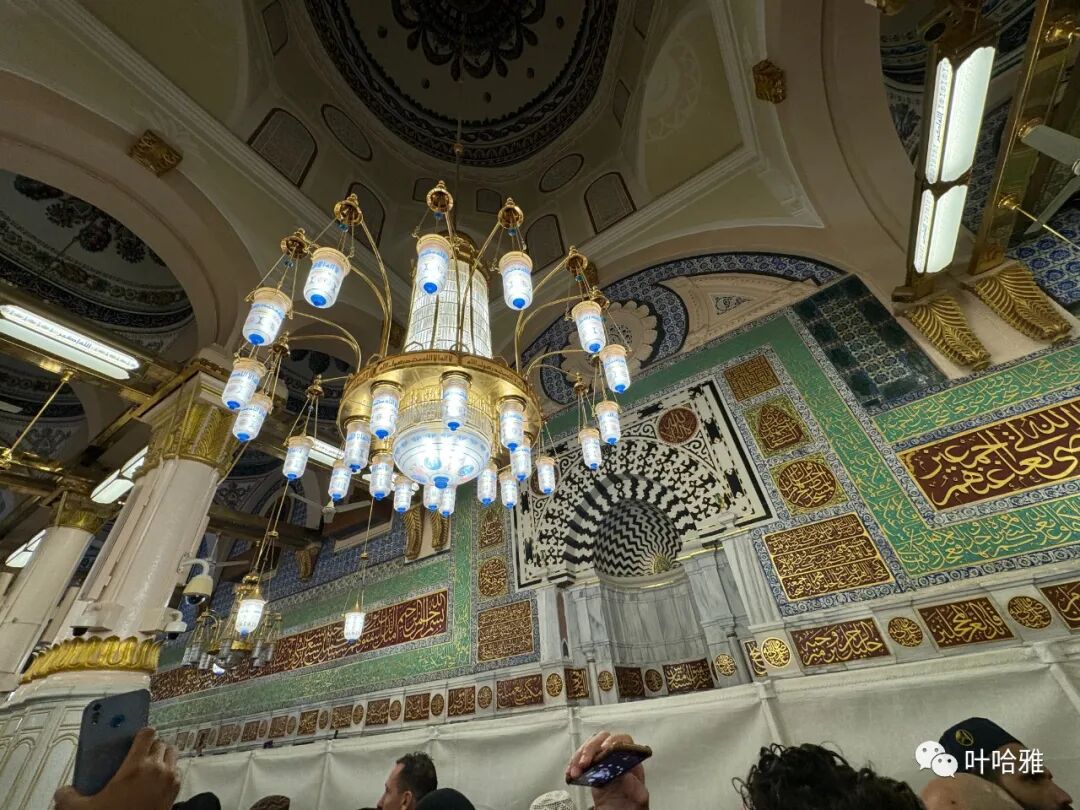
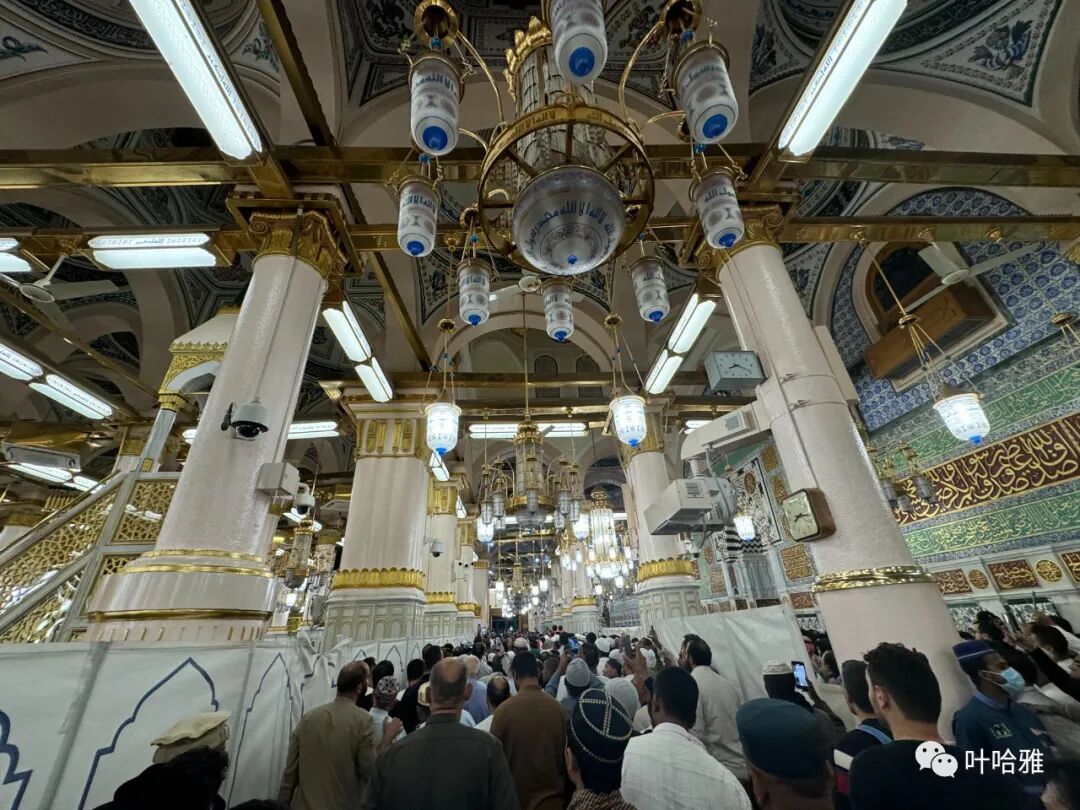
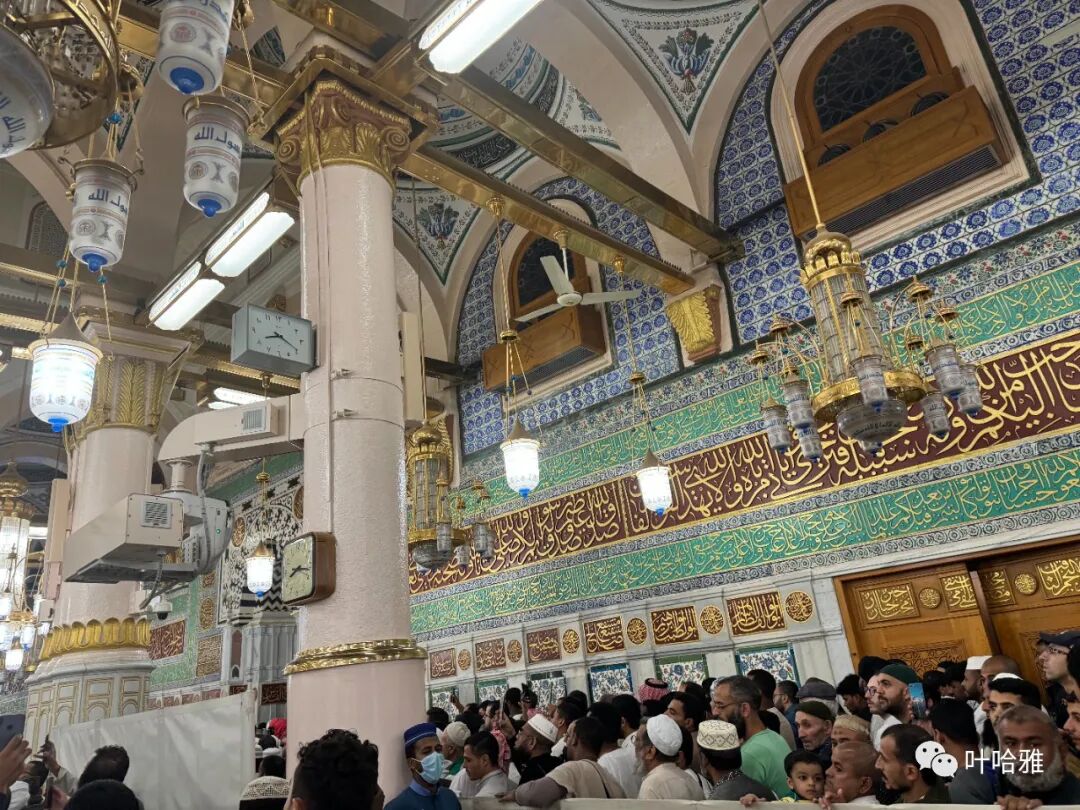
When I came out of the Prophet's tomb, I saw believers crying. They stood where they were, unable to bear leaving.
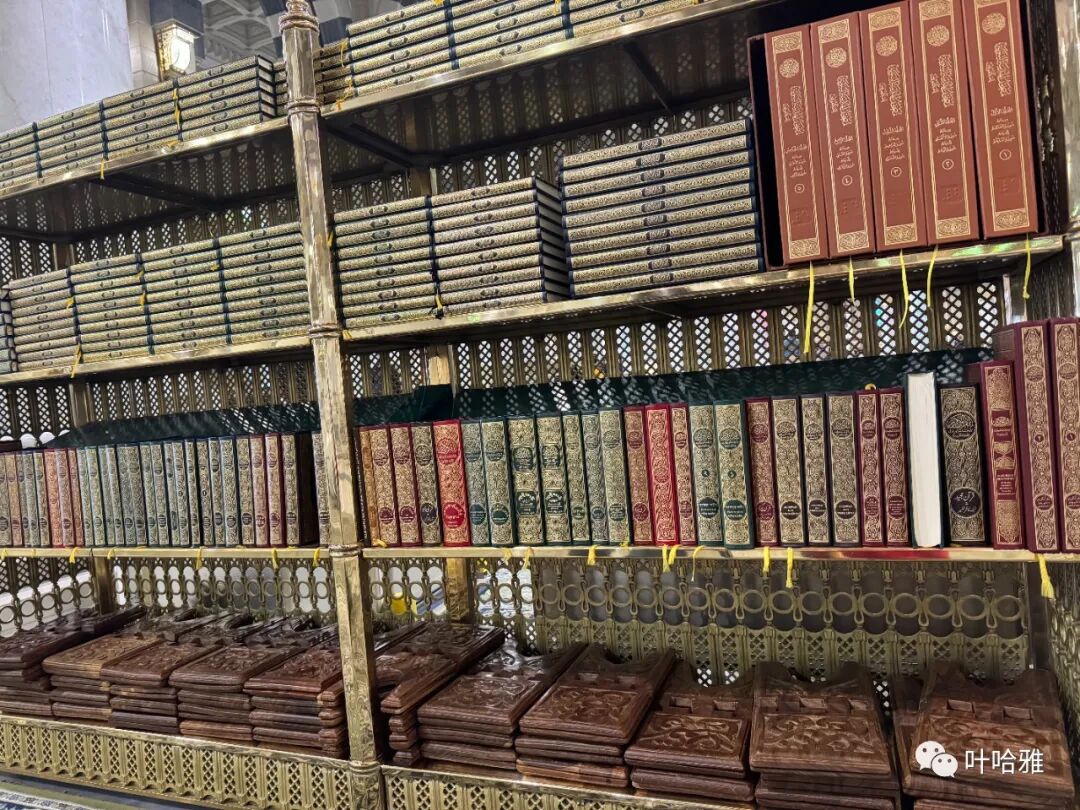
Inside the Prophet's Mosque, there are copies of the Quran in many languages, including a Chinese version.
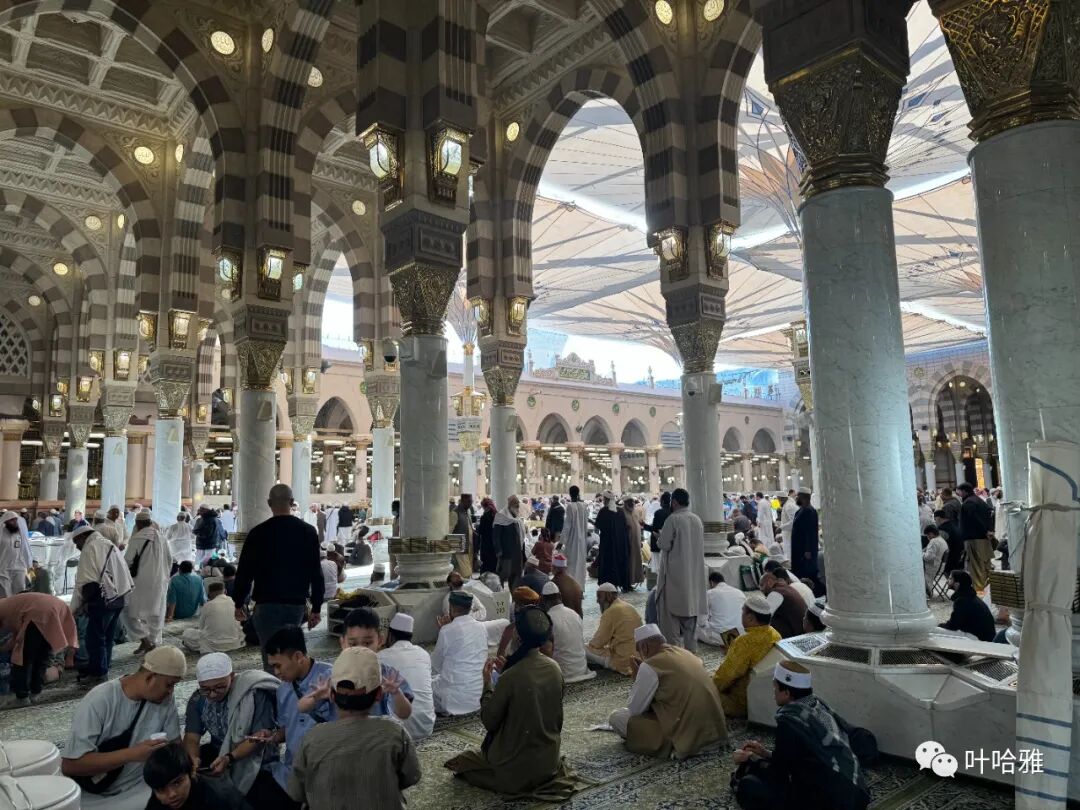
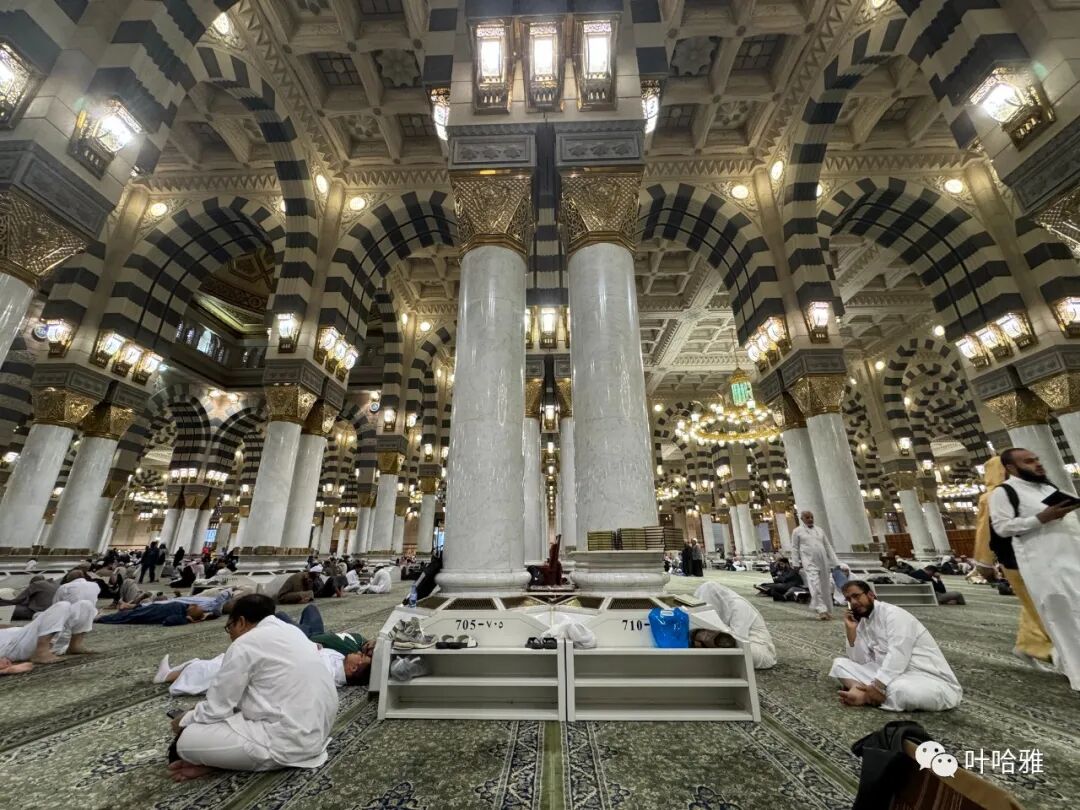
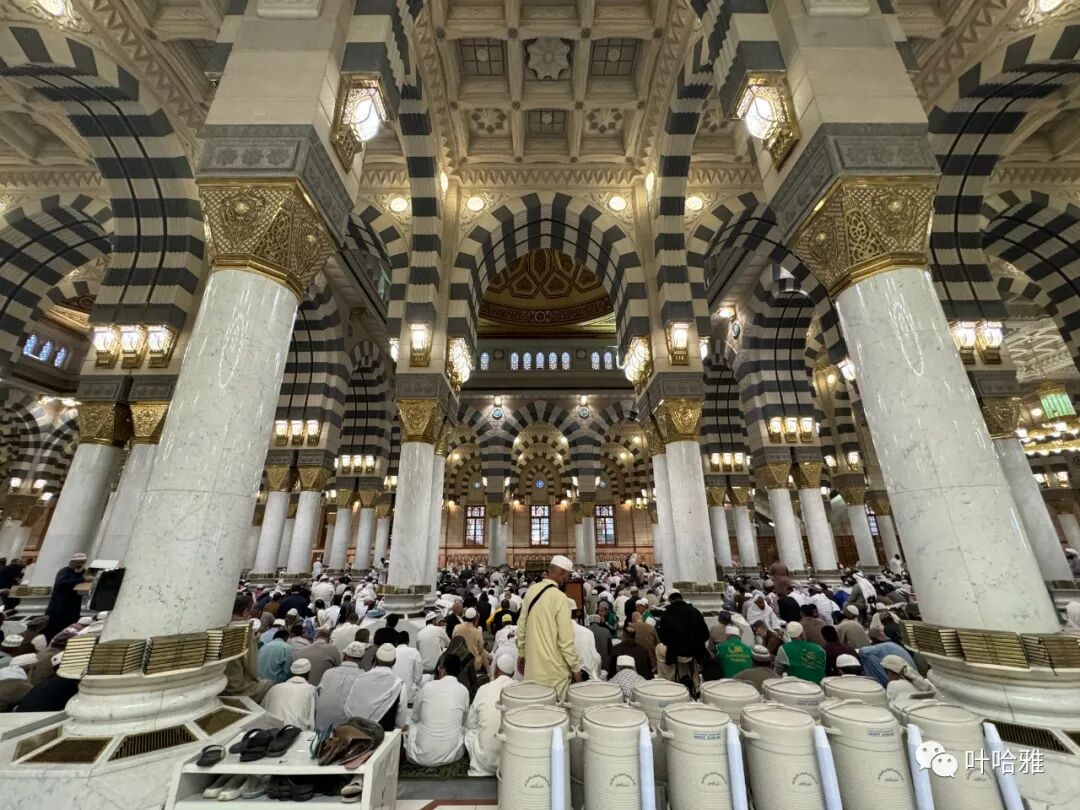
Because the Holy Mosque is so large, many people stay in place to recite the Quran after finishing their namaz for convenience. There is also Zamzam water (senshen quan) provided in the main hall, with separate areas for men and women.
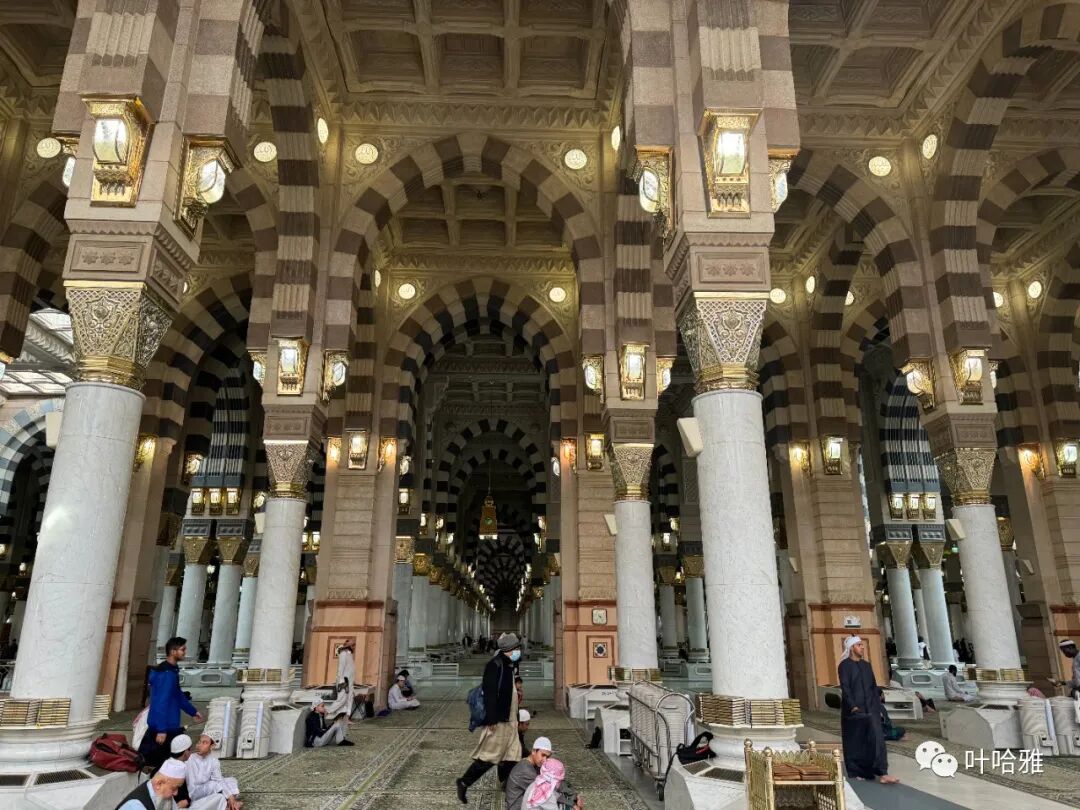
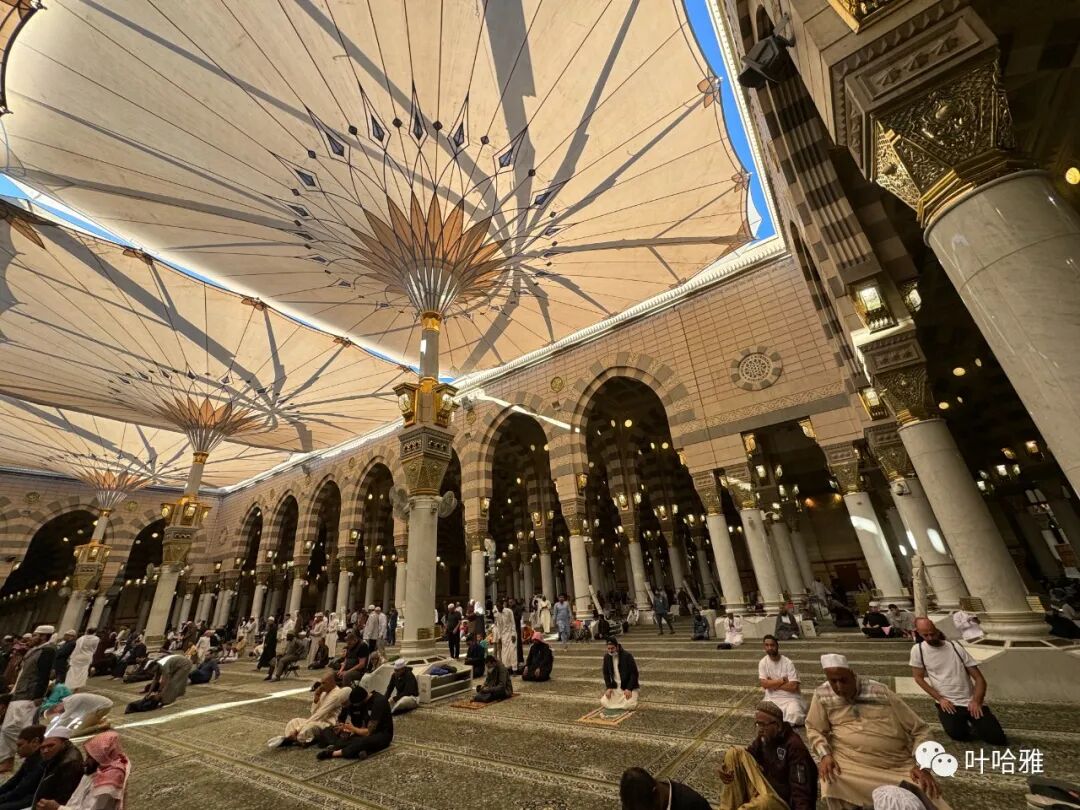
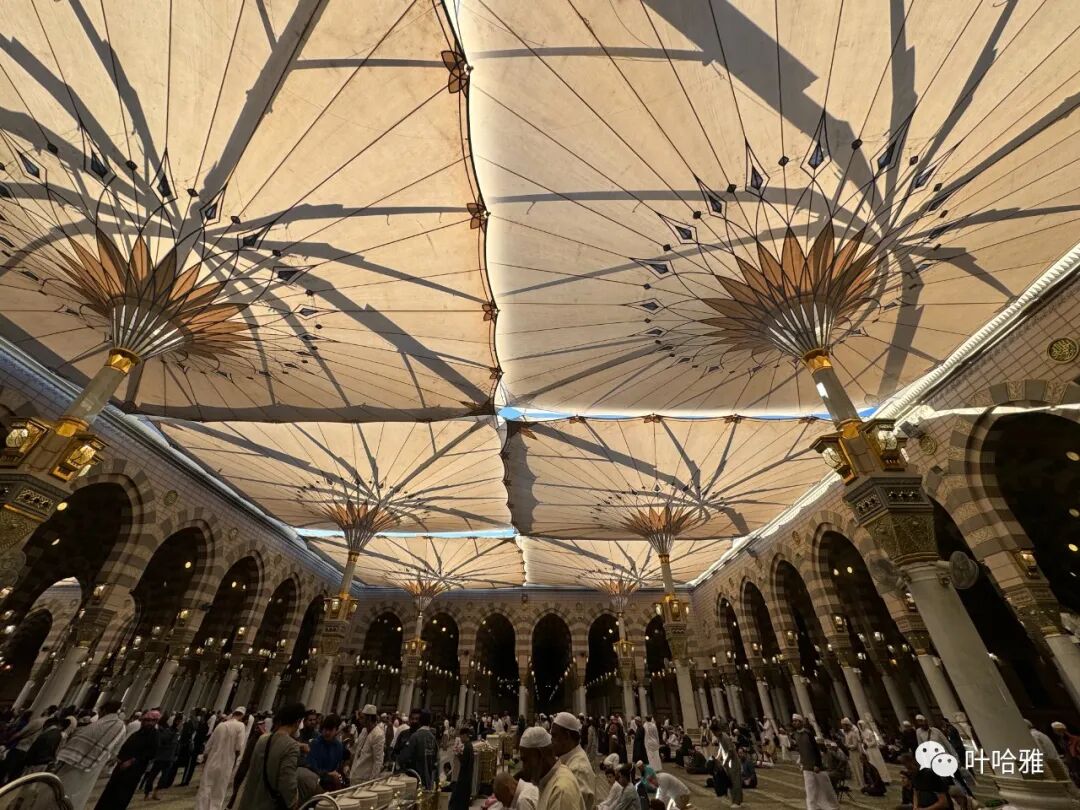
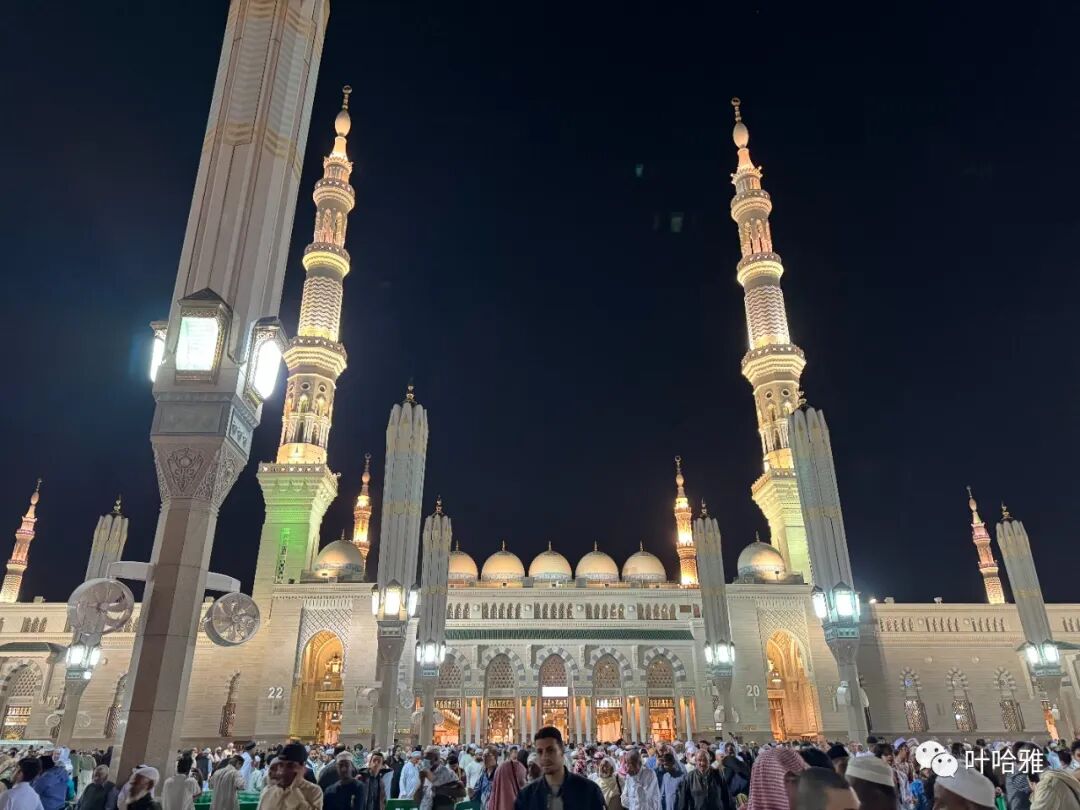
The Prophet's Mosque is crowded 24 hours a day, and there are even more people at night than during the day.
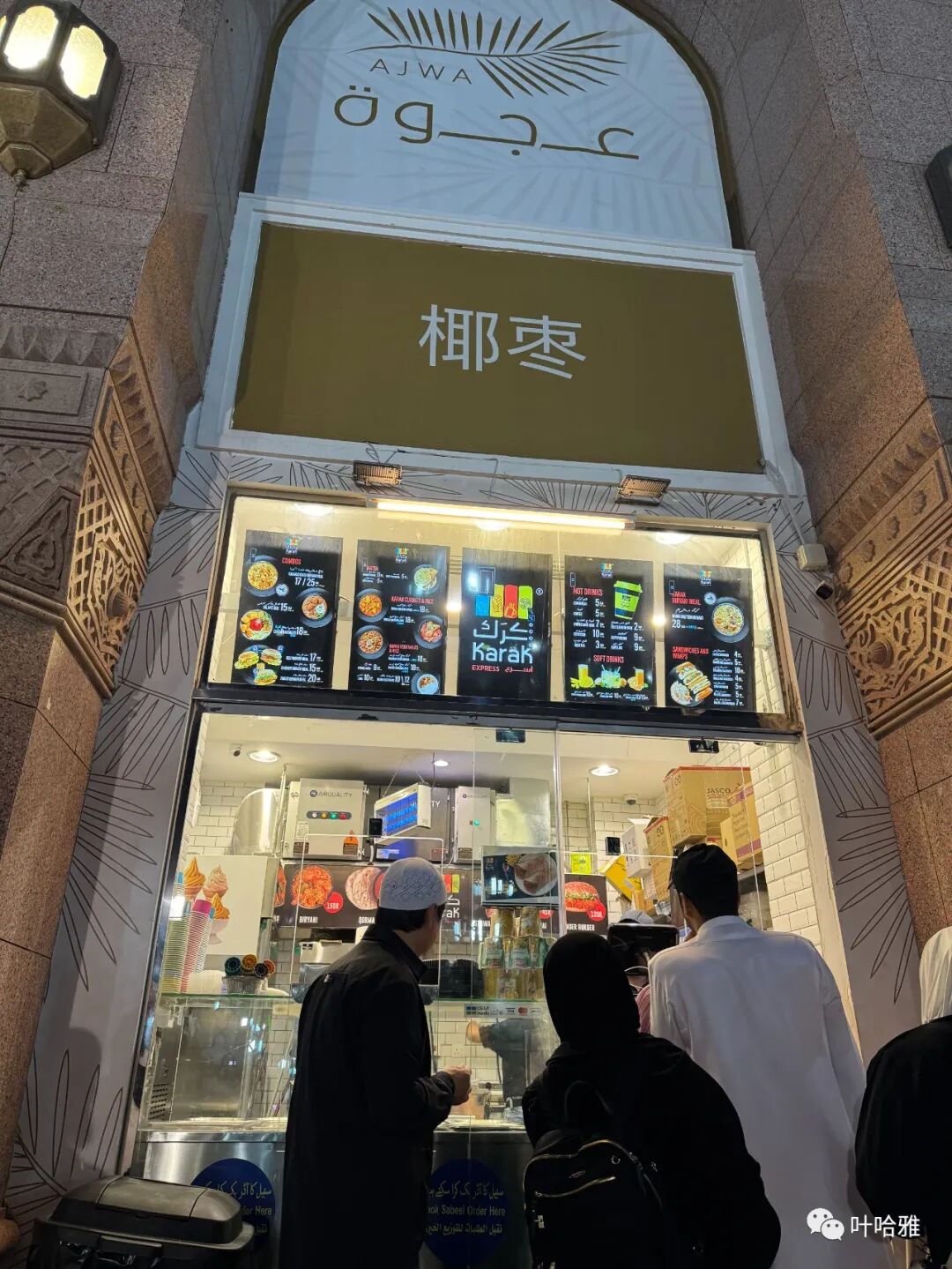
I actually saw Chinese signs at the stalls by the south gate of the Holy Mosque.
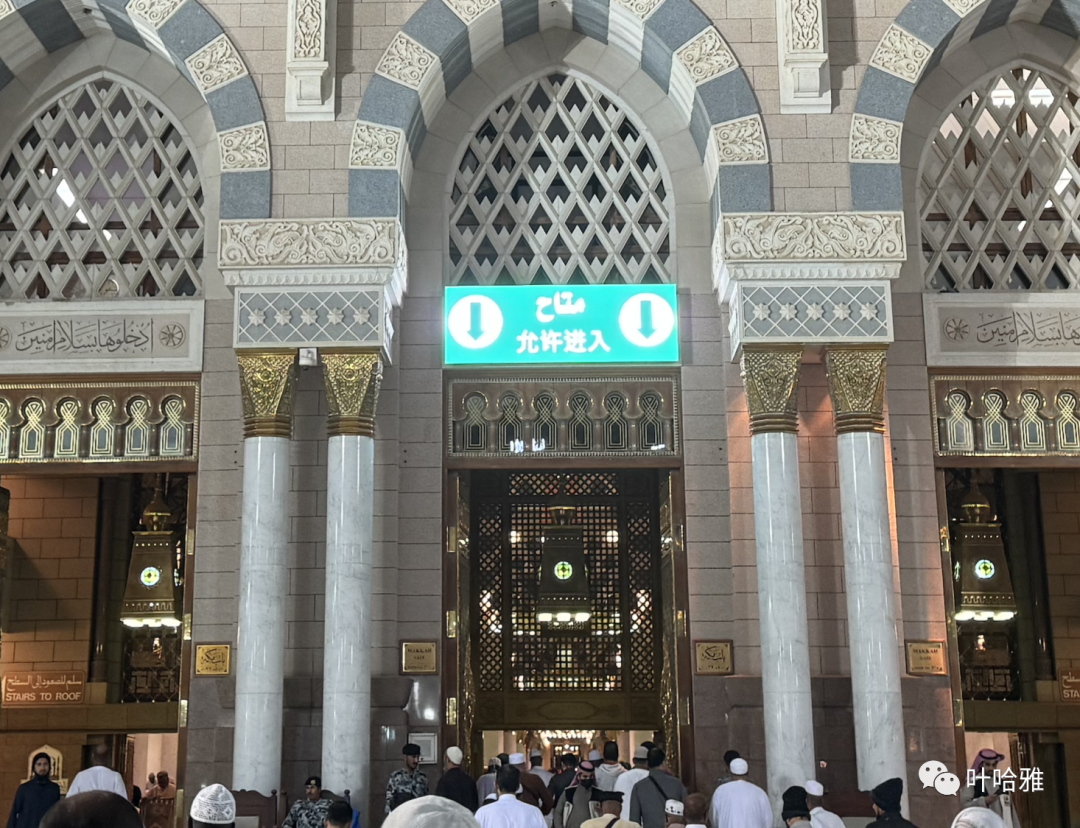
The signs at the main entrance also display different languages in turns, and I managed to snap a photo of the Chinese one.
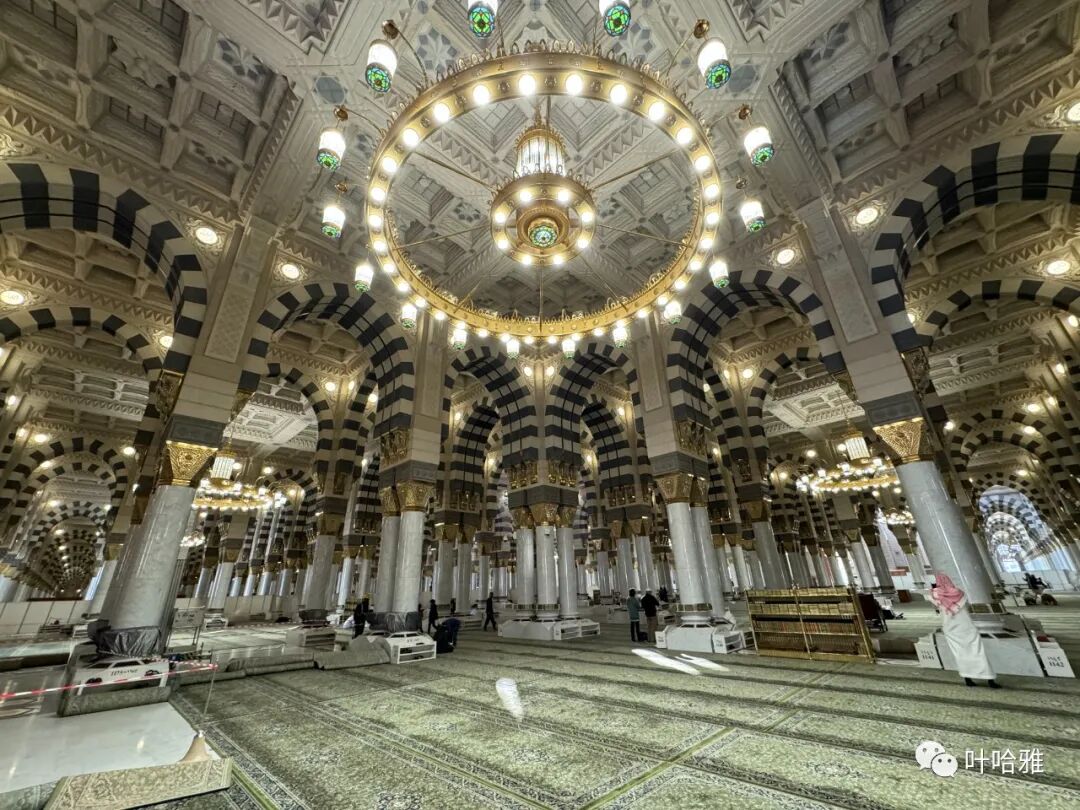
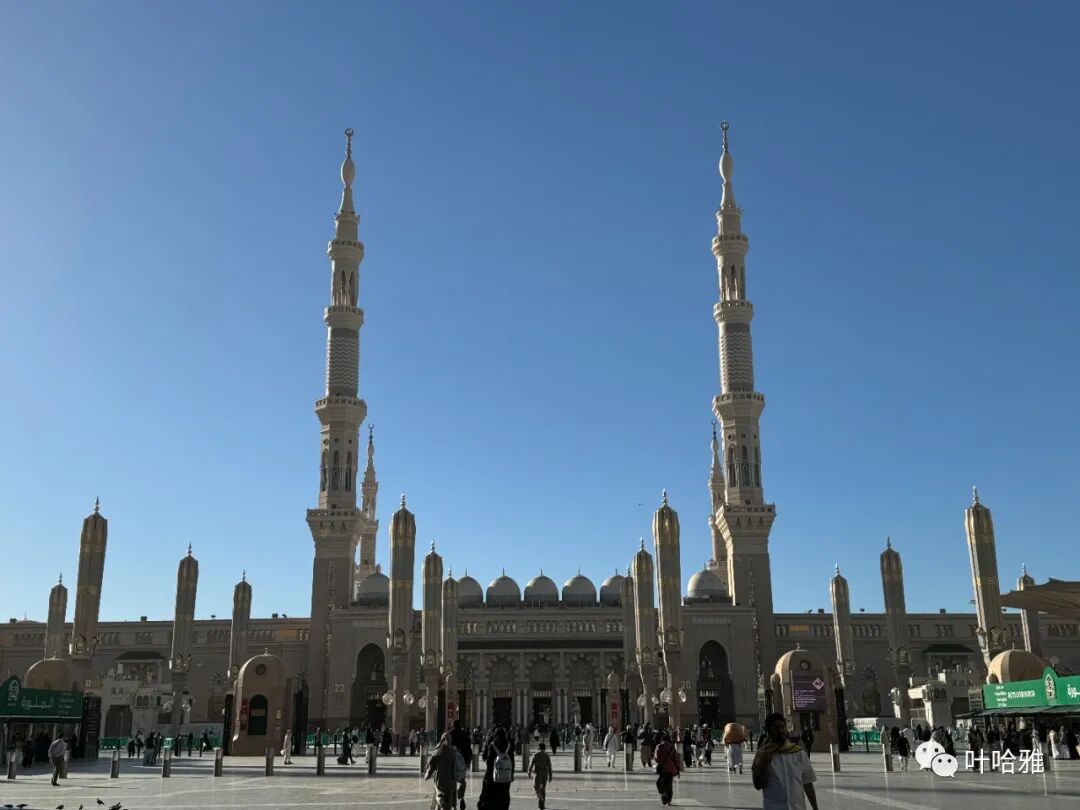
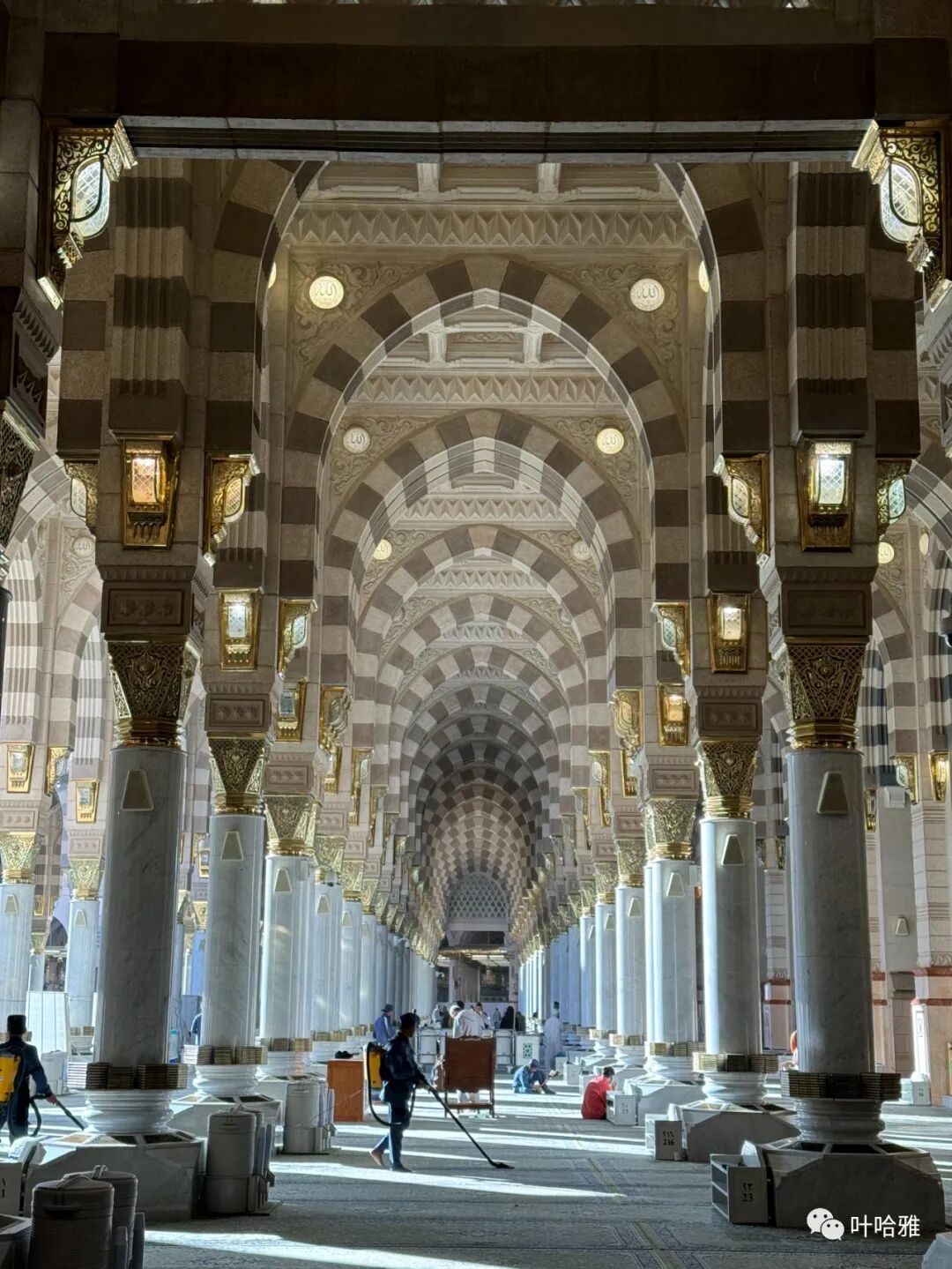
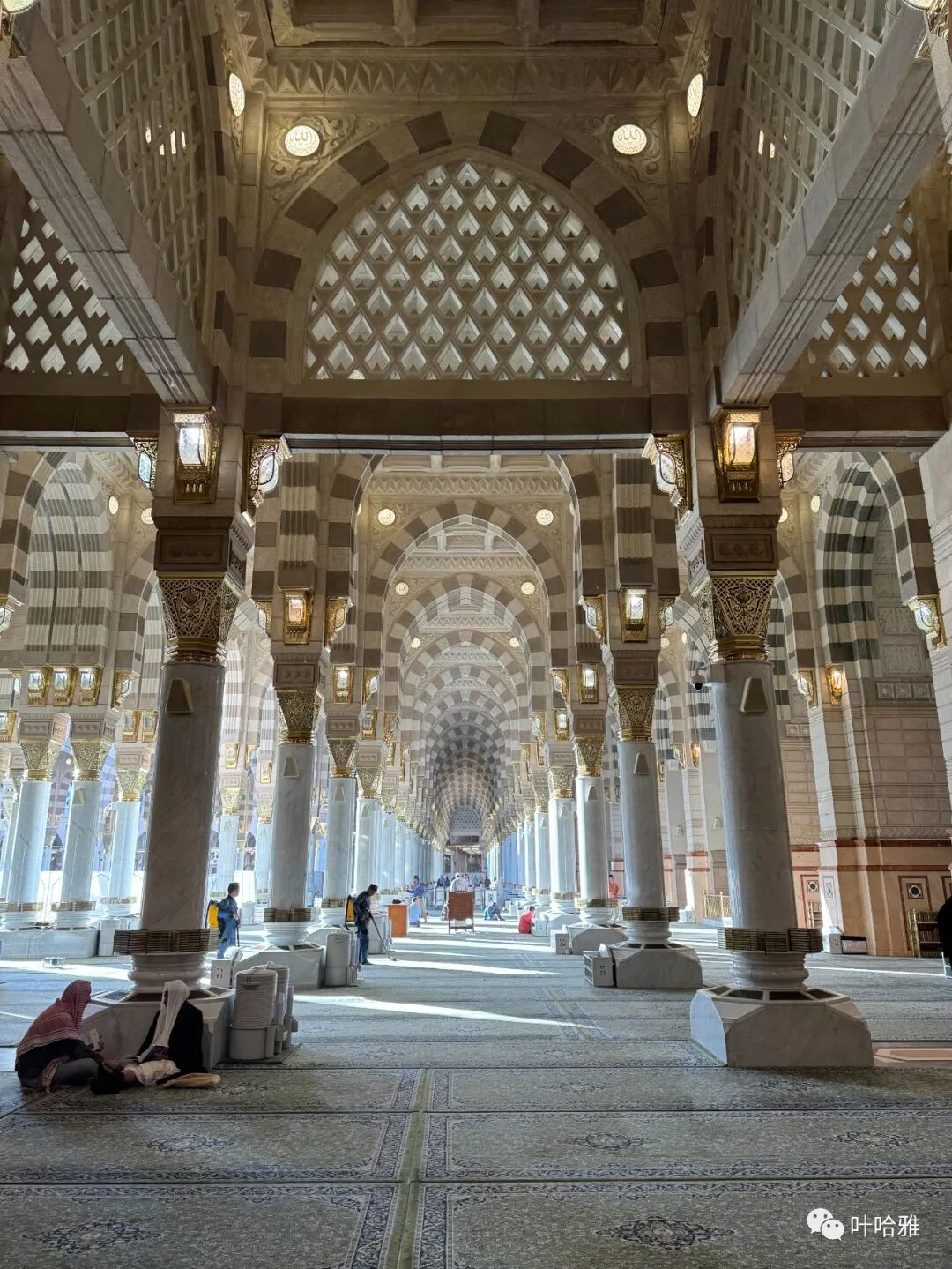
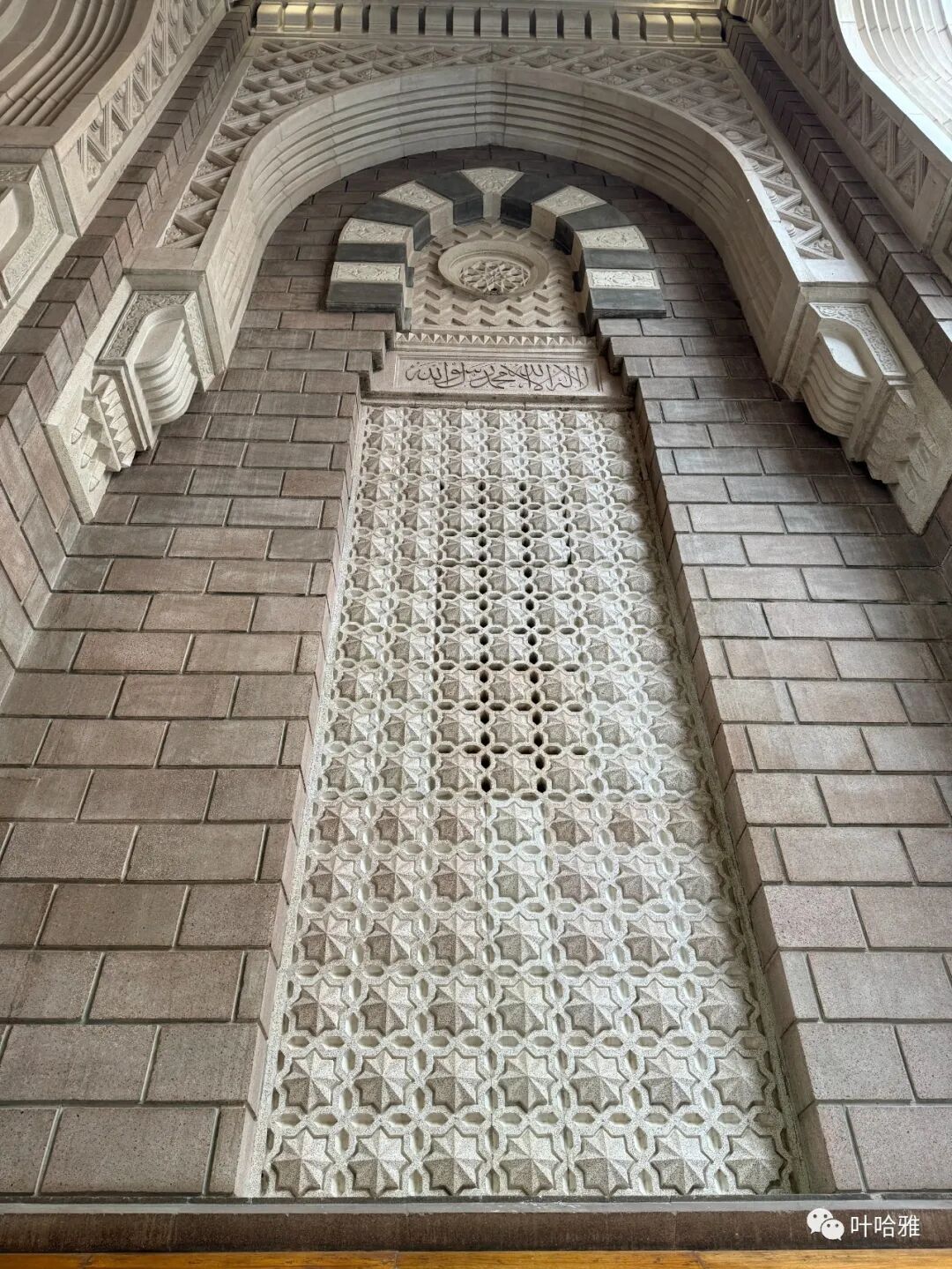
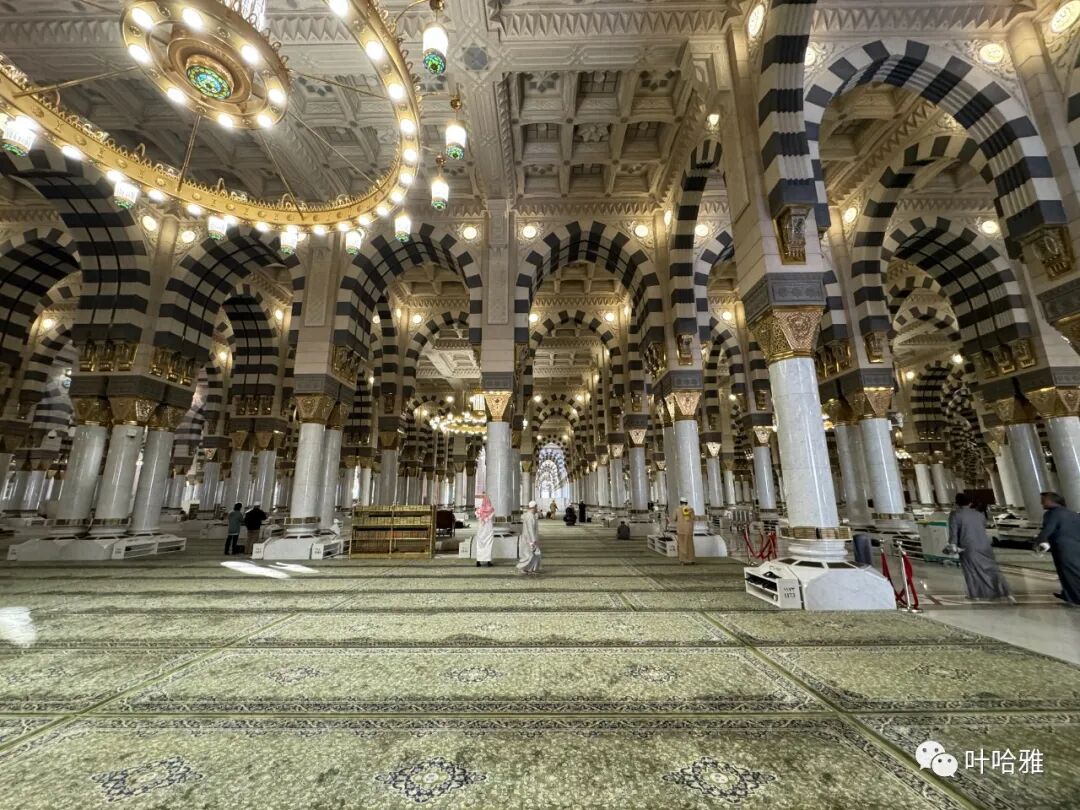
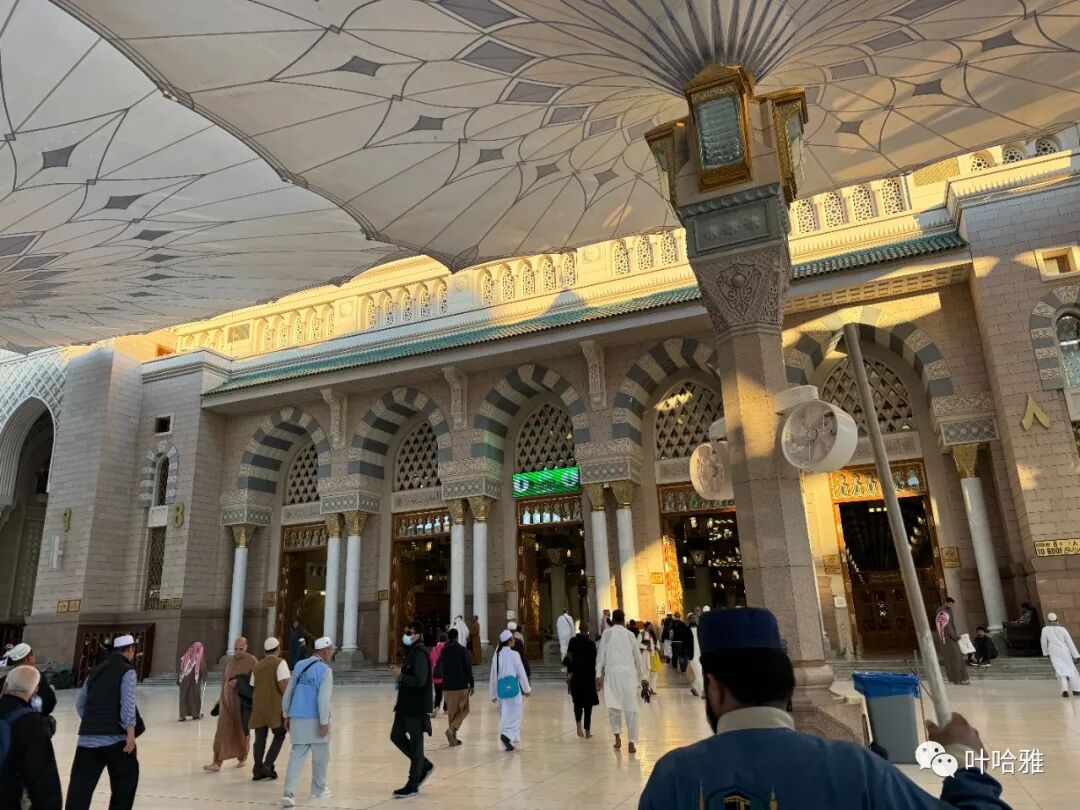
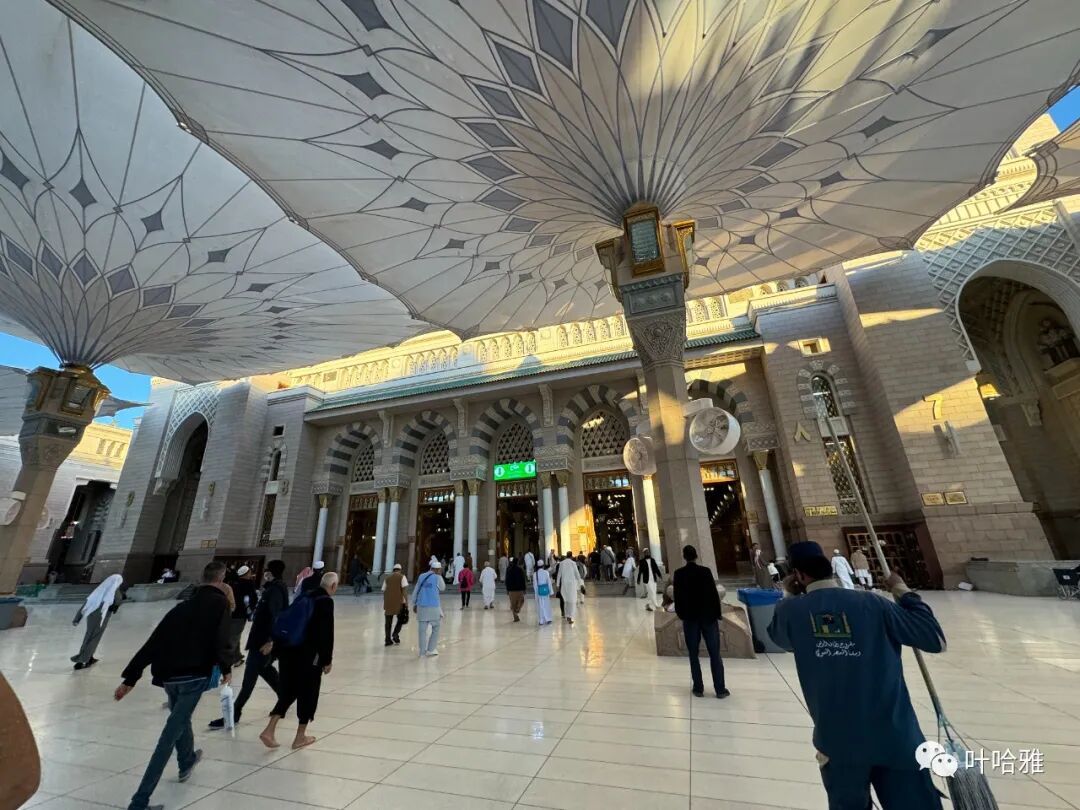
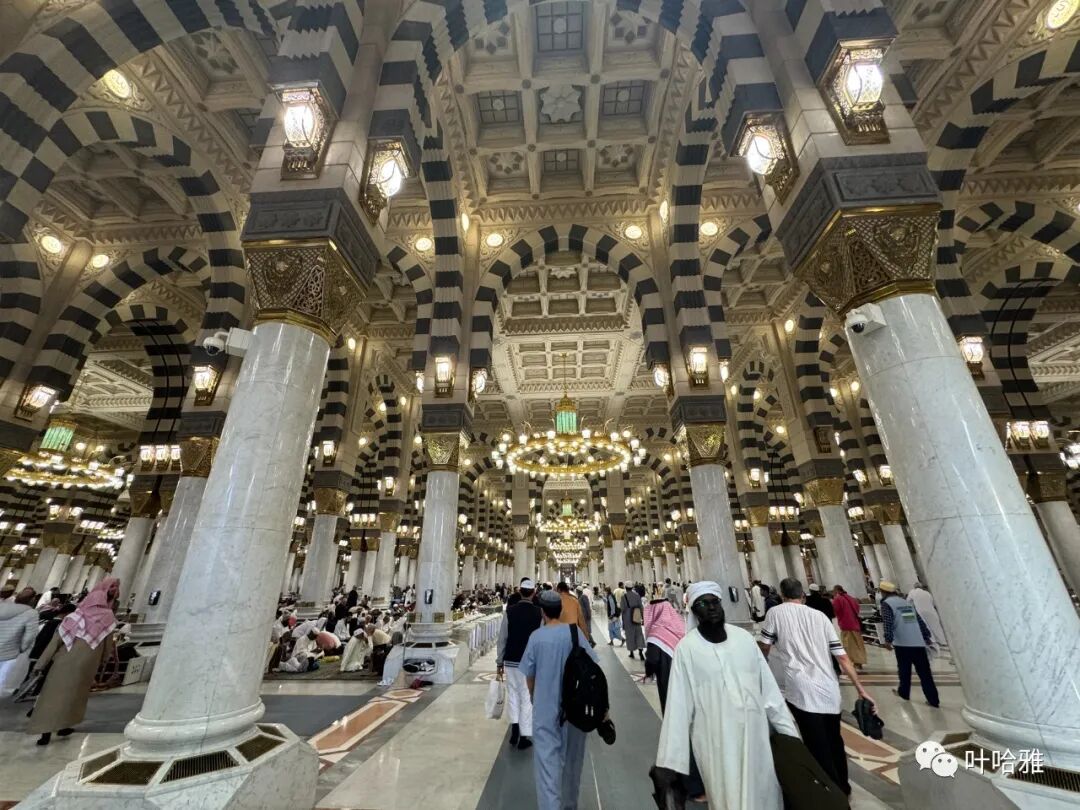
The north plaza of the Holy Mosque is busier than the south plaza and has more shops. If you are looking for a place to stay, you might want to prioritize the area near the north gate.
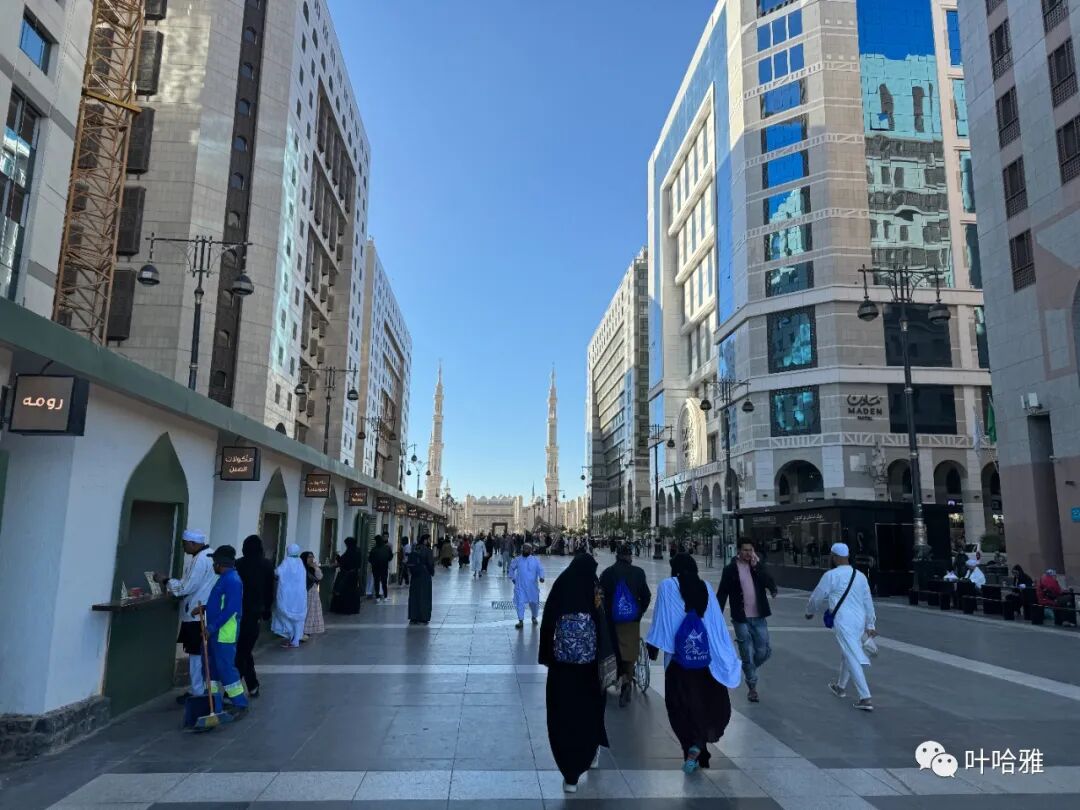
Many historical sites are scattered around the Prophet's Mosque. Due to historical changes, many no longer exist and only remain in books. Some of these historical sites are introduced below.
Al-Ghamama Mosque
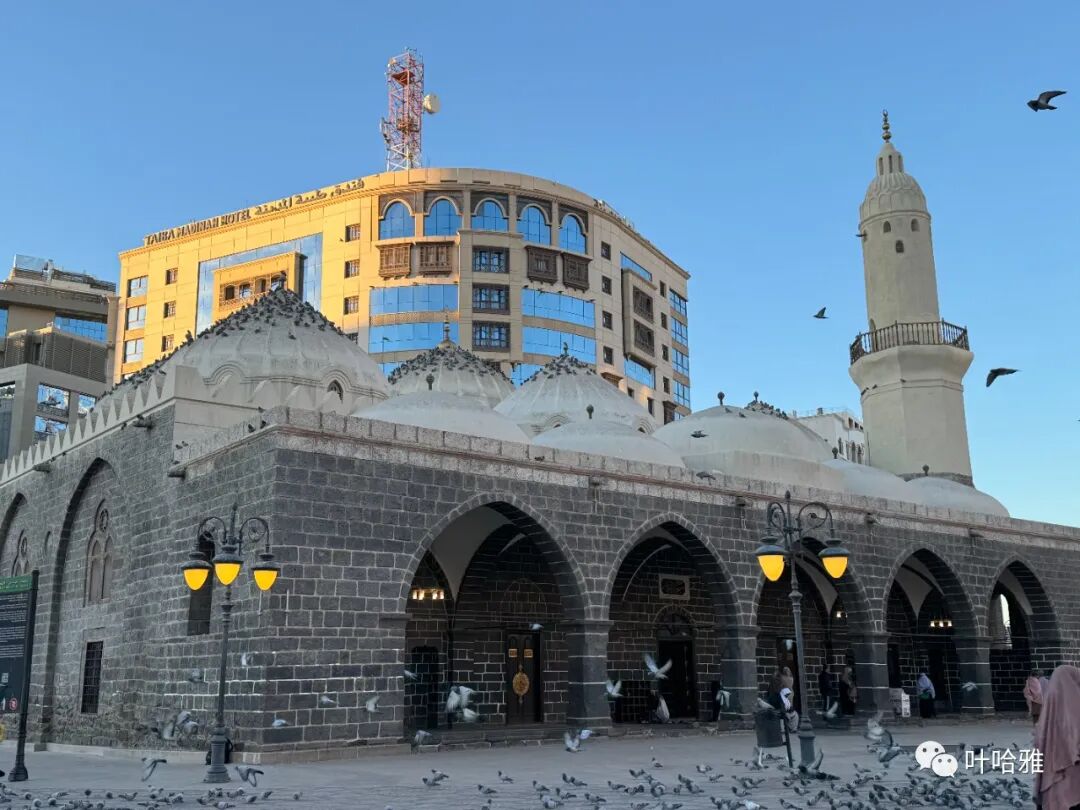
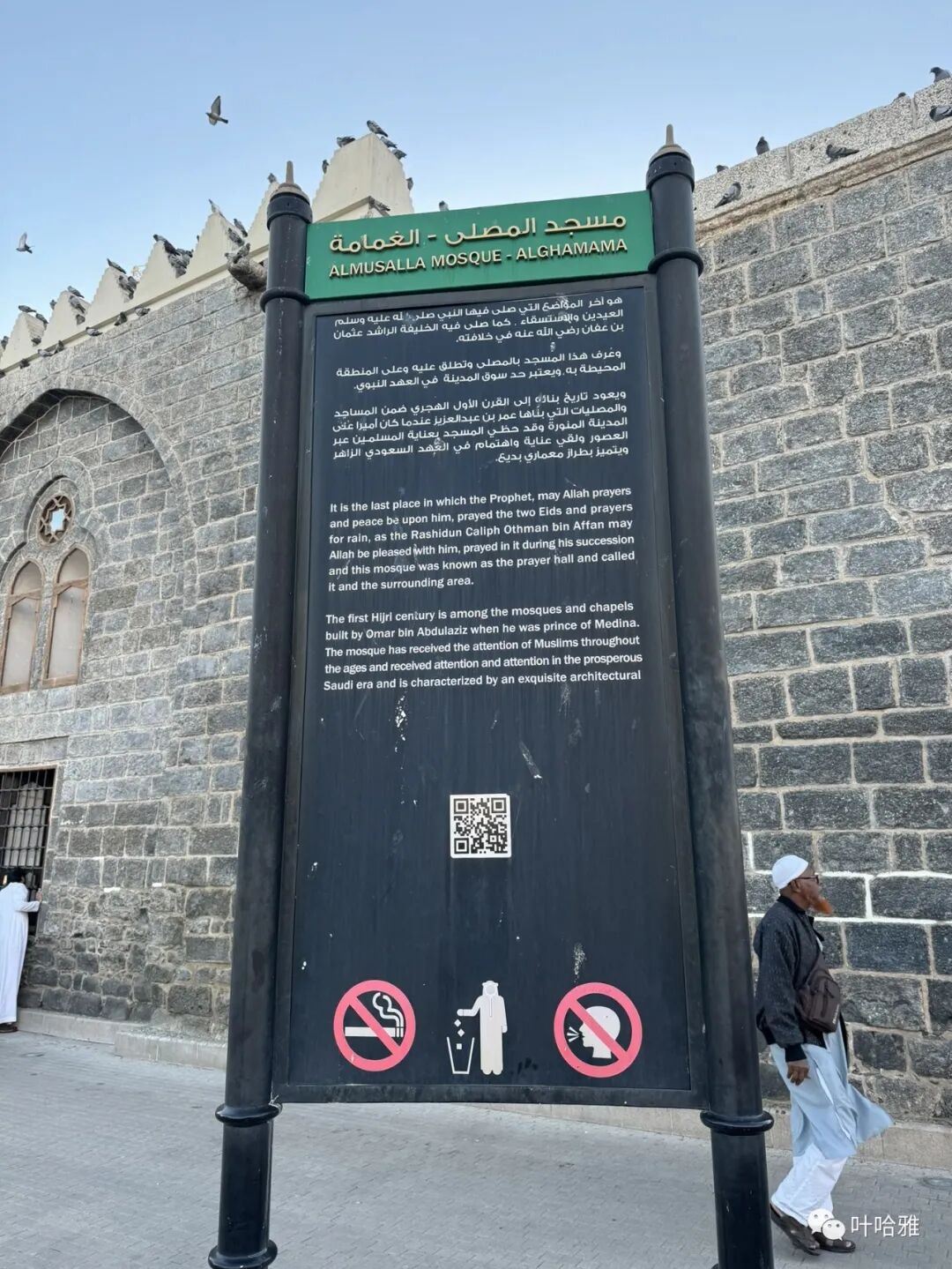
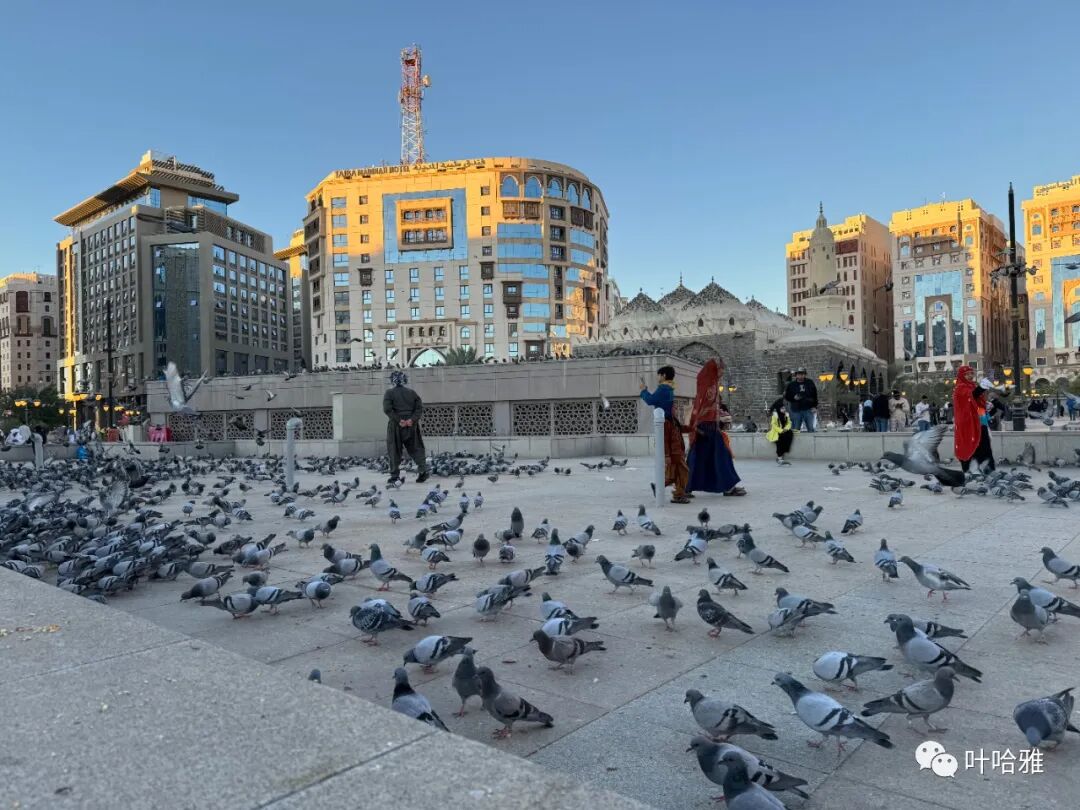
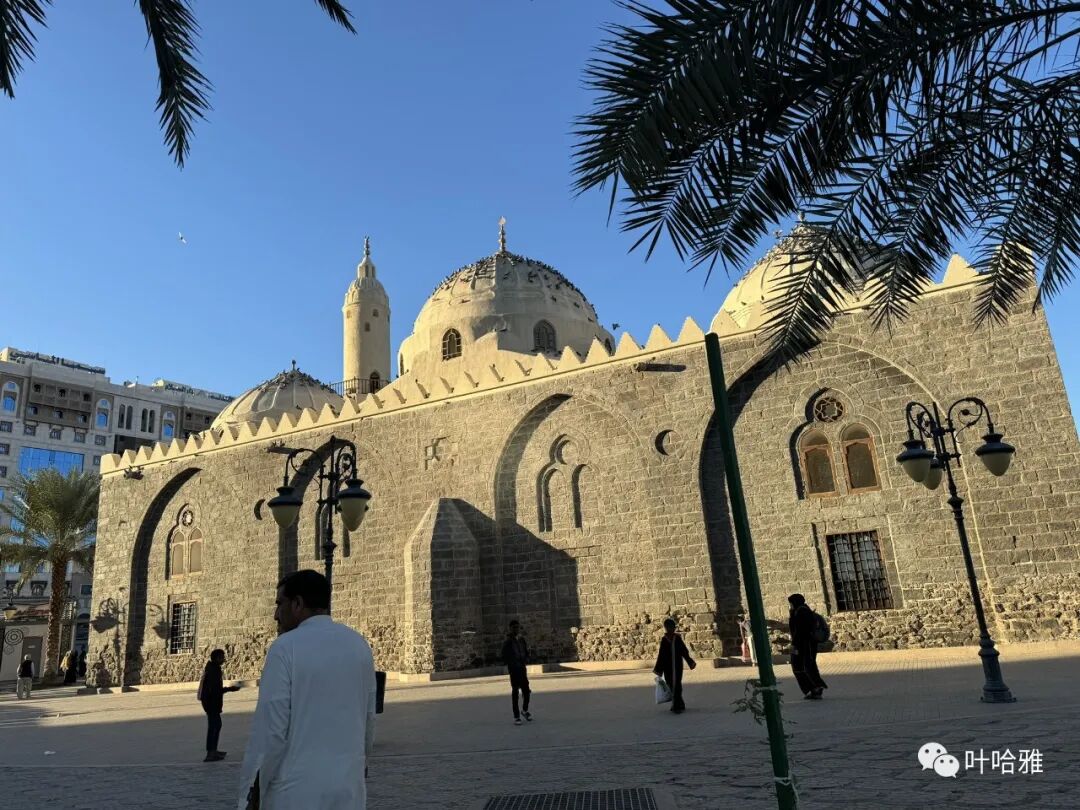
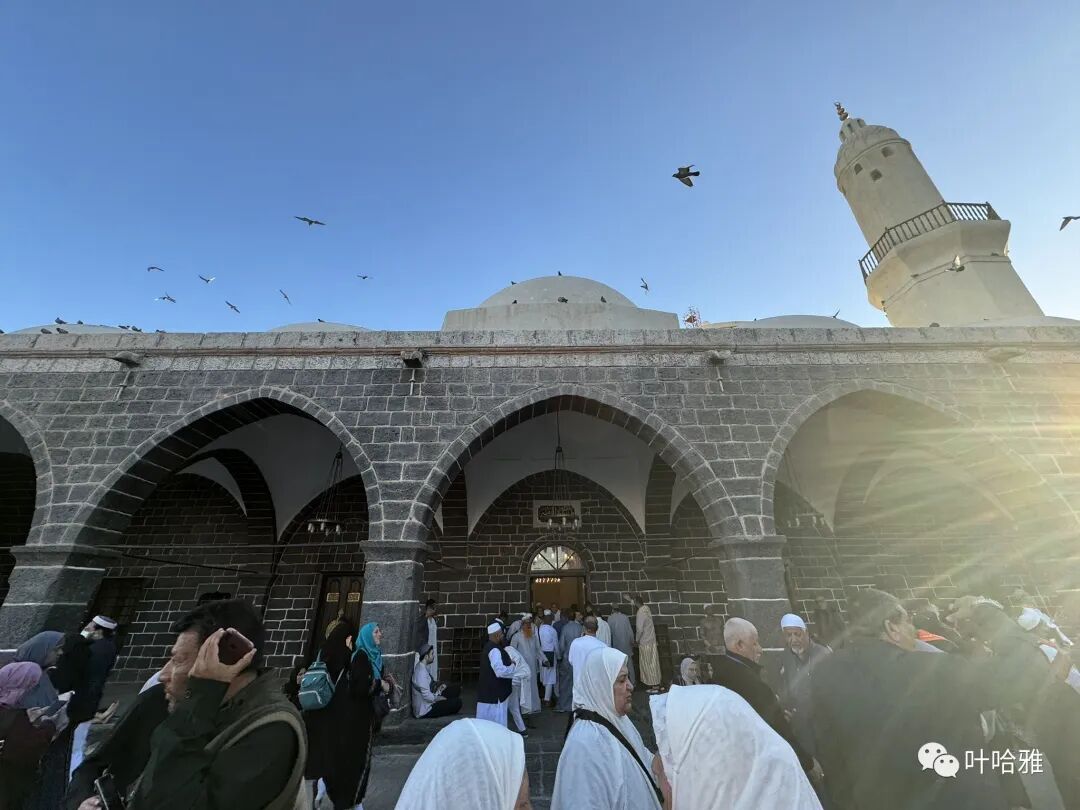
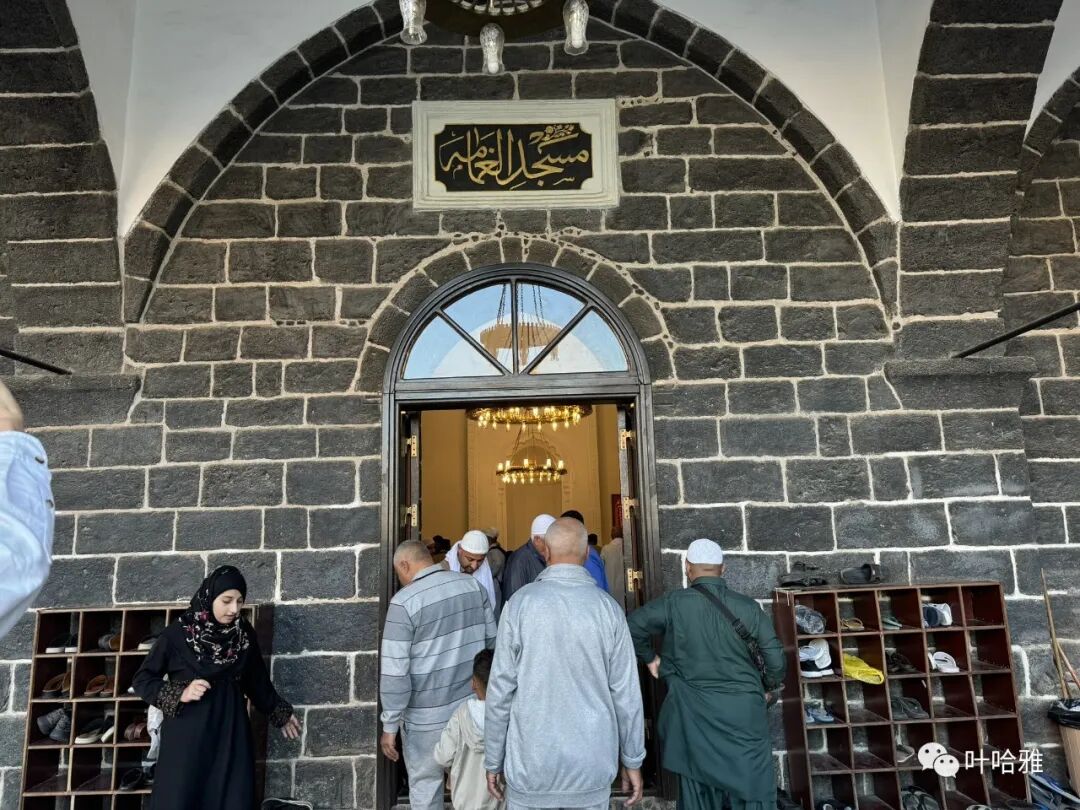
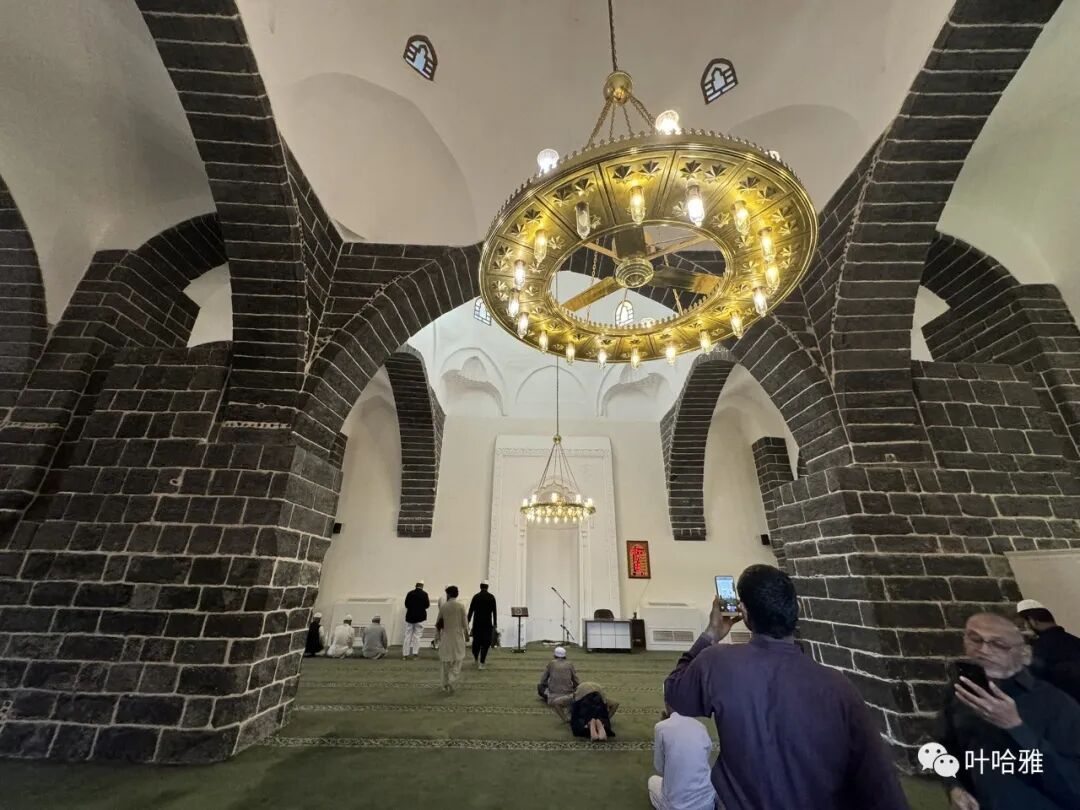
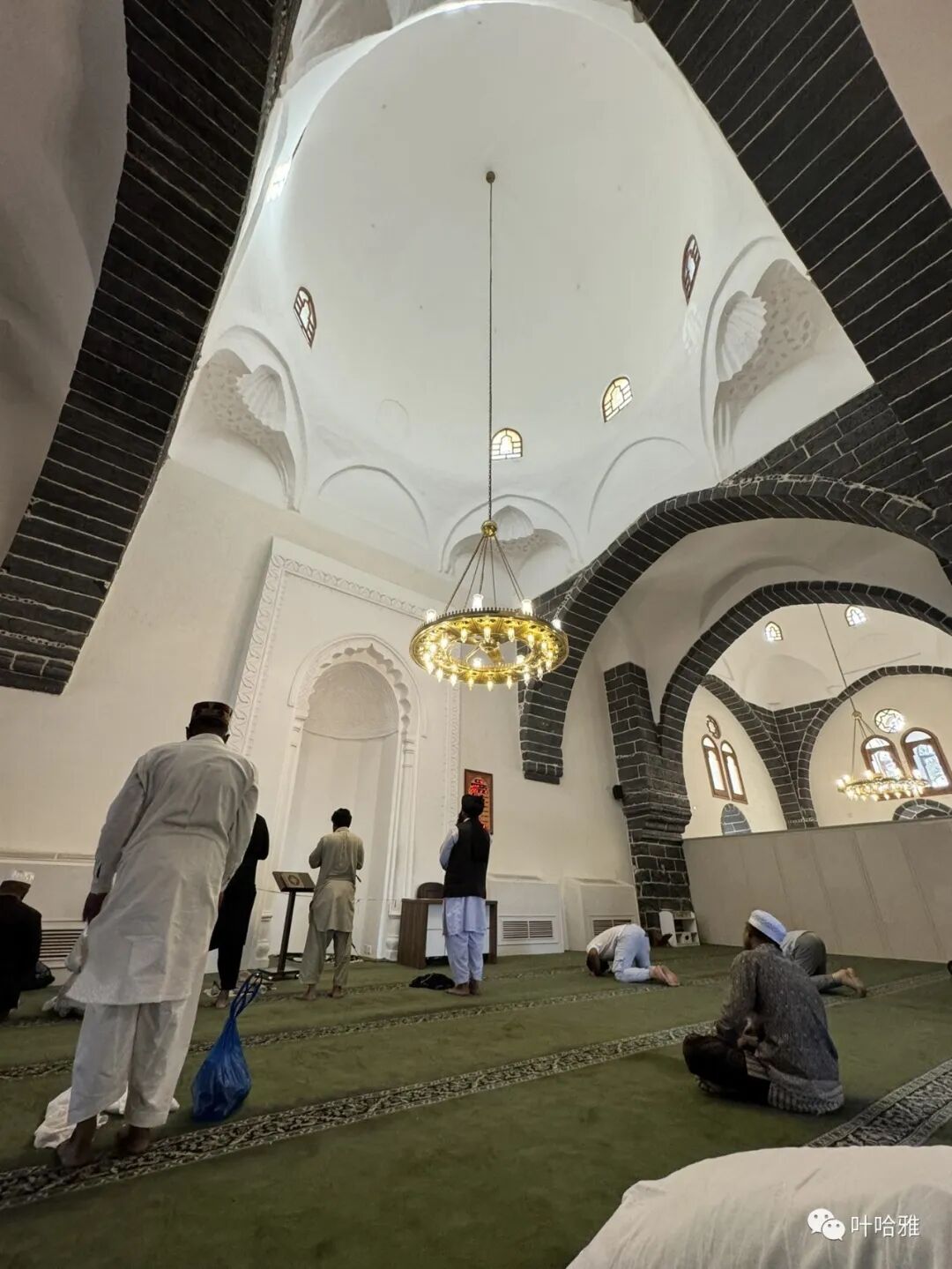
Al-Ghamama Mosque (Almusalla Mosque - ALGhamama) is located on the southwest square next to the Prophet's Mosque. The Prophet led the Eid prayer here in 631. This place is also called the Mosque of the Prayer Ground. It was built by Umar ibn Abd al-Aziz, the eighth caliph of the Umayyad dynasty. The current building was constructed by Abdulmejid I of the Ottoman Empire and later renovated by the King of Saudi Arabia.
Abu Bakr As-Siddiq Mosque
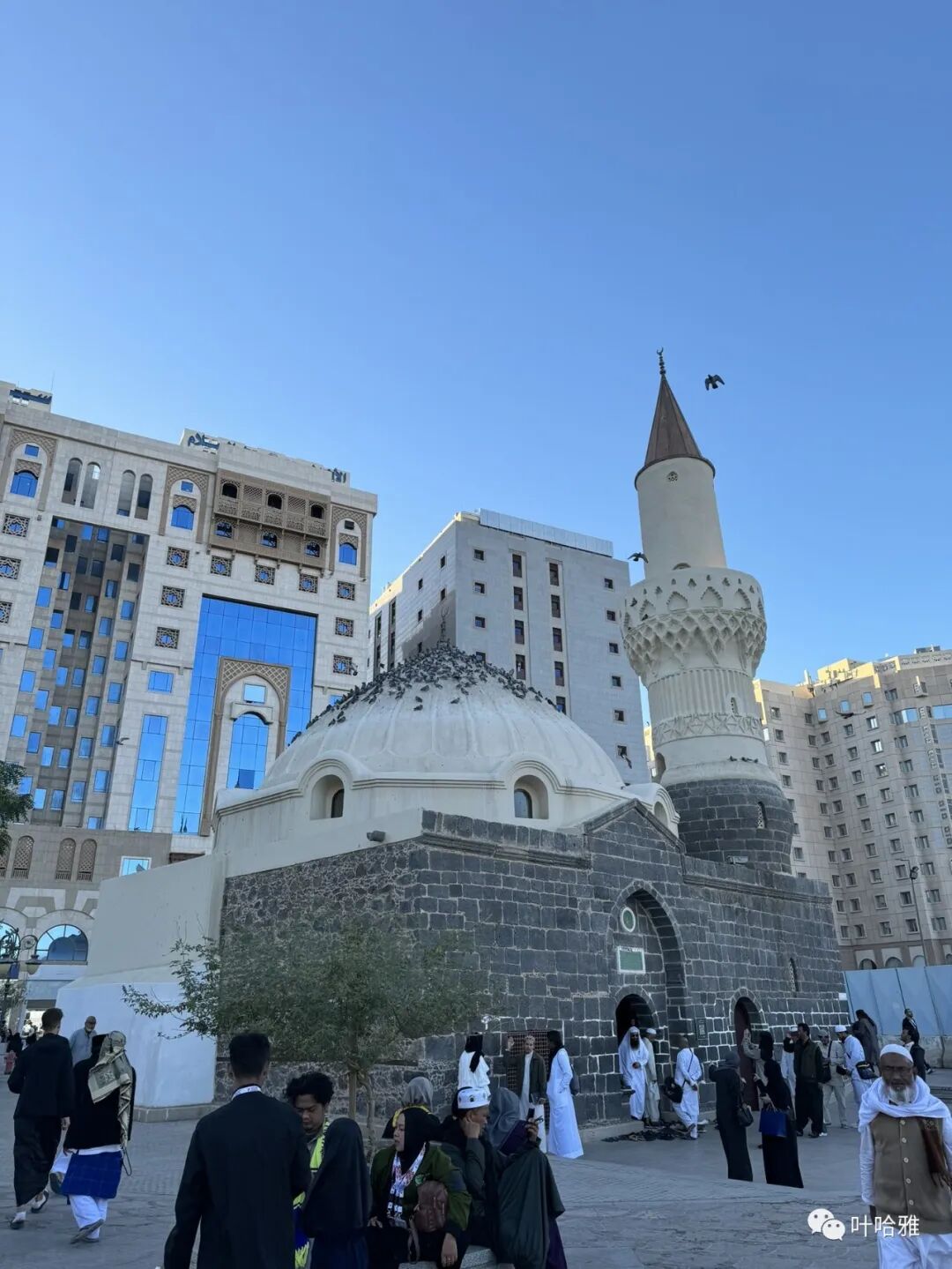
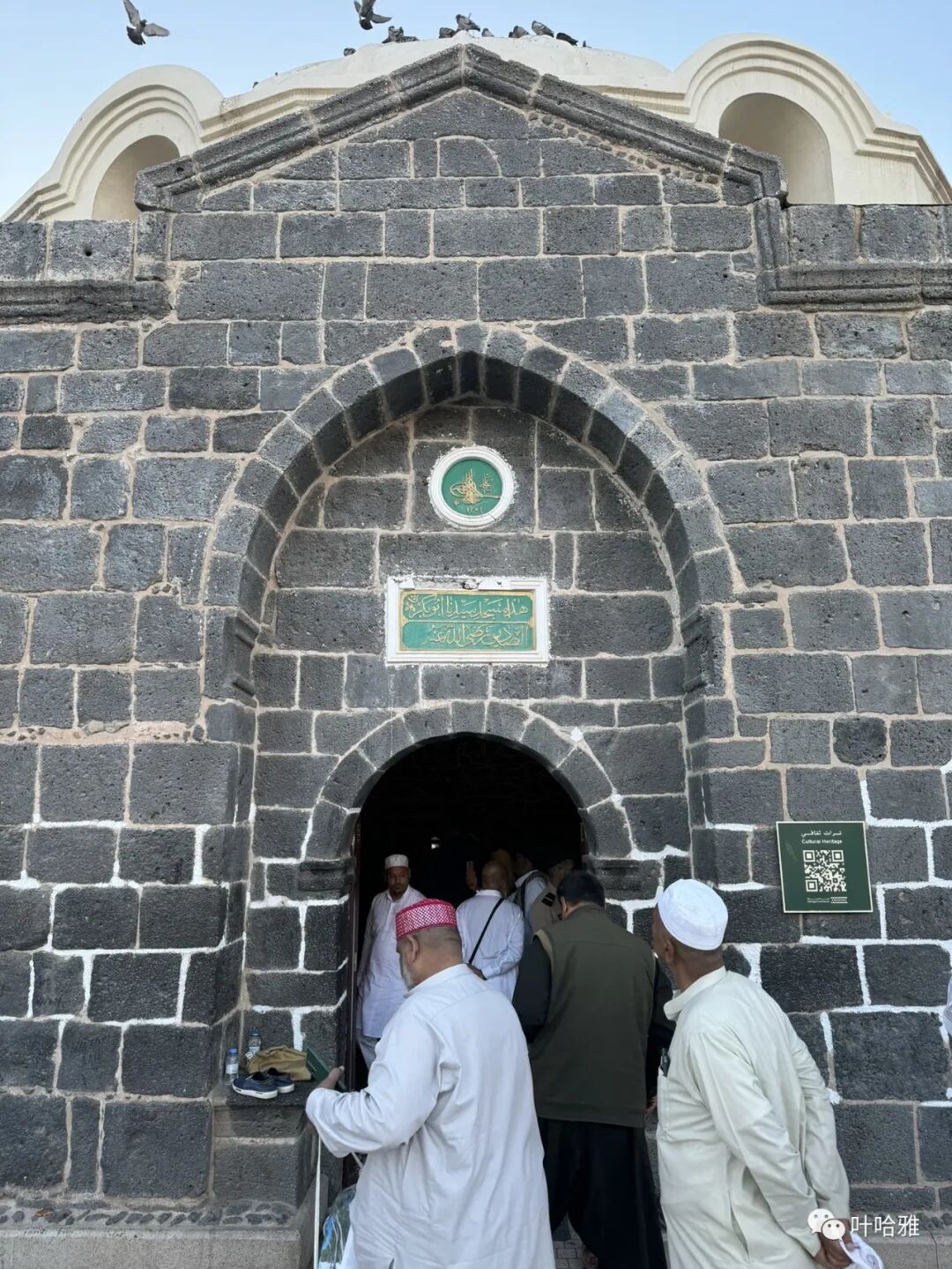
Abu Bakr As-Siddiq Mosque is 40 meters away from Al-Ghamama Mosque. It is also the place where the Prophet led the Eid prayer in 631, and later Abu Bakr also prayed here. The current building was constructed by Mahmud Khan of the Ottoman Empire.
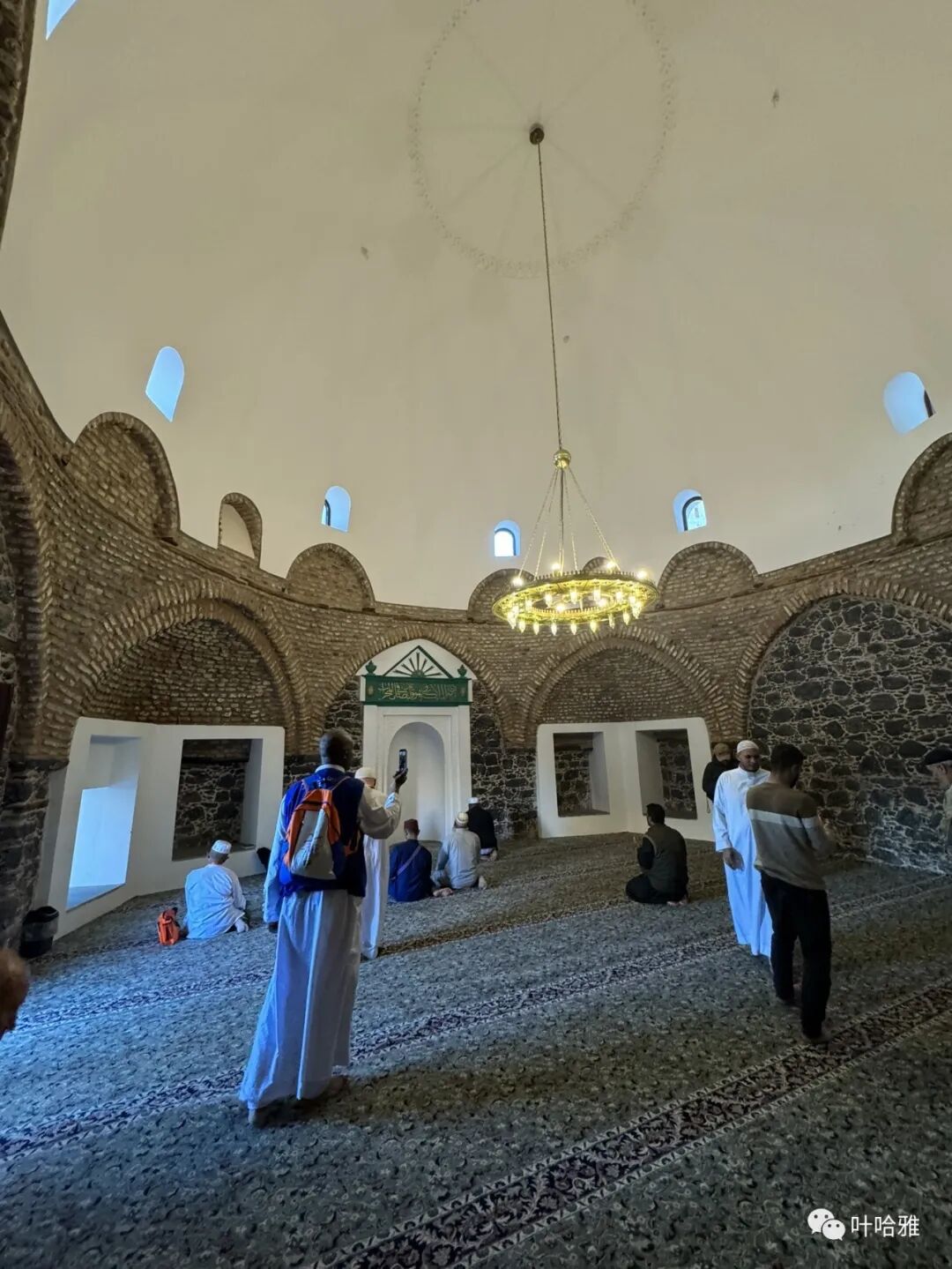
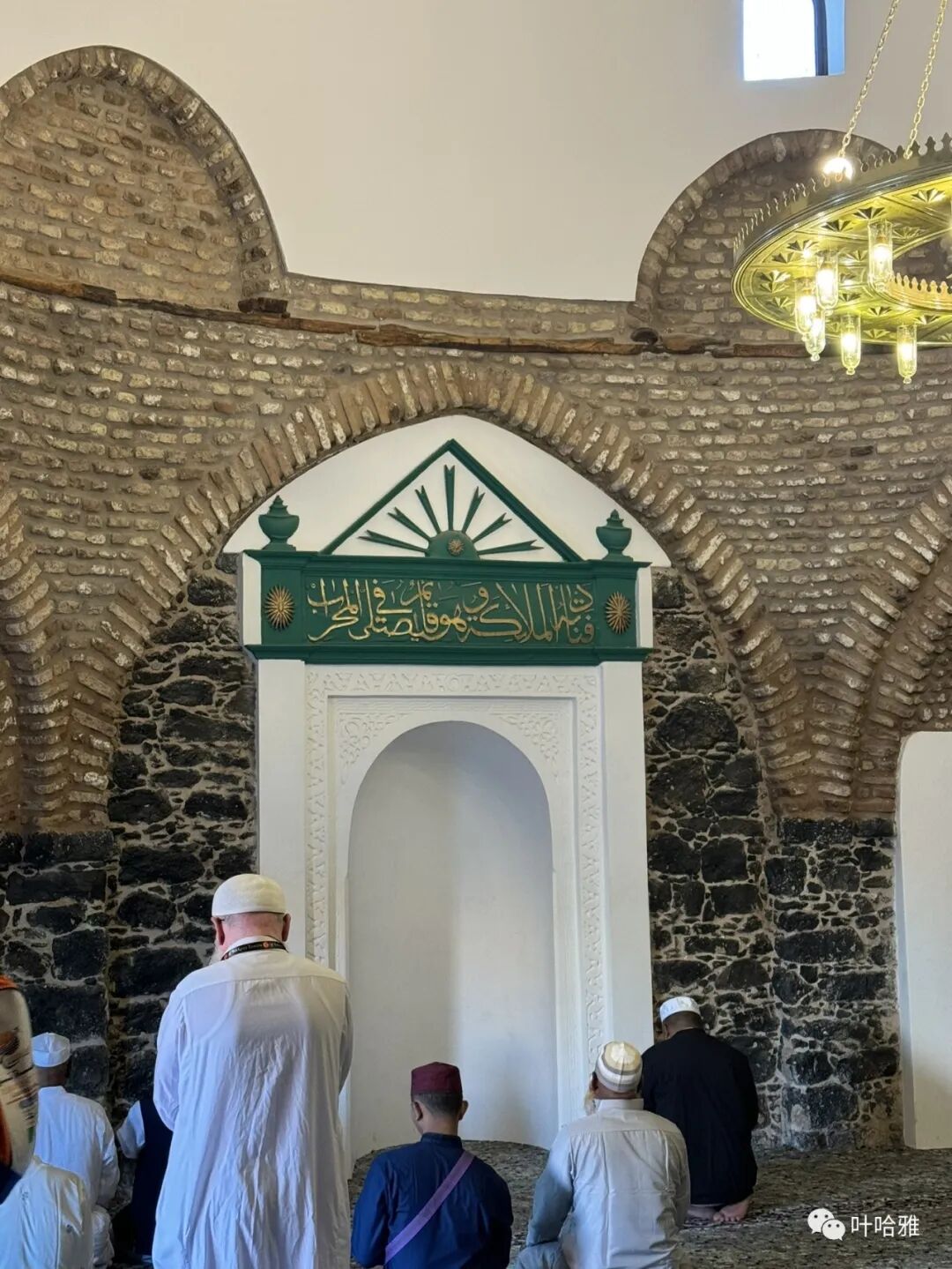
Umar ibn al-Khattab Mosque
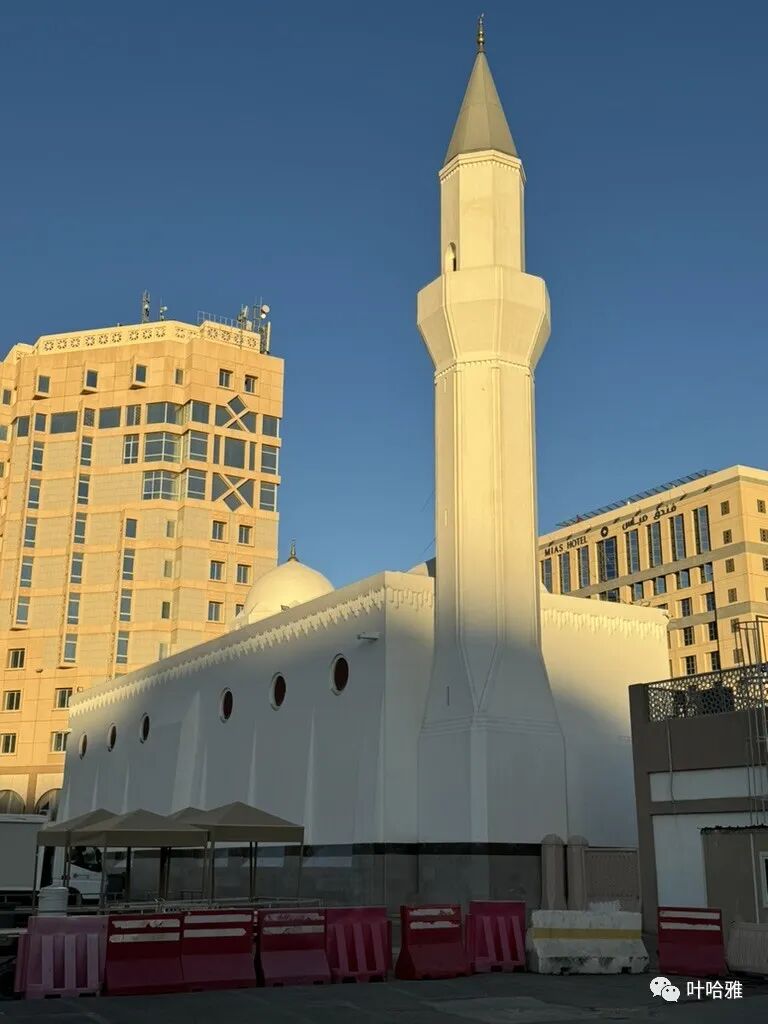
Located 133 meters next to Al-Ghamama Mosque, it was built in the 9th century of the Hijri calendar. The mosque and its surrounding area are currently under renovation and are not open.
Ali Mosque
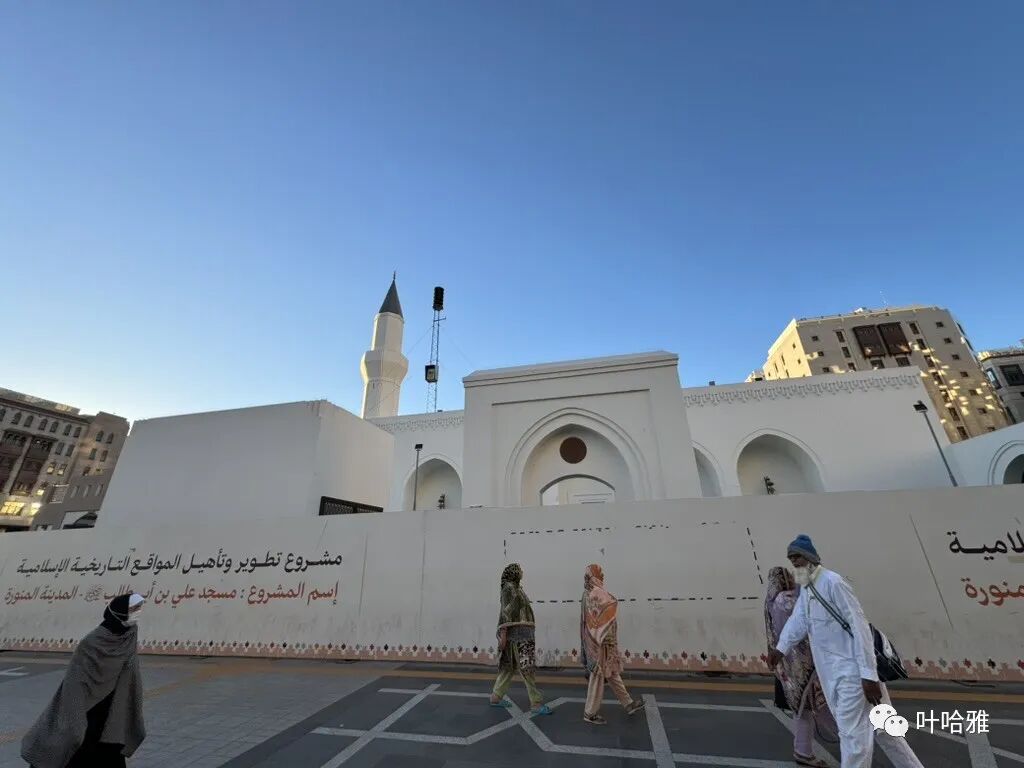
It is 122 meters away from Al-Ghamama Mosque and north of Abu Bakr As-Siddiq Mosque. The Prophet once led the Eid prayer here, and a mosque was later built on this site. It is currently not open.
Mount Uhud and the Martyrs' Cemetery
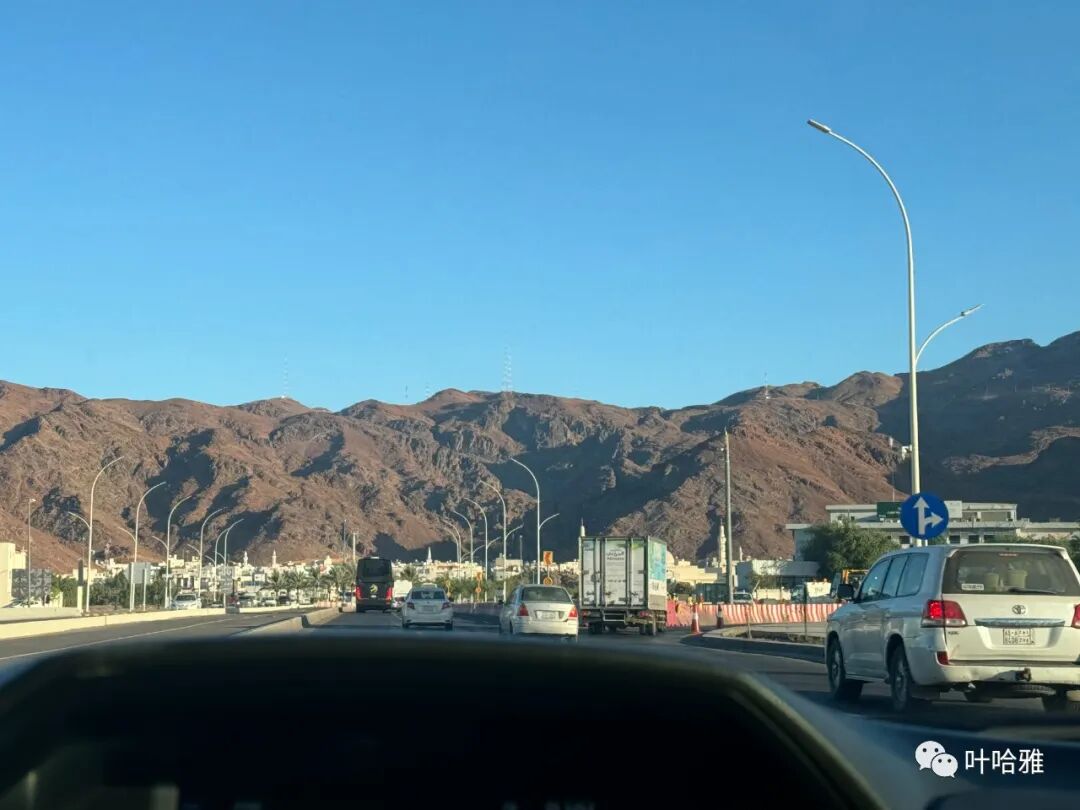
The black rocky mountain in the distance is Mount Uhud. The small hill at the foot of the mountain is the site of the Battle of Uhud. Mount Uhud is about 4 kilometers away from the Prophet's Mosque.
In 625, more than 3,000 polytheists from Mecca launched a major attack on Medina. The Prophet consulted with his companions and decided to lead 1,000 men to Mount Uhud to meet the enemy. After arriving at Mount Uhud, the hypocrite Abdullah ibn Ubayy secretly led his 300 soldiers away. The Prophet led the remaining 700-plus men to defeat the 3,000 Meccan polytheists. The Prophet was injured in this battle, and Allah revealed verses 121-180 of Surah Al-Imran in the Quran at this location.
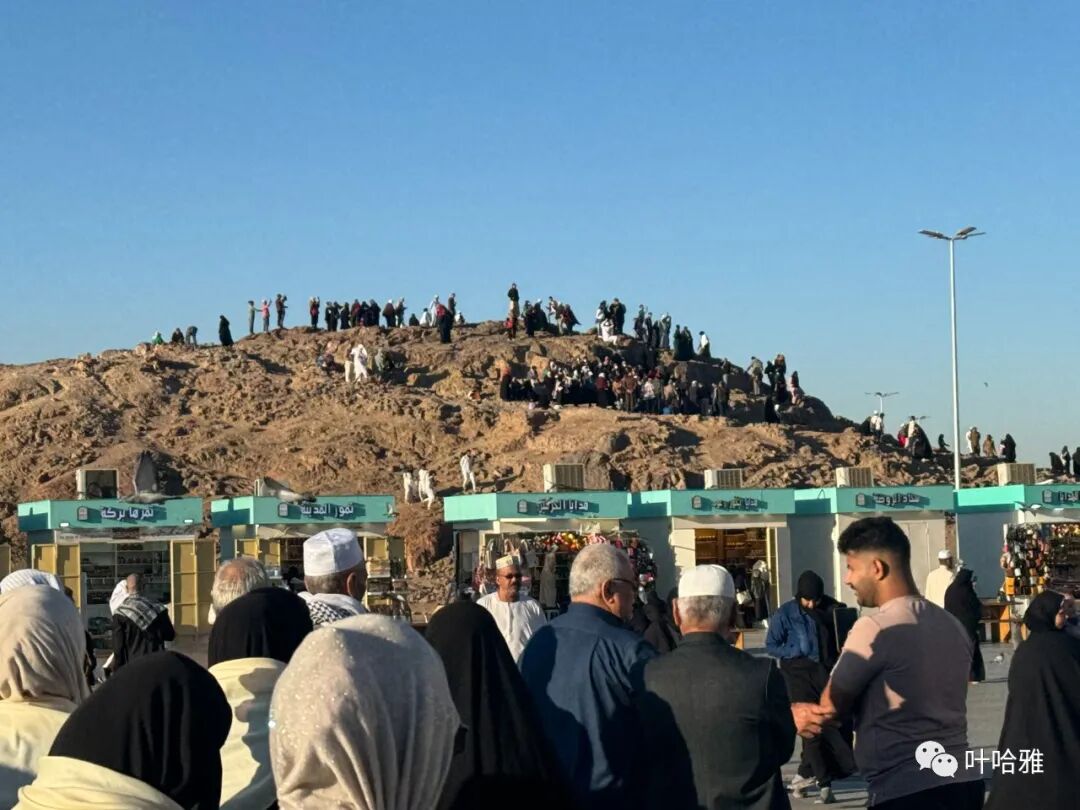
You can see many people standing on the hill to commemorate this event.
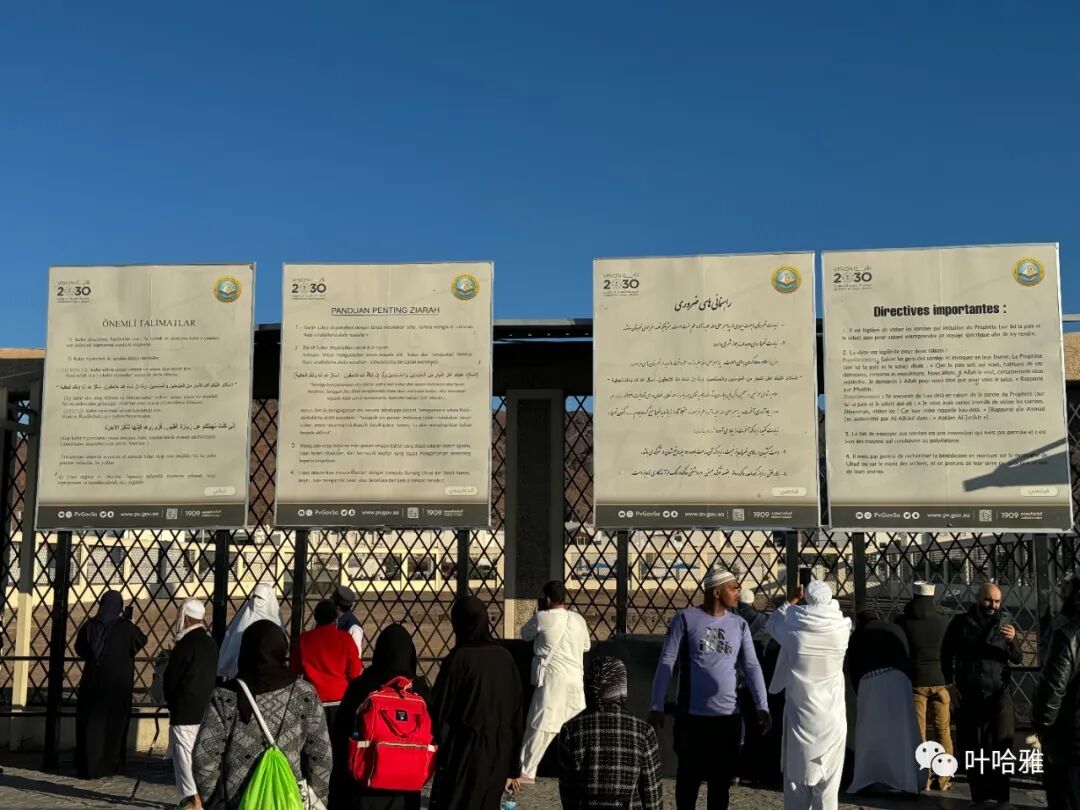
The Uhud Martyrs Cemetery is built next to the hill. It is surrounded by a wire fence, so you cannot walk inside. It is fine to look from a distance, as visiting the martyrs' graves is a sunnah.
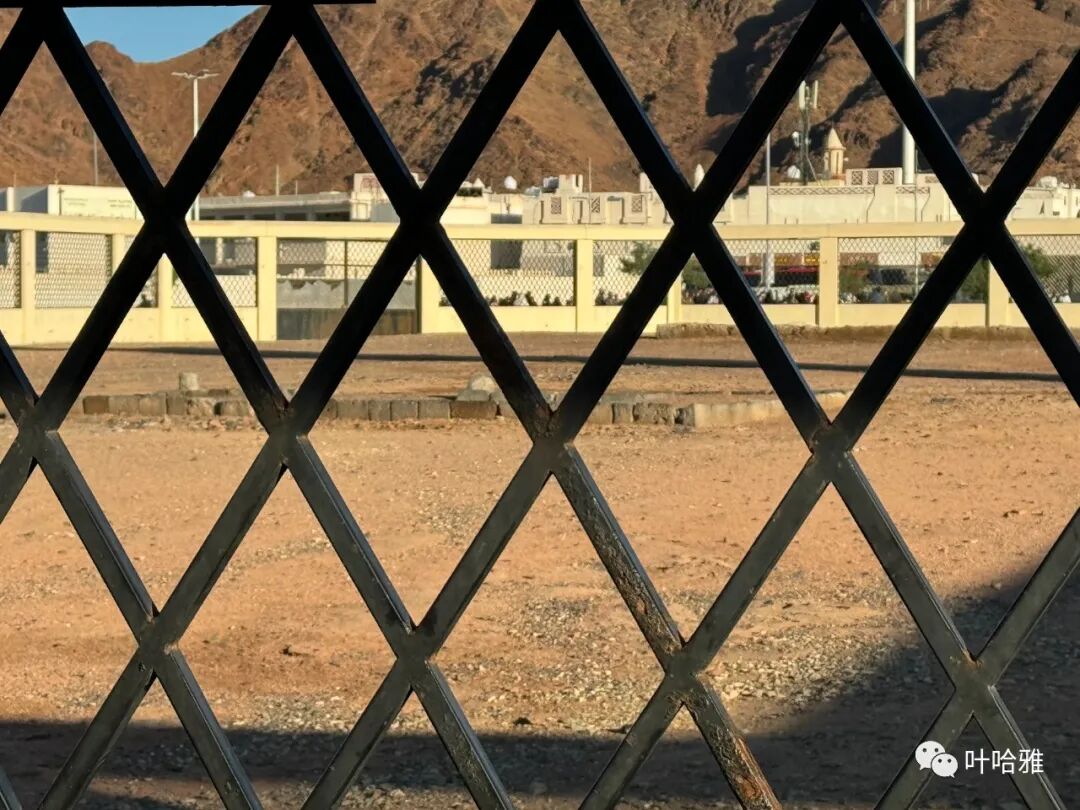
Uhud Martyrs Mosque (Sayyid Al-Shuhada)
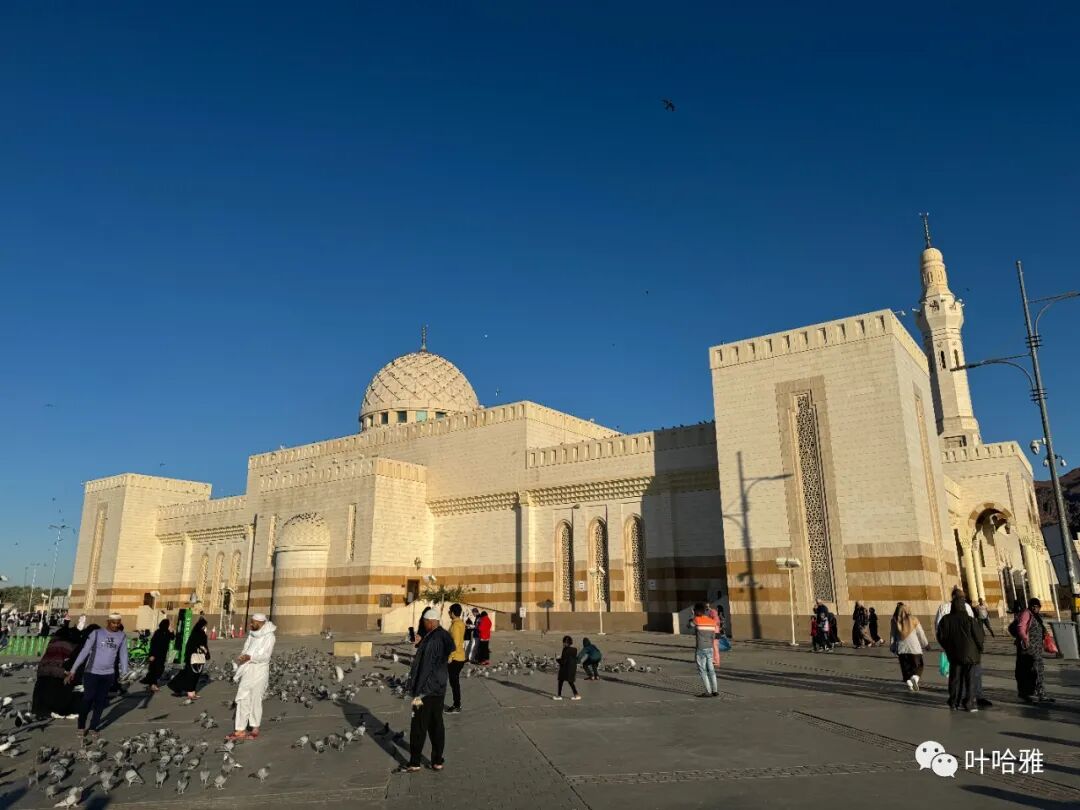
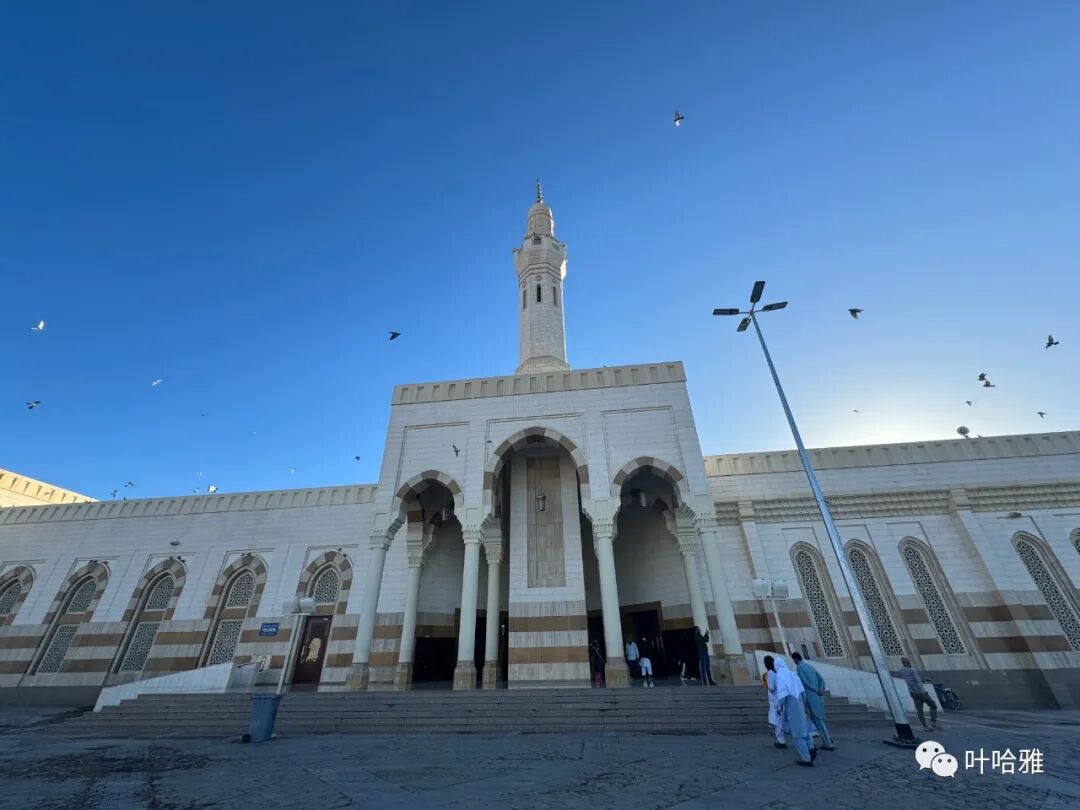
The Martyrs Mosque is on the east side of the cemetery. It is not a historical site, as it was built in 2017.
Mosque of the Two Qiblas (Masjid al-Qiblatayn)
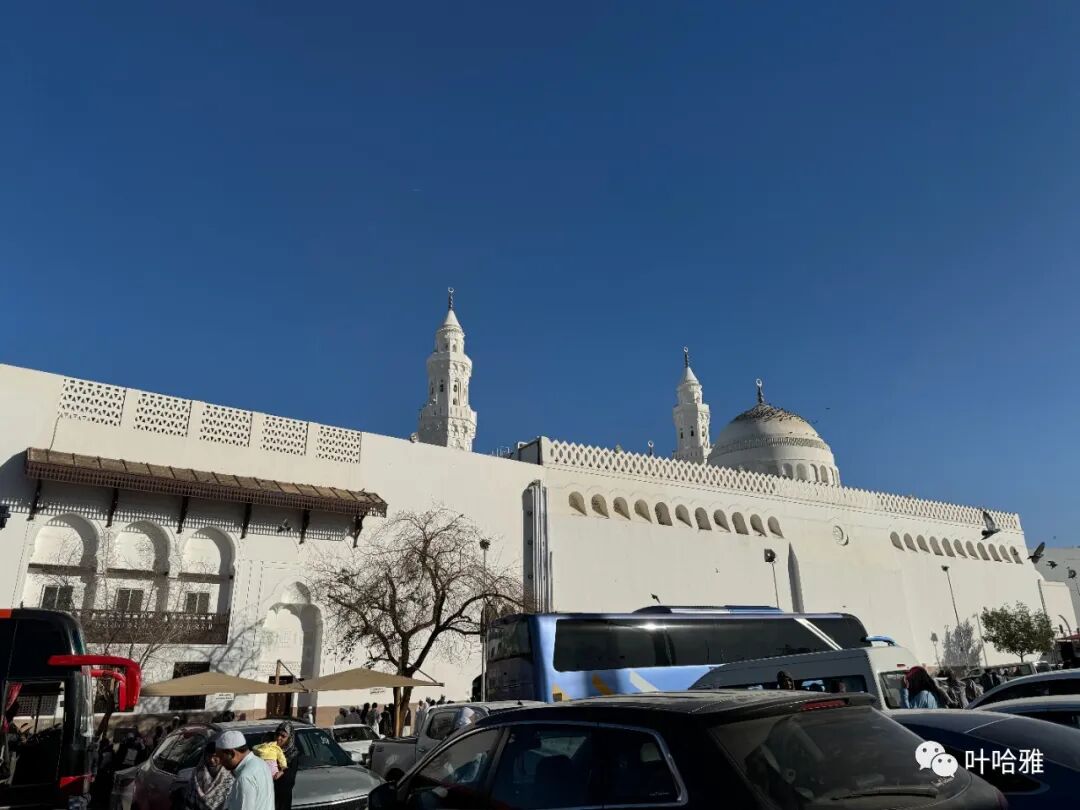
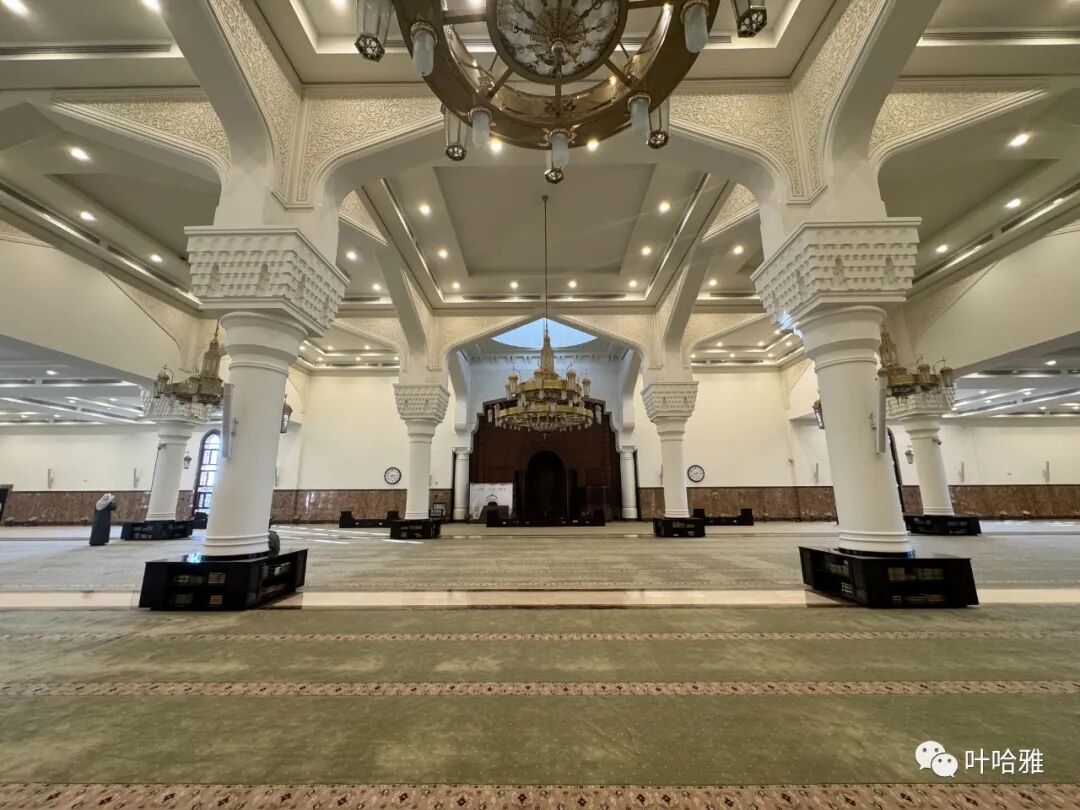
This mosque is on Khalid ibn al-Walid Street. The Prophet once led the noon namaz here. After two rak'ahs, he received a revelation from Allah (Surah Al-Baqarah, verse 144) to change the direction of prayer from Jerusalem to the Kaaba.
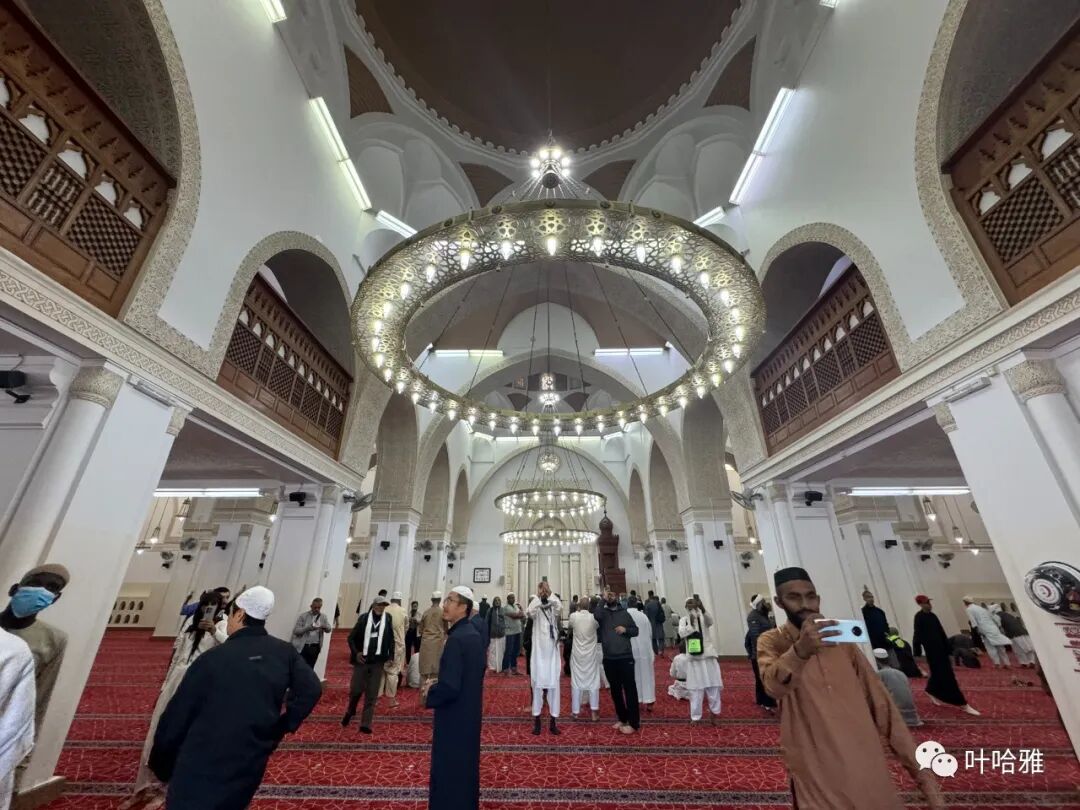
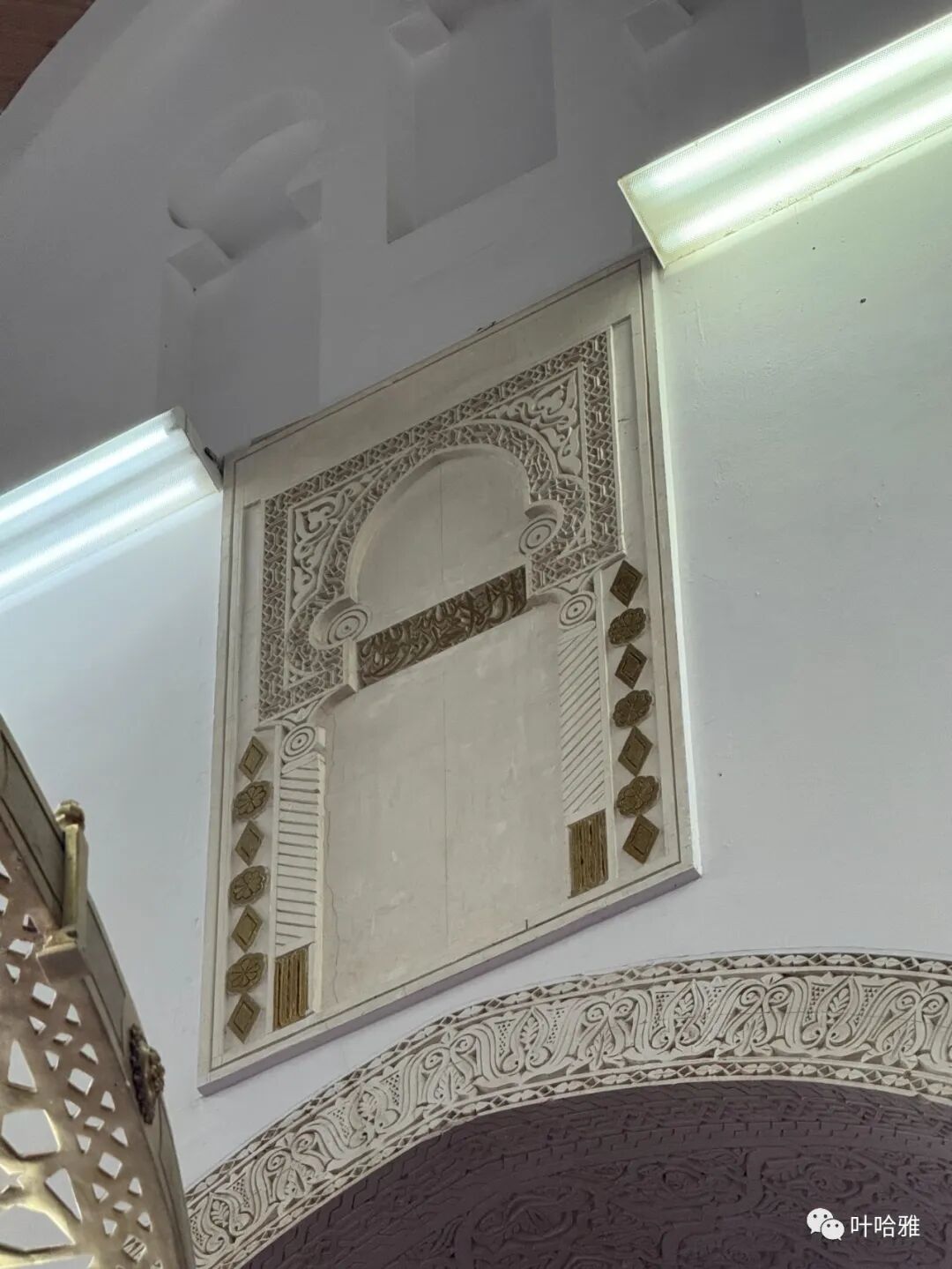
On the wall directly facing the mihrab, there is a commemorative marker for the Jerusalem direction.
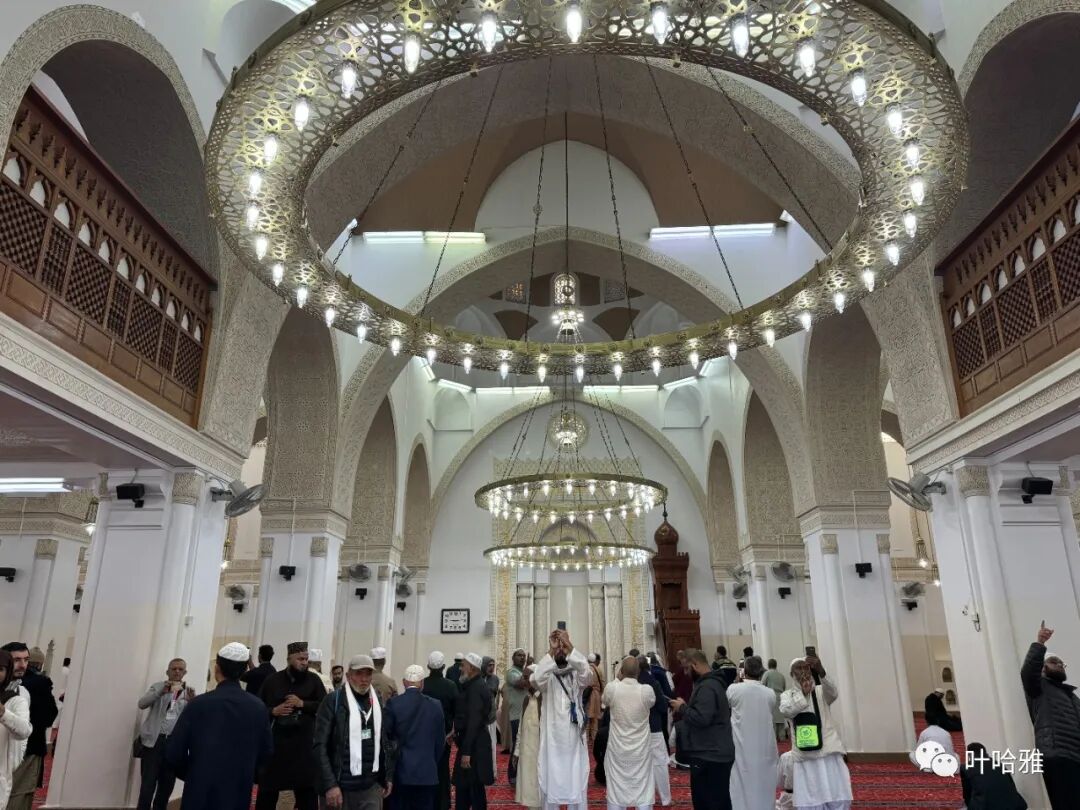
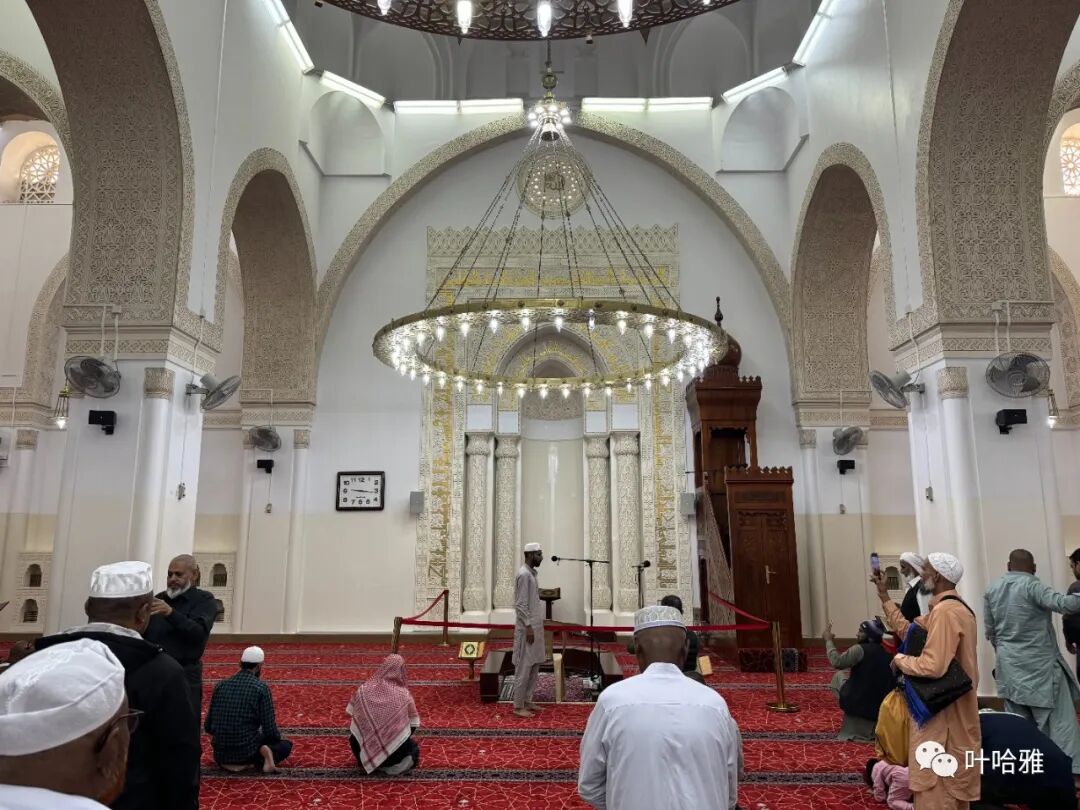
Note that the prayer direction in this mosque is still toward the Kaaba, not both directions. The Jerusalem direction is in the opposite direction of the Kaaba.
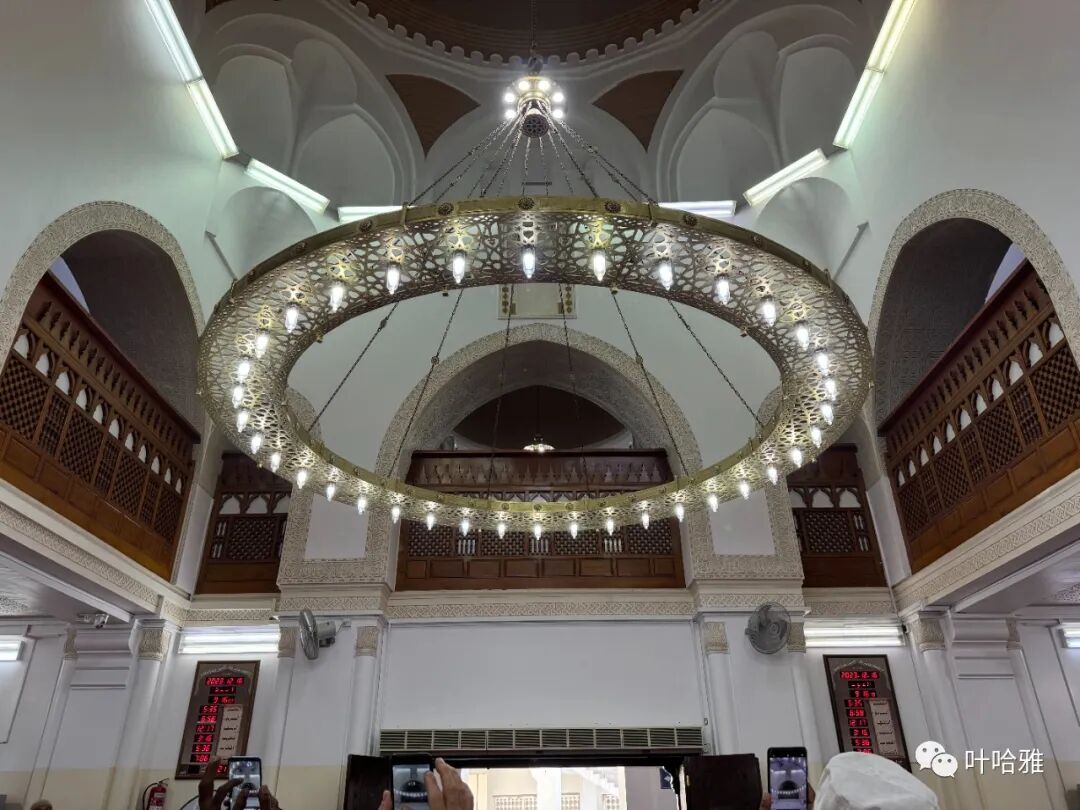
Trench Battle Mosque Complex
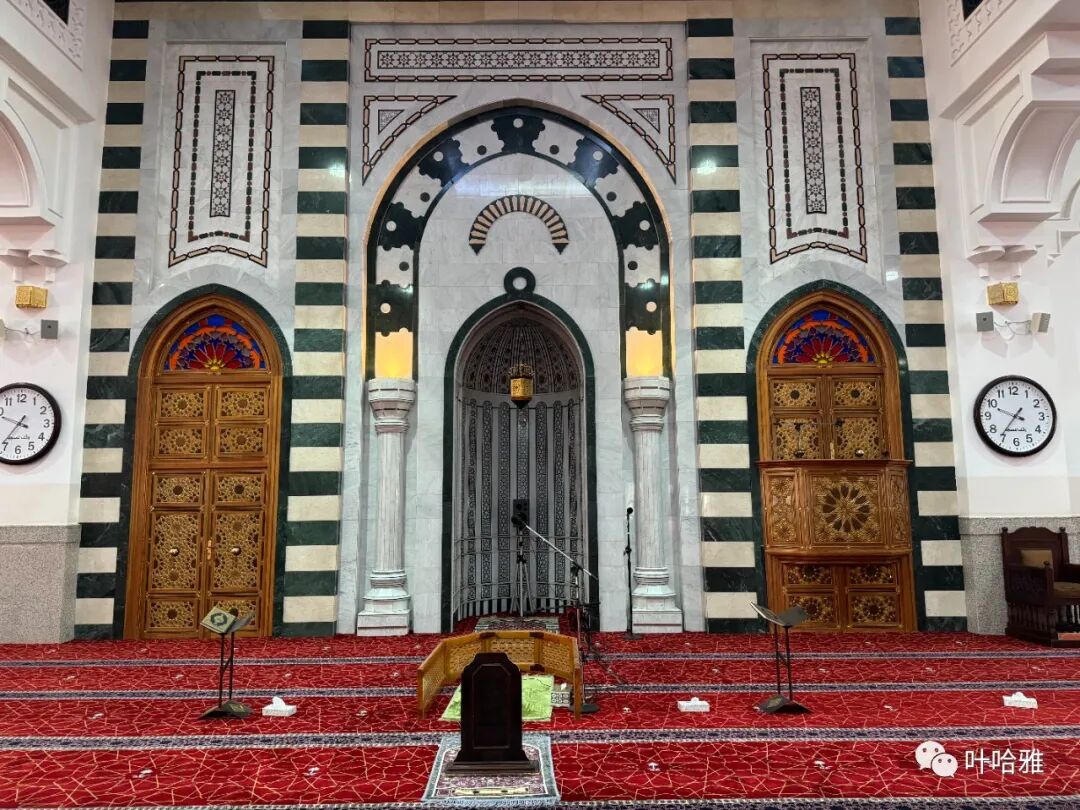
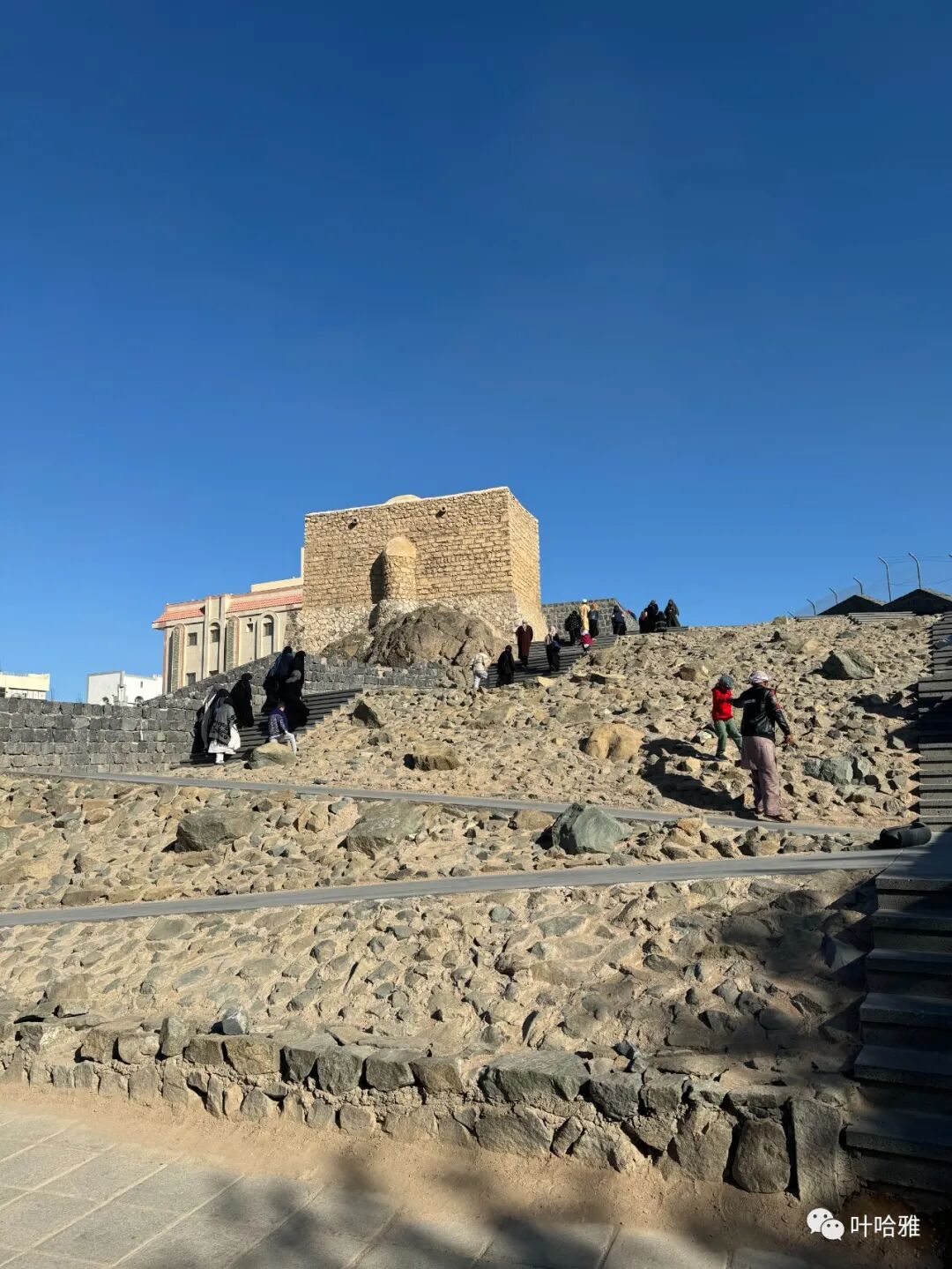
The Battle of the Trench is also called the Battle of the Confederates. The Meccan polytheists fought a decisive battle against the Muslims of Medina. The companion Salman the Persian suggested digging a trench, and the Prophet accepted his advice. During this time, verses 9-25 of Surah Al-Ahzab and verse 26 of Surah Al-Imran were revealed. The trench started near the Mustarah Mosque and ended near Mount Sal, facing the Fath Mosque complex. It was 2.5 kilometers long, 3 meters deep, and 4 meters wide, but the historical trench has long been filled in.
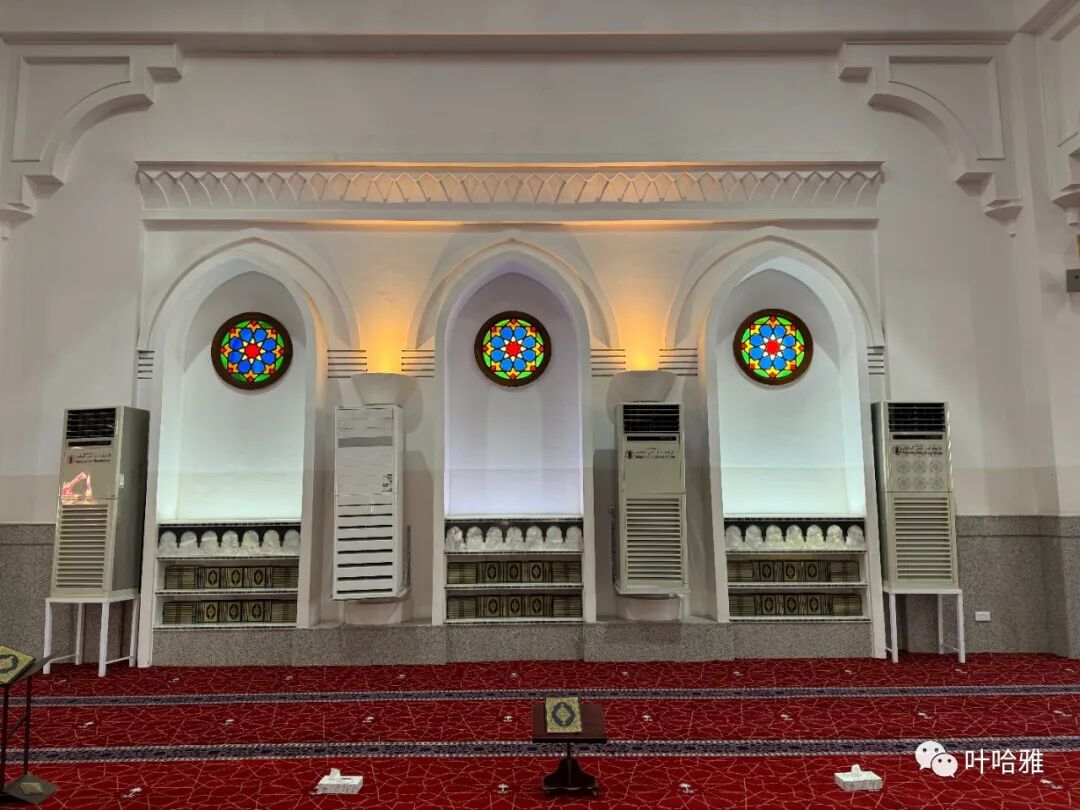
The Fath (Seven) Mosque complex is part of the trench area. These mosques served as stations and lookout points during the battle. Each mosque is named after the companion who was stationed there, except for the Fath Mosque, which was built on the site of the dome the Prophet used. These mosques were built during the era of Umar ibn Abd al-Aziz and were restored at different times. The mosques are:
1. Ali Mosque
2. Abu Bakr Mosque.
3. Salman the Persian Mosque
4. Al-Fath Mosque
5. Umar Mosque
6. Sa'd ibn Mu'adh Mosque
Ali Mosque
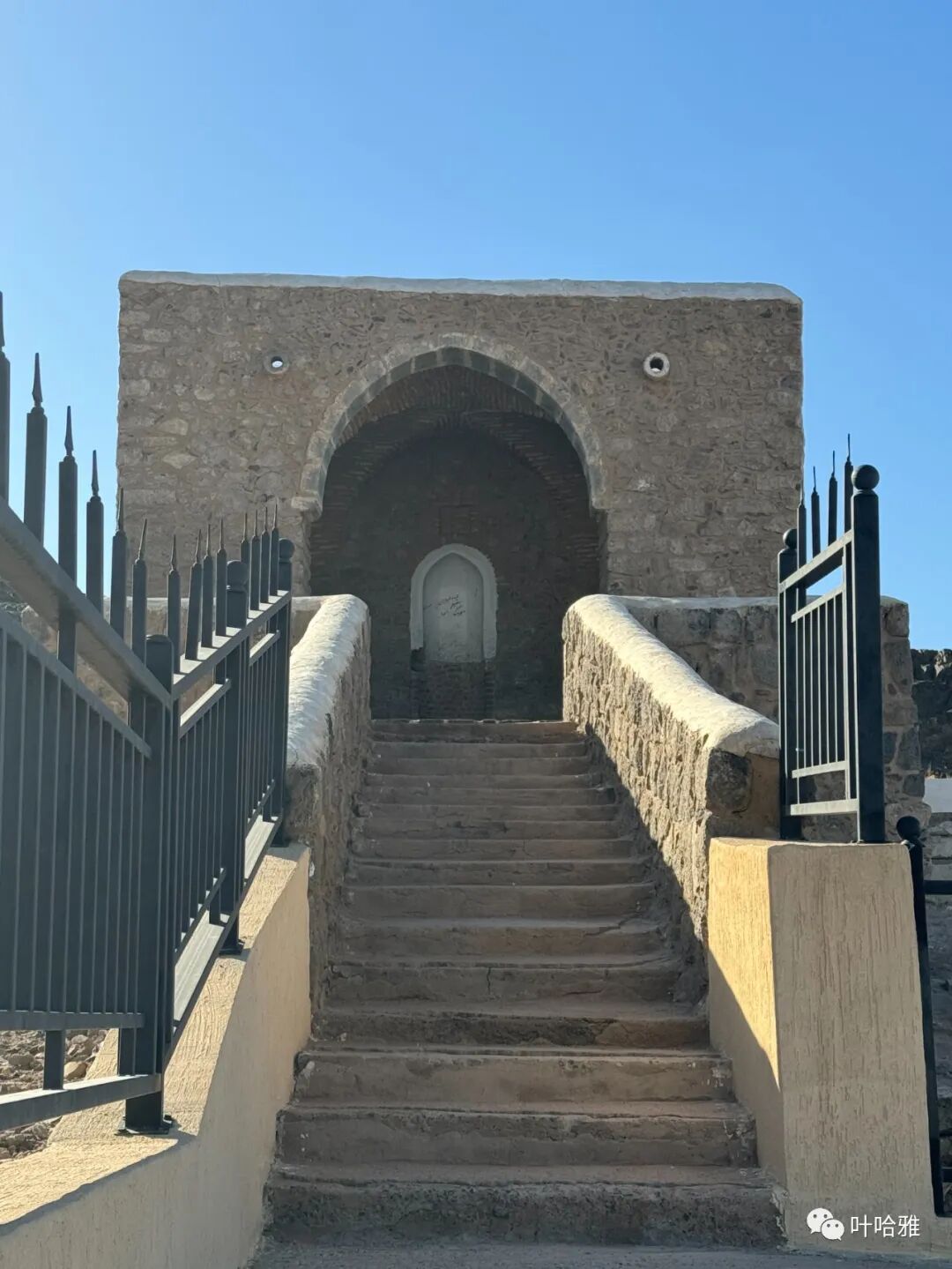
Abu Bakr Mosque
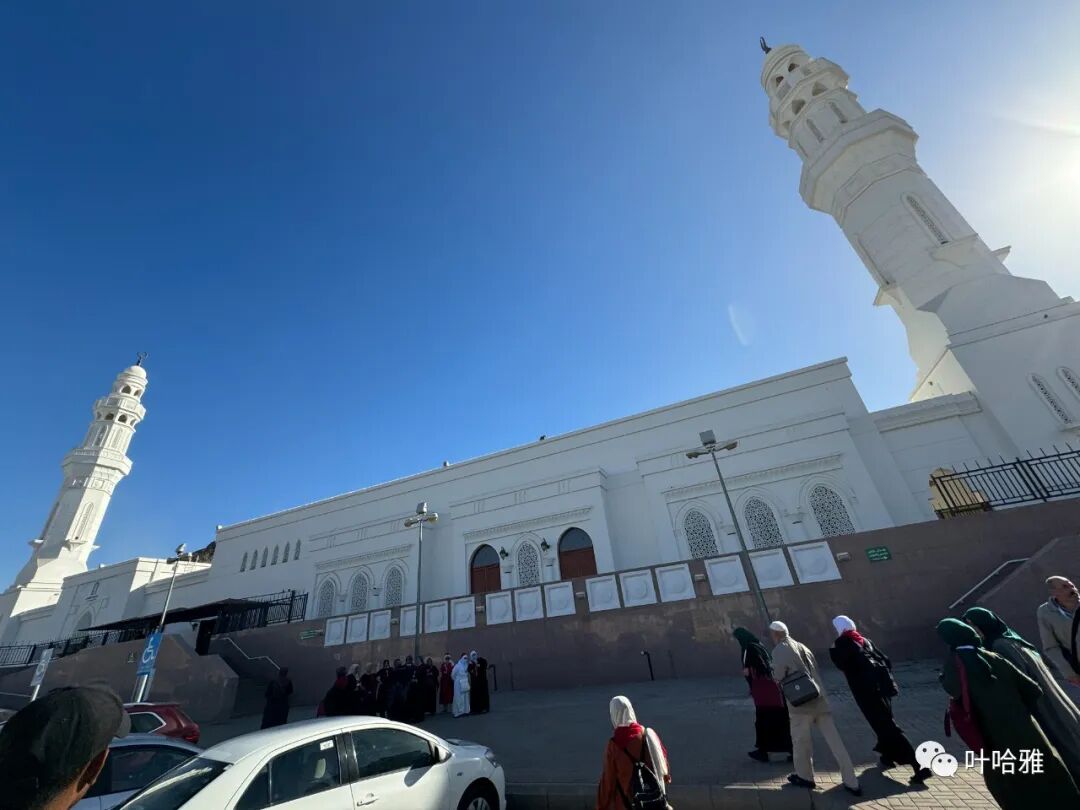
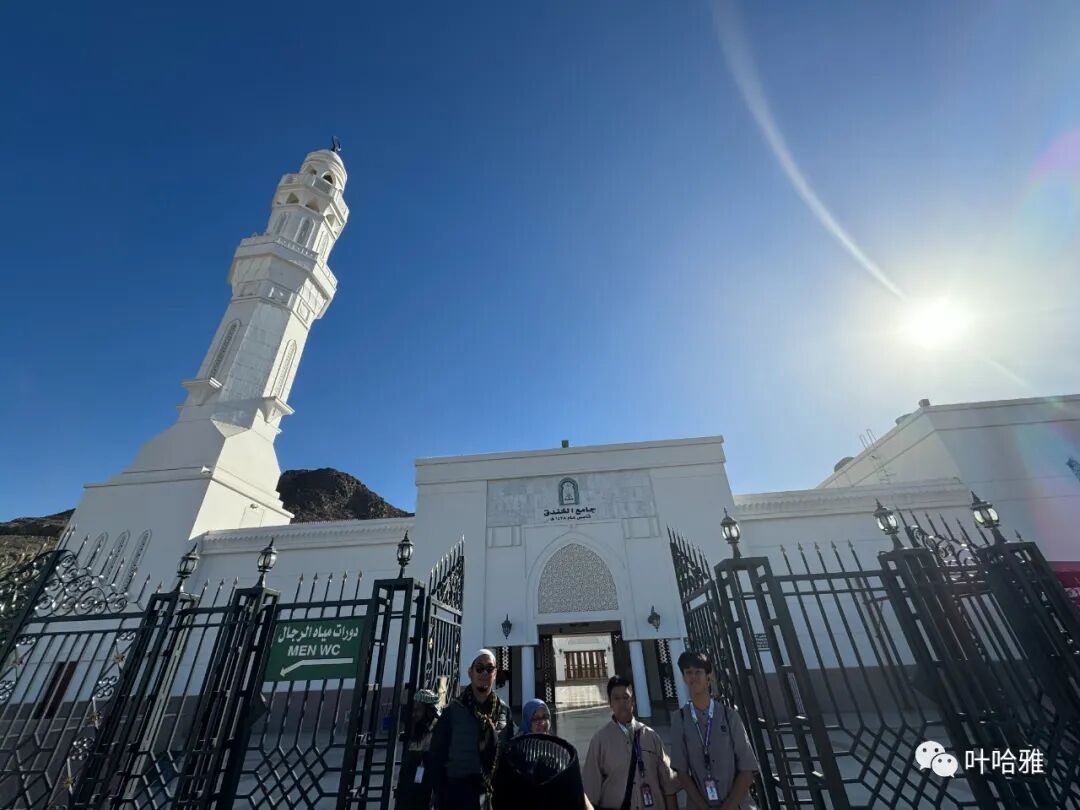
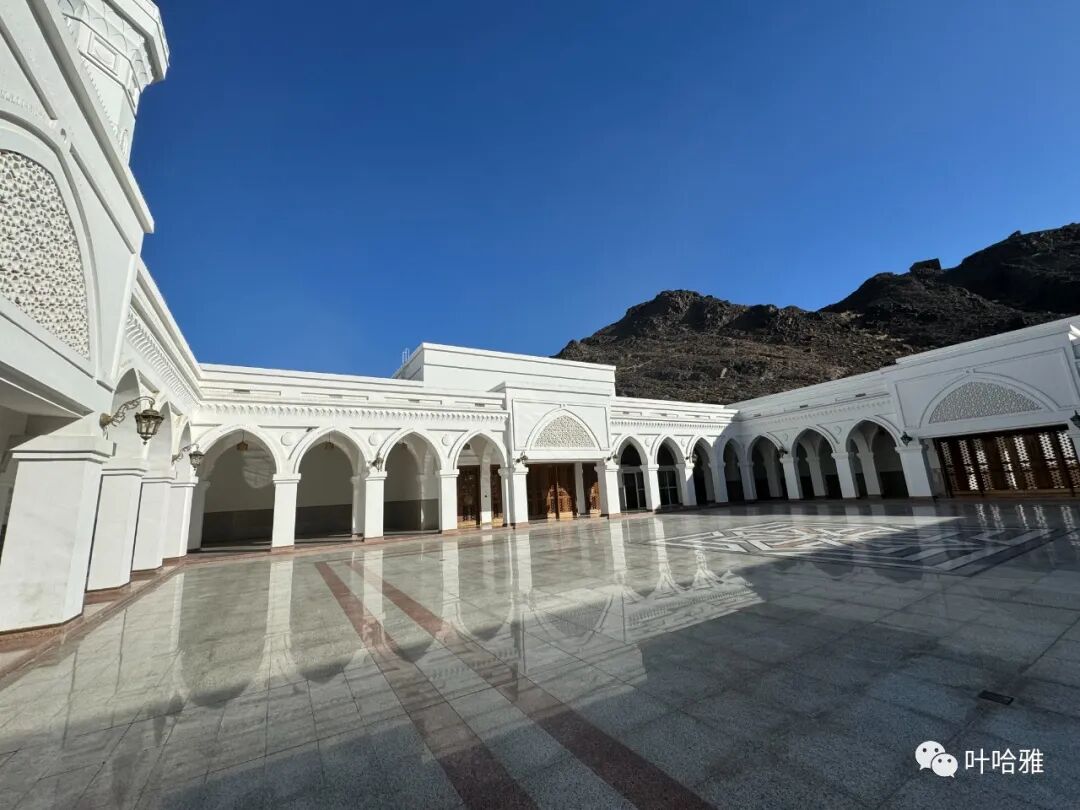
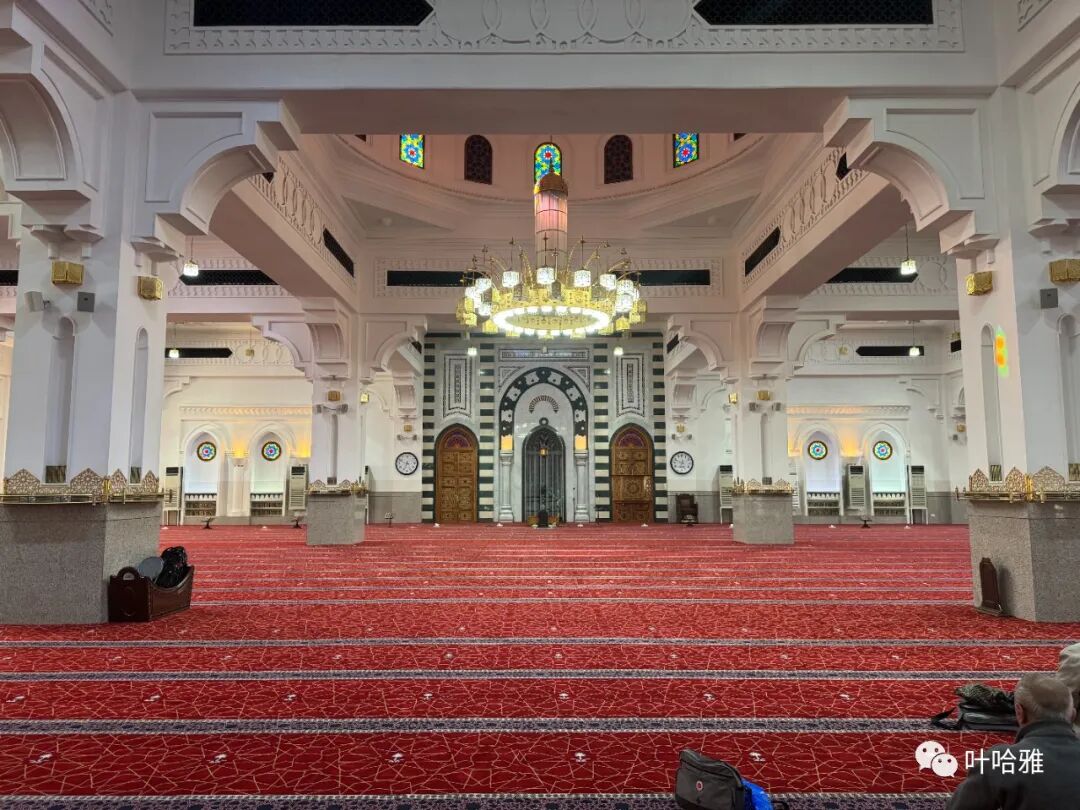
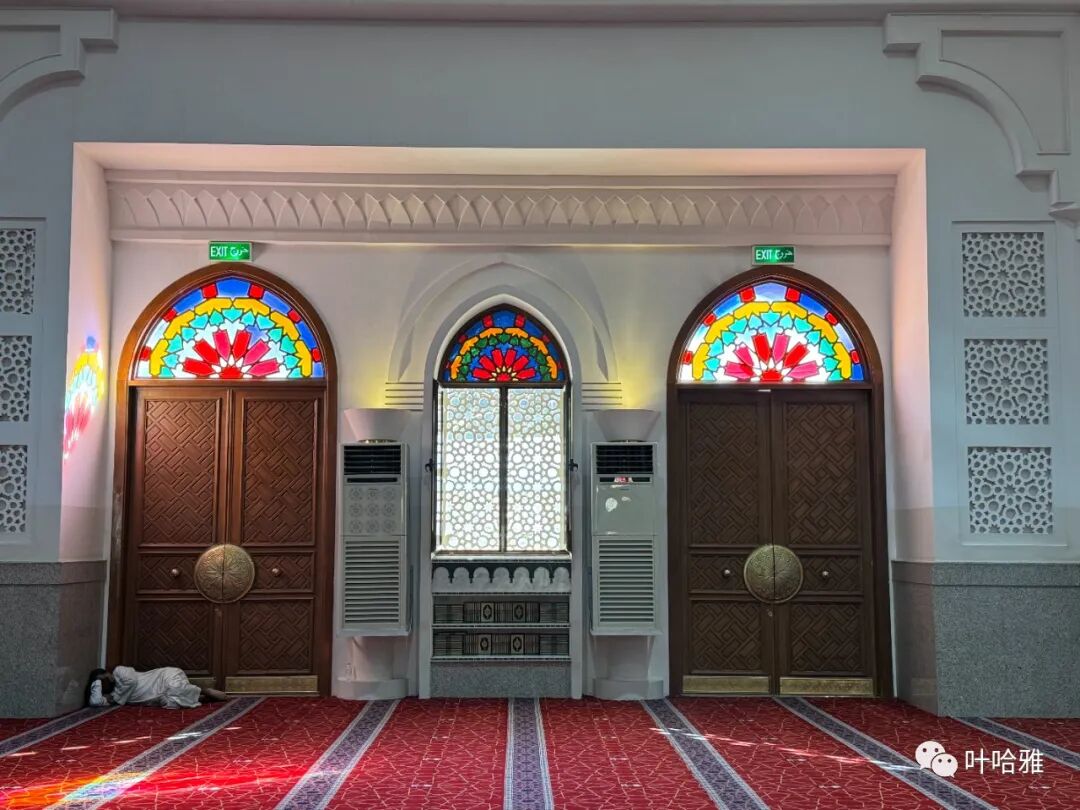
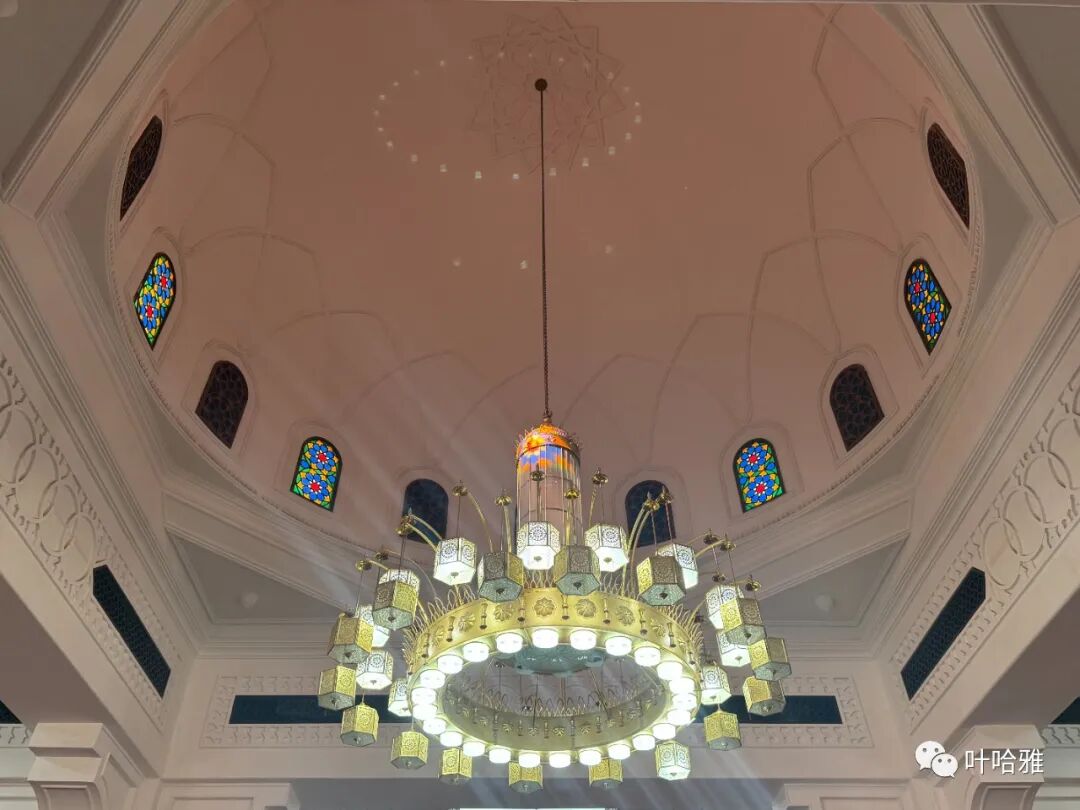
Salman Mosque
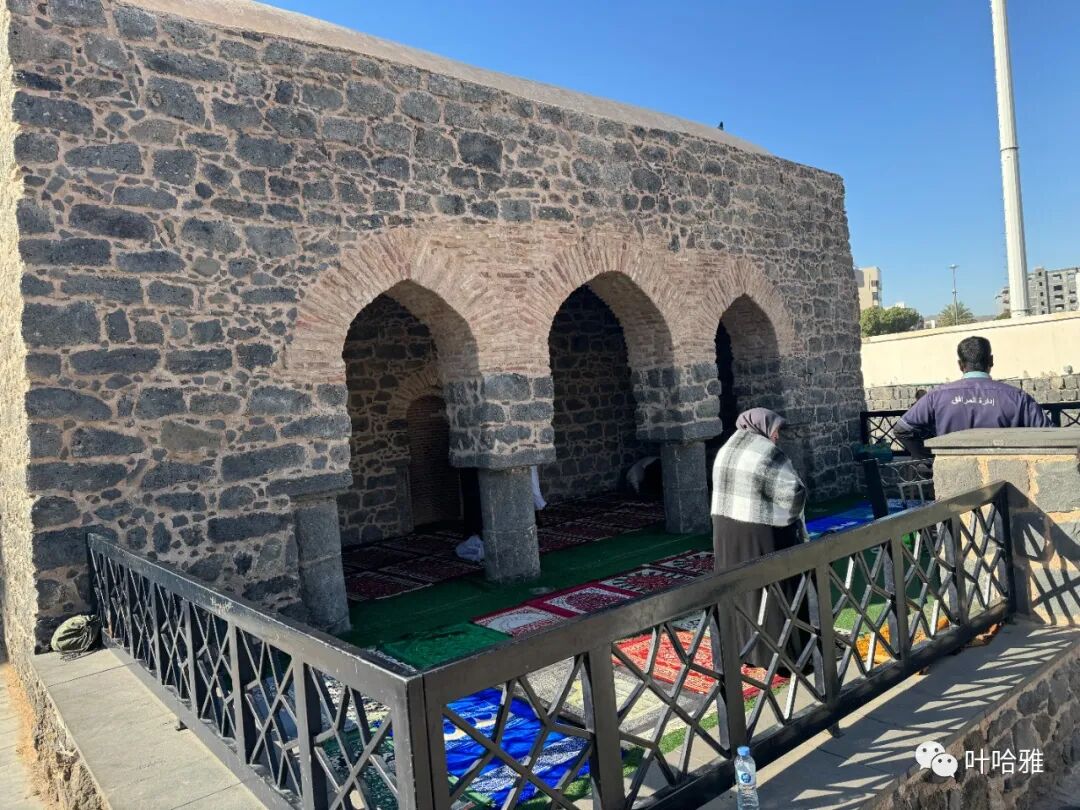
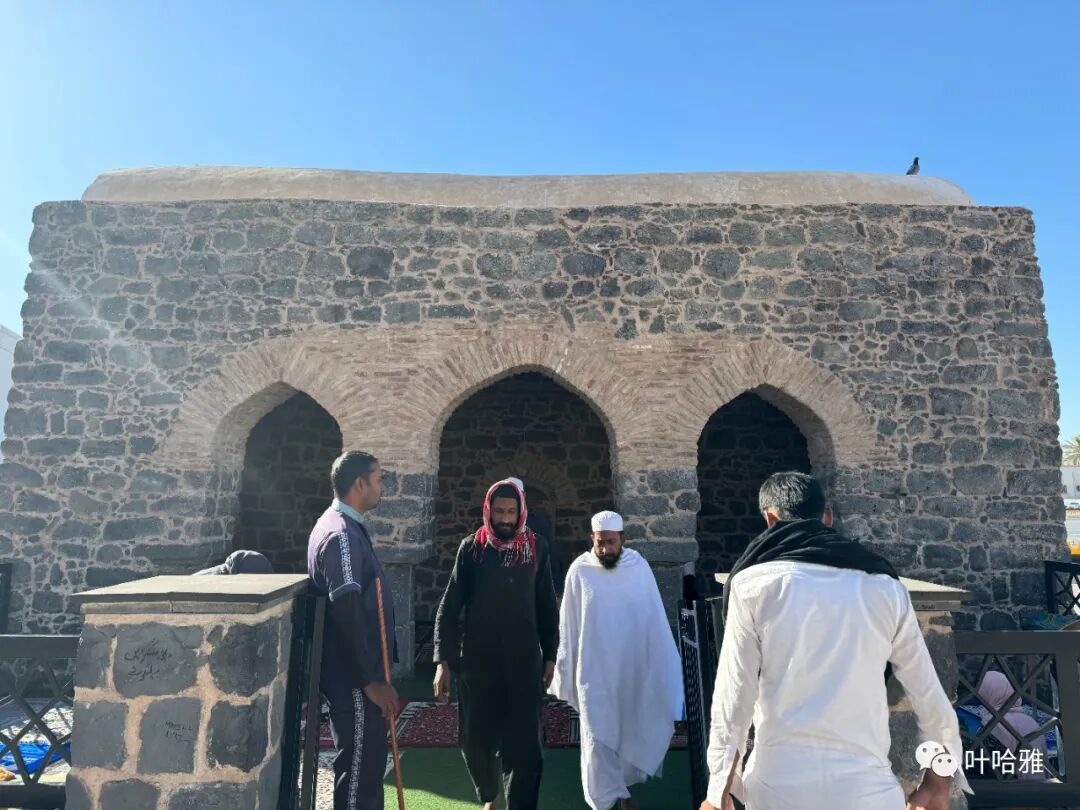
Al-Fath Mosque
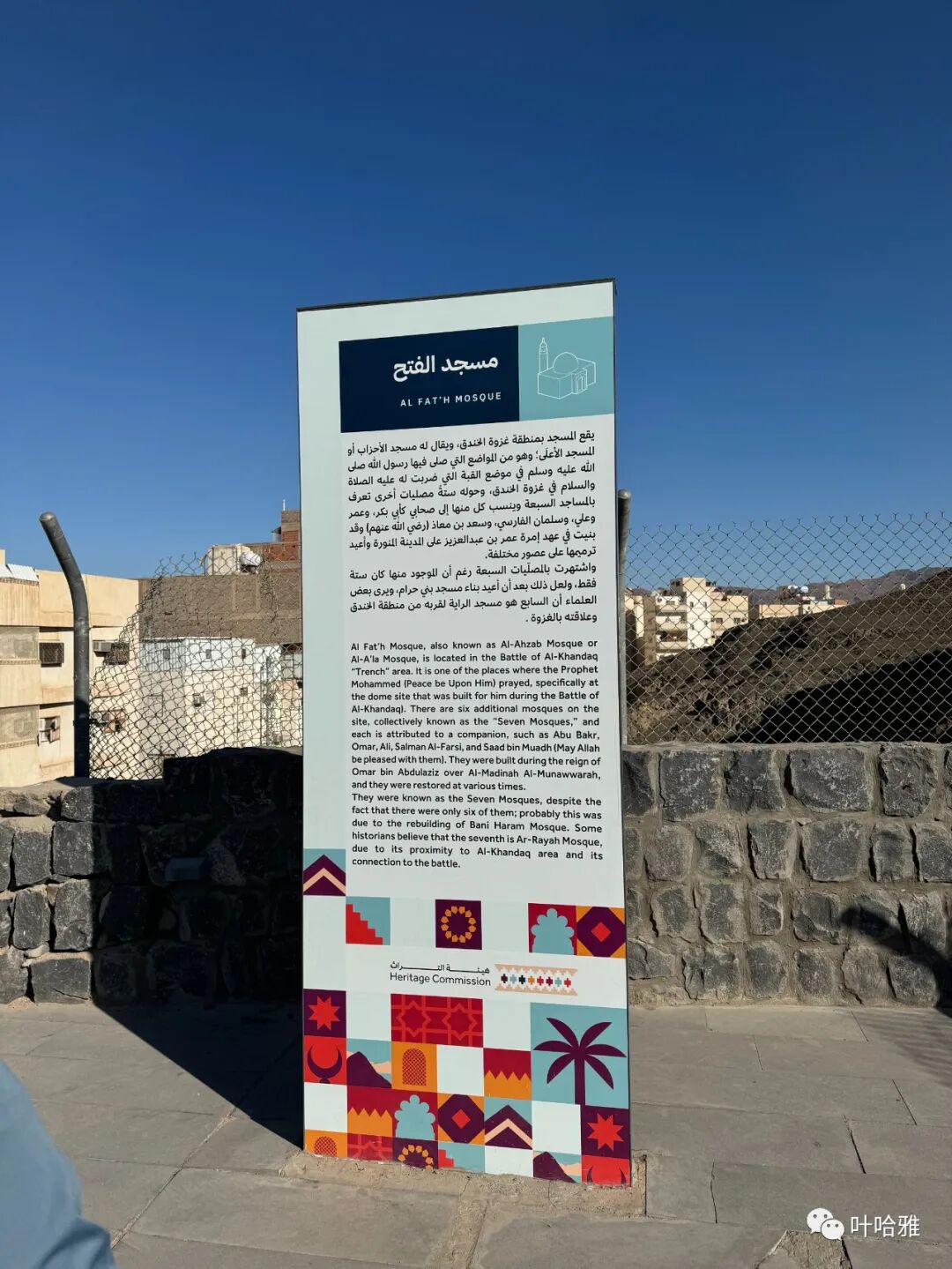
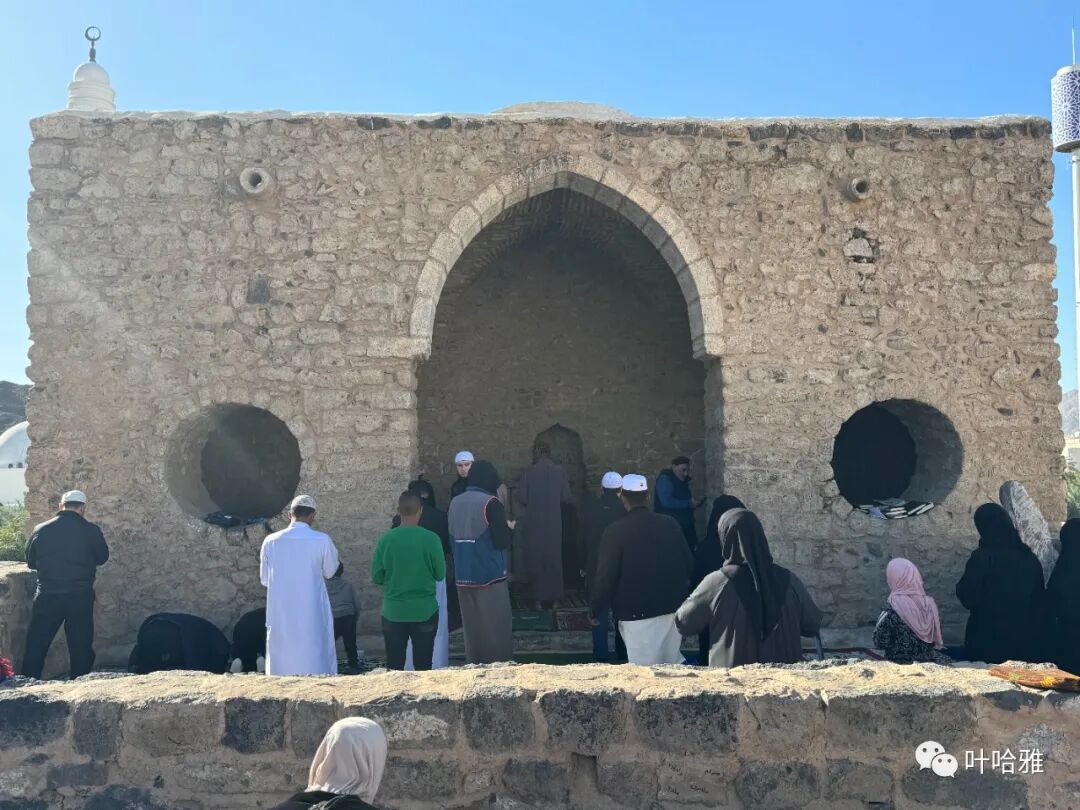
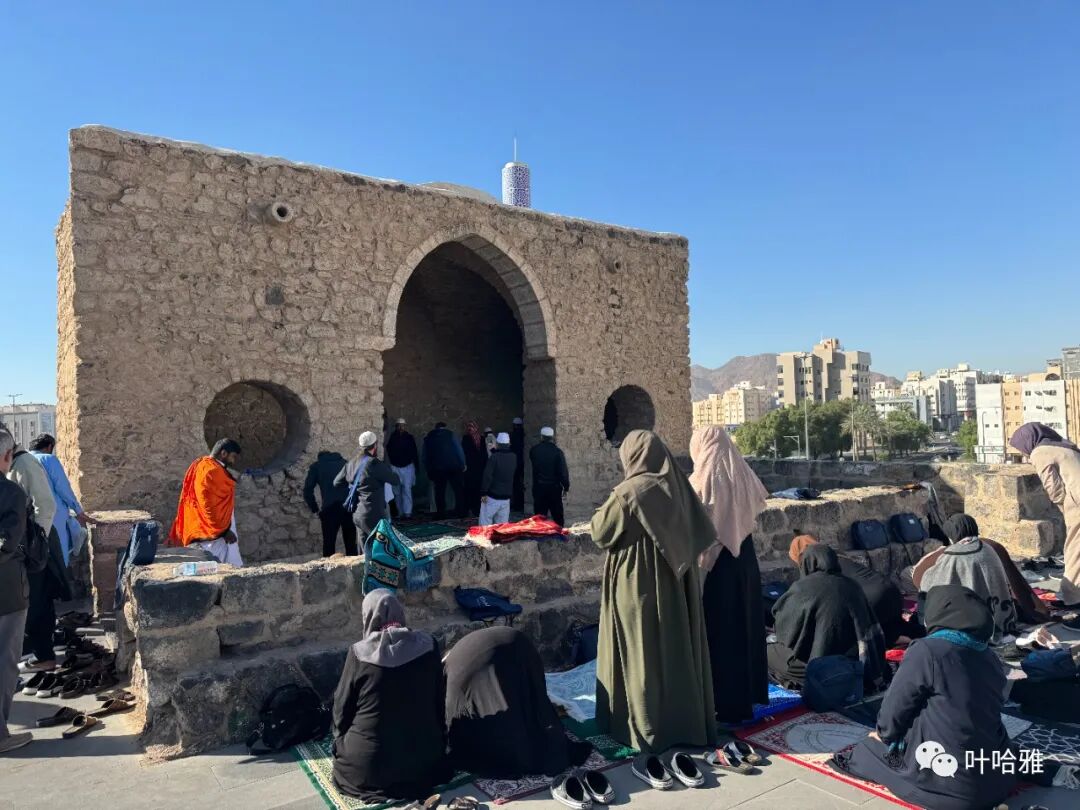
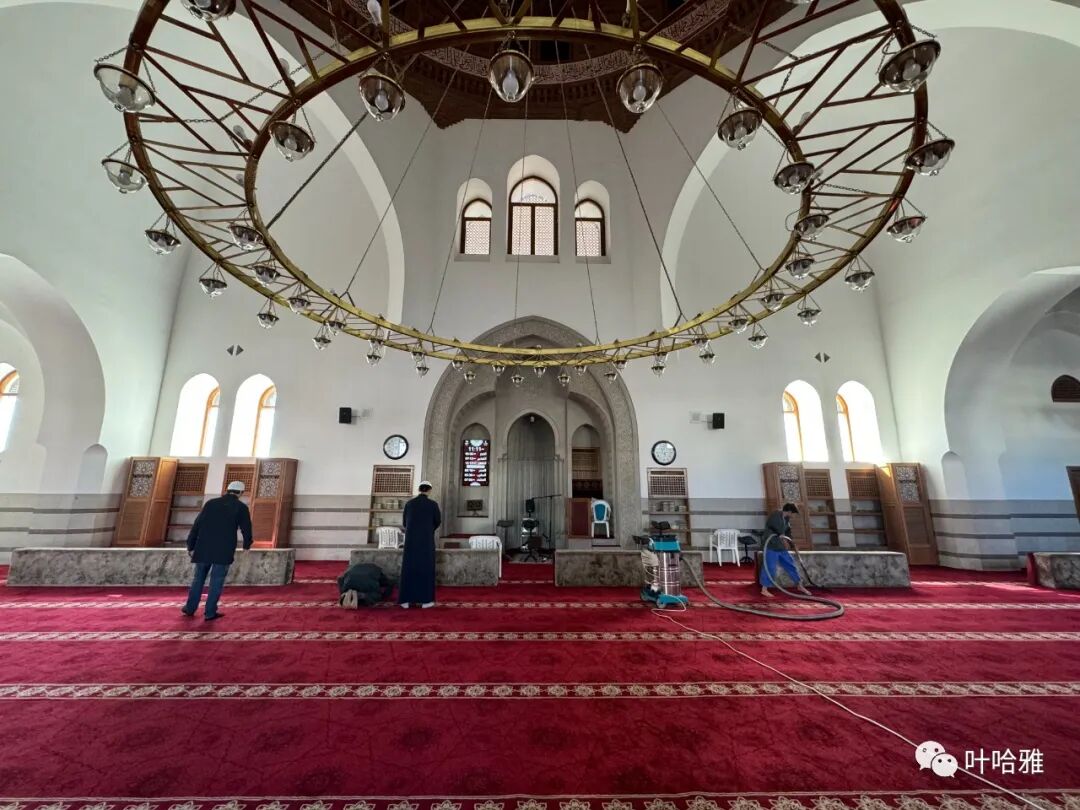
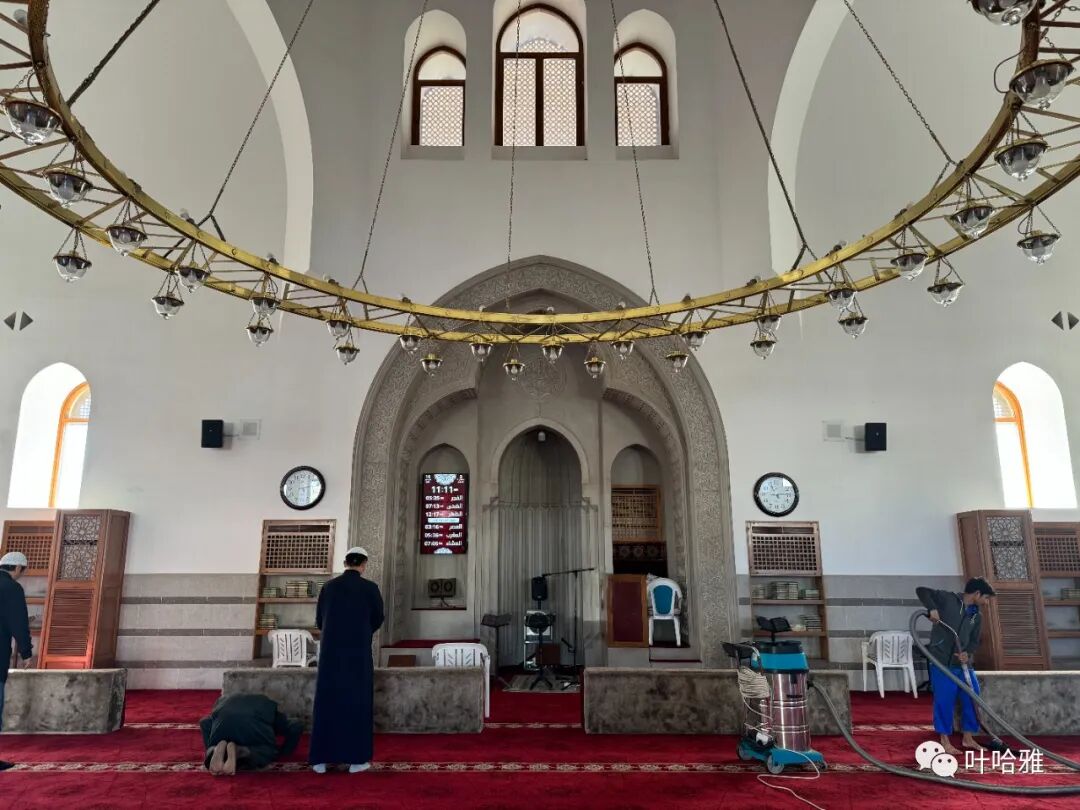
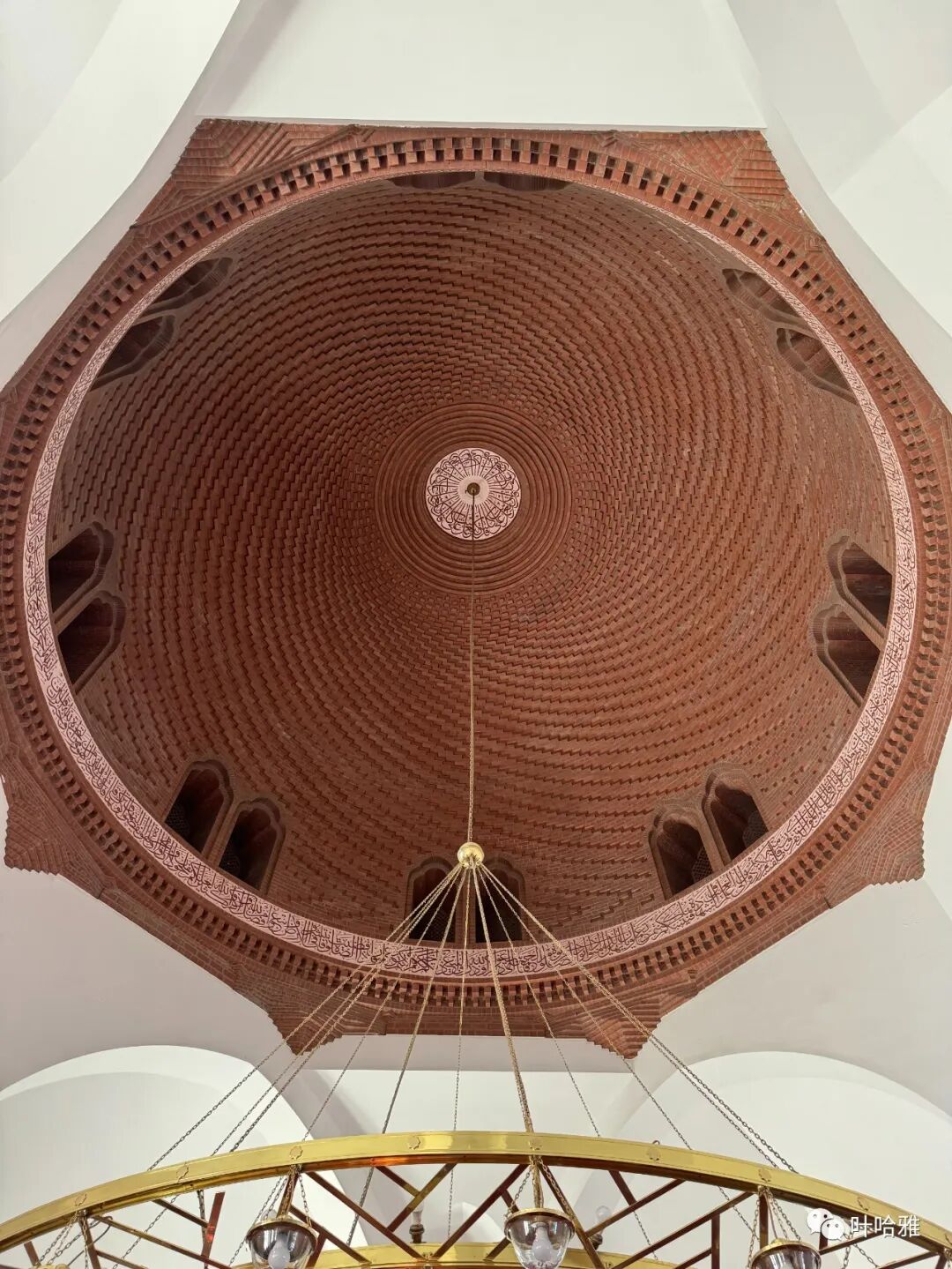
Quba Mosque
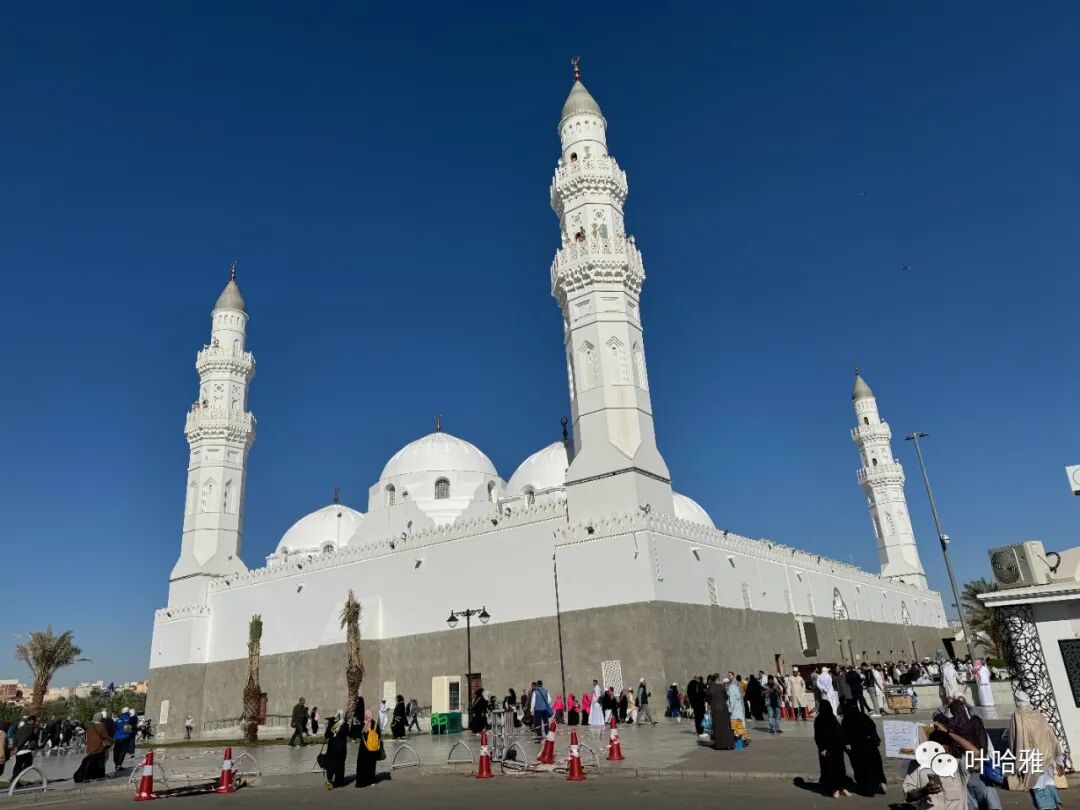
Quba Mosque is 3.2 kilometers from the Prophet's Mosque. This is the site of the first mosque built by the Prophet and his companions in Medina. 'A mosque founded on righteousness from the first day is more worthy for you to stand in for prayer.' Verse 108 of the Repentance chapter in the Quran refers to Quba Mosque.
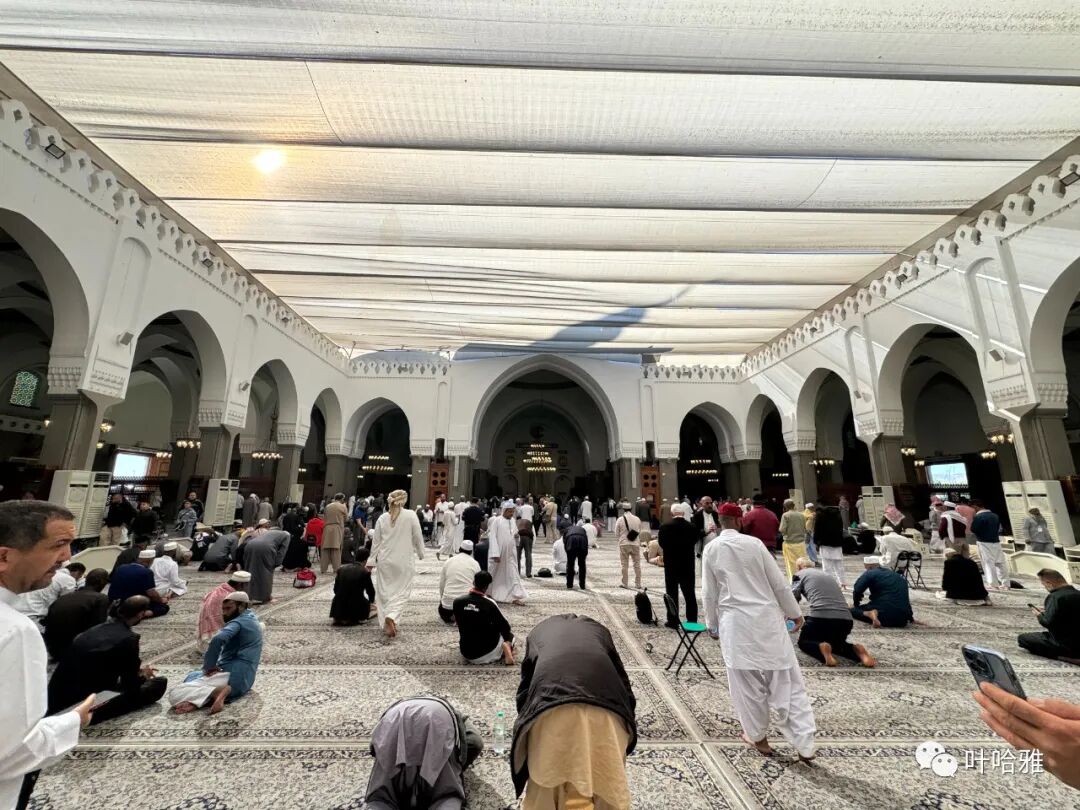
The Prophet said, 'Whoever performs wudu at home and then prays in Quba Mosque will receive the reward of an Umrah.' (Sunan Ibn Majah) People say those who live near Quba Mosque are blessed, as they can earn the reward of an Umrah just by performing namaz there.
Ring Well (Bir Aris)
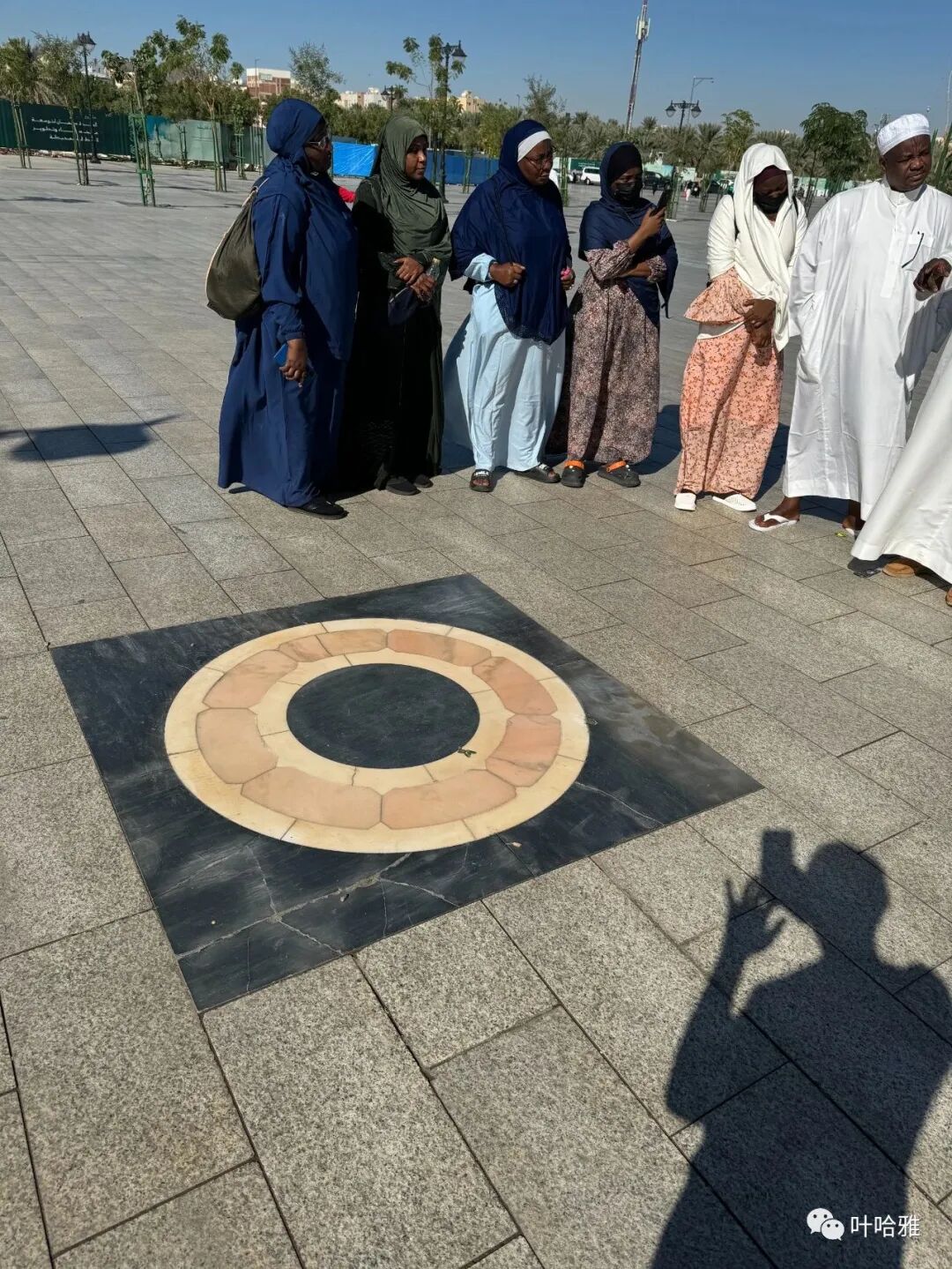
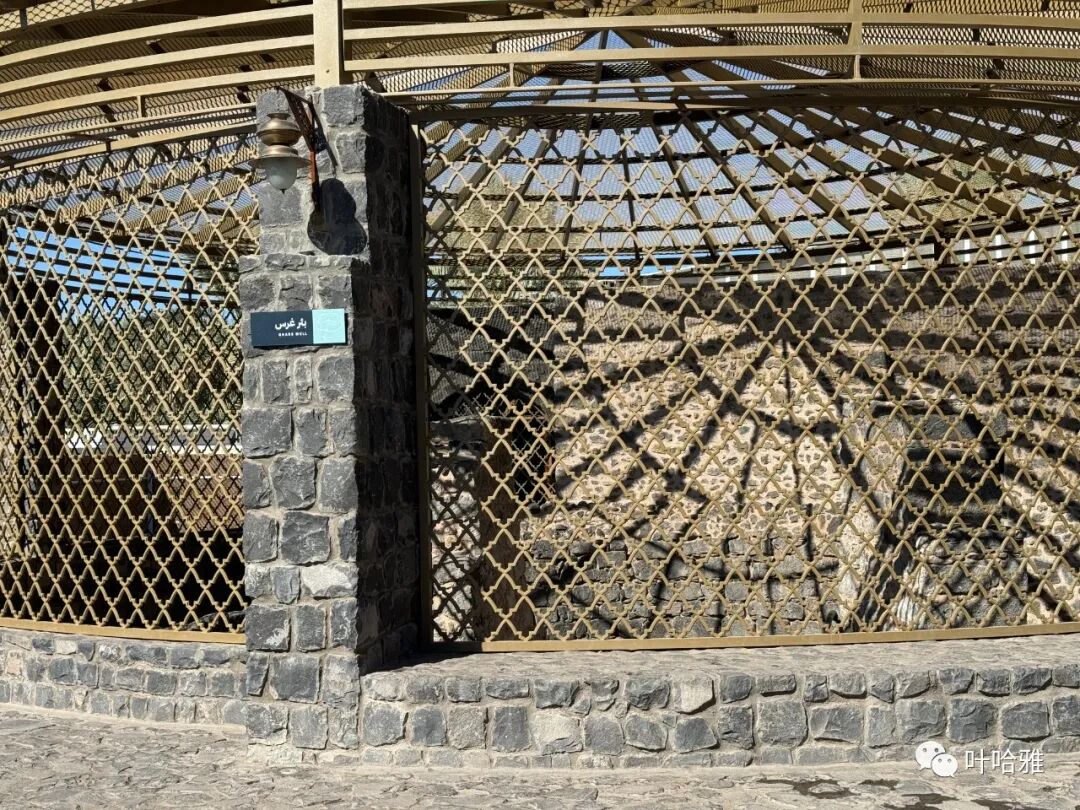
Located on the west side of Quba Mosque, the Prophet once sat by this well with his legs dangling over it. Abu Bakr, Umar, and Uthman later came to see him and sat by the well as well, where the Prophet gave them the glad tidings of Paradise. (Sahih Muslim 2403)
The Prophet once wore a ring, which later passed to Abu Bakr, then to Umar, and finally to Uthman. Uthman accidentally dropped the ring into this well. The ring was engraved with the words, 'Muhammad is the Messenger of Allah.'
This well was filled in at the end of the 14th century of the Hijri calendar to widen the road, and only the circle shown in the photo remains as a marker.
Jumu'ah Mosque
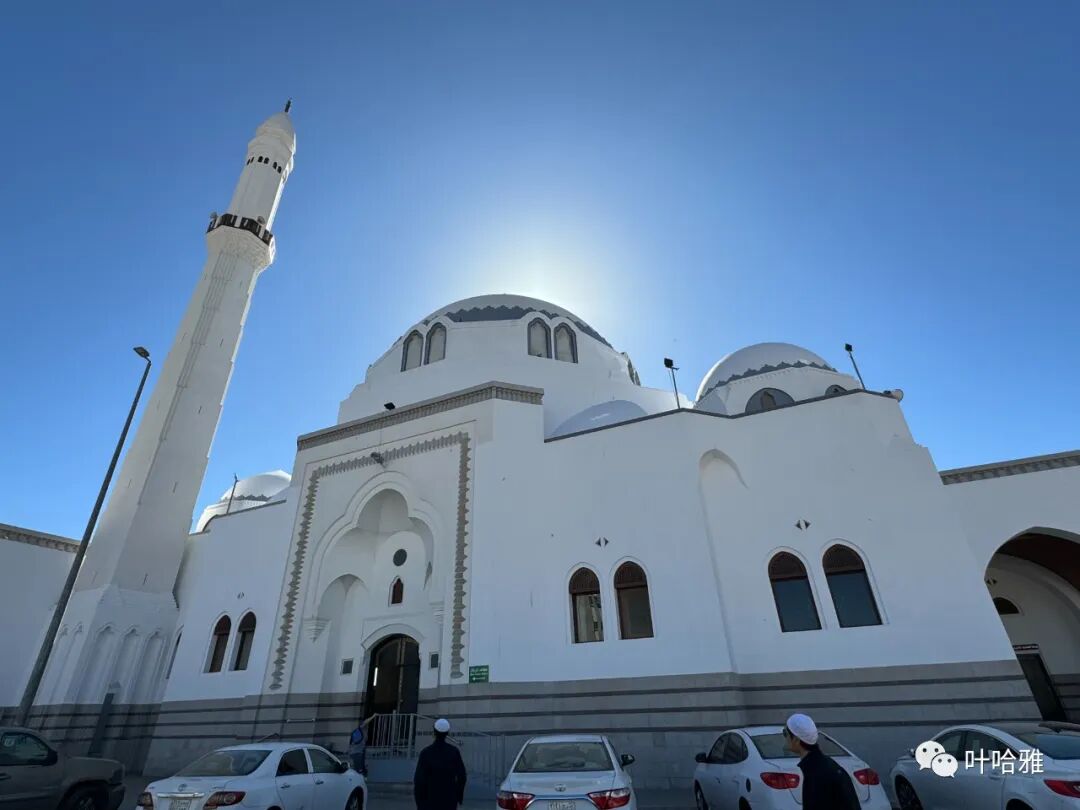
While traveling to Medina on a Friday, the Prophet performed his first Jumu'ah prayer with the Banu Salim tribe. He later built a mosque on that spot, which is now known as Jumu'ah Mosque, located one kilometer from Quba Mosque.
Aris Well
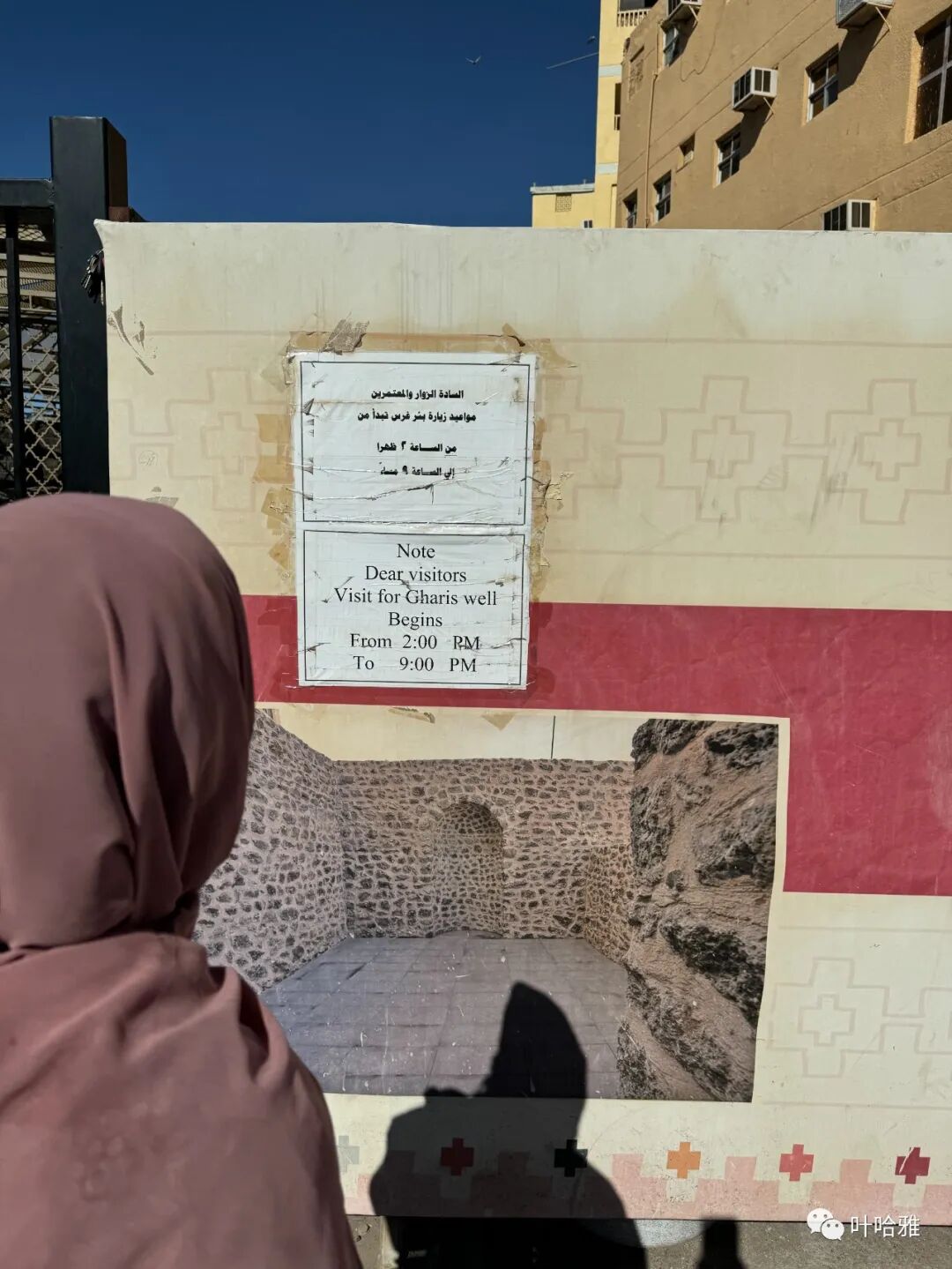
Aris Well is located one kilometer northeast of Quba Mosque. The Prophet often drank water from here and requested that this well's water be used to wash his body after he passed away.
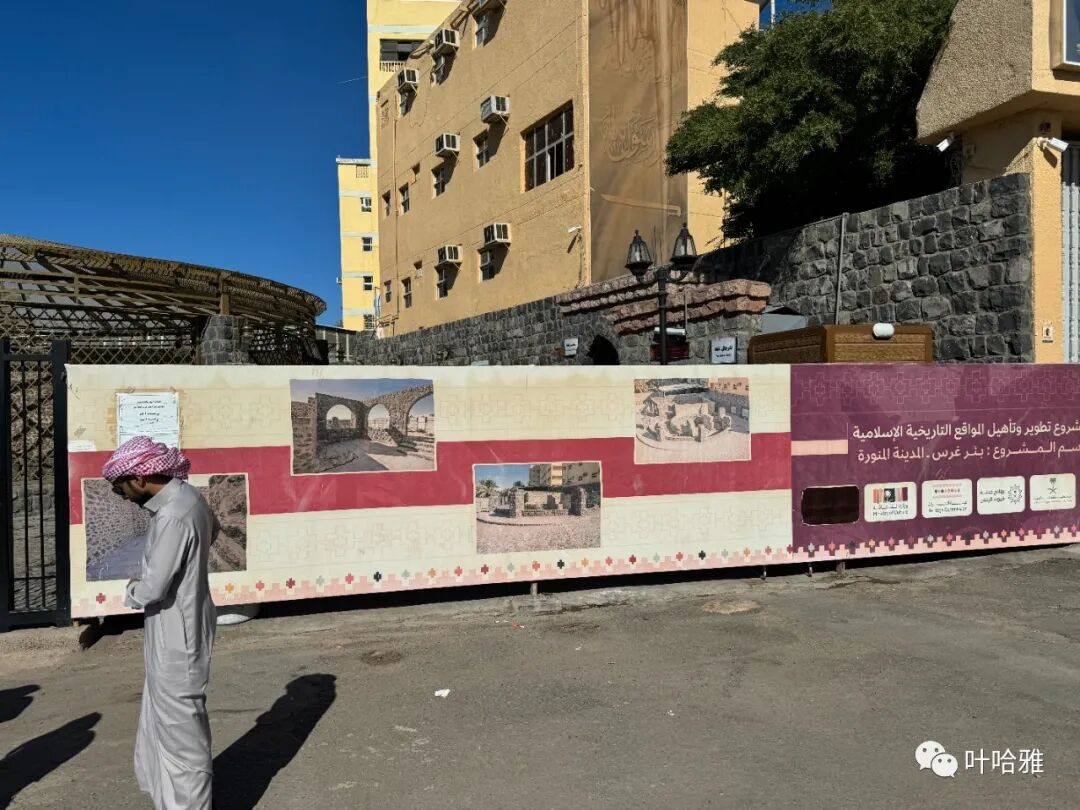
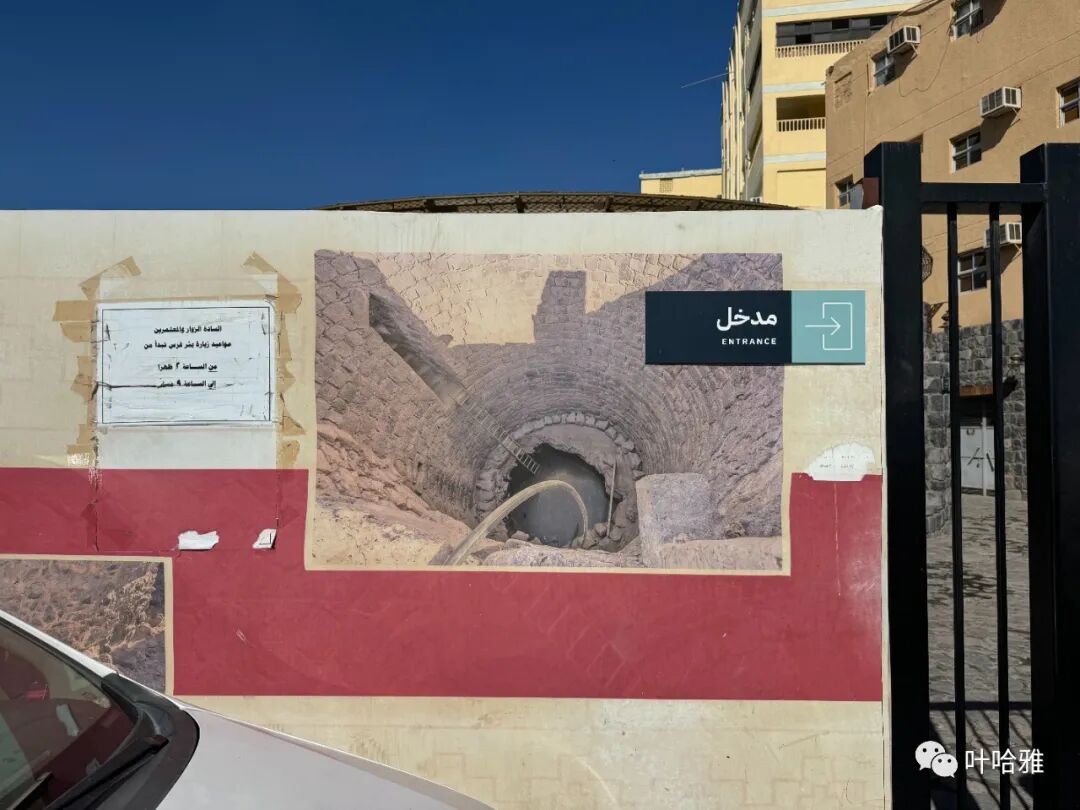
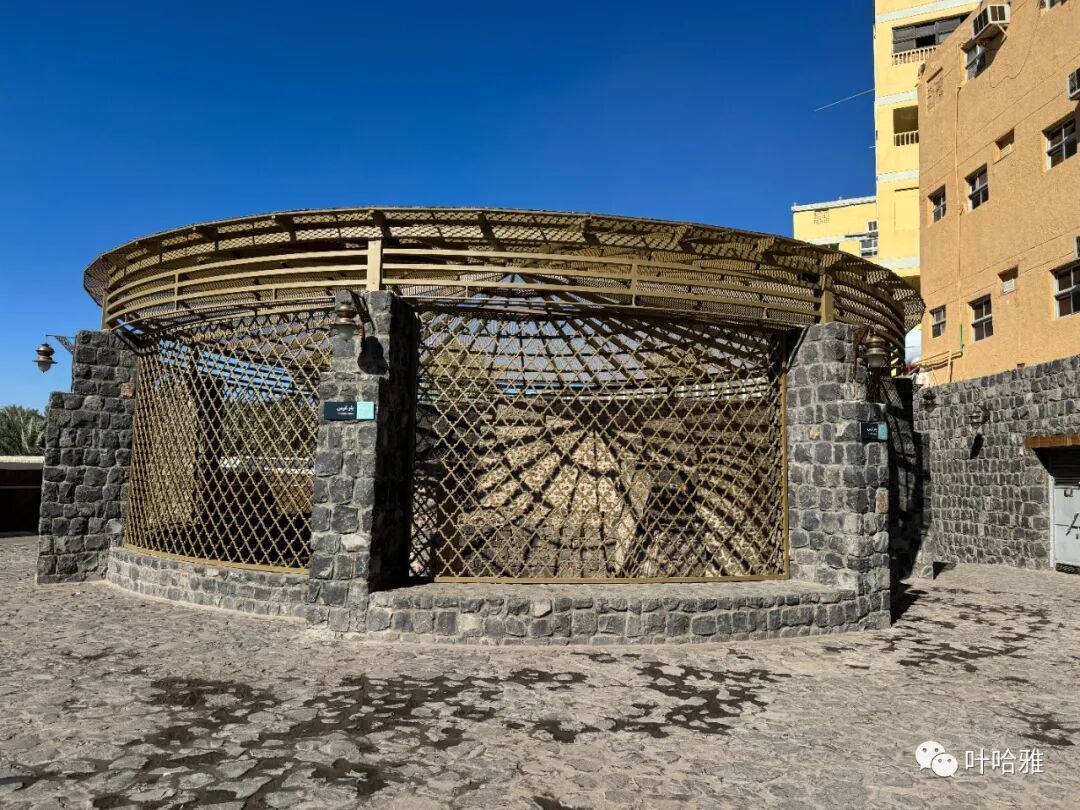
This well is usually open for a short time in the afternoon, but it is not guaranteed. If you are lucky, you can drink the water and use it to perform wudu for namaz.
King Fahd Complex for the Printing of the Holy Quran
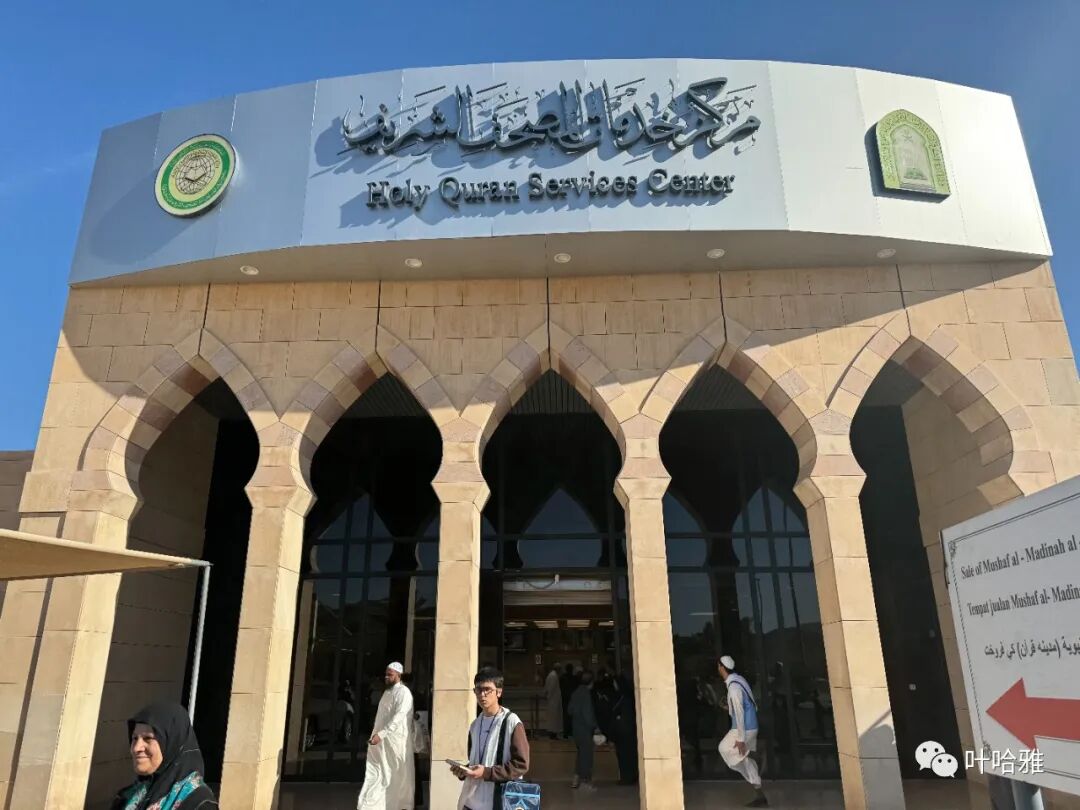
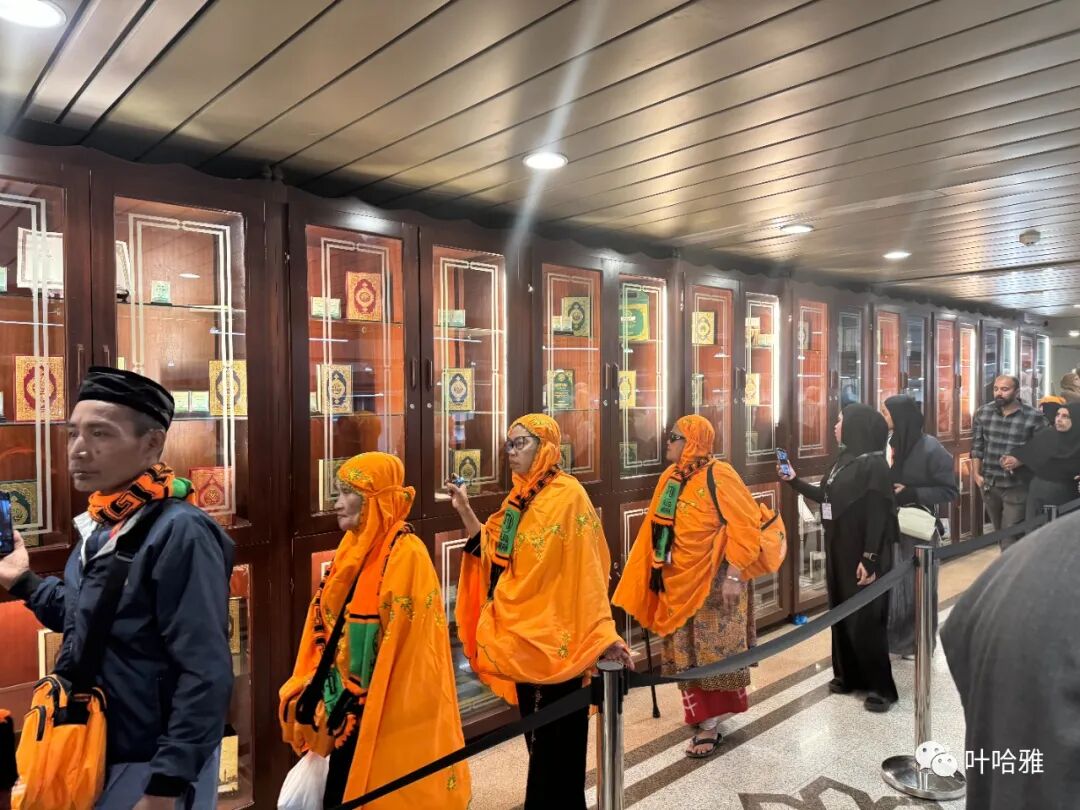
On the way to the Fatah Mosque complex, we passed the King Fahd Glorious Qur'an Printing Complex. It opened in 1984 and has published translations of the Quran in forty languages. Every friend (dosti) visiting Medina can get a free copy of the Quran. You do not need an appointment; just join the line and follow the crowd.
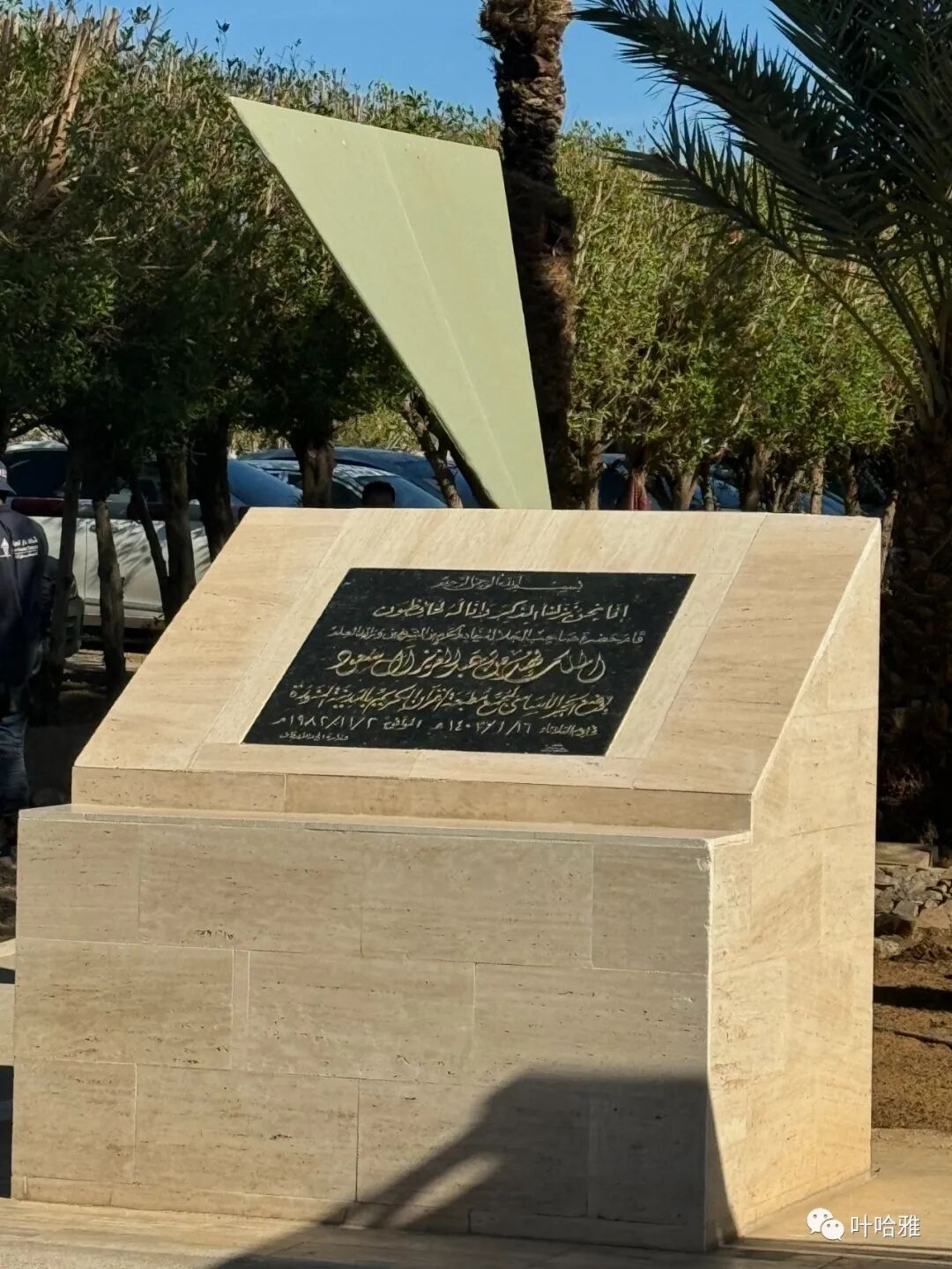
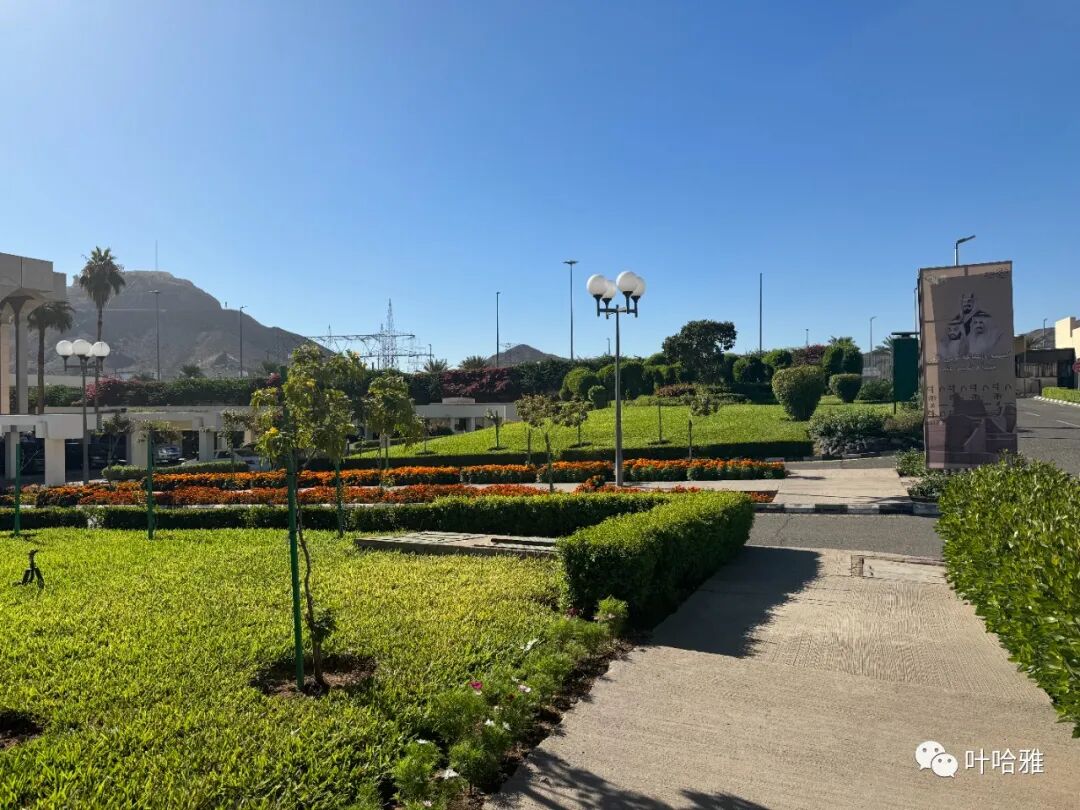
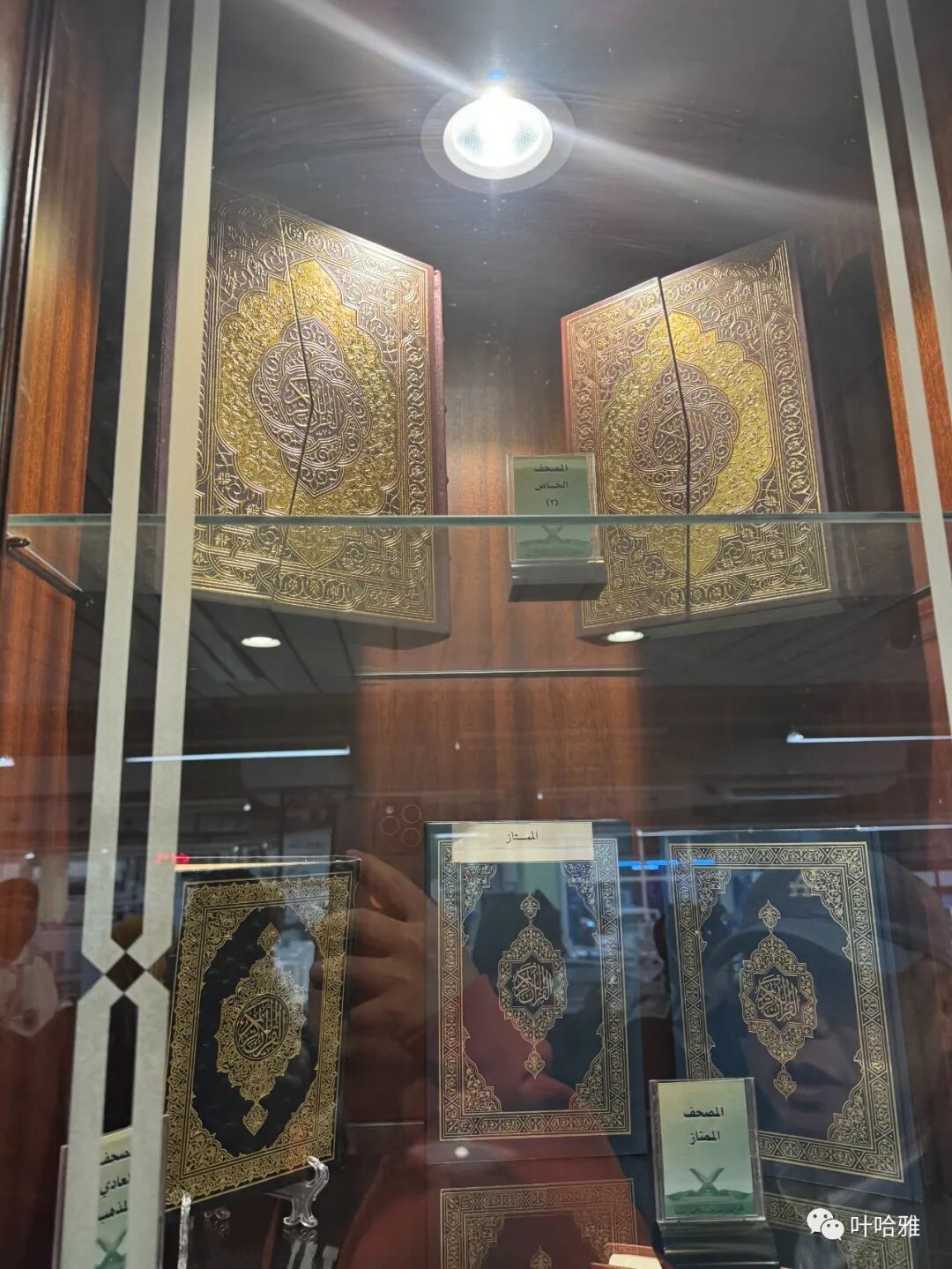
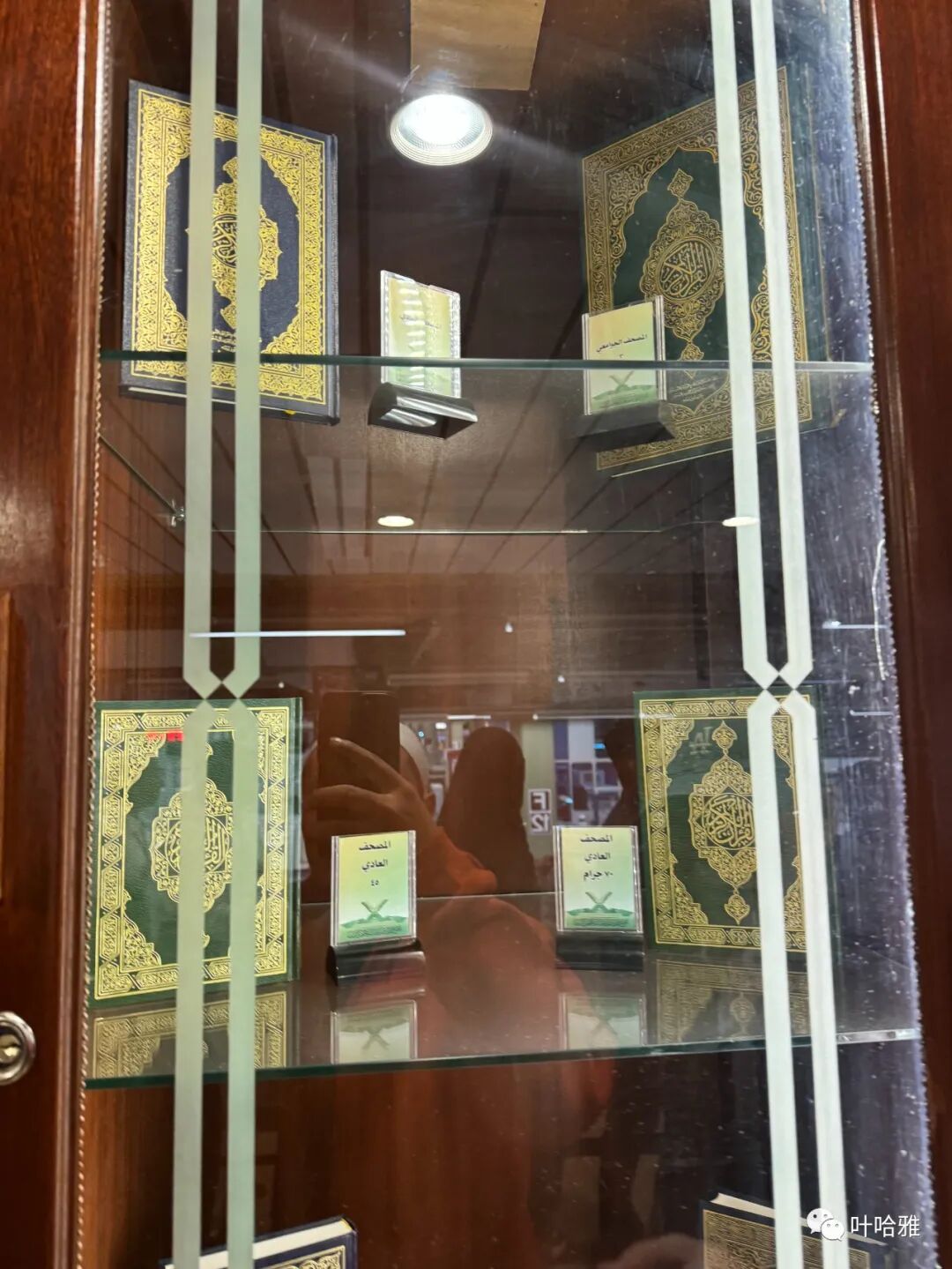
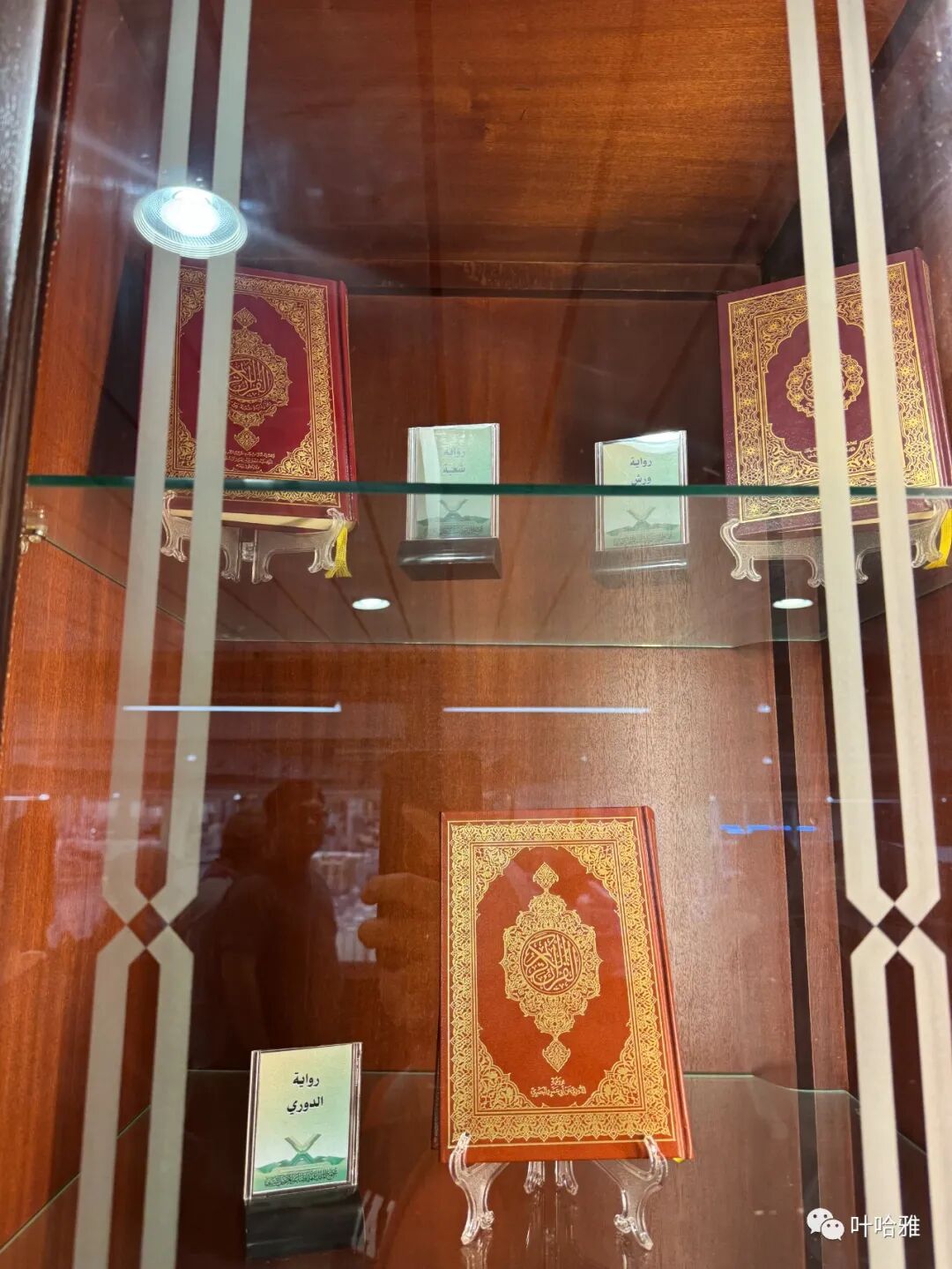
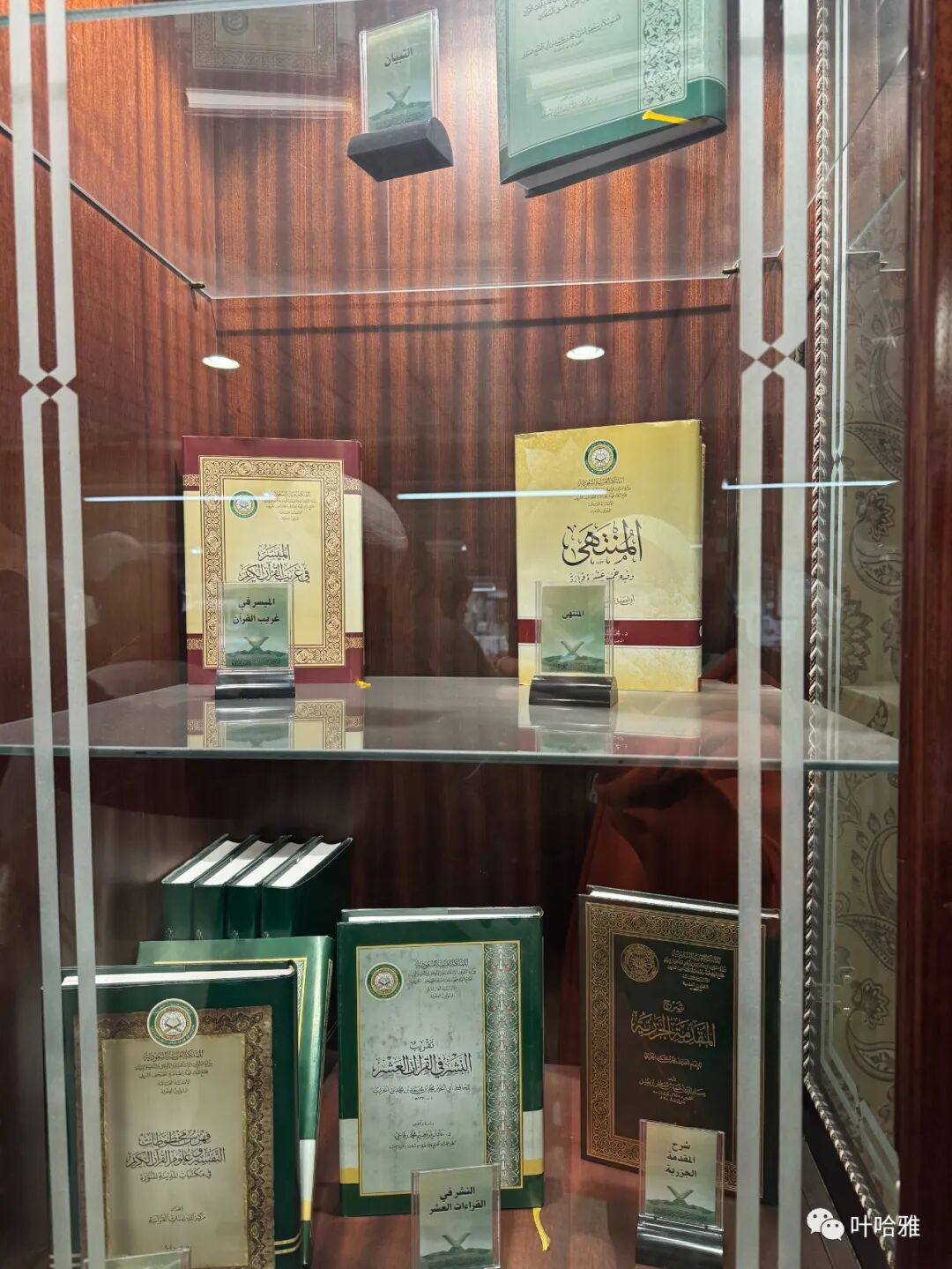
As you follow the line, you first pass through a Quran display case showing the various holy books published by the printing complex.
Summary: This Muslim travel guide to Medina covers Umrah preparation, the Prophet Mosque, high-speed rail from Jeddah, Medina hotels, Al-Ghamama Mosque, Quba Mosque, Uhud, Qiblatayn Mosque, and other sacred Islamic sites.
Map of Sacred Sites in Medina is presented here as a firsthand travel account in clear English, beginning with this scene: This year, I successfully took my family of three to complete the Umrah. My son, Fahim, is likely the youngest little Haji in the Beijing area ever, at less than two years old. The account keeps its focus on Mosque Travel, Islamic Heritage, Beijing while preserving the names, places, food, and historical details from the Chinese source.
This year, I successfully took my family of three to complete the Umrah. My son, Fahim, is likely the youngest little Haji in the Beijing area ever, at less than two years old. However, for a minor, both the Hajj and Umrah only count as voluntary acts of worship. He will need to perform the Hajj again after he reaches adulthood to fulfill his religious obligation.
I will explain the Umrah process in detail in my Mecca travelogue. Saudi Arabia's current tourist visa includes an Umrah option. Just check that box under the travel destination section and apply for an e-visa at this website: https://visa.visitsaudi.com/.
The Saudi tourist e-visa is approved instantly. Once you pay, the visa is issued. It costs 488 Saudi Riyals, which is about 930 RMB. It is valid for one year, allows multiple entries, and you can stay for up to 90 days each time.
Before starting our Umrah, we arrived in Medina from Jeddah. Medina is where the Prophet Muhammad migrated and passed away. Praying one unit of namaz in the Prophet's Mosque is worth more than a thousand prayers in other mosques, and some say it is worth fifty thousand. Regardless of the exact number, it shows the importance of the Prophet's Mosque. Medina is perfect for peaceful worship. The temperature here is cooler than in Mecca. In December, there is a big difference between day and night temperatures, so you need to add or remove layers of clothing. Many pilgrims prepare for their Umrah in Medina and make their intention to enter the state of ihram there.
You need to buy tickets for the high-speed train from Jeddah to Medina on the official Saudi app called HHR Train. I suggest ordering a few days in advance because if you buy them at the station on the day of travel, you might not get a seat. We traveled in December, which is the coolest season in Saudi Arabia. It is about 20 degrees Celsius during the day and over 10 degrees at night. This is also when the most people perform Umrah, so hotels and train tickets are in high demand.
I bought a coffee on the train. I stood between the train cars because our seats were taken by a veiled Arab woman. She sat in our spots with a little girl. When my wife told her the seats were ours, she said the seat next to her was for a man and she did not want to sit next to one. She had not bought a ticket for her child, did not understand why I bought a ticket for a toddler like Fahim, and insisted on staying in our seats.
I did not want to argue. The trip from Jeddah to Medina takes about two hours, so I just walked to the area between the cars. A passing train attendant saw me and told me I could sit in any empty seat.
A taxi from the station to the hotel usually costs 100 Saudi Riyals. There were seven of us, so we hired an Arab driver. It happened to be Friday, the day of Jumu'ah. Our hotel was right across from the Prophet's Mosque. The roads around the mosque were restricted, so the driver wanted to drop us off halfway and have us walk. I checked the map and we were still 3 kilometers away. It was noon with the sun beating down, and we had elderly people and children with us, so walking was very difficult. I insisted that the driver take us to our destination. The driver looked frustrated, drove a long way around, and finally dropped us off in front of the hotel. Then he asked for an extra 50 Riyals. After some bargaining, we gave him 5 more.
The Prophet's Mosque.
Our hotel was just across the street from the Prophet's Mosque. We could see the mosque from our room window. We did not even rest; we dropped off our luggage and went straight to the mosque to pray.
The Prophet's Mosque is the second-largest mosque in the world, after the Sacred Mosque in Mecca. It has a building area of 82,000 square meters. Including the plaza, it can hold 530,000 people for prayer at the same time. If you are in the south plaza and want to walk to the north gate, it takes at least 15 minutes. I once tried to meet a friend after the Fajr prayer. We were on opposite sides, north and south, and after waiting for 20 minutes, we still could not find each other.
When you arrive at the holy sites, you see people of all skin colors from around the world gathered together. The number of pilgrims grows every year, which is why Saudi Arabia keeps expanding the holy sites. People who live there often feel the strength of the faith. Some visitors from China feel sad when they see few people in local mosques, thinking faith is fading, but that is only true in some places. Looking at the world as a whole, the number of people practicing the faith is increasing every year.
The large umbrellas in the mosque courtyard open during the day and close at night. Shade is very precious in Saudi Arabia, as it is hard to handle the intense sun otherwise.
There are many water stations around the courtyard that provide free drinking water for believers.
To visit the Garden of Paradise (Rawdah), you must download an app called Nusuk and book a time. This is where the Prophet once prayed. The Prophet said, 'Between my house and my pulpit is one of the gardens of Paradise.' It is a pity I could not get a reservation, but men and women visit separately, and it is easier for women to book than men.
Fortunately, you do not need a reservation for the Prophet's Tomb. You just need to line up and follow the crowd. The Prophet's Tomb is right under the green dome. The green dome of the mosque was originally the house of Aisha, where the Prophet passed away and was buried.
Believers carry their shoes in their hands and walk barefoot into the Prophet's Tomb. Everything is orderly, and people respectfully offer their salaams to the Prophet.
The Caliphs Abu Bakr and Umar are also buried with the Prophet, and people offer their salaams to them as well.
The Prophet's Tomb is separated from the Garden of Paradise, and the Garden of Paradise is inside the railing. There is one empty space reserved in the tomb for when the Prophet Isa passes away. According to Abdullah ibn Salam (may Allah be pleased with him), the Torah describes the characteristics of the Prophet and states that Isa ibn Maryam will be buried alongside him. Abu Mawdud said, 'Indeed, there is still a grave site inside the house.' [Jami at-Tirmidhi: 3696]
Screenshot from History of Medina
Stand behind the railing and say your salam toward the round hole. You do not need to speak loudly; just recite it silently. Do not linger so you can make it easier for the brothers (dosti) behind you, because there are really too many people.
When I came out of the Prophet's tomb, I saw believers crying. They stood where they were, unable to bear leaving.
Inside the Prophet's Mosque, there are copies of the Quran in many languages, including a Chinese version.
Because the Holy Mosque is so large, many people stay in place to recite the Quran after finishing their namaz for convenience. There is also Zamzam water (senshen quan) provided in the main hall, with separate areas for men and women.
The Prophet's Mosque is crowded 24 hours a day, and there are even more people at night than during the day.
I actually saw Chinese signs at the stalls by the south gate of the Holy Mosque.
The signs at the main entrance also display different languages in turns, and I managed to snap a photo of the Chinese one.
The north plaza of the Holy Mosque is busier than the south plaza and has more shops. If you are looking for a place to stay, you might want to prioritize the area near the north gate.
Many historical sites are scattered around the Prophet's Mosque. Due to historical changes, many no longer exist and only remain in books. Some of these historical sites are introduced below.
Al-Ghamama Mosque
Al-Ghamama Mosque (Almusalla Mosque - ALGhamama) is located on the southwest square next to the Prophet's Mosque. The Prophet led the Eid prayer here in 631. This place is also called the Mosque of the Prayer Ground. It was built by Umar ibn Abd al-Aziz, the eighth caliph of the Umayyad dynasty. The current building was constructed by Abdulmejid I of the Ottoman Empire and later renovated by the King of Saudi Arabia.
Abu Bakr As-Siddiq Mosque
Abu Bakr As-Siddiq Mosque is 40 meters away from Al-Ghamama Mosque. It is also the place where the Prophet led the Eid prayer in 631, and later Abu Bakr also prayed here. The current building was constructed by Mahmud Khan of the Ottoman Empire.
Umar ibn al-Khattab Mosque
Located 133 meters next to Al-Ghamama Mosque, it was built in the 9th century of the Hijri calendar. The mosque and its surrounding area are currently under renovation and are not open.
Ali Mosque
It is 122 meters away from Al-Ghamama Mosque and north of Abu Bakr As-Siddiq Mosque. The Prophet once led the Eid prayer here, and a mosque was later built on this site. It is currently not open.
Mount Uhud and the Martyrs' Cemetery
The black rocky mountain in the distance is Mount Uhud. The small hill at the foot of the mountain is the site of the Battle of Uhud. Mount Uhud is about 4 kilometers away from the Prophet's Mosque.
In 625, more than 3,000 polytheists from Mecca launched a major attack on Medina. The Prophet consulted with his companions and decided to lead 1,000 men to Mount Uhud to meet the enemy. After arriving at Mount Uhud, the hypocrite Abdullah ibn Ubayy secretly led his 300 soldiers away. The Prophet led the remaining 700-plus men to defeat the 3,000 Meccan polytheists. The Prophet was injured in this battle, and Allah revealed verses 121-180 of Surah Al-Imran in the Quran at this location.
You can see many people standing on the hill to commemorate this event.
The Uhud Martyrs Cemetery is built next to the hill. It is surrounded by a wire fence, so you cannot walk inside. It is fine to look from a distance, as visiting the martyrs' graves is a sunnah.
Uhud Martyrs Mosque (Sayyid Al-Shuhada)
The Martyrs Mosque is on the east side of the cemetery. It is not a historical site, as it was built in 2017.
Mosque of the Two Qiblas (Masjid al-Qiblatayn)
This mosque is on Khalid ibn al-Walid Street. The Prophet once led the noon namaz here. After two rak'ahs, he received a revelation from Allah (Surah Al-Baqarah, verse 144) to change the direction of prayer from Jerusalem to the Kaaba.
On the wall directly facing the mihrab, there is a commemorative marker for the Jerusalem direction.
Note that the prayer direction in this mosque is still toward the Kaaba, not both directions. The Jerusalem direction is in the opposite direction of the Kaaba.
Trench Battle Mosque Complex
The Battle of the Trench is also called the Battle of the Confederates. The Meccan polytheists fought a decisive battle against the Muslims of Medina. The companion Salman the Persian suggested digging a trench, and the Prophet accepted his advice. During this time, verses 9-25 of Surah Al-Ahzab and verse 26 of Surah Al-Imran were revealed. The trench started near the Mustarah Mosque and ended near Mount Sal, facing the Fath Mosque complex. It was 2.5 kilometers long, 3 meters deep, and 4 meters wide, but the historical trench has long been filled in.
The Fath (Seven) Mosque complex is part of the trench area. These mosques served as stations and lookout points during the battle. Each mosque is named after the companion who was stationed there, except for the Fath Mosque, which was built on the site of the dome the Prophet used. These mosques were built during the era of Umar ibn Abd al-Aziz and were restored at different times. The mosques are:
1. Ali Mosque
2. Abu Bakr Mosque.
3. Salman the Persian Mosque
4. Al-Fath Mosque
5. Umar Mosque
6. Sa'd ibn Mu'adh Mosque
Ali Mosque
Abu Bakr Mosque
Salman Mosque
Al-Fath Mosque
Quba Mosque
Quba Mosque is 3.2 kilometers from the Prophet's Mosque. This is the site of the first mosque built by the Prophet and his companions in Medina. 'A mosque founded on righteousness from the first day is more worthy for you to stand in for prayer.' Verse 108 of the Repentance chapter in the Quran refers to Quba Mosque.
The Prophet said, 'Whoever performs wudu at home and then prays in Quba Mosque will receive the reward of an Umrah.' (Sunan Ibn Majah) People say those who live near Quba Mosque are blessed, as they can earn the reward of an Umrah just by performing namaz there.
Ring Well (Bir Aris)
Located on the west side of Quba Mosque, the Prophet once sat by this well with his legs dangling over it. Abu Bakr, Umar, and Uthman later came to see him and sat by the well as well, where the Prophet gave them the glad tidings of Paradise. (Sahih Muslim 2403)
The Prophet once wore a ring, which later passed to Abu Bakr, then to Umar, and finally to Uthman. Uthman accidentally dropped the ring into this well. The ring was engraved with the words, 'Muhammad is the Messenger of Allah.'
This well was filled in at the end of the 14th century of the Hijri calendar to widen the road, and only the circle shown in the photo remains as a marker.
Jumu'ah Mosque
While traveling to Medina on a Friday, the Prophet performed his first Jumu'ah prayer with the Banu Salim tribe. He later built a mosque on that spot, which is now known as Jumu'ah Mosque, located one kilometer from Quba Mosque.
Aris Well
Aris Well is located one kilometer northeast of Quba Mosque. The Prophet often drank water from here and requested that this well's water be used to wash his body after he passed away.
This well is usually open for a short time in the afternoon, but it is not guaranteed. If you are lucky, you can drink the water and use it to perform wudu for namaz.
King Fahd Complex for the Printing of the Holy Quran
On the way to the Fatah Mosque complex, we passed the King Fahd Glorious Qur'an Printing Complex. It opened in 1984 and has published translations of the Quran in forty languages. Every friend (dosti) visiting Medina can get a free copy of the Quran. You do not need an appointment; just join the line and follow the crowd.
As you follow the line, you first pass through a Quran display case showing the various holy books published by the printing complex.
