
Muslim Travel Guide Iran Tehran: Imam Khomeini Airport Prayer Room, Wudu Area and Shia Travel Notes
Reposted from the web
Summary: This Iran Muslim travel guide starts at Imam Khomeini International Airport in Tehran, covering the author's Oman transfer, airport money exchange, the first-floor prayer room, shoe area, Shia-style decoration, mohr prayer stones, Qur'an copies with Persian translation, and the first impression of Iran.
Since visiting a Shia mosque in Singapore last time, my interest in Shia Islam has grown, and I even thought about exploring a Shia country.
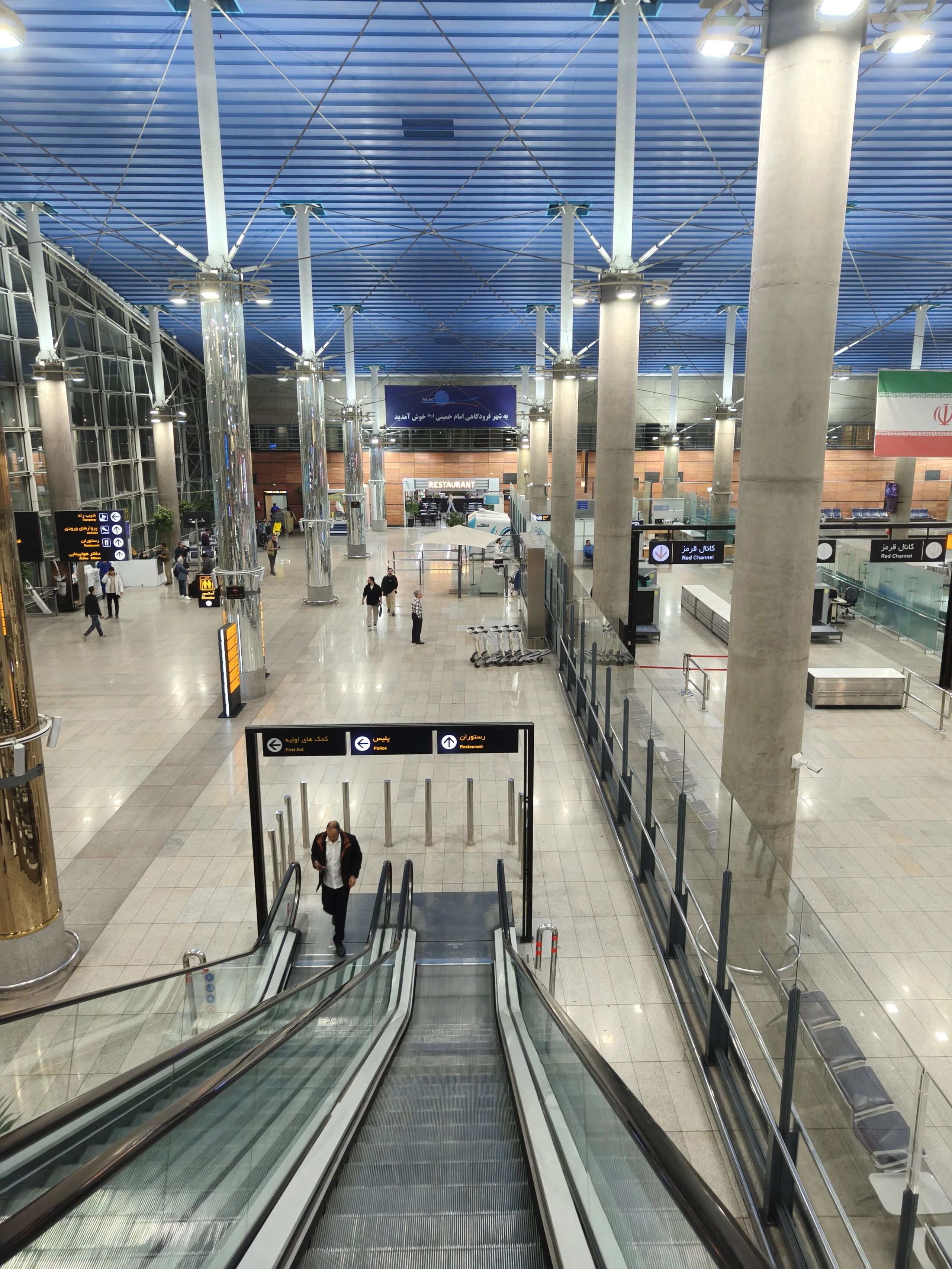
So, I stopped over in Oman (Oman has a minority sect independent of Sunni Islam called Ibadi Islam; I will share what I saw and heard in Oman later) and landed at Imam Khomeini International Airport in the capital of Iran.
I do not understand why they chose different characters for the transliteration; isn't Imam Khomeini just Imam Khomeini?
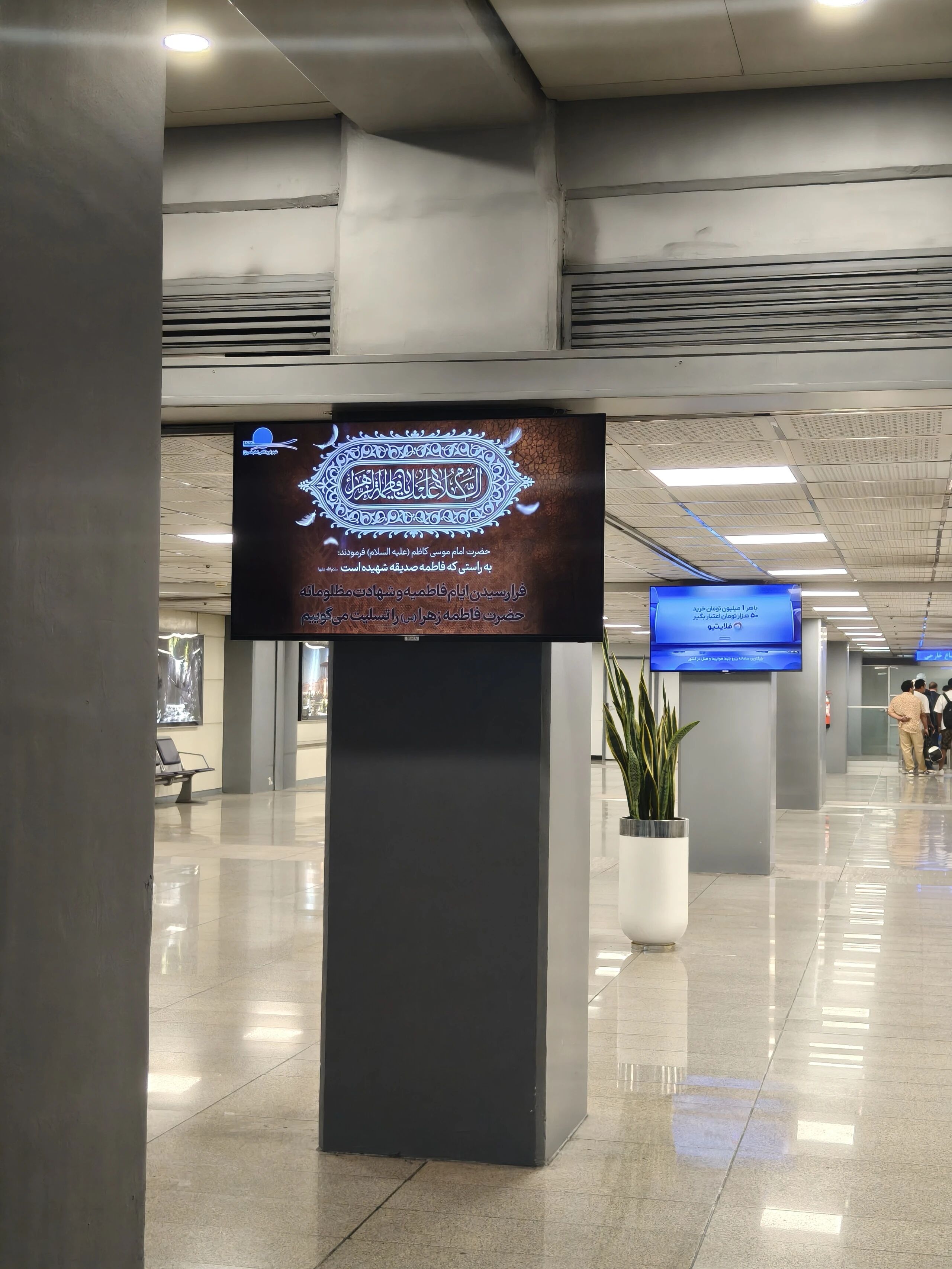
This airport looks a bit old. I had just flown from the new terminal at Lanzhou Zhongchuan Airport to Beijing Capital Airport, then from Daxing Airport to Muscat Airport in Oman for my layover. So for me, the contrast was very obvious.
Back to the point, the first thing to do after landing is to exchange money. I suggest you only exchange enough for your taxi fare at the airport. You should exchange the bulk of your money in the city. The exchange rate in the city is very different from the airport; for the same amount of money, you can get 1.2 million in the city, but the airport will only give you 750,000.
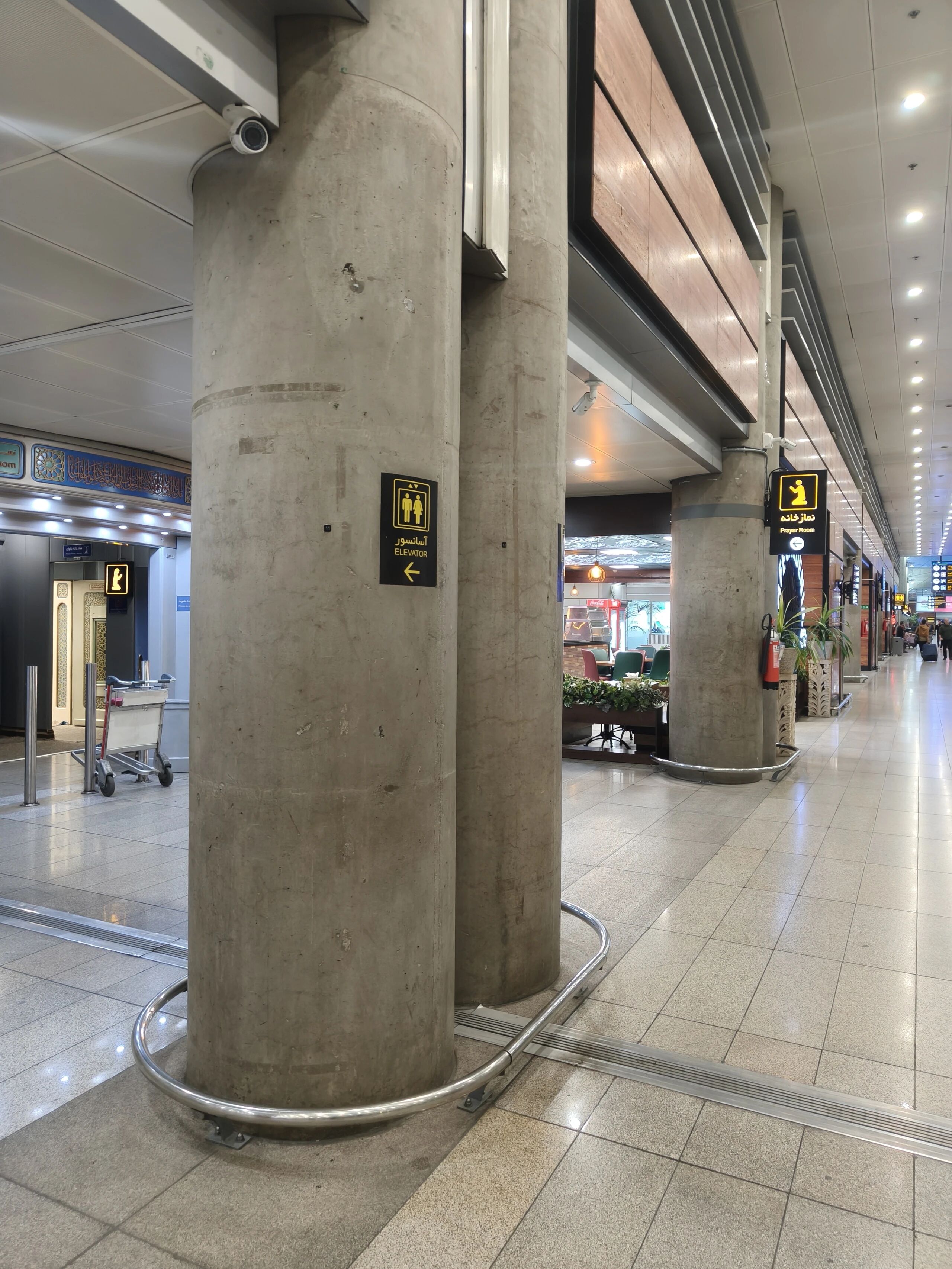
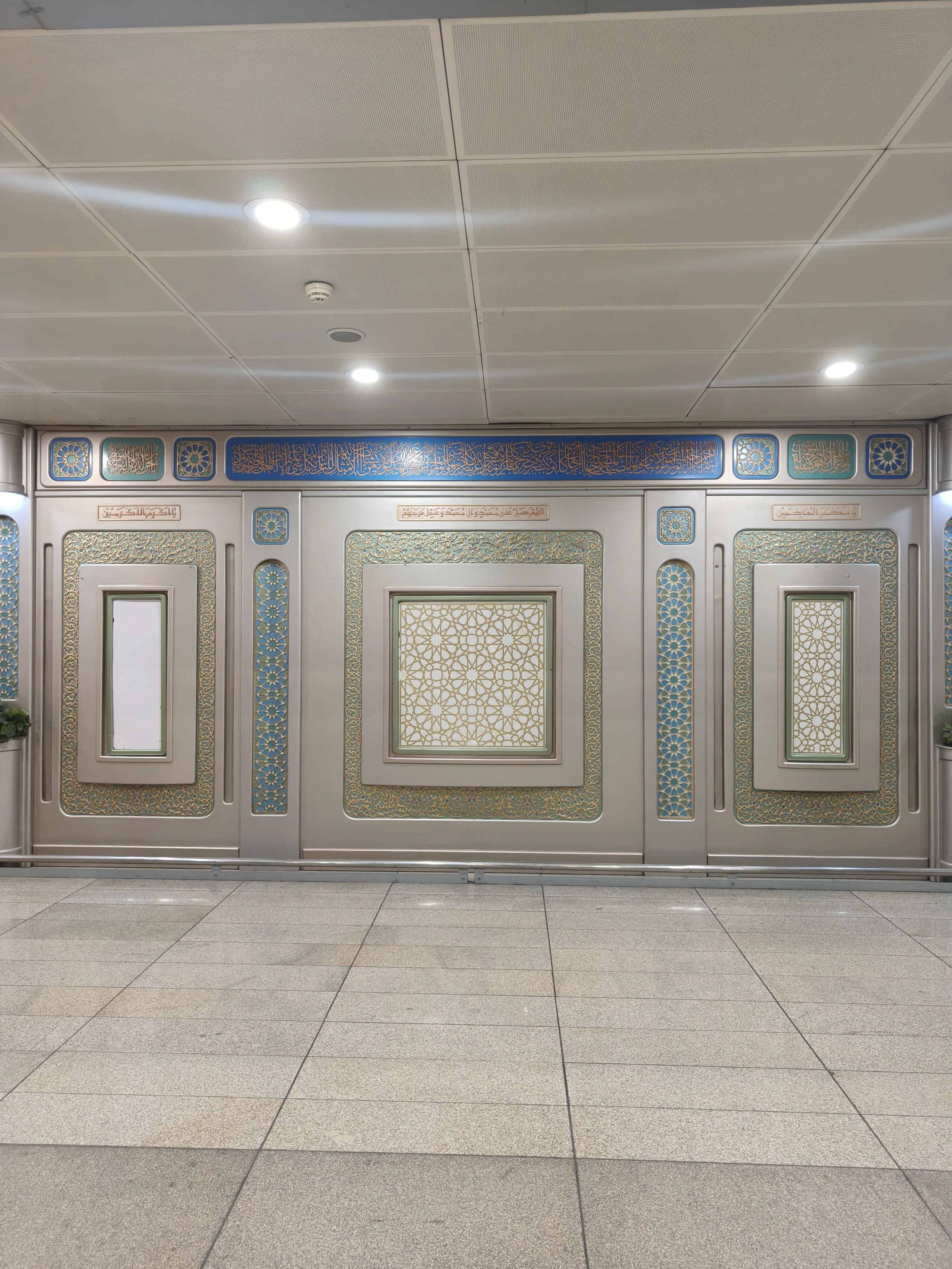
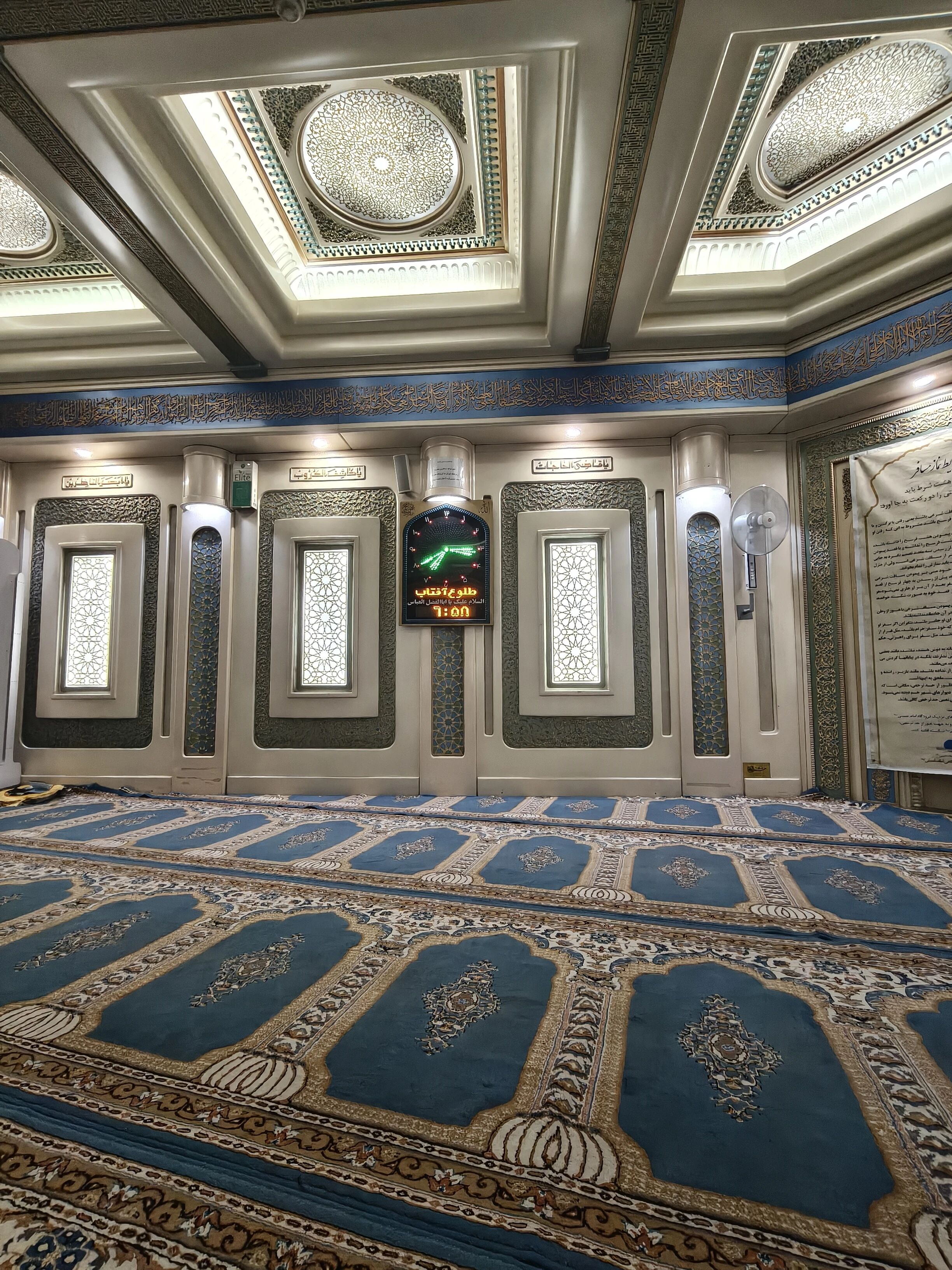
This gap is quite large. (Airport currency exchange counters are often like this, but the one at the Iranian airport felt especially harsh.) After exchanging money, I went to the first floor and noticed the prayer room (Photos 3 and 4). Its decoration style is different from the simple style in Malaysia, Oman, and Singapore.
It happened to be time for namaz, so I stepped into the prayer space in Iran.
Photo 5 shows the entryway, where you must put your shoes in the cubbies. On the left is the men's prayer room, and on the right is the women's prayer room. As soon as I walked in, I noticed something I had never seen in any other mosque or prayer room I had visited before: small stone tablets.
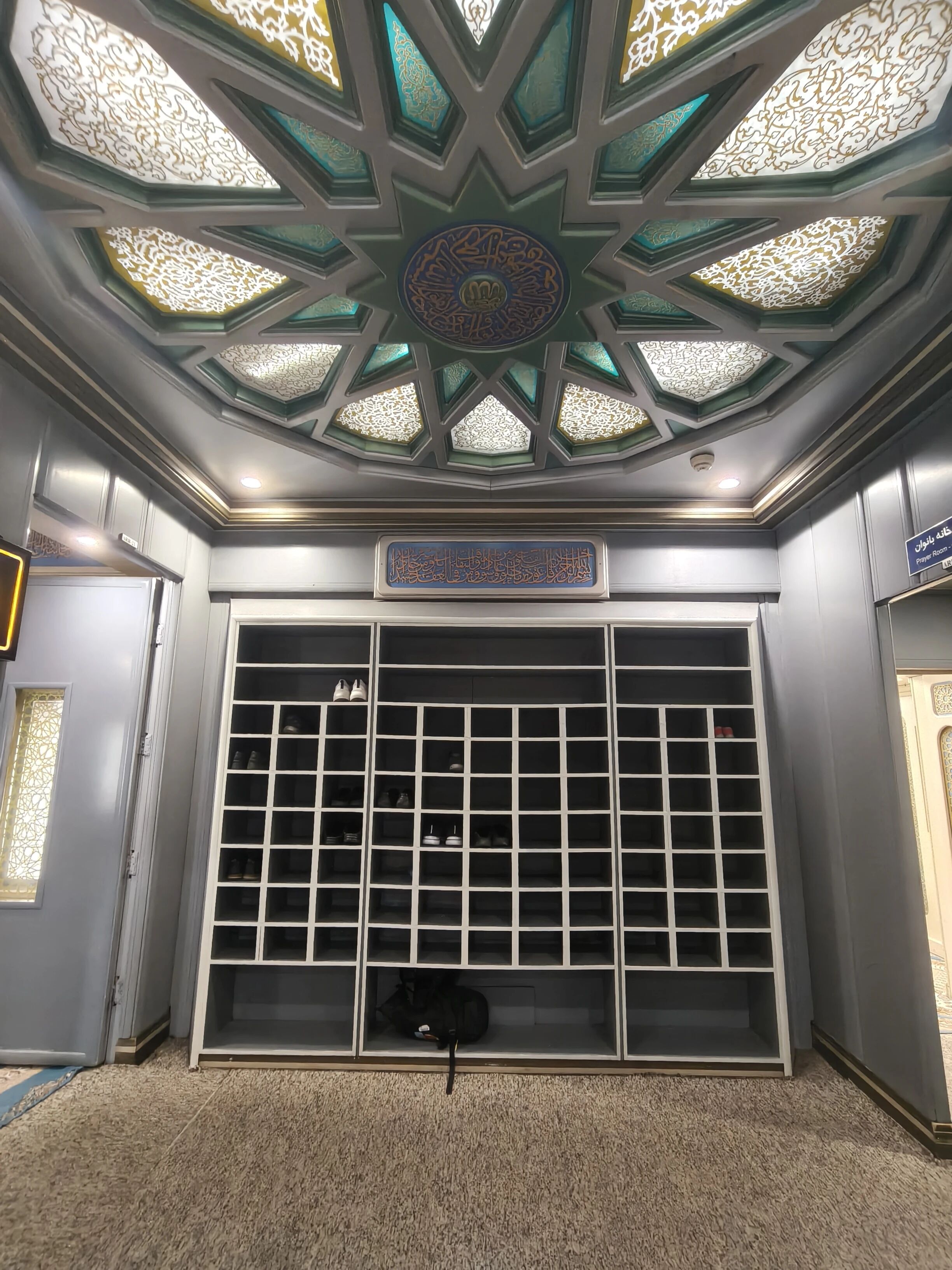
(Photo 6) Even the Shia mosque I visited in Singapore earlier did not have these.
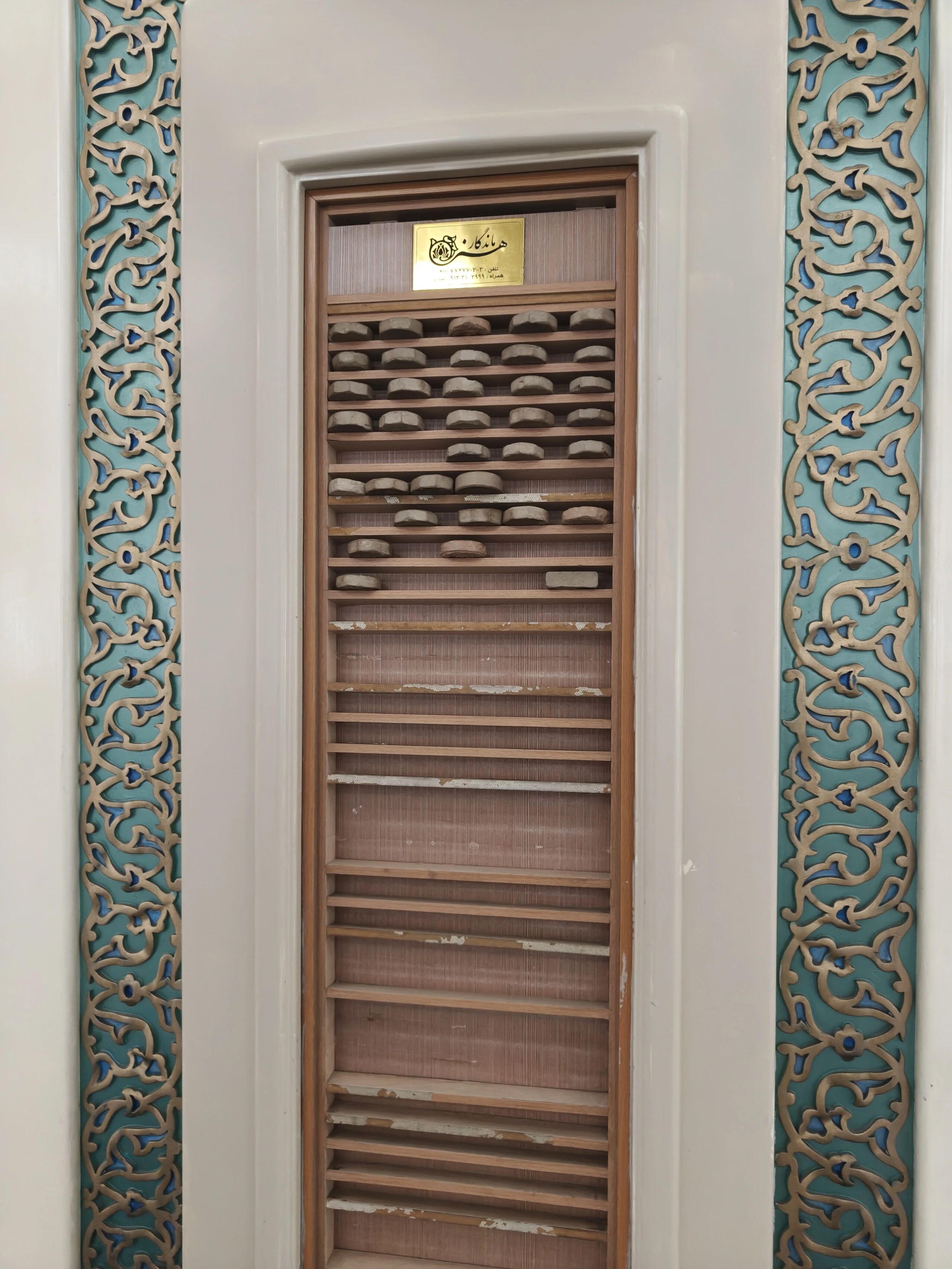
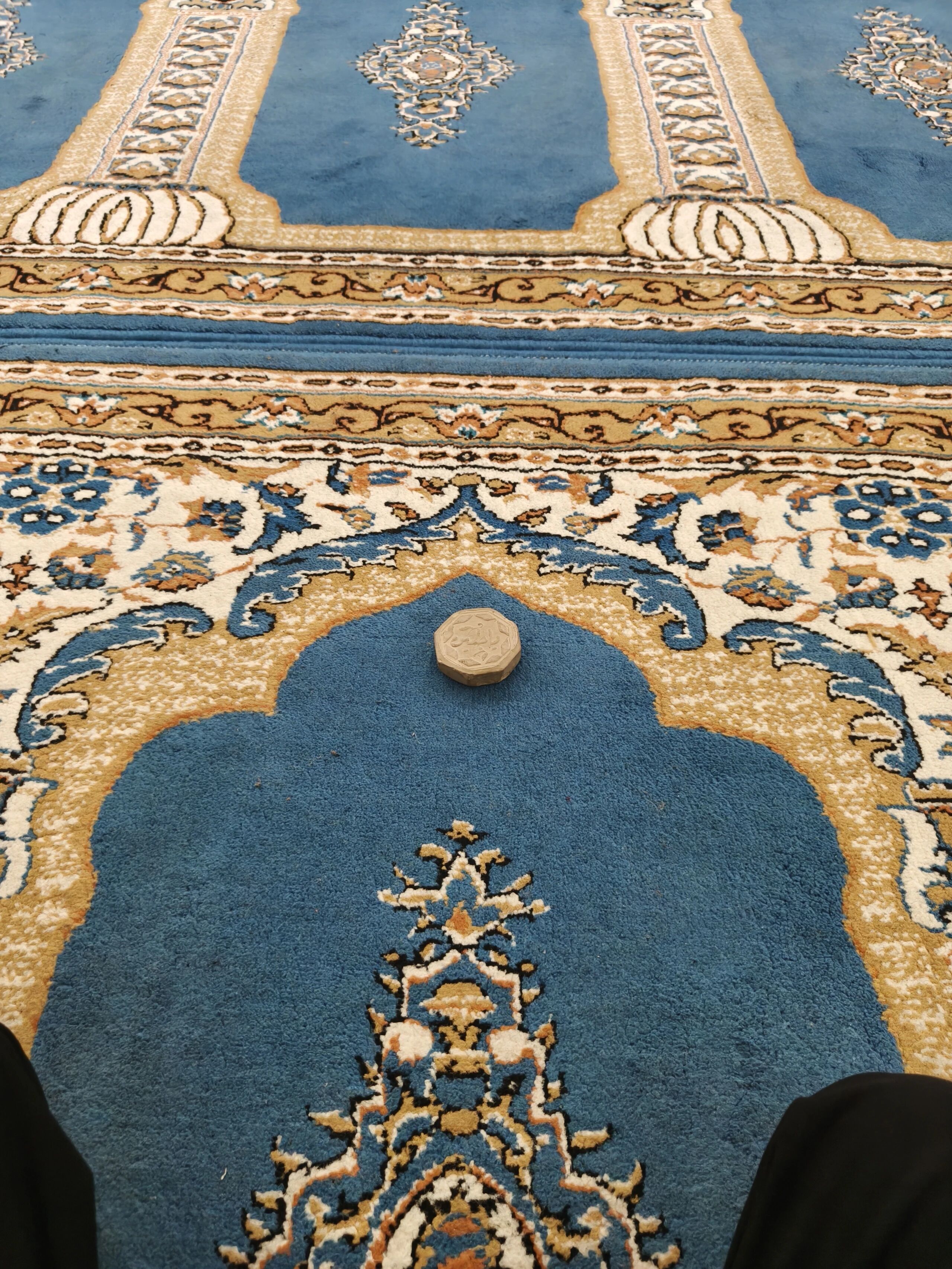
During namaz, I noticed that everyone here had one, placing it exactly where their forehead would touch the ground. (Photo 7, Photo 8) I picked one up too. It was about the size of a chess piece, felt like brick, and had a smooth surface that did not crumble. It had the words "Ya (a call) Husayn" written on it.
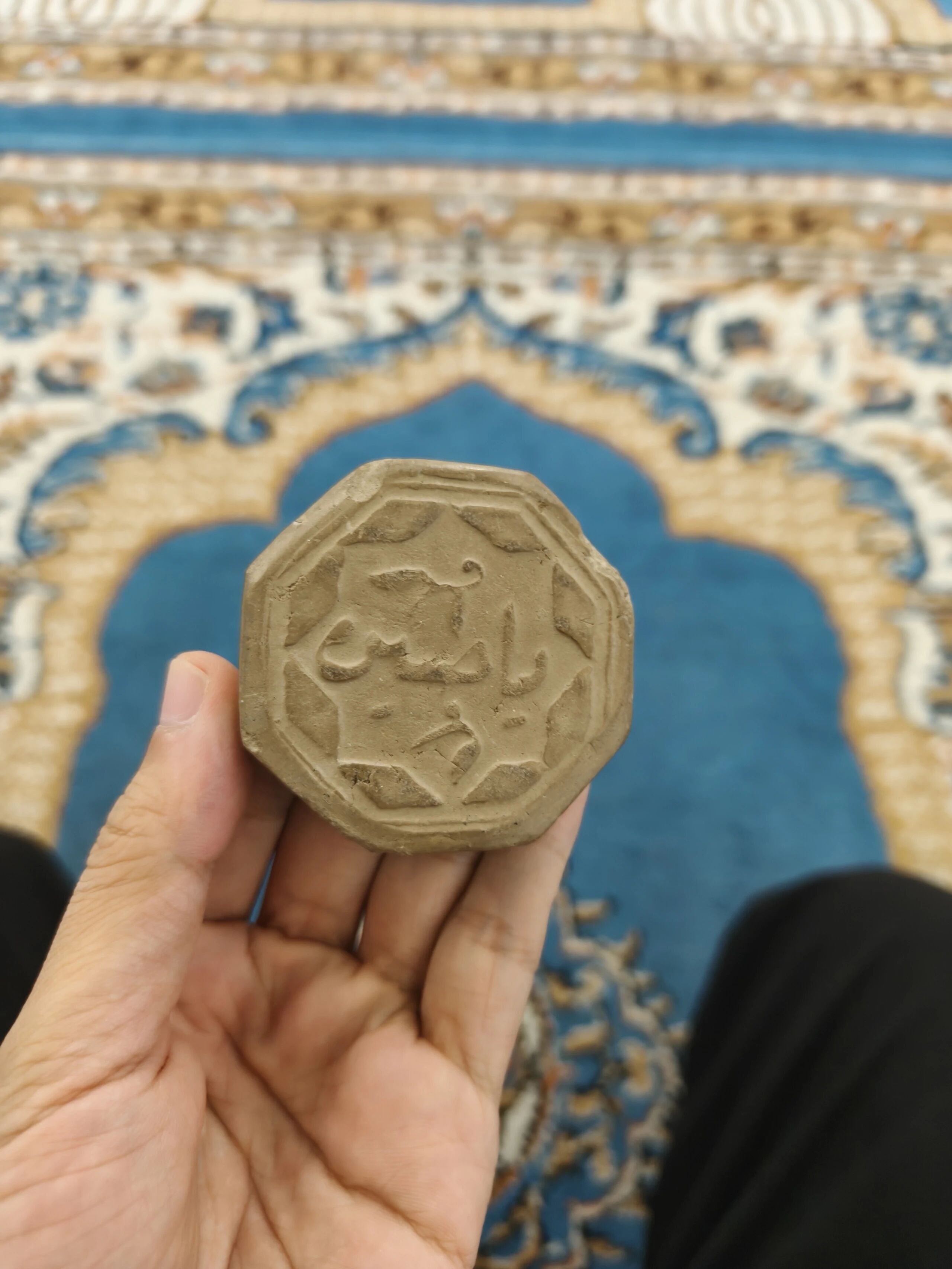
This must be a way to express grief for the Prophet's grandson who died at the hands of his enemies.
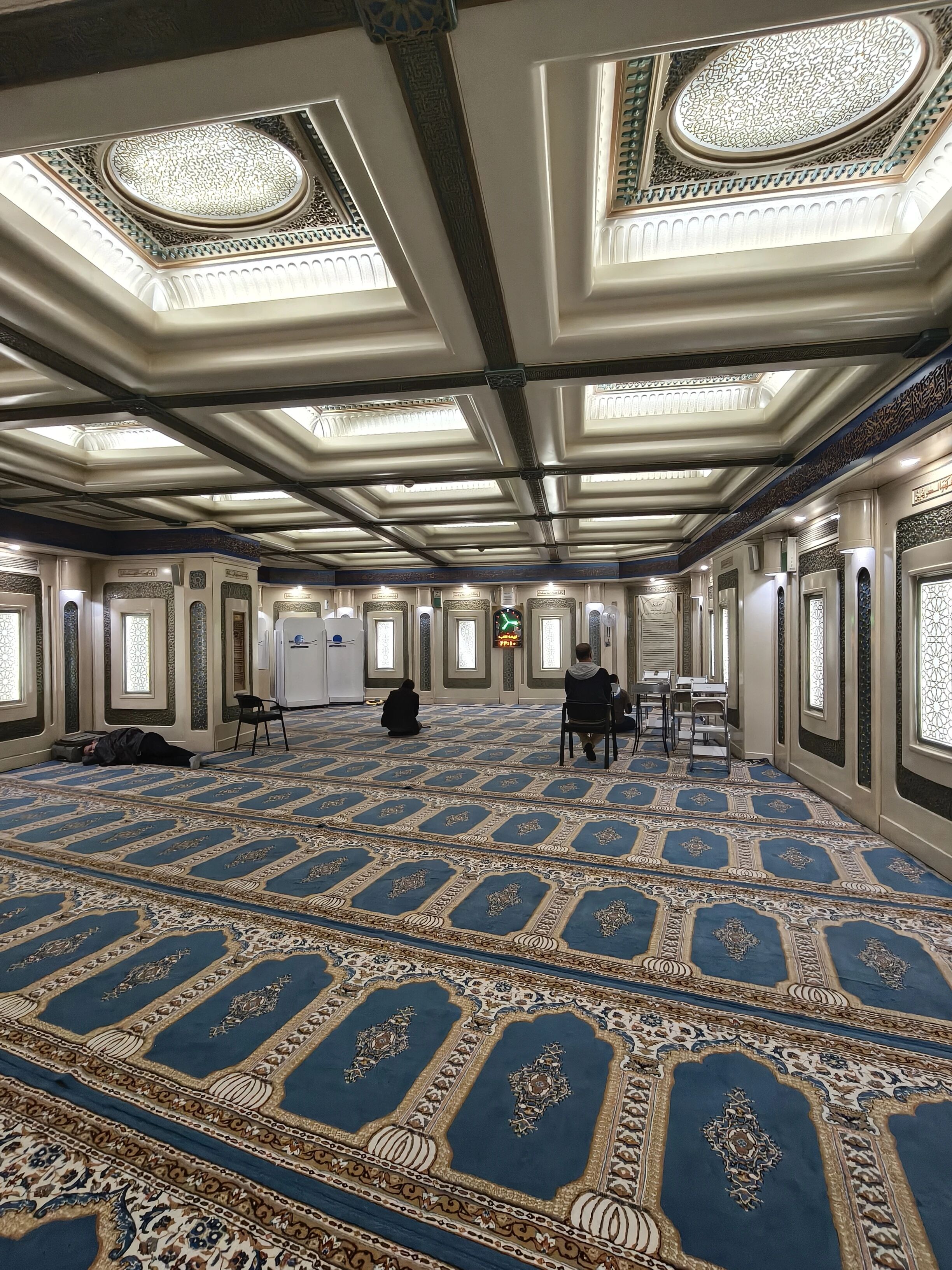
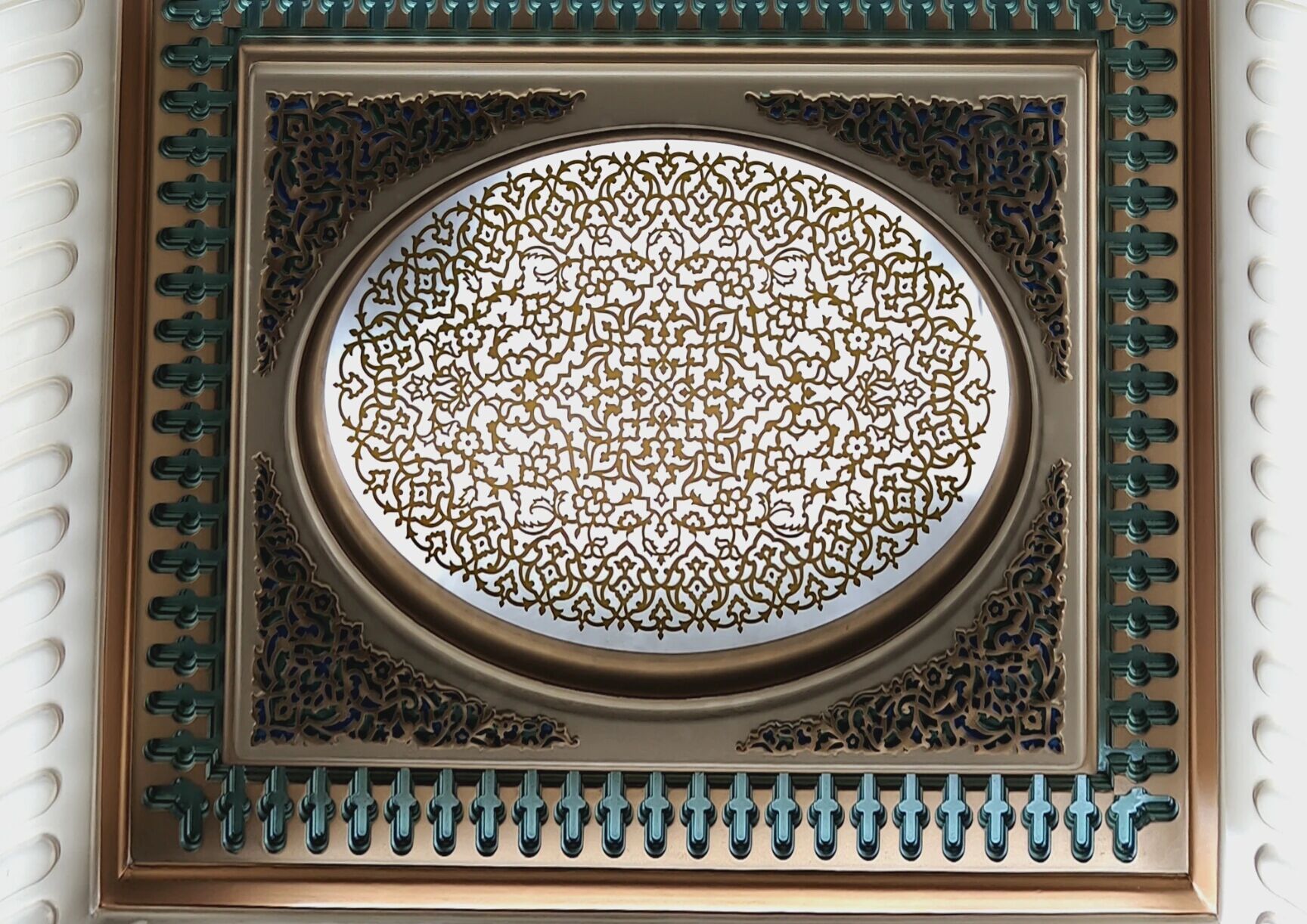
After namaz, I took a panoramic shot of the room. It is quite large, and the ceiling and walls are decorated.
You might notice a row of chairs with small desks on the right side of the prayer hall (Photo 11). What are these for? These are for Muslims who have trouble walking or have back problems.
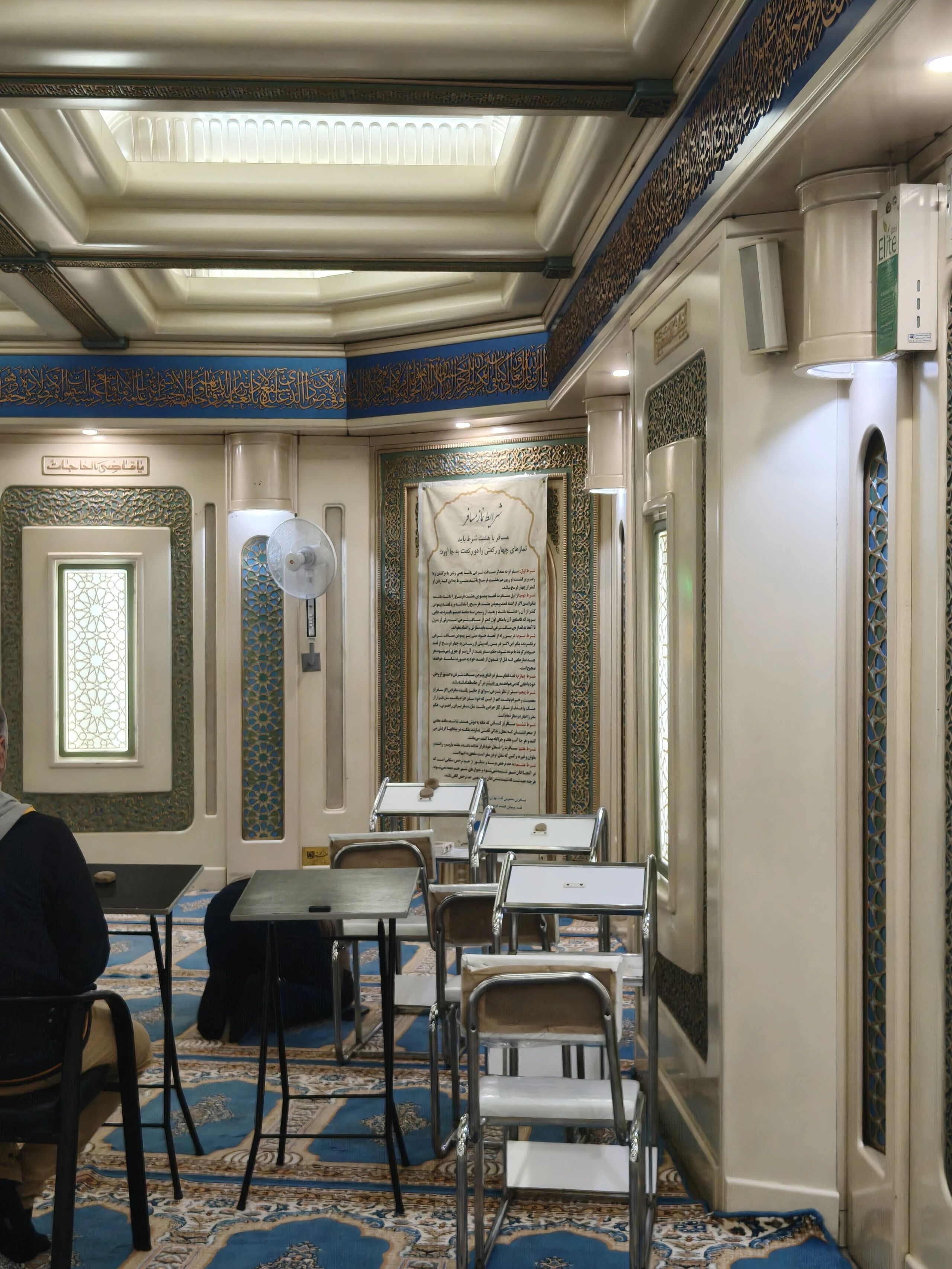
Because of their physical condition, they cannot stand, bow, or prostrate during namaz, so they must pray while sitting in these chairs. These small chairs are not rare; you can find them in almost every mosque, and they are not unique to the Shia sect.
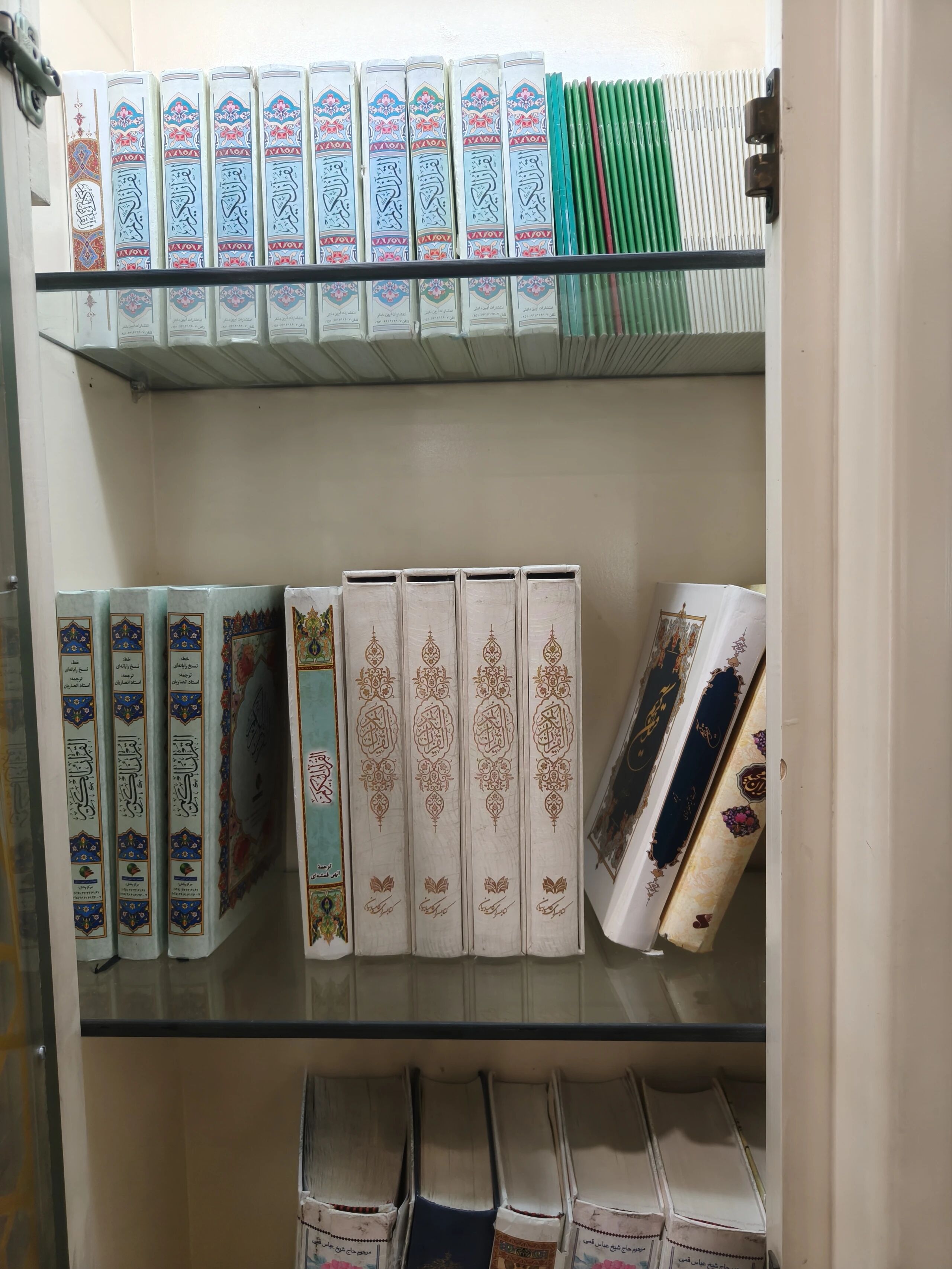
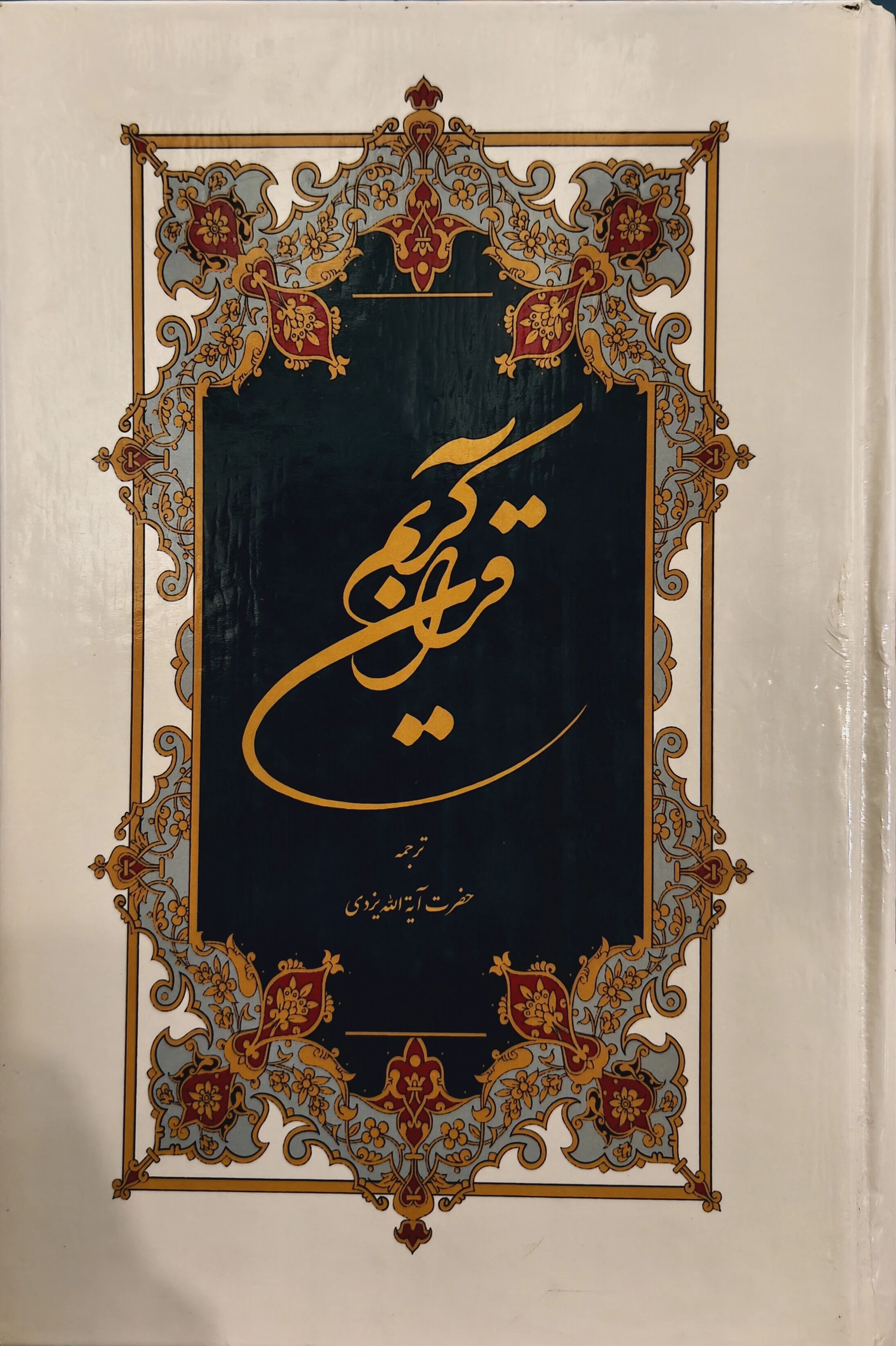
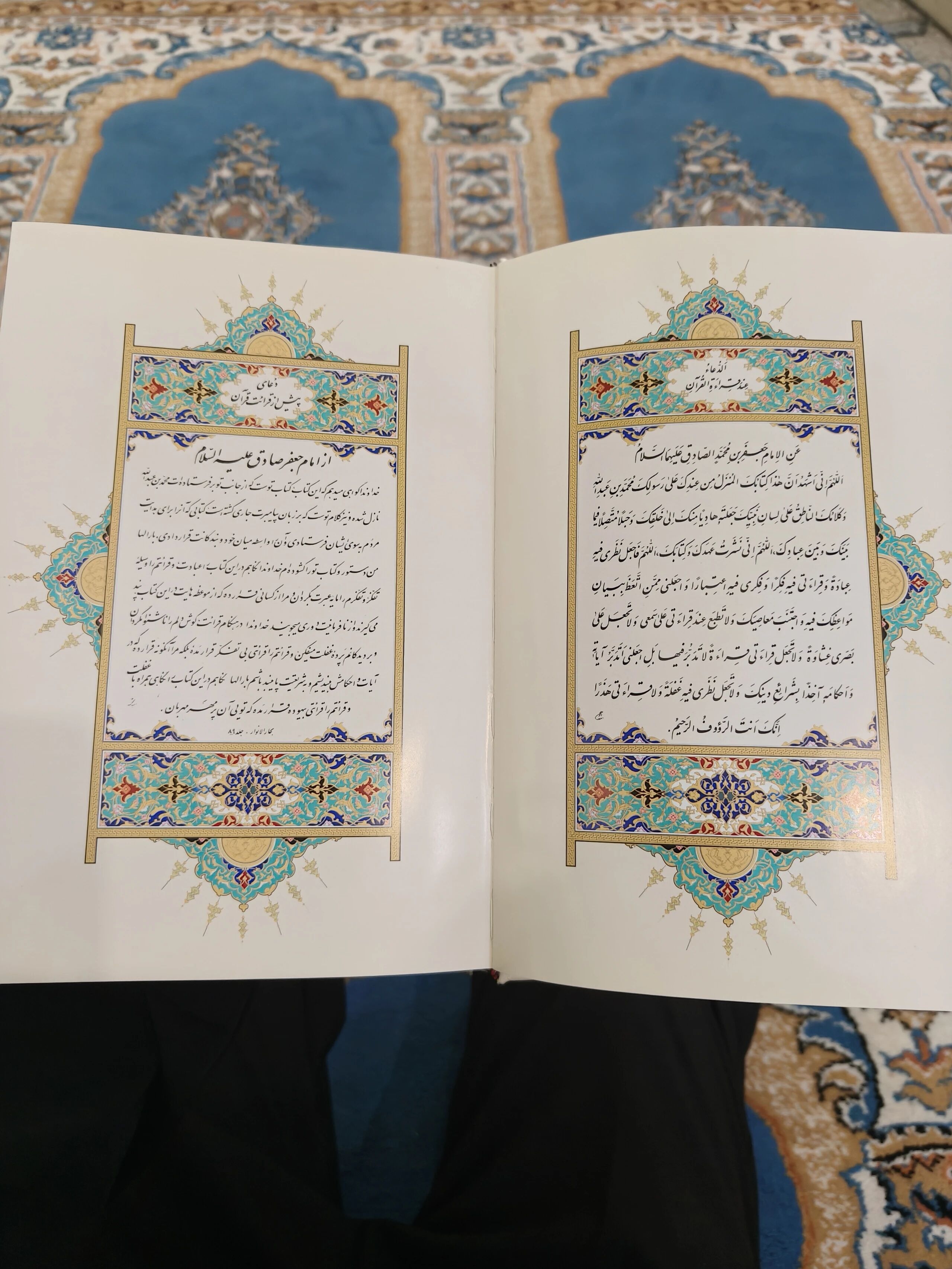
Behind this prayer room, there is a place for storing calligraphy (Photo 13). I picked up a Qur'an, and since I was in Iran, the cover naturally featured elegant Persian calligraphy (Photo 14). The preface on the first page was also written in Persian calligraphy.
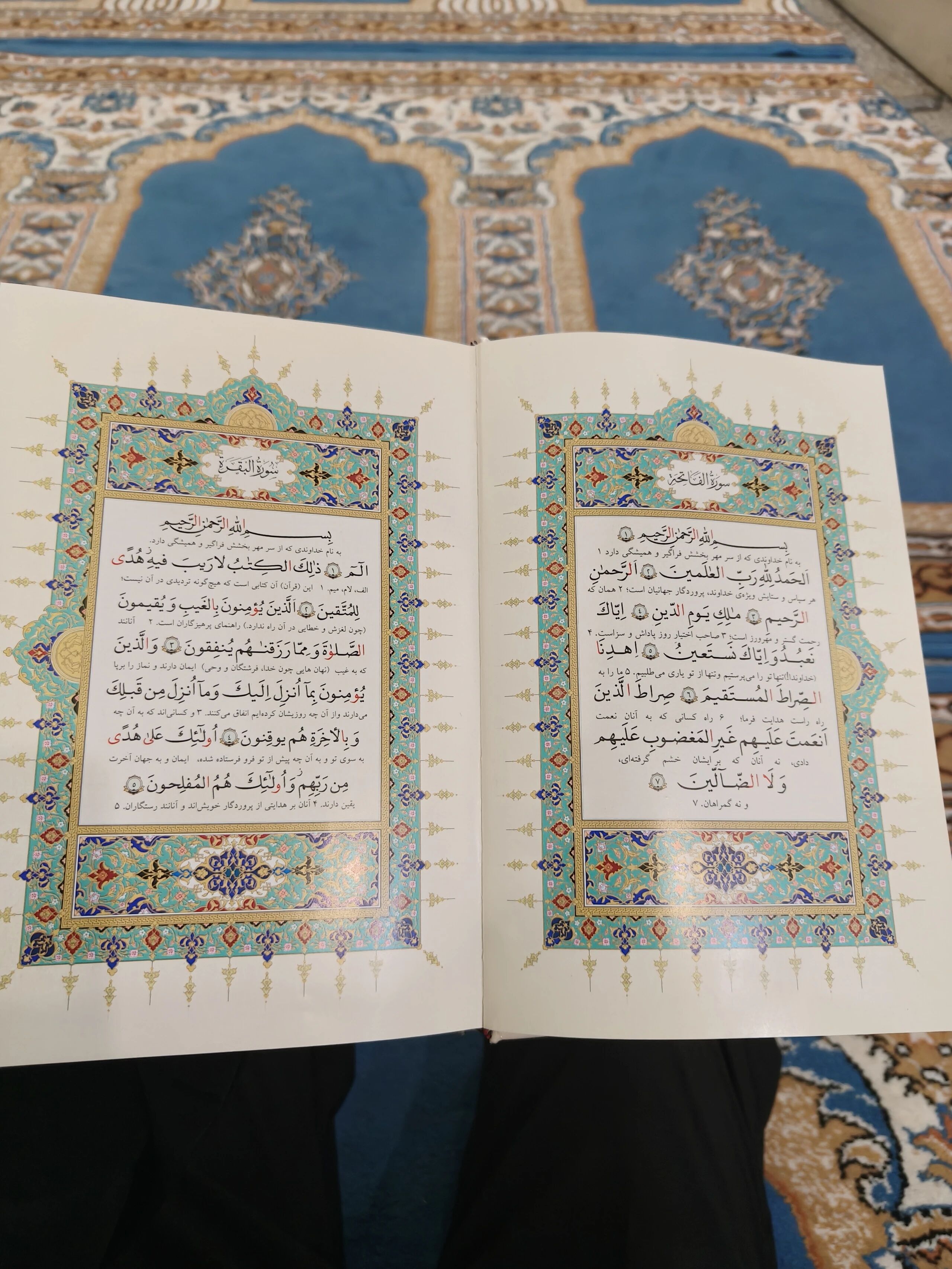
I opened the main text of the Qur'an and noticed a line of small print underneath the verses (Photo 16), which was a Persian translation.
After that, I left the prayer room and got into a taxi heading to downtown Tehran. What kind of experiences will I have in Iran ahead? The next part will be updated soon.
Summary: This Iran Muslim travel guide starts at Imam Khomeini International Airport in Tehran, covering the author's Oman transfer, airport money exchange, the first-floor prayer room, shoe area, Shia-style decoration, mohr prayer stones, Qur'an copies with Persian translation, and the first impression of Iran.
Since visiting a Shia mosque in Singapore last time, my interest in Shia Islam has grown, and I even thought about exploring a Shia country.
So, I stopped over in Oman (Oman has a minority sect independent of Sunni Islam called Ibadi Islam; I will share what I saw and heard in Oman later) and landed at Imam Khomeini International Airport in the capital of Iran.
I do not understand why they chose different characters for the transliteration; isn't Imam Khomeini just Imam Khomeini?
This airport looks a bit old. I had just flown from the new terminal at Lanzhou Zhongchuan Airport to Beijing Capital Airport, then from Daxing Airport to Muscat Airport in Oman for my layover. So for me, the contrast was very obvious.
Back to the point, the first thing to do after landing is to exchange money. I suggest you only exchange enough for your taxi fare at the airport. You should exchange the bulk of your money in the city. The exchange rate in the city is very different from the airport; for the same amount of money, you can get 1.2 million in the city, but the airport will only give you 750,000.
This gap is quite large. (Airport currency exchange counters are often like this, but the one at the Iranian airport felt especially harsh.) After exchanging money, I went to the first floor and noticed the prayer room (Photos 3 and 4). Its decoration style is different from the simple style in Malaysia, Oman, and Singapore.
It happened to be time for namaz, so I stepped into the prayer space in Iran.
Photo 5 shows the entryway, where you must put your shoes in the cubbies. On the left is the men's prayer room, and on the right is the women's prayer room. As soon as I walked in, I noticed something I had never seen in any other mosque or prayer room I had visited before: small stone tablets.
(Photo 6) Even the Shia mosque I visited in Singapore earlier did not have these.
During namaz, I noticed that everyone here had one, placing it exactly where their forehead would touch the ground. (Photo 7, Photo 8) I picked one up too. It was about the size of a chess piece, felt like brick, and had a smooth surface that did not crumble. It had the words "Ya (a call) Husayn" written on it.
This must be a way to express grief for the Prophet's grandson who died at the hands of his enemies.
After namaz, I took a panoramic shot of the room. It is quite large, and the ceiling and walls are decorated.
You might notice a row of chairs with small desks on the right side of the prayer hall (Photo 11). What are these for? These are for Muslims who have trouble walking or have back problems.
Because of their physical condition, they cannot stand, bow, or prostrate during namaz, so they must pray while sitting in these chairs. These small chairs are not rare; you can find them in almost every mosque, and they are not unique to the Shia sect.
Behind this prayer room, there is a place for storing calligraphy (Photo 13). I picked up a Qur'an, and since I was in Iran, the cover naturally featured elegant Persian calligraphy (Photo 14). The preface on the first page was also written in Persian calligraphy.
I opened the main text of the Qur'an and noticed a line of small print underneath the verses (Photo 16), which was a Persian translation.
After that, I left the prayer room and got into a taxi heading to downtown Tehran. What kind of experiences will I have in Iran ahead? The next part will be updated soon.
